So, I headed to downtown Minot. I heard that there was a train museum or attraction or something down there. I figured I might as well check it out.
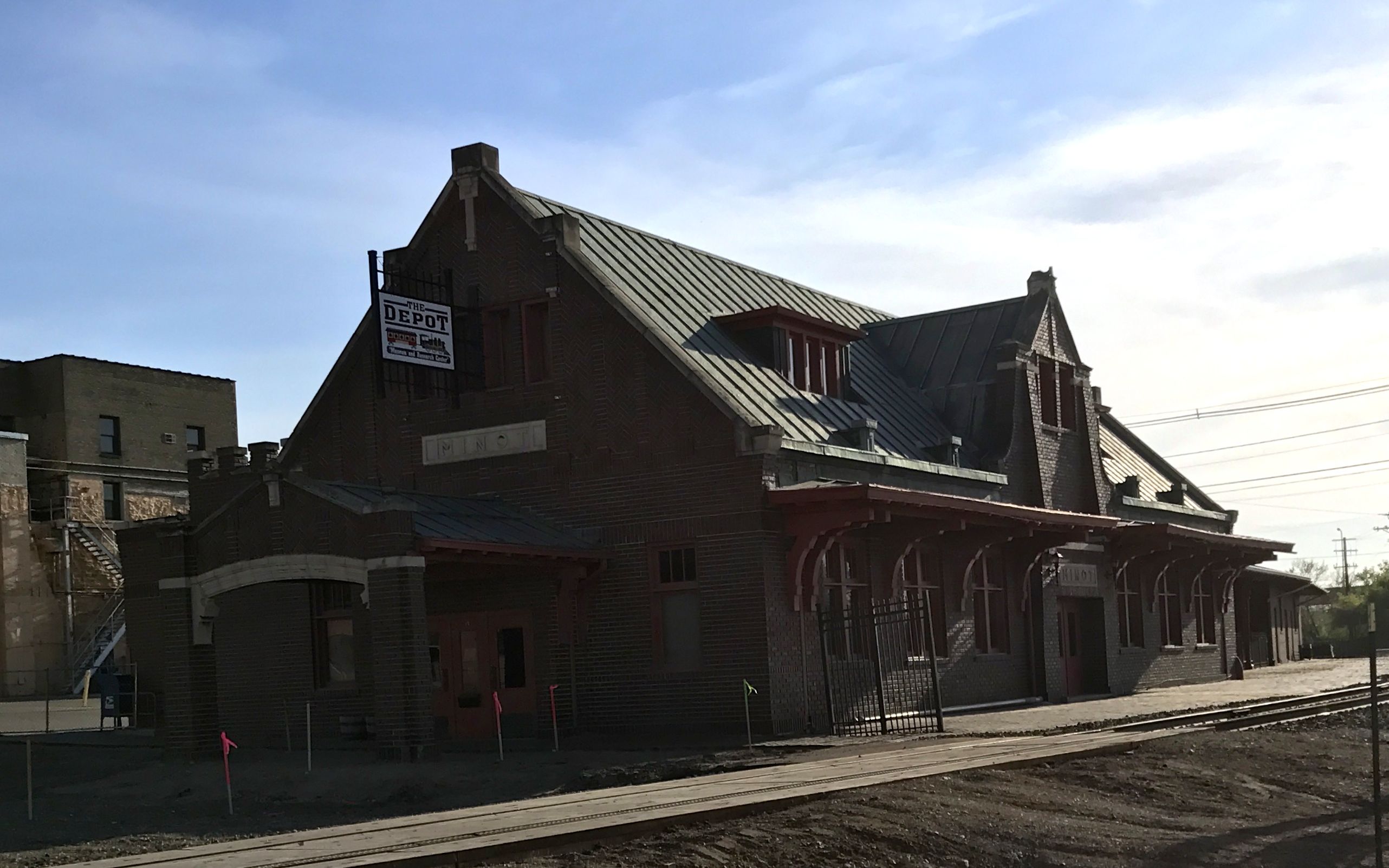
I found the Depot.
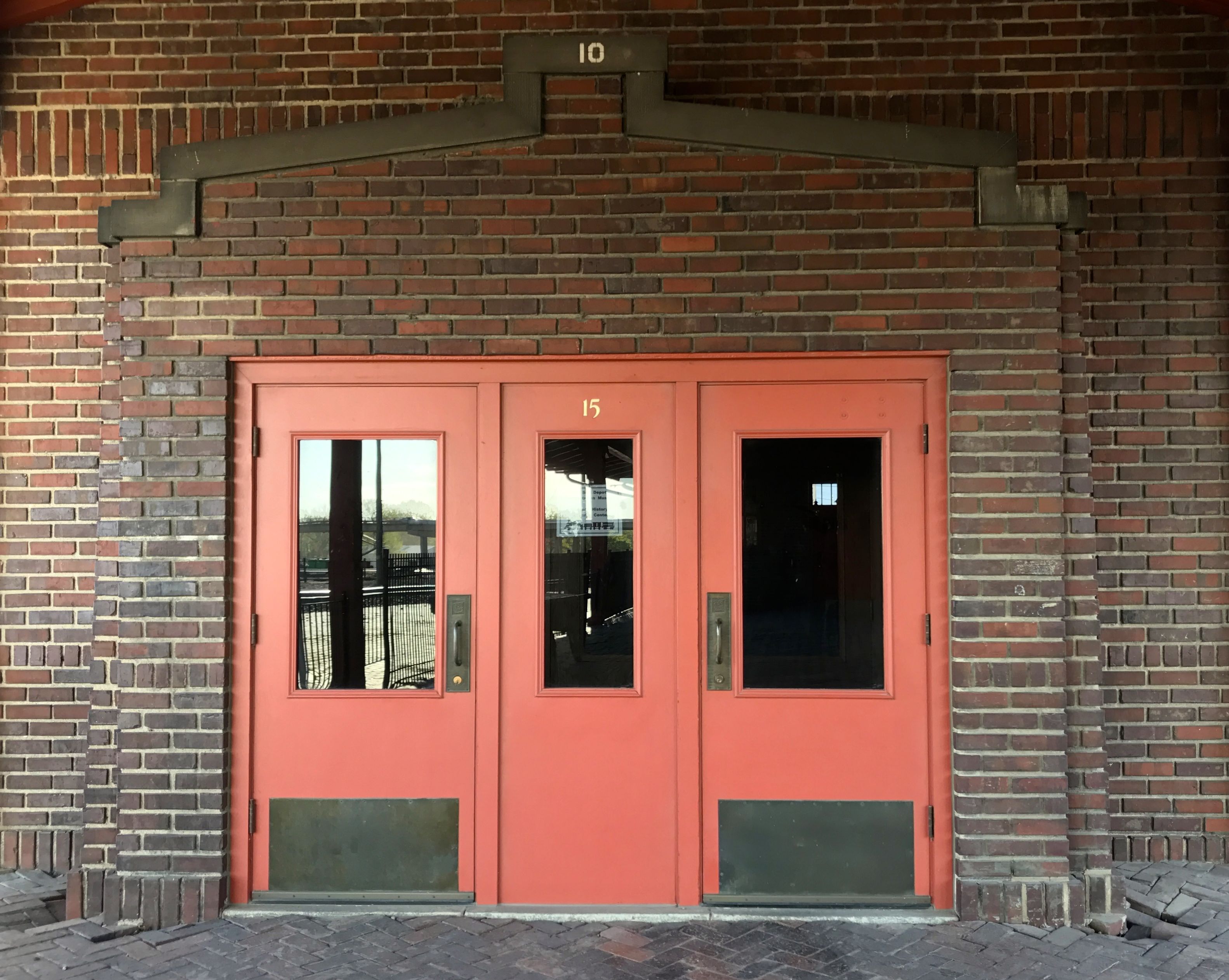
I found the door.
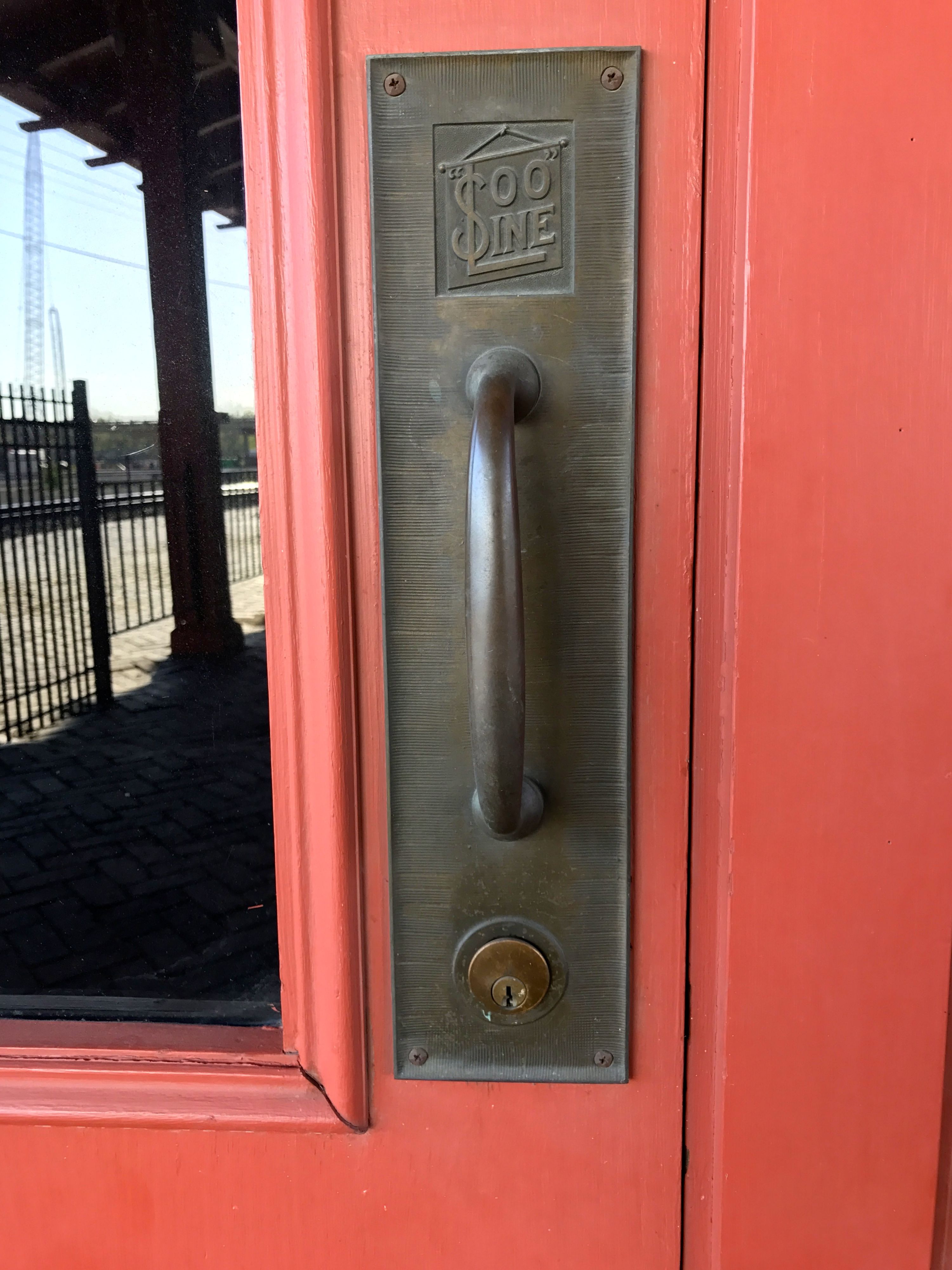
It was closed, but I rather liked the Soo Line logo on the plate around the handle.
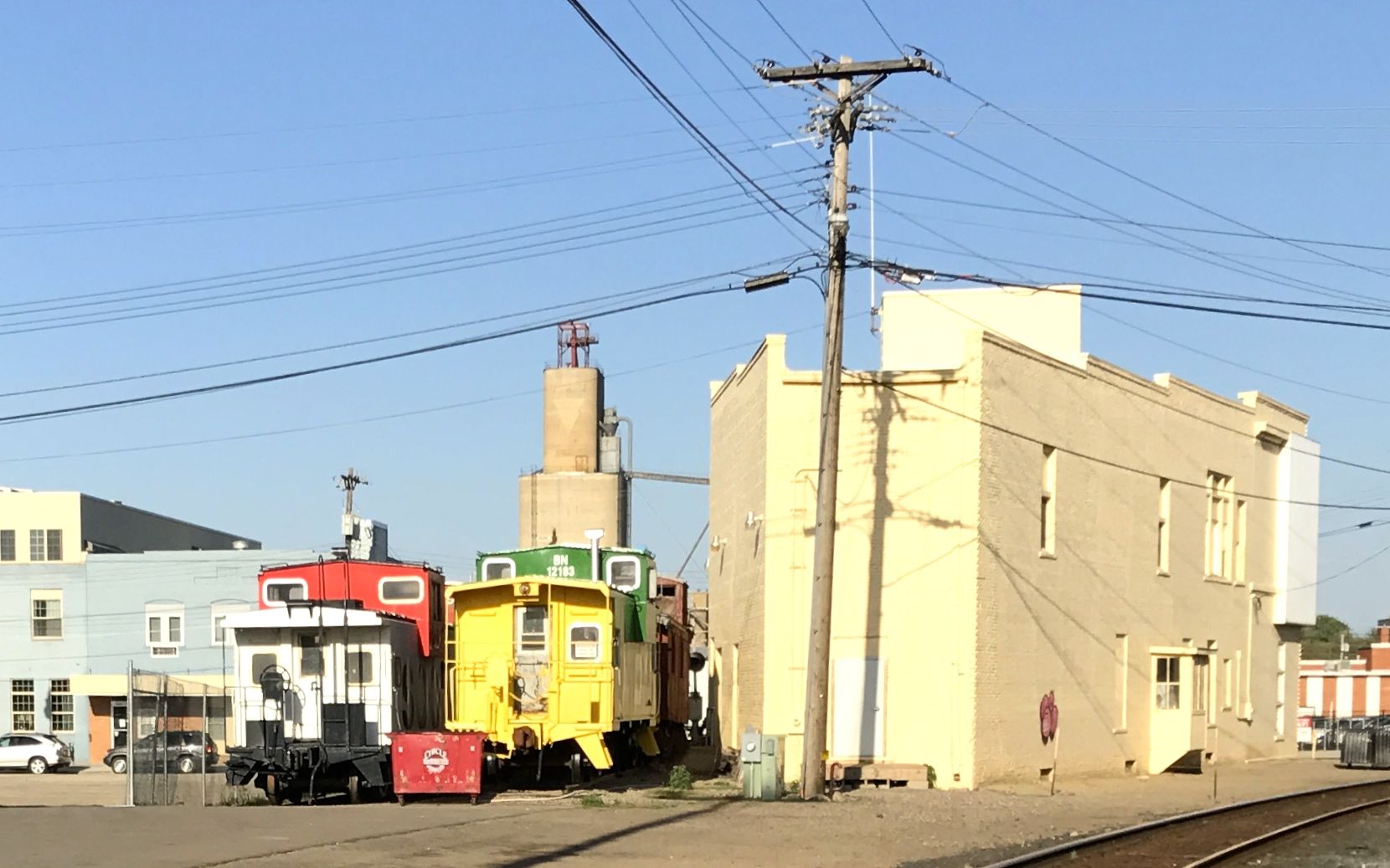
There were a few cars that looked like were being preserved and/or restored. But they had a fence around them, so I didn’t go check them out.
I headed back to my truck, and this historical record caught my eye – a record of what used to be.
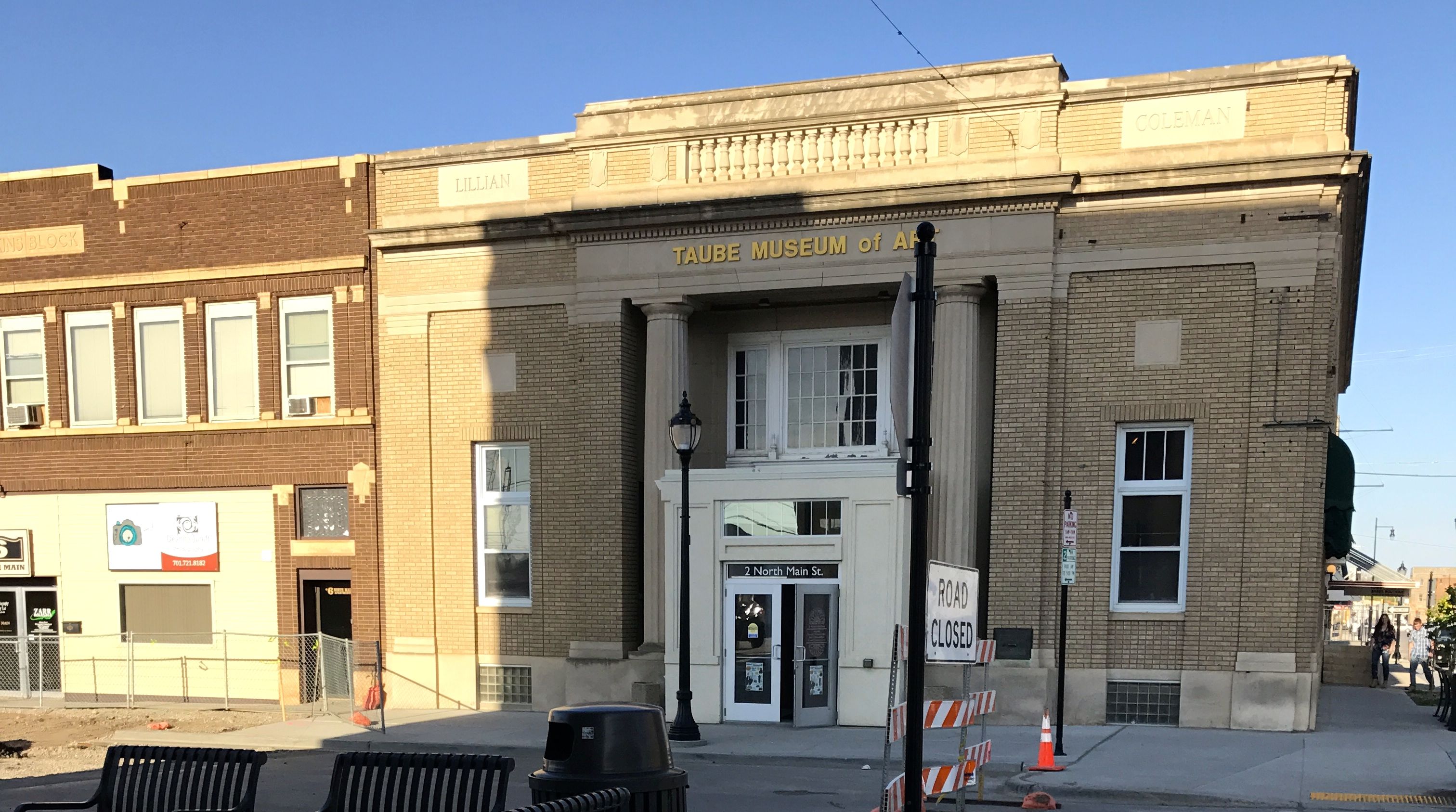
Across the street, I spied the Taube Museum of Art – and the door was open. I went over to check it out.
Upstairs was an art activity geared toward children. They looked like they were having fun. A sign said that there was an art display downstairs, so I decided to check it out.
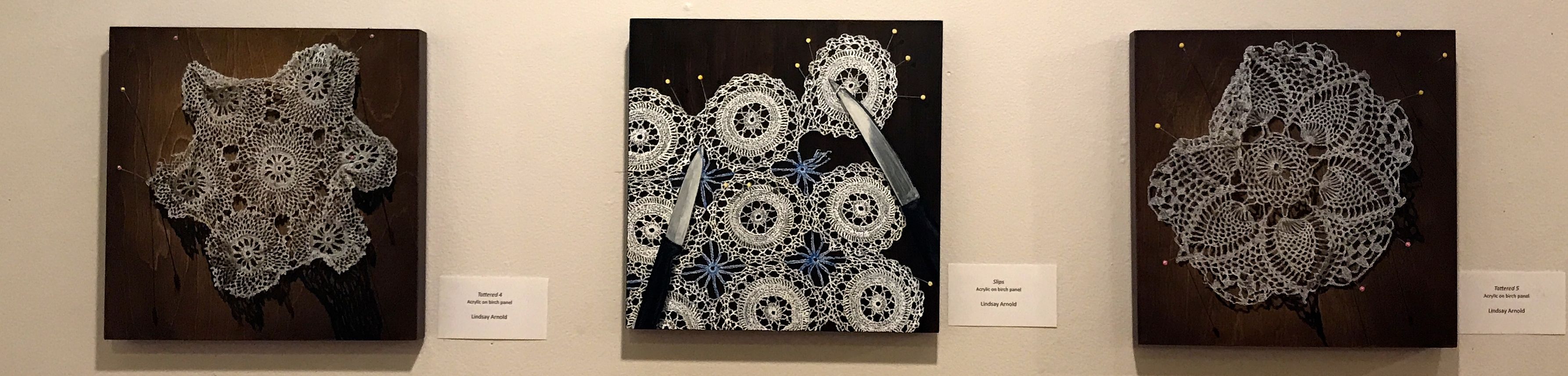
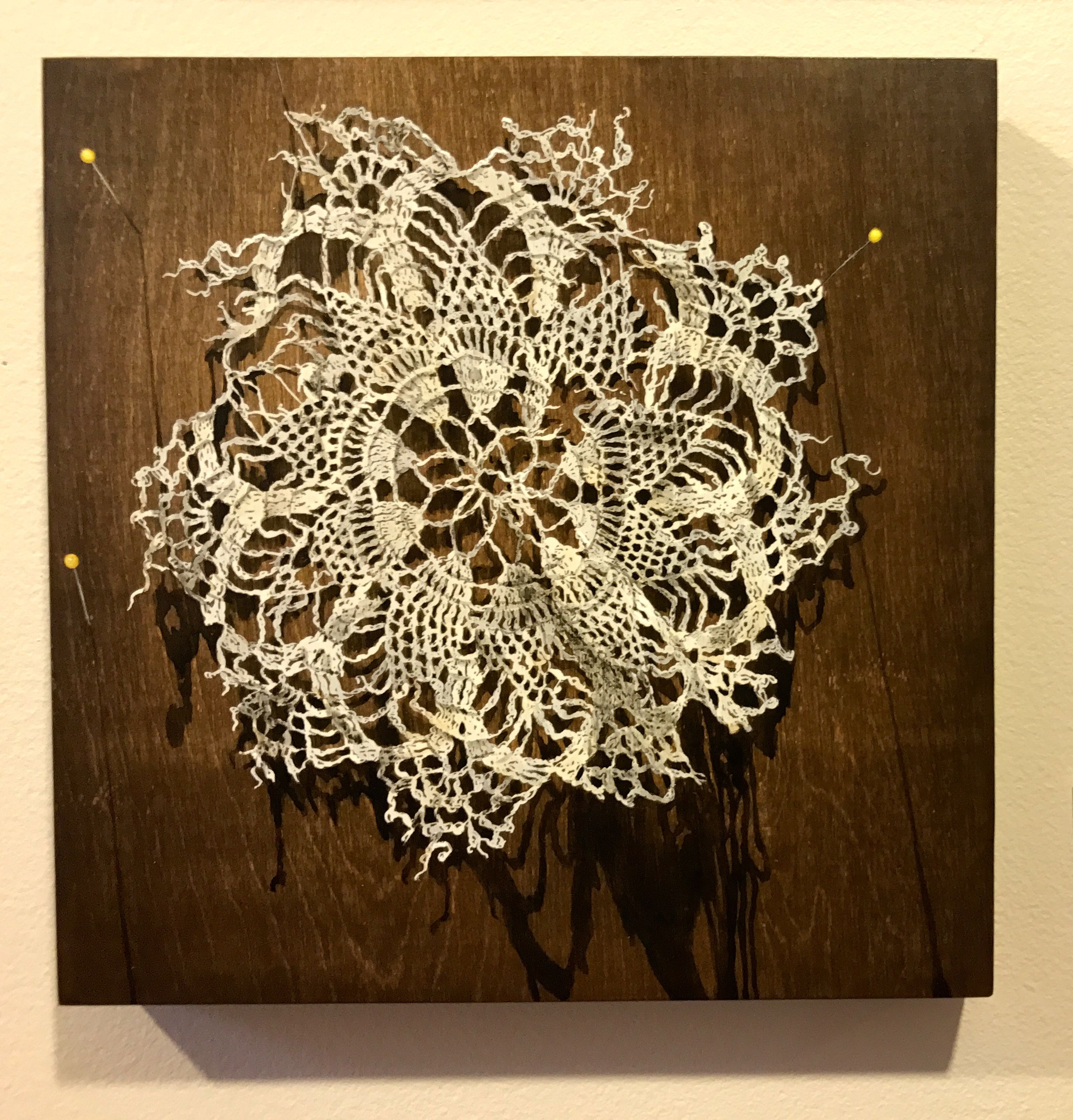
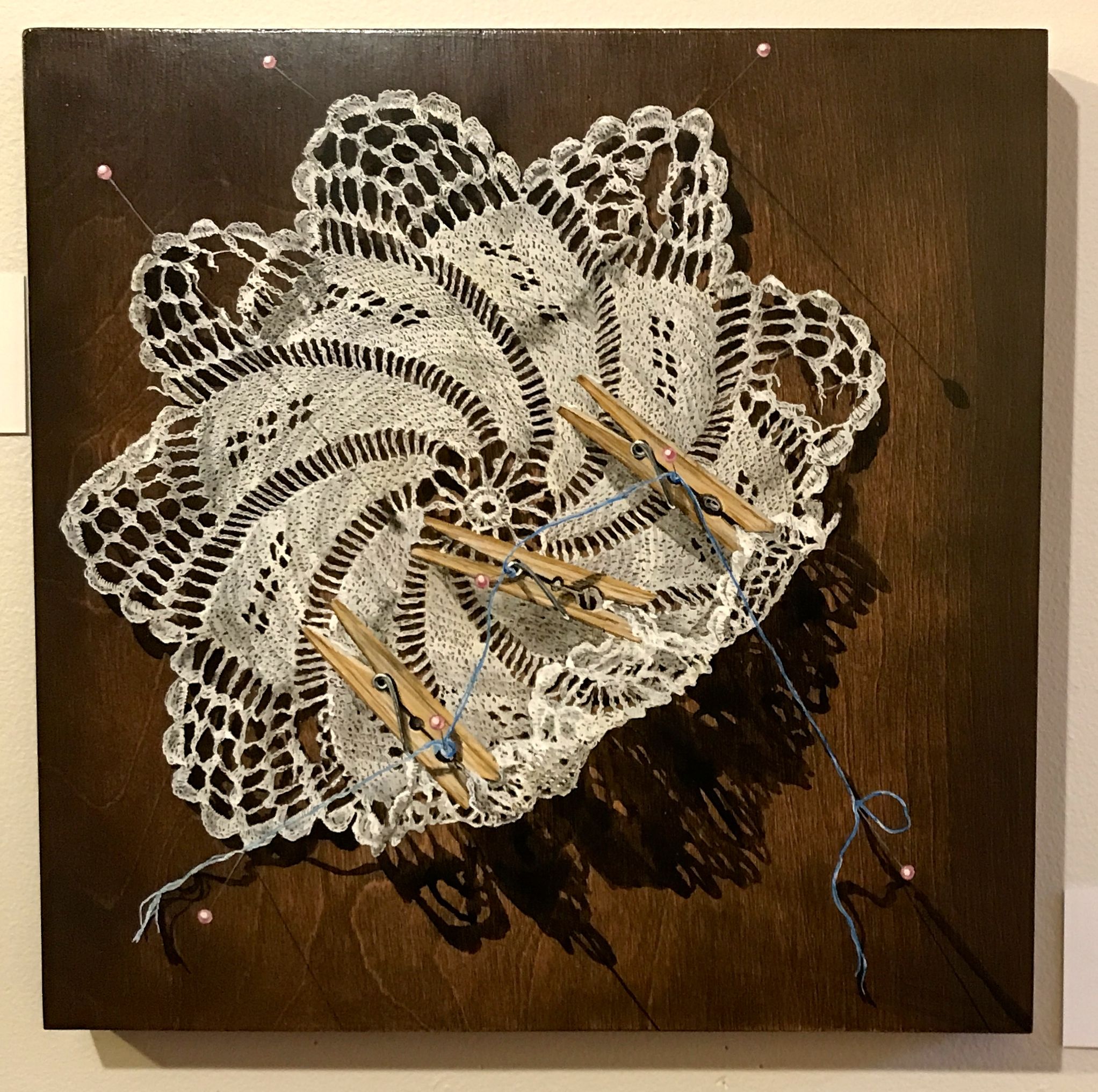
There were some paintings – incredibly detailed and closely observed paintings – done in acrylic on birch. The artist is Lindsay Arnold. (Really, check out her website.)
Can you believe these are paintings?
I love the name of this exhibit: Tedium. My father always said that I loved tedious things. I guess he was right.
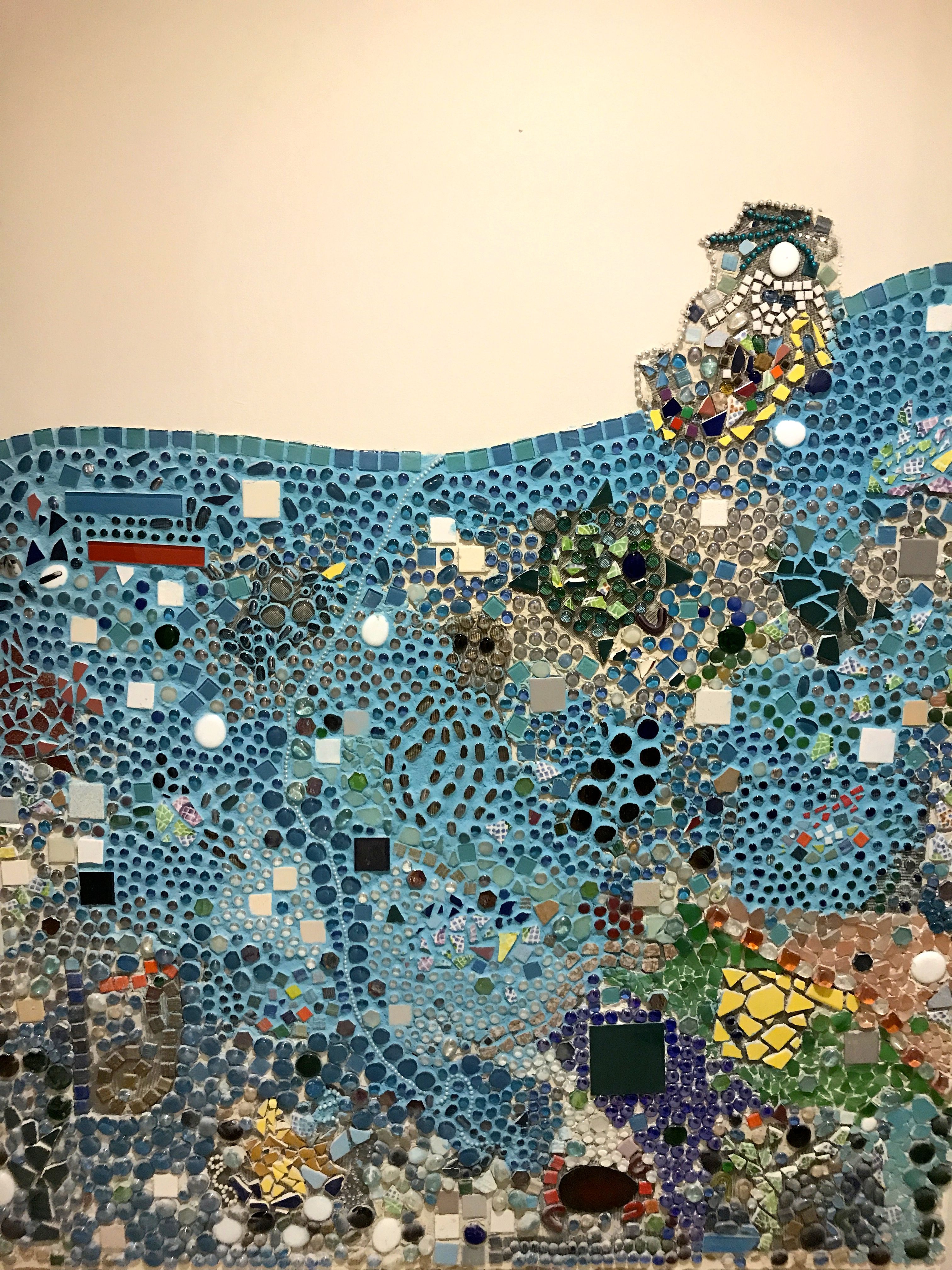
There was also a mosaic. I have already written about my love of mosaics. The blue grout really caught my attention.
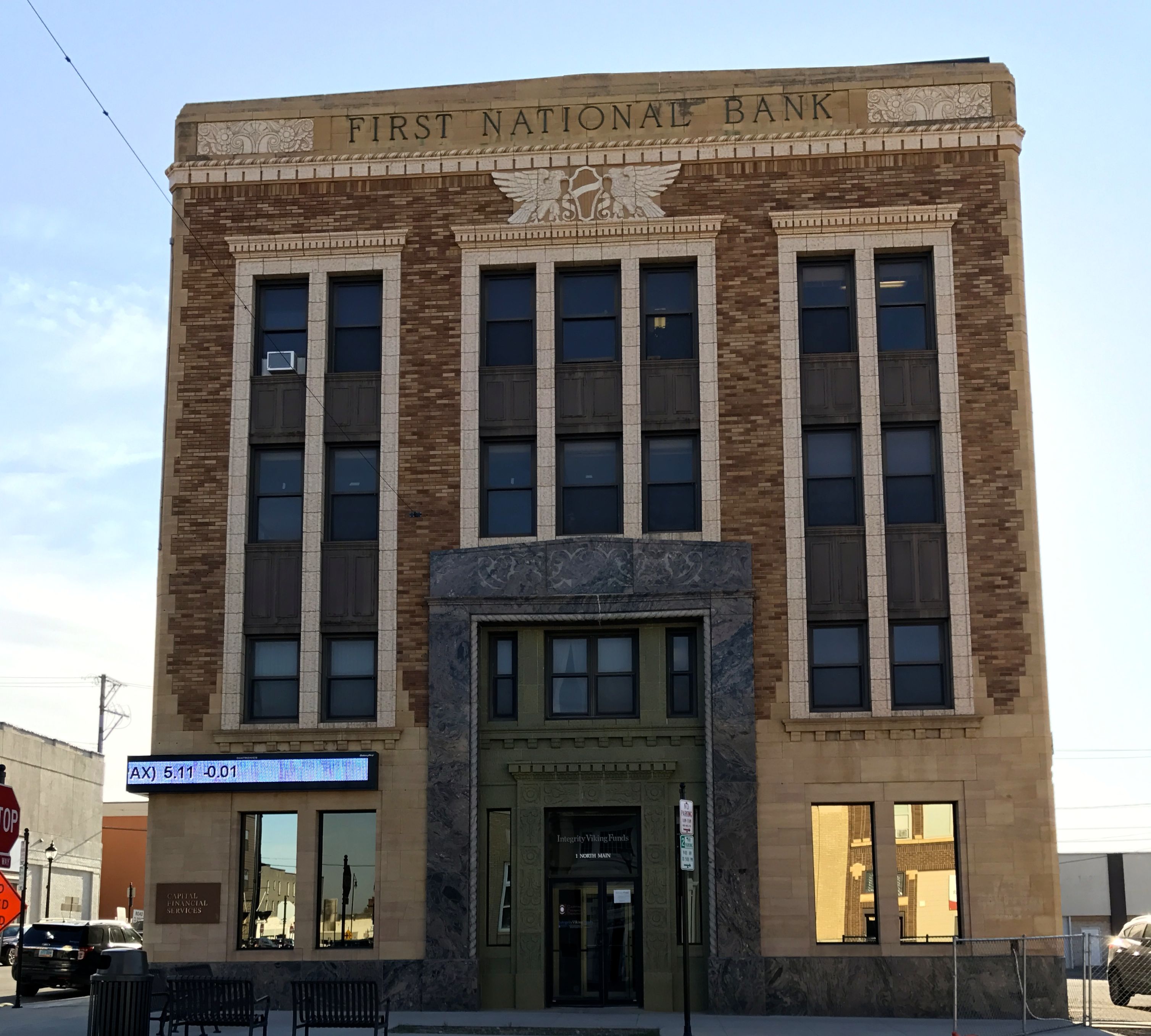
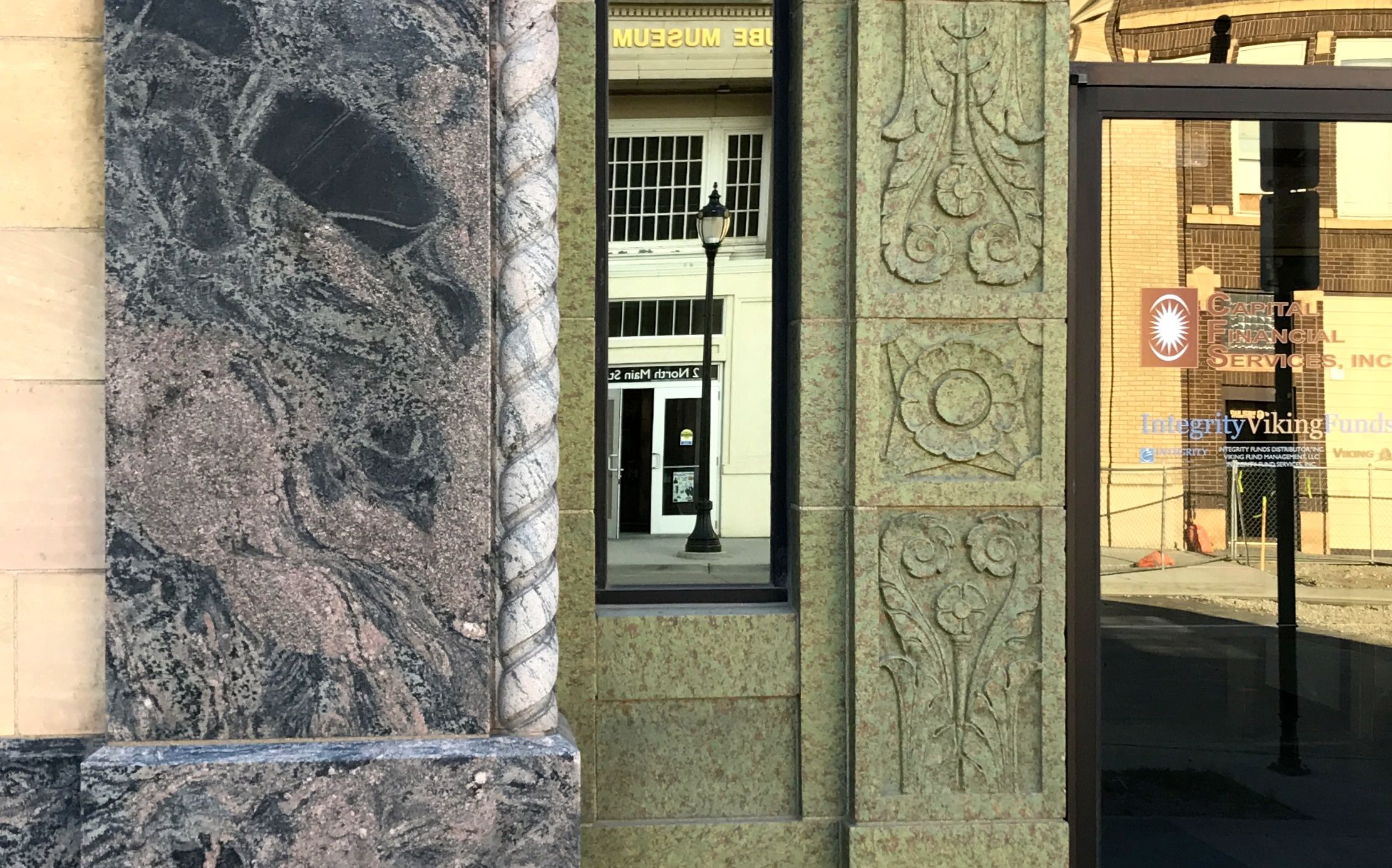
Across the street from the museum was the First National Bank.
They sure made elegant buildings back in the day.
I had to stock up on food before I left town. I stopped at this store, which was a new one to me.
I was intrigued by the fact that it was “employee owned.”
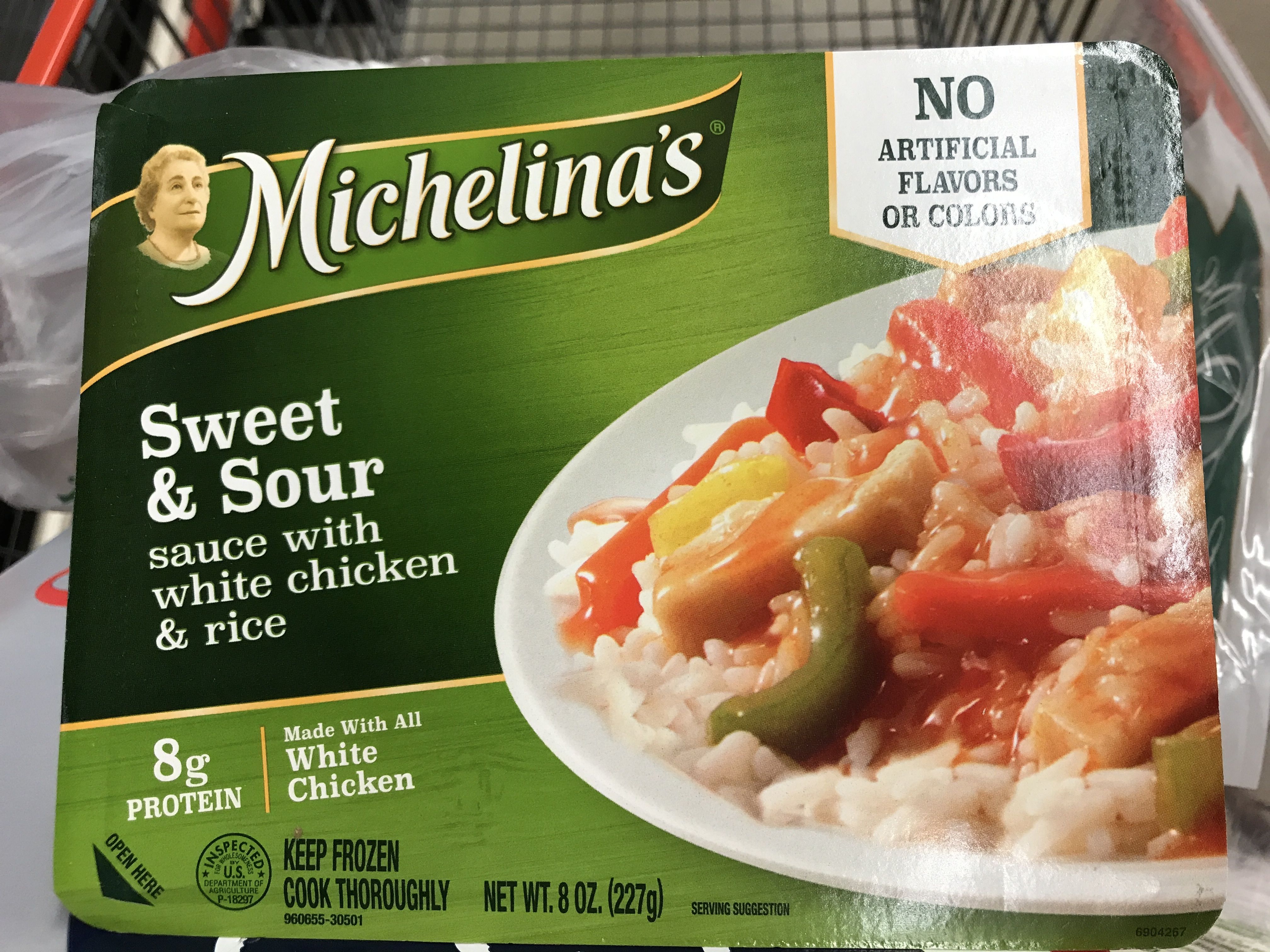
This caught my eye. It is “sweet and sour sauce”. Sweet and sour sauce WITH white chicken and rice. It was inexpensive, but I left it in the freezer.
I left these on the shelf, too. They just didn’t call out to me.
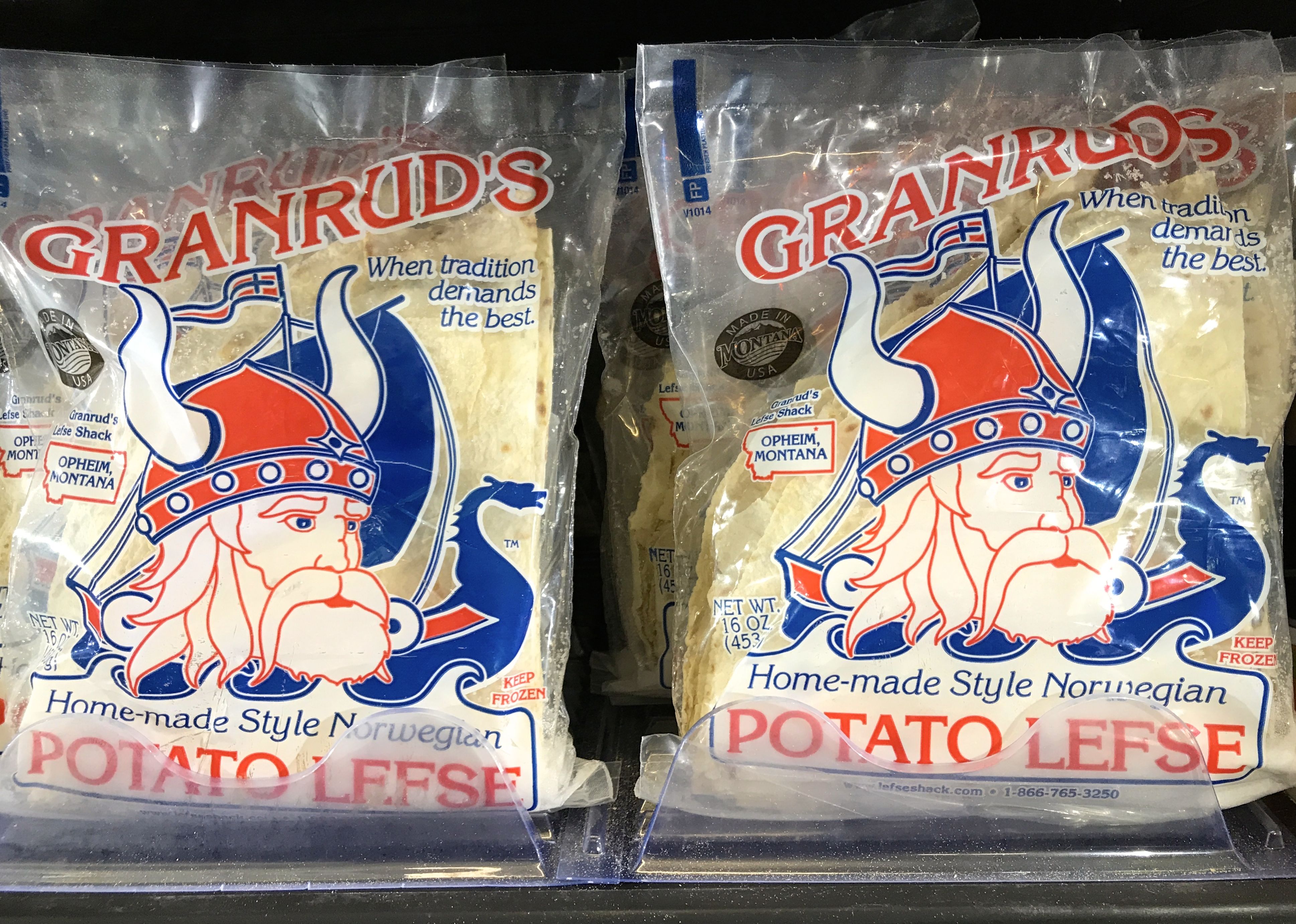
I did pick these up, though. How could I pass up lefse? Lefse with butter, sugar and cinnamon and a steaming mug of coffee – heaven!
Thus provisioned, I gassed up and headed back to the campground to get ready for the next day’s travel.
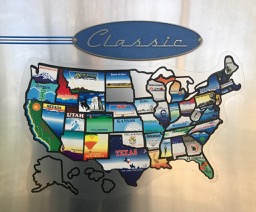
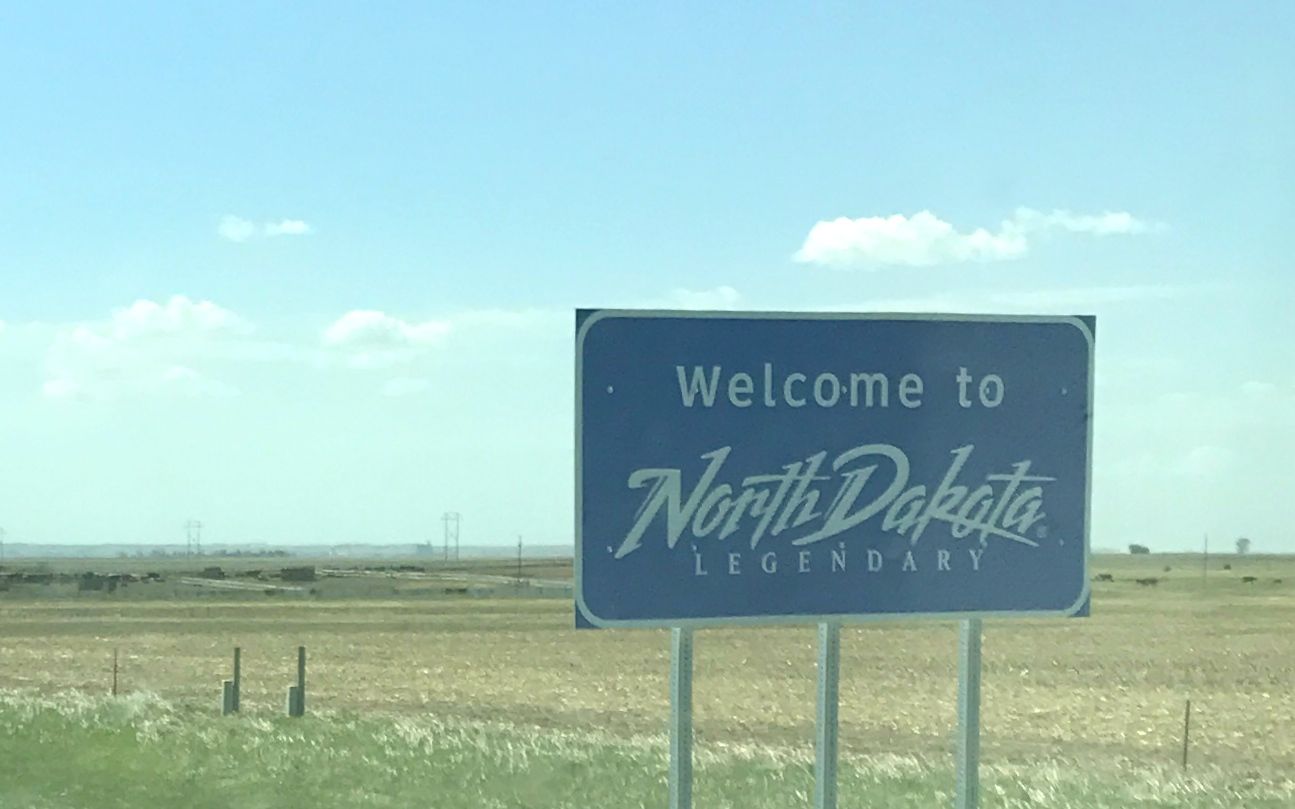
There was only one more thing to do. North Dakota was on the map! Only two more states to go.
One of the big draws in Minot – aside from the Blue Beacon Truck Wash – is the Scandinavian Heritage Park.
It was a beautiful, sunny day to explore this park that is believed to be the only park in the world celebrating all five Nordic countries: Norway, Sweden, Denmark, Finland and Iceland. The park was established in 1988 to celebrate and preserve Scandinavian heritage. The first building was dedicated in 1990.
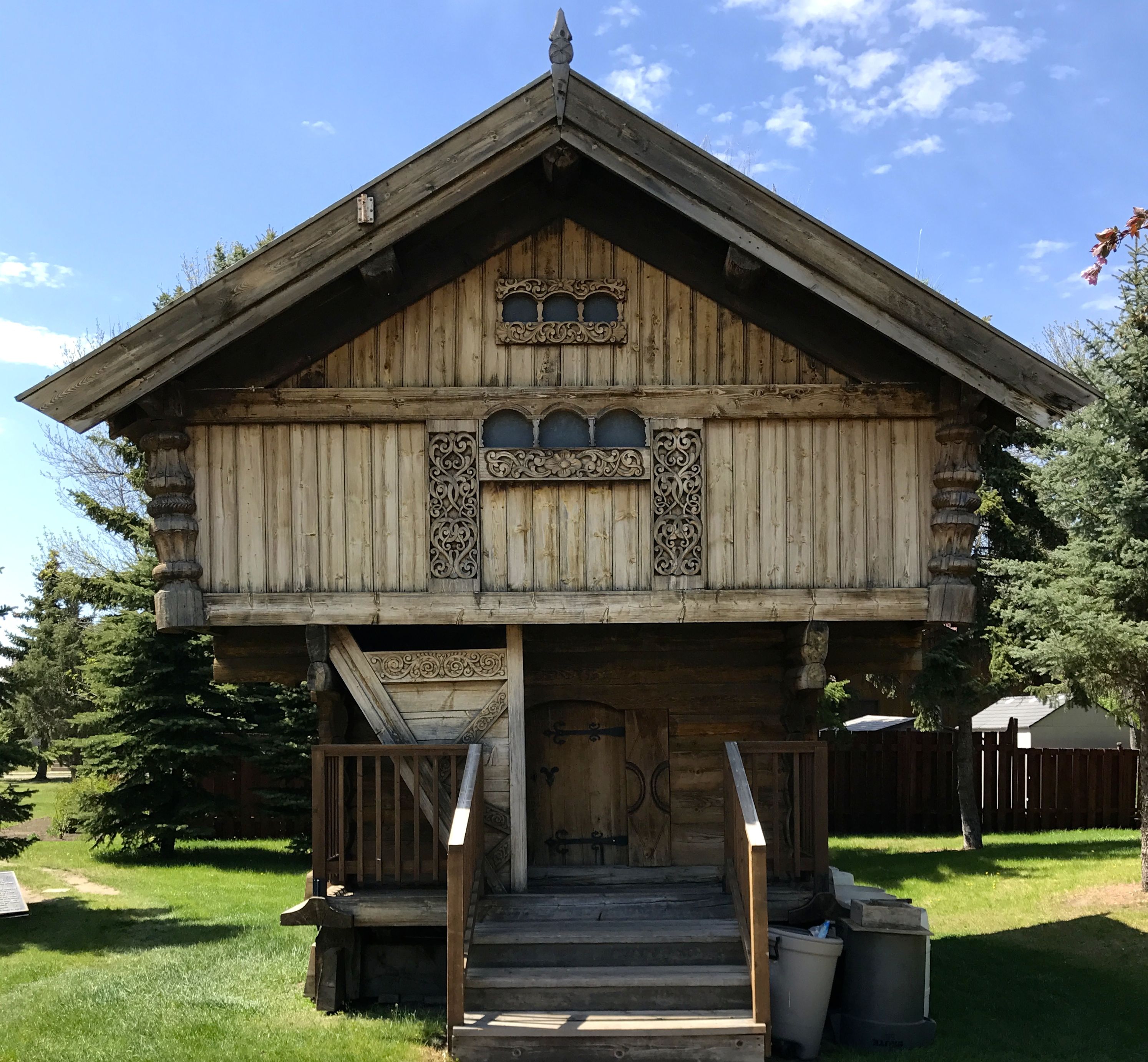
This adorable building isn’t a cottage or a family home. It’s a storehouse. The plaque on it proclaimed “STABBUR”. I thought it was a family name, but my inquiring mind made me check. “Stabbur” is the Norwegian word for storehouse.
This is a replica of a building from Torvetjonn, constructed in 1750, a farm near Mosvann in Telemark, Norway. It is considered a major work in Norwegian folk architecture.
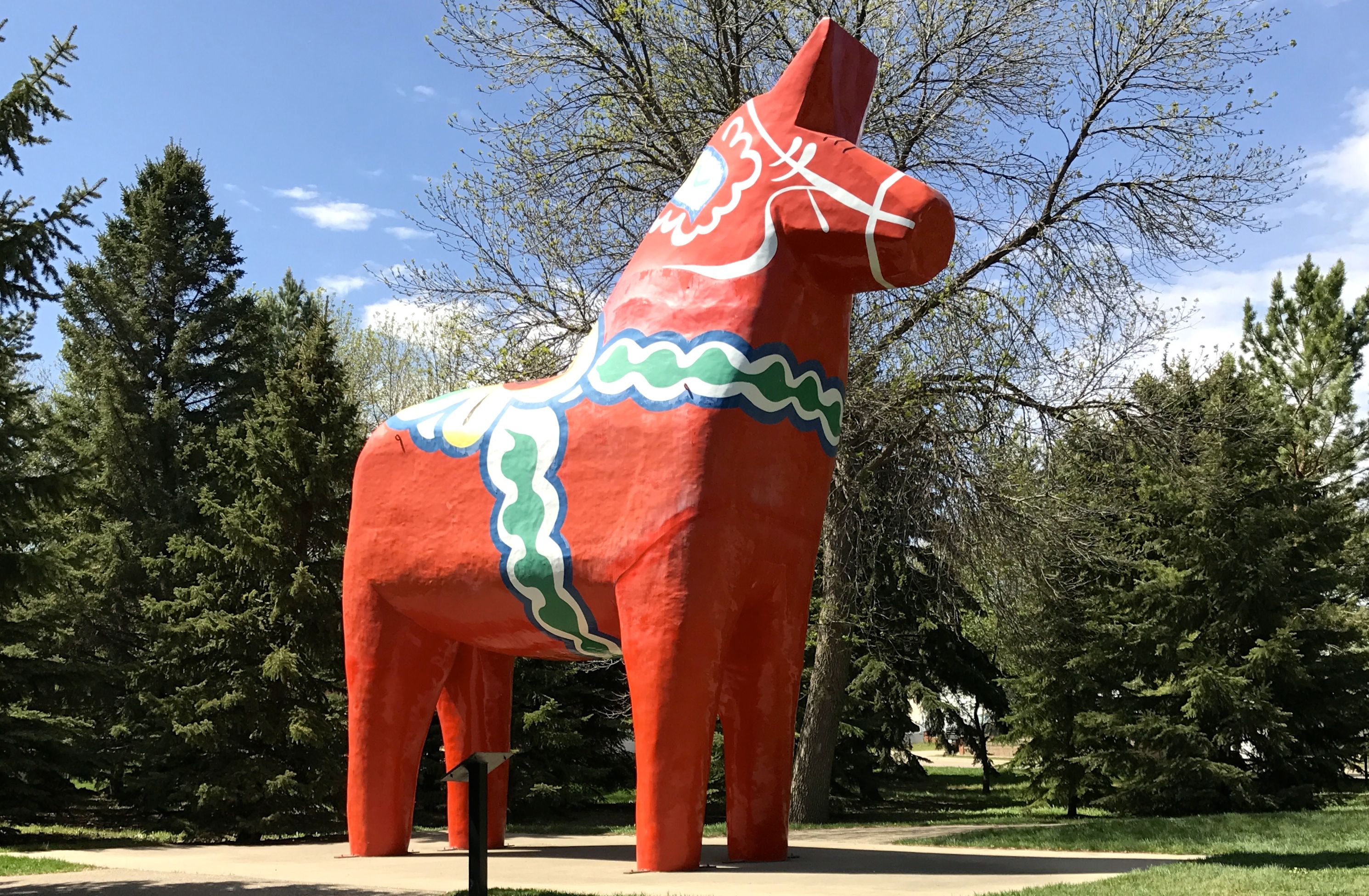
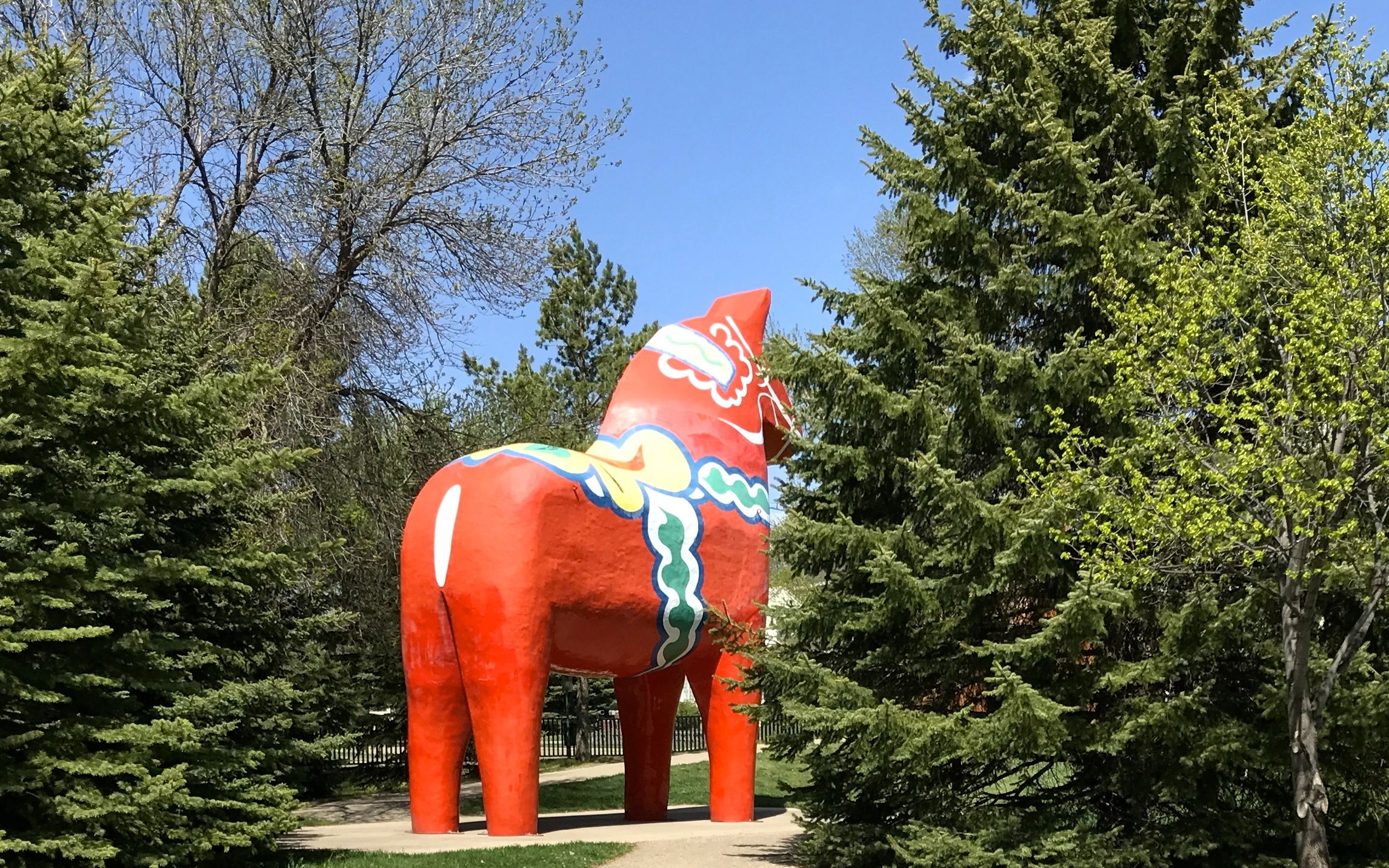
There is an enormous Dala Horse watching over the park.
The Dala Horse is the national symbol of Sweden. Although horses have been important in Sweden for at least 4000 years, according to my research, the earliest references to wooden horses for sale are from 1623. It wasn’t until the World Exhibition in New York in 1939 that the Dala wooden horse became famous around the world.
A giant painted Dala horse was placed outside the Swedish pavilion and caused a sensation among the visitors. During the year after the exhibition, 20,000 Dala horses were shipped over to New York, and the Swedish Dala horse became a symbol for Sweden.
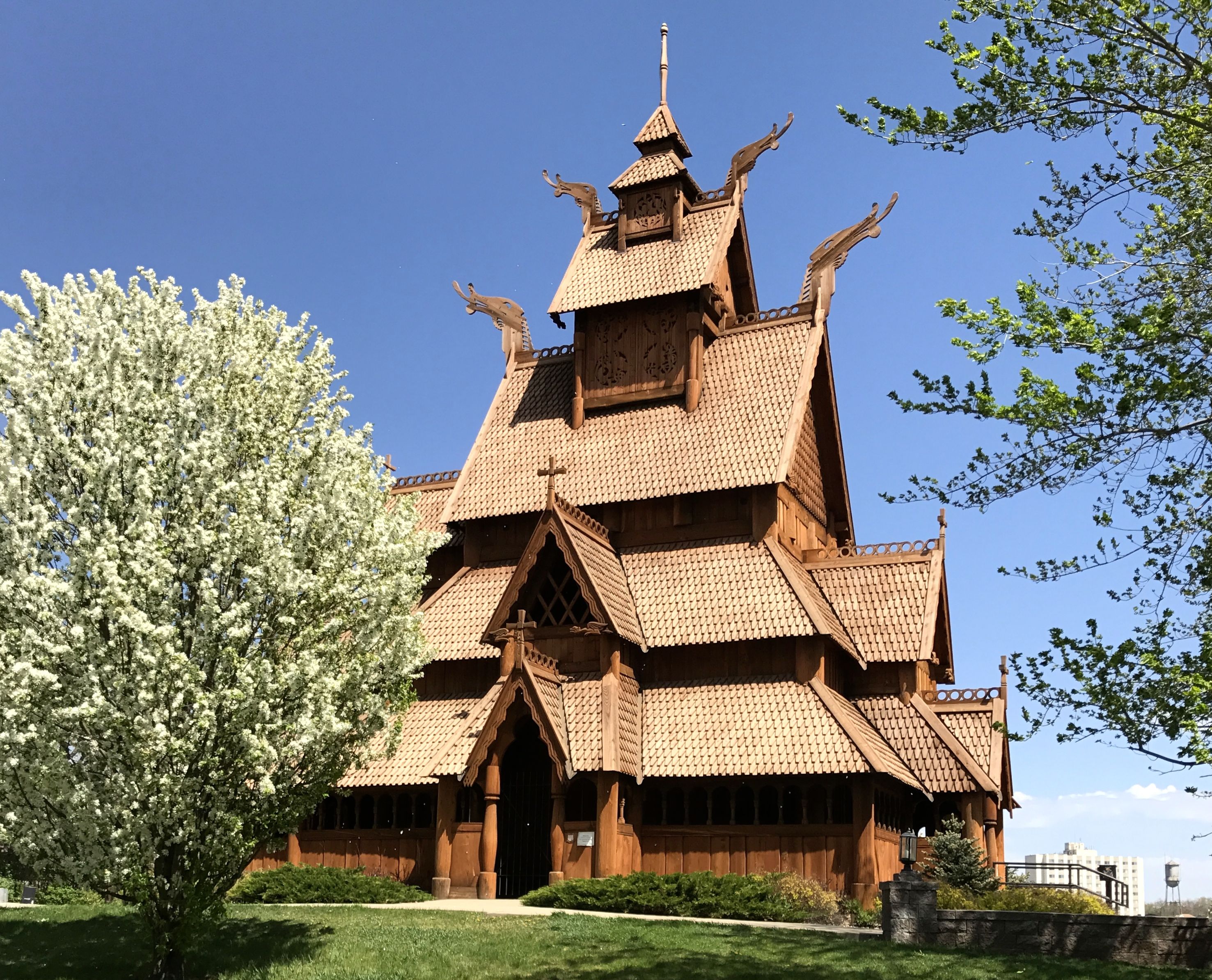
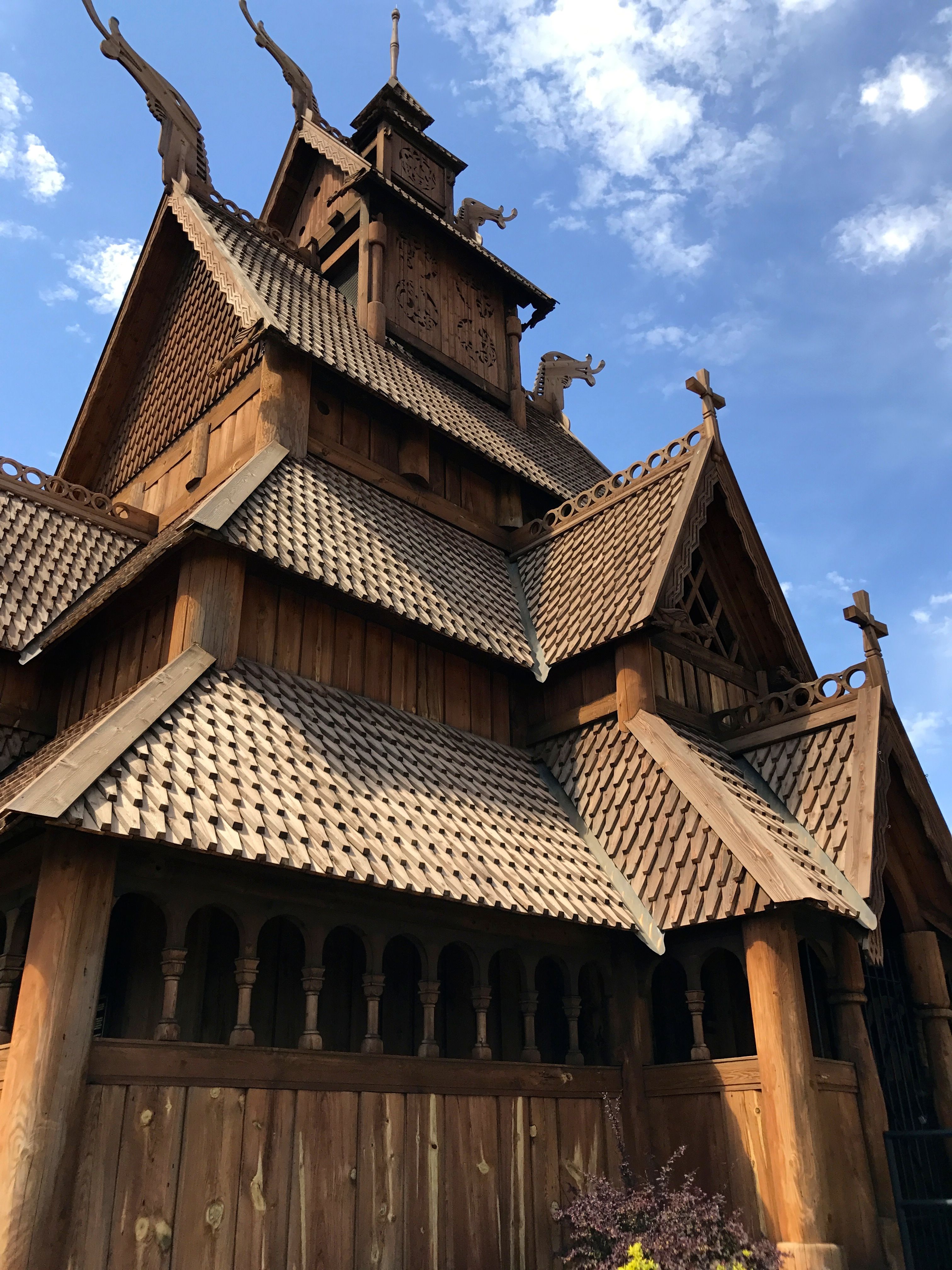
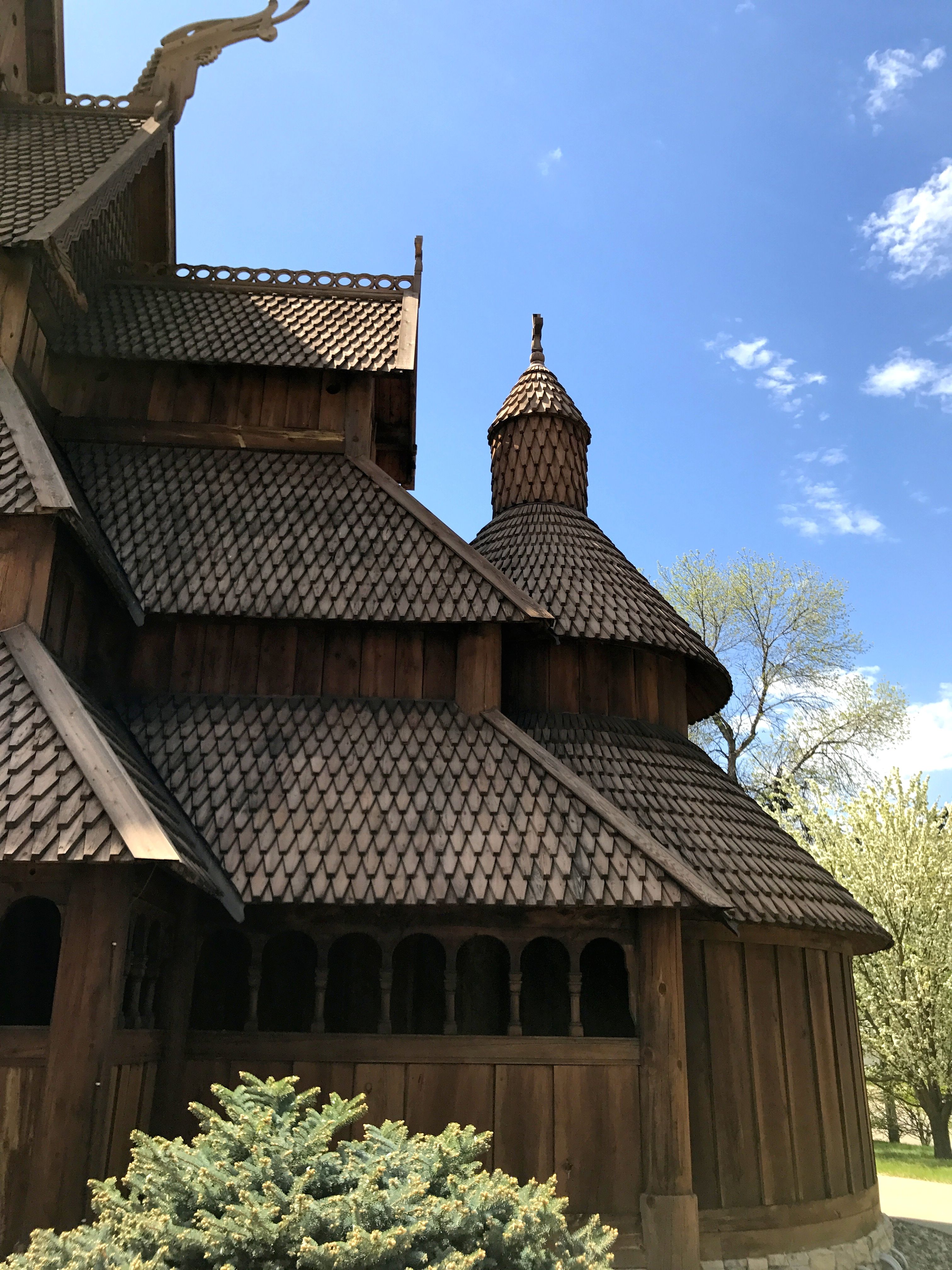
This is a full-sized replica of the Stave Church from Gol, Hallingdal, Norway. About 100 years ago, the original church was moved from Gol to the Folk Museum in Bygdol Park in Oslo, Norway.
It’s quite the structure.
I walked around it, hoping to catch a glimpse of the interior.
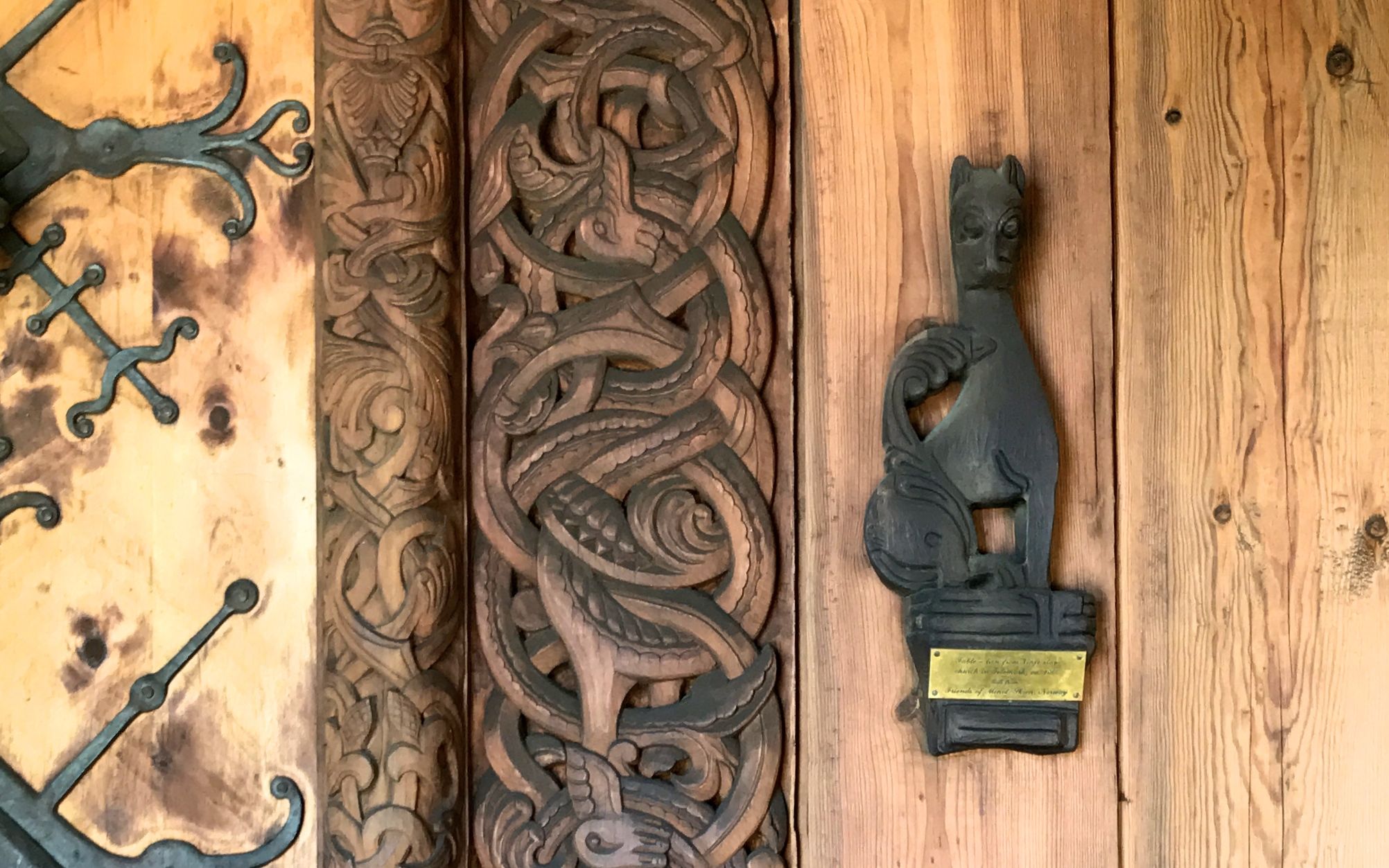
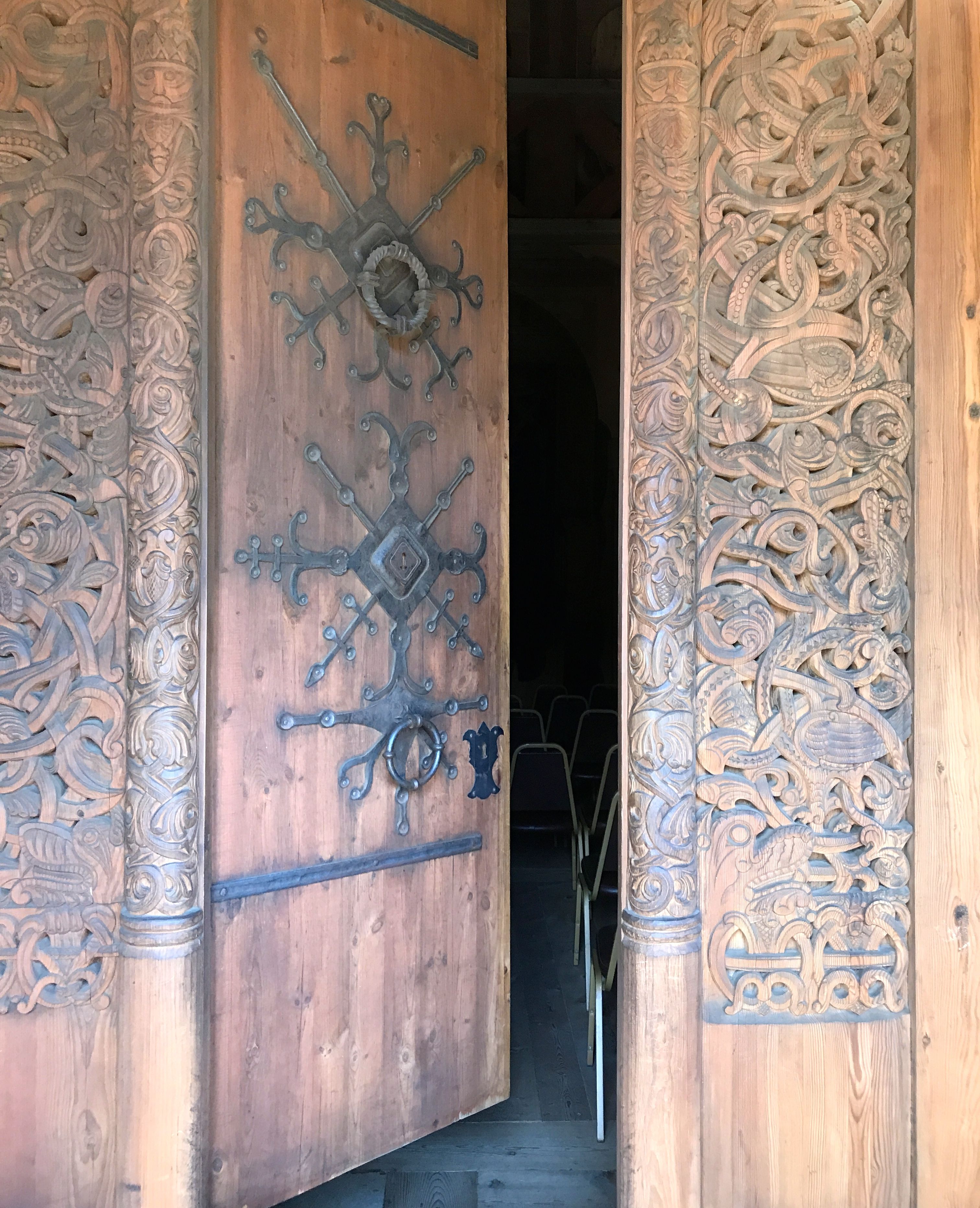
The details are awesome.
I did find an open door. As I remember, the interior was nowhere near as interesting as the exterior. I don’t have any photos of it, so maybe it was too dark to take a decent shot.
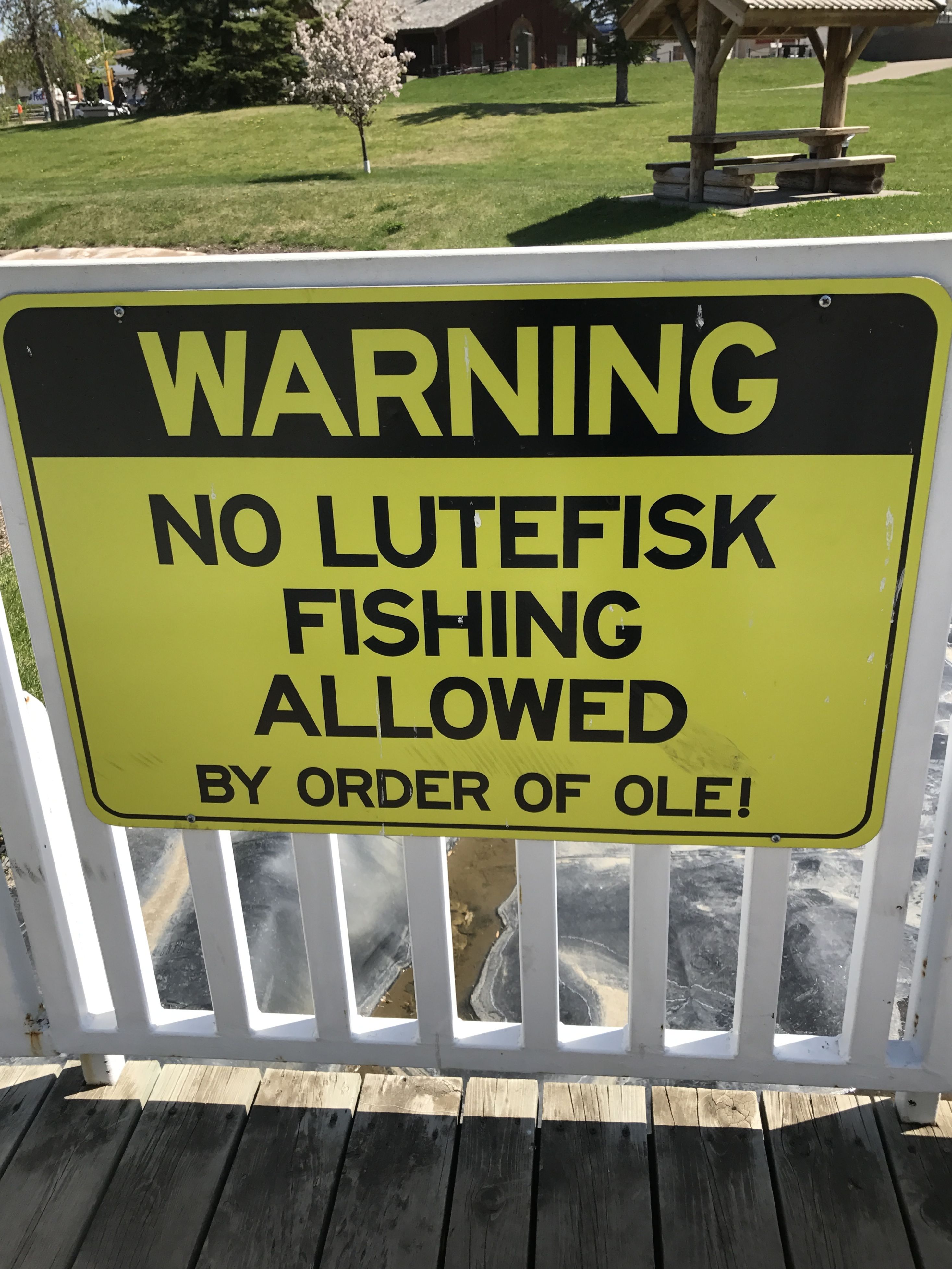
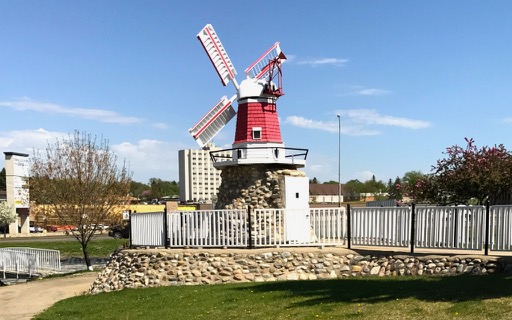
I crossed over a little bridge. During the summer, I imagine that there is water in the pond. I don’t suppose there is ever any lutefisk swimming there. I arrived at the Danish Windmill.
This windmill was built in 1928 in Powers Lake, North Dakota. Carl Olson erected it to supply water and to grind wheat for the family.
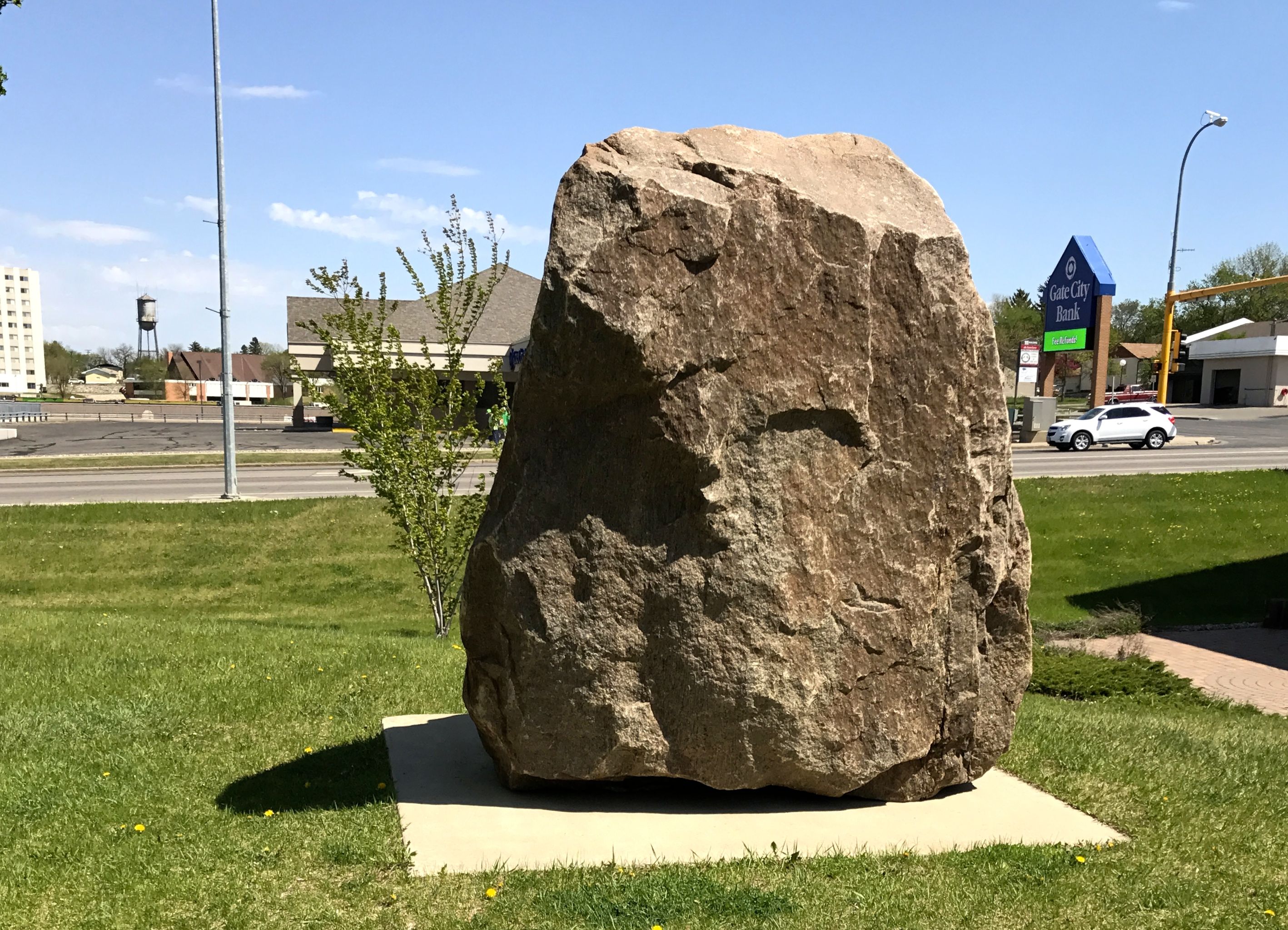
There was this boulder given a place of prominence on a concrete. The plaque read, “E.D. Schmit’s Rock of Ages”. It was moved from Dickinson Farm N.E, of Surrey by Billy Schrlock and Roald Matison. Perhaps more information was posted somewhere, but I don’t remember seeing it.
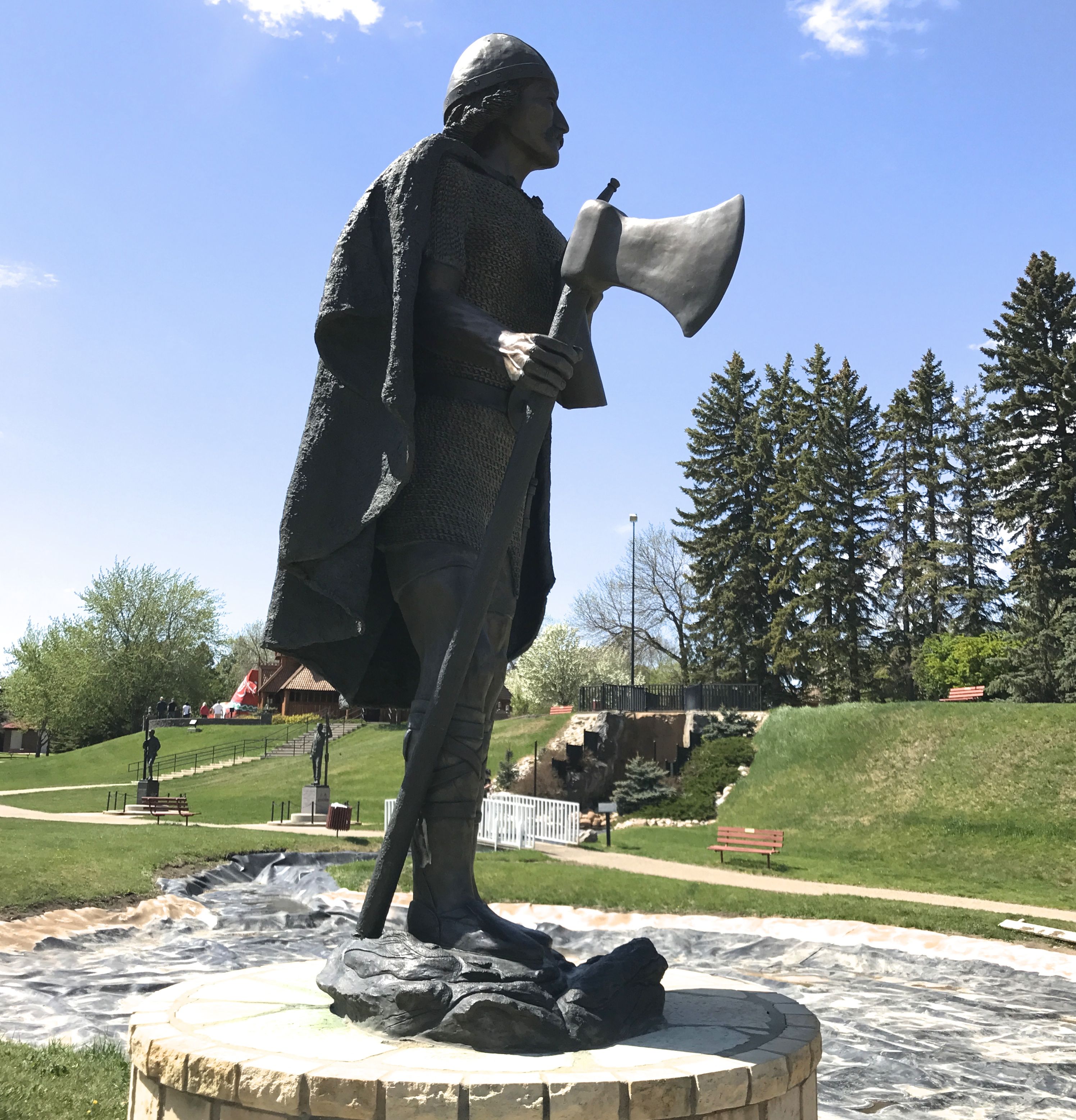
There was a statue of Leif Eiriksson, Icelandic explorer. The plaque reads, “This statue is dedicated in honor of our Icelandic Ancestors who came to American. the Diligence and high moral standard of these people have been an inspiration to those who followed.”
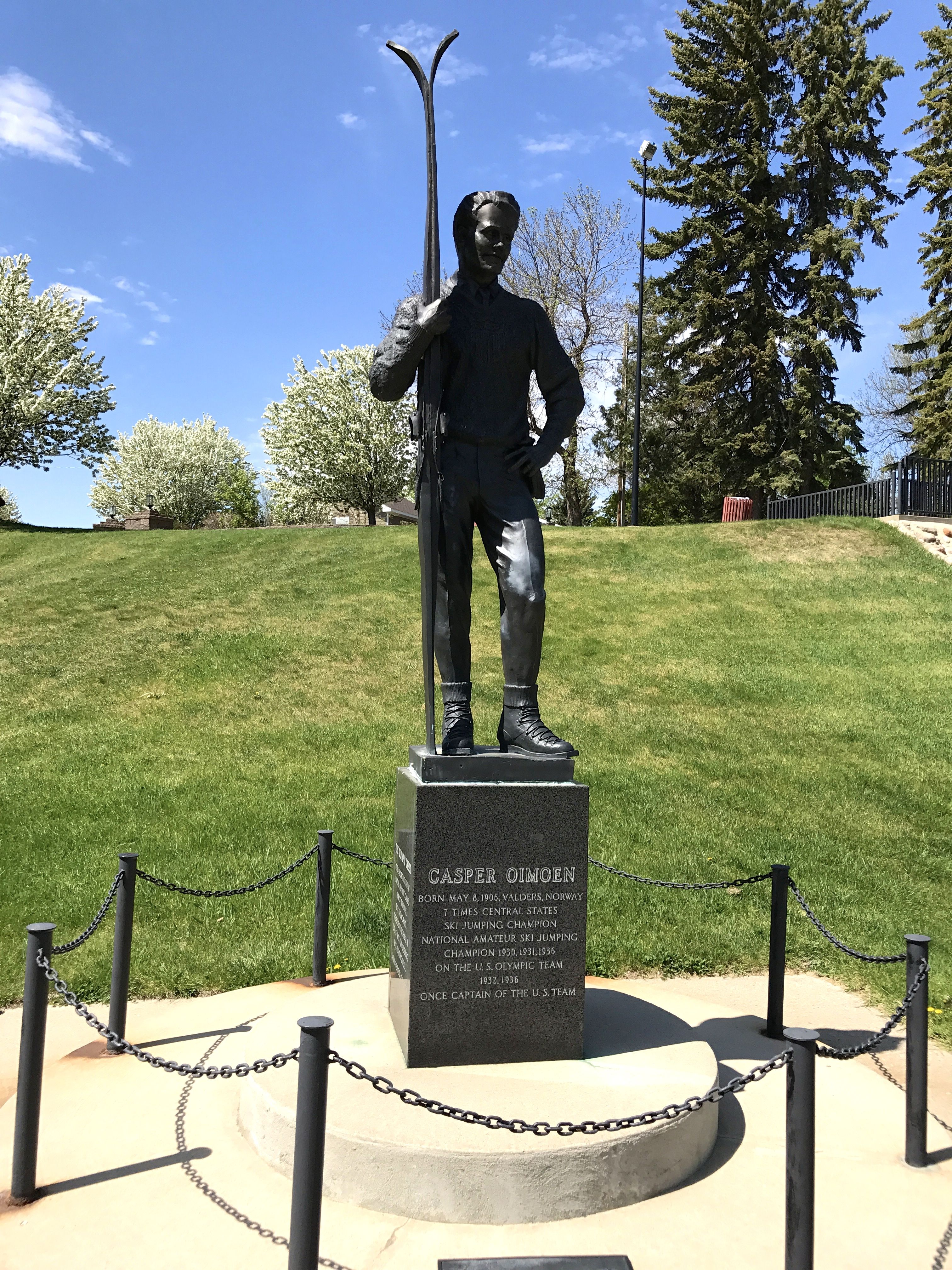
The Scandinavians appreciate their athletes. Here’s a statue of Casper Oimoen, who was born in Valders, Norway. He was quite the ski jumper. In addition to regional and state championships, he was also on the U.S. Olympic team in 1932 and 1936. He was even the captain of the team one year.
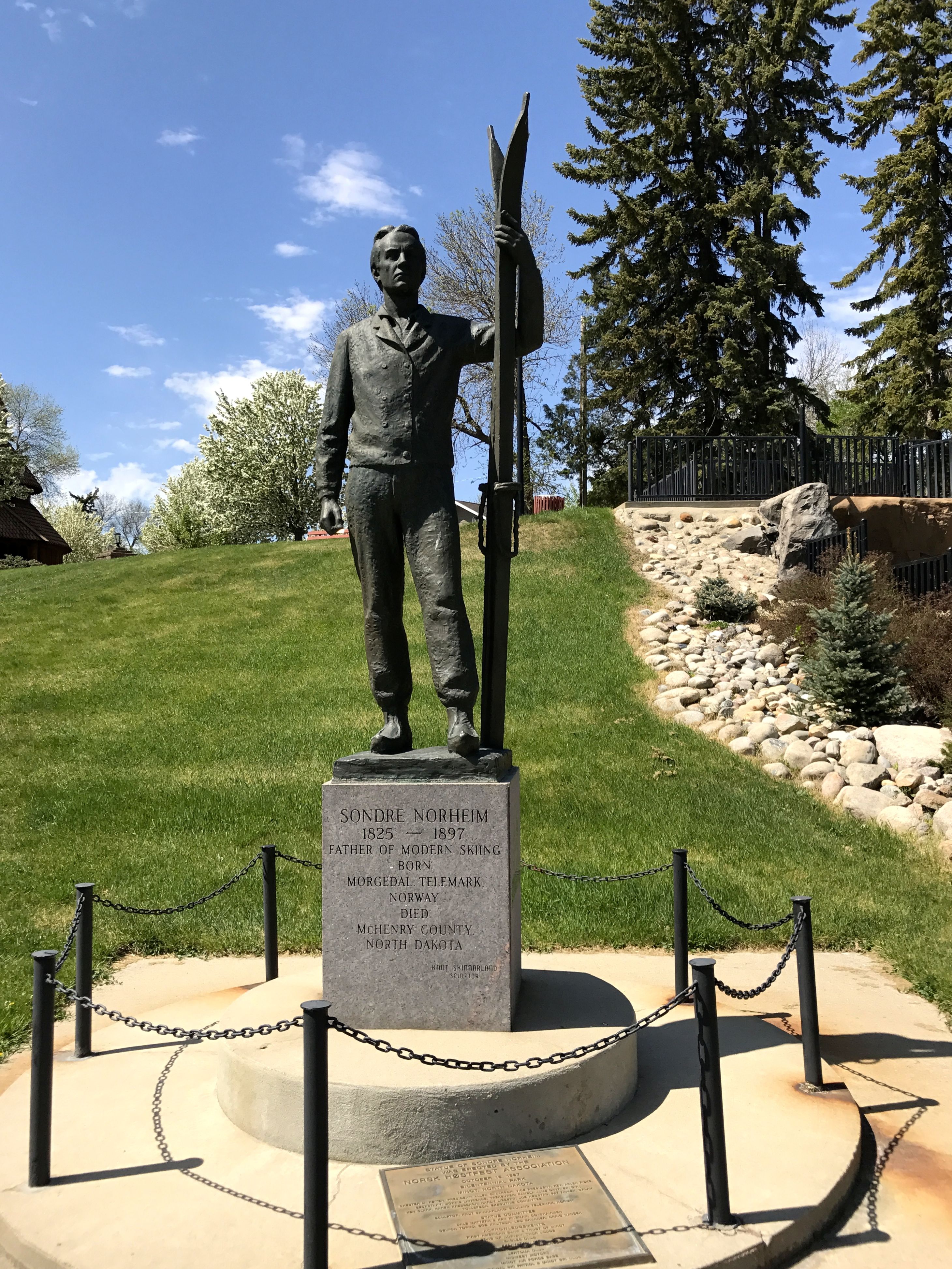
Then there is Sondre Norheim, the father of modern skiing. He was born in Telemark, Norway, obviously emigrated to American, and died in McHenry County, North Dakota.
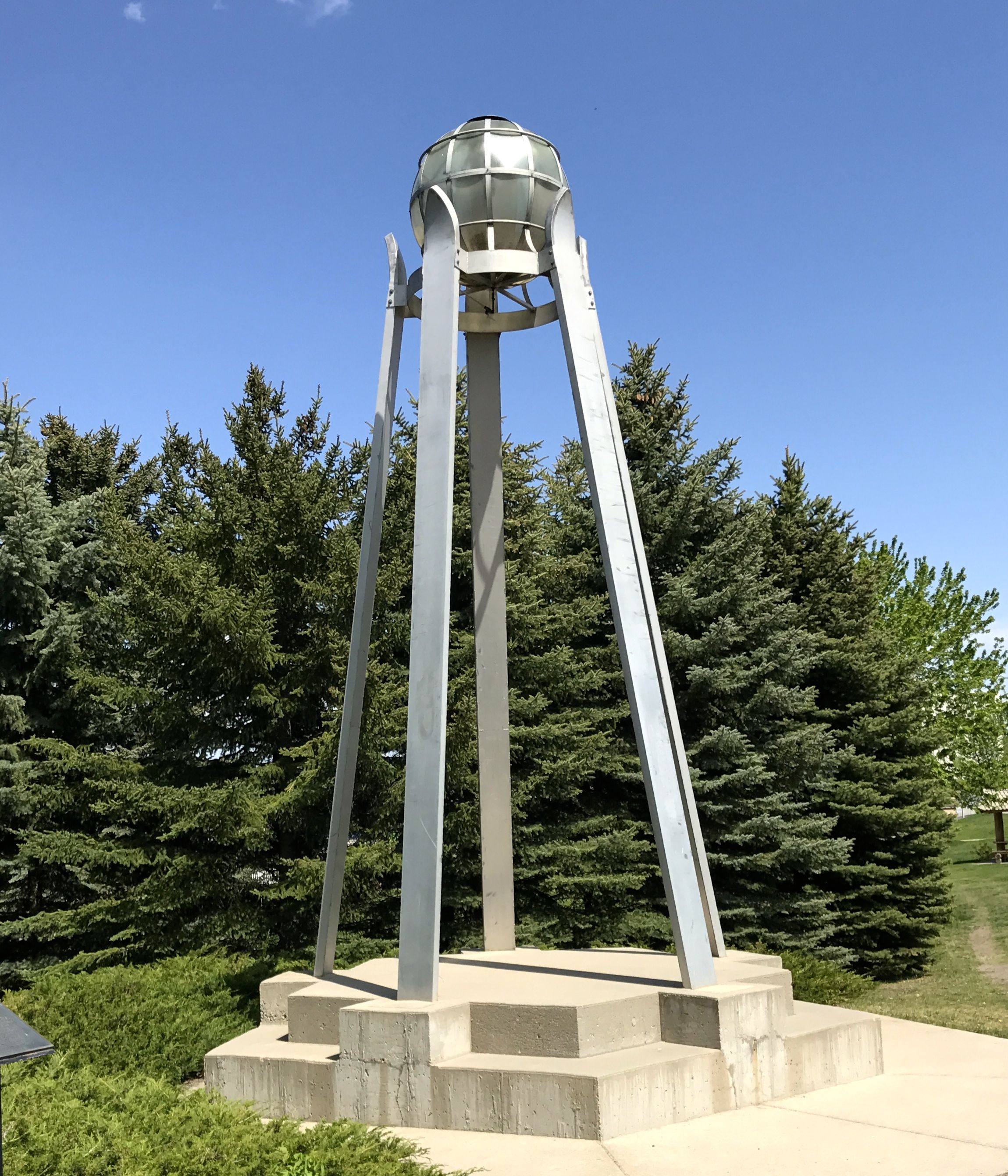
There is also an eternal flame dedicated to Sondre Norheim. There are five alumnin skis, which symbolize the five Scandinavian countries. They support a world globe which represents the many contributions to the sport of skiing that he gave to the world.
The flame was lit by Lars Berge Haugann of Morgedal, Norway on December 4, 1993. A flame from the fireplace of Norheim’s birthplace was transported to Minot by North Dakota Governor Edward Schafer. I wonder how they managed to get the fire there? Airplane? Boat?
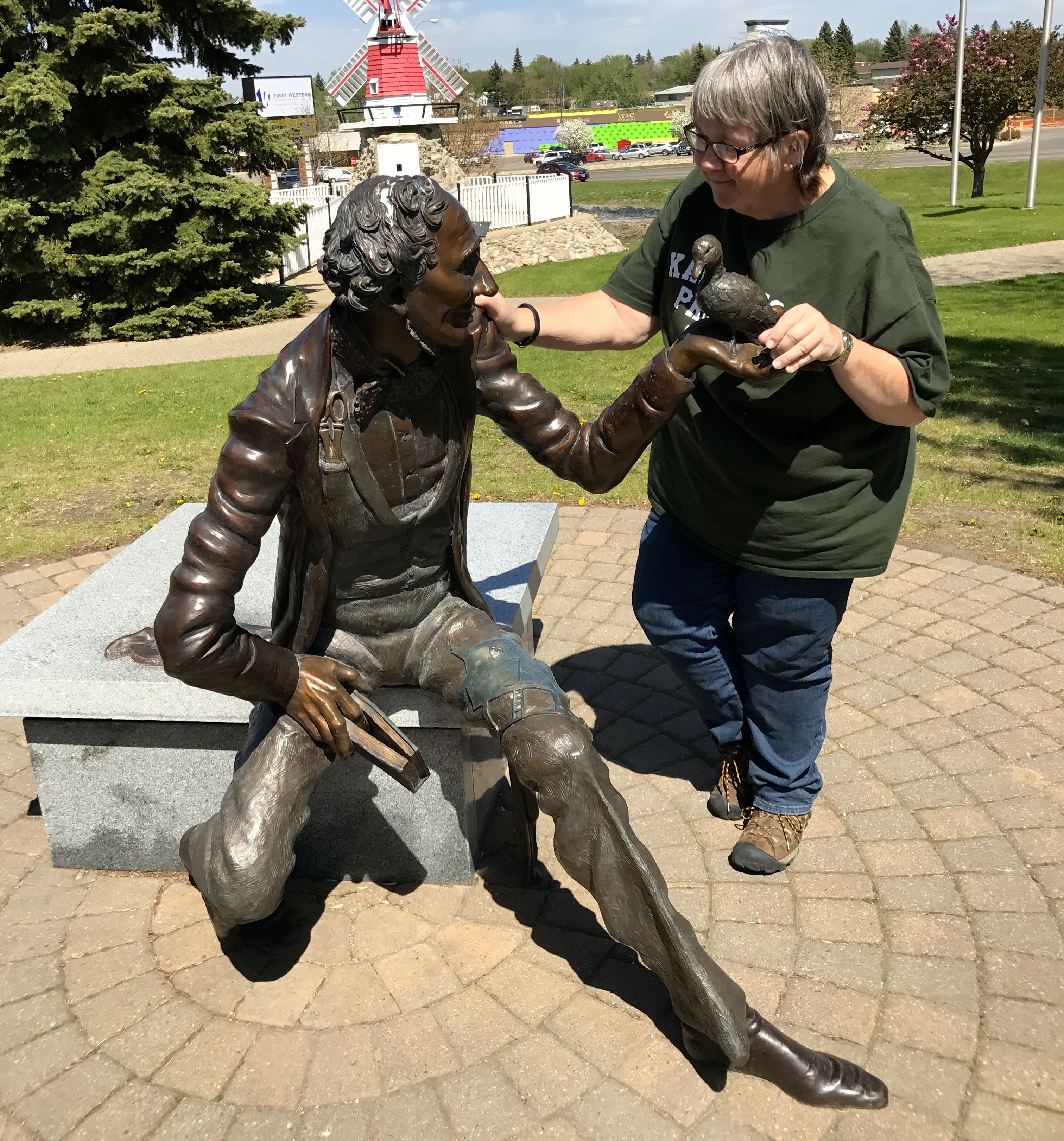
And what would a park dedicated to Scandinavian culture be without honoring Hans Christian Andersen? He wrote more than 200 stories, including The Ugly Duckling and The Little Mermaid.
I was in luck! Another visitor happened by just at that time and agreed to take my photo with Hans.
And with that, it was time to see what else I could discover in Minot.
I know I’ve said it before, but it always seems odd to cross a border that doesn’t involve a bridge and a river. So what if I’m repeating myself? It’s my blog!
The photo quality is kind of low, but I was concerned that I might be subject to “extreme vetting” if I got caught taking a picture at a border crossing.
I’m sure you can’t read the sign, but it says, “crossing open 9 am – 10 pm”. I guess the country is closed from 10pm – 9am.
I’m glad I wasn’t more overt in taking the photo, because this was the most unusual border crossing I’ve ever had – well, other than the time I had to pay a bribe to get into El Salvador.
I pulled up to the building and rolled down my window. The border control agent came up and said, “Please turn off your engine.” I did. Then we proceeded with the usual “citizenship-where are you coming from-where are your going-anything to declare” questions. She took my passport and cat papers, and made sure that the cat was in her carrier.
Then she had me let her in the Airstream. I had to wait outside until she told me to come in. She wasn’t bothered by the three cans of Bud Light, which I did declare. (I drank one while I was in Canada.) She was not pleased that I had plants with me. I told her that I lived in the trailer, and I knew that I might lose them, but I didn’t want to throw them out. She heaved a sigh and let me keep them. I was grateful for that. I was also grateful that she didn’t ask me if I had any plants in the trailer at the initial interview. I probably would have gotten in trouble if I hadn’t declared them.
After she checked everything out, she let me lock the trailer back up. Then she asked me why I was crossing there and not at some other crossing. I told her that I was going to Minot. She asked me why. I told her I liked the name, and then I said, “Why not Minot?”
She finally gave me a half smile and handed me back my papers, and I was happy to be across the border.
Two hours later, I was in Minot.
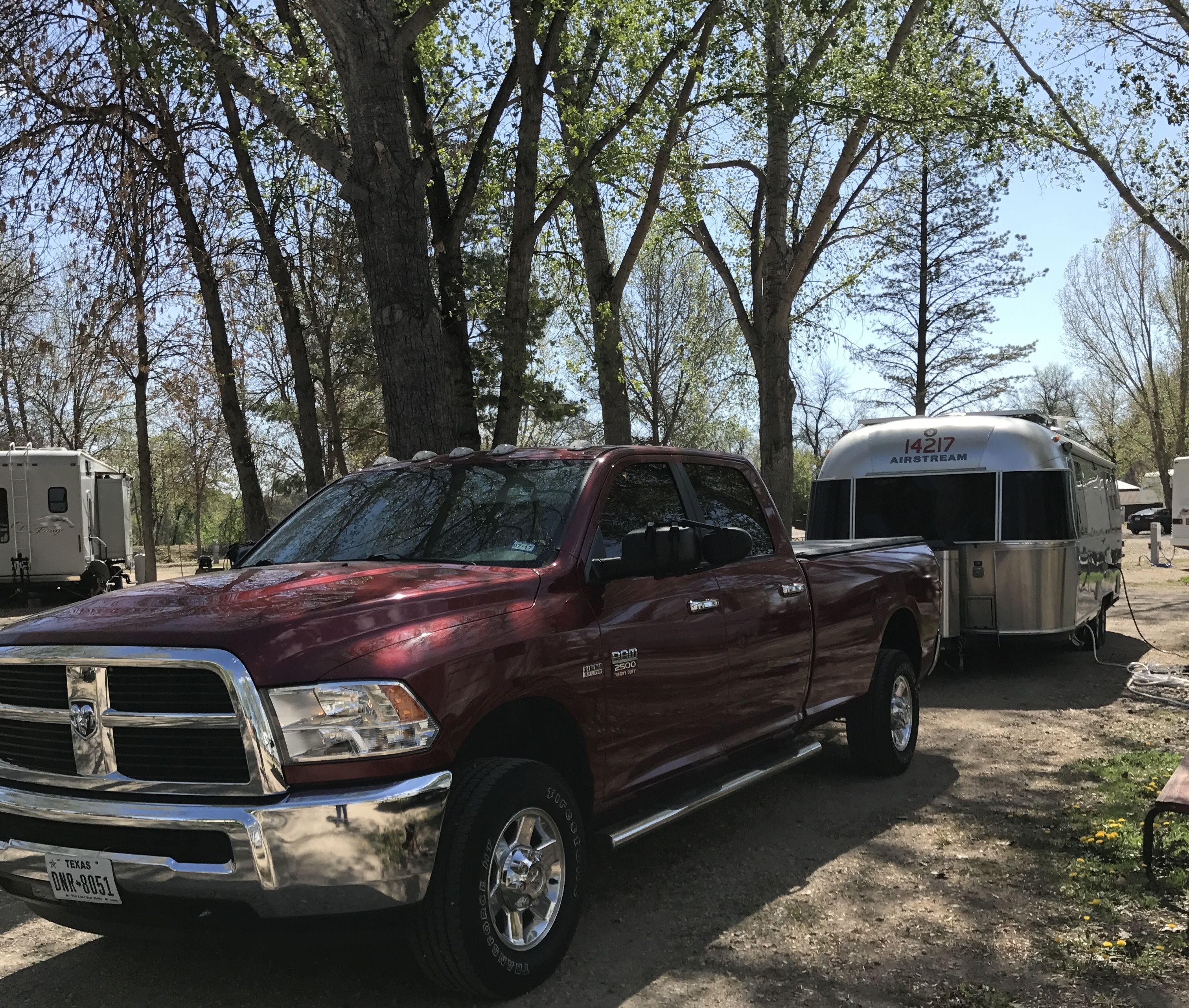
One of the things on my “to-do list” was run Flo and Bart through a truck wash. People had told me that the Blue Beacon Truck Wash would do trailers, too. I saw a sign for them on the way into town.
I borrowed this one from the internet, but the sign looked something like this.
I called to see if they washed RVs. They did, so I headed over before I went to the campground.
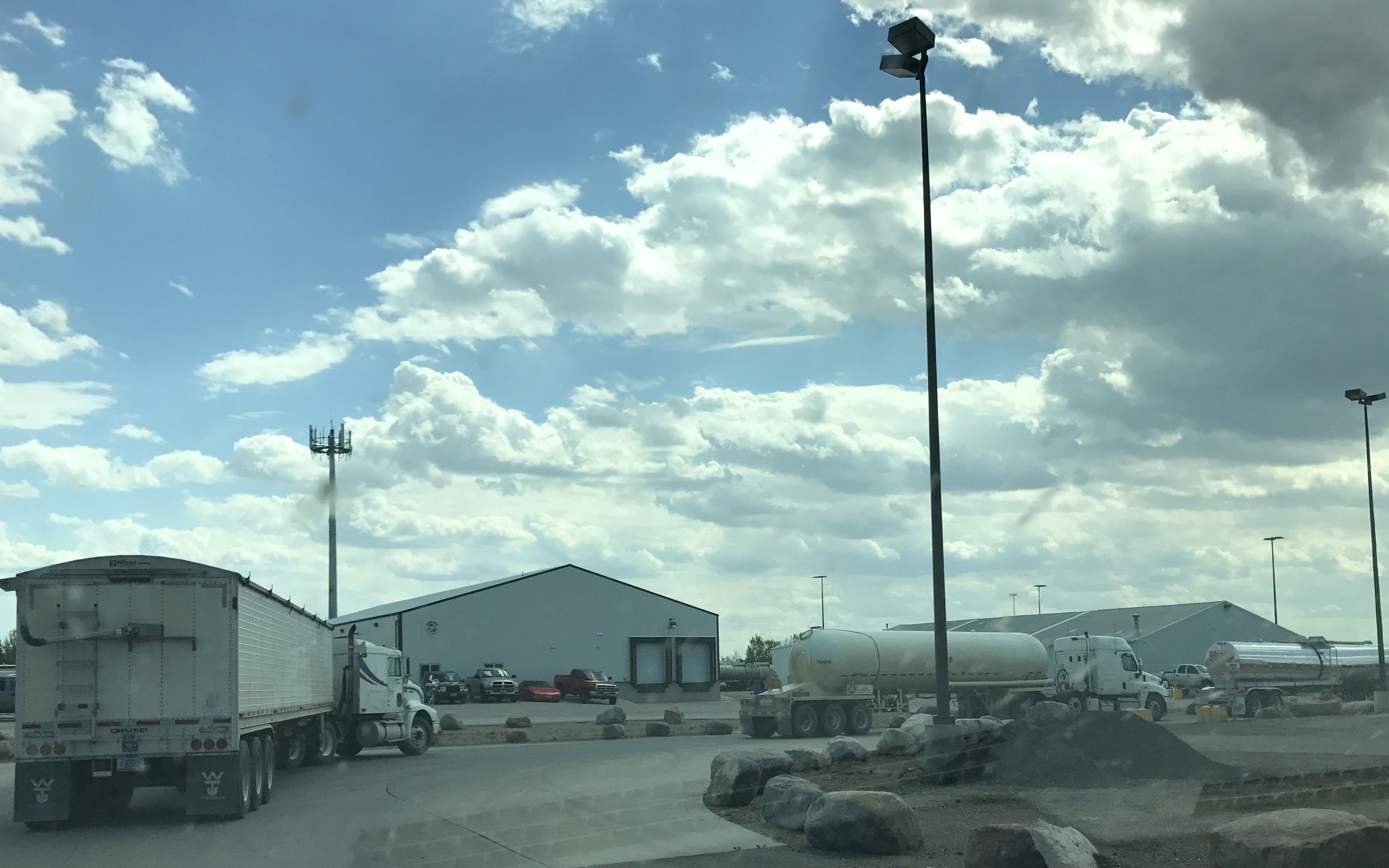
I got in line behind the big trucks.
It took a while, but I finally got close to the building. Just one more truck before I go in.
I’m up next!
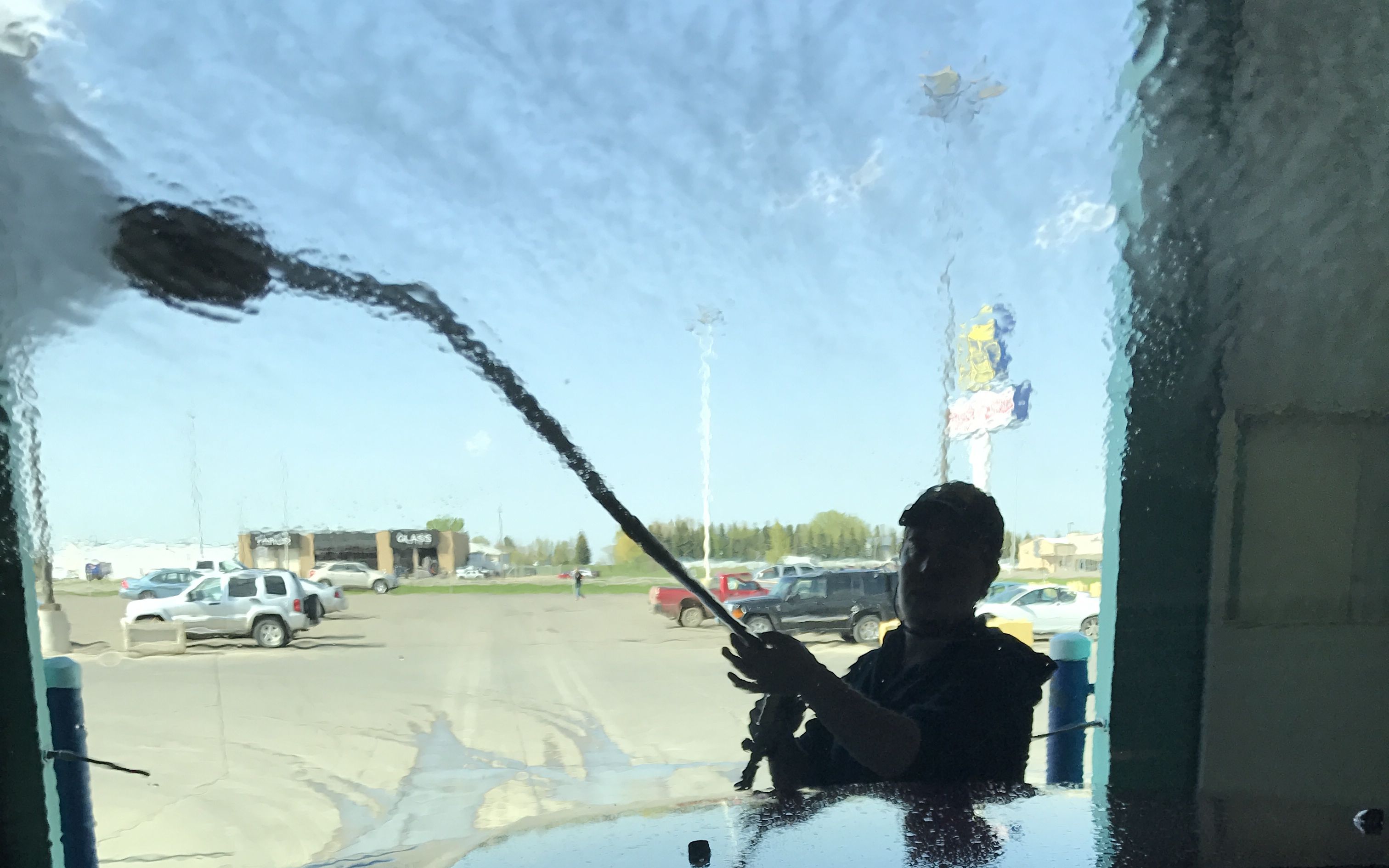
I pull in and a horde of guys with pressure washers swarm around Bart and Flo.
They were really getting the road dirt off! As soon as they finished with the cab, the guy running the show came and got me to go into the office and settle up. In case you want to know how much it costs to wash so much metal in a truck wash, I looked it up on my credit card records. It cost $54.60.
After the scrubbing, I headed over to Roughriders Campground and got settled in for a few days in Minot.
The next day, Jackie took me to an interesting site about ten miles outside Estevan – La Roche Percee.
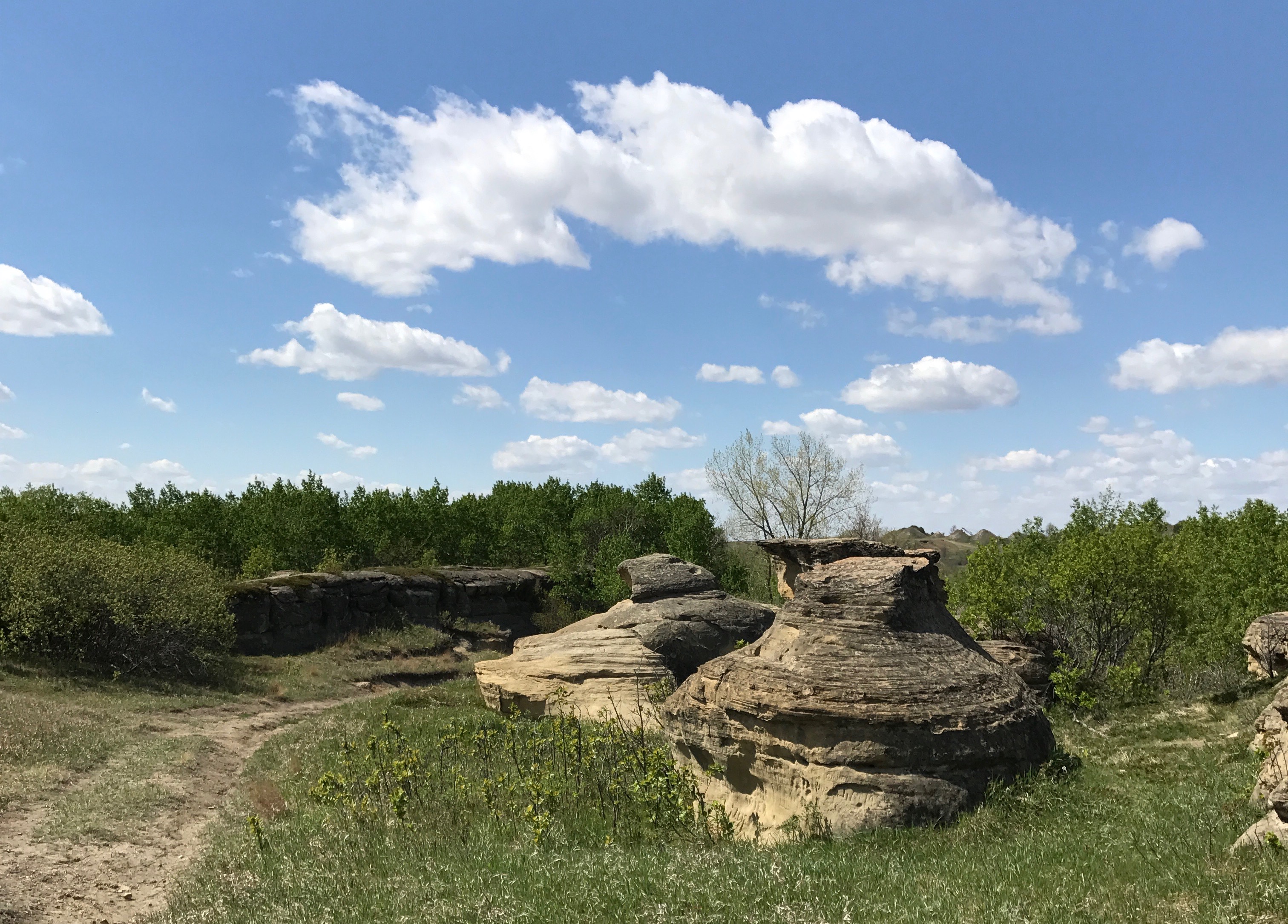
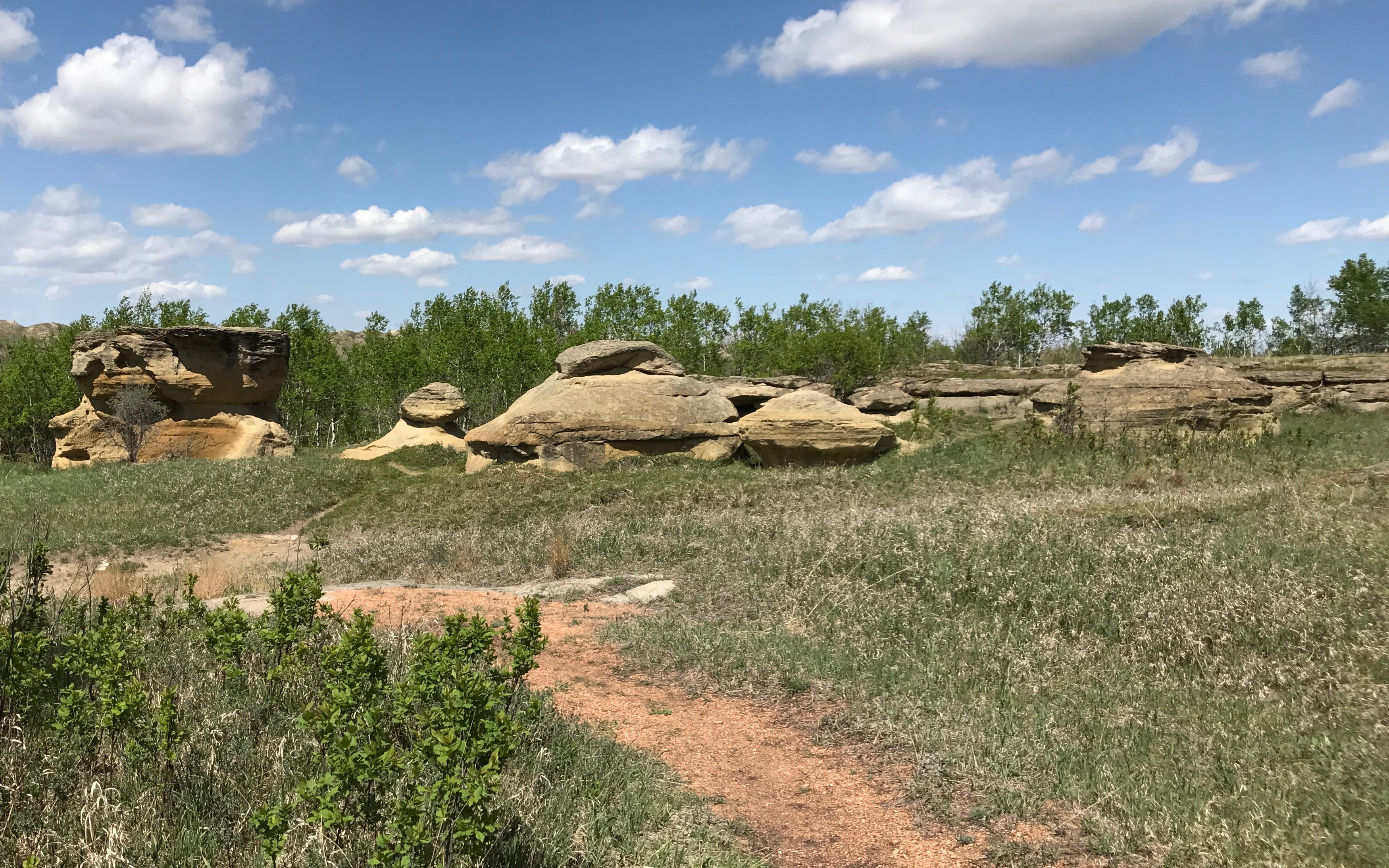
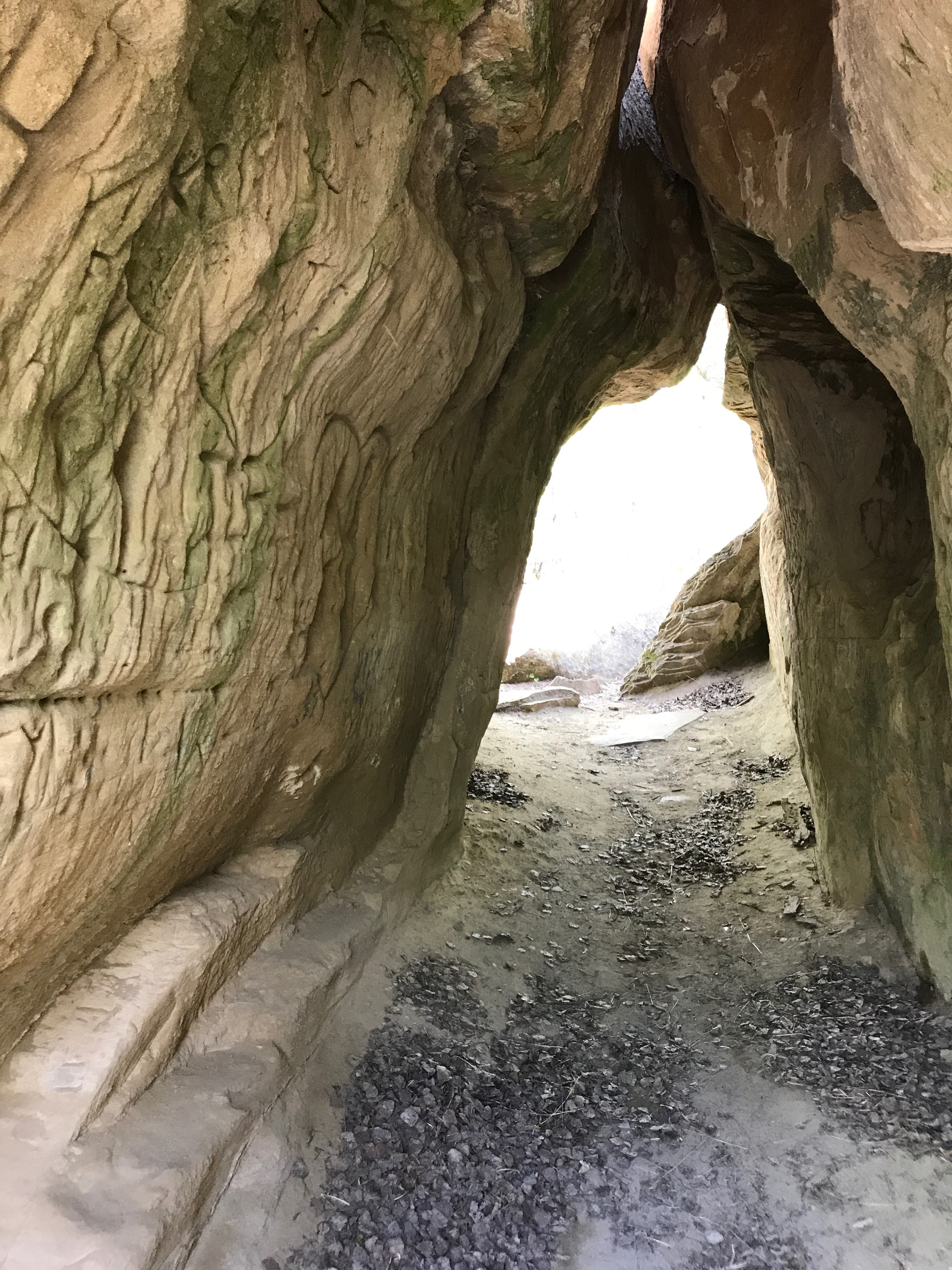
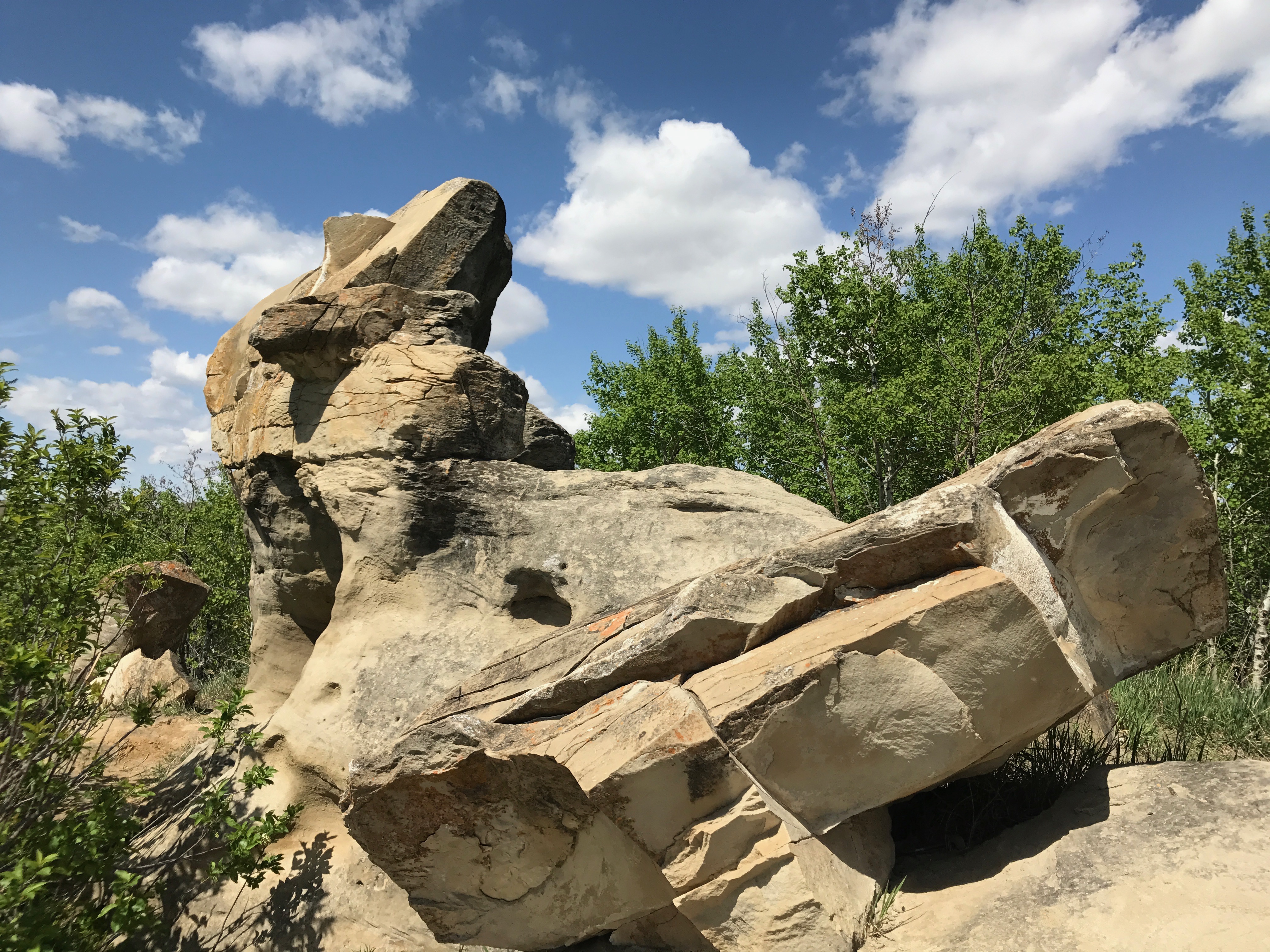
It is large sandstone outcrop that has been sculpted by the forces of erosion.
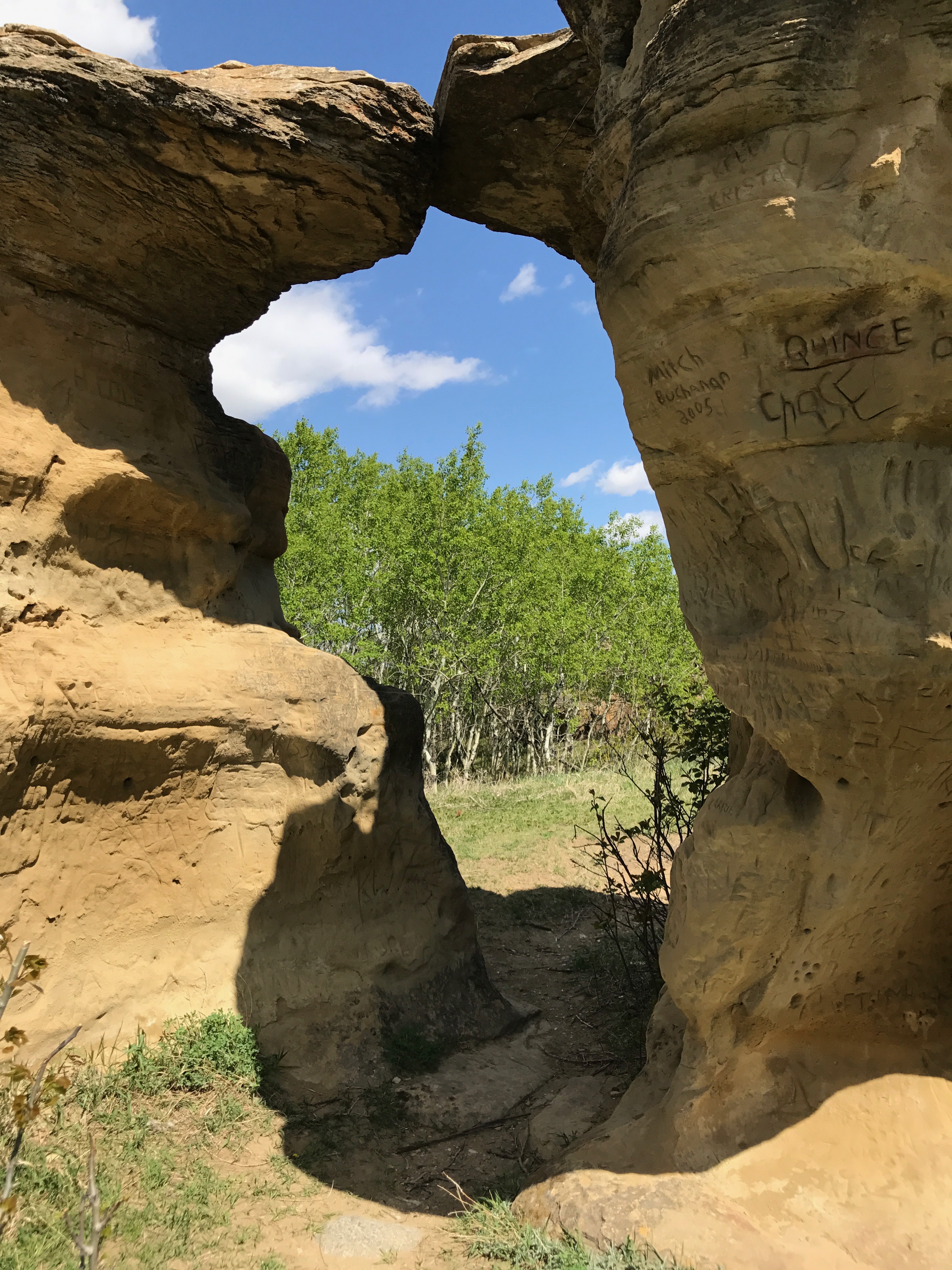
One of the outstanding formations was the arch known as La Roche Percee. At one time, there was a town nearby that took its name from the formation.
Some of the formations remind me of old fashioned haystacks.
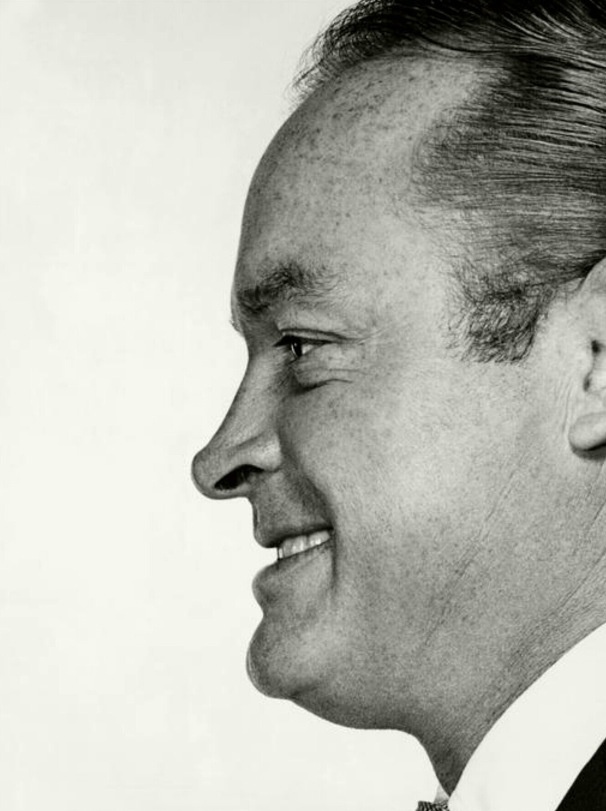
This one kind of reminds me of a profile.
Bob Hope’s profile, perhaps?
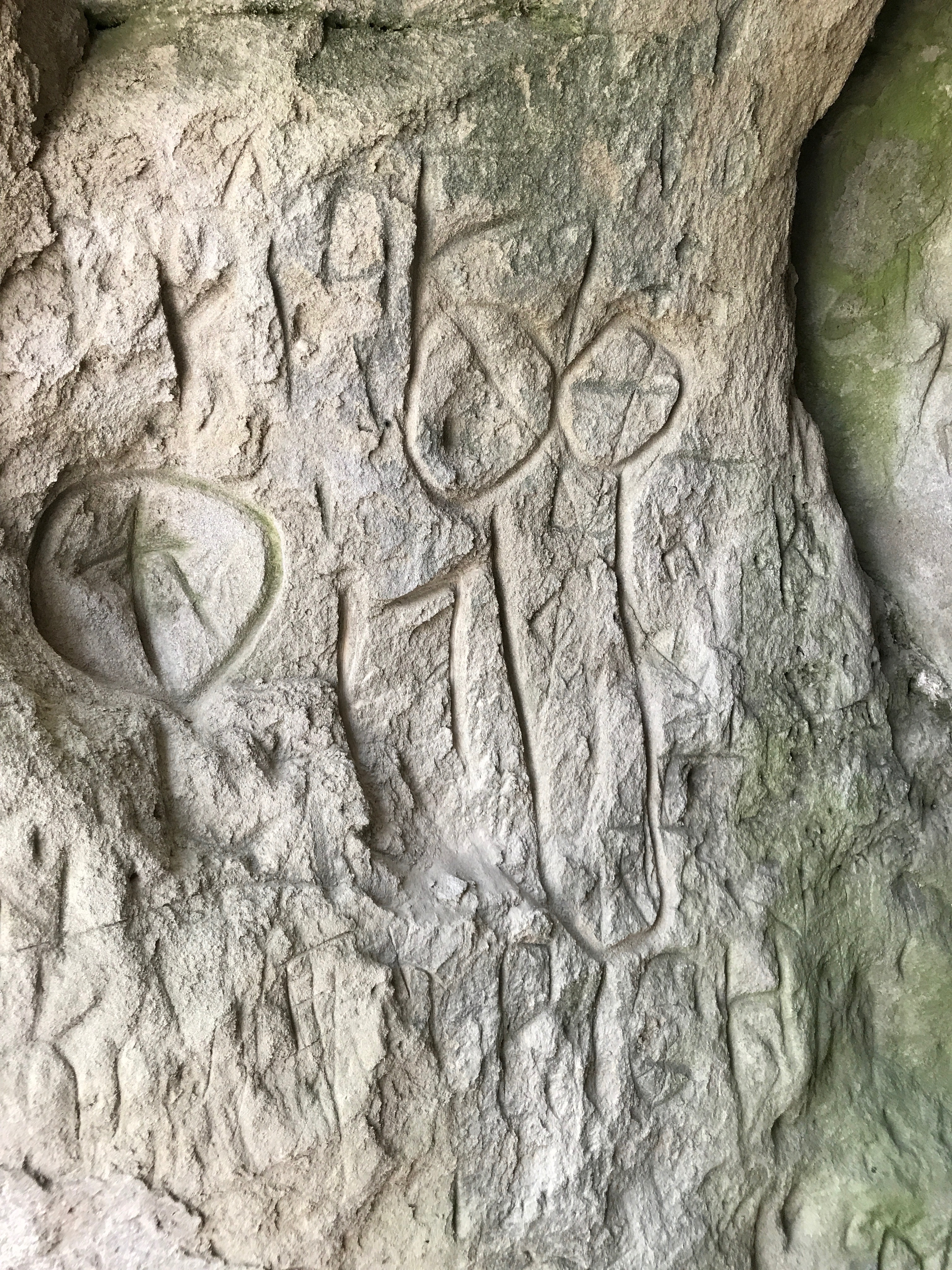
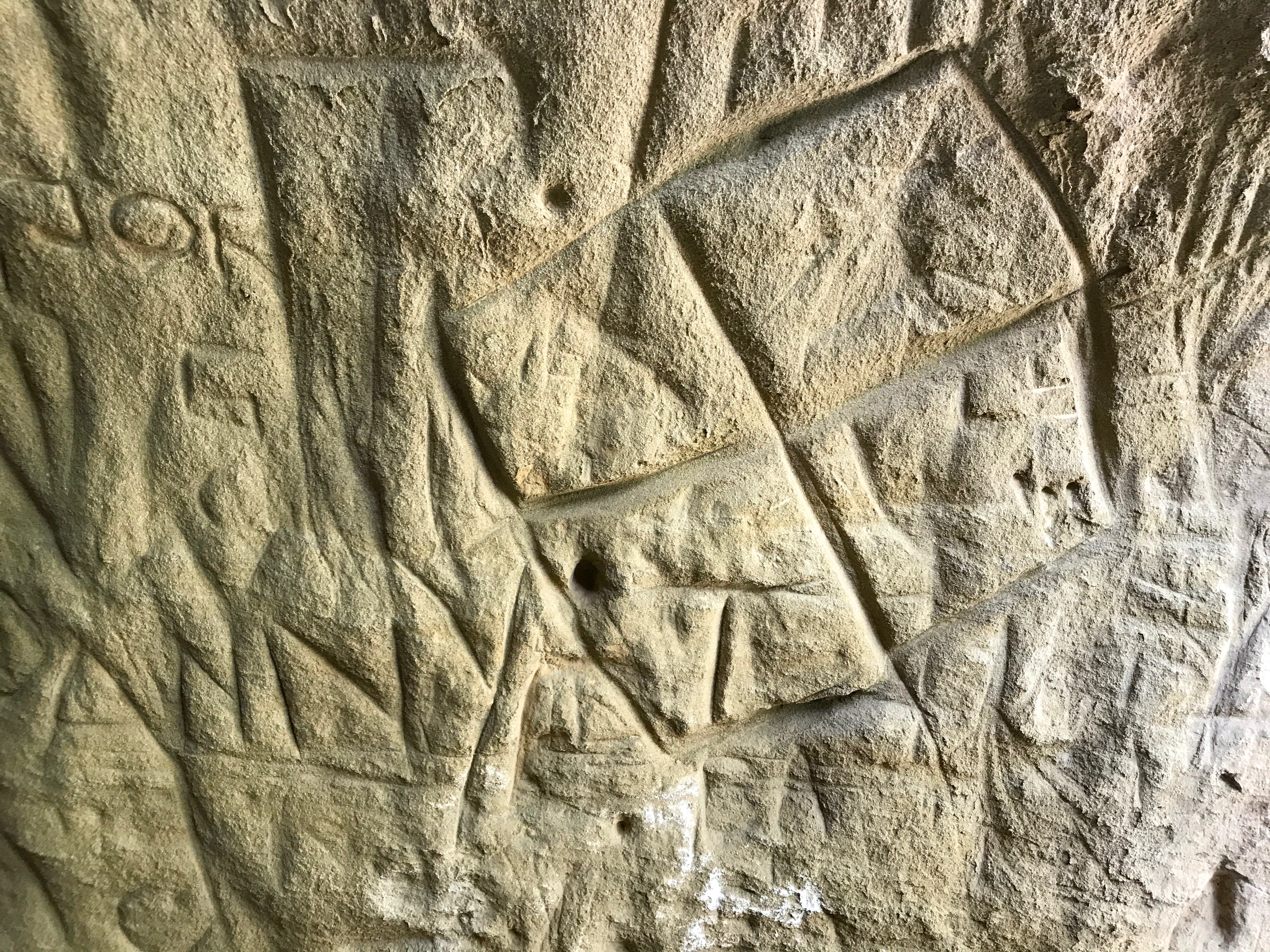
We scrambled around the rock formations looking for petroglyphs.
The rock was once nearly covered with precontact carvings of animal, human and geometric forms thought to have been created by Siouan speakers. Historical accounts state that the Nakota (Assiniboin) regarded the site as sacred, never passing the rock without leaving offerings. Erosion and later carvings have taken a toll, leaving only a few carved pits and some red ochre staining as evidence for First Nations use of the site.
Are these pre-contact carvings? Perhaps. Perhaps not. Some of the shapes remind me of petroglyphs I’ve seen in other places.
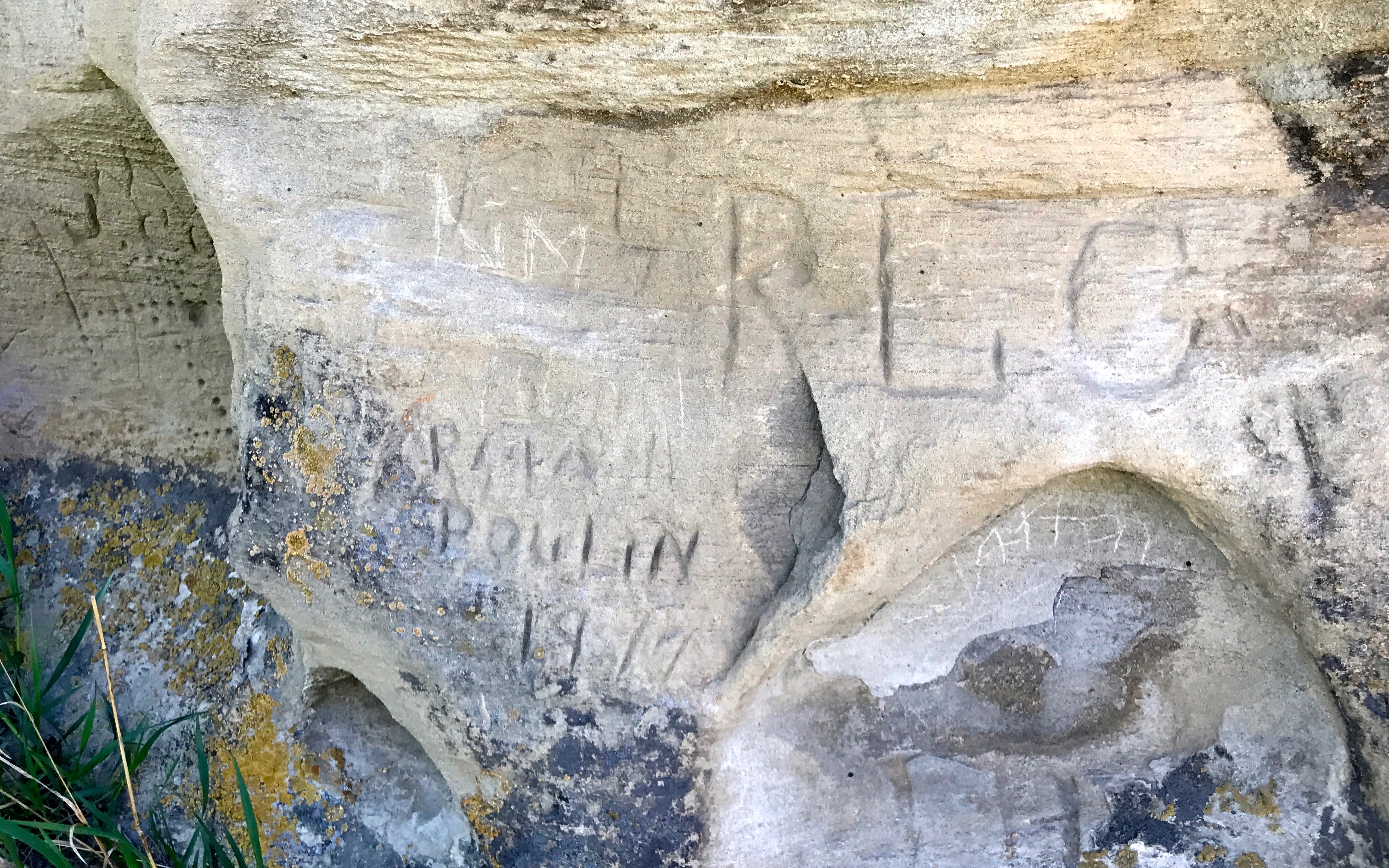
Of course, people who came along after contact with European explorers wanted to leave their marks as well.
As much as the more recent additions seem like graffiti, they are now part of the historical record.
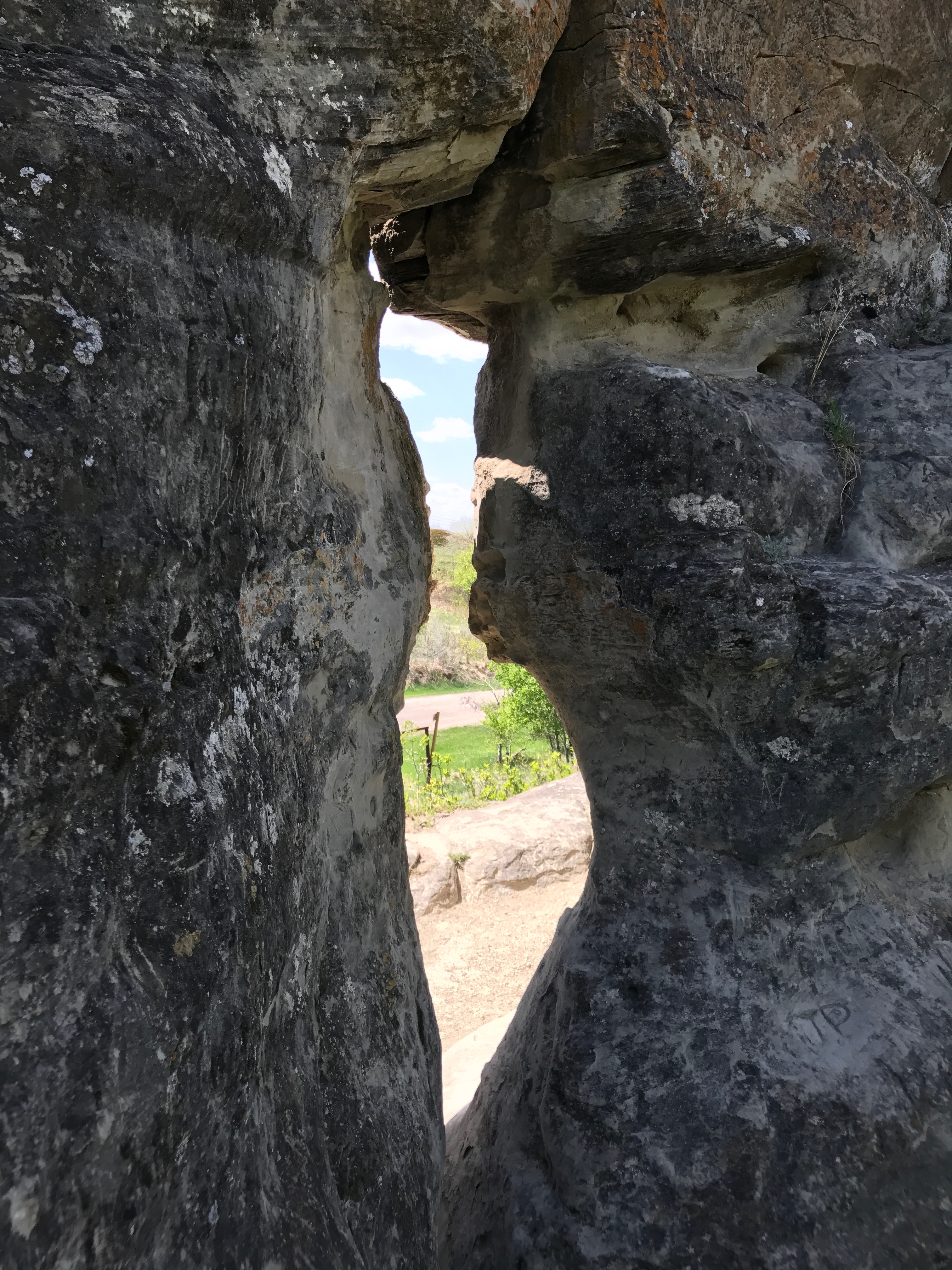
There were little windows to look through.
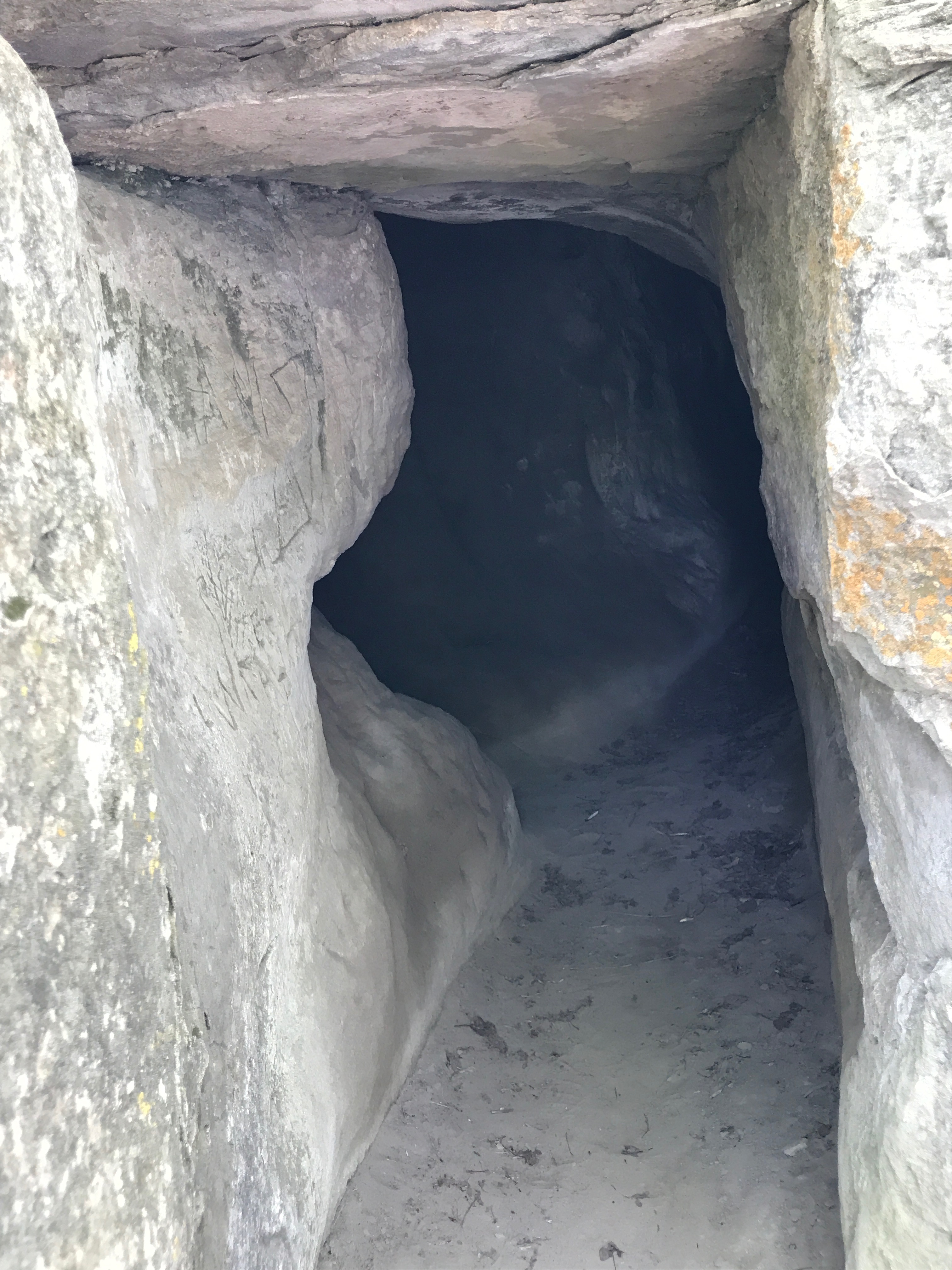
There were small rooms that I imagine were popular with people throughout the ages.
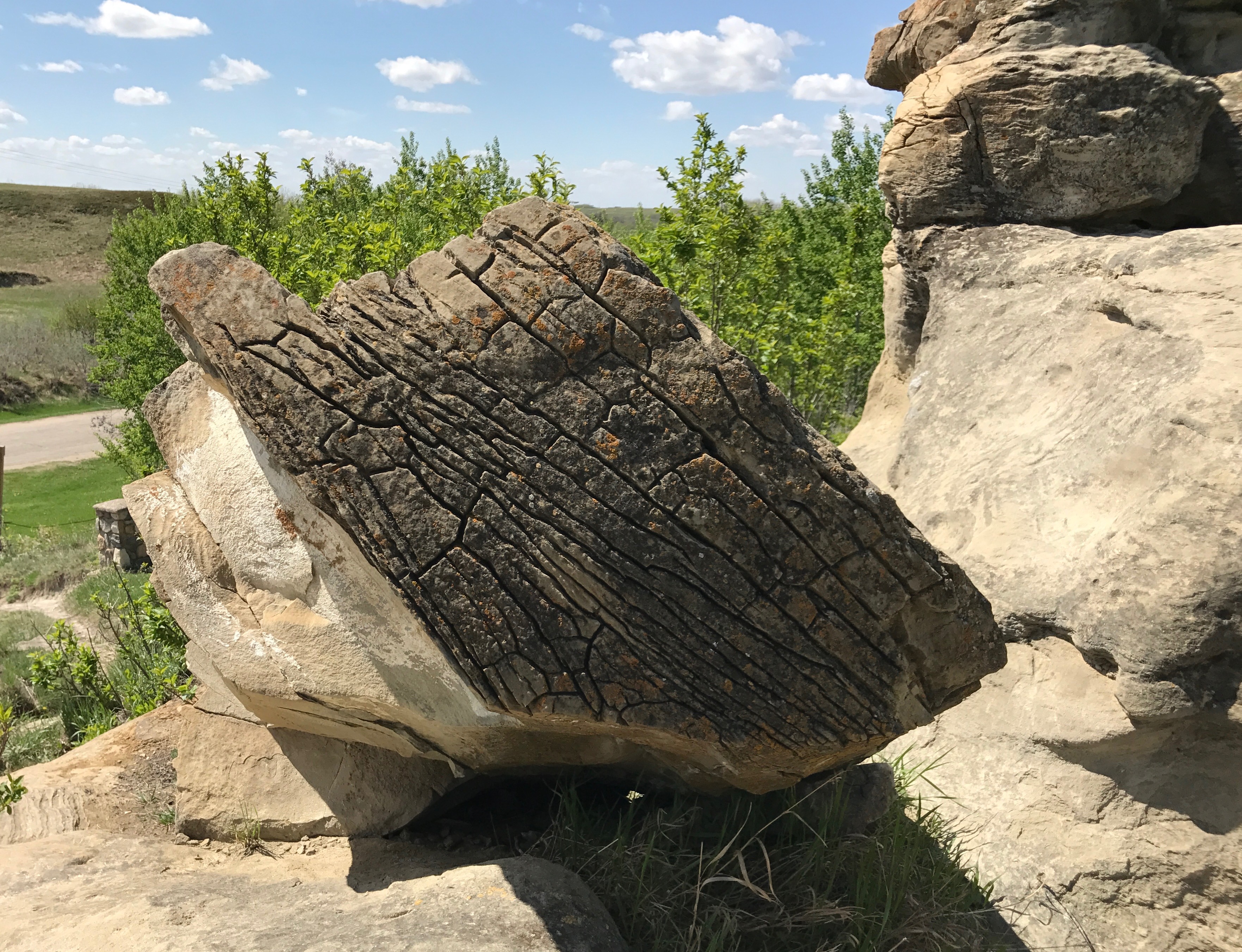
I was taken by this surface. I can’t imagine how it weathered like this. It reminds me of elephant hide.
I do enjoy interesting rock formations!
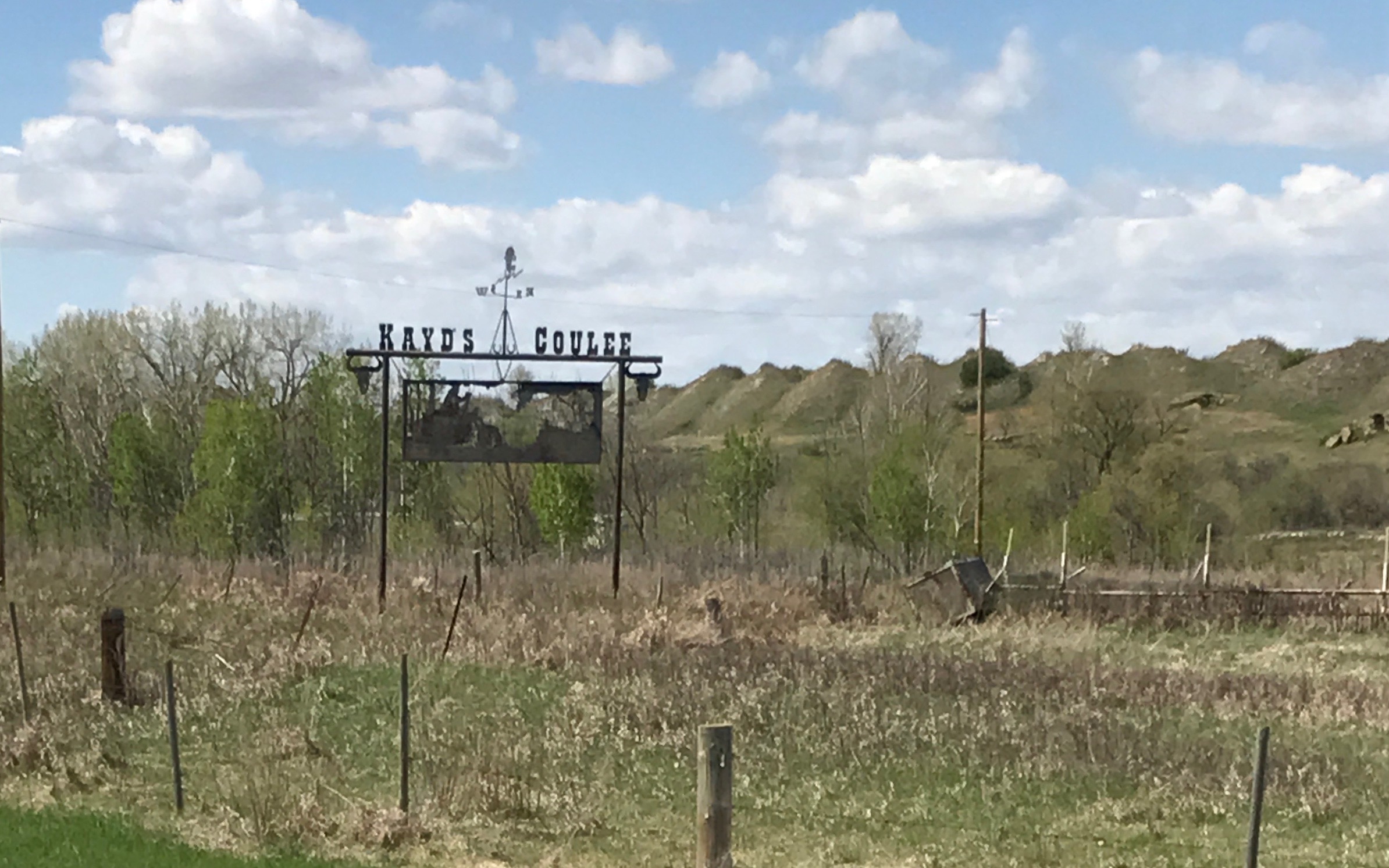
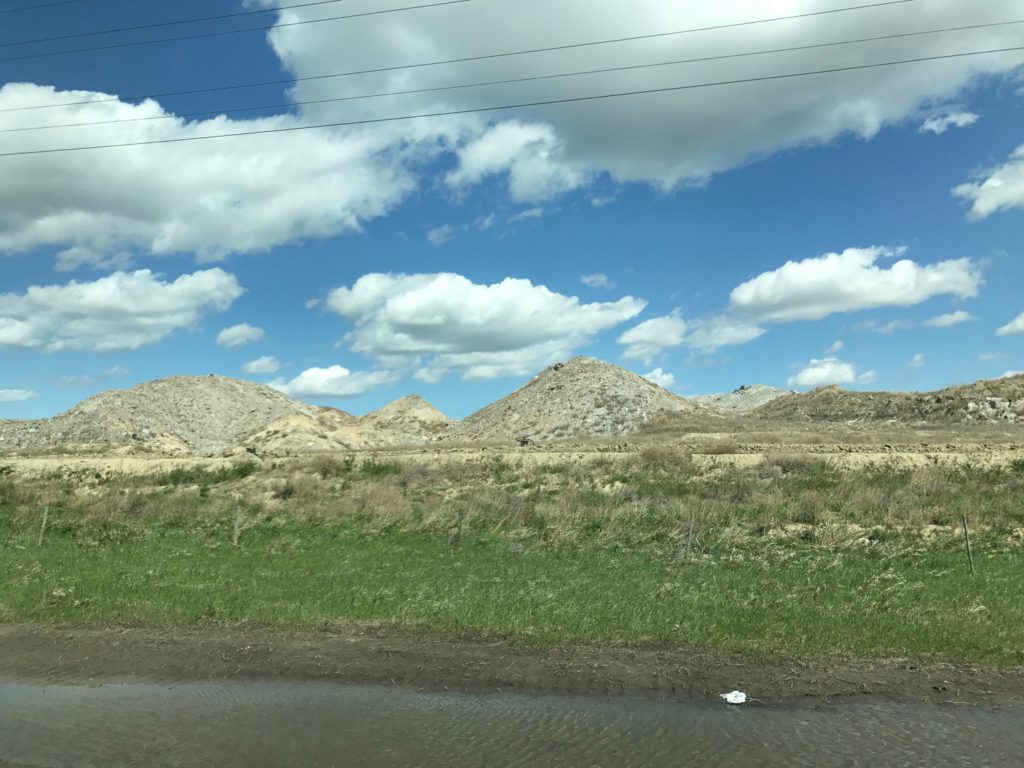
At one time, there were homes and ranches in the area. Flooding caused people to have to relocate. There were ranches. Now you can see the strip mine debris in the background.
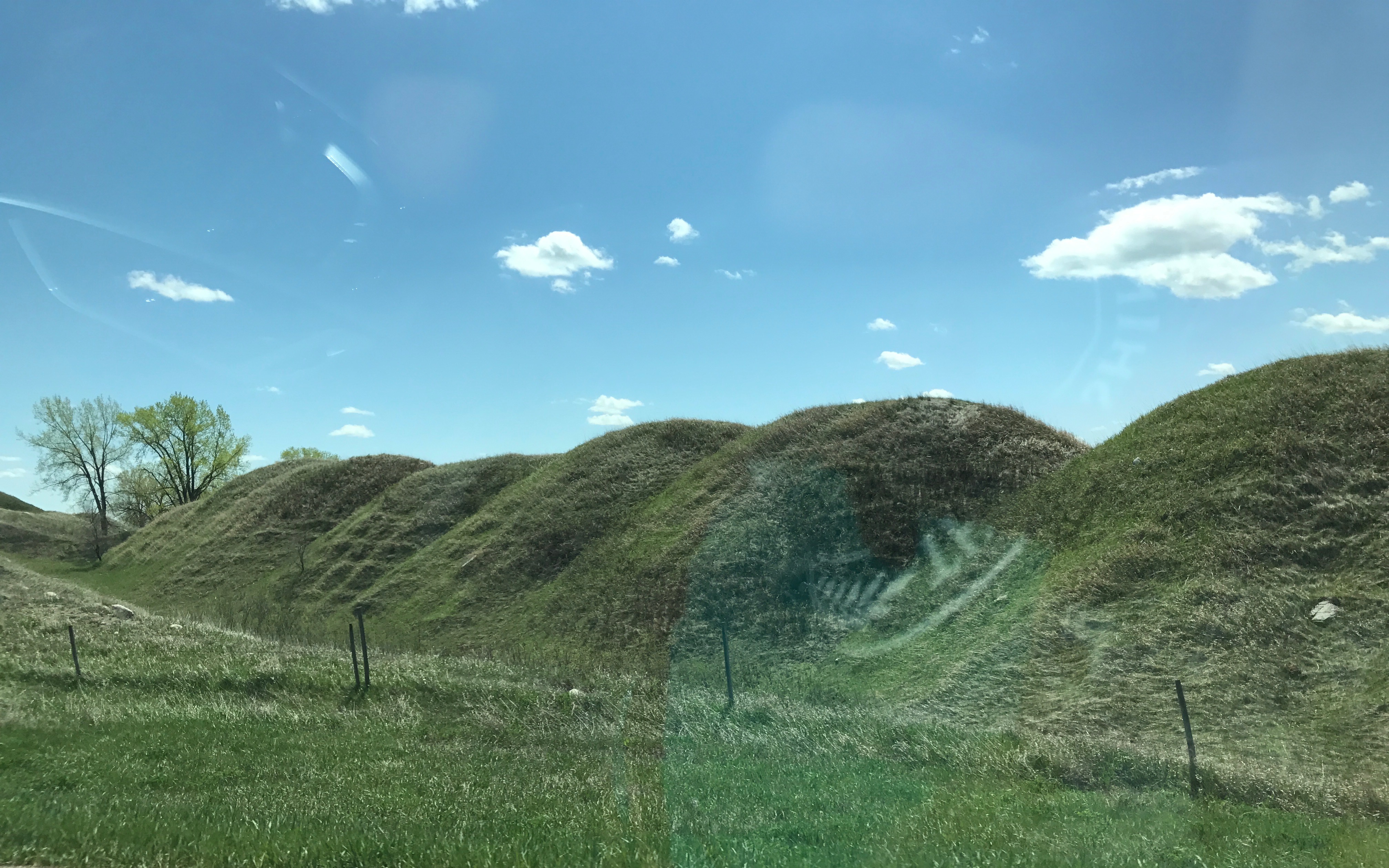
I was fascinated by the piles. I always wondered what was involved in strip mining.
Eventually, grass and plants reclaim the piles. I took the photo through the car window. You can see the reflection of my Oregon tee shirt in the glass.
After a day of running around, it was time for dinner.
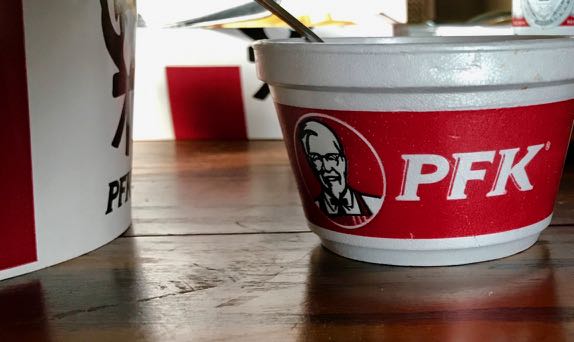
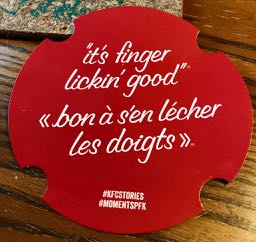
PFK? Not KFC? Well, Canada is a bilingual country. PFK is Poulet Frit Kentucky. Of course, I suppose they just use the initials like we do in the States.
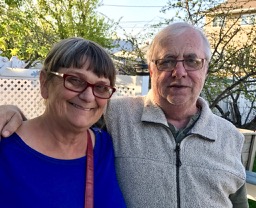
After dinner, it was time to bid adieu to my hosts, Jackie and Harvey.
And, of course, if there is no photo, it didn’t happen. But there is a photo, so it happened.In the morning, it was time to head back south of the border. Thank you for the hospitality, Jackie and Harvey!