Exploring Estevan, Saskatchewan

I set out from Moose Jaw, with my eyes set on Estevan. I passed a lot of prairie along the way. Every now and then, I’d pass through a town.

I saw these giant wheat sculptures in the town of Weyburn. I thought they were fitting for Saskatchewan – Canada’s breadbasket.

I pulled into the campground in Estevan. Cousin Kelly told me that most golf courses in that part of Canada also had campgrounds. When I checked in, I found proof that the campground was at a golf course.
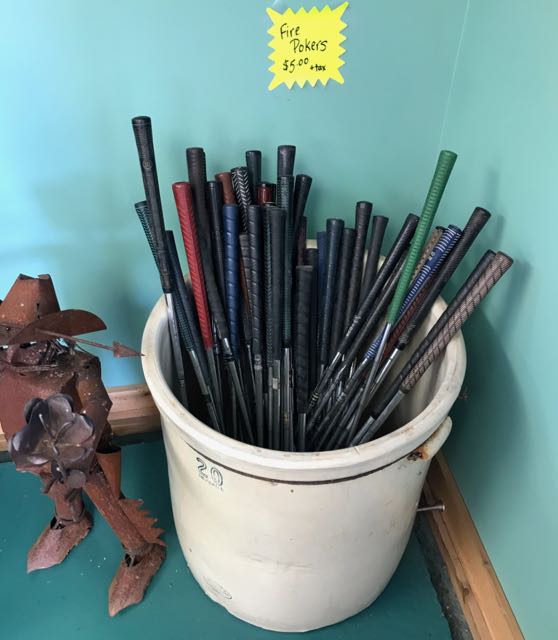
It made me think of something that my father would have done. He was always thinking!
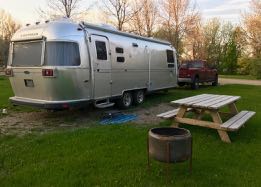
Speaking of things that my father would have done, I am sure he would have made a fire pit out of a washing machine drum, too.
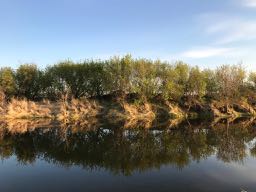
The campground had a lovely water feature, too.

As nice as the campground was, it wasn’t the reason I was visiting Estevan. I had a friend that I met though an internet group so long ago that it was even before Facebook! I left the group we met on, but we met up again on Facebook. When it looked like I was heading to her neck of the woods, we made plans to meet up.
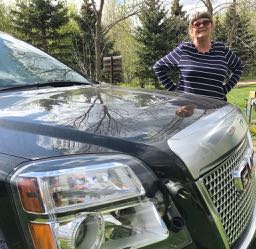
She came over to meet me at the campground. It was good to finally meet her, face-to-face.

I had always heard of needing to plug in engine block heaters because it got so cold up there, but I had never seen a car with a plug before. I had to capture this shot.

Jackie did a great job showing me around Estevan, which has a similar history to New Norway. The first settlers arrived with the Canadian Pacific Railway at the end of the 1800s and it became a town in 1906. It achieved the status of a city in 1957, which in Saskatchewan is a community of 5,000 or more. Estevan is the eighth largest city in Saskatchewan.

In addition to transportation and grain, Estevan is known for its energy resources.
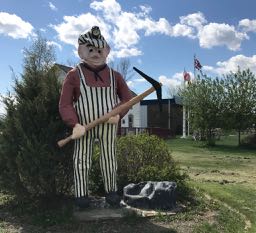
Lignite Louie is the town’s mascot. There are a lot of lignite mines in the area. Lignite is sometimes called brown coal. It is a kind of halfway between peat and bituminous coal. If you want to know more about that, click here.

The area is also rich in oil and gas. They have an interesting display of the pieces of equipment that get the oil from the ground to people.
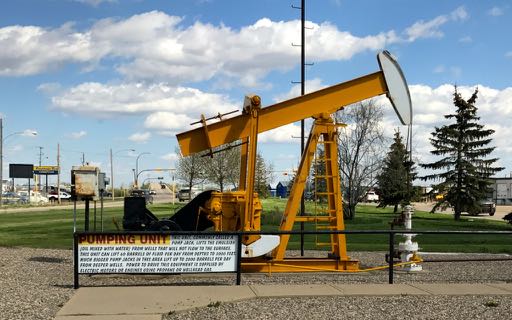
There is the pump jack,
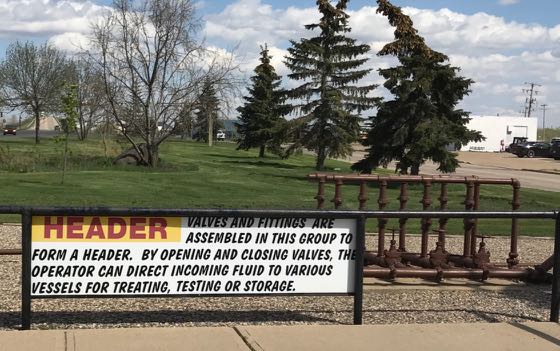
the header,
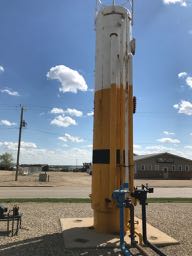
and the separator.

In the end, the oil finds its way to the tanks. I like how they incorporated it into the gateway to the town. Welcome to Estevan!
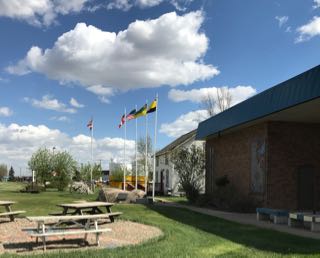
We stopped by a community center.
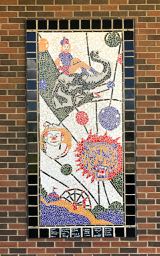
Judging by the mosaics on the outside, it might just be an art centre.
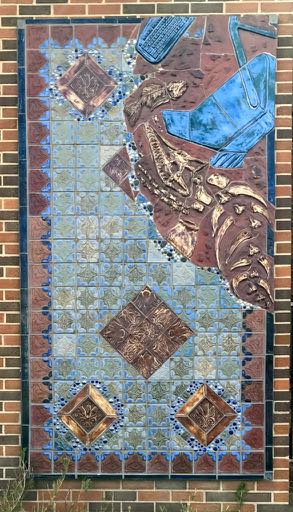
The people of Estevan have an appreciation for art and community involvement.

Jackie took me to visit the Estevan Court house, which was the last court house designed by Saskatchewan’s provincial architect, Maurice Sharon. It was completed in 1930.

On one corner of the property, there is a unique memorial to World War II veterans.

In 2015, a 102-year-old dying tree was carved by Albertan sculptor Darren Jones.
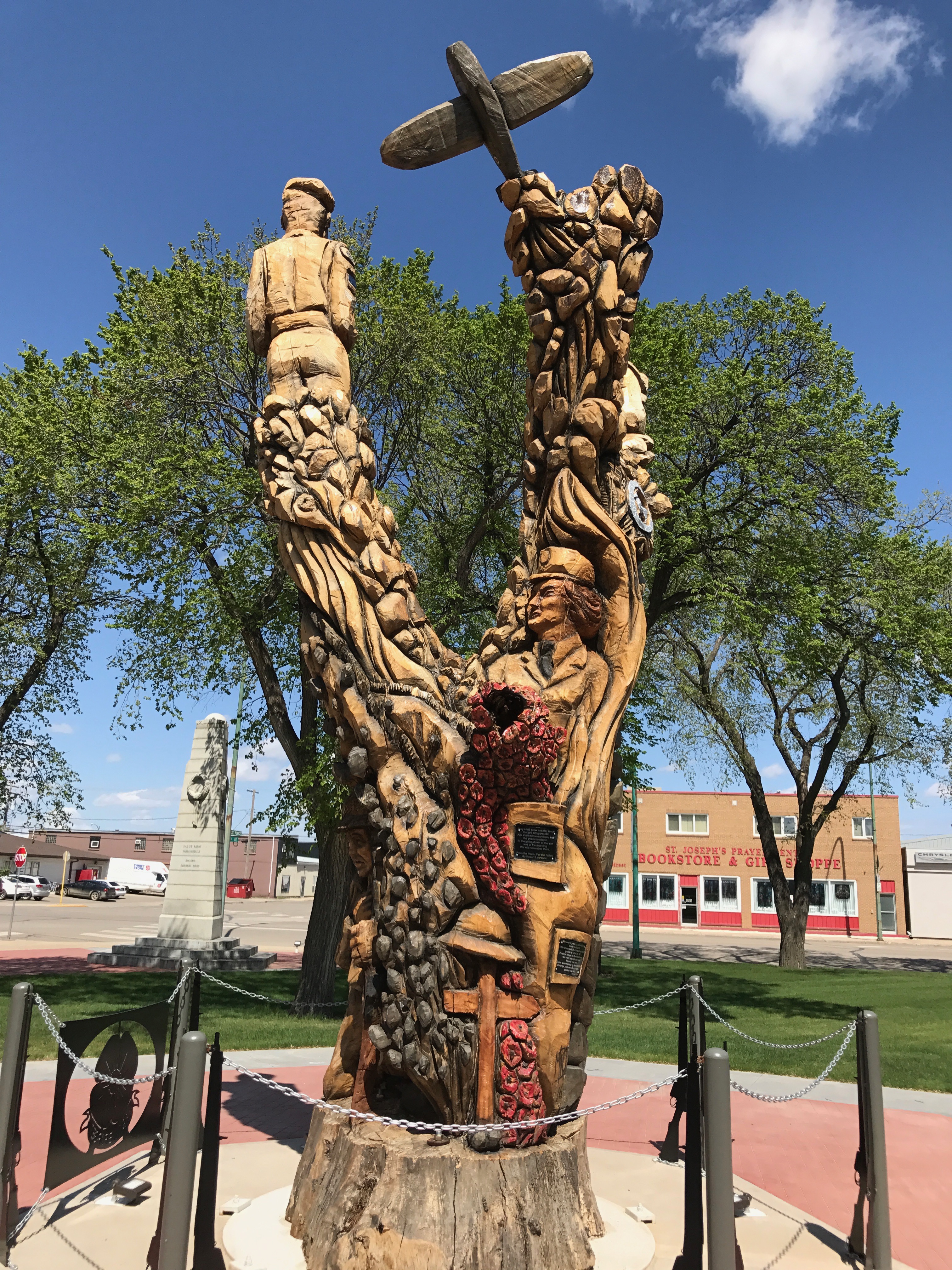
The details are amazing.
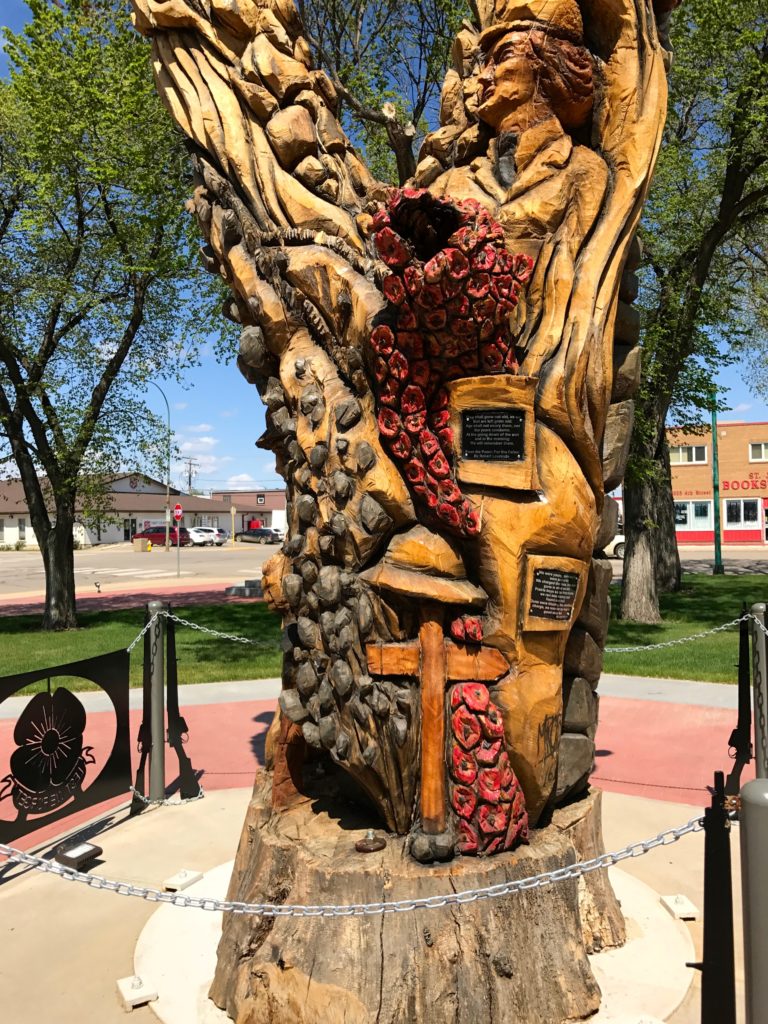
You can really spend a lot of time looking at all the images the artist chose to include.

I like the poppies. That is a nod to World War I and the poem “In Flanders Fields” by Canadian poet, John McCrae.
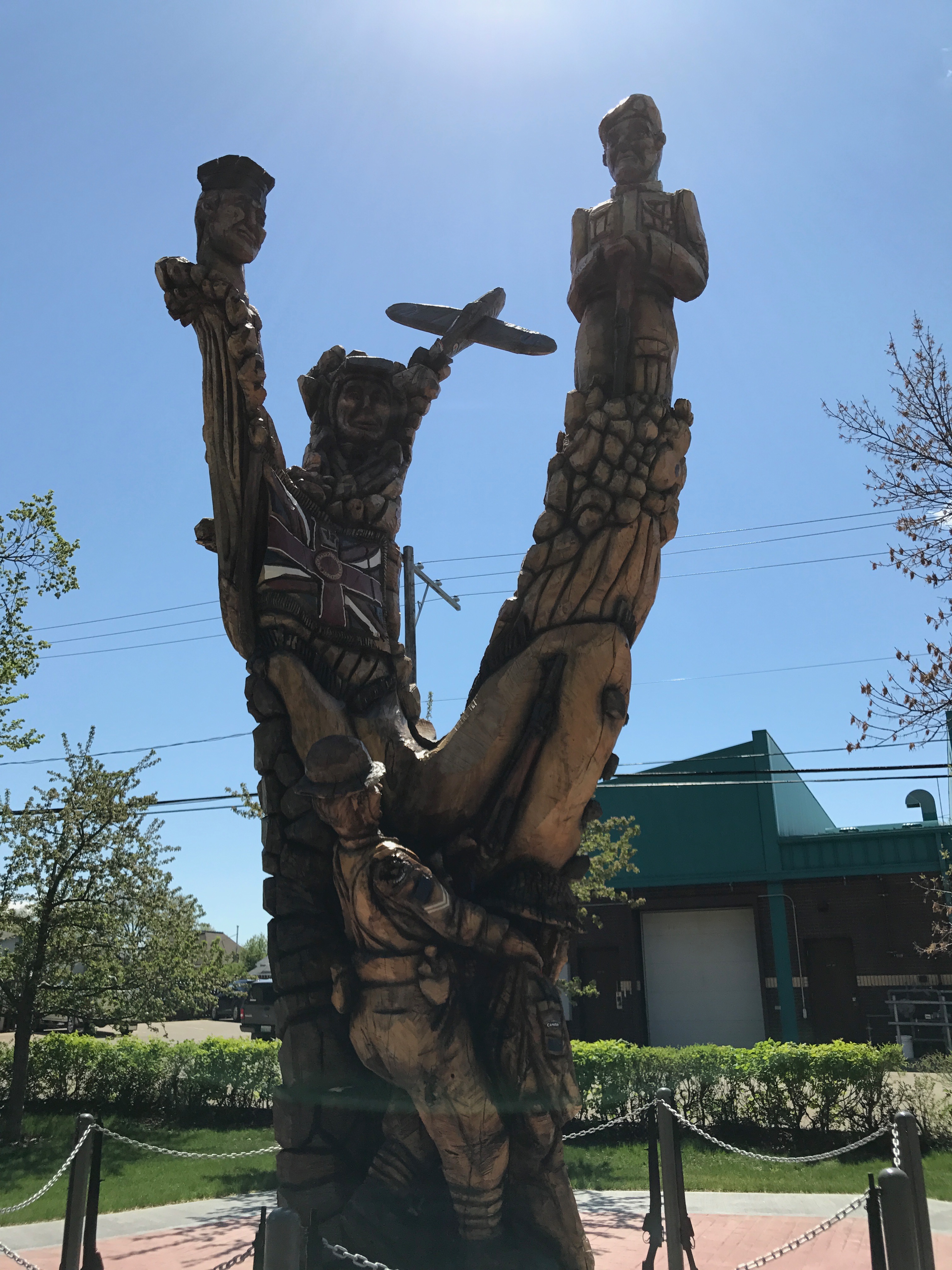
Every side has interesting details. Too bad the bright sun made some of them hard to take photos of.
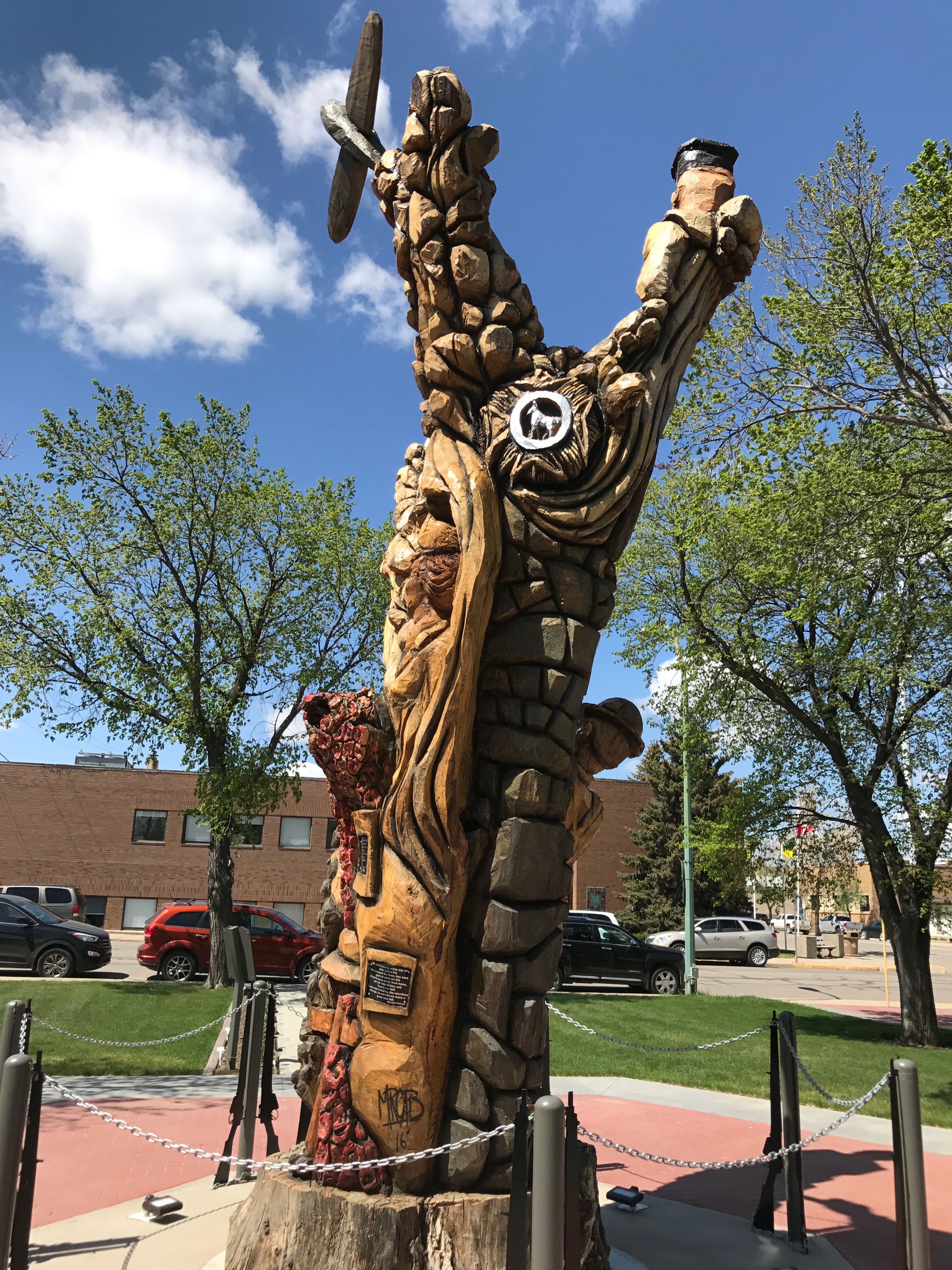
But, where the sun hit the carving, you could really appreciate his work.
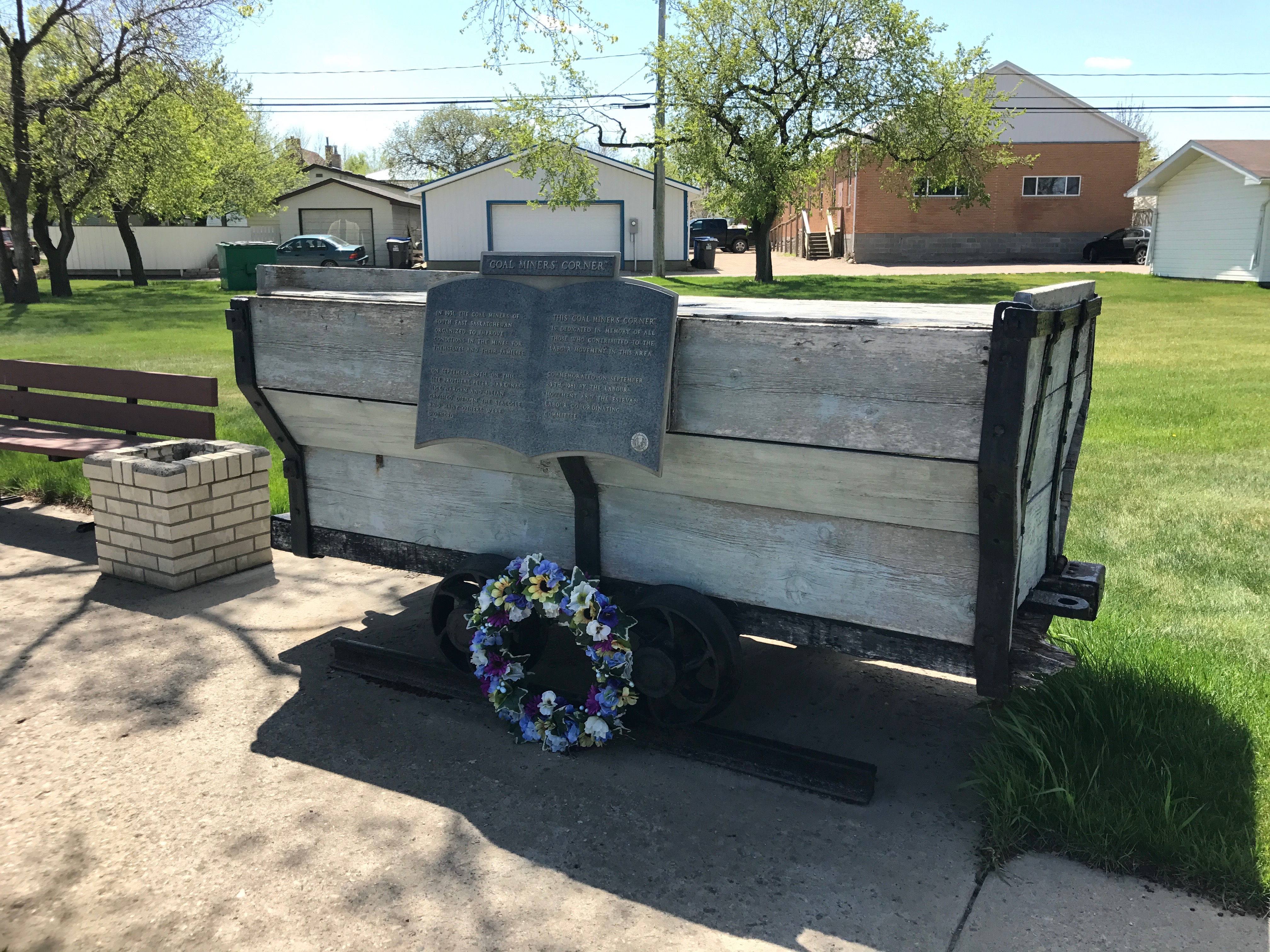
Sometimes I think people are under the impression that Canadians sit around politely sipping tea and saying, “Pardon me.” This memorial commemorates a time when the miners struck for better wages and working conditions. They call this event Black Tuesday.

Three strikers were killed in 1931 when the local police, assisted by the Royal Canadian Mounted Police, confronted a strikers’ parade in front of the Court House. 
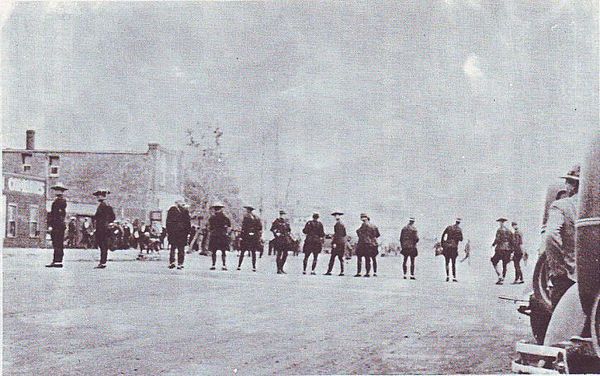
I find it interesting that the sources I found refer to the deaths at the hands of the law enforcement officers as “murders.”

A Royal Commission met to investigate the causes of the strike. Twenty people were charged as a result of their findings.
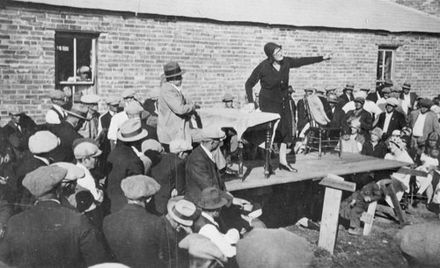
Apparently, the only person who was convicted was Annie Butler, a union organizer. She was sentenced to one year of hard labour and a $500 fine.
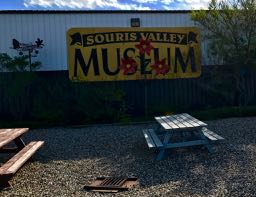
We continued on to the Souris Valley Museum, which documented the history of the area.
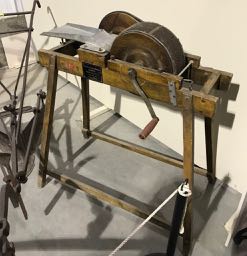
Much ingenuity was required to make it out on the frontier. This machine is a wool carder.
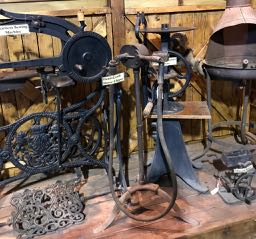
There were lots of old-timey machines.
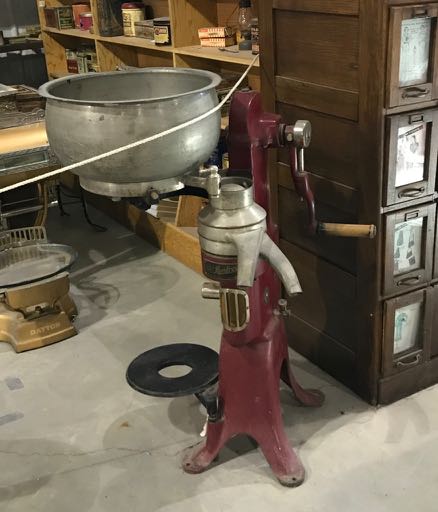
I enjoyed puzzling over the machines. What could they be used for? I decided that this was a cream separator – but I could be wrong.
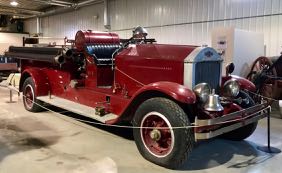
What do you do with a beautiful old firetruck? Put it in a museum, of course!
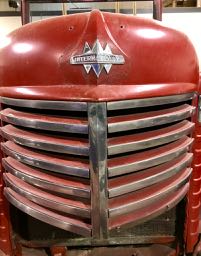
They don’t make them like this anymore.
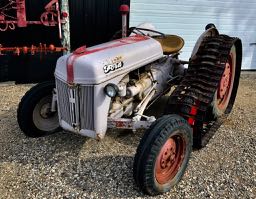
Of course, sometimes the way they were made required some tinkering. I like the way someone figured out how to add tank treads to the rear wheels on the tractor.
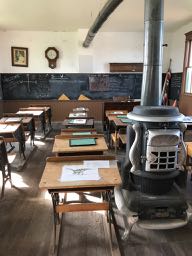
They had an old school house on display, complete with a list of teachers who taught there.
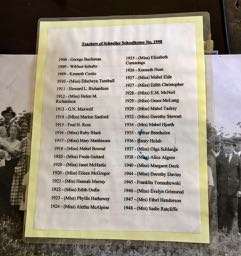
You might notice that there was only one teacher listed for each year. Yes, it was a one-room school house.
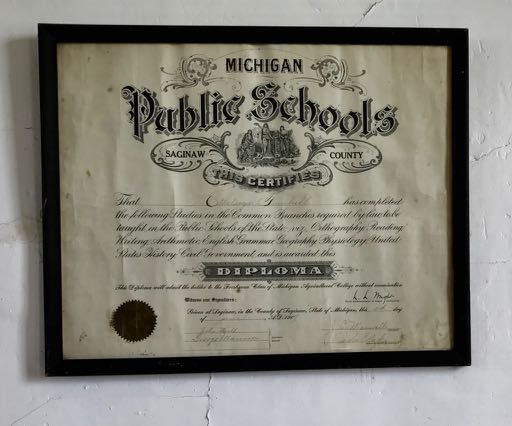
I found it interesting that one of the teachers was educated in Michigan. It makes me wonder what brought them out here.
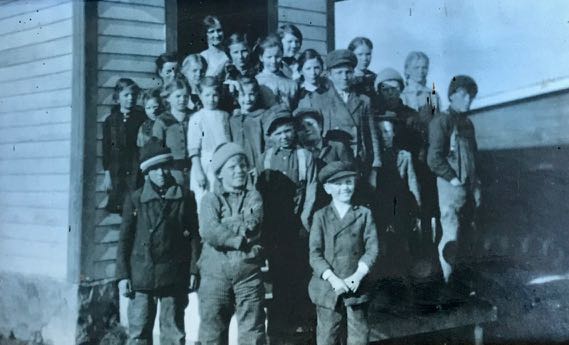
We had a picture of my mother at her school in New Norway that reminds me of this picture. I wonder if she attended school in a one-room school house. I wish I could remember. Just a hint, friends, if you still have the opportunity to ask your parents questions, ask them. Then write the answers down!
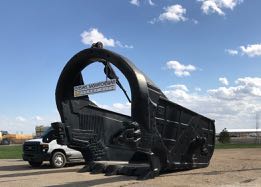
Outside the museum, they had some of the modern equipment they use in mining these days.
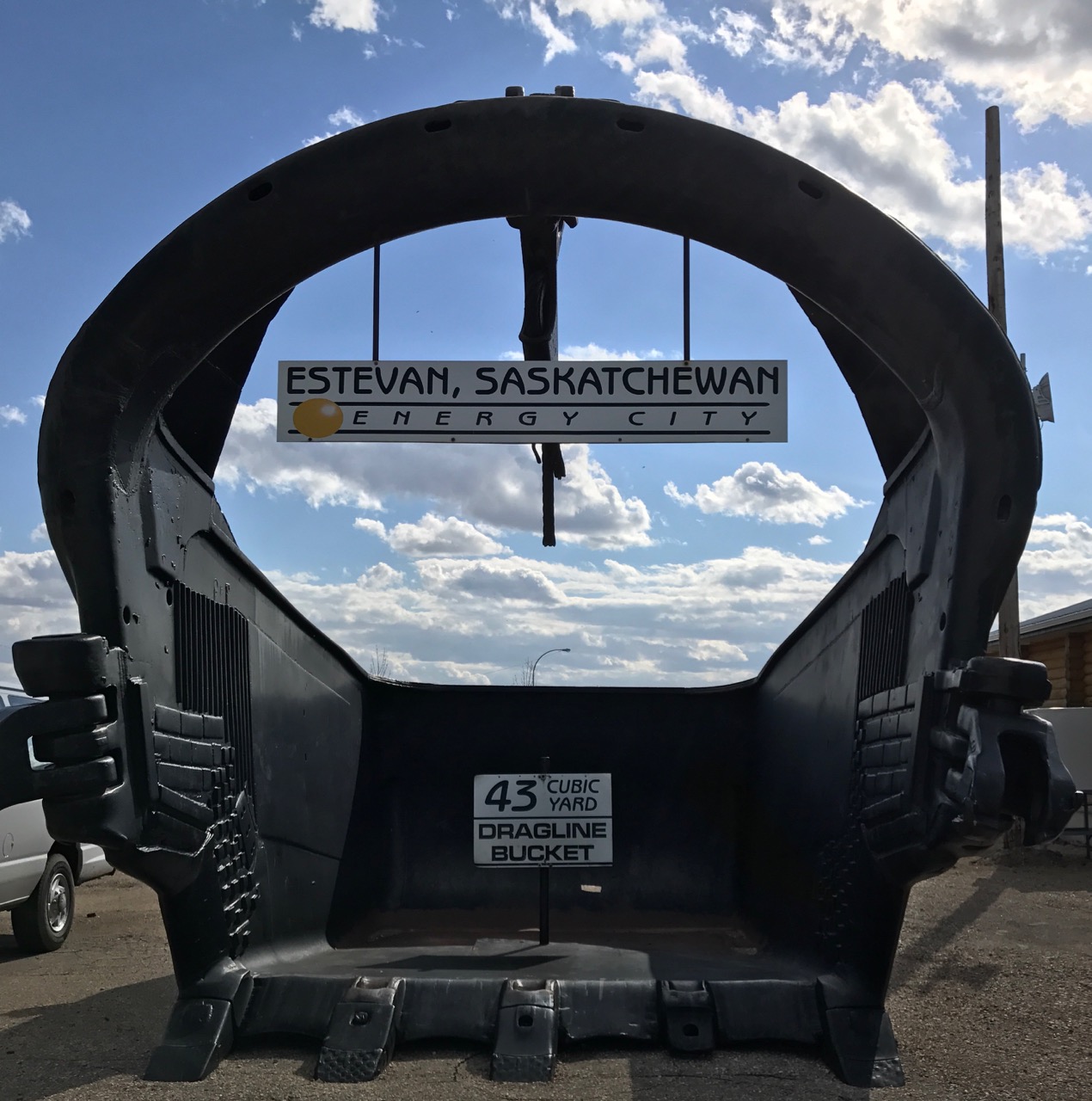
This dragline bucket can dig up 43 cubic yards at a time.
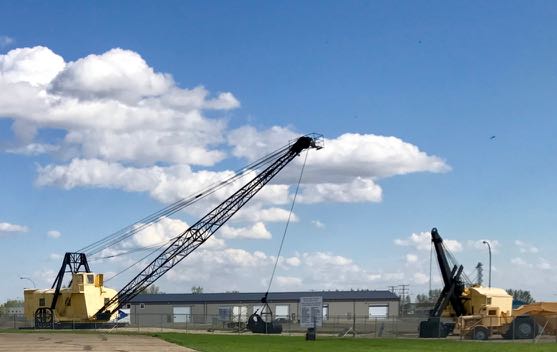
Can you imagine pulling that bucket through the soil with this piece of equipment? I would call it a crane, but there is probably a more technically correct name.
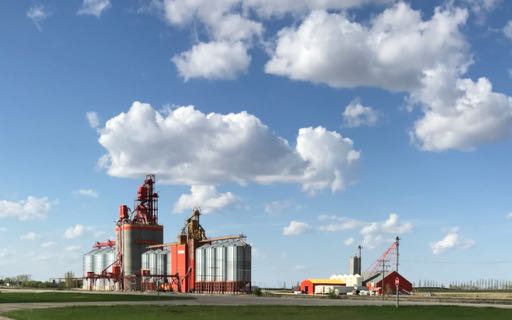
Right across the street was a large modern grain elevator. Saskatchewan – Canada’s bread basket!
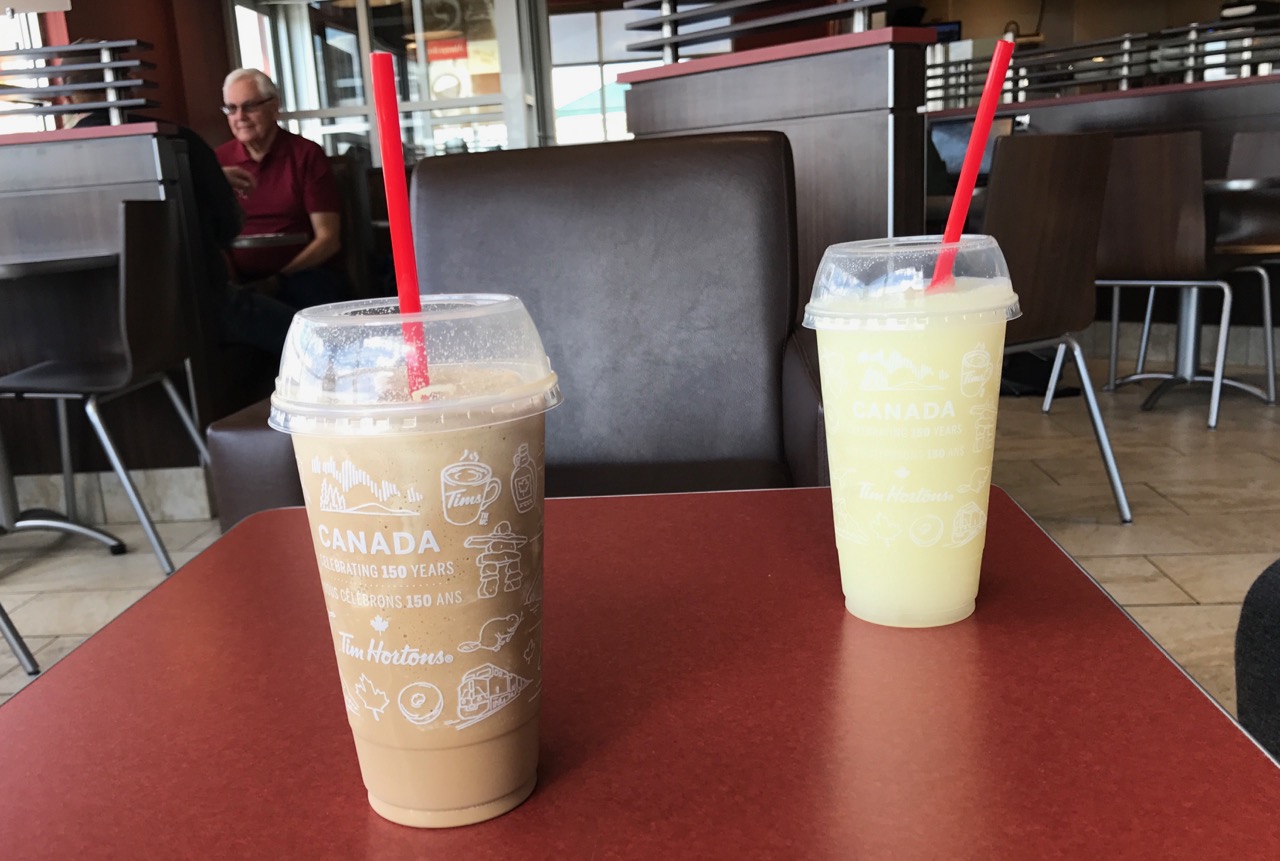
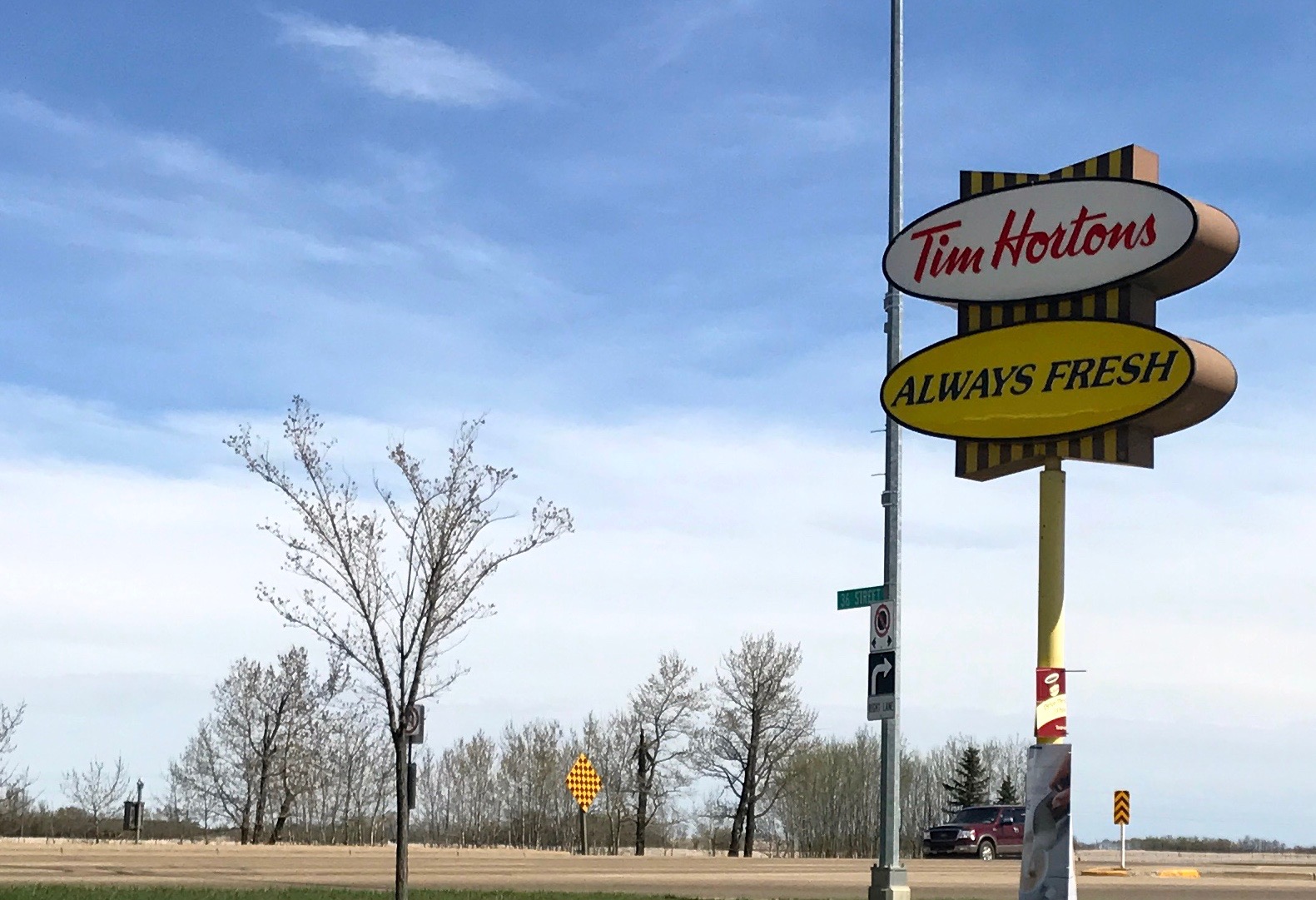
With our tourism completed for the day, we stopped off for some refreshment at another Canadian institution – Tim Hortons! We had to rest up for the next day’s adventures.
Moose Jaw

The next day, it was time to head out of Medicine Hat.

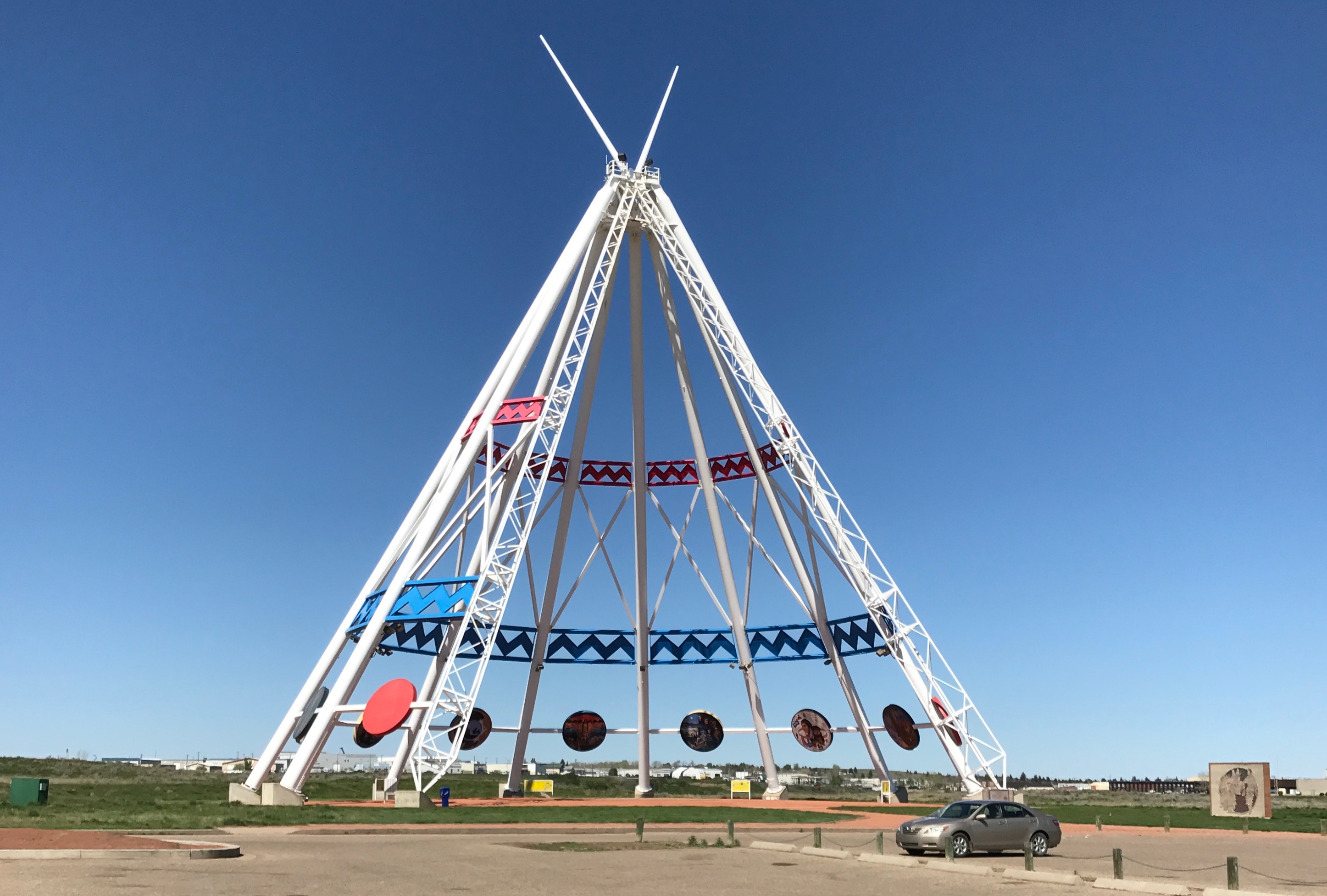
On the way out of town, I passed The World’s Largest Tepee. I read about it when researching things to do in Medicine Hat. I didn’t know what to expect, other than it was on the way out of town.

It is called the Saamis Tepee, and was originally constructed for the Calgary 1988 Winter Olympics and it was moved to Medicine Hat in 1991. It’s 215 feet tall, which is about the height of a 20 story building, and has a diameter of 160 feet. It’s built entirely of steel with a concrete foundation. From the bottom of the foundation, to the top of the masts, it weighs about 1,000 metric tons, which is about 1,100 tons. In either system of measurement, that’s heavy!

The tepee is ringed with 10 large circular story-boards depicting aspects of native culture and history. I was eager to get rolling, so I didn’t stop to look at the artwork.

Incidentally, there are 960 bolts holding it all together, just  in case you needed another number.

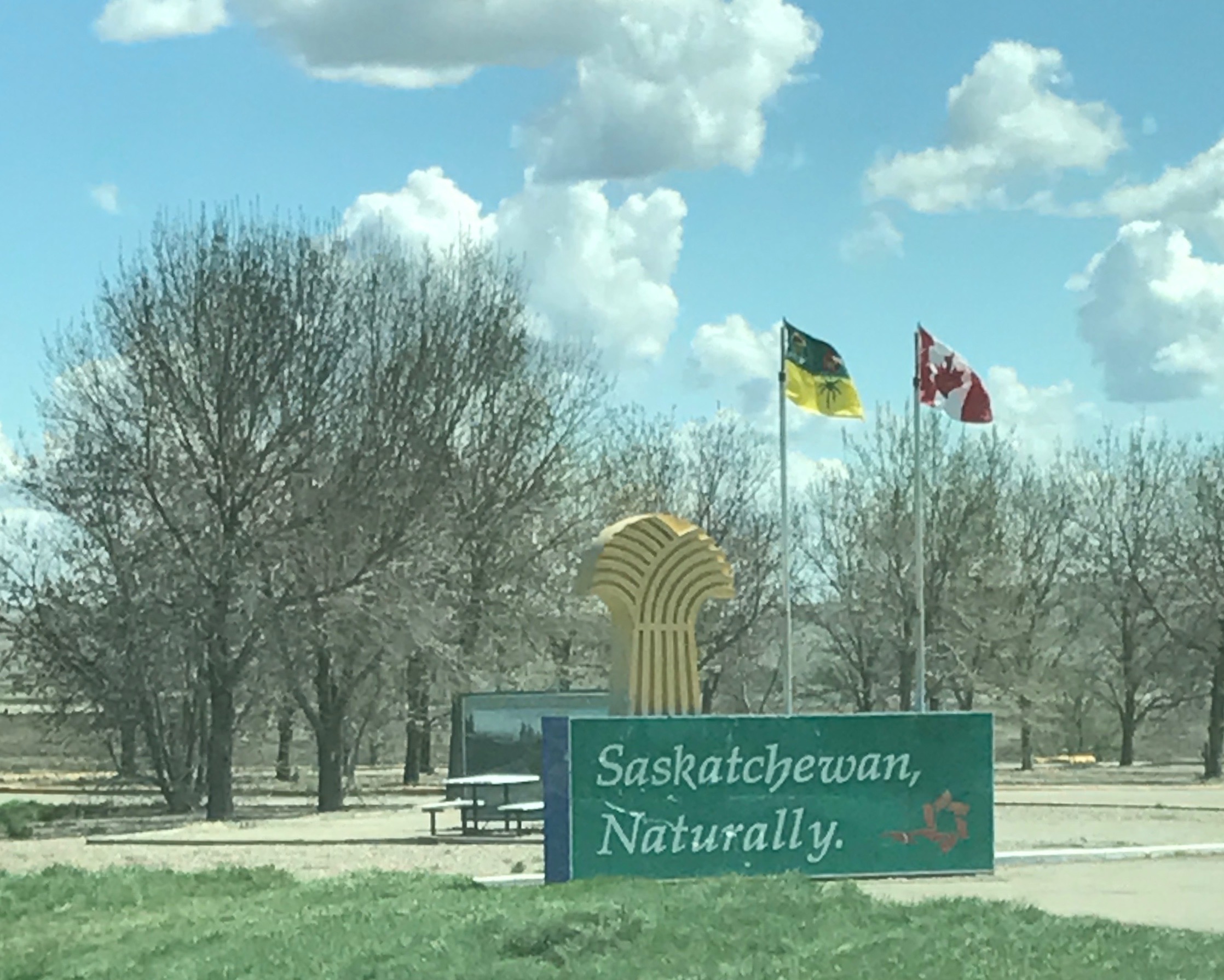
I headed east down the Trans-Canada Highway, and before too long, I was in Saskatchewan.

It was flat. Flat as a pancake. Flat as a board, Flat as a fart on a plate, as my mother used to say.

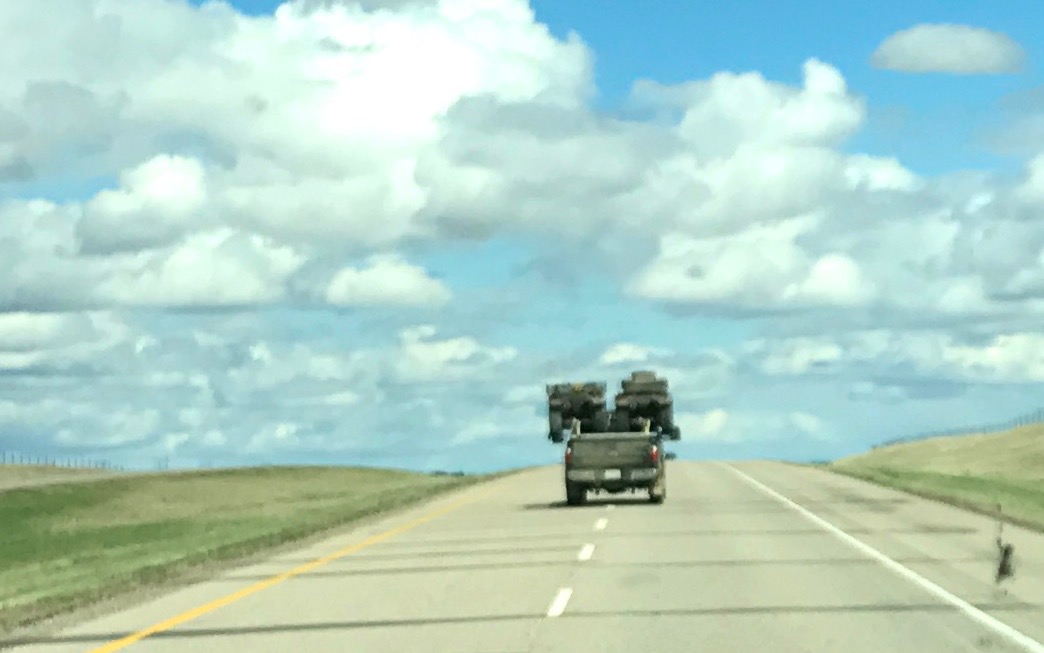
This pick up hauling two ATVs caught my attention.

I just kept rolling on and looking at the glorious flatness and enjoying the sunshine and cloudscapes.

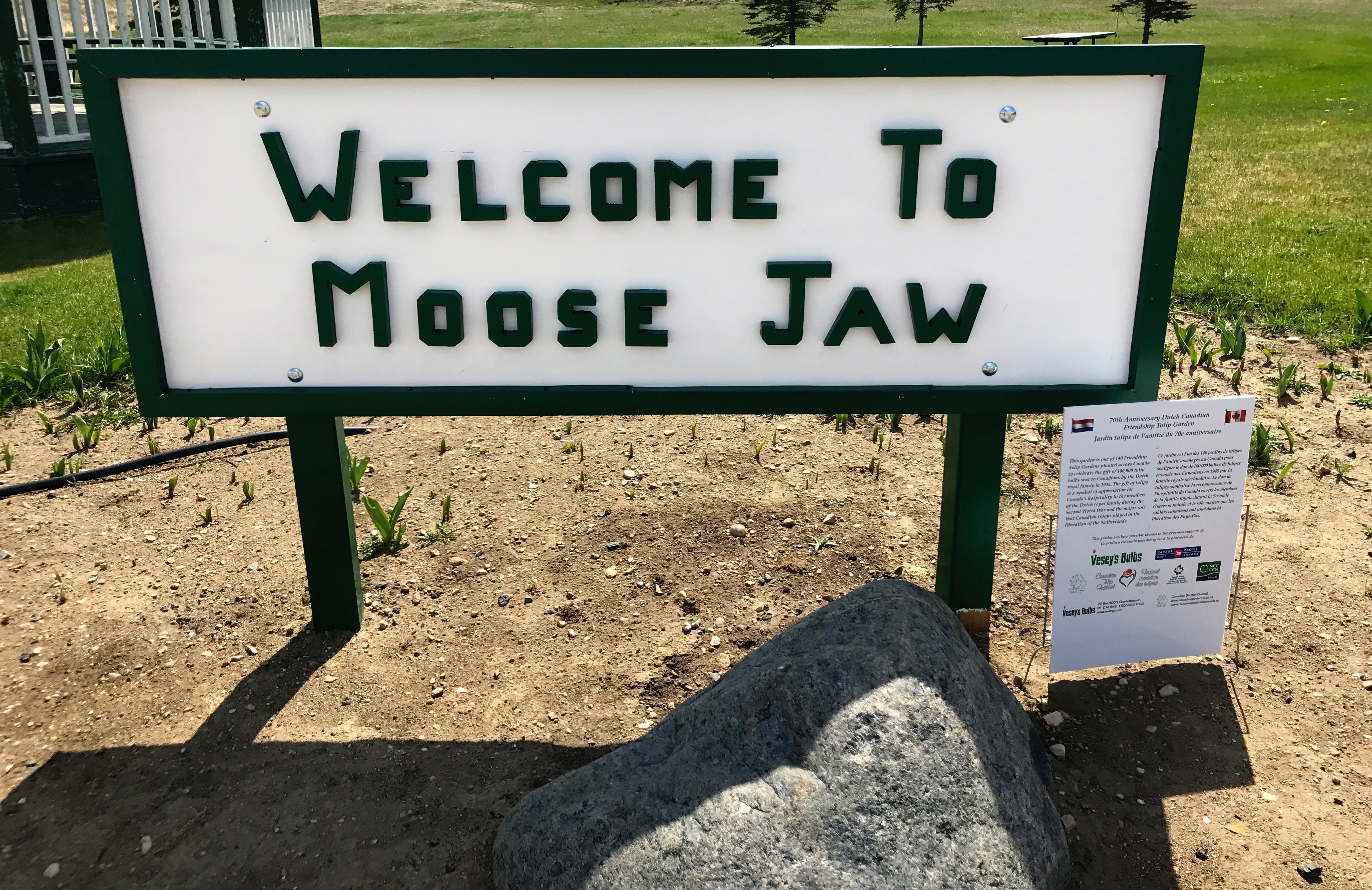
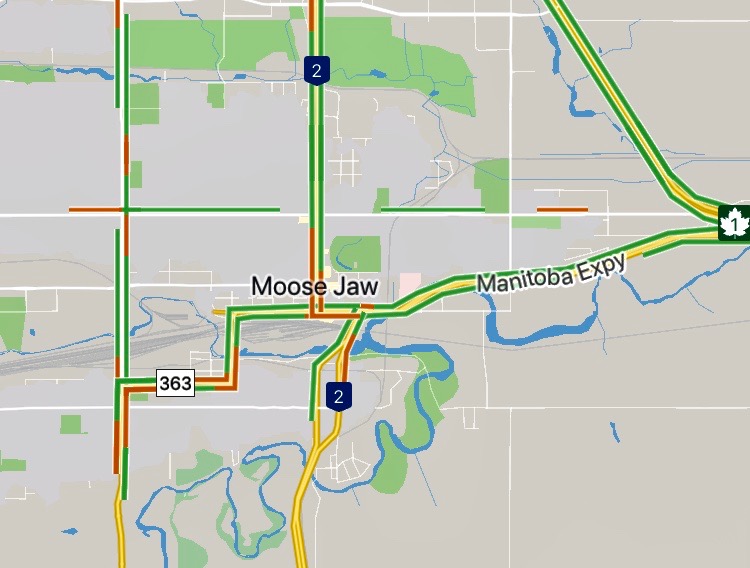
And just a few hours later, I was in Moose Jaw!

Why is the town named Moose Jaw? There are a few theories. One is that it came from the Plains Cree name moscâstani-sîpiy, which means “a warm place by the river”. Or it could be from the Plains Cree word “moose gaw” which means warm breezes. The other possibility is that the Moose Jaw River is shaped like a moose’s jaw.

I guess it does, if you use your imagination.

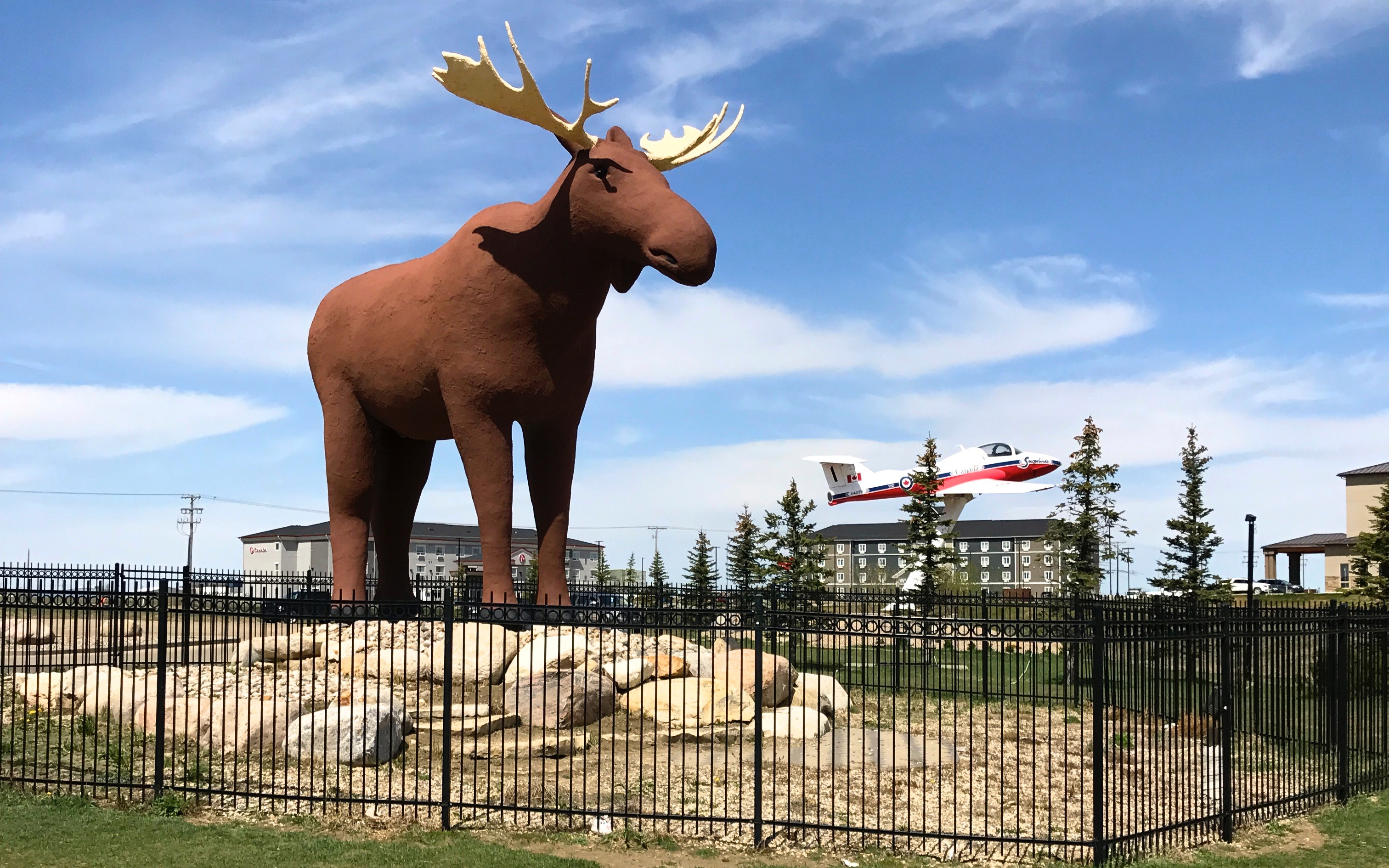
Mac the Moose is waiting to greet you at the Visitor’s Center.

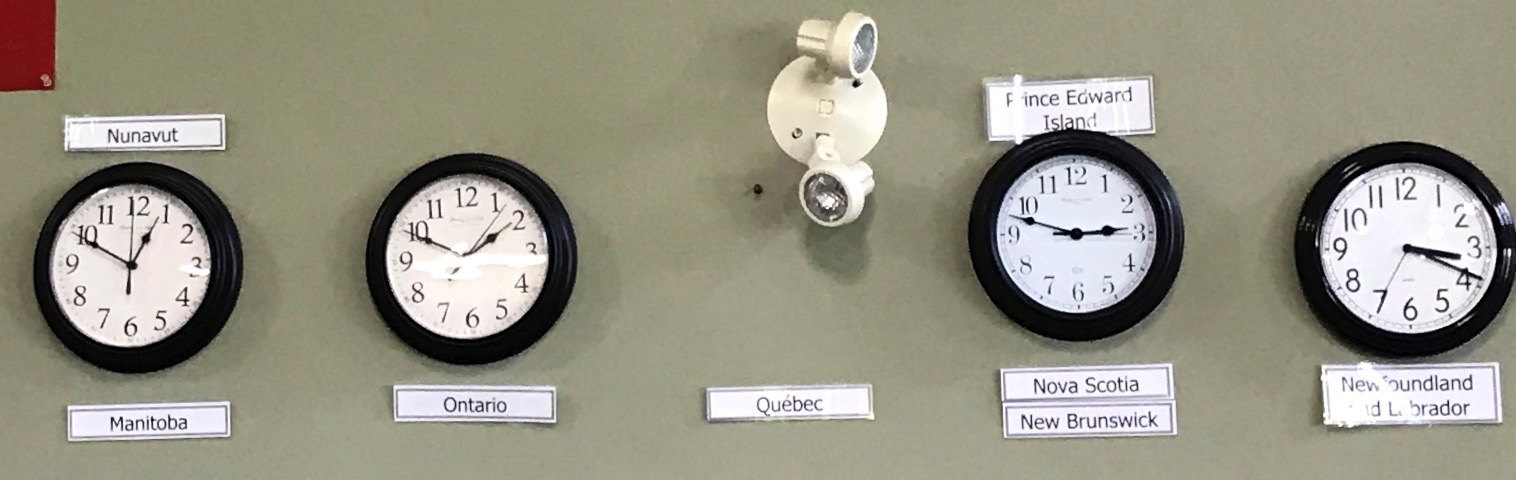
This array of clocks showing the time zones across Canada caught my attention. I always enjoy seeing the Newfoundland and Labrador has a time that a half hour ahead of its neighbor. And what is up with Quebec? Their clock is missing!

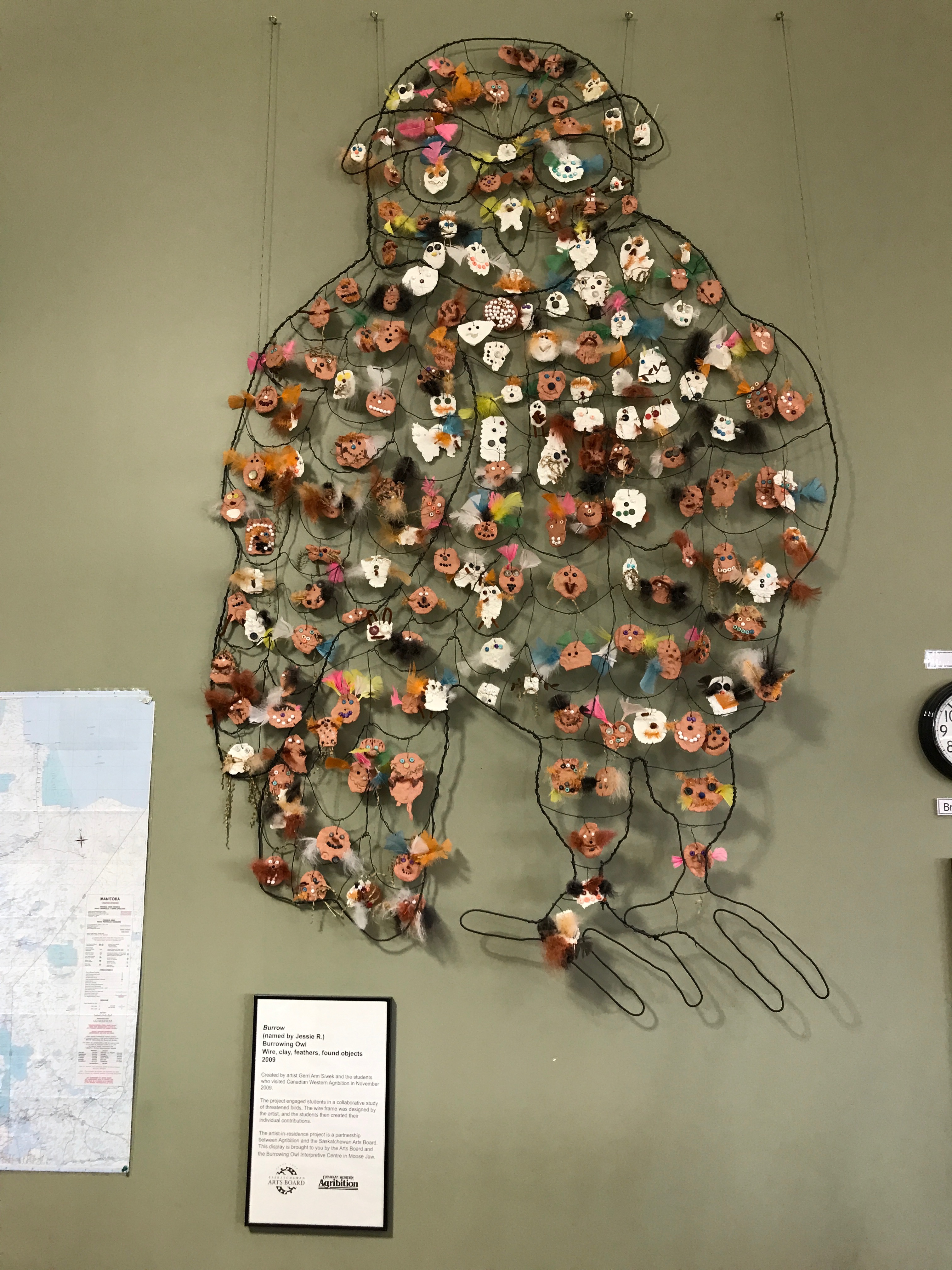
I liked this collaborative work of art created by artist-in-residence Gerri Ann Siwek, entitled Burrow. She worked with students who visited Canadian Western Agribition in 2009. They studied threatened birds and created this piece about the burrowing owl. The artist made the framework and the students created the small pieces inside the framework.

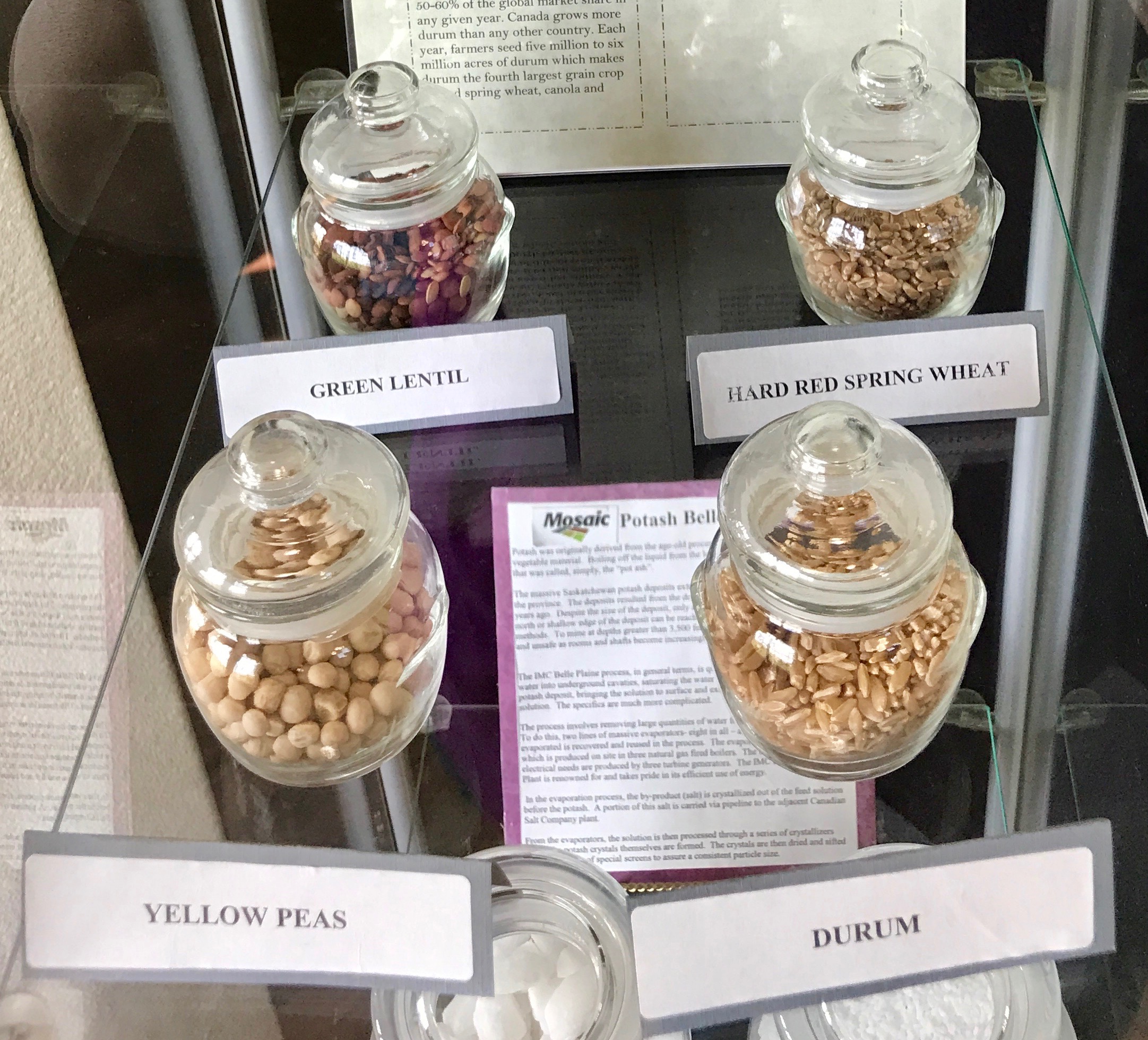
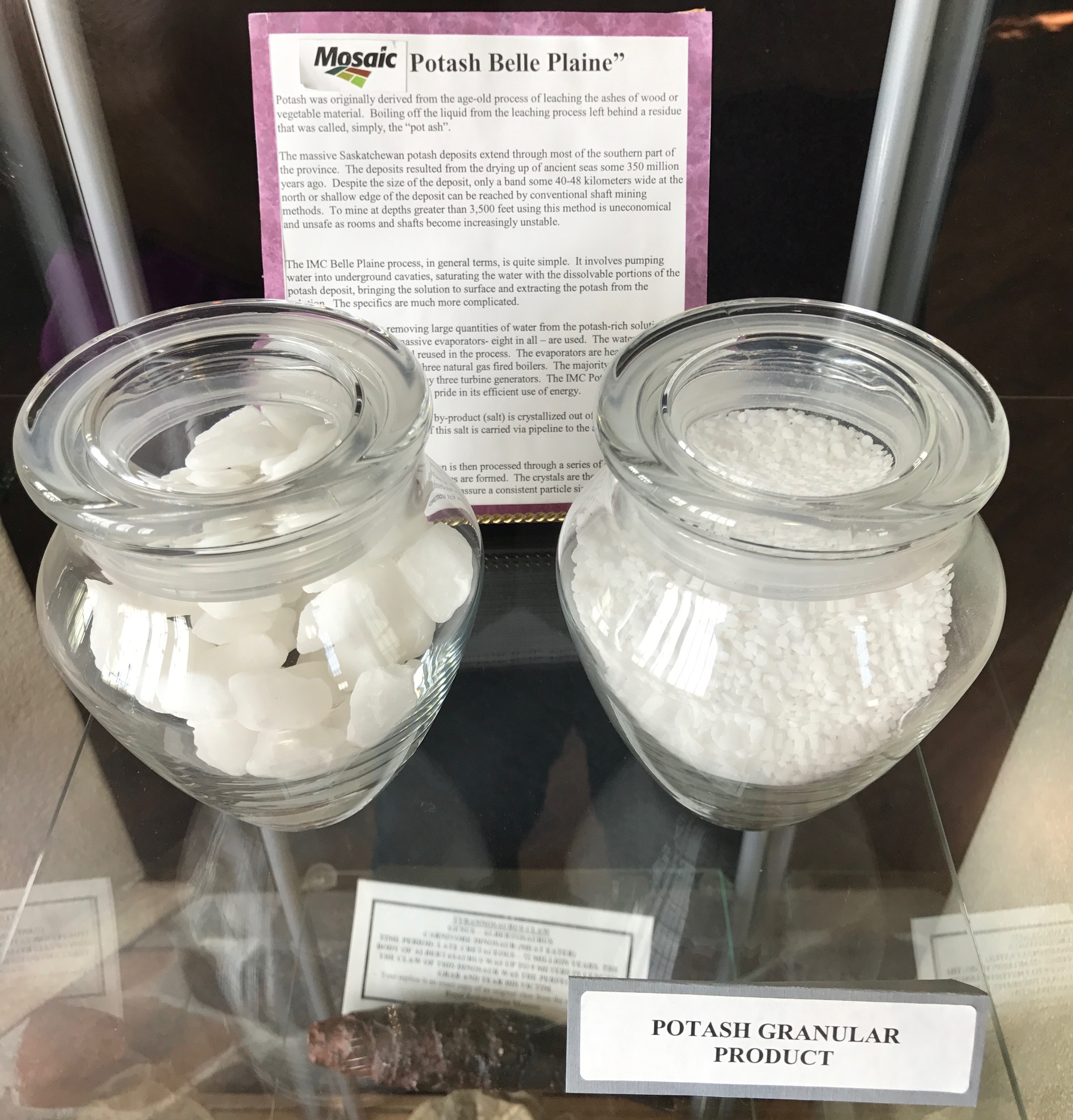
They had some samples of local products. For instance, potash is used as a fertilizer.

I imagine the potash would be used to grow these products.

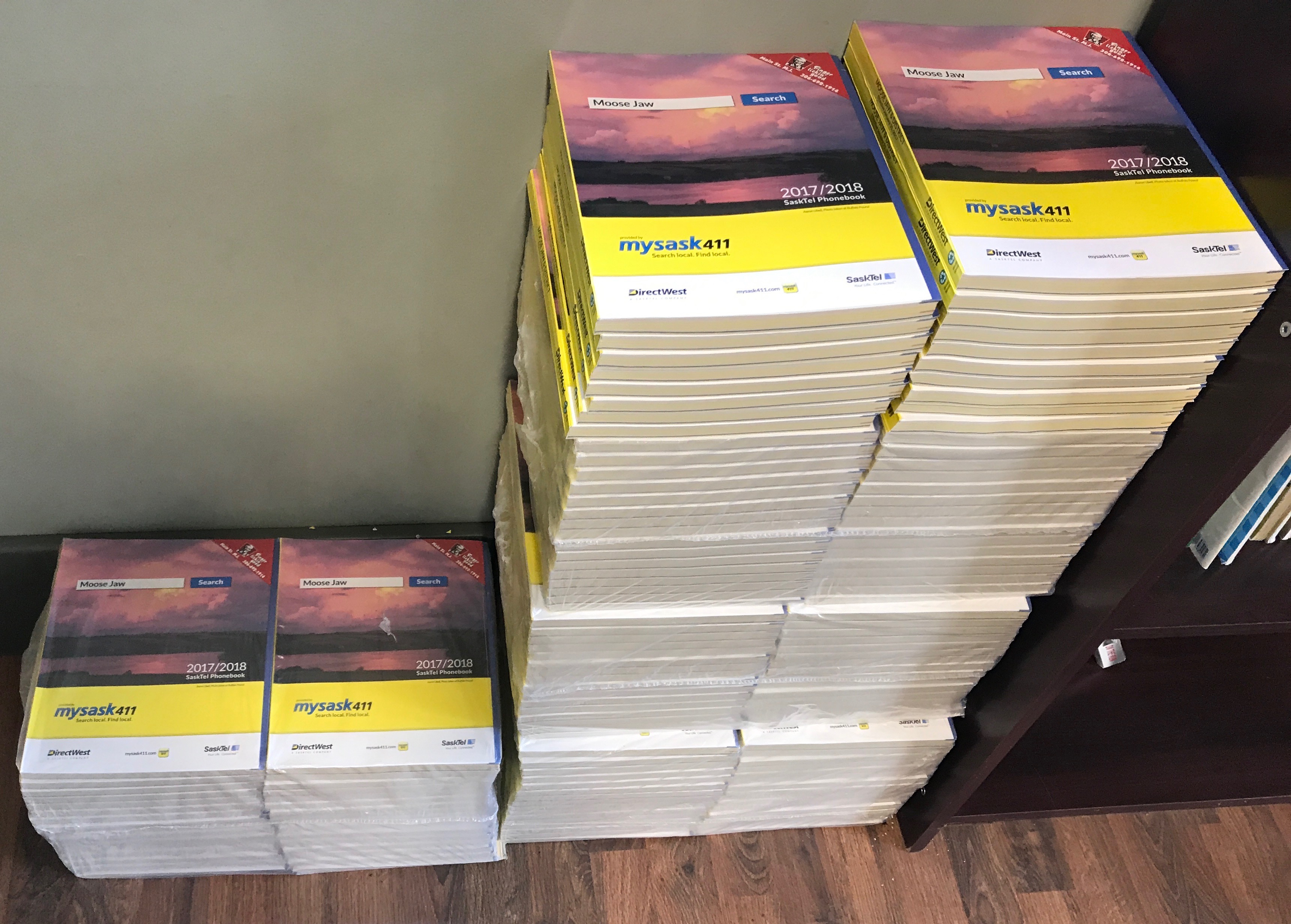
On my way out, I noticed these phone books. It’s been a while since I’ve seen phone books.

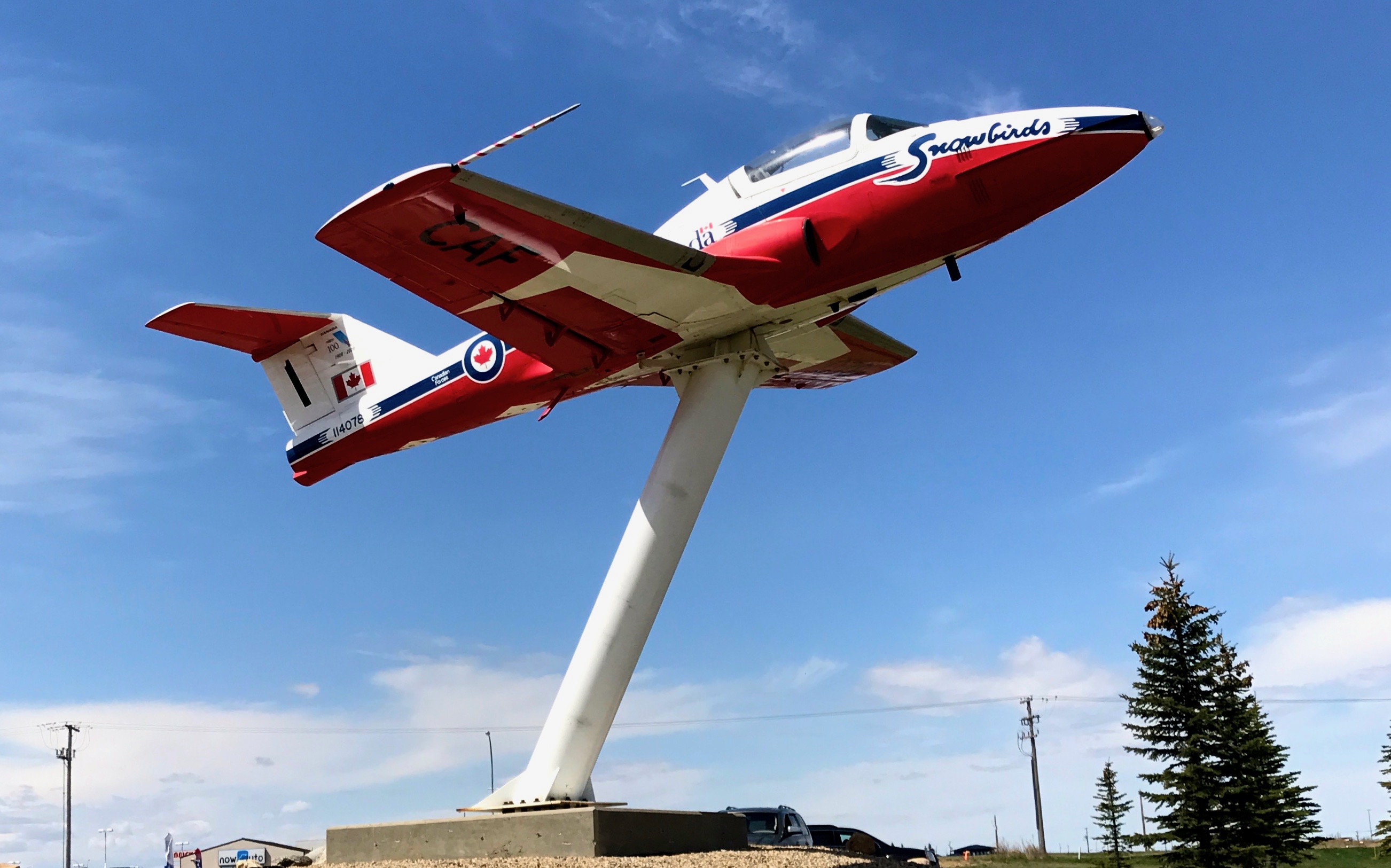
One last thing I stopped to look at in the visitor’s center was this  CT-116 Tutor, which is what the Canadian Forces 431 Air Demonstration Squadron flies.They are based in Moose Jaw. This group is called the Snowbirds. You learn something new everyday! I thought Snowbirds were Canadians who spent the winter months in Florida.

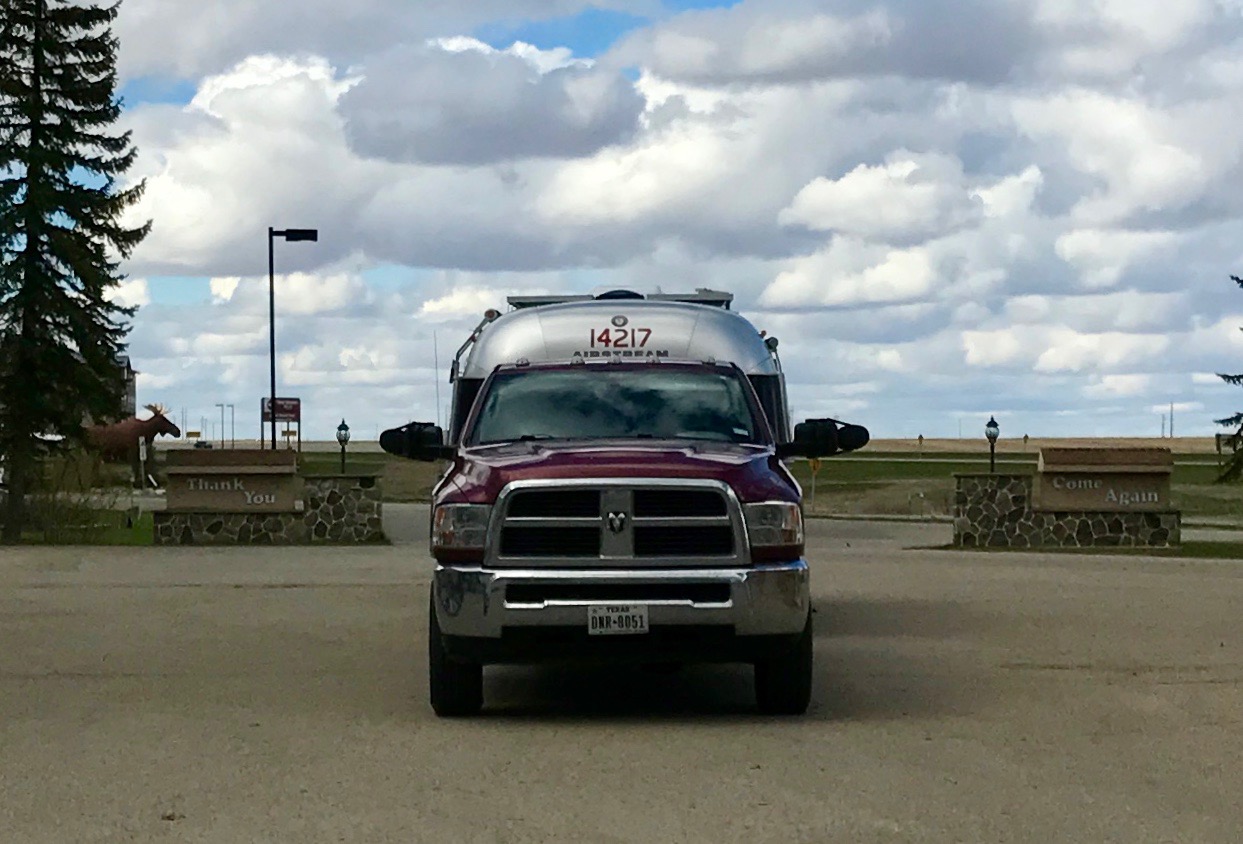
I drove across the way to the campground I was staying at that night. My plans were to do my laundry and get something to eat.

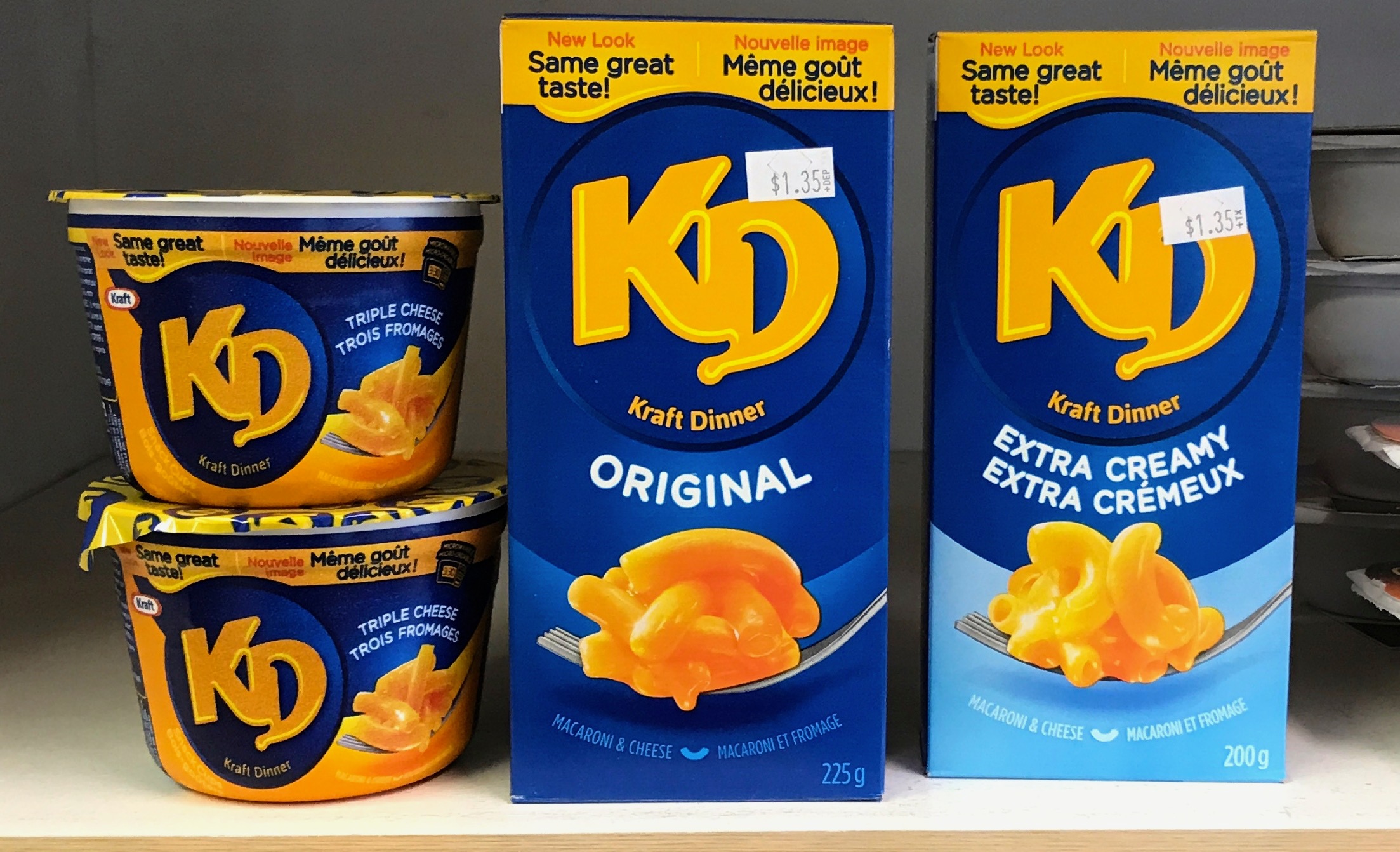
While my laundry was cycling through, I looked at the offerings they had in the camp store. While we call this products “Kraft Macaroni and Cheese” our friends north of the border call it “Kraft Dinner.” I also like it because my initials are KD.

There were other things I could have done in Moose Jaw, but I was kind of tired. I decided to go downtown and see what I could find.

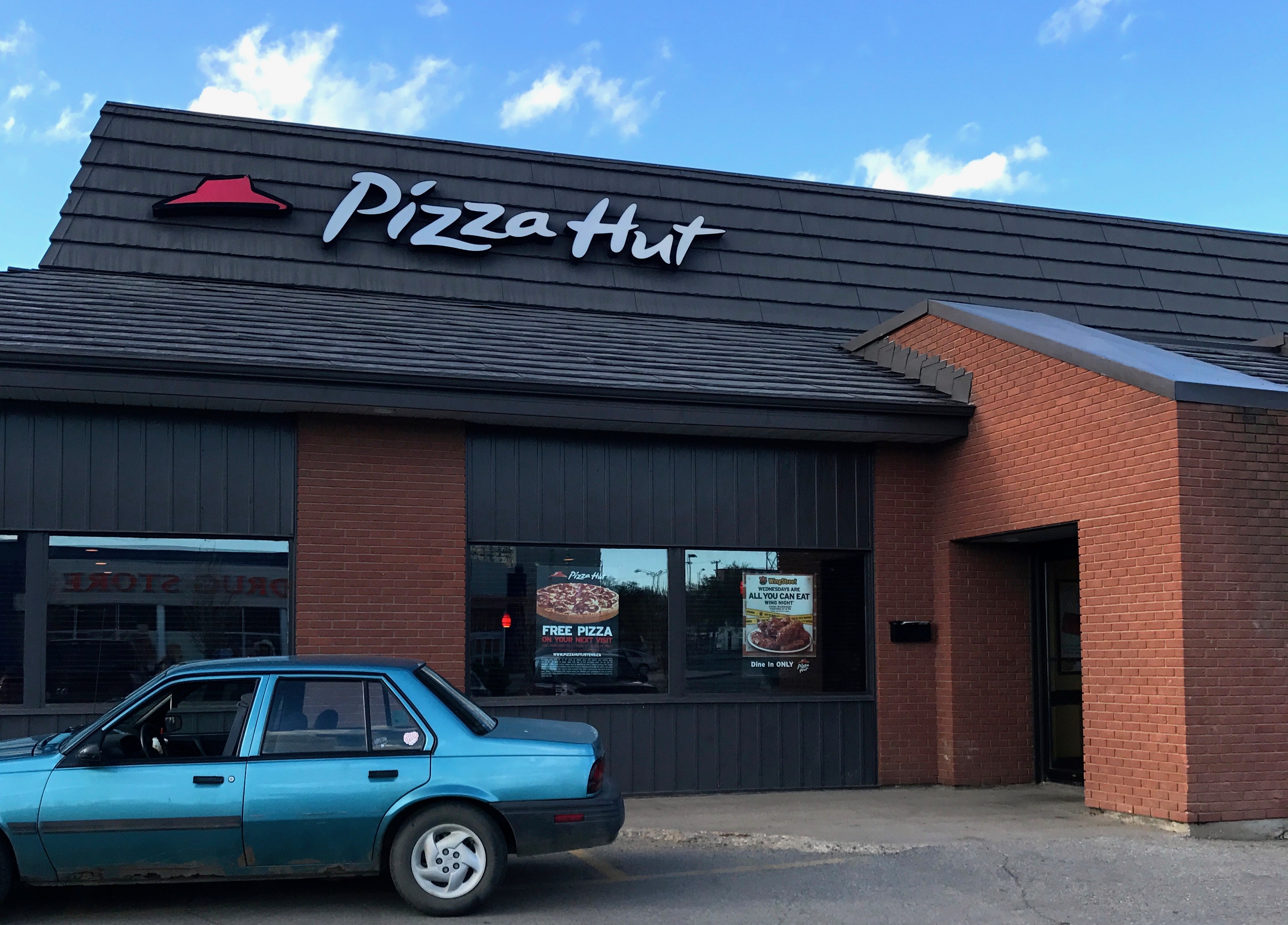
Okay, not an inspiring dinner choice, but I was familiar with the menu and who doesn’t like pizza?

(That’s a rhetorical question. I fully realize that there are people out there who might not like pizza.)

One more stop in Saskatchewan, and that adventure begins in the next installment.

Stay tuned!


Medicine Hat

After my visit with the dinosaurs in Drumheller, my next stop was Medicine Hat, Alberta.

Why Medicine Hat? Well, I needed to stop someplace and I was captivated by the name. I figured that there had to be an interesting story.

According to my preferred source, it turns out that “Medicine Hat” is the English translation of Saamis – the Blackfoot word for the eagle tail feather headdress worn by medicine men.

There are several legends regarding the hat. One is that a mythical mer-man river serpent named Soy-yee-daa-bee – The Creator – appeared to a hunter and instructed him to sacrifice his wife to get mystical powers which were manifest in a special hat. Another legend tells of a battle long ago between the Blackfoot and the Cree in which a retreating Cree Medicine Man lost his headdress in the South  River.

I should have looked for a souvenir shop to see if there were any special Medicine Hat hats for sale.

And, even though the town’s name is interesting, the town’s nick name is even more intriguing: Hell’s Basement. The name came from Rudyard Kipling, who was inspired by the region’s vast underground stores of natural gas. He wrote:

This part of the country seems to have all hell for a basement,
and the only trap door appears to be in Medicine Hat.”

More genteelly, the city is known as “The Gas City”. The city even owns it’s own gas utility and power generation plant, which contributes to its reasonable cost of  living.

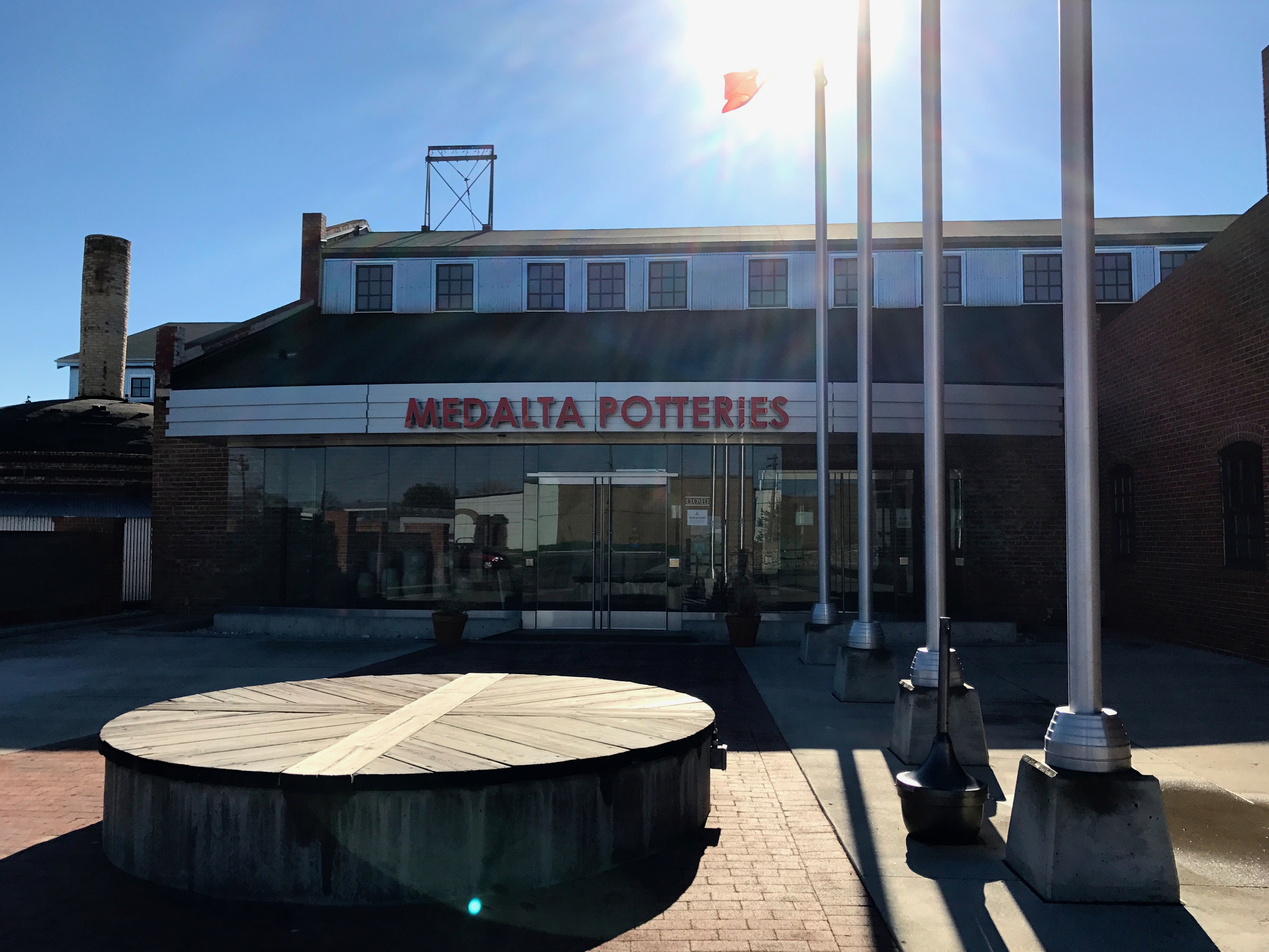
After a good night’s sleep, I set out to see what I could see. The first thing on my list was Medalta Potteries.

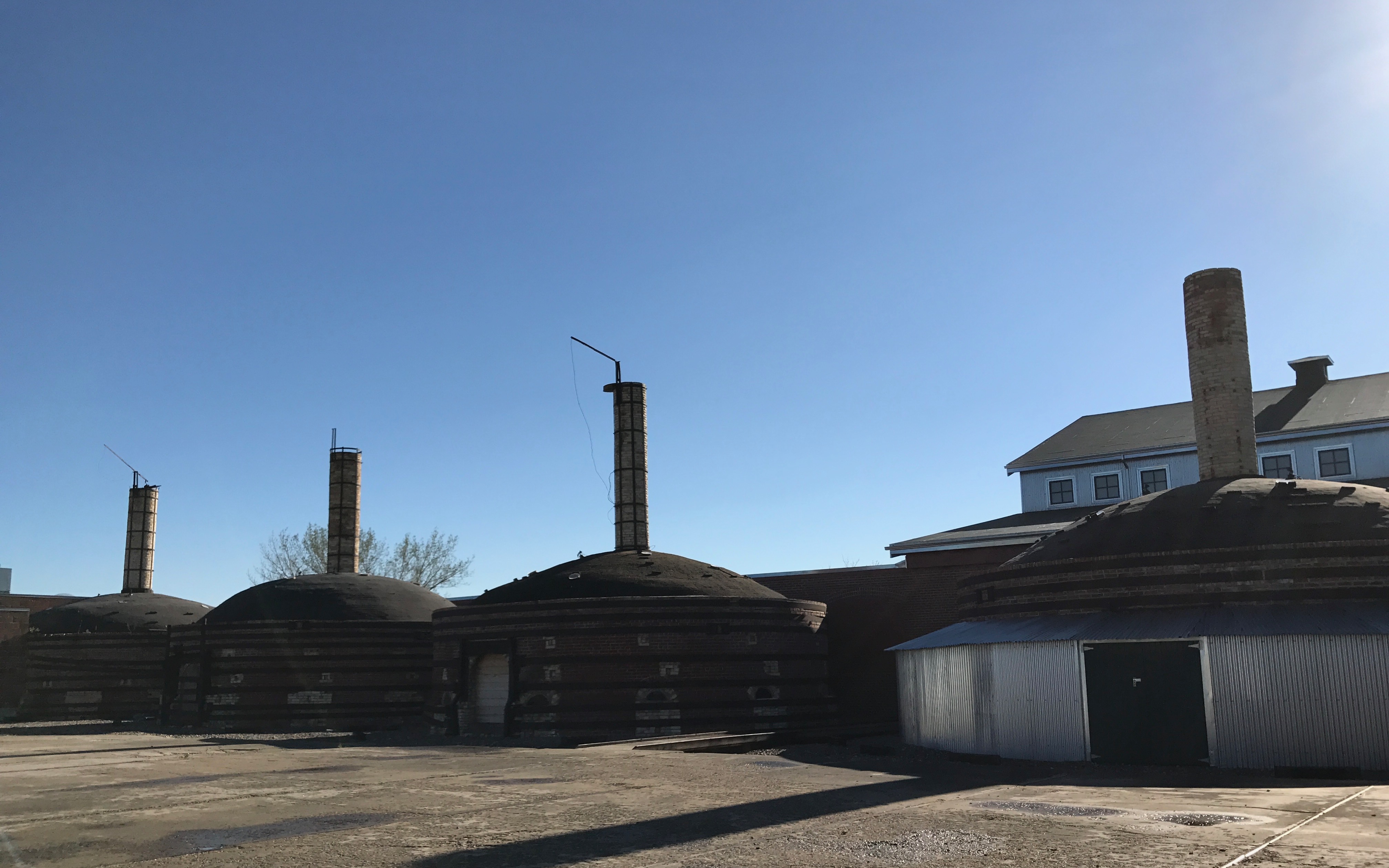
With the proper soil type and abundant energy, Medicine Hat was a logical location for a pottery.

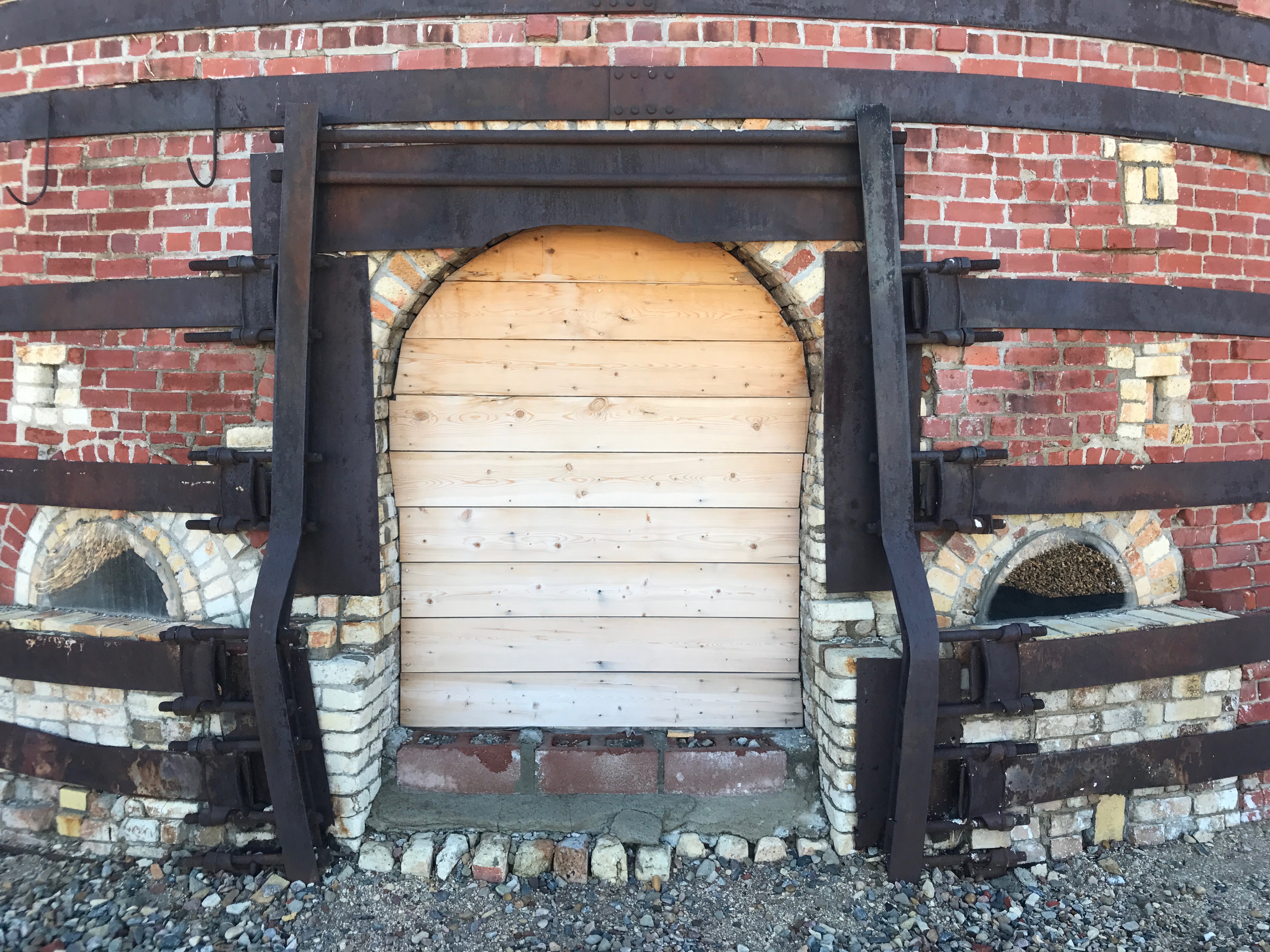
It had four large, beehive kilns.

From the wooden door on the kiln, you can surmise that they are no longer in use.

Given my sense of timing, I was not surprised that it was closed on the day I arrived. Oh, well. I still spent some time looking around. There are always interesting things to see.

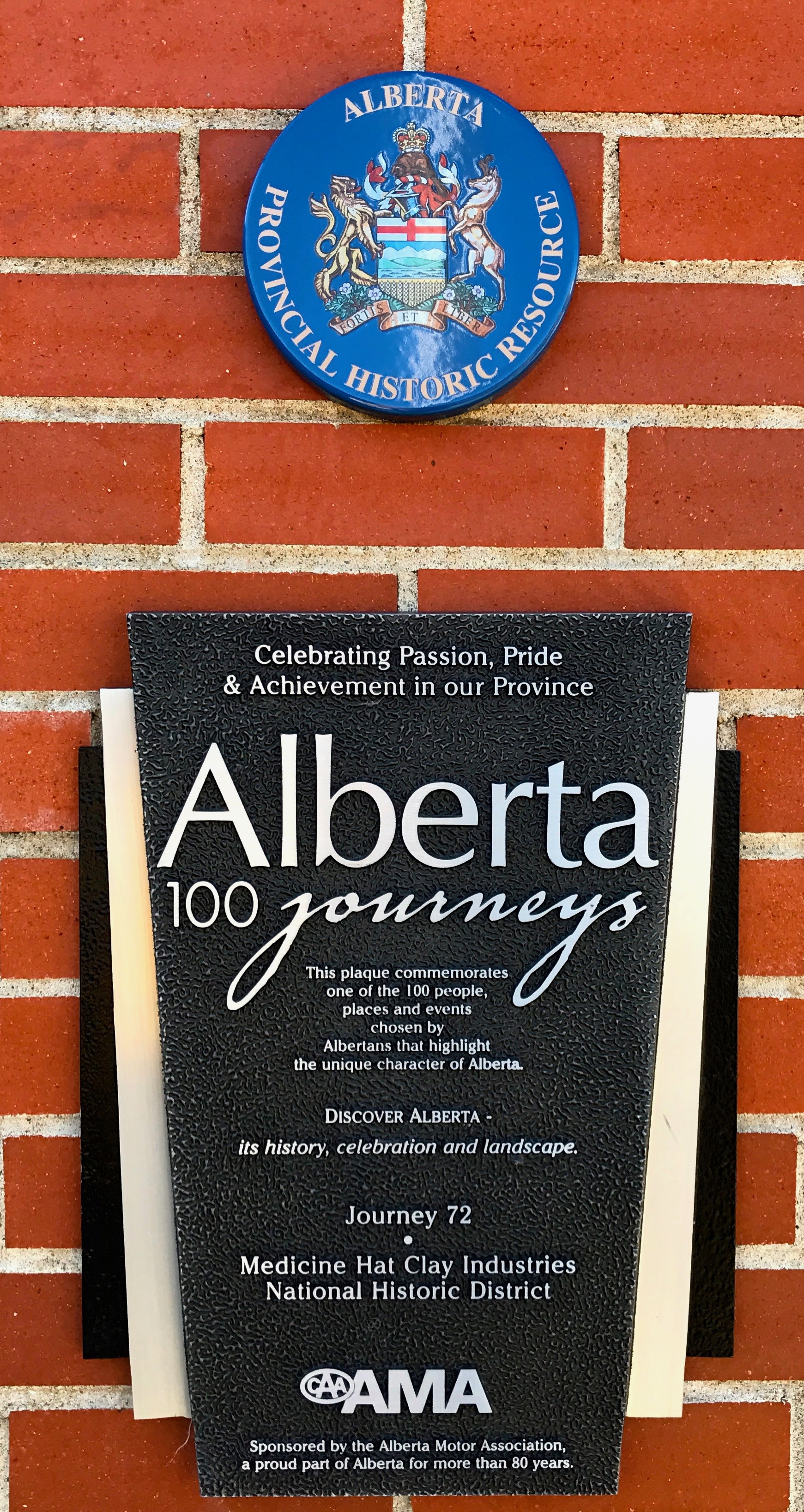
It was placed on the register of Canada’s Historic Places in 1996. Now it is an innovative , industrial non-profit museum, contemporary ceramic arts facility, art gallery and community hub. According to something I read somewhere, “it has become an exciting place where cutting-edge technologies meet historic restoration and archaelogy.

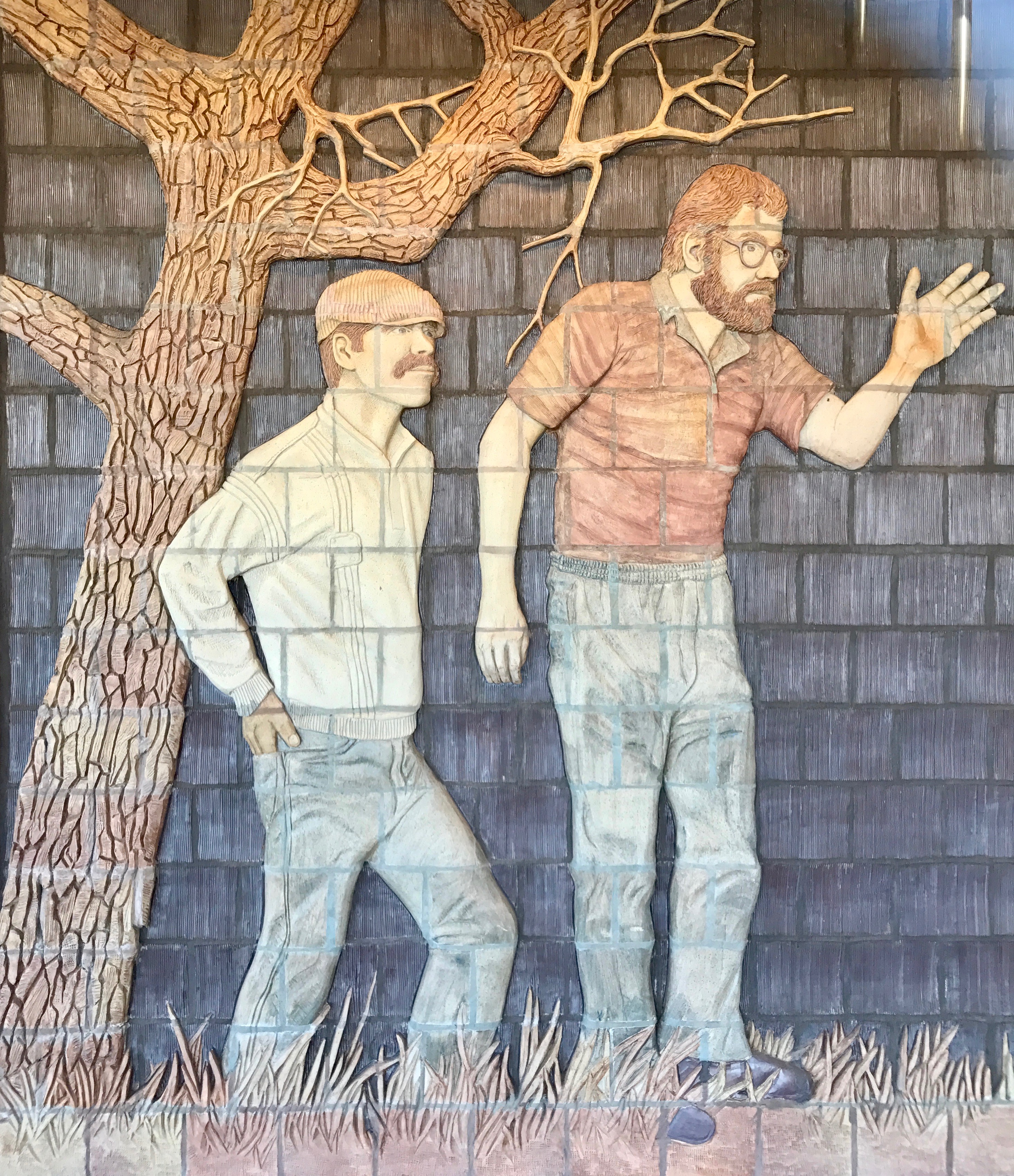
This work of art illustrates two friends standing under a sprawling cottonwood tree in 1974, near the abandoned Medalta Potteries factory. The old pottery site inspired them and they knew that the Alberta government was in the process of identifying important heritage resource around the province. They agreed that if anything qualified for inclusion on the list, Medalta did.

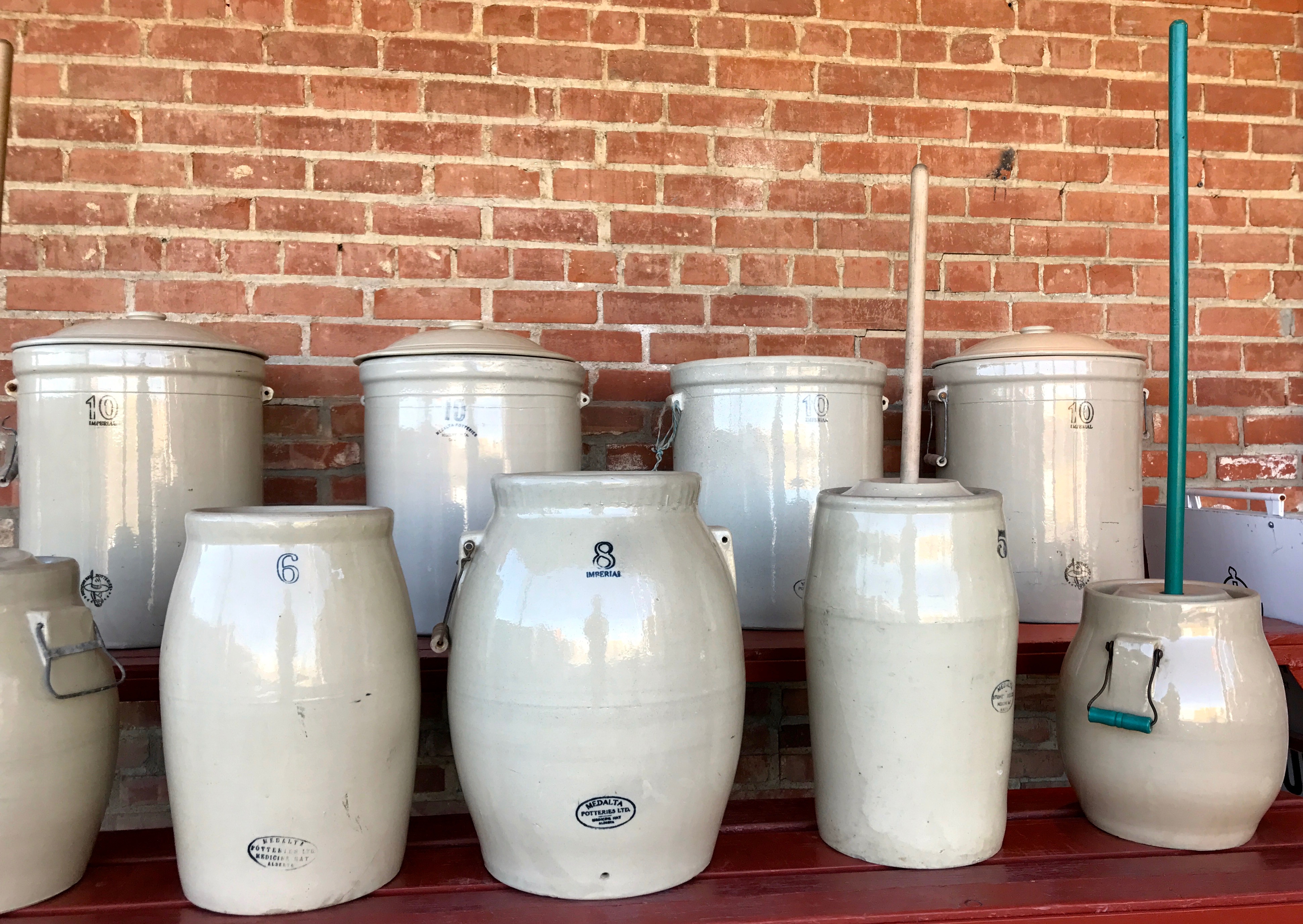
I looked through the windows at this display of some of the Medalta ware. In fact, if you look on eBay, you can find Medalta ware for sale. When you keep hitting the days things are closed, you get good at looking through windows to see what you can see.

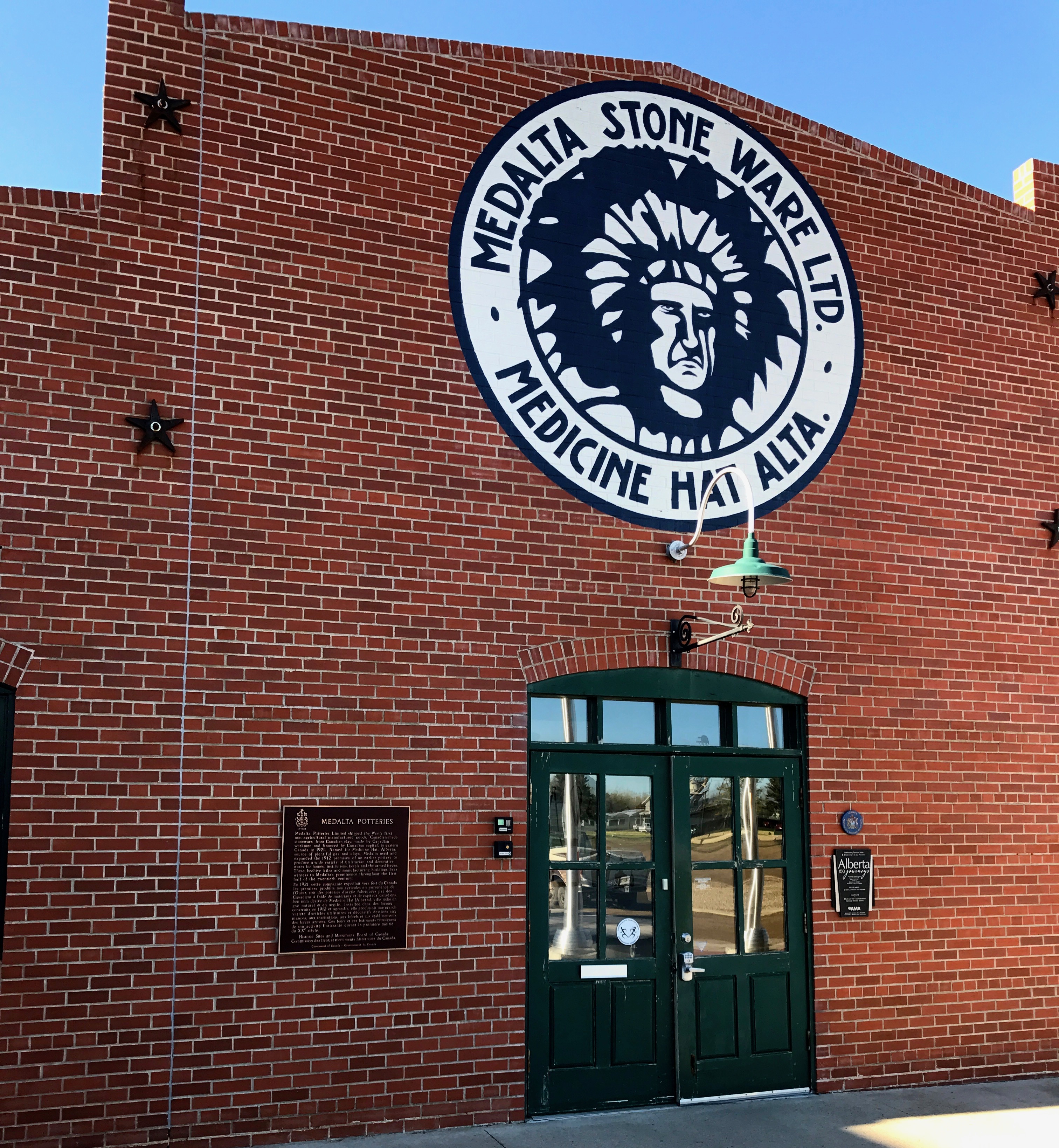
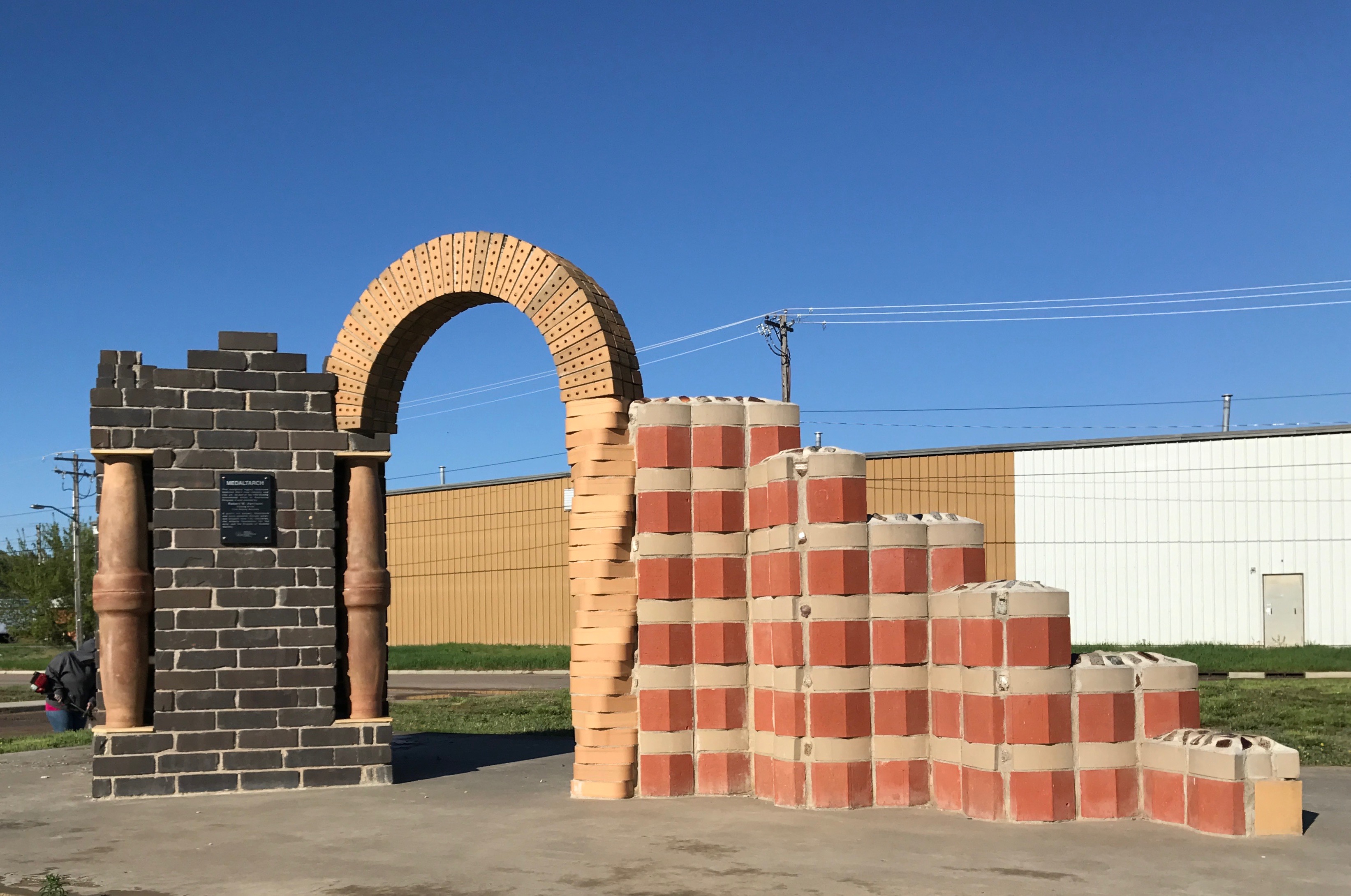
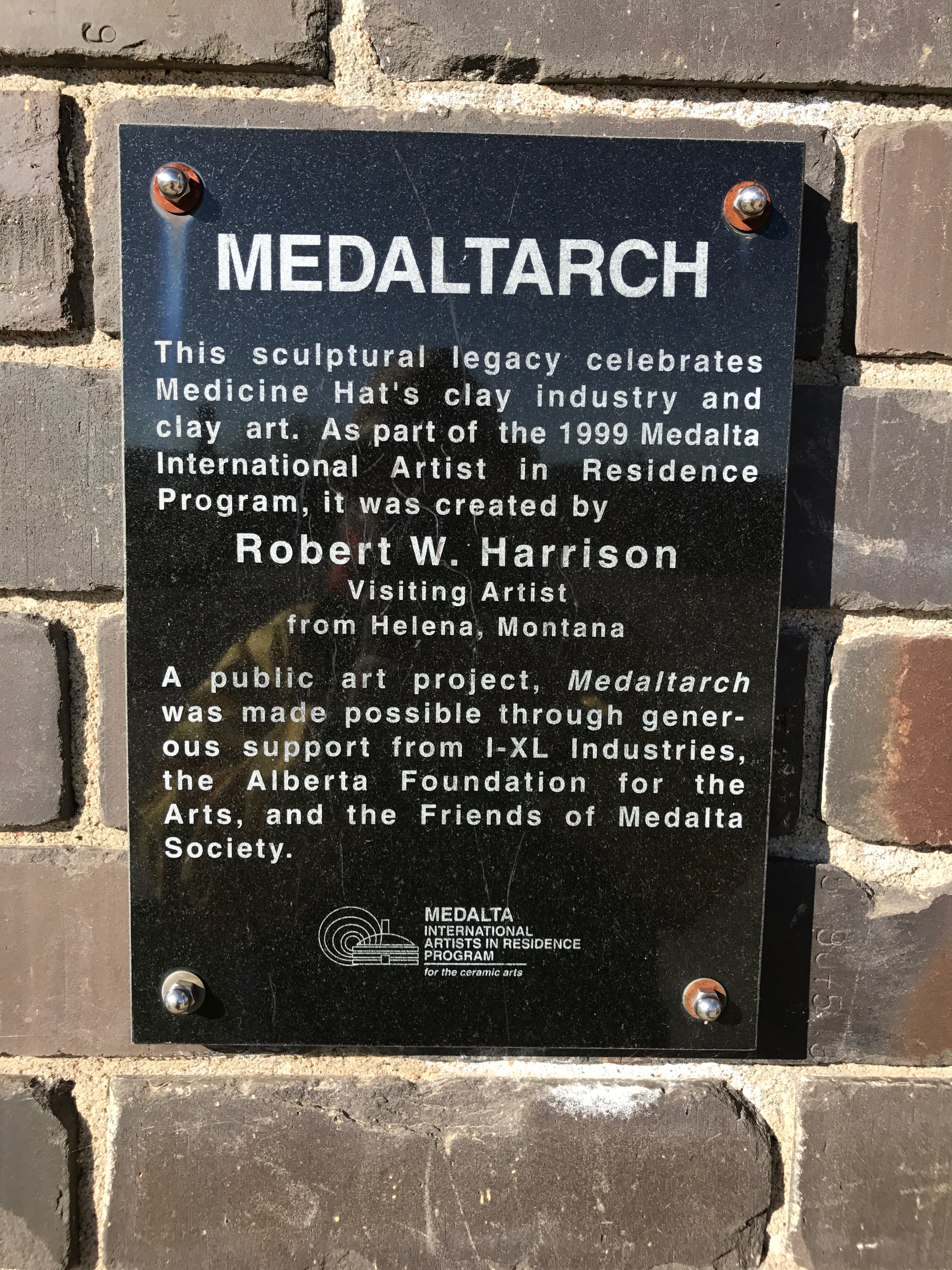
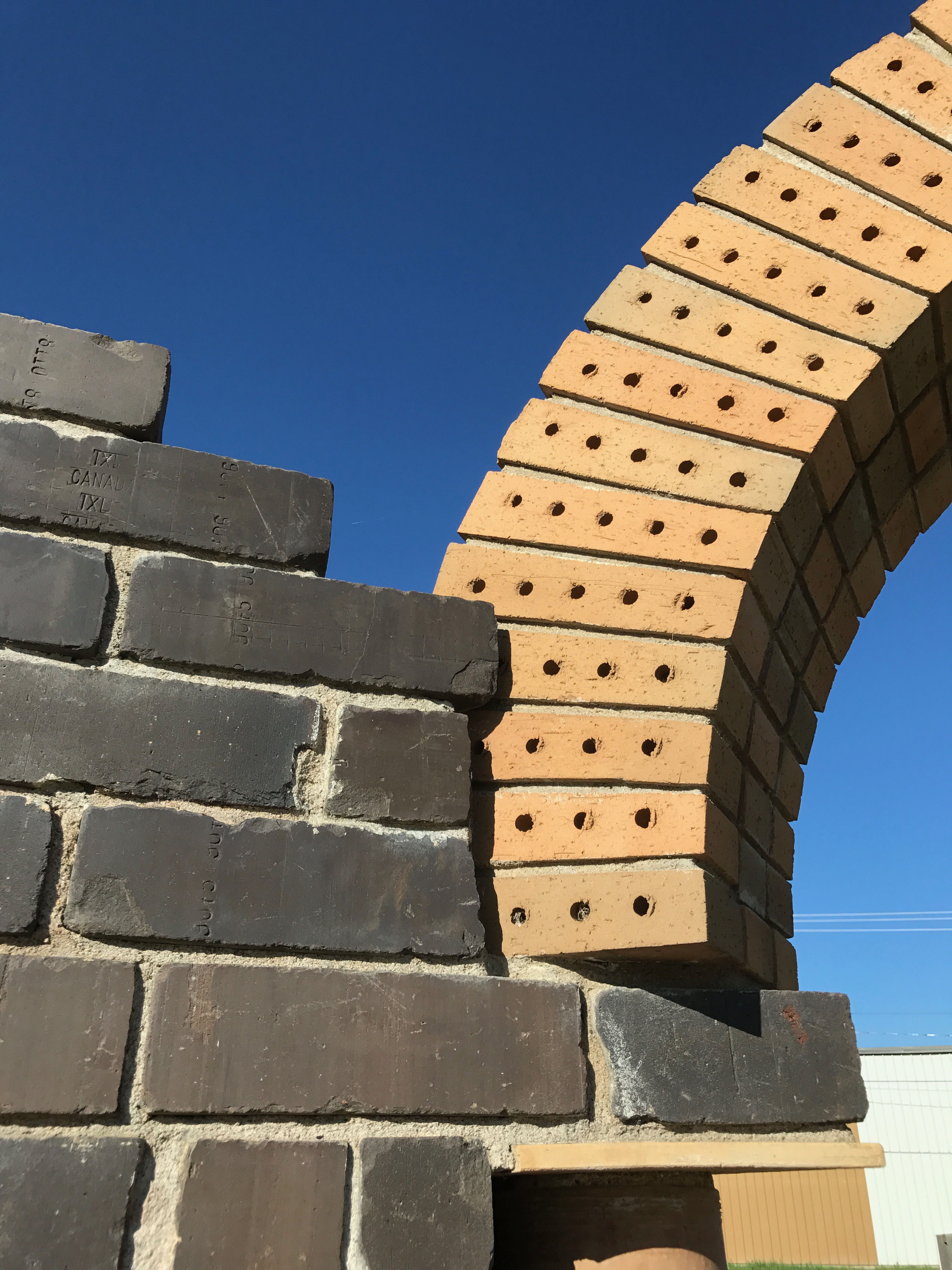
I found this work of art intriguing. It was in front of the potteries.

Rather than retype the information on the plaque, I’ll just let you read it for yourself.

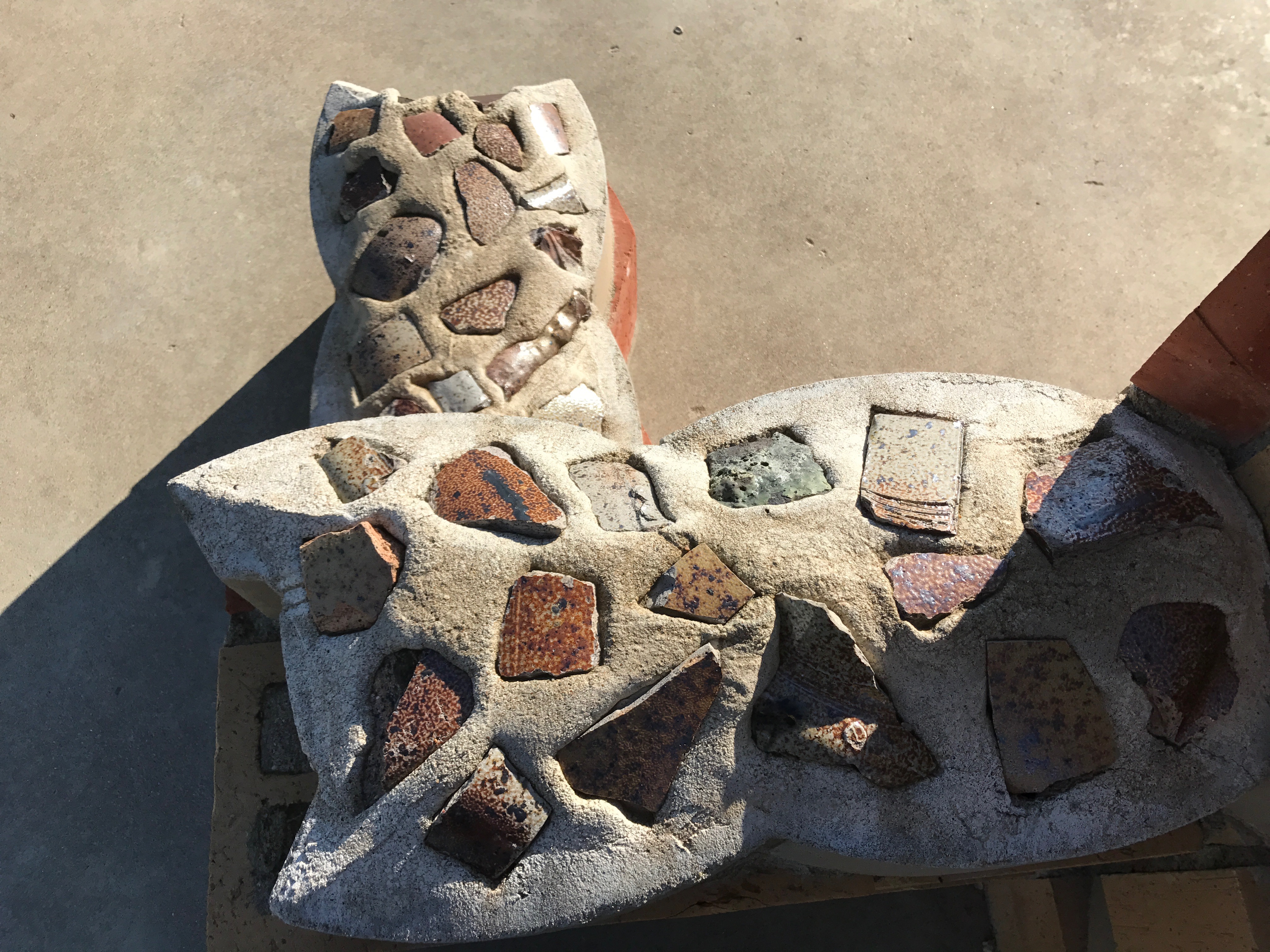
I like the juxtaposition of the different kinds of bricks, as well as the actual pottery sherds that the artist used.

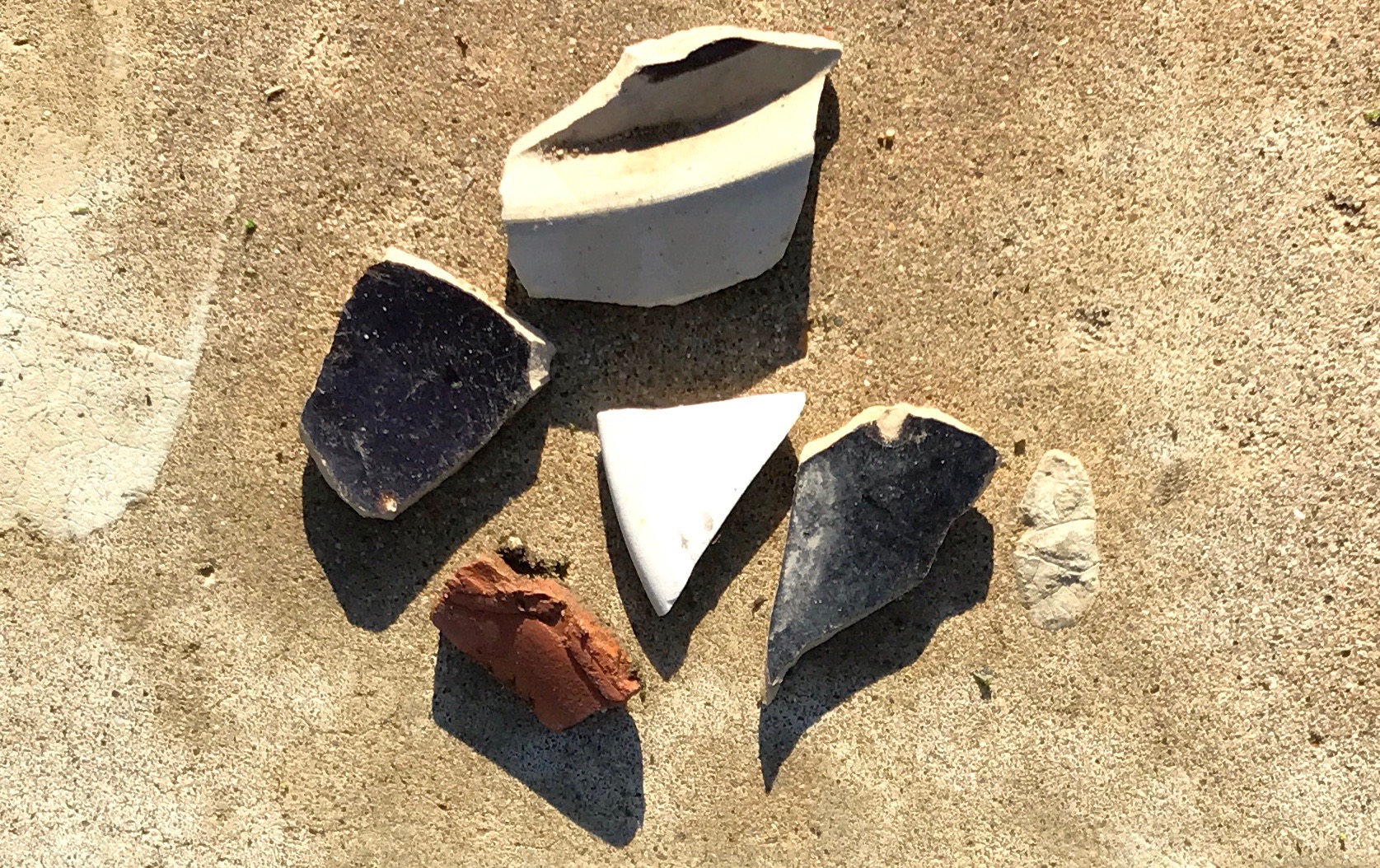
Really, there were sherds all over. Of course I had to pick up a few to photograph.

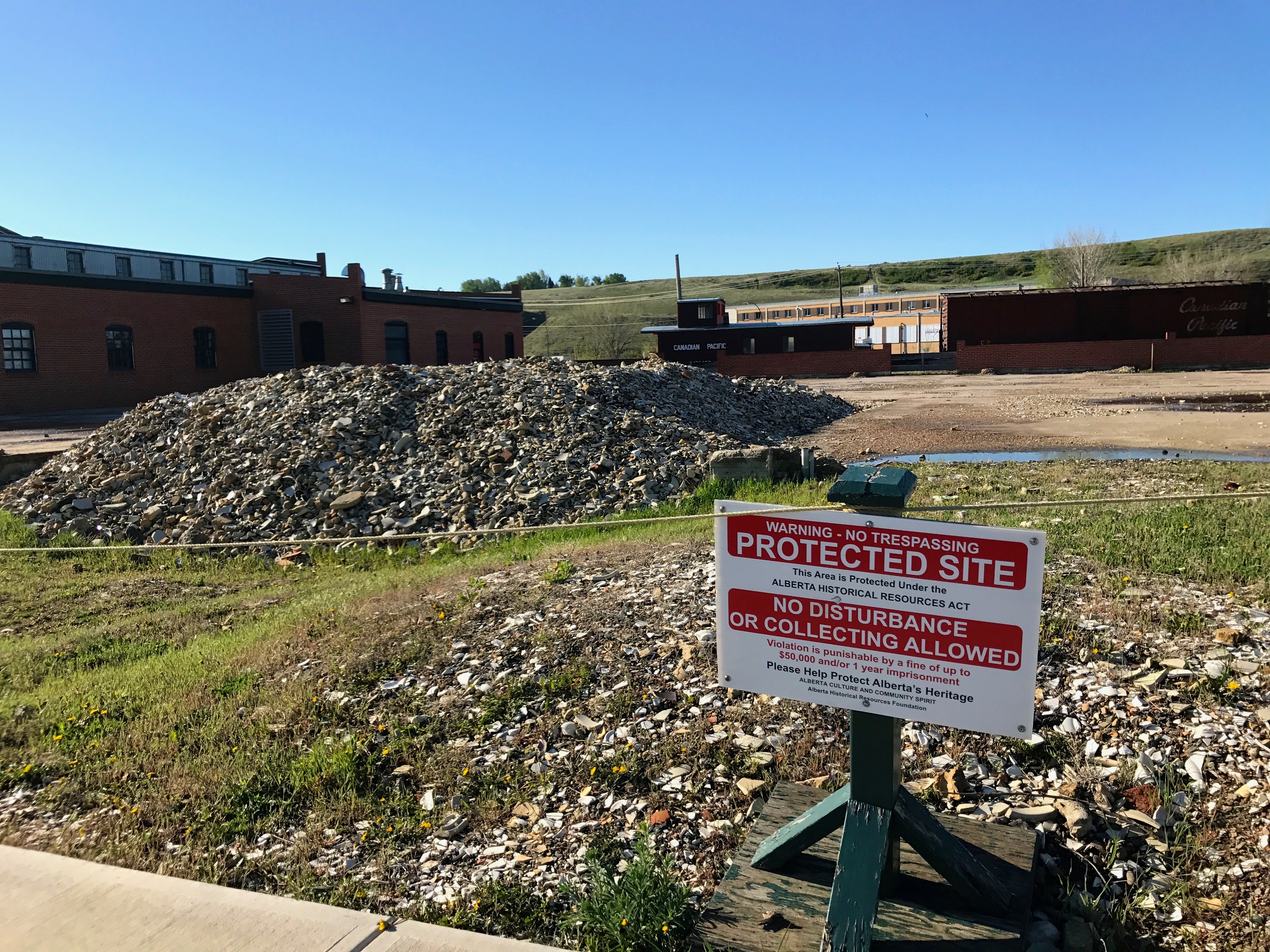
It’s a good thing that I wasn’t planning to take them.

It turns out that no collecting or disturbing is allowed. Of course, the ones I picked up didn’t come from the pile. They were just on the ground near where I parked.

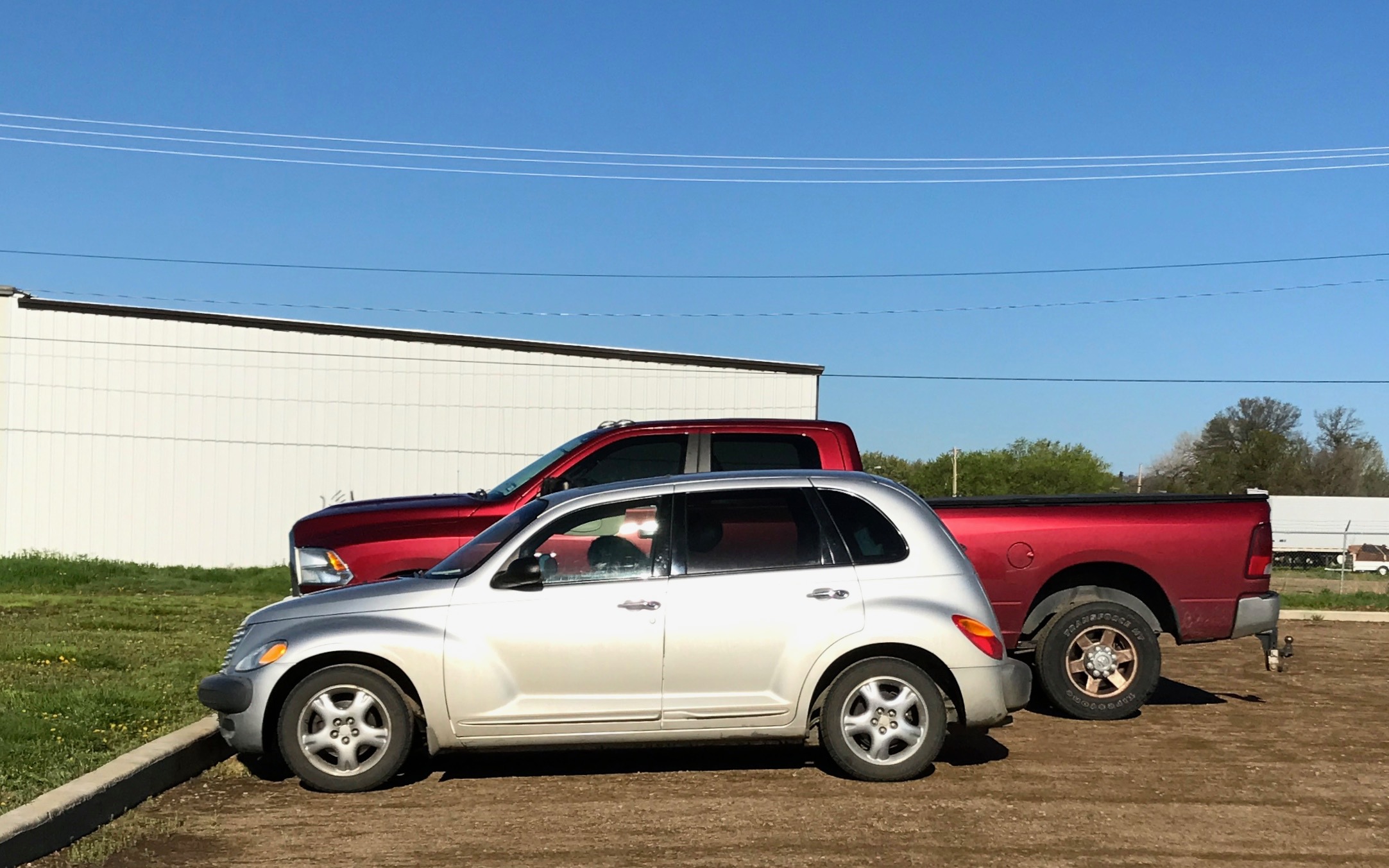
Speaking of parking, I found myself parked next to a PT Cruiser. That was my car before Bart. No wonder I found Bart to be a bit unmanageable!

My next stop was Police Point Park. I wanted to get a look at the South Saskatchewan River.

Incidentally, the tourism agency for Alberta says that Medicine Hat is the sunniest city in Canada. If the weather I experienced is any indication, I’d say that wasn’t hyperbole.

They make good use of the sunshine and the abundant energy. I saw greenhouses all over town.

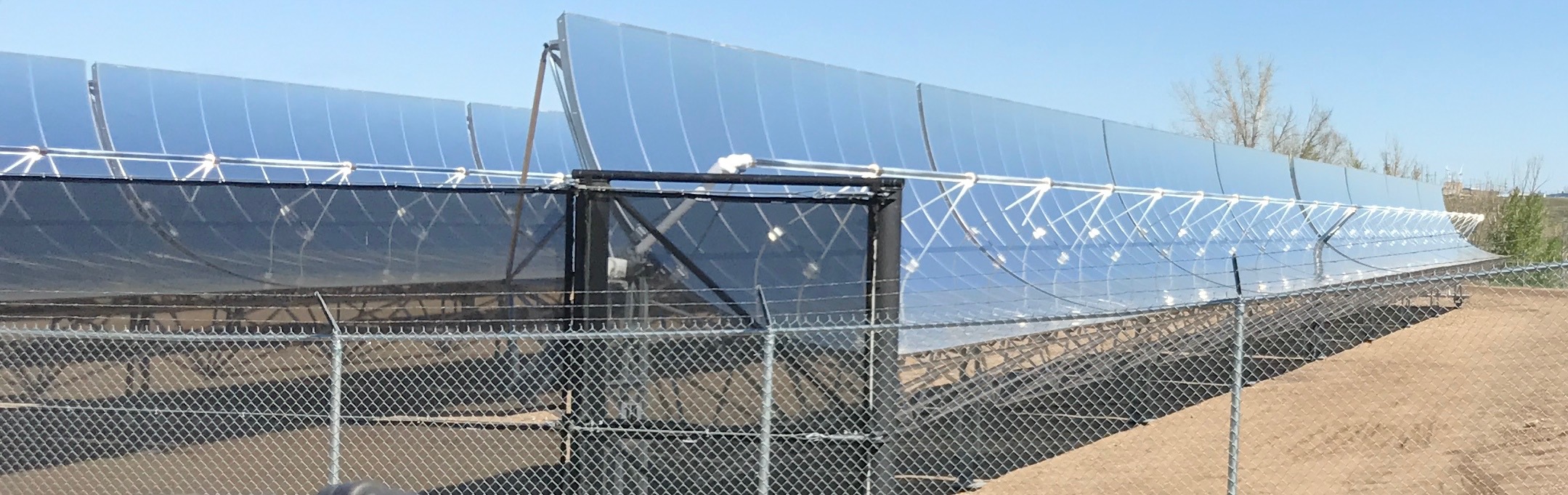
In addition to the energy from their gas, they make use of the solar energy. These are some pretty high-tech solar arrays. According to my research, they are called parabolic troughs, and if you click on the link, you can get an idea of how they work.

All that sunshine and driving around wore me out. It was time to get some sleep and get ready for the next day’s adventures.
Next stop: Moose Jaw, Saskatchewan.


Drumheller

I headed out fairly early. I wanted to spend the night in Medicine Hat, Alberta. Who wouldn’t want to visit Medicine Hat? Isn’t that a cool name? It would be a four or five hour drive, but I left early enough to stop off in Drumheller.

Can you guess the attraction in Drumheller?

Dinosaurs!

Actually, there were two things that have been essential to Drumheller’s modern history – dinosaurs and coal. The first recorded observation of the coal seam in the area dates back to 1793. This valuable resource inspired Samuel Drumheller to buy land here in 1910. He sold it to the railway developers and the community of Drumheller was born. The abundant fossil fuels and the railway network established Drumheller region in the post-World War One period as one of Canada’s most significant coal producers.

“But, what about the dinosaurs?” I hear you saying.

In 1884, geologist Joseph B. Tyrell found the fearsome skull of an Albertosaurus. This discovery paved the way for the Great Canadian Dinosaur Rush. From 1910 to 1917, fossil hunters flocked here and established the region’s reputation as a rich source of dinosaur bones.

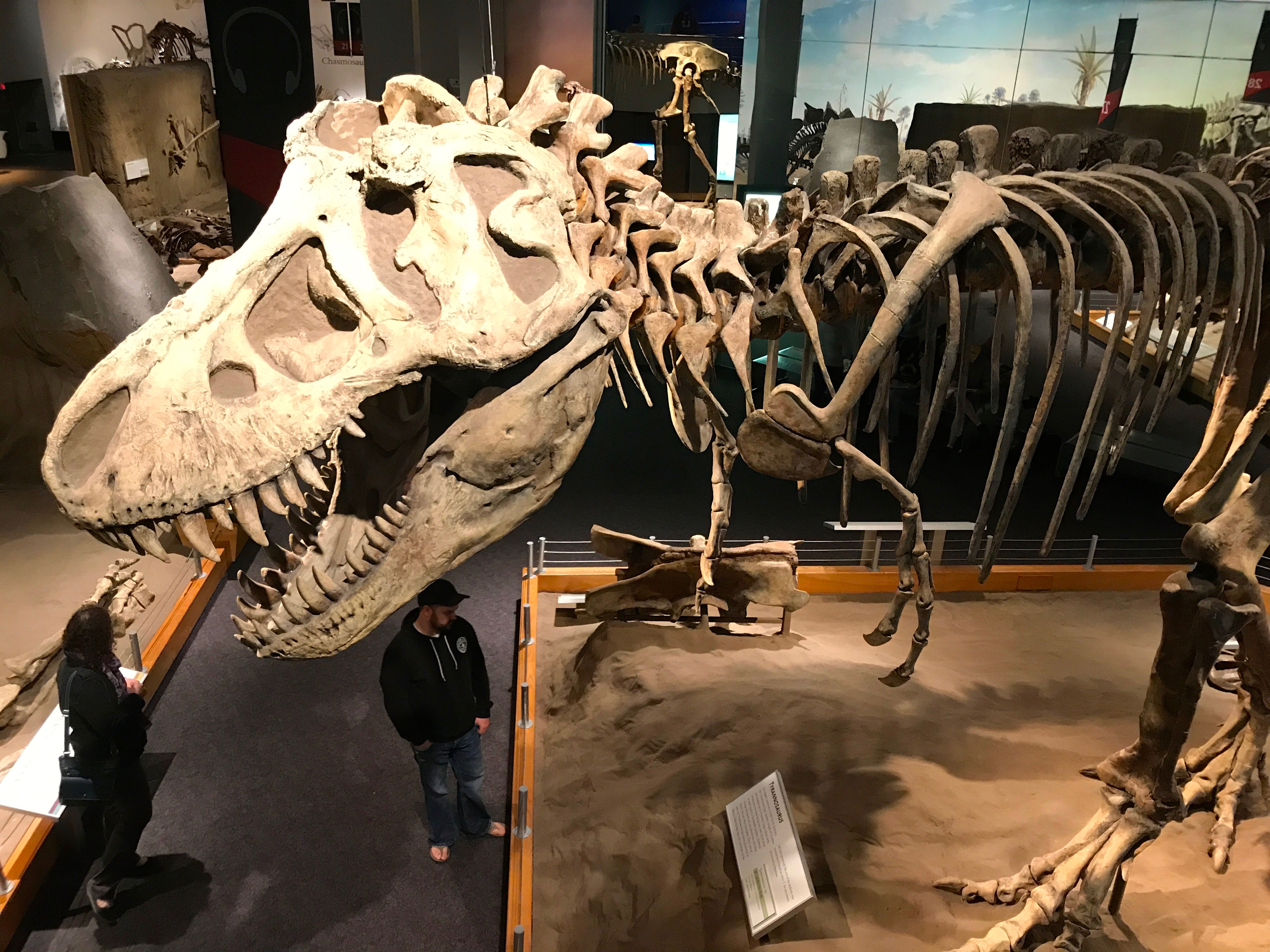
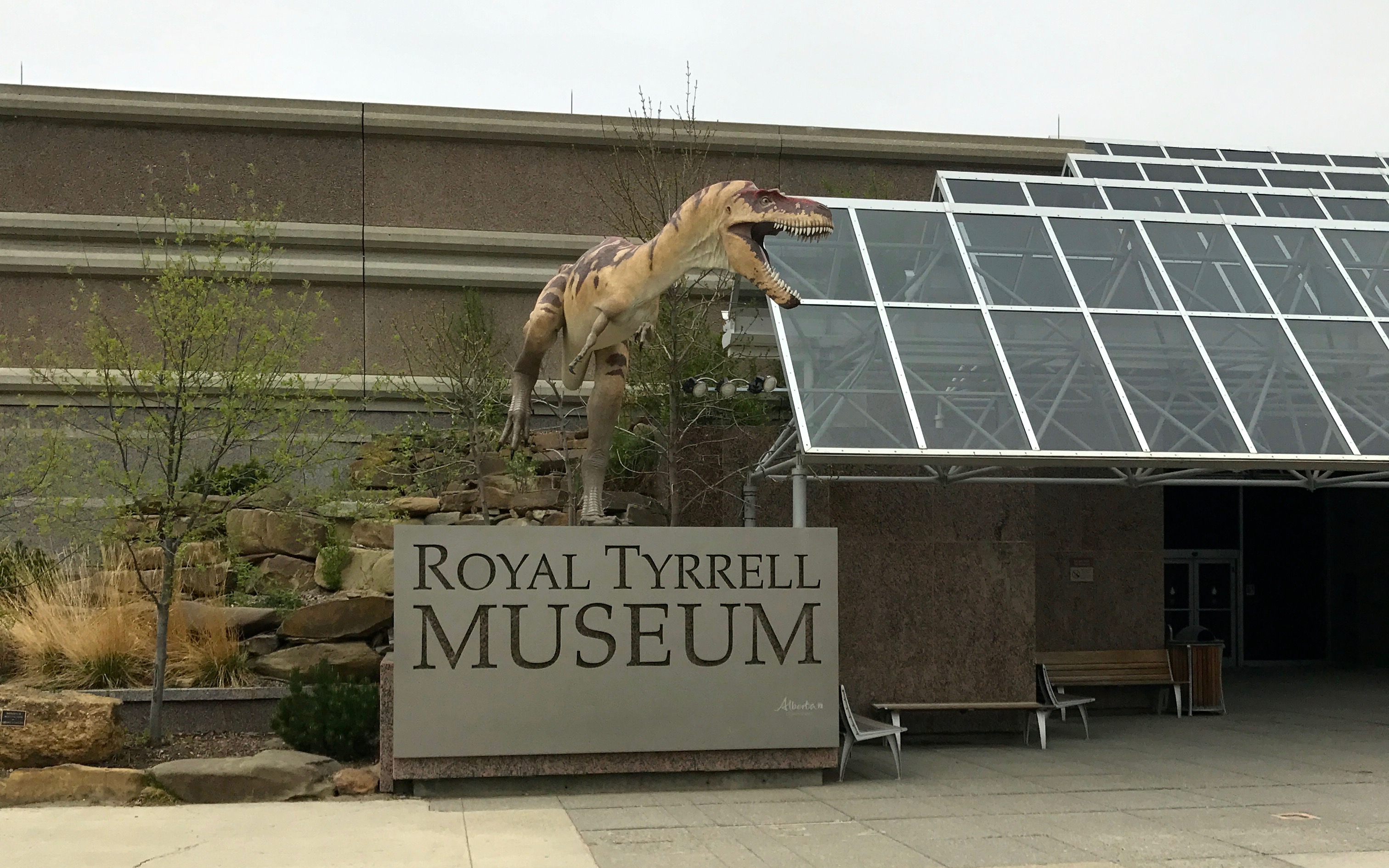
This abundance of fossils makes Drumheller a natural home for the Royal Tyrell Museum of Paleontology. It’s one of the world’s leading facilities for the research and presentation of prehistoric life. I paid my entrance fee and went inside.

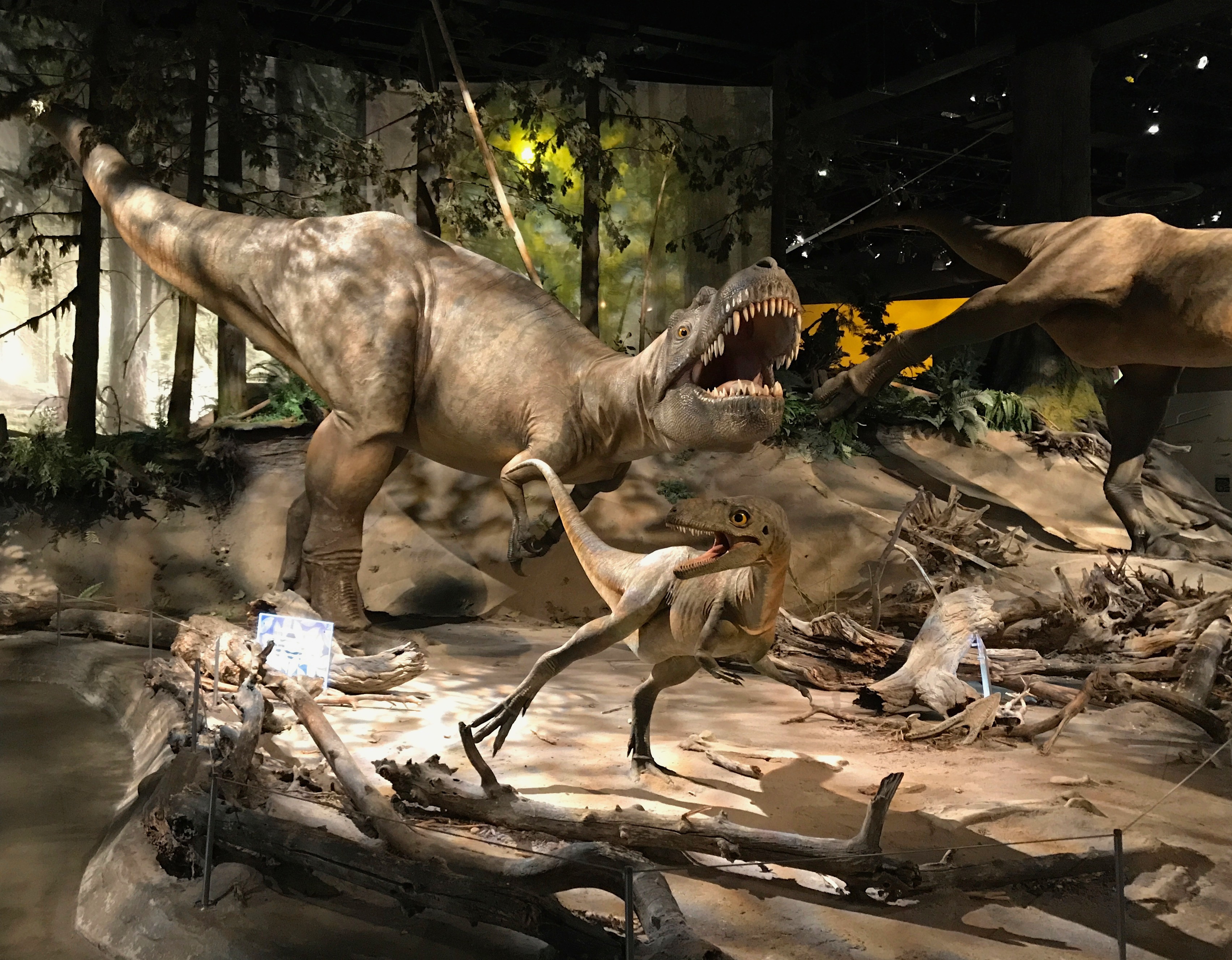
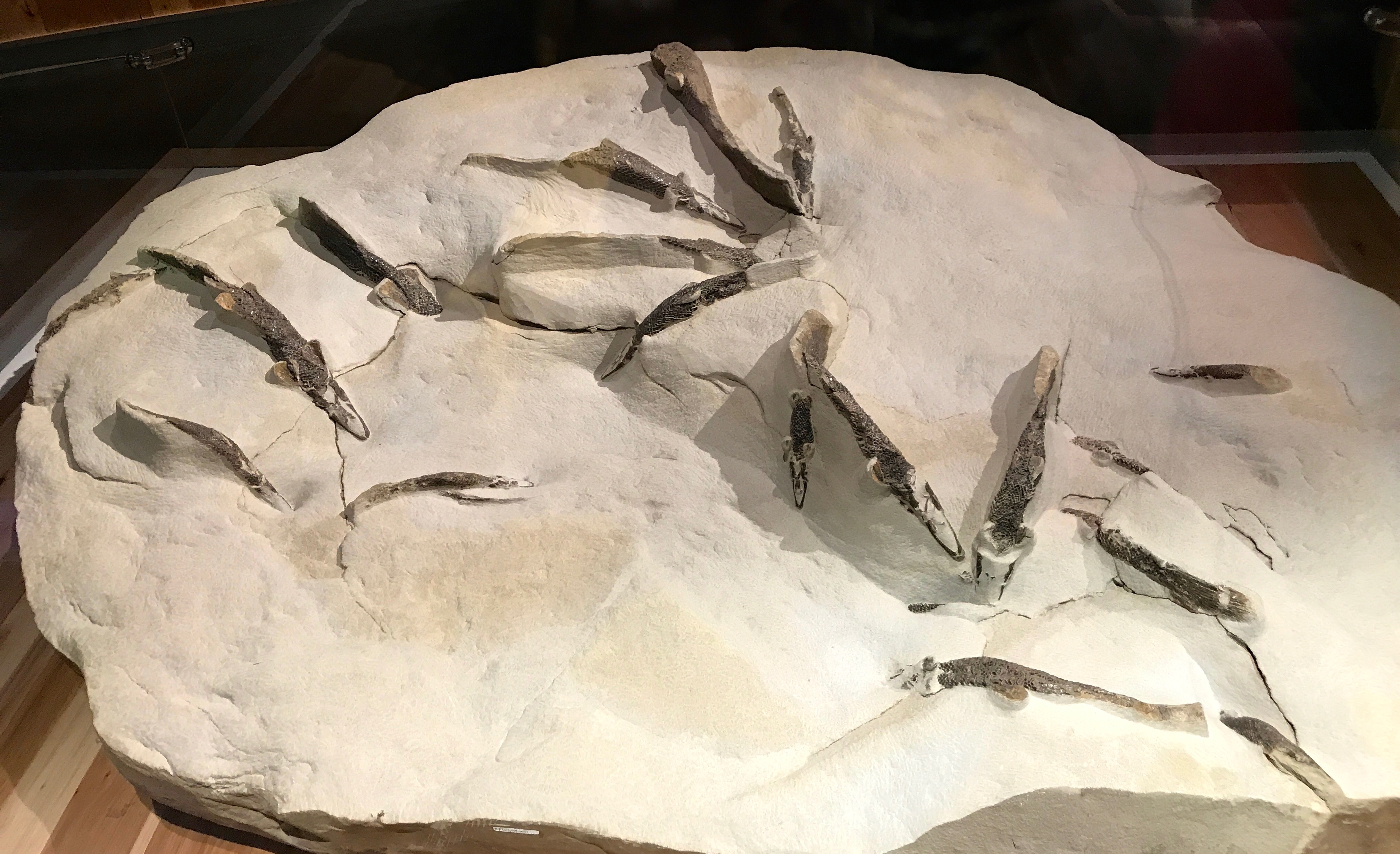
There were dinosaurs galore! There were marvelous models of prehistoric life as the scientists believe it looked. These were visually stunning, but I am more drawn to the real thing, like this mass-death assemblage of 25 fossil gars (Atractosteus) that died 63 million years ago.

Apparently, it’s not unusual to find death assemblage of gars, but skeletons are usually found on their sides. This group is unusual because each fish is preserved fully articulated in a three-dimensional belly-up death pose, which indicates a rapid burial after they died.

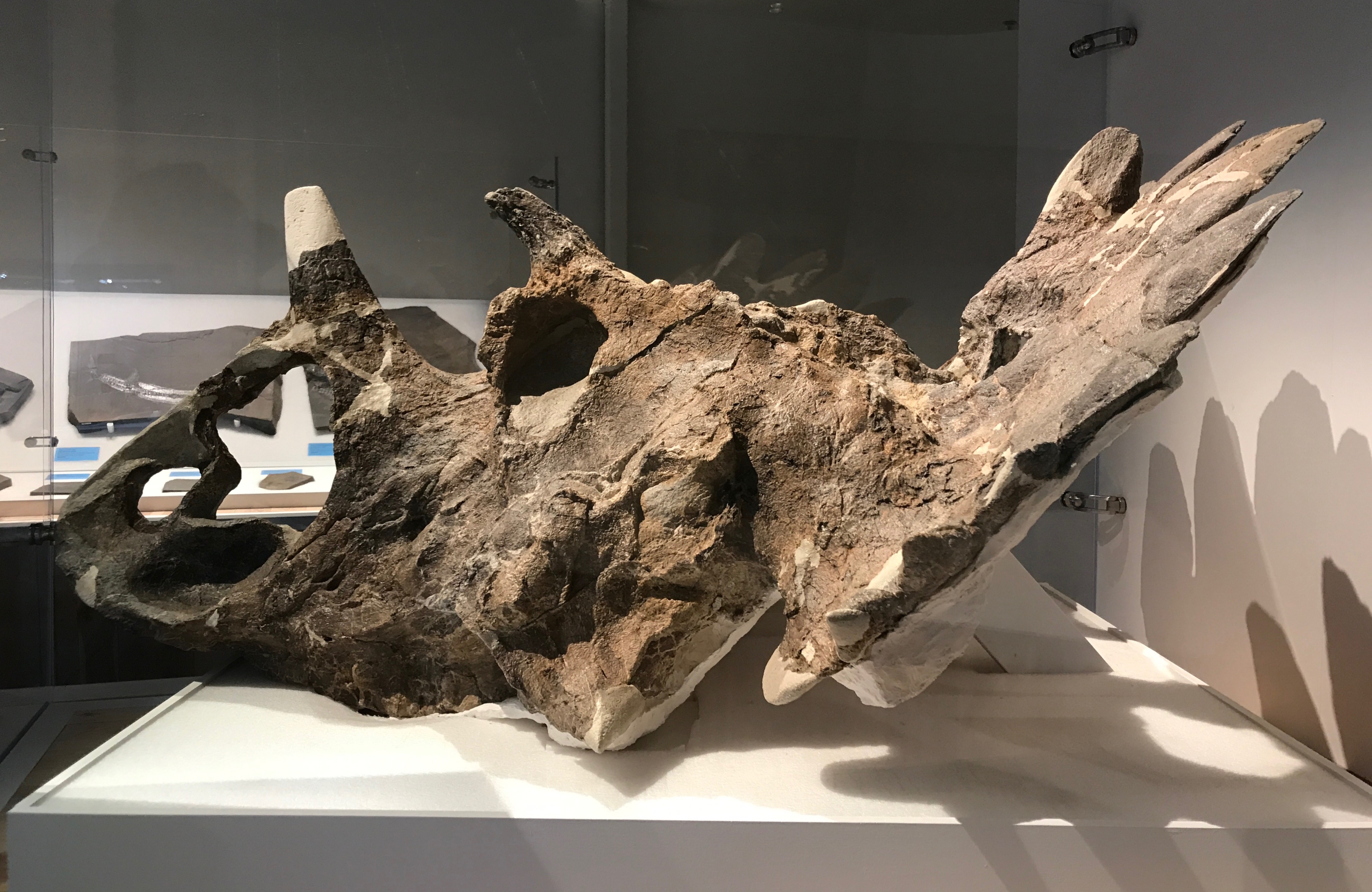
This fossil is regaliceratops peterhewsi. It was discovered by geologist Peter Hews in 1995, who happened to see the tip of the dinosaur’s snout poking out from the riverbank of the Oldman River.

This specimen is nicknamed after the comic book character “Hellboy”, due to the difficulty collecting it, the hard rock in which it was encased, which made preparation difficult, and the small stubs of horns over the eyes.

Just in case your education in comic book characters stopped with Archie and Jughead, this is Hellboy.

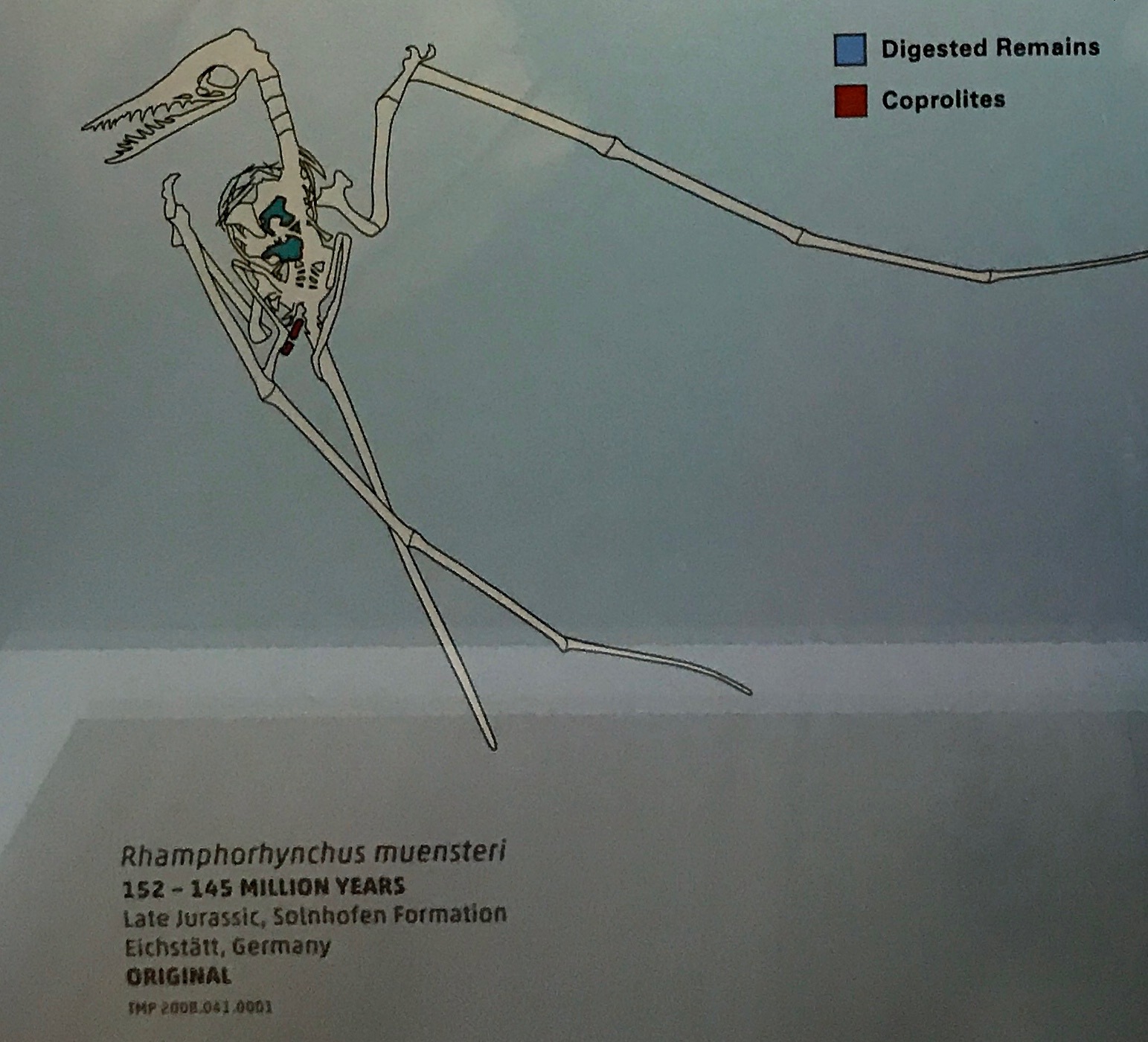
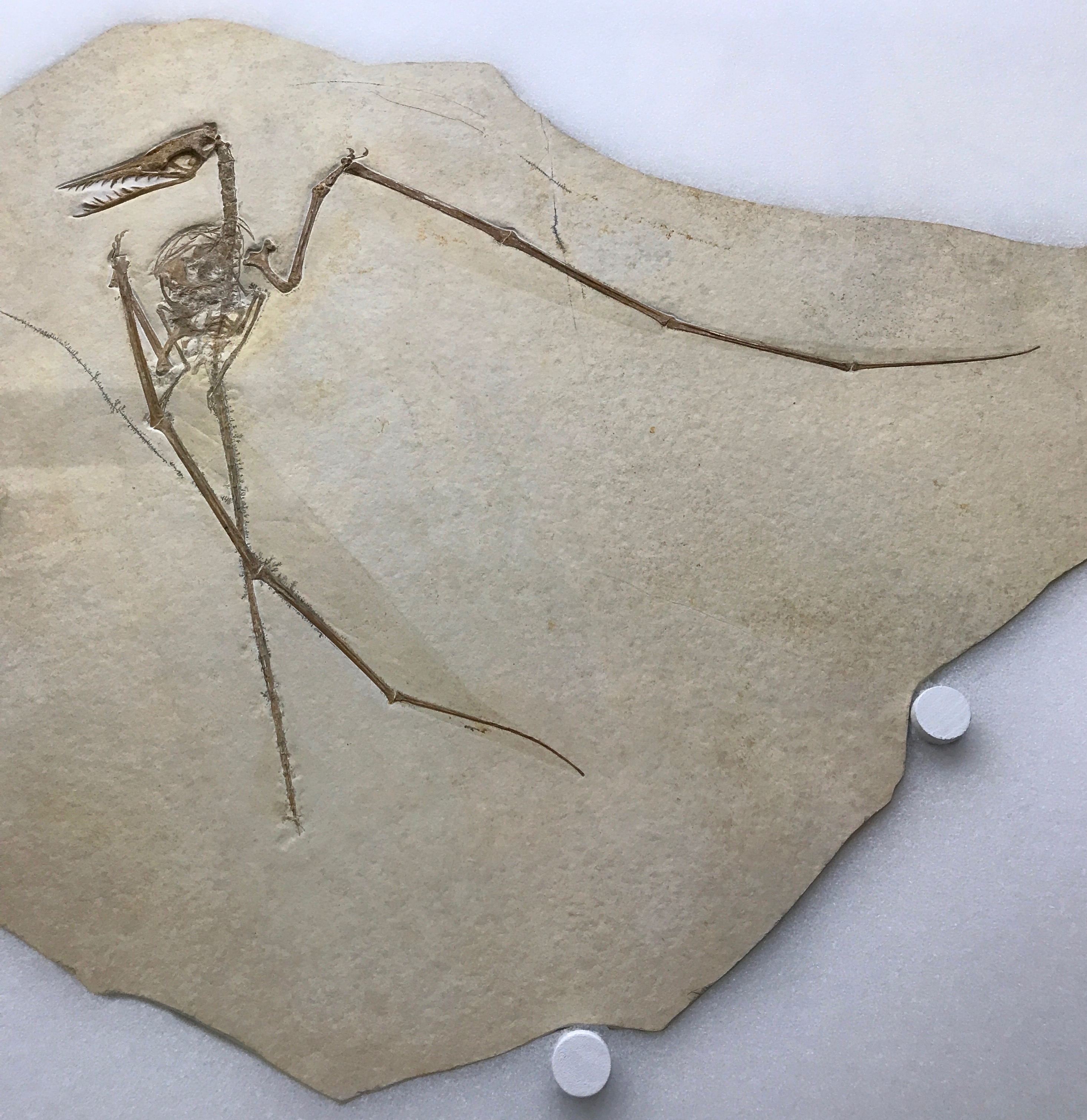
This Rhamphorhynchus muensteri is interesting. In my notes, I wrote down that this was a flying dinosaur.

What I found really interesting was the diagram next to the fossil. It showed that it had digested food and coprolites in it when it died. “Coprolites?” you ask. Coprolites are fossilized feces.

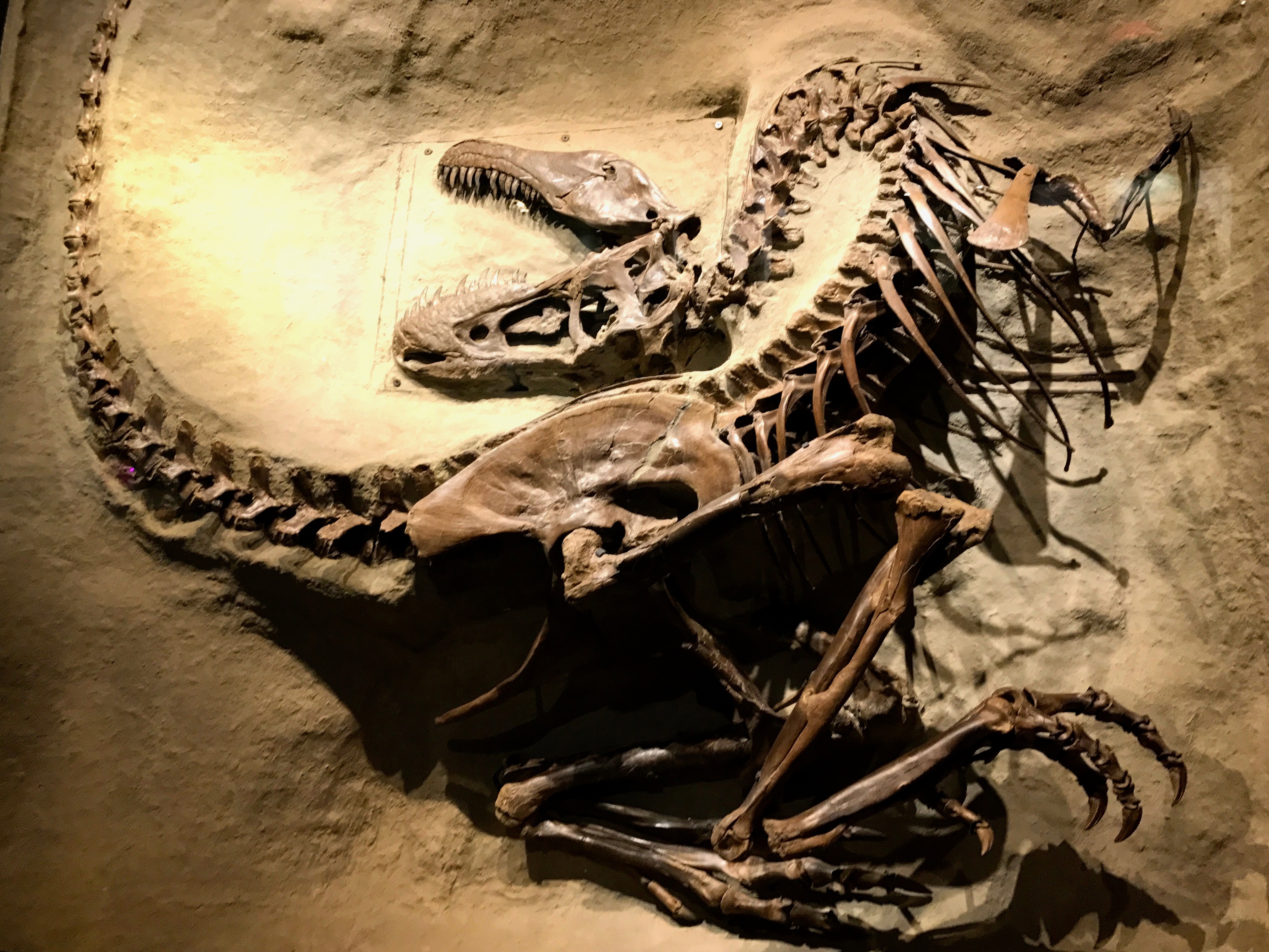
I am amazed that this fossilized Gorgosaurus is articulated, which means that the bones are arranged as they were in life. The completeness of this juvenile dinosaur skeleton, and the river sands it was found in, suggest that it was buried immediately after the animal died, which allowed the skeleton to be preserved so beautifully.

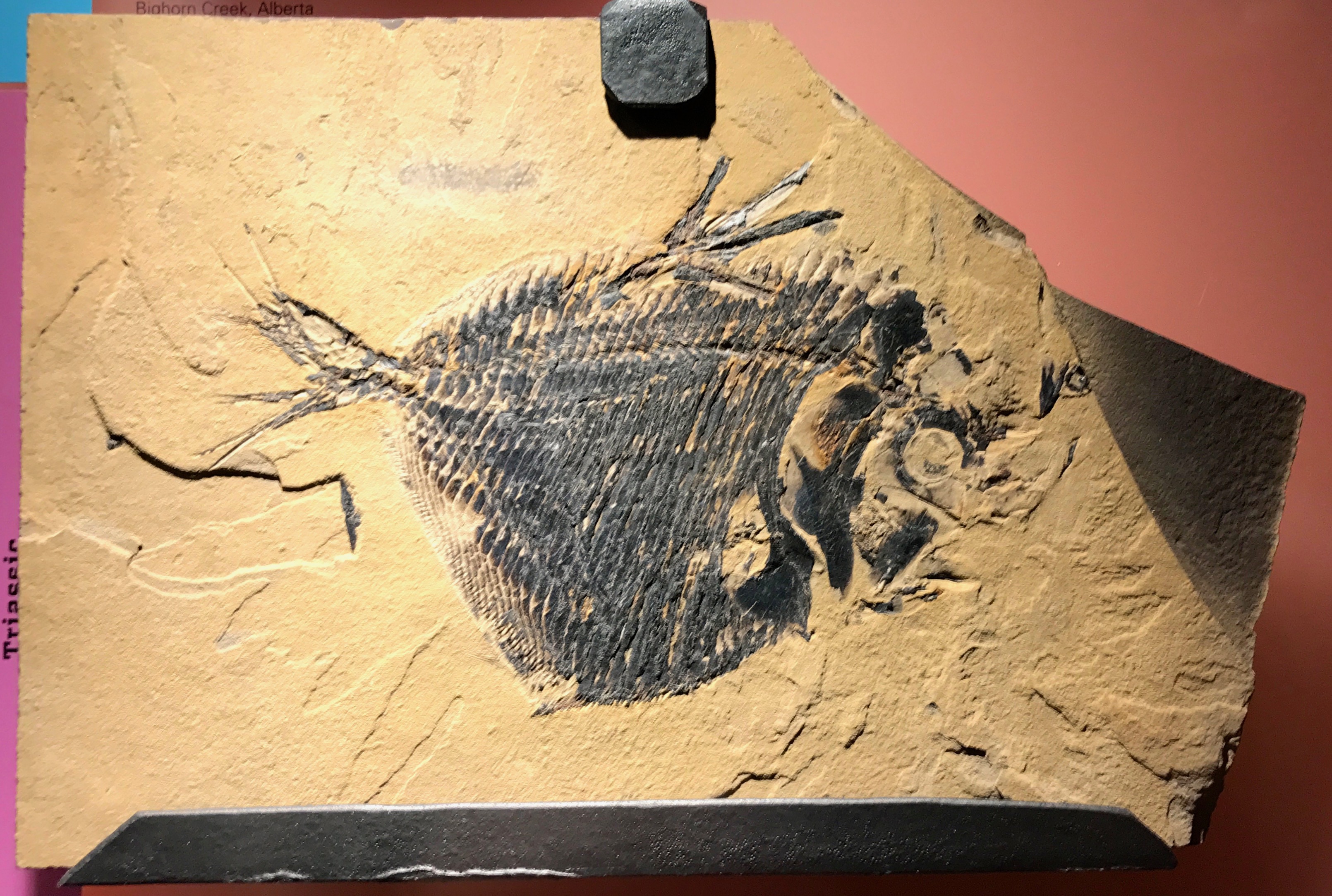
While I am not a big fan of fish – unless it is battered, deep fried and served with lots of ketchup – I do rather like this fossil.

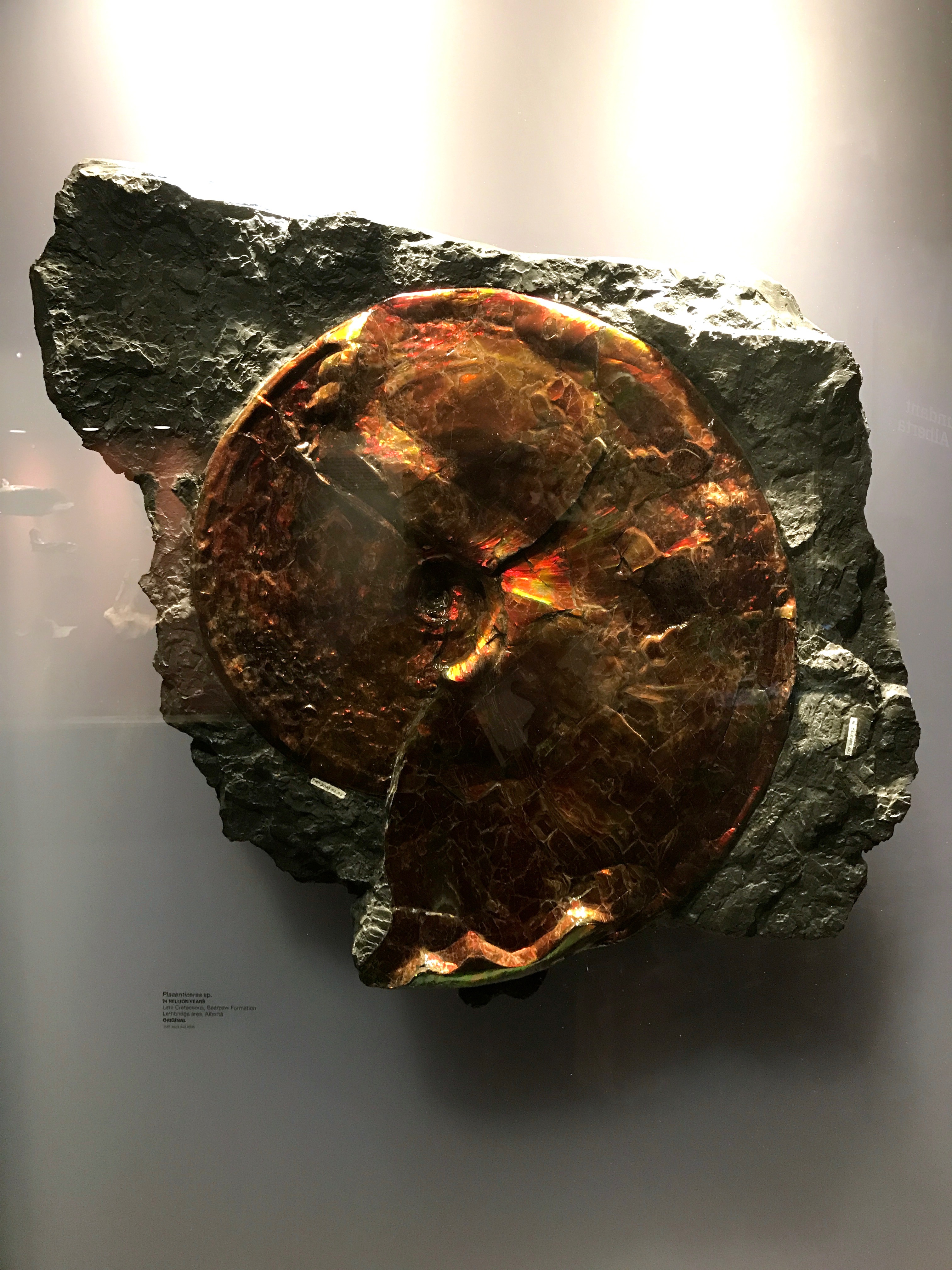
Another ammonite!

While they look like the living Nautilus species, they are more closely related to the family that octopuses, squid and cuttlefish come from. In checking what I remember, I found out that the name “ammonite” was inspired by the spiral shape of their fossilized shells, which somewhat resemble tightly coiled rams’ horns. Pliny the Elder – who died in 79 AD near Pompeii – called fossils of these animals ammonis cornua – horns of Ammon – because the Egyptian god Ammon was typically depicted wearing ram’s horns.

If you want to know more, you can check out my preferred source.

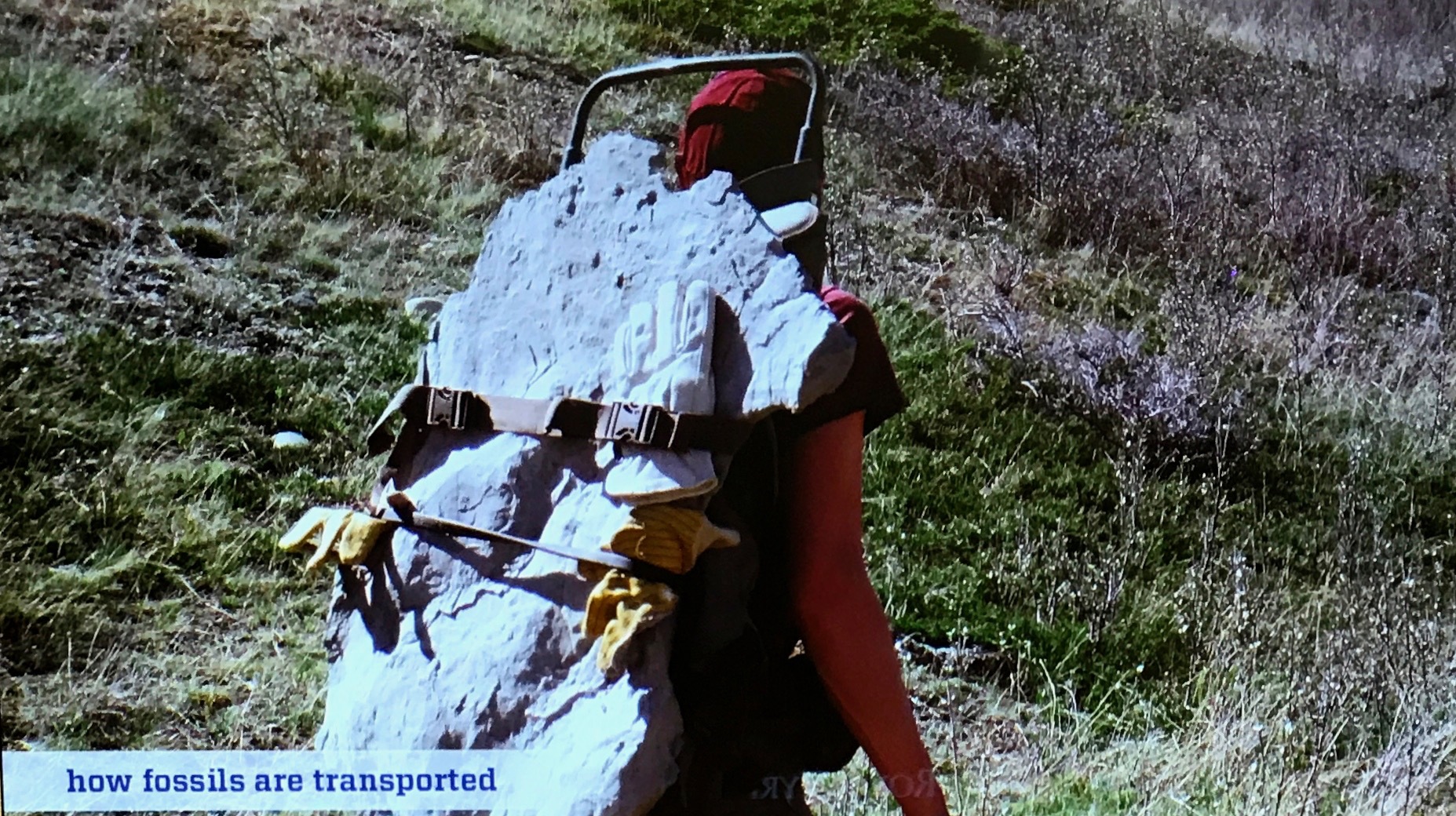
I guess if you want to be a good fossil hunter, you’d best be fit and strong – or know people who are. Can you imagine encasing a fossil in plaster and then packing it out?


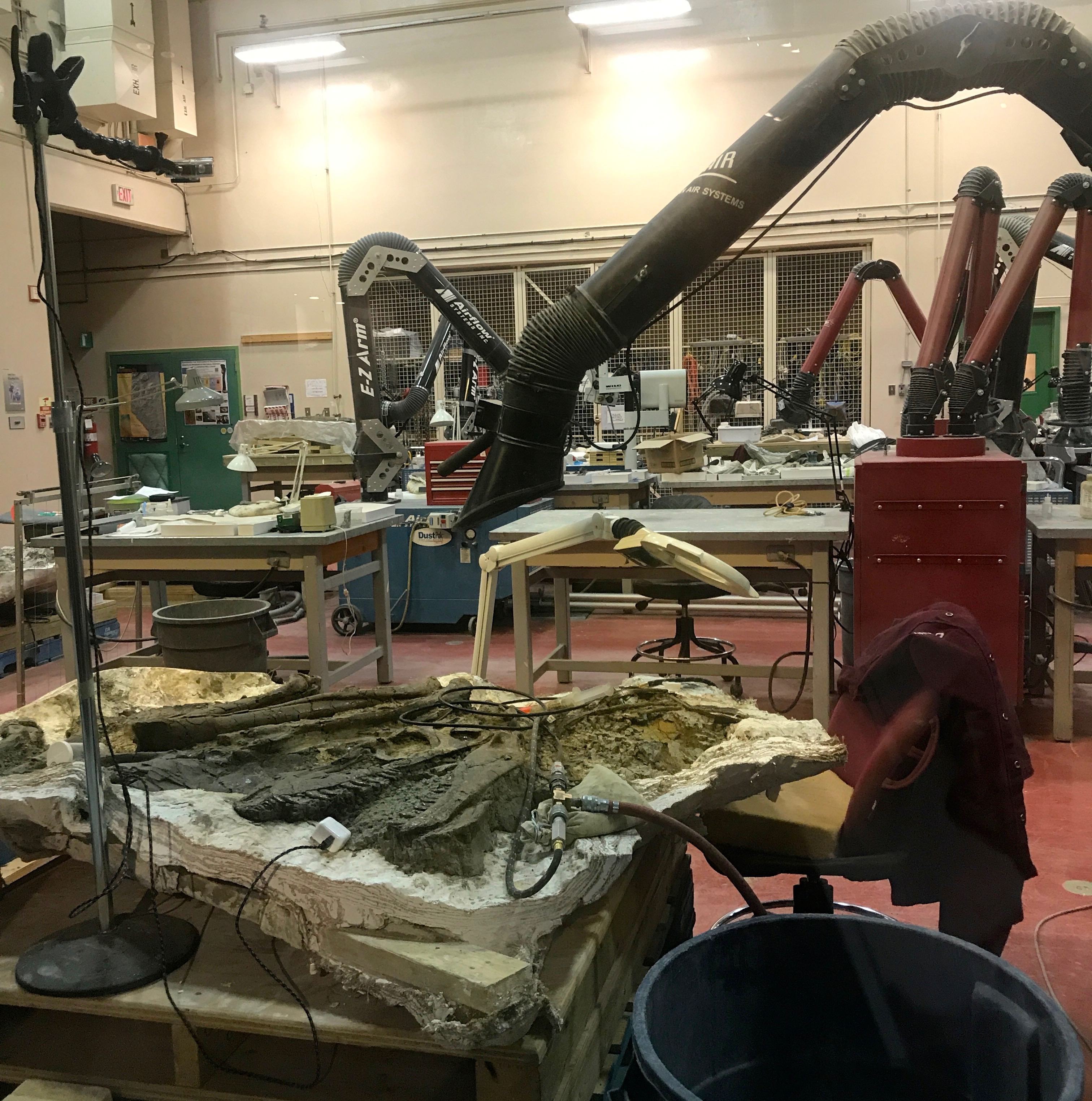
Once the fossil is back at the lab, the work can begin. They have these big windows into the lab so we can watch the paleontologists at work.

It must have been their day off.

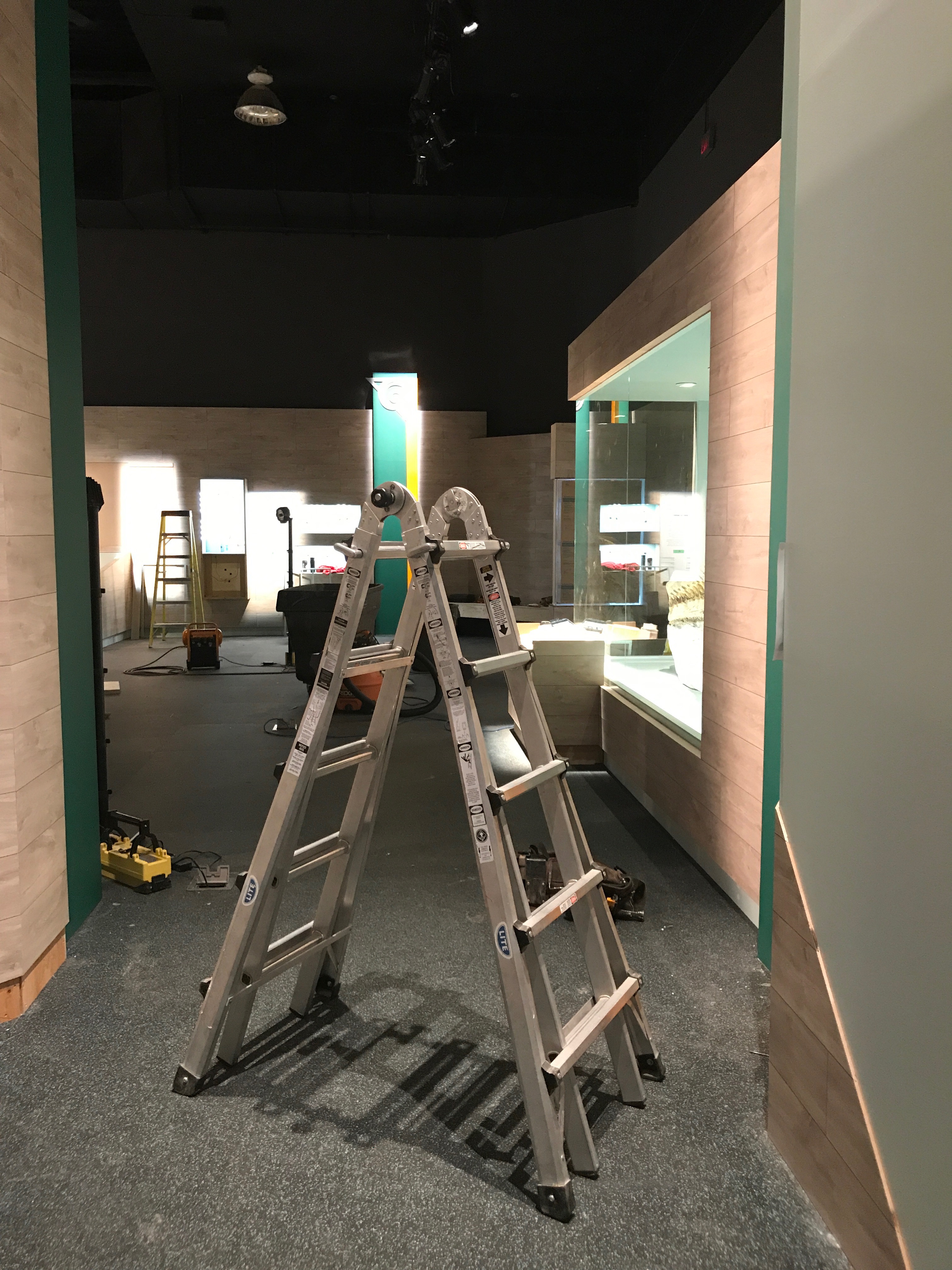
The workers putting together this new exhibit must have taken the day off, too.

There were fossils galore. I won’t share all the photos I took of them. (You’re welcome.)

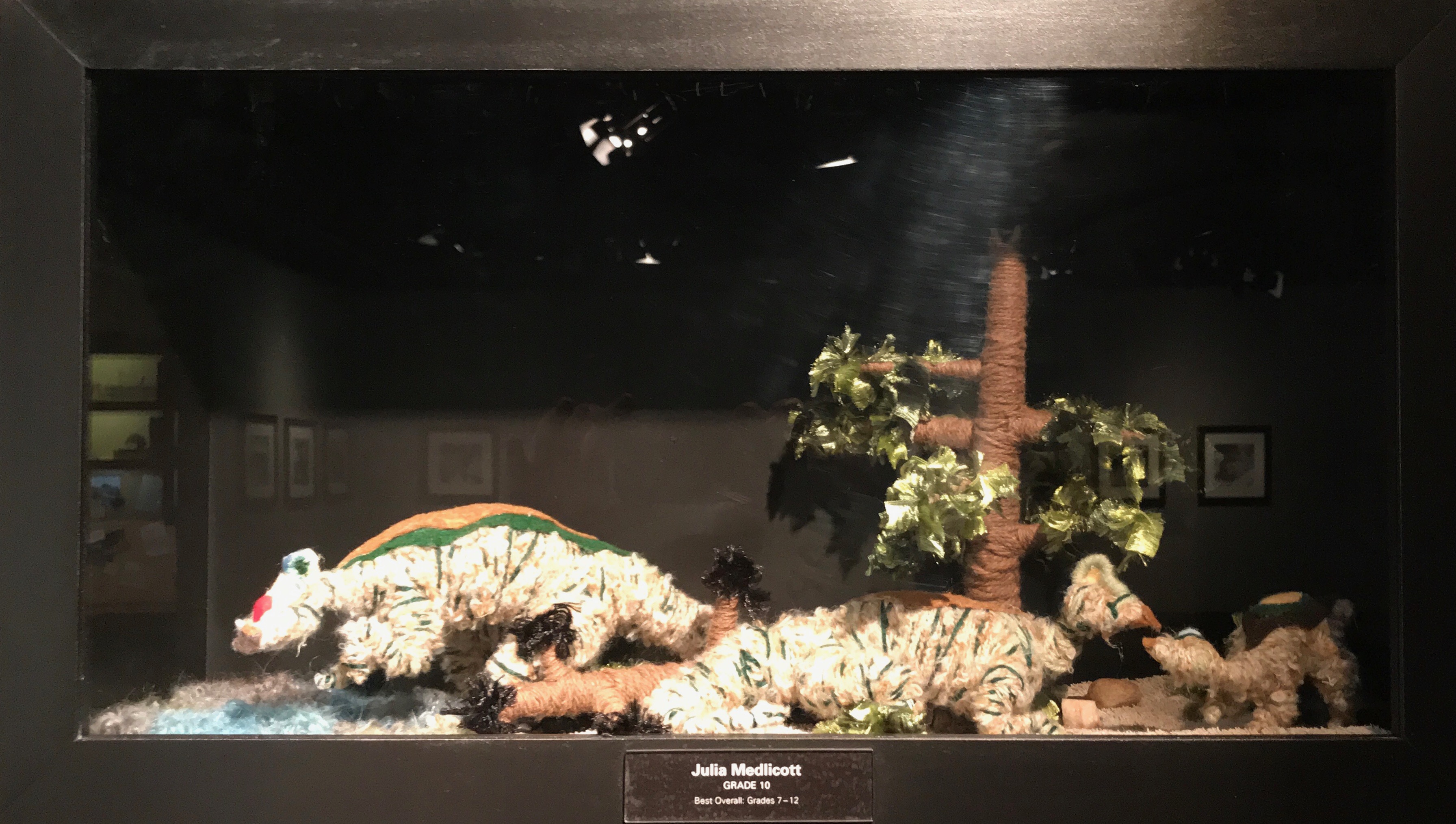
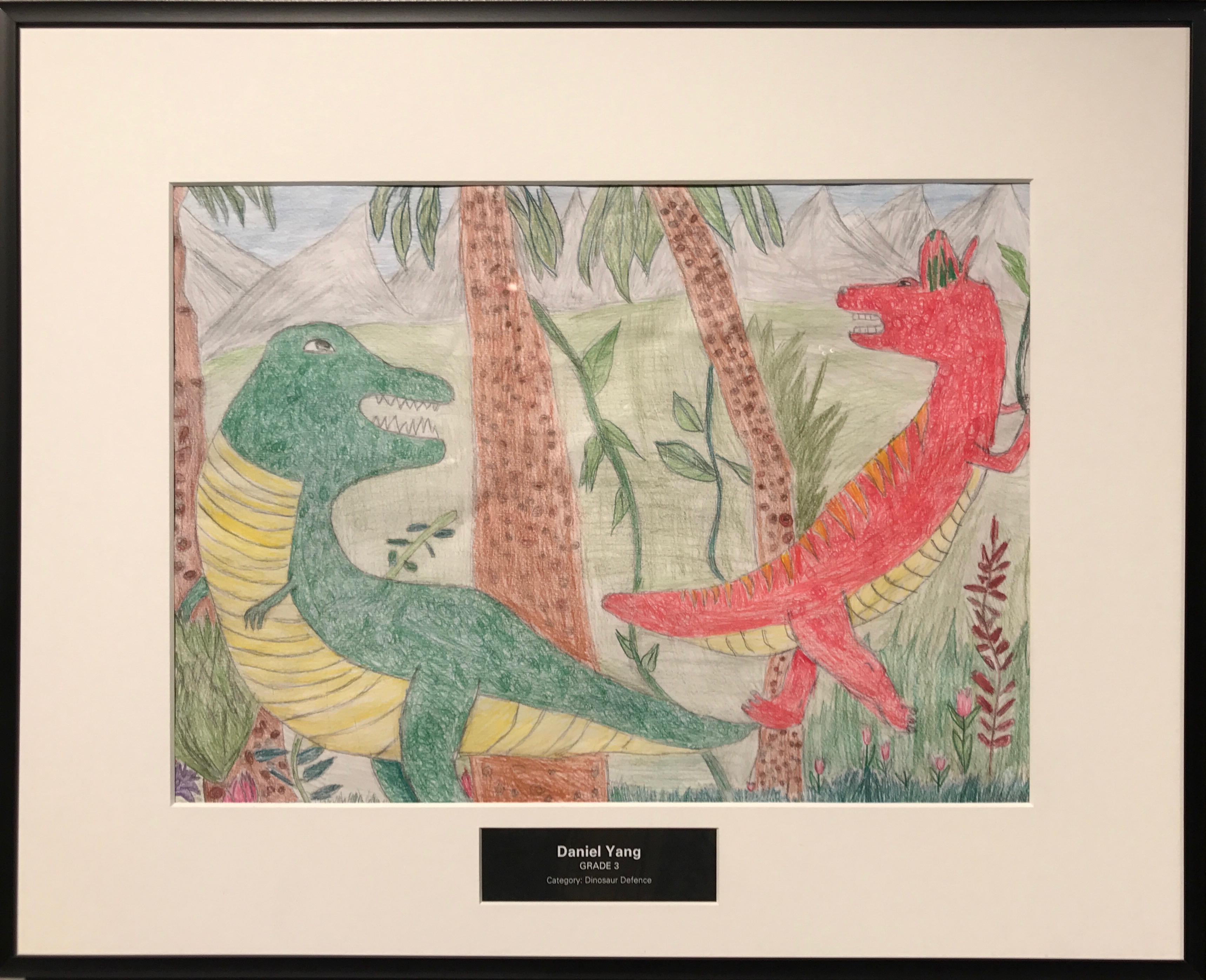
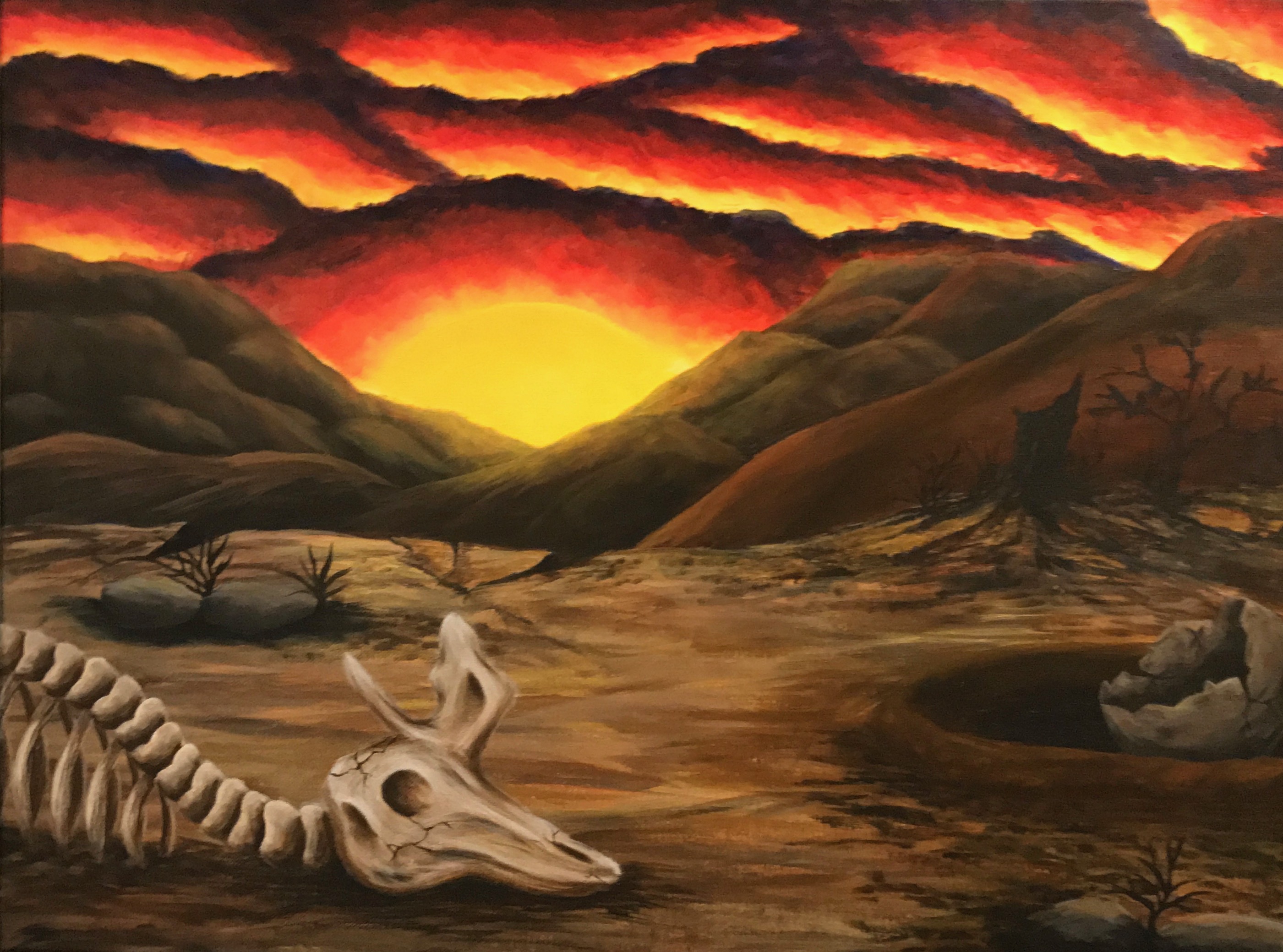
Every year, the museum holds a Palaeo Arts Contest for students K-12. (Incidentally, “palaeo” is Canadian English for “paleo”.) Students combine artistic skill with imagination and scientific research. This year, the students were asked for their interpretation of a duck-billed dinosaur, Lambeosaurus.

Julia Medlicott made this work of art.

This was done by Daniel Yang.

I feel bad that I didn’t get this artist’s name, but it is quite a work of art.

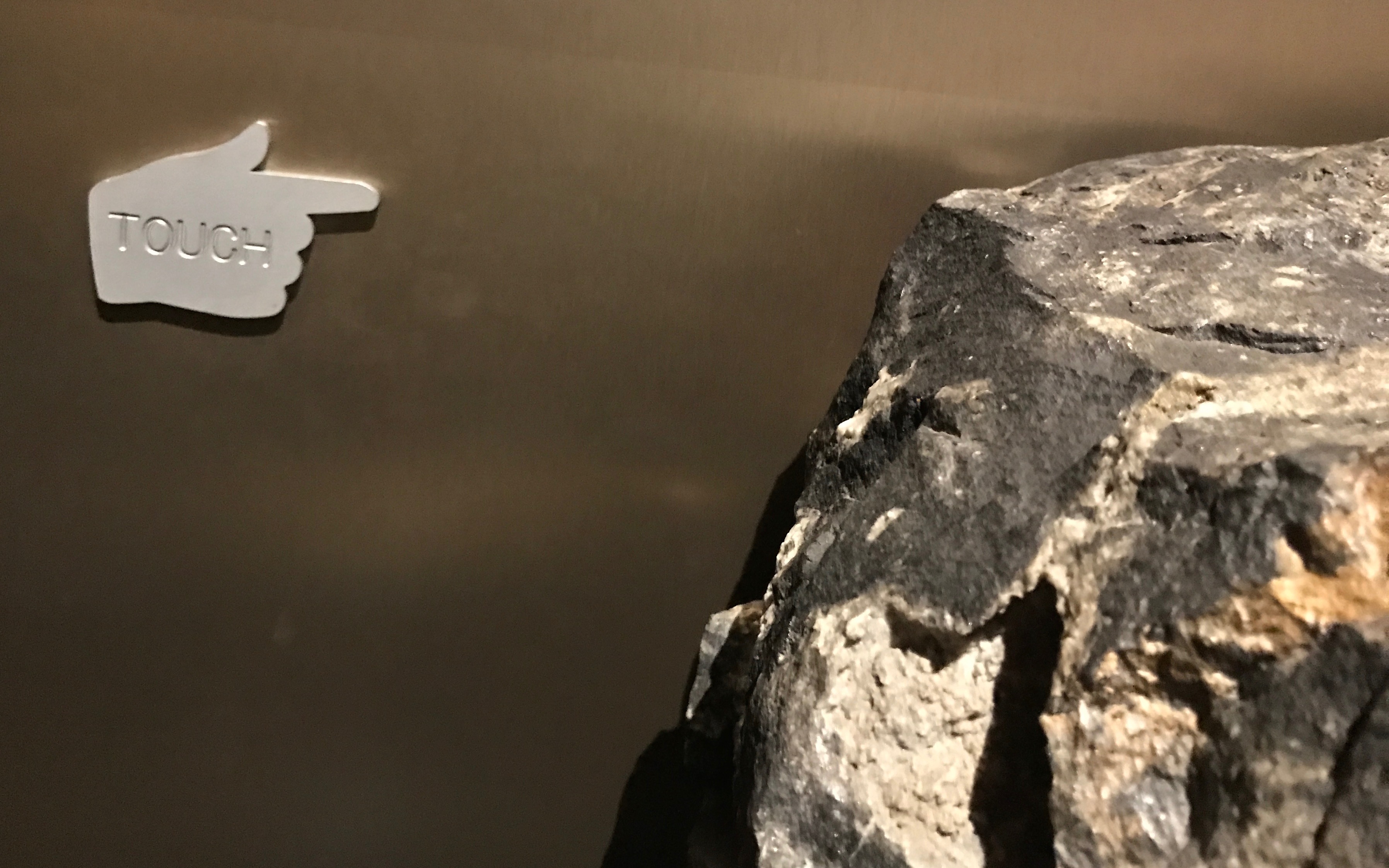
I always love it when a museum invites visitors to touch things.

This rock was labeled “Billion-Dollar Rock.” The first major oil discovery in Alberta occurred in Devonian-aged rocks deep underground near Leduc in 1947. The liquified remains of billions of ancient marine organisms were trapped in porous rocks like this one, after being buried by many layers of sediments throughout millions of years.

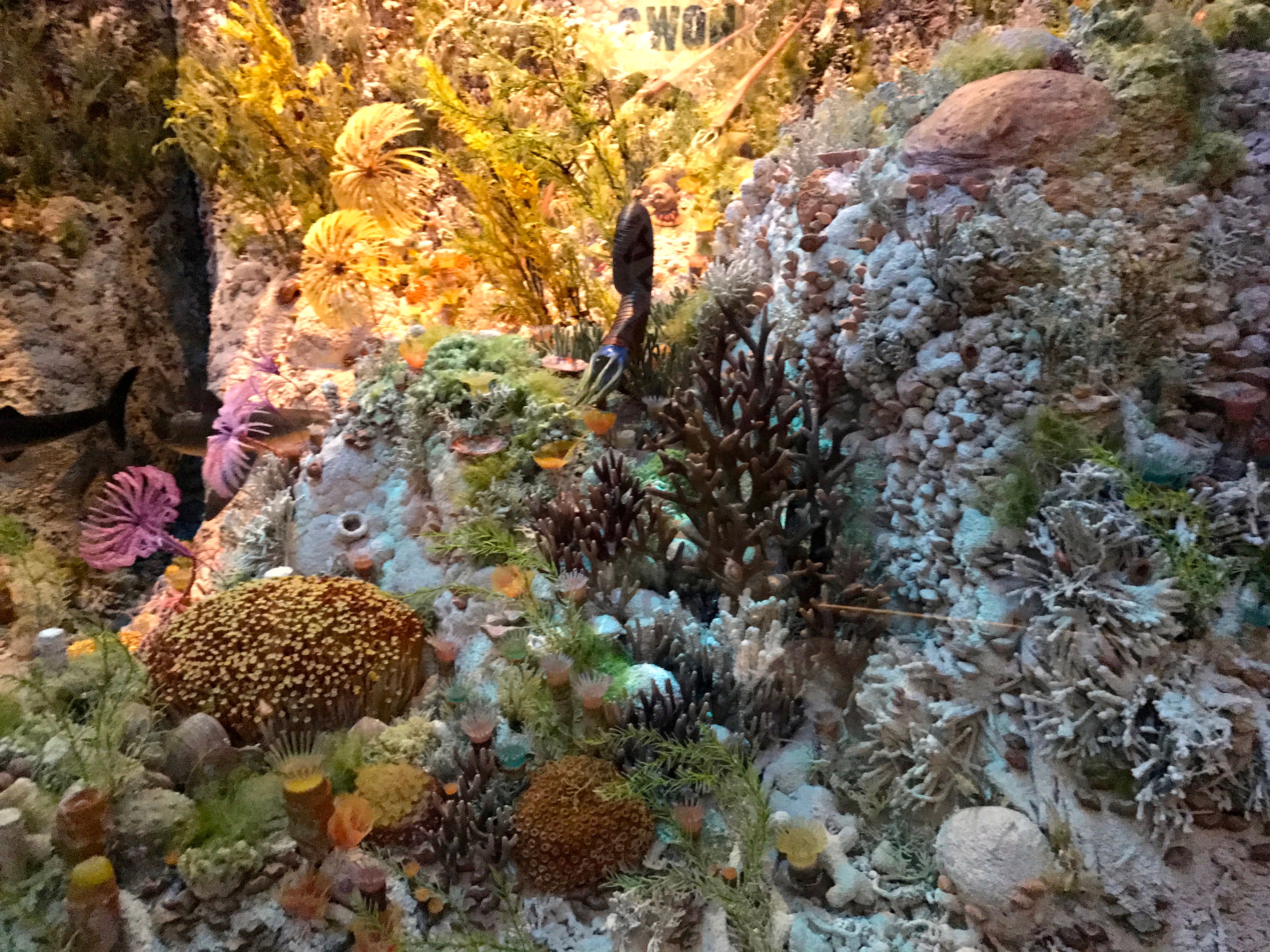
This is a model of the large reefs that were buried by the multitudinous layers of sediment and are now 2,500 metres – or more than 8,000 feet – below the Alberta plains. If I understand correctly, they became the petroleum that is fueling the Alberta economy.

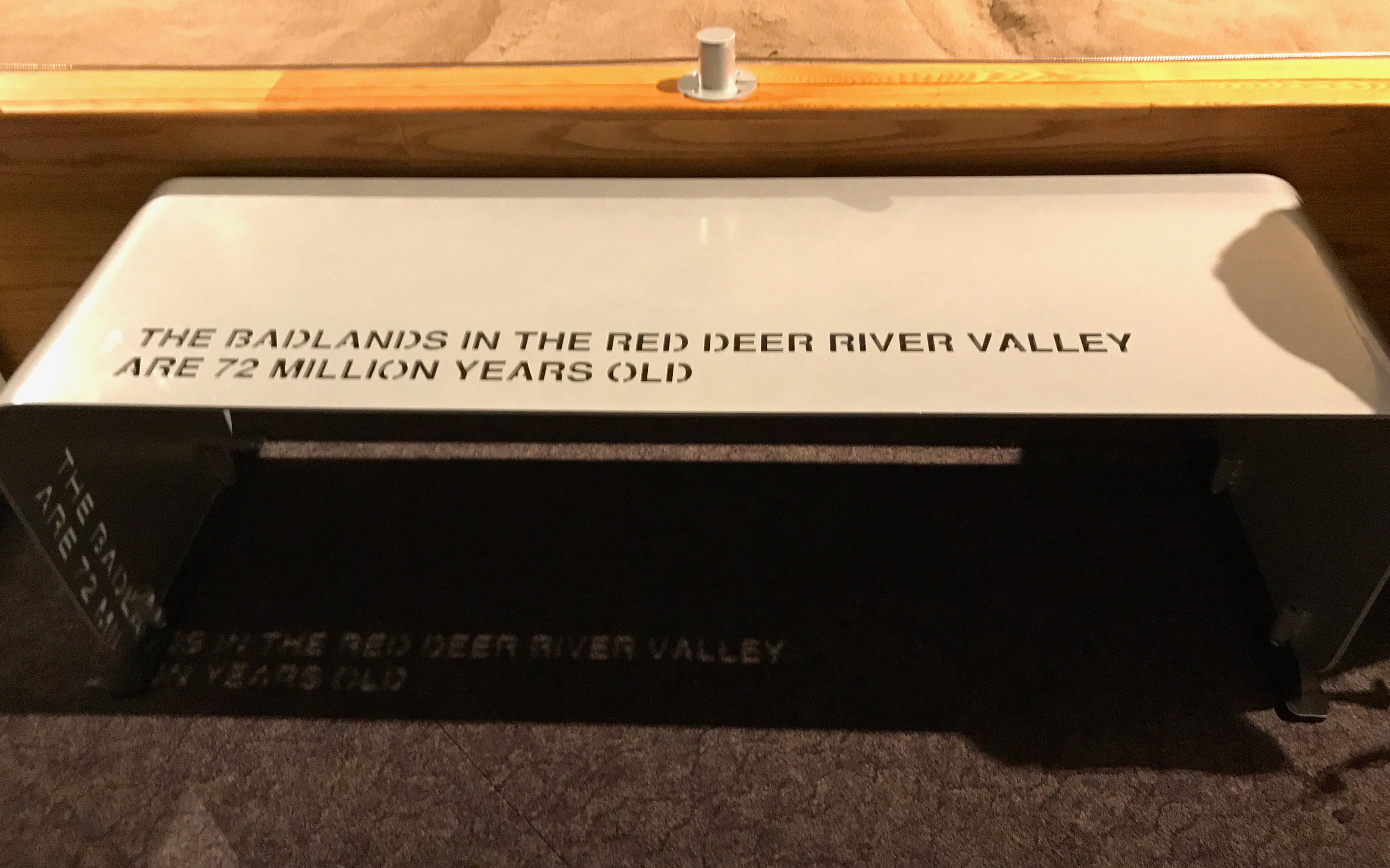
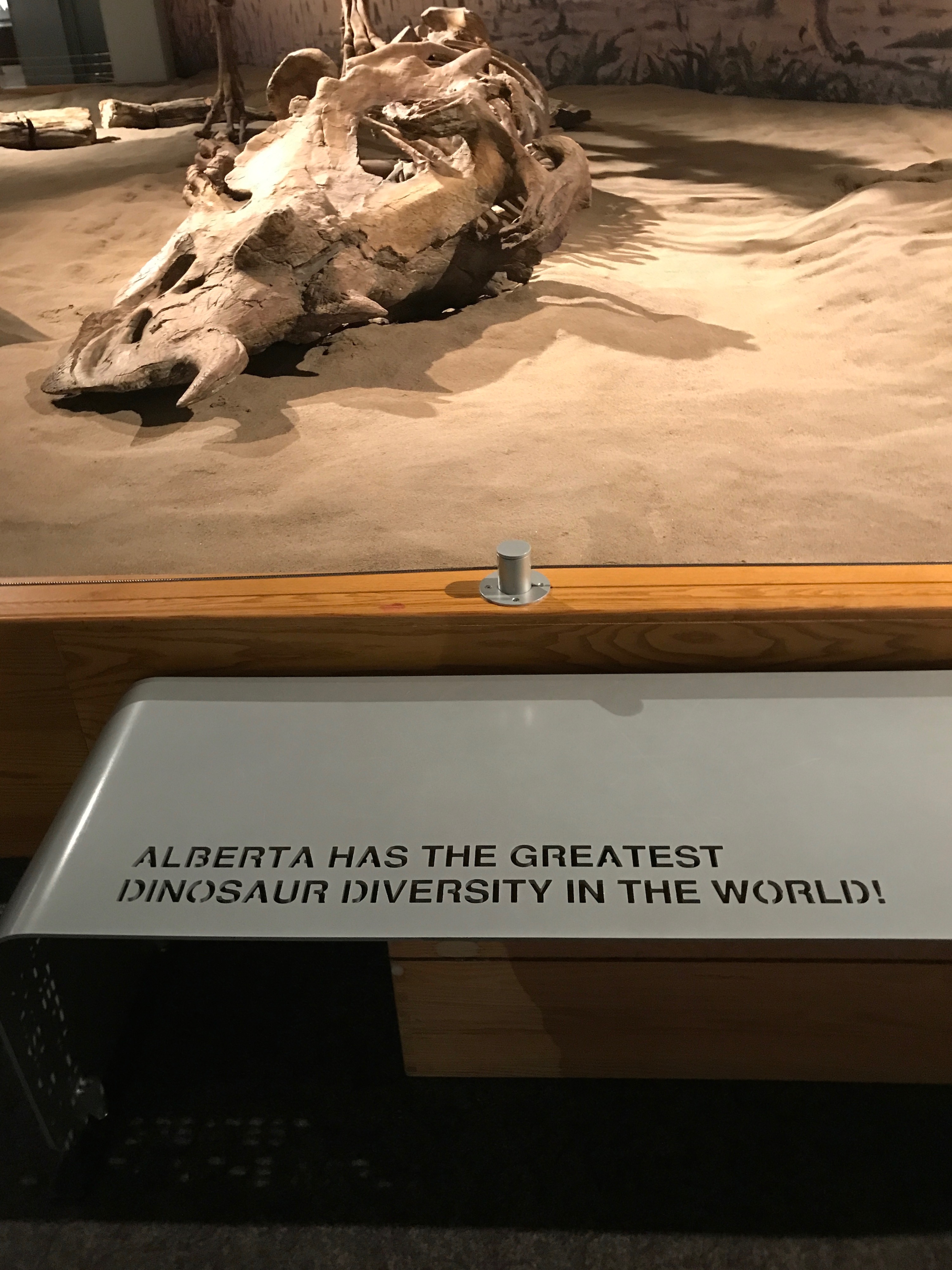
I also love it when people figure out innovative was to share information.

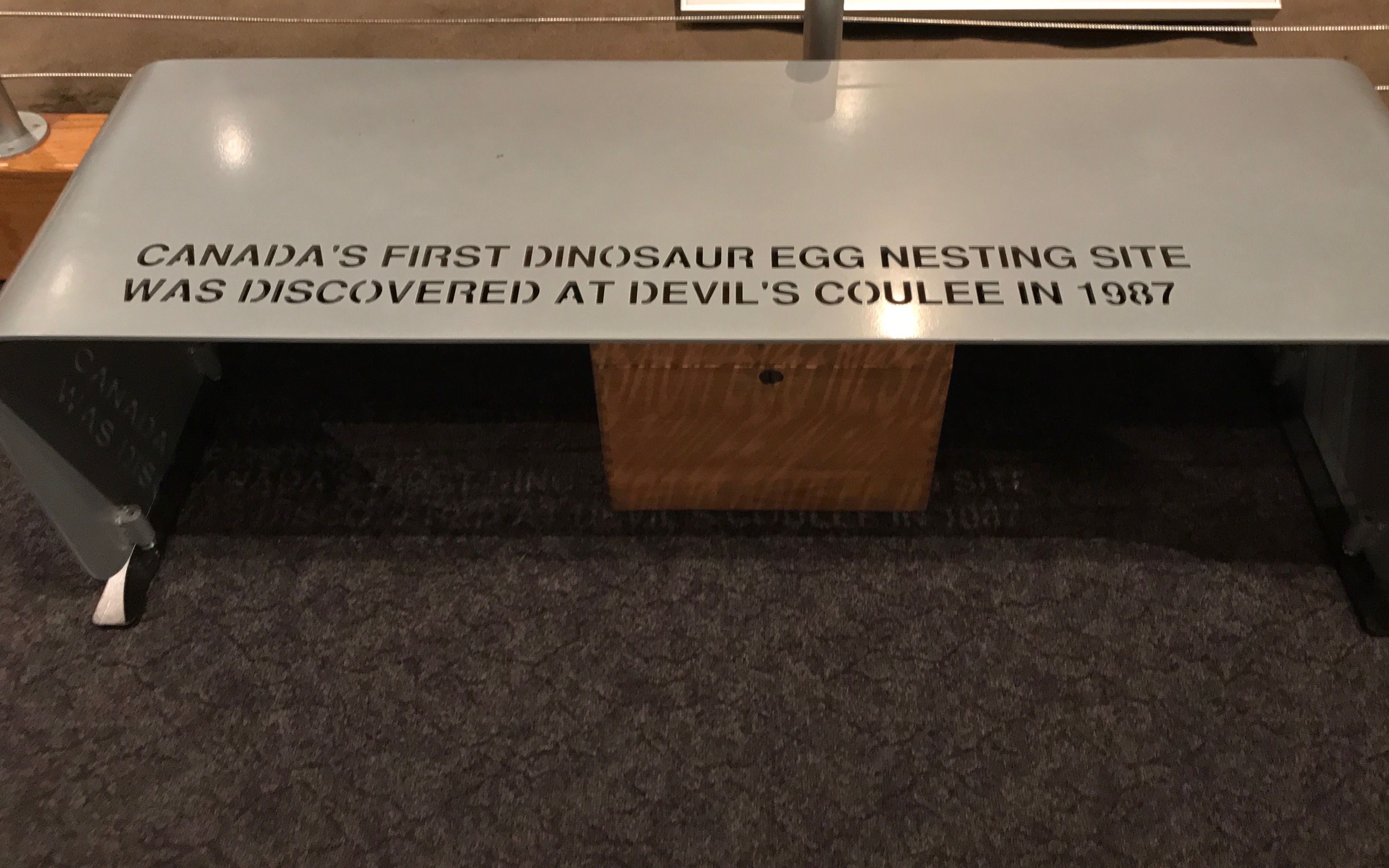
I don’t believe I’ve ever seen benches with the information cut through the metal.

Just when you are thinking, “I can’t look at one more fossil!” you see these benches. It’s kind of like a palate cleanser between courses at a fancy meal.

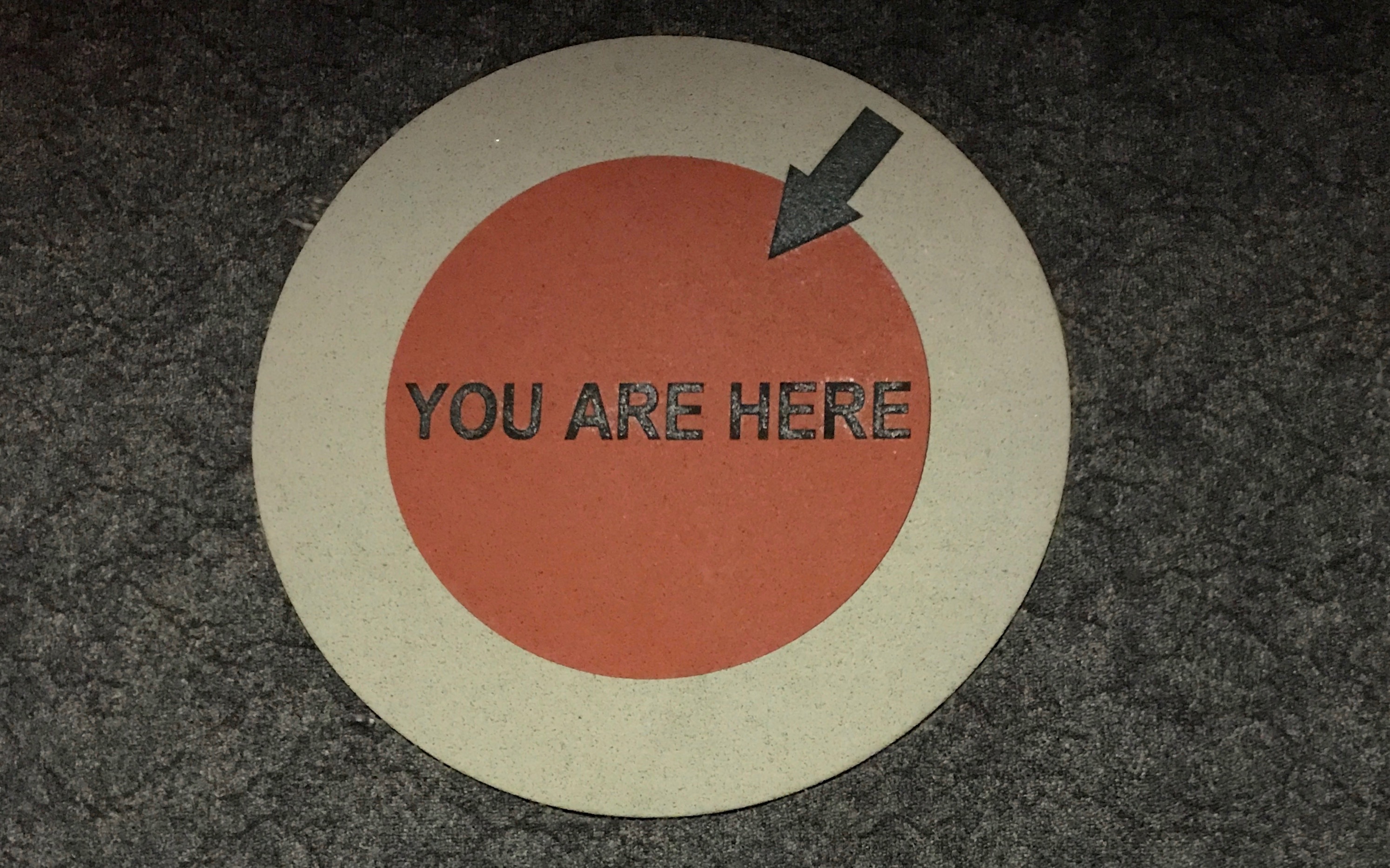
After walking around and around, you start to wonder where you are in the museum.

Good thing they have a sign that lets you know.

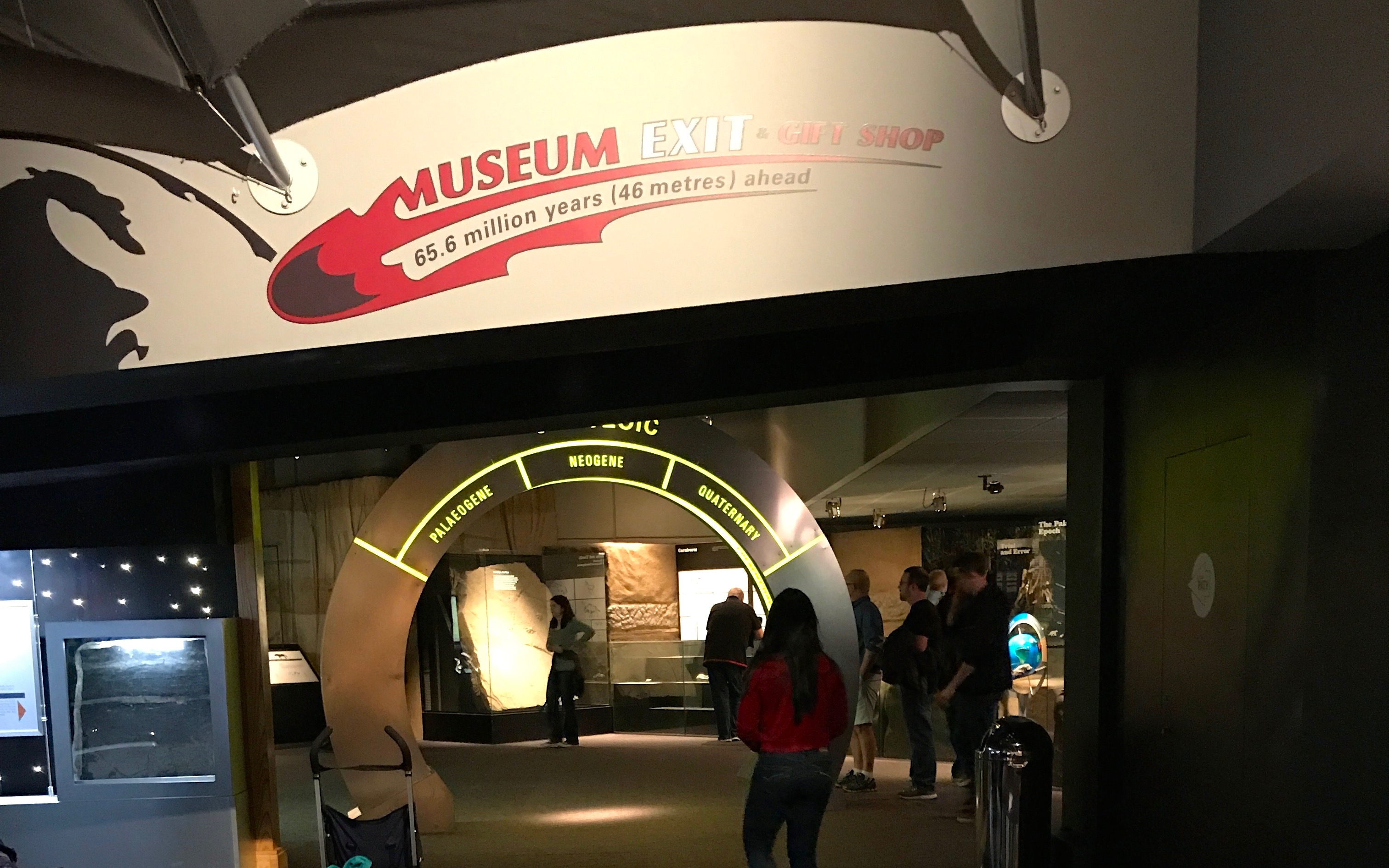
As usual, you exit through the gift shop.

Next stop: Medicine Hat.

Olds and New Norway

Olds is one town in Alberta and New Norway is another.

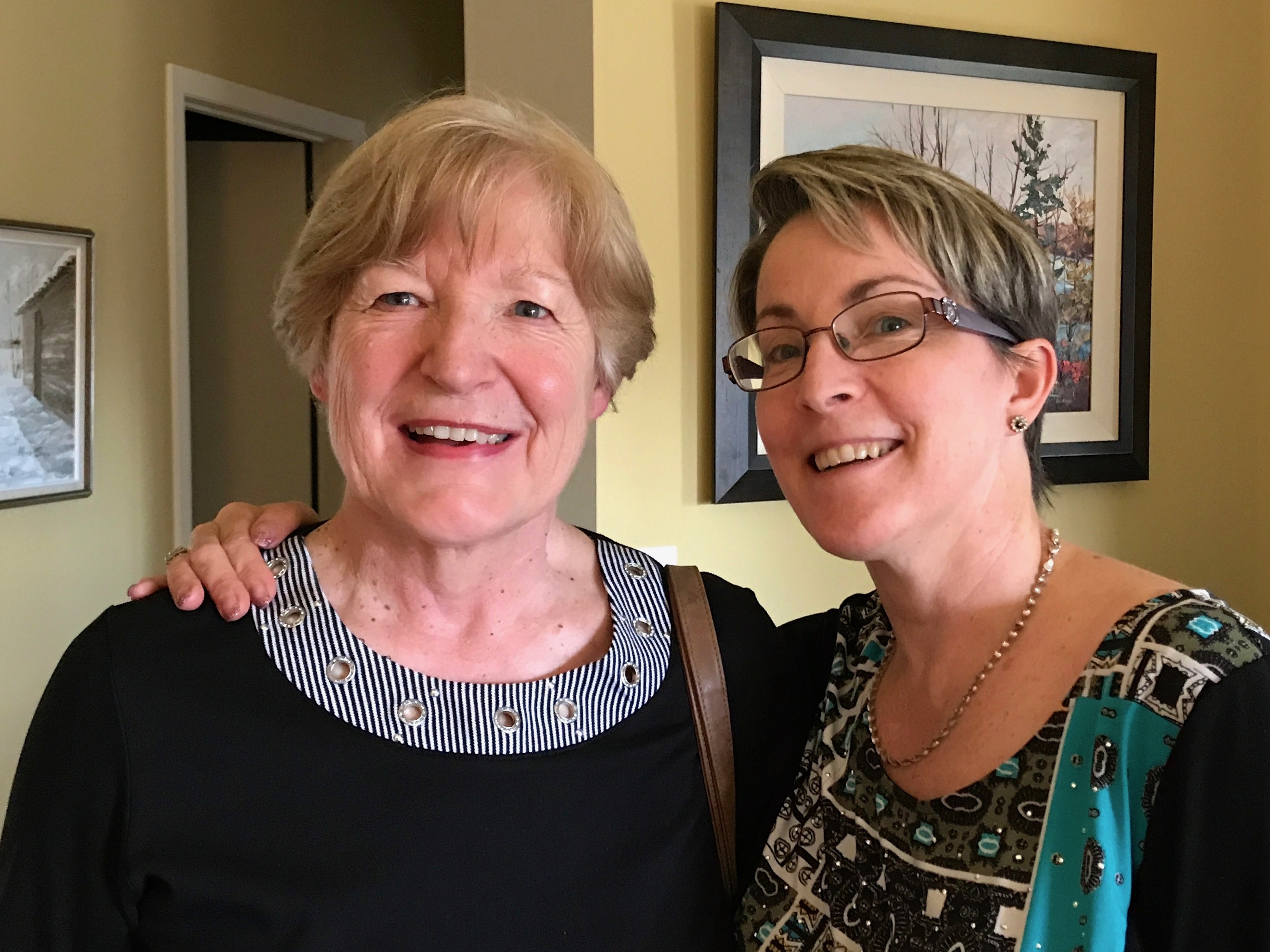
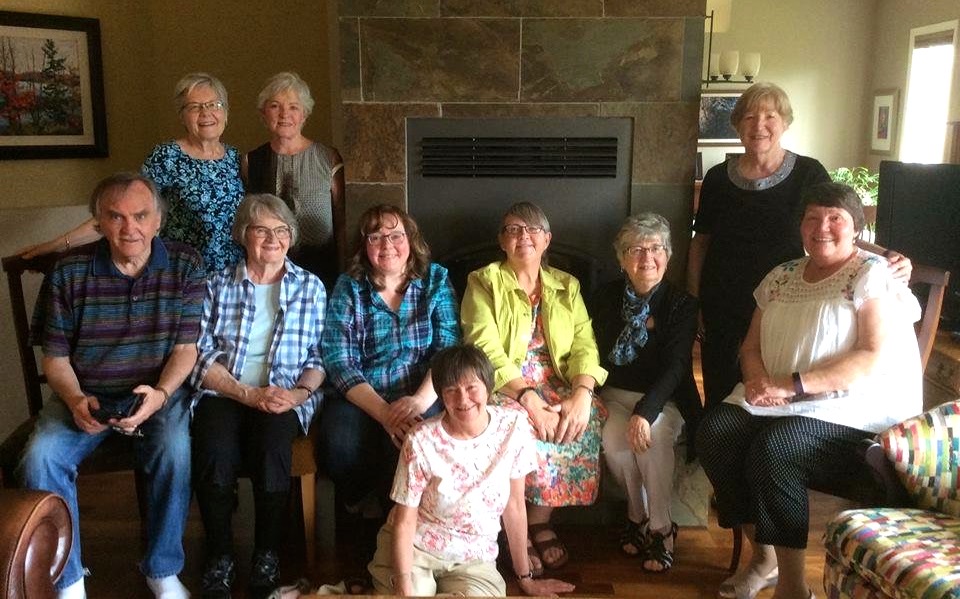
The next day, Kelly and I went to Olds to meet up with some cousins. Cousin Susan Quail hosted the gathering at her lovely home.

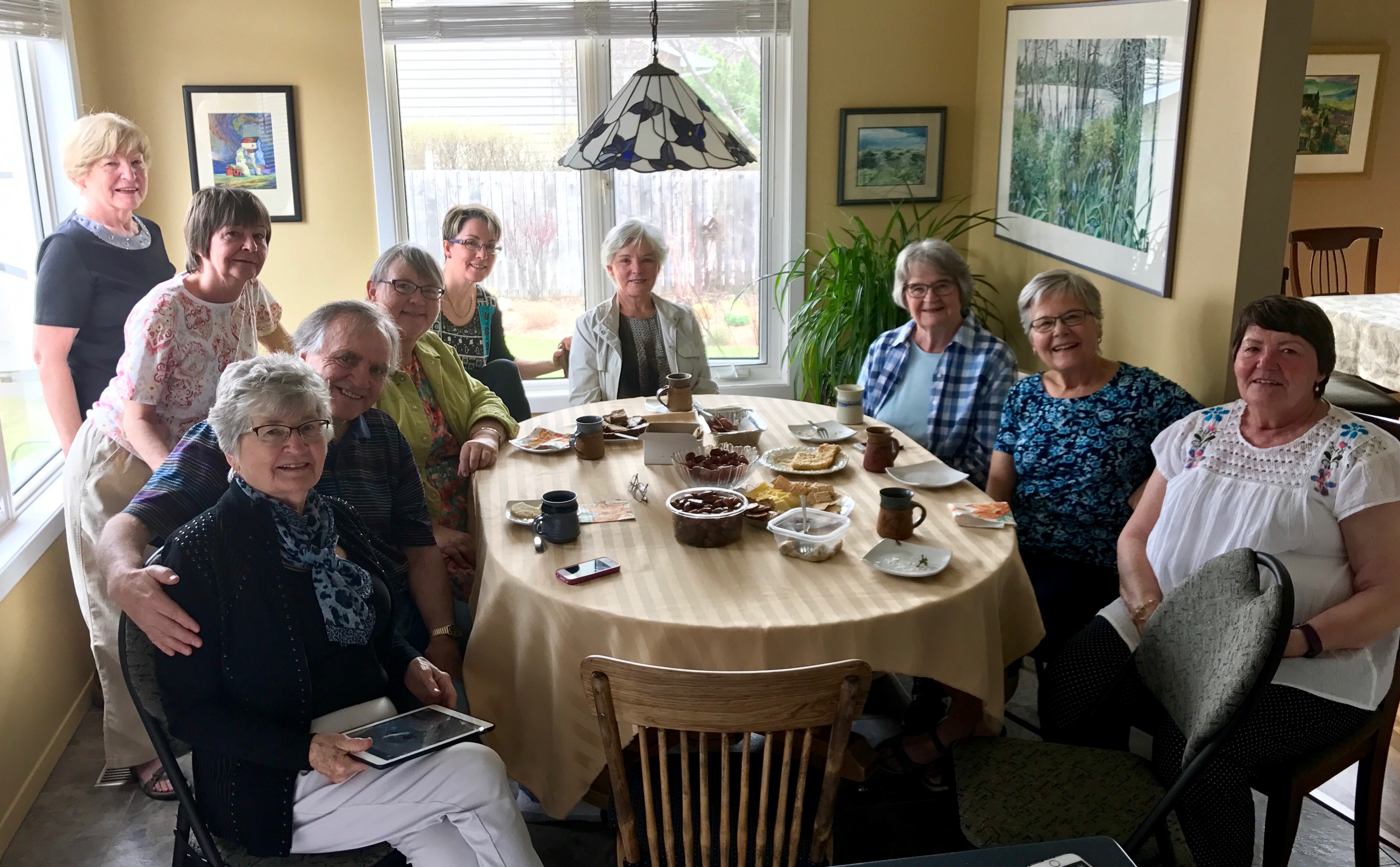
It was a family gathering – so of course we gathered around the table!

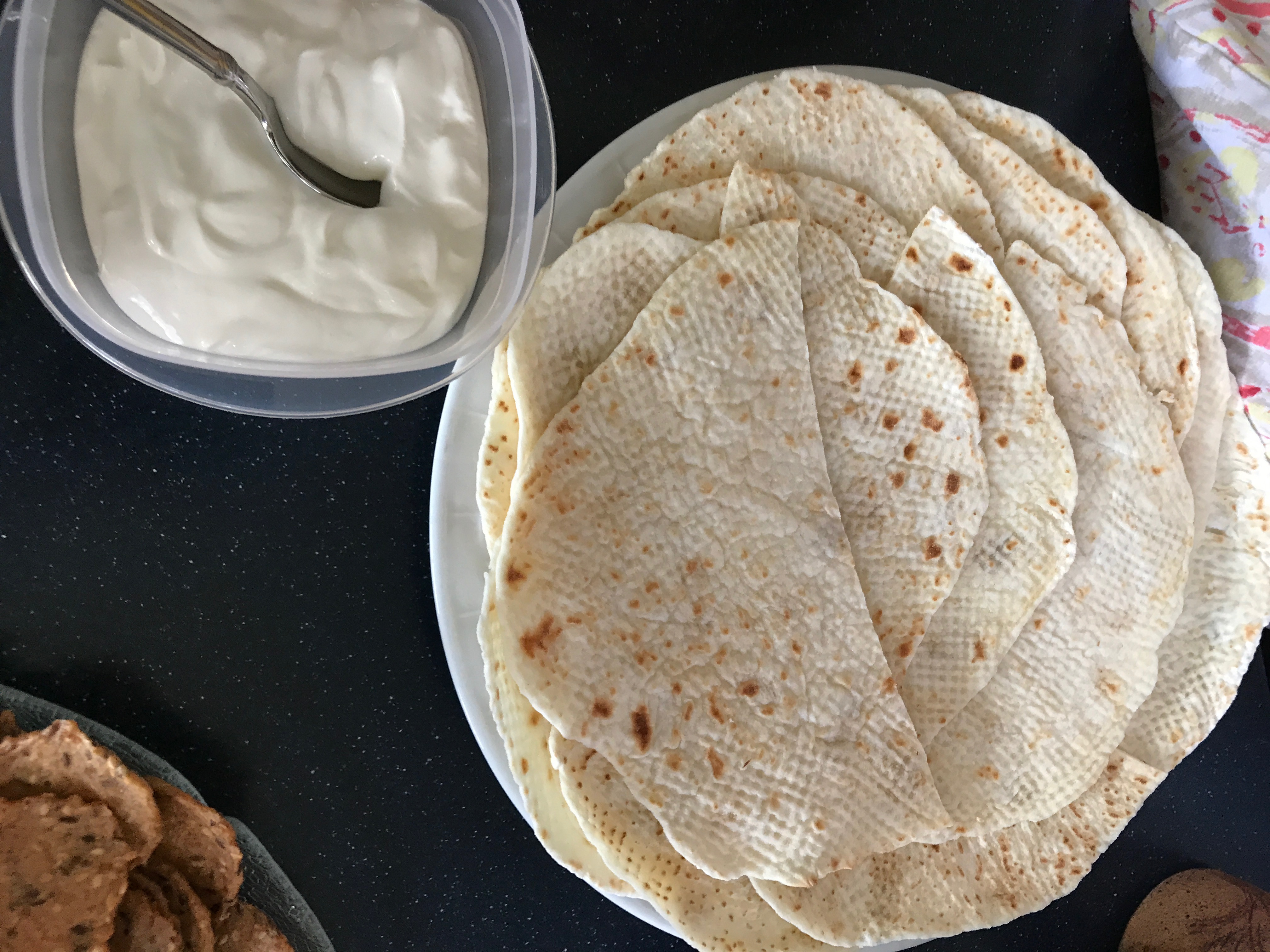
It was a special treat to have lefse, which is a Norwegian flat bread made primarily from potatoes. Mom and Auntie Lo, her sister, used to make them every Christmas. After Mom and Dad moved in with me in Kalamazoo, my father took over the lefse baking.

They welcomed me as warmly as they welcomed each other.

It was great to meet so may cousins I never knew I had!

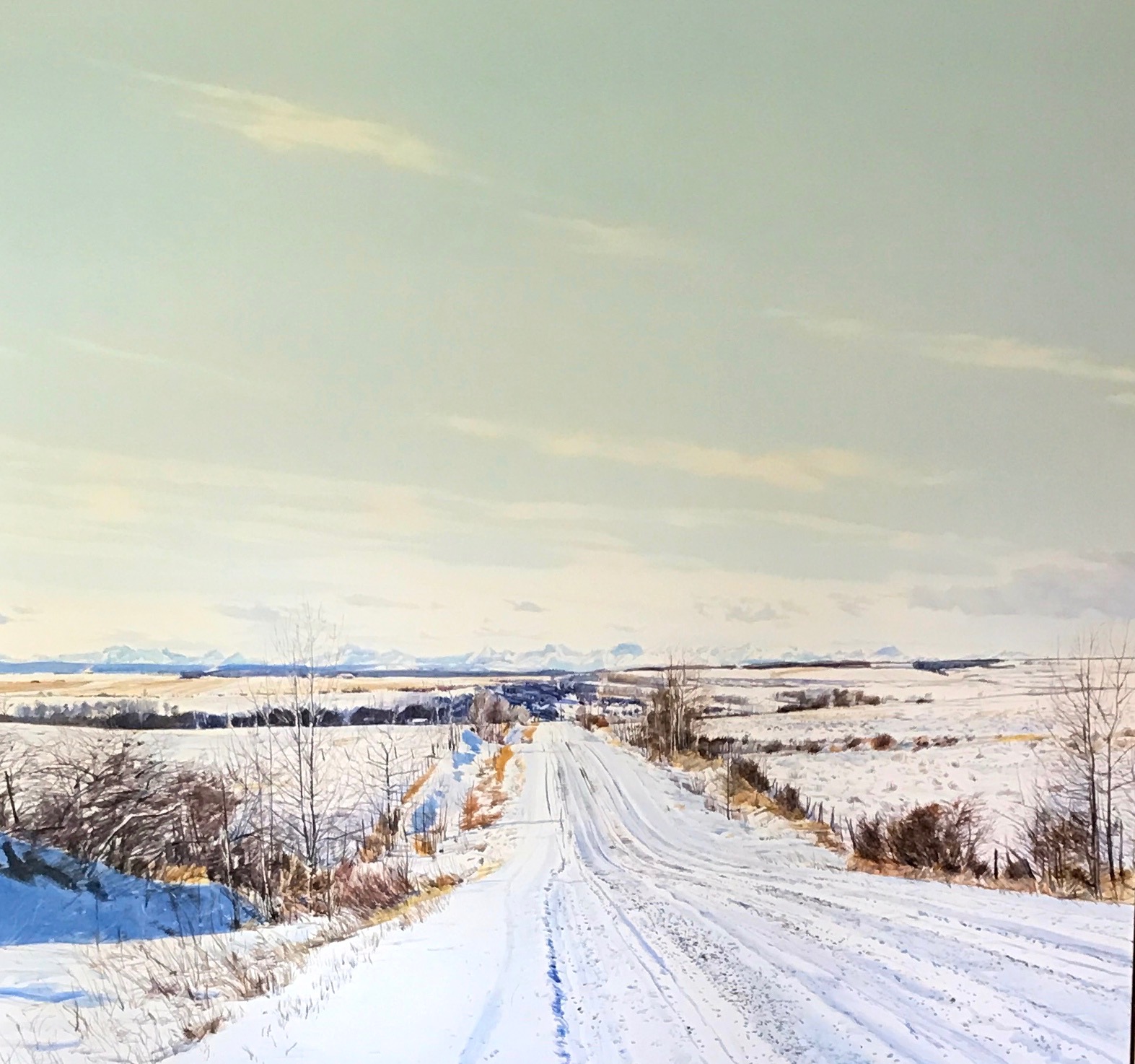
Susan had this painting hanging on her wall. I imagine that this is a scene my mother might have seen in the winter. Maybe she wouldn’t have been able to see all the way to the Rockies, but I’ll bet the winter road and the prairies would have been very familiar to her.

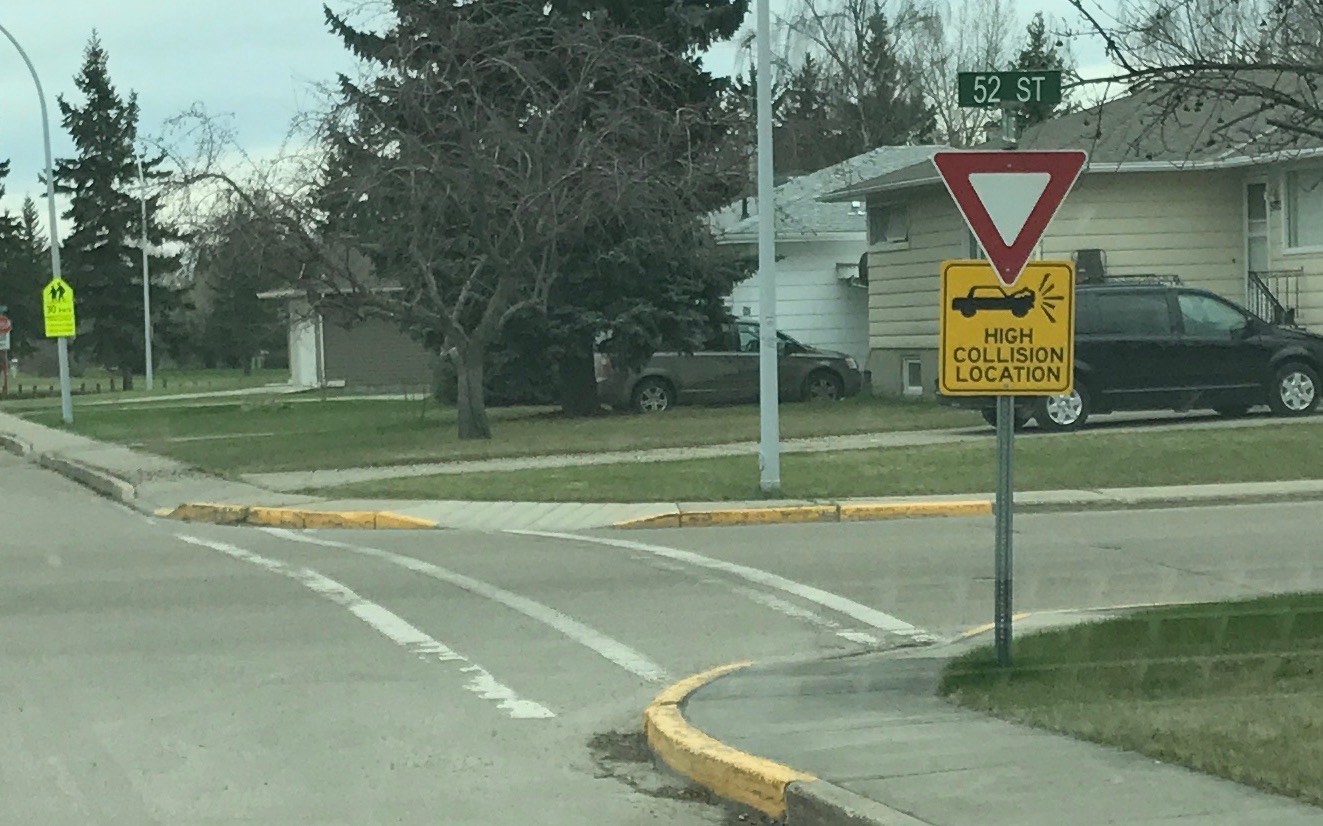
I saw this road sign in Olds on the way back to Red Deer. I thought it was a good idea to bring a dangerous intersection to the drivers’ attention.

The next day, it was time for a trip that was 21 years in the making. I was finally going to visit New Norway!

There was a reunion that was held in 1996, and I bought a new car to be able to make the trip with Mom, Dad and Auntie Lo.

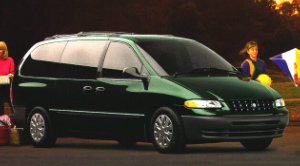
Okay, so this wasn’t my car, but I did buy the ubiquitous dark green middle-age-mobile, a Plymouth Voyager.

Unfortunately, my mother had a stroke and we weren’t able to make the trip. She did live for nearly five more years, and each extra day was a blessing.

Anyway, I was finally going to visit New Norway – my mother’s birthplace – and I was excited.

They next day, Kelly and her brother Kent came to pick me up and we were off on a road trip. 115 kilometers later  – or about 70 miles, if you prefer – we came to New Norway.

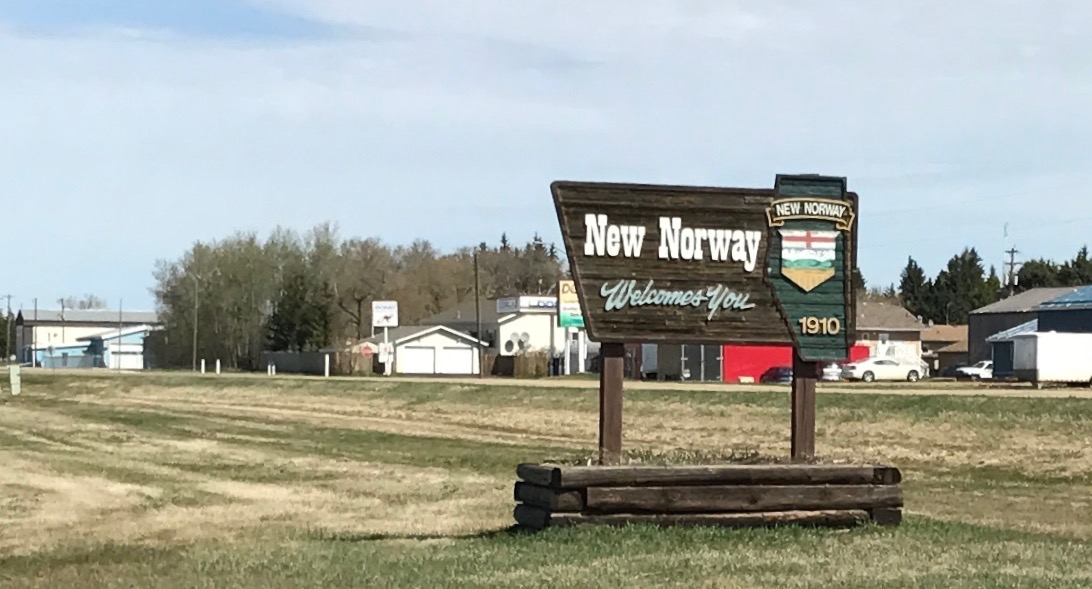
It was founded in 1910, and they rolled out the welcome mat.

According to my preferred source, the railroad had a lot to do with the development of the area. The newly constructed Canadian Pacific Railway took the Ole M. Olstad family to Wetaskiwin in 1892. They continued on to the Duhamel settlement. The family filed homesteads for themselves and several relatives and friends in the United States.

That’s where my family comes into the picture. But, maybe the Olstads were family, too. I do remember Mom talking about “Uncle Ole”.

For a while, the area was known as the “Olstead District”. The name was changed to New Norway around 1895 as other families with Norwegian heritage settled in the area. By 1903, the community had a school, a general store and a blacksmith shop.

They didn’t stay put though. They anticipated the Grand Trunk Pacific rail line being built nearby, so they decided to move. They moved the whole town! In the fall of 1909, the community used skids and seven oxen to move it to its present location.

New Norway was incorporated as a village on May 6, 1910. It had a good run, but was “demoted” to hamlet status in 2012.

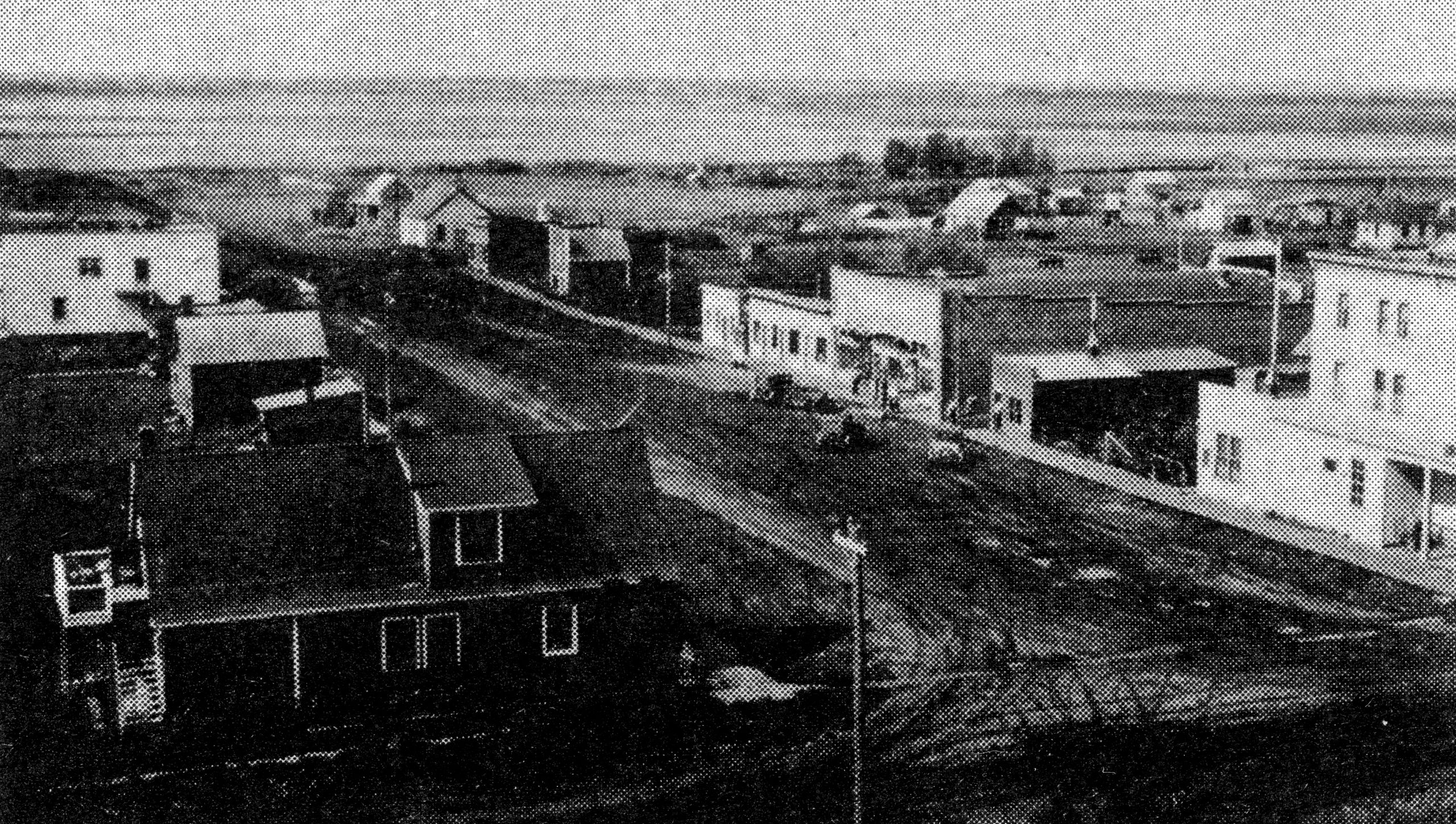
Public Domain, https://commons.wikimedia.org/w/index.php?curid=119421

The village grew quickly. This photo was taken around 1915. This was before aerial photography, so I wonder how they got this shot.

(Cousin Neil Olstad tells me that the photo was taken from the top of the grain elevator, which makes sense.)

This community hall was constructed with the help of my Grandpa.

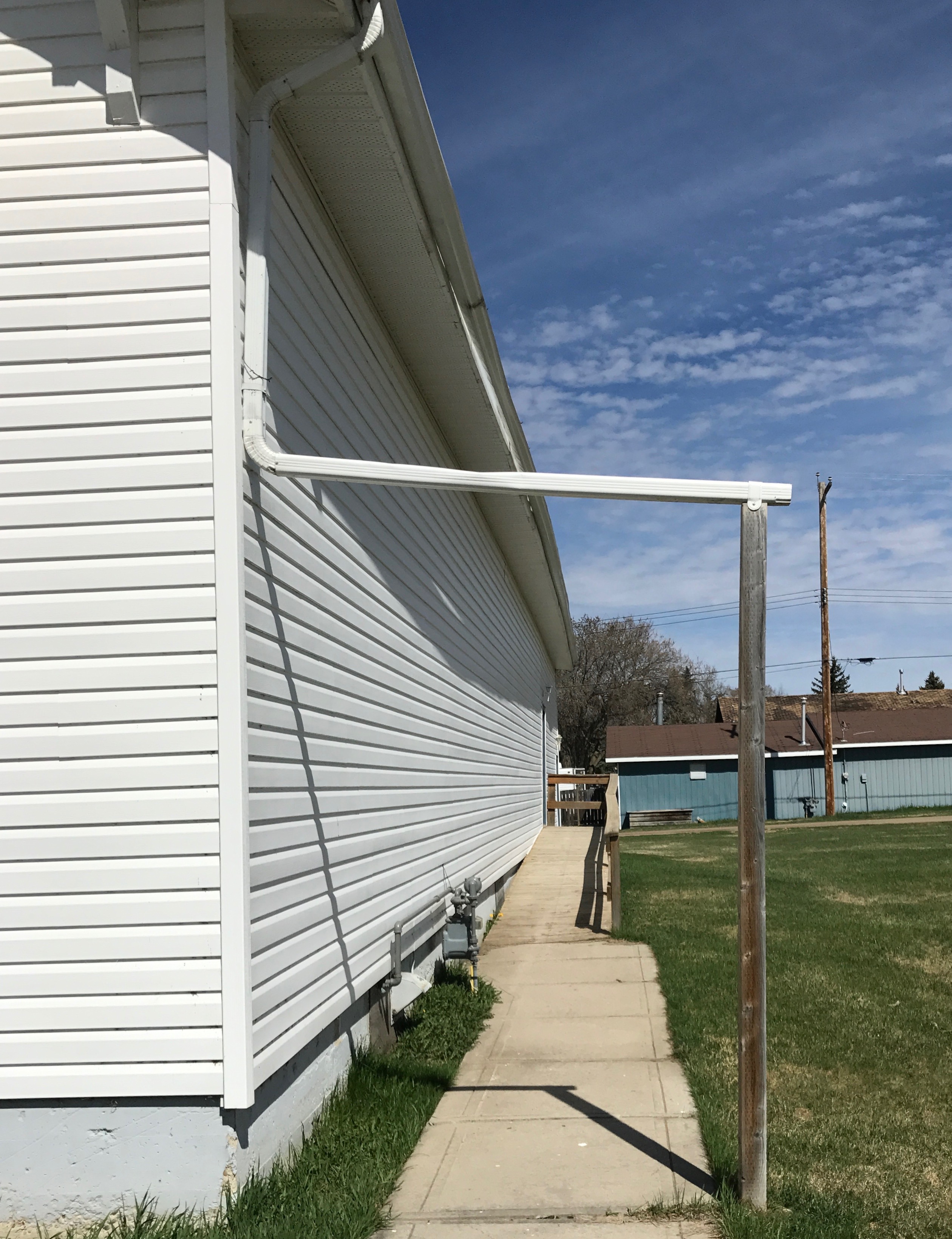
This downspout looks more like something my father would have come up with, but he wasn’t part of the story in 1939.

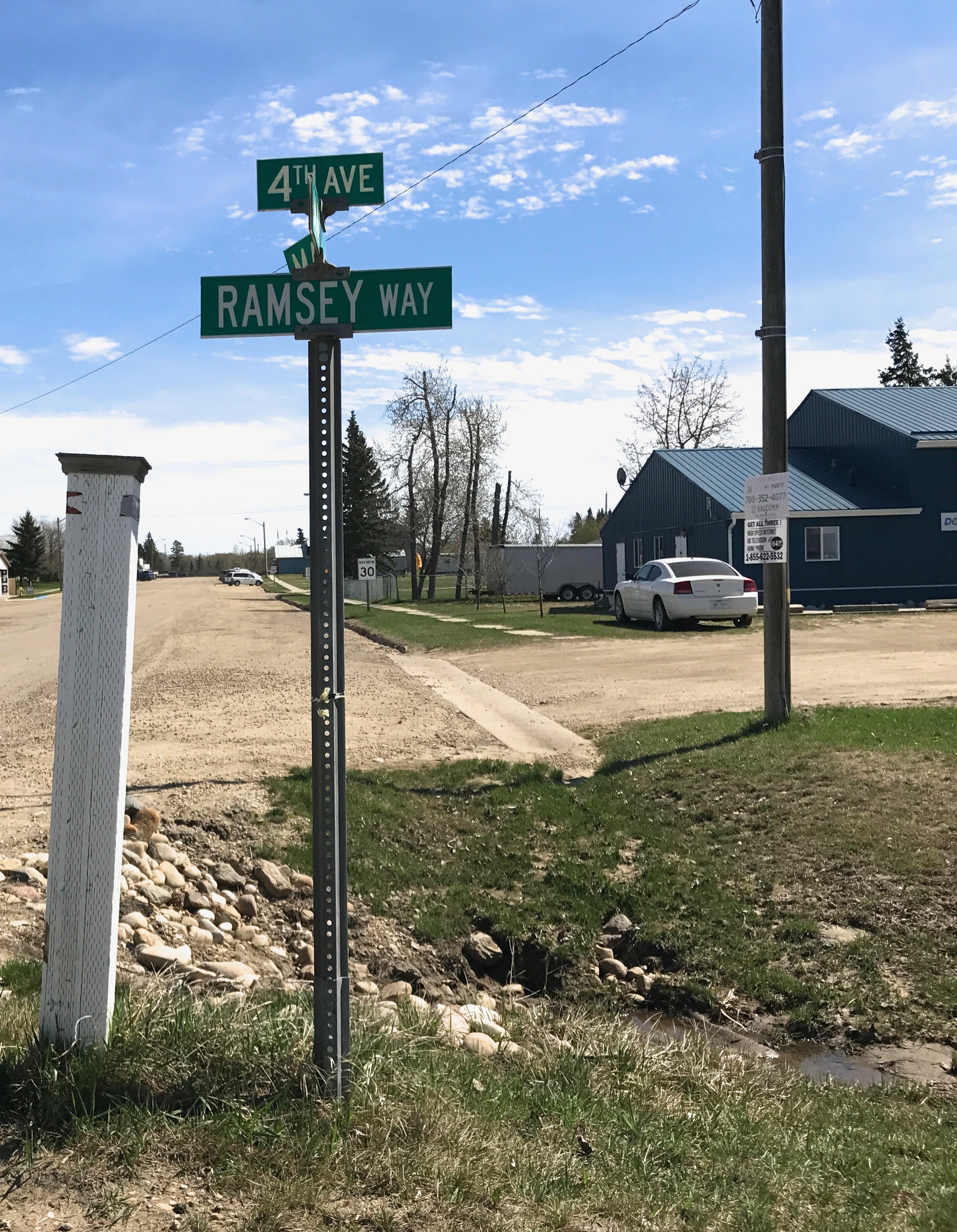
For me, this is the Ramsey story, although there were lots of other families involved.

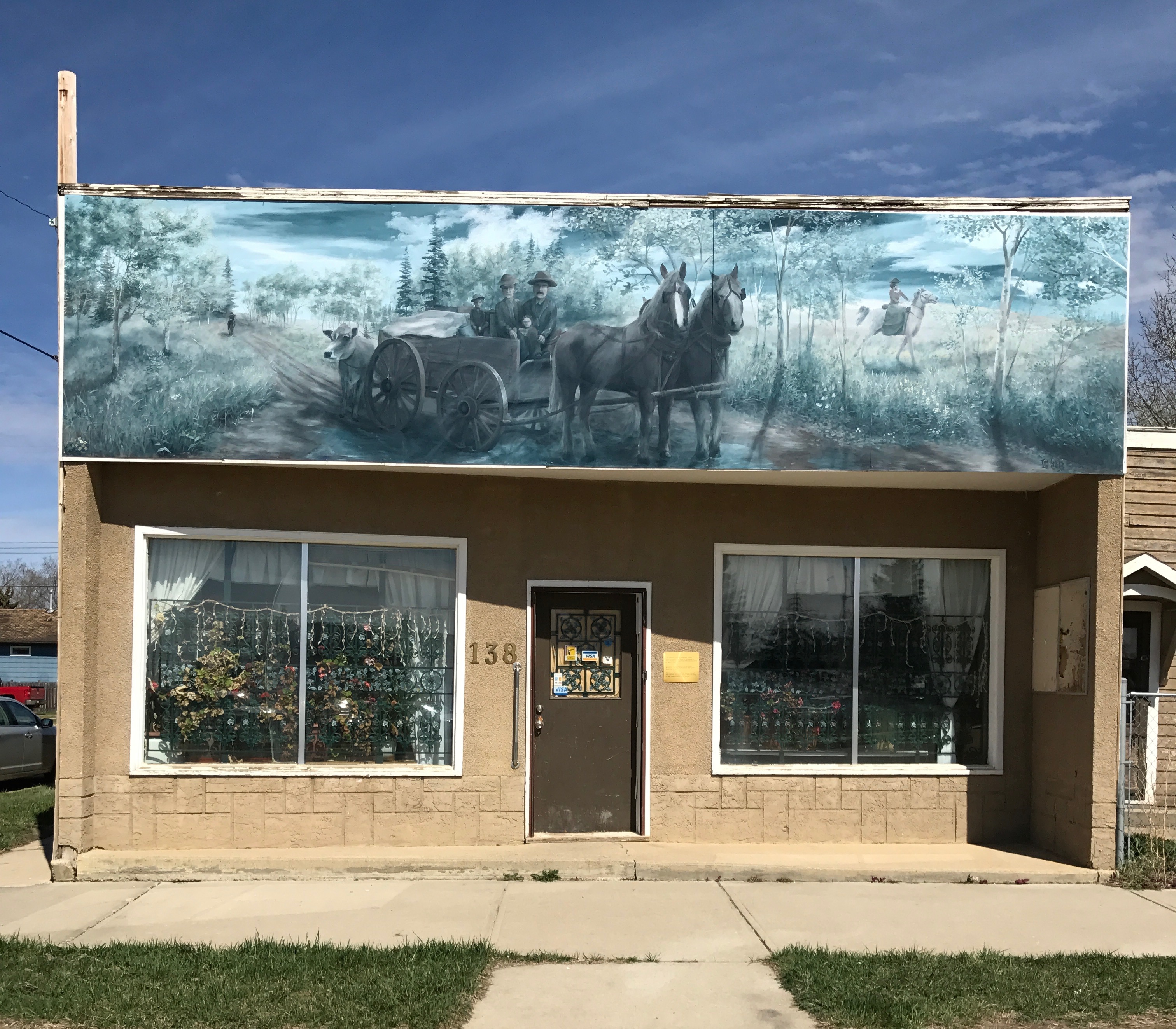
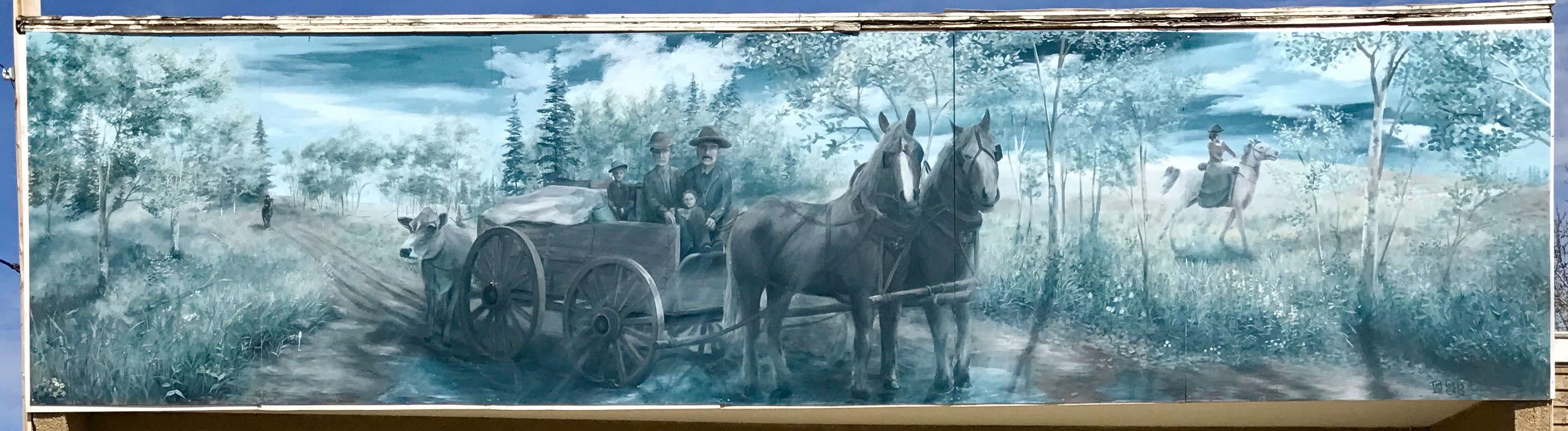
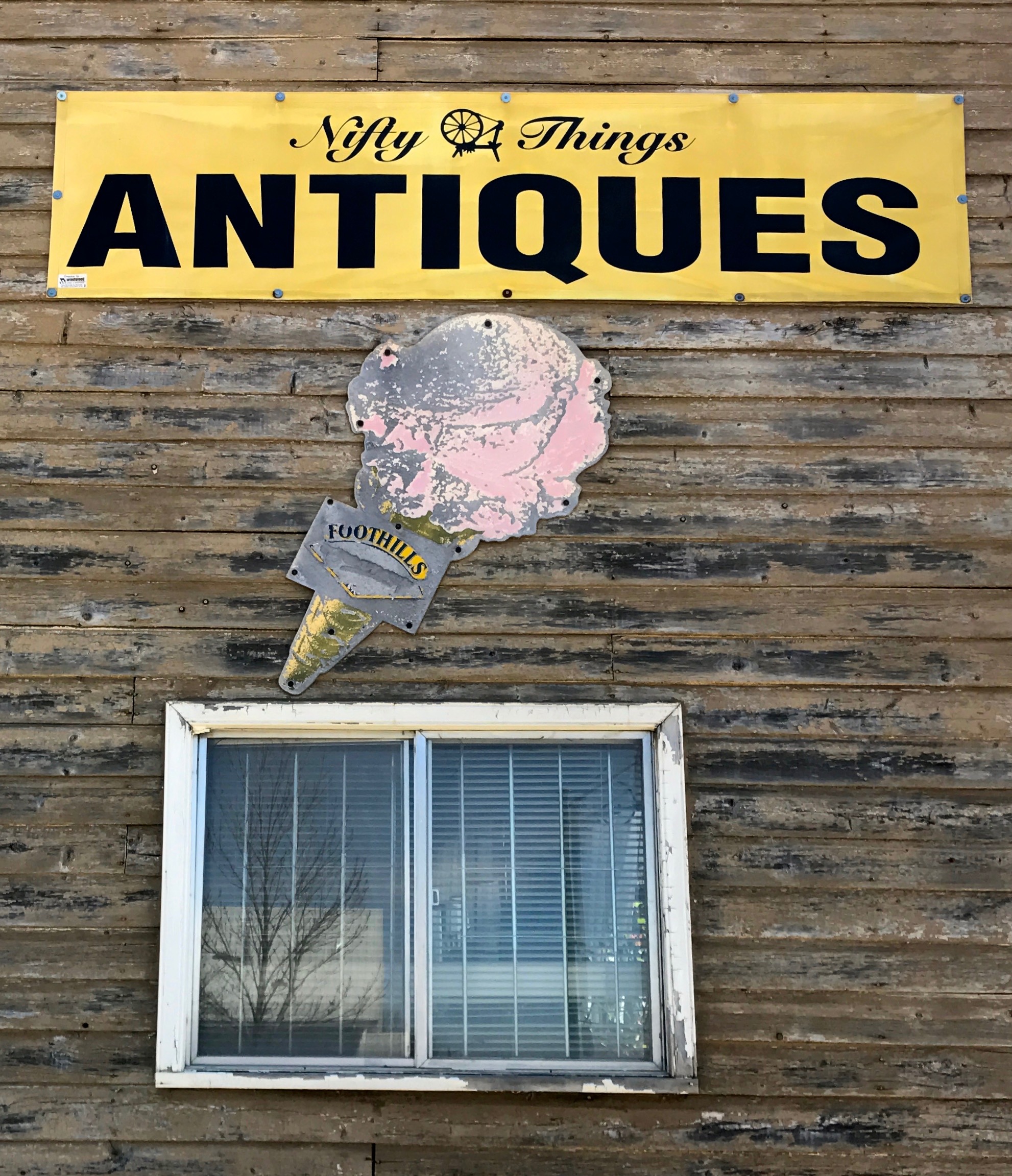
This mural was on the front of what had been an antique shop. It wasn’t open when we were there, and it looked like someone might be living in it now.

If I understood correctly, the little boy riding in the wagon is my Grandpa, Oscar Ramsey. His parents – my great grandparents – Ed and Karen Ramsey are riding the horses nearby.

I come from a line of homesteaders! I was excited to learn this, considering that I didn’t know much about family history. I sure wish I had asked my parents more when I had the chance.

This sign is on the side of the building with the mural.

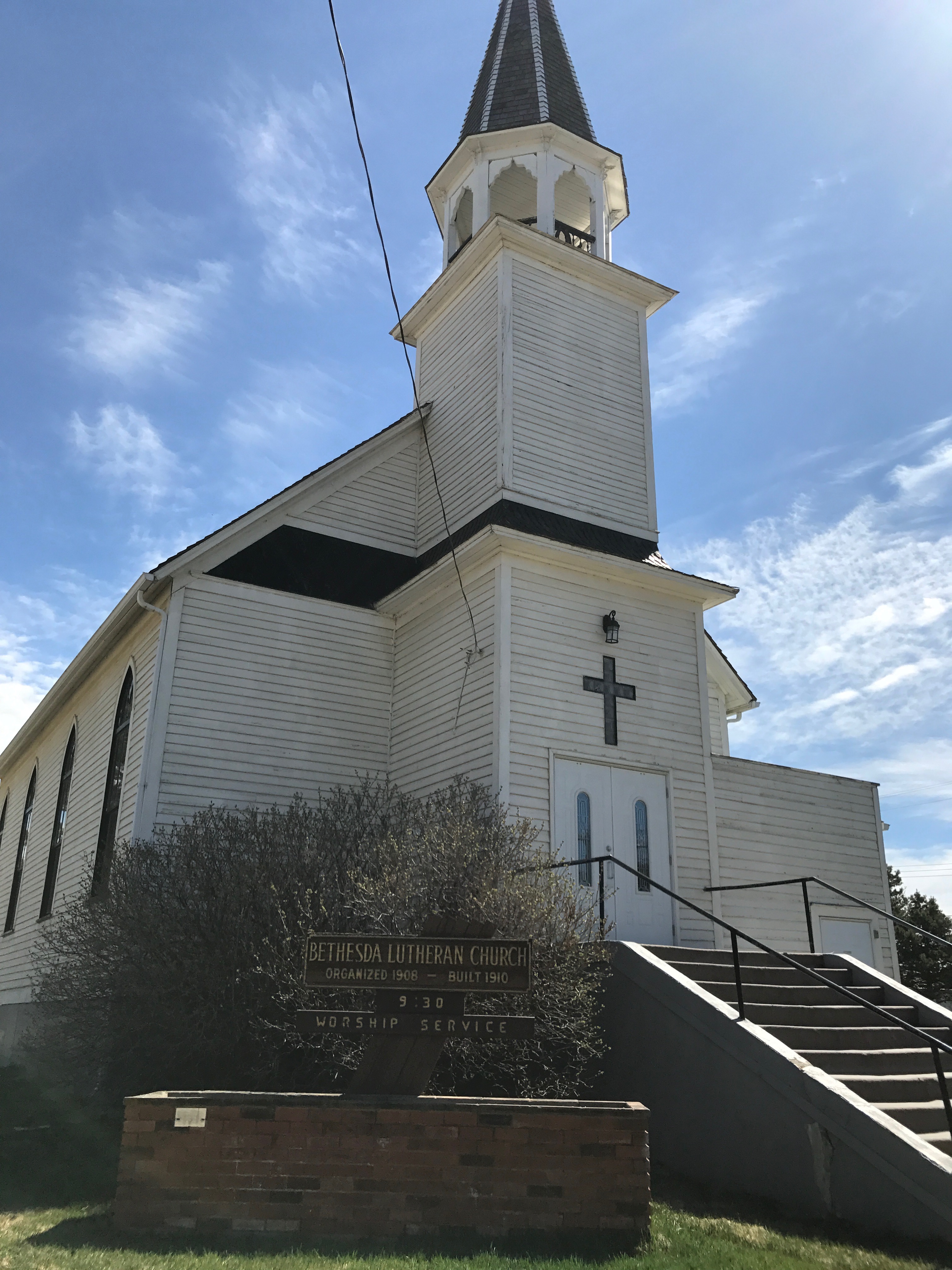
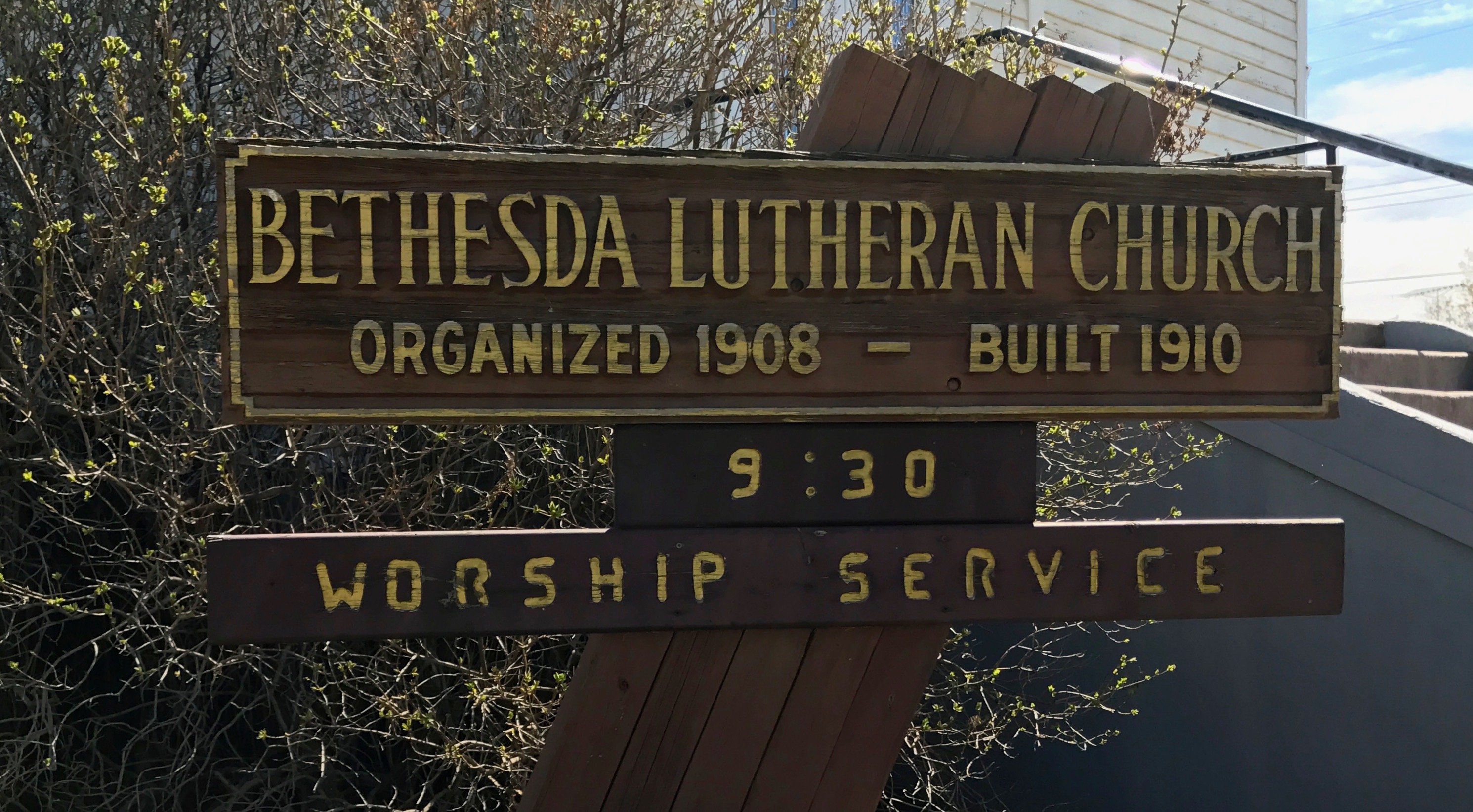
My mother attended this church. In fact, I think it was everyone’s church, as I didn’t see another other denominations represented in town.

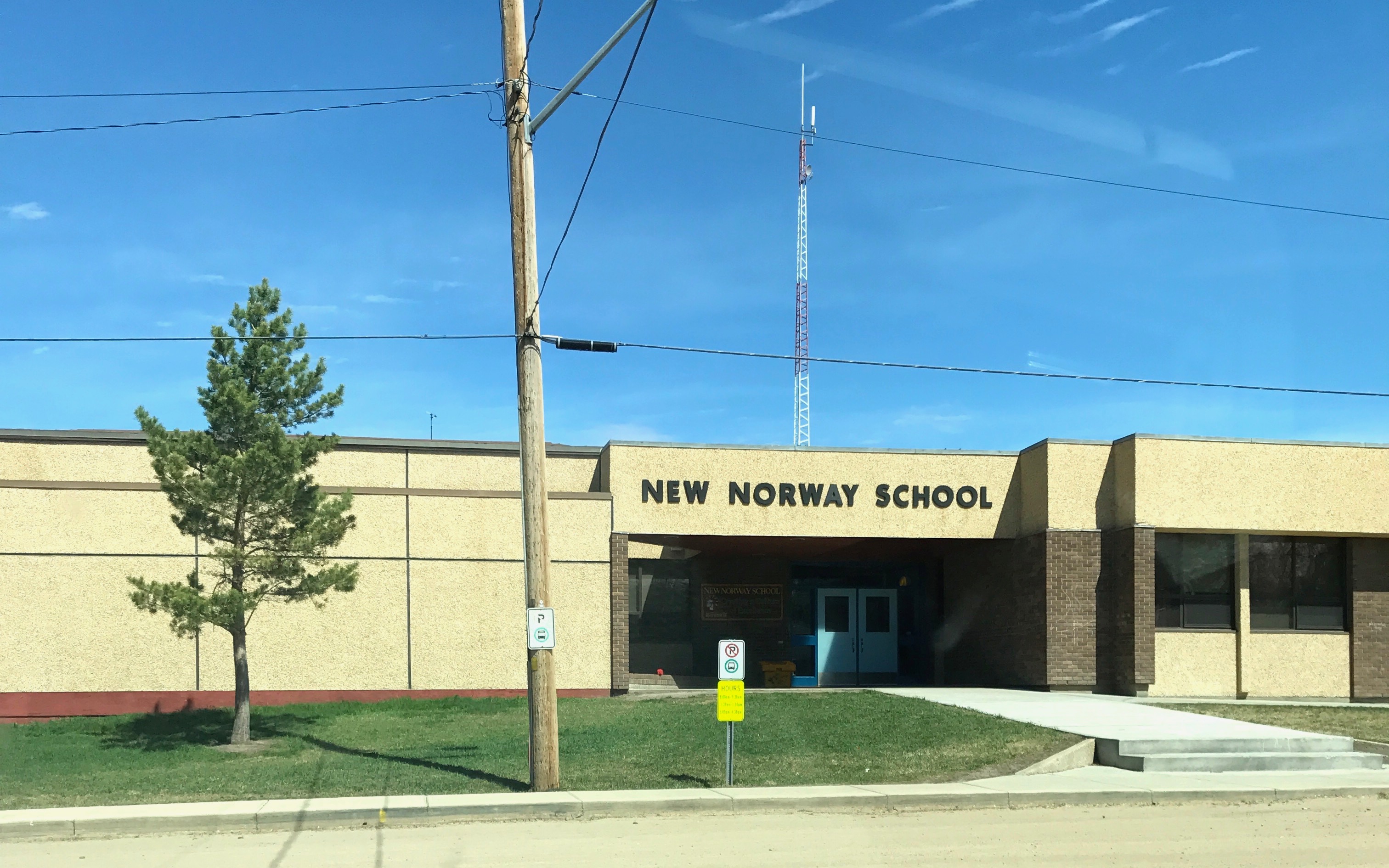
The church is as old as the town, but the school looks brand new.

We drove up and down the streets. Look what I found in someone’s backyard!

After touring the town, it was time to visit the graves of the ancestors.

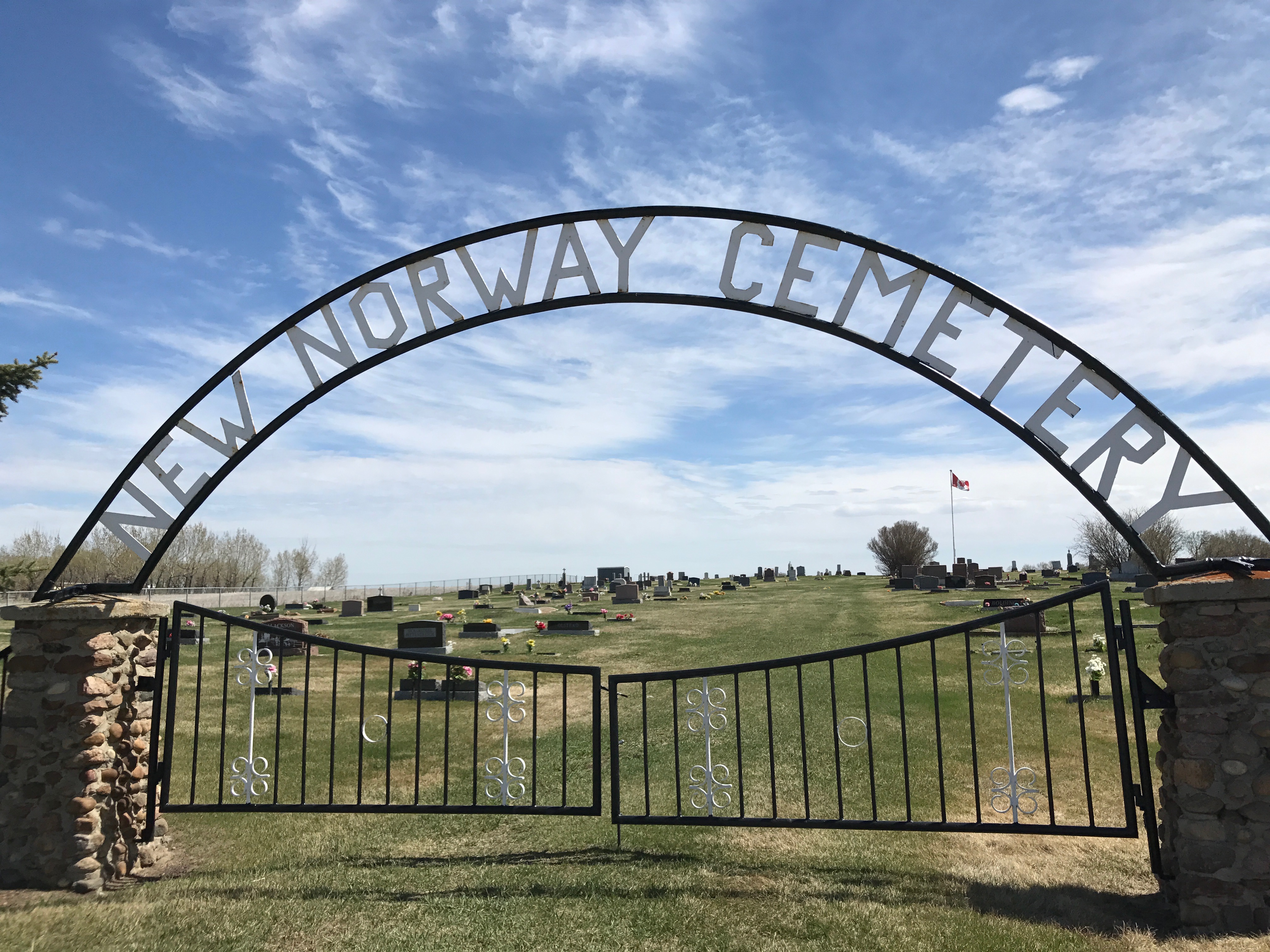
We went inside the gates and went to look at the names on the markers.

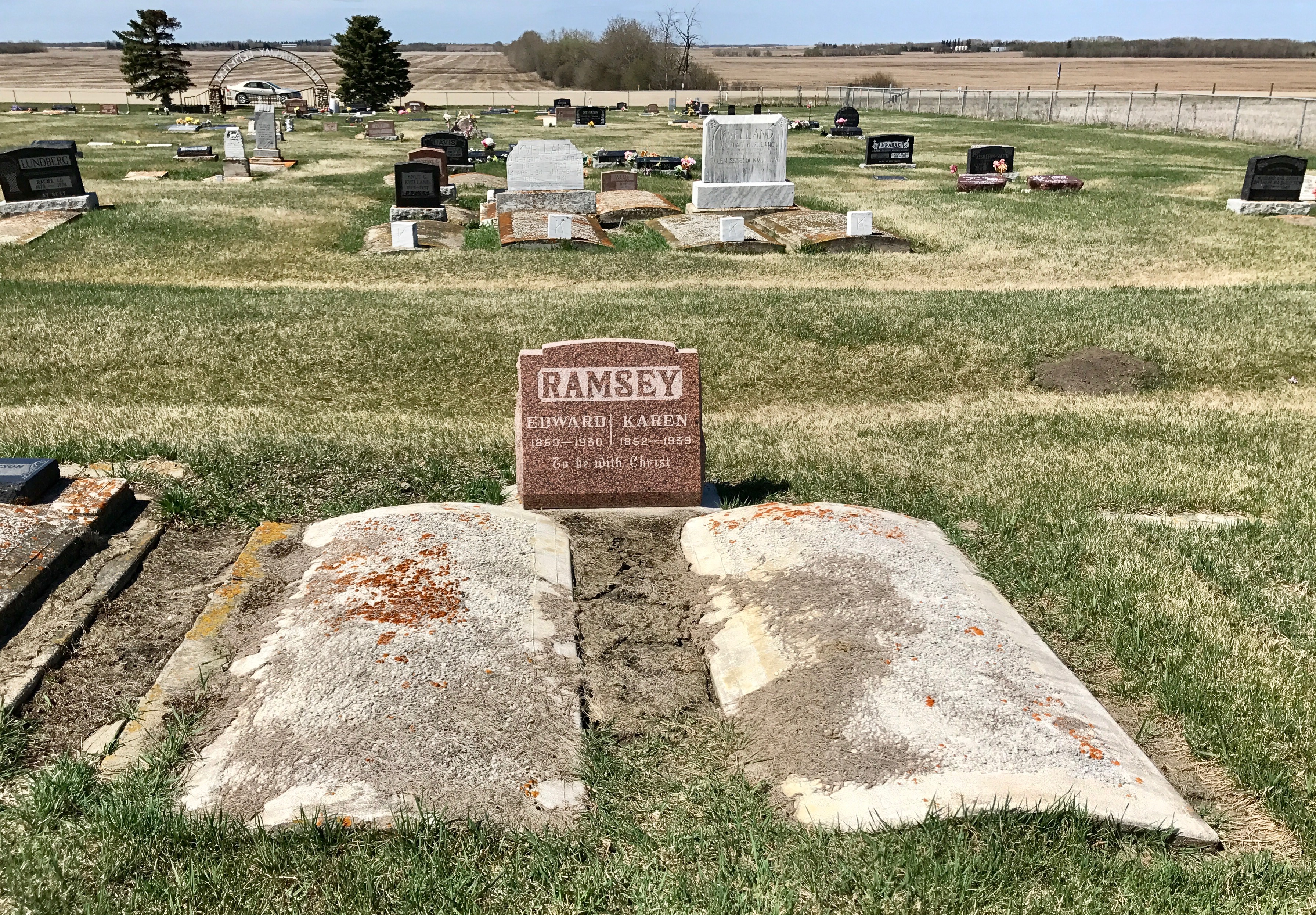
I found my great grandparents’ graves. My grandparents’ graves are in Crystal Beach, Ontario.

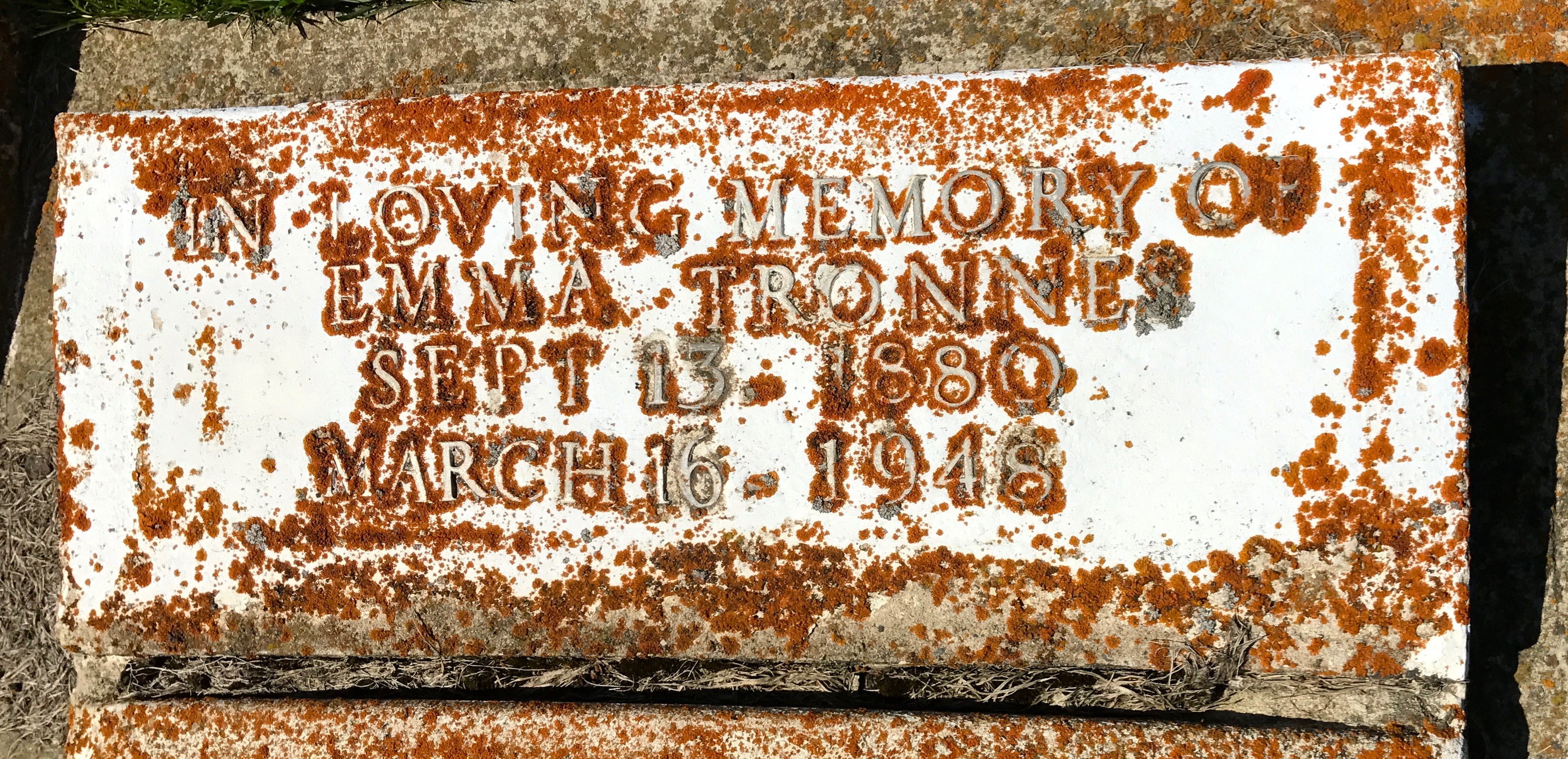
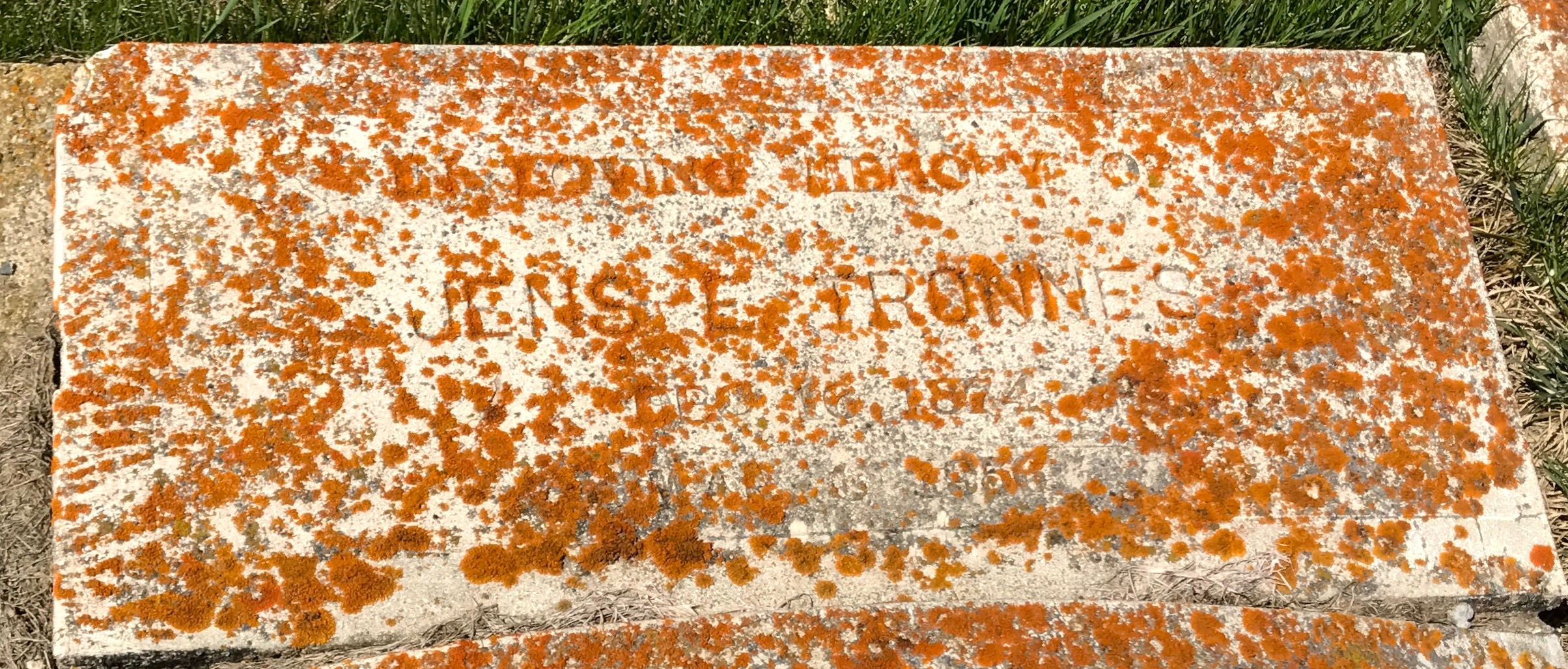
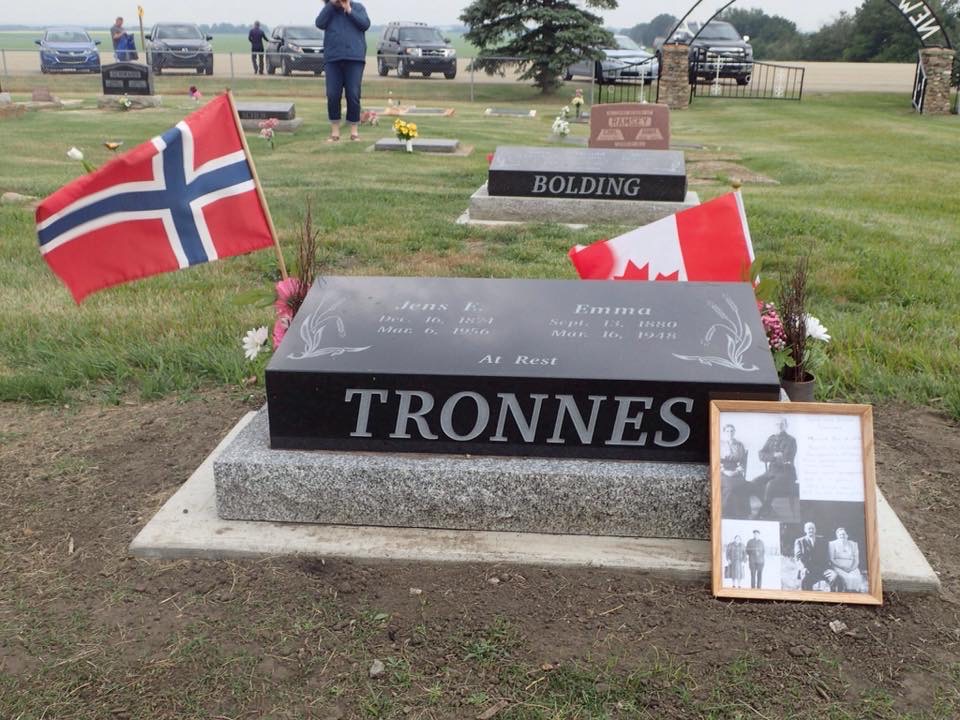
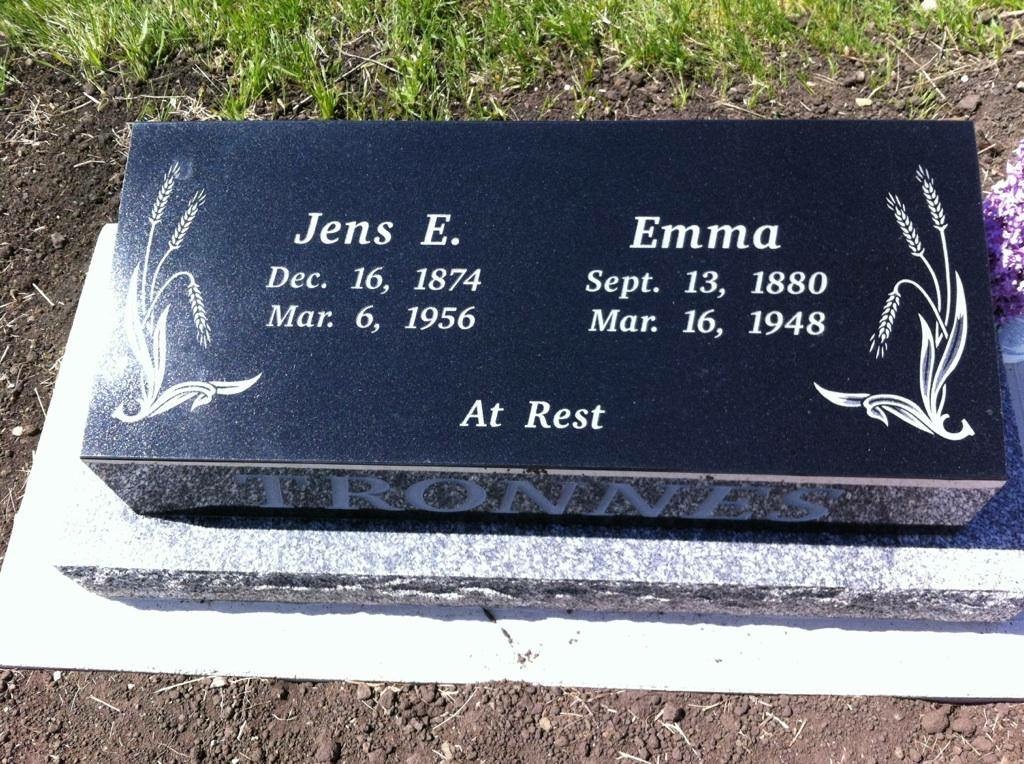
The markers of Kelly and Kent’s grandparents were in New Norway, but they had aged terribly. Their side of the family was working on getting new ones. Kelly sent me photos of the replacements when they had them installed.

It looked crisp and fresh. The Norwegian and Canadian Flags were a nice touch.

Their lives are recorded for posterity.

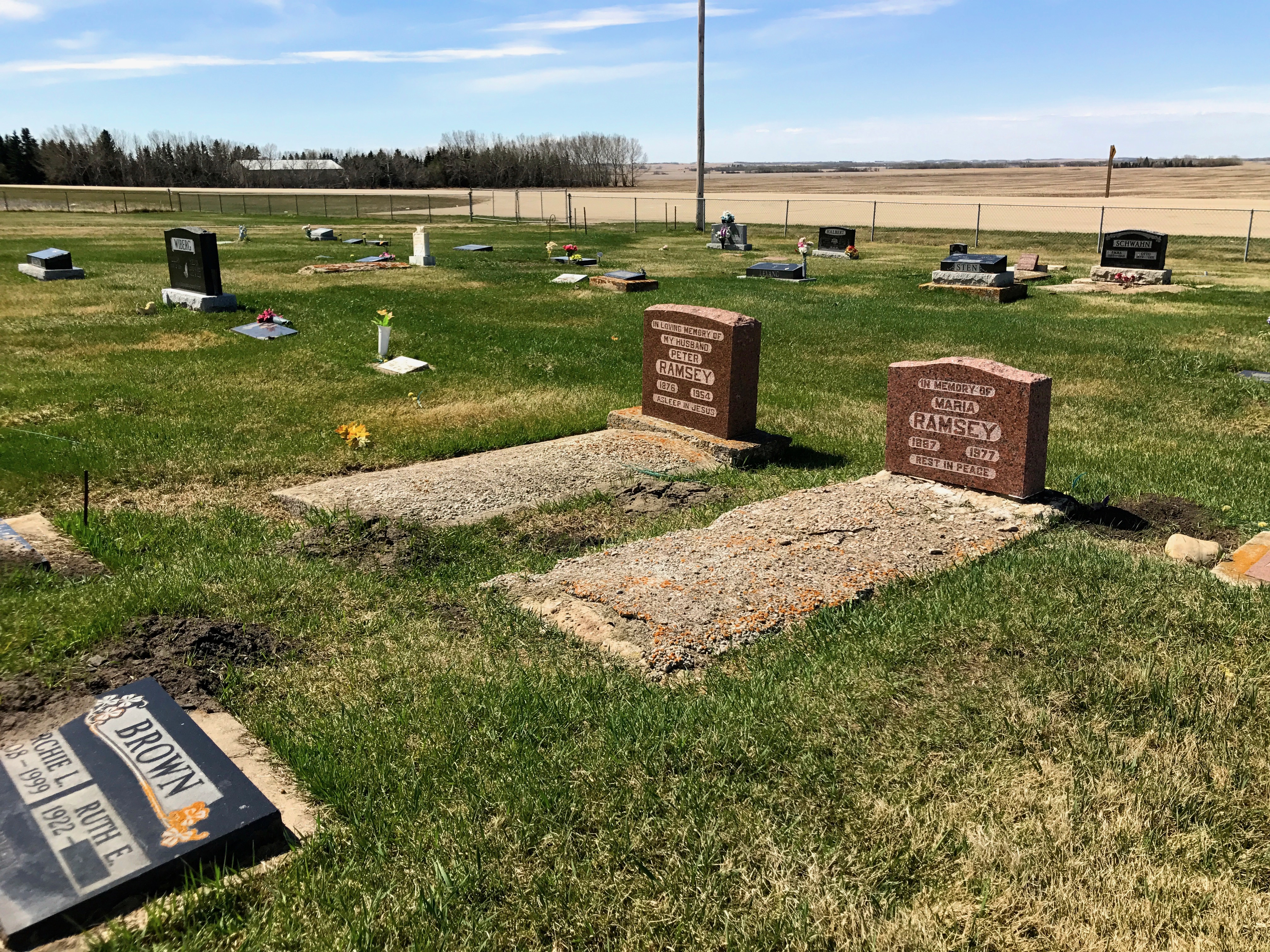
More Ramsey graves – Peter and Maria. Judging by the condition of the cement covering the graves, the markers have been replaced. I must be related to them, somehow.

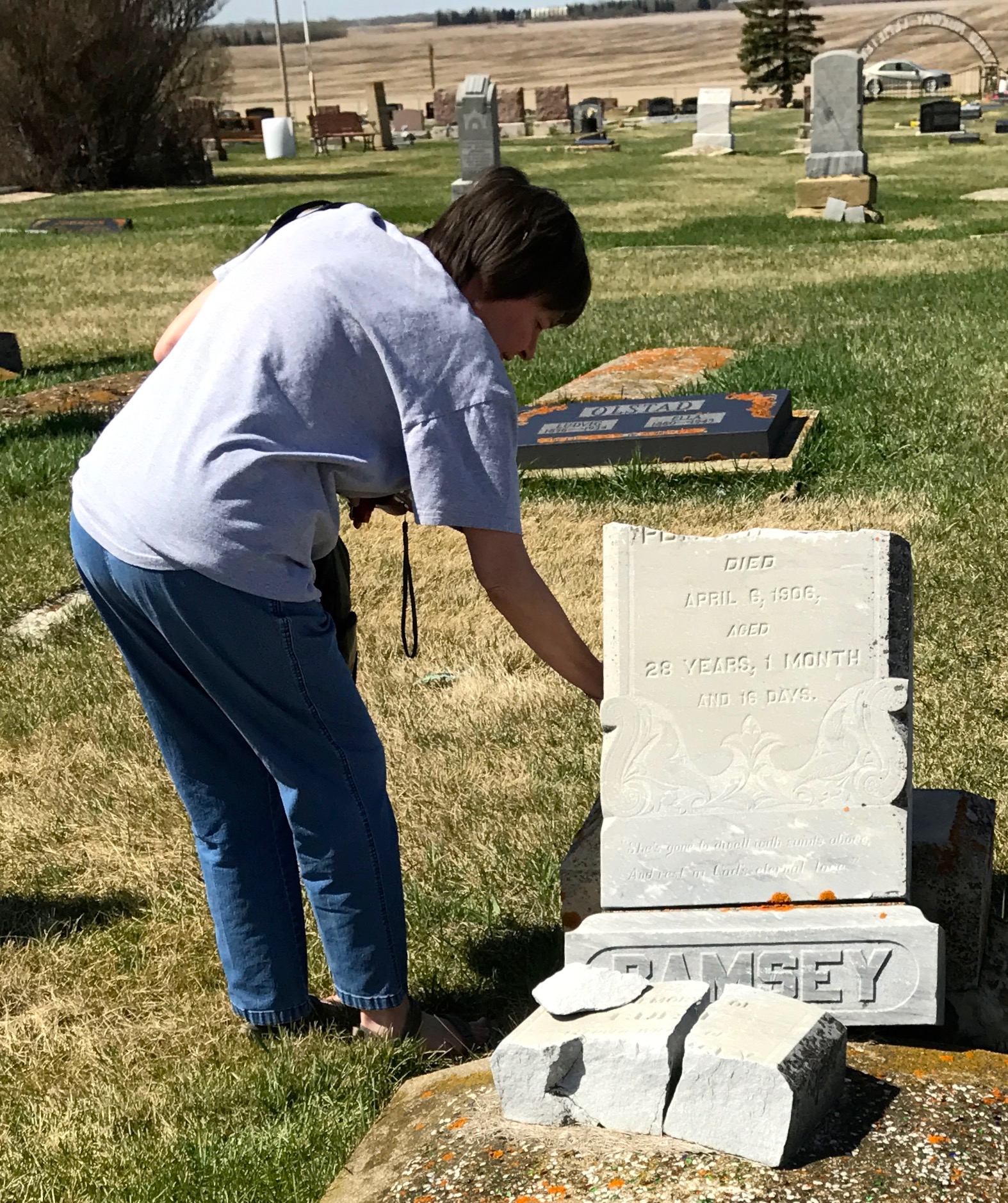
Kelly examined this Ramsey monument that had aged poorly.

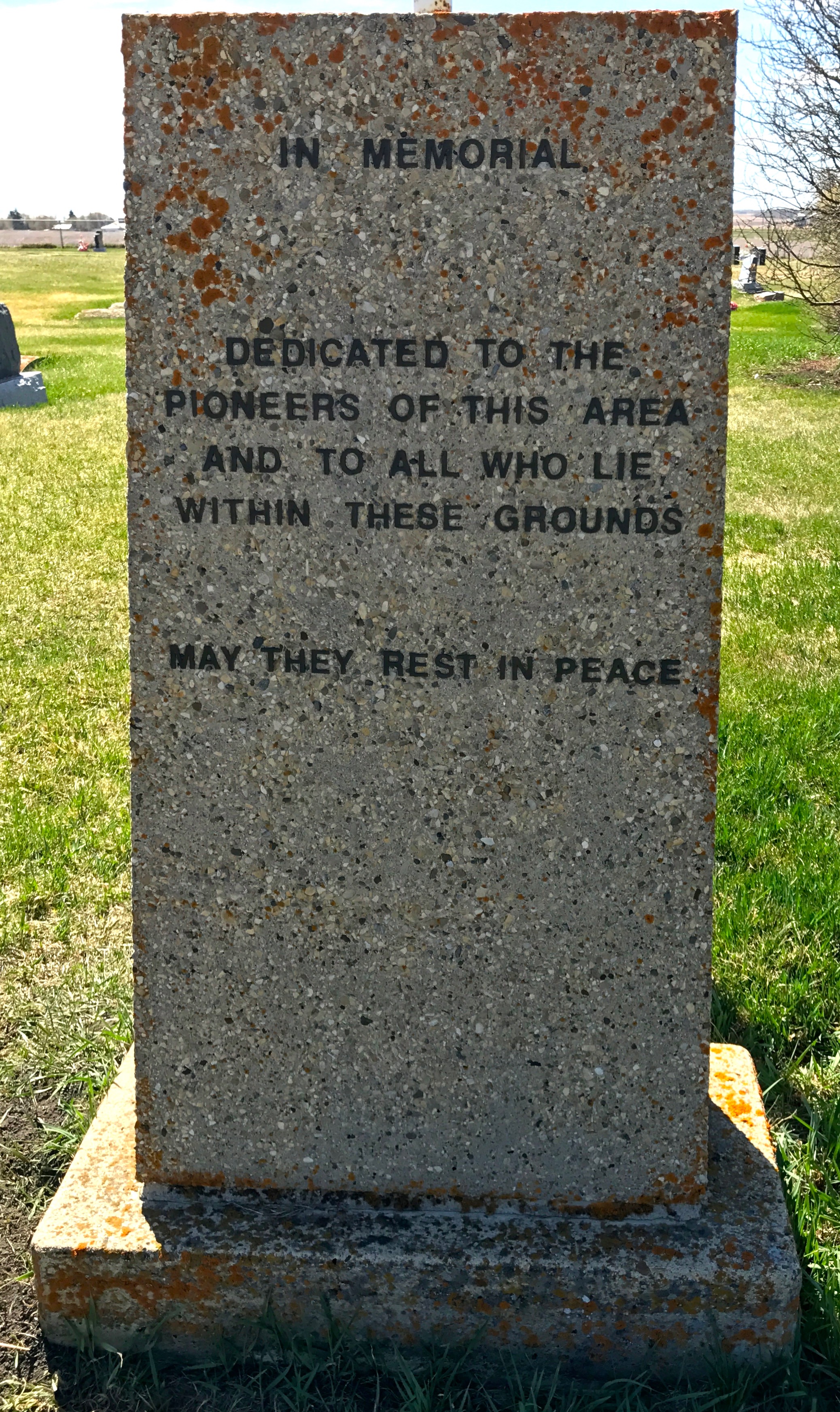
May they rest in peace – and may we live in peace.

After the cemetery, it was time to visit the old farm. This is where the reunion was held that my folks and I missed in 1996. It’s a golf course, now.

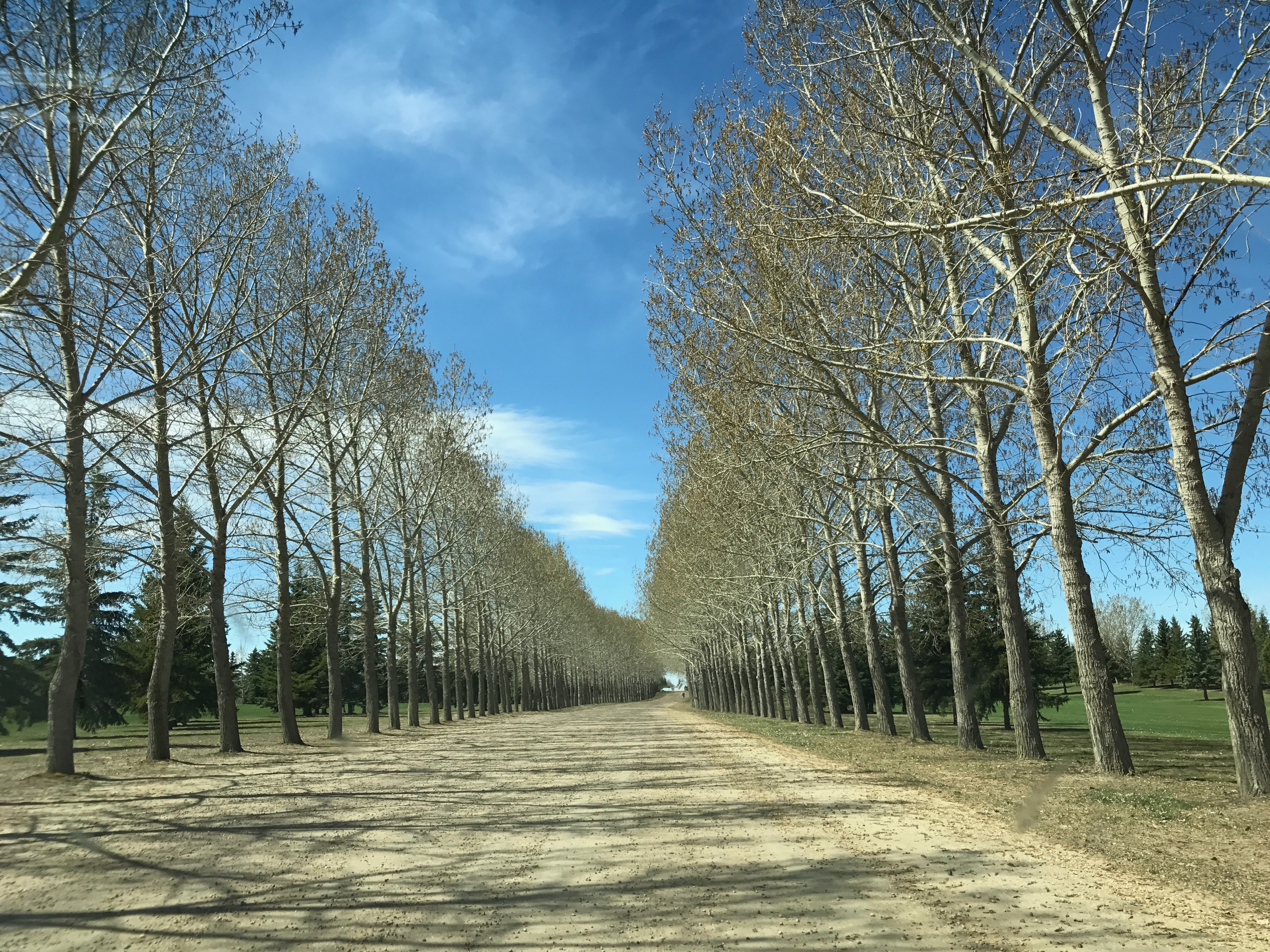
We took the tree-line road up to the clubhouse.

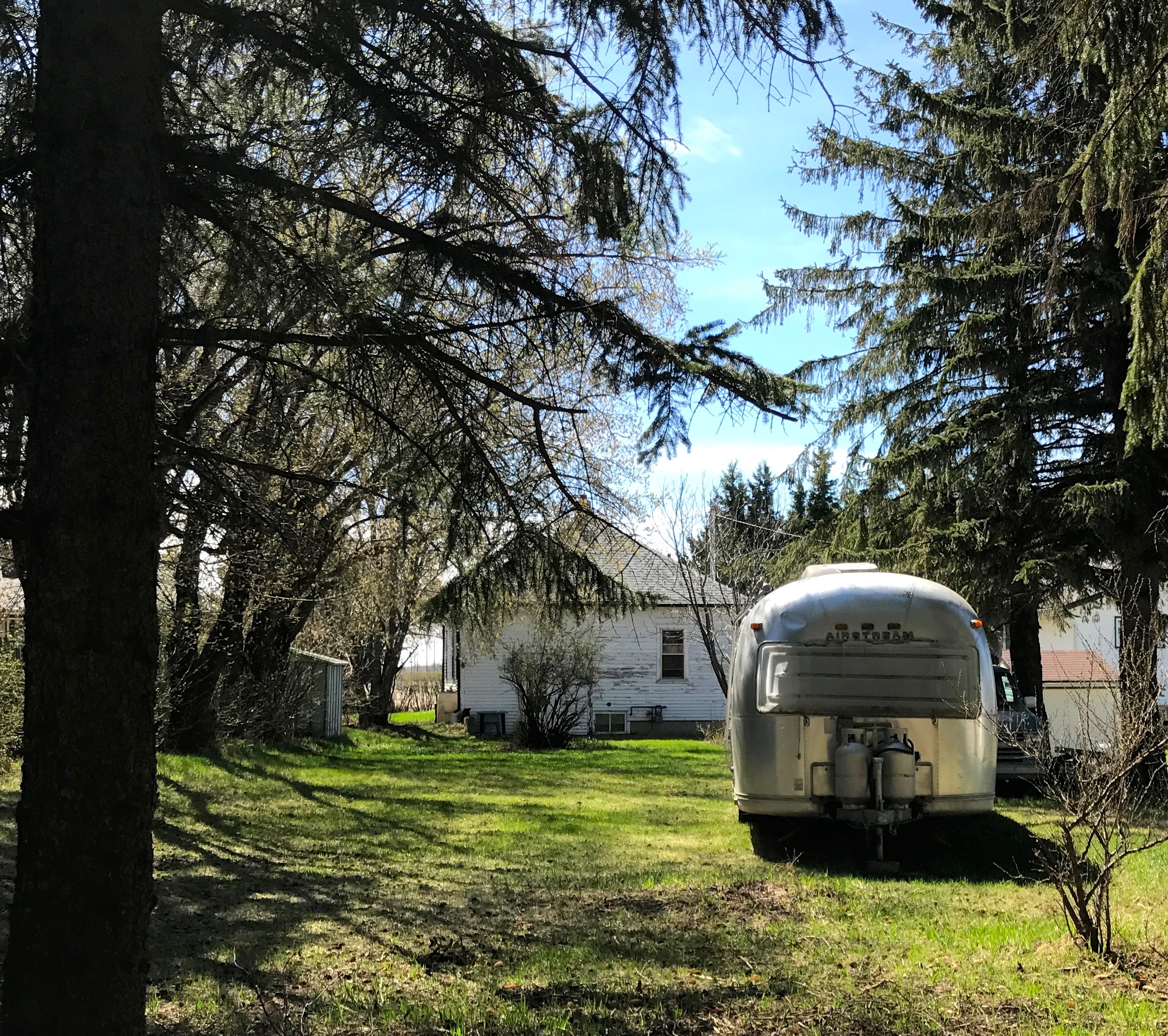
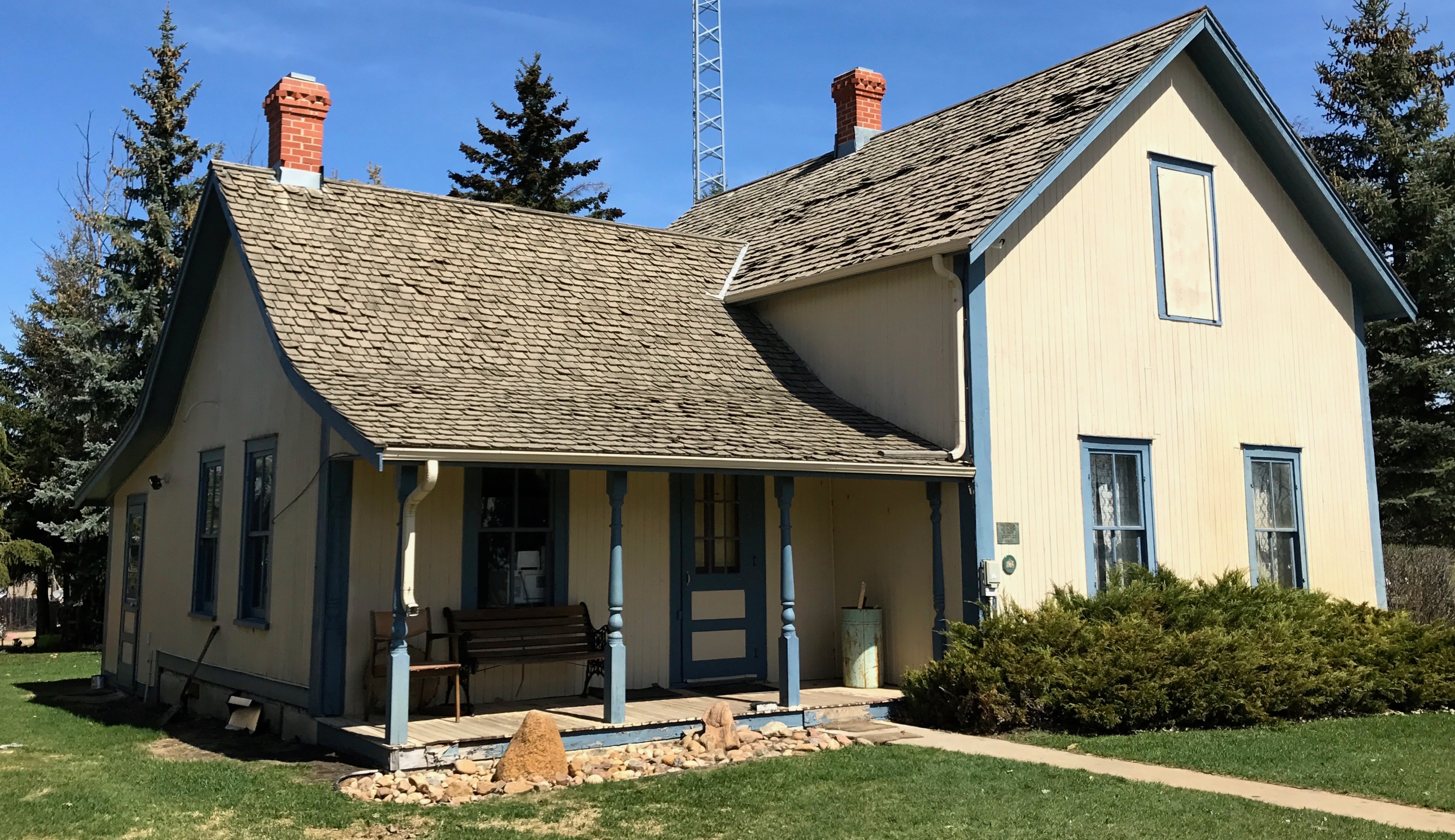
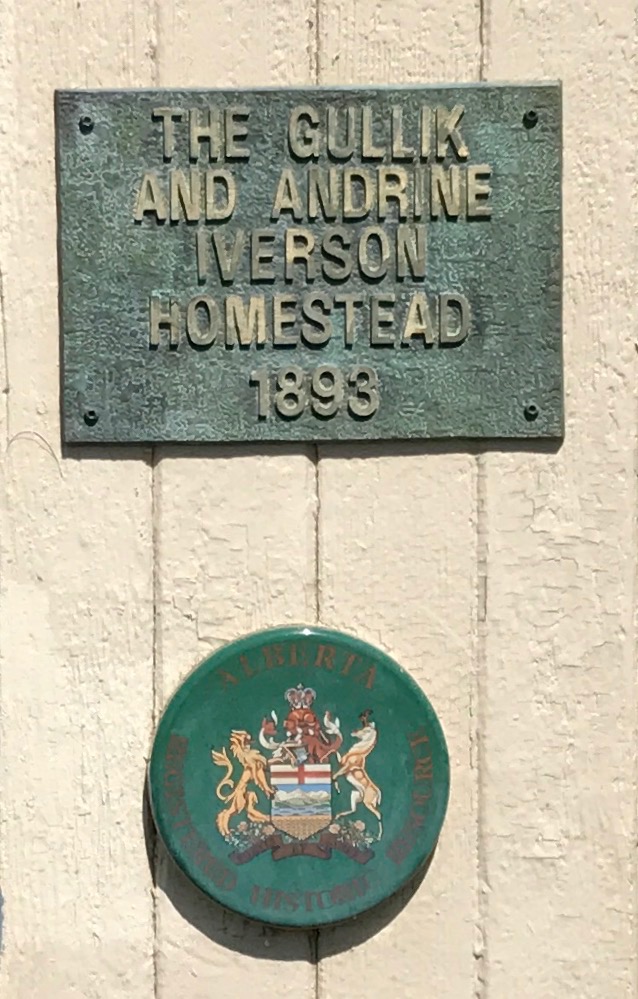
No, this isn’t the clubhouse. It was the original homestead.

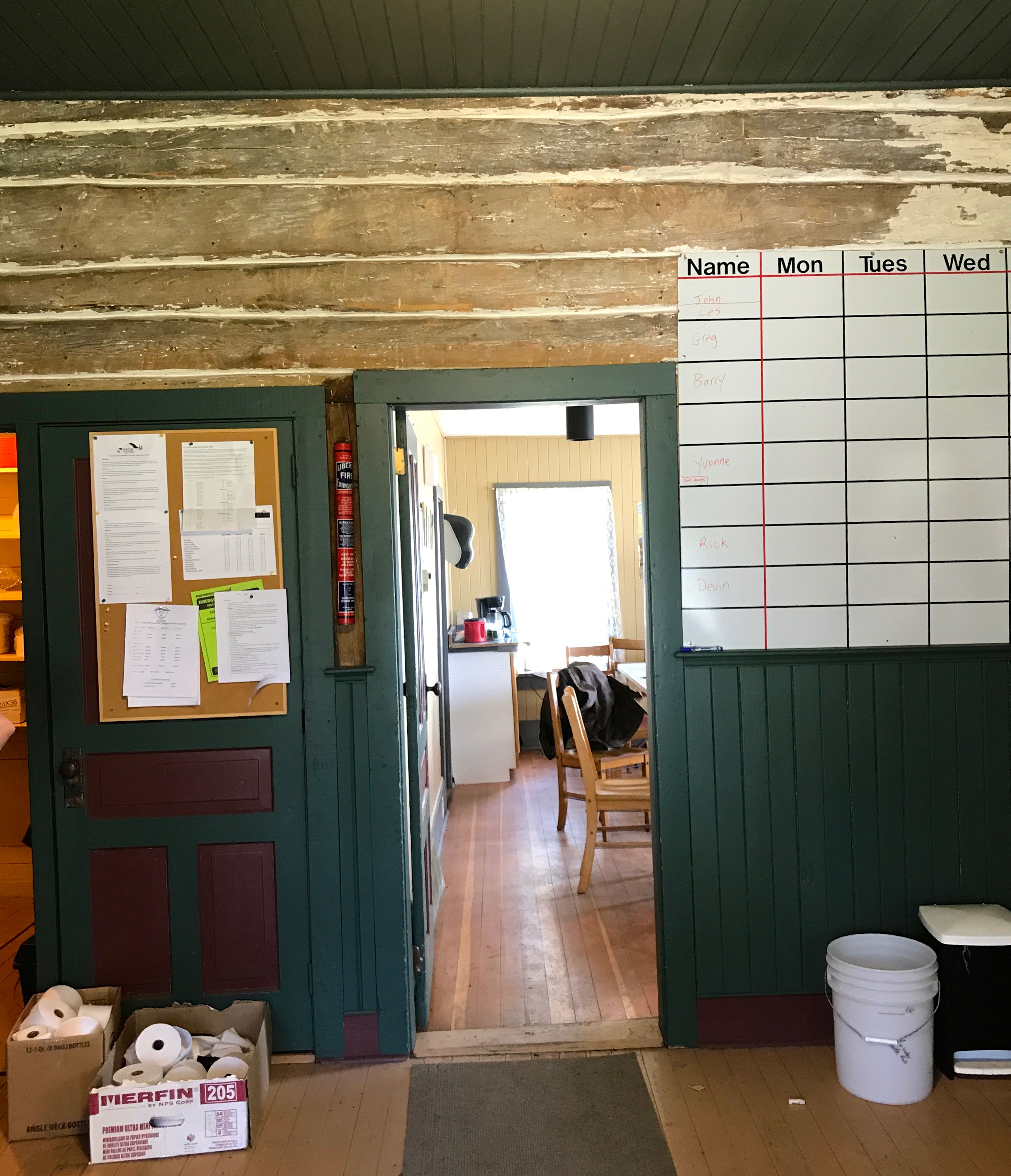
Over the years, it had been used as a staff building. Apparently they held meetings there and work assignments were made.

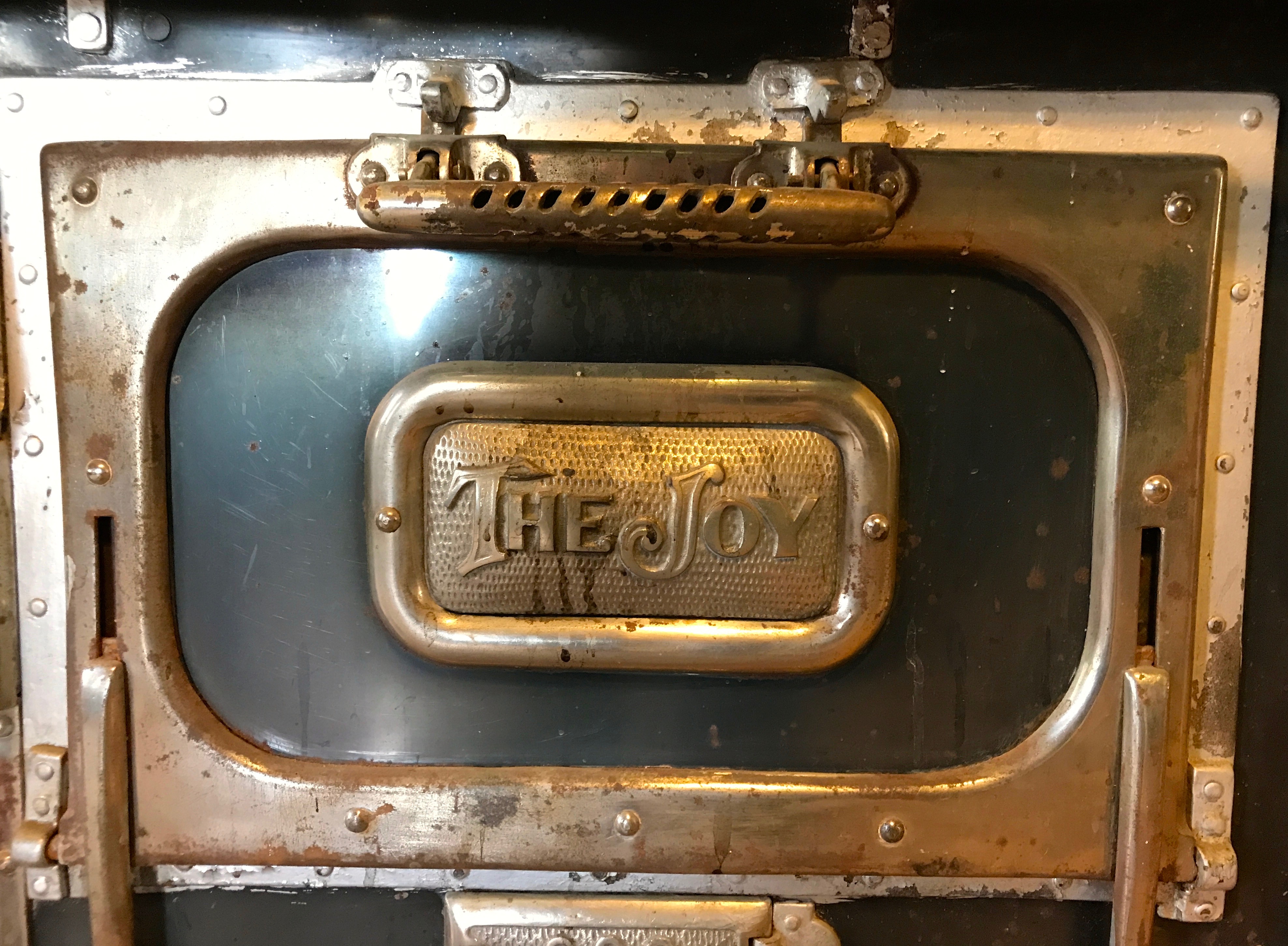
The old stove was still there.

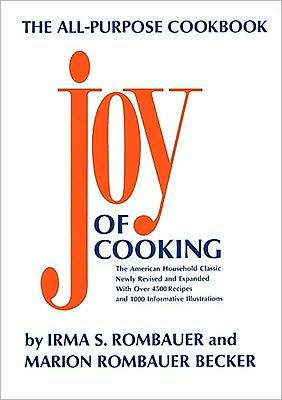
I wonder if this is where they got the name for the cookbook?

Naw…probably not.

We headed to Camrose for lunch at the Norseman. But, what would a road trip be without a stop at Tim Horton’s?

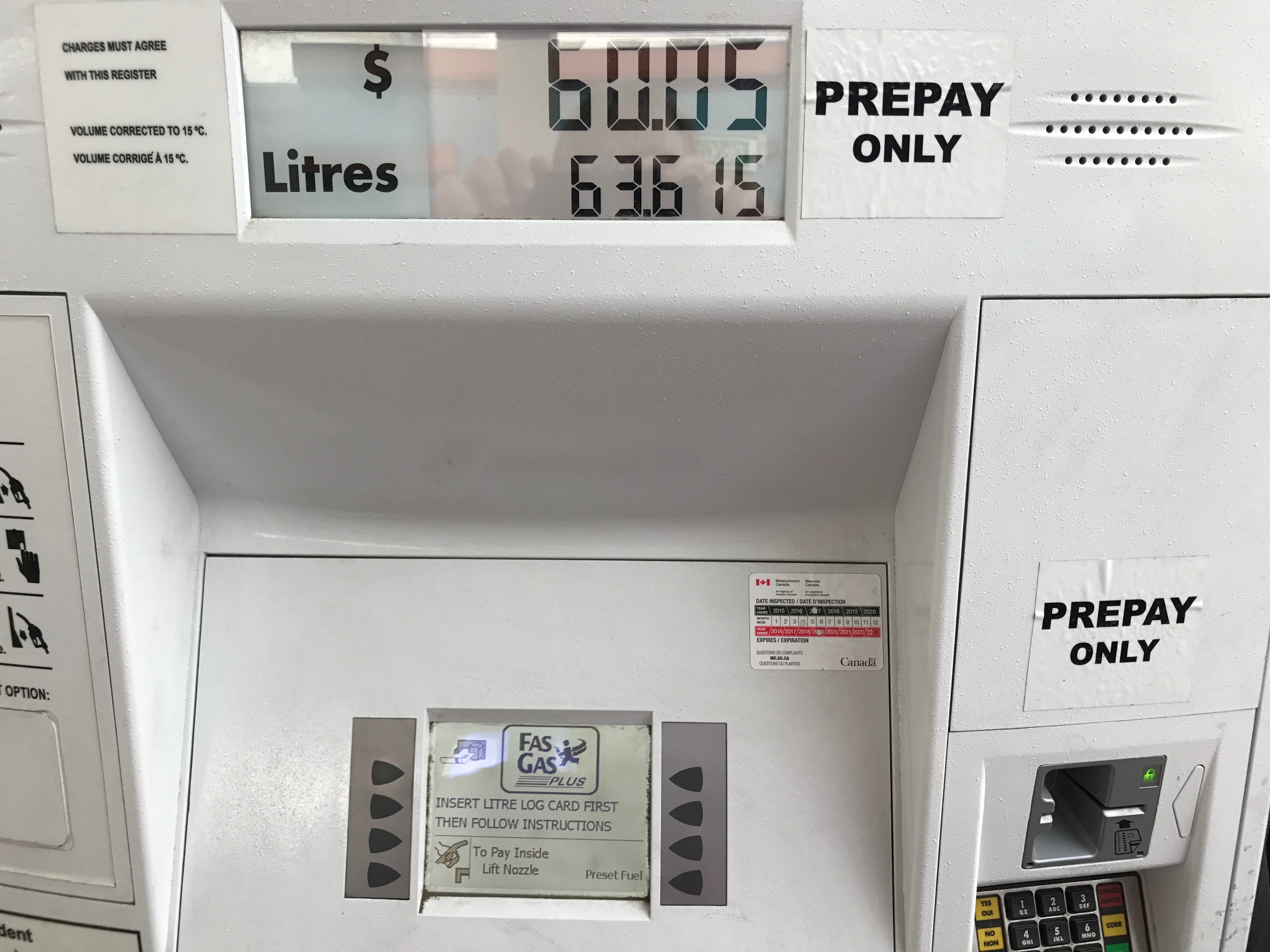
Oh, and some gas. How much gas and how much did it cost? My poor American brain can’t wrap my mind around it.

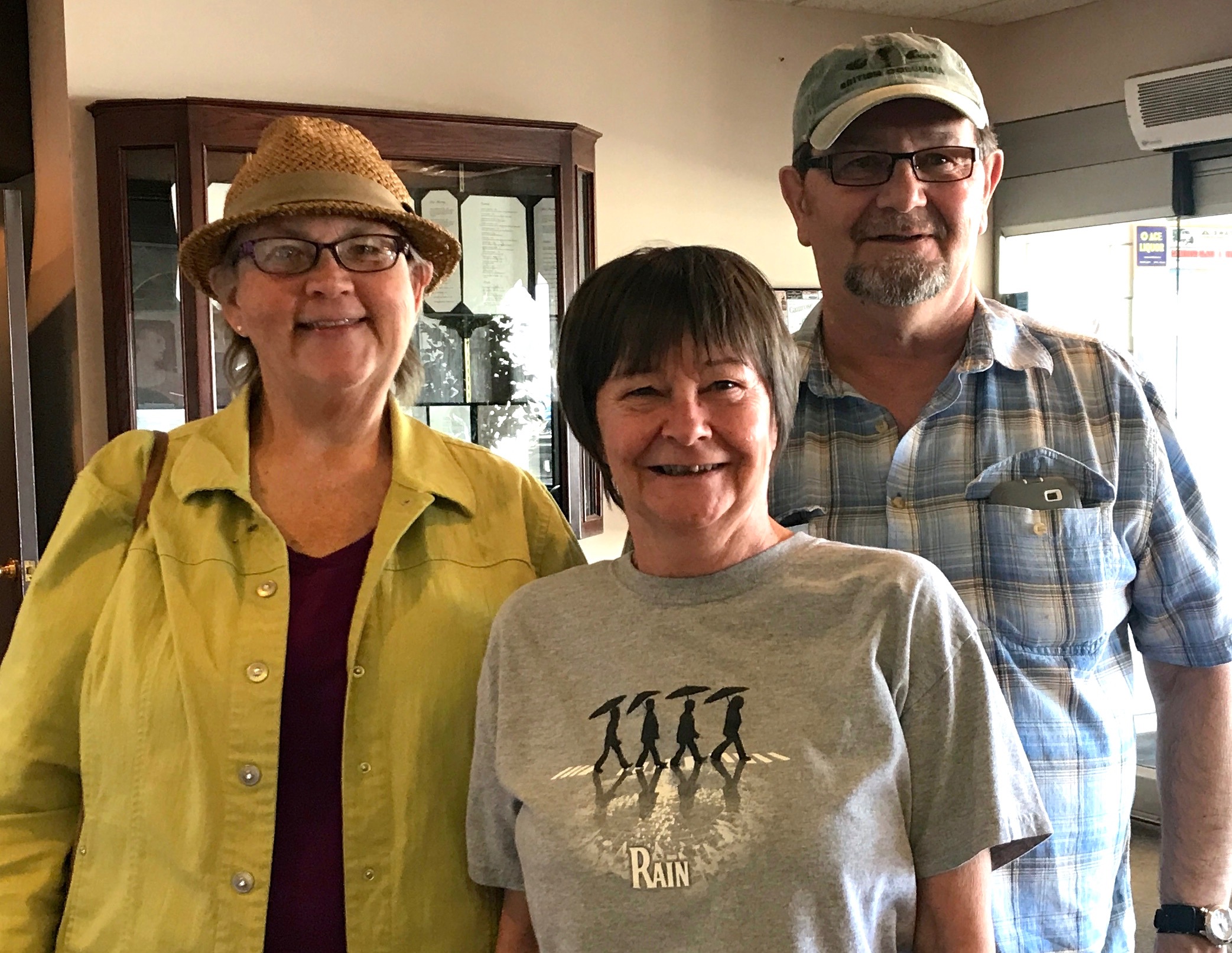
After lunch, we snagged a passerby and got a photo. There is a photo, so there is proof it happened!

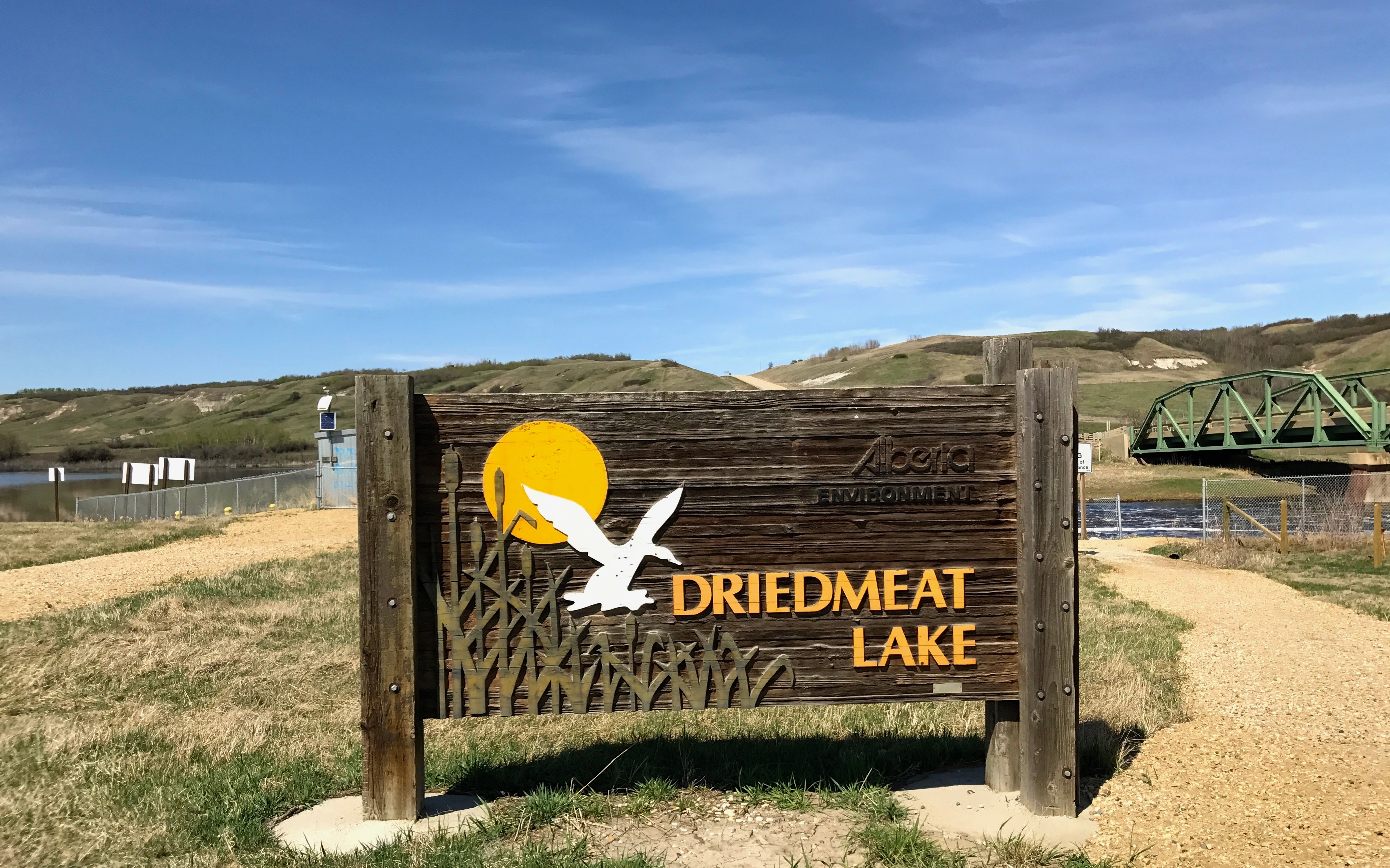
Heading back to Red Deer, we passed by a place my mother used to talk about.

The funny thing is, that I remembered it as DEADmeat Lake! When I saw the sign, I realized that I had it wrong.

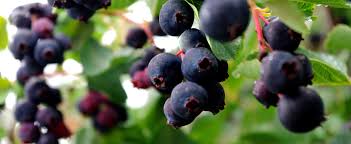
According to the information I could find, the Blackfoot and Cree used the area around the lake to camp and hunt. Saskatoon berries grew around the lake and the surrounding valley, and the Blackfoot and Cree would use the Bison meat and the berried to make pemmican, which is basically dried meat.

Saskatoon berries look a lot like blueberries, but they are more closely related to the apple family. They are high in fiber, protein and antioxidants and are described as having a sweet, nutty almond flavor. They sound delightful!

A nearby hill is named Driedmeat, which is where the long ribbon lake gets its name. It was originally crated by a glacial meltwater channel, which carved the surrounding valley. The hill has been reduced due to gravel mining.

After walking around lake for a bit, it was time to get in the car and resume our trip back to Red Deer.

And that was that. Thanks to Kelly for being an excellent hostess and to all my cousins I met in Alberta! I hope we can get together again.


Red Deer

I’m off to Red Deer!

With a few more than 100,000 people, it is Alberta’s third largest city. Red Deer was my goal because of only one person, my cousin Kelly.

I had actually met Kelly a few years before, at a Ramsey reunion in when we both were visiting in Buffalo. Ramsey was my mother’s maiden name.

Kelly is a hard core genealogist, as is my cousin Bobbie, who was hosting the get together. When I looked back through my photos of the event, all the shots I had of Kelly were similar to this one. She was devouring information about our family.

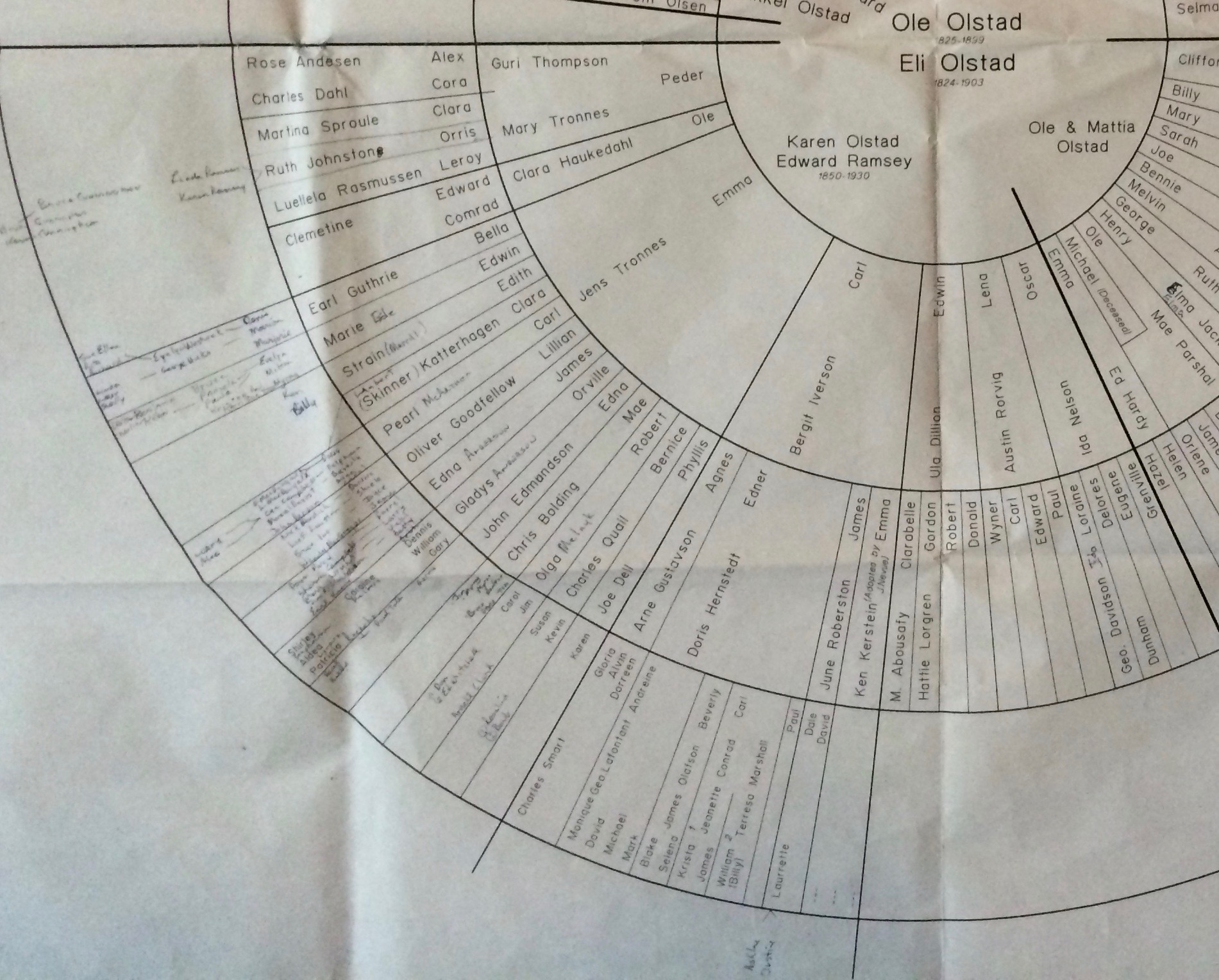
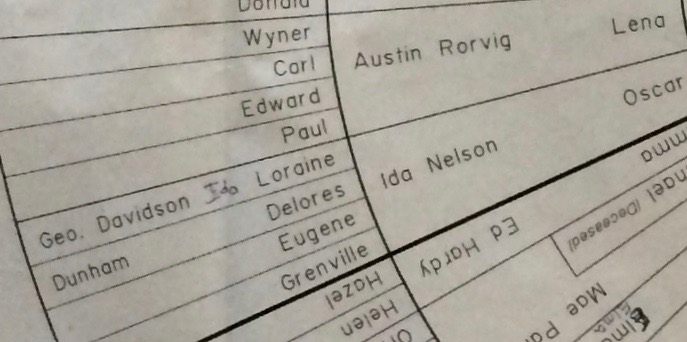
This was the coolest family tree I’d ever seen. It traces us back to the Olstads. I’d always wondered why Mom would talk about the Olstads. I guess I should have asked.

Kelly and I were both from this particular sector of the family. I think by the time we left the get together, the names of me and my sibs were on the wheel, and I HOPE someone corrected the spelling of my father’s last name.

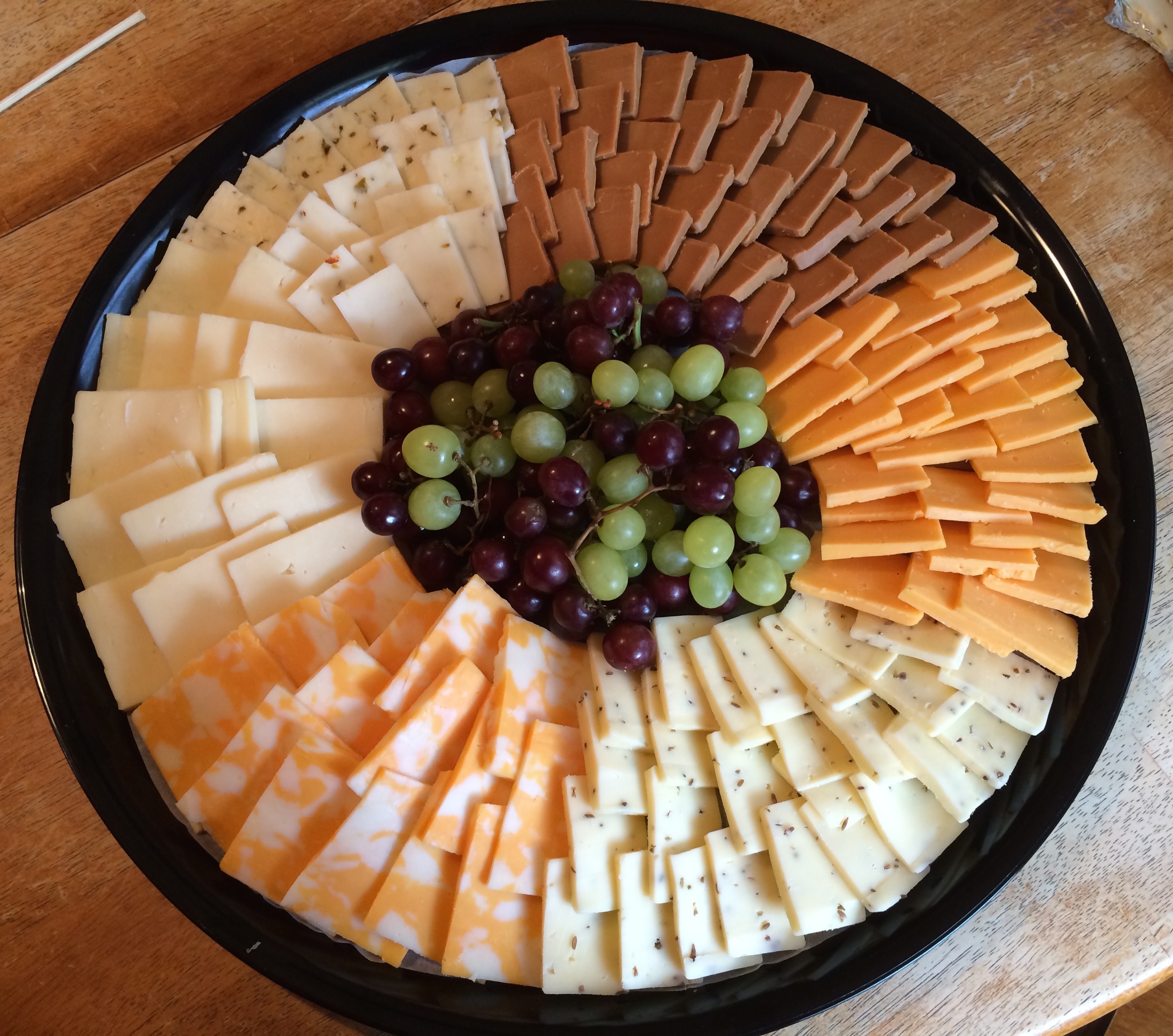
As much as I admire the people who get into family histories and can tell how people are related, this was my contribution to the gathering.

It kind of looks like that impressive family tree, doesn’t it?

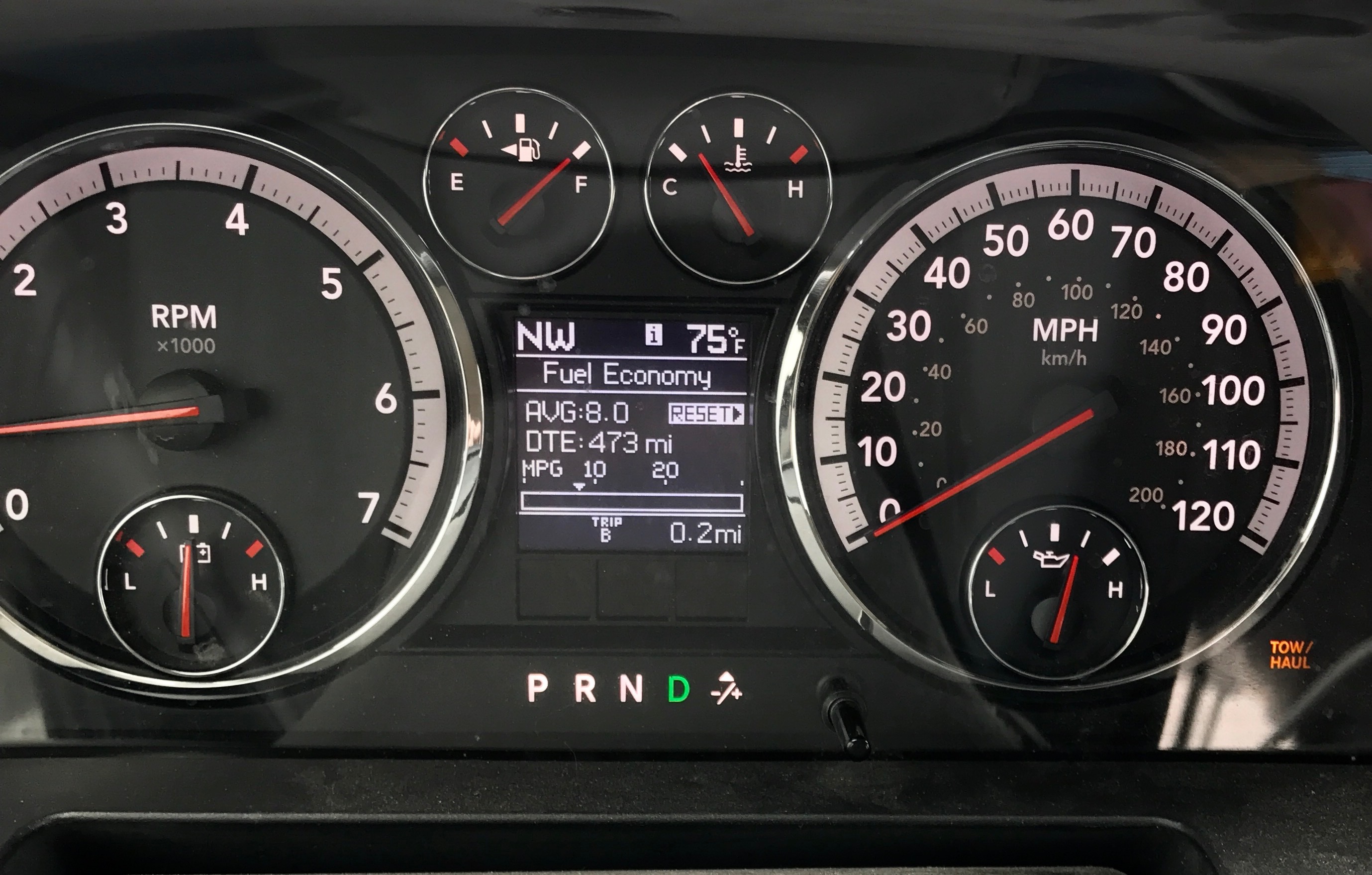
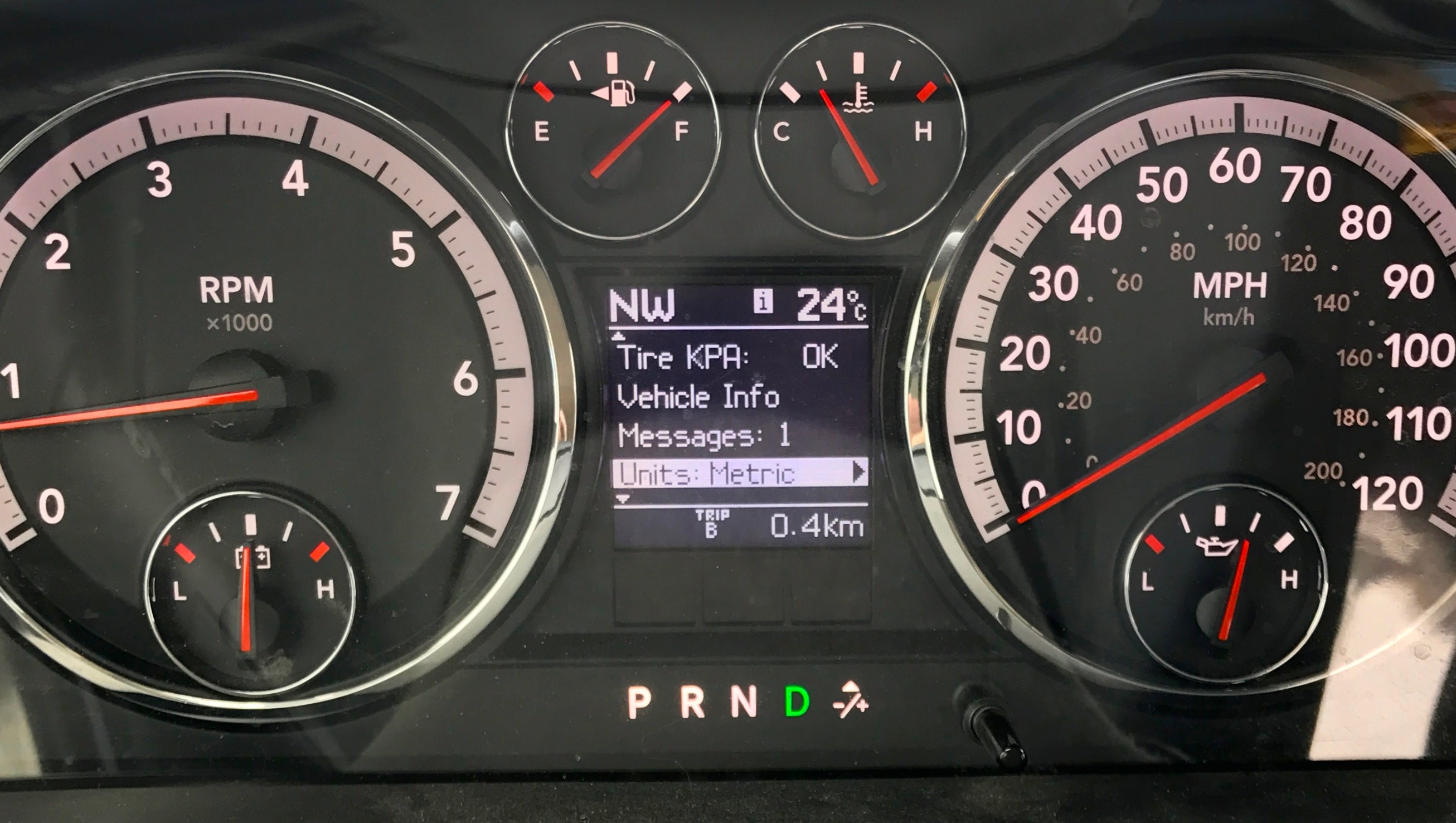
Anyway, I was all hitched up with a full tank of gas and ready to roll. I decided that I might as well change the settings in my data display to “metric.”

And, yes, when I was towing, eight miles to the gallon was common, especially when I was just getting rolling.

Red Deer was only about two hours up the highway. I got into the Westerner Campground, which was quite nice, early enough in the day to do some exploring  in Red Deer before Kelly got off work.

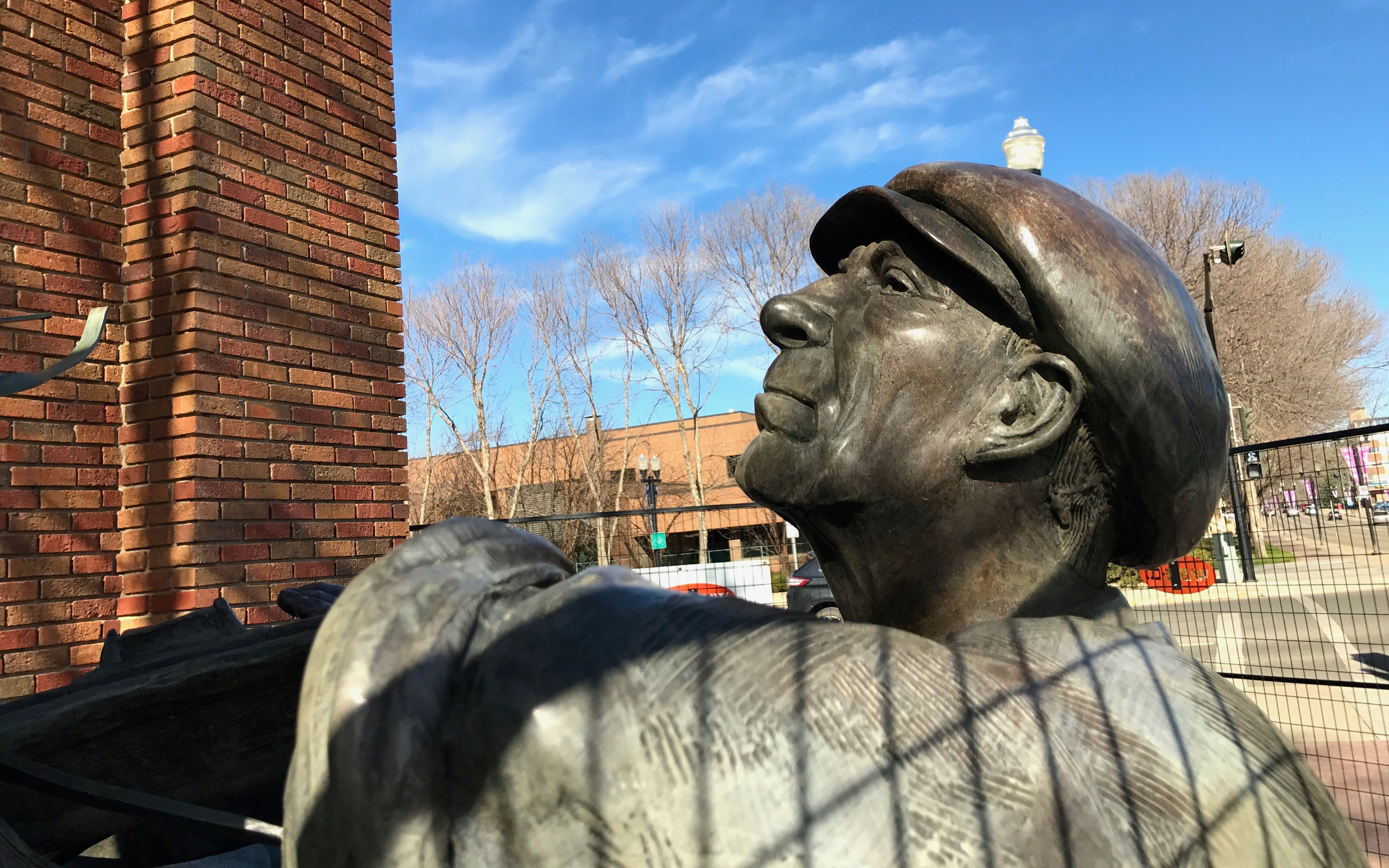
When looking for things to do in Red Deer while I was waiting to check in, I saw something about the Ghosts of Red Deer, which are statues around the central business district. I took off to see what I could see.

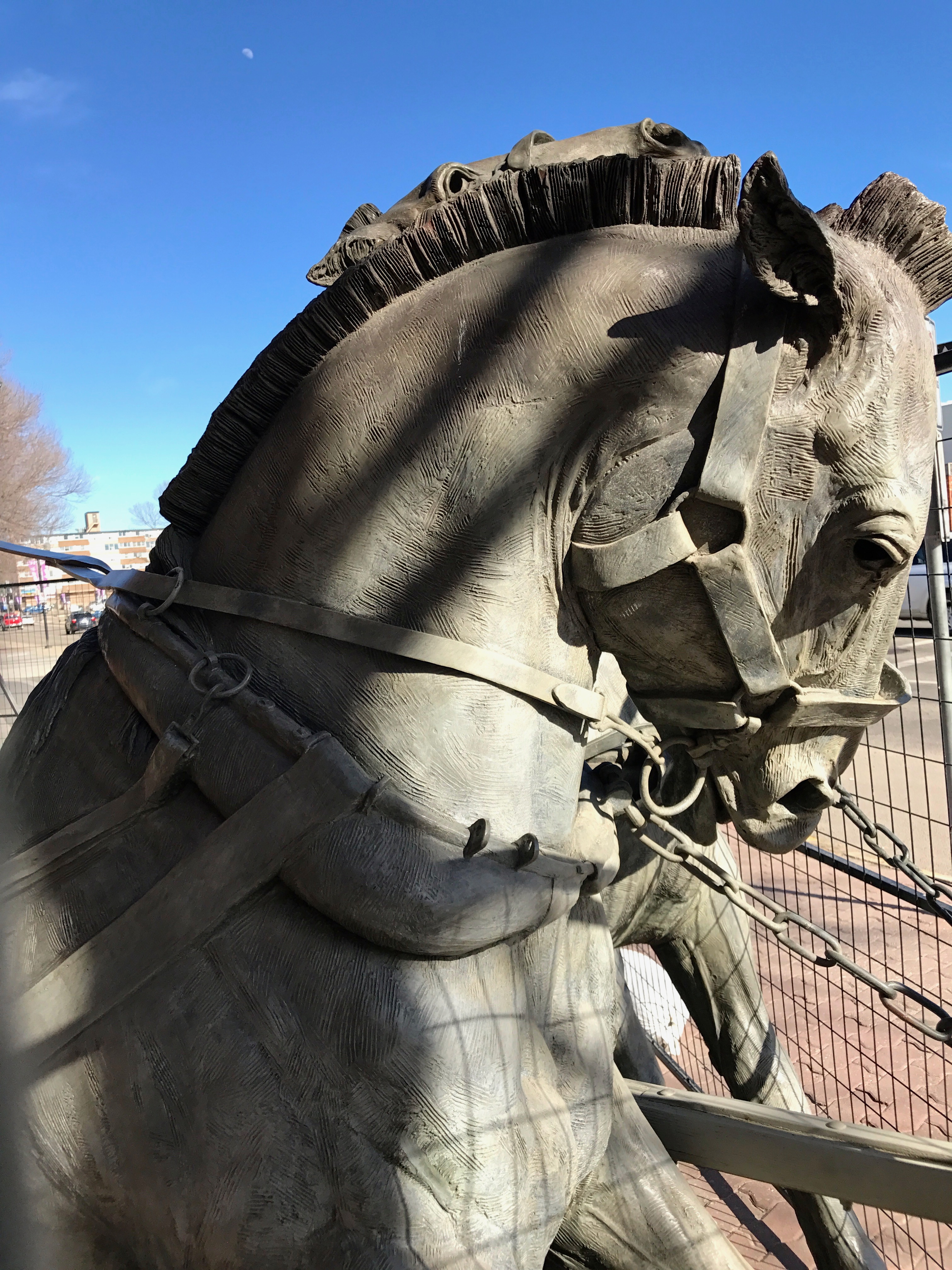
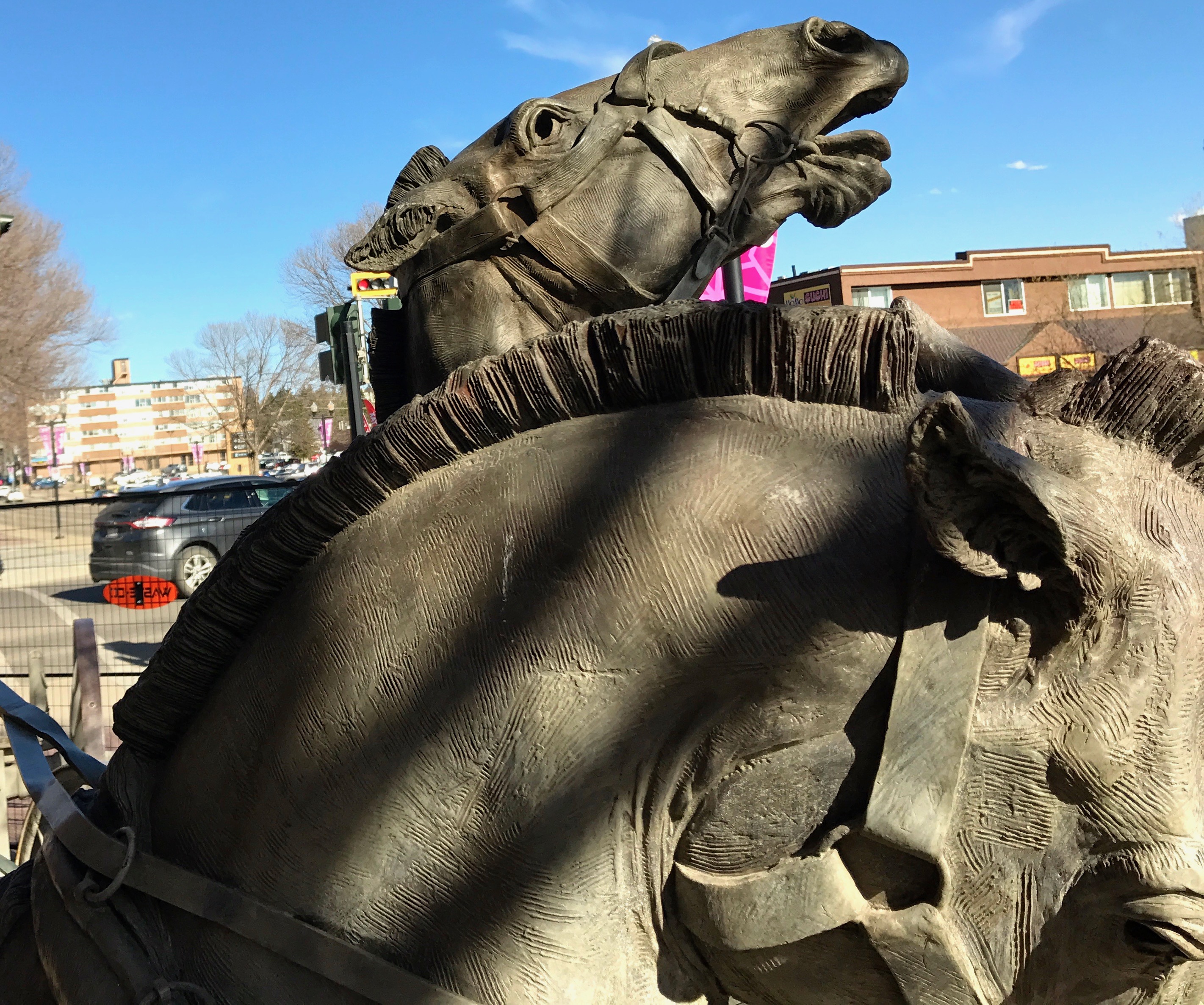
My first ghost I saw was dedicated to the volunteer fire brigade, which was placed in front of the former headquarters. It was undergoing some maintenance, so it was hard to get a clear shot of the whole sculpture.

There was a member of the brigade,

but the horses really stole the show.

They were awesome!

The old firehouse was right next to the library – in fact, I think it was part of the library. I decided to go in and see if they could give me any information about the Ghosts.

They were very hospitable and eager to help. They photocopied me some information about the sculptures and a map about where to find them. I set off on a scavenger hunt of sorts.

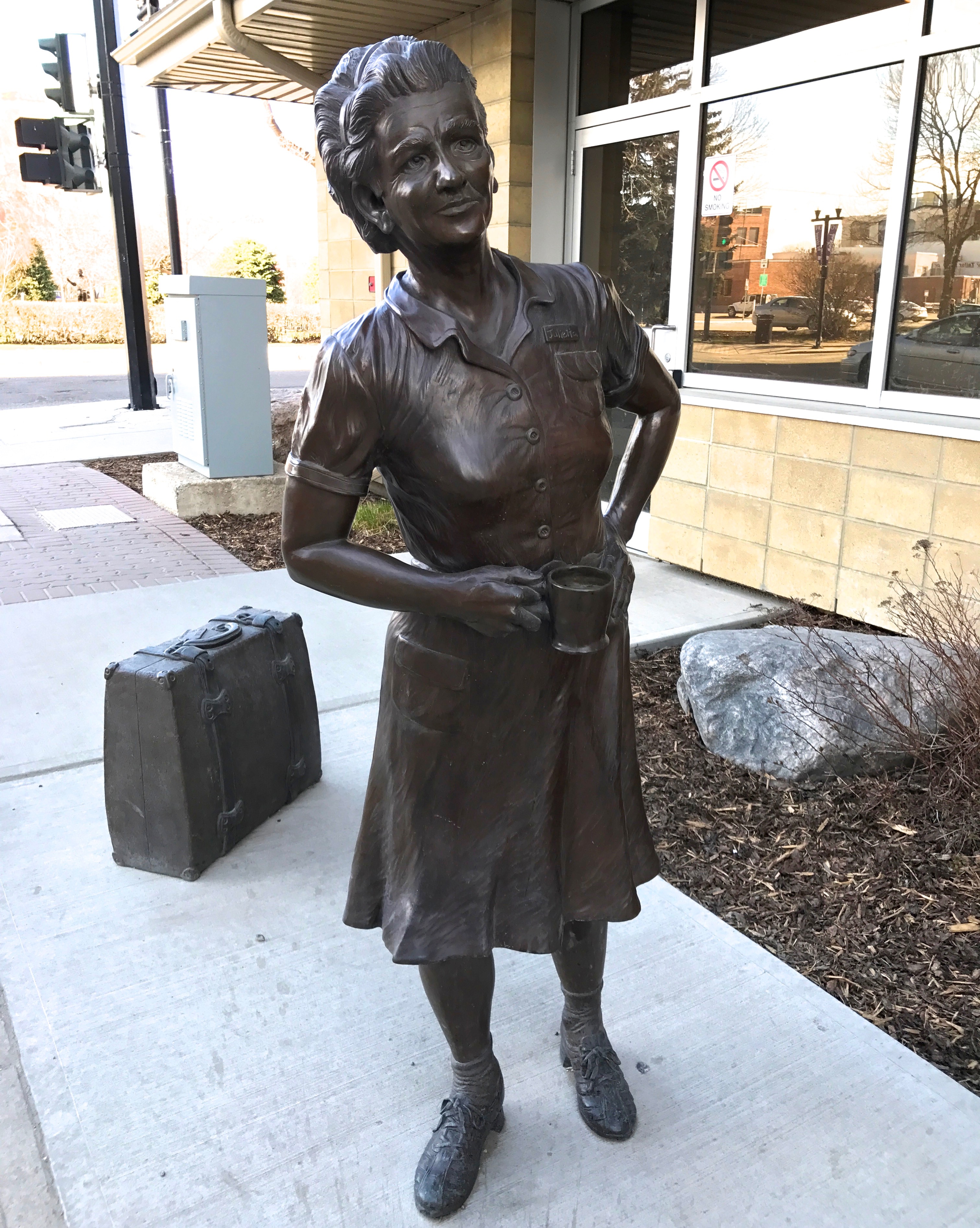
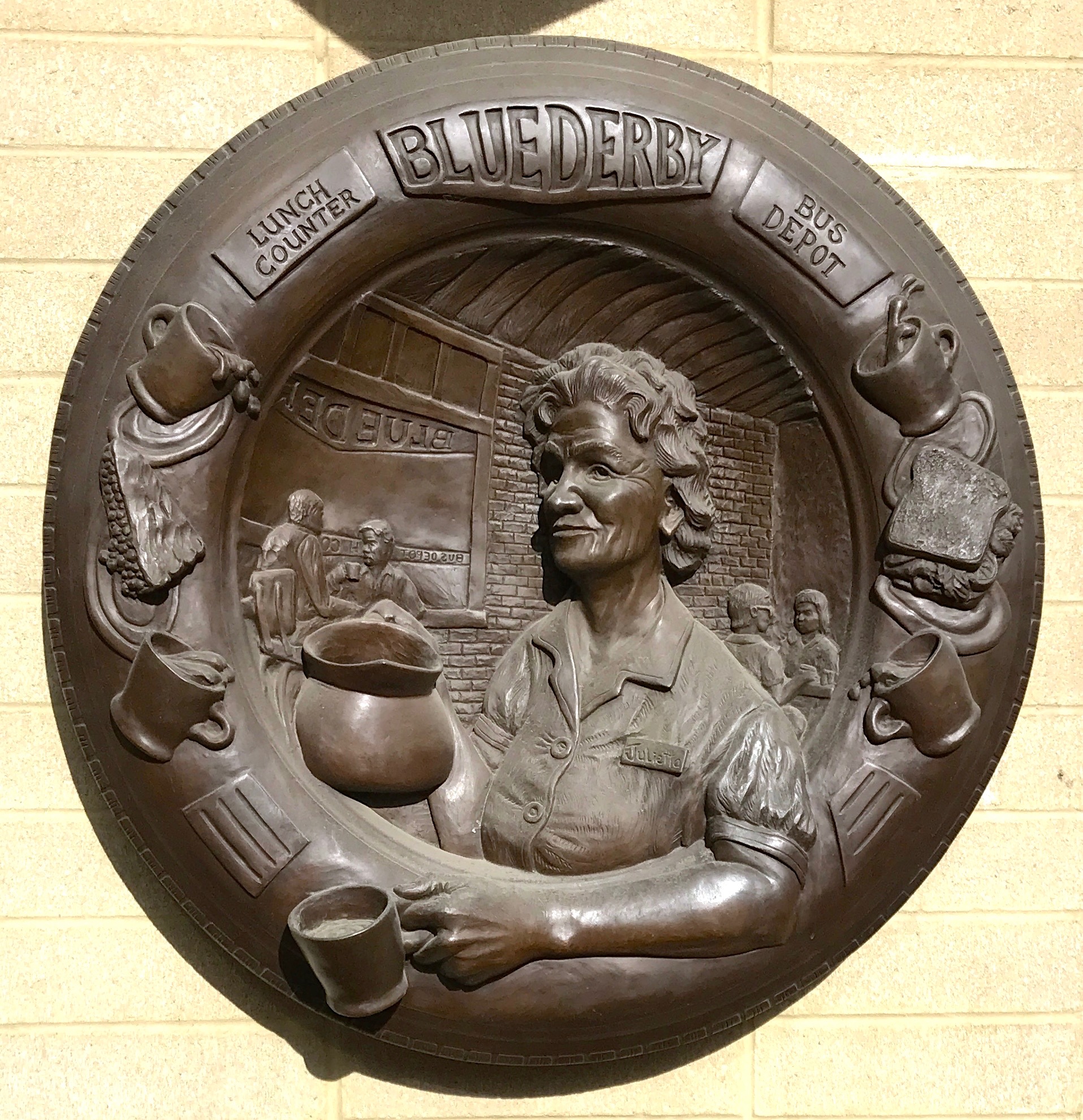
My next stop was the bus terminal, where Julietta Sorensen was waiting for her husband, Gordon, to arrive with the last bus of the day.

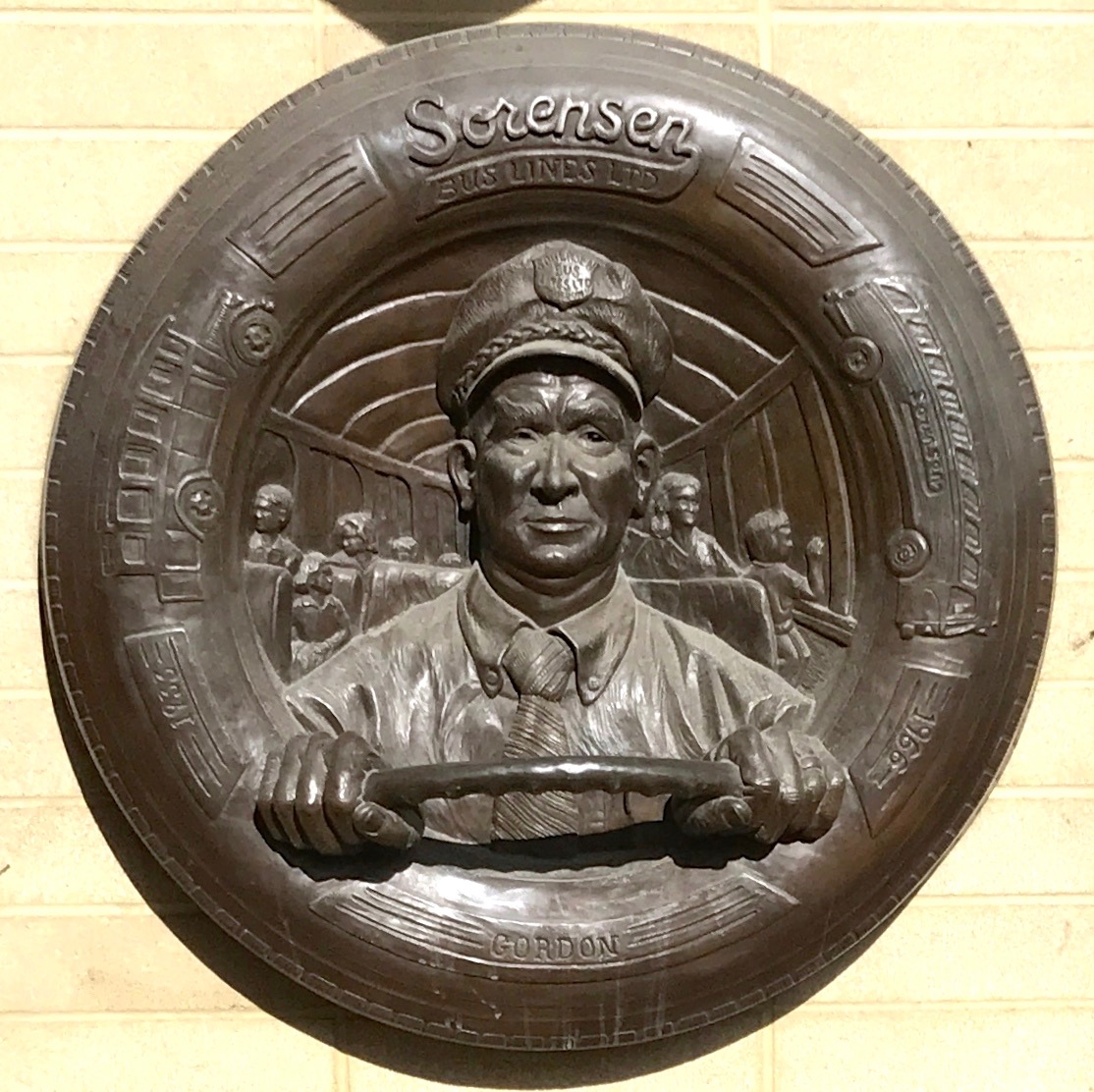
The Sorensens started a bus service in Red Deer and Red Deer County in 1933.

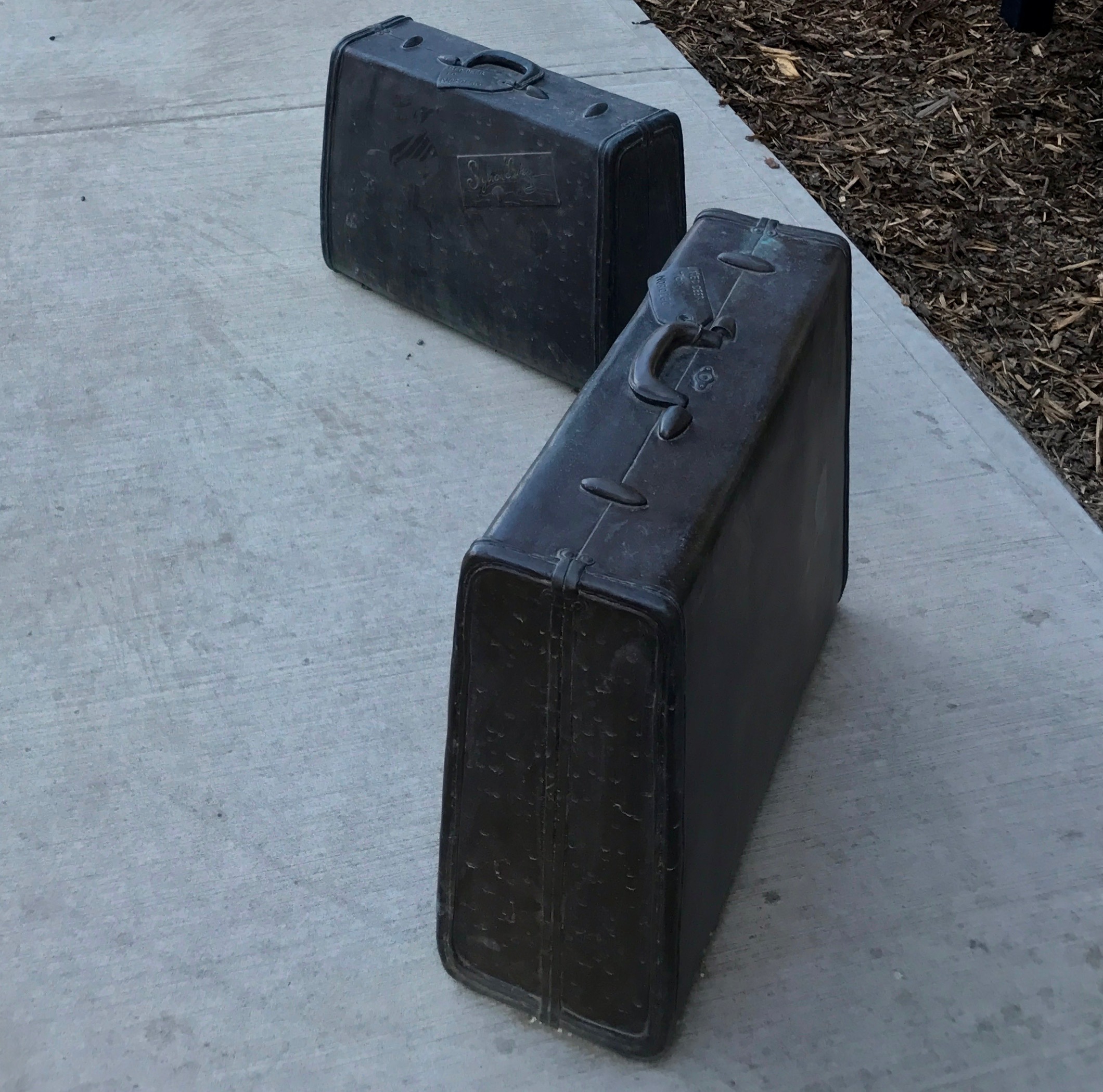
I like the detail of the suitcases waiting for their owners.

Gordon drove the bus and Julietta ran the lunch counter in the bus depot.

The Sorensens sold their bus service to the City of Red Deer in the 1960s, which is the basis of the city’s current public transit system.

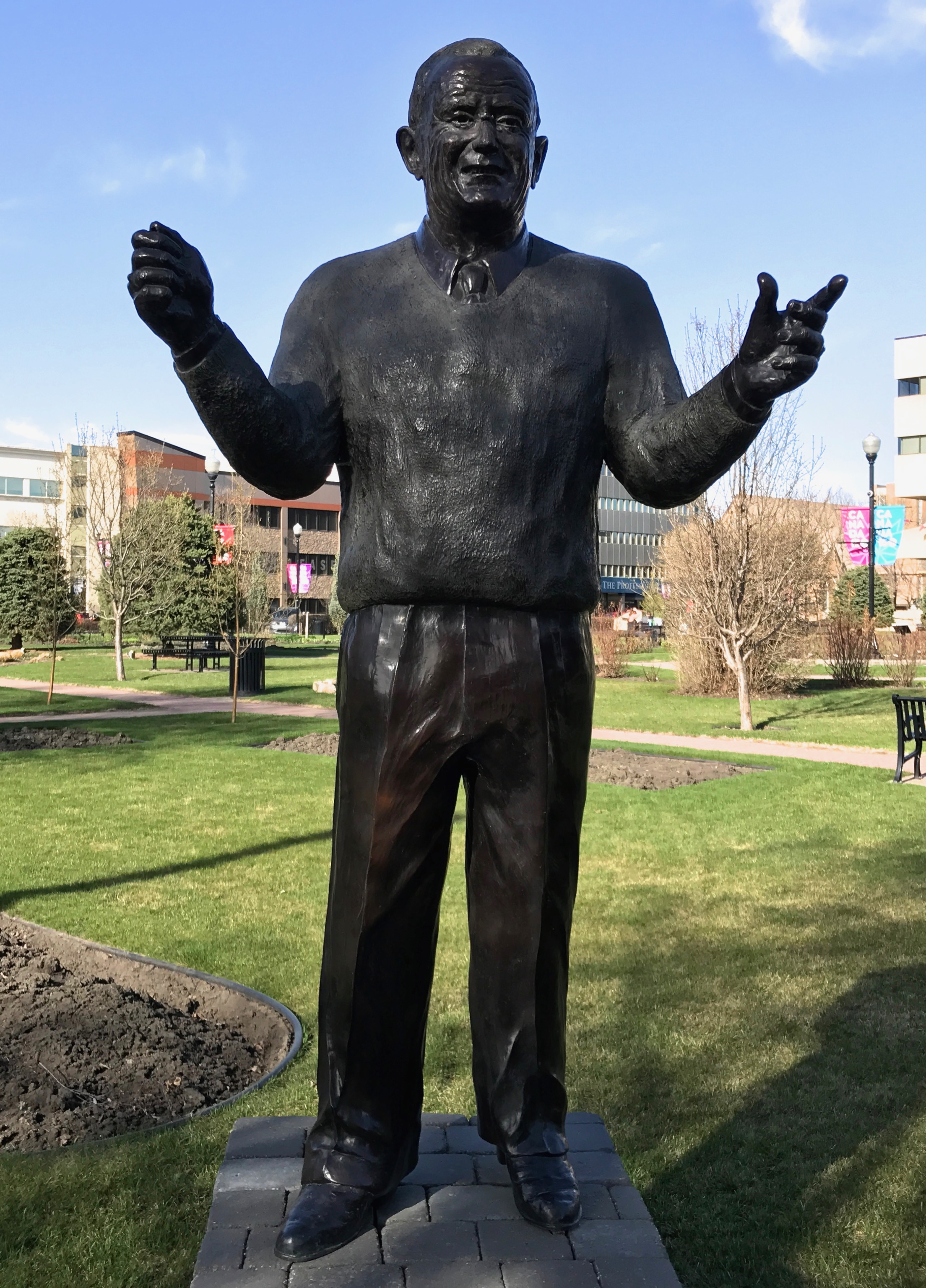
The next ghost I found was Keith Mann, who was an internationally acclaimed music director. According to the librarians, Mr. Mann once held a baton in his right hand.

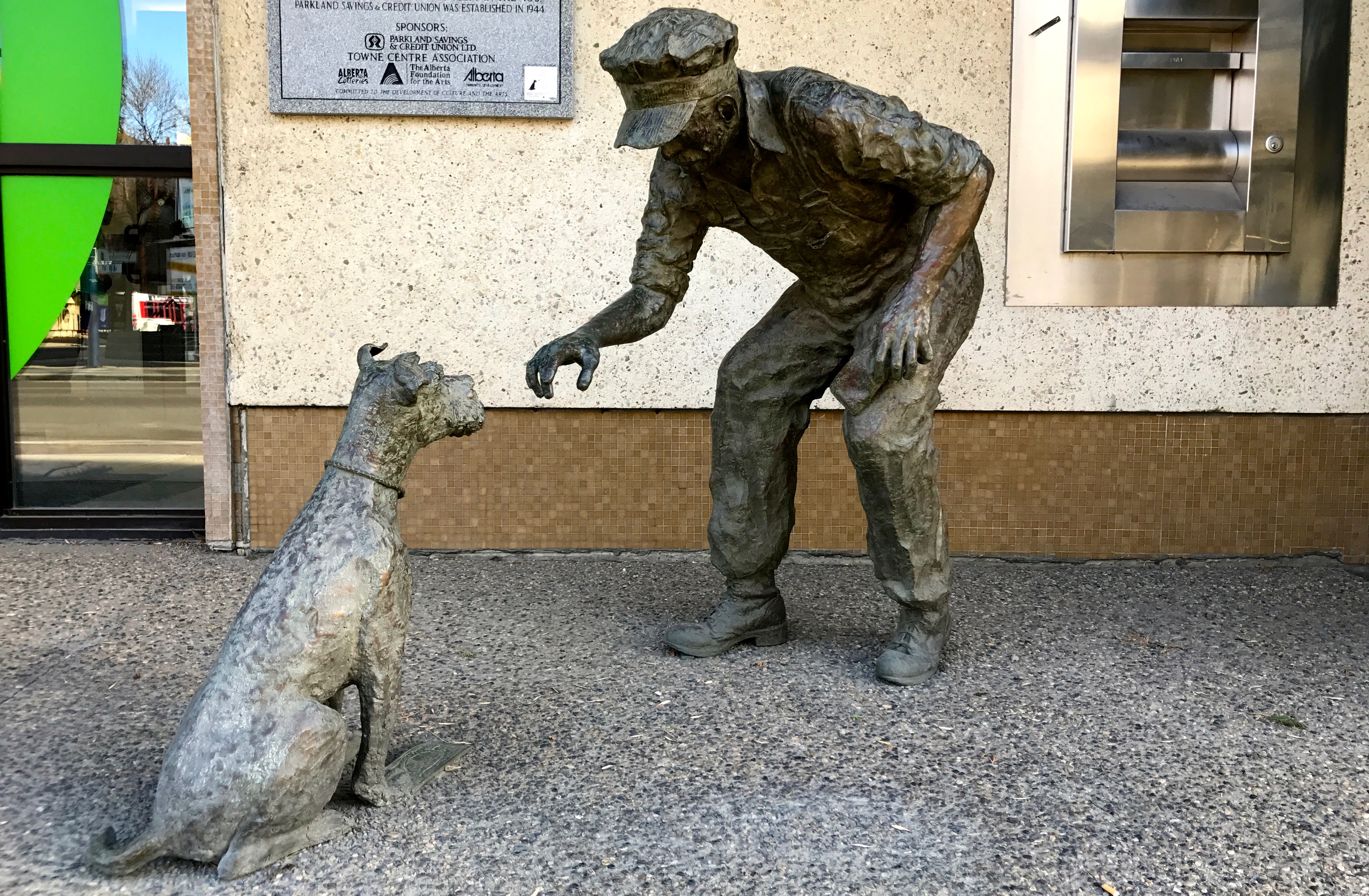
This ghost is called “Choices”. In the early 1900s, the railroad was central Alberta’s largest employer. As a result of the Depression, railroaders, who worked hard days for their money, had a certain distrust of “Eastern” banks. Their desire to take control of their own money lead to the credit union concept in the 1940s. The Parkland Savings and Credit Union sponsored this ghost that is positioned outside one of the branches.

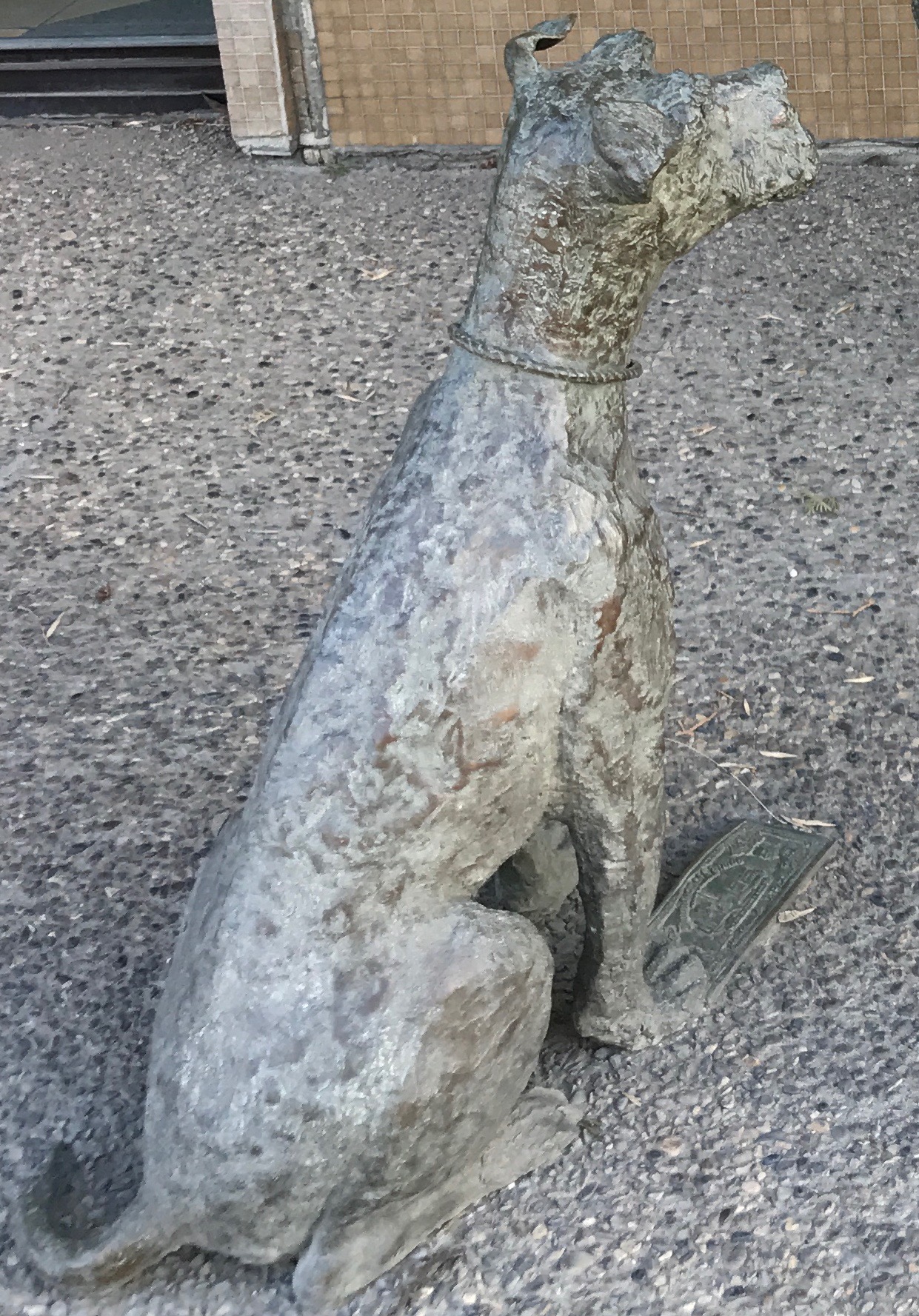
In case you missed it in the big shot, here is a close up of the money that is under the dog’s paw. I guess a credit union would be more convenient than trying to get it away from a protective dog.

I ambled along on my ghost hunt and came upon the Reverend Dr. Leonard Gaetz. He was one of the first settlers of the area and is regarded as the founder of Red Deer.

I enjoyed sauntering abound the downtown, but it was time to head back to the campground to meet my cousin, Kelly for dinner.

You know how they say, “If there’s not photo, then it didn’t happen?” For some reason, I didn’t get a picture of the two of us together.

But I did take a shot in the restaurant that proves I was in Canada.


A Short Trip towards Banff

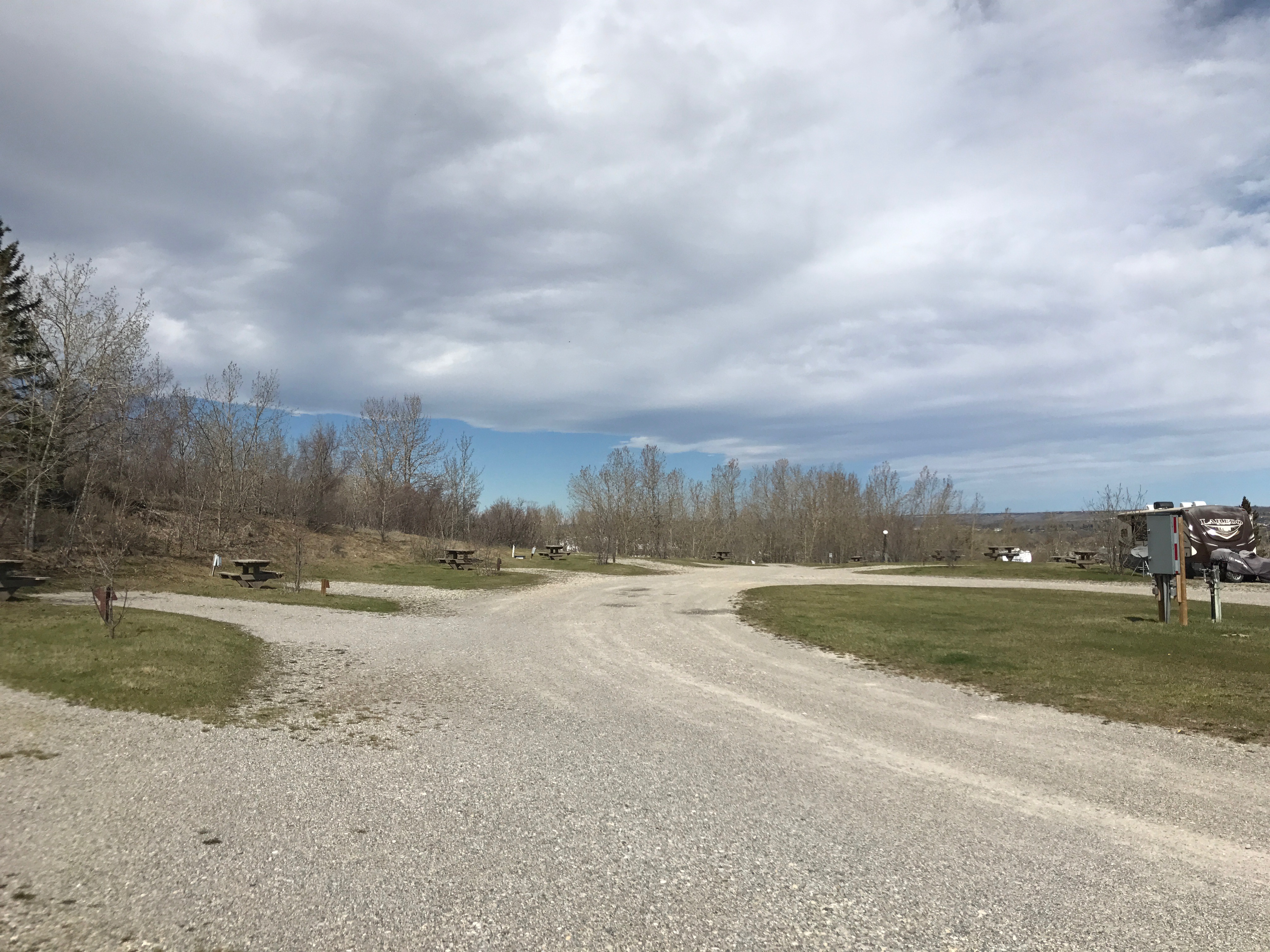
Sometimes campgrounds are just places to stop.

This was one of those campgrounds. But it did had location going for it.

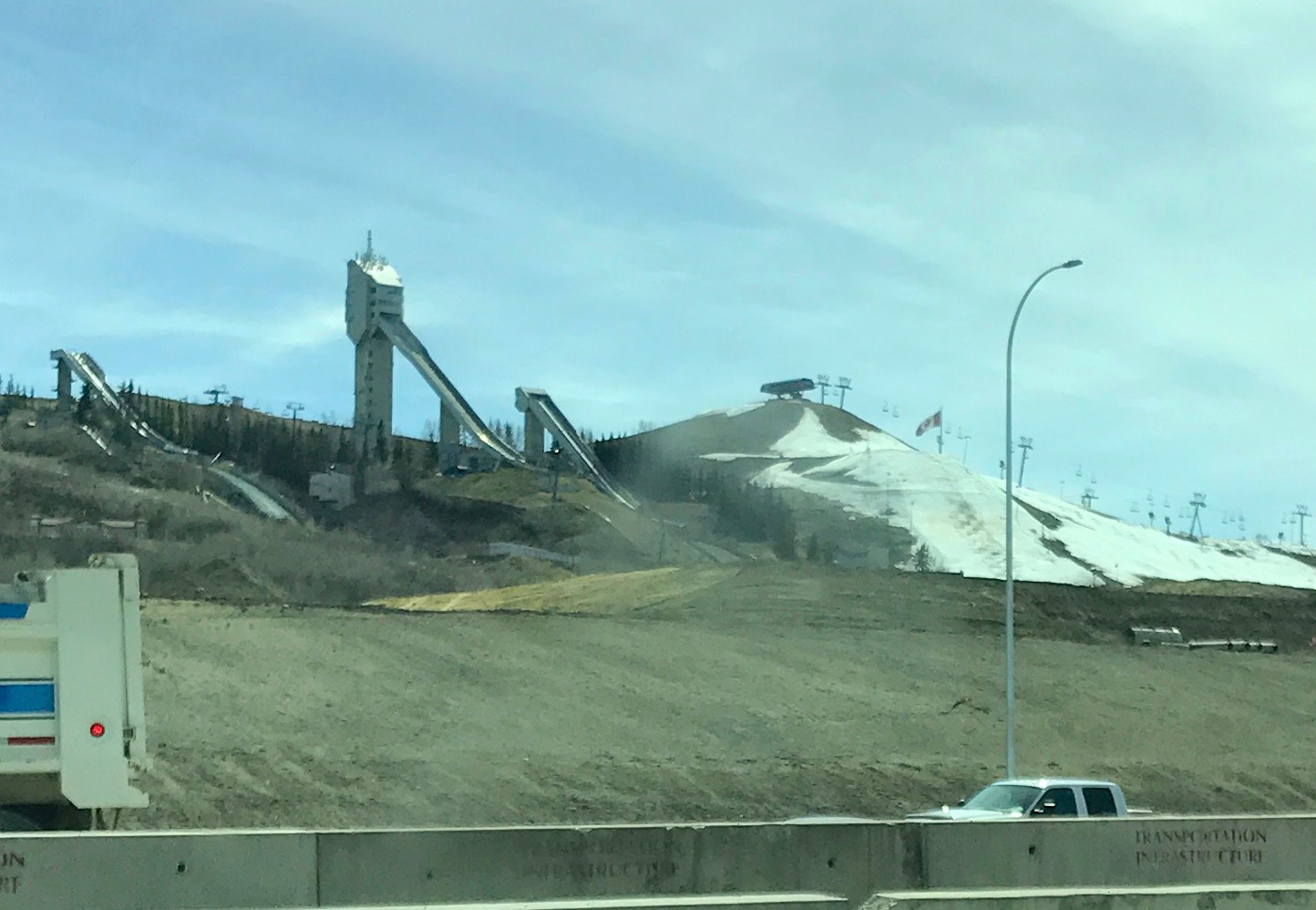
It was really close to the some of the venues from the 1988 Olympics. I passed the ski jumps every time I went to or from the campground.

In all fairness, maybe it was more appealing in the warm months. I was there in April and it was still pretty cool at times.

Since I was so close, I decided that I should head toward Banff. I didn’t know how far I’d get, but I headed Bart down the road.

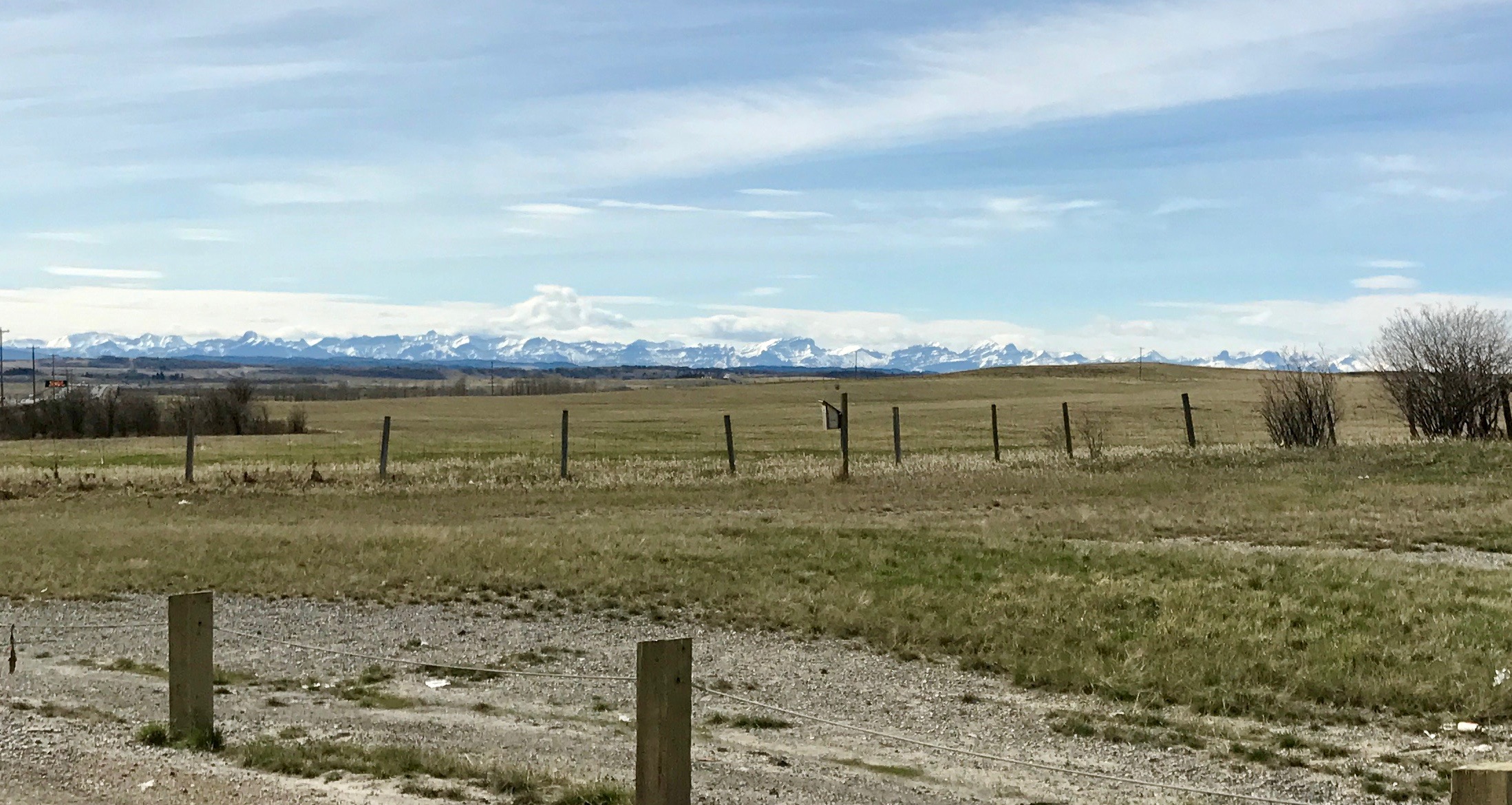
I could see the Rockies rising up the closer I got.

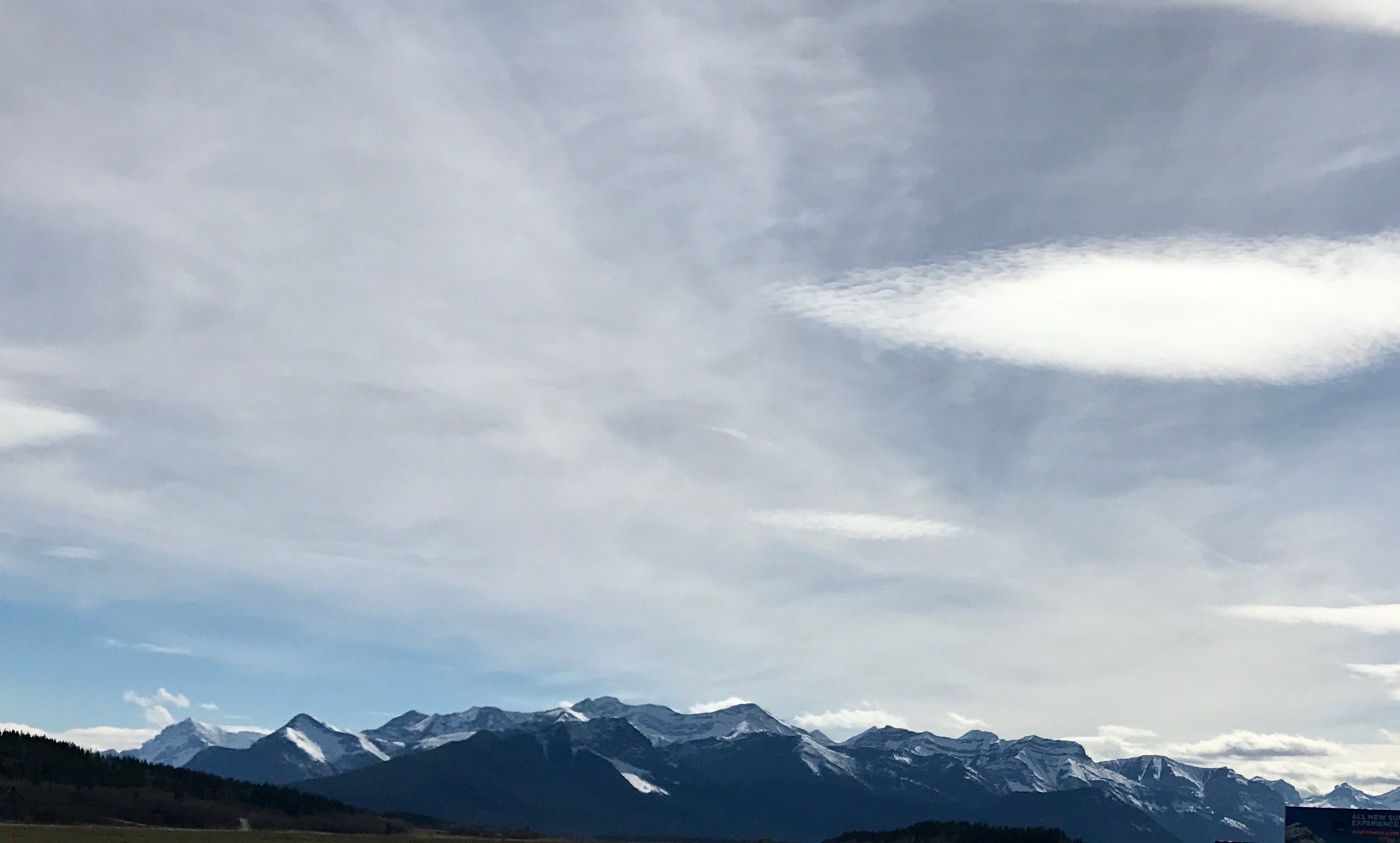
I was getting closer.

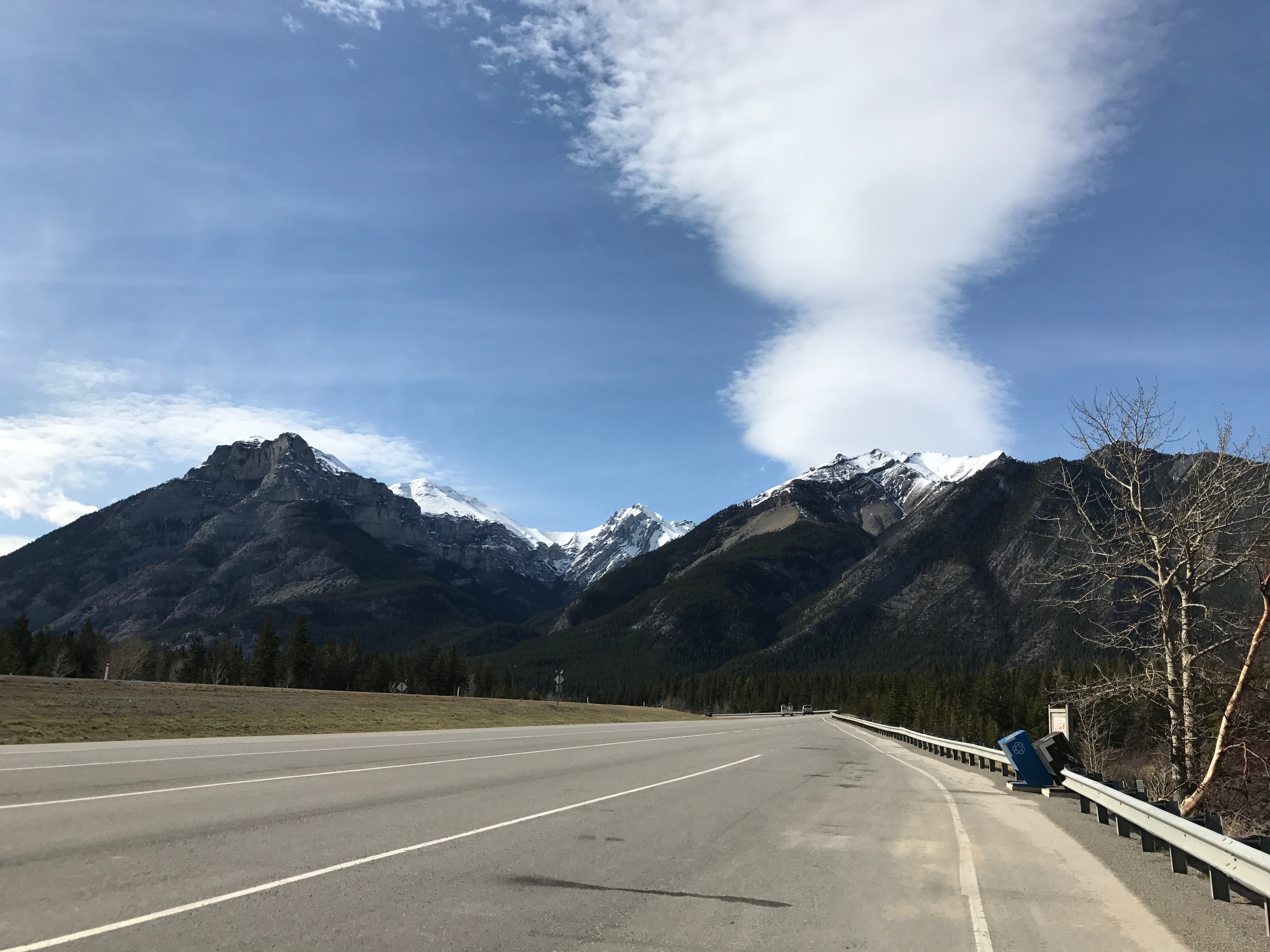
And closer.

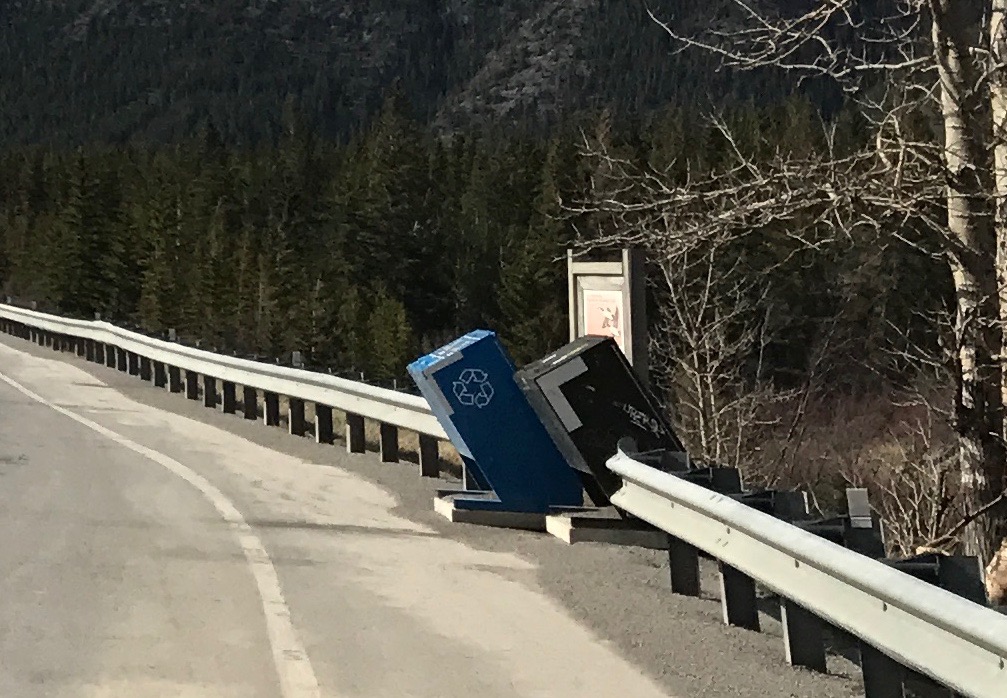
I was captivated by the trash cans I saw along the roads. They angled so that the passenger would be able to easily put the trash into the can. Not only were there trash cans, there were recycling bins right next to them! What a great design.

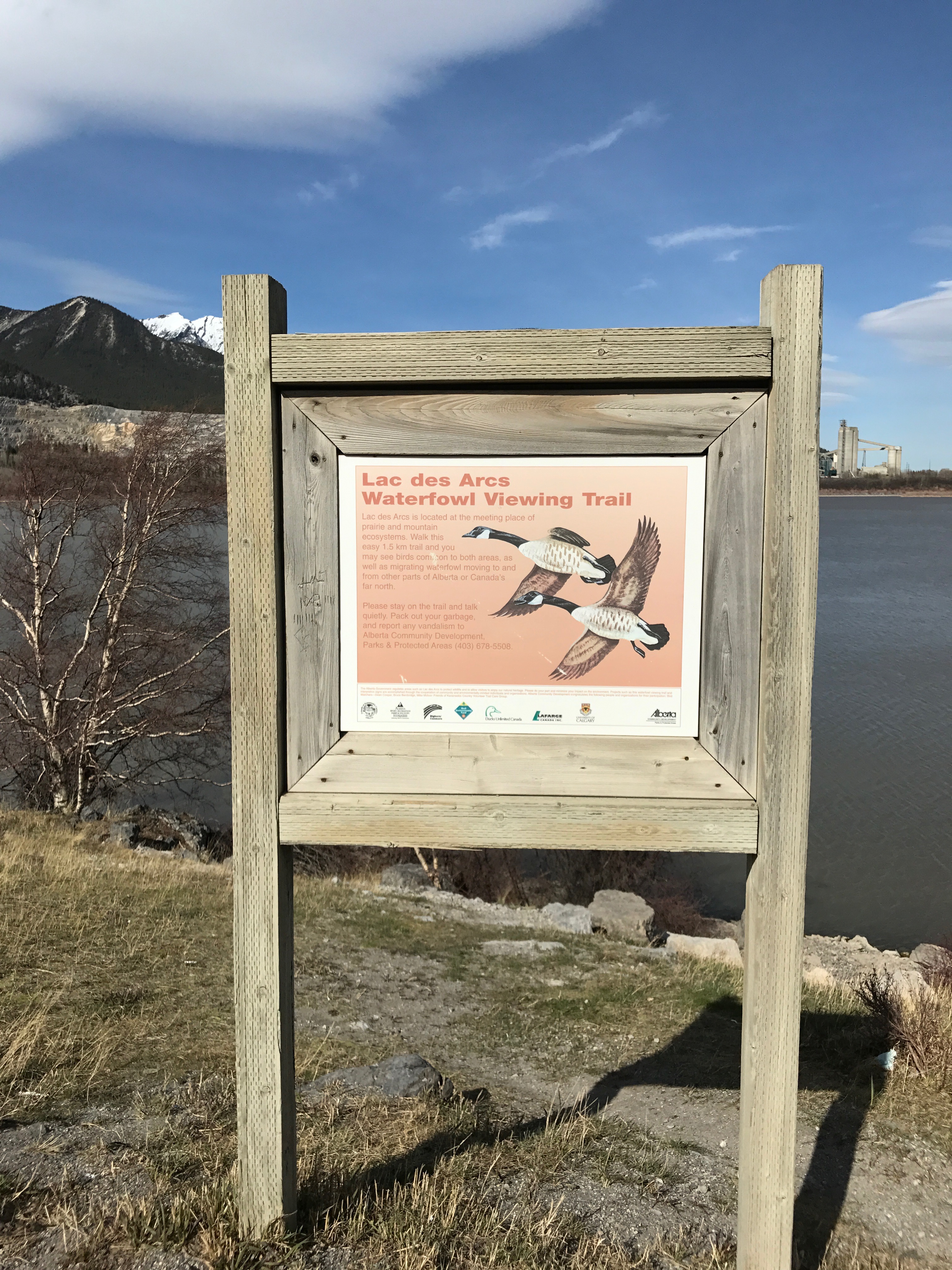
I pulled over to the Lac des Arcs Waterfowl Viewing Area. I didn’t see any waterfowl.

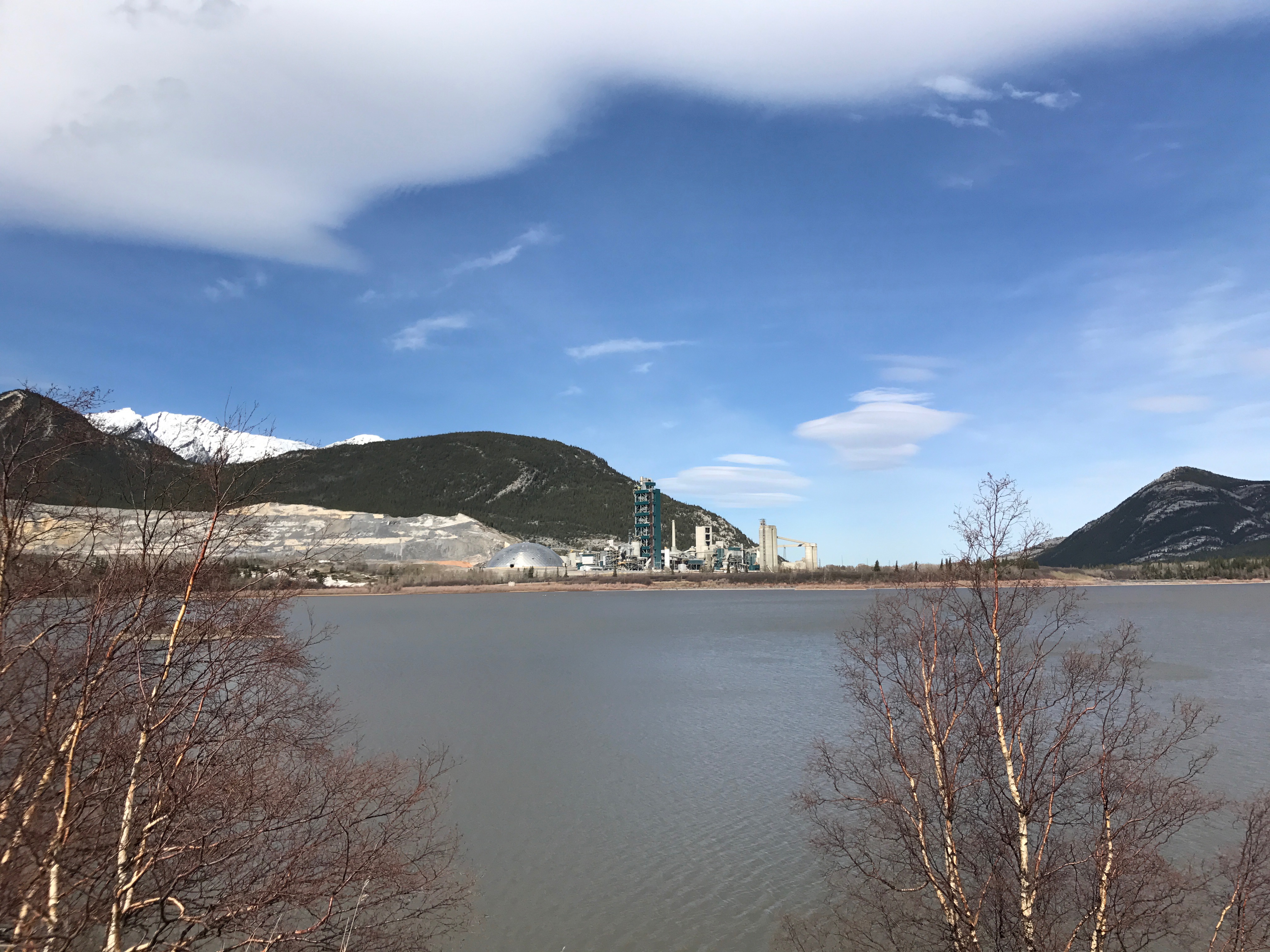
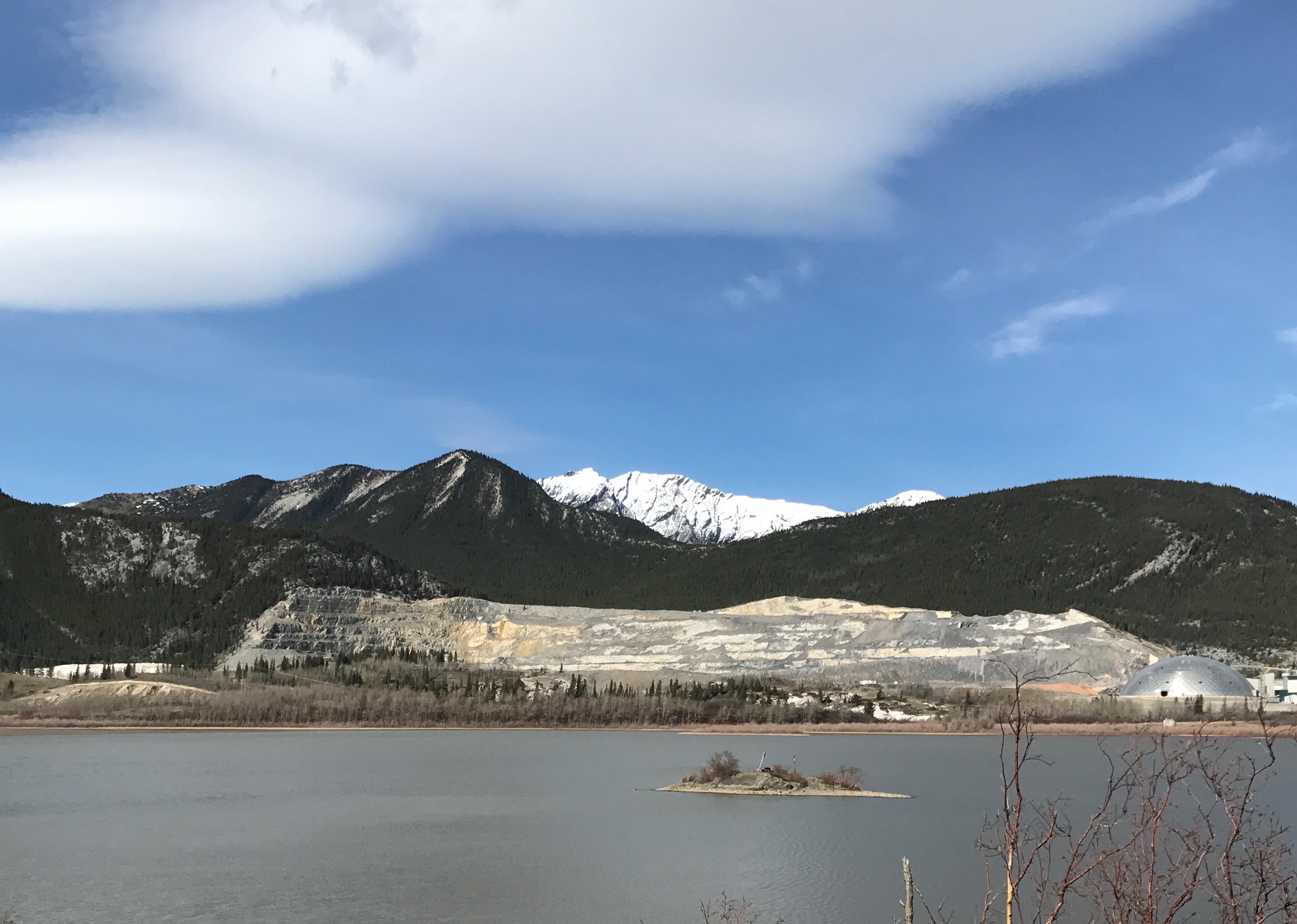
I did see some sort of factory. I wonder what they were producing. Cement, perhaps?

I imagine that they were doing something with the rock mined right next door.

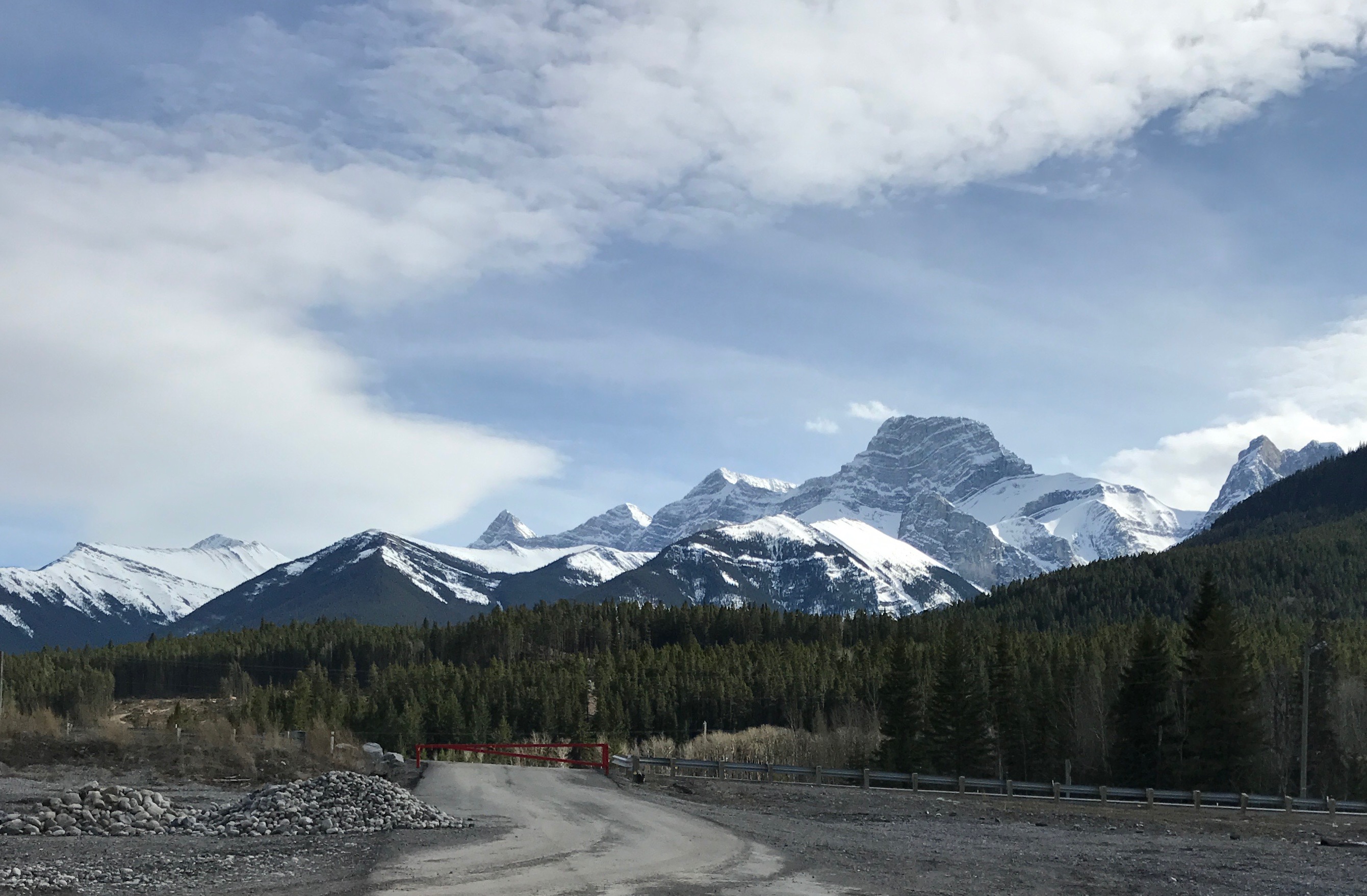
There were mountains all around by this time.

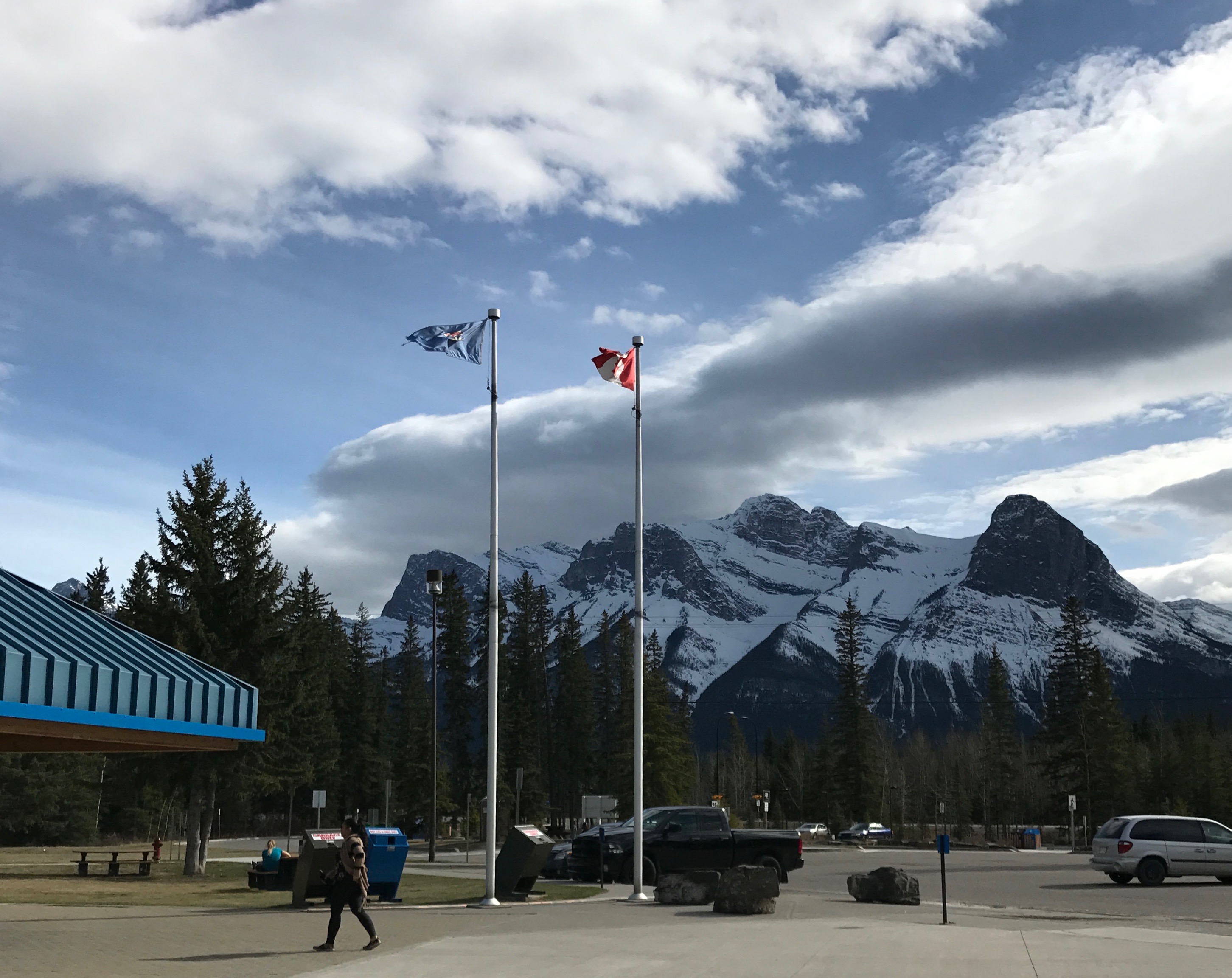
I got to Canmore and saw a sign for a tourism office. Unfortunately, the office was closed, so I couldn’t get any information, but the rest rooms were open.

Hallelujah!

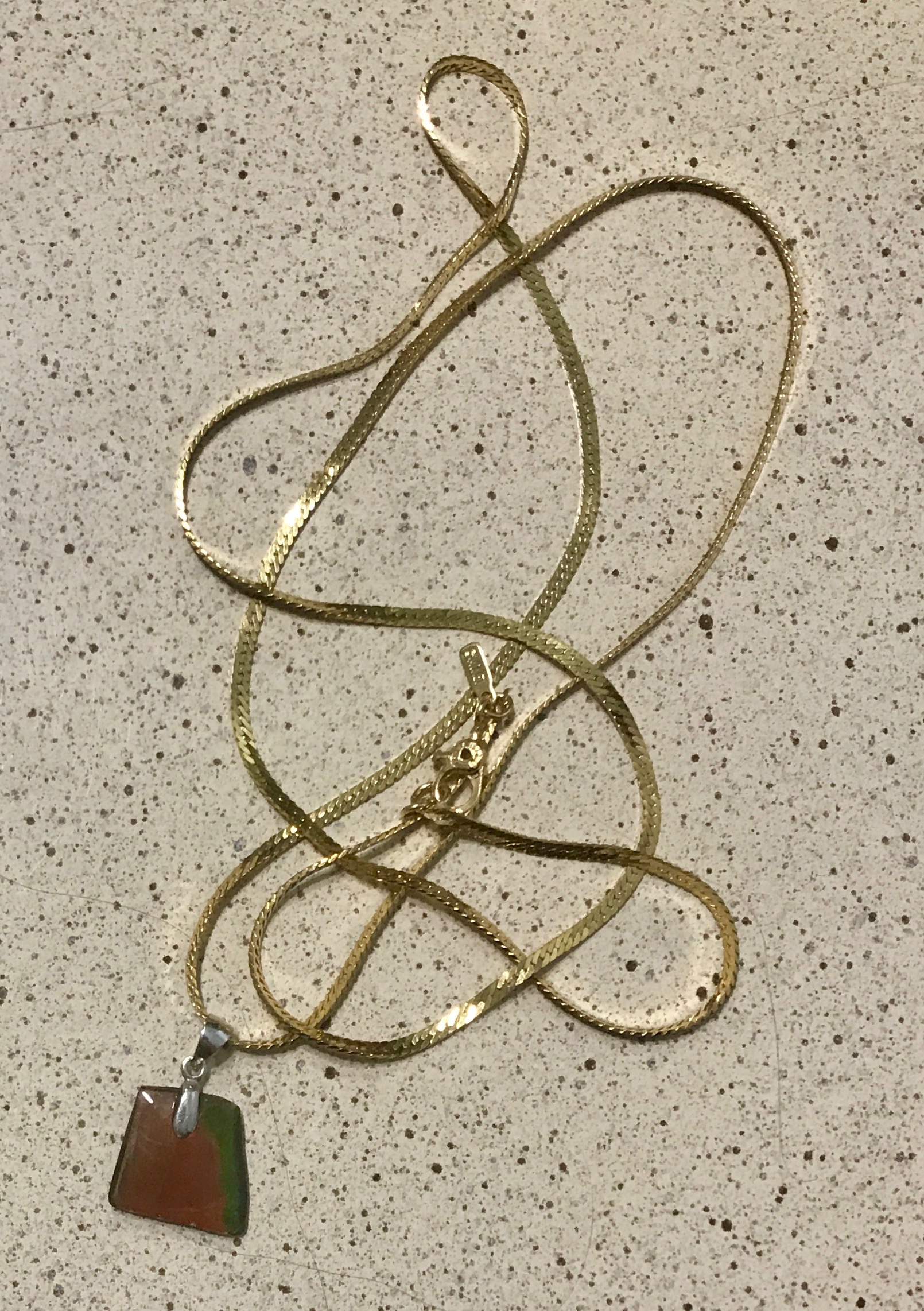
I saw a sign for an ammolite jewelry factory and showroom in town, so I decided to check it out. The prices were a little mind-boggling – especially for a dyed in the wool cheapskate like me. But, I pried open my wallet and bought myself a necklace.

Actually, I just bought the pendant. I had an old chain from my mother that I put it on.

It has some iridescence when you move it in the light. It’s a nice souvenir from Alberta, my mother’s birthplace.

I was a little tired of sightseeing and driving, so I decided to head back. I stopped for gas, and came across a Texas gate.

Interesting. I always called these “cattle guards”. Do you suppose they call them “Alberta Gates” in Texas?

Nah…

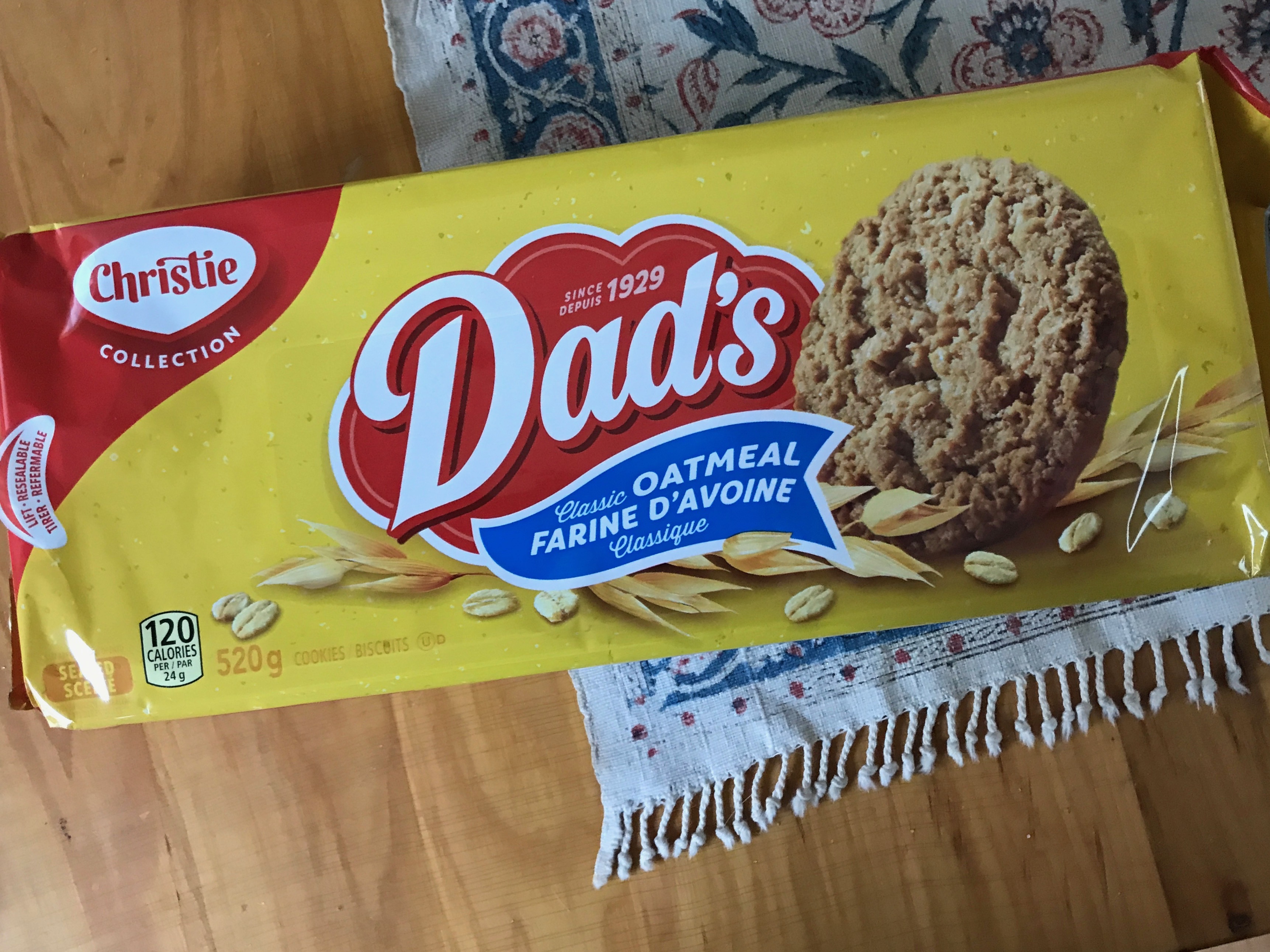
I decided to pick up some groceries and came across my favorite cookies. 

Dad’s Oatmeal Cookies!

When I was a little girl and I would go to visit my grandmother in Crystal Beach, Ontario, she had a little carrier for me to put my Dad’s cookies in.

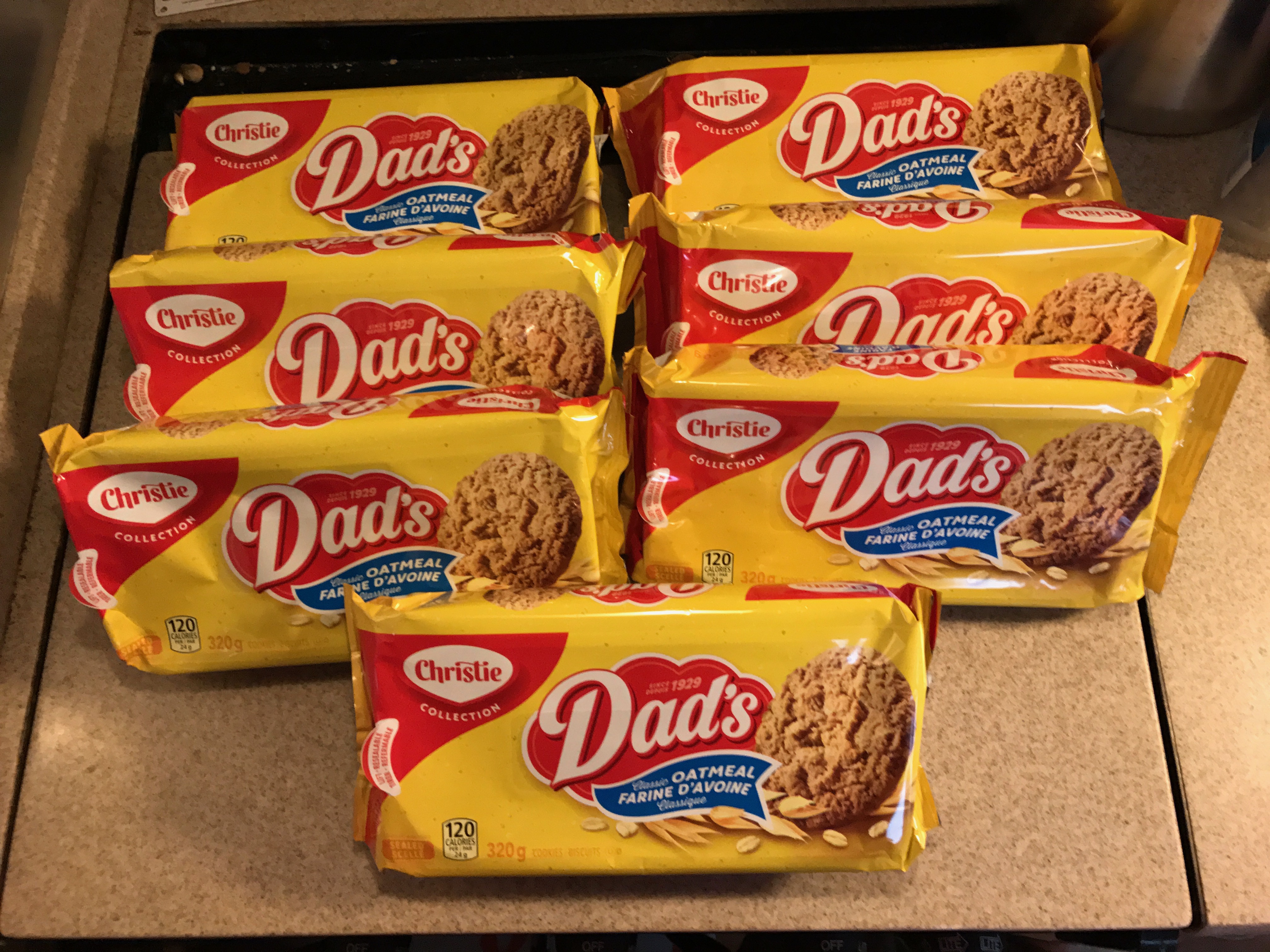
The cookies were on sale. If I remember correctly, they were about $1.65.

I bought all the packets they had!

Time to get packed up and ready to roll.

Next stop: Red Deer.


Calgary

Calgary.

The Stampede.

The Olympics.

Close to Banff and not too far from Lake Louise.

But, I was only in town for a short stay; I would do my best.

I headed into Calgary. I am partial to cities, and I wanted to get a glimpse of Alberta’s largest city. I do forget that cities are not hospitable environments for large pick up trucks. Even though I was under the height limit as stated at the entrance, I still scraped the roof of the cab on a beam in the parking structure. Luckily, no damage was done to the structure, although there were some noticeable scrapes on the roof of the cab.

I parked and left to stroll the streets and to see what I could see.

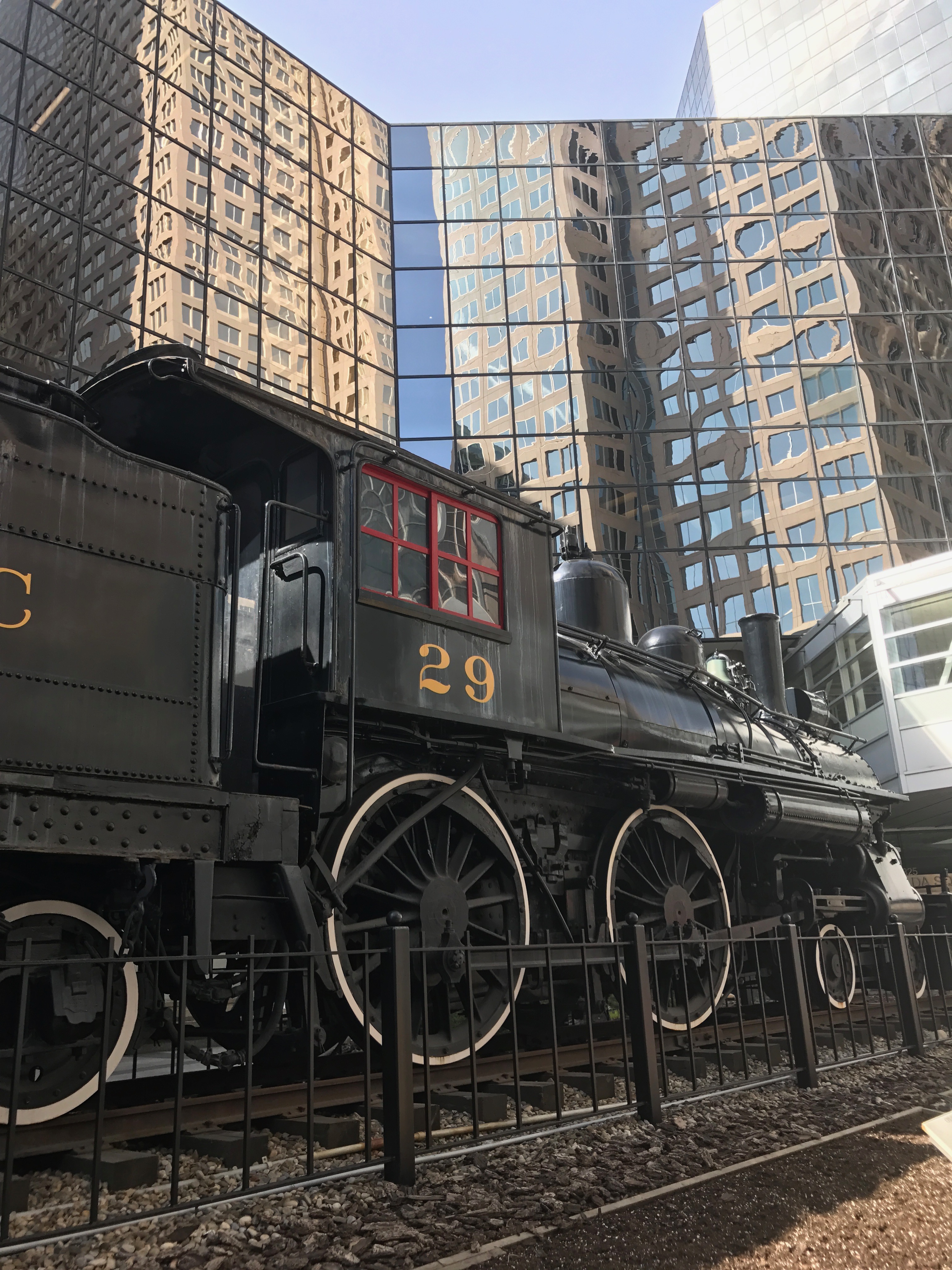
The Canadian Pacific Railway is headquartered in Calgary. It was incorporated in 1881.

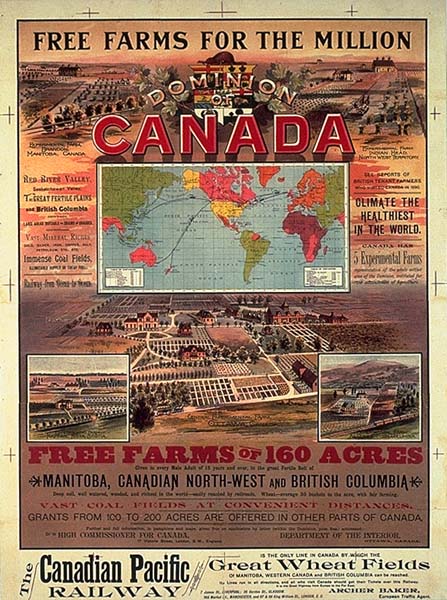
But, I imagine the demise of the bonanza ranches contributed greatly to their success, as this poster from 1883 encourages settlers to head west.

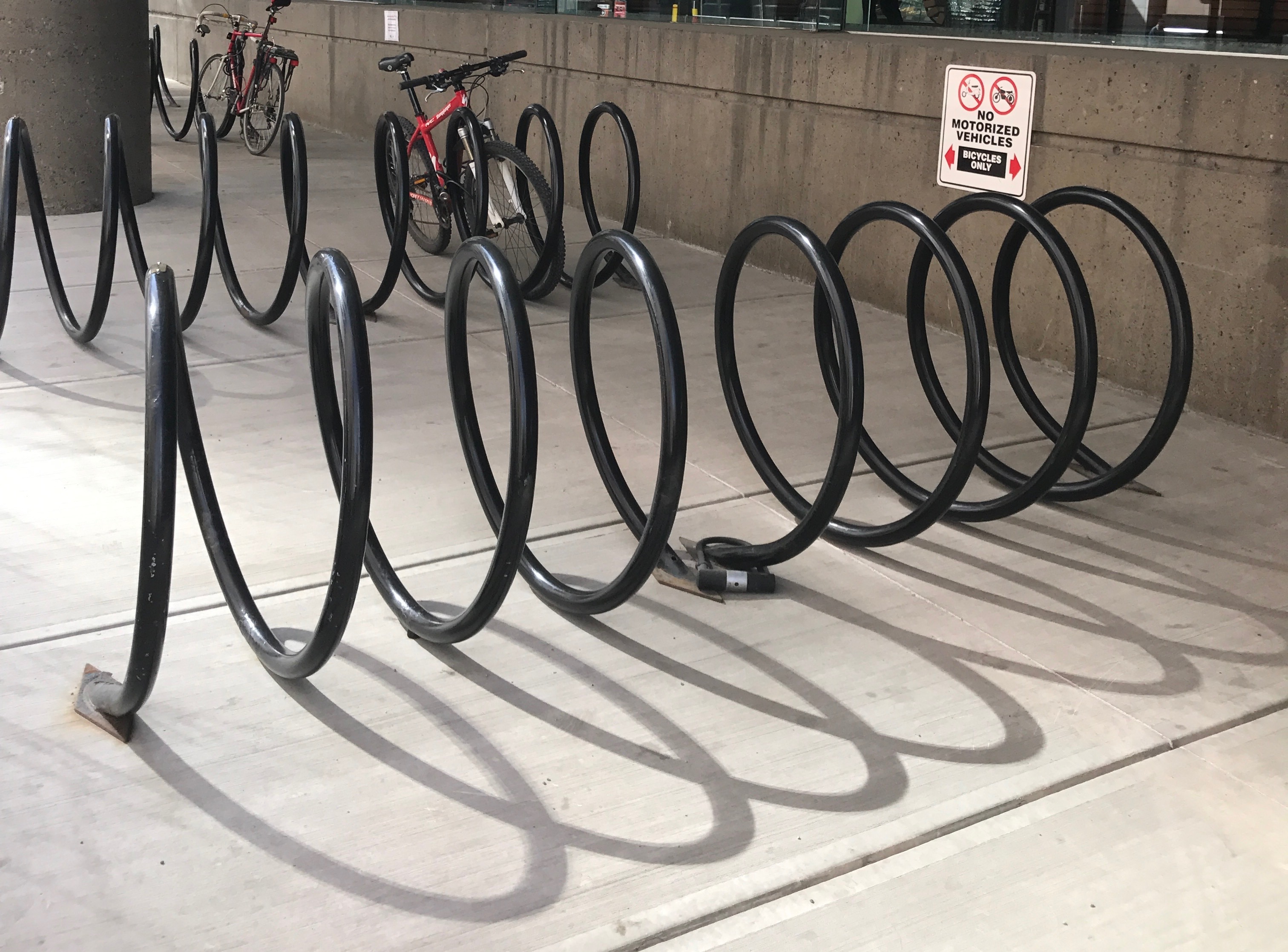
They make it easy for people to ride their bikes into the center of the city. I thought these bike racks were clever.

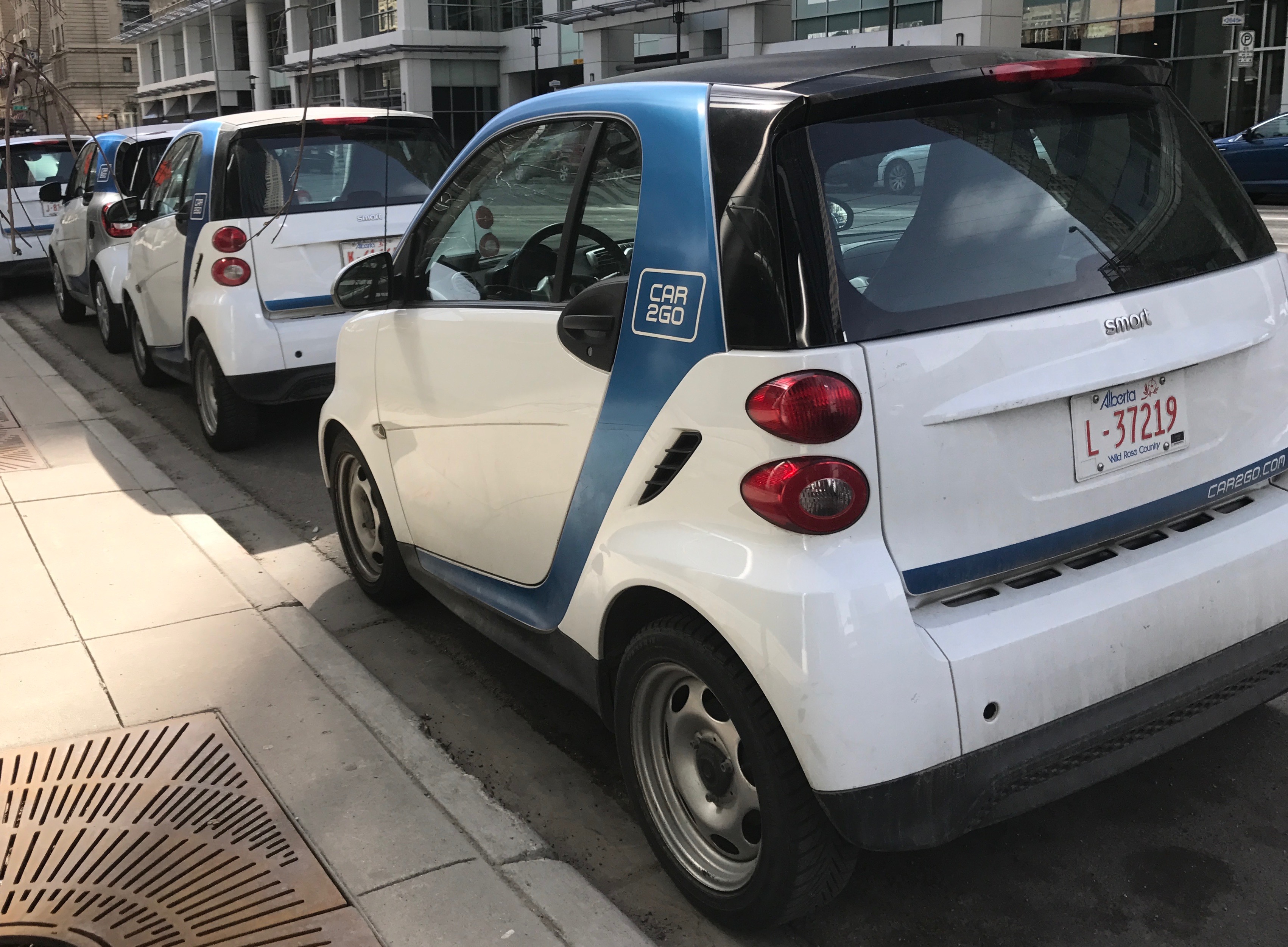
This was the first time I’d ever seen a car sharing service in use. It sounds wonderful. Find a car, open it with an app on your phone, drive away and then just leave it when you are done. If you are interested in knowing more, Wikipedia has an article about this German company, and Car2go has a website.

Let’s see…Trains, bikes, cars…What am I leaving out?

Oh, yeah! Pedestrians!

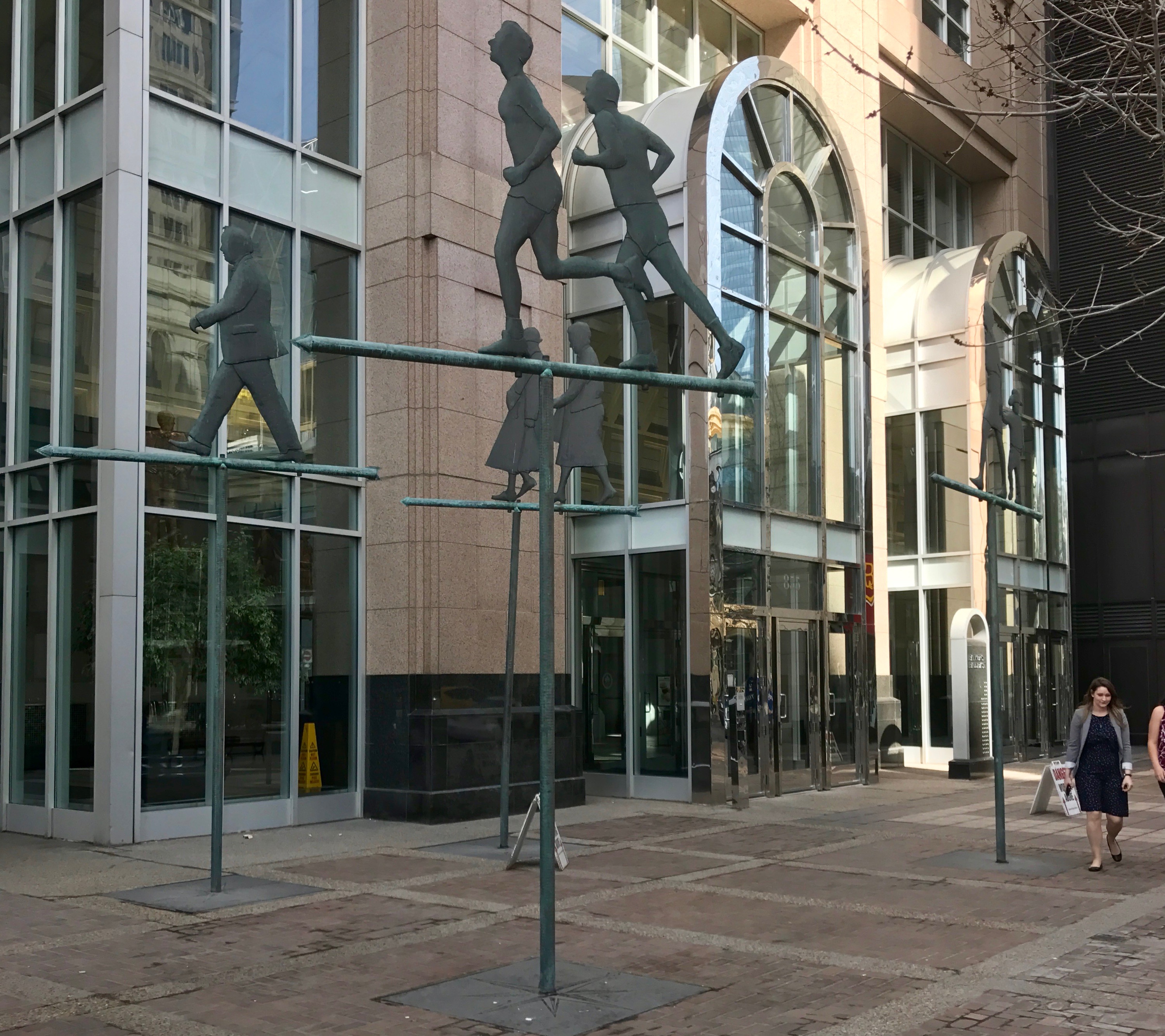
I think it’s quite clever that these statues of pedestrians don’t get in the way of the real pedestrians.

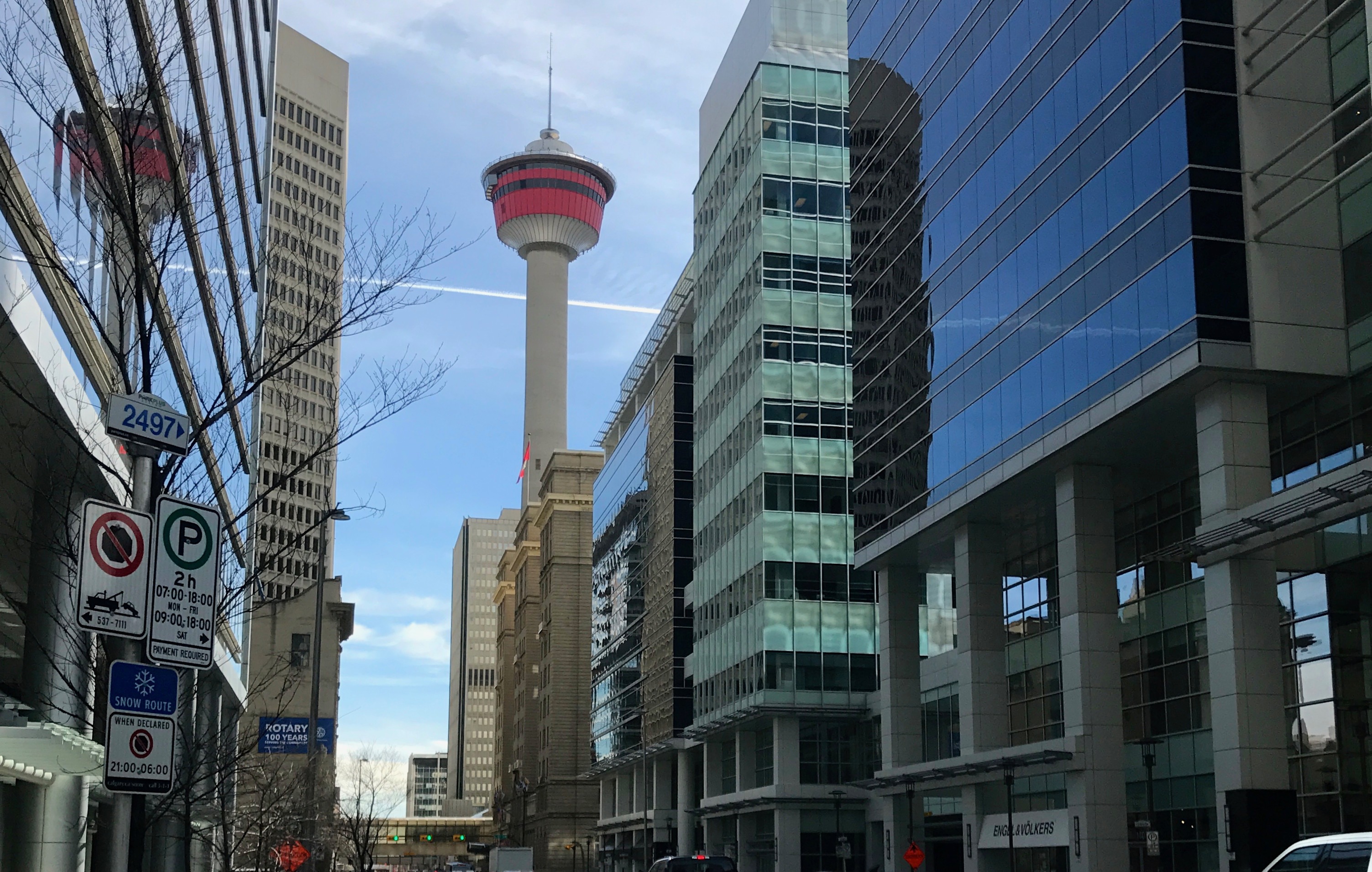
There is just such a vibrance to cities. I do enjoy them. The new and the old blending together.

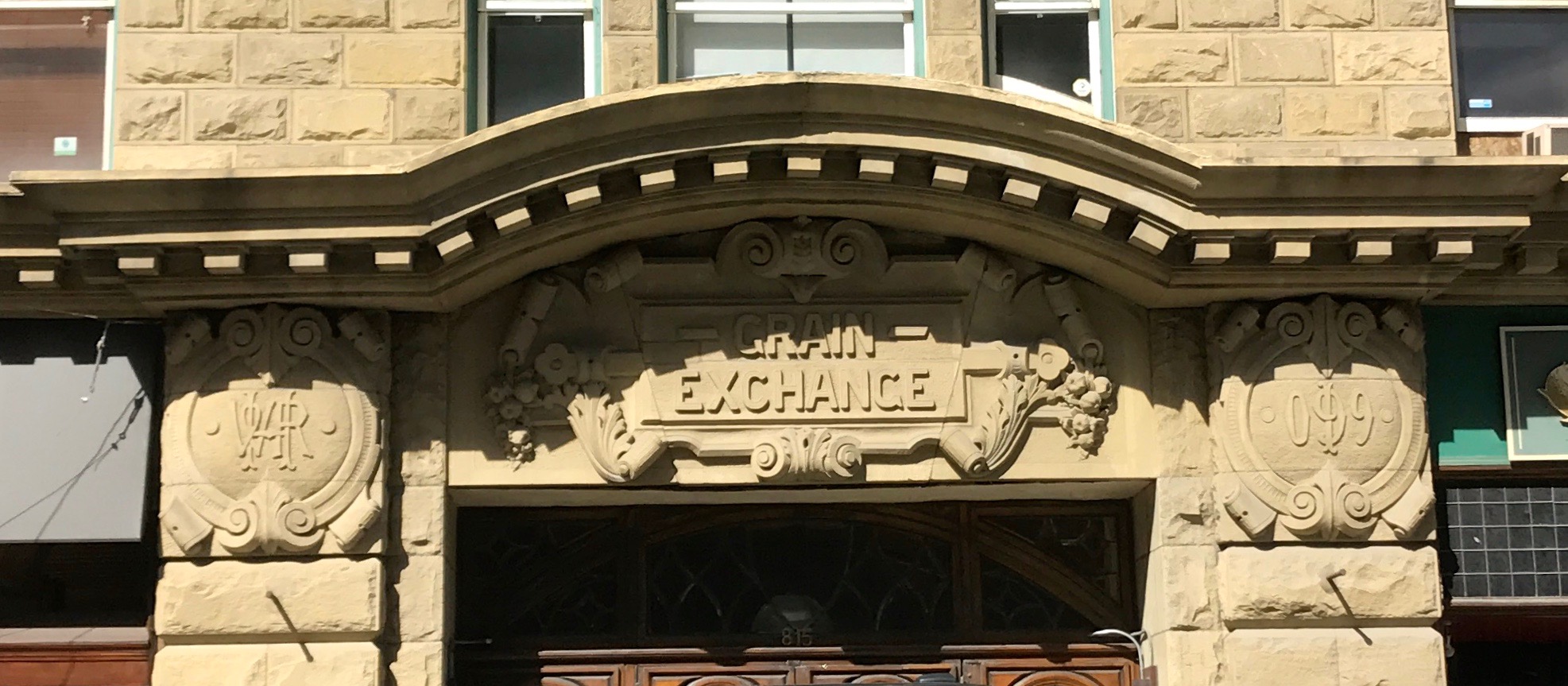
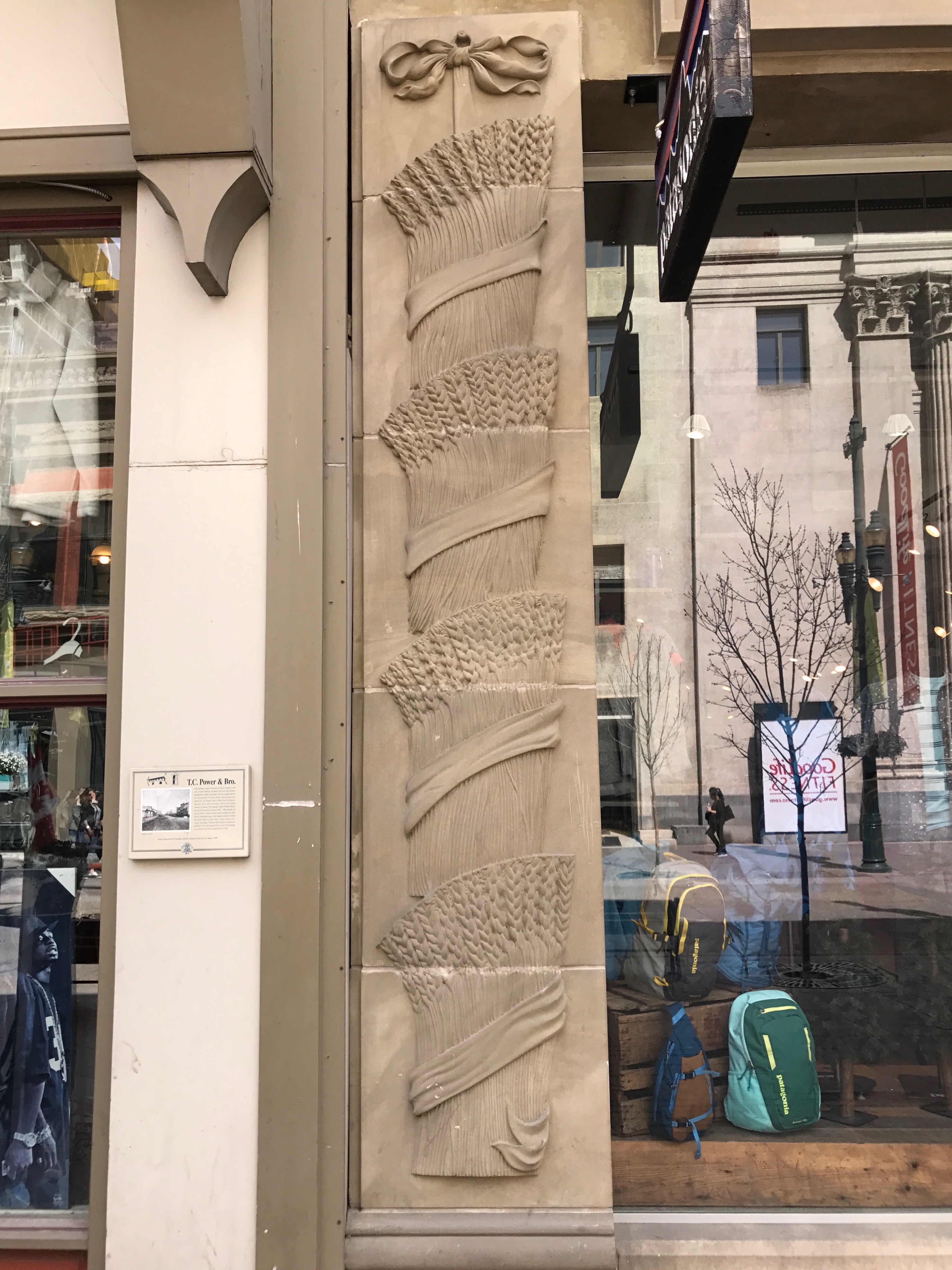
The Grain Exchange building seems to have been repurposed, but I’m glad they left their lovely carvings.

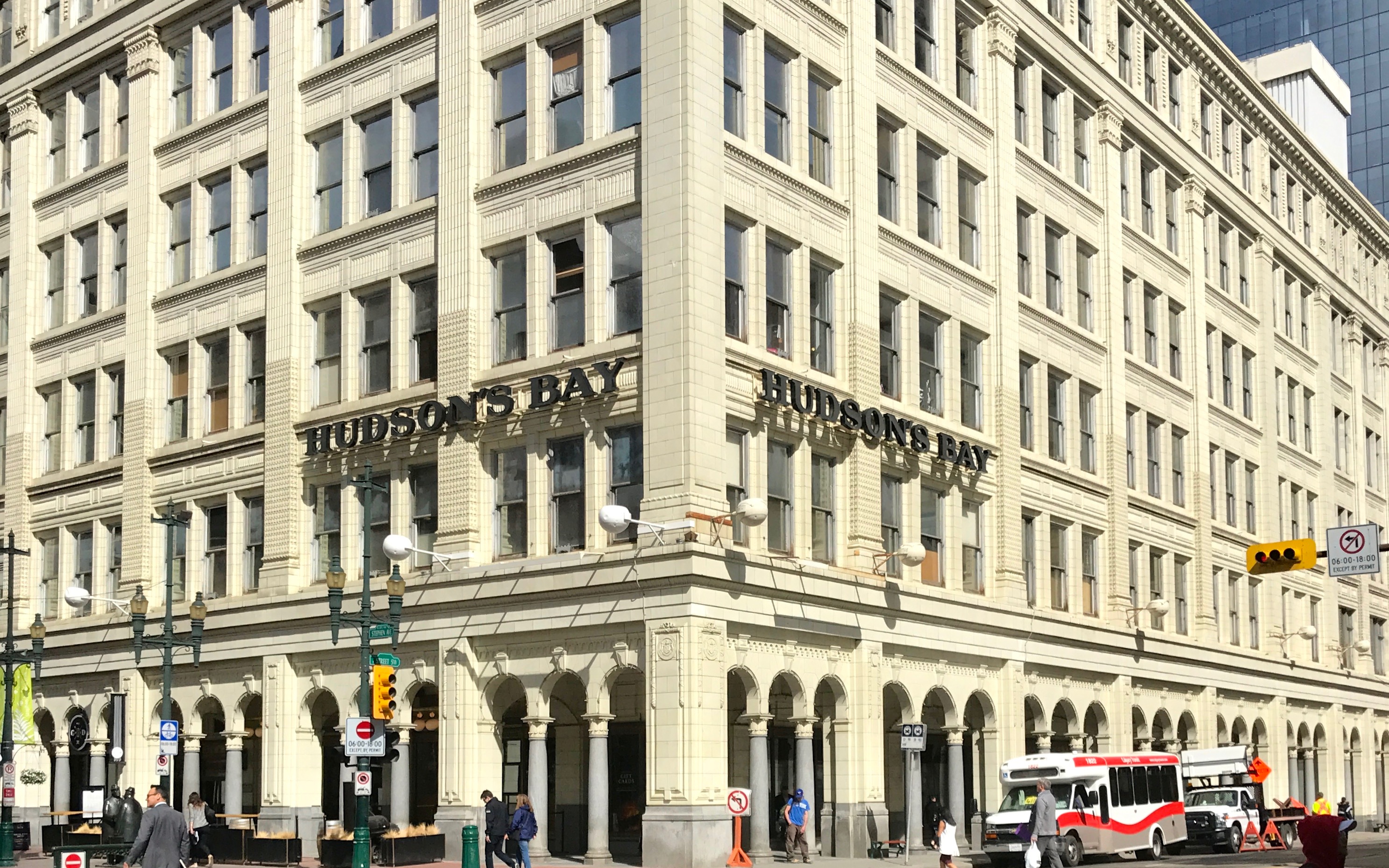
And of course any decent Canadian city would have a Hudson’s Bay.

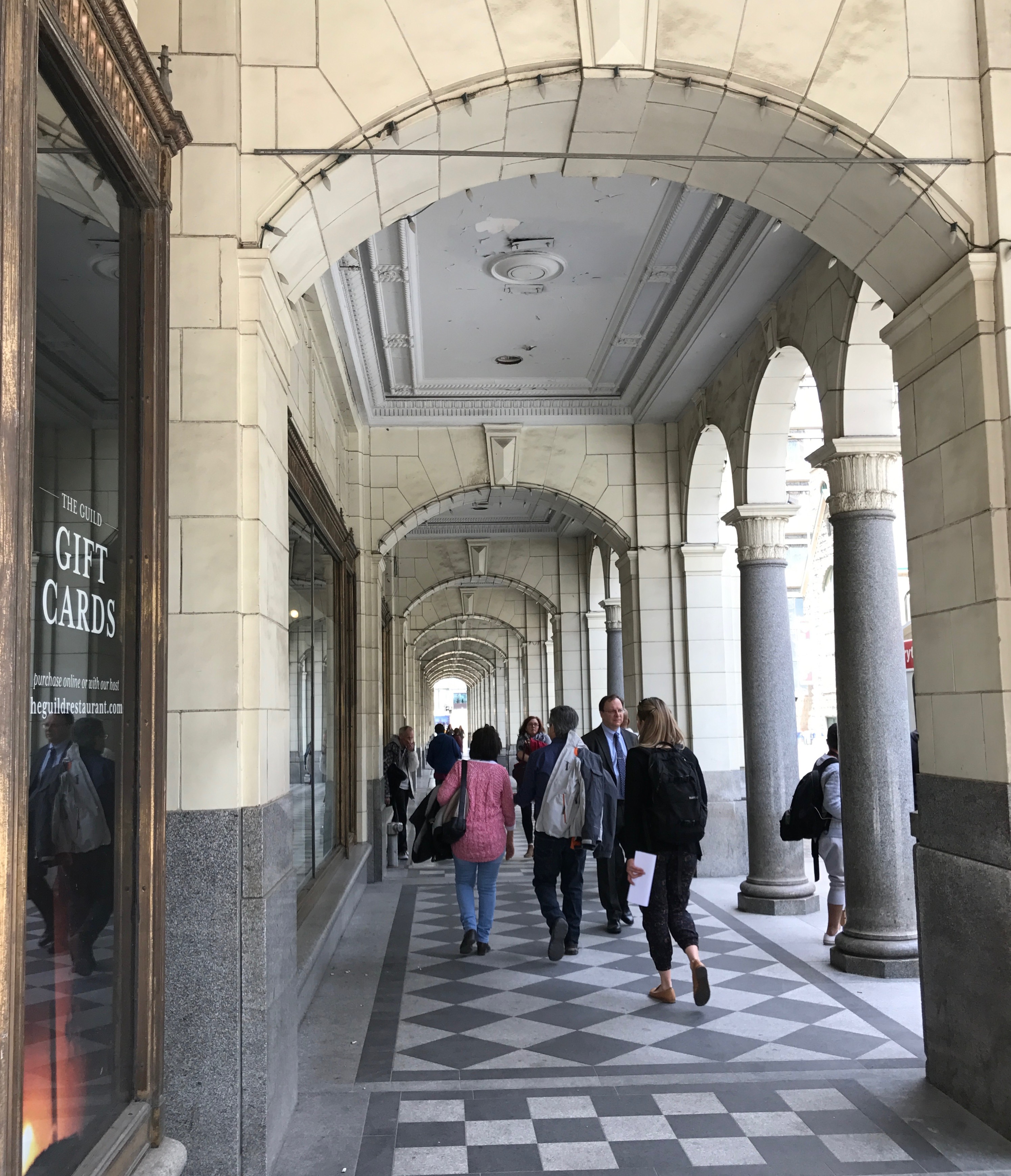
I loved the arcades over the sidewalks.

I am sure it makes keeping the sidewalks cleared in the winter. But, since Calgary only receives and average of 51 inches of snow in a season and 13 inches of rain, it makes me wonder if the purpose of having an arcade over the sidewalks is mainly to increase the footprint of the building.

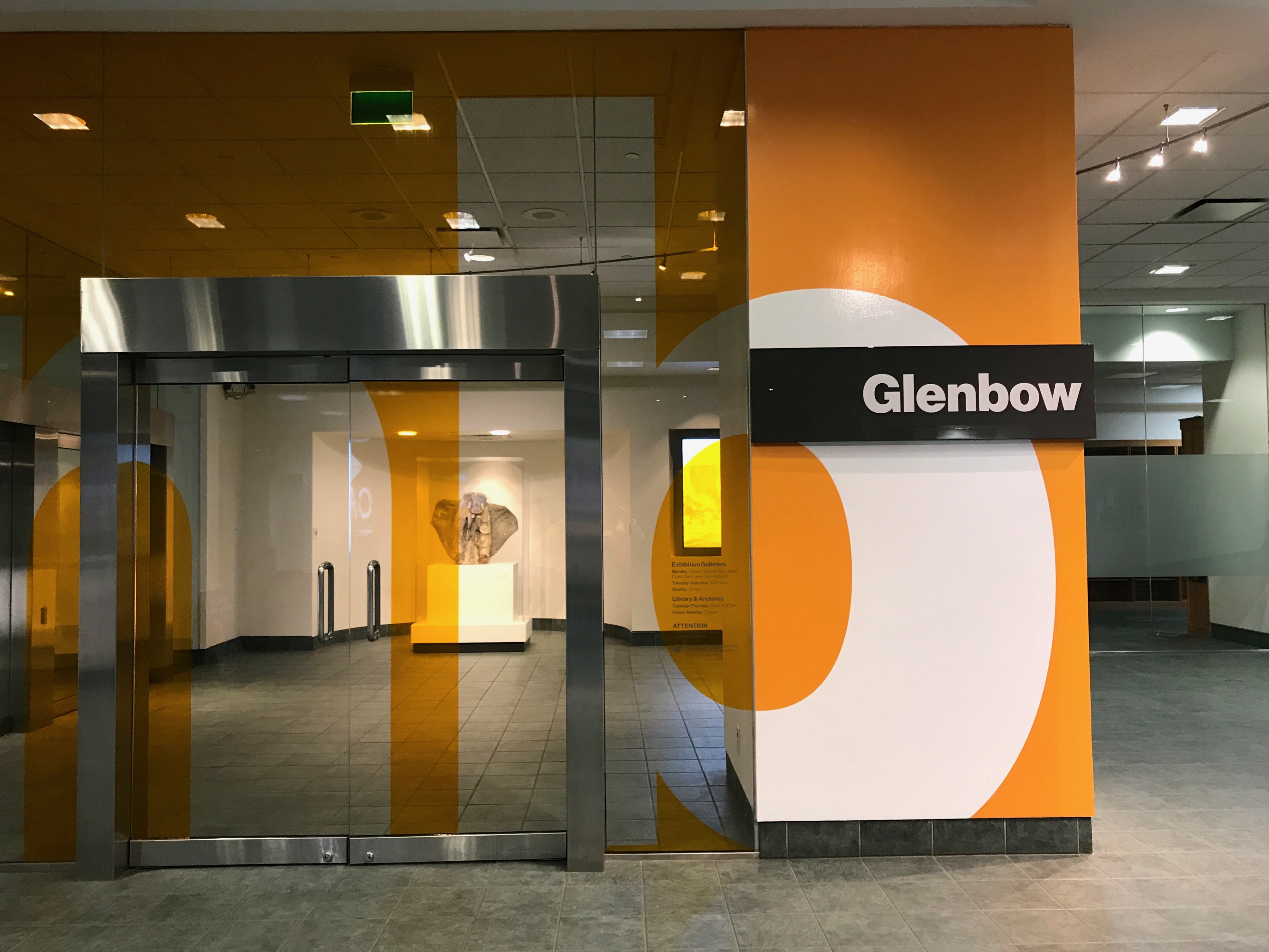
My destination was the Glenbow Museum, which had been recommended to me. It is an art and history museum – two of my favorite subjects! I took the elevator to the fourth floor to start my explorations.

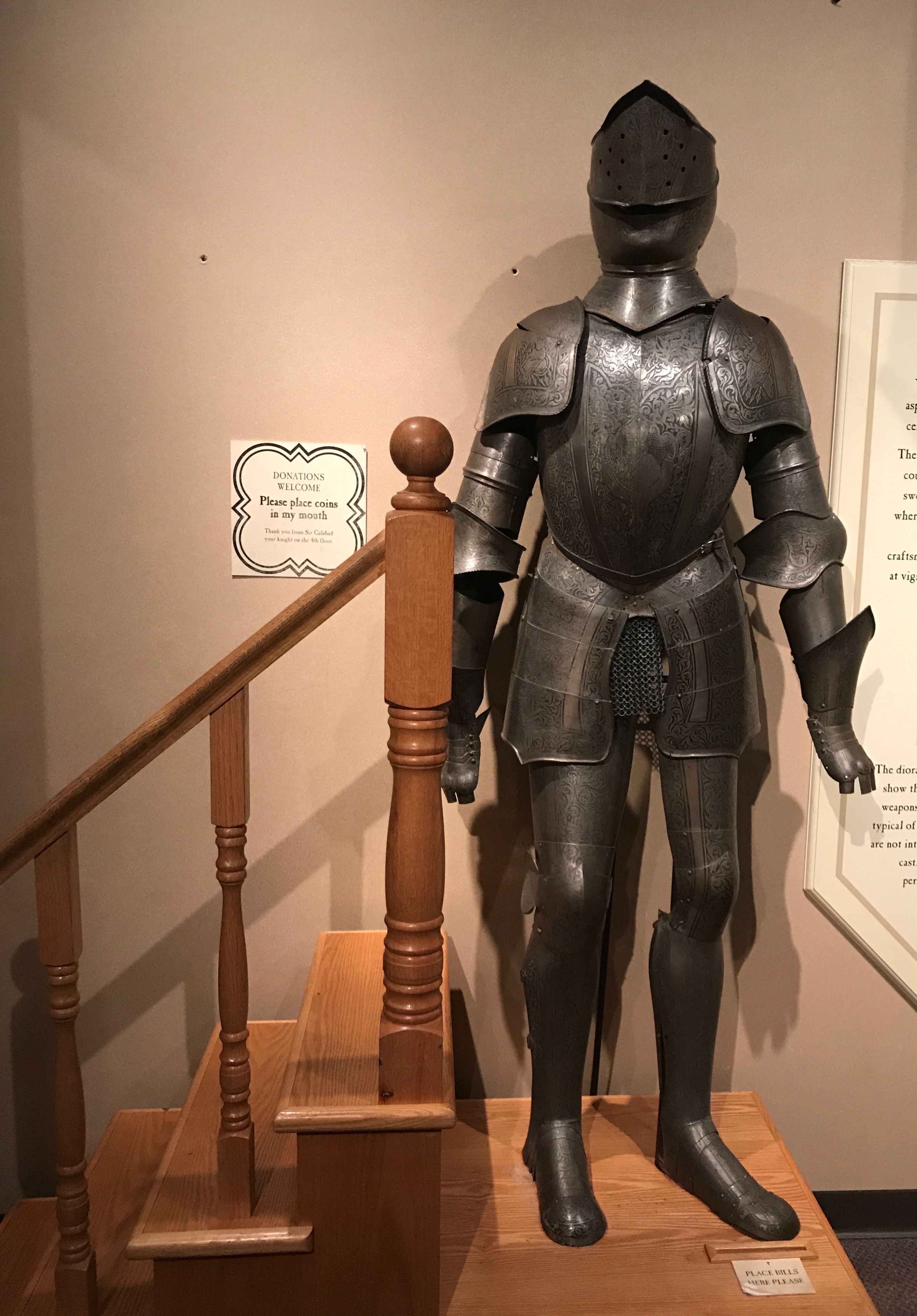
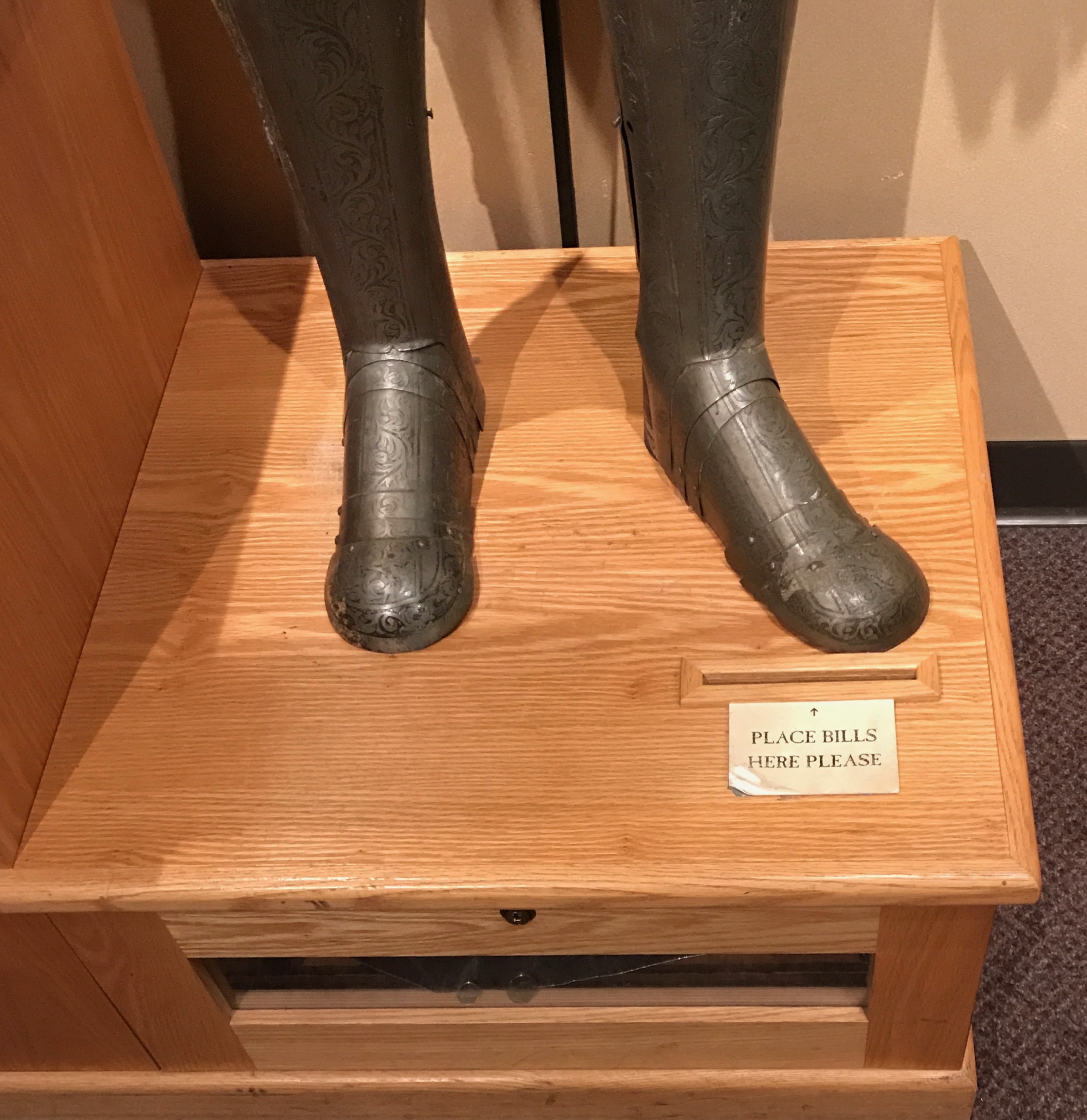
They had quite the collection of military artifacts. I particularly enjoyed this suit of armor that was repurposed as a way to solicit donations.

There is a slot for inserting folding money.

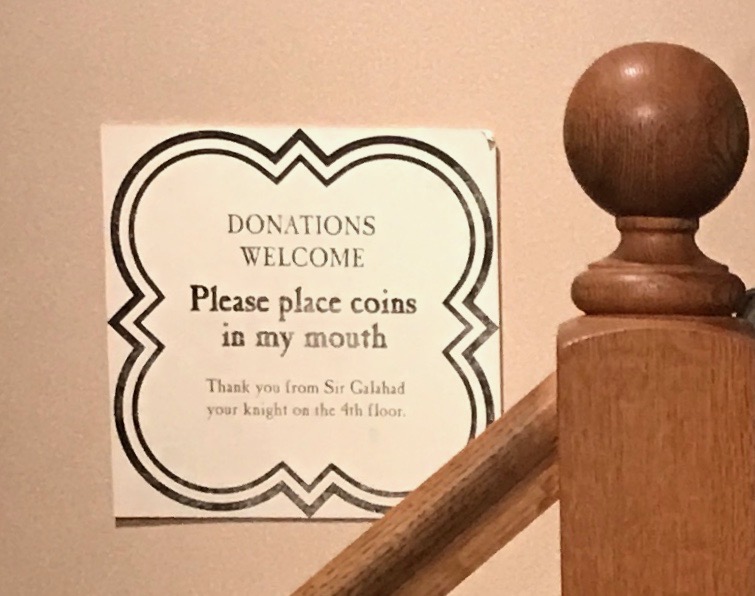
But, I think this was the coolest feature. If I were a kid, I would have been begging my folks for some coins to place in Sir Galahad’s mouth.

But, I am a retiree and always watching my pennies, so they had to make do with my $16 entrance fee. I take some solace that $16 Canadian was only about $12.50 American.

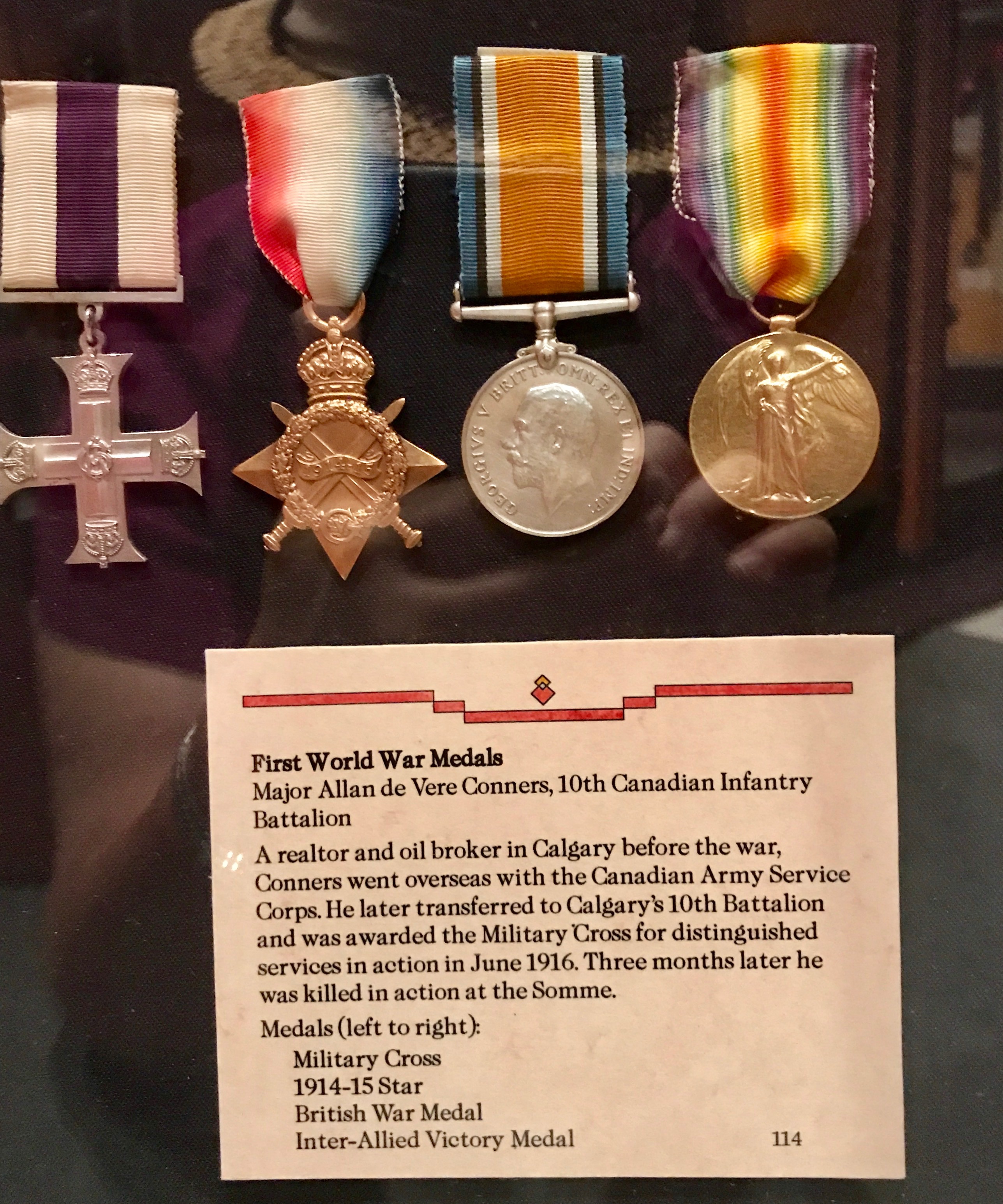
I have seen my fair share of weaponry in all of my travels, so I didn’t spend a lot of time on the guns, sabers, cutlasses and so on. These medals did capture my attention, though.

My grandfather served in the Canadian armed forces in World War I, and he received the medal on the far right, the Inter-Allied Victory Medal. In fact, I ended up with it. When I emptied out my house to set forth on this journey, I gave it to my brother, Craig, who also knew our grandfather. Our grandfather died before my two younger siblings were born.

Further down in the museum, there were some splendid geological exhibits.

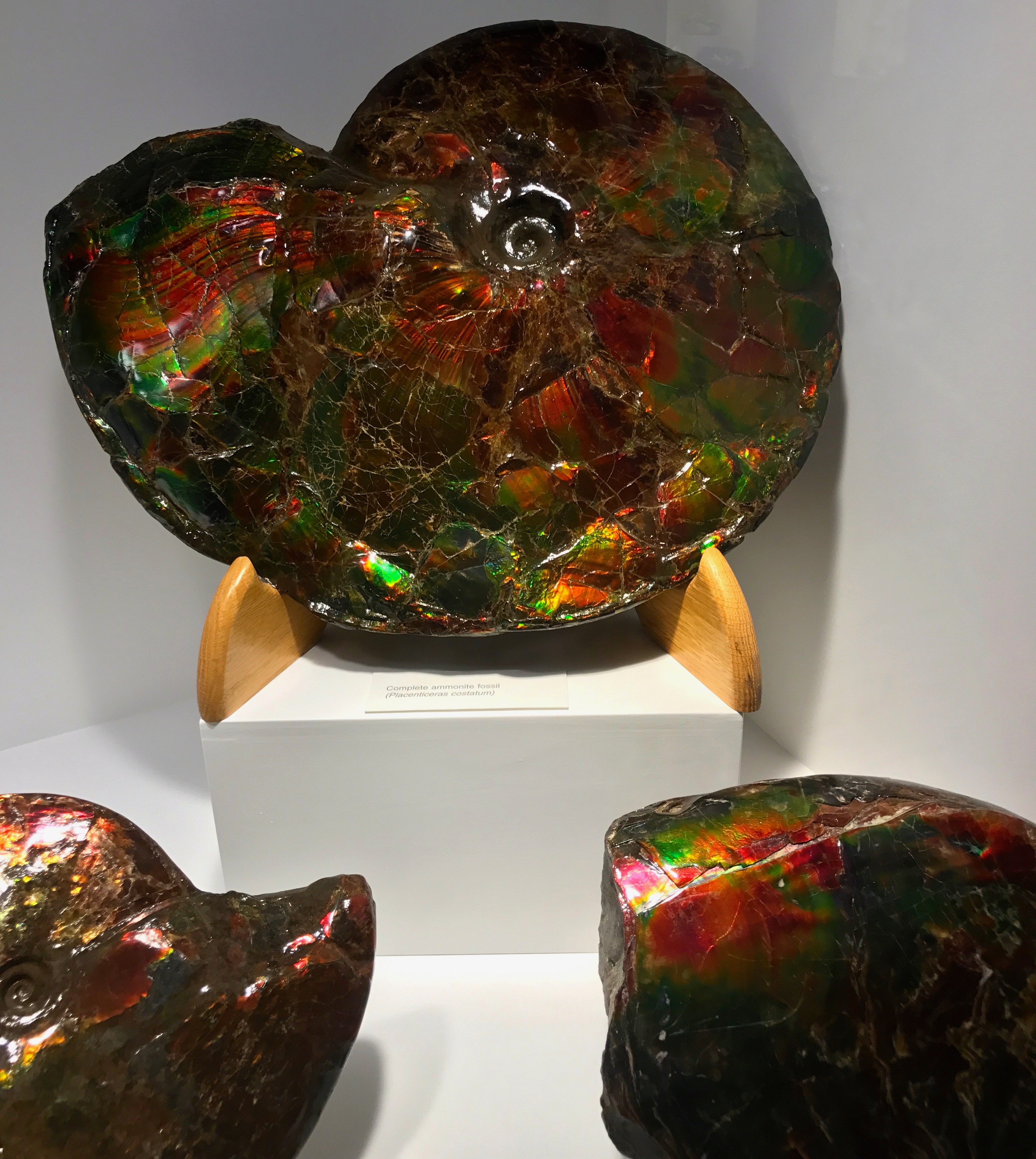
These iridescent specimens are ammolite, otherwise known as Canada’s gemstone.

It is formed form the mineralized remains of an upper Cretaceous fossil, the ammonite Placenticeras. They were hard shelled, squid-like marine animals that existed from the Devonian to the end of the Cretaceous period. They disappeared during the mass extinction 65 million years ago. Although ammonite fossils are found all over the world, only in Southern Alberta do they display the wide array and intensity of color, which is typical of the best quality ammolite gemstone. In 1981, ammolite was given the official gemstone status by the International Commission of Colored Gemstones.

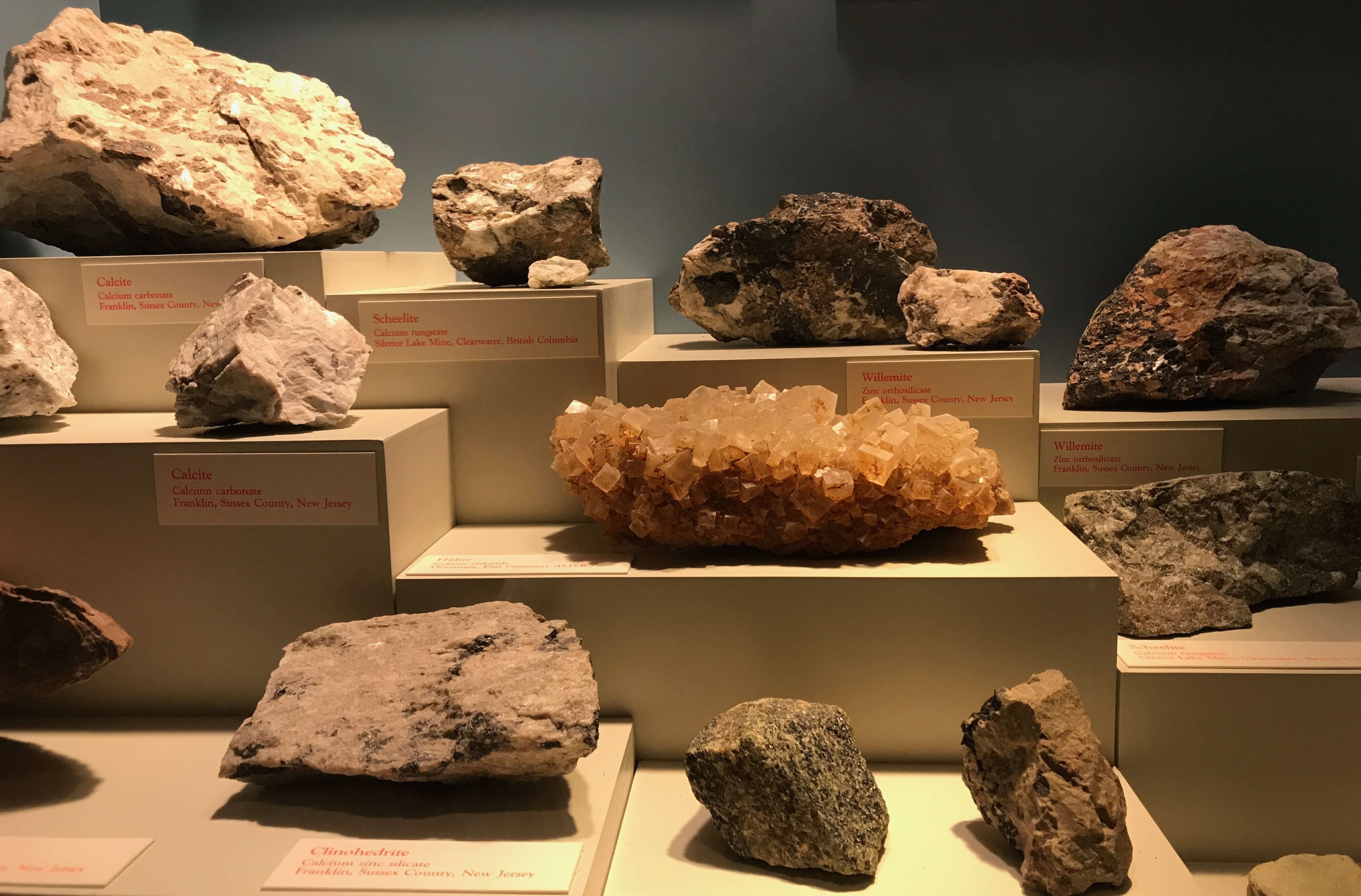
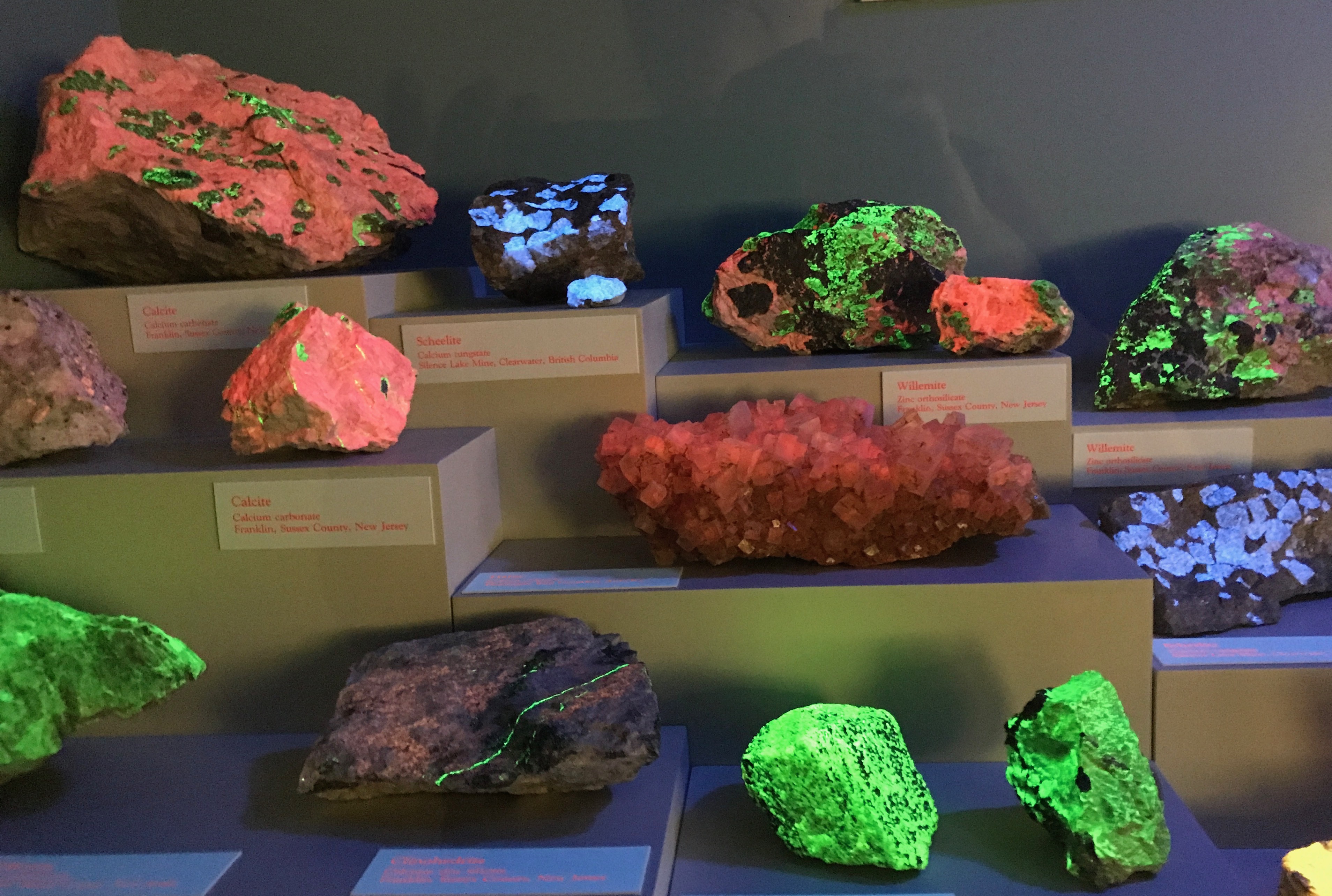
I was particularly captivated by this collection of rocks. I stood there and watched them for a while.

Huh? They look kind of dull.

Just wait until the black light turns on.

Isn’t that something?

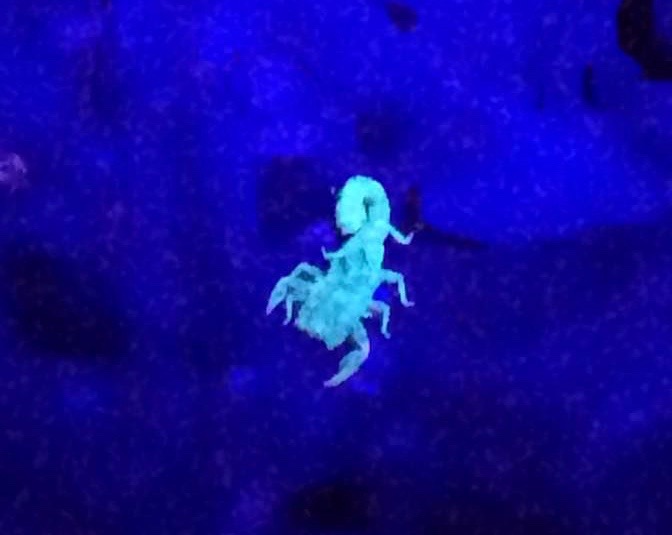
It kind of reminds me of when Konnie and I went night time scorpion hunting in Phoenix back in 2016.

Who knew that scorpions would glow like that?

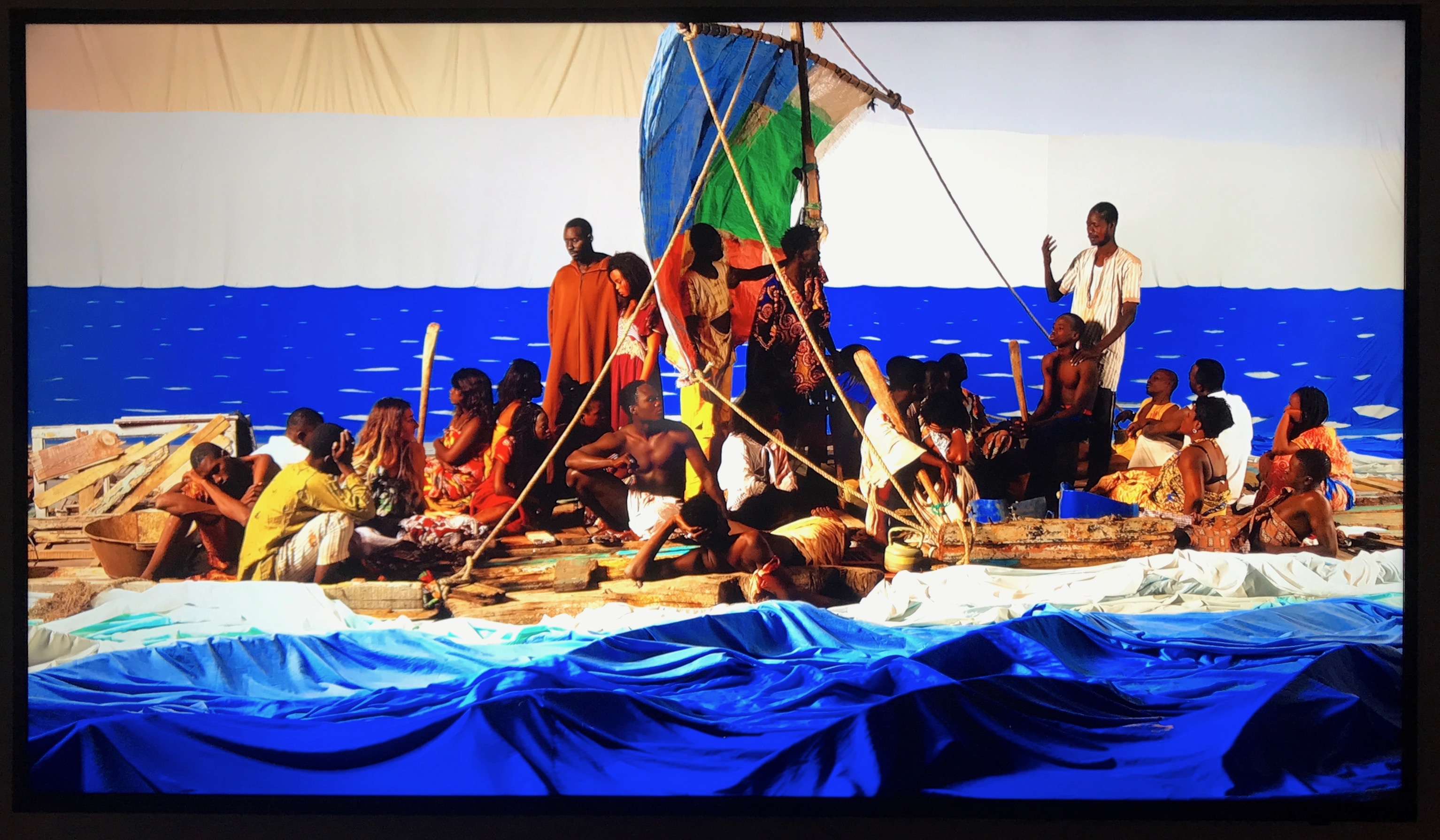
I went on to the art area. The first work of art that grabbed my attention was this piece by Vancouver-based artist Adad Hannah. It was created in Saint-Louis, Senegal in 2015-2016 to commemorate the 200th anniversary of the wreck of Medusa, which was a French frigate.


It was based on The Raft of the Medusa, which hangs in the Louvre. It is by the French painter and lithographer Theodore Gericault.

The Medusa, which was en route from Rochefort, France to Saint-Louis, Senegal, ran aground off the coast of Mauritania on July 2, 1816. On July 5, at least 147 were set adrift on a hastily constructed raft. All but 15 died in the 13 days before their rescue. Those who survived endured dehydration, starvation and practiced cannibalism.

In order to create his modern representation, Hannah spent five weeks in Saint-Louis. He spent his time researching, building, rehearsing and recording the “tableau vivants,” or living pictures. The set was created locally in Saint-Louis using salvaged, dismantled pirogues, architectural detritus and other elements found while roaming around the island of Saint-Louis and the adjacent fishing village of Guest N’Dar. He had a cast of over 50 locals from Saint-Louis who took part in staging the work of art.
I could say more about this work of art, and more about Senegal. I spent five weeks there in 2003 as part of a Fulbright program. In fact, I even spent time Saint-Louis. But, there is more to talk about. I shall continue.

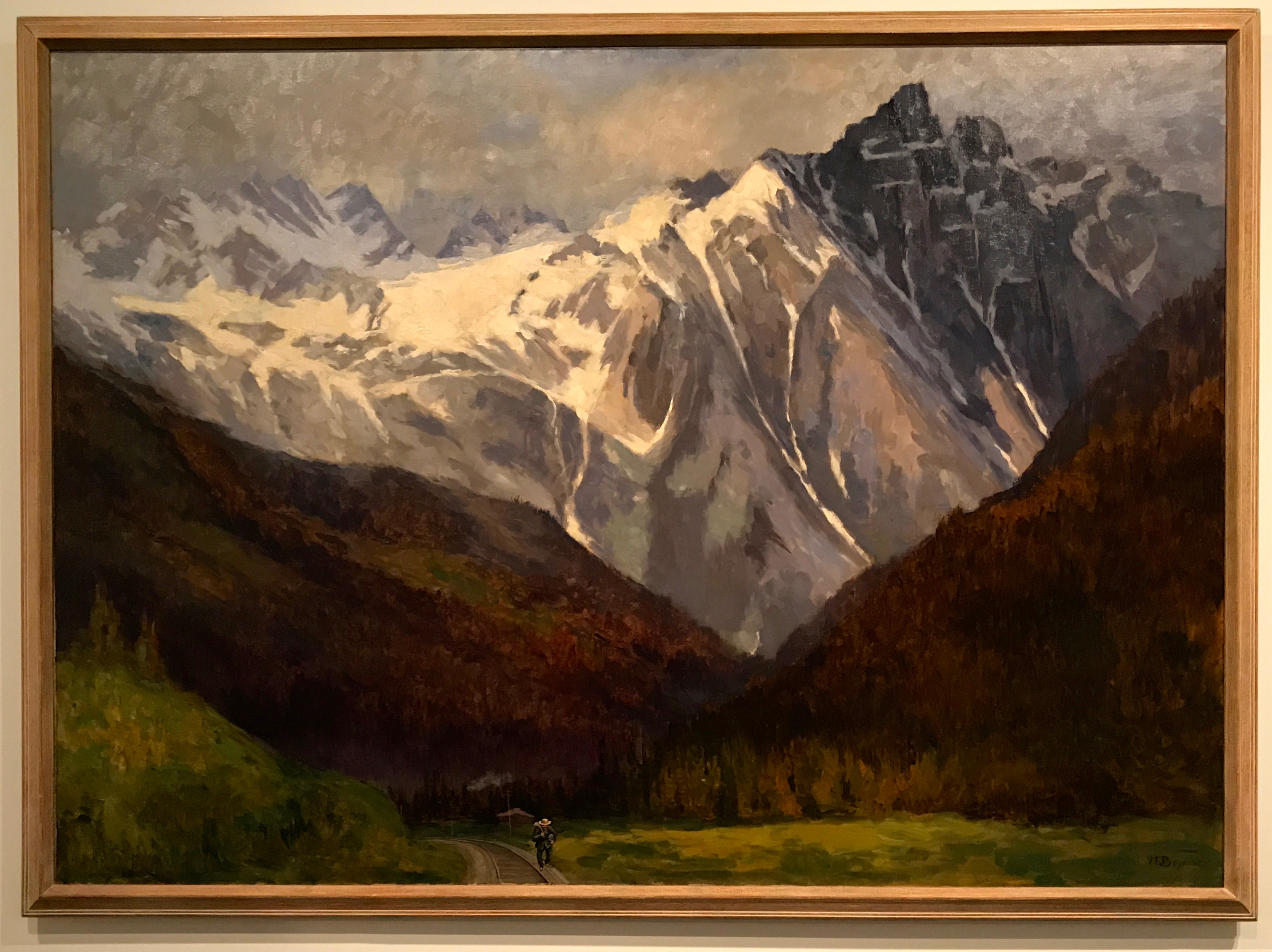
This painting is titled “Hermit Mountain, Rogers Pass, Selkirk Range”. In 1886, William Brymer (1855-1925) was given a pass by the Canadian Pacific Railway as part of their artist’s pass program. The railway was completed in 1885, and connected eastern Canada to British Columbia.

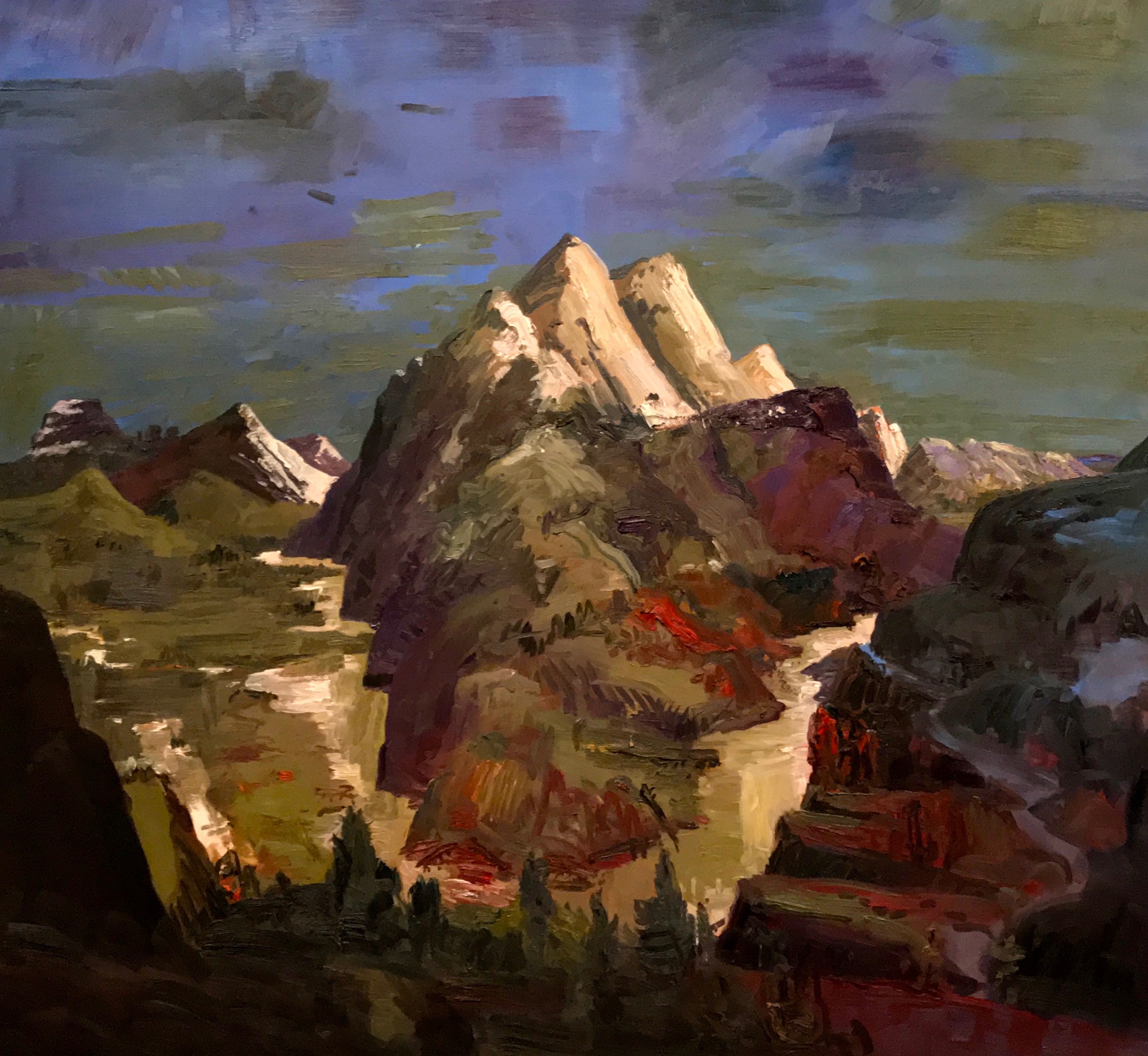
John Hartman, a landscape painter from Ontario, painted “The Gap at Night” in 2003. In the information about the painting, they say that he “paints more than he sees. His energetic, impressionistic style adds depth and color to what might other be a conventional representation.” He gifted it to the museum in 2008.
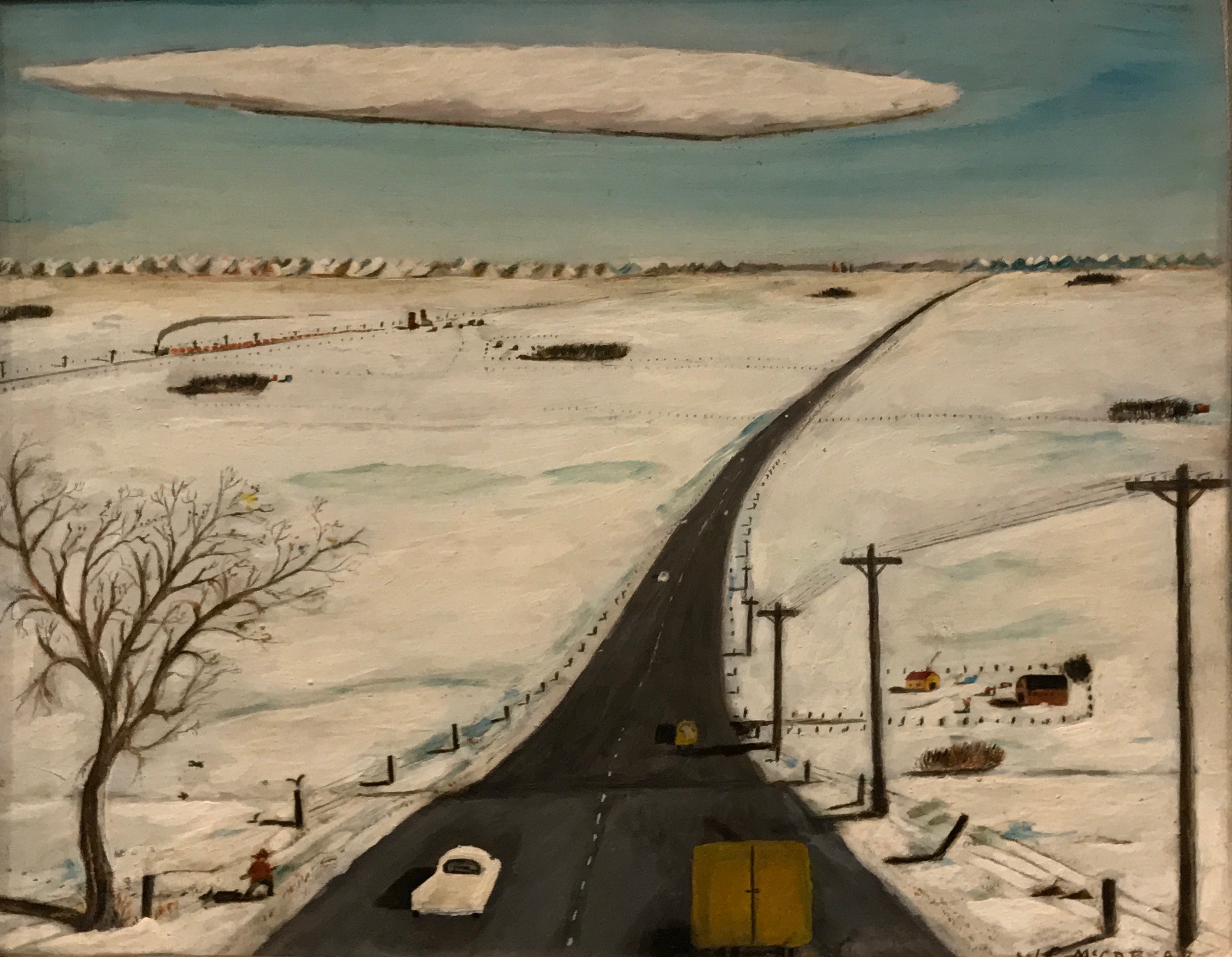
This painting has the beguiling title of “Untitled [prairie highway]”. It is also undated. It was painted by self-taught Canadian artist William McCargar (1906-1980). It was donated in 2000 by Murray and Mari-Anna McCargar, who I presume were his children. William McCargar began his painting hobby with paint-by-number kits until his neighbor, artist Ken Lochhead, encouraged him to throw away his kits and develop his own style.

I like this painting because I imagine it was much like what my mother saw around her hometown of New Norway when she was growing up.

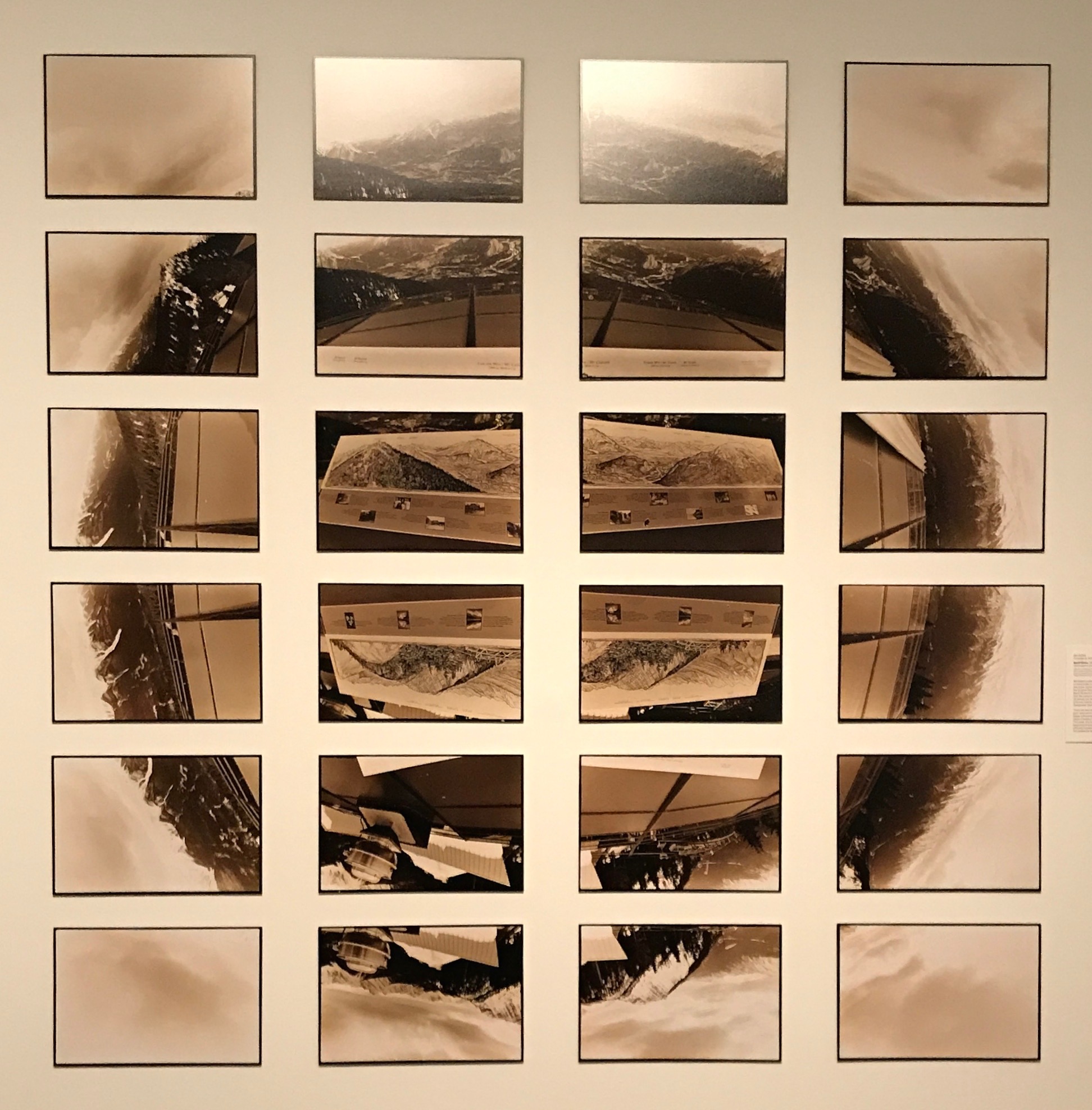
This 1999 work of art is called “Banff Globe”. Bill Vazan (b. 1933) created this photo of the Sulfur Mountain gondola observation tower. It’s a chromogenic photograph on paper. Just in case “chromogenic” isn’t in your vocabulary, this is what I came up with as a definition as it pertains to photography: “denoting a modern process of film developing that uses couplers to produce black-and-white or color images of very high definition.”

Sulphur Mountain is significant as it is the beginning of the Canadian National Parks system. An area on the northern slope of Sulphur Mountain was set aside for public use in 1885. This area, the Cave and Basin Hot Springs was the beginning of what is now Banff National Park.

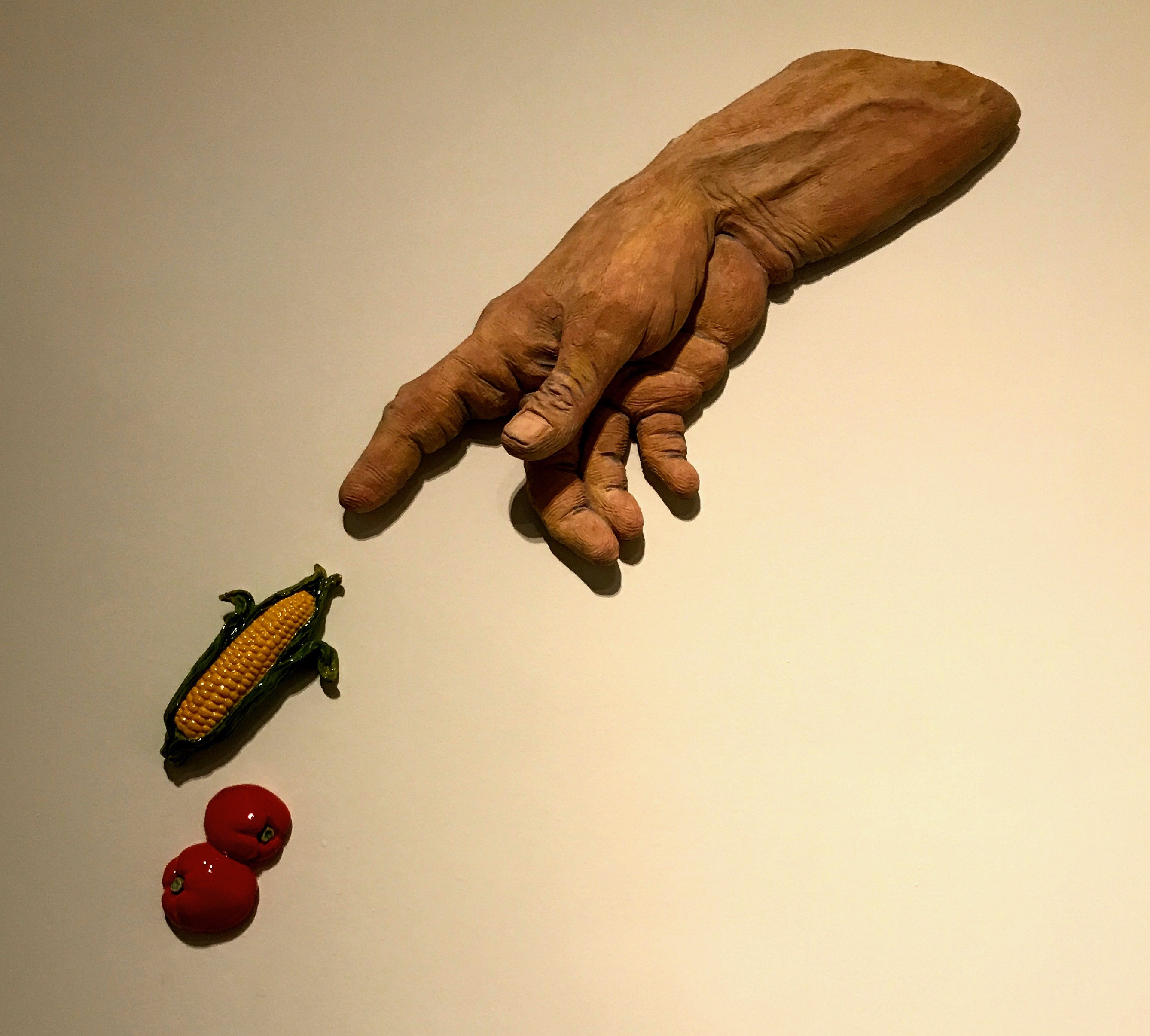
Saskatchewan sculptor Victor Cicansky (b.1935) is an enthusiastic gardener and much of his work features gardens and garden produce. “The Creation of Corn and Tomatoes, 1993” is a work in fired clay and glaze that is described as a “gently humorous work, with a pointing muscular arm reminiscent of the arm of God in Michelangelo’s painting on the ceiling of the Sistine Chapel.”

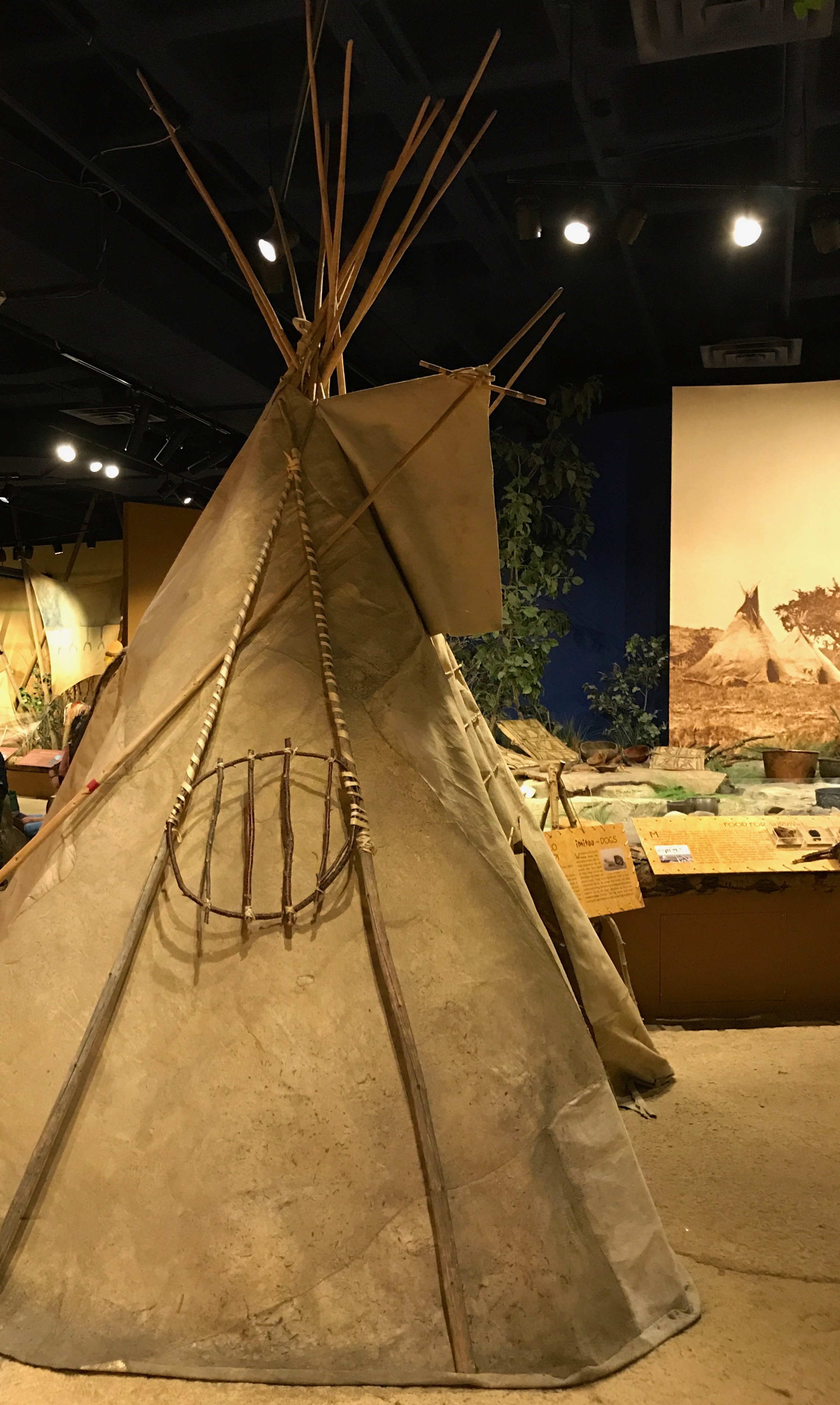
I continued my trip down and came upon the section devoted to the First Nations. I looked through the exhibits, but I was getting a little museum-weary.

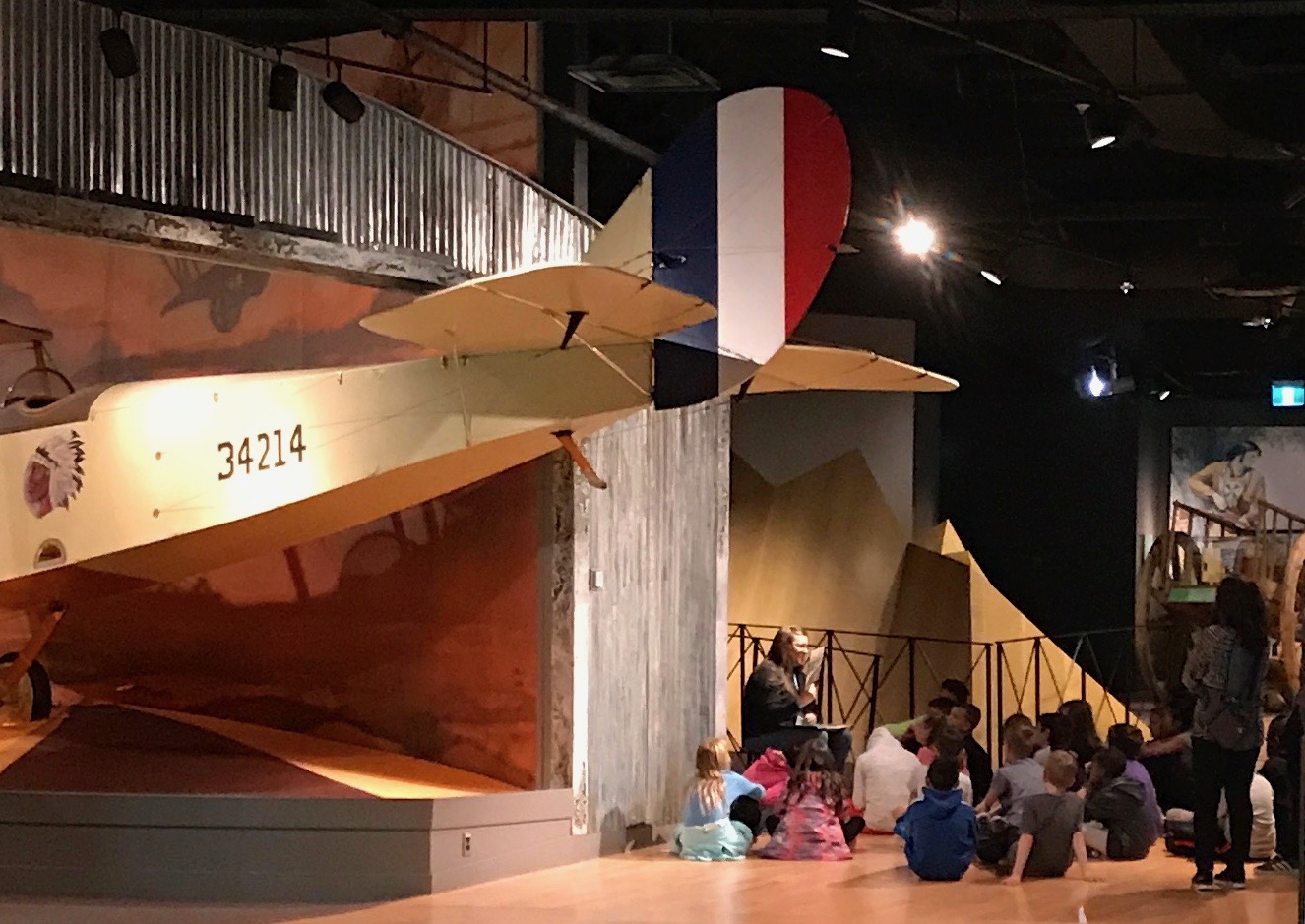
And I started running into field trips!

The students were well-behaved, but, well, field trips – been there, done that. I poked around a bit more and then headed out.

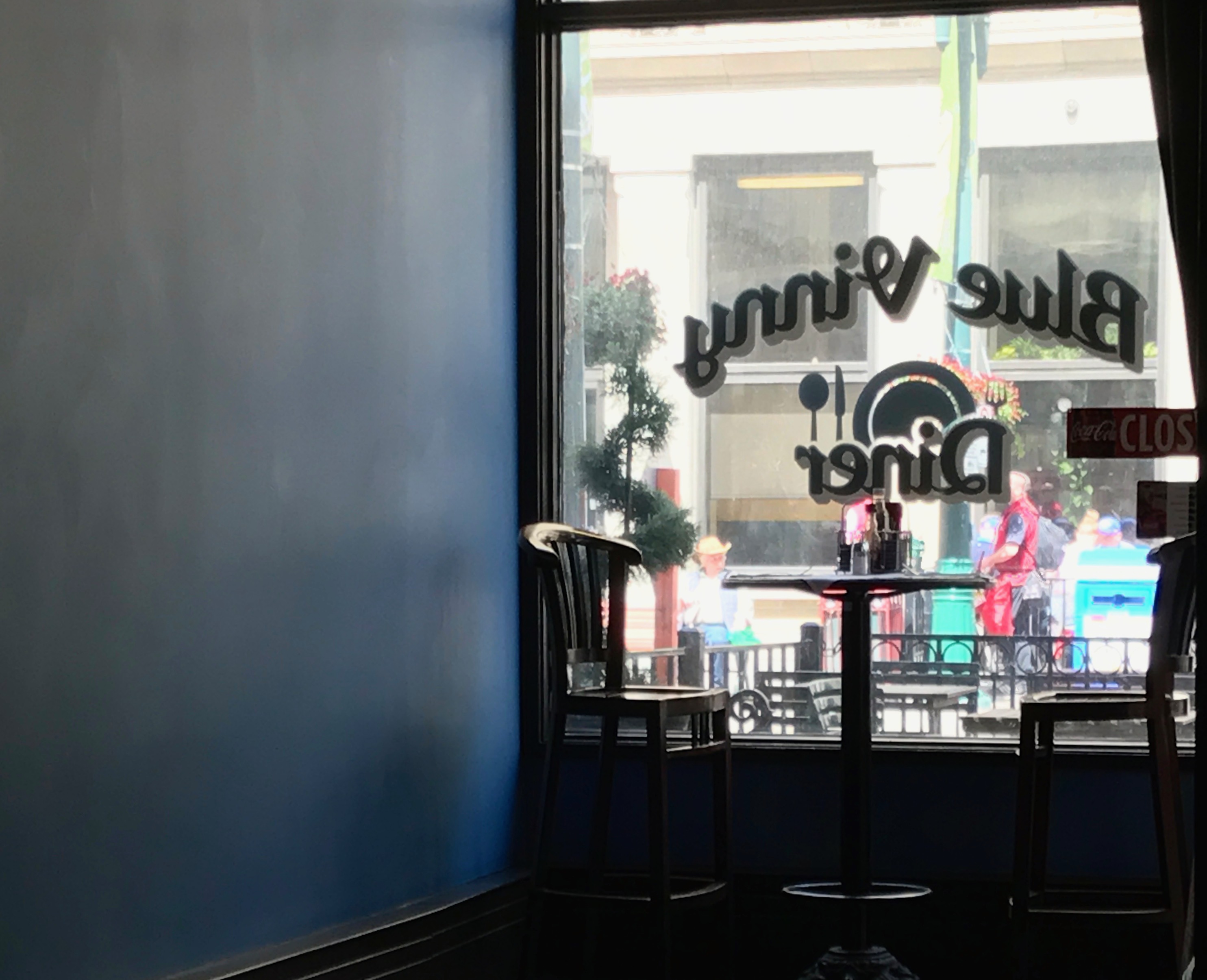
I stopped for a bit of refreshment. I was the only person in the diner. I think it’s a good thing that I only had something to drink. I worry when no one else is in a restaurant. Does everyone else know something I don’t? Is the food fresh? How long has that ham sandwich been sitting there?

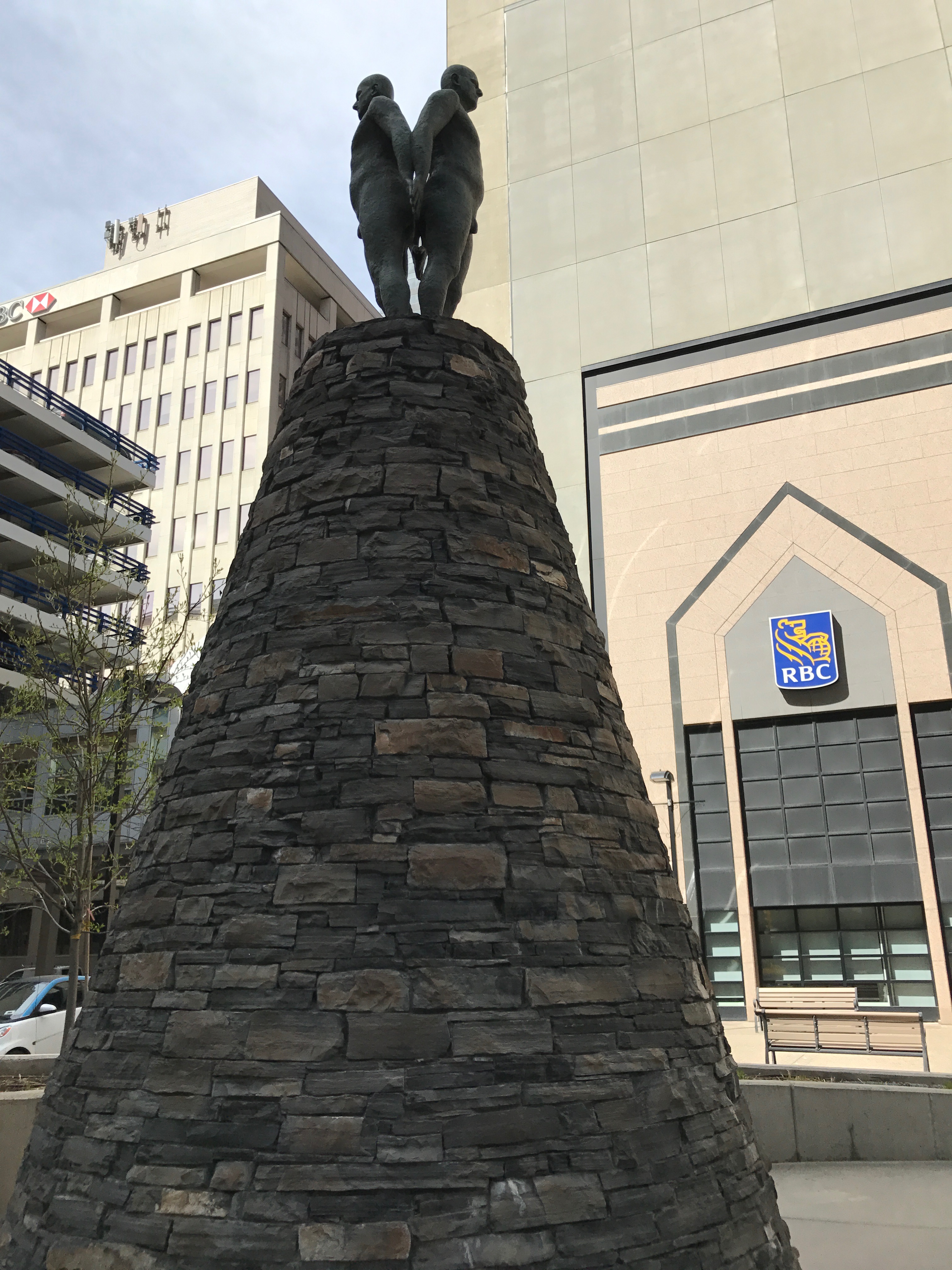
I came across this 2004 sculpture by Jacqueline Metz and Nancy Chew. The title is “between the earth & sky/measuring the Immeasurable”.

It is describes as a “mythic landscape”.  A cone of local rundle stone, which they describe as minimal yet sensuous, is a reference to the mountains. It took a little digging for me to find out what rundle stone is. It turns out that it is stone quarried from Mount Rundel in Banff National Park, and it is a fine-grained sandstone that is used in southern Alberta for landscaping and building.

So, on top of this “minimal yet sensual” cone of rundel stone, two bronze figures stand, back to back, looking forwards and backwards through space and time.

Uh, okay…

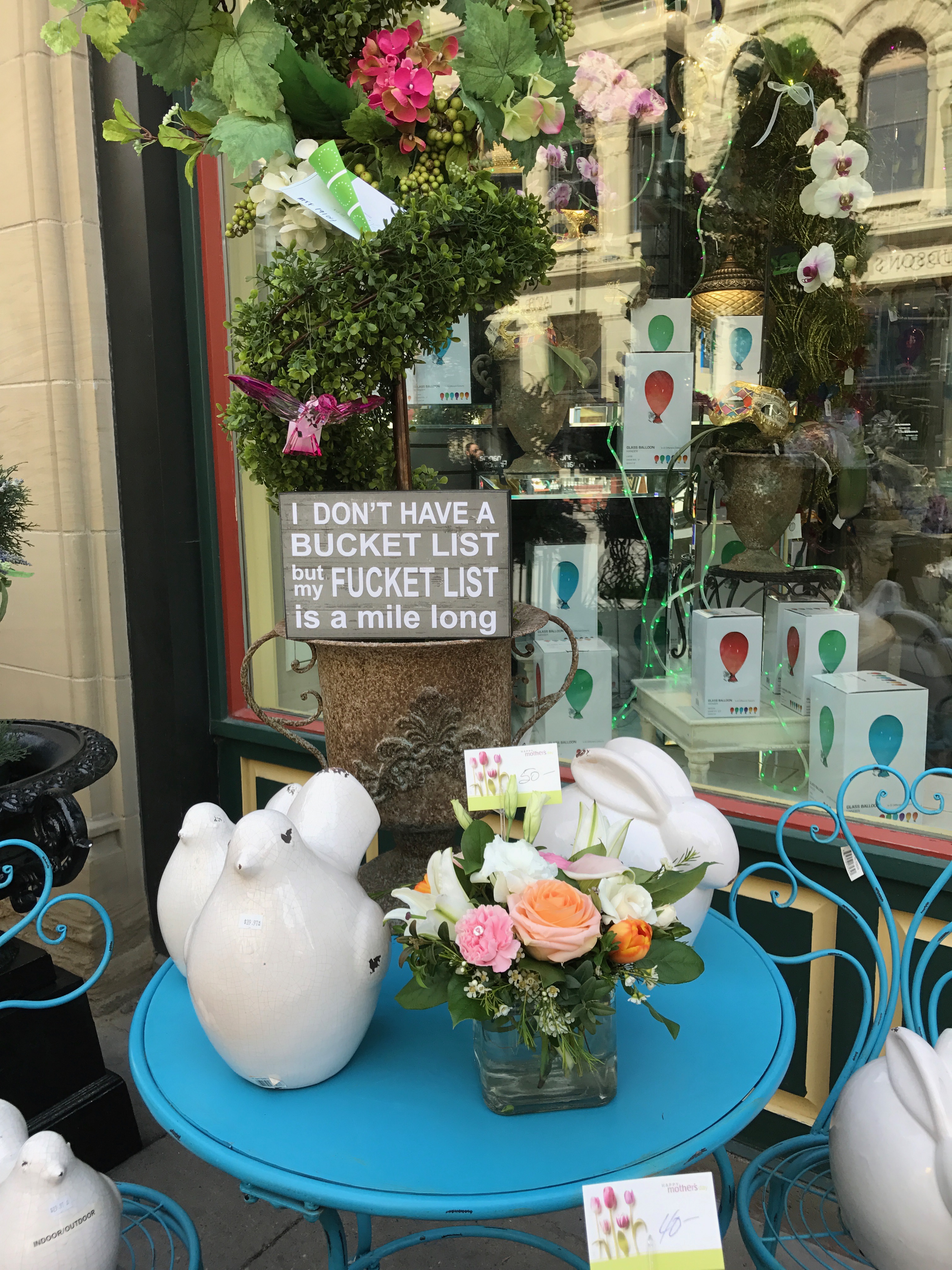
It’s always fun to see what stores set out in front of them. Actually “shopping” can be fun and economical, if you approach stores as if they were museums. They are there for you to enjoy, but don’t touch. (Or buy anything.)

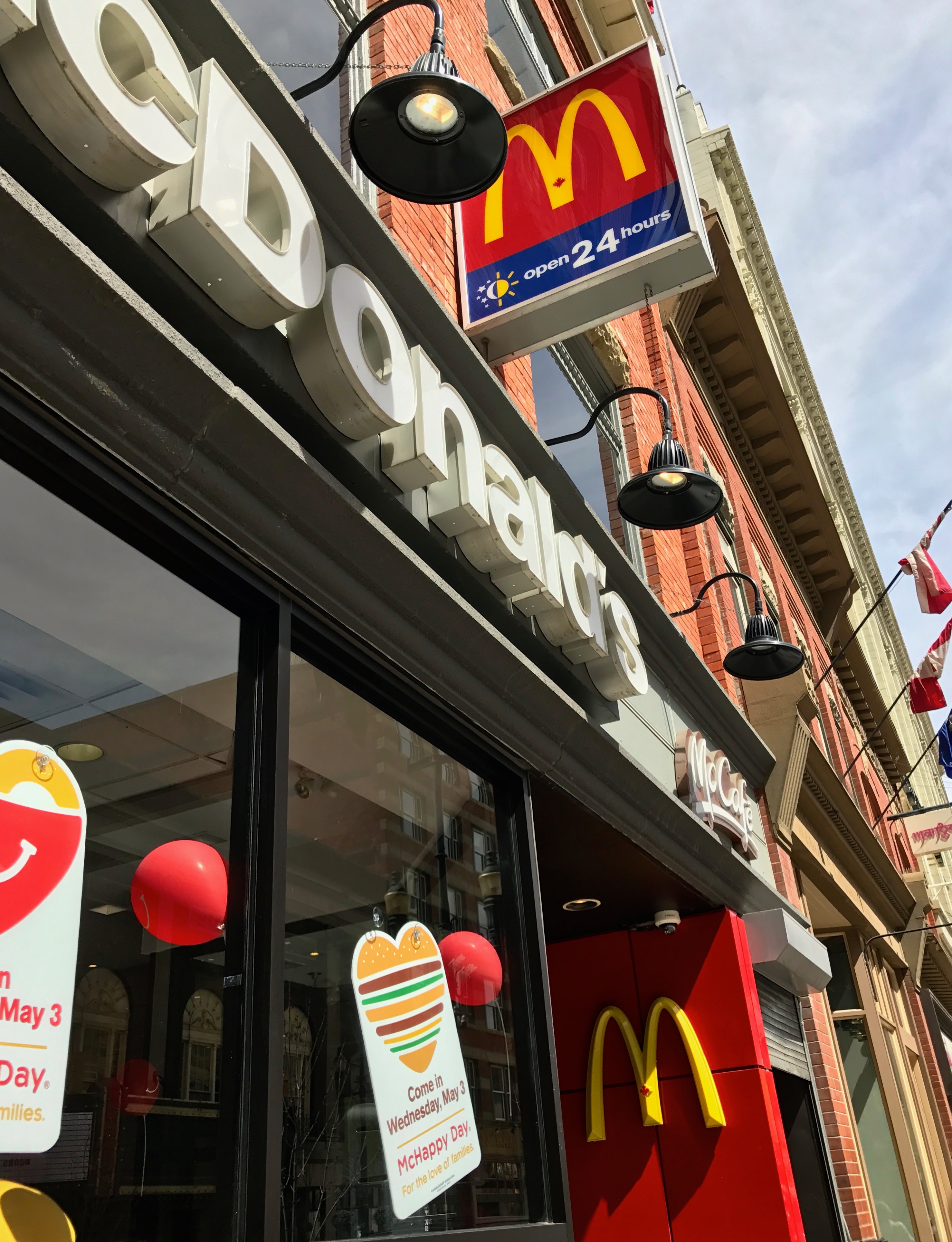
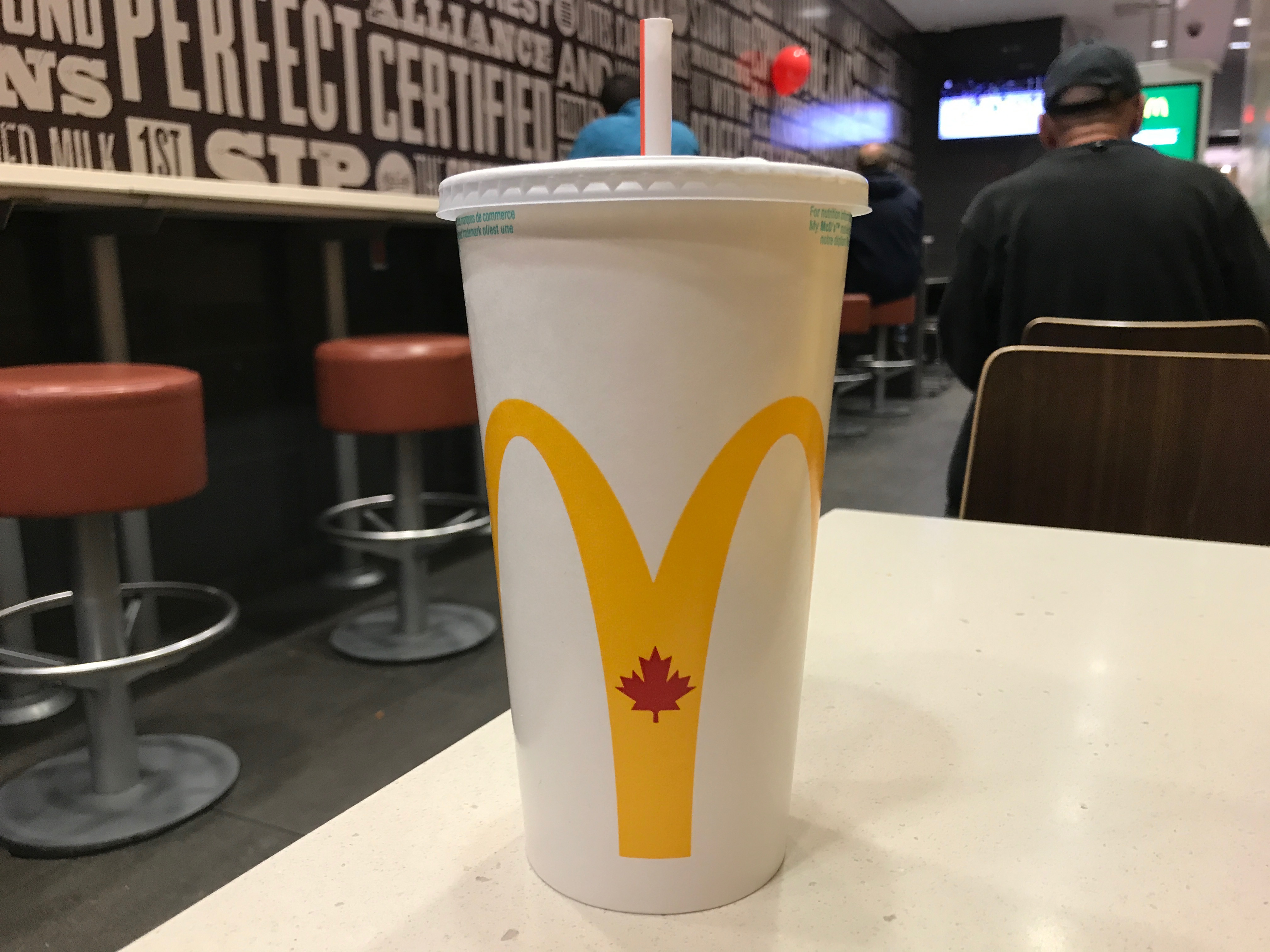
McDonalds!

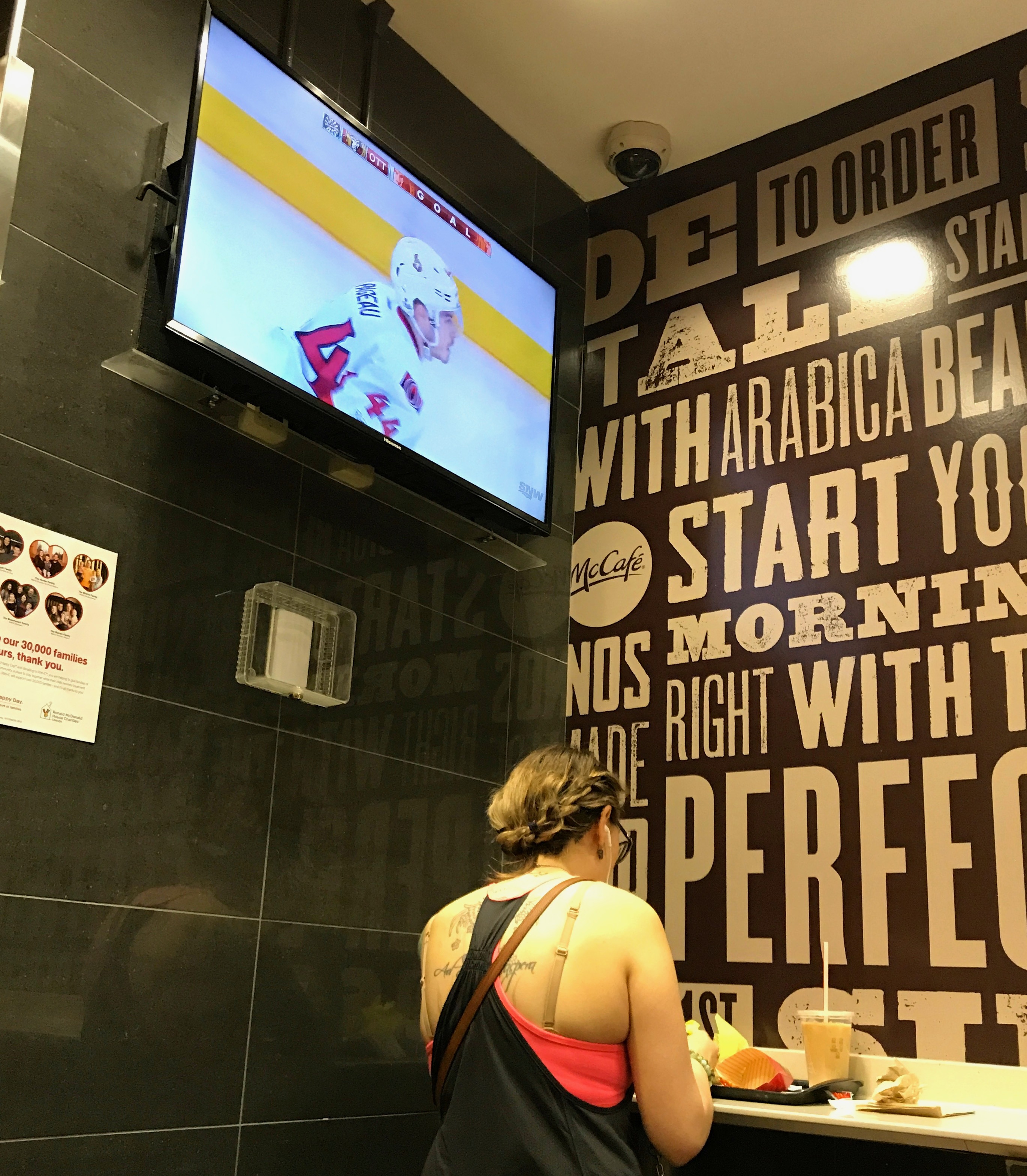
What would be on a TV in a McDonalds in Canada?

Hockey, of course!

I enjoyed my burger and beverage and got ready to head back to the campground.

Maple leaf forever!


Heading North of the Border

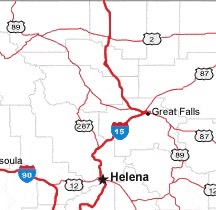
After my visit to Helena, It was a direct shot up I-15 to the border.

It wasn’t exactly a straight shot, but if you keep the round tires on the pavement and your eyes on the road, with an Interstate, you eventually get where you are going.

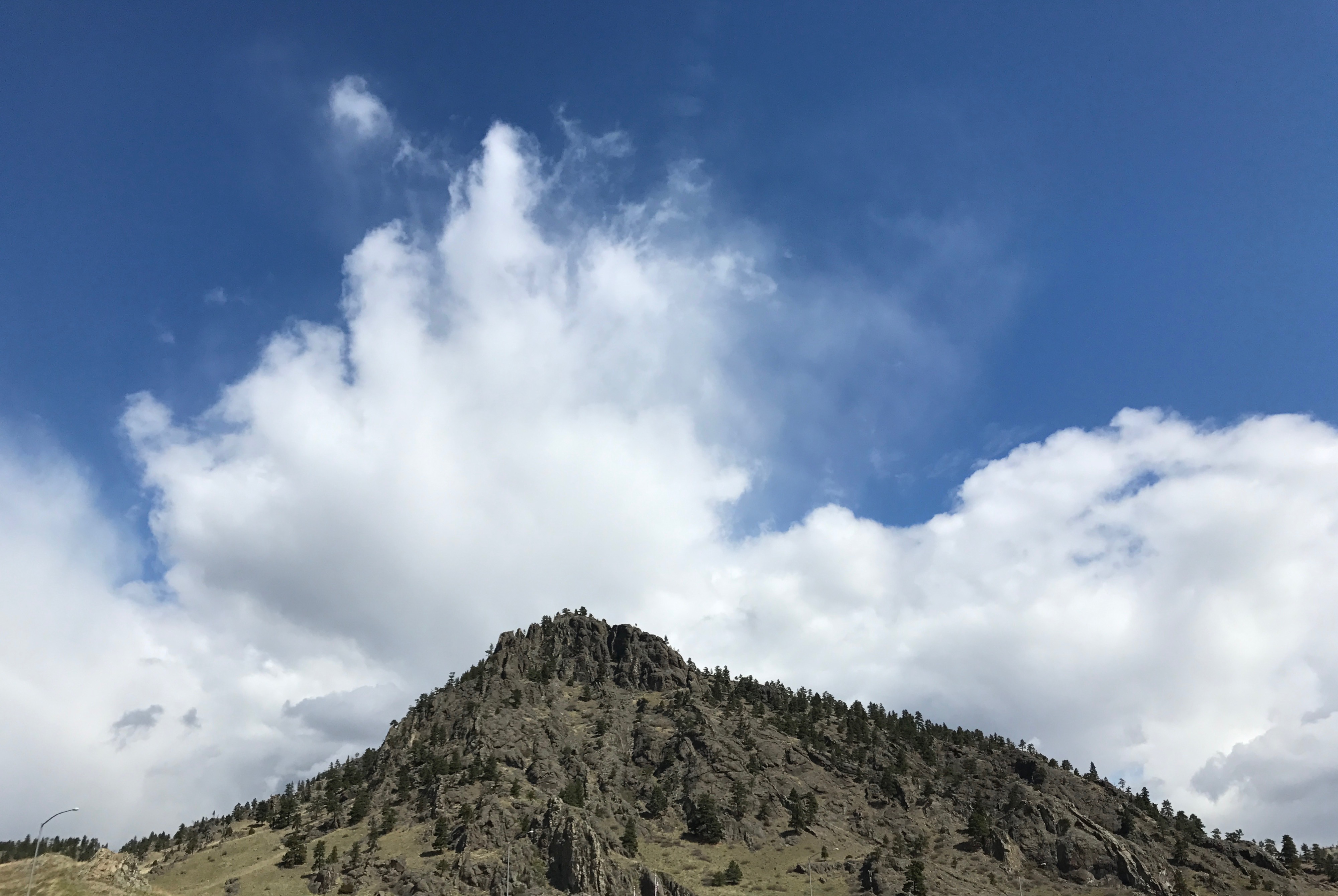
There is some amazing scenery out there in this great land of ours. I snapped this shot at a rest stop. The clouds kind of reminded me of waves crashing.

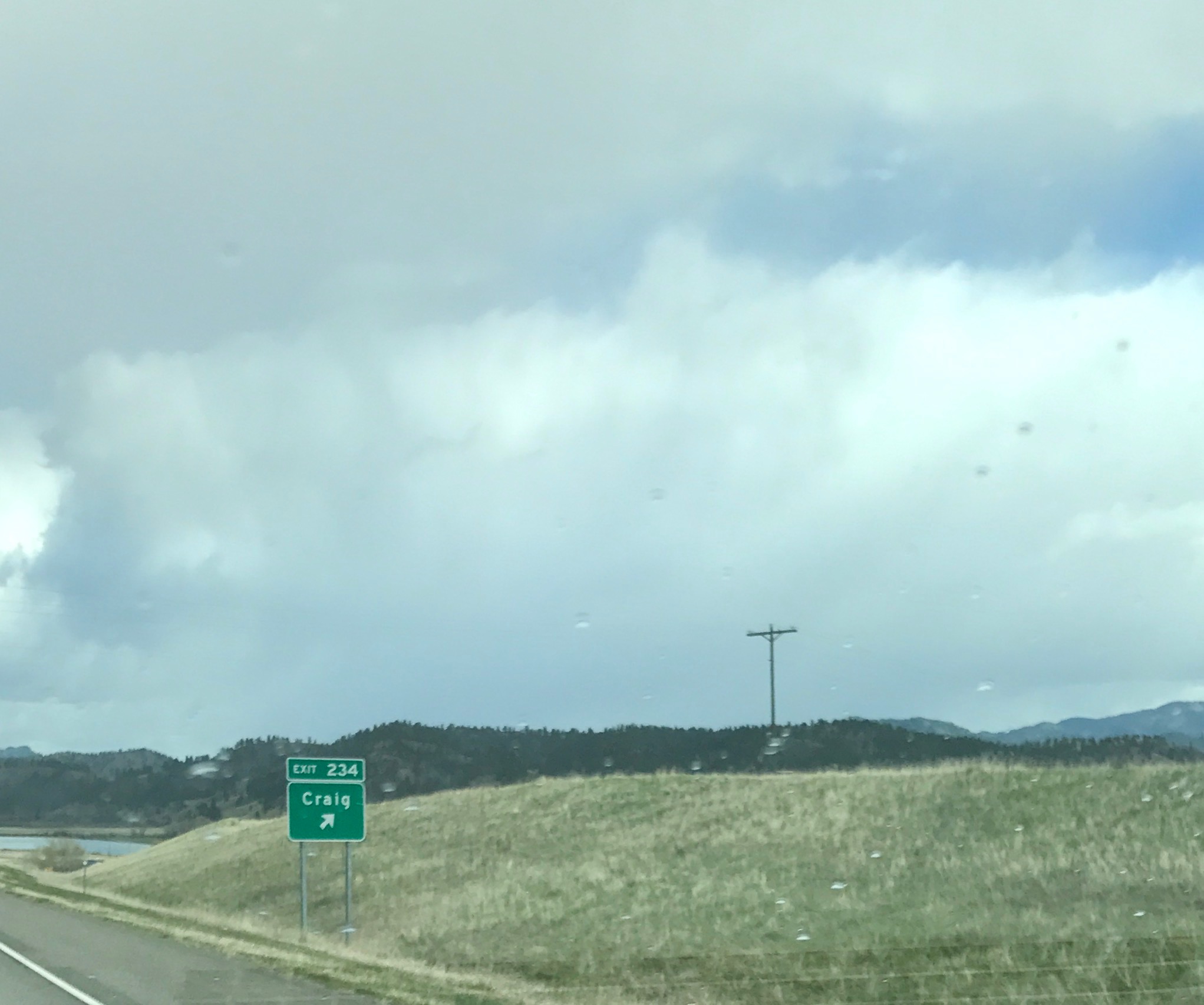
And, I had to snap this shot through my windshield for two reasons:

  1. The name of one of my brothers is Craig.
  2. I consider numbers that are in order, like Exit 234, to be a sign that my father is looking out for me. The story of that little game Dad and I would play is somewhere in my blog.

You can tell the clouds are moving in. They move in, they move out. Oh, and there’s rain on my windshield. I “love” rain.

I spent the night at a local campground in Shelby, so that I would be ready to cross the border at Sweet Grass in the morning.

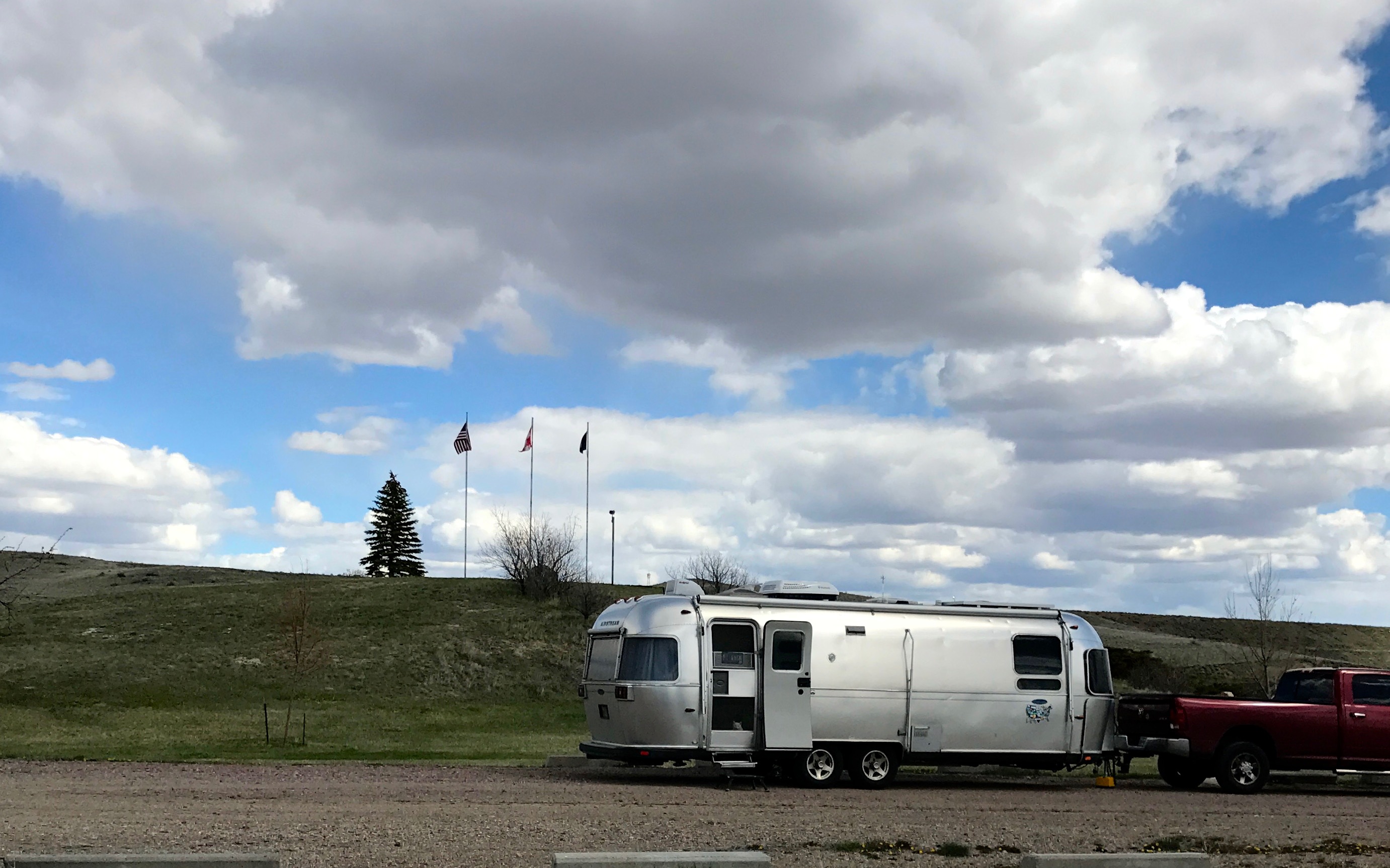
I’ll bet that this park is well-used in season. I was passing through during the week at the beginning of May, so I pretty much had the place to myself. I paid my fee at the “Iron Ranger”, which is just a tube where you drop your money, and spent a quiet night at the park. I didn’t even unhitch.

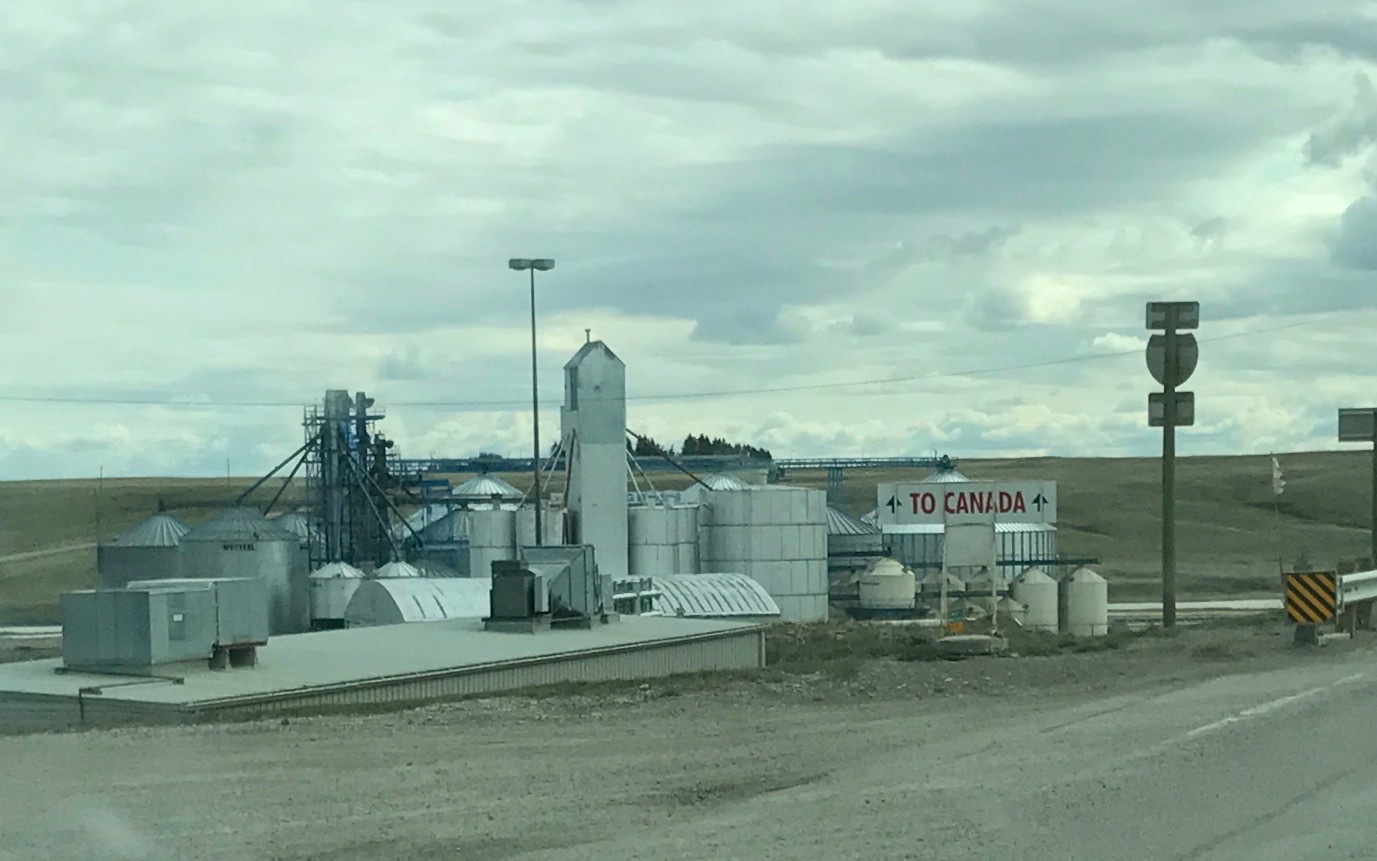
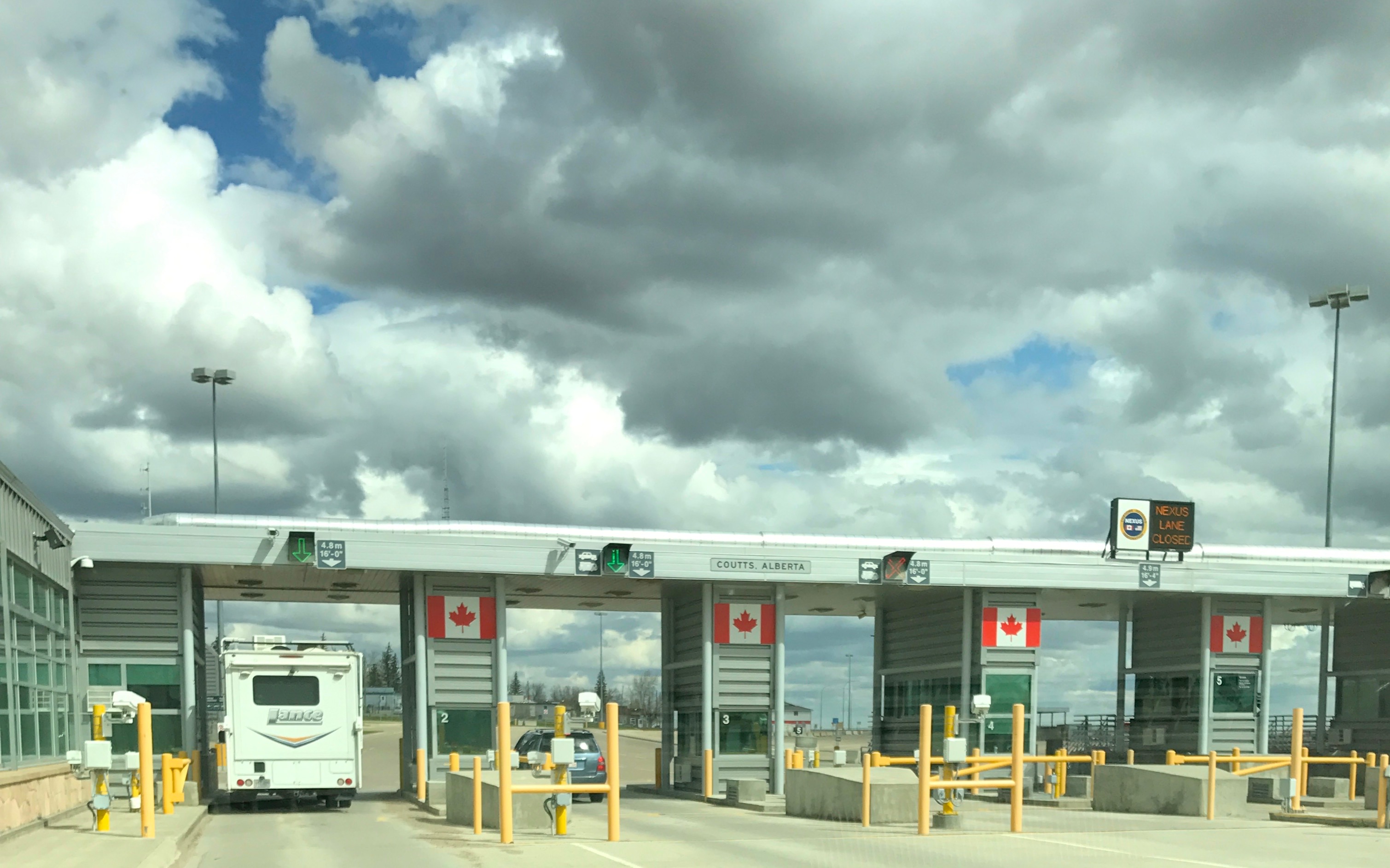
The next morning, I gassed up and found my way to Canada.

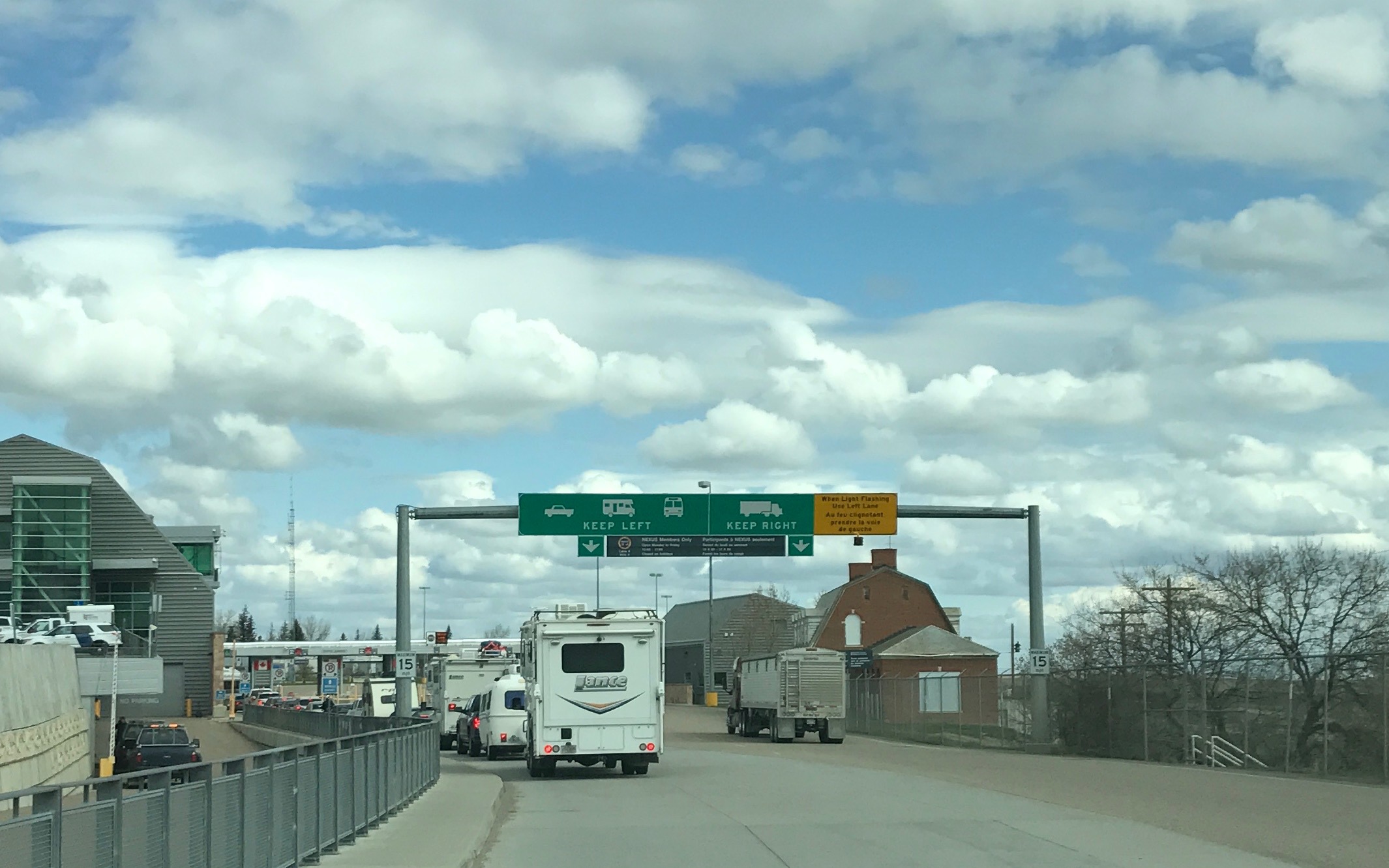
I was full of trepidation when I got in line. This would be my first border crossing with my trailer, although it was hardly my first border crossing.

I had been crossing the border my whole life. My first crossing was when I was about four days old. I was born in Buffalo, but we were living in Canada at the time. 

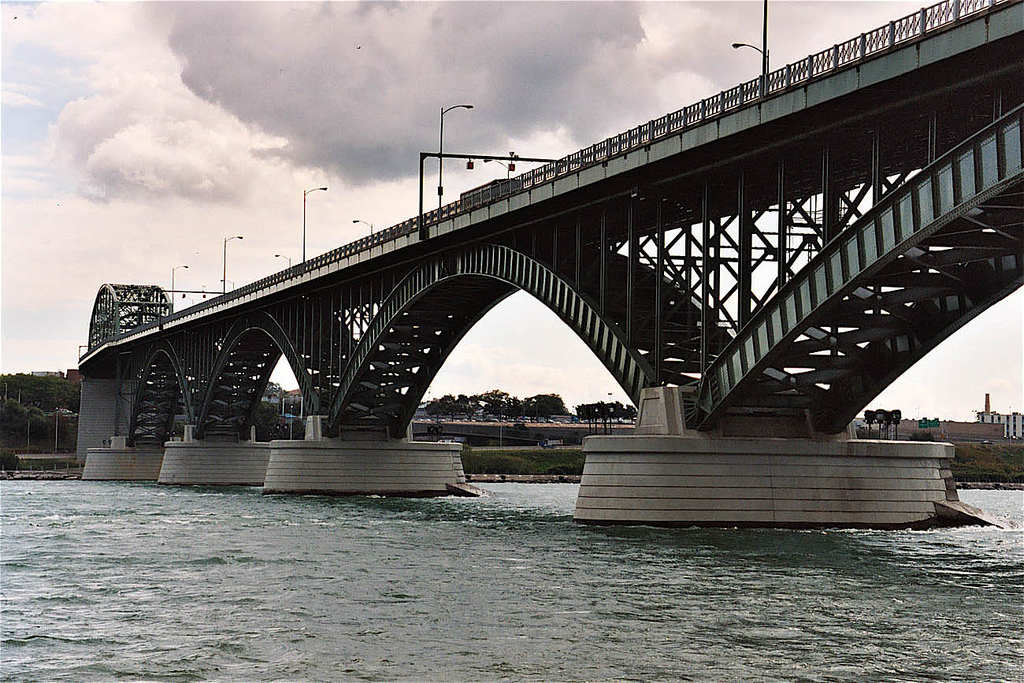
I still can’t get over the idea that you can enter Canada without crossing water. But, that’s just because I’m a Great Lakes sort of person. The photo above is of the Peace Bridge, otherwise known as “The Bridge”. It connects Buffalo, New York with Fort Erie, Canada.

Anyway, we inched up to the barrier and then it was my turn. Would they send me over to secondary inspection? Would they go through my truck and trailer? Was my paperwork adequate for bringing Cora the Travel Cat into the country?

I handed the agent my passport, Cora’s papers, my truck and trailer info. We discussed what I was bringing into the country. I had no firearms, fruits, vegetables, alcohol, or tobacco, so I was good to go. Oh, I did declare the four cans of Bud Light I had in the fridge, but he probably didn’t count that as beer. (Most of my beer loving friends don’t.)

He welcomed me to Canada and I was in!

I pulled over and captured the requisite “Welcome to Alberta” sign photo. I didn’t know Alberta was known for its wild roses.
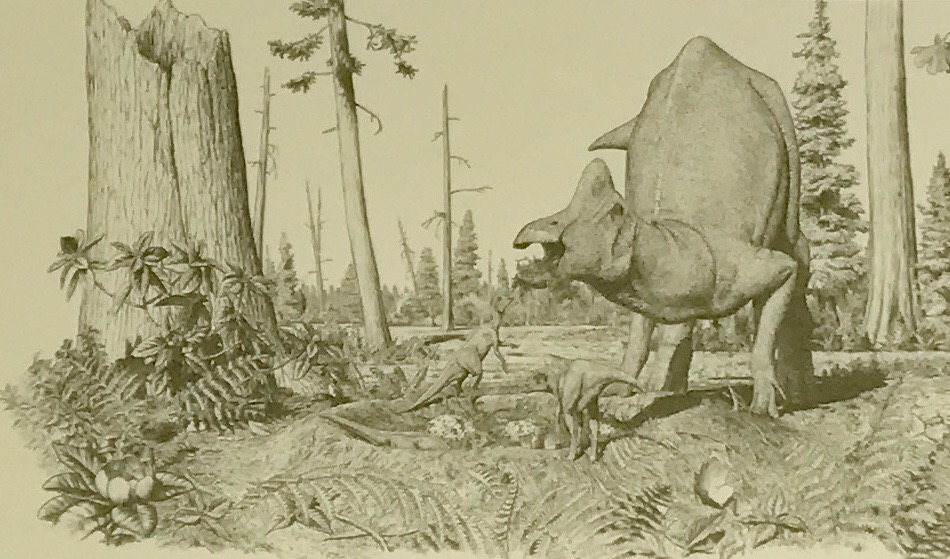
I was aware that it was known for its petroleum deposits, so it wasn’t a surprise that they would also welcome me with some information about the dinosaurs.
I’ll let you read the information they posted, if you are so inclined.
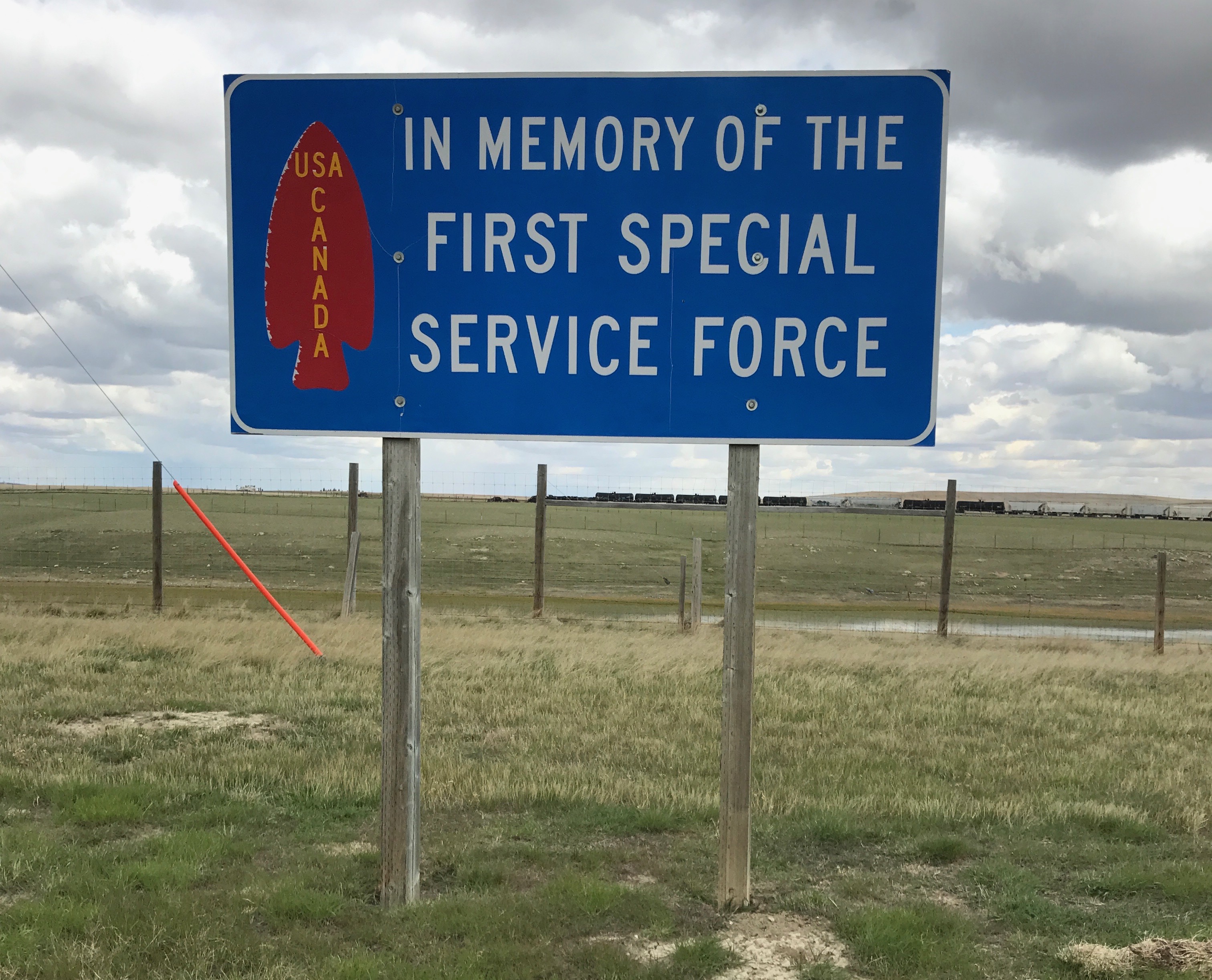
The next sign I noticed was a sign honoring the First Special Service Force.

It turns out that the road from Lethbridge, Alberta, to the border at Coutts and Sweet Grass and on to Helena was dedicated in 1999 as a memorial to the First Special Service Group, an elite WW II unit known as “The Devil’s Brigade.”

In 1942, 700 volunteer Canadian officers and soldiers took this route to join 1100 United State soldiers for intensive training at Fort William Henry Harrison, west of Helena. Although combat casualties were high, but the force never failed a mission. According to the information at the roadside, this small unit received a disproportionately large number of medals, over 5,100.

They were named “The Black Devils” by the Germans for their legendary nighttime fighting ability.

In 2013, the unit received the USA House of Representatives’ highest honor, The Congressional Gold Medal of Honor.

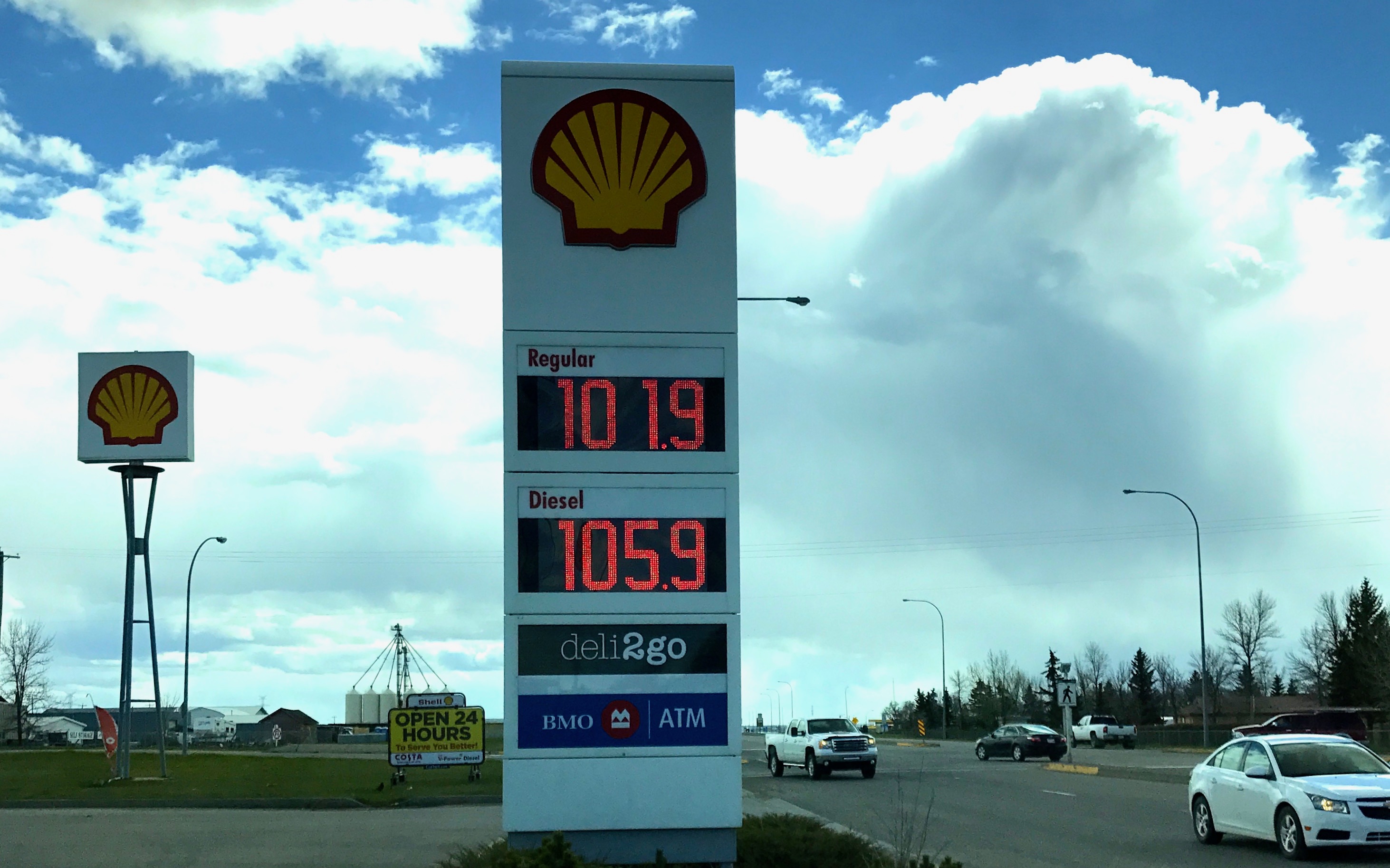
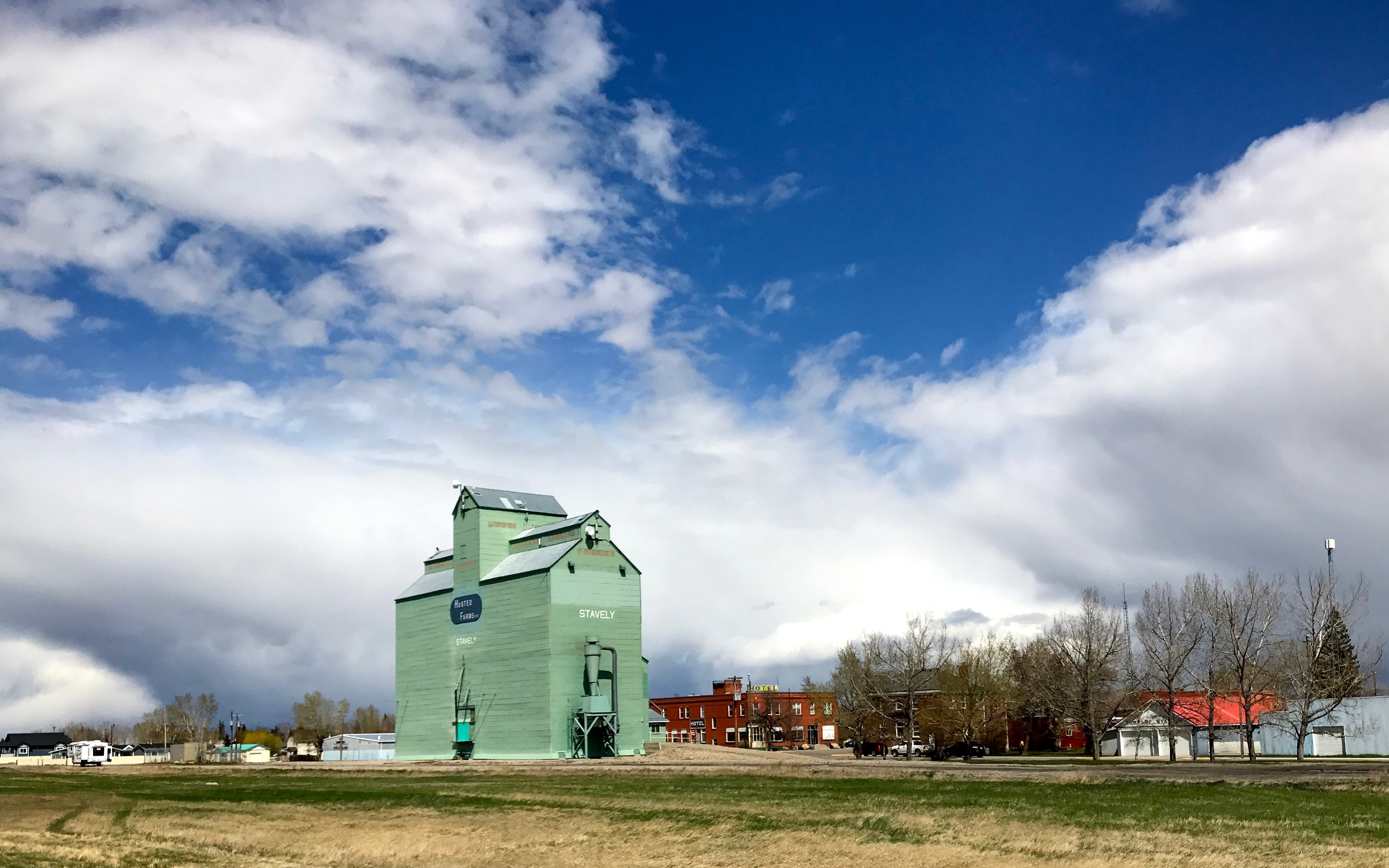
I drove on until I got to Stavely, when it was time for a fill up.

Don’t you just love having your mind boggled? If I wanted to know what the price would be in US dollars, I’d first have to figure out how many litres were in a US gallon, multiply that times the cost per litre and then figured out the exchange rate.

So, what did gas cost in Alberta?

Who cares? It cost whatever it cost. It wasn’t like I was going to head back across the border to fill up.

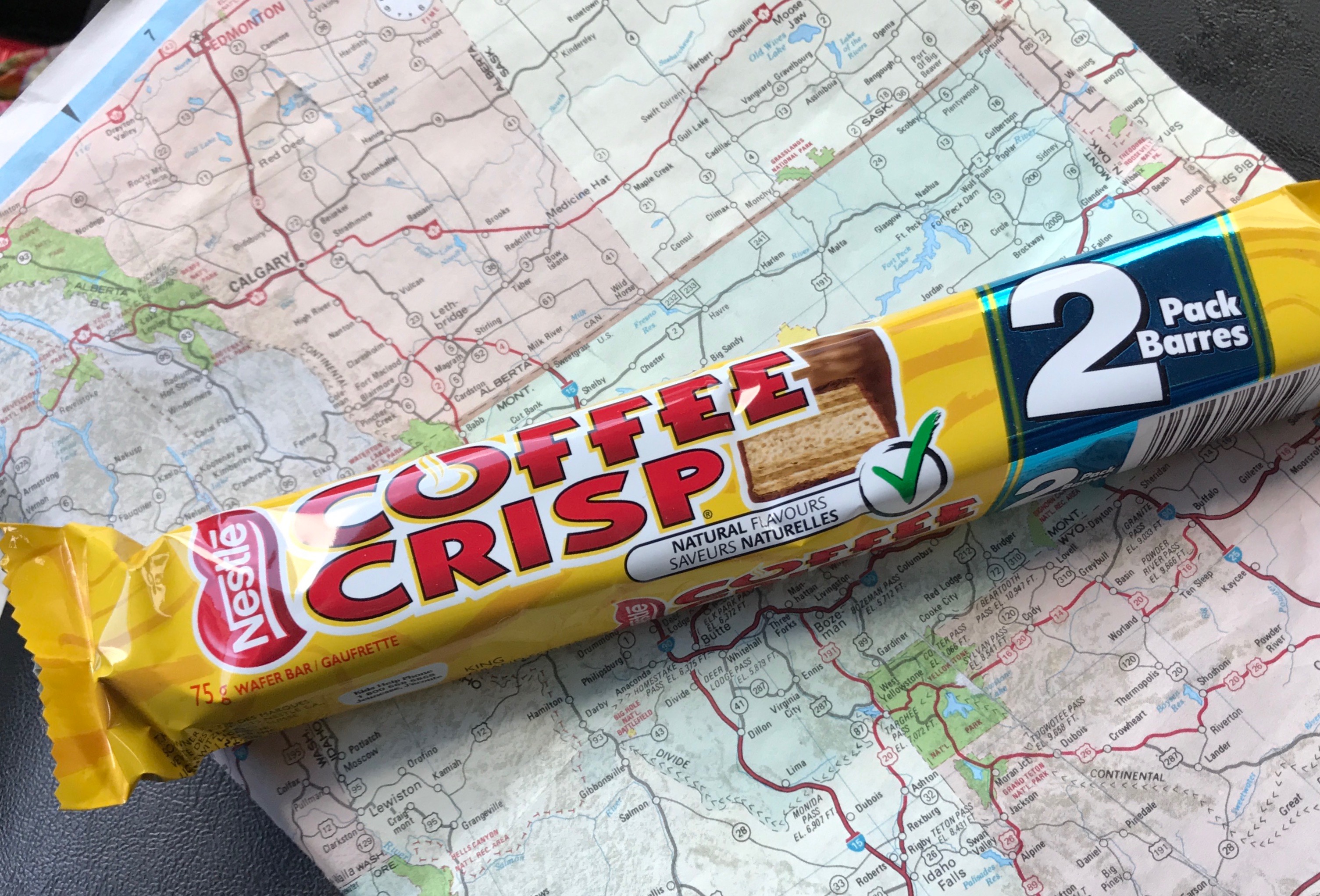
And, as long as I was filling up the truck, I might as well have a little snack myself.

How do you like your coffee?
I like my coffee crisp.

I was rolling through the prairies and the productive-looking farmland.

This grain elevator is in Stavely, which was named after the chairman of the  Oxley Ranching Company, Alexander Stavely Hill. Oxley Ranch was one of the bonanza ranches.

What is a bonanza ranch? I did a big of digging, because I was wondering, too. In 1881, an Order-in-Council was passed that allowed individuals or corporations to lease ranches not to exceed 100,000 acres for 21 years at the annual rental of one cent per acre.

Just in case you need some help visualizing the size of 100,000 acres, that is equal to about 155 square miles. That is about the size of South Bend, Indiana.

The era of the bonanza ranches didn’t last long. About ten years later, the Government canceled the the ranch leases, which made way for homesteaders.

As cattle gave way to grain, the population grew. Stavely was incorporated in 1912. The Alberta Farmers’ Cooperative built a grain elevator in 1910, which was the largest of its kind between Winnipeg and Vancouver.

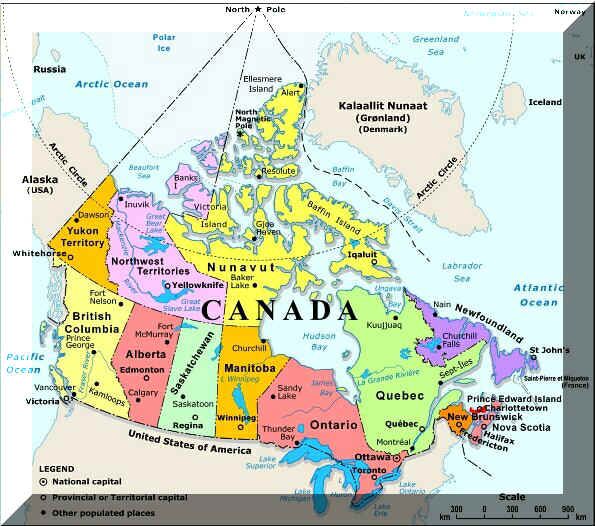
For those of you not up on your Canadian geography, here’s a map to help you.

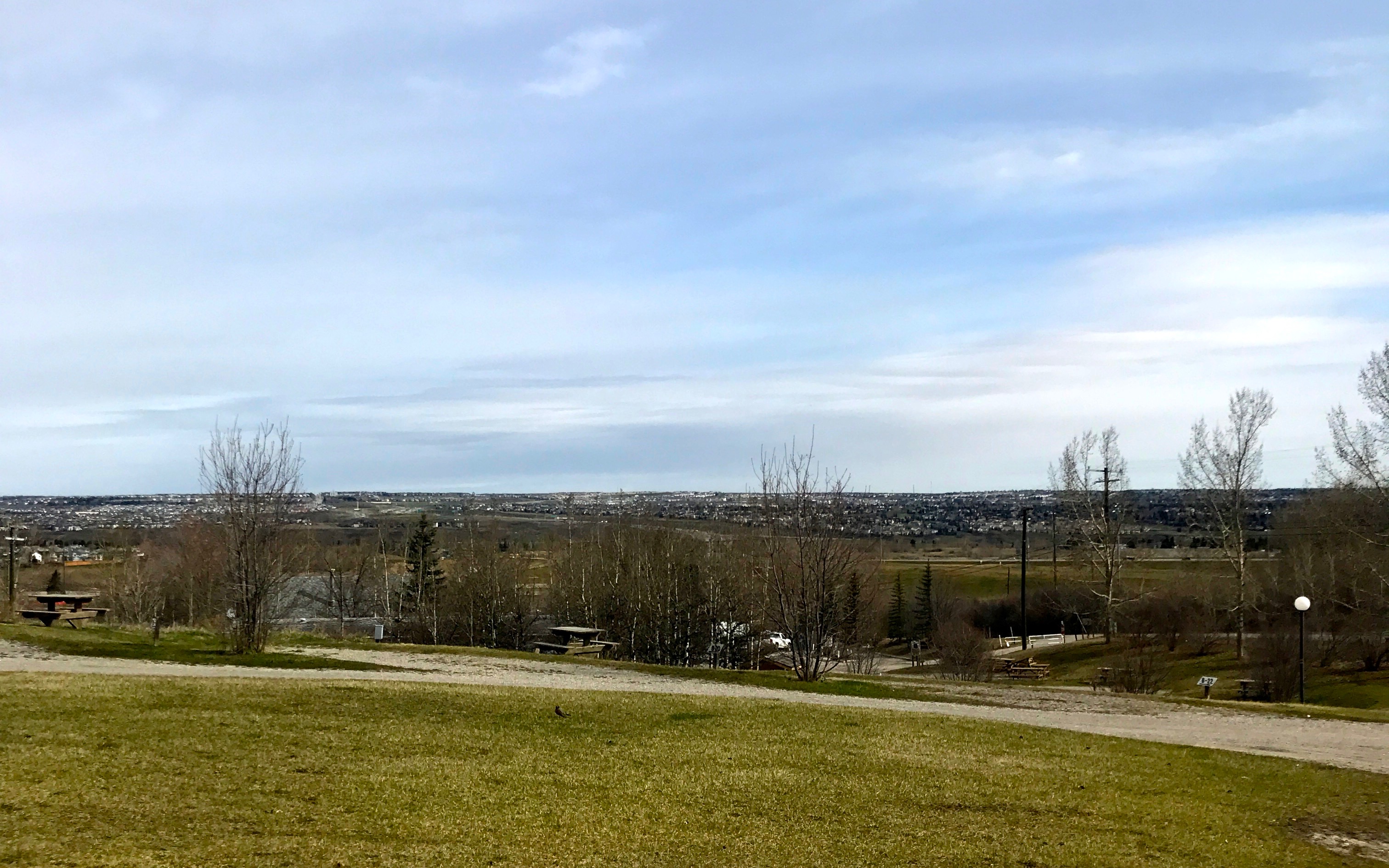
I resumed my trip toward Calgary. I arrived at the campground I had selected – Calgary West Campground. It took me a couple tries to get backed into my site. Since it was so early in the season, I don’t know why they couldn’t have given me something easier to get into. It was the first time I’d had to shift into four wheel drive to back the trailer up into the spot.

But, once I was in my spot, I was set for a few days. The next day I’d explore Calgary.

(That’s Calgary in the distance.)