Edenton, North Carolina

I continued my zig-zaggy path around North Carolina. In looking at my map, I saw that one route would take me through Spivey’s Corner.

If you are of a certain age and watched Johnny Carson, you probably have heard this place’s name before. Spivey’s Corner used to have a “Hollerin’ Contest” and the winners would go on The Tonight Show to show off their talents.

https://youtu.be/H03TO1g4mrY

Naturally, I had to stop – or at least slow down.
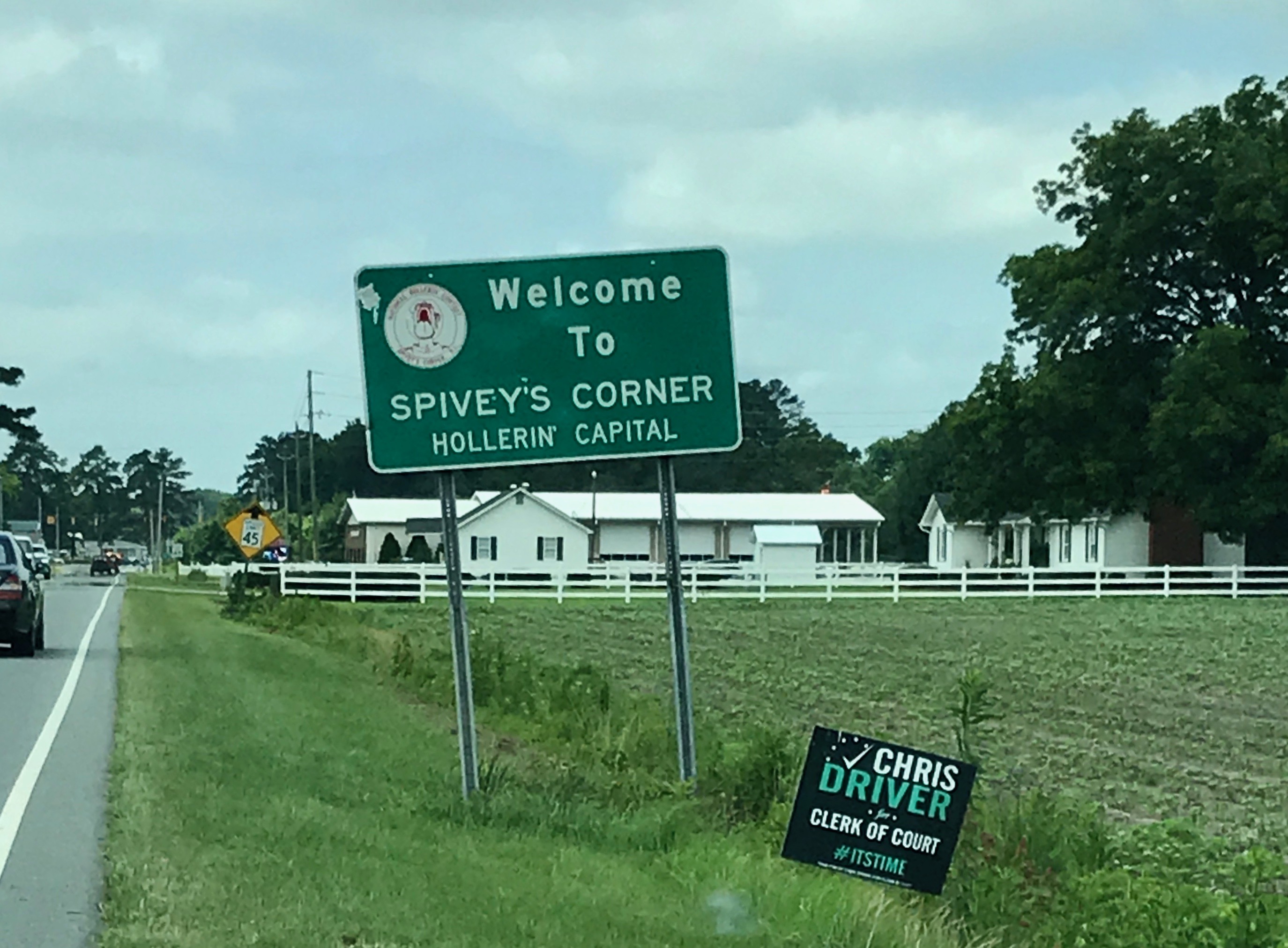
There it is!
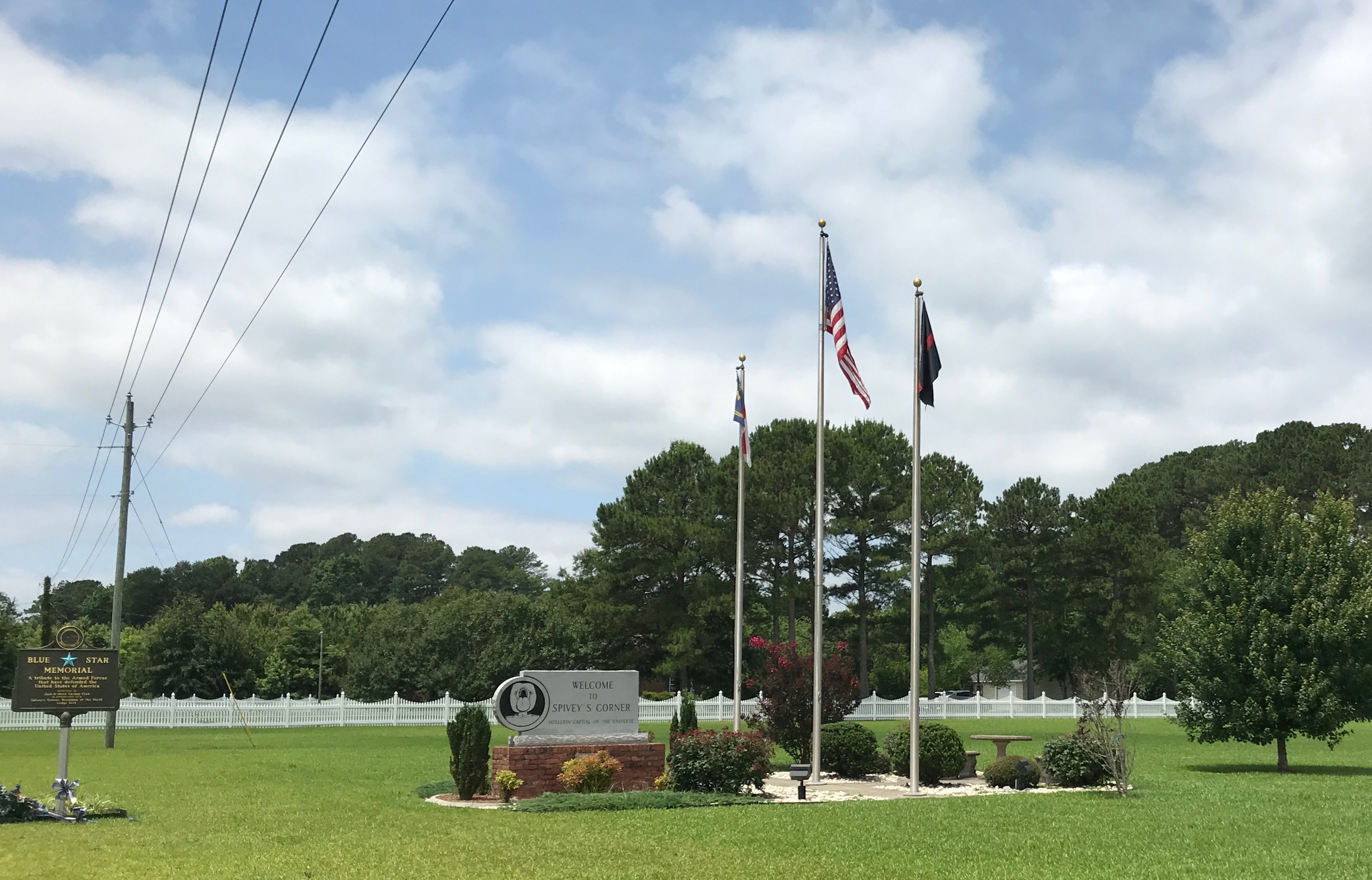
It really is small town America. These flags and this sign were out in front of the main civic building – fire hall, police station, and town hall all rolled into one.

I do have to say, their civic logo is a bit unnerving, but I suppose a view down a hollerin’ throat is appropriate.

After my brief pause, I continued searching out the grain elevators.
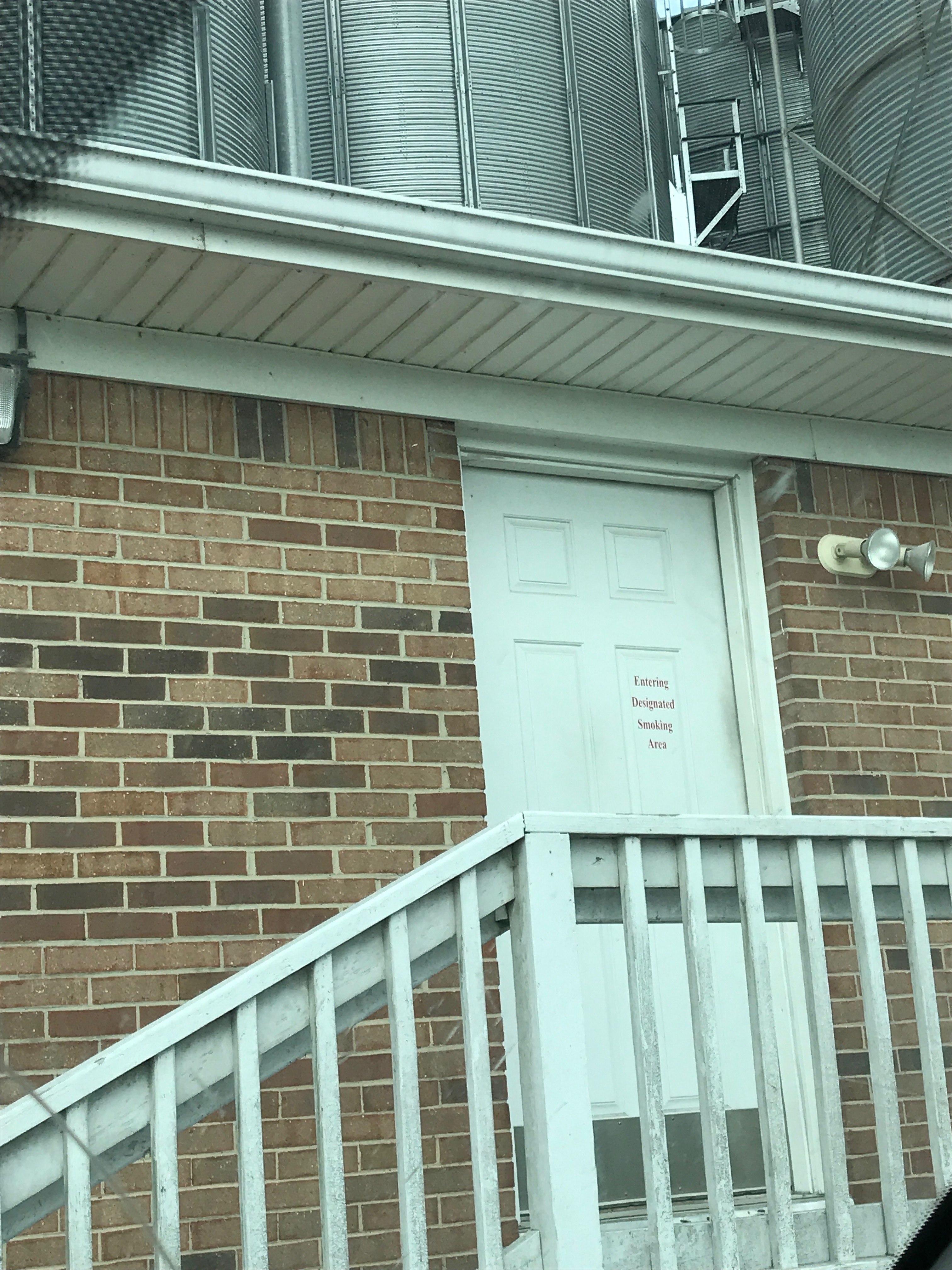
This one solved the issue of a designated smoking area in a unique manner. Sure – make the whole office a designated smoking area. I’m sure it works for some people. (Me – not so much.) I collected my samples as quickly as possible.

I came across an interesting sight in their parking lot, though. A ground bird of some species had made a nest in the gravel. They marked it with little flags to warn people not to drive over it.
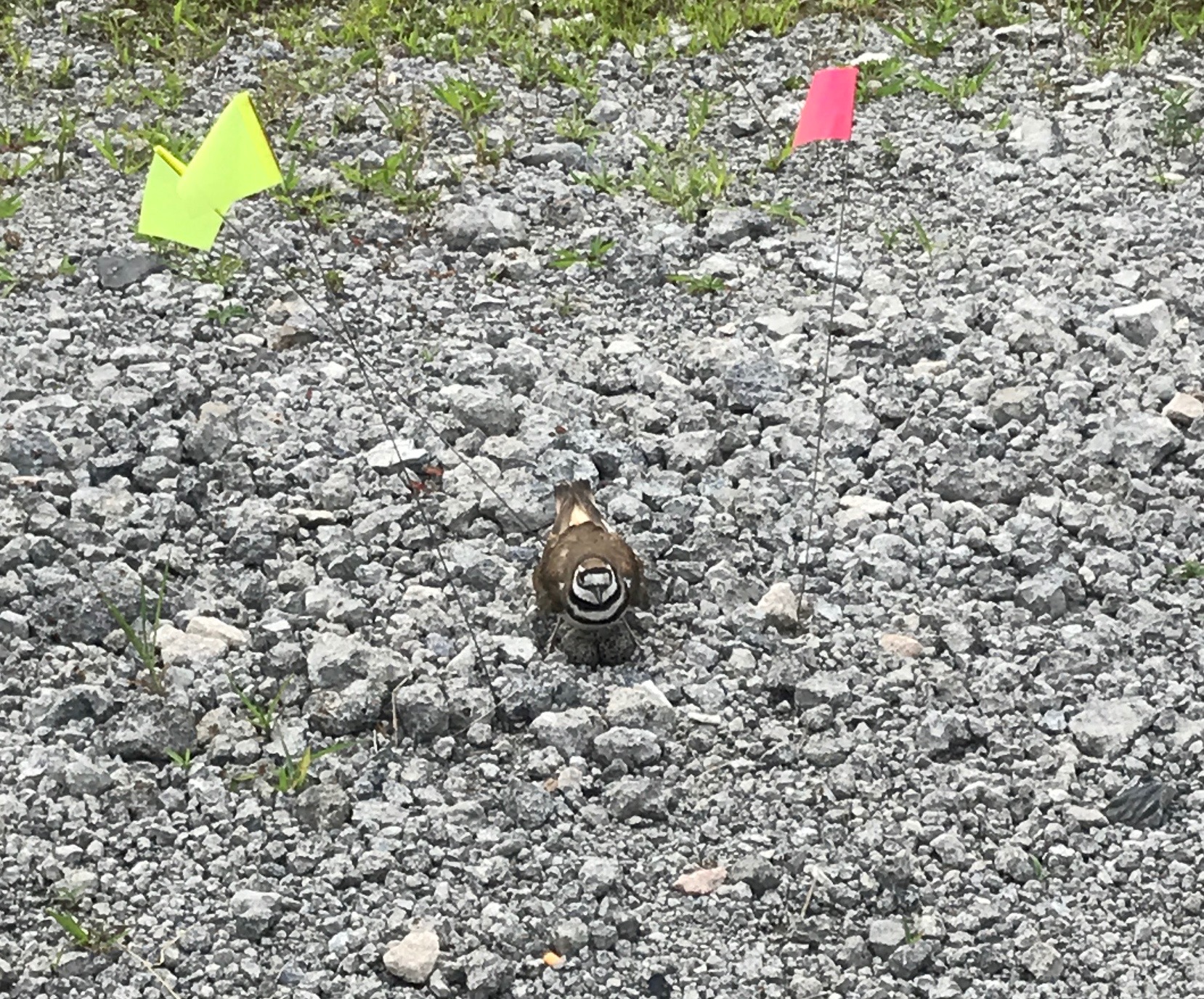
I tried to get a little closer to see what kind of bird it was – as it I would know. I could tell that it wasn’t a robin, cardinal or blue bird. Also, it wasn’t a heron, pelican or sea gull.
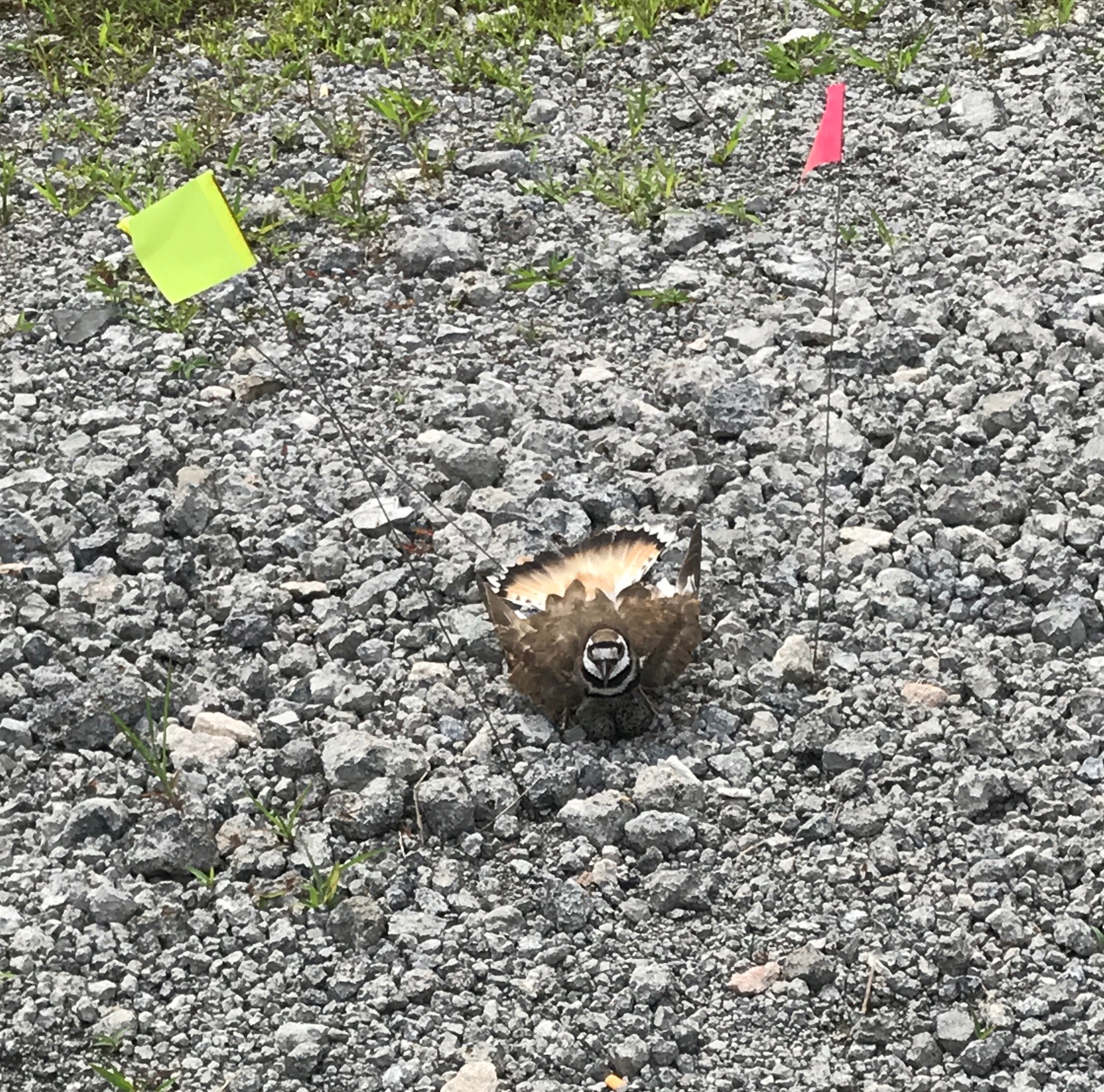
I guess I got a little too close. It puffed itself up into as large a bird as it could be. I could tell I wasn’t wanted, so I backed off and got back on the road.
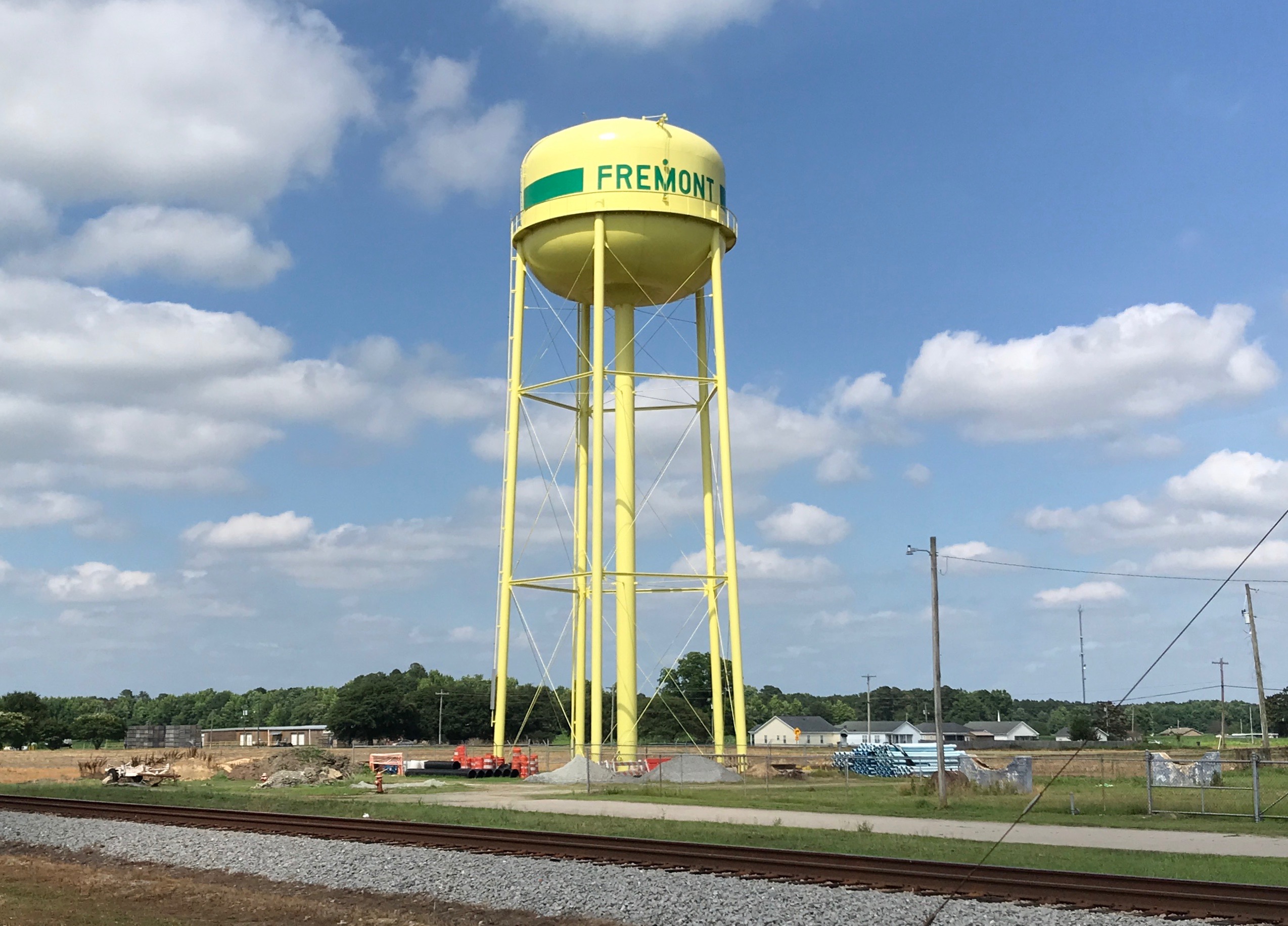
In addition to the number of places in the United States named Clinton, there are an awful lot of places named Fremont. From the info I could glean in a 60 second Google session, it looks like there are 17 places in the USA named Fremont. In fact, Fremont, California was named “America’s Happiest Place” in 2018.

But, this is Fremont, North Carolina, and I just grabbed a photo of their bright yellow water tower.

I stopped somewhere for the night. There was a Cook Out hamburger joint just down the street, so I decided to see why my niece was so fond of the place.

My brother and his family lived in North Carolina for a spell. While I saw the chain when Dad and I would go down to visit, we never stopped there.

You could drive up or walk up. I just strolled over from the hotel. It was fine fast food fare; it kept body and soul together for another day, and now I can say that I have been there.
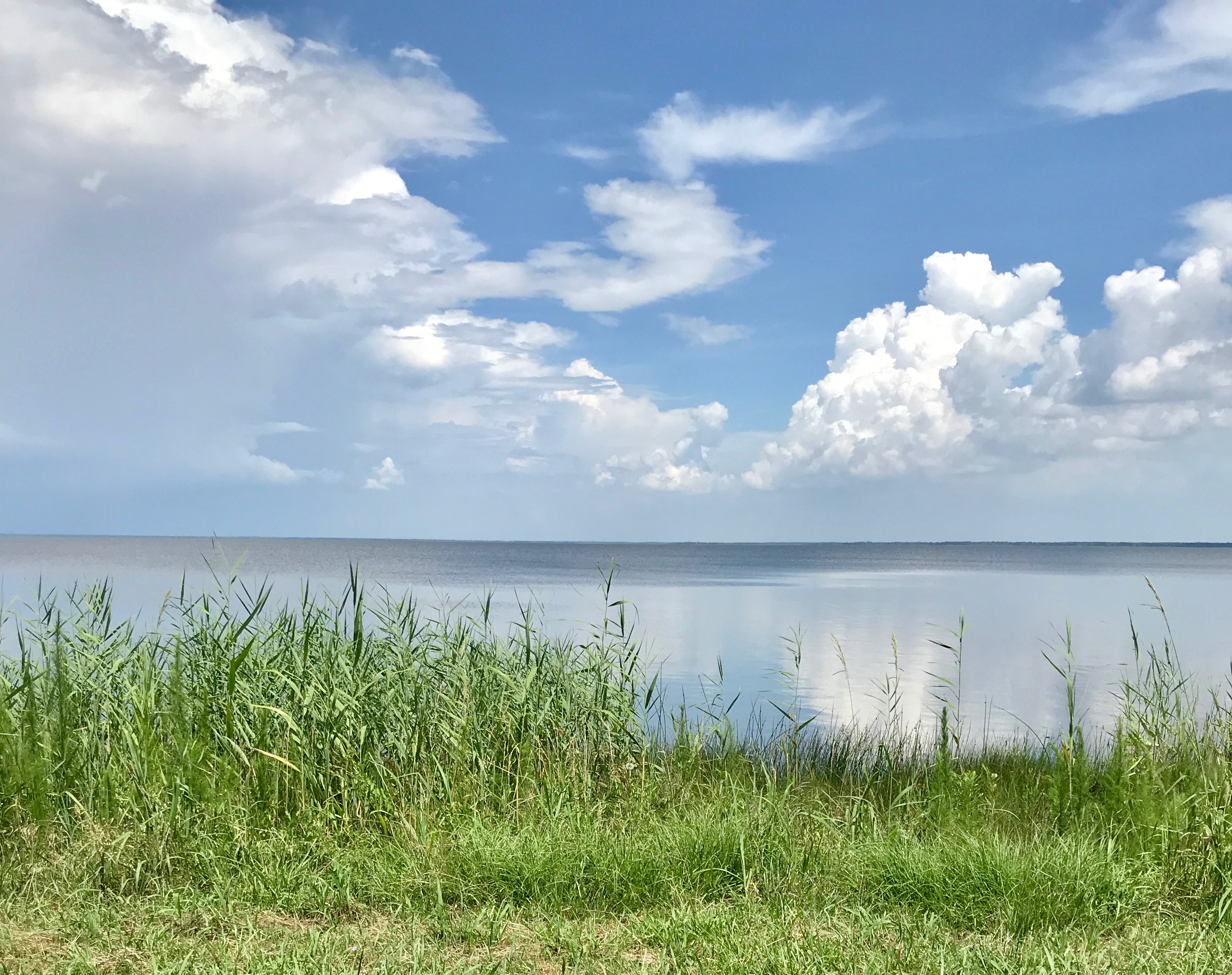
The next day, I headed off on my rounds. I an incredible variety of scenery – mountains, farmland, forests and now this river or bay or whatever it was. It might have been the Albemarle Sound.
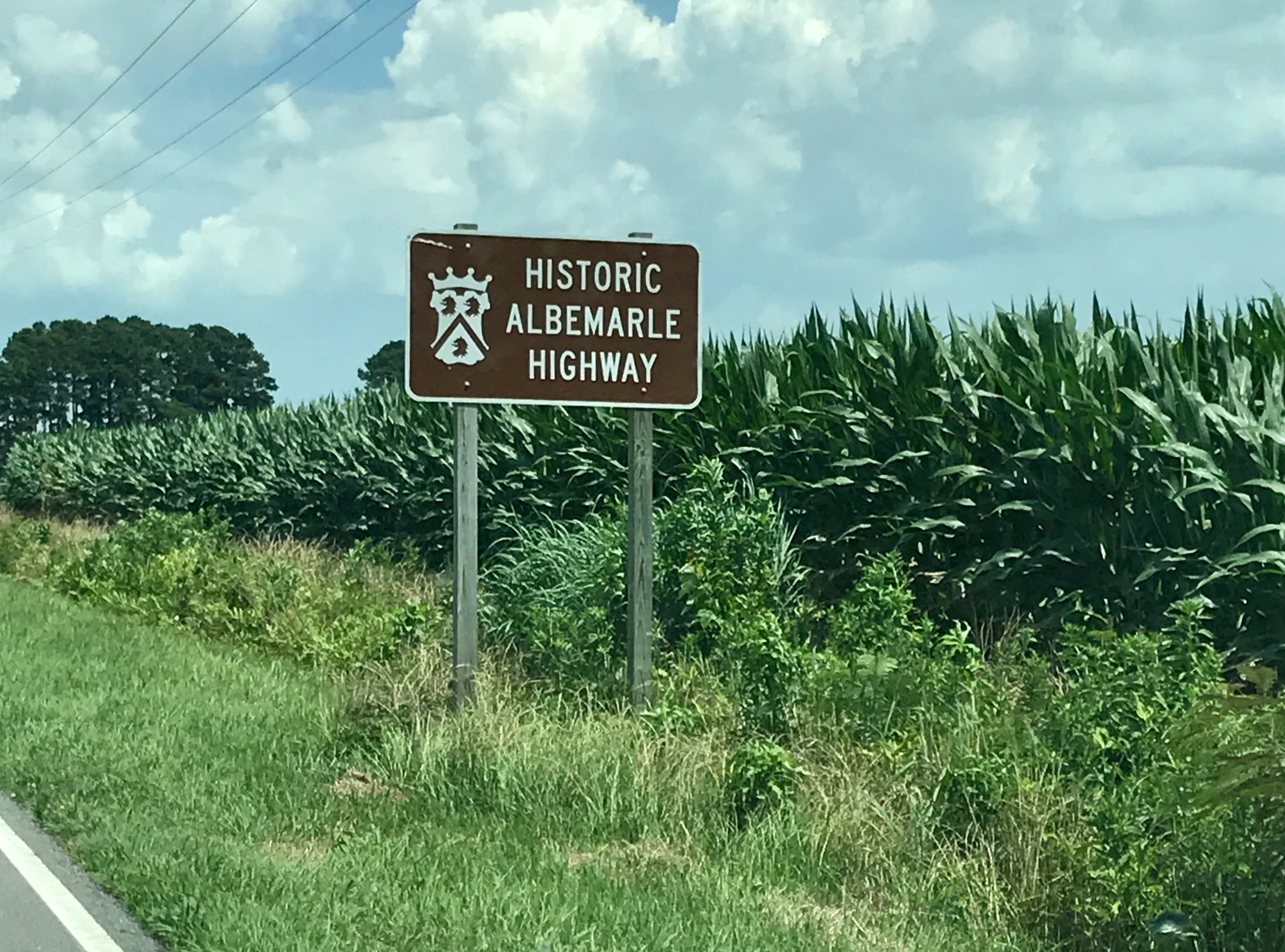
I say that because I was zipping down Historic Albemarle Highway. I took the picture because I wanted to remember to look it up. “Albemarle” had such a distinguished ring to it. Maybe it went all the way back to the Revolutionary War!

It turns out that it is a tour route that goes through historic areas in the seventeen counties in northeastern North Carolina. The coat of arms on the sign belonged to George Monck, 1st Duke of Albemarle, according to the website for the Historic Albemarle Highway.
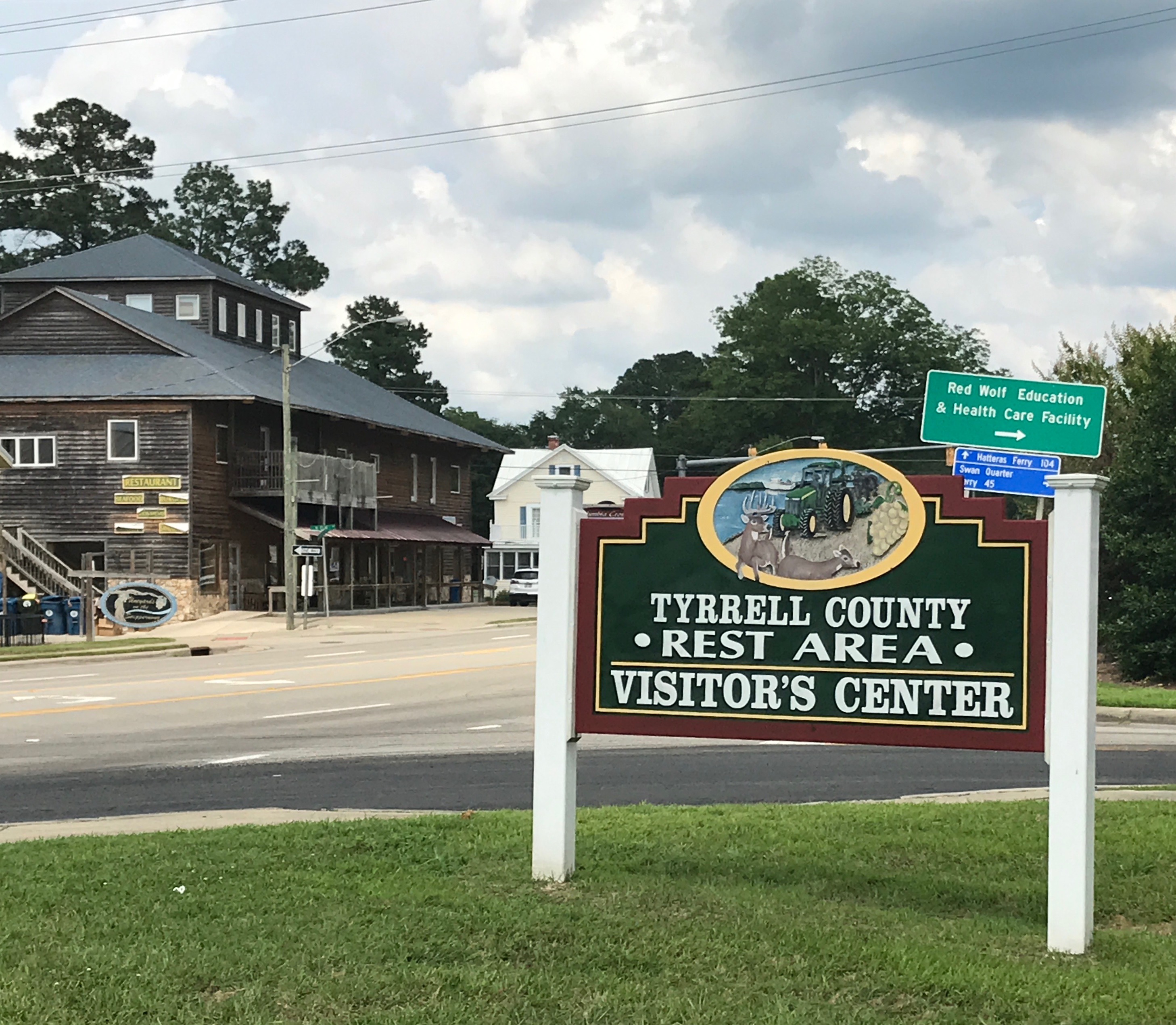
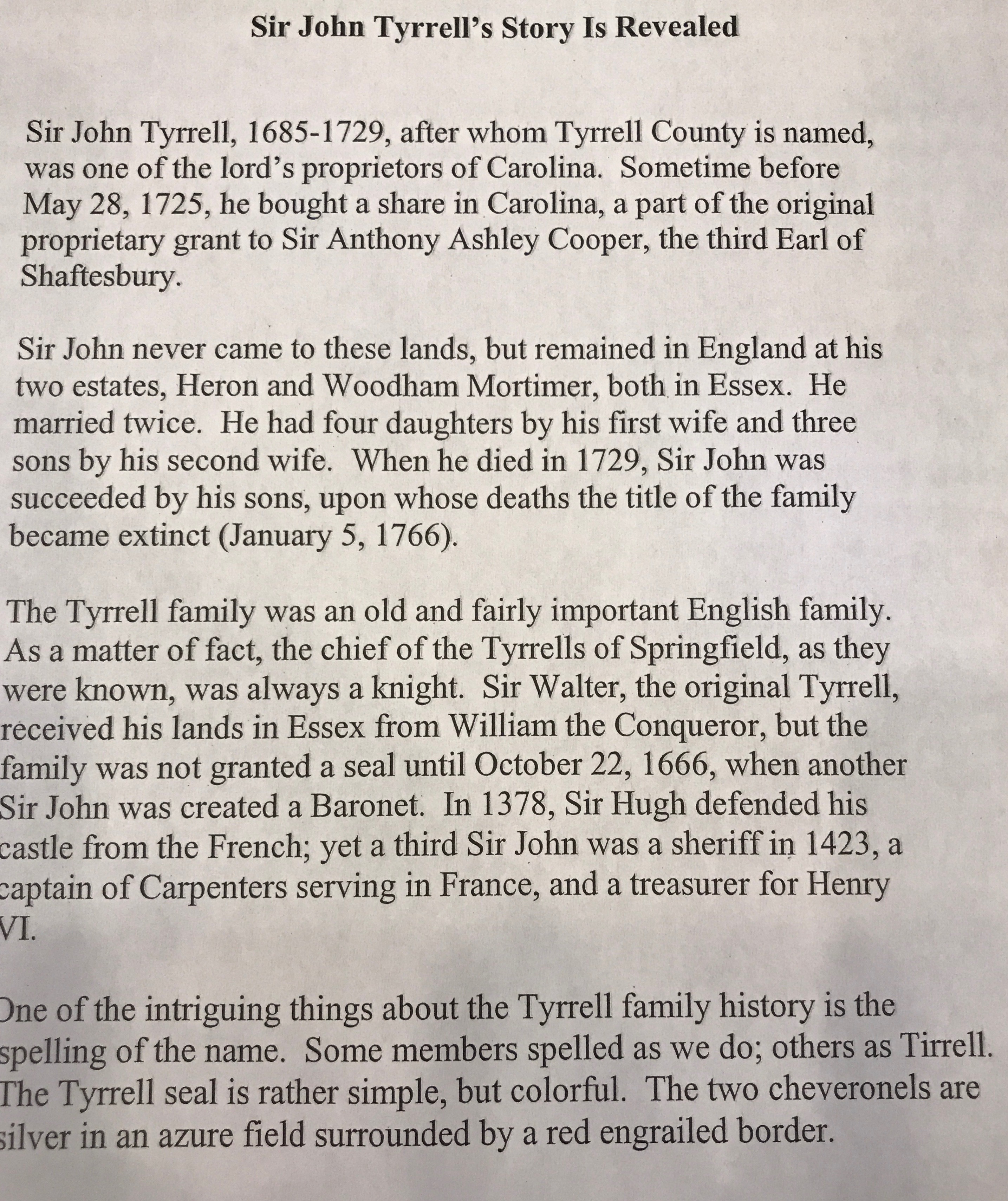
I stopped at the visitor center. Never pass up a rest room! Just in case you are interested in the story of Tyrell County, here it is:
I continued on and eventually my work day came to an end. I consulted a map and picked out a place near the water: Edenton, North Carolina.

I found a hotel and then headed in to see what I could see.
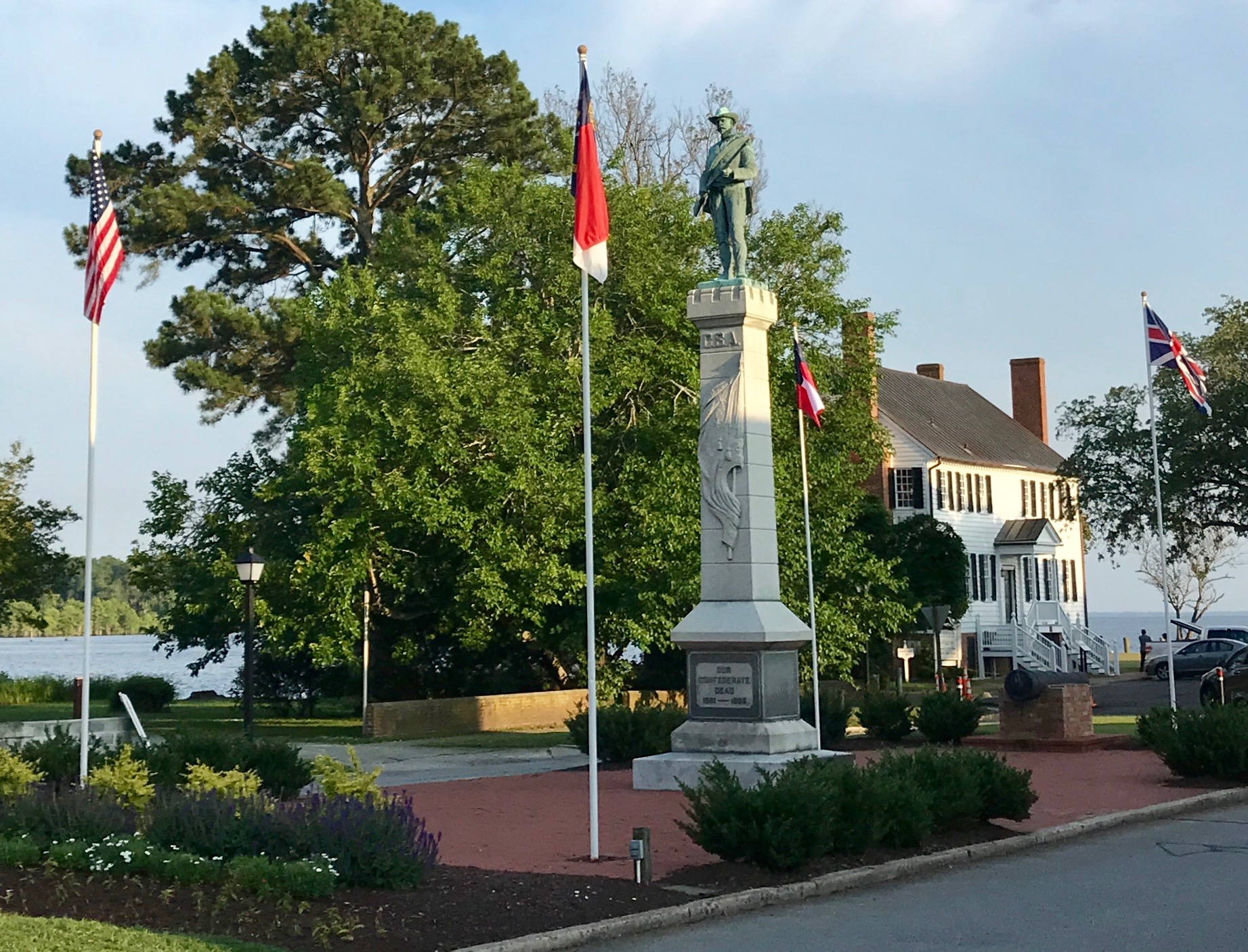
I pulled into the central tourist area, past the statue honoring “Our Confederate Dead.”
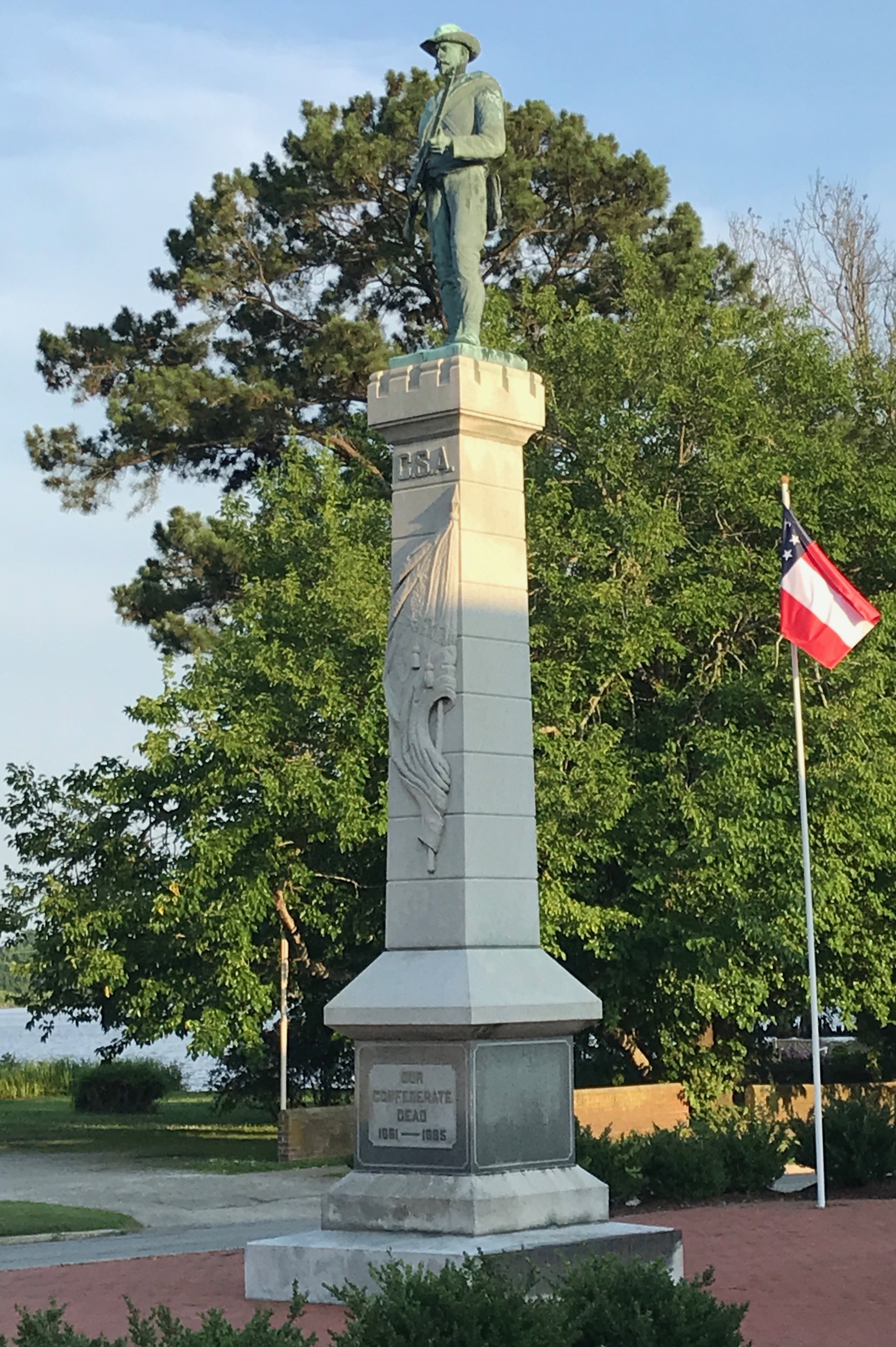
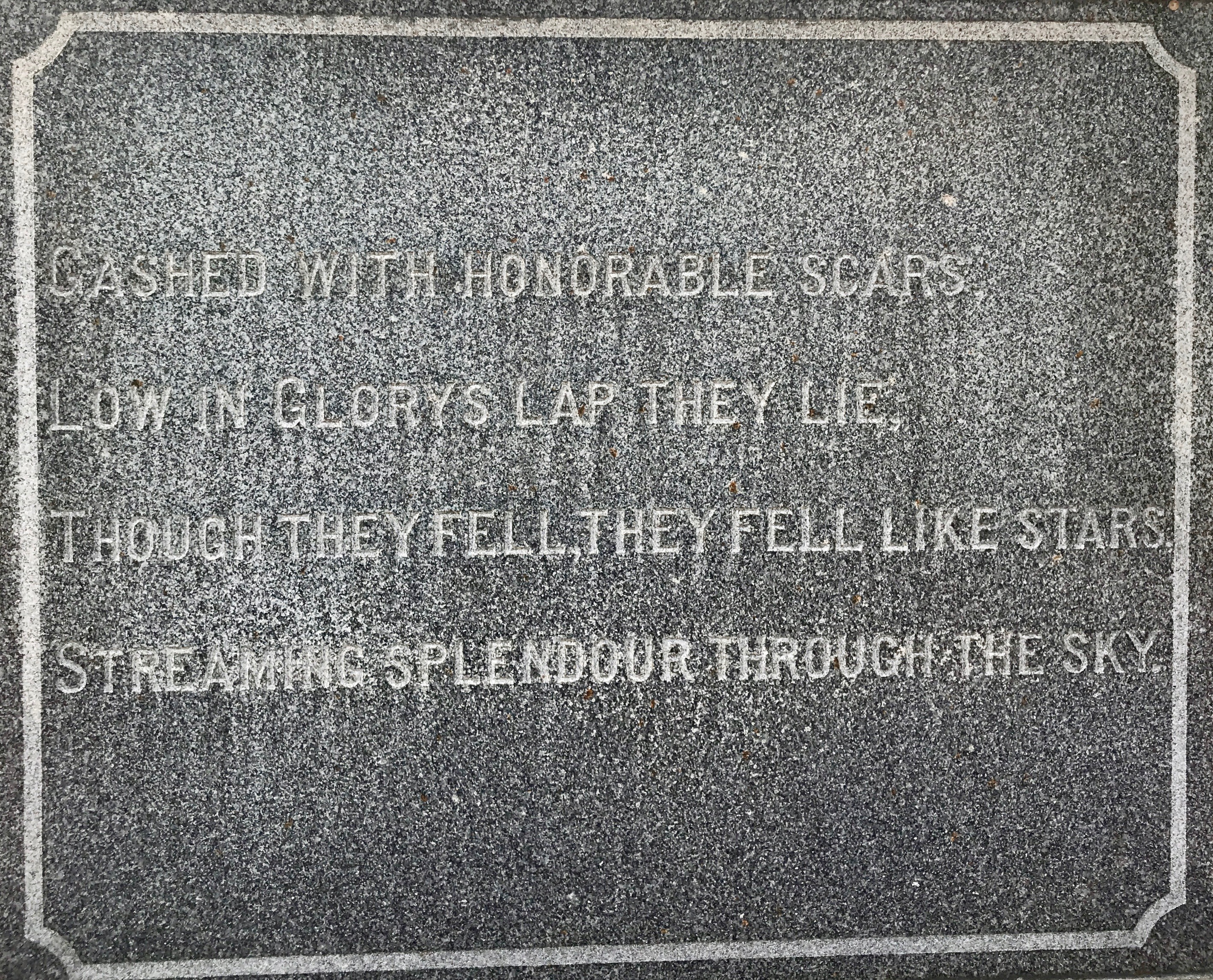
They have the most elaborate poems about the sacrifices made by their ancestors.
I found a parking spot and went to check out the Welcome Center.
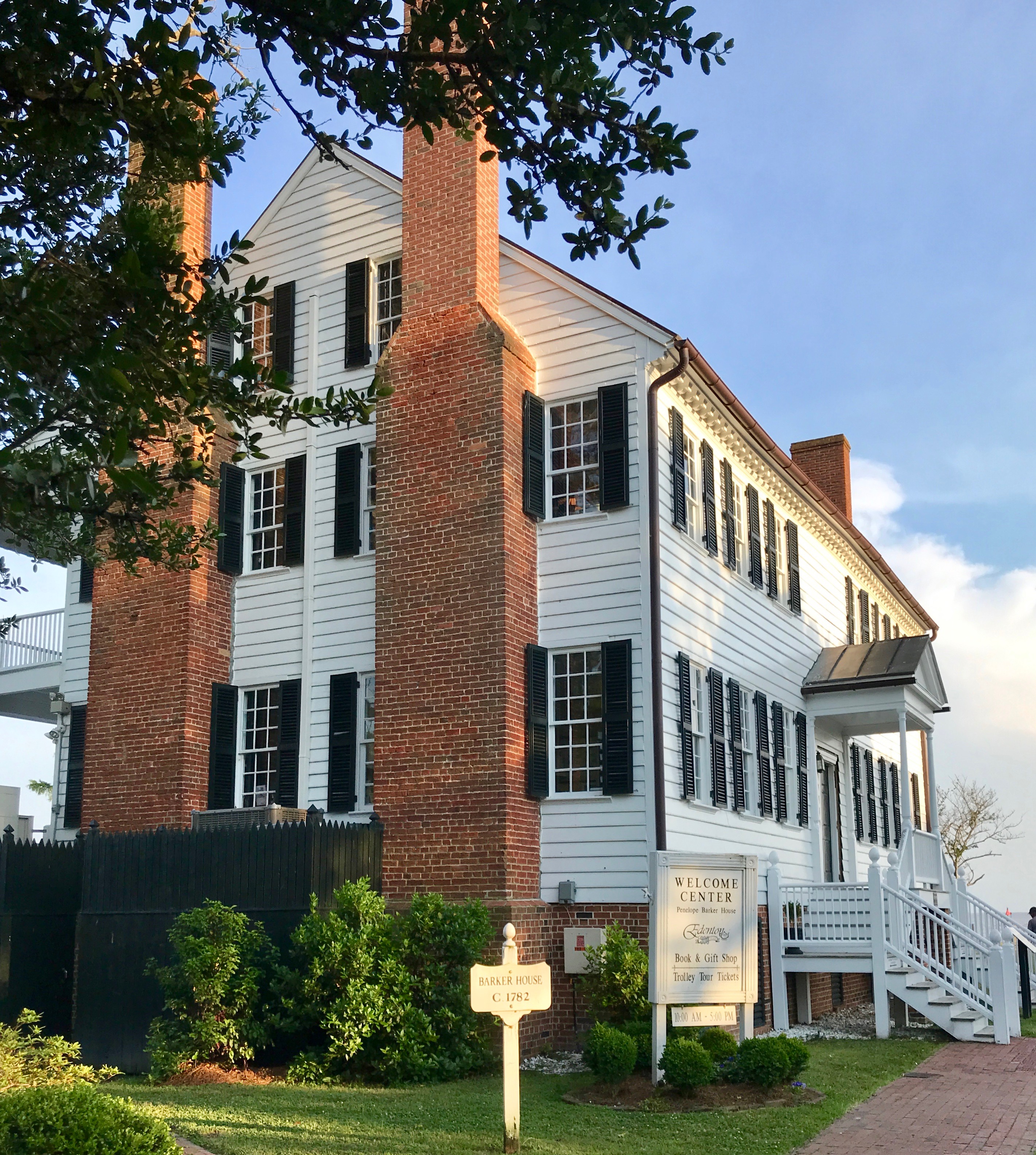
It was closed, of course. I wasn’t the only one who had reached the end of their work day. There were still things to look at.
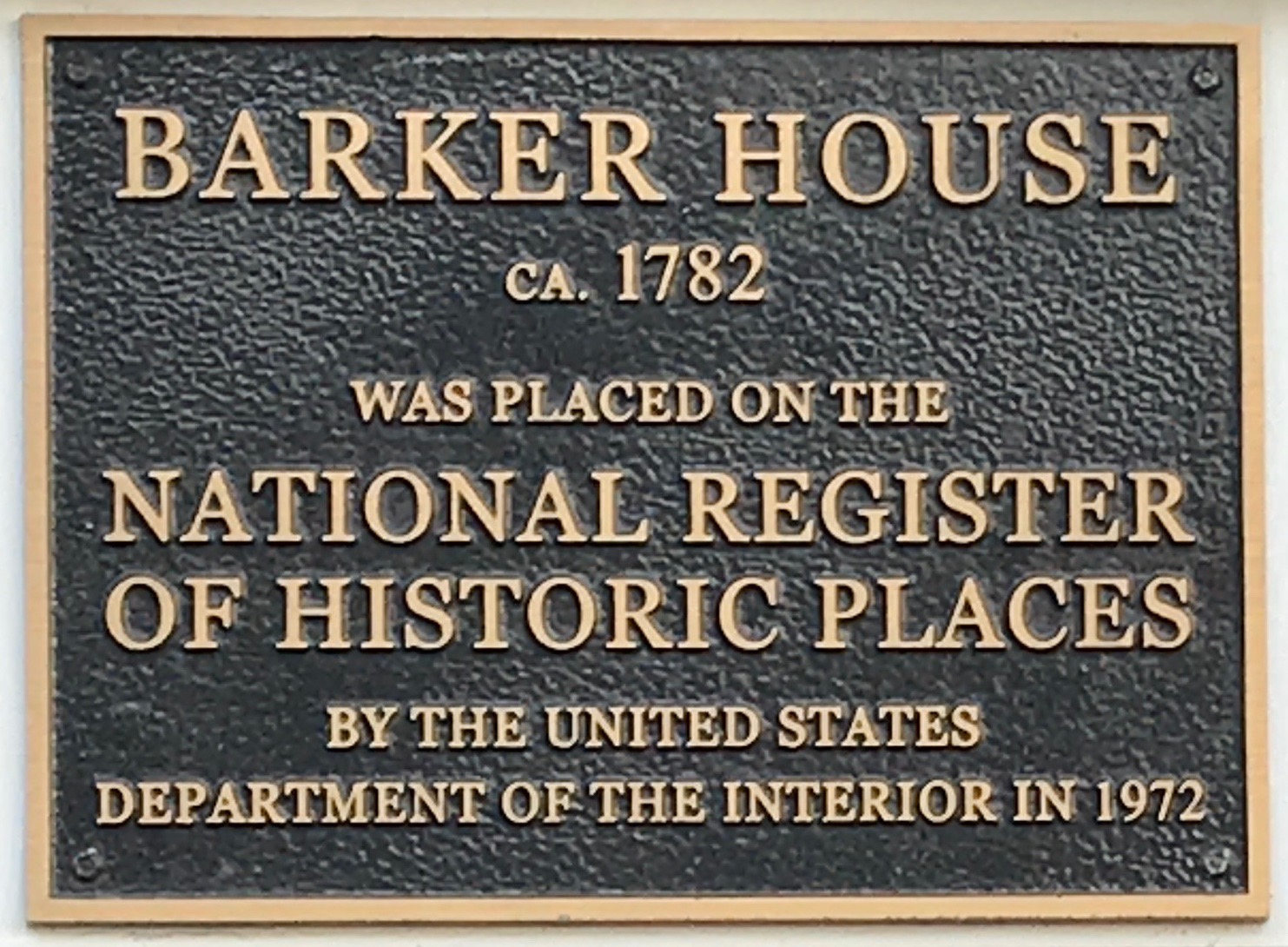
For instance, there was an interesting sign that provided a lot of information about the history of the building.
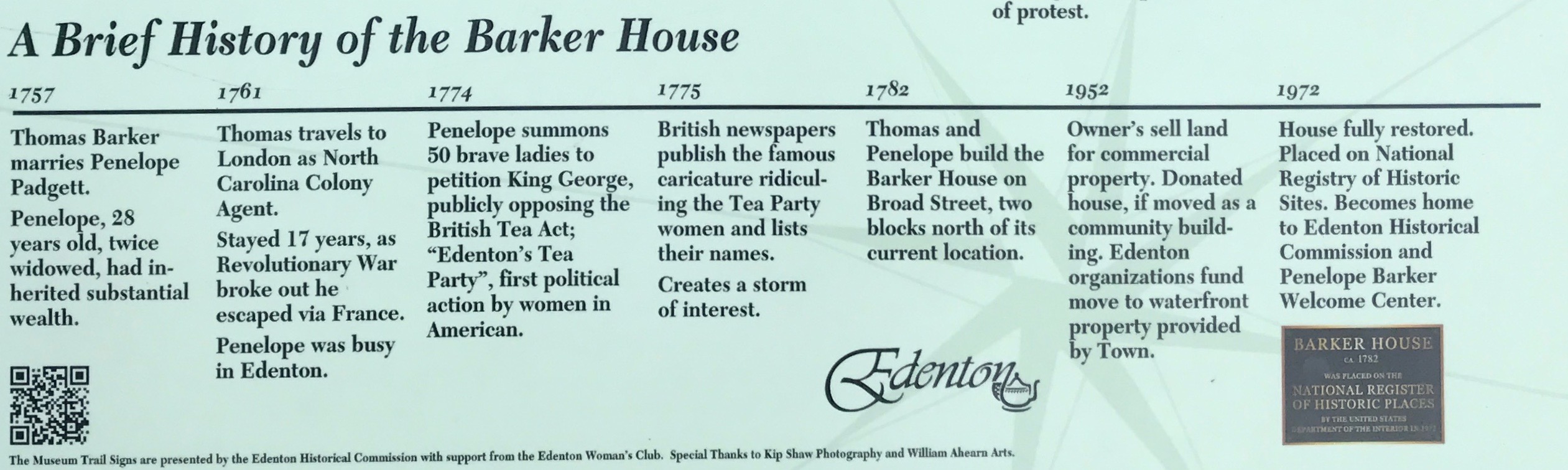
For instance, Thomas Barker married Penelope Padgett, who was 28 years old and twice widowed. I suppose mortality was different back then, but if I were Thomas, I might have had serious thoughts about marrying a relatively young woman who was already twice widowed.

Perhaps that is why he stayed in London for seventeen years and Penelope kept herself busy in Edenton. I suppose that she probably had inherited some money from the first two husbands.

One of the things she kept busy with was leading 50 women to petition King George to oppose the British Tea Act. This was the first political action by women in America, according to the sign.

That Penelope was one busy woman!

The Barker House was not always in the location by the water’s edge, and it wasn’t always this large. The first part of the house was built originally just one wing that was built around 1782. The house stayed with the Barkers until 1830, when it was sold to a prosperous businessman named Augustus Moore. He expanded the house to its current design, expanding it to three floors and eight fireplaces.

The Moore family remained in the property for well over a century until they sold the home to Haywood Phthisic, who donated the house to an organization so that it could be open to the public.

(By the way, how do you suppose you pronounce Phthisic? FF-th-i-sick? Where does the emphasis go?)

Okay, I had to look. Phthisic is actually a word, but not one I would want as a last name. It has to do with a “progressively wasting or consumptive condition, especially pulmonary tuberculosis. Click on the link to hear a sample of how Merriam-Webster says it should be pronounced.
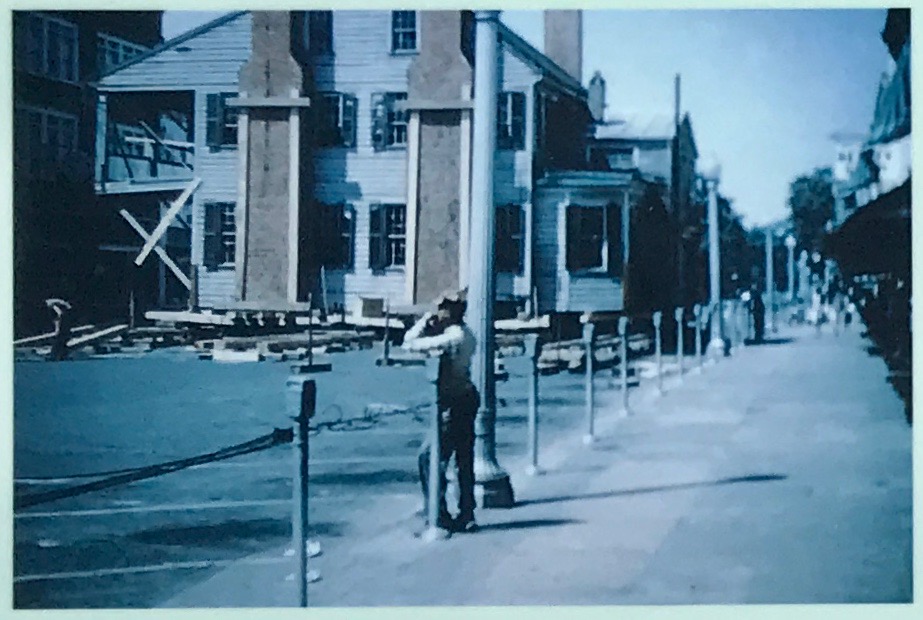
Since the house was originally two blocks away, it had to be moved. It took three weeks to move it the two blocks. The movers placed a bottle on a window sill to demonstrate their skill. The bottle did not fall.

The website shows some lovely interior photos. If you are ever in the area, you might want to visit when it is open.
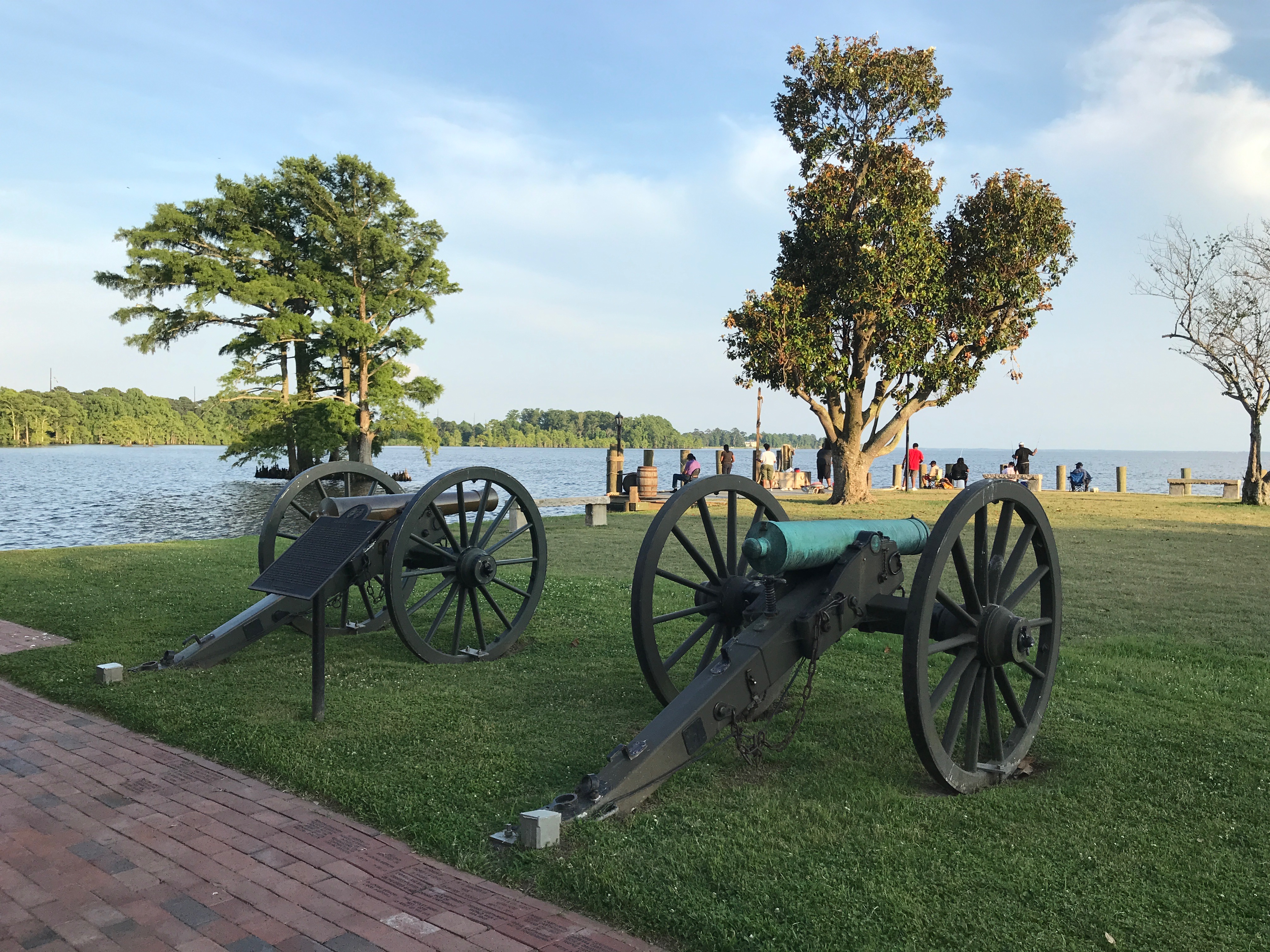
To the side of the house is what is left of the Edenton Bell Battery. In March 1862, the various institutions of of Edenton donated their bells to be melted and cast into four bronze cannon at the Tredegar Foundry in Richmond, Virginia.

The cannon were named the Edenton, the Columbia, the Fannie Roulhac, and the Saint Paul.
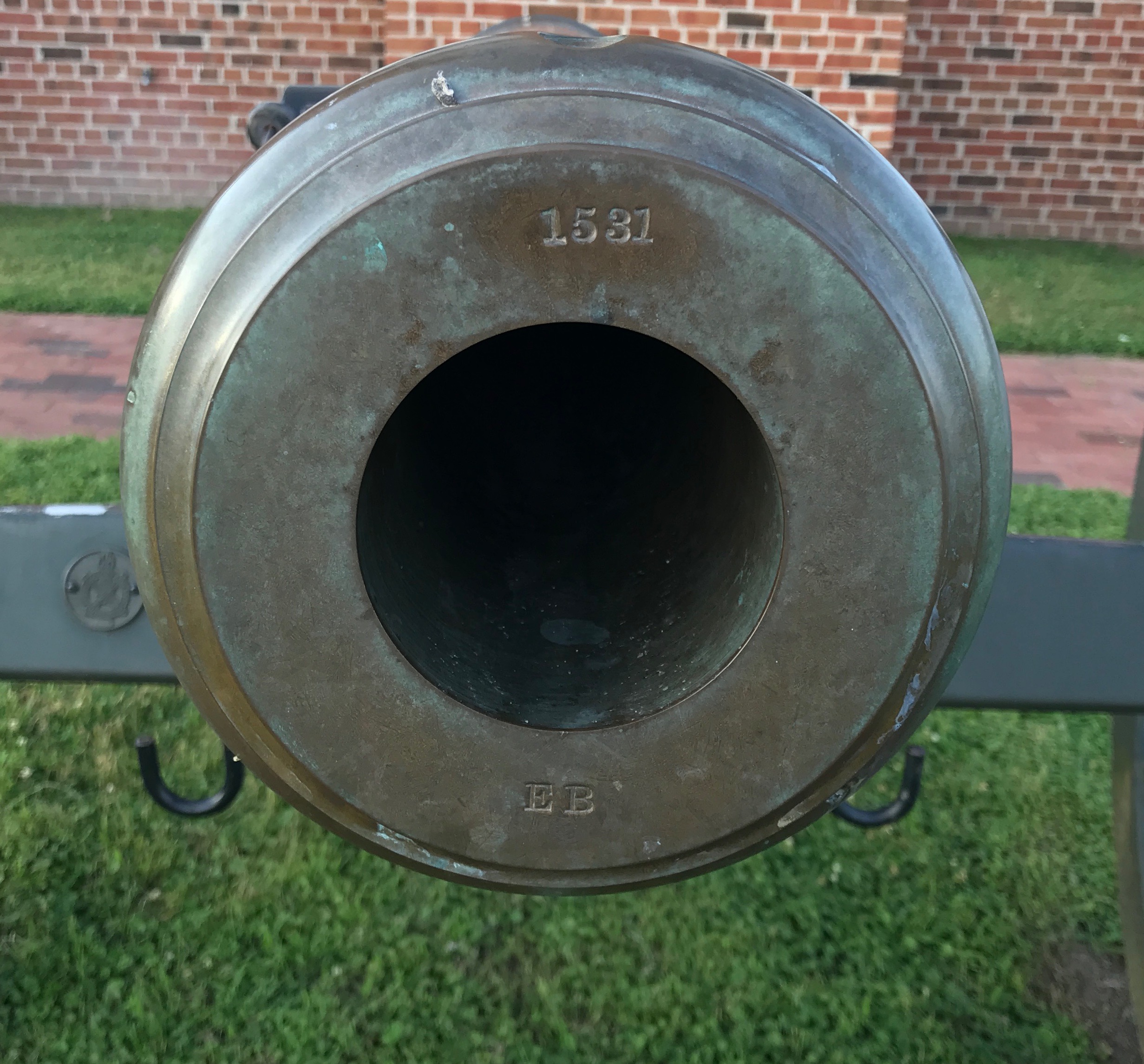
This 6-pounder is the Edenton, and it was poured from bell of the 1767 Chowan County Courthouse. It’s easy to read its number: 1531. The “EB” stands for Edenton Battery. It was surrendered May 26, 1865.
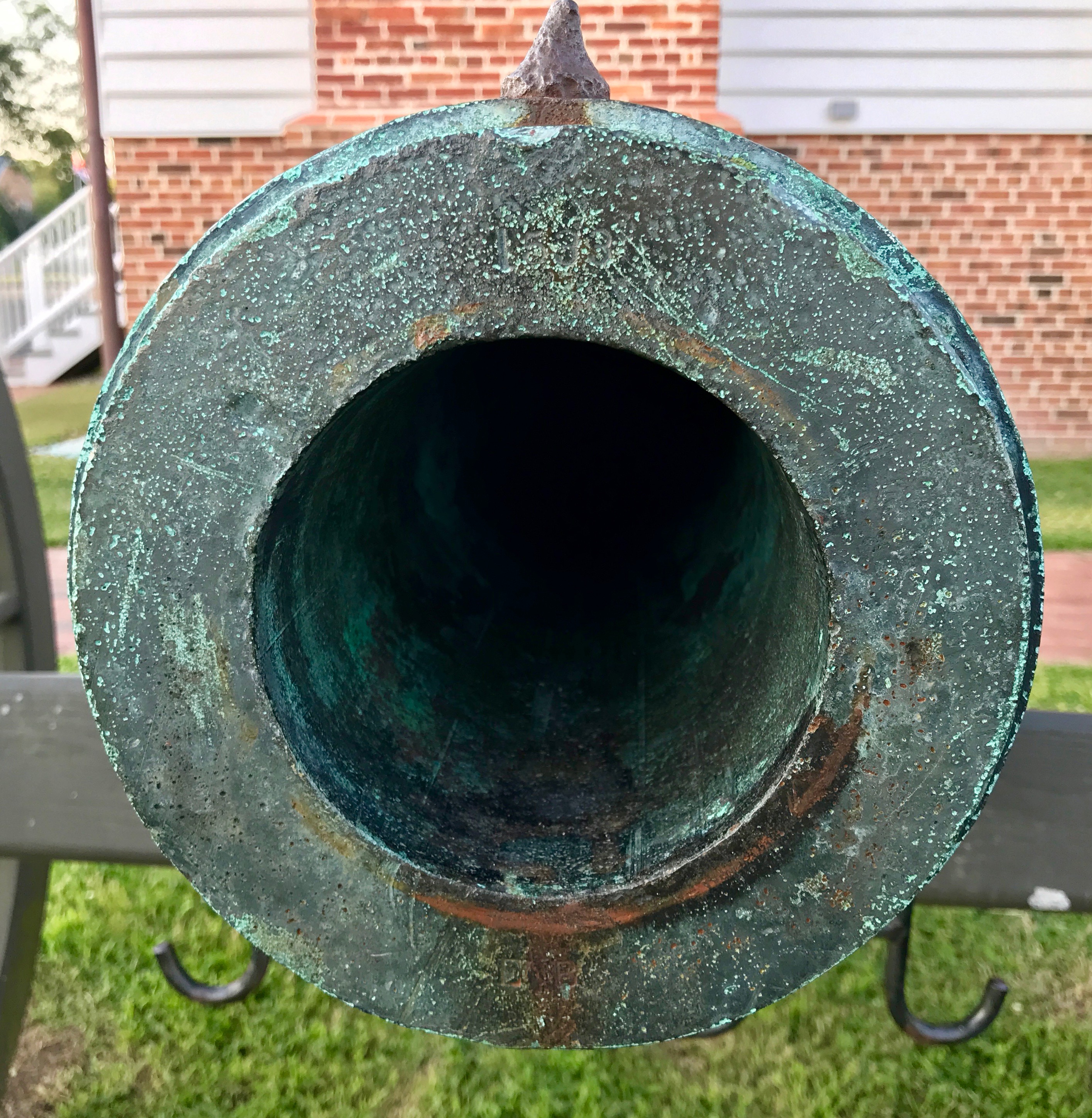
This is the Saint Paul, a 12-pounder howitzer, which was  poured primarily from the bell of the Saint Paul’s Episcopal Church. It’s kind of hard to make it out in the photo, but it is #1533. It was captured at the Battle of Town Creek in Brunswick County, N.C. on February 20. 1865.

The Edenton is on loan from Shiloh National Military Park. You could have knocked me over with a feather when I found out that the Saint Paul is on loan from the Old Fort Niagara Association of New York. It’s always amazing to find connections to one’s past. I’ve been to Old Fort Niagara many times, as it was only about 30 miles away from where I grew up

The location of the two remaining cannon of the Edenton Bell Battery is unknown.

The one from near my old stomping grounds gets its own photo.
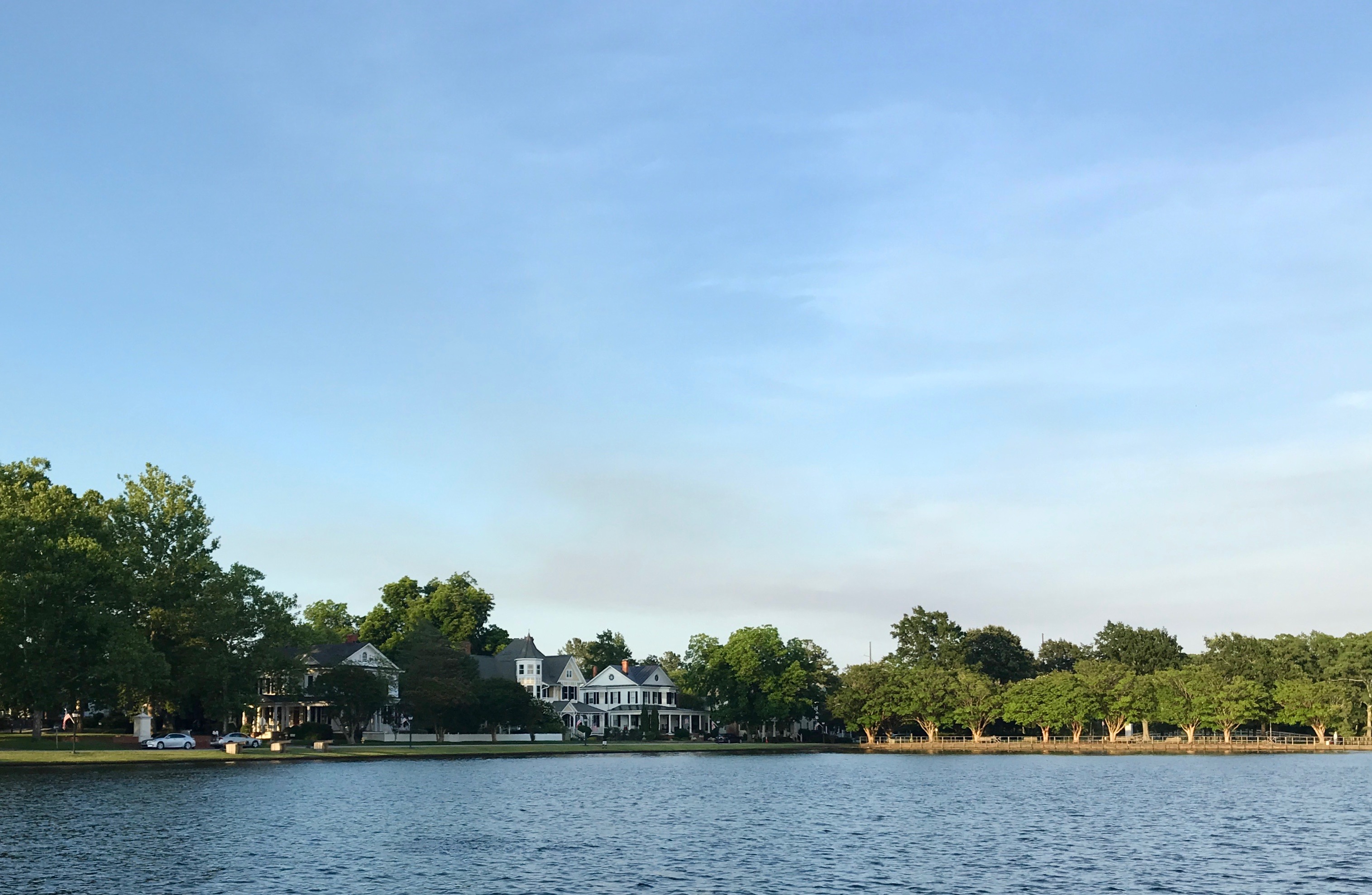
What a lovely view!
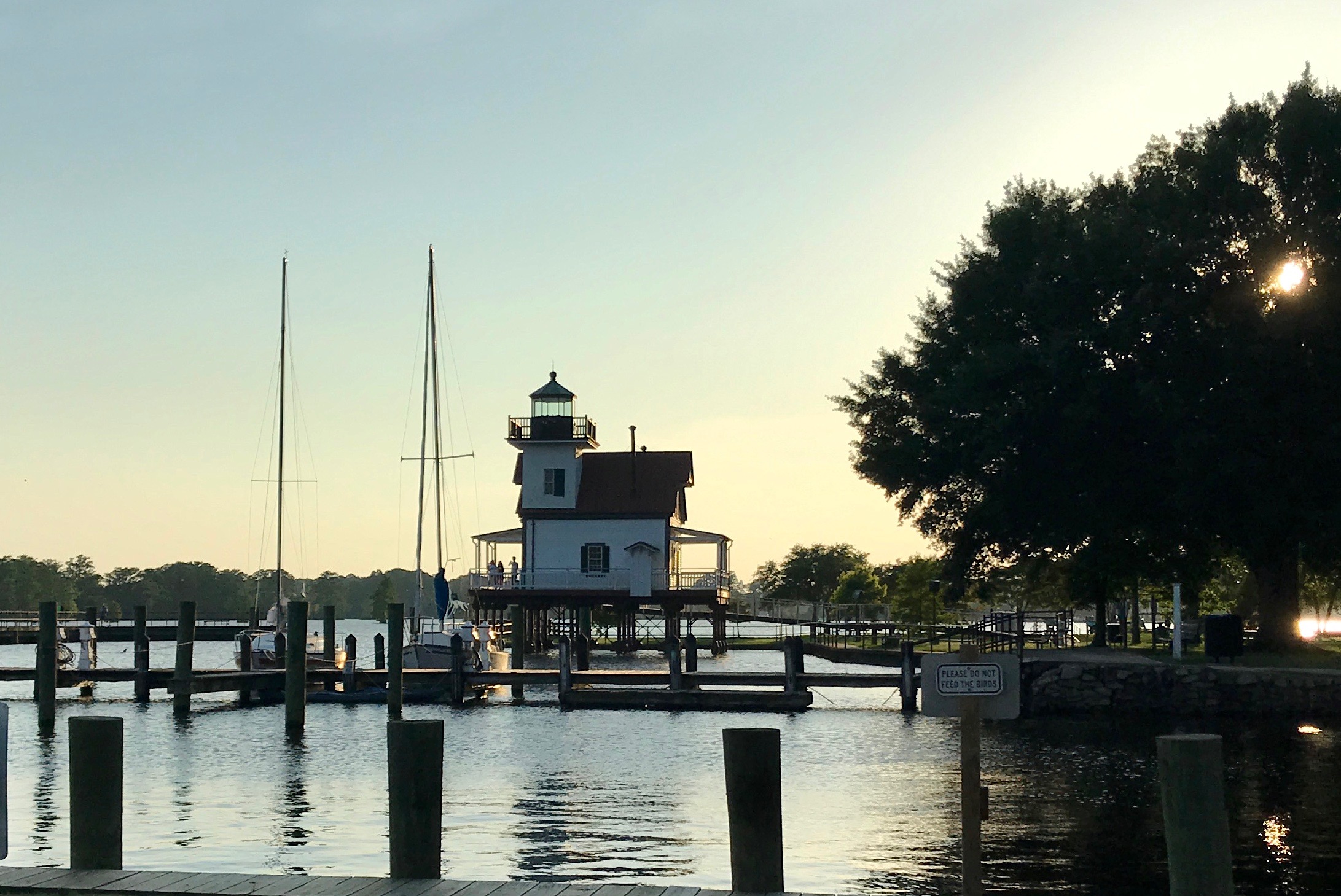
At first, I thought, “Oh, what a cute little building.” Then I noticed that it was a lighthouse. It turns out that this lighthouse was another building they moved. It is the 1886 Roanoke River Lighthouse, and was originally where the Roanoke River meets the Albemarle Sound. It was decommissioned in 1941.
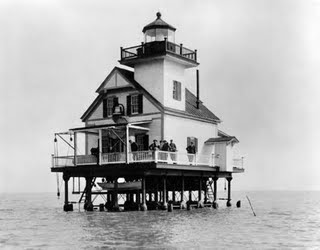
This is how it looked when it first went into service.
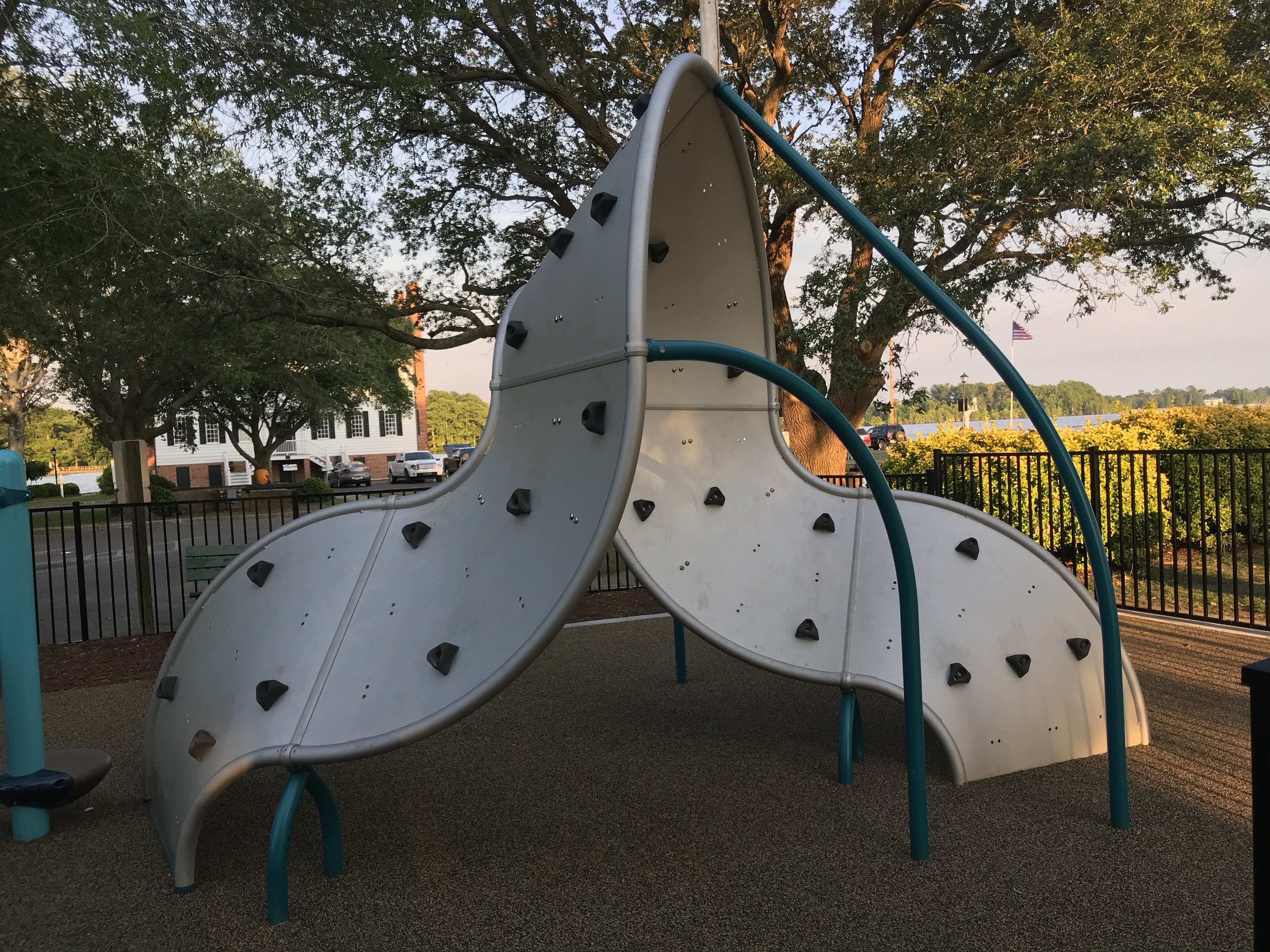
I continued walking along ad came across this climbing apparatus that bears a strong resemblance to a Möbius strip.

I was starting to get hungry and found a restaurant – Waterman’s Grill.

Dinner started out with a lovely salad.
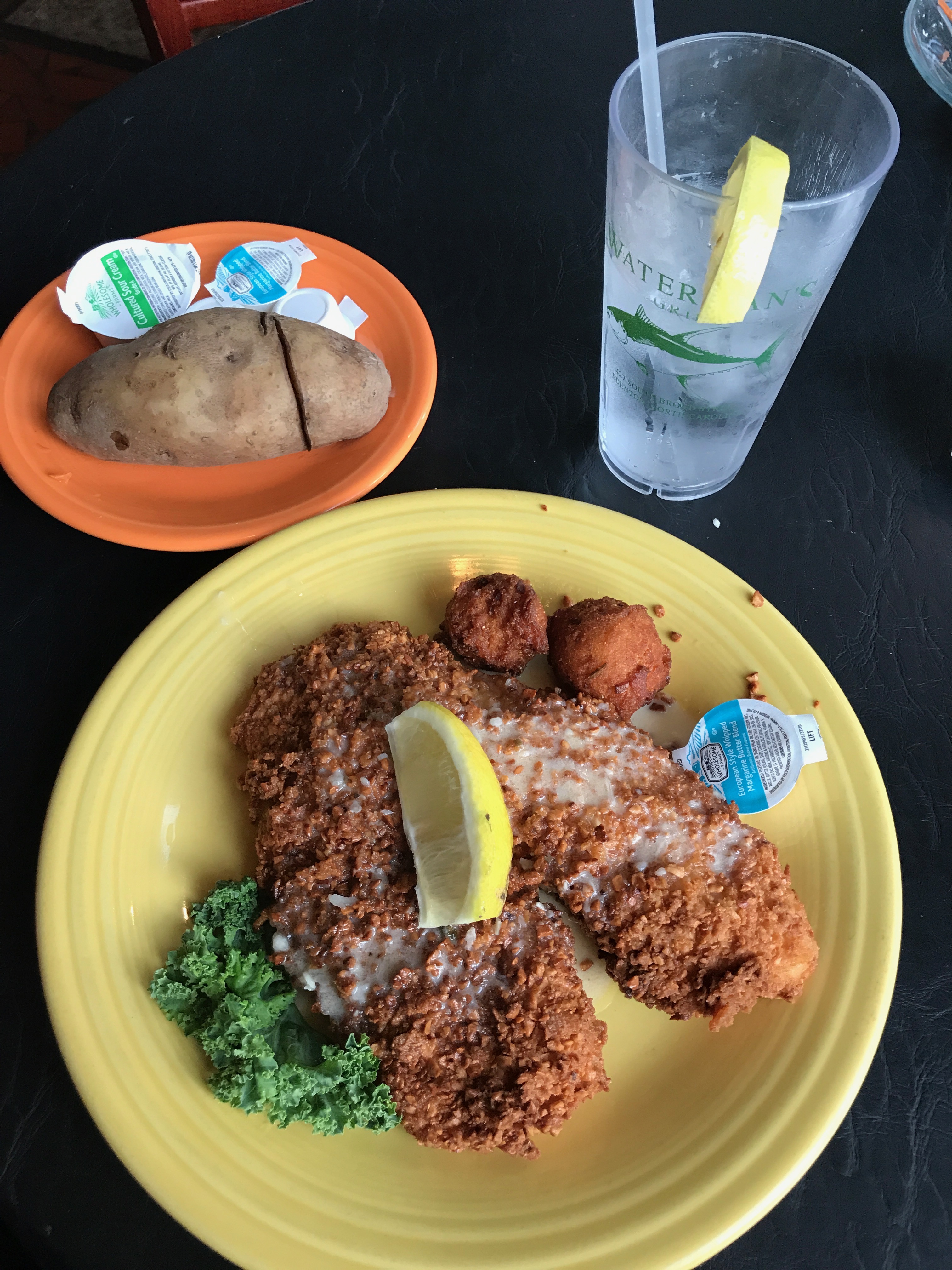
The next course was something fried. I don’t remember what I ordered. I was thinking it was a fish fry. The lemon wedge on top makes me think that it might be fish, but it looks like it has some sort of gravy on top, so maybe it was chicken fried chicken or chicken fried steak. For the uninitiated, those little round brown things on the plate are hush puppies.

I’m sure everyone recognizes the baked potato on the smaller plate.
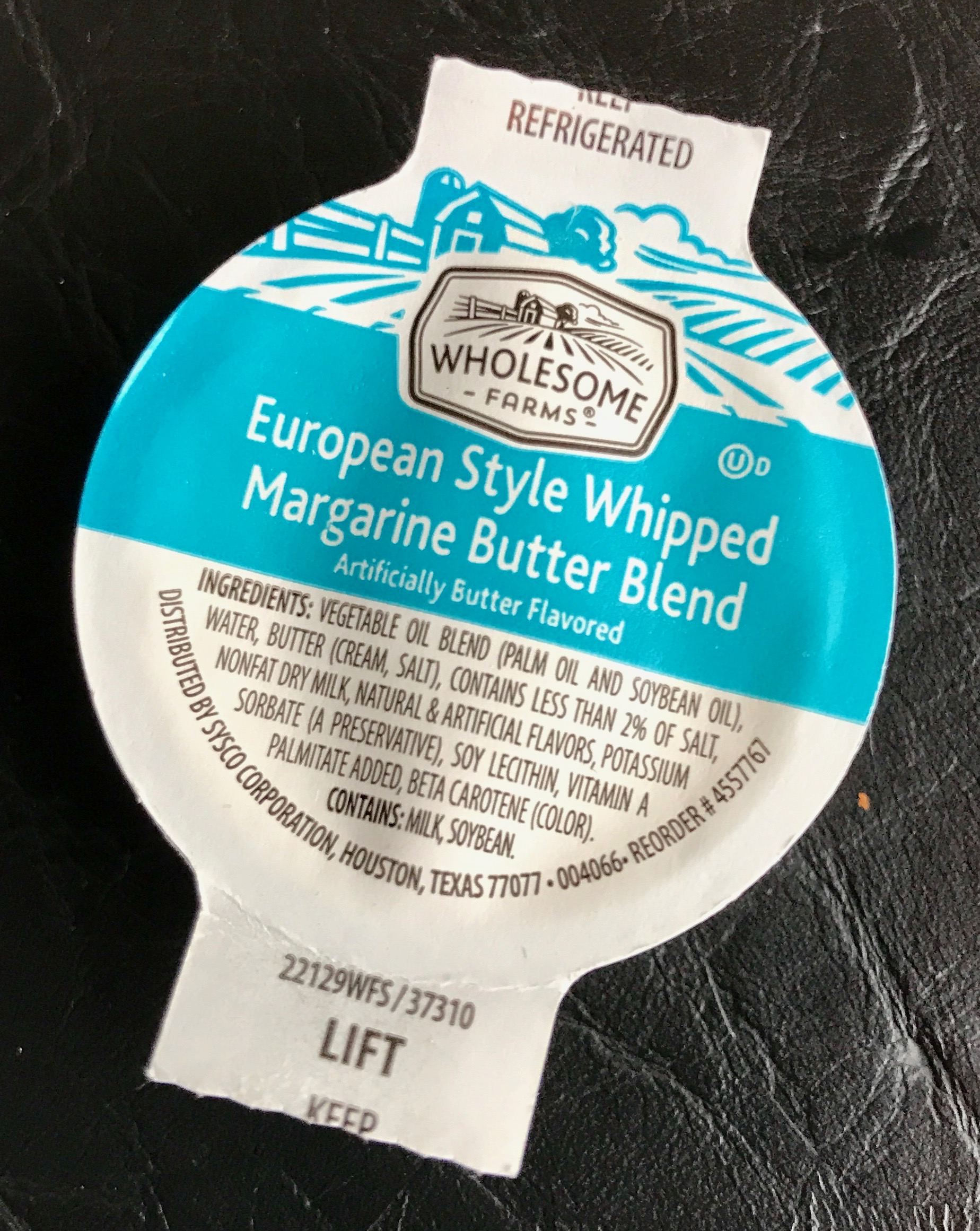
I have to admit that I was a bit put off by what they were serving in lieu of butter:
“European Style Whipped Margarine Butter Blend.” I have been to Europe a number of times and I’ve never seen anything like this. I consulted some of my genuine European friends, and they agree that this is not “European Style”.
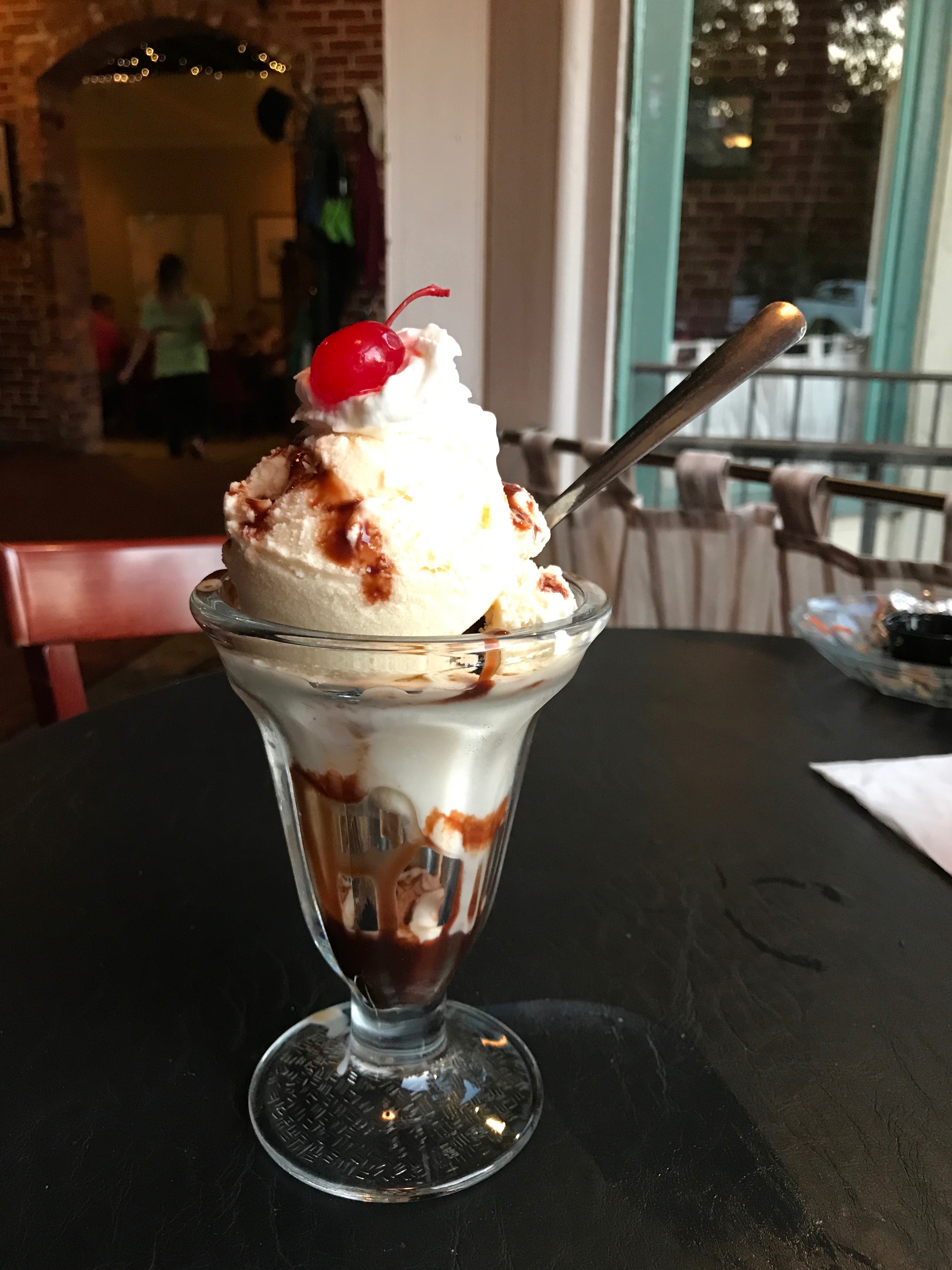
But, all was forgiven when I got dessert, which I assume was included in the price of the meal.

As the sun sets on another day in the life of this seed courier, I head back to the hotel to rest up for the next day’s adventures.
 

Zipping Around North Carolina

I wish I had made a note of exactly where I went. I swear my route must have looked like the flight path of a drunken bumblebee. But, at the end of every day, there was always a hotel. On some days there was a passable breakfast.

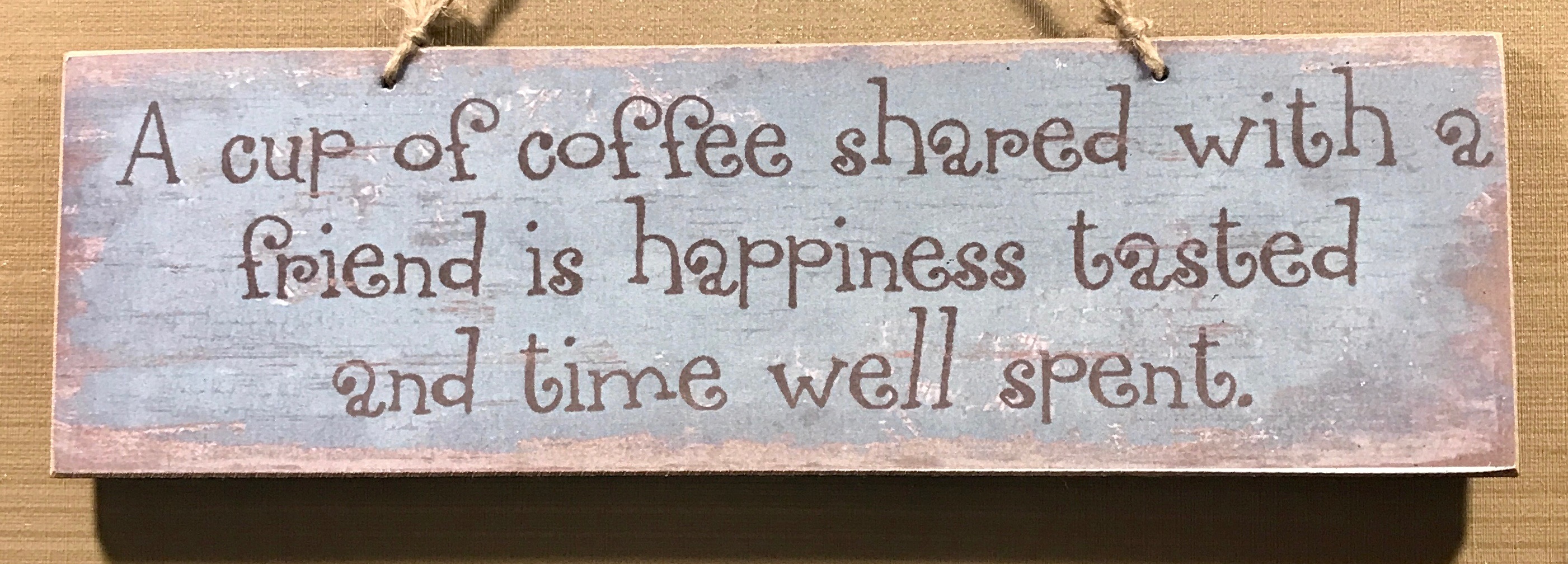
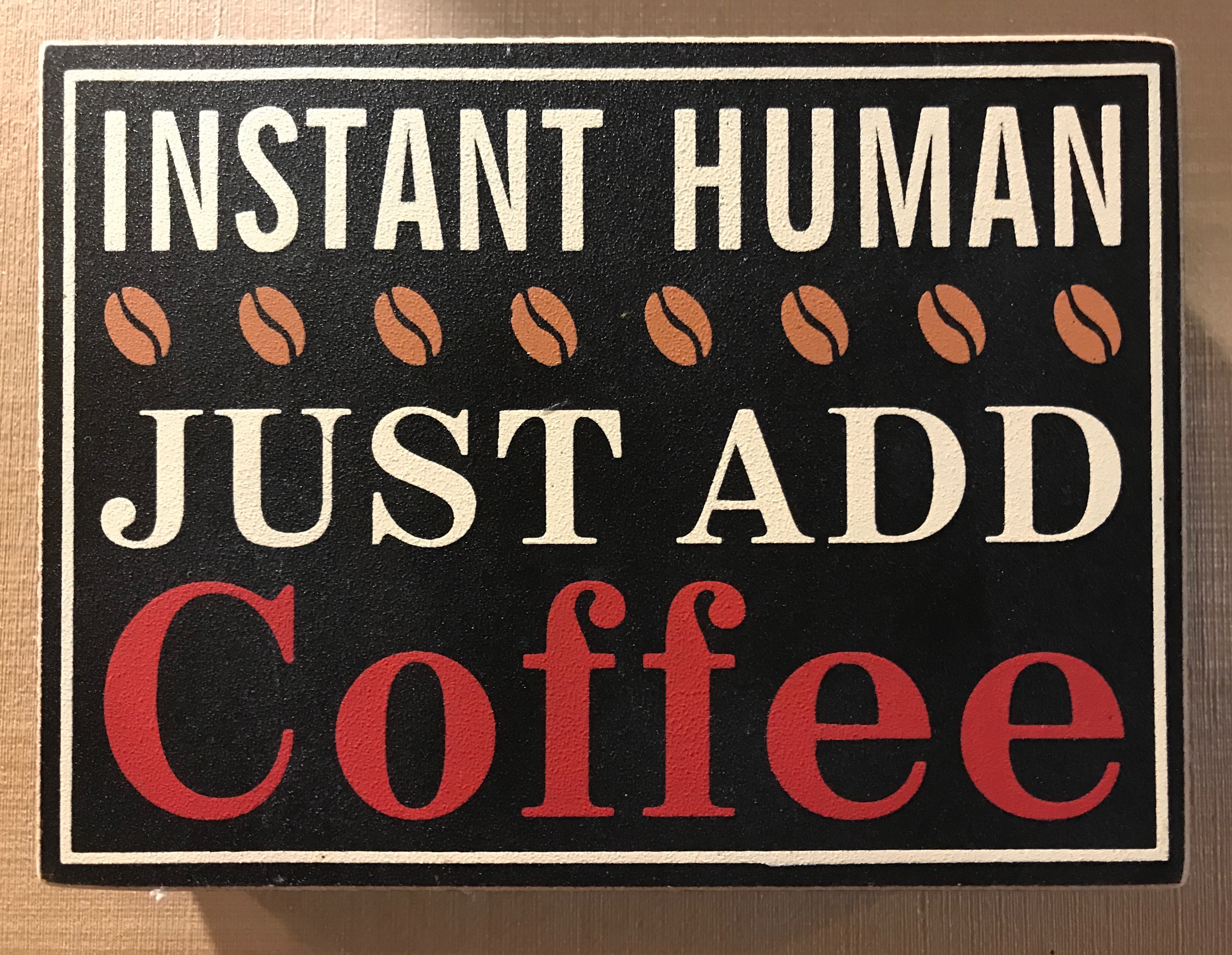
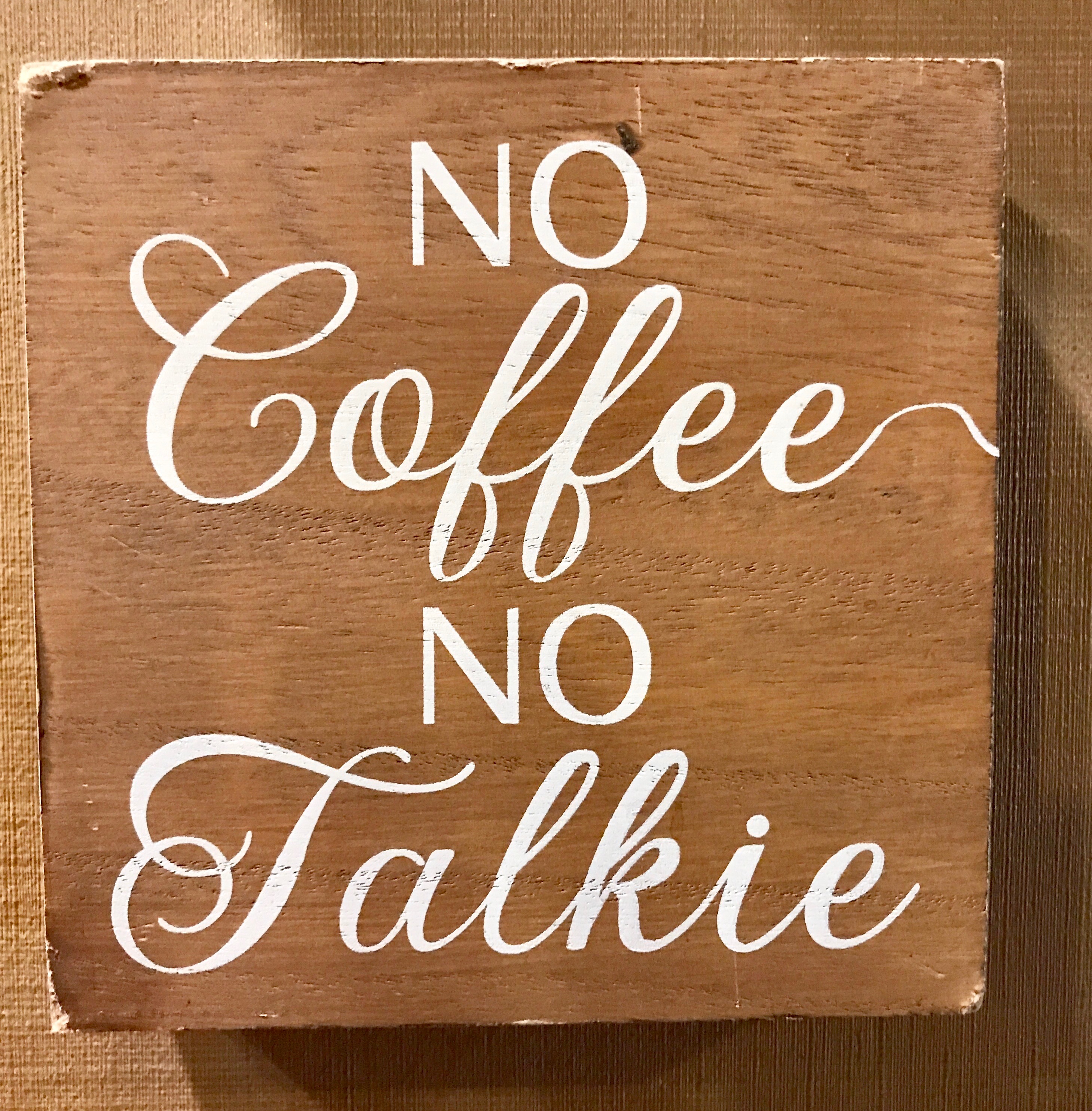
This hotel off an interstate somewhere had a fun vibe. There were all sorts of plaques proclaiming the virtues and benefits of coffee.

I definitely prefer having a cup of coffee before conversation…or maybe two cups.

And this is true, in my experience.

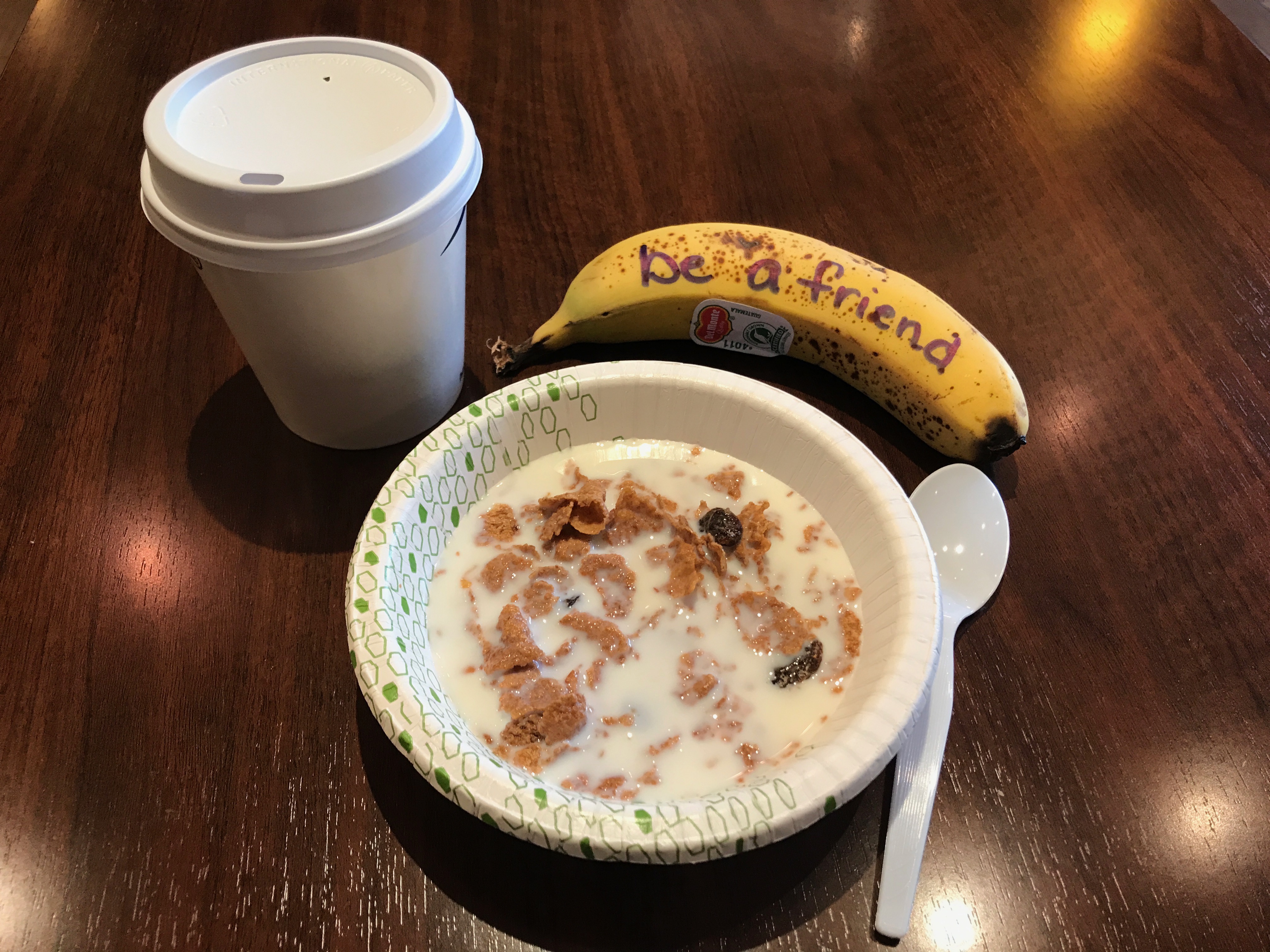
This hotel, which was one of the less expensive in the Hilton family, certainly did what they could to make the rather ordinary – but completely adequate – breakfast bit special.

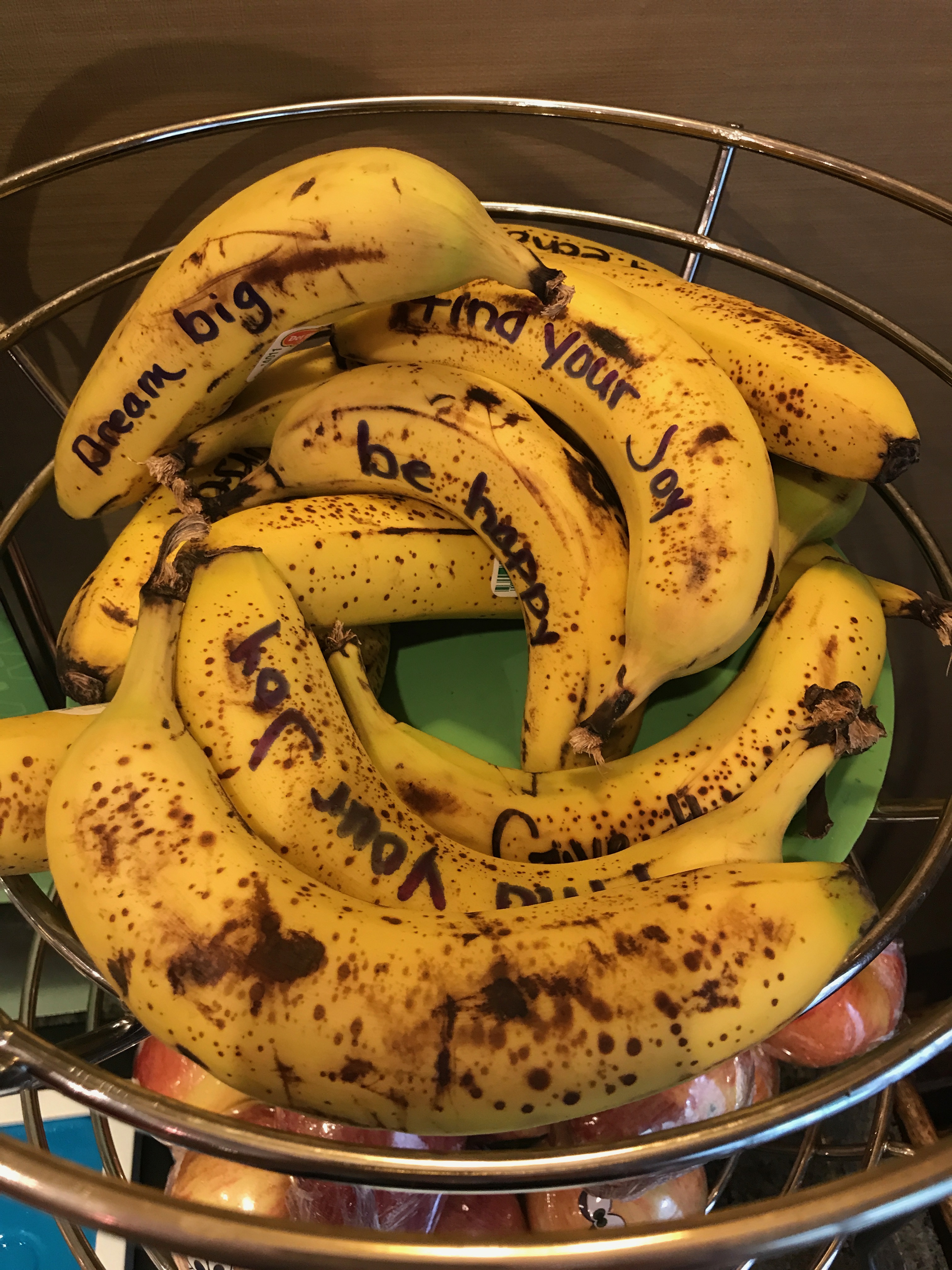
Okay, the bananas were a bit overripe for some, but they were exactly the way I like them. What a great idea to write positive messages on them. They made me smile.

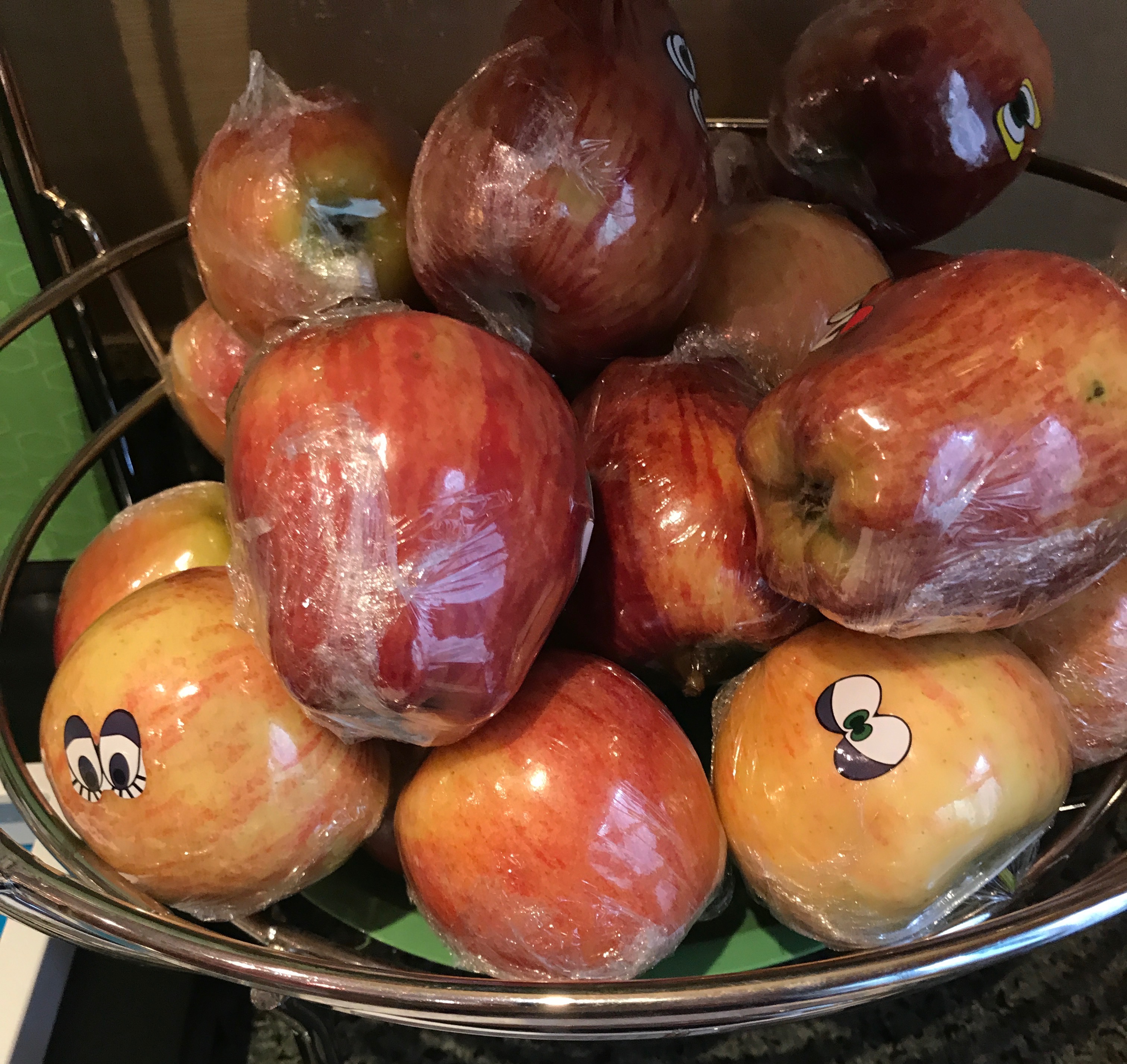
The basket full of apples with eyeball stickers made me laugh out loud. I’m not sure why they are wrapped in saran wrap, but I do suppose there is a reason.

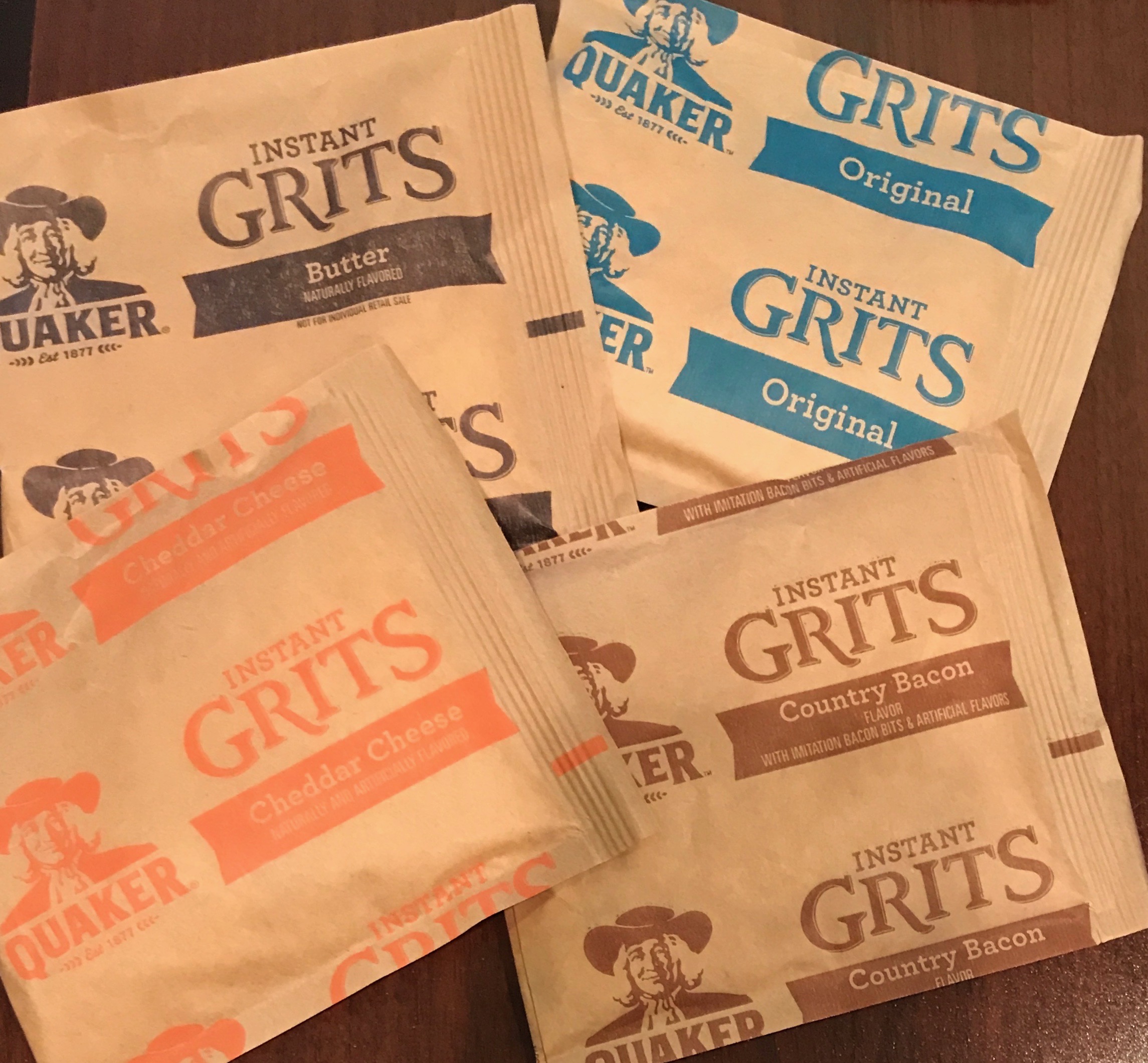
They had a 2ide assortment of grits available, just in case there was any doubt, North Carolina is “down south” – at least in comparison to Michigan.

Nourished for the day, I packed up the Transit and took off, zigging and zagging my way around North Carolina. I’d pull up to a grain elevator, introduce myself and ask if they had any wheat available. These folks had been participating in this project for years, so I rarely had to explain anything. If they had wheat, they pointed me to the dump bucket and I filled my bags. If they didn’t have any, I left them some bags and asked them to save some for us.

That night, I ended up in Clinton, North Carolina.  I found a hotel for the night and headed out to find some dinner. But first, a little tour of the center of town.

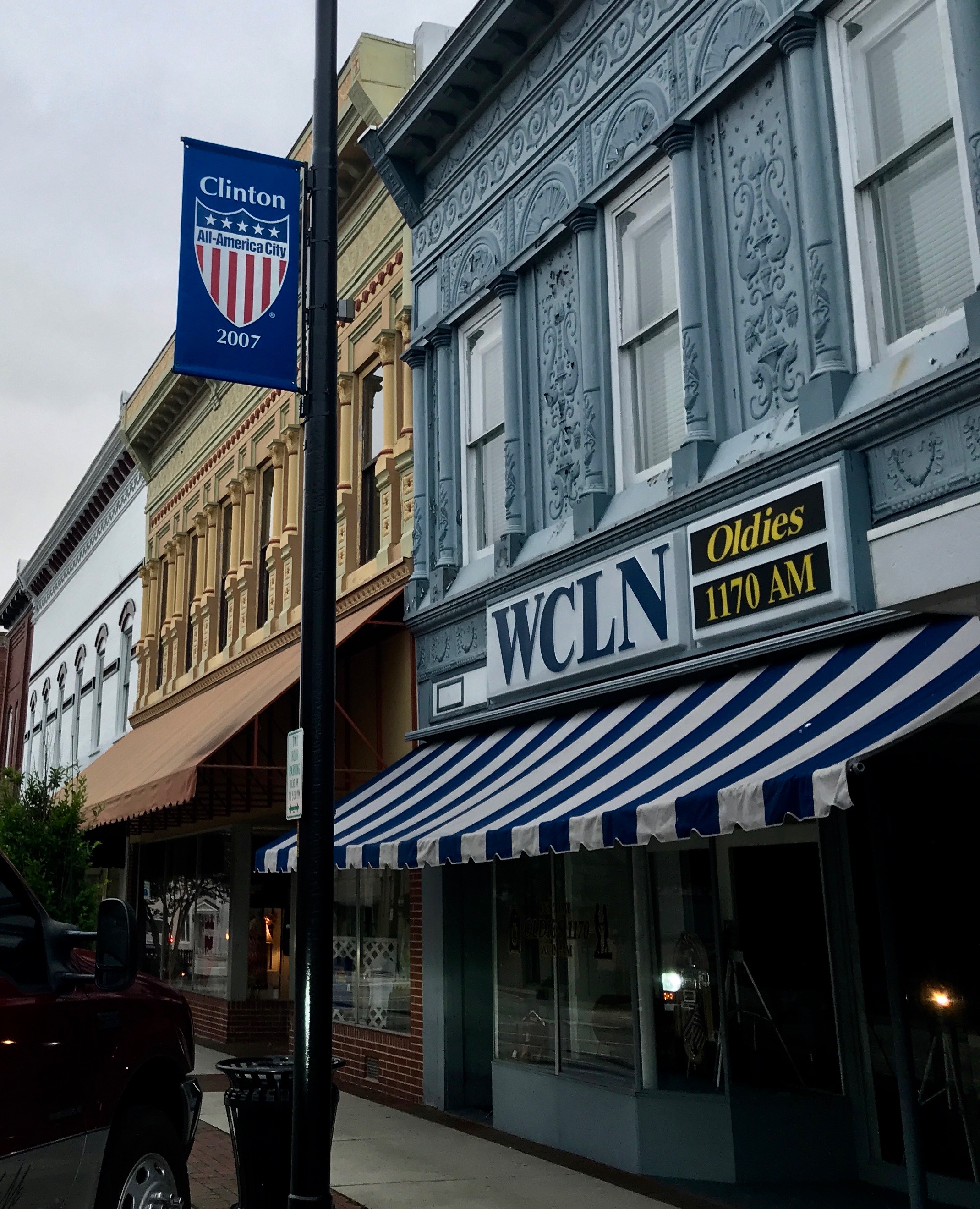
Did you know that Clinton was an “All-American City” in 2007?

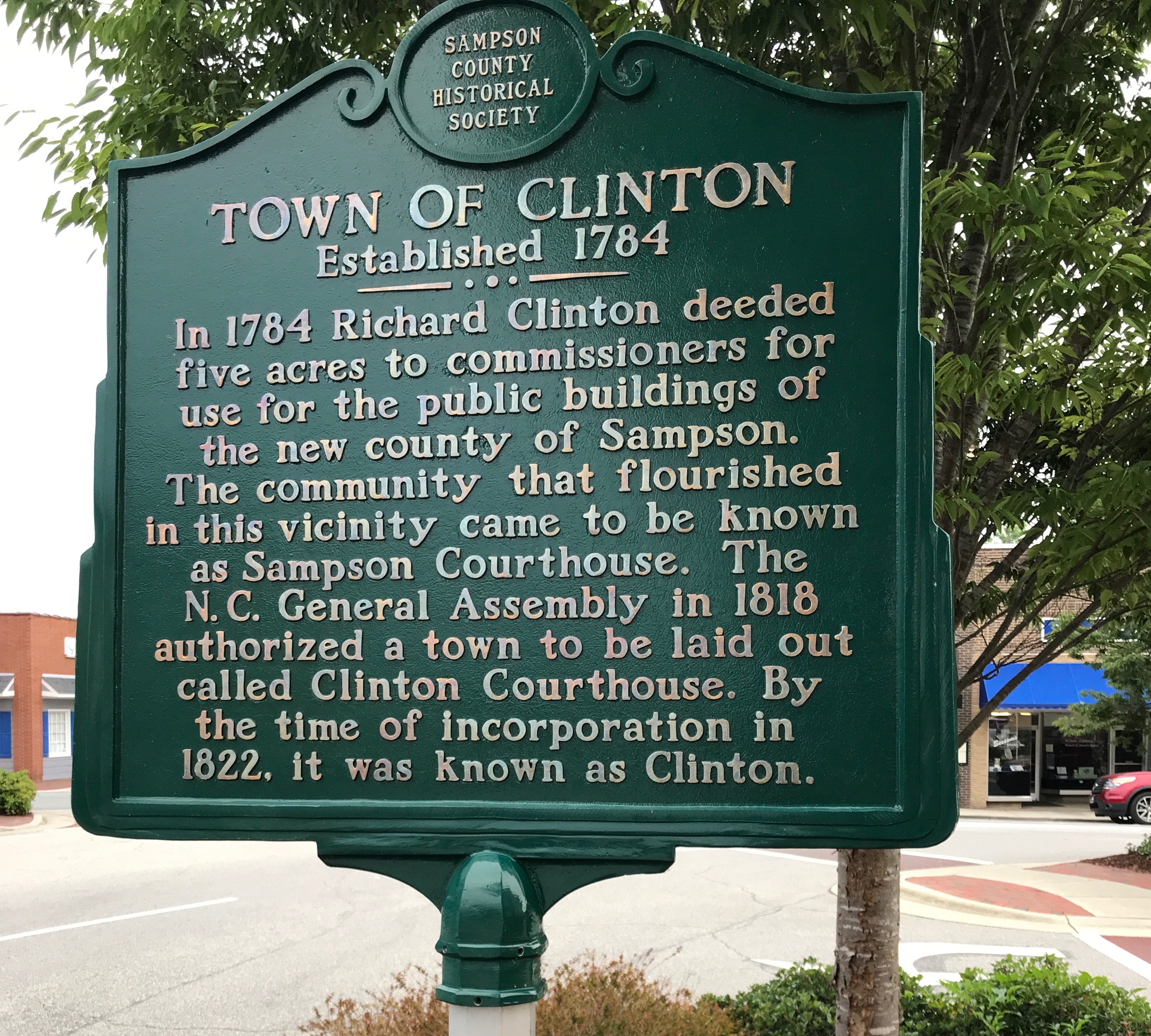
Did you ever wonder why there are so many places named Clinton? According to my Preferred Source, there are 30 towns, cities and villages in the United States named Clinton. It’s the fifth most common name, after Washington, Springfield, Franklin and Lebanon. Being from Buffalo, I had always thought that these places were in honor of DeWitt Clinton, a New York State governor who was instrumental in the construction of the Erie Canal. But, it didn’t seem too likely that Clinton, North Carolina would be named in his memory.

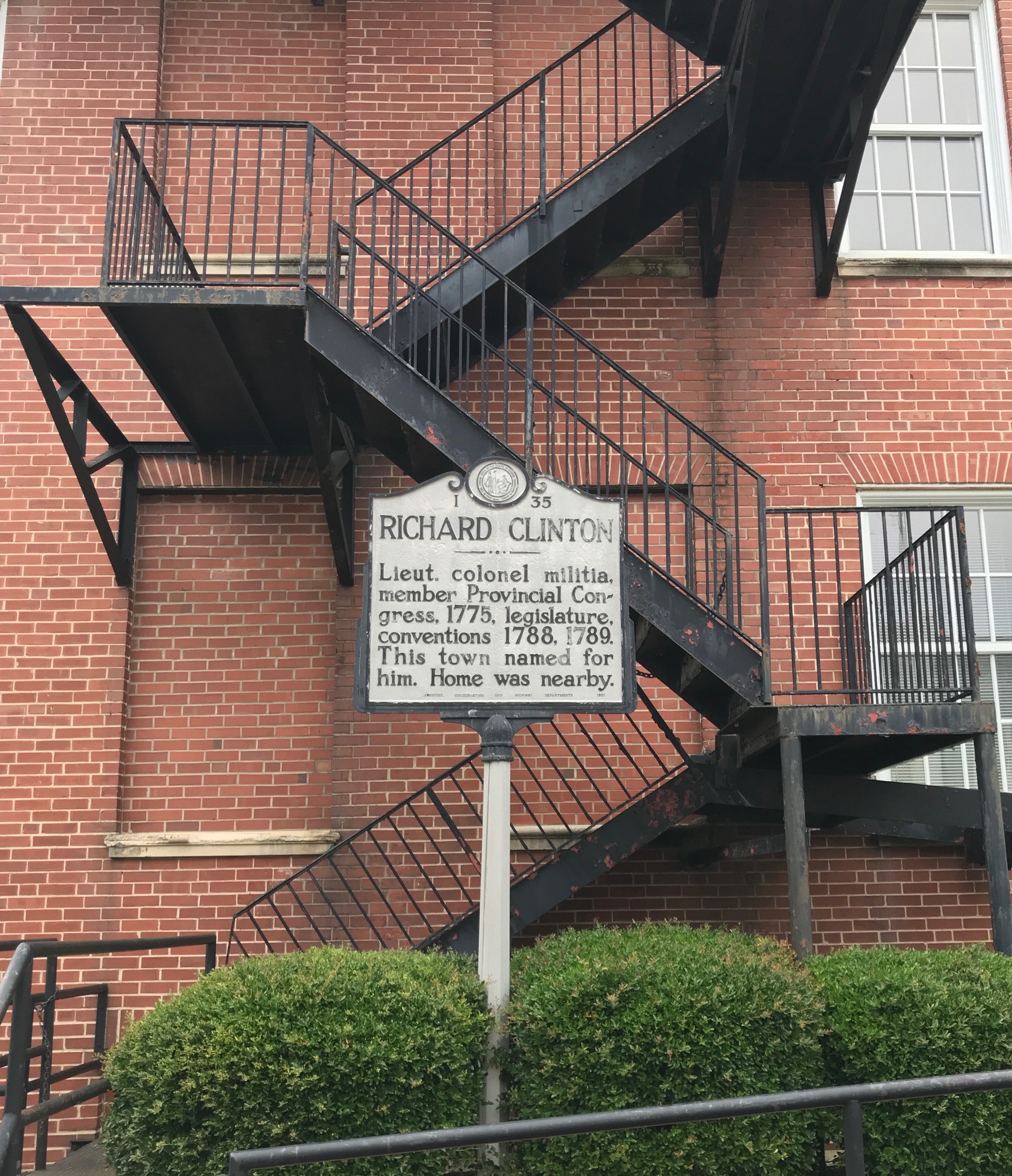
It turns out that this Clinton was named in honor of Richard Clinton, a Brigadier General of the North Carolina militia in the American Revolution. I don’t suppose it hurt that he donated the land public buildings.

I strolled about to see what I could see.

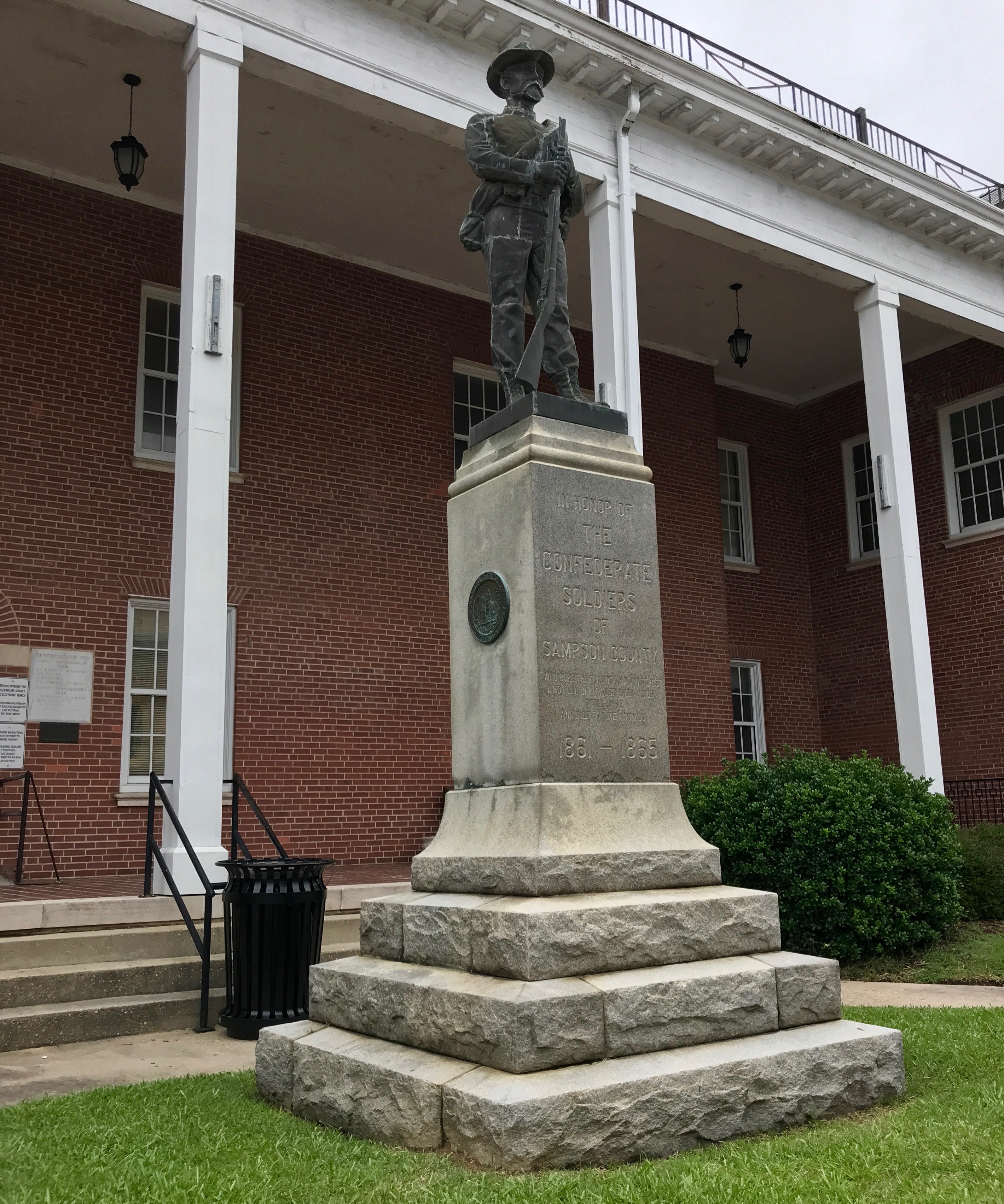
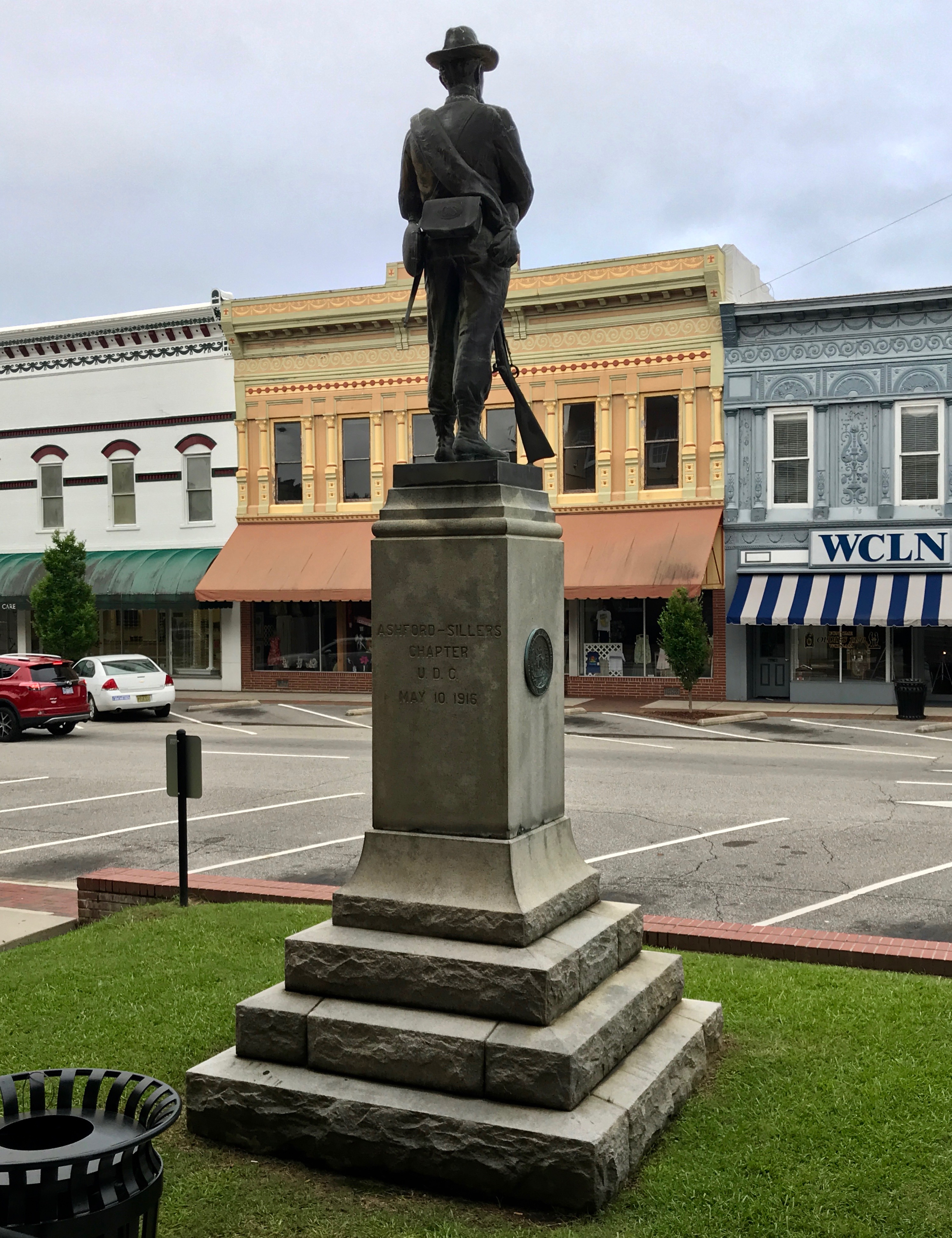
A Confederate soldier stood guard outside the courthouse. Clinton is the county seat for Sampson County.

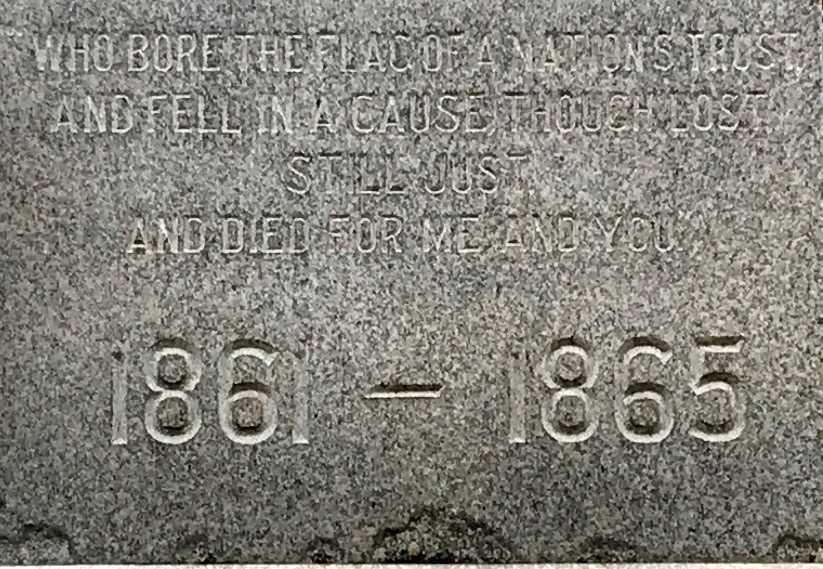
Interesting inscription:

“Who bore the flac of a nation’s trust
and fell in a cause though lost
still just
and died for me and you.”

I wonder what they meant by “flac”? If anyone has any ideas, please let me know. Or, have I misread the inscription?

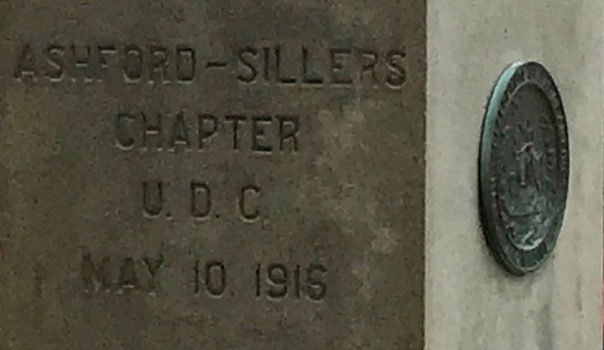
As I am wont to do, I checked for the dedication date. It’s interesting to see when people and events are commemorated.

I continued my walk around the courthouse.

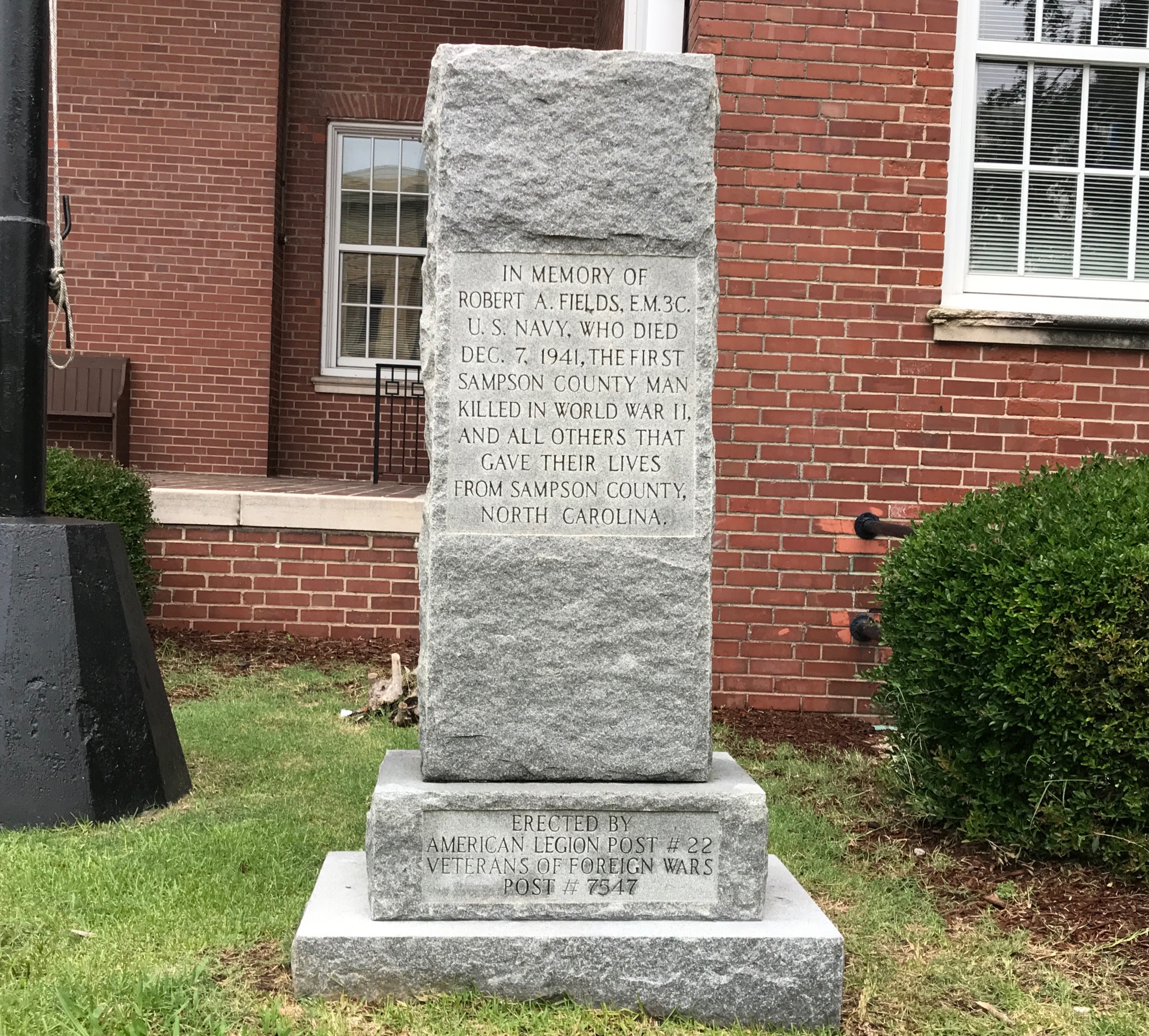
There was a World War II memorial.

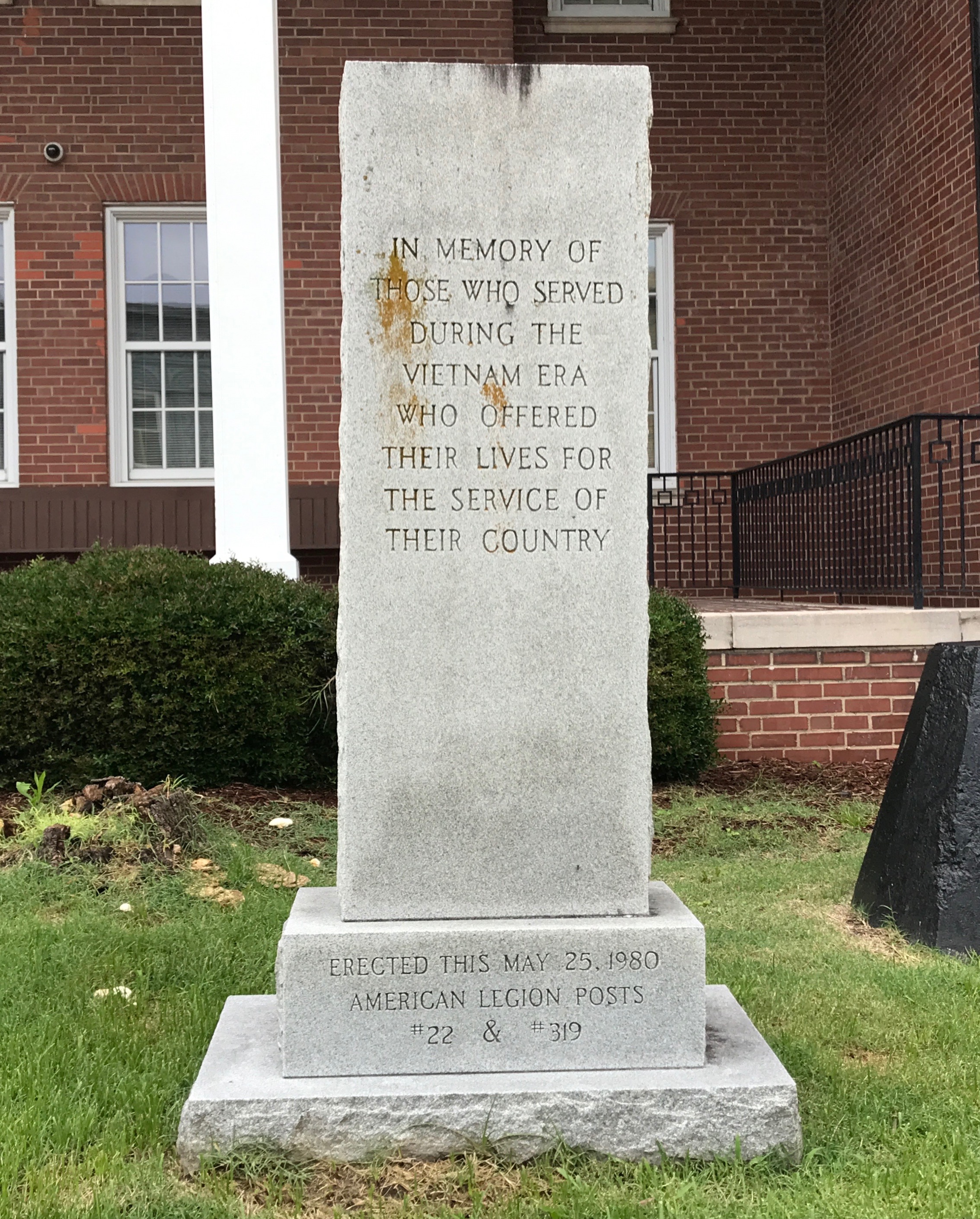
The Viet Nam memorial was erected relatively quickly. The war ended in 1975 and the memorial was erected in 1980.

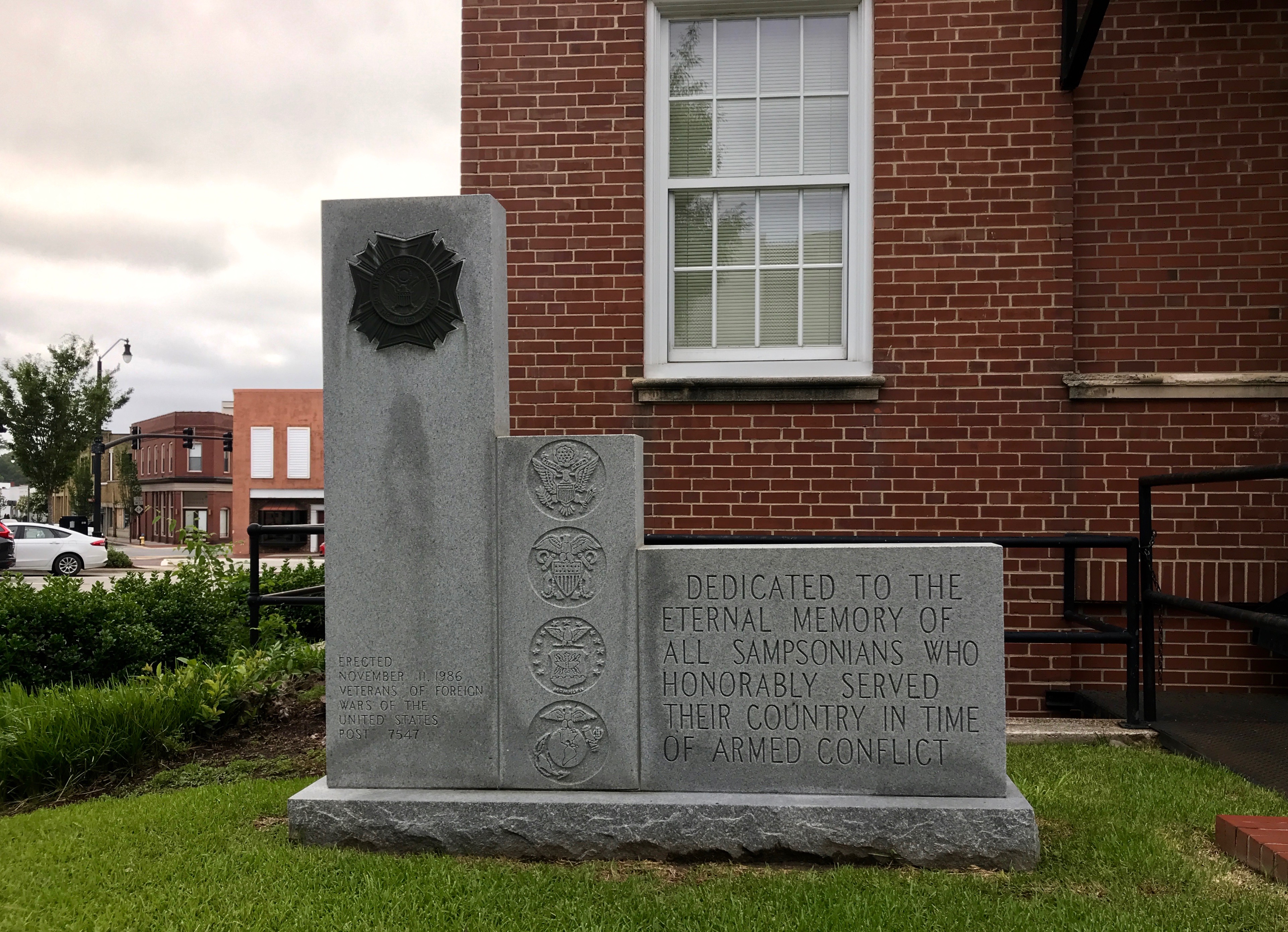
I was surprised that WW I wasn’t honored, nor was the Korean conflict, but you have to hand it to these practical folks. They have those covered – as well as any future wars with this memorial “dedicated to the eternal memory of all Sampsonians who honorably served their country in time of armed conflict.”

I liked their above ground time capsule. I’ve heard about so many time capsules that people couldn’t find when the time came to open them. This was dedicated in 1984 – the 200th anniversary of Sampson County. The plan is to open it in 2184. Let’s hope someone is around to see what is in it.

 I was quite impressed that a vice president came from this town. I had never heard of William Rufus King, but there area a lot of vice presidents I have never heard of. In fact, I probably wouldn’t recognize most of them.

It turns out that he was only vice president for six weeks, before his death in 1853. According to my Preferred Source, he is the shortest serving vice president, other than John Tyler and Andrew Johnson, both of whom succeeded to the presidency.

King was Franklin Pierce’s vice president, and he bears the distinction of being the only the only United States executive official to take the oath of office on foreign soil. He was in Havana, Cuba, recuperating from tuberculosis, when he took the oath of office on March 24, 1853. Shortly after taking the oath of office, he returned to his plantation in Alabama. He was only home for a few days before he died on April 18, 1853.

Another fun fact: He was a co-founder of the town of Selma, Alabama and came up with the name the city from the Ossianic poem, “The Songs of Selma”. He is interred in a white marble mausoleum in the city’s Live Oak Cemetery.

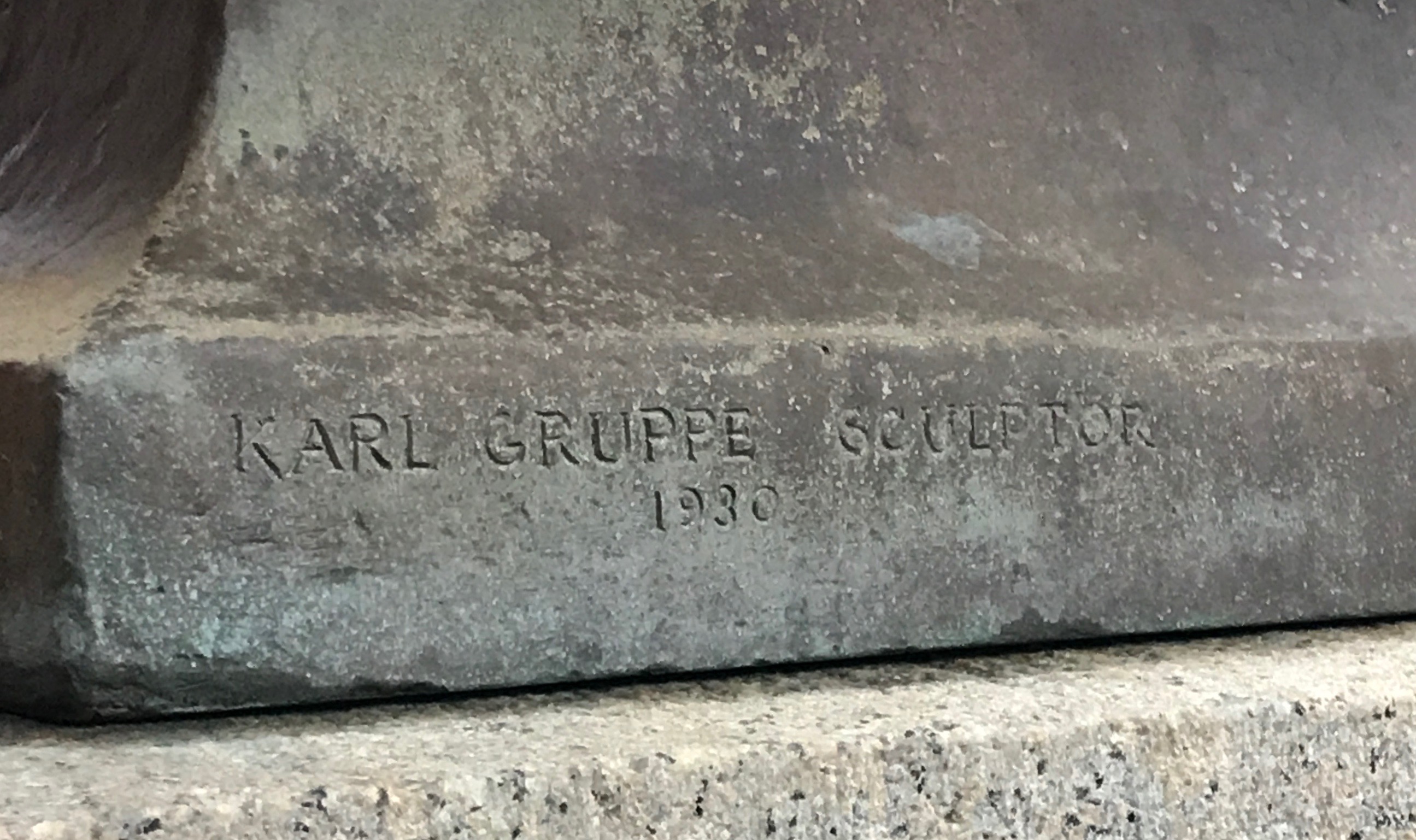
In case you were wondering, this memorial had the date of 1930 on it. And the sculptor was Karl Gruppe.

I wonder if this is the Richard Clinton Memorial Fire Escape?

By now, I was starting to think that dinner would be a good idea. I headed toward Alfredo’s, a restaurant that Google helped me pick out.

I perused the menu and placed my order.

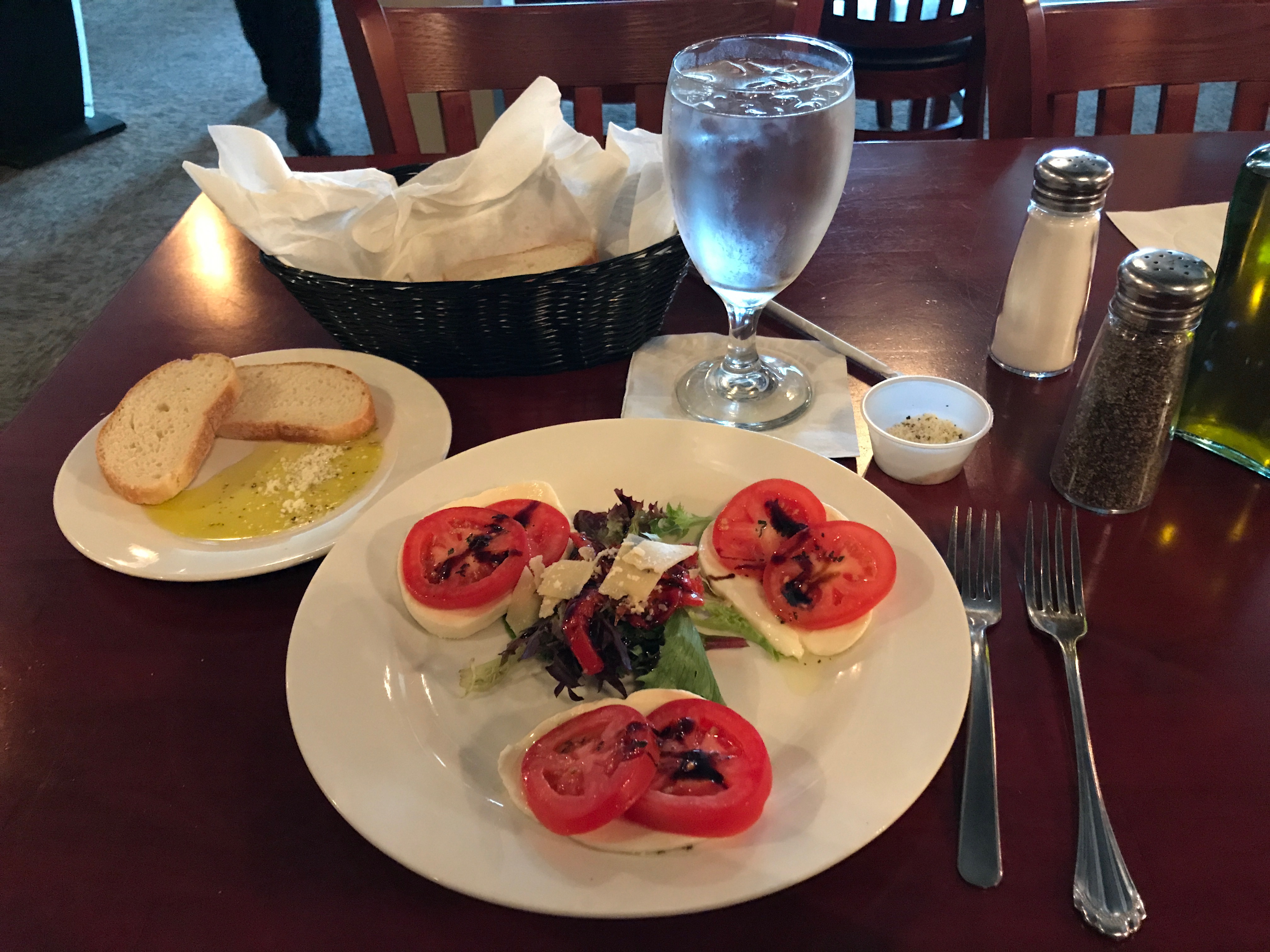
I decided to start with a Caprese Salad.

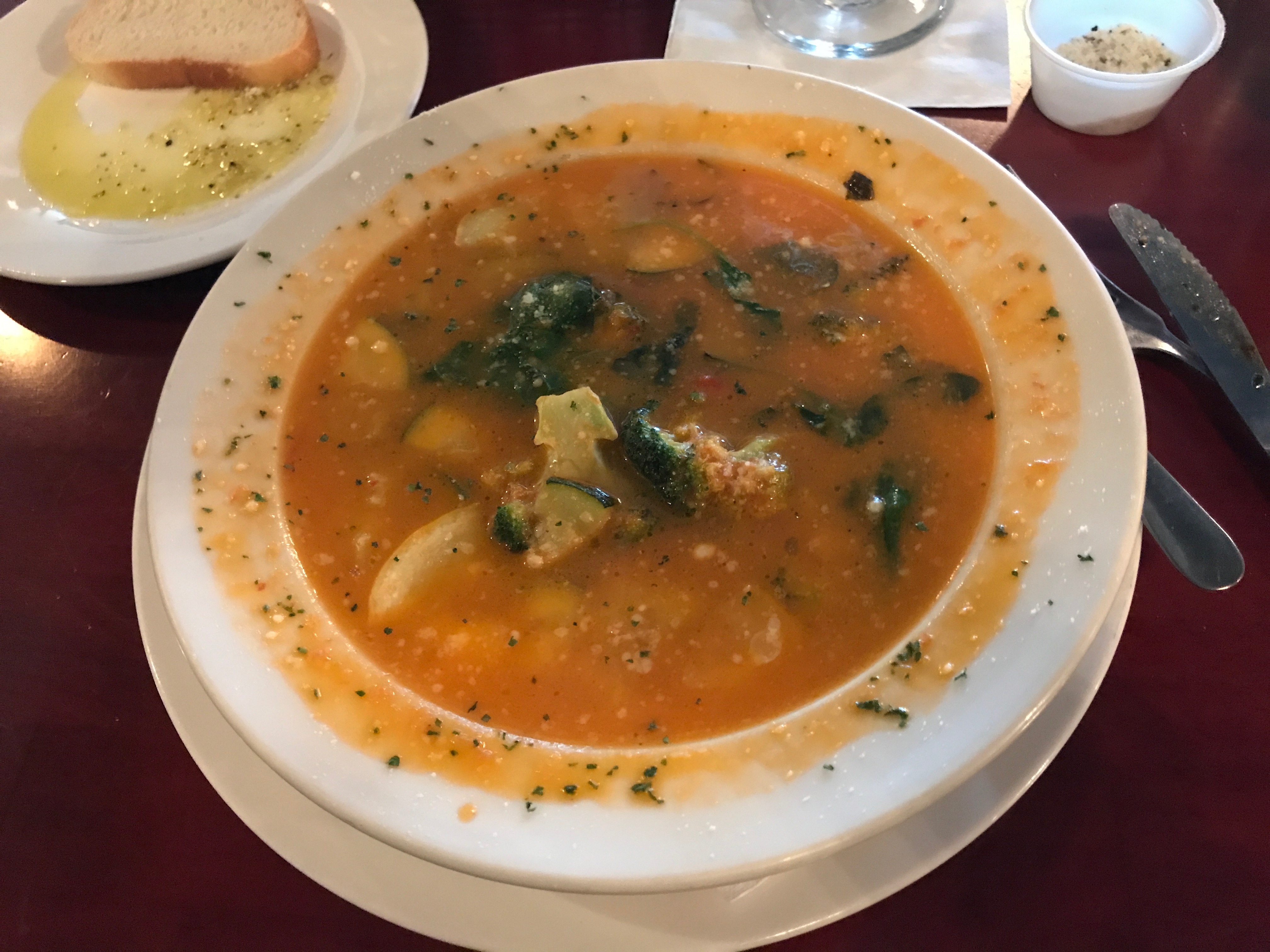
That was followed by a delicious soup. I’m not sure if the soup on the rim of the soup plate was intentional or a bi-product of fast service.

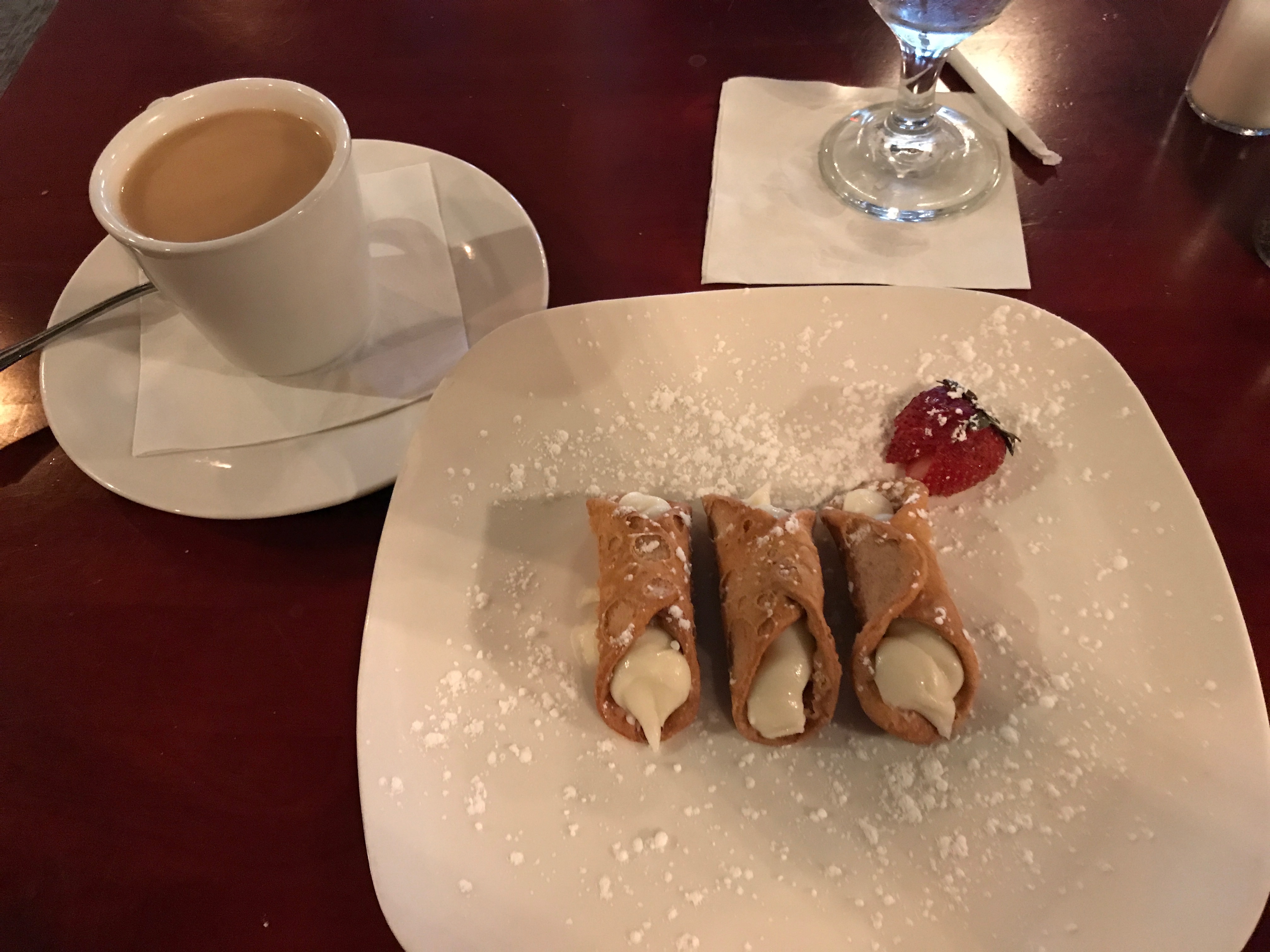
I ended up the meal with coffee and cannolis.

You know what? I don’t think I had ever had cannoli before. Or, if I had, I didn’t remember if I liked them. Of course, I remembered the line from this iconic scene:

After trying these cannolis, I have decided that I probably don’t like them. But, I would be open to trying them again.

And with that, I headed back to the hotel to get rested up for another day.


Asheville, NC for a Hot Little Minute

Once again, I booked a hotel through an online site. I found out that the owners really don’t care for these sites, as the booking sites take a large commission. You live and learn. If it’s a corporation, the people running the hotel don’t care that much. However, when it’s family owned and operated, they are a bit grumpy.

This would be another place I’d advise avoiding, if I could remember the name of it.

And this hotel was a bit dumpy. More than an bit. I was really glad that I wasn’t going to be there long. However, there was a lovely little Mexican restaurant on the other side of the parking lot. I went over to see what they had on the menu.

It looked good, so I settled in for dinner.

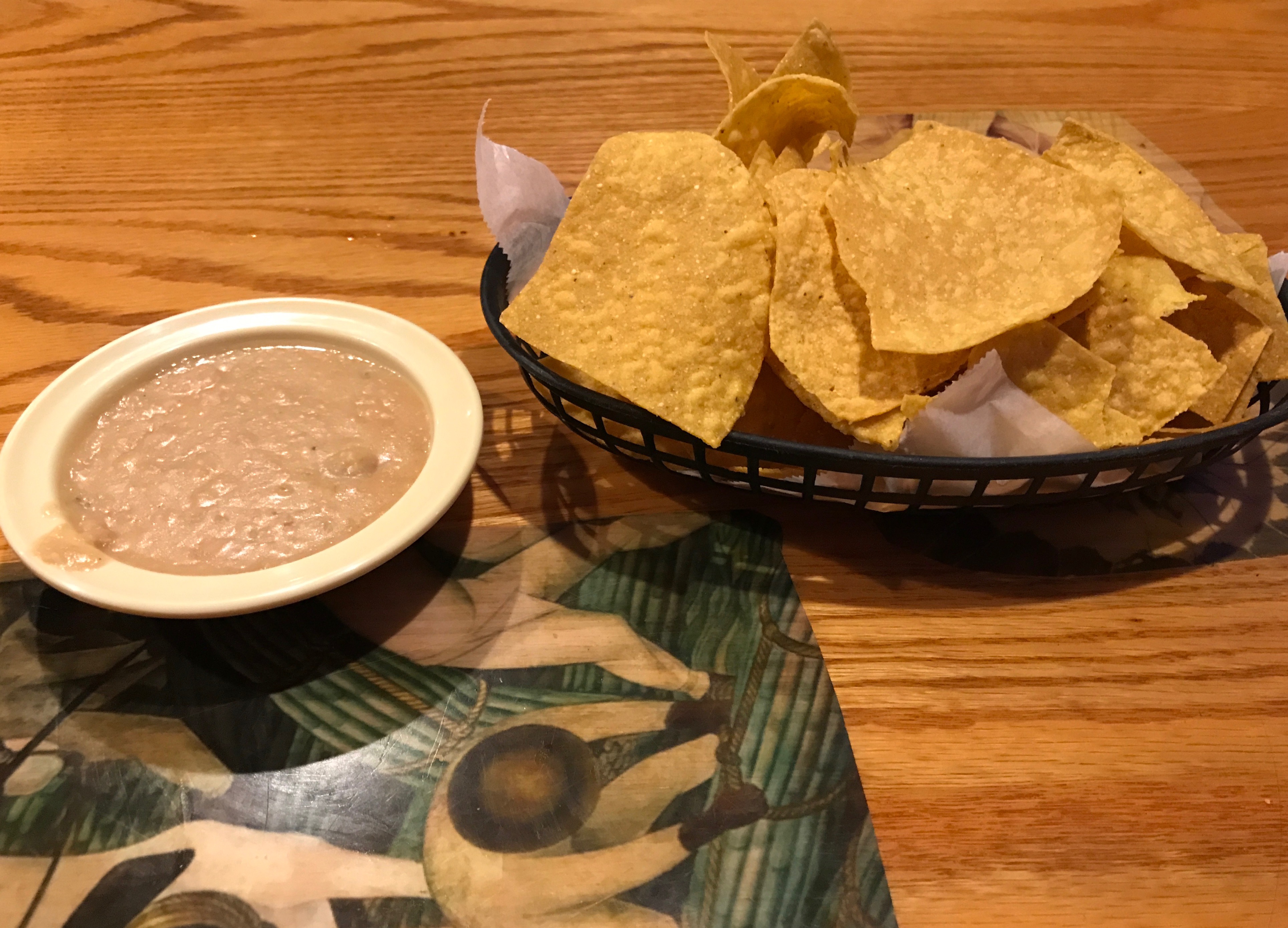
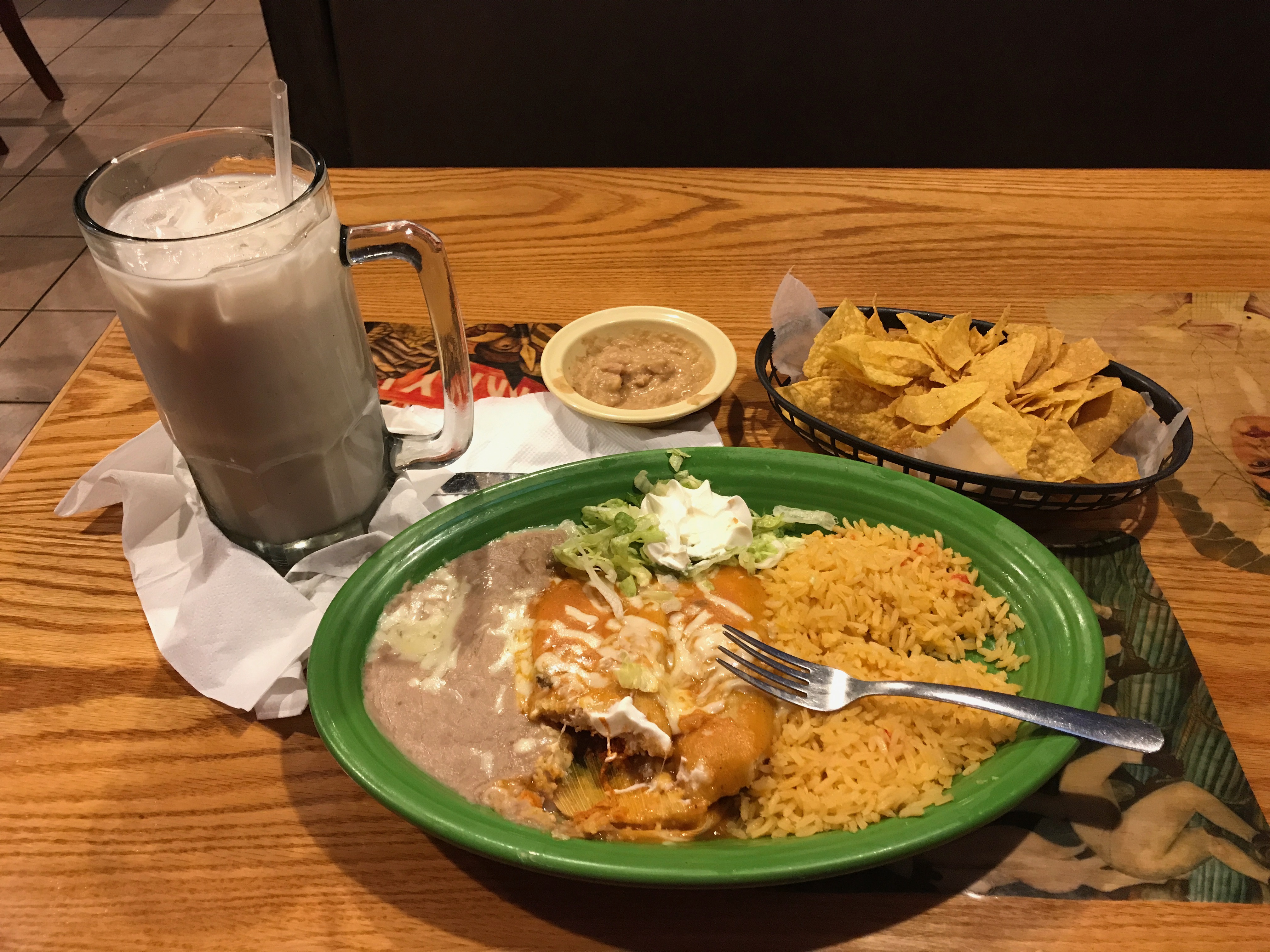
They started me out with chips and beans. I love beans! I think this is going to be good!

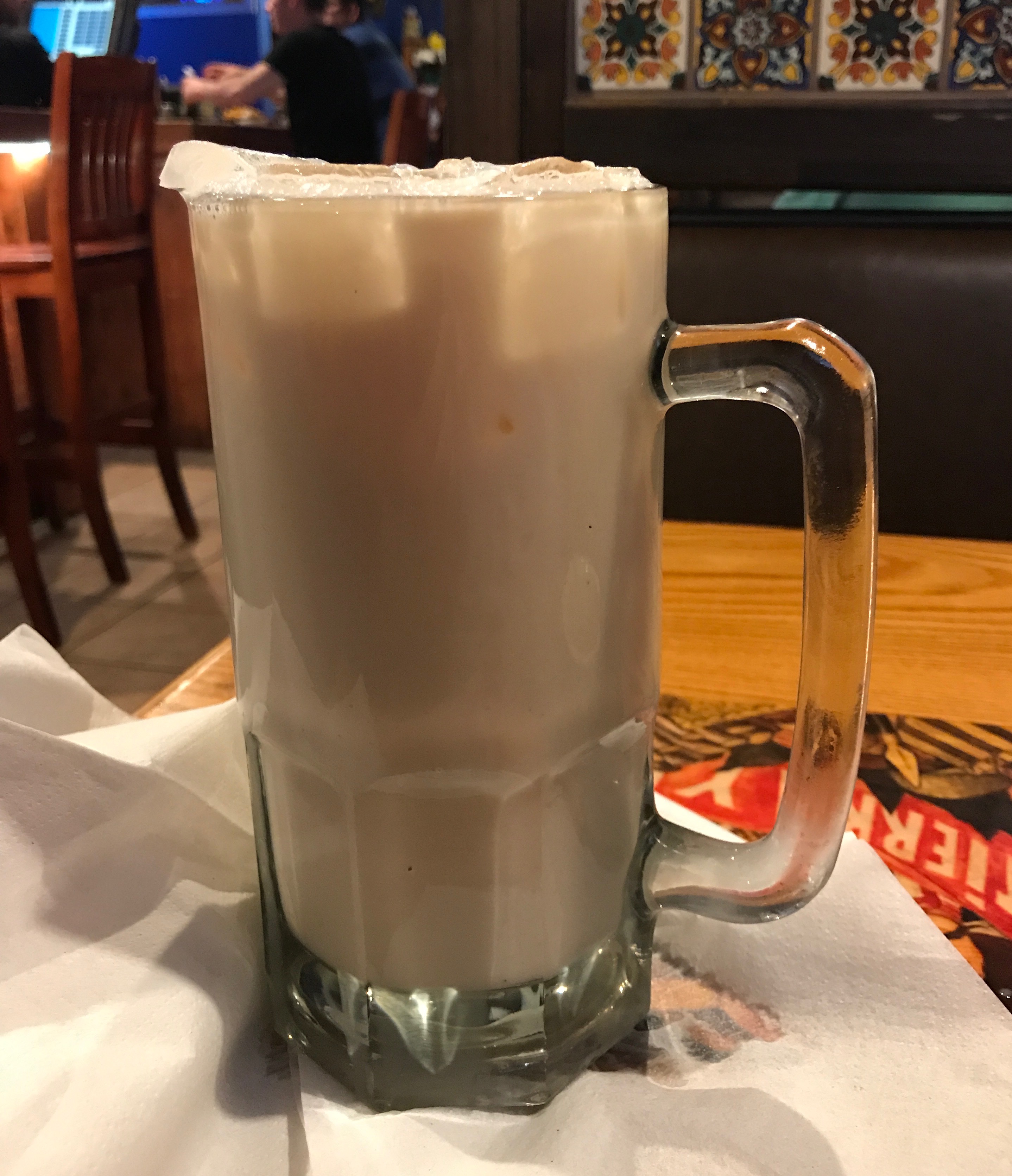
Next came the horchata I ordered. I really enjoy horchata. There are lots of different recipes, some more to my liking than others. As I remember, this was a good mug of horchata.

Dinner came. I got the tamale plate. Yum! Tamales are my favorite!

Everything was so good that I decided to indulge in dessert.

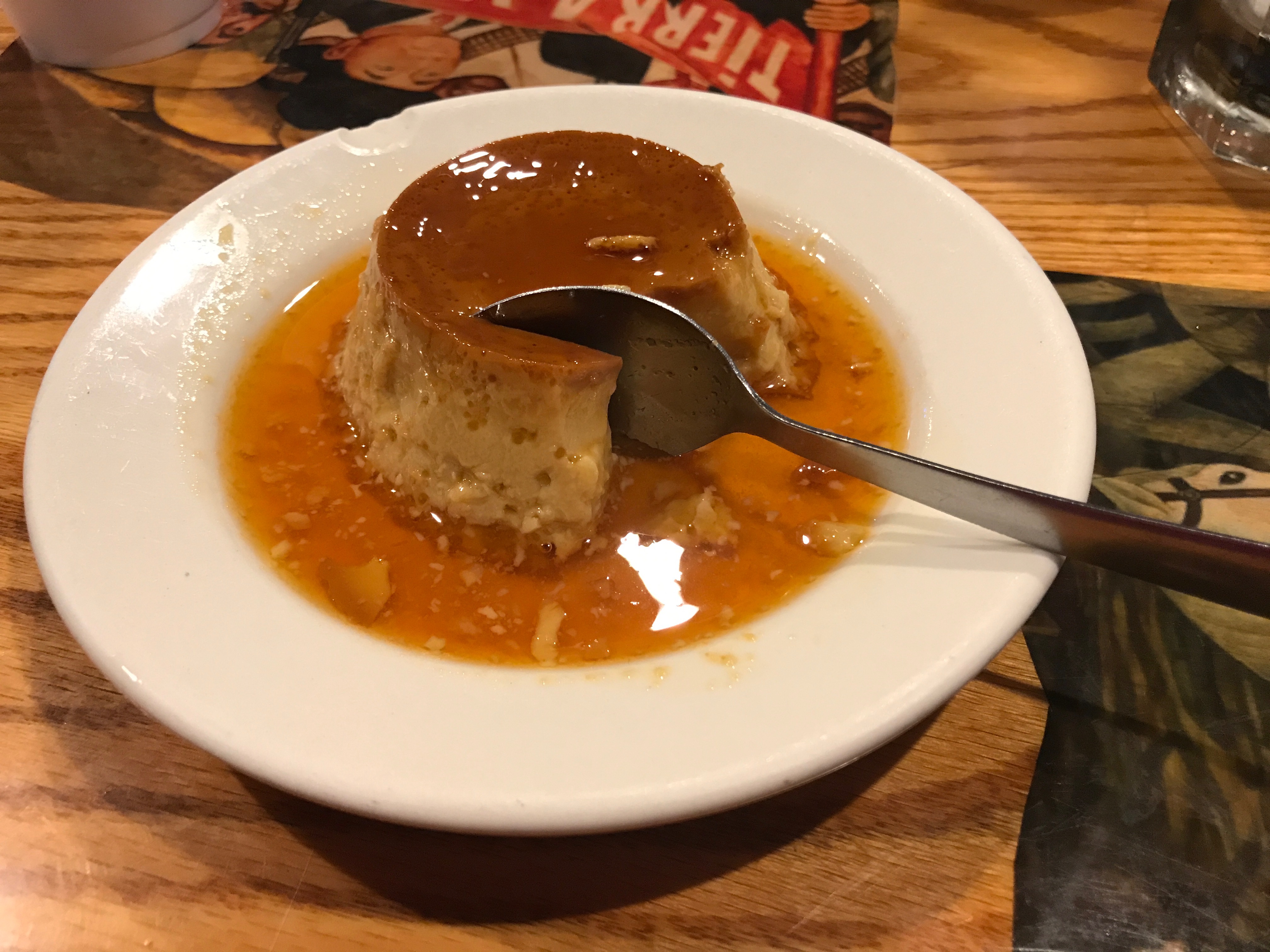
Flan! My goodness, what a treat!

The night passed uneventfully, and I looked up a good place for breakfast in Asheville. Whatever source I consulted gave high marks to Early Girl Eatery. I made my way there and circled about until I found a place to park.

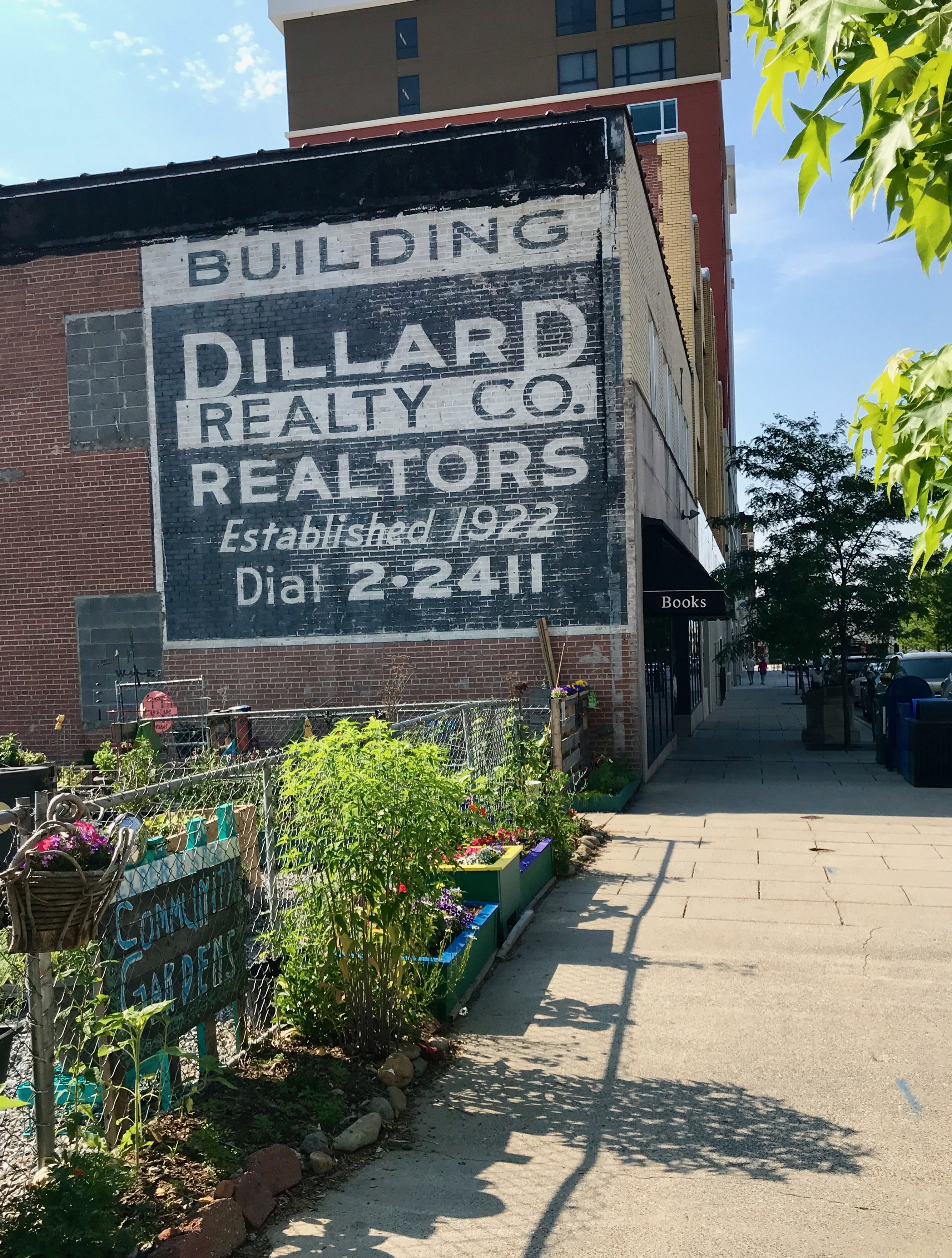
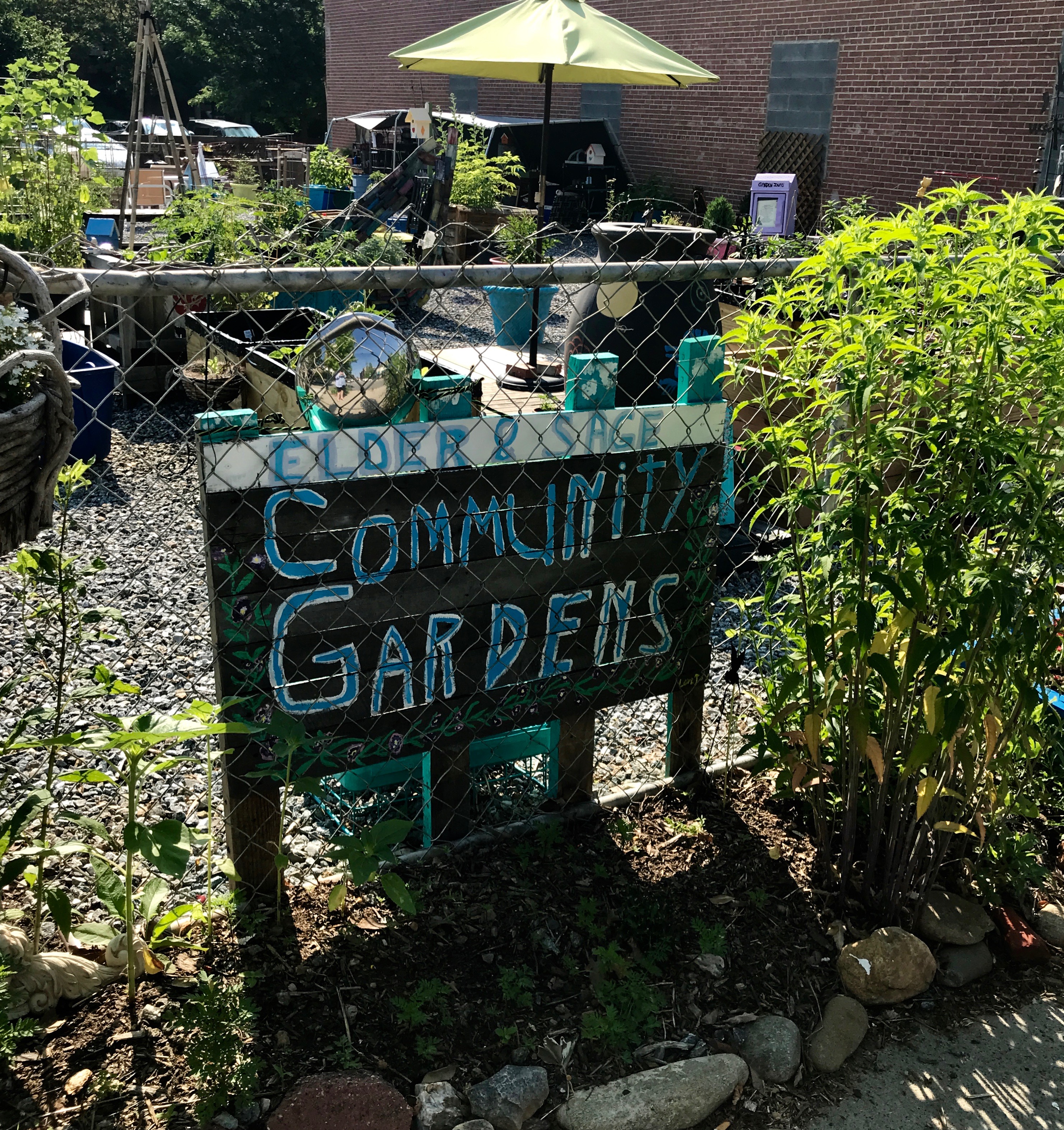
Apparently, there was very little gardening going on in the community garden that morning, although I’m sure the plants were soaking up the sun and doing their photosynthesis thing.

According to a sign on the fence, this garden is part of the Asheville Edibles Community Garden Program, and it opened June 1, 2017, just about a year before I visited. Volunteers have been working to transform a city-owned gravel lot into a garden that will provide area gardeners the opportunity to nurture and share organic vegetables, herbs and flowering pollinator plants.

So, not only is it an oasis for people, it’s an oasis for bees, too.

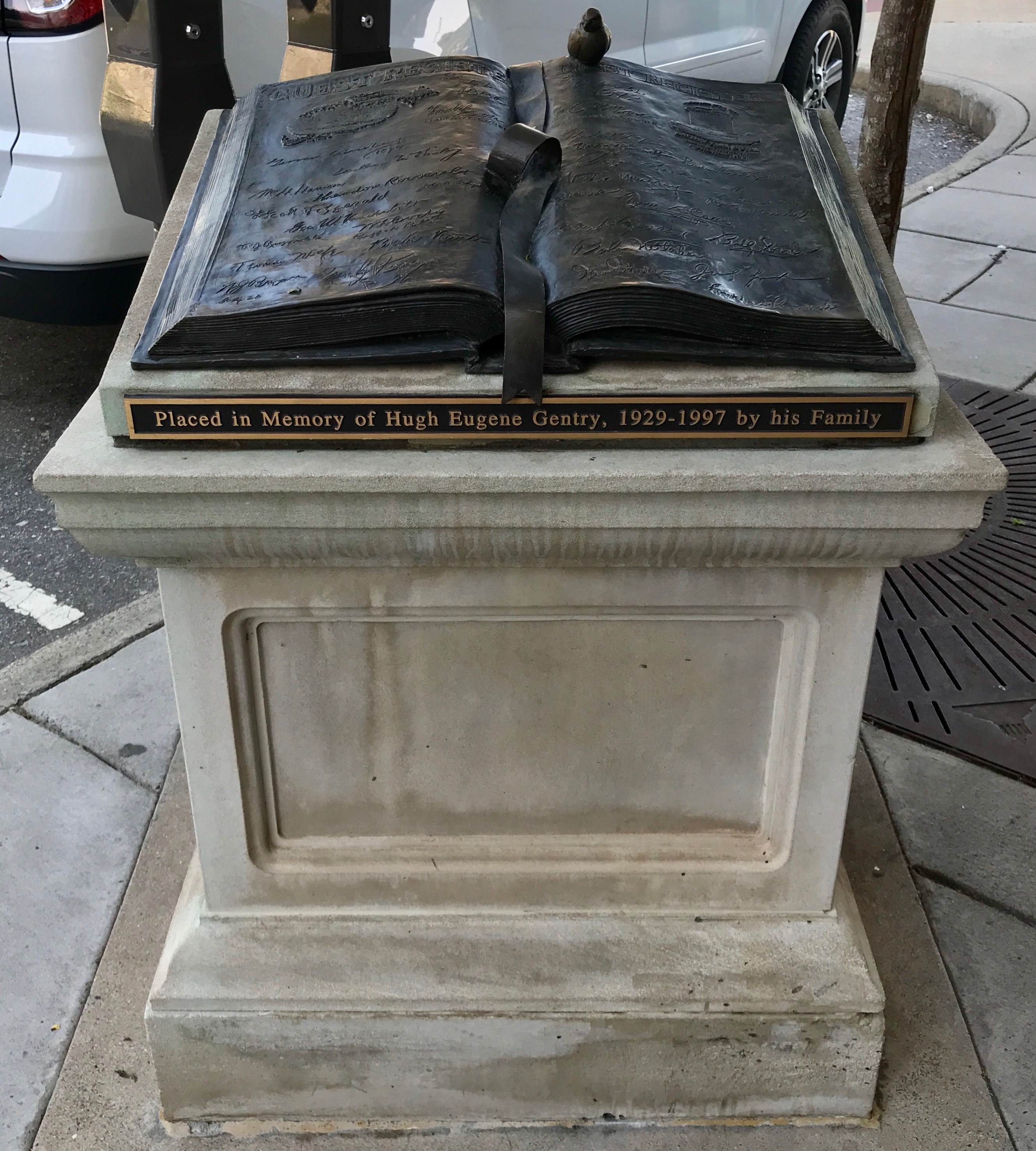
Just up the street was a monument that attracted my interest.

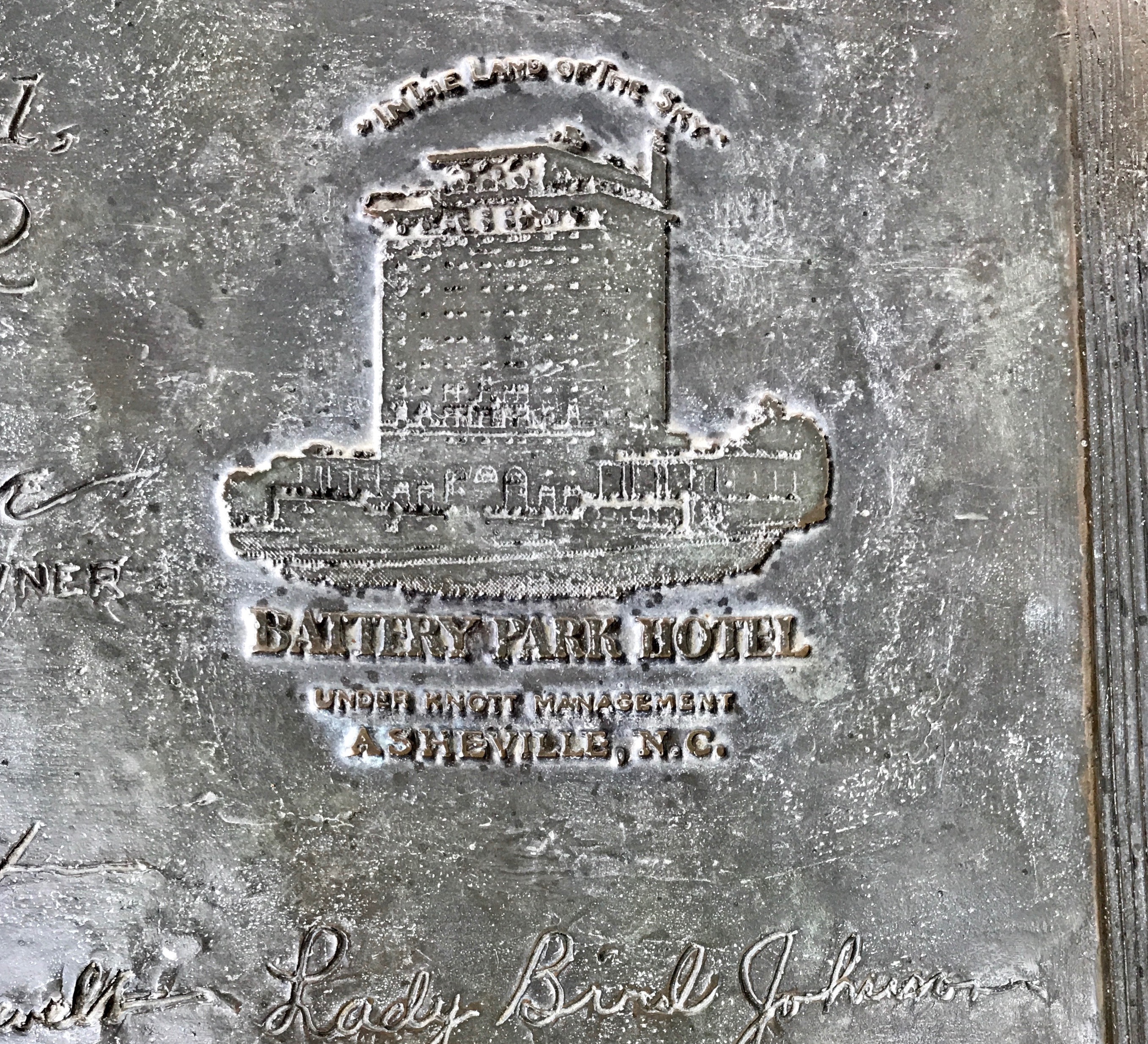
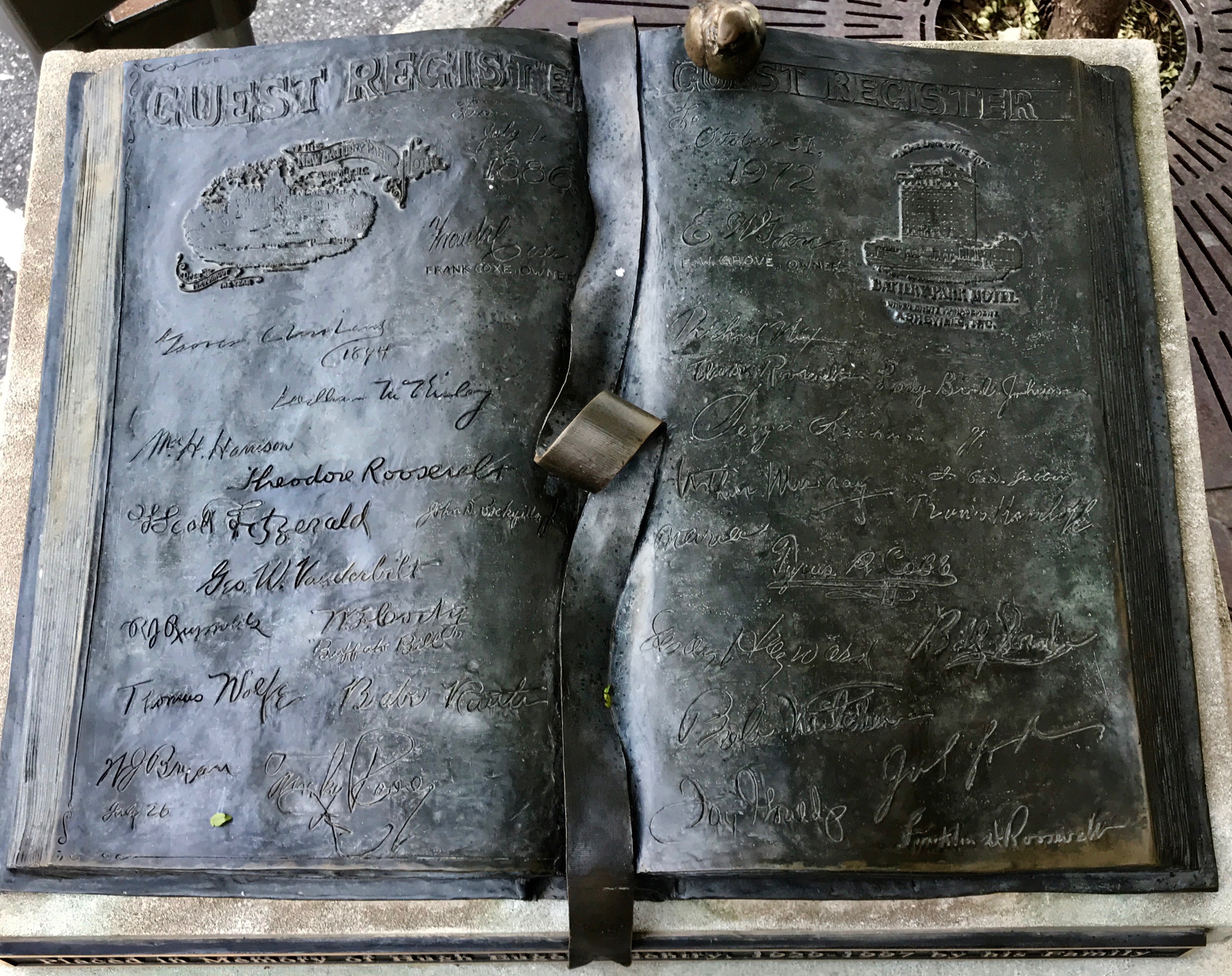
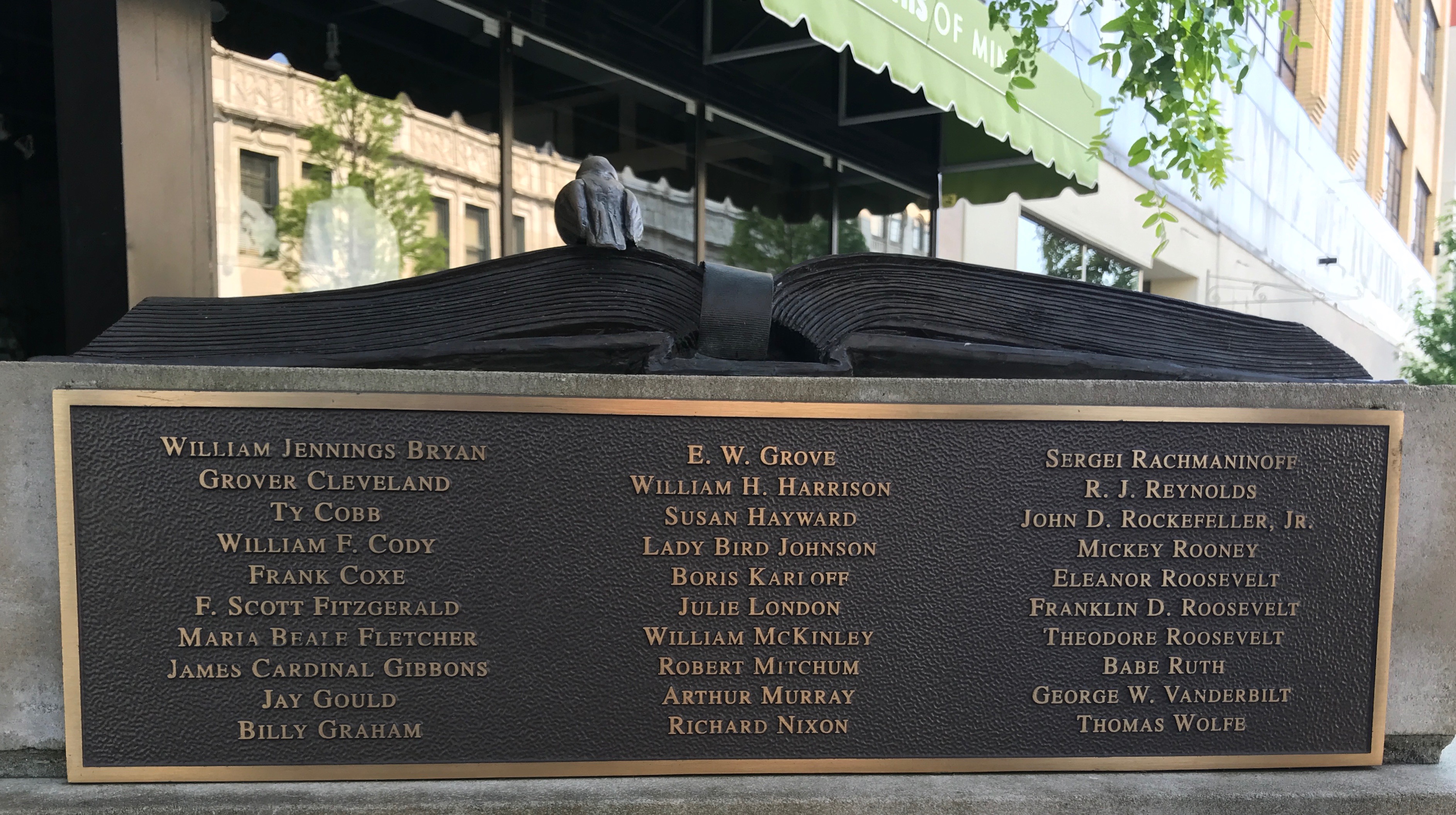
It was a facsimile of the guest registry of the Battery Park Hotel, with some of the more famous signatures inscribed on it.

Just in case you can’t make out the signatures,

here’s a list of the famous folks.

Now, this was really fast-and-furious tourism. I should have taken better notes, but I still had a long drive ahead of me so that I would be in position for the next week’s grain collections. I headed toward the restaurant.

There was a short wait, so I went out to the street to enjoy the beautiful weather and to see what I could see.

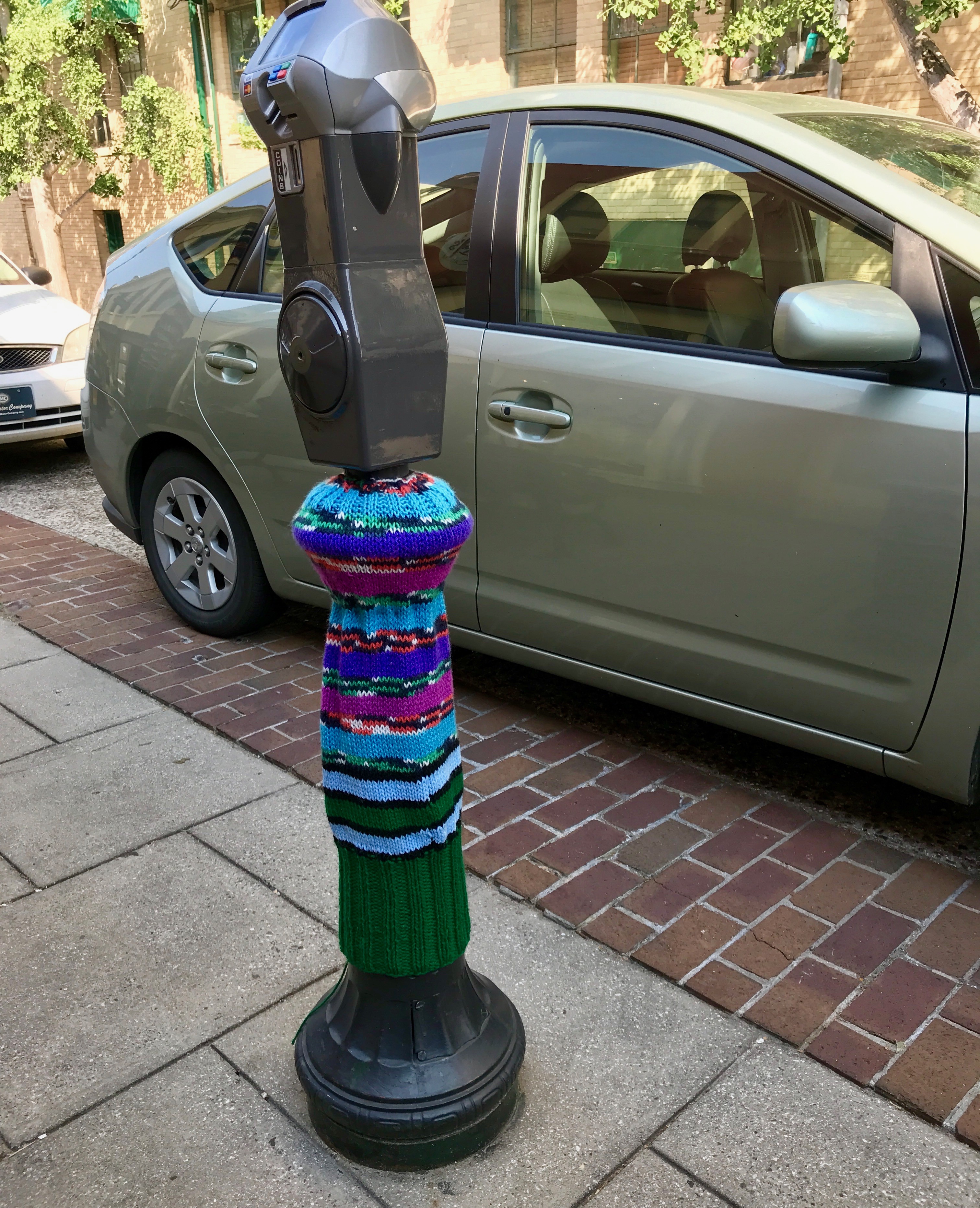
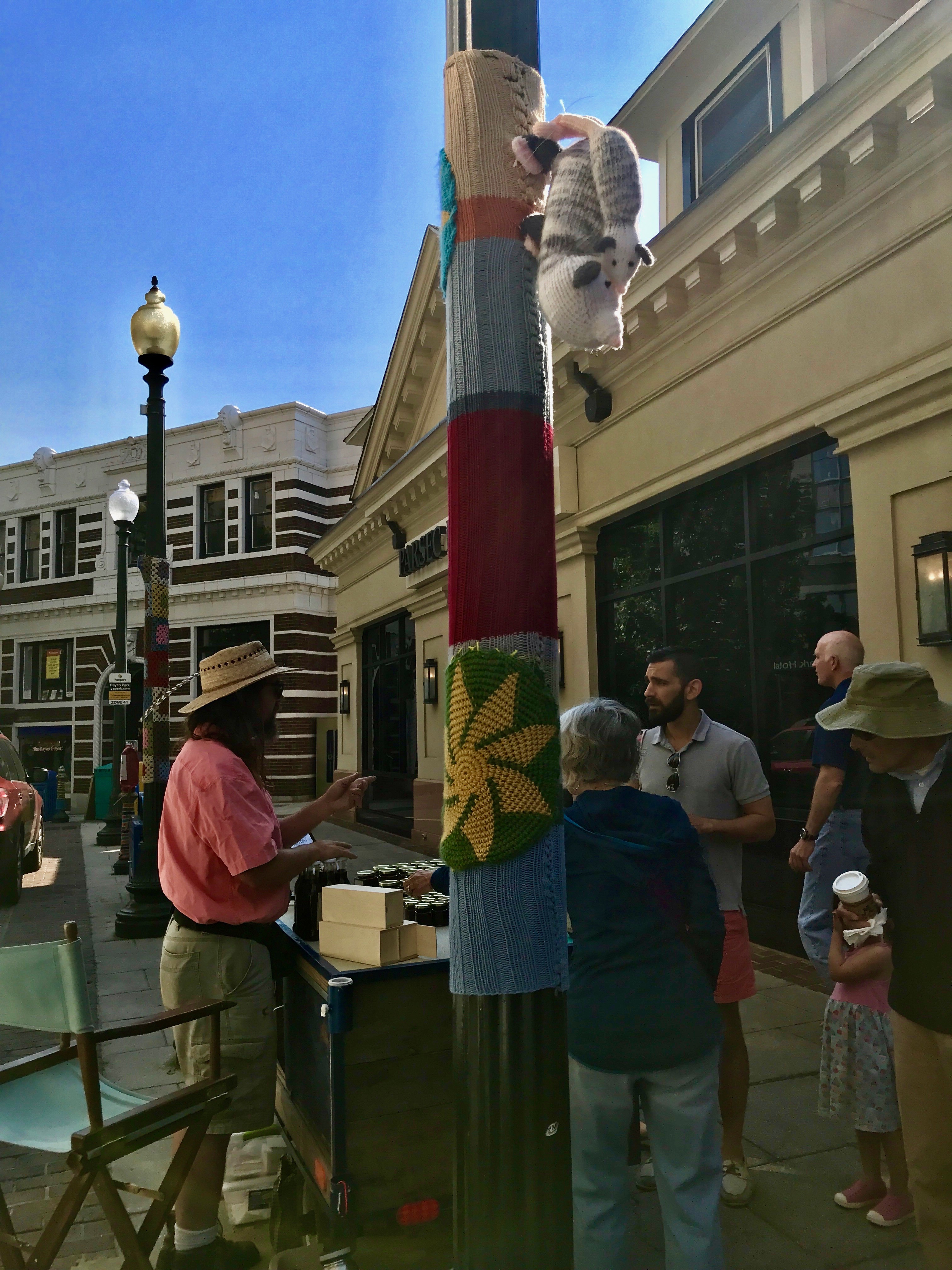
I noticed that they had a yarn bombing project going on. Here is a parking meter all decked out.

Right by the sidewalk vendor is a lamp post with some opossums. I wonder if they droop when they get wet?

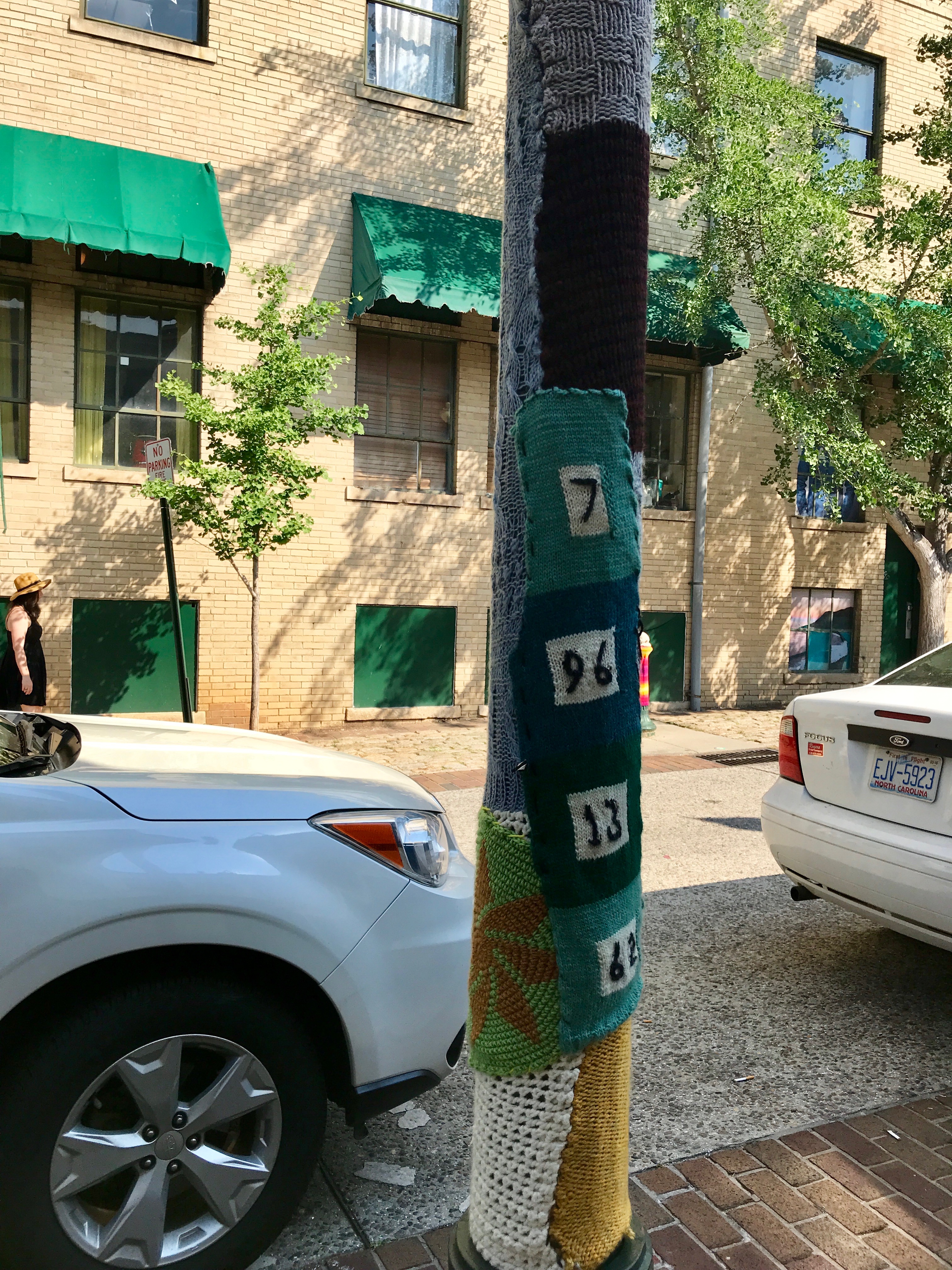
The patches with the numbers on them piqued my curiosity. I wondered what the numbers represented, but, then again, I guess getting people to notice things and wonder is part of the purpose of art.

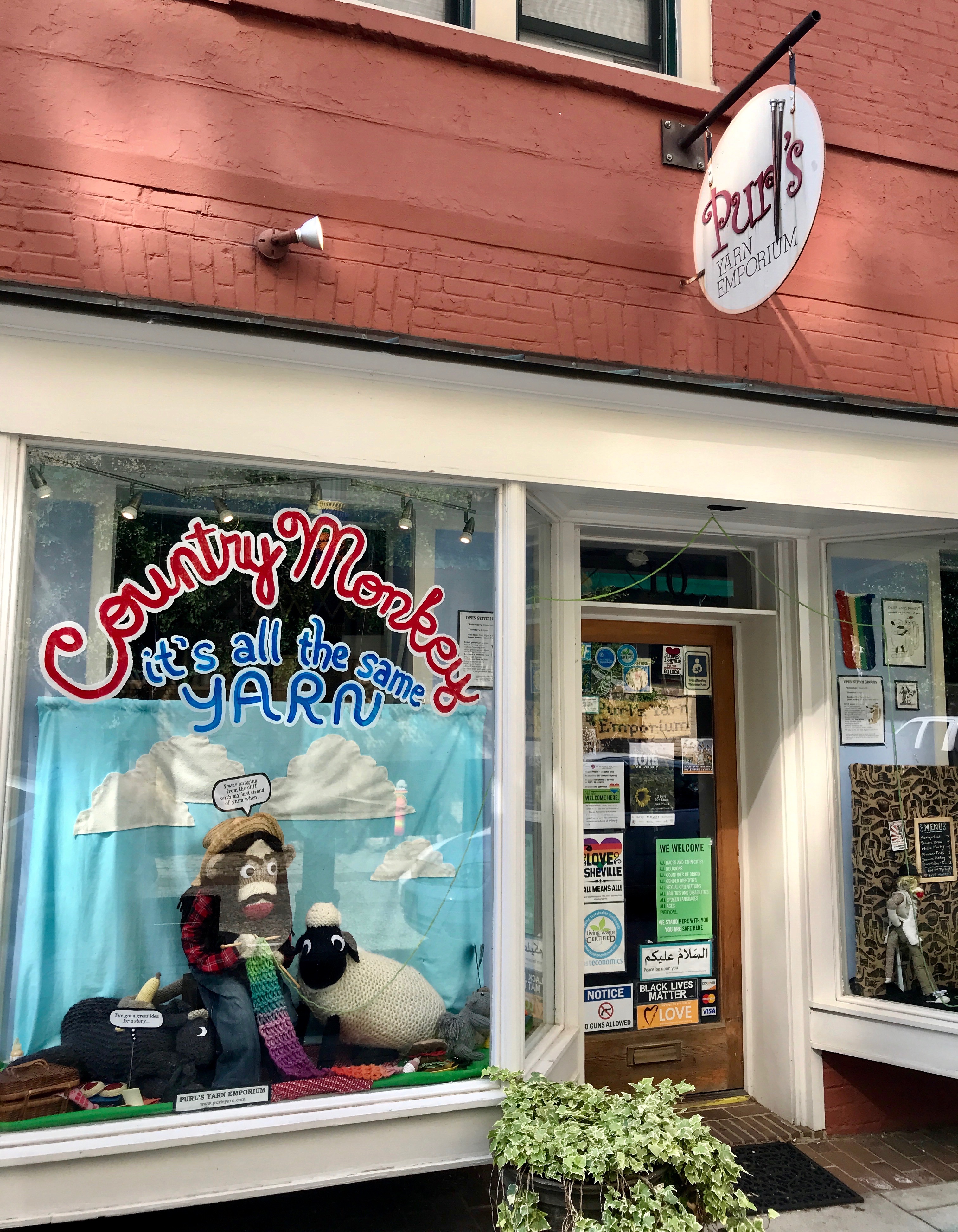
I wonder if selling yarn might also be part of the purpose, as Purl’s Yarn Emporium is in the same block. My Preferred Source says that yarn bombing  originally started as a way for fiber artists to use up their left over yarn and unfinished projects, so maybe I am being overly cynical.

The window had a really cute display. With that, it was time to head back to the restaurant. I’d hate to miss my name being called!

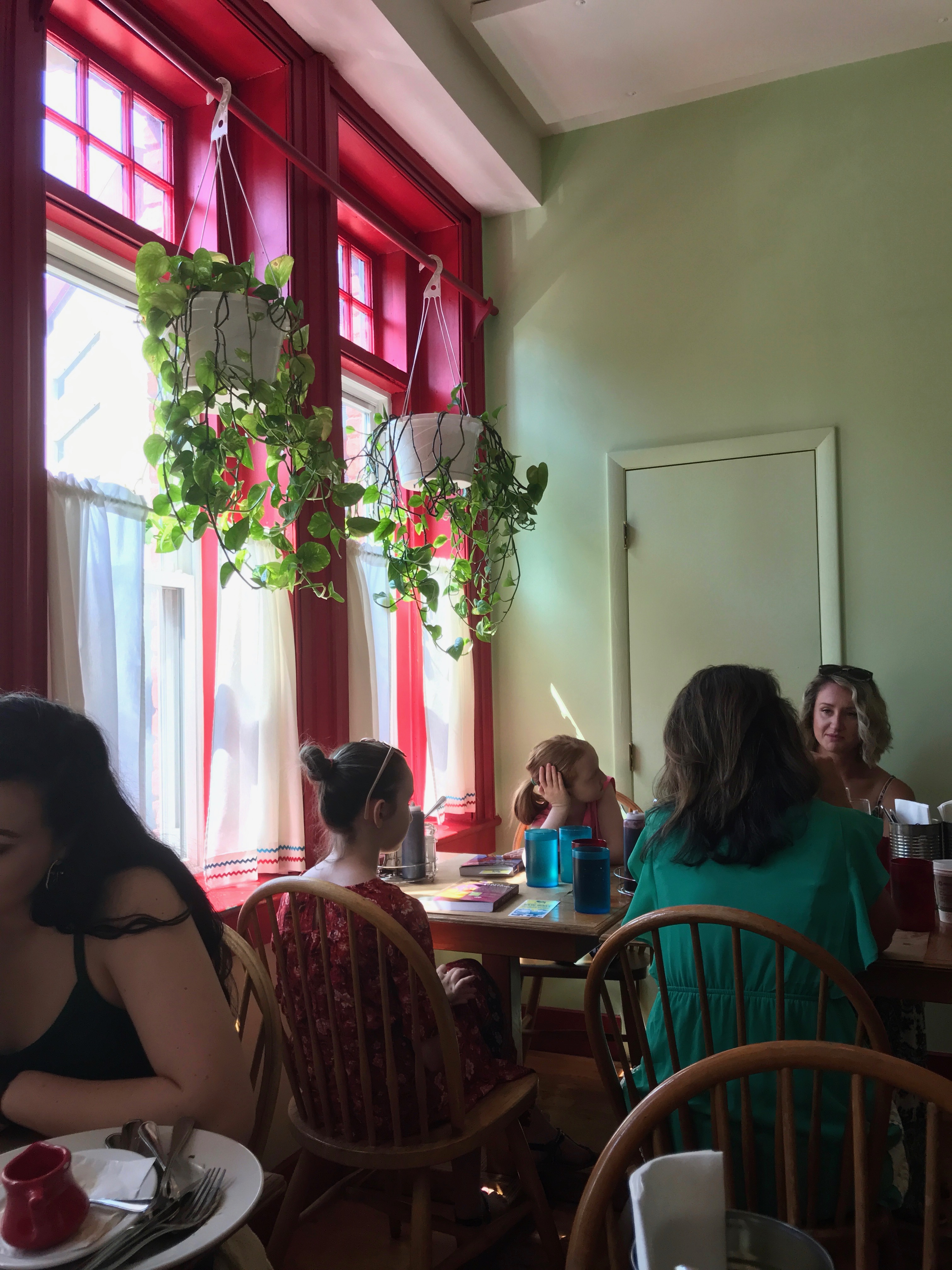
I was escorted to a lovely dining room. I looked over the menu and placed my order.

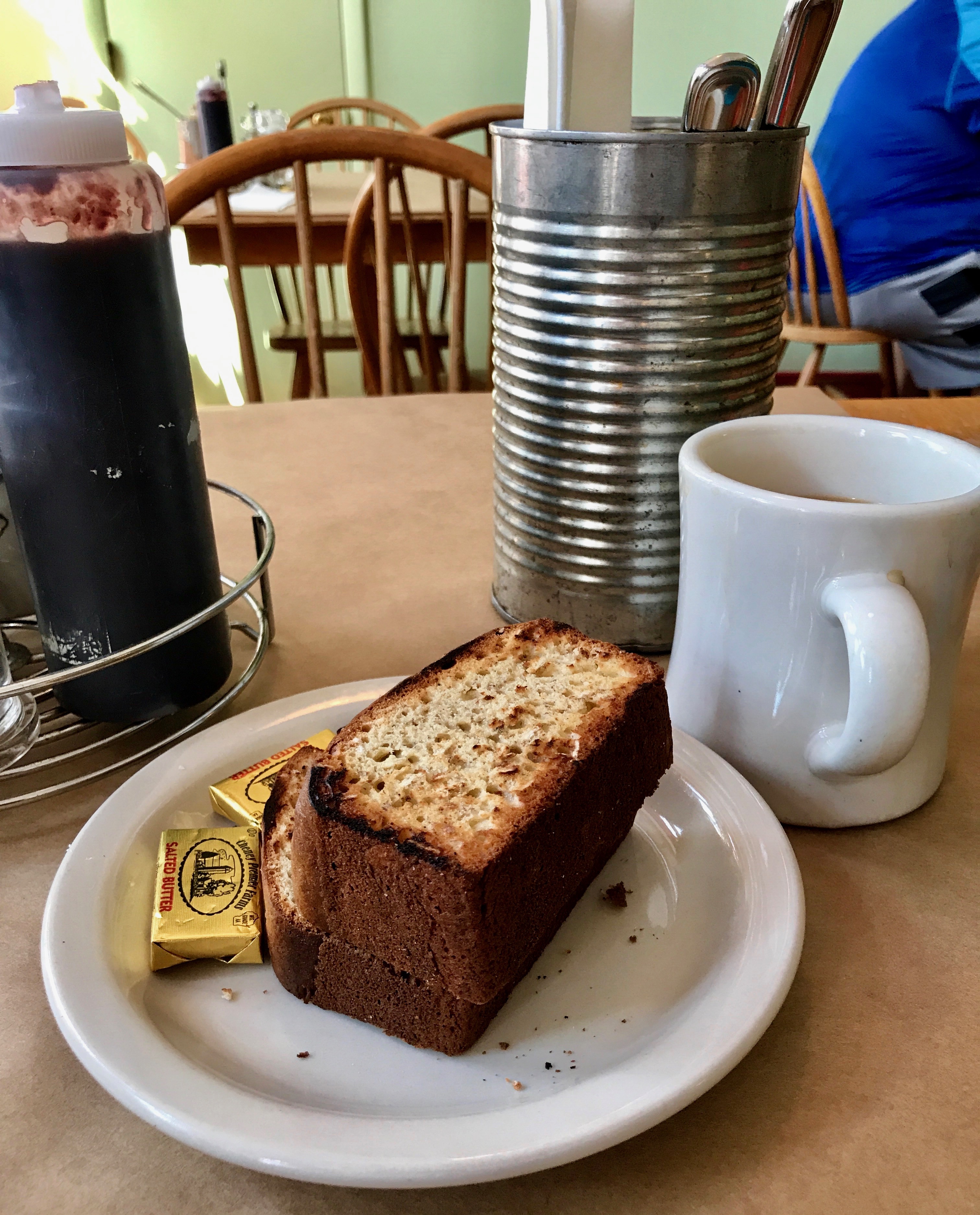
While I waited, I enjoyed my coffee and some sort of quick bread. I remember it as being tasty, but I don’t remember what it was.

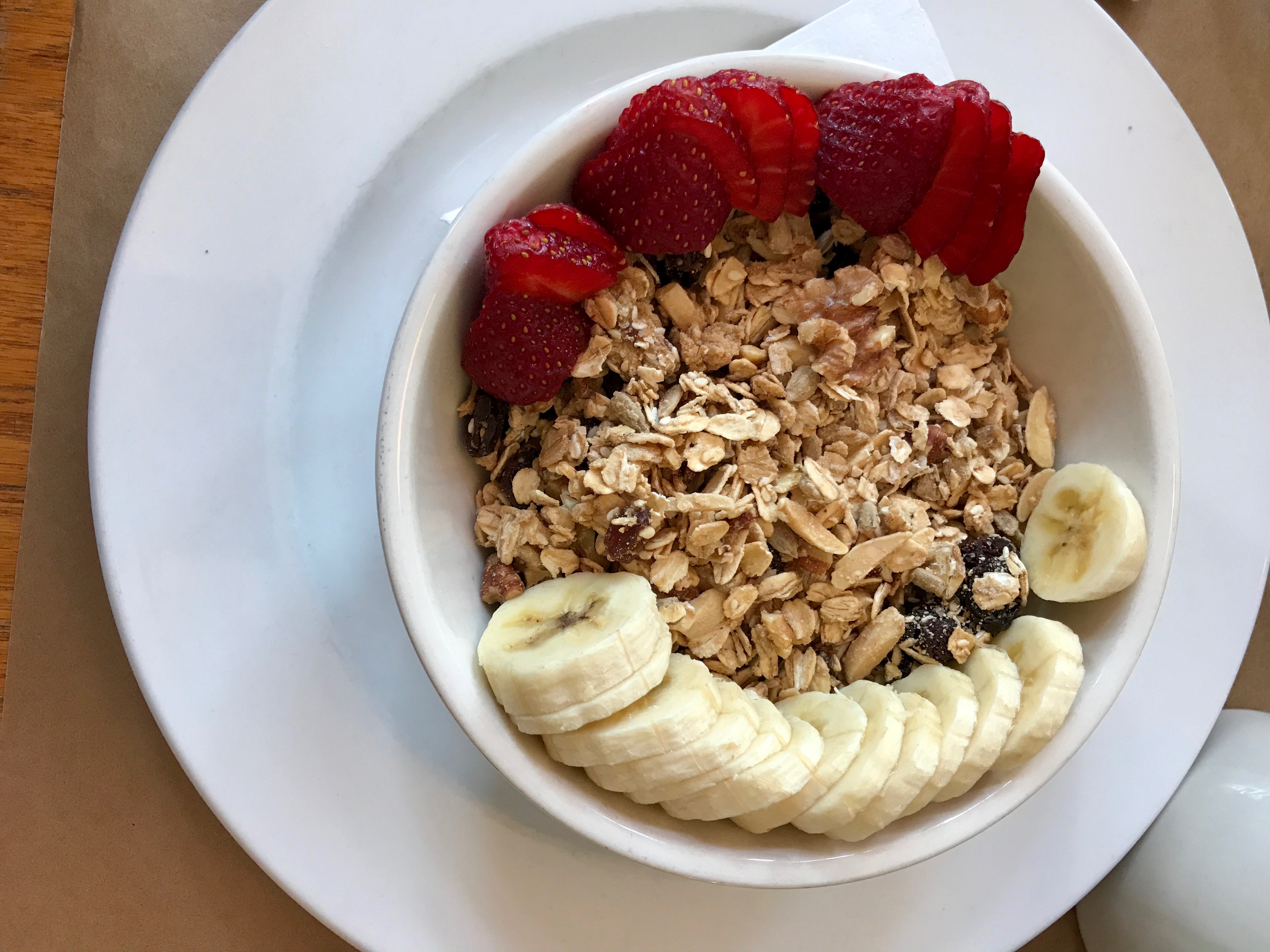
My granola arrived. What lovely presentation! As I used to tell my mother, when I’d use cookie cutters to make her toast into hearts, “Presentation is everything!”

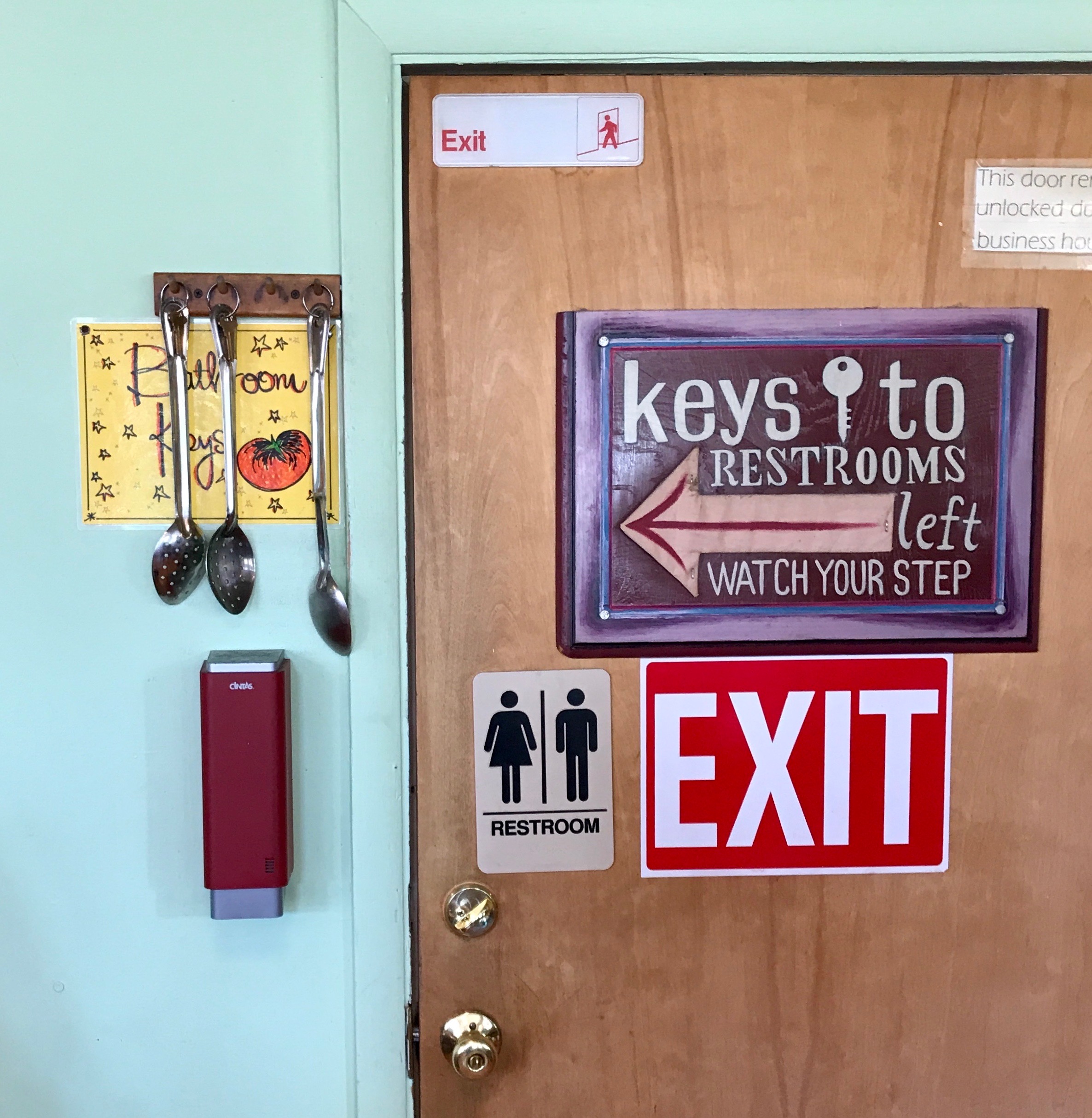
Before I left, I decided to skip to the loo. Well…use the restroom. I don’t do muck skipping anymore. Come to think of it, I couldn’t get the hang of skipping when I was a kid. Have you ever known someone who had to go to remedial gym class? I don’t know that it made a difference.

Back to the fly-by tourism.

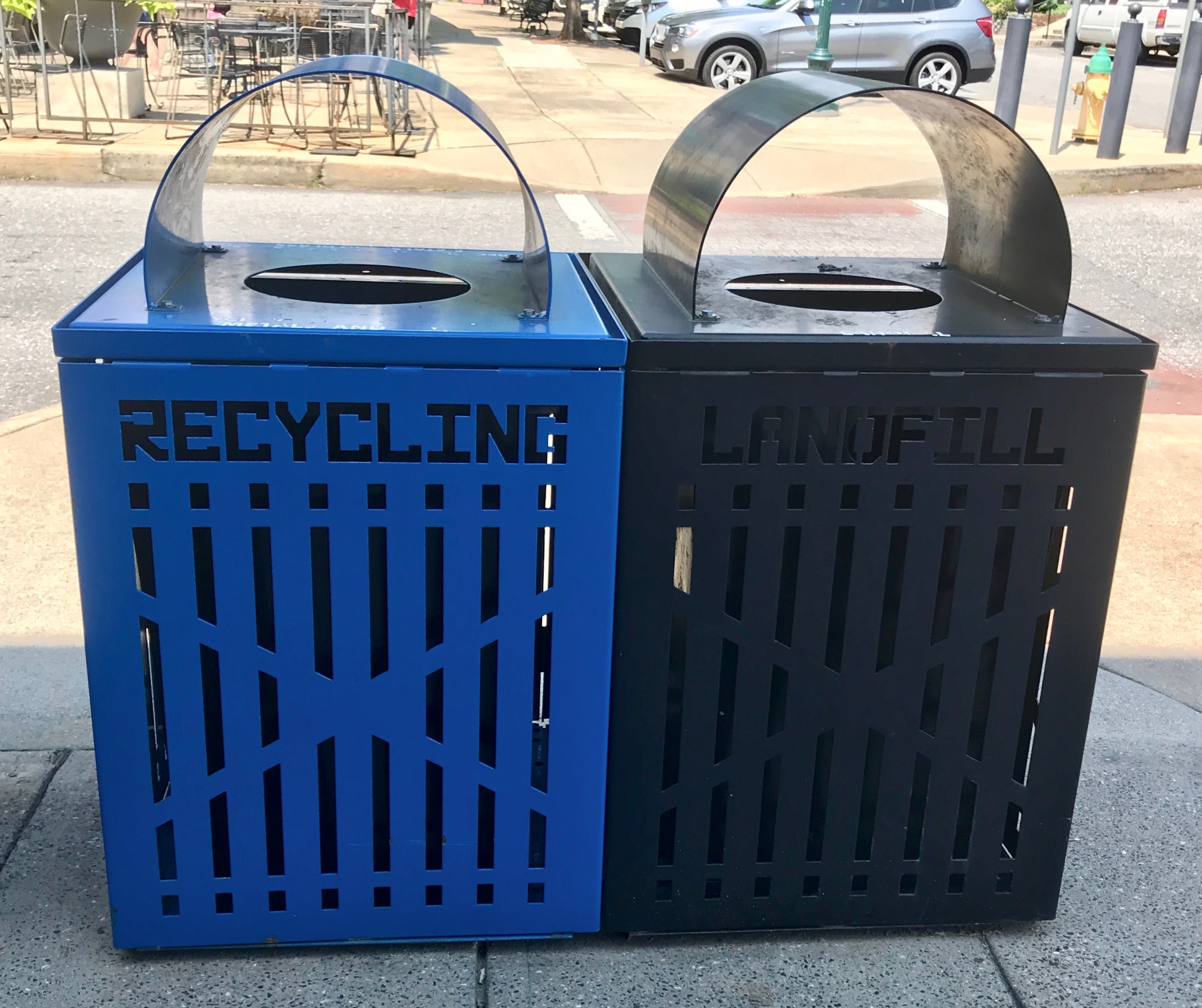
I approve of the receptacles that put out to handle people’s unwanted items. They make it clear that “throwing something away” is a myth. There is no “away.” Things get recycled or they get placed in a landfill.

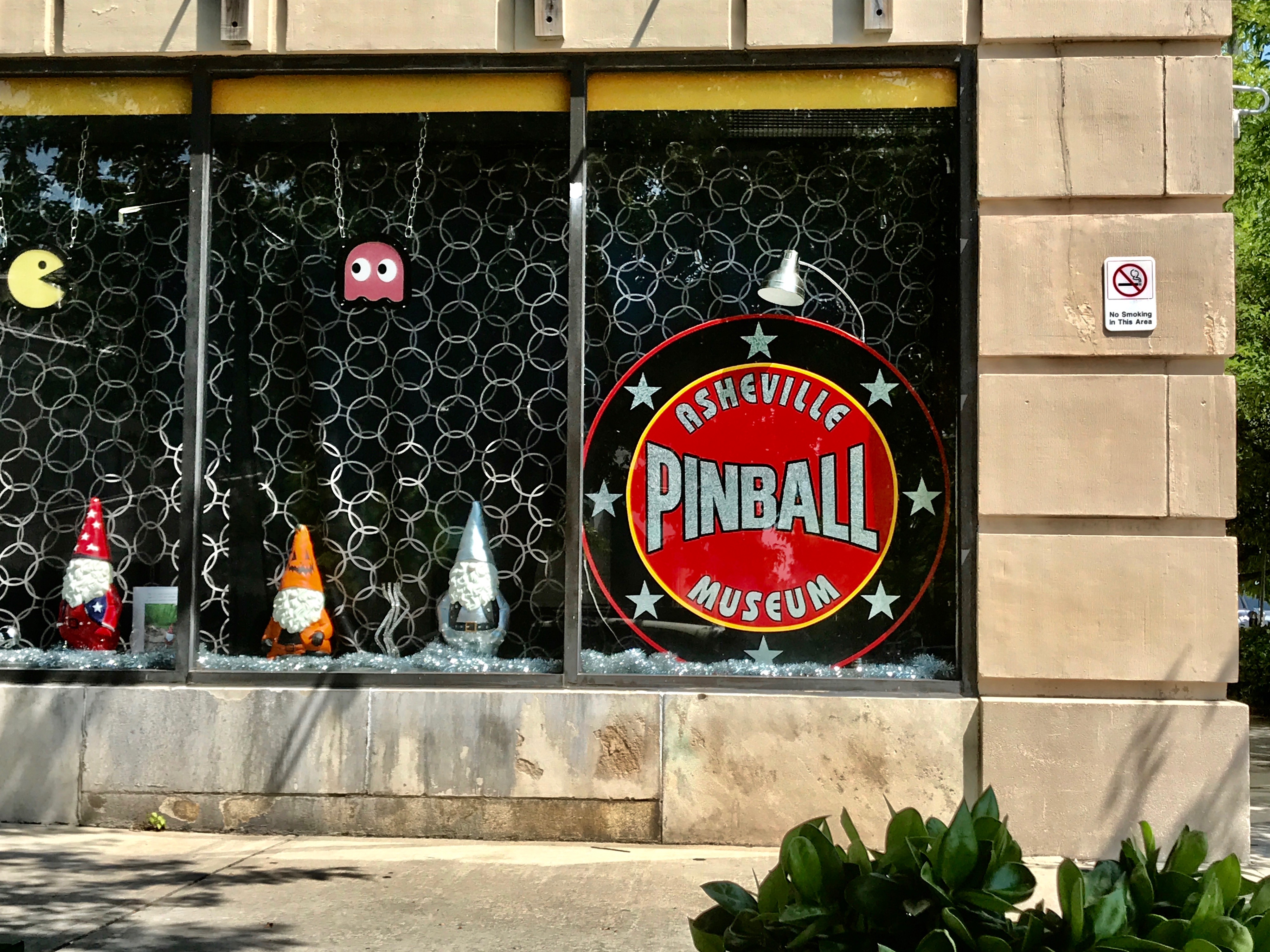
I took a different route back to my car and I happened upon the Asheville Pinball Museum.

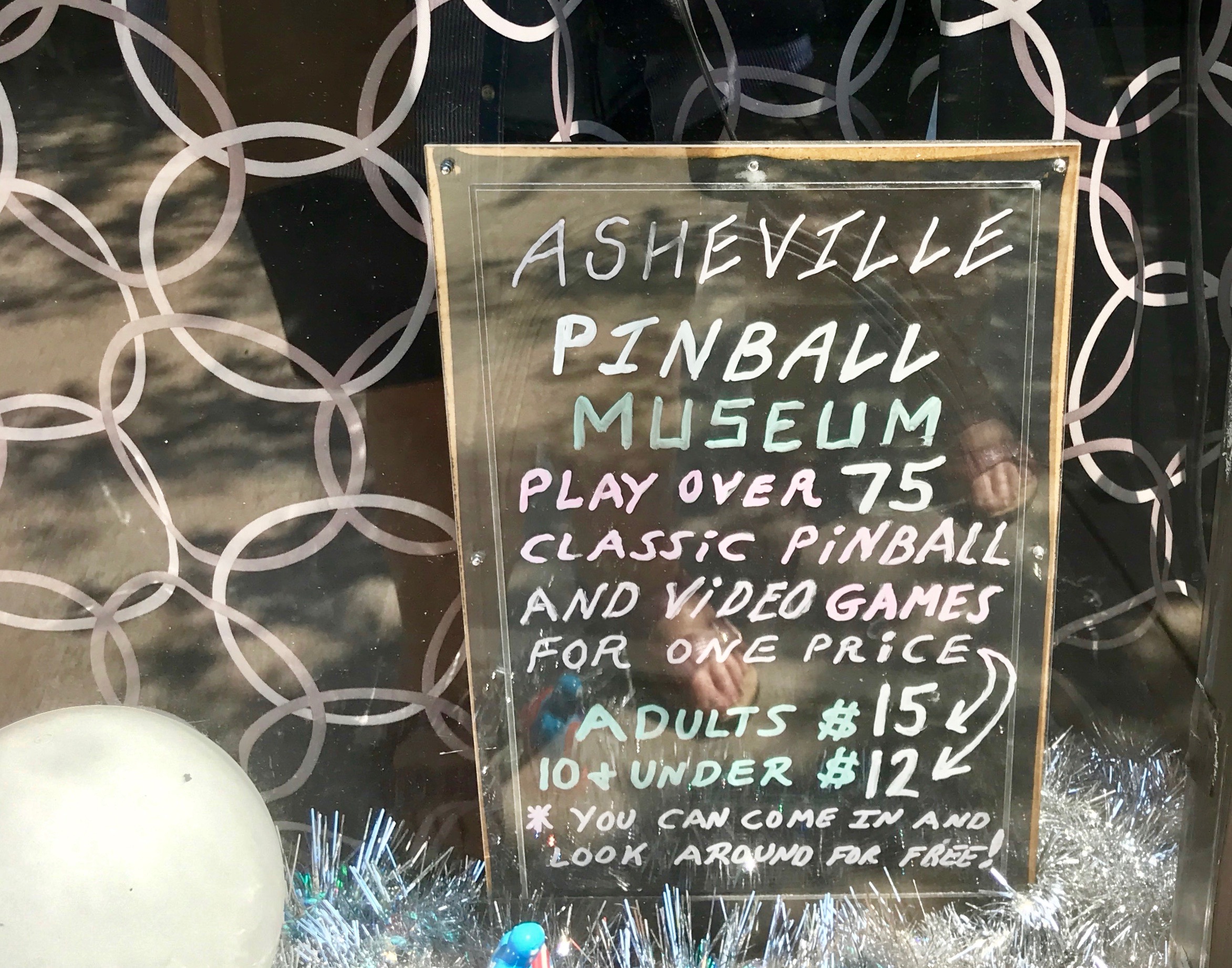
It wasn’t open until 1:00 on Sundays, but I didn’t have enough time to play $15 worth of pinball. I might have gone in and looked around, because FREE is one of my favorite words, but it wasn’t open. I kept moving.

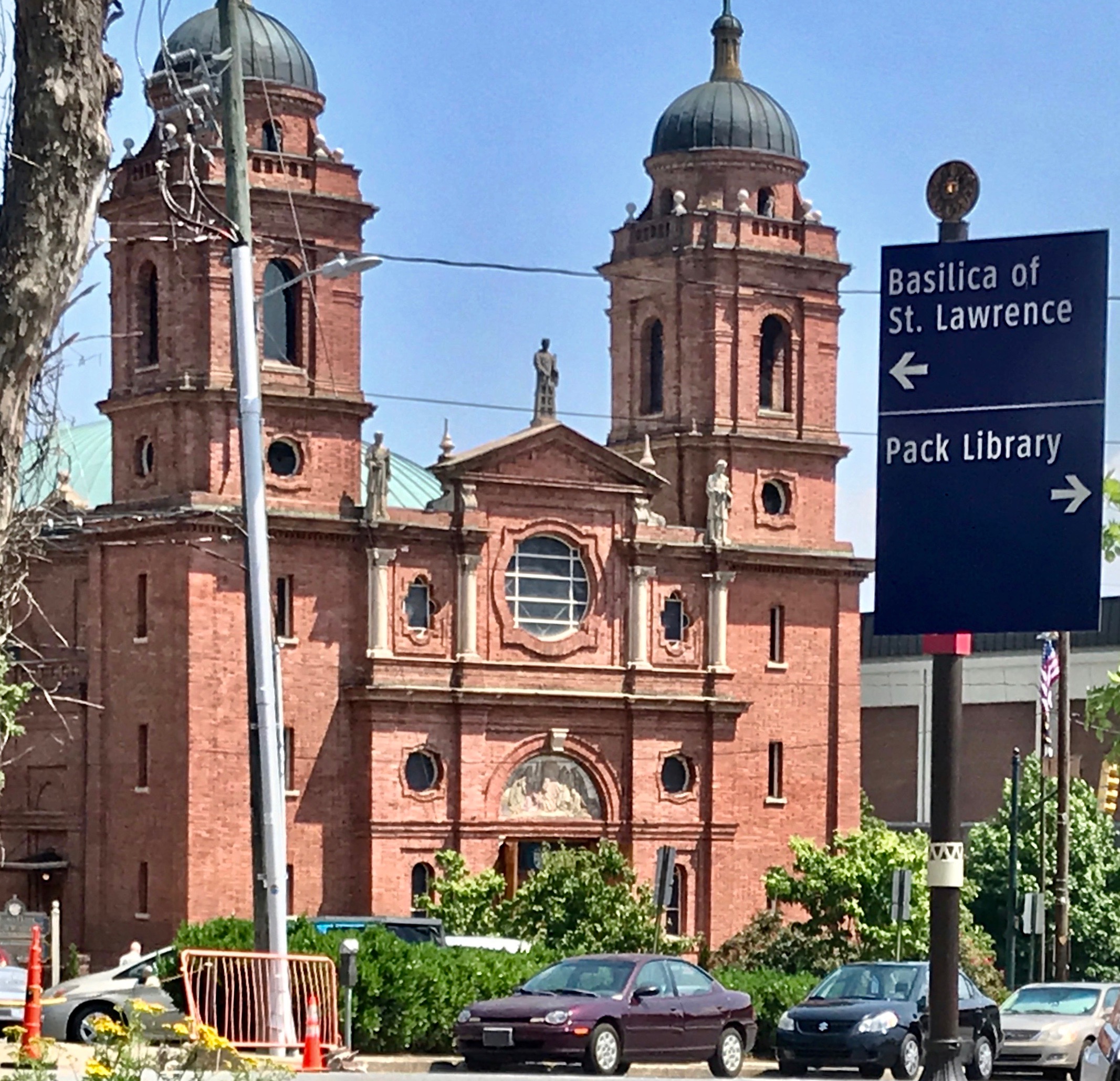
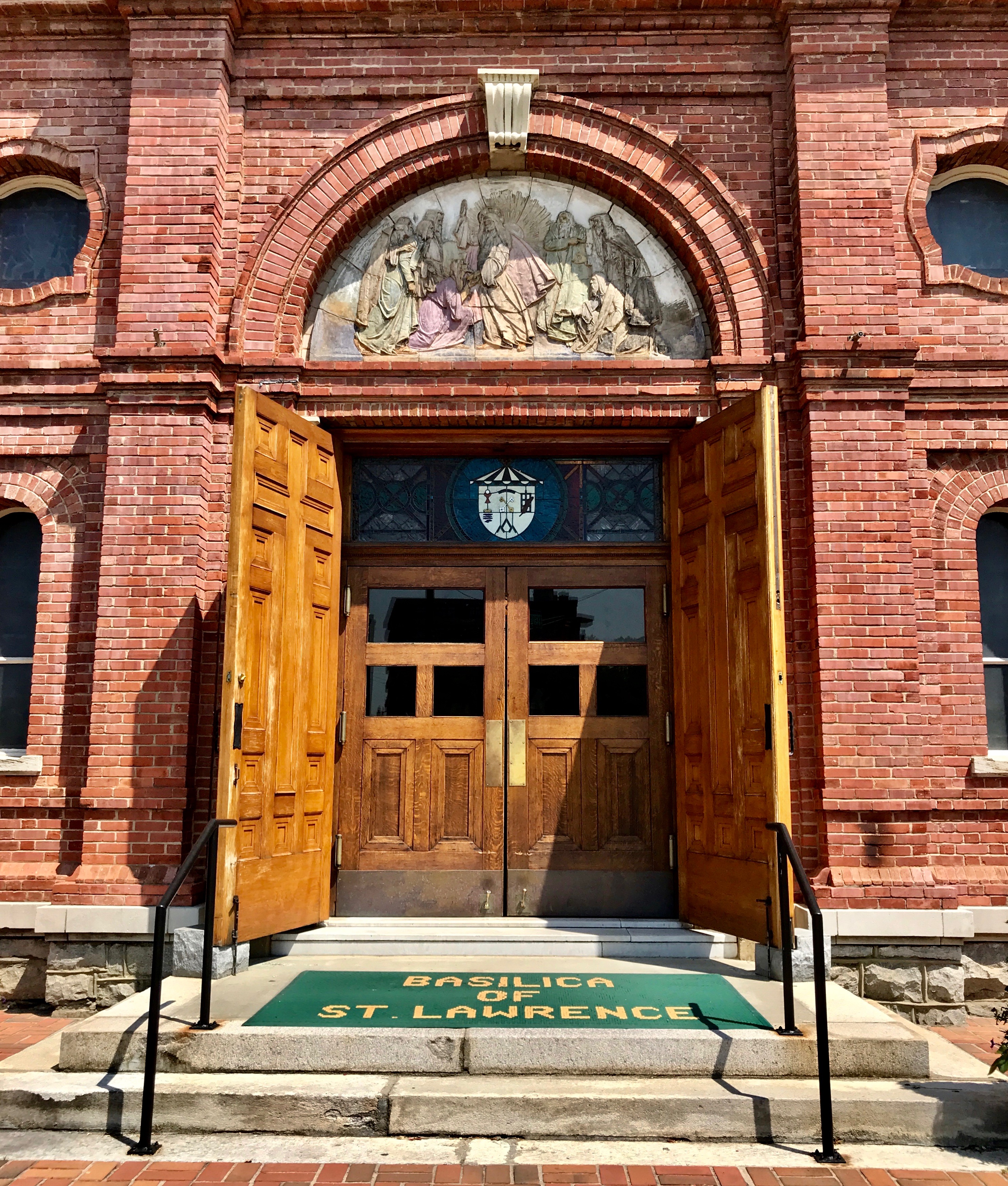
I came upon the Basilica of St. Lawrence.

It’s Sunday. It’s a church (excuse me – Basilica) so I imagined I might be able to take a peak inside.

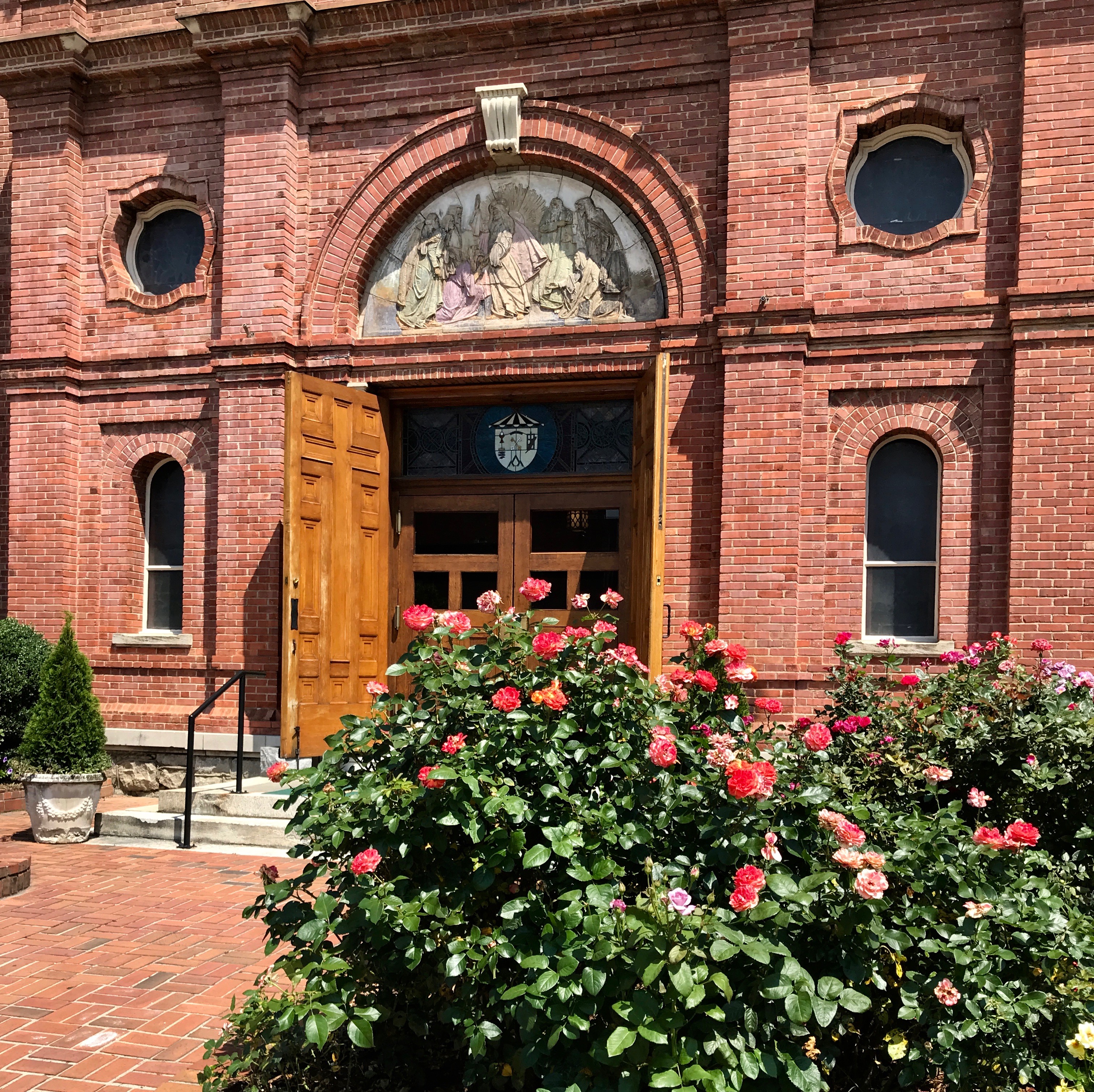
The doors were open, so I headed inside.

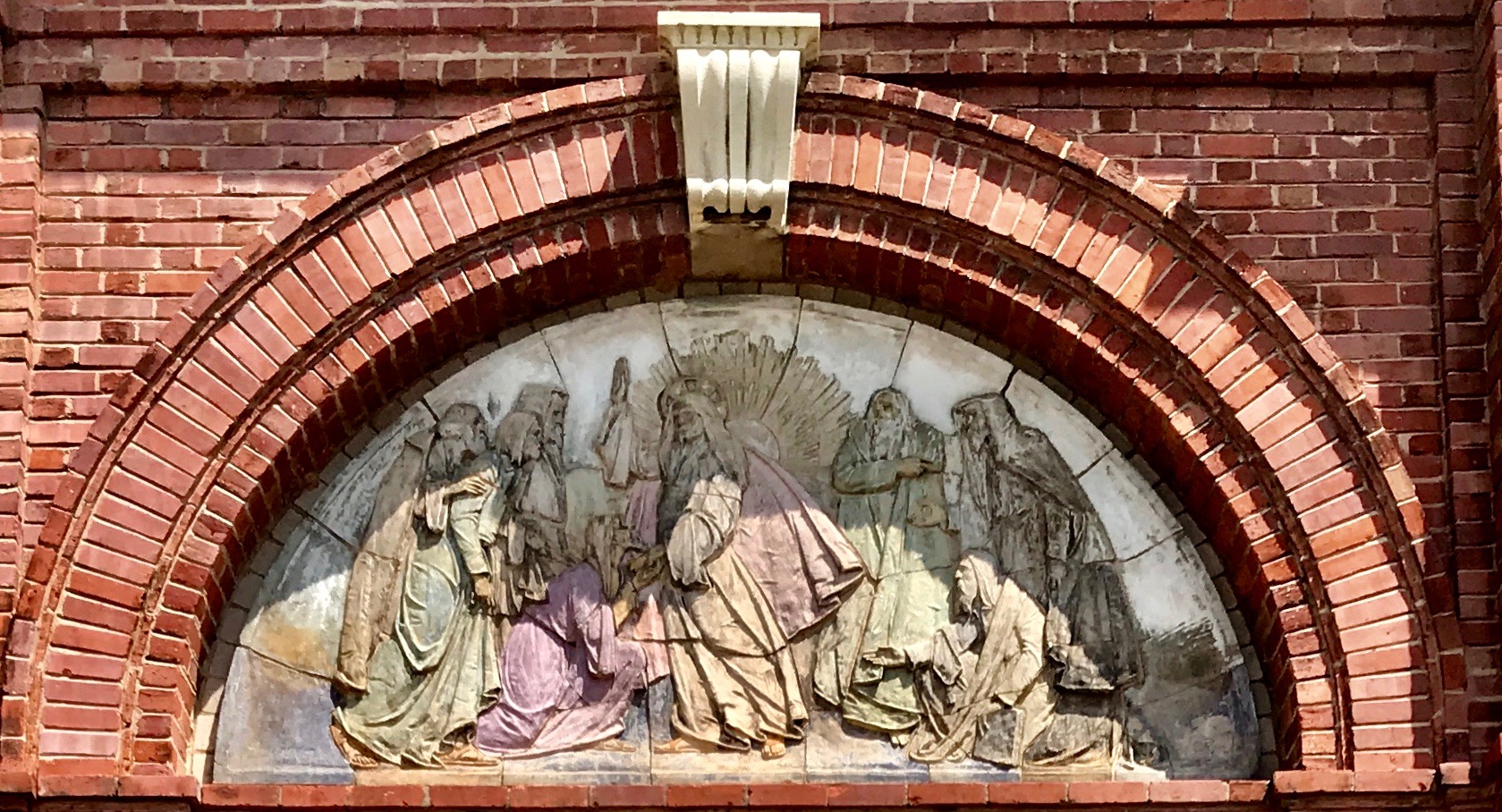
The tympanum has a lovely terra cotta insert. I am not sure if you would call it a mosaic or bas relief sculpture. I don’t think I had ever seen this sort of ornamentation in a tympanum before. But, maybe I had. Time to go inside.

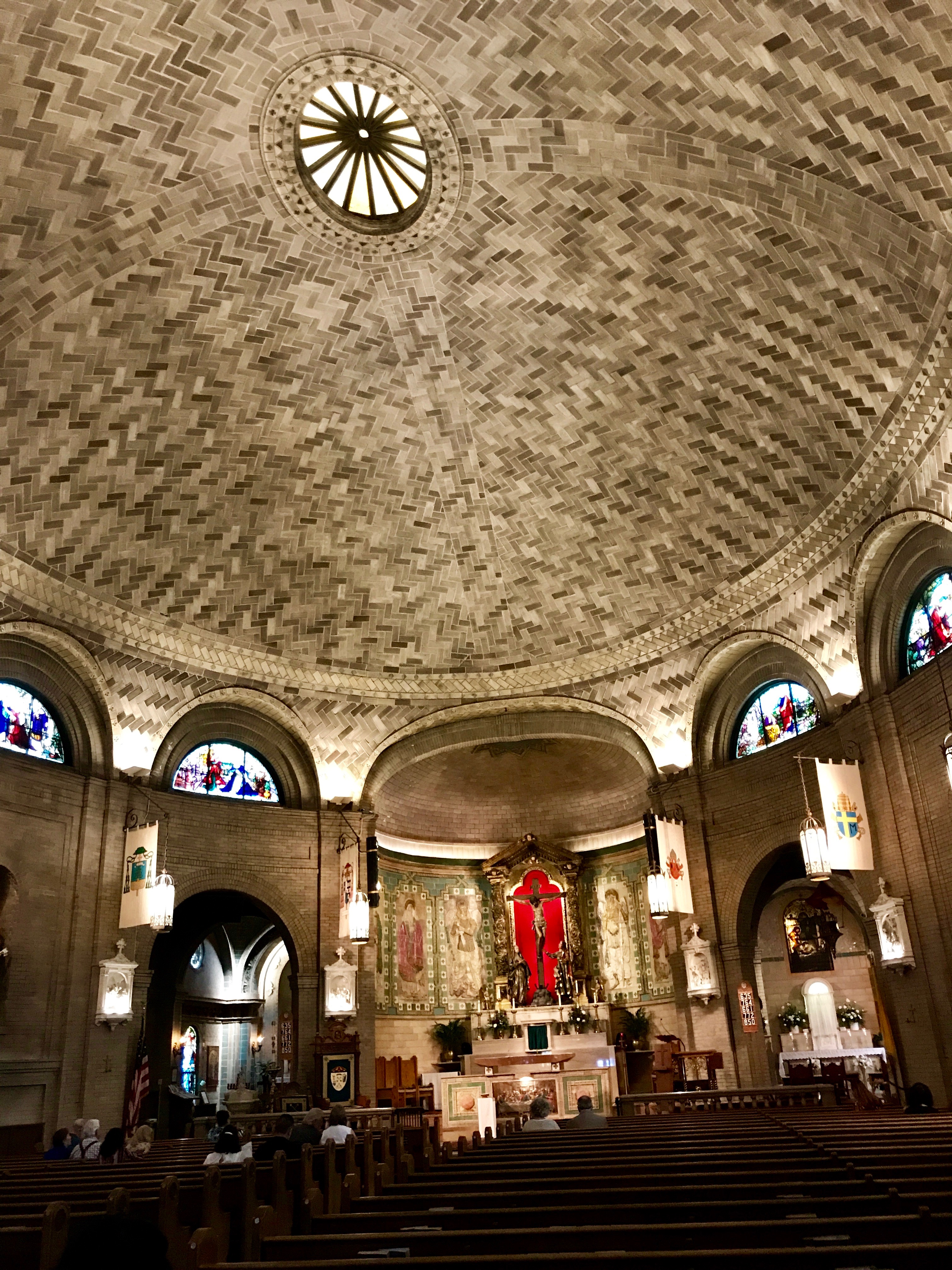
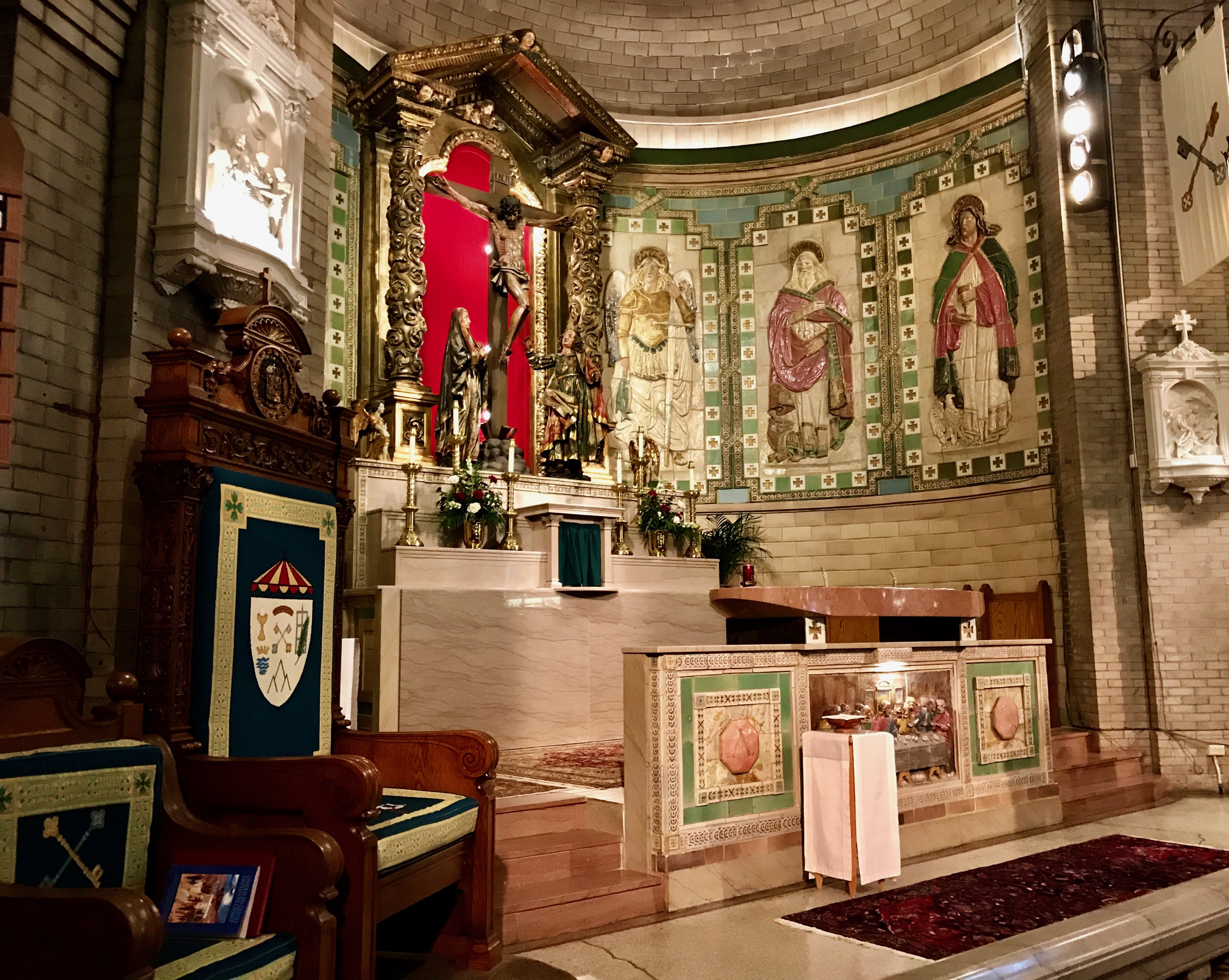
My goodness! An oval dome!

The pattern in the brickwork reminded me of the churches I’d seen in Spain more than 40 years ago. (Where does the time go?) Interestingly enough, it was designed by Spanish architect Rafael Gustavino.

According to my Preferred Source, the dome has a span of 58 by 82 feet and is reputed to be the largest, freestanding, elliptical dome in North American. This style of dome is referred to a Catalan vault.

The building is remarkable, there are no beams of wood or steel in the entire structure. All walls, floors, ceilings and pillars are of tile or other similar materials. The roof is of tile with a copper covering.

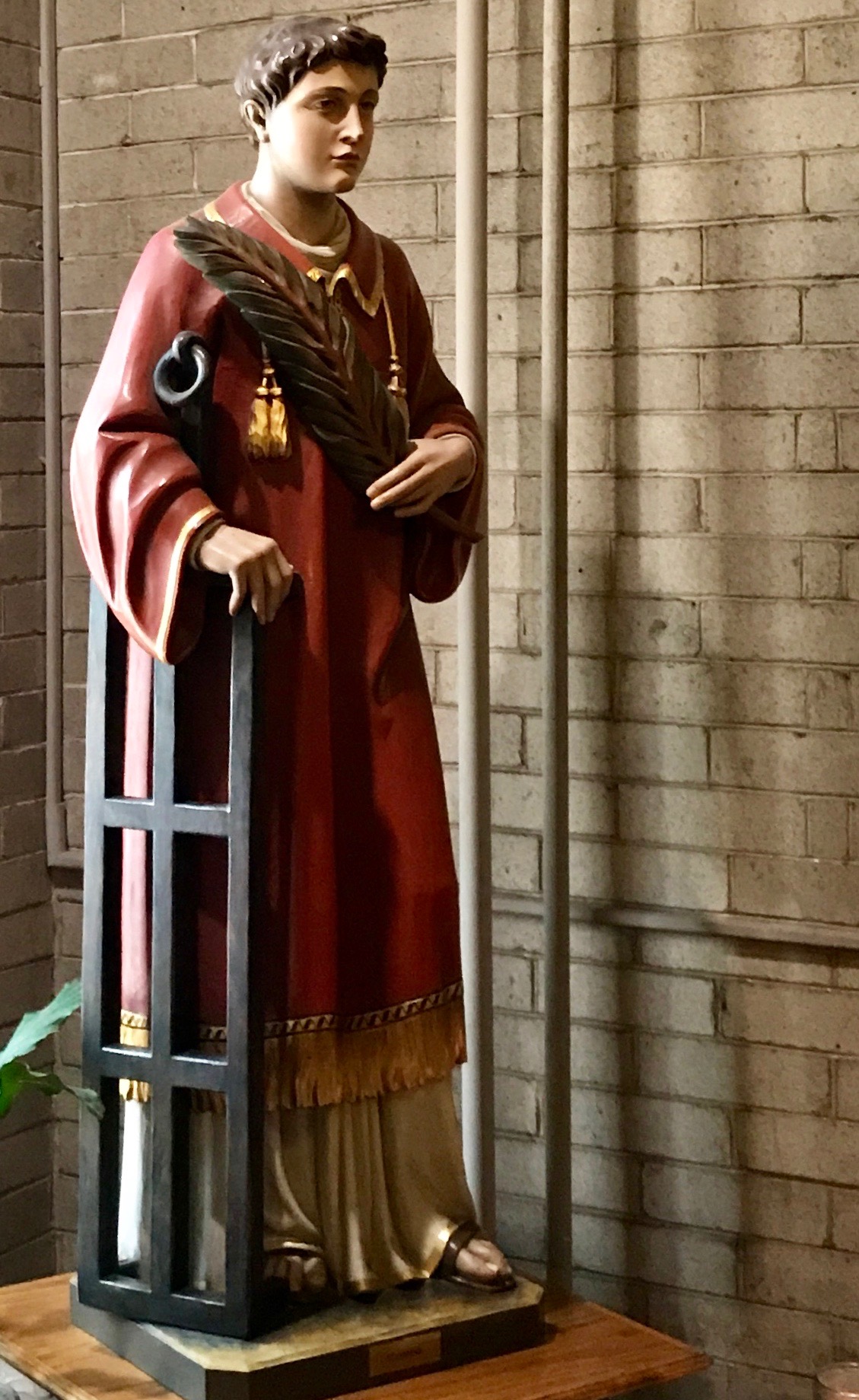
Just inside the door was a statue of St. Lawrence. You could tell it was St. Lawrence even without reading the plaque on the base because he is holding symbols of his martyrdom: a gridiron and a palm branch.

The prefect of Rome had him placed on the gridiron over hot coals because he wouldn’t turn over the wealth of the church to him. He is holding a palm branch in his right hand, which is a symbol of martyrdom. According to legend, after he had suffered pain for a long time, Lawrence cheerfully declared, “I’m well done on this side. Turn me over!”

Incidentally, St. Lawrence is the patron saint of cooks, chefs, and comedians.

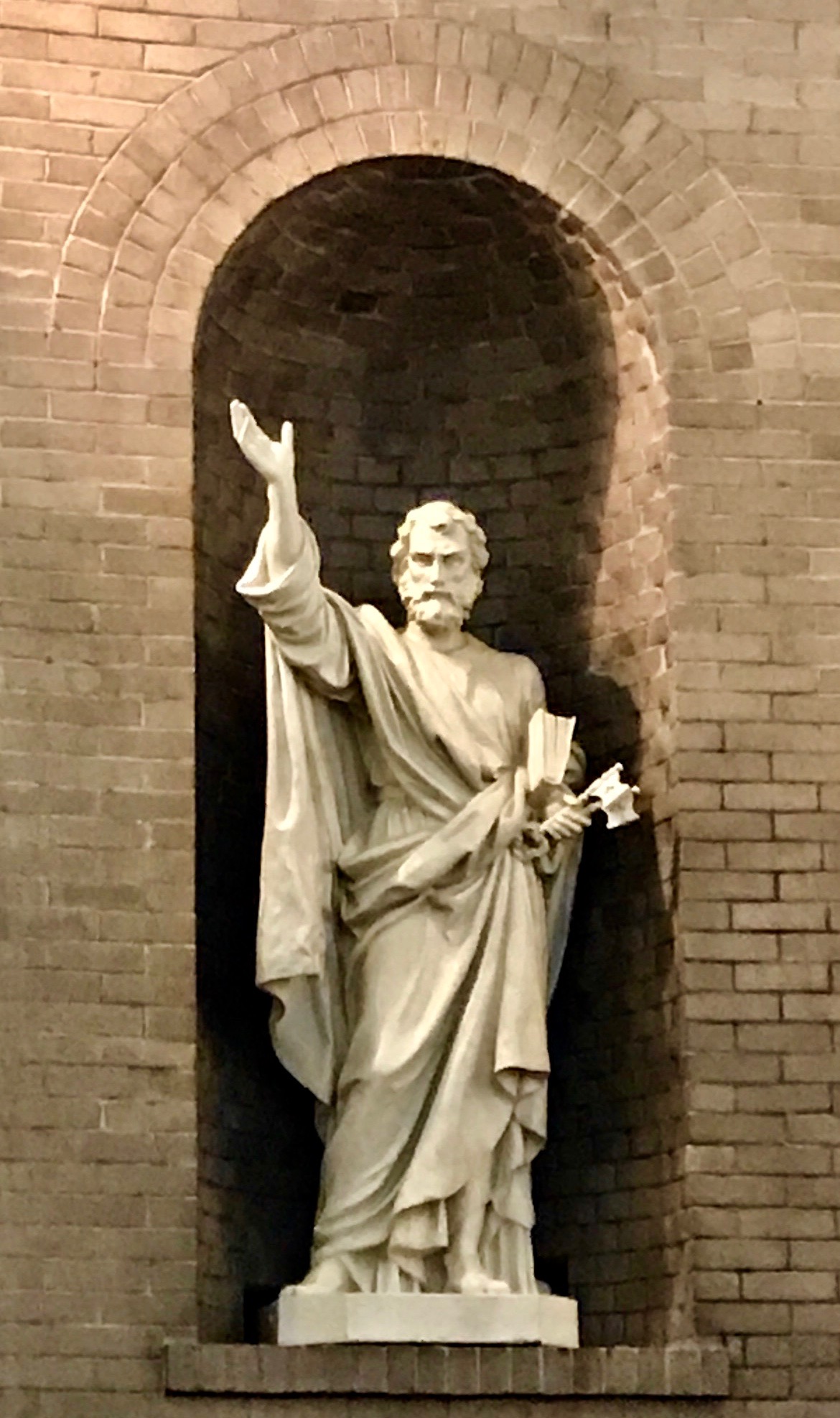
While we are on the topic of saints and their symbols, you can tell that this statue that was in the crossing area of the church is Saint Peter because he is holding the keys to heaven and the gospels.

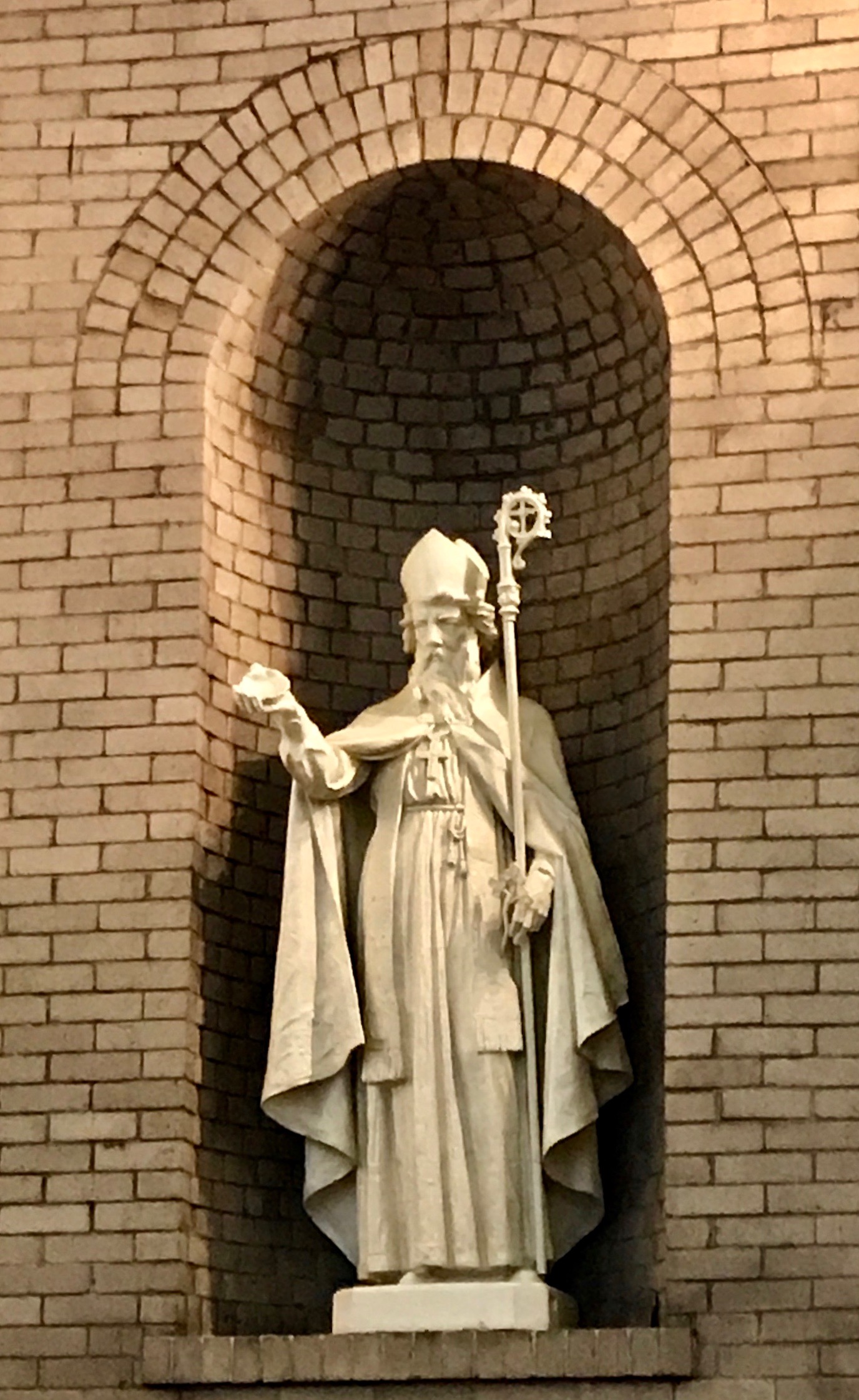
And this is Saint Peter. He is holding shamrocks and his staff in his left hand and he is wearing the bishop’s mitre on his head. I’m not sure what he is holding in his right hand.

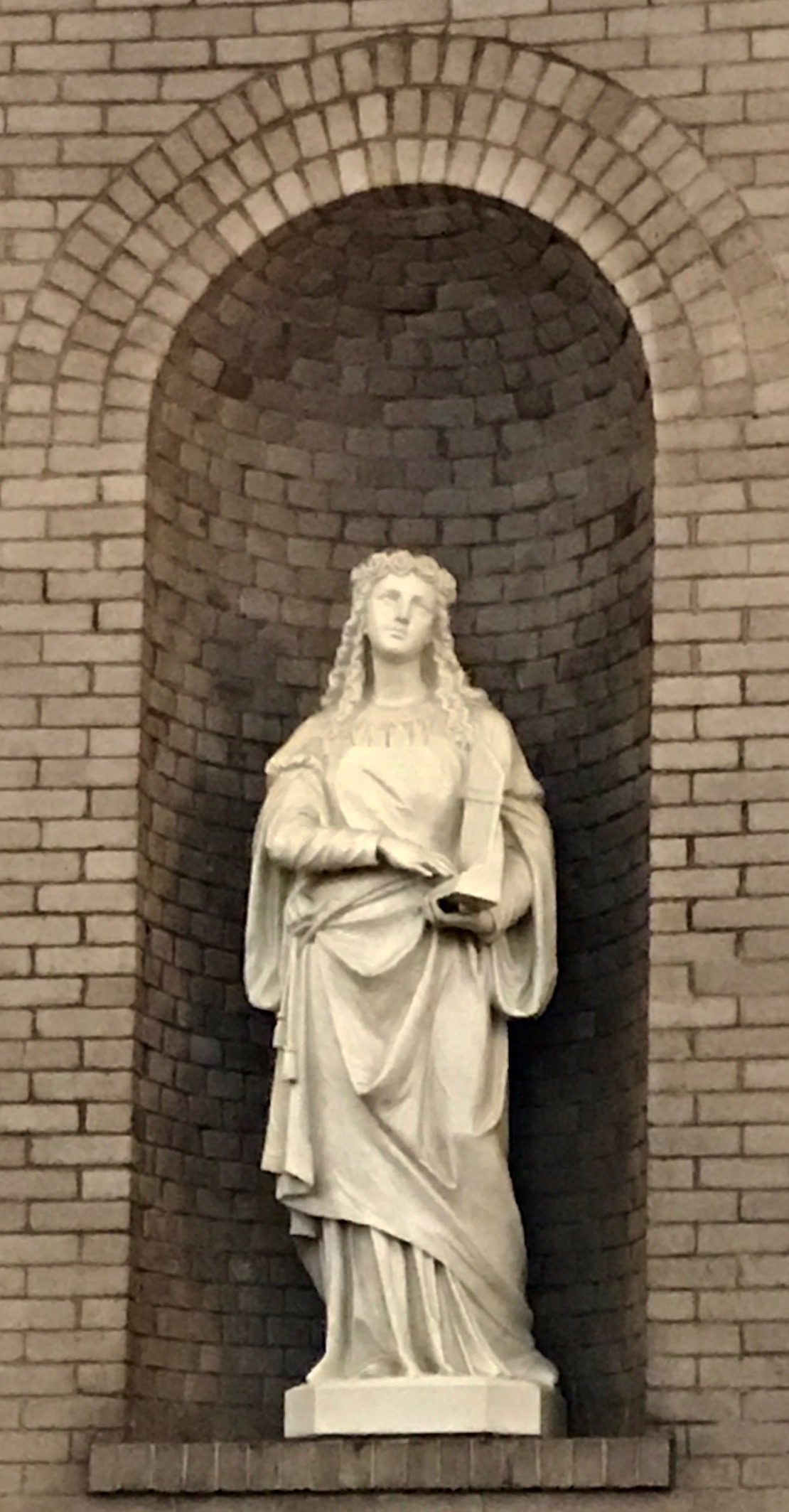
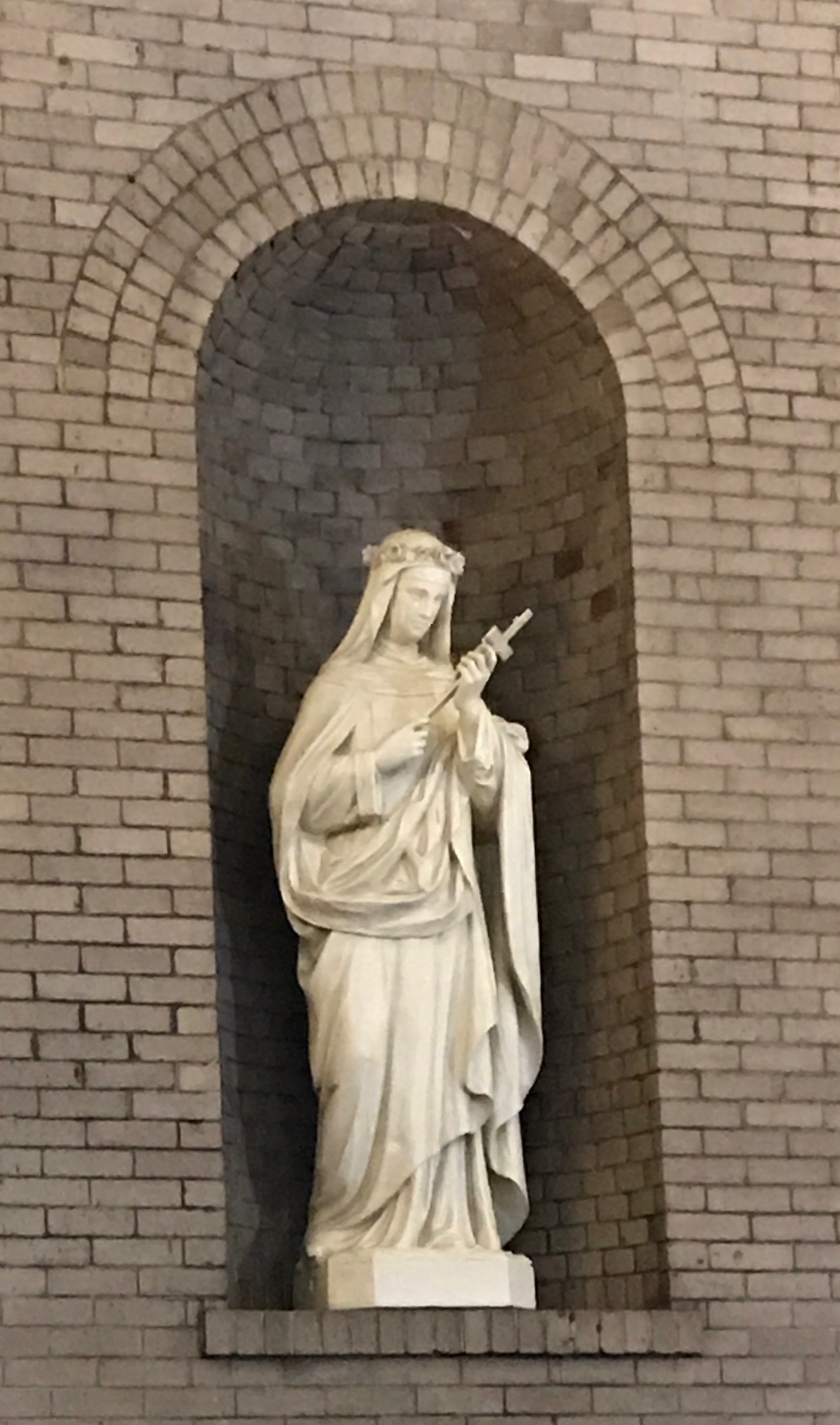
In addition to the two male saints’ statues, there were also two female saints honored.

Here is Saint Cecilia, the patron saint of music, who was beheaded in second century Rome.

The other statue is of Saint Rose of Lima, the first person born in the Americas to be canonized.

I found another source for information. According to information from the basilica, “Above the main altar stands a tableau depicting the Crucifixion. It is from the 17”’ century and it is hand carved walnut showing Mary, the Mother of Christ, and John, the beloved disciple.

The wall behind the altar is called a reredos. It has been executed in polychrome terra cotta and bears life size reliefs of the four evangelists, Matthew and Mark on the left; Luke and John on the right. Flanking the tableau are Michael the Archangel at the left and the Archangel Raphael at the right.

The altar was originally the base of the back altar. After Vatican II it was brought forward to enable the celebrant to face the congregation. The altar table was added when the base proved too low. Made of Tennessee marble and in the shape of a simple boat, it is a duplicate of the altar table of Pope Paul VI, and was created by the same artist, Napoli. In art a boat symbolizes the Church.”

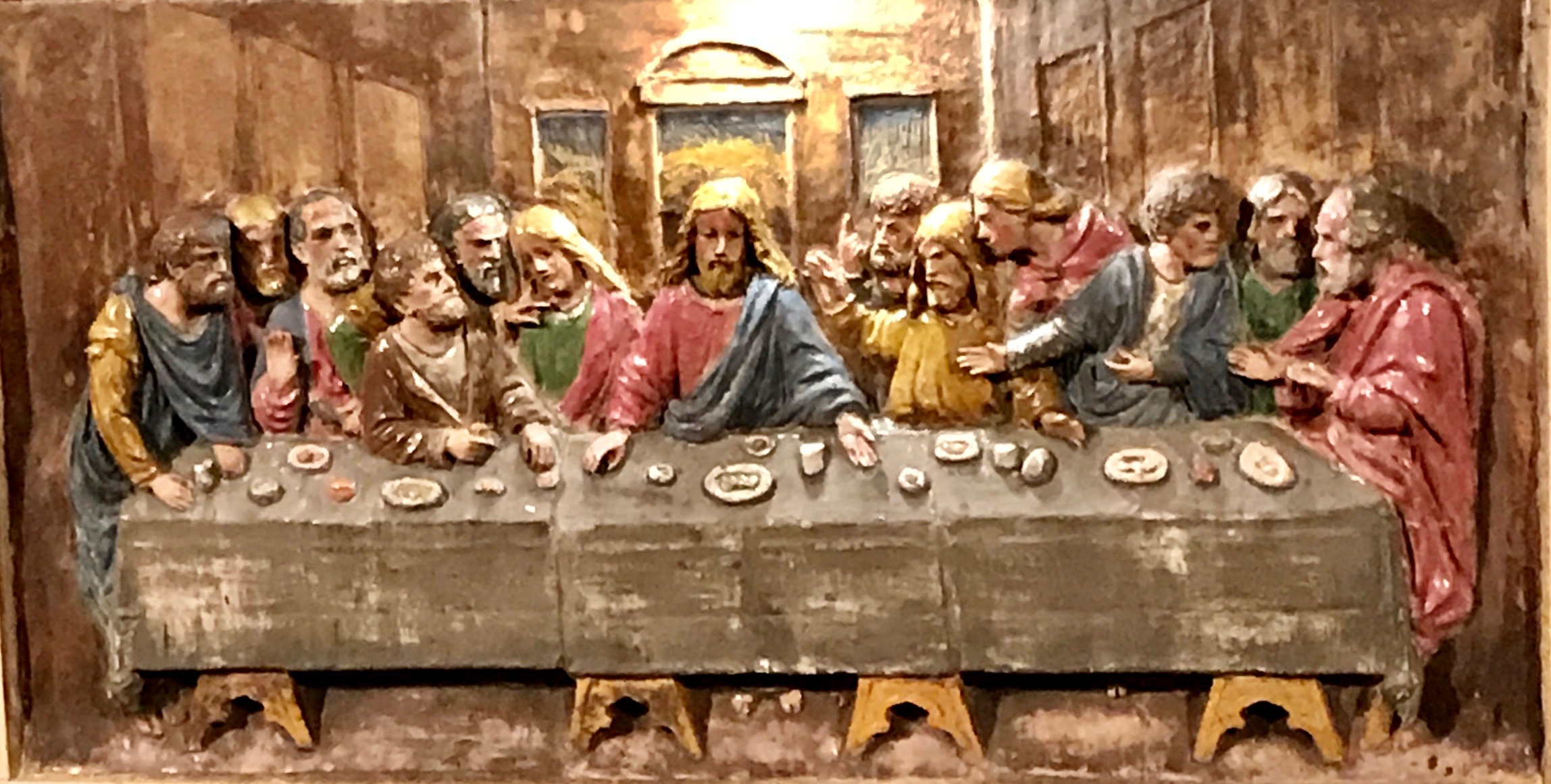
The terra cotta replica of Da Vinci’s Last Supper is on the front of the altar.

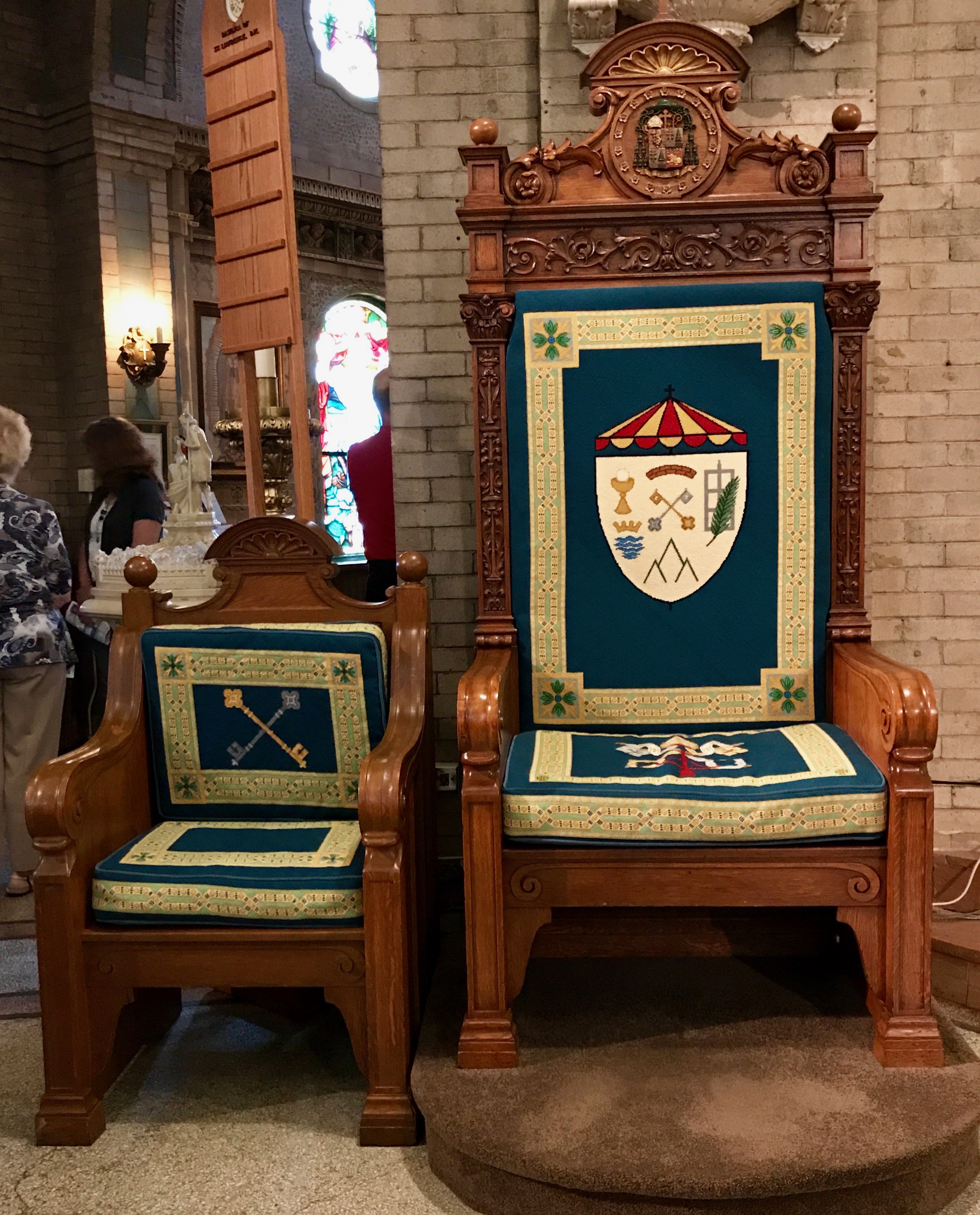
The cathedra is the bishop’s seat. Sometimes it is referred to as the bishop’s throne. Obviously, the seat on the right is for the bishop. The one on the left is for other participants in the mass.

You can see the crossed keys of Saint Peter, which is one of the symbols that lets you know you are in a basilica. On the diocese’s shield, you can see the conopaeum, a silk canopy designed with stripes of yellow and red, traditional papal colors.

In a side chapel, you can see the real conopaeum. In addition to the crossed keys and the conopaeum, basilicas are also entitled to have a tintinnabulum, which is a bell mounted on a pole and carried processionally, at the head of the clergy on special occasions. I guess the tintinnabulum was in the shop. I couldn’t find it on display.

There are side altars that feature interesting tile work.

Creative tile work is found everywhere.

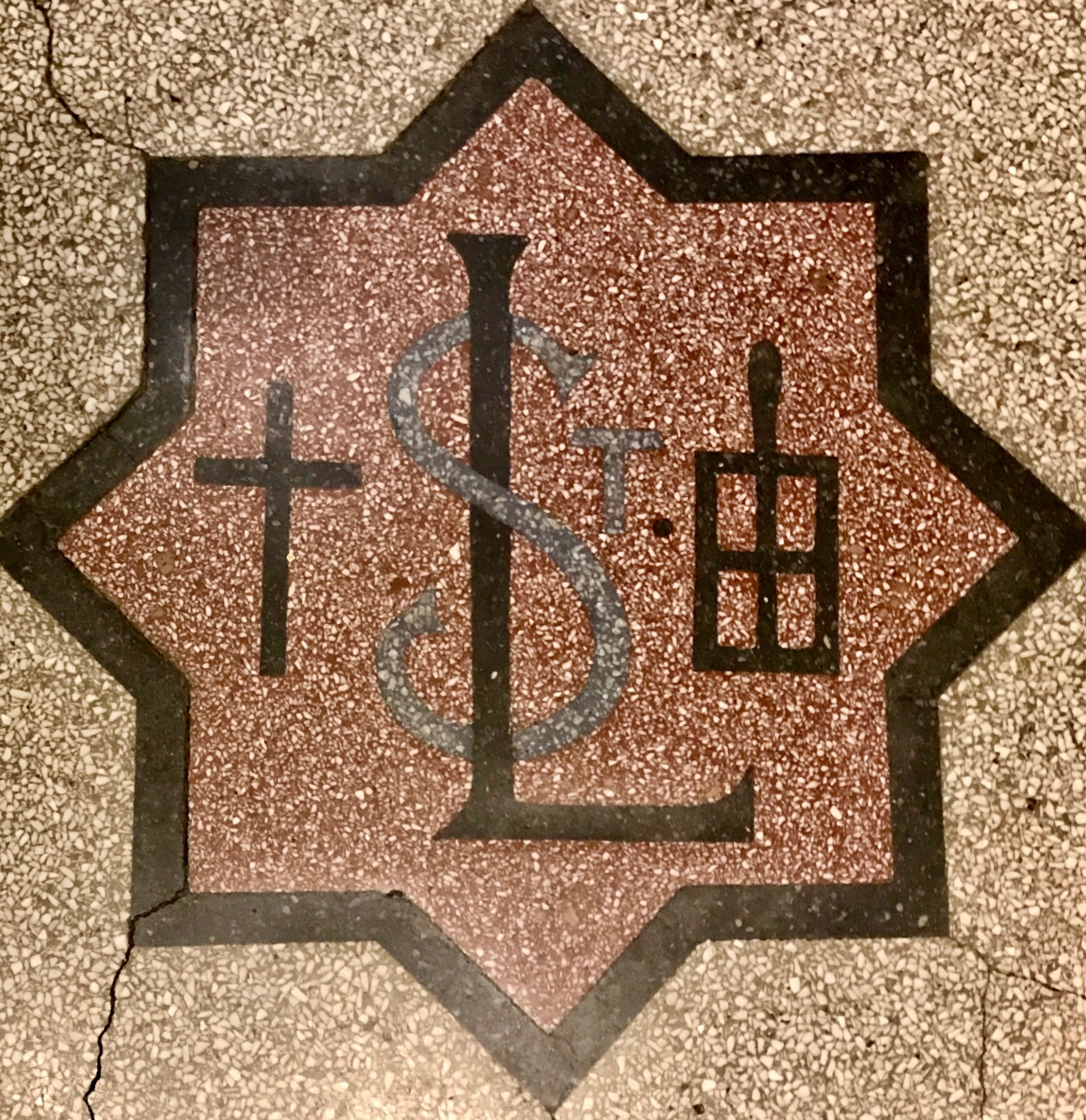
There is an old logo in terrazzo set in the floor. At least, I assume that it is an old logo. If it was made after the church became a basilica in 1993, I would imagine they would have included the crossed keys, at a minimum.

I spied this rosary on a kneeler, and snapped a photo of it.

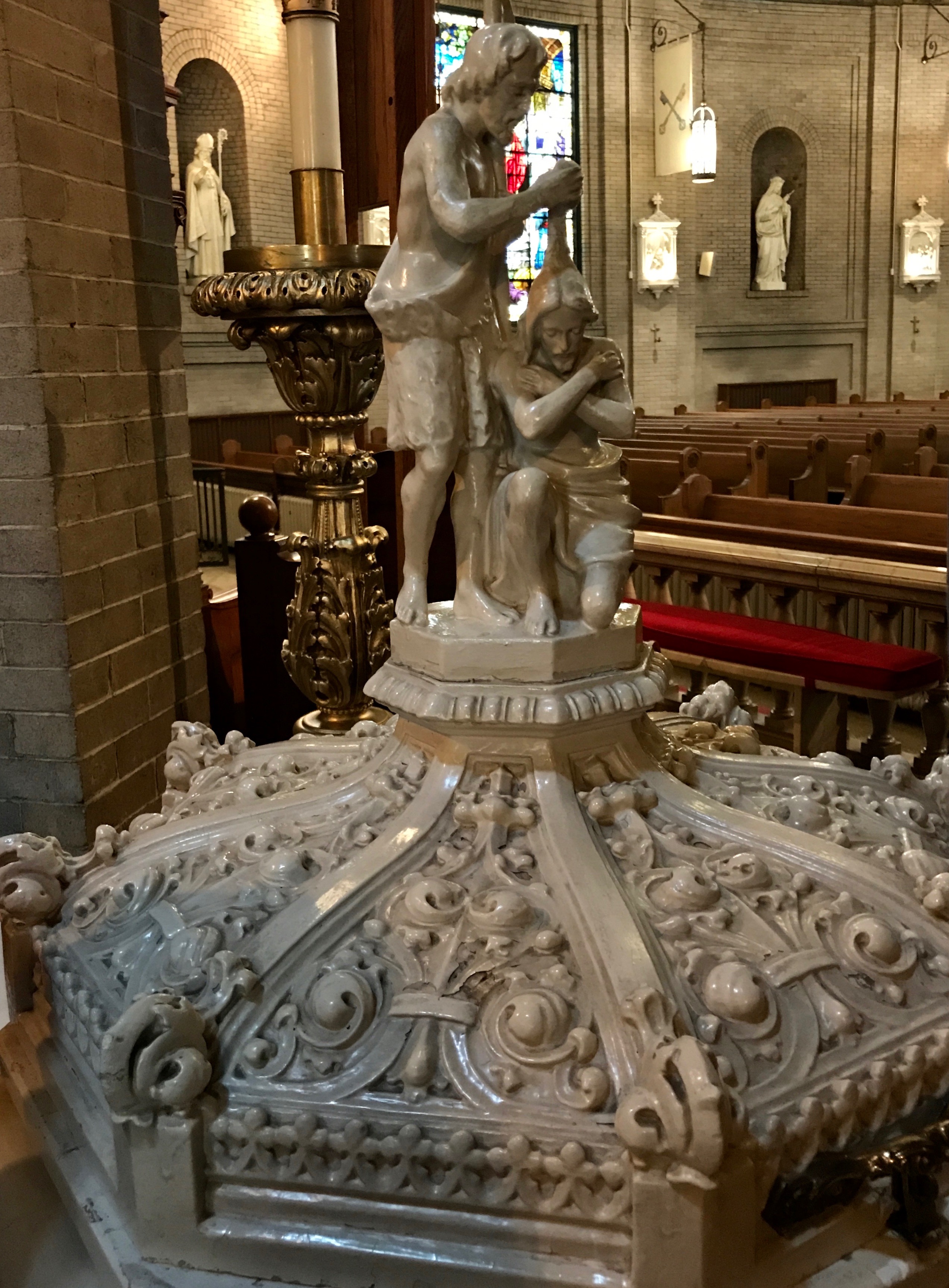
The baptistry shows John the Baptist baptizing Jesus.

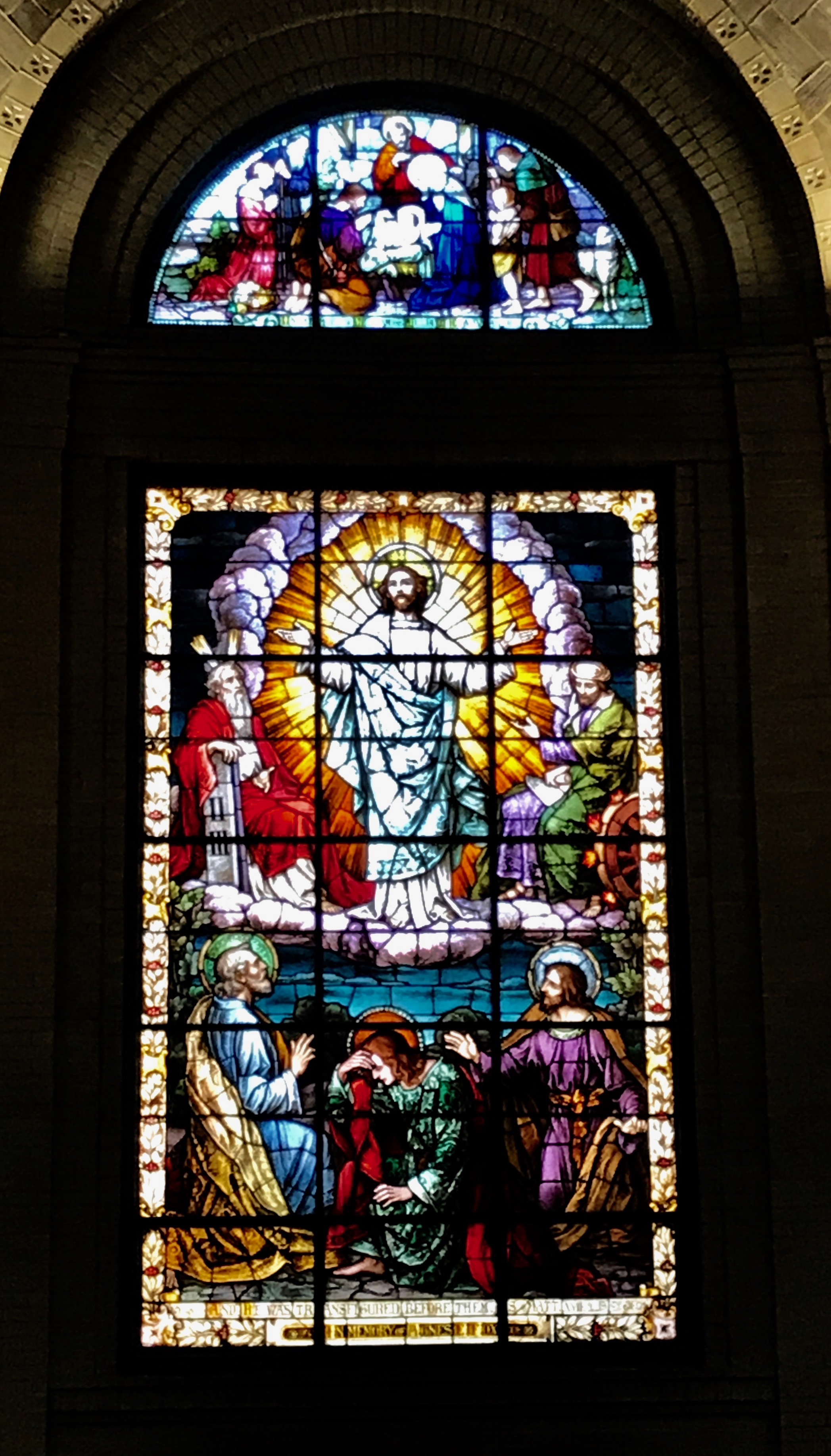
This marvelous German stained glass window shows the Transfiguration of Christ. He is flanked by Moses and Elijah and Peter, James, and John are at the base.

There was one last thing to check out before I hit the road.

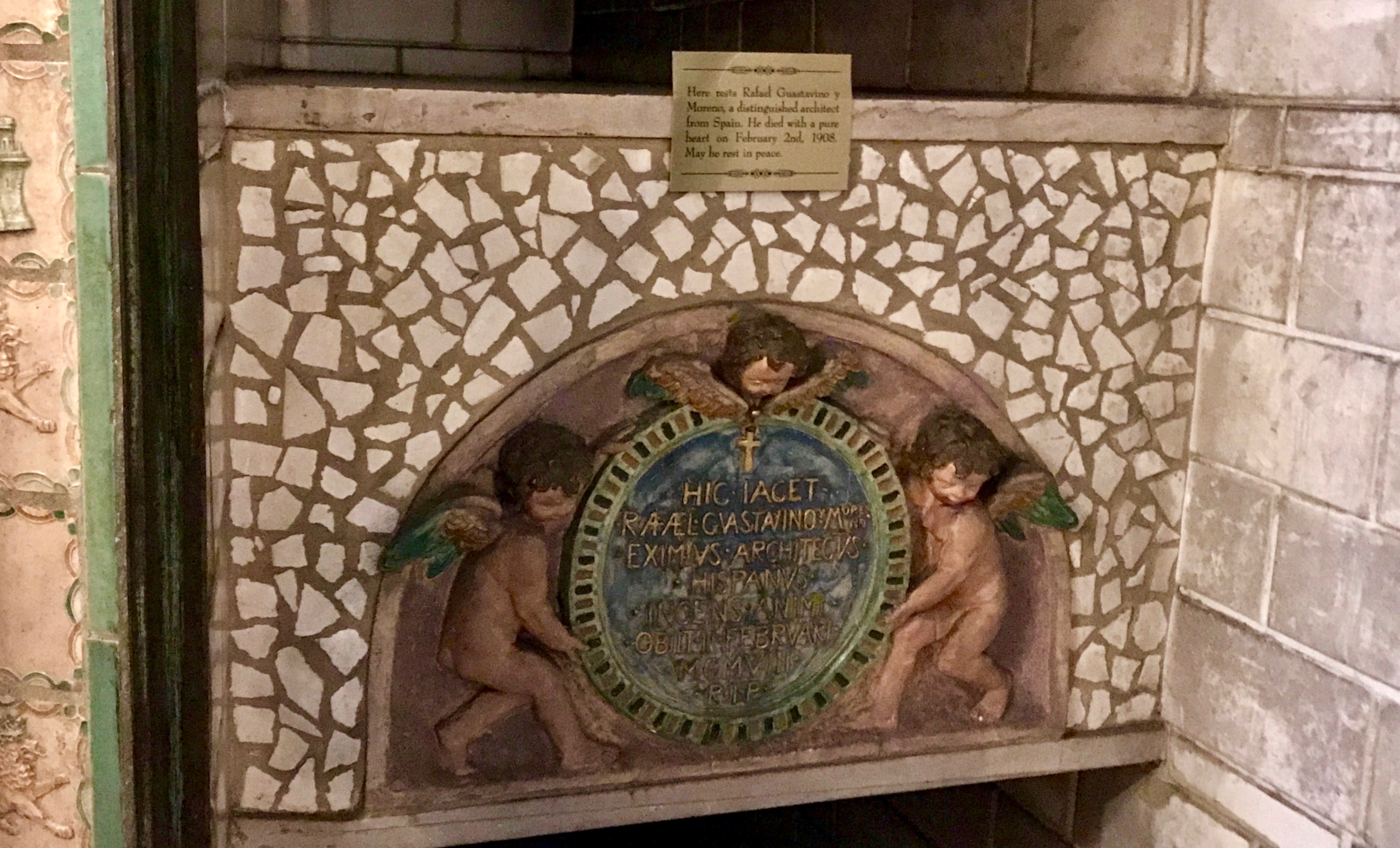
This is the tomb of architect Rafael Gustavino. According to the translation of the terra-cotta plaque, he died with a pure heart on February 2nd, 1908.

Unfortunately, he didn’t live to see the completion of his creation. If I remember correctly, his work was carried on by his son and it was completed in 1909.

Now it is time to hit the road!
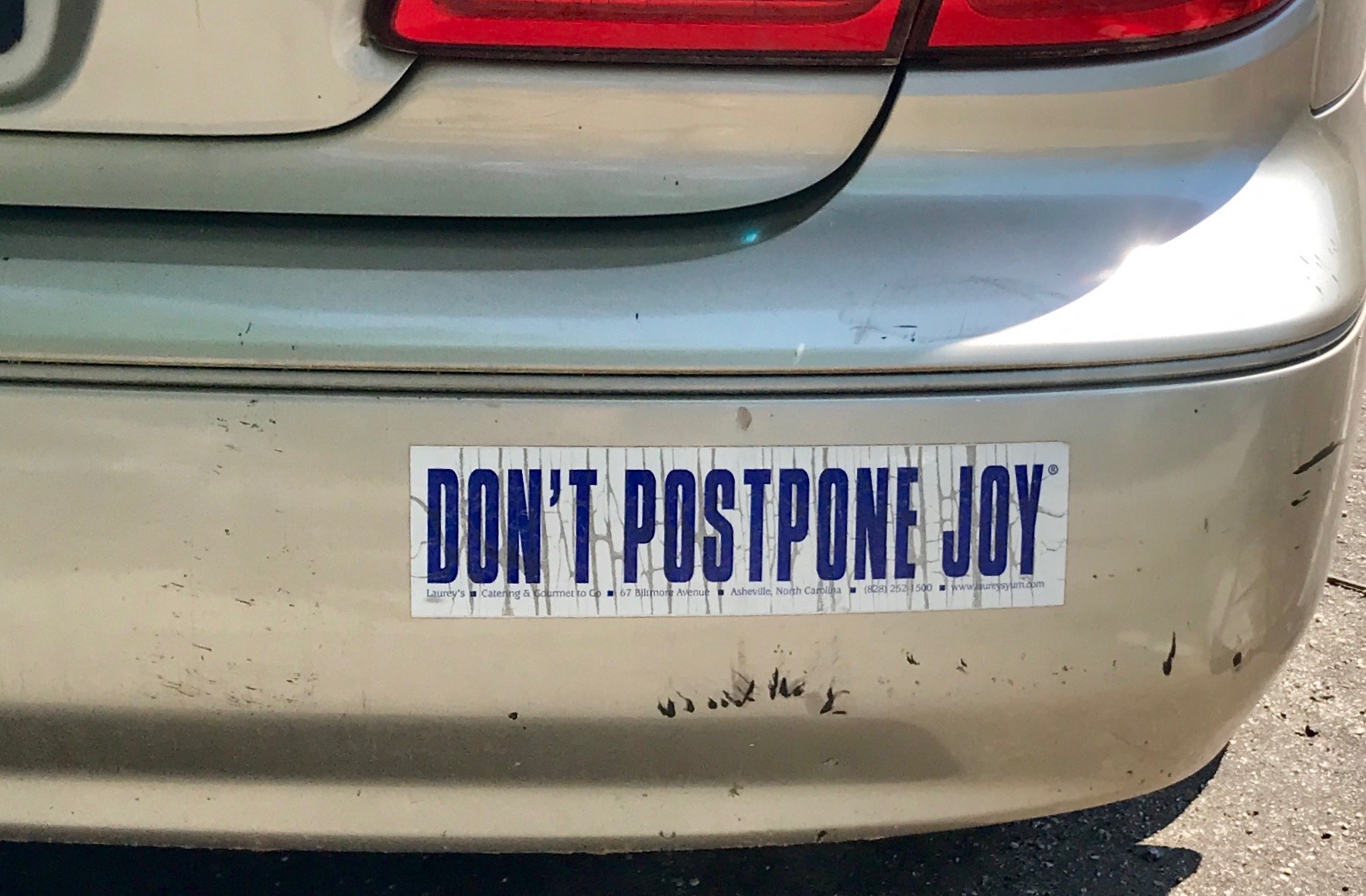
(What an appropriate bumper sticker.)

The Hermitage

I got up, nibbled on pizza for breakfast and washed it down with Diet Coke, and got ready to leave the hotel, which shall remain nameless. It’ll be nameless because I can’t remember the name.

Now, please bear in mind that this is speed tourism. I didn’t have that long to visit, but I figured that a short visit was better than no visit. If you want to know more, check out this article from History.com.

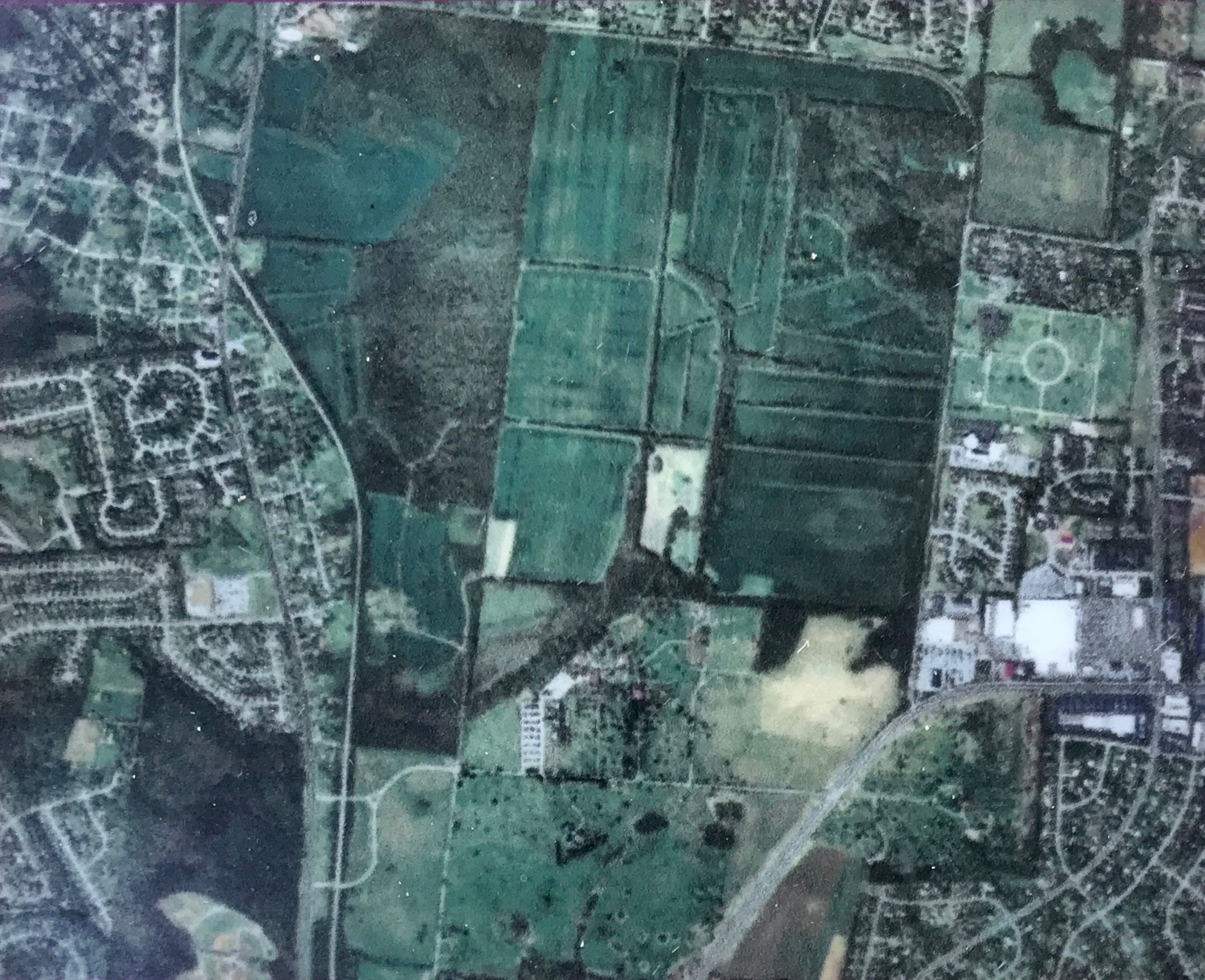
Andrew Jackson bought his 425-acre farm in 1804. I’m not sure how much of the original farm is still part of the Hermitage, but it is interesting to see how Nashville has encroached on it.

I parked the van and headed in to the visitor center.

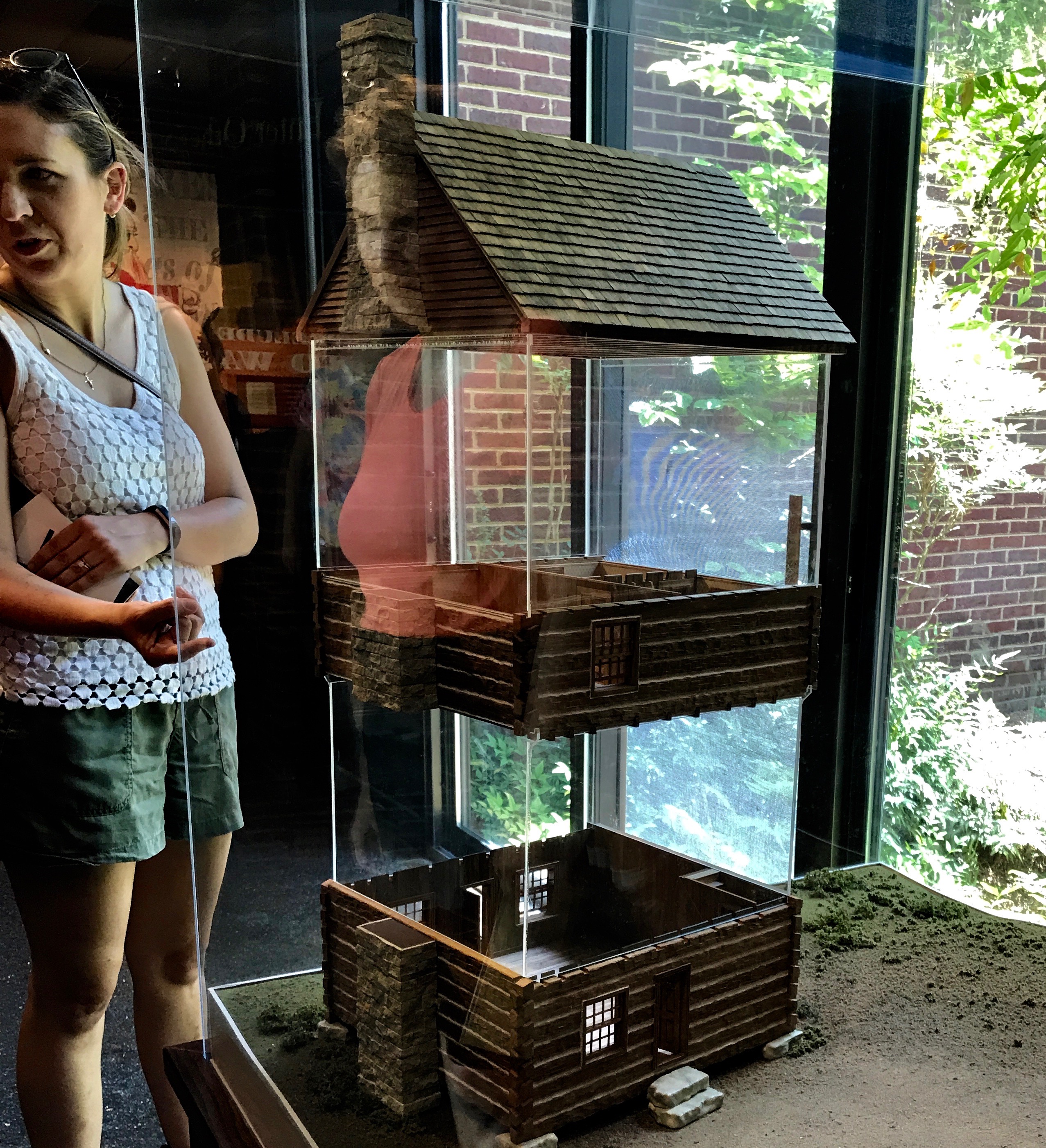
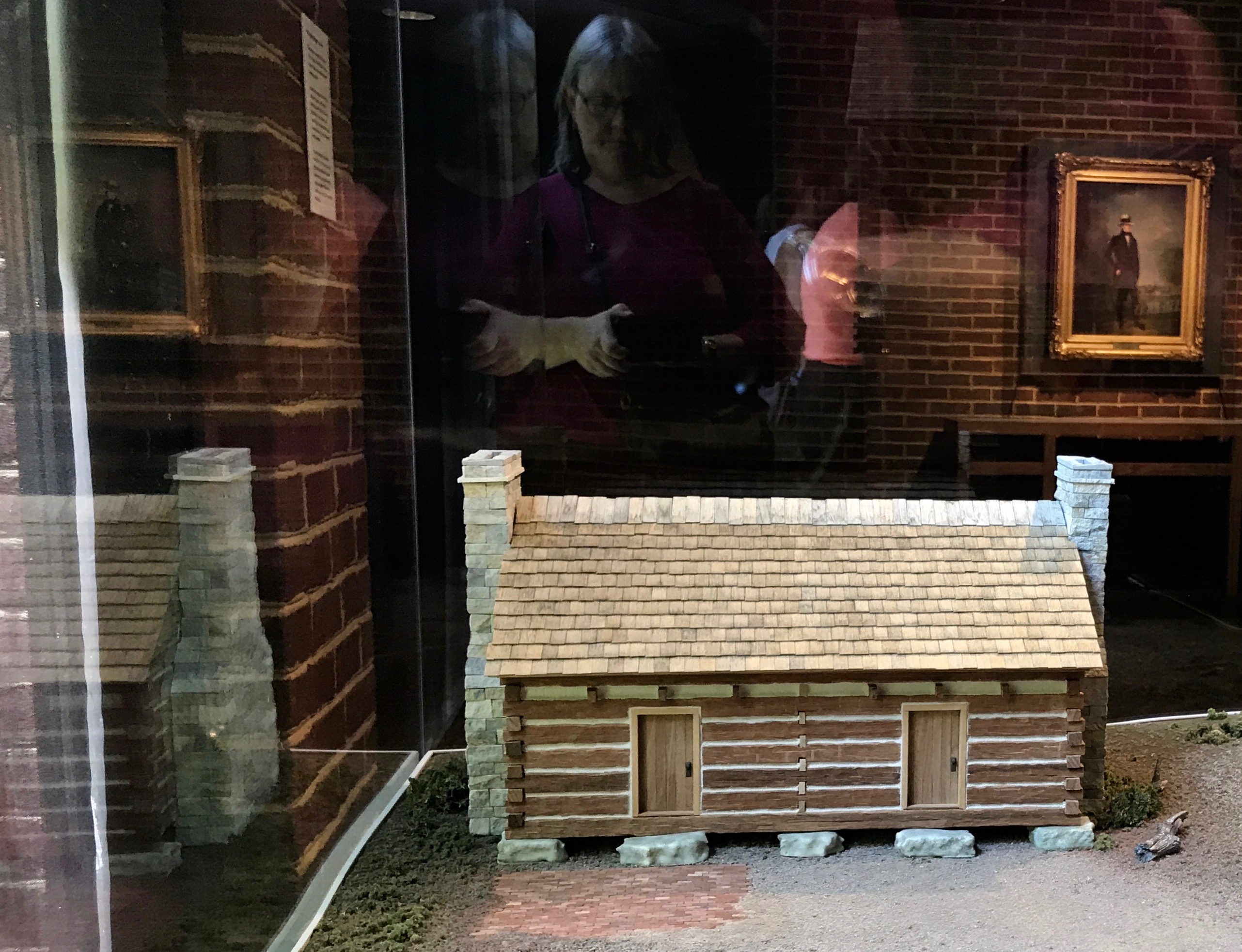
There was an interesting diorama of the first house. It was a two story log cabin that they lived in from 1804-1821. The first floor was used for dining and entertaining guests. Andrew Jackson also has his office on the first floor. The family’s bedchambers were on the second floor. This must have been quite the elegant cabin, as the interior finish included beaded/molded trim and hand-painted French wallpaper.

Behind the main building was a detached kitchen and slave quarters. Yes, he was a slave owner and, over his lifetime, owned at least 300 enslaved people. When he died in 1845, he owned 150. That was the most he owned at anyone time in his life.

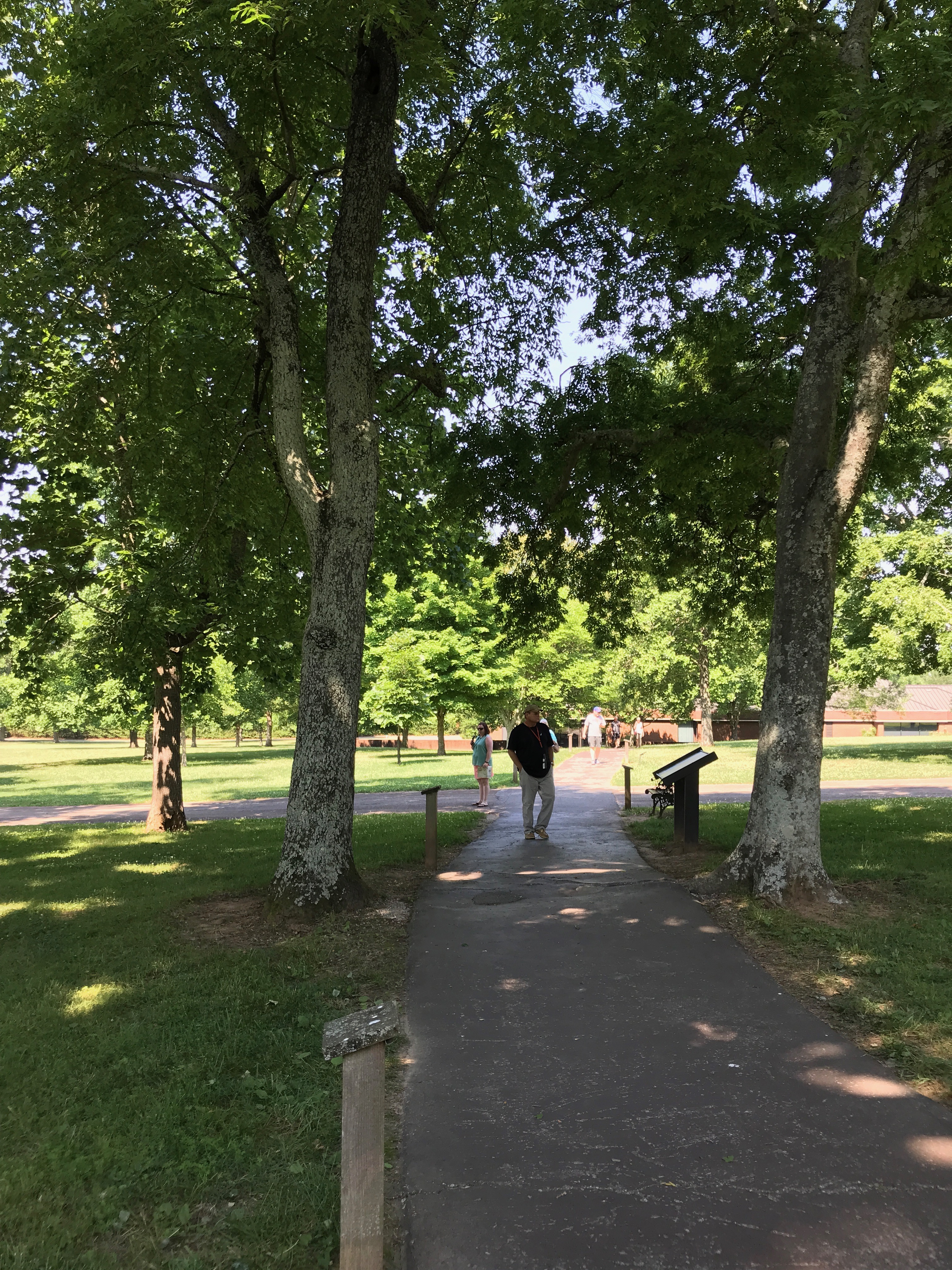
I left the visitor’s center and headed toward the mansion. I got to enjoy the stroll, as my ticket time for the tour wasn’t right away.

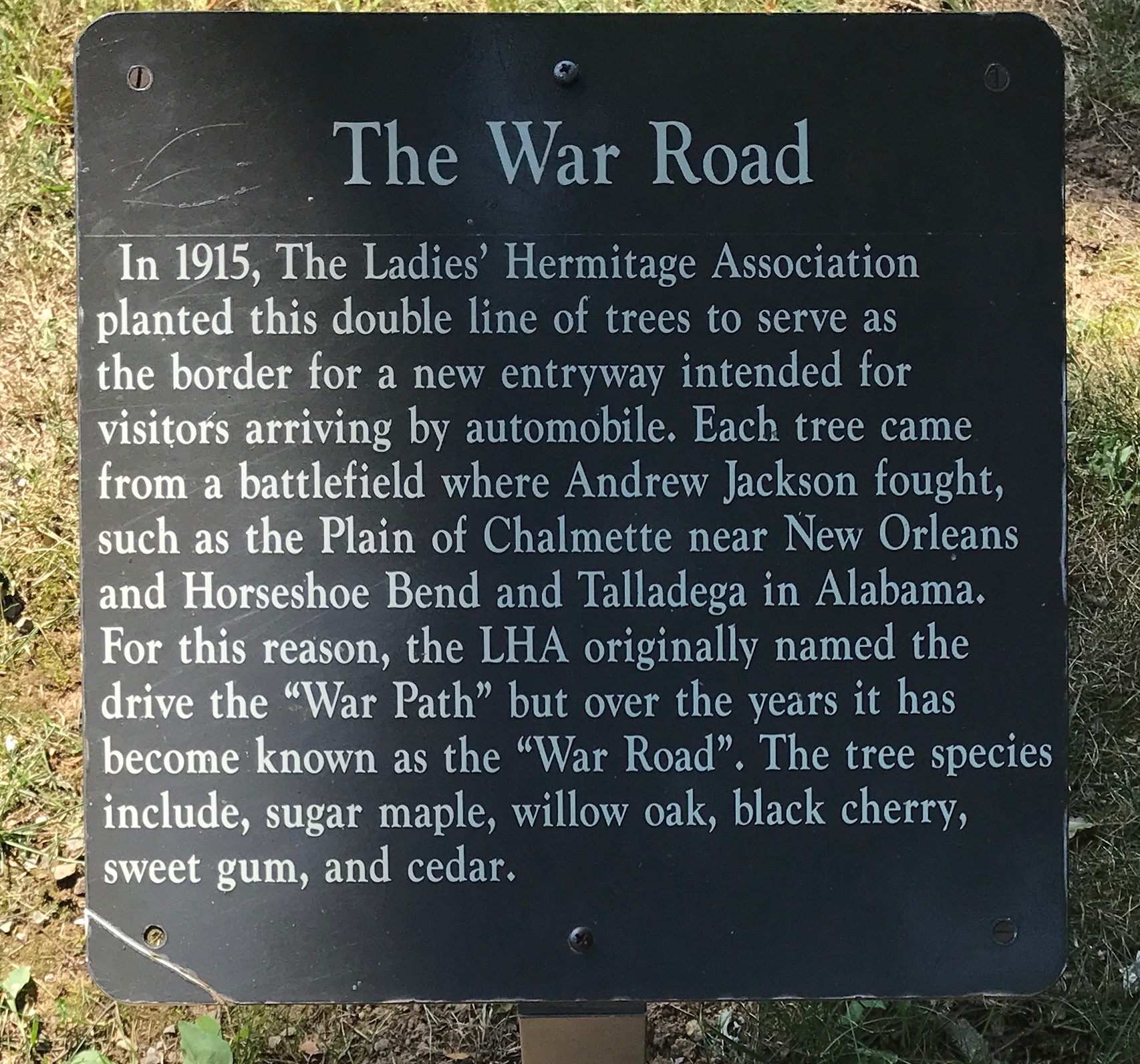
Now, I am not 100% certain, but this might be The War Road. It was the photo in my files next to the sign below.

If you want to know for sure, I guess you’ll just have to visit for yourself. I could’t find anything about it in my internet searching.

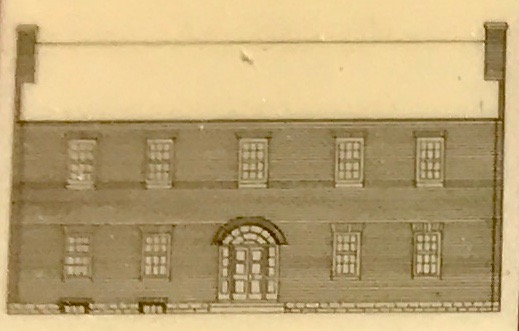
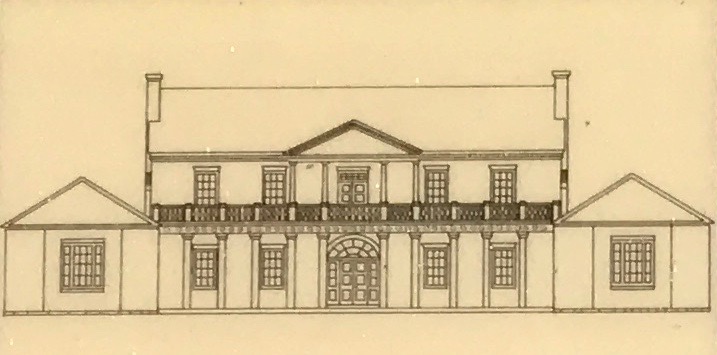
Near the house there was some interesting information about the changes that the mansion went through while Jackson lived there. The brick residence was completed in 1821, and was the only version of the mansion ever occupied by his beloved wife, Rachel.

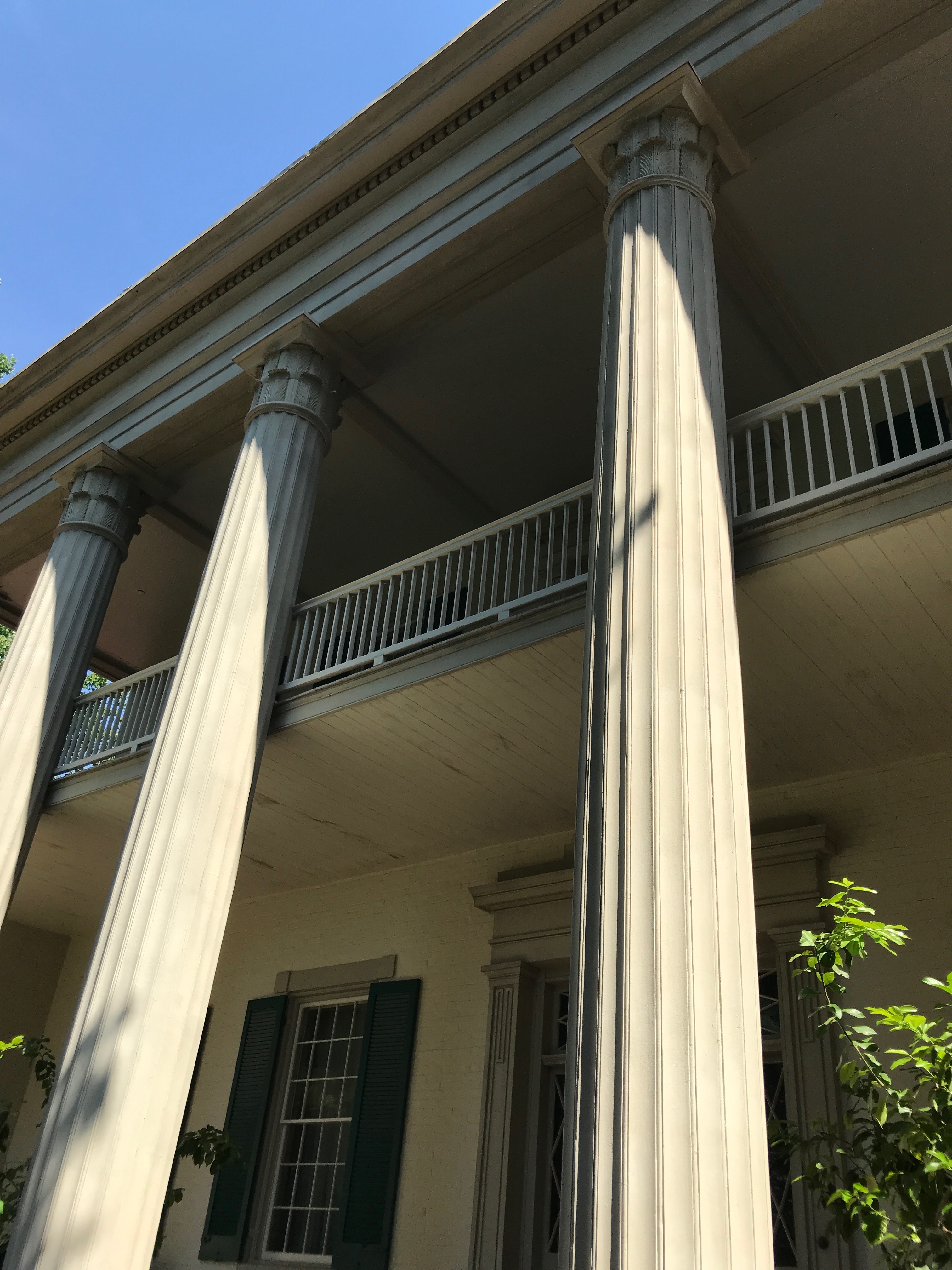
This is the 1831 version of the mansion. Nashville architect David Morrison added a front porch in the “Palladian” style that strictly followed details and proportions of classical buildings. At the same time, Morrison also designed Rachel Jackson’s tomb.

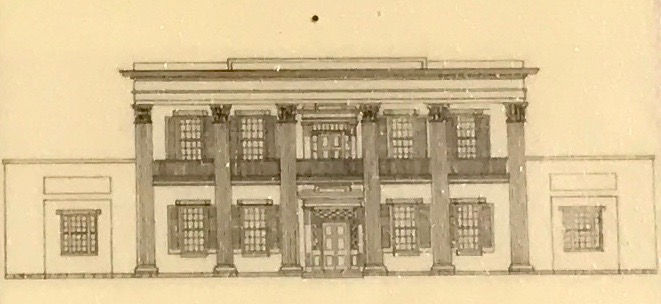
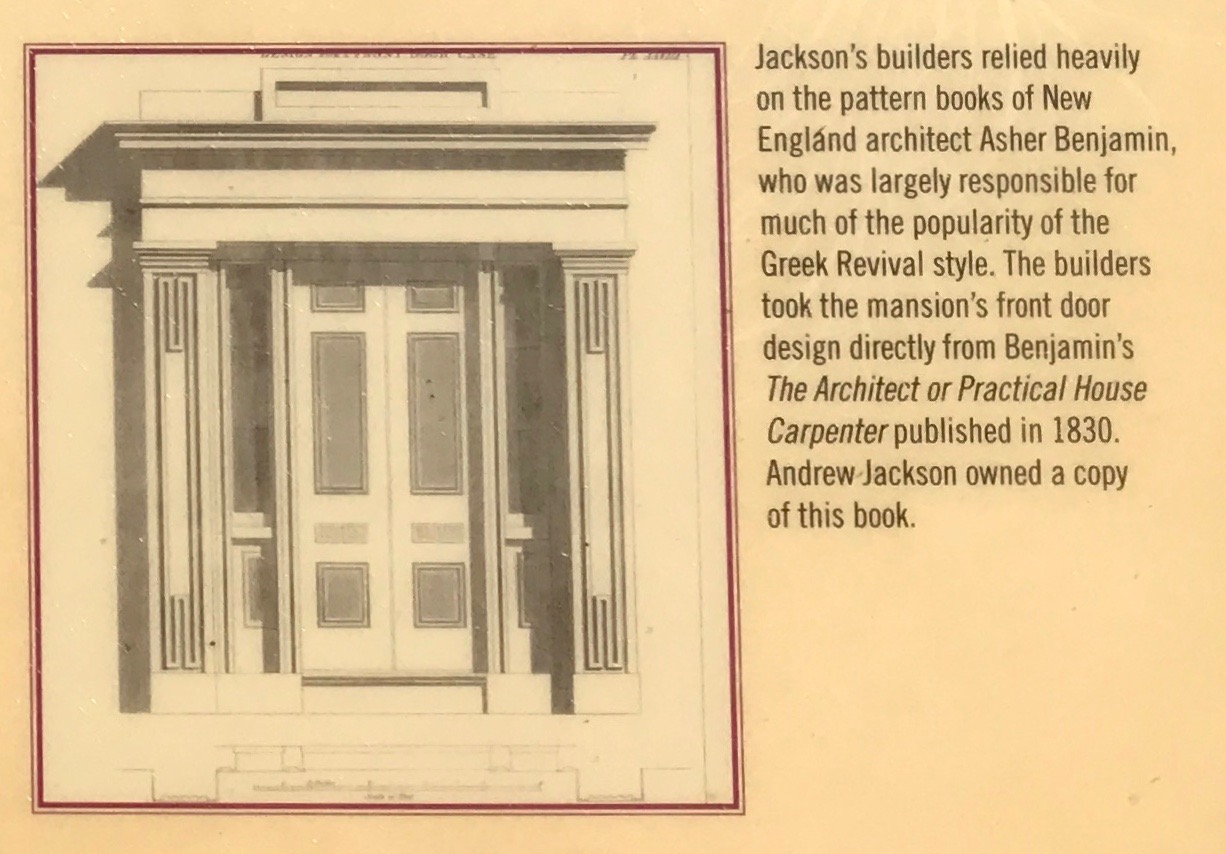
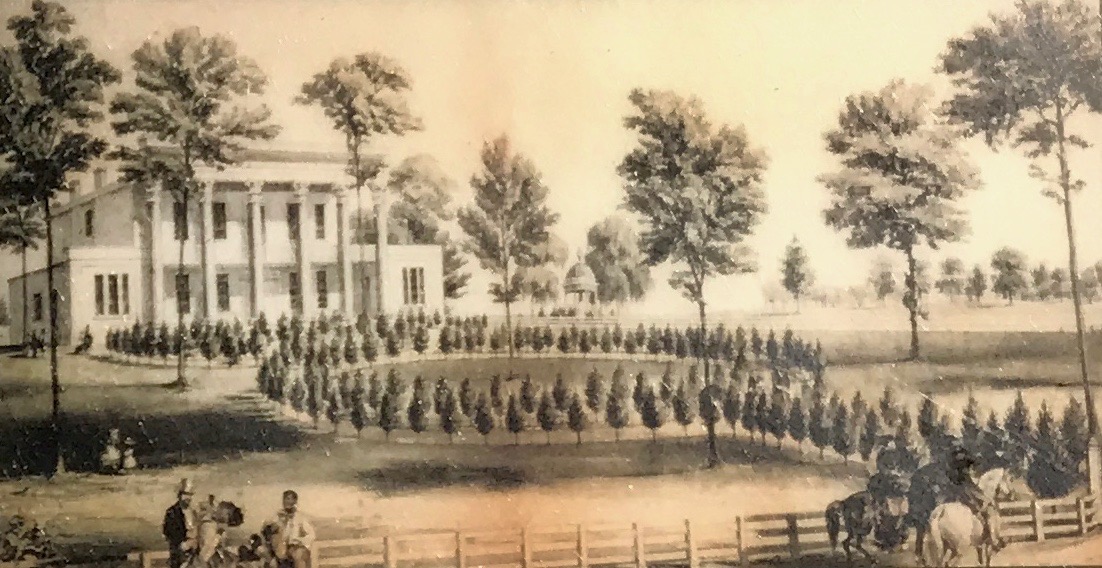
In 1834, a chimney fire ravaged the Hermitage and destroyed the much of the building. Jackson was still in the White House, but he hired architects Joseph Reiff and William C. Hume to redesign the mansion. Rather that re-creating Morrison’s design, they followed the newly popular Greek Revival style. They included a two-story porch with modified Corinthian columns. The columns and the front facade were coated with sand and painted tan to give the appearance of stone.

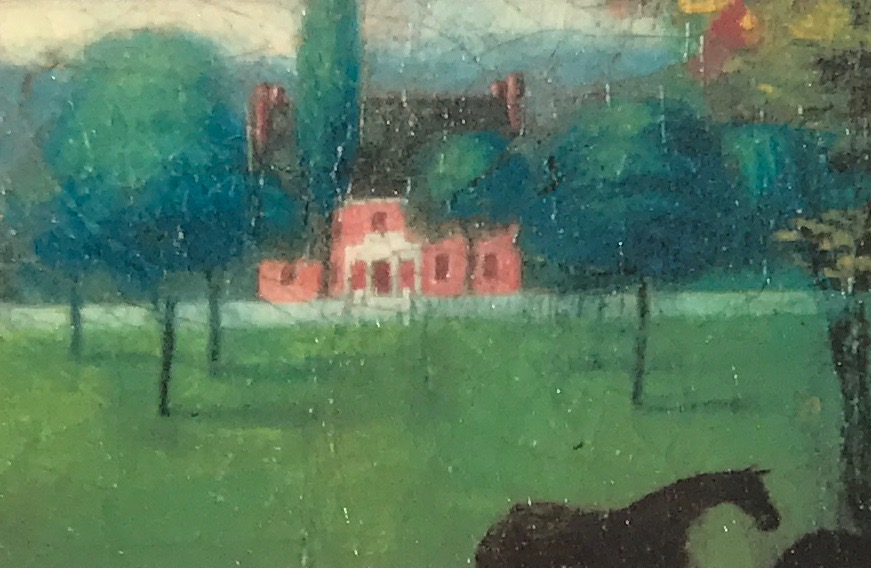
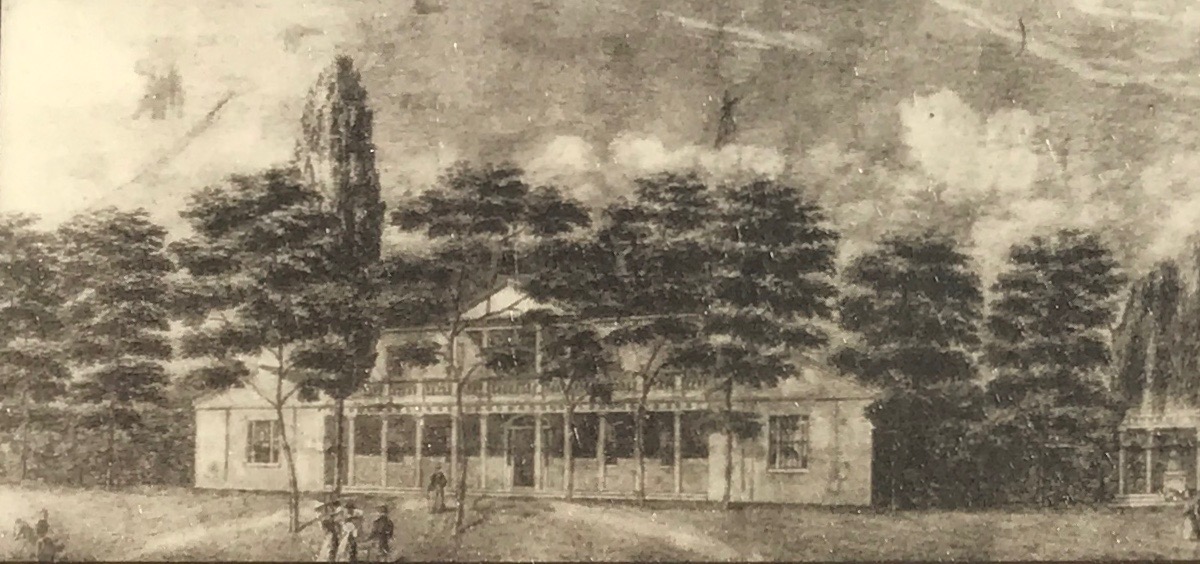
I found these works of art of the mansion through the years to be charming.

This is from 1821.

Ten years later, in 1831, it looked like this.

This is how it looked when Reiff and Hume were finished with it in 1837. You can see Rachel’s tomb to the right of the house.

It was about time for my tour to begin, so I took a seat on the bench to await the entry time.

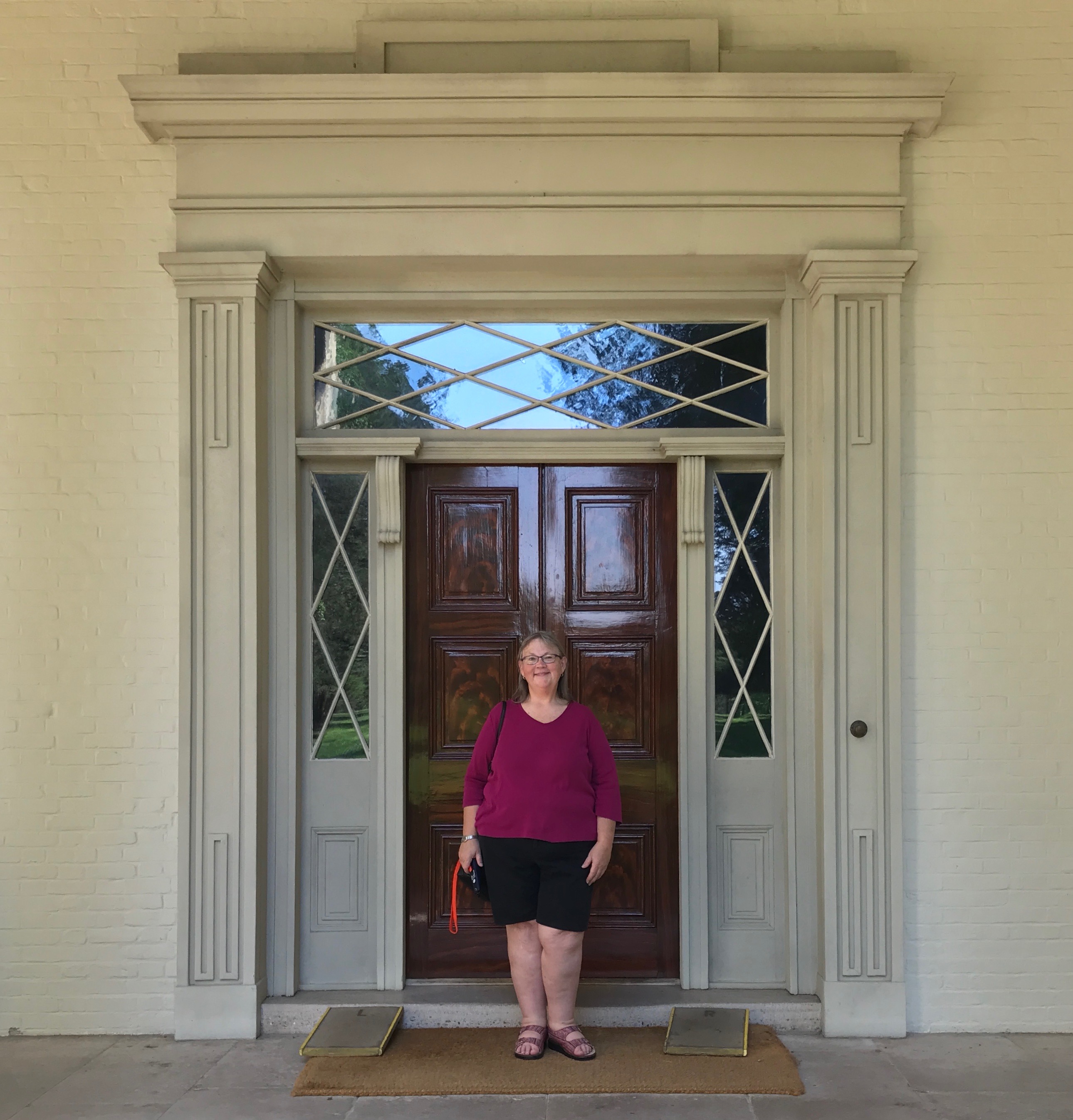
One of the other visitors took a picture of me in front of the door. If you look on either side of my feet, you see some little wedges. I imagine they are for visitors in wheel chairs. Of course, they would only be able to see the main floor. But, a little is better than nothing at all.
Of course, no photography was allowed on the tour. But, I took notes as quickly as my phone would let me. Here are some factoids I managed to jot down.

The mansion is 8000 square feet.
It is 95% original.
On the main floor, the original wall paper was from 1836.
It became a museum in 1899.
There were ten house slaves.
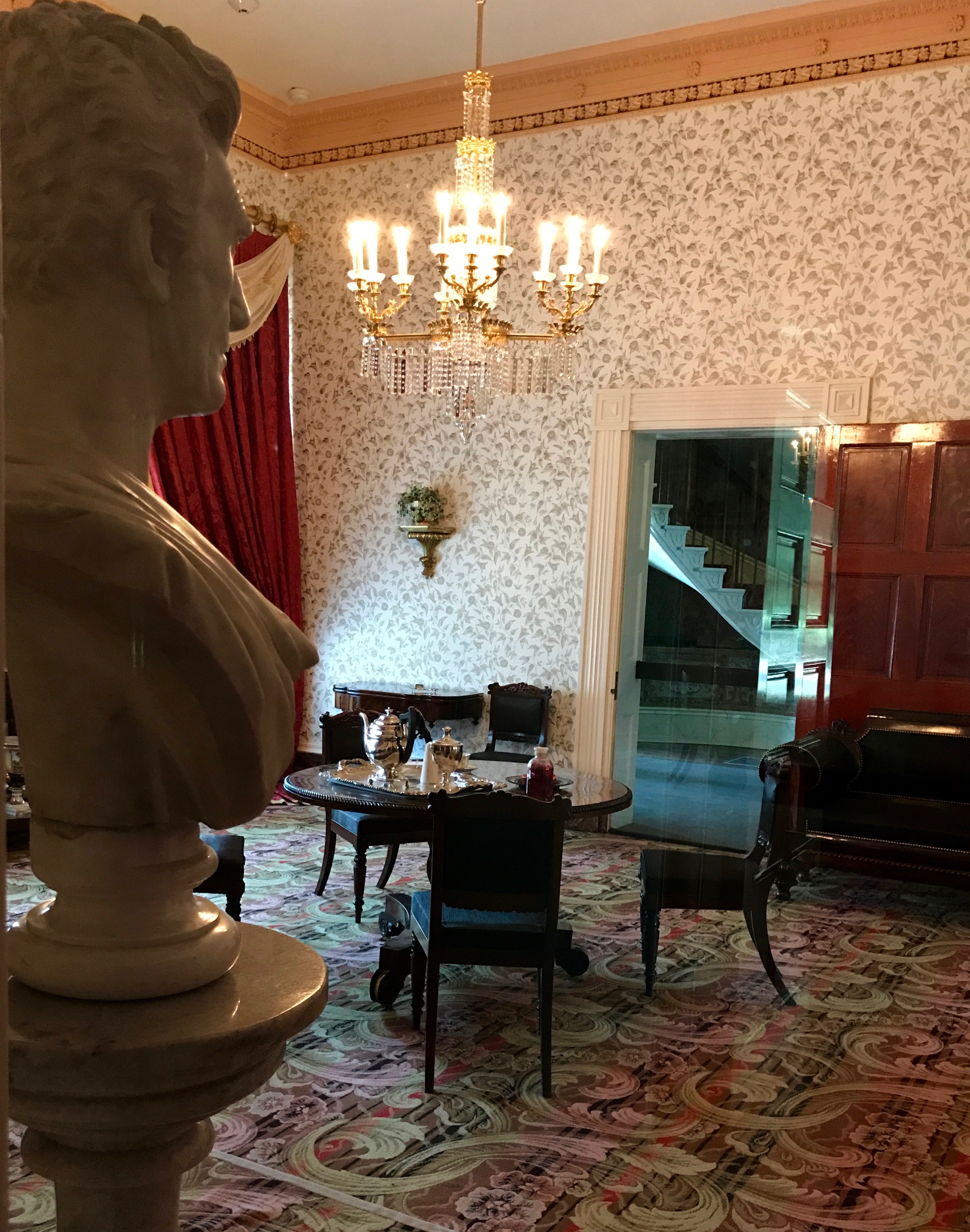
Of course, rebel that I am, I did sneak one photo of the interior.

According to my notes, the bust is of Louis Cass, who was the Secretary of War. He gave the bust to Jackson. To my mind, this seems a bit presumptuous. After all, it’s not like a photo you can just stick in a drawer. But, Jackson died in 1845, which was before photography was little more than experimental, so I guess I should cut Cass some slack.
Another fun fact to know and share: Cass was the second territorial governor of Michigan. He was appointed in 1813 by President Madison as a reward for his military service and served until he resigned in 1831 to become President Jackson’s Secretary of War.

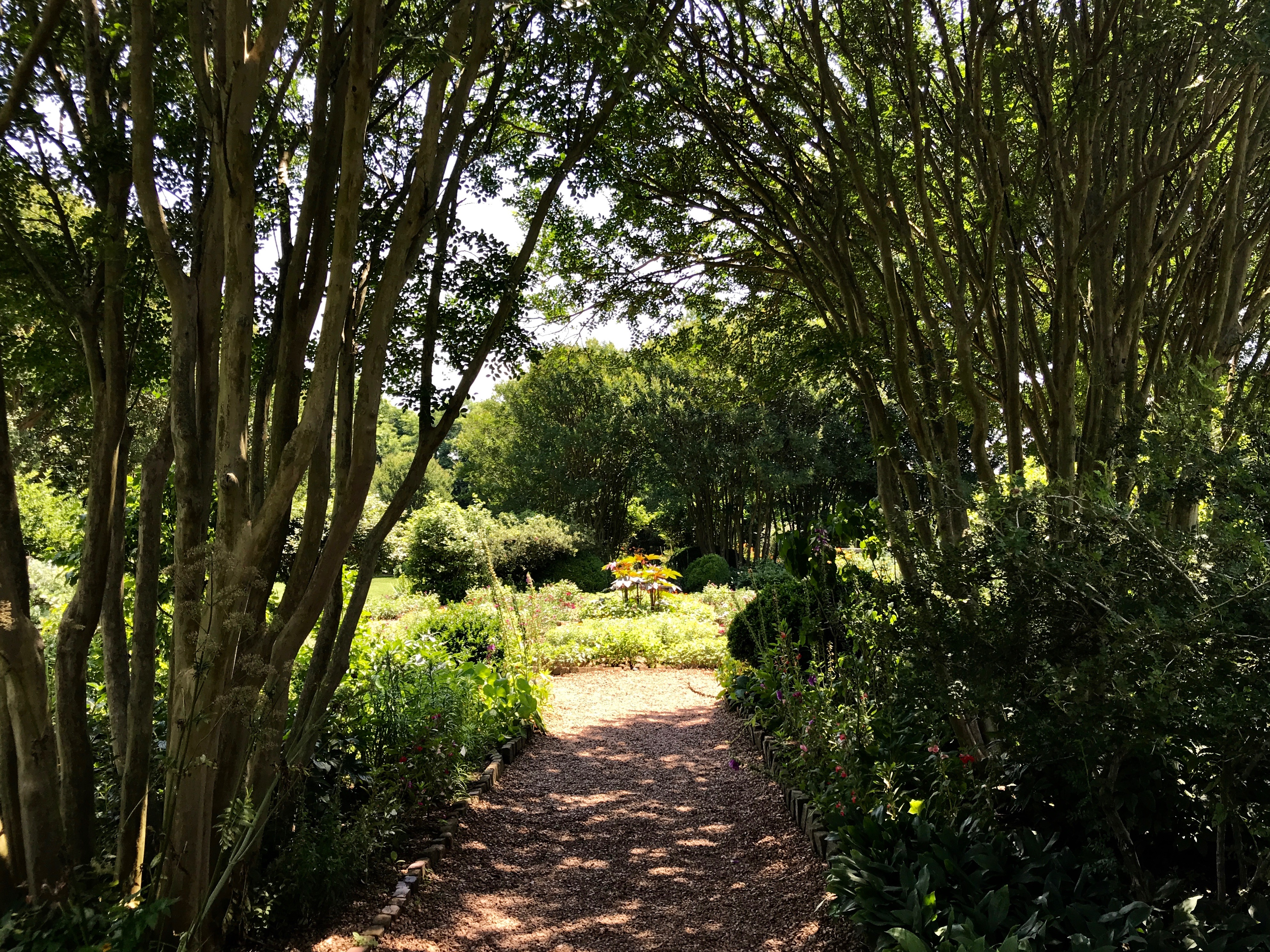
After the tour, I headed out to the garden and the family cemetery.

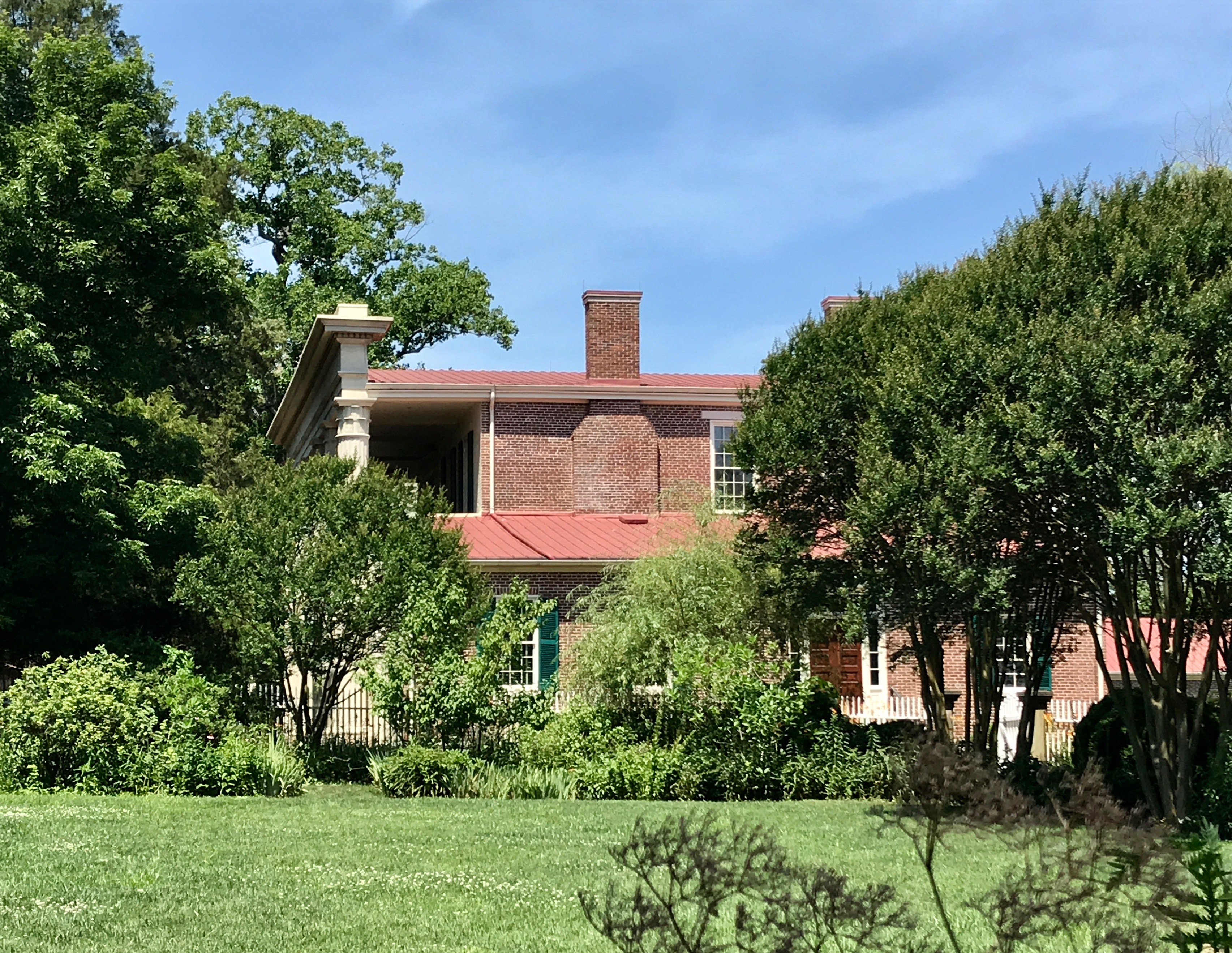
I paused for a moment to look back at the side of the mansion.

Back to exploring.

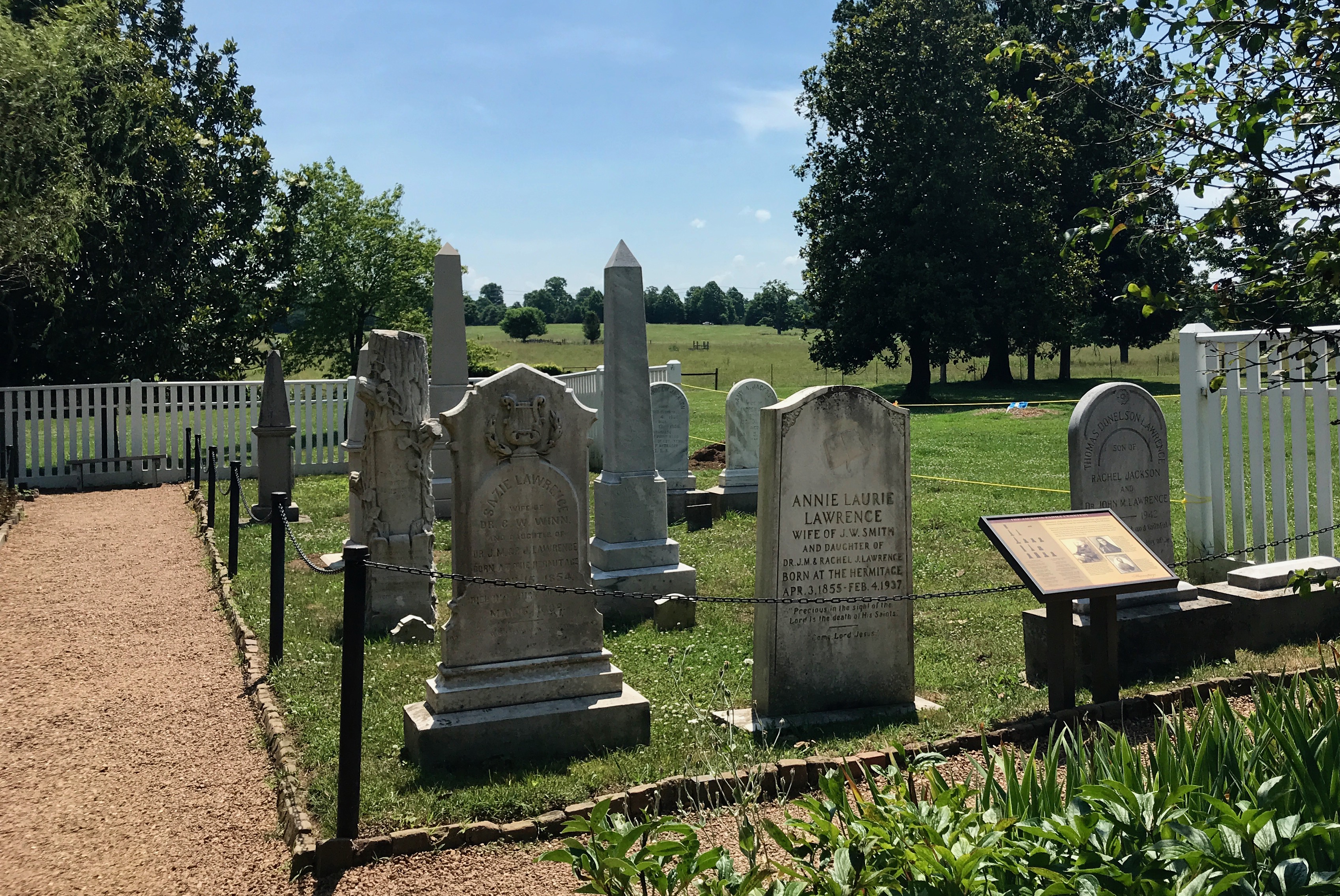
There are some family members buried in the cemetery.

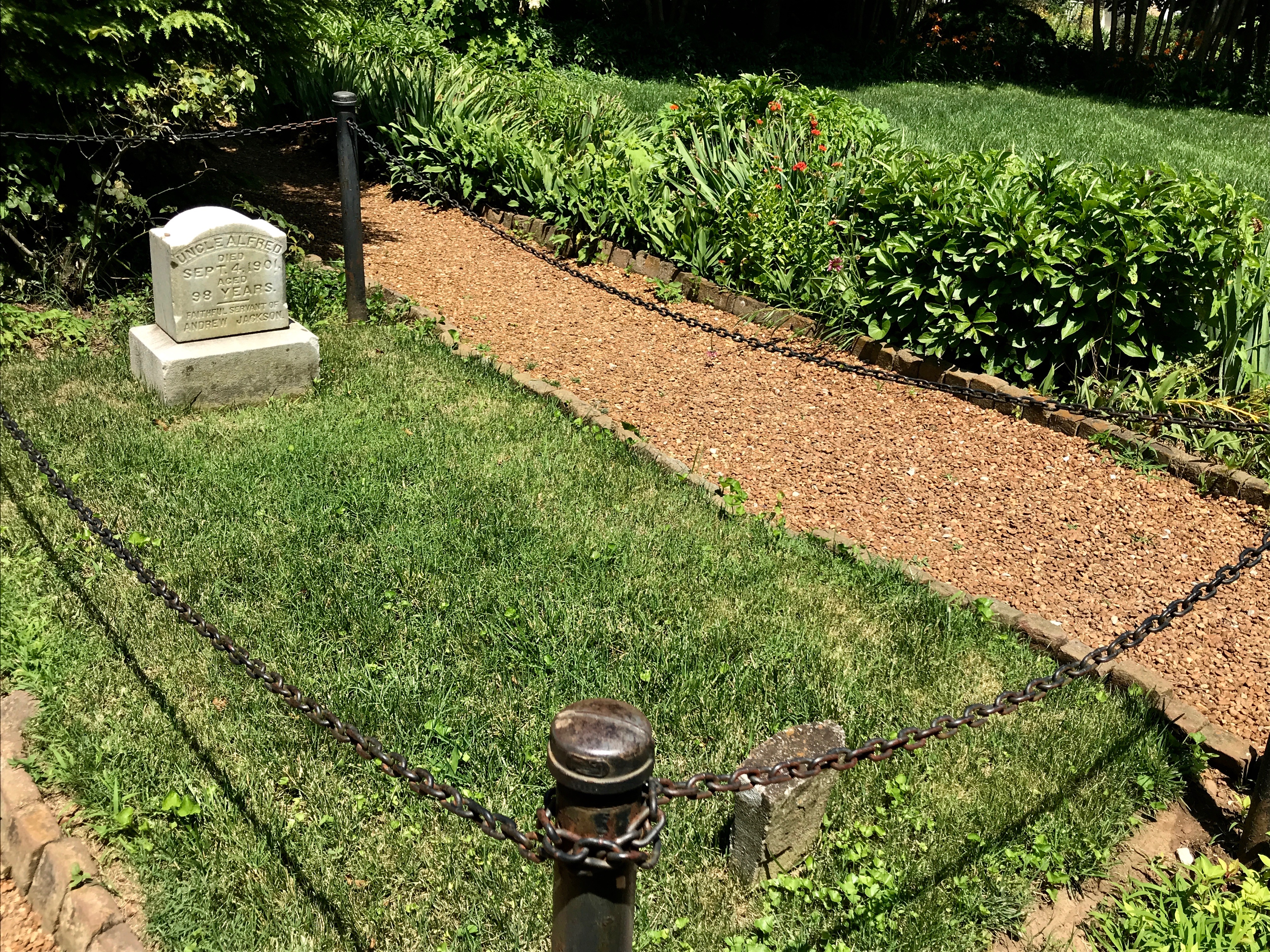
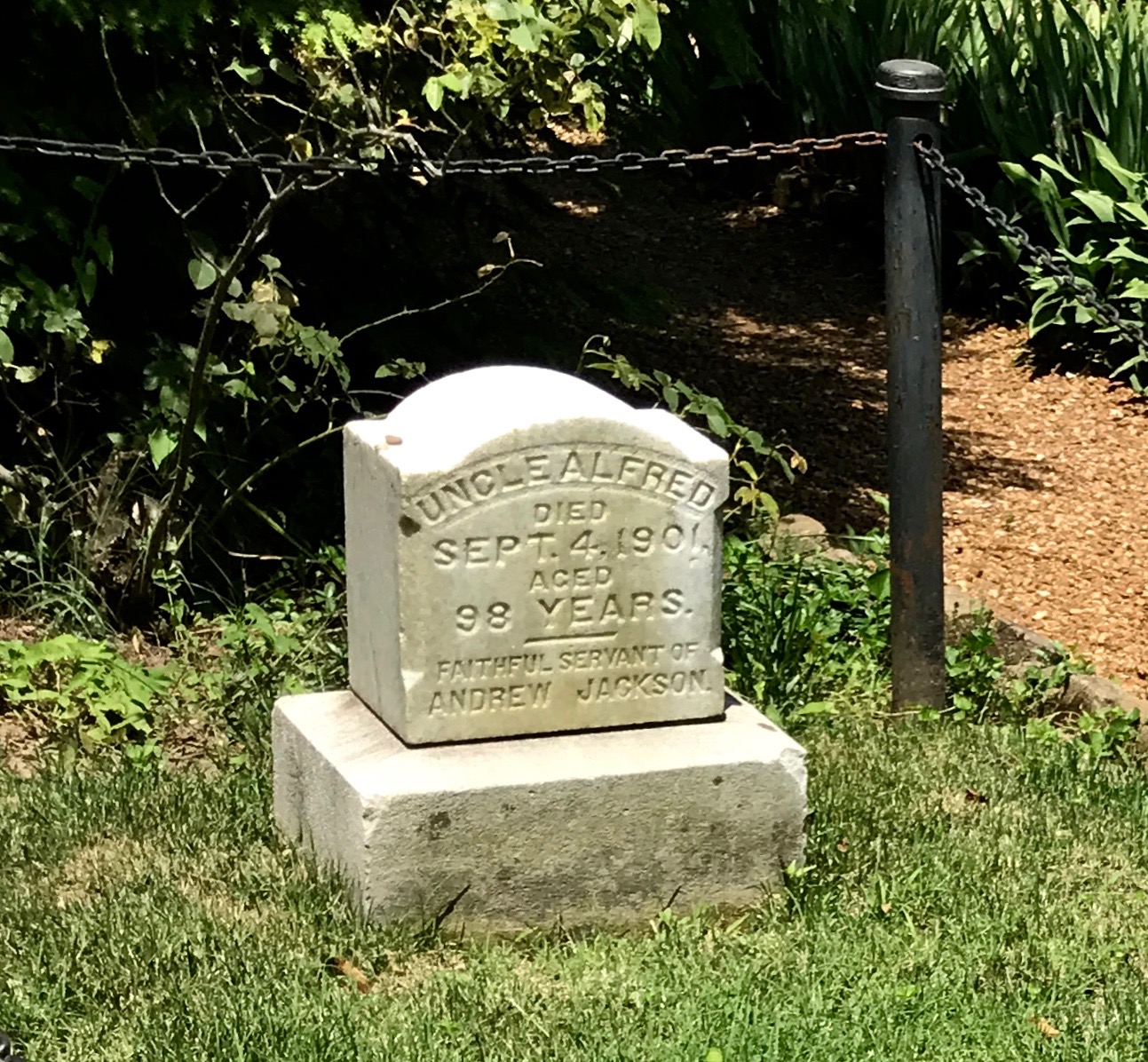
Uncle Alfred, one of Jackson’s enslaved people, is also buried here. He was born in 1803 and died in 1901. I can’t remember if they told me about Uncle Alfred and why he’s buried here, and I can’t find it on the internet.

I guess if you want to know, you are just going to have to visit yourself.

The brings us to the pièce de résistance – Andrew and Rachel’s tomb.

Do I have great timing, or what?

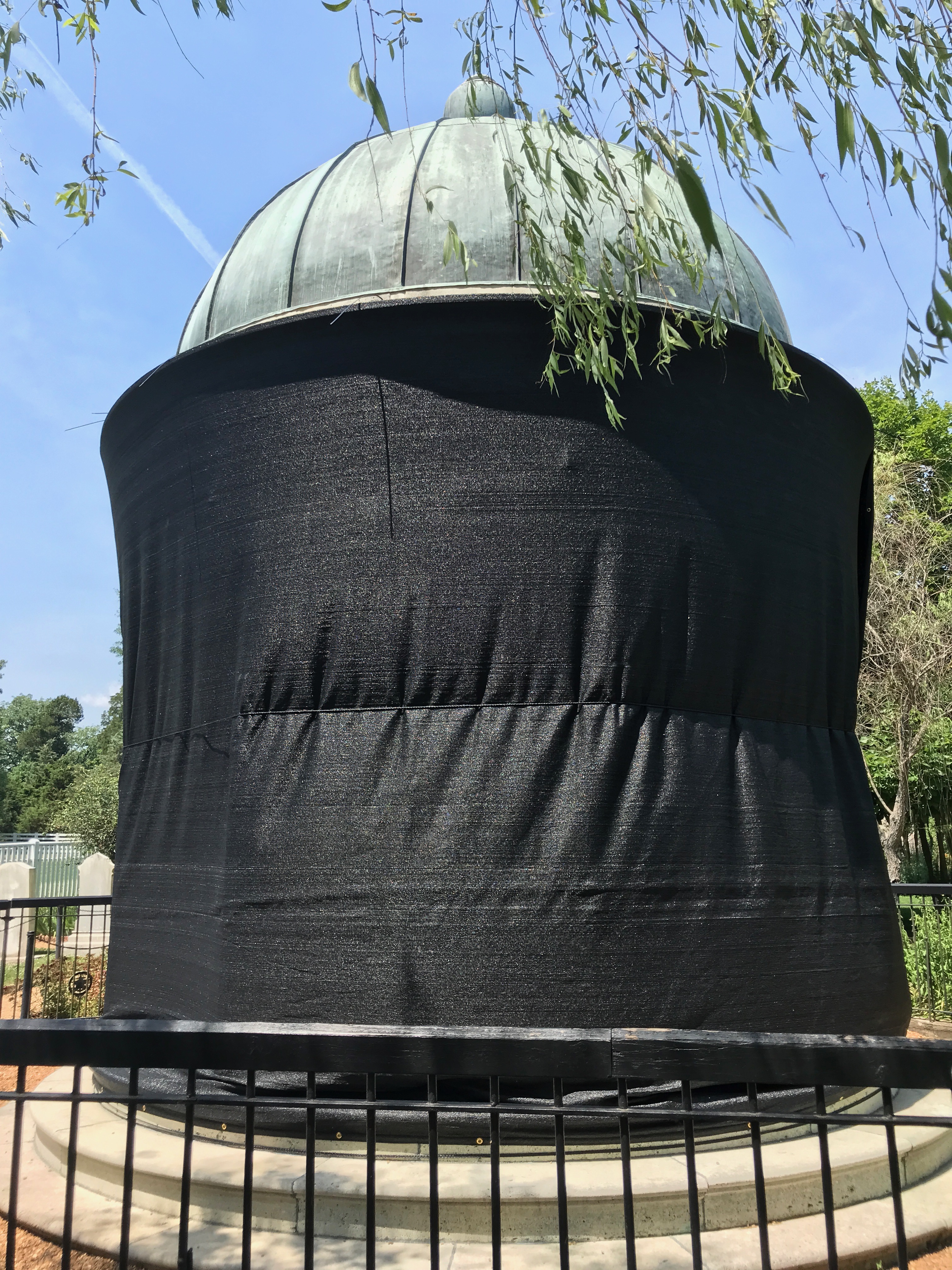
It turns out that the tomb was vandalized on April 27, 2018, which was the first time something of this nature had occurred.

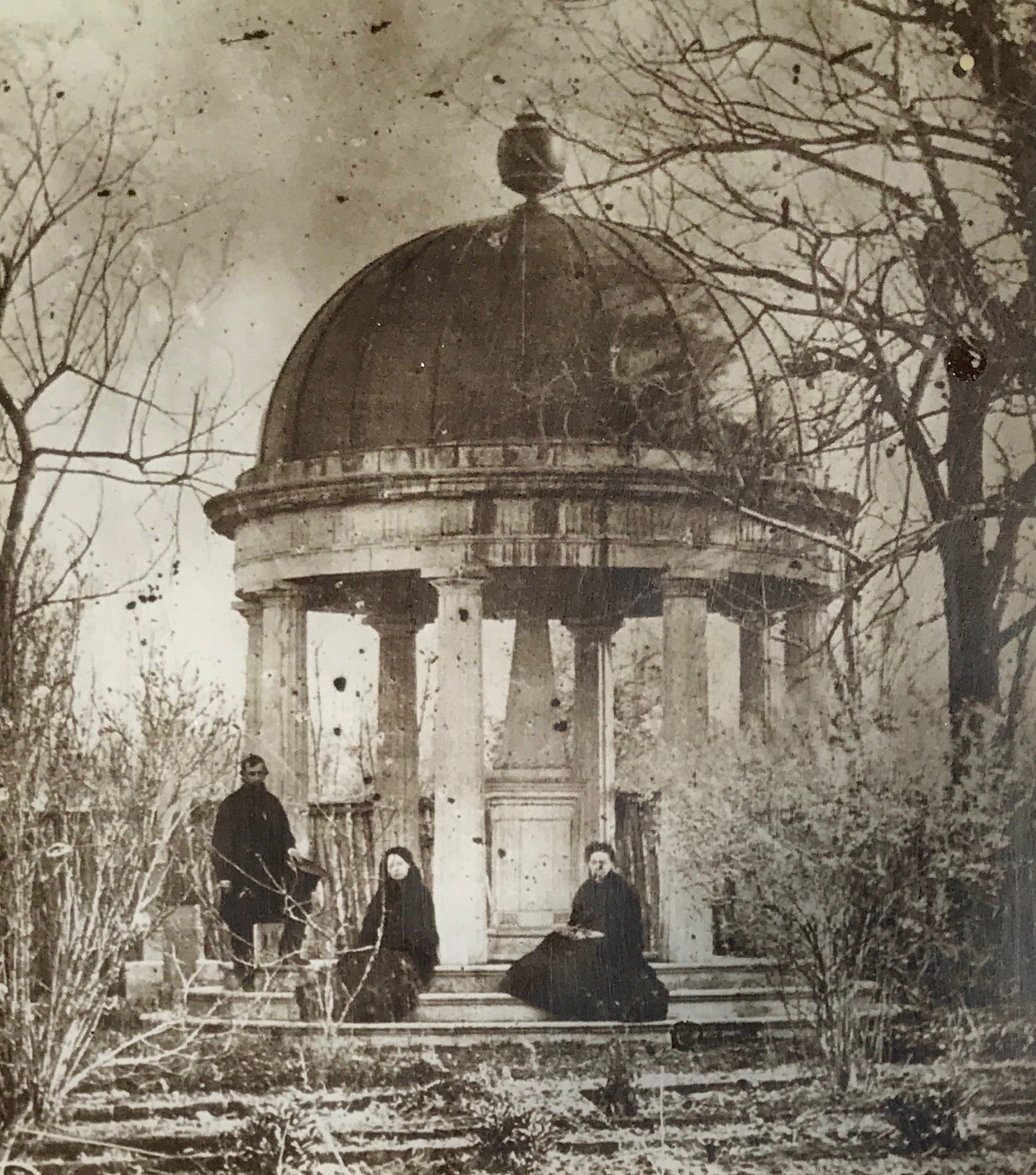
Here’s an historical photo from 1867.

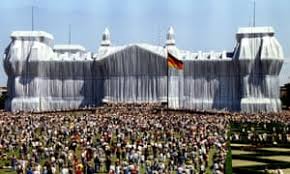
The good news is that the tomb has now been restored and has been unwrapped. It did make me think of some of Christo and Jeanne-Claude’s artwork, though.

Like when they wrapped the Reichstag.

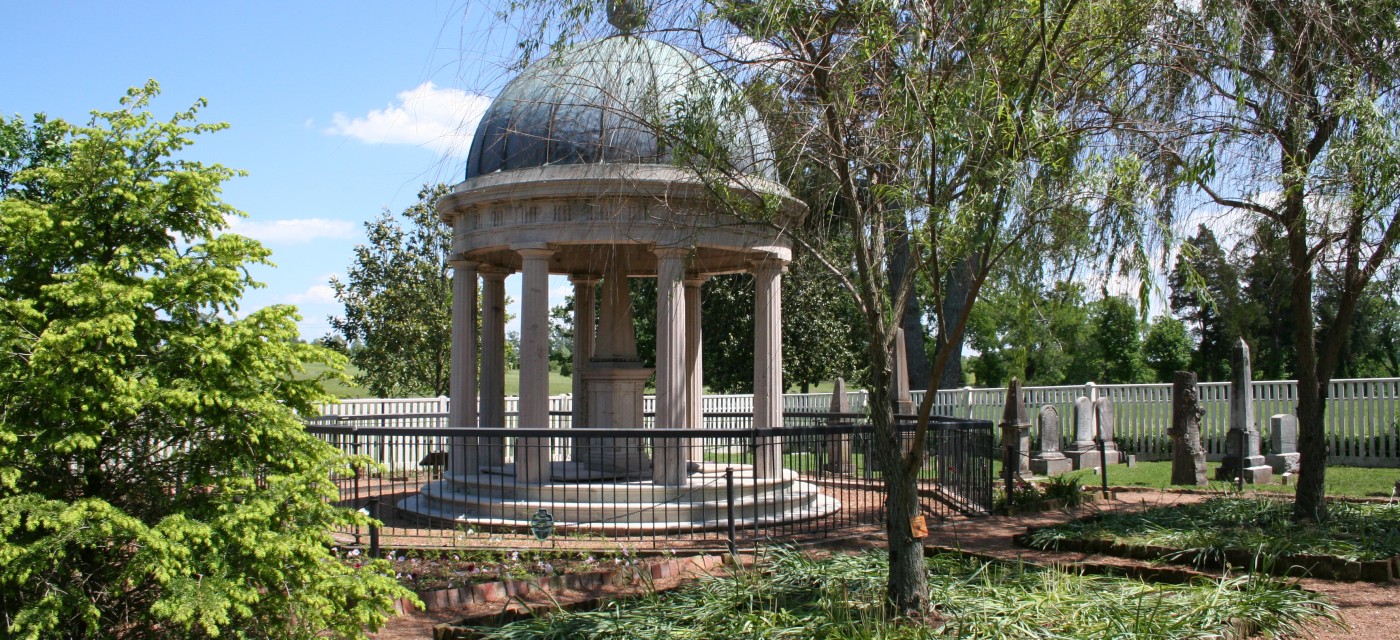
The good news is that the restoration is complete. I found this image on The Hermitage’s website. That is a good source of information to help you plan your visit.

I headed back toward the mansion.

How’s that for a back door? Or, maybe it was just a secondary door for people he didn’t want to have coming in the front door.

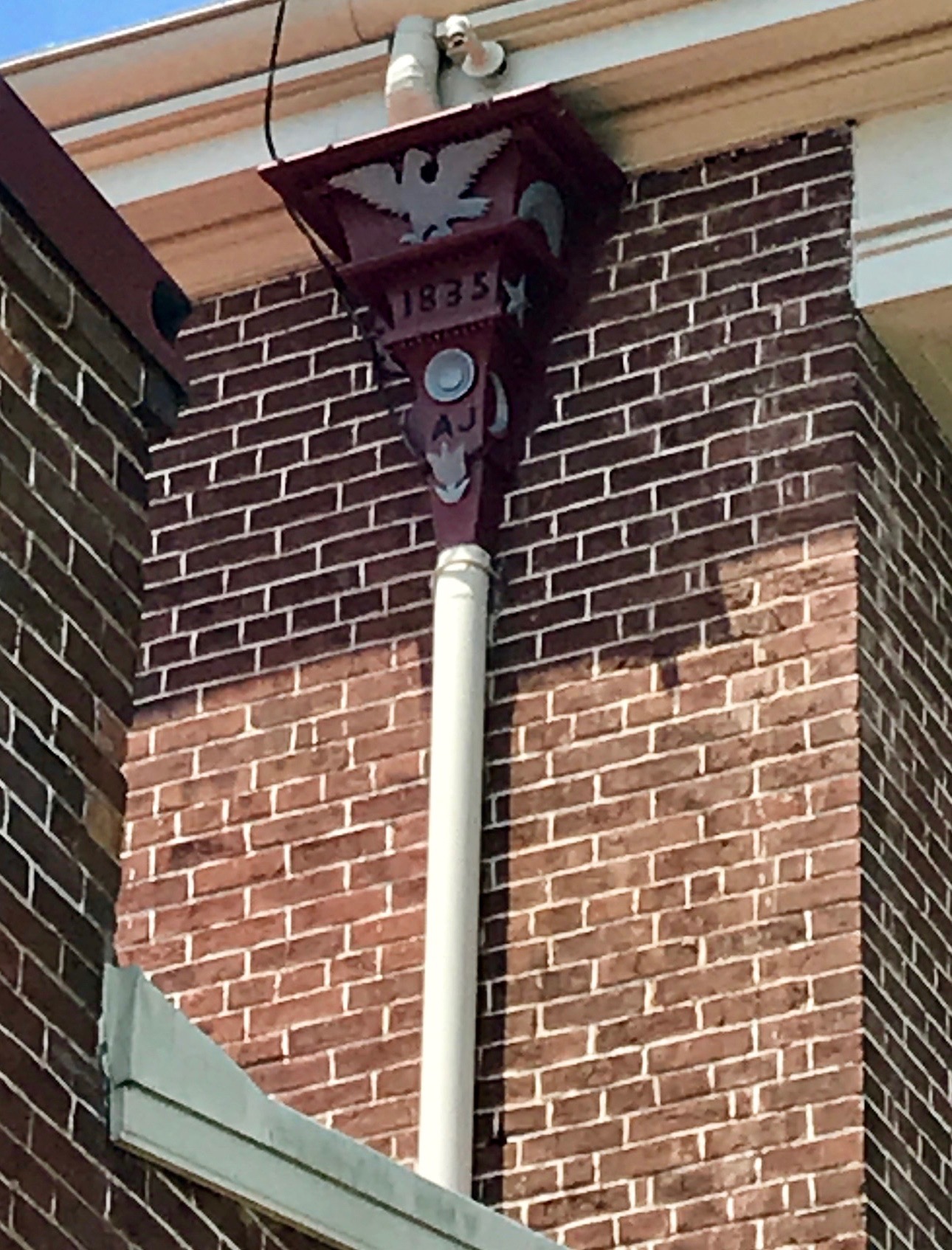
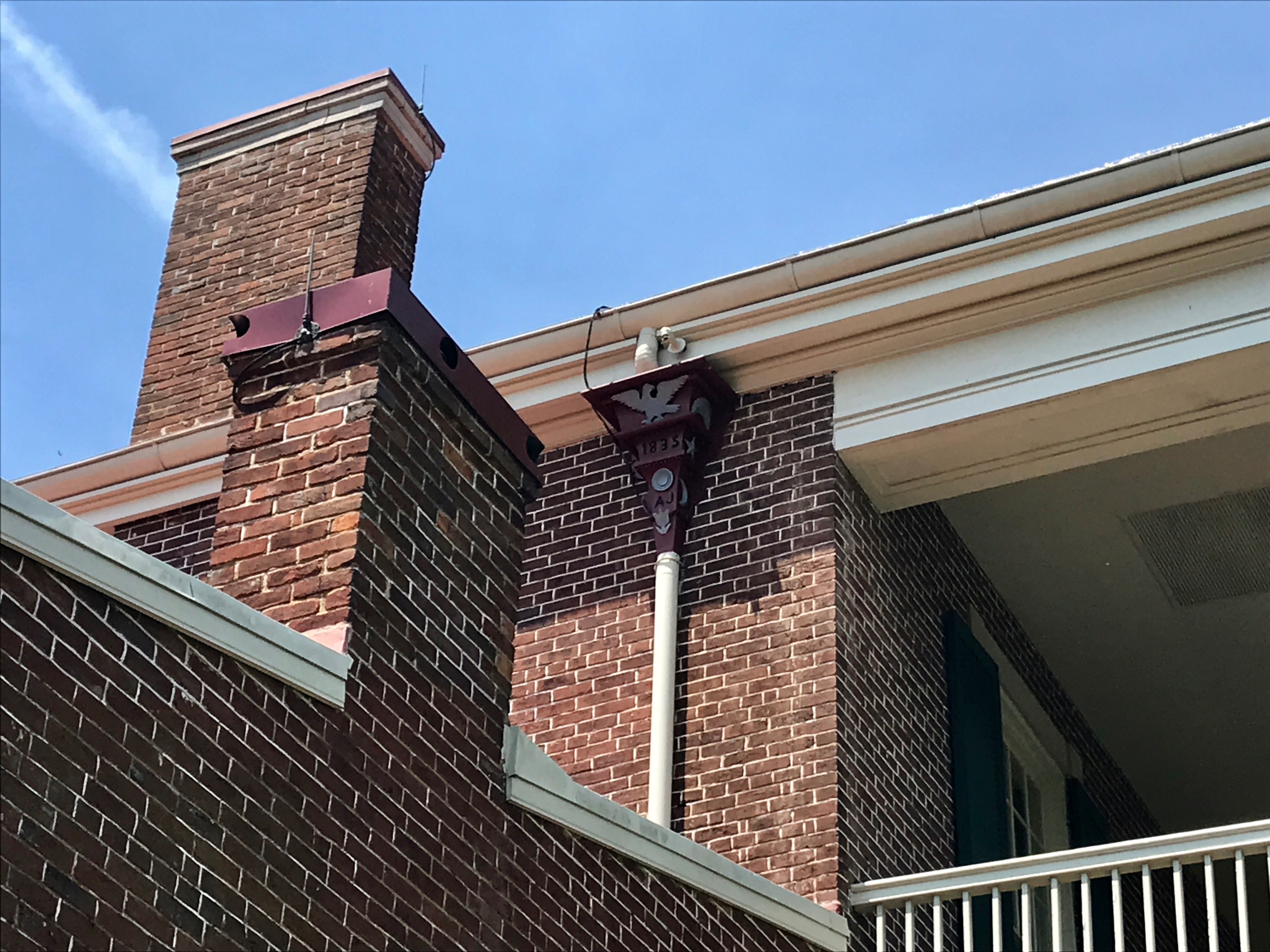
That is one fancy downspout! It even has his initials on it. Some people are satisfied with monogramed towels.

It’s even on the back of the house!

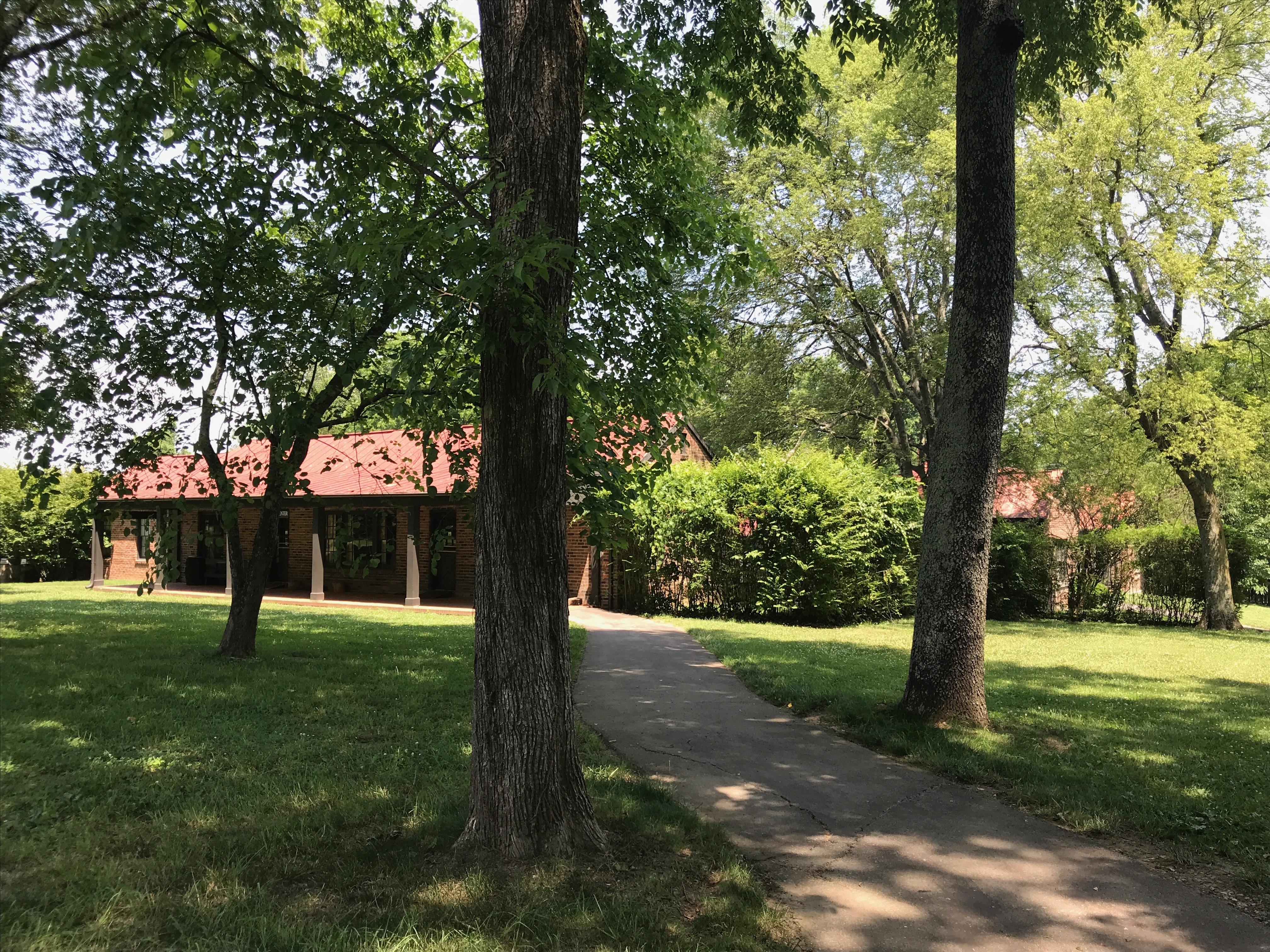
It was time to head back to my van and get going. As I set my feet in the direction of the Visitor’s Center, I passed this cluster of buildings. I wondered what they were.

It turns out that part of them were built as part of the Works Progress Administration in 1936. I am overcome with gratitude when I see examples of the infrastructure that is still in use that saved the lives and dignity of so many during the Great Depression.

The building on the left currently contains classrooms and the offices for the Hermitage Hands-on-History program. When it was completed in 1954, it housed the Hermitage gift shop.

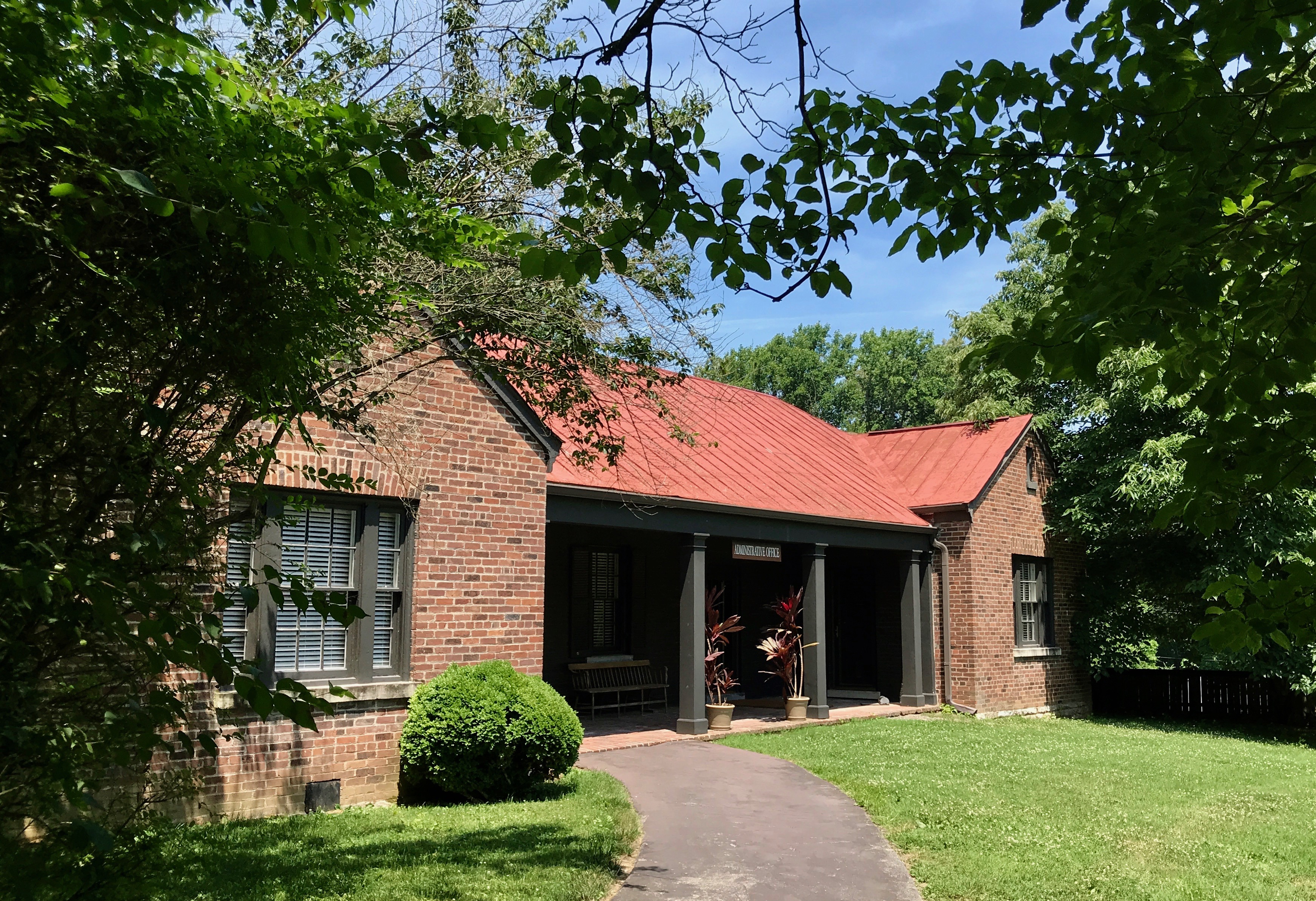
The building on the right, completed in 1936, originally served as the caretaker’s residence. Today it holds the Administrative Offices of the Ladies Hermitage Association.

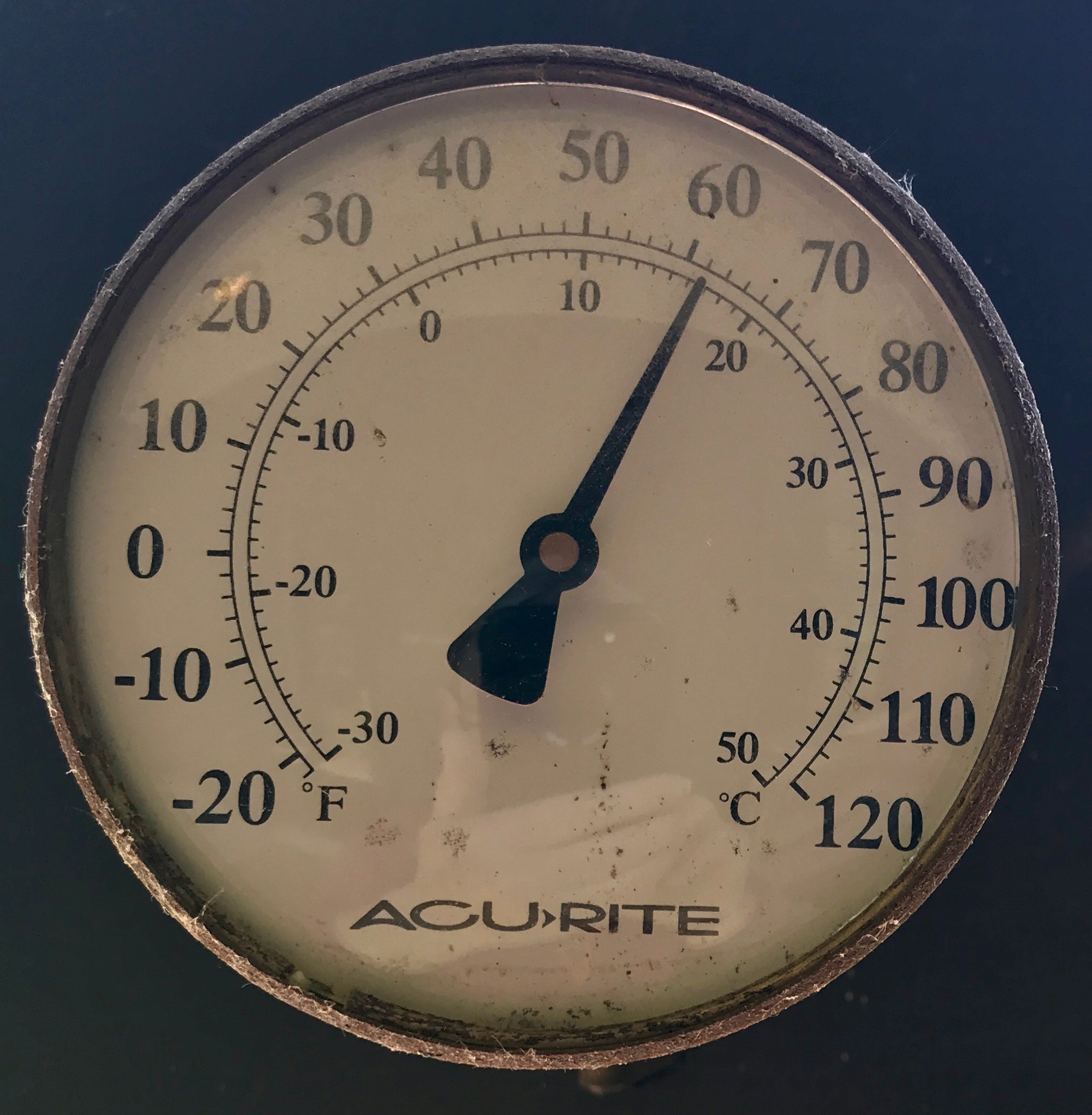
I found this thermometer on the porch. Either it’s very cool in the shade or it is not “ACU>RITE.” The temperature from the weather app said that it was 91 outside. I don’t know about you, but I always trust the voice in my phone.

I got back to the Visitor’s Center in time to catch a presentation by a historical re-enactor. I remember that she was very good, but I don’t remember what she said.  It was more than seven months ago, and I was getting antsy to get on the road.

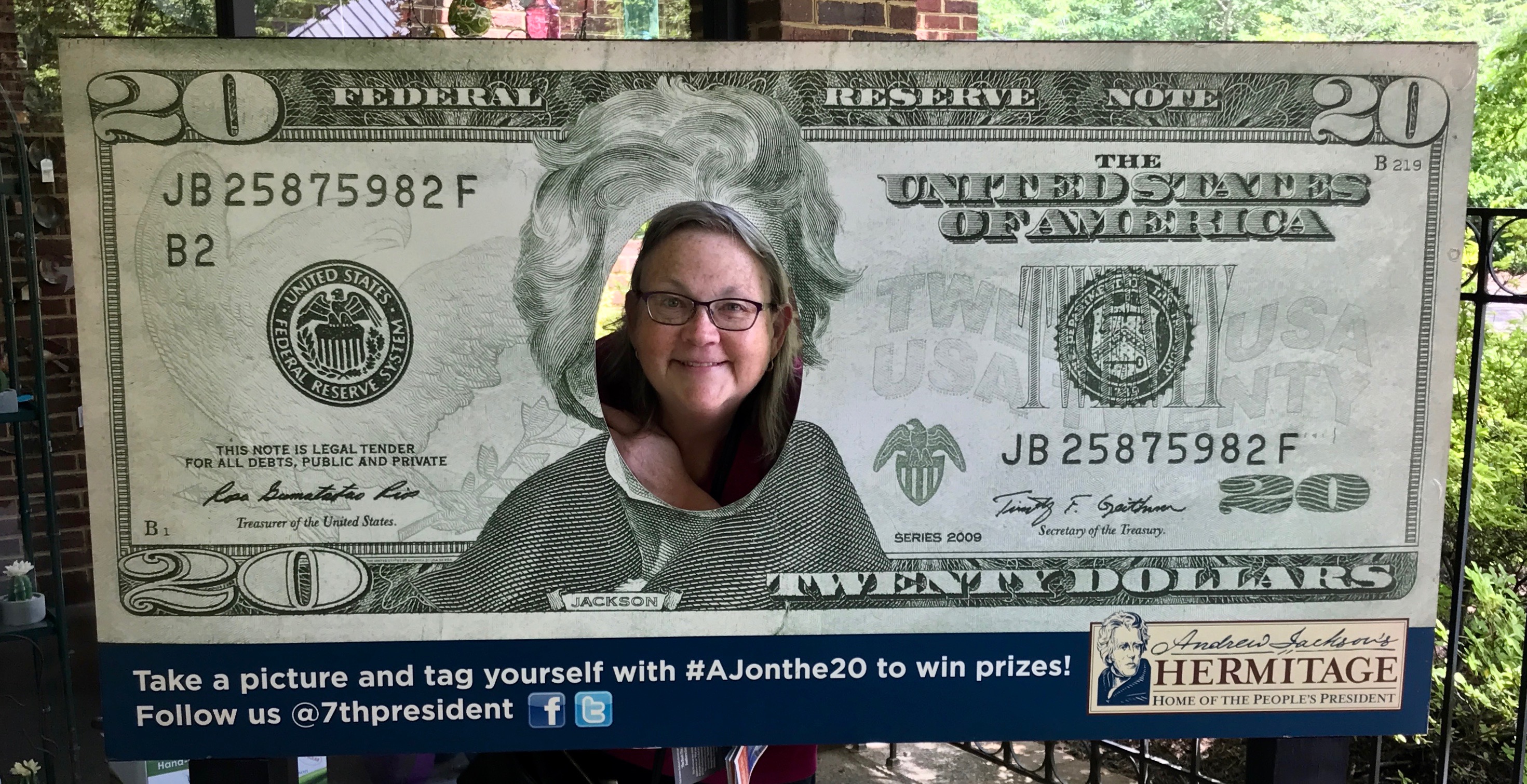
Okay, it’s a little cheesy, but I had to the good fortune to find a person who would take my photo. Me on the $20!

And of course, I had to pass through the gift shop.

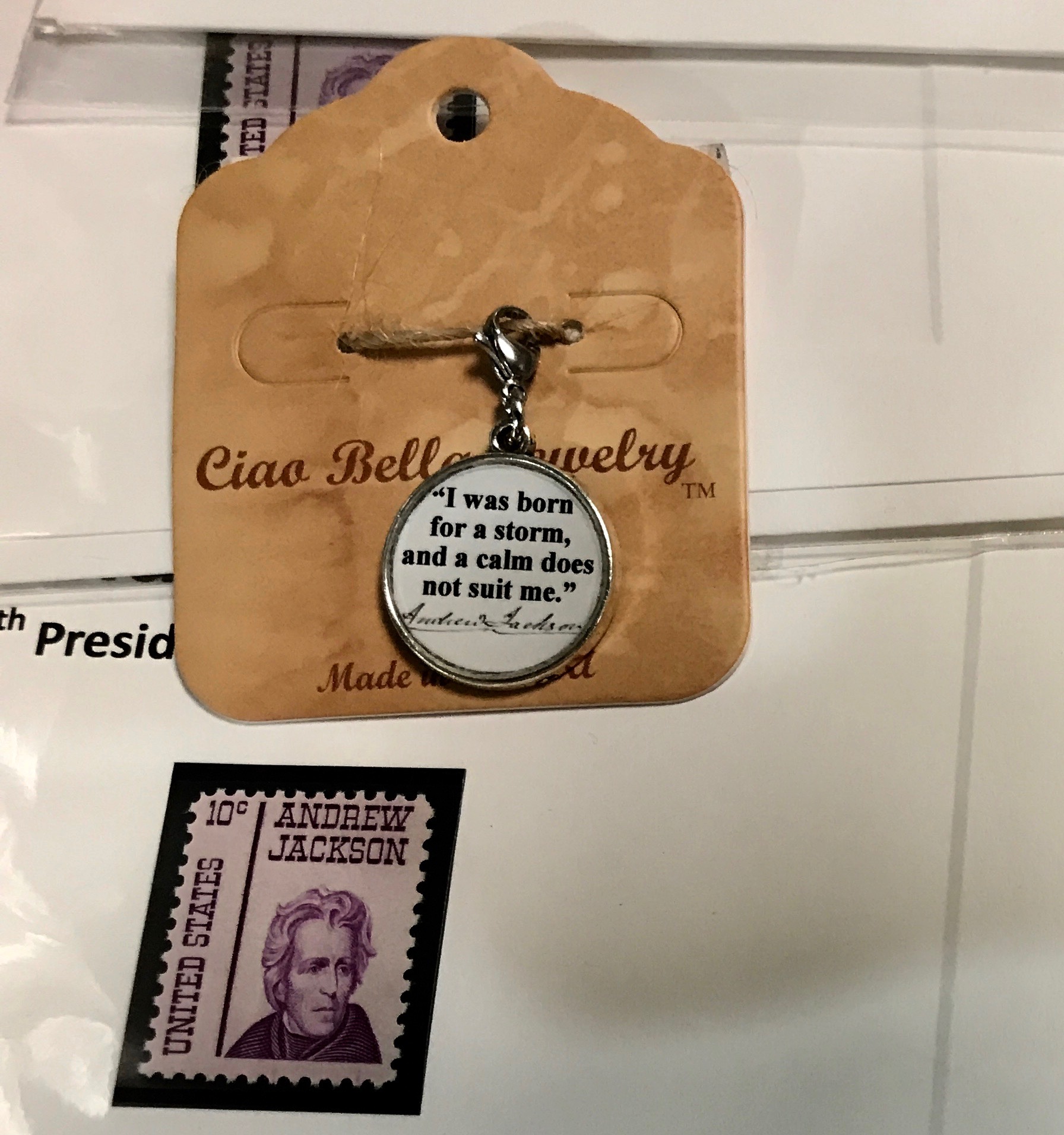
Funny that he gets a $20 dollar bill and a 10¢ stamp.

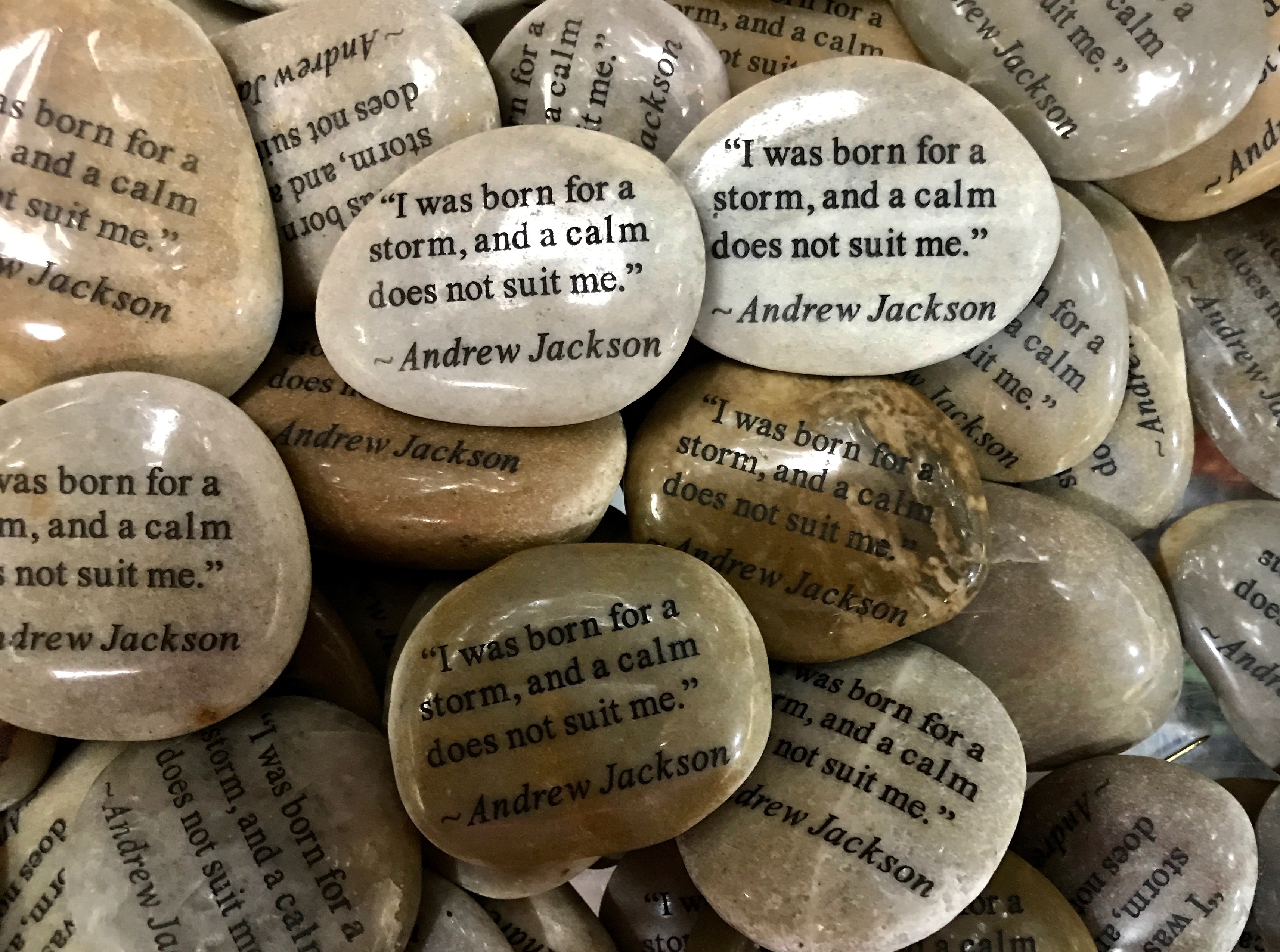
This seems to be his favorite quote, as it was on a number of items. If you want to see what other things he said, you can find them here.

My normal frugality saved that day, and I walked out without buying any tchotchkes.

Next stop, Asheville, North Carolina.


Heading Down The Long Road East

With the change in route, I had to spend the weekend getting myself from the east side of Missouri to North Carolina. Only about 600-700 miles, but I broke the trip up into two parts.

First stop: Nashville.

Nashville was only about 200 miles from Sikeston, but it nibbled away at the drive I’d have on Saturday and Sunday.

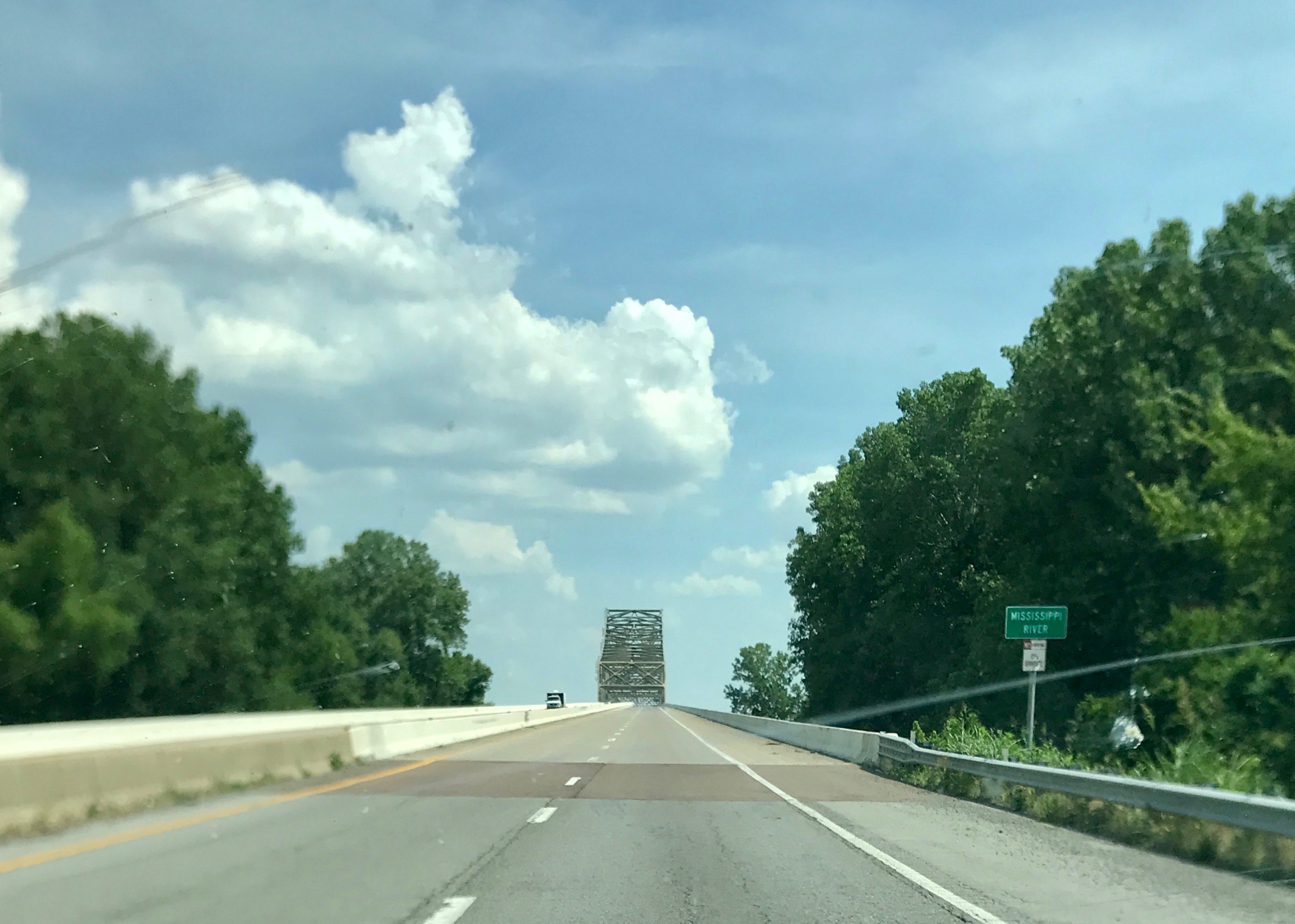
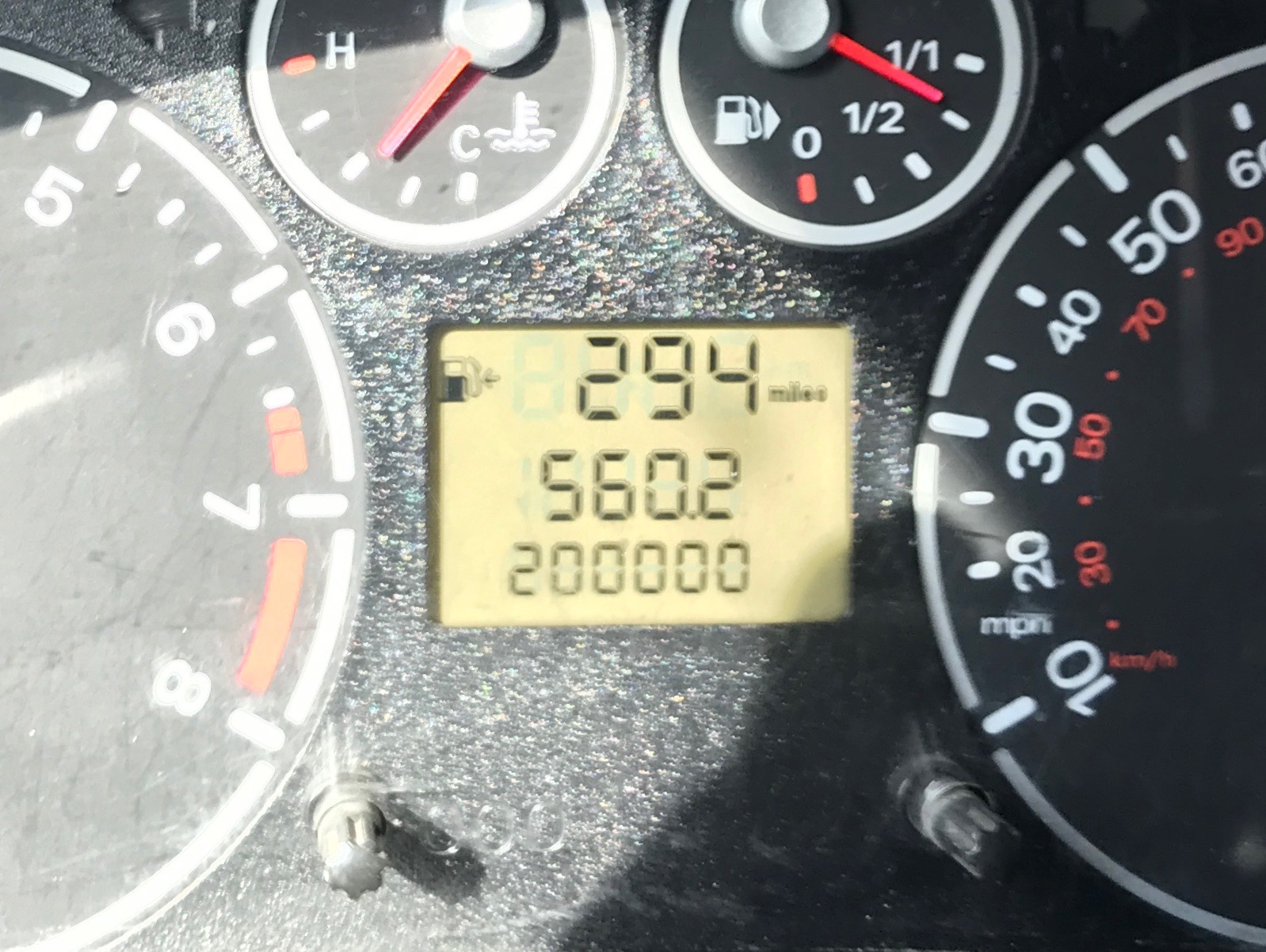
I crossed the Mississippi via bridge and landed in Tennessee on the other side. I drove along, watching the farmland roll by. I was also keeping and eye on the odometer.

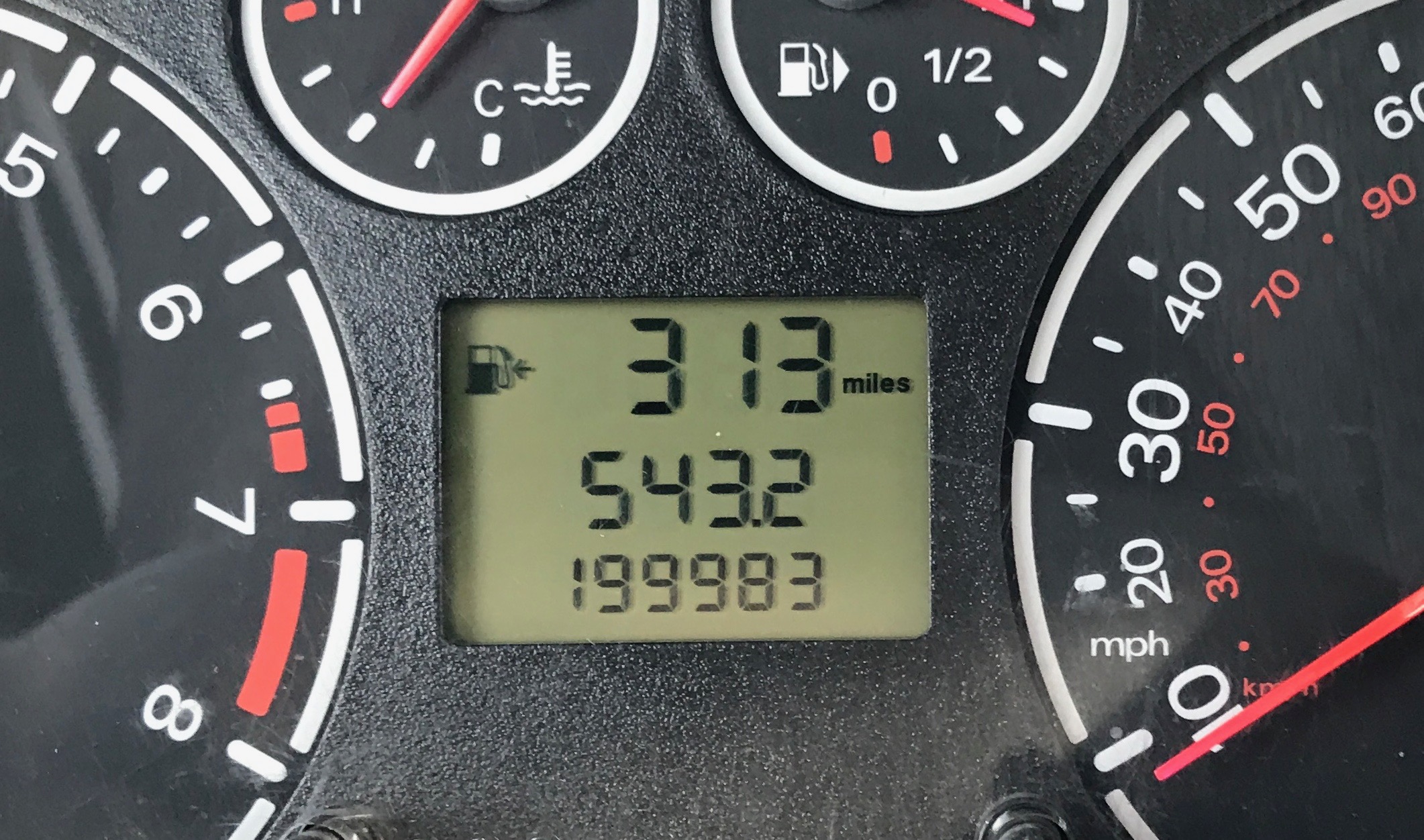
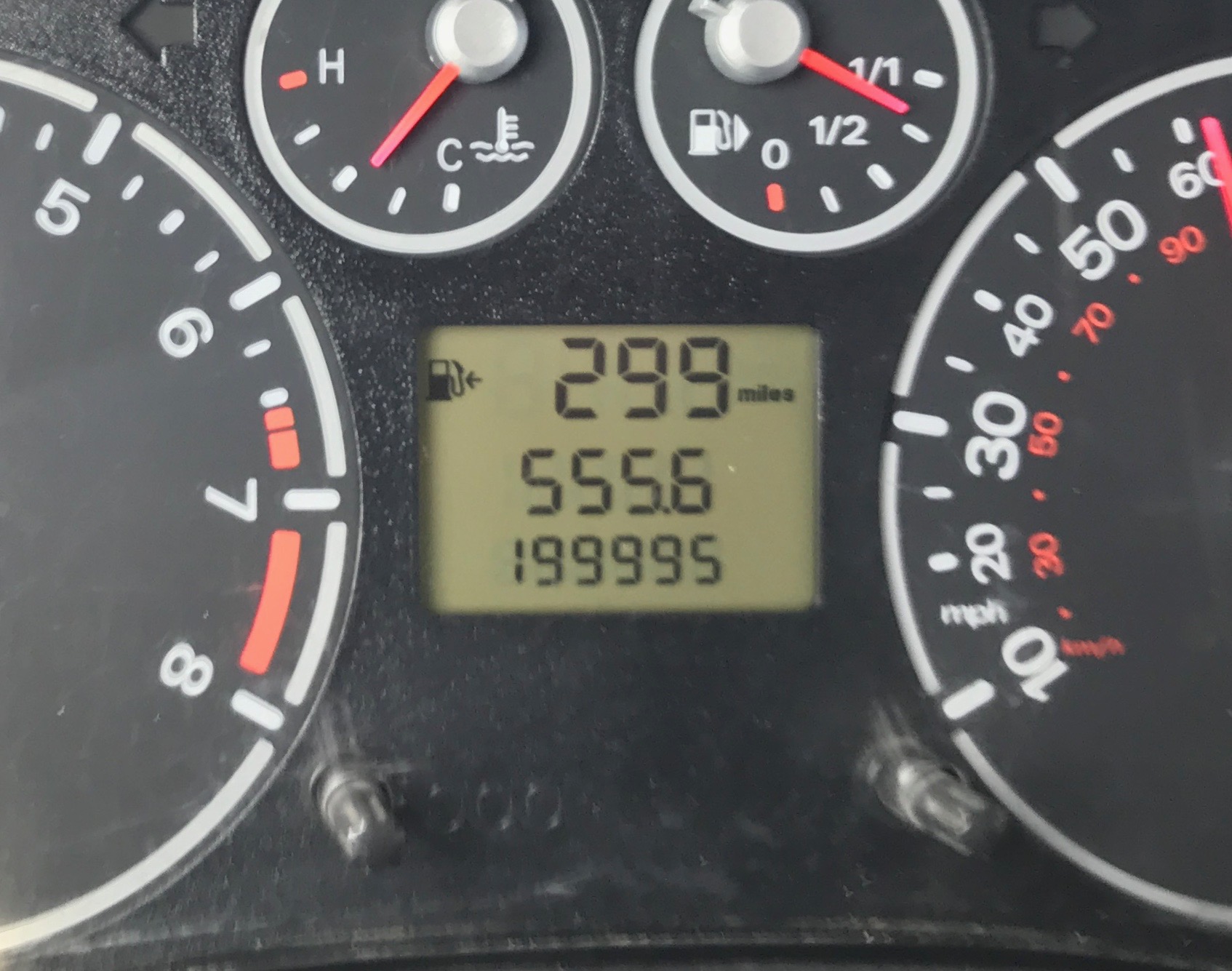
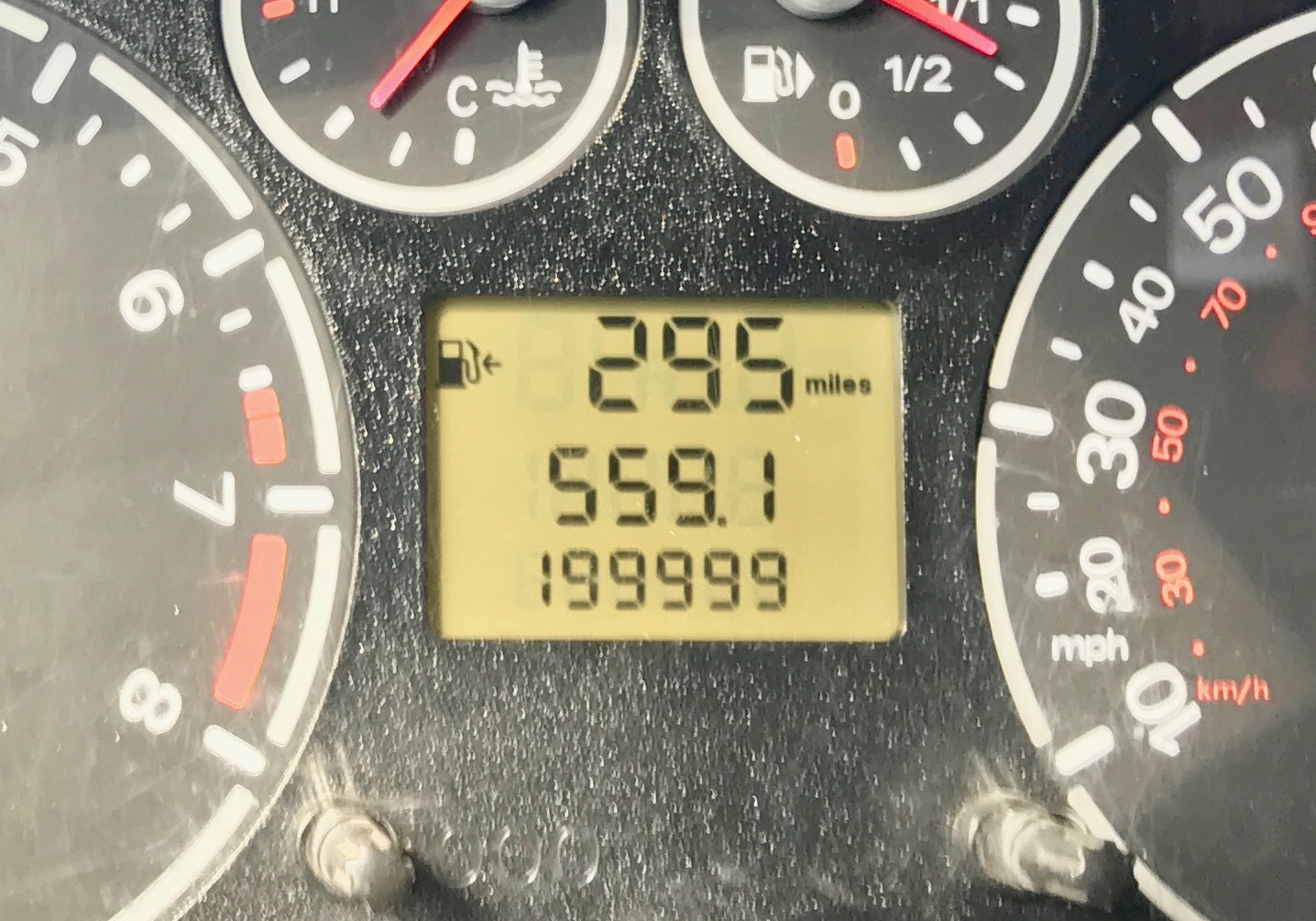
Not too long until 200,000 miles.

To put it in perspective, the Moon is about 240,000 miles from earth.

We’re getting closer.

Closer!

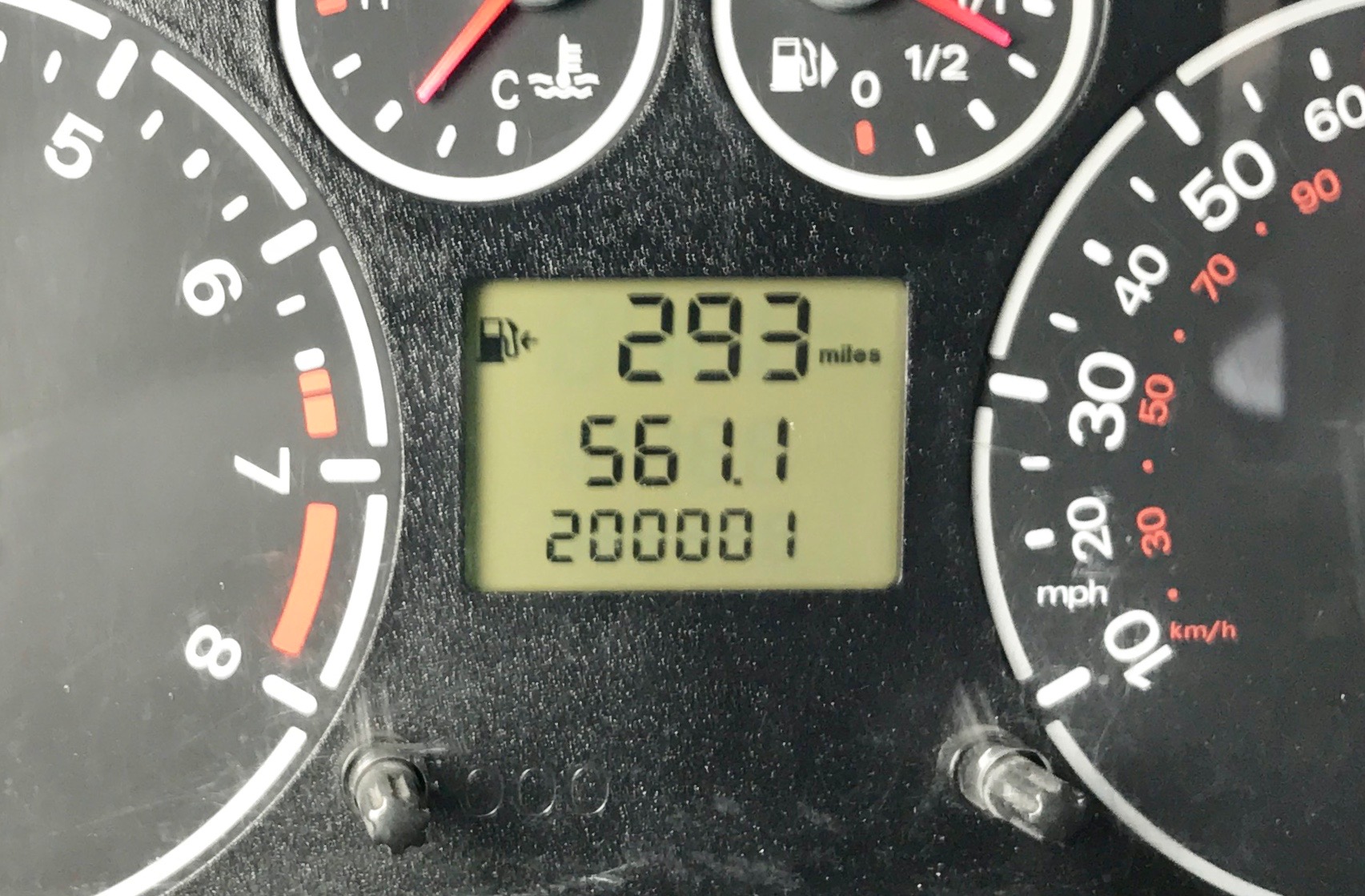
Only one more mile to go!

Bingo! 200,000 miles! What’s next?

Oh, yeah…keep on driving.

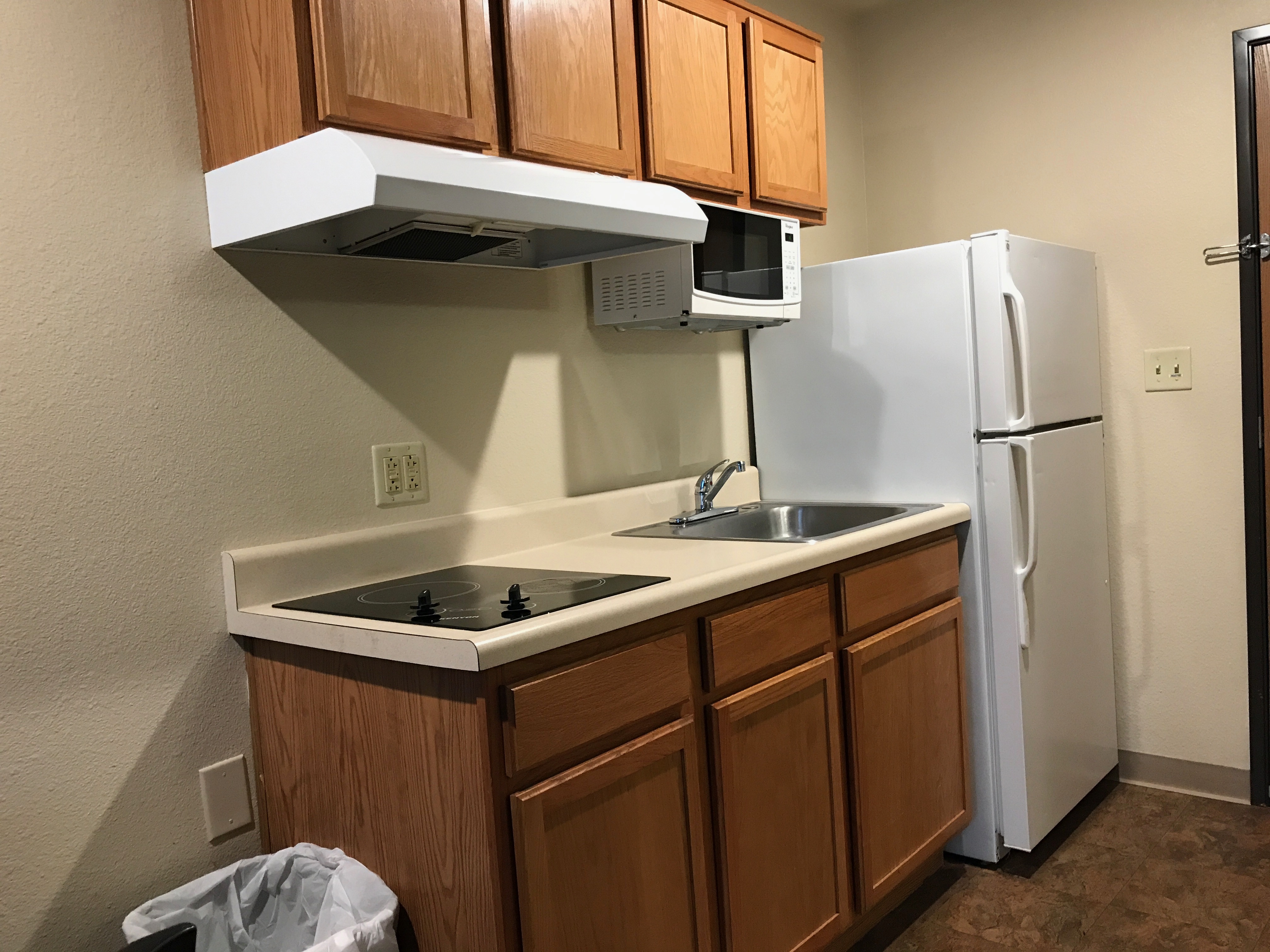
I had made a reservation in a place I found on some hotel booking site. The man who booked the room for me was very enthusiastic about the place, and he specifically talked up the advantages of the kitchen that each “suite” had.

Now, back when Dad and I would take Mom back to visit folks in Buffalo, we would stay at Residence Inn. That is kind of what I expected. A completely outfitted kitchen – pots, pans, dishes silverware and so on. The price should have been a giveaway.

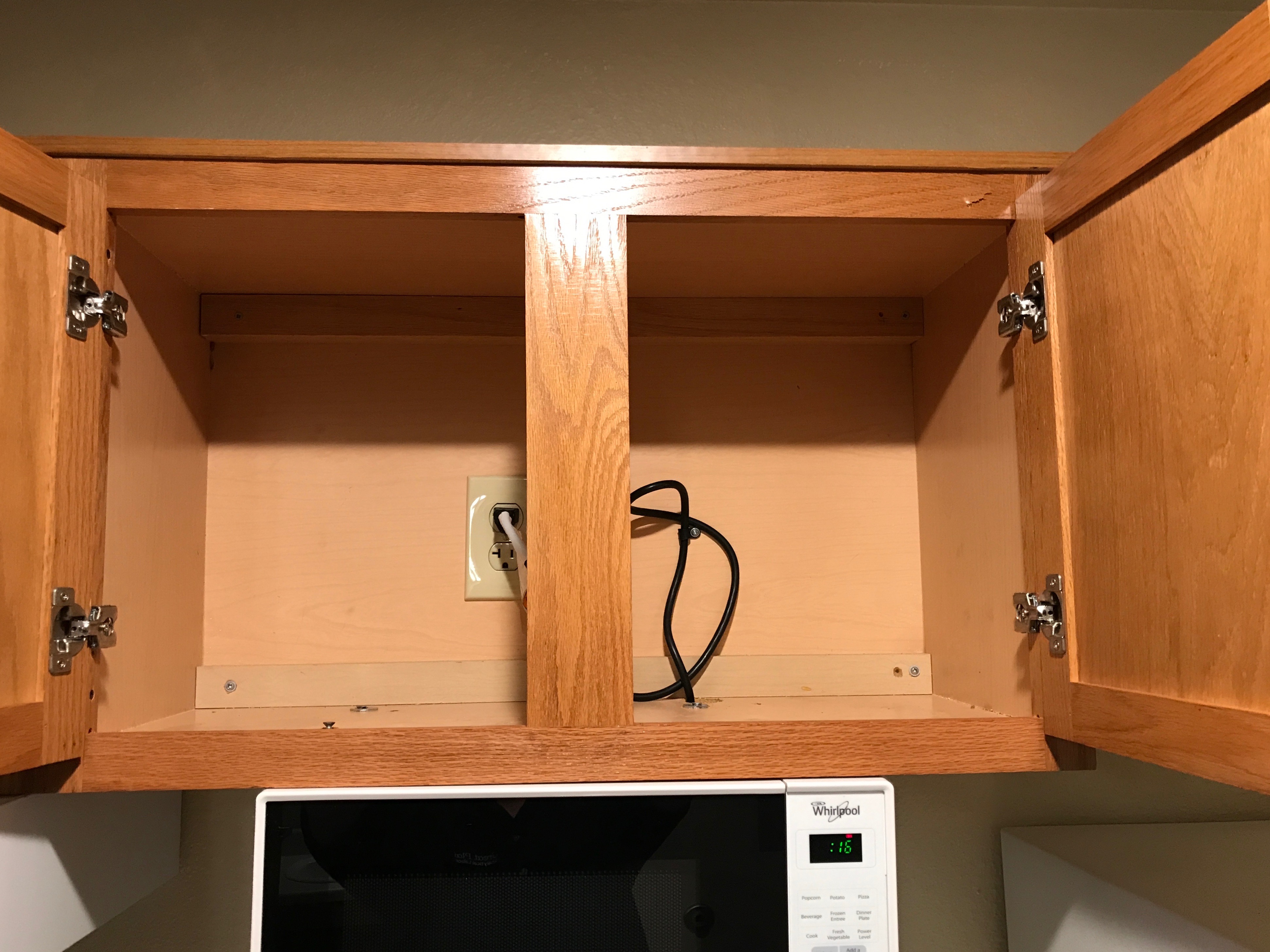
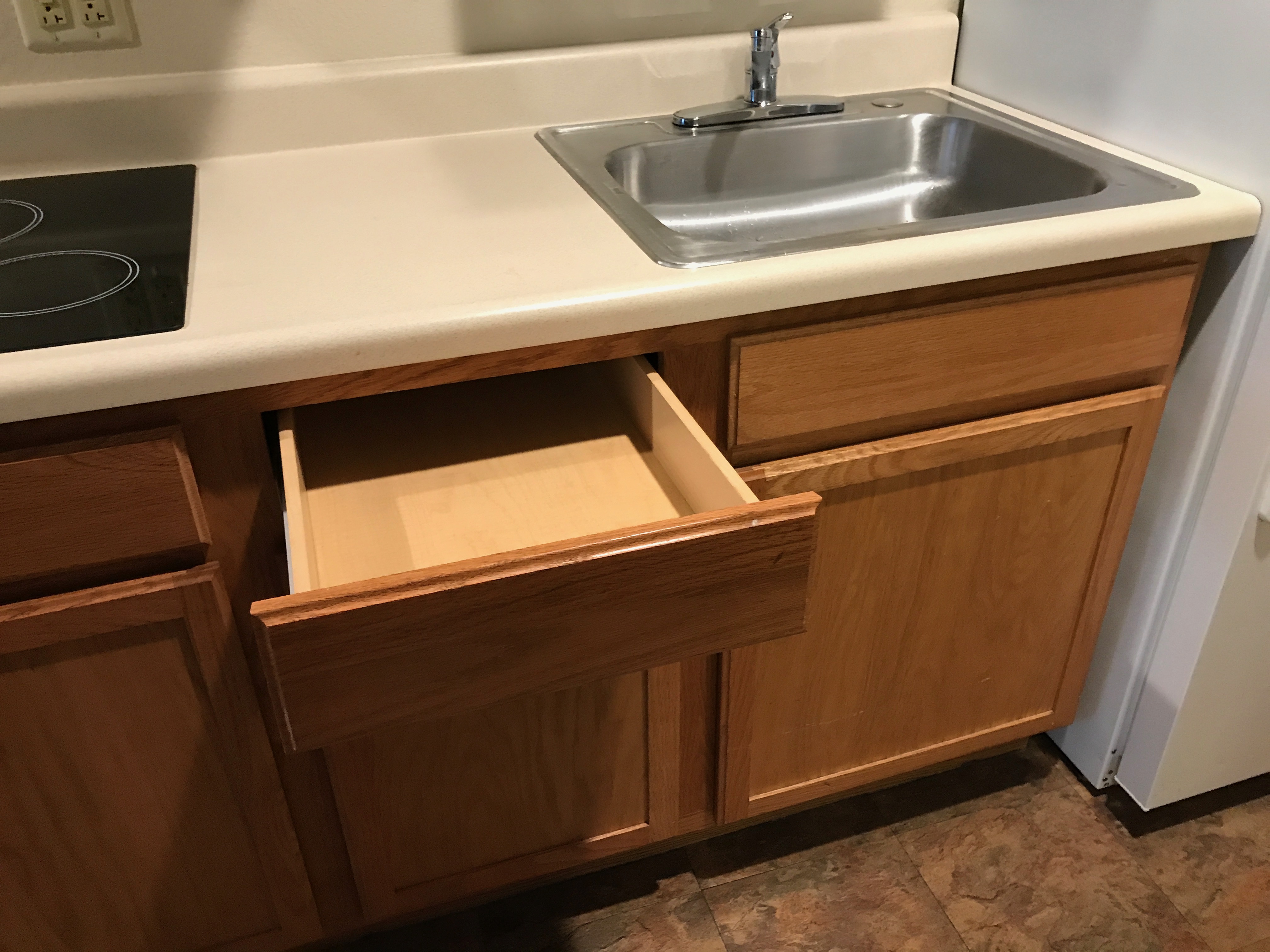
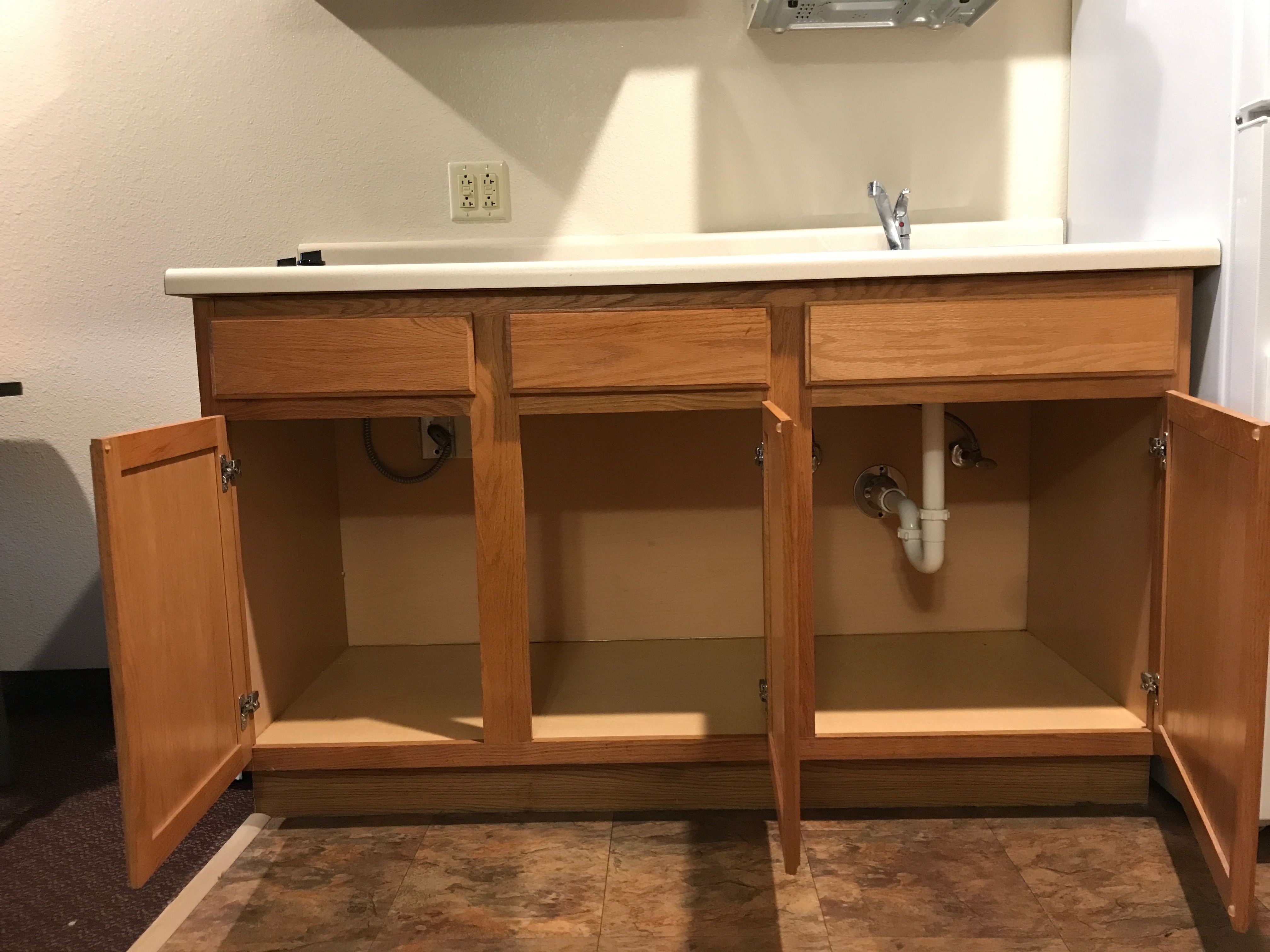
Yes, there was a kitchen, but there was nothing in the kitchen.

Nothing.

Nothing.

Nothing, unless you want to include the ice cube trays.

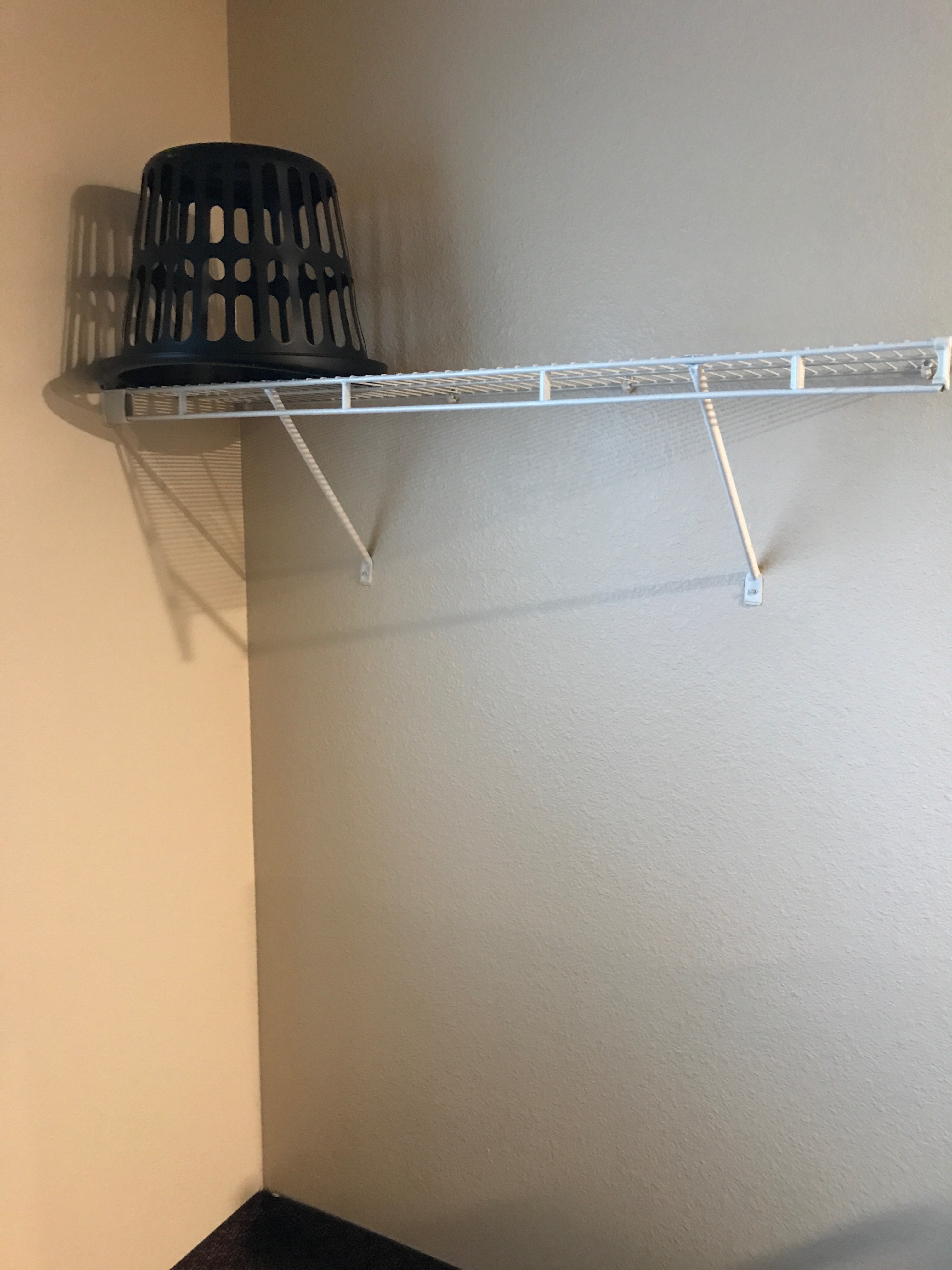
And the laundry basket in the closet.

Heck, they didn’t even provide coat hangers! I wish I could remember the name of this place so that I could warn you not to stay there. But, it was only for one night, and the bed was comfortable enough, as I remember.

Once at the hotel, I went in search of dinner.

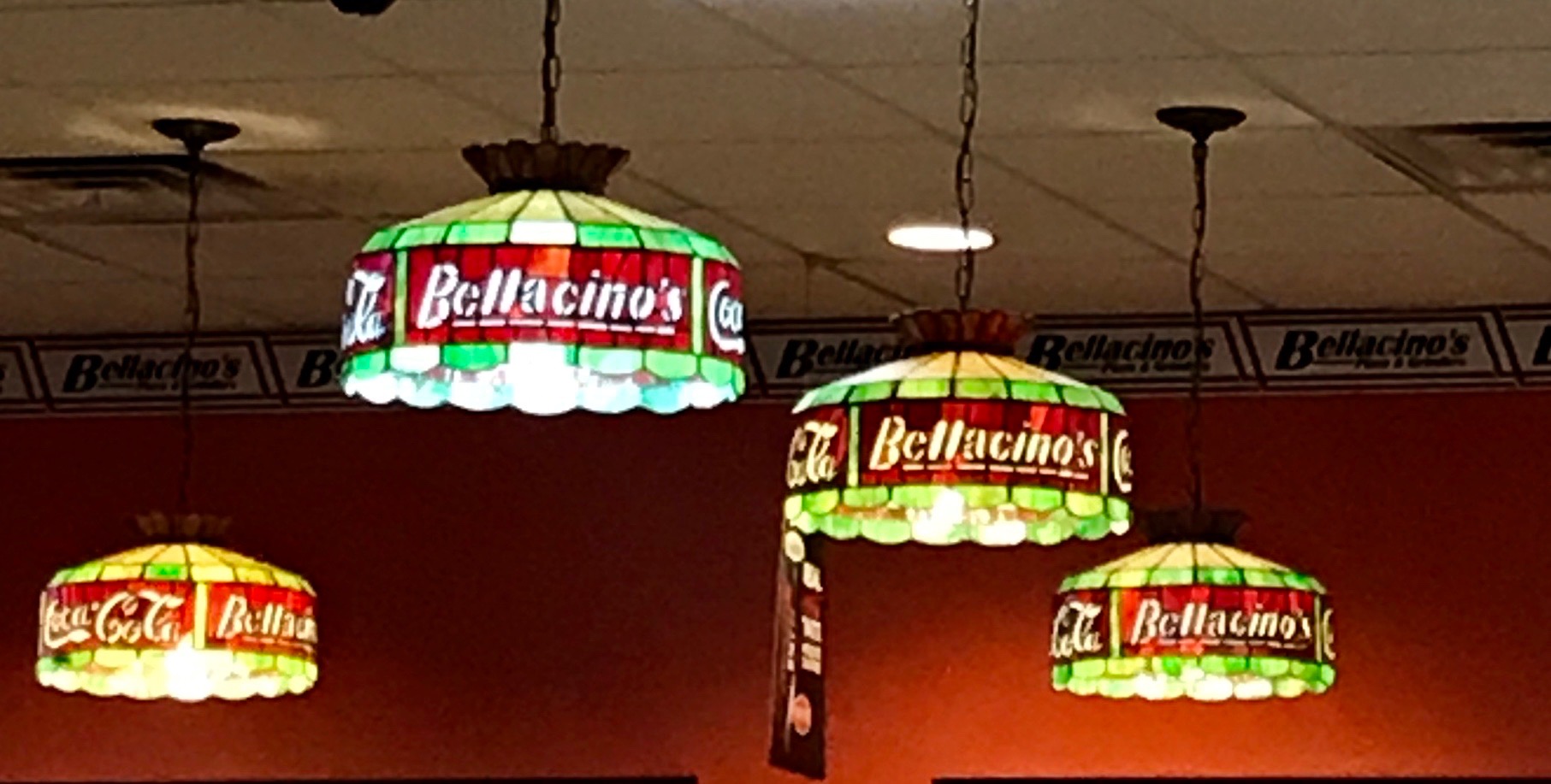
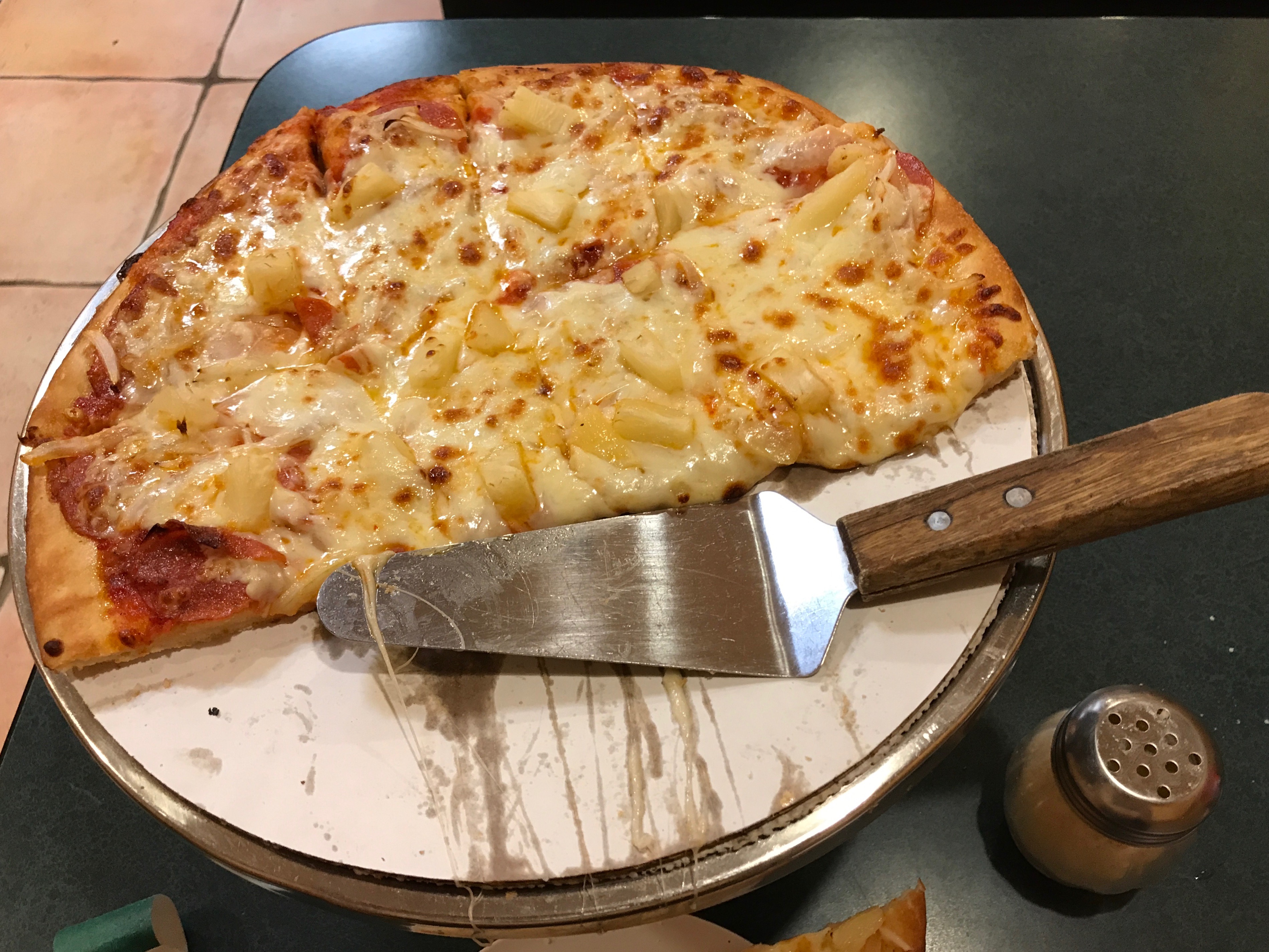
I went to a pizzeria called Bellacino’s. The pizza was good, and I had leftovers.

Breakfast and lunch for the next day. My adventures in fine dining didn’t start until later in my trip.

The next day I was planning to tour something on my “Next Time” list: The Hermitage, Andrew Jackson’s home.


The Home of Throwed Rolls

On my last day in Missouri, I got to see a few things that captured my fancy.

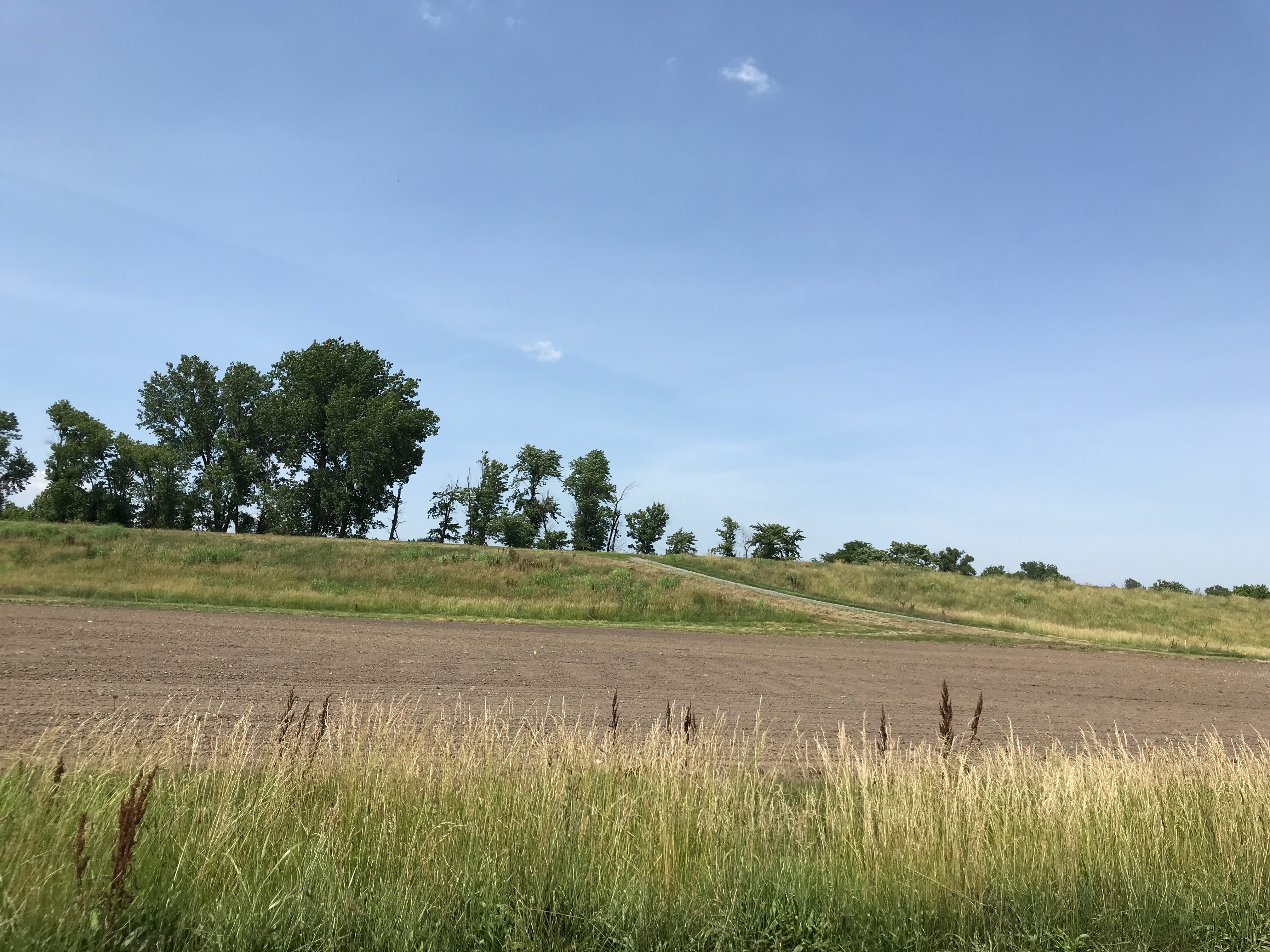
One is a levee. I’m sure there must be different levees for different locales, but this one was by the Mississippi in the boot heel. I had to drive up and over the levee to get to the facility I was collecting from.

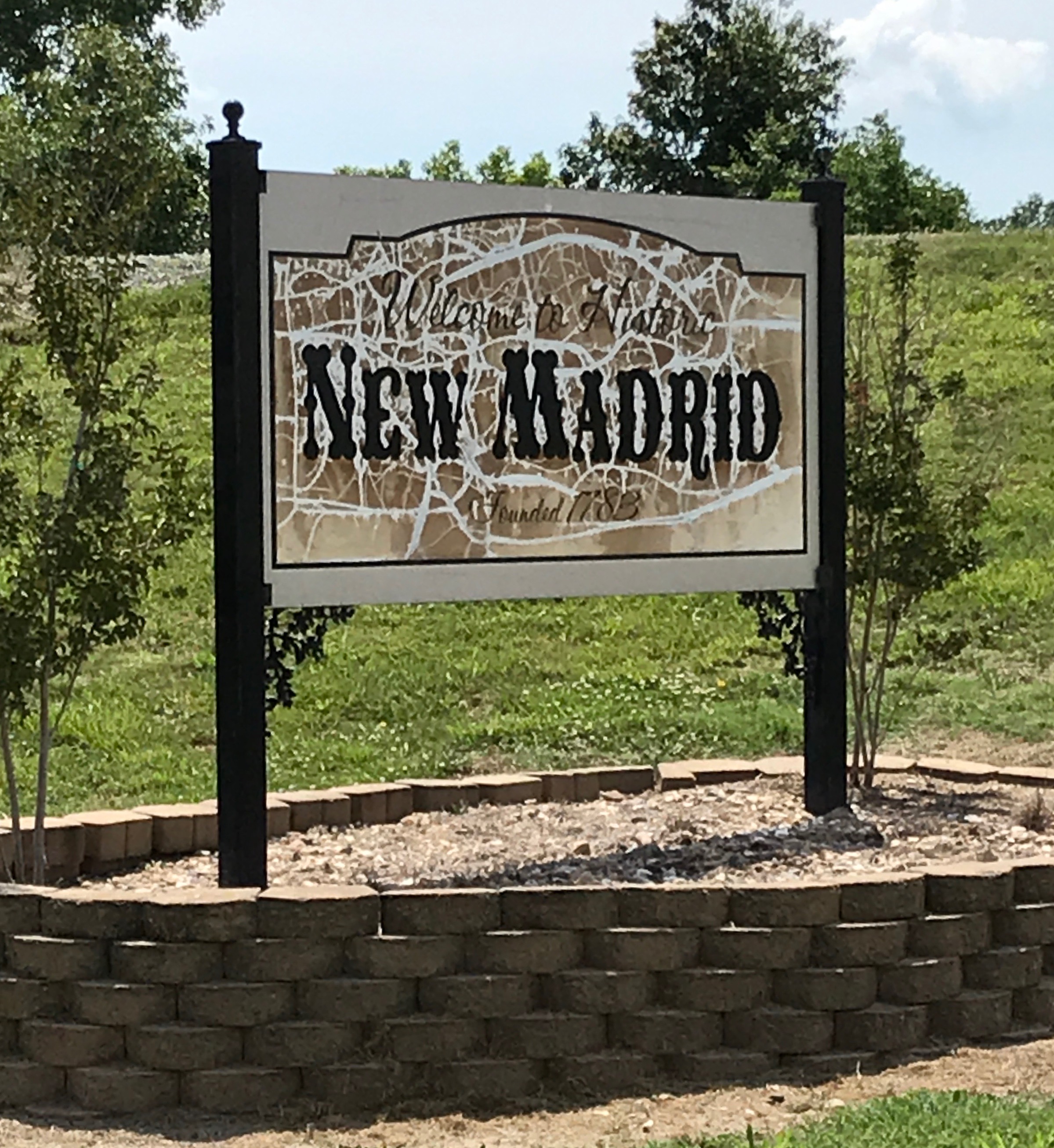
The other was New Madrid, home of the New Madrid fault and one of the strongest earthquakes our country has ever experienced.

I can practically hear you saying, “Wait! I don’t remember hearing about that!” Well, they happened in 1811-1812, so it has been a minute. If you want to know more about these earthquakes that were estimated to be up to a magnitude 8, you can always consult my Preferred Source.

Earthquakes are not completely a thing of the past in this part of the country, though. When I was researching the big quake in the 19th century, I saw that there was a 2.9 magnitude earthquake in New Madrid on January 11, 2019. I guess we should always have our “go bags” packed. You never know when you will need to bug out.

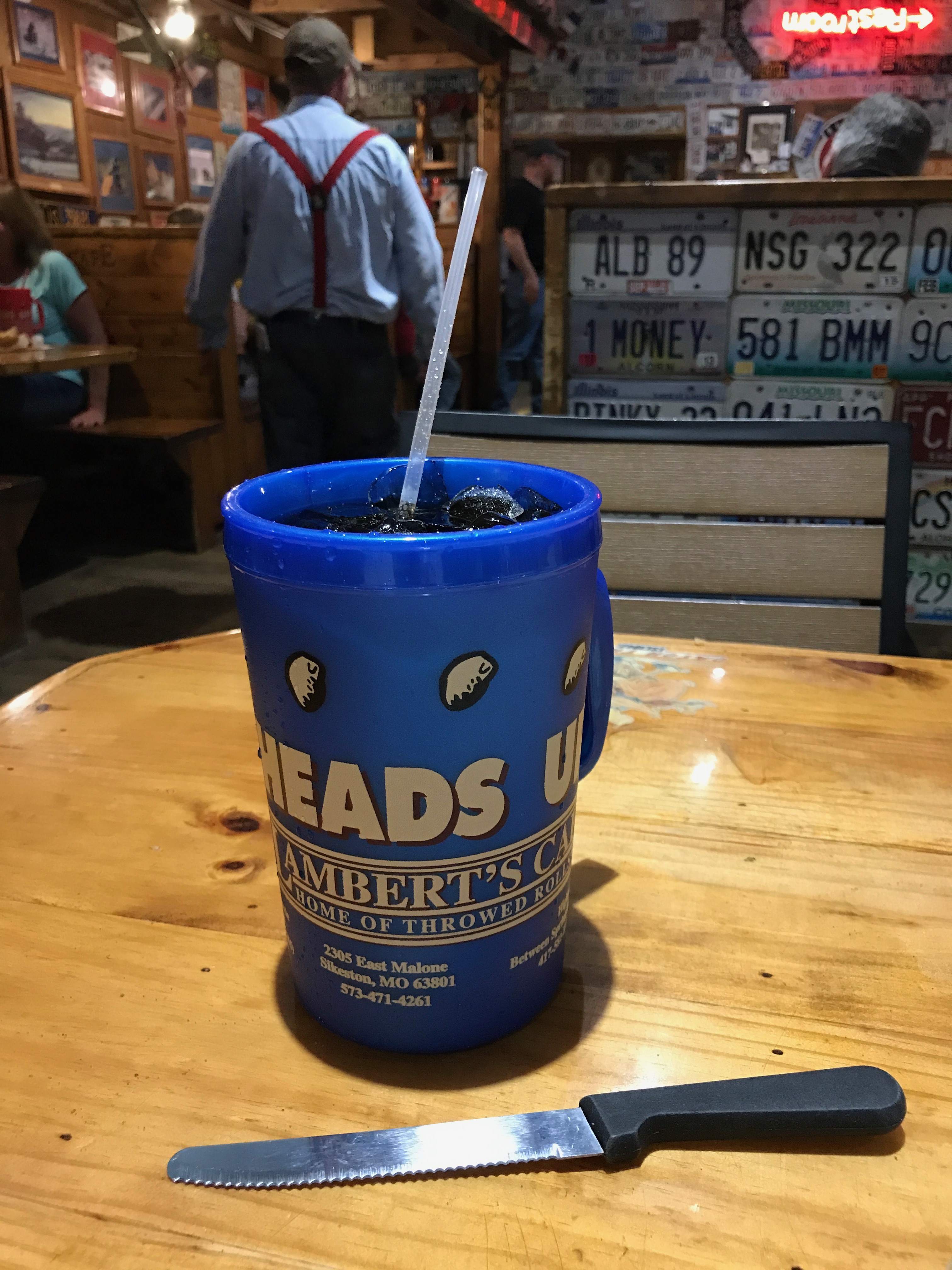
For my last night in Missouri, I decided to take some people’s advice and visit Lambert’s.

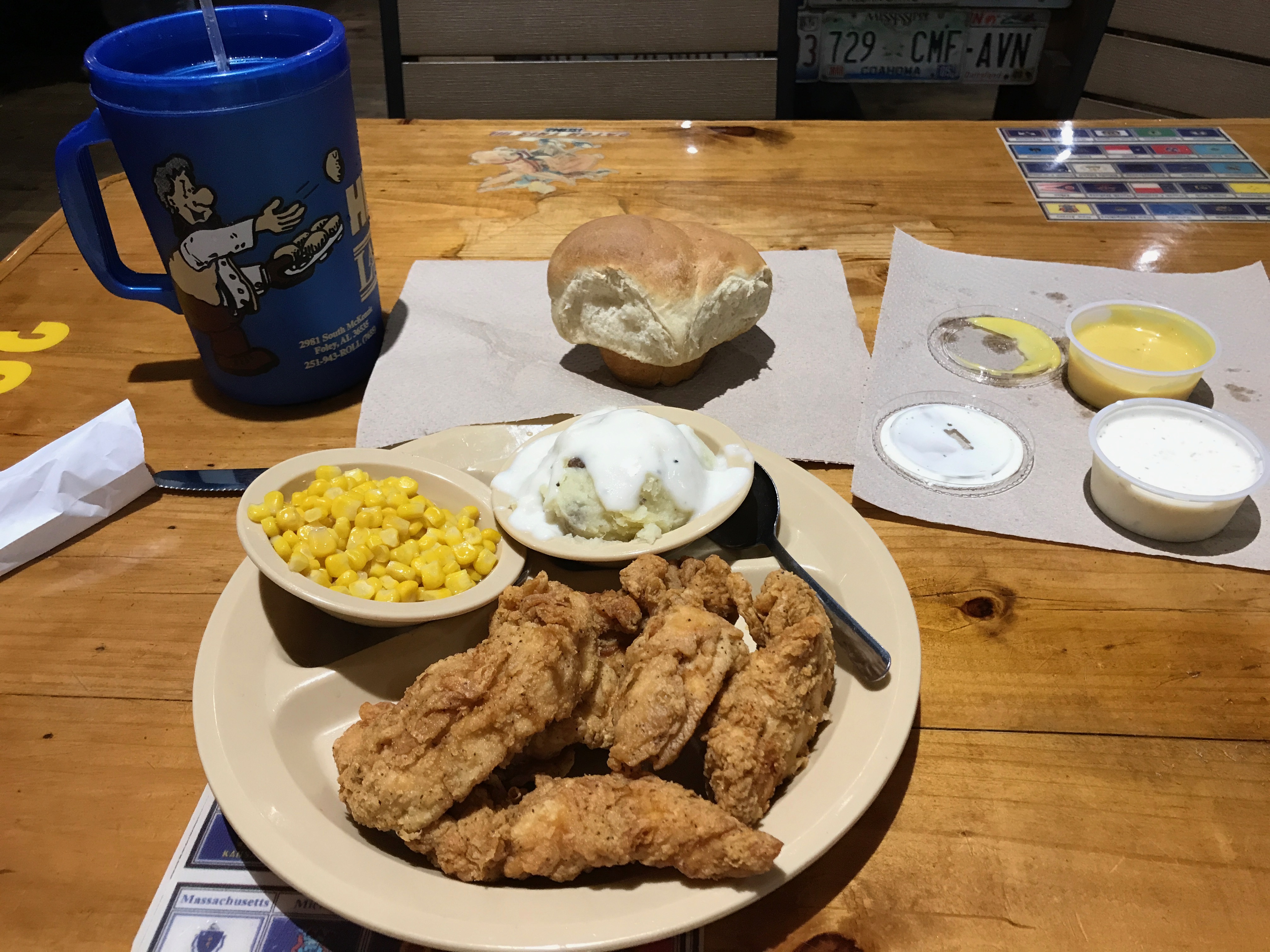
In addition to “down home cooking” their main claim to fame is their “throwed rolls.”

And, yes, they really do throw the rolls!

The thrower really had an arm on him! He was shooting those rolls from one end of the restaurant to the other.

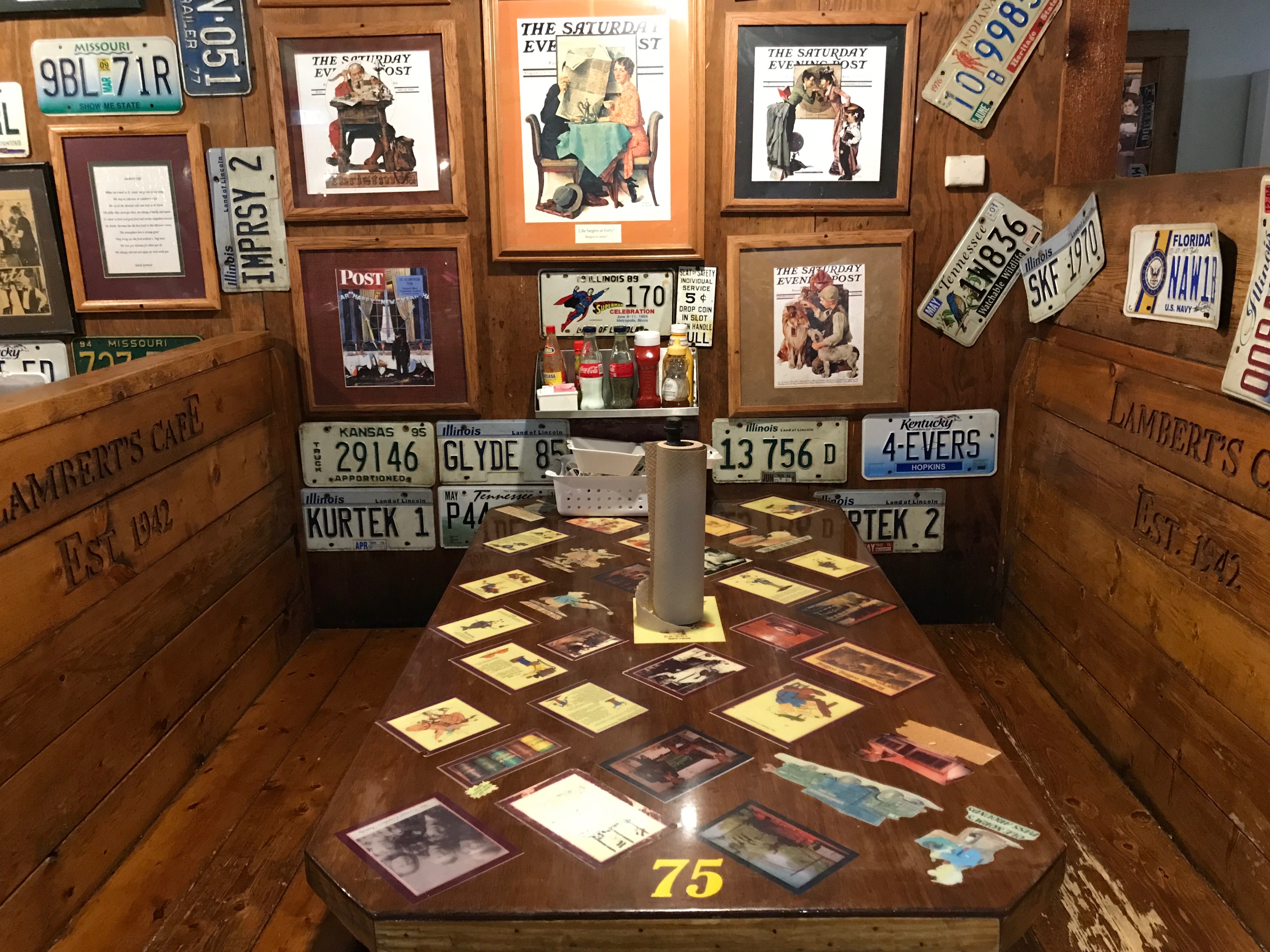
It’s easy to see that the decor is license plate chic.

I was seated quickly and the waiter brought me a Diet Coke and took my order.

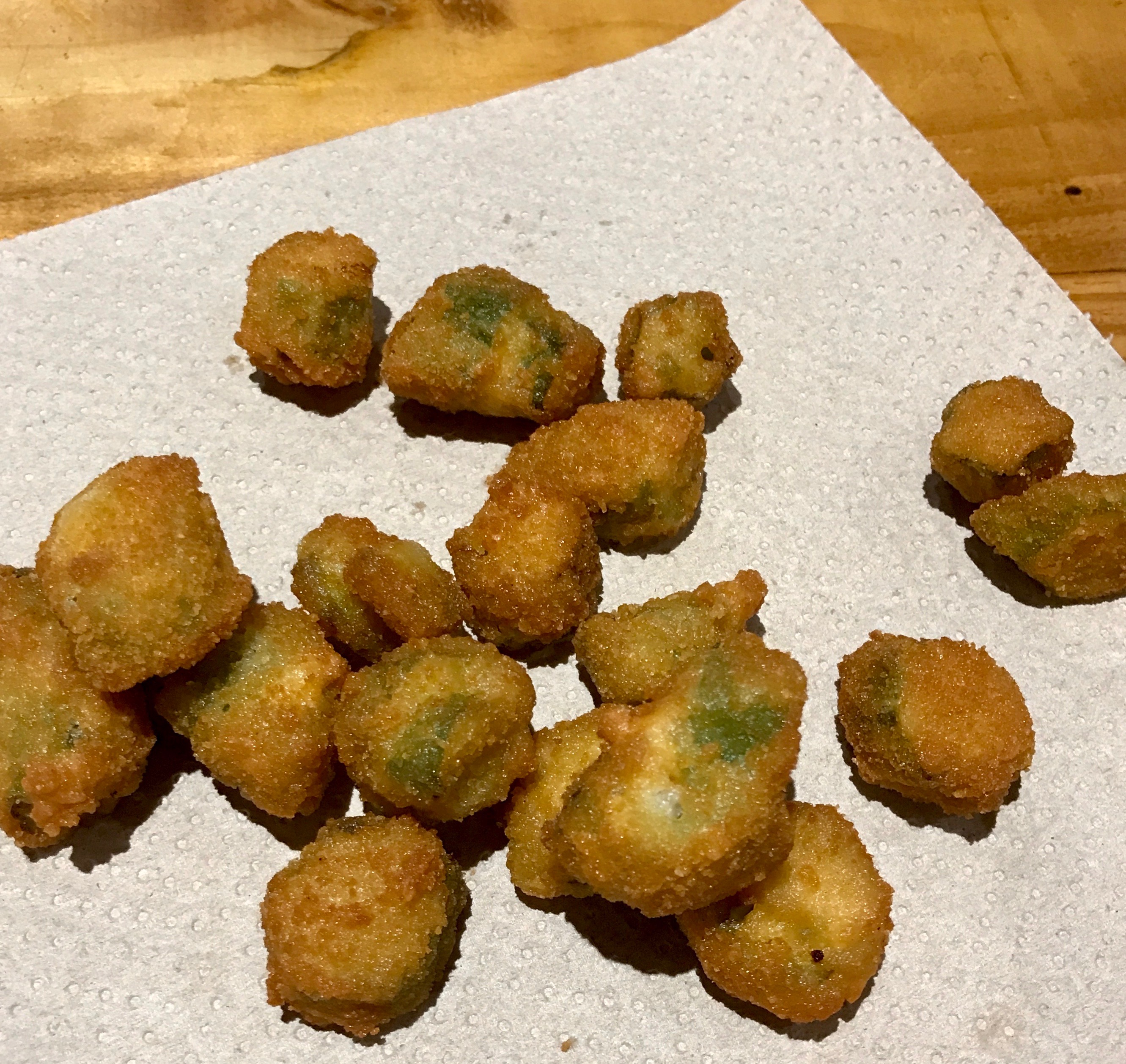
While I was waiting, some of the servers circulated with the “pass arounds.” I ripped off a paper towel from the roll on the table and got some fried okra to nibble on while I was waiting.

My dinner arrived. There’s a roll in the photo, but I didn’t catch it. A server came by and handed me one.

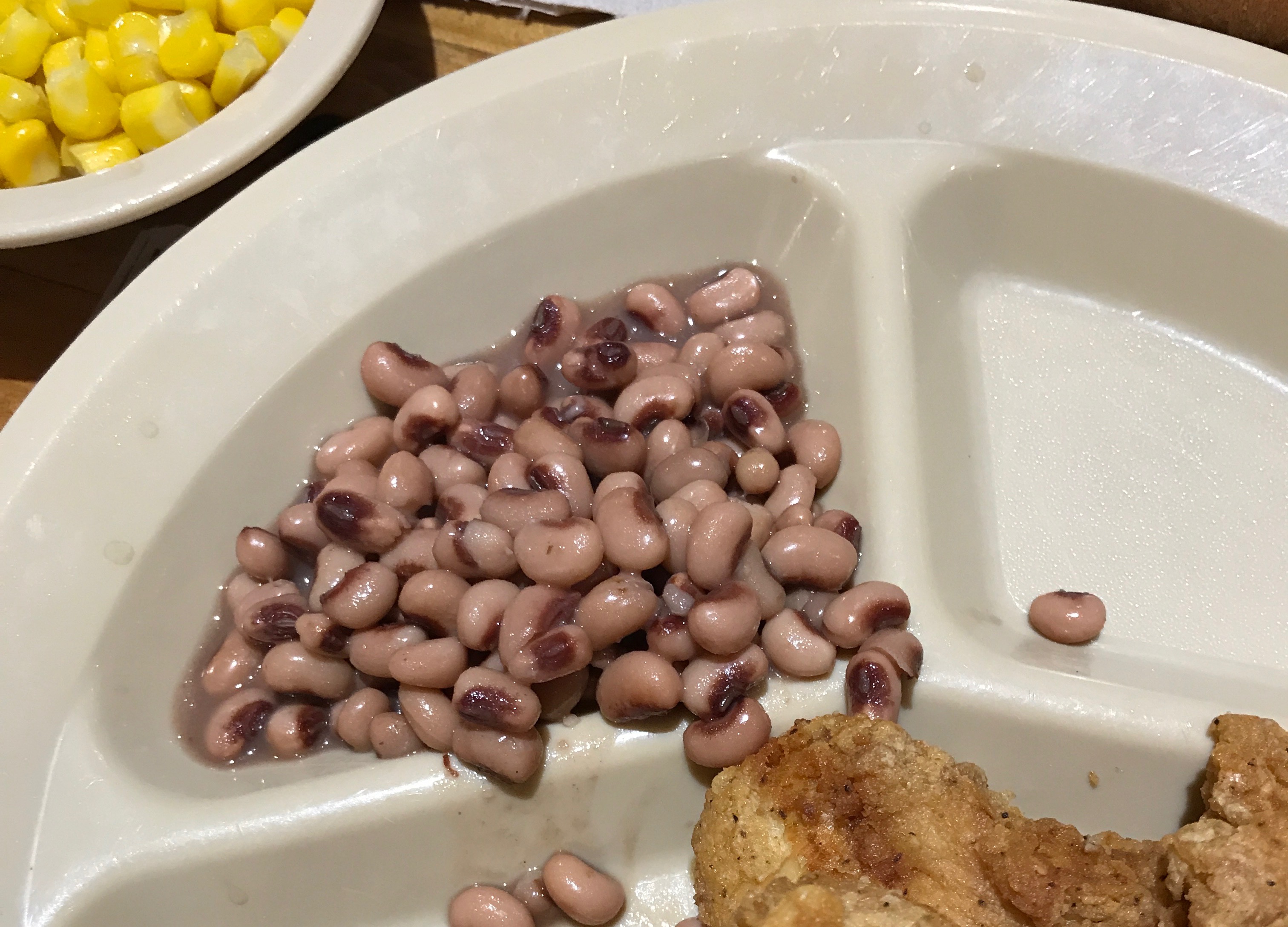
The pass arounds kept coming. Black eyed peas were ladled into one of the compartments.

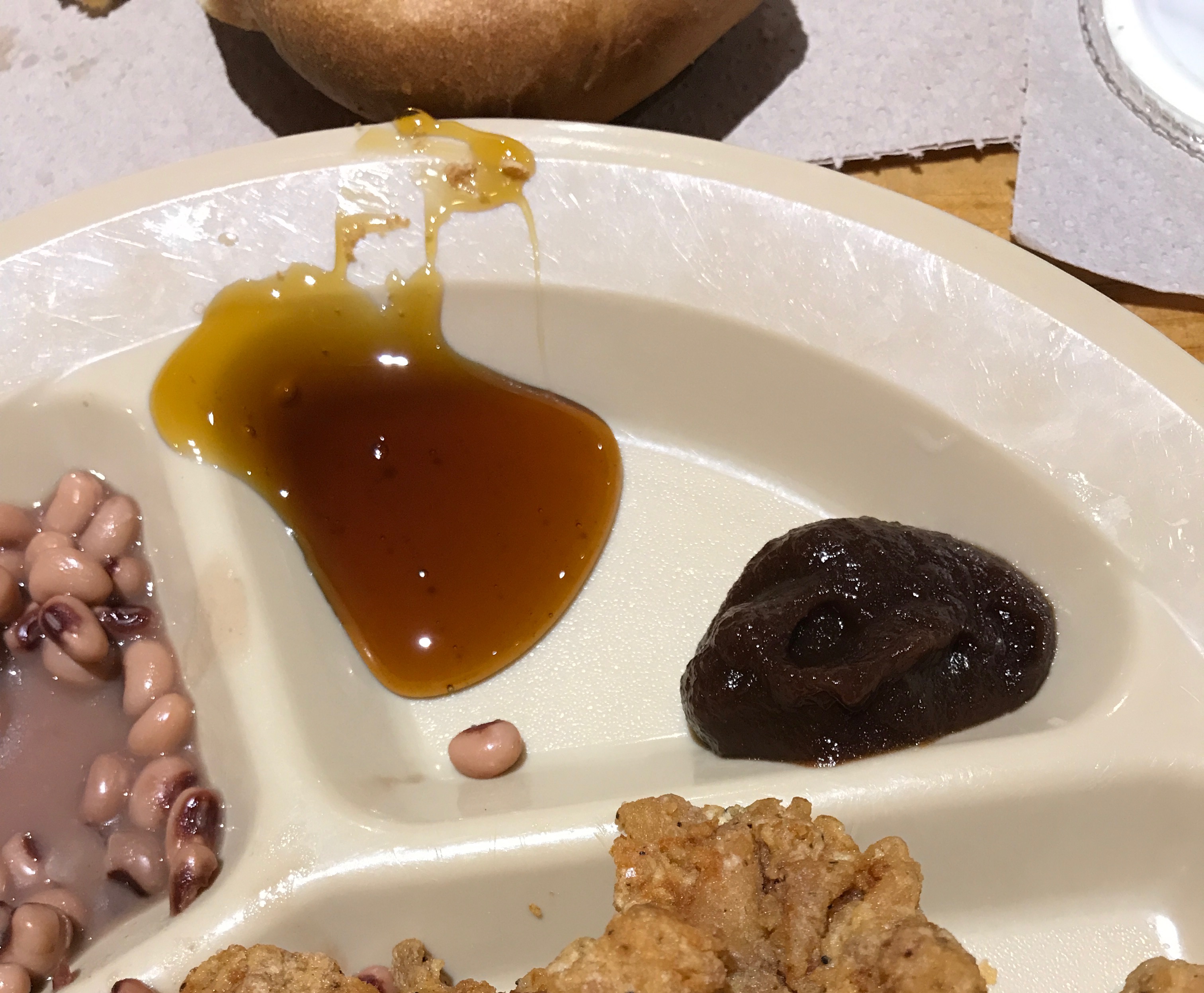
Then sorghum and apple butter made an appearance. I hope my Loyal Readers don’t think less of me, but “down home cooking” is not my preferred cuisine. But, I will admit that it was an entertaining meal. If I had been starving, I think some of that food might still be sticking to my ribs.

You can tell that the decor is heavily into kitsch. They have three locations, in case you want to include “throwed rolls” into your travels: Sikeston, Missouri; Ozark, Missouri; and Foley, Alabama.

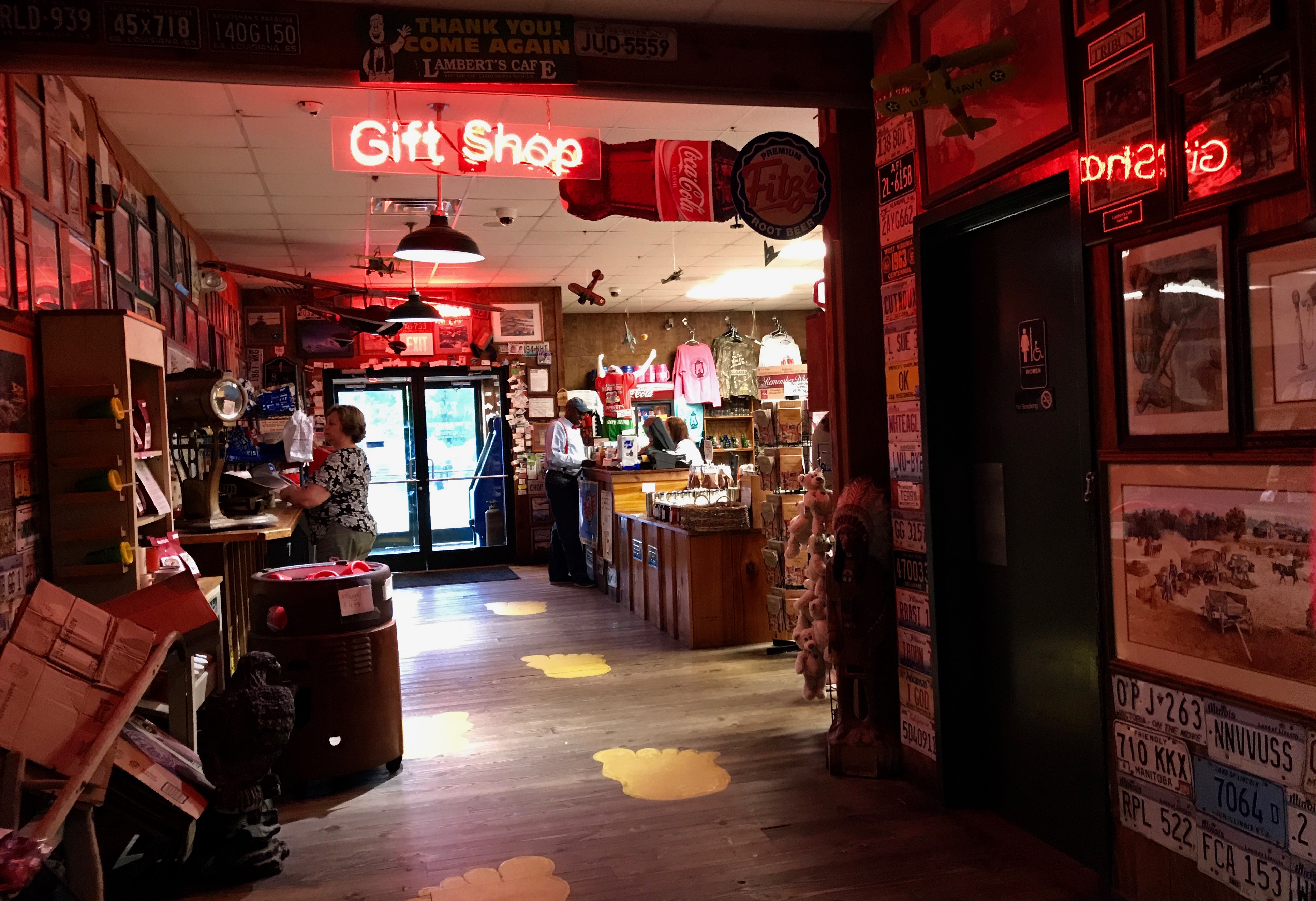
As always, exit through the gift shop.

Tomorrow, I’ll be heading east.


What’s That River Over There?

I do kind of miss paper maps, but I think I would have had a hard time finding maps that had enough detail to find some of the places I had to find. For instance, just before I ended up here, I once again found myself in the middle of nowhere. Oh, it was a farm, and there was even a grain bin, but it wasn’t what I was looking for. There was no one to ask; I guess they were all out working in the fields.

The facility I was trying to find had a phone number on the card and someone actually answered when I called. They gave me directions and I found them right next to this river. Unfortunately, they had a sign up prohibiting taking photos, so I can’t show you it, but they loaded the grain right into barges.

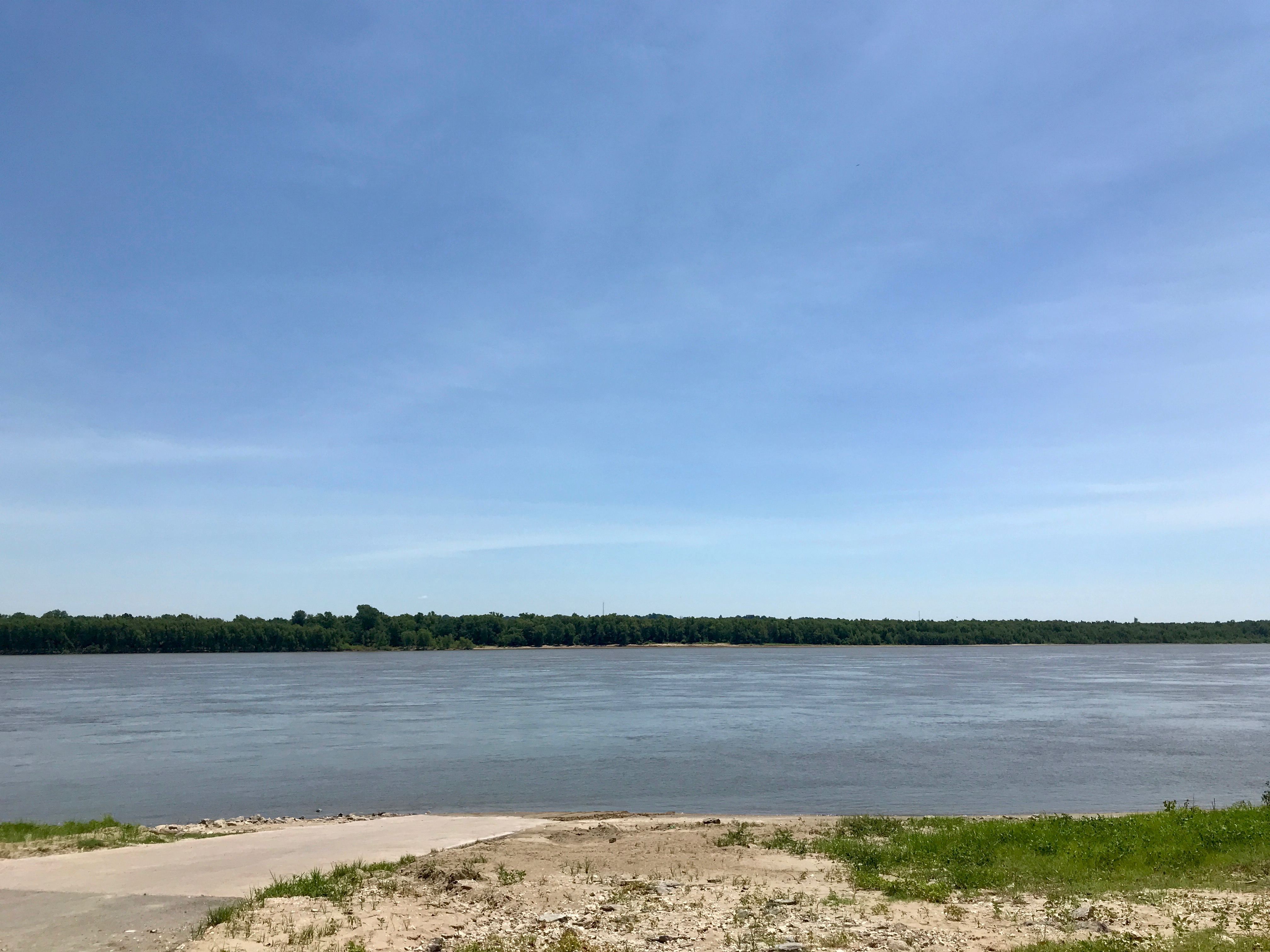
“What’s that river?” I asked the worker who gave me the sample. “The Mississippi,” was the response. I sure felt silly! I had forgotten where I was. Well, with all the zipping around I’d been doing, it’s a miracle I remembered what state I was in. (I was still in Missouri.)

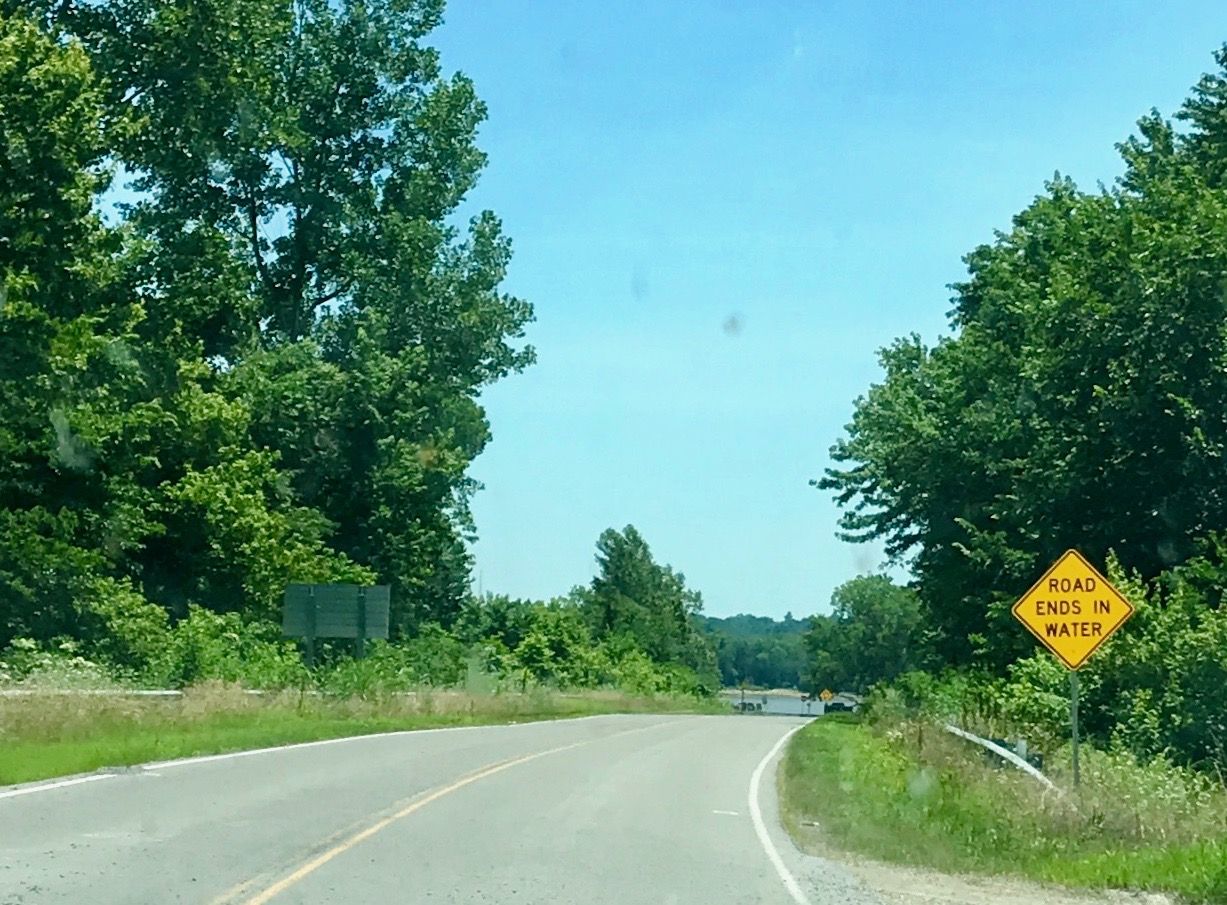
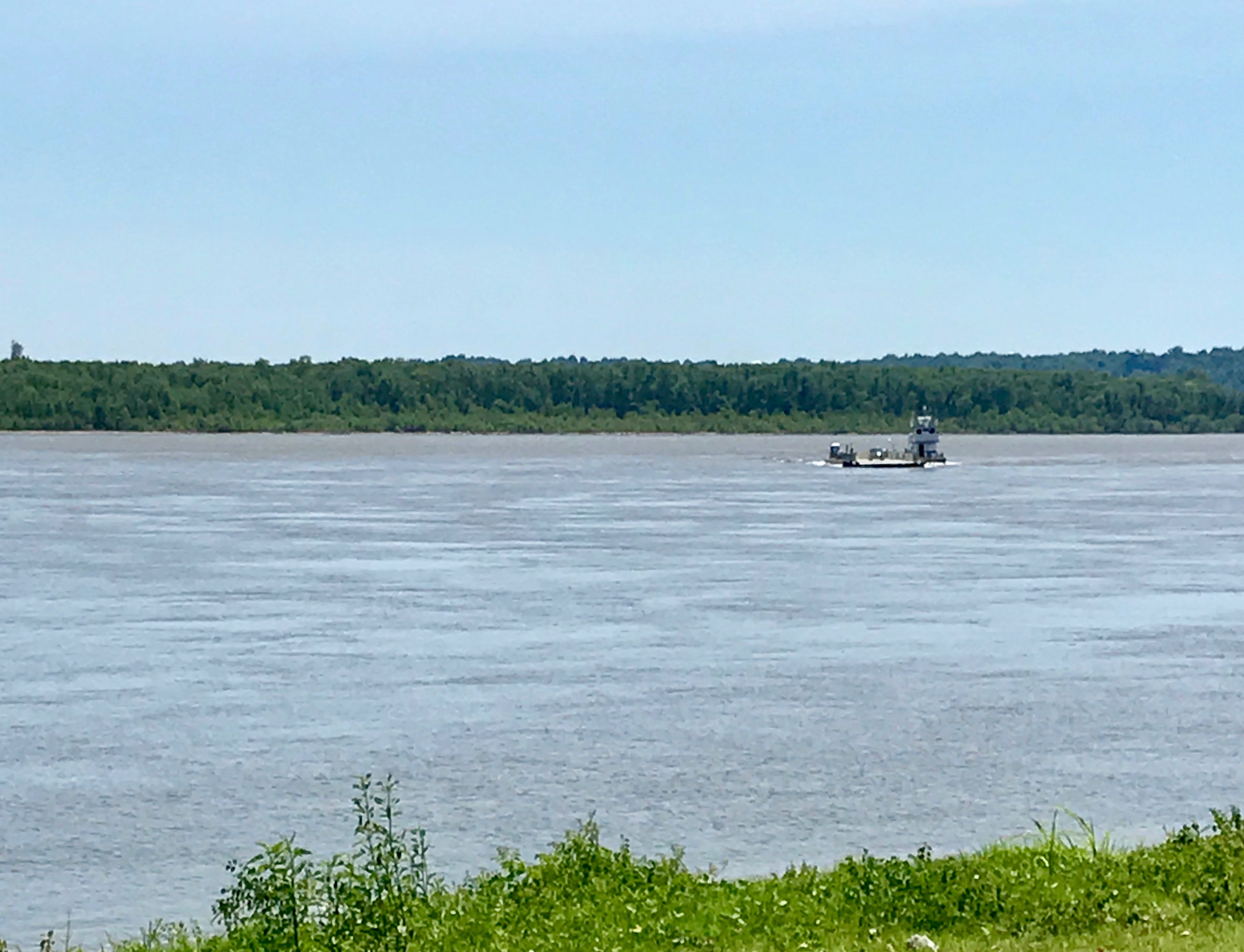
With this intriguing sign, I had to investigate further.

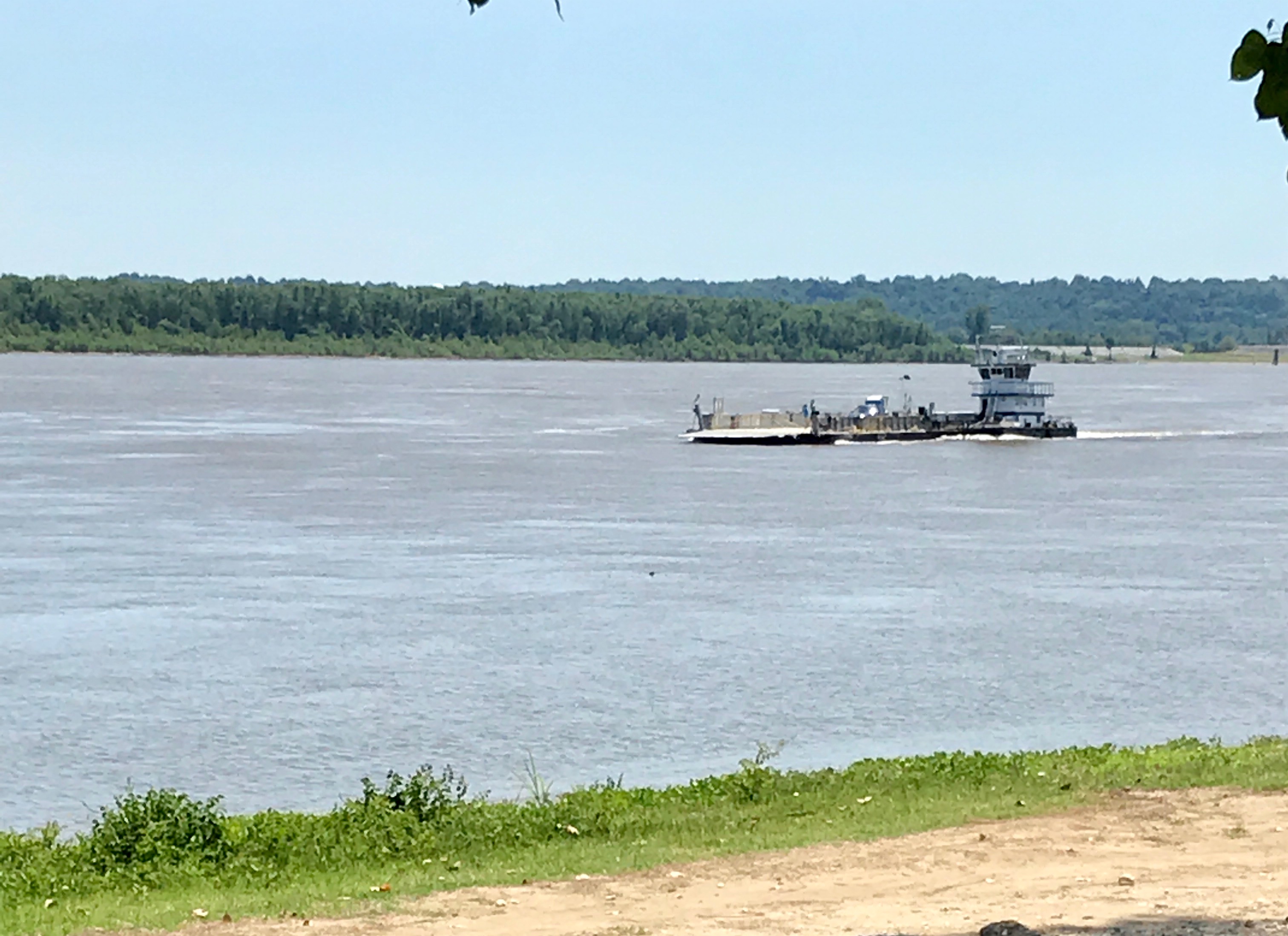
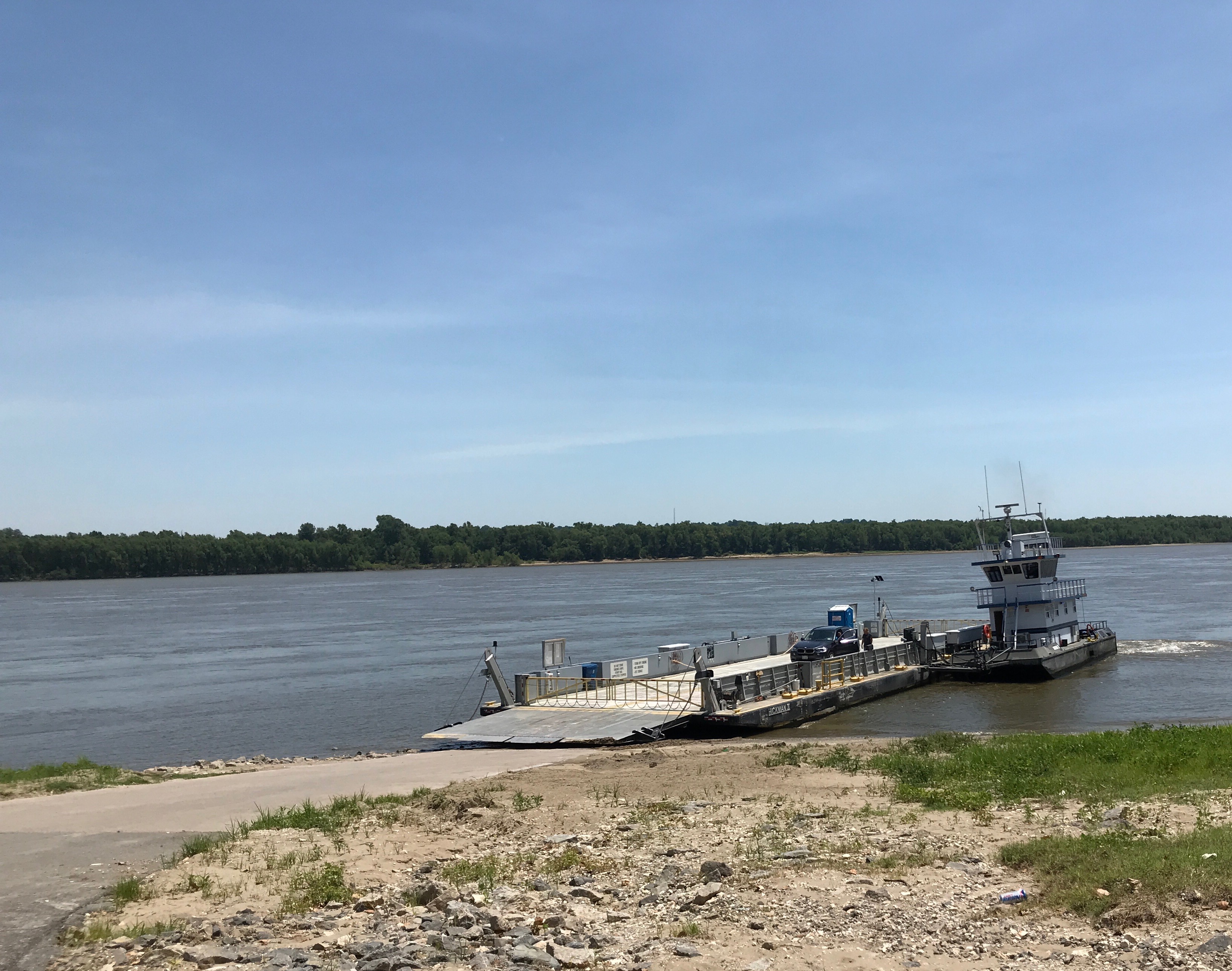
It turns out that it lead to a ferry landing. I spoke to a few travelers who were waiting for the ferry to come. I think that was Tennessee on the other side.

After a bit, the ferry started across.

It’s getting closer.

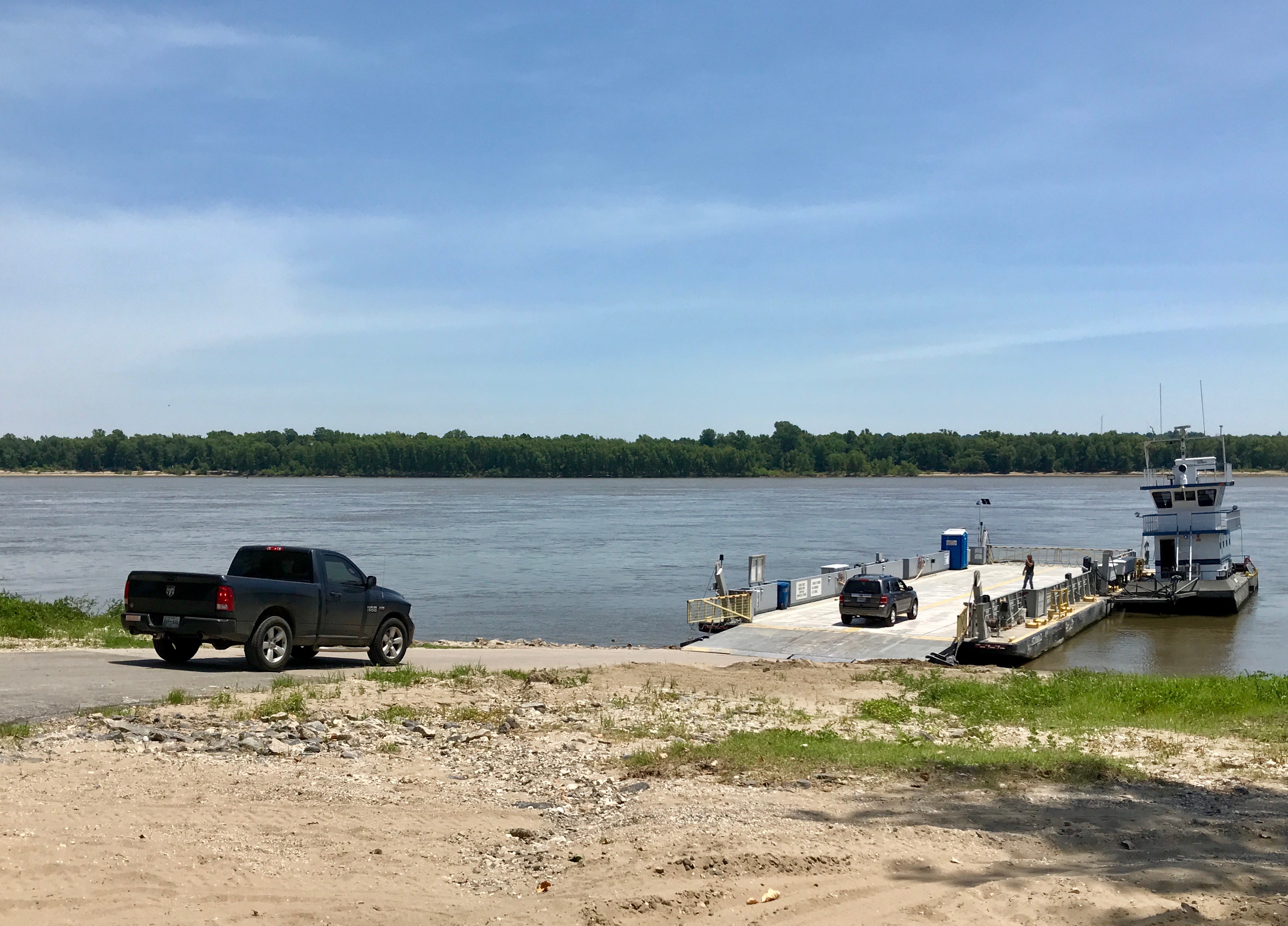
They docked and the vehicles on board prepared to roll off.

Then the folks I had been chatting with rolled aboard and they got ready to head back across the Mississippi.

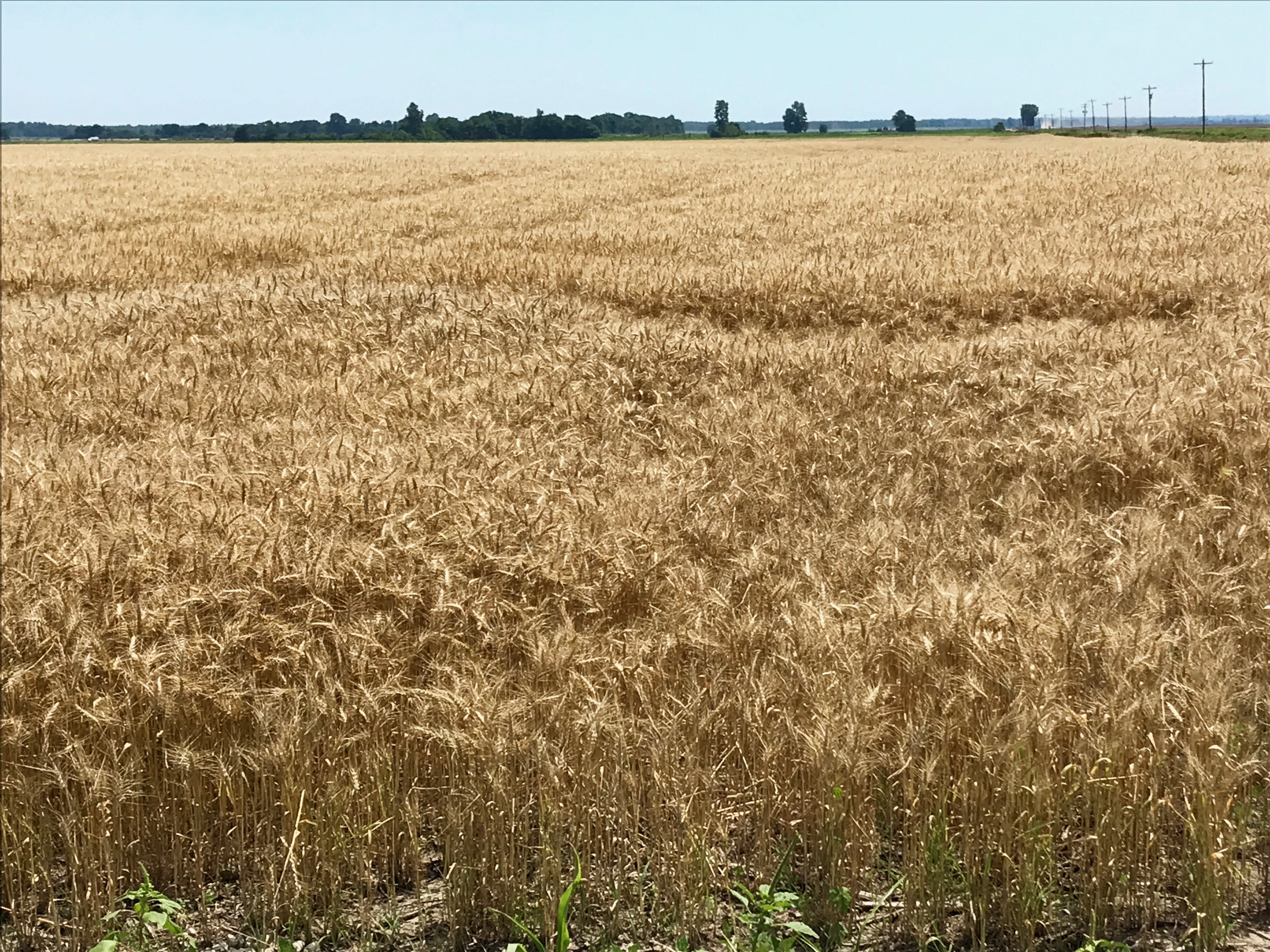
I took off and got ready to hit a few more facilities before close of business. With all the wheat I had been collecting, I wondered where it was. I finally found a field.

Look at those amber waves of grain!

I had to take a close up of the spike. The funny thing is that I wasn’t sure of the name of this part of the plant – in English. I knew it as “espiga” in Spanish, and I knew it translated to spike, but I never heard that term used in English. I finally broke down and looked it up. In addition to being called the spike, it’s also called the “ear” or “head.”

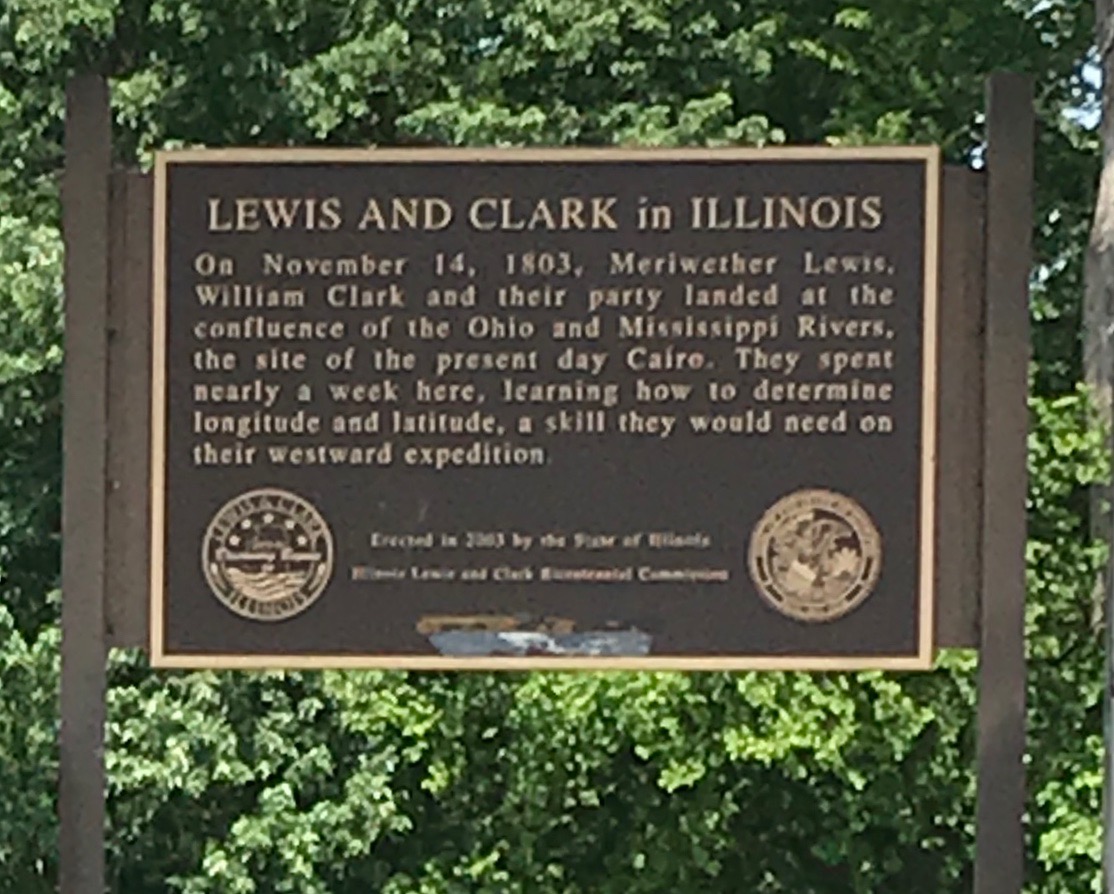
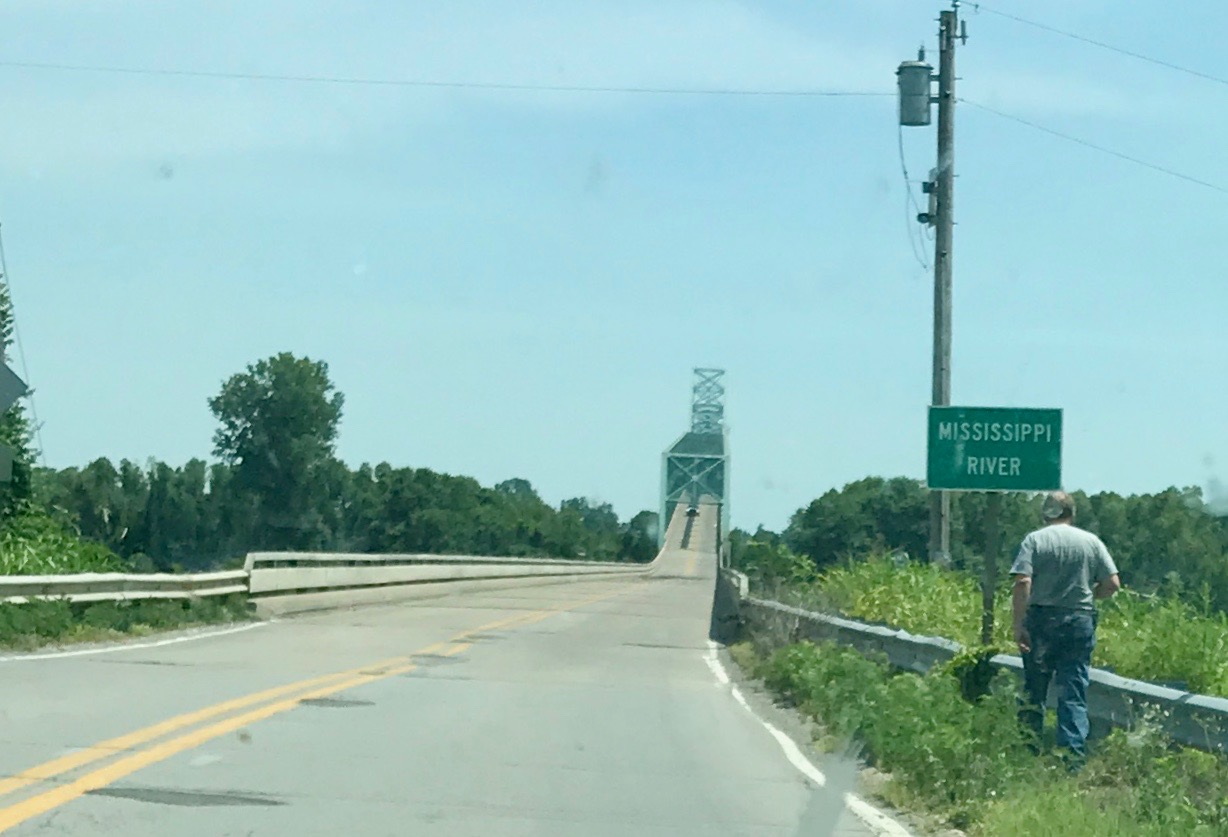
Somehow, I got turned around and ended up crossing the river into Illinois.

The Corp of Discovery sure did get around!

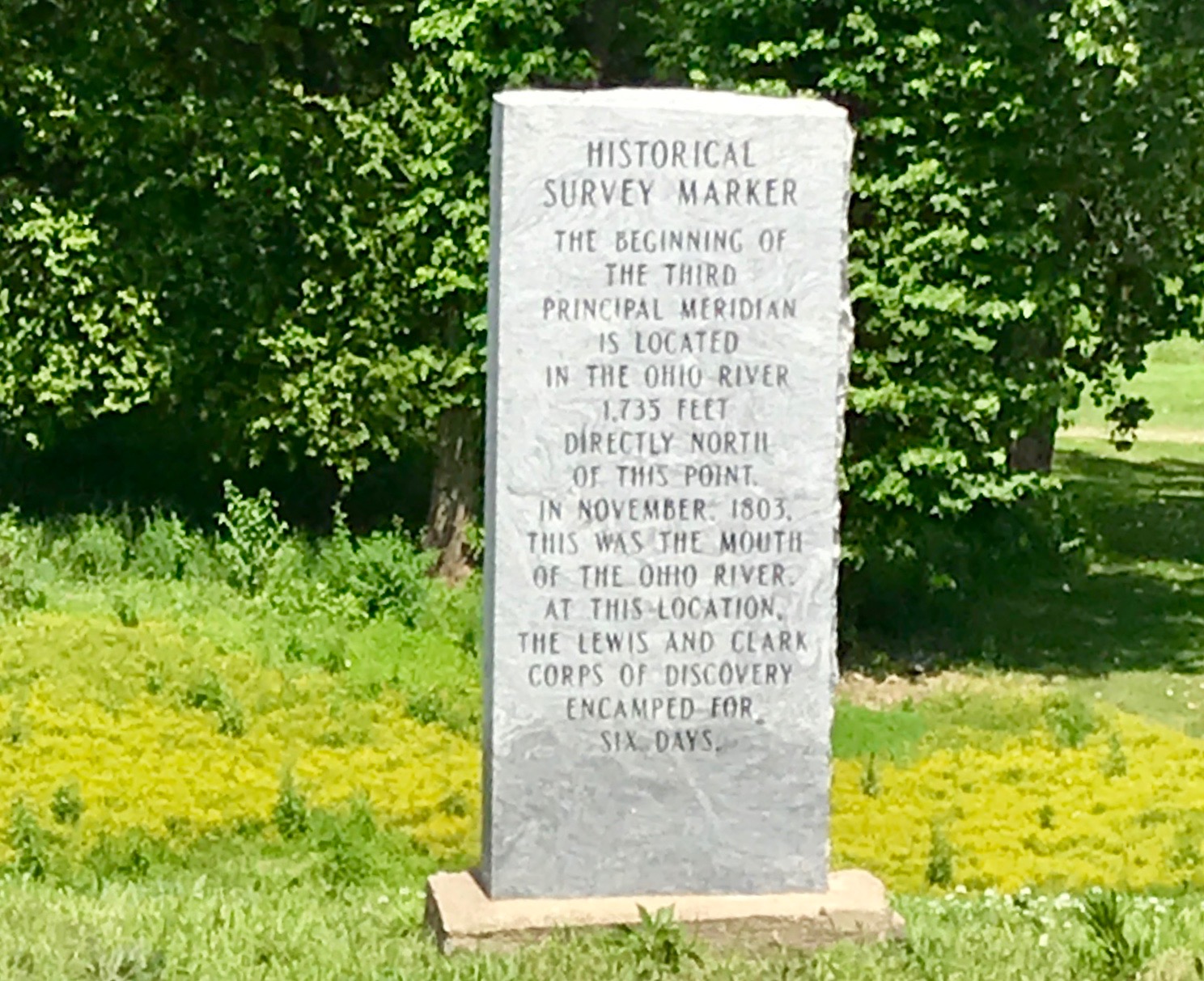
The river beds get around, too. This is a marker for a place that is in the Ohio River. I wonder how I missed that river?

But, it was time to head back across the river. Maybe I could find one more facility before close of business.

And, no, the next place I stayed was not as nice as the Motel 6 in Poplar Bluff.


The Nicest Motel 6 I’ve Ever Seen!

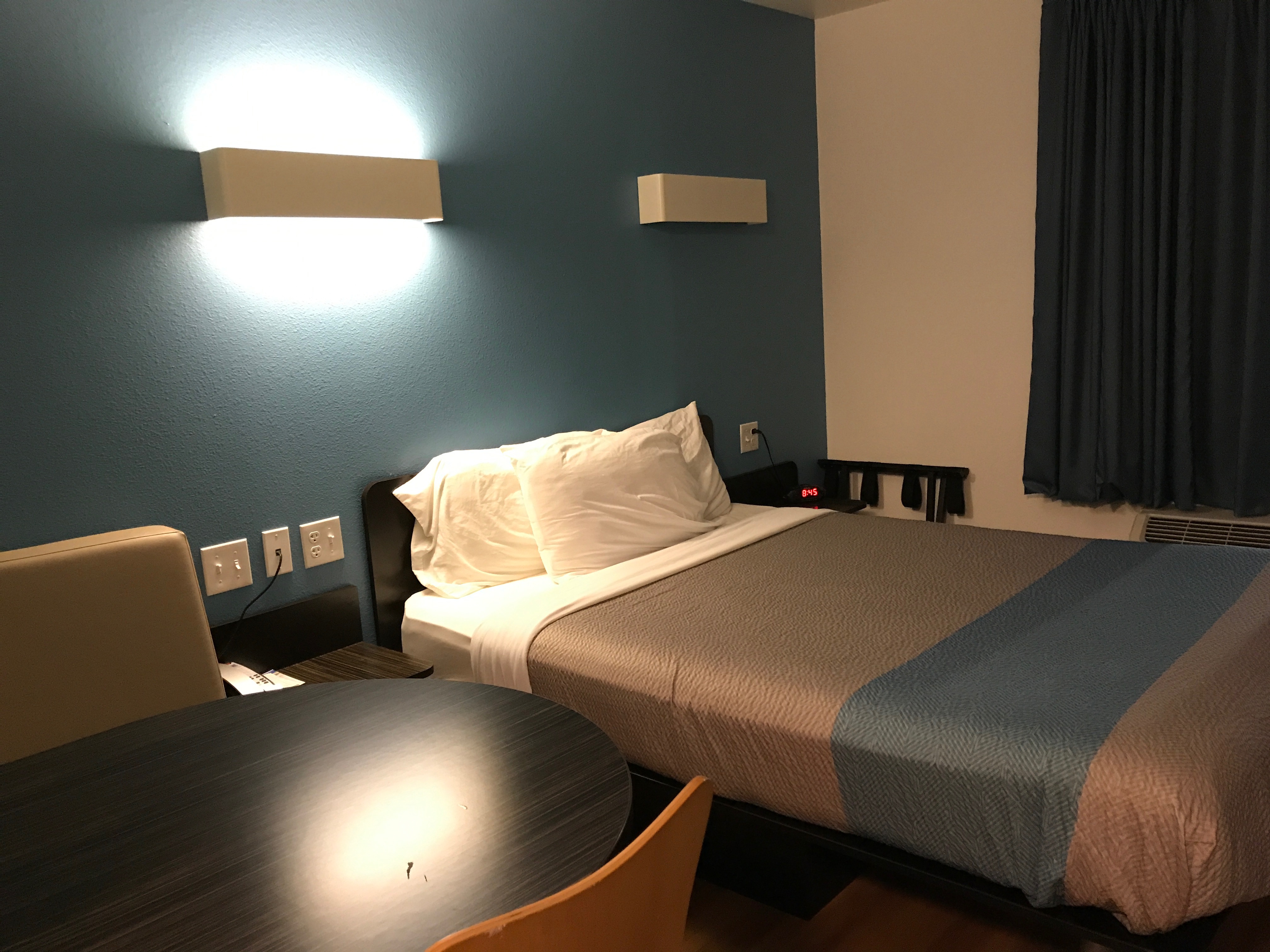
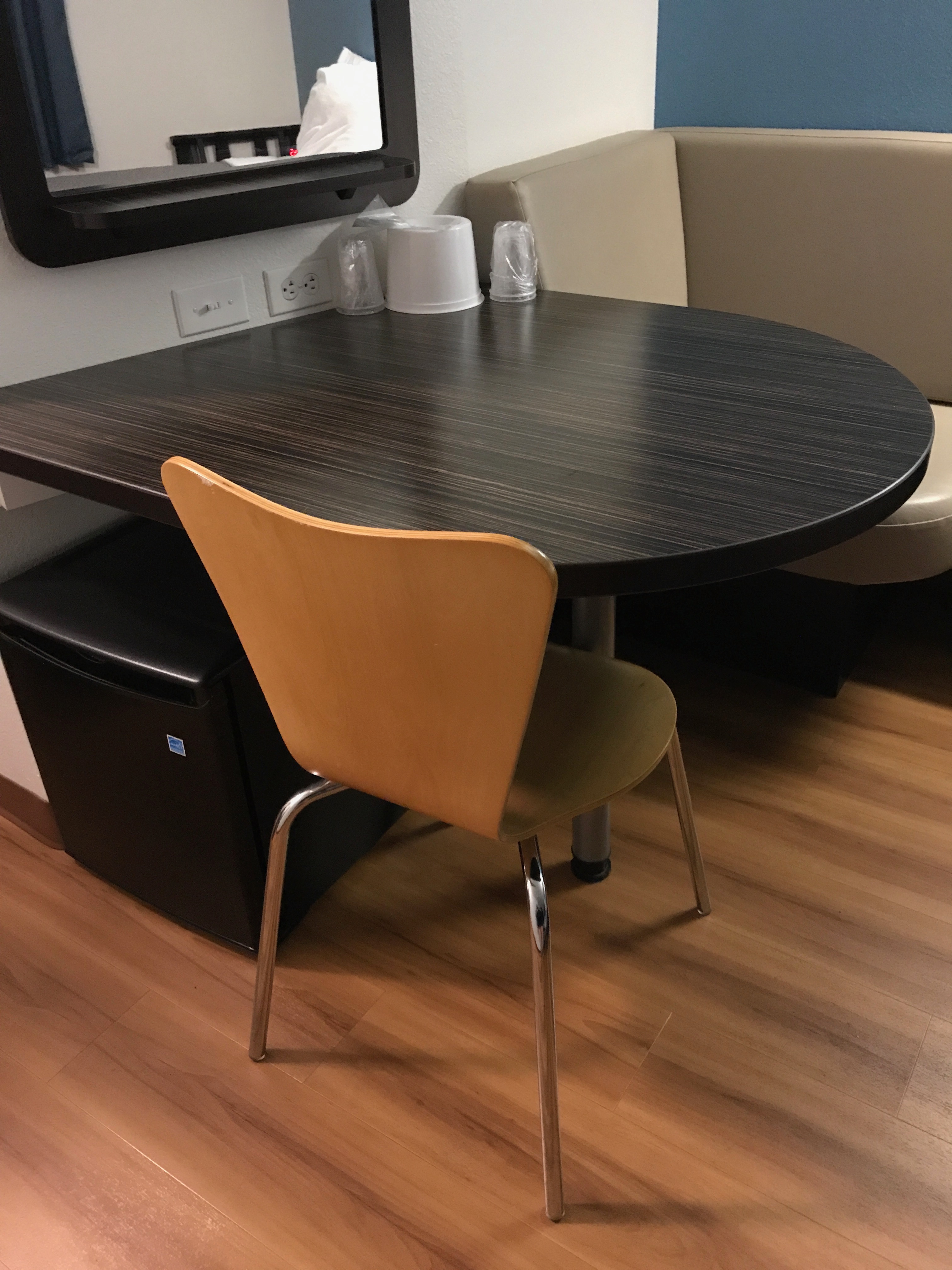
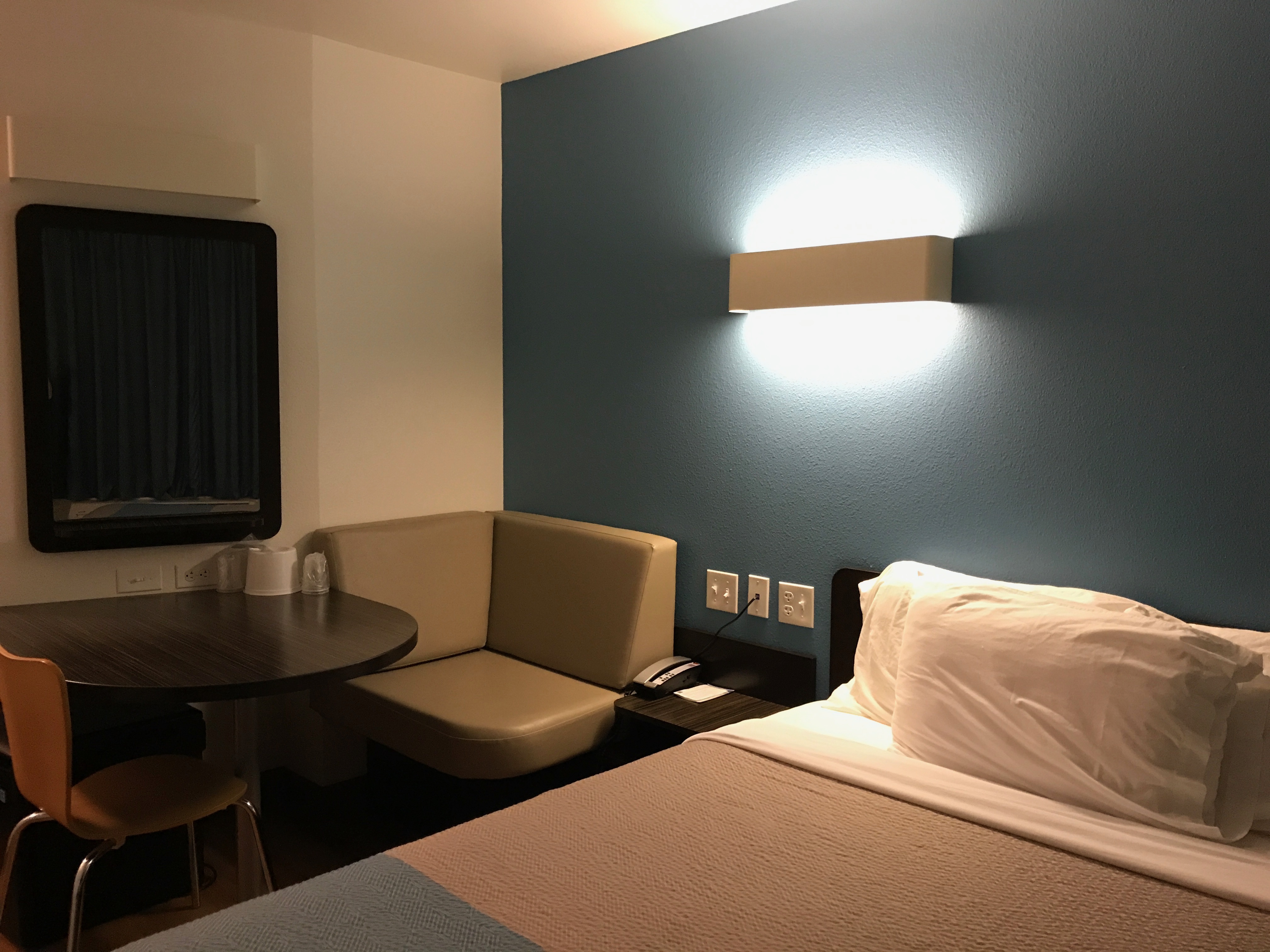
Honest-to-goodness, the Motel 6 in Poplar Bluff has got to be the best Motel 6 out there. It was right up at the top of the list of my favorite hotels I stayed at in my seed courier position.

It had everything you needed and everything was clean, clean, CLEAN!

Everything had a hard surface, so it could be wiped down between guests. I can’t tell you how hard it was to feel at home at some of those places that were loaded with “decor” that had probably seen thousands of guests over the years. Even the floors were solid, so you didn’t need to wonder what was lurking in the carpet.

I don’t think there was a coffee maker, but there was a little refrigerator and a small banquette seat along the wall. It was small, but so well designed, I felt like I was in a classy trailer – kind of like an Airstream.

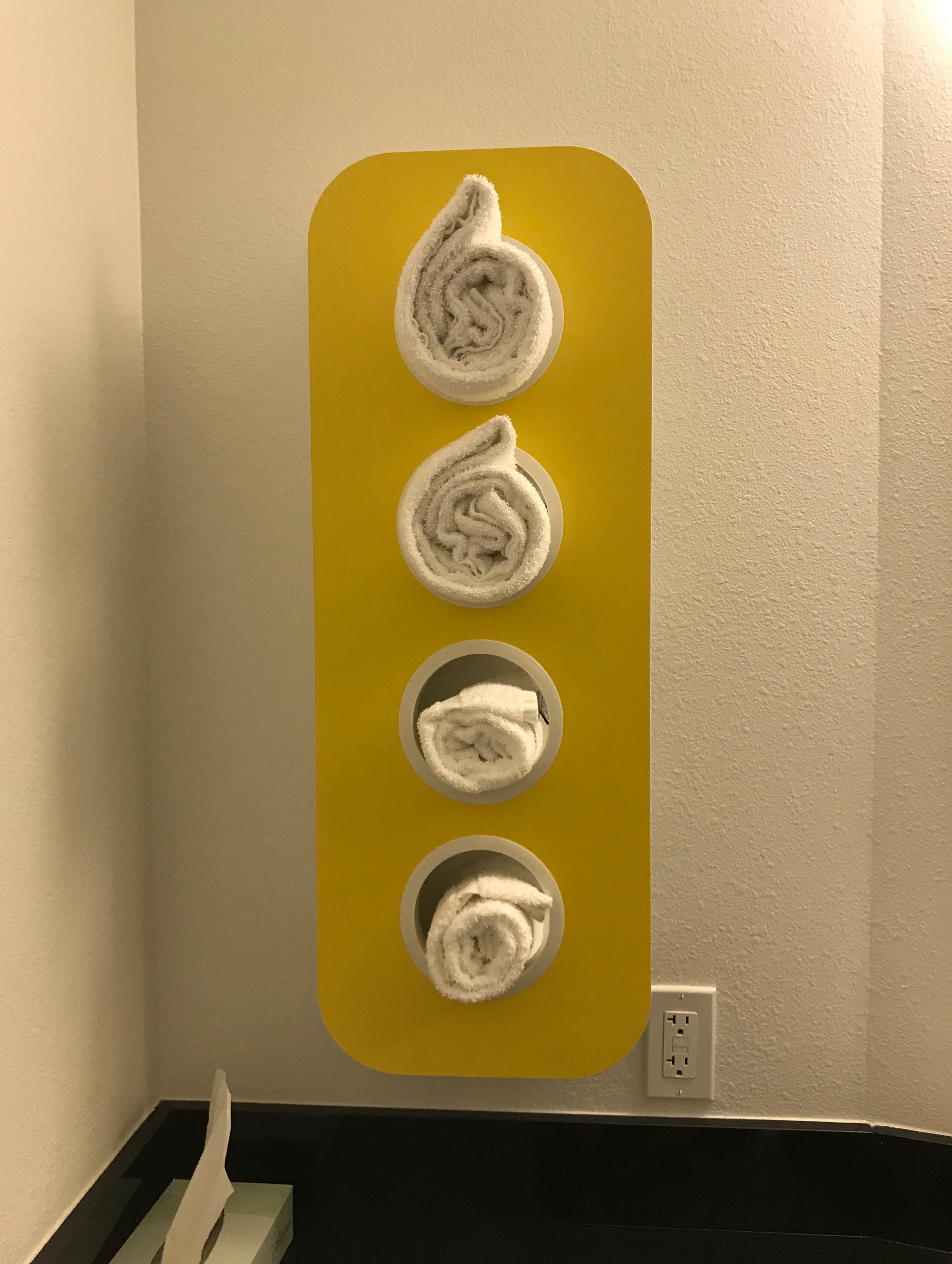
Good design doesn’t have to cost a lot. How much do you suppose this eye-catching towel holder cost?

Or this television shelf?

I had a great night’s sleep is this clean and restful hotel. At the prices they charge they don’t offer breakfast, so I loaded up the truck and headed down the road to the Huddle House.

They had heaps of food for a reasonable price. I ordered my meal so that I would be done in time for my assigned time to call the boss.

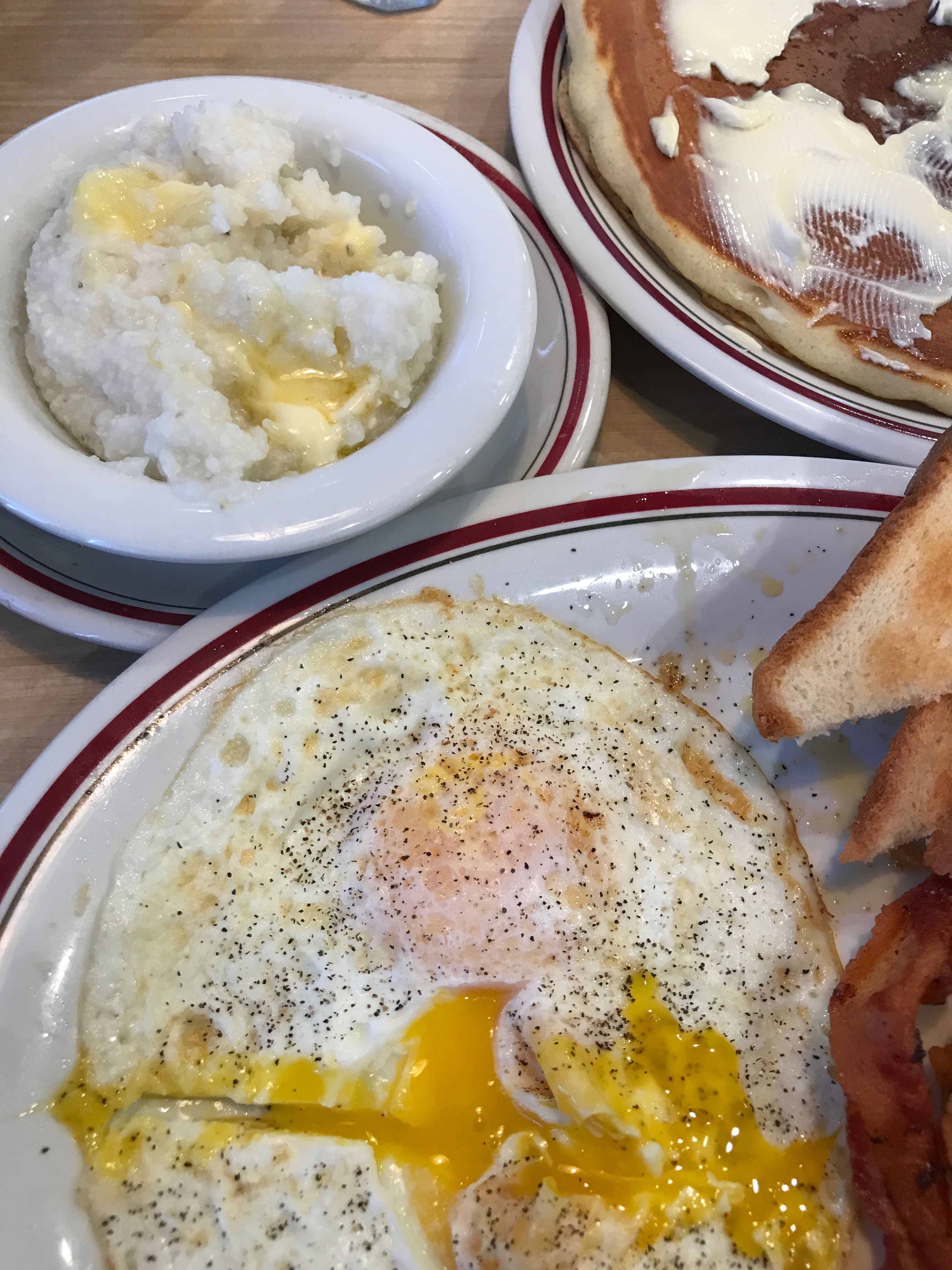
In case you were wondering, the bowl in the upper left hand corn of the photo contains grits. The  word “grits” comes from the Old English “grytt,” meaning coarse meal.  (That bit of  etymology comes from my Preferred Source.)

To my surprise, my boss called me!

It turns out that the courier who was going to head out to the east coast had some medical issues and needed to return home. I was going to pick up his route.

What a surprise! I had planned to do Missouri, Illinois, Ohio, and Indiana. All of a sudden, I’m doing Virginia, Delaware and Maryland. No problem. After all, I was a teacher for 30 years. Teachers – at least elementary teachers – are nothing if not flexible.

I was to met up with the other courier and got his boxes of cards. I still had some facilities in the boot heel to hit before I headed east.

We met up, switched cards and then I got back to work.