One of the Big Lessons I have learned since I hit the road back in 2014 is that you should never pass up the opportunity to use the bathroom.
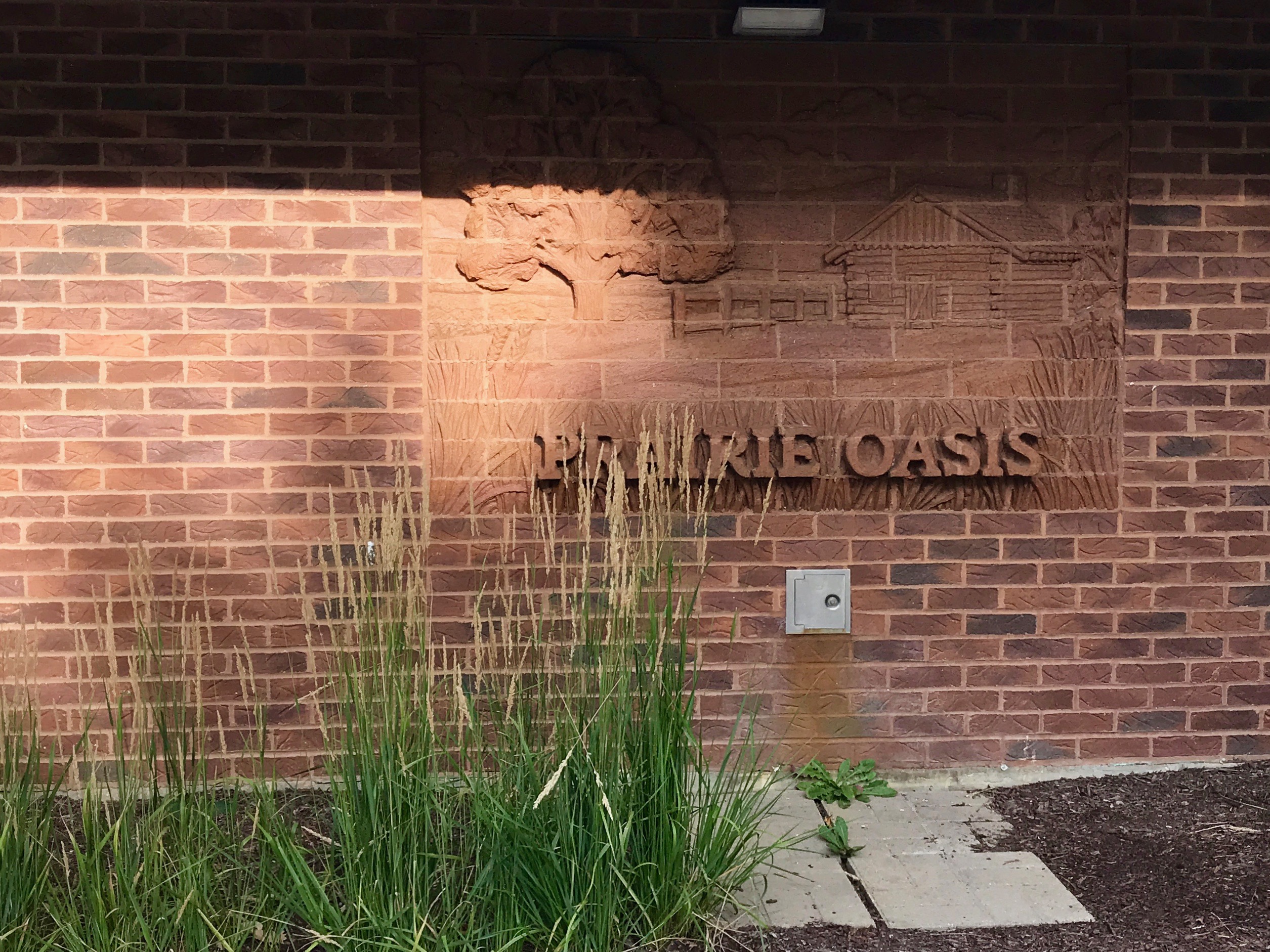
I thought the brickwork was interesting.
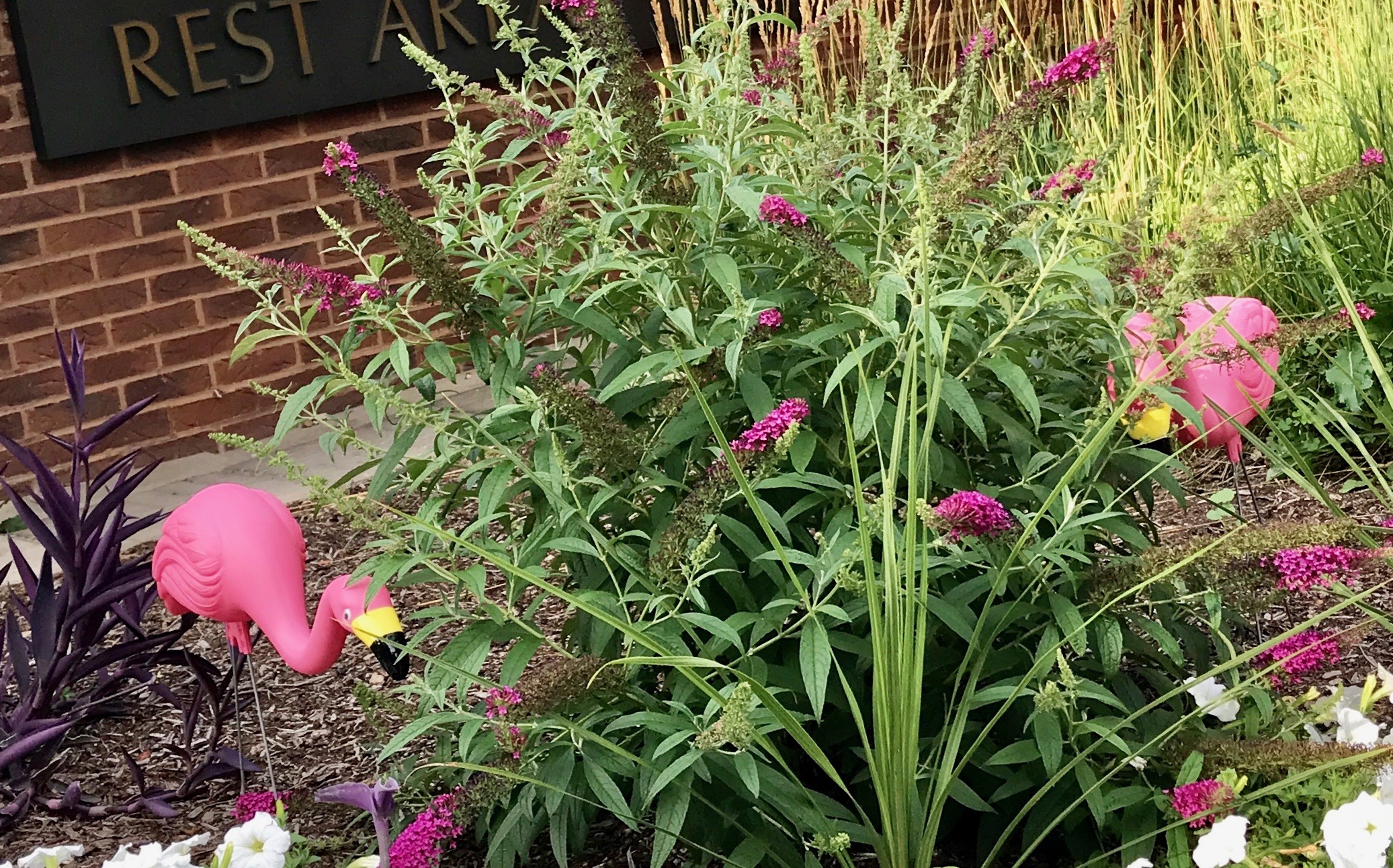
There were flamingos in the garden, too. Where is an Airstream when you need one?
I stopped for the night in Bloomington, Illinois. I checked online reviews for an interesting restaurant for a last dinner courtesy of the company. I decided to dine at Epiphany Farms and I headed downtown.
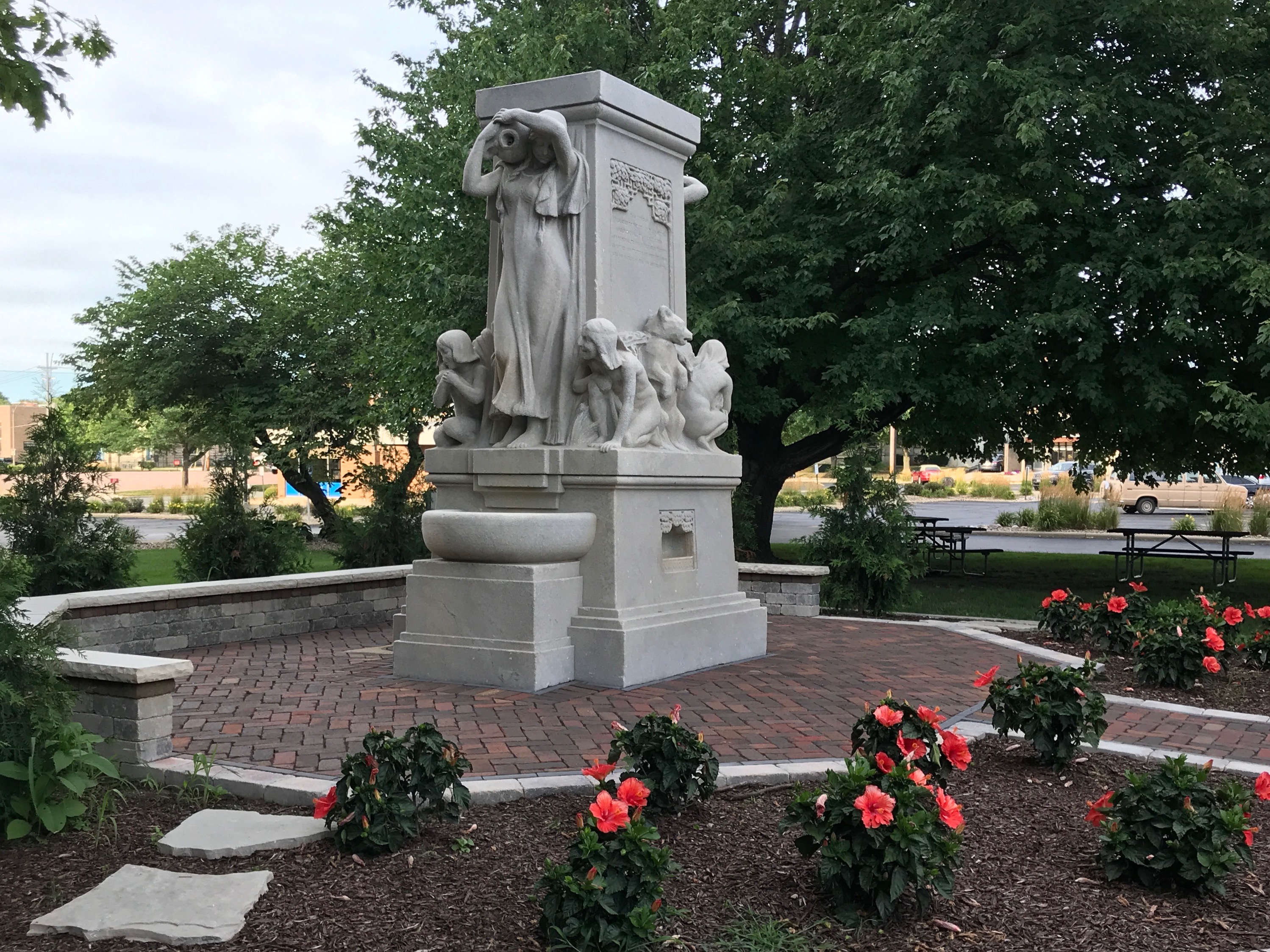
I parked and headed toward the restaurant, but this statue caught my eye. I headed over to check it out.
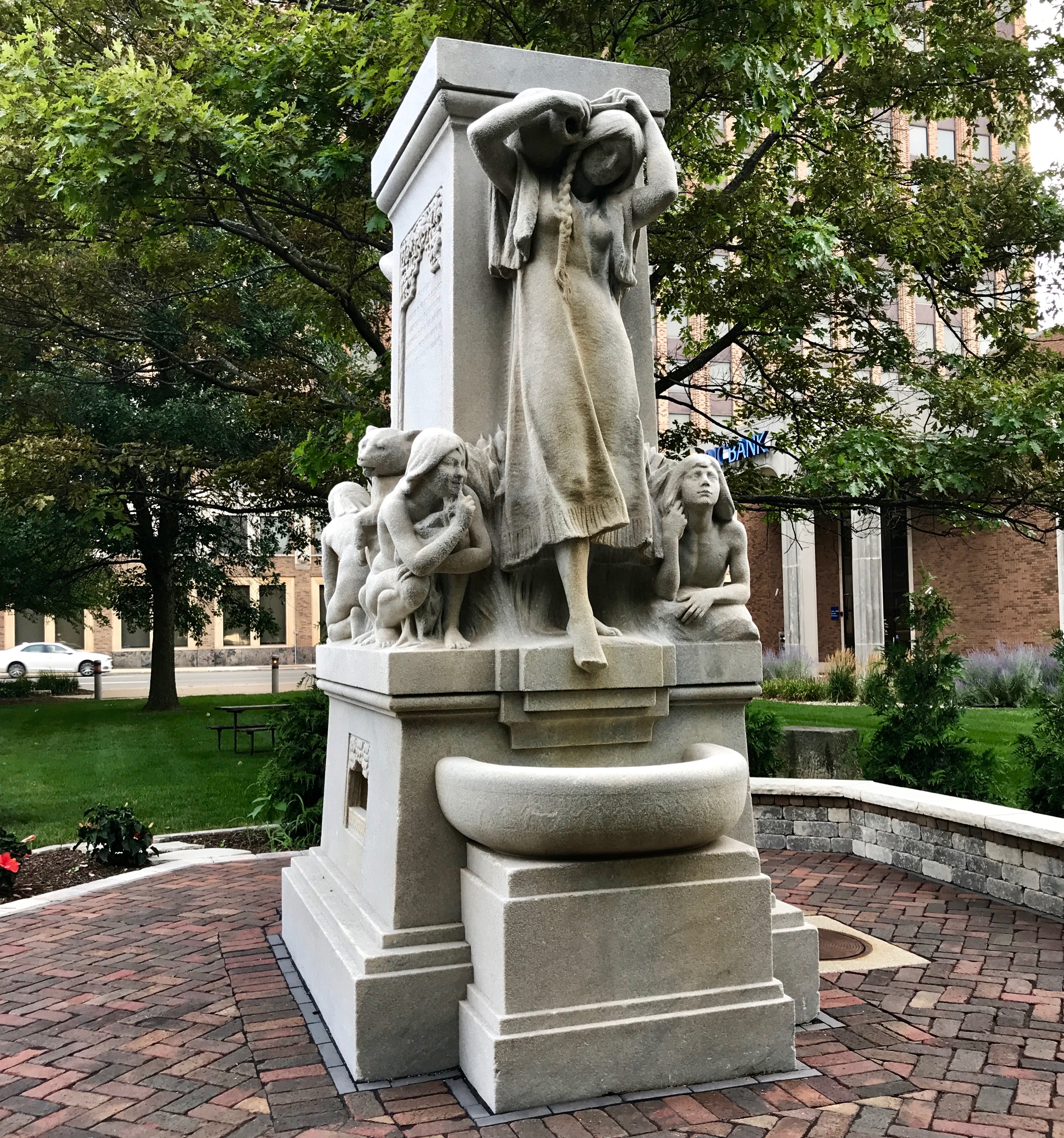
It turns out that it is a fountain known as Trotter Fountain.
The text on the sign says:
“The Trotters, immigrants of the Great Potato Famine in Ireland, were prominent Bloomington businessmen and philanthropists. John was a three-term mayor, and his sister, Georgina, ran a thriving lumber, coal, and grain business on West Market Street near the family home. Georgina was the first woman elected to the Board of Education and was said to be the first woman to become a naturalized American citizen. The last surviving Trotter sibling, James, willed funds to the city for a state to be erected in his family’s honor. Trotter fountain was designed by the wold renowned sculptor, Lord Taft, of Illinois. Made of Georgia marble, it depicts Native American maidens and children and was dedicated during a lavish celebration on May 30, 1911.”
With my commitment to tourism satisfied, I headed over to Epiphany Farms.
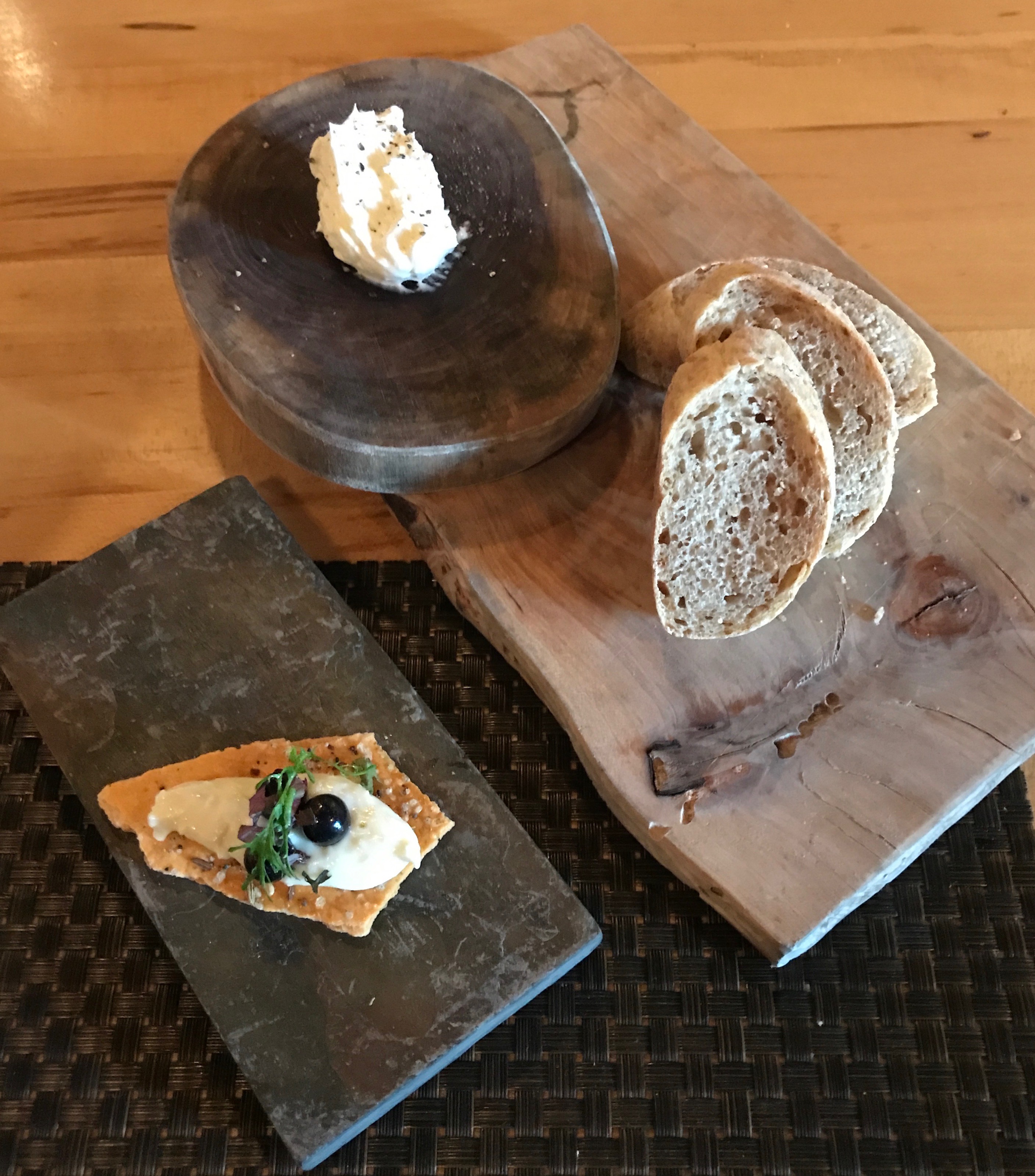
I perused the menu and made my selections. While I was waiting, they brought me a little treat for me to enjoy while I was waiting.
It was a little snack.
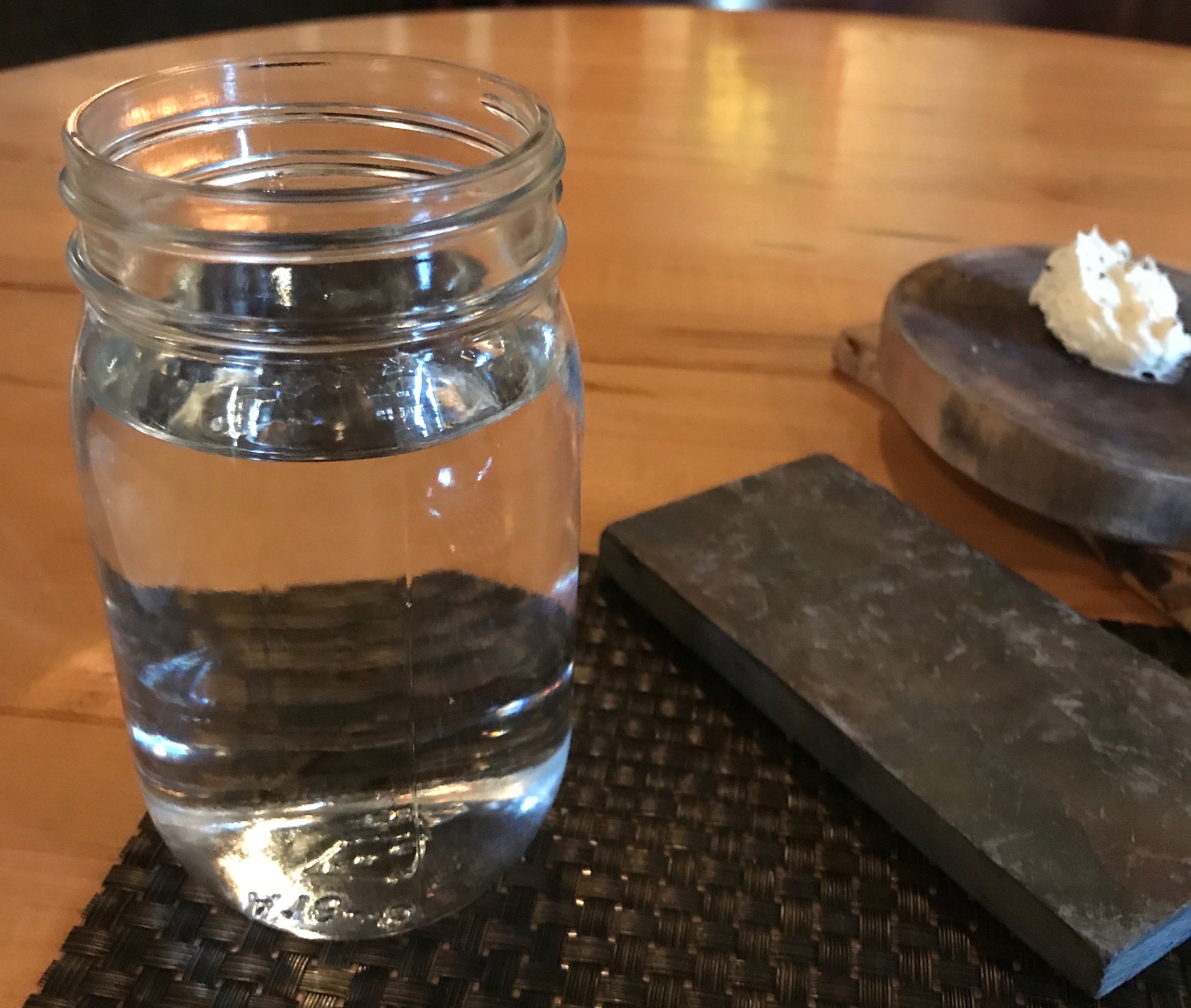
And I sipped on a mason jar filled with cool water. No ice. No lemon. Just cool water. It tasted lovely.
I had soup.
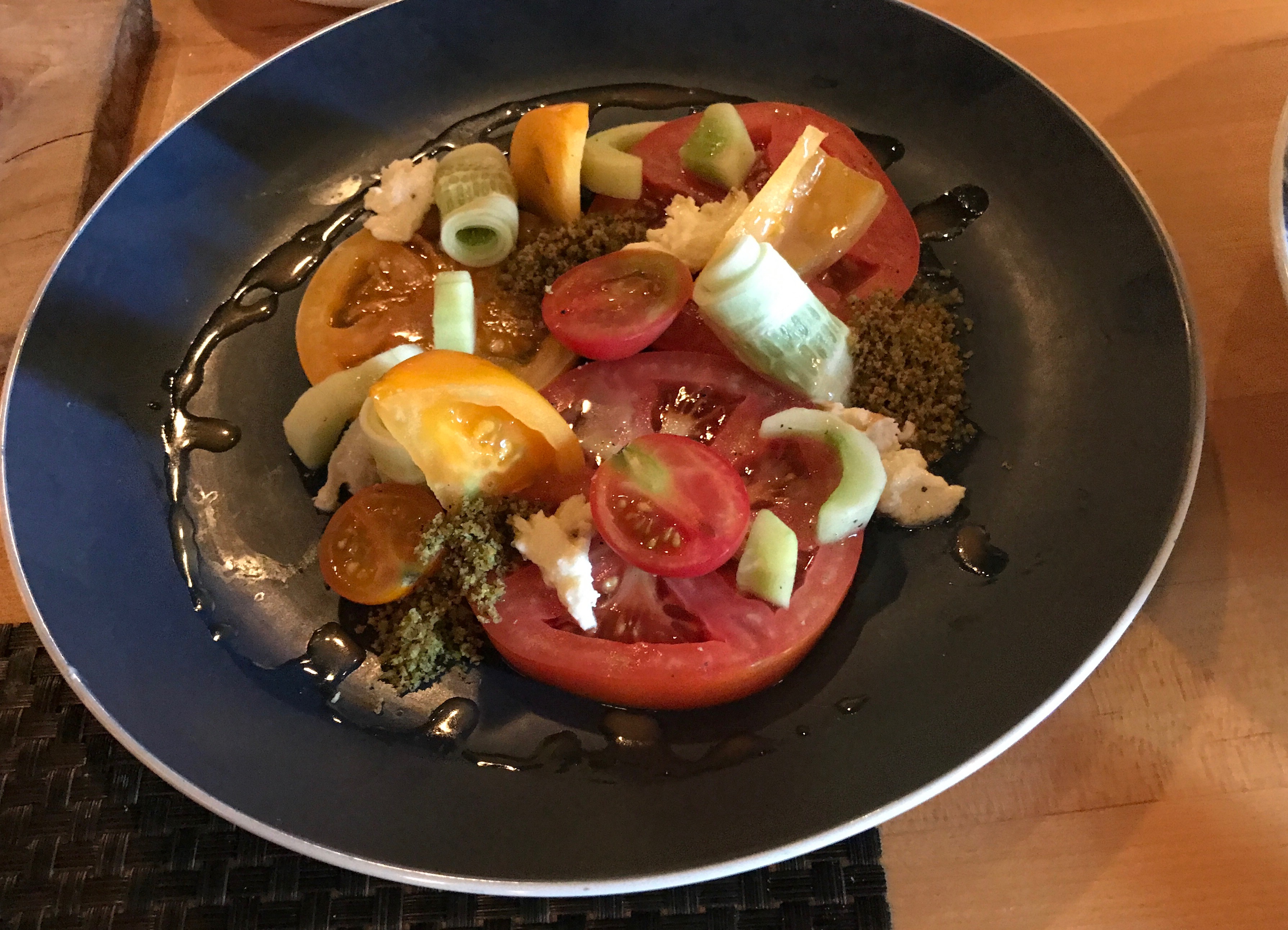
A salad.
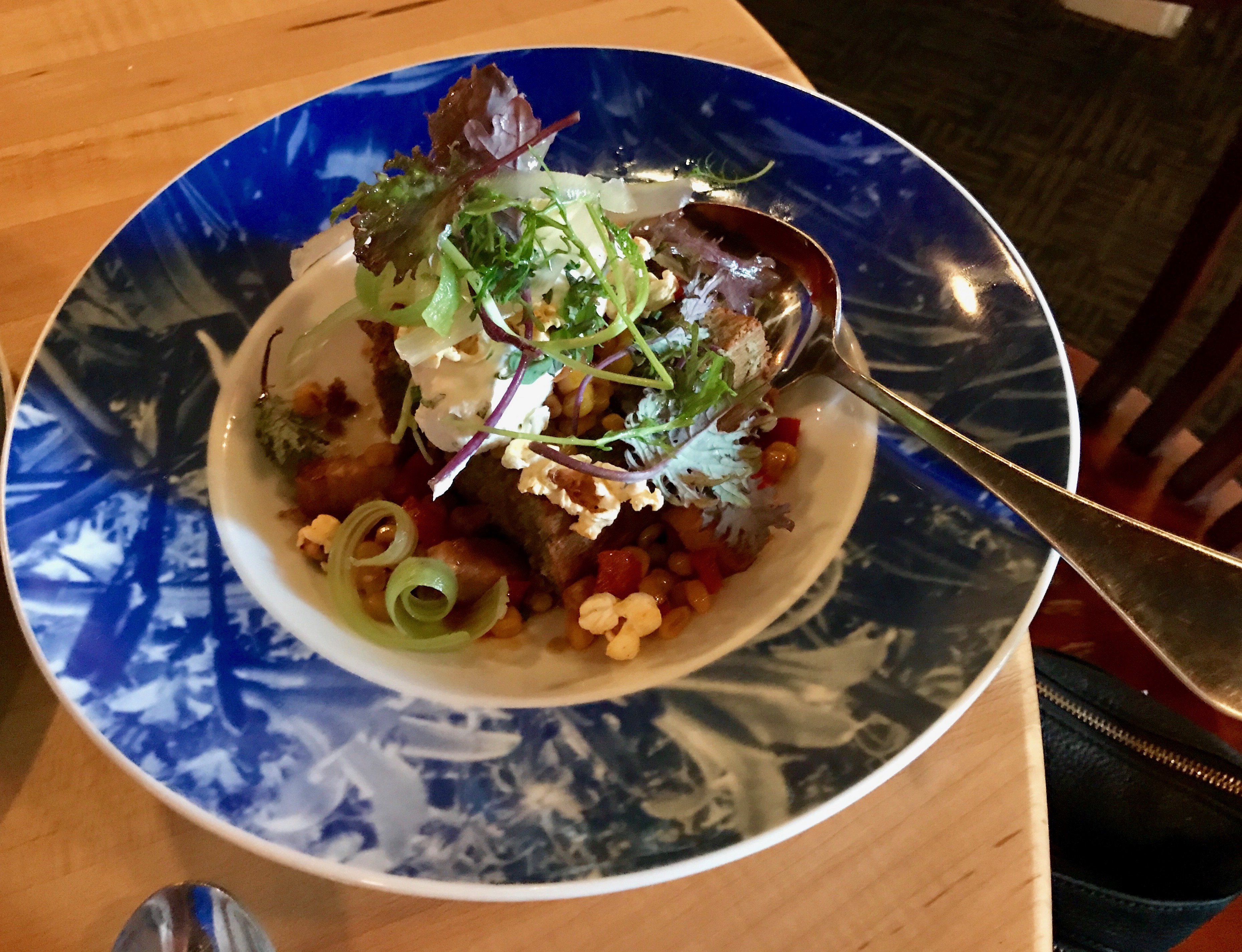
Apparently, I had a second salad.
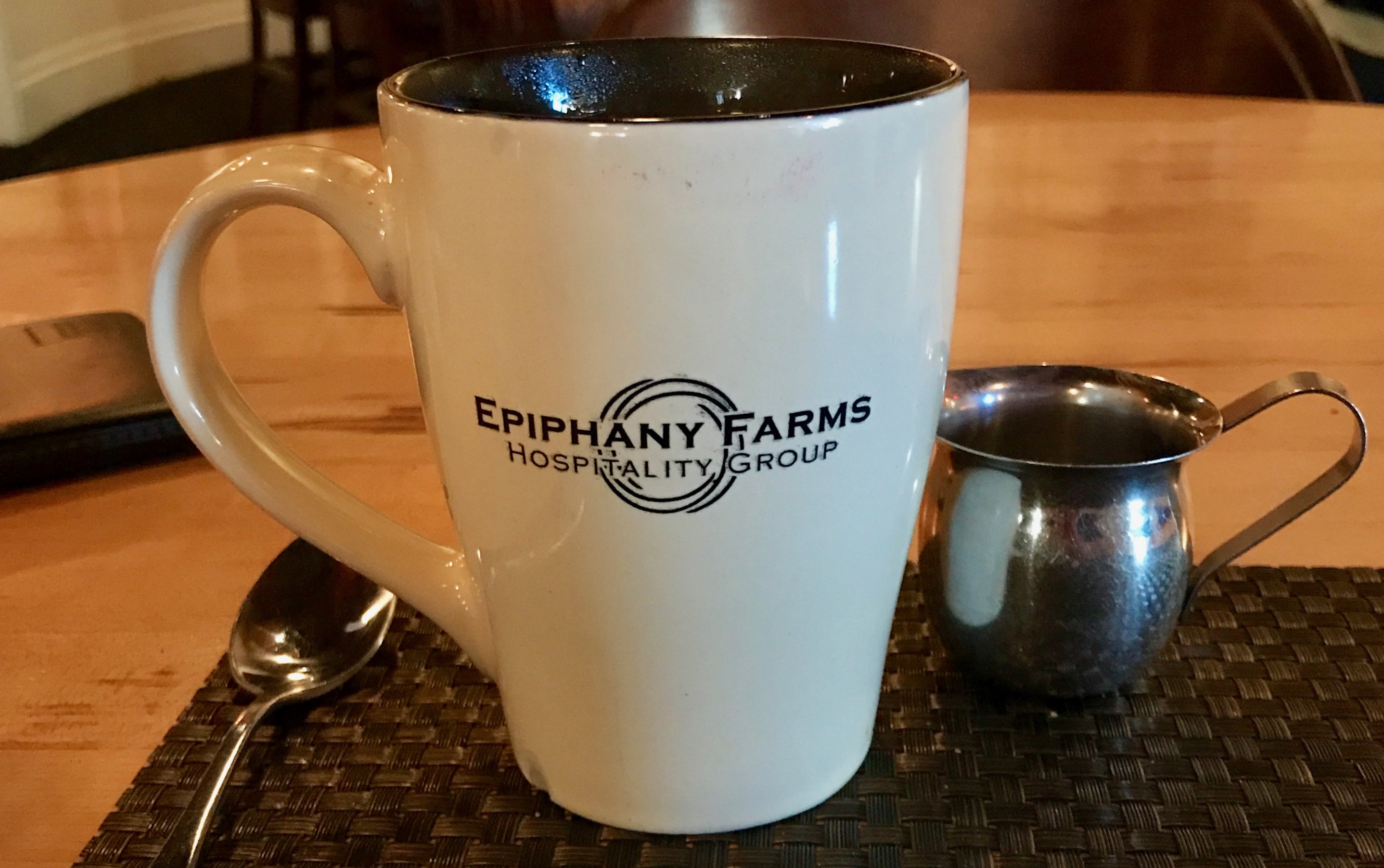
I finished off the meal with some coffee.
I wish I could say that I thought the meal was great. It wasn’t quite to my liking. But, then, people who know me know that I don’t have the most adventurous palate.
After dinner, I decided to take a little drive around – just to see what I could see.
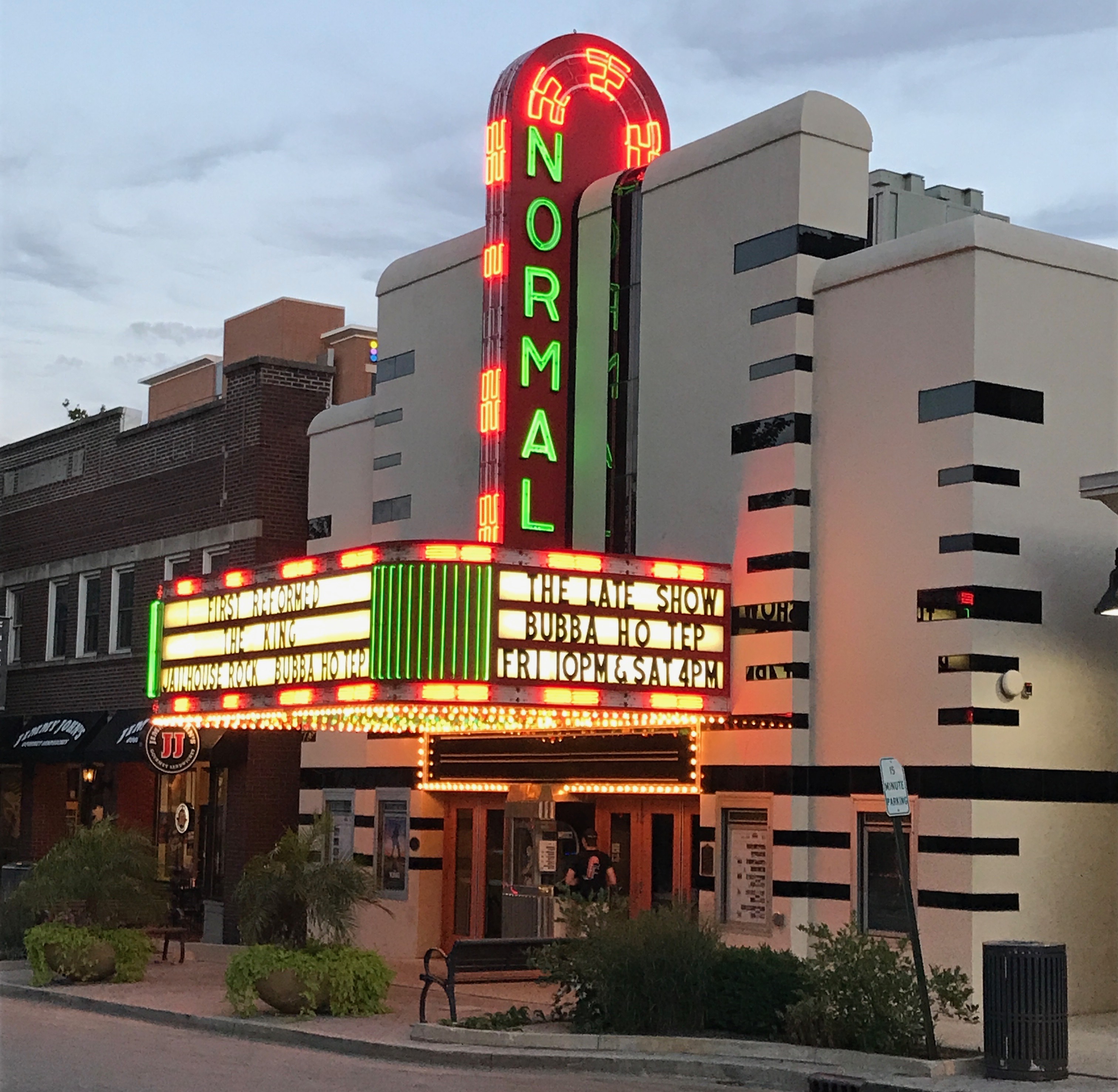
What do you know about that? I found Normal! (And, it’s not even the new Normal.)
With everything loaded up, I was ready to set out. I headed north on I-35 to Cameron, Missouri and then headed east on U.S. 35.
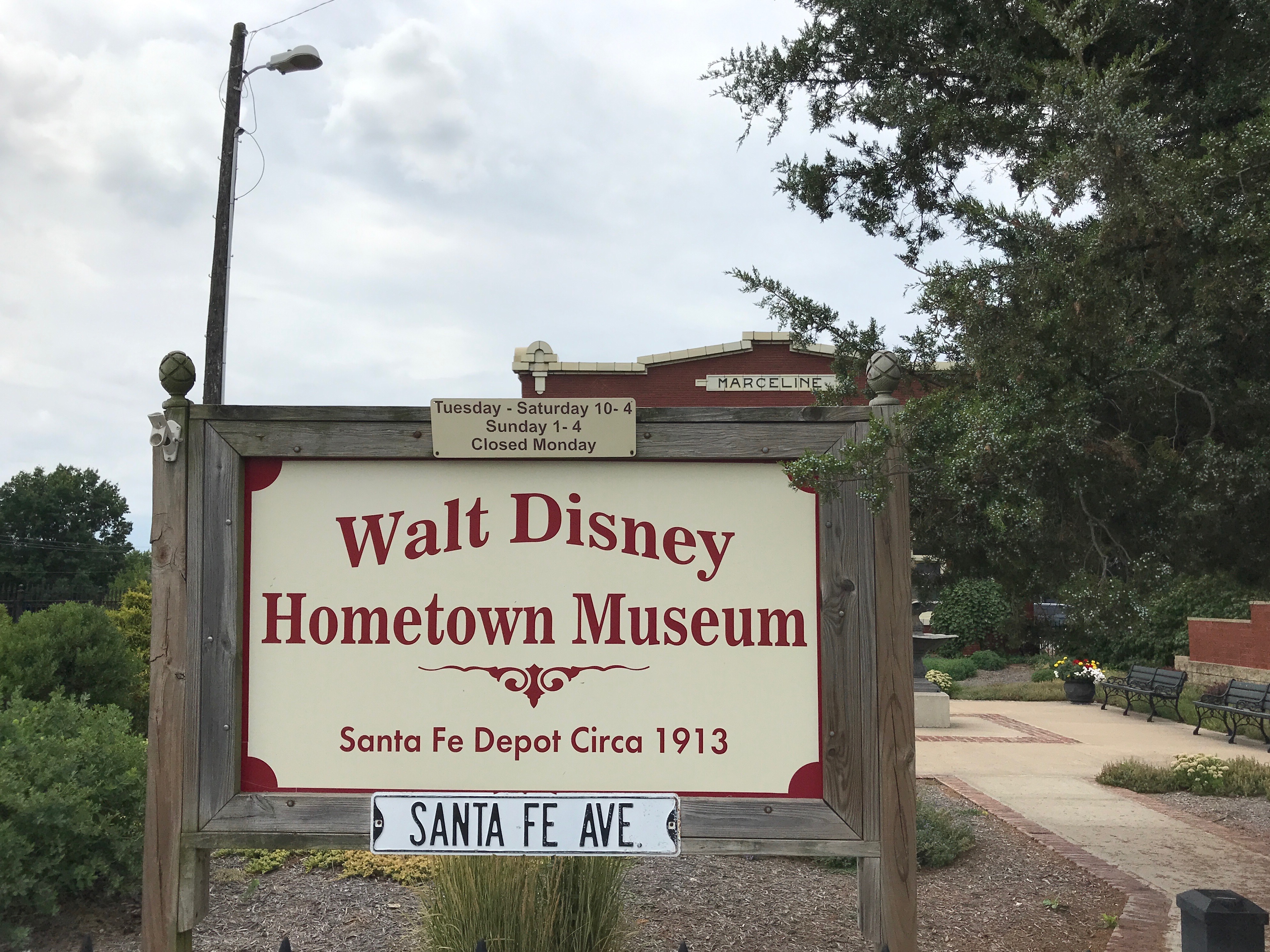
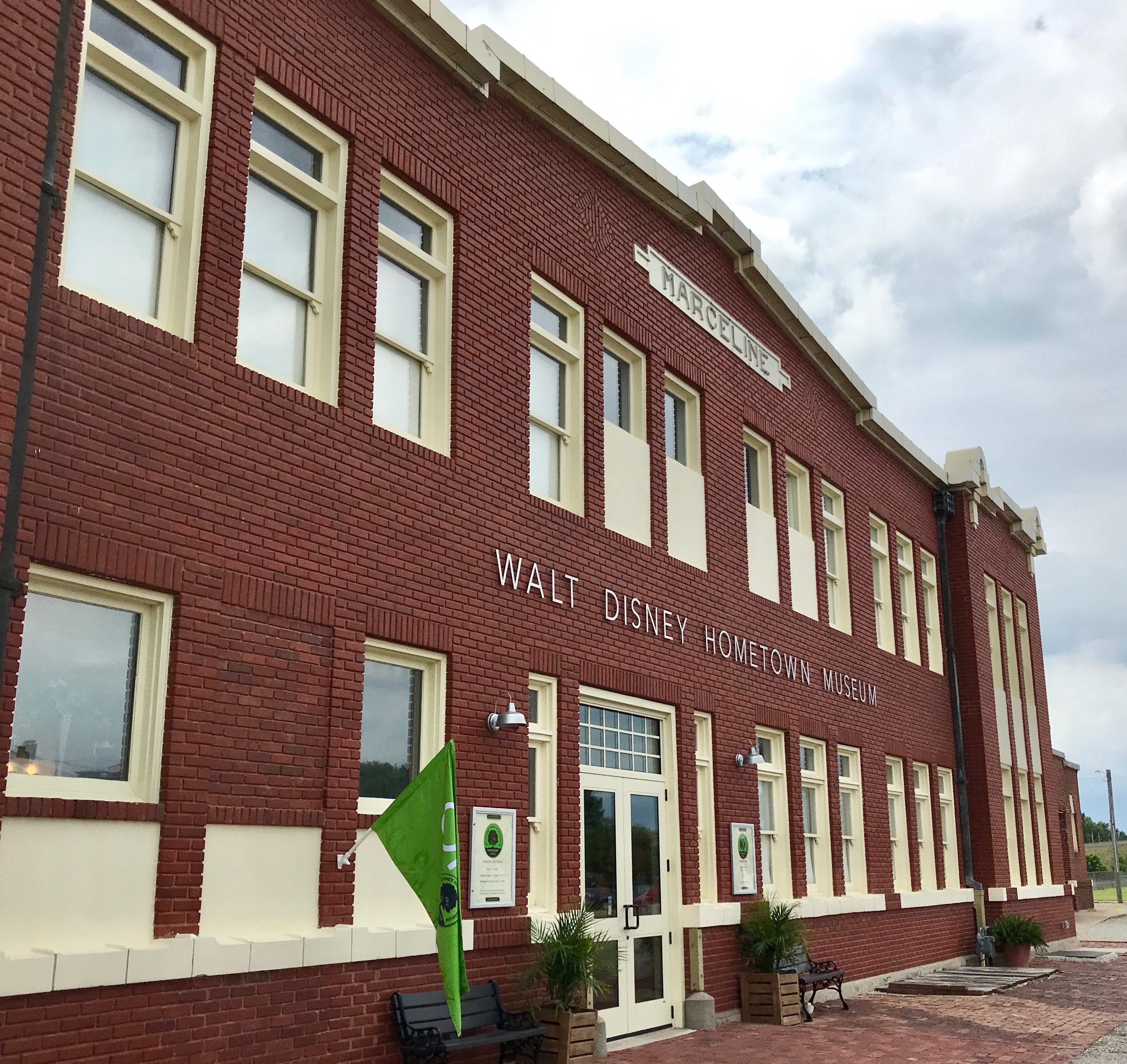
A Facebook acquaintance once mentioned a game she likes to play with her husband when they go out for drives. When they see a “brown sign” for an attraction, they pull off and check it out. I saw a sign for the Walt Disney Hometown Museum and I thought that was worth a visit.
I actually showed up on a day that it was open, but I didn’t want to take the time to tour it. (Which means, there was an admission charge.)
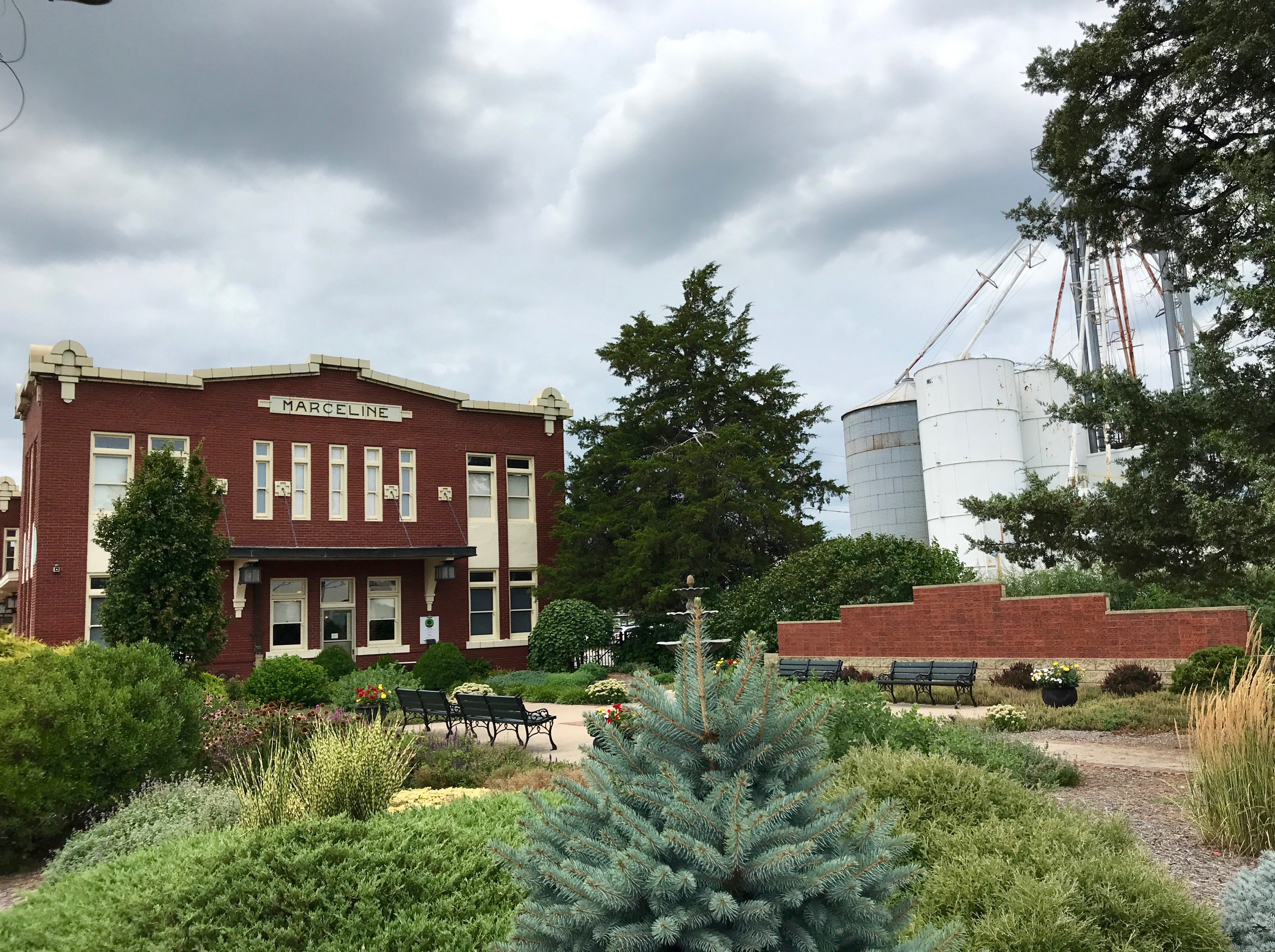
That didn’t stop me from looking around. The museum is located in the restored Santa Fe Railroad Depot.
According to my Preferred Source, the museum opened in 2001 and it houses a collection of memorabilia from the Disney Family’s farm from 1905 – 1909. Many of the items were donated by the family of Ruth Flora Disney Beecher, Walt’s sister. Artifacts include personal family letters and photos, Disney’s wooden school desk and a recording of him asking his parents about their life.
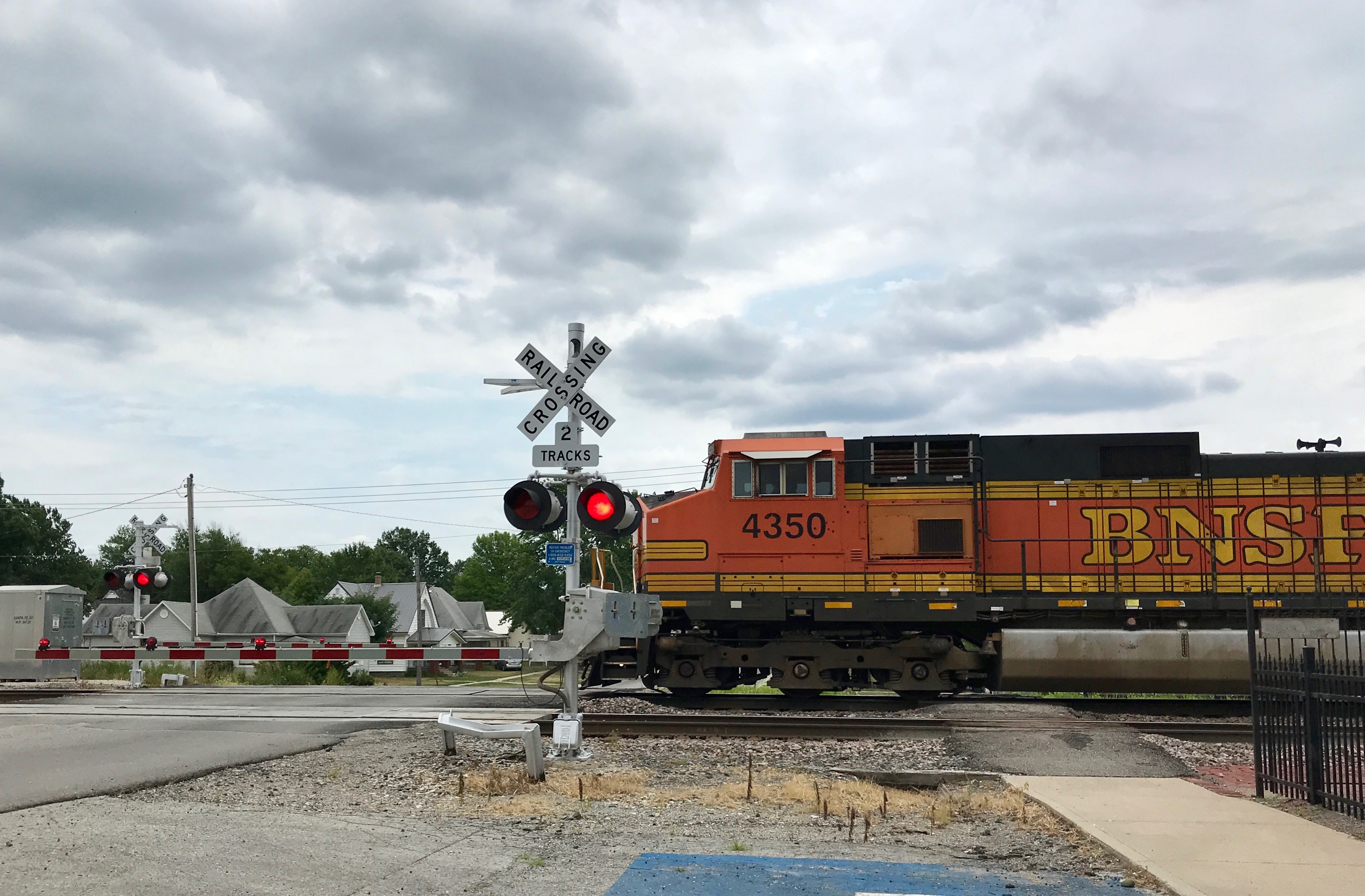
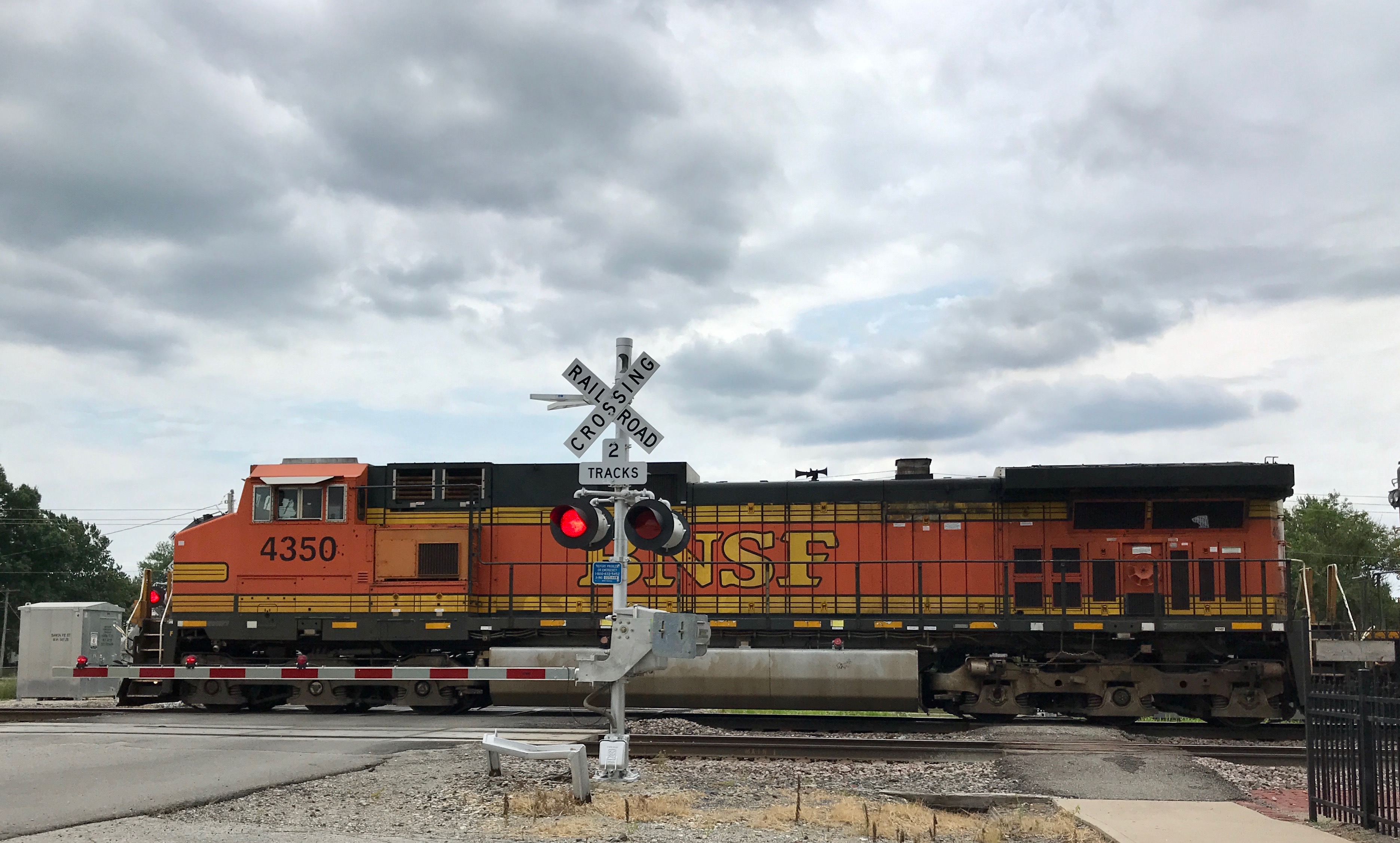
As I was getting ready to head on my way, I heard the railroad crossing bells start clanging, and I headed over to see if I could catch a photo of the locomotive.
I managed to snap two!
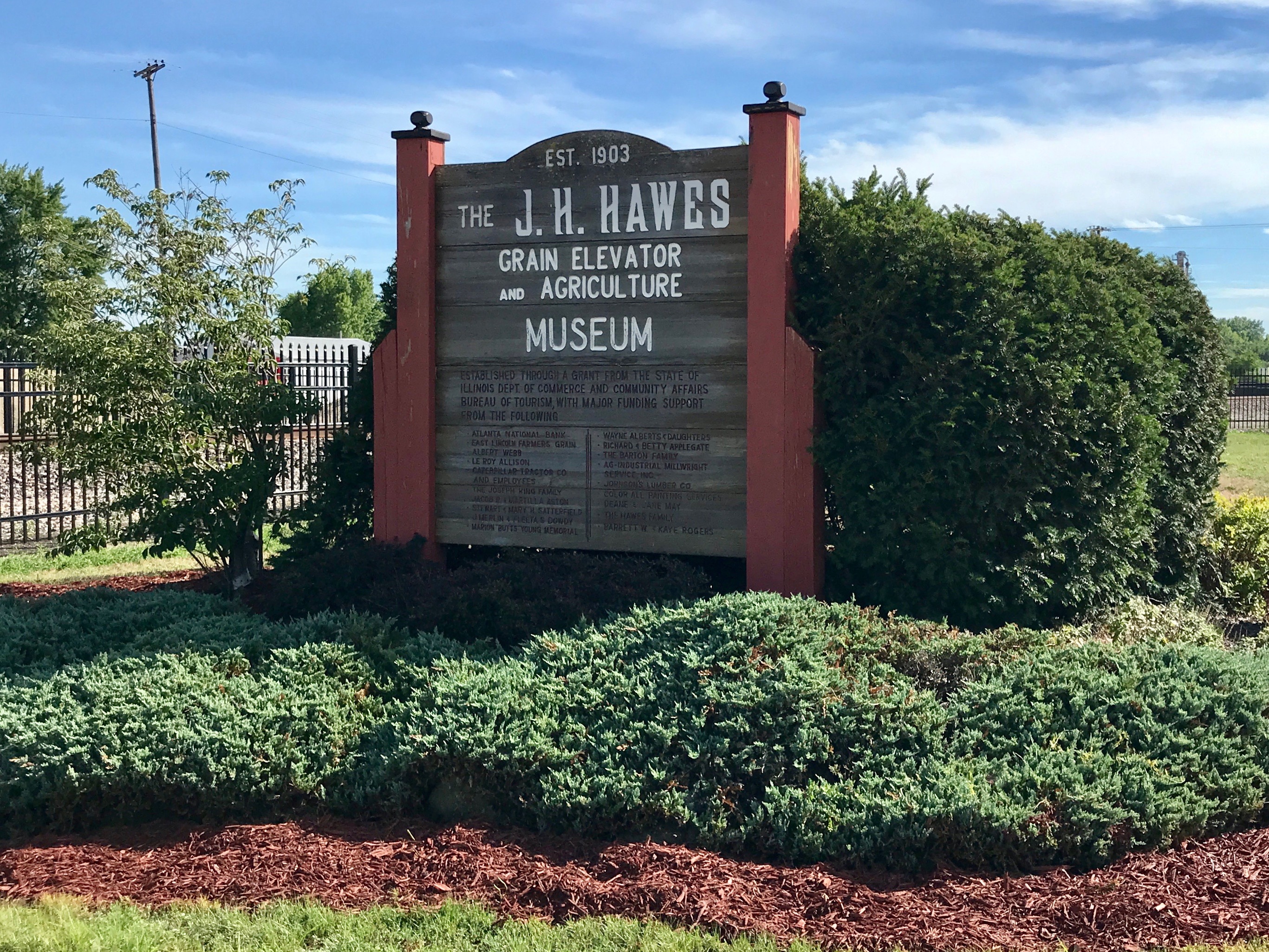
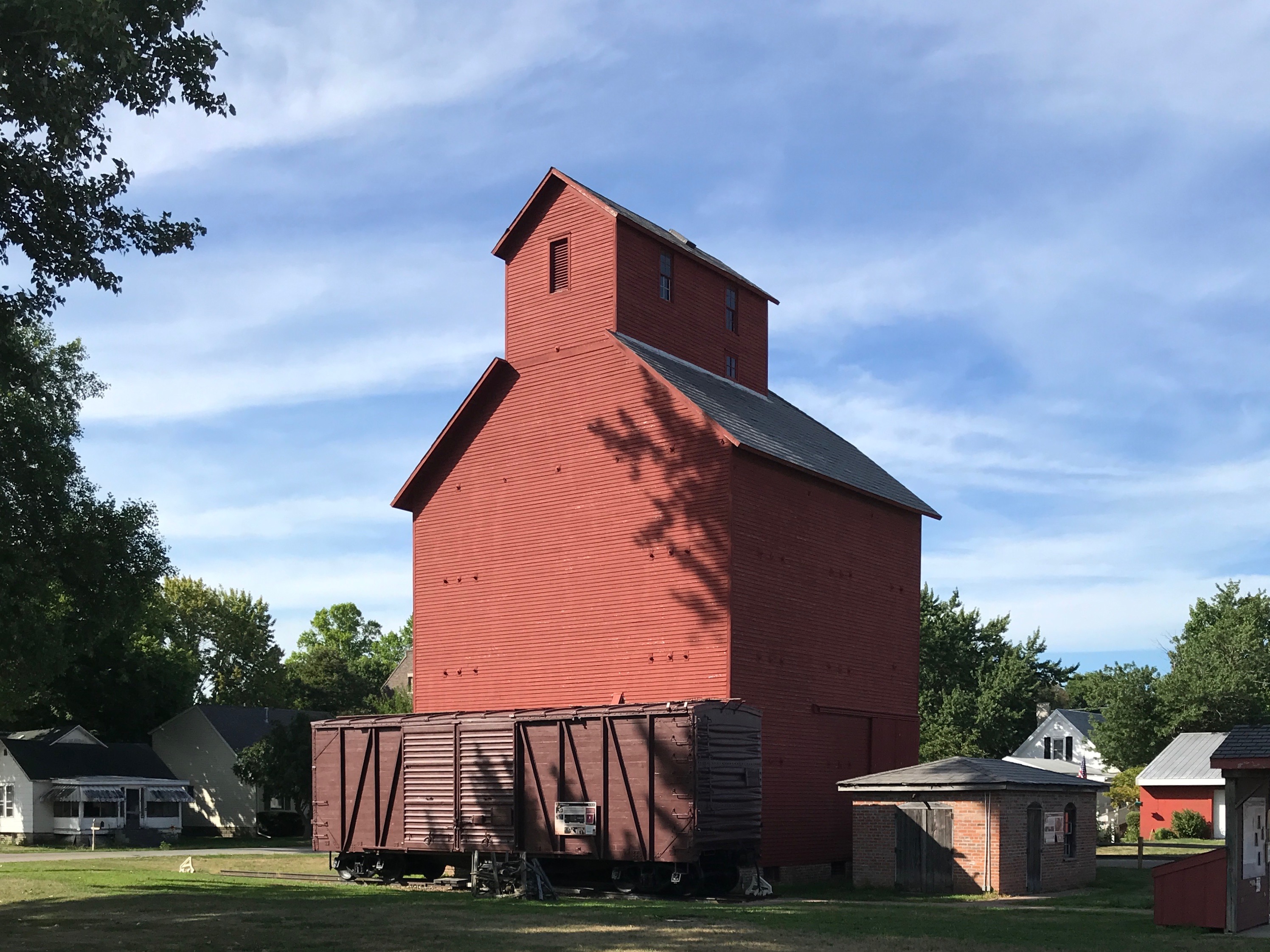
With that, it was time to head out. My next brown sign was for the J.H,Hawes Grain Elevator and Agriculture Museum in Aurora, Illinois.
The historic grain elevator, which is on the National Register of Historic Places, was built in 1903 and was in use until 1975.
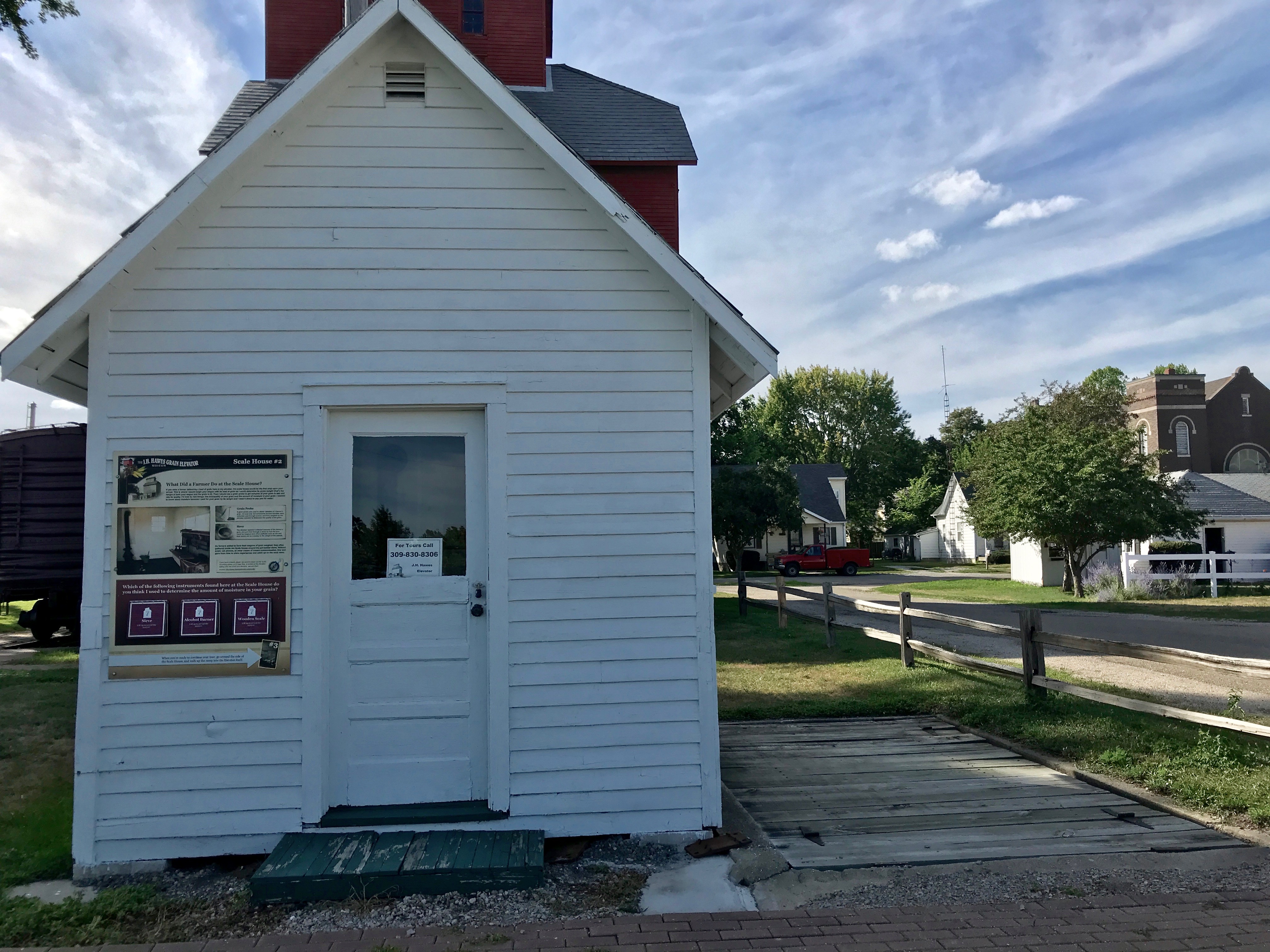
Unfortunately, it was closed, but they had some excellent interpretive signs around the museum.
For instance, that small brick building to the side is the engine house. There is a conveyor belt that lifts grain up to one of the storage bins. Originally it was powered by a steam engine. That one was replaced in the 1920s with a gas engine.
The engine house is made of brick as a fire prevention method. Grain elevators raise a lot of dust, which is combustible. It was wise to house the engine and any sparks it might emit in a separate, fireproof brick building.
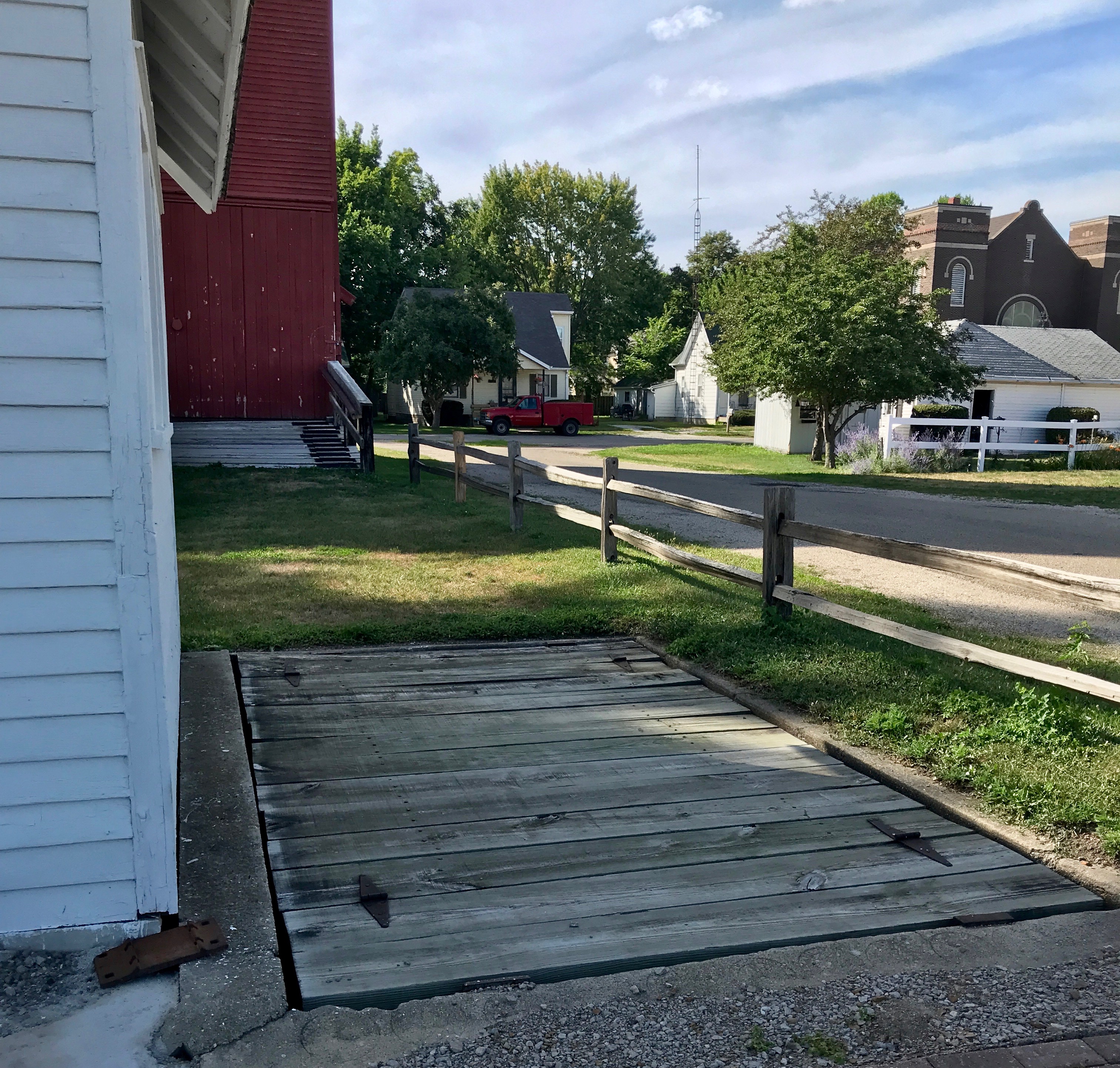
When a farmer brings in a load of grain, the first stop is at the scale house. They weigh the scale loaded and then again after the load is dumped.
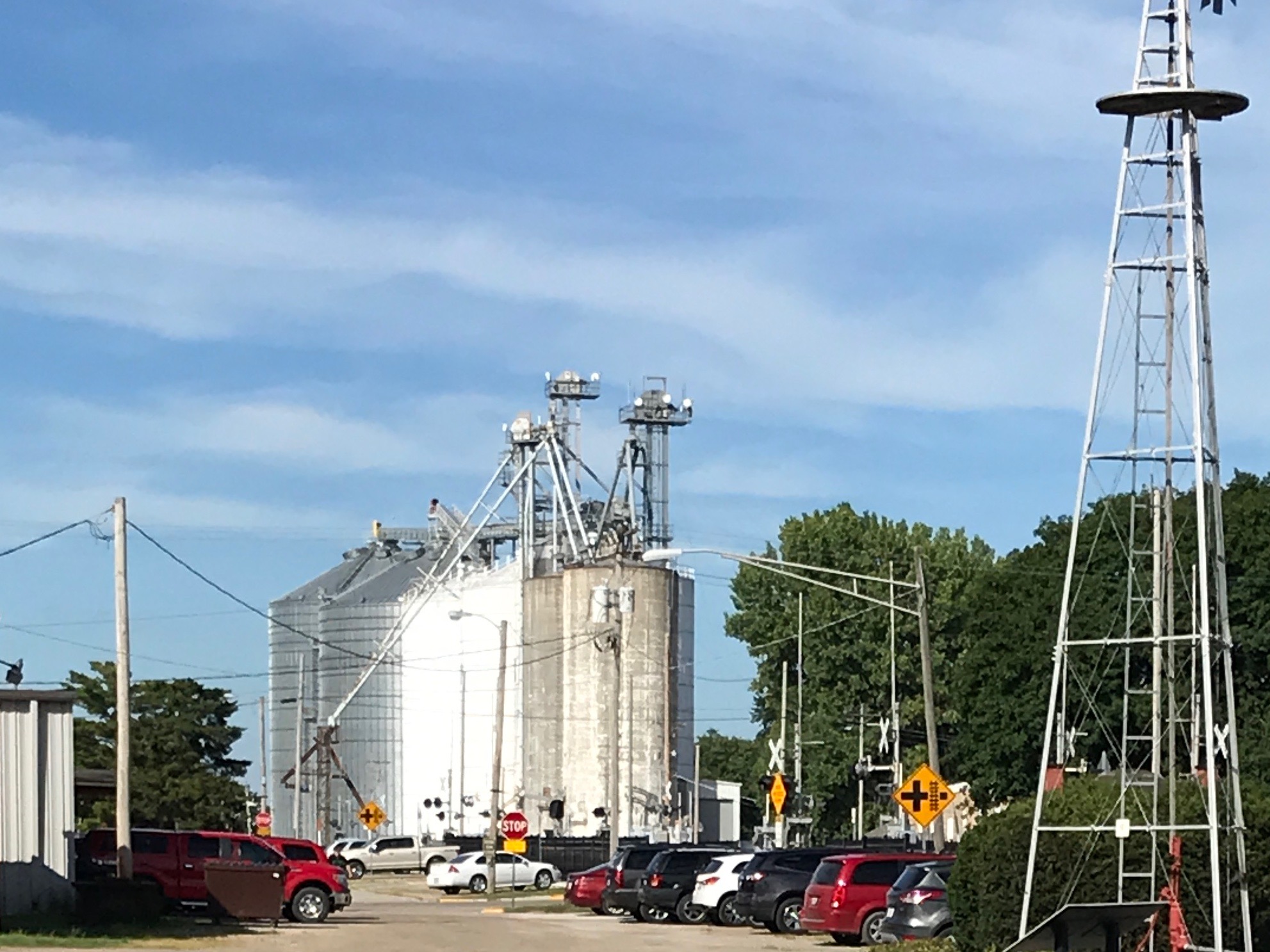
They still do the same things, but the equipment has changed.
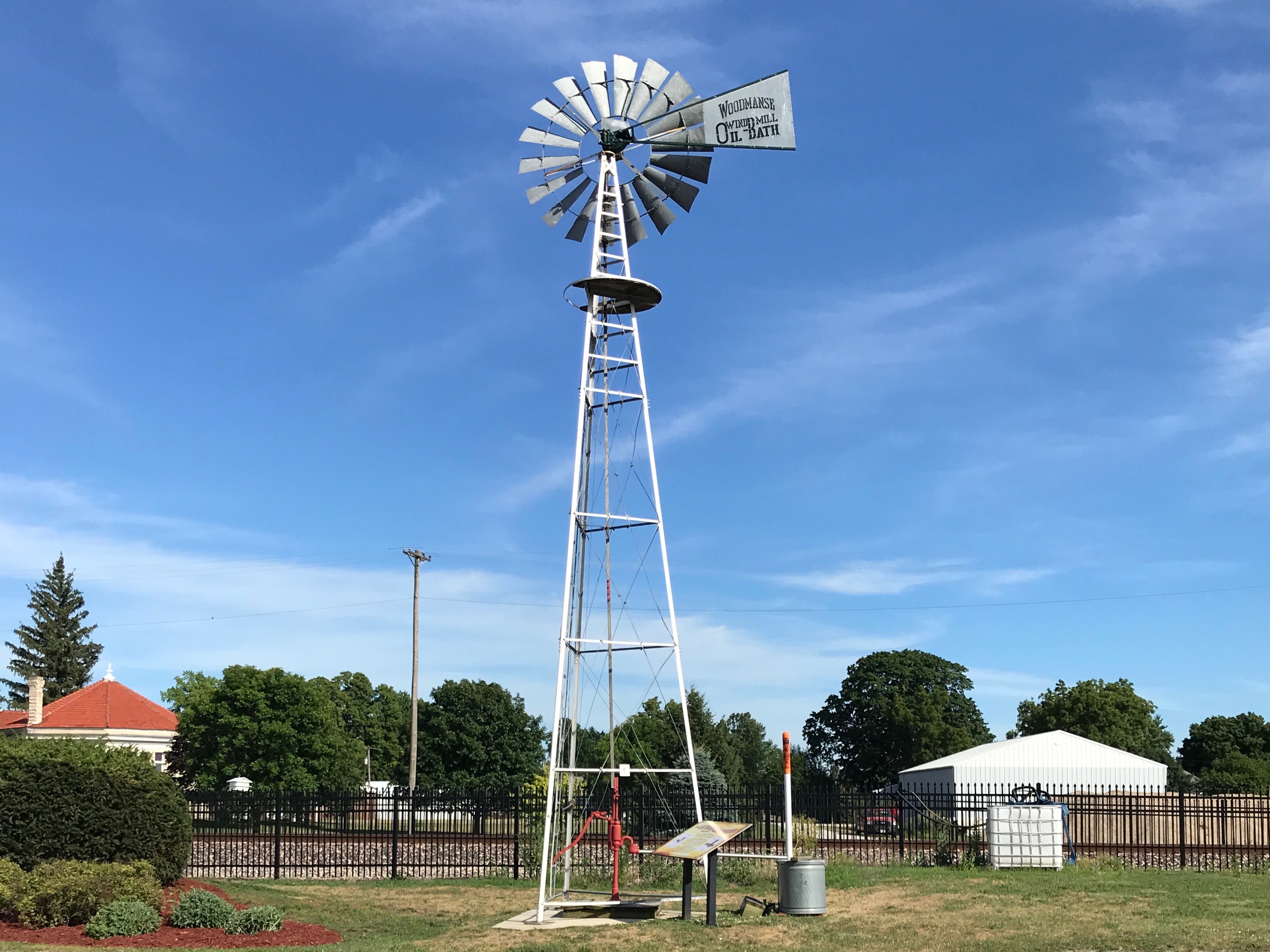
The windmill certainly brought a lot of changes to agriculture.
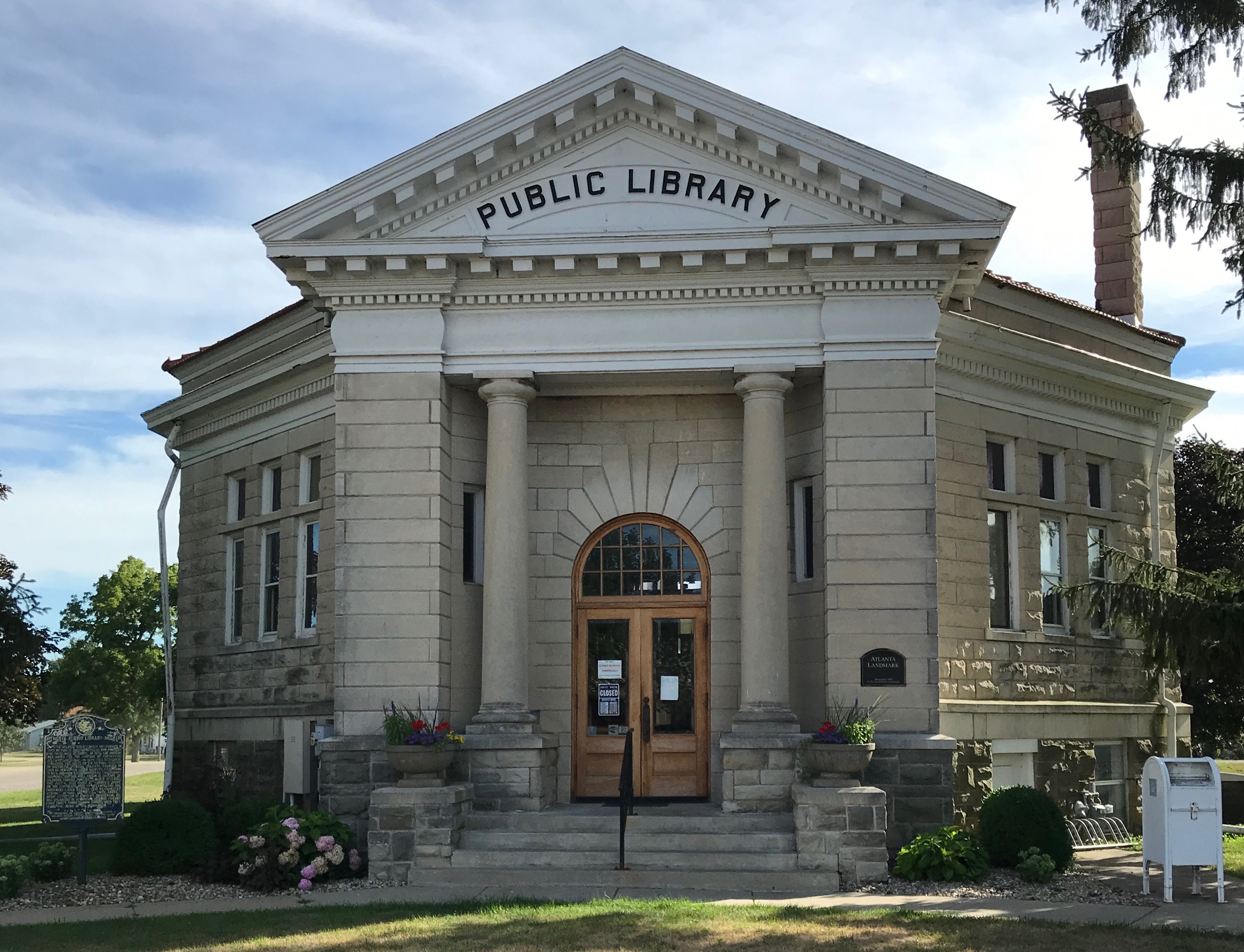
I have no more to say about windmills at this time. I’ve written about them before. I had to be moving along. But, before I leave Atlanta, I need to check out the interesting building with the read roof.
The library was built in 1908. The building combines Neoclassical features on an octagonal floor plan. According to the plaque at the library, the library was founded by “public spirited citizens who realized the importance of books.”
They added a museum to the library for the purpose of preserving the city’s heritage. Atlanta was founded in 1853, although it was originally called Xenia. It had Logan county’s first bank. Abraham Lincoln travels throughout the area and was well known by several of Atlanta’s pioneer families. Lincoln attended the July 4, 1859 picnic and was presented with a gold-handled cane. In 1860, the first “Wide Awake” group that was supportive of Lincoln’s presidential bid was organized in here. His friends in Atlanta fired thirty-three cannon rounds when they heard the news of his nomination.
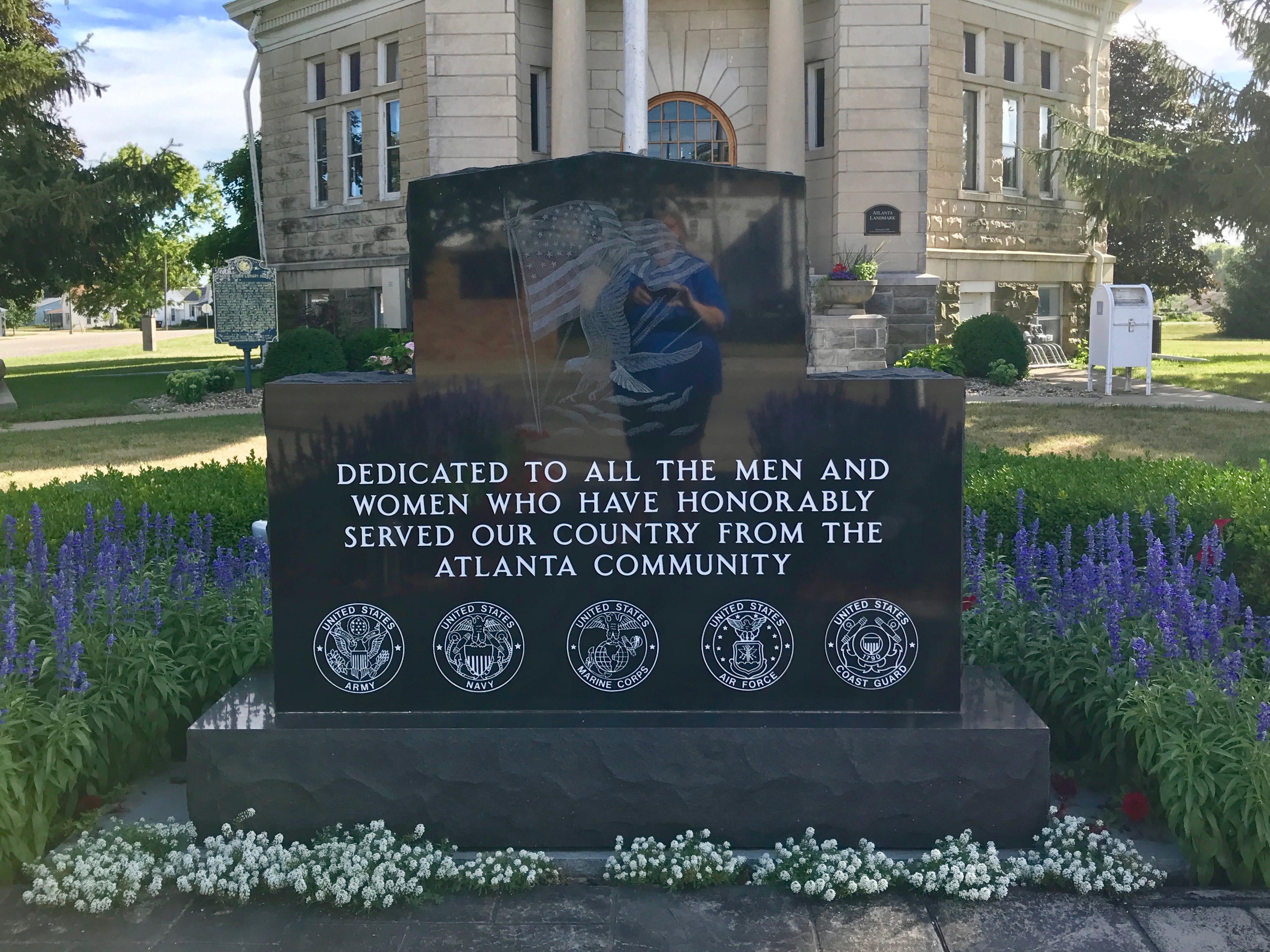
I like this approach to honoring people who serve. It always makes me sad when I see memorials that have extra space for the “next wars.”
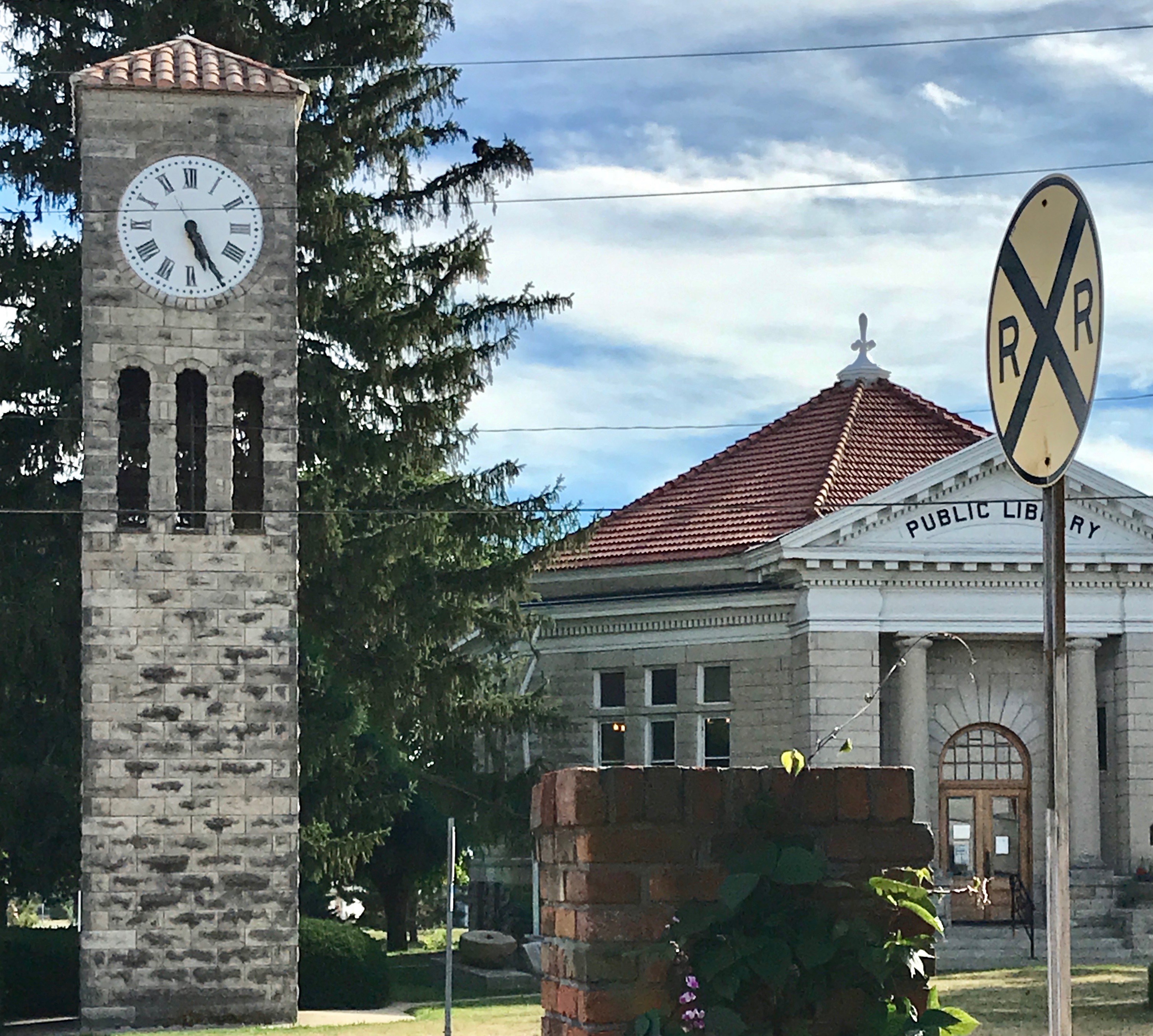
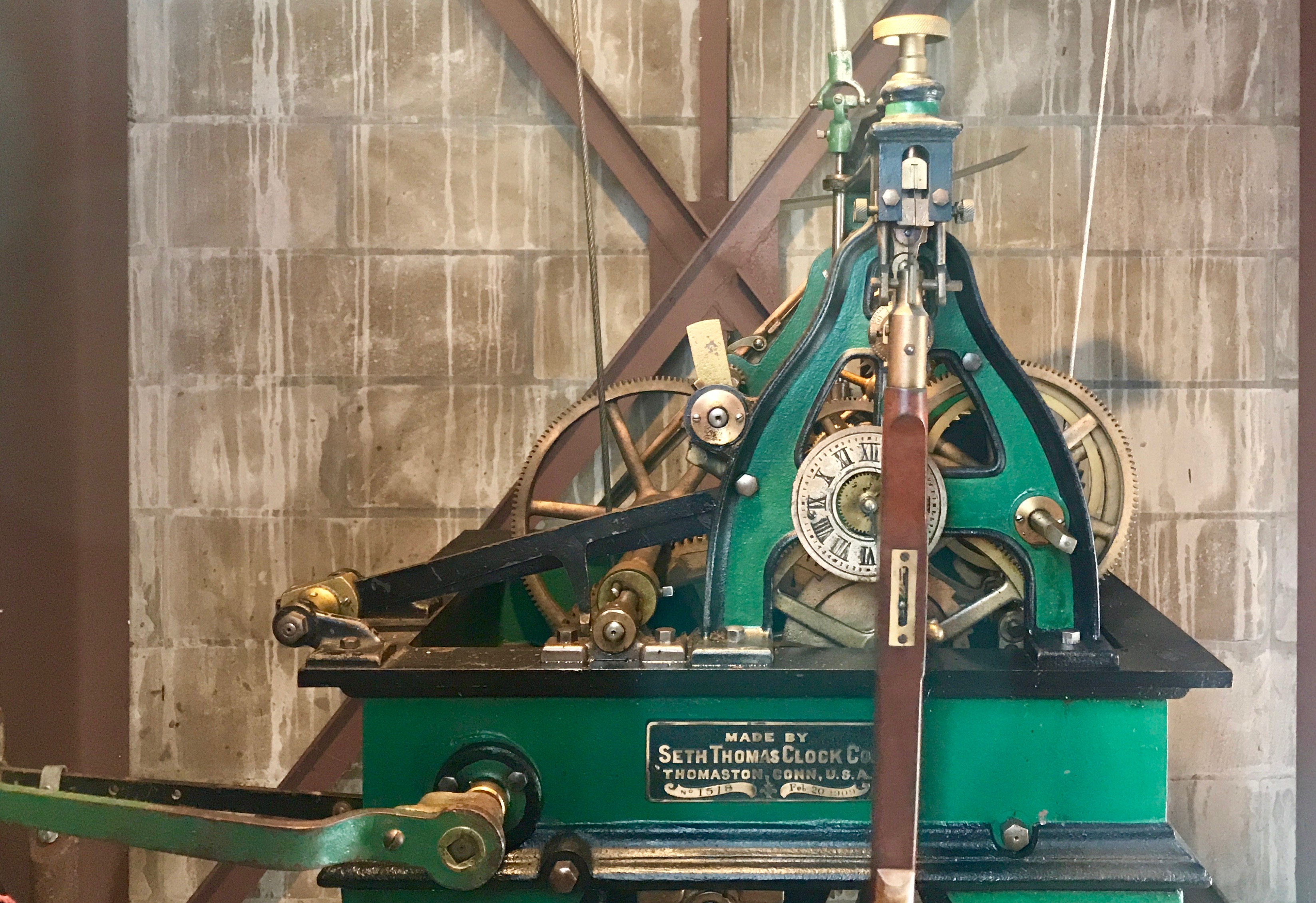
The Library is also graced with a 36 foot tall clock tower. The clock was originally located in the Atlantic High School building. The clock is a 1909 Seth Thomas clock that was installed in the high school thanks to “generous contributions from the citizens of Atlanta and former students of the school.”
According to the sign by the clock tower, when the 1909 Atlanta High School building was to be razed in 1979, concerned citizens began a “Save the Clock” fundraising campaign. Through various funding sources, the clock tower was completed in 1982.
Today, eleven “Keepers of the Clock, who live or work in Atlanta, take turns keeping the clock in operation by hand-winding it approximately 55 turns, three times a week.
The clock’s 36-inch brass bell, weighing 1,200 pounds, sounds on the hour. Unfortunately, this was “drive-by tourism,” so I didn’t get the chance to hear it.
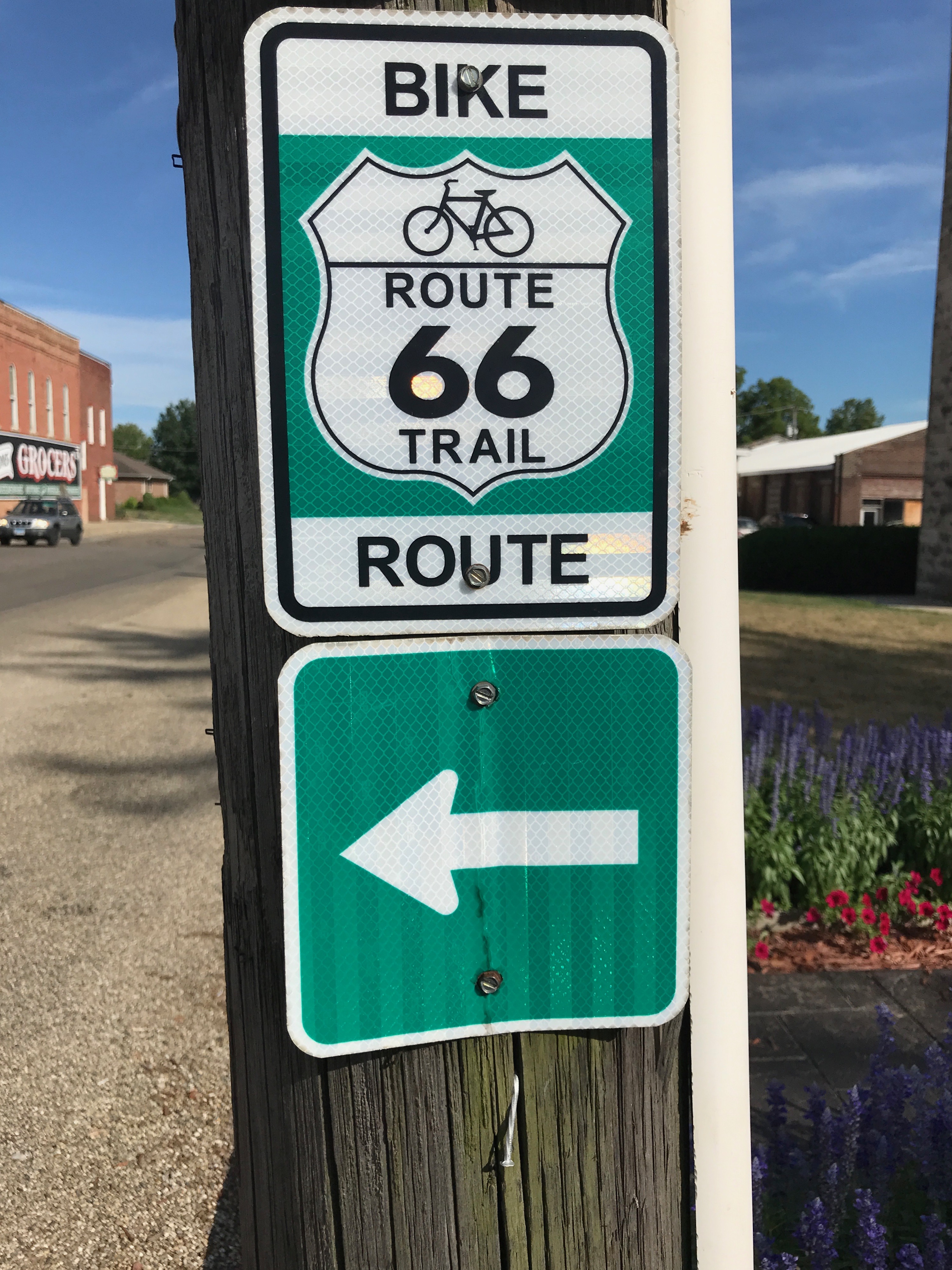
Huh. Who knew that there was a Route 66 bike trail? Not me.
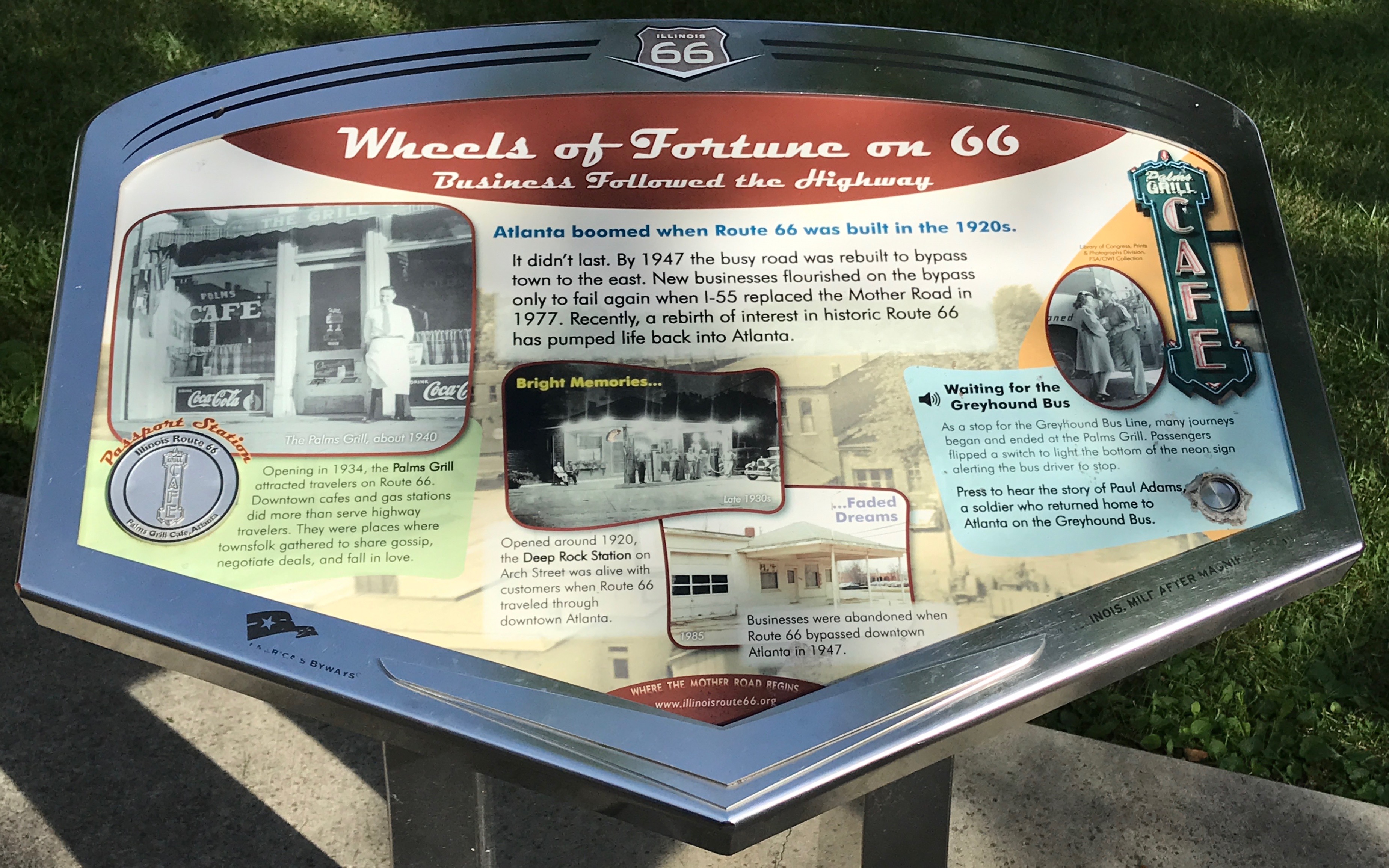
Speaking of driving, Atlanta was on Route 66 for a while. Businesses flourished for a while, but then the route was changed and I-55 pulled the business away. Atlanta is ready to take advantage of he renewed interest in Route 66 – the Mother Road.
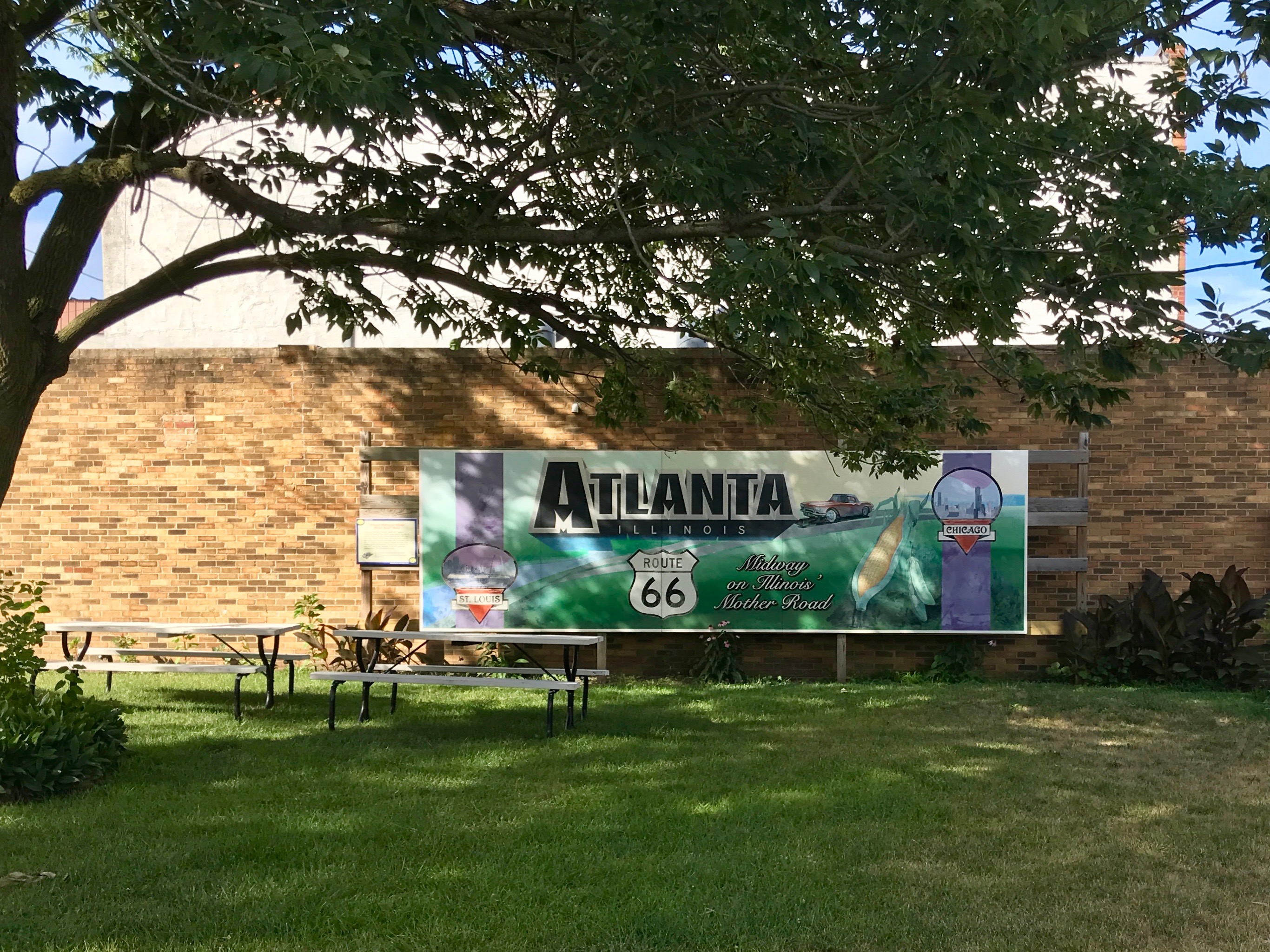
Atlanta is the midway point on the Illinois portion of Route 66.
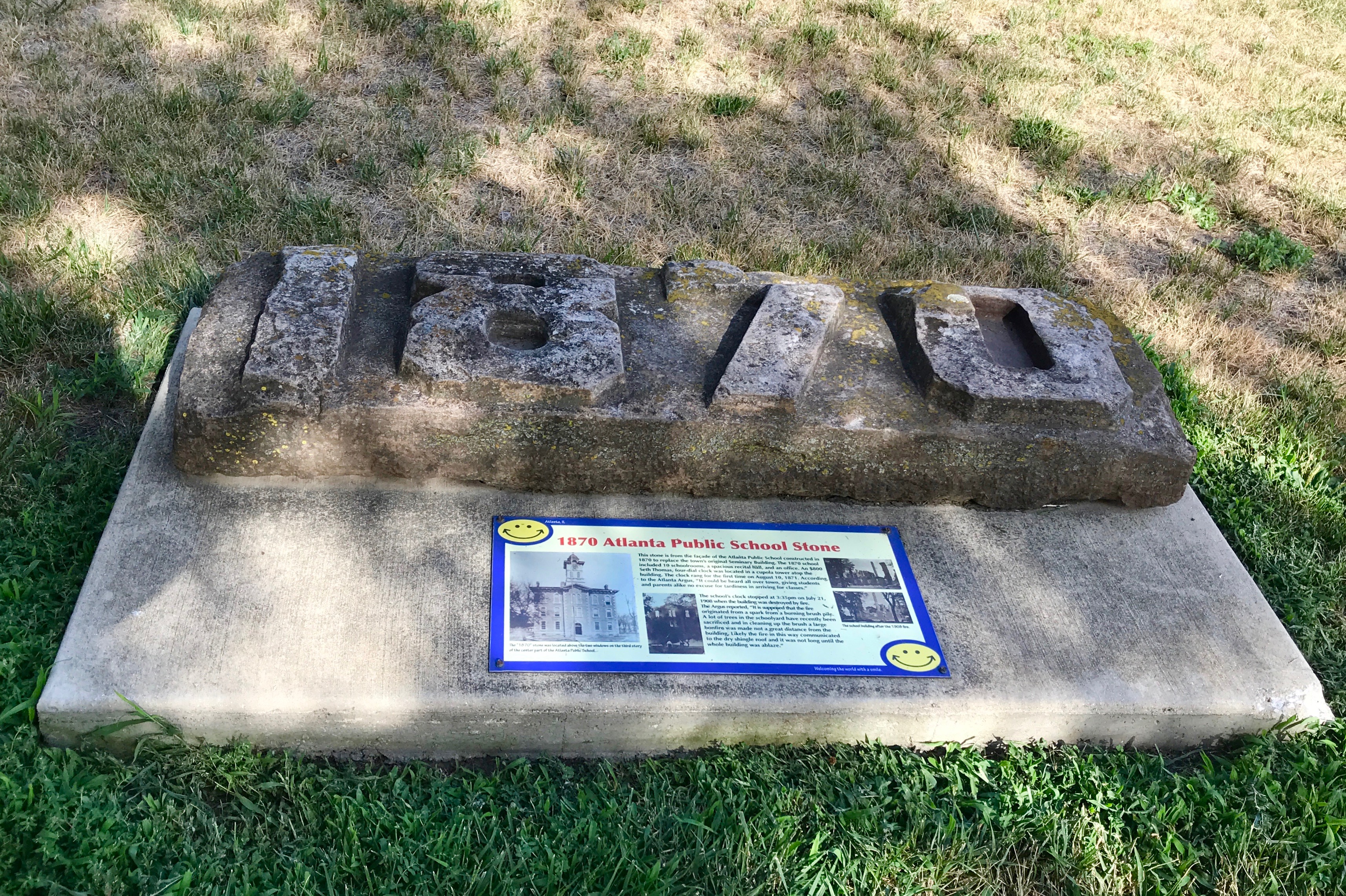
In the lovely tree shaded park are some pieces of Atlanta’s past. For instance, this stone is from the Atlanta Public School that was constructed in 1870. It had an $800 Seth Thomas four-dial clock that was located in a cupola tower atop the building. It was for the first time on August 10, 1871.
The clock stoped at 3:35 pm on July 21, 1906, when the building was destroyed by fire. I guess that is why they had to build a new school and they made sure to include another Seth Thomas clock in it.
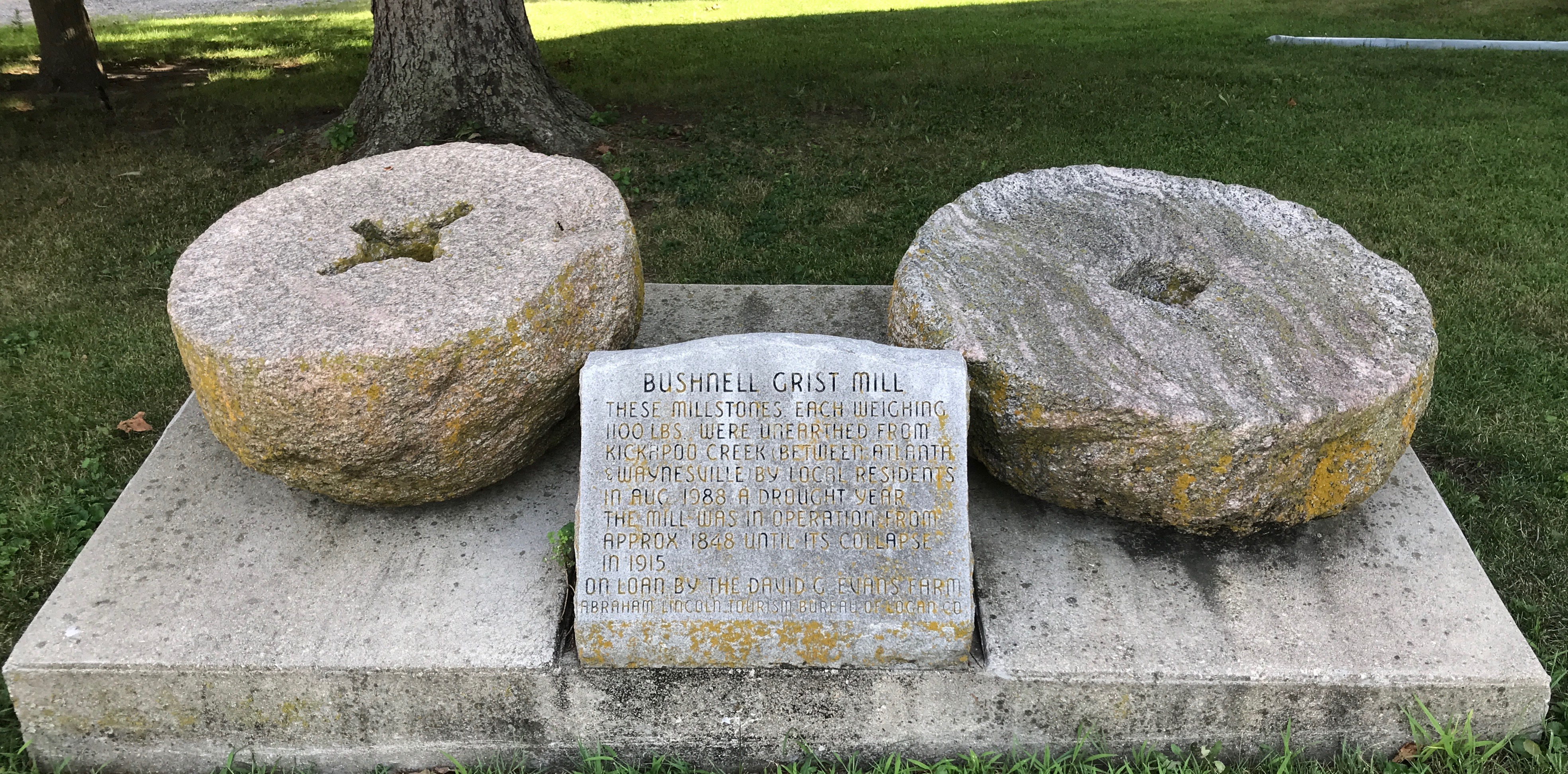
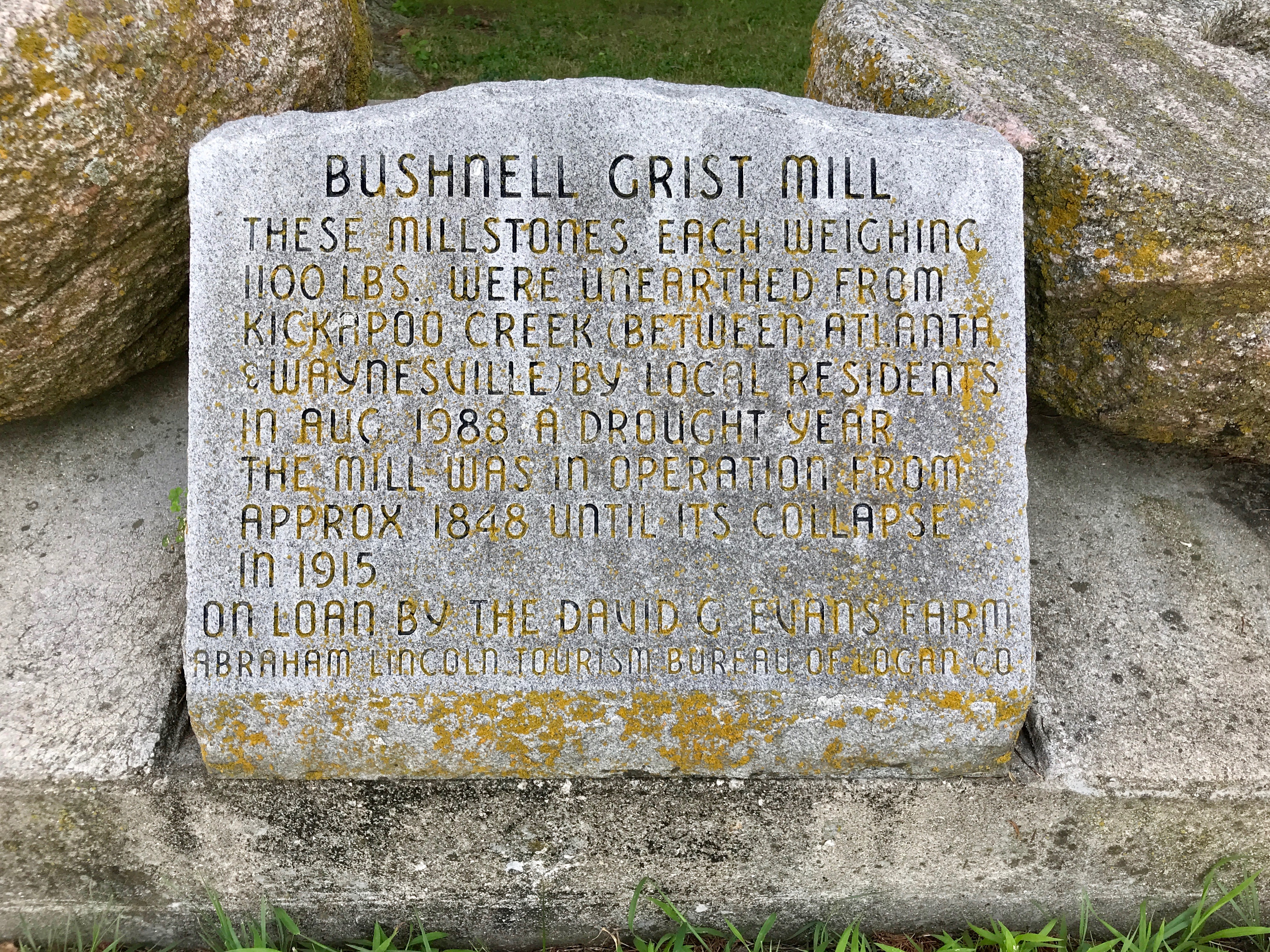
They had some mill stones on display.
If you are interested in how the stones came to be here, you can read the information on the marker.
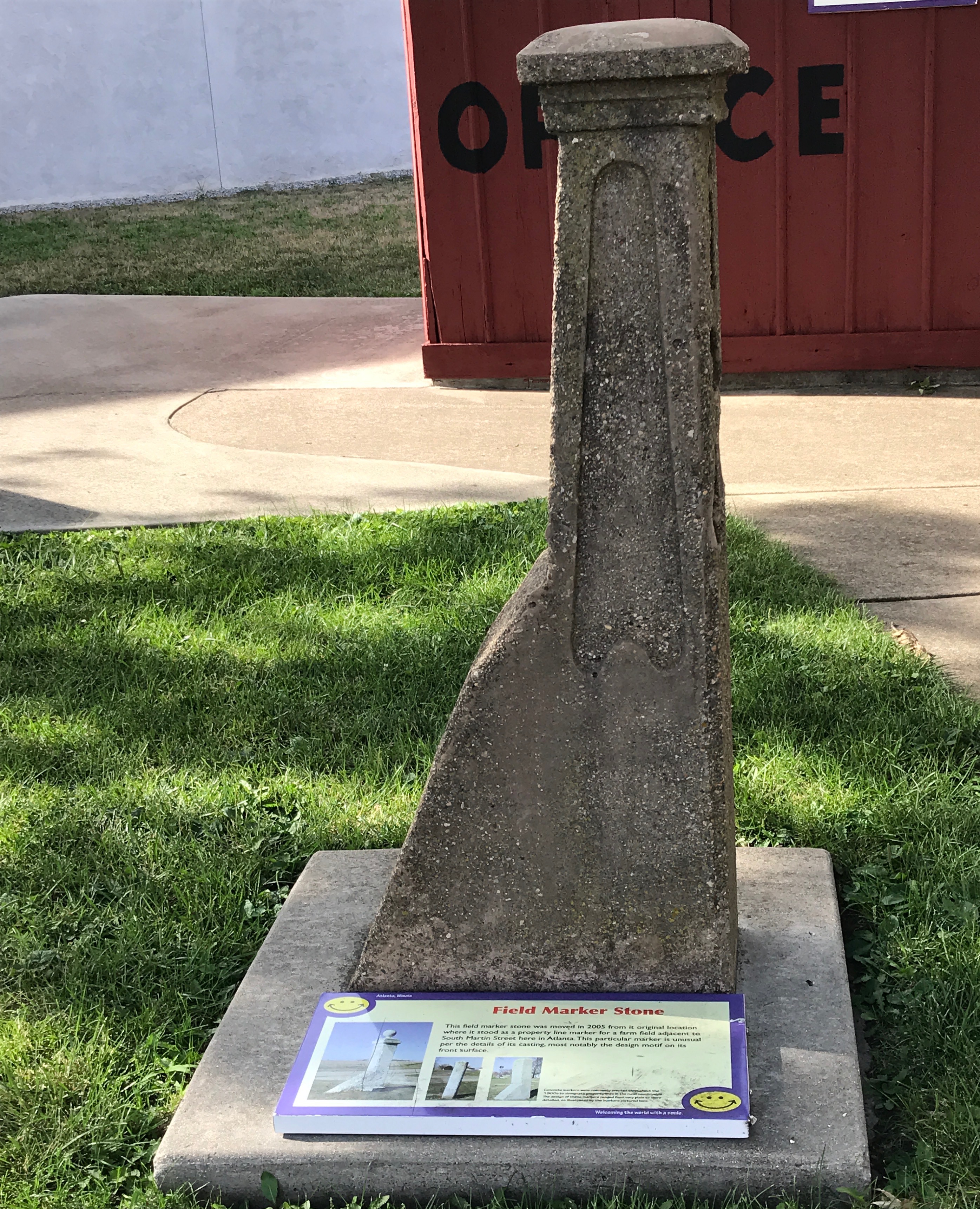
They really enjoy all the small bits of their history. This is a field marker stone that was a property line marker for a farm field in Atlanta. The plaque points out that this particular marker is unusual for the design details of its casting.
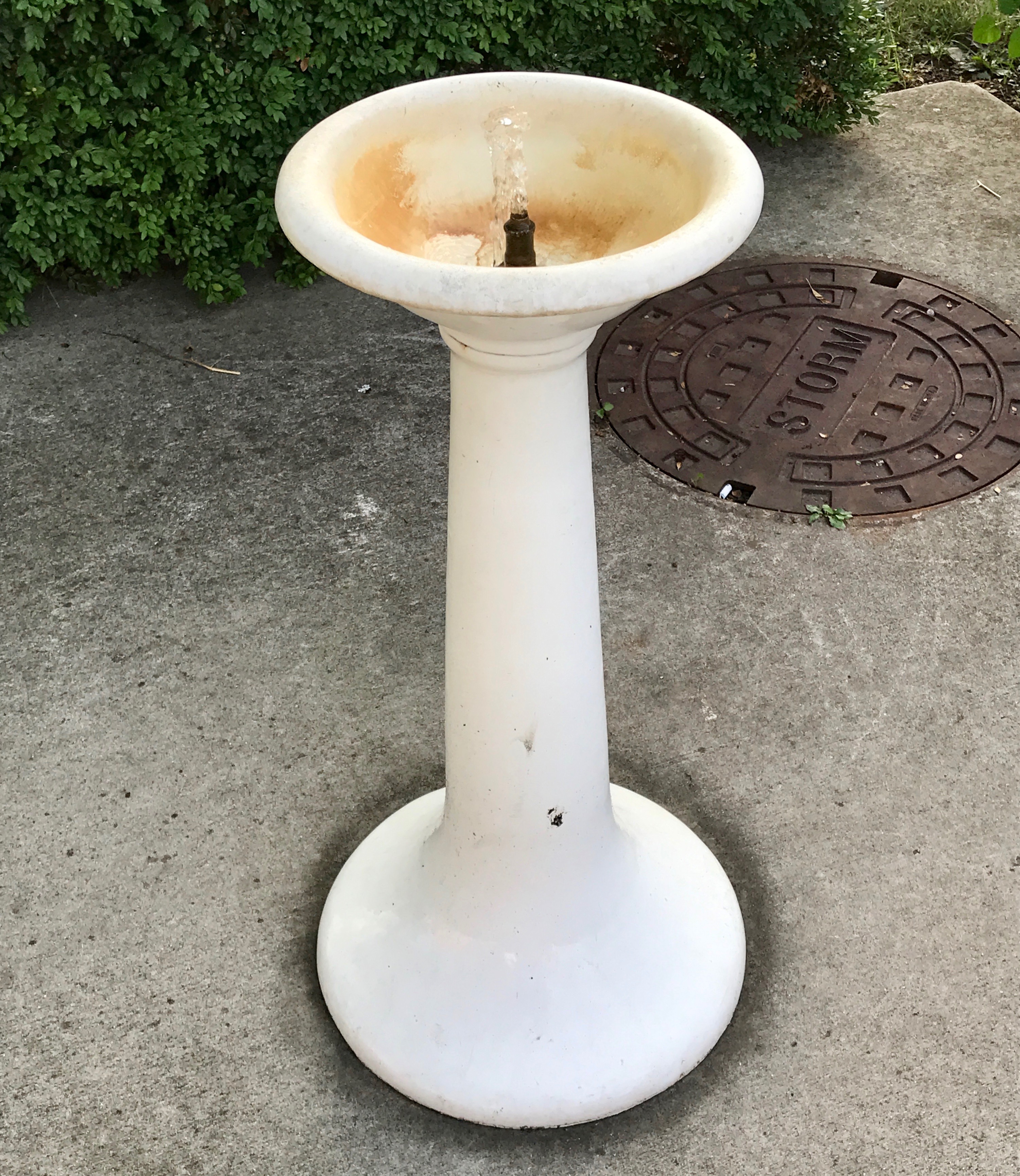
This is one of four drinking fountains installed by the City of Atlanta in 1934. According to the sign with it, sometimes the older boys would pick up the younger ones and sit them on top. You will notice that the water is running. That can’t have been pleasant.
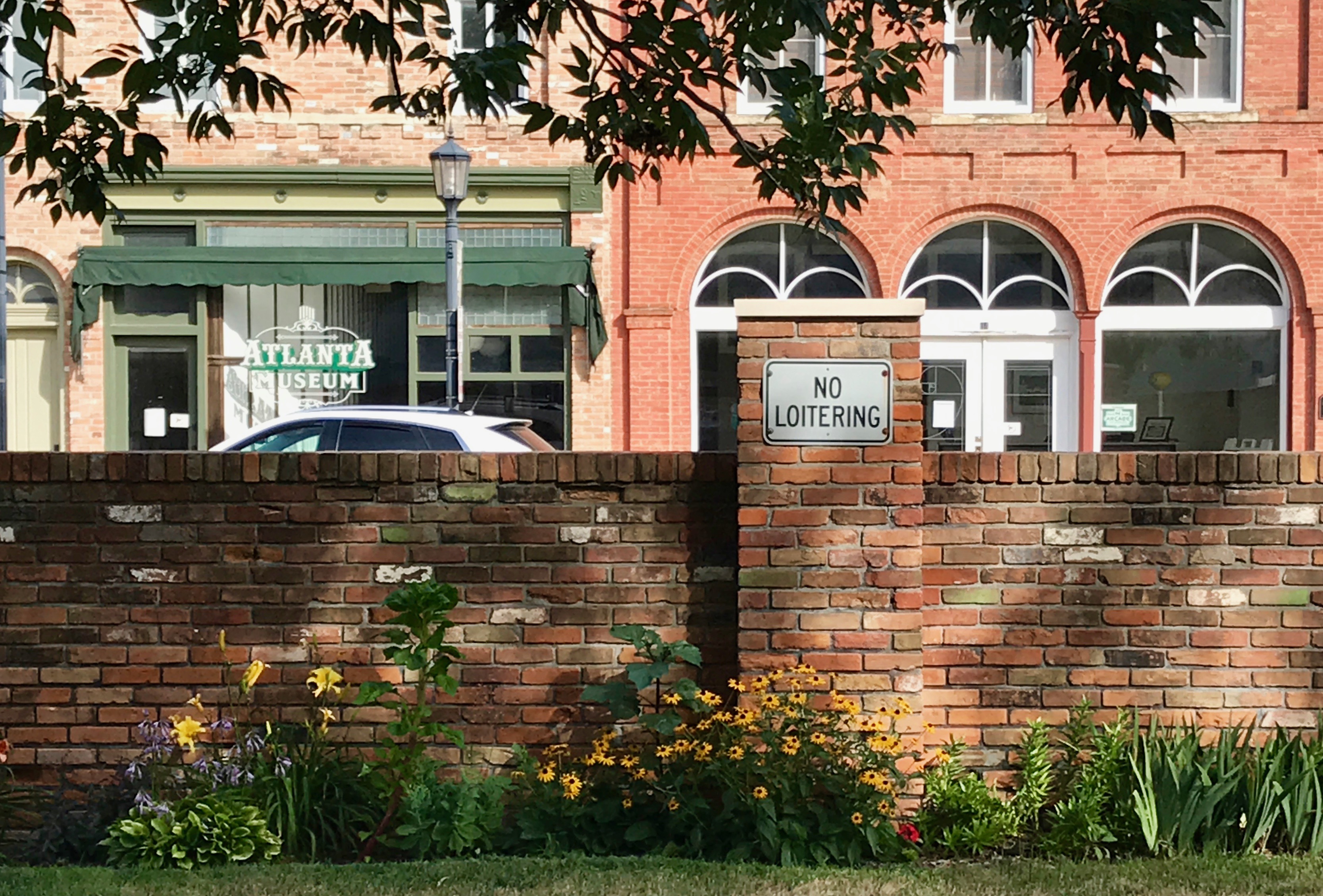
I think I had seen just about all I could see in a quick visit, and the sign warned me against loitering.
After Fort Wayne, I had a few more grain elevators to stop at and then it was just drive, drive, drive until I got back to Kansas City.
I did stop at one memorable place: Blue Springs Cafe in Highland, Illinois. It was about 35 miles east St. Louis just off I-70.
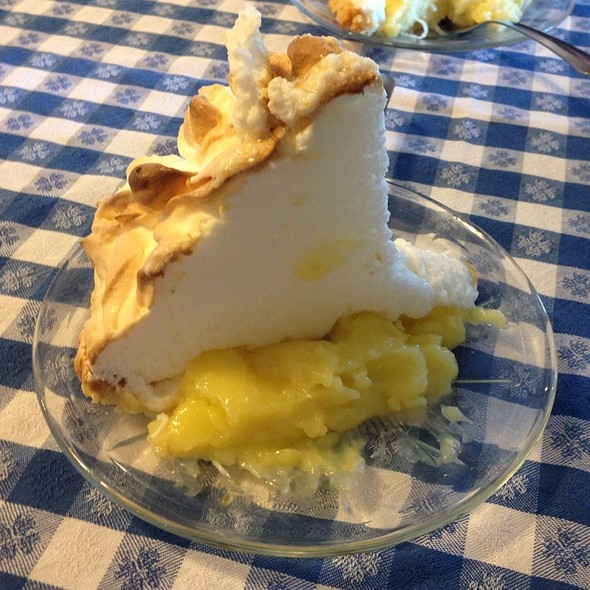
As I approached, the billboards kept touting it as having been on FoodNetwork on “The Best Thing I Ever Ate.” Their claim to fame is their “Mile High Pies.”
Of course, I had to have a slice.
I borrowed this photo from The FoodNetwork files, I hope they don’t mind.
It was a homey little restaurant. I don’t remember what I ate, aside from the pie, but I do remember that I wasn’t disappointed.
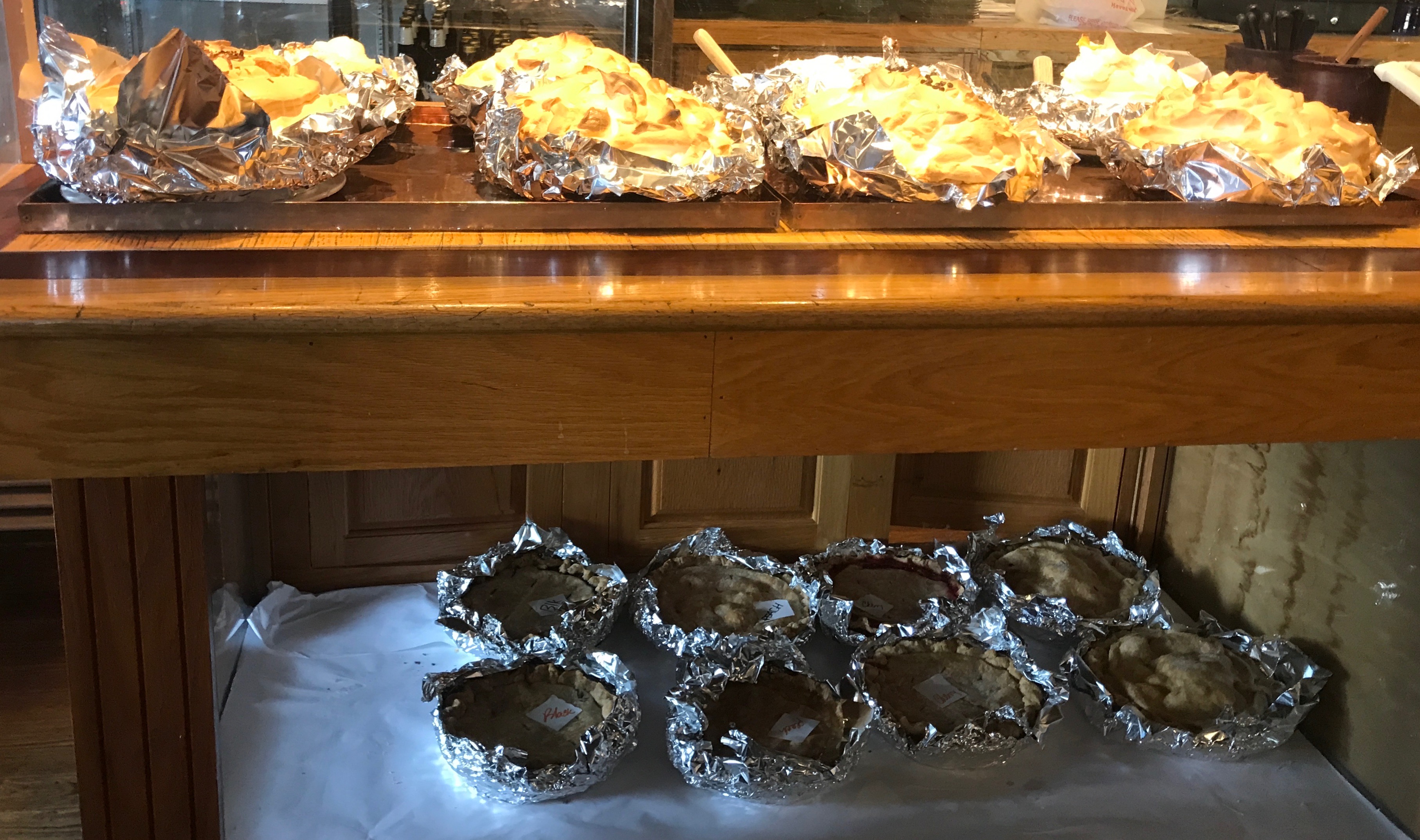
They had a display of pies near the door. I’ll bet you could buy a whole one “to go.” Or, maybe you could just ask for a fork at eat it there.
Another night in a nondescript hotel at an interchange along the interstate and then it was over. I took the company’s car back, transferred my stuff to my Escape and I was ready to head back.
The Summer of Seed Collecting was drawing to a close. I had a few more stops to make before I got back to Kansas City, but the weekend found me in Fort Wayne, Indiana.
I was only about two hours from home, but I was so tired from driving. Since I was essentially picking up the odd sites that weren’t ready for the first collector, the facilities were rather far apart and involved a lot of driving between stops. Rather than make the drive, I holed up in Fort Wayne for a little R and R.
According to my Preferred Source, Fort Wayne was built in 1794 by the United States Army under the direction of Revolutionary War general Anthony Wayne.
He had an interesting nickname – Mad Anthony. He earned it with his military exploits and fiery personality. He was over in this neck of the woods fighting the Northwest Indian War (1785-1795). I honestly don’t remember learning about this war in school or elsewhere. Incidentally, this was was also known as the Ohio War, Little Turtle’s War as well as other names that weren’t included in my Preferred Source.
General “Mad” Anthony Wayne, along with General Charles Scott’s Kentucky Militia triumphed in the final battle of the war in The Battle of Fallen Timbers, on August 20, 1794. The battle took place amid trees that had been toppled by a tornado just north of the Maumee River in northwestern Ohio at the site of the present-day city of Maumee. They were victorious against a combined Native American force of Shawnee under Blue Jacket, the Miami under Little Turtle and numerous others and the British. This battle ended major hostilities* in the region and resulted in British and Indian withdrawal from the southern Great Lakes, western Ohio and northeastern Indiana.
* Uh…there was that little matter of the War of 1812 just a few years later, but that hardly matters, does it?
This is one of the places that popped up in History Here. I sure miss that app! It lead me to some interesting spots I wouldn’t have found otherwise. I’ve just downloaded a new app, What Happened Here? I haven’t tried it yet, but I hope it helps me find more unusual places.
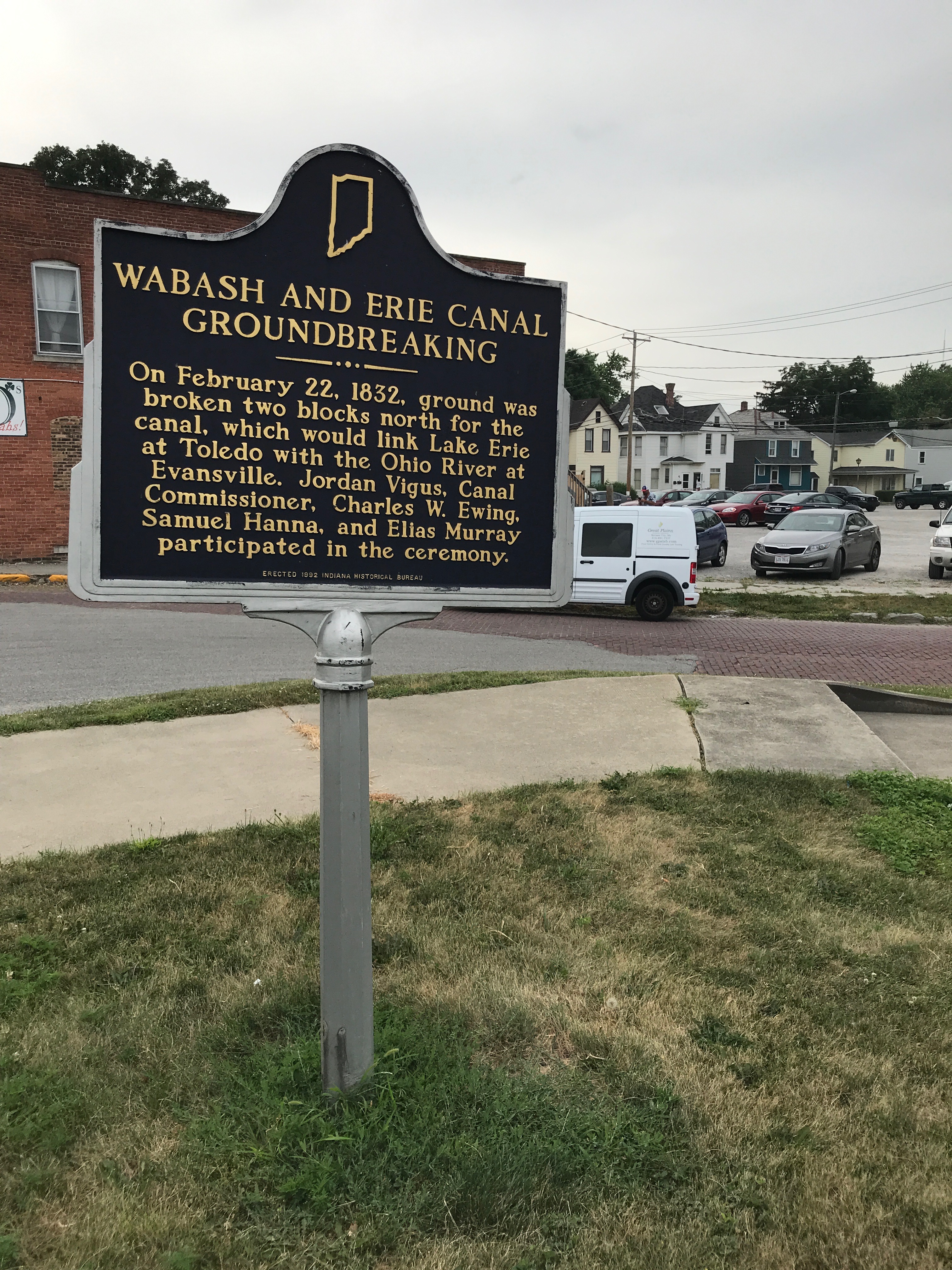
I am just amazed at all the canal building that took place in the early years of the United States. According to another Source, by the 1830s, the country has a complete water route from New York City to New Orleans. By 1840, over 3,000 miles of canals had been built. But, do you know what lead to their decline? The railroad. By the 1860s, they rendered most of them unprofitable. Poor Sal! The mule was replaced by the iron horse.
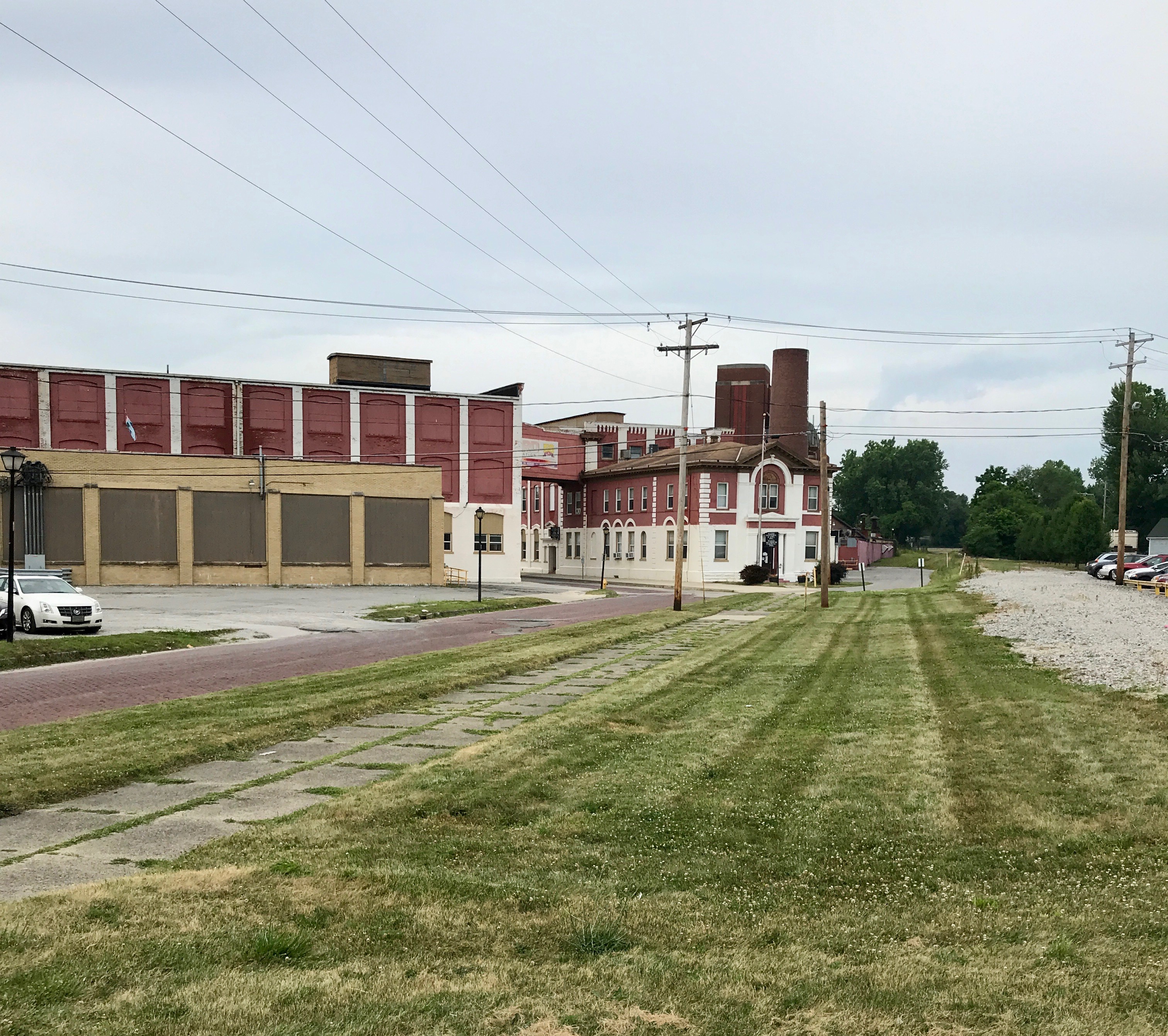
Anyway, the plaque was placed two blocks south of where the ground was broken. You know I had to see if there were any tell-tale signs of a canal, as the area around the plaque didn’t seem particularly canal-like.
I headed north. No canal here. The road curved around and what should I find?
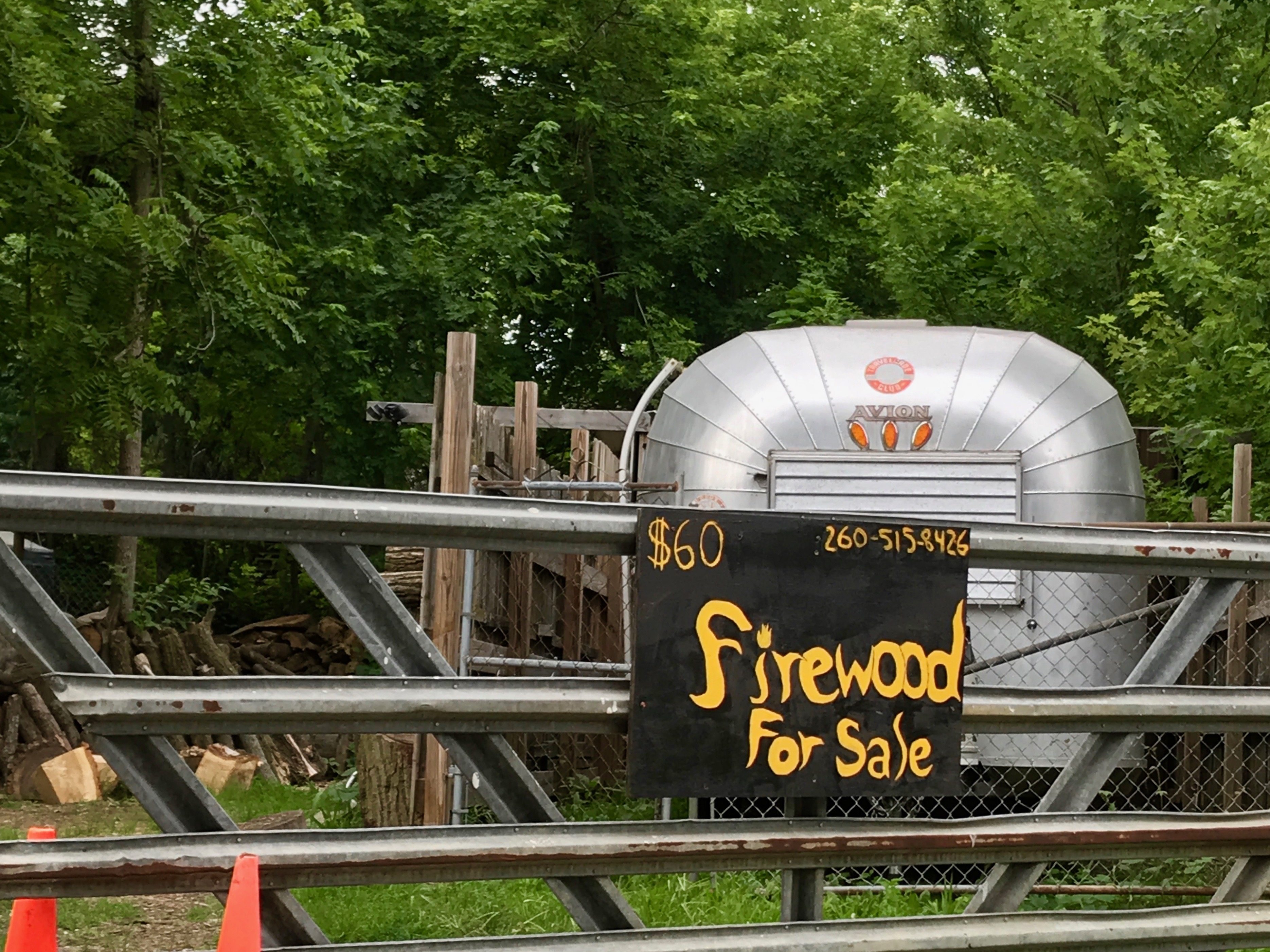
An Avion! It isn’t exactly an Airstream, but aluminum cousins are good in my book.
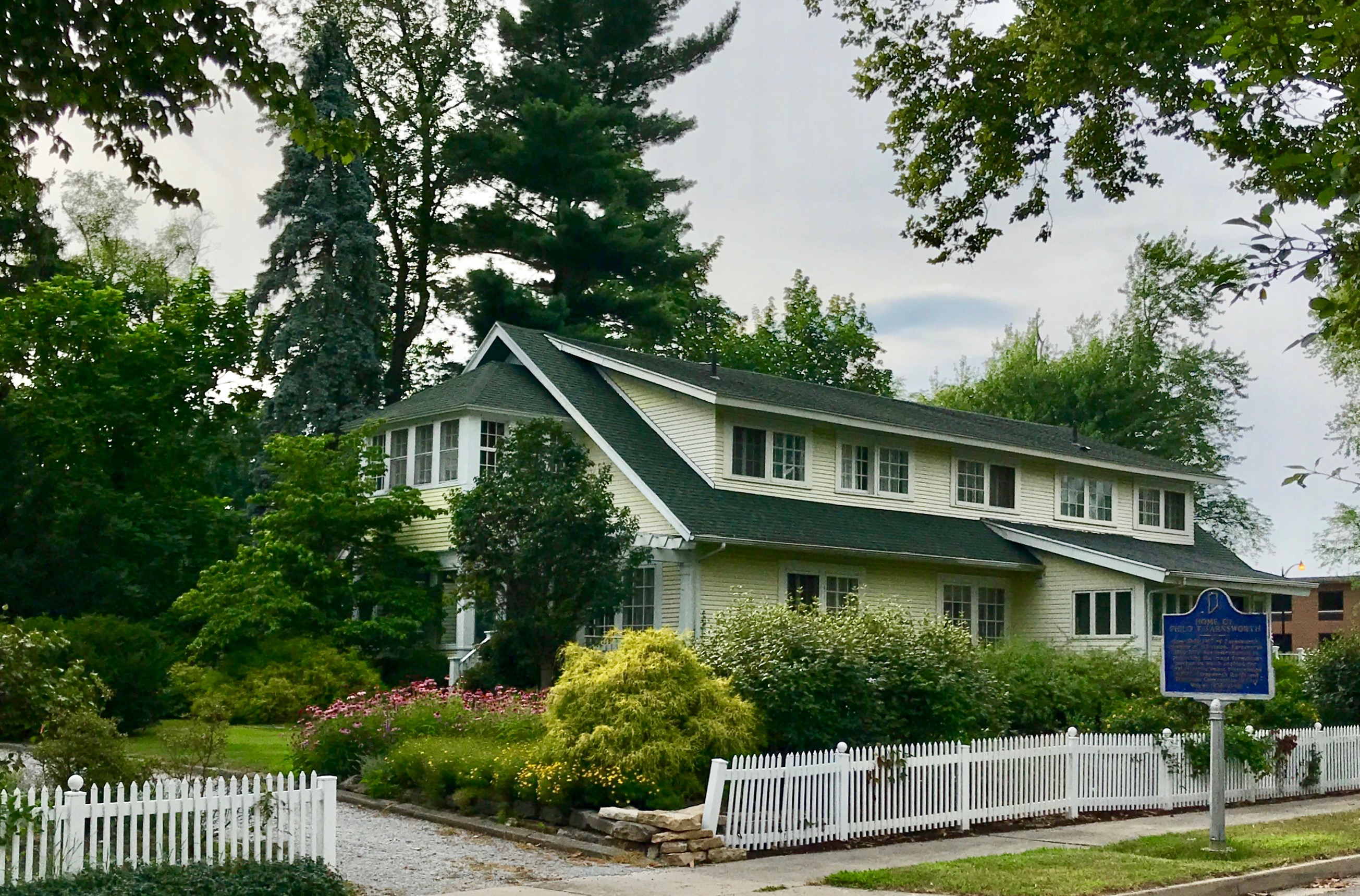
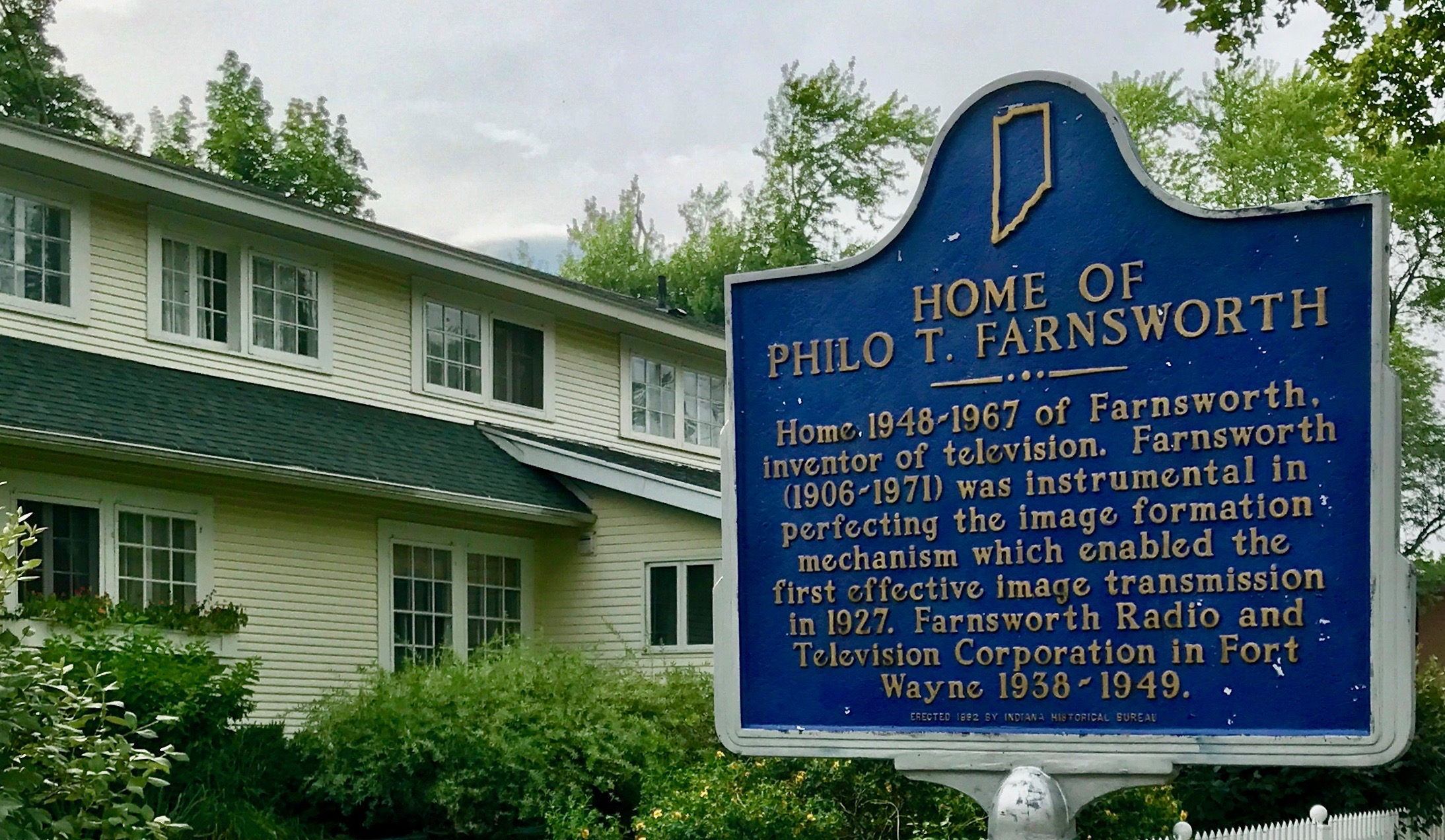
I also followed a History Here lead to the house of Philo T. Farnsworth. Who’s that, you ask?
Why, he is credited with being the inventor of television! He held around 300 patents, mostly in radio and television, although he also invented a small nuclear fusion device, Farnsworth–Hirsch fusor.
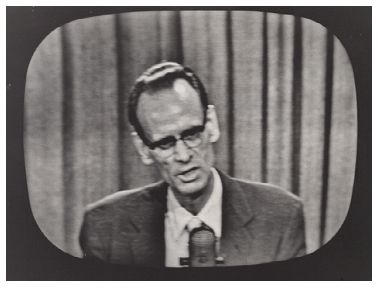
In spite of inventing the medium, he only appeared on television once. On July 3, 1957, he was a mystery guest (“Doctor X”) on the CBS quiz show, I’ve Got a Secret. He fielded questions from the panel as they unsuccessfully tried to guess his secret (“I invented electronic television.”) For stumping the panel, he received $80 and a carton of Winston cigarettes.
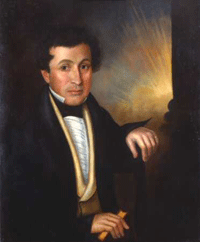
When I was just cruising around, I found this house. It was the home of Miami chief Jean Baptiste de Richardville. His name was Pinšiwa in Miami. He was the son of Tacumwah, sister of the Miami chief Pacanne, also known as Little Turtle, and Joseph Drouet de Richerville, a French fur trader from Quebec.
The house was built in 1826 and is called a treaty house. Chief Richardville, who was the principal chief of the Miami from 1812 until his death in 1841, signed several treaties with the United States government as it negotiated with the Miami tribe for its eventual removal from Indiana as a recognized nation. In the treaty, lands were reserved for Richardville and $600 was provided for the building of a home. The $600 only partially covered the cost of building the home. Apparently it was not a problem for Chief Richardville to throw in a bit of money toward building the house, which ended up costing $2,200. At the time of his death in 1841, he was considered to be the richest man in the state of Indiana.
I peered in one of the windows. Apparently, the Allen County-Fort Wayne Historical Society has Miami Indian Heritage Days on the first Saturdays of the month from May-November. If you happen to visit when the house is open, you can see the room where he died. You can also view the large safe in which he stored his wealth, which is estimated to be worth about $23 million in today’s money.
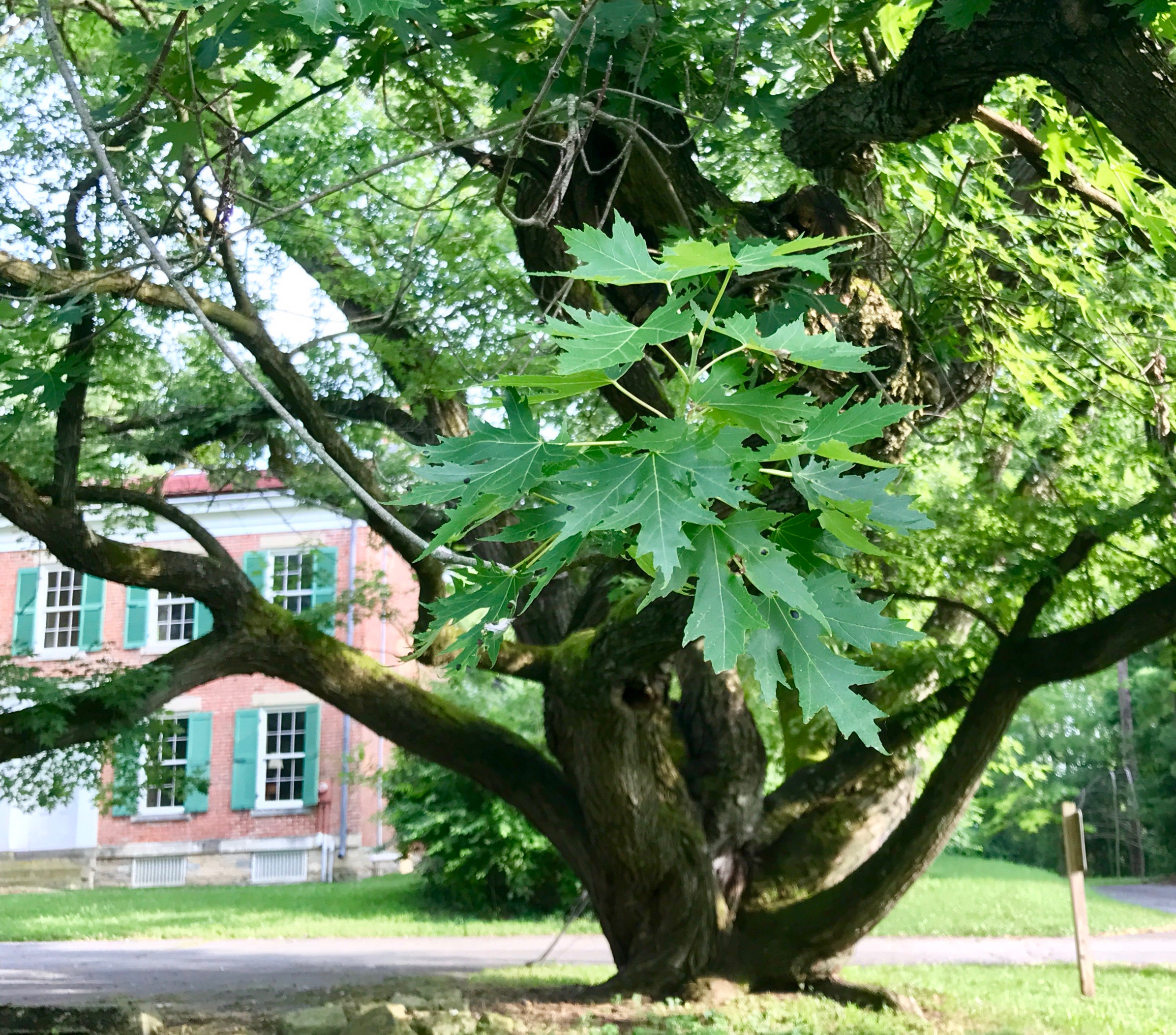
There was also a very large tree in front of the house. If I know anything about trees, that’s a maple. I have to admit that I’ve never seen a maple that was this profile.
In my experience, maples have a longer trunks with the branches growing out of the crown.
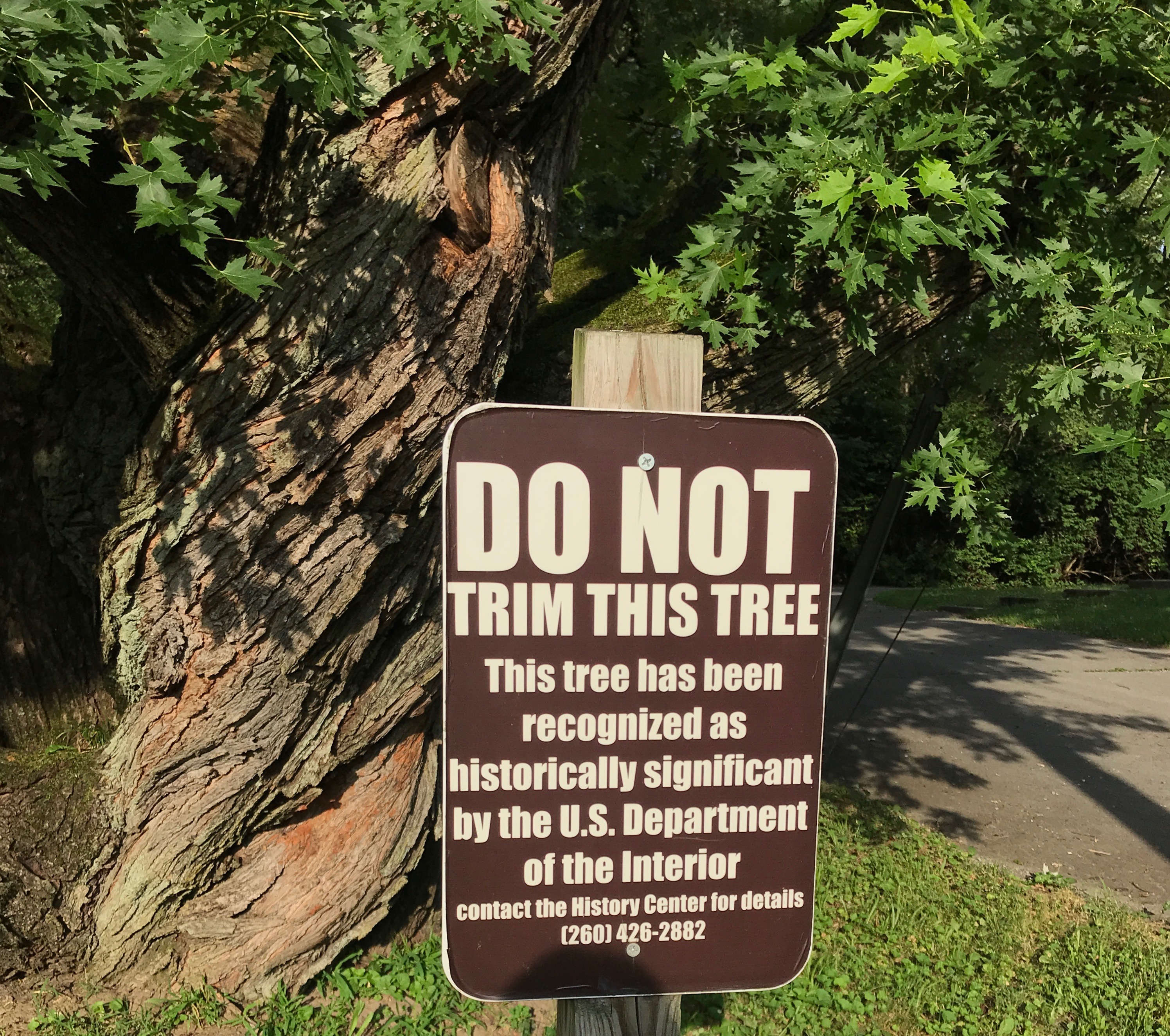
But, could it be that this tree has been growing since Chief Richardville lived here? I haven’t gotten around to calling the number on the sign, but maybe one of my Loyal Readers wants to take on this task and fill me in.
My last surprise in Fort Wayne was that John Chapman, also known as Johnny Appleseed is buried here. Really!
Well, that’s what they say.
It isn’t unusual that there should be some controversy about the exact location of his final resting place.
After all, he did die in 1845. While he wasn’t exactly poor, it doesn’t seem that he placed much value on worldly goods.
He really did go barefoot and wear a pot on his head. These observations were made during his lifetime. I really rather assumed this characterization was hyperbole. Is it any wonder that he never married?
He wasn’t without means, though. At his death, he left an estate of over 1,200 acres of valuable nurseries to his sister. There are still a couple of small apple orchards in Maine that are maintained by John’s great, great, great nephew, who is also named John Chapman. At least one of those trees is said to be descended from this forebear’s own trees.
The popular image of Johnny Appleseed is that he spread apple seeds wherever he went. In truth, he planted his seeds in nurseries. He built fences around his nurseries and left them in the care of neighbors, who received a share of the profits when the trees were sold. He returned to tend the nurseries every couple of years.
According to the sign at the gravesite, he moved ahead of the waves of westbound settlers and had seedlings available when the settlers arrived. His seedlings were valuable because apples were highly nutricious and orchards were a symbol of permanency. He sold trees for 3 cents if you planted them yourself and 6.5 cents if he planted them for you.
In addition to being a nurseryman and businessman, he was also a missionary for the Swedenborgian religion, a Christian denomination, which was influenced by the writings of scientist and Swedish Lutheran theologian Emanuel Swedenborg, whose writings promoted on church based on love and charity.
With all this focusing on apples, I was getting hungry! It was time to find some food.
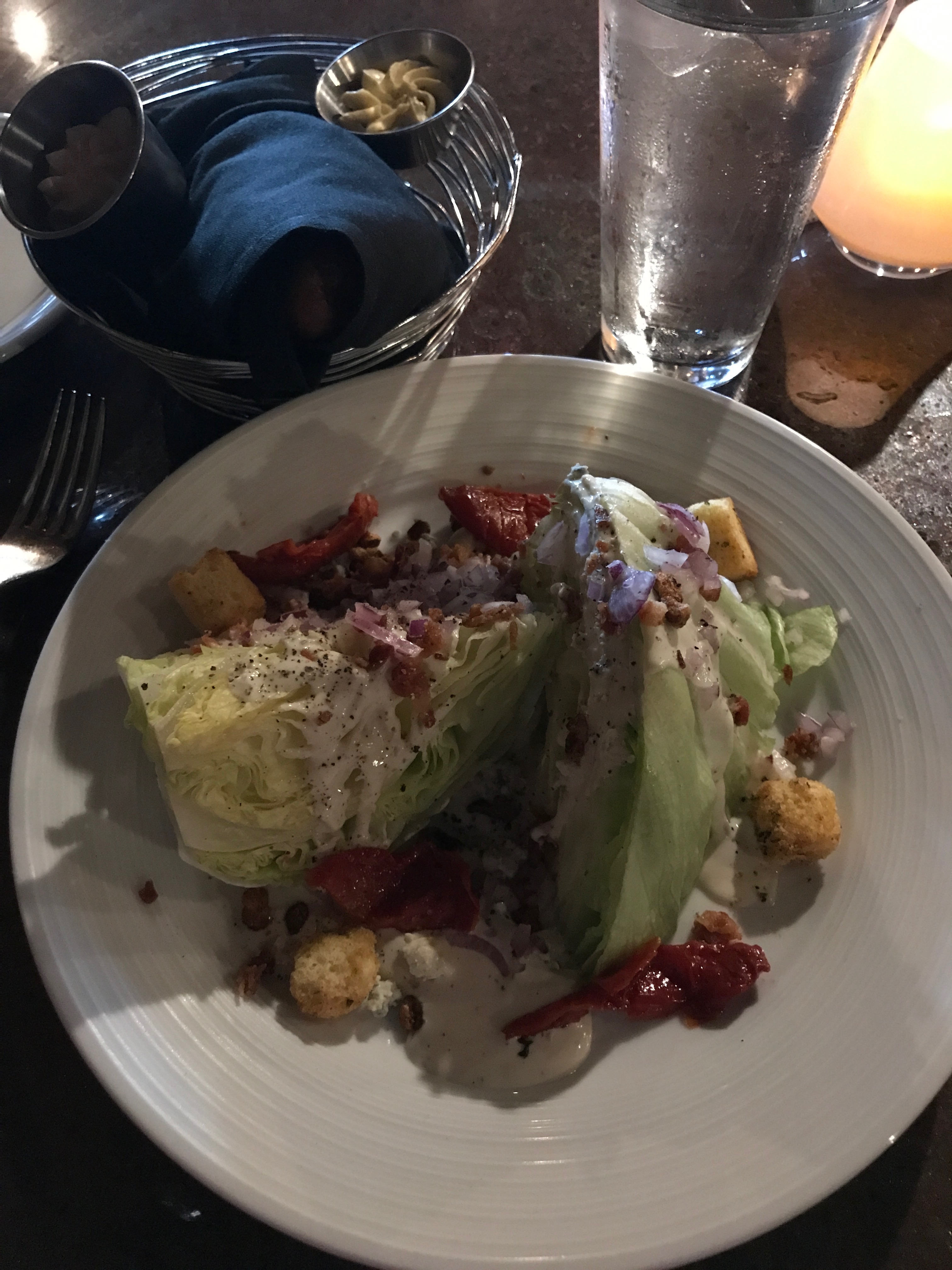
I started off with a wedge salad.
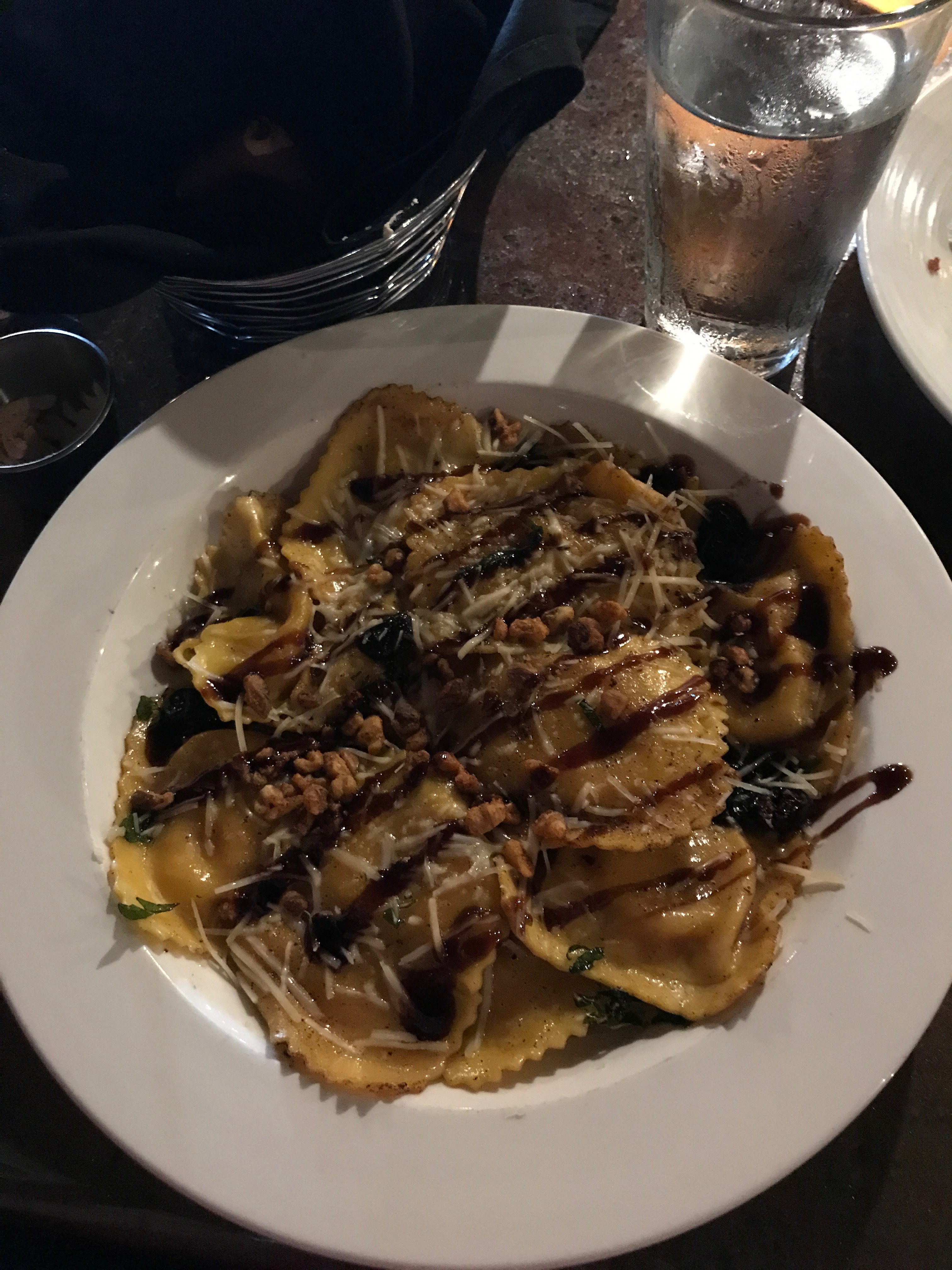
Next course was ravioli.
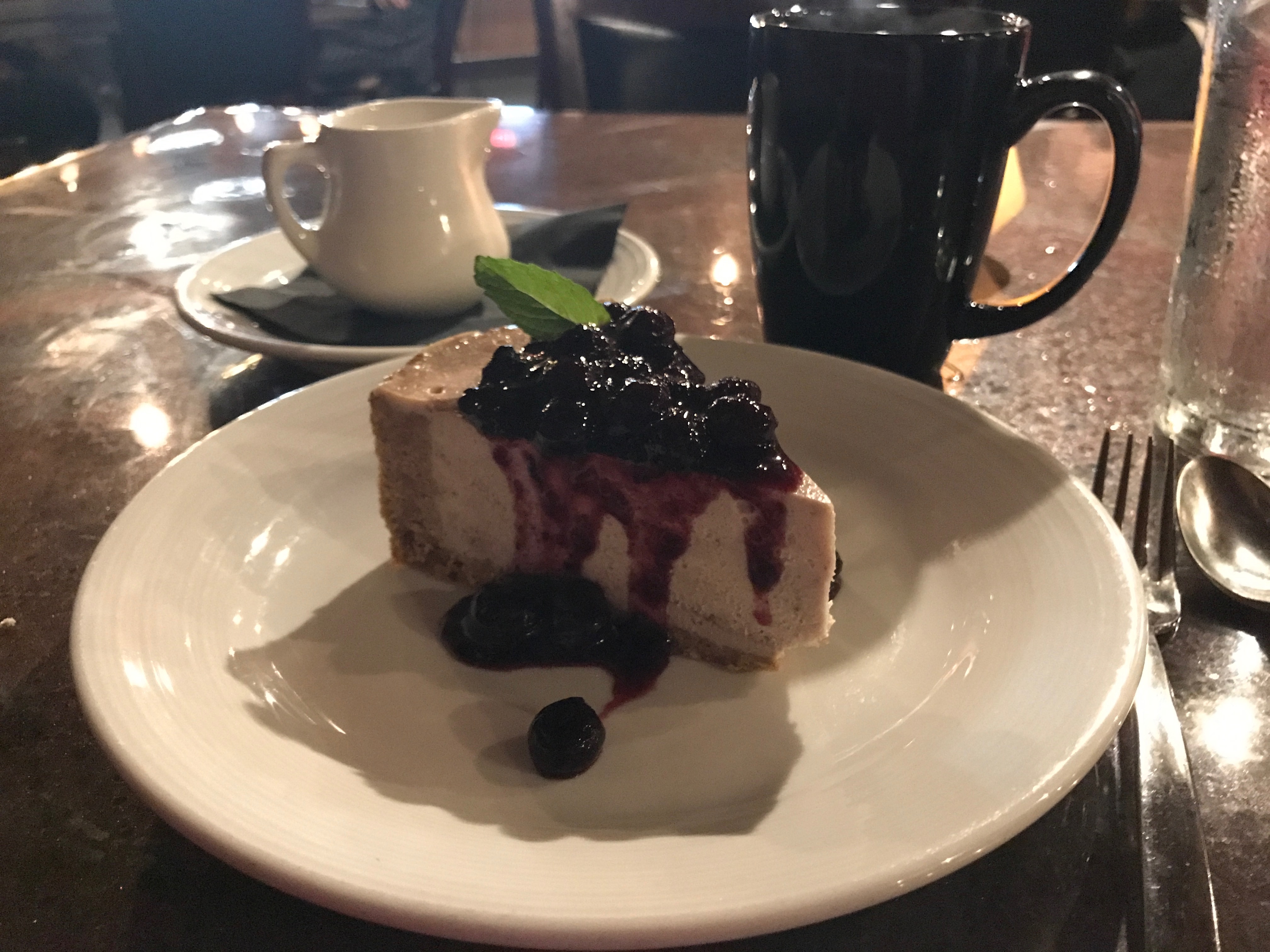
I topped it all off with cheesecake. Yum!
And then it was time to head west, just like those settlers Johnny Appleseed sold his seedlings to.