My last trip to London was in 2006. Ever since then, my artistically inclined friends would ask me if I had been to The Tate. I hadn’t, but I have finally rectified that situation.
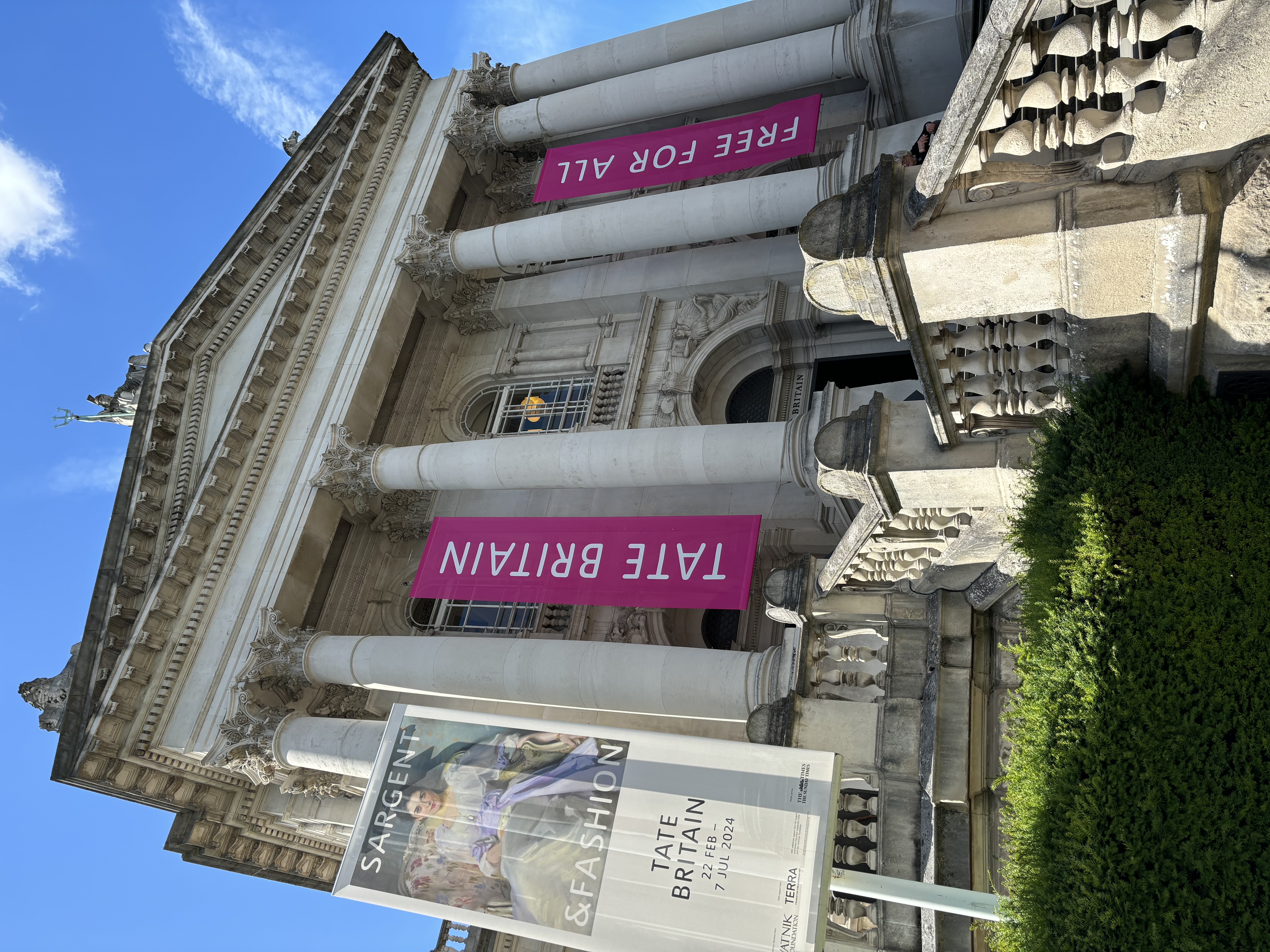
See that banner on the right? My favorite word!
Well, but they do encourage donations.
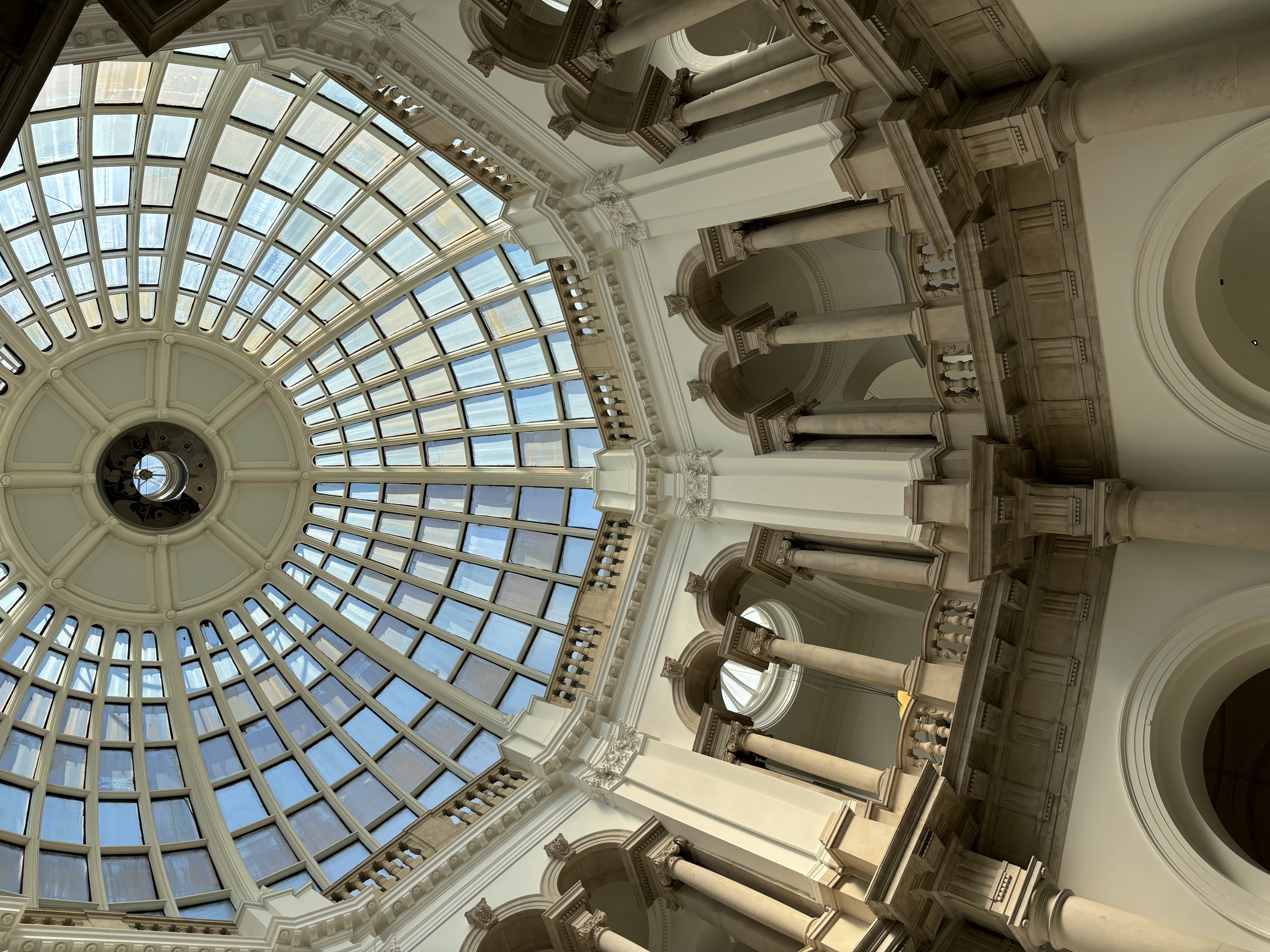
I have always been partial to domes.
I made my way to the stairway to the exhibits. In the stairway is a work by Chris Ofili, entitled Requiem, which is a reflection on the death of artist Khadija Saye in the Grenfell Tower fire in June 2017.
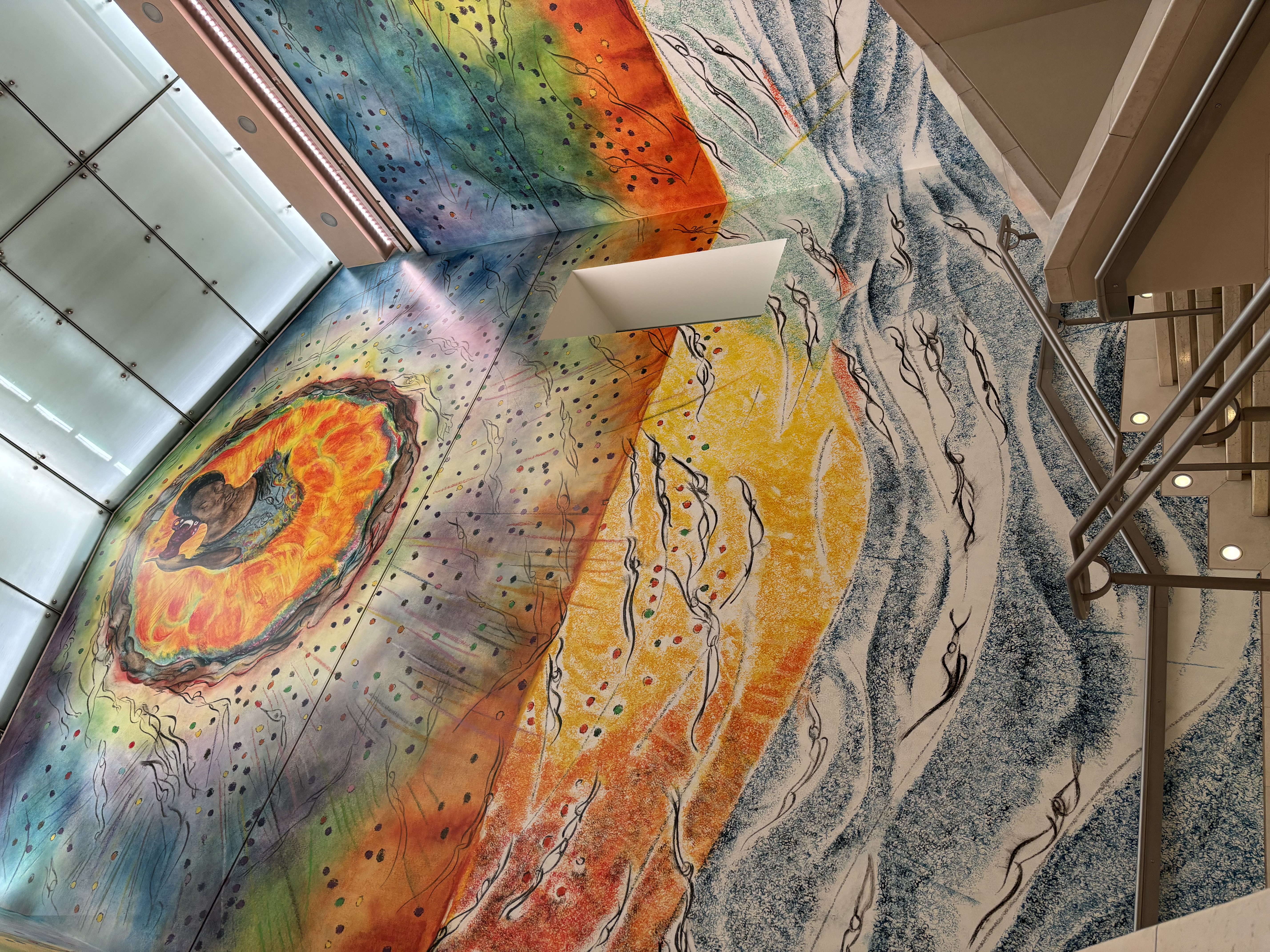
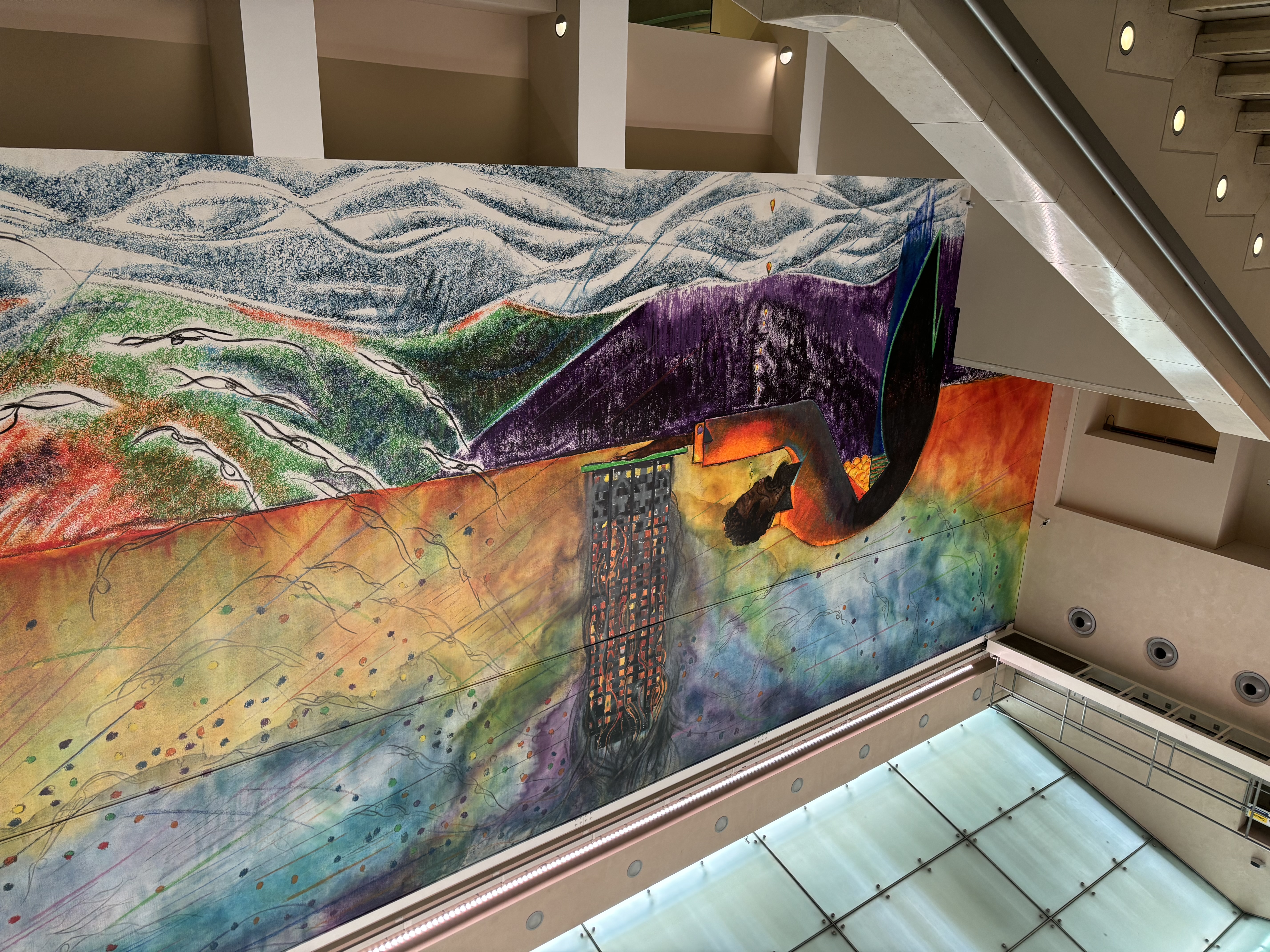
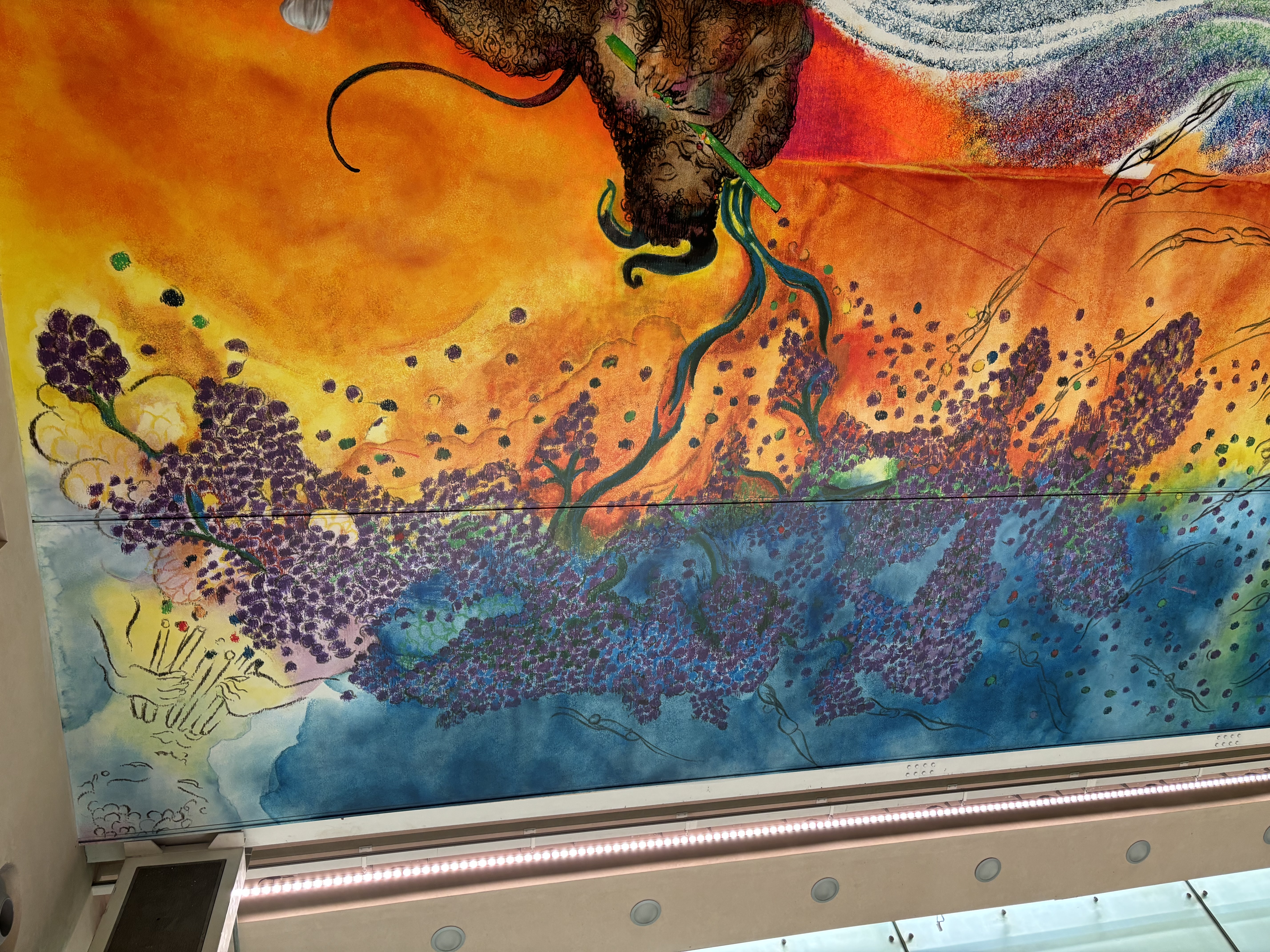
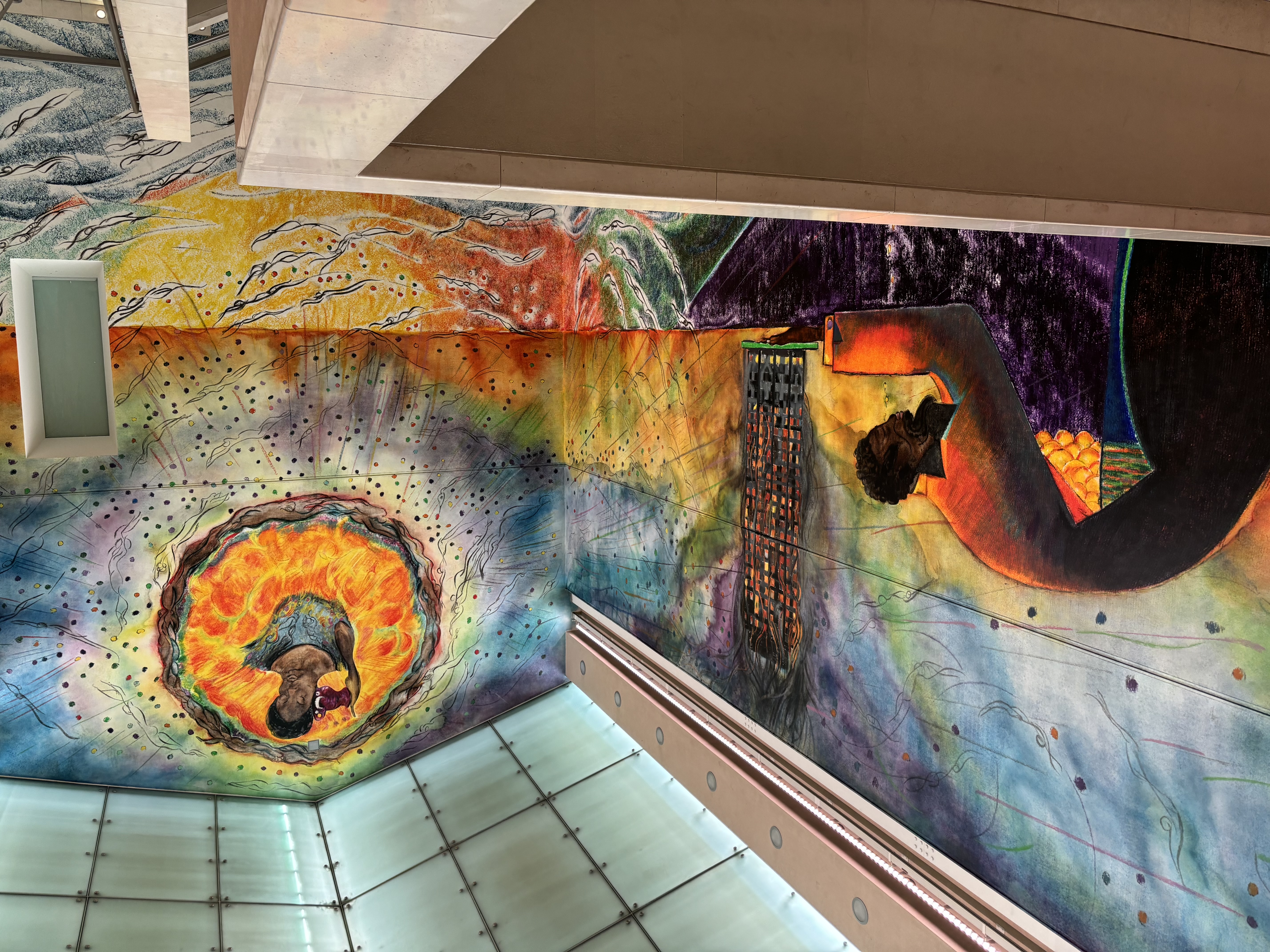
It was a moving piece of art.
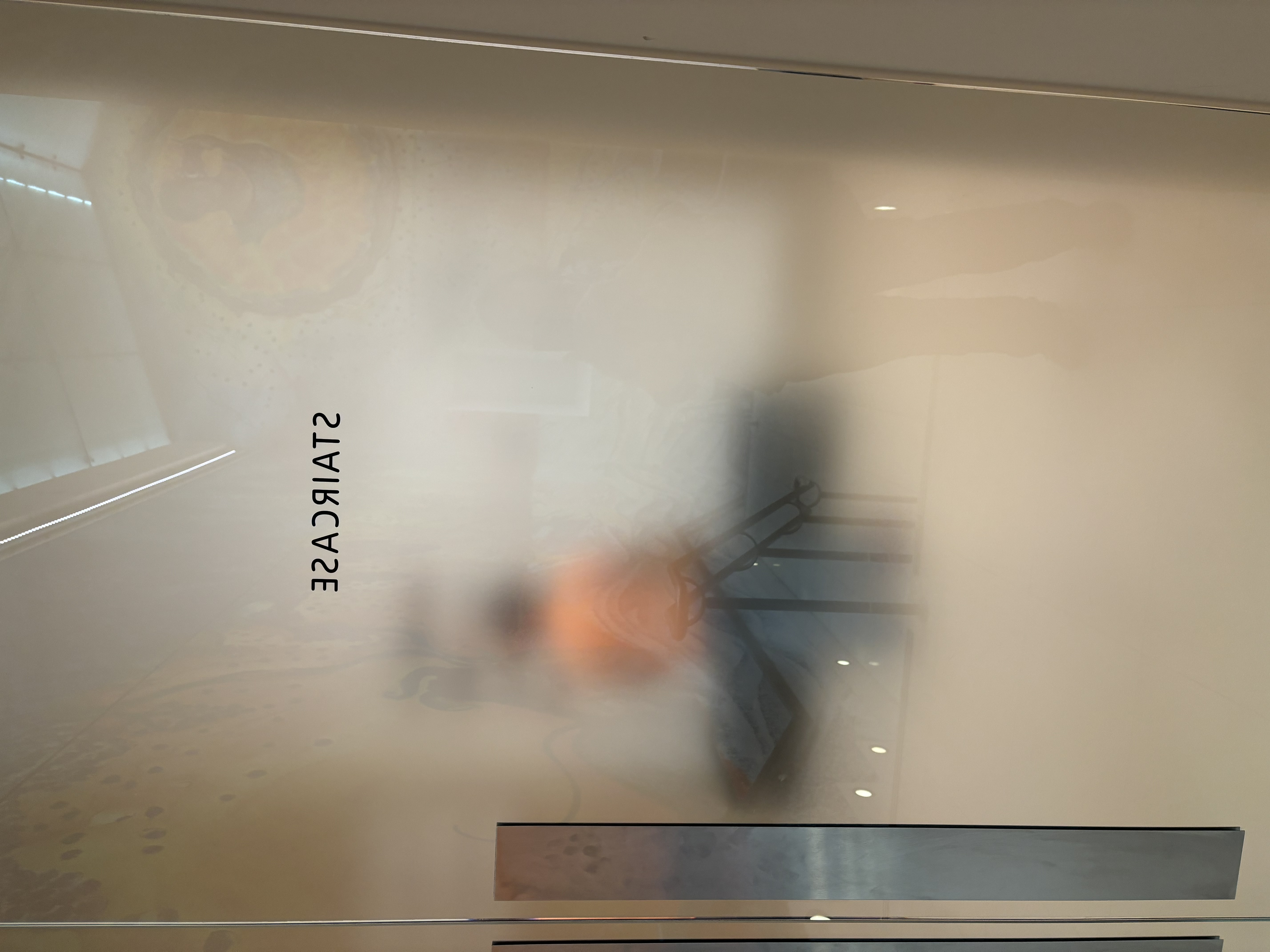
I must admit that I was confused by this installation, until I realized that sometimes a door is just a door, and the strange word just spelled “staircase” if you looked at it from the correct direction. It all depends on your point of view.
The first room focused on works from 1545-1640, and was titled Exiles and Dynasties. The portraits tells stories of migration and power. England is gaining wealth and power and the aristocrats have their portraits made by the Europe’s greatest artists. They are sure to show off their bling.
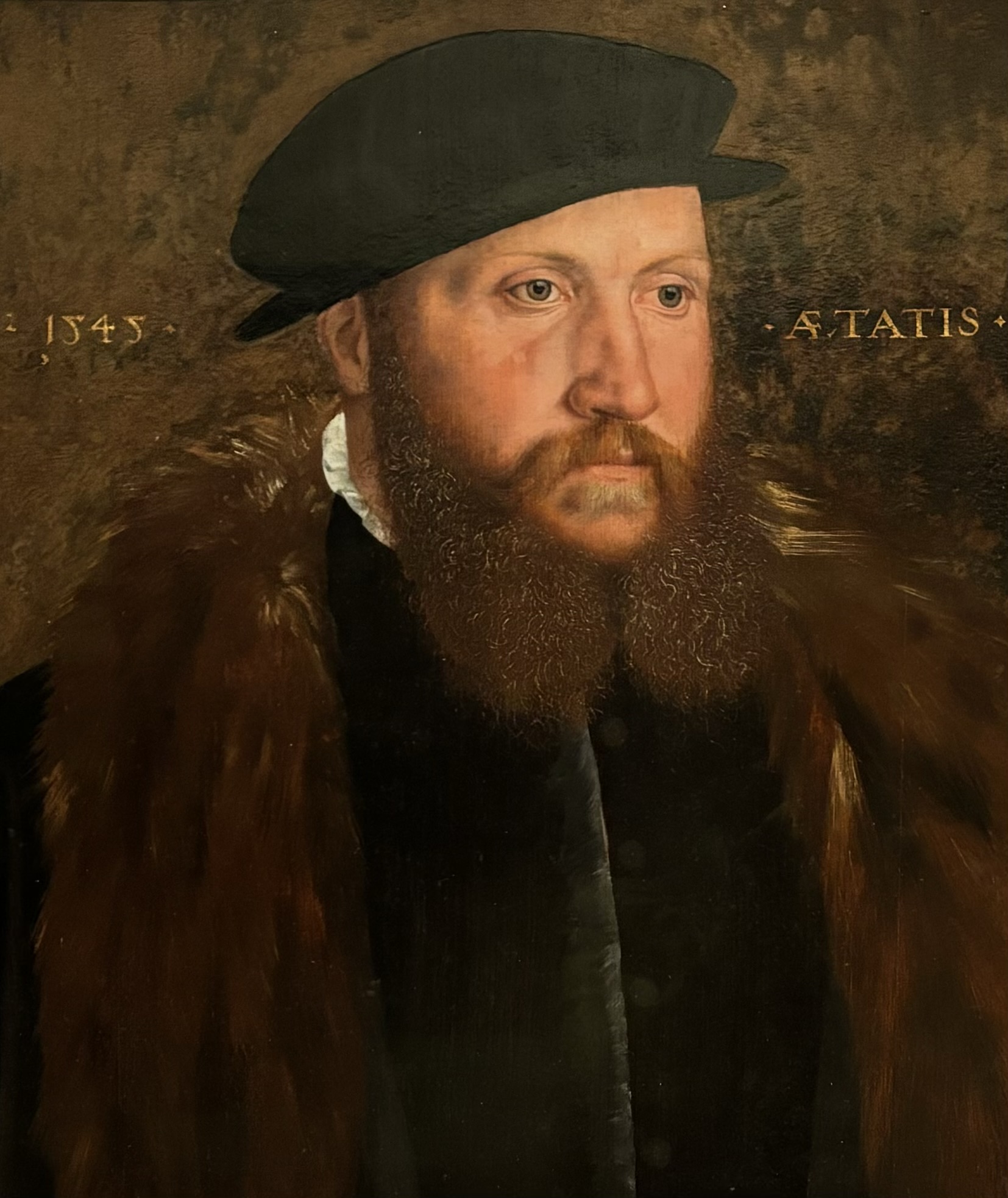
This is the earliest picture in the Tate collection. A Man in a Black Cap 1545 by John Bettes.

Marcus Gheeraerts painted this portrait of an unknown lady in 1595. Look at her, would you? She got all dolled up, adorned herself with pearls, which are symbols of moral purity, pasted a smile on her face and she’s pregnant! The painting celebrates the woman’s role in continuing her husband’s family line, and they didn’t even bother to record her name.
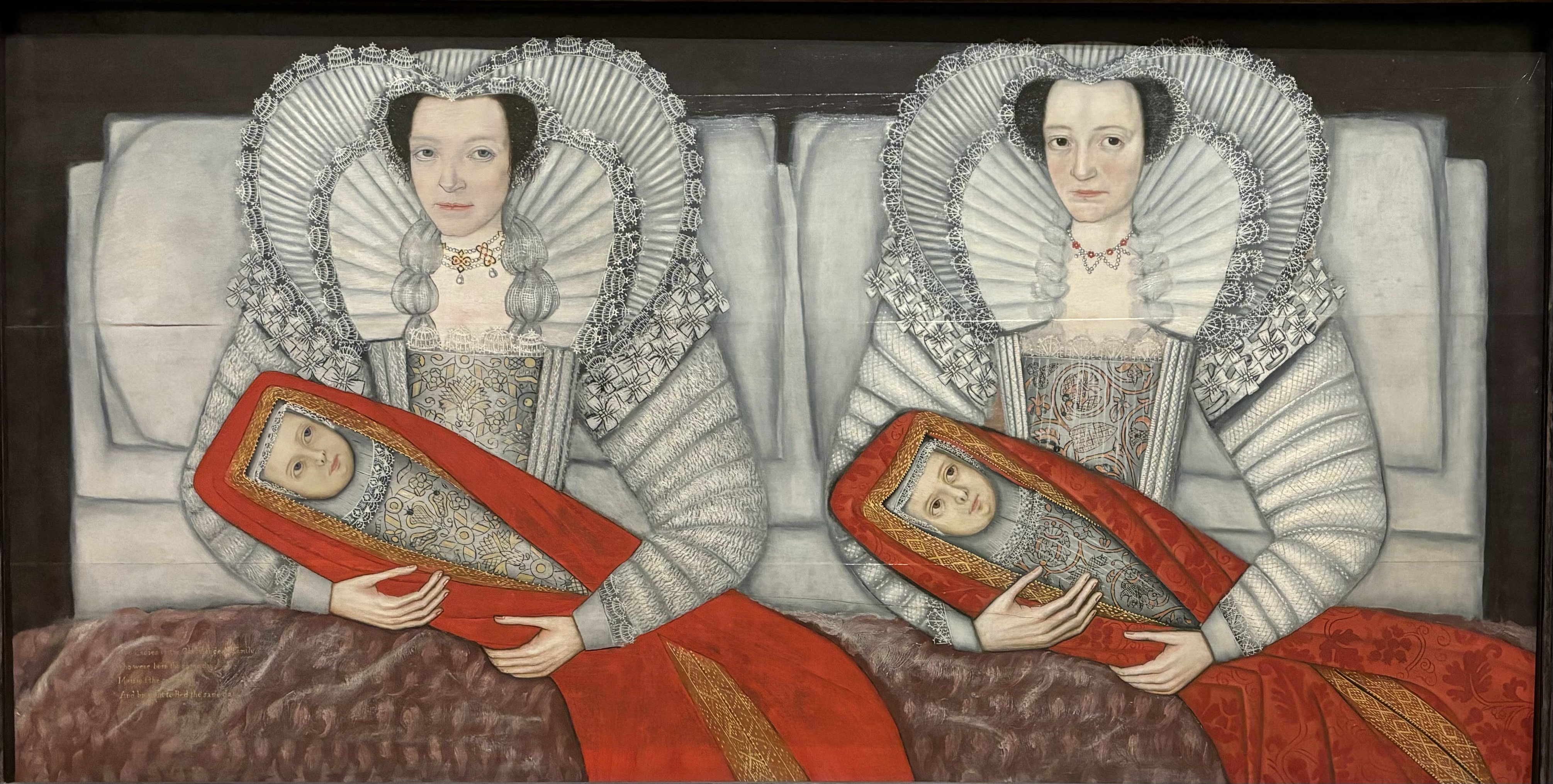
On the other hand, The Cholmondeley Ladies, painted around 1600, at least records their names. According to the inscription on the painting, they were born on the same day, married the same day and gave birth the same day. Hmm…since they have the same last name, do you suppose they married brothers?
At first glance, they appear identical, but upon closer inspection, you can see that the unknown artist took care to differentiate them. See if you can spot the differences.
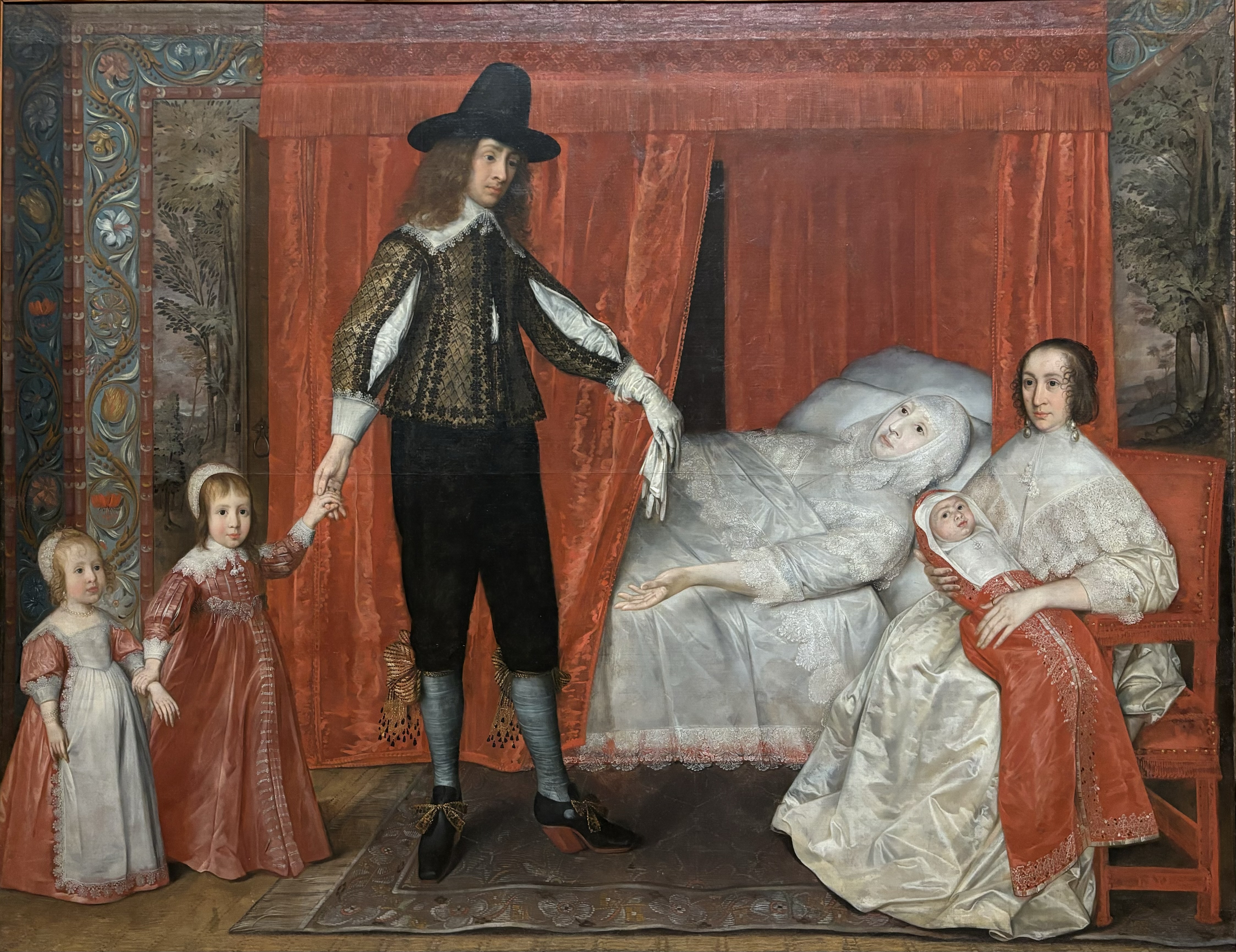
This portrait seems to take its inspiration from the family tombs of the time, according to the information displayed by the painting. The Saltonstall Family was painted around 1636 by David Des Granges.They think it shows Sir Richard Staltonstall and his family. He draws back the red curtain around the bed that contains his deceased first wife. She gestures toward the couple’s two surviving children. Meanwhile, he gazes towards his second – living – wife, who sits holding her own Saltonstall baby.
It is all about preserving the bloodline, I guess. I just hope Sir Richard didn’t hang it in his bedroom.
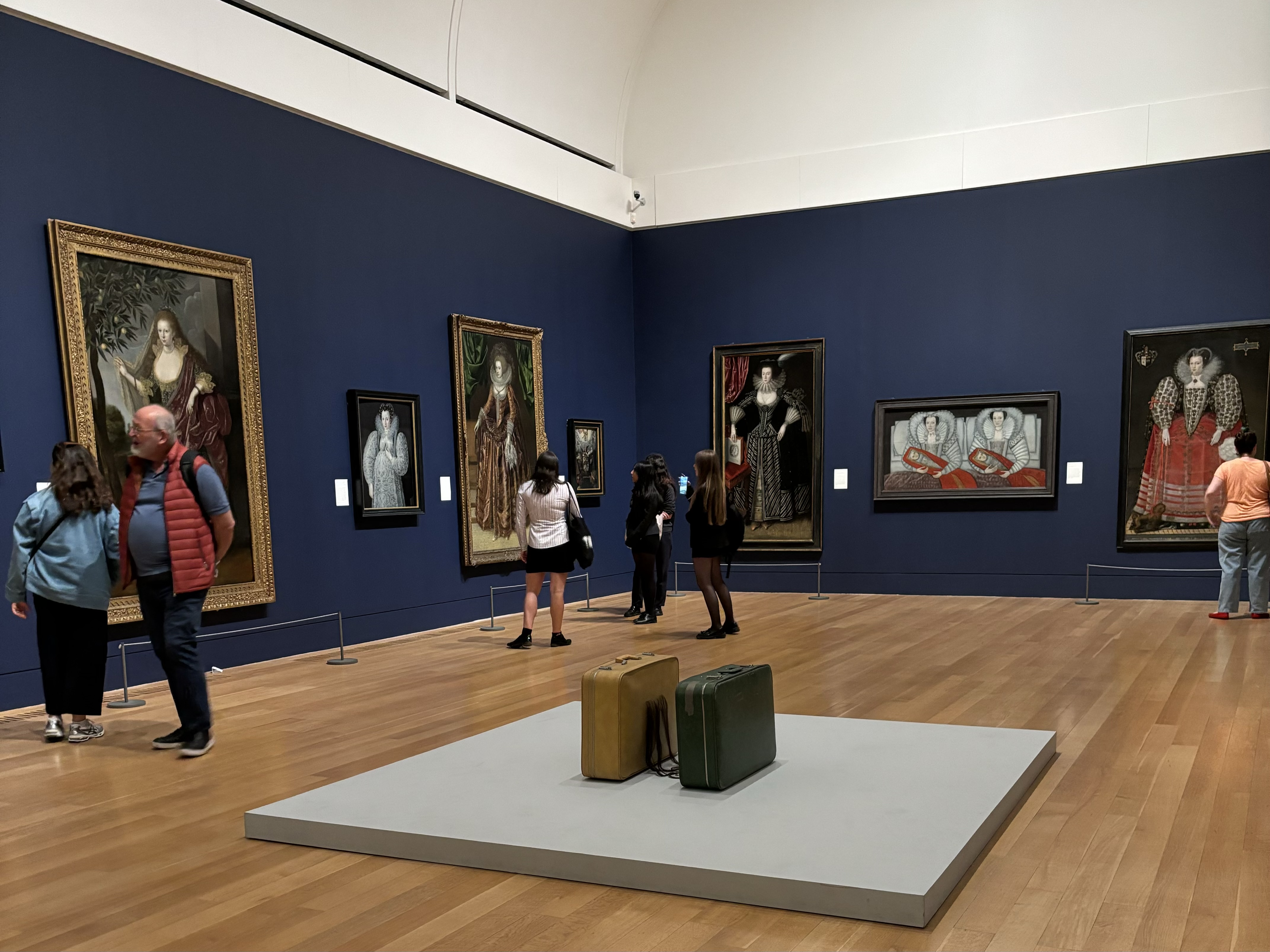
I liked how they had modern artists in conversation with the historical artists. I missed recording the artist for the piece in the center of the gallery, but she is expressing her feelings of being in exile. She was born of parents who were refugees. They were visiting in England when conditions at home made it impossible to return. The two suitcases are linked by the artist’s own hair.
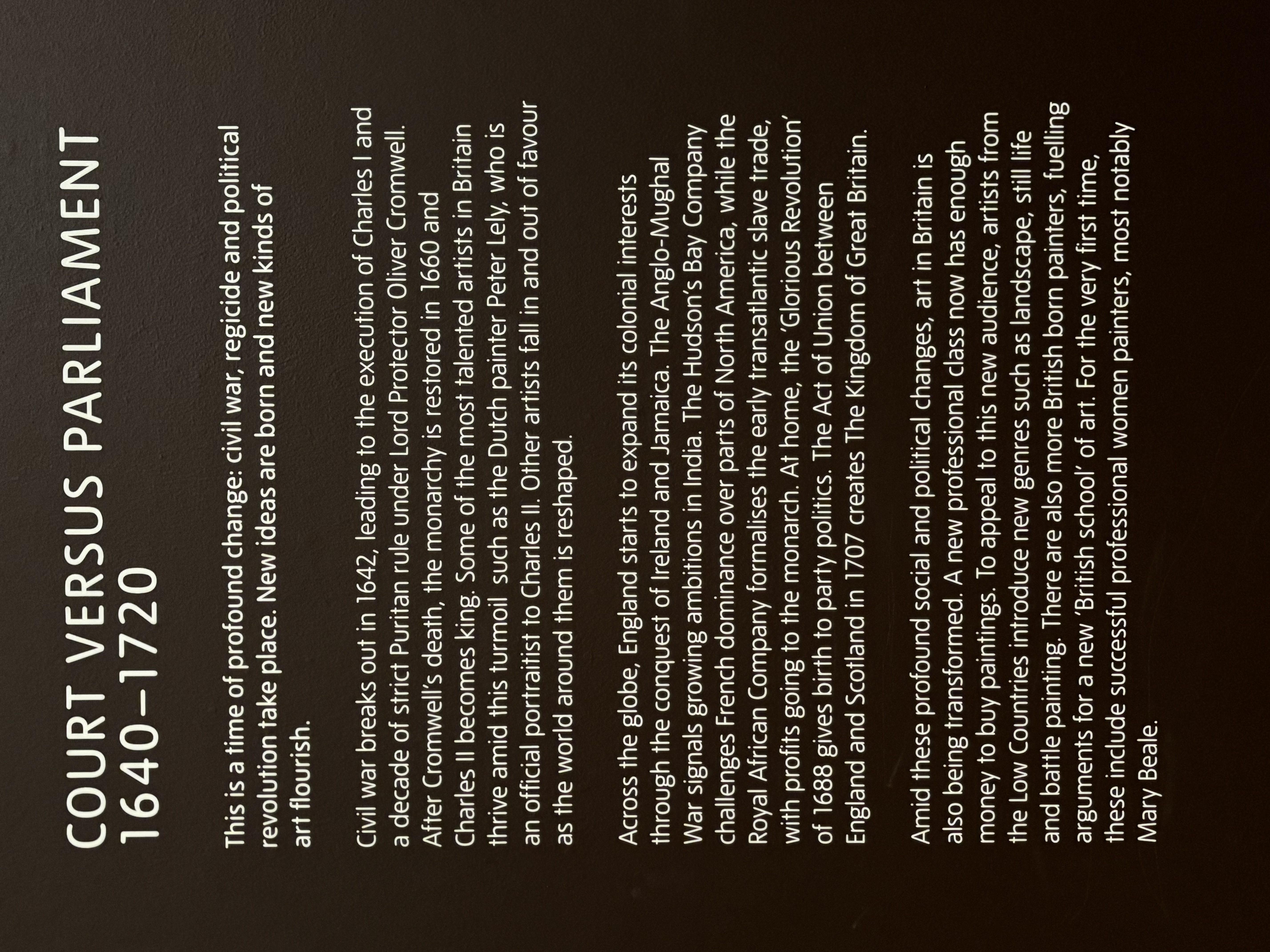
The next phase of English history has a lot going on. Rather than try to paraphrase the information from the gallery, I’ll let you read it yourself, if you would like.
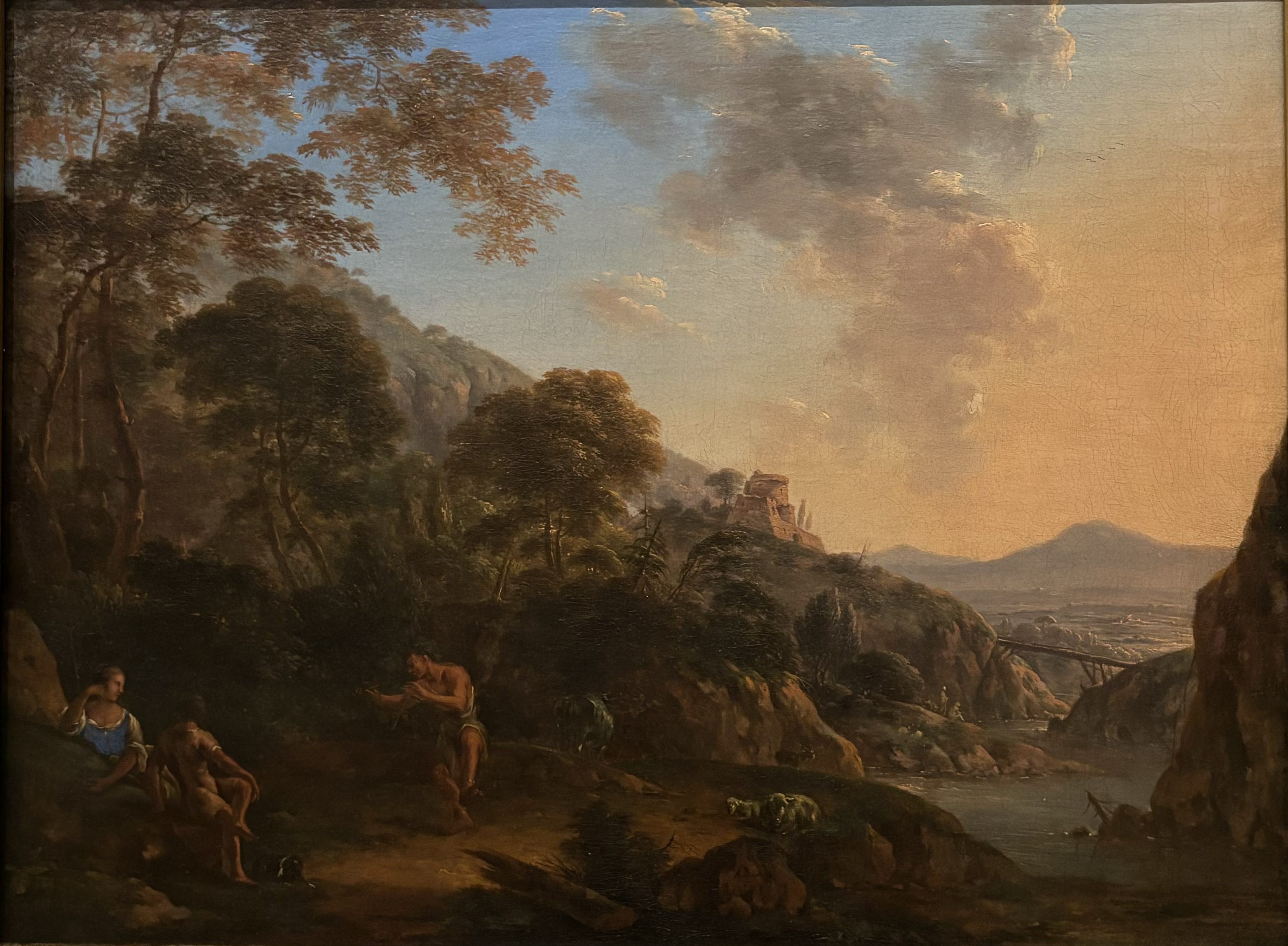
I wonder which member of the new professional class had “Mountain Landscape with Dancing Shepherd” hanging on their wall. Henry Anderton, who was possibly born and lived in London, created this painting, one of the earliest oil paintings of a landscape by a British artist. It was created around 1650-1660.
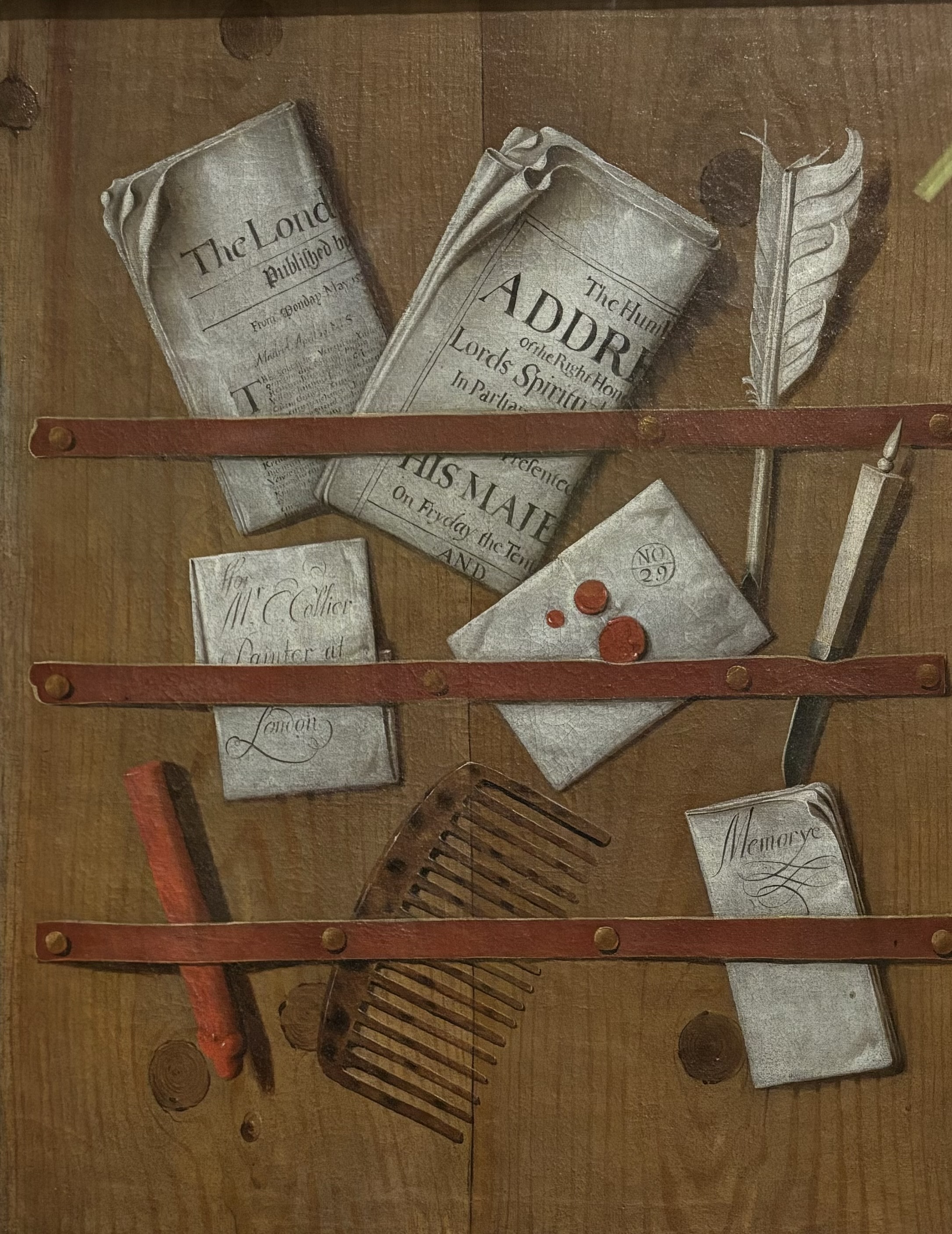
Edward Collier was noted for his ‘trompe l’oeil’ pictures. Just in case you didn’t have Sister Jeanne teaching you art history, that means ‘trick the eye.’
He created the illusion of real, graspable objects, and the letter rack with newspapers, writing implements, seals and combs was one of his favorite subjects. The picture is undated, but the newspaper gives a clue. The date is Monday, May 15, and the only likely Monday to fall on this date was in 1699.
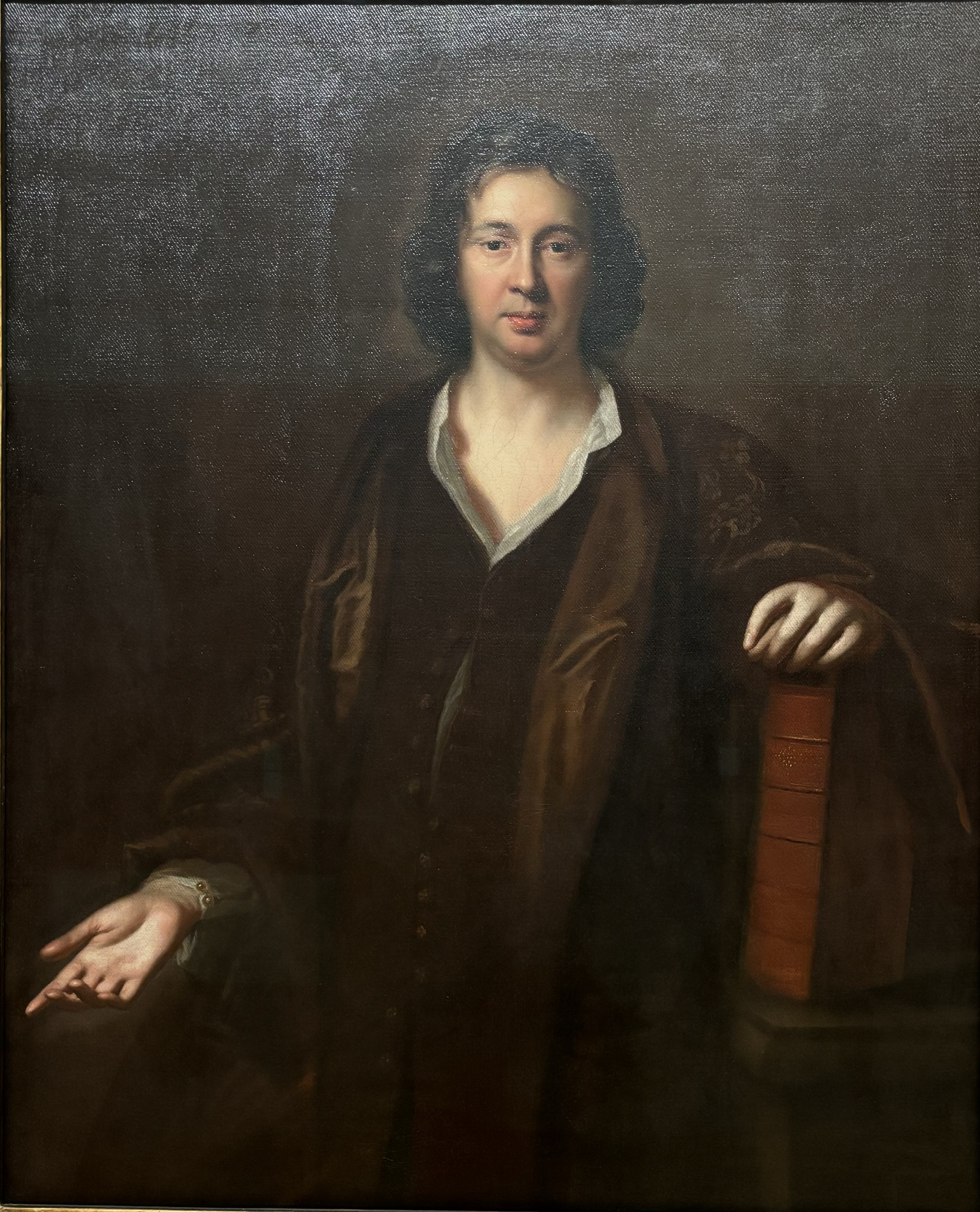
This is a portrait of Charles Beale, painted around 1680, by his wife, Mary Beale. She was the first British professional artist. Charles kept a series of notebooks which tell of his affectionate support of his wife and his pride in her achievement. Not only was he proud of her, he managed her studio. He bought the materials, prepared the canvases, mixed pigments and managed the accounts.
That’s really support!
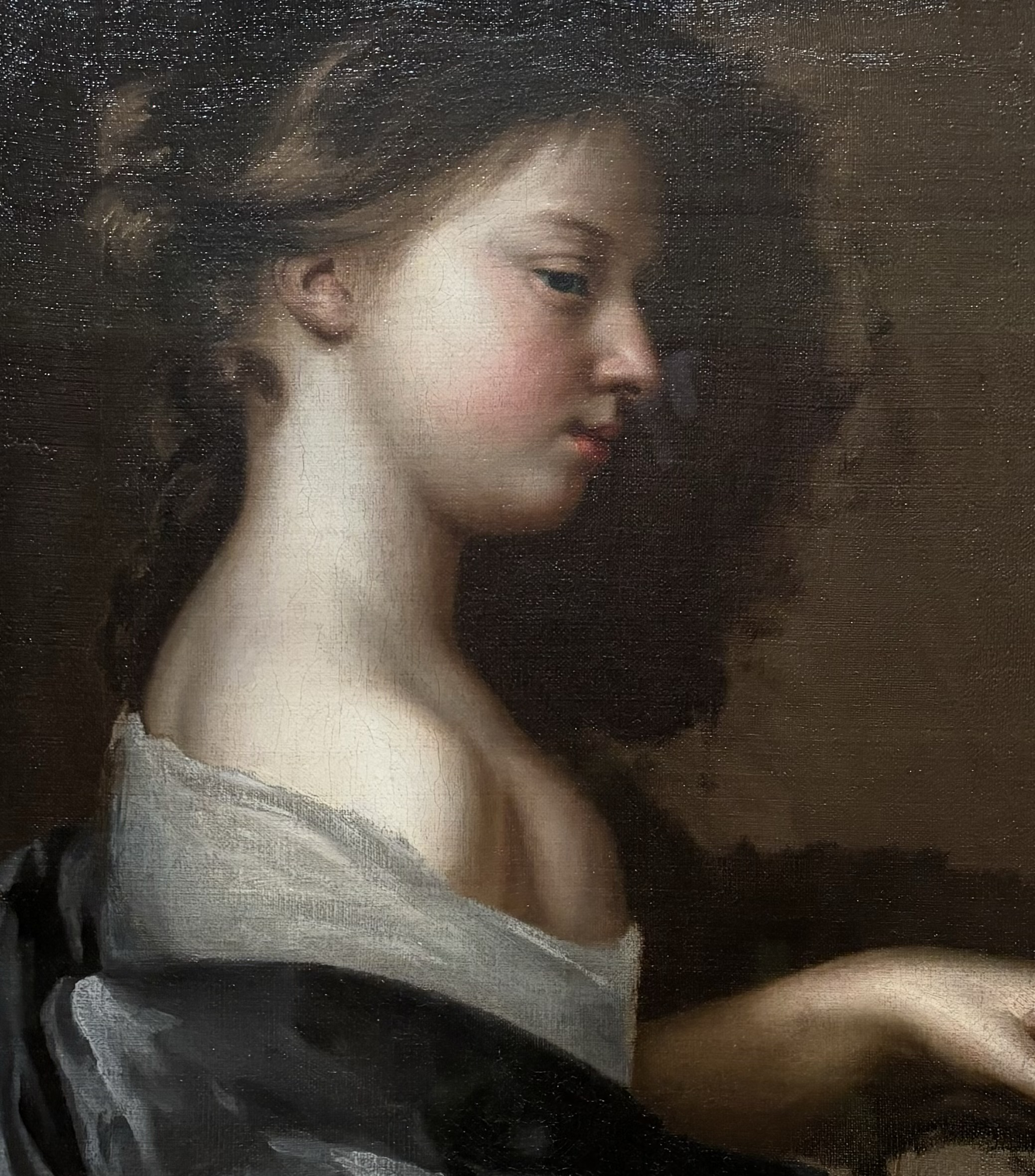
This is another of Mary Beale’s works, entitled Portrait of a Young Girl. She had a large, recorded body of work. This informal oil sketch was probably an experiment in attempting to finish a work quickly, rather than the more costly and time consuming four or five hours normally spent on a standard portrait.
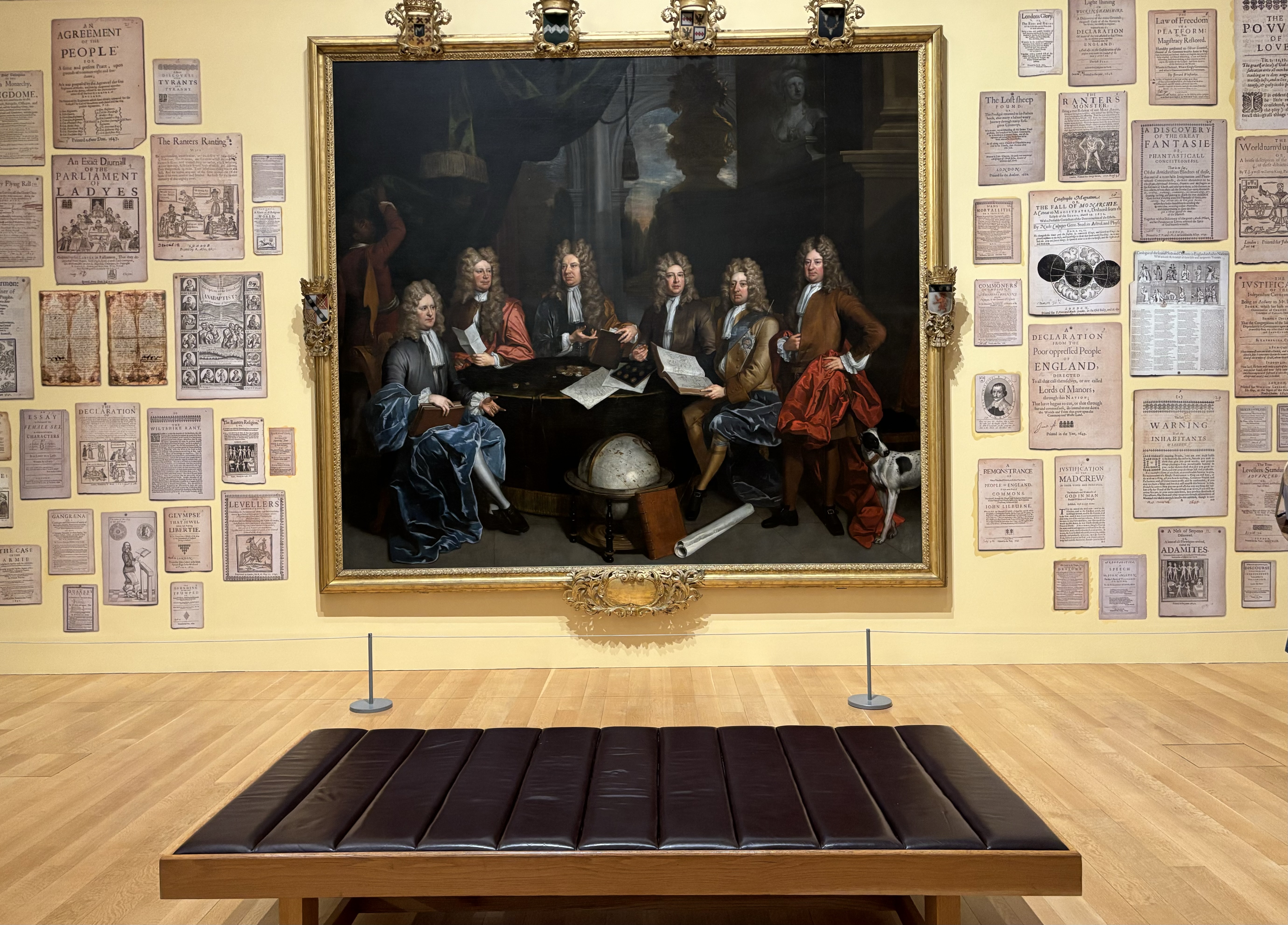
The large portrait in the center of this frame is called The Whig Junto and it shows the leaders of the Whig party.The first Earl of Orford, who is standing on the right, commissioned the picture.
A black boy stands on the left of the gathered guests. We don’t know his identity or even if he was a real person. The artist likely included him to show the wealth, status and power of the white sitters. Prints of Roman victories emphasize Britain’s military successes and a desire for empire building.The globe may refer to a British interest in accessing new trading routes.
Around the painting is a work of art by Nils Norman. Between 1640 and 1660, Parliament relaxed censorship rules, which allowed previously silenced groups to disseminate their ideas through self-published pamphlets and newspapers.
Nils Norman took these pamphlets and broadsides and turned them into vinyl wallpaper that he called Sparkles of Glory. He surrounded The Whig Junto, a portrait of status and power, with the rising ideas of the various radical, often utopian movements that sprang up during the tumult of the English Civil War. (1642-1651)
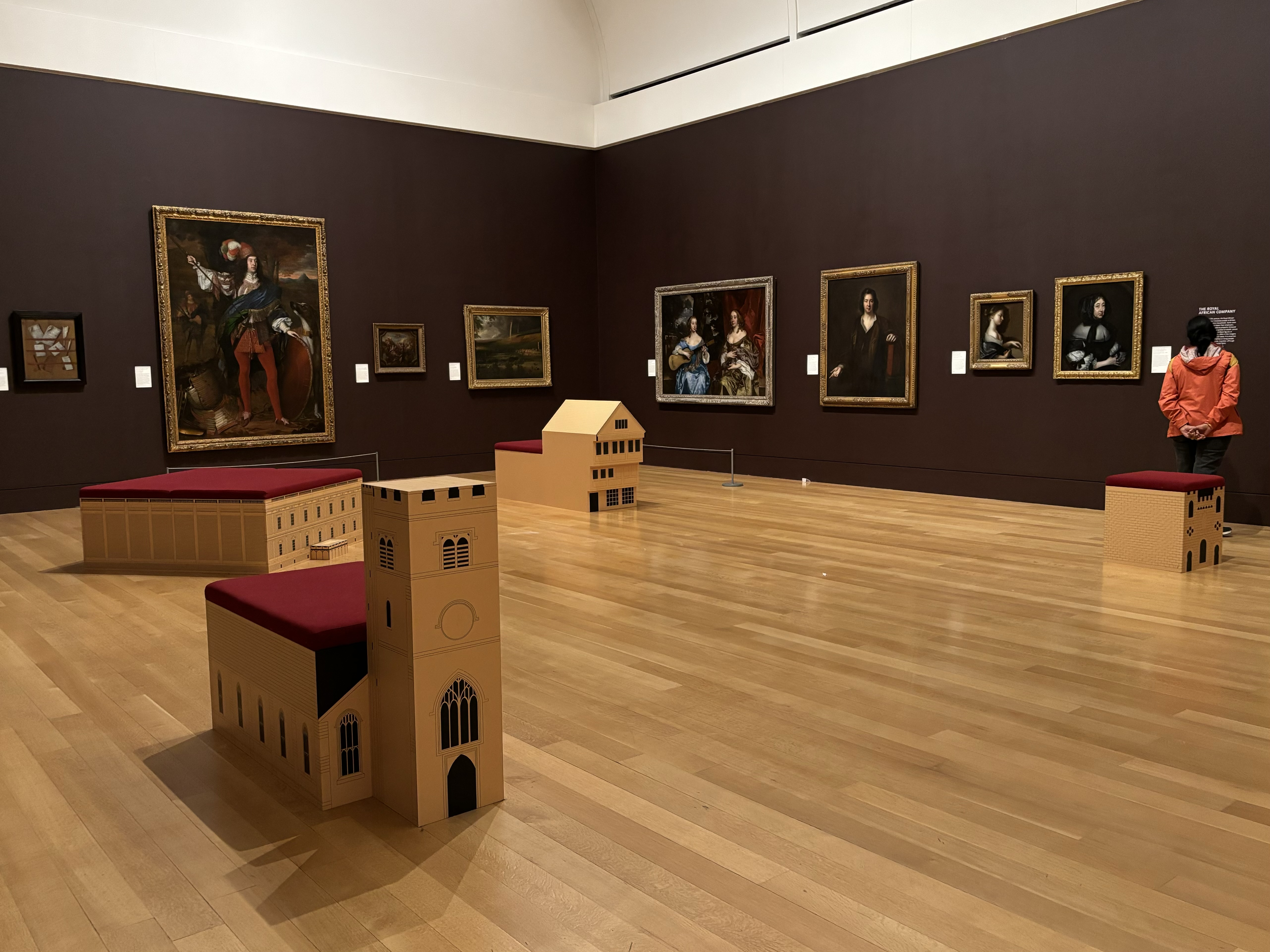
Nils Norman also took the ideas expressed in the wallpaper version of Sparkles of Glory and embodied them in these four pieces of furniture representing buildings where the members of these radical movements might have met. Fragments of spoken text, taken from the pamphlets emanate from the furniture at different times.
AND NOW A WORD FROM THE WRITER (ME)
You know, a few things just occurred to me.
1. I am writing way to much for me to finish this post in a timely fashion.
2. I am probably writing more than anyone cares to read.
So, I am going to select a few works of art from each room and post them with limited commentary. Let’s see how that goes.
METROPOLIS
1720-1760
London is the largest city in the world and the hub of global trade and commerce.
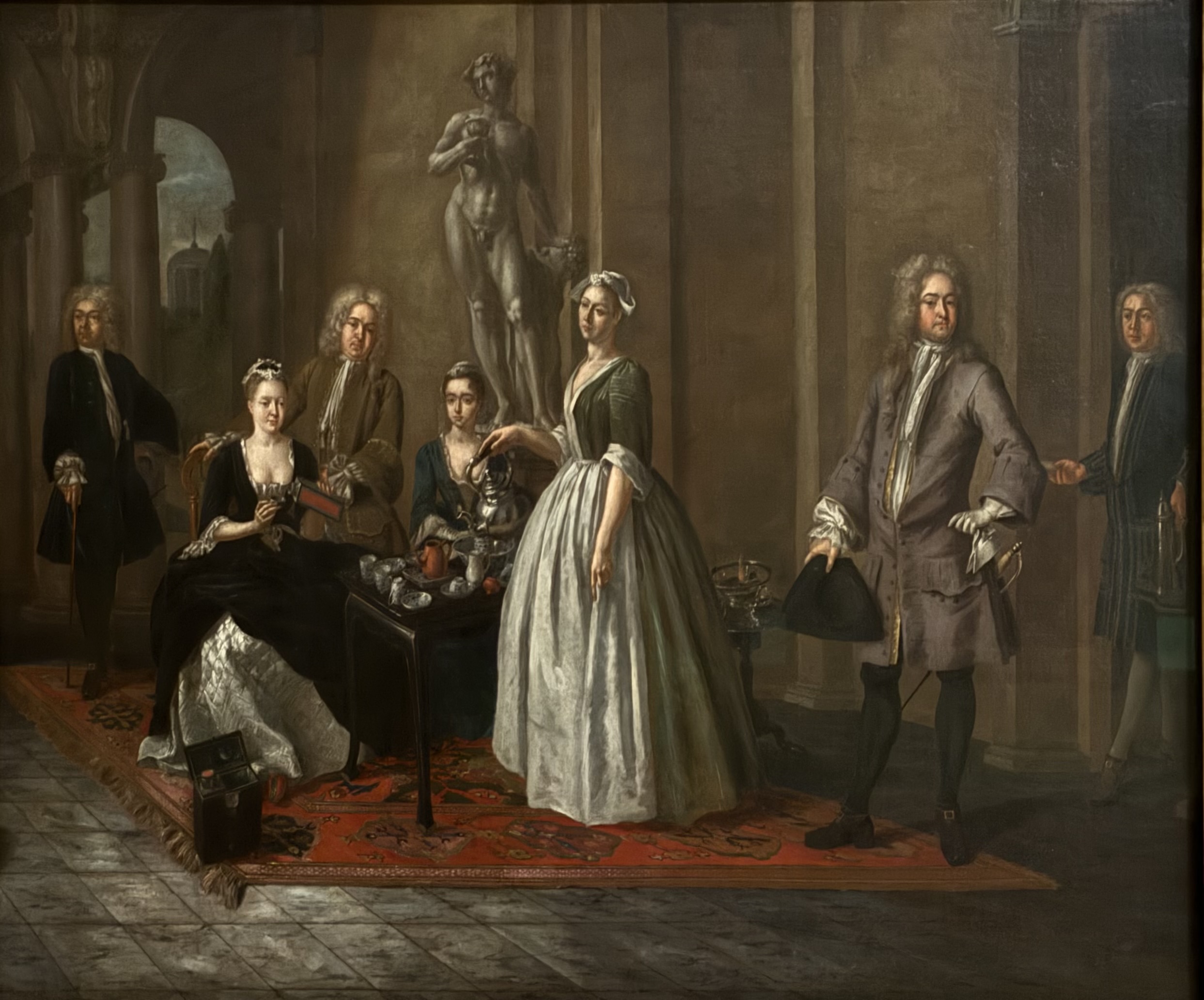
An English Family at Tea
c. 1720
Joseph Van Aken
Tea drinking demonstrated wealth, domesticity and genteel informality. In the 18th Century, it came to epitomize civilized behavior for British people.
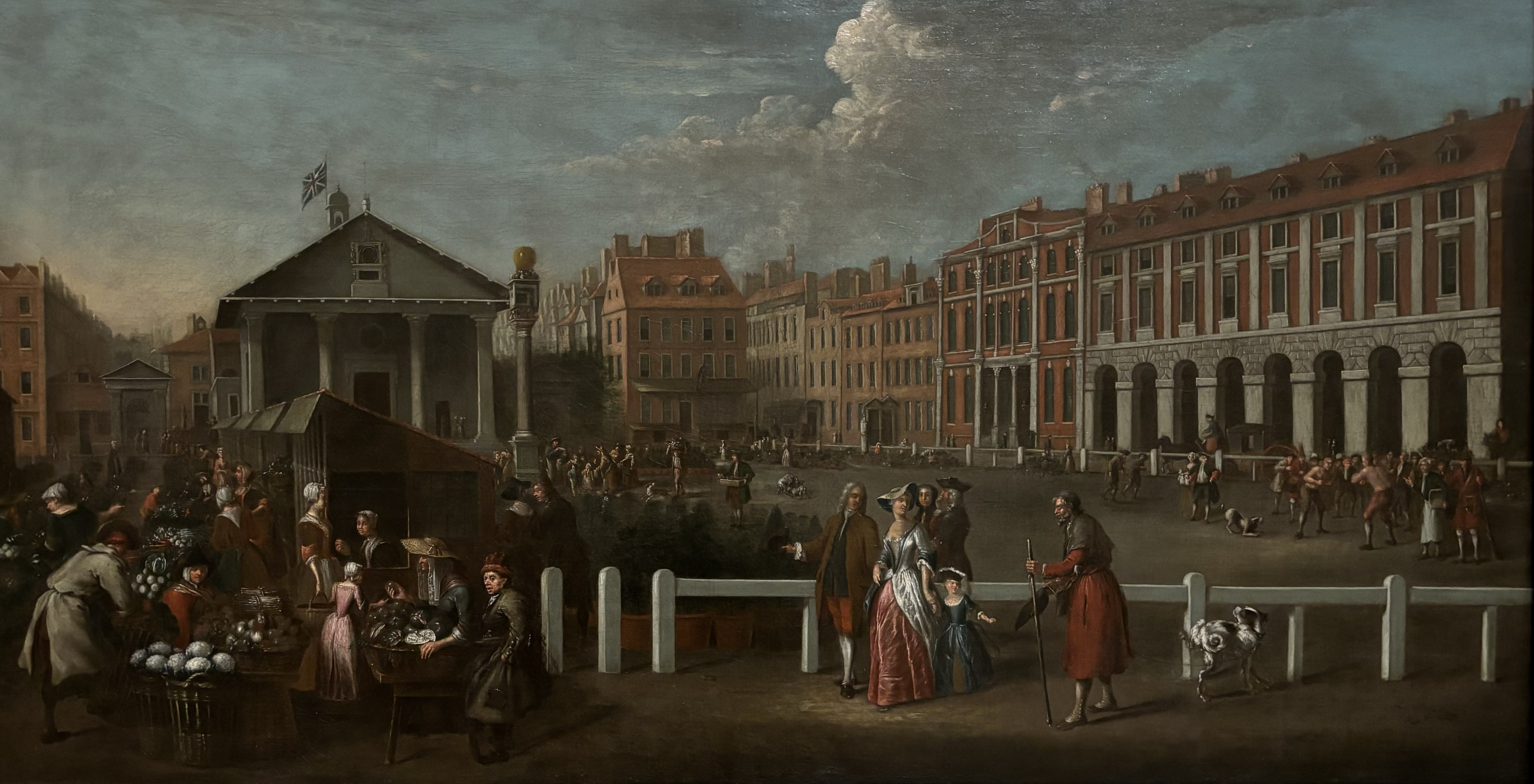
Covent Garden Market
1737
Balthazar Nebot
The market was first developed in the 1850’s. 20 years later, the Earl of Bedford was given permission to ‘hold forever a market in the Piazza on every day in the year except Sundays and Christmas Day for the buying and selling of all manner of fruit, flowers, roots and
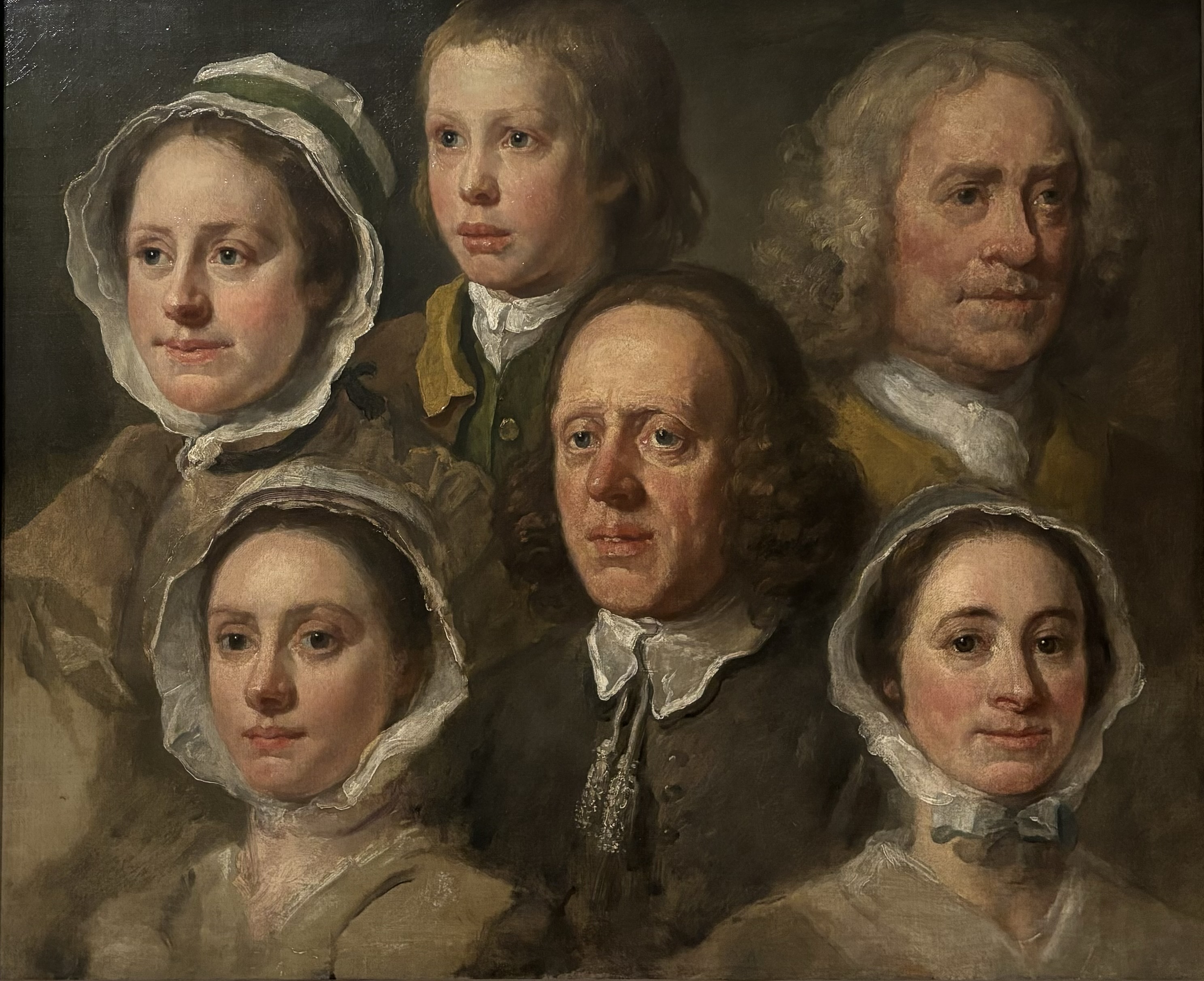
Heads of Six of Hogarth’s Servants
c. 1750-1755
William Hogarth
William Hogarth appears to capture each sitter’s individuality. This is a remarkable and rare portrait of the 18th century working class. The picture may have also served as a kind of advertisement for Hogarth’s skills.
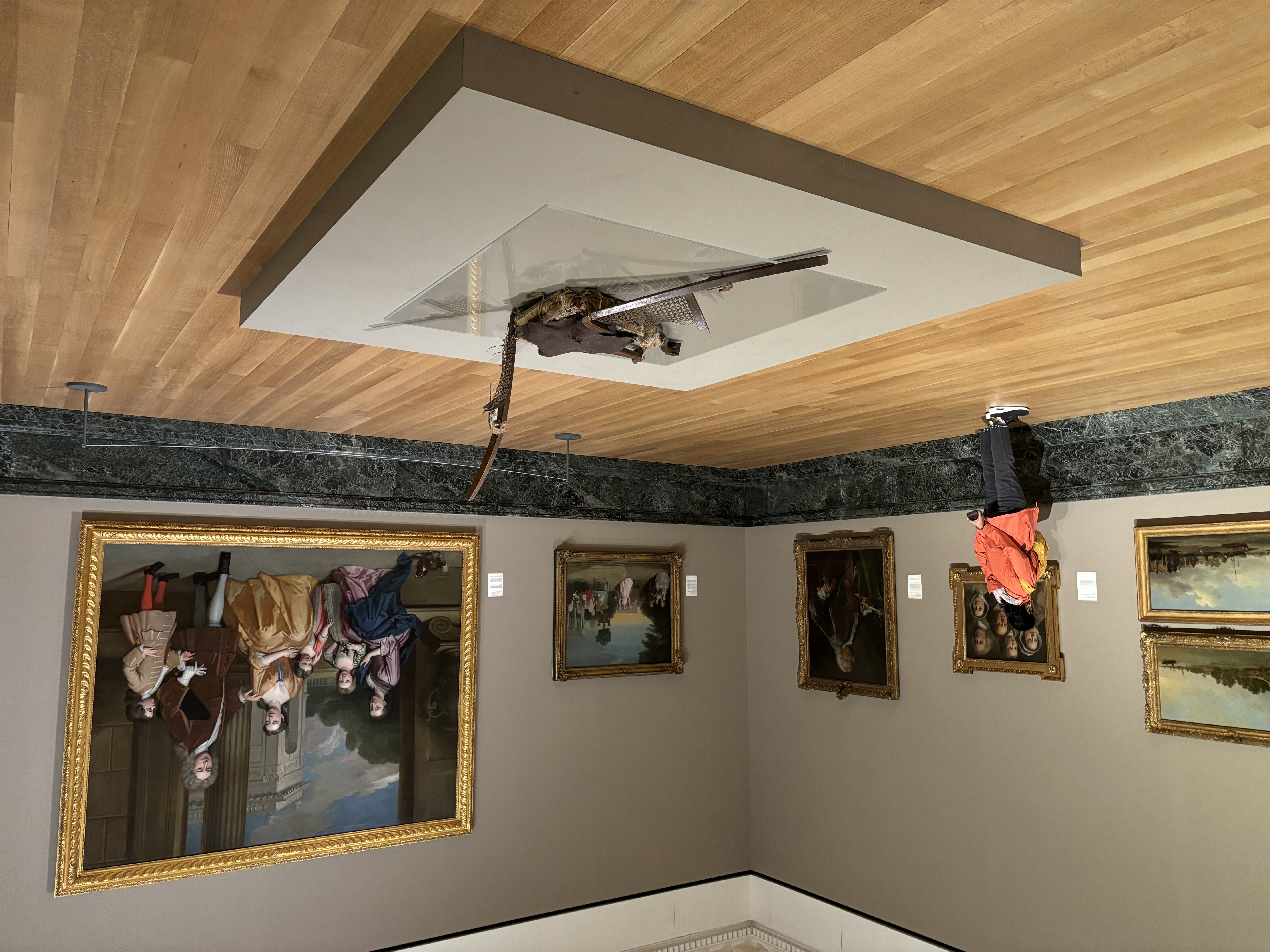
Chair No. 35
2013
Sonia E. Barrett
Barrett’s symbols speak about the impact of climate change and the stresses it places on people to leave their homes to seek refuge in other places. The plant (the wood) the animal (the claws and paws)and the brown human body combine in this reconfigured Georgian-style chair. English furniture in the 18th century was often made from mahogany produced by enslaved people in the Caribbean.
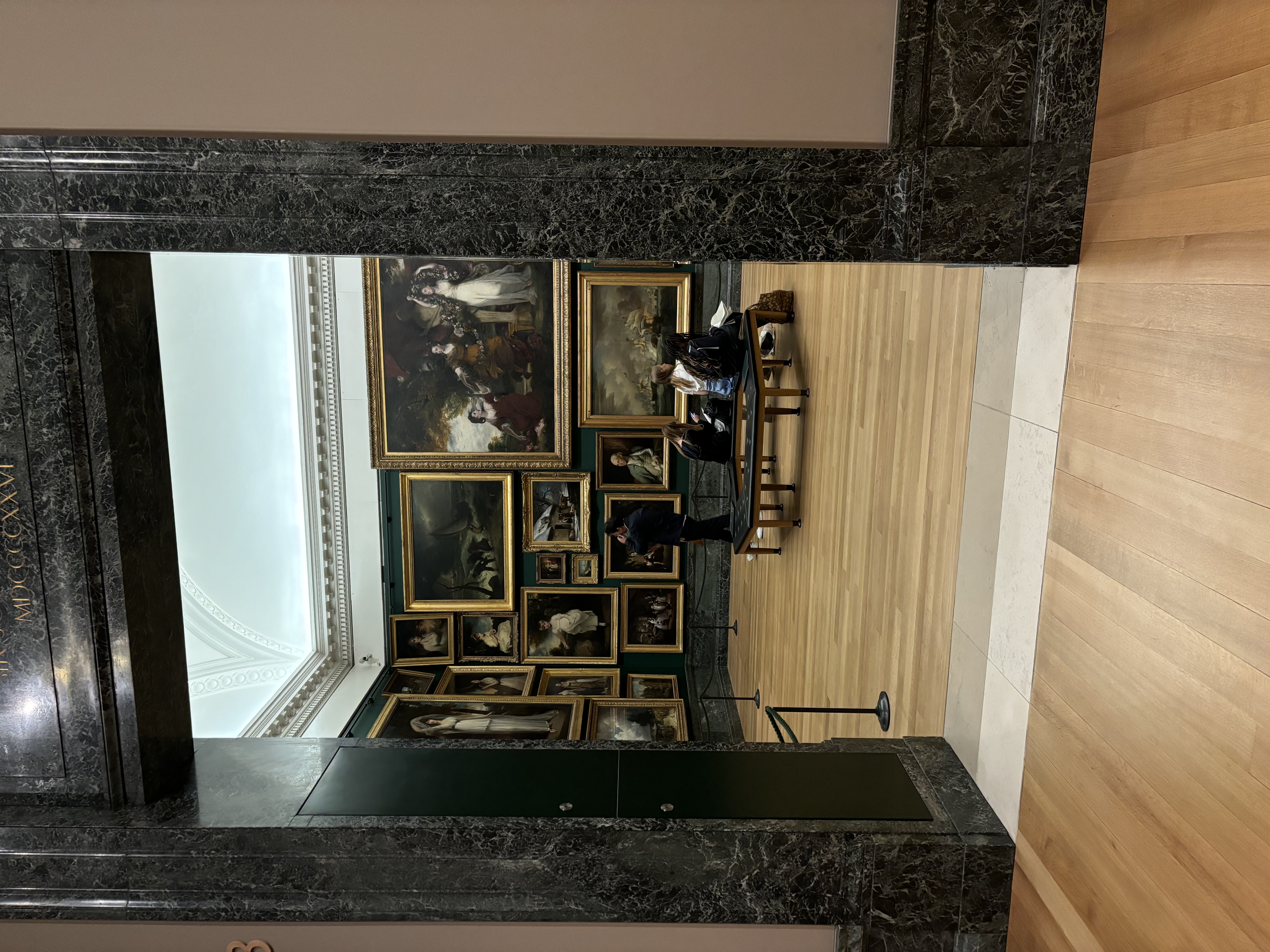
I walked past this room. I always found artwork presented this way to be overwhelming. This is referred to as salon style exhibition. There were many other things to see.
TROUBLED GLAMOR
1760-1830
At first glance this room represents a glamorous image of 18th century society. However, the lives and places pictured here give clues to the underlying tensions of the time.
While the popular paintings of the time – flattering portraits, scenes of contented workers, and idyllic landscapes – promote a sense of harmony, order and elegance, British society, both in Britain and across an expanding empire is far from cohesive or peaceful.
The tensions are rarely explicit in the art of this time, but they lie under the surface, in the stories of who commissions paintings, where their money comes from and the choices the artist makes about what is or is not pictured.
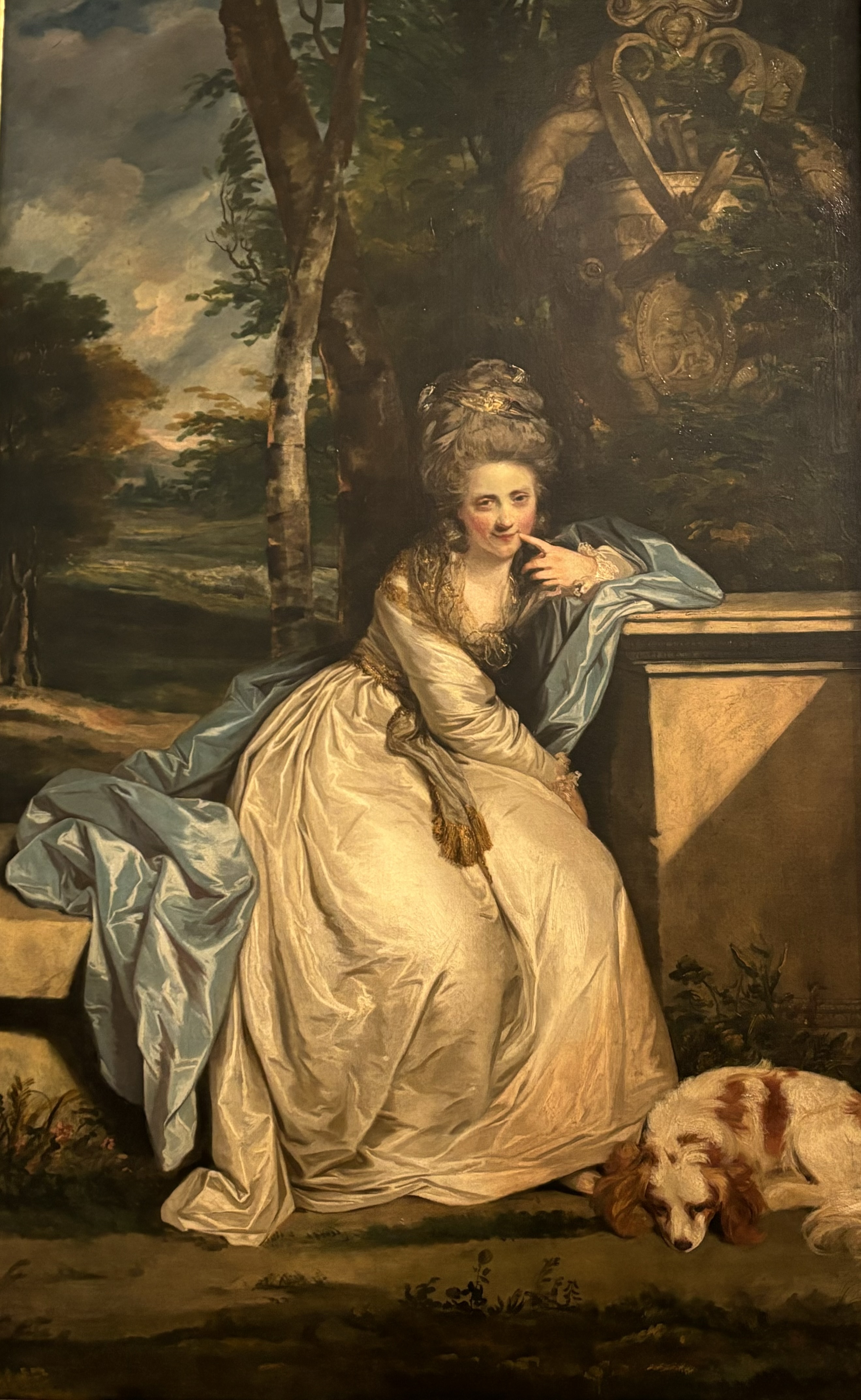
The Hon. Miss Monckton
(1777-8)
Joshua Reynolds
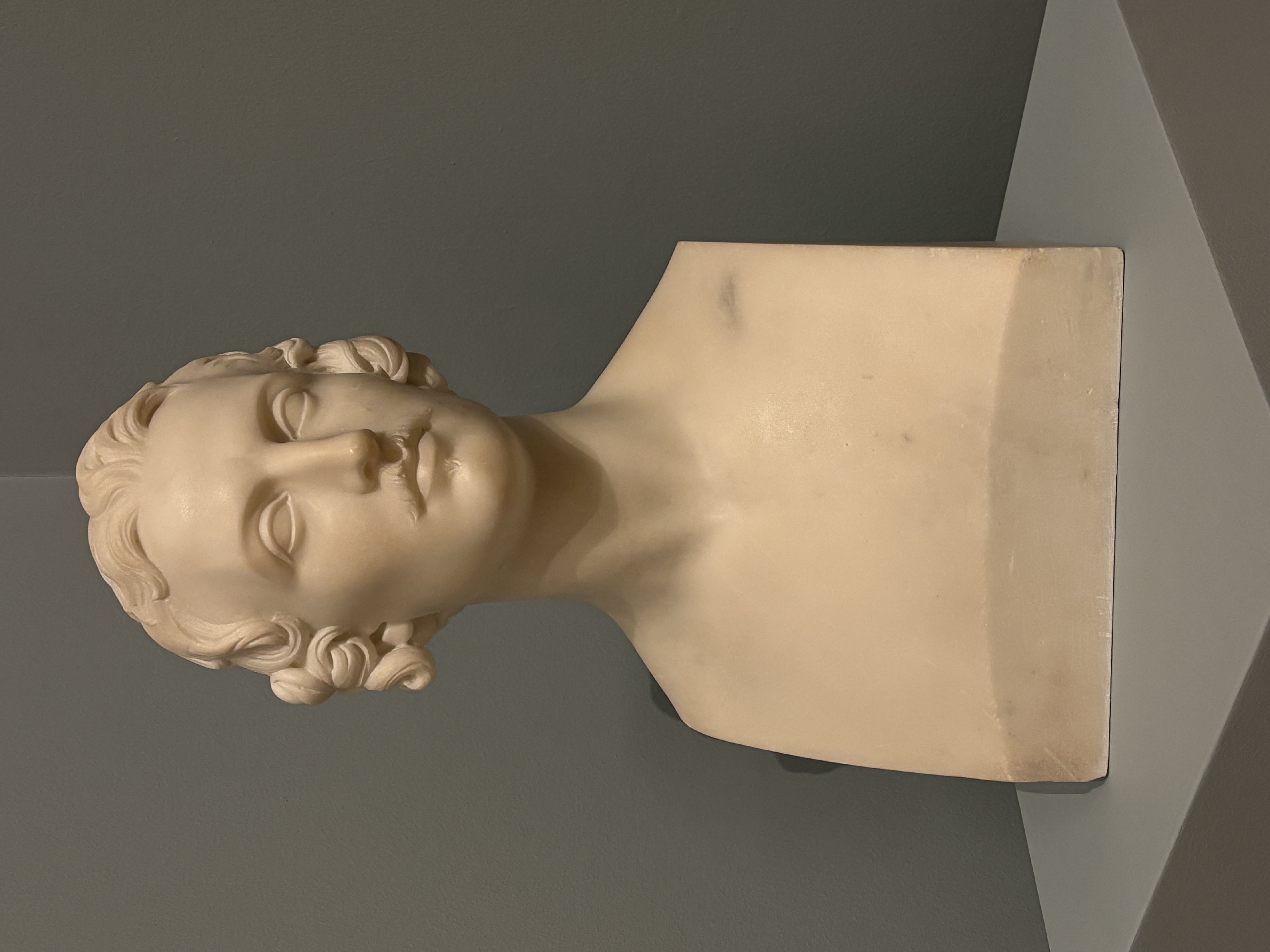
Bust of William Bewick (1827-53)
John Gibson
This is a portrait of the British painter William Bewick, whom John Gibson met in Rome. During this time period, many British and European artists visited or lived in Rome, where they studied classical and Renaissance art, and exchanged ideas.
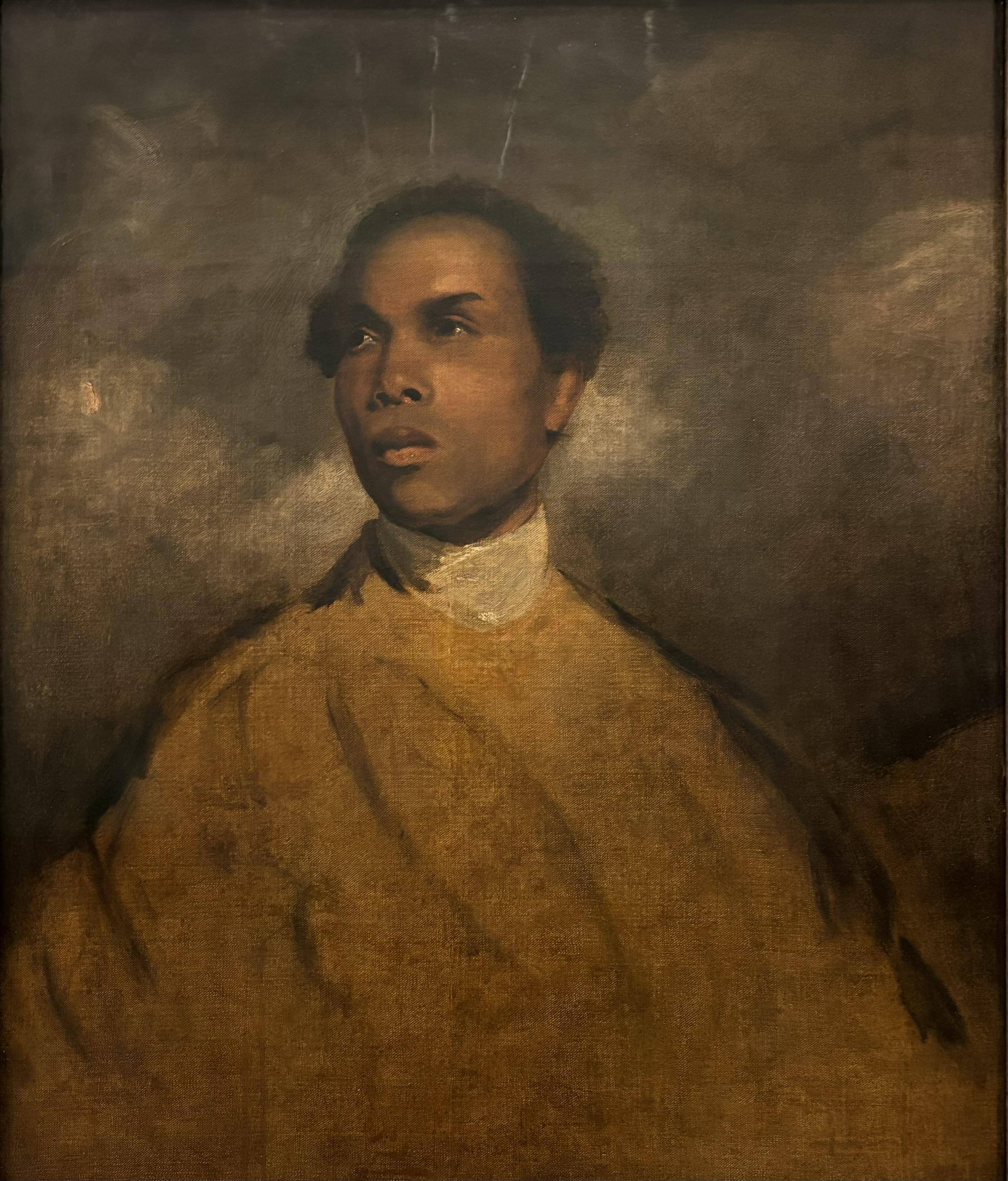
Portrait of a Man, probably Francis Barber
In the Manner of Joshua Reynolds
This is a copy of an unfinished portrait by Joshua Reynolds. While not firmly identified, the sitter is understood to be Frances Barber, who was enslaved at birth in Jamaica by Colonel Richard Bathurst. He took him to England, where Barber was later freed.
This next piece that I selected to include is one of the modern responses to the period.
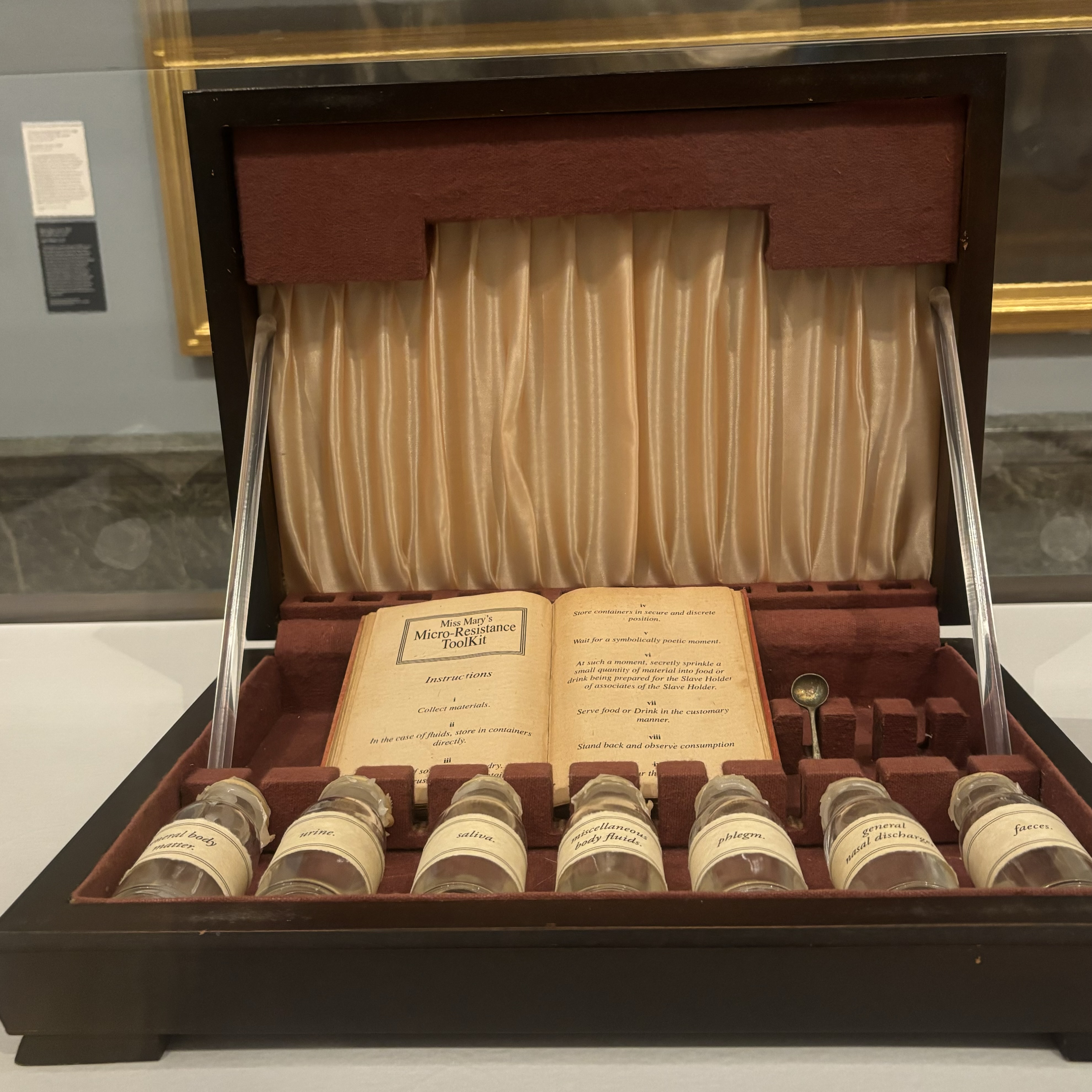
Miss Mary’s Micro Resistance Toolkit
2007
Keith Piper
Mr. Piper says, “History tells us that small acts of resistance, revenge and rebellion were carried out by enslaved people through plantation societies. Spitting into, or otherwise interfering with food or drink, as a gesture used by people with access to little more than their own bodies as tools of defiance. This work imagines an elaborate “toolkit” for enslaved people to systematically collect, store and administer their own bodily excretions in a series of small, labelled jars with instructions for their use.”
This work of art was created in 2007 as part of a larger project at the Victoria & Albert Museum’s Georgian galleries. It helped mark the anniversary of the Abolition of the Slave Trade in the British Empire.
Abolition
Calls to end slavery gained momentum from the 1780’s onward. Abolitionists faced powerful political opposition, and it wasn’t until 1807 that the trading of enslaved people in British territories became illegal. The use of enslaved labor continued until the 1833 Slavery Abolition Art. However, this legislation also had limits, as formerly enslaved people were tied into unpaid contracts and the law only applied to the British Caribbean, Mauritius and the Cape of Good Hope. Forms of enslavement and indentured labor persisted elsewhere. In contrast, enslavers were awarded vast sums of money in compensation.
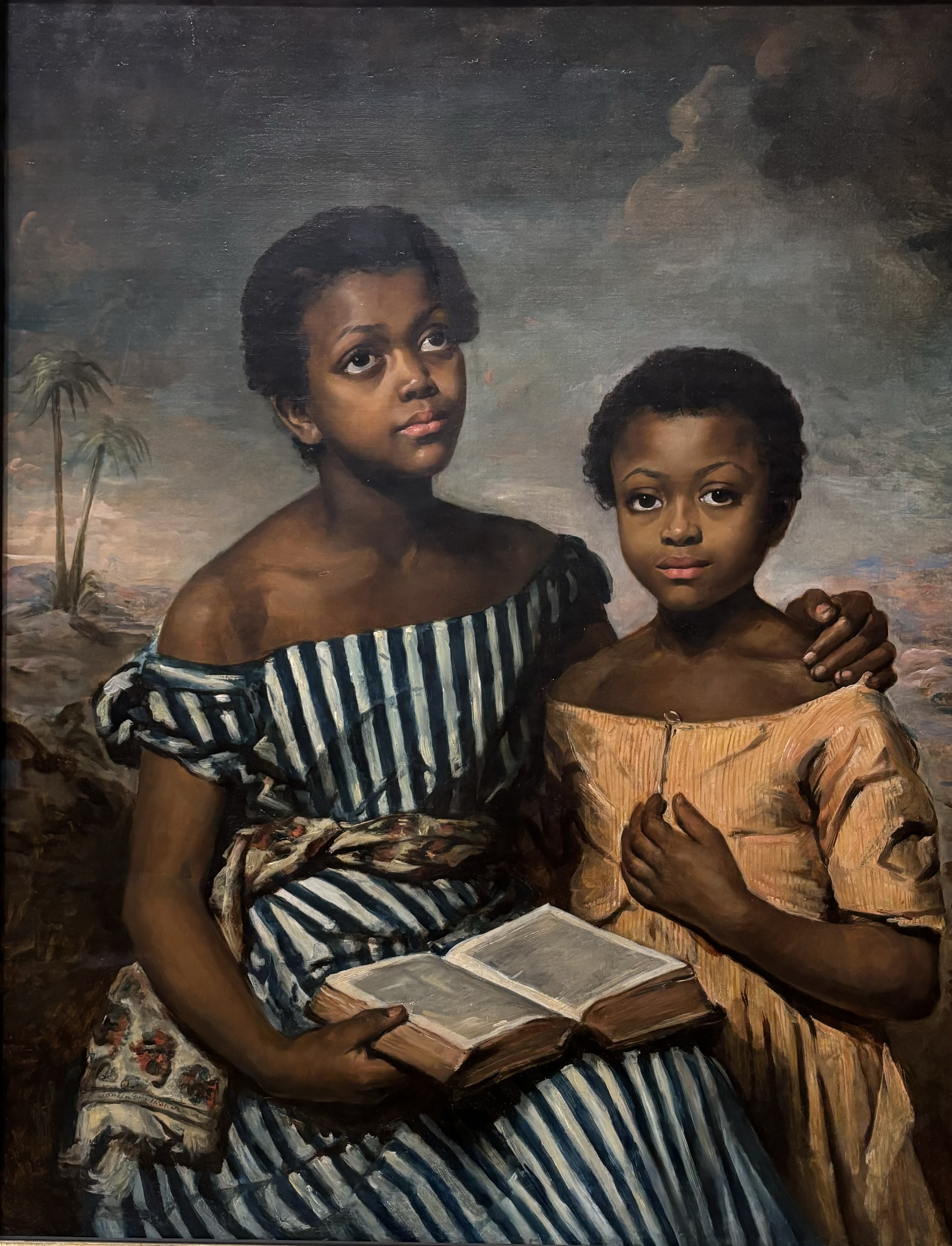
Two Children with a Book (1831)
Emma Soyer
This is a rare example of a 19th century European portrait of Black sitters. The date of the painting coincided with the increased campaigning of Black Caribbean clergymen for an end to slavery in the British Empire. The girls’ smart dress and Bible reflect their self-sufficiency and the literacy in Caribbean communities. The factors were used to encourage the emancipation of enslaved people in the Caribbean.
Art for the Crowd
1815-1905
Prosperity in Victorian Britain helps art become spectacularly popular. Britain’s wealth swells in the 19th century, fueled by imperial expansion and industrial development. While most people remain poor, many have more money and more leisure time. Millions enjoy art and culture, whether reading cliff-hanger novels by writers like Charles Dickens or visiting vast imperial displays like the Great Exhibition of 1851.
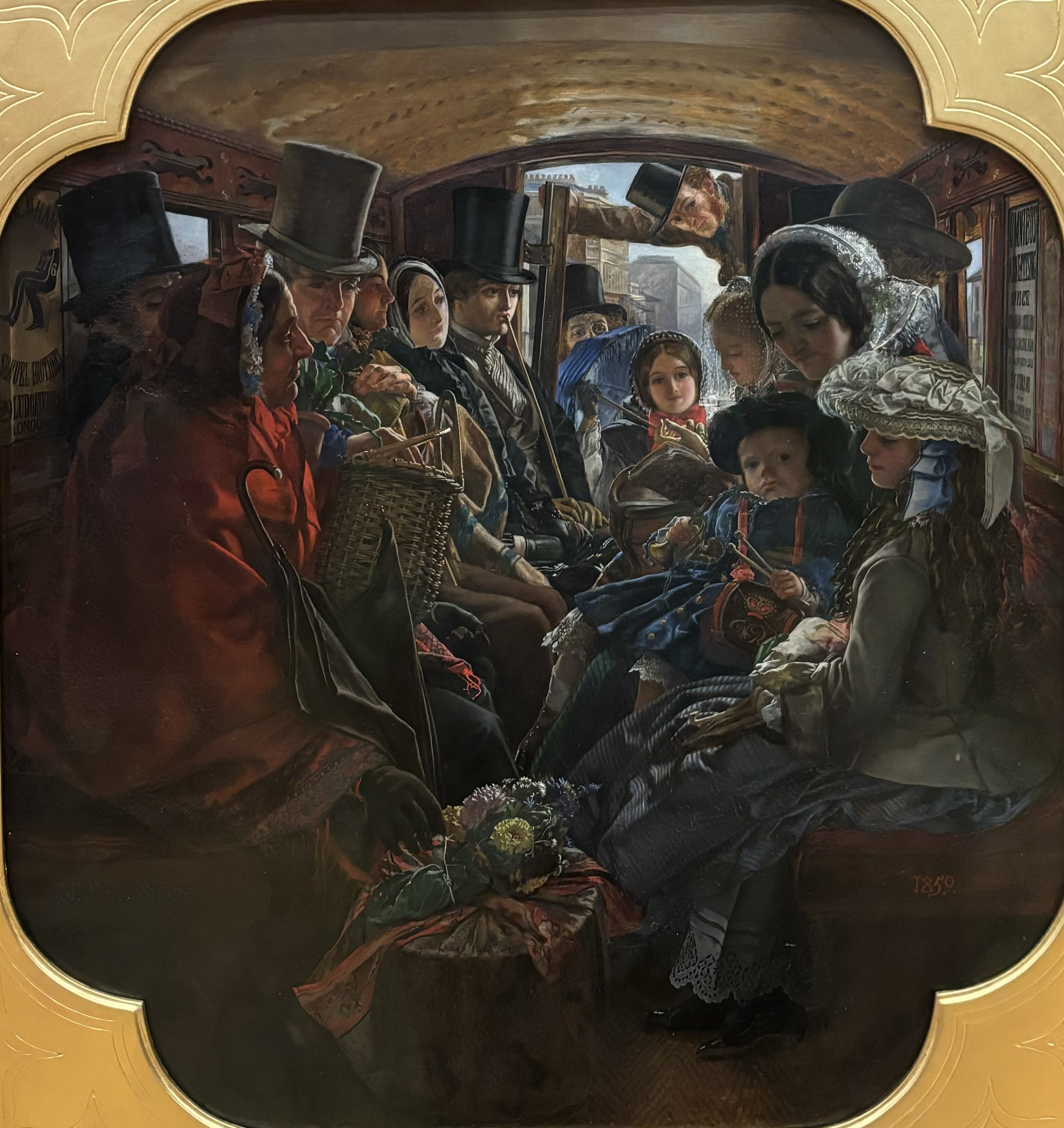
Omnibus Life in London
1859
William Maw Egley
William Egley conveys the claustrophobia of the inside of an omnibus, which is a horse-drawn equivalent of today’s buses. People from different parts of society share a small compartment.
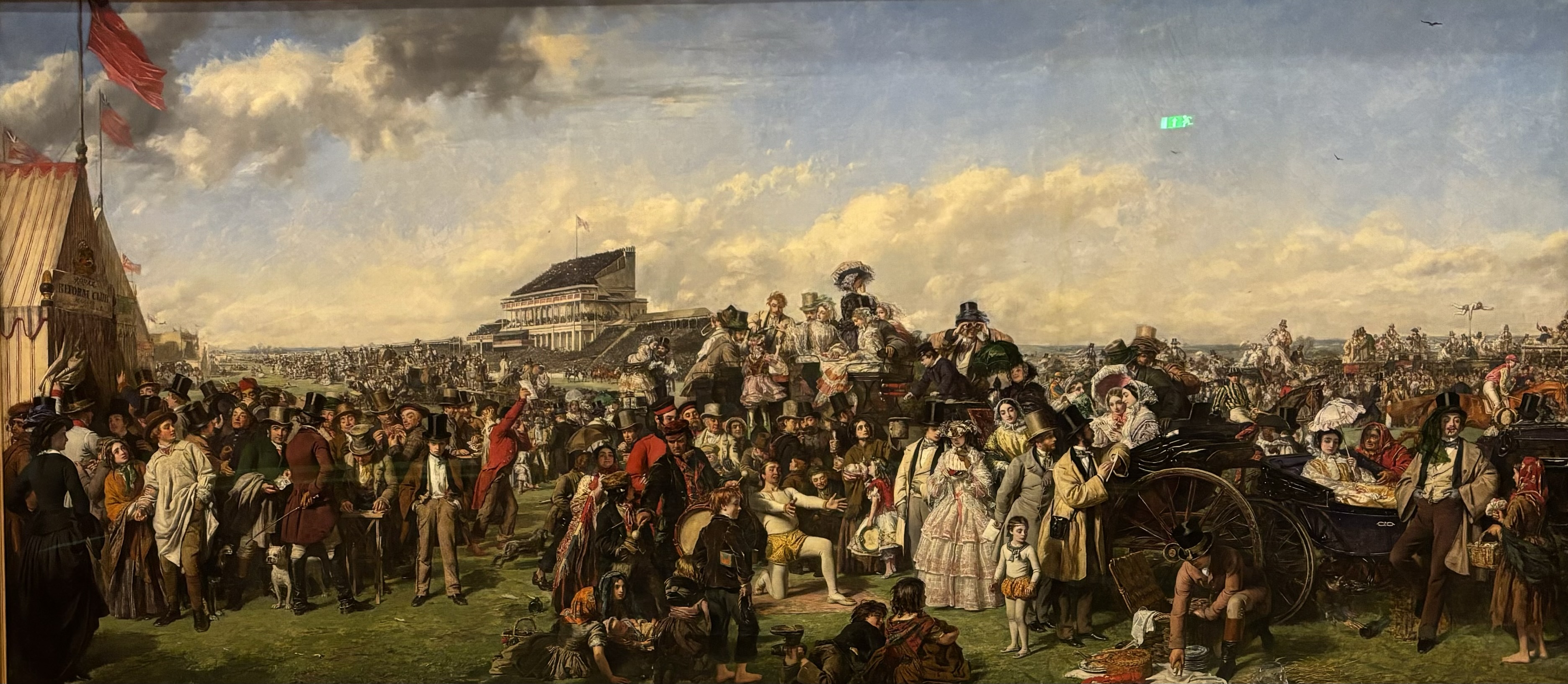
The Derby Day
1856-8
William Powell Frith
This painting was so popular when it was first exhibited in 1858 at the Royal Academy in London that a barrier had to be put up to protect the work.
IN OPEN AIR
1810-1930
Technological advances allow artists to explore faster, more spontaneous ways of painting, often outside.
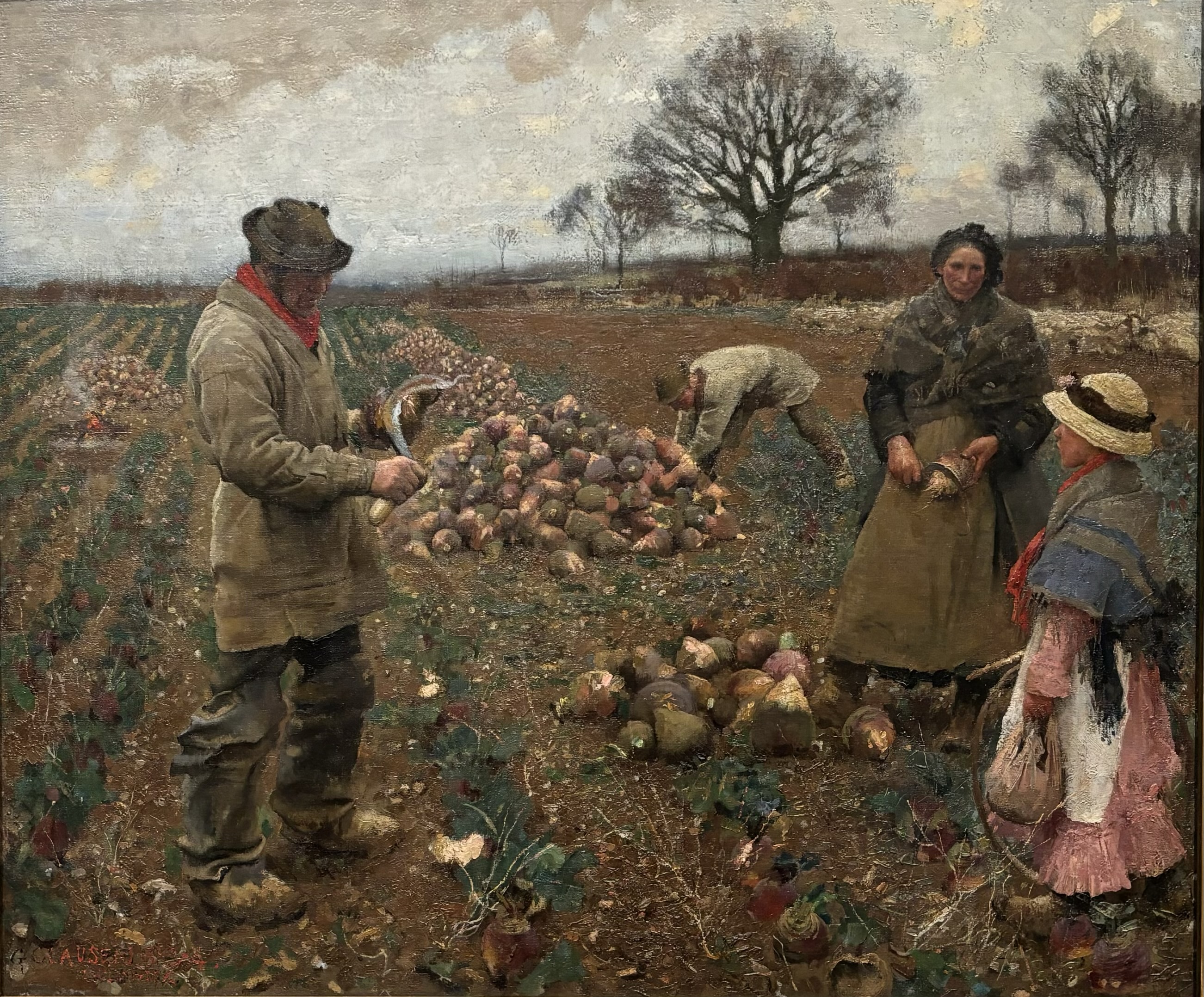
Winter Work
1883-1884
George Clausen
George Clausen’s scenes of rural work were influences by pictures of the same theme by French artists. Clausen painted this piece outside and from photographs of Chilwick Green near St. Albans, where he lived. Such unromanticized scenes of rural life were often rejected by Royal Academy annual exhibitions and had to be exhibited at new galleries, like the Grosvenor Gallery in Bond Street, London.
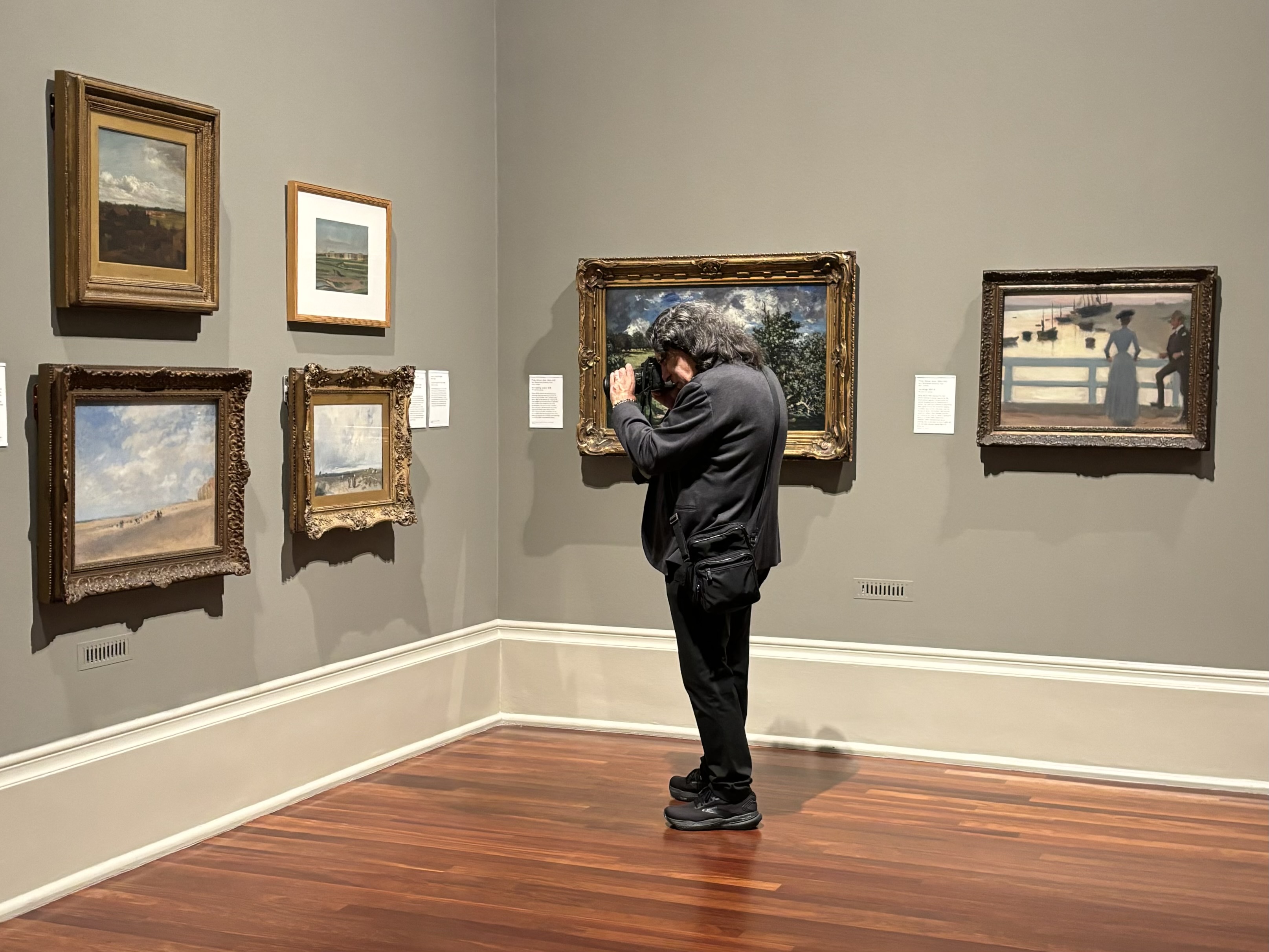
I wasn’t the only one photographing the paintings, but I was the only one I saw photographing the photographs.
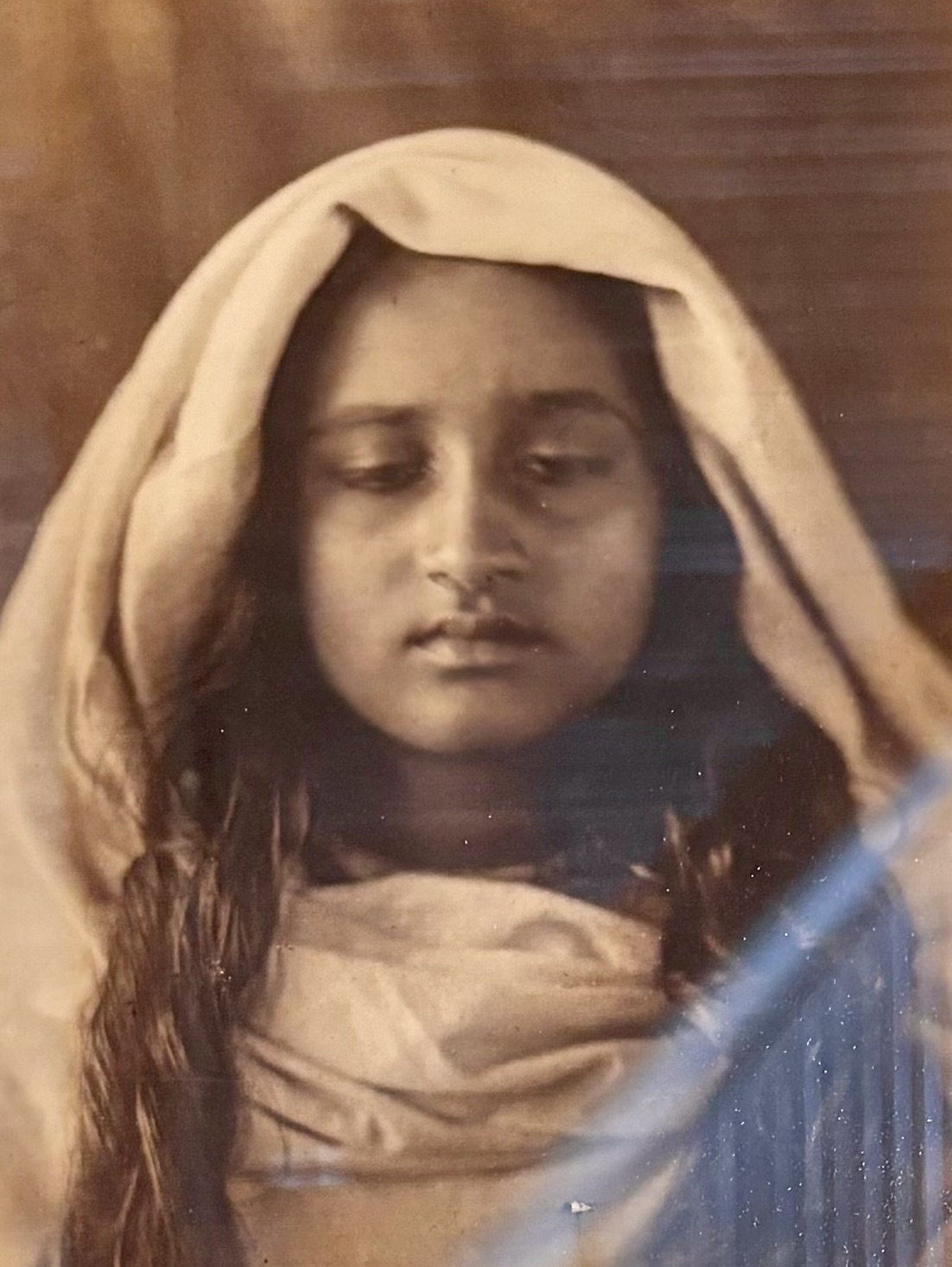
Singalese Girl
1875-1879
Julia Margaret Cameron
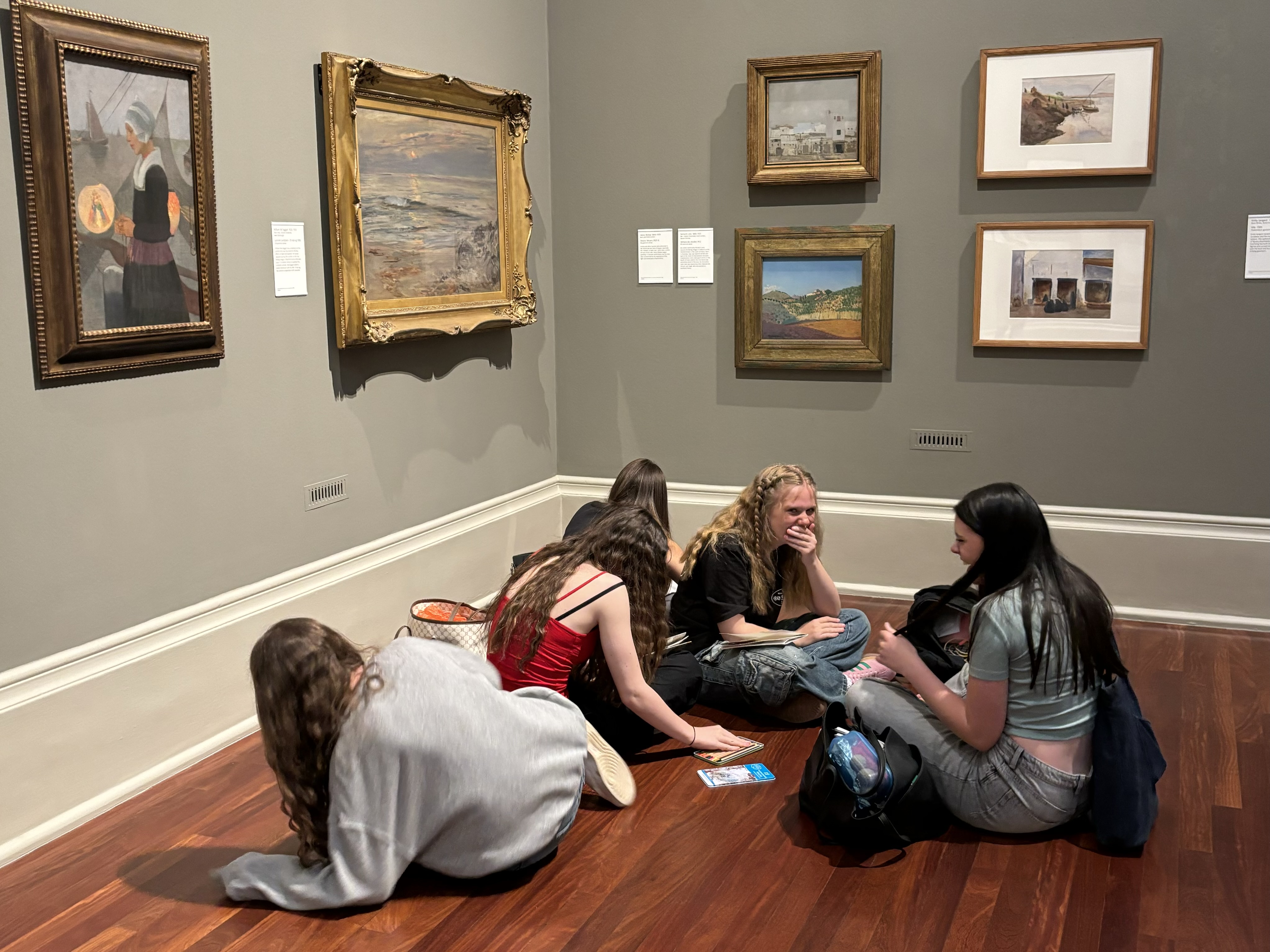
People are experiencing the works of art in their own ways.
BEAUTY AS PROTEST
1845-1905
The men and women of the Pre-Raphaelite circle question mainstream Victorian culture and ideas.
In 1848, revolutions all over Europe spread the spirit of reform across the continent. Three art students, Dante Gabriel Rossetti, John Everett Millais and William Holman Hunt, launch a revolution in art. In November 1848, the trio create a radical artistic group called the Pre-Raphaelite Brotherhood.
I’ve always been drawn to revolutionaries! The Pre-Raphaelites reject the academic art of the Royal Academy, which holds certain historical subjects and styles in high esteem. They look for authenticity in art of all periods, but seek relevance to their modern times. They update stories from the Bible, Shakespeare and medieval poetry. They paint real people, objects and settings. Later on, their work becomes concerned with beauty and imagine worlds.
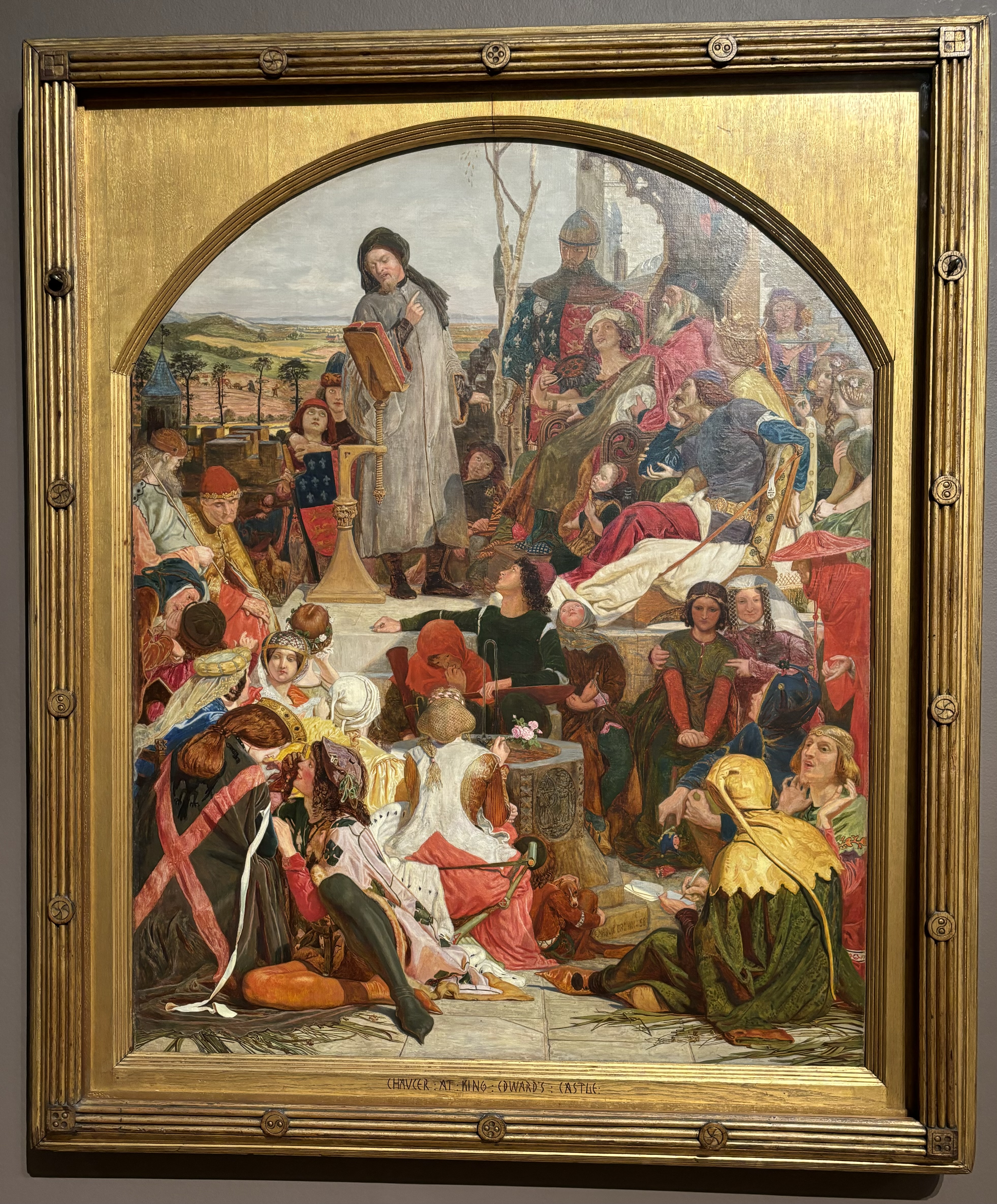
Chaucer at the Court of Edward III
1856-1868
Ford Maddox Brown
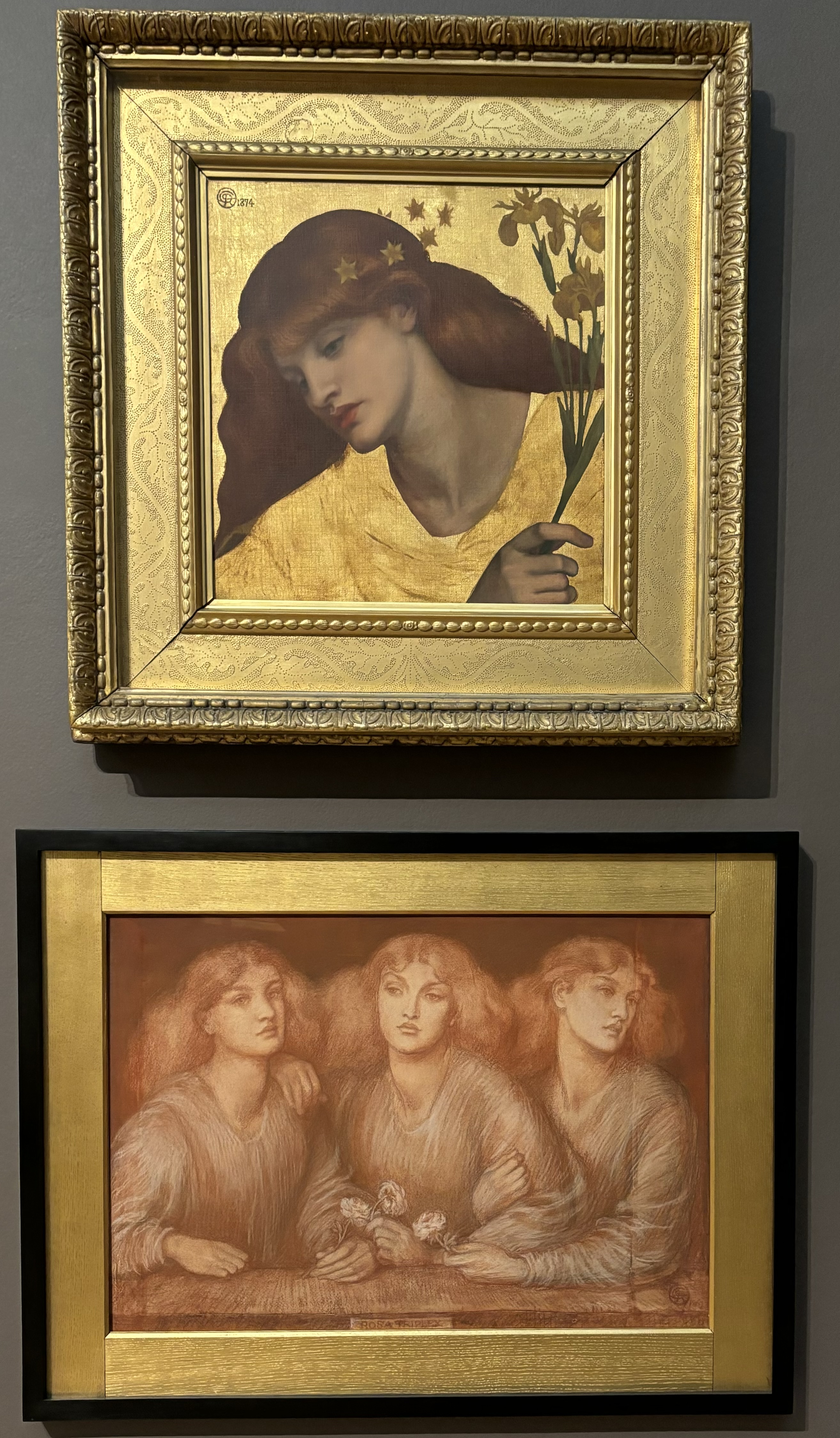
Sanctus Lilias
1874
Rosa Triplex
1867
Dante Gabriel Rossetti
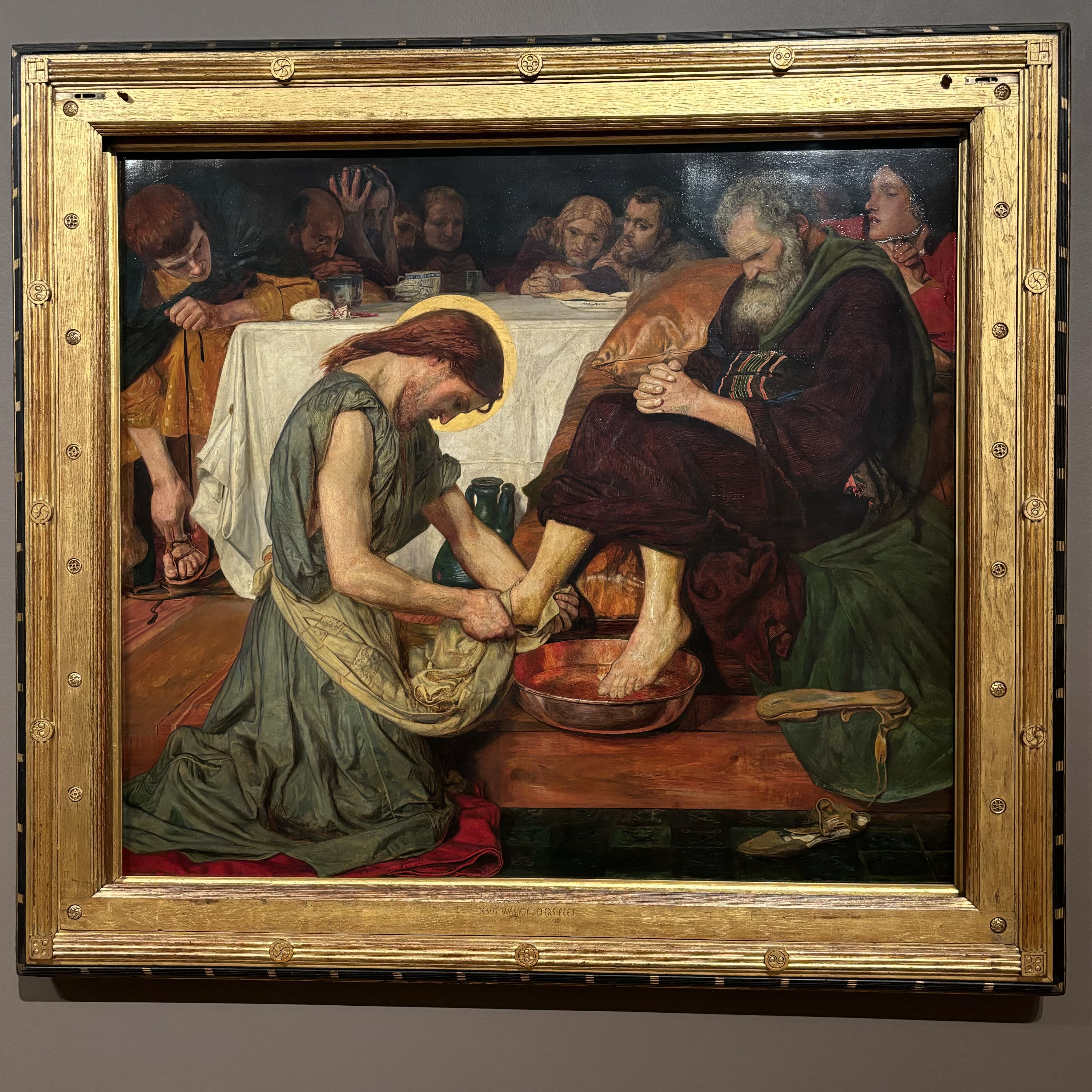
Jesus Washing Peter’s Feet
1852-1856
Ford Madox Brown
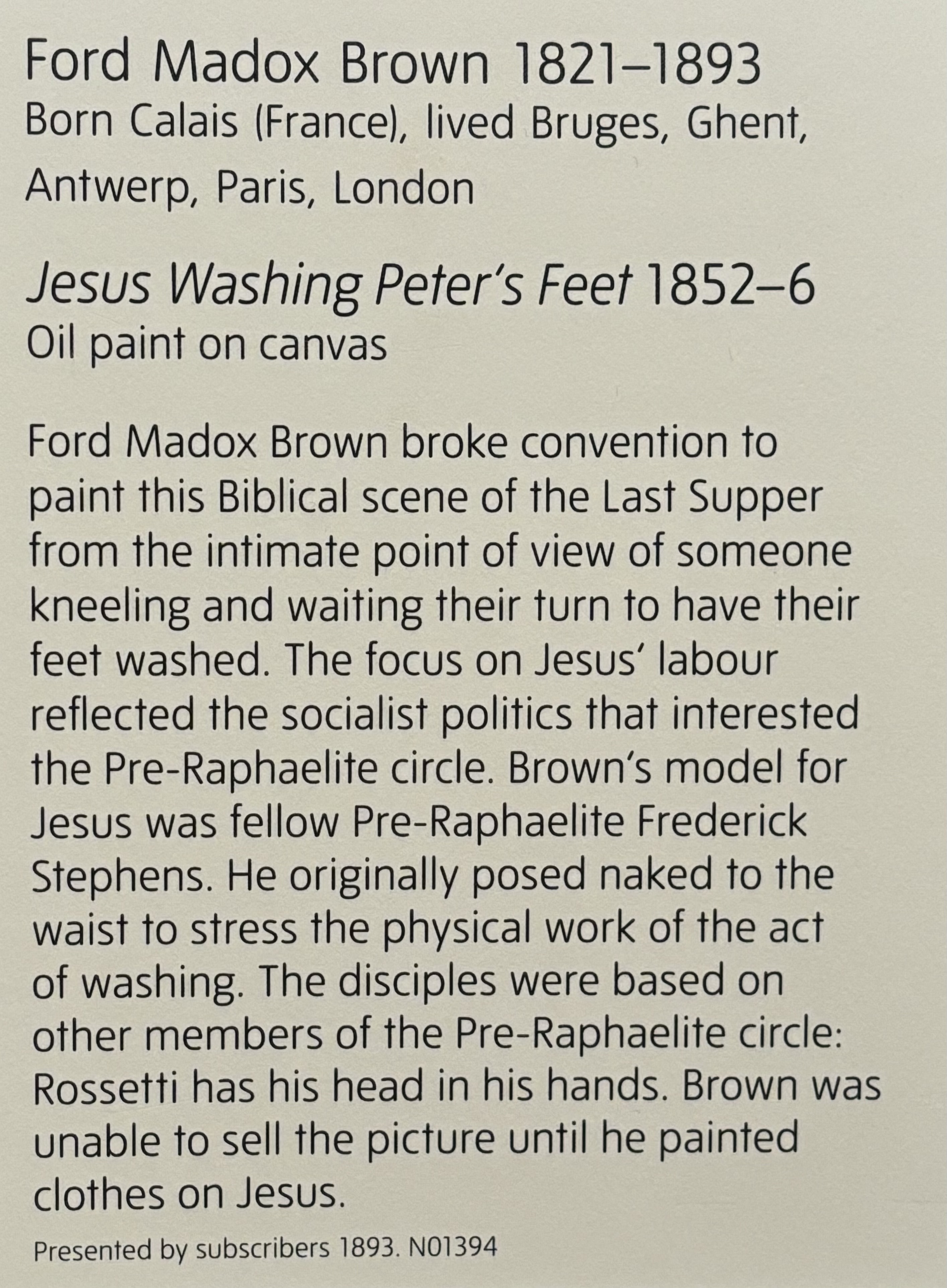
I’m not going to paraphrase the explanation of the painting. It’s short enough and I managed to take a pretty clear photo of it.
MODERN TIMES
1910-1920
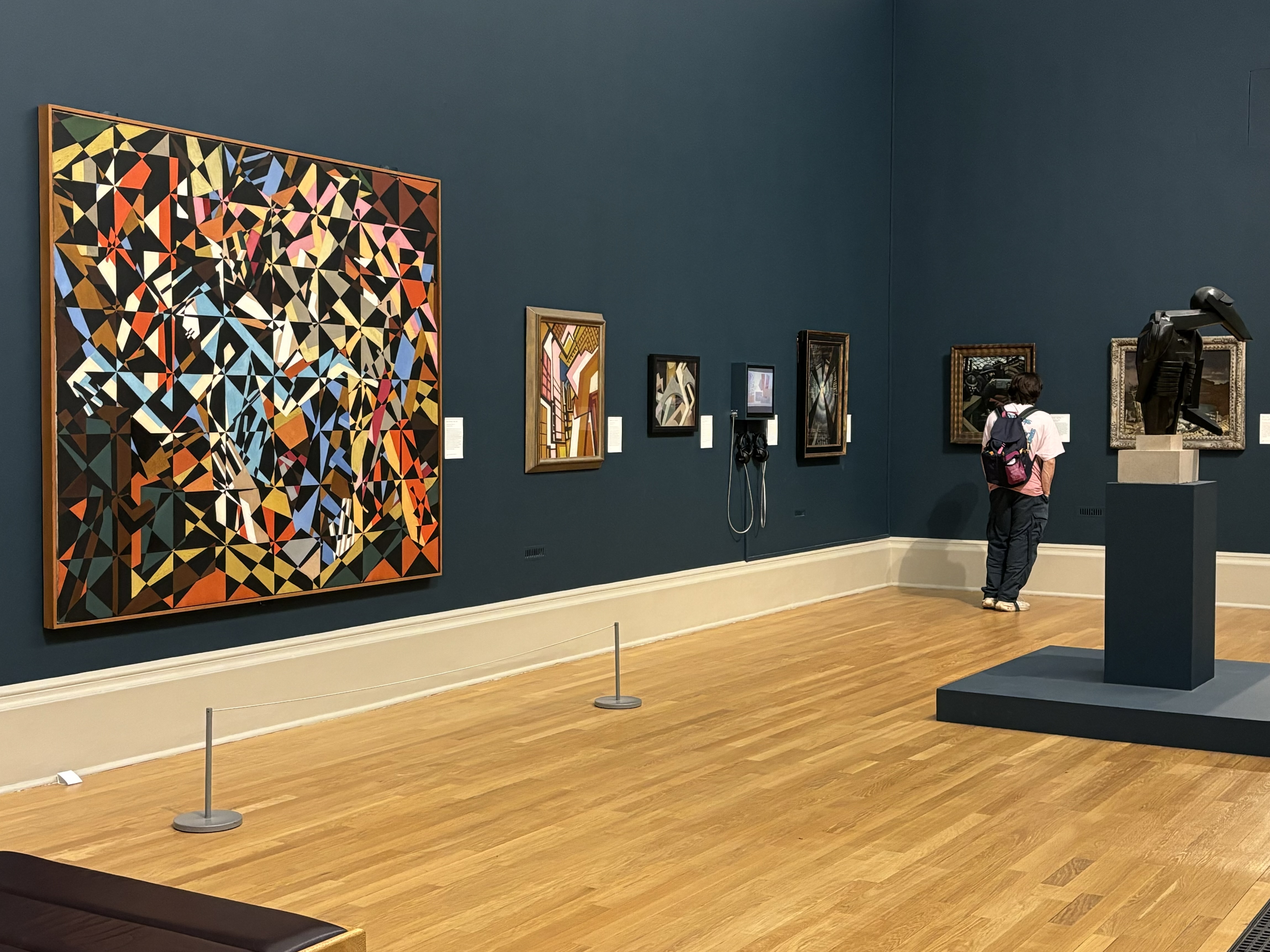
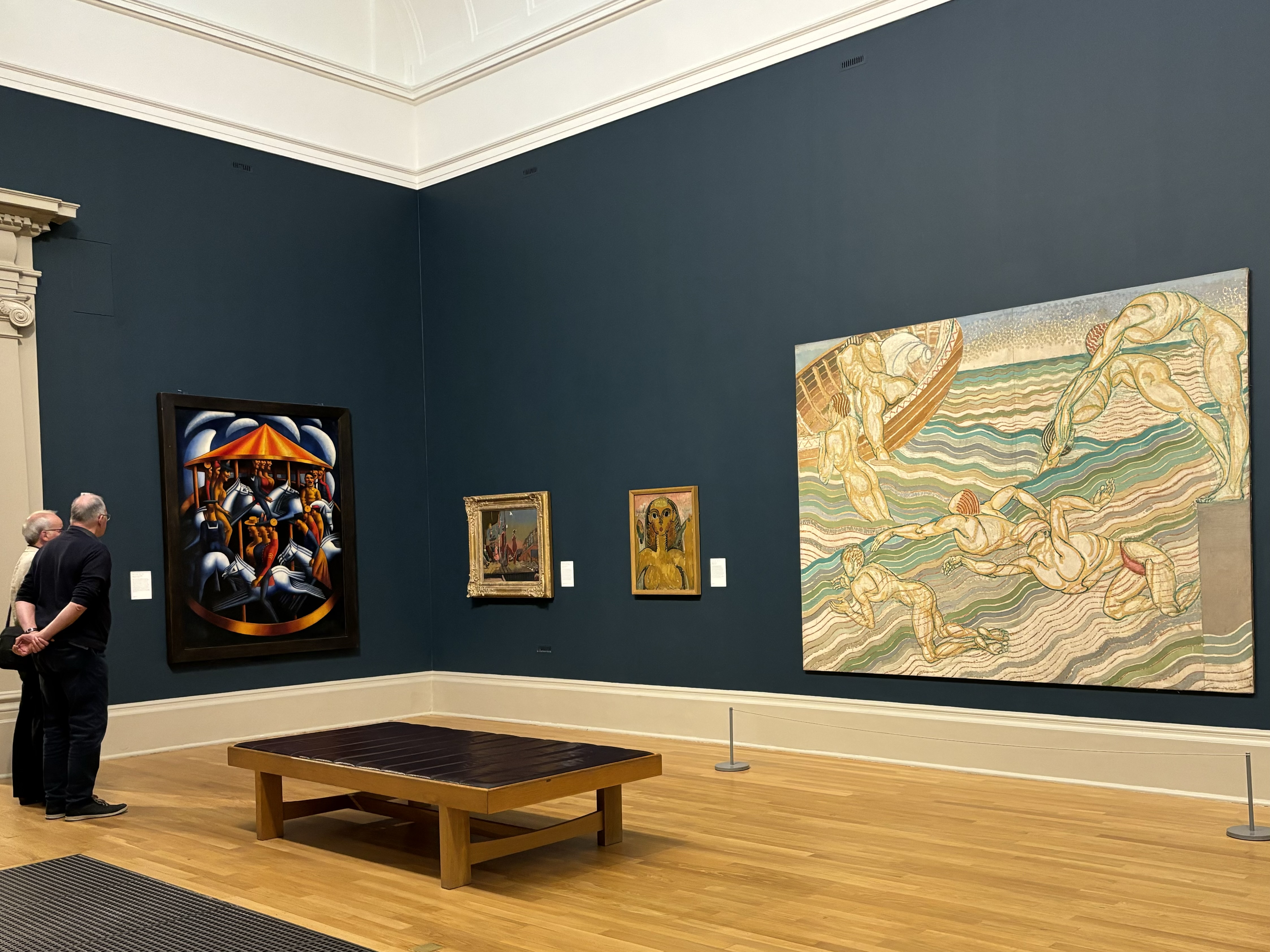
In the years leading up to war, a new generation of British experimental artists emerge who challenge traditional artistic practices.
Tense international politics lead to the outbreak of the First World War in 1914/ Millions of people in Britain and British colonies volunteer or are drafted. This ‘war to end all wars’ results in death and destruction on and unprecedented scale. Meanwhile, events such as the Easter Rising in Ireland in 1916 and the Amritsar Massacre in India in 1919 strengthen call for independence from British rule.
During this period, growing cultural internationalism between European cities inspires artists to experiment and make new connections.
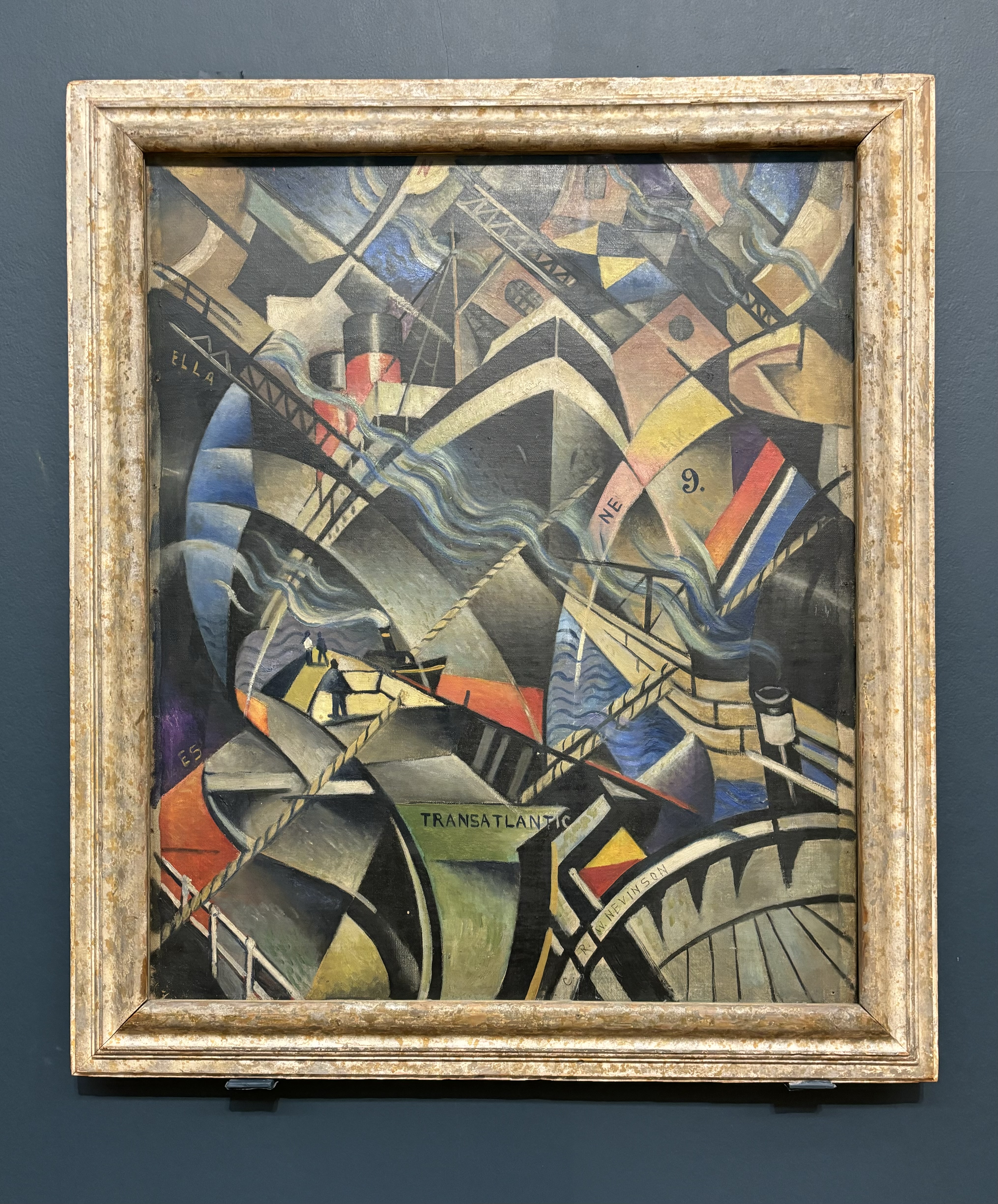
The Arrival
c. 1913
Christopher Richard Wynne Nevinson
Nevinson was interested in the idea of ‘simultaneity’, the way in which humans can experience multiple elements of a moment all at once. Here. Nevinson paints various details of a ship arriving to land all at once.
Somehow, I seem to have jumped ahead in the chronology without making note of it. Well, onward!
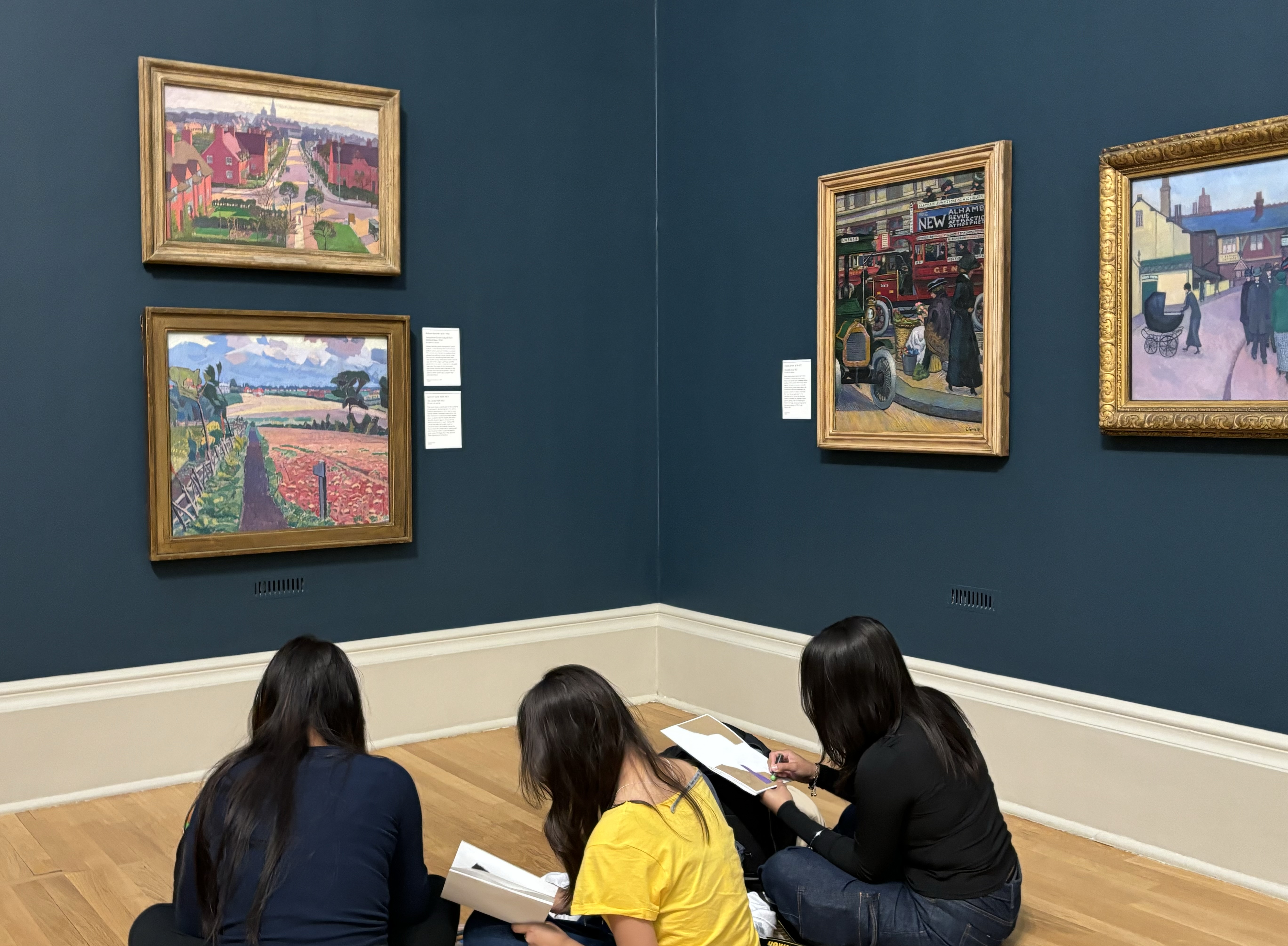
I loved seeing these students working on copying works of art on display, just as artists have done forever.
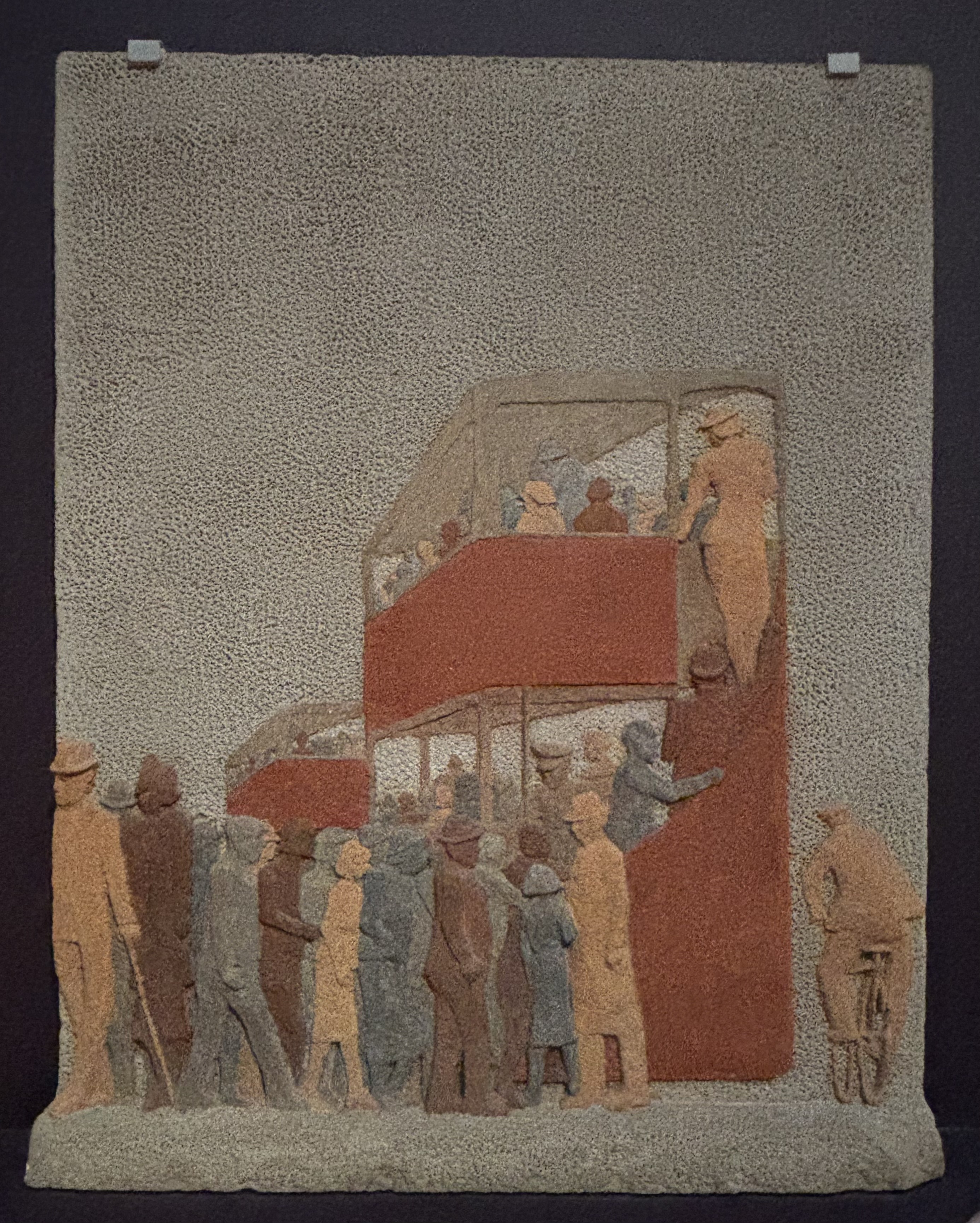
Rush Hour
1937
Peter Lászlō Peri
Peri developed a method of modeling concrete without needing to cast it. He did it by gradually layering his works with different colored wet concrete. His usse of concrete was practical and he made his work with the political adgenda of opening art to a wider audience.
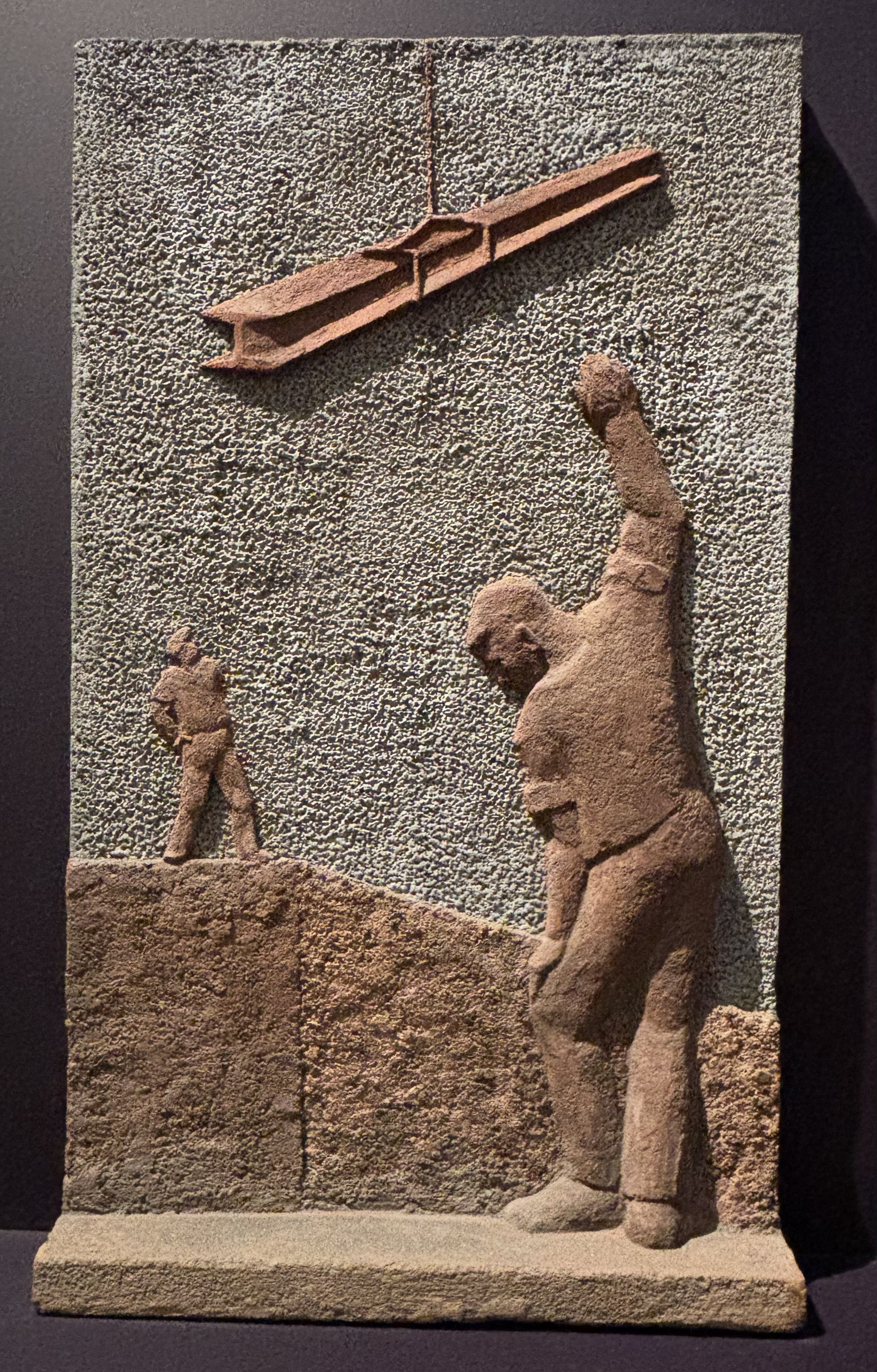
Building Job
1937
Peter Lászlō Peri
This piece was displayed along side the work above in the artist’s widely reviewed solo exhibition, ‘London Life in Concrete’ at 36 Soho Square in London in 1938.
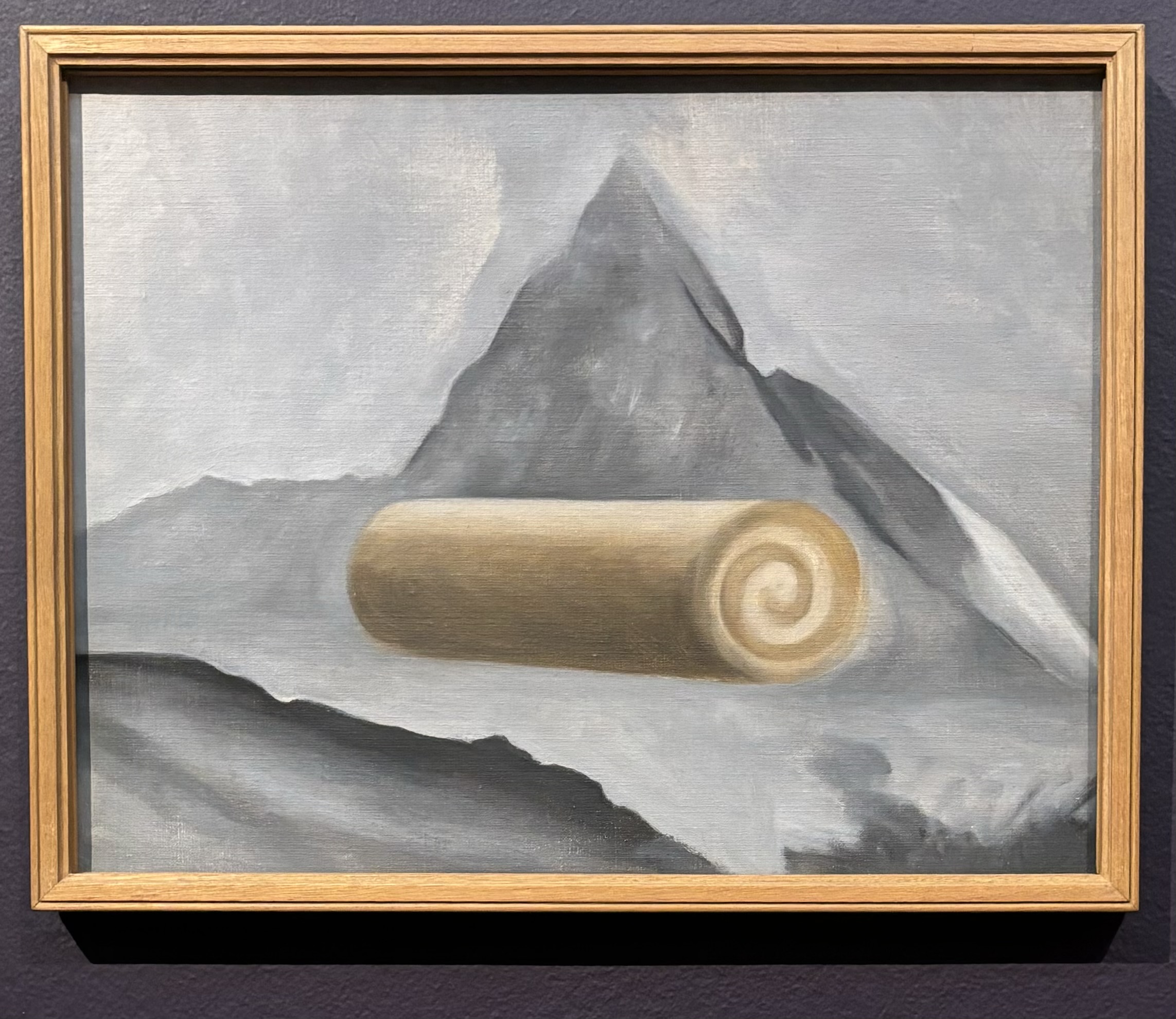
Swiss Roll
1938
Humphrey Jennings
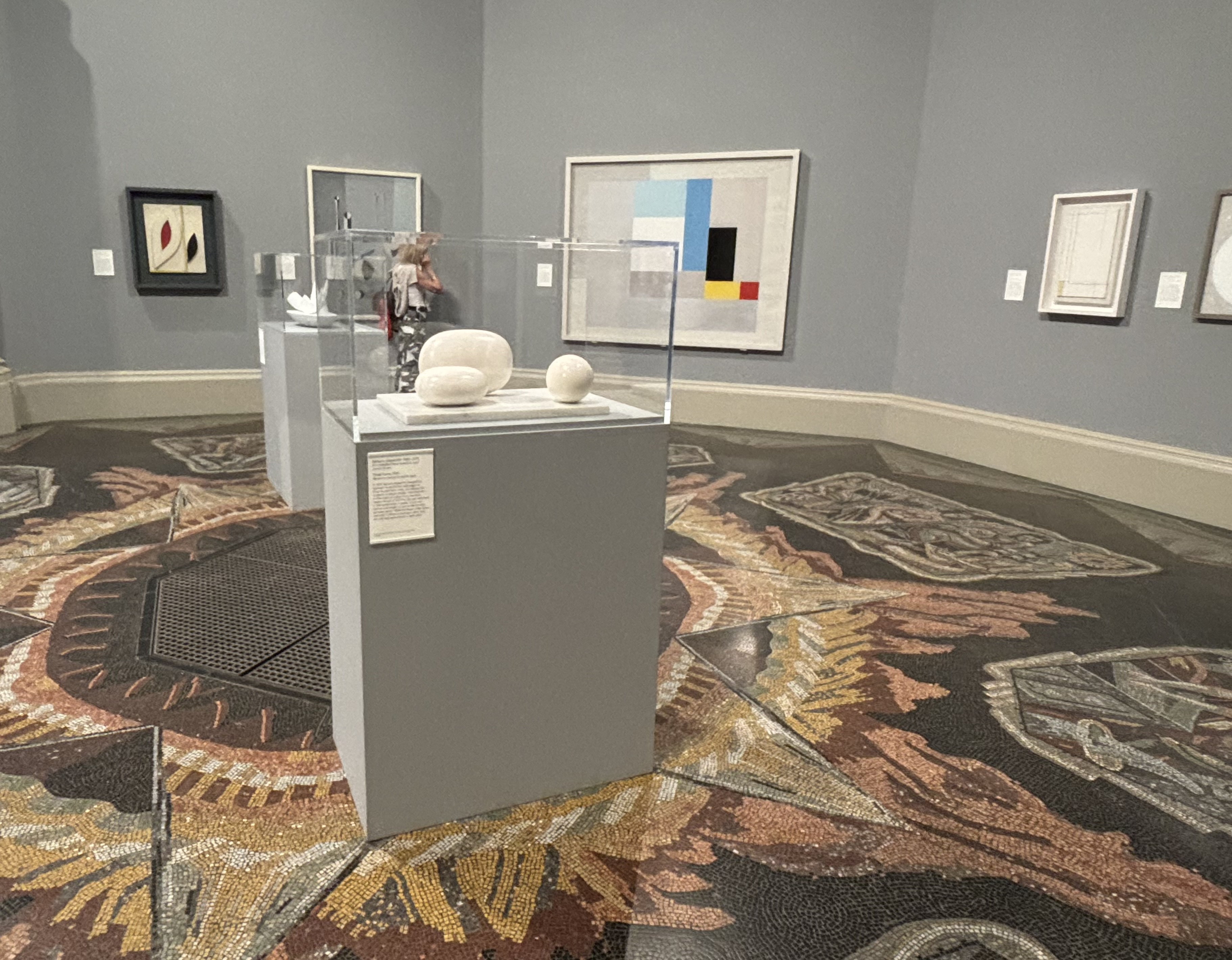
Wait! I think I’m getting close to the end of this part of the museum! These works of art seem quite modern.
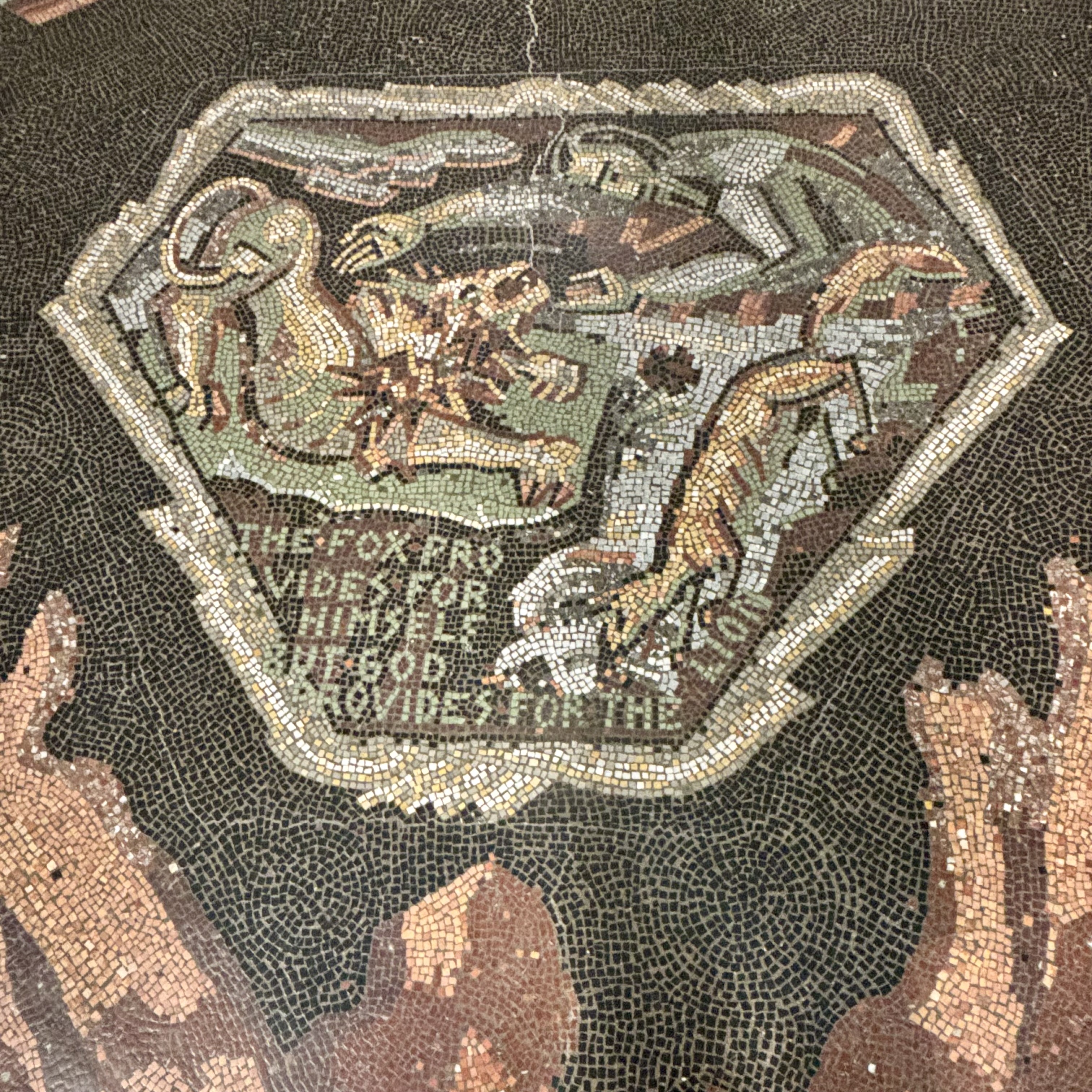
But look at the floor! I do love mosaic floors.
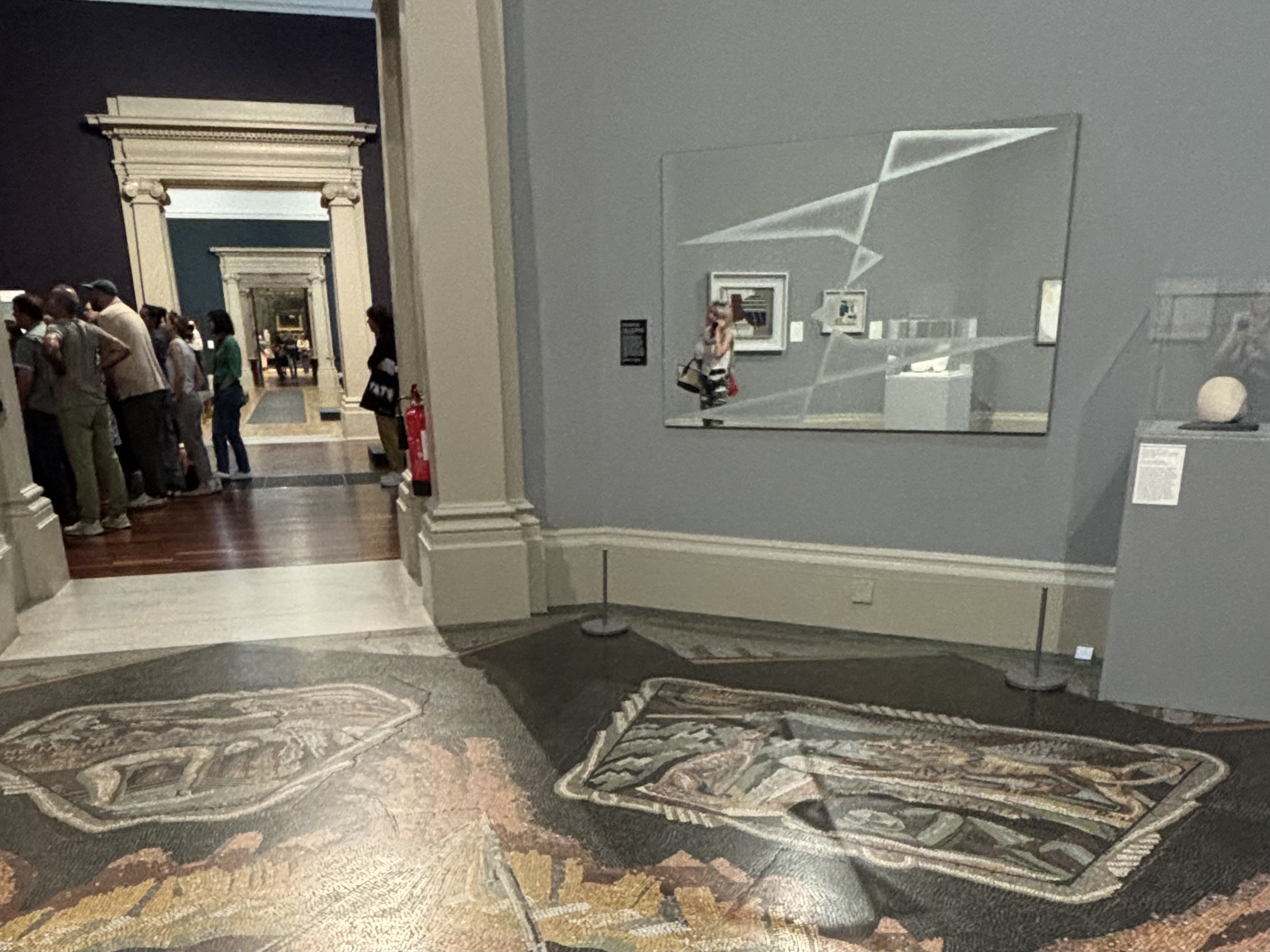
And that looks like a door into a gift shop! I do believe we’ve made it – well, at least through part of it.
By this point. I was worn out – over stimulated and tired. I needed to refresh.
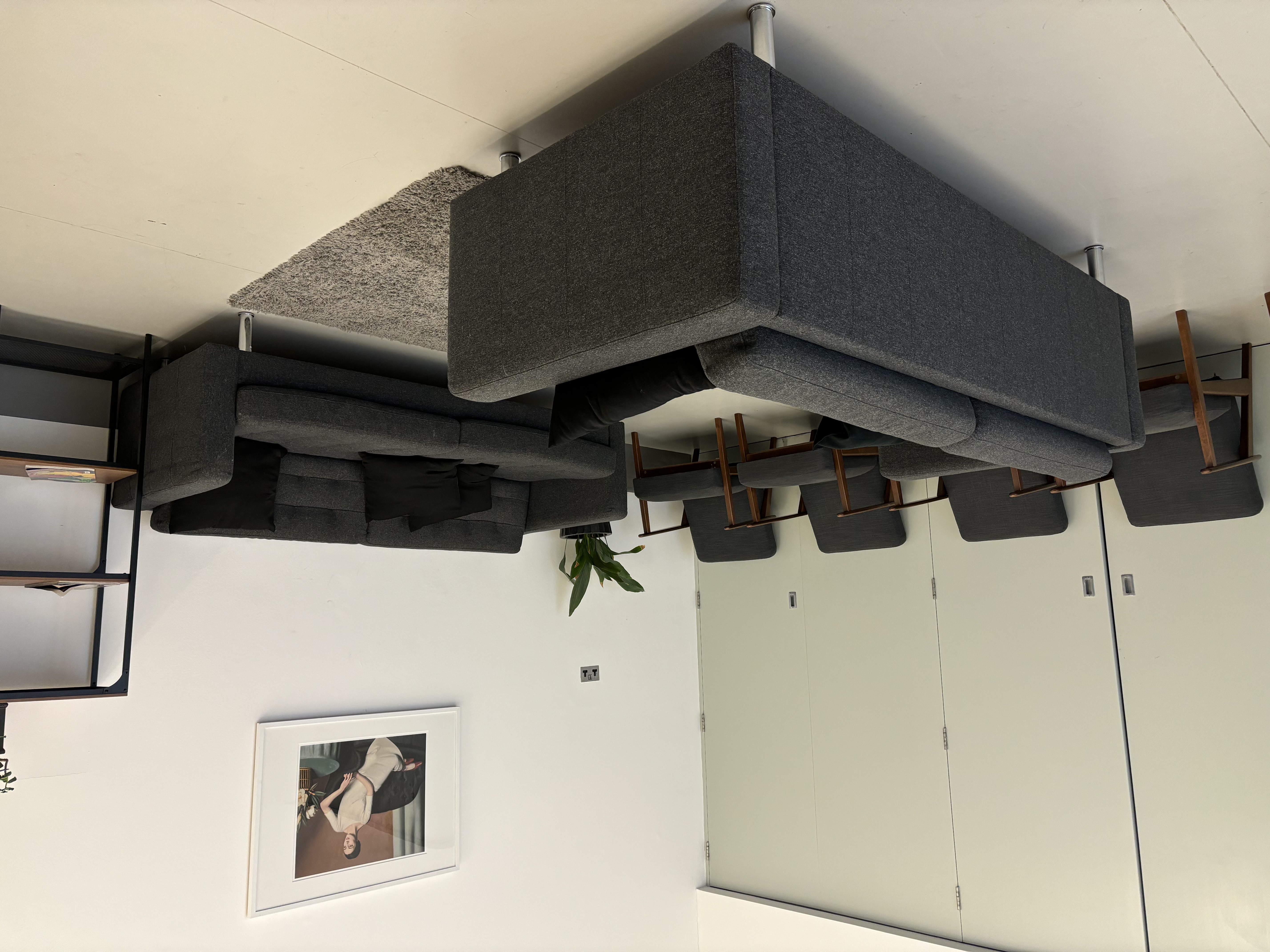
I was delighted to find that they had a quiet space. So relaxing! I considered my options. There was so much more art, but I was feeling depleted. Maybe lunch would help.
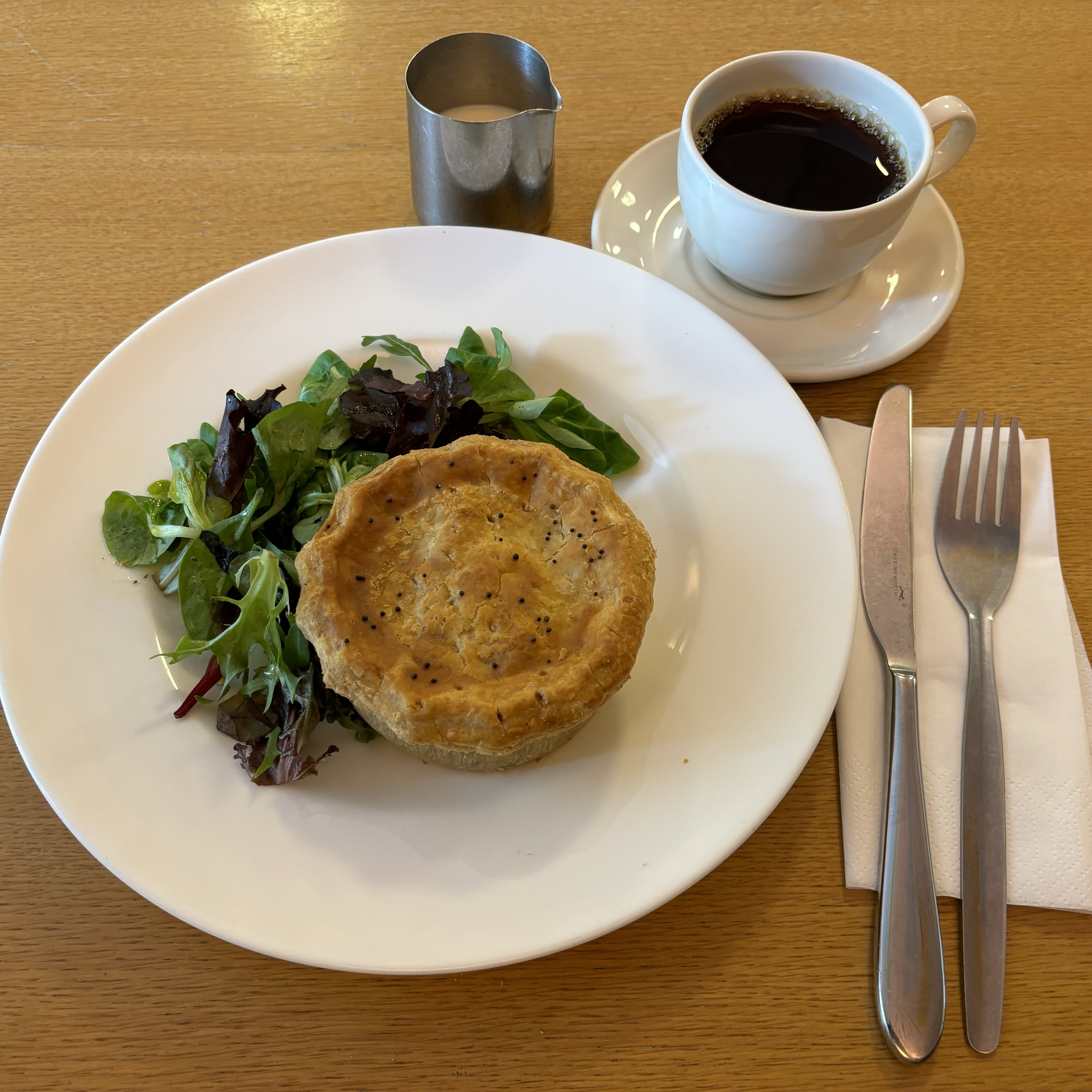
I headed down to the cafe and selected the beef and ale pie. With coffee, of course.
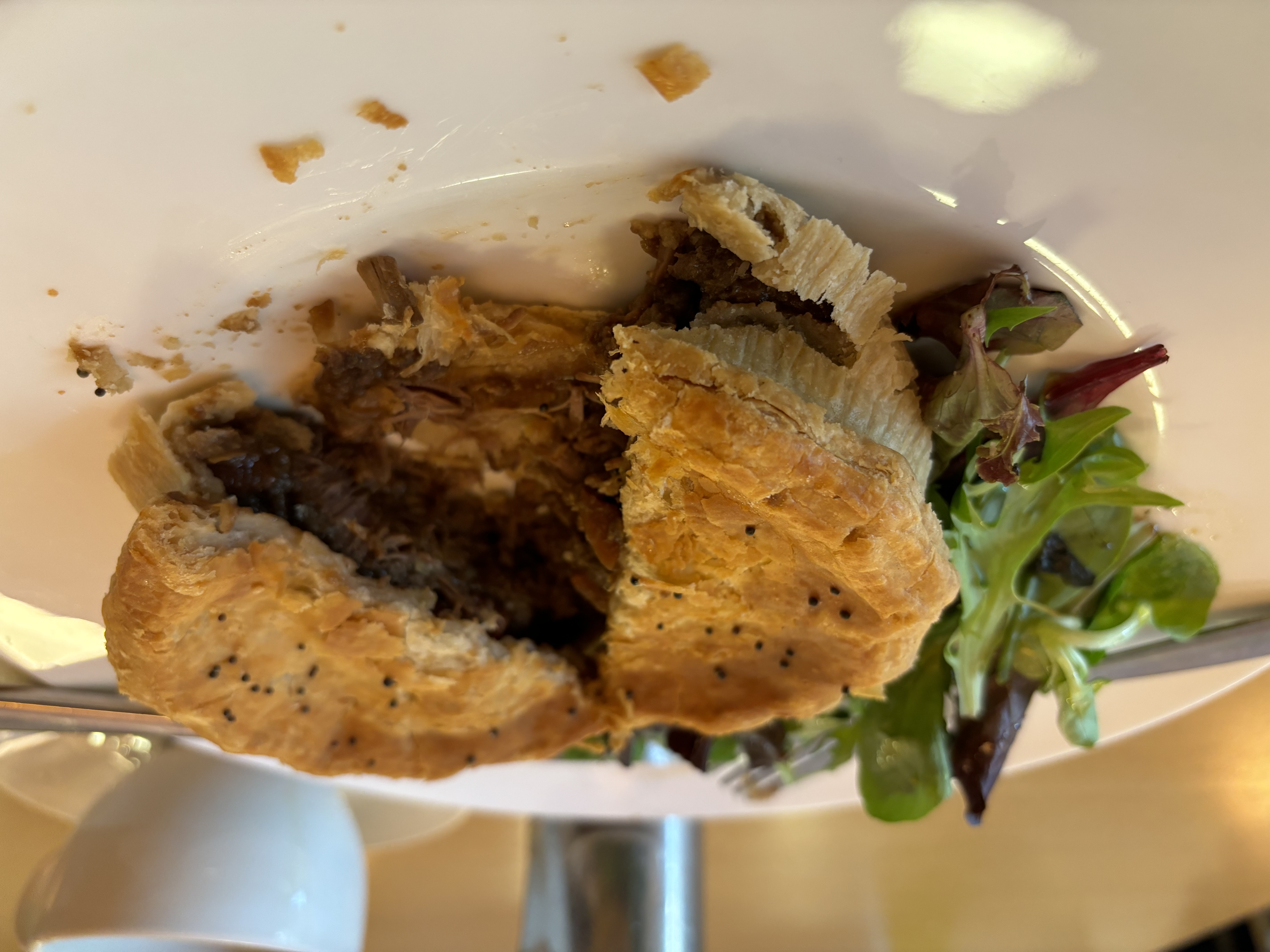
This is what it looked like inside. Honestly, I didn’t know what it would be like. I thought maybe the insides might have a meat in sort of an ale based gravy. It was moist and tasty.
And, this is where I am going to stop with my retelling of my visit to the Tate. Yes, I did see some more great art, but I don’t need to tell you everything.
But, you never know. I might come back and fill you in later.
(But don’t hold your breath!)