As I mentioned in the previous post, the movement to memorialize the battle began almost immediately.
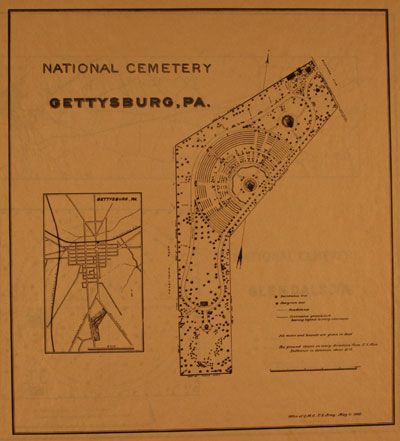
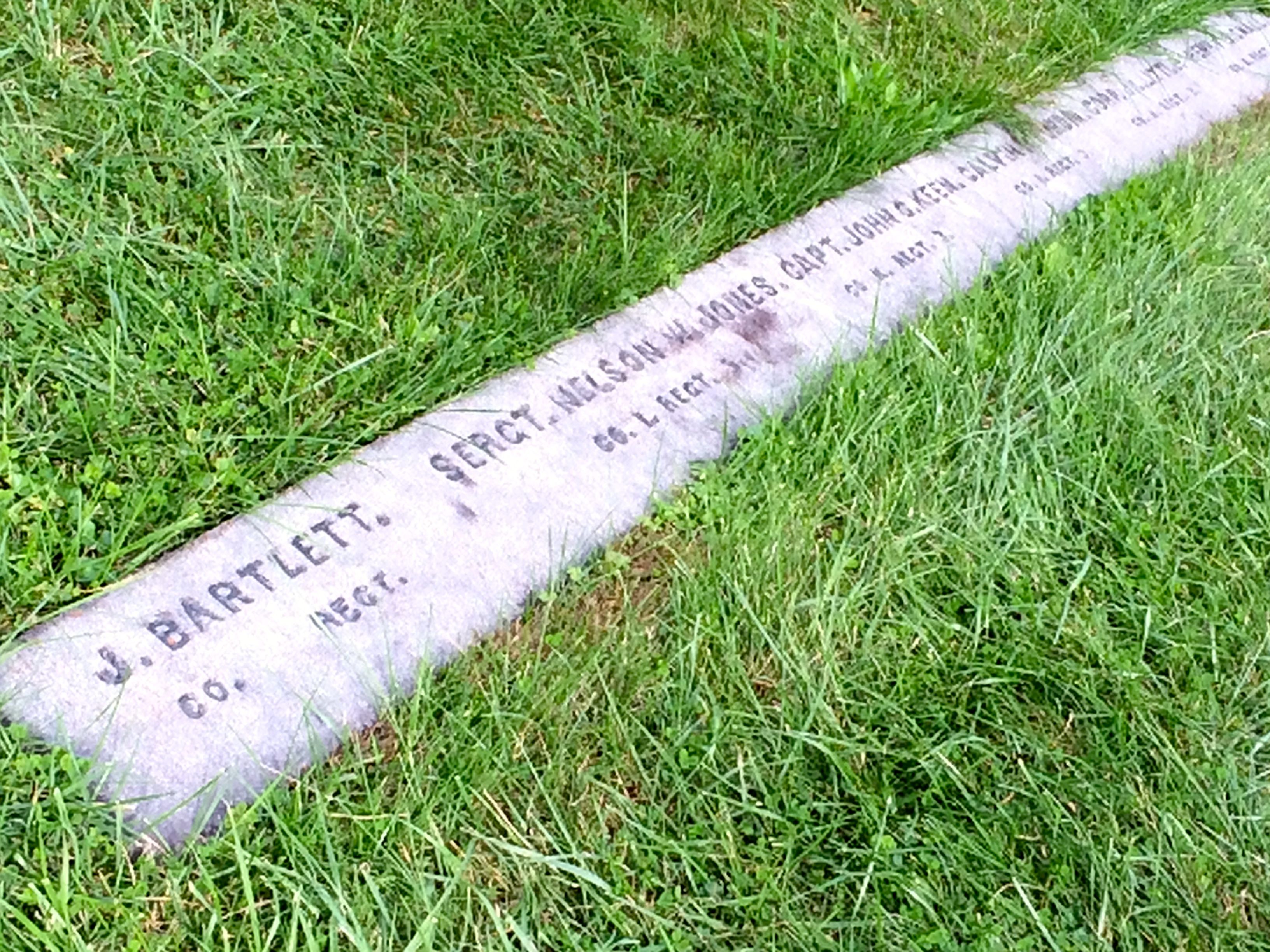
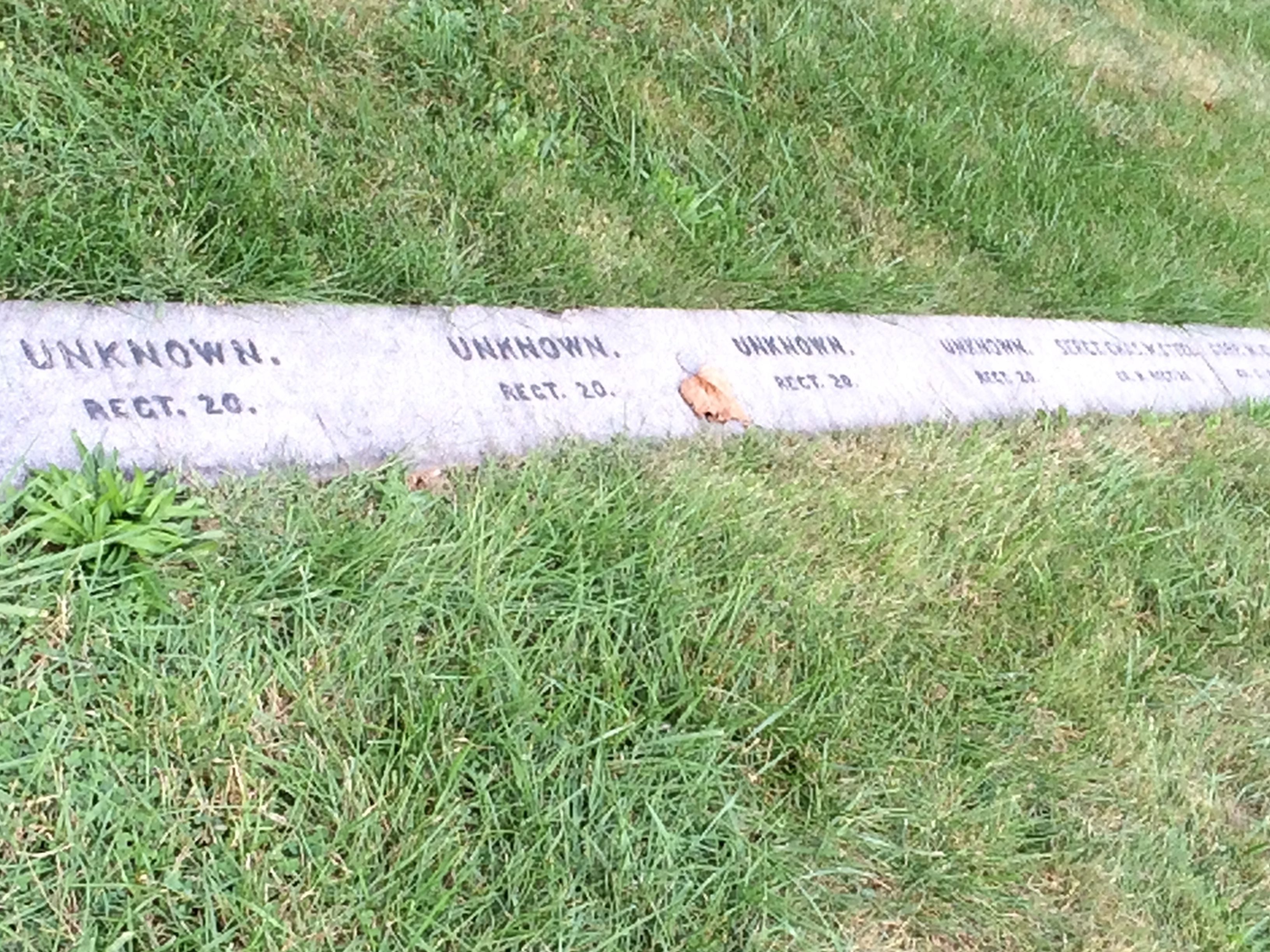
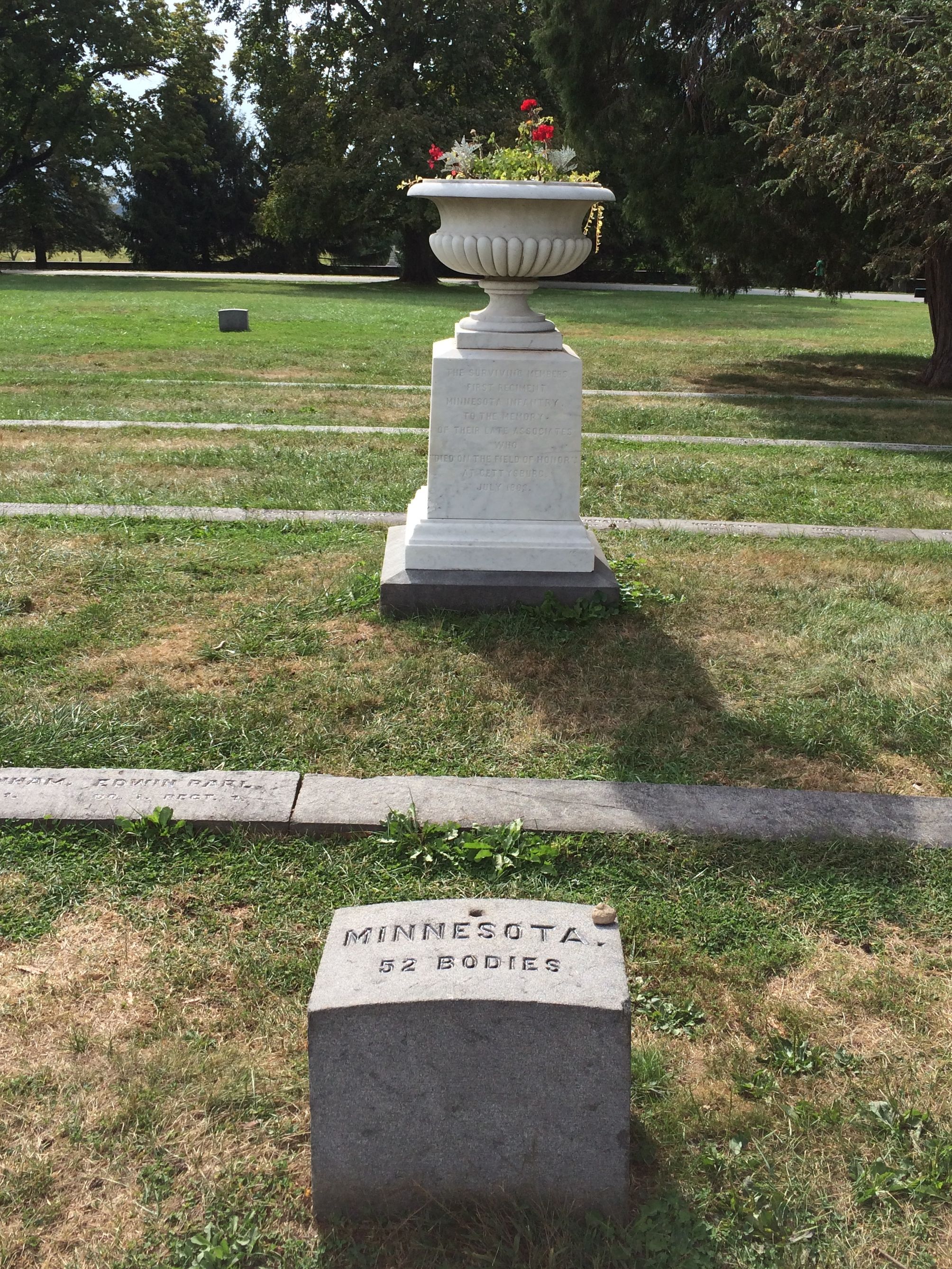
In the first place, there was the practical need to provide for the burial of the massive number of dead soldiers that covered the fields and forests. This need lead to the establishment of our first national cemetery.

According to The Association of Licensed Battlefield Guides, the actual witnesses, local residents, began guiding curiosity seekers and grieving family members around the battlefield as soon as the warring parties cleared off the fields. I get the impression that the preservation of the battlefield and the information presented by guides was not held to any particular standard.
For instance, this is the first state memorial:

It took twelve years for another memorial to be placed. Veterans of the 2nd Massachusetts Infantry placed a tablet at the edge of Spangler’s Meadow to honor the soldiers who died at this site. The next year, the 91st Pennsylvania placed a monument On Little Round Top. I didn’t even see these memorials. Of course, there are more than 1,300 memorials, according to a book I am consulting, Gettysburg: Stories of Men and Monuments as told by Battlefield Guides. I couldn’t be expected to see all of them. Besides, would you want a report on all of them?
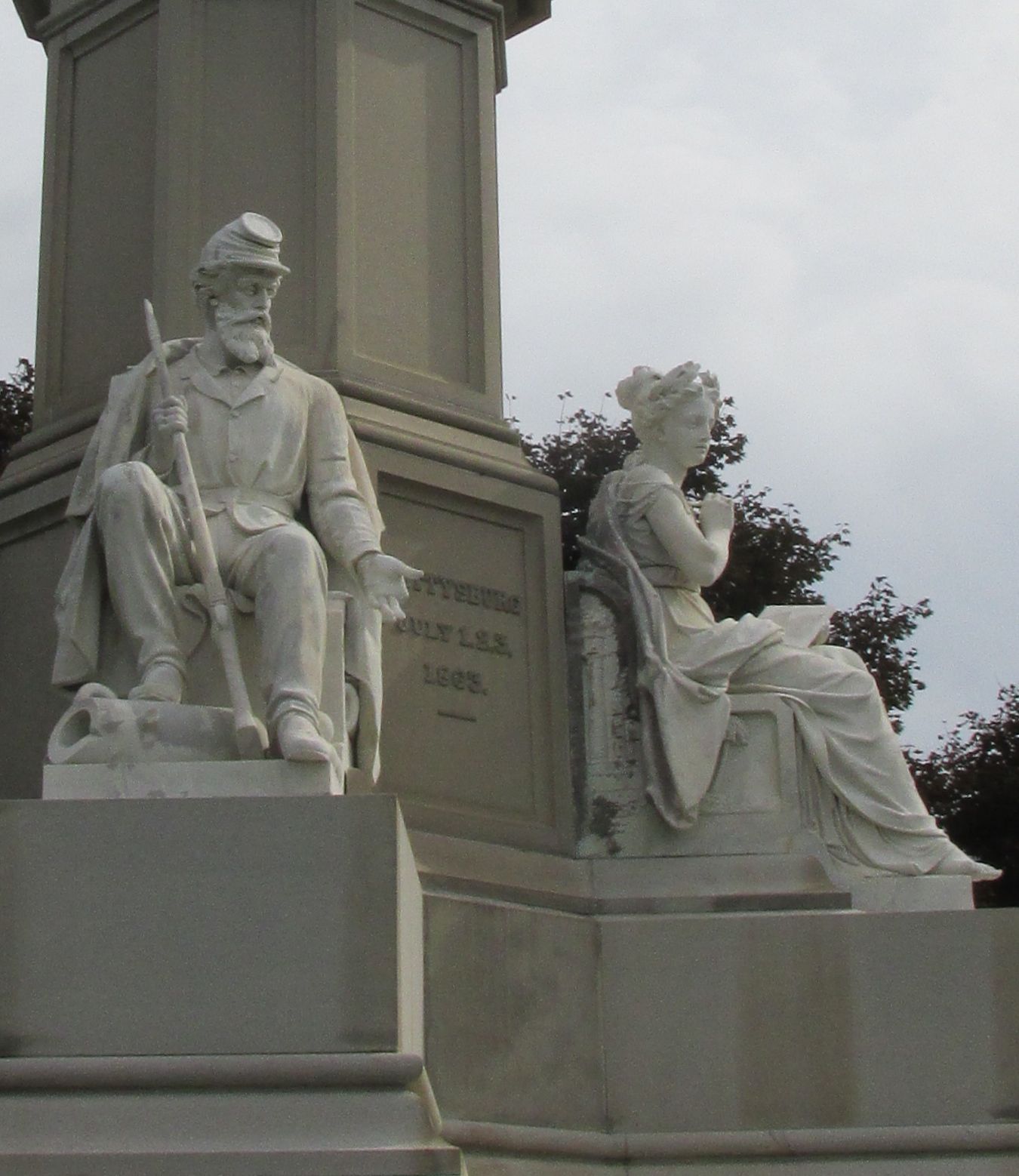
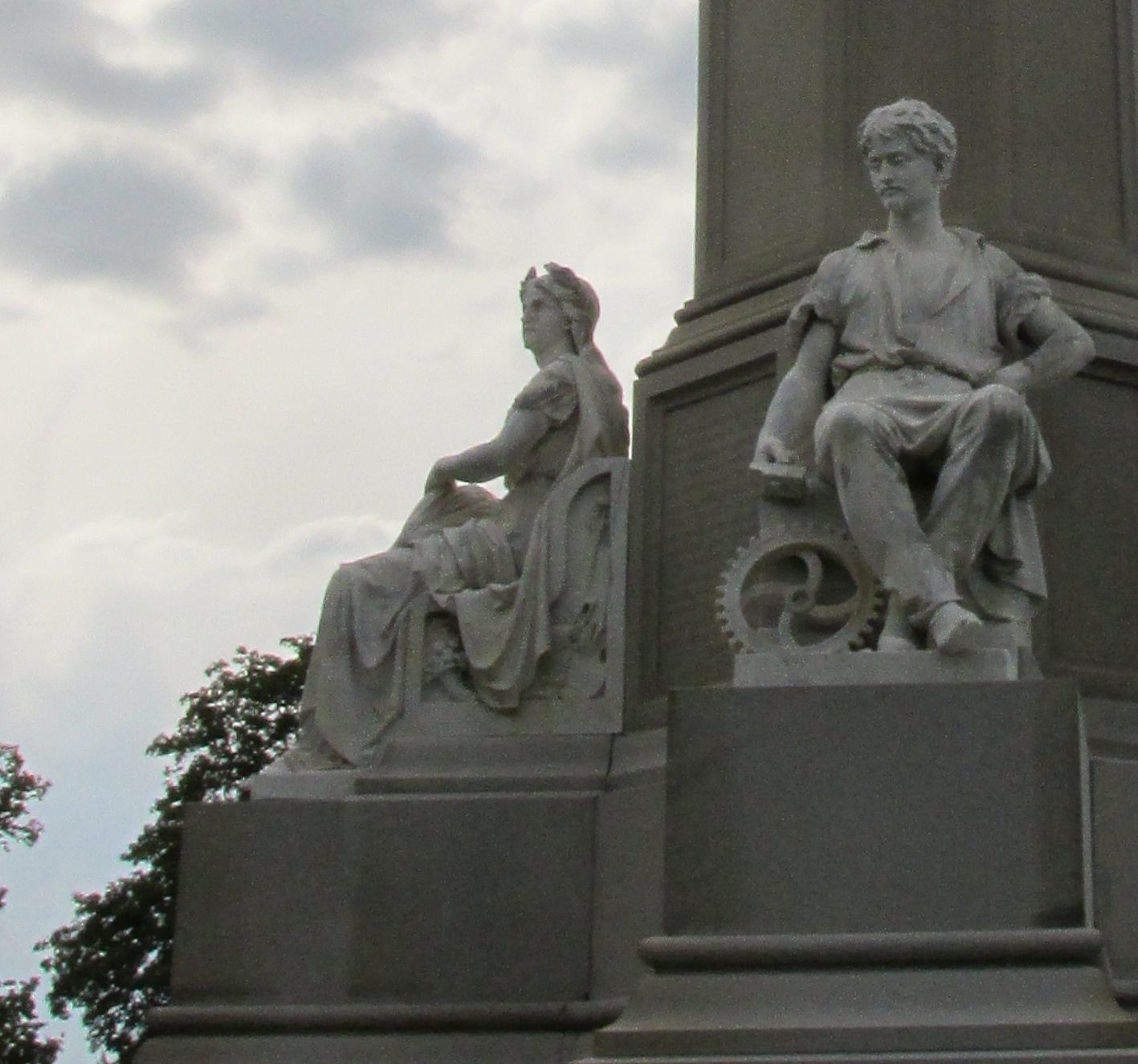
Around the 25th anniversary of the battle, in 1888, interest in commemorating the battle increased, and states began appropriating money to assist in placing memorials on the battlefield. Some states allocated smaller amounts. Indiana and Wisconsin set aside $3,000. Pennsylvania must have had deep pockets. They pitched in $400,000.

Now, in the introduction of the book I am consulting for some facts and figures said they set aside $400,000. In the section about this memorial, the same book said the memorial cost $182,000. I don’t know what happened to the rest of the money. Put your ideas in the comments.
Incidentally, this photo is from a website, Gettysburg: Stone Sentinels, as are several others that I didn’t track down in person. This monument was so large and people were all over that I couldn’t get a decent photo of it.
I did try to find some of the monuments of states that have some relationship to me. First of all, my the state of my birth, New York.

Then, my state of long-time residence, Michigan.

And finally, my adopted state of Texas.

I was surprised that Texas took so long to place a monument, but this was a result of a Civil War centennial effort to place identical monuments on the eleven battlefields where Texas troops fought. A smaller marker by a private citizens had been placed nearby in 1913.
In addition to state markers, there are memorials to generals. Of course, the Virginia State Memorial would have to be topped with General Lee.


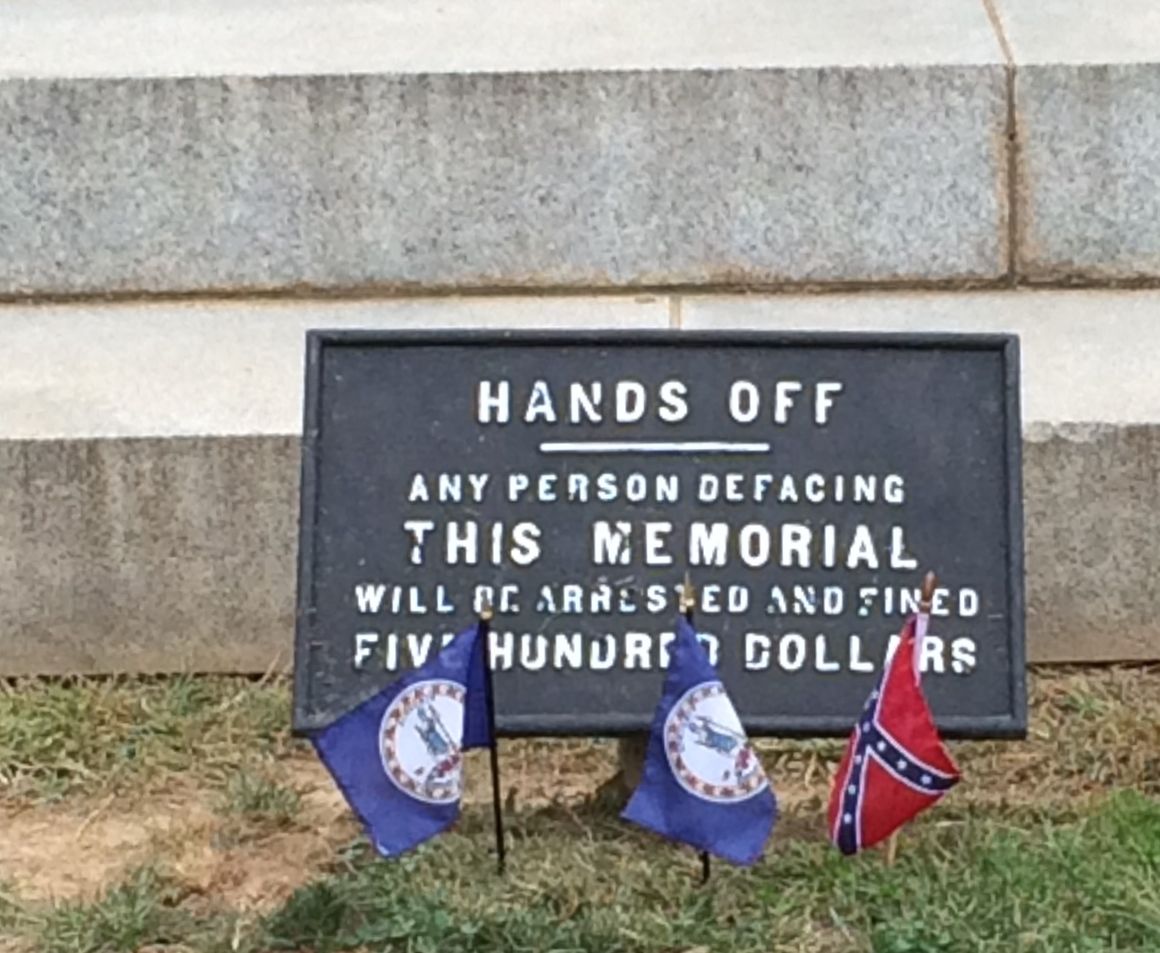
And, just in case you had any ideas of making mischief:
Confederate veterans were initially not as interested in participating in marking their participation in the battle. The first memorial was put up by the veterans of the 2nd Maryland Infantry.

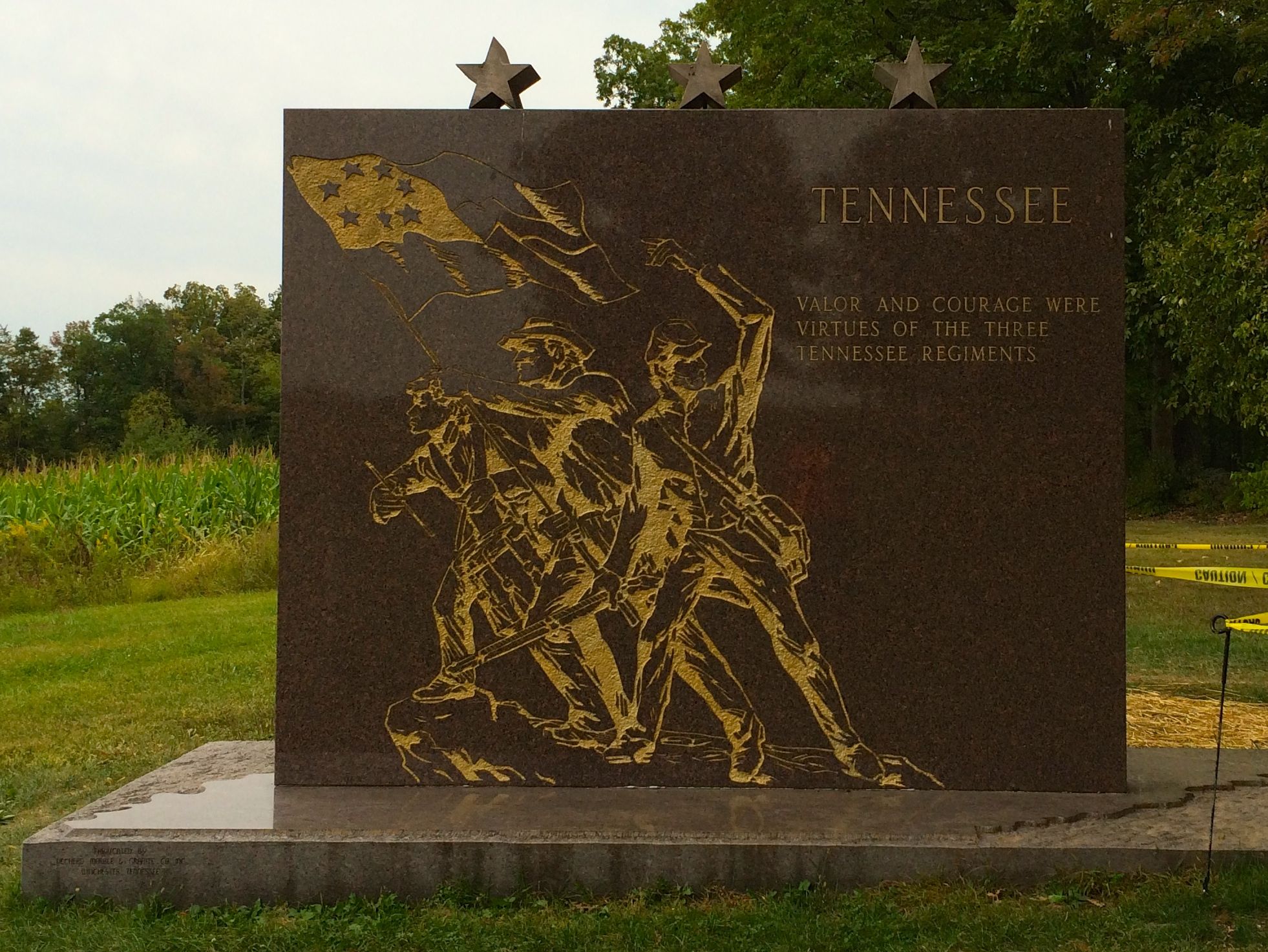
After the fiftieth anniversary of the battle in 1913, southern states became more interested in honoring their citizens who had participated in this battle. Given the age of the surviving veterans and some opposition from their former enemies, their focus was on erecting memorials that honored all the participants from the state.

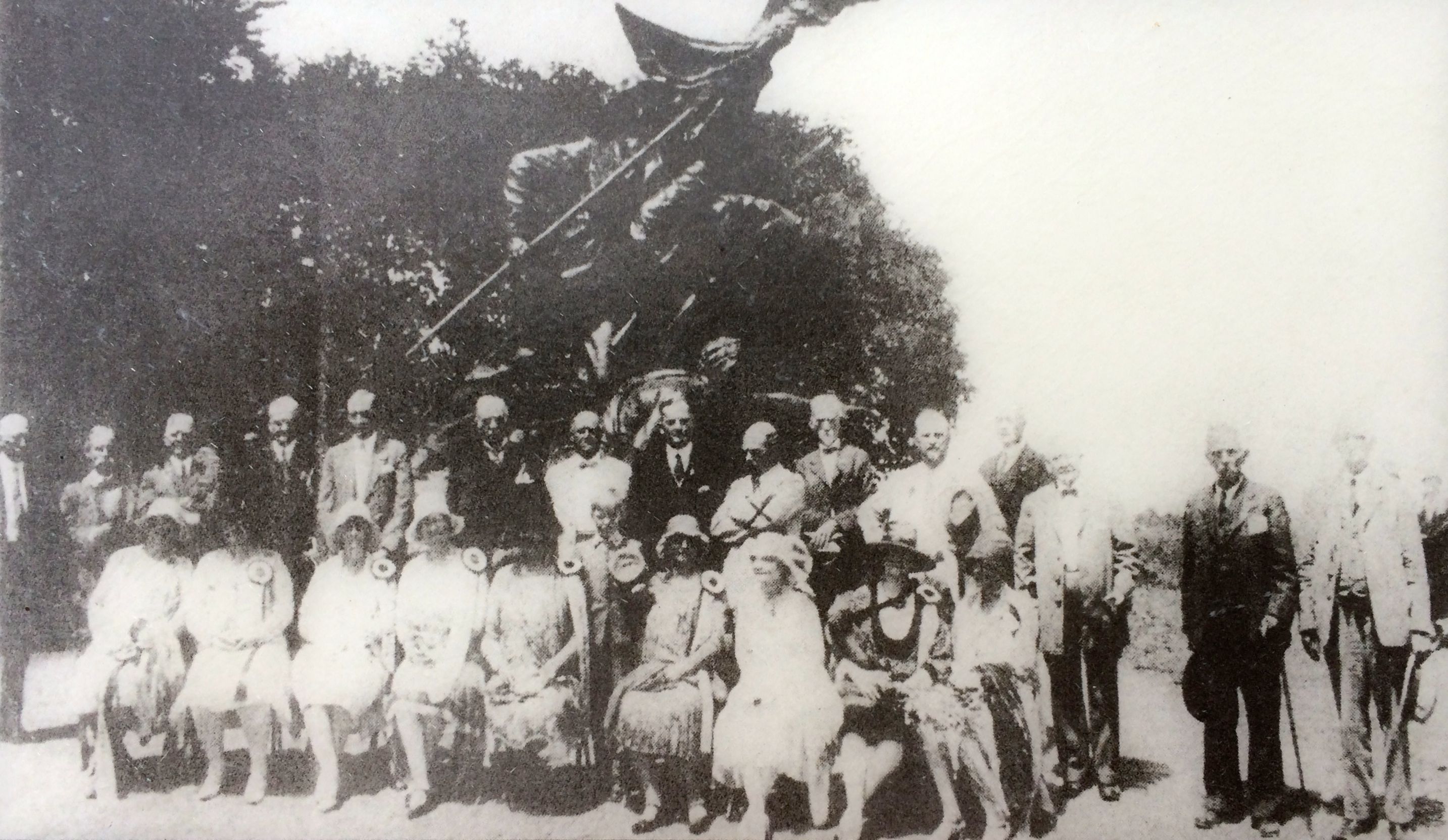
According to the interpretive sign at the memorial, Gutson Borglum, who is known for his work on Mount Rushmore, is standing at the center with his arms folded. I’m not sure which one he is, but it’s interesting to know.
Additional information on the sign said that North Carolina contributed more soldiers than any other state in the Confederacy. 14,000 participated and 6,100 were killed, wounded or missing.

Interest in commemorating the battle seems to peak every twenty five years. The Eternal Light Peace Memorial was dedicated by President Franklin Roosevelt on the seventy-fifth anniversary. It was erected near the site of the encampment held for the fiftieth anniversary.

Encampments are still going on, although they are no longer reunions of the participants. This one was taking place around the Pennsylvania State Memorial. No wonder there were so many people around it!
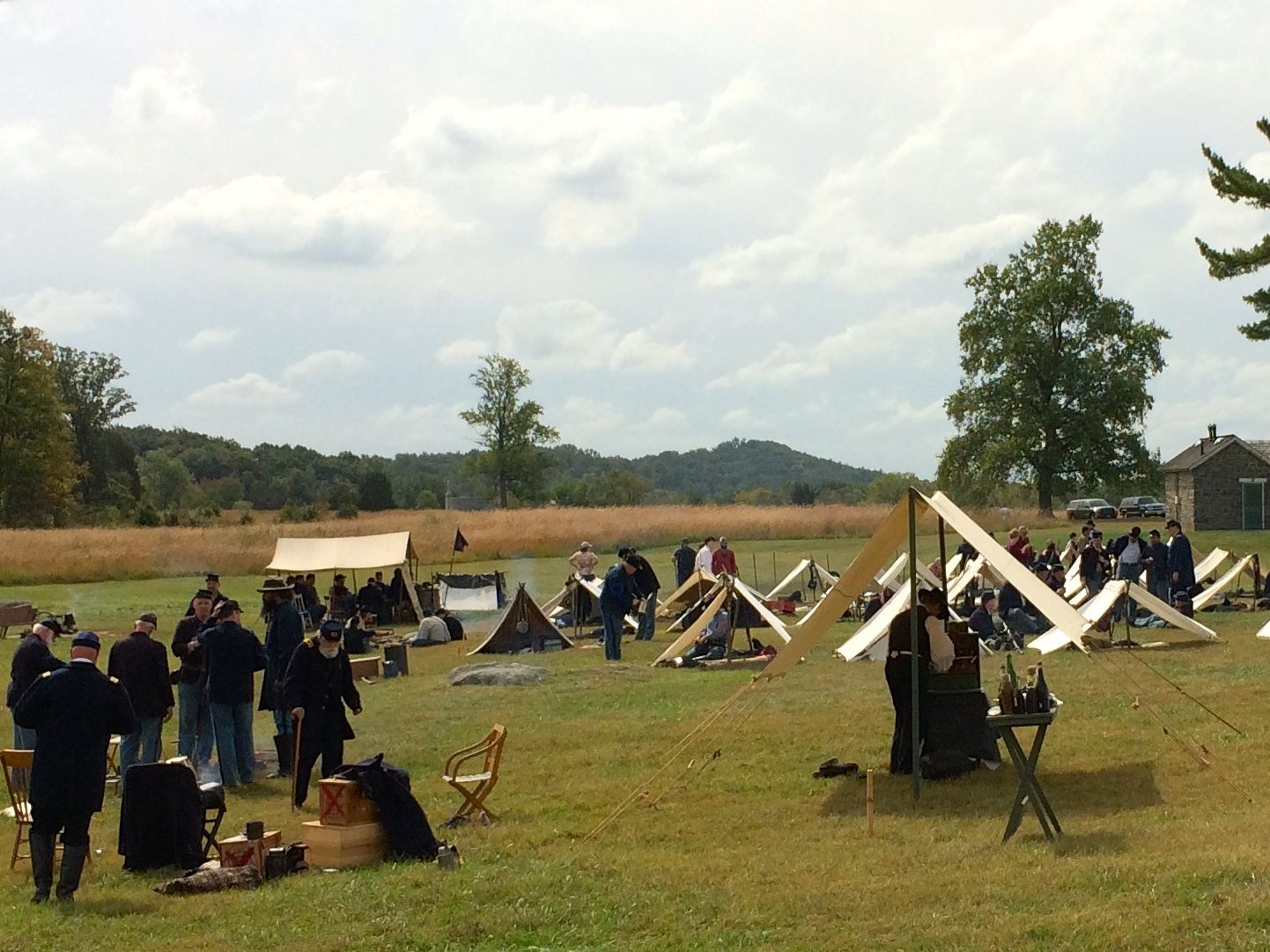
My first trip to Gettysburg was probably as a result of interest generated by the hundredth anniversary.
And, now it’s the one hundred and fifty years later. Things keep changing.
The visitor center has been really redone. Even compared with my second visit in 2001. The Cyclorama is still there, but the building is really new.

The Cyclorama is still pretty spectacular. It was painted in 1884 by French artist Paul Philippoteaux. He was a premier cyclorama painter, which was a popular form of entertainment – until motion pictures hit the scene. There used to be many of these that would tour the country, and most major citied had cylindrical or hexagonal buildings for displaying them.
This painting had been in Boston, but the theater that housed it went bankrupt at a fortuitous time. A Gettysburg business man bought it, repaired it an had it installing Gettysburg in 1913, in time for the fiftieth anniversary of the battle.
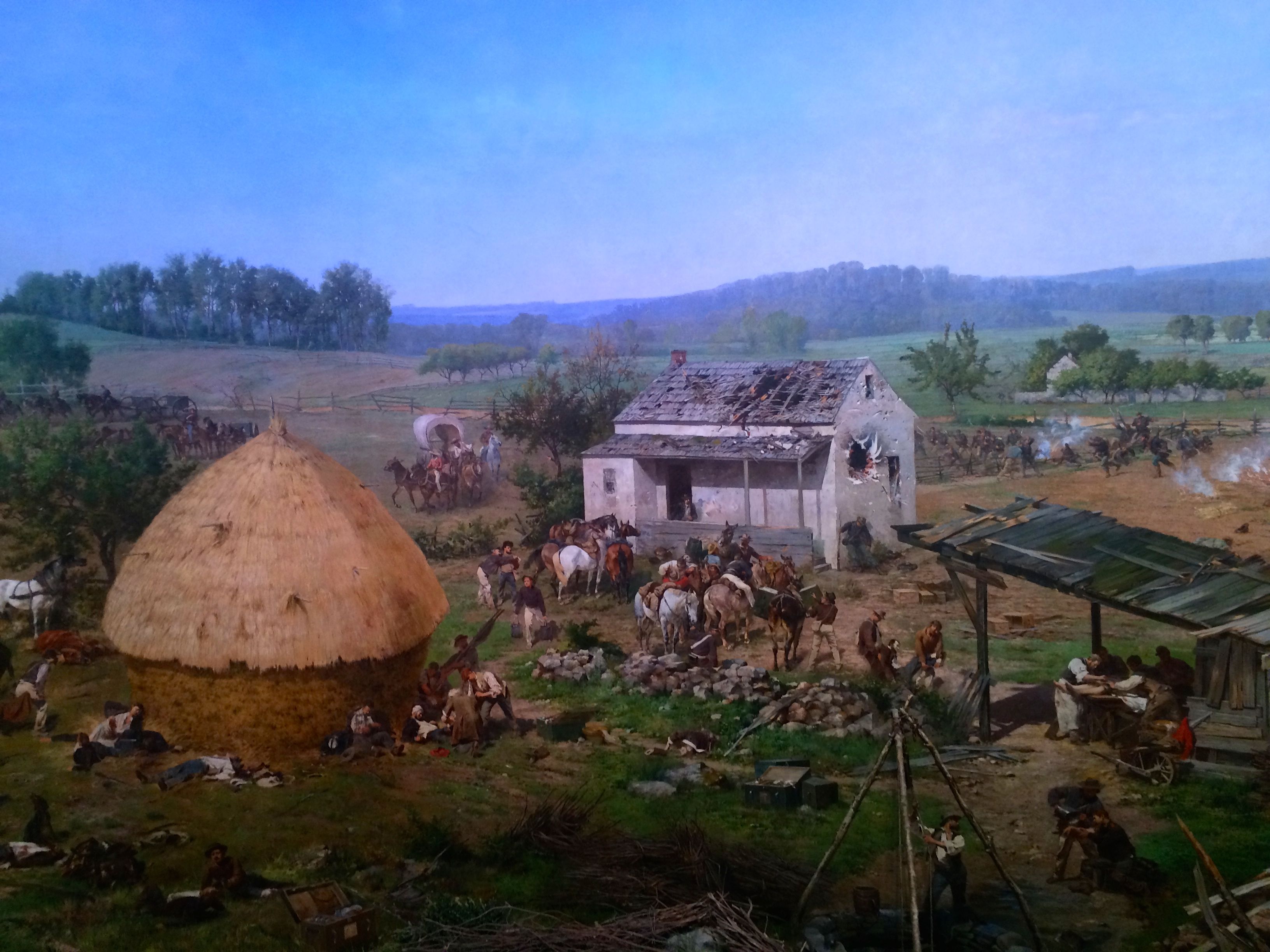


It is 377 feet long, 42 feet high and weighs 12.5 tons.It is 377 feet long, 42 feet high and weighs 12.5 tons.
The National Parks Service bought the cyclorama in the 1940s, and they have been working hard to keep it in good conditions ever since. The last restoration cost $13,000,000.
Outside the building, is a statue of Abraham Lincoln. It is convenient for a souvenir portrait.

But, now I have one more item to put on my “to do” list. I might just have to swing back through Gettysburg next year.
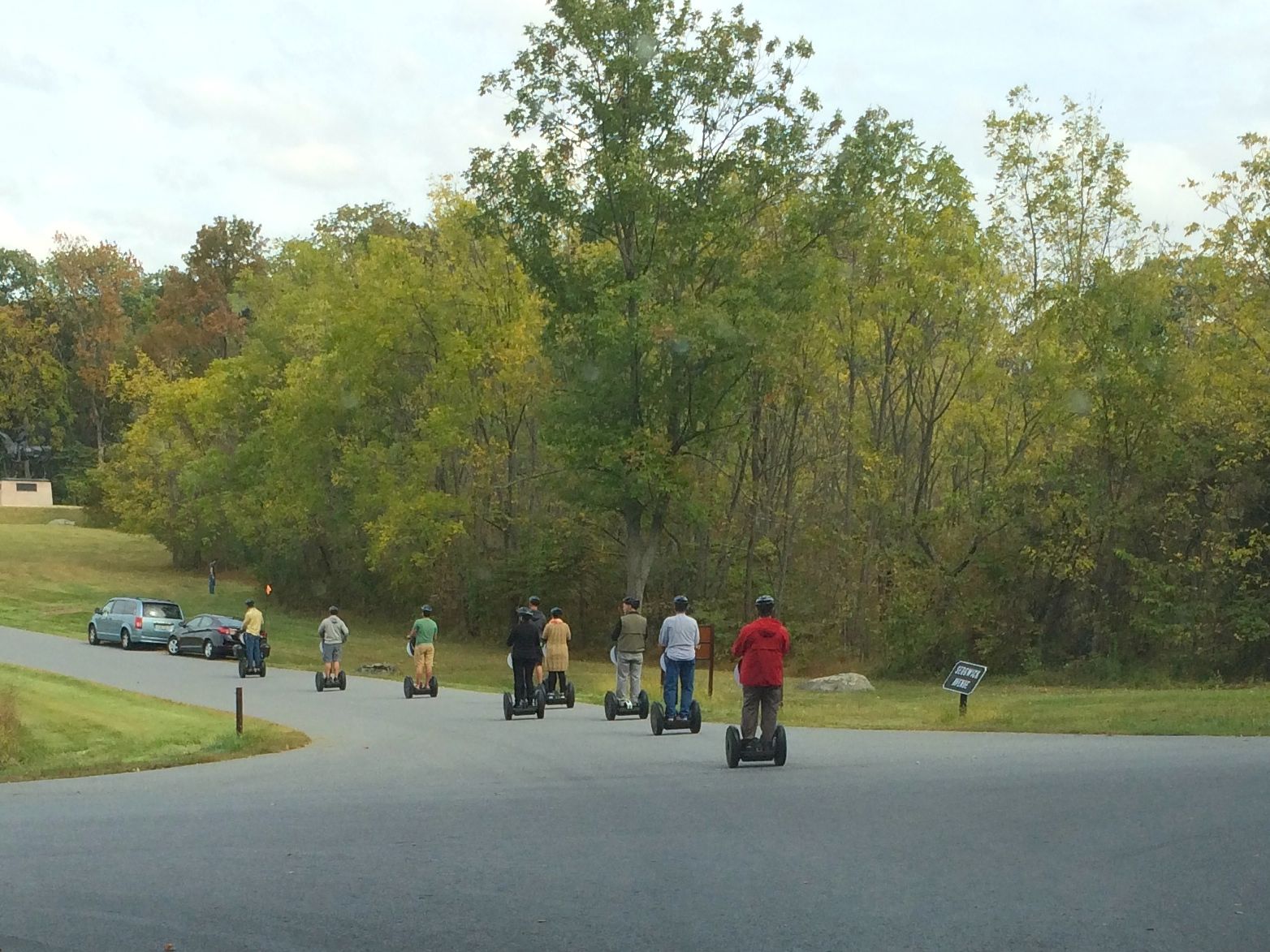
I want to take a Segway tour!