The next day dawned gloomy and overcast, but I headed out to explore Custer State Park and Wind Cave National Park.
People had raved about Custer State Park – mostly about the experience of camping there and the wildlife that you could see. What really captivated me was that they were having a free admission day. As a former teacher and a retiree, free is one of my favorite words.
In spite of it being a rather bleak day, but I set out to see what I could see.
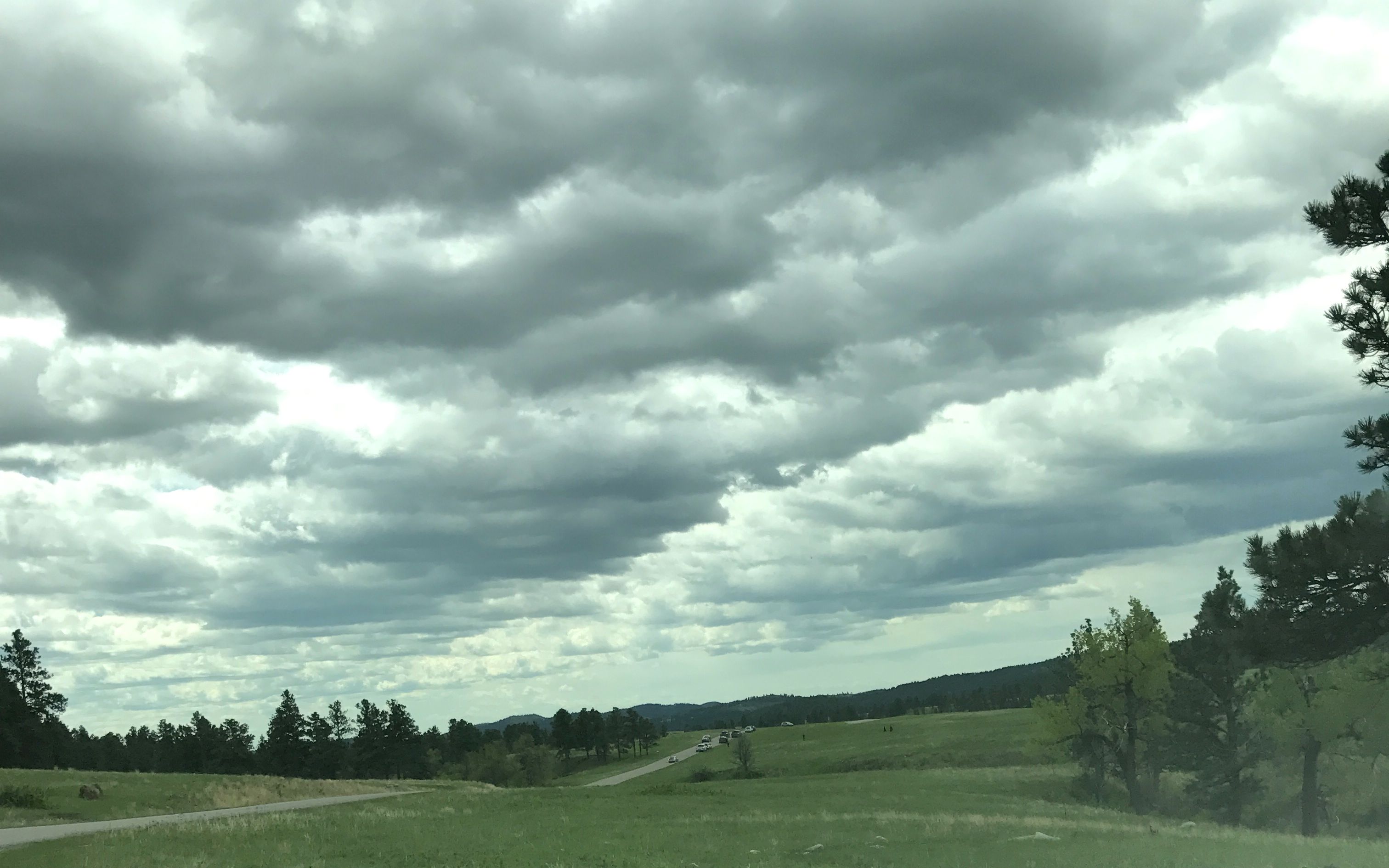
Driving along, looking at the prairie and the rather sparse trees seemed to be the thing to do. My eyes were peeled for buffalo, though.
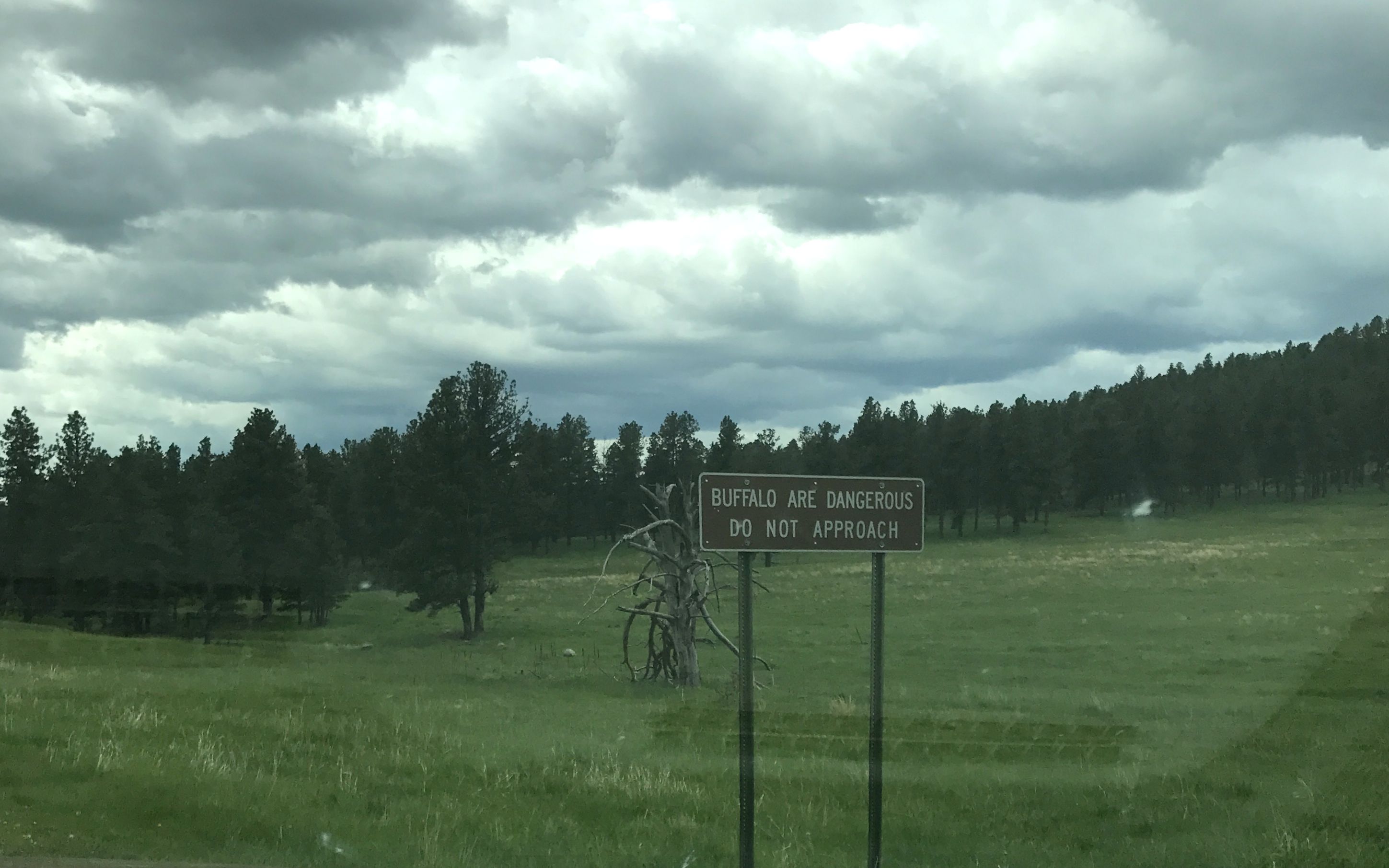
I thought this was an appropriate warning.
And why should you stay away from buffalo? Well, they stand nearly six feet tall at the shoulder and weigh nearly a ton.
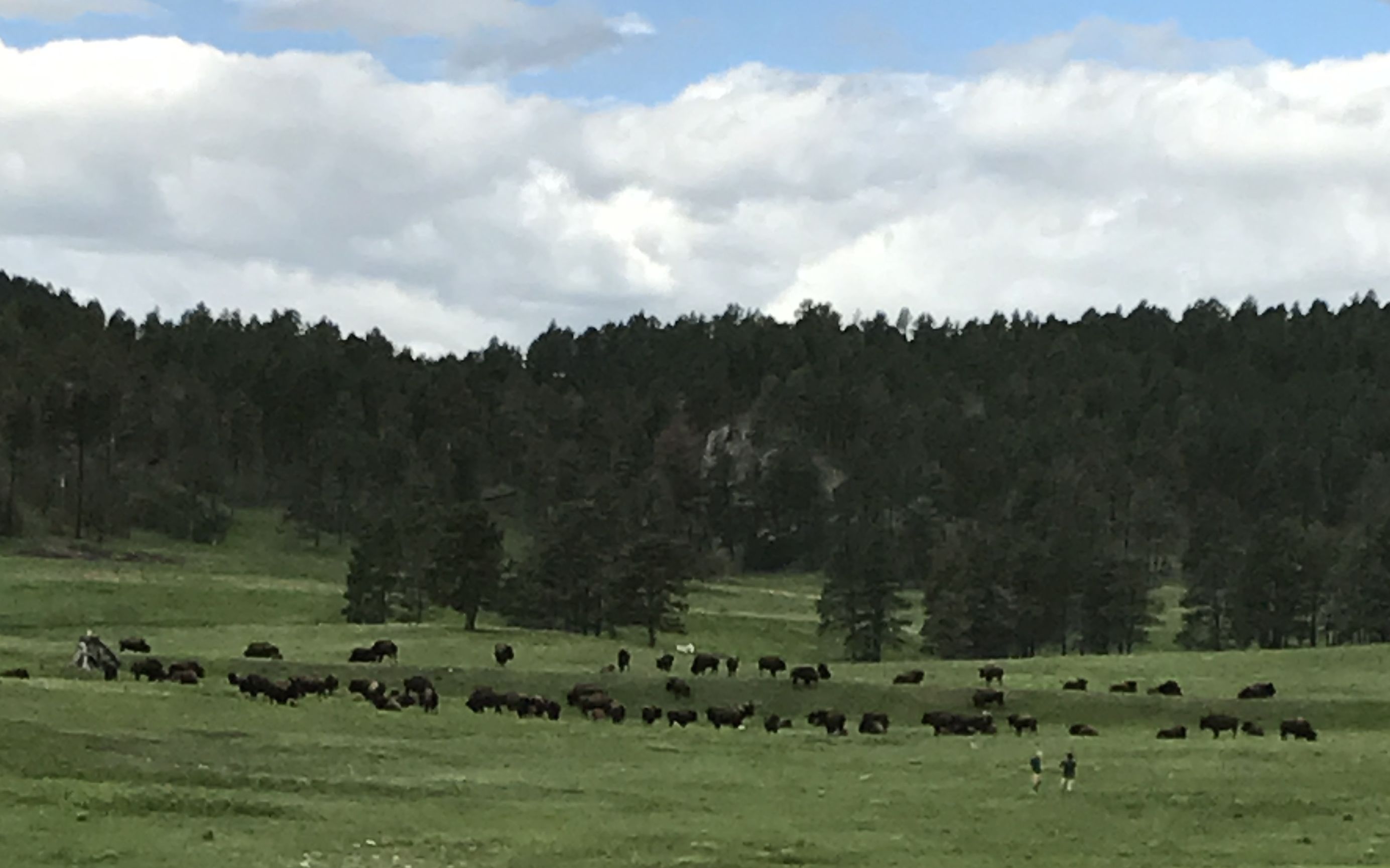
I finally came upon a herd of buffalo. If you look in the lower right quadrant of the photo, you might notice that there are two fellows who didn’t heed the warning on the sign. When the ranger came up he used his bullhorn to tell them to come away from the herd. They did head back to their cars, but I think they avoided the ranger.
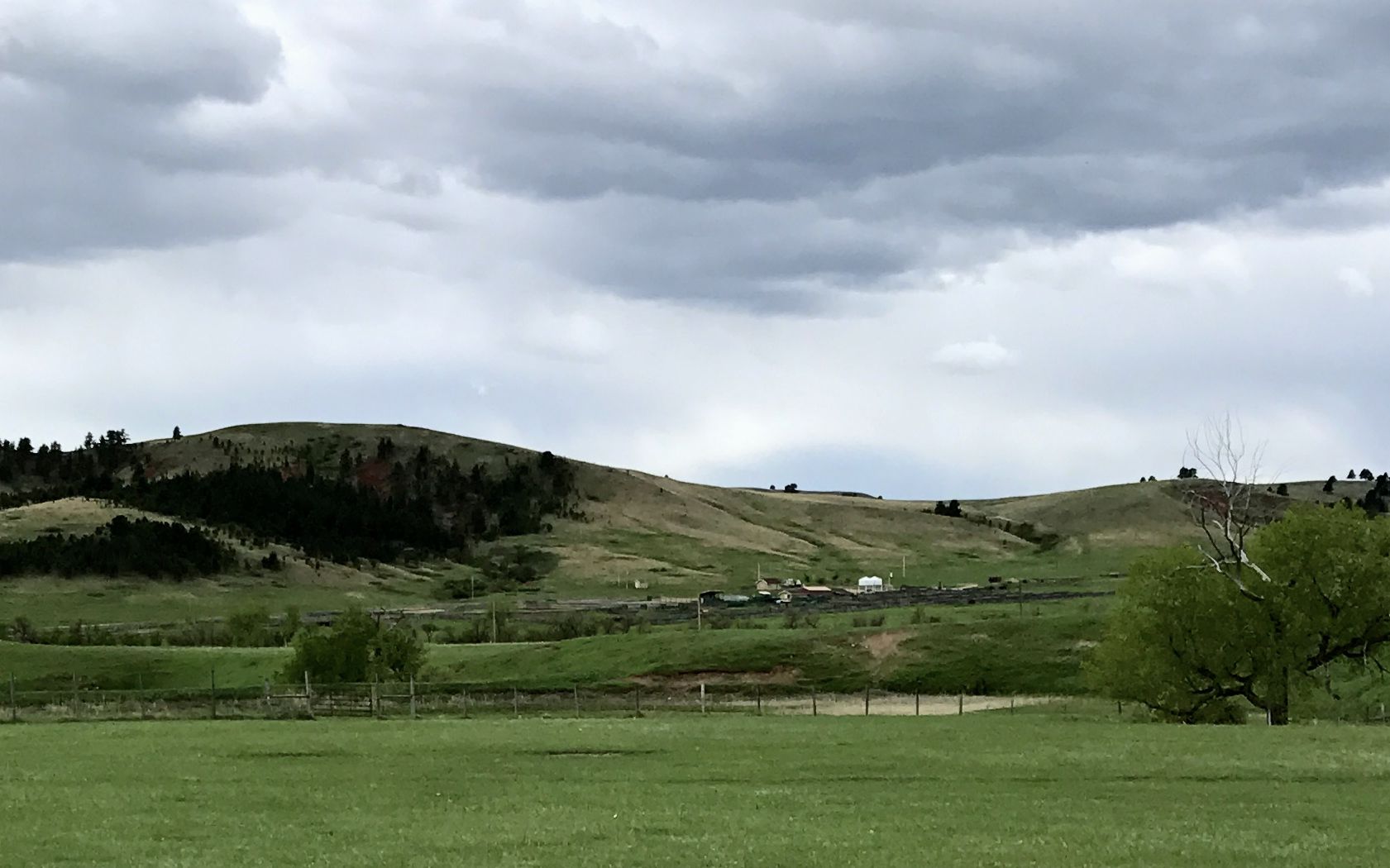
These are the corrals that are used mainly in the fall when the annual buffalo roundup and auction are held.
The park herd averages about 1,450 animals after the calves are born. During the round up in October, the herd is bright into the corrals, calves are branded and females are vaccinated. Approximately 500 animals are sorted out for sale and then tested to make sure that they meet state livestock regulations.
The buffalo that will remain in the park are released. Those that are going to be sold remain in the corrals until the auction on the third Saturday of November. Buyers come from all over the United States and Canada to take part in the sale. They buy the buffalo for breeding stock or for slaughter.
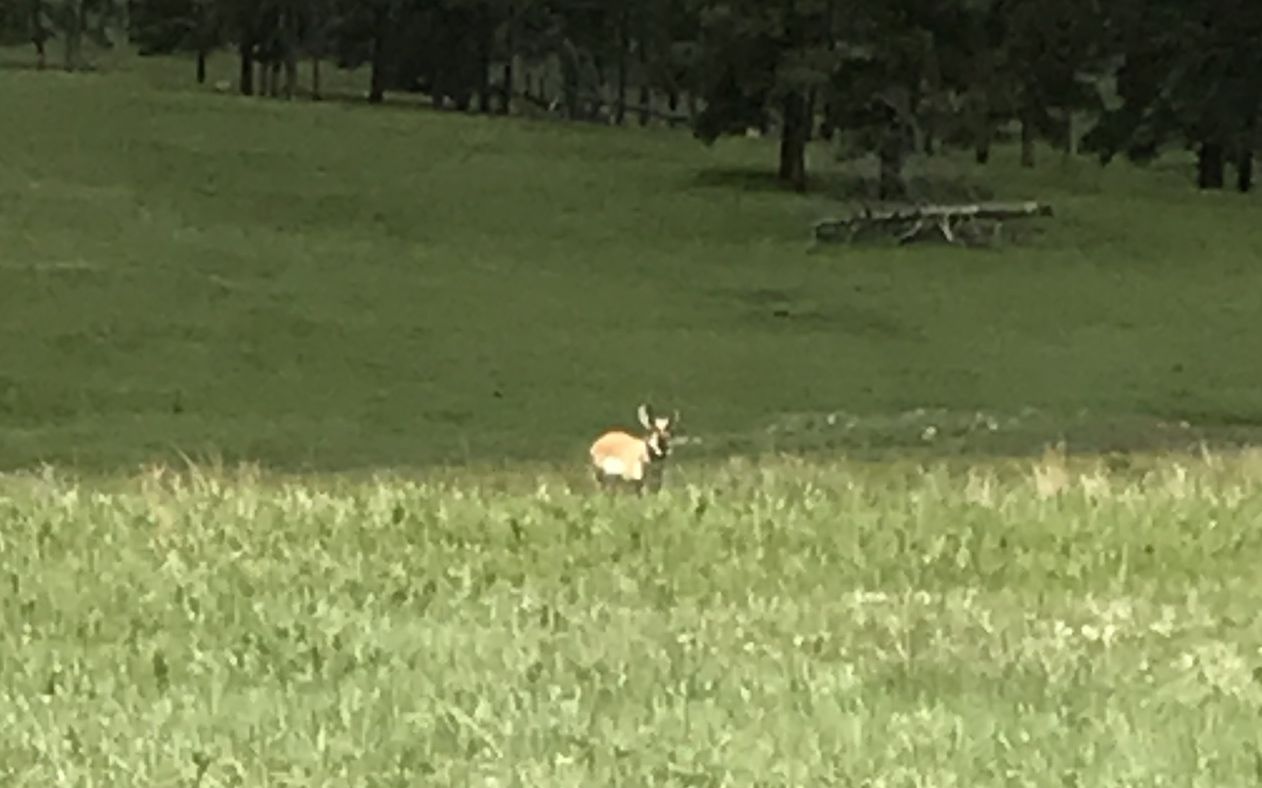
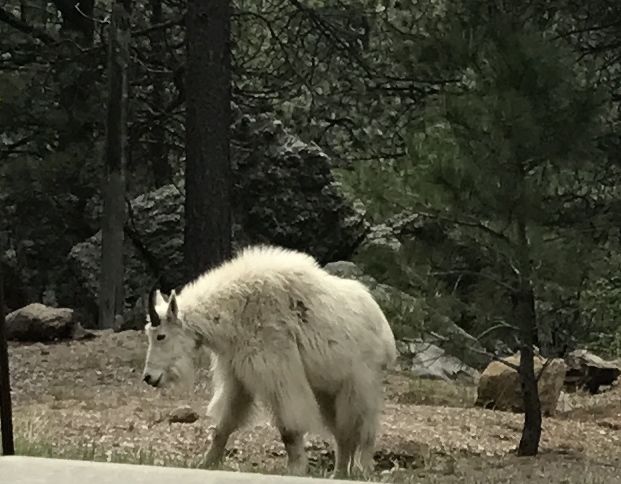
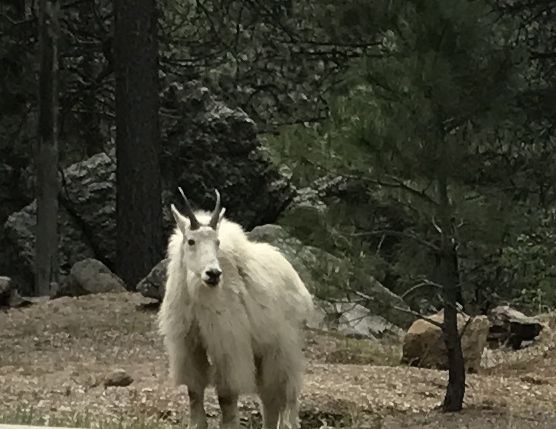
Quite frankly, the animals in Custer State Park are quite savvy and they keep their distance from the road.
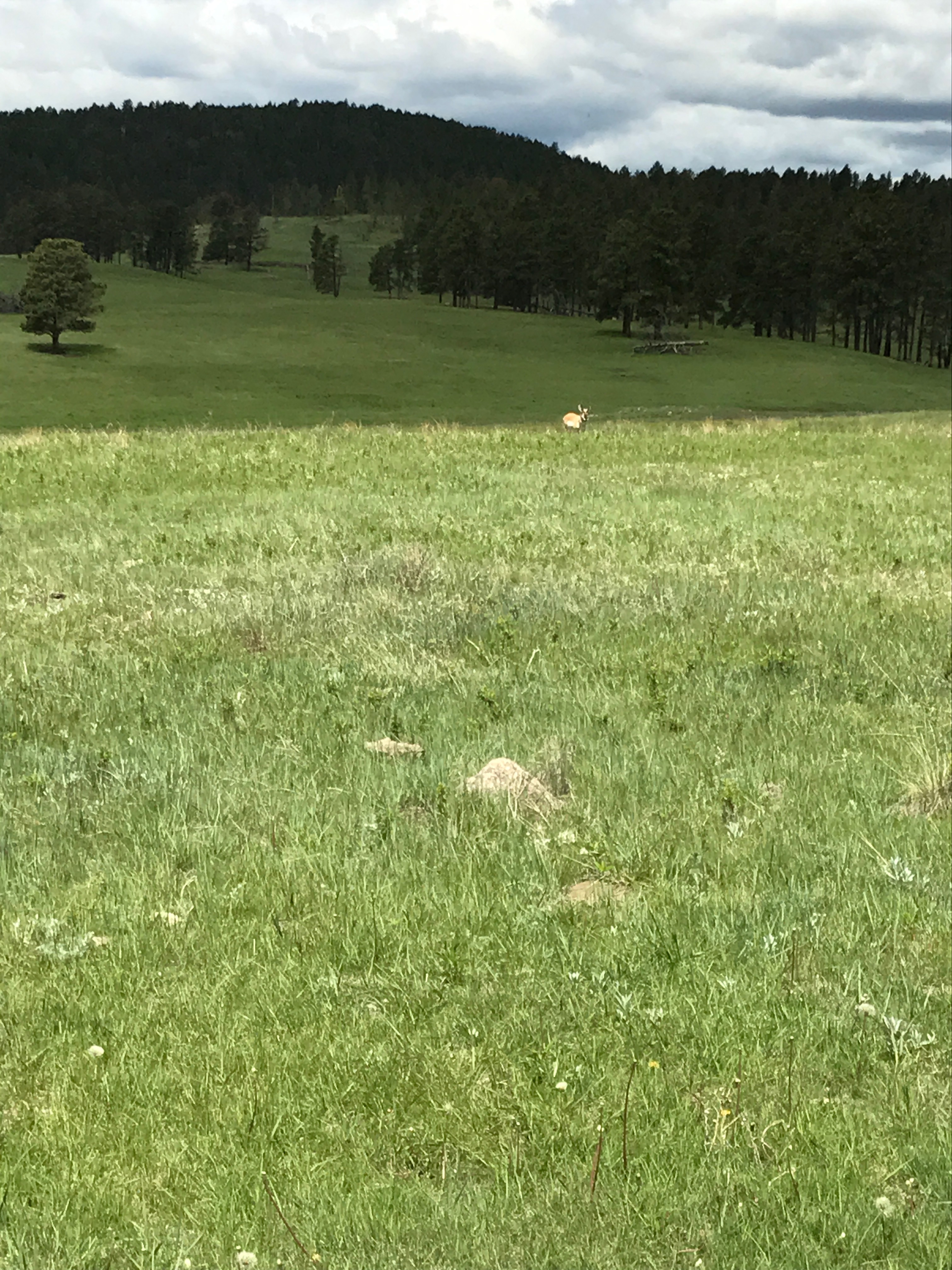
You can tell this animal – perhaps an antelope – stayed far back because I had to enlarge the photo to the point of distortion to be able to make it out.
One breed of animal that doesn’t keep its distance is the wild burro.

They come right up to the cars and take whatever is offered. In fact, they stick their muzzles right into the cars.
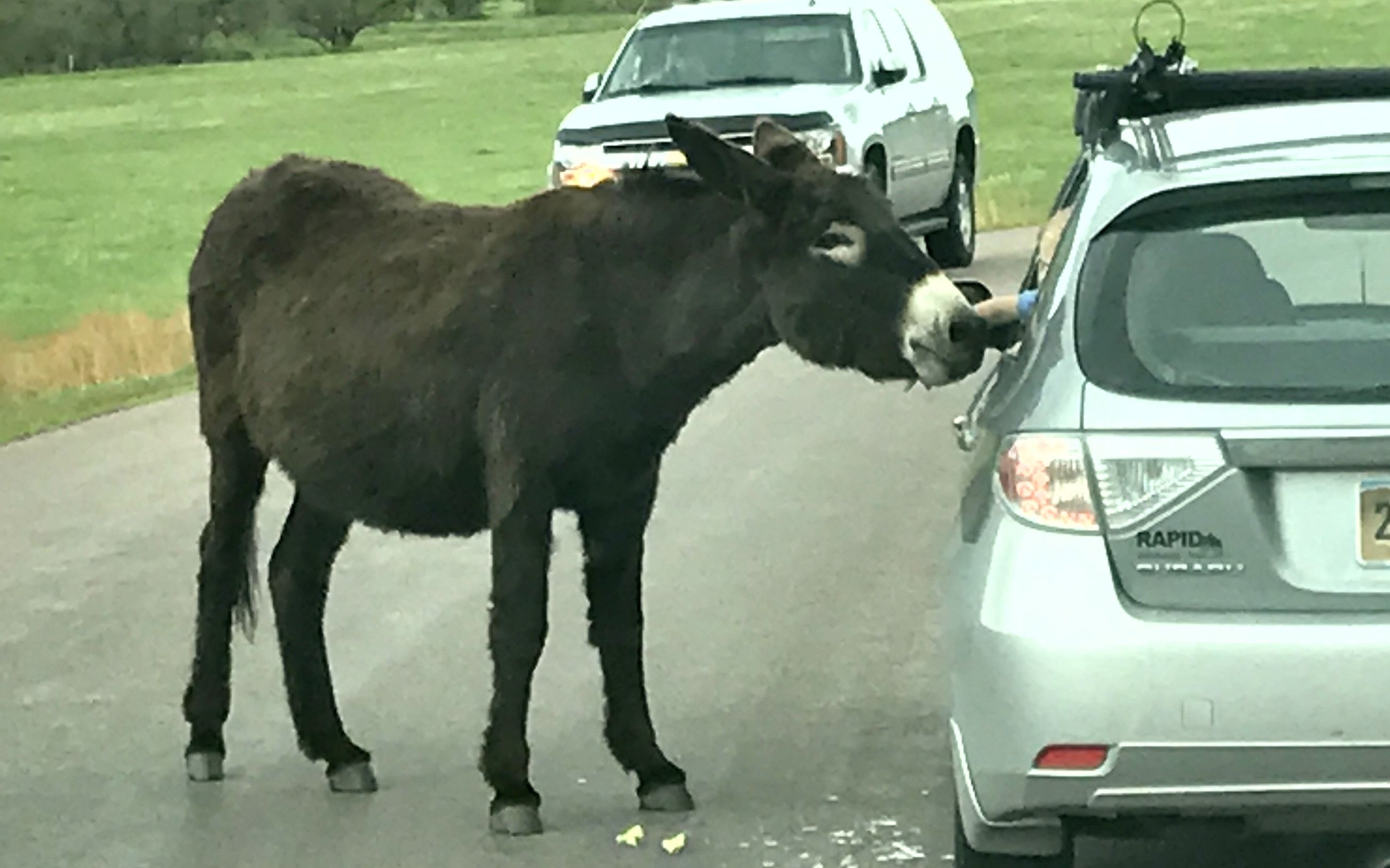
I watched in fascination as the car in front of me fed the burros bread. I couldn’t believe that they let their daughter stick her hands out of the car and touch the burro. They do have teeth, after all.
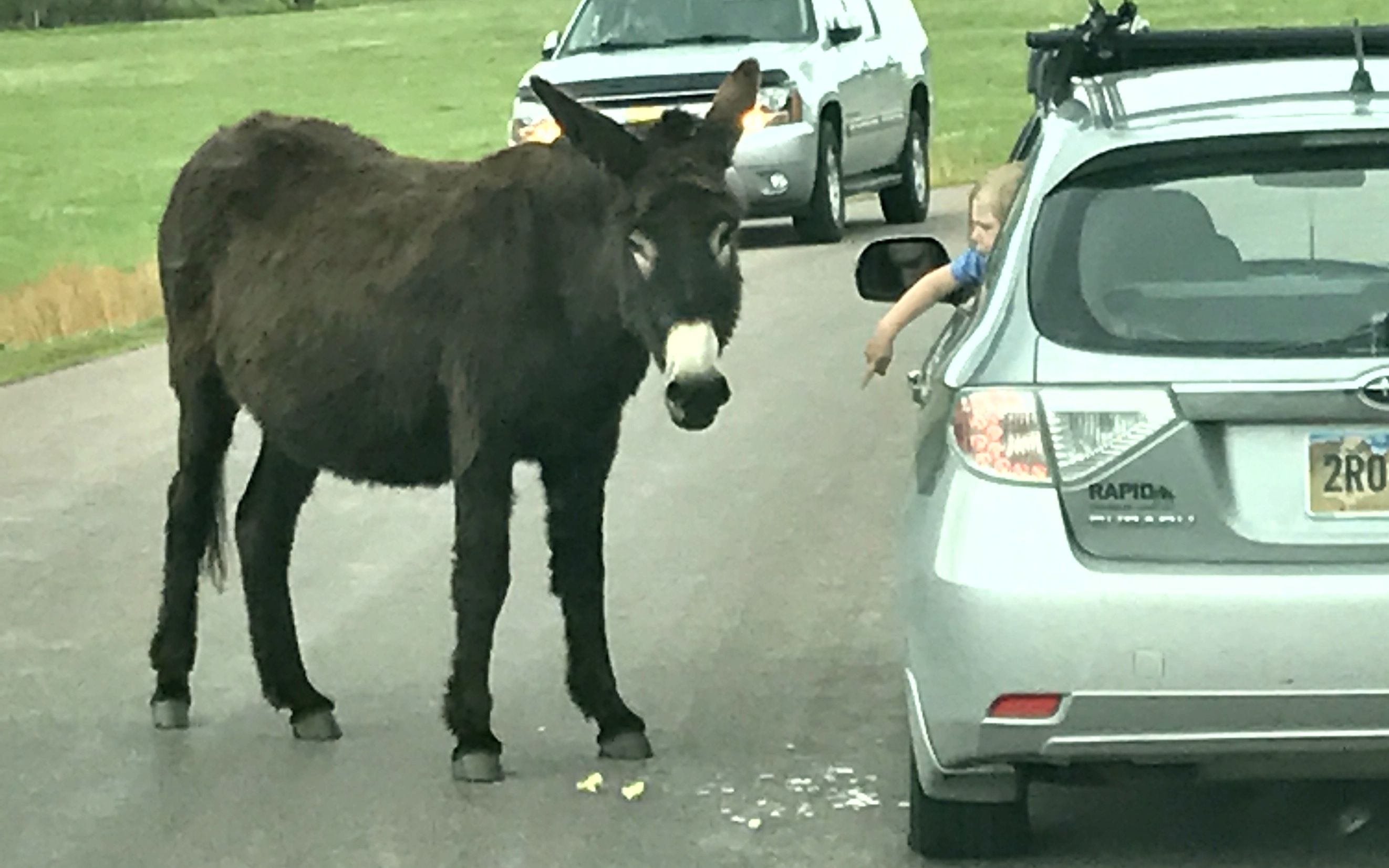
The burro had eaten all the bread they had and then the girl told it to eat the bread that had dropped on the road.
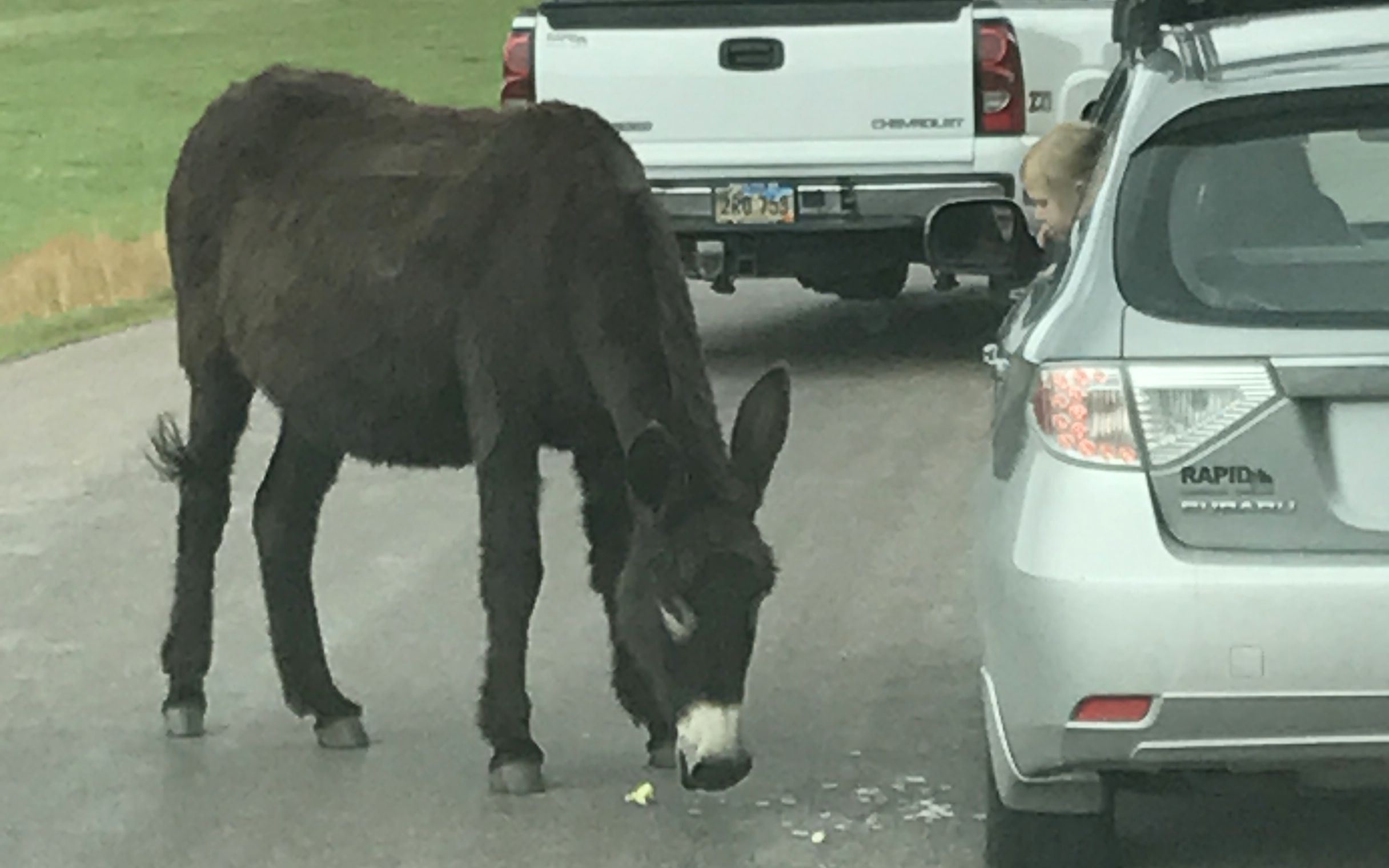
Then the girl watched as the it ate all the bread that had fallen on the road.
The burros came to visit me, too.
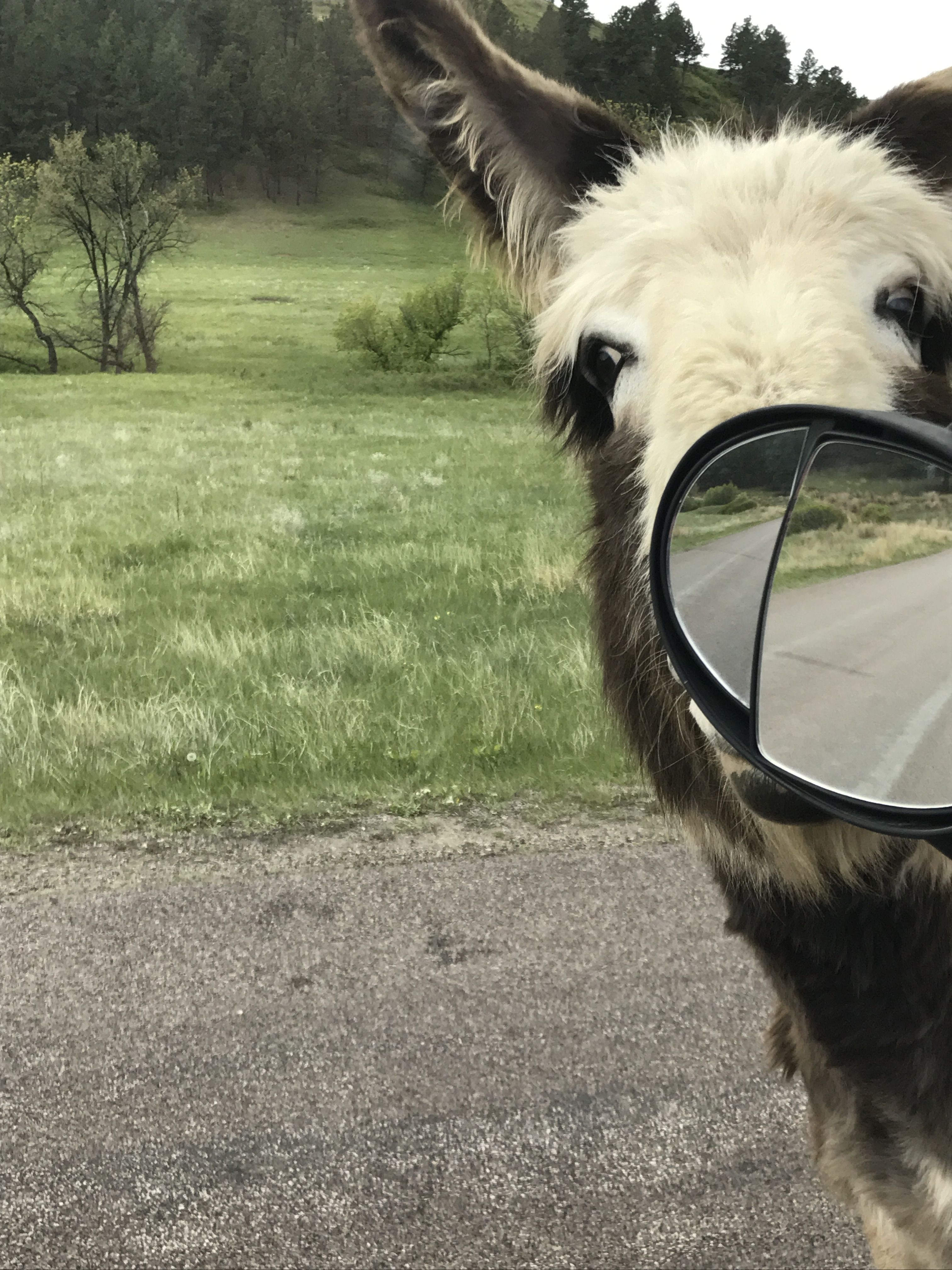
He was hoping for a handout.
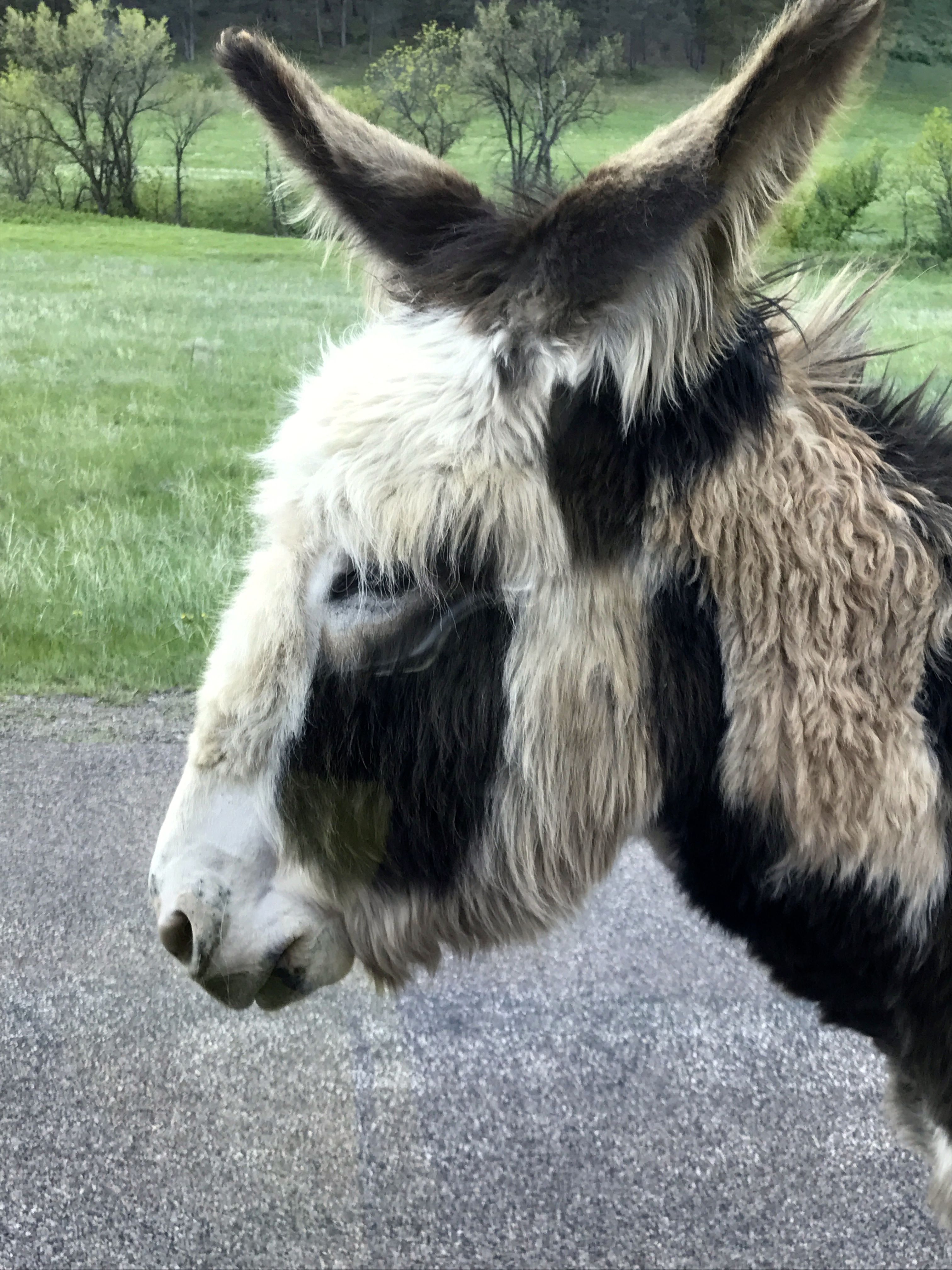
When none was forthcoming, he moved on.
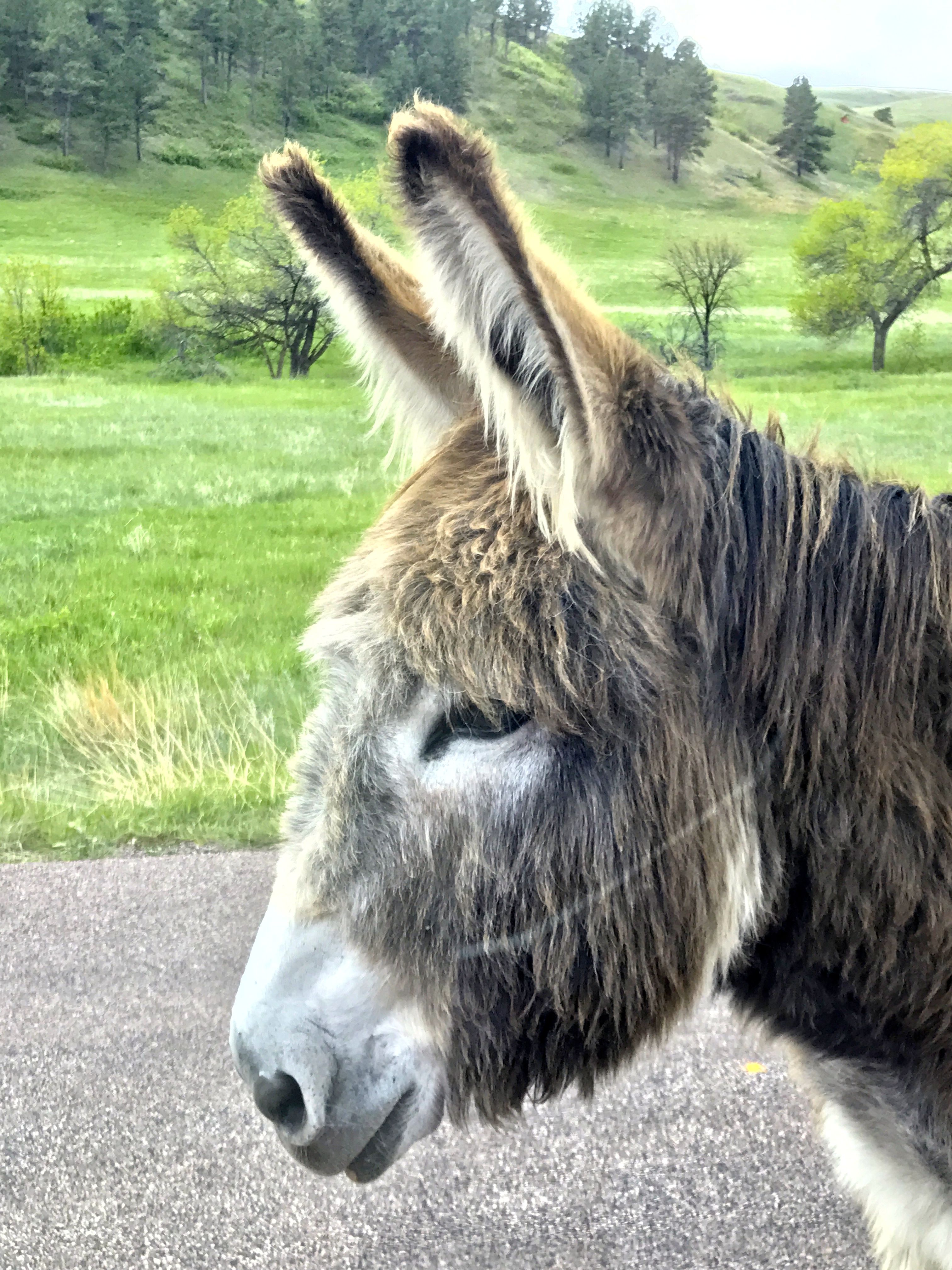
The one behind him didn’t even stop. He just gave me a side eye as he passed by.
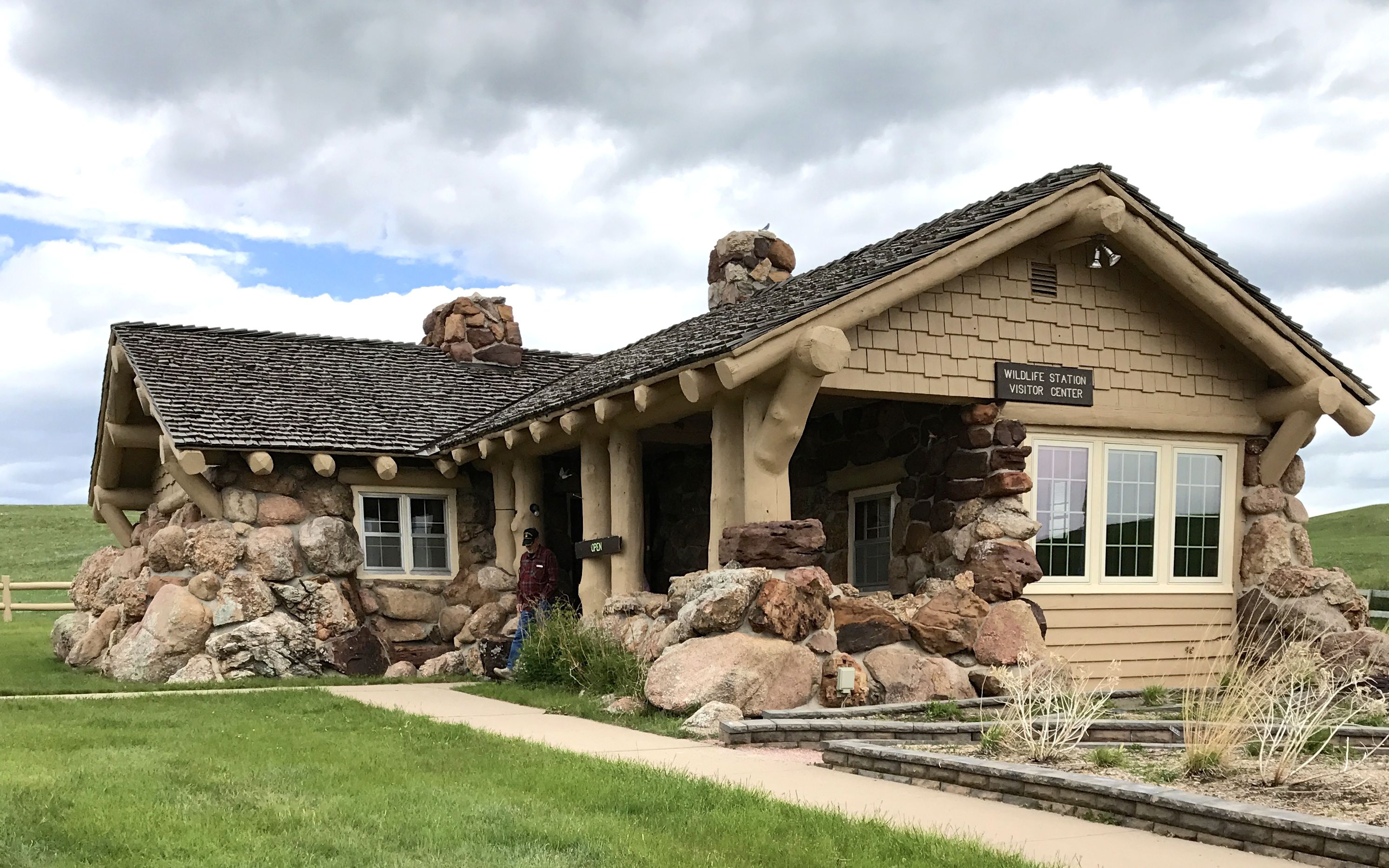
After a bit more driving, I came across this building. It’s labeled “Wildlife Station Visitor Center.” It was built by the Civilian Conservation Corps – the CCC – during the Great Depression. They used materials that were available locally.
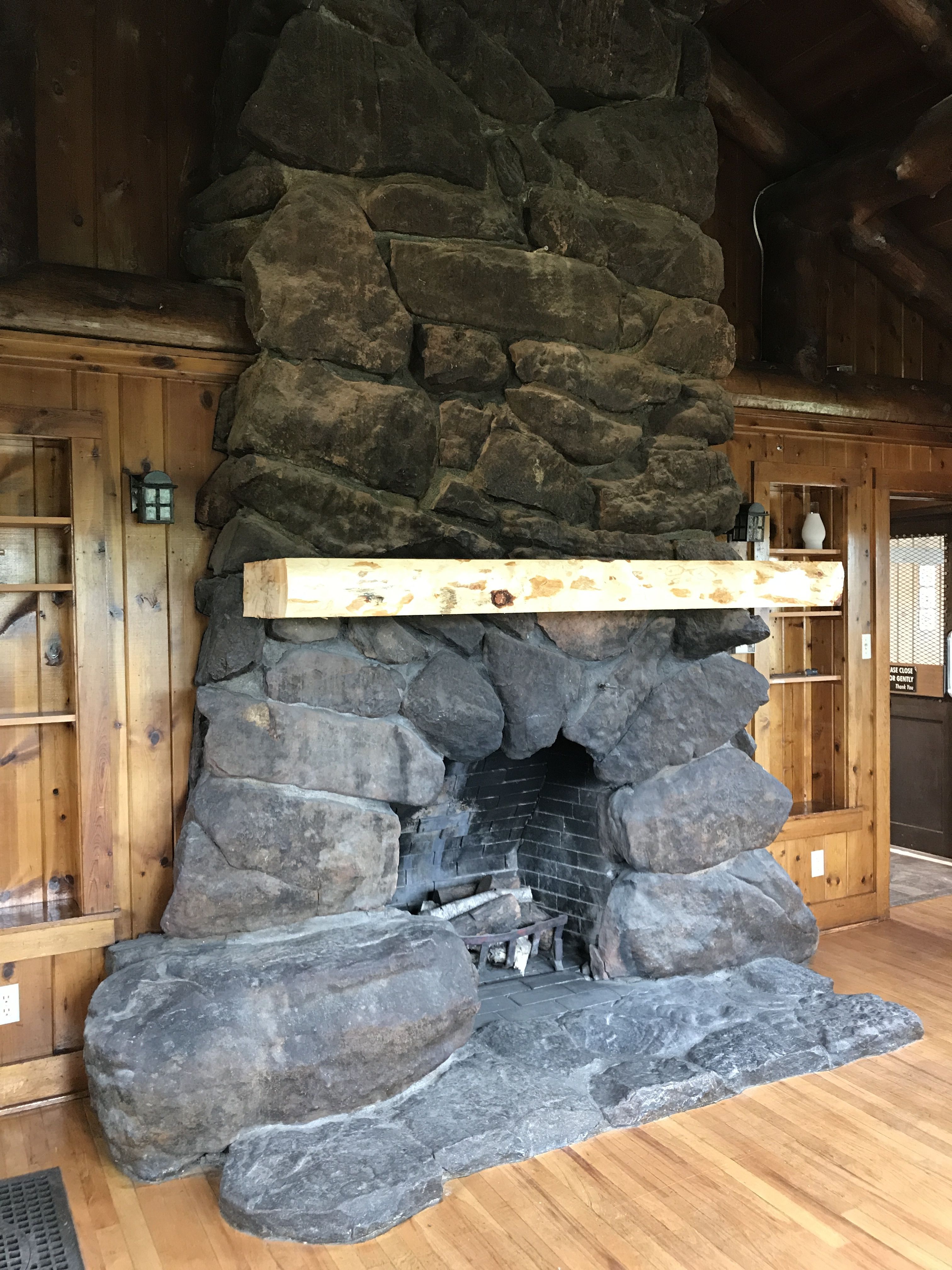
This fireplace is quite something, with its irregular boulders. If I remember correctly, this building had just undergone some renovation. A building like this is worth taking care of.
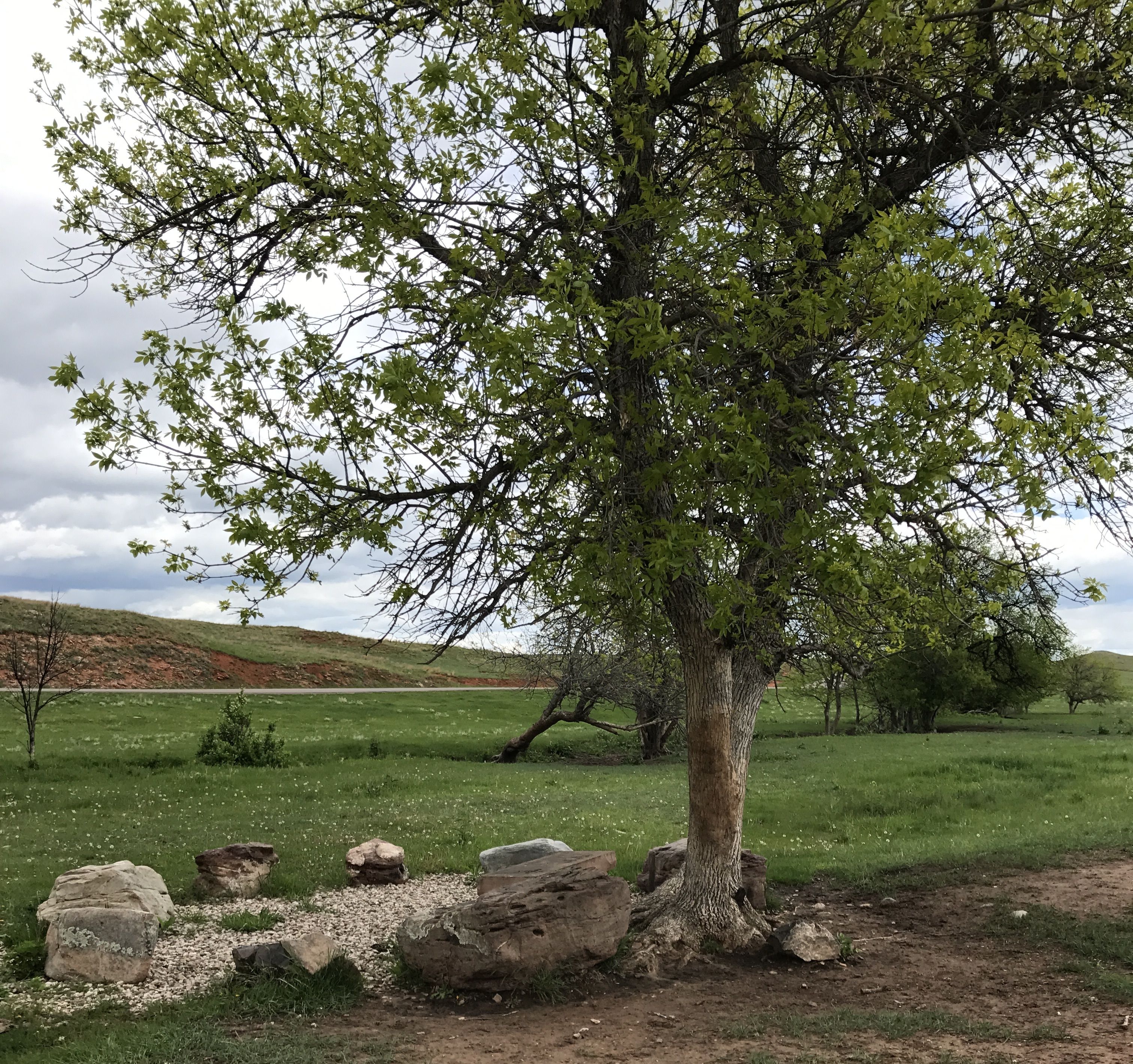
There was an interesting parking area that was dedication to the rutting season, which takes place between July and mid-September. I was too early in the year to watch the buffalo bulls fighting over breeding rights. Remember that my visit took place in May.
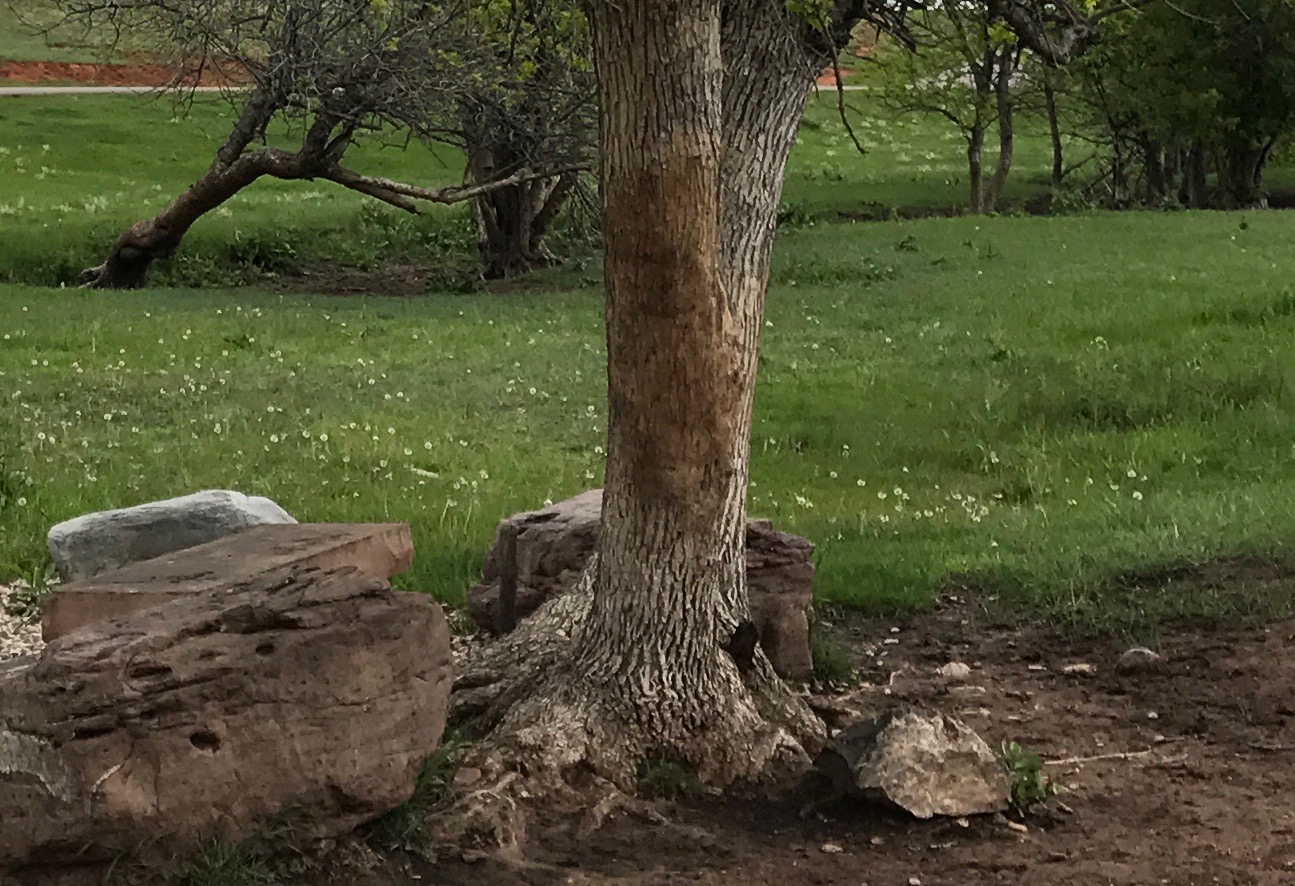
According to the information there, the bulls show dominance by making loud bellows or butting heads together. They display aggression by rubbing their horns against trees. Their hair sticks to the peeled bark and sap. In some cases the trees die from the damage. This tree looks healthy, but you can see where the bulls have rubbed against it.
There was also some information about the buffalo on the nickel.
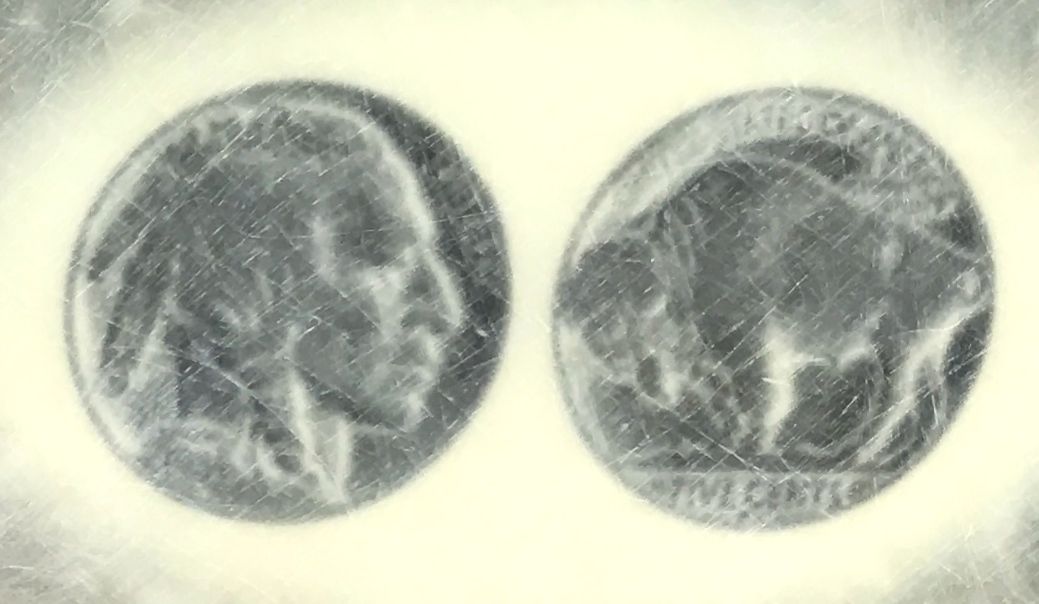
For many years between 1913 and 1938, the United States coined the buffalo nickel. The designer, James Earle Fraser, who was born in Minnesota, stated, “I found no motif within the boundaries of the United States so distinctive as the American Buffalo.”
Ironically, Fraser used a buffalo from the Bronx Zoo as his model.
I have a warm spot in my heart for these nickels. When I was a little girl, my father would take us out on little adventures. (When you are young, everything is an adventure.) One place we would stop is a little store that we would call a convenience store these days – or maybe a party store. Well, several times when we stopped there, Dad found these nickels in the parking lot and he gave them to me.
For my father’s 80th birthday, I bought him a 1928 buffalo nickel, which was the year he was born. I told him the story, and he was quite touched.
Back to our regularly scheduled tourism.
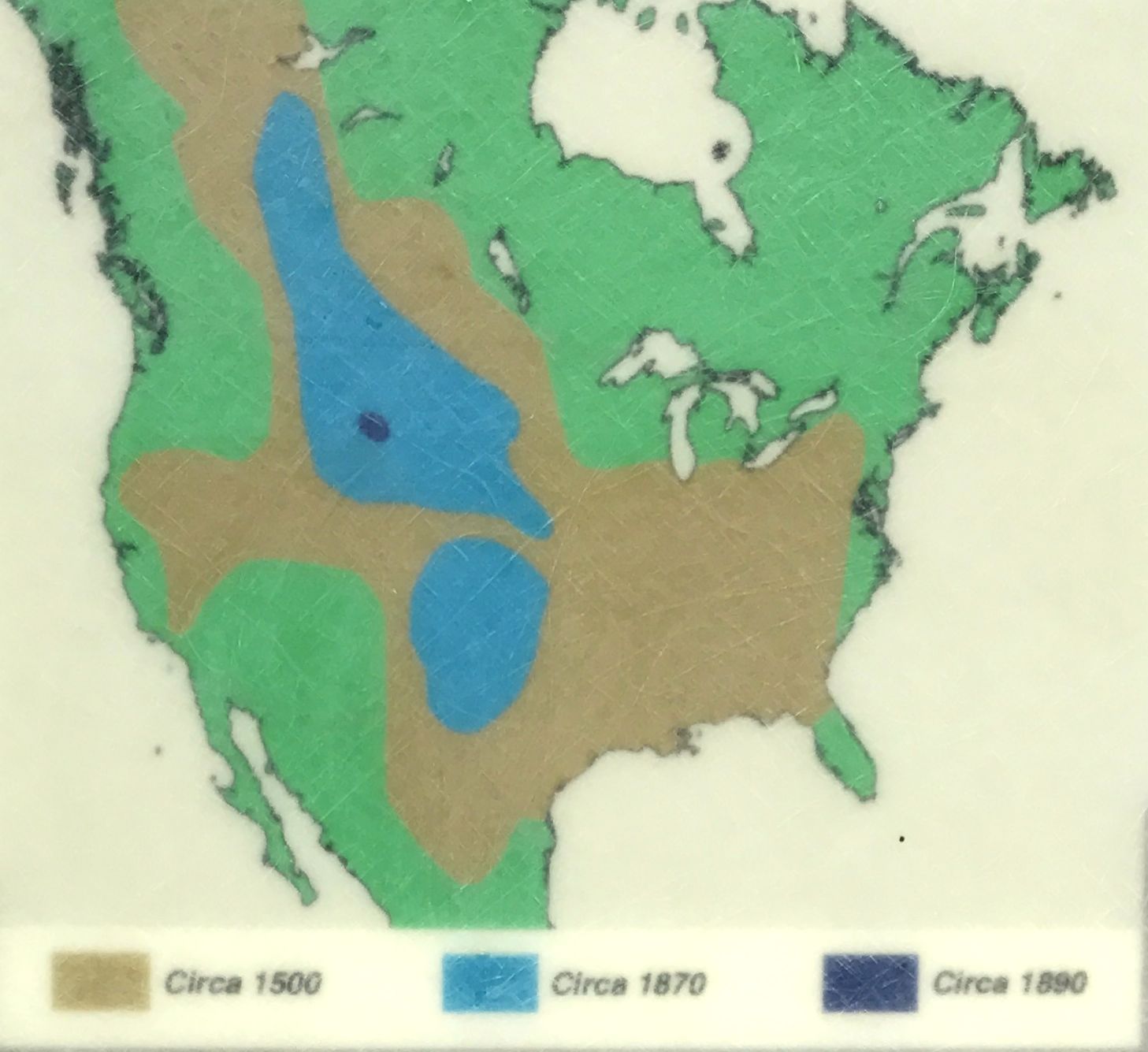
This map documents the shrinking range of the buffalo. The areas in bright green had none, so don’t worry about the fact that bright green isn’t represented in the key.
Amazing what we can do when we set our minds to it. (But not “amazing” in a good way.)
With that, I headed to Wind Cave National Park.

Oddly enough, the buffalo were up close and easy to see in that park. 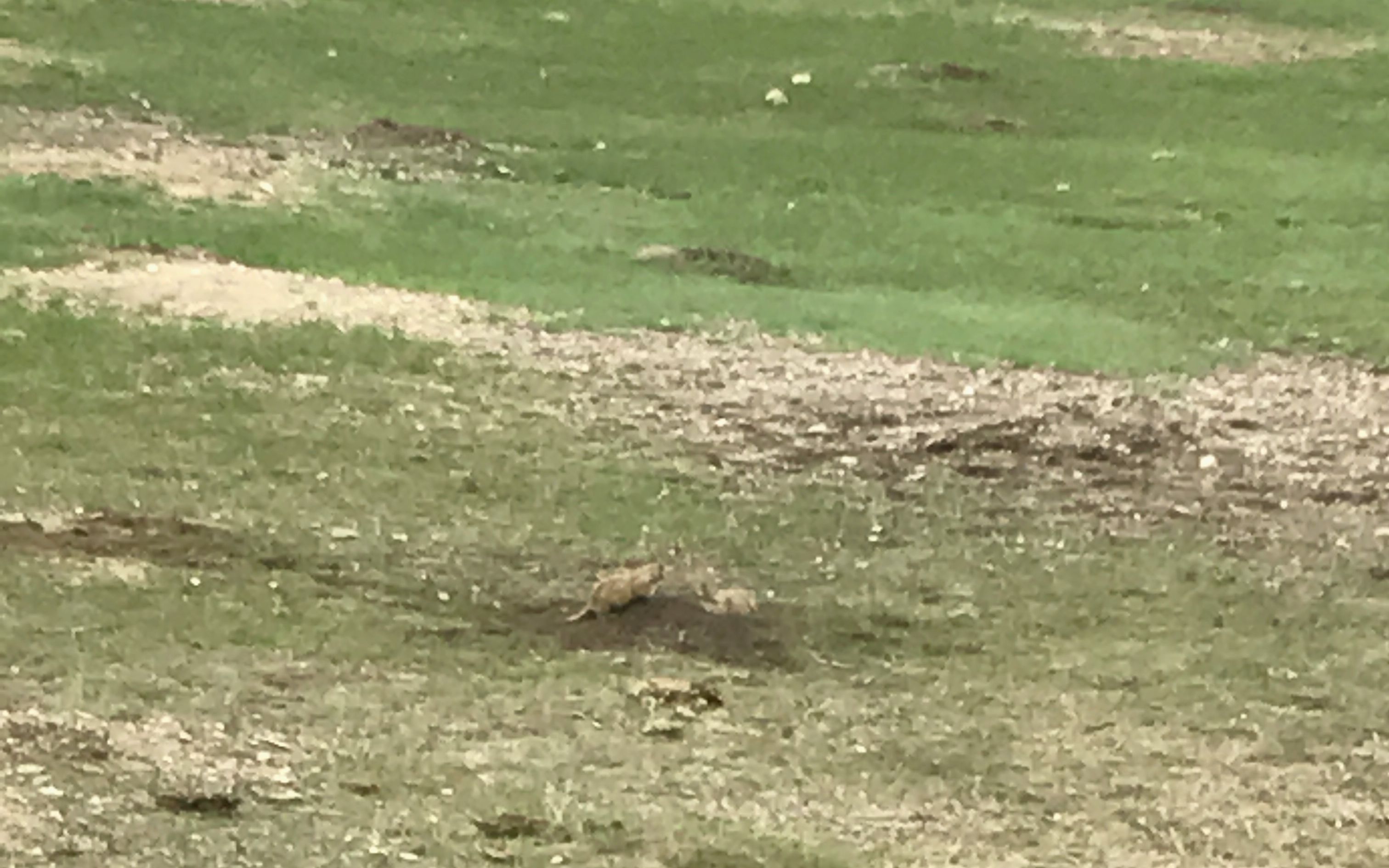
So were the prairie dog towns. If you look a little below the center of the photo, you can see a couple of them. They are fun to watch, but kind of hard to photograph with an iPhone.
I signed up for the tour and Ranger Justin lead us over to the original entrance to the cave.
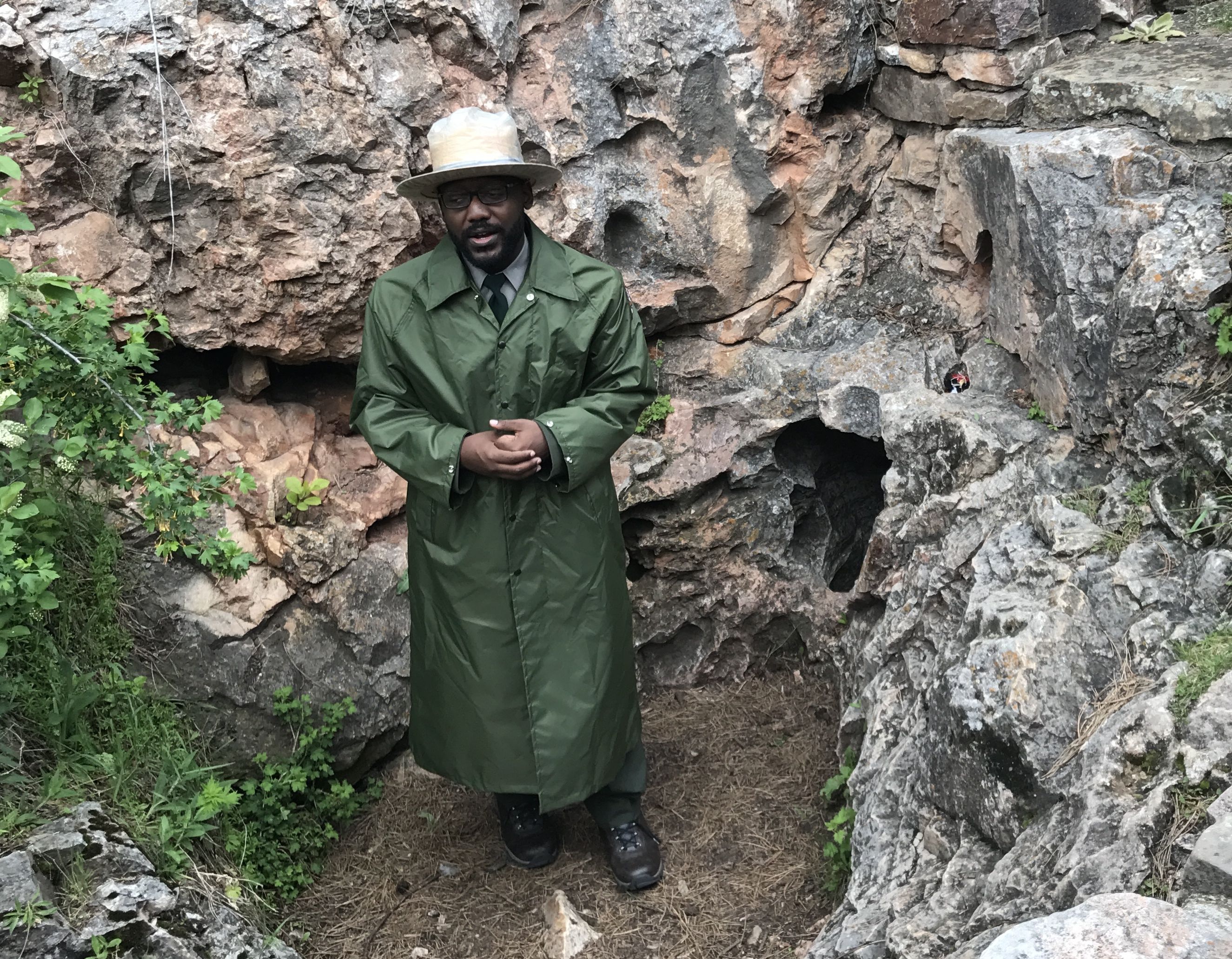
One of the interesting features of the caves found in this park is that they are said to “breathe.” When the air pressure is higher outside the cave that inside, air flows into the cave, raising the cave’s air pressure to match the outside pressure. When the air pressure inside the cave is higher than the outside press, the air flows out of the cave.
Justin demonstrated this by holding a light piece of cloth in front of the opening and I could see it moving as the cave exhaled.
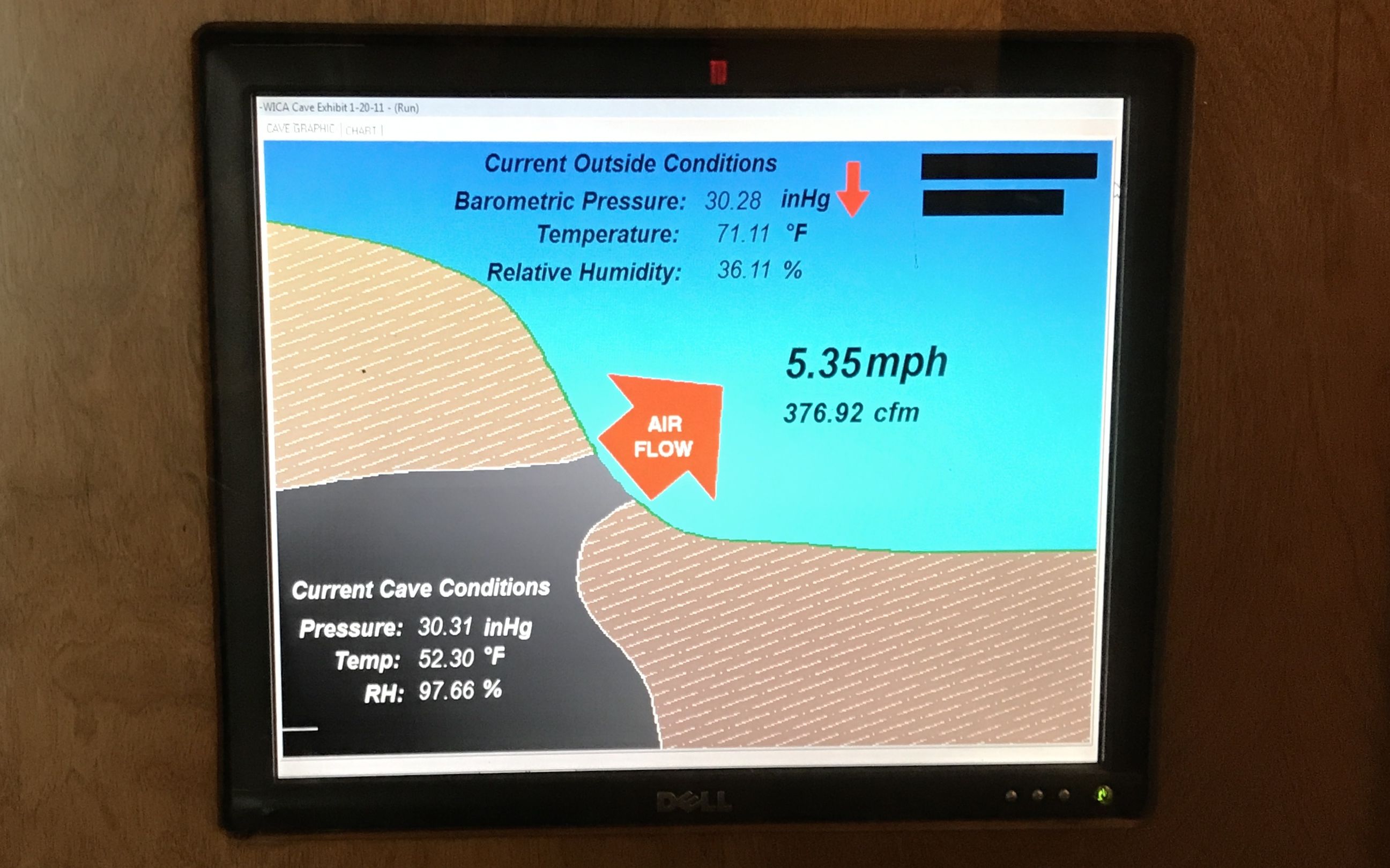
After the tour of the cave, I took a picture of this display in the museum area. So the air was flowing out at about 5.35 mph.
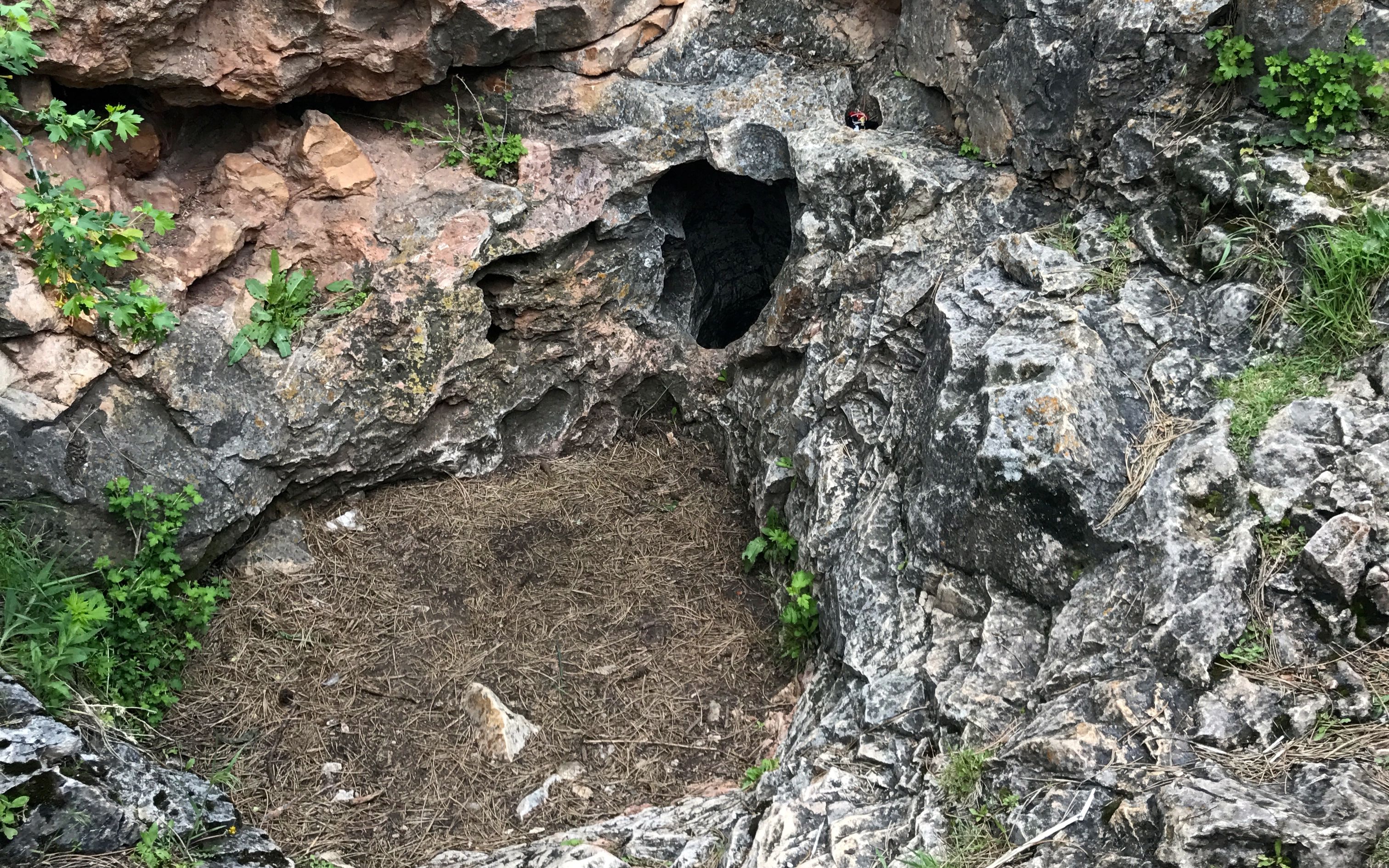
I am surely glad that they made another entrance to the cave. I wouldn’t not want to try to enter it that way.
Wind Cave is famous for a formation known as “Boxwork.” In fact, if you want to see box work, this is the place to be, as approximately 95% of the world’s discovered boxwork formations are found in Wind Cave.
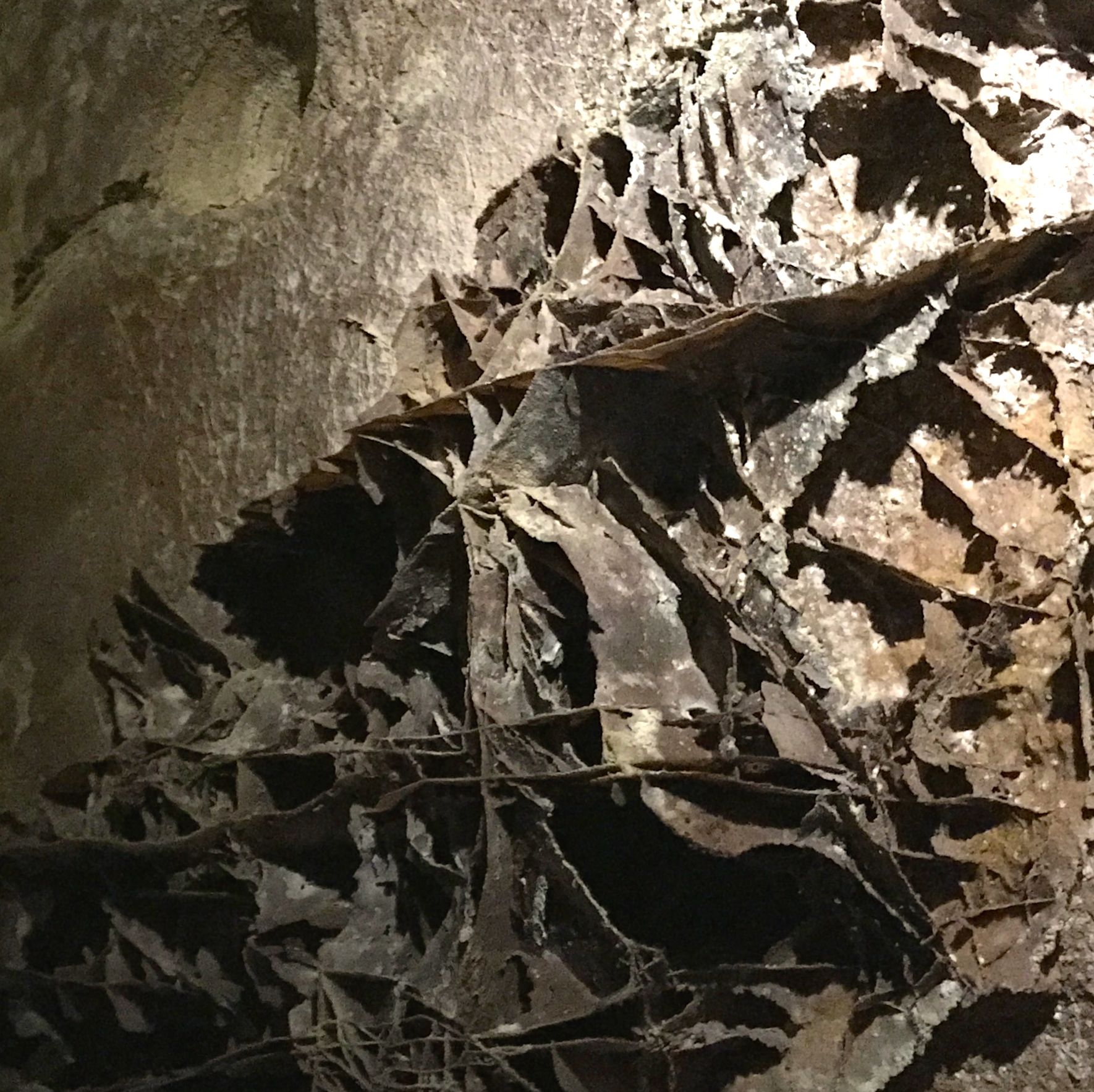
If I remember Ranger Justin’s information correctly, a softer rock formed and then cracked.
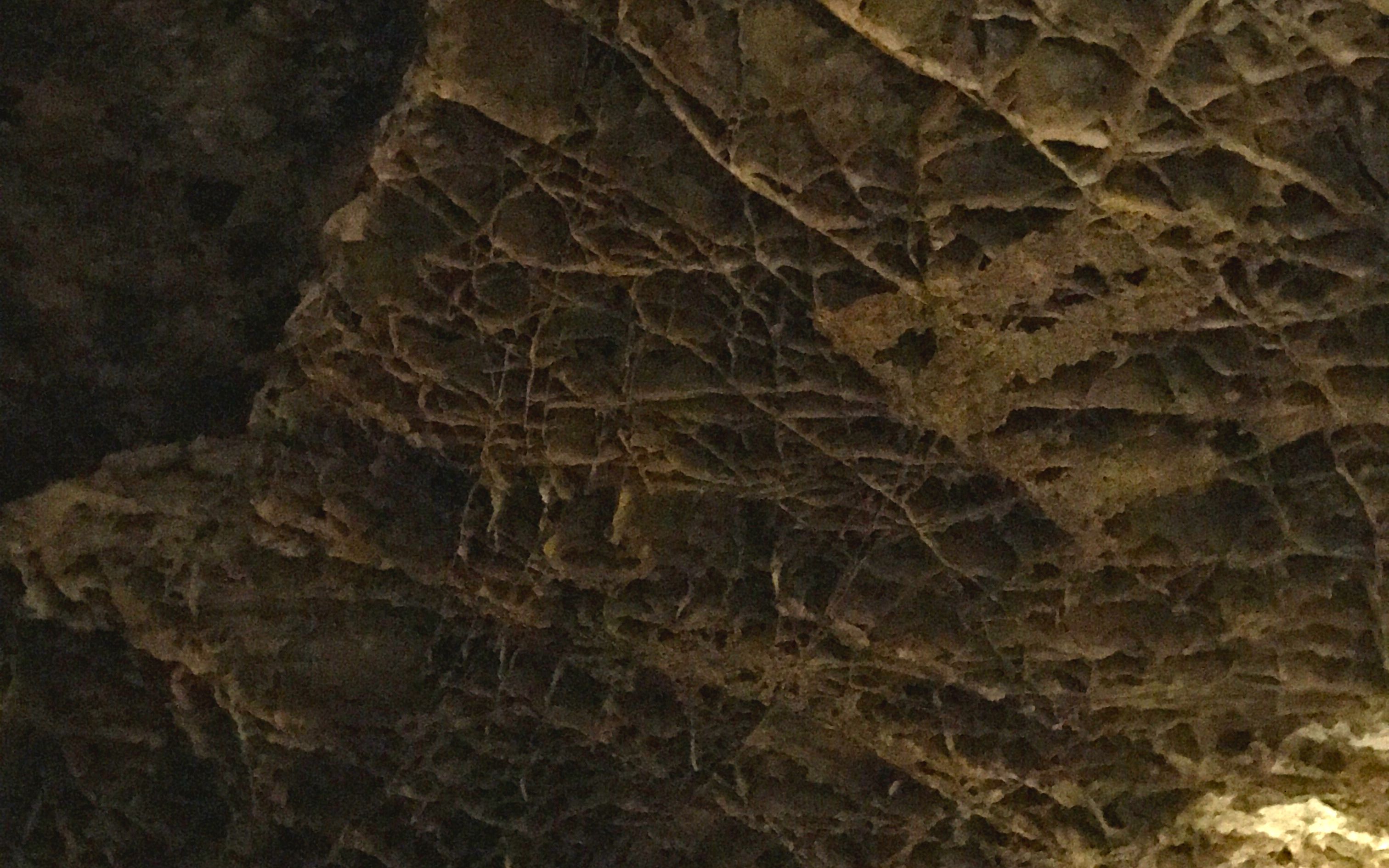
Calcite deposits formed in the cracks.
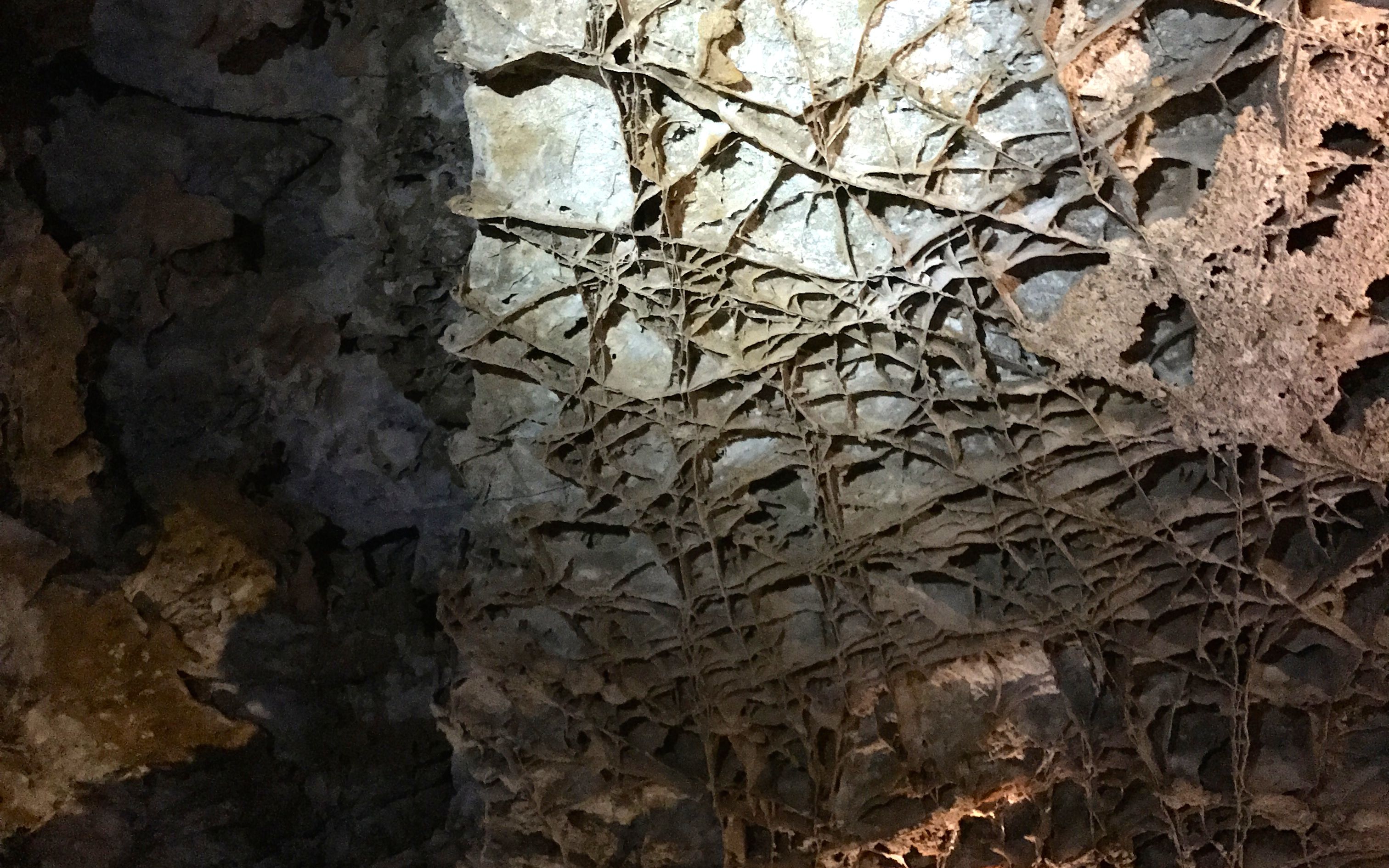
Eventually that softer rocks eroded away. I could be wrong, but that is what I remember.
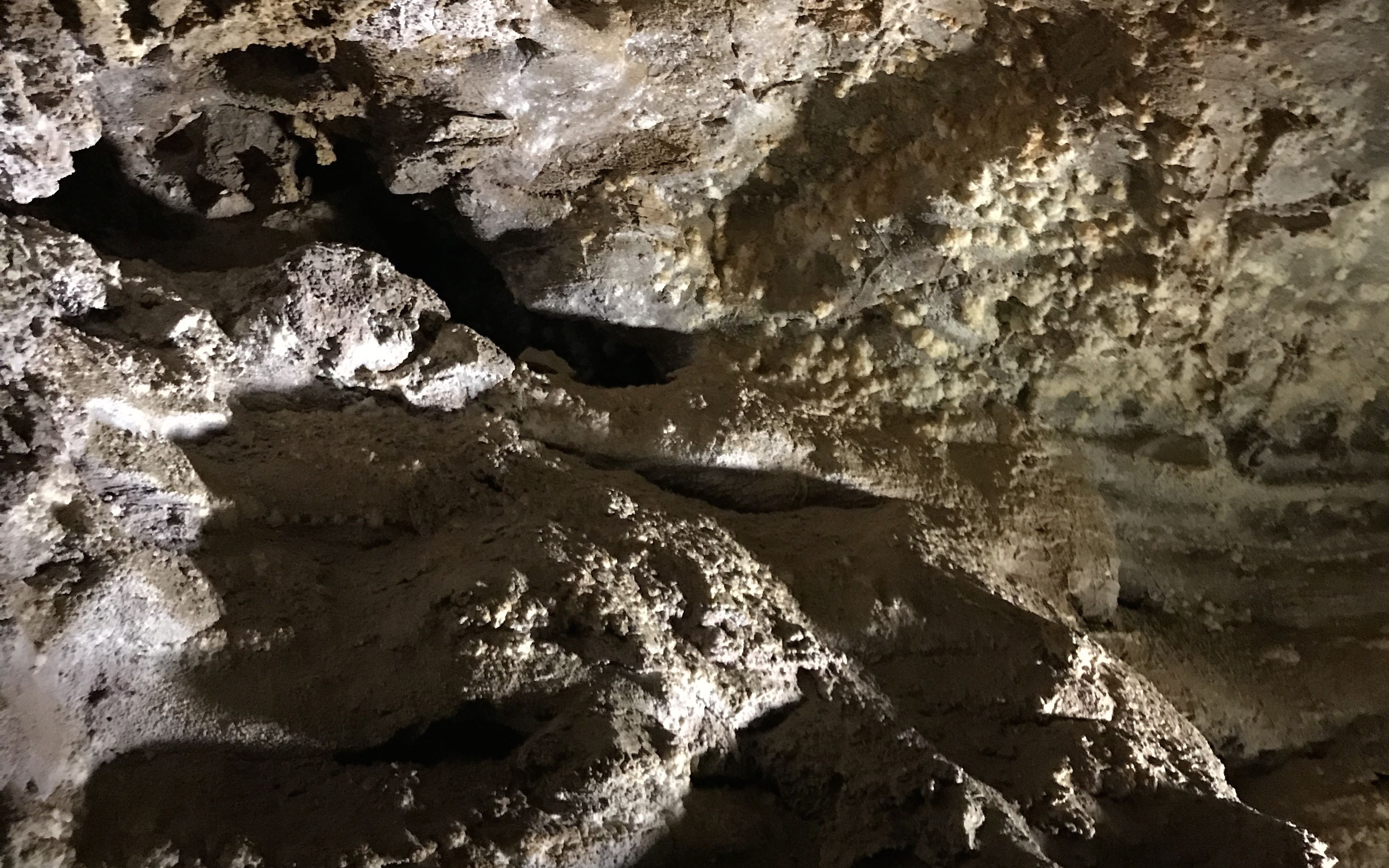
There are also other formations, such as this one that is called popcorn.
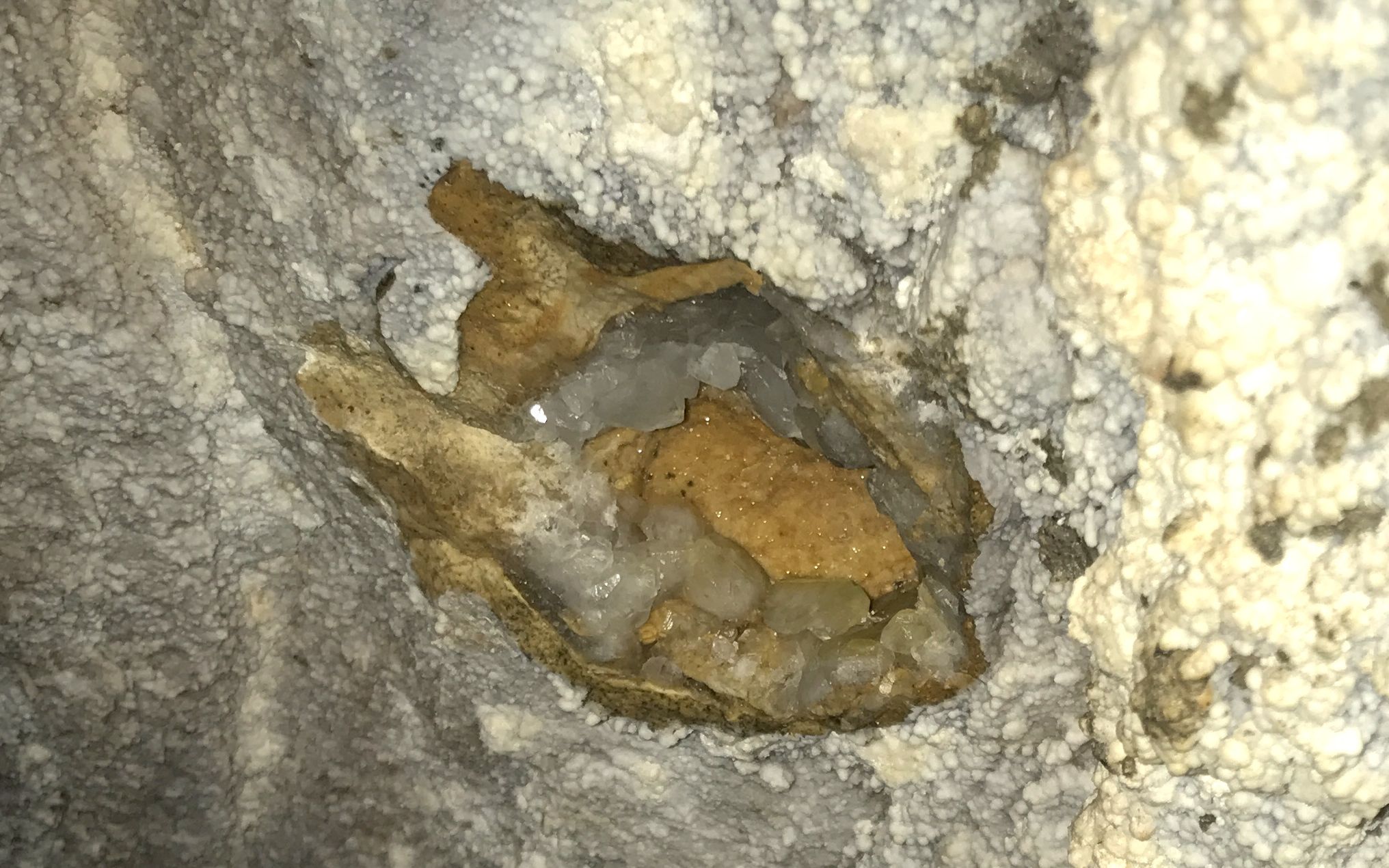
These crystals imbedded in the popcorn caught my eye.
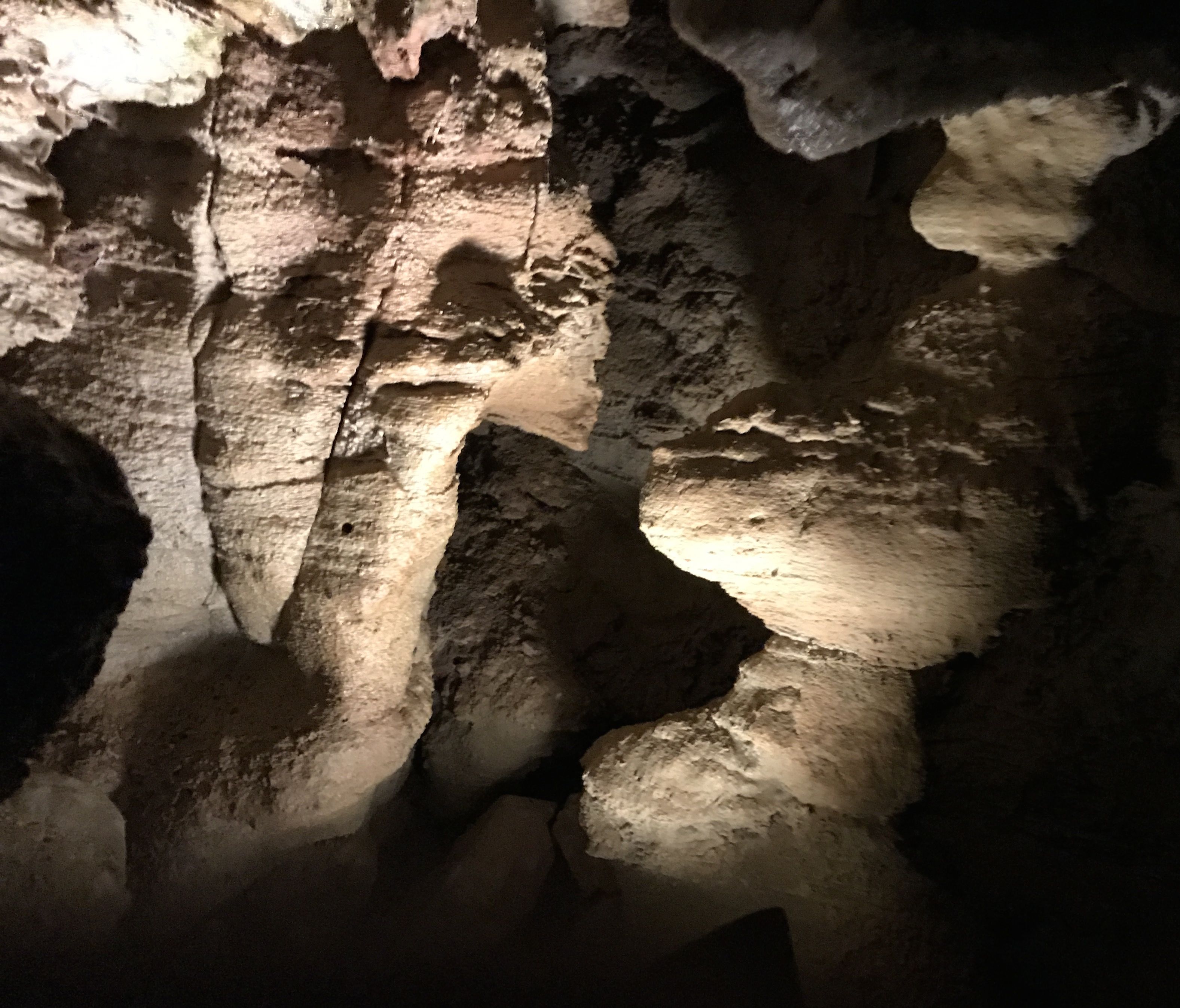
These rounded rocks were interesting, too. There didn’t seem to be the typical stalactite and stalagmite formations that are found in other caves.
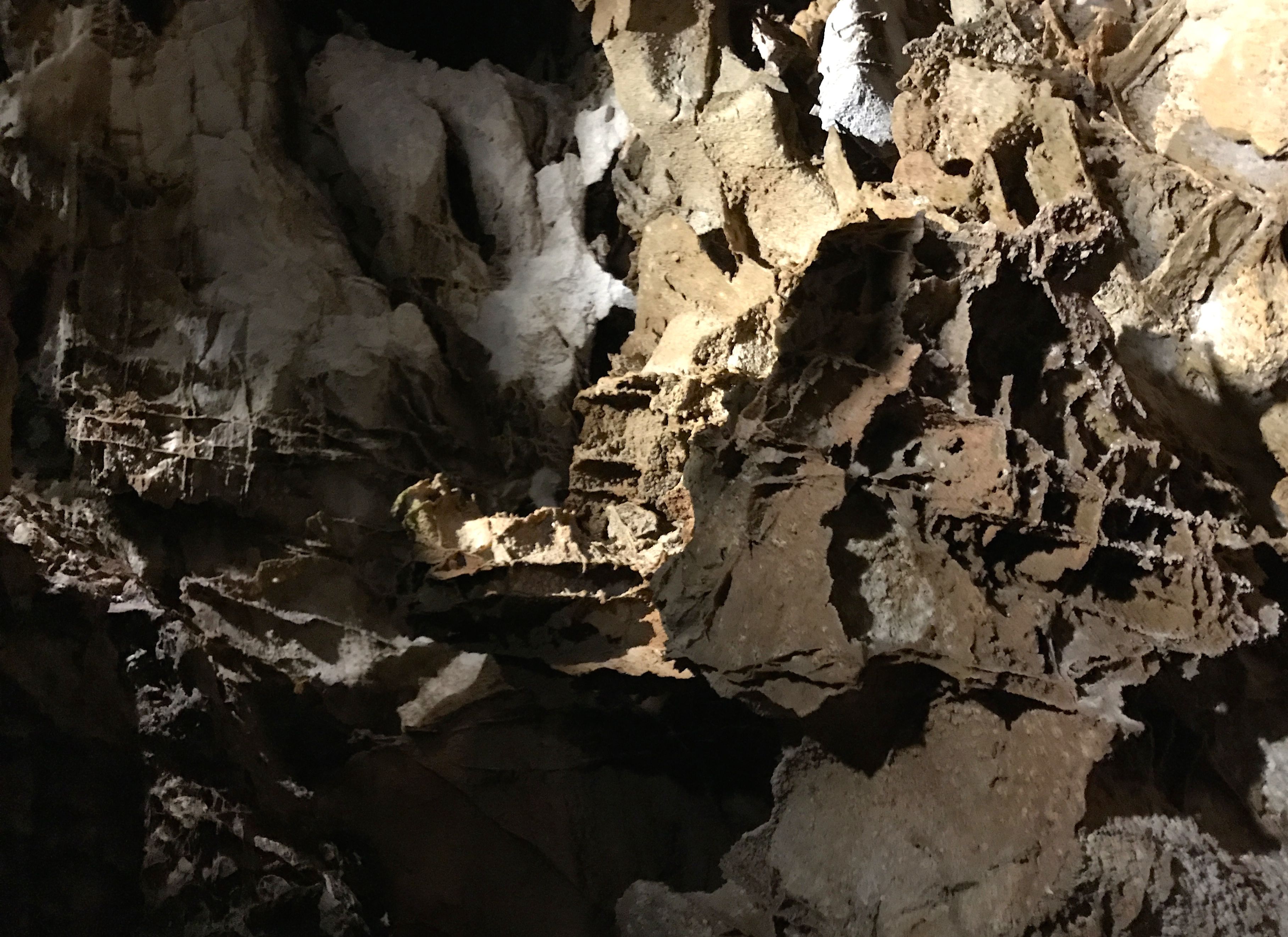
The walls seemed other-worldly.
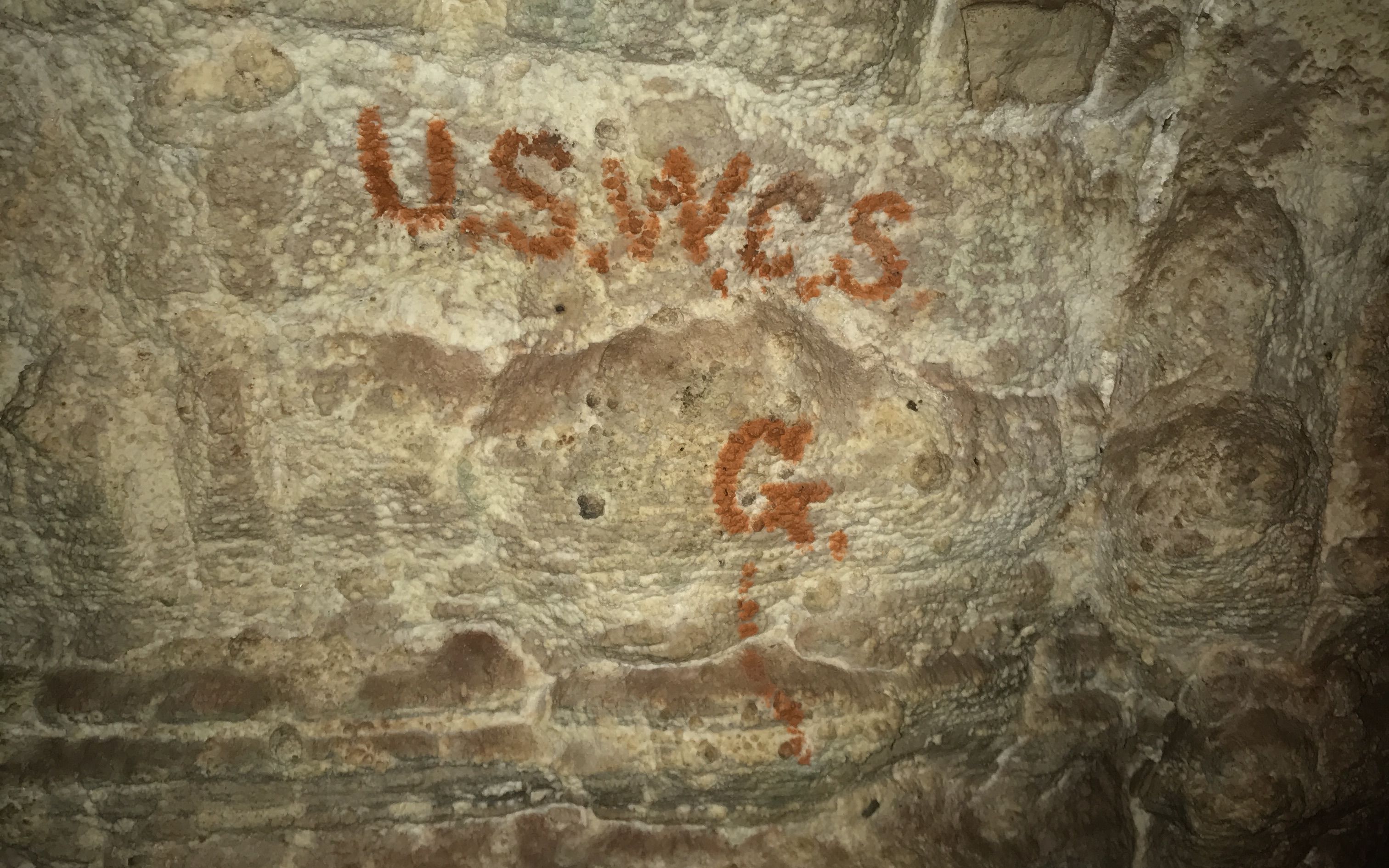
The cave is extensively surveyed, and this is the first marker the surveyors left, if I remember correctly.
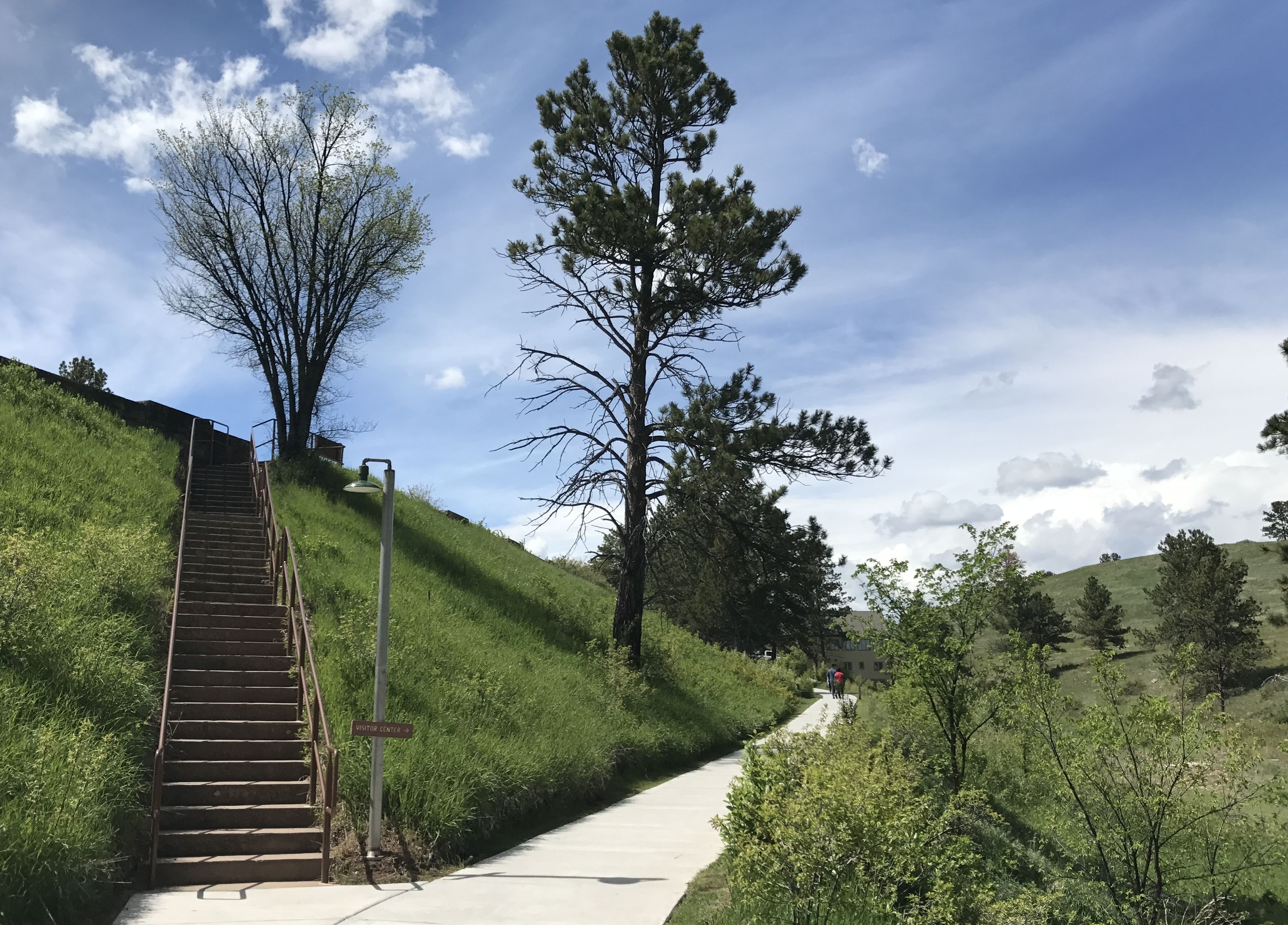
At the end of the tour, I was glad that the clouds had cleared and that there was some blue sky to be seen and that the clouds had cleared. I had a choice of paths to the headquarters and the parking area.
I am not a fan of stairs. I took the ramp up to Bart and headed back to Flo and Cora.
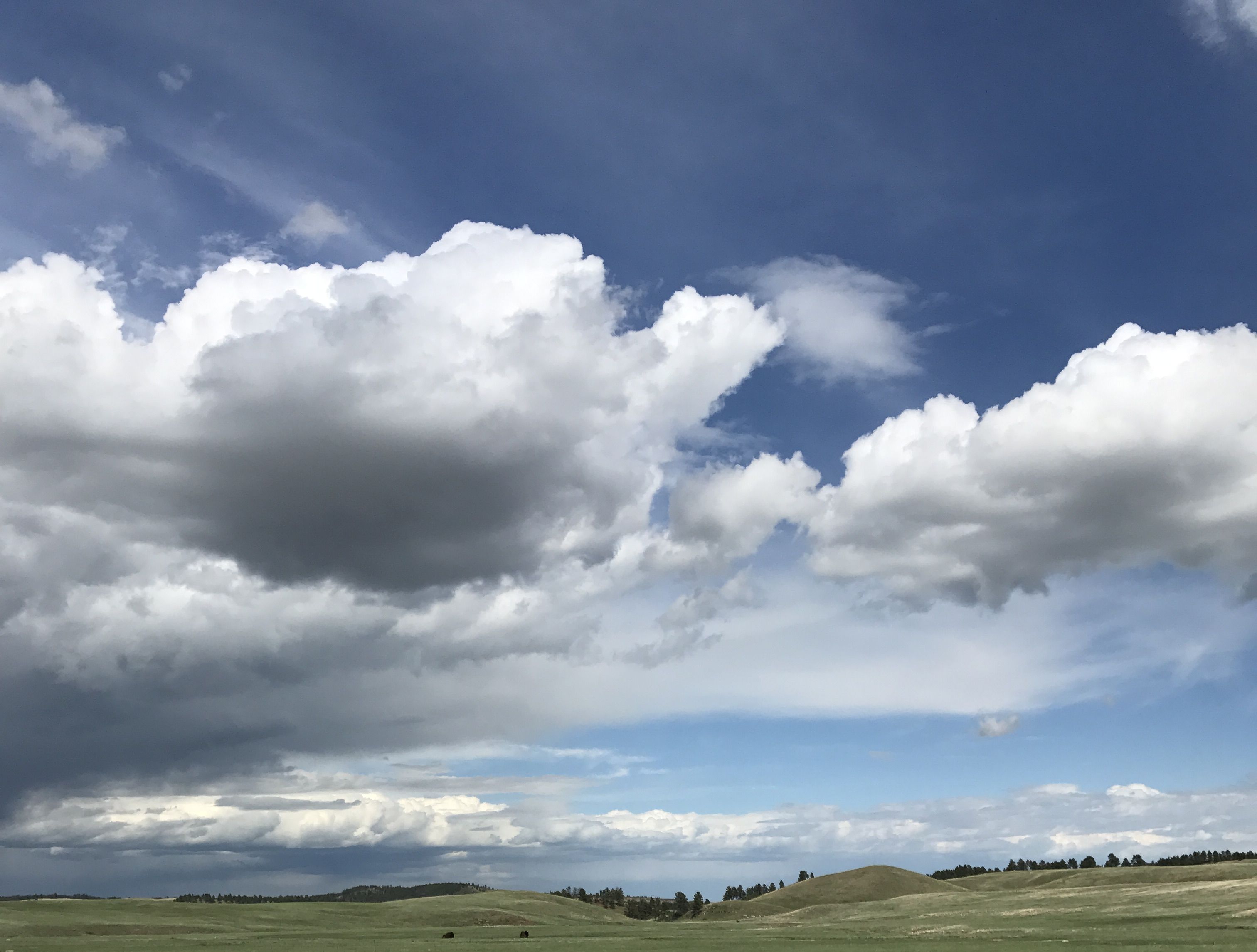
It turned out to be a lovely day after all.