Let me share just a few more photos I took while I was in Kansas City.
First of all, here’s a little decor.
Very little…
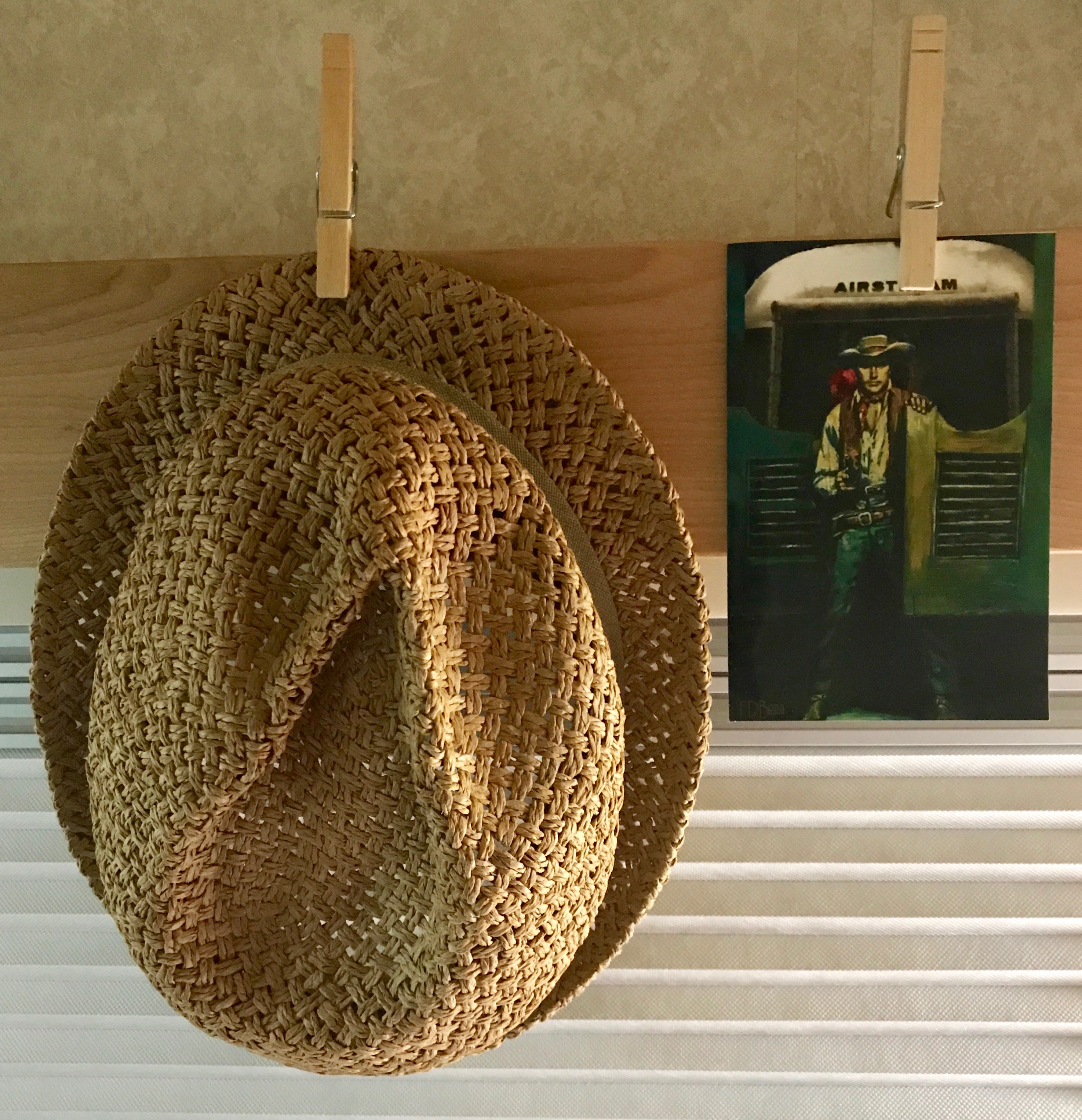
I am amazed by all the decor people add to their trailers. It just doesn’t seem to be my thing. But, I love the simple elegance of spring clothes pins. I clipped up my hat and a piece of artwork done by my friend, Frank DiBona.
Frank does what he calls “mashups” and he inserts Airstreams into the works of art via Photoshop. (Personally, I think he uses magic.) A while back, he asked me to come up with some works of art he hadn’t been using and to send me some photos of Flo, the Airstream. If you want to see some of his other work, he has an online business that sells tee shirts and other items with his parodies. (I have a few of his tee shirts.)
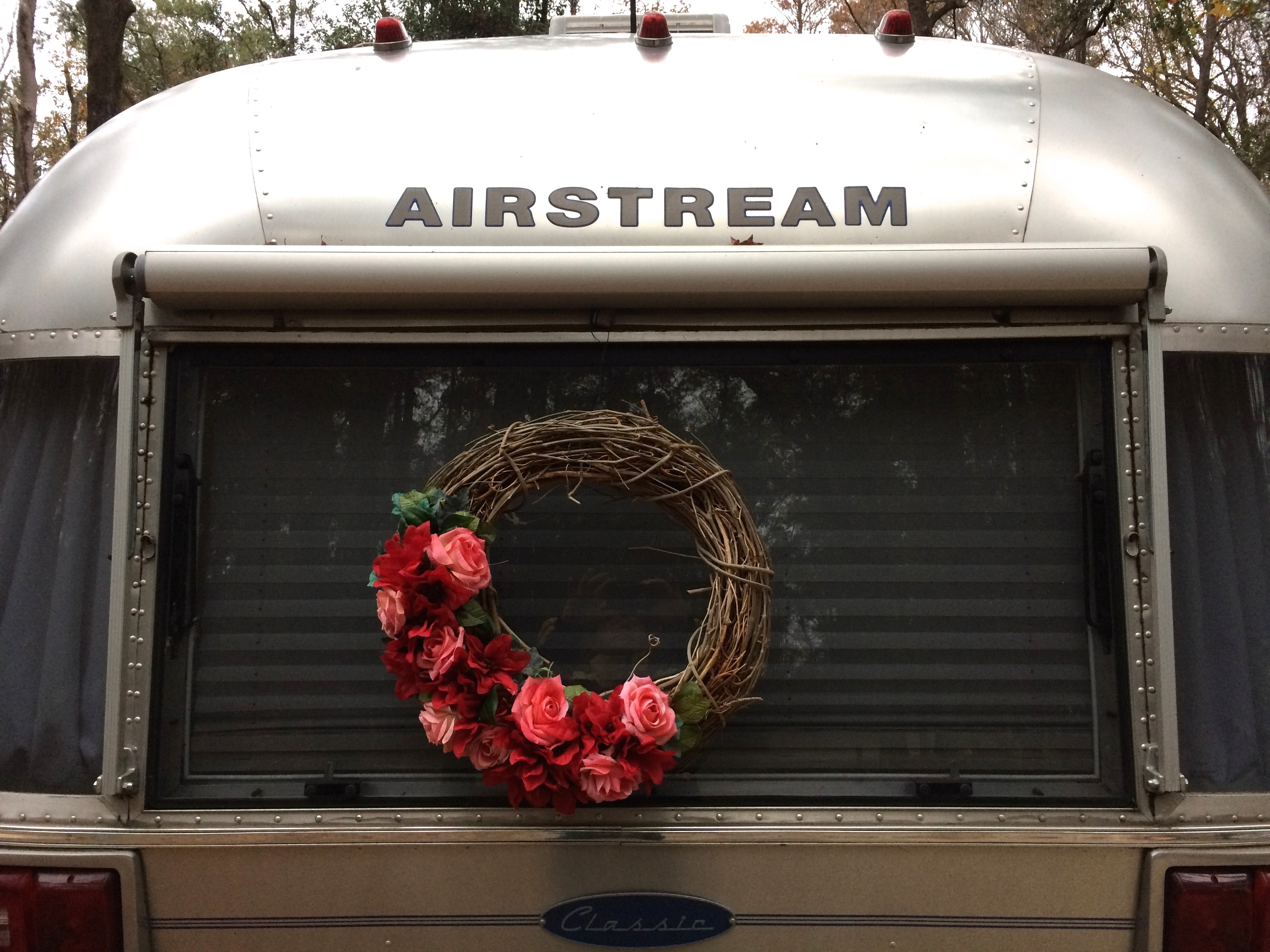
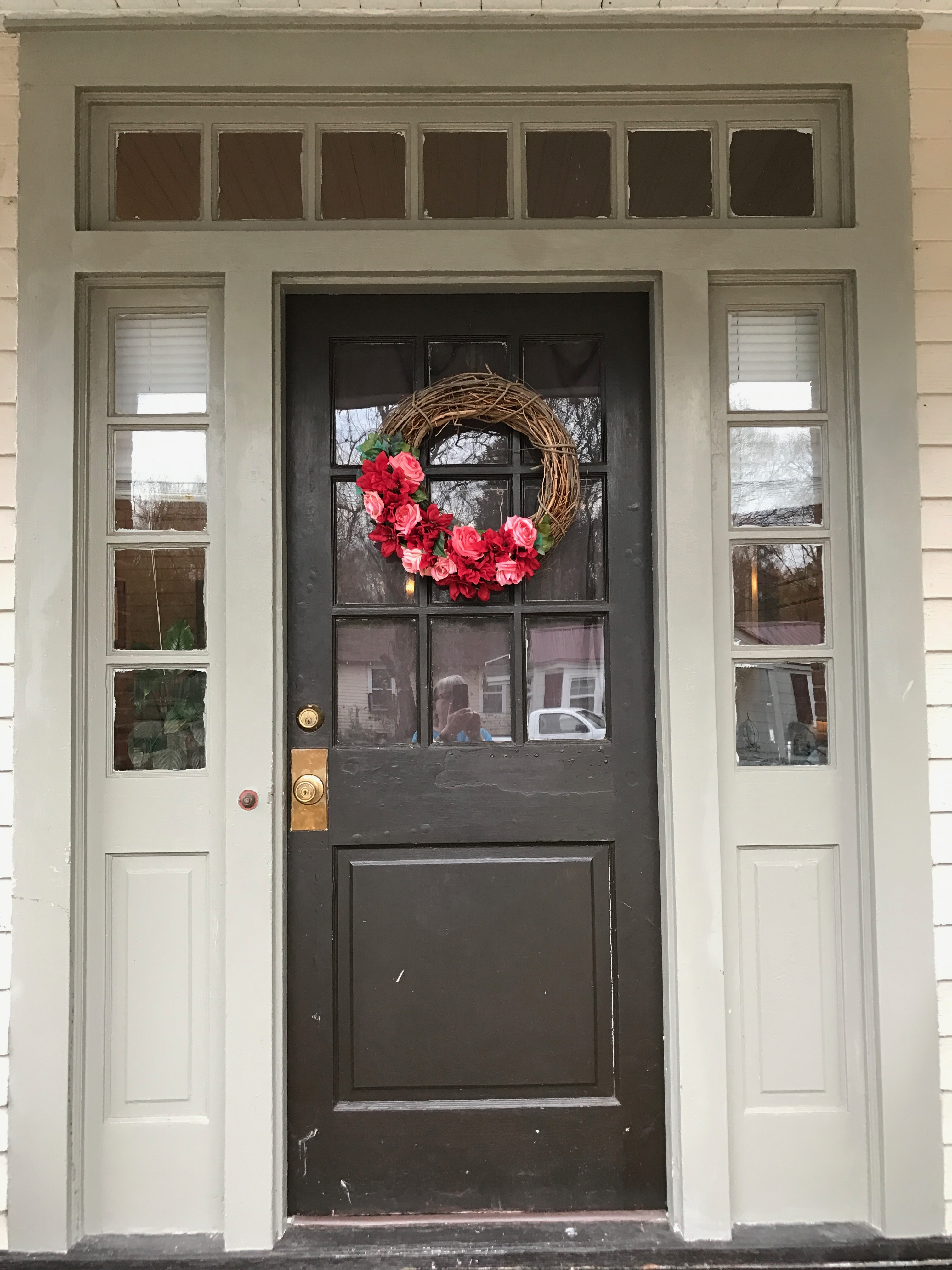
Anyway, that’s Flo behind the gunslinger. You can tell it’s Flo – and not just any old Airstream – because she is decorated with the wreath I rescued from brother Craig’s house when I helped him move in 2016. I was going to a pre-Christmas rally near Savanah, Georgia, so I hit up a Dollar Tree and prettied it up.
After the rally, I headed to my other brother’s house and gave Scott and Lesley the wreath.
So, the only one of the Davison siblings that didn’t have the wreath was my sister. Sorry about that, Amy.
My first trip to Kansas City was in 1974. I took part in a national Girl Scout event at the Nelson-Atkins Museum of Art. I wanted to go visit it again. As luck would have it, I tried to visit it on one of the days it was closed. I knew it was closed when I headed over, so I wasn’t horribly disappointed.
Big art museums like the Nelson-Atkins frequently have interesting artwork around it, so I thought it was worth a trip. Quite frankly, I didn’t remember much about the museum, as my last visit had been 44 years ago!
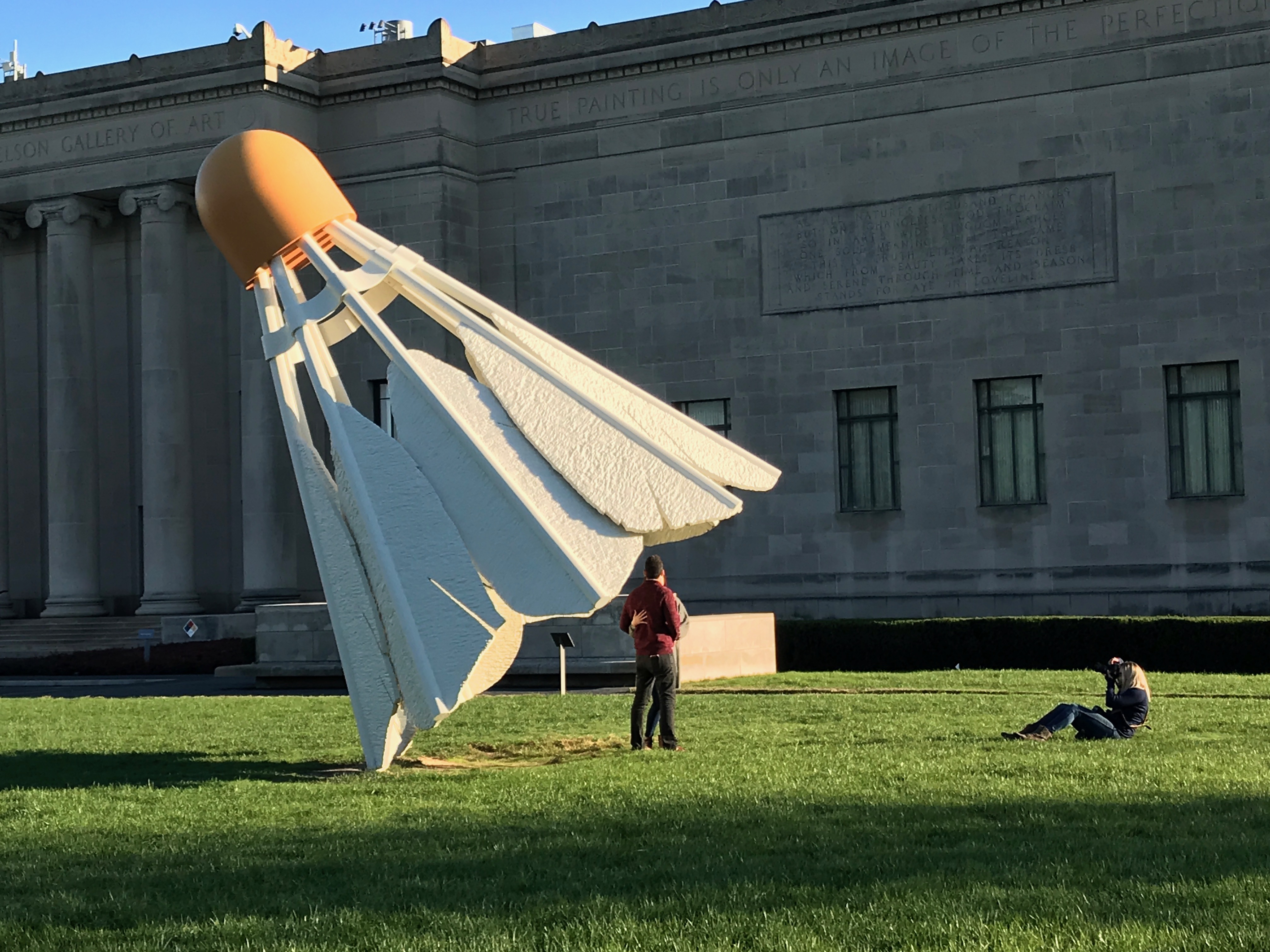
I didn’t remember these enormous shuttlecocks, and that concerned me. I was kind of wondering if I my memory was slipping altogether. I found an information plaque, and I was relieved when I learned that the four shuttlecocks were installed in 1994 – twenty years after my visit.
My photo of the information plaque didn’t turn well, so I will type out what it says, in case you want to learn more.
“The husband and wife team of Claes Oldenburg and Coosje van Bruggen were commissioned in 1994 to design a sculpture for The Nelson-Atkins Museum of Art. They responded to the formality of the original neoclassical building and the green expanse of its lawn by imagining the Museum as a badminton net and the lawn as a playing field. The pair designed the four birdies or shuttlecocks that were places as through they had just landed on opposite sides of the net. Each shuttlecock weighs 5,500 pounds, stand nearly 18 feet tall and has a diameter of some 16 feet.”
There was a message at the bottom, too.
“Please do not touch the sculpture.”
Oh, and the title of that work of art: Shuttlecocks.
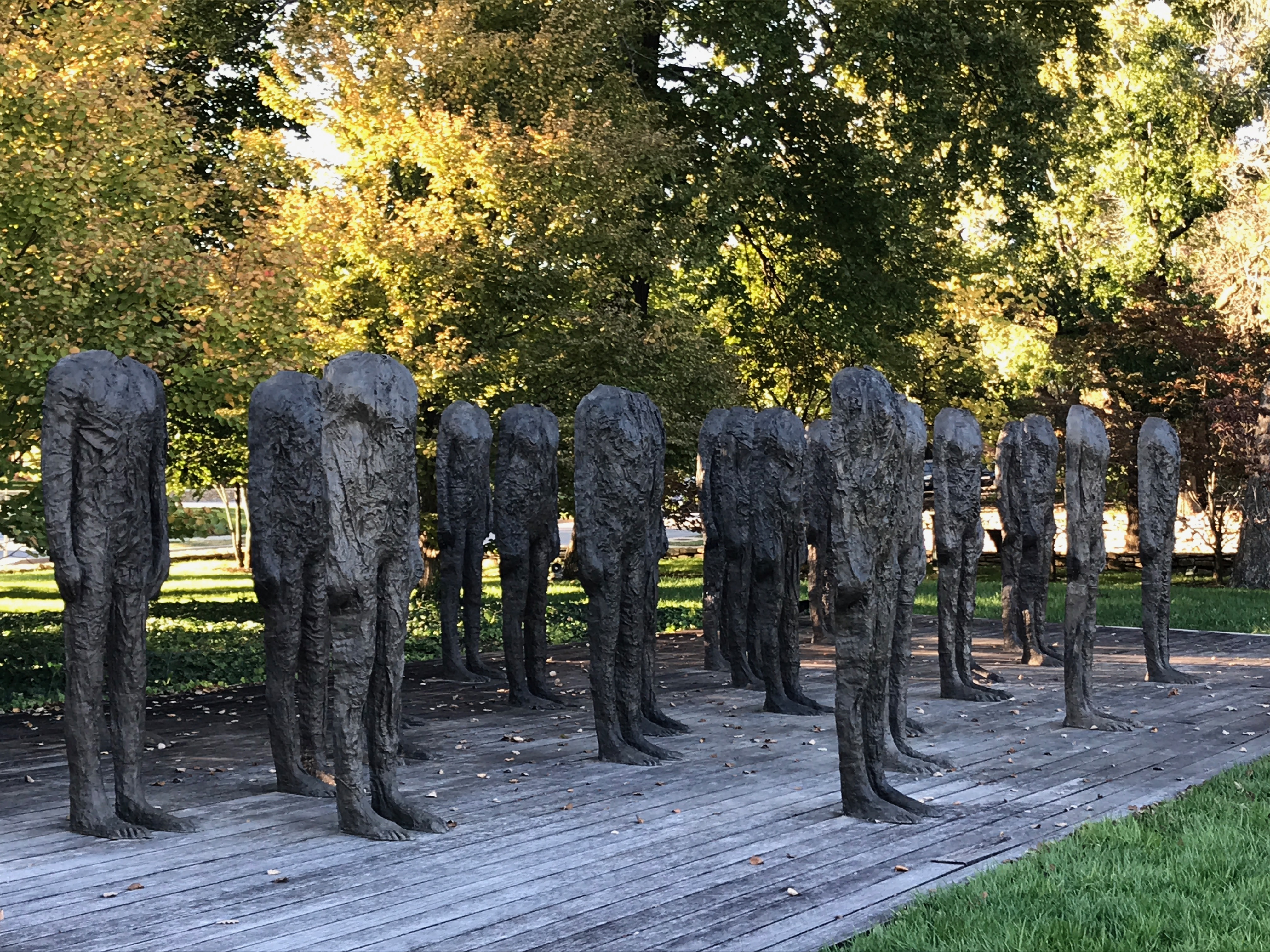
This work of art is titled Standing Figures (Thirty Figures). Polish artist Magdalena Abakanowicz began work on it in 1994 and finished in 1998.
Again, the photo of the information plaque didn’t turn out well, so I’ll type out what it says.
“Magdalena Abakanowicz’s figures are instantly identifiable by their stark imagery. The haunting power of these headless, standing figures invites many interpretations, and the artist welcome this approach. Could they be awaiting final judgement? Do they suggest war victims? Art they primordial beings in silent communication? Each figure is individually cast from a burlap-lined body mold.”
The message at the bottom of the plaque: Please do not climb on the sculpture. So, I guess you can touch them – just don’t climb on them.
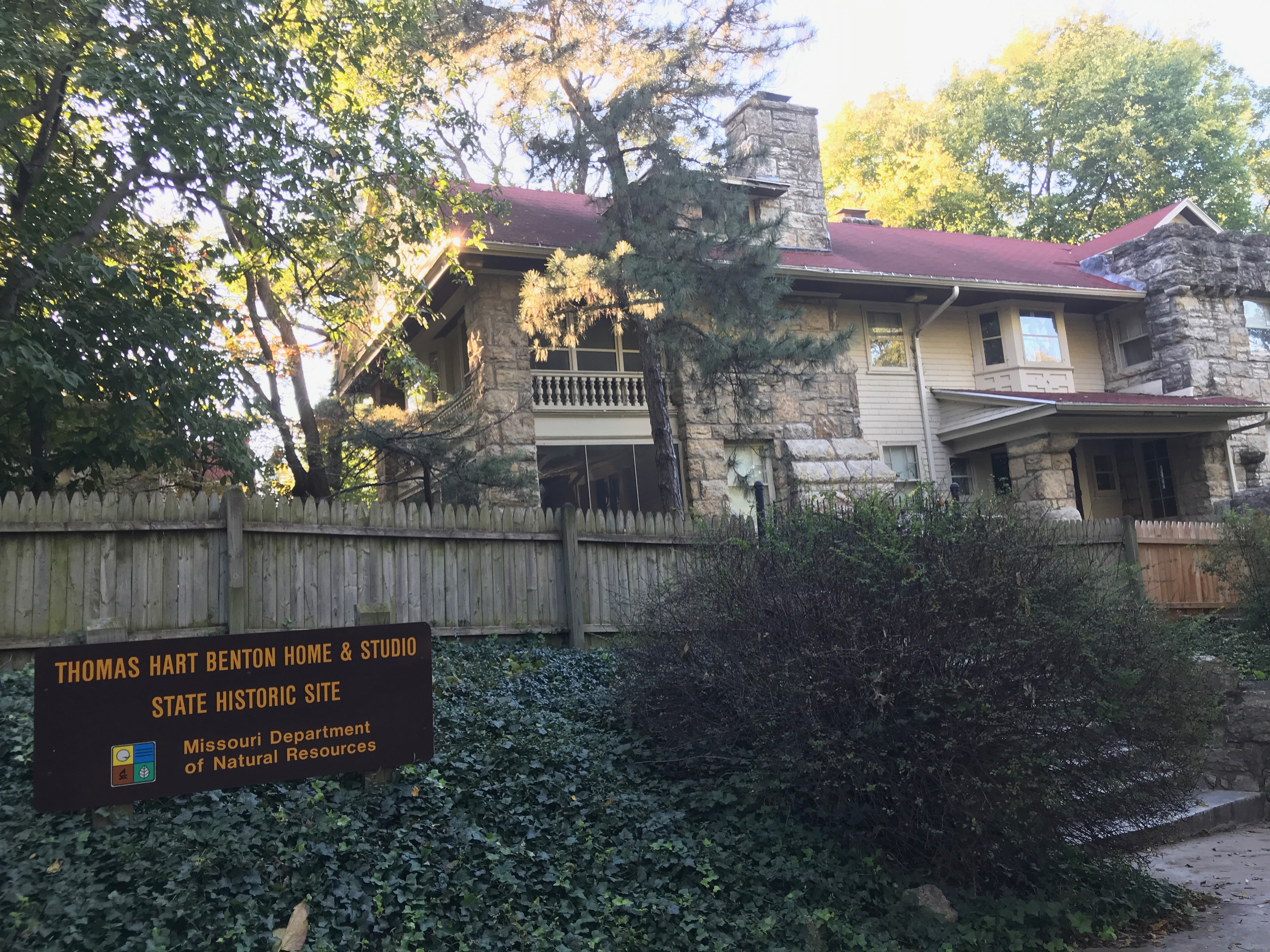
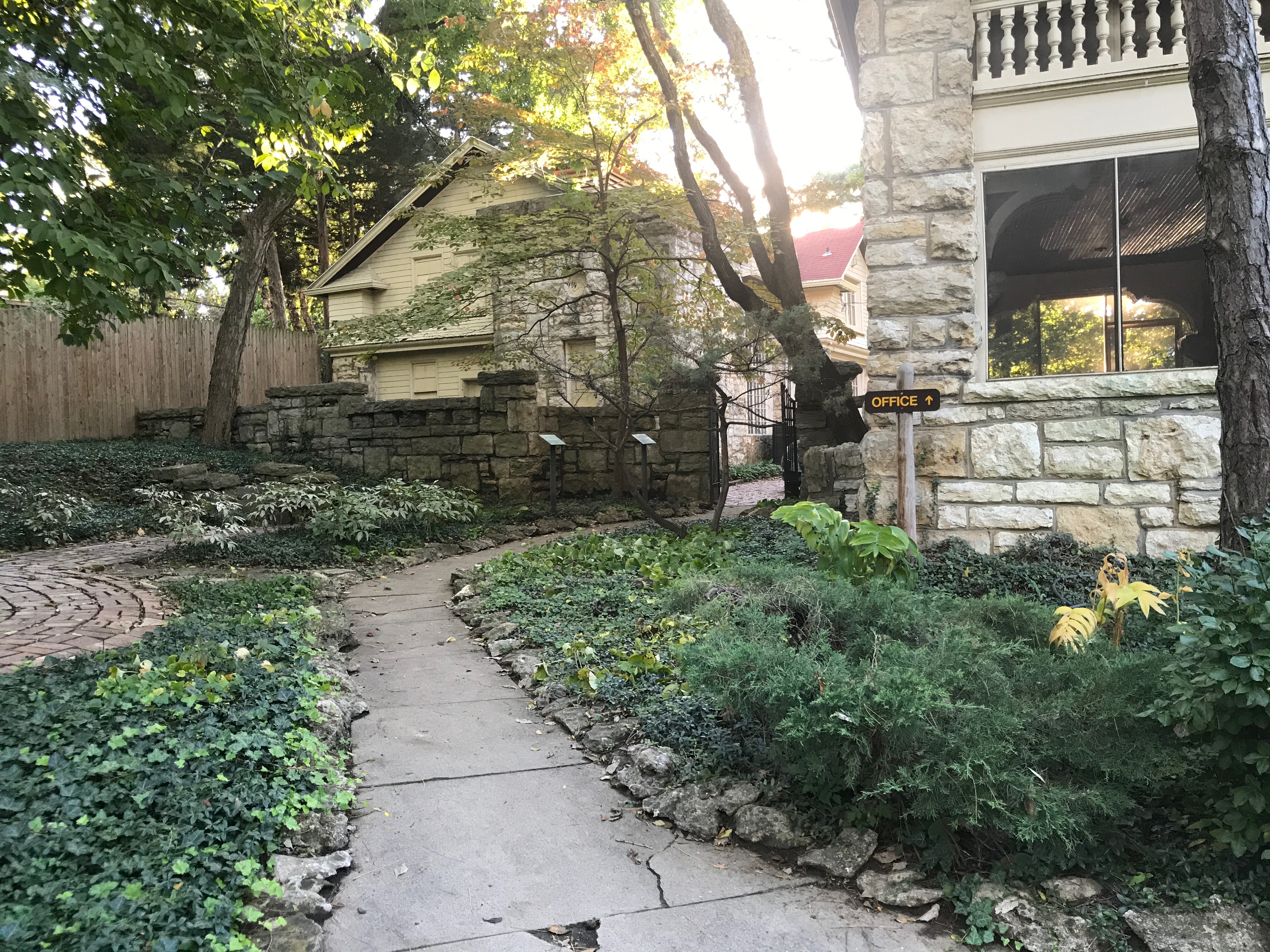
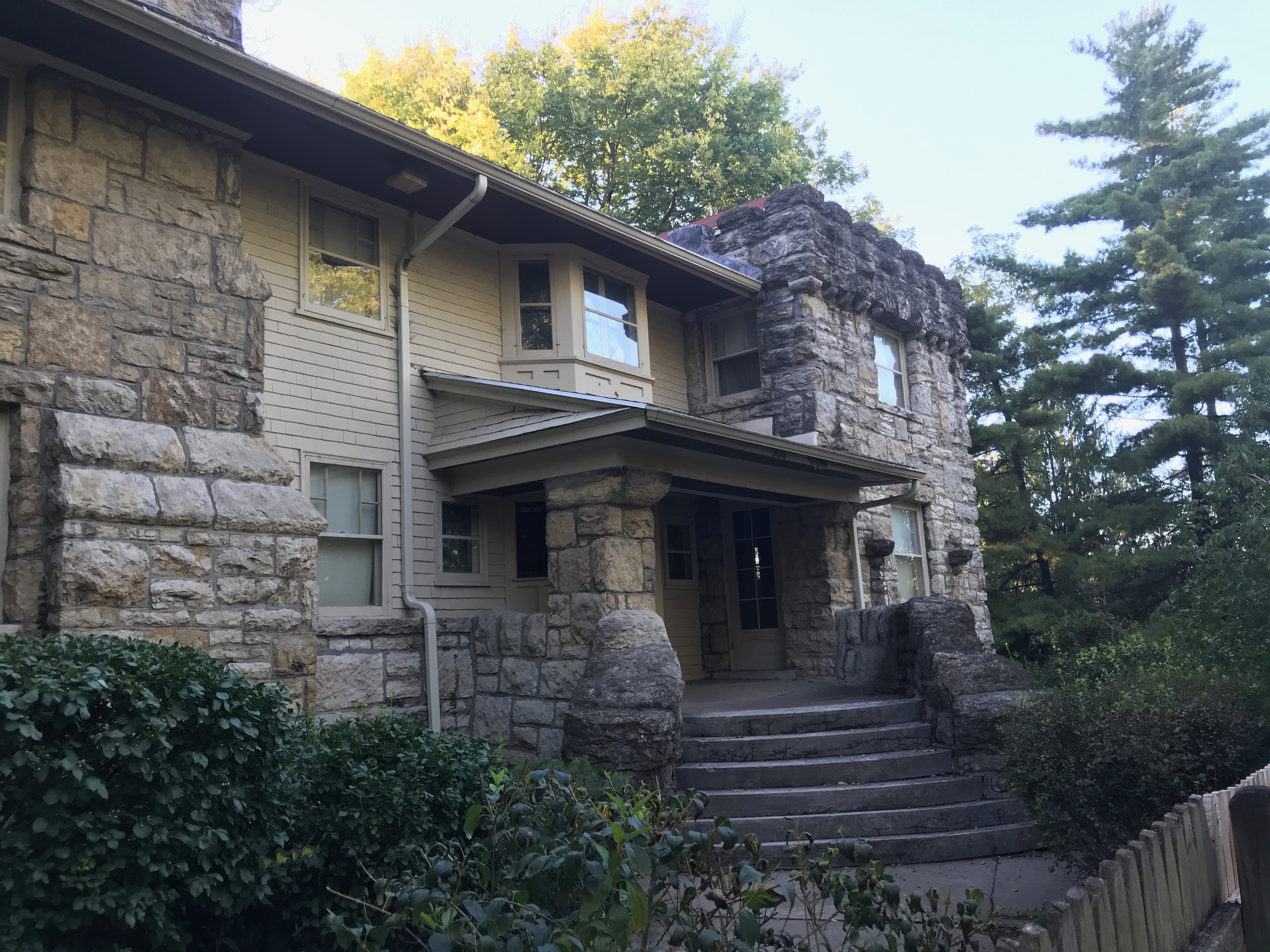
With that, I headed out to explore some more. I came across a sign pointing the way to Thomas Hart Benton’s home and studio. I decided to see what I could see.
I parked on the street and walked up to the State Historic Site.
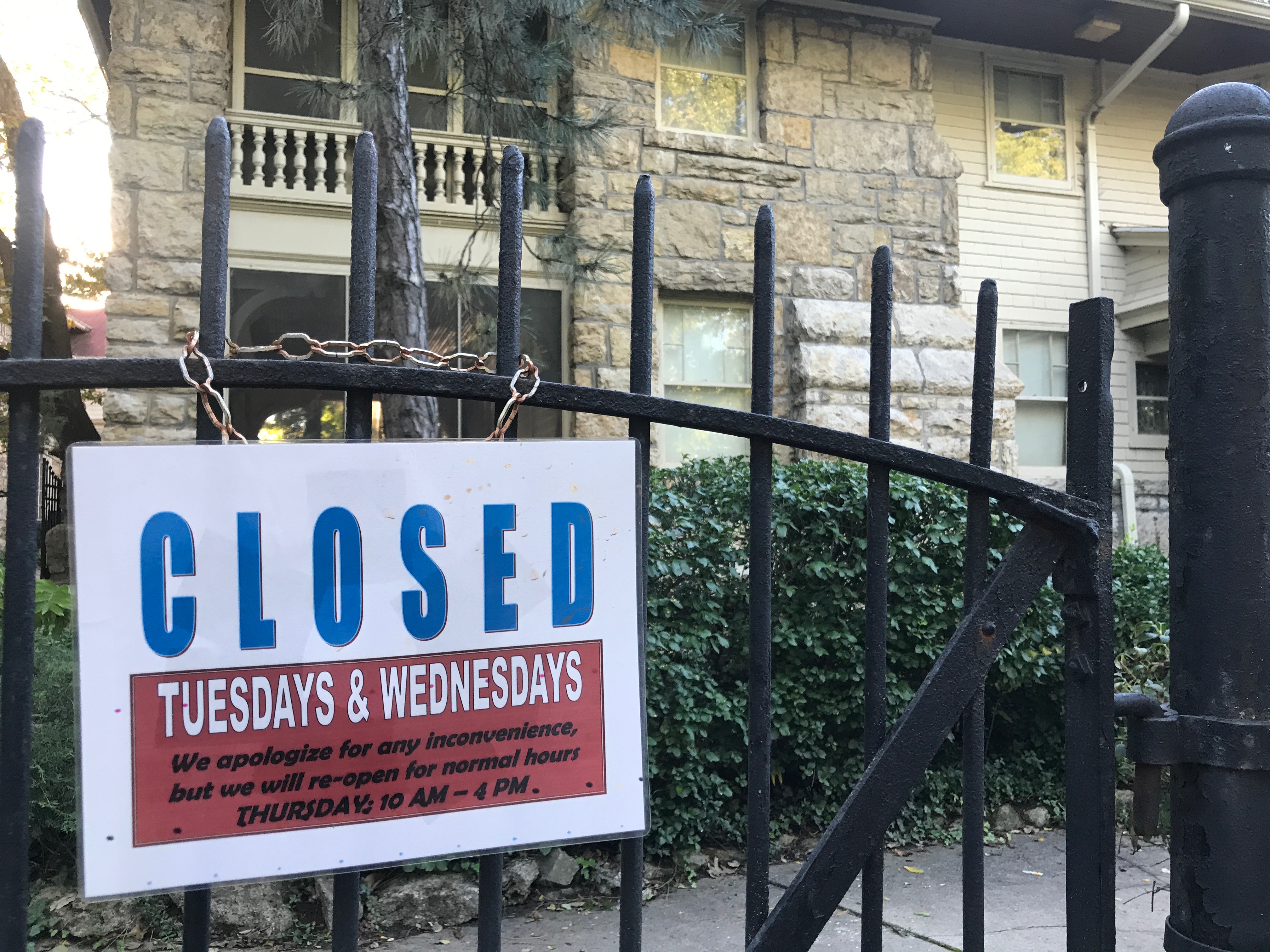
Naturally, it was closed. I decided to see what I could see over the fences.
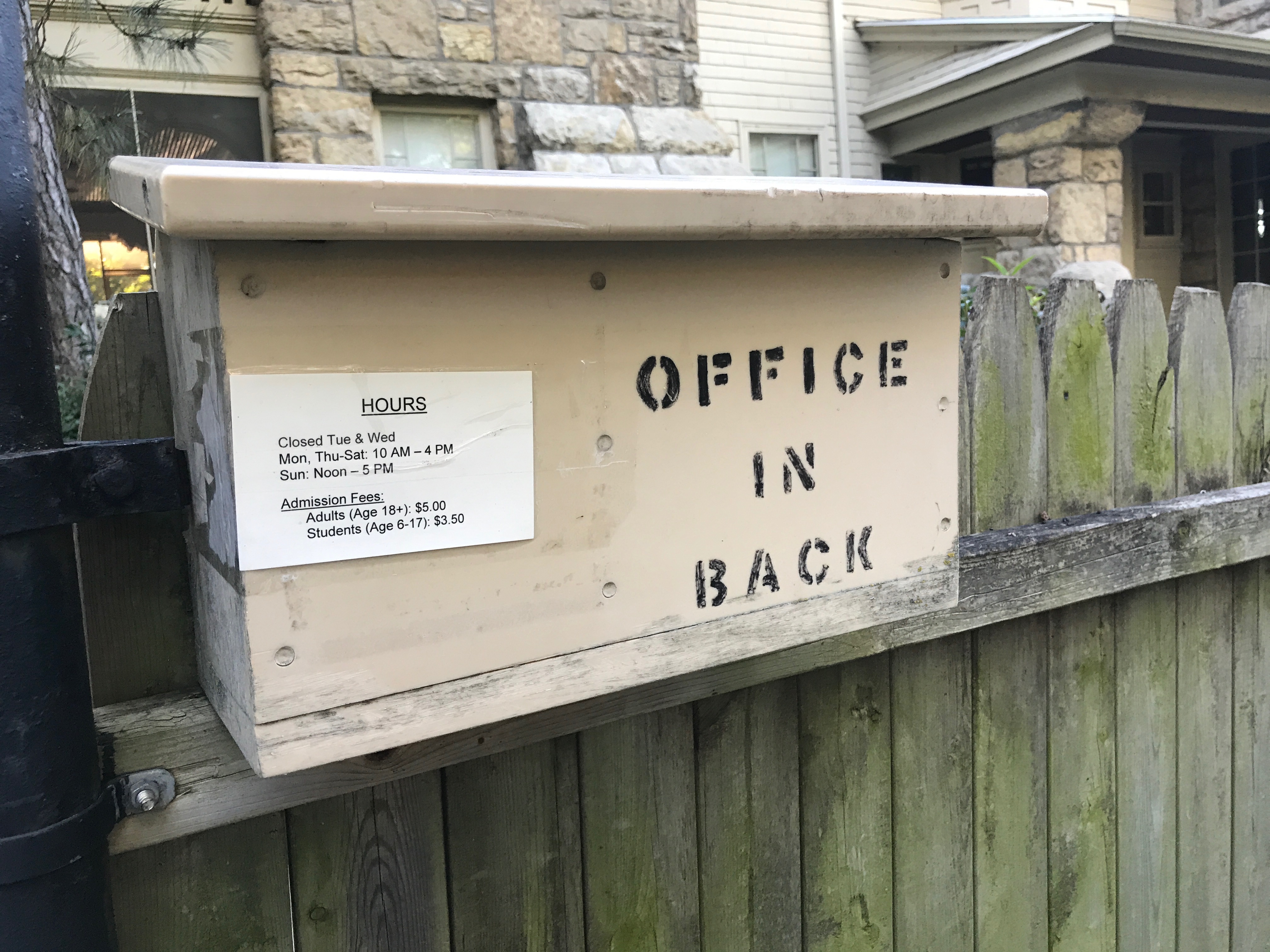
The office was in the back. Good to know, I guess.
That way to the office.
Ah! That must be the main entrance. Well, this is now on the “Next Time” list, so maybe one day I’ll visit.
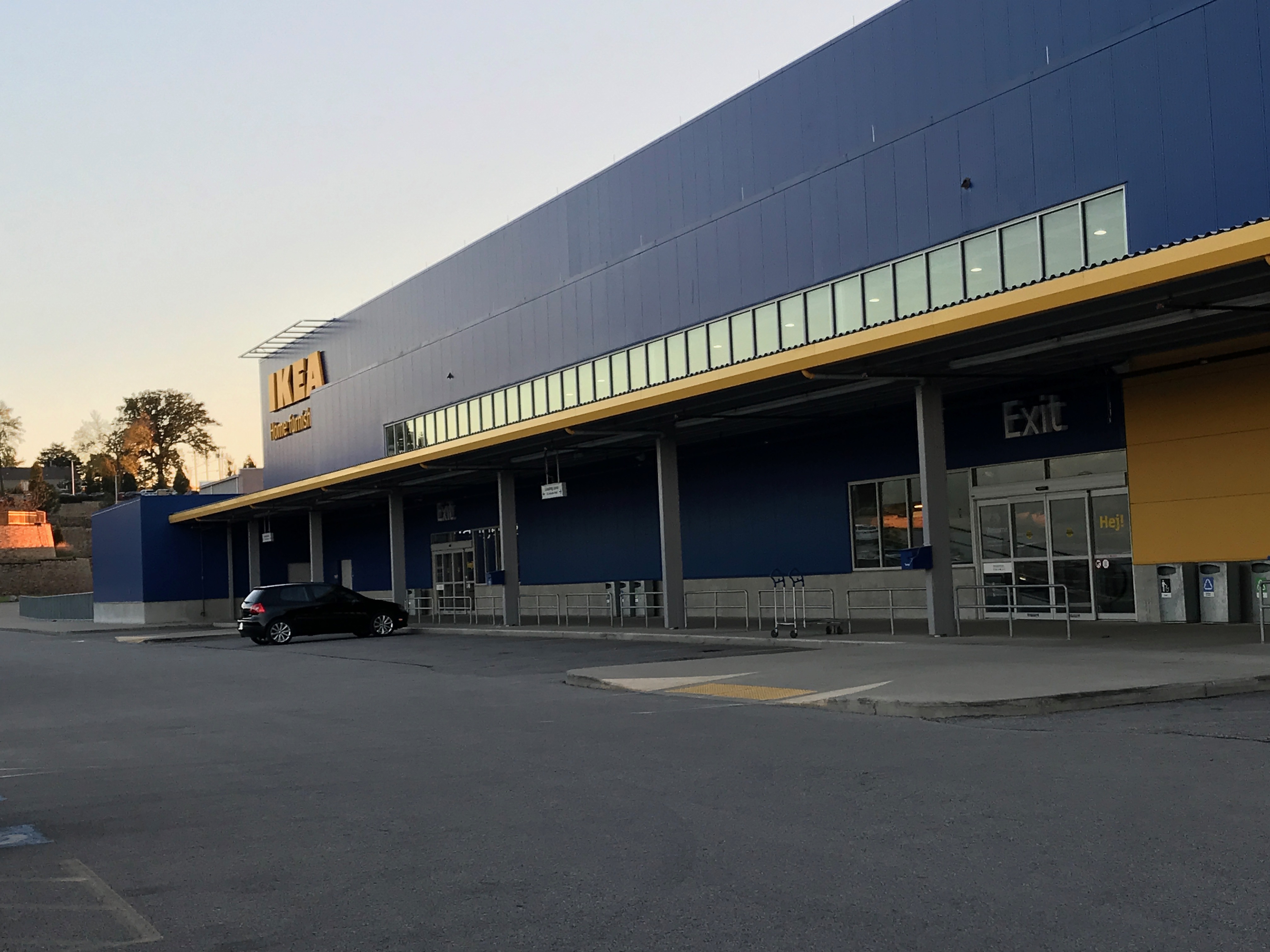
One place that was open: IKEA!
I made a quick pilgrimage and then headed back to the T@b to get packed up for travel the next day.
Just as I was getting ready to head down to the rest of the museum, the field trip caught up with me.
I’m glad I’m not jockeying for space with them! Besides, it was time for lunch. I decided to head to the Over There Café in the museum.
There they invite you to Eat Like a Soldier. They use the helmet icon to identify dishes that are meals that the soldiers would have eaten in World War I. Dishes like Trench Stew, Army Goulash, Chipped Beef, and a sampler platter containing tastes of the three dishes.
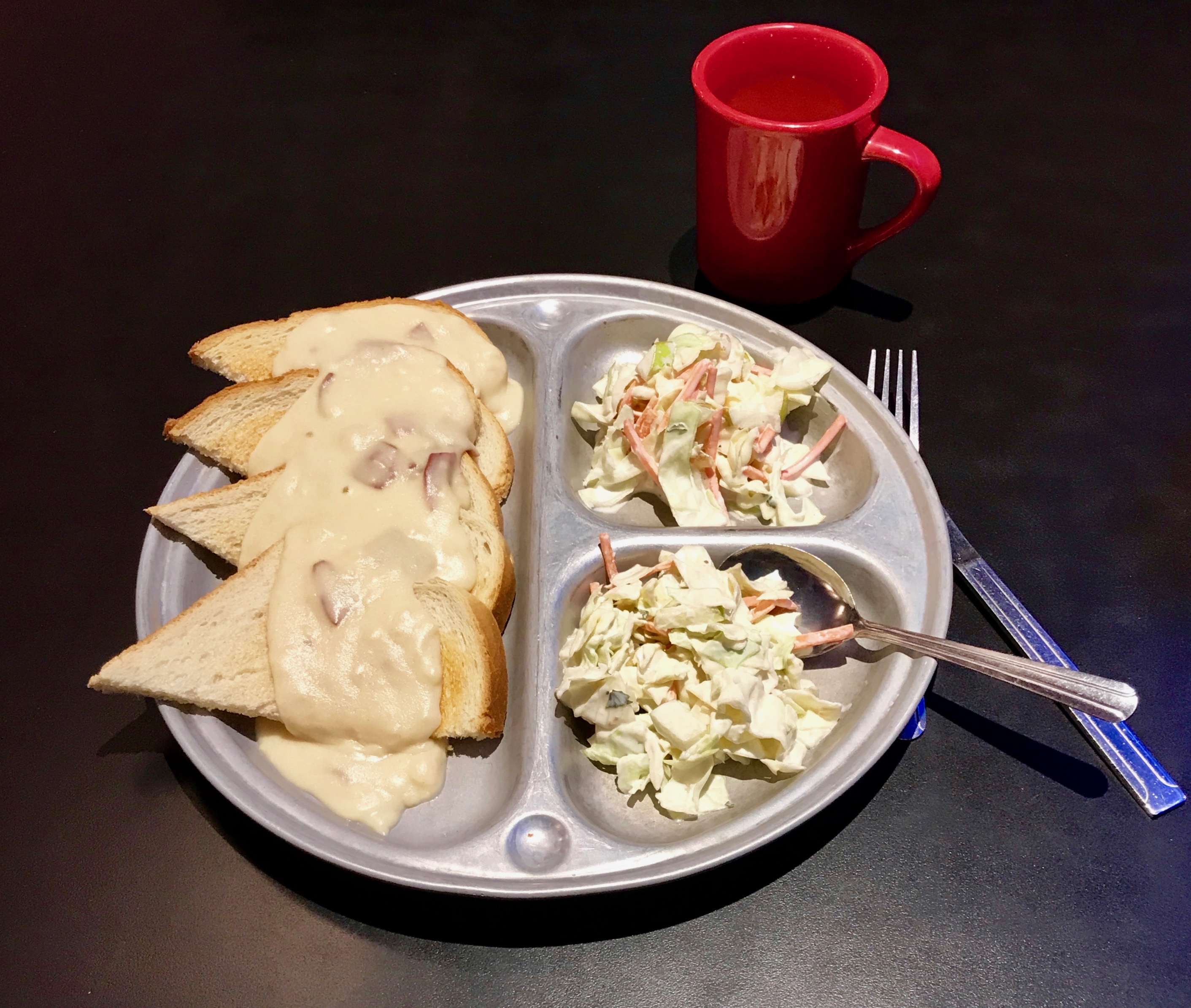
I opted for the Chipped Beef. (Here is a recipe in case you want to try it yourself.)
I always thought it was called “SOS” or “Sh*t on a Shingle” but I guess there is also a name that is used in polite society.
I thought the metal mess kit was a nice touch, as was the poppy-red coffee mug. Those poppies are everywhere!
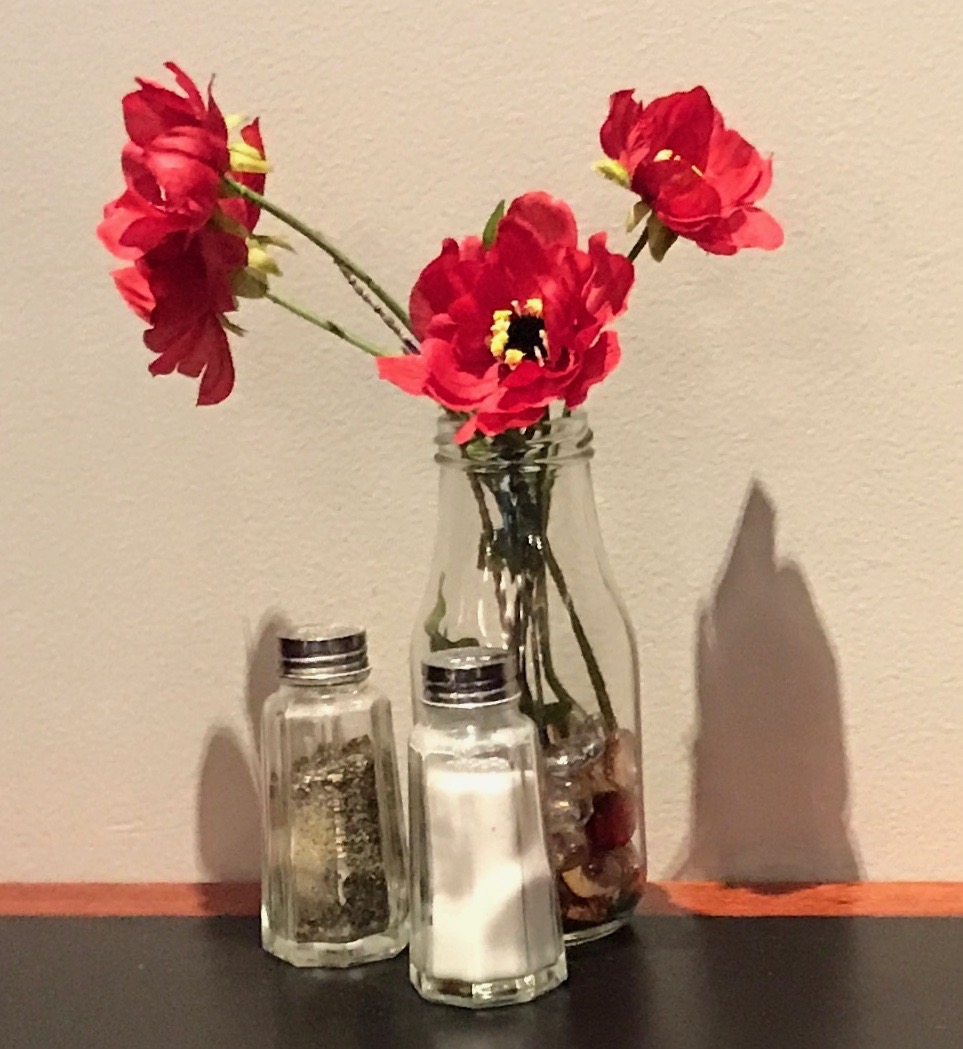
I had this cute little arrangement on my table.
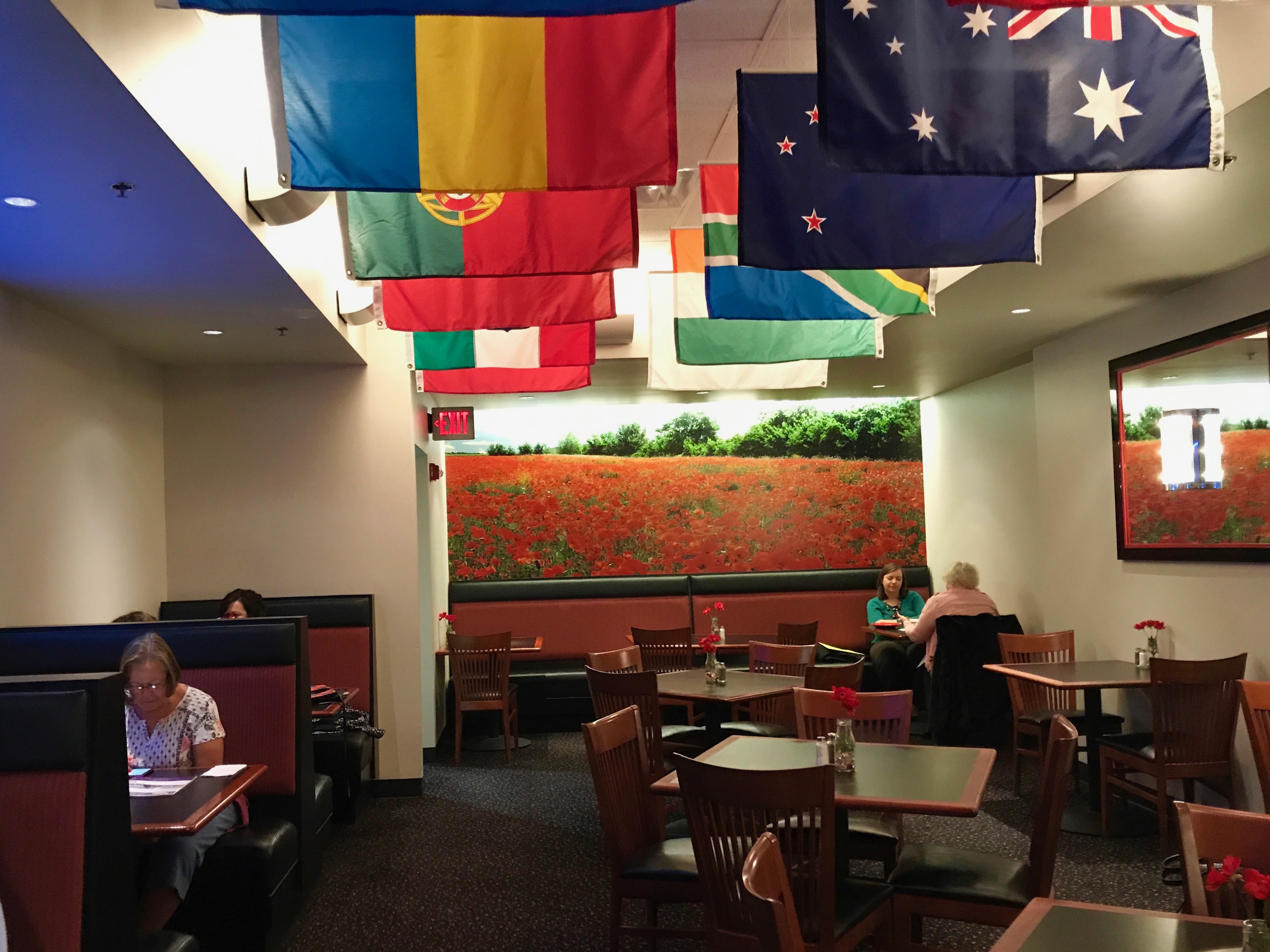
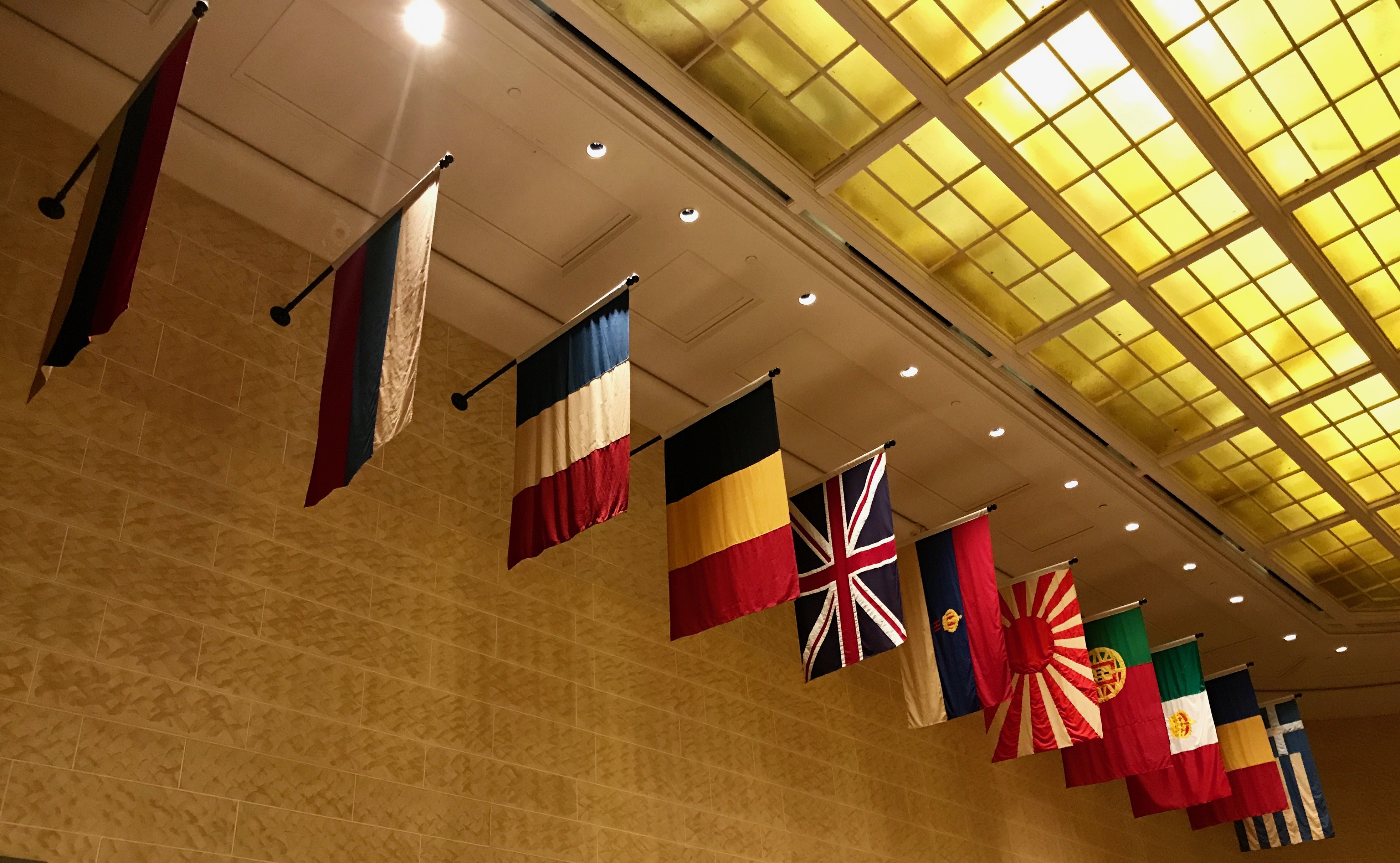
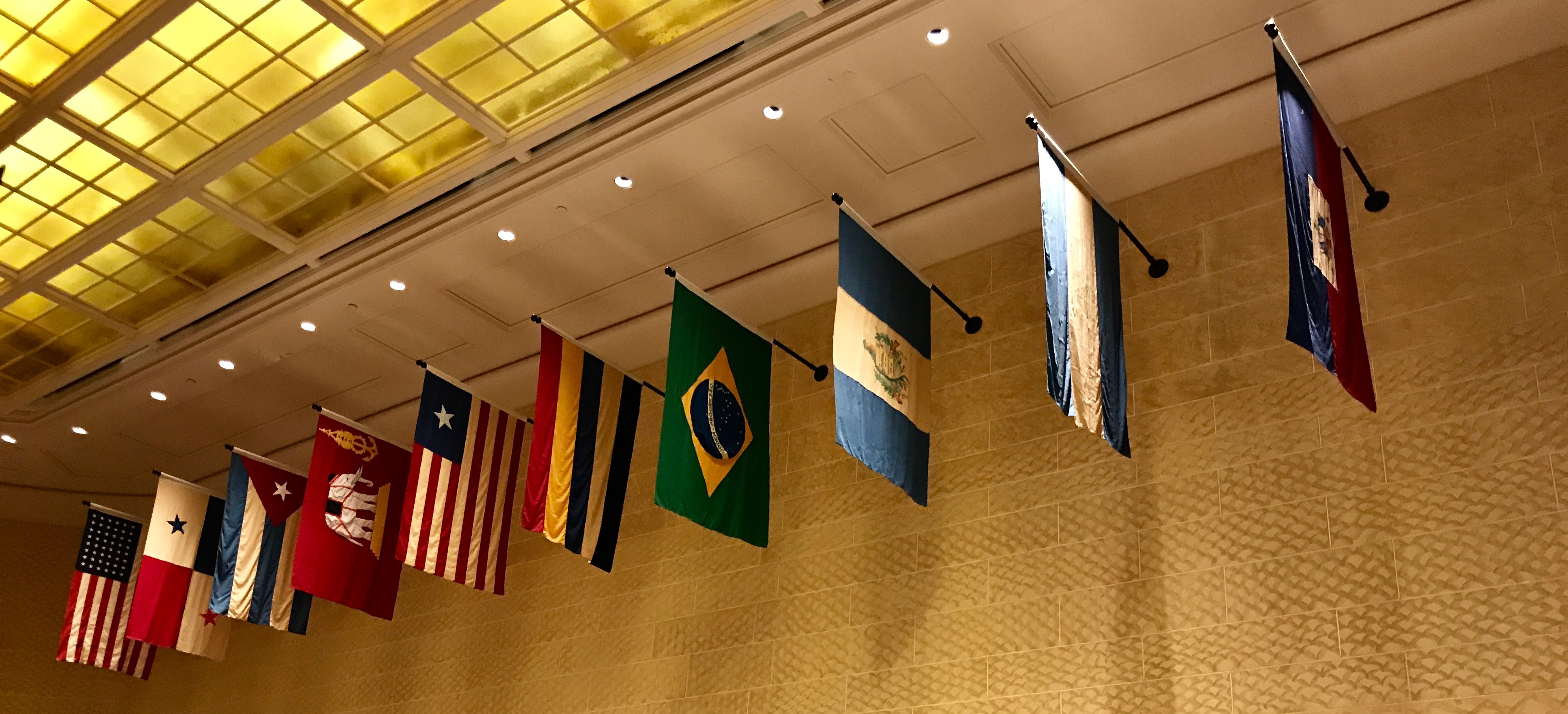
Each table had a little bouquet of poppies on it, and the walls were covered with poppy artwork. I thought the flags of the allies on the ceiling were a fitting bit of decor. I wonder how many soldiers ate like in such calm and clean dining halls?
Thus restored, I set out to see what I could see.
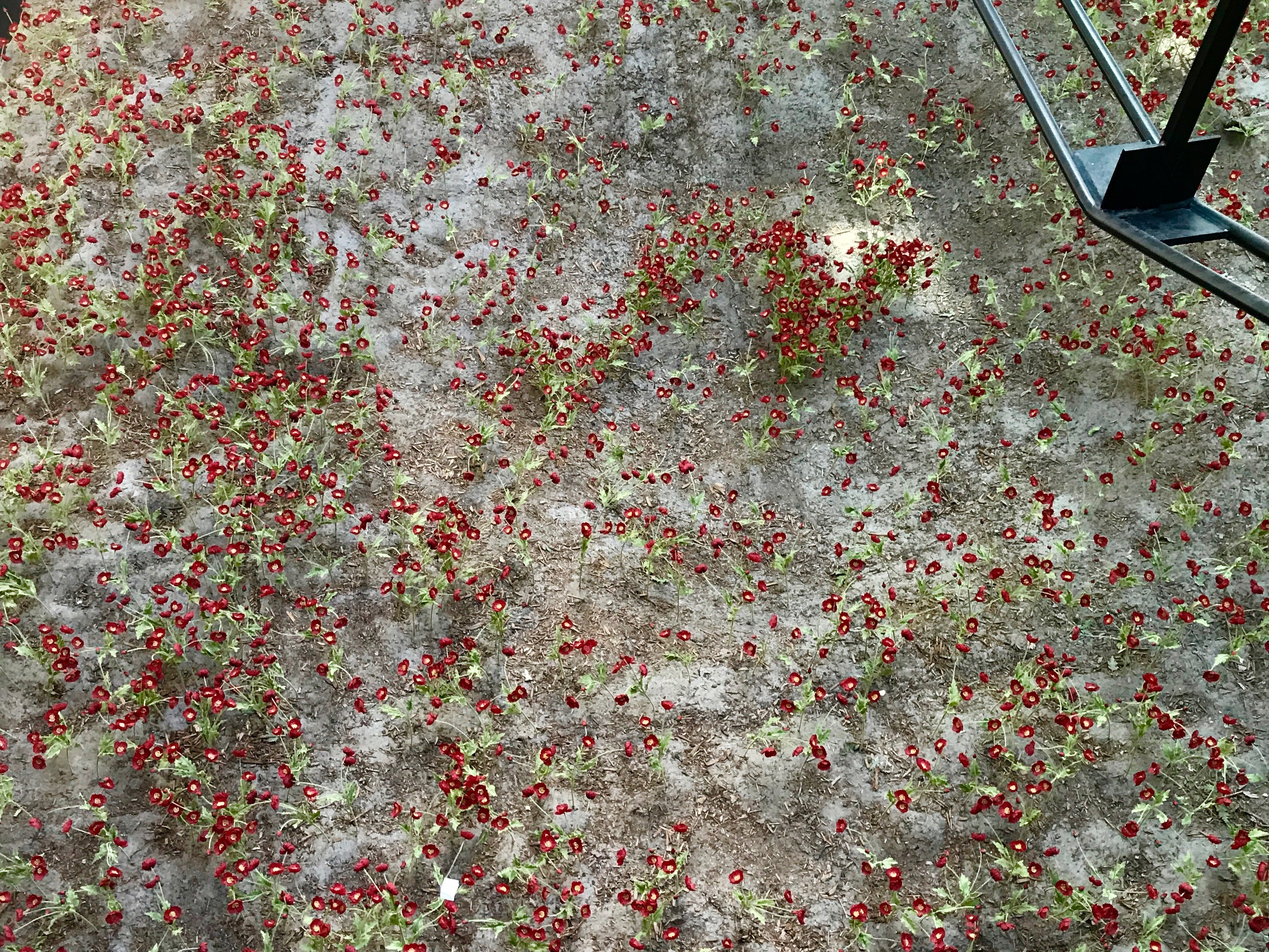
On the way to the displays, I passed another display of poppies. It runs in my mind that there are 9,000 of them massed in areas below the trusses, and each poppy stands for 1,000 dead combatants. That may be so, although I looked up the question “How many died in World War I?” 9,000,000 seems to be a bit on the low side. And you know what? That doesn’t even count the number of dead that were on “the other side.”
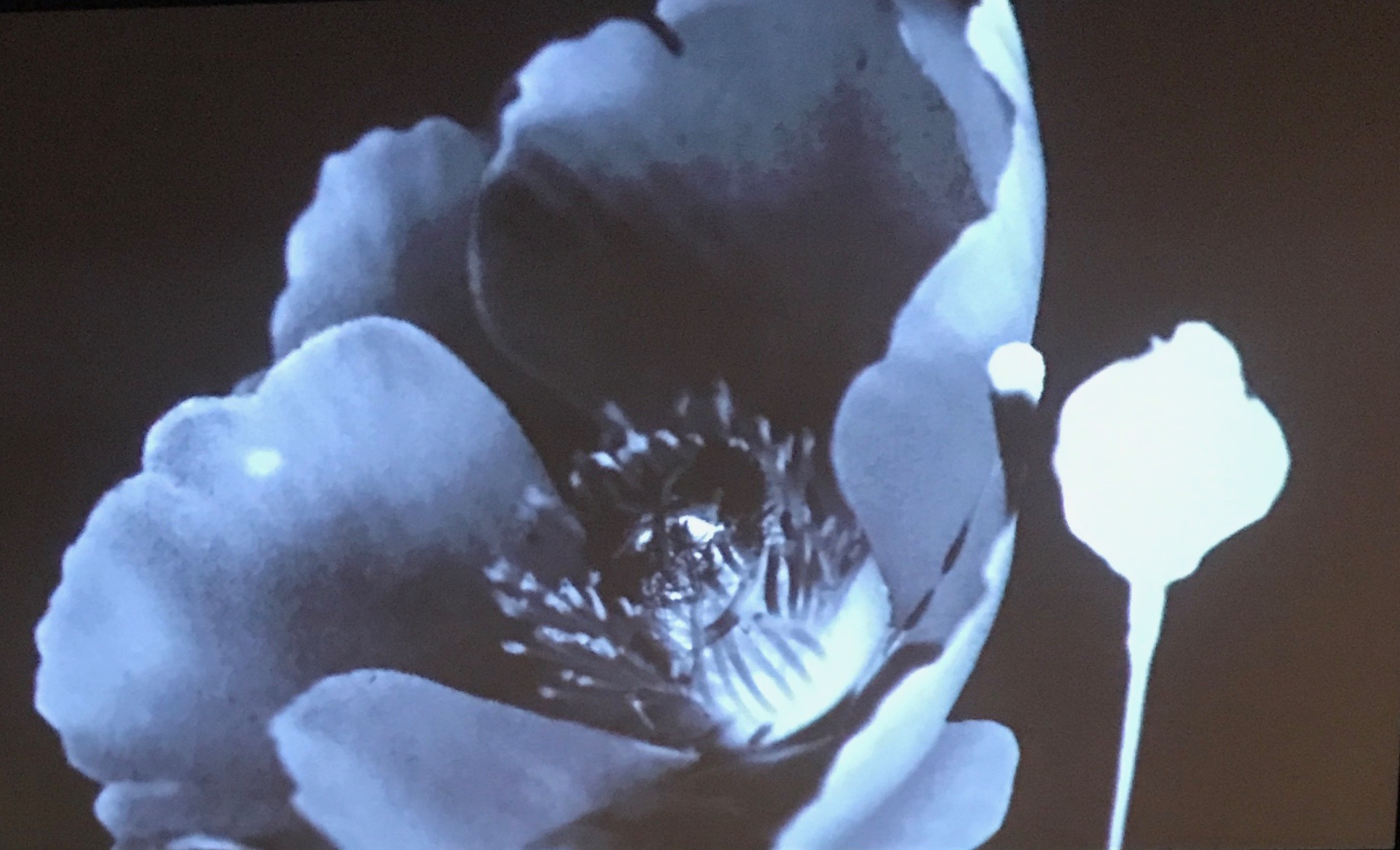
One more display of poppy art – this time, apparently x-rayed poppies – and it was time to enter the museum.
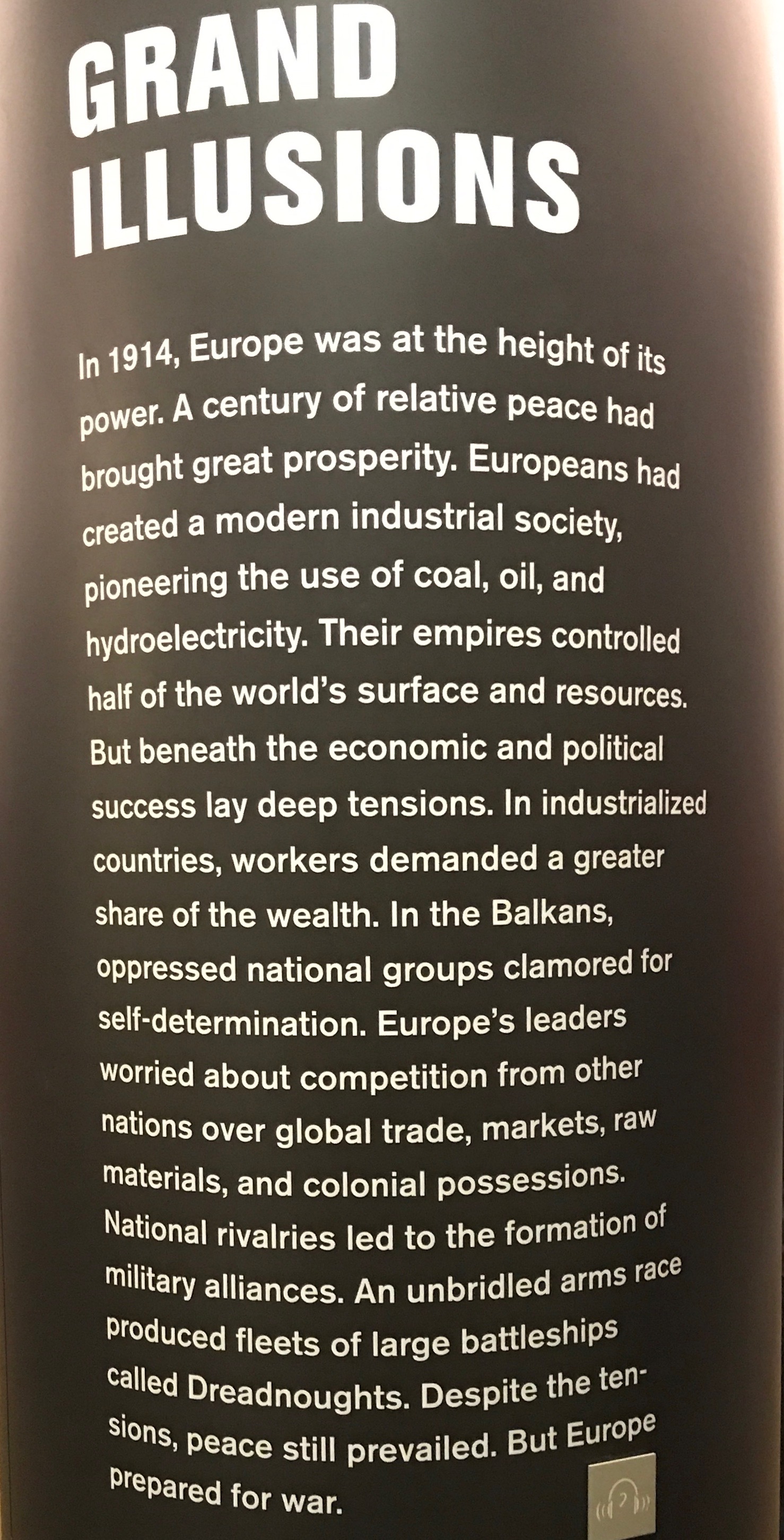
My loyal followers are probably just about to get up for some milk and cookies – or more substantial fare. You can relax. This time, I am going to give the museum a quick once-over. While the museum has a reputation for excellence, I found it to be extremely text-intensive.
Perhaps I should have sprung for the audio tour. I snapped some photos of the information, with intentions to return to it later. Since I have been writing these posts about my visit, I realized that World War I is an extremely complicated topic. I need to do considerable study and research before I can even begin to understand it.
Additionally, “reading a museum” with bifocals isn’t a lot of fun. So, friends, I’ll just share a few items that I could take photos of.
You can still have some milk and cookies (or something stronger) if you wish.
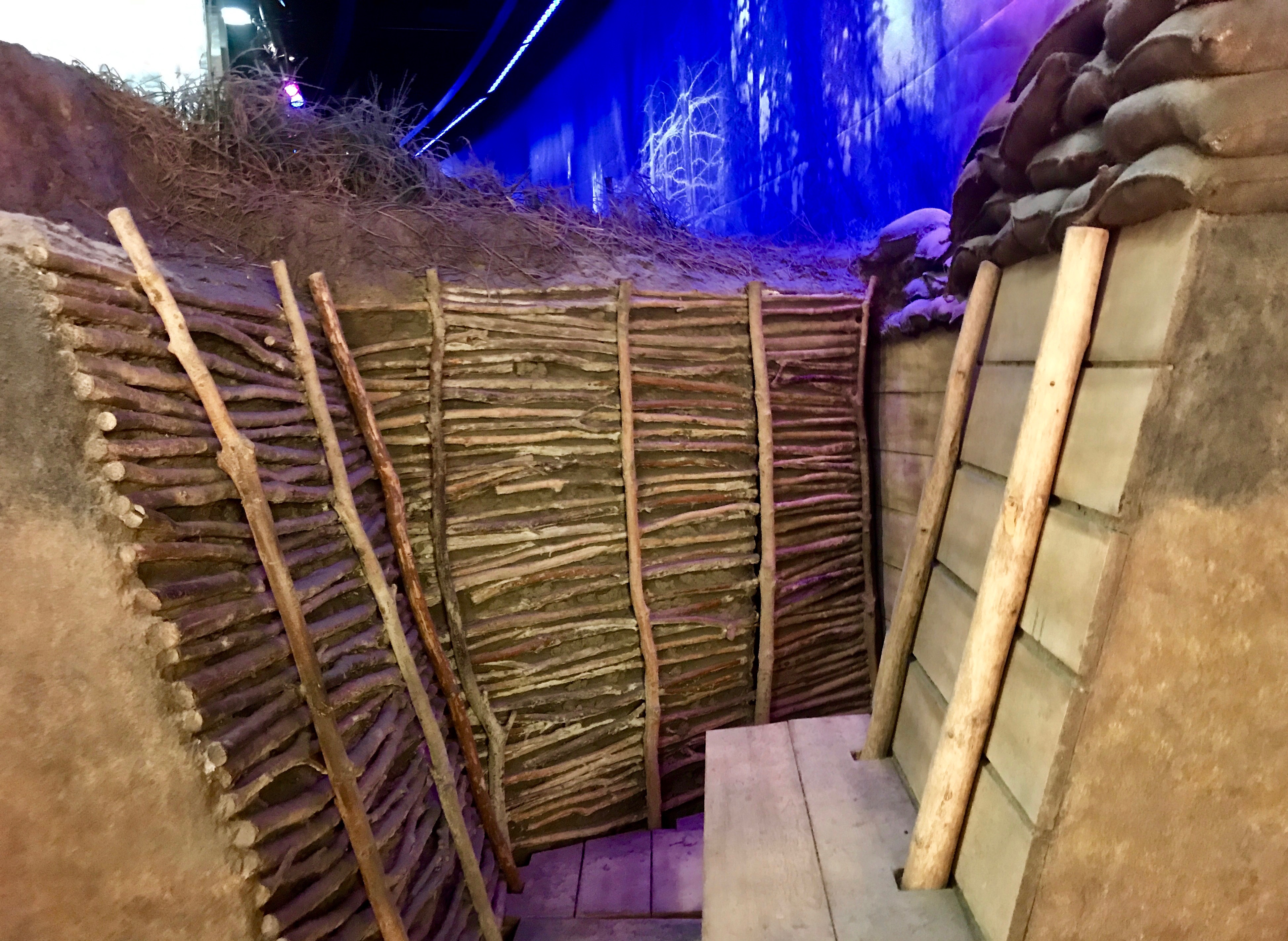
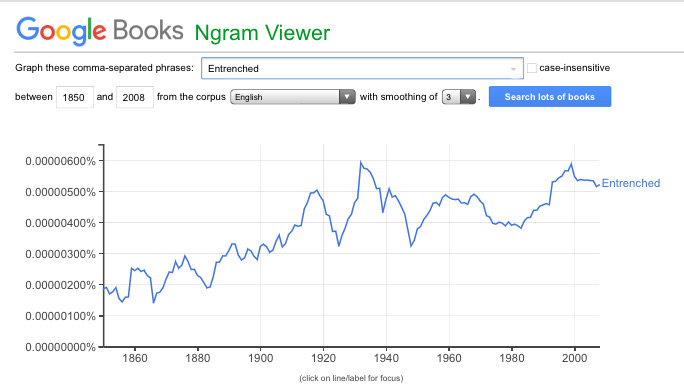
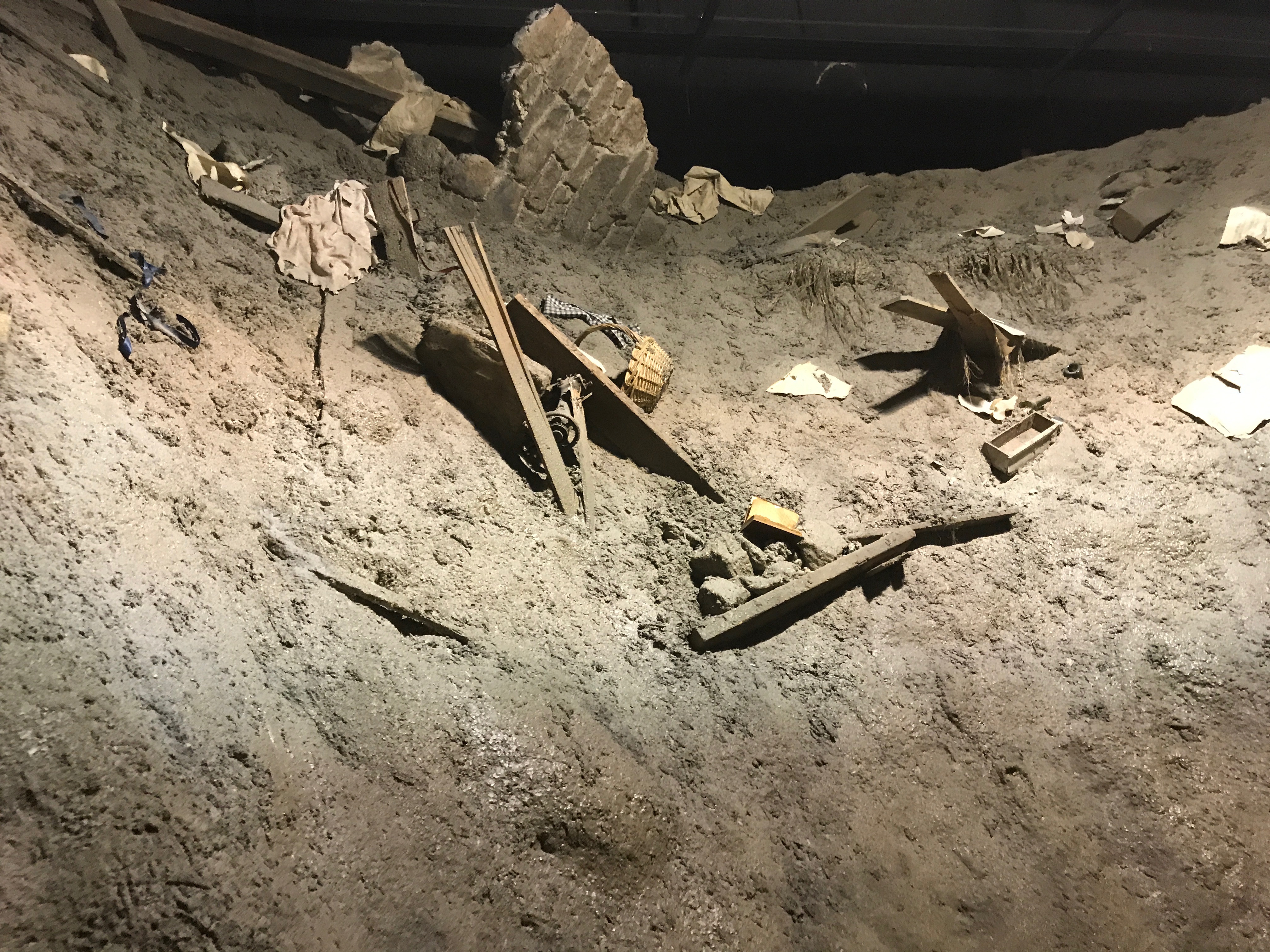
One thing that I think of when WW I comes to mind is trench warfare. This is a mock up of a trench. With so much support for the walls, you can easily see that these were positions they meant to hold. I wonder if the term “entrenched” comes from World War I?
I looked it up, but apparently it came into use in the figurative sense in the 1590s.
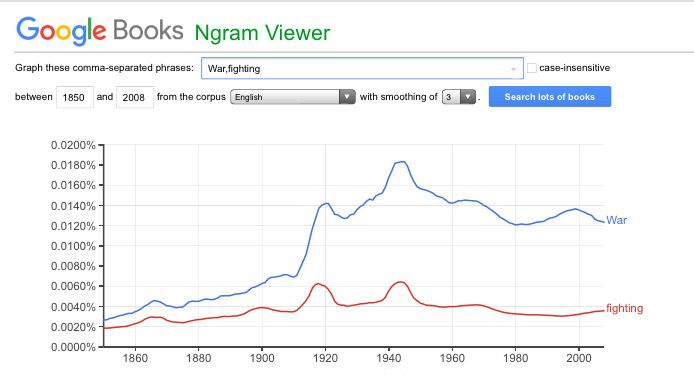
A examination of the word use on the Google Books Ngram Viewer shows its usage overtime. There are spikes in usage during the Civil War and World War I. I find it interesting that there are spikes in the 1930s and the 1990s. Currently, the word “entrenched” is used about as much now as it was during World War I.
If you’ve never used the Ngram Viewer, head over there and play around. You can even compare usage between terms.
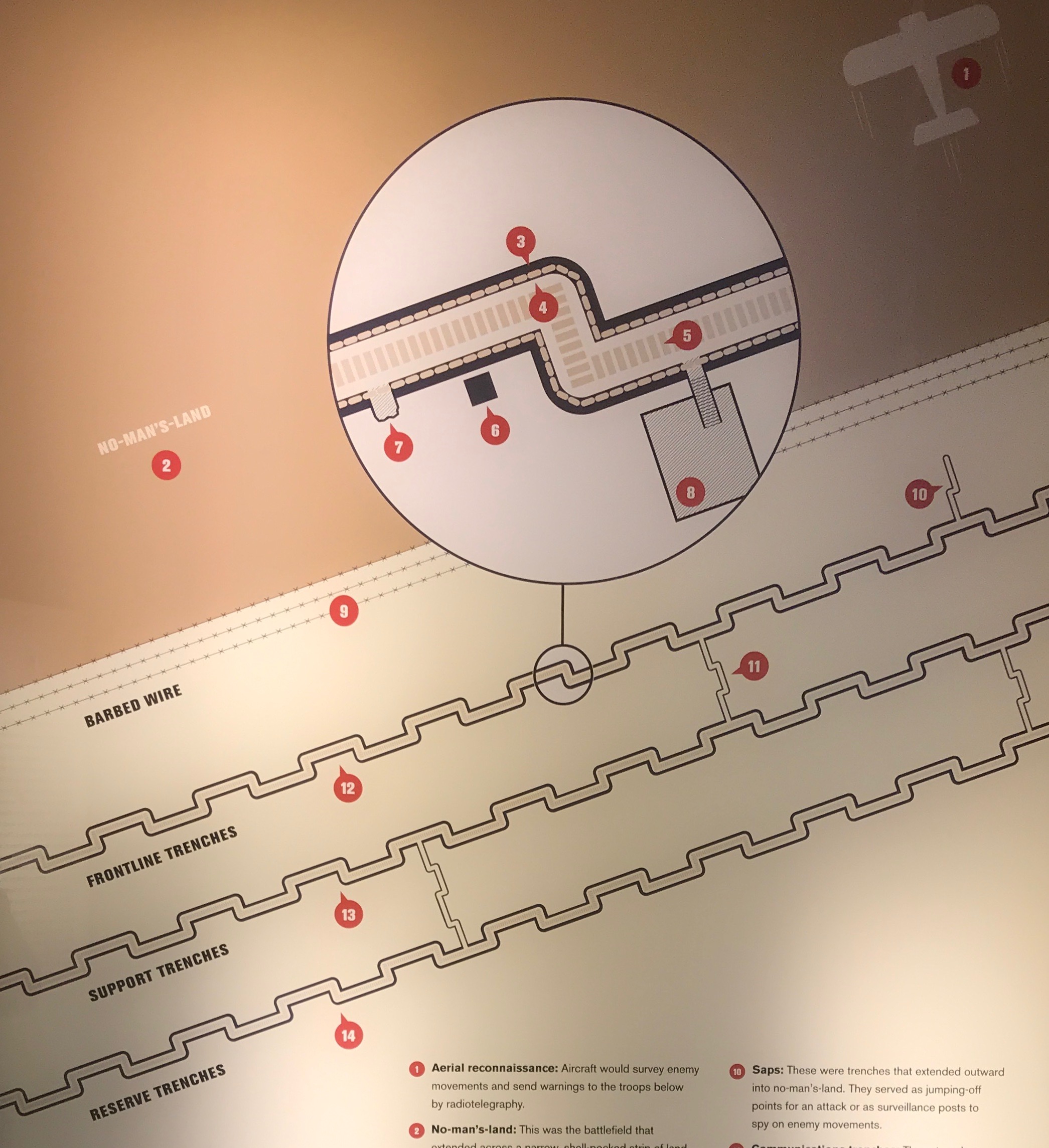
Here is a map of the rings of trenches that are behind no-man’s land and the barbed wire fences. The zig-zag layout was designed to slow down attackers and to provide a little extra protection for the soldiers.
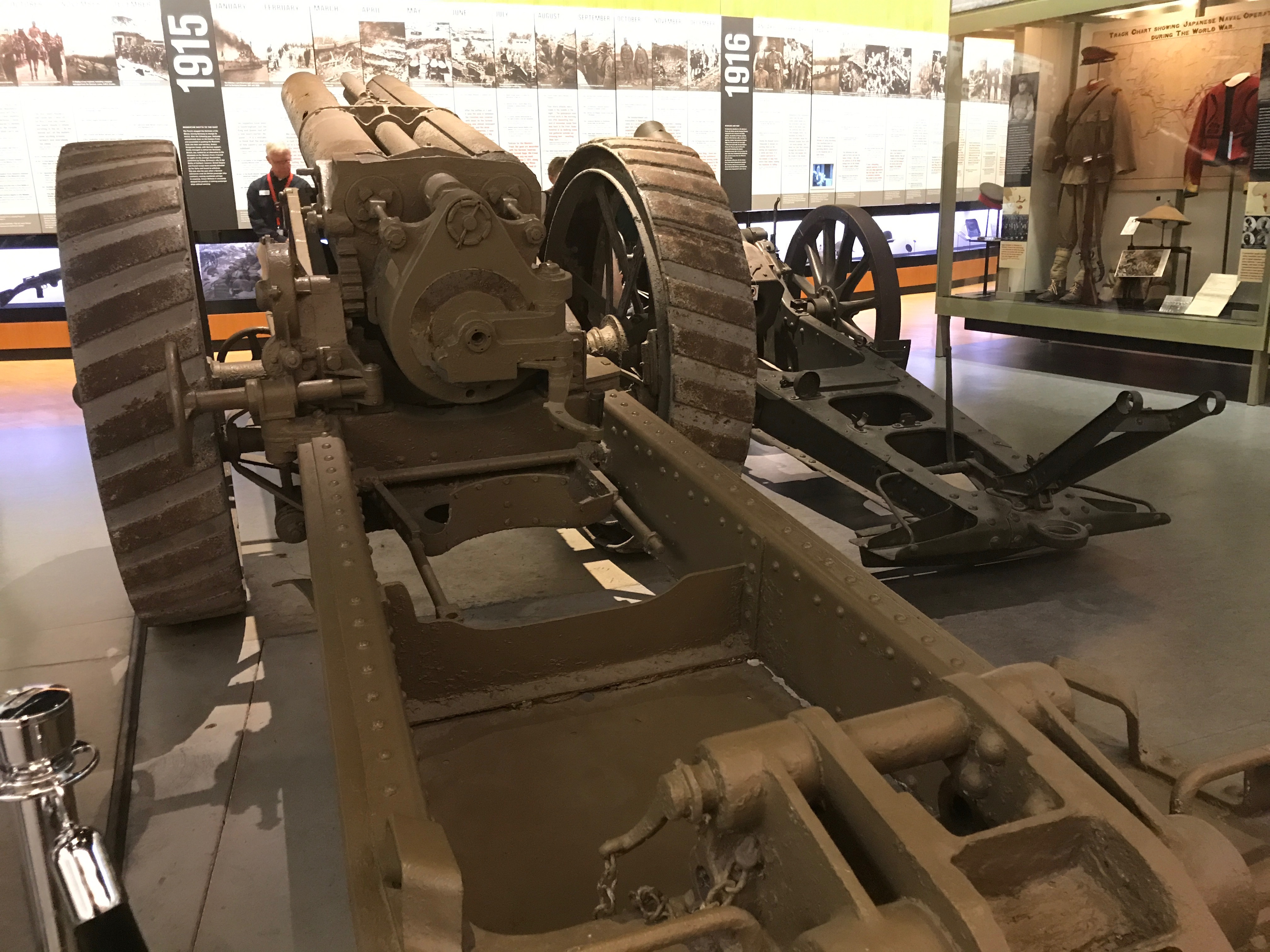
As you might expect, there were ordnance and uniforms on display.
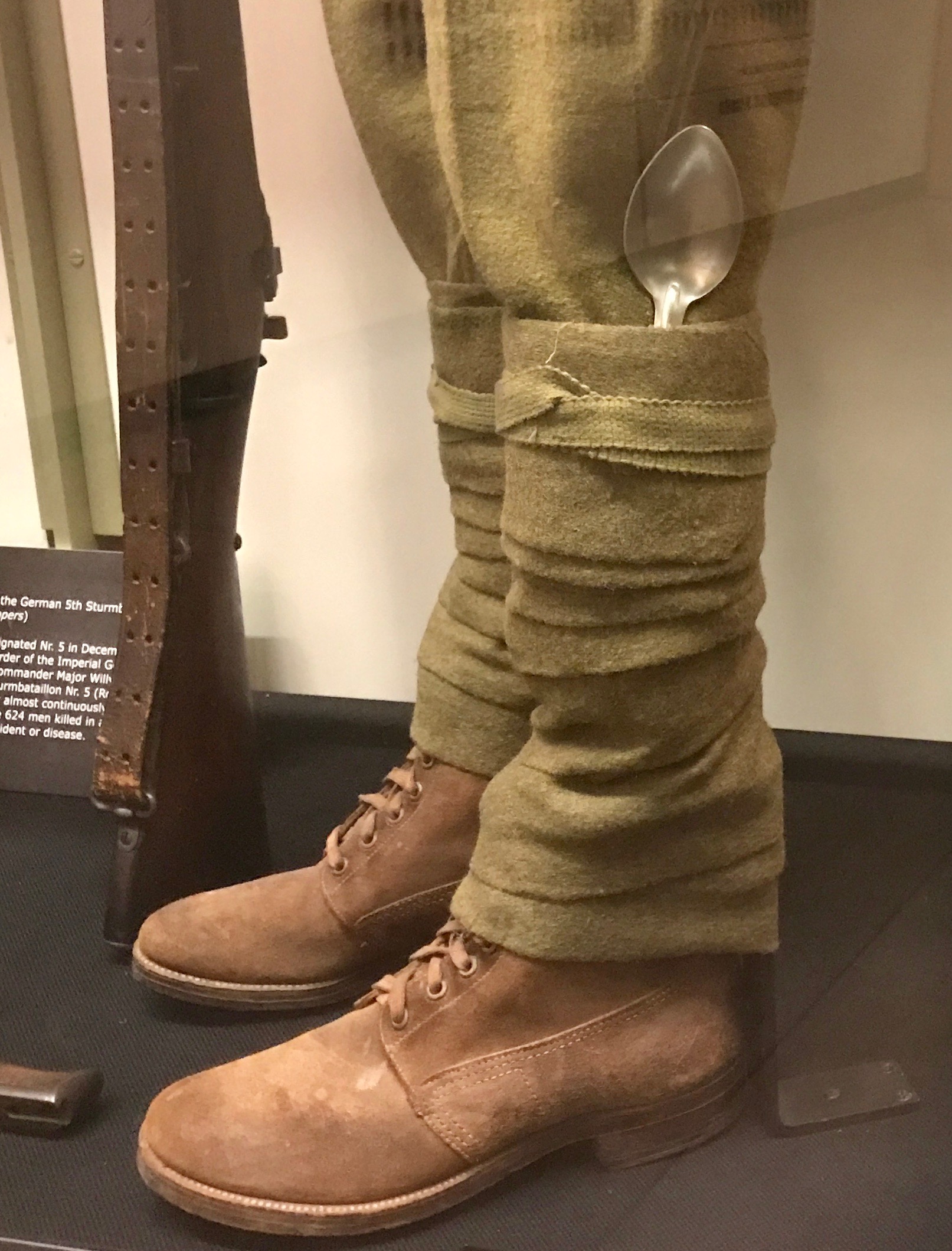
The A.E.F. (American Expeditionary Forces) often carried a spoon in the top of their spiral-wrap puttees in case they unexpectedly found some food. They wore wool uniforms, a steel helmet and hobnail boots. A soldier’s equipment included a U.S. Rifle Model 1903, with bayonet, a cartridge belt, a trench knife for hand-to-hand combat, gas mask, and entrenching tool, which those of us not in the military would probably call a folding spade. He also carried a first aid kit, mess kit, canteen and as many other small comforts as he could manage.
So, why do you suppose a soldier would need to carry a small shovel with him? Well, all that bombing trench making and such created a lot of debris.
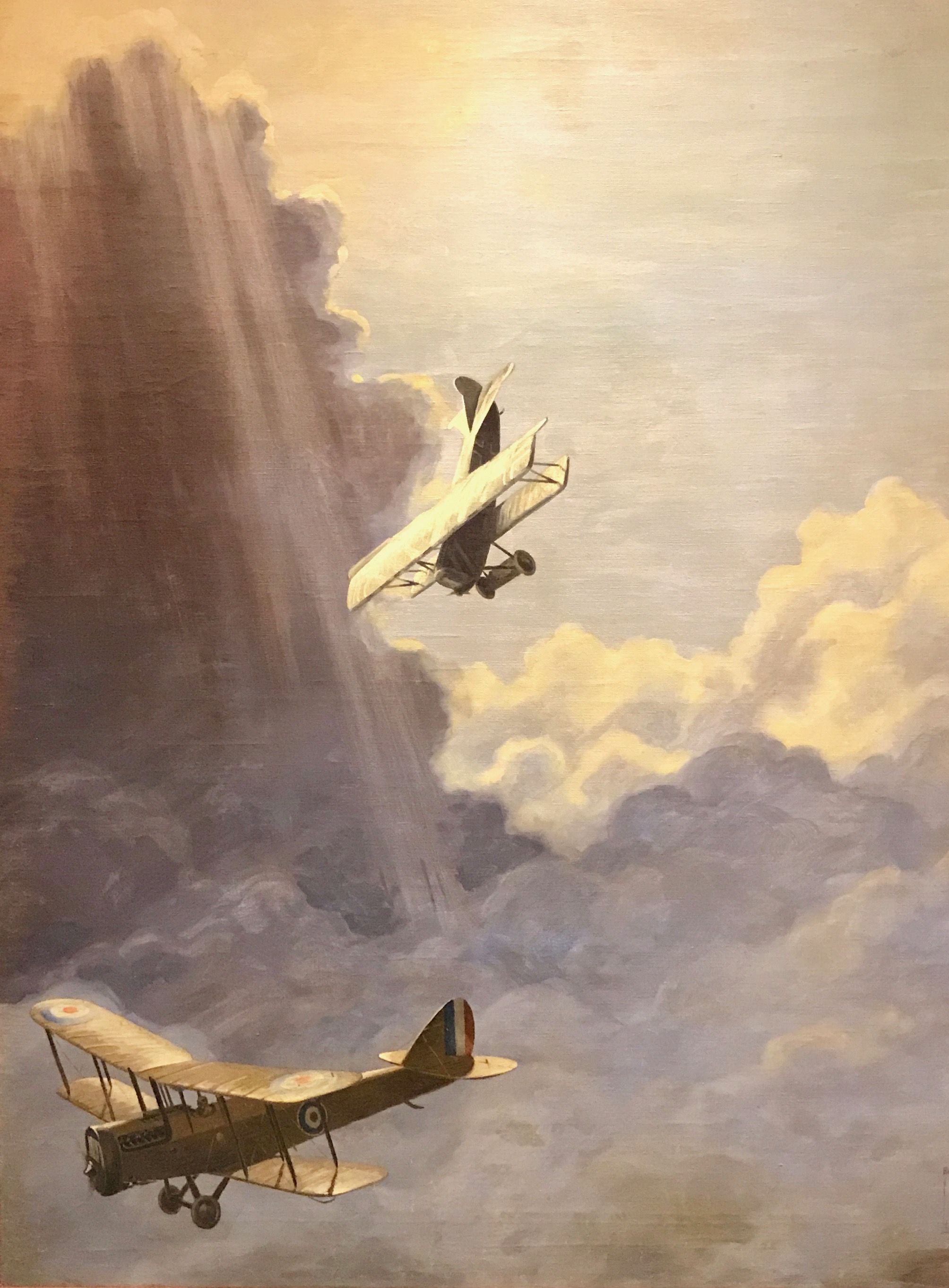
Another concept that might come to mind are the aerial dogfights that Charles Schultz made the baby boomers aware of with Snoopy’s imaginary battles on his doghouse “Sopwith Camel.”
They didn’t have a Sopwith Camel at the museum, but they did have this painting. Incidentally, the Airzoo in Kalamazoo has one that is in restoration. I saw it many years ago. I wonder if they are still working on it?
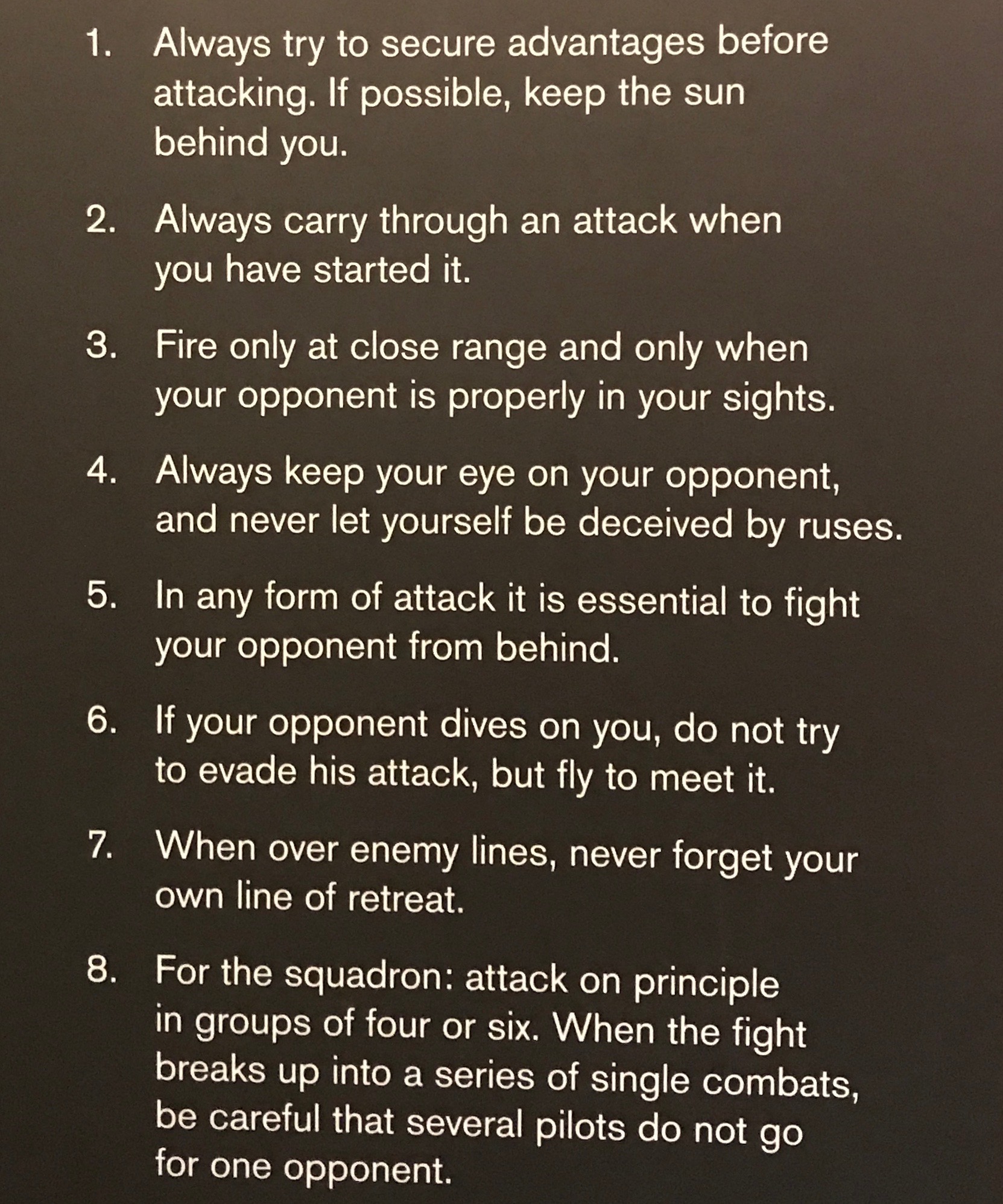
The Germans were the first to use flight schools that required hours of training. Veteran pilots served as instructors to train student pilots thoroughly before sending them to the front.
These rules of air combat were written by Oswald Beolcke, Germany’s leading ace at the beginning of the war.
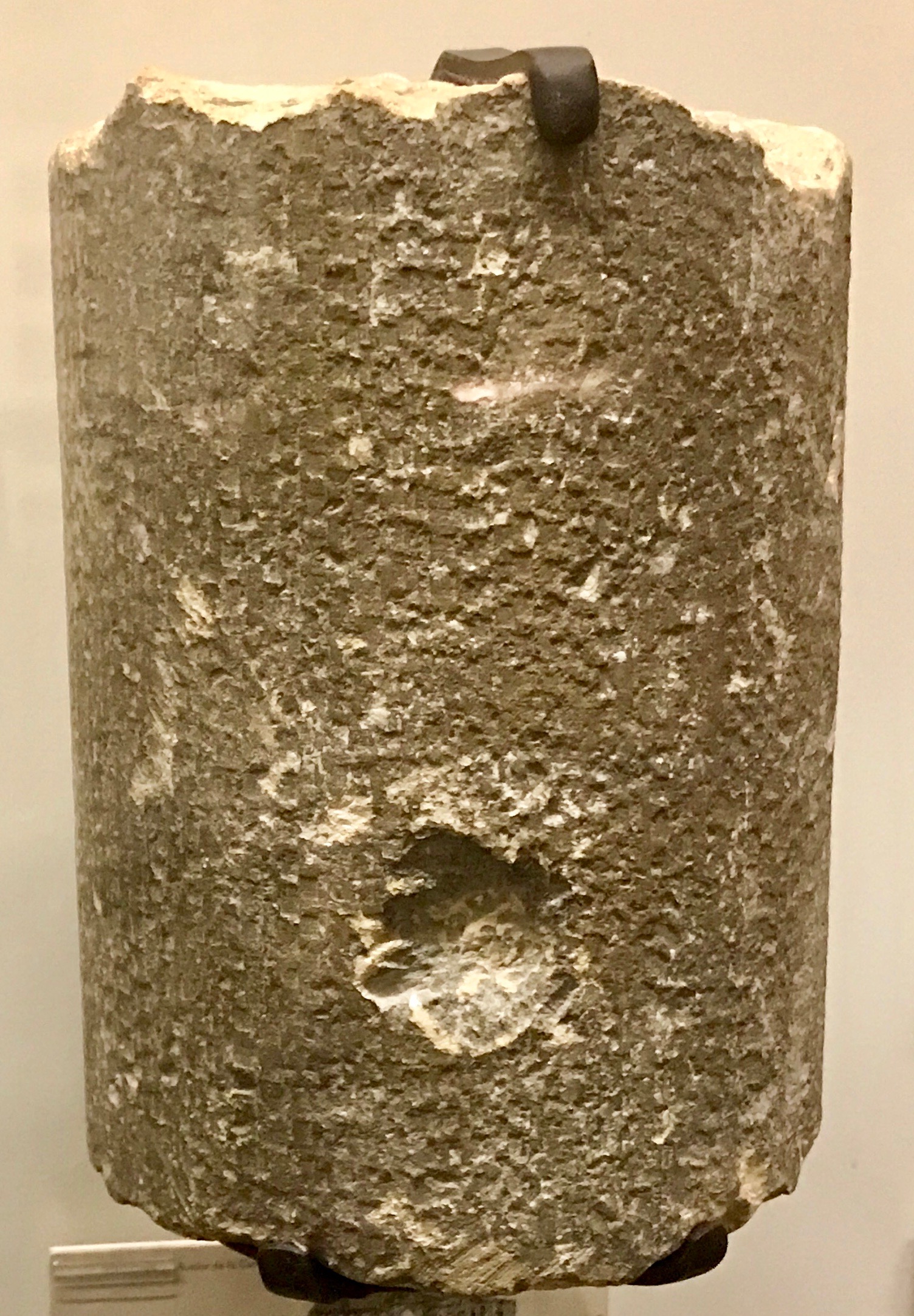
This pock-marked stone is a fragment of a small column from a window surround from the war-destroyed Cathedral of Reims. It was a gift from the Government of the French Republic to the Liberty Memorial and its museum in 1926. The letter that accompanied the fit said: ” May these sacred stones from the land of France recall both an unhappy past and the memory of the imperishable friendship and the union of two great people.”
If it weren’t for the French, the United States would never have been able to defeat the English in our War for Independence.
“Lafayette, we are here!”
Those words are often attributed to General Pershing, but they were actually said by Lieutenant Colonel Charles Stanton at the grave of The Marquis de Lafayette in Paris when the first contingent of the American Expeditionary Force arrived in 1917.
According to Ian C. Friedman, The Marquis de Lafayette was a 19-year-old military officer who was so moved by reports of the colonial use for independence that he decided to come to America and fight the British. Benjamin Franklin urged General Washington to accept Lafayette as an aide-de-camp because of his strong reputation and because they hoped that the young French officer could help increase French support for the revolutionary cause.
The Marquis de Lafayette died in Paris on May 20, 1834, almost ten years after returning to the United States as an official guest of President James Monroe. During this visit, he toured every state and traveled over 6,000 miles. In 2002, an act of the U.S. Congress made Lafayette an honorary citizen of the United States – only the sixth of eight people. He is buried in Paris under soil from the site of the Revolutionary War’s Battle of Bunker Hill.
Ah, but I digress…
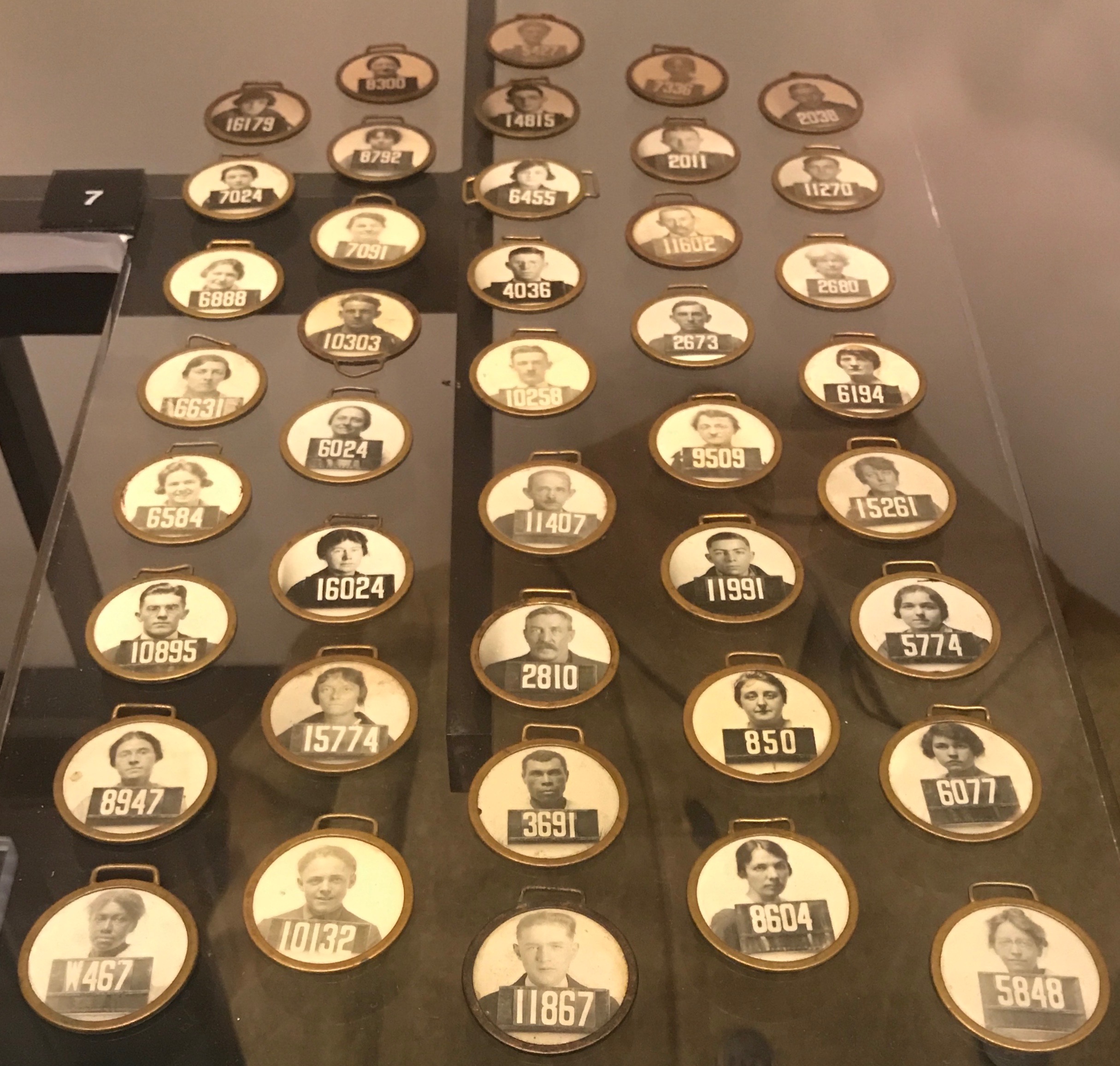
These rather somber photos are worker identity badges. They were worn by workers at the Woodbury, New Jersey, naval ammunition bag loading plant.
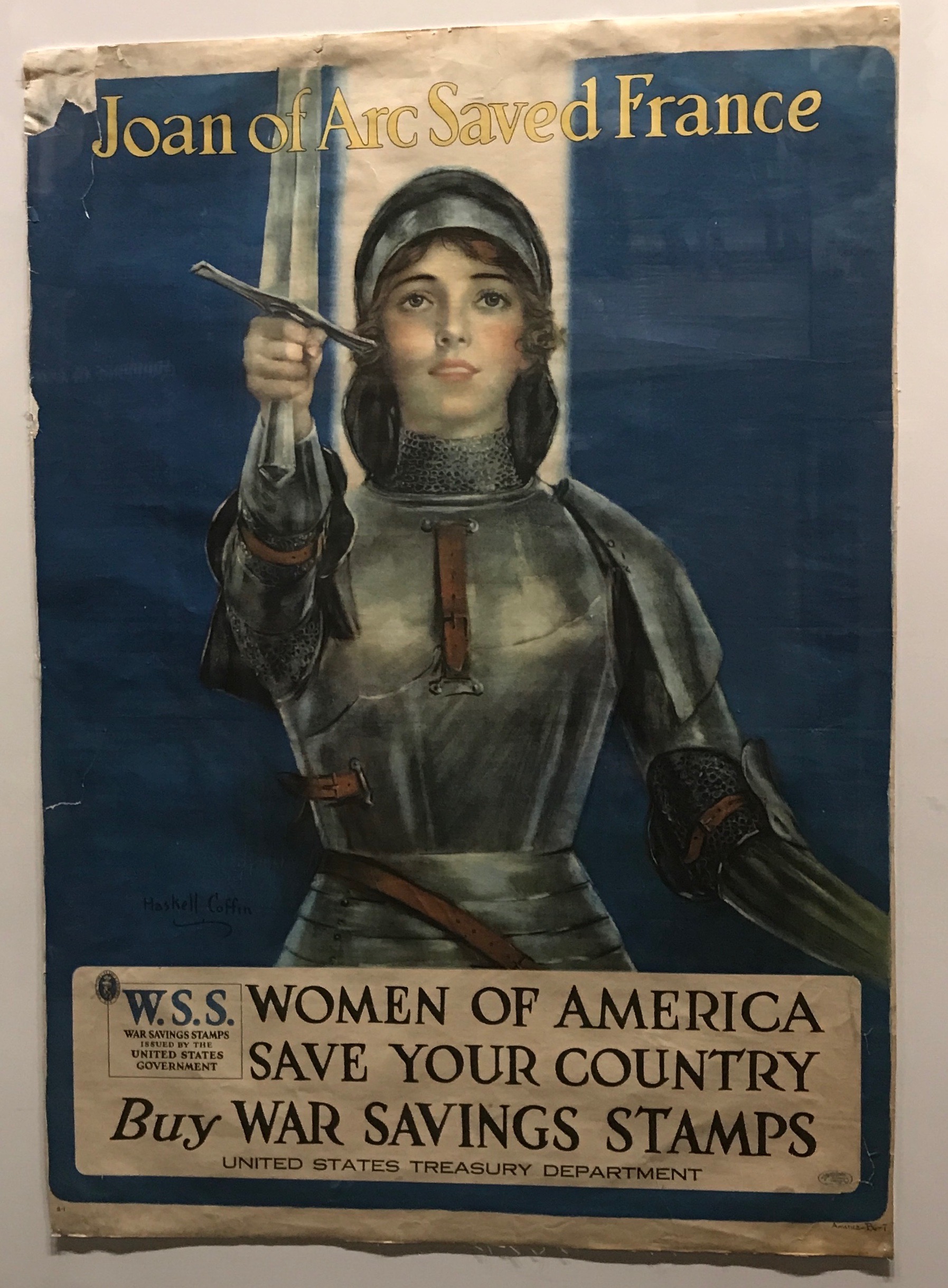
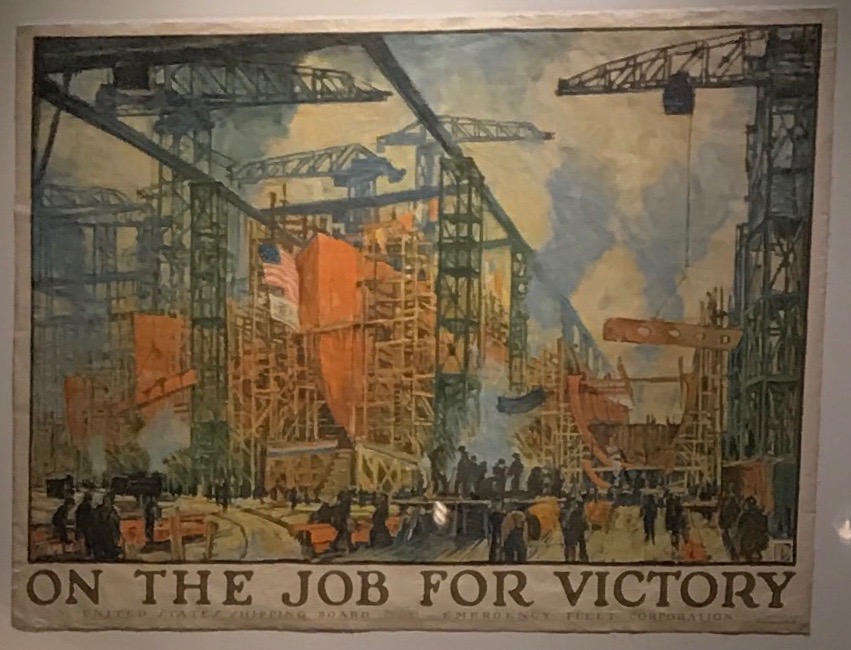
Long before the country officially entered the war in April 1917, posters began to make appeals to the “American sense of right and wrong.” Posters urged the country to prepare and, after the sinking of the Lusitania in 1915, to enlist.
After the United States entered the war, the poster campaign shifted into high gear.
“Posters literally deluged the country,” said one observer.
“On every city street, along the rural highways, posters were to be found repeating their insistent messages day and night.”
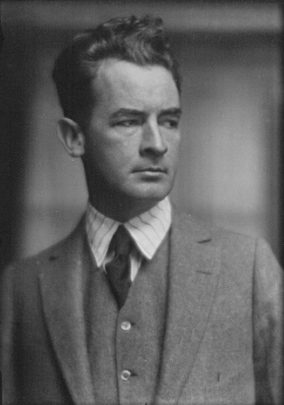
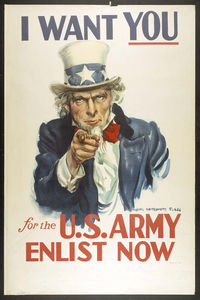
In many instances, art organizations and individual artists the highest standing volunteered their services to make posters. James Montgomery Flagg painted a self-portrait as Uncle Sam in 1917, creating probably the most recognizable poster from the war.
Flagg used his own face for that of Uncle Sam, although he did add age and the white goatee. He said that he did it to simply avoid the trouble of arranging for a model. When it was revived during World War II, President Roosevelt praised his resourcefulness for using his own face as the model.
Do you see the likeness?
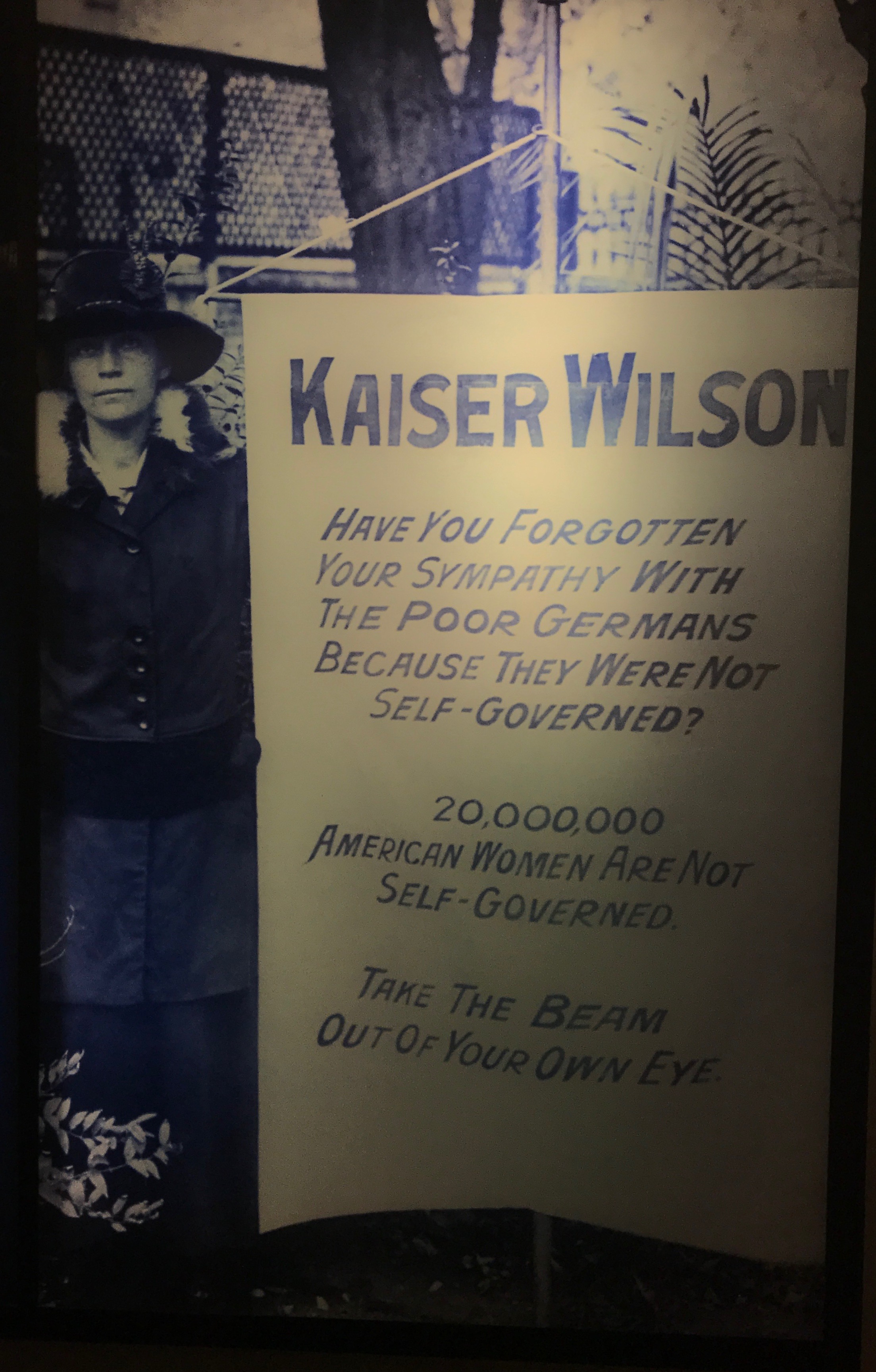
Not everyone was gung-ho enthusiastic about the war. Women continued to advocate for the right to vote. It’s hard to believe that half the population was disenfranchised by gender until 1920.
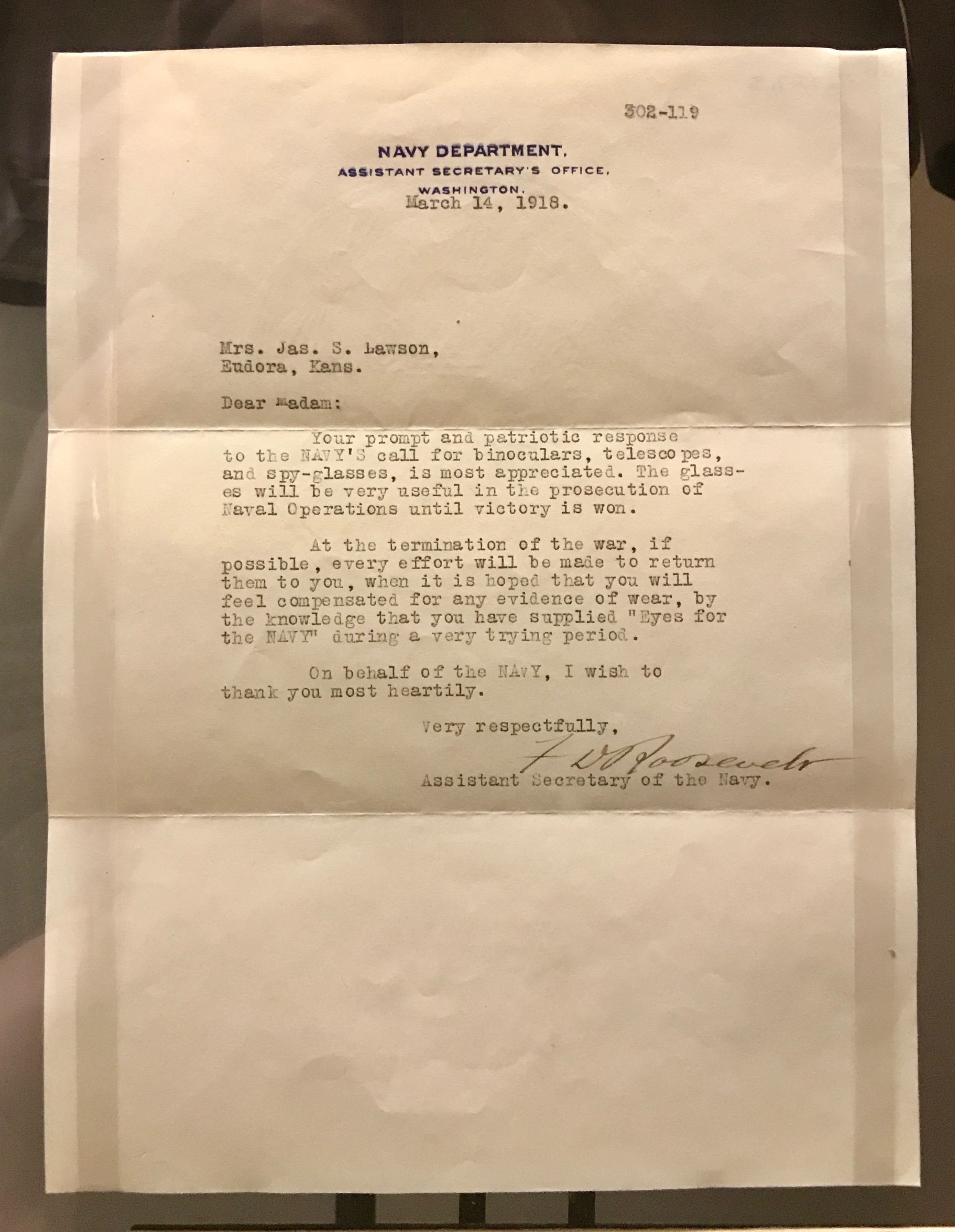
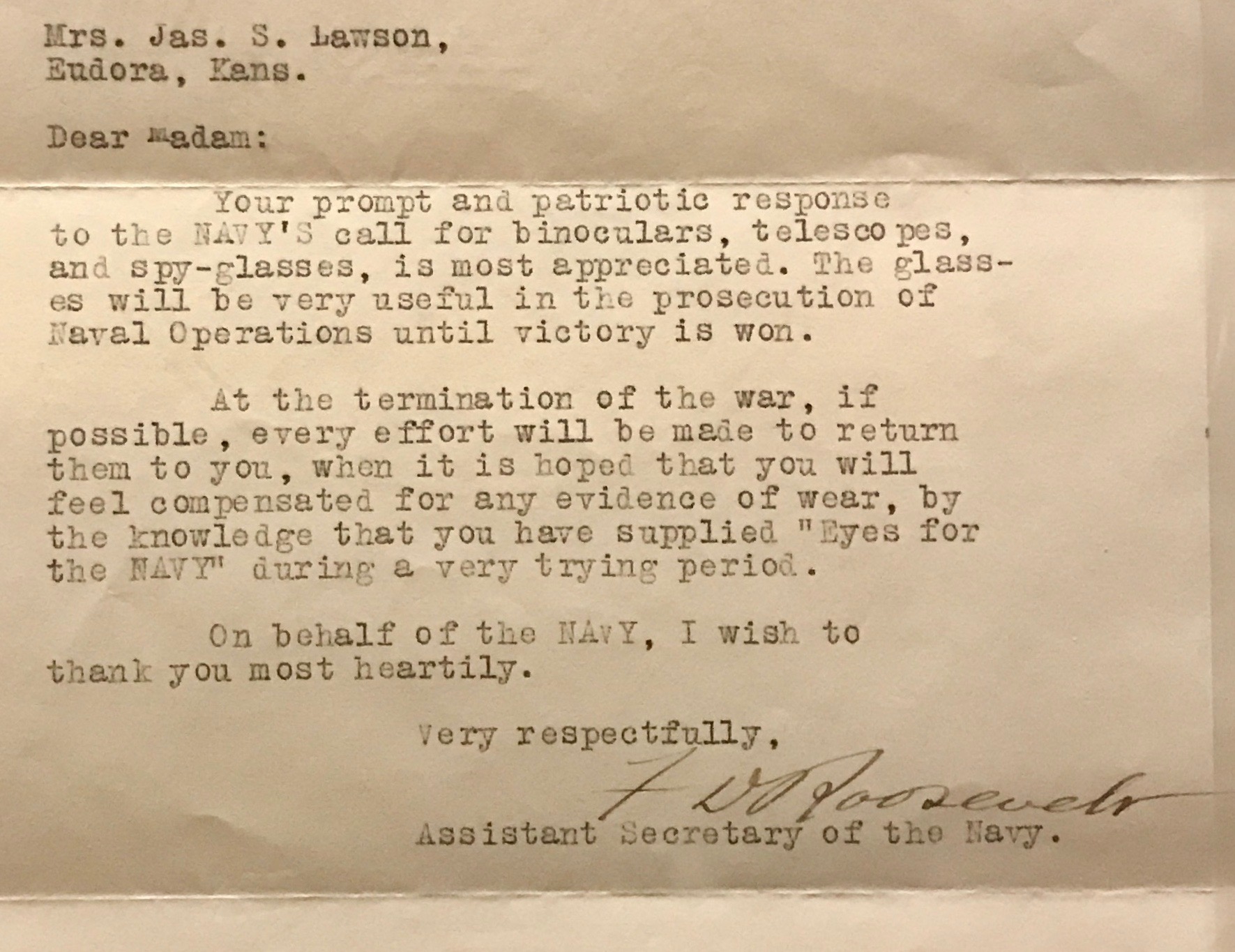
This letter caught my attention. Let me zoom in on the body of the letter so that you can see it clearly.
Can you imagine asking people to send in their binoculars? I guess they had to ramp up the military quickly and that they didn’t have a large stockpile of equipment. I wonder why NAVY is capitalized? And, did you notice who signed the letter? FDRoosevelt.
I have just a few more artifacts to share.
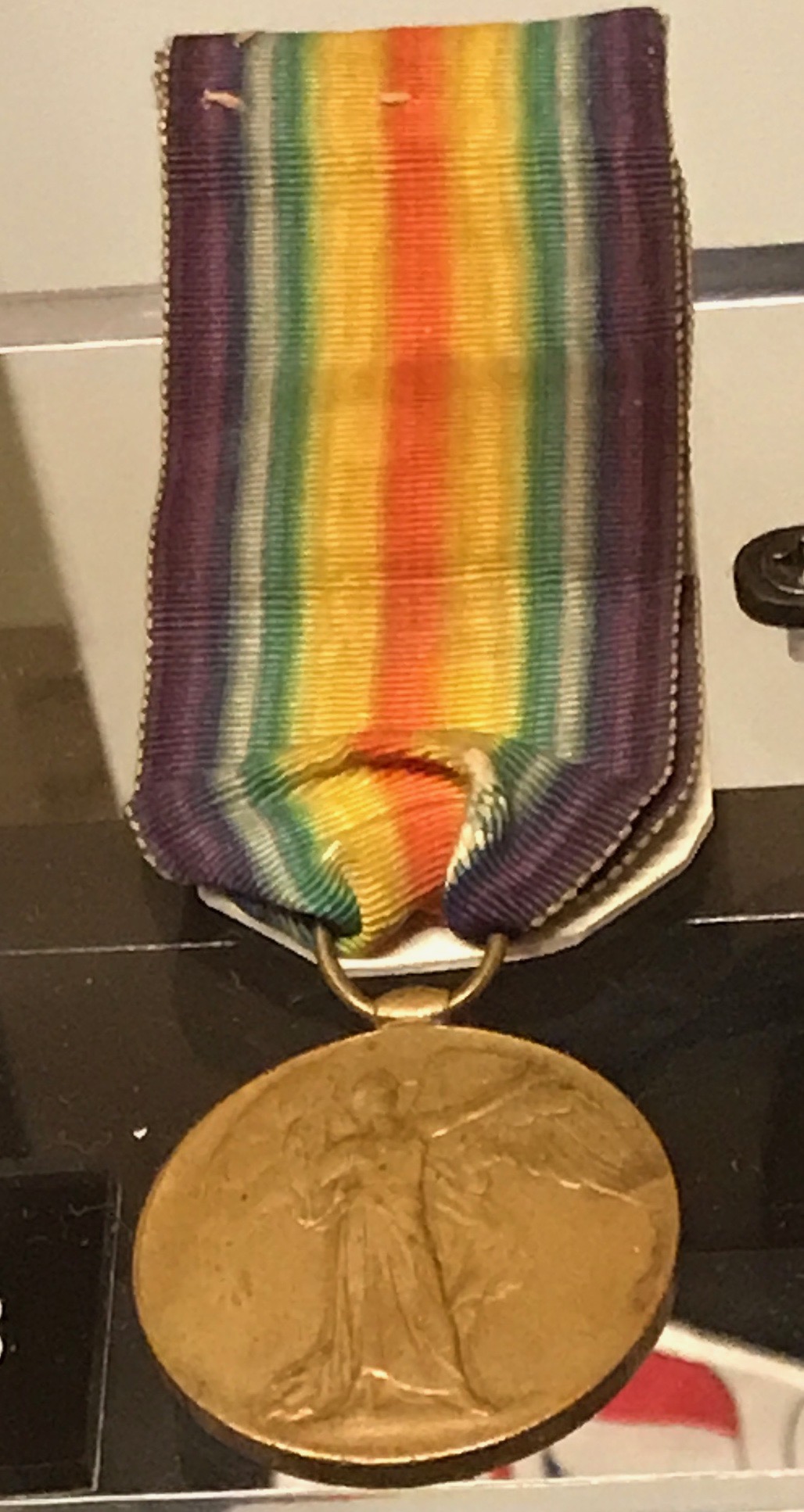
My grandfather, who served in the Canadian army, had a medal like this one. I had it for many years, but gave it to my brother when I set out to tour the country in the Airstream back in 2014.
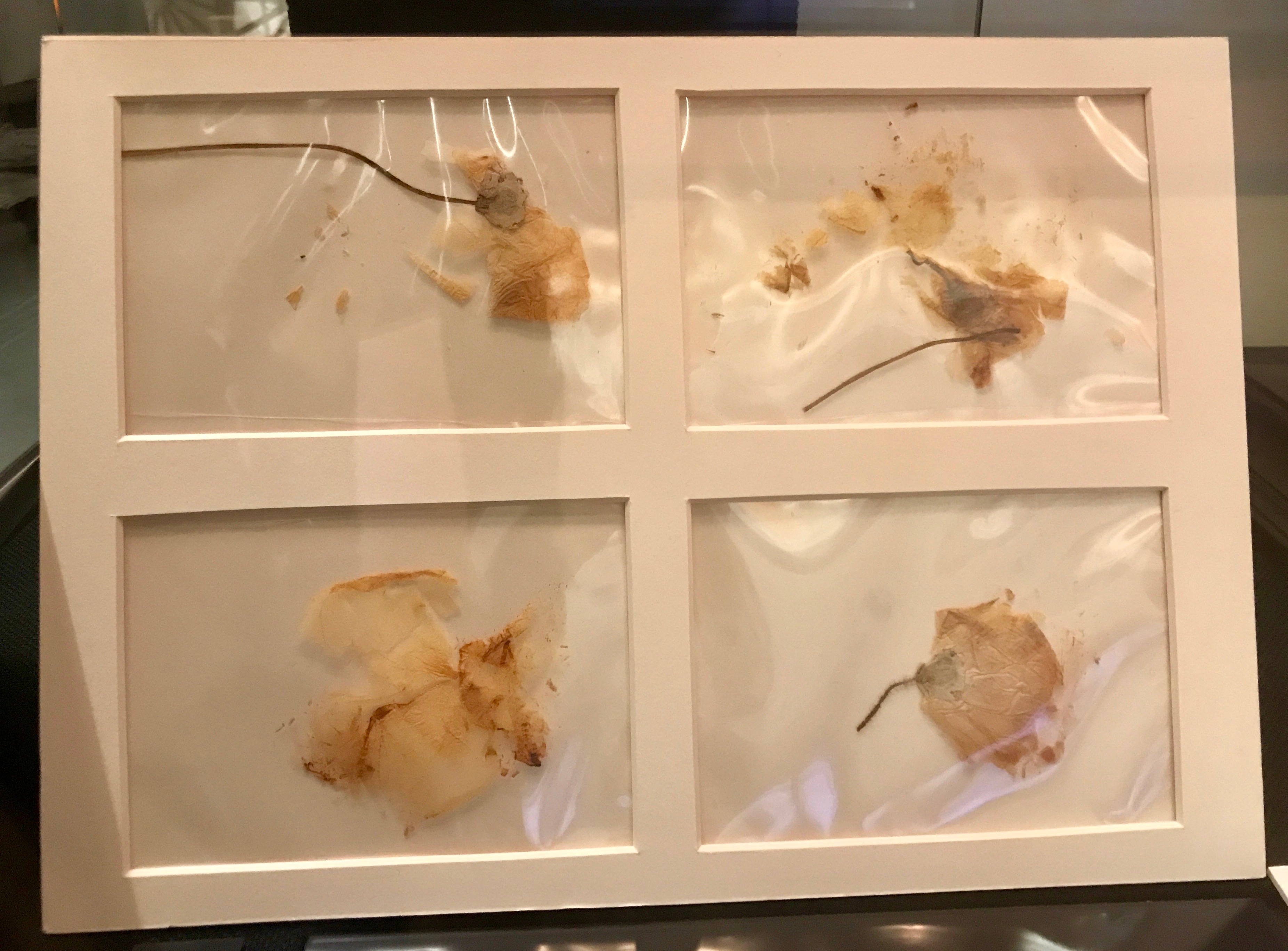
And some poppies…
These poppies were gathered from Belgium’s Flanders Fields by Arthur Massey, 20th Field Artillery, 5th Division, A.E.F.
And with that, it was time for me to head back into the sunshine.
The Great War.
The War to End War.
The War to End All Wars.
World War I.
Kansas City is home to The National World War I Museum and Memorial. It tells the story of the story of The Great War from the seeds of the conflict to the 1918 armistice to the 1919 Paris Peace Conference. I was taught that the assassination of Archduke Ferdinand was the reason behind World War I, but it was more complex than that. The demands from Austria-Hungary for impossibly large reparations from Serbia lead them to declare war on Serbia. A complex web of alliances was activated as Russia declared war on Austria-Hungary, Germany declared war on Russia and France and Britain declared war on Germany and Austria-Hungary.
World War I had begun.
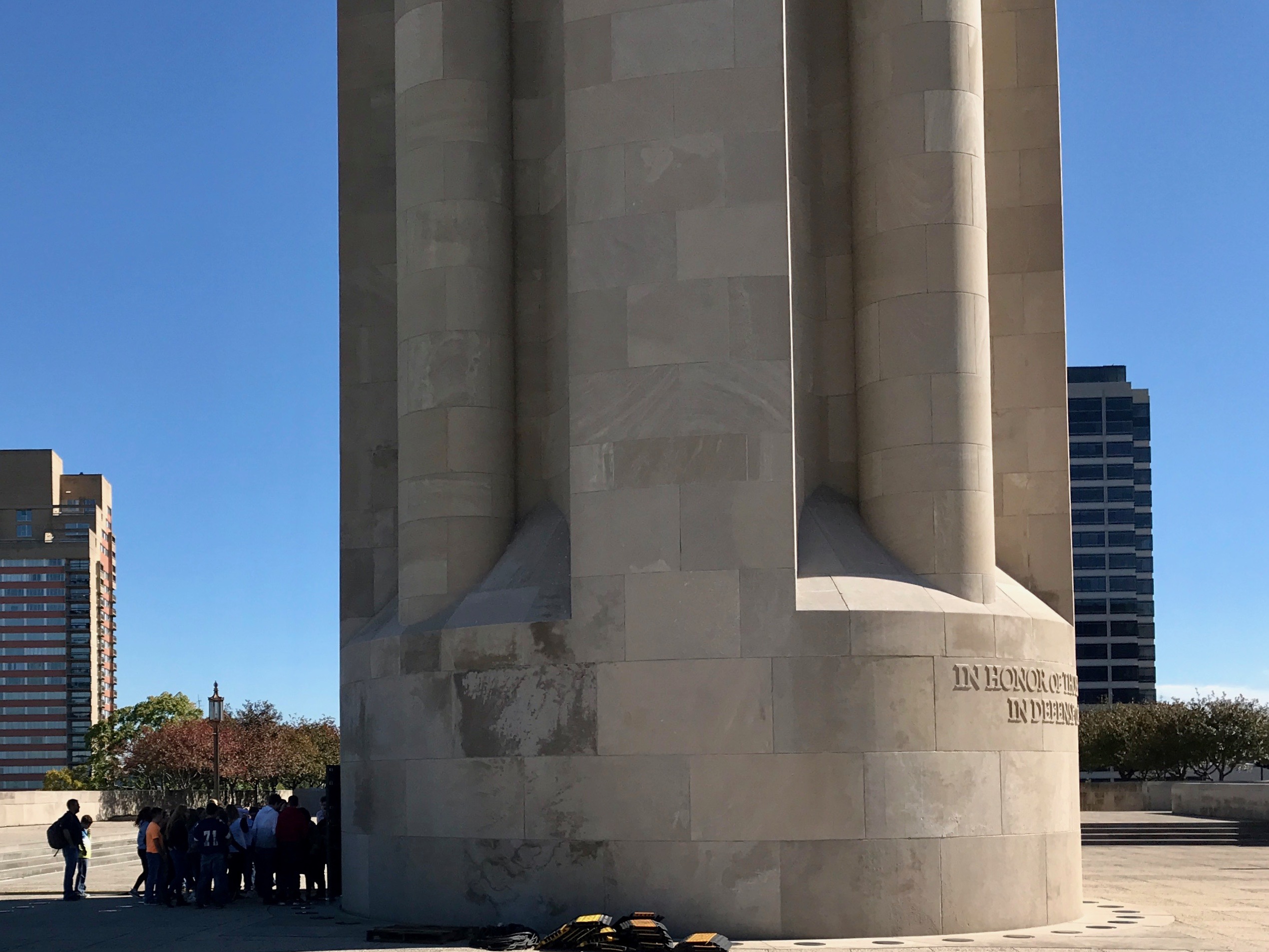
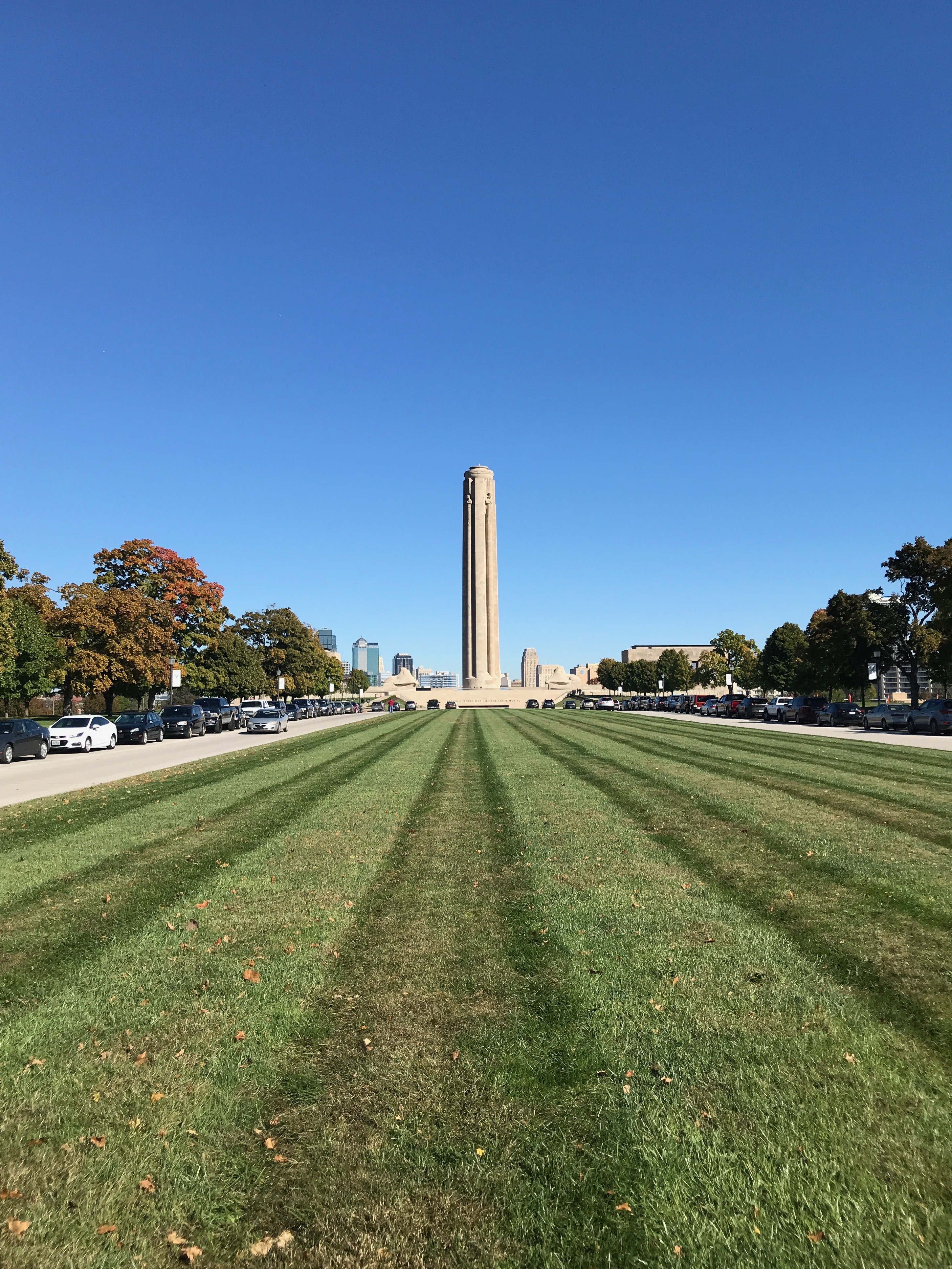
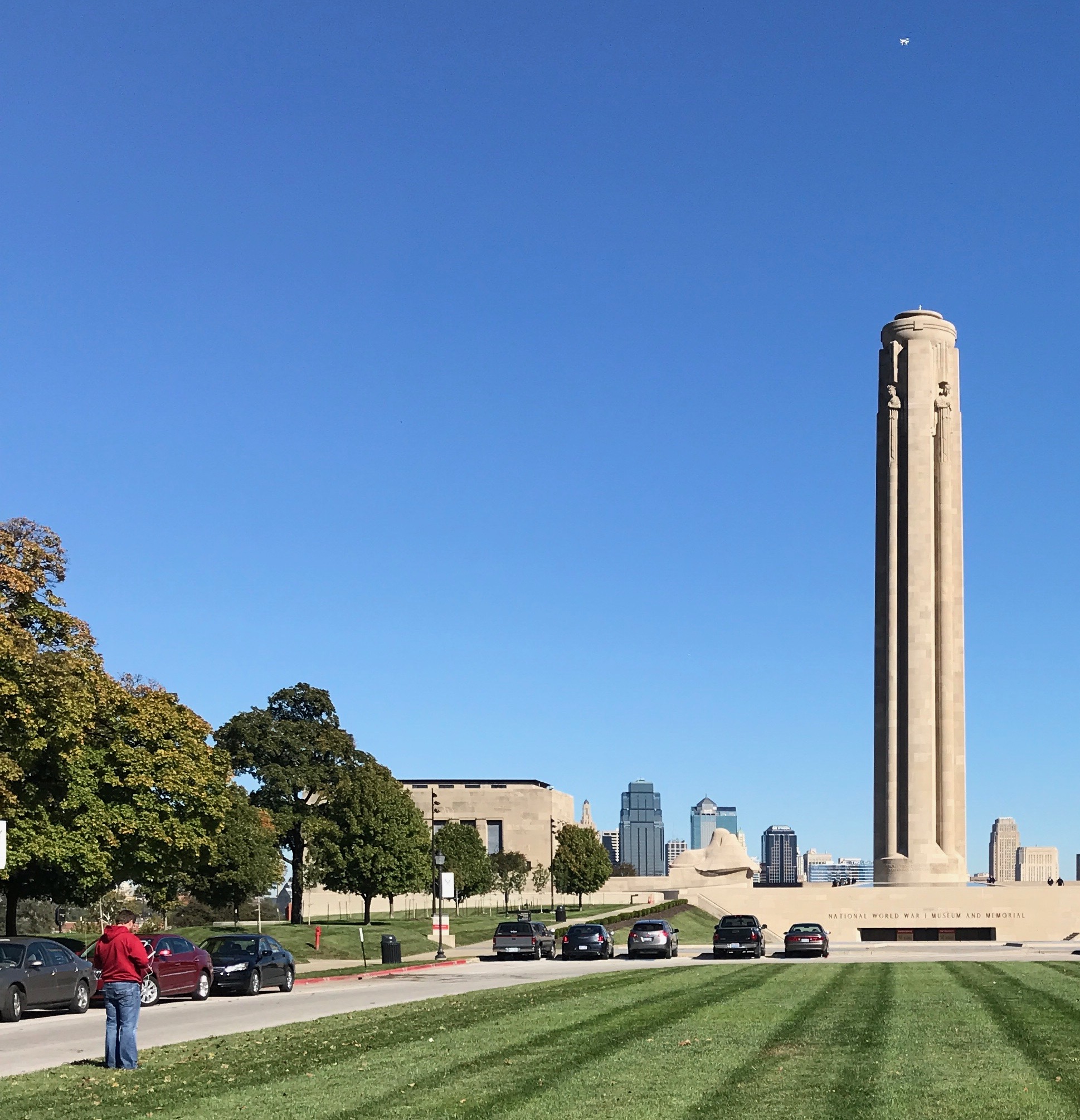
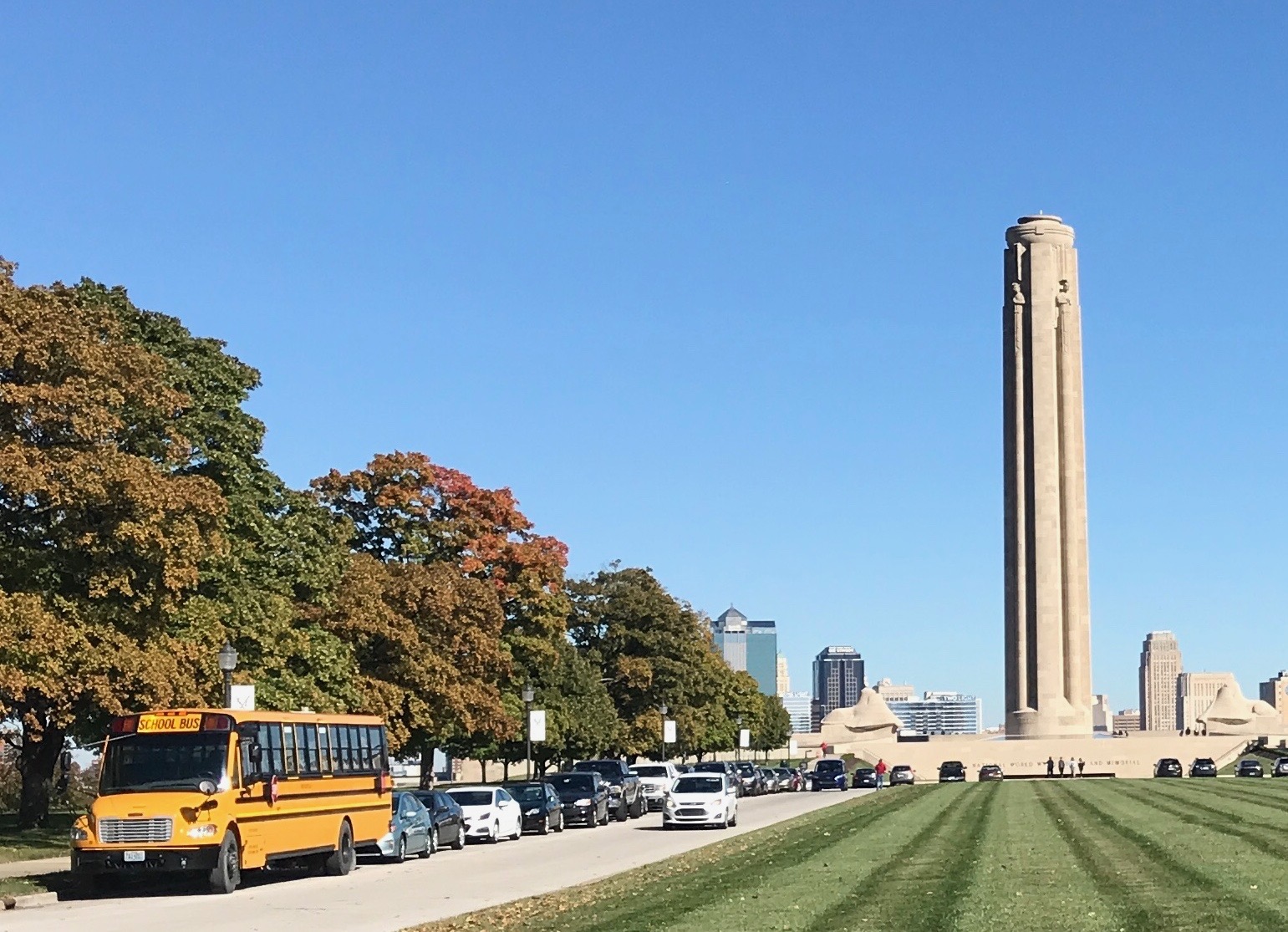
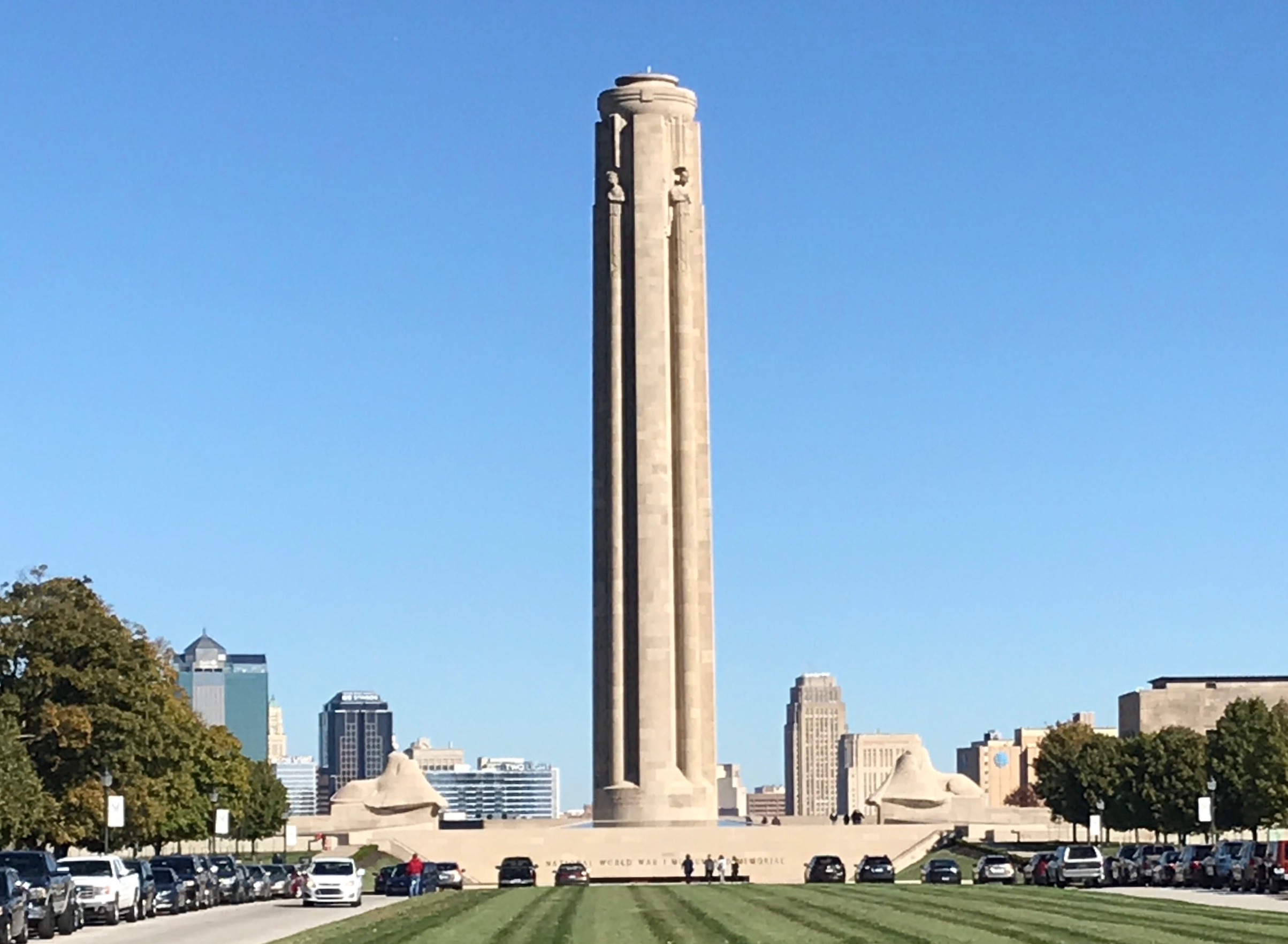
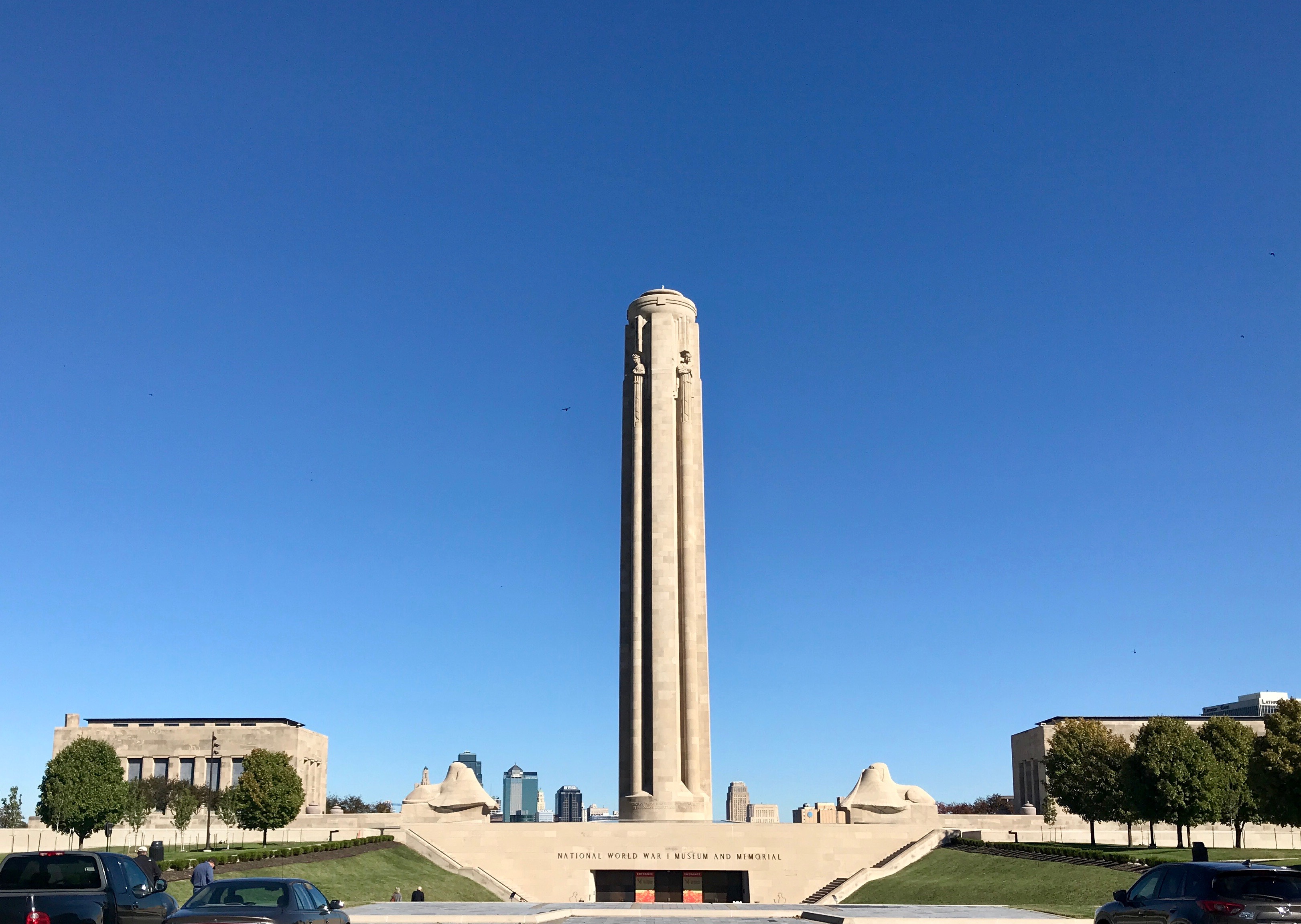
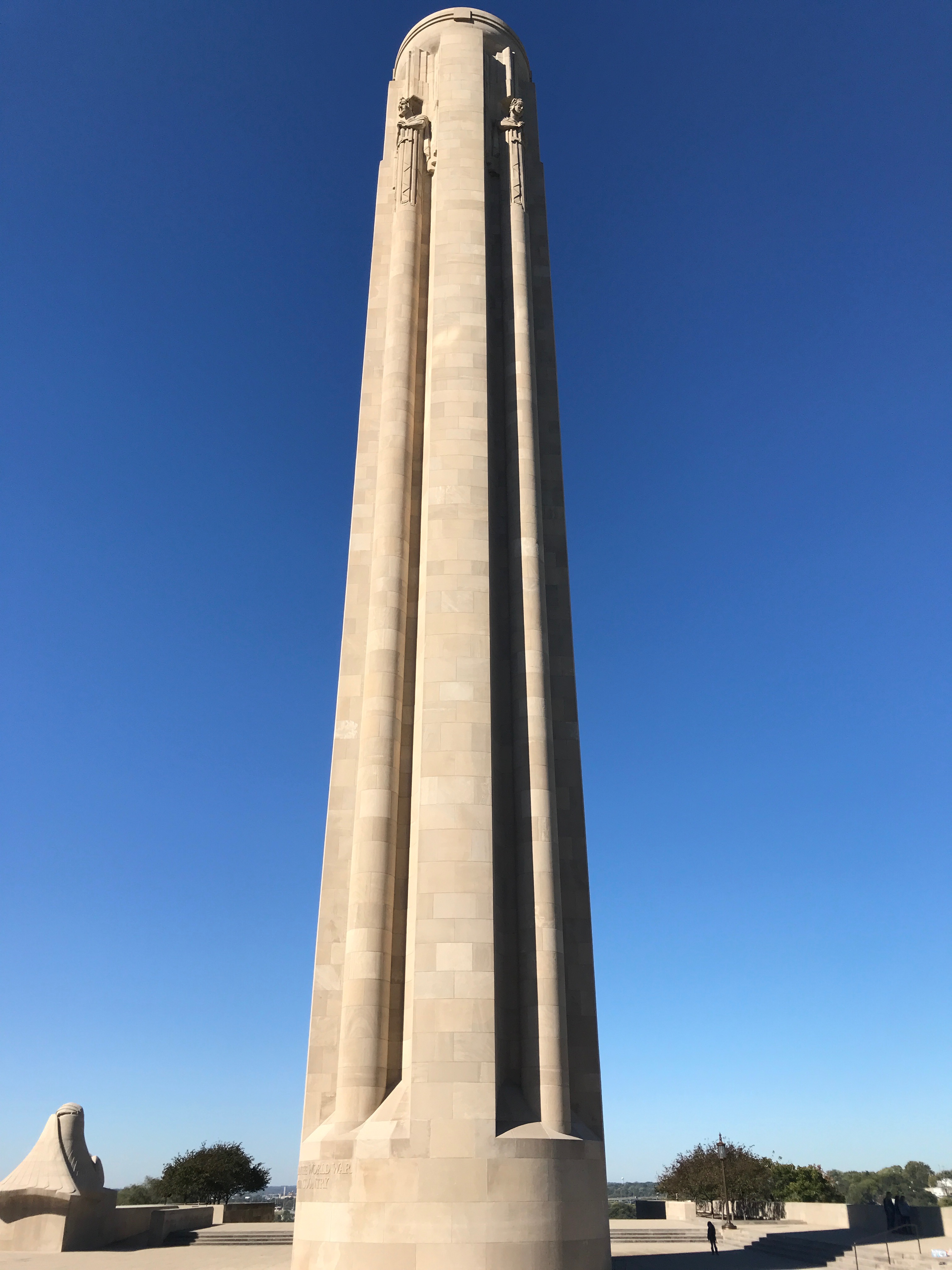
On this glorious October day in 2019, I was going to visit the Memorial and Museum. The Liberty Tower rises above the complex. It’s 217 feet tall, and I’m told that at night the tower displays a “flame effect” that is created by steam illuminated by bright red and orange lights. I’ll bet that’s something to see. It’ll have to go on the “The List” for next time.
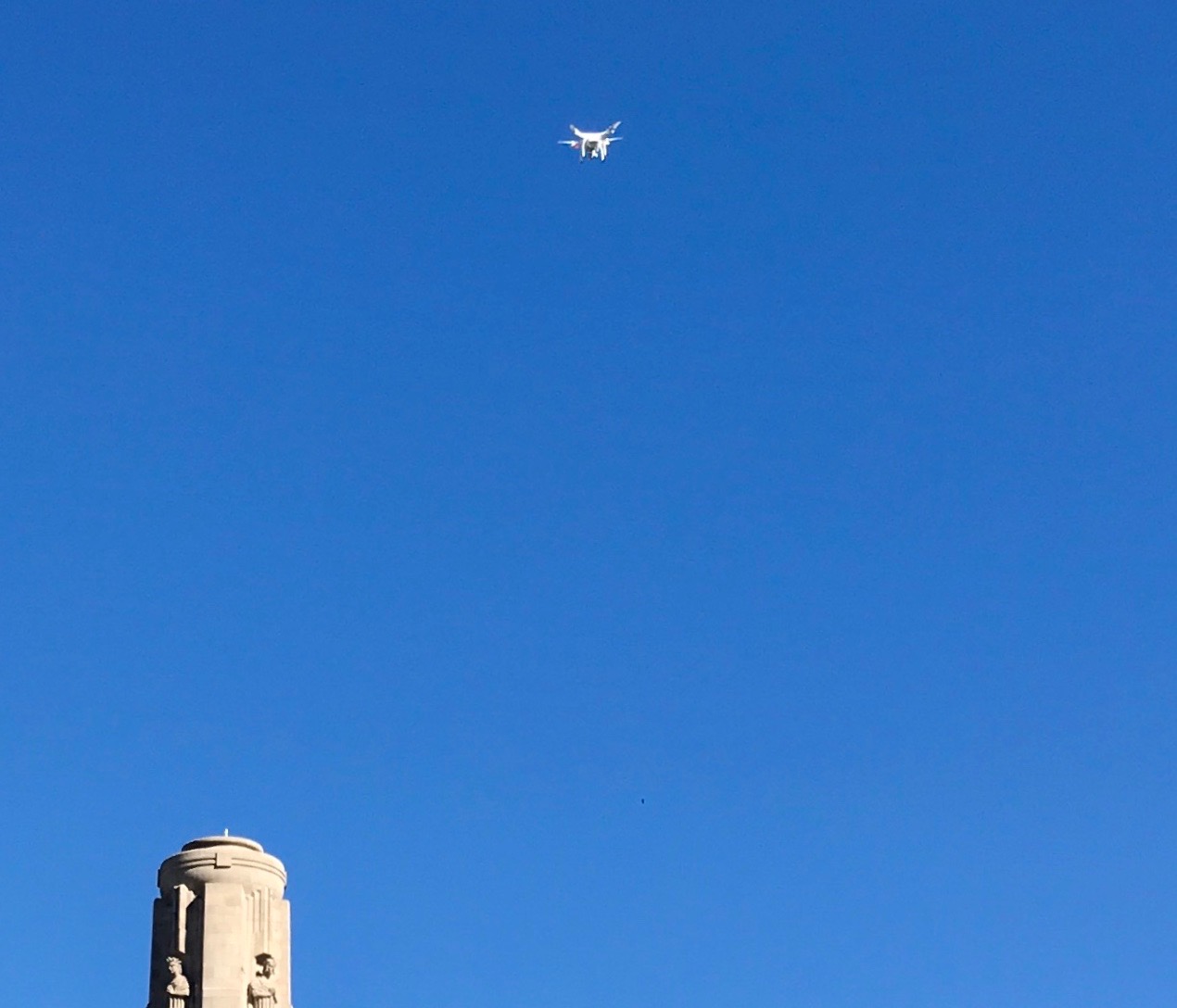
I parked and walked closer. I found a person flying his drone.
Look! Up in the sky! It’s a bird! It’s a plane!
No, just a drone. I stopped and talked with him for a bit, and asked him if it he could see if it was crowded on top of the tower. He said it wasn’t.
You see that yellow thing on the left side of the photo? I was afraid that the Memorial and Museum might be filled with {shudder} students on field trips!
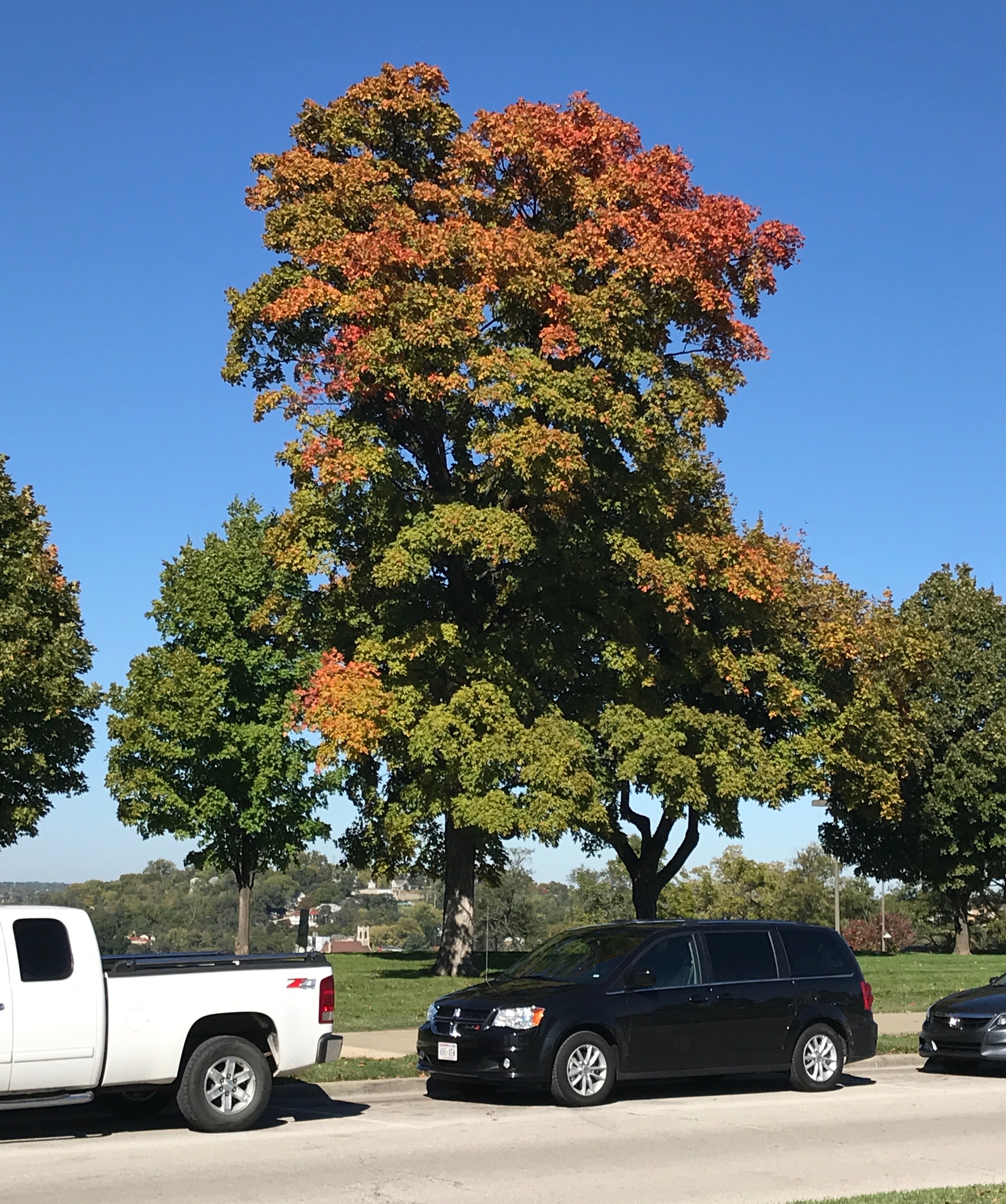
What a perfect day to be out and about! You can see the fall colors starting to decorate the trees.
I kept walking and got closer…
…and closer. Finally, the entrance was in sight.
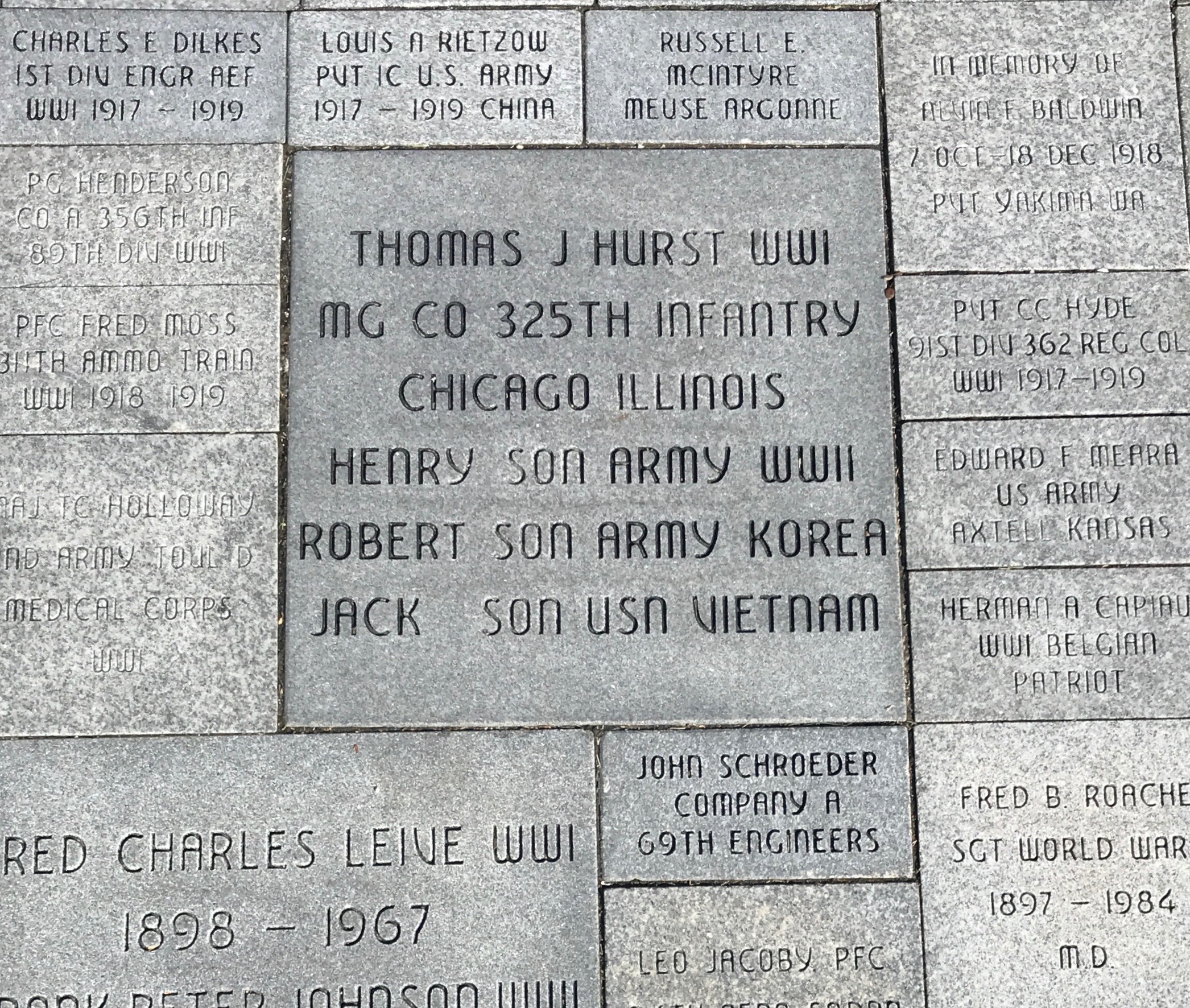
The walk into the Museum was paved with blocks honoring people who served. I found this one for Thomas J. Hurst to be particularly poignant.
He served in World War I – the War to End All Wars. His sons served in World War II, Korea and Vietnam.
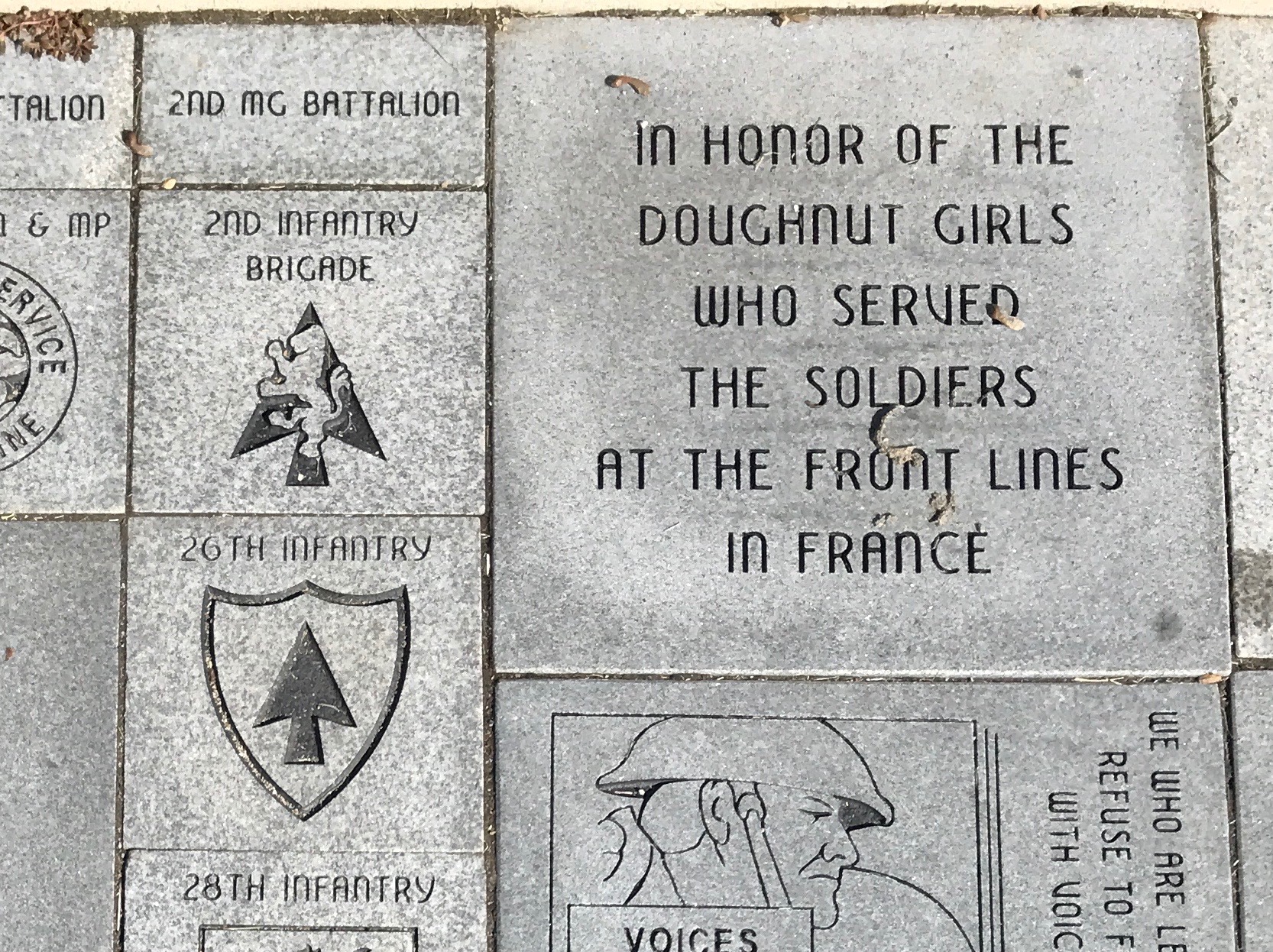
I appreciated this one in honor of the Doughnut Girls. If you are interested in learning more about their service, Smithsonian Magazine has an interesting article.
Fun fact: We have The Doughnut Girls to thank for National Doughnut Day, which is held yearly on the first Friday of June.
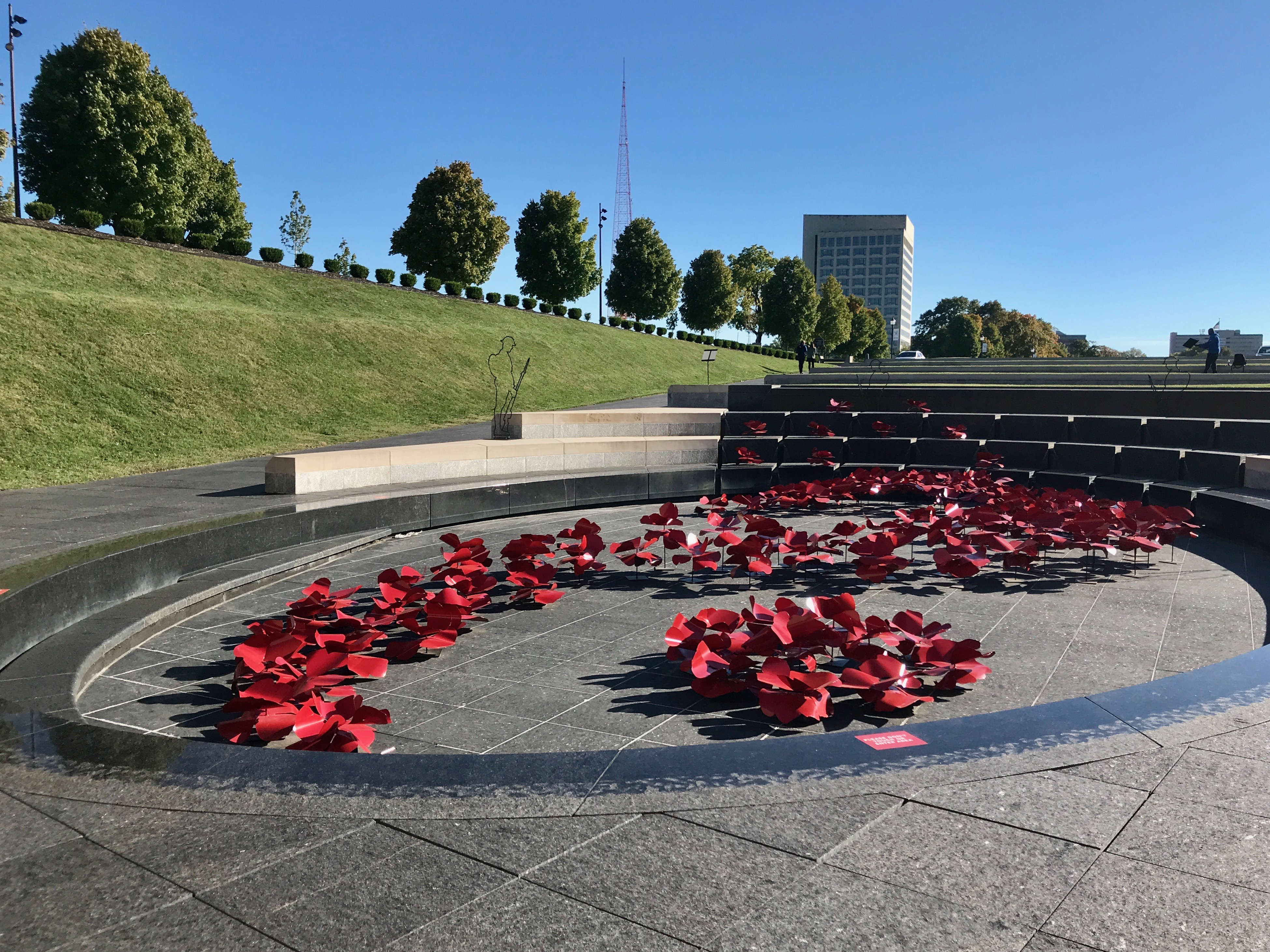
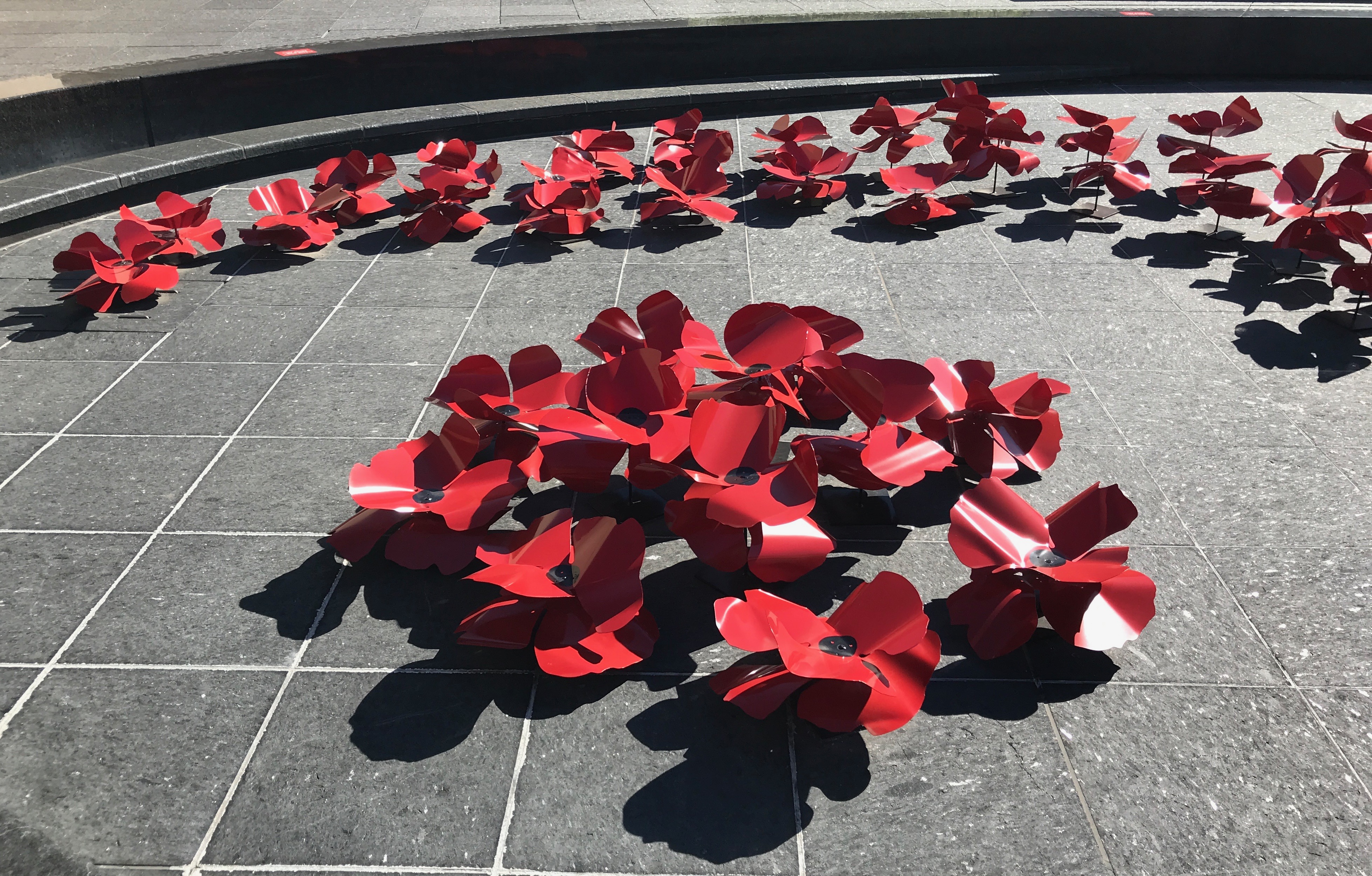
I continued on. Right in front of the entrance is “Reflections of Hope – Armistice 1918.” I imagine that it is spectacular when there is water in the reflecting pool. Altogether, there are 117 metal poppies. Each poppy represents 1,000 American lives lost, but not forgotten.
Why poppies?
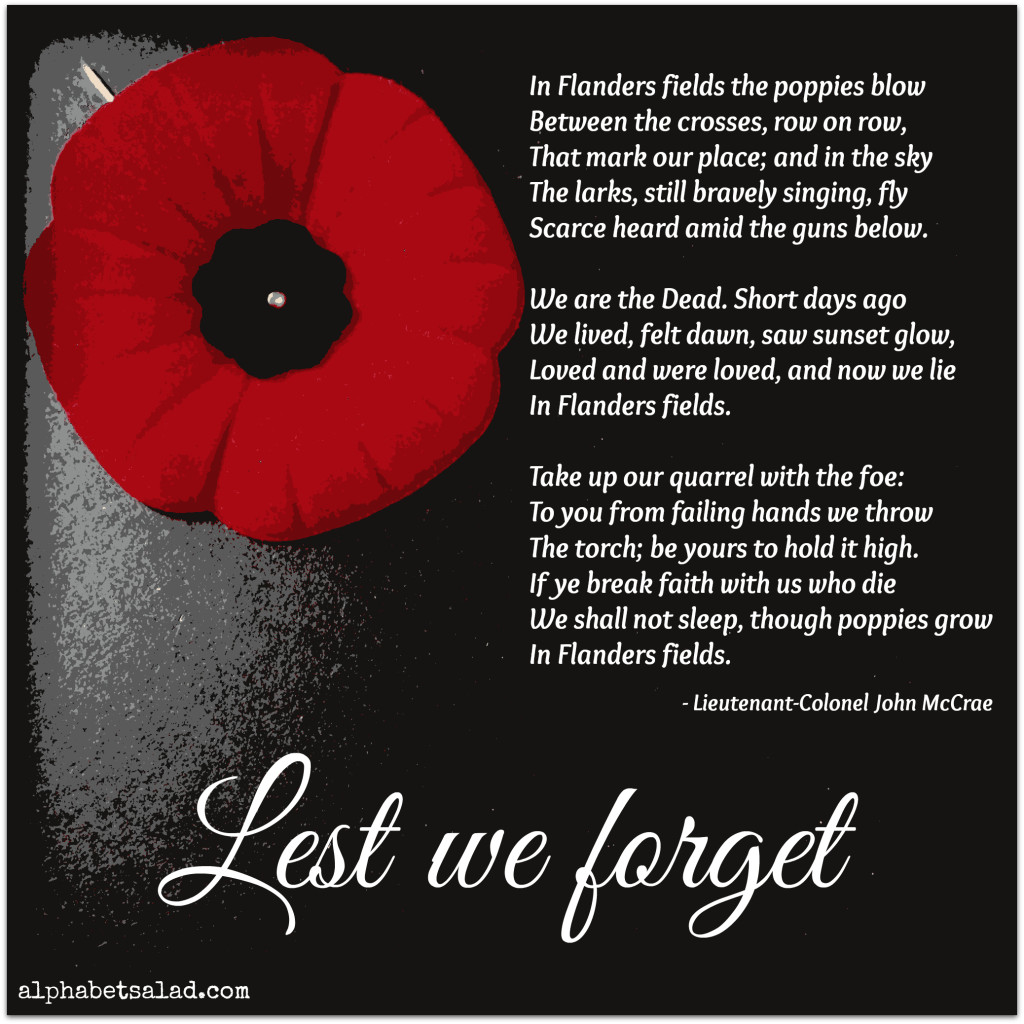
Poppies have come to be a symbol for World War I. It is based on Lieutenant-Colonel John McCrae’s poem, “In Flanders Fields.”
This is my favorite poem, and I loved some of the projects I did with my students “back in the day.”
John McCrae was worn in 1872 in Guelph, Ontario, which is about 100 miles from my hometown, Buffalo, NY. He was a medical doctor, and fought in the South African War before starting his practice. When Germany declared war on Britain in 1914, he joined up immediately. He was a medical officer with the First Brigade of the Canadian Field Artillery.
On August 4, 1914, Britain declared war on Germany. Canada, as a member of the British Empire, was automatically at war, and its citizens from all across the land responded quickly. 45,000 Canadians rushed to join up within three weeks. John McCrae was among them. He was appointed a medical officer with the First Brigade of the Canadian Field Artillery with the rank of Major and second-in-command. Unfortunately, he was a casualty of the war. He died of pneumonia.
While two out of three soldiers died in battle, the rest died due to infections or disease. The Spanish flu pandemic also killed many in prisoner camps
But, back to the Memorial and Museum.
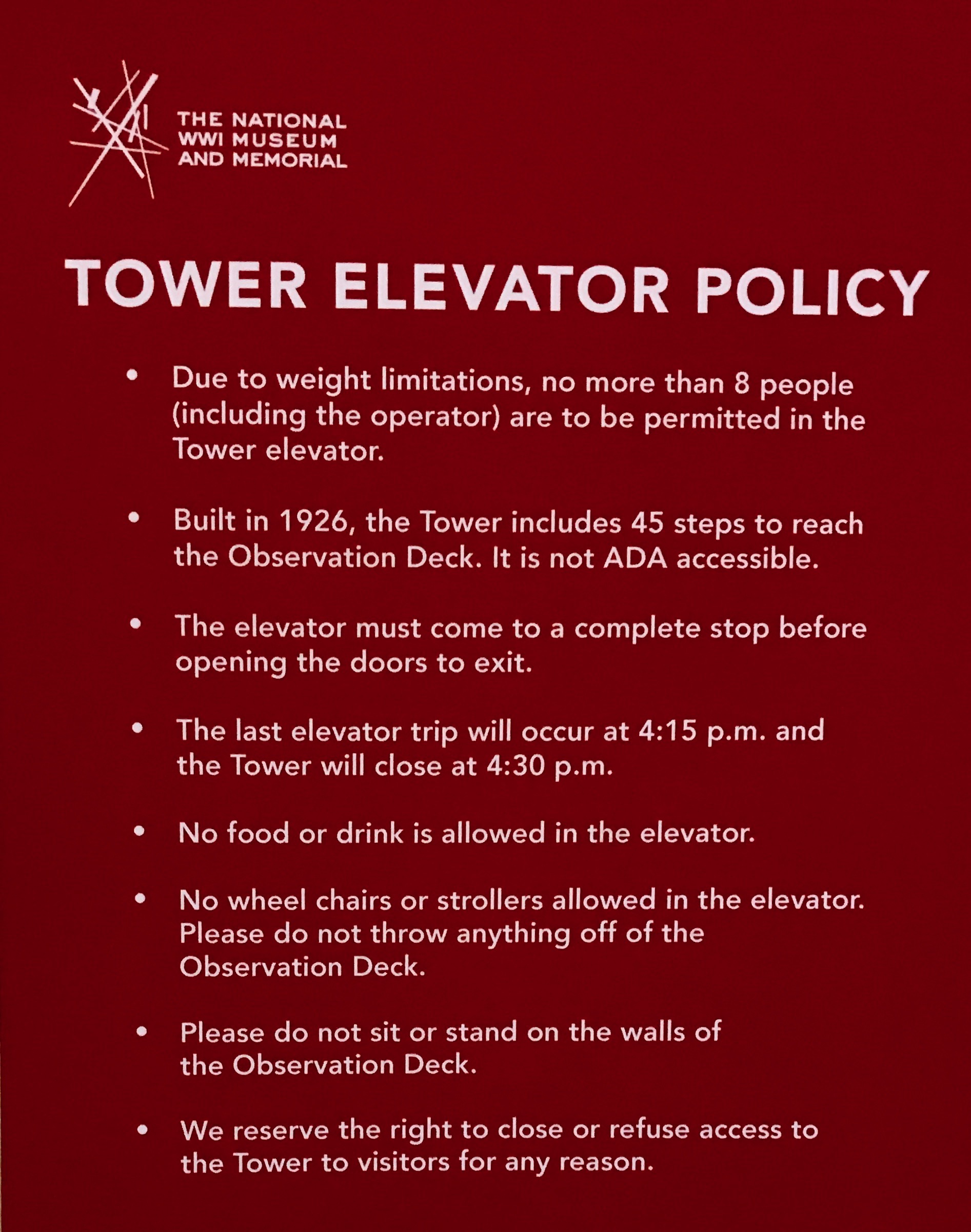
I entered and bought my tickets to the museum and to the tower. As long as I was here, I figured I ought to see both. They advised me that I ought to do the tower first, as the school group would be going up later. They didn’t need to tell me twice!
I took the elevator up to the plaza level.
That person on the right side of the tower gives you some idea of the size of the structure.
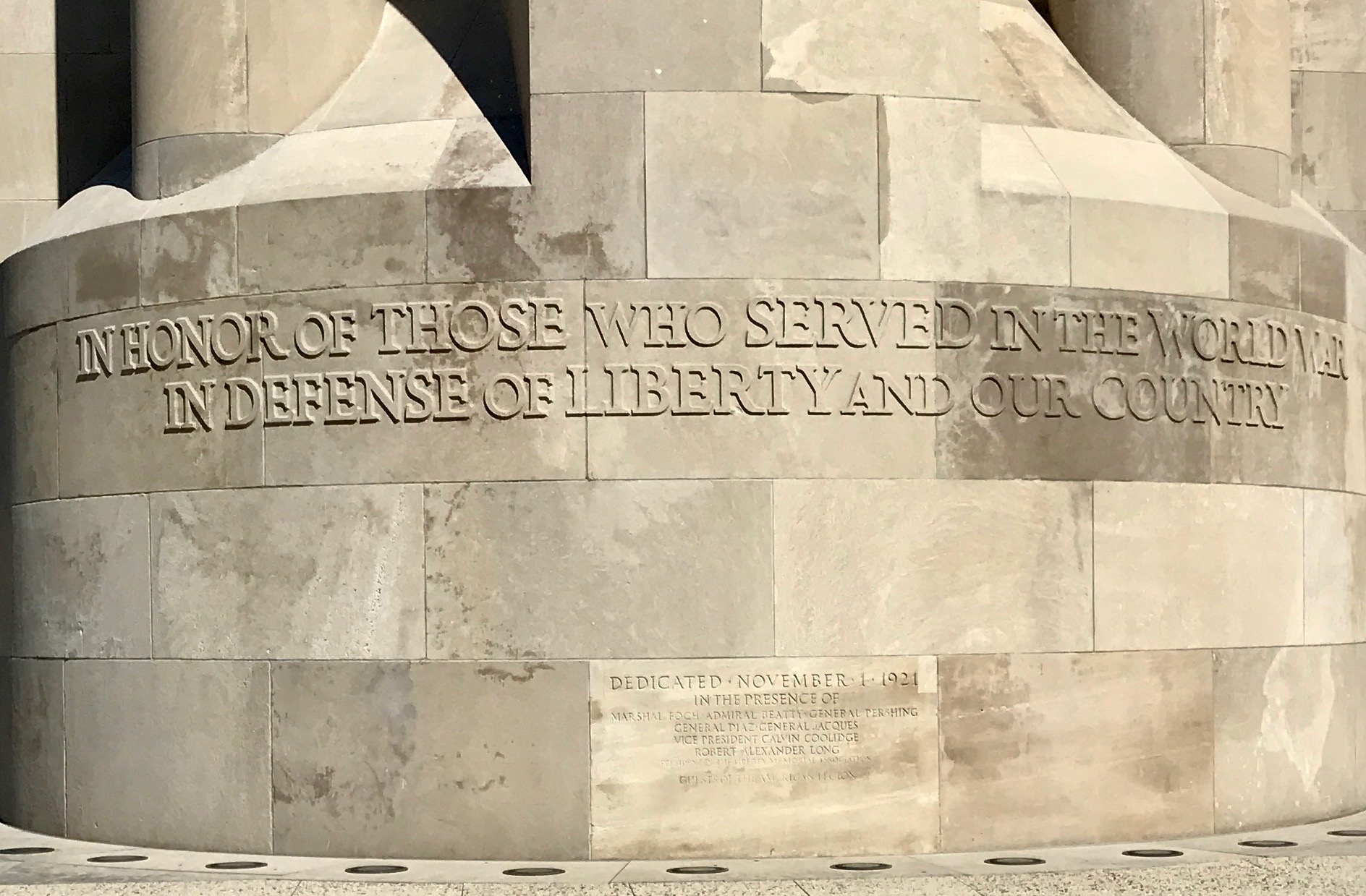
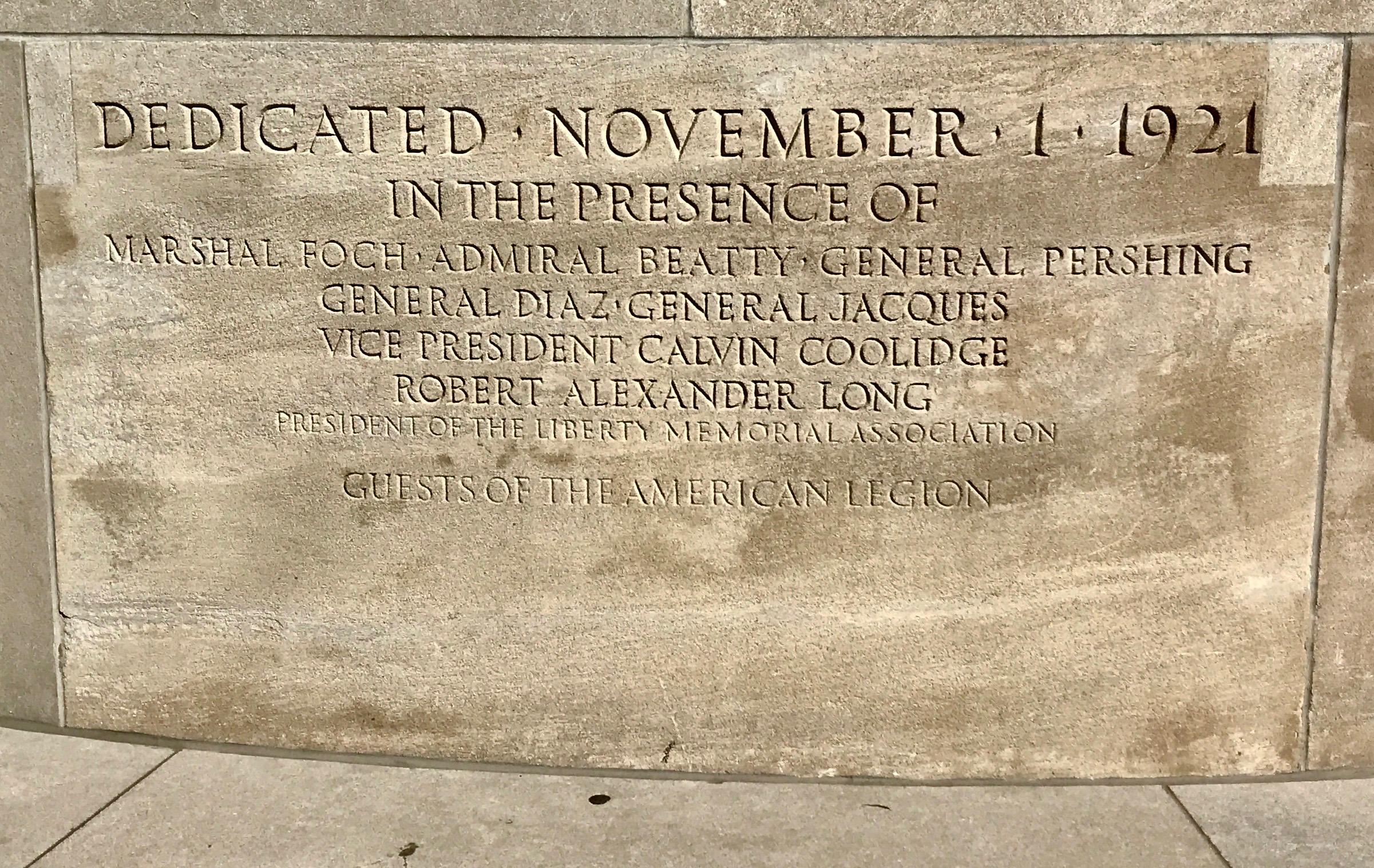
Warren G. Harding was president at that time, having taken the reins from Woodrow Wilson in March 1921. According to my Preferred Source, during his time in office, he was one of the most popular U.S.Presidents up to this point. It rather puzzles me as to why he was not in attendance at the dedication. Maybe back in those days, presidents stayed in Washington and attended to the business of running the country.
Harding did send his vice president, Calvin Coolidge. Interestingly enough, future president Harry S. Truman was also there, along with 60,000 members of the American Legion. He was chosen to present flags to the commanders that were present. In all, 200,000 people were in attendance at the dedication.
I was glad to be going up before the tour. I don’t think it would be much fun to be on top of that relatively small space with a bunch of kids.
I got in the very small elevator in the tower and rode up to the top.
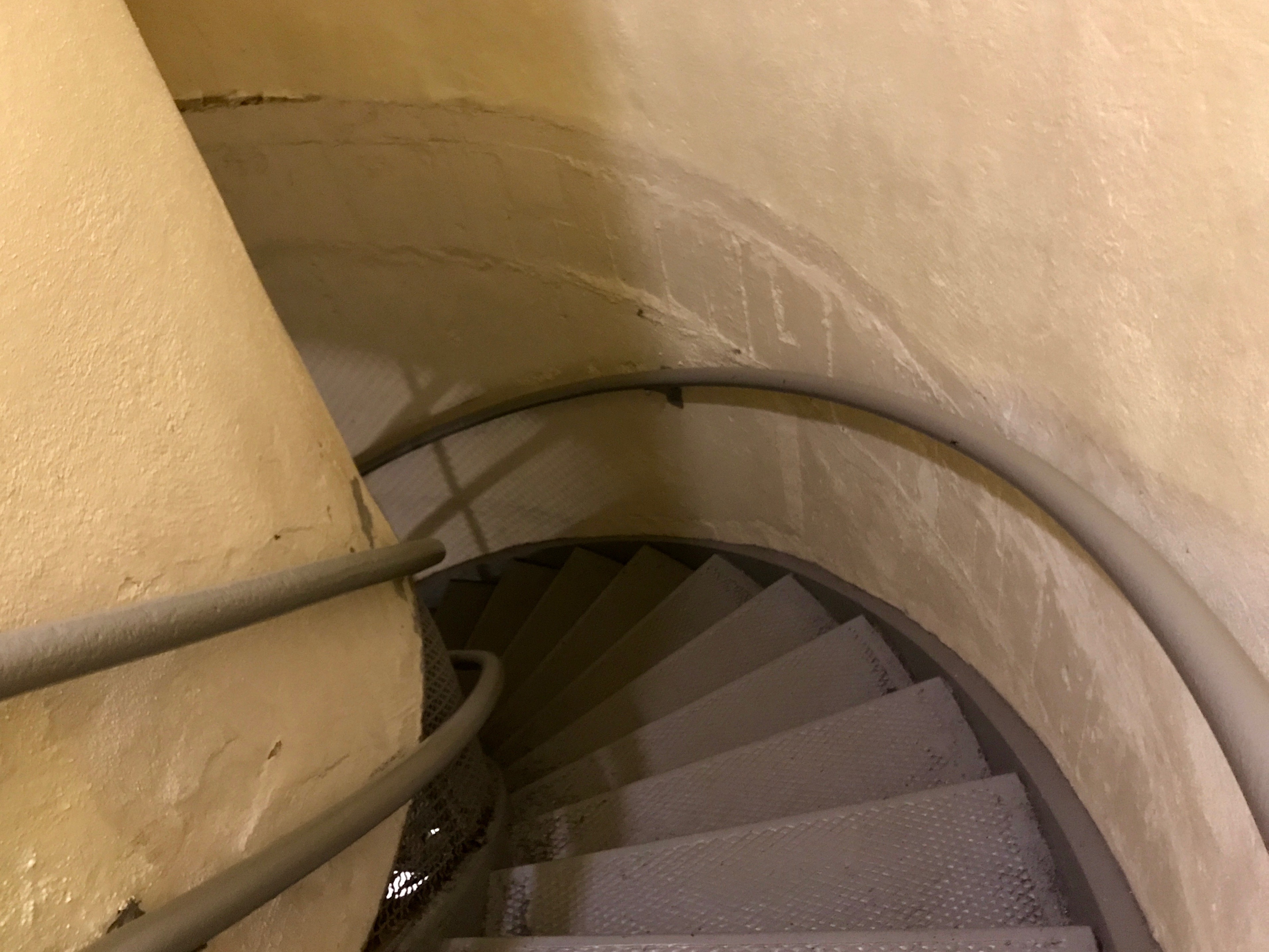
I walked up the 45 steps to the Observation Deck and turned around to take a photo of the stairs. (If there isn’t a photo, it didn’t happen.)
Then out to Observe.
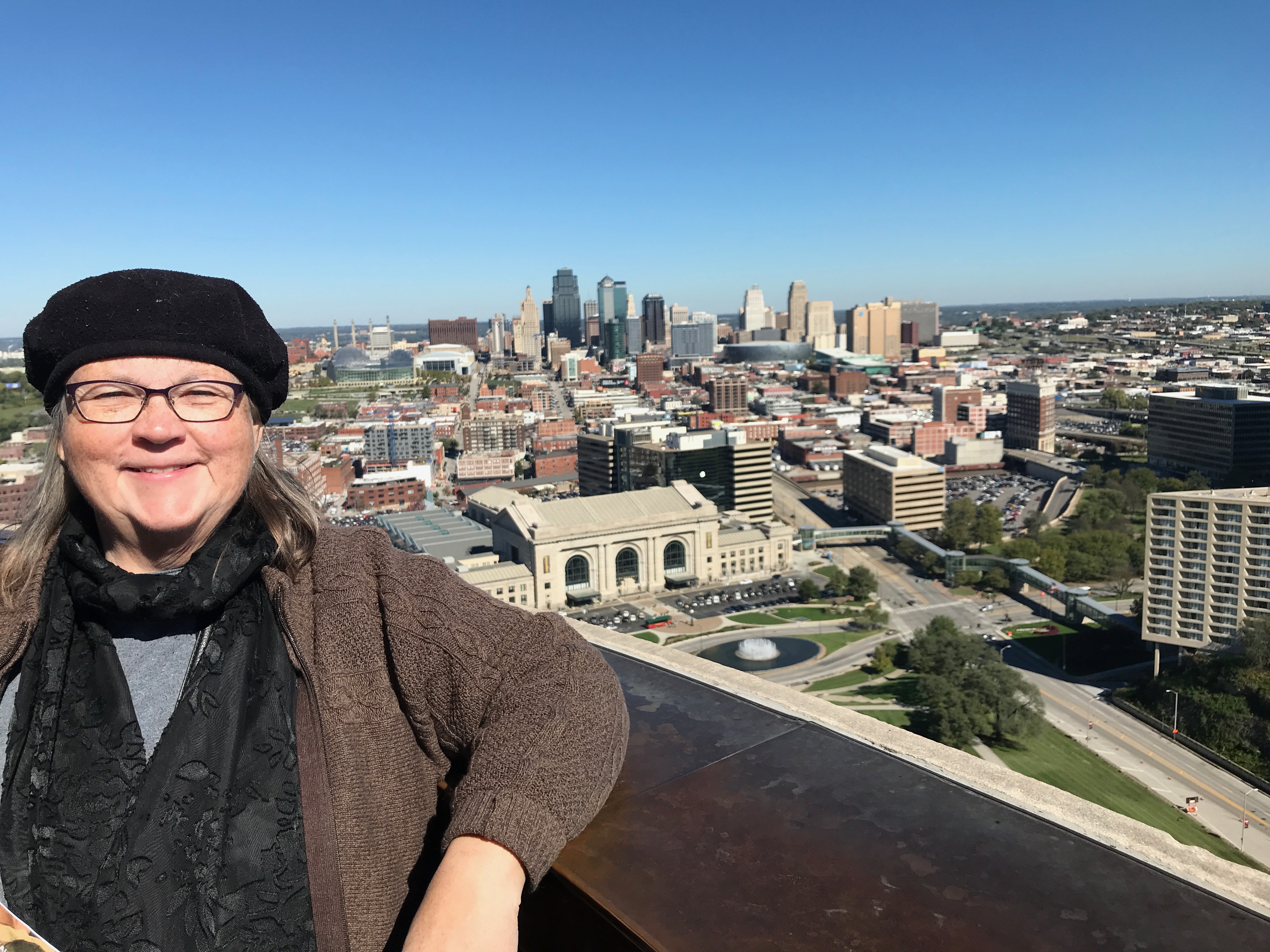
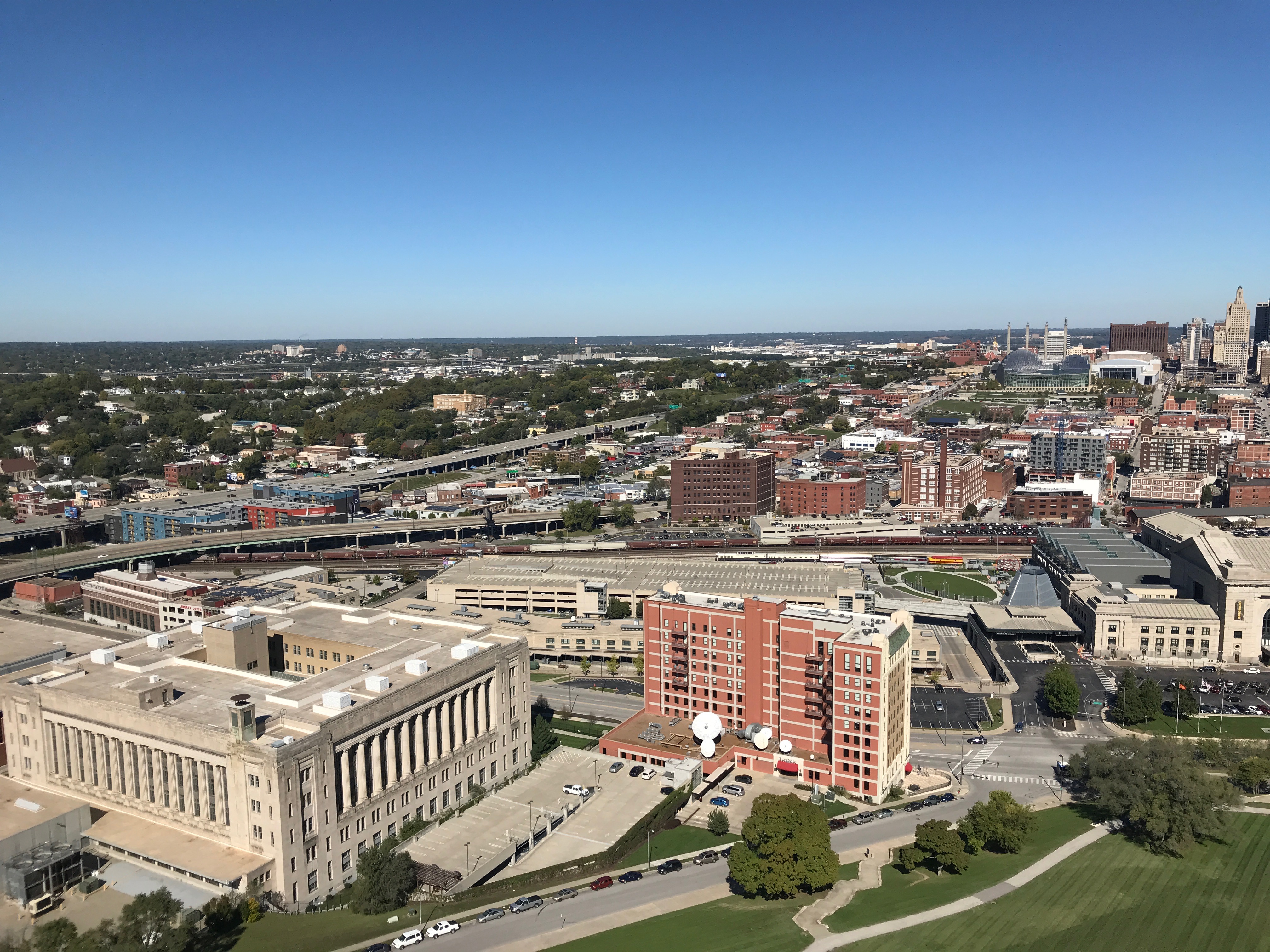
There’s a photo, so you can tell I really did spring for the elevator trip to the top of Liberty Tower. That’s Union Station in the background. It’s one of those repurposed train stations that so many of our cities have, but are no longer transportation hubs. The website for Union Station describes it as a “hub of culture, education and entertainment.” I might visit it one of these days.
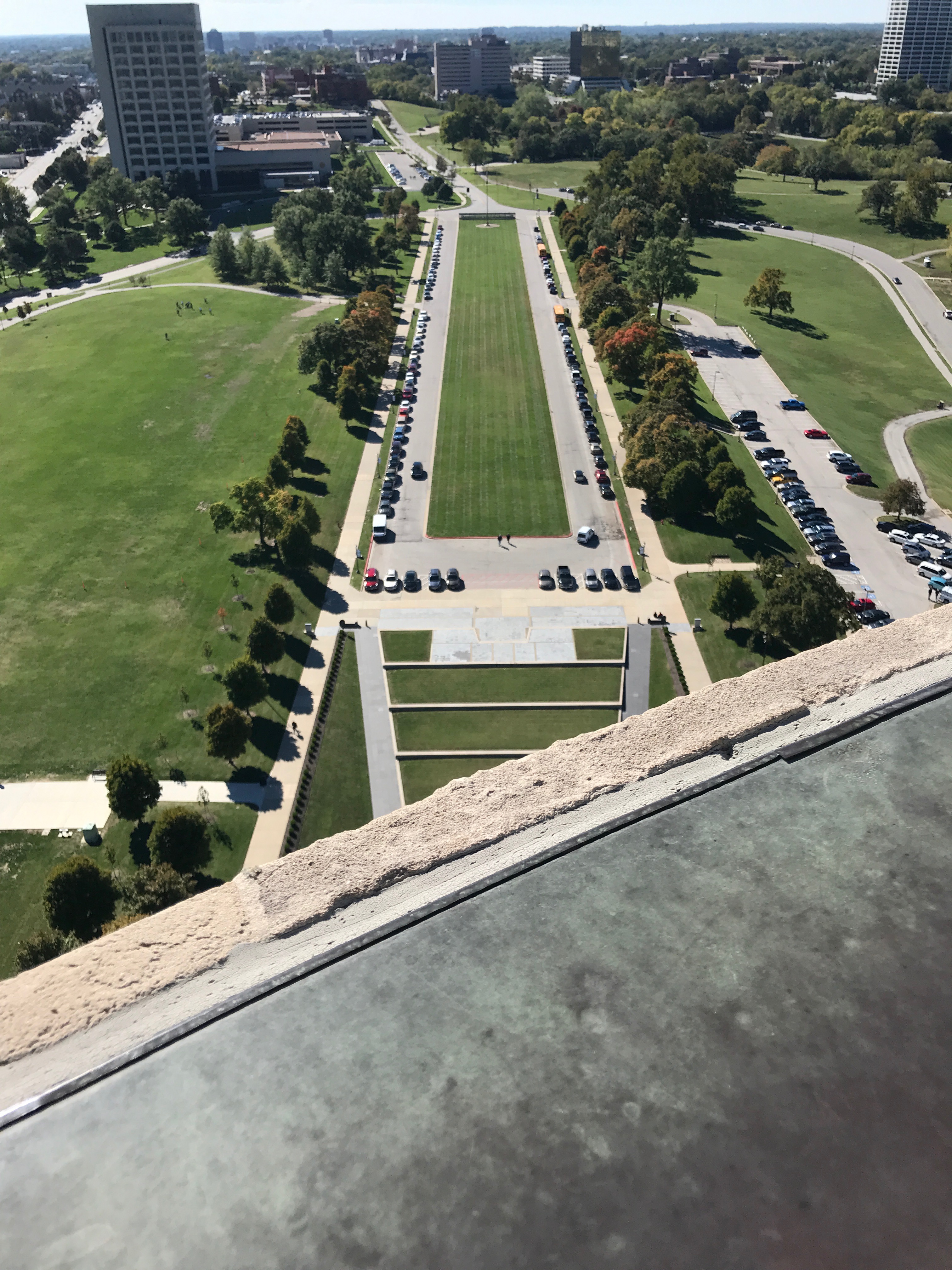
My car is down there somewhere.
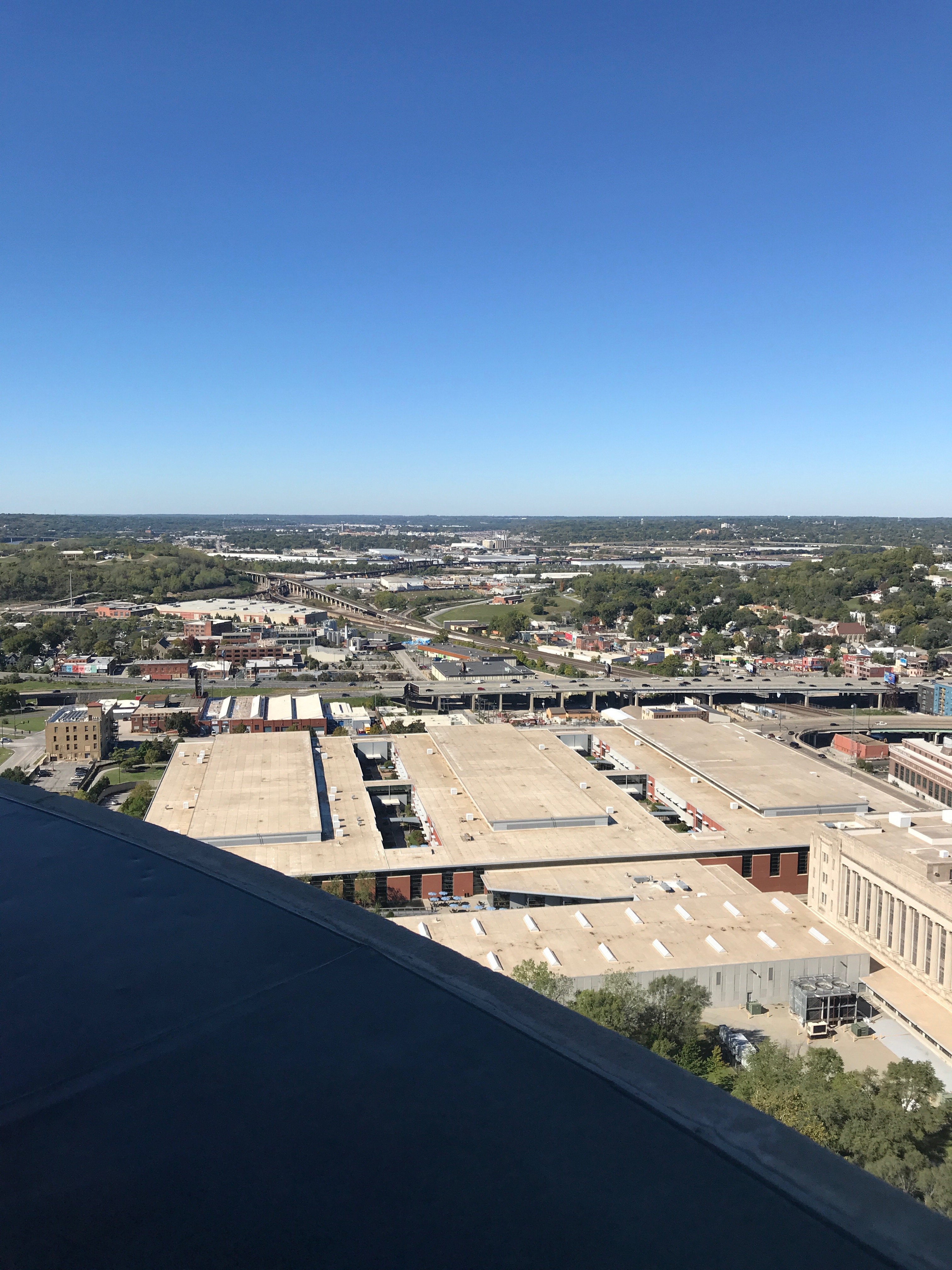
Here’s the view in another direction. I can’t get enough of the blue skies! (Have I mentioned lately that I hate rain?)
Here’s a look in the final direction, and then it was time to descend the tower. I made it before the field trip arrived! Hooray!
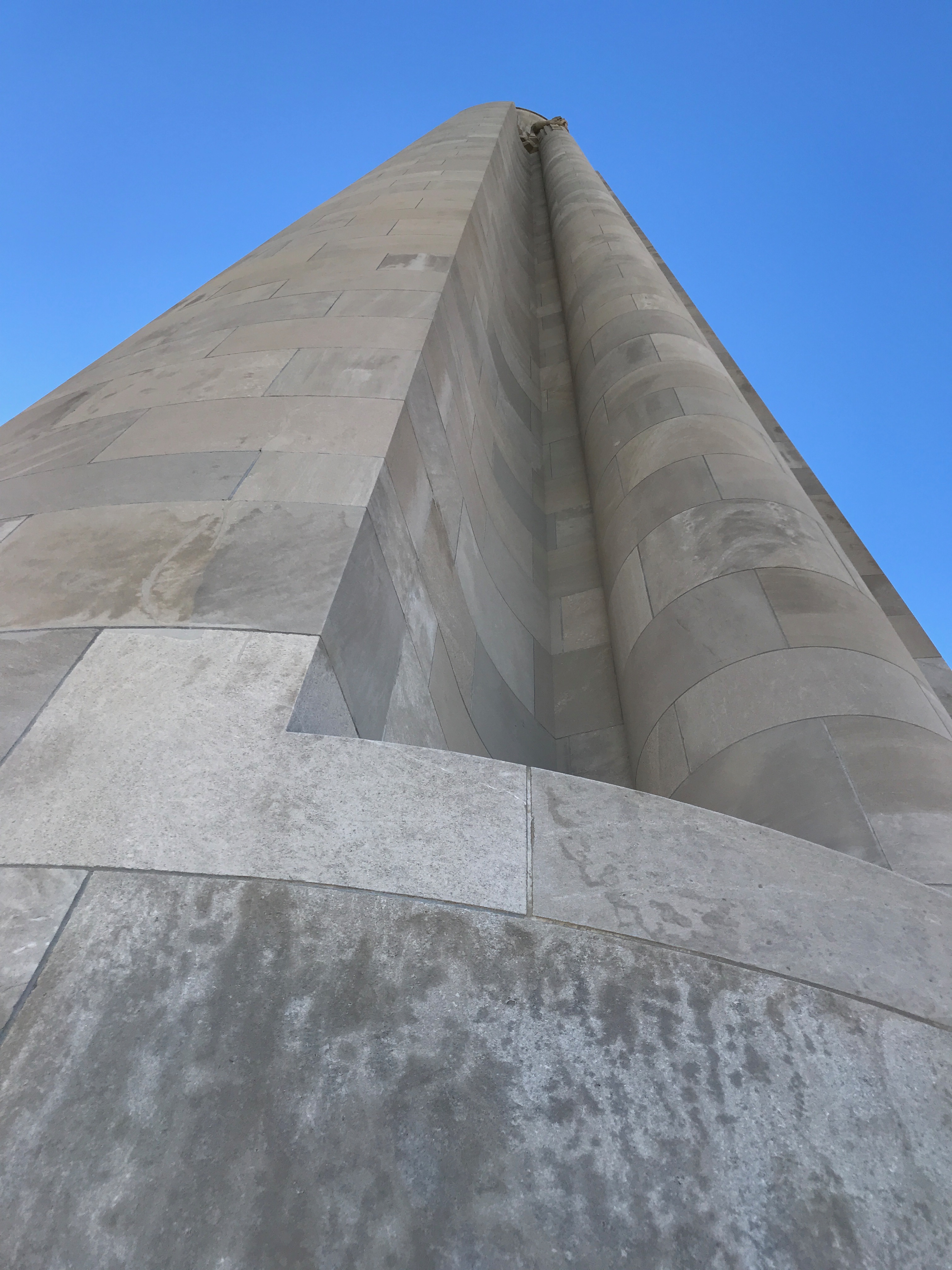
I paused at the base of the tower to look up.
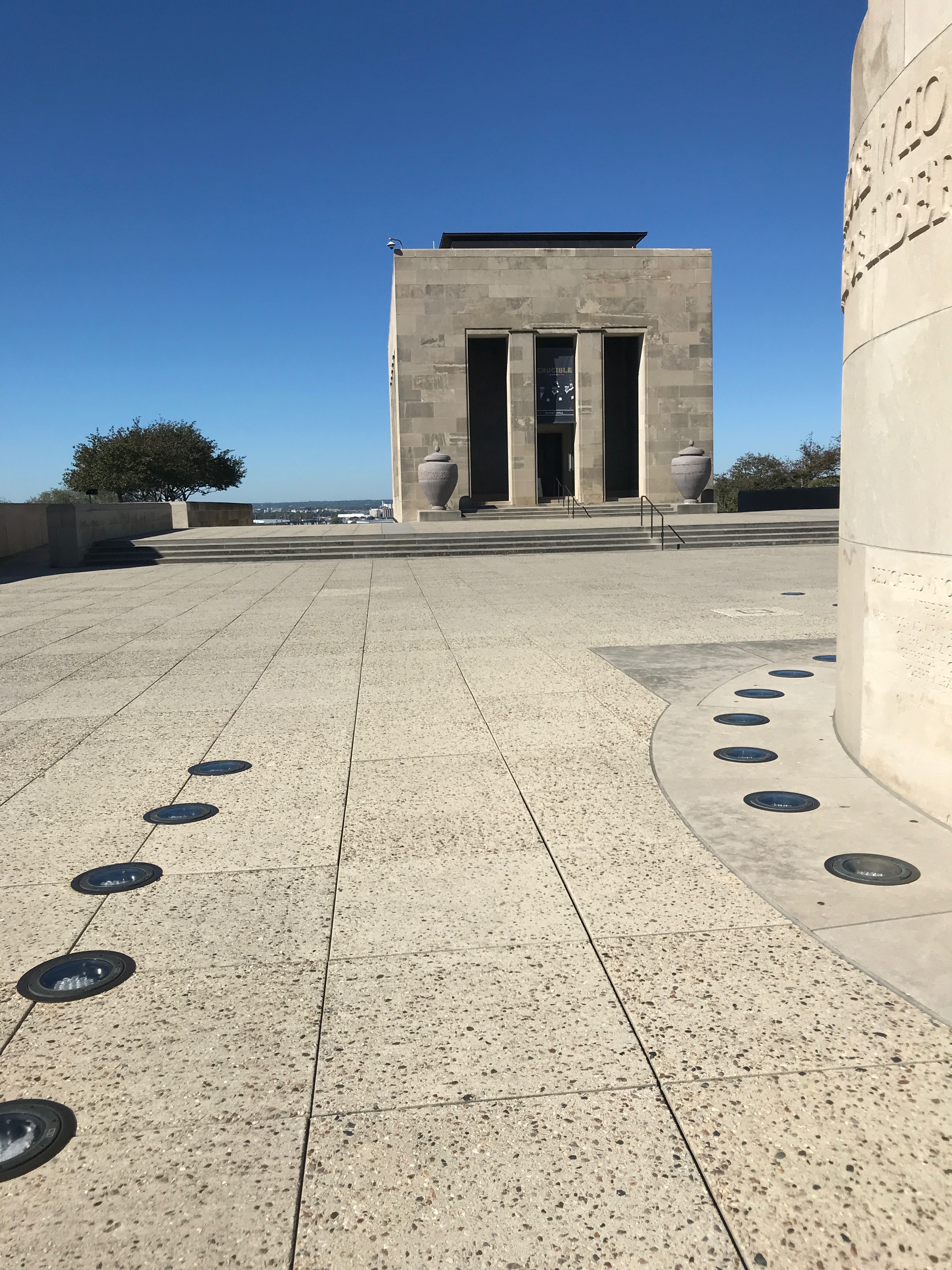
On this level, there are two buildings that serve as memorials and museums. Incidentally, the original structures are built in the Egyptian Revival style.
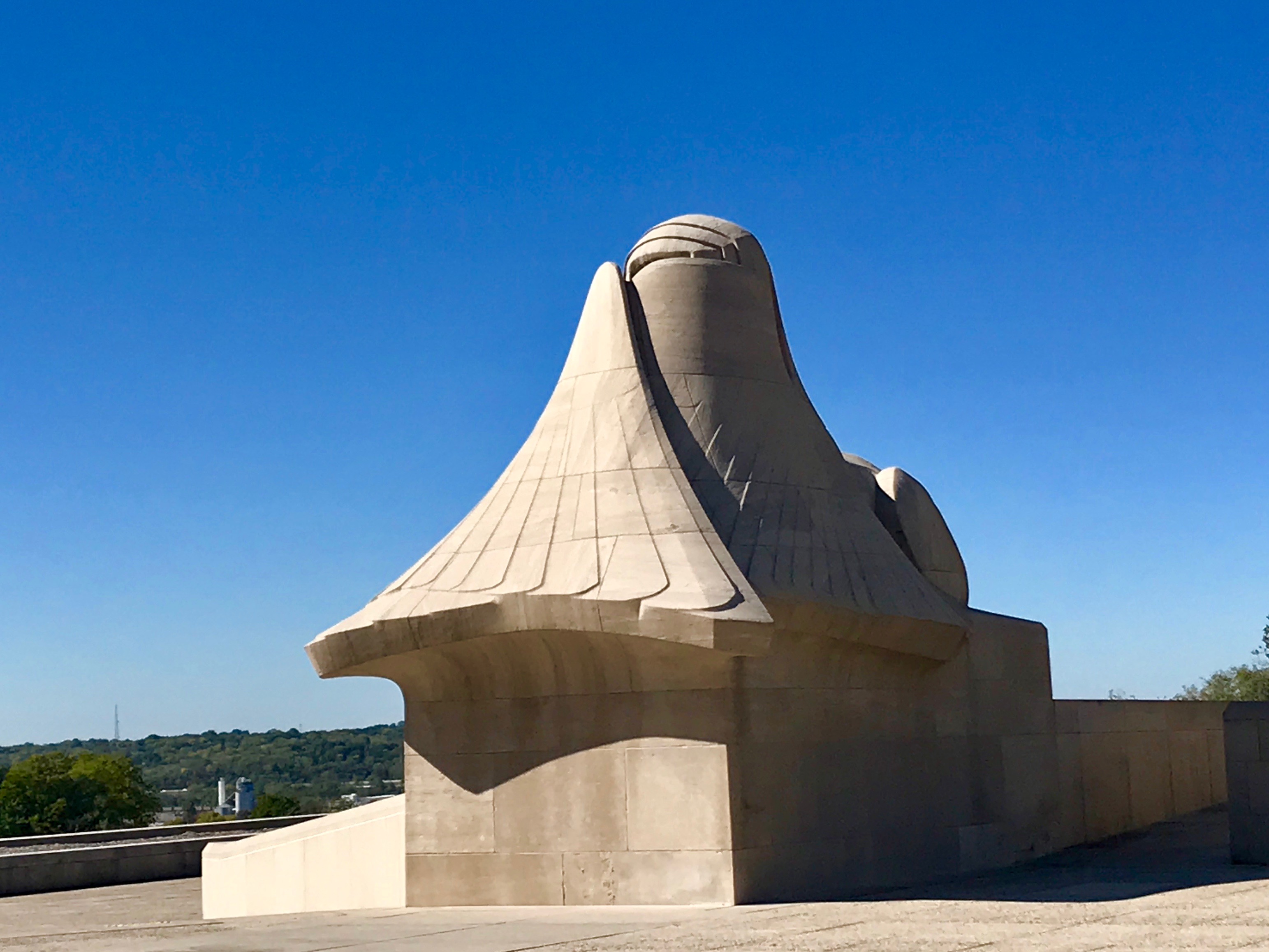
Between each hall and the tower sit two stone sphinxes, named “Memory” and “Future.” Memory faces east, hiding its face from the horrors of the European battlefields. Its twin faces west and shields its eyes from a future yet unseen.
I guess it goes to show you that even back in 1921, they didn’t believe that this really was the War to End All Wars. The future was so bleak that the sphinx didn’t even want to look at what was going to happen next.
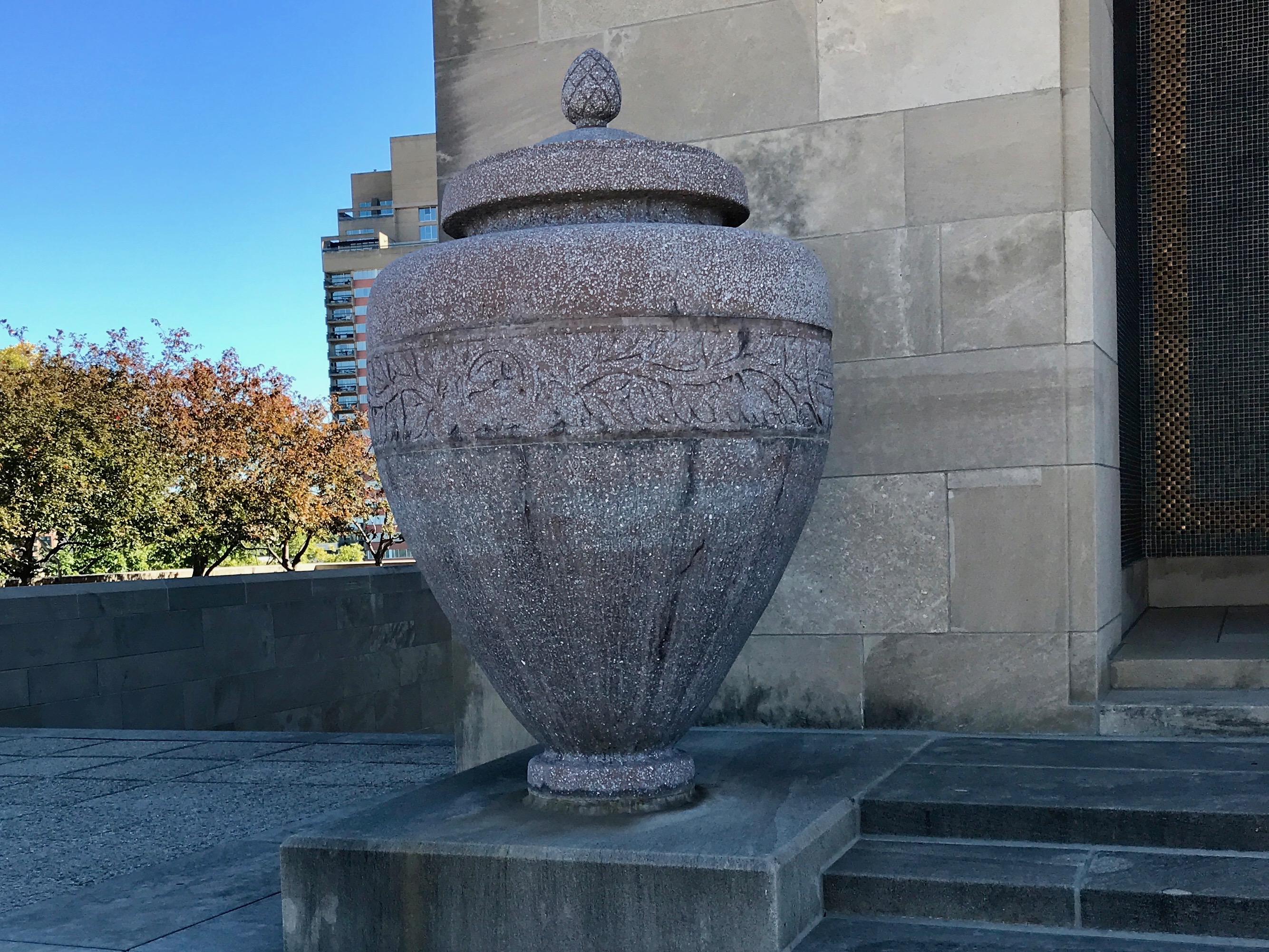
I climbed the steps past the ornamental urns.
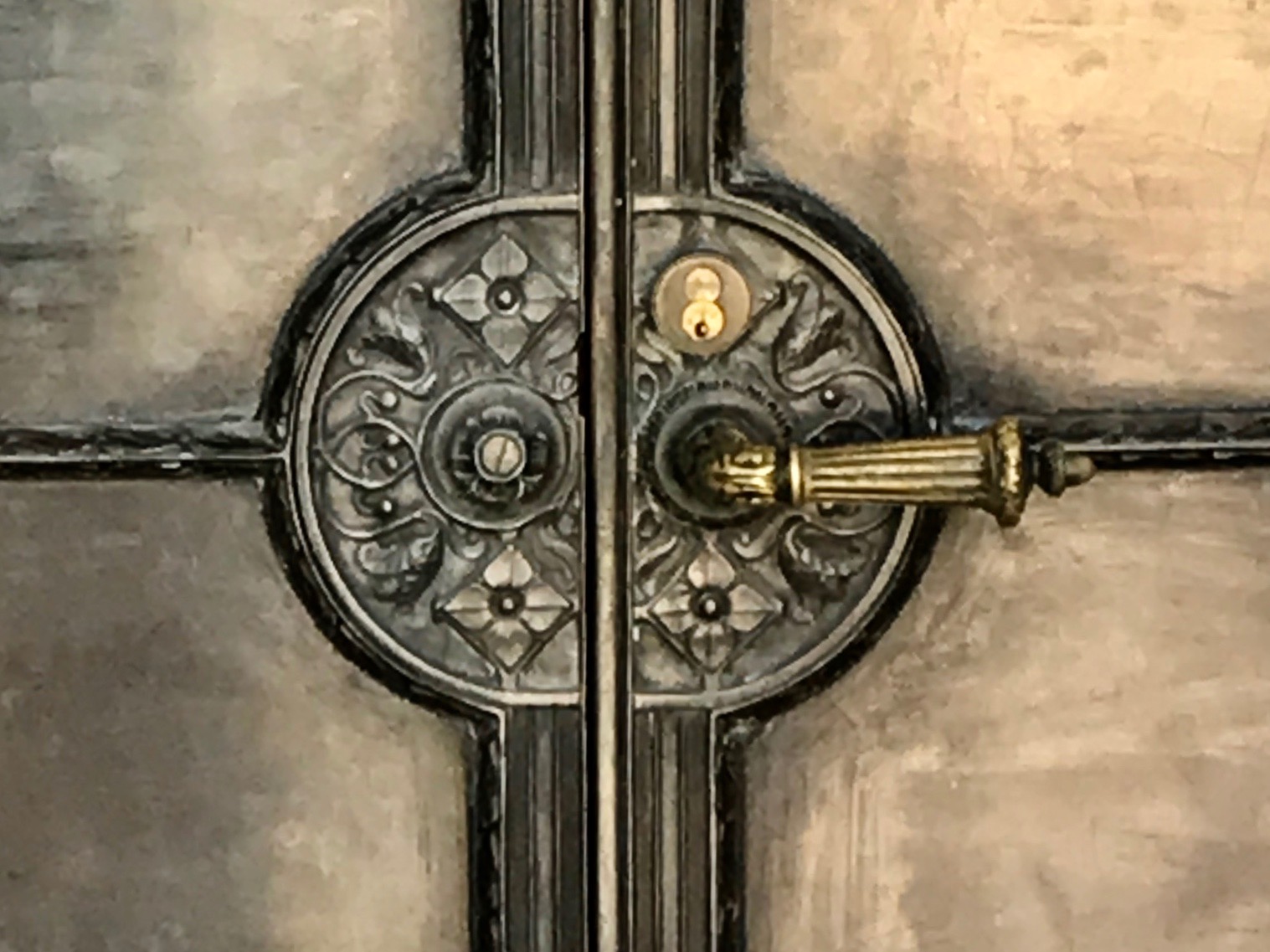
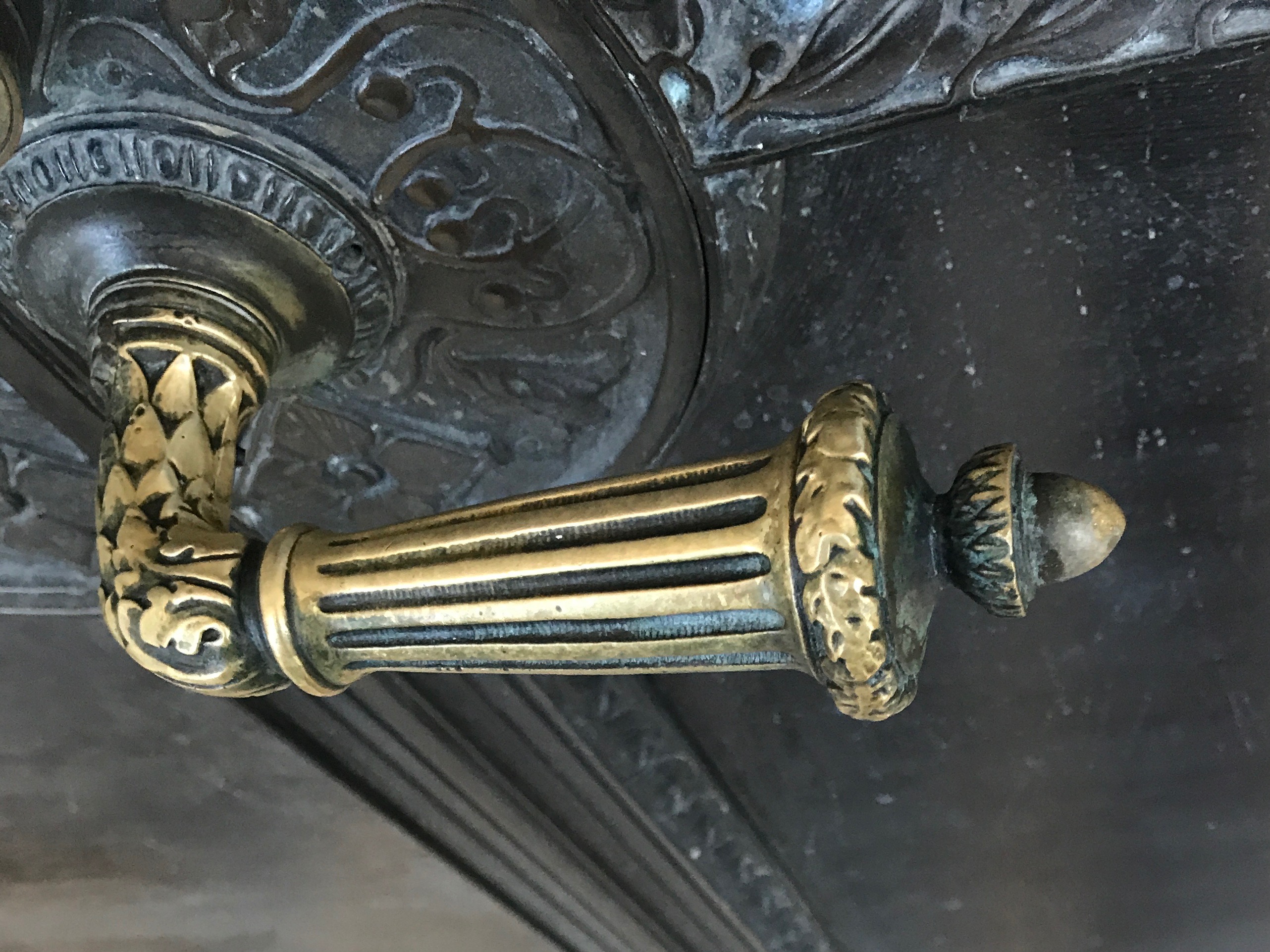
The doors had some intricate work on them.
Wait! There’s an acorn on the handle. I racked my brain for a connection. I seemed to remember something about the oaks of Verdun.
It turns out that the forests around Verdun were devastated during the longest running battle of the war. More that 400,000 French and German Lives were lost, and the Verdun’s oak and chestnut forests still bear the scars of the conflict that took place over a century ago. More than 700 square miles of forests were destroyed.
There are a few stories about how the acorns got to England, but they were planted as tributes to the fallen, even while the battles were still raging. Woodland Trust, a United Kingdom conservation charity, has succeeded in locating some of the original trees grown from the seeds taken from the battlefield and they are now engaged in growing the next generation of the trees as a perpetual memorial.
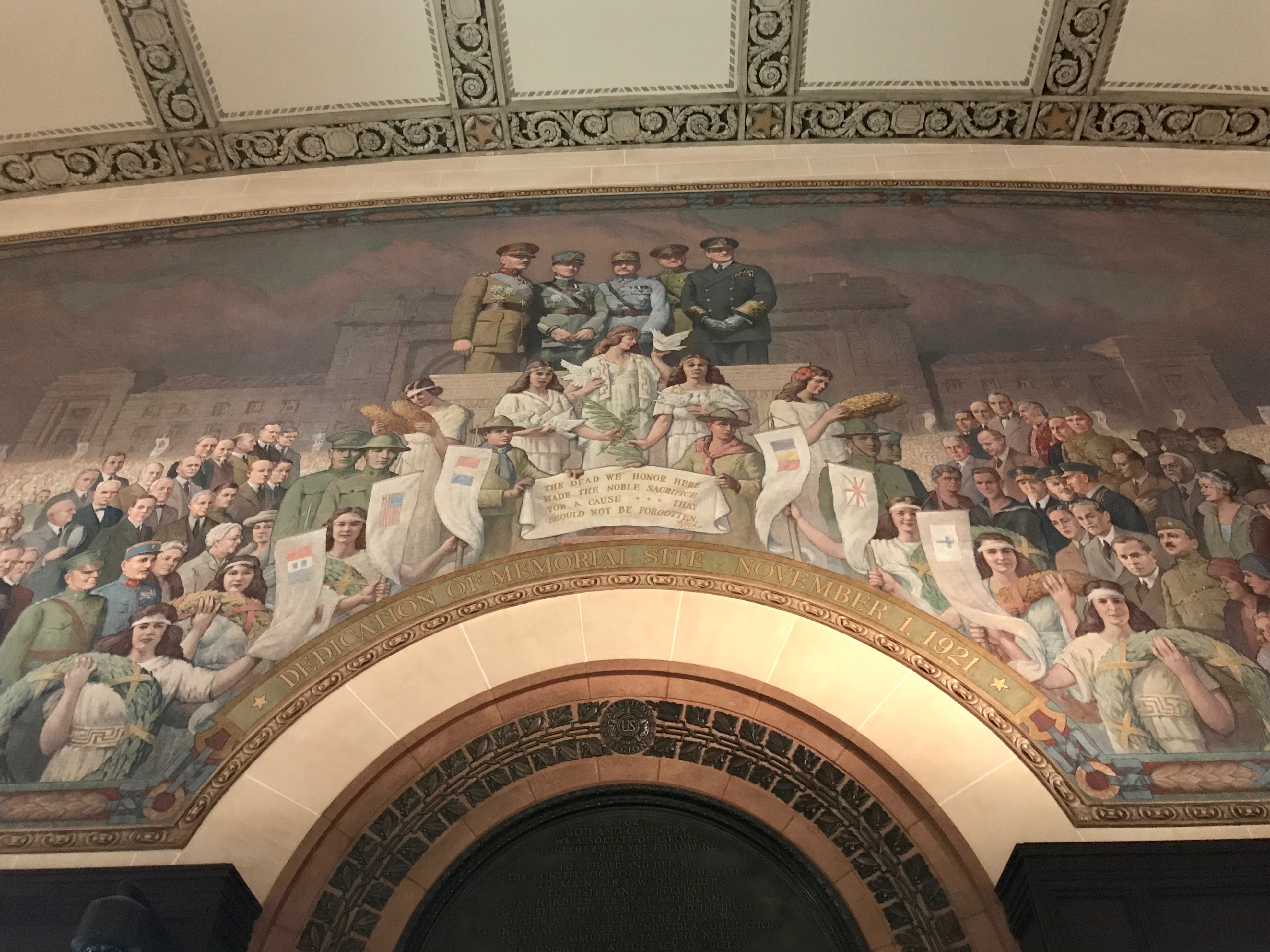
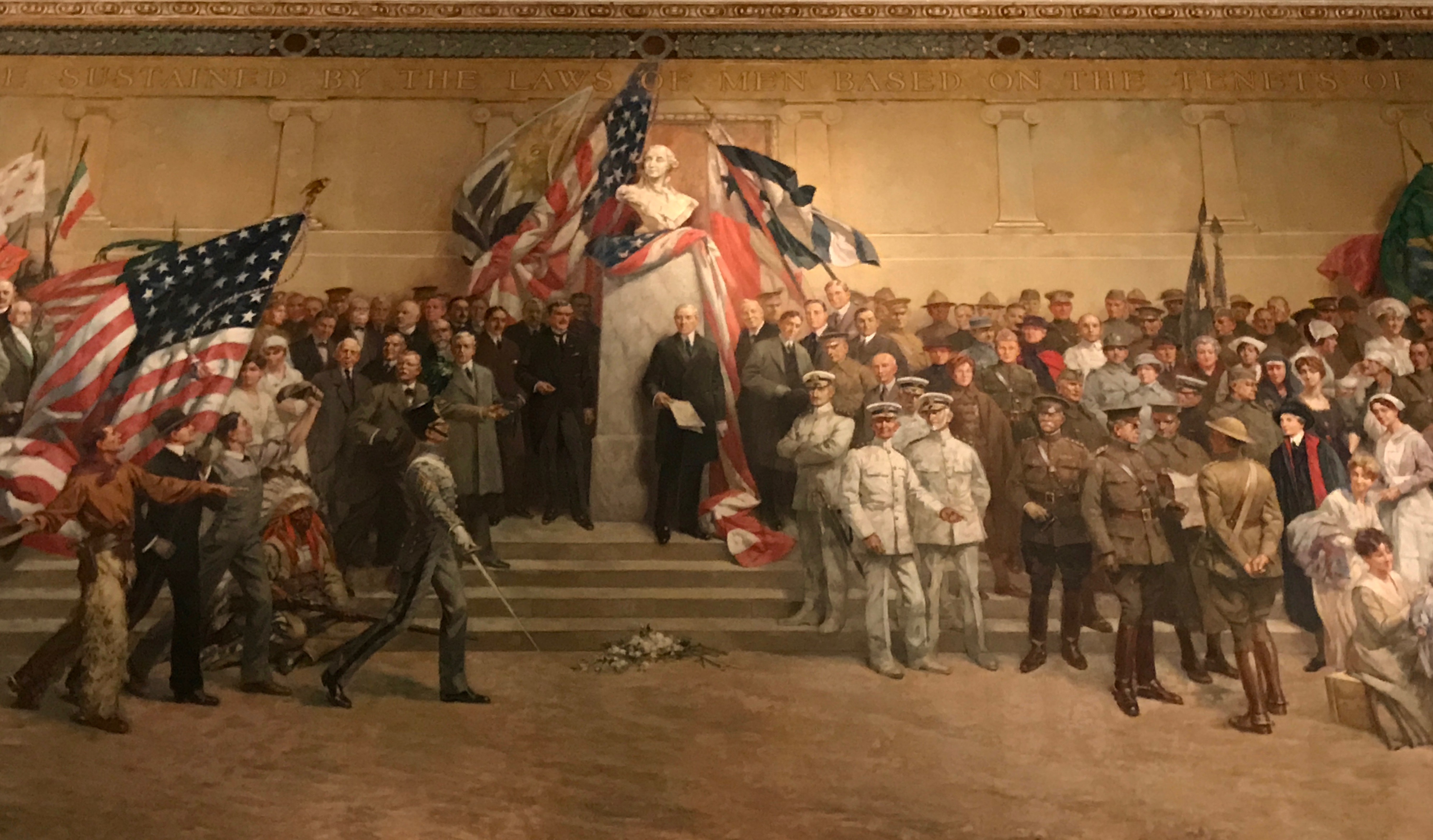
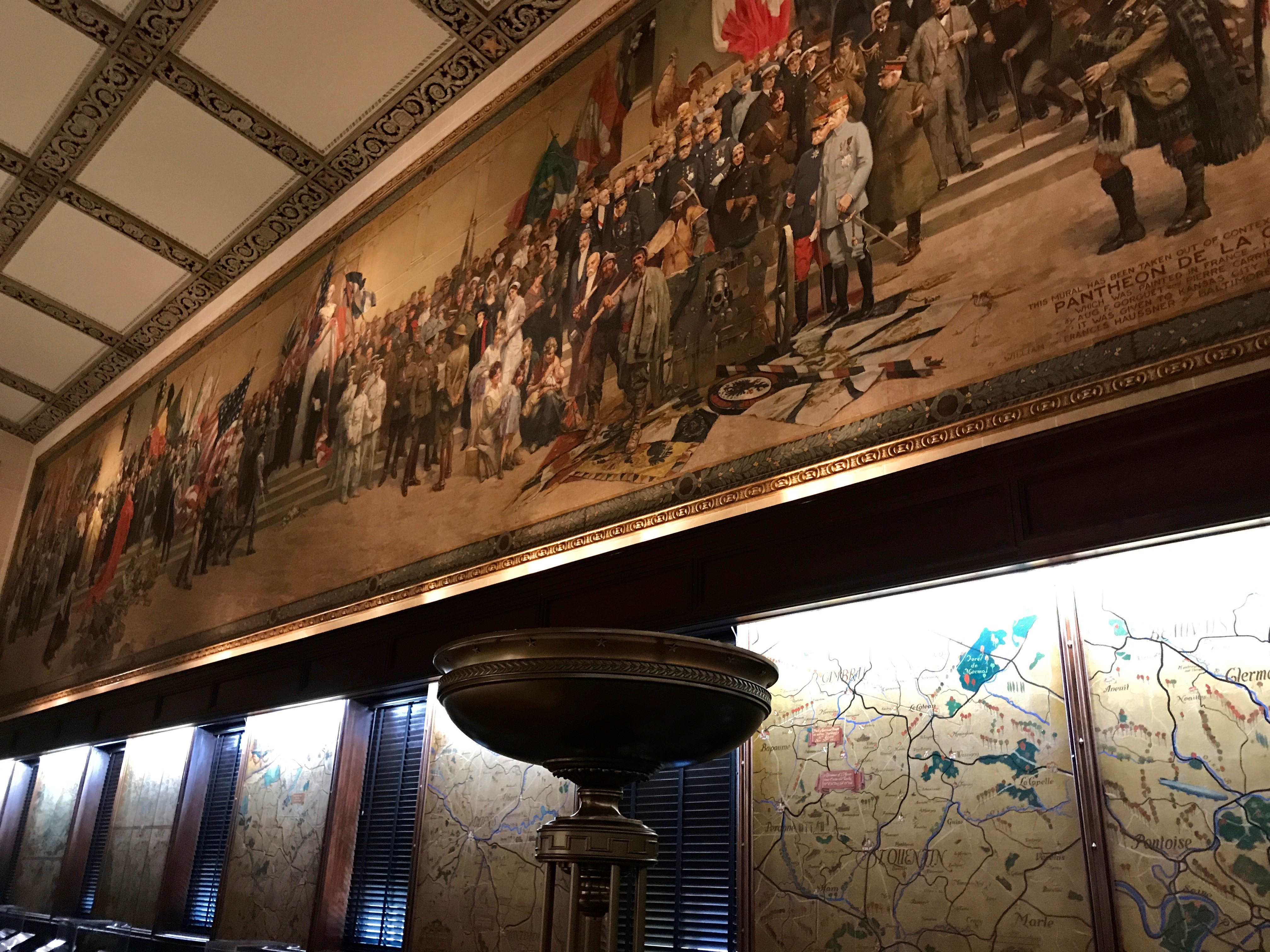
Inside the buildings are some interesting murals.
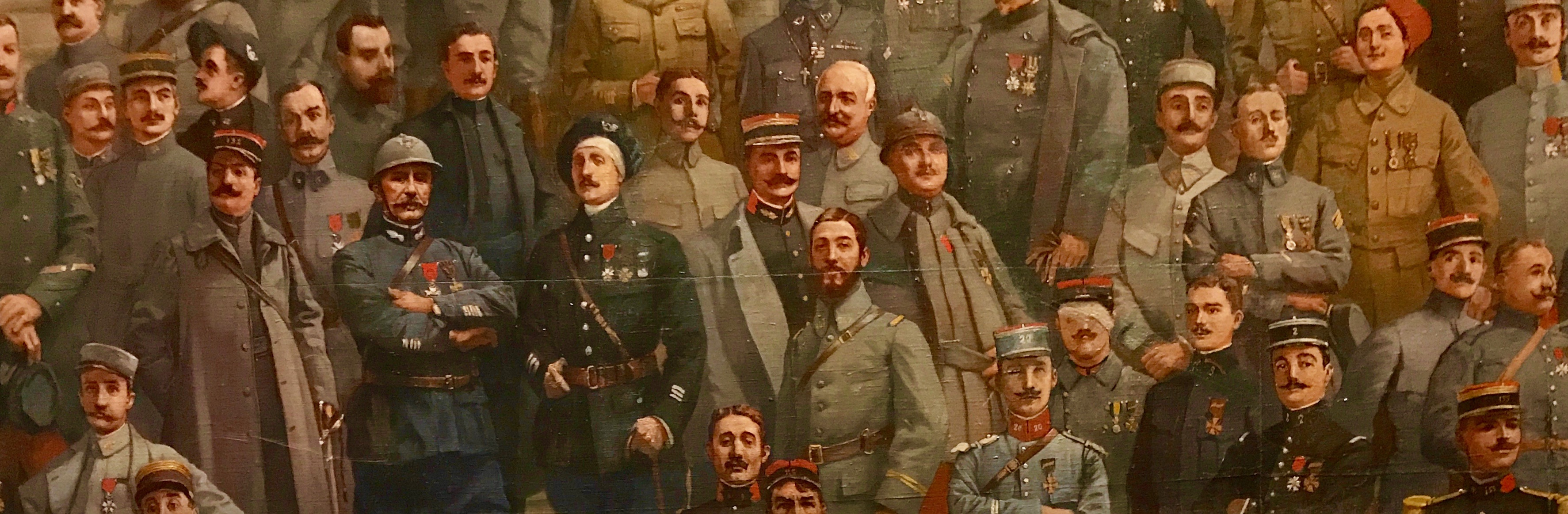
What is exhibited in the two buildings are actually portions of a massive painting called the Panthéon de la Guerre.The project was begun in September 1914, after the Battle of the Marne. It was coordinated by French artists Pierre Carrier-Belleuse and Auguste François-Marie Gorguet, who were apparently well-known at the time. Around 130 artists participated in creating the monumental artwork – a circular panorama that was 402 feet tin circumference and 45 feet high. It has been described as the largest painting in the world.
The painting included full-length portraits of around 6,000 wartime figures from France and its allies. It was executed while the war raged on and had to be updated as countries left or joined the alliance. An entire section of the cyclorama had to be repainted when the United States entered the war in 1917.
It was inaugurated by French president Raymond Poincaré in October 1918, just three weeks before the Armistice was signed. The Panthéon became an almost sacred pilgrimage site for theFrench people and the soldiers passing through Paris. It was visited by three million people between 1918 and 1927.
In 1927, the painting was bought by U.S. businessmen and sent on a U.S. tour. For political and marketing reasons, several figures were added to the painting and others were altered before it was shipped across the ocean. In the U.S., the Panthéon was no longer treated as the sacred object it had been in Paris. Instead, it was promoted as a “great spectacle.” I imagine the low point of public respect was when it was exhibited on the Midway at Chicago’s Century of Progress World’s Fair in 1933-1934.
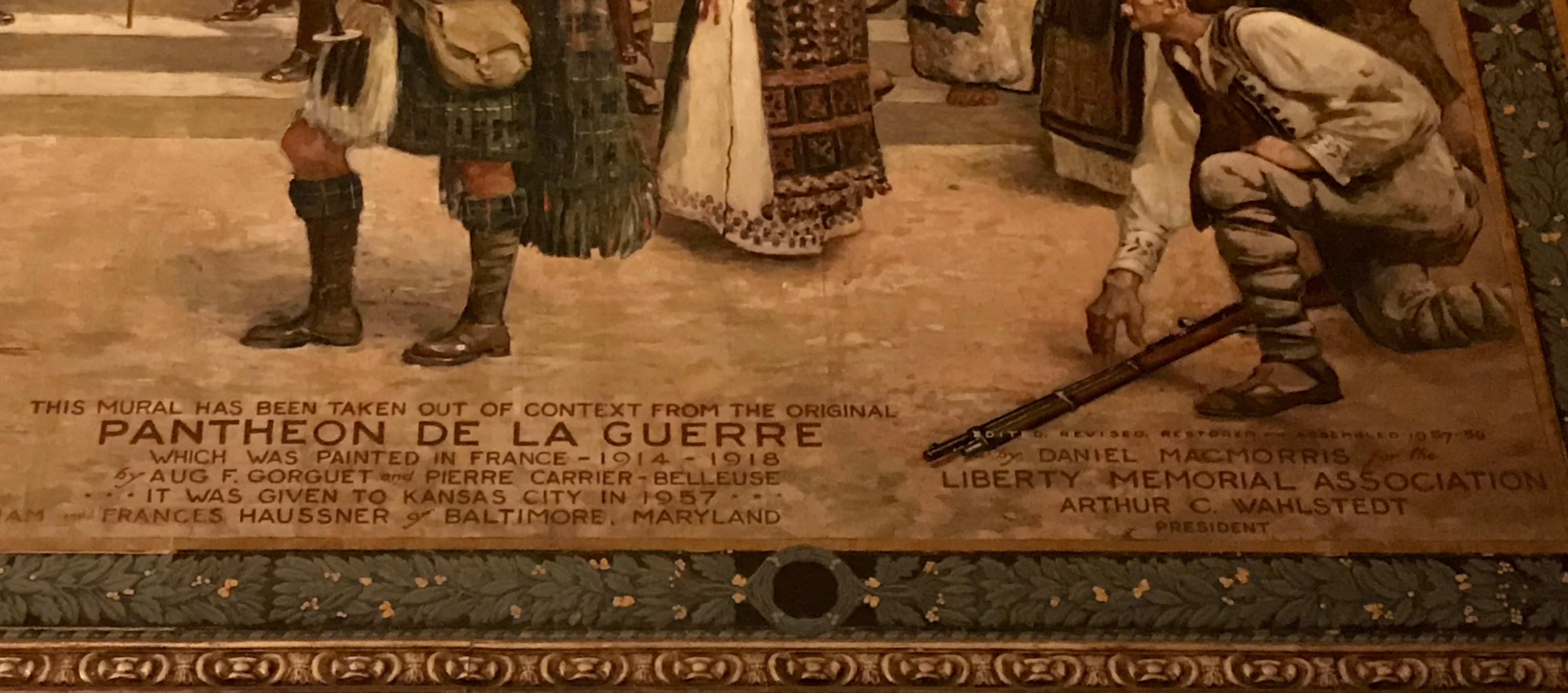
The painting was all but forgotten after World War II. It sat moldering in outdoor storage until Kansas City Artist Daniel MacMorris procured it for the Liberty Memorial in 1957. MacMorris cut up the panorama, drastically reducing it and reconfiguring it to fit into the space available. In the process, he transformed the original, French-focused composition into the U.S.-centric mural that we see today. He altered and cut the French section – the Panthéon’s largest section – to fit the west wall of the other building.
In case you can’t make out the writing on this part of the mural, it says, “This mural has been taken out of context from the original Panthéon de la Guerre, which was painted in France – 1914 – 1918. It was given to Kansas City in 1957. Frances Haussner of Baltimore, Maryland. Edited, revised, restored and assembled by Daniel MacMorris for the Liberty Memorial Association. Arthur C. Wahlsted, President”
While it might seem like a pity that such a monumental work of art that moved so many people for so many years should not be conserved in its original form, it is an interesting metaphor for how we reimagine and reshape our personal and national histories.
There were many more things that were displayed in these two halls. Perhaps I’ll share them in my next post.
Until then, I’ll close with the flags of the allies.
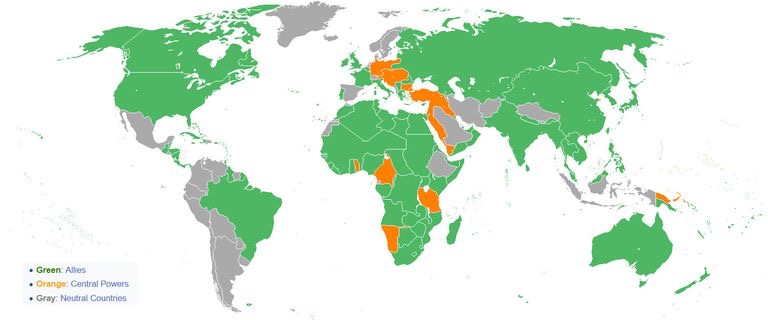
And a map showing that it really was a global conflict.
Map of Alliances in World War I. Helmandsare, Joaopais, El Jaber, Aivazovsky
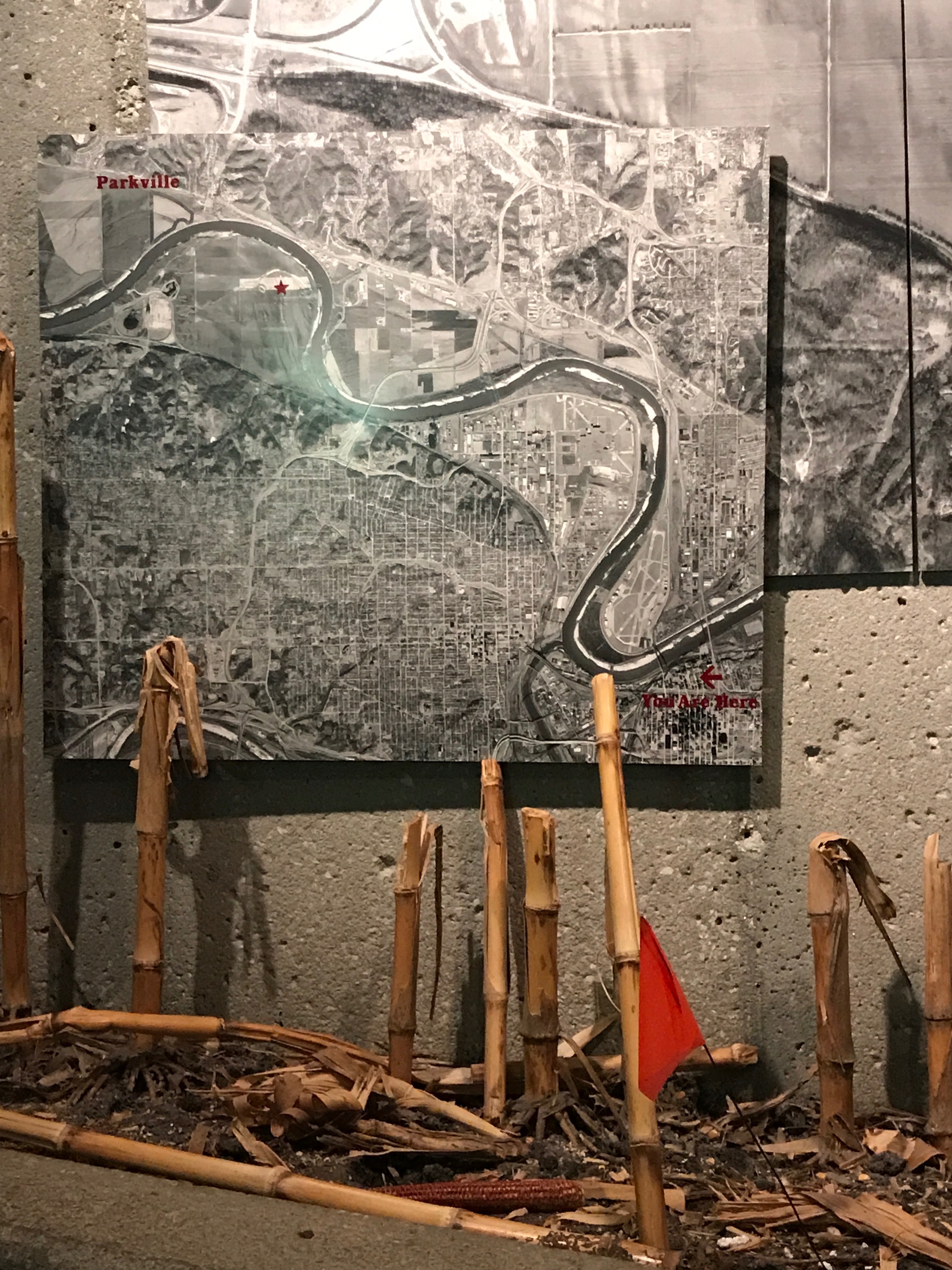
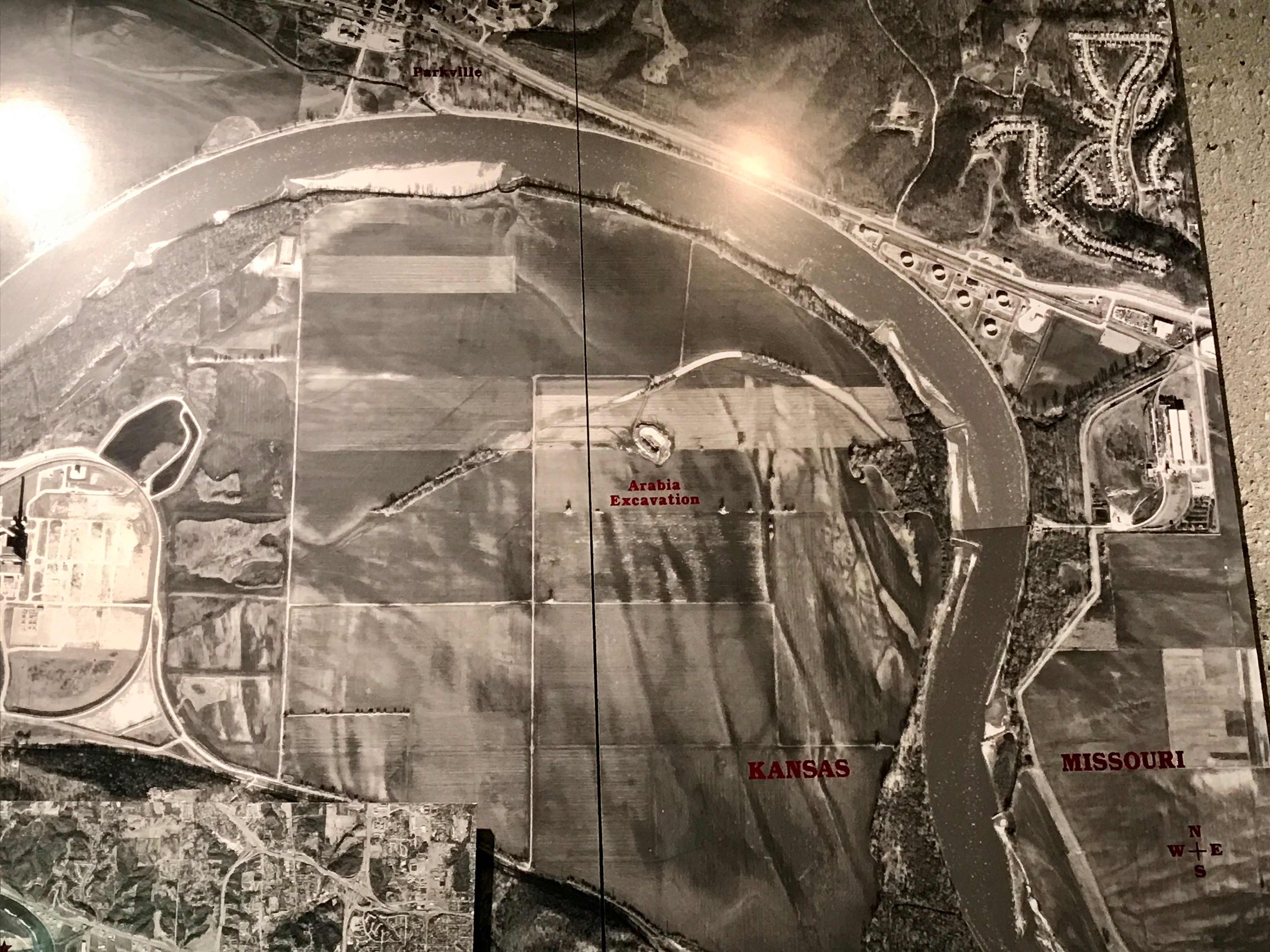
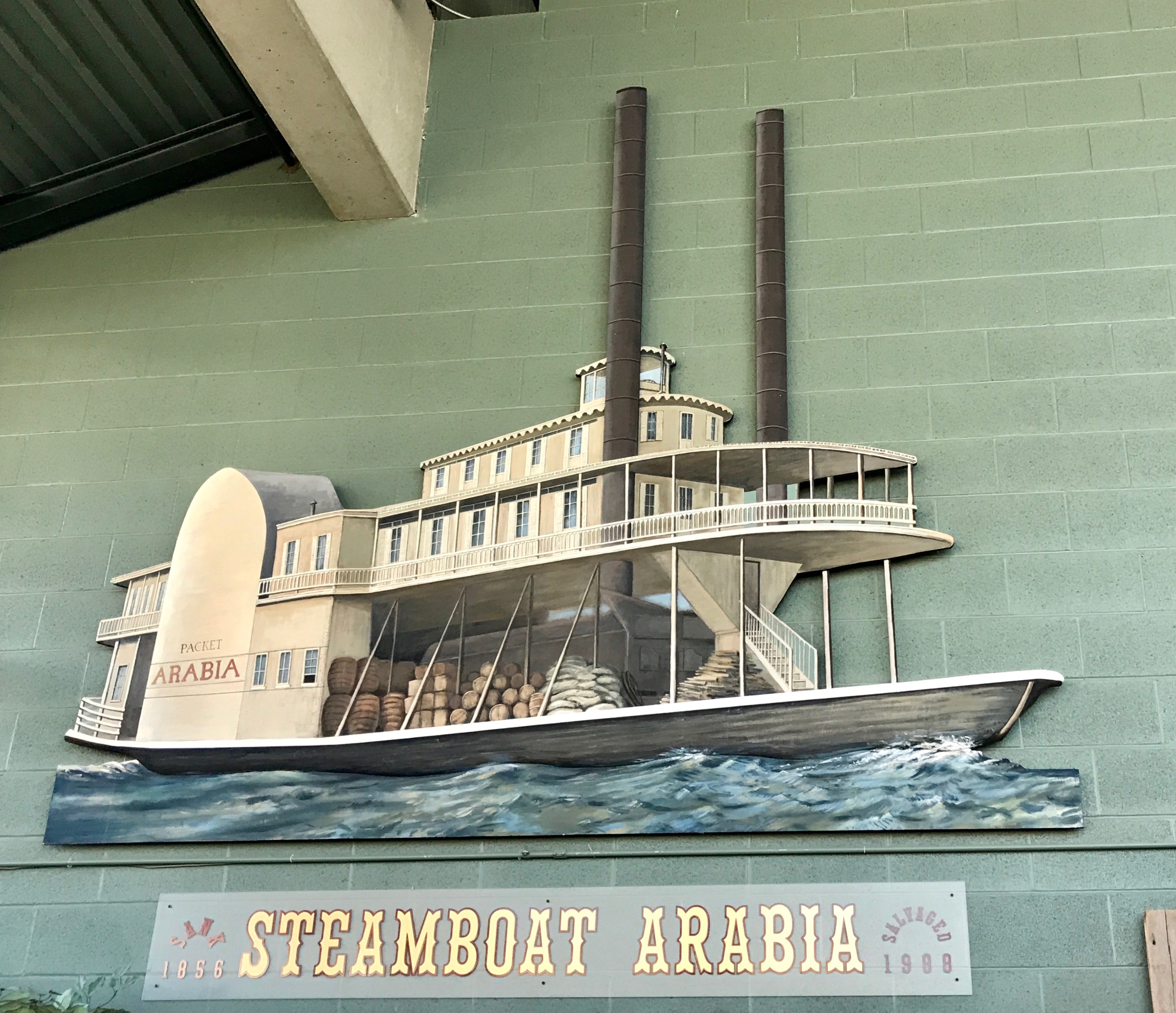
Long ago, I remembered hearing about the recovery of the Steamboat Arabia that hit a snag and sank in the Missouri River in 1856 near Kansas City. What was amazing to me is that they found it buried 45 feet beneath a farmer’s field and about half a mile from where the river runs today.
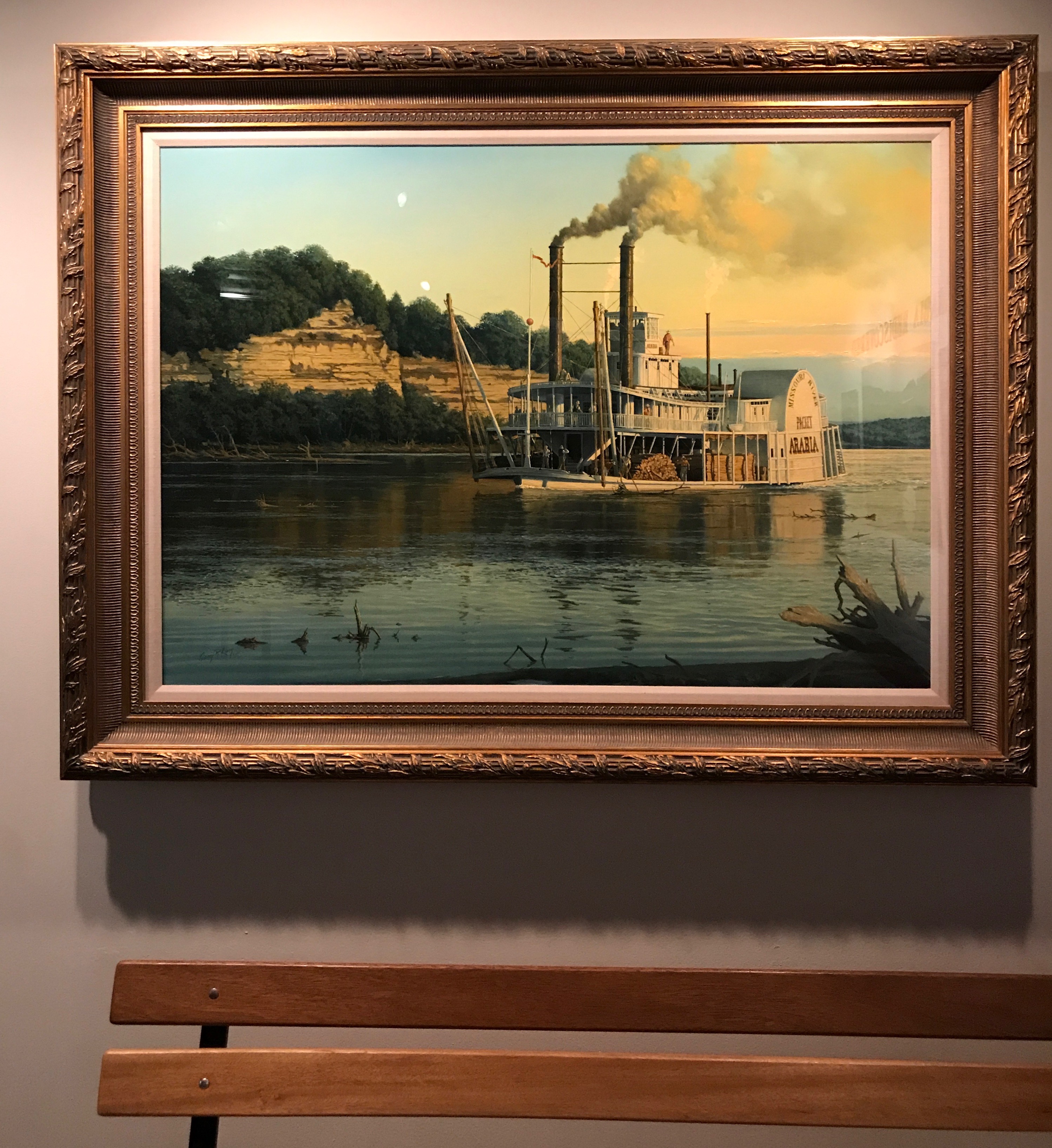
This painting, by Gary R. Lucy, is titled THE ARABIA: The Afternoon of Her Last Voyage, 1856.
The Arabia, loaded down with whiskey and other frontier necessities, was on a routine run when it hit a snag.
Incidentally, snag refers to trees, branches and such that are found sunken in rivers and streams. In this case, The Arabia ran afoul of a dead sycamore. it ripped open the hull, which filled with water. The upper decks stayed above water, and the only casualty was a mule that was tied to some equipment and was forgotten in the rush to abandon ship.
Although the upper decks were above water the day it hit the snag, the boat sank into the mud that by the next day only the smokestack and the pilot house remained visible. Within a few days, these traces were also swept away.
I found the story of the recovery pretty incredible.
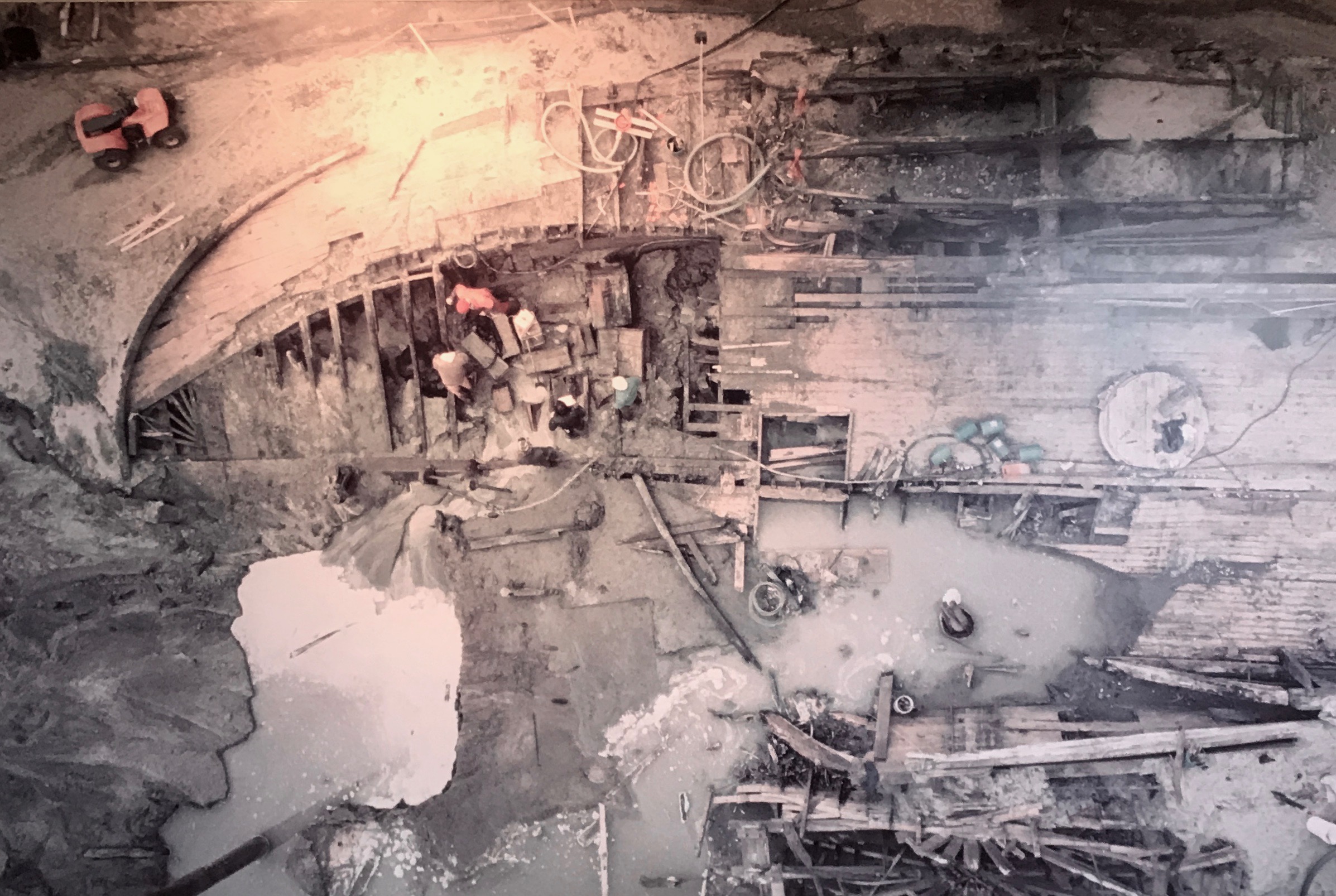
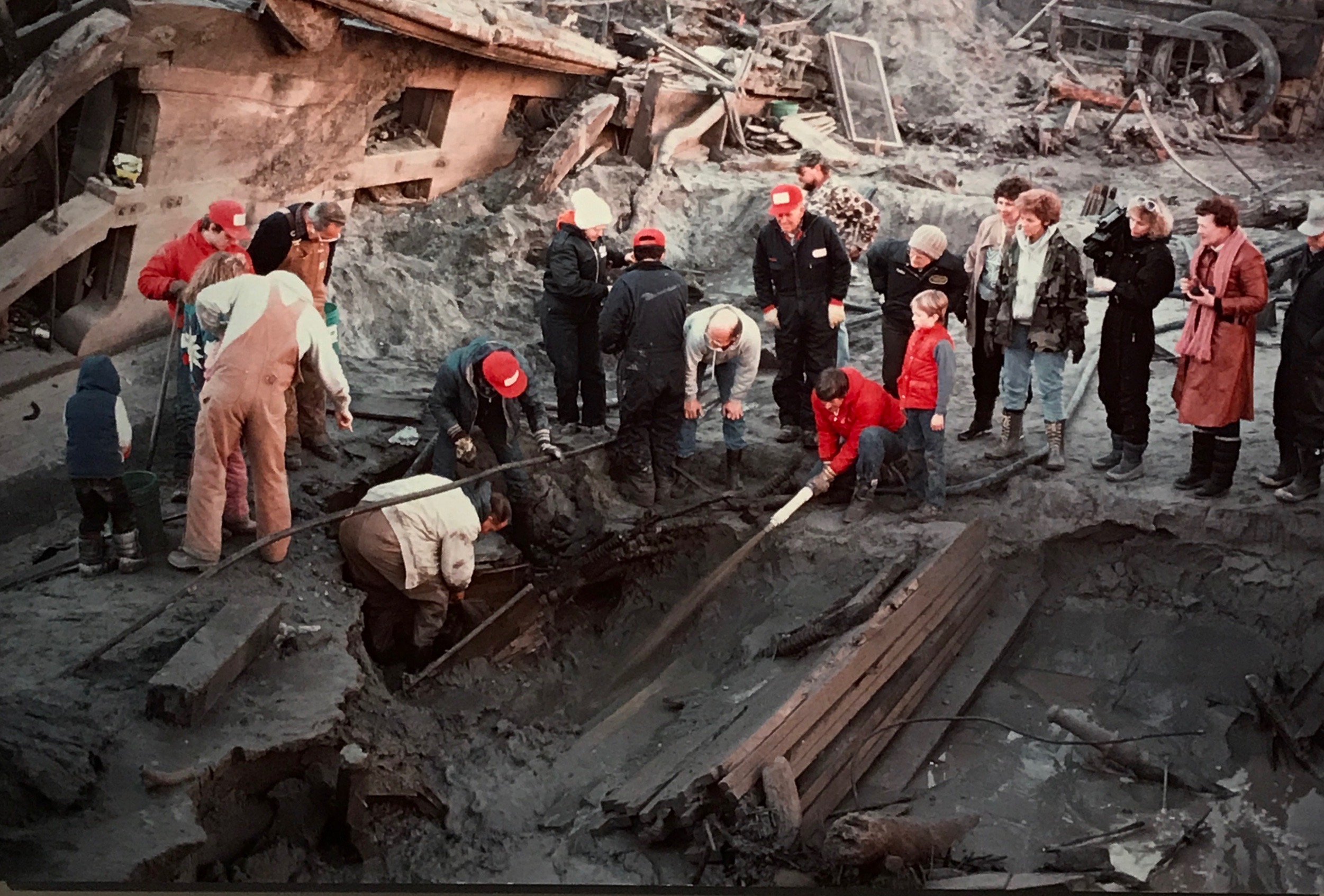
How would you know where to begin to look? In 1987, Bob Hawley and his sons, Greg and David, along with Jerry Mackey and David Lutrell and their families, set out to find the Arabia They used old maps and a proton magnetometer to decide on a probable location.
While the steamboat was found in Kansas, the museum is in Missouri.
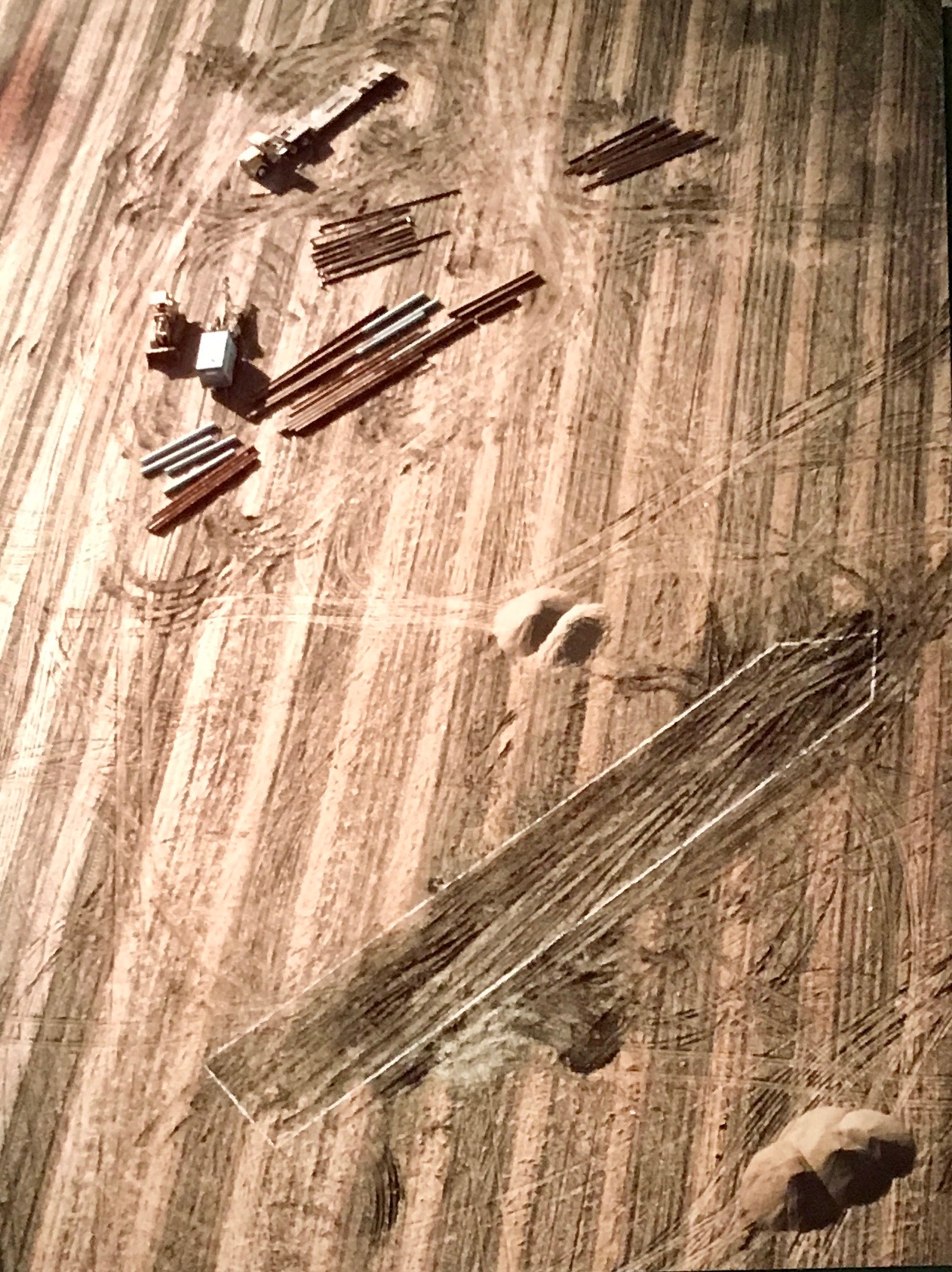
They found what they thought was the site and commenced digging in November 1988. They dug until February 1987. They were digging with the landowner’s permission. Permission was granted with one condition: the fields had to be ready for spring planting.
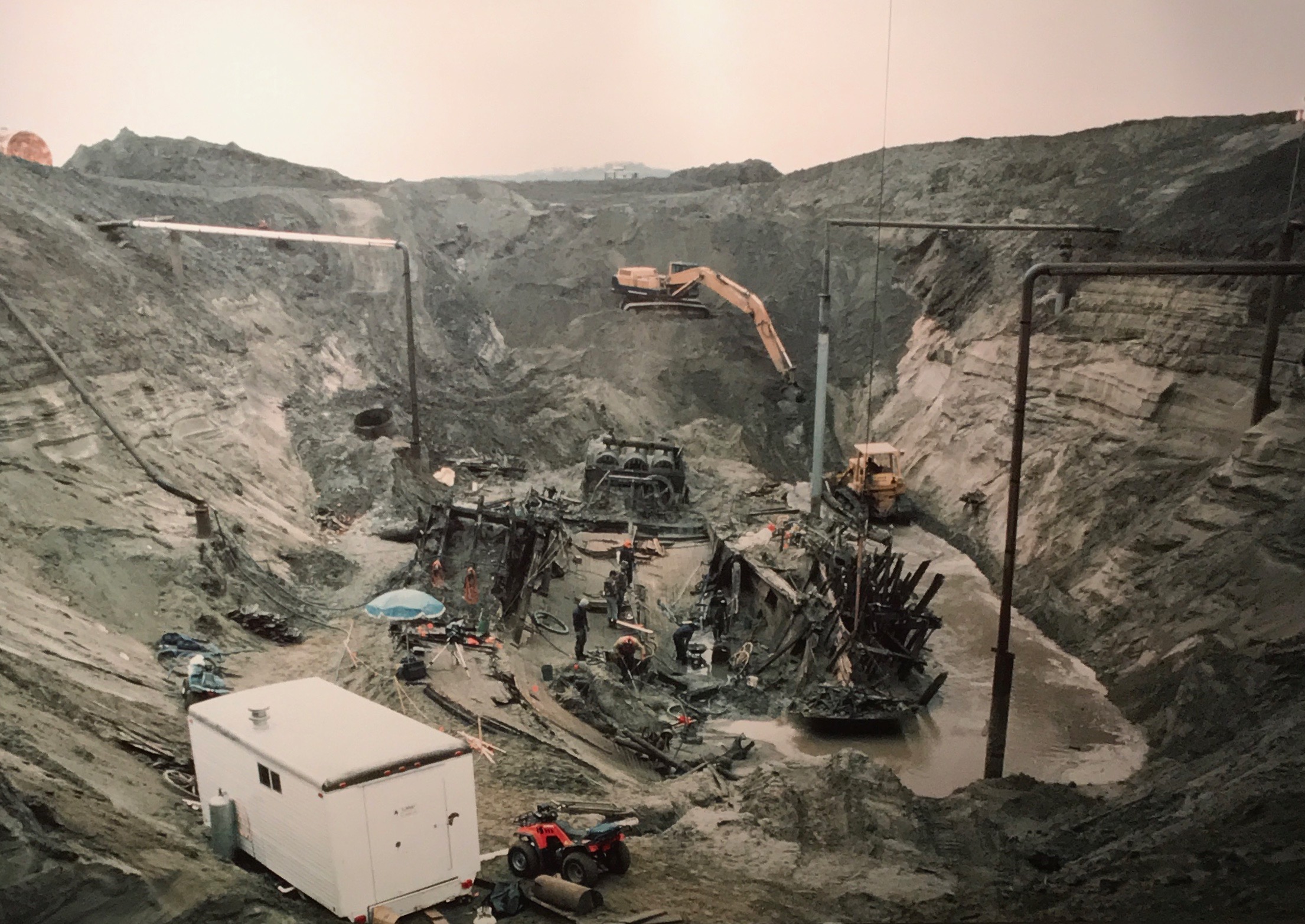
This photo gives you a view into the pit. What a monumental task!
And then they had to get the field ready for spring planting! I wonder if they made the deadline?
Their original goal was to sell their discoveries. The historical importance of what they found buried under this Kansas farmer’s field made them change course. They started to plan a museum – a privately owned museum. Today it is still owned and operated by the Hawley family.
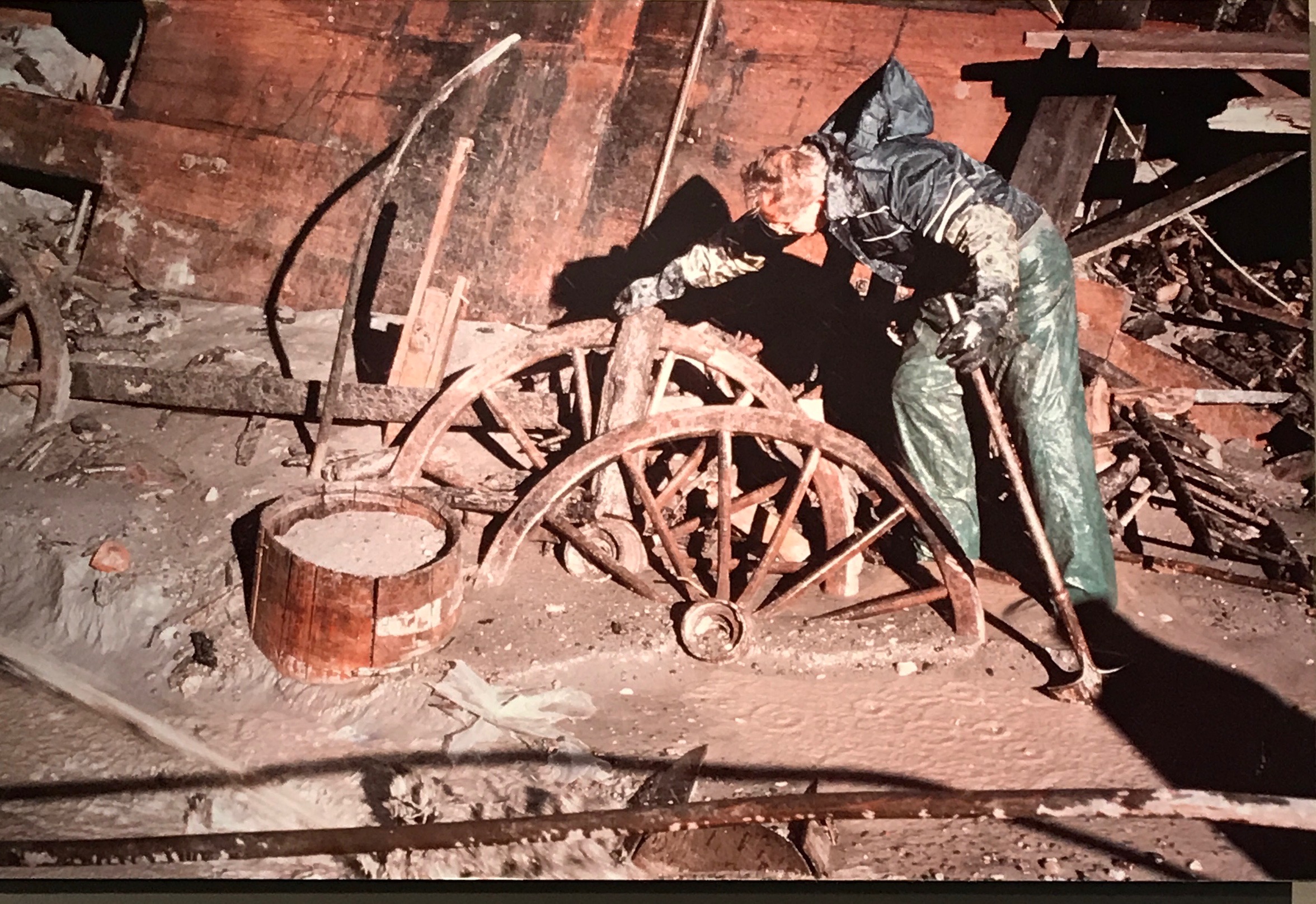
In all, they unearthed 200 tons of artifacts!
With the contents of the ship protected from light and oxygen, the artifacts they found were incredibly well preserved. Their website proclaims that the museum contains “… the largest single collection of pre-Civil War artifacts in the world.” The quantity of items is amazing – and they still have 60 tons of what they excavated yet to process.
Well, enough of the preamble. Let’s go inside.
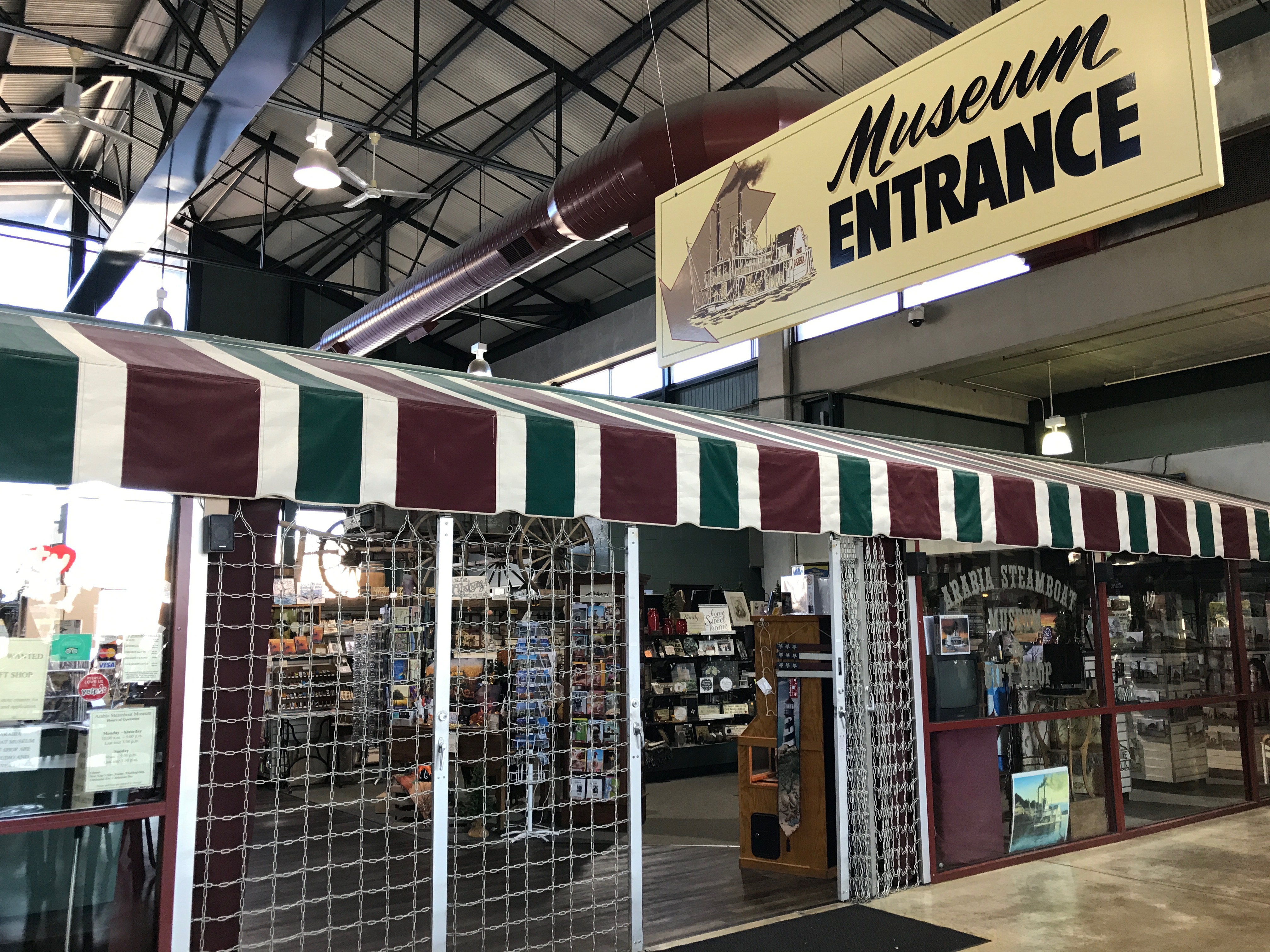
Enter through the gift shop…that’s a variation on a theme!
The sign let me know I was heading in the right direction.
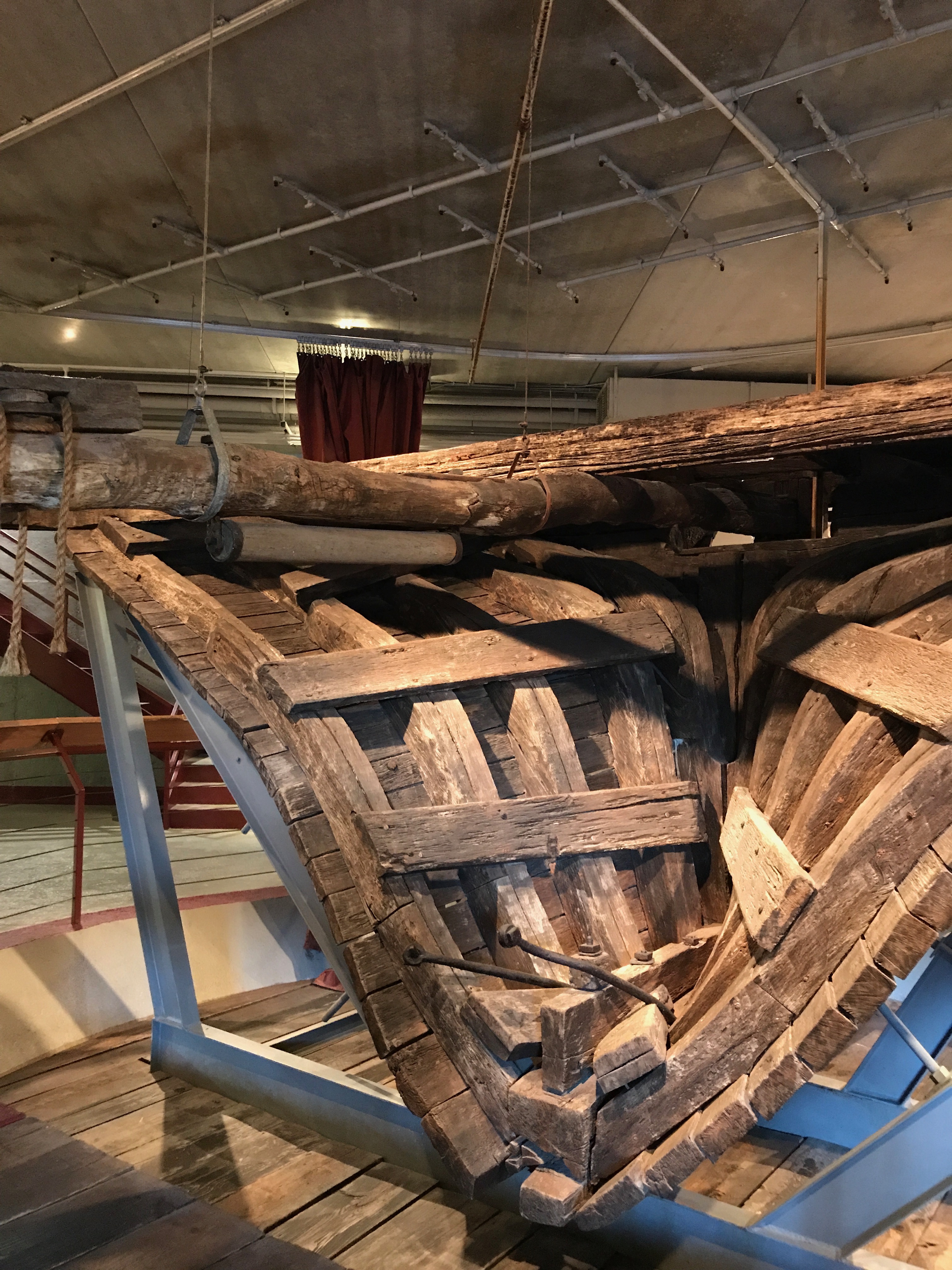
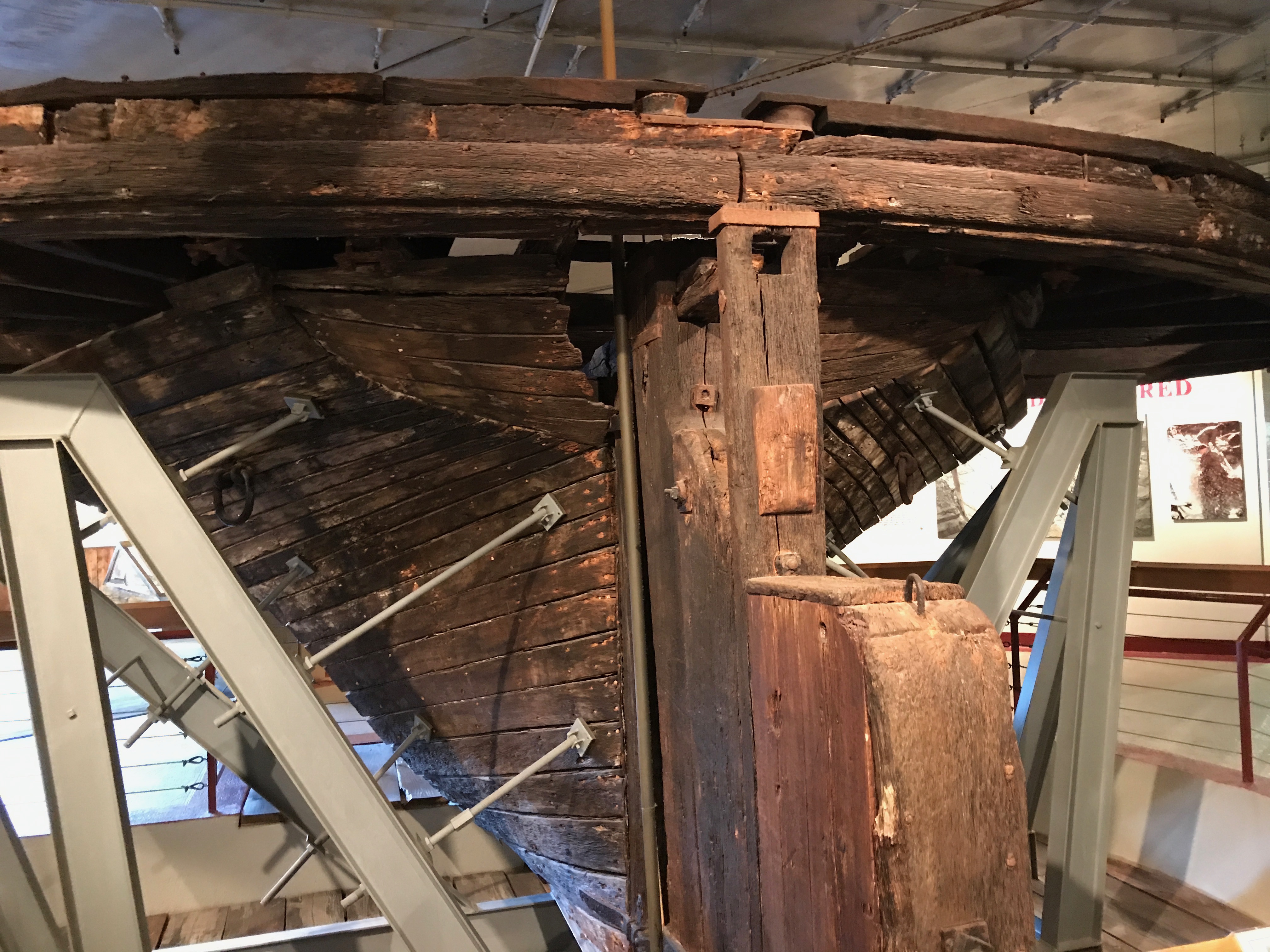
The steamboat was built in Brownsville, Pennsylvania on the Monongahela River. This hull originally travelled on the Ohio and Mississippi Rivers before it came to the Missouri River.
“But, what did they find in the cargo?!” I can practically hear you shouting at your screens. Your wait is over!
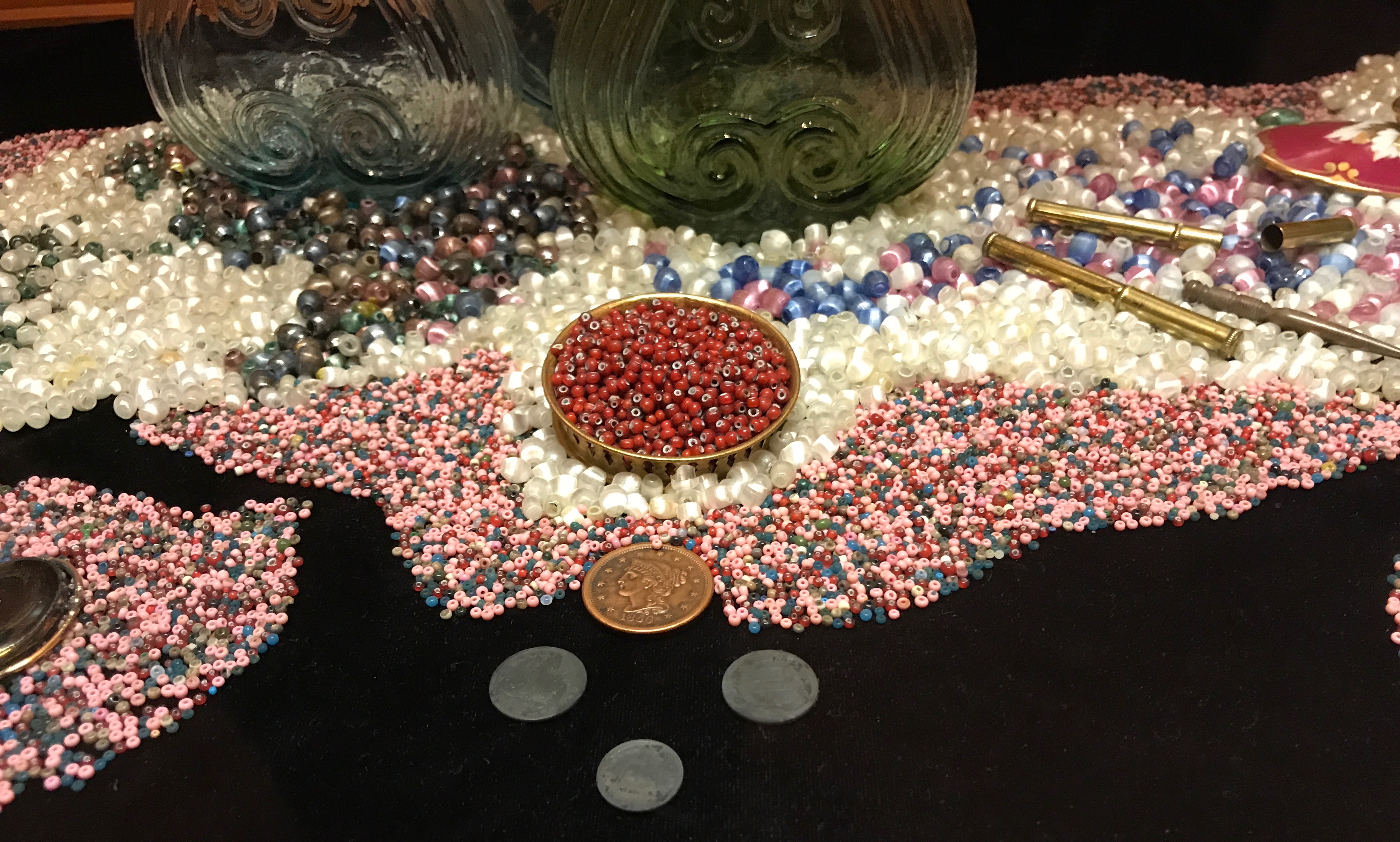
They found beads.
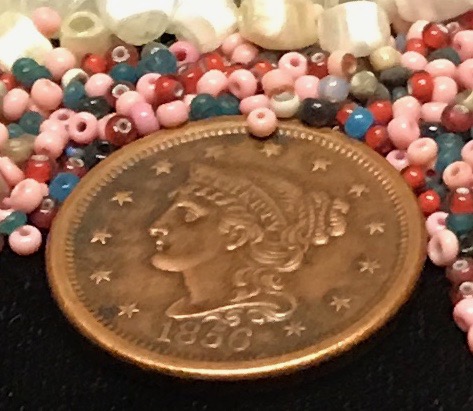
And a coin that was newly minted when the boat sank.
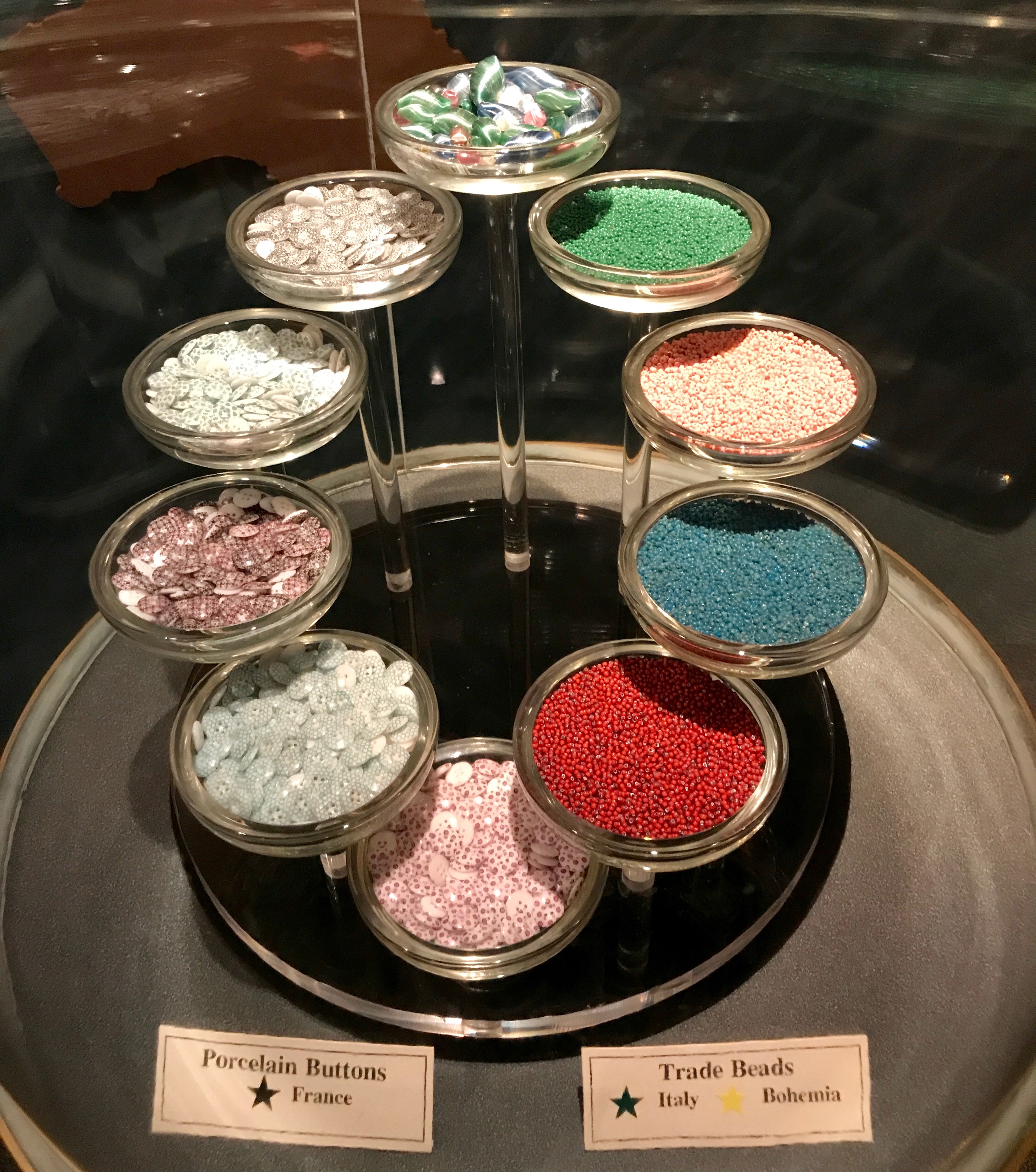
Beads and buttons – from France, Italy, and Bohemia. (Bohemia is where Czechoslovakia is today.)
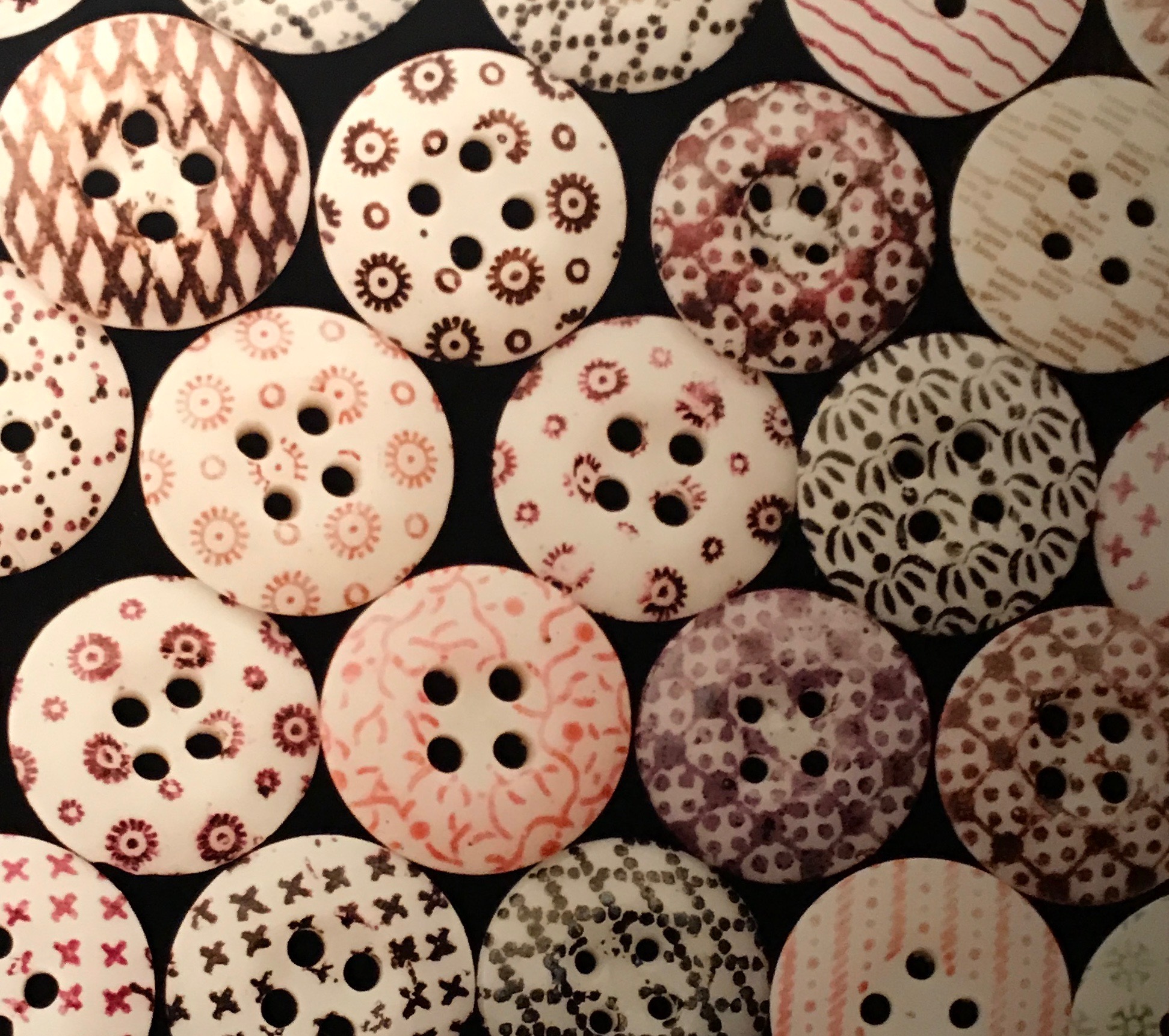
Those buttons were pretty snazzy! Each of the thousands and thousands of the buttons and beads had to be cleaned by hand.
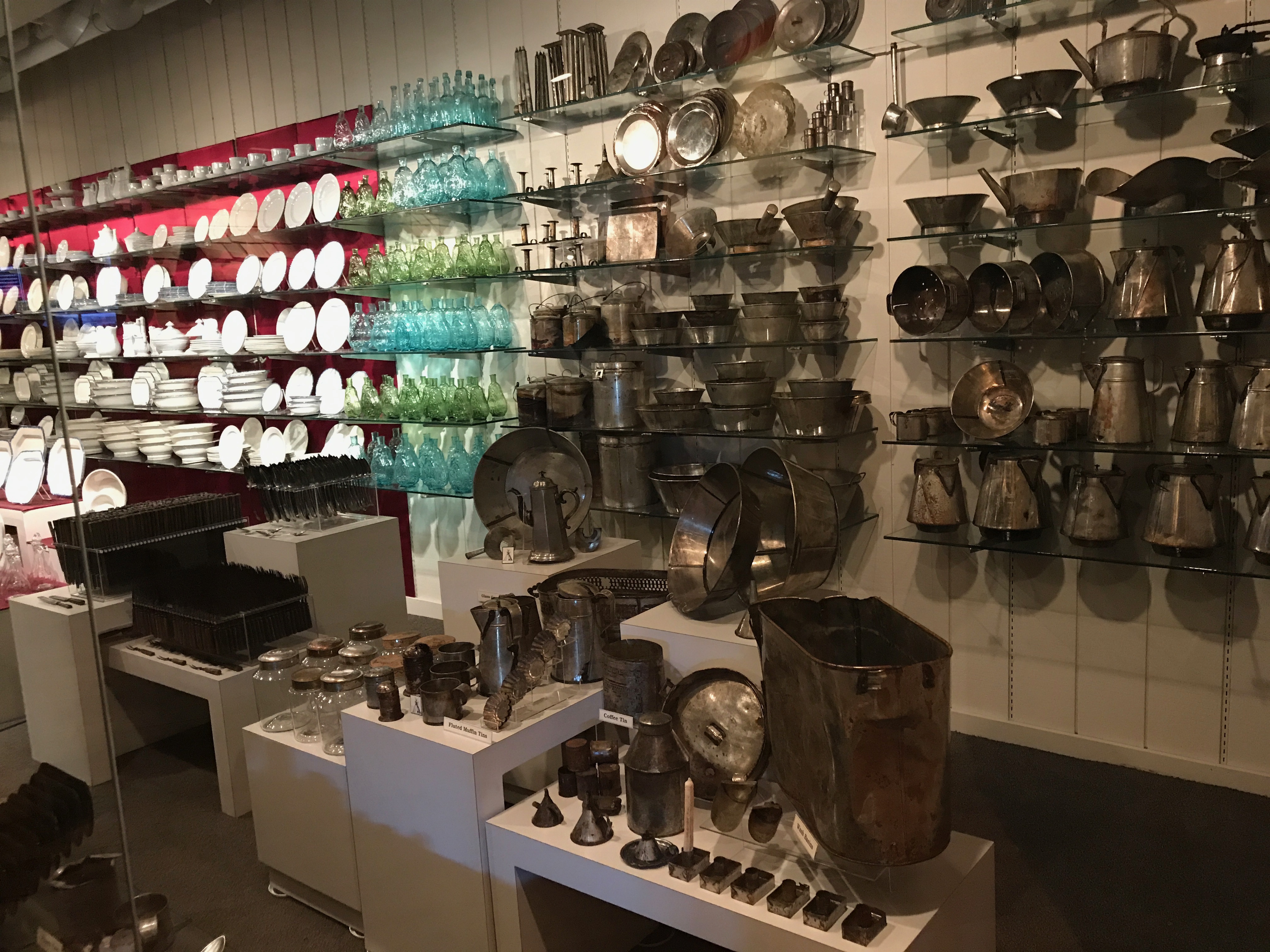
Dishes, glassware and metalware were on board.
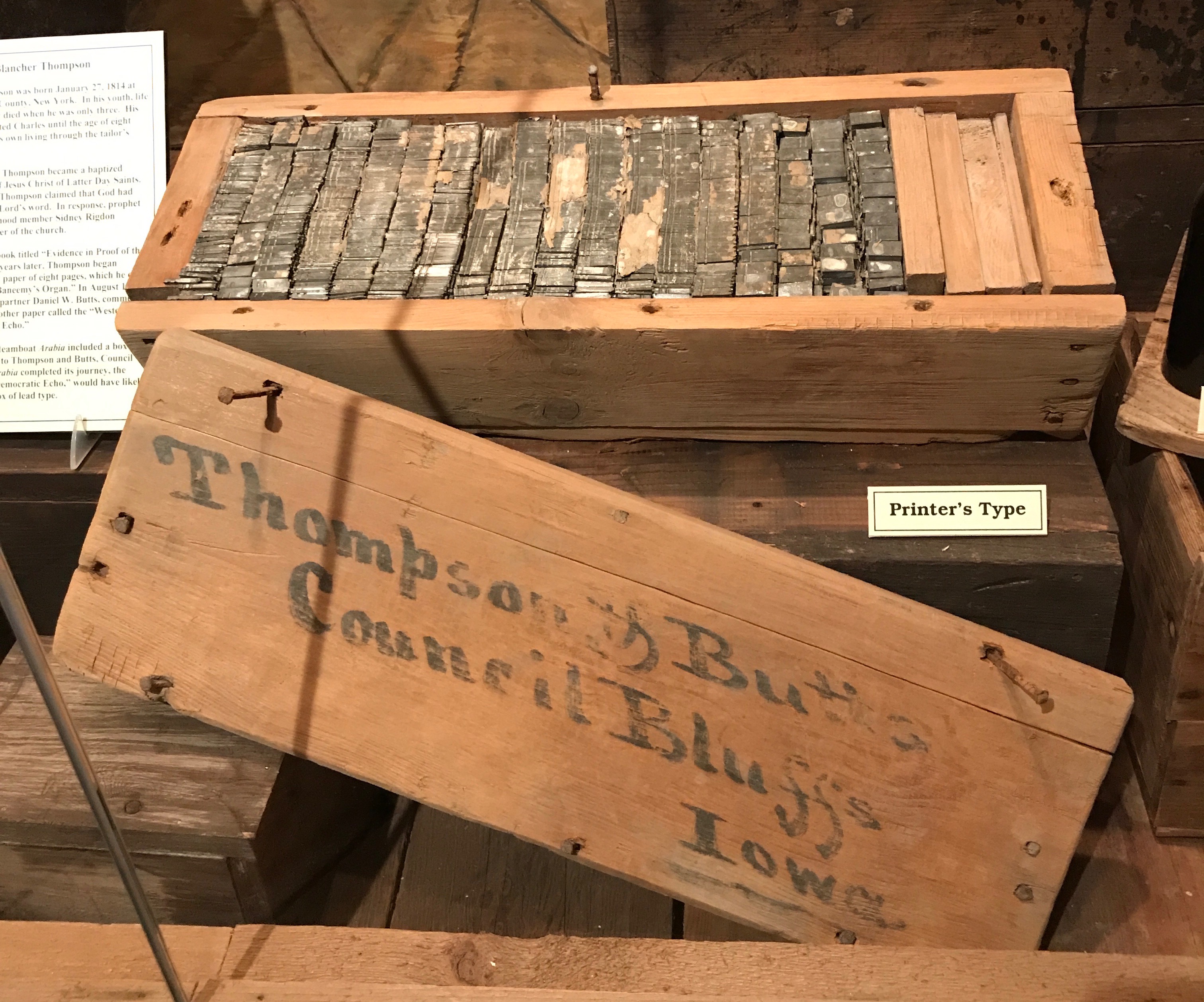
And printer’s type, bound for Council Bluffs, Iowa.
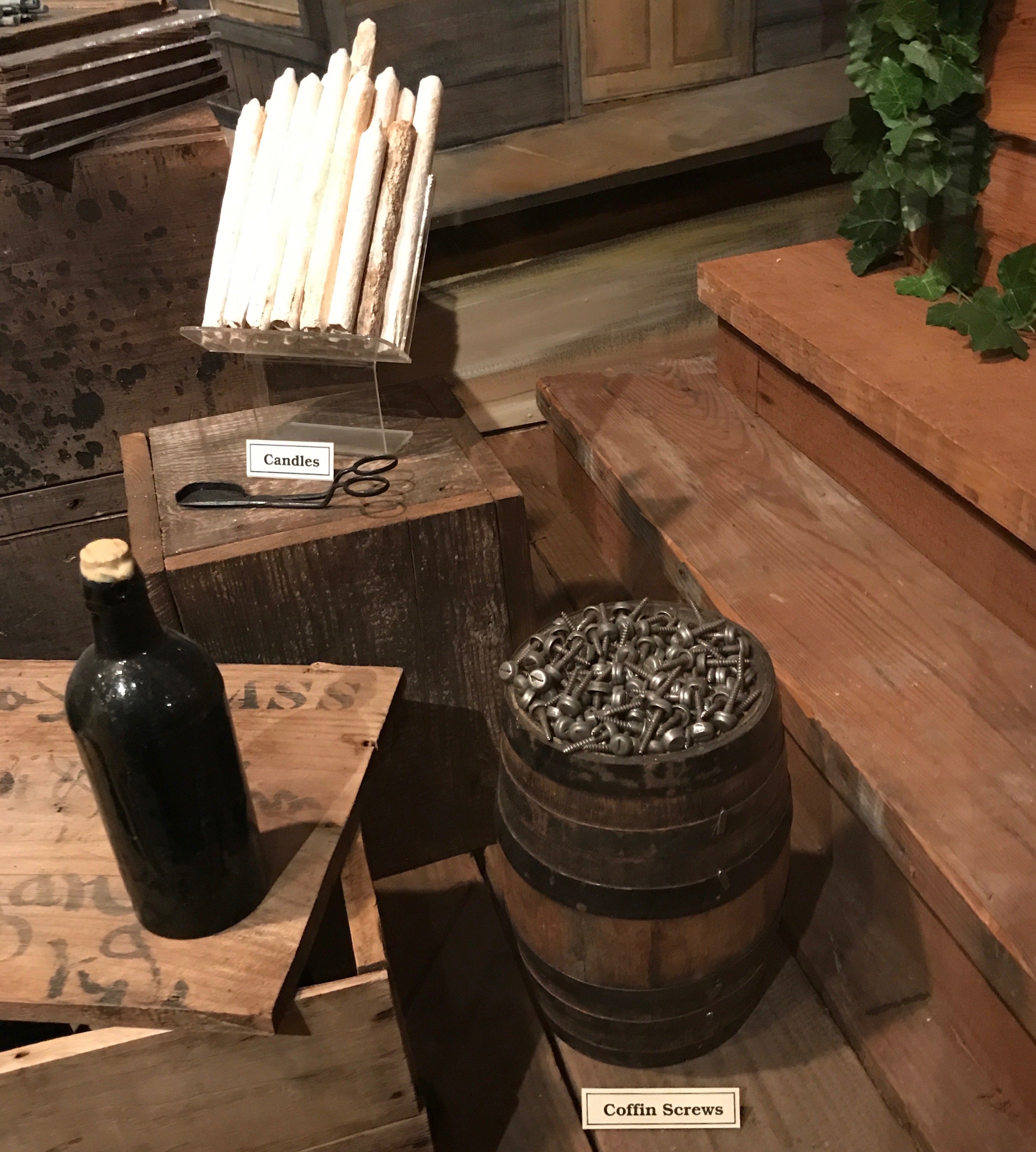
Coffin screws and candles.
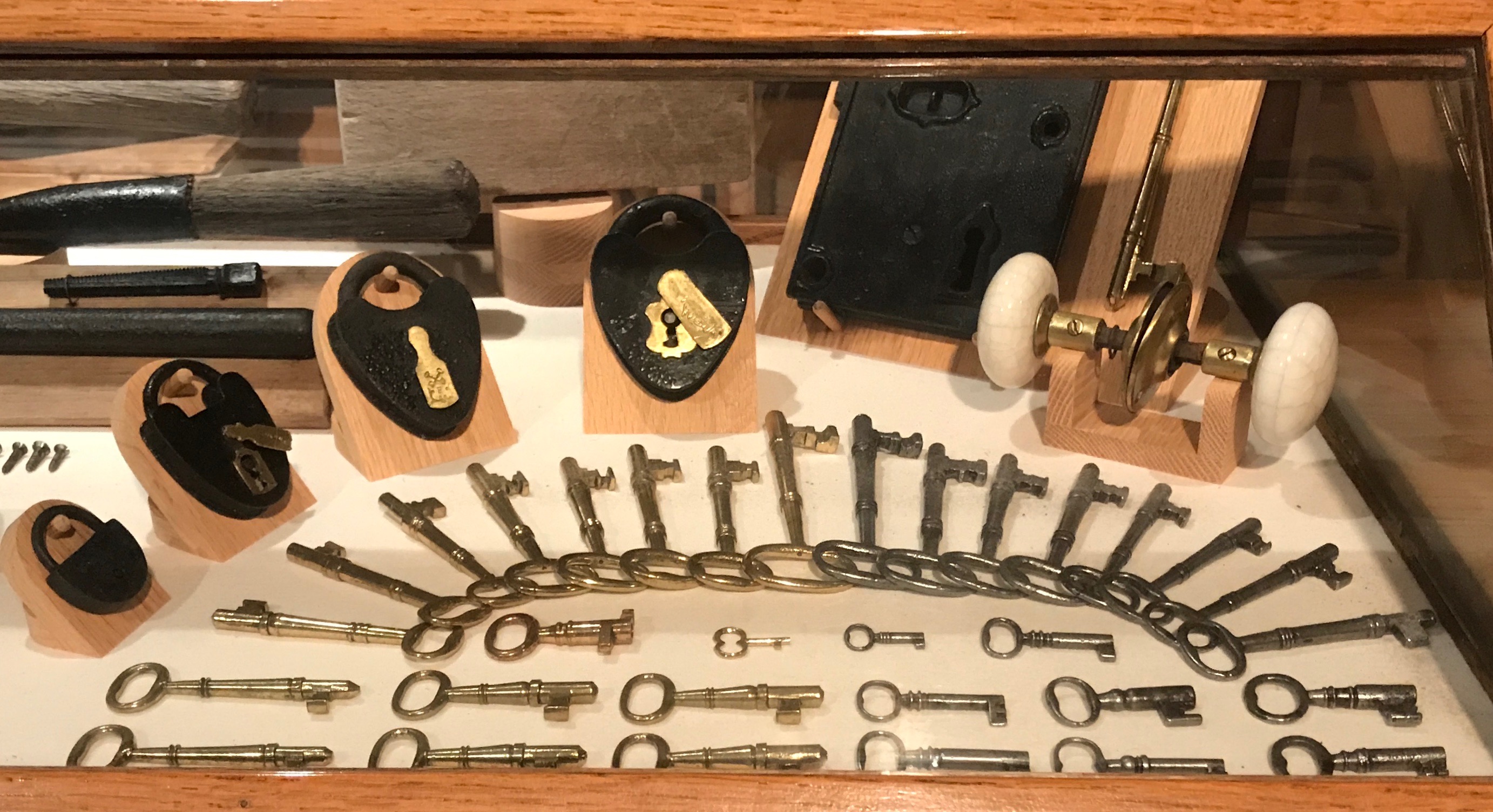
Locks and keys and doorknobs.
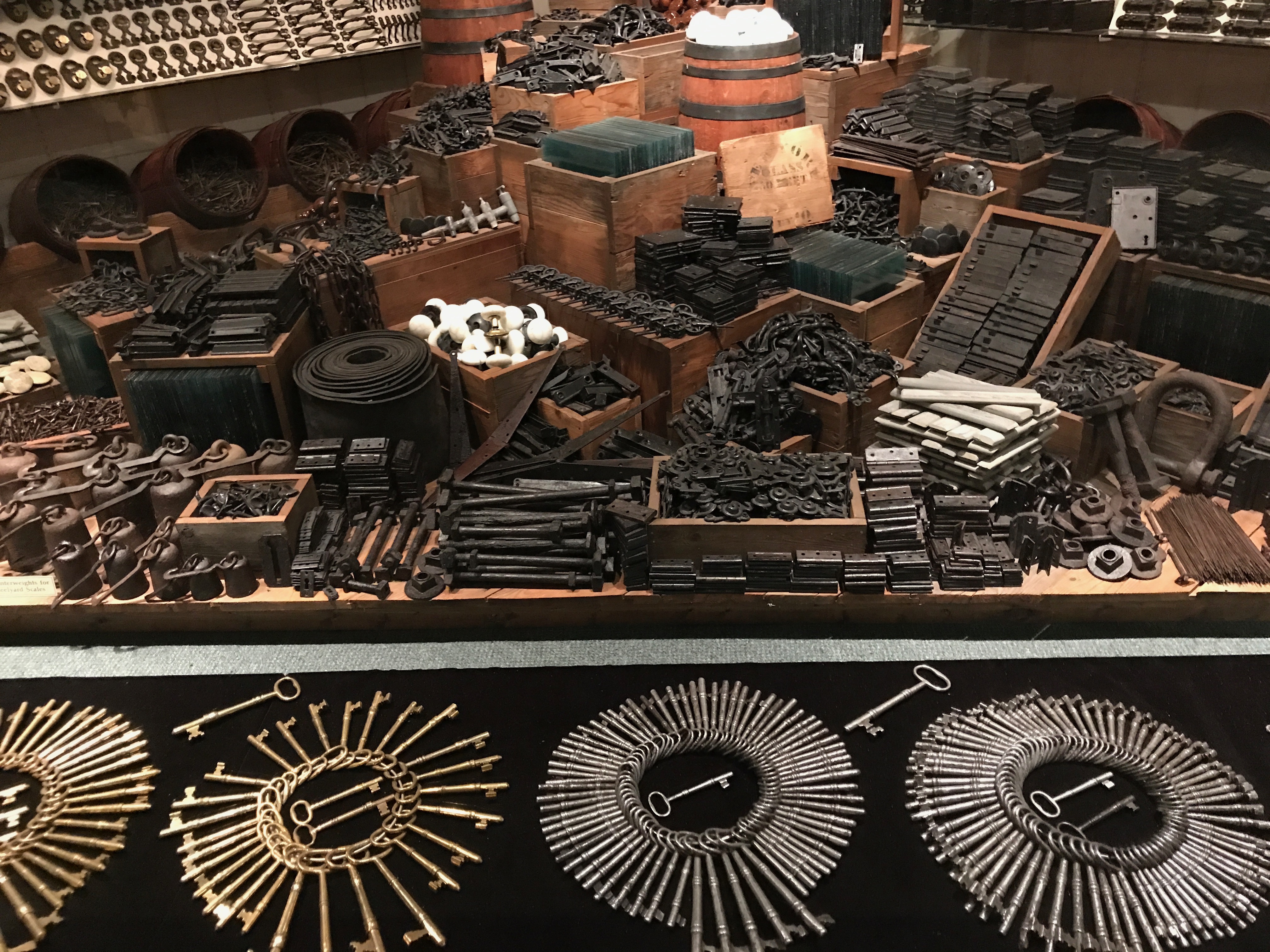
Lots of keys and all sorts of metal products.
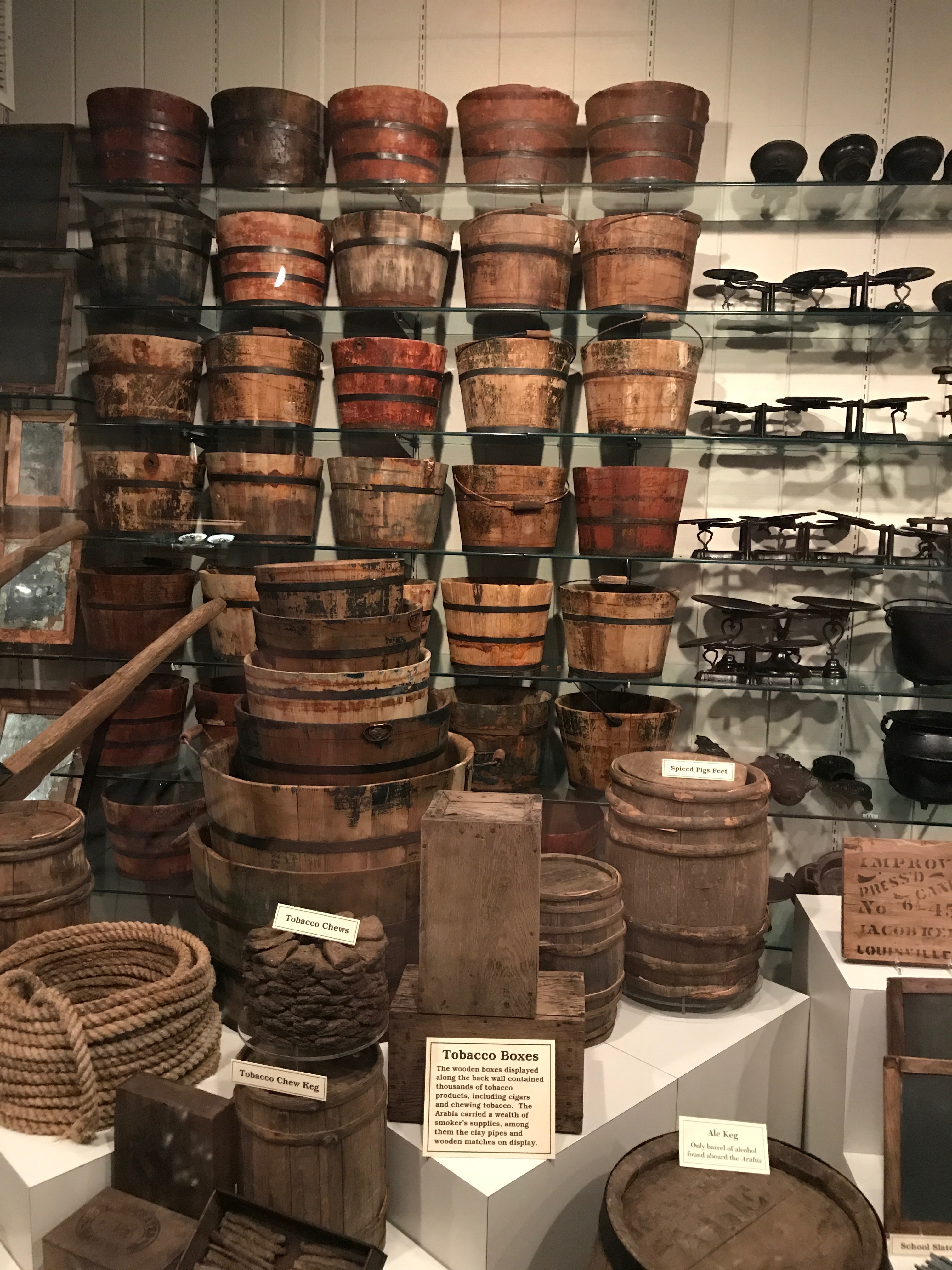
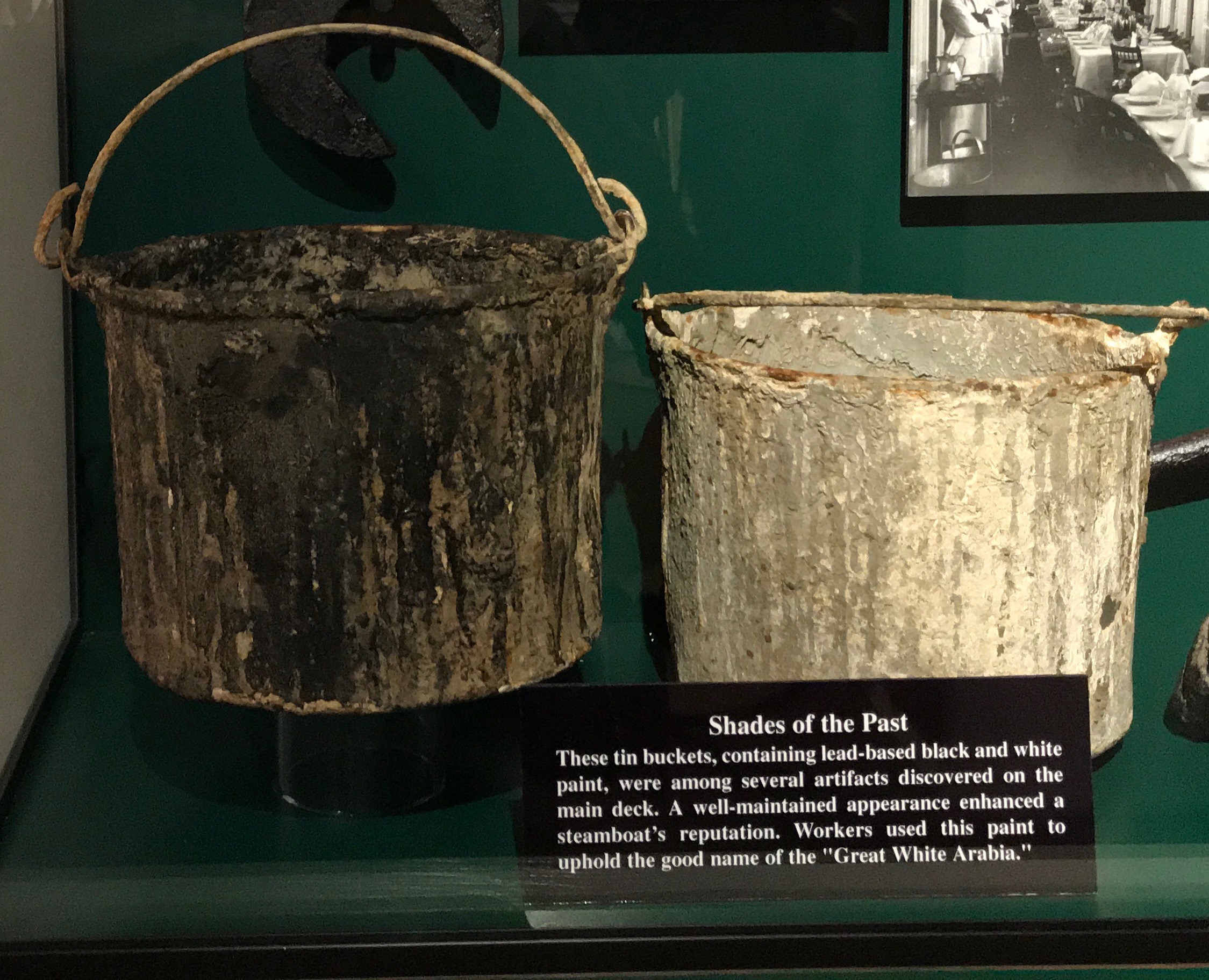
Wooden buckets, boxes, kegs, scales, rope
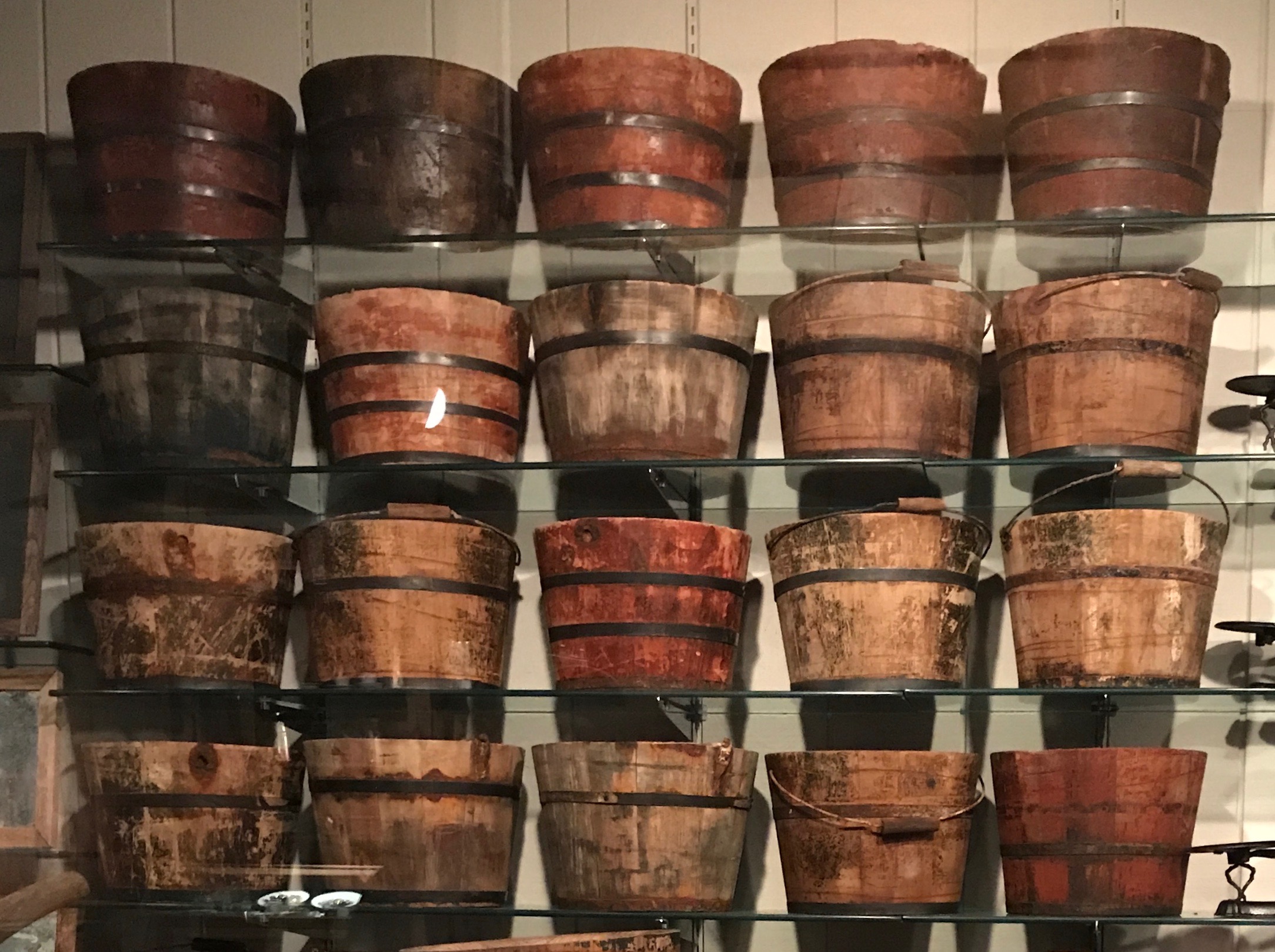
I liked the buckets, so here’s another shot of them.
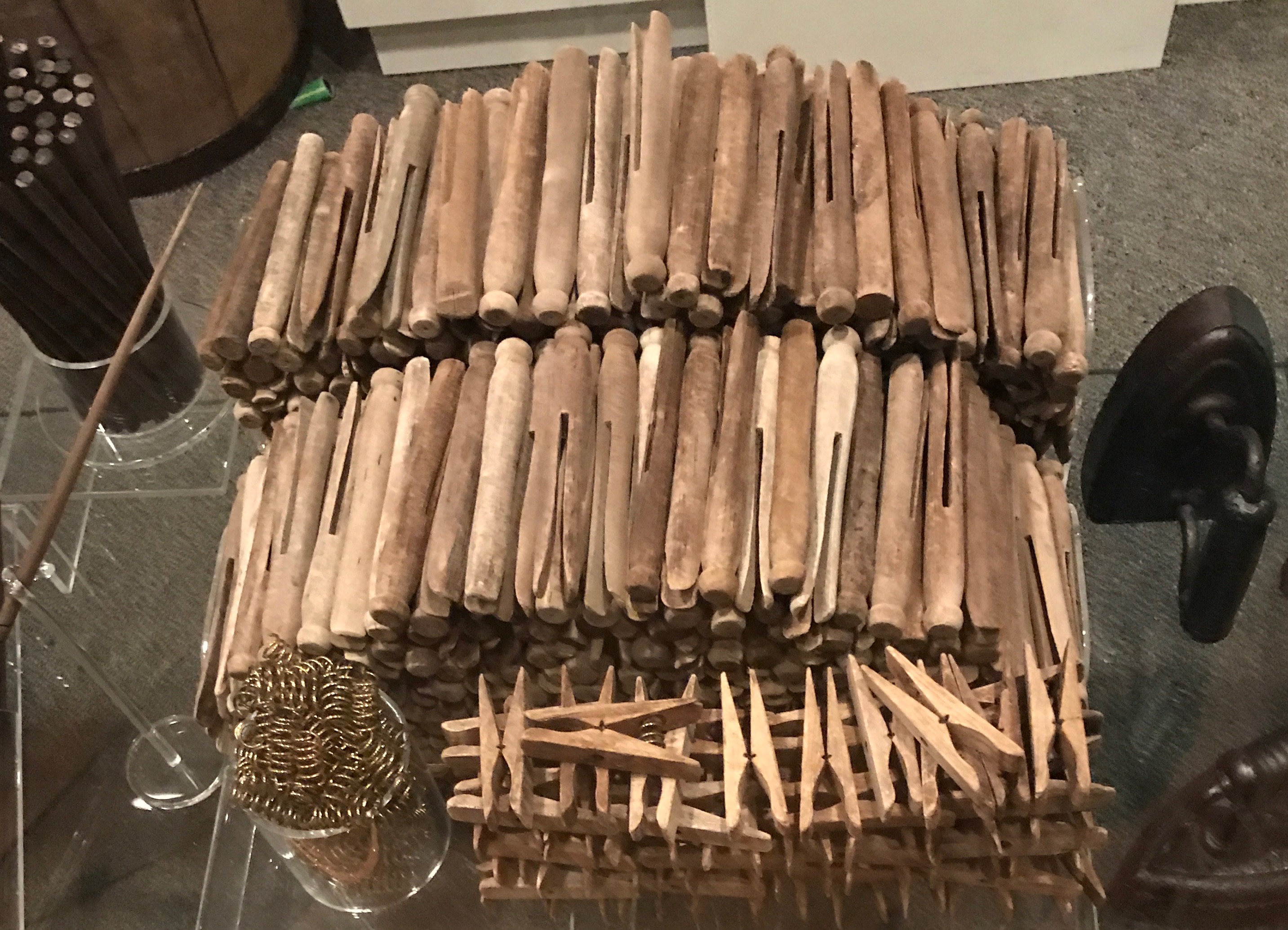
Clothes pins – or clothes pegs, if you prefer. I assume that the brass springs had something to do with laundry. There are also sad irons in the photo. What is so sad about the irons? I knew at one time, but couldn’t find that fact rattling around in my memory. I looked it up.
“Sad” is an Old English word for “solid,” and the term “sad iron” is often used to distinguish the largest and heaviest of the flat irons, usually 5 to 9 pounds.”
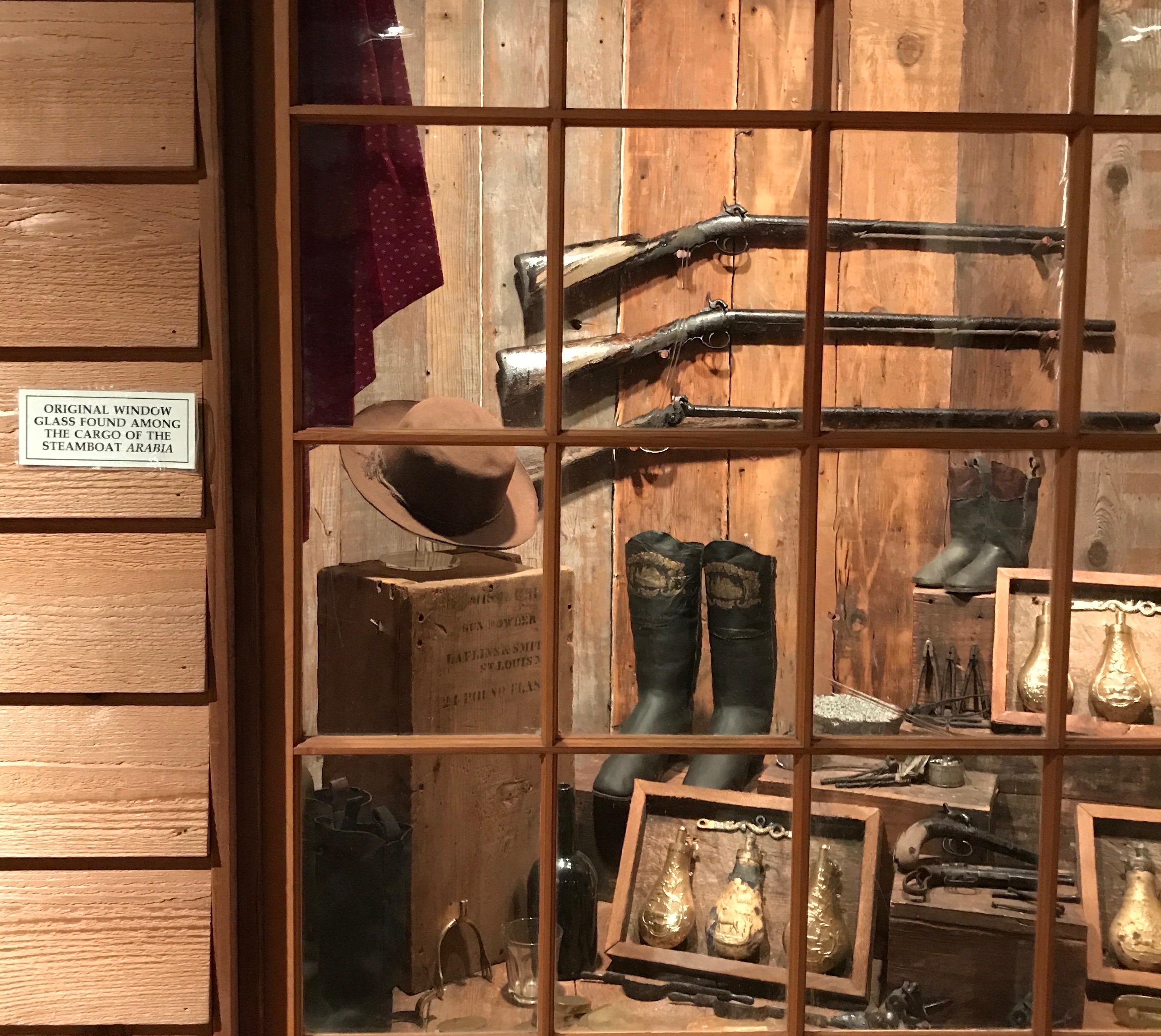
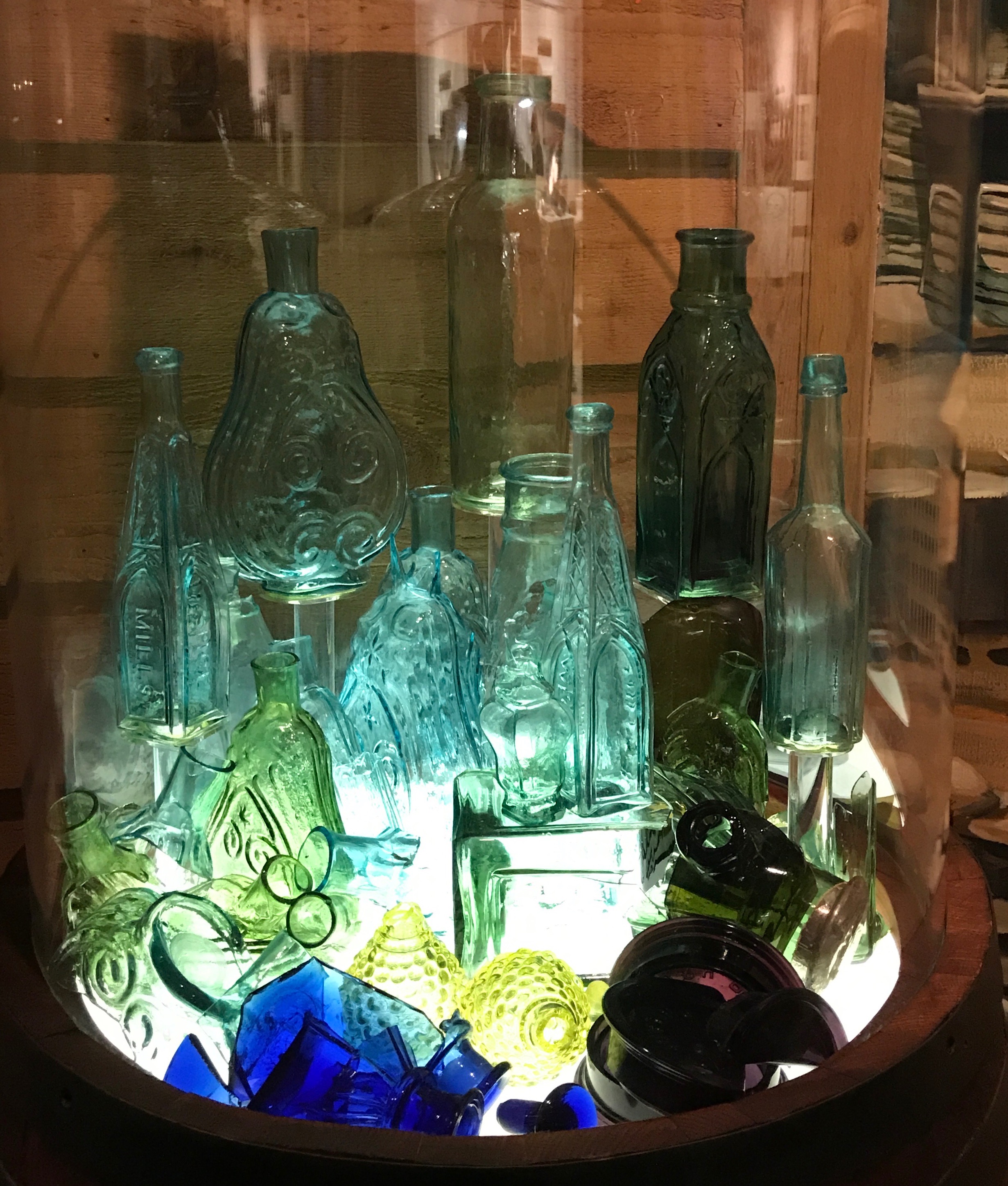
Glass was on board the Arabia when it went down – this glass, in fact.
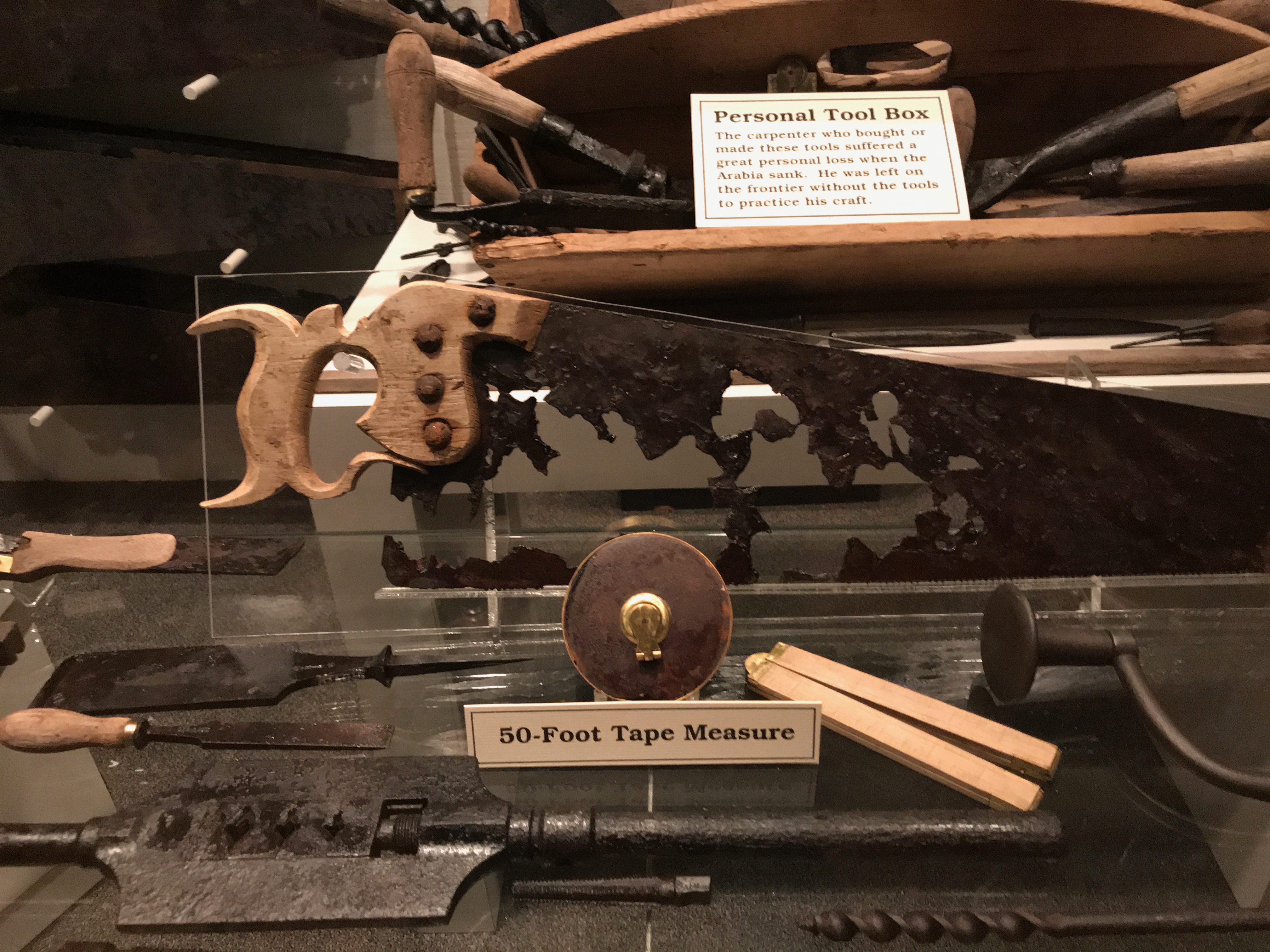
Tools. That poor saw looks kind of woe-begone, though.
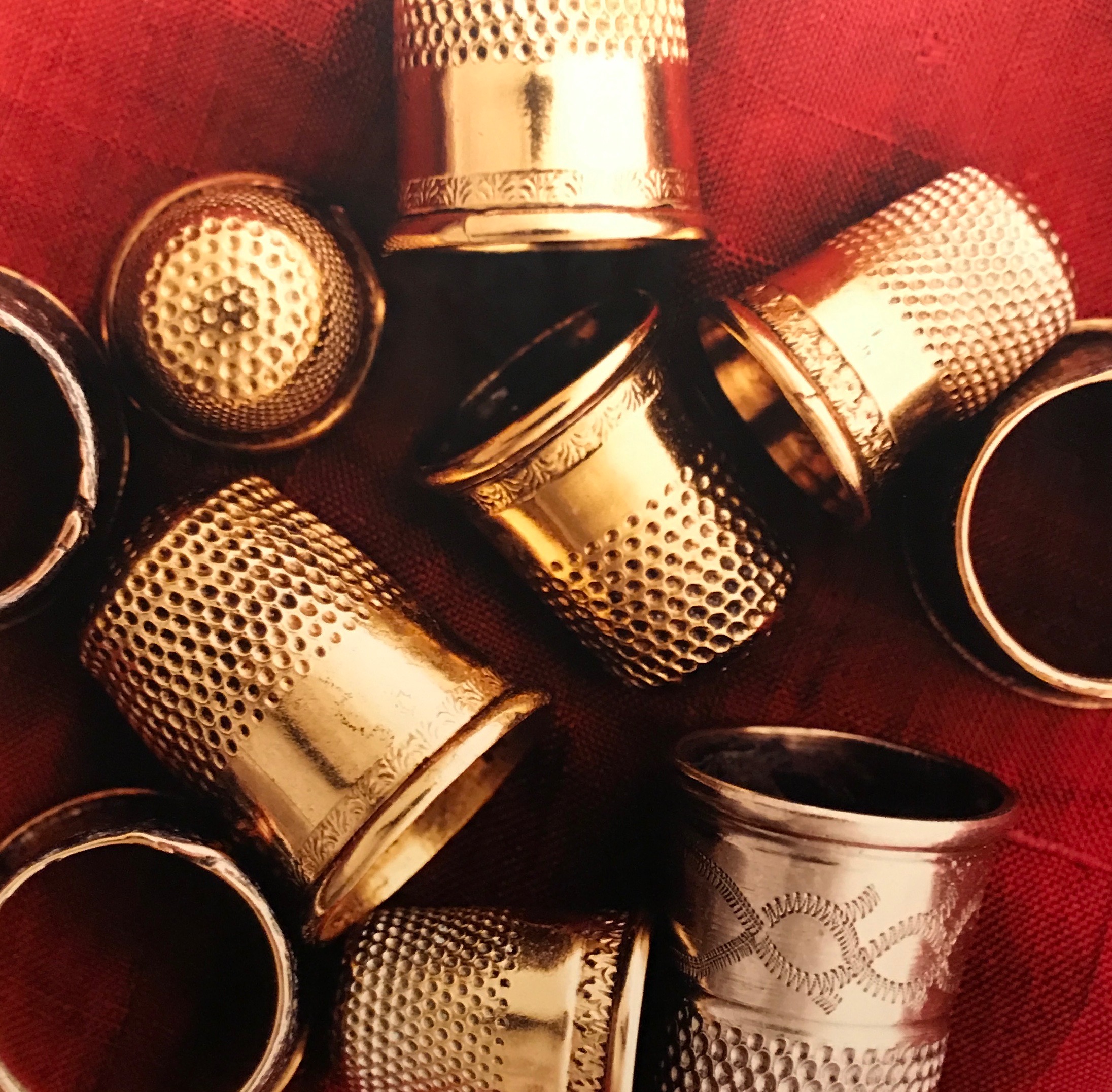
Some lovely thimbles
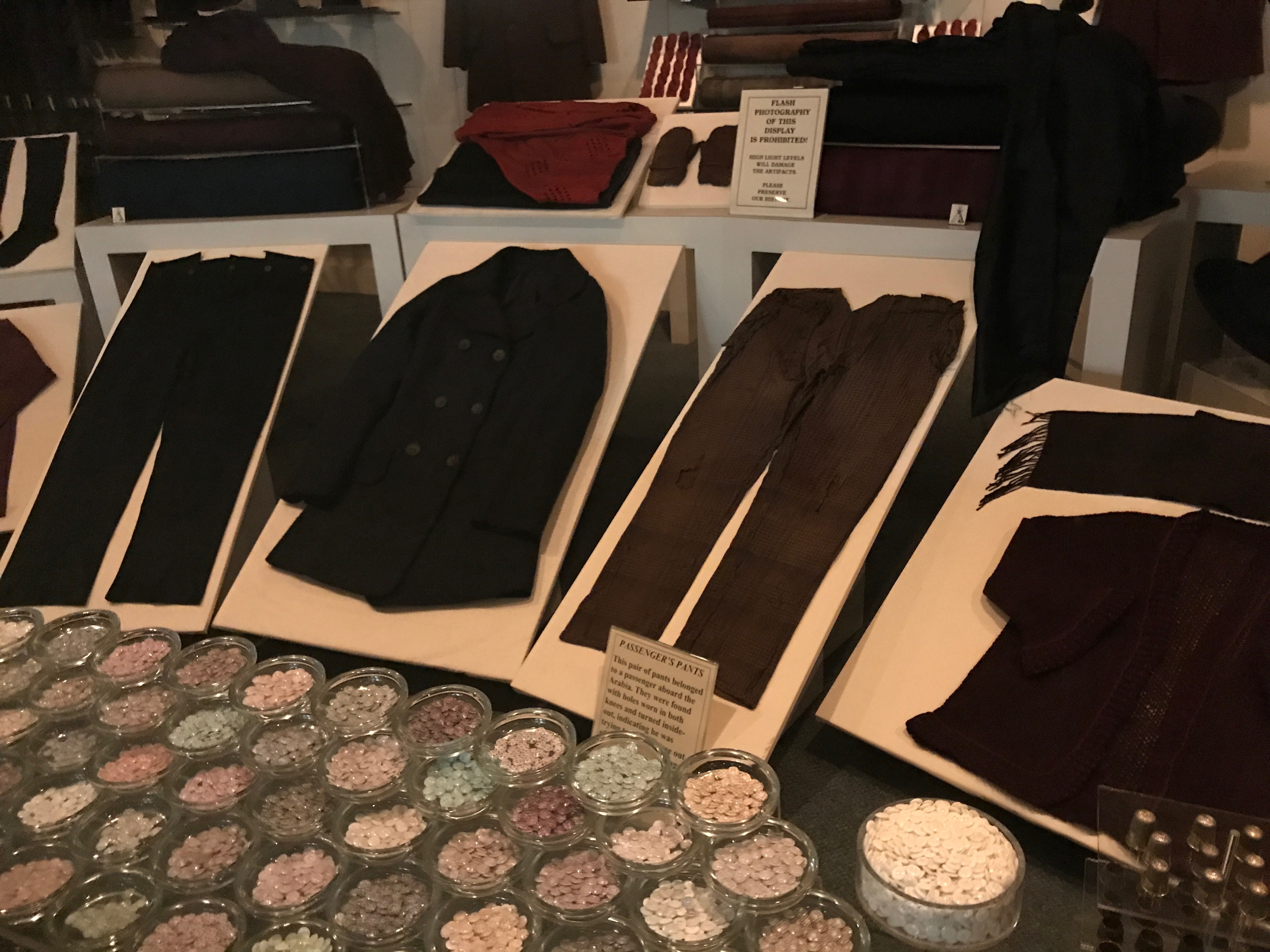
The sign by the brown pants says:
Passenger’s Pants
This pair of pants belonged to a passenger aboard the Arabia. There were found with holes worn in both knees and turned inside-out, indicating he was trying to get extra use out of them. His other meager belongings included cooking supplies, a whale oil lamp, a spittoon and 25 cents.
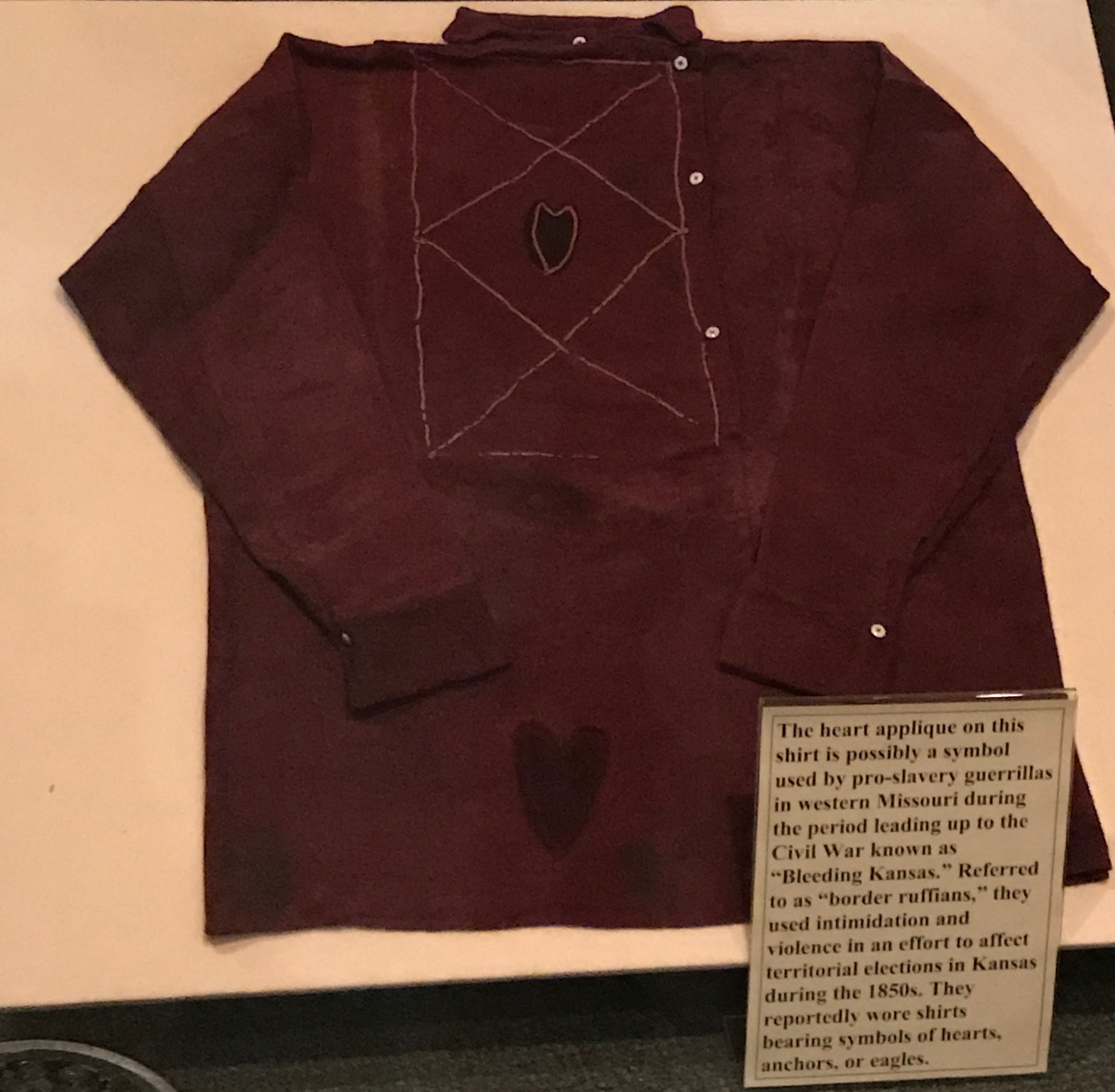
In case you are reading this on a small screen, allow me to tell you what the sign by the shirt says.
“The heart appliqué on this shirt is possibly a symbol used by pro-slavery guerrillas in west Missouri during the period leading to the Civil War known as “Bleeding Kansas.” Referred to as “border ruffians,” they used intimidation and violence in an effort to affect territorial elections in Kansas during the 1850s. They reportedly wore shirts bearing symbols of hearts, anchors, or eagles.”
Back to the inventory…
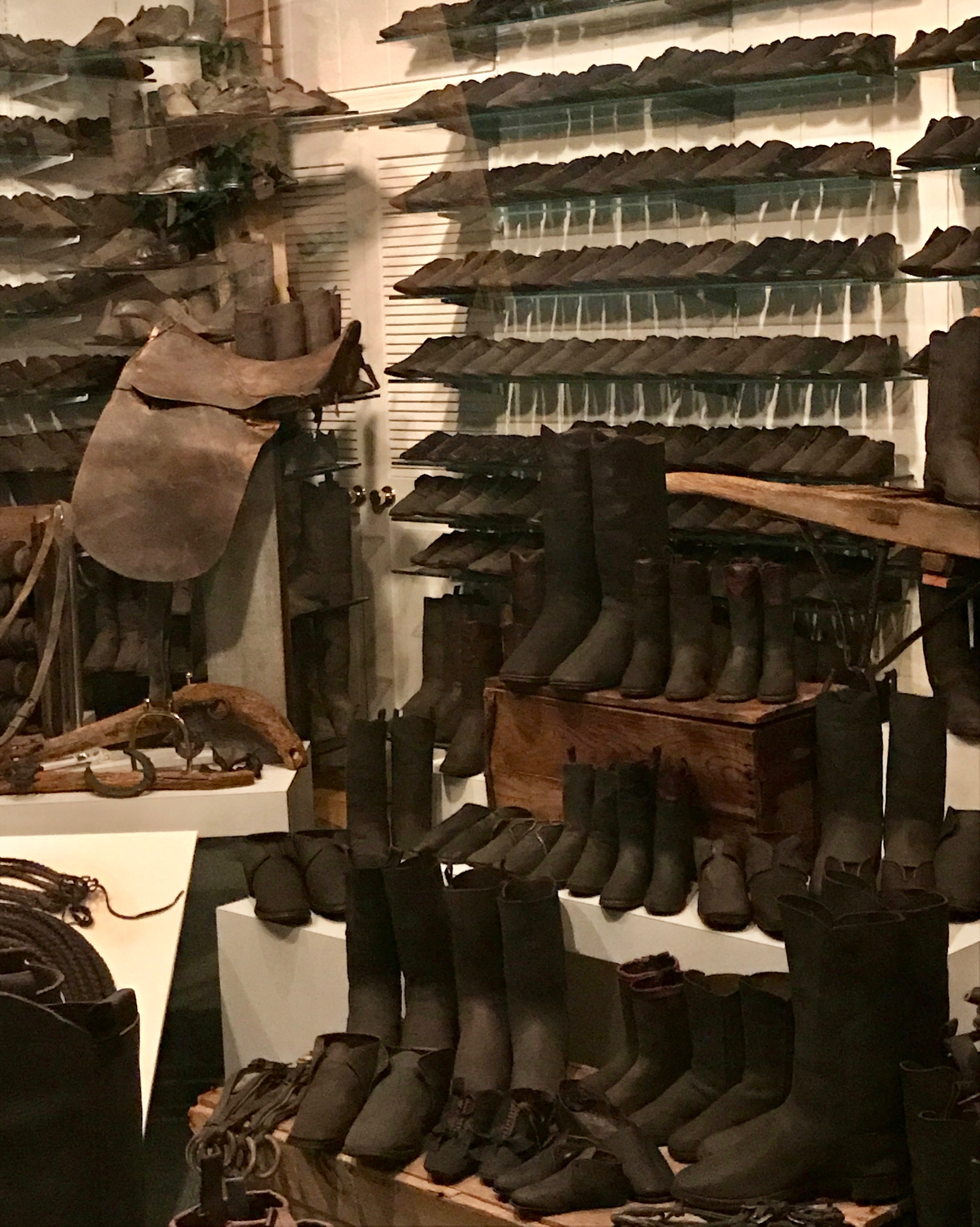
Shoes and saddles
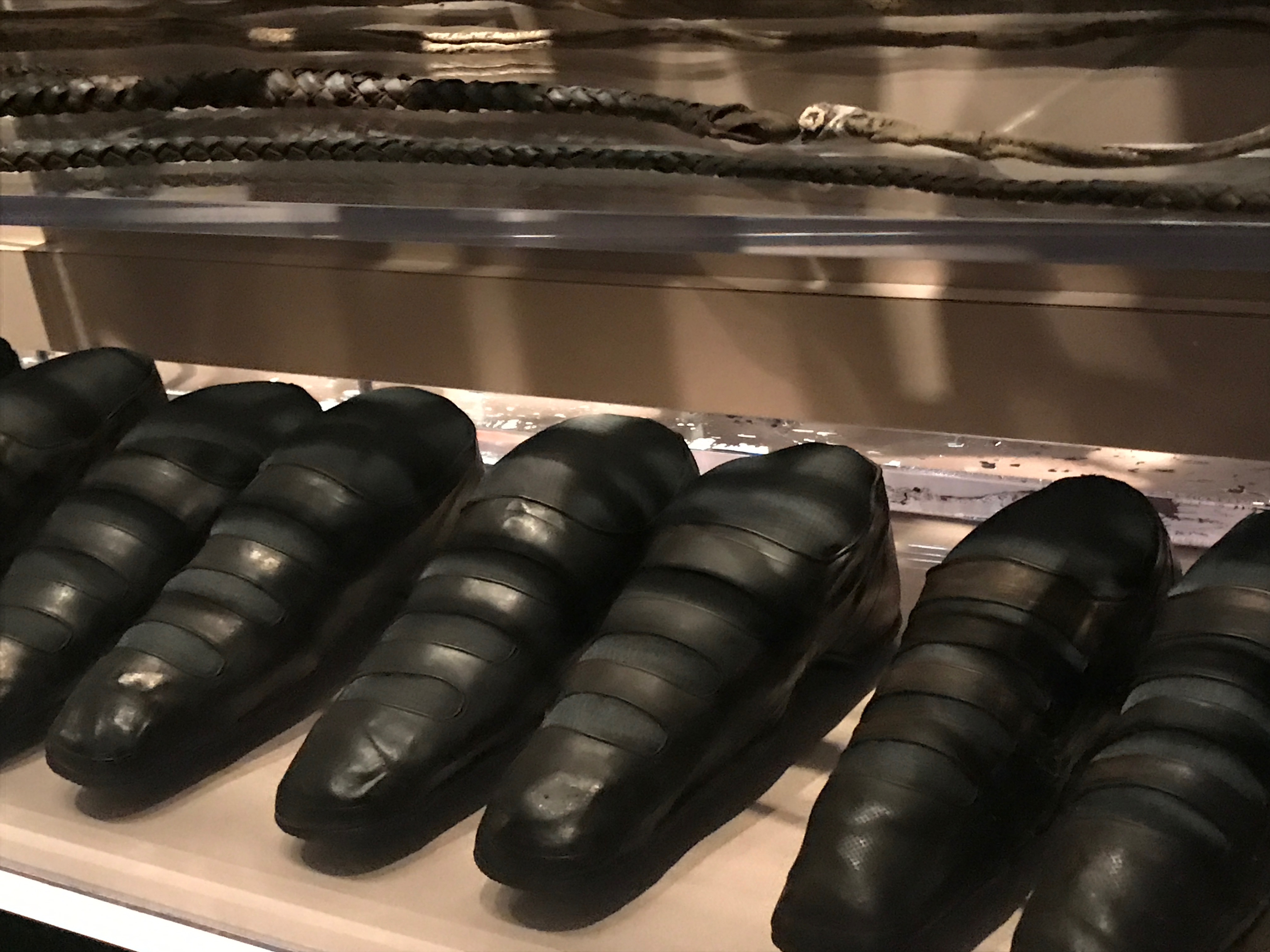
And rubber artifacts…
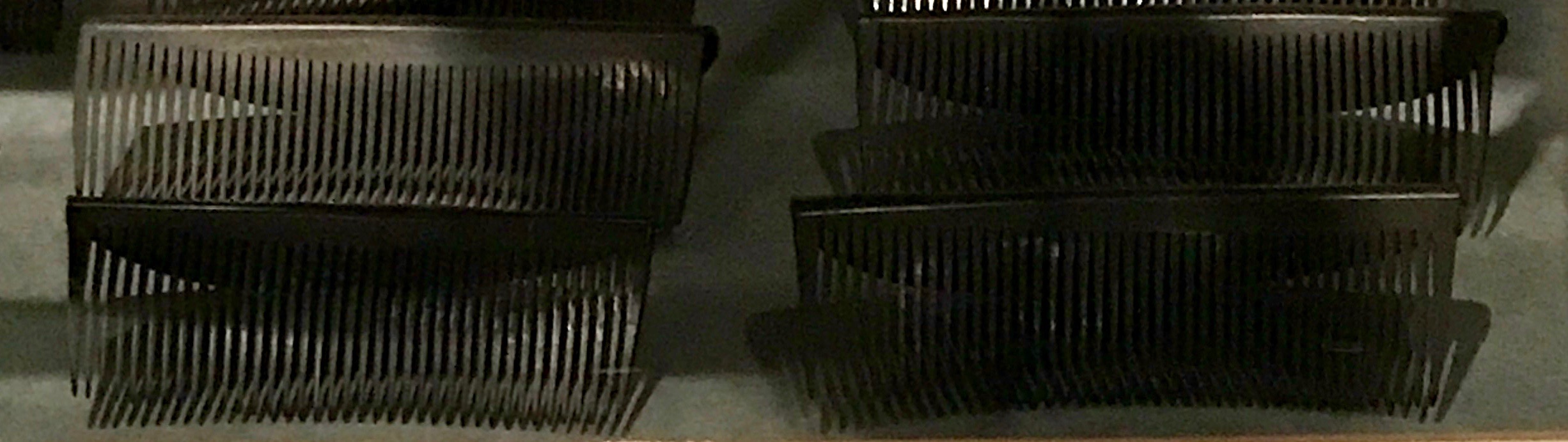
Combs
Shoes and bullwhips.
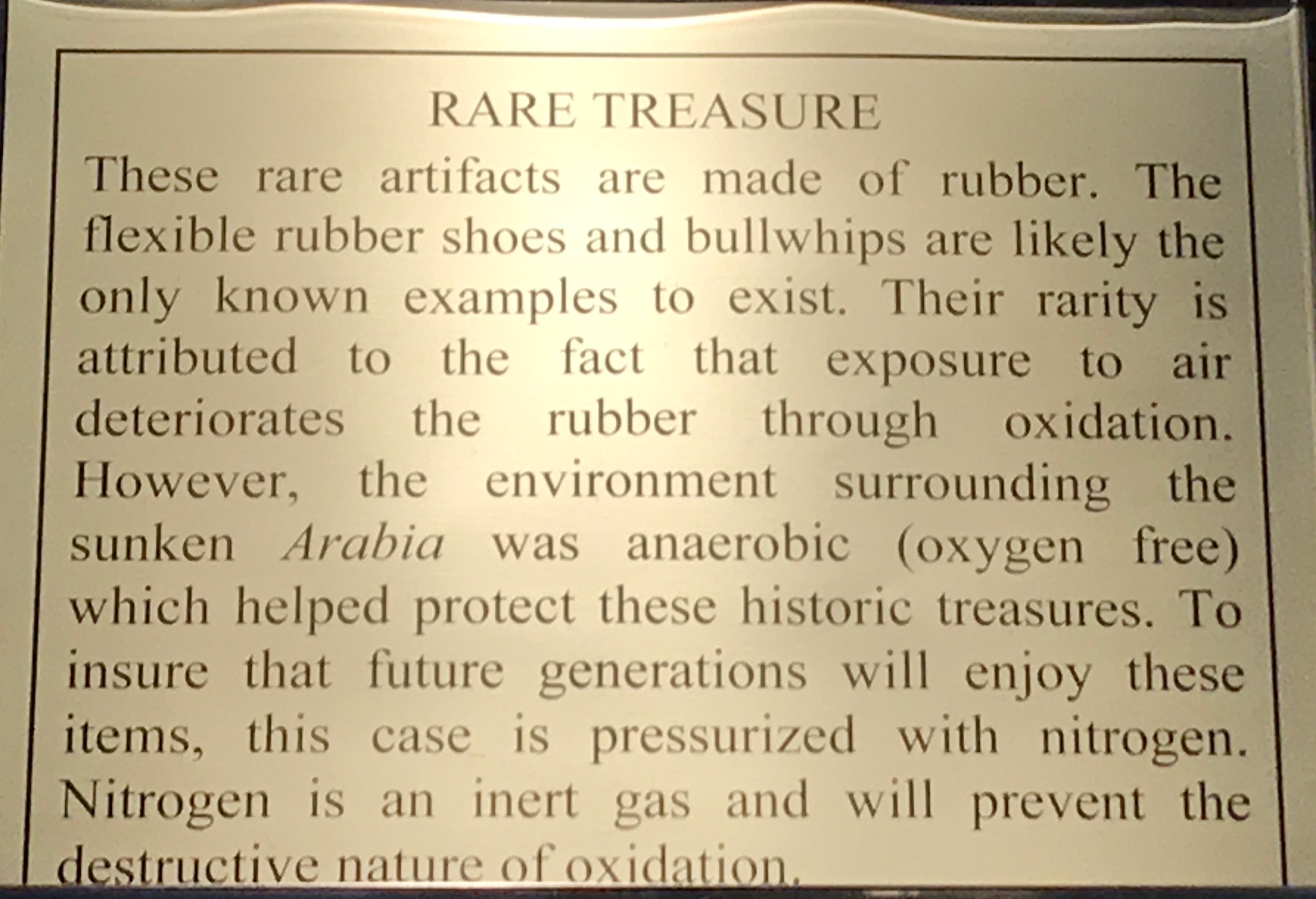
I’ll let you read the sign that was posted by the rubber items.
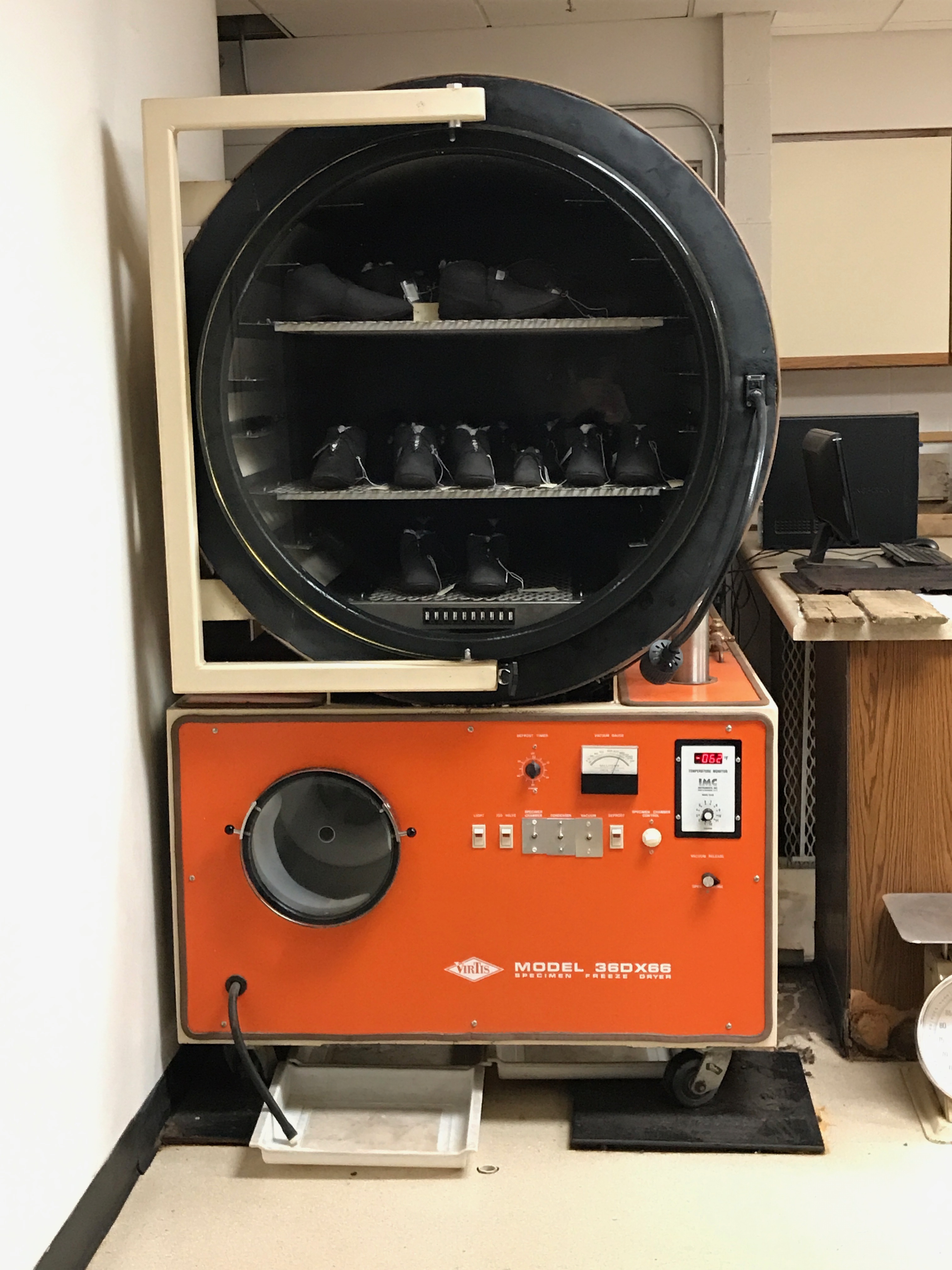
Here is some of the equipment used to preserve the rubber artifacts.
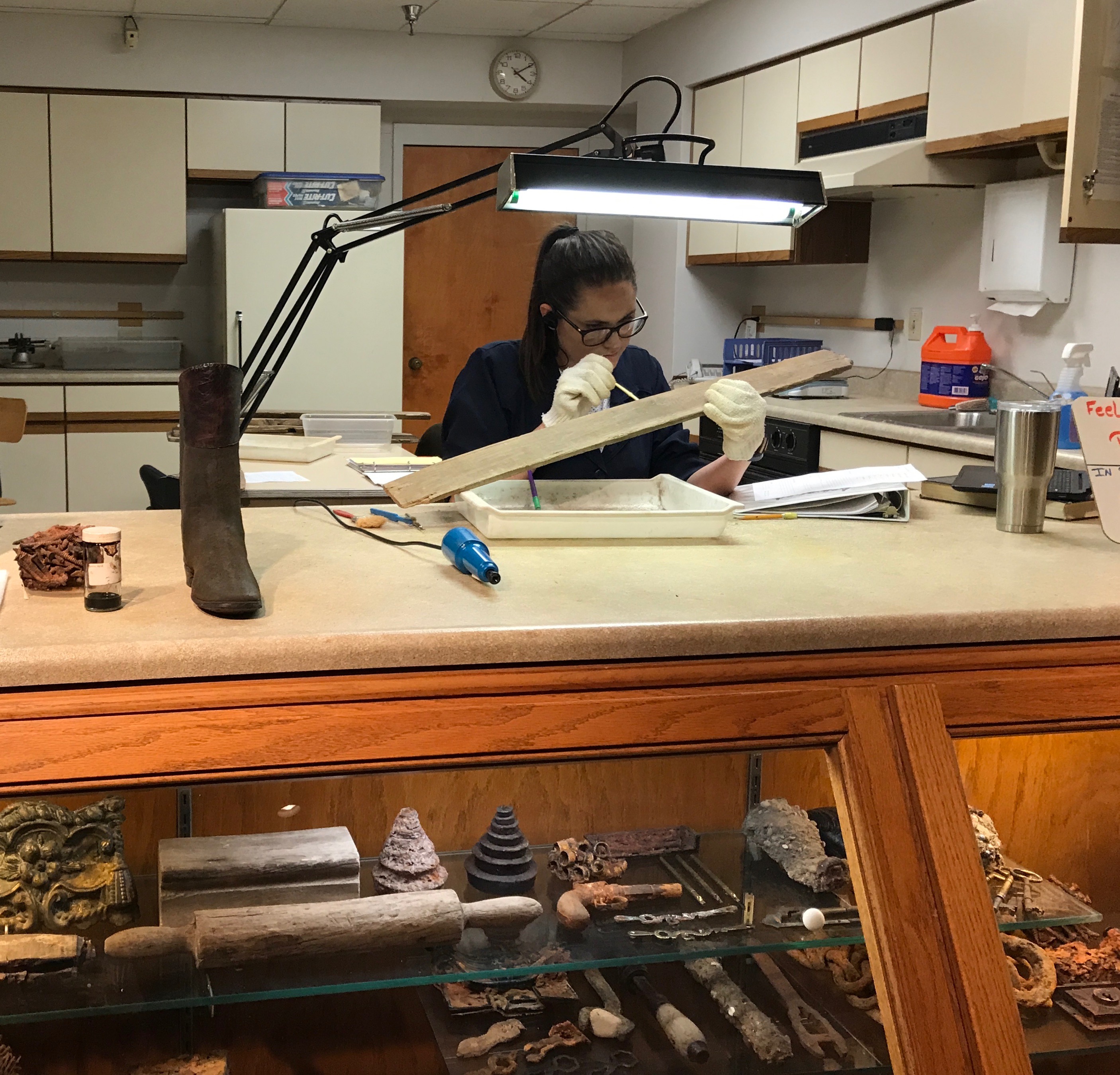
The promised us a view of the conservation lab – and there was even a conservator at work.
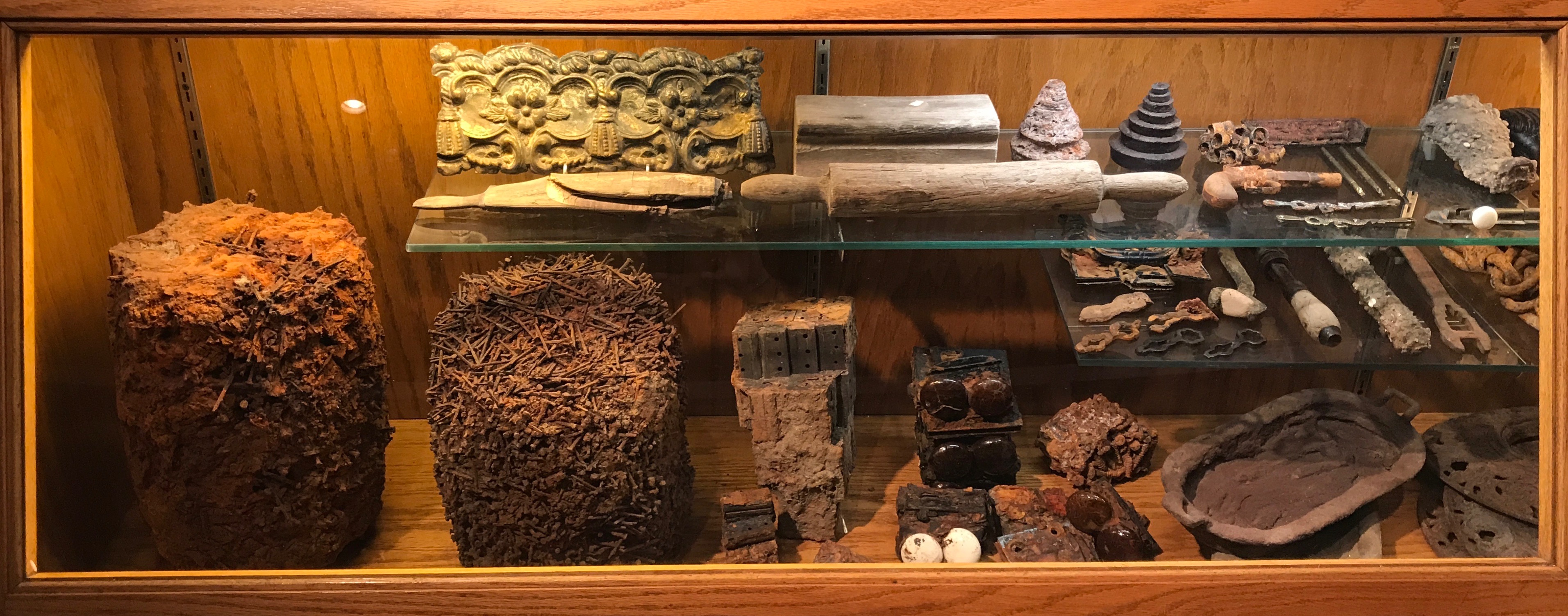
Here are some of the items in the 60 tons that are left to process
I would not look forward to having to conserve the nails in the two lumps on the left.
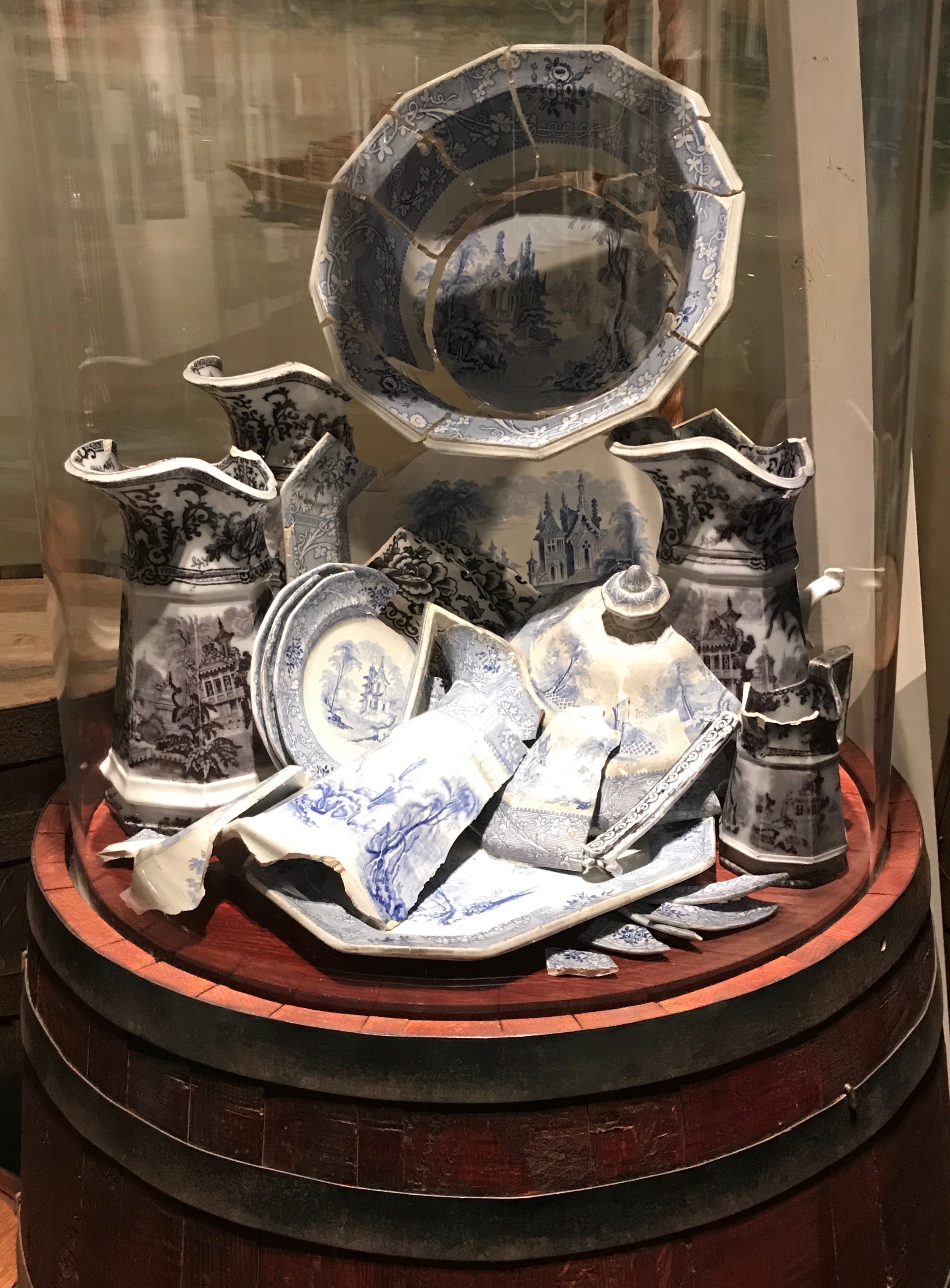
Not all the artifacts that were aboard survived in such pristine condition.
This china didn’t fare well.
The bottles also took a hit. If you look closely, though, you can see that five of these bottles survived without a scratch.
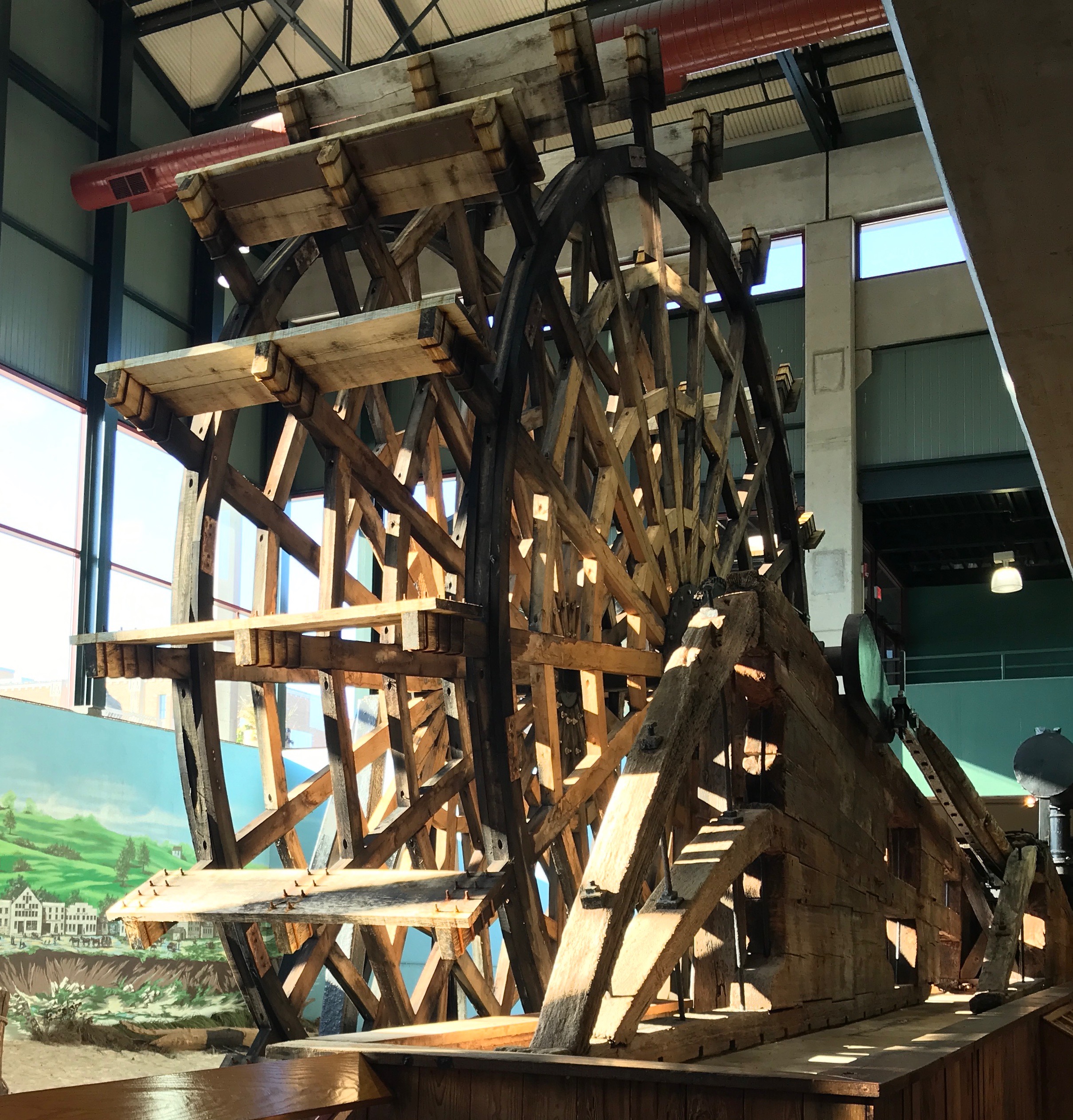
There was also an interesting display about how the boat actually worked. It could make about five miles an hour going upstream, and it burnt about 30 cords of wood a day. How much is a cord, you ask?
“A full cord is determined by the total cubic feet of firewood, not necessary the measurements of the stack. However, the 4′ x 4′ x 8′ shape is the most common.”
128 cubic feet are in a cord. 30 cords of wood would be 3,840 cubic feet a day. That is about the size of the largest school bus that you would see on the road today. I wonder what the infrastructure was for replenishing their fuel supply?
These buckets were also part of the working of the boat. The workers had to keep the Arabia looking good.
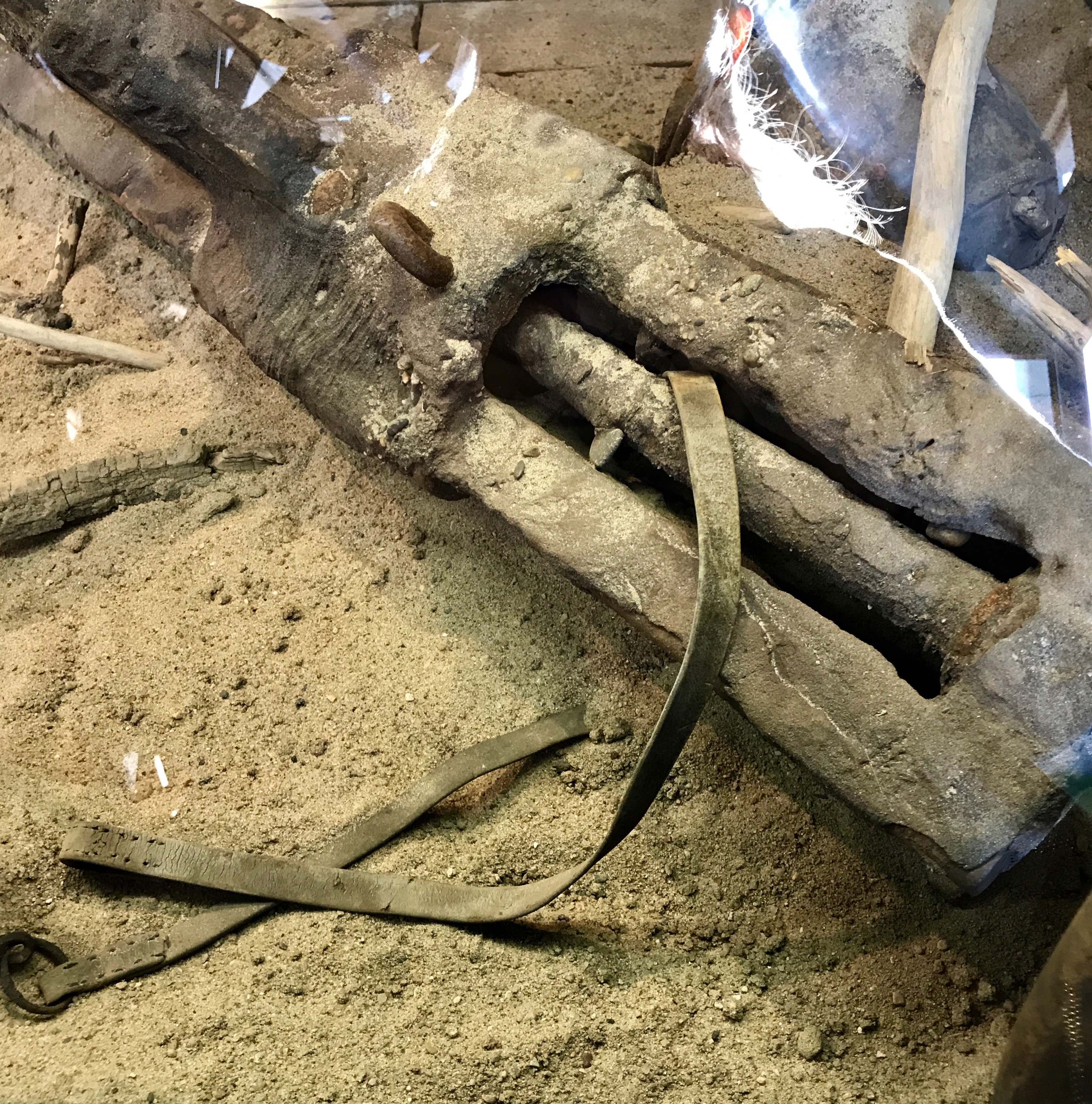
Oh, and you know the story about the mule being the sole casualty of the sinking of the Arabia? The owner was interviewed shortly after the sinking and he said that he tried to free his mule, but it was too stubborn and would not leave the sinking steamboat. The reins tell a different story. They were discovered firmly tied to this lumber mill jack.