I called in to the office to get my marching orders for the day. I saw so many grain elevators that it took something really unique to make one stand out. I would put the address in the Google Maps and go where the voice in the phone told me to go. Sometimes I’d end up in unusual locations.
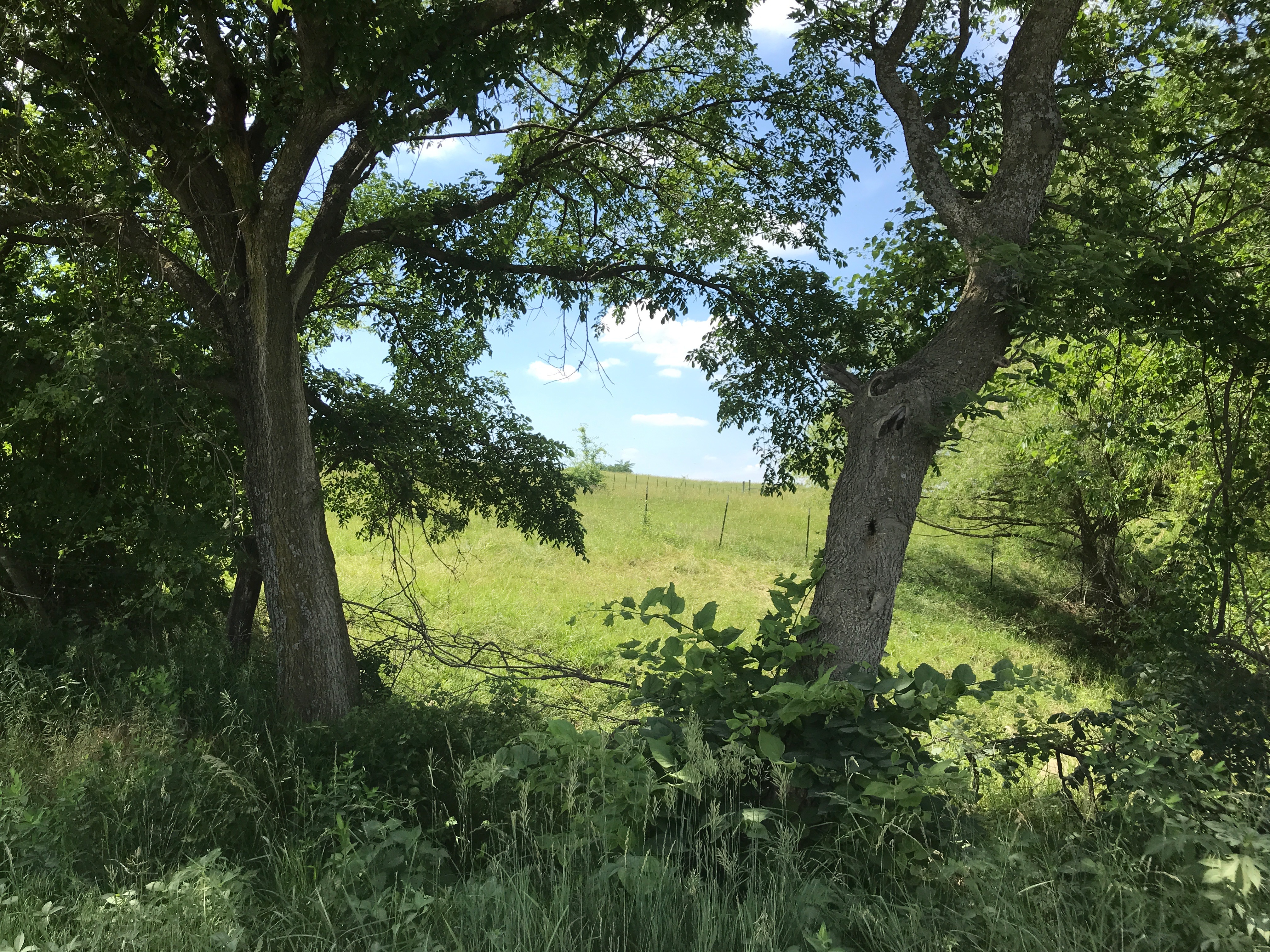
For instance, this lovely bucolic spot is not a grain elevator. I called my boss and asked for advice. He said to head back into town and see what I could find.
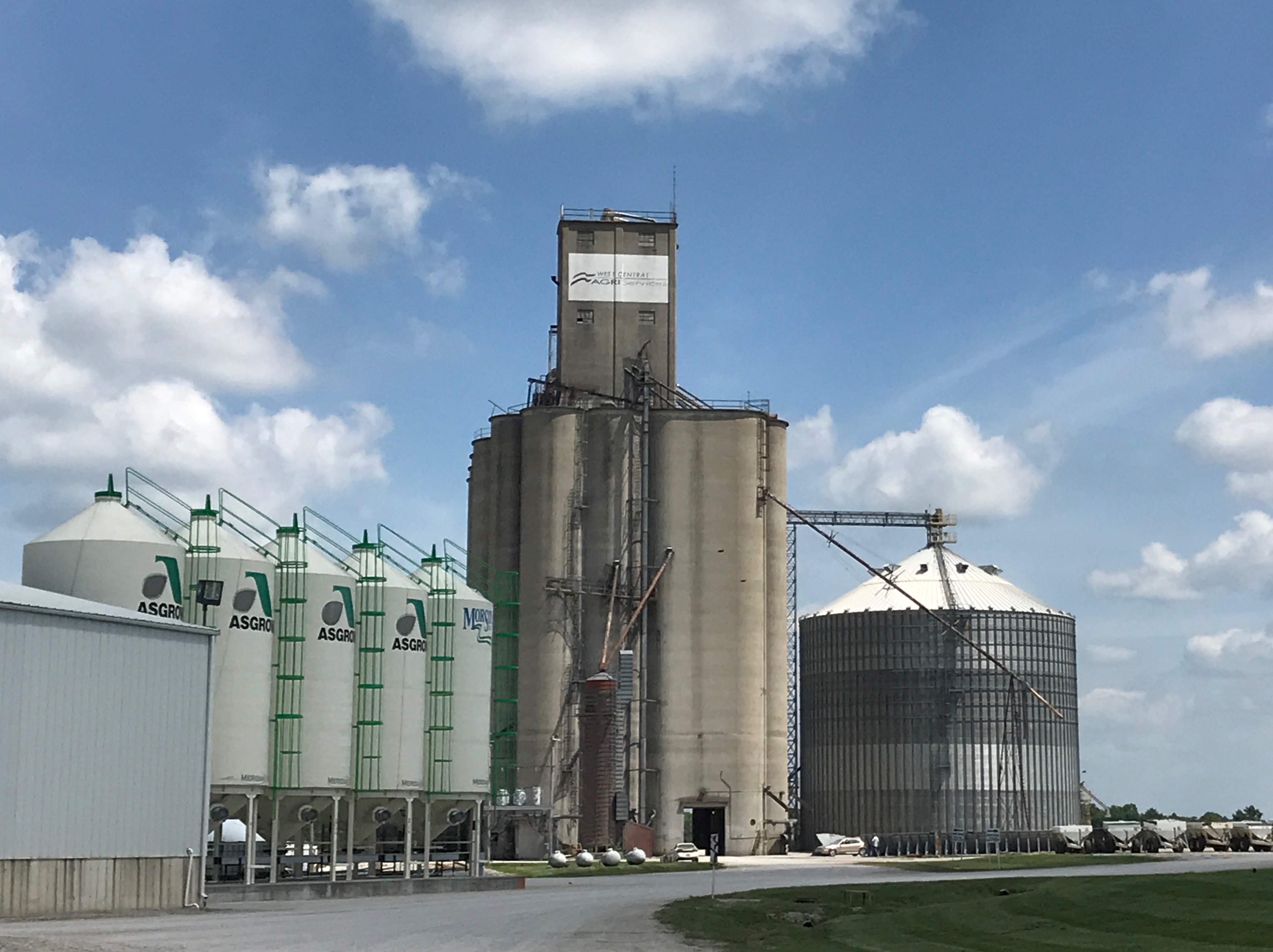
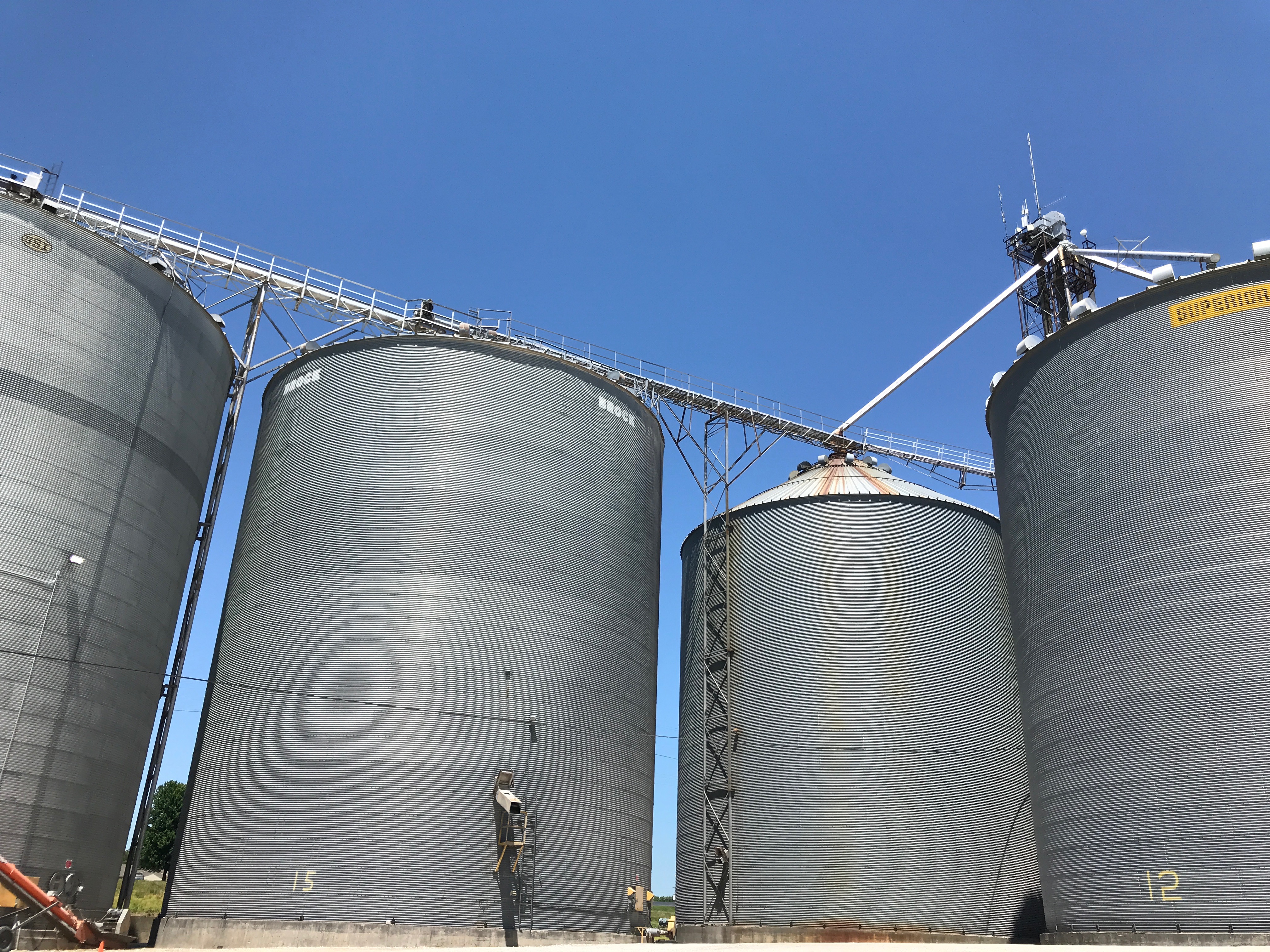
I did. Luckily in these rural places, it isn’t too hard to pick out the grain elevator.
It’s the biggest thing around! I didn’t even have to ask anyone where it was. I could spot it easily.
Along the way, I needed gas (and the restroom). I saw a sign at the exit to Lamar, Missouri that said Harry S Truman’s birthplace was in town. I had to stop off and see what I could see.
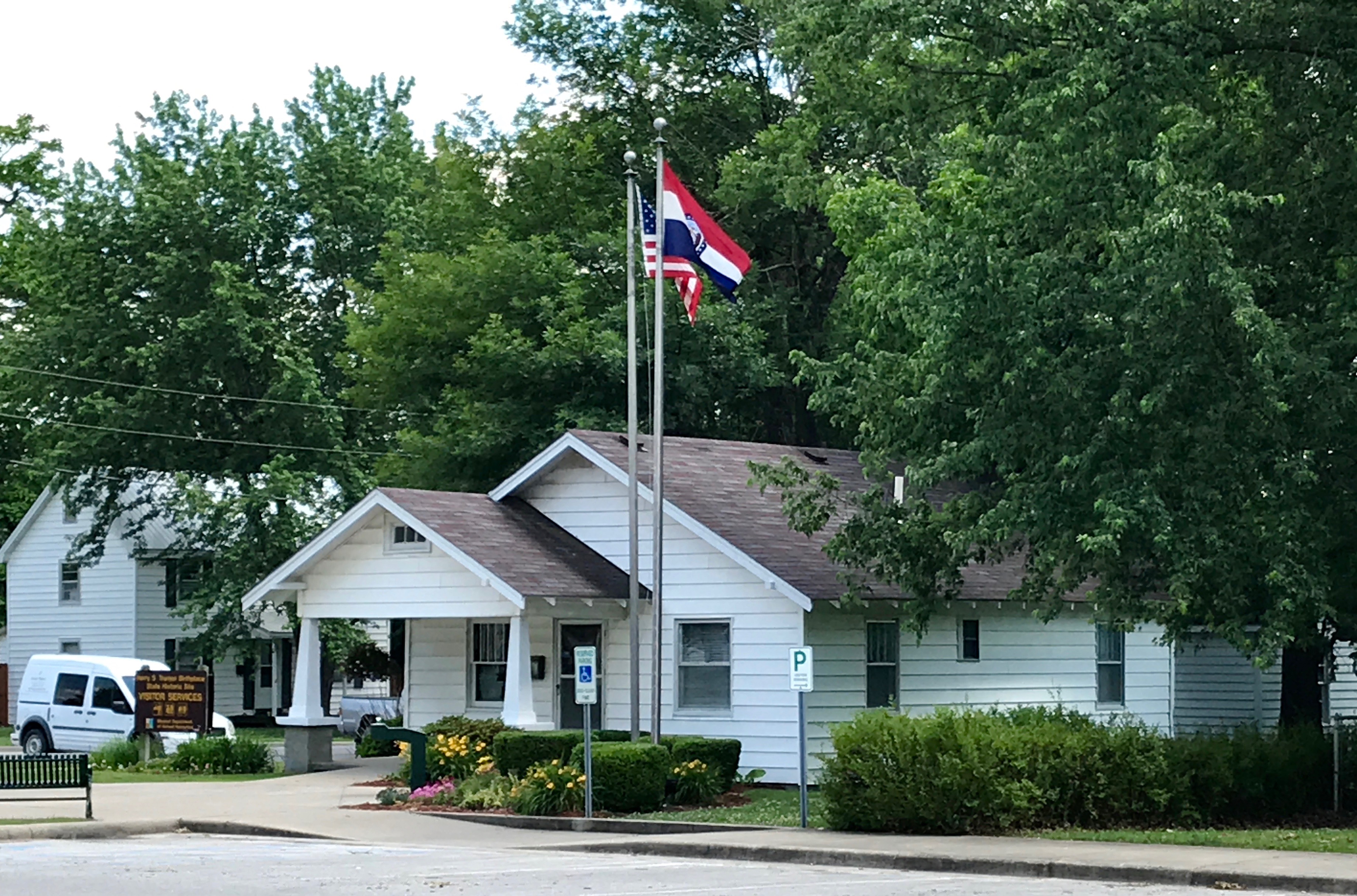
I parked next to the headquarters and knocked on the door. The ranger told me that there was a fee to take a tour. A fee! Well, I was already feeling a little guilty for taking a break, although I don’t think guilt was warranted. Damn my work ethic! I explained that I didn’t have time for a tour, and I would just look around. He smiled and told me to enjoy my visit.
Here is where Truman was born on May 8, 1884. The family lived here until 1890, when they moved to Independence, Missouri which is about ten miles away from Kansas City. I imagine that’s the how he came to the attention of the Pendergasts.
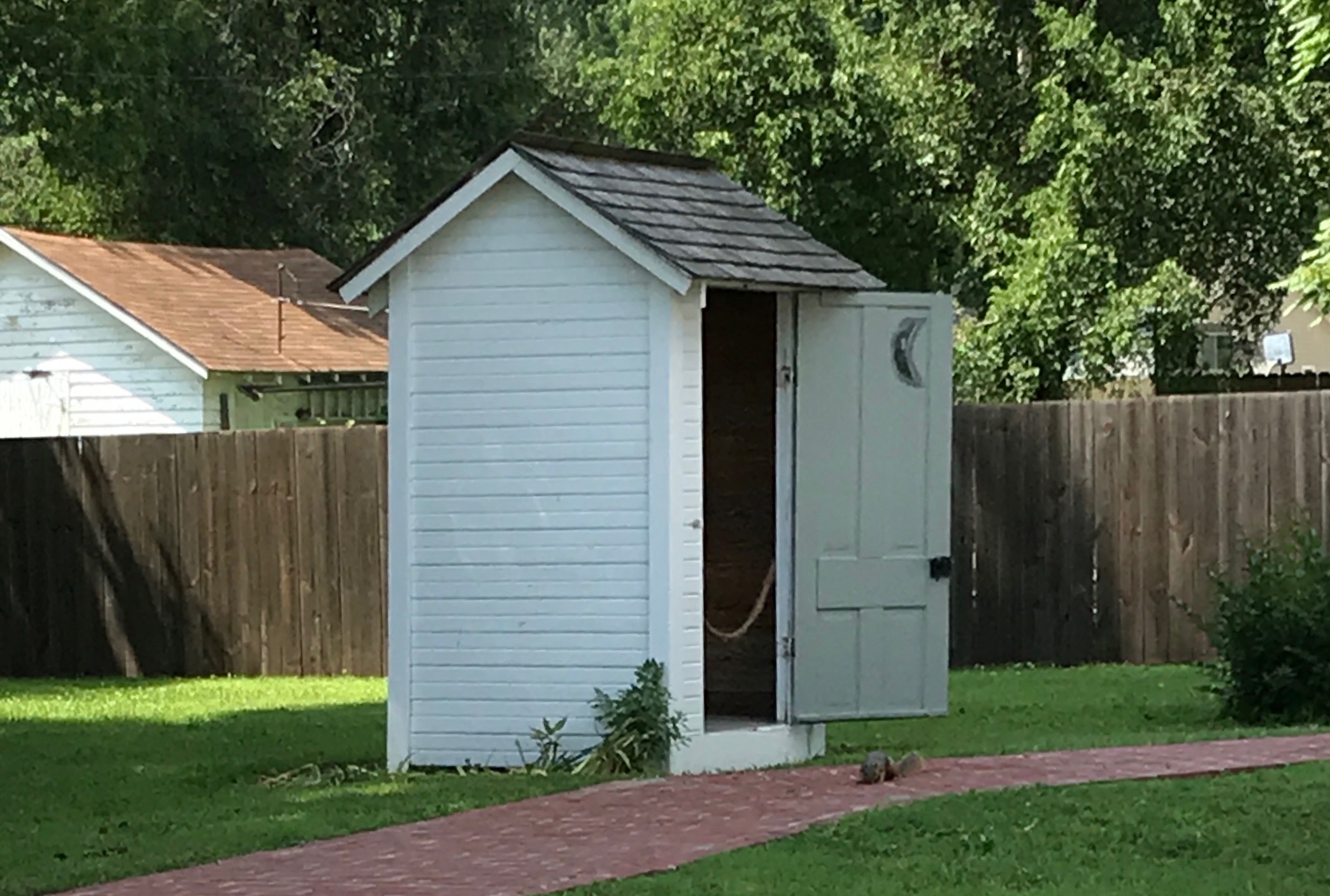
Here is the Truman outhouse. I include it not merely to be frivolous, but to point out that things have changed greatly in our lifetimes. I wonder if he was the last president to depend on an outhouse for sanitation?
Well, I swear! If you look, it’s out there somewhere on the internet! According to this source, “Young William grew up in a house without indoor plumbing and spent much of his childhood living with his grandparents while his mother trained as a nurse.”
The “Young William” in question was William Jefferson Clinton.
Well, I’ll be!
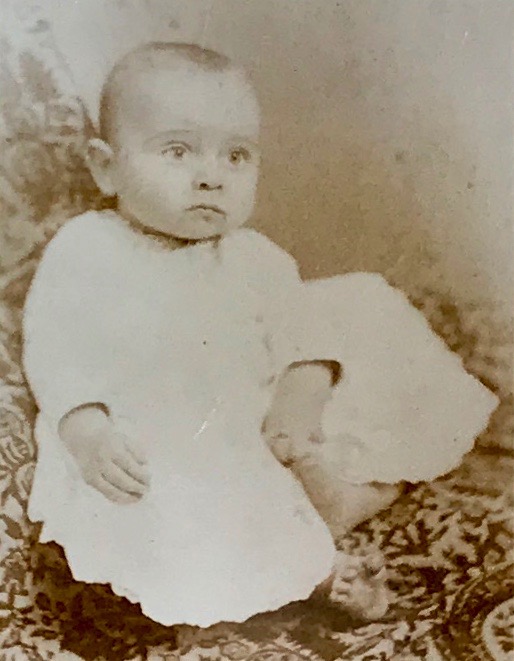
There was an interpretive display outside the house. This is Truman’s only baby photo.
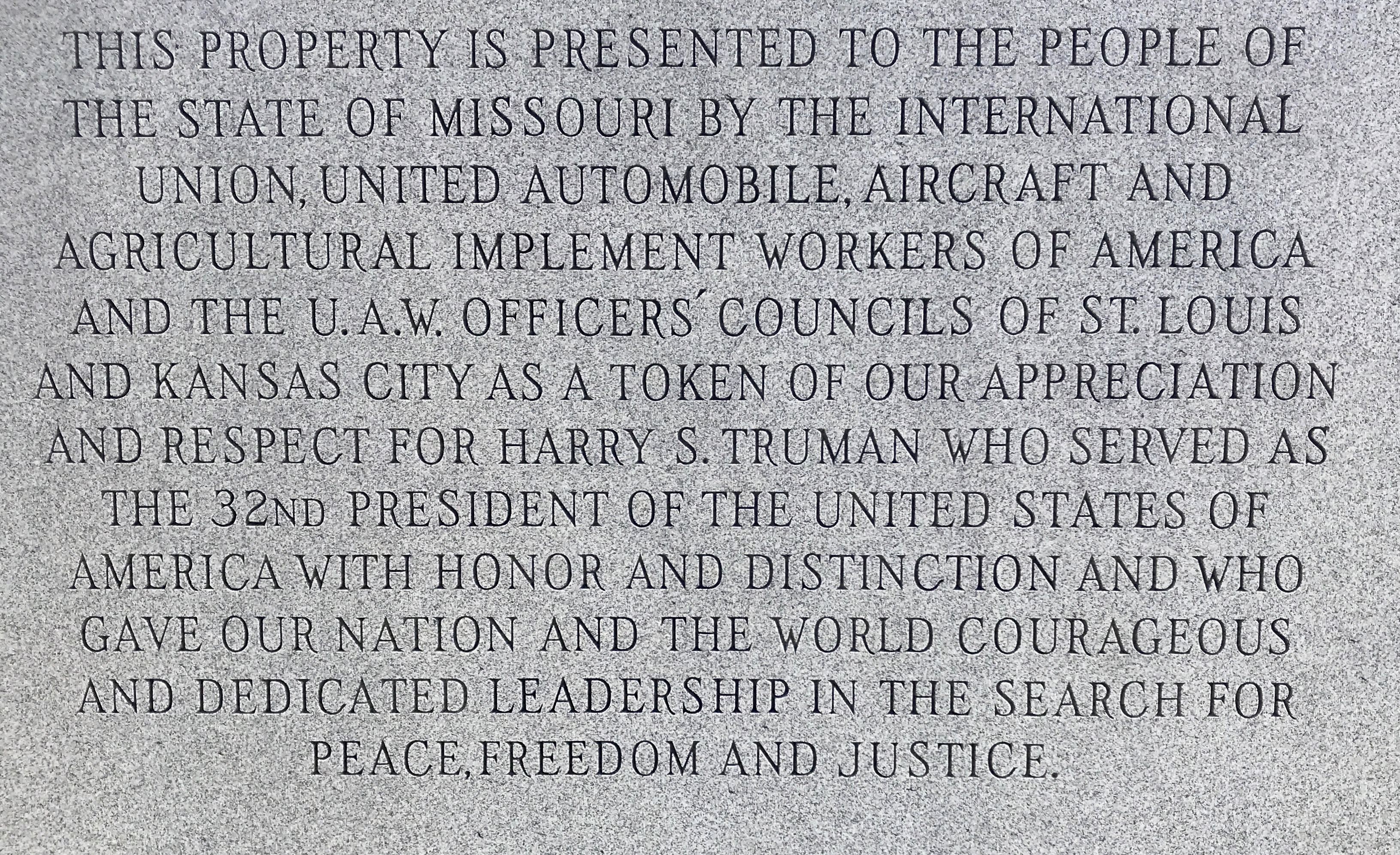
This is the dedication of the house. Oddly enough, most of the internet sources I found, including my Preferred Source, list him as the 33rd president.
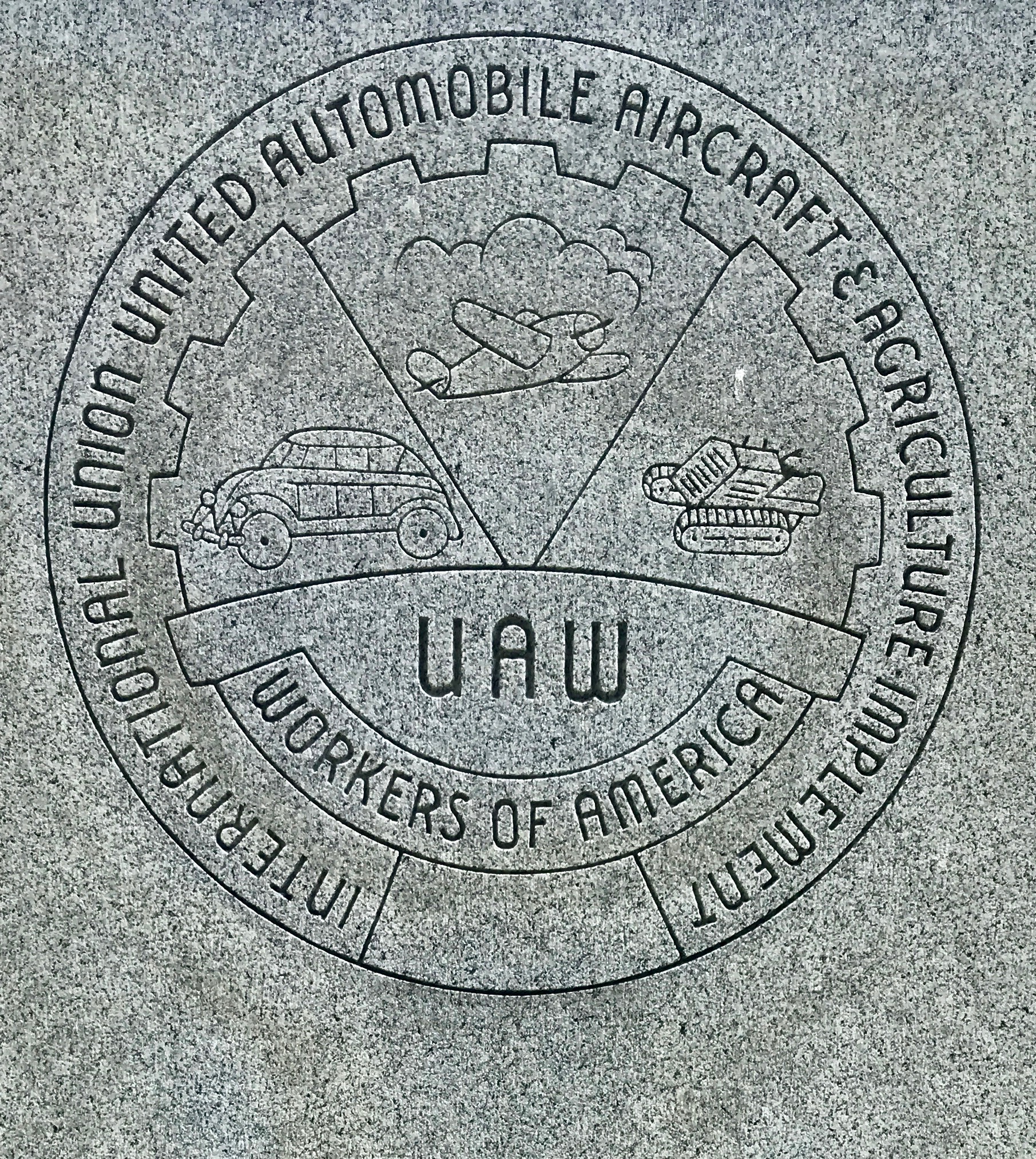
Complete with the shield of the people who donated it.
It was dedicated in 1959, and Truman himself attended the dedication ceremony.
This monument was apparently erected post mortem.
As was this one.
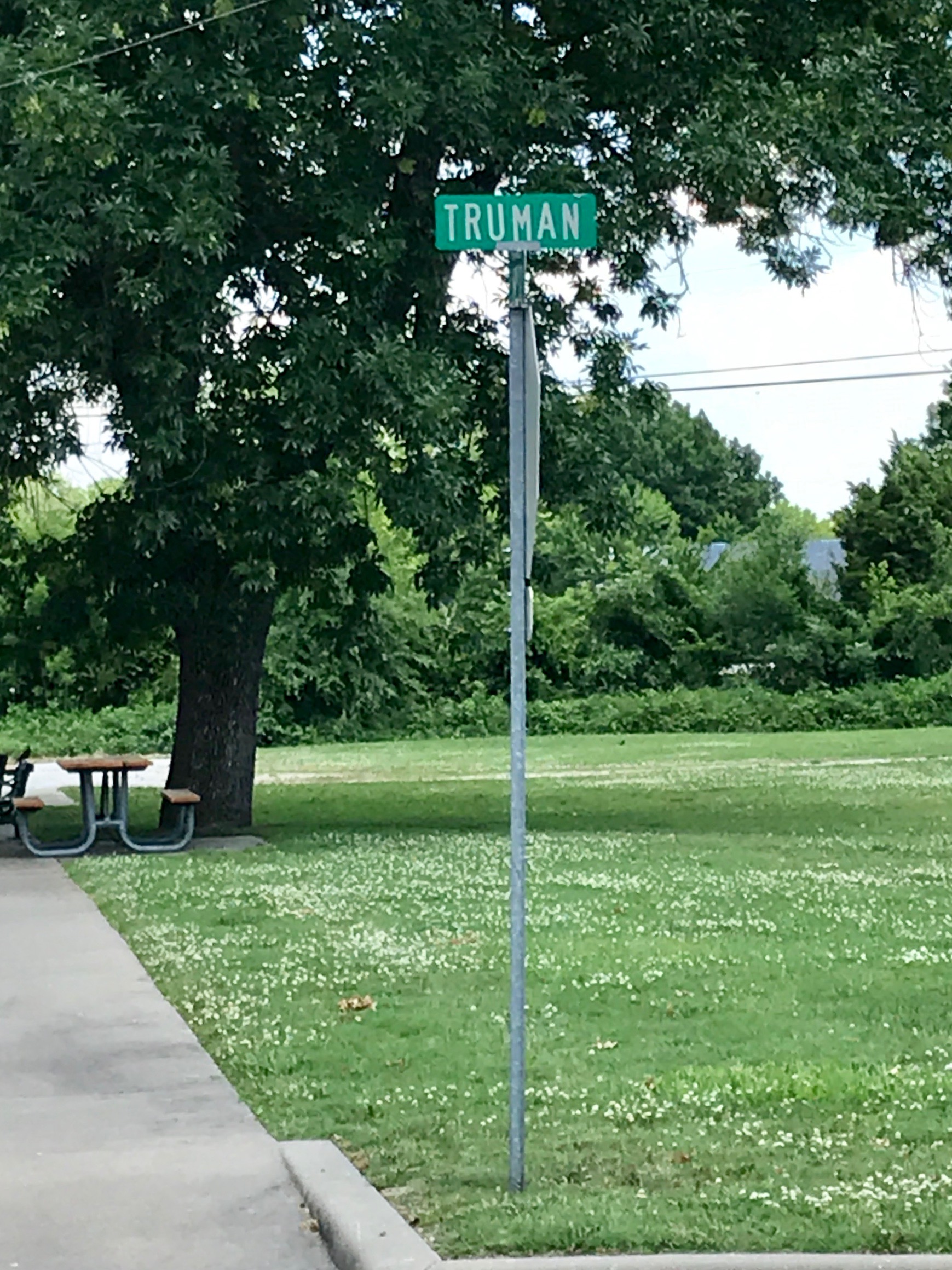
And, if you are wondering where the birthplace is…
it’s on Truman Street!
Time to go find another elevator. I’m burning daylight!
Now, my main goal for this trip wasn’t touristic. I had work to do!
My task was to find the gain elevators that were identified on the cards in the box that I was given. I had to collect samples of wheat and try to get additional information, such as how the harvest was going, how much longer they expected to be getting in wheat – or when they expected to start – and things like that. I also got to give out the “thank you gift.” This year it was a small tape measure. The women I gave them to seemed to see the value of it. Some of the guys were disappointed not to be receiving the small pocket knife like they had gotten in other years.
Some days, I just found a motel and settled in for the night. Not every place has things to see and do. One night, I got a room near Sedalia and headed into town to see what I could see.
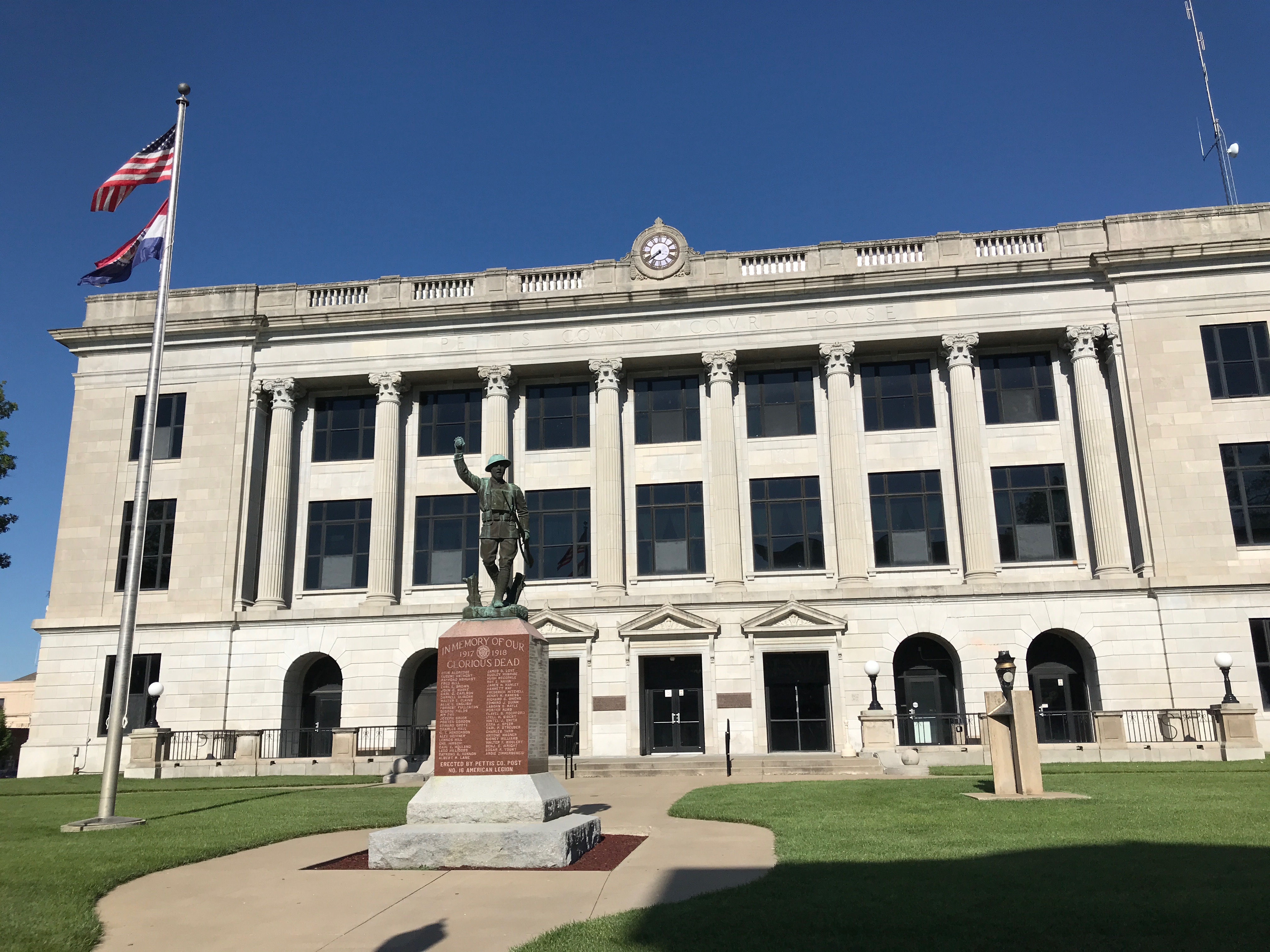
I parked near that courthouse and took a stroll to see what the people of Sedalia considered to be worth memorializing.
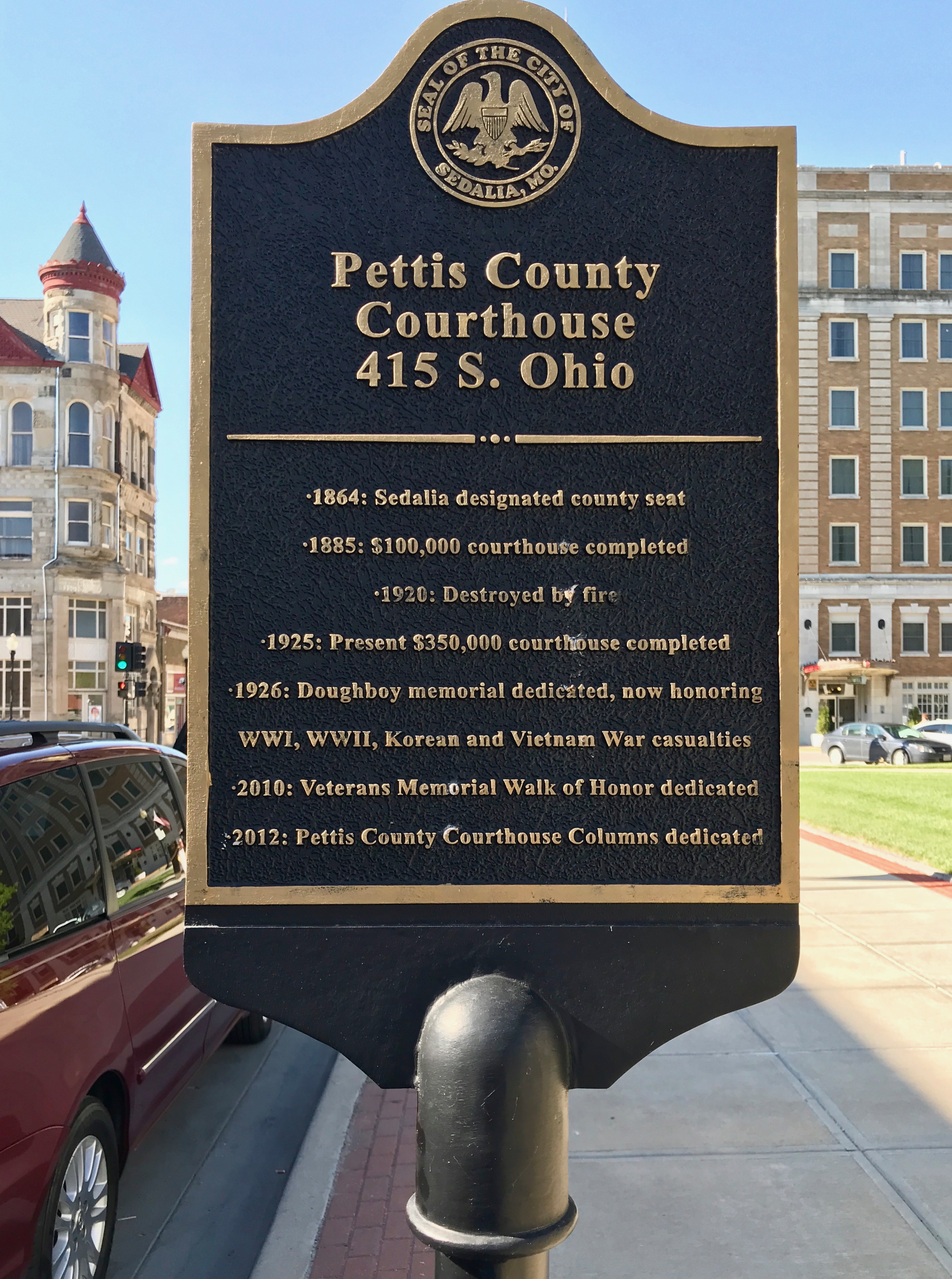
I liked this plaque that they had right in front of it, with all the important dates included.
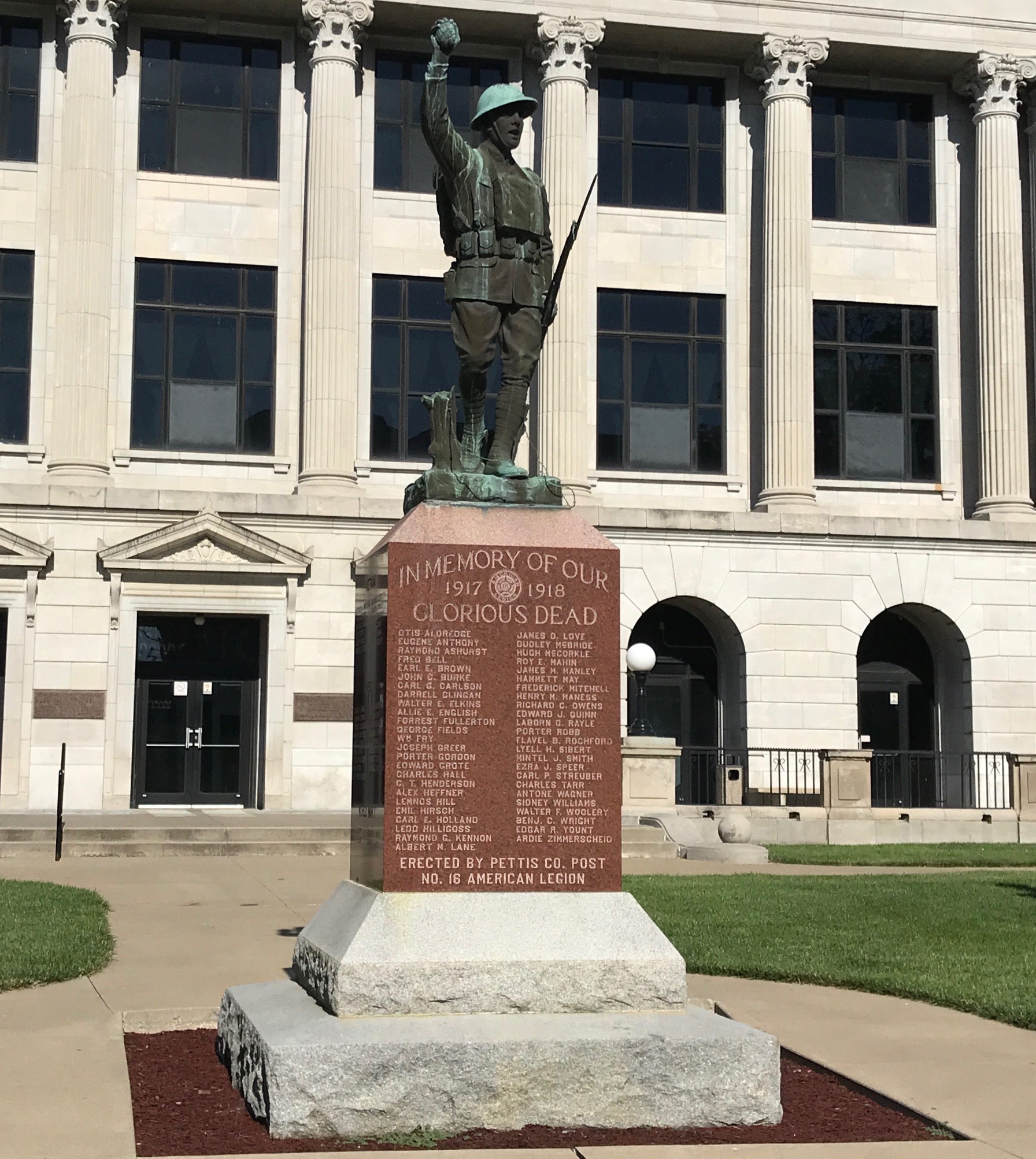
First I walked up to the doughboy memorial, which now honors WW I,
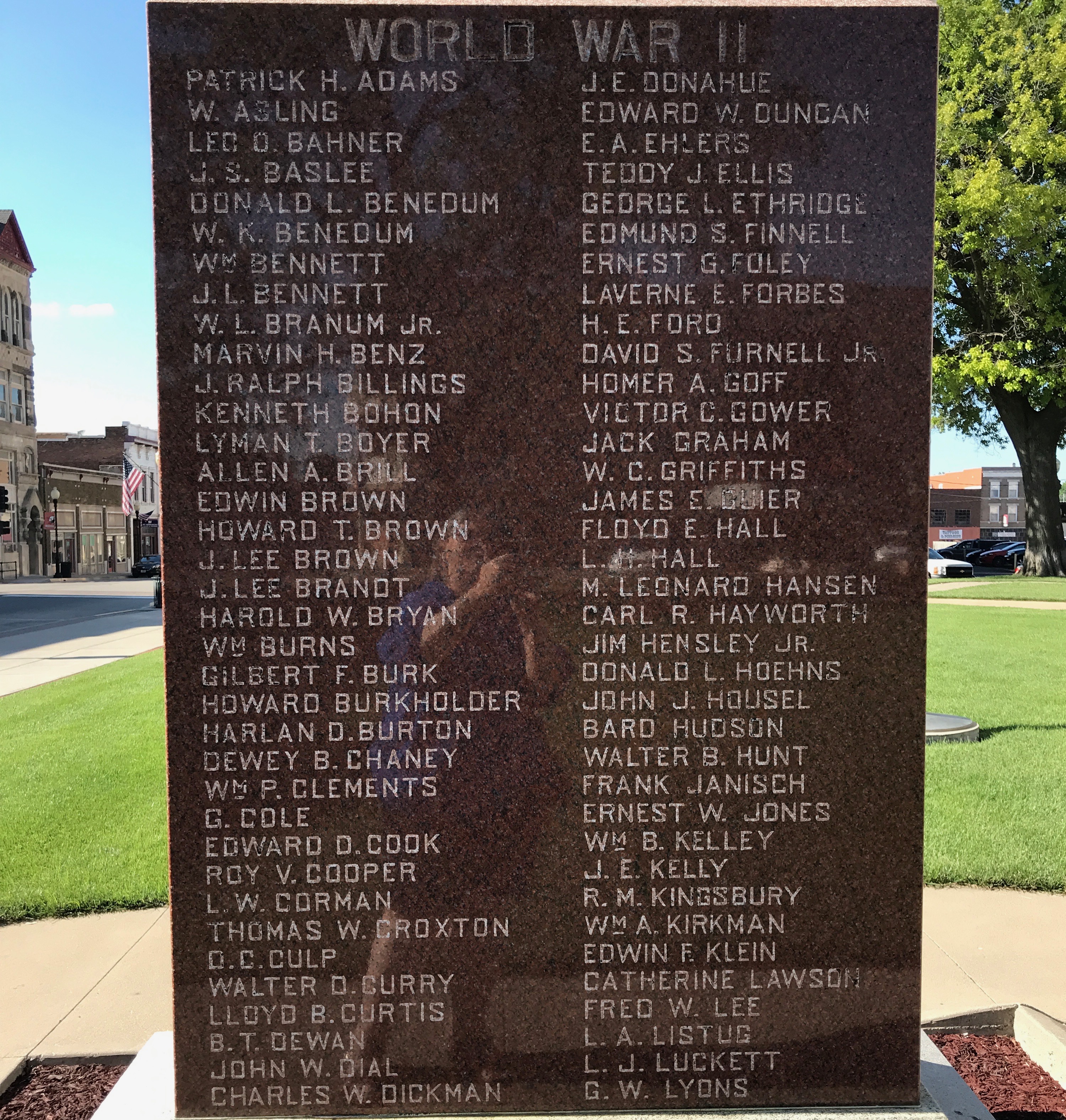
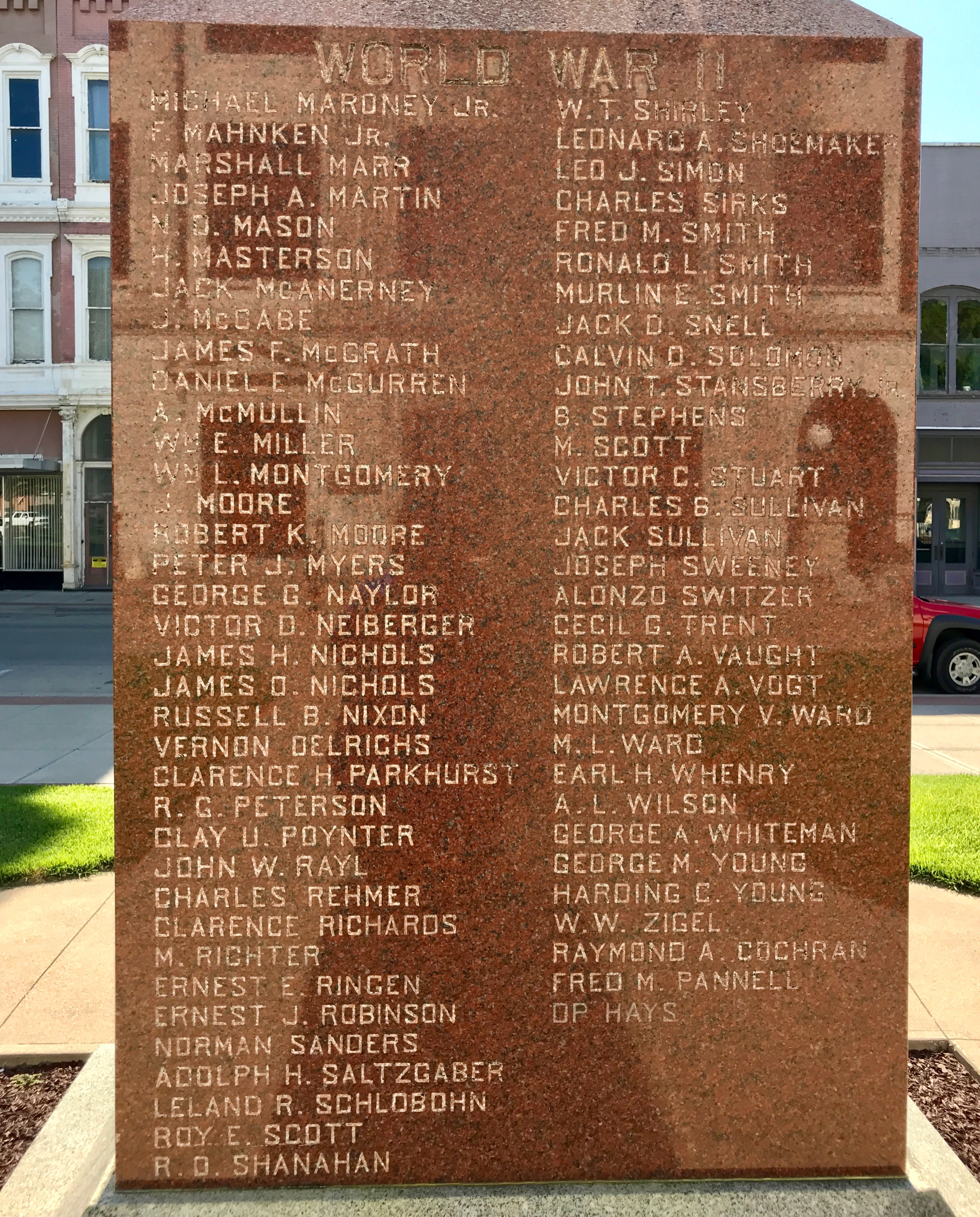
WW II,
more WW II,
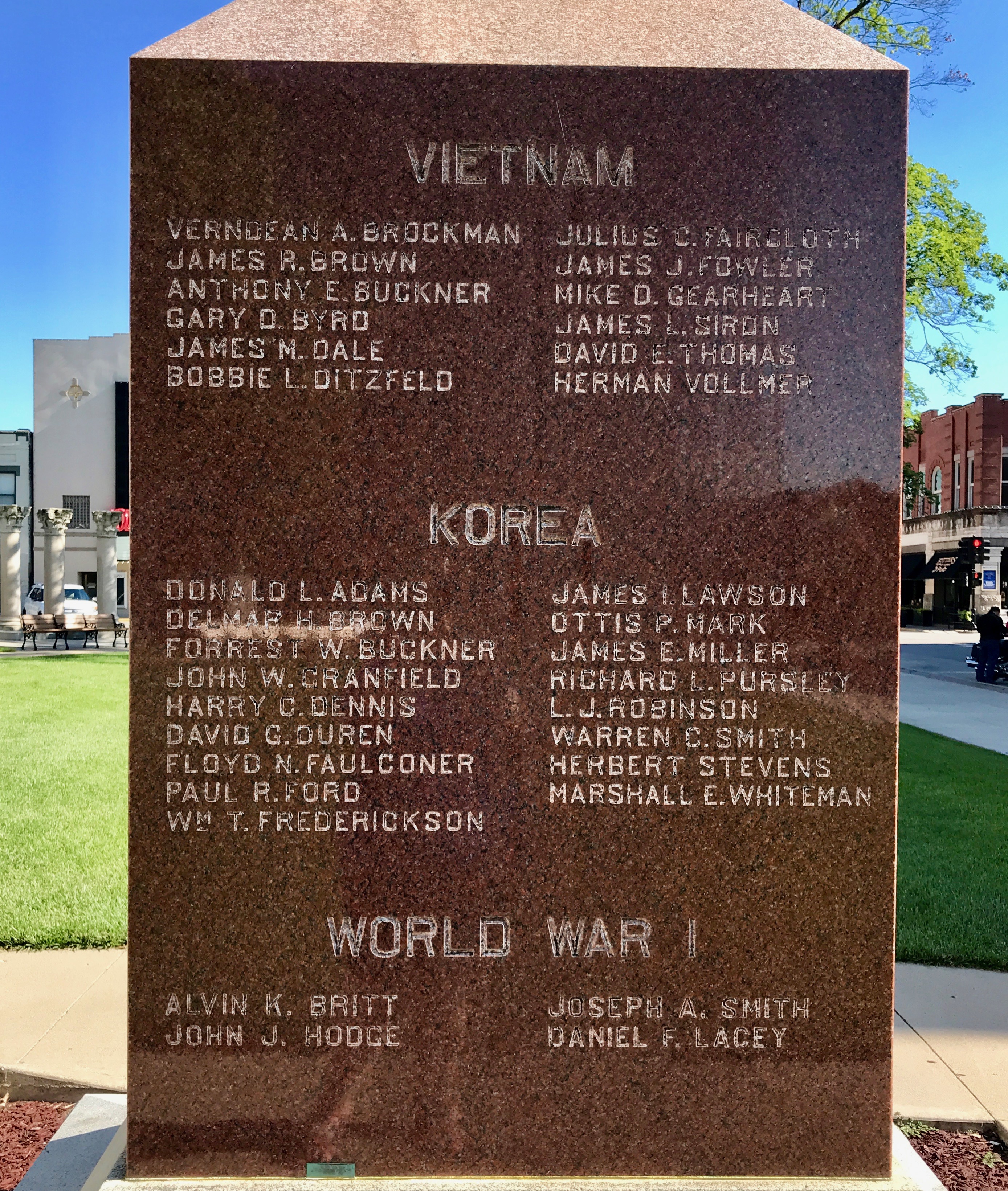
More WW I soldiers, along with Vietnam and Korea.
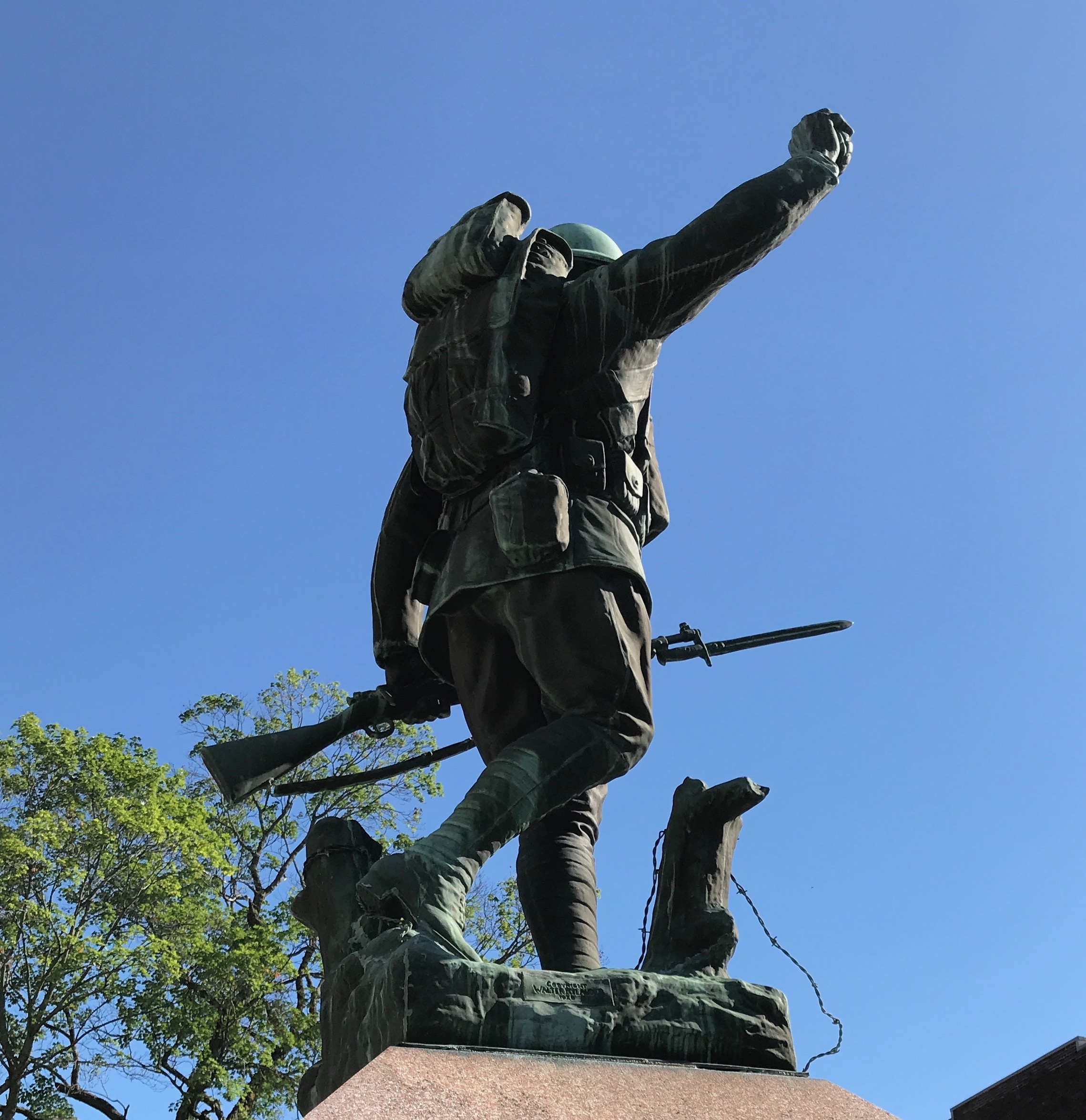
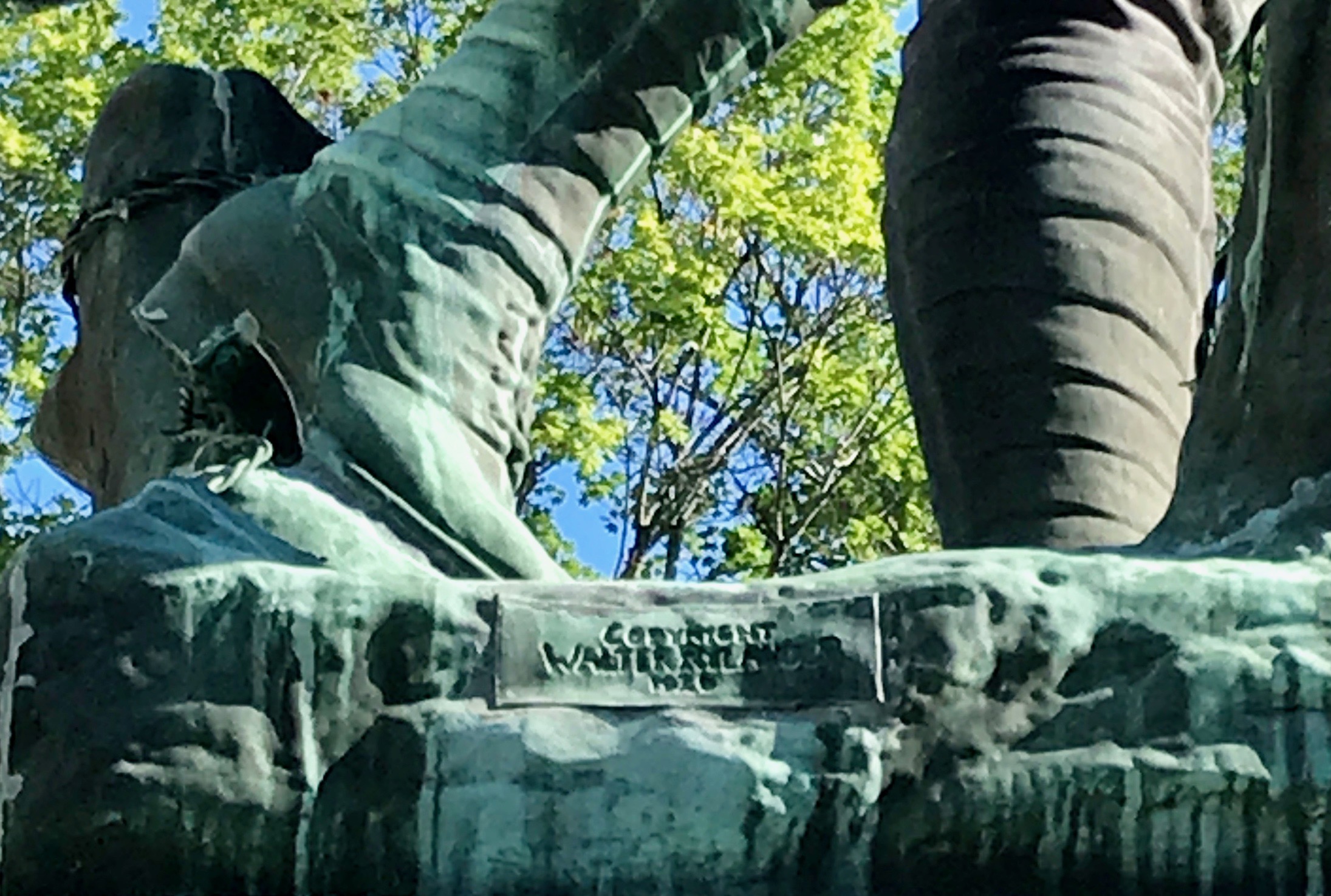
I like this view from the rear of the statue. It looks more dynamic.
I found it interesting that the artist copyrighted his work. I was frustrated that I couldn’t make out his name. With just a few clicks in the search bar, I found a website that gave me the name of the artist: Walter Rylander.
I wondered if there are more of Rylander’s doughboy statues around the country? Well, yes, there are! In addition to Sedalia, there is one in Bolivar, Missouri, St. Bernard, Ohio, and Muskogee, Oklahoma. Oddly enough, these statues were the original work of E.M. Viquesney, who sold the company to Rylander, who owned the copyright for a few years. According to the website, roughly 10% of the United States WW I memorials are based on Mr. Viquesney’s statue. According to my Preferred Source, there are still about 140 of his statues in 38 different states.
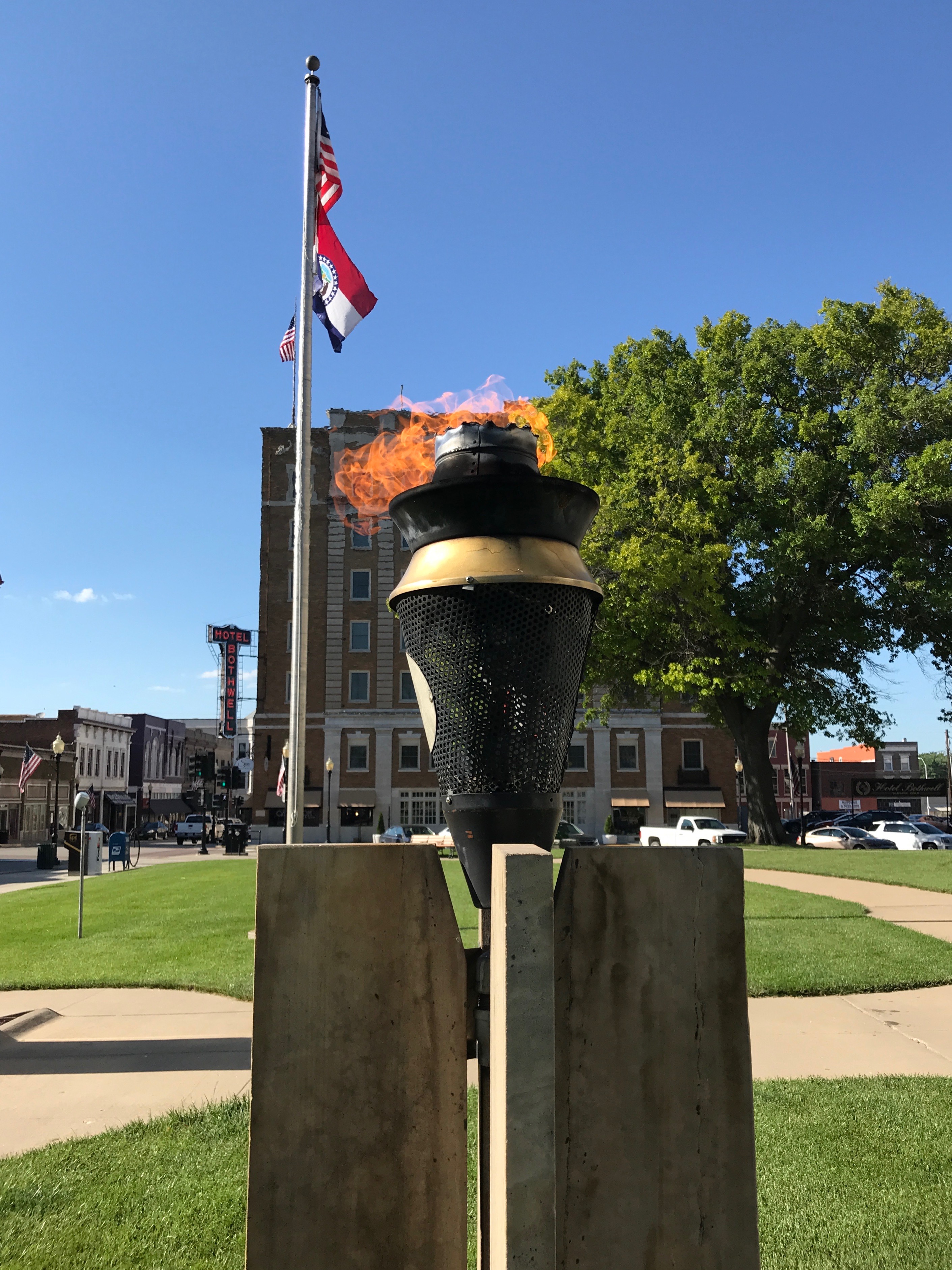
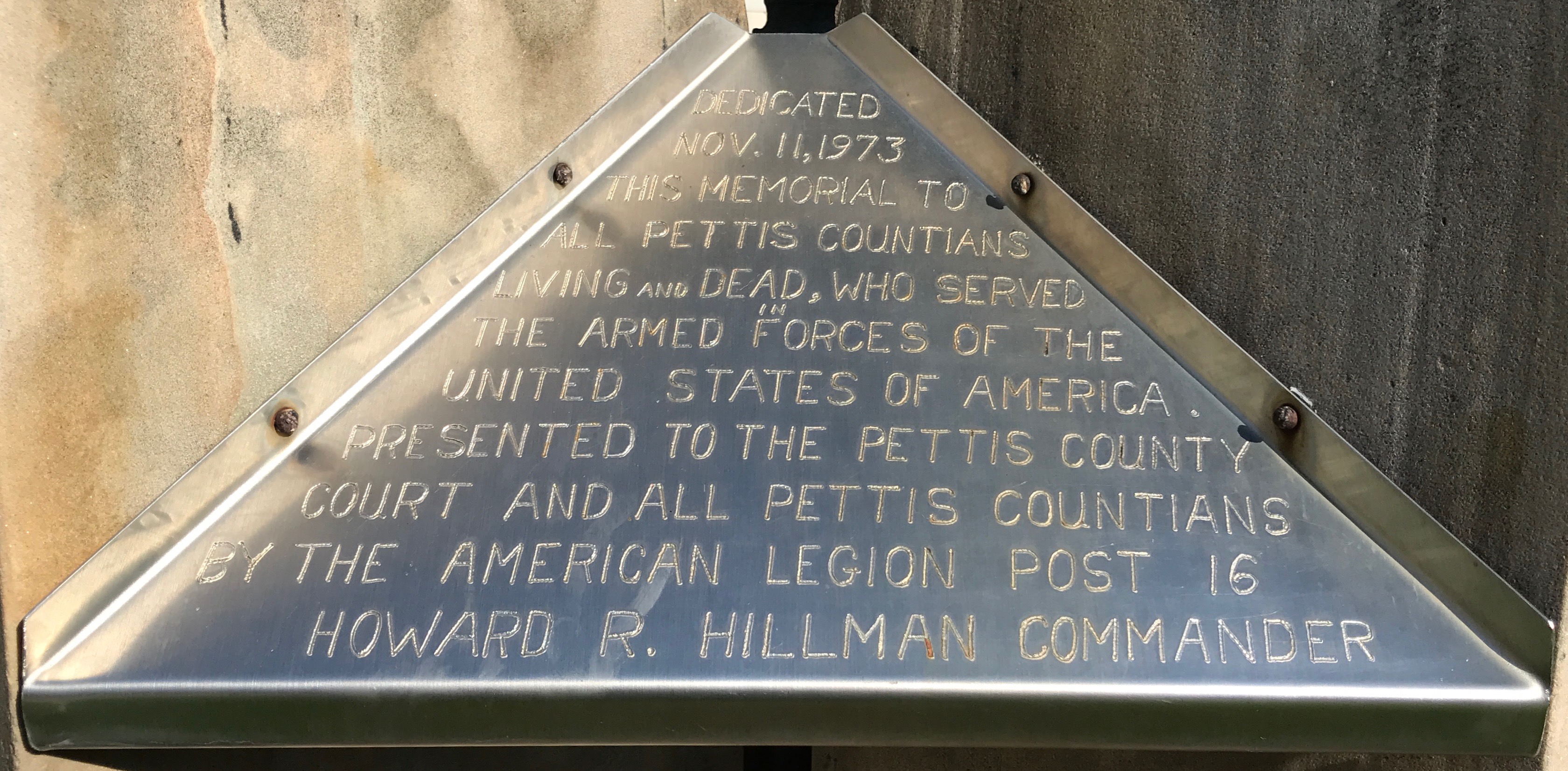
I continued with my exploration and came upon this eternal flame dedicated to all the Pettis Countians, living and dead, who served in the Armed Forces of the United States.
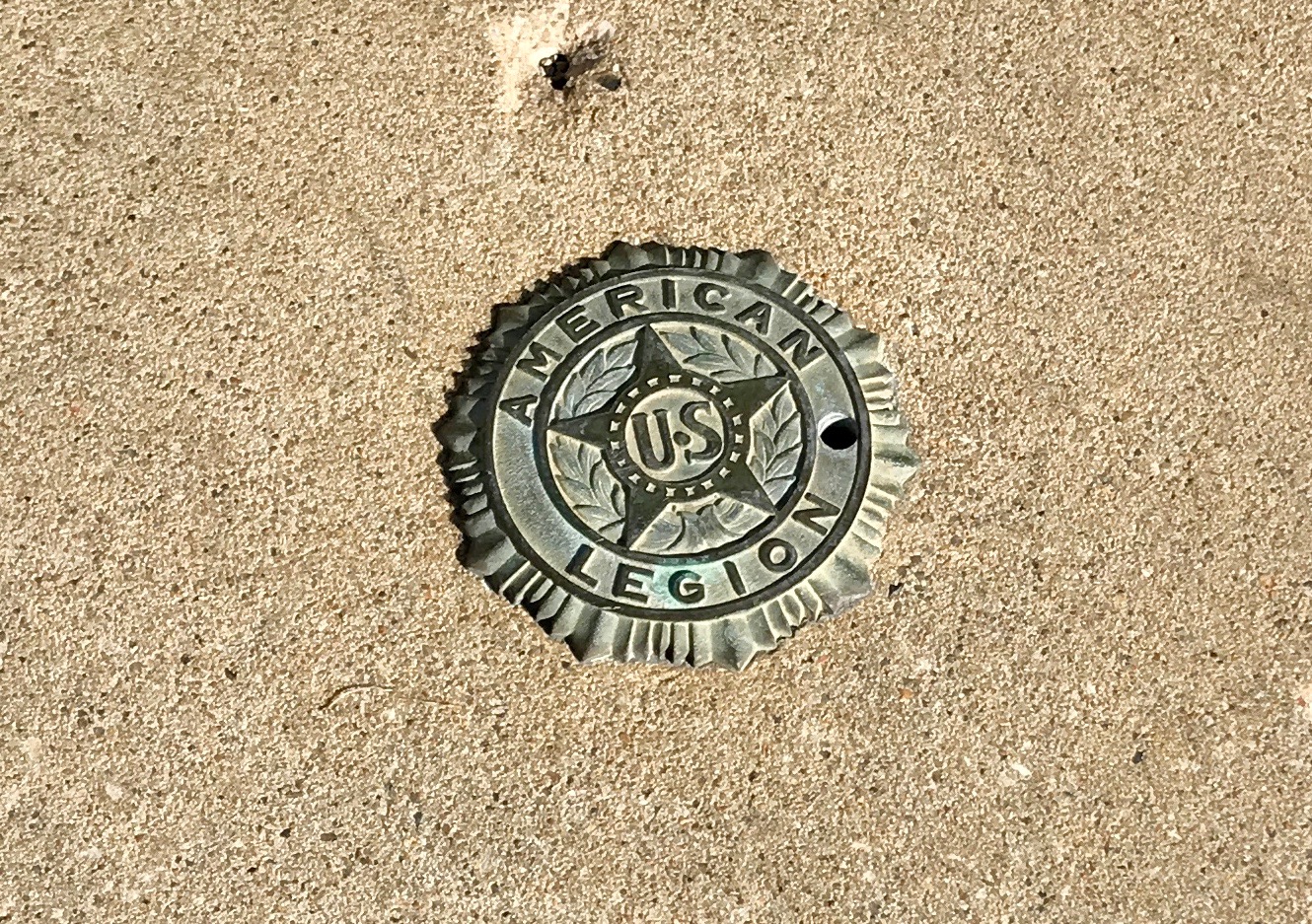
Appropriately enough, it was sponsored by the American Legion.
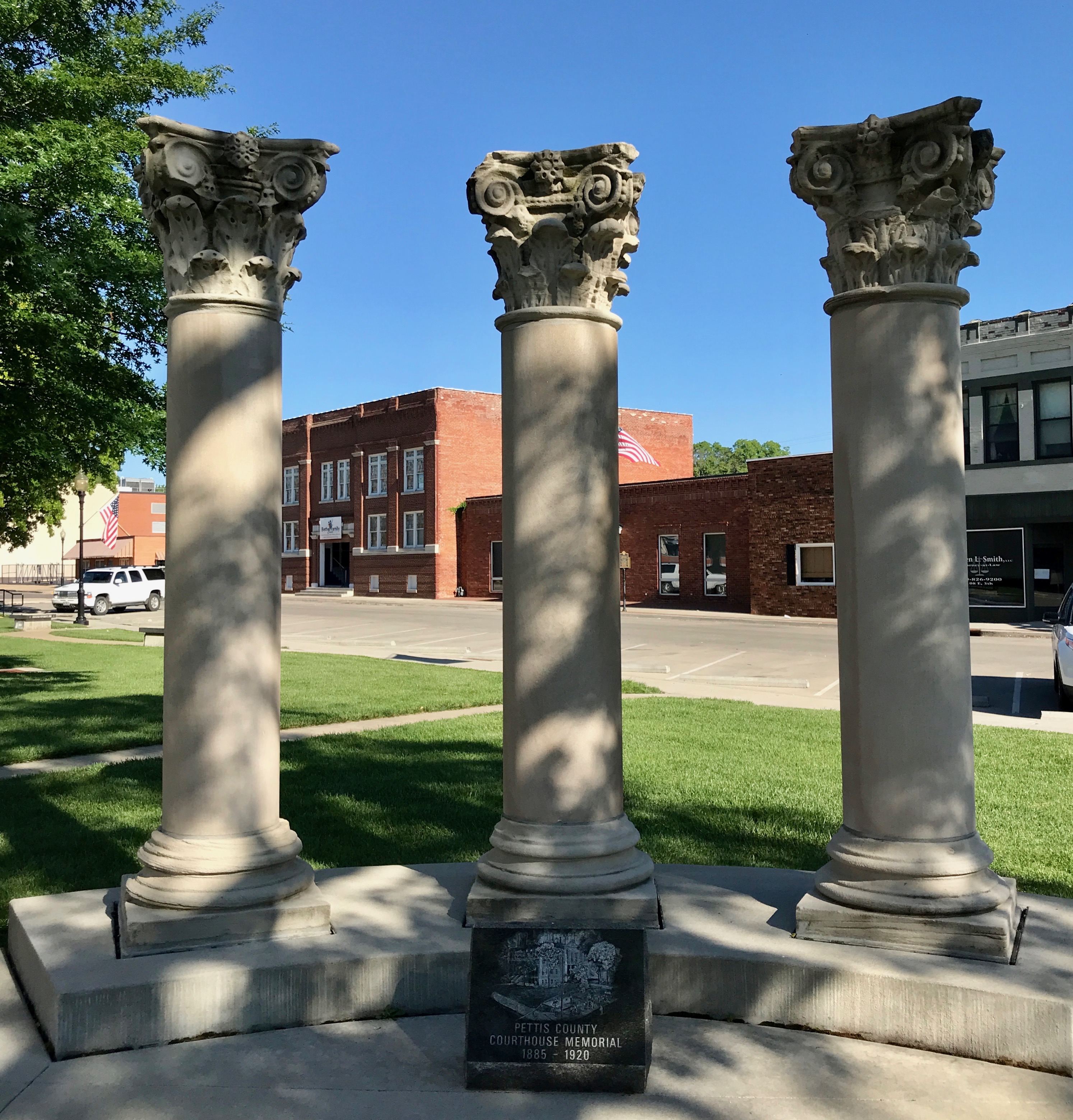
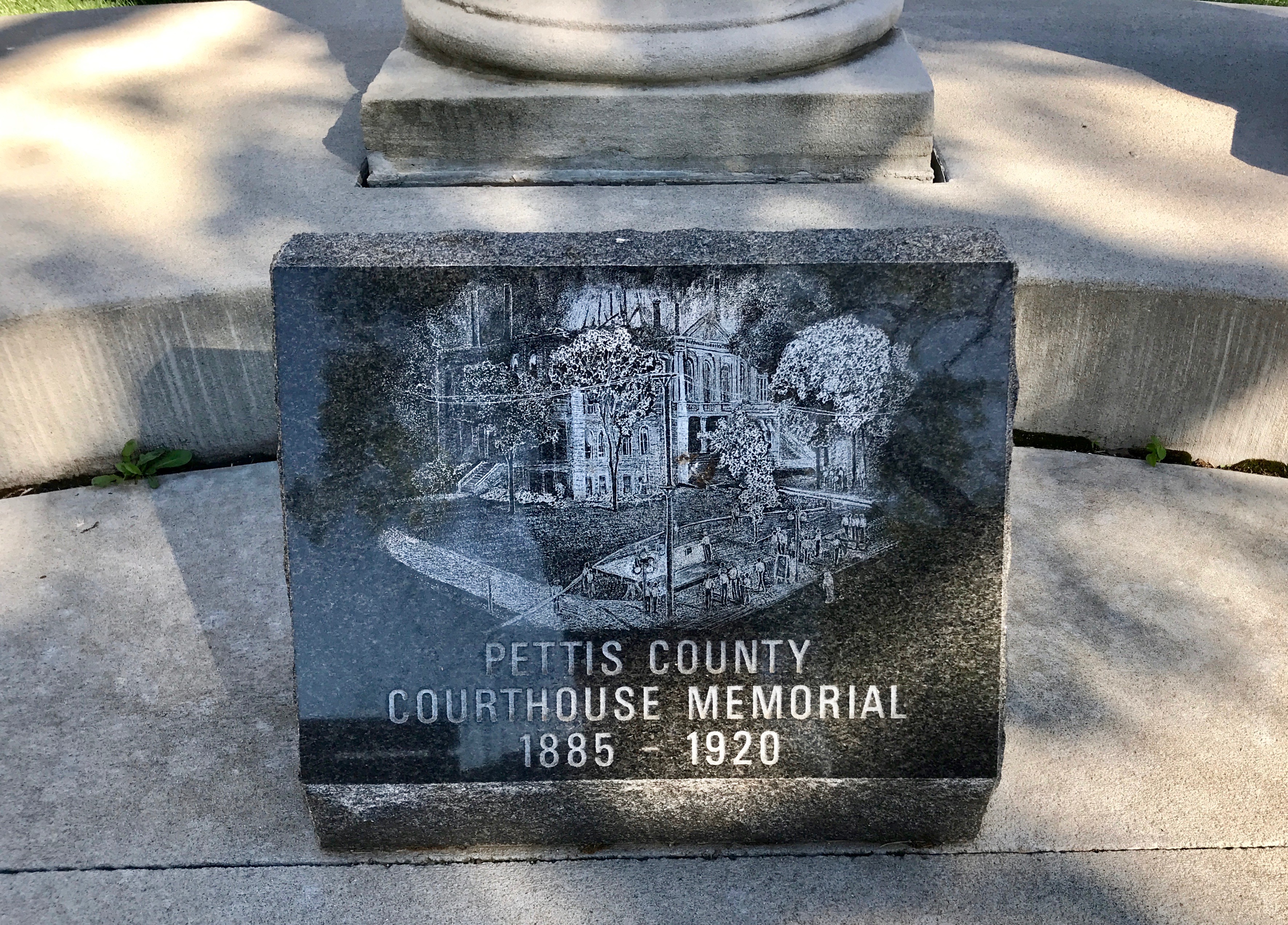
At the corner of the block was a memorial to the county courthouse that burned down in 1920.
I wonder if these columns were part of the original courthouse.
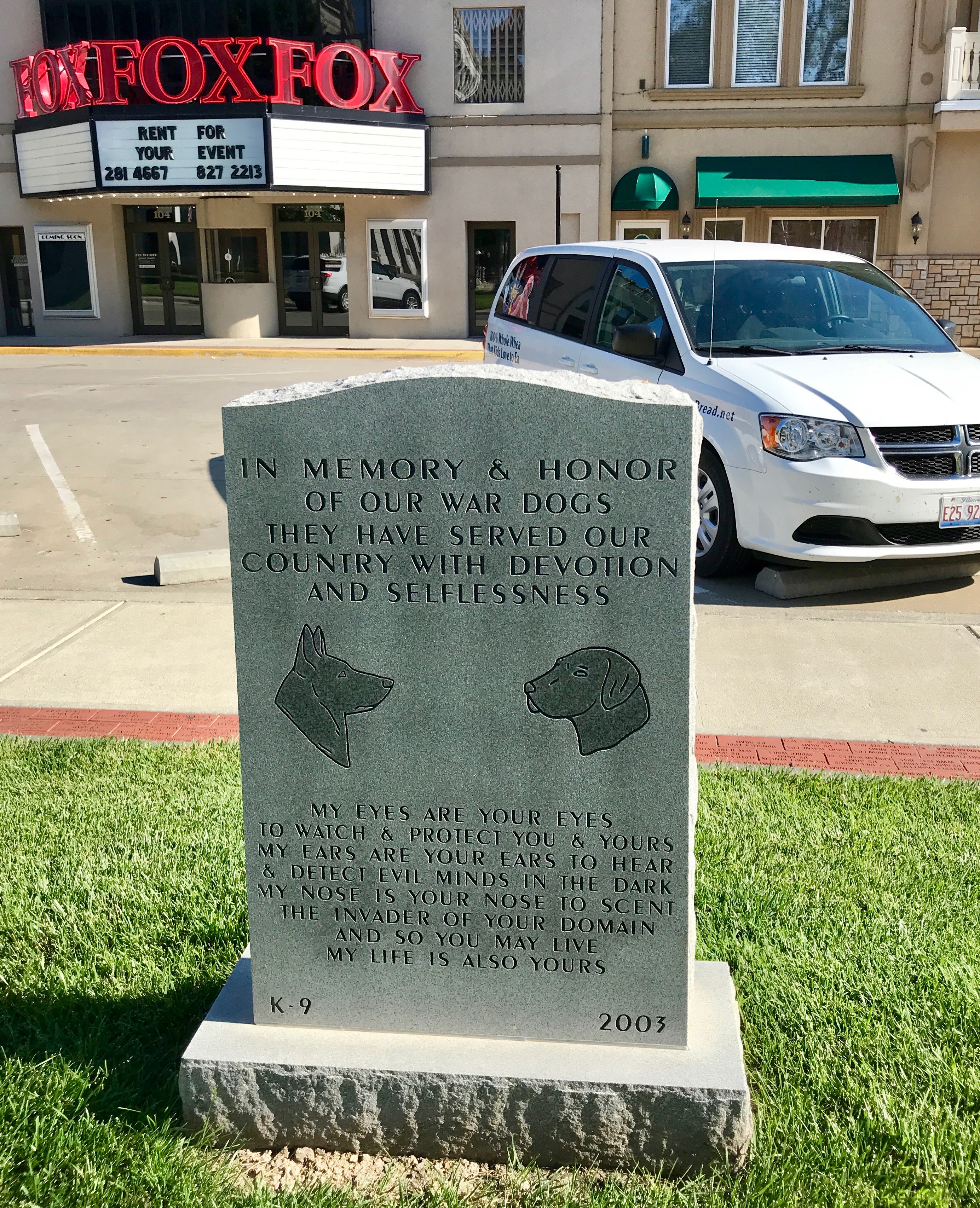
The war dogs were also honored. It made me smile that their memorial was placed infant of the Fox Theater. I wonder if they were thinking of the dogs chasing the foxes when they placed it. Or, did it just turn out that way?
They are fairly up to date with their memorials.
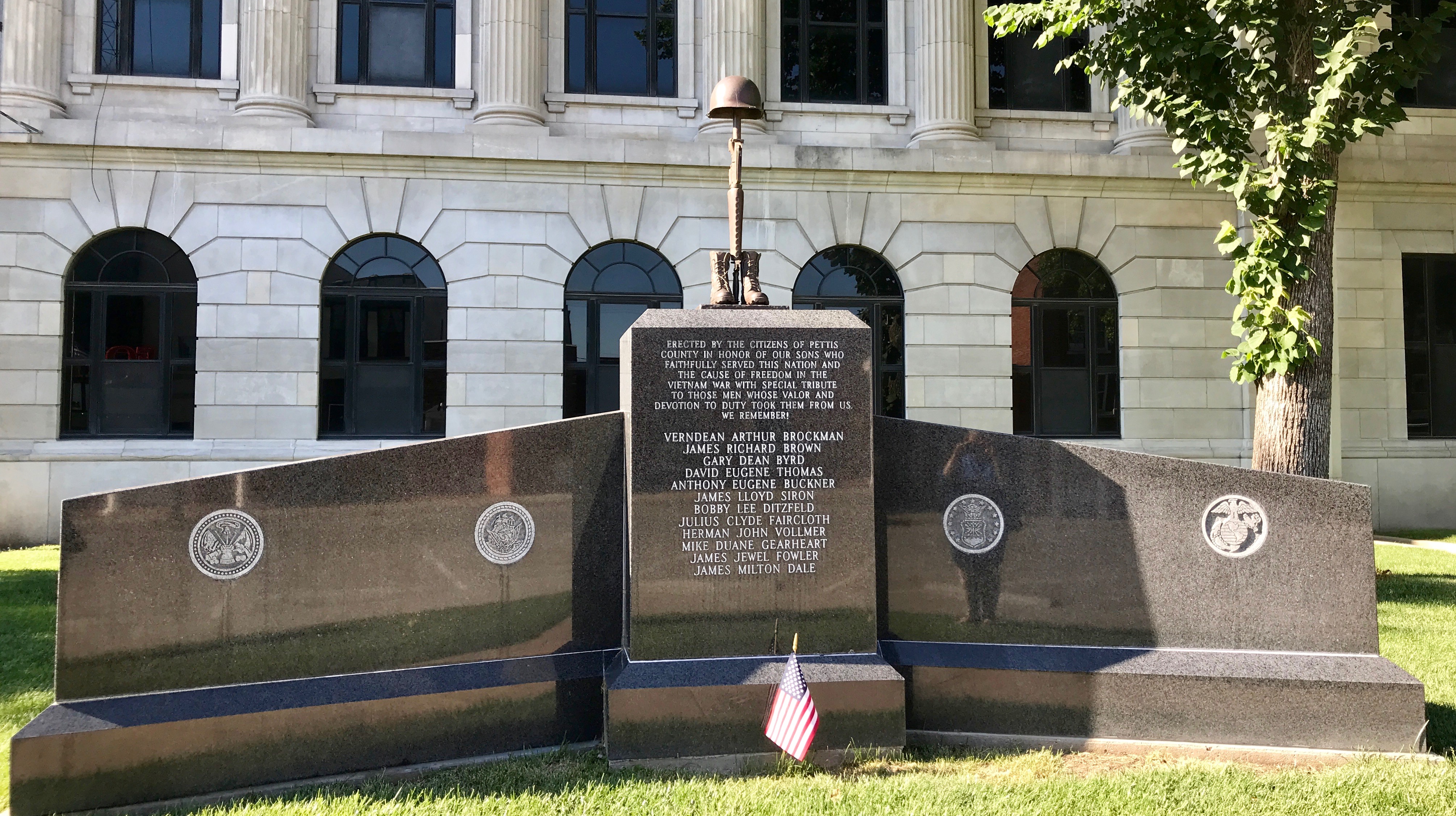
Here is the Vietnam Memorial.
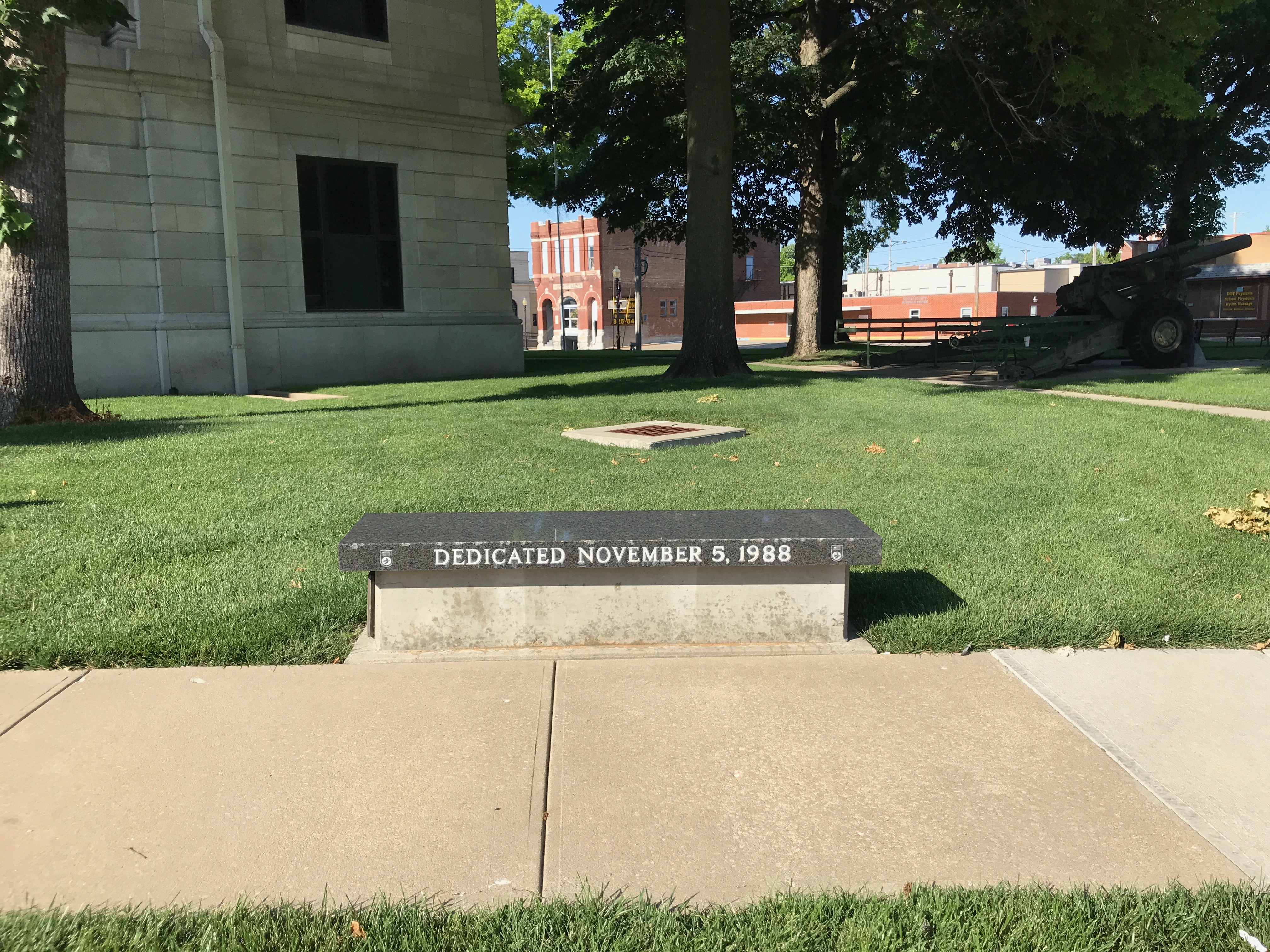
I assume this bench was part of the memorial. In any event, it is a nice, practical addition to the collection of memorials.
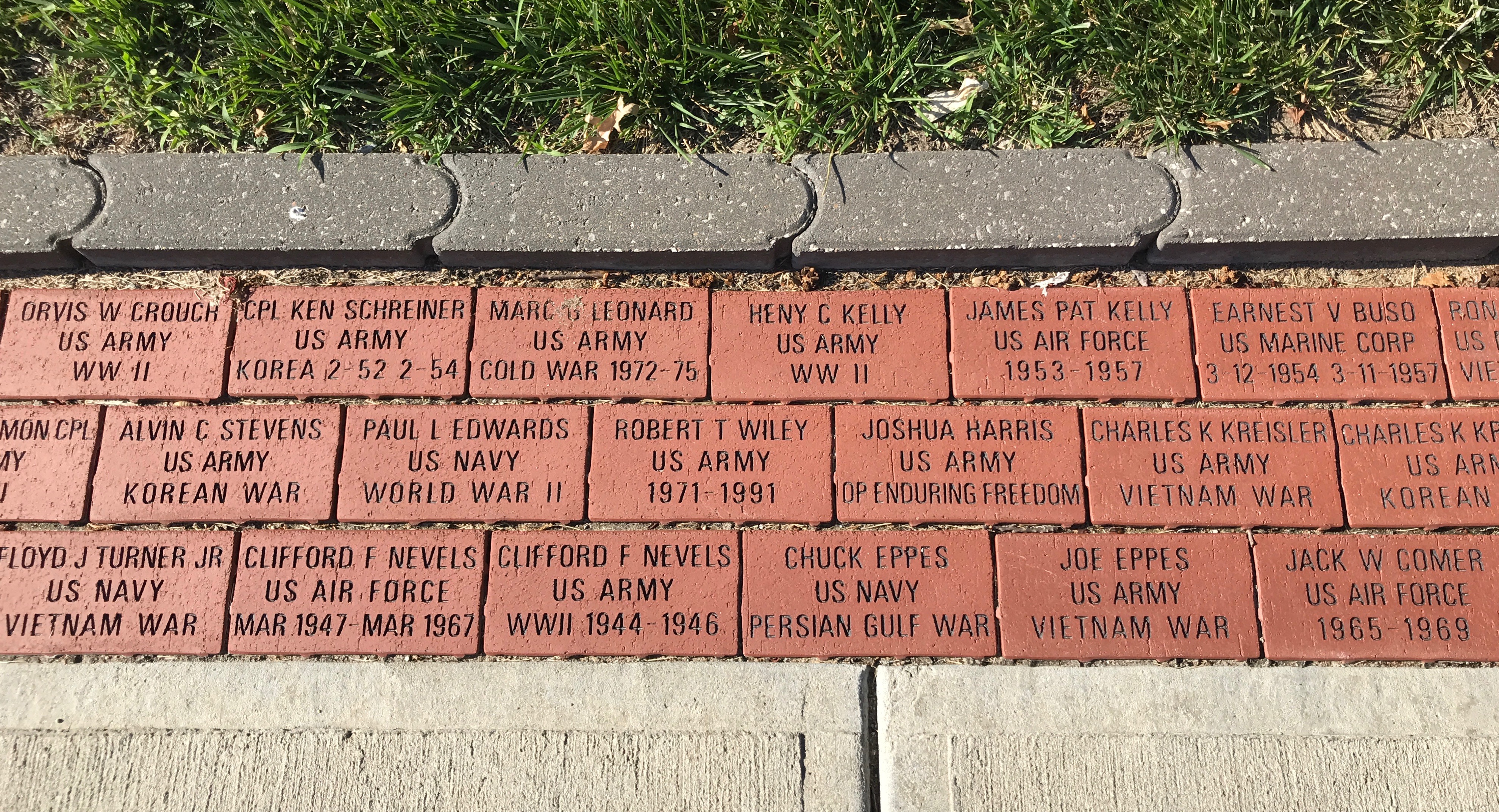
Memorial bricks edged the sidewalk.
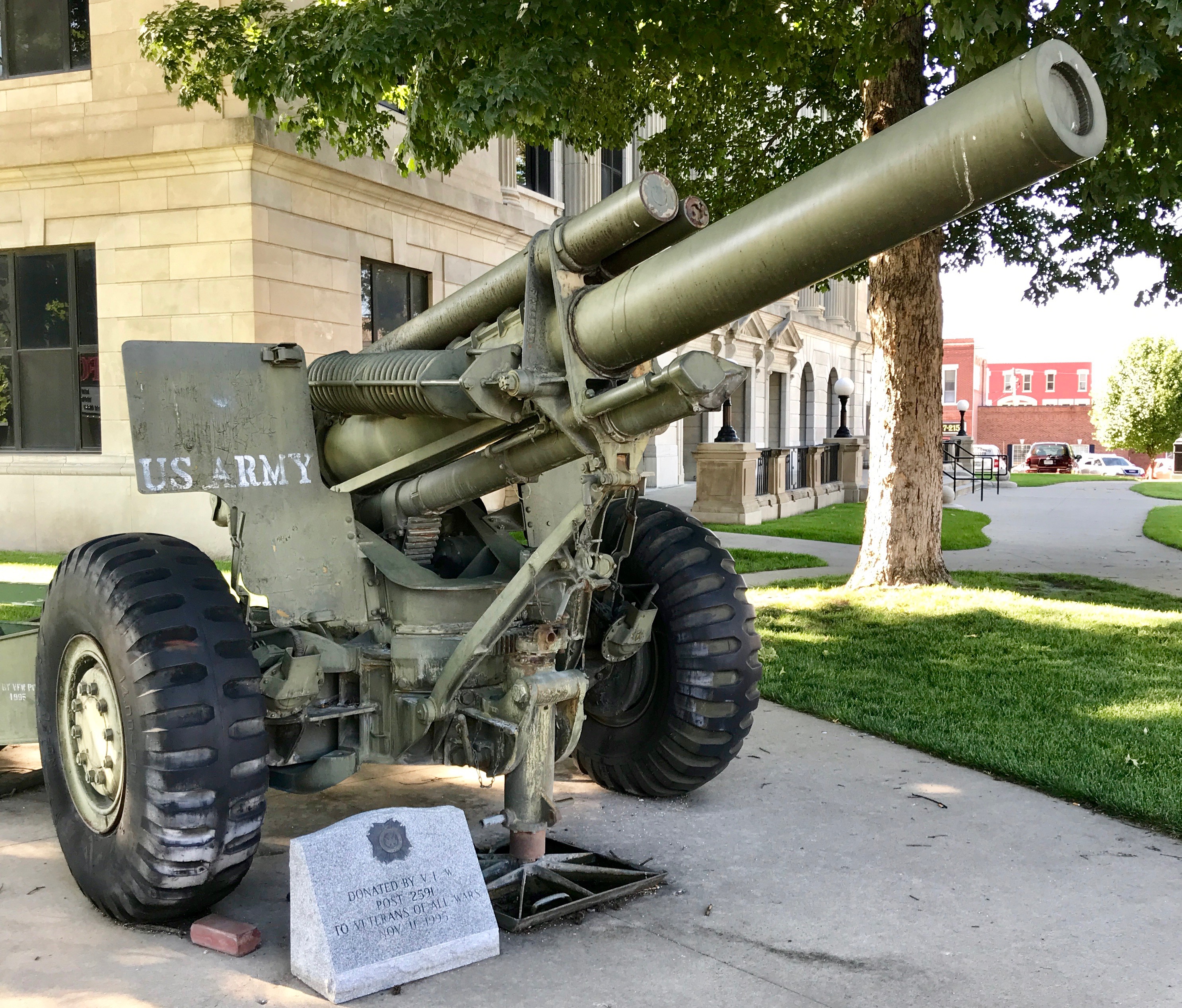
They didn’t have any of those old-timey cannons that so many places have on display, but there was this piece of ordnance. In my notes, I have it identified as “Big Gun.” I am sure that there is a more accurate name for it.
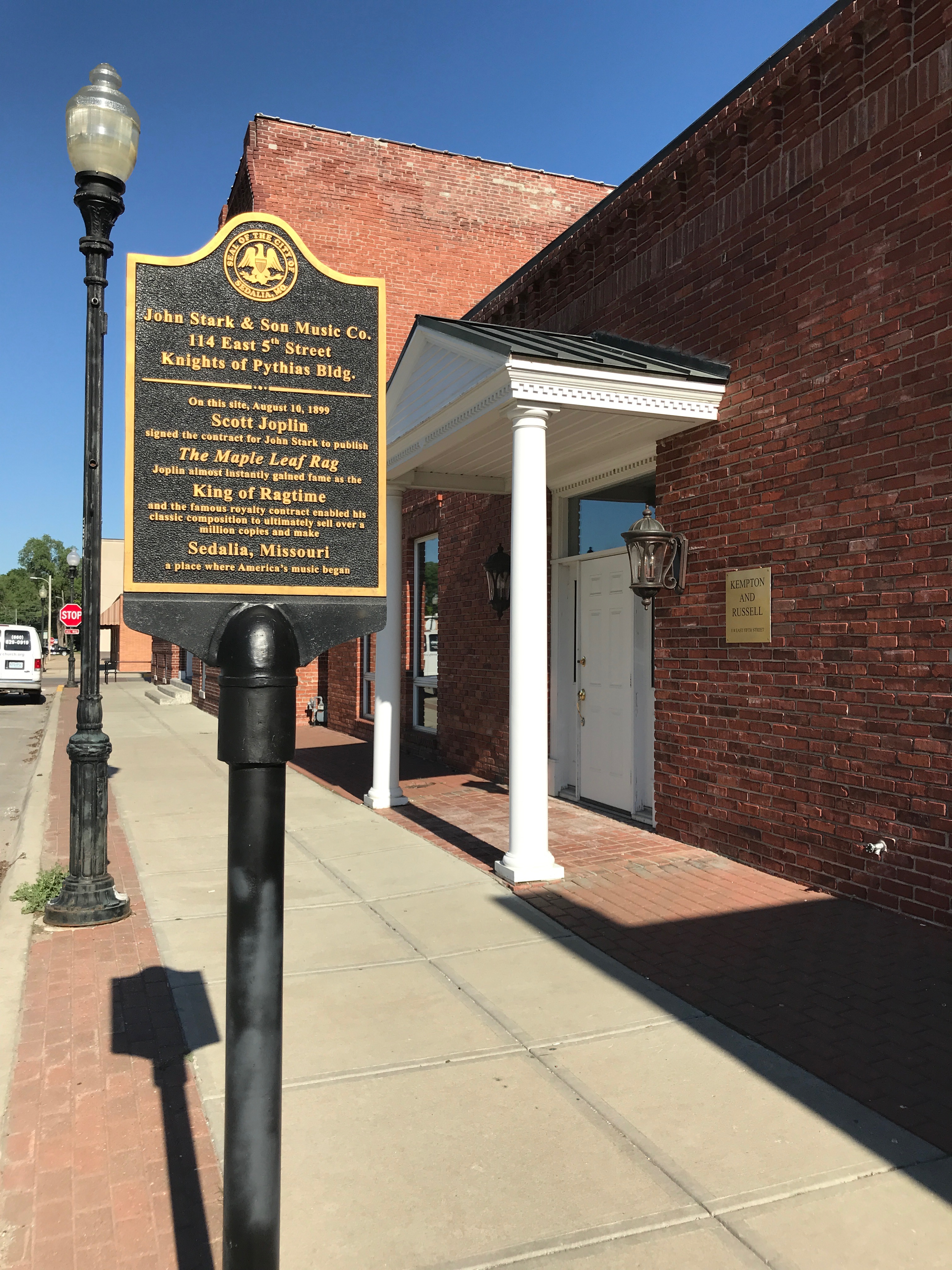
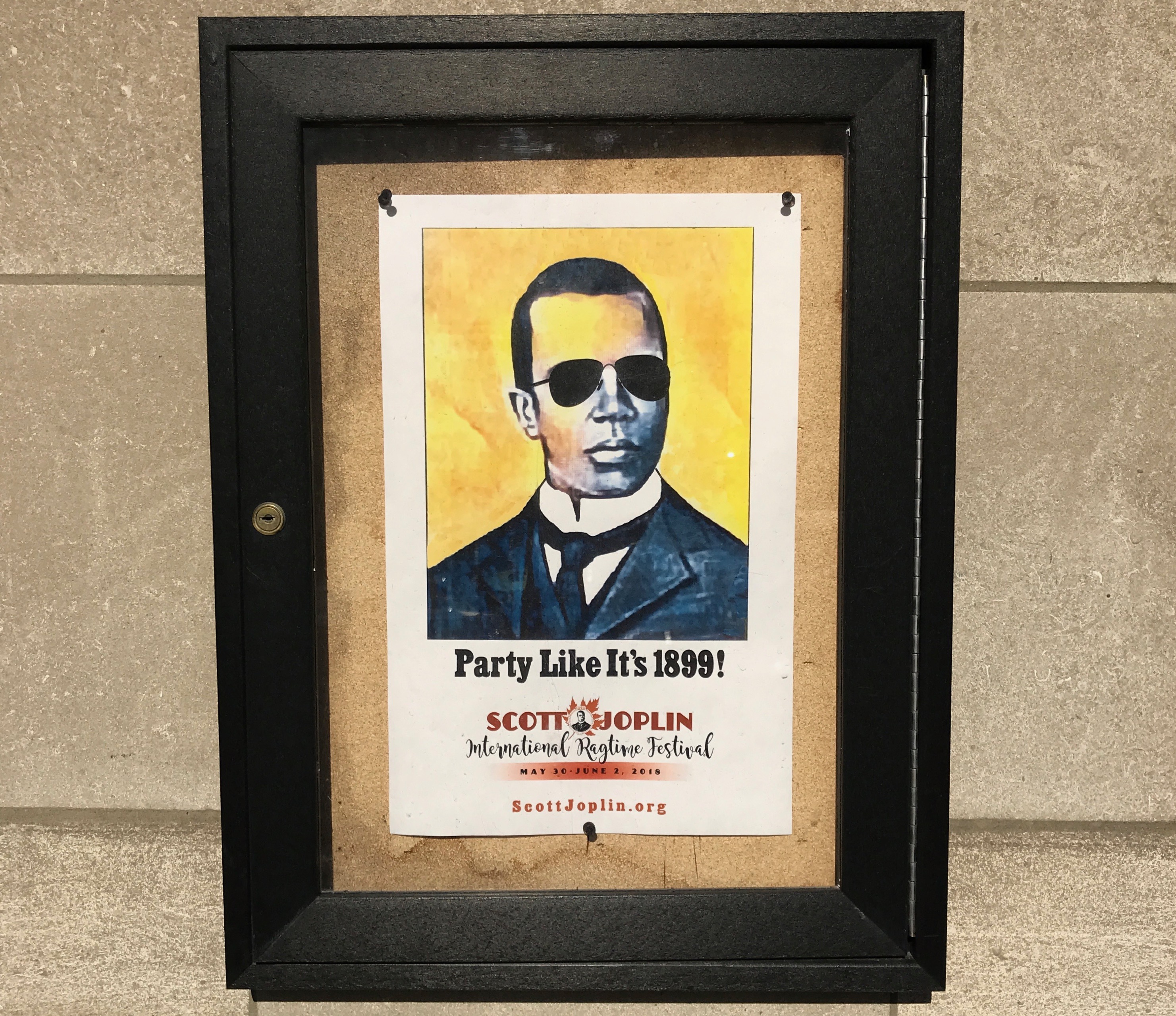
Across the street from the Big Gun was an interesting site. The sign reads, “On this site, August 10, 1899, Scott Joplin signed the contract for John Stark to publish The Maple Leaf Rag. Joplin almost instantly gained fame as the King of Ragtime and the famous royalty contract enabled his classic composition to ultimately sell over a million copies and make Sedalia, Missouri a place where America’s music began.”
Scott Joplin is truly a favorite son in these parts.
Just in case you couldn’t remember which composition we’re referring to, here it is. This is a recording made from a piano roll that the poster said was created by Scott Joplin. So, you are listening to the piano playing of the original composer.
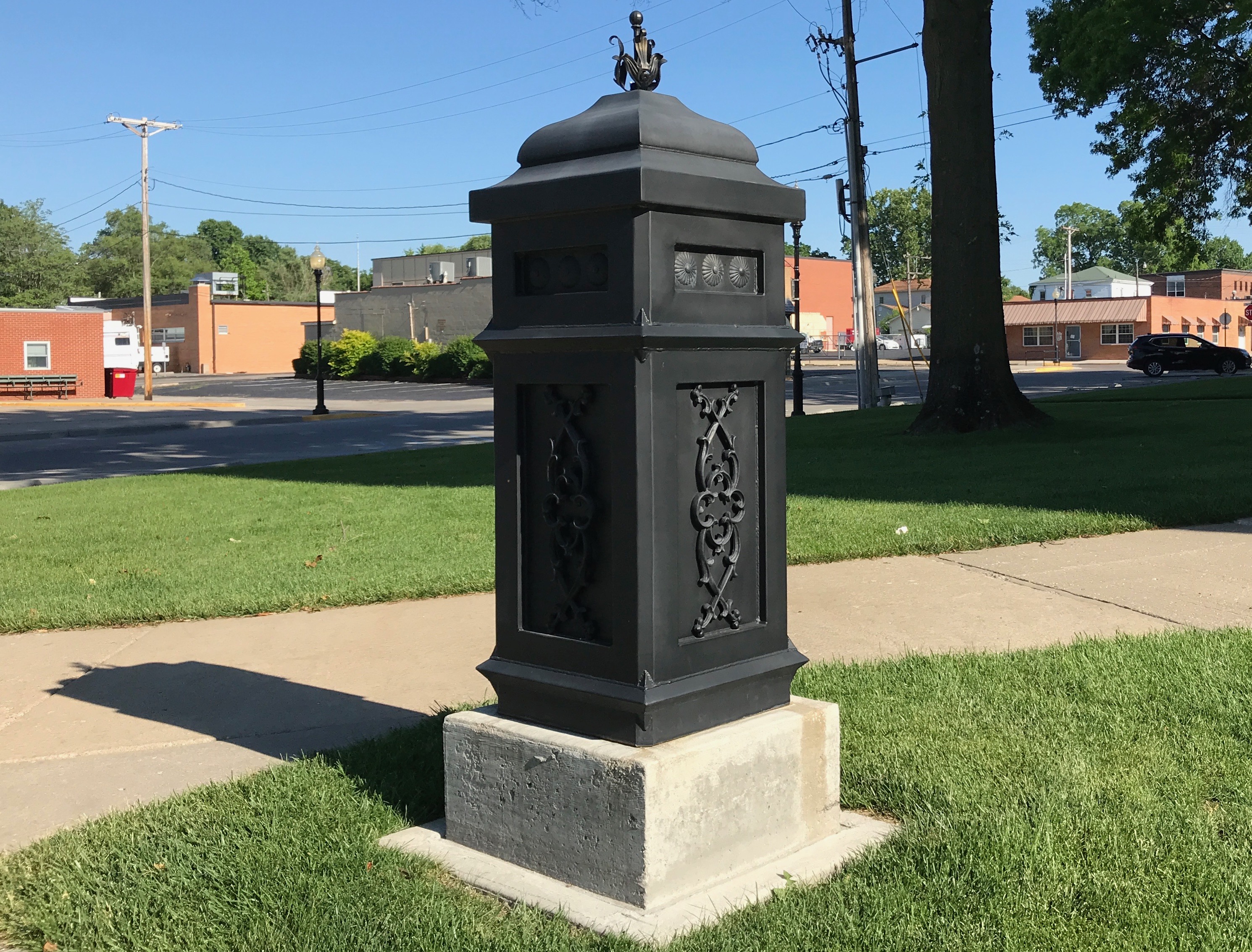
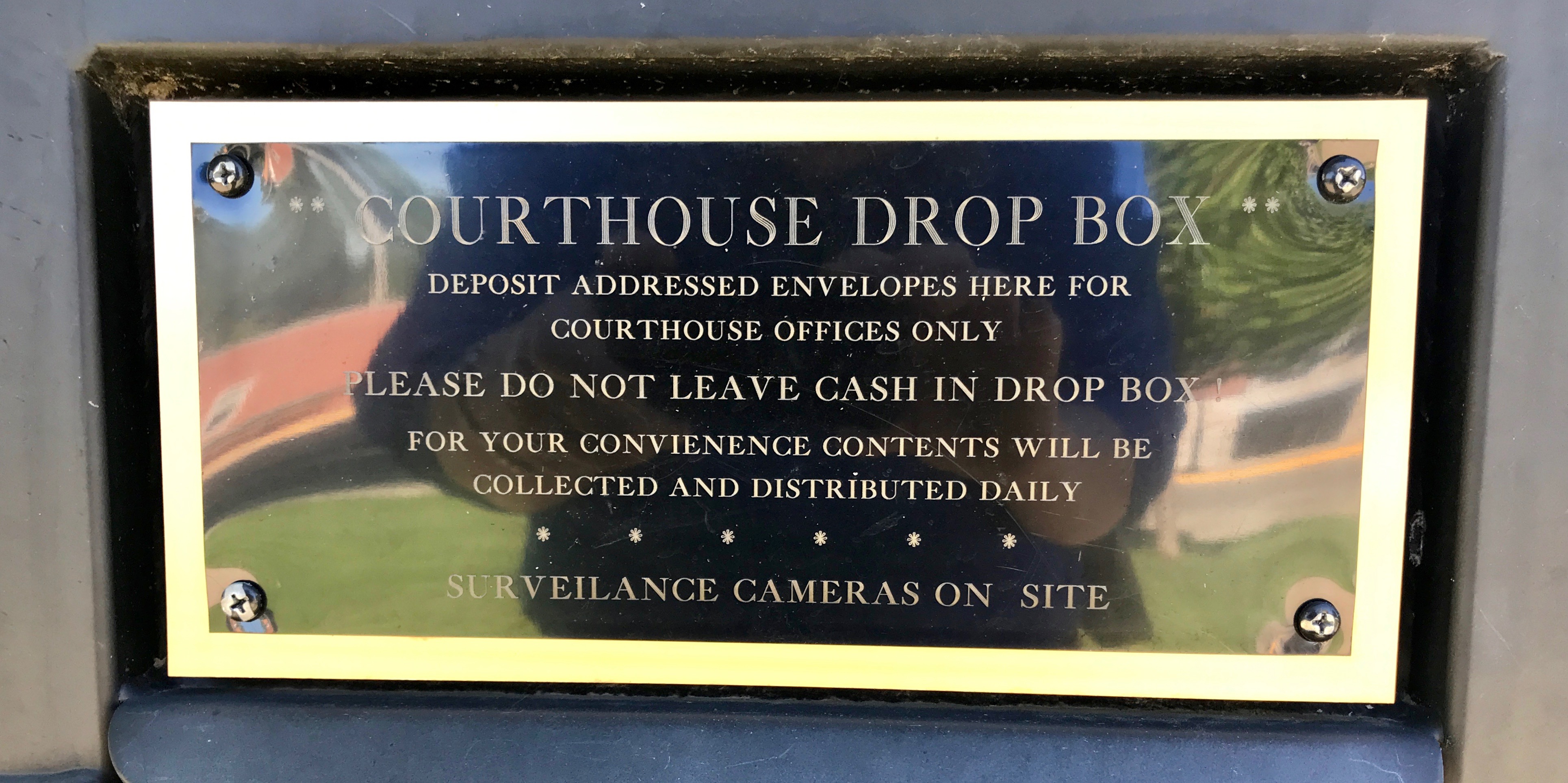
I continued my leisurely stroll around the courthouse and came upon this interesting structure. The sign explains what it is.
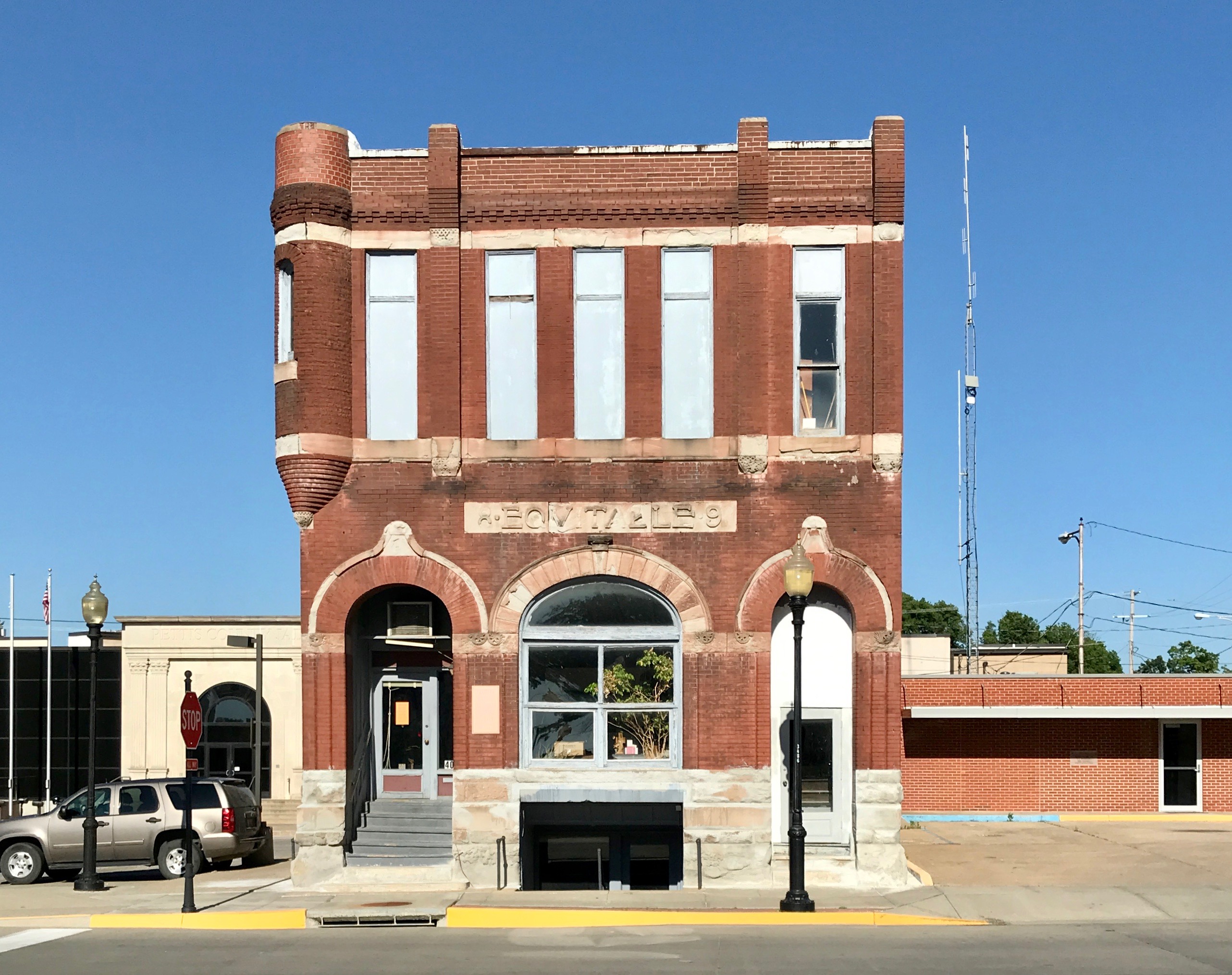
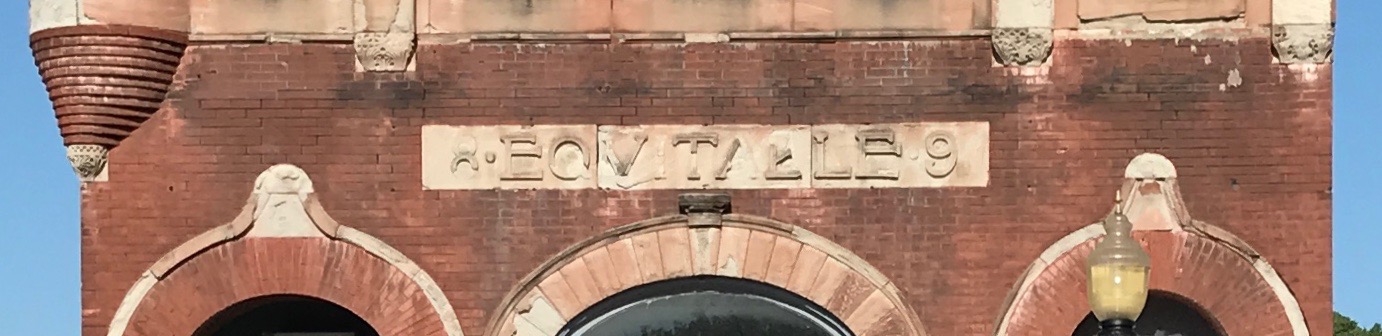
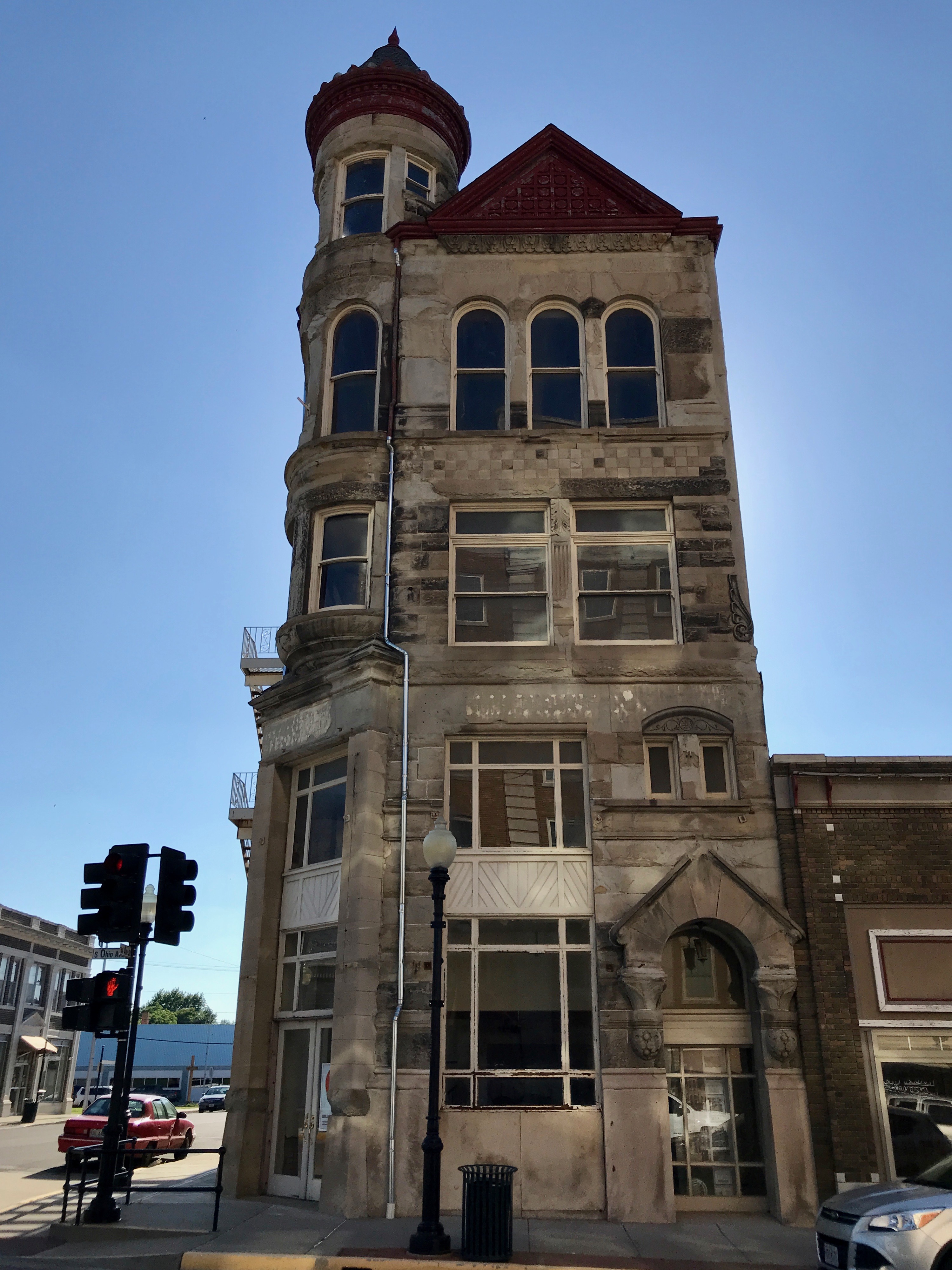
Do you suppose they have videos of this strange woman walking around and taking pictures of everything? This interesting building was on the block behind the courthouse. It’s too bad that it wasn’t kept up. I wonder what it was originally. The stone sign has disintegrated quite a bit, but if I zoom in and look carefully, it looks like it says, “8.EQVITABLE.9”
Could it be the offices of the Equitable Insurance Company and was built in 1889? Could be. There wasn’t anyone around to ask, and nearly 120 years after the fact, it would probably be unusual to find someone just passing by on the street that would know the answer.
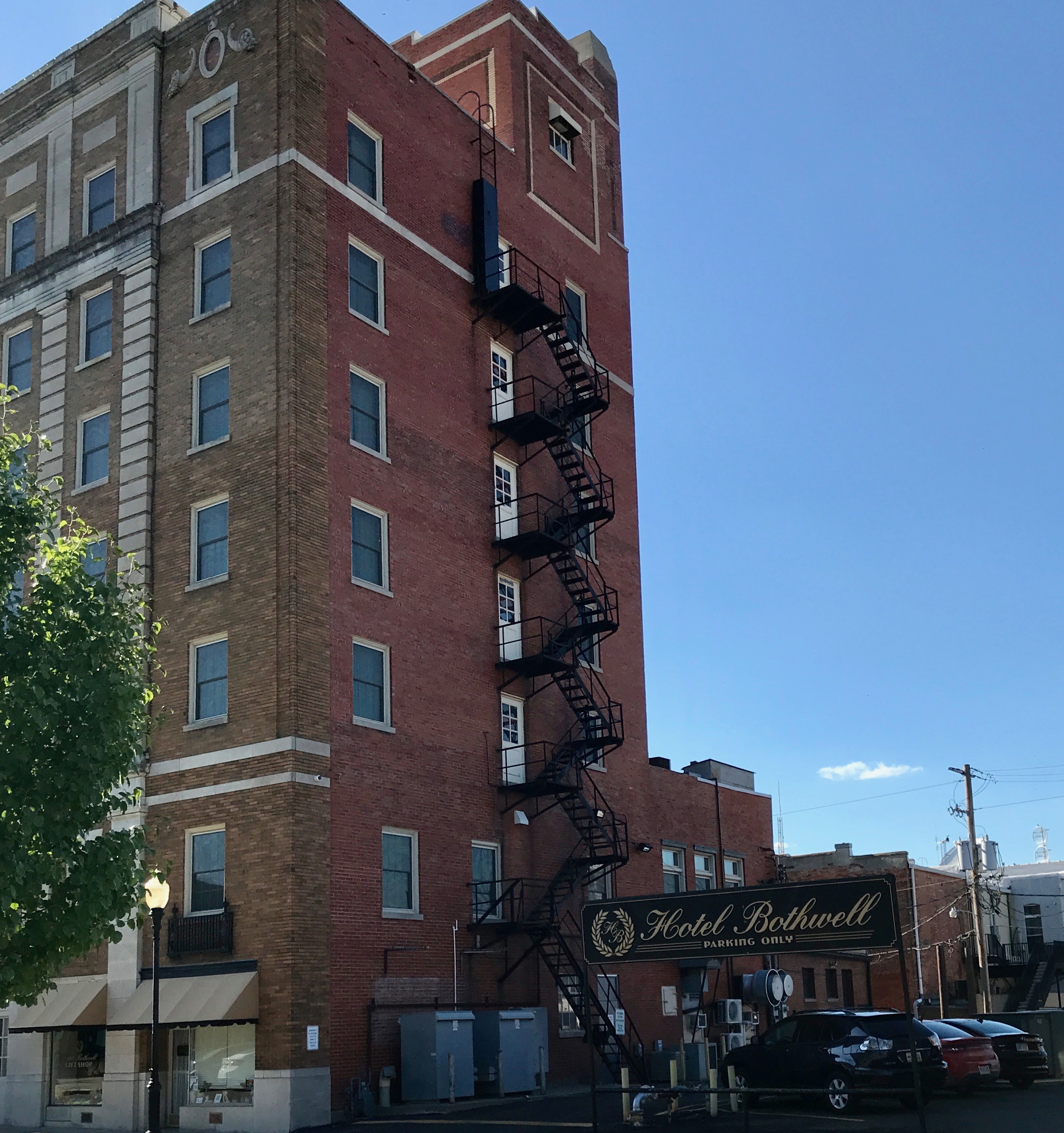
I turned the corner and came upon the rear of the Hotel Bothwell, and this building was definitely kept up.
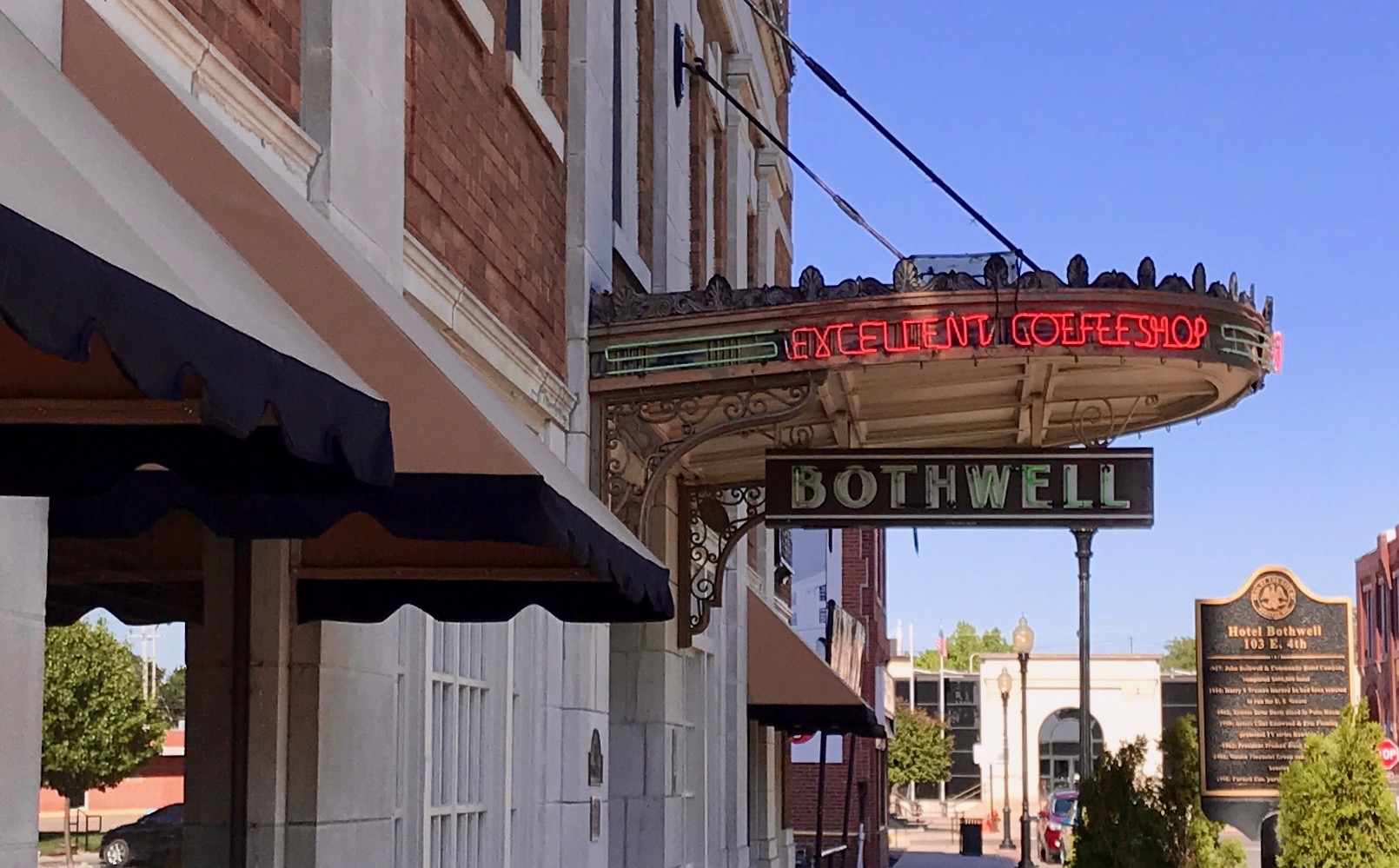
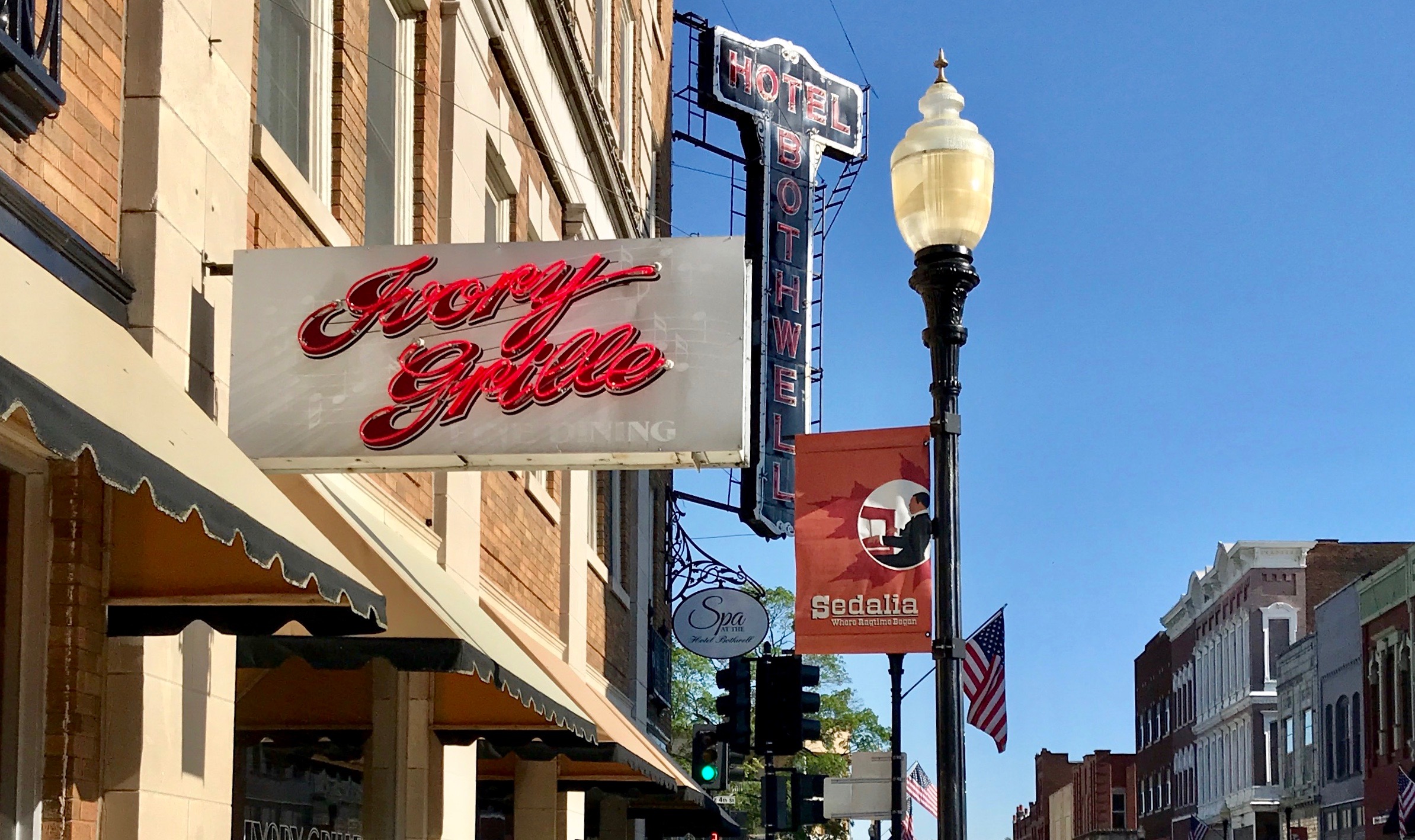
I walked under the marquee of the hotel. I like how they advertise their excellent coffeeshop. Excellent coffee is always appreciated!
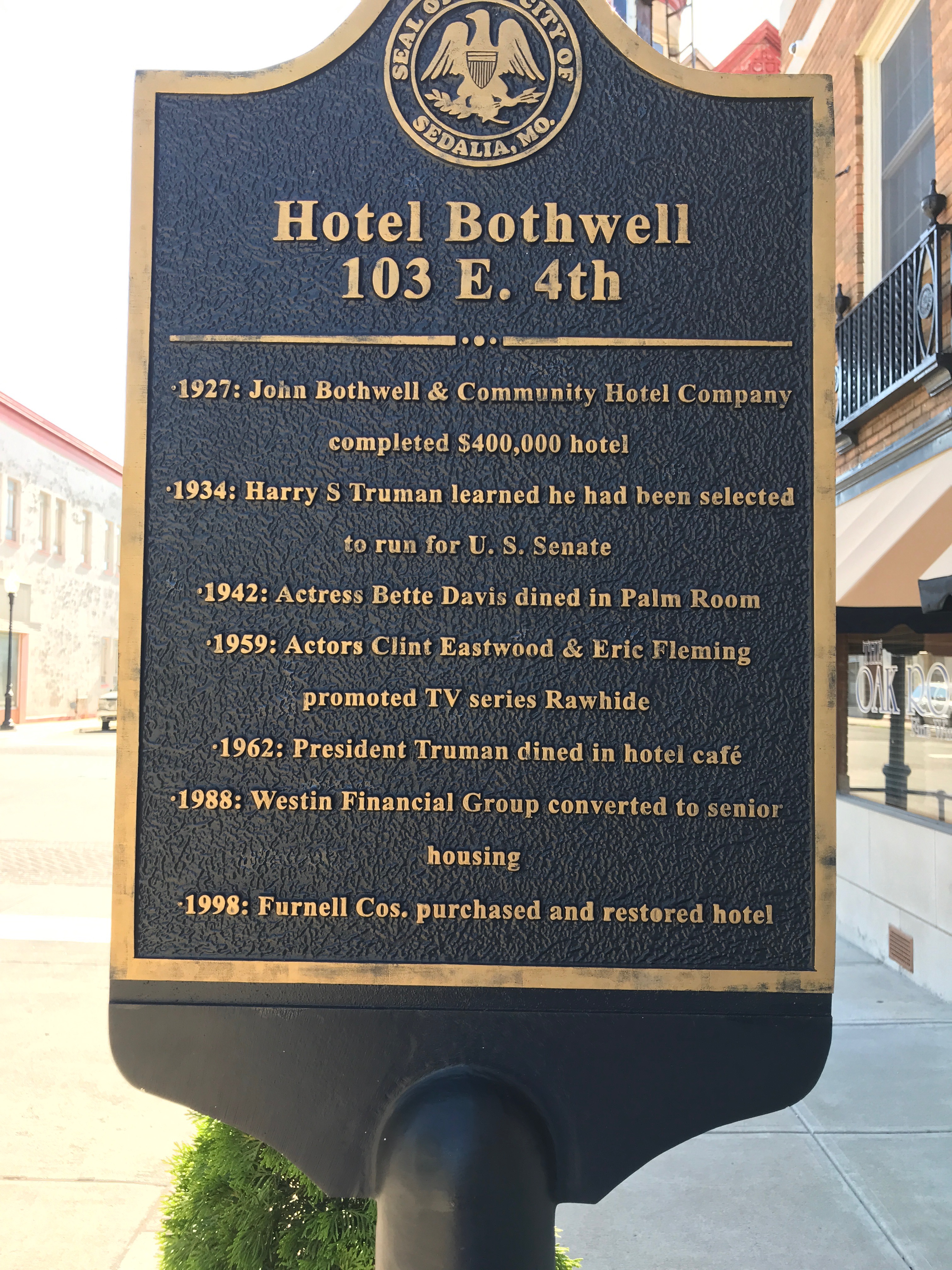
I always appreciate information in bullet points, so I am just going to leave this sign here to tell you about the history of the building. I’m glad it’s back to it’s original hotel function.
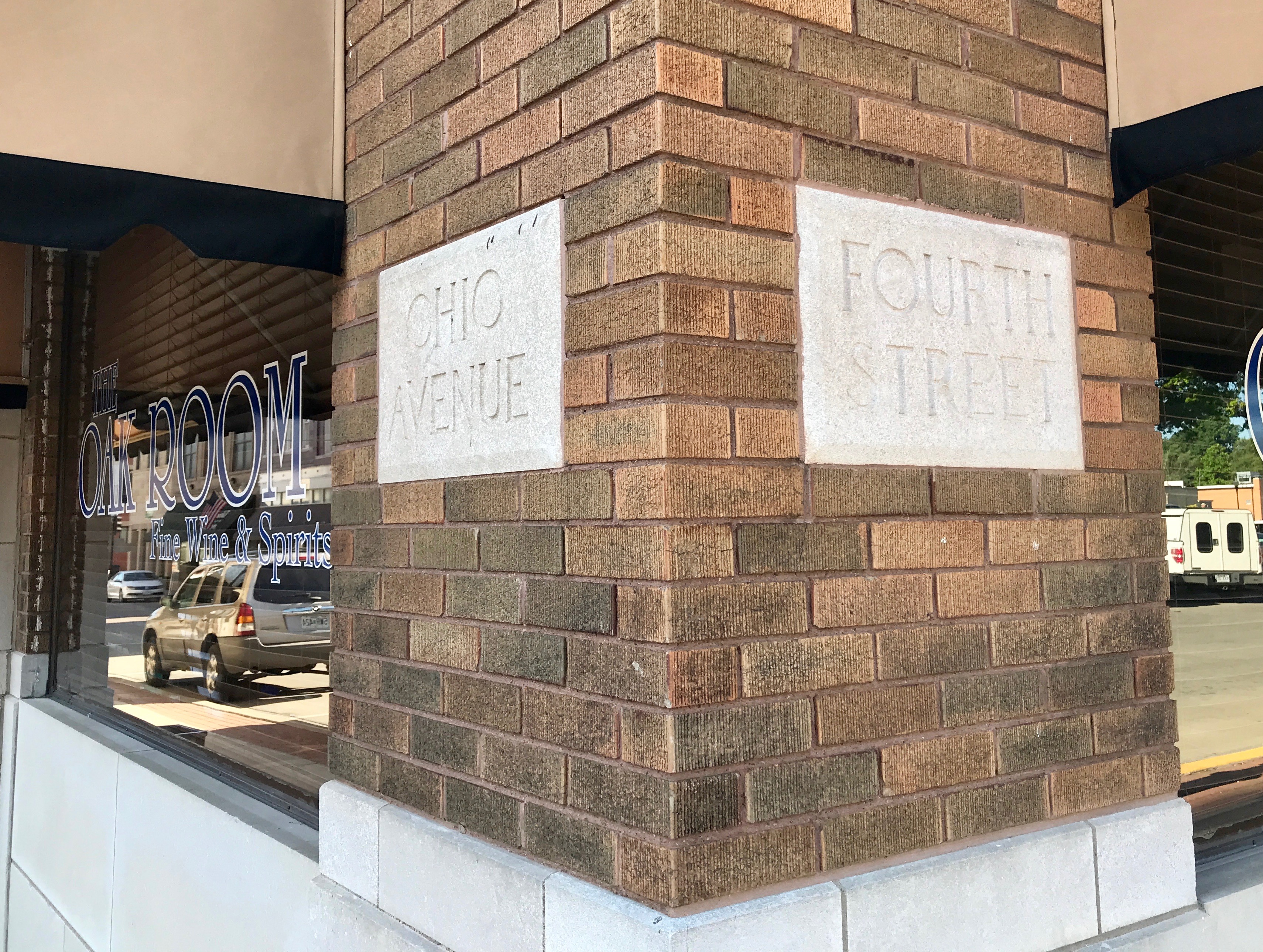
I liked the street signs. You knew just where you were: at the corner of Ohio Avenue and Fourth Street.
I continued my walk around the corner and down the street.
It was late in the day and any businesses trying to make a go of it in downtown Sedalia had closed up for the day. This interesting old building was right across the street from the hotel. I decided that I might as well check out the hotel. I do enjoy stately old hotels.
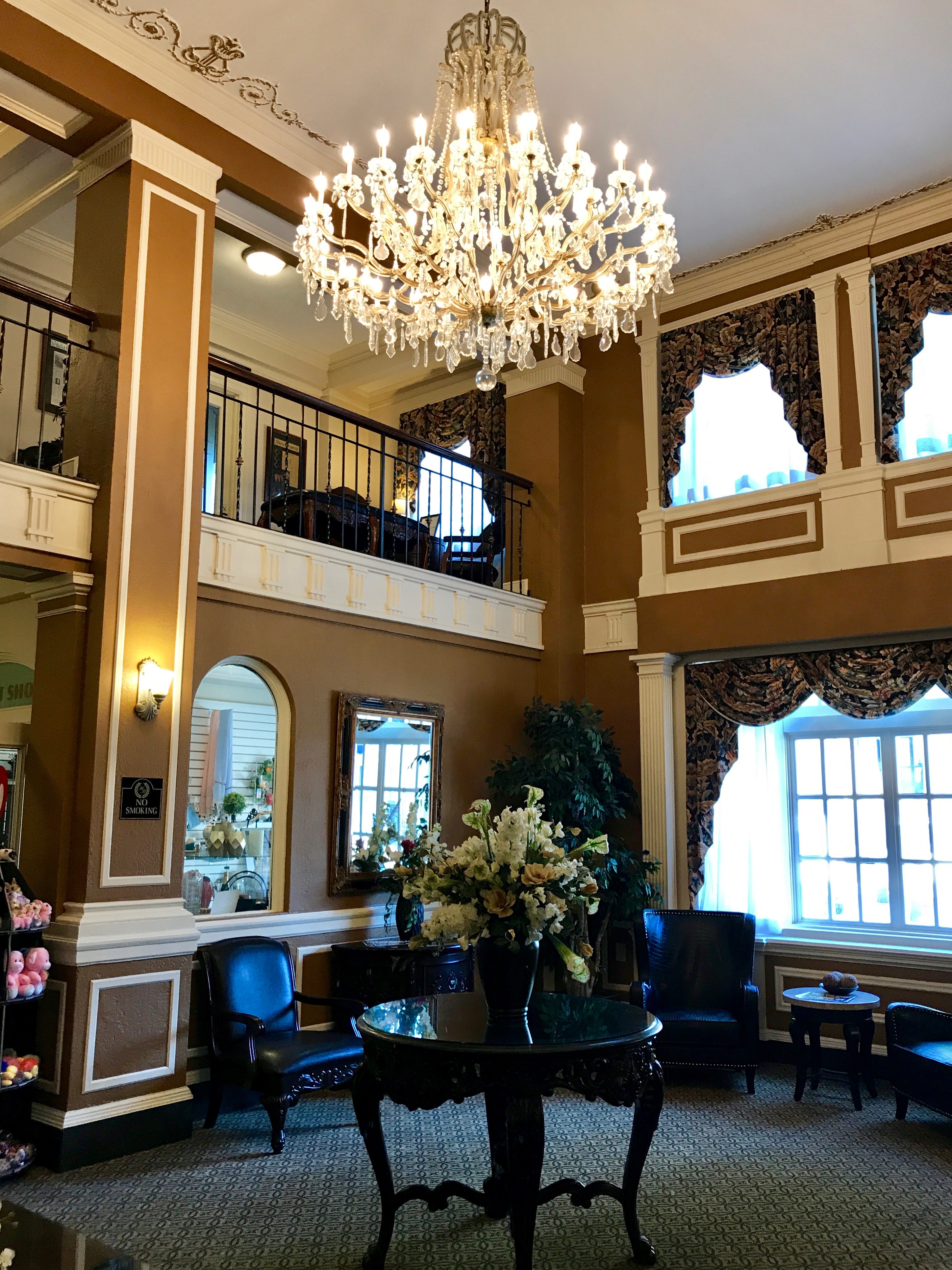
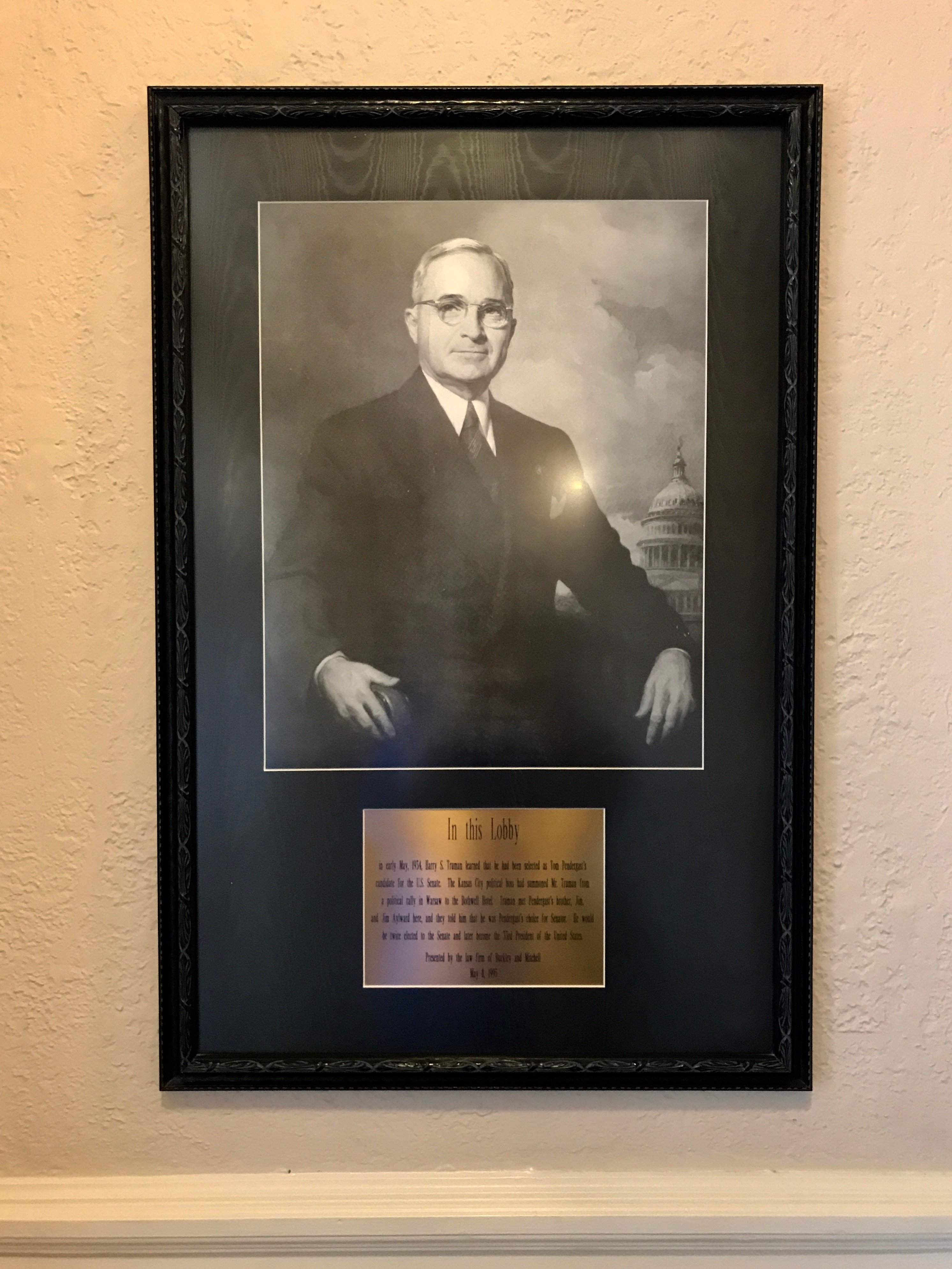
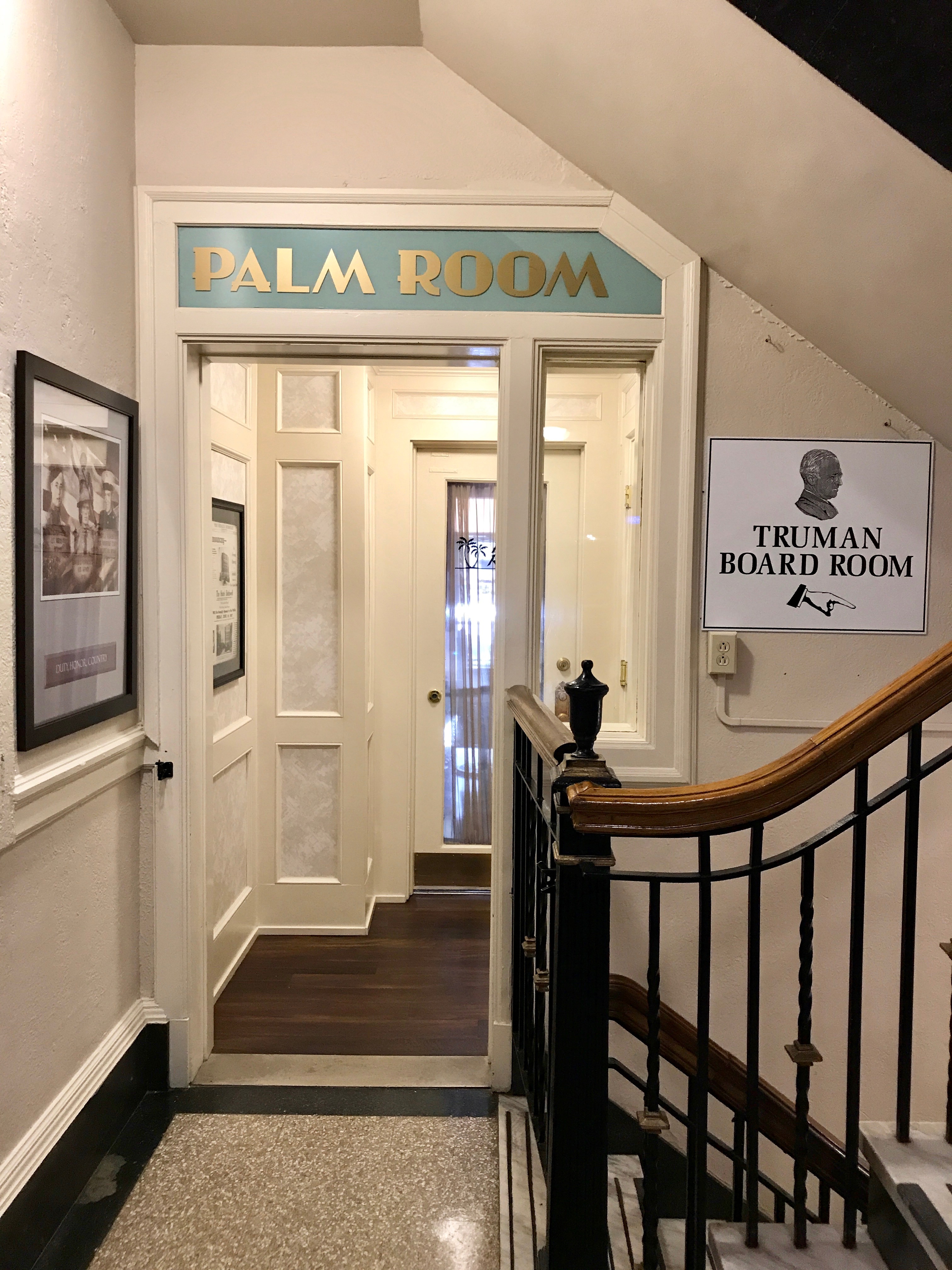
The lobby was small, but very elegant. This was where Harry S Truman learned that he had been selected to run for the U.S. Senate in 1934. You might wonder, “Who selected him?” Well, it was the Pendergast Machine that I mentioned a few posts back.
The plaque on the photo says,
“In this lobby in early Mary, 1934, Harry S Truman learned that he had been selected as Tom Pendergast’s candidate for the U.S. Senate. The Kansas City political boss has summoned Mr. Truman from a political rally in Warsaw to the Bothwell Hotel. Truman met Pendergast’s brother, Jim and Jim Aylward here, and they told him that he was Pendergast’s choice for Senator. He would twice be elected to the Senate and later became the 33rd President of the United States.”
I wandered about, snapping photos.
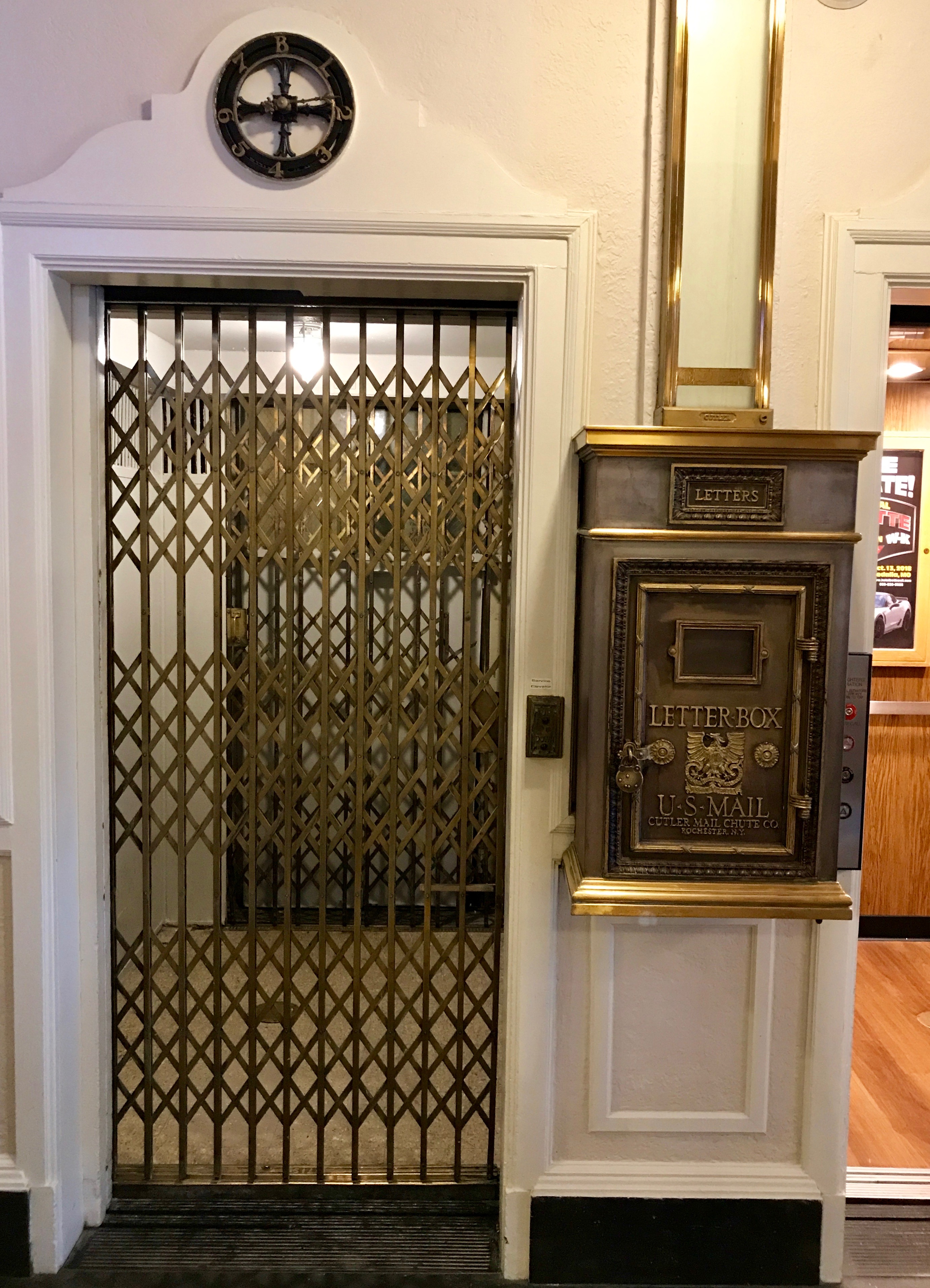
I was happy to find one of those lovely letter boxes. You wouldn’t have to wait to post your mail; you could drop it in the slot by the elevator while you waited for the car to arrive.
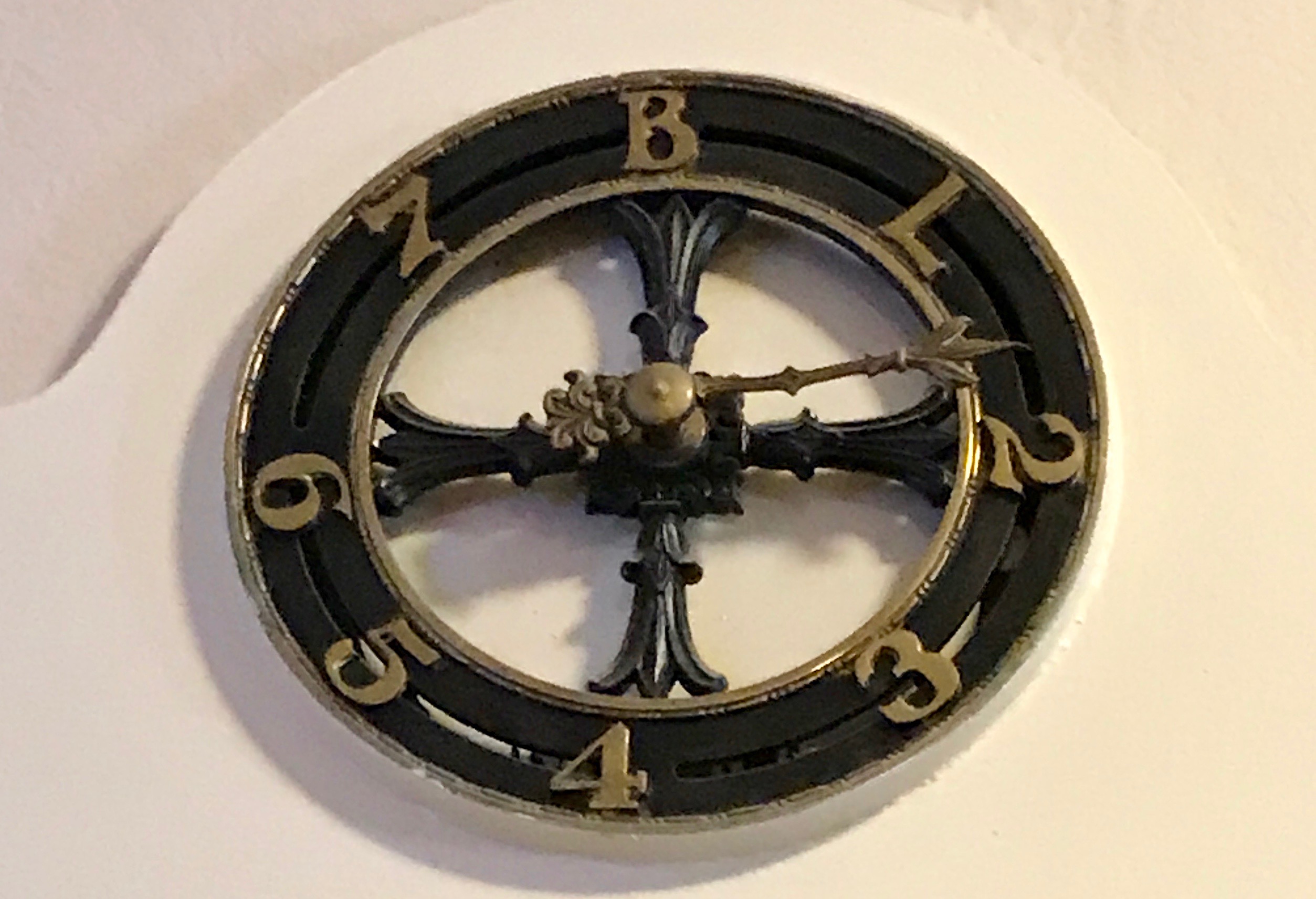
And while you were waiting for the elevator to return to the lobby, you could track its progress on the dial above the door.
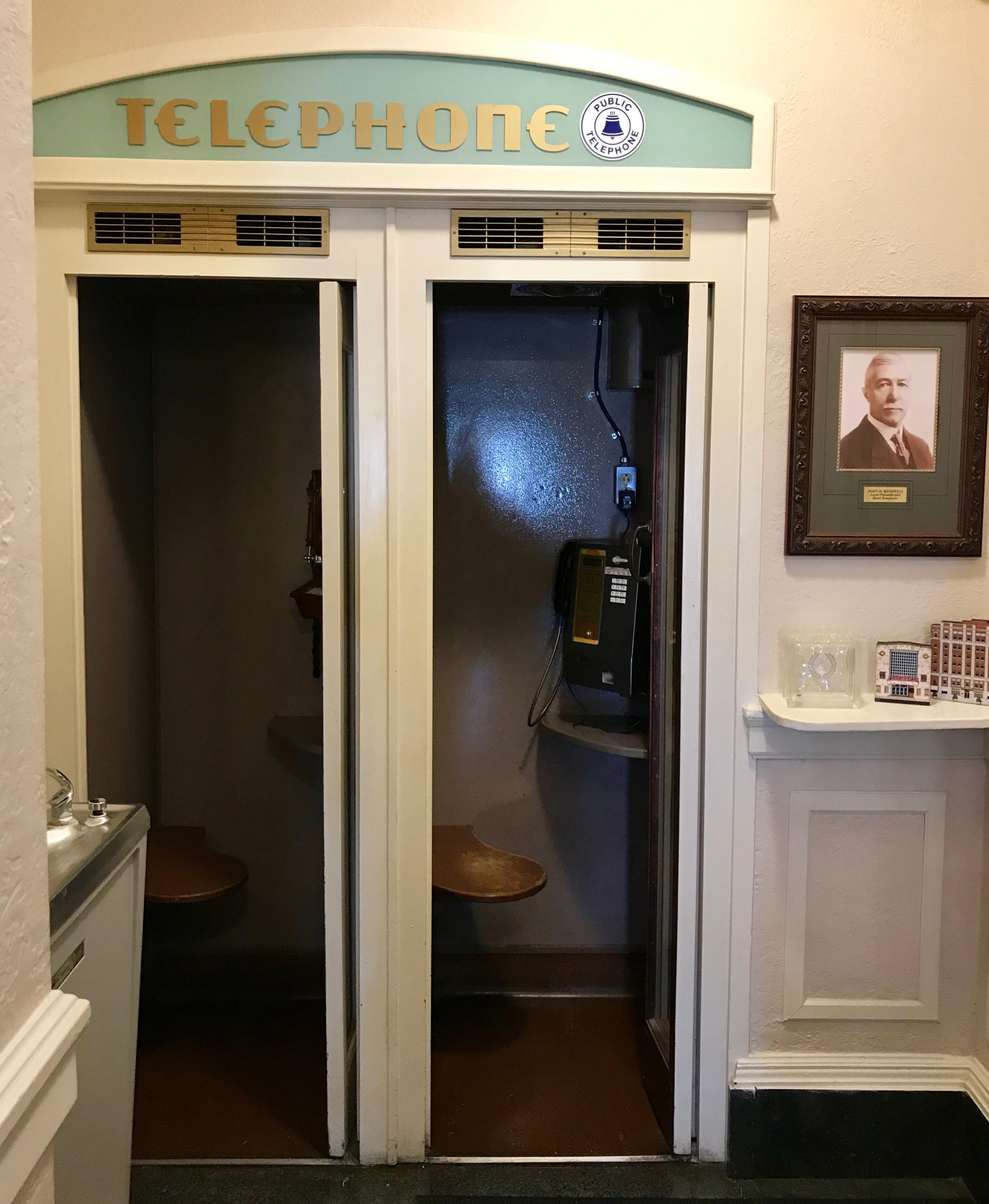
What would a classic hotel be without phone booths?
I checked out the menu at the Ivory Grille, but decided that I didn’t care for what they were offering. It was an elegant restaurant, though. I decided to head back to the hotel and find something more modest for dinner.
In this case, modest equals forgettable. I have no idea what I had.
I got gassed up and ready for the next day’s adventures in wheat collection.
I struck up a conversation with a gentleman at the next pump, and he cleaned my windshield for me. There are friendly folks all over.
I hit the hay early, so I could get packed up and have breakfast in time for my daily check in call with the boss. I wondered what I would find. Breakfast heaven or breakfast hell?
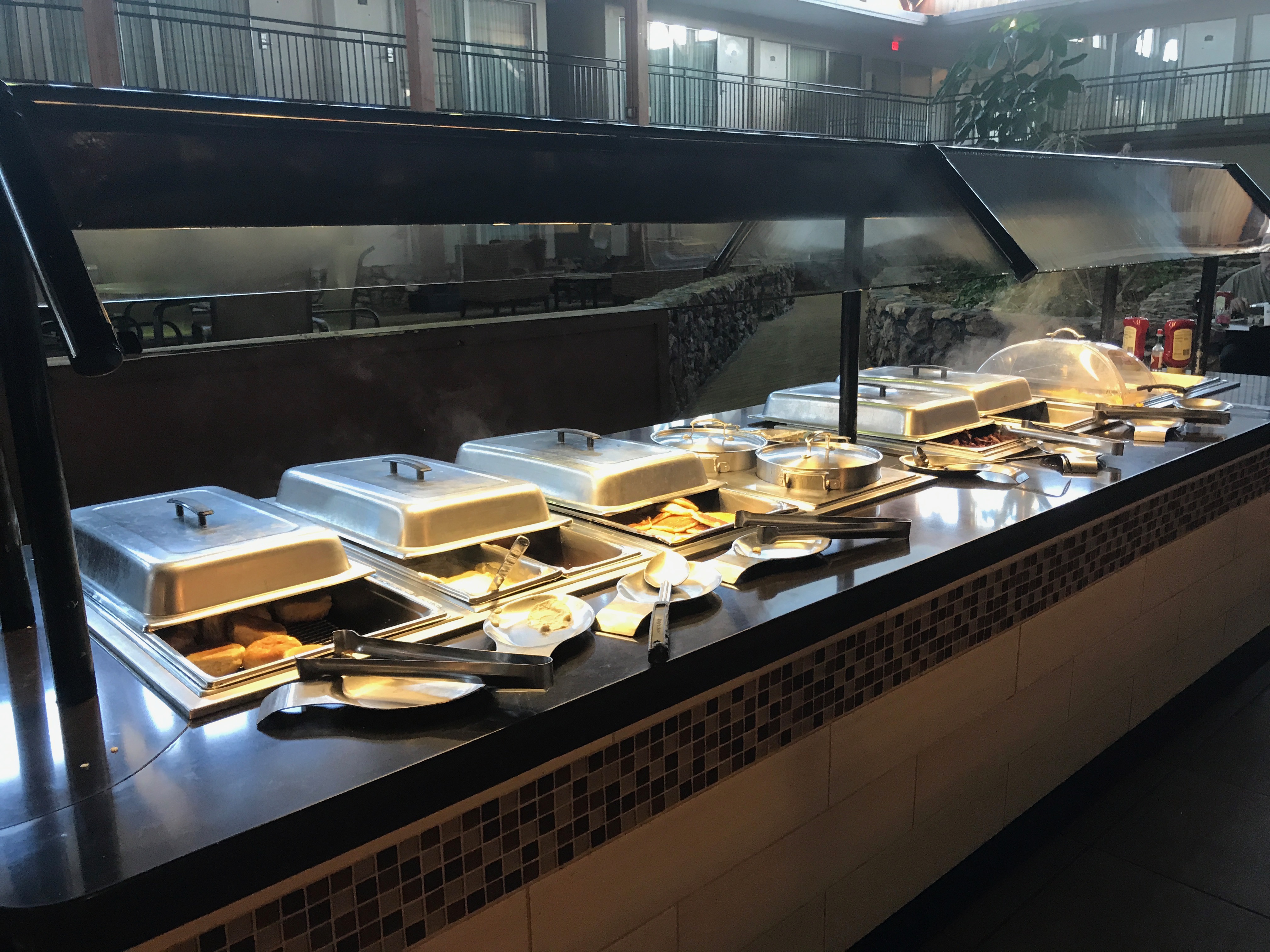
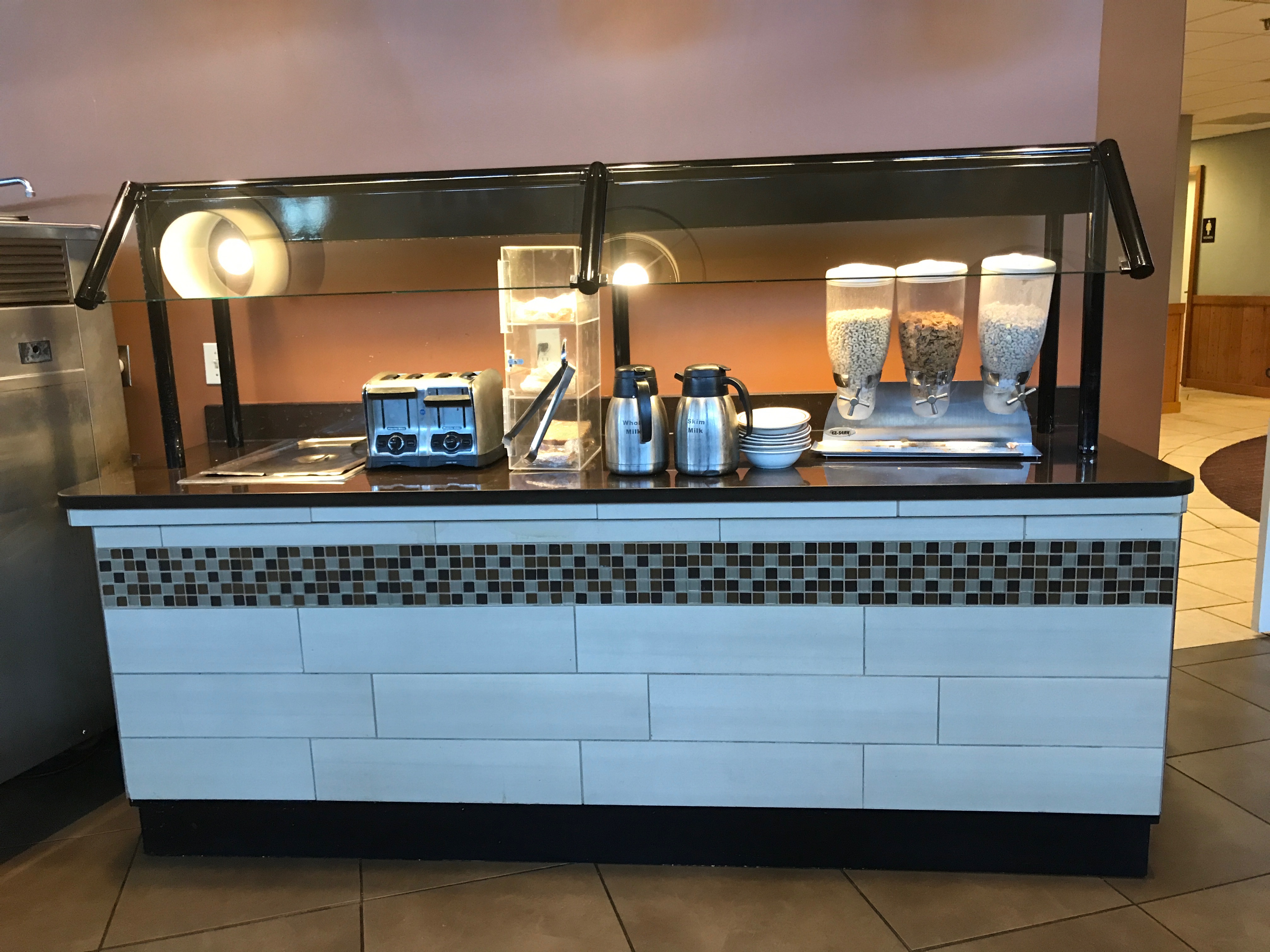
Steam table one.
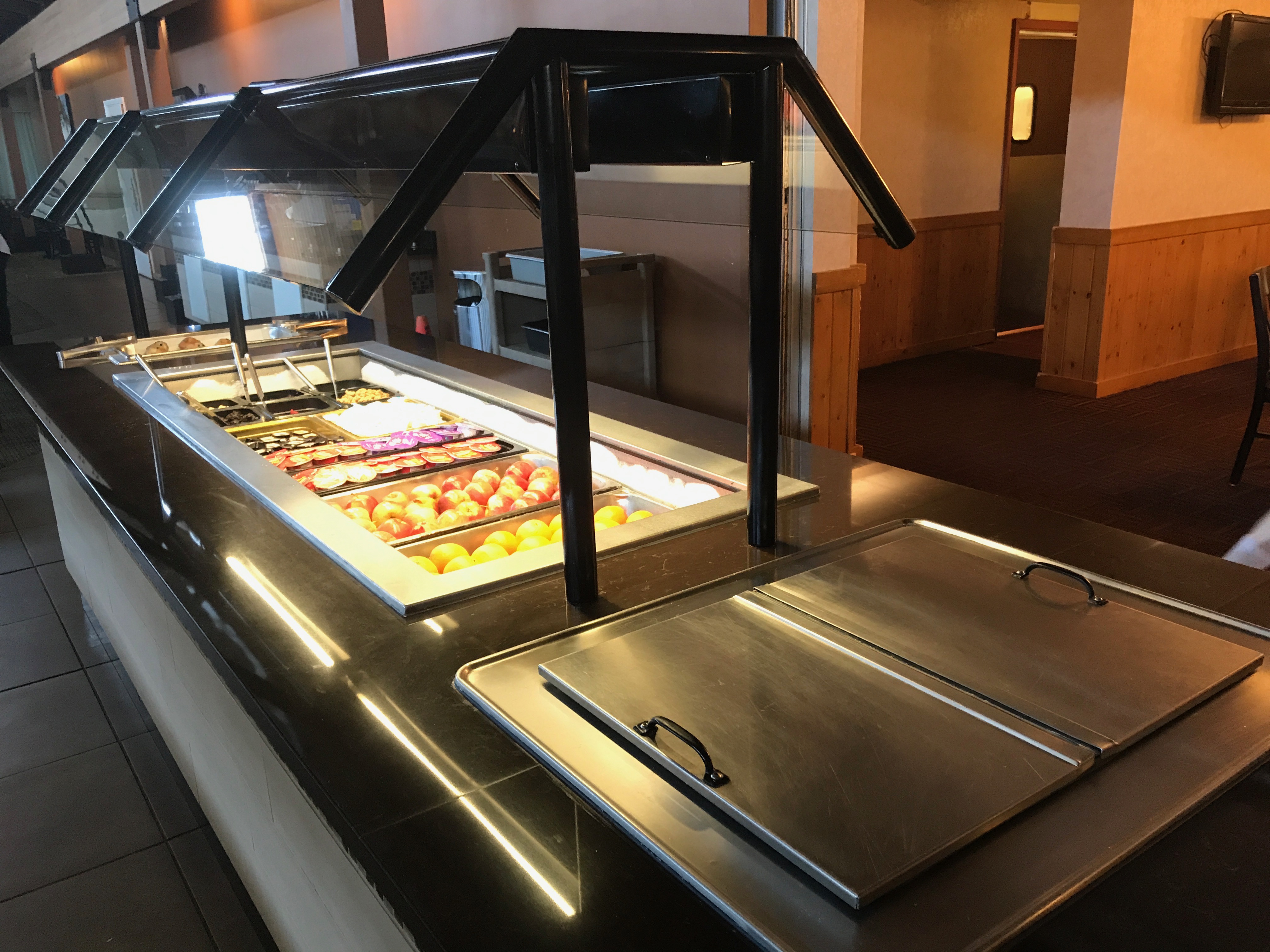
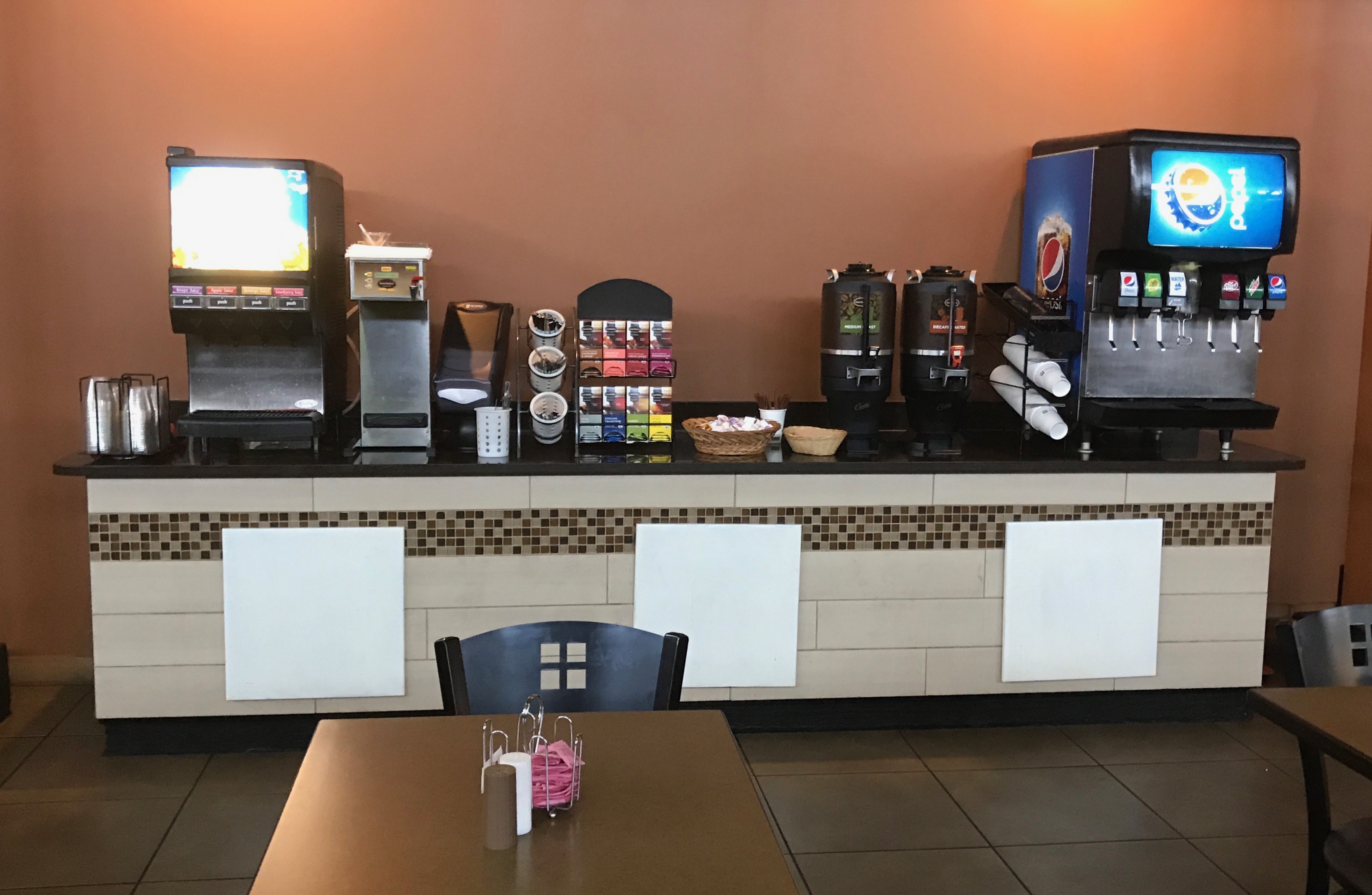
Steam table two! A cereal and toast bar! And a wide variety of beverages!
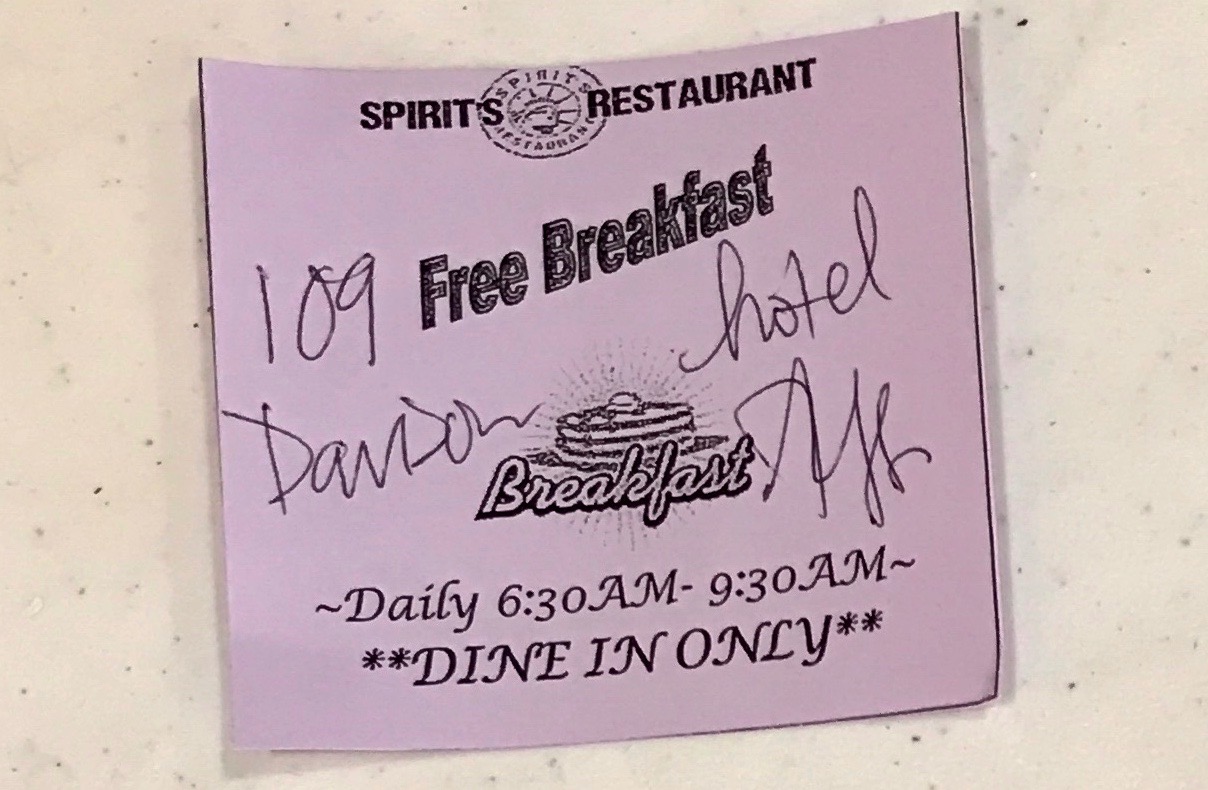
I got up early, packed away my overnight bag, grabbed my ticket for my free breakfast and headed for the breakfast bar.
After my experience in Springfield, I was a bit leery about what I would find. Would I find anything?
I needed have worried. It wasn’t Breakfast Heaven, but there was food – and coffee!
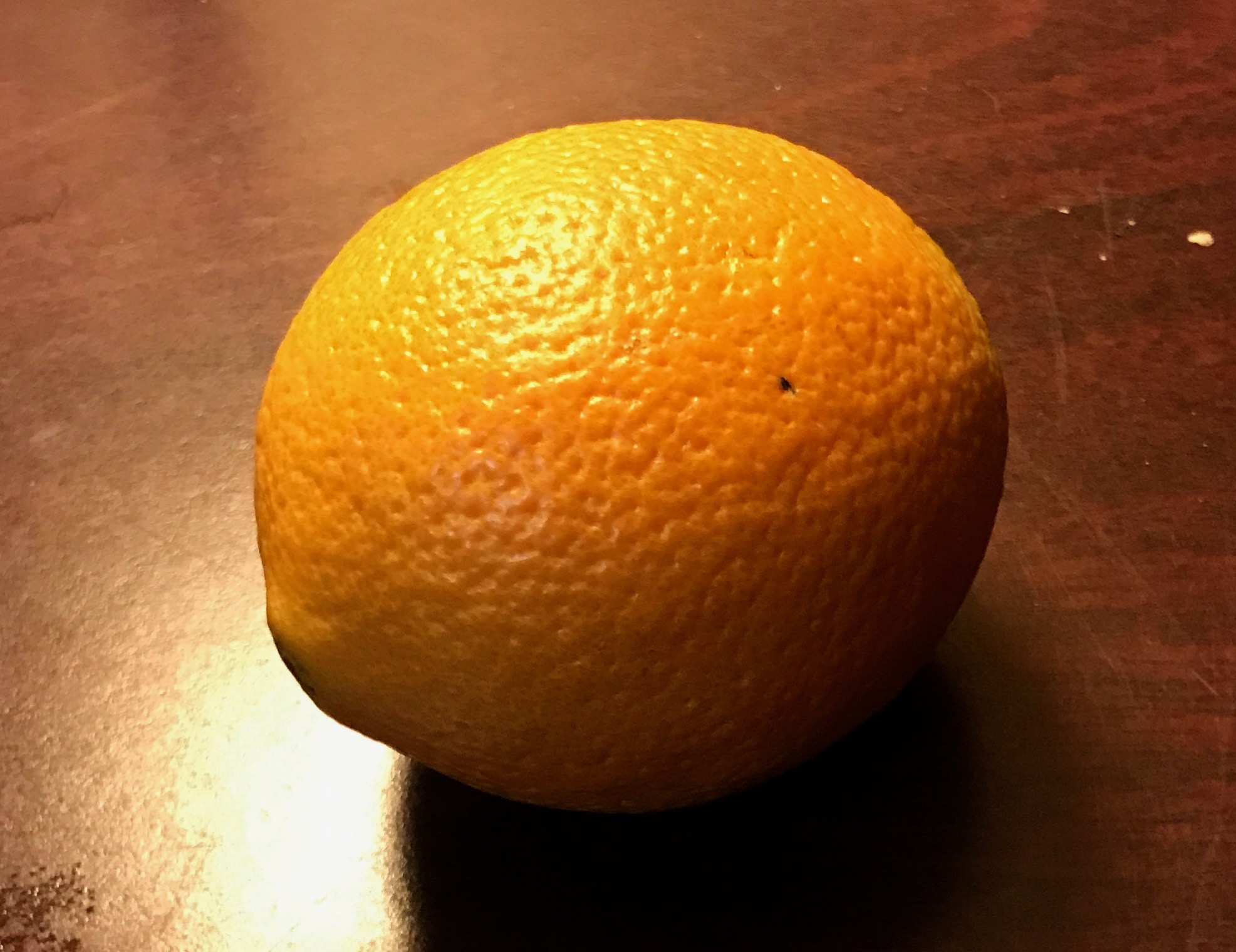
I even grabbed an orange for later.
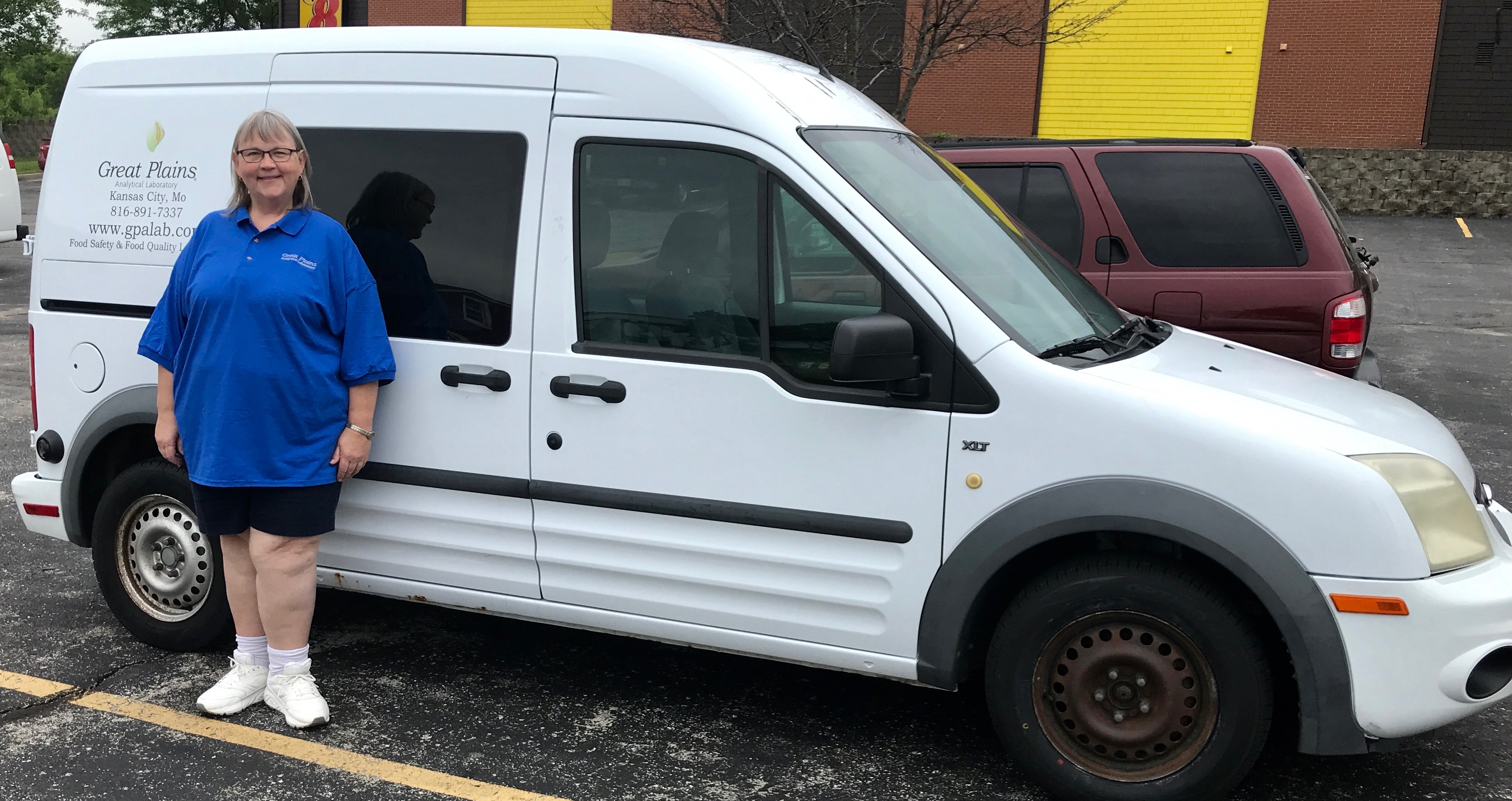
I made my way through the morning traffic to the Lab’s offices. After a whirlwind set of instructions, paper signing and such, I was handed the keys to the 2010 Ford Transit and they bid me farewell.
The other woman who was starting on the same day invited me to join her for lunch. We chatted a bit about what to expect. I have to admit, I didn’t really have a clue, but I was going to give it that old college try.
Here I am with the Transit.
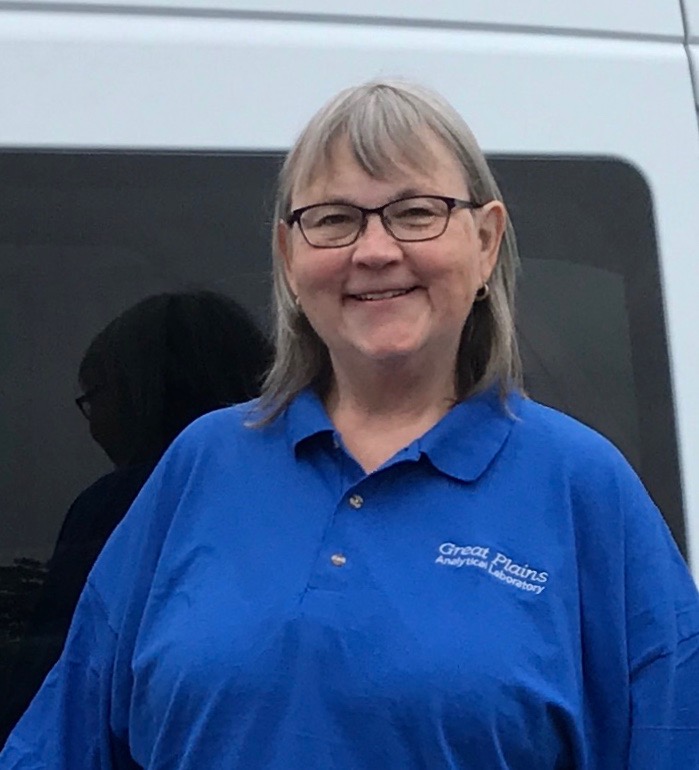
And me, looking cocky in one of the five shirts they gave me to wear while I was working.
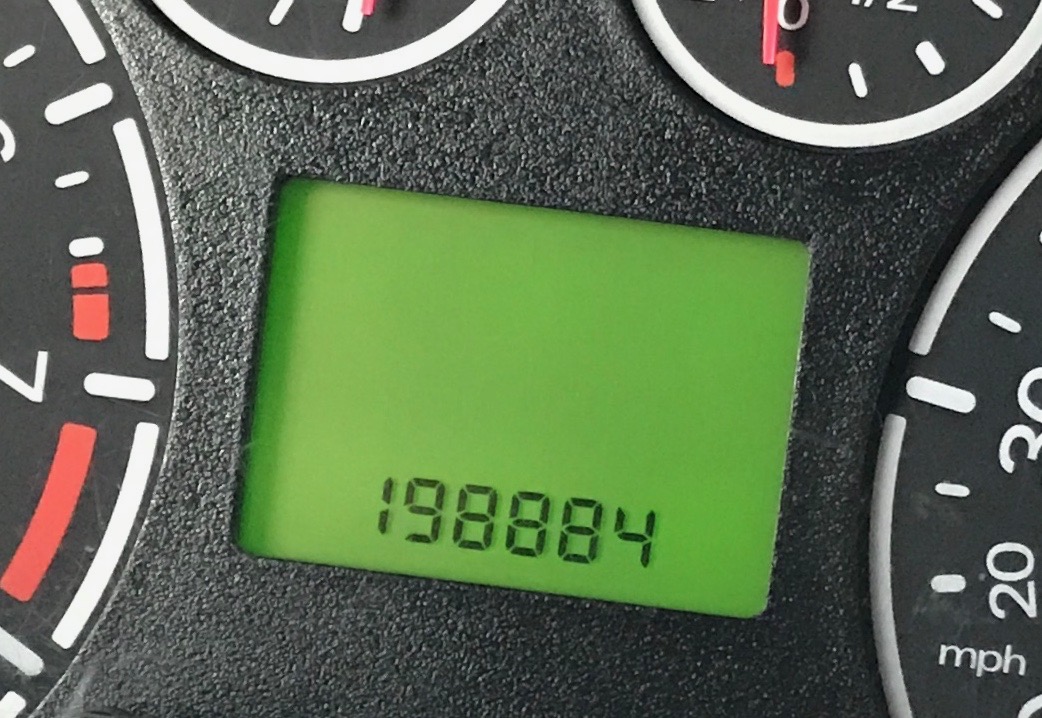
As I got ready to hit the road, I took a photo of the odometer. Holy High Milage, Batman! I don’t think I’ve ever driven a vehicle with so many miles on it. As I drove off, I wondered how many miles it would have on it by the time I returned.
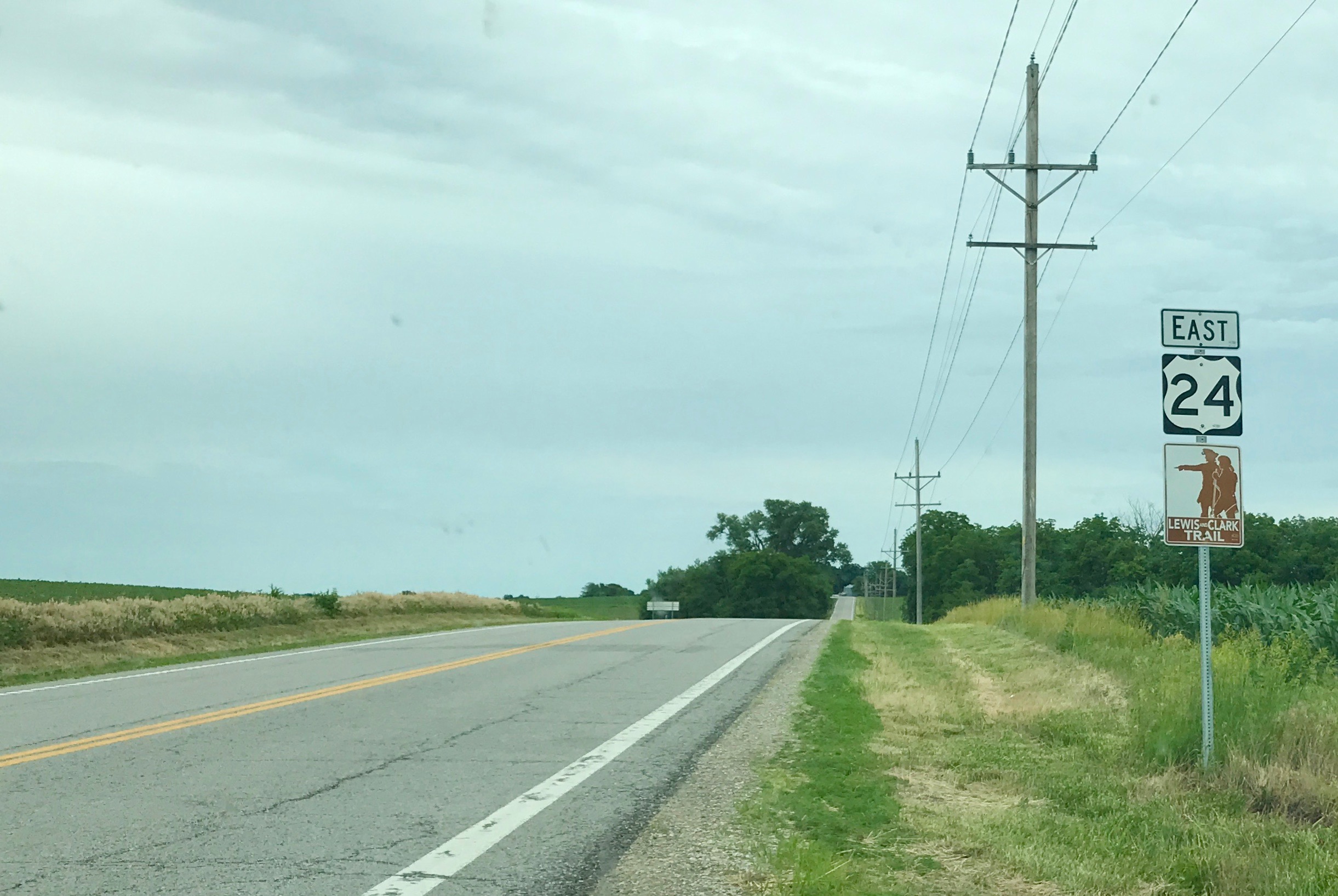
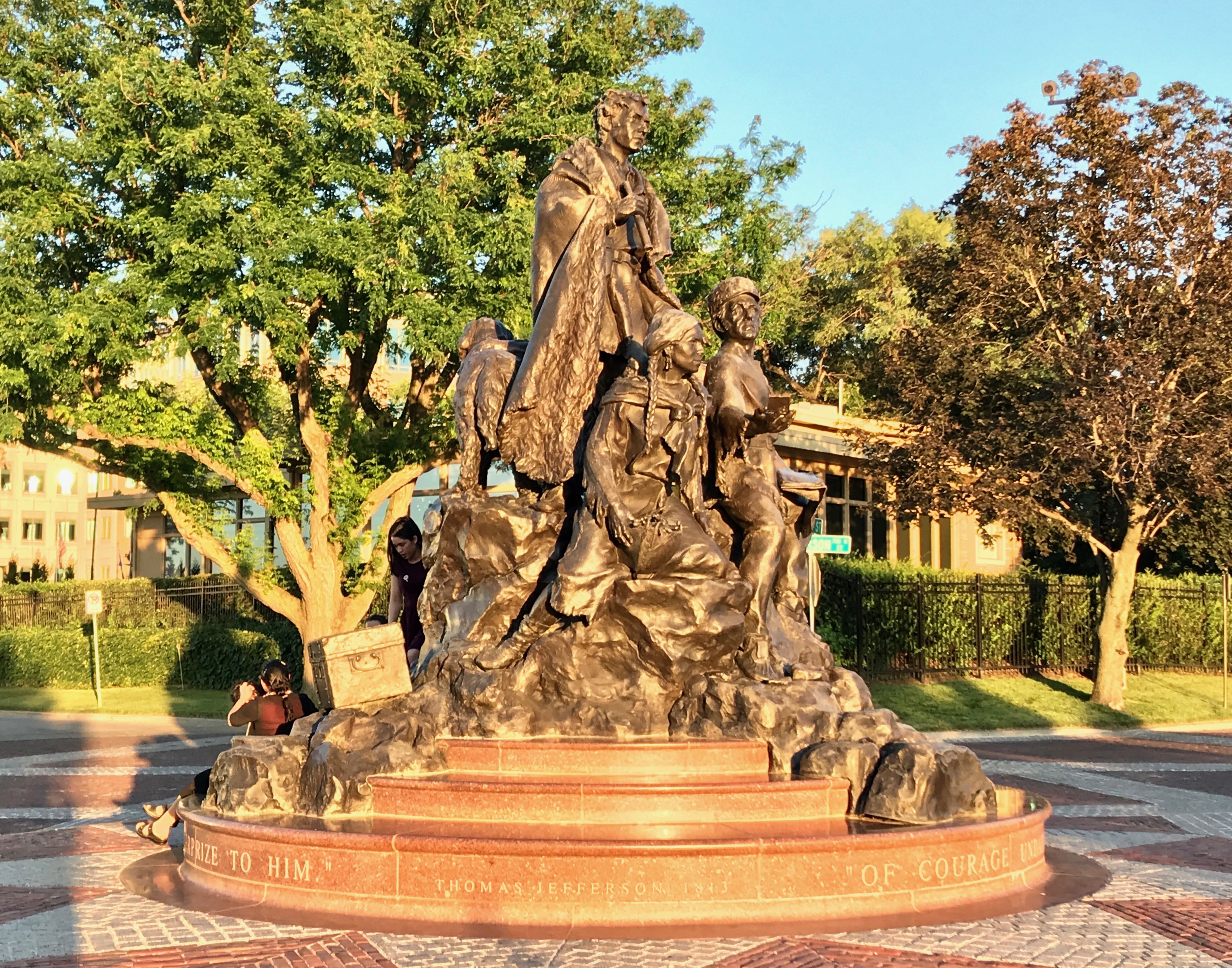
As I got out into the country, I came across my old friends, Lewis and Clark.
My goal was Kansas City. I had to be there the next day for my orientation as a seed courier, but that still left plenty of time for drive-by tourism.
My first stop was Hannibal, Missouri. I mean, I had been on the road for a couple of hours. It was time for a break.
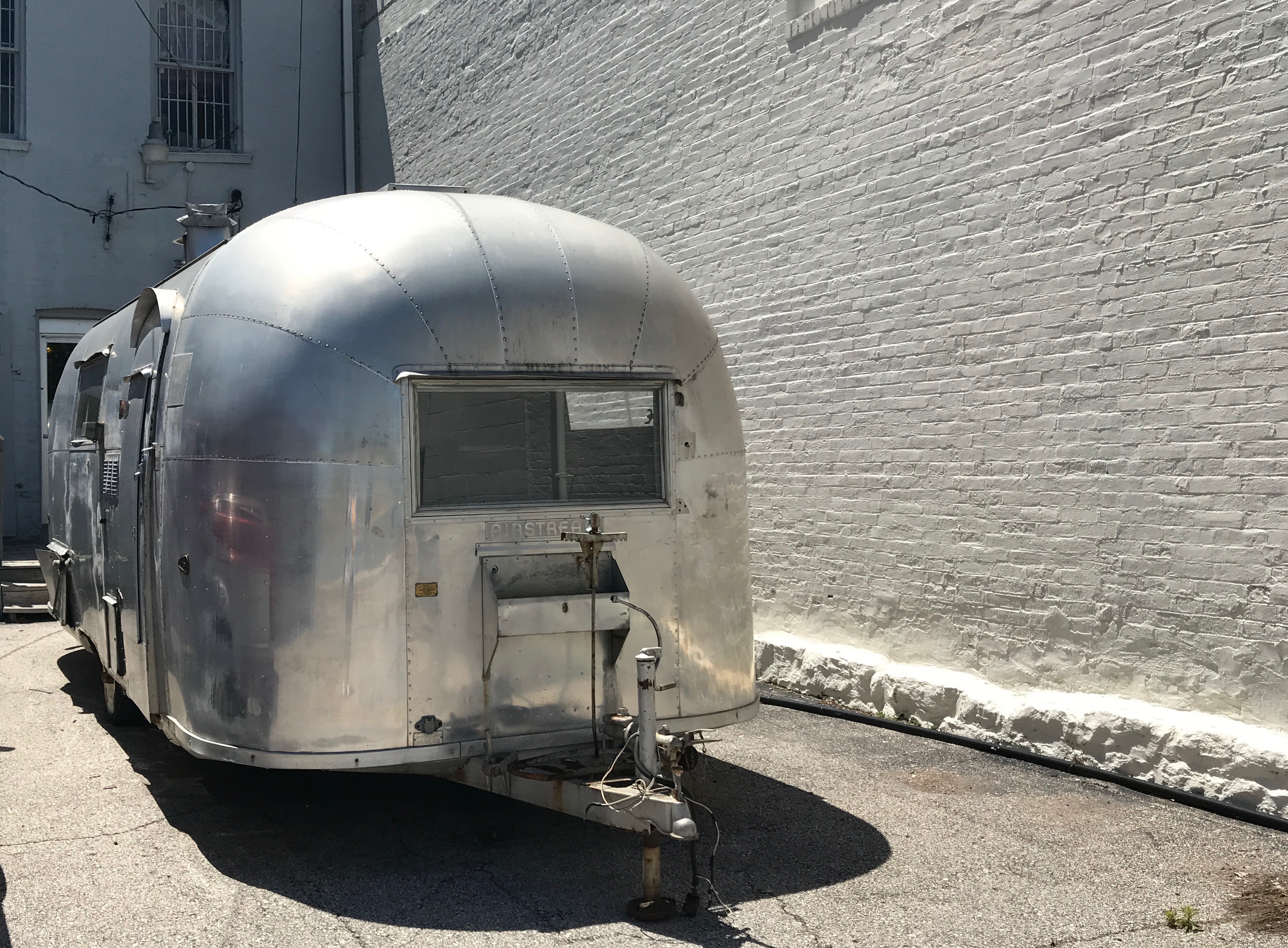
I got off the interstate and looked for a likely spot to park and then find a restroom. Wouldn’t you know it? I find an Airstream!
It’s tucked away behind some stores.
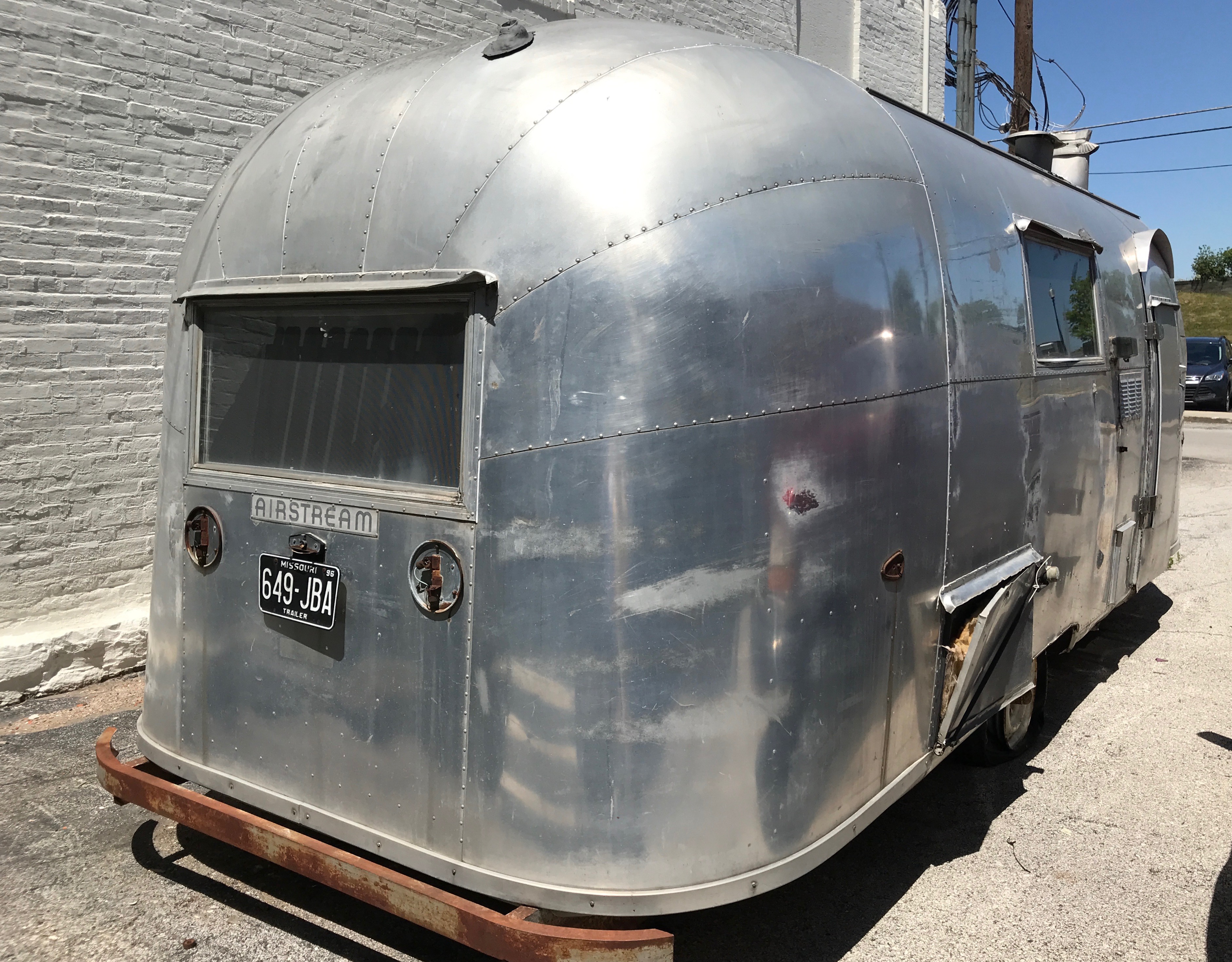
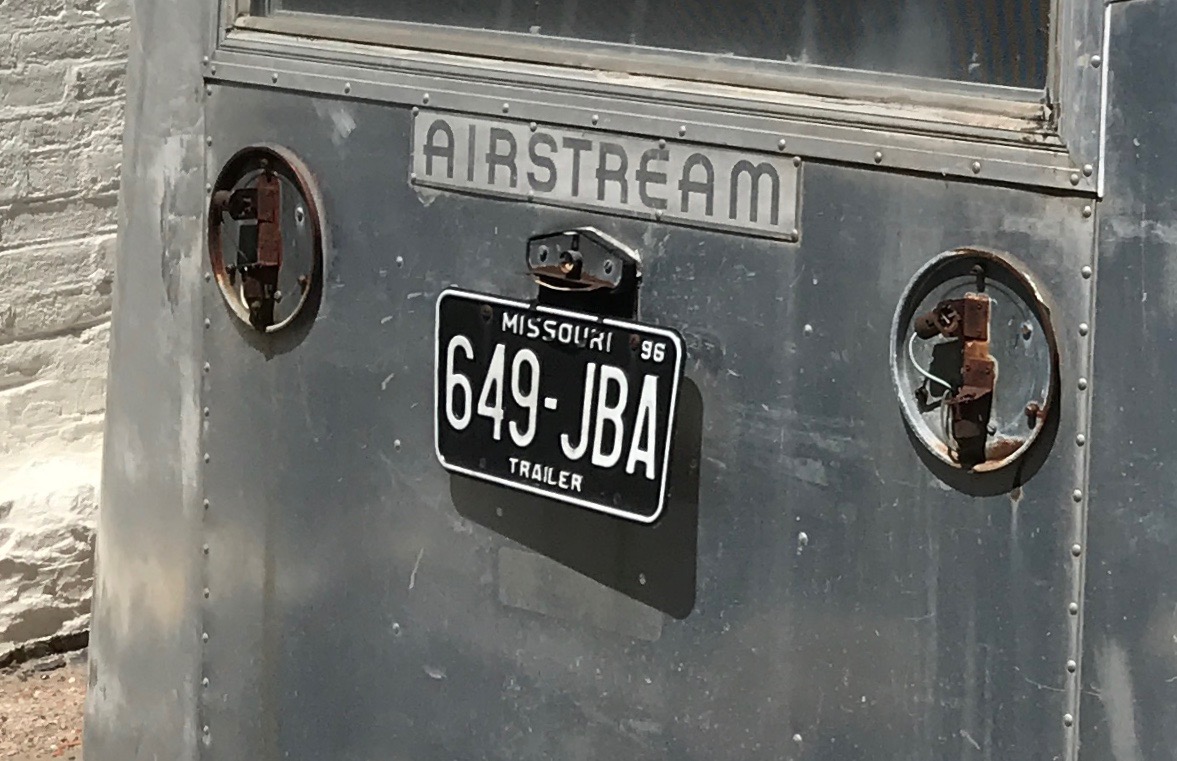
The old gal looks like she’s had many adventures behind her. She even has a plate on! However, the plate is from 1996, and there aren’t any brake lights.
I suppose the lack of brake lights is fine, since I can’t imagine that she still has working brakes.
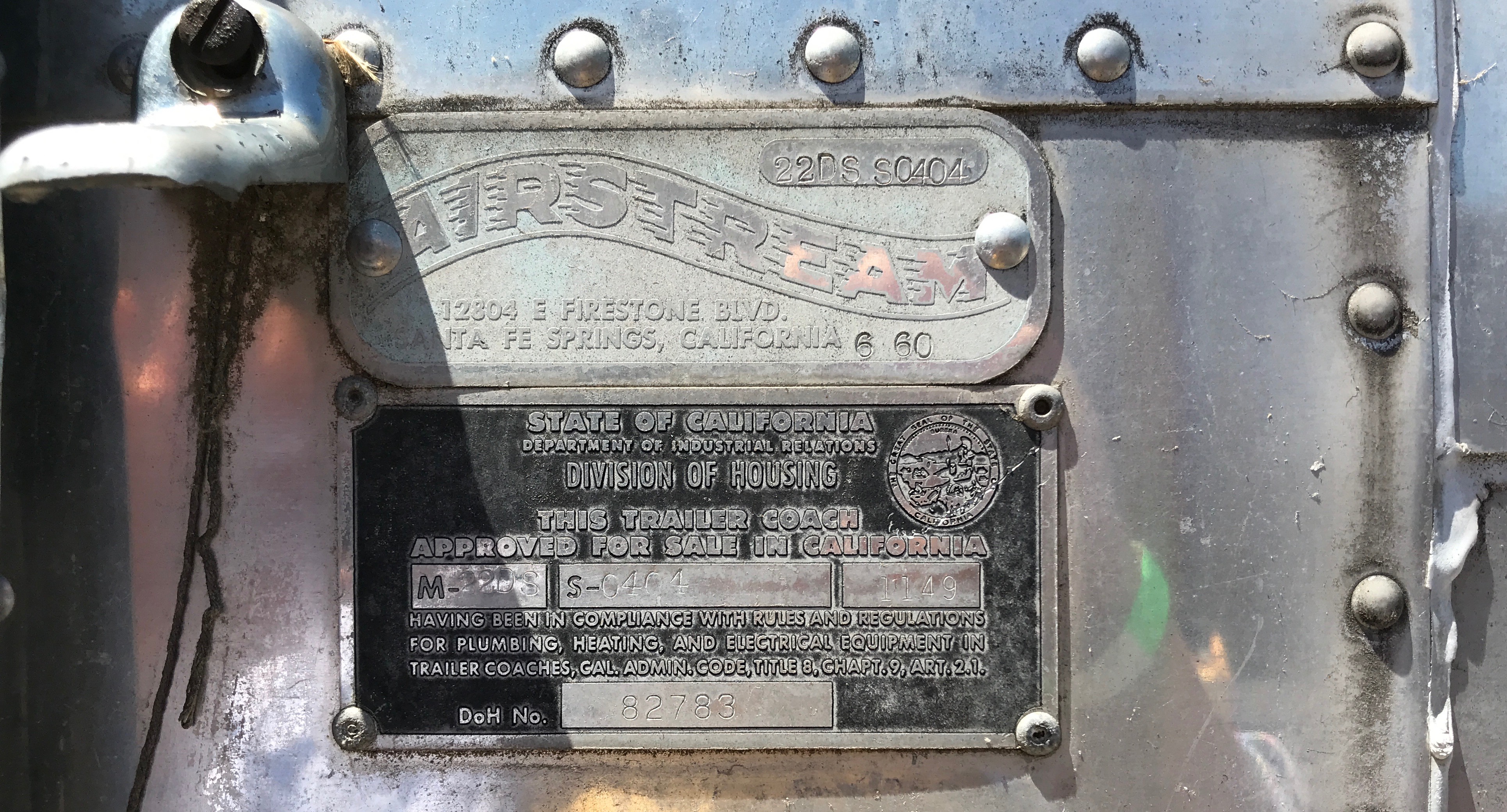
I’m including the identification tags, just in case you are into those sorts of things.
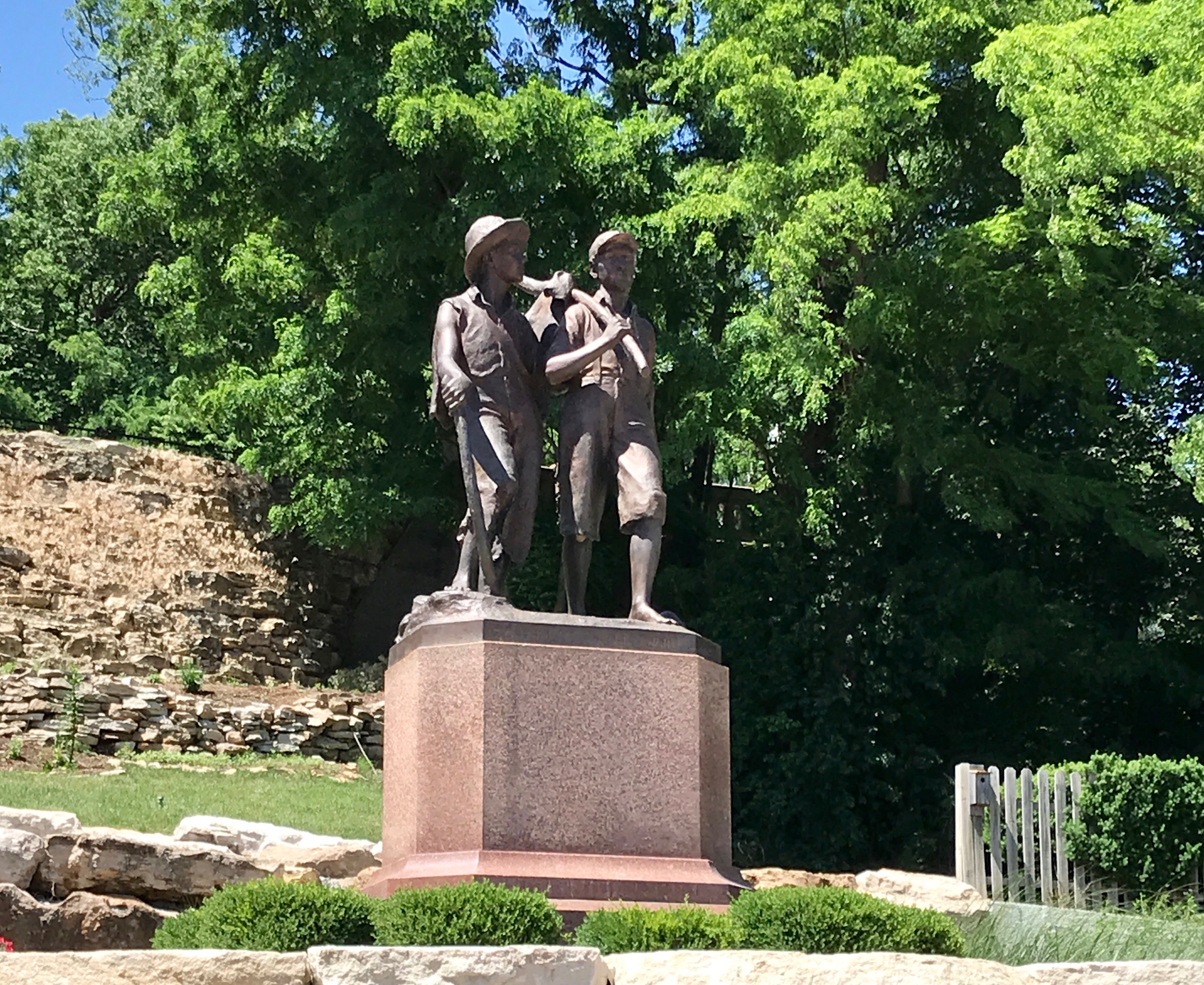
My goal, in my whirlwind visit to Hannibal, was to see what I would see of Samuel Langhorne Clemens’ childhood home.
You know, Mark Twain – the writer who gave us Tom Sawyer and Huckleberry Finn.
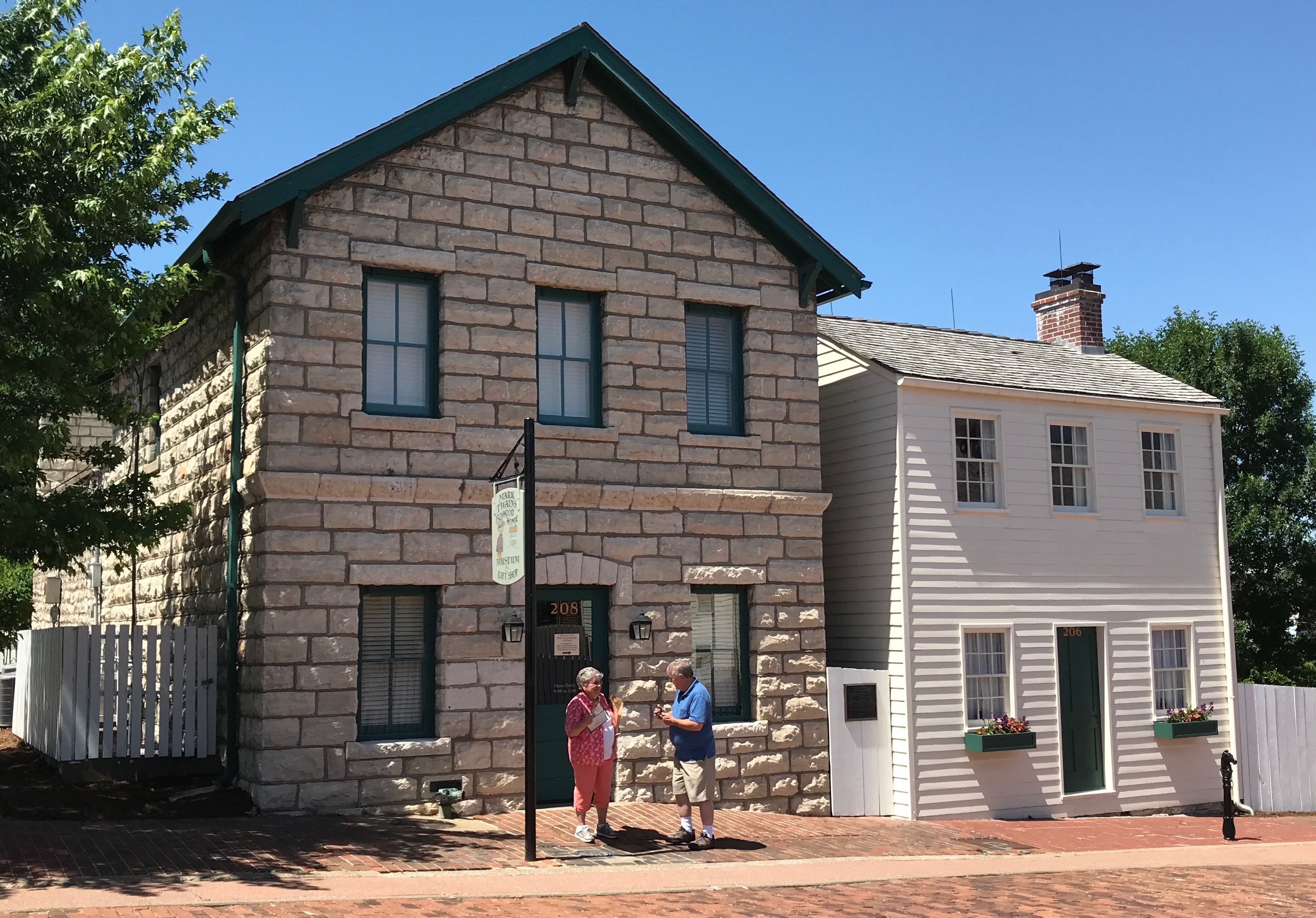
Mark Twain lived in Hannibal from 1844 to 1853, from about the age of nine to age eighteen. He lived house he lived in is now a museum. Of course, I was moving far too quickly to invest in a museum ticket. Maybe I’ll put that on my “Next Time” list.
He lived in that little white house.
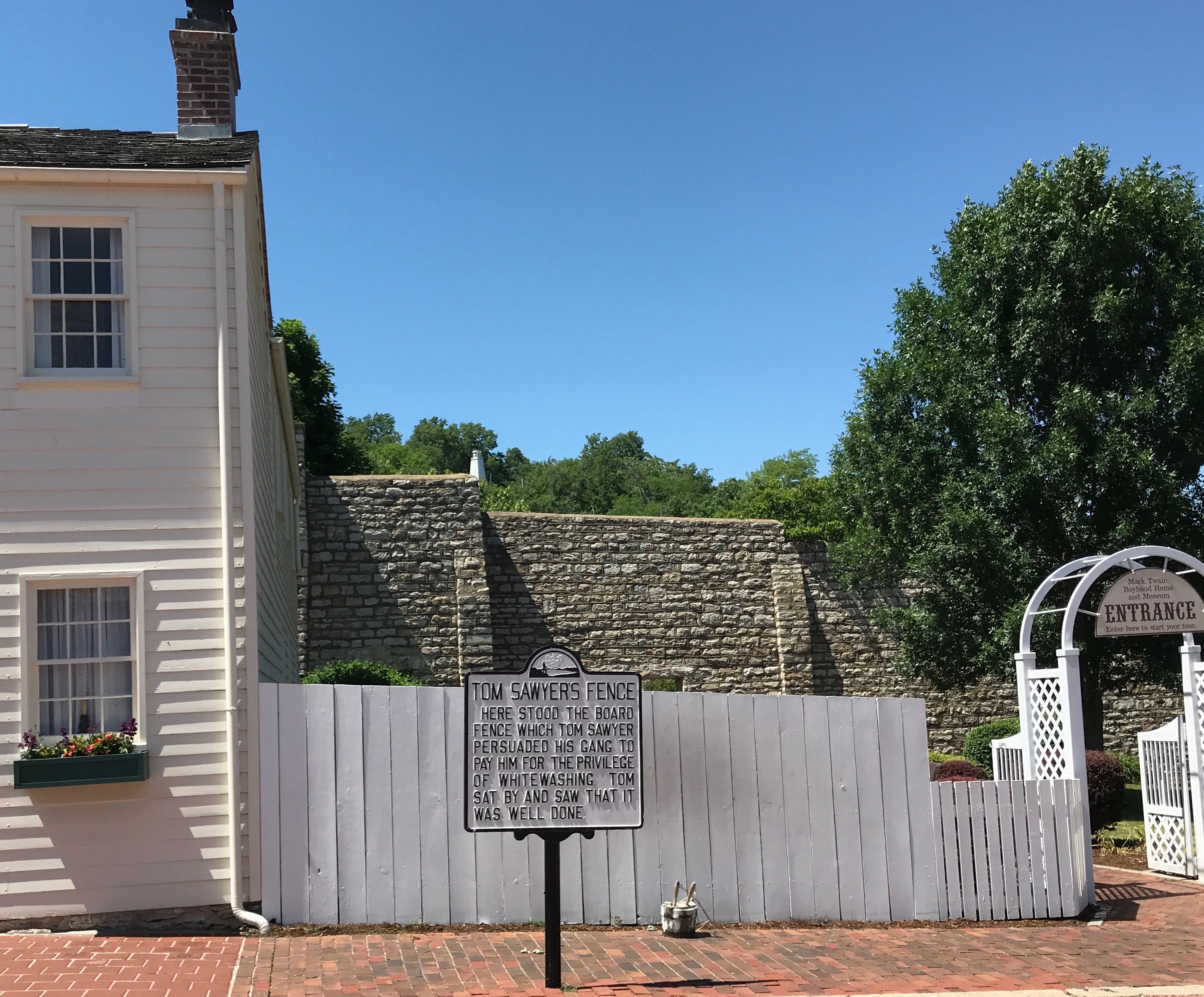
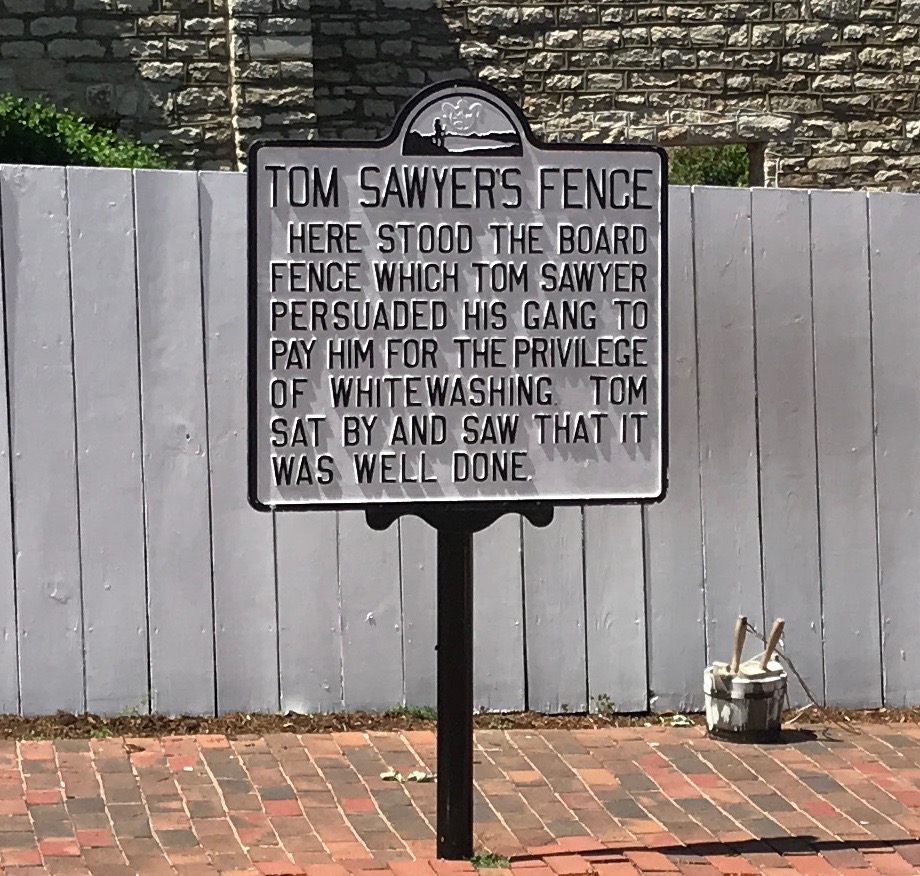
Right next to a recreation of Tom Sawyer’s fence.
It is complete with a bucket of whitewash and some brushes.
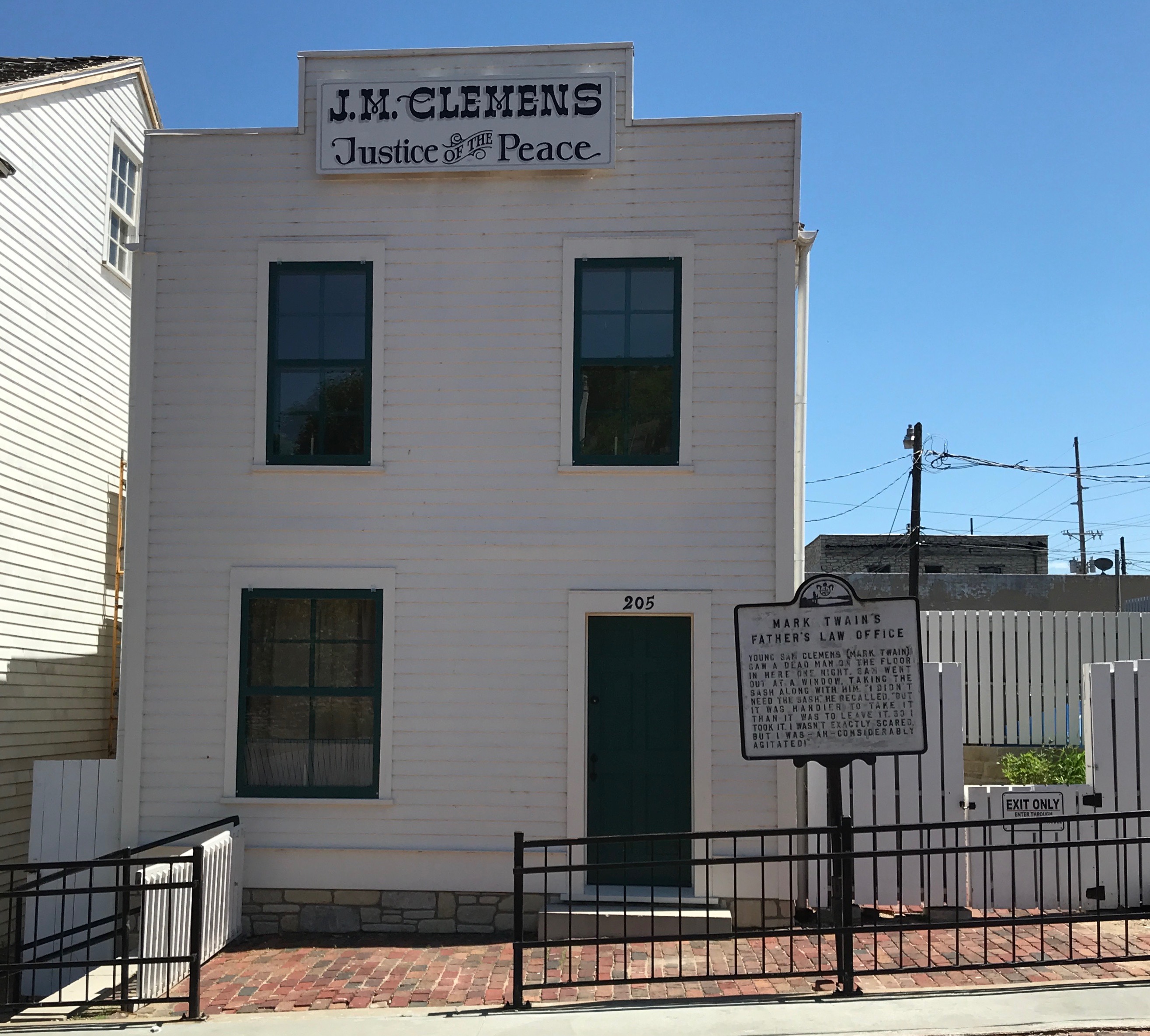
His father’s law office was right across the street from the house. According to the sign in front – in case you can’t make it out – here young Sam Clemens (Mark Twain) saw a dead man on the floor one night. Sam went out a window, taking the sash along with him. “I didn’t need the sash,” he recalled. “But it was handier to take it that it was to leave it, so I took it. I wasn’t exactly scared, but I was – ah -considerably agitated.”
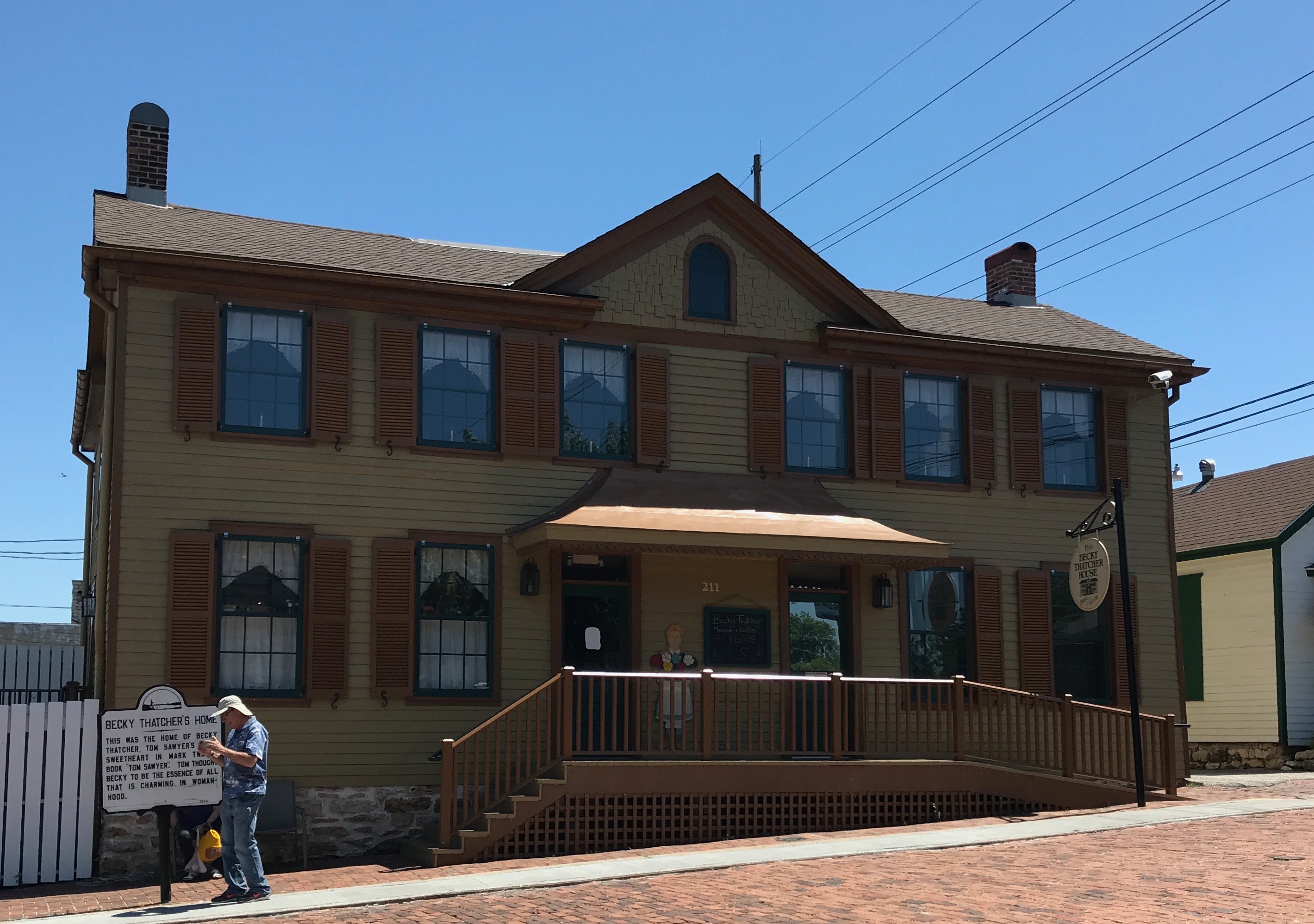
“Becky Thatcher’s” house is on Hill Street, too. Actually, it was the home of Mark Twain’s childhood sweetheart, Laura Hawkins.
Hill Street, where the Clemenses and Hawkinses lived, was paved with Missouri Block, made in Moberly, MO.
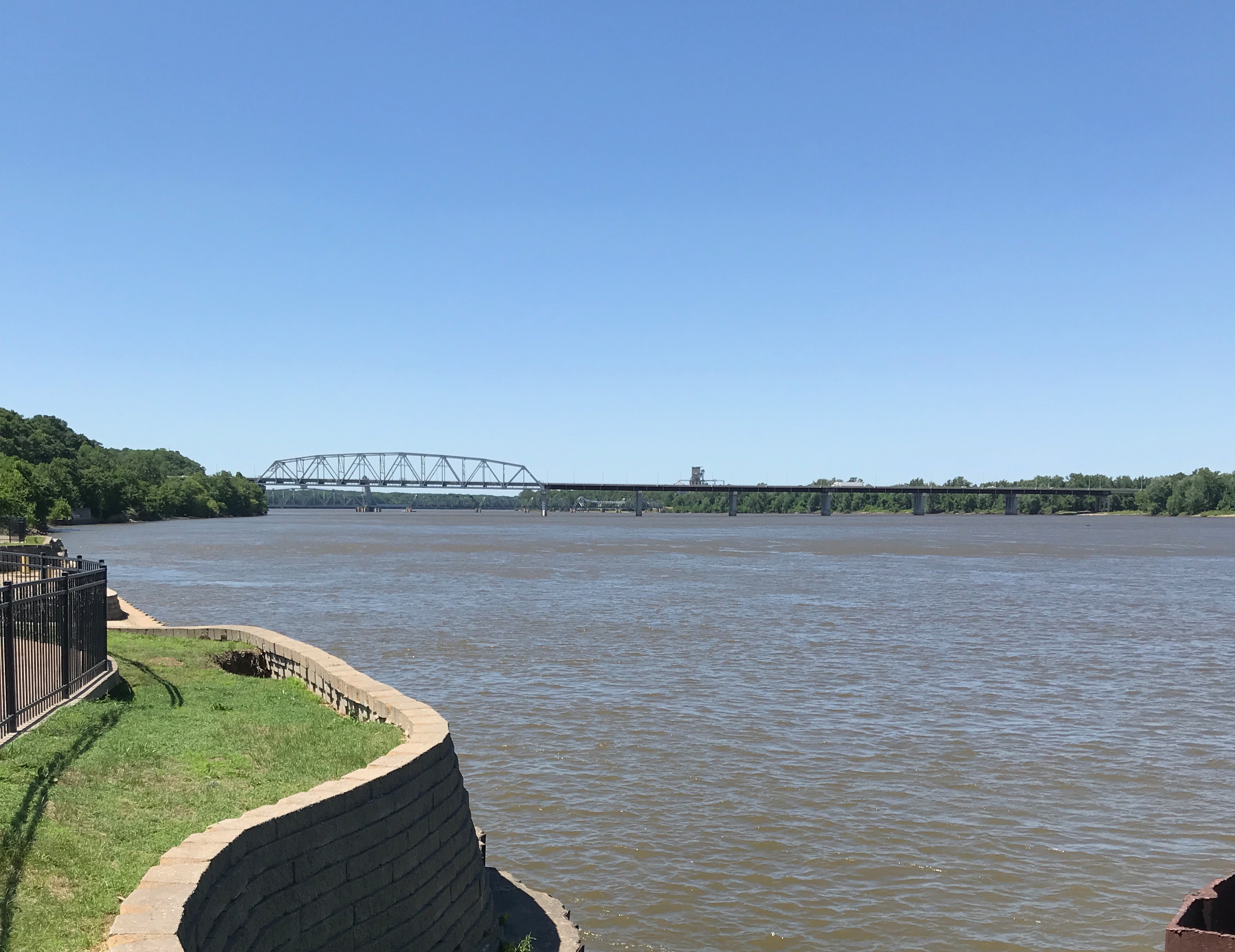
I decided that I should head down to the Mississippi River, a couple blocks away, to check it out.
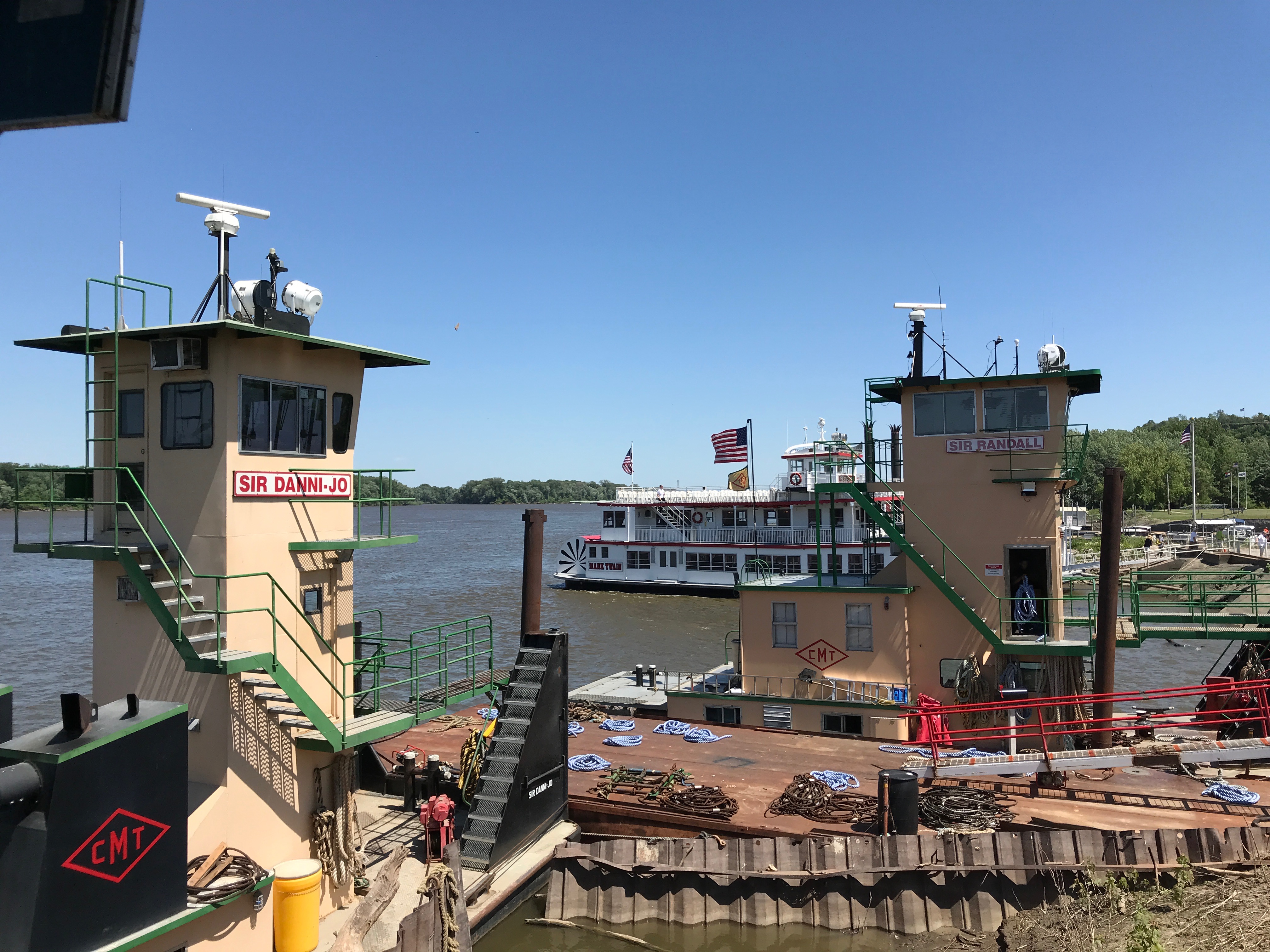
I didn’t see any barge traffic, but there was a stern wheeler there, and I imagine they had some tourist excursions scheduled. What a beautiful day to be out enjoying the river!
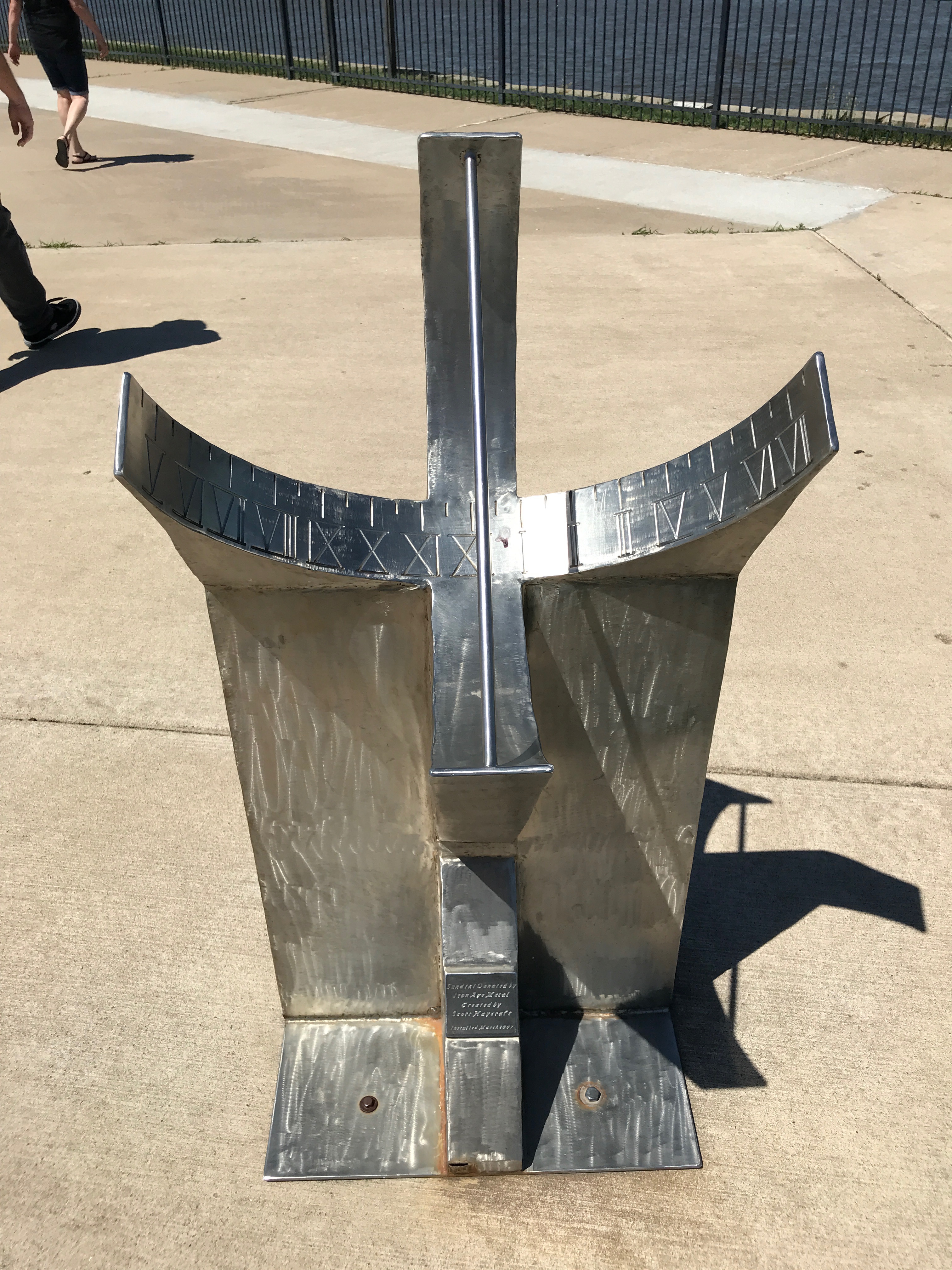
I came across a sundial.
Incidentally, this is the easiest-to-read sundial I have ever seen! For one thing, it’s in a spot that isn’t shaded by trees.
Seeing the sundial reminded me that I did need to be on my way. Bladder empty and tank full, I pulled back on the interstate.
My next goal was Kansas City and the American Motel. If I had known ahead of time, that they were paying for my expenses in getting to the job, I might have chosen an establishment that was a little more…upscale. But, it was only for one night and it would do.
I dropped my overnight bag and went out to see what I could see. HISTORY Here sent me to Clark’s Point, overlooking the Missouri River.
Fun Fact: The Missouri River is the longest river in the United States, according to the United States Geological Survey. It starts flowing in the Rockies in Western Montana and empties into the Mississippi 2,341 miles later. The Mississippi is a close second, at 2,202 miles. It starts in Lake Itasca in Minnesota and empties into the Gulf of Mexico.
After that comes the Yukon River at 1,979 miles and the Rio Grande at 1,759 miles.
Near this site, the Lewis and Clark expedition stopped to camp in 1804. At that time, this was a good vantage point for the merging of the Osage and Missouri Rivers. Another source I saw said that they stopped there in 1806. Maybe they stopped on the way out and the way back.
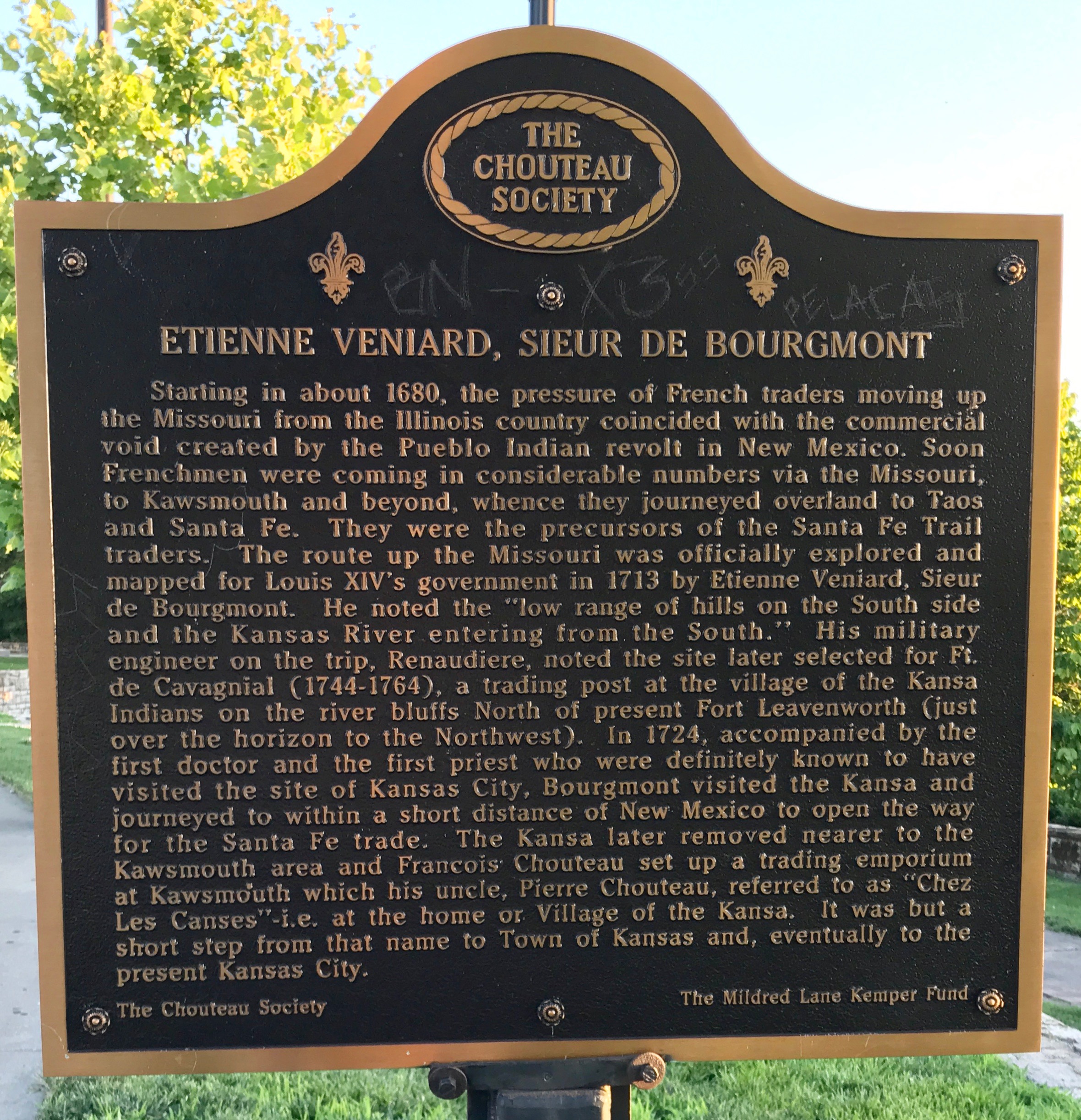
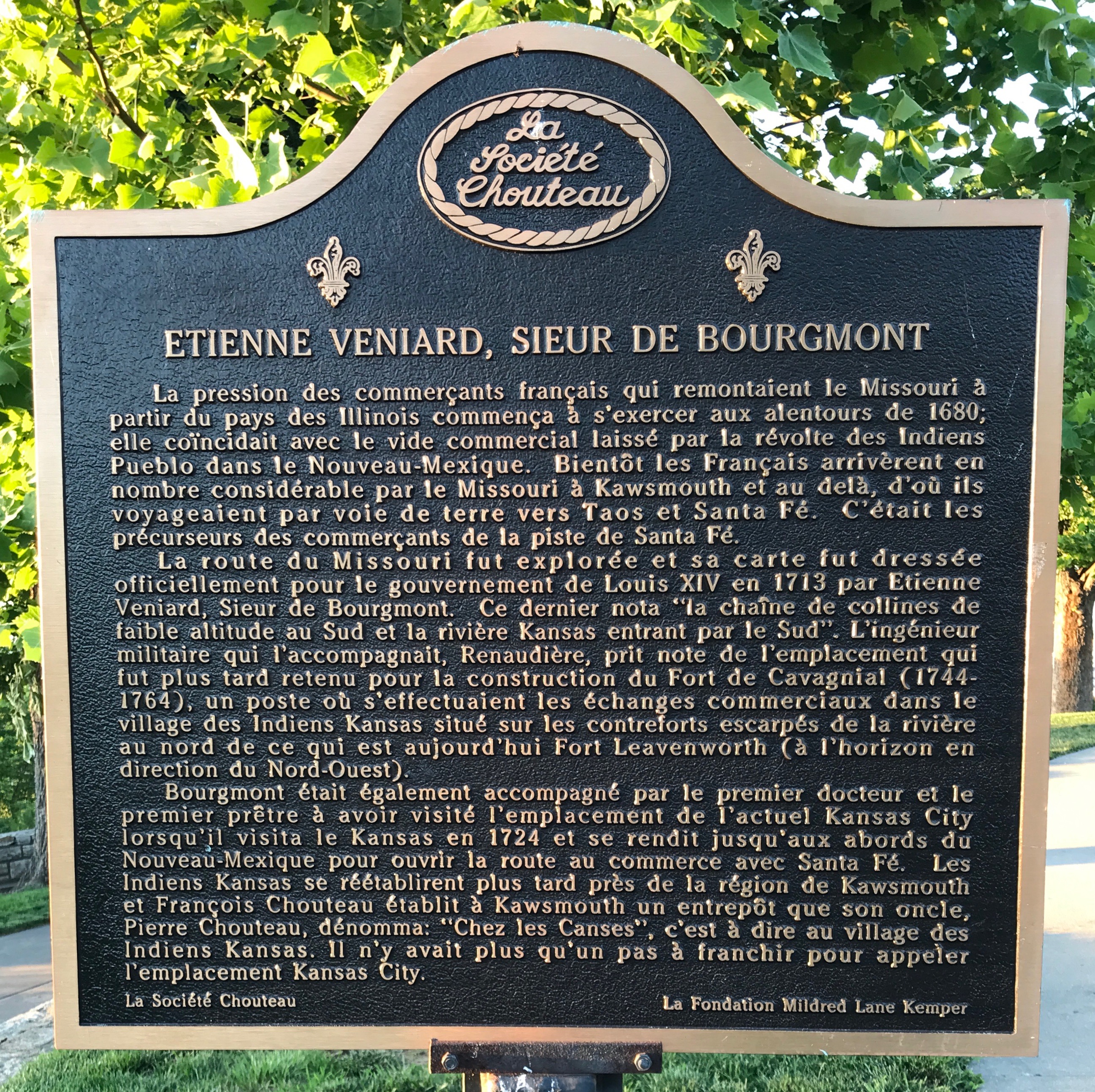
Apparently, Lewis and Clark were not the only visitors to the river. Étienne de Veniard, Sieur de Bourgmont came through, too.
And since he was French, the sign was in English with a French translation on the other side.
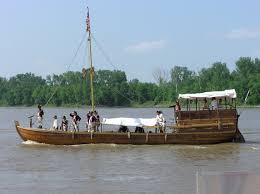
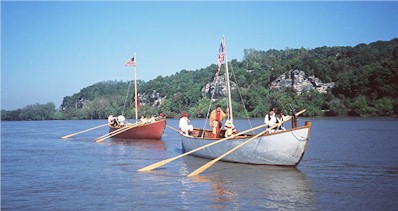
It was an arduous journey, to say the least. The men of the Corps of Discovery had to tow the keelboat and the two pirogues that made up the flotilla against the river’s powerful current. If that wasn’t bad enough, they had to cut trees down along the way to be able to tow the boats. AND it was a hot day!
Just in case, you are curious, this is a replica of Lewis and Clark’s 55 foot keelboat.
It was a hard bit of travel, but they got to rest for two days. At this point, they had been on the river for a month and a half and they were about 367 miles from the mouth of the Missouri.
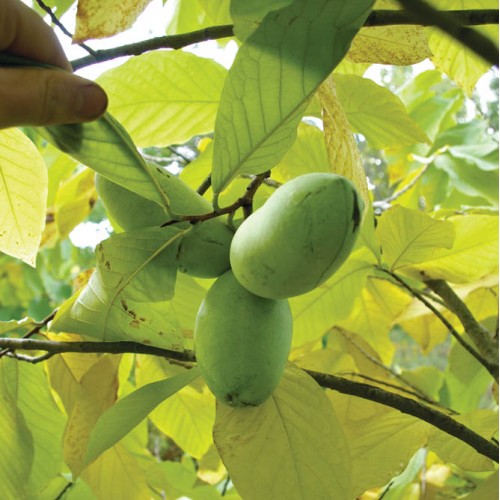
While they were camped at this spot, then crew got to gather paw paws, otherwise know as custard apples.
I know you just want to sing the song now…Pickin’ up paw paws, put ’em in your pocket…
According to the signage at the park, Clark recorded seeing “an immense flock of Carolina parakeets.”
This was the first documented sighting of the birds. Unfortunately, they are now extinct.
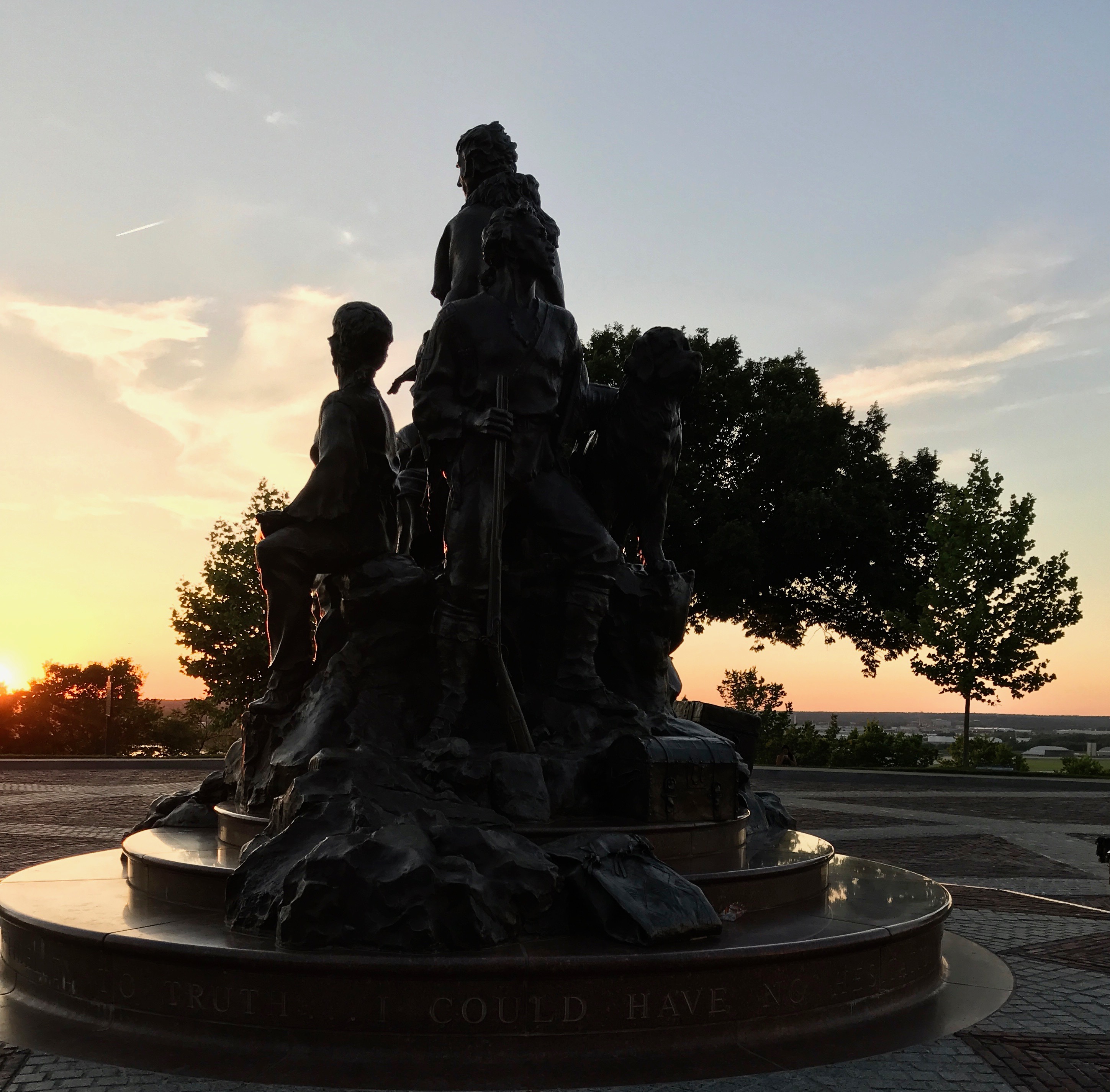
It was getting close to sunset. I strolled around the park, to see what I could see.
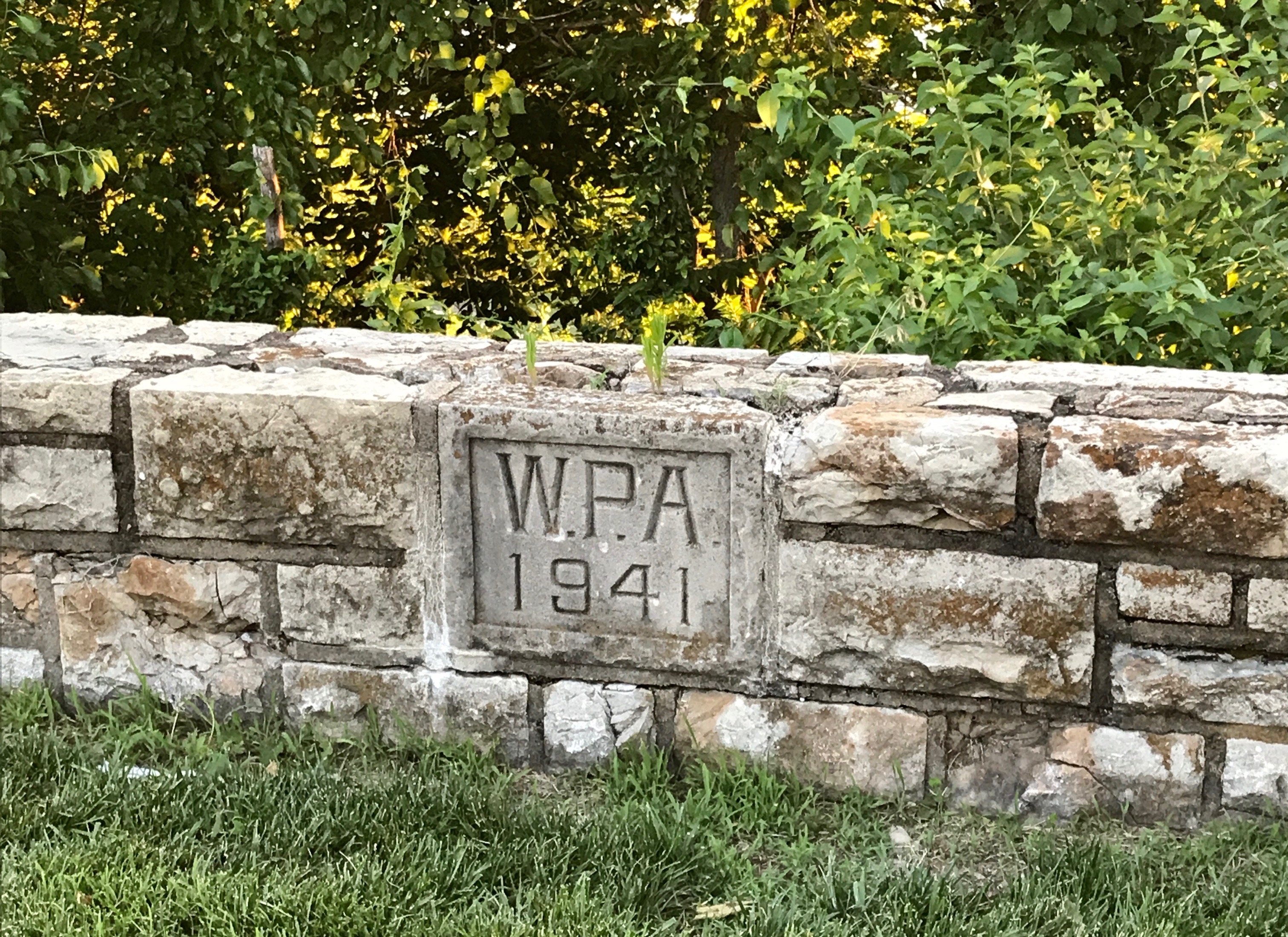
Gee…spending our country’s wealth on building infrastructure that is still in use more than 65 years later, and providing the dignity of work to the citizens. What a novel idea!
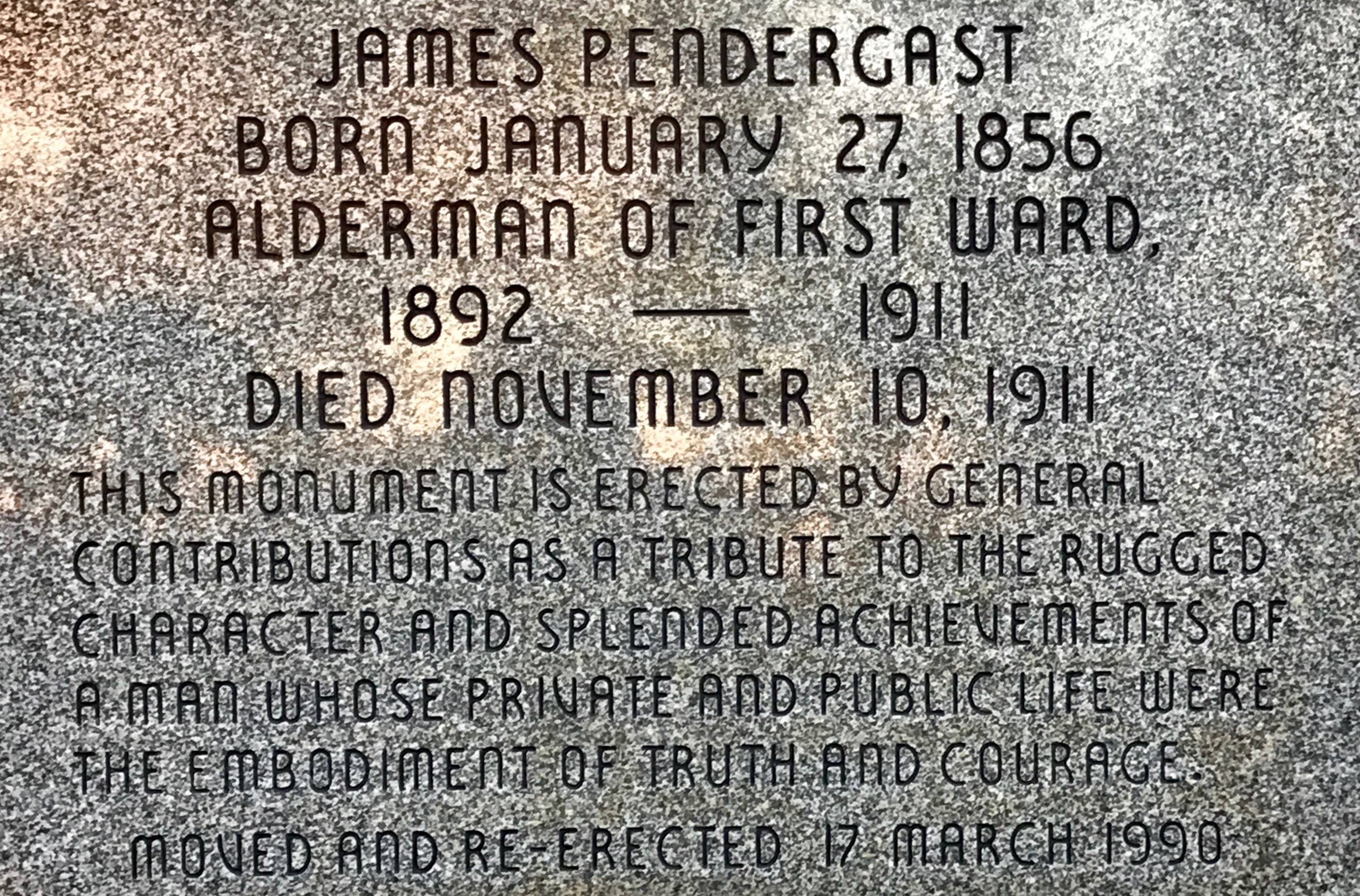
As the shadows deepen, I came across this statue of James Pendergast.
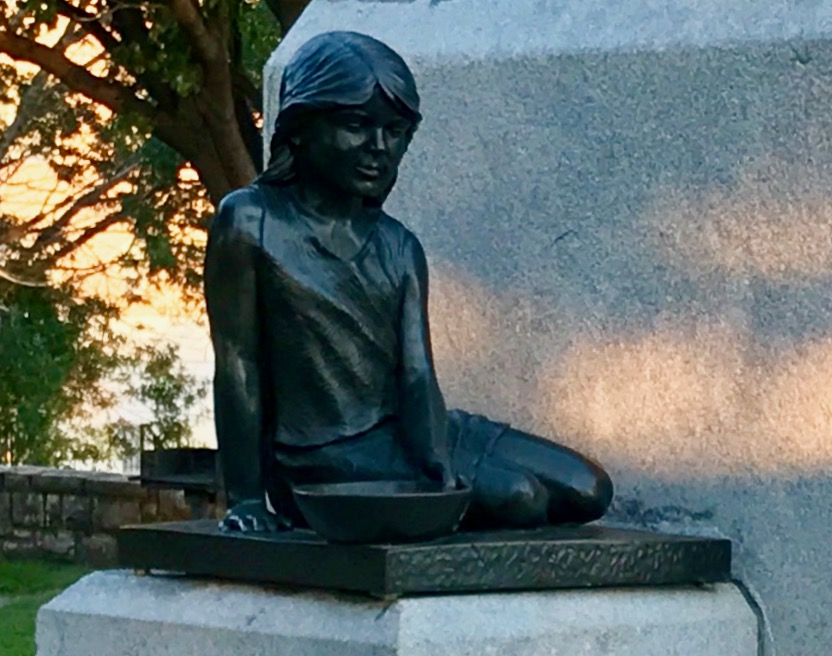
The statue of Pendergast was flanked by two smaller statues. This one of a young girl.
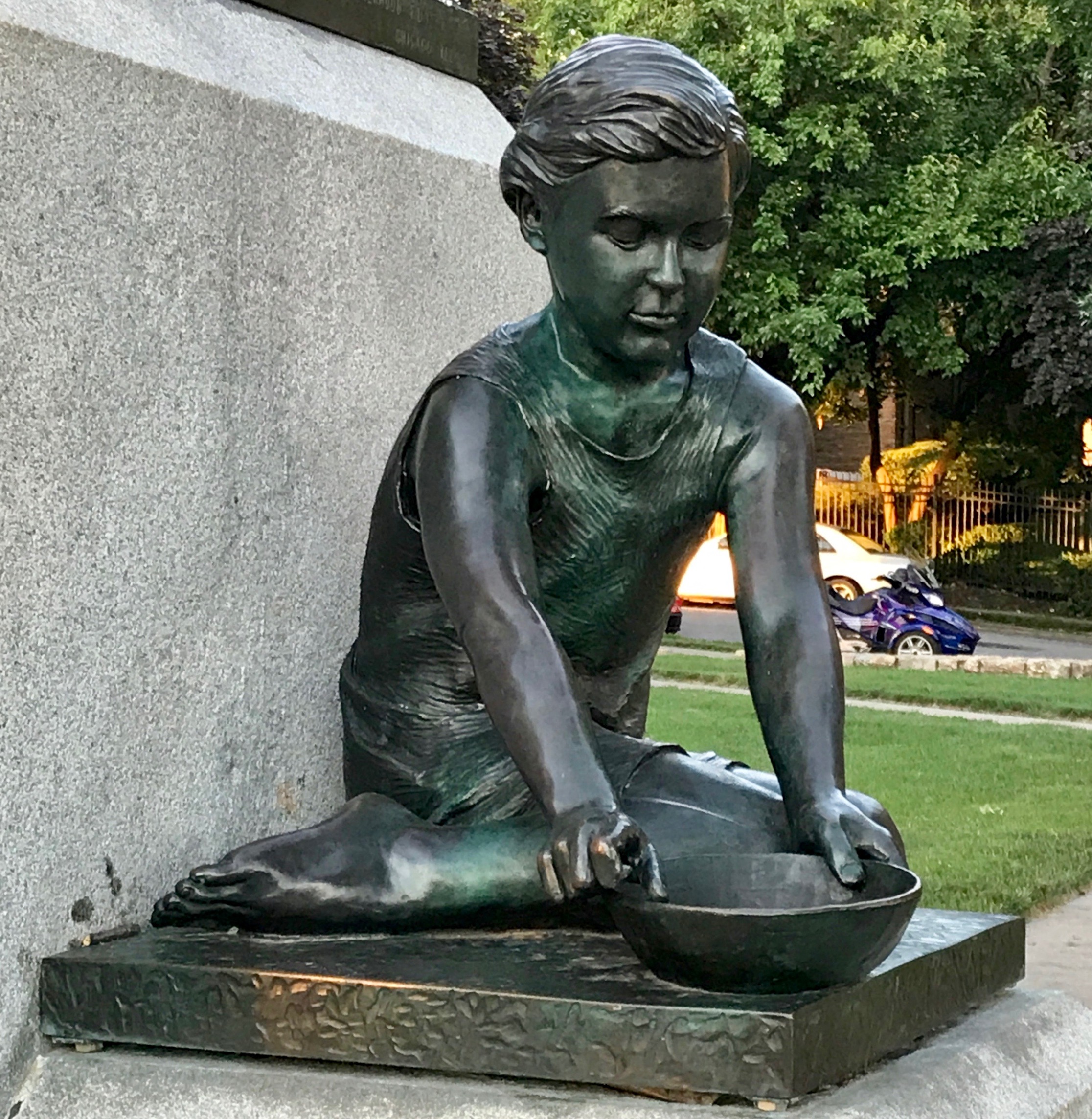
On the left is a statue of a young boy.
Of course I had to look for more information. I couldn’t locate as specific links to feeding hungry children or, perhaps, arts programs. I mean, who wouldn’t like to make a nice ceramic bowl?
It turns out that James Pendergast was part of the “Pendergast Machine” run by him and his brother, Thomas. At the turn of the century, political bosses and their machines that operated in large American cities enjoyed strong support among the poor and immigrants, who returned the favor by voting for the bosses’ preferred candidates. I think the best known “big boss” – at least to those of us east of the Mississippi – is Boss Tweed of New York City.
According to an article in the Social Welfare History Project, Many immigrants saw bosses and political machines as a means to greater enfranchisement. For immigrants and the poor in many large U.S. cities, the political boss represented a source of patronage jobs.
In 1887, James Pendergast became the Democratic committeeman from the first ward, and he was elected alderman in 1892. During the peak of his power, he not only hand picked this own mayor, James A Reed, but every other key office at City Hall. One of those occupants of the key offices in city hall was his brother, Thomas. He became Superintendent of Streets, which allowed him to hire 200 workers and buy material and equipment for the street paving program.
After James’ death in 1911, his brother Thomas took over running the Kansas City political machine, but that shall be covered in a later post.
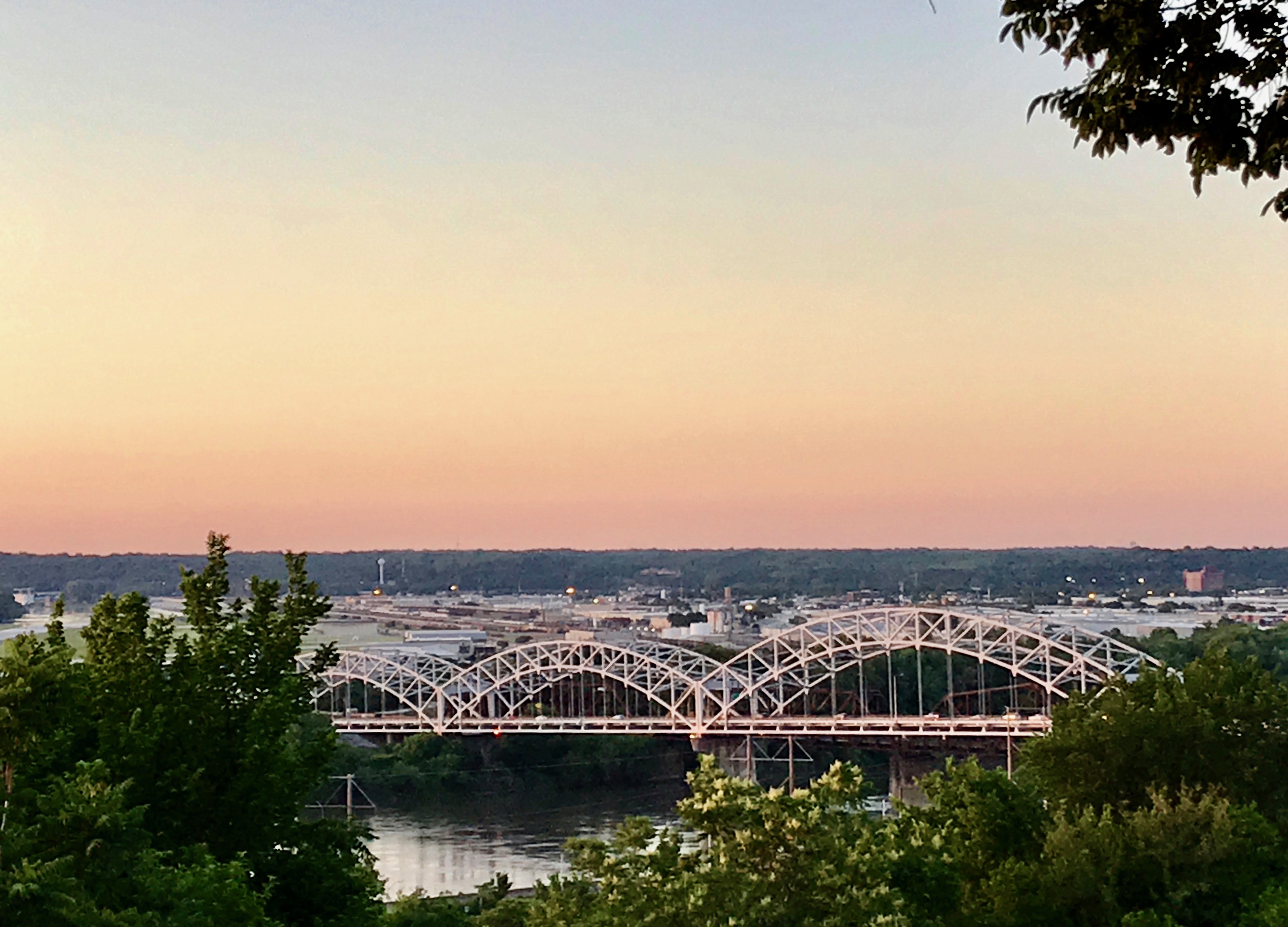
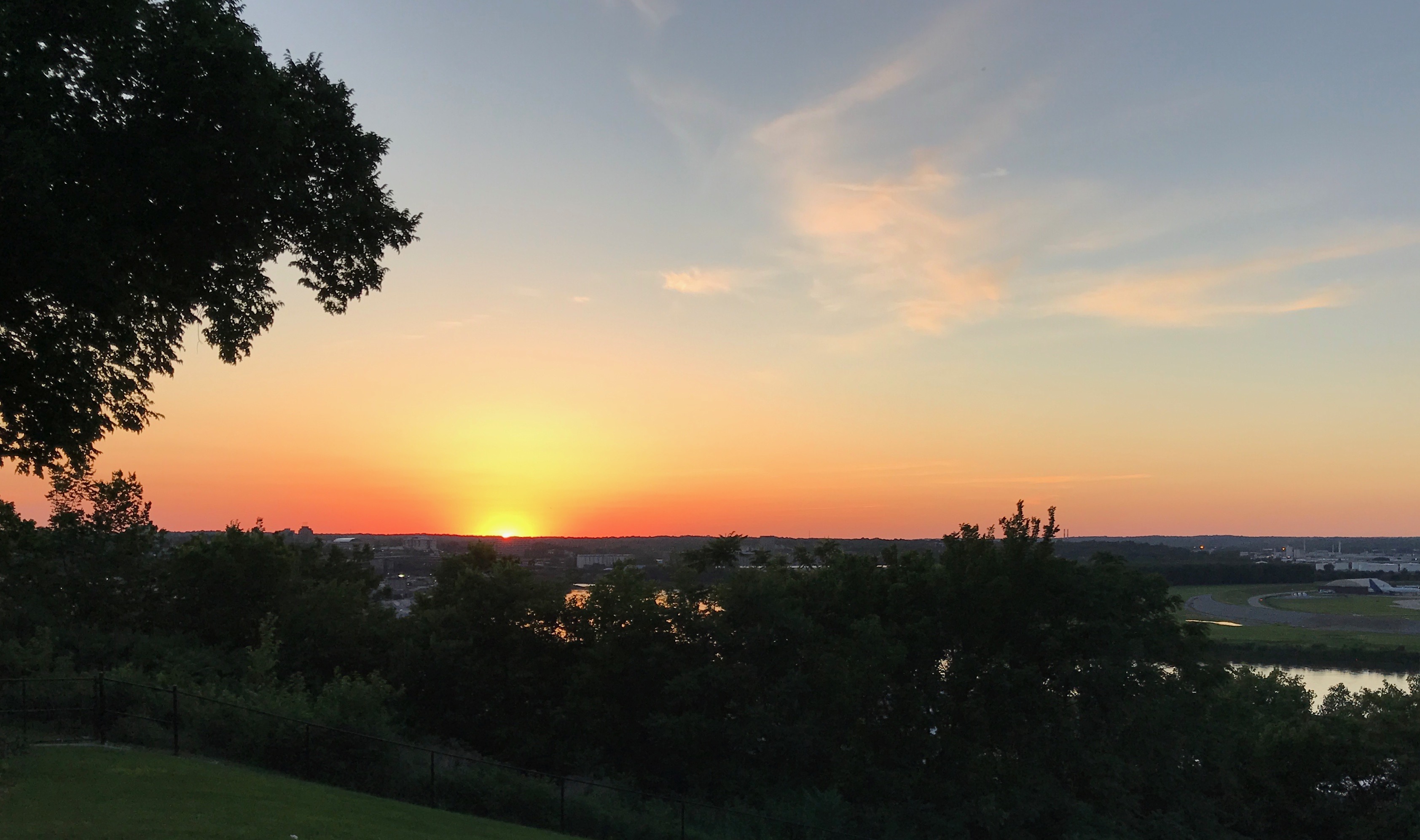
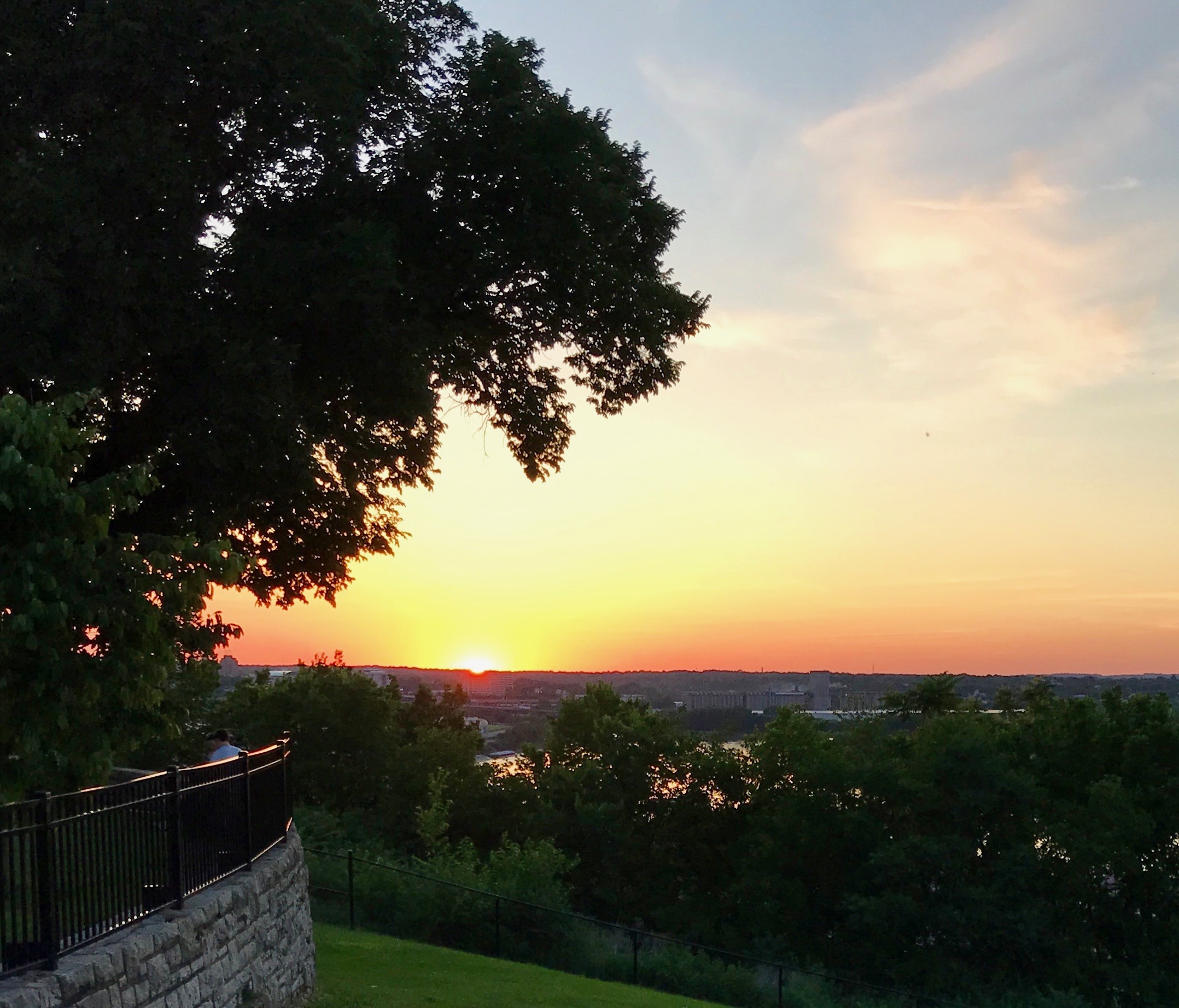
I decided it was time to find a good vantage point for viewing the sunset.
Along the way, I came across this paver for the Riverfront Heritage Trail. But there was no time for that now.
After I finished lunch, I bid adieu to my Airstream Addicts friends and headed west from Jackson Center, Ohio toward Springfield, Illinois. This was going to be speed tourism – kind of like speed dating.
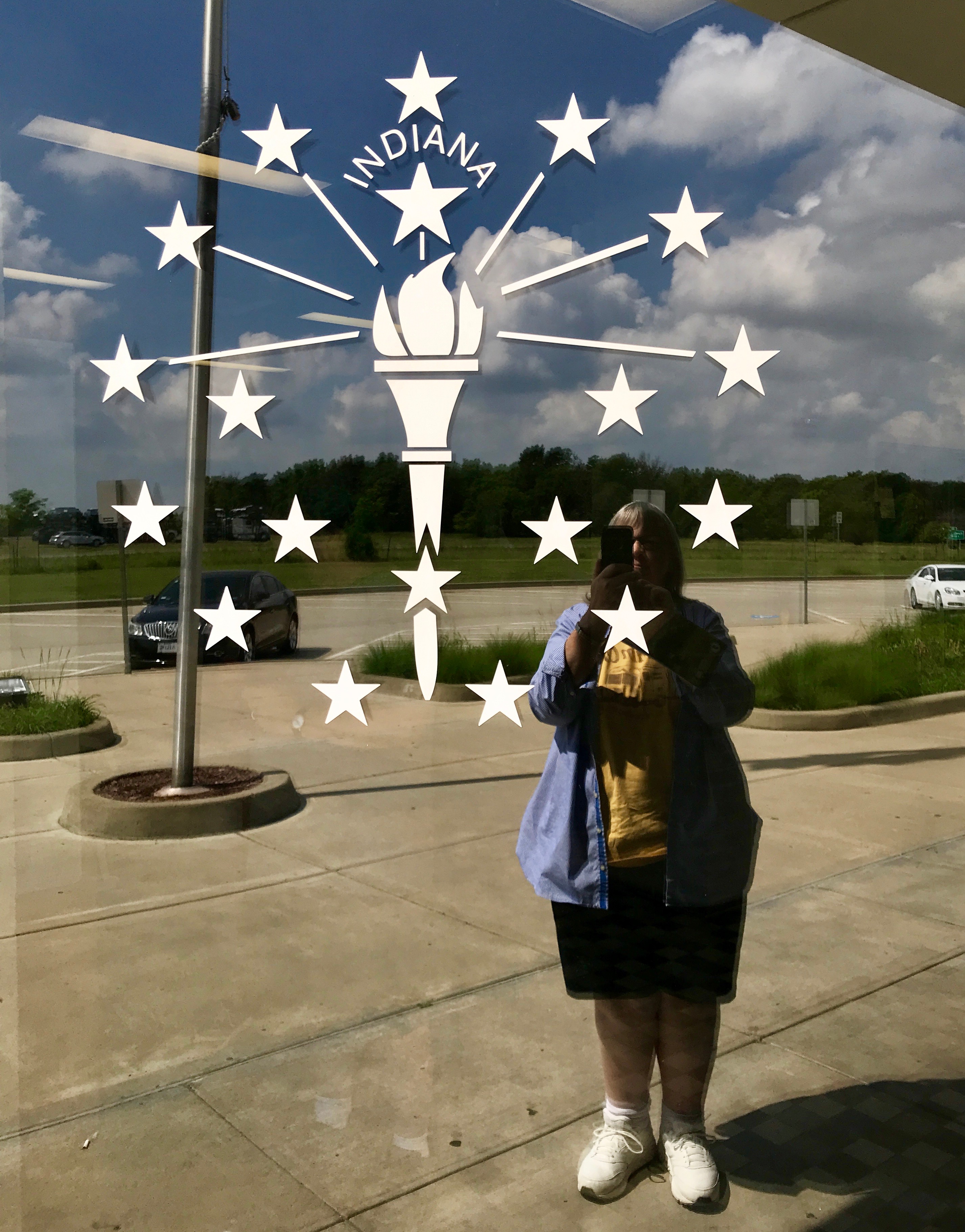
I hit Indiana, and decided that I should use the restroom.
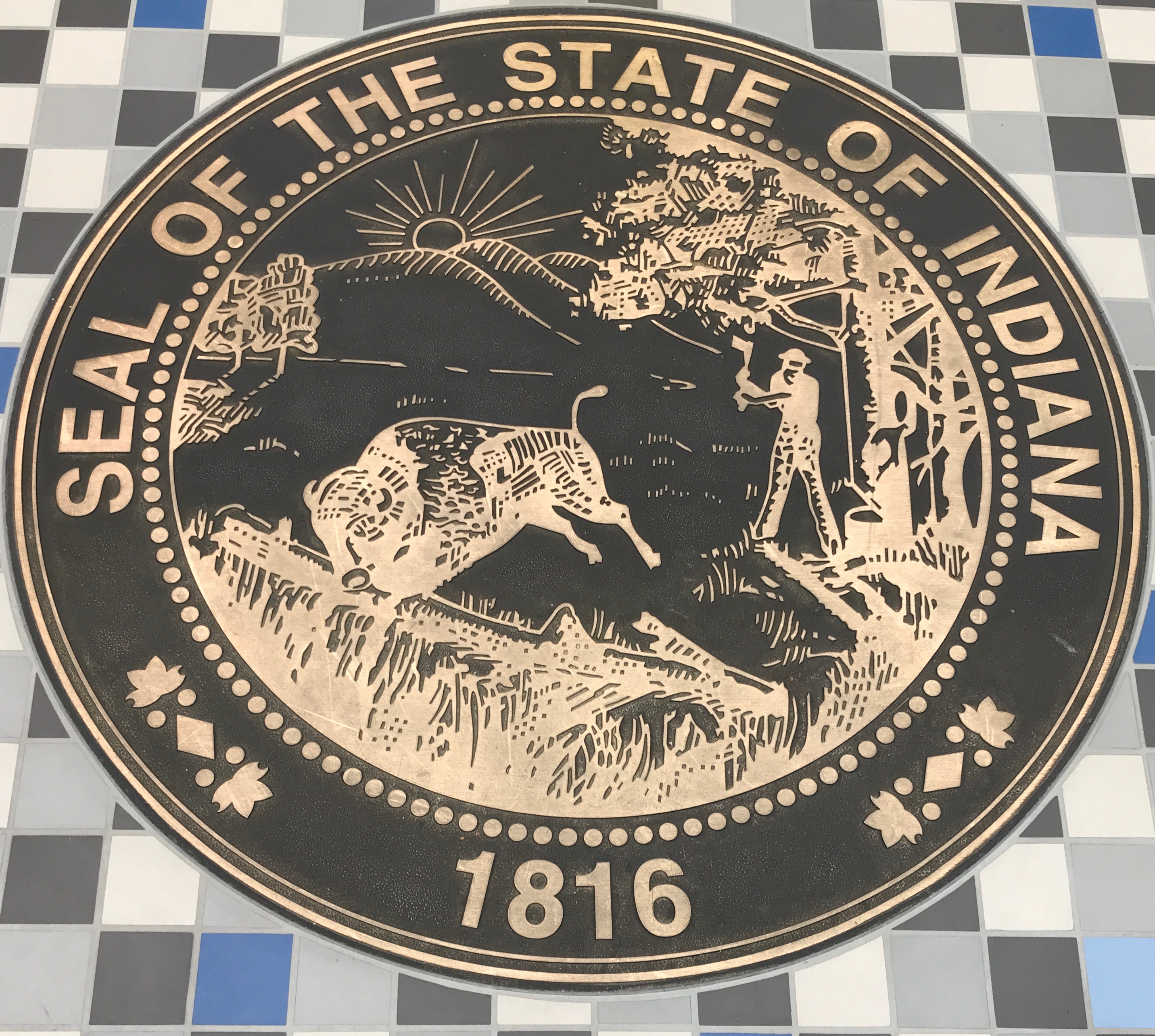
The reflective glass with one of the state’s symbols made for a great selfie.
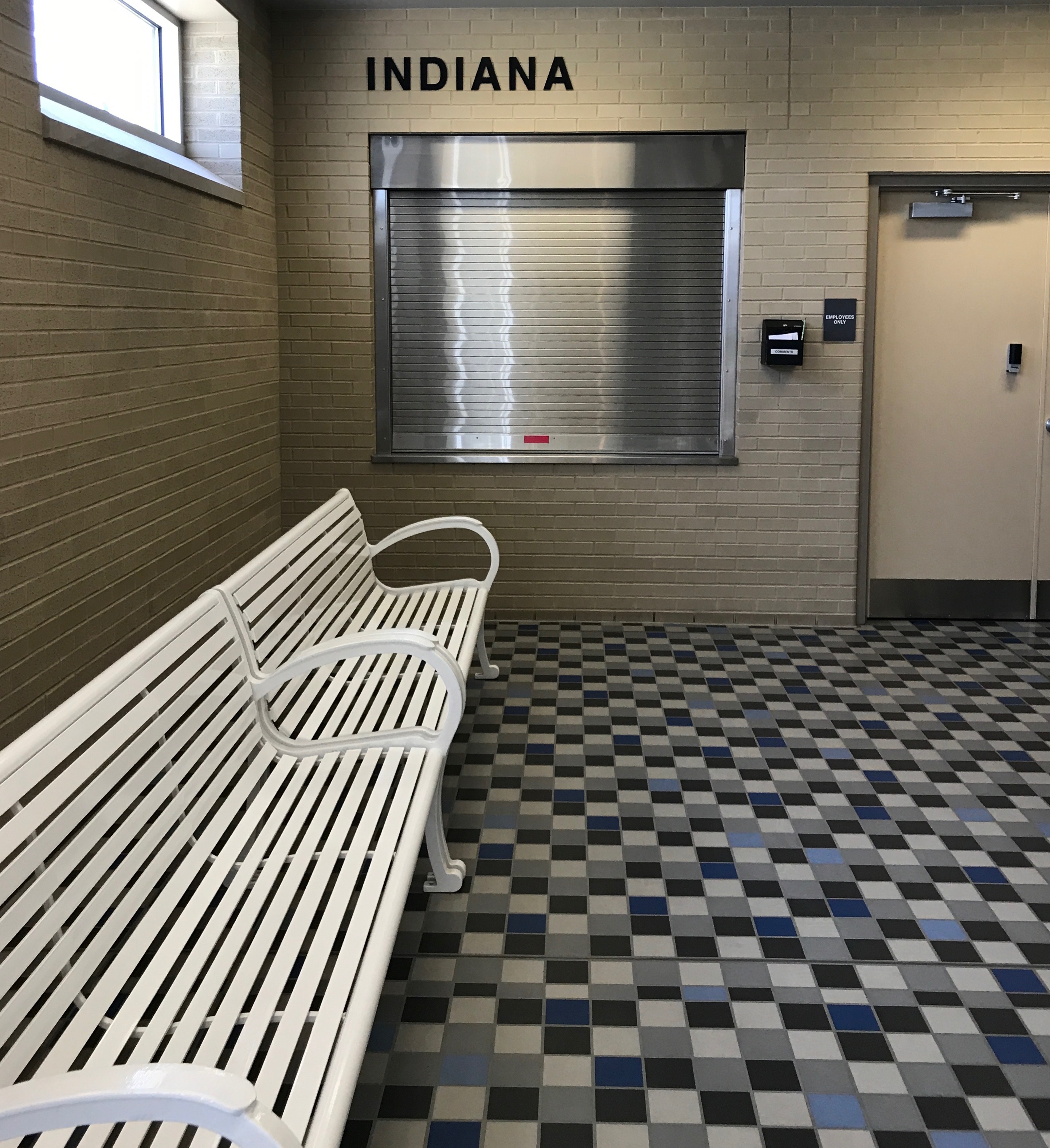
It’s a good thing that I didn’t need any information. Apparently Indiana was closed. But there was plenty of space to wait for them to open.
I never knew that there were buffalo in Indiana, but apparently there were many when settlers first arrived.
I got back in the car and continued my westward travel. I got to Springfield and checked into my hotel.
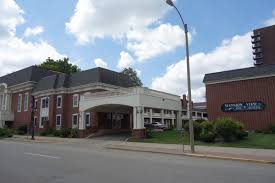
The Mansion View Inn was my home for the night. It was kind of a mid-century sort of place, but not exactly mid-century modern. It was more like mid-century old-fashioned. My room had a bed and a television and a bathroom. Not exactly luxurious, but I made it through the night and headed down to the included continental breakfast.
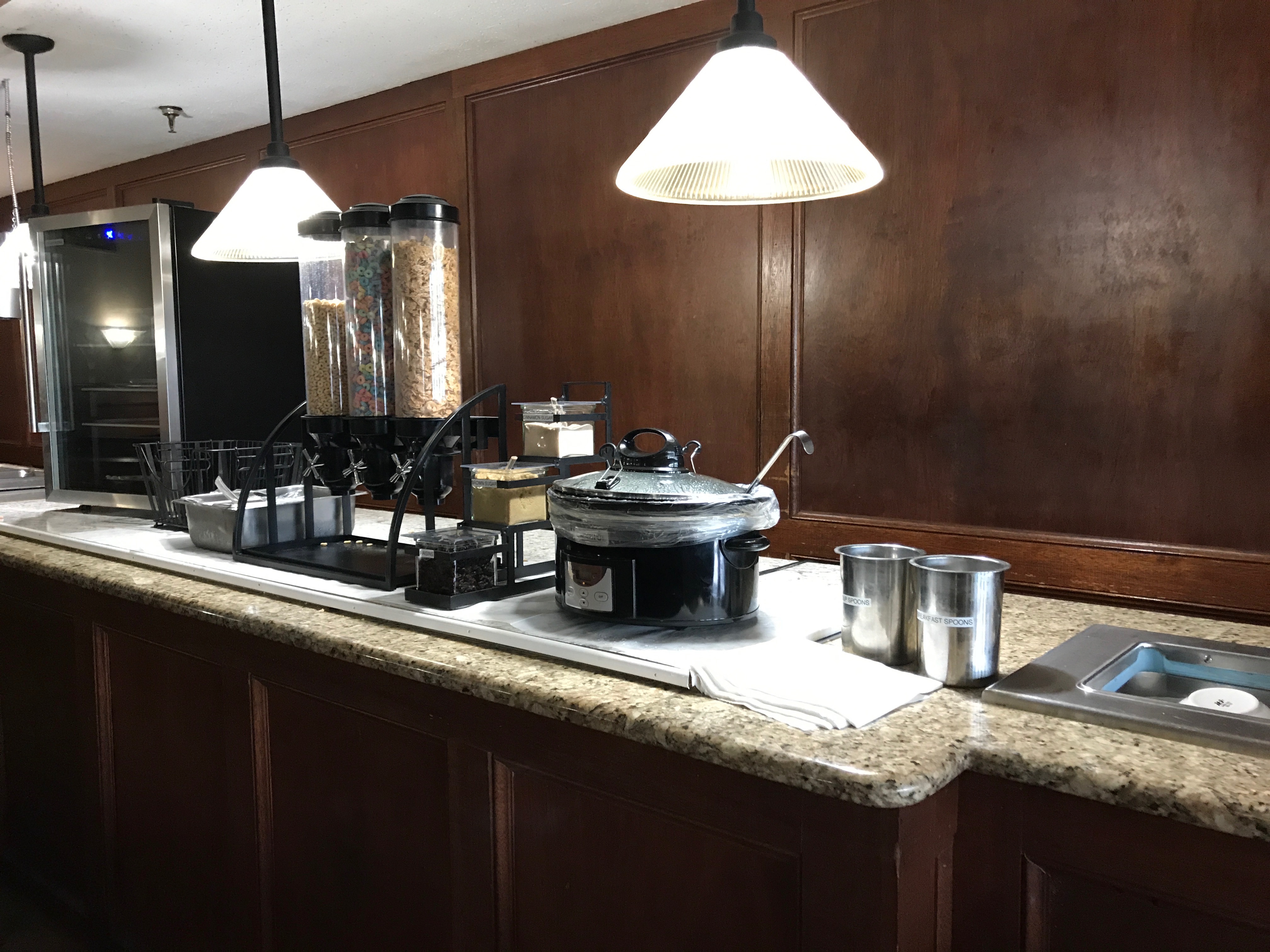
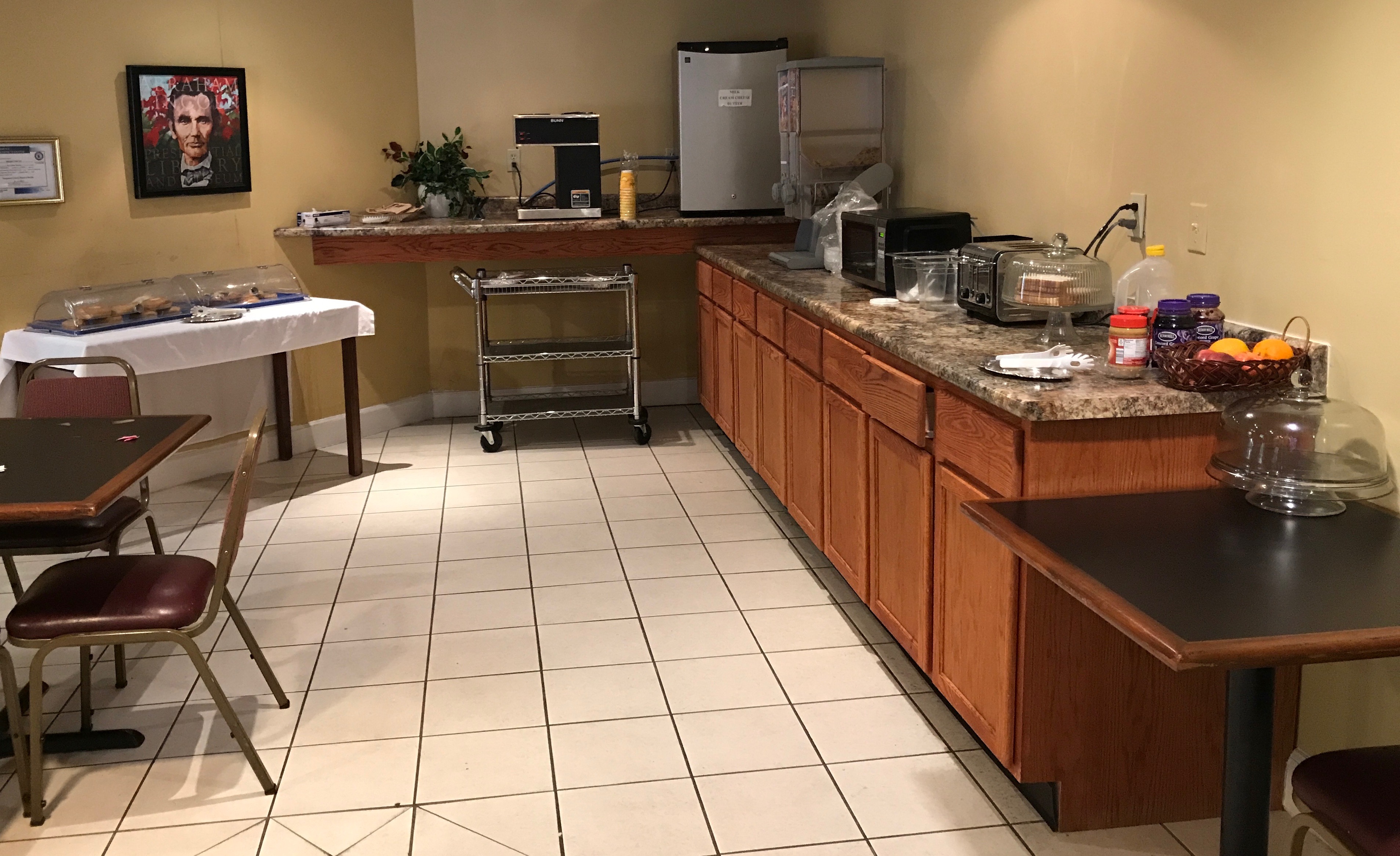
I must say it was one of the most woe-begone breakfast bars I’d ever seen! There wasn’t even any coffee! Horrors!
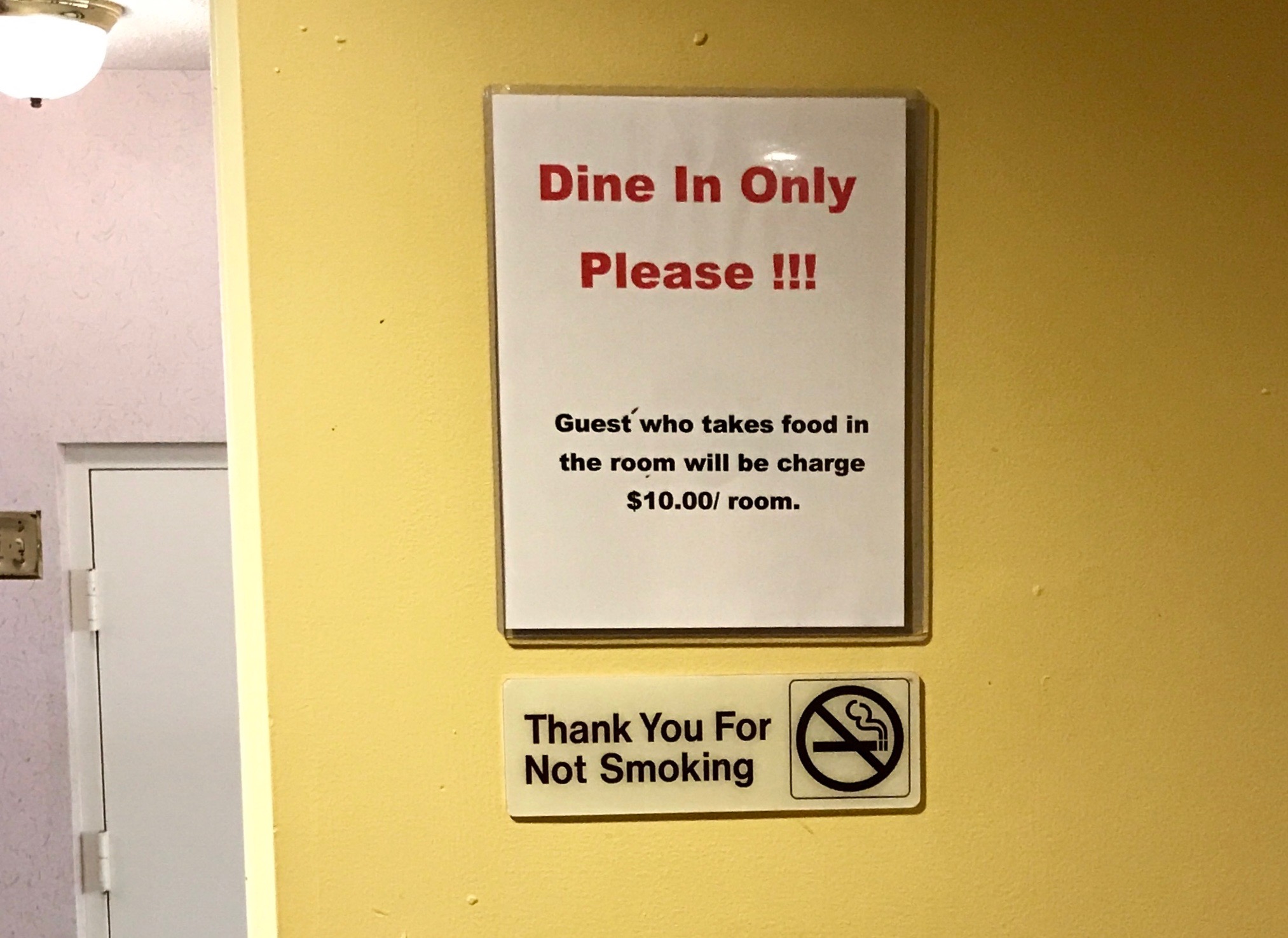
Capping off the insufficiency of the breakfast bar, they threatened “Guest who takes food” will be charged $10.00/room. I was happy to get packed up and out of this inhospitable hostelry.
Ah, but the sun was shining and the skies were blue! It was a great day for some high speed tourism.
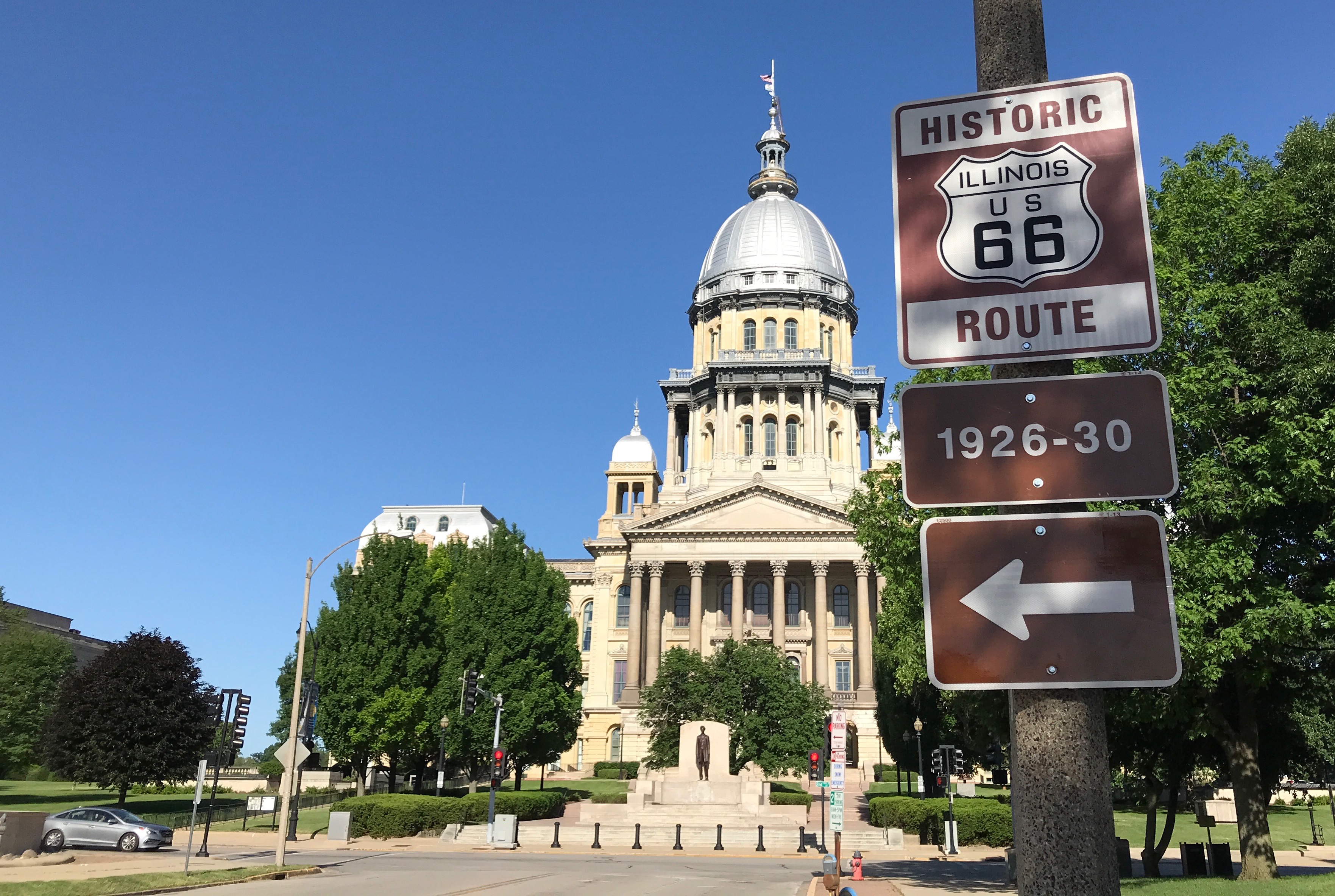
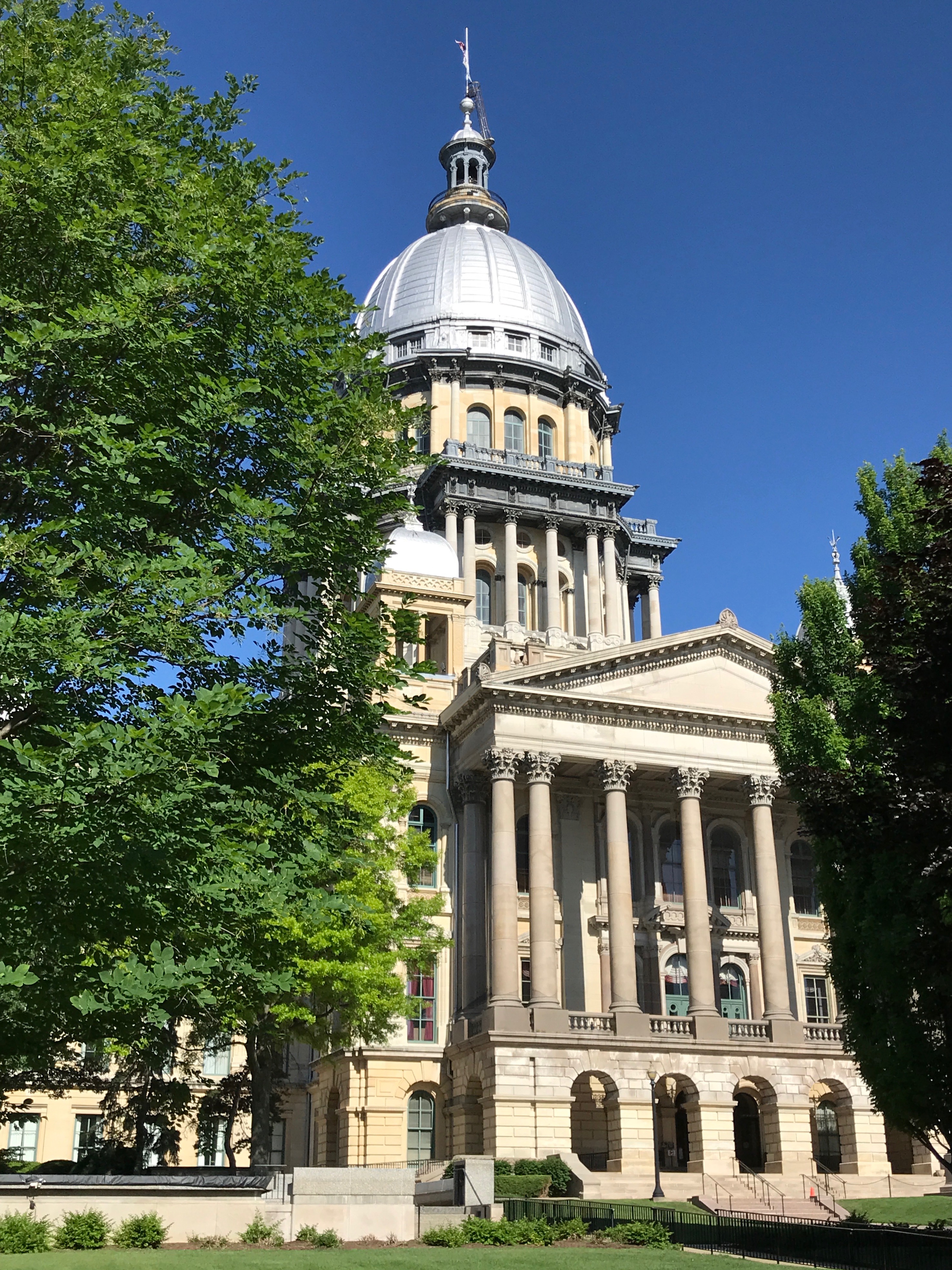
I walked toward the capitol to see what I could see. It was Sunday, after all, so I didn’t figure I’d be able to get inside. It turns out that I was right.
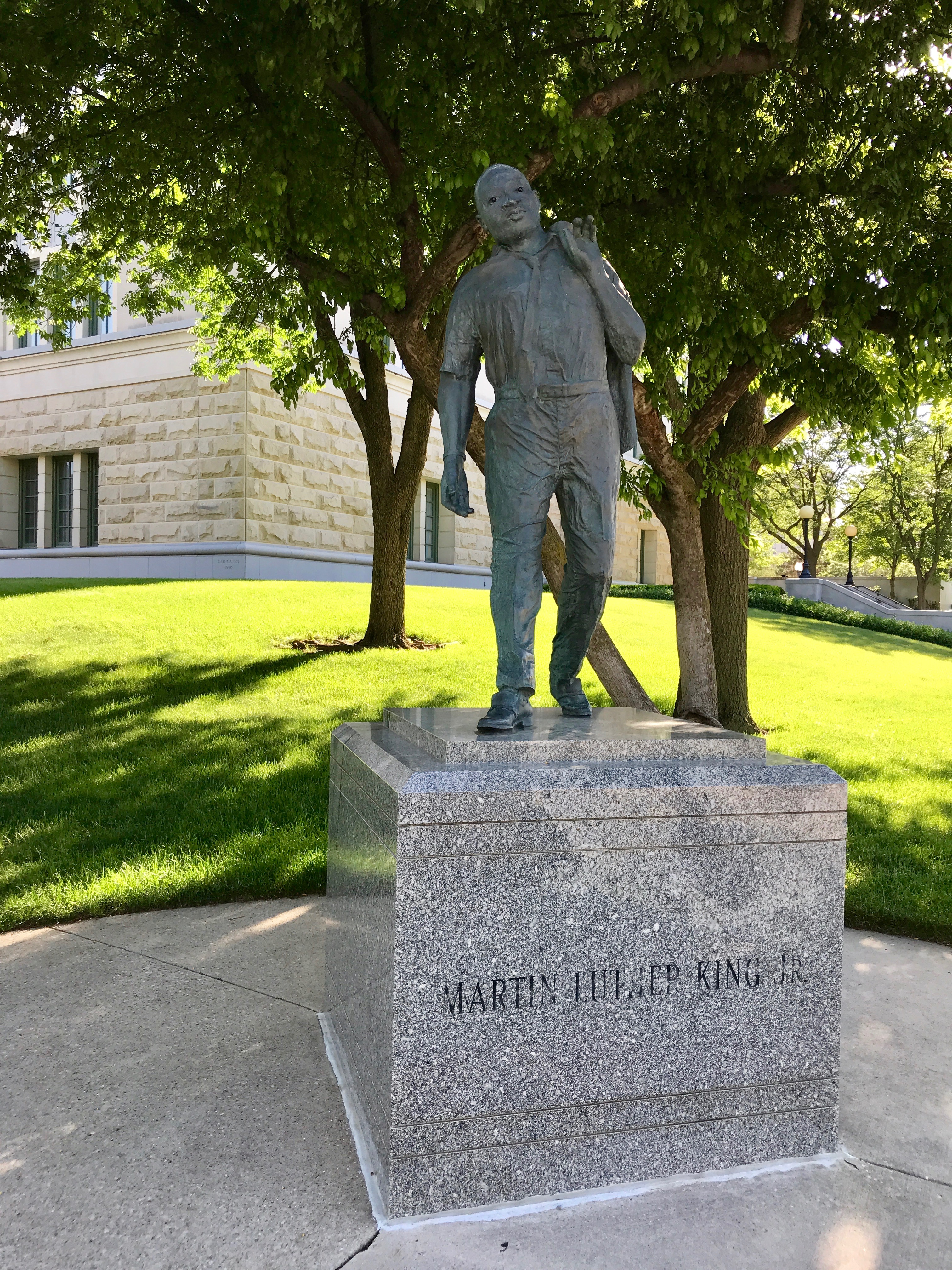
The first memorial I came to was one of Dr. Martin Luther King, Jr.
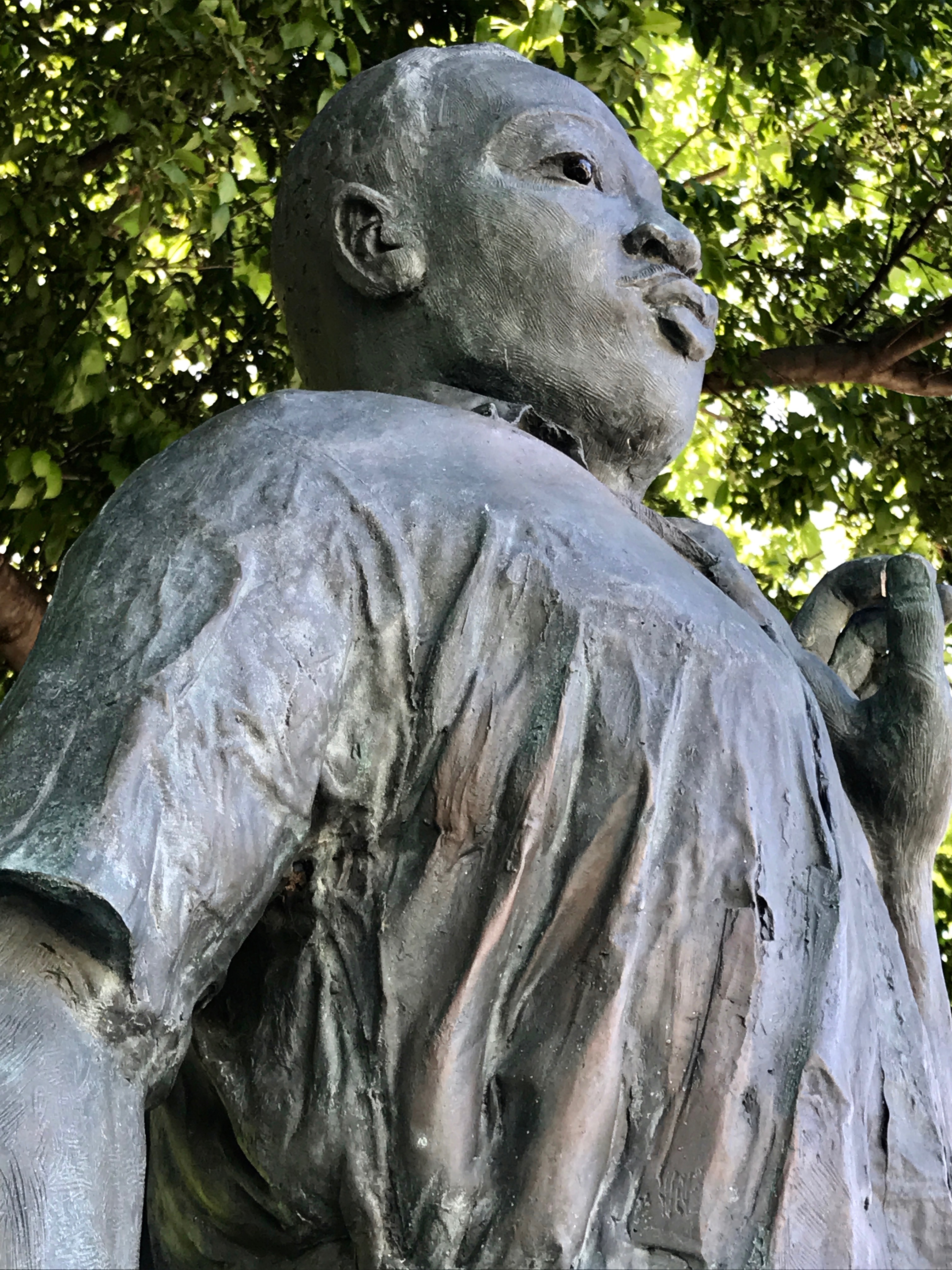
I tried to get a shot that showed his eyes. It looks like they gave him glass eyes. I was always struck by his eyes, so I can understand wanting them to be prominent in the statue. I just had never seen this sort of mixed media – at least not that I remember.
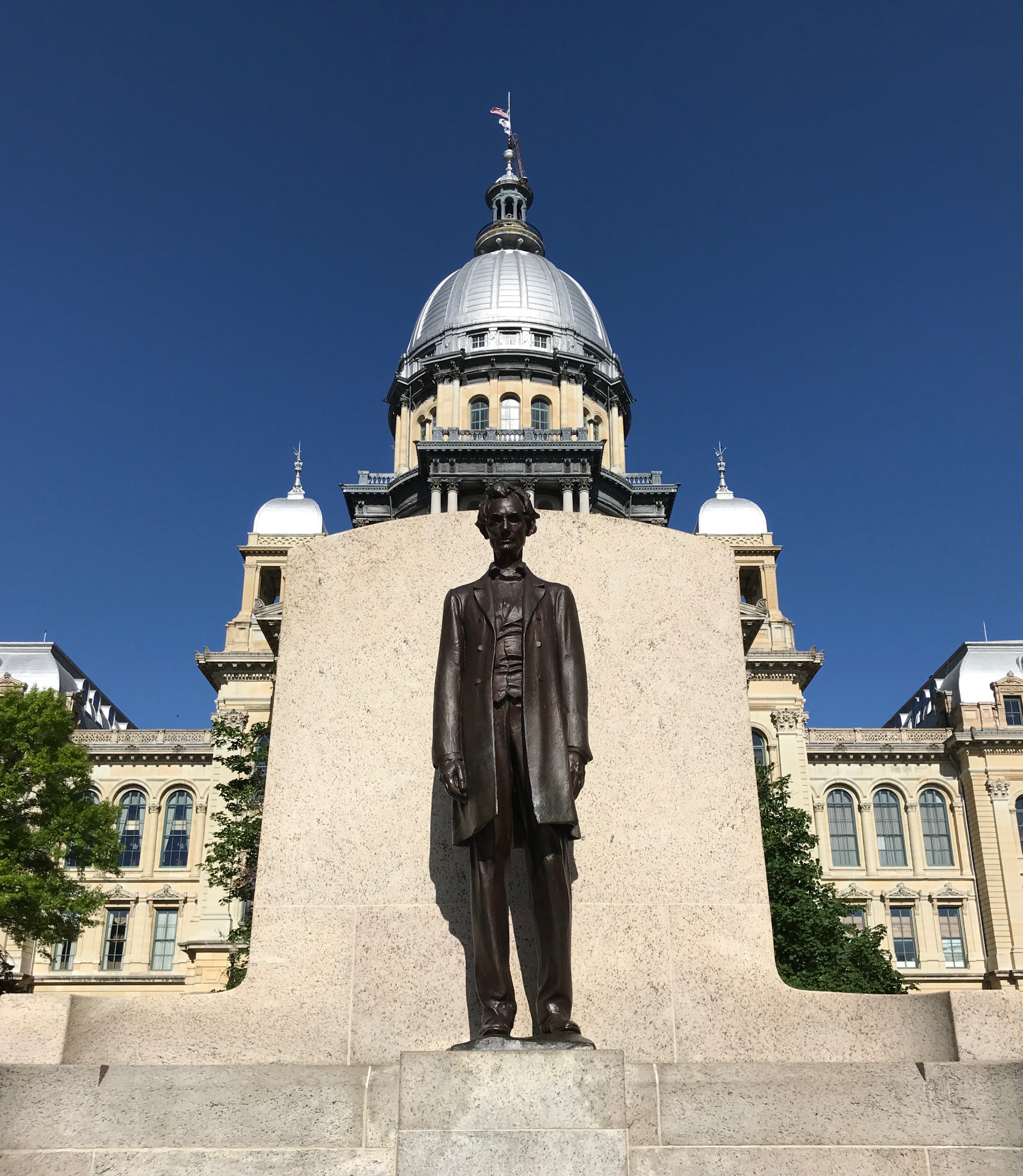
Directly in front of the capitol was a statue of Lincoln.
On the back of the pedestal was inscribed his farewell to Springfield after he had been elected president.
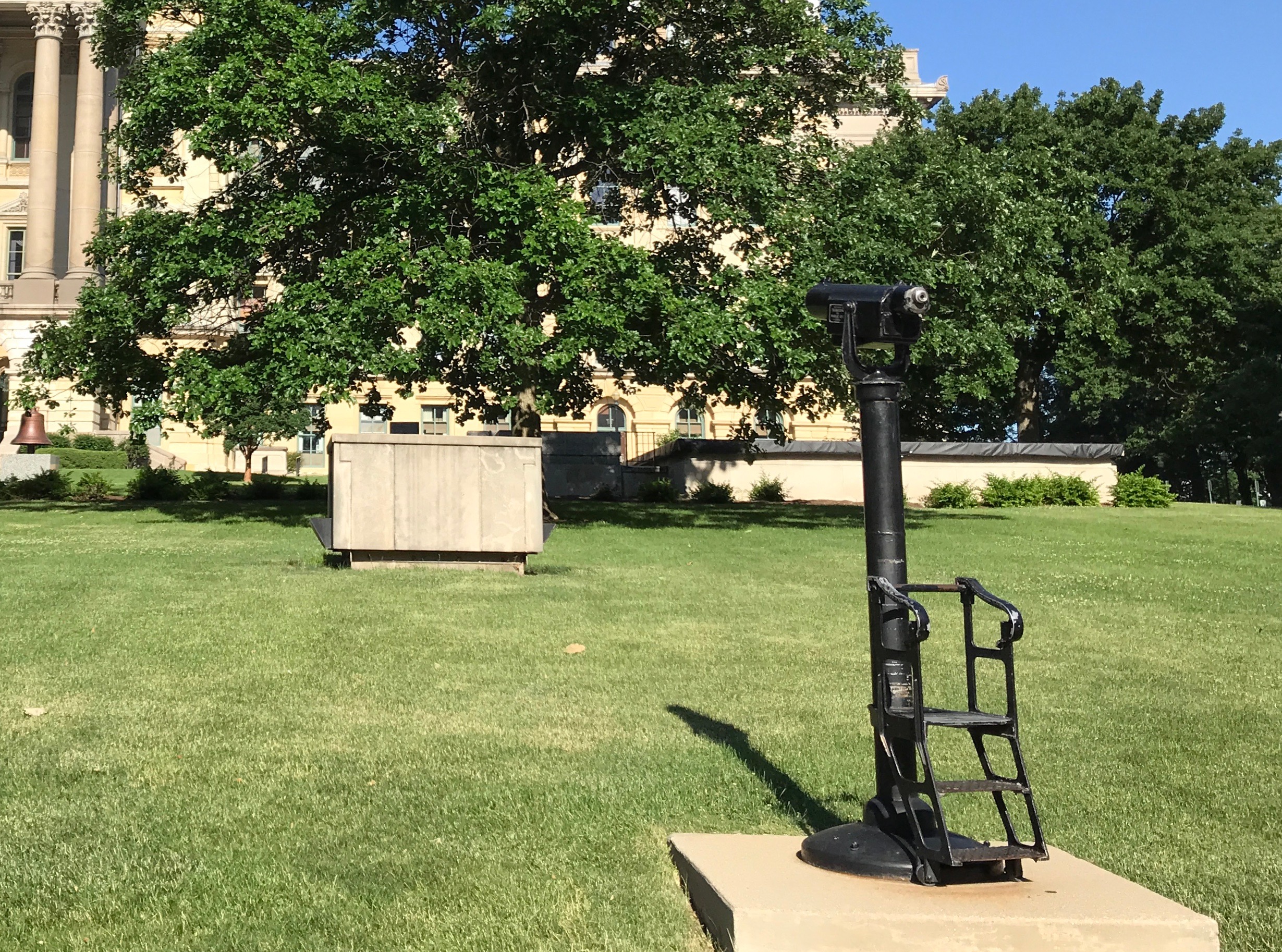
A little ways away from the statue of Lincoln was a viewer. Given the tiny steps up to the eye piece, I assume it was intended for youngsters.
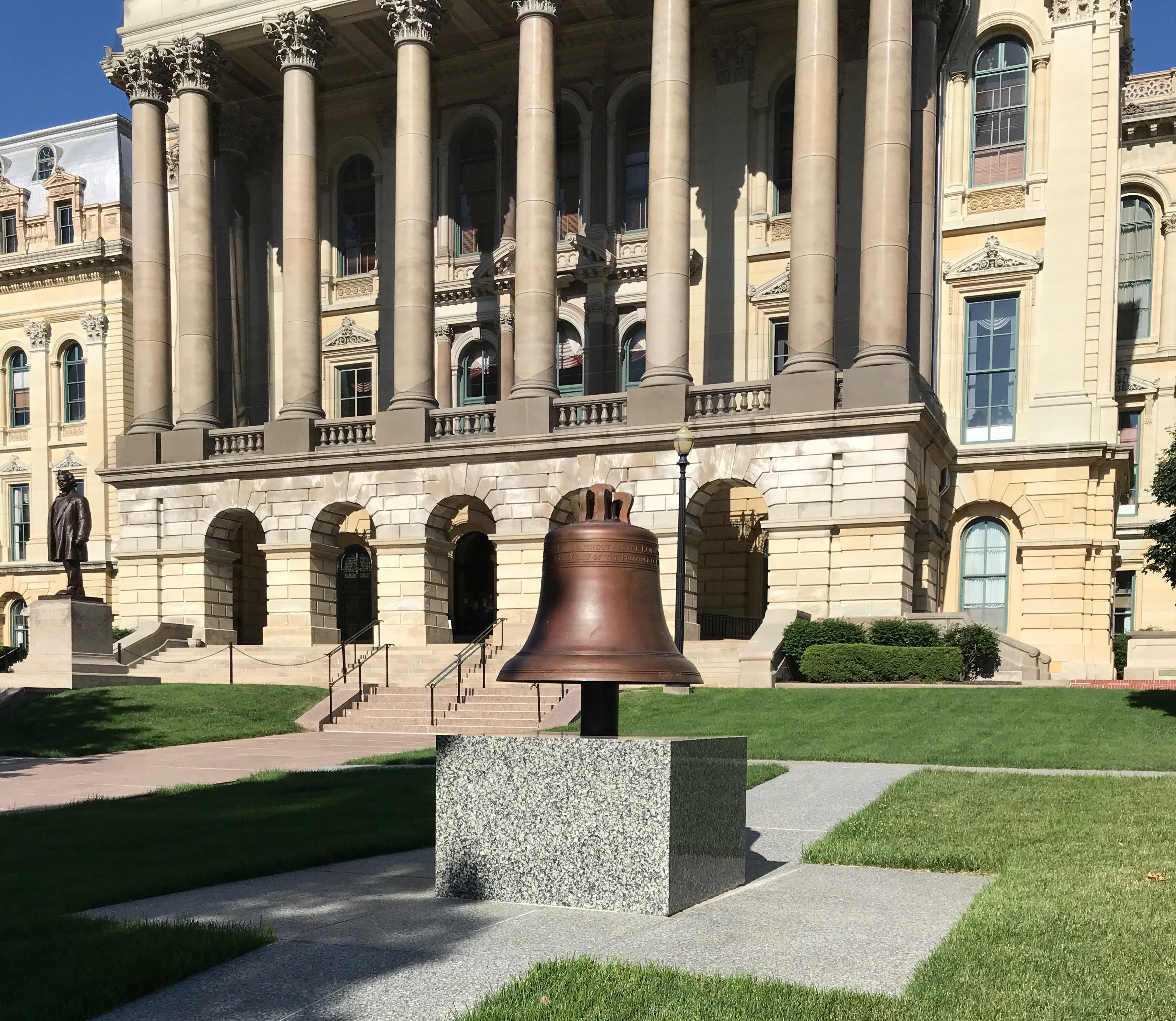
I continued up toward the entrance to the capitol and came across this replica of the Liberty Bell. I half-remembered something about a “Merci Train” that the French people sent to us after World War II to thank us for our support. I seemed to remember that these Liberty Bell replicas were on the Merci Trains. It turns out I was only partly right.
I swear you can find anything on the internet. As part of a government bonds drive held in 1950 to celebrate the 200th anniversary of the Liberty Bell, replicas of them were made in France and given to each state, the District of Columbia, and the Territories. A man named Roger Johnson has made it his mission to visit all the bells and have his photo taken with them. You can read his blog here.
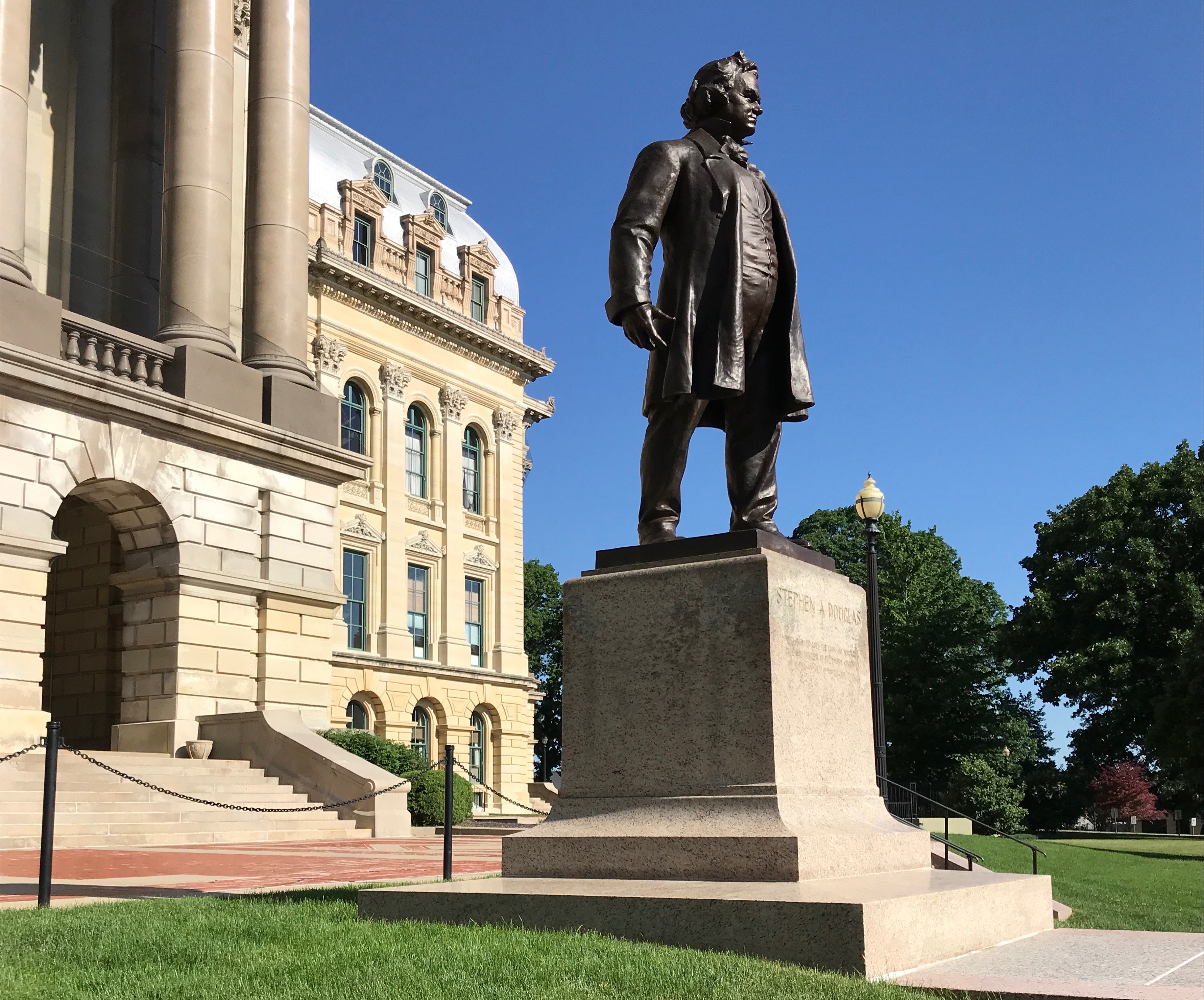
Stephen A. Douglas, the “Little Giant”, is posed right in front of the entrance to the building. He was given that sobriquet because he was short in physical stature, but a forceful and dominant figure in political.
He is famous for defeating Lincoln in 1858 election for the United States Senate, and for his participation in the Lincoln-Douglas debates. In digging around a bit, I found out that he was one of the three candidates for President in 1860. The Northern Democrats favored Douglas, and the Southern Democrats supported John C. Breckenridge. Republicans nominated Lincoln. After the Battle of Fort Sumter in April 1861, Douglas rallied support for the Union, but he died in June.
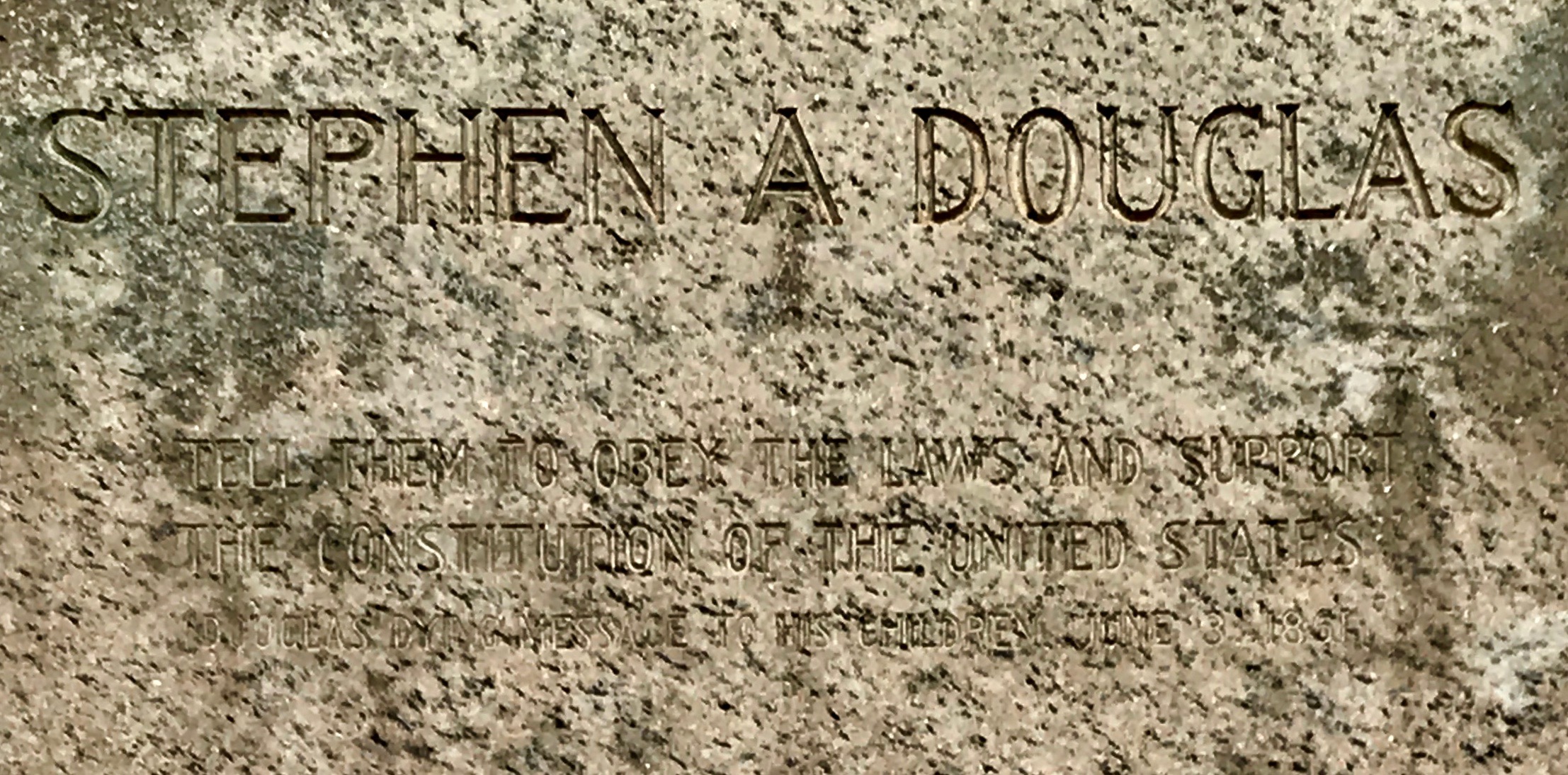
On the pedestal for his statue are his dying words to his children. “Tell them to obey the laws and support the Constitution of the United States.” Not exactly warm and fuzzy thoughts, but then again, the country was in the midst of a Constitutional crisis.
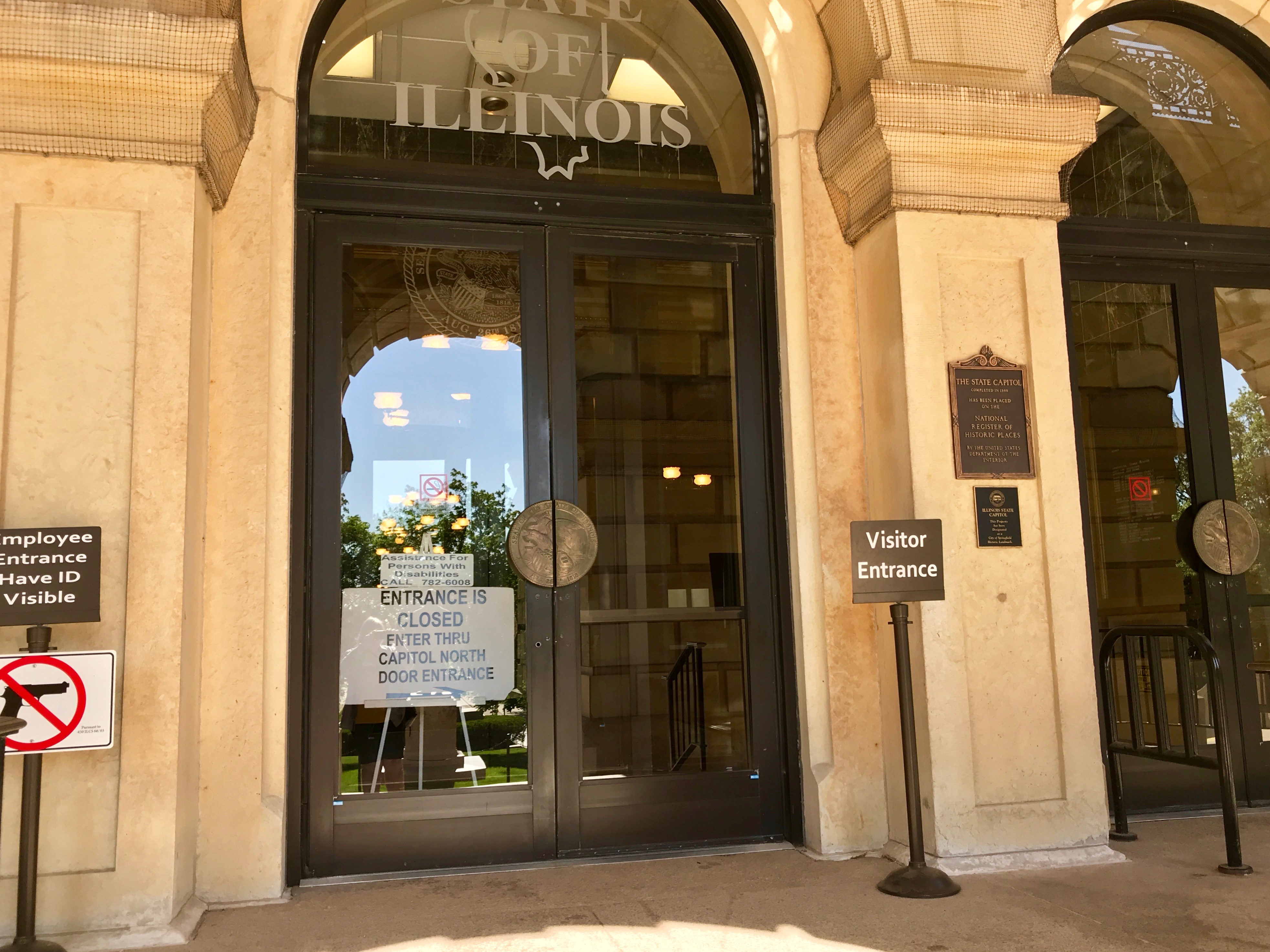
I walked up to the entrance, just to make sure it really was closed.
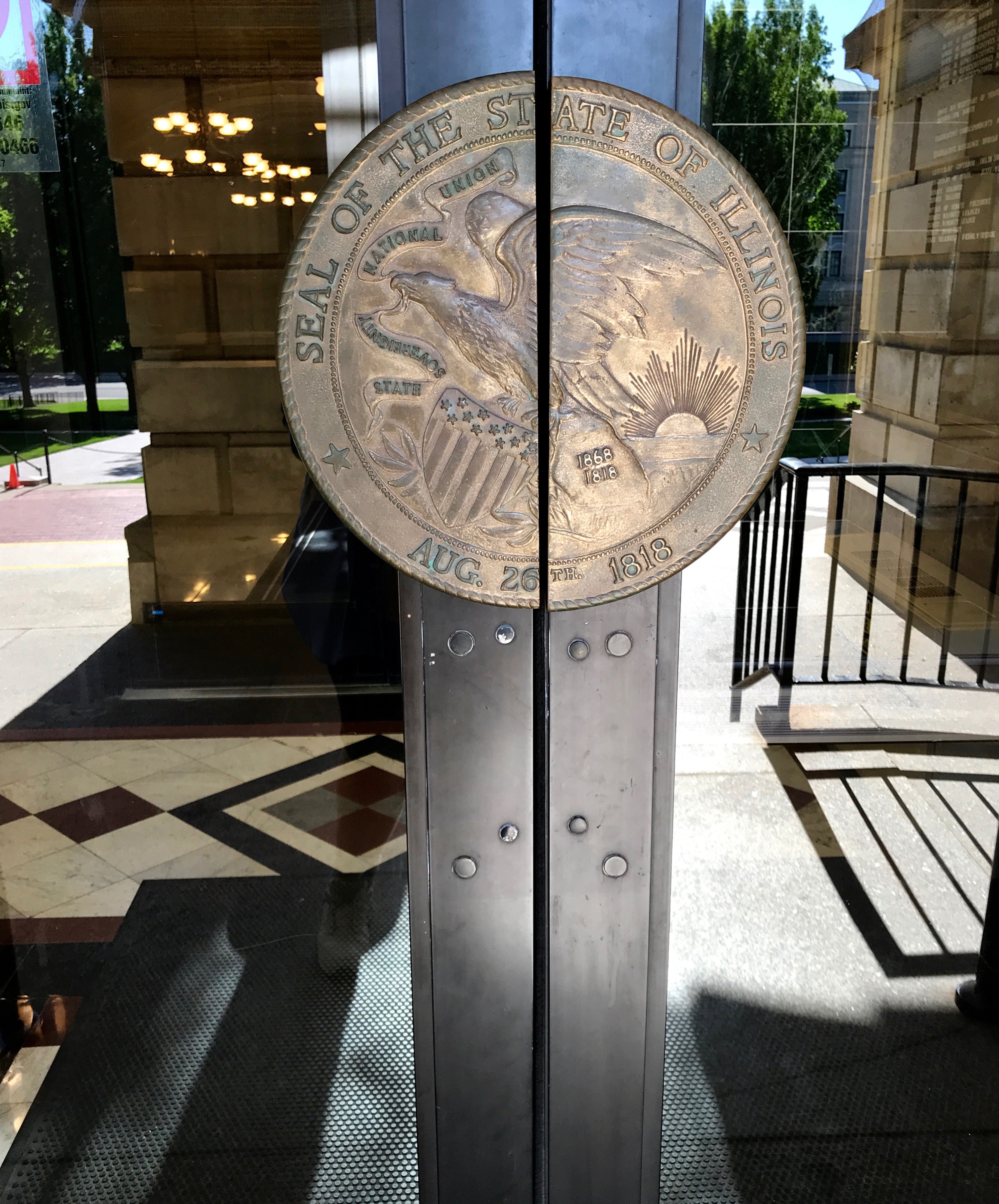
It was, but the door pulls were quite impressive.
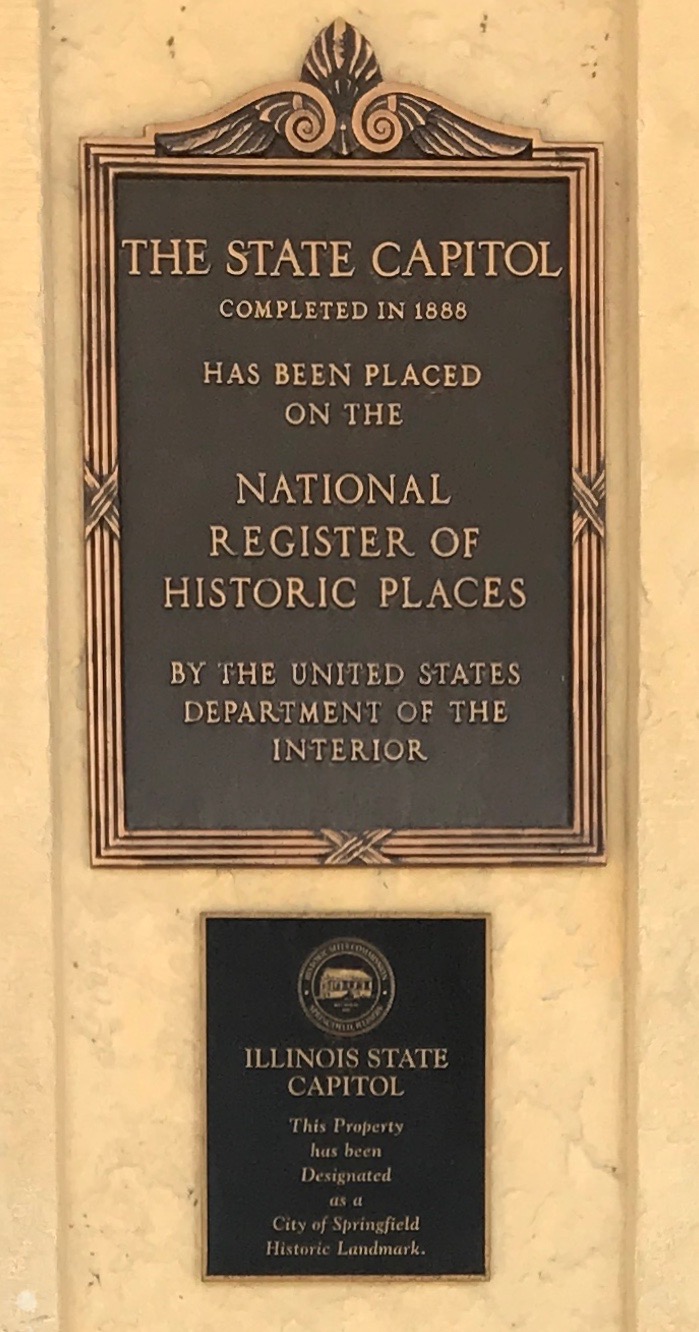
Here’s just a little more information about the building’s history and status.
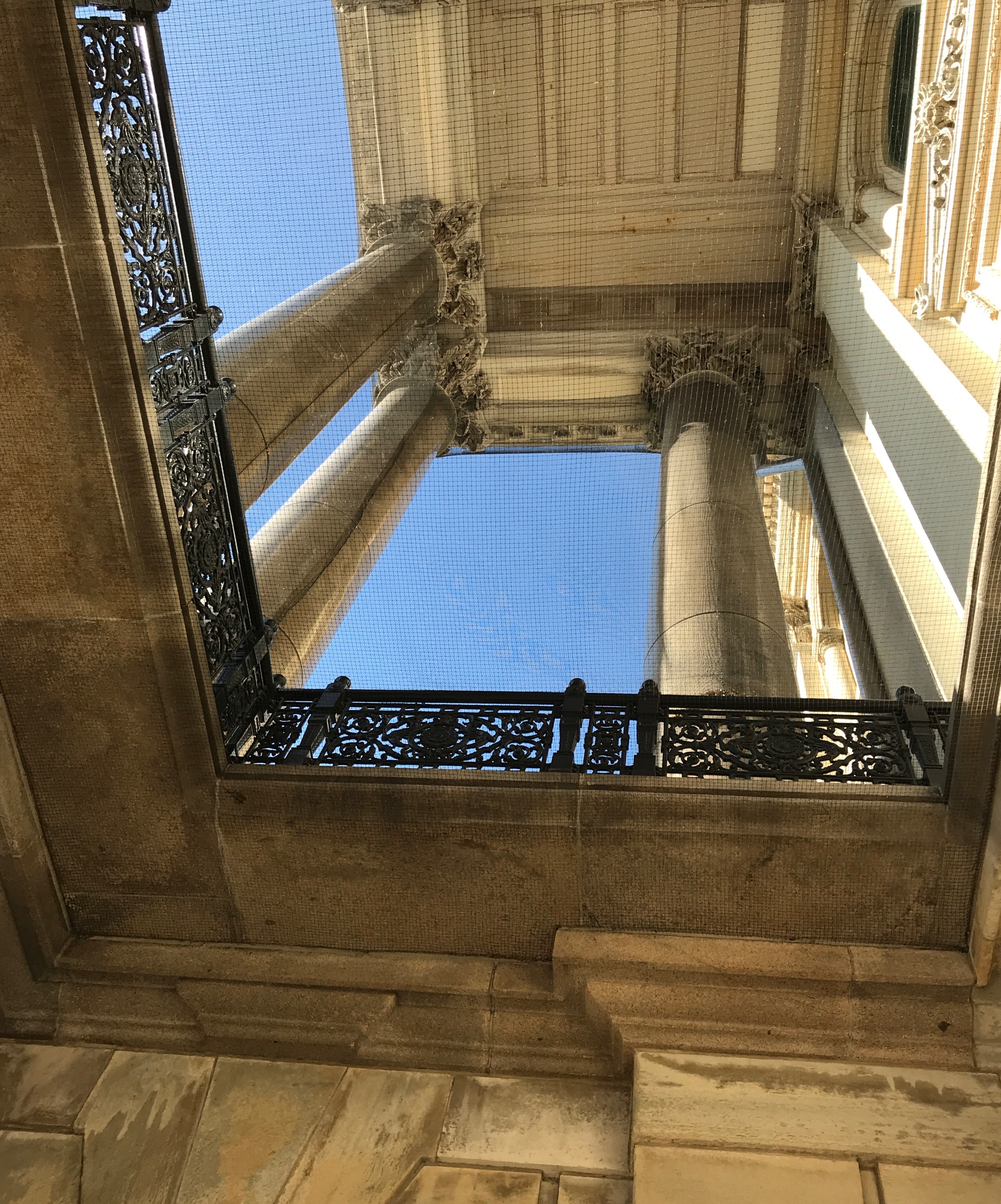
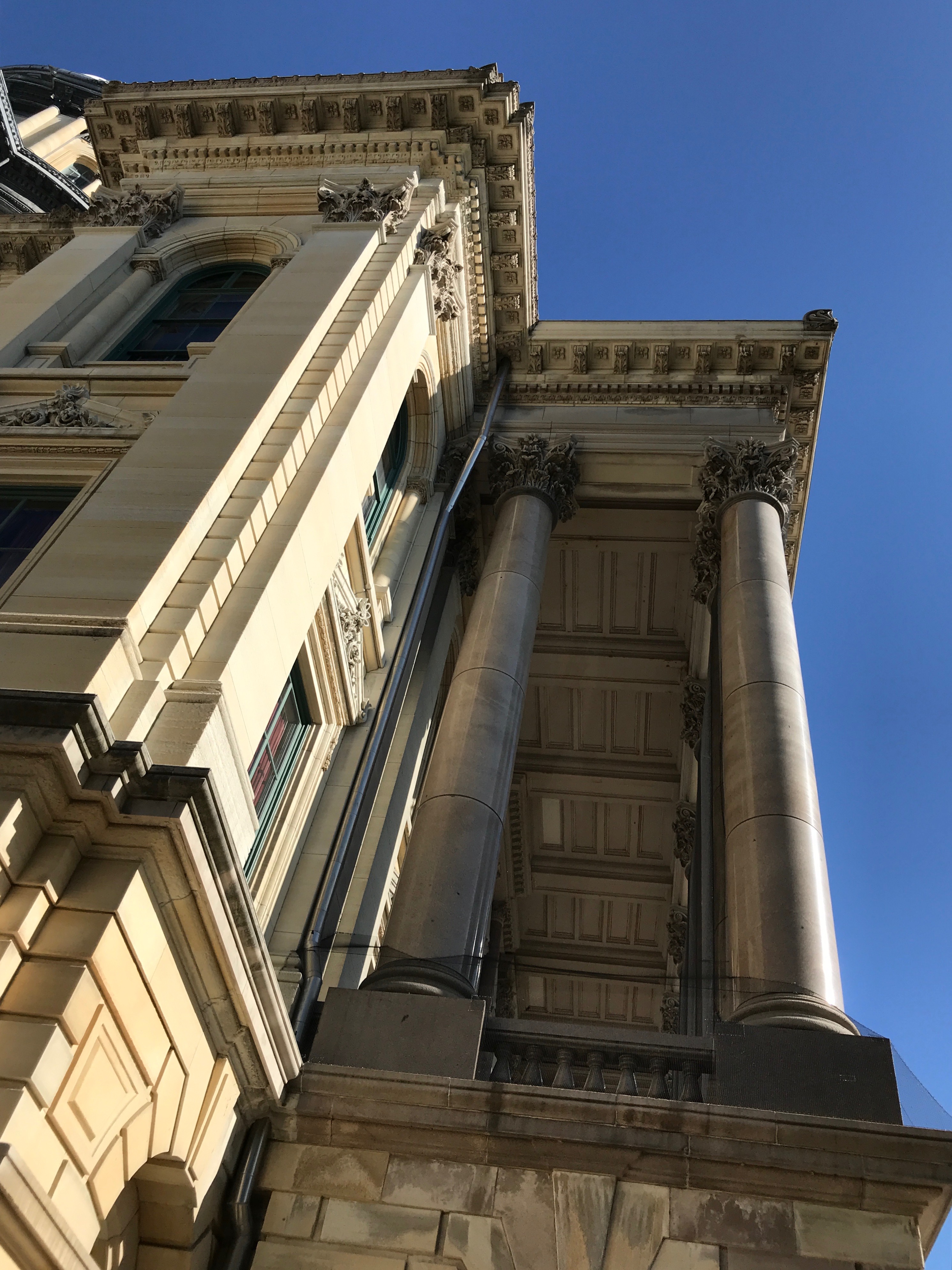
I had to satisfy myself with looking at the exterior. Can you see the mesh that is stretched across the opening right in front of the door? I imagine that it’s there to discourage avian intrusions.
It’s too bad I couldn’t get inside, but at least my Loyal Readers are spared details about the construction and my arty shots of hinges, door knobs, and mail chutes.
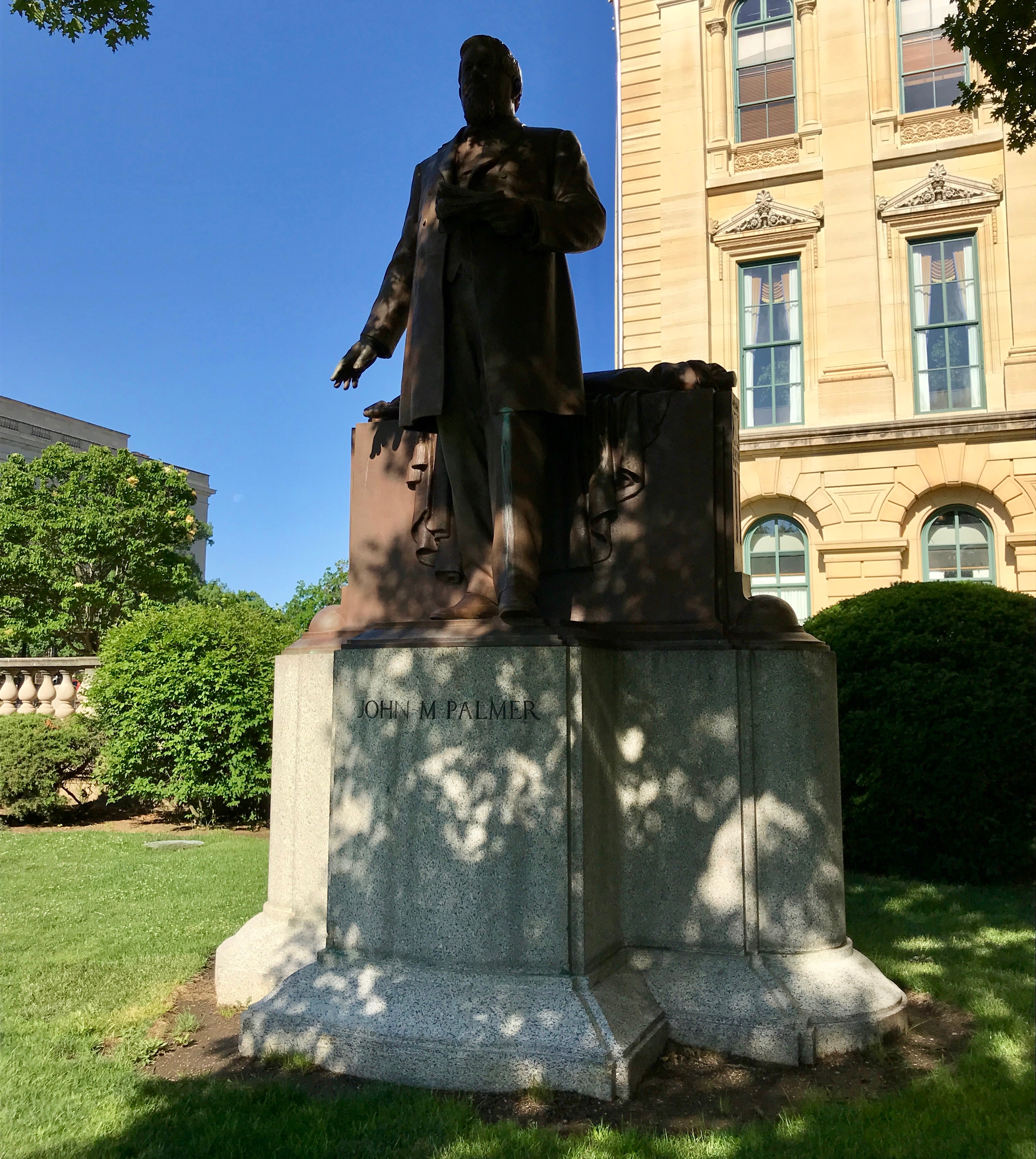
Here we have a statue of John M. Palmer. The only Palmers I knew of were Arnold and my brother’s (and grandfather’s) middle name – oh, and The Palmer House in Chicago. I had to look him up. It turns out that he was a Civil War General who fought for the Union, the 15th Governor of Illinois and a presidential candidate in 1896.
According to my Preferred Source, Palmer switched political parties throughout his life, starting out a Democrat. He became in turn an anti-Nebraska Democrat (against state sovereignty on slavery), a Republican, a Liberal Republican, returned to being a Democrat, then ended as a Bourbon Democrat. He said, “I had my own views. I was not a slave of any party,” and added, “I thought for myself and [have] spoken my own words on all occasions.”
Bourbon Democrat, eh? That’s the first I’ve heard of that party.
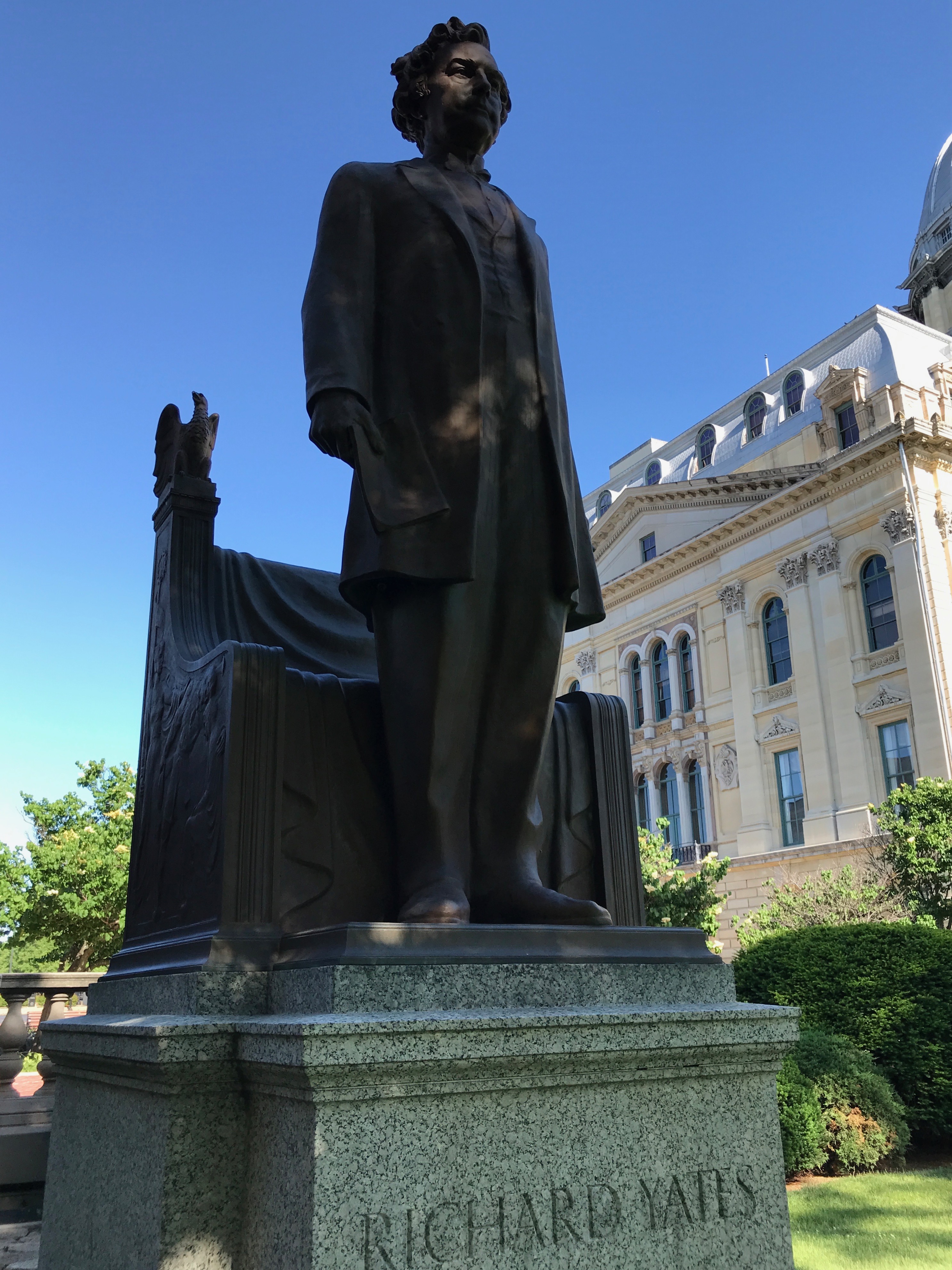
Then there was a statue of Richard Yates, who was governor of Illinois during the Civil War. Incidentally, his son, who was also named Richard Yates, eventually became governor. Can you say, “Dynasty?” (I knew you could.) Another interesting fact about Richard Yates, Jr, is that he was the first governor of Illinois who was actually born in the state. Well, I thought it was interesting. It goes to show you that we aren’t all that far removed from the days of westward expansion and “Go West, Young Man, Go West.”
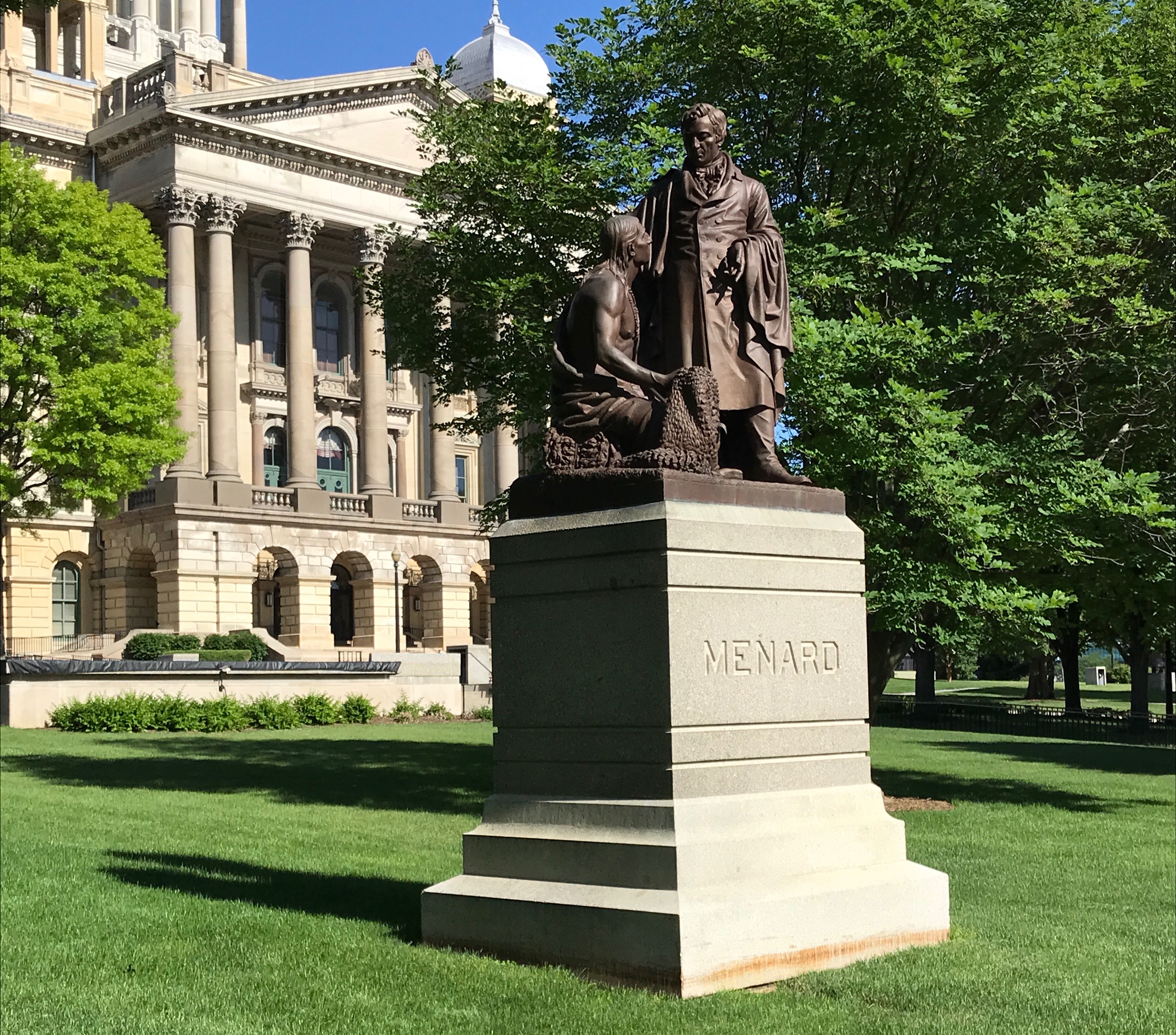
I had no idea who Menard was. I had to go look him up. This is Pierre Menard. He was born in Montreal, and had many children. Four with his first wife, who died. Two years later, he remarried and had eight more children.
Now how did he get from Montreal to Illinois? Stick with me, here. He was a member of the Indiana Territorial Legislature. The Illinois Territory was a frontier region of the United States, which was formerly a part of the Illinois Country, which was a portion of New France. It was administered originally from Quebec and later transferred to Louisiana. I guess it was part of the deal when we bought Louisiana. When Illinois became a state in 1818, the population of the new state was divided between French-speaking and English-speaking citizens. To balance things out, Menard became the state’s first Lieutenant Governor, serving from 1818 to 1822 with the first governor, Shadrach Bond.
I came across another statue of a senator, I didn’t recognize him from looking at the statue, but anyone who was around in the 1960s would probably recognize the name of Senator Everett Dirksen.
Everett McKinley Dirksen
According to my Preferred Source, his parents gave him the middle name to honor President William McKinley. Now, since Dirksen was born January 4, 1896, and McKinley didn’t assume office until March 4, 1897, I can only assume they followed politics avidly or they held off naming him for a while.
He helped write and pass the Civil Rights Acts of 1964 and 1968. In spite of these progressive actions, he was quite conservative, and came to the Senate with the support of Joseph McCarthy. He did his best to talk McCarthy into apologizing to avoid censure, and then voted against censuring him.
On a lighter note, he is credited with the expression, “A billion here, a billion there, pretty soon, you’re talking real money.” There is no record of him saying it, but someone must have said it.
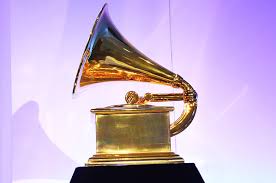
He also became the oldest person, for a time, to reach the Billboard Hot 100’s top 40 for his recording of Gallant Men. In 1968, his album “Gallant Men” won a Grammy Award for Best Documentary Recording. He also became the oldest person at that time to reach Billboards Hot 100s top 40 when the single reached #33. Two weeks later, it reached #29, just ahead of two versions of “Wild Thing” by William “Bill” Minkin. The A-side version was an impersonation of Senator Bobby and the B-side version was an impersonation of Senator Everett McKinley.
And, if you want to hear Senator Bobby, click here.
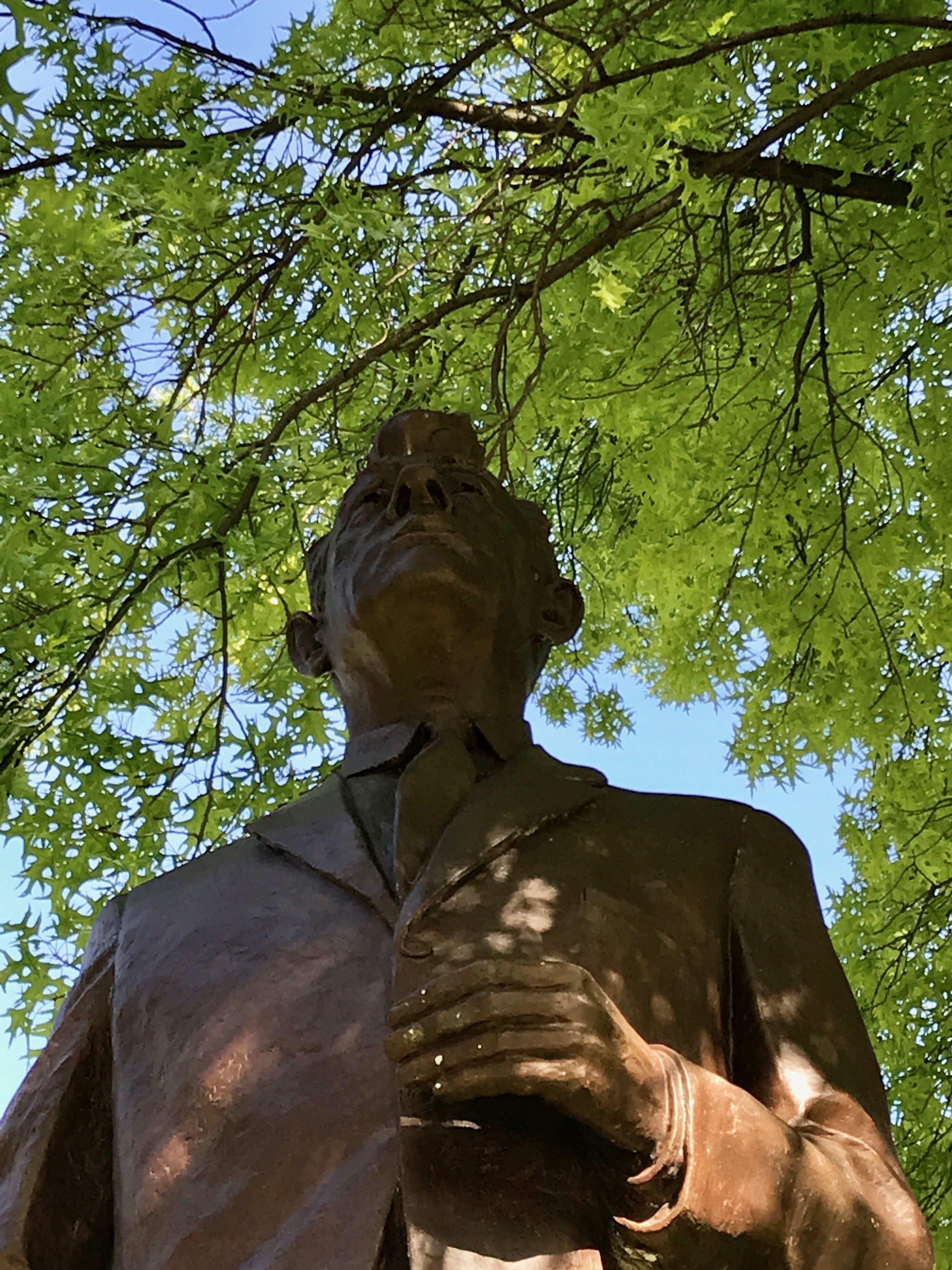
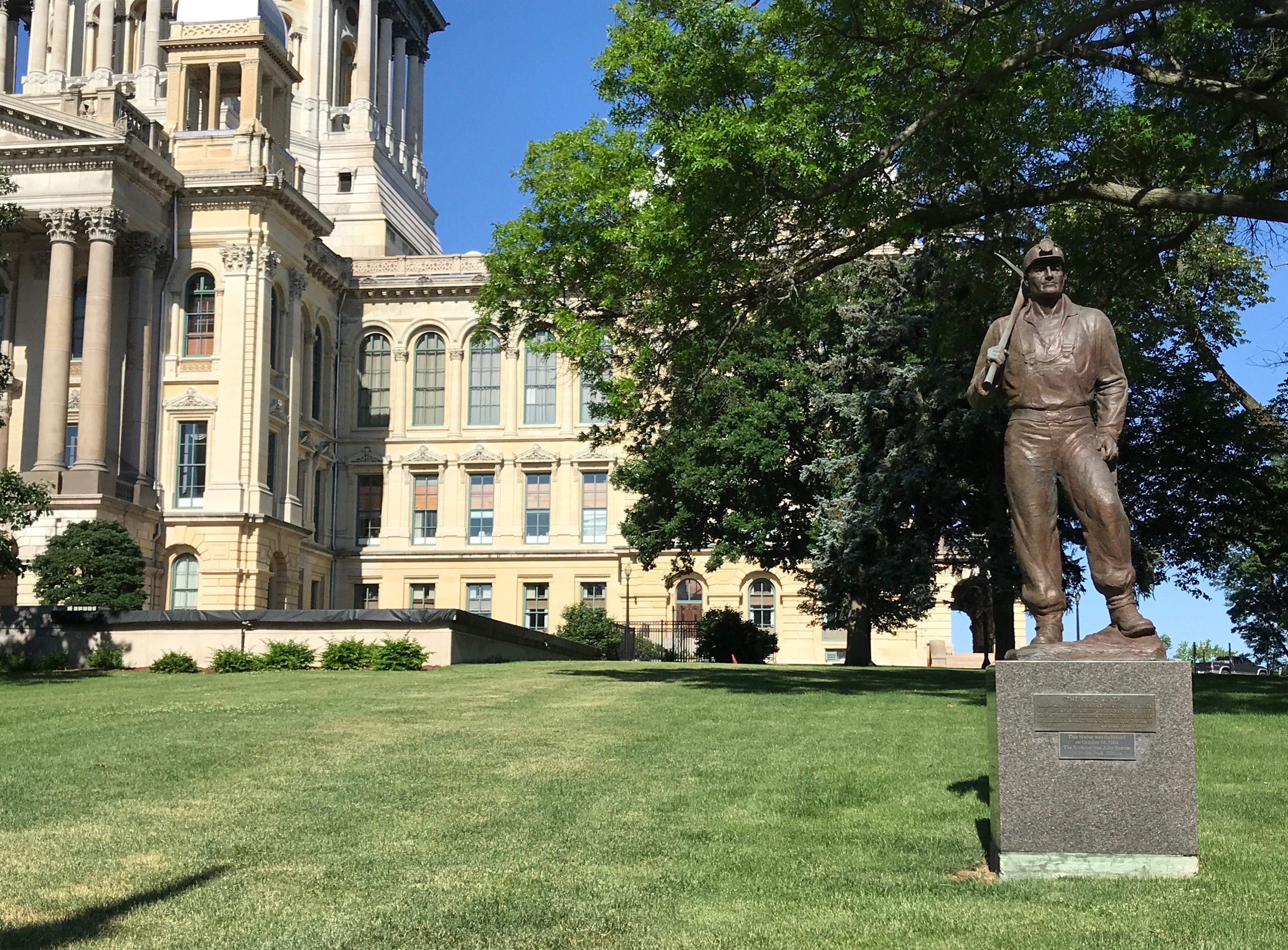
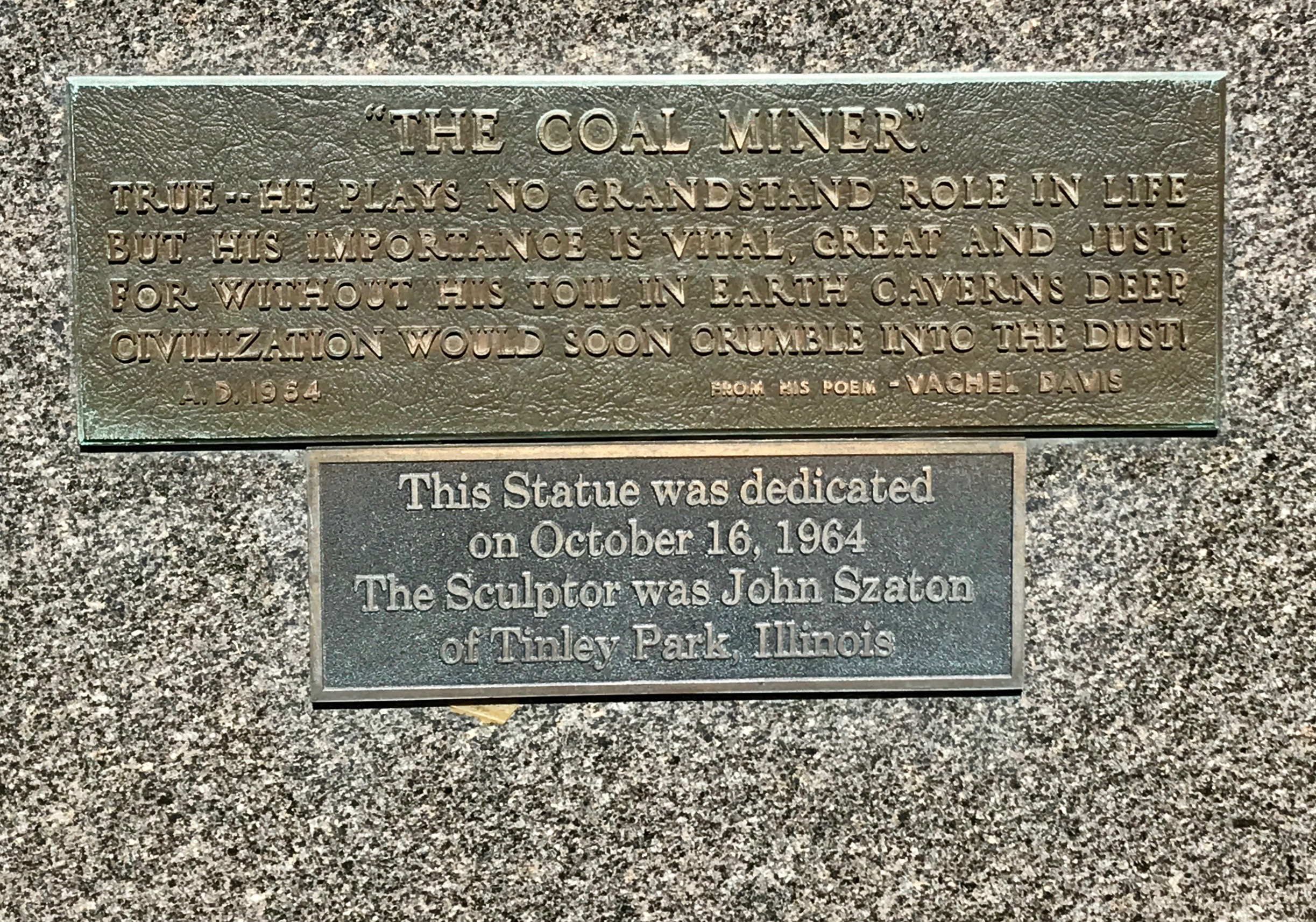
I did find it heartening that the workers of Illinois were also honored on the grounds of the capitol.
It might have been nice if there were some mention of the women and their contributions in Illinois.
And that was it for my speed visit to Illinois’ state capitol.
My next stop, though, was my main purpose for visiting Springfield.
The Abraham Lincoln Presidential Library and Museum. On my last visit, it was still under construction. It opened in April 2005, and this was the first time I was back in the neighborhood. According to my Preferred Source, it combines “traditional scholarship with 21st-century showmanship techniques.”
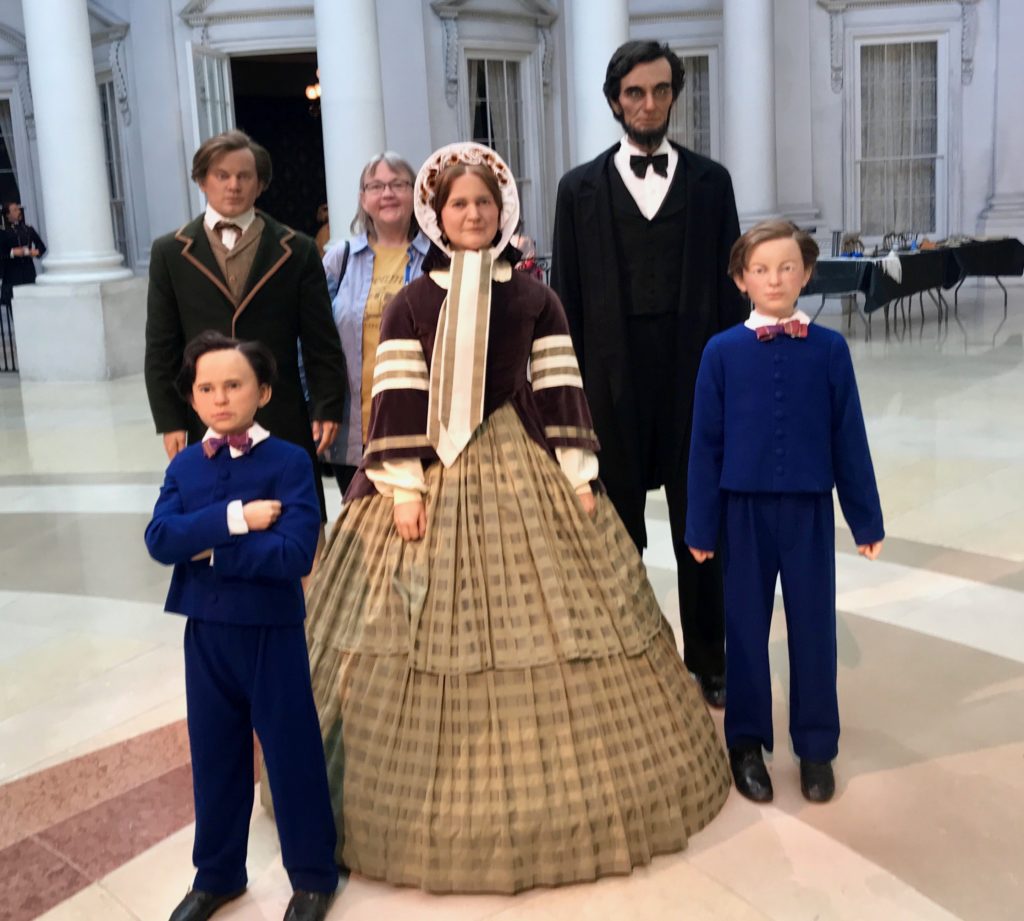
Madam Tussaud, of wax museum fame, lived December 1, 1761 – April 16, 1850. That hardly seems to be 21st-century showmanship, but I guess everything old is new again.
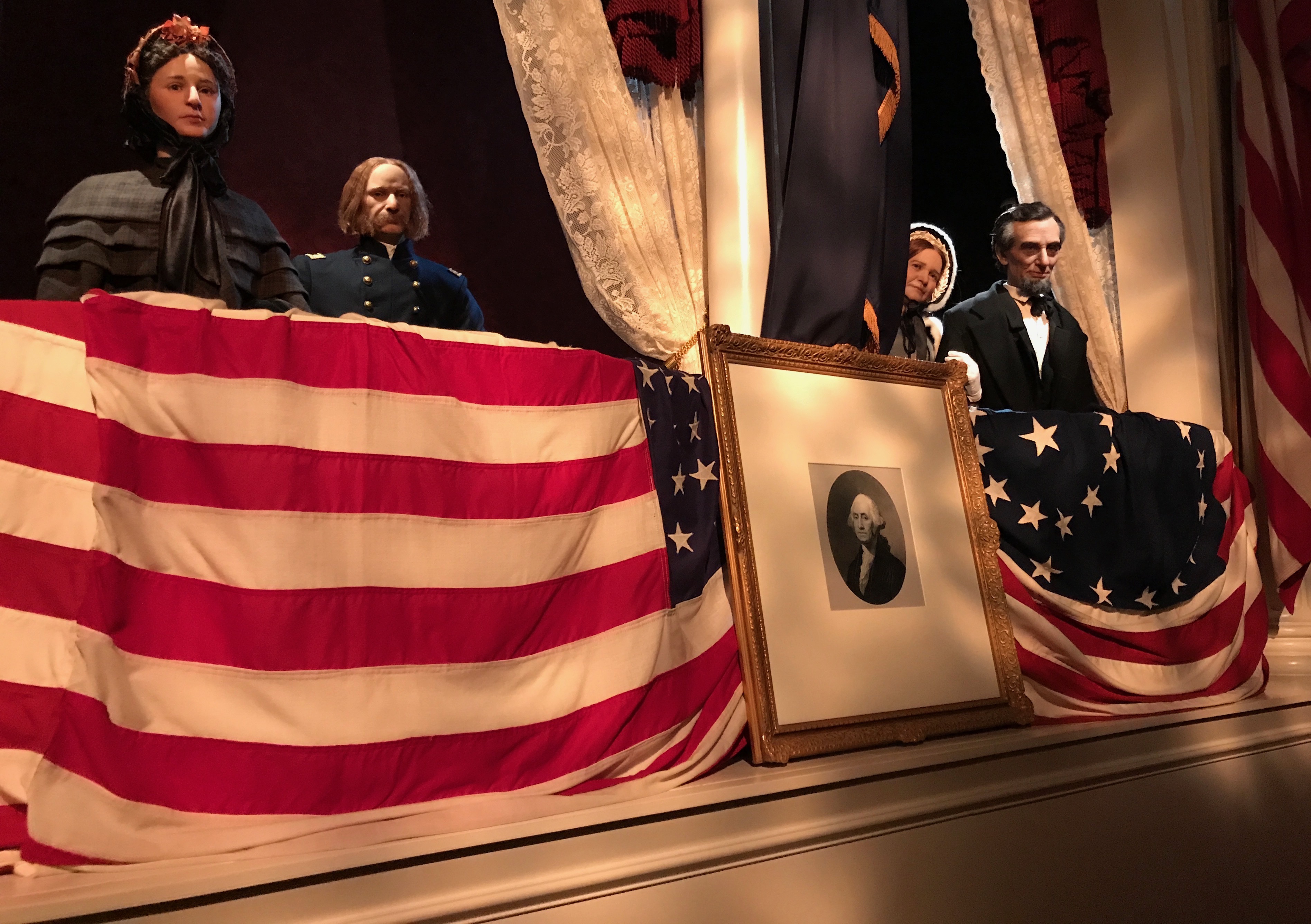
I was pleased that the Lincolns were waiting to receive me, although I did feel underdressed.
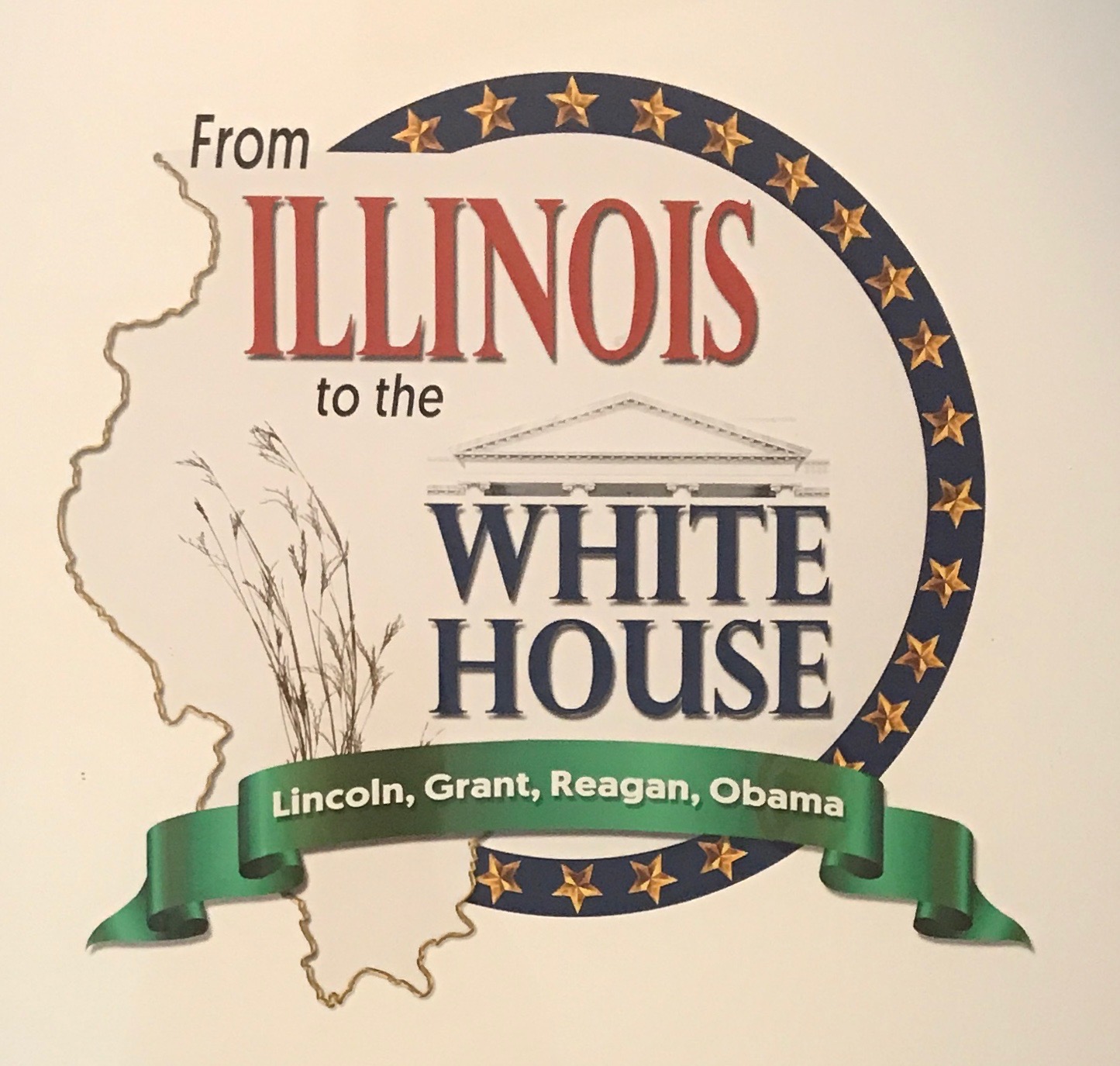
There were several galleries to visit. The first exhibit I toured was dedicated to presidents who had strong ties to Illinois.
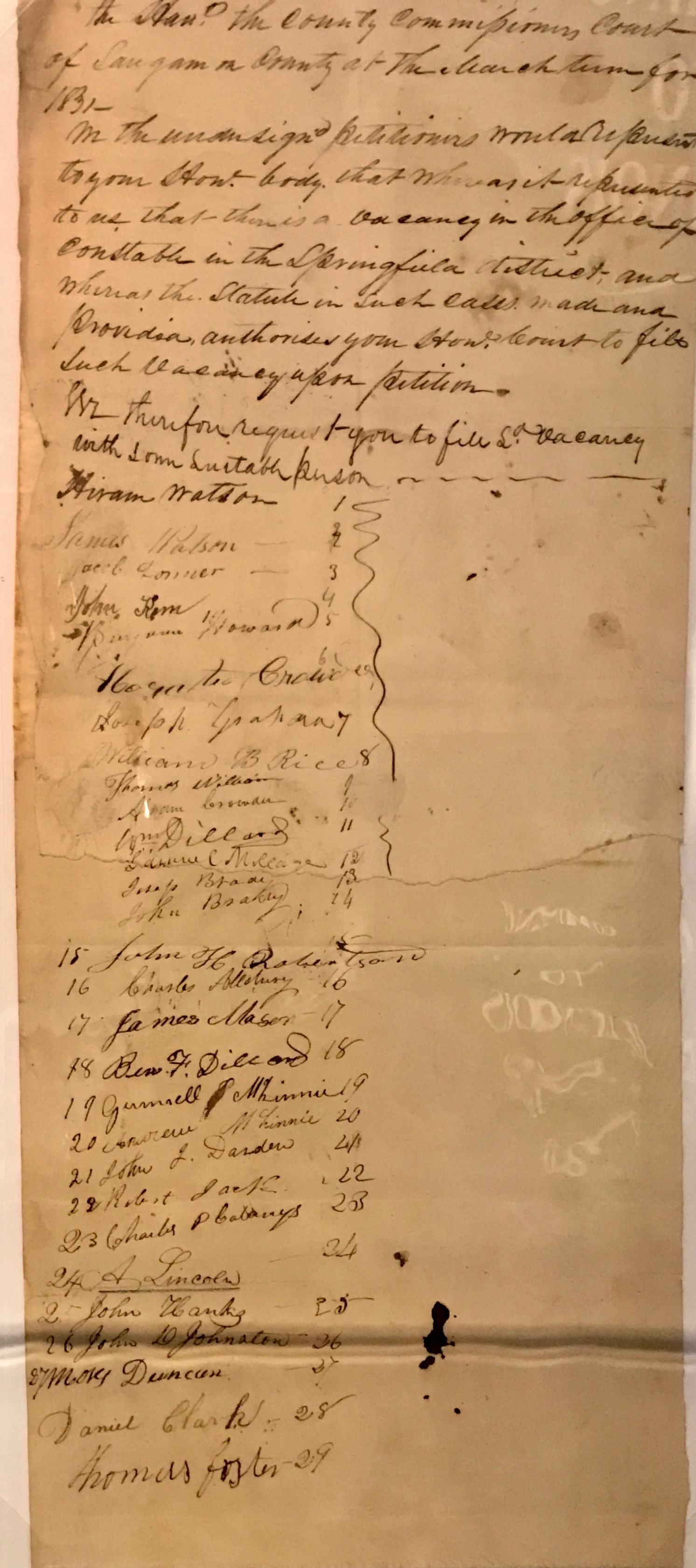
There were a number of interesting artifacts. For instance, this is the second political document ever signed by Lincoln. In fact, Lincoln signed this petition three times. In addition to his own signature, he signed on behalf of his cousin, John Hanks, and stepbrother John D. Johnson. The document urged the Commissioners’ court of Sangamon County to fill a vacant constable position. Their petition was successful, and the court appointed Willian Constant.
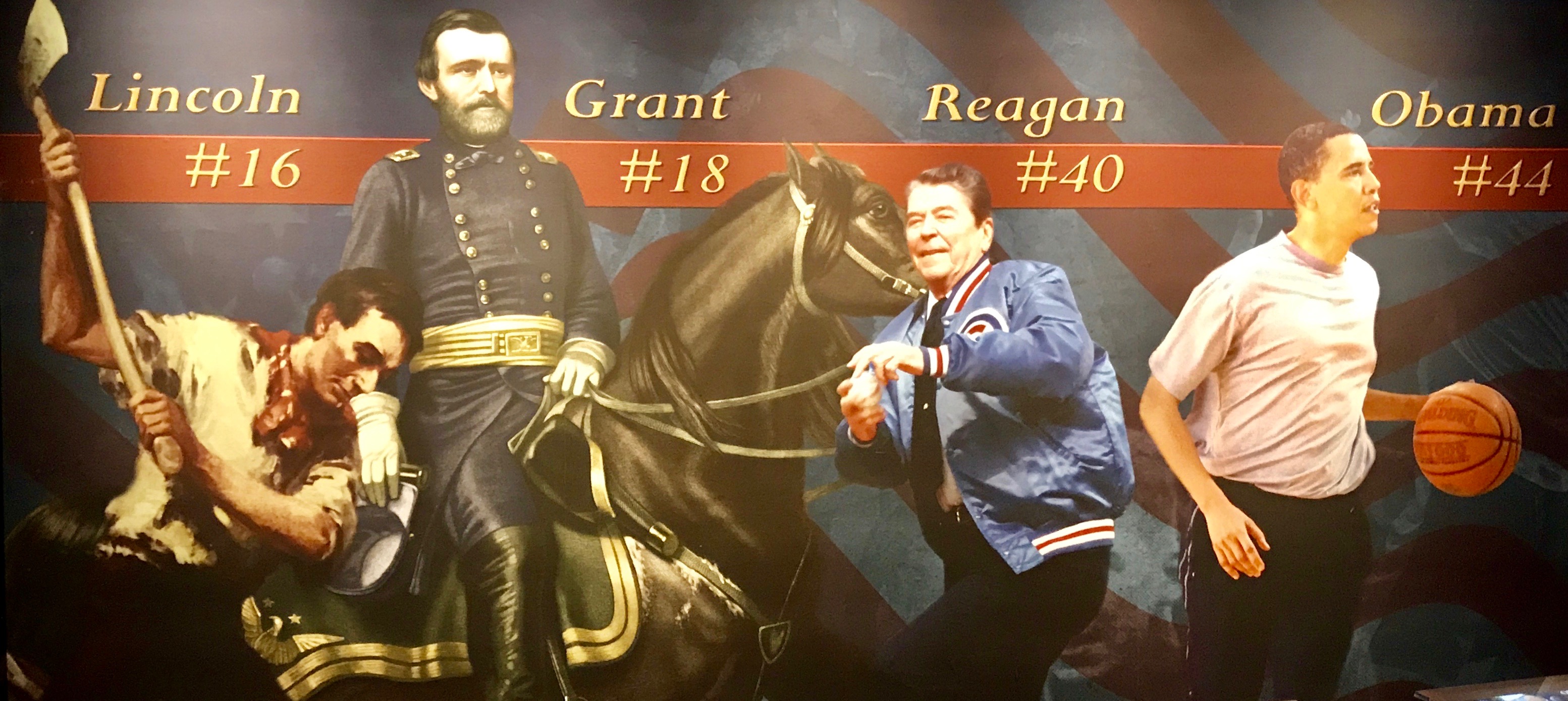
These four presidents were examples of a time when men of a less than wealthy background could be elected to lead the country.
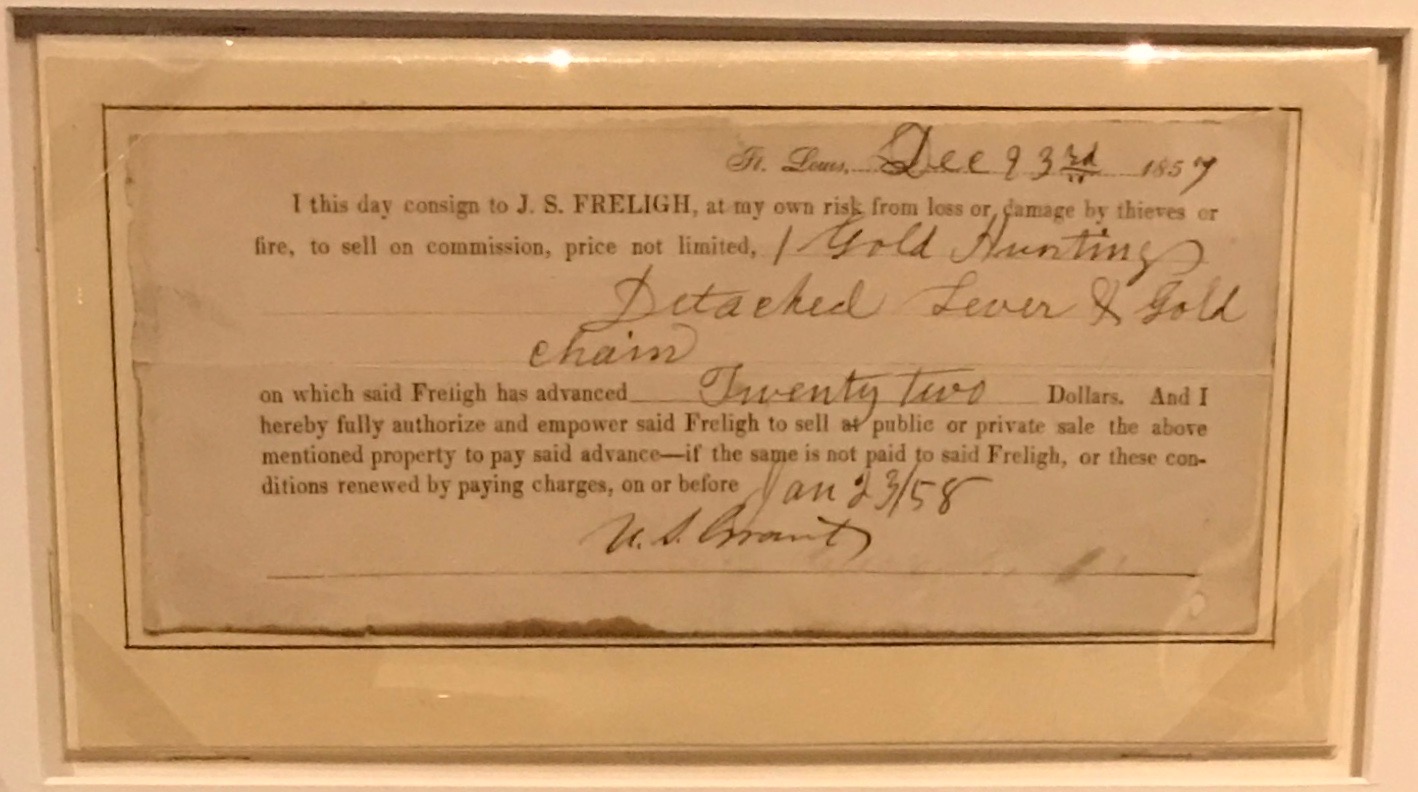
At what was described as Grant’s lowest point, he had to pawn his gold watch. He was facing increasing setbacks at his St. Louis farm, “Hardscrabble.” The sign accompanying the pawn ticket theorizes that he pawned it – for $22 – to be able to afford Christmas presents for his children. The economic distress he suffered trying to farm motivated Grant’s move to Illinois.
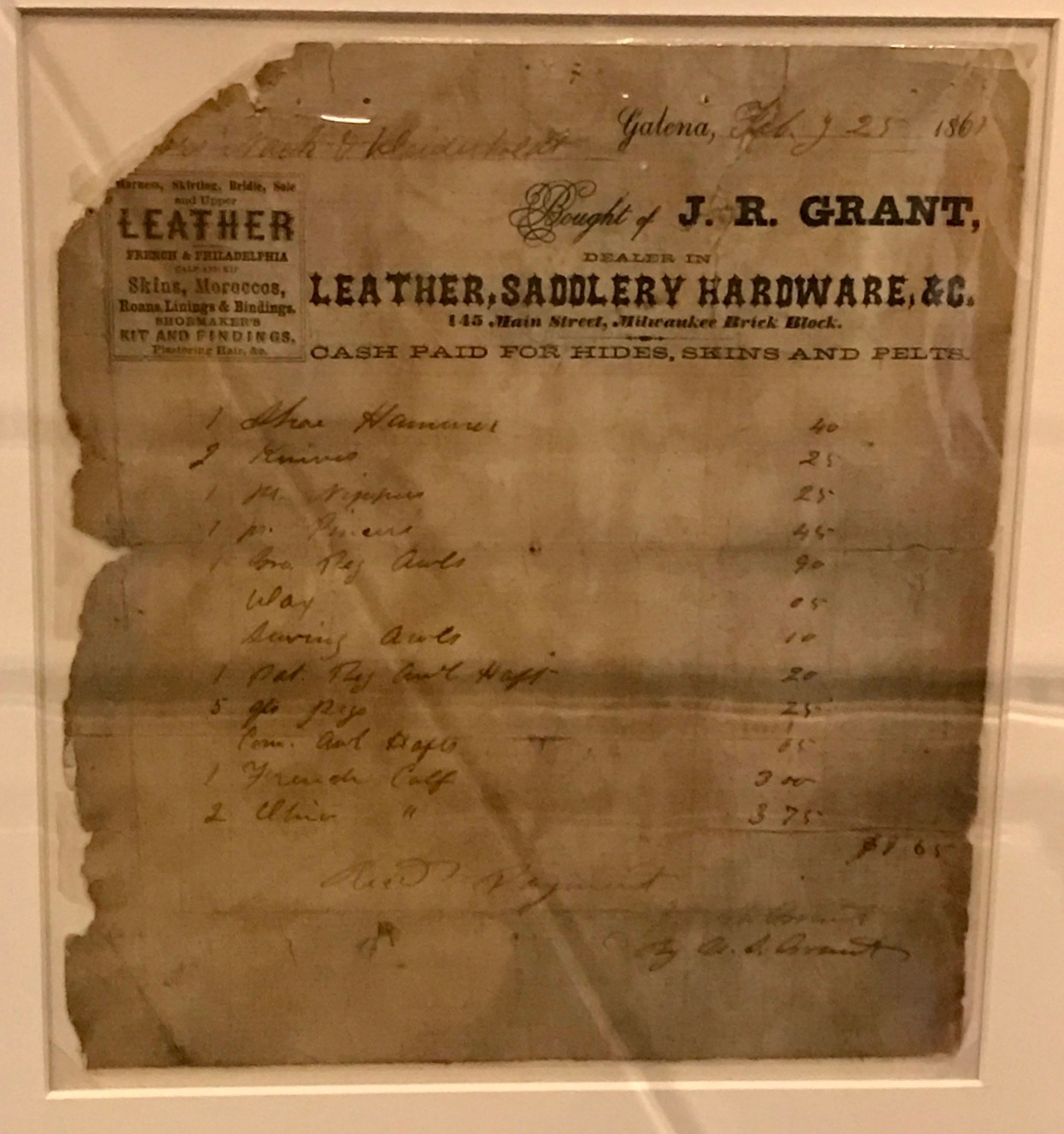
This is an invoice from the Galena leather goods store owned by Grant’s father, Jesse. It was signed by Grant on February 25, 1861, only two months before Grant came to Springfield to help organize the Union war effort.
Understandably, this museum was heavily Lincoln-centric – or maybe I just took pictures of what interested me. If you want to check for yourself, you’ll have to visit.
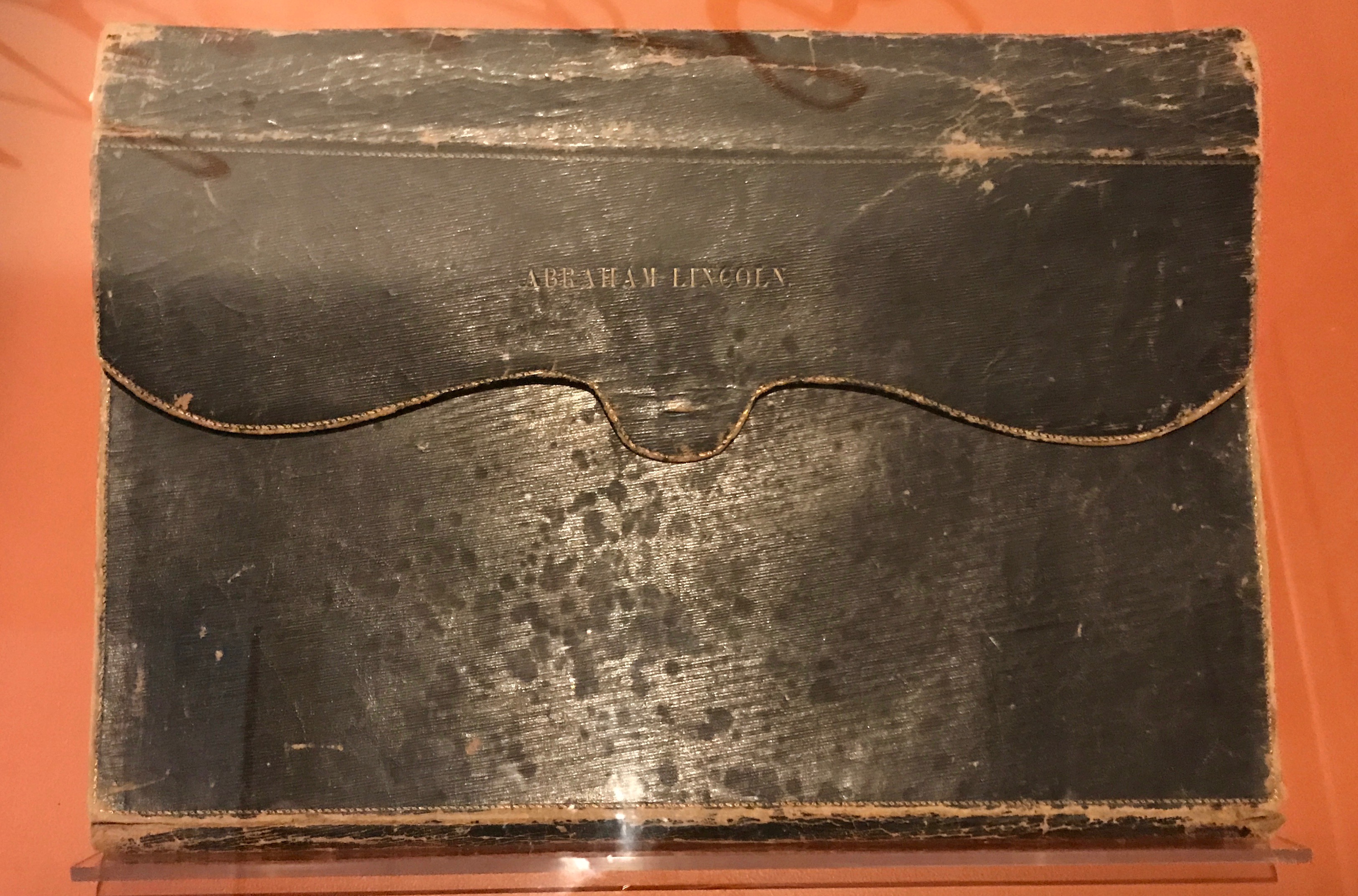
Here is his brief case.
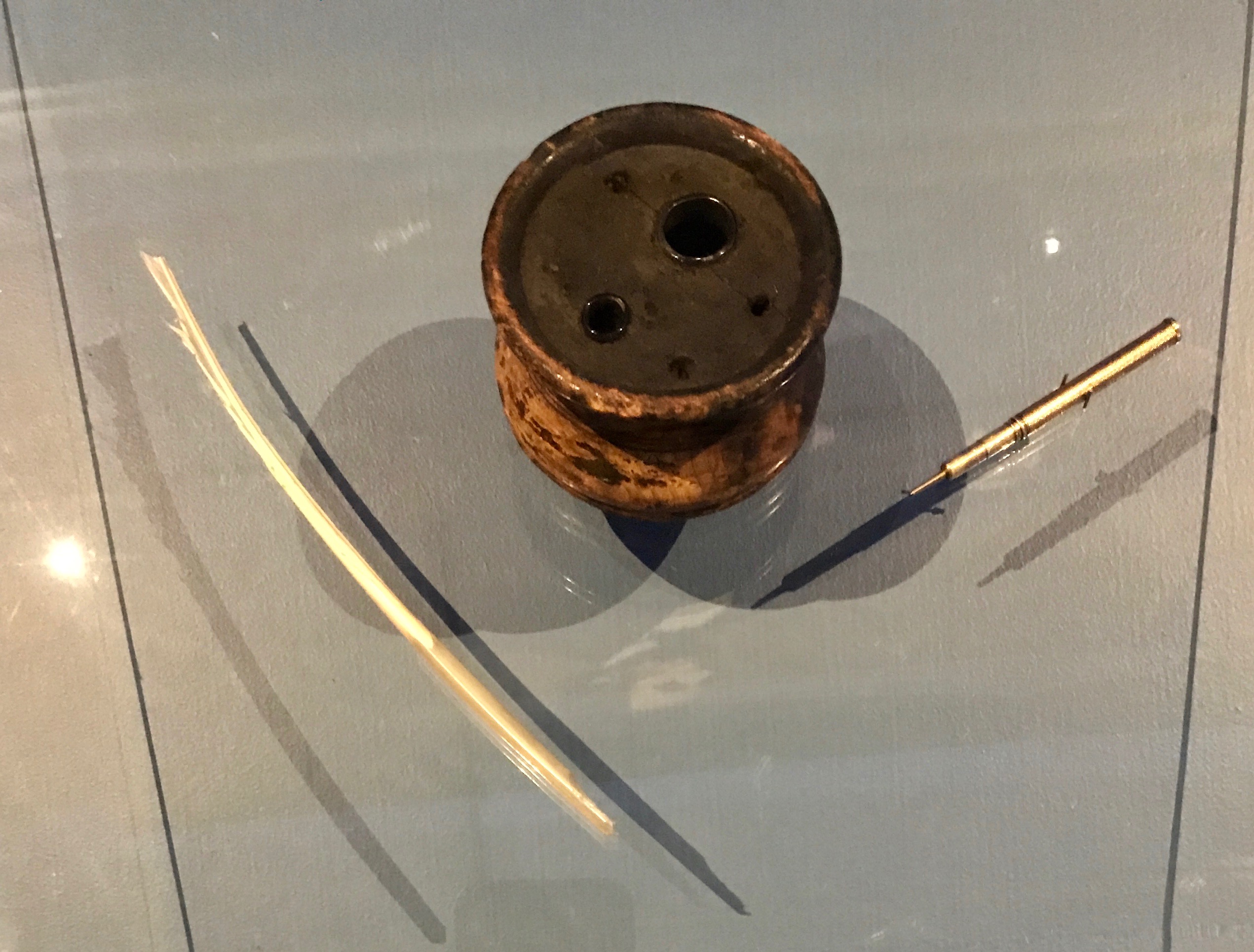
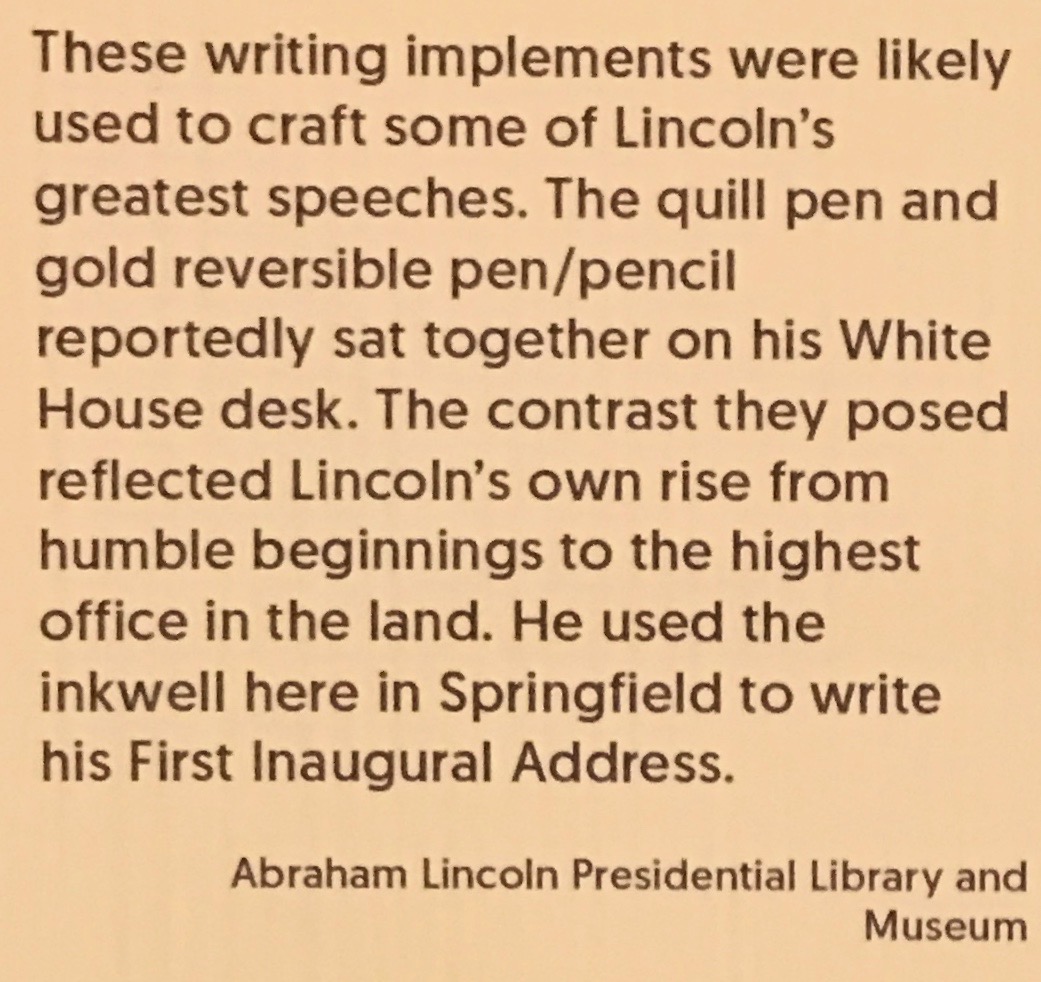
If you’d like to know more about these artifacts, read the sign I photographed from the exhibit.
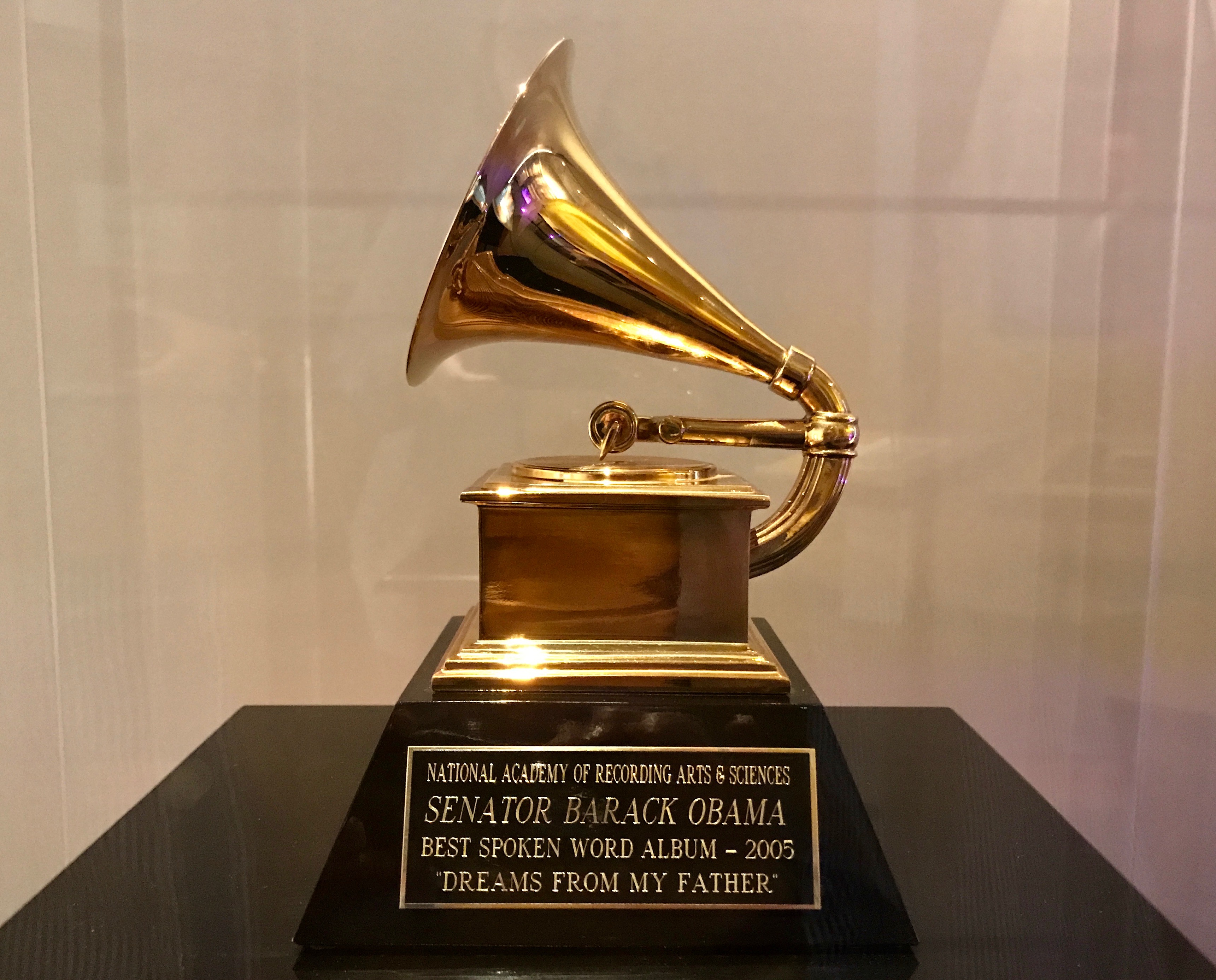
Senator Dirksen isn’t the only Illinois politician to win a grammy.
Here’s Barack Obama’s Grammy for “Dreams From My Father” in 2005.
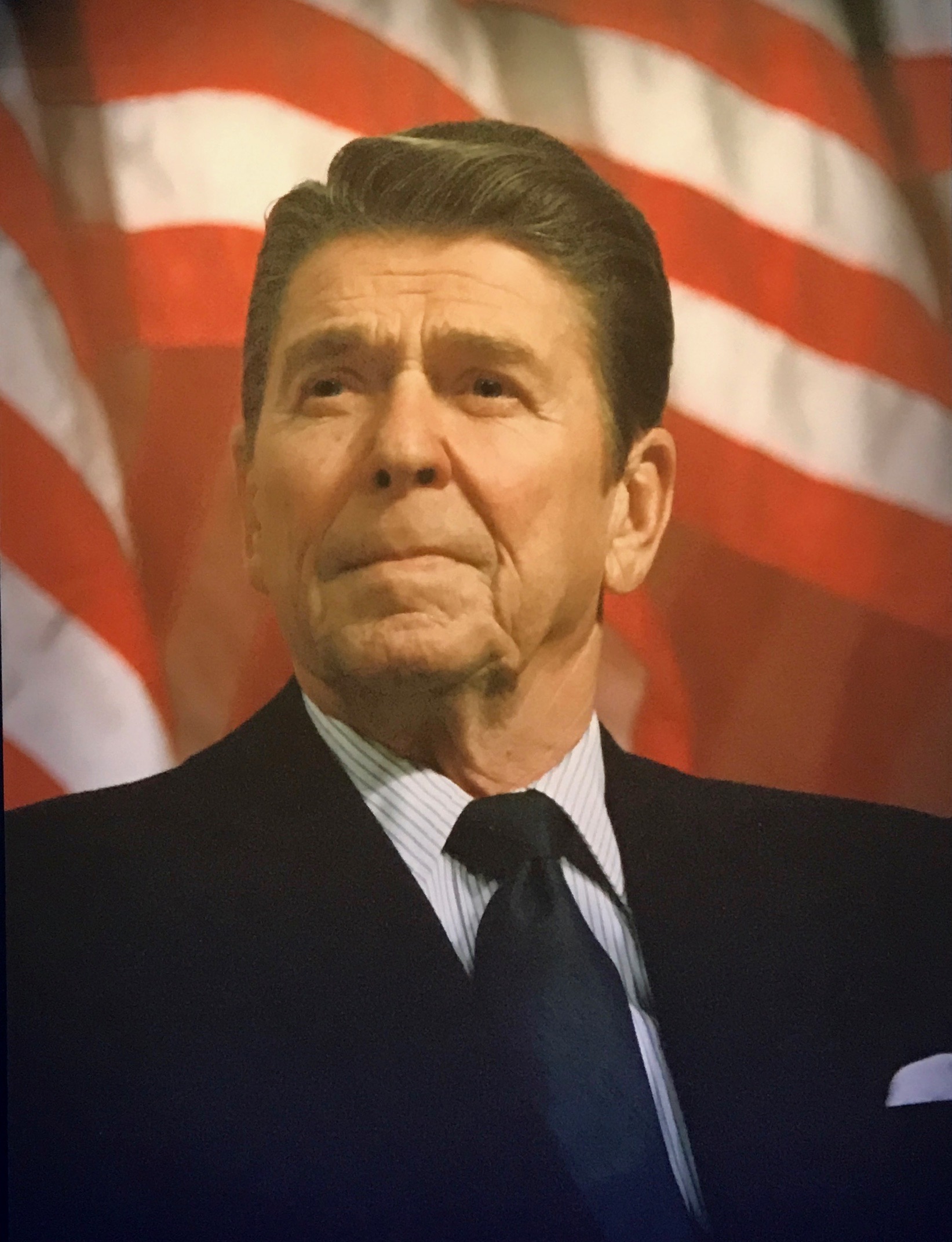
I didn’t seem to photograph anything from Ronald Reagan. Maybe all his mementos are at his Presidential Library in Simi Valley, California. Incidentally, the Reagan Library is the largest of the 13 federally operated presidential libraries.
Wait! Wasn’t Reagan the big proponent of small government? Ironic, isn’t it?
I guess this image of “The Great Communicator” will have to suffice.
And here the four Illinois boys who made good.
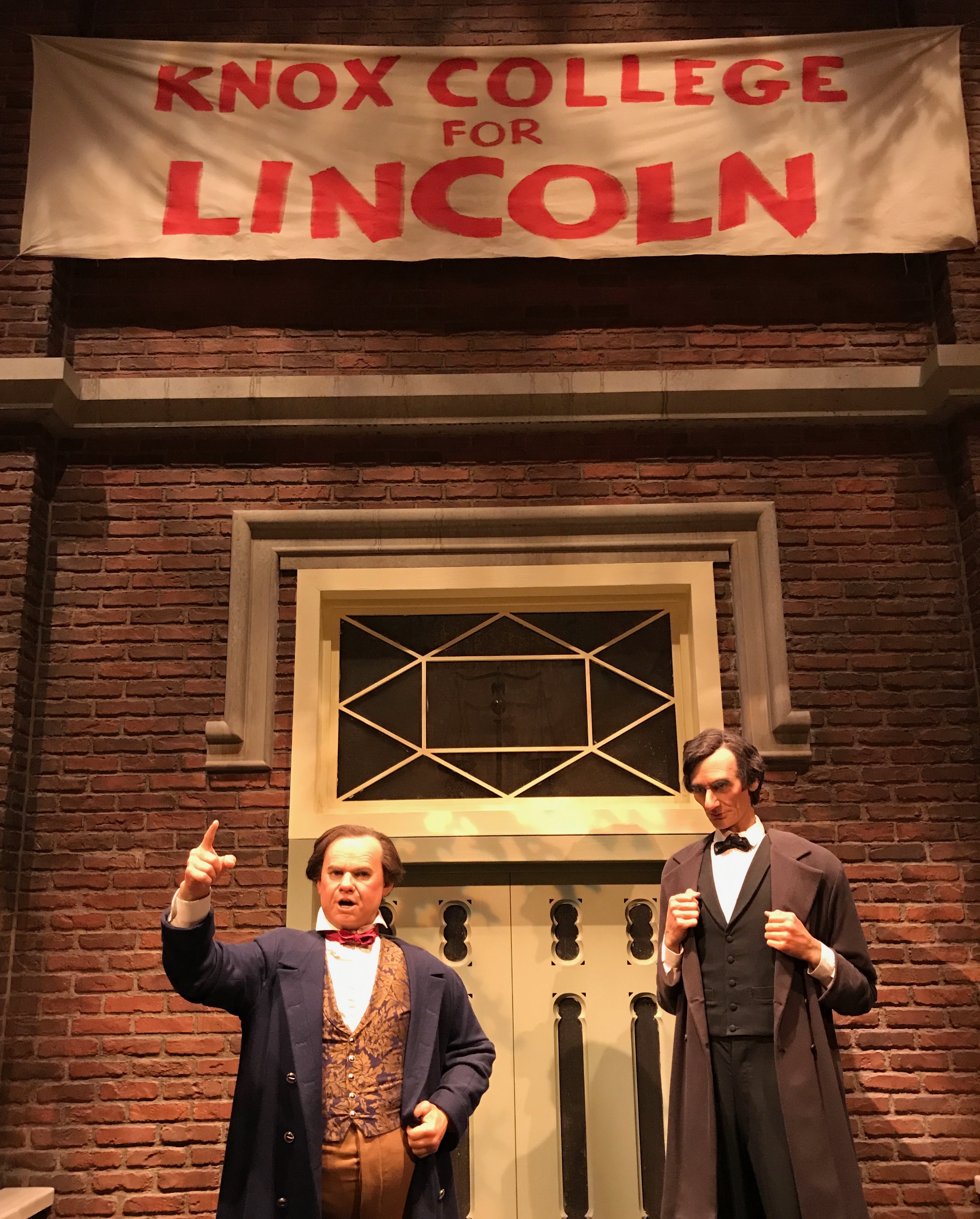
There was an interesting display about campaigning “back in the day.” The Lincoln-Douglas Debates – also known as the Great Debates of 1958 – was given attention. In this day of sound bites and Twitter foreign policy negotiations, long-form debate is quite anachronistic.
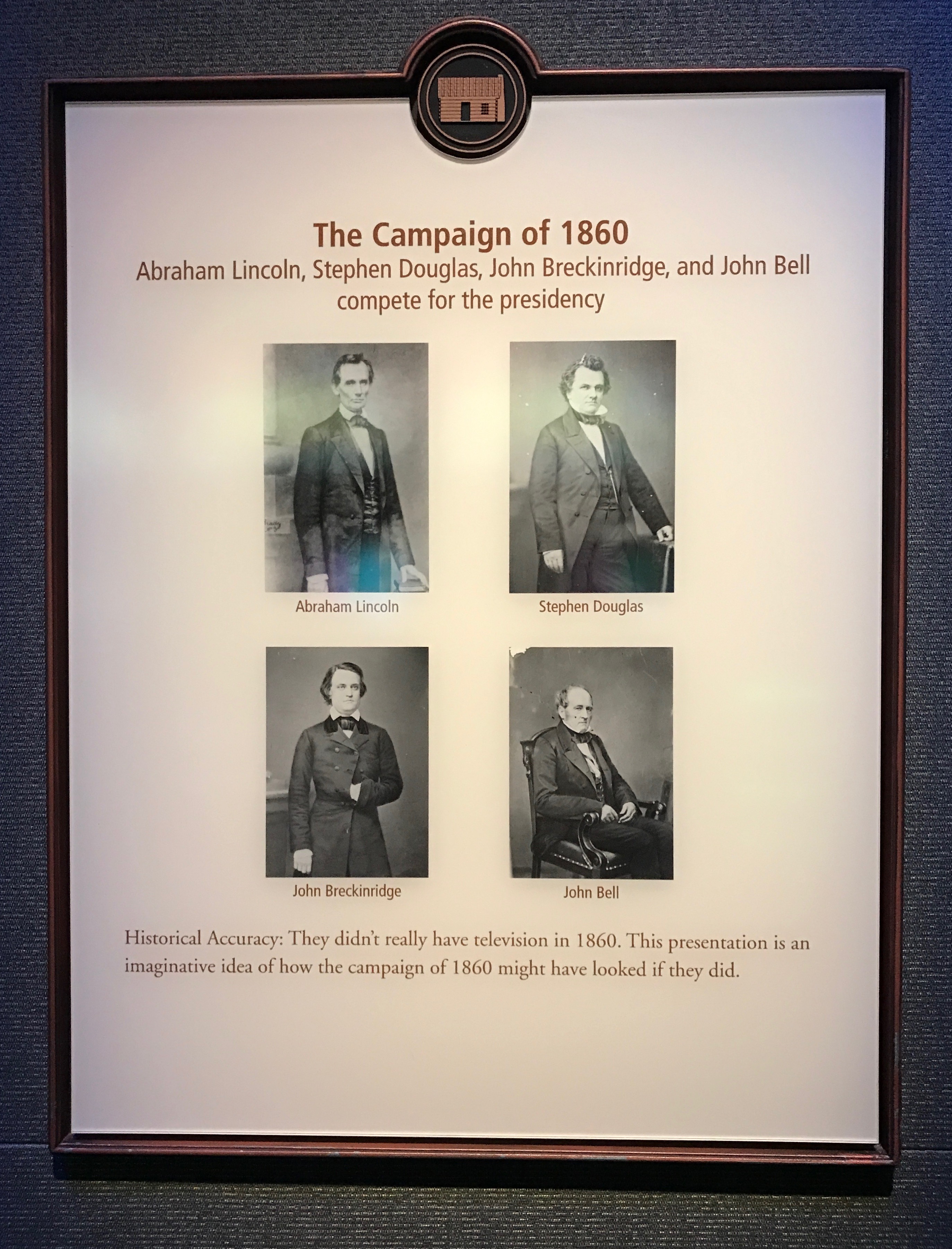
Exactly who ran for president in 1860?
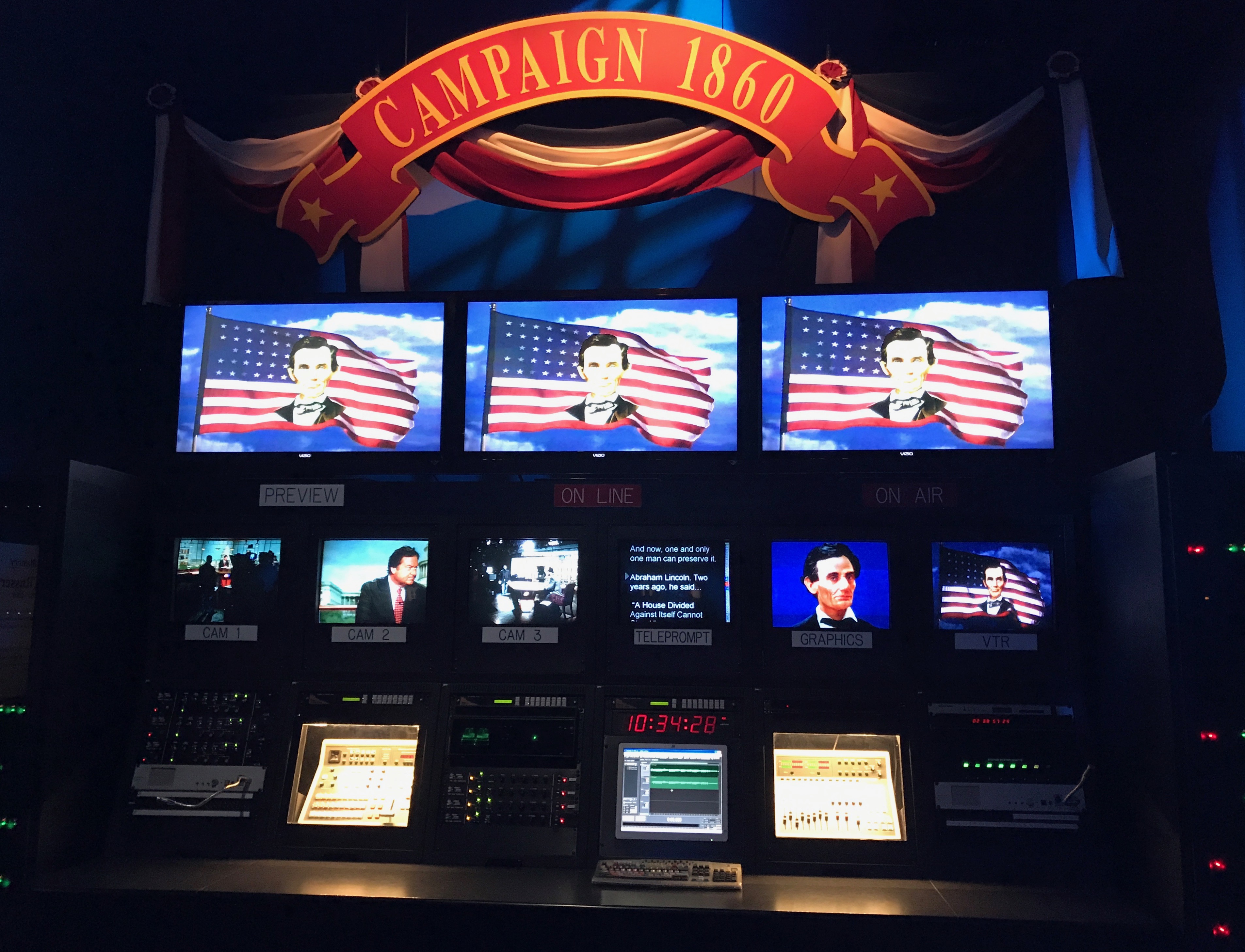
They had an exhibit that reimagined Lincoln campaigning via television.
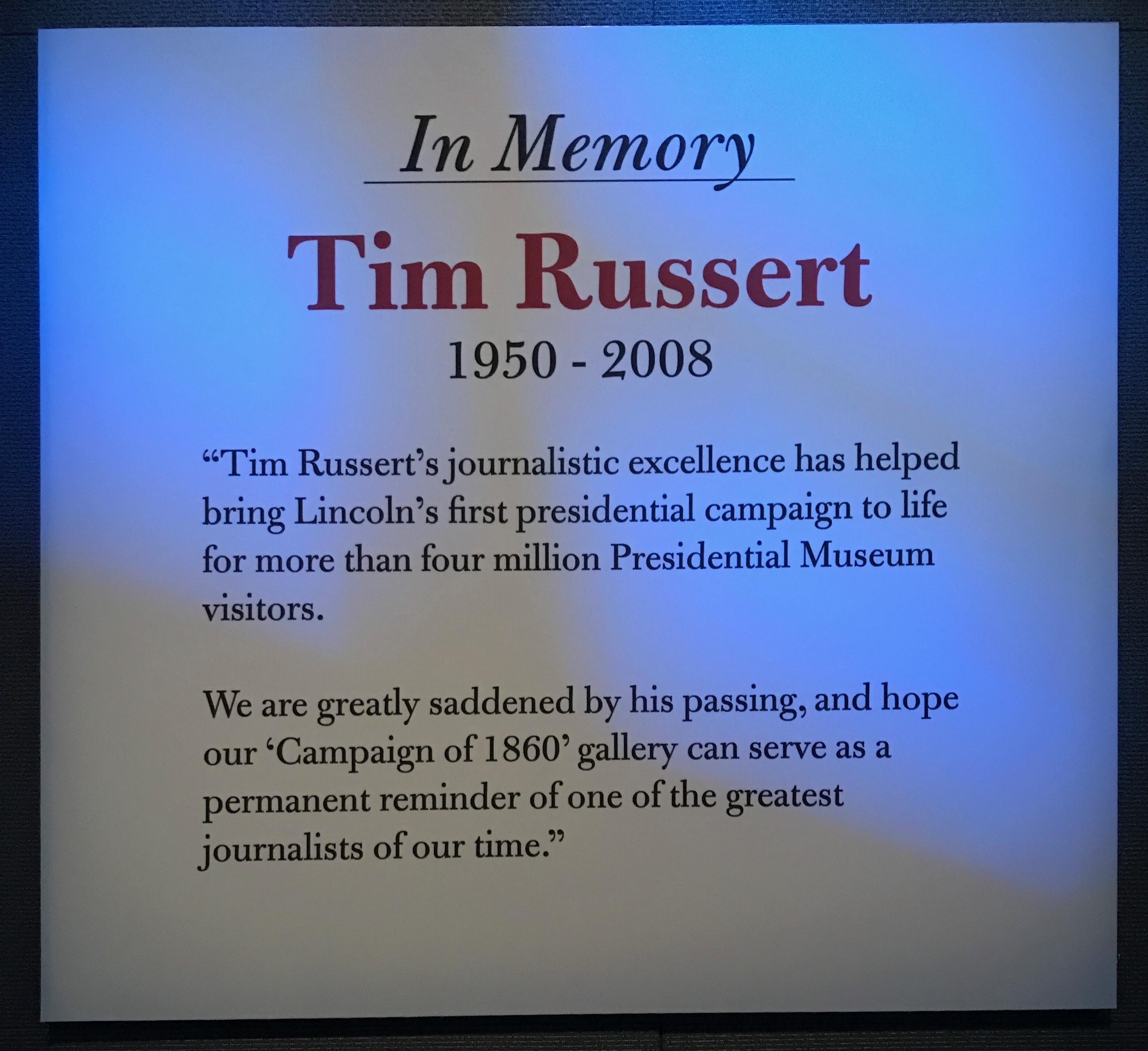
Here he is, being interviewed by Tim Russert, Buffalo hometown hero.
I guess this is the 21st century portion of the display, although, truth be told, political campaigning seems to be done more via Twitter and Facebook. But, can you imagine a display of tweets?
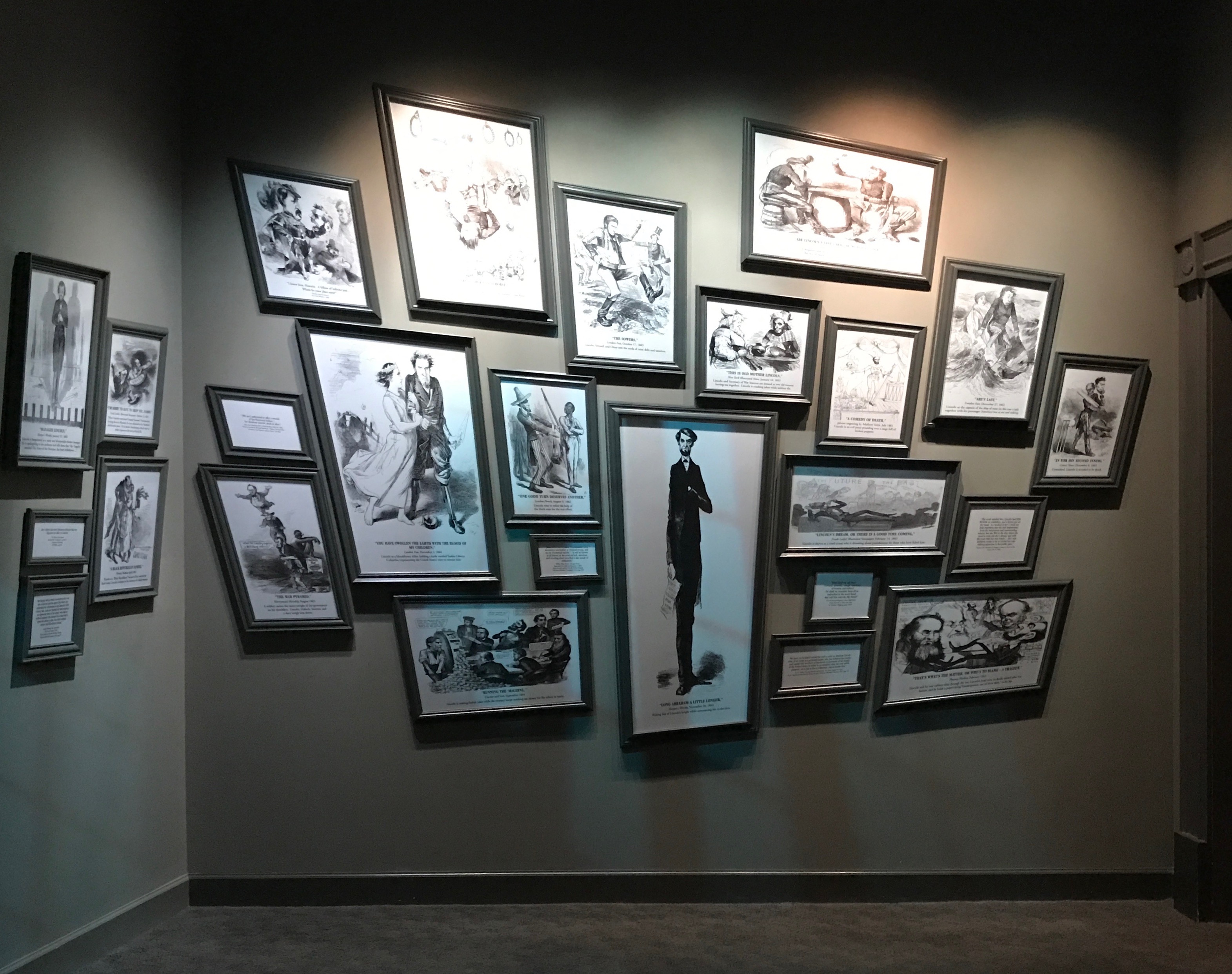
However, satire and political slant have always been part of the process.
I crossed back over to the family side of the museum.
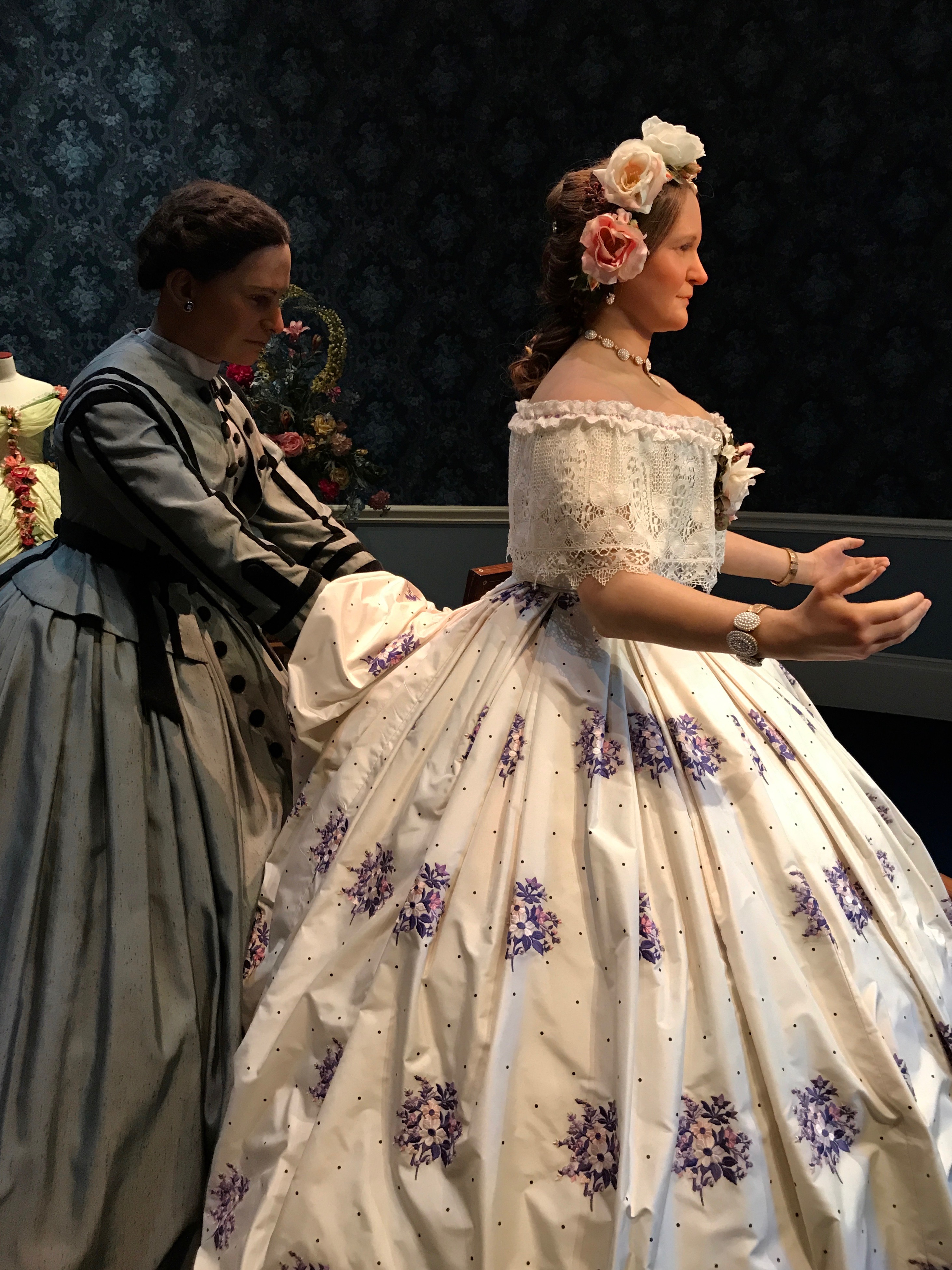
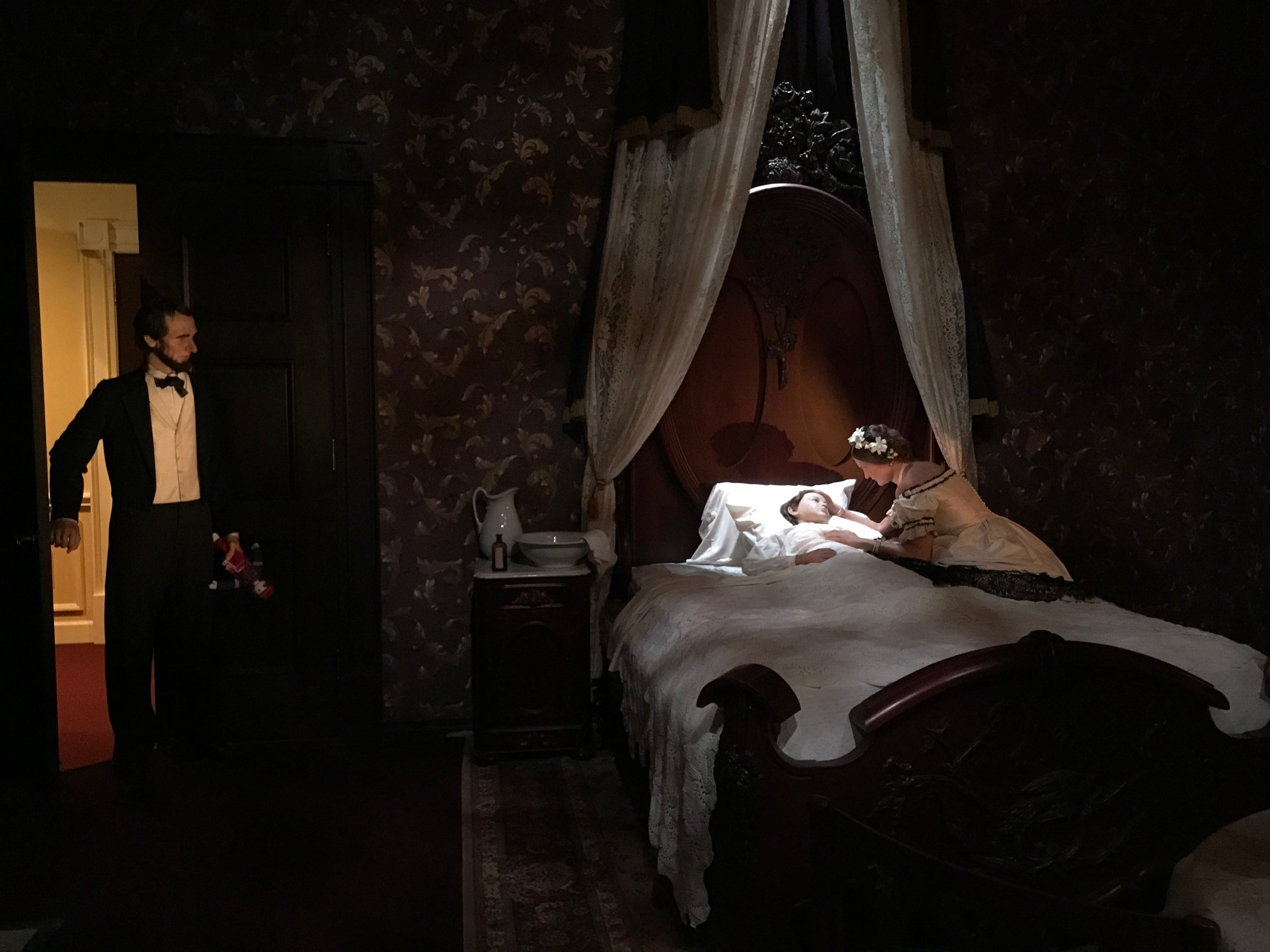
Here is a diorama of Mary Todd Lincoln having her bustle adjusted by her confidant and friend, Elizabeth Keckley. I can’t imagine wearing clothes that required assistance to put on. I much prefer our modern fashions.
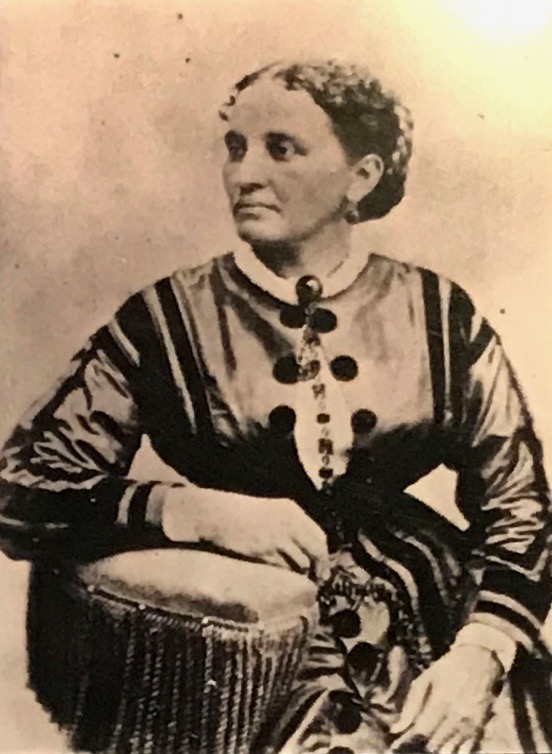
Elizabeth Keckley was an interesting person. She was a former slave who had been a dressmaker for Mrs. Jefferson Davis before the Senator from Mississippi left Washington to serve as the president of the newly established Confederate States of America. Mrs. Keckley went to work in the Lincoln White House and by early 1862, she had created no fewer than sixteen new dresses for Mrs. Lincoln.
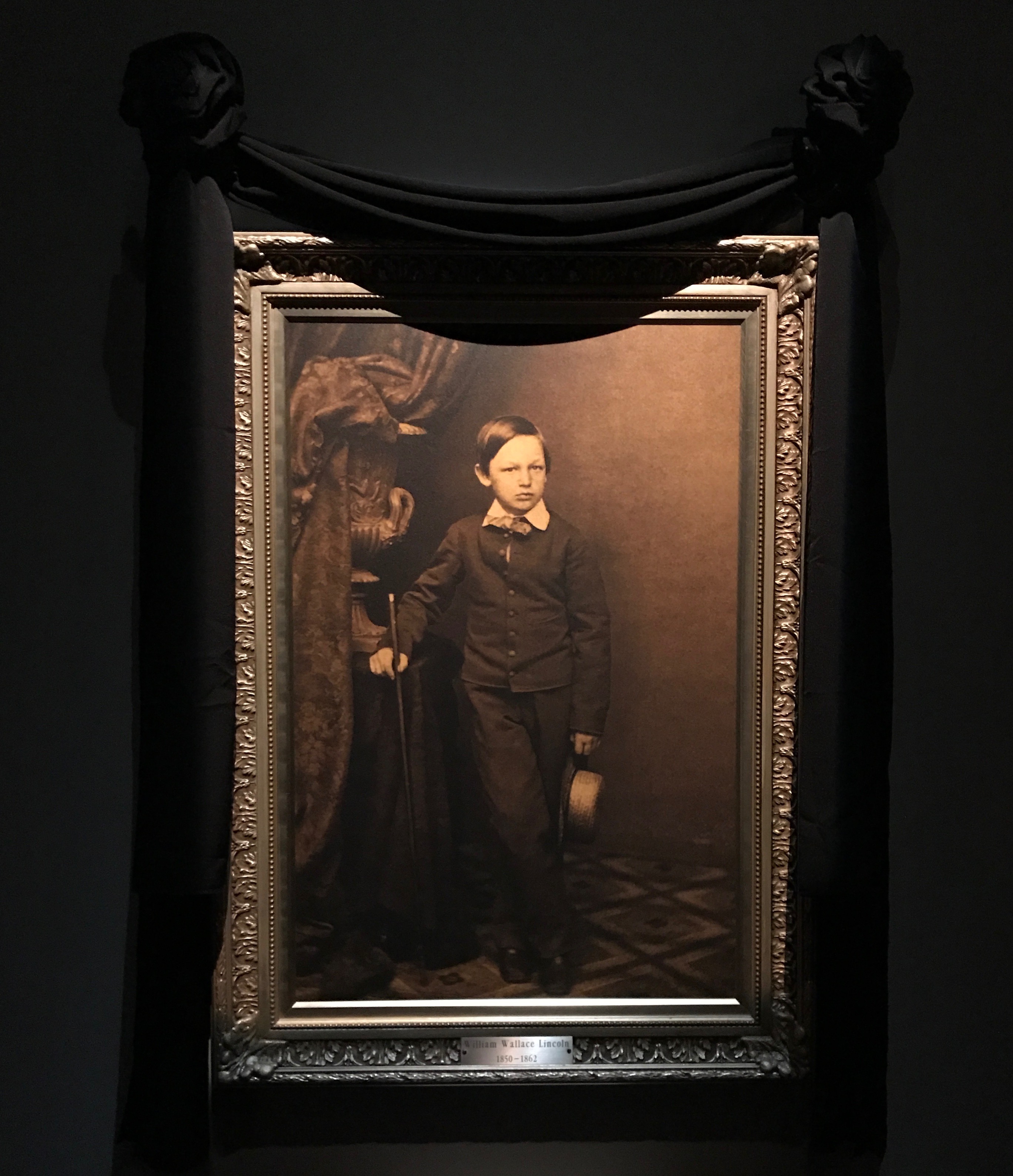
According to information at the exhibit, she was far more than a dressmaker. She quickly became Mary’s most trusted friend in treacherous Washington. She soothed the First Lady’s migraine headaches, enlisted Mary’s support in fundraising for indigent former slaves, and consoled a heartbroken mother following the shattering death of Willie Lincoln in February 1862.
February 5, 1862 was a day when the Lincolns should have been in their glory. They were holding an elegant party in celebration of the newly redecorated White House. Nearly 500 guests were dining on terrapin and turkey. The last guests wouldn’t leave until daybreak.
Abraham and Mary left the party several times during the night to check on eleven-year-old Willie. He had been ill for several days, almost certainly from typhoid fever. On this night, he took a turn for the worse.
Willie died on February 20, two seeks after the presidential ball. Mary never entered his room again, but Abraham used to sit in the room alone and mourn his son.
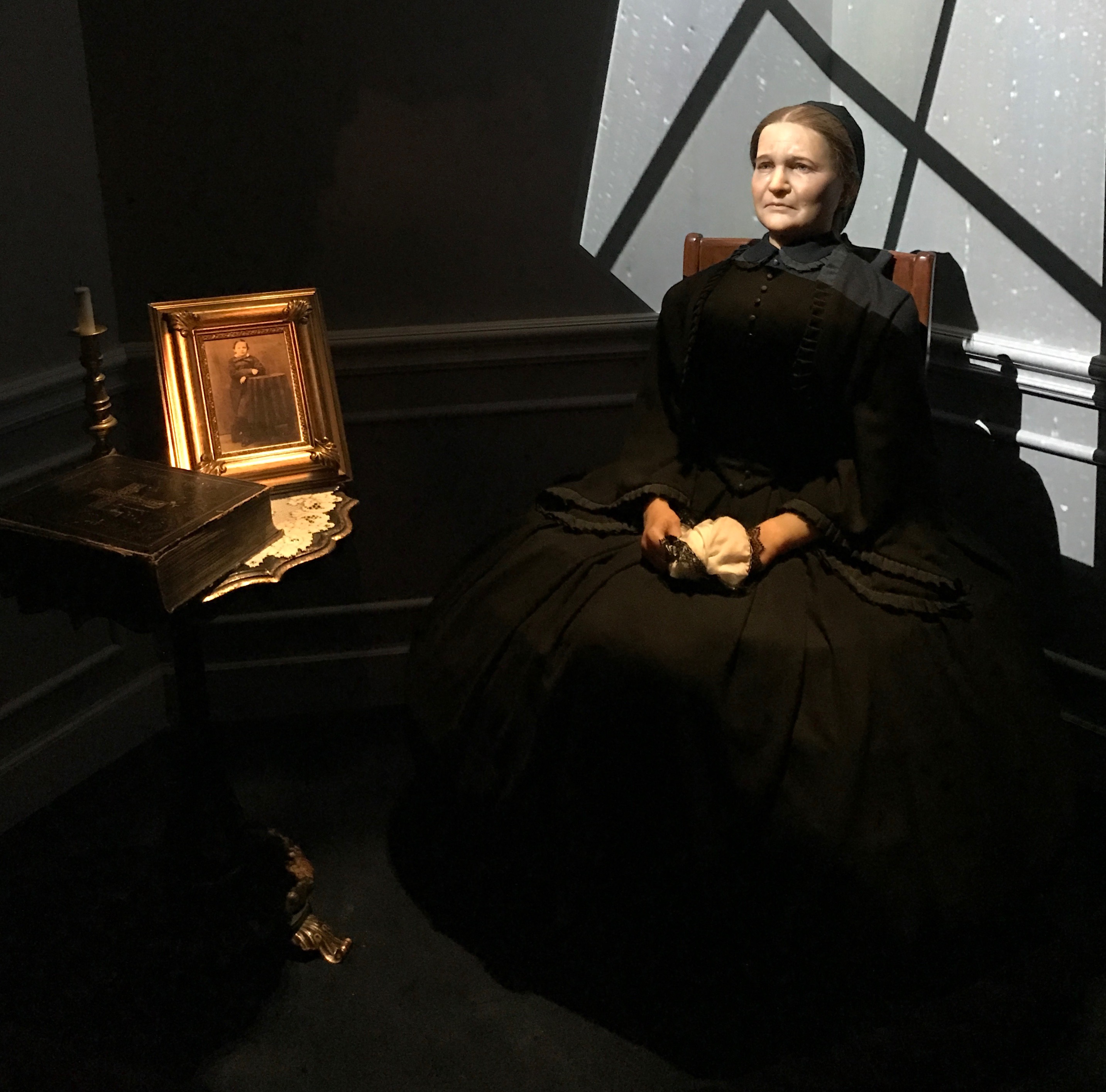
It was three weeks before Mary left her bed to don deepest black mourning attire. She was desperate to contact Willie and attended several séances. She told her sister, Elizabeth, “Willie lives. He comes to me every night and stands at the foot of the bed with the same sweet, adorable smile he always has had.”
Adding to her distress, two months after Willie’s death, Mary’s half-brother, Sam, died in battle wearing Confederate grey. Gossips accused the First Lady herself of being a Confederate sympathizer.
After the personal sadness of these displays, it was almost a relief to return to the mayhem of the Civil War.
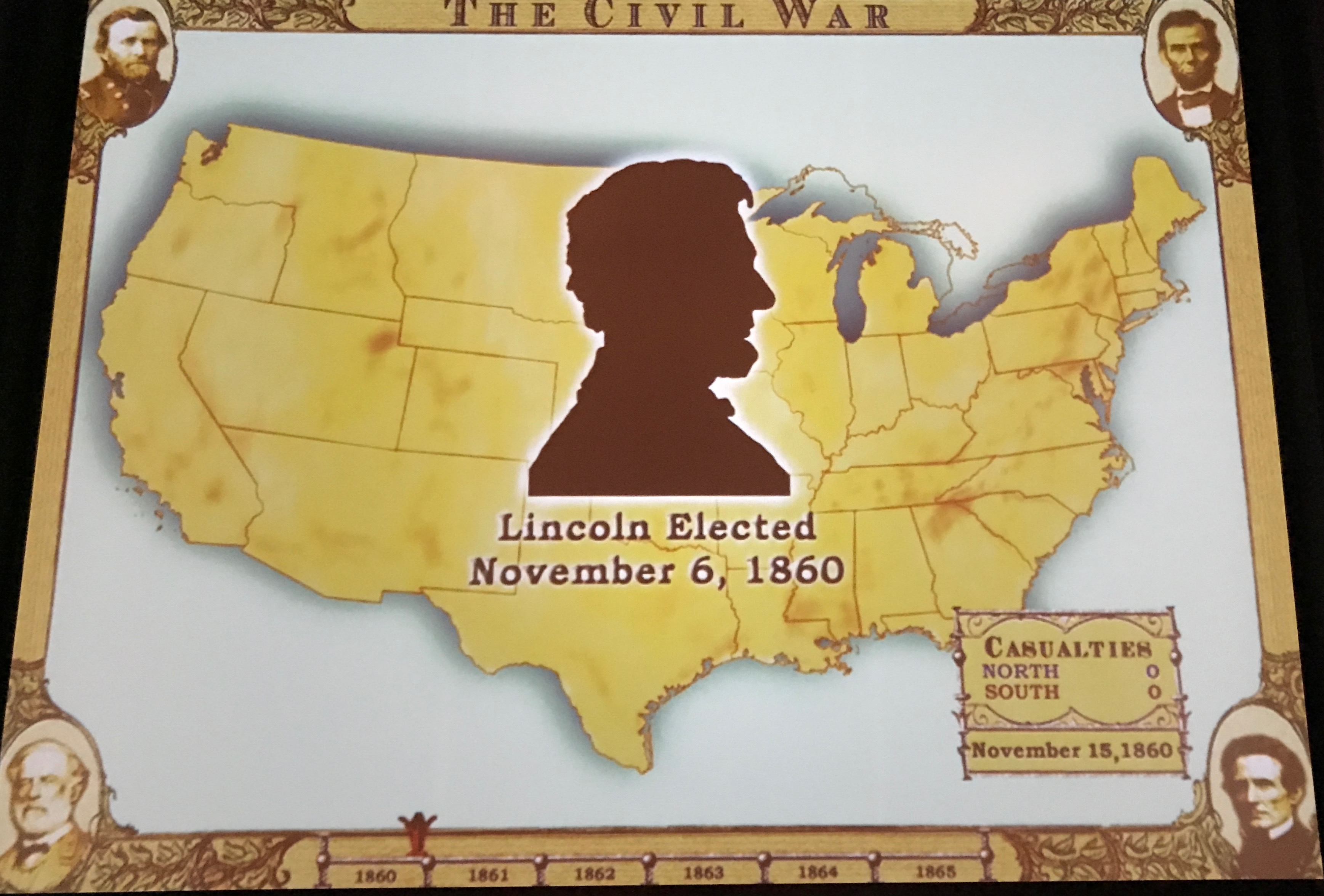
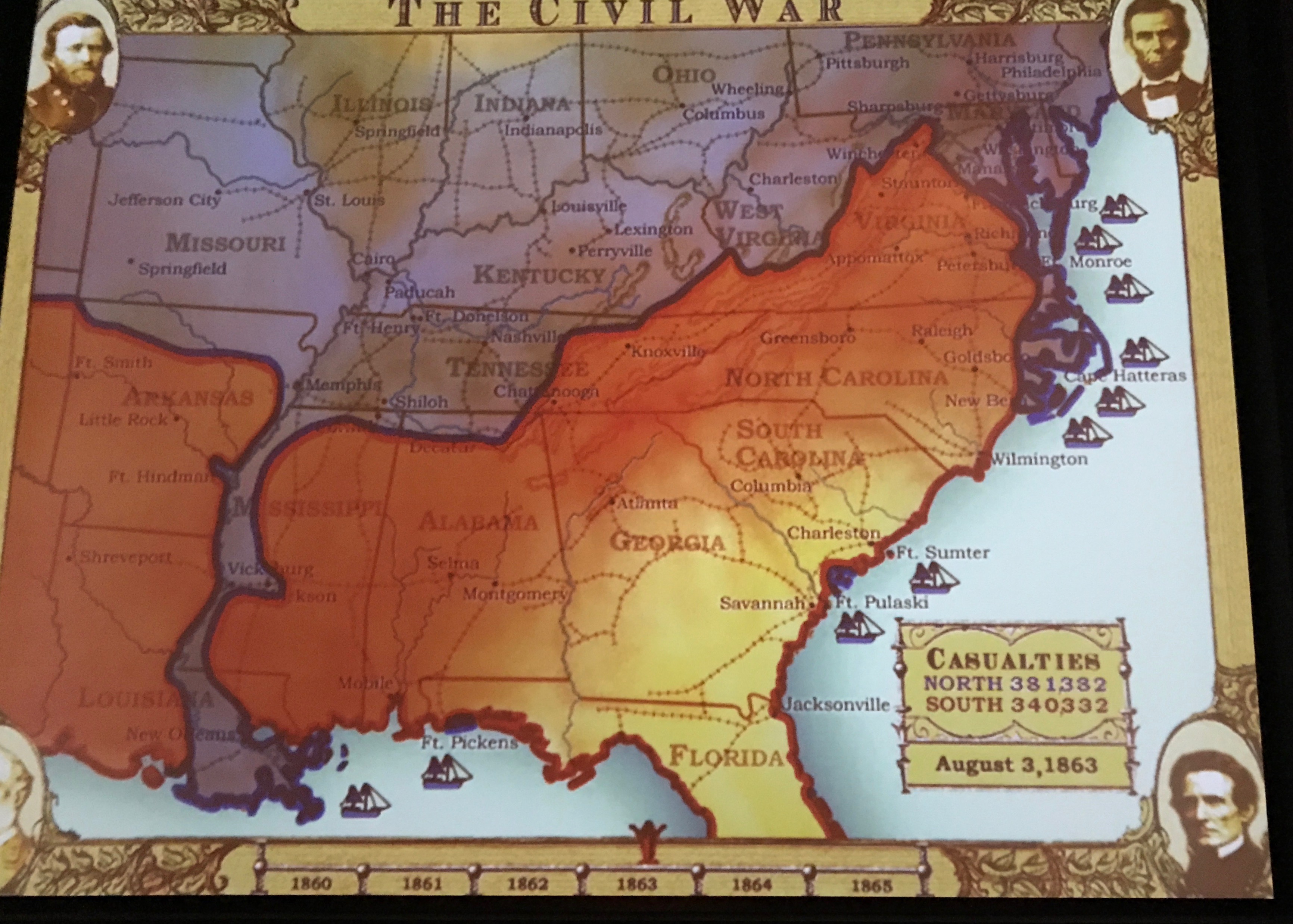
There was a map with a timeline of the land taken and the casualties. When Lincoln was elected in November, 1860, the country was whole and there had yet been no casualties.
After Gettysburg and Vicksburg, the Union started to push back the Confederates, but at a tremendous cost in life.
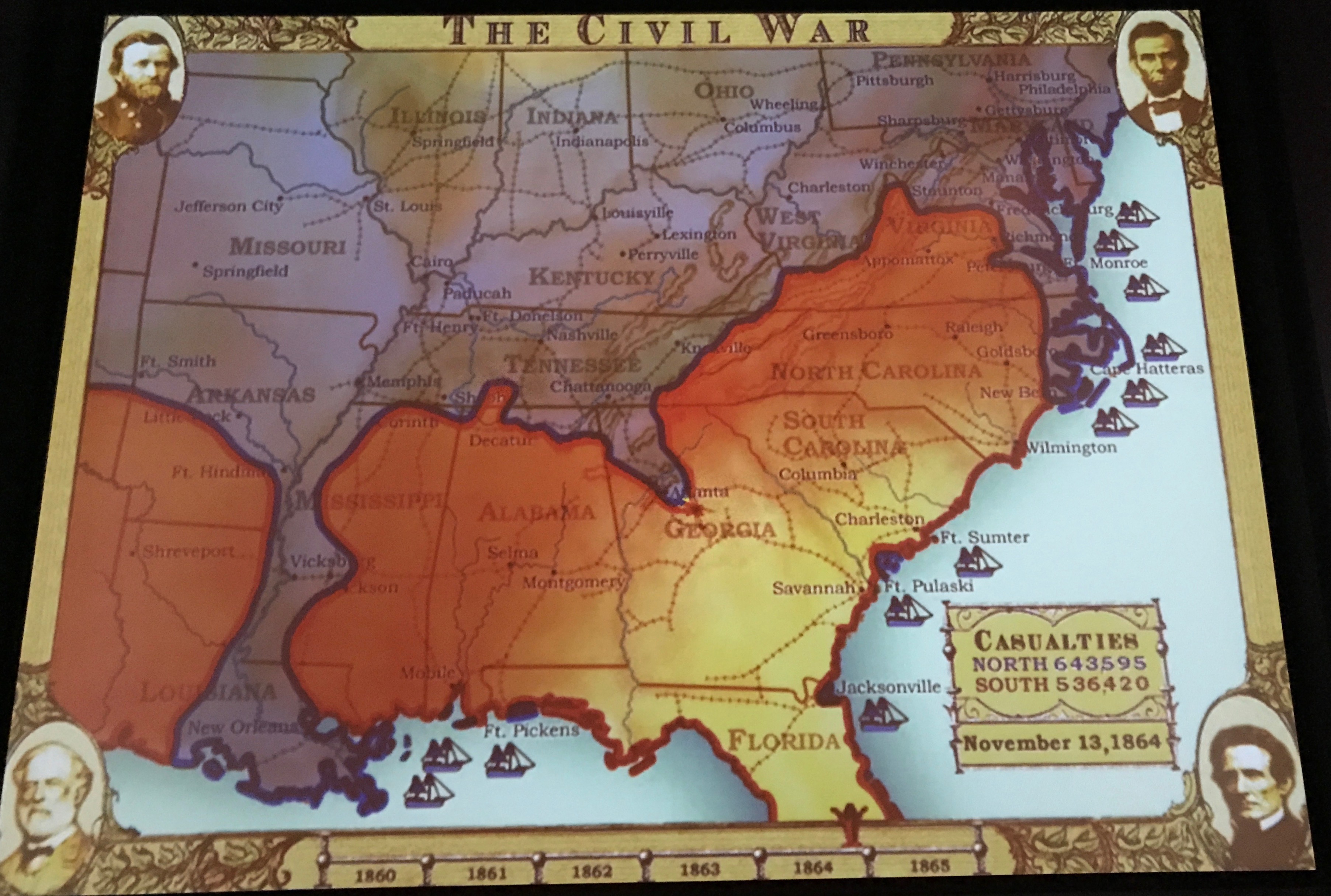
Here we can see the results of Sherman’s March to the Sea. Just two days later, Sherman burned Atlanta.
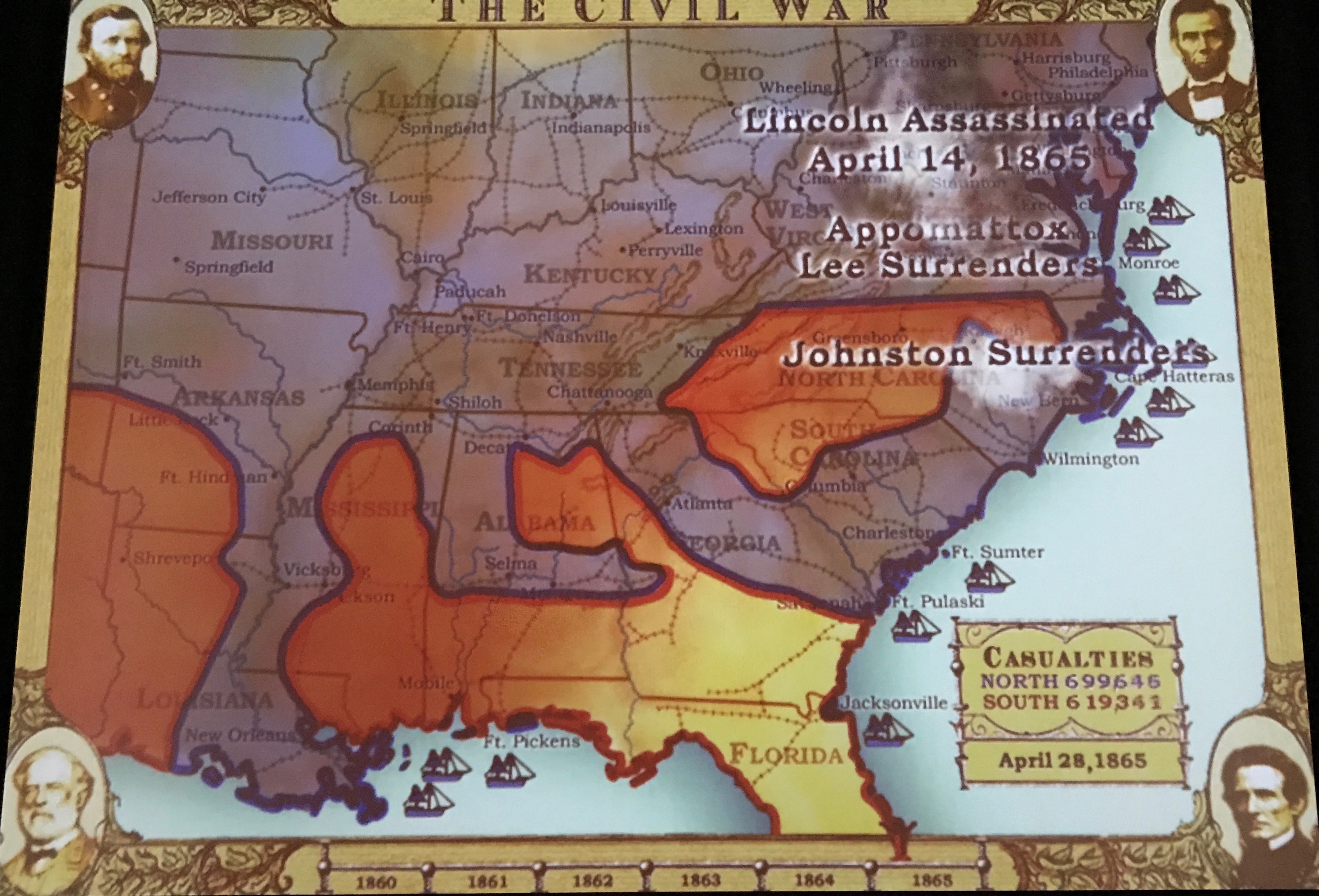
Lee surrendered to Grant at Appomattox Courthouse on April 9, 1865. You can see that there was still some resistance, but the war was pretty much over. Unfortunately, the Lincolns didn’t get to enjoy the hard-won peace.
After four long years of war, they tried to relax with a bit of entertainment.
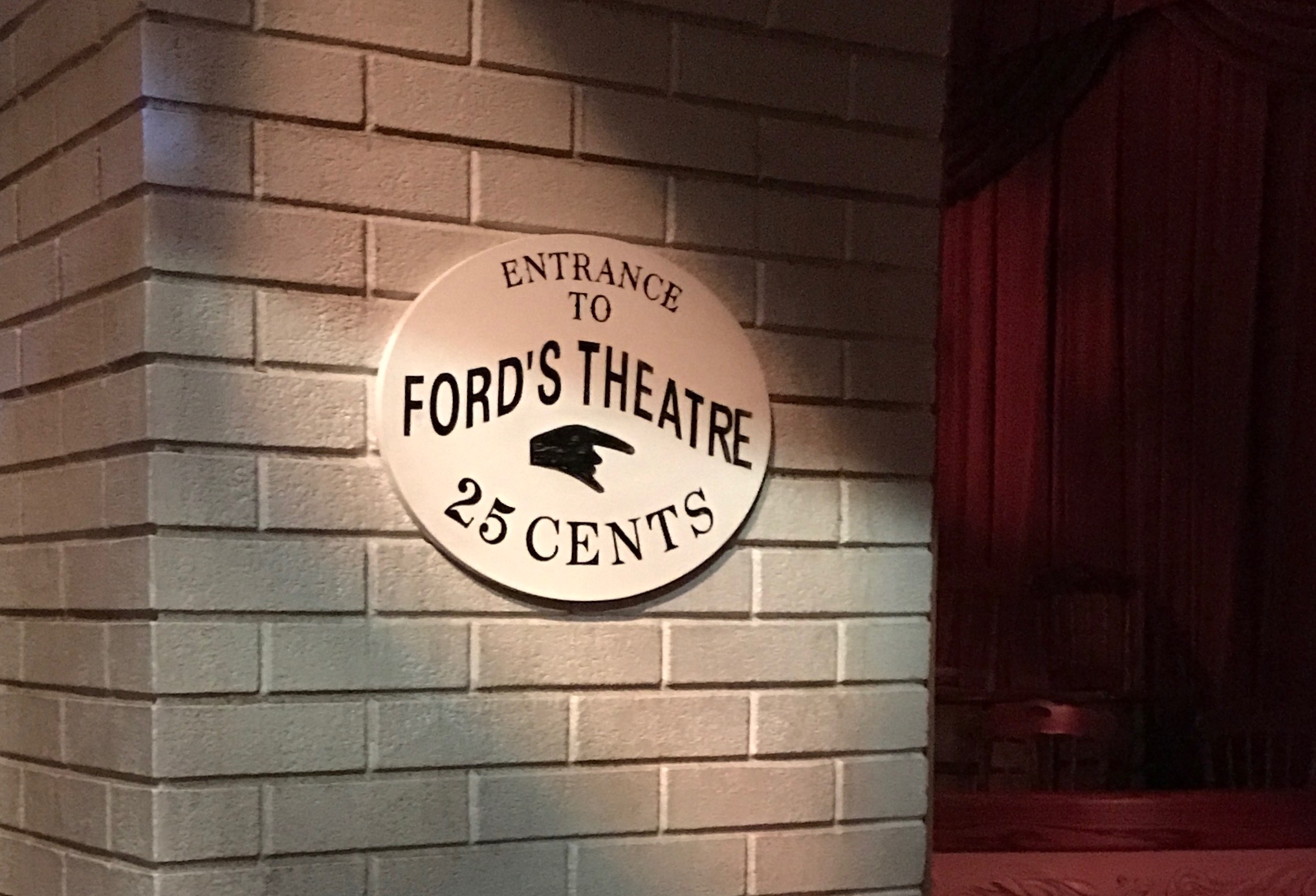
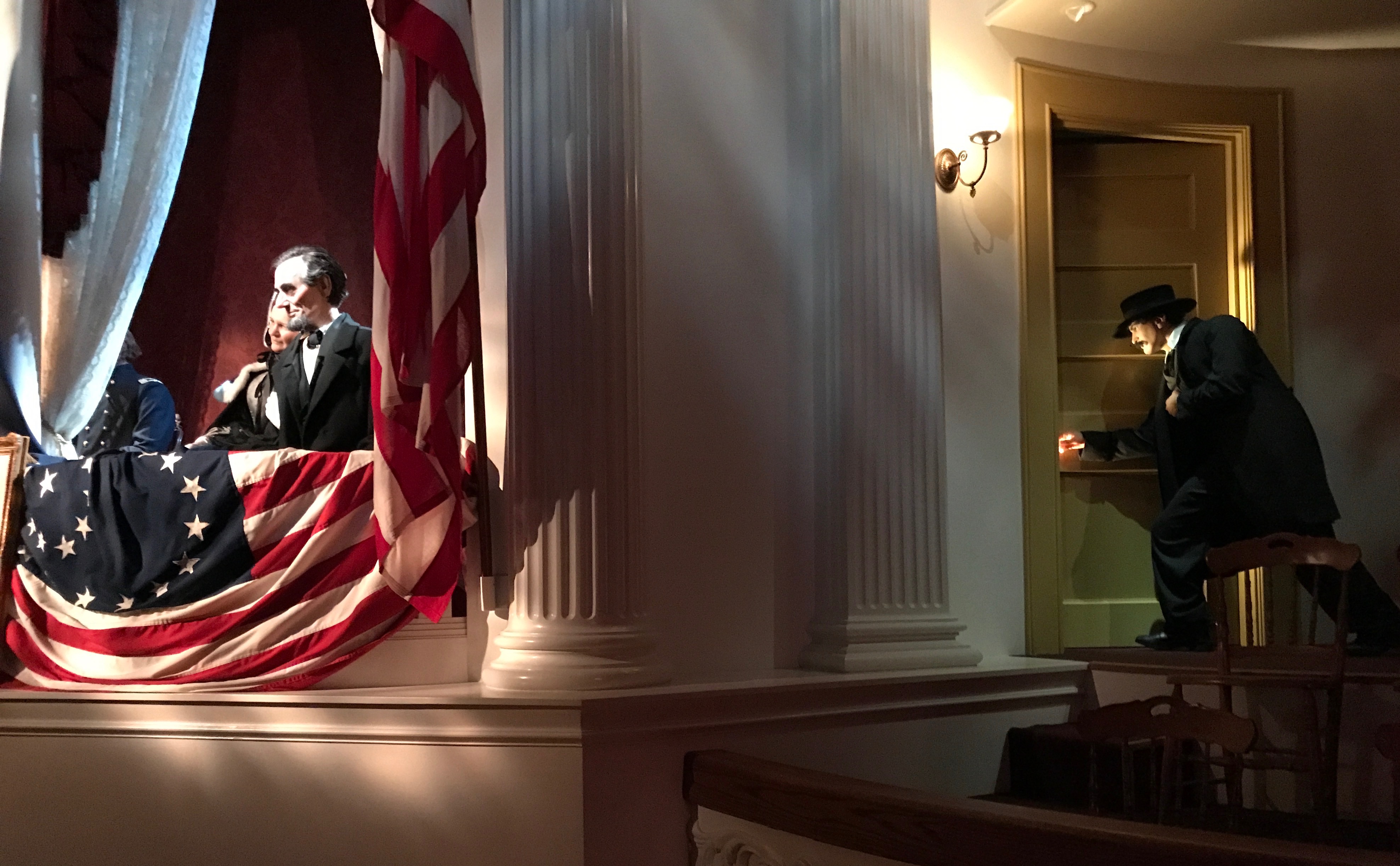
The Lincolns attended a performance of Our American Cousin at Ford’s Theater with Major Henry Rathbone and his fiancé, Clara Harris. The performers on the stage would have had this view of the presidential box.
After intermission, John Wilkes Booth made his way to the Presidential box. He timed his attack with a big laugh line in the play:
“Well, I guess I know enough to turn you inside out, old gal; you sockdologizing old man-trap.”
Lincoln was laughing when he was shot.
This was the nation’s first presidential assassination. There was a three-week funeral with lyings-in-state in a dozen cities after the funeral train left Washington on April 21. In checking out things for this post, I found out that one of the stops was in Buffalo, my hometown! I am surprised that I never heard of that before.
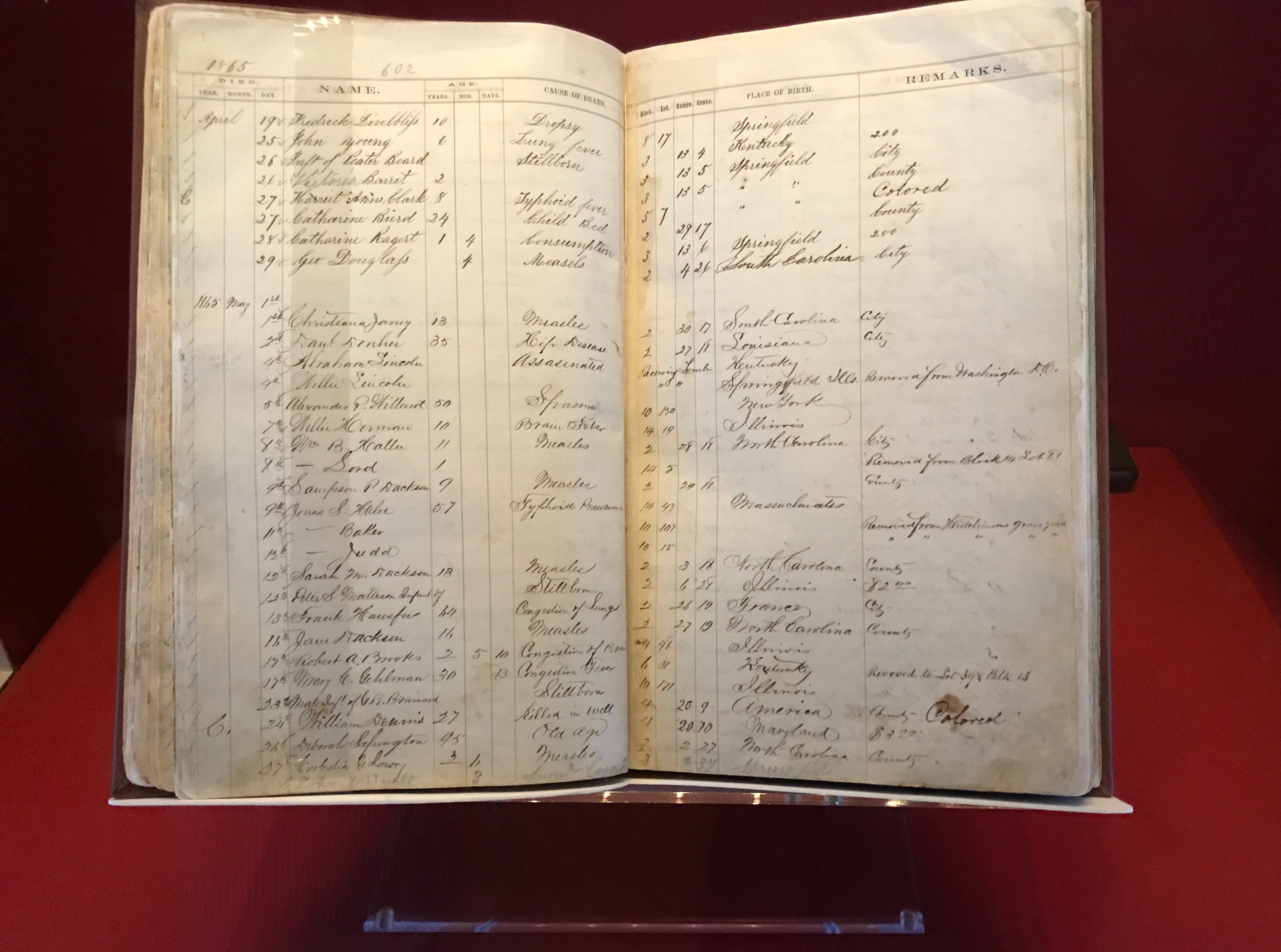
After the slow train ride through seven states and 444 communities, the cortege arrived back in Springfield. The final lying-in-state was in the Old State Capitol and May 4, the body of Lincoln and his son, Willie, were received at Oak Ridge Cemetery. You can see the notation on the right hand of the cemetery internment book on the left hand side, just above the middle.
There are more things that I could share with you, but writing this post has now taken at least twice as long as the time I spent in Springfield.
As always, exit through the gift shop.
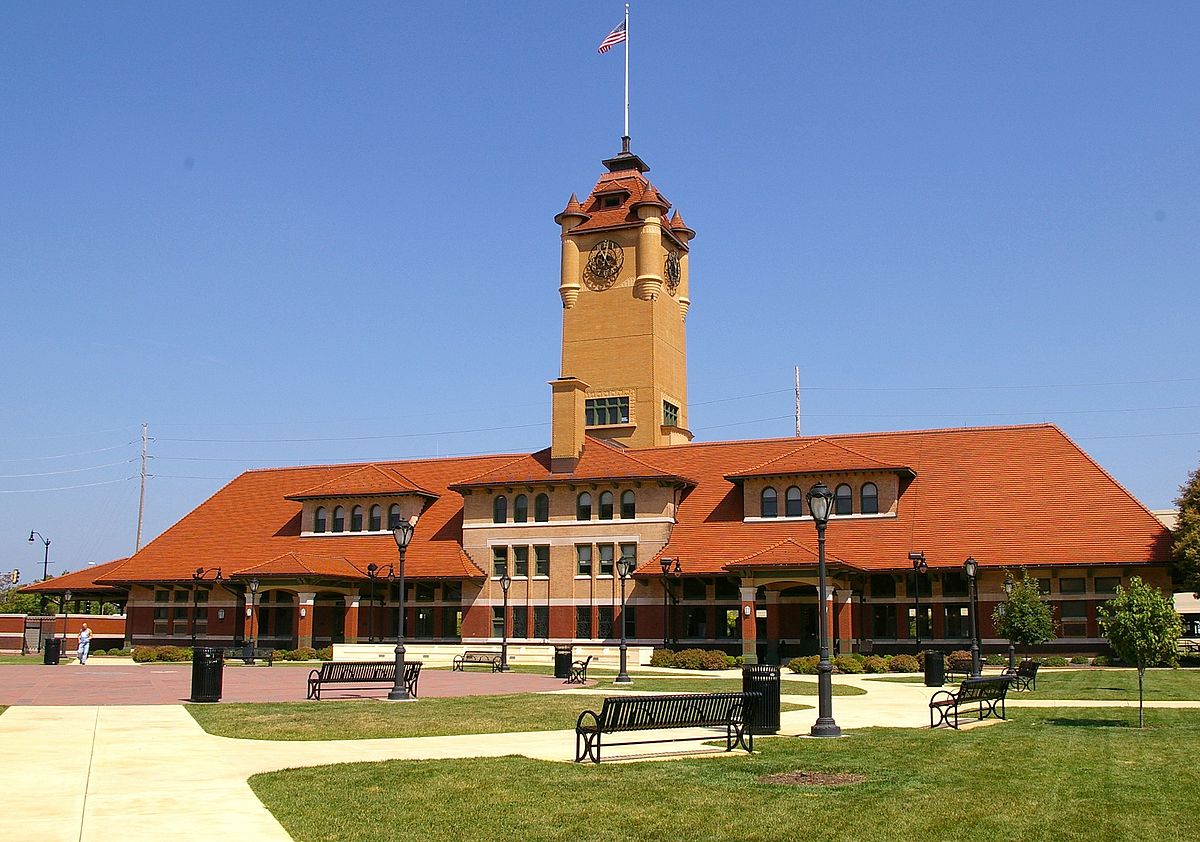
I had one more touristic spot to hit before I left Springfield: the Springfield Union Train Station. It is now a part of the Lincoln Museum and Library and it was also under reconstruction when I last visited the town.
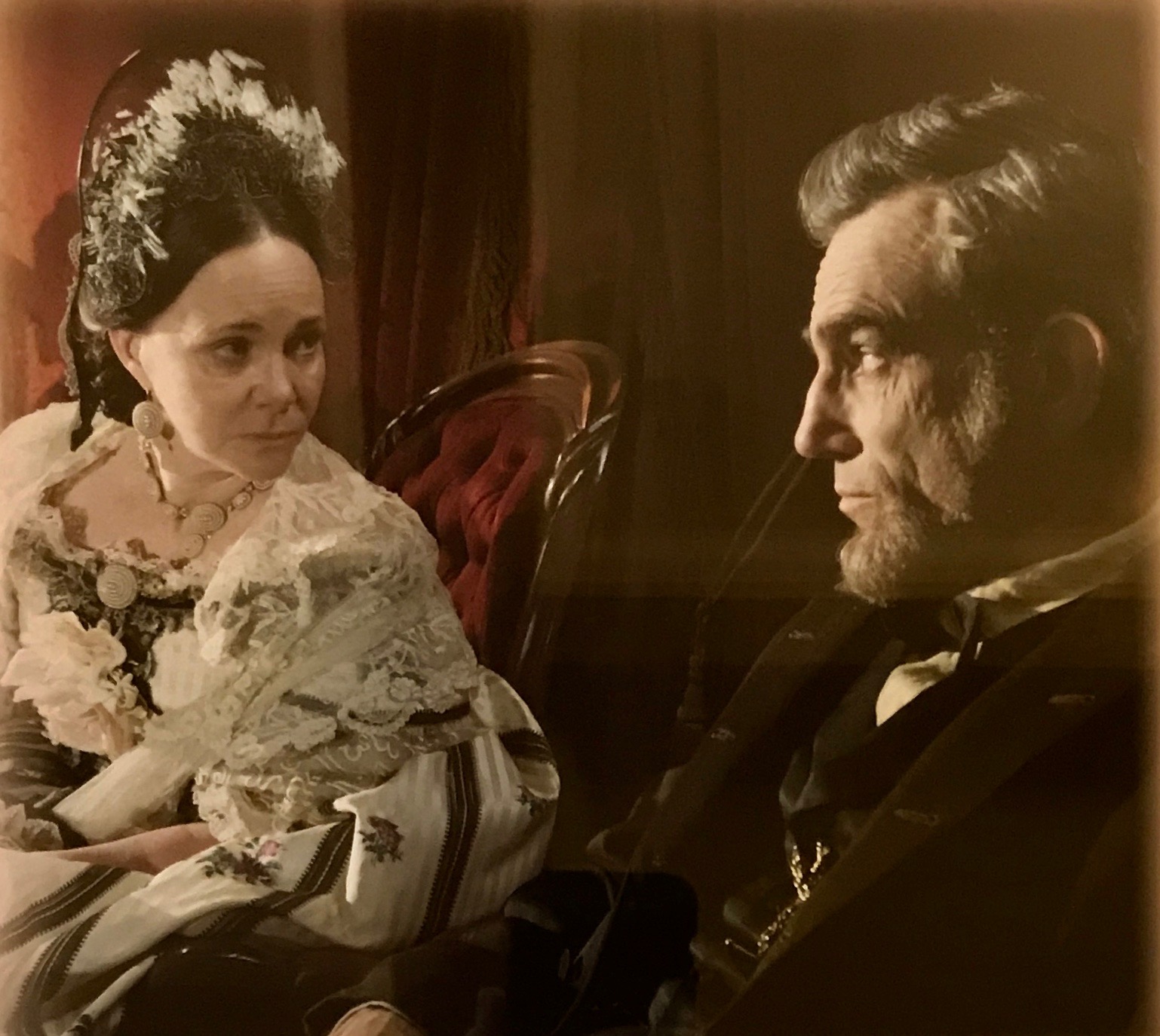
They had some exhibits related to the 2012 film, Lincoln.
According to information at the display,
“Early in the process of making “Lincoln,” Daniel Day Lewis and Sally Field would text each other back and forth in character.
“He would send me things like little limericks or notes out of the blue, and we began to build a thread of intimacy…”
Sally Field
From day one of filming, Sally Field felt like Daniel Day-Lewis was her husband .
“As far as I was concerned, this was the man I had been married to for a very long time and was basically driving me crazy.”
Sally Field”
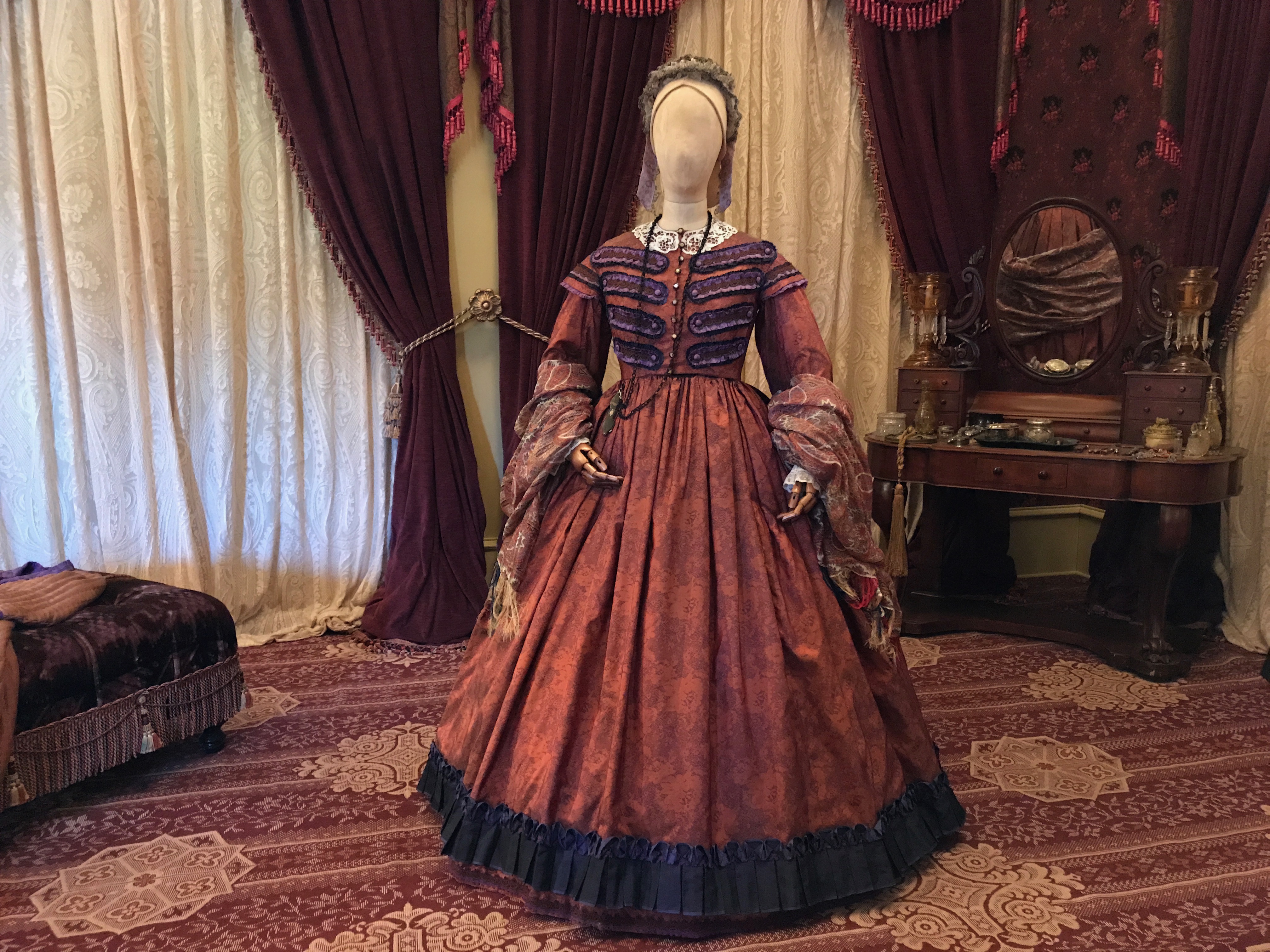
This was Mary Todd Lincoln’s bedroom. The costume was one worn by Sally Field in her role as Mrs. Lincoln.
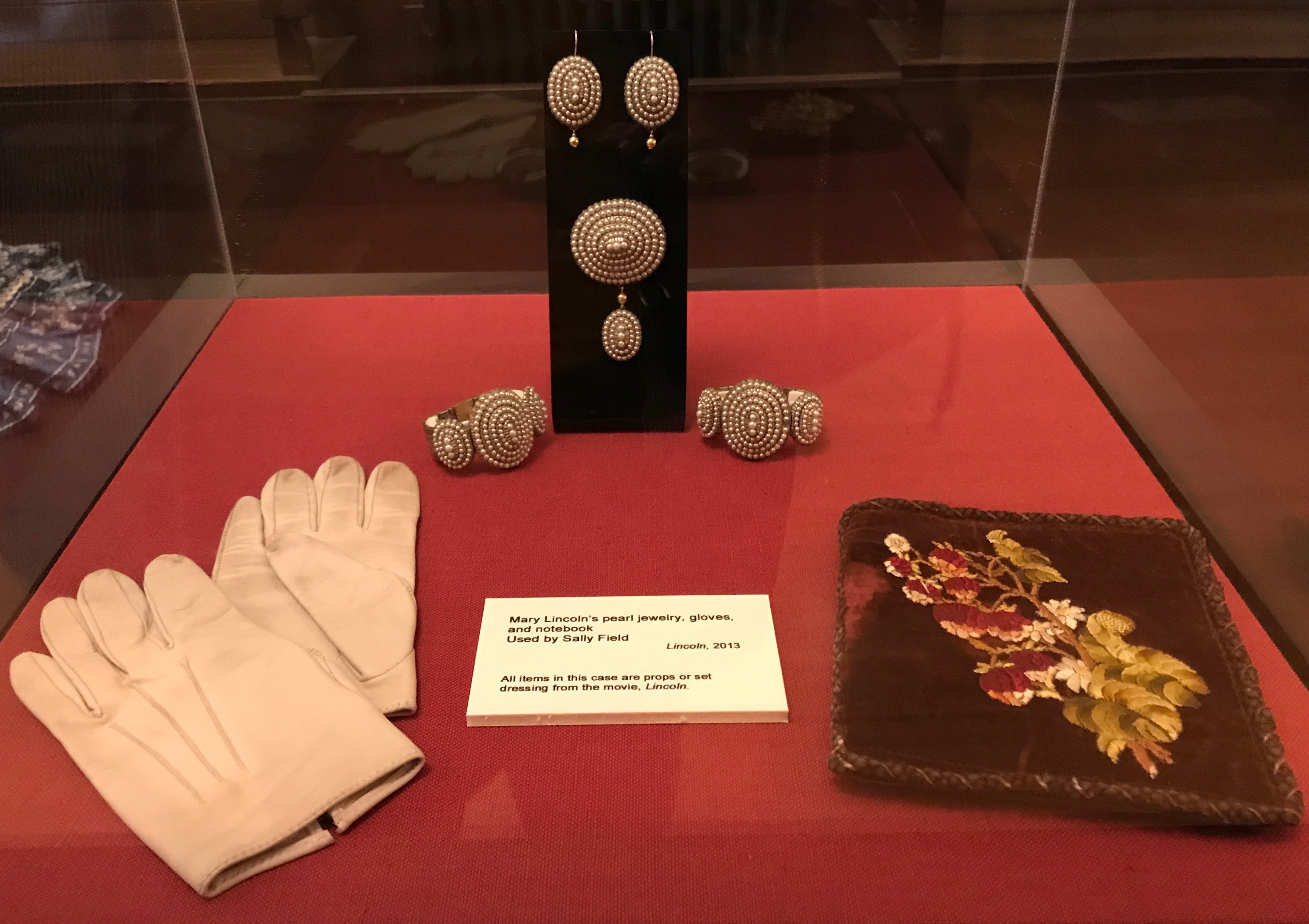
These are some of the items used by Mary…uh, Sally…in the film.
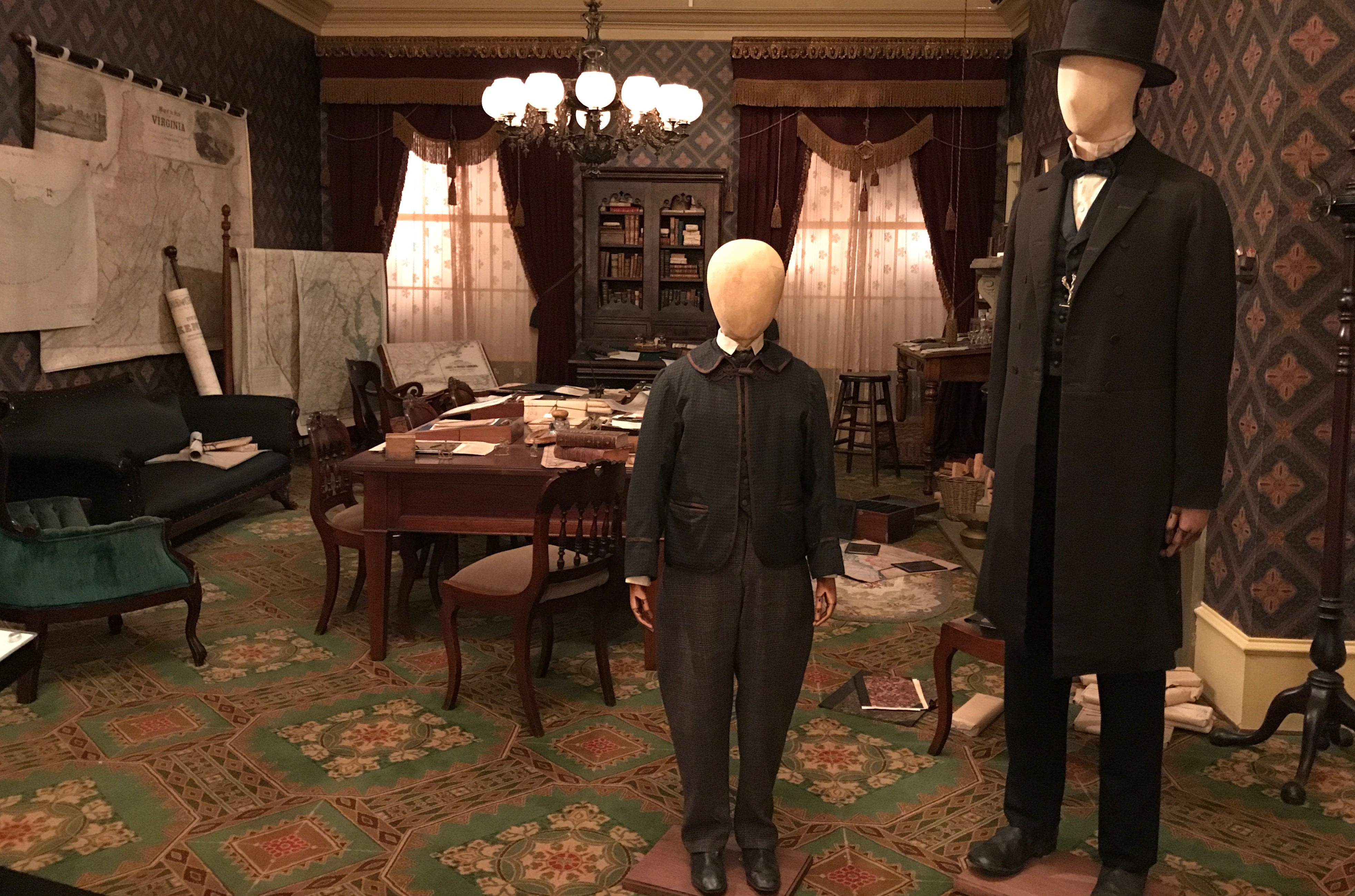
Here we see some of the costumes worn by Lincoln and Willie. They are standing in the office.
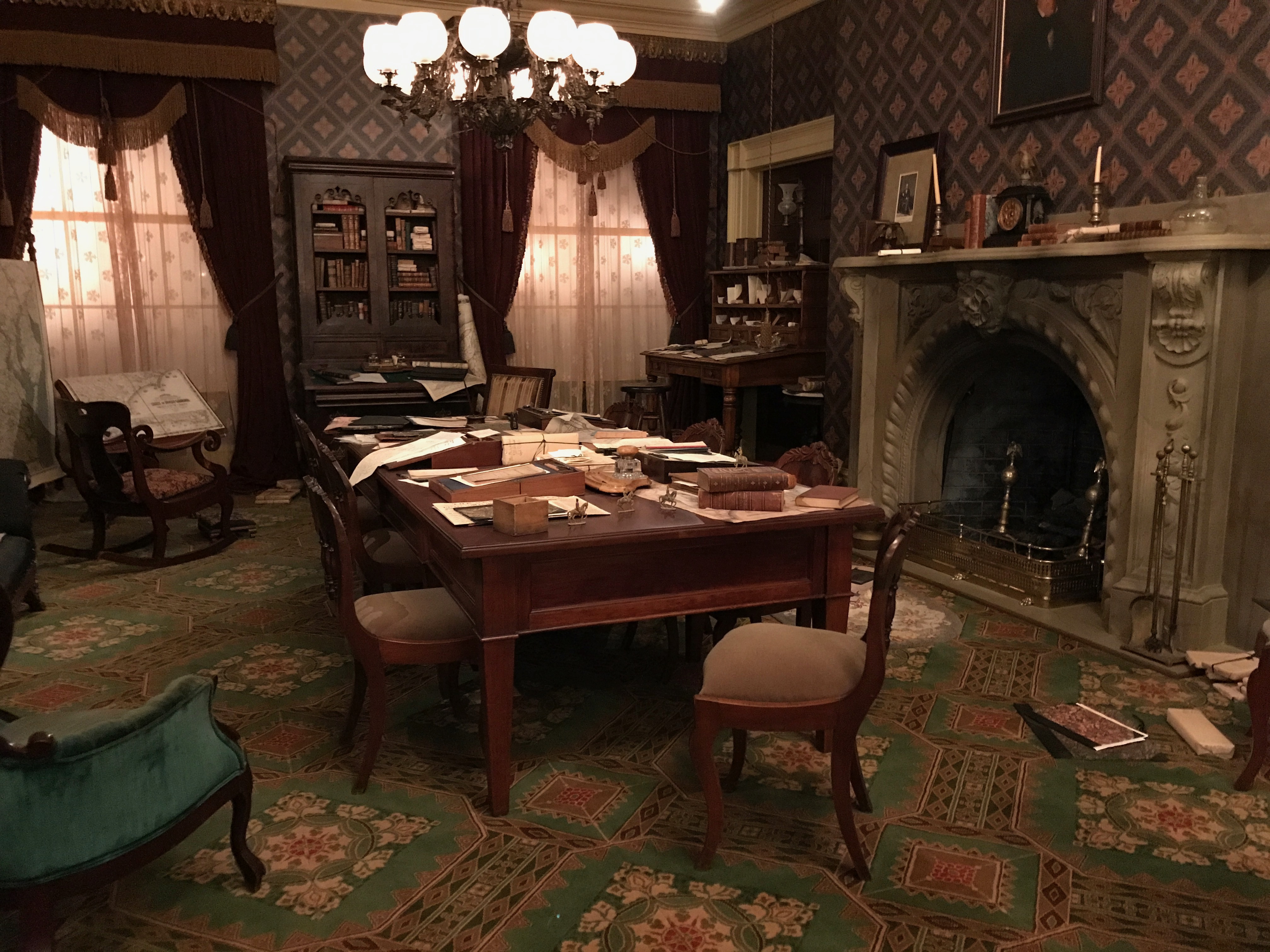
Here’s another view of the office.
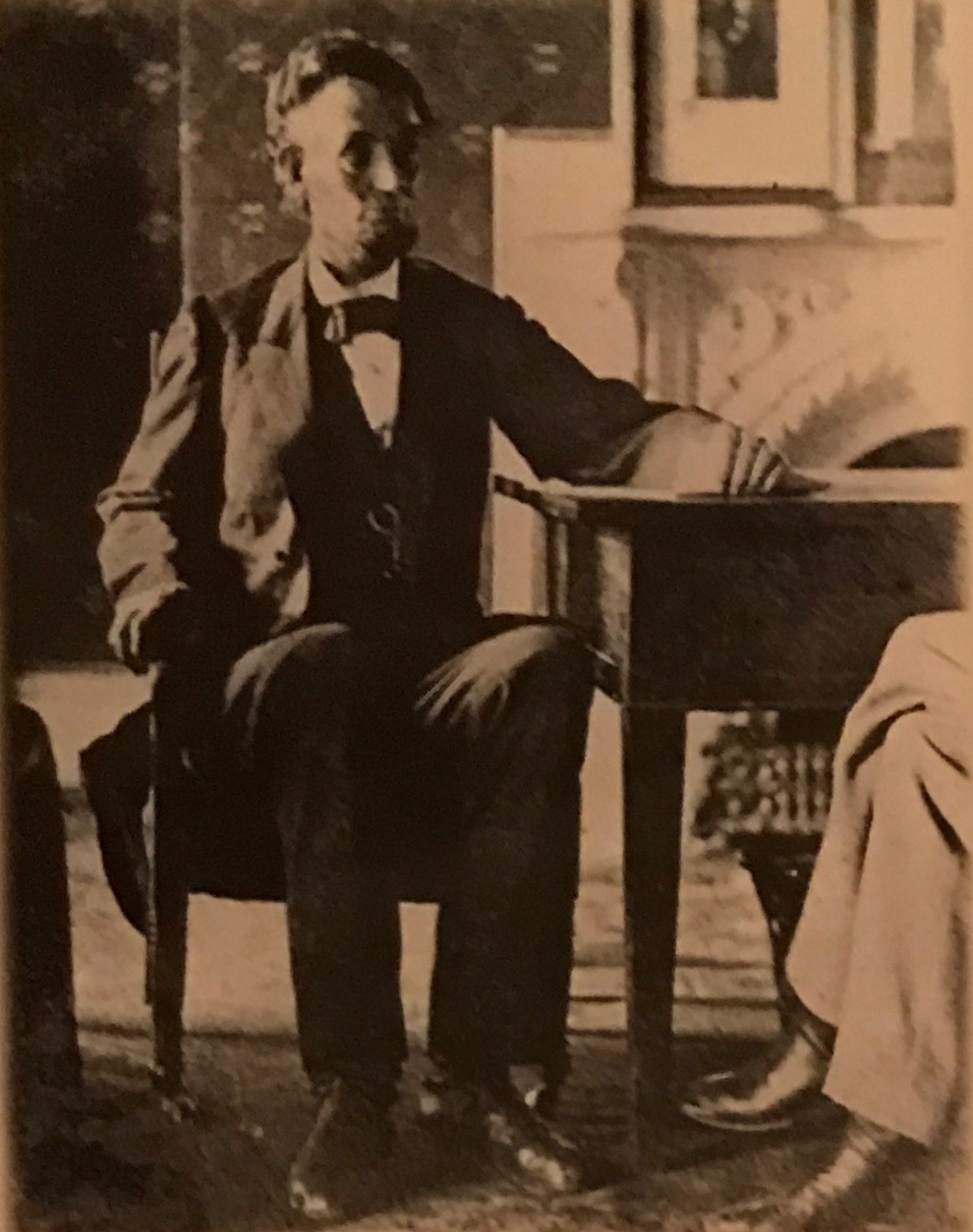
This photo of Lincoln in the office shows how close they came to replicating the office that Lincoln actually worked in.
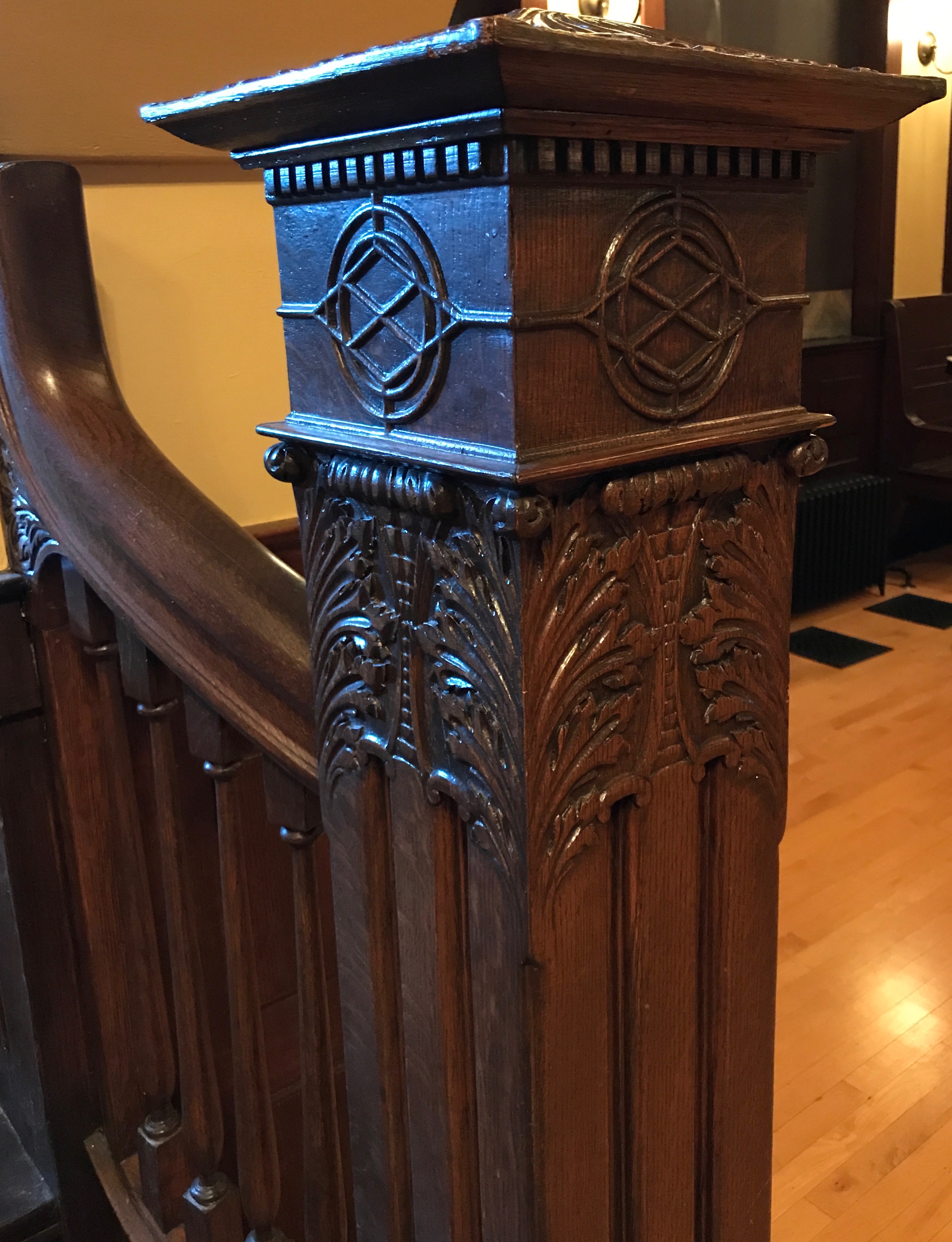
Okay, one last photo of a random architectural detail in the renovated train station that caught my eye and then I am off!
My post about my brief visit to Springfield, Illinois is going to drop tomorrow. I played tourist for about five hours, but this post has 68 photos, links to information and some music.
I shall work to be more concise in the future. But, as for now, consider yourself warned!
I mentioned on Facebook that I thought I would miss driving around the country in the summer now that I was a homeowner. A Facebook friend mentioned that she had a friend who had a summer job as a seed courier. She drove around the wheat belt collecting samples from grain elevators and shipping them back to the lab. I thought that sounded like fun, so I asked her to find out the name of the company from her friend. I sent an inquiry via email to the company. Several applications, letters, references, background checks and a physical later, I was hired!
Now, there were some downsides to this. I had to find a house sitter as I wouldn’t be able to take Cora the Travel Cat with me and the lawn would need attention. I ended up hiring a young friend who was currently living with her parents.
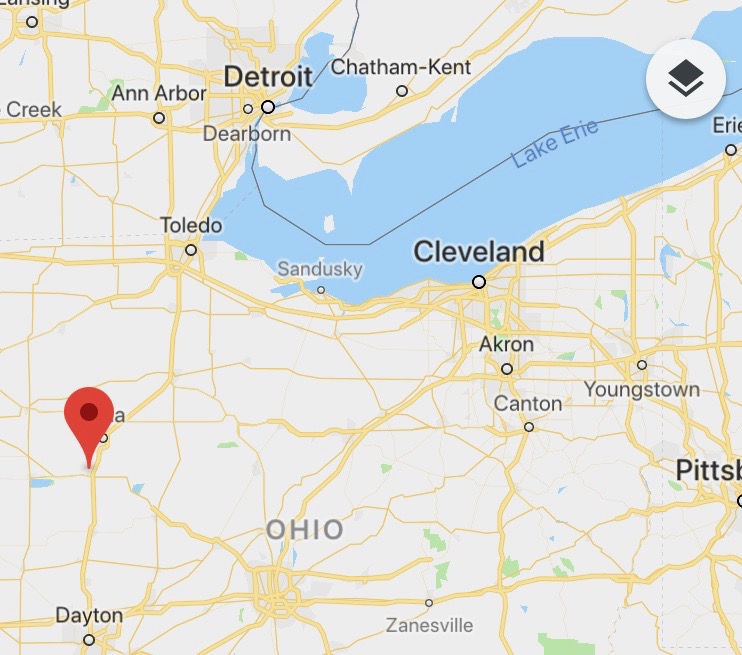
My first stop on the summer of adventure was Wapakoneta, Ohio.
Why Wapakoneta? Well, it is close to Jackson Center and I was going to meet up with some friends from Airstream Addicts who were attending Alumapalooza, an Airstream rally held on the grounds of the plant.
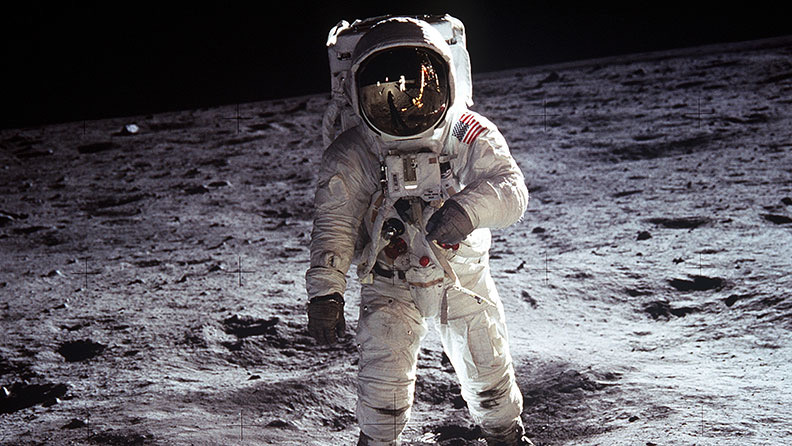
But first, Wapakoneta. I arrived at the hotel the evening before. In case you didn’t know, Wapakoneta is where Neil Armstrong is from.
Yeah, THAT Neil Armstrong.
They sure do cash in on the town’s connection with him.
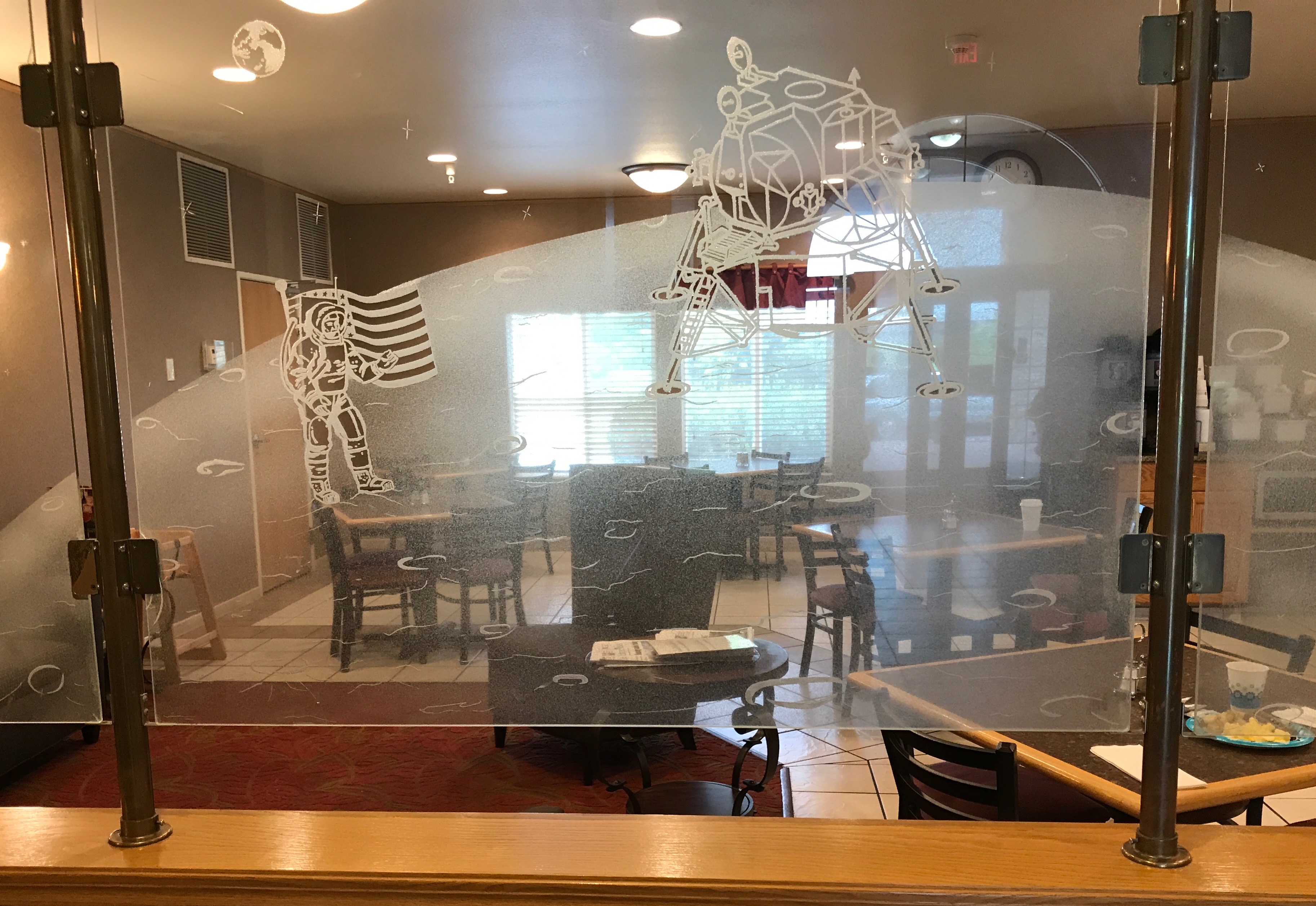
Even the glass on the hotel’s breakfast room has a space motif going on. The Best Western I stayed at is between Lunar Drive and Apollo Drive and just across the street from the Armstrong Air and Space Museum.
For all the times I’ve been in the area, I’d never managed to check it out. And, once again, it was closed when I got there. Still, there were things to see.
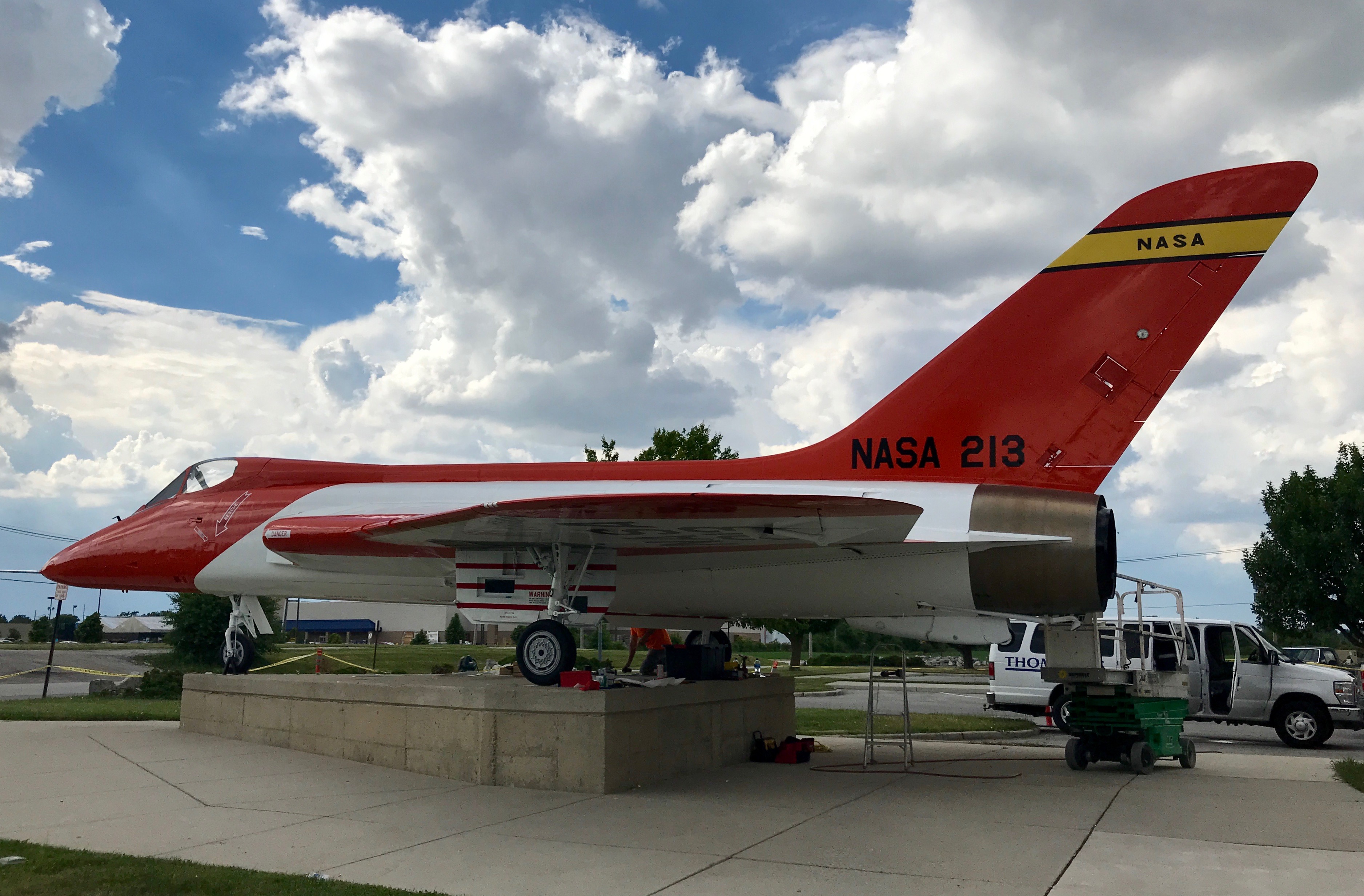
This jet was displayed at the entrance to the museum property. According to my research, it is a Douglas F5D Skylancer, one of four that was built in the 1950s. The first flight was in April 1956 and was supersonic. I remember hearing the supersonic booms when I was a little girl. I’m glad that they have proven to their satisfaction that they can break the sound barrier. They sure were loud!
Neil Armstrong flew this aircraft during the Dyna-Soar research program. (As Bob Curran, the Buffalo Evening News writer would have said, “For worst results, read aloud.”)
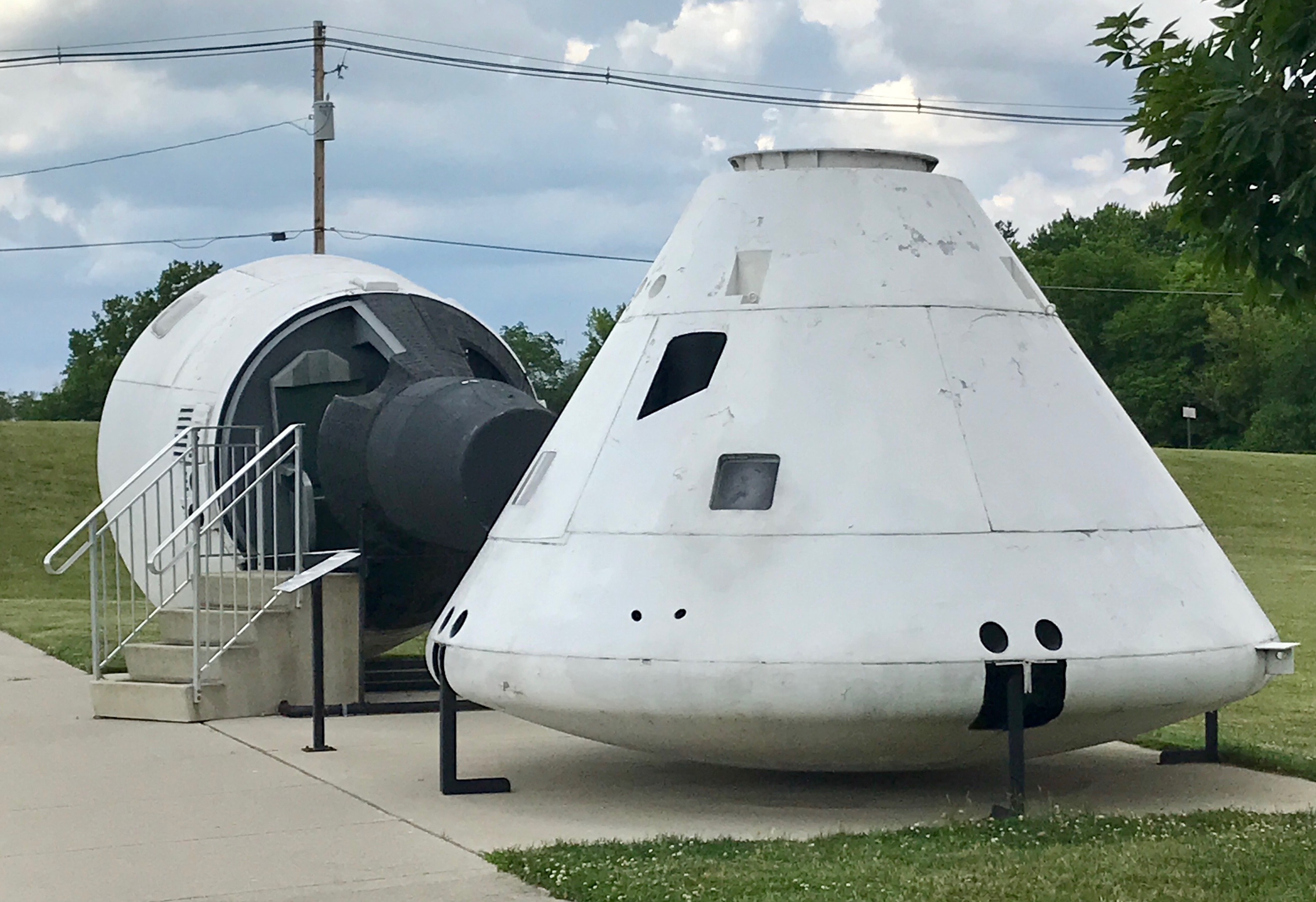
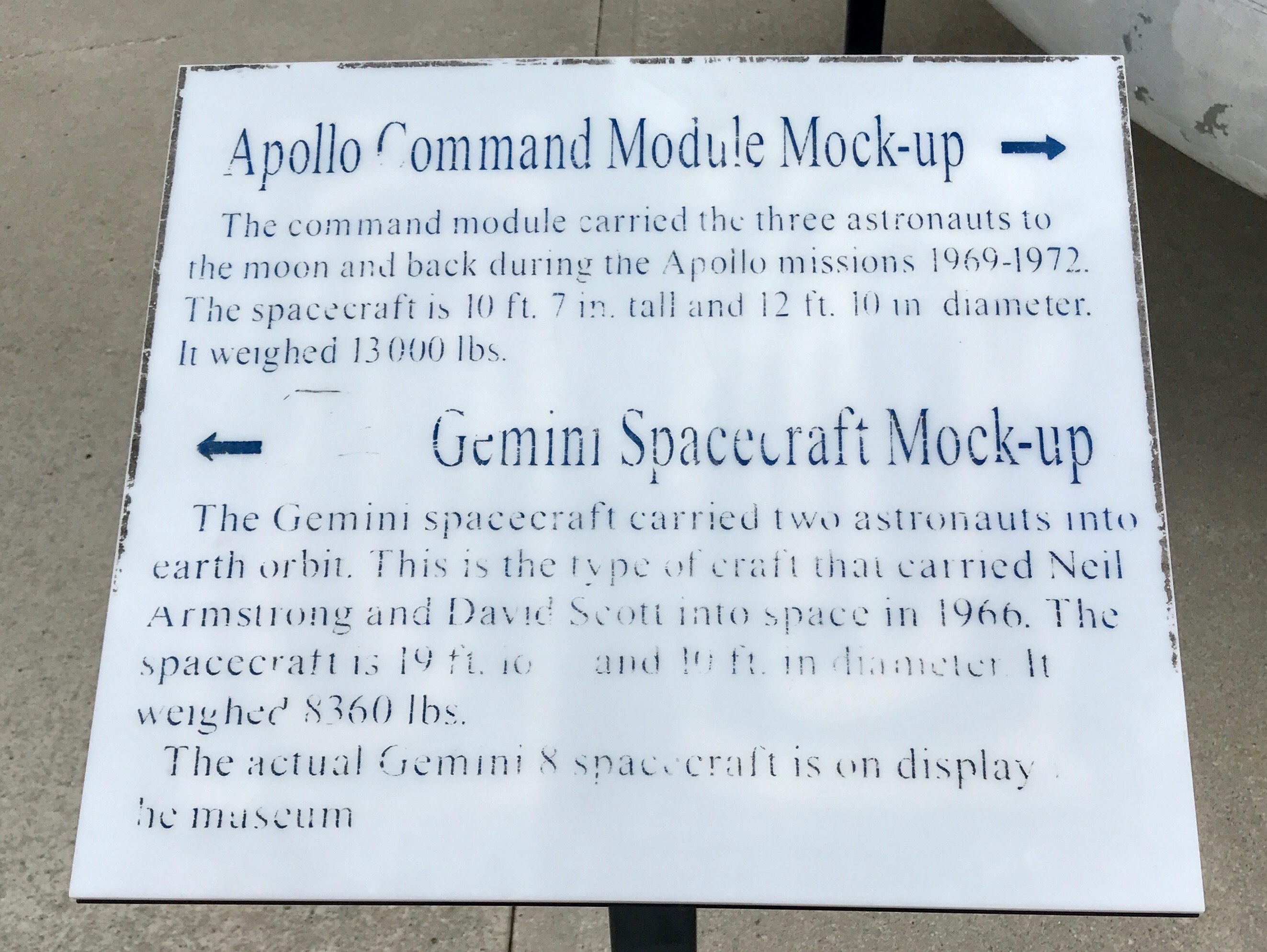
They also had some capsule mock ups that you could look at.
If you can figure out which mock-up is which, you are better than me. I even looked for information on the web, but still couldn’t figure out which was which.
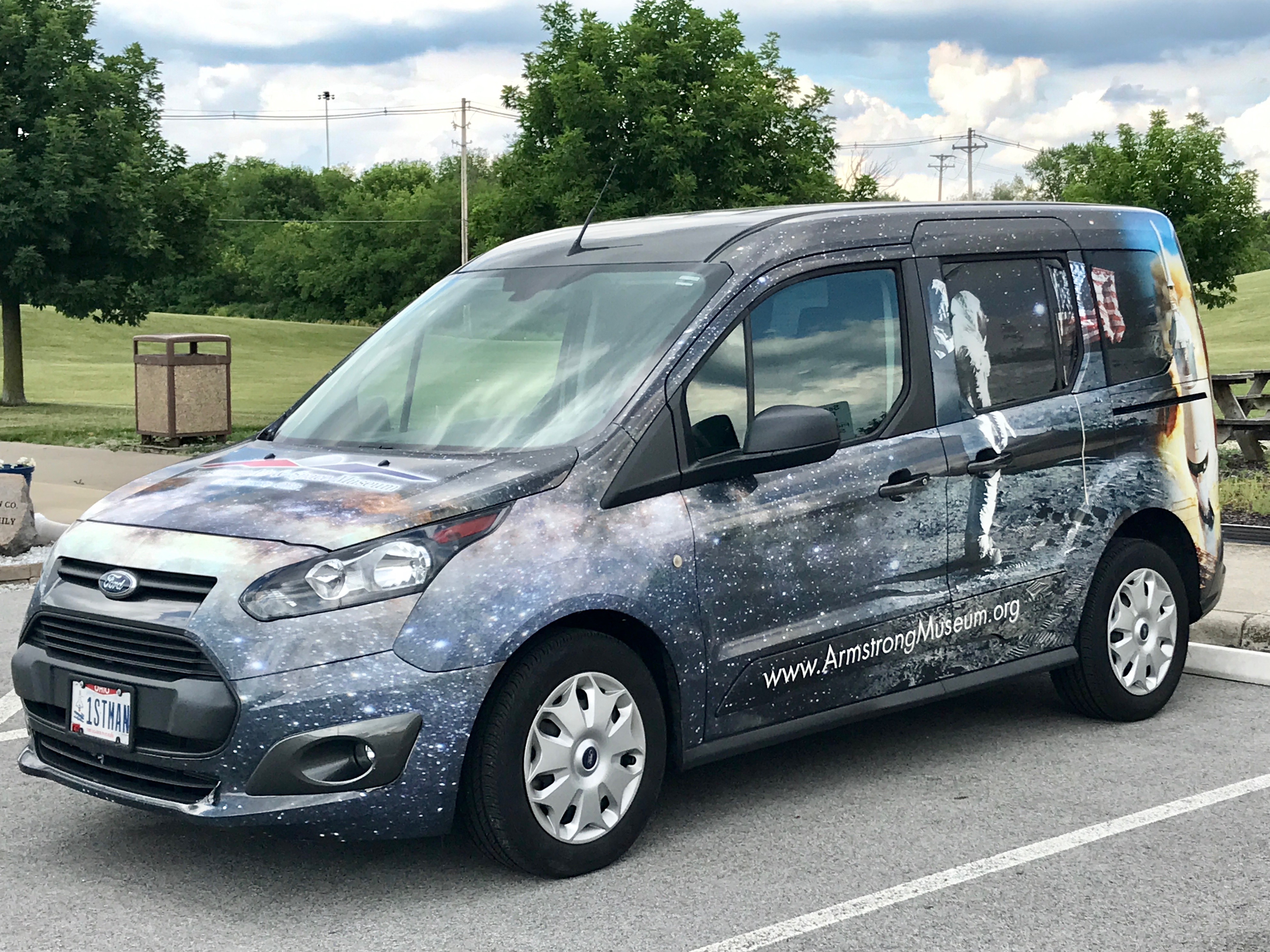
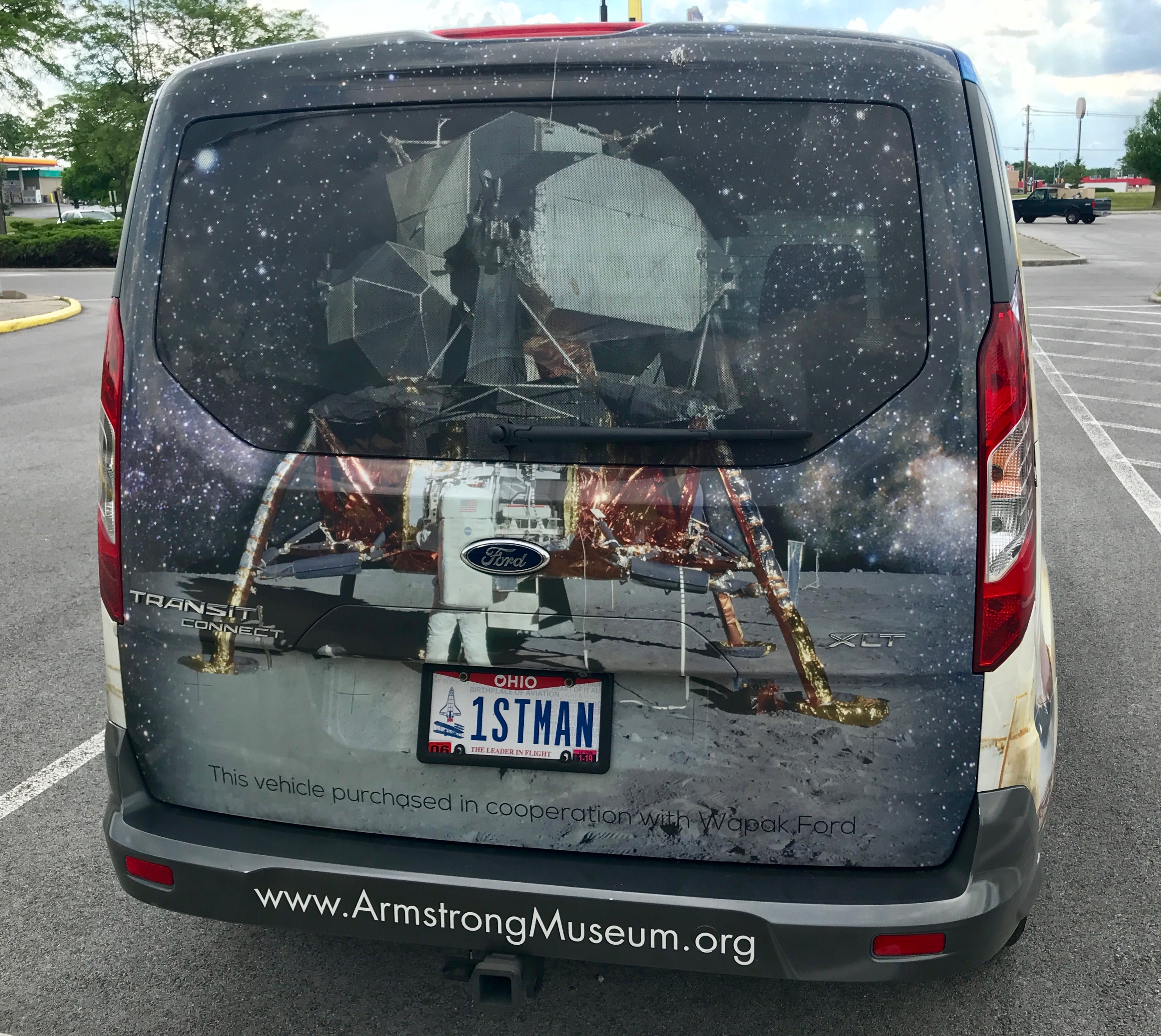
They also had a Ford Transit decorated with the Neil Armstrong lunar theme. Over the course of the summer, I would become very familiar with the Ford Transit – 7,000 or 8,000 miles worth of familiar. But, more about that later.
I particularly liked the license plate. Neil Armstrong, 1ST MAN on the moon.
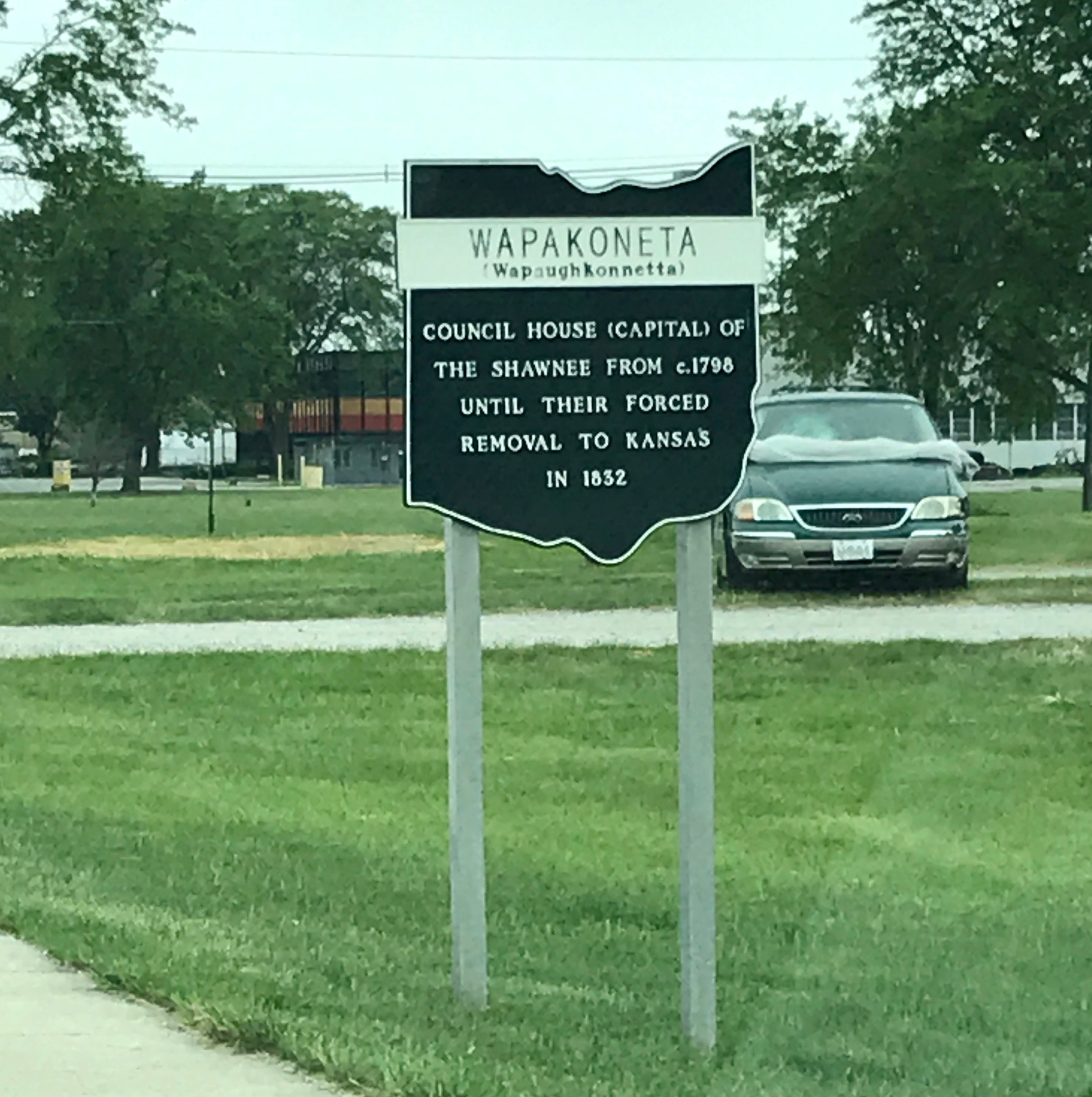
With that, I headed toward downtown Wapakoneta. I have to say that I find it encouraging that the true history of the original inhabitants is being acknowledged. They didn’t just “wander off.”
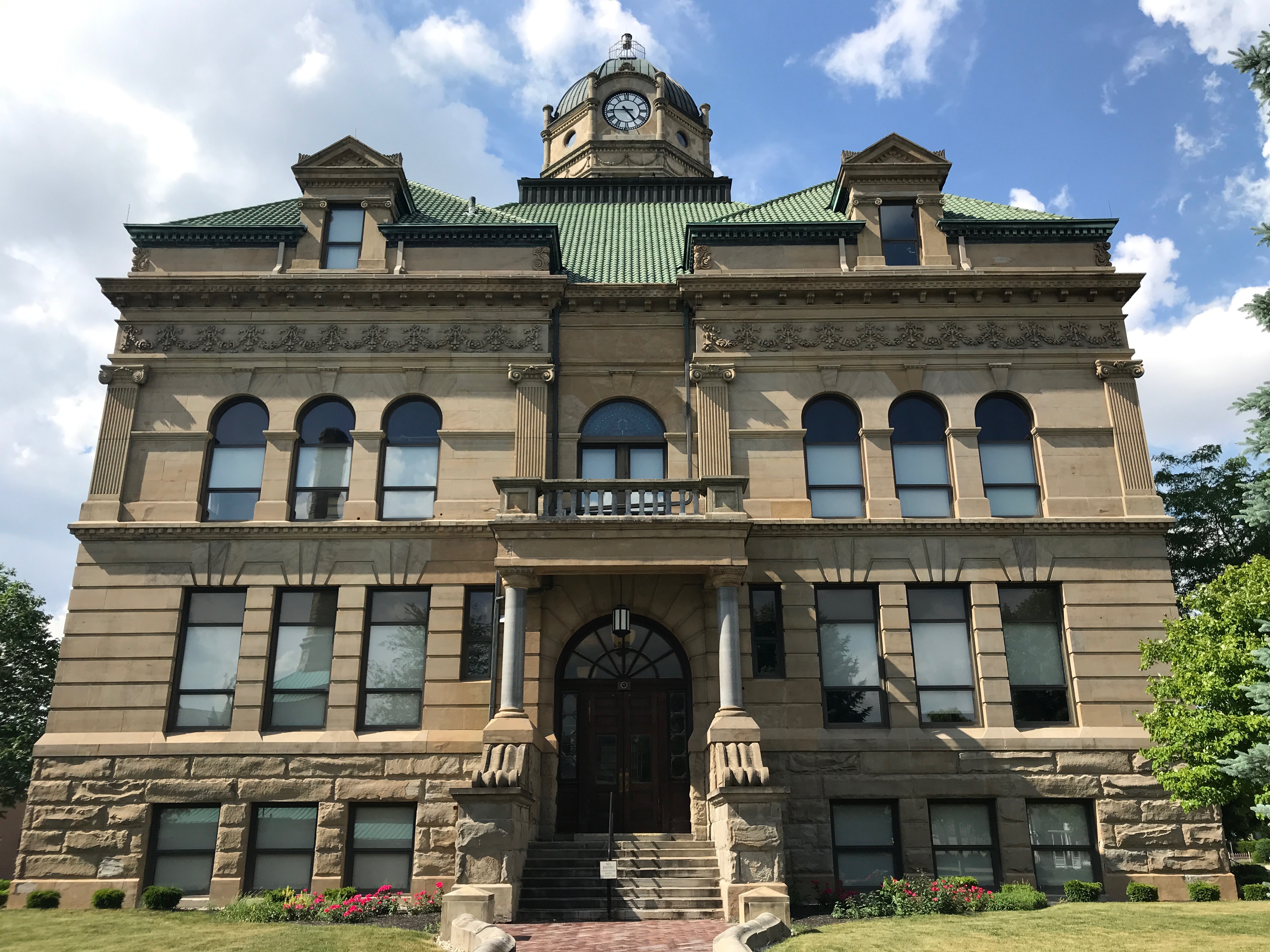
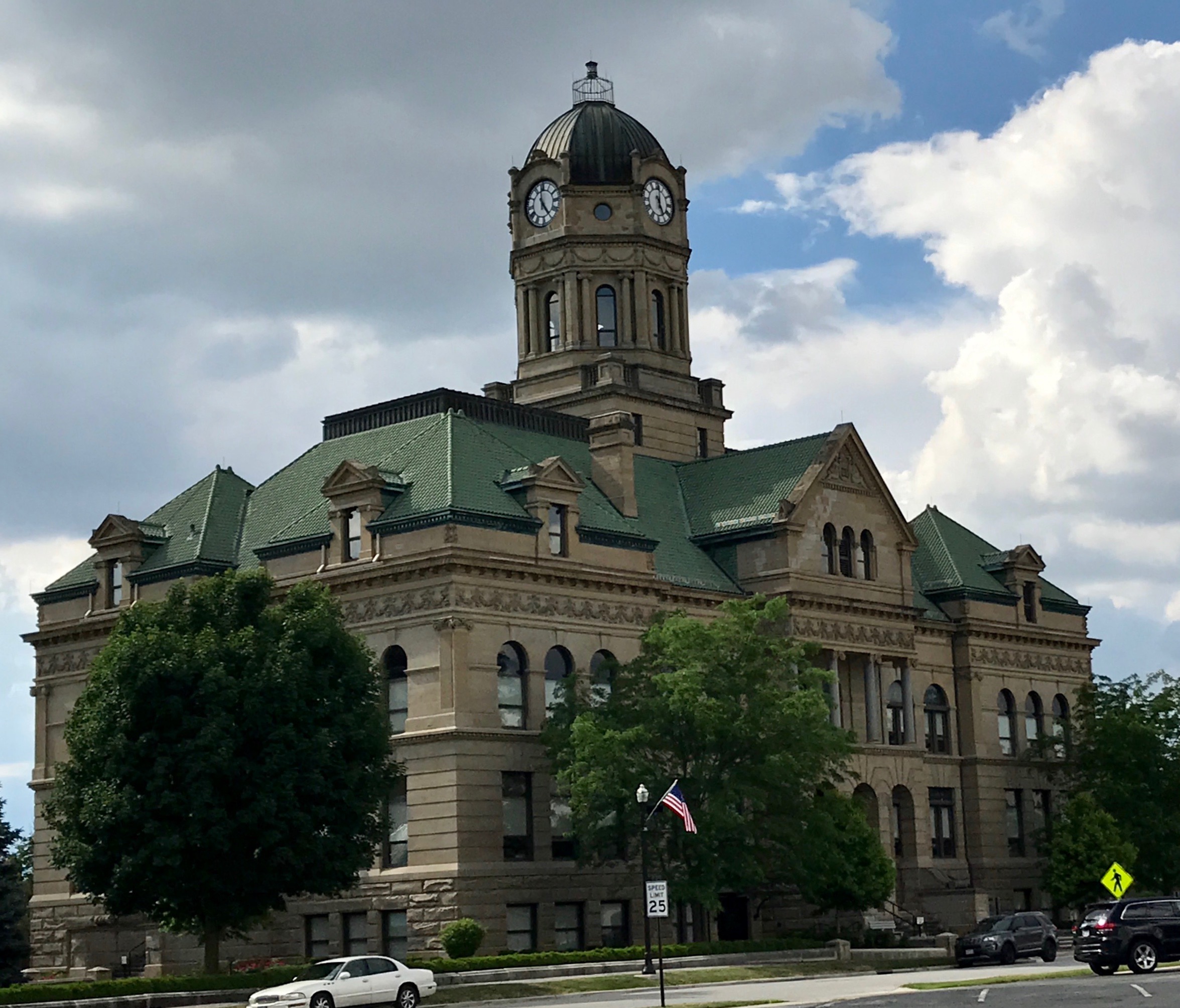
I headed toward the courthouse for Auglaize County. This building is the county’s second courthouse, which was opened to the public in 1894. according to my Preferred Source, the Courthouse and its adjacent powerhouse cost the “then-princely sum of $259,481.”
It was built of Berea sandstone, which is named after Berea, Ohio, although it is also found in Michigan, Ohio, Pennsylvania, West Virginia and Kentucky. In addition to being used as a building material, it is also a source of oil and gas. Who knew?
In addition to being built of sandstone, it had tile floors and it was highly fire-resistant. The boilers for heating and power generation were located in a separate powerhouse. The electricity, steam and hot water were fed to the building though an underground conduit.
I knew it wouldn’t be open. This was after hours, after all, but I thought I’d see what I could see.
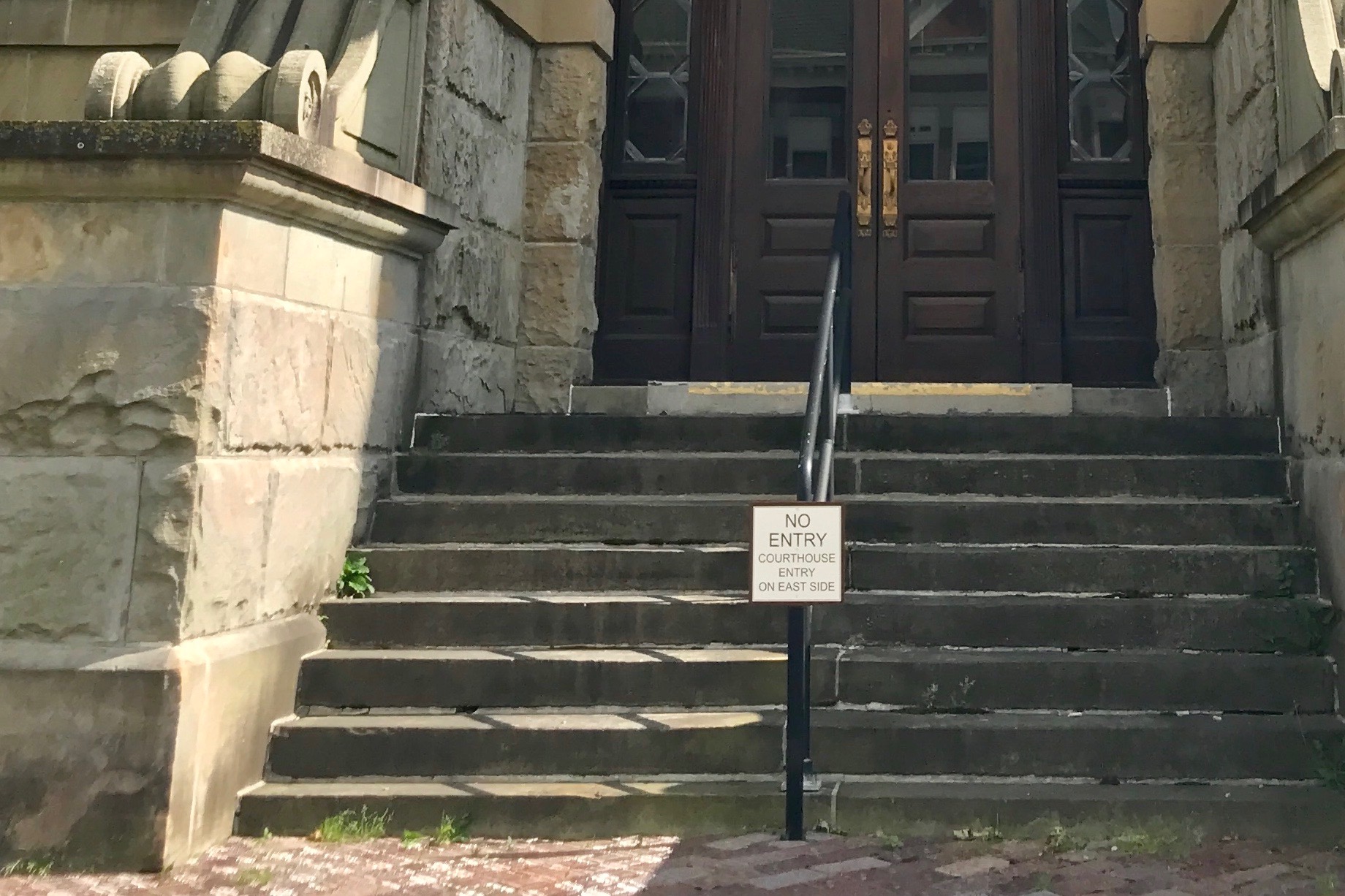
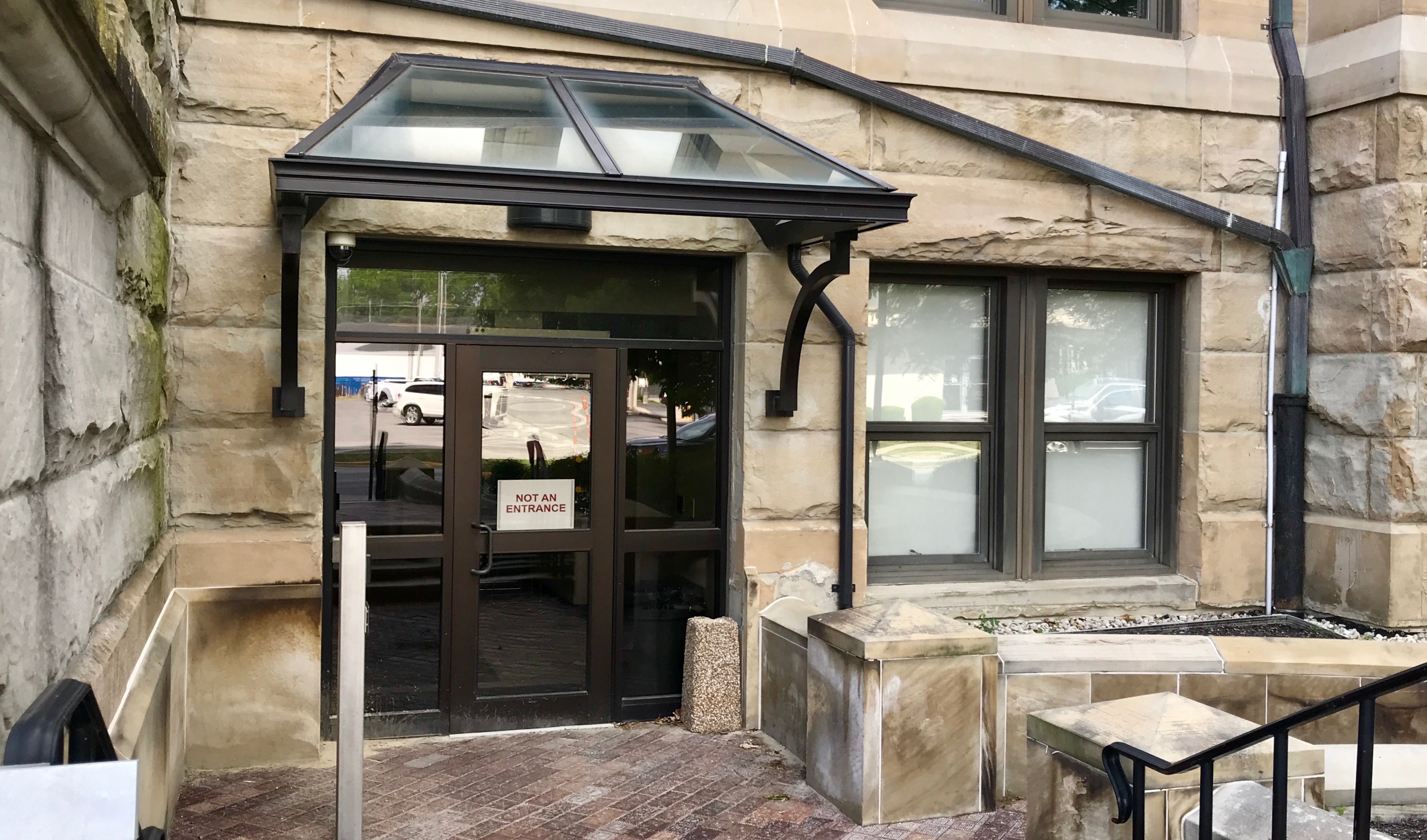
I went to the first door I came to. “NO ENTRY COURTHOUSE ENTRY ON EAST SIDE”
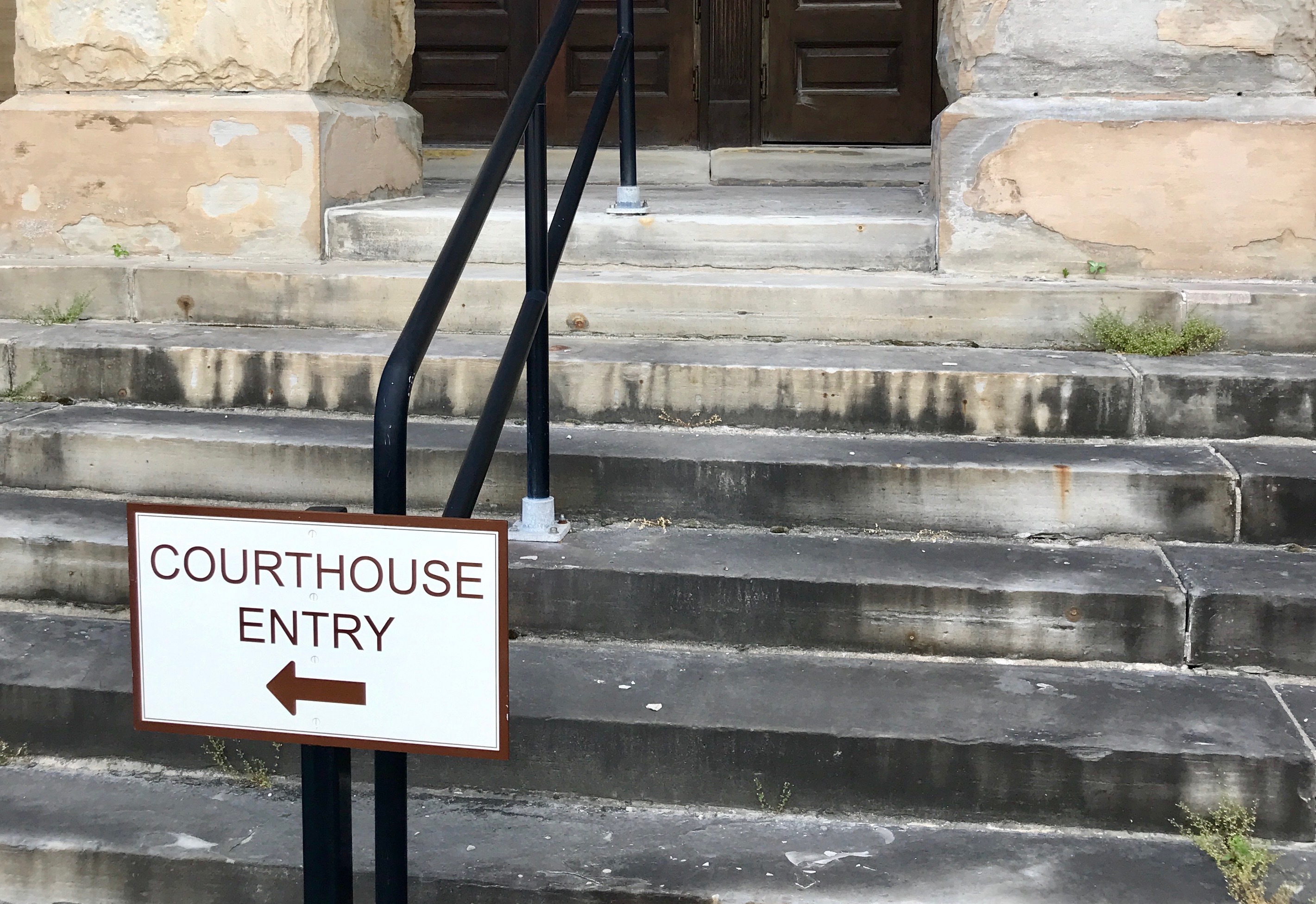
I continued on around the building. No, this is apparently not the east side.
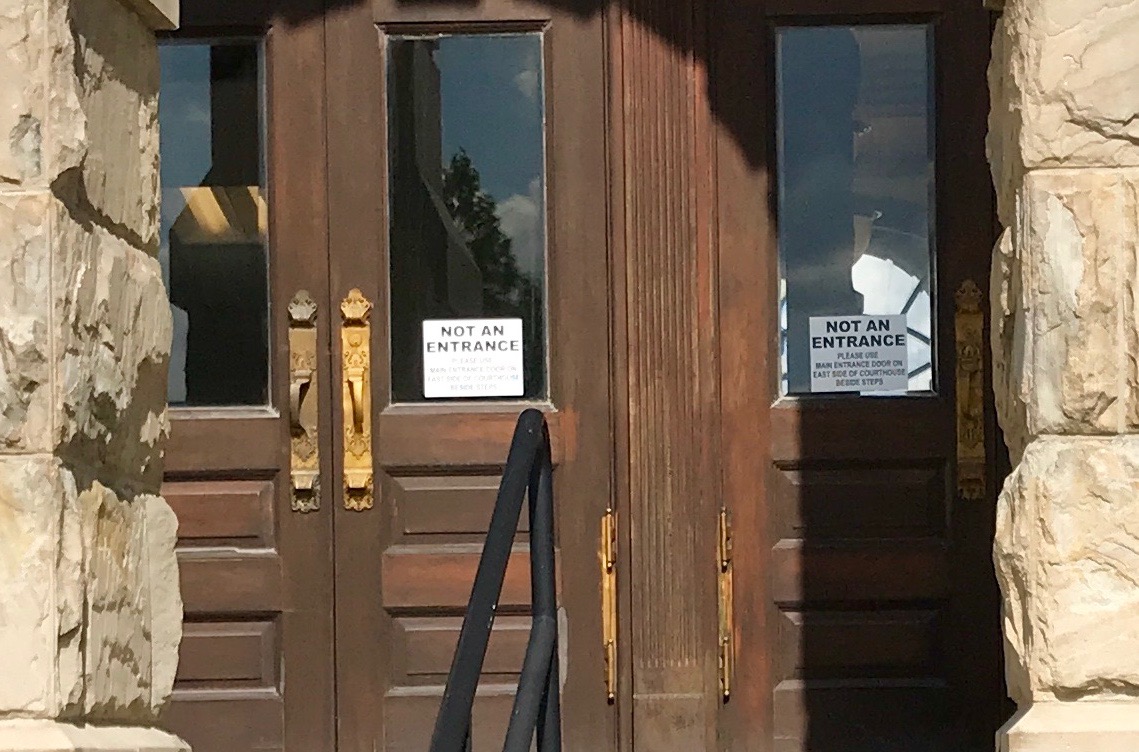
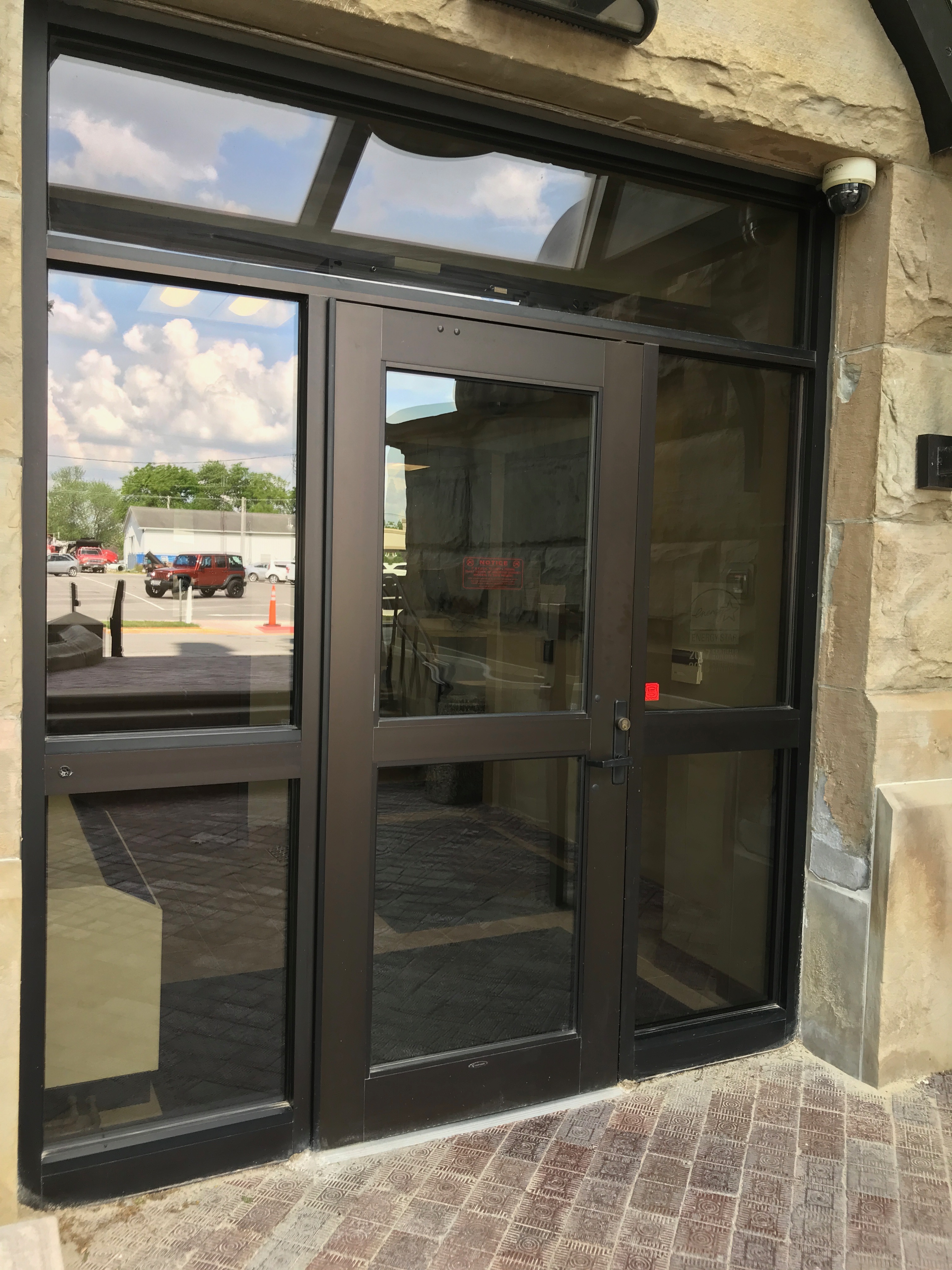
Just in case you got any fancy ideas about trying to get in, they posted signs on the door and the sidelight.
No, this isn’t an entrance, either.
I finally found the entrance, but it was closed – as I had expected it would be.
On my trip about the building, I came across some interesting things.
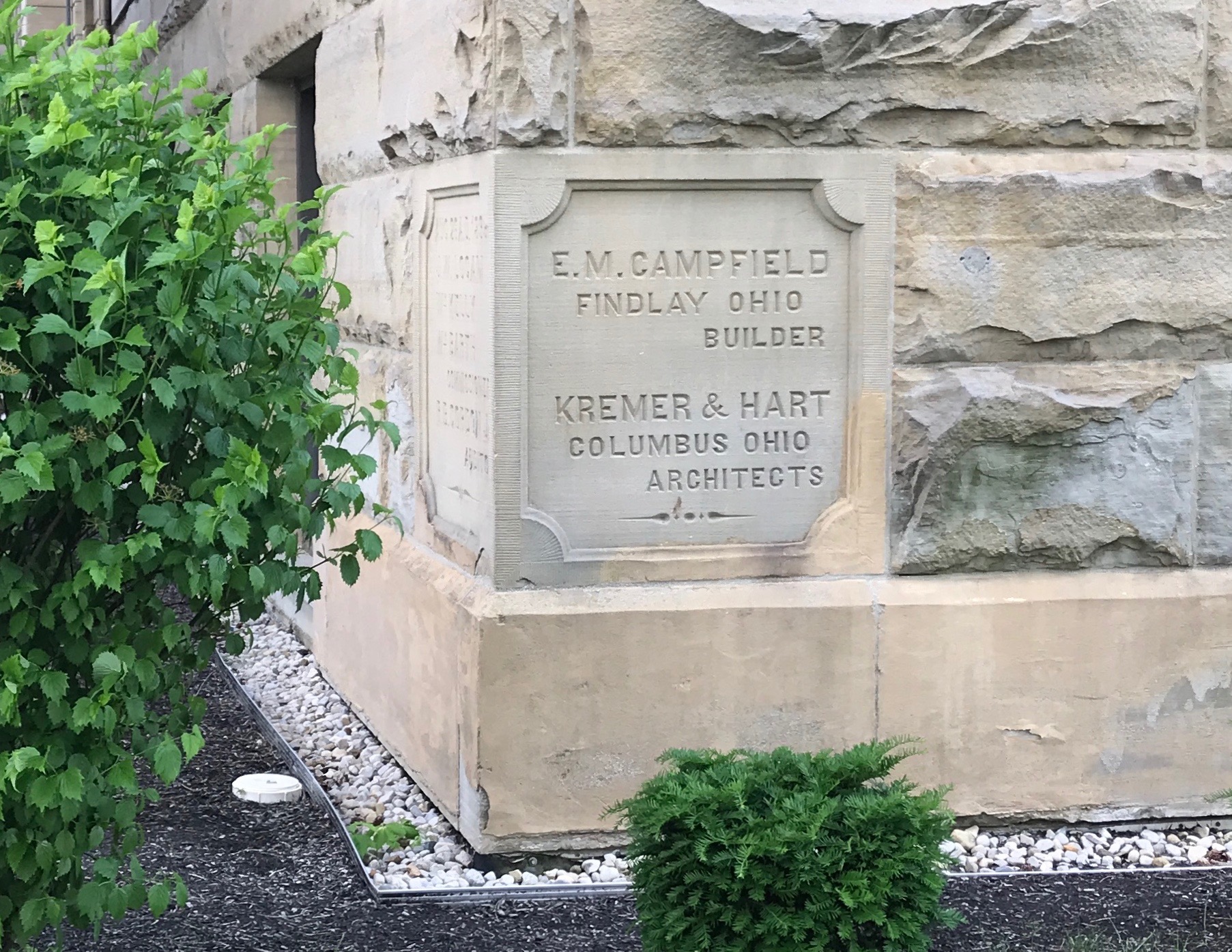
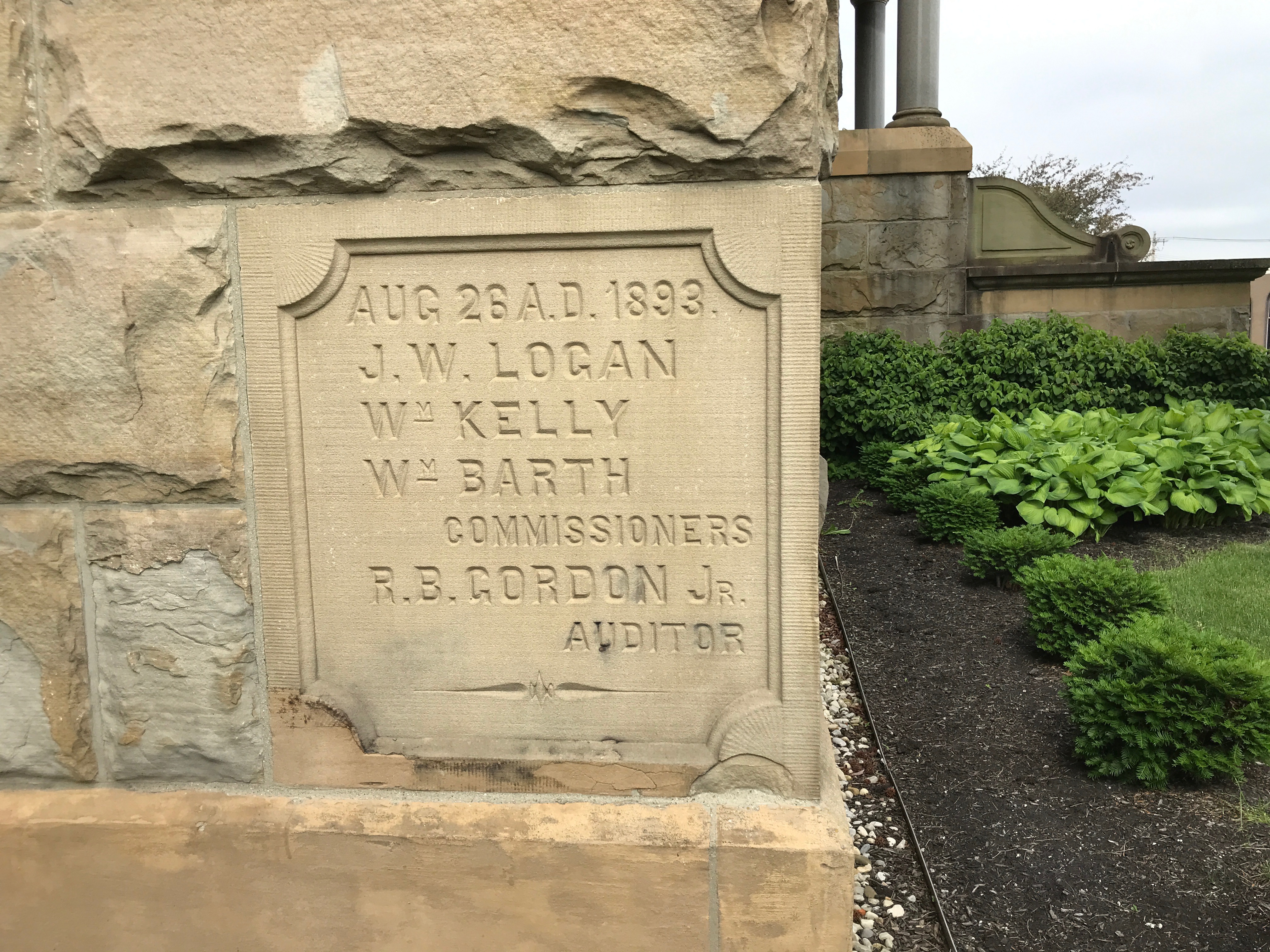
There was the cornerstone.
In fact, there was information on both visible sides.
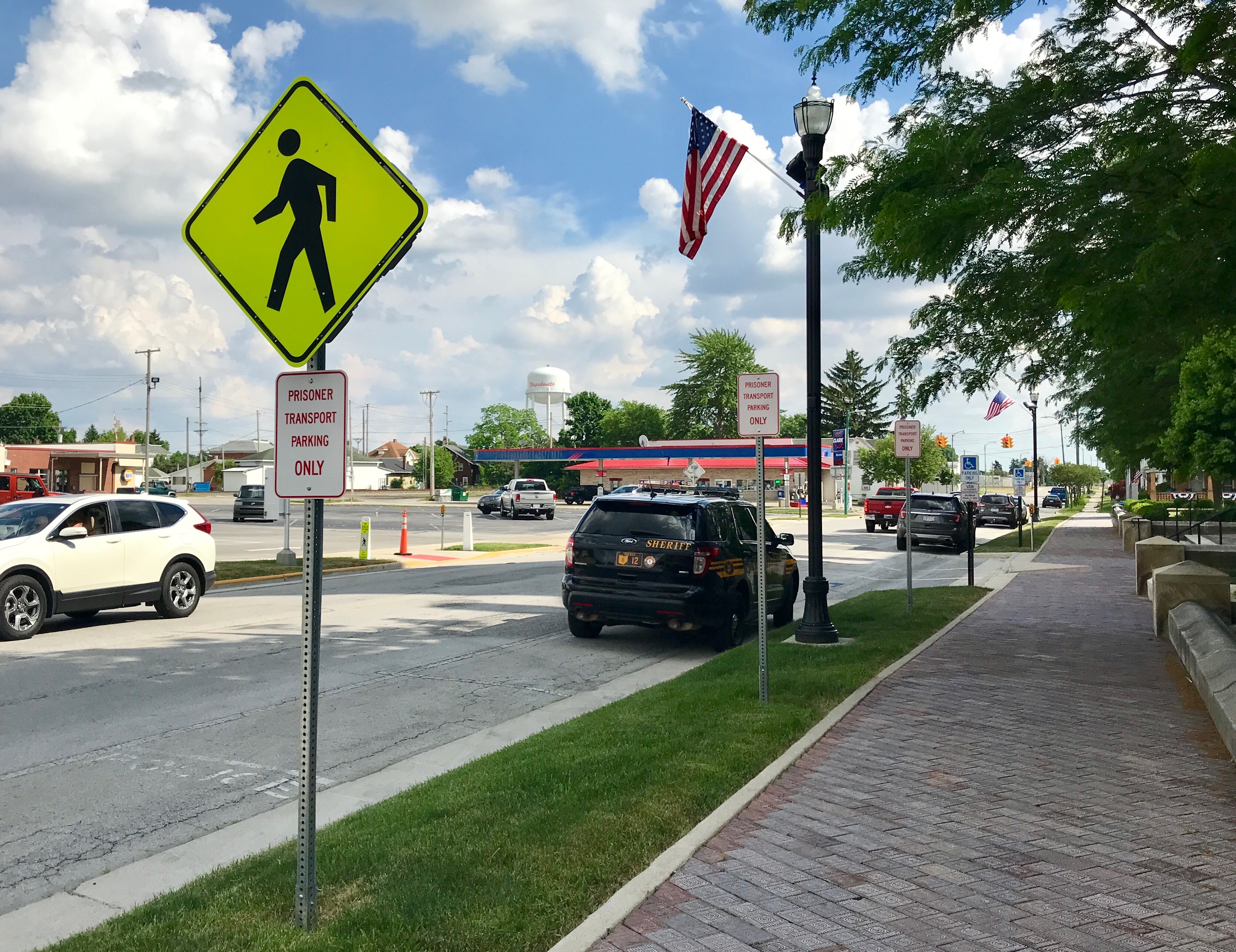
They had parking reserved for prisoner transport. There seemed to be lots of space reserved for prisoner transport.
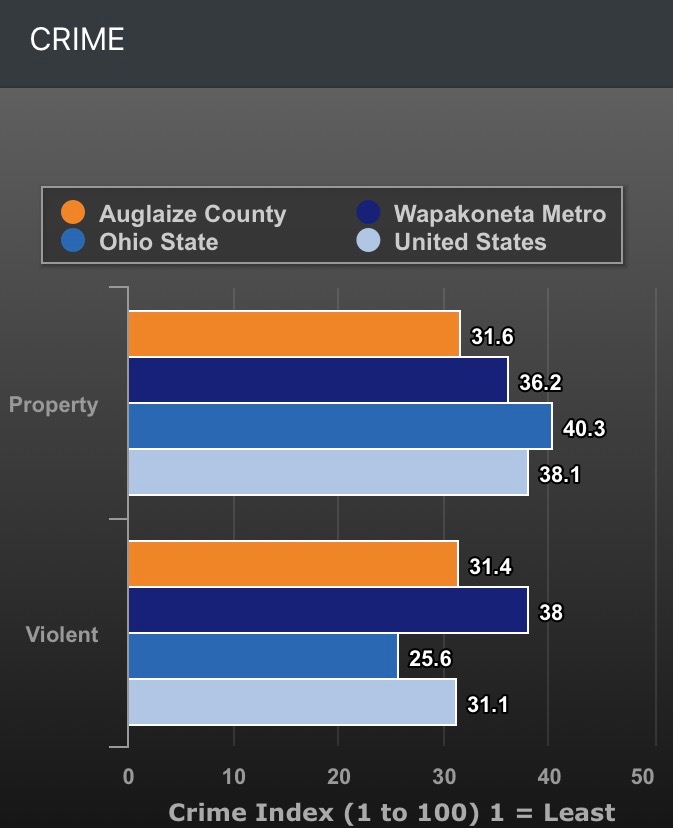
Thinking of prisoners made me thing of crime and wonder about statistics. No wonder these blog posts take me so long to write!
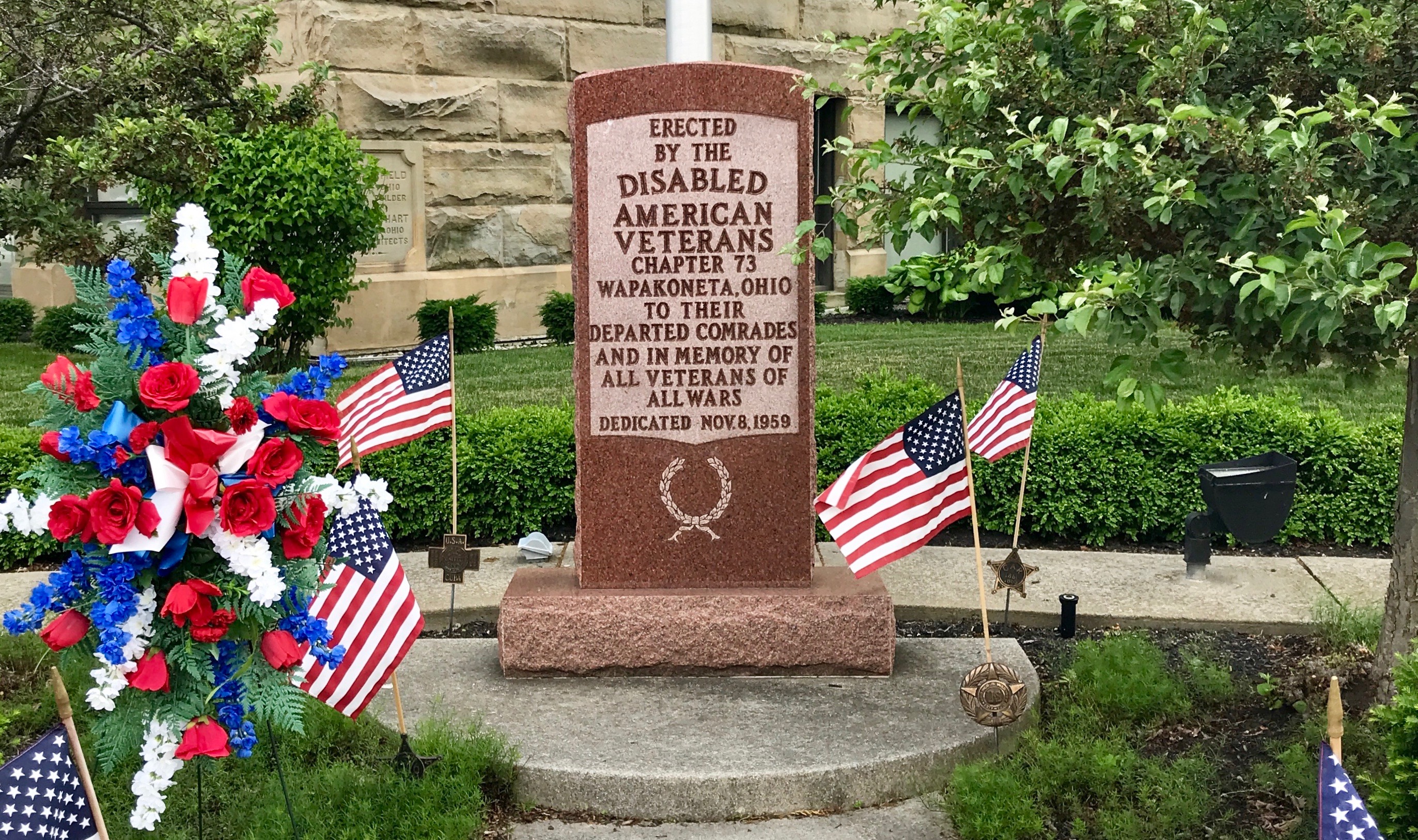
Then I found a memorial erected in 1959 by the Disabled American Veterans in memory of all veterans and all wars. I appreciate that they didn’t erect one of those monuments for space to honor the veterans of future wars. Those always make me sad. I guess we will never learn.
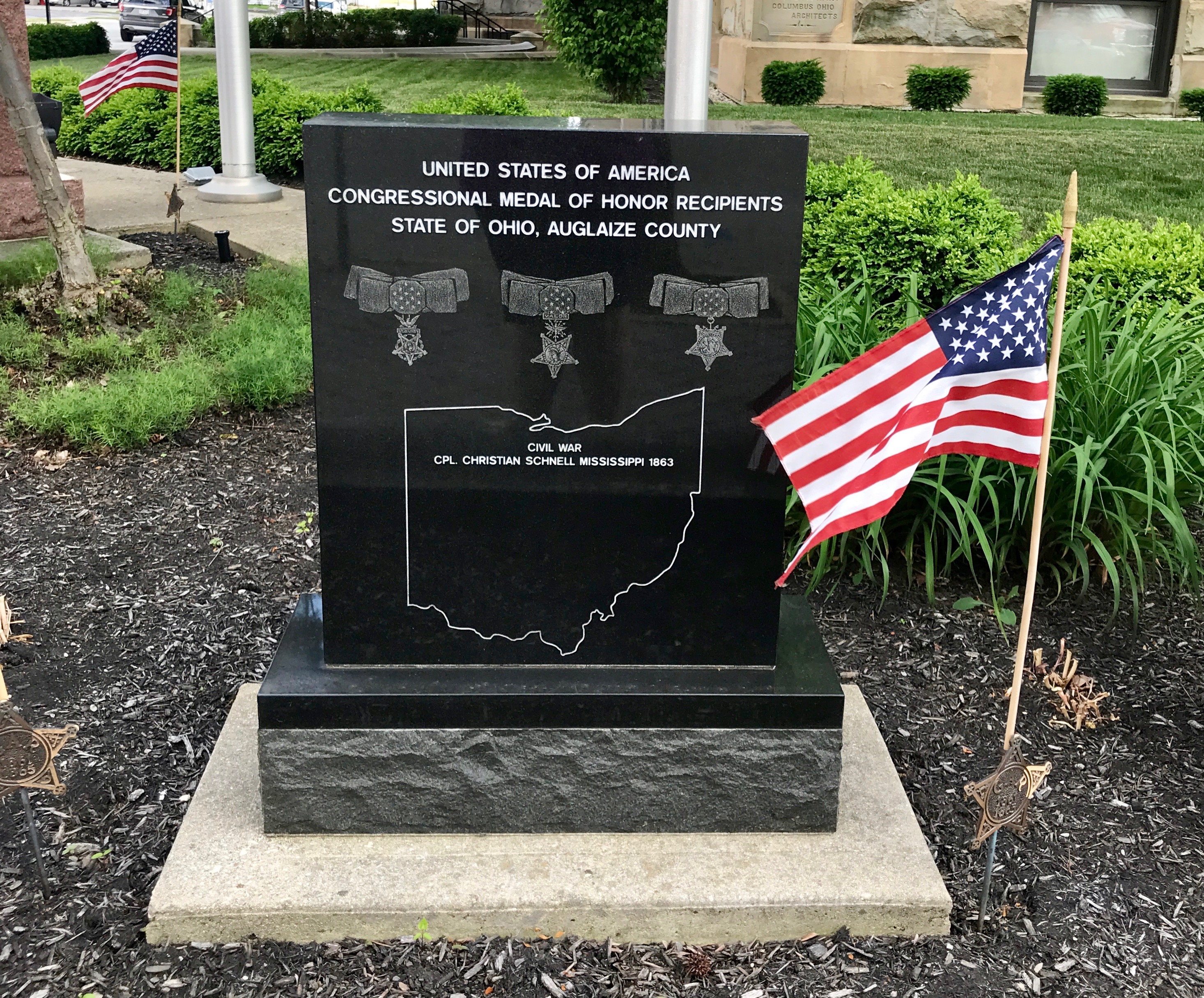
However, I guess they are hopeful that more citizens of Auglaize county will be awarded the Congressional Medal of Honor. There hasn’t been one since the Civil War.
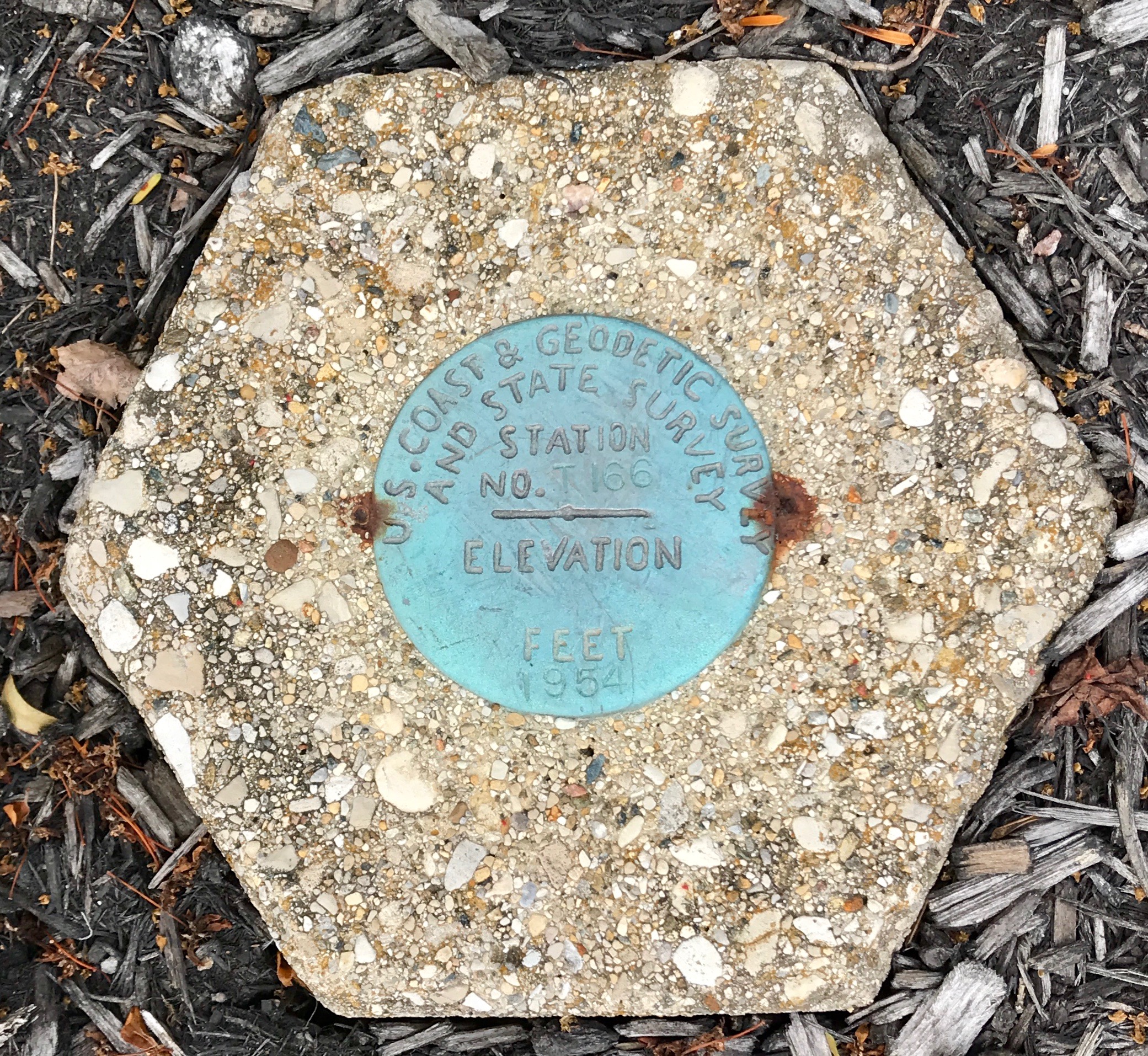
While I was poking around, I managed to come across a survey marker.
I took one more shot of the courthouse and then I was off to my main reason for coming downtown.
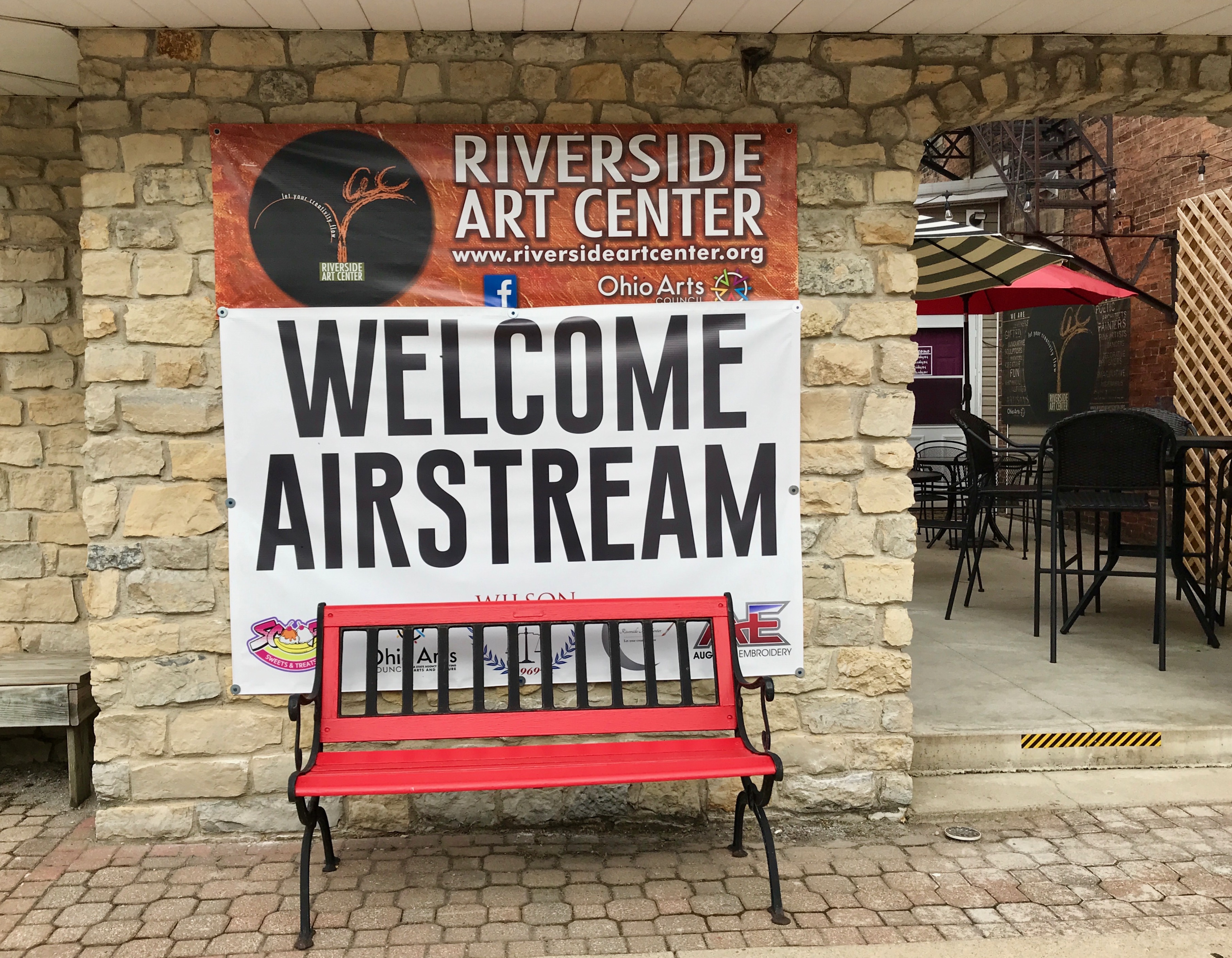
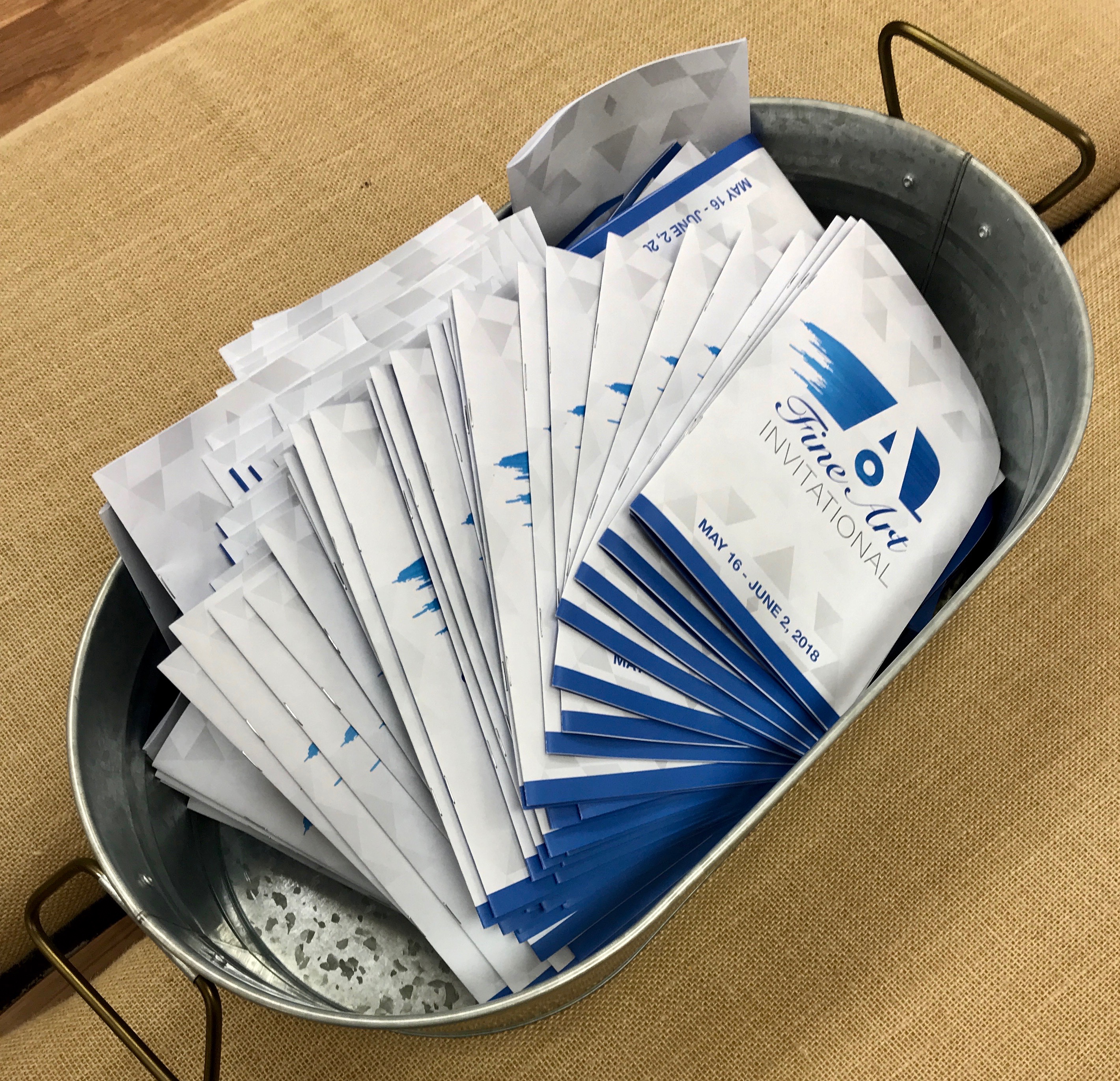
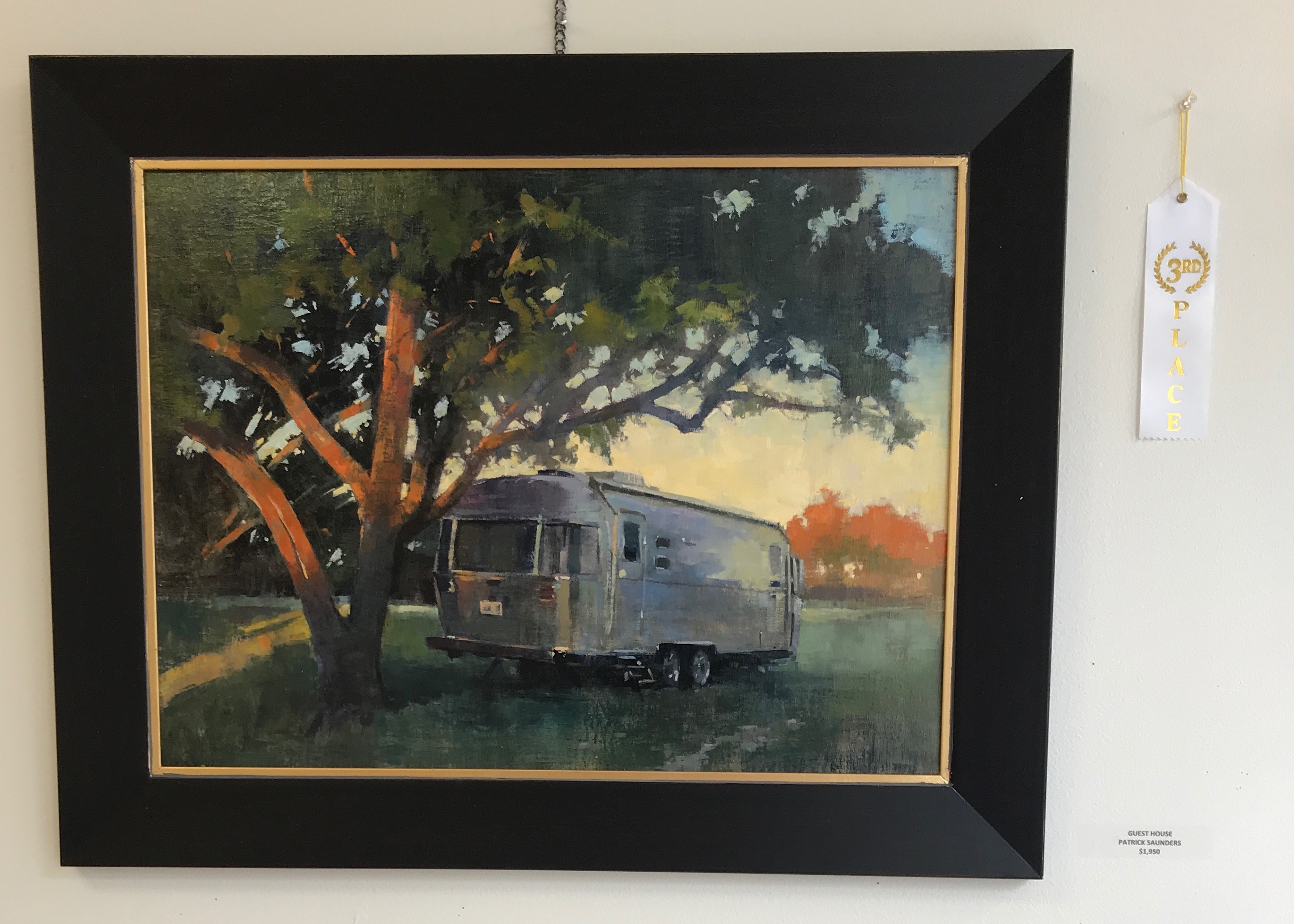
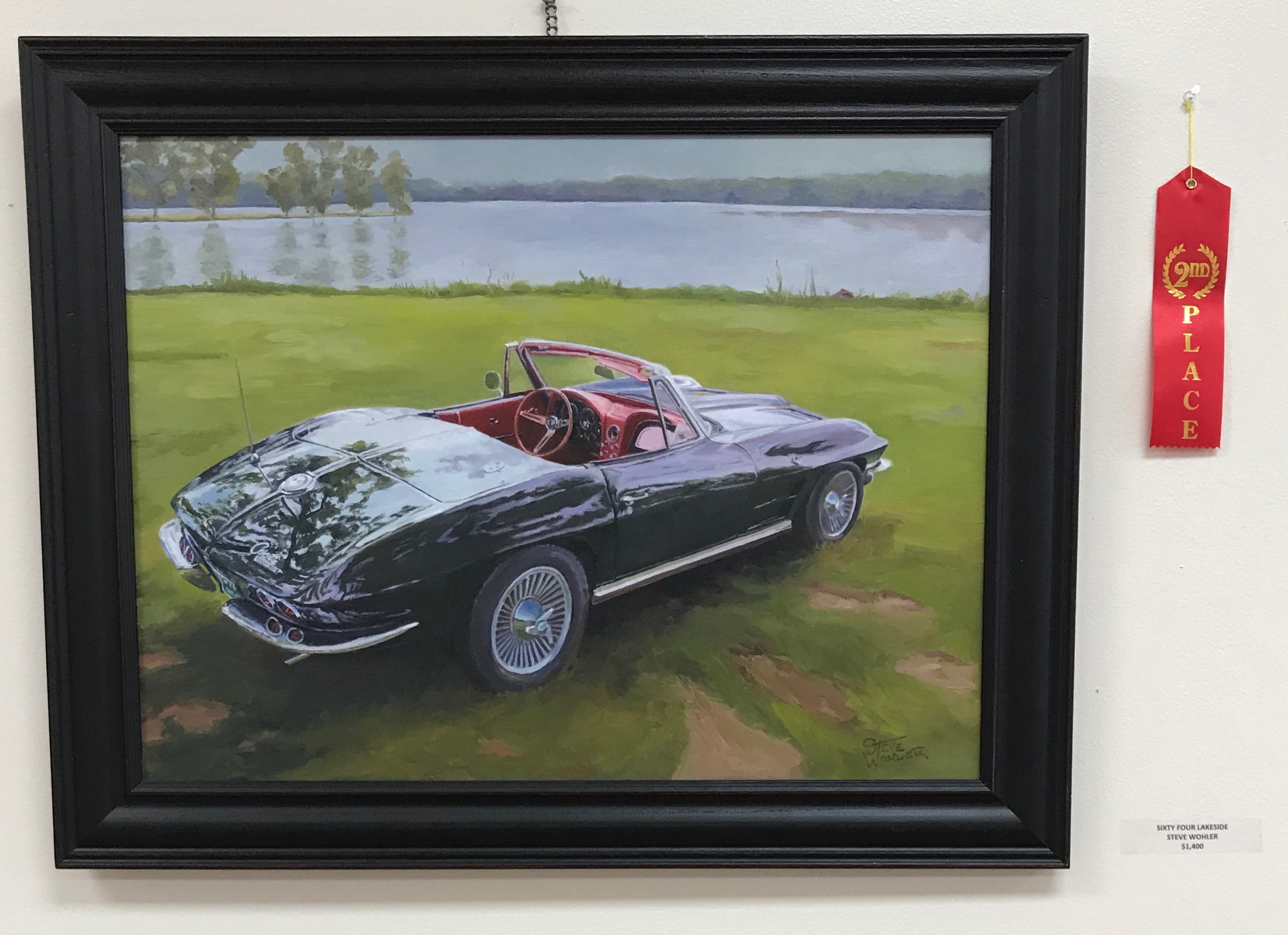
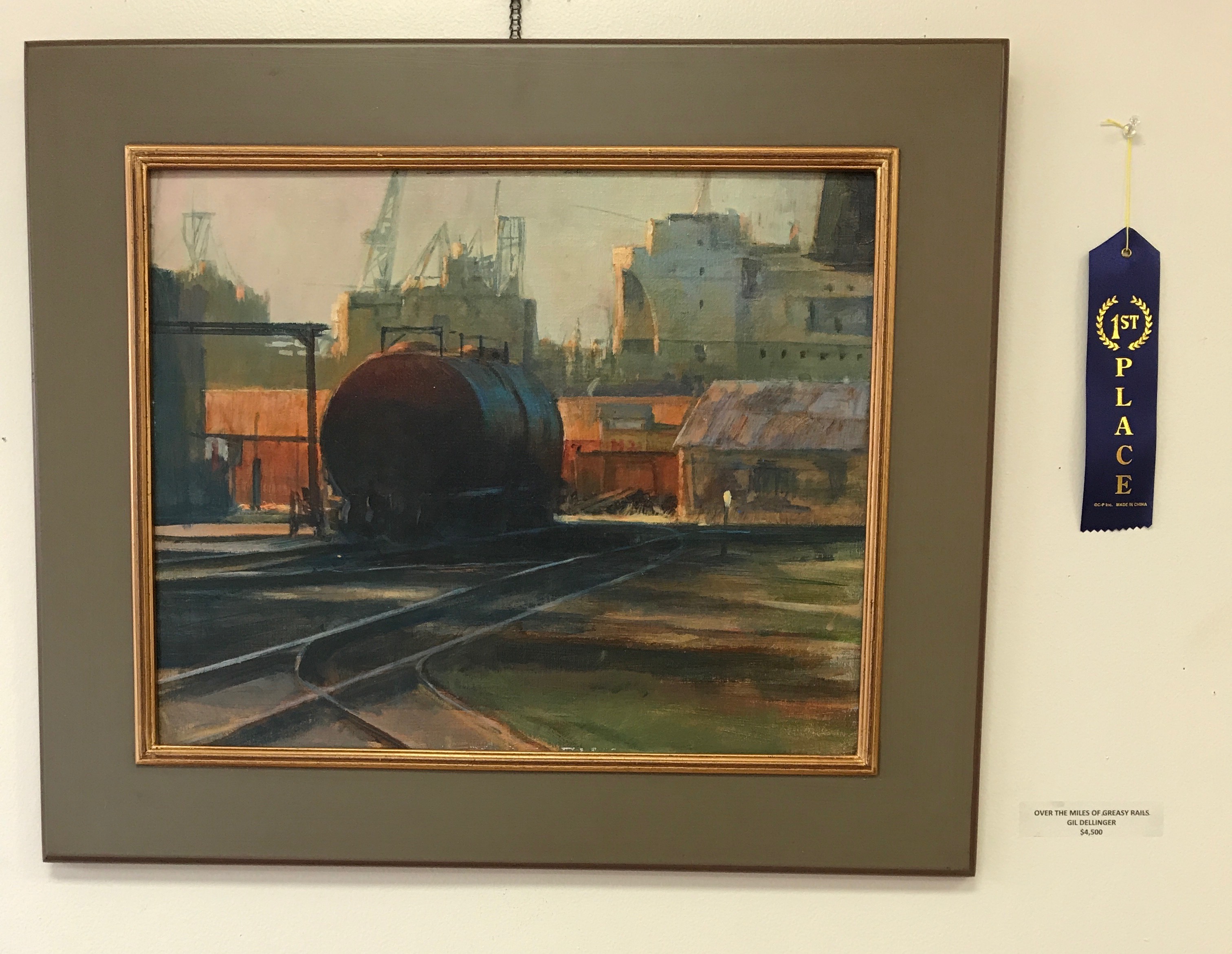
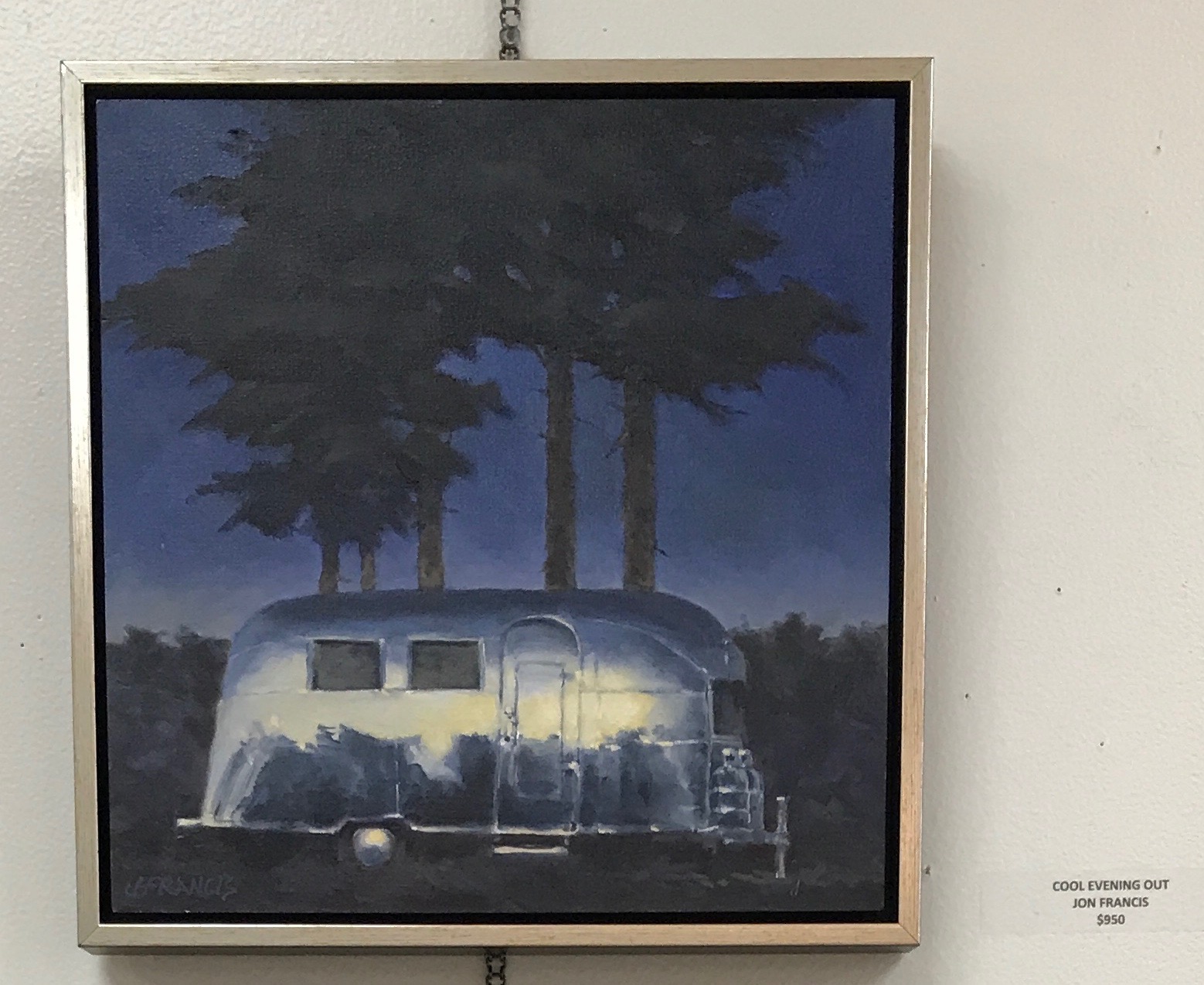
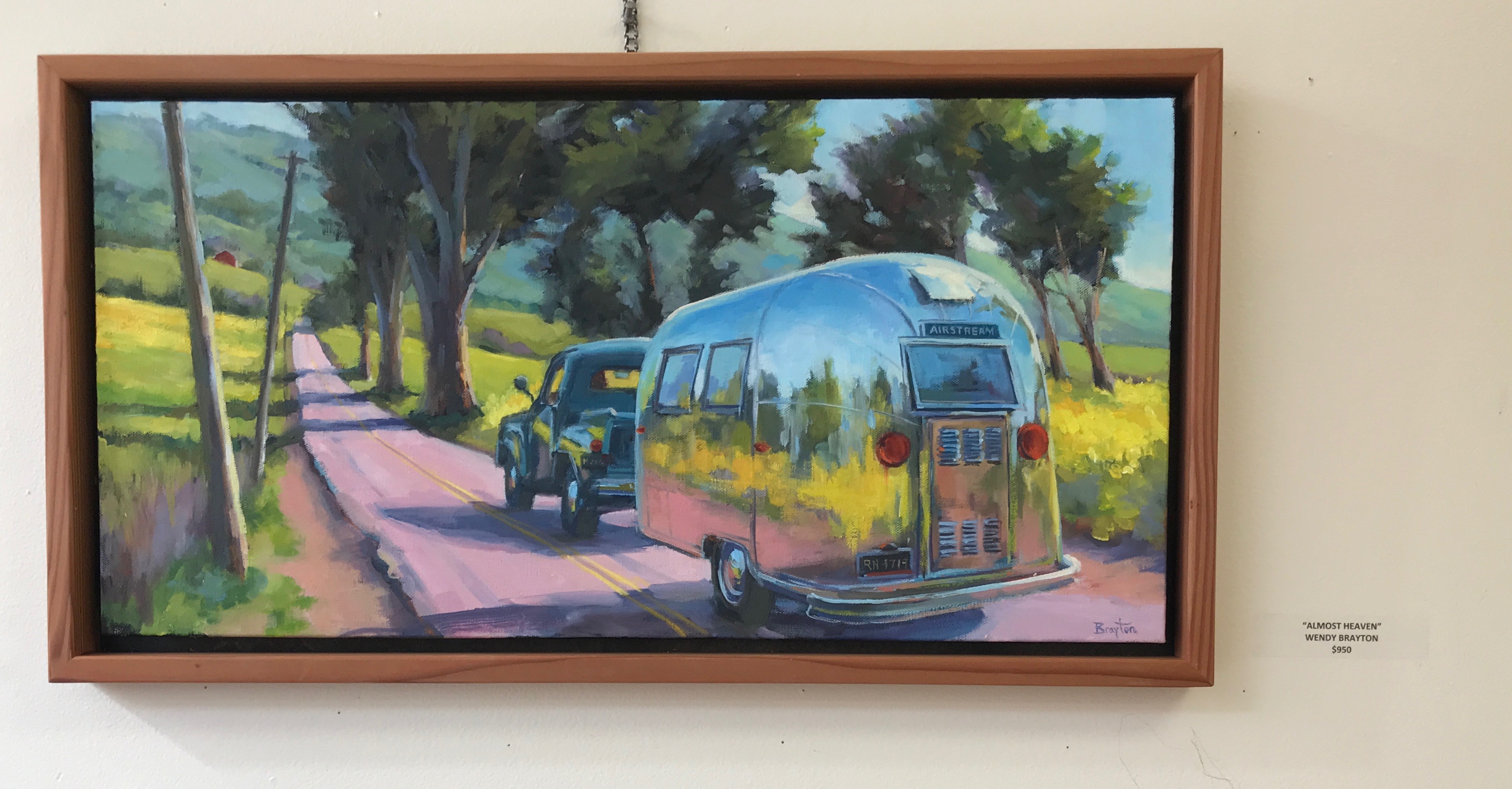
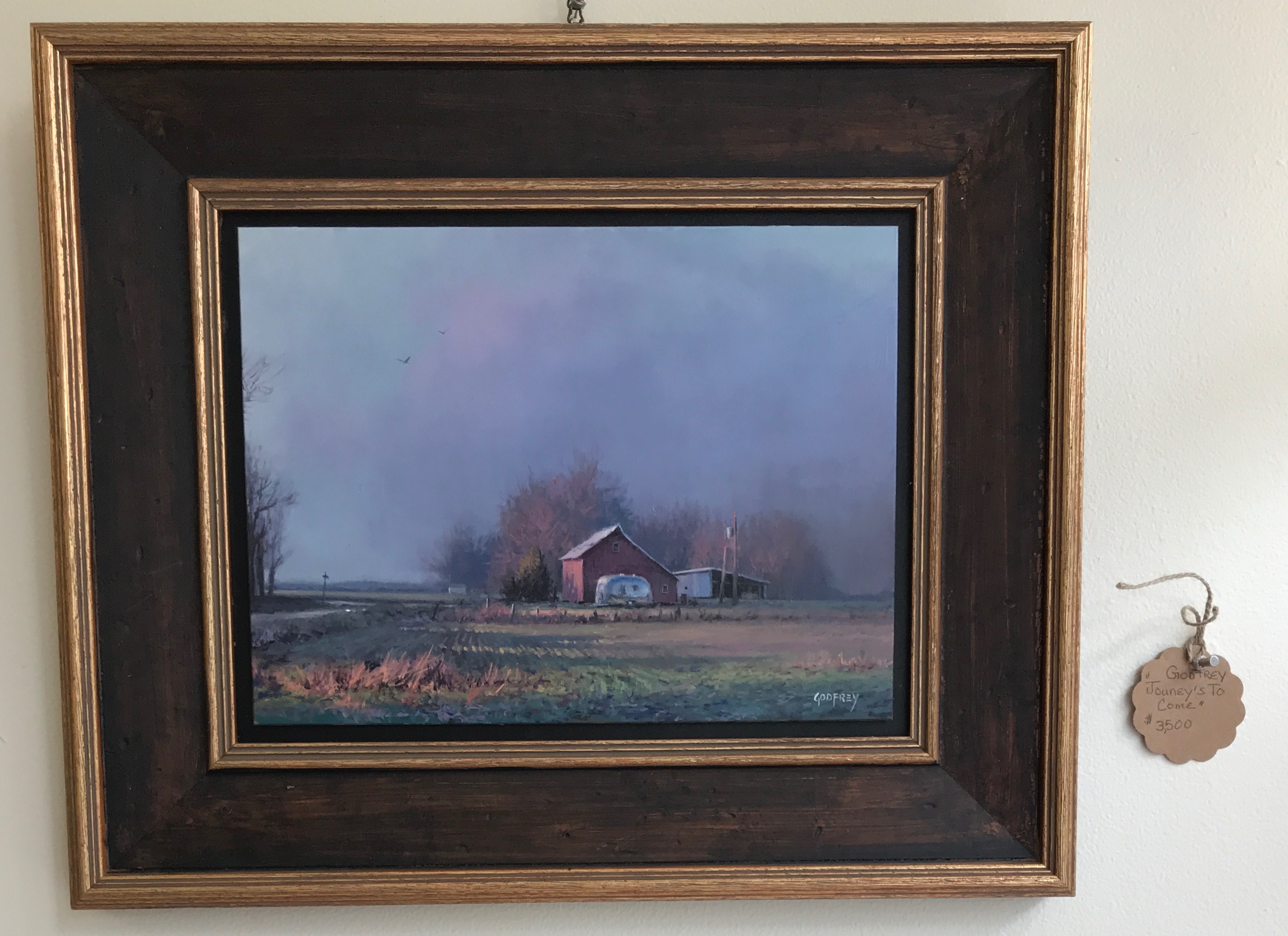
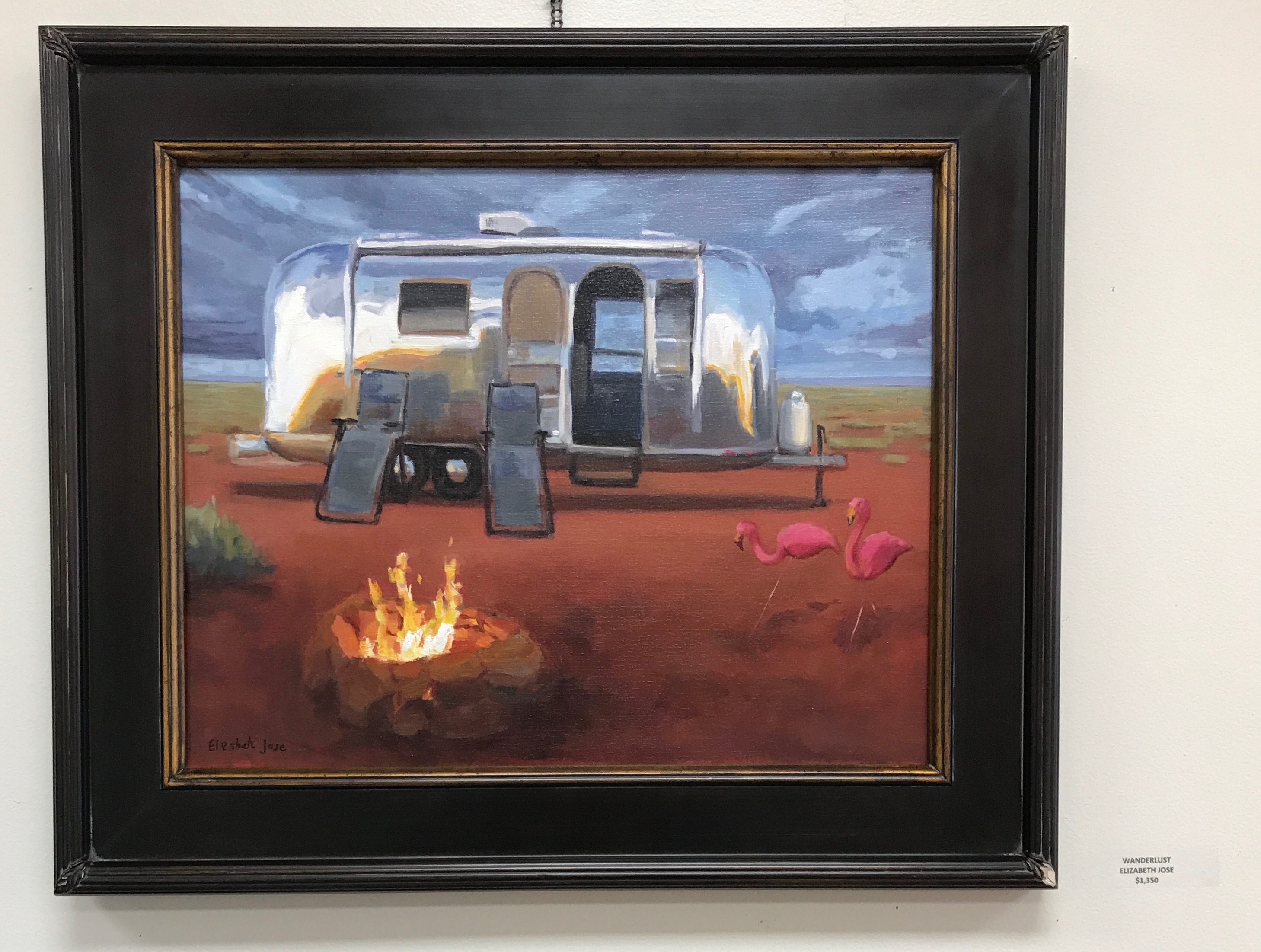
As part of Alumapalooza, they have a Fine Art Invitational. Other years, it has been held out at the factory. This year, it was in Wapakoneta.
There were informational pamphlets available to help guide you around the exhibit.
Third place went to Patrick Saunders for his painting titled “Guest House.”
Second place went to Steve Wohler for Sixty-four Lakeside
First place was taken by Gil Dellinger for Over the Miles of Greasy Rails.
Okay, call me a crab or a grouch, but it seems to me that the art at an Airstream Fine Art Invitational ought to feature – oh – AIRSTREAMS!
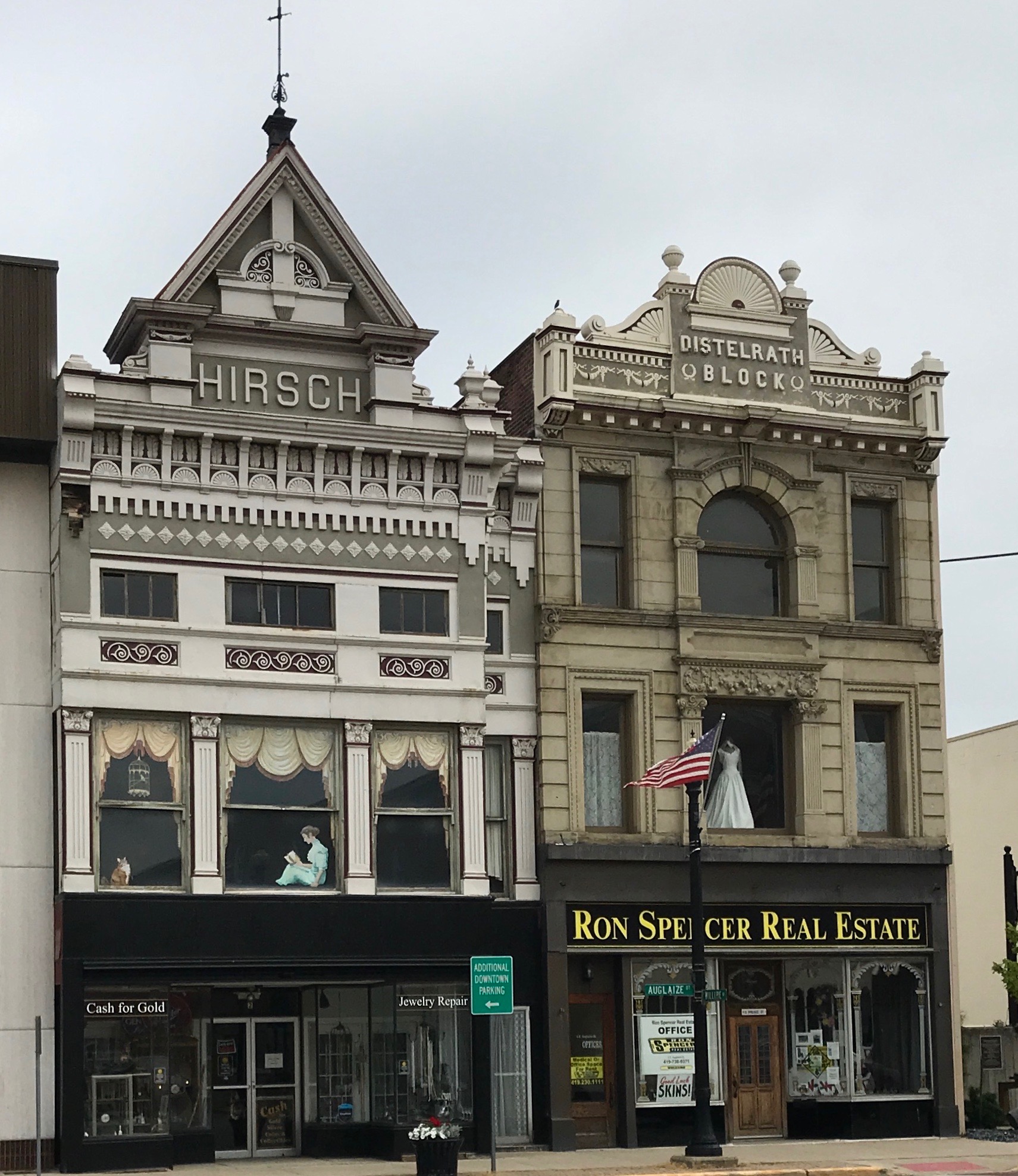
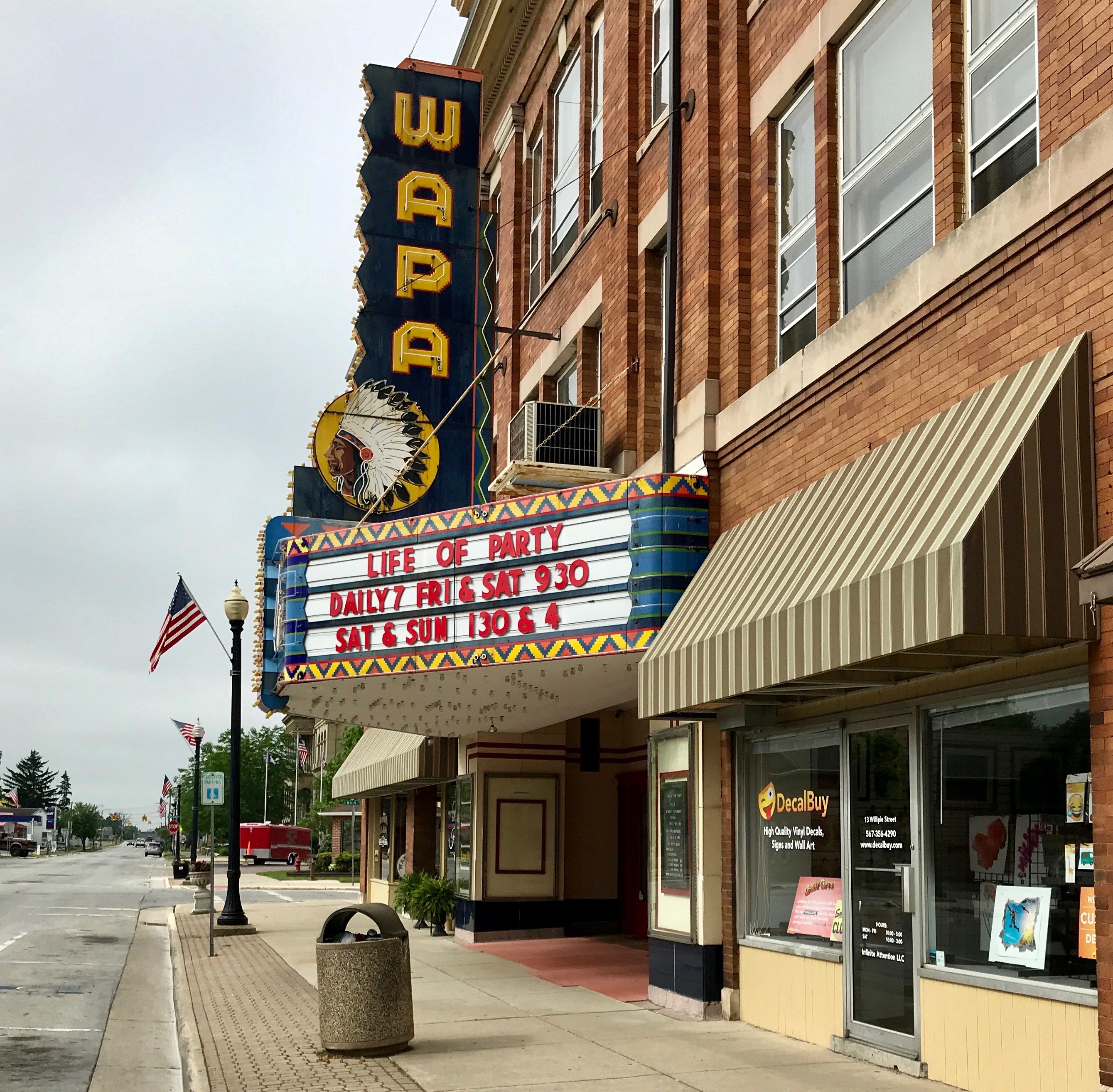
There are quite a few historic buildings in the downtown area. In fact, there is a walking tour that you can download from their website. I didn’t have the time for it, but you know what I always say: “Next time!”
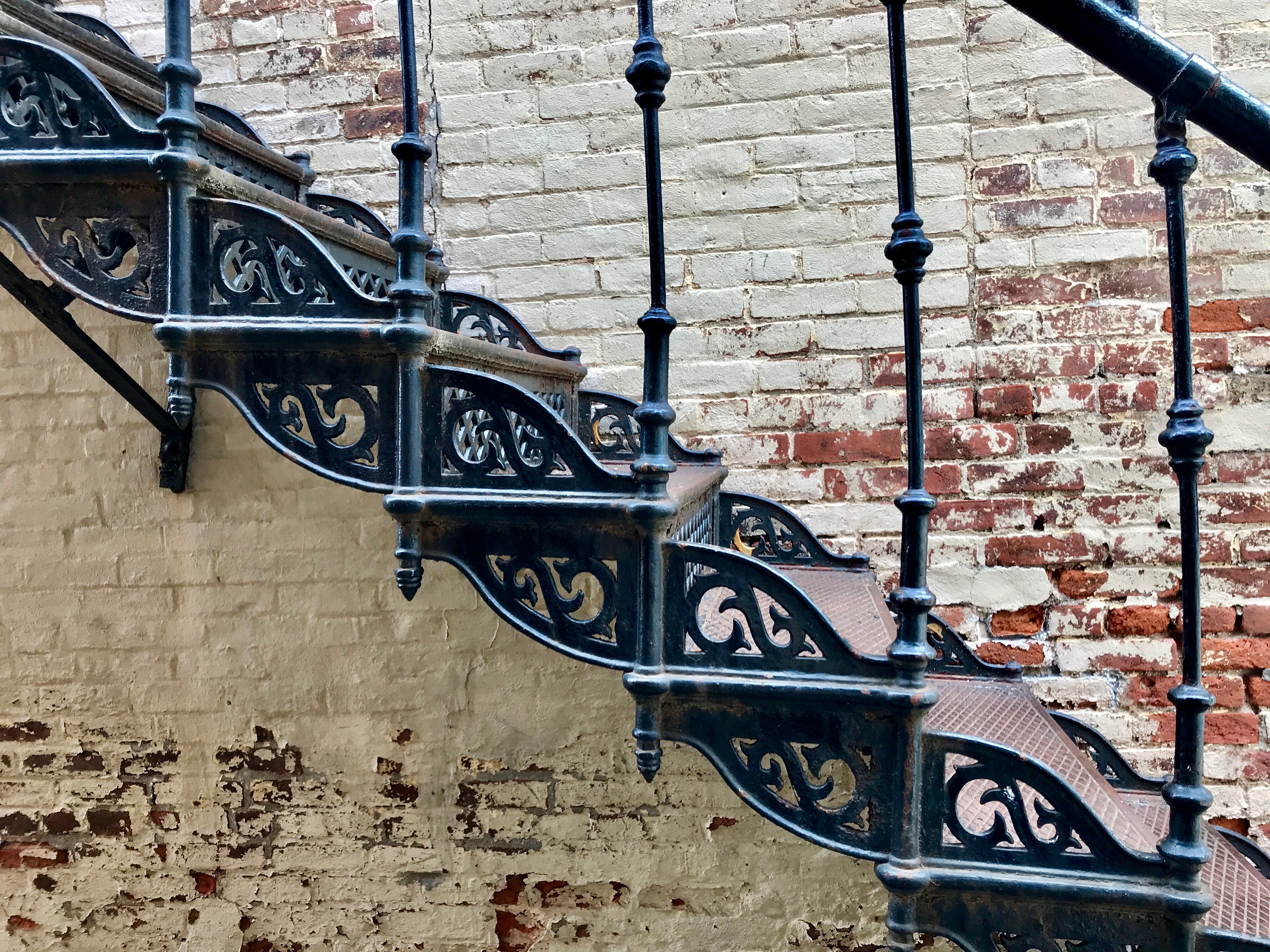
I did snap a photo of this decorative exterior staircase. Do you suppose it was a fire escape?
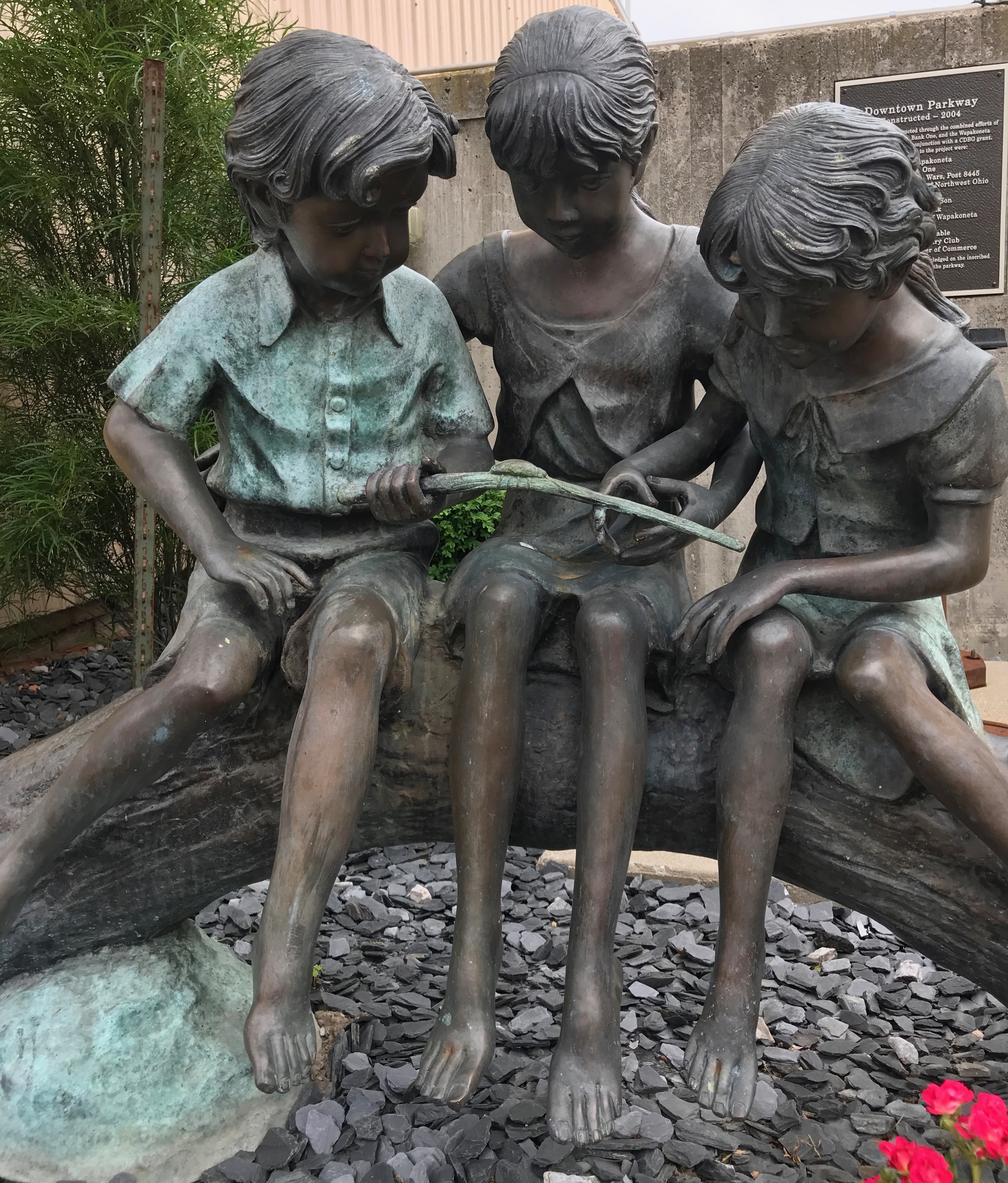
There was this charming statue at the entrance to the Downtown Parkway that seemed to provide access to the Auglaize River.
Auglaize is also the name of the county in which you will find Wapakoneta. When I was researching the name, it seemed like no one was quite sure where the name came from. My Preferred Source is quite emphatic that the name of the river comes from the French word “glaise” which means clay. It sounds to me that the river must be kind of muddy to have earned such as name. Or maybe there are clay deposits along the banks.
The Auglaize River, which was called Kathinakithiipi by the Shawnee, is a 113 mile long tributary of the Maumee River. It drains a primarily rural area in the watershed of Lake Erie. Even with Wapakoneta being about 100 miles from Lake Erie, it does remind me that we are all very connected. There is no “away” to throw things.
Okay, I’ll climb down off my soap box.
One more interesting shot in Downtown Wapakoneta, and then back to the hotel to rest up for the main event the next day: Alumapalooza and the Airstream Addicts gathering!
On there way to Jacksons Center, I was able to snap this photo.
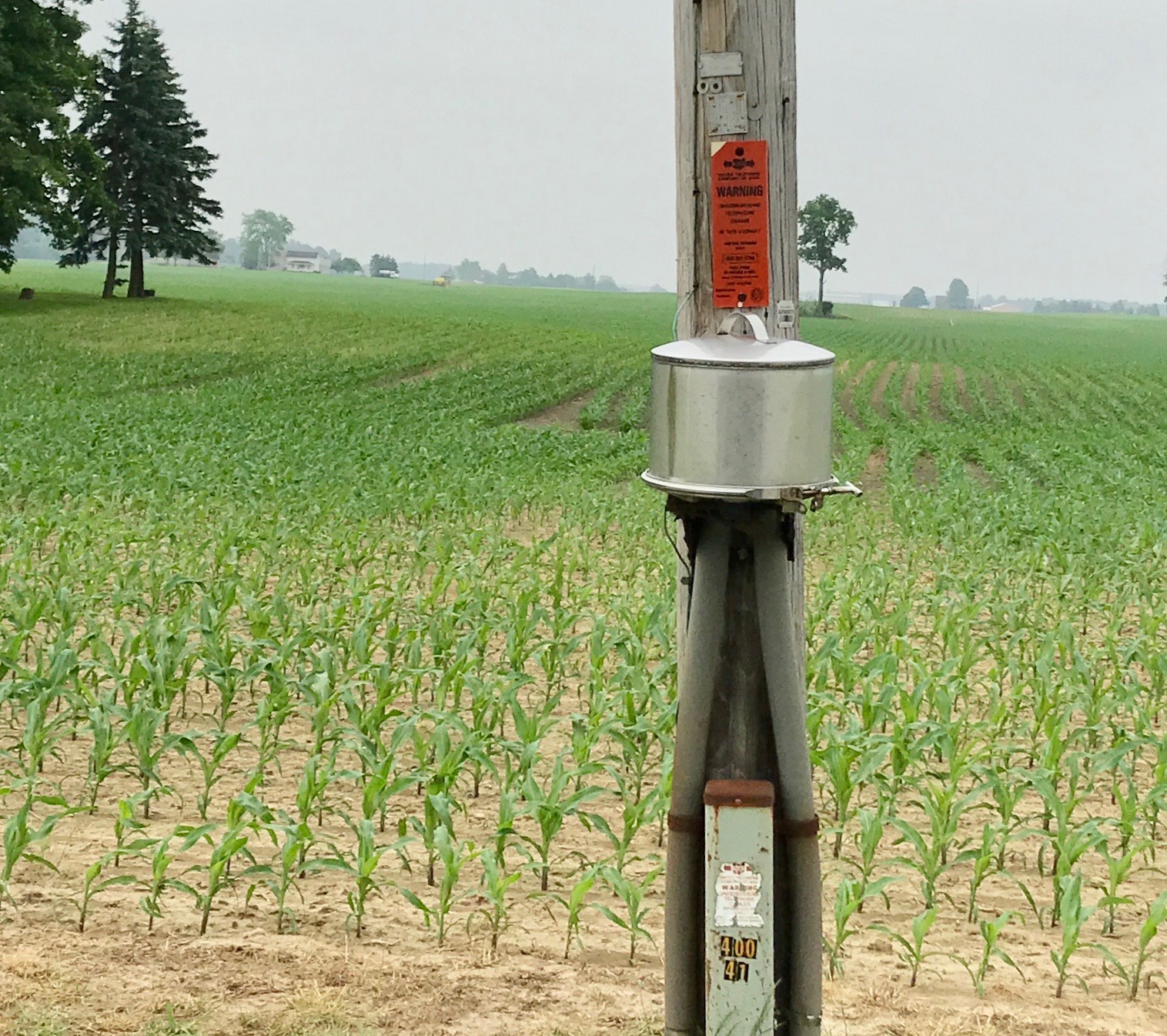
Can anyone tell me what this is? I have seen them all over in rural areas. I assume it has something to do with electricity, but I don’t know. Finally, I arrived at the Mothership.
Alumapalooza!
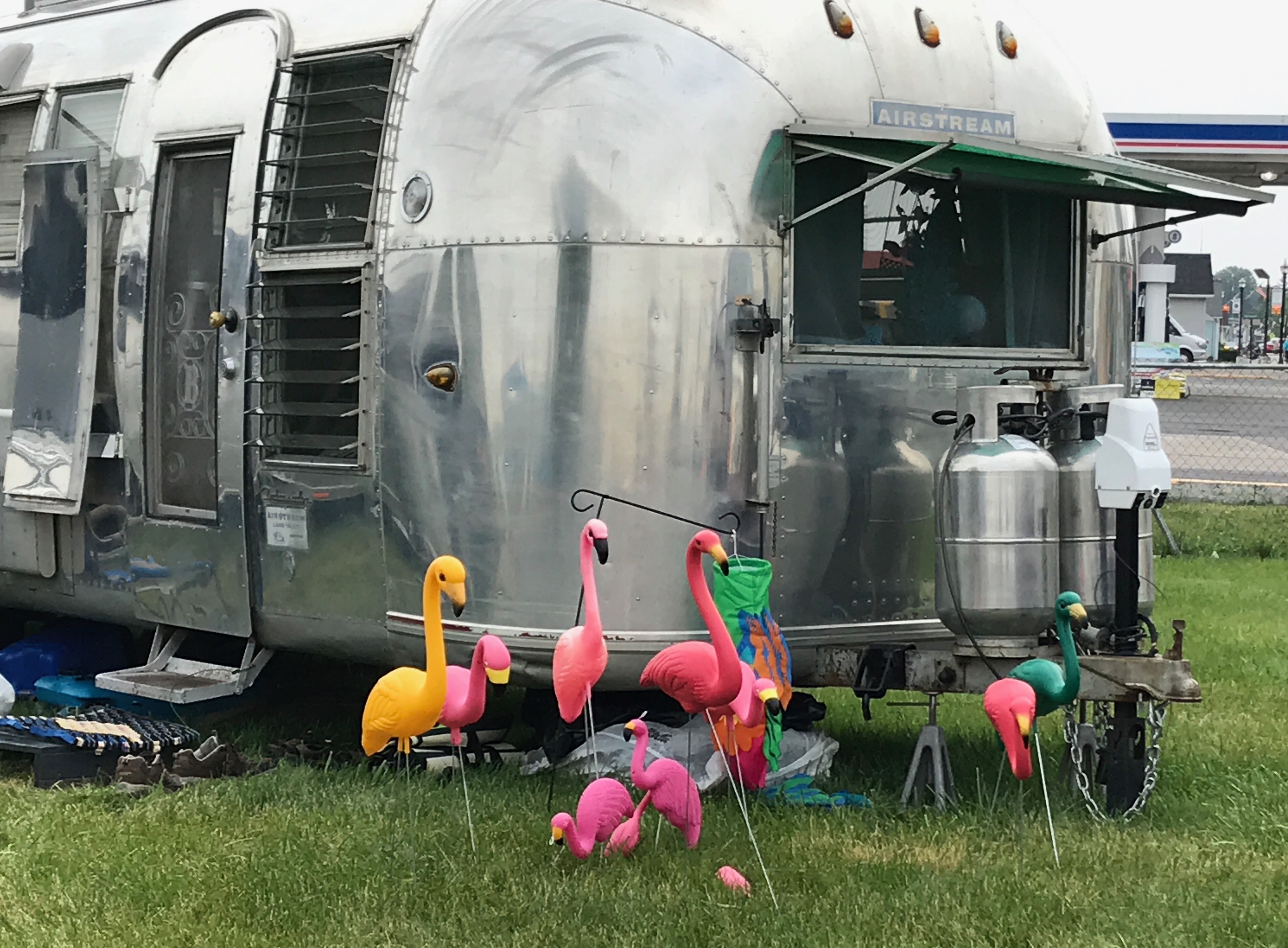
People and their flamingoes had turned out in droves!
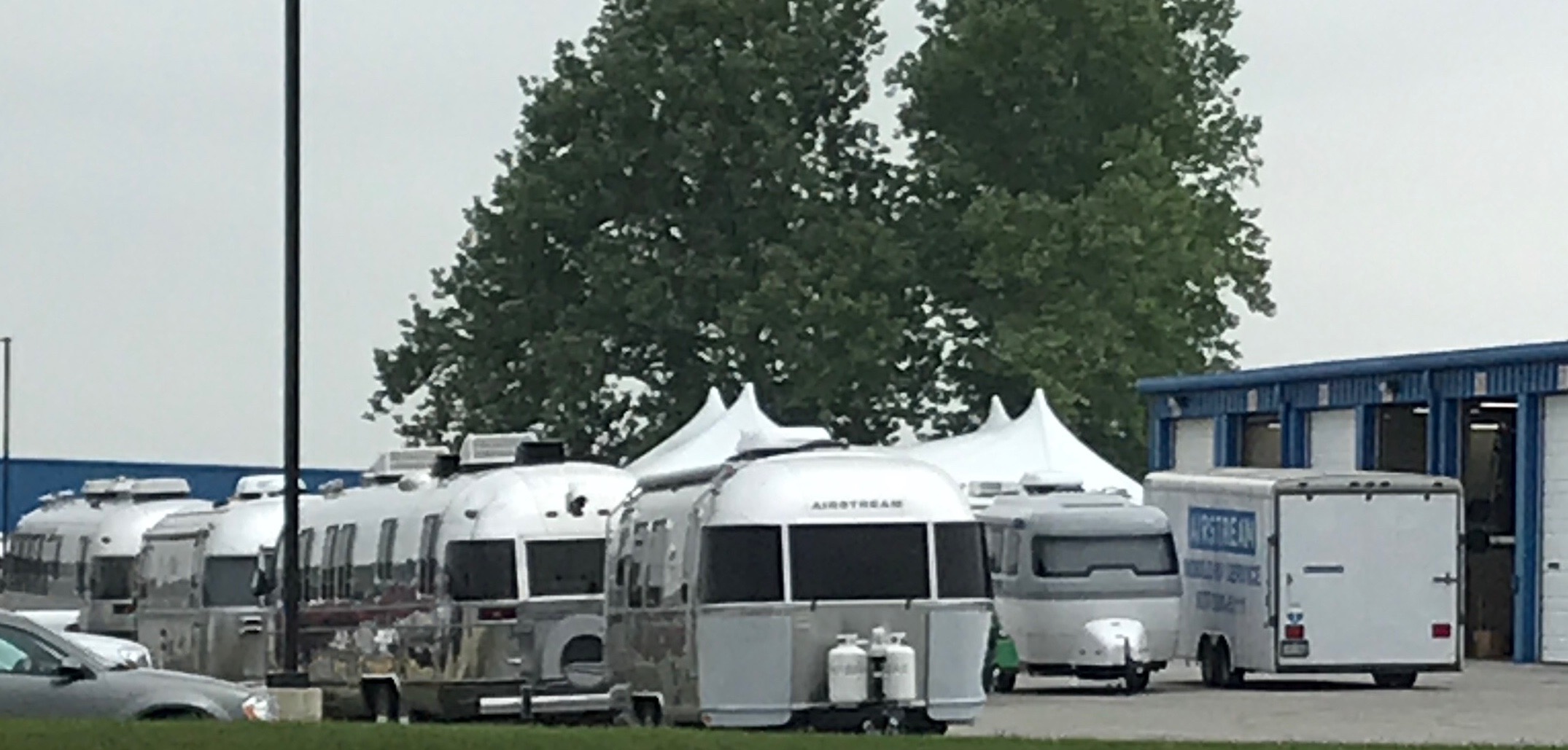
There was lots going on.
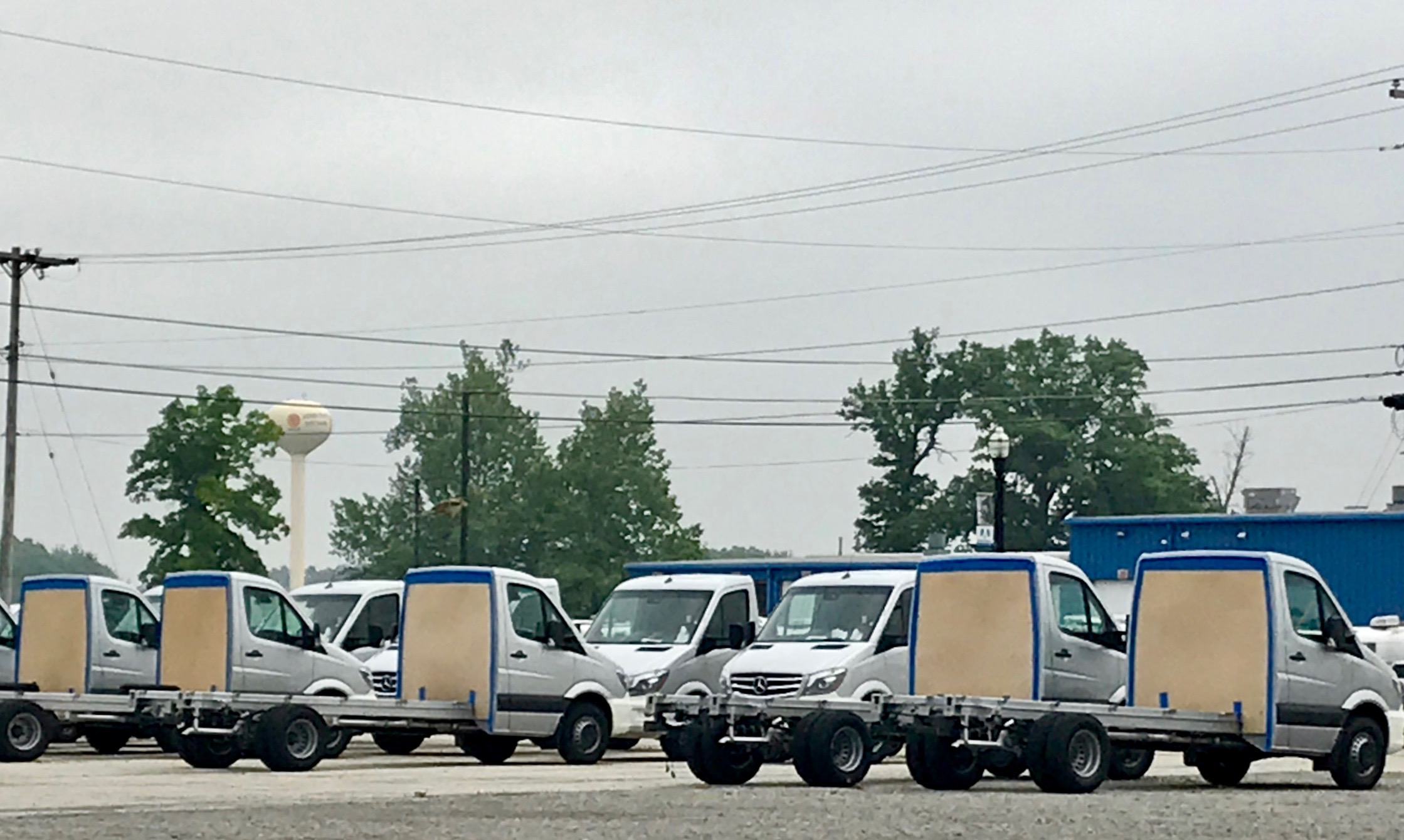
I could even see some Atlas chassis awaiting the Airstream magic.
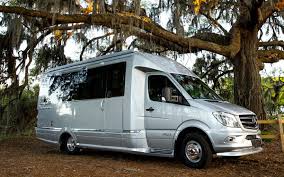
Just in case you were wondering, this is an Atlas. It’s an Airstream. I prefer the classic pull-behind design, but this is the right design for some people.
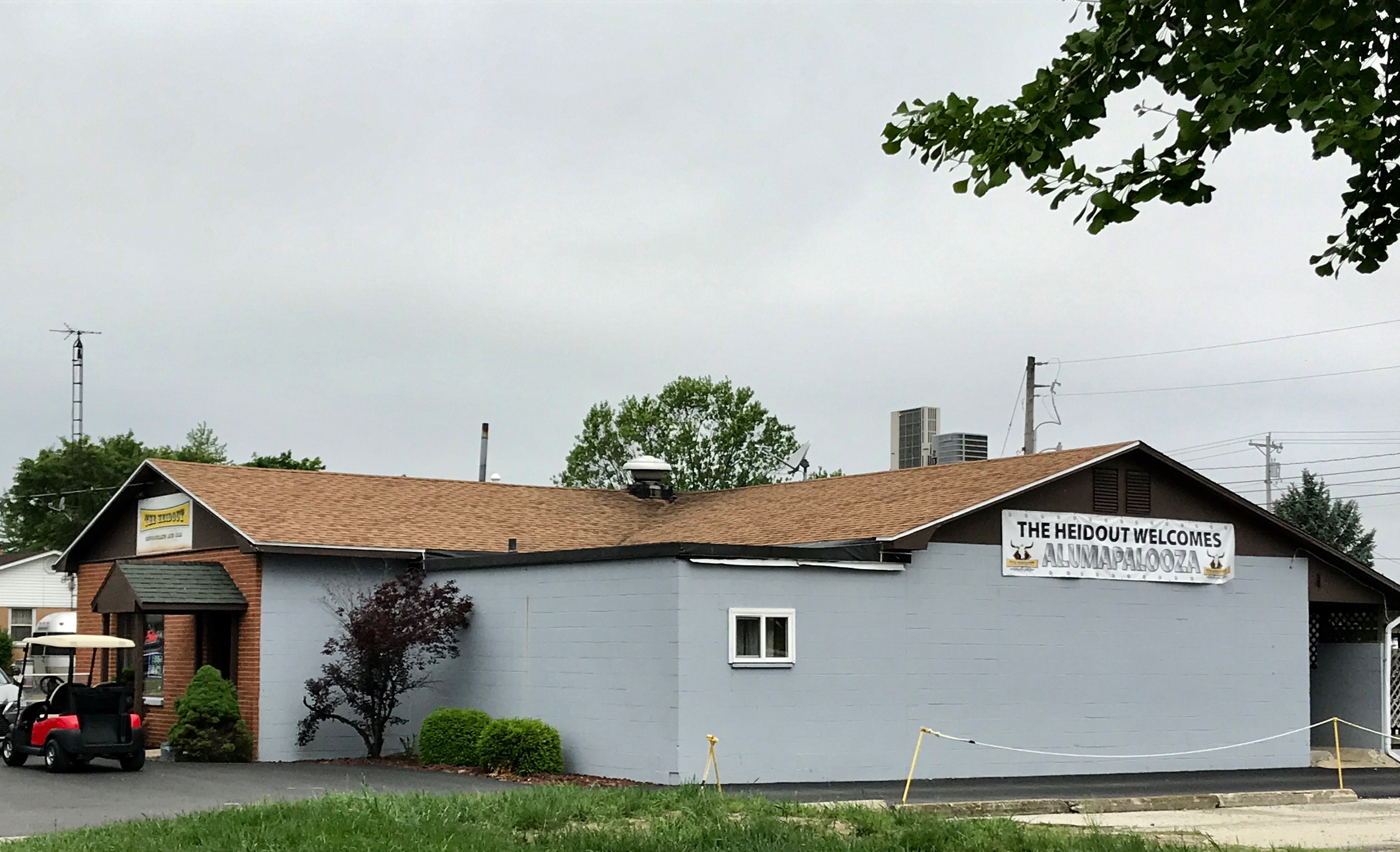
Right next to the factory is The Heidout, where I was going to meet up with the Airstream Addicts folks.
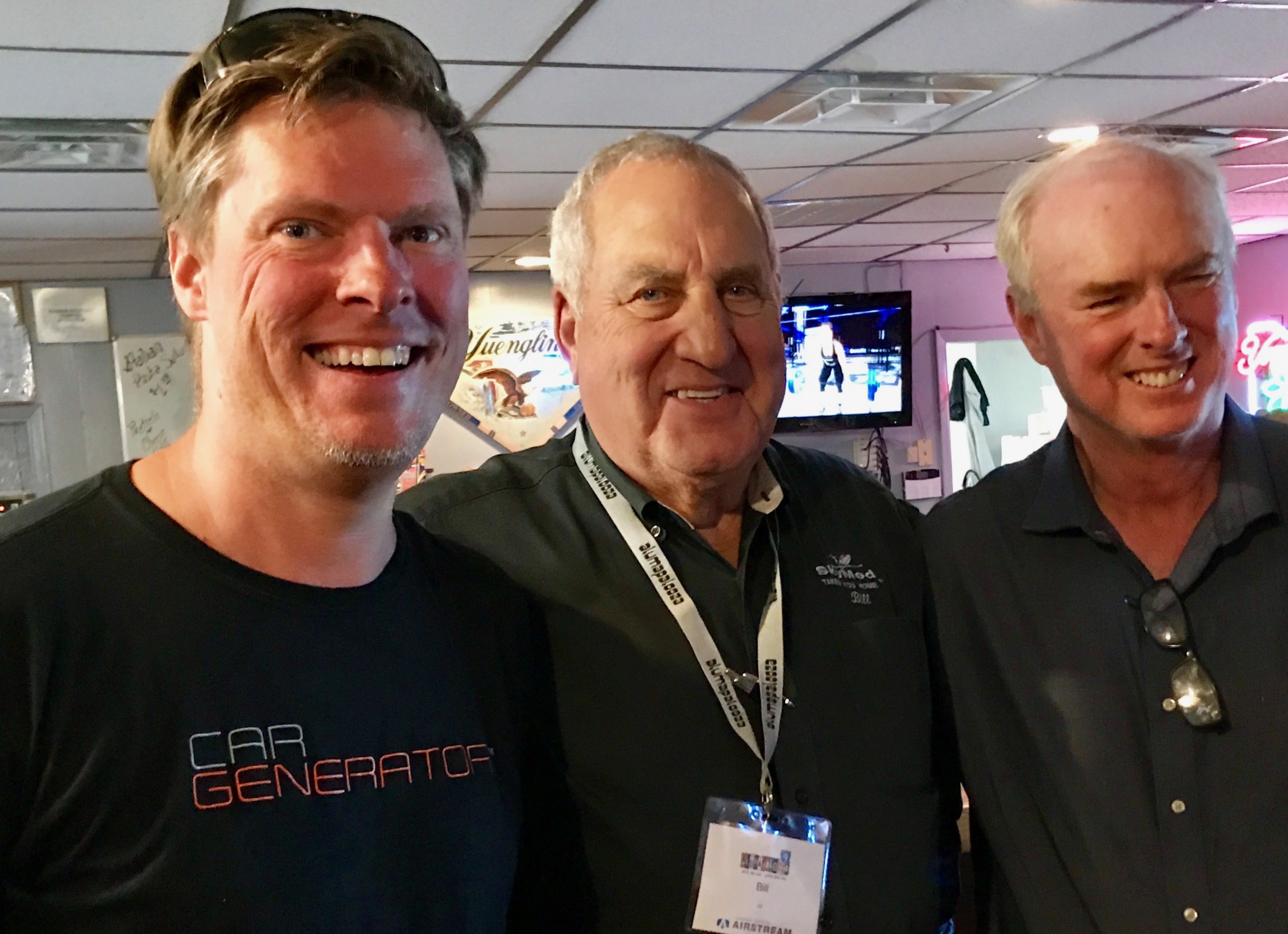
Oddly enough, I didn’t get too many photos. We were all too busy talking!
Here’s one shot I got.
And here’s the other.
At least I know Elizabeth, one of (if not THE) founder of Airstream Addicts.
After lunch, I had to head out. I had about six hours of driving ahead of me.