Oh, Say Can You See?

My next stop of touristic importance was Fort McHenry in Baltimore, Maryland – you know – Francis Scott Key and the bombs bursting in air and all that.
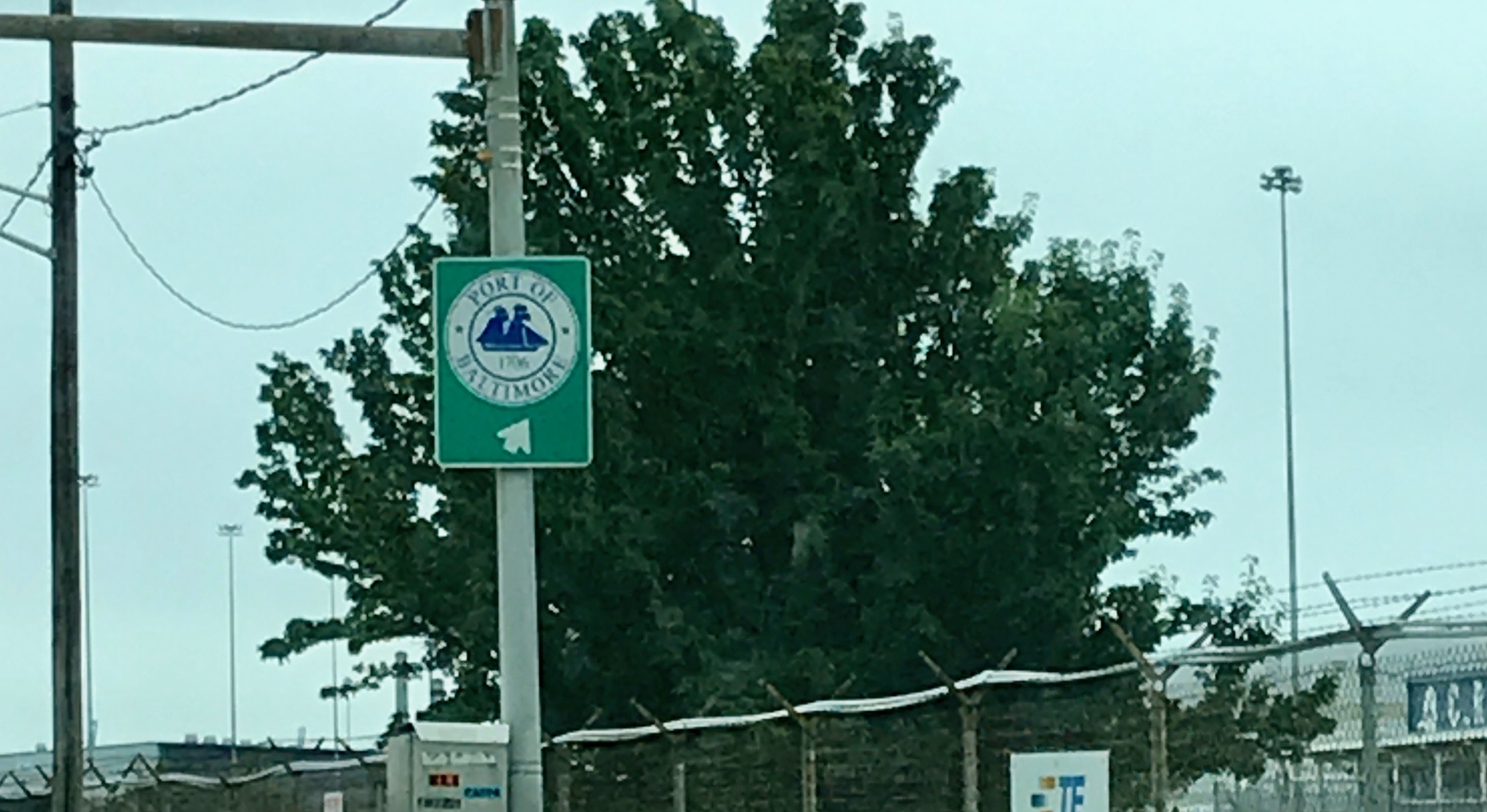
I made my way there with the help of Google maps and the signs pointing the way to the port of Baltimore.
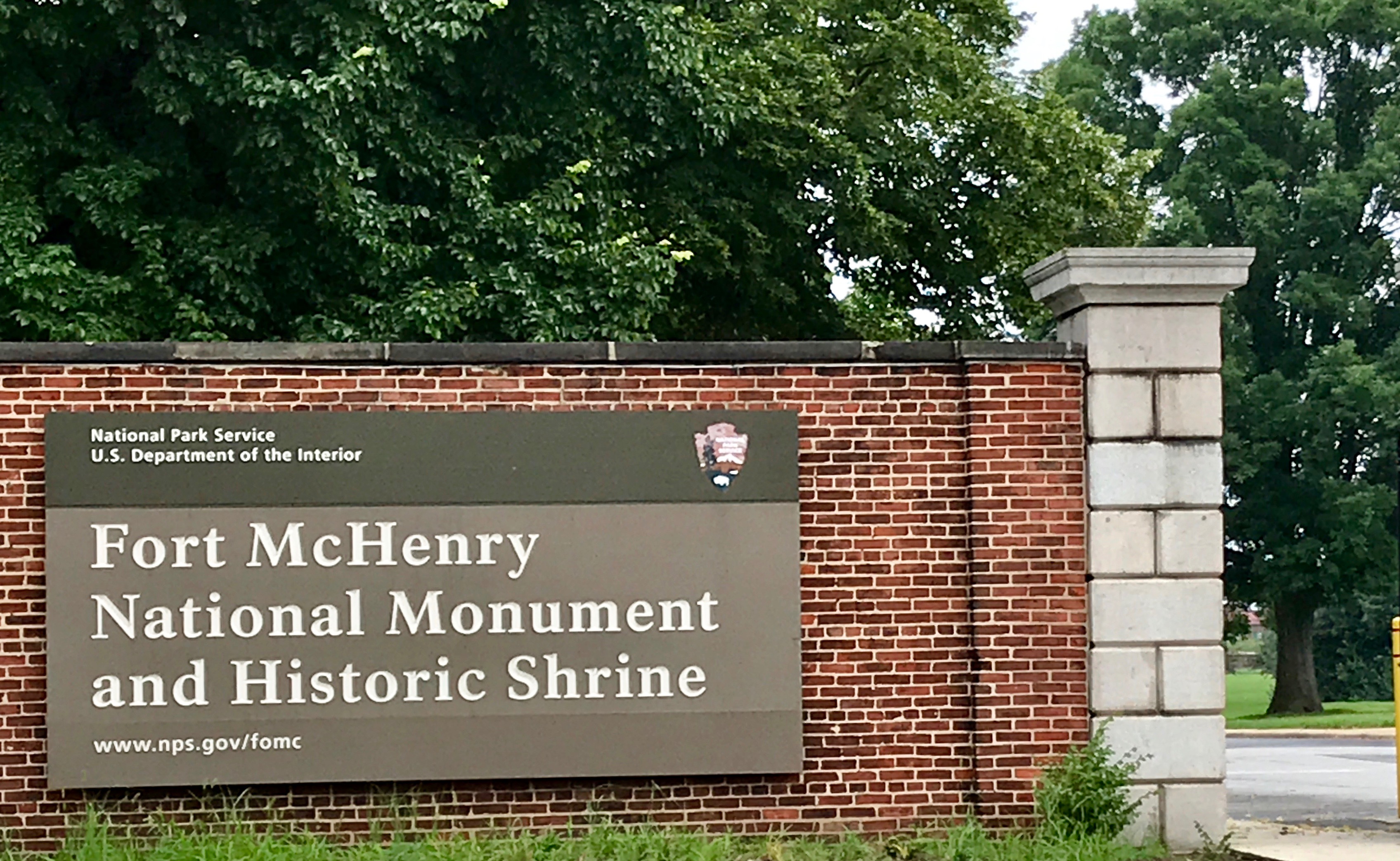
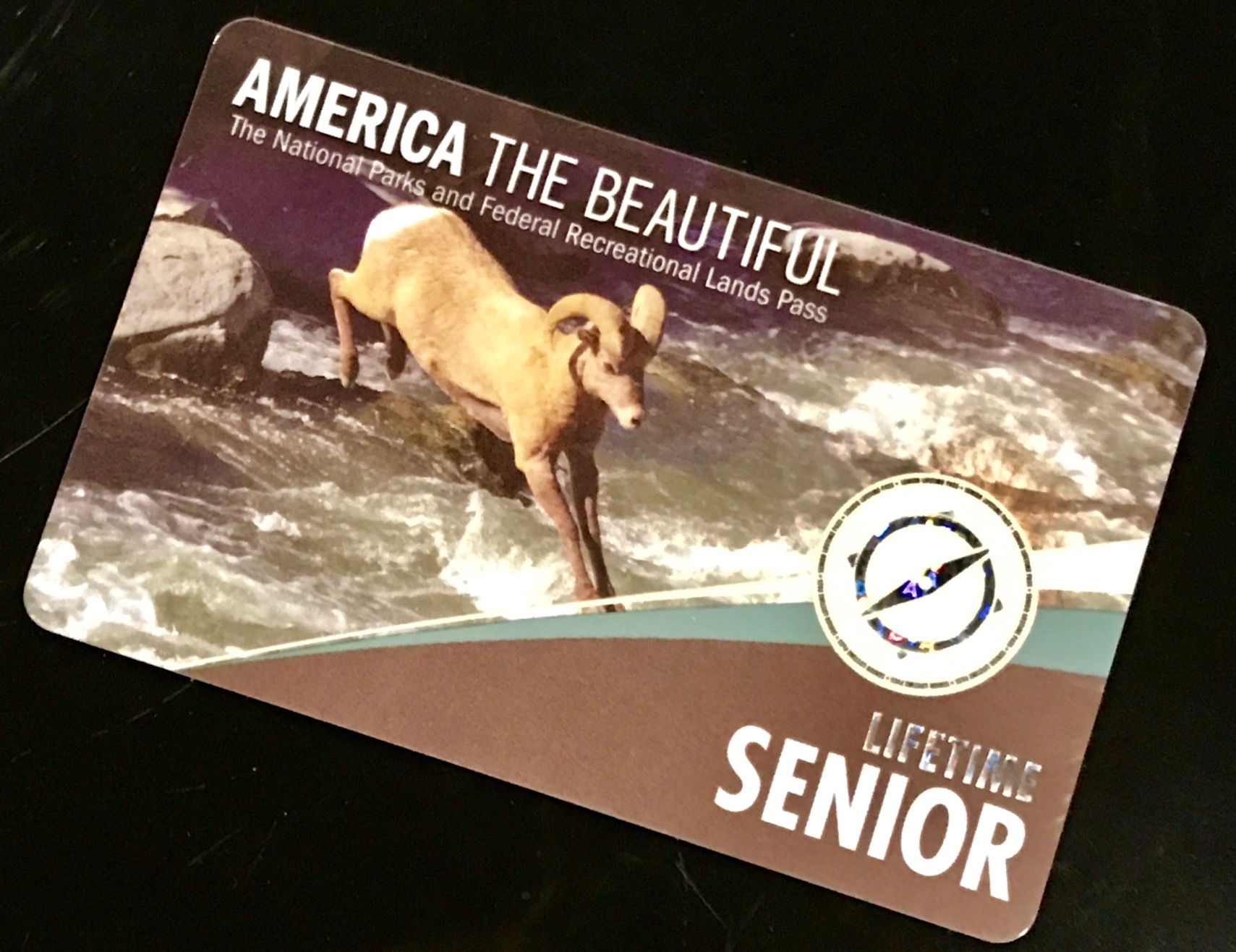
I passed through the gate and headed toward the visitor center. Since I had an America the Beautiful pass, I didn’t have to pay the entrance fee. I’d say it was free, but the pass cost $80. However, the pass is good for the rest of my life, as long as I don’t loose it.
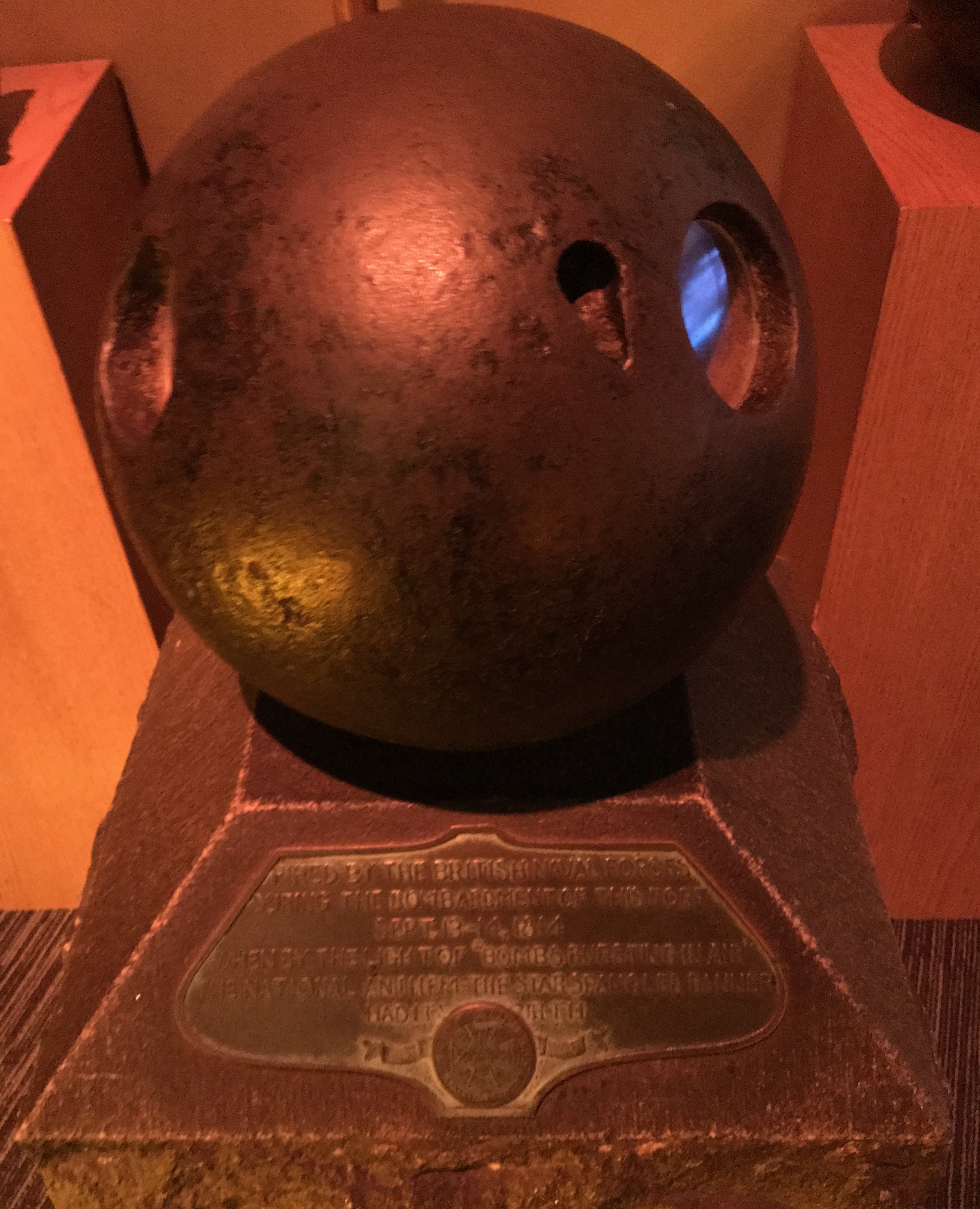
I wandered about and looked at the various displays while I wait for my turn to watch the video presentation. The plaque on this reads:

Fired by the British Naval Forces
during the bombardment of this port
September 13-14, 1814
when by the light of “bombs bursting in air”
the national anthem – The Star Spangled Banner”
had its birth.

It was time for my group to enter. It was actually quite a good film, but what I remember most vividly was the end. They played The Star Spangled Banner and raised the curtain to show us Fort McHenry, with the flag waving in the breeze. This was during one of the semi-frequent arguments about showing respect for the flag. I noticed that no one stood, so I decided to lead the crowd. Eventually, all got to their feet. Was it out of respect or because the movie was over? I guess we’ll never know.

We had the opportunity to meet with a volunteer who would talk with us about the flags that are in use at Fort McHenry. For instance, larger flags are typically rolled and stored in bags, rather than the triangle fold that we are more familiar with.
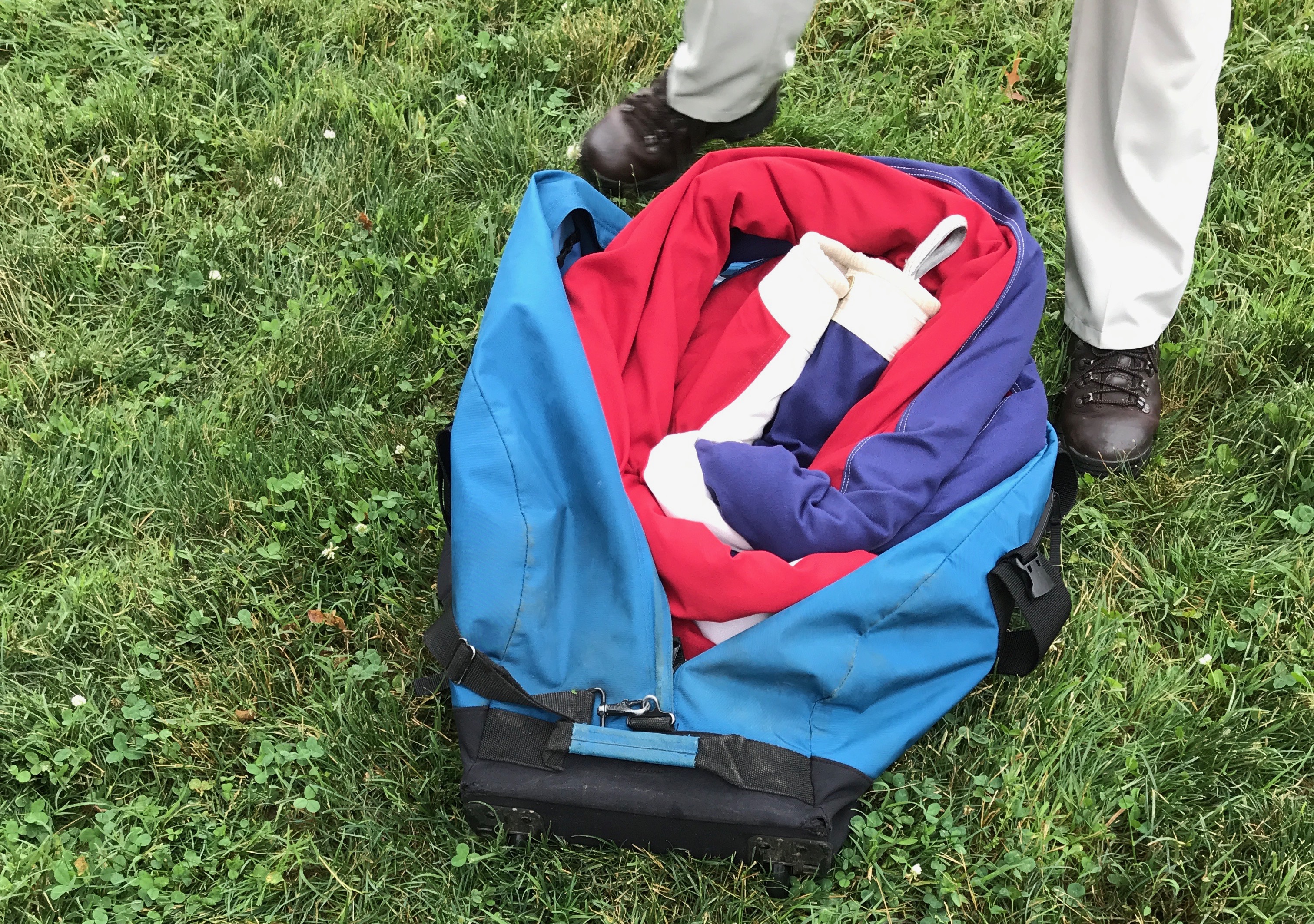
Those of us taking part helped him remove it from the bag.
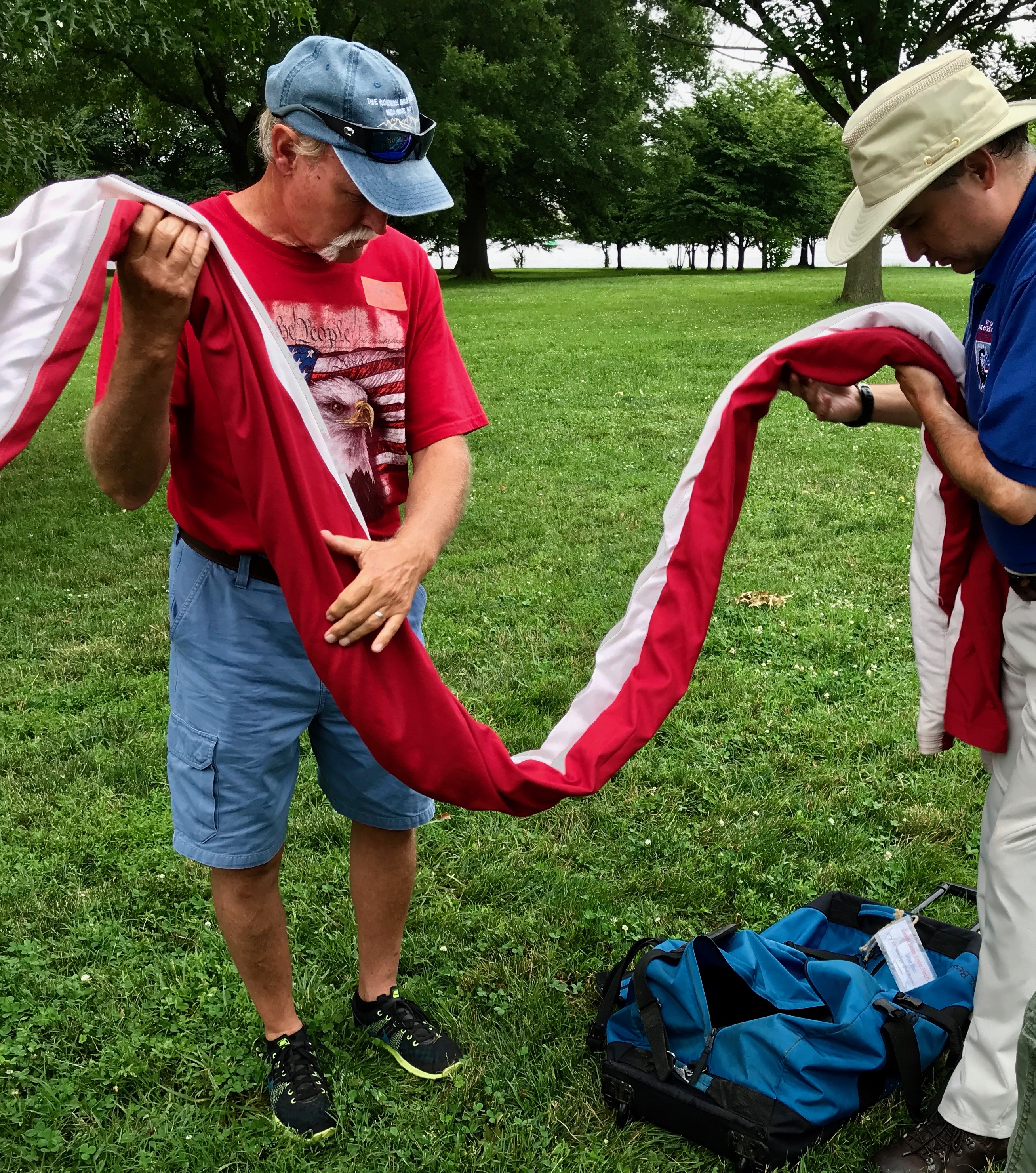
Half of us were on one side, holding the rolled flag.
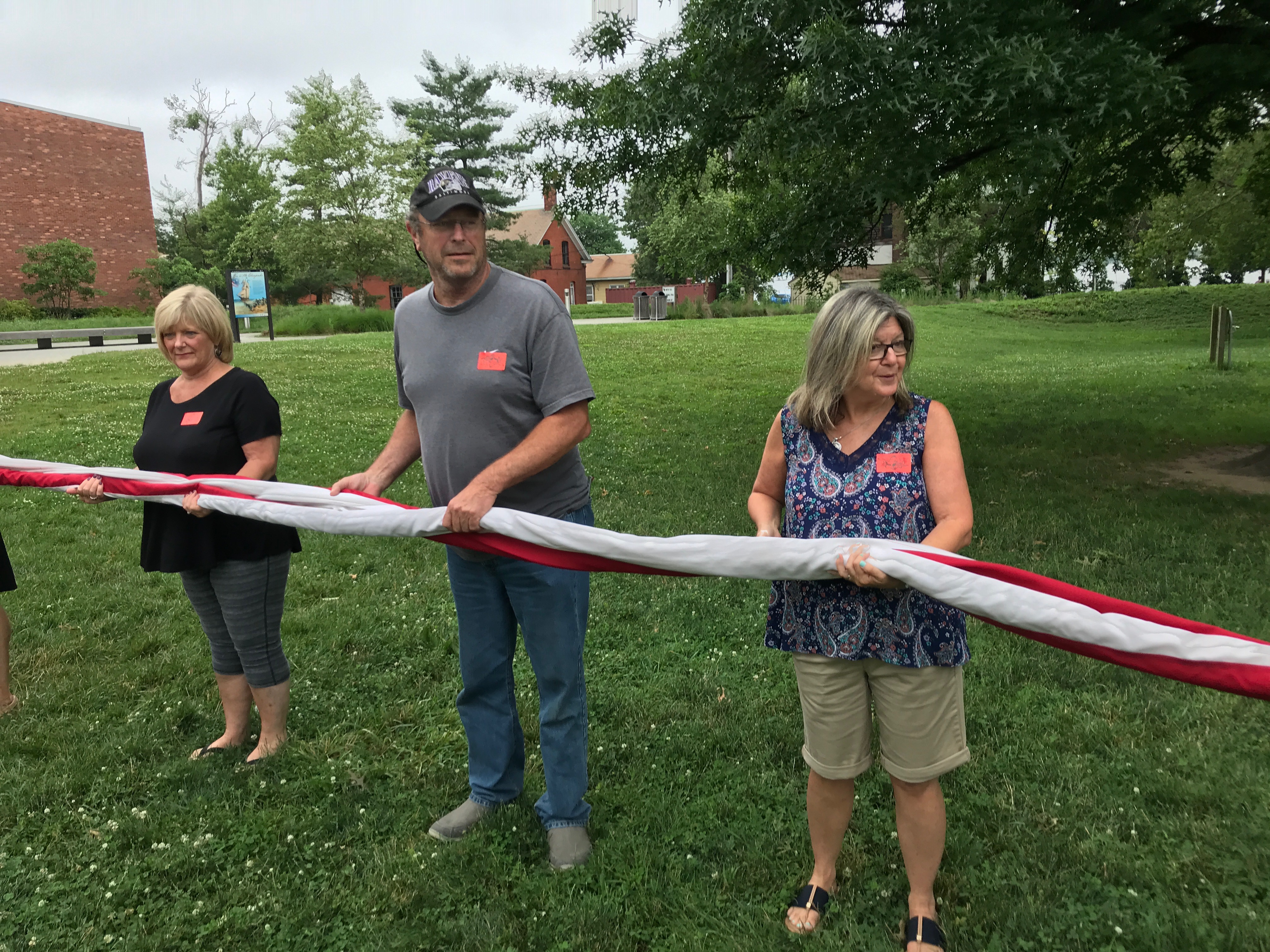
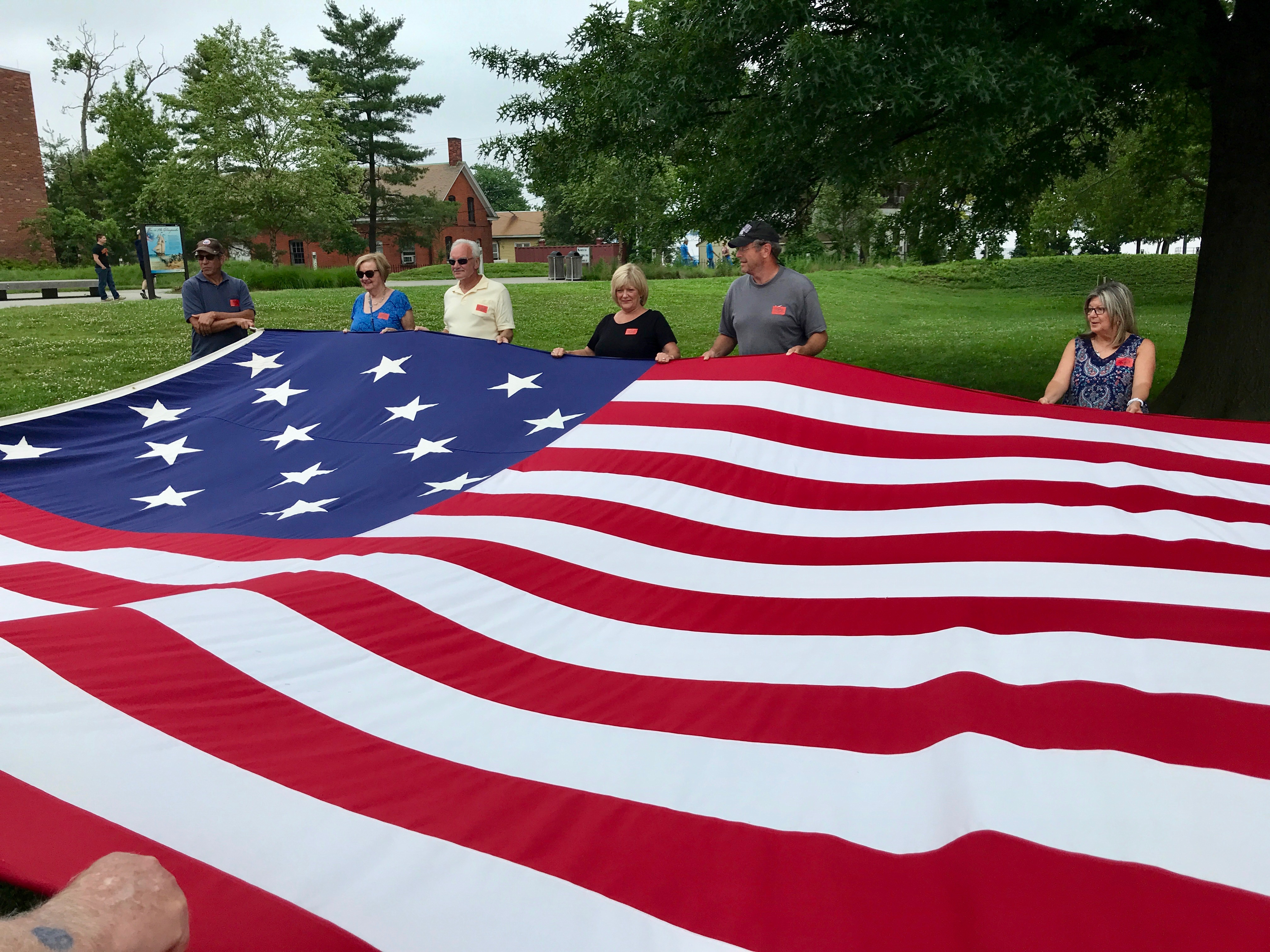
The other half joined in and helped unfurl the flag.
The volunteer shared some information about the flag.
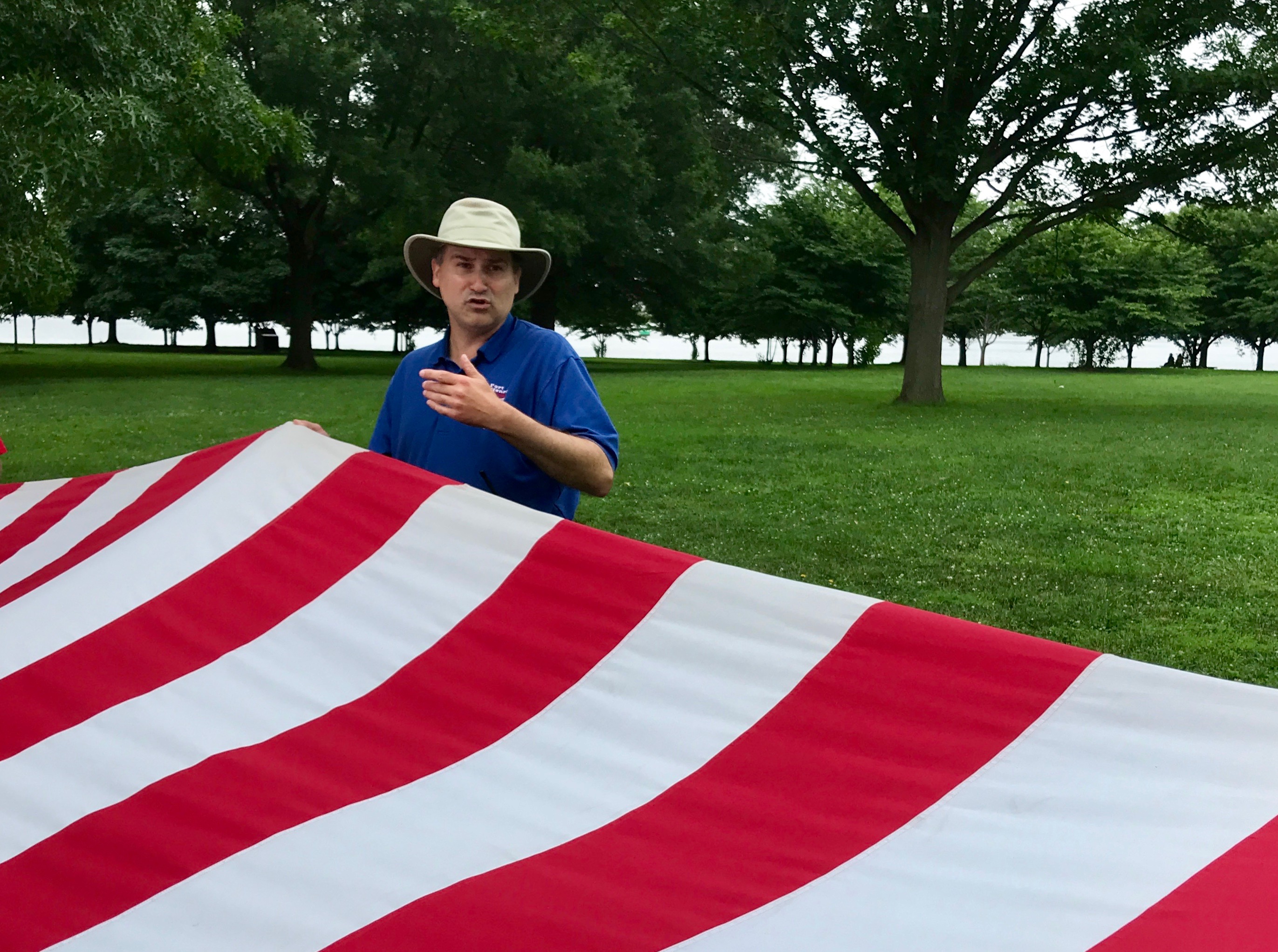
For instance, this is a copy of the flag that would have been flying in 1814. You might not have noticed it, but there are 15 stripes as opposed to the 13 stripes we have today. This became the official flag of the United States on May 1st, 1795. Two stars and two stripes were added for the admission of Vermont and Kentucky.

This flag was the nation’s flag for 23 years, and five presidents served under it:

George Washington (1789-1797)
John Adams (1797-1801)
Thomas Jefferson (1801-1809)
James Madison (1809-1817)
James Monroe (1817-1825)

By the time James Monroe left the White House, it looks like there were 24 states in the Union. Can you imagine what the flag would have looked like if they had continued adding a stripe for each state? It would be a very different looking flag!
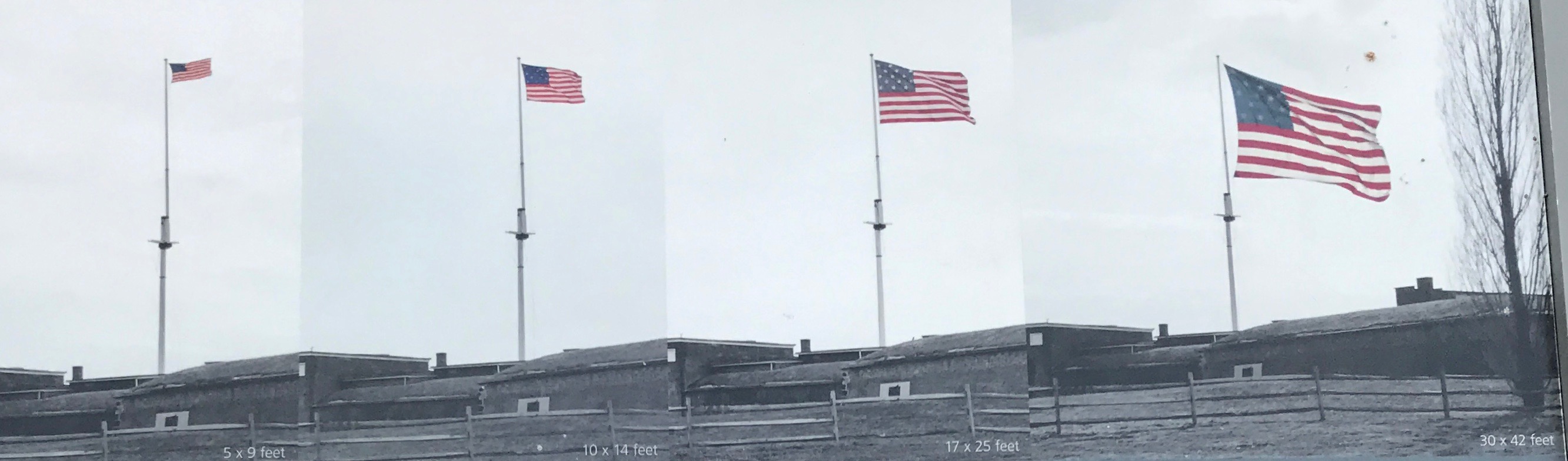
There are four different styles of flags flown at Fort McHenry. On clear days with the right amount of wind, a full-sized replica of the Star-Spangled Banner, measuring 30×42 feet with fifteen stars and strips waves. The fort also flies smaller versions of this flag. On rainy days and at night, a small, modern 50-star American flag is flown. At night, the flag is illuminated by lights powered by solar panels.

We furled the flag and returned it to its bag and set off for the fort.
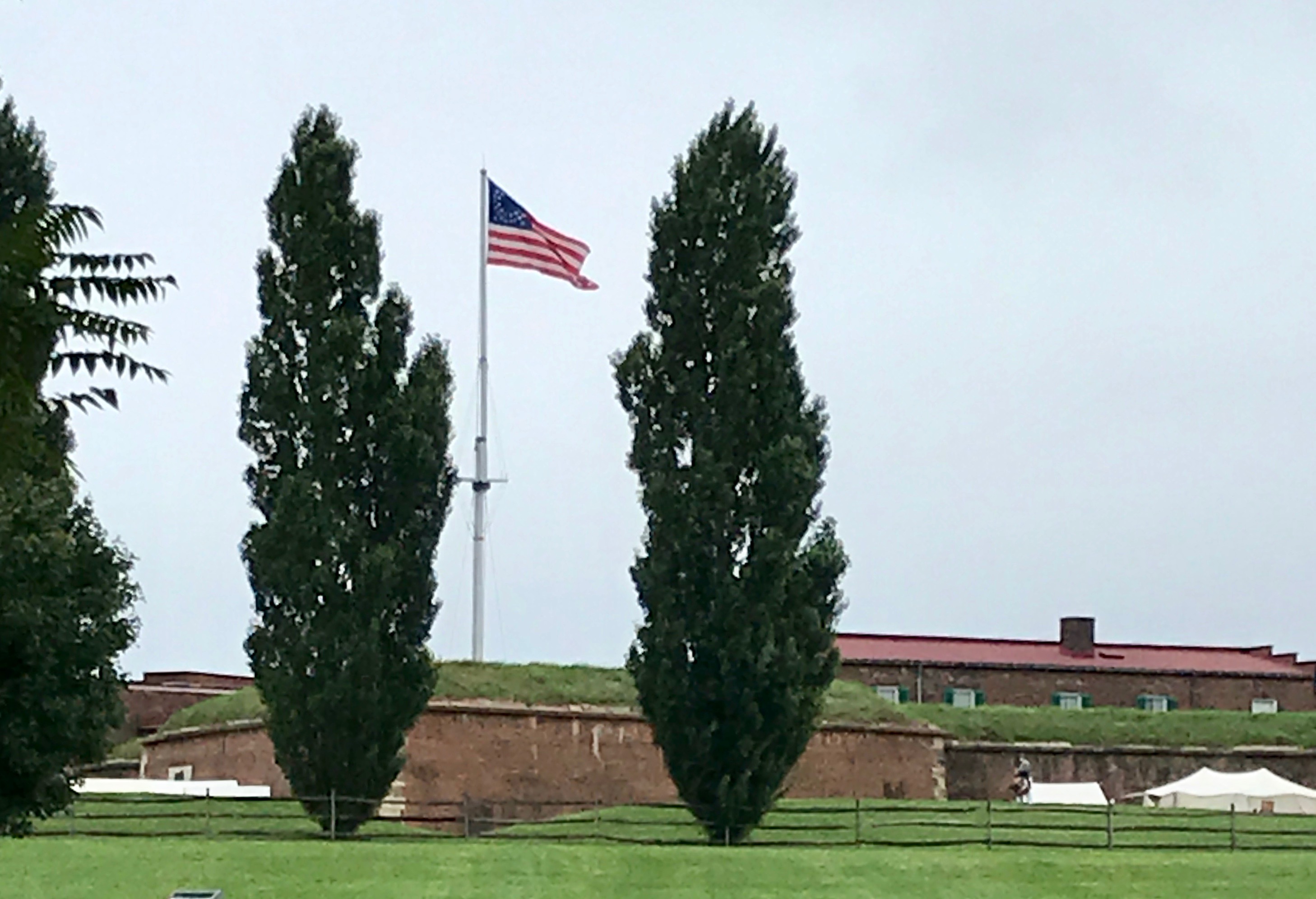
Hmm…
This flag doesn’t look quite like any in the chart. Oh, well.
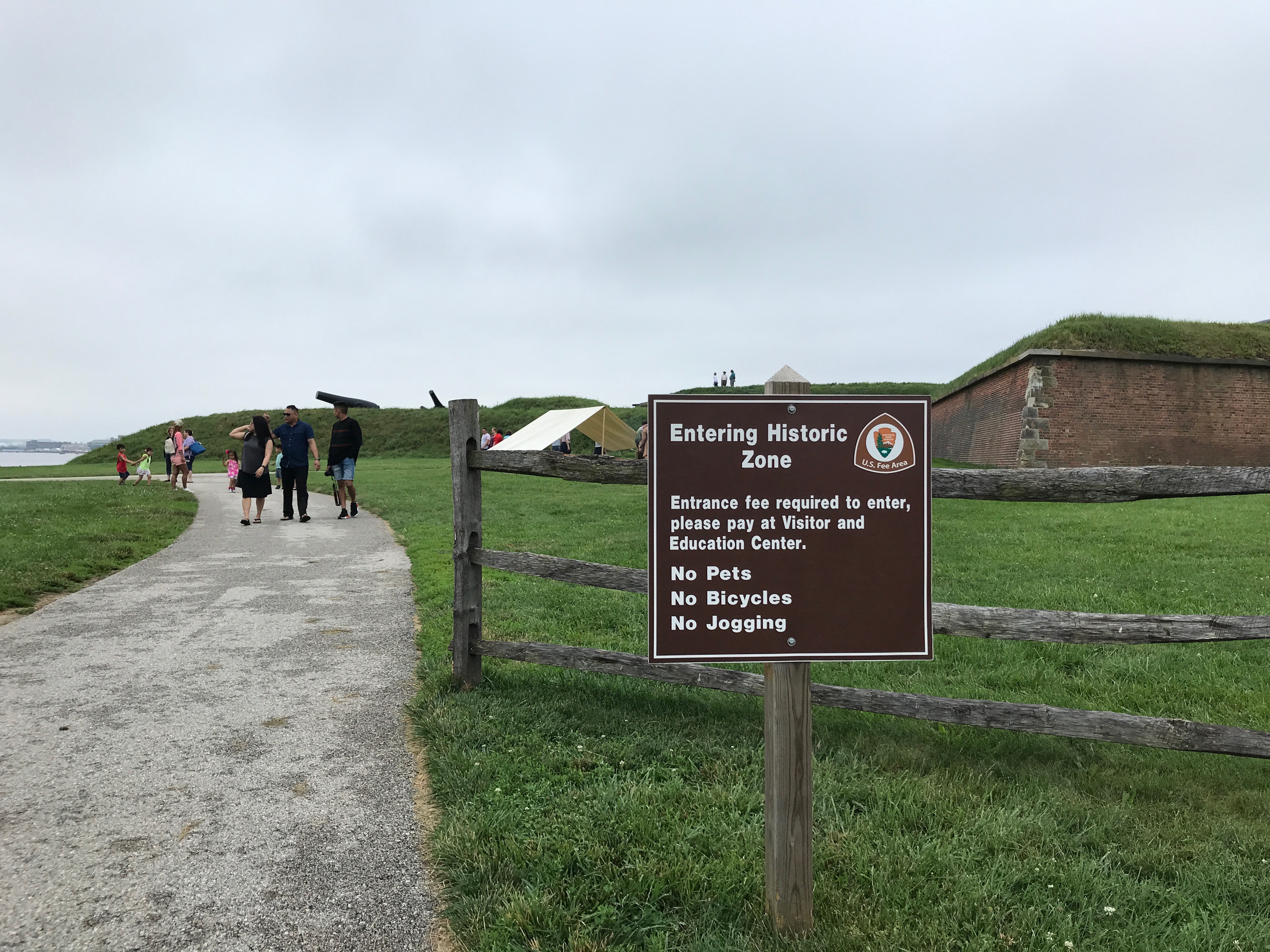
Hah! I laugh at your fees! I had my sticker on and I strode in with confidence.
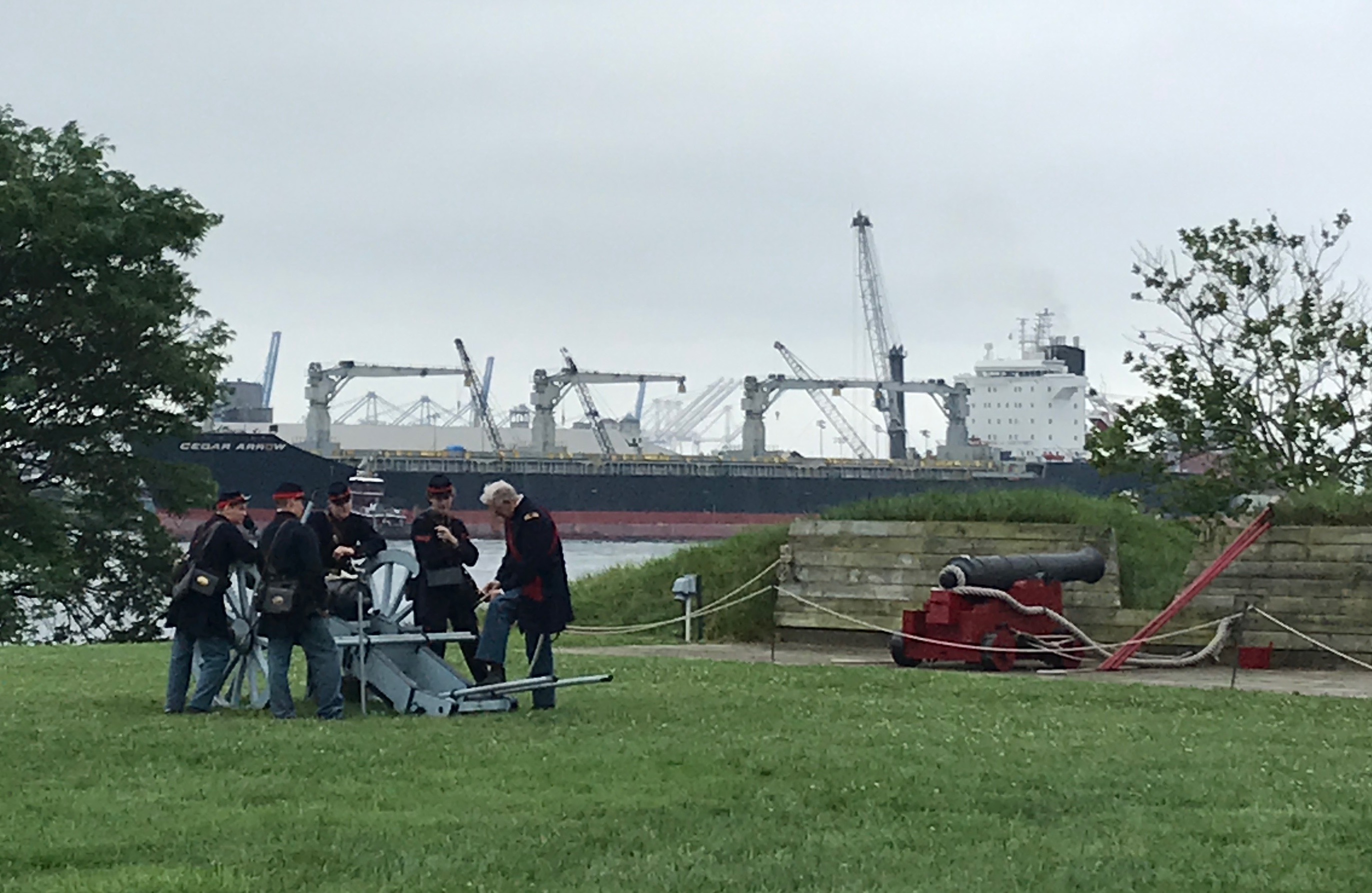
There was some sort of historic reenactment going on when I visited. It looks like there might be an artillery demonstration at some point.
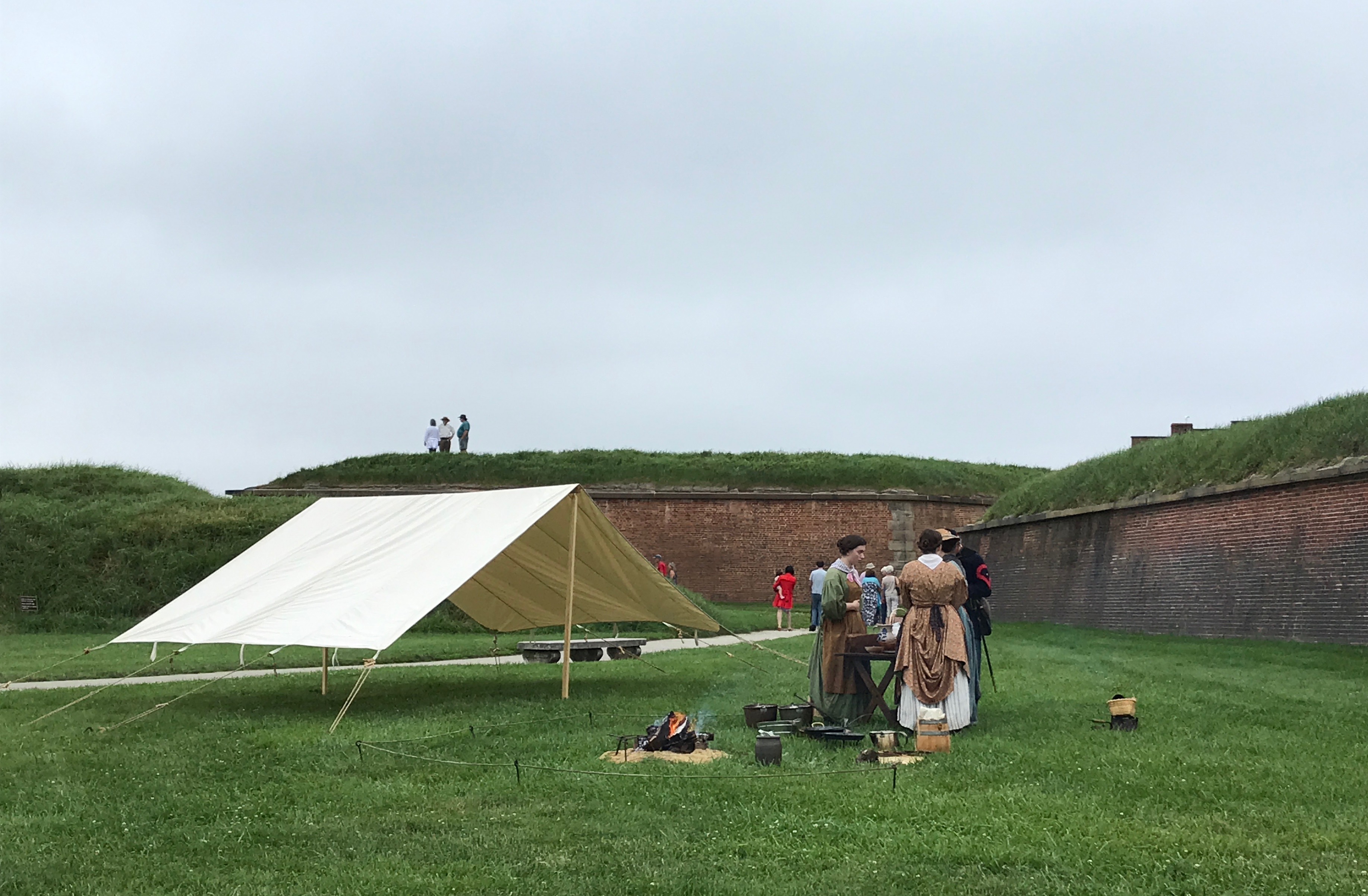
Women were also taking part. I wonder what is for lunch?
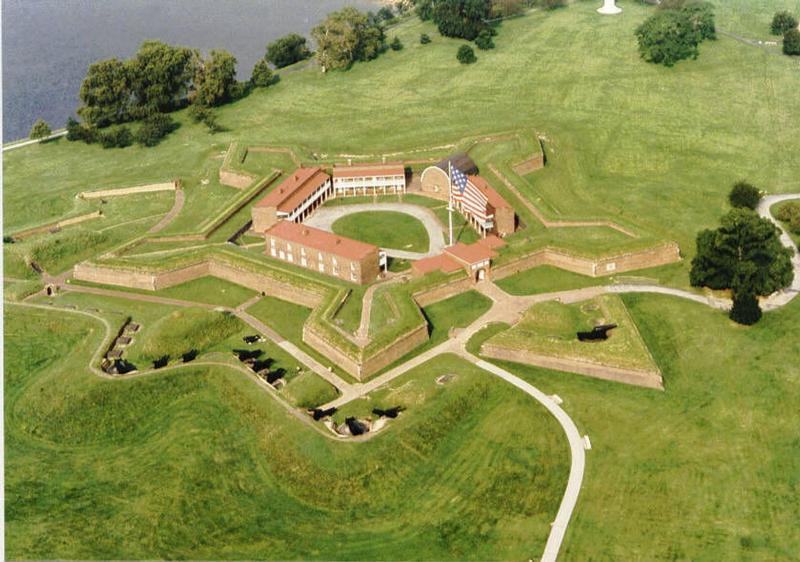
For some reason, I didn’t take as many photos as I might have, so I am resorting to my old friend Google to help me flesh things out a bit. This aerial view is from my Preferred Source.  (I couldn’t have gotten that angle anyway, as I kept both feet on the ground.)

Fort McHenry wasn’t always a National Monument and Historic Shrine. It was made a national park in 1925; on August 11, 1939, it was redesignated a “National Monument and Historic Shrine.” It’s the only such doubly designated place in the United States.
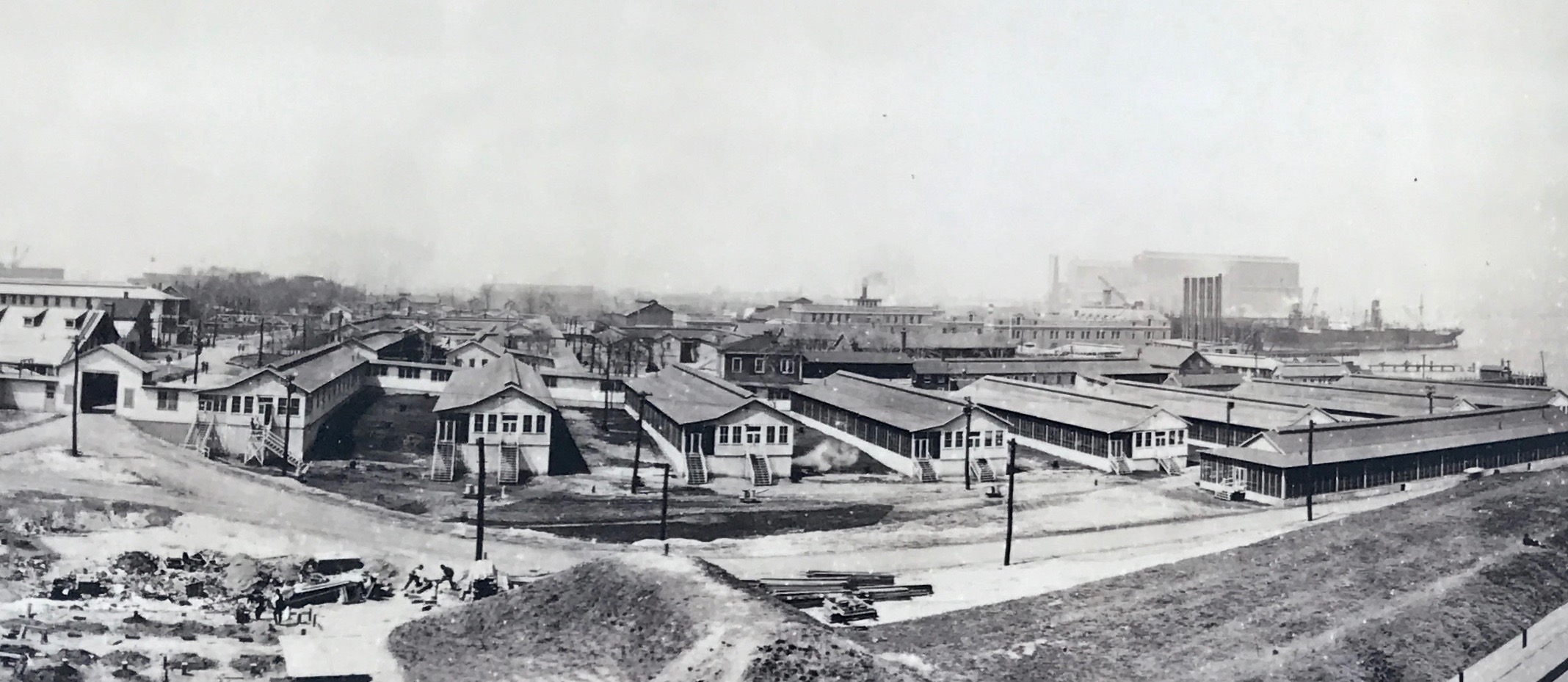
During World War I, the U.S. Army built over 100 buildings around the fort. It was one of the largest military hospitals in the country and it housed 3,000 wounded soldiers from the battlefield of France.

From 1917 until 1923, the fort also served as a surgical center. Great advances were made in neurosurgery and reconstructive surgery. It was one of the country’s first schools to reintigrate disabled soldiers into civilian life by offering special classes in typing, knitting, metal work, automobile repair and other trades, according to the informational signs at the fort.

When World War II came, it was pressed into service again. The Coast Guard used it as a training base, although historic portions remained open to the public.

But, enough of the background information. It was time to enter and see what there was to see. I entered through the sally port and encountered this odd structure.
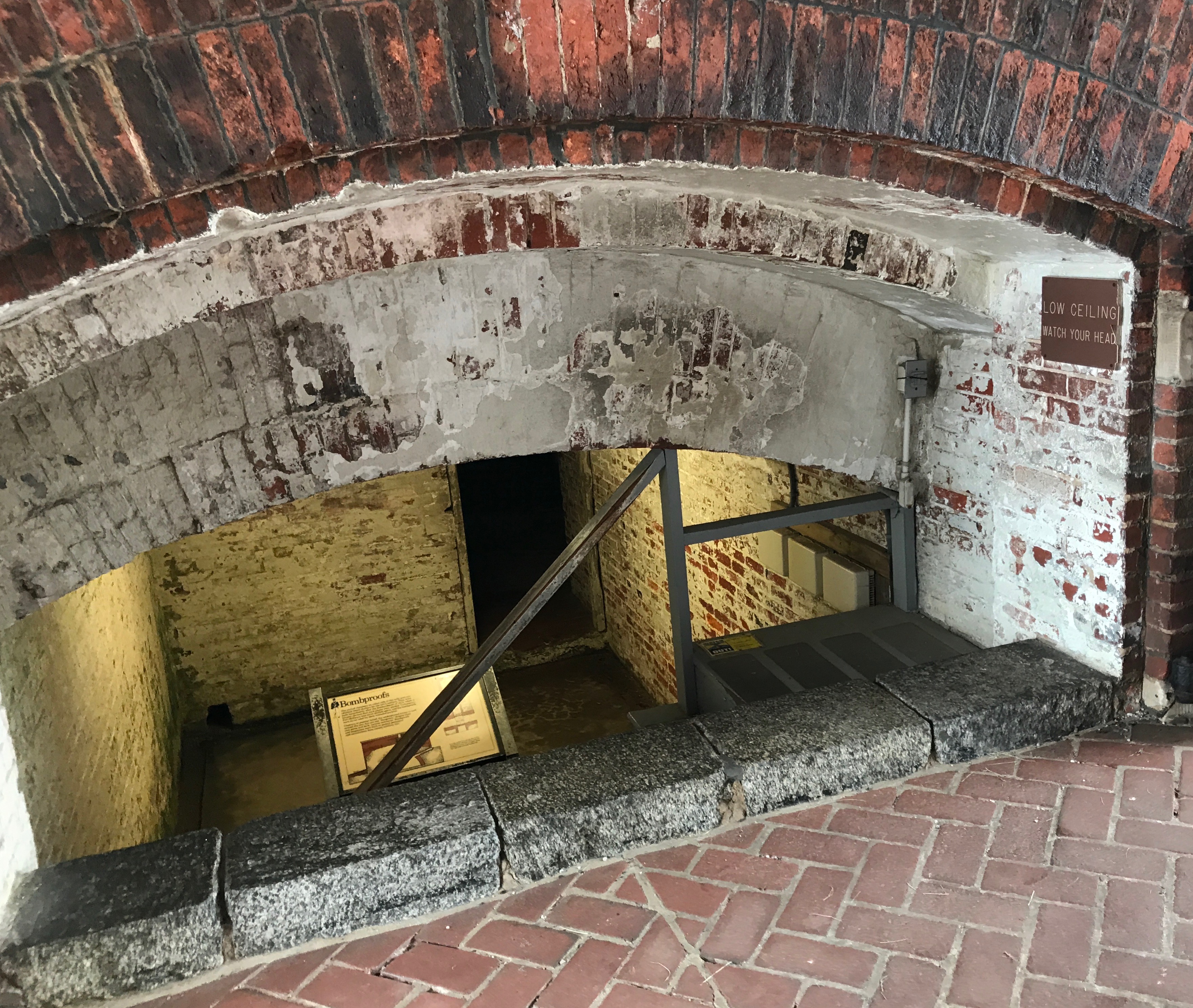
This room with the low ceiling is what is known as a “bombproof.” There are arched chambers on either side of the sally port that were built immediately after the bombardment of 1814, when it became obvious that such places were needed. Fortunately, Fort McHenry was never shelled again, and the bombproof were never used for their intended purpose.

Although they look kind of like dungeons, what with their iron gates and dark, narrow entrances, bombproofs and magazines were built to protect personnel and ammunition from enemy artillery fire.
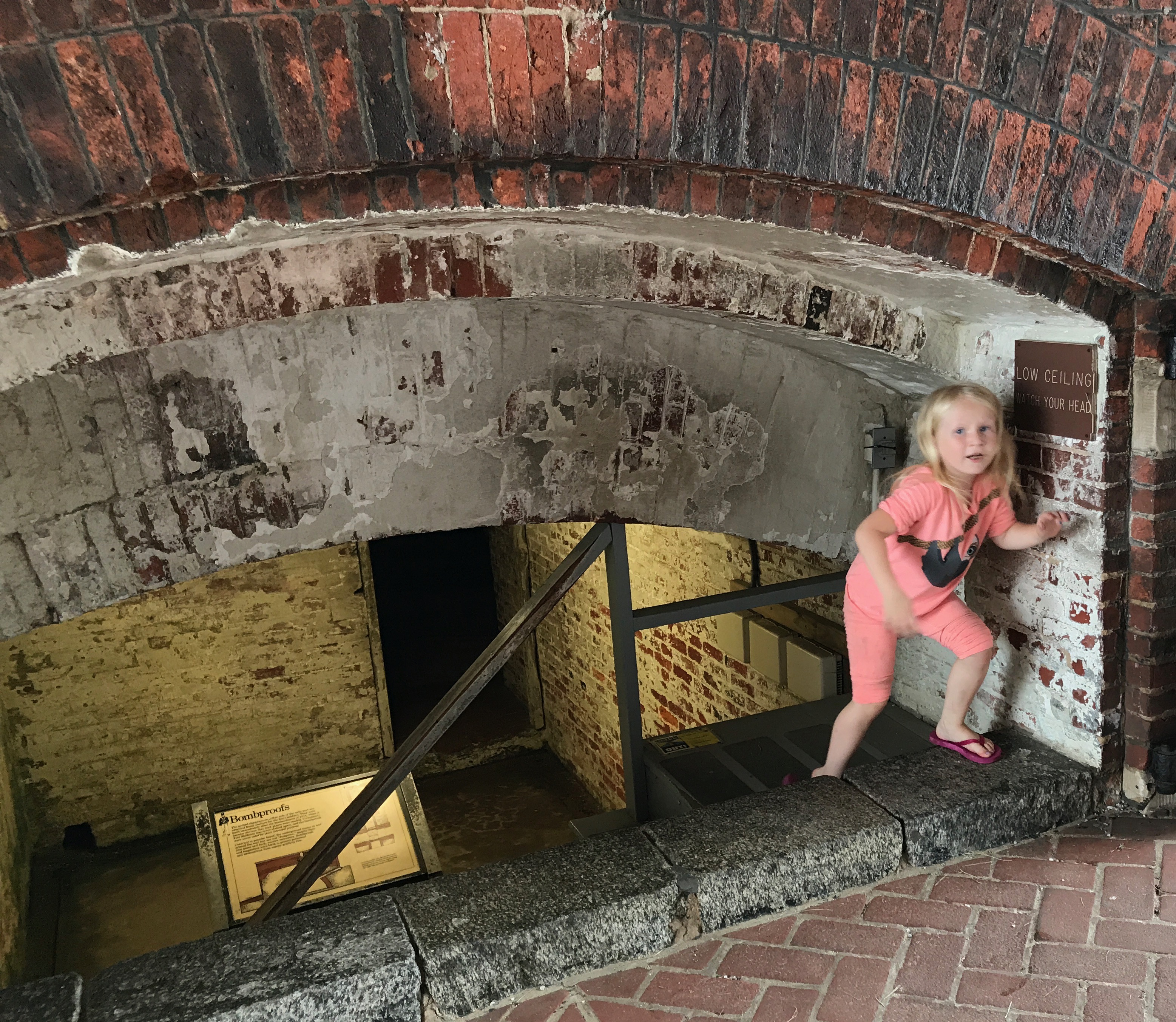
This wee Miss doesn’t seem to be bothered in the least by the low ceiling. On the other hand, I had to take pains not to bump my head when I squeezed my way down to read the sign, which is where I got the information about the bombproofs.
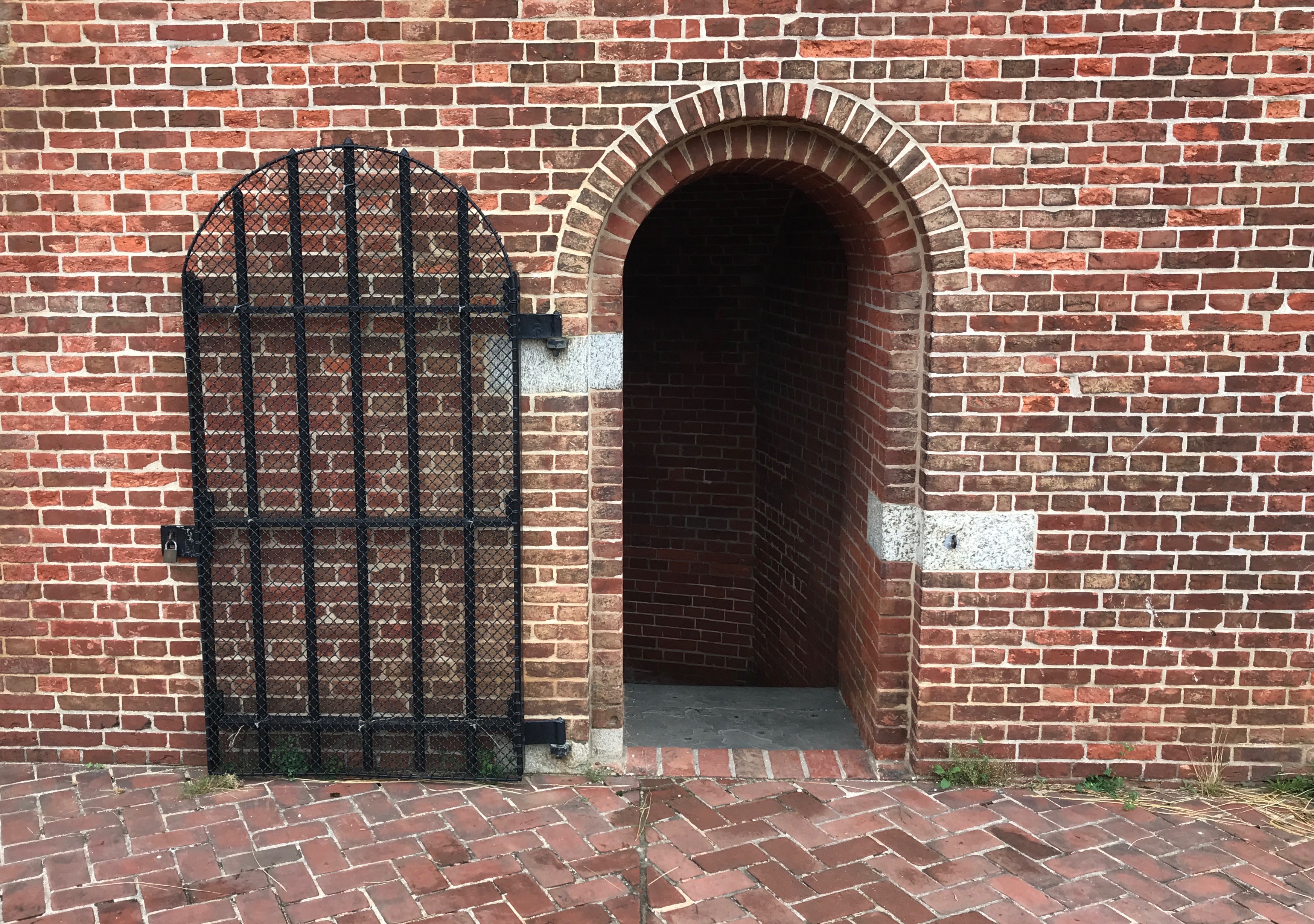
If I remember correctly, this is the entrance to one of the bombproofs.
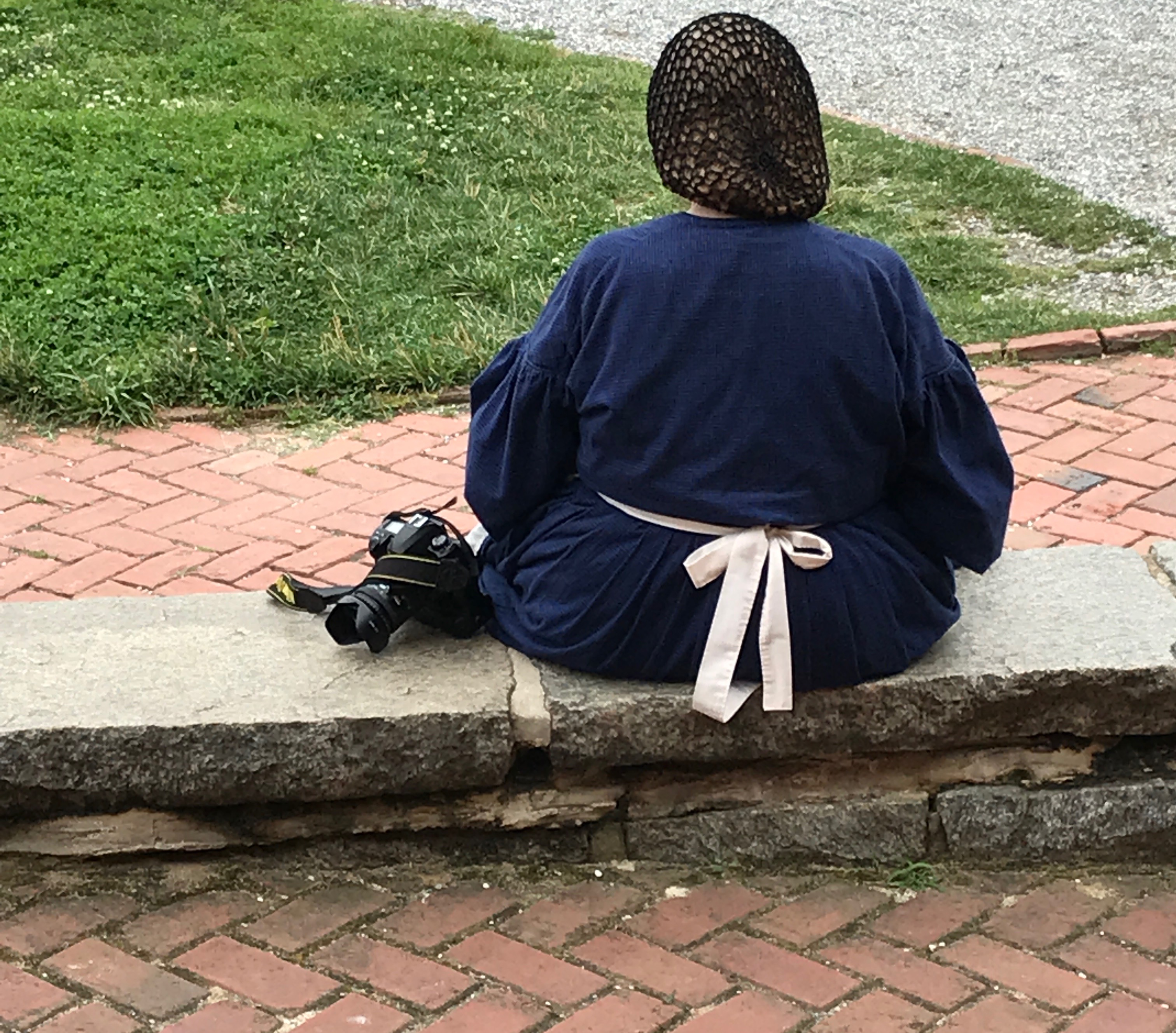
This image of one of the reenactors taking a break made me smile. That camera is a little anachronistic.
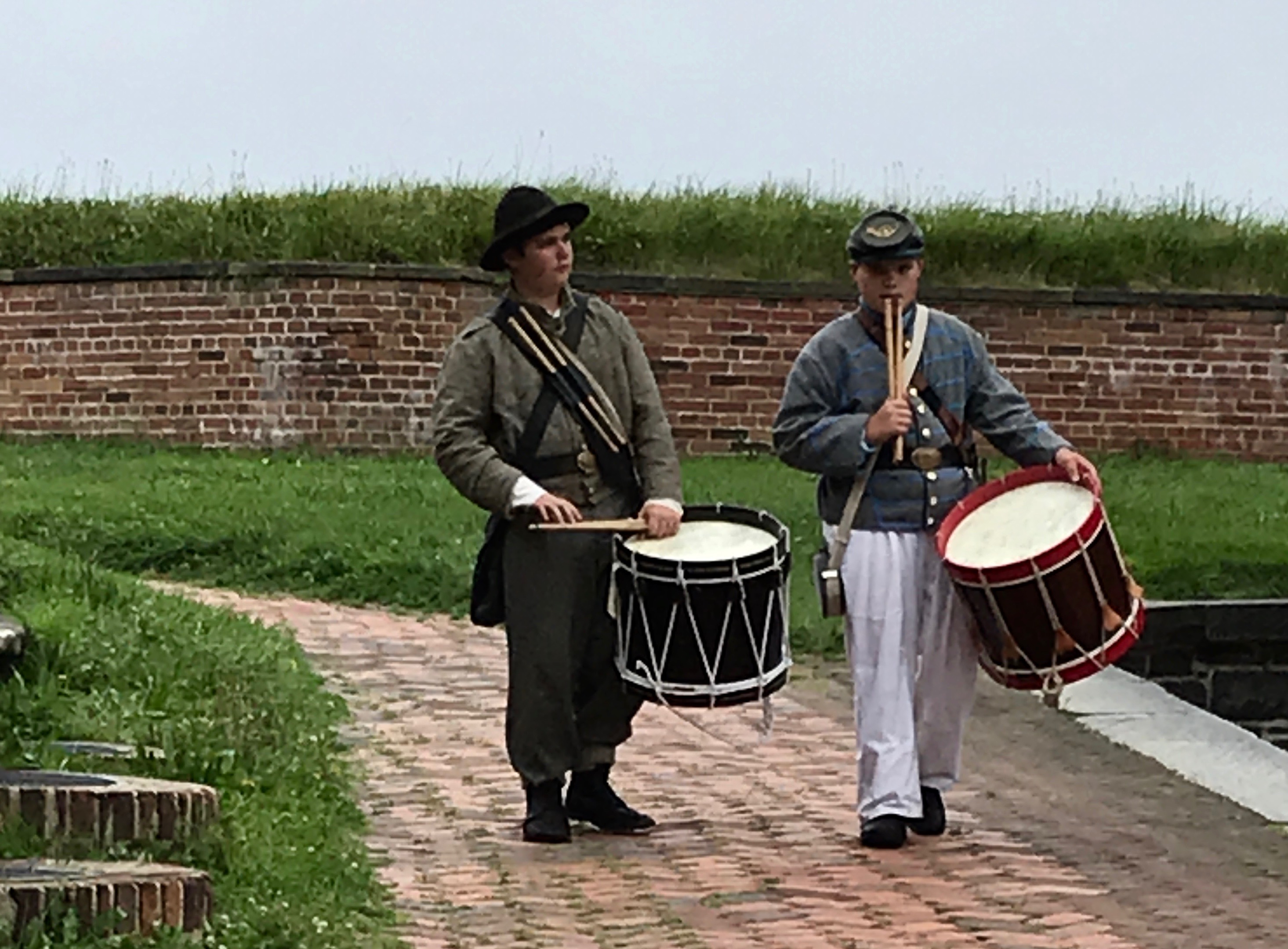
The drummers seemed more into the time period.
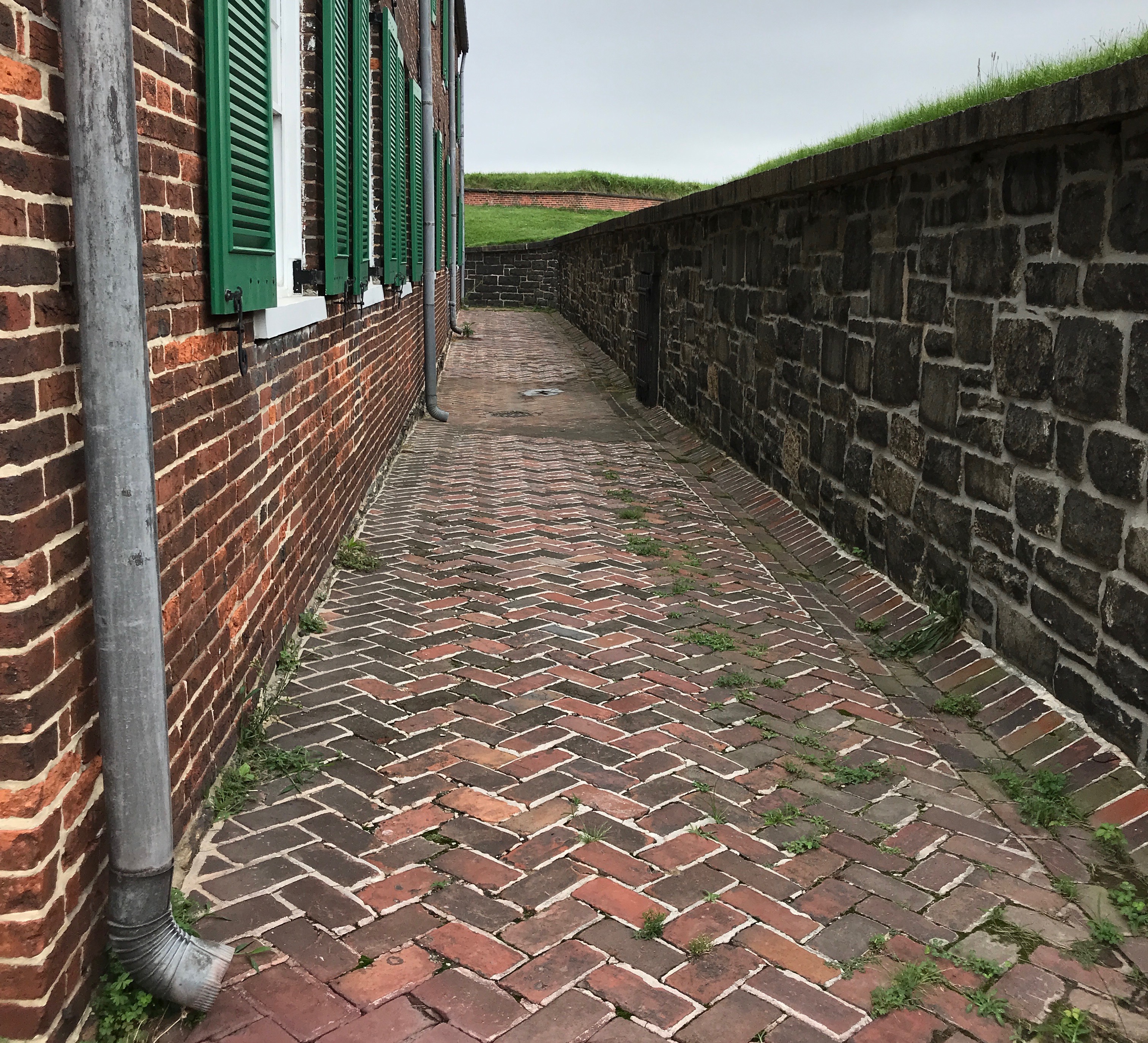
As I am wont to do, I took a few moments to look behind the buildings ringing the central parade ground. So many bricks went into these buildings!
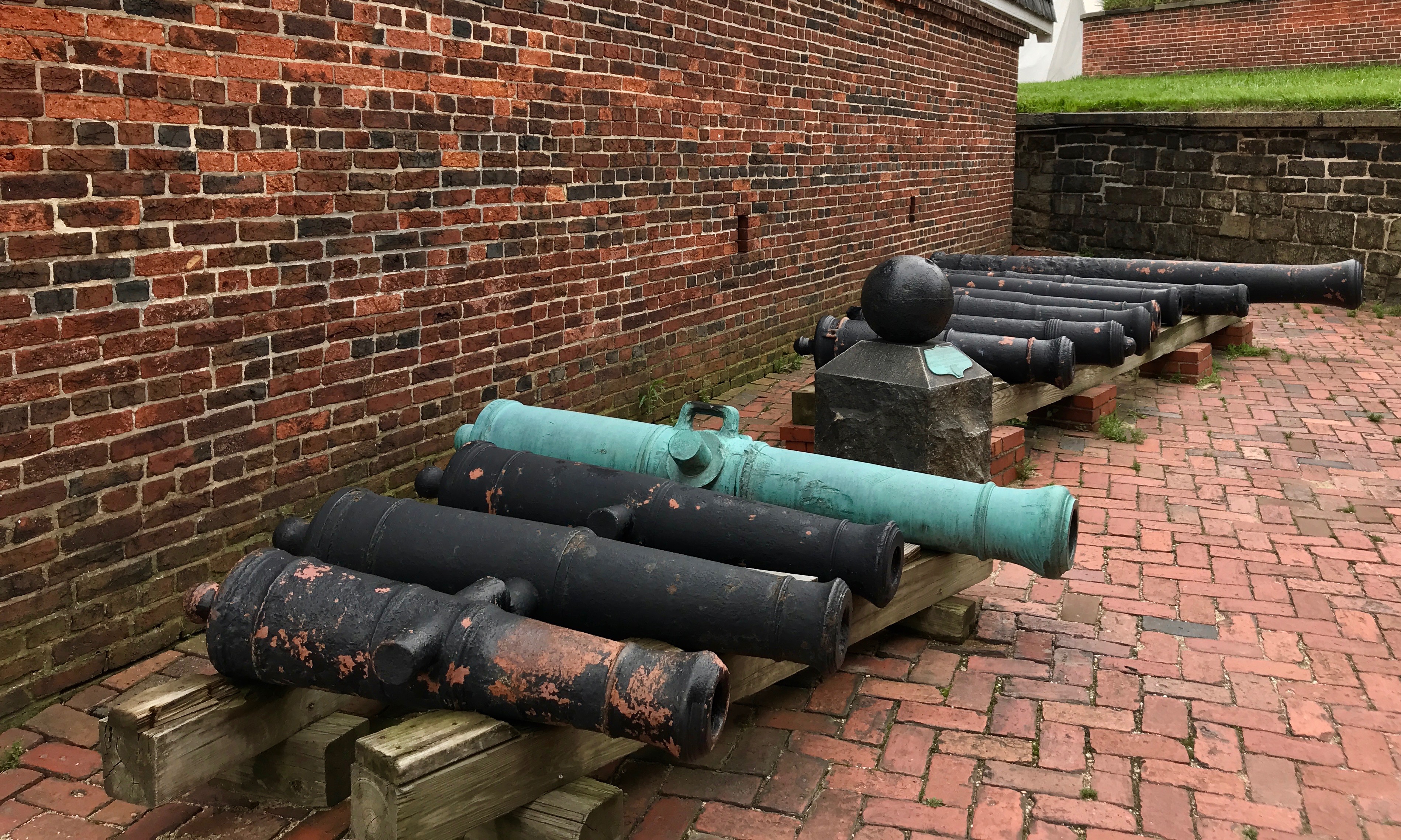
There was no interpretive signage about the ordnance behind this building, but there was another one of those cannon balls.
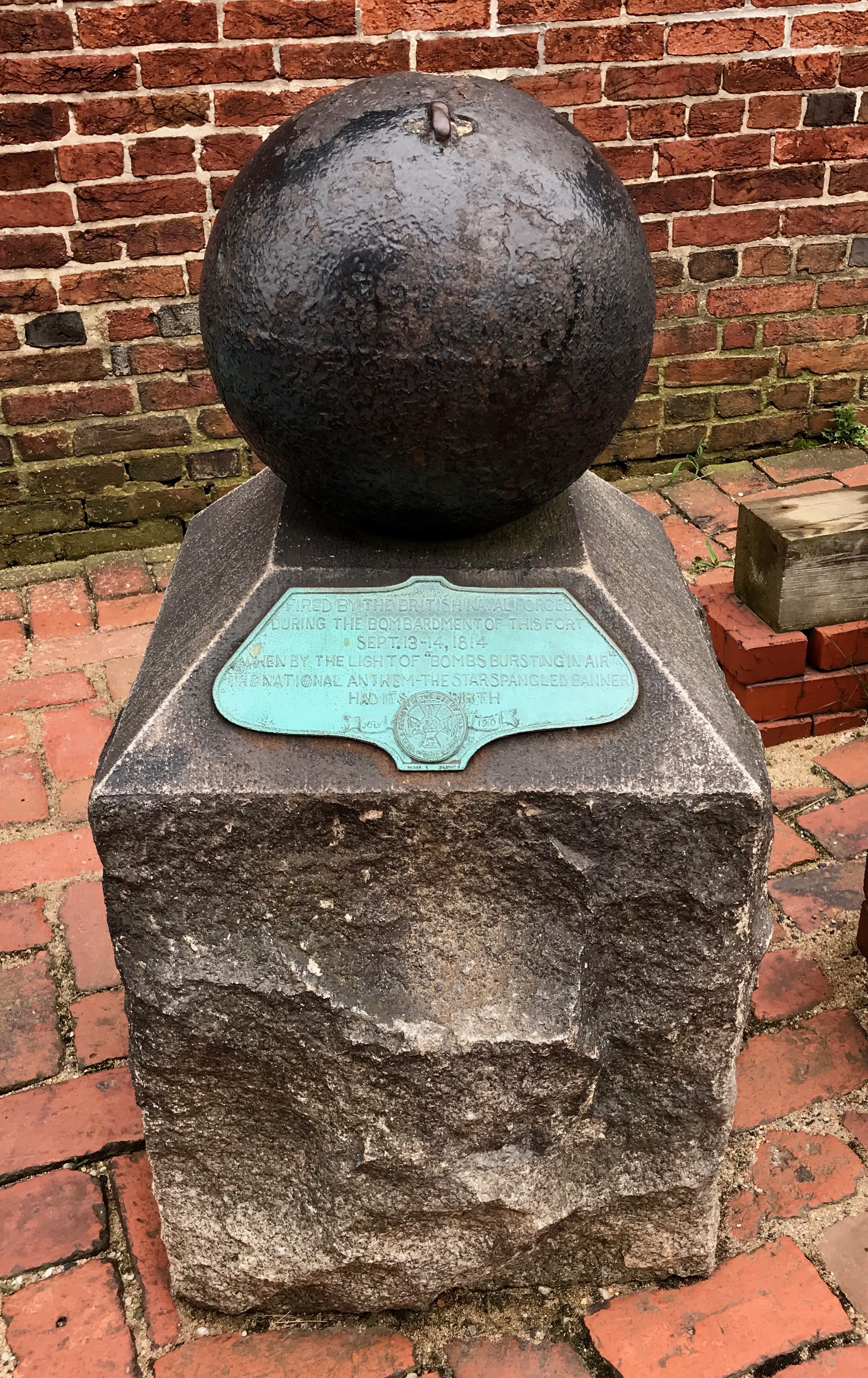
Its plaque said the same thing as the one inside the visitor’s center.

The buildings ringing the parade ground had many interesting displays. The one I found most interesting was information about finding the location of the original flagpole that flew the flag that Francis Scott Key wrote about.
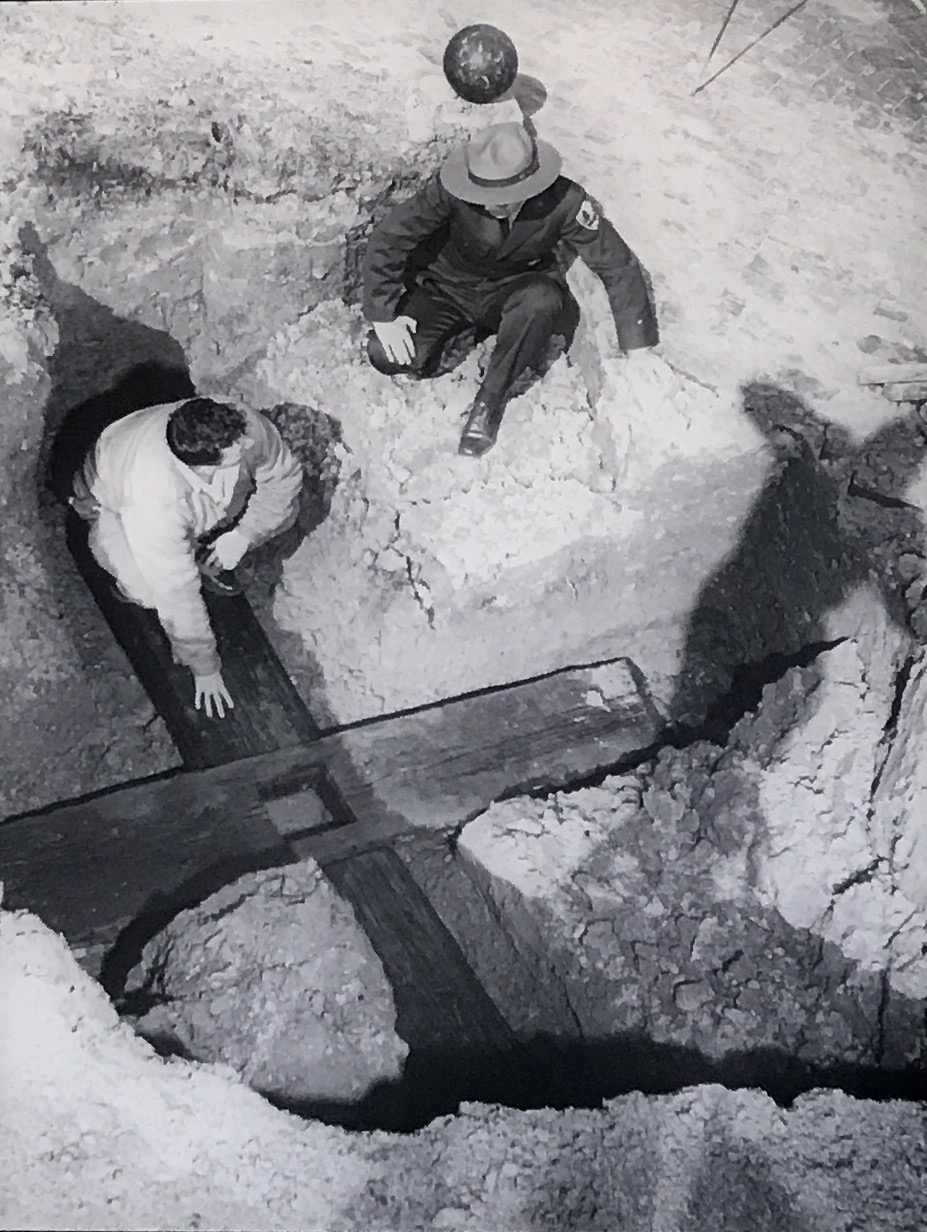
According to the interpretive information, these oak timbers are the last pieces of the 1814 flagpole that remained here at the fort. For a long time, no one knew exactly where the flagpole was. An 1803 map shows the flagpole near the sally port, but an 1839 map places it on one of the points or “bastions” overlooking the water.

Archeologists explored the area around the sally port in 1958, using the 1803 maps for guidance. The discovered two large timbers several feet under ground. They were fitted into the shape of a cross with a large rectangular hole in the center. This cross brace was designed to keep the flagpole from tipping over in the wind. All surface evidence of the flagpole had long since been lost.
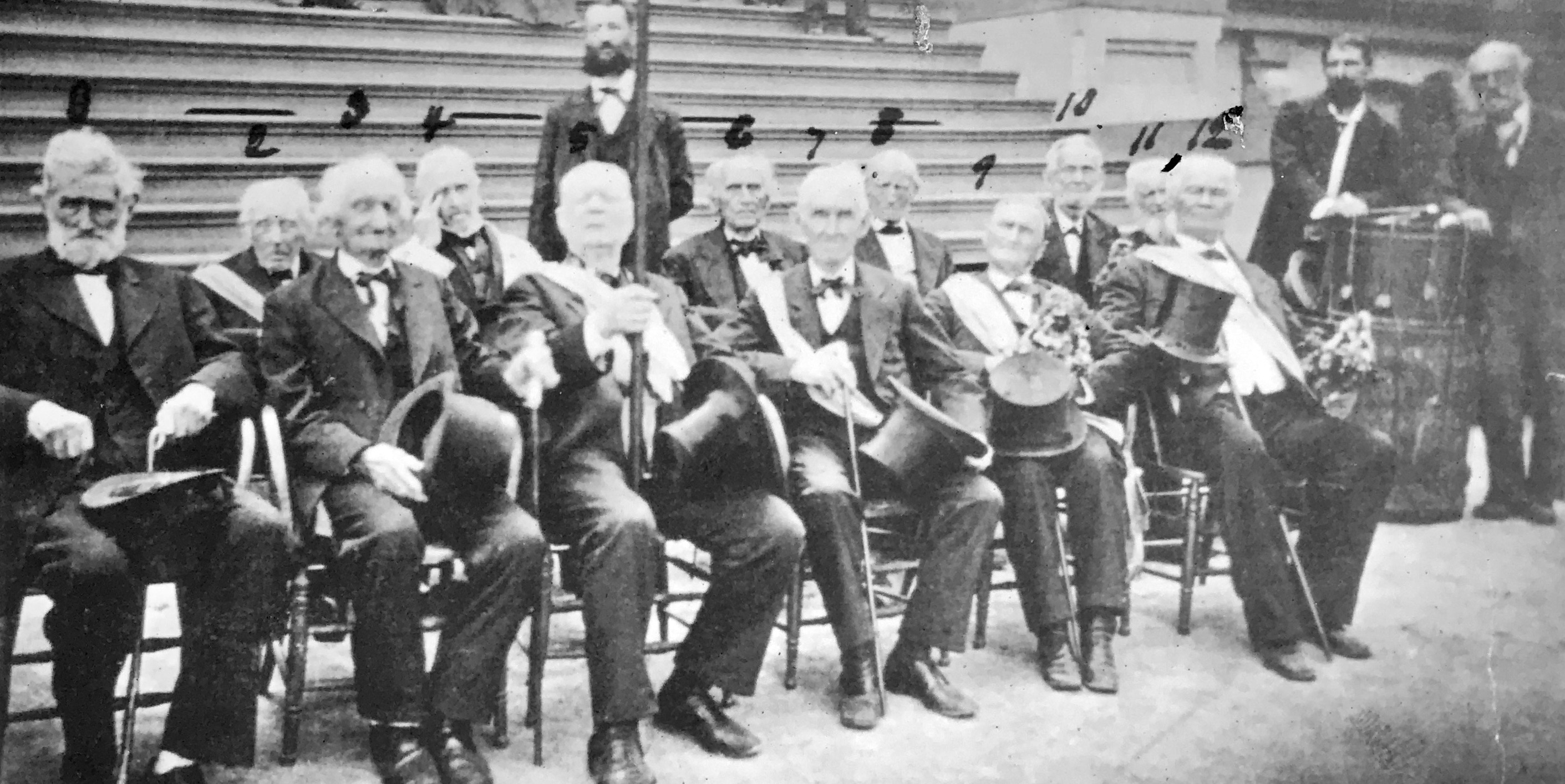
The successful defense of Baltimore from British attach has been remembered and commemorated every year since 1814.  This photo, taken in 1880, shows the last 12 surviving of the remaining defenders of the fort at a celebration at Druid Hill Pavilion in Baltimore.
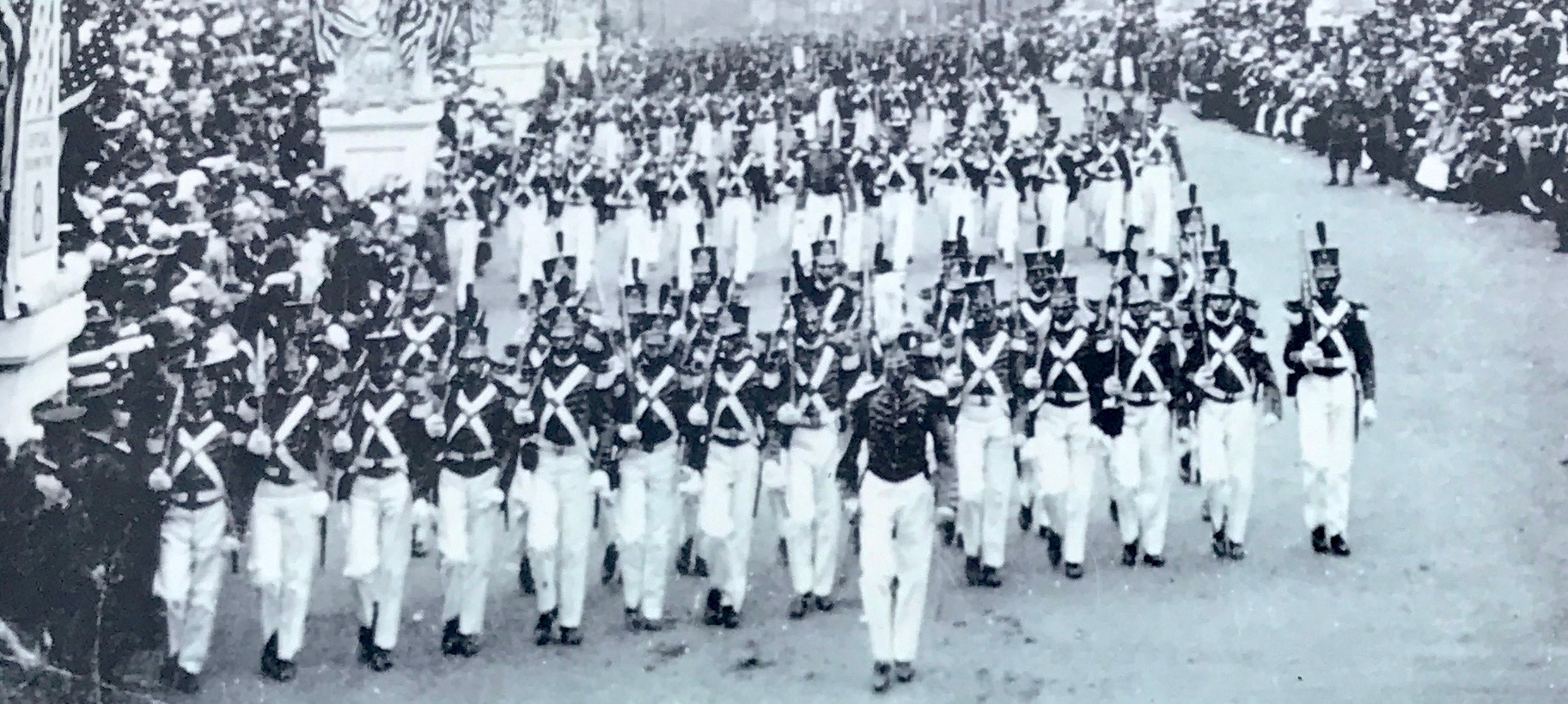
In September 1914, the nation observed the 100th anniversary of the writing of “The Star-Spangled Banner.” The fort was leased by the city and served as the centerpiece of the commemorative activities, which included a parade of tall ships, visiting U.S. Naval Vessels, parades, firework shows and the dedication of a monument to Major George Armistead, who commanded the fort in 1814.
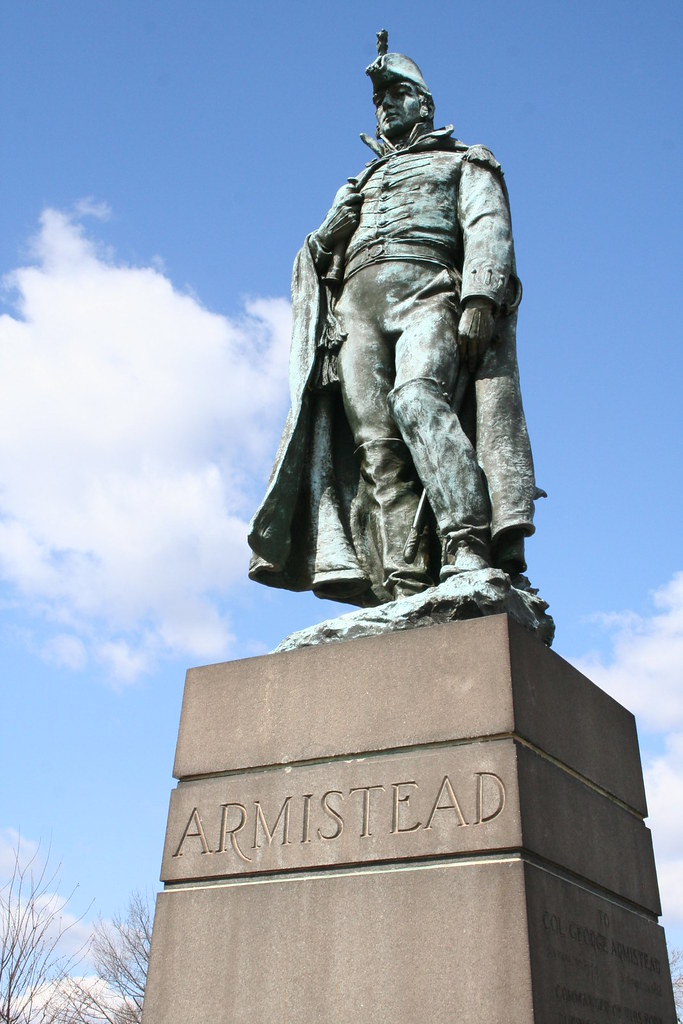
From Flikr by day92783

Somehow, I managed to miss the stature, so here it is, courtesy of a Google search.
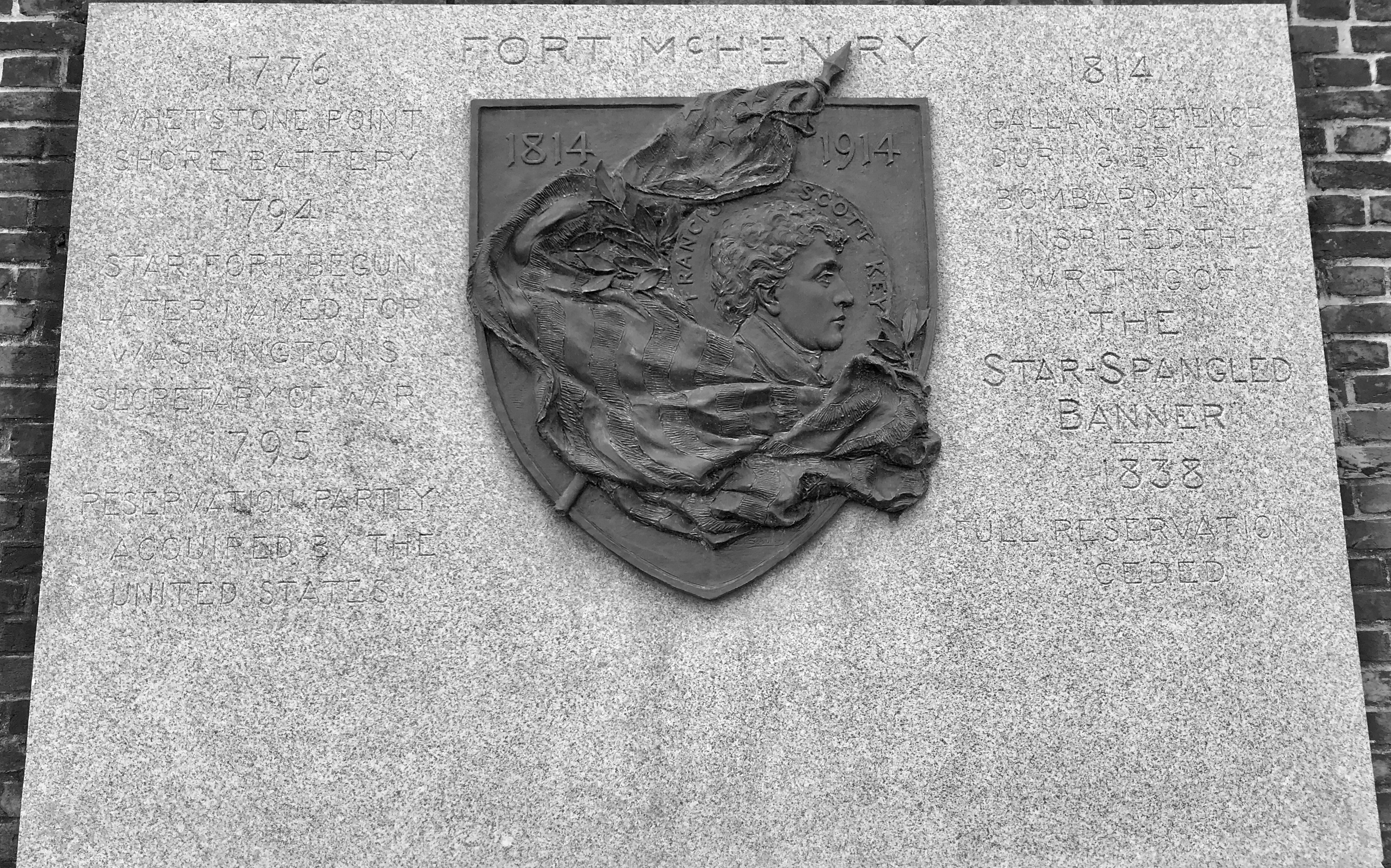
This tablet was dedicated to Francis Scott Key during the Centennial celebration in 1914. Designed by Hans Schuler, the bronze shield depicts and American flag and myrtle, symbolic of love and immortality, surrounding a portrait of Francis Scott Key.

I always visit the museums and study the displays, as time allows. Here are some questions that I found interesting.

Answer:

Wow! There’s that Fort Niagara connection again!

And the answer is:

And with that, it was time to find the exit. There was one more thing to see before I was on my way.
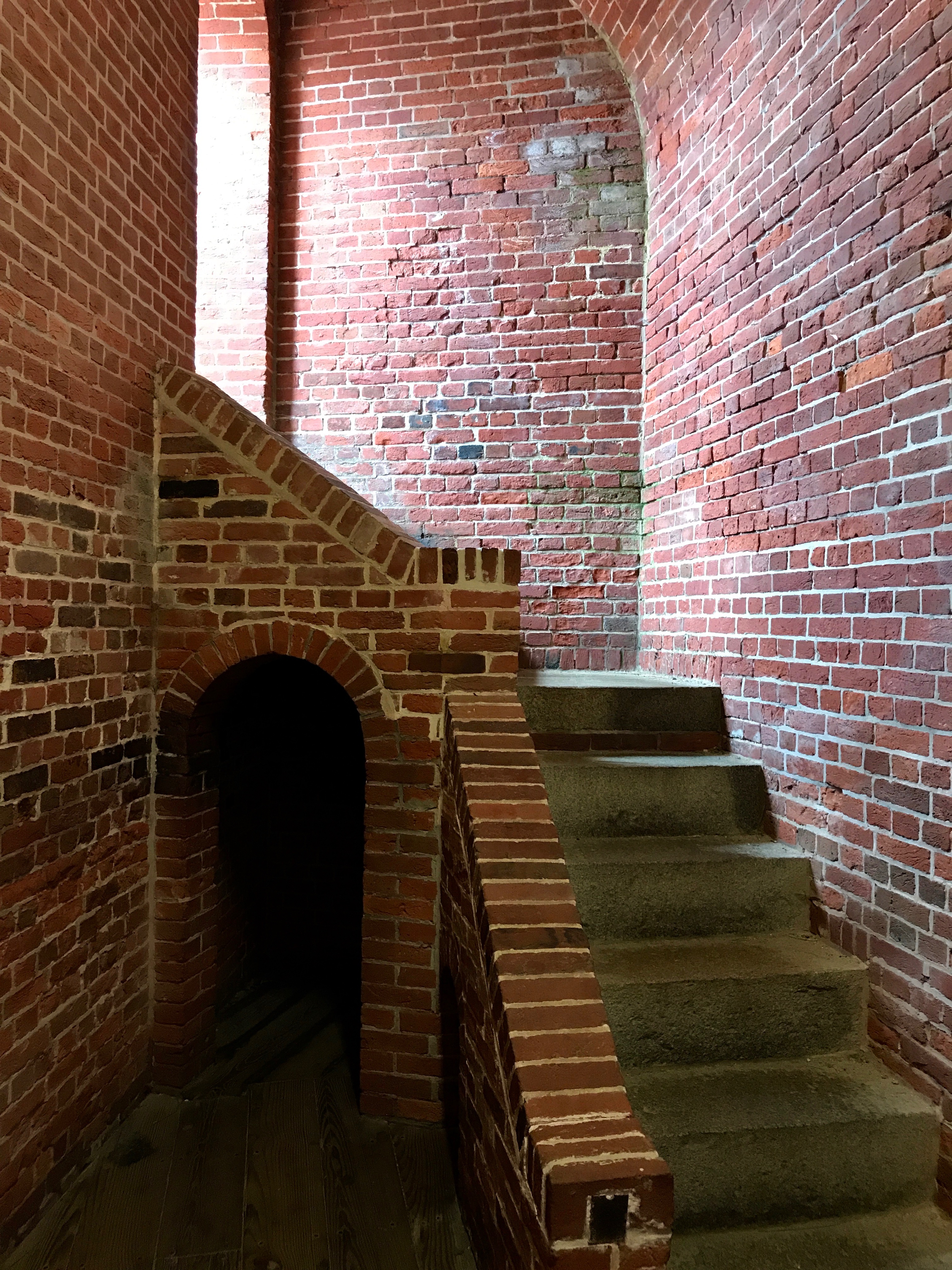
This is the ravelin magazine. Near the end of the Civil War, several large cannon were located on the ravelin.

The ravelin is a triangular fortification located in front of the innerworks of the fort. You can see it here, pointing toward the lower right in the photo.

The commanding officer ordered that 1,000 rounds of ammunition be kept nearby for each gun. In 1866, this magazine and two others were built to safely store the additional gunpowder.

The covered entrance with its angled stairway was designed to prevent enemy projectiles from reaching the explosives. Three feet of concrete and up to 16 feet of earth were laid over the arched brick vault.

With that, it was time to head out. I had one more stop I wanted to make before I called it a day. 
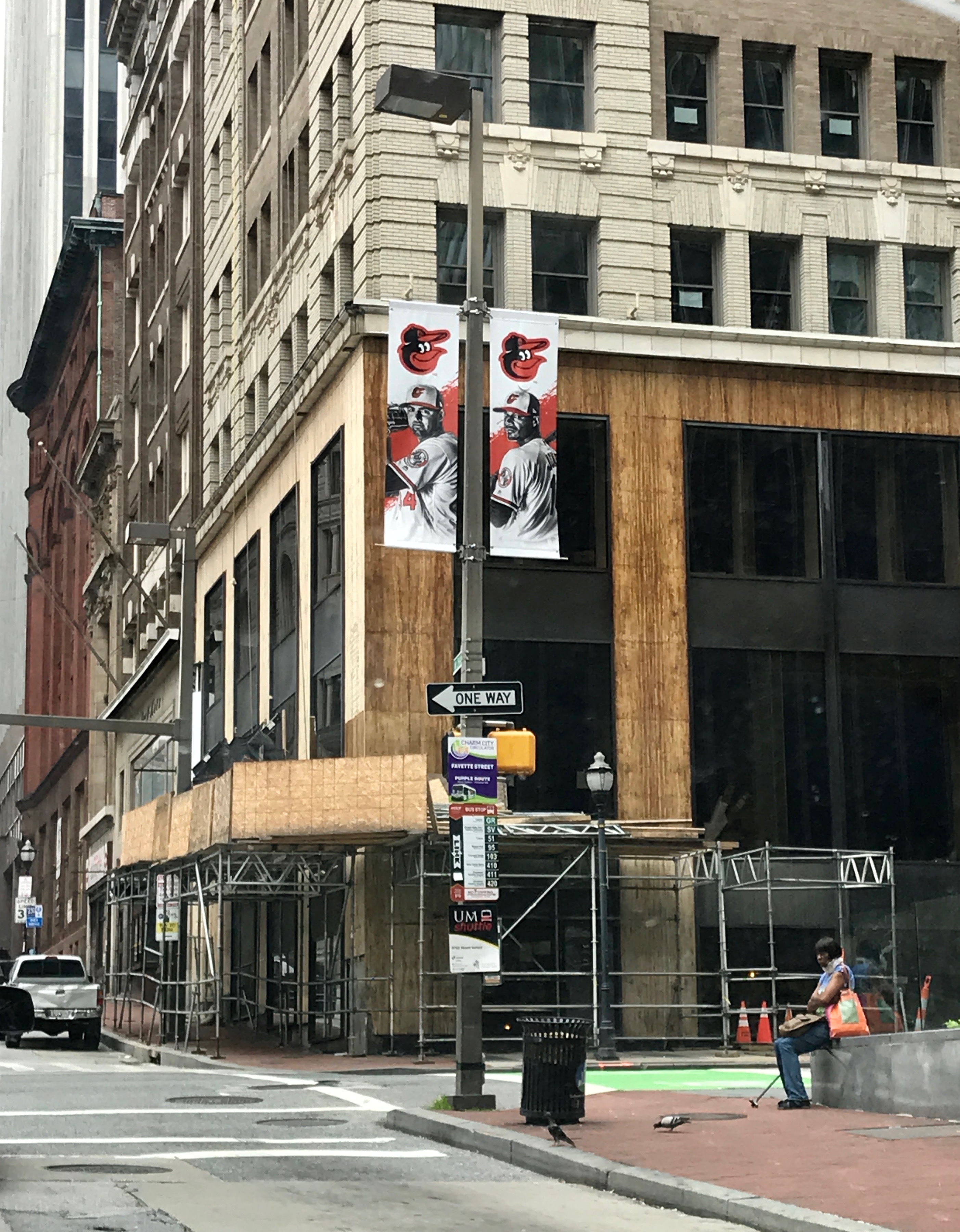
I made my way into the city.
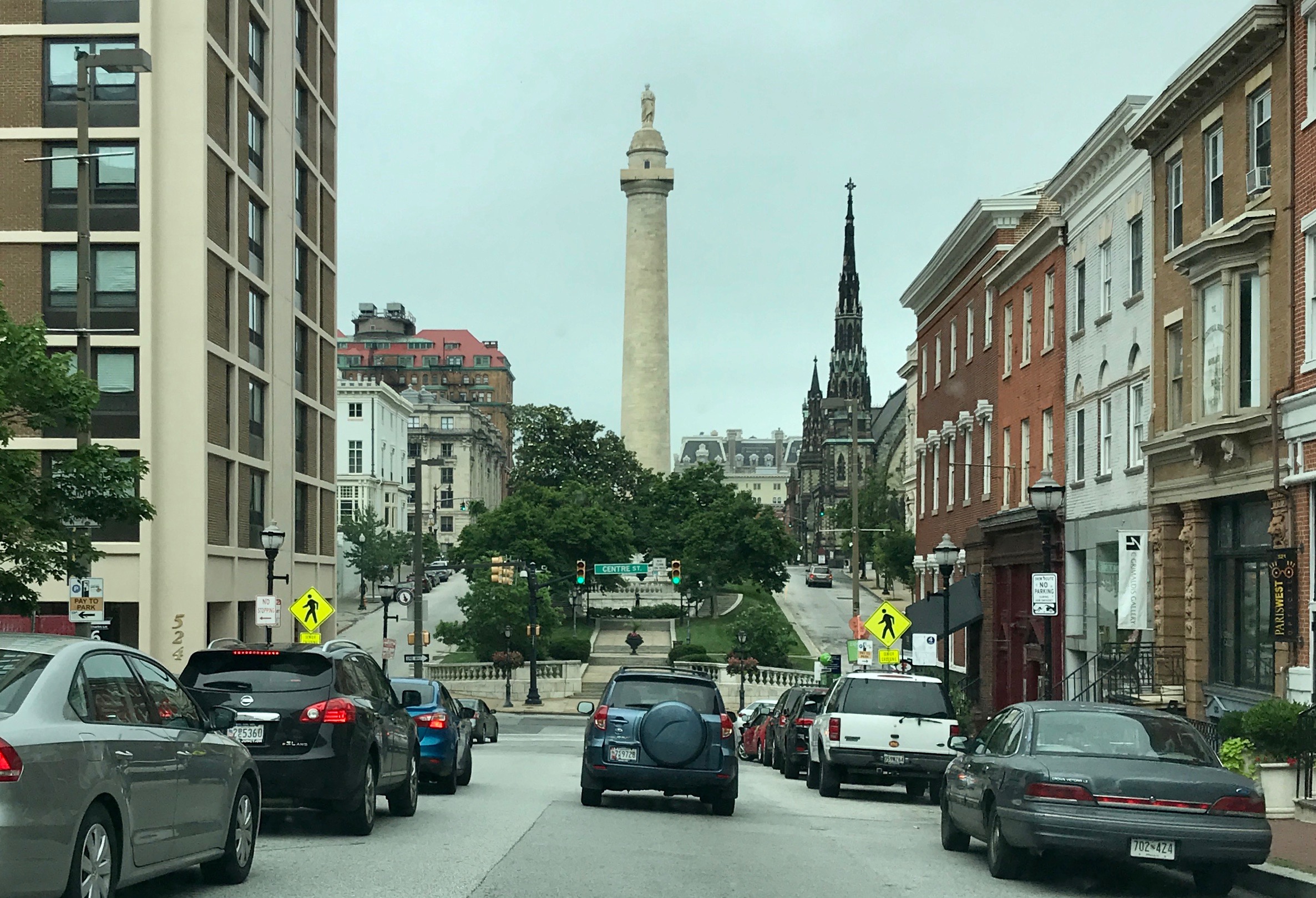
My destination was the first major monument to honor George Washington.

The Monument was designed by American Architect Robert Mills, who also designed the later Washington Monument on the National Mall in Washington, D.C.. Construction began in 1815 on land donated by Colonel John Eager Howard from his extensive estate just north of Baltimore Town. The statue, by Italian-born sculptor Enrico Causci, was installed in 1829.
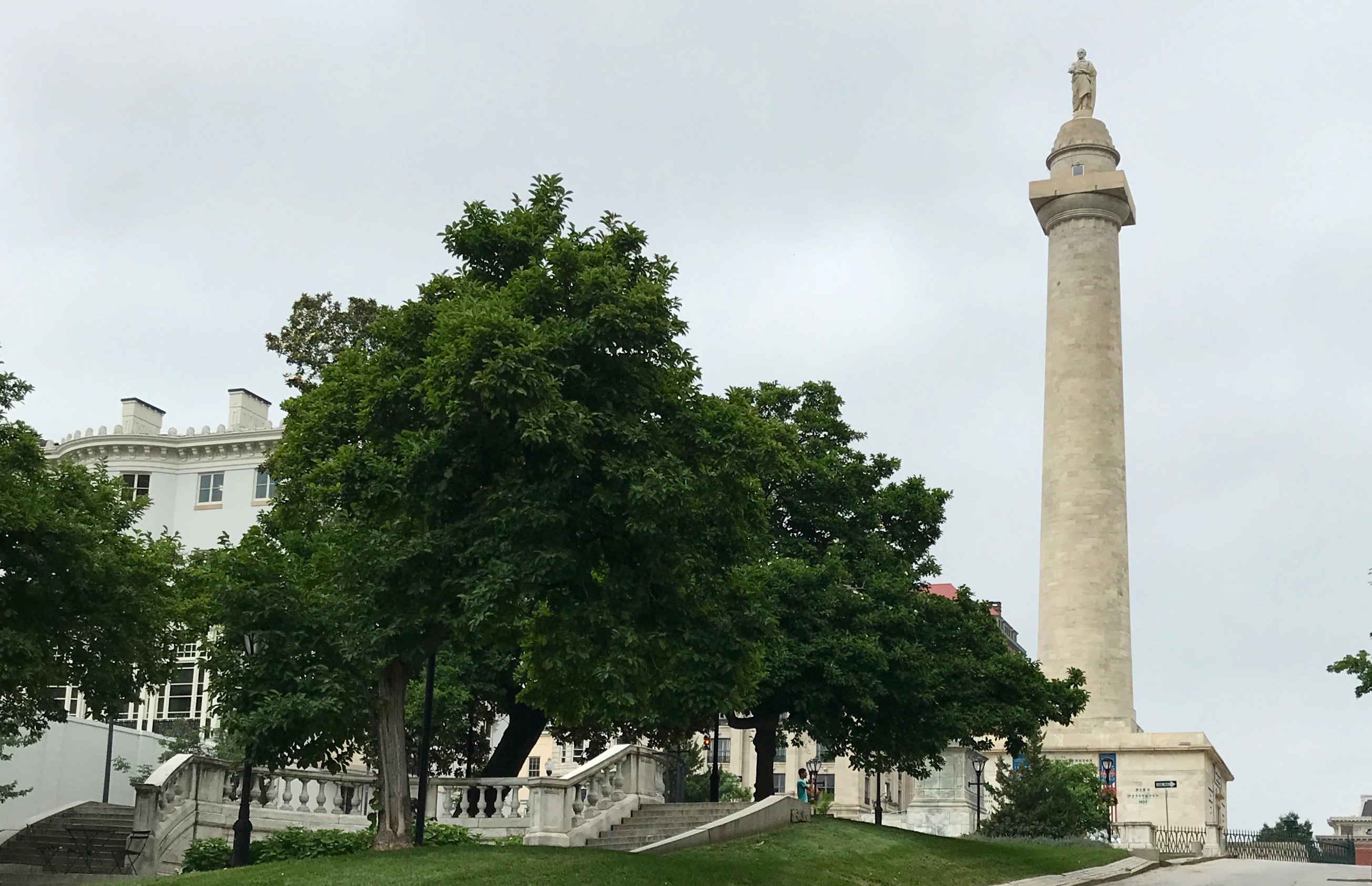
Washington is depicted on the top of the Monument resigning his commission as Commander-in-Chief of the Continental Army, an act which took place in the Old Senate chamber in the Maryland State House in the state capital of Annapolis, Maryland on December 23, 1783. The Confederation Congress was meeting in the Maryland capitol which served for a few months as the temporary national capital. While there, the Congress also ratified the Treaty of Paris of 1783, ending the American Revolutionary War and recognizing the independence of the United States by Great Britain.

So much history!
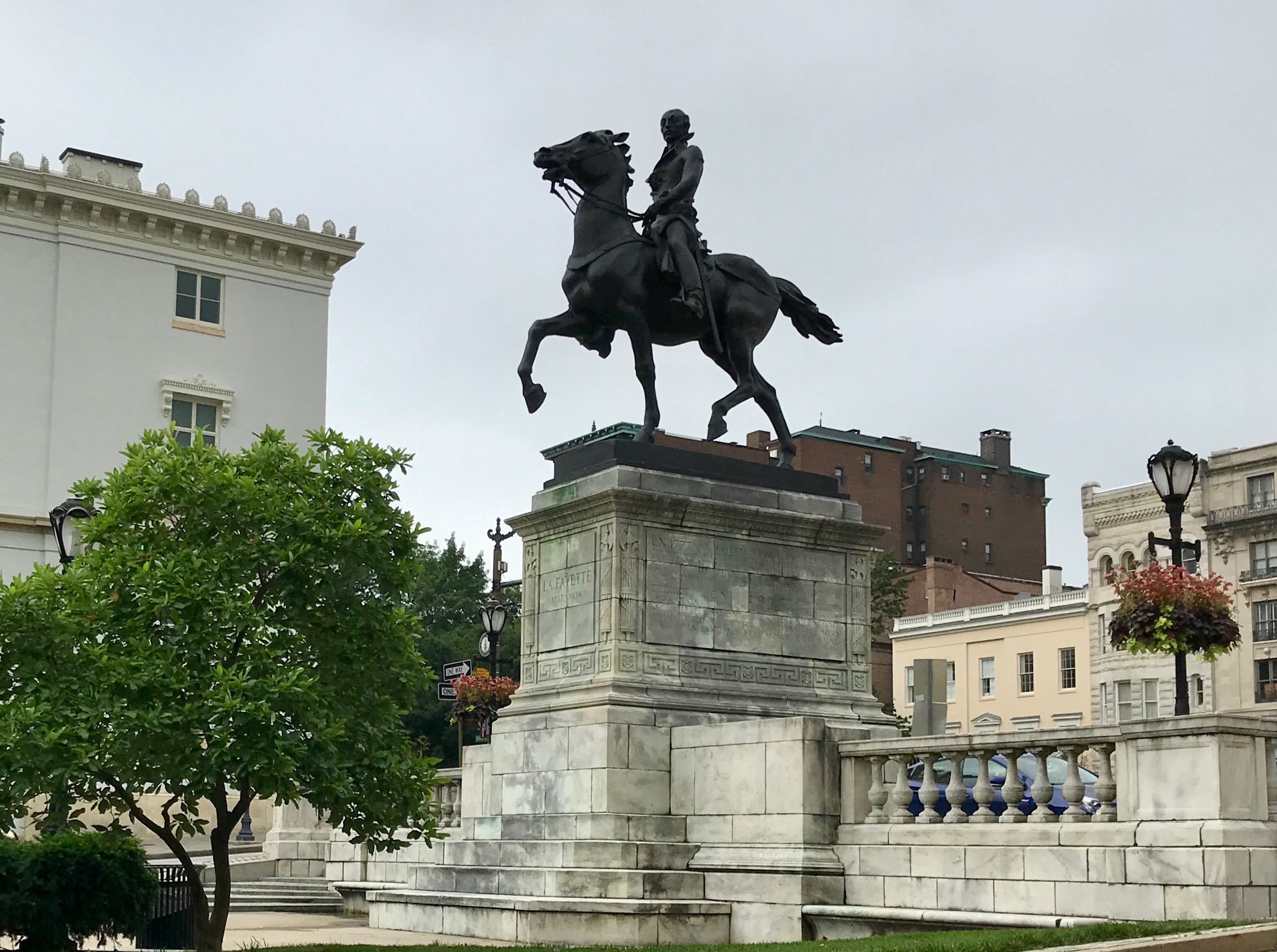
Lafayette is there with Washington, too. (I would have been surprised if he weren’t.)

I could have gotten out of the car and climbed the 227 steps to the top to take in the view, but I was tired and parking wasn’t readily found. I decided to head back to the hotel.
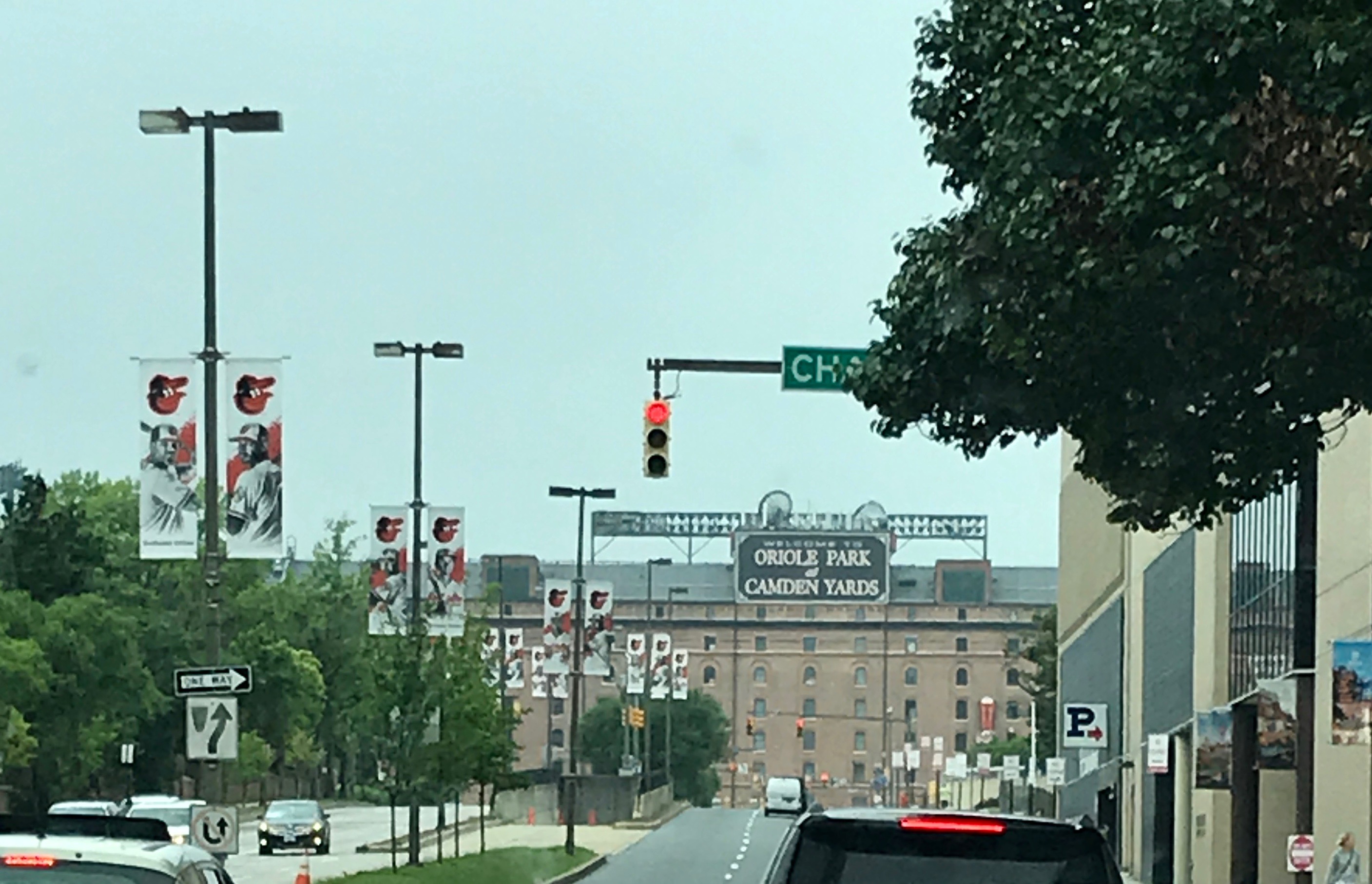
But, hey, what is that? Camden yards? Good thing the light is red. I have time to snap a photo.
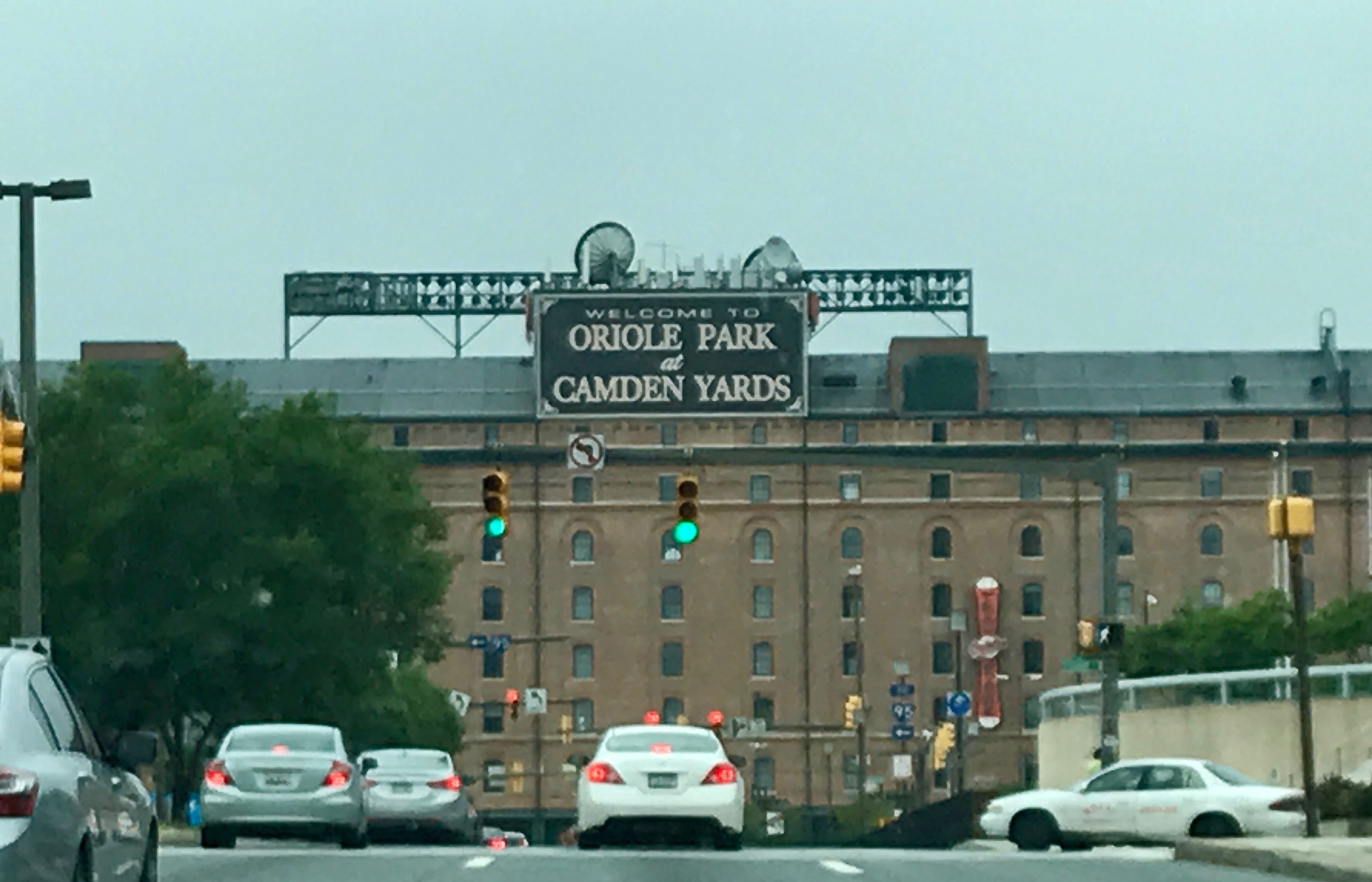
The light is green and now it’s time to roll!

You Never Know What You’ll Find Along the Way

During the week as a seed courier, you never know what you will find or where the road will take you. For instance, one day, I ended up near the shore. Which shore? I have no idea!

It must have been somewhere near a port. Look at all those ships lined up waiting to enter.

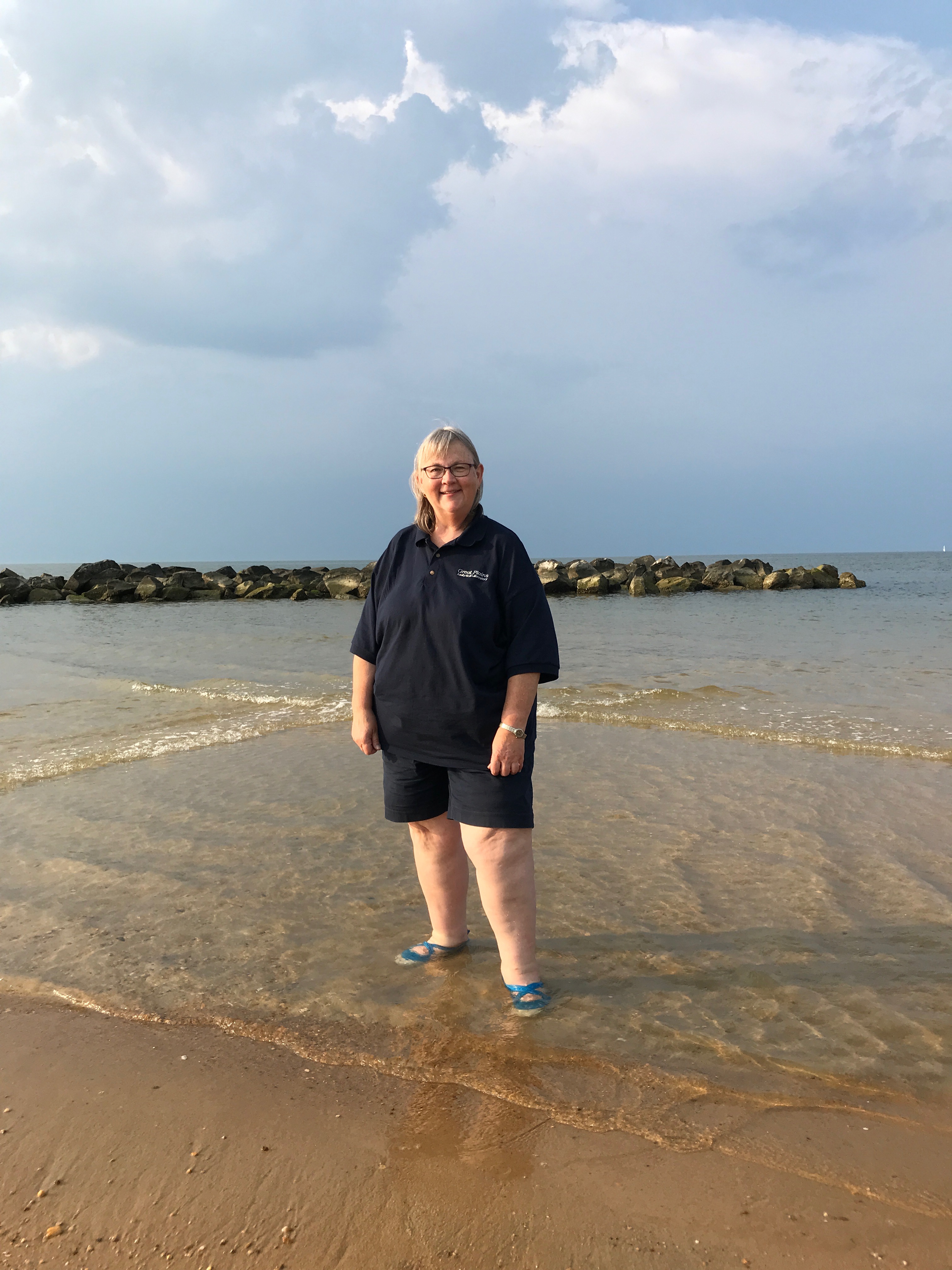
I had to have my picture taken in the water. Okay, I was only up to my ankles, but not bad for the end of a work day.

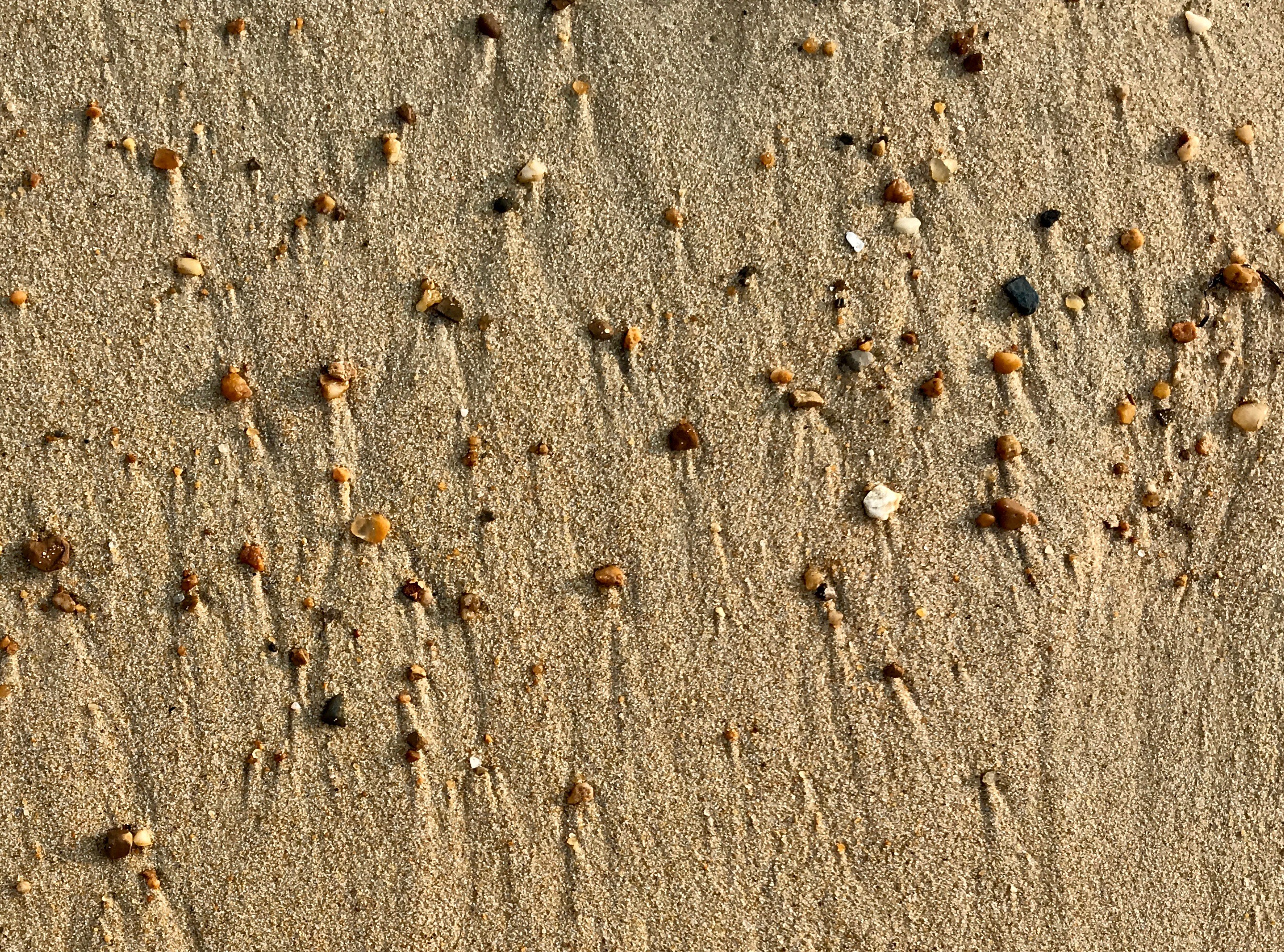
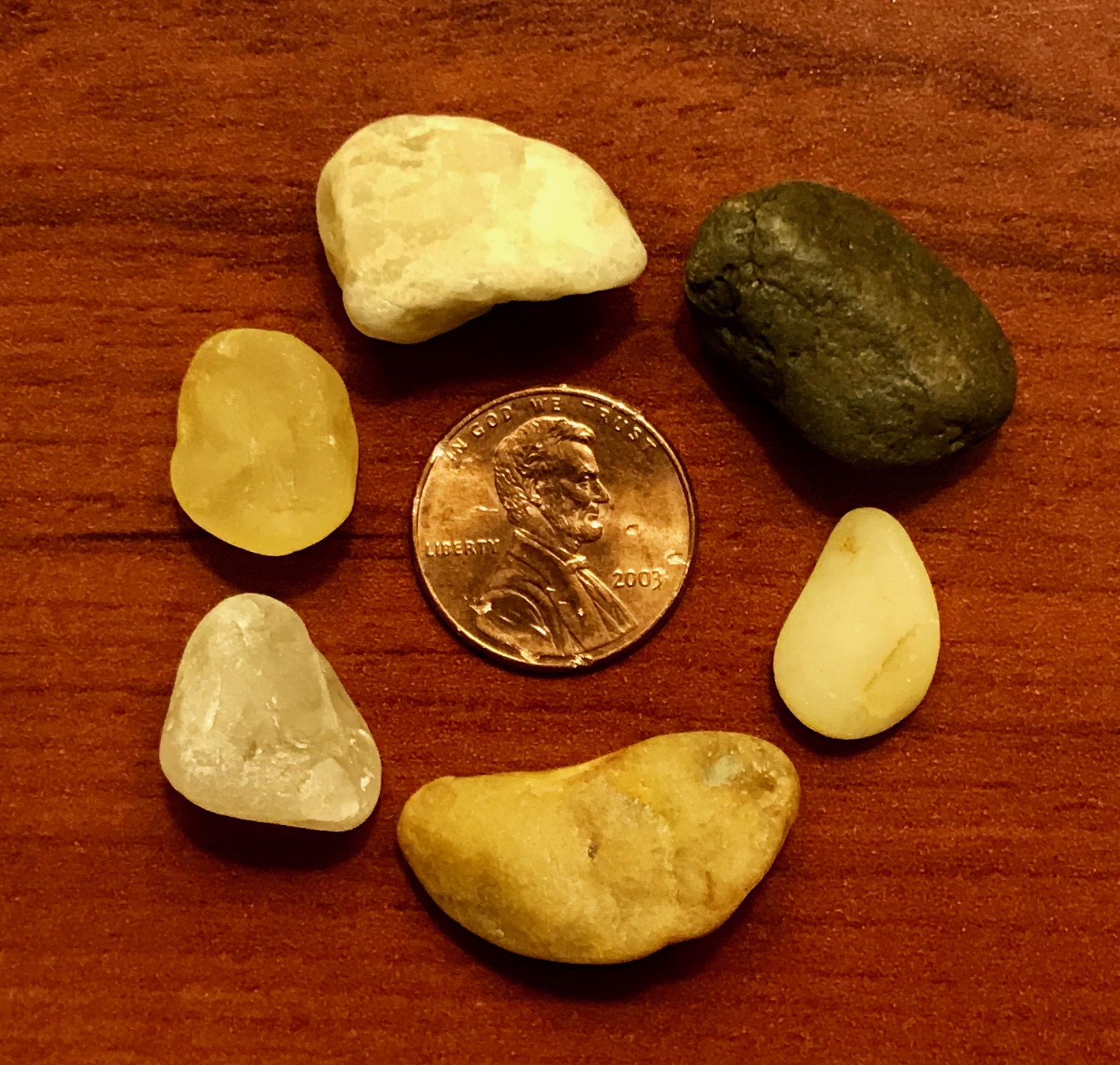
I also noticed all the little rocks in the sand. Time for a little “catch-and-release” rock collecting – with a difference. I picked up a few that caught my eye and took them back to the hotel room – wherever that was.

I took a picture, but then slipped them into my luggage. They actually made it home with me and are living in a little dish on my dresser.

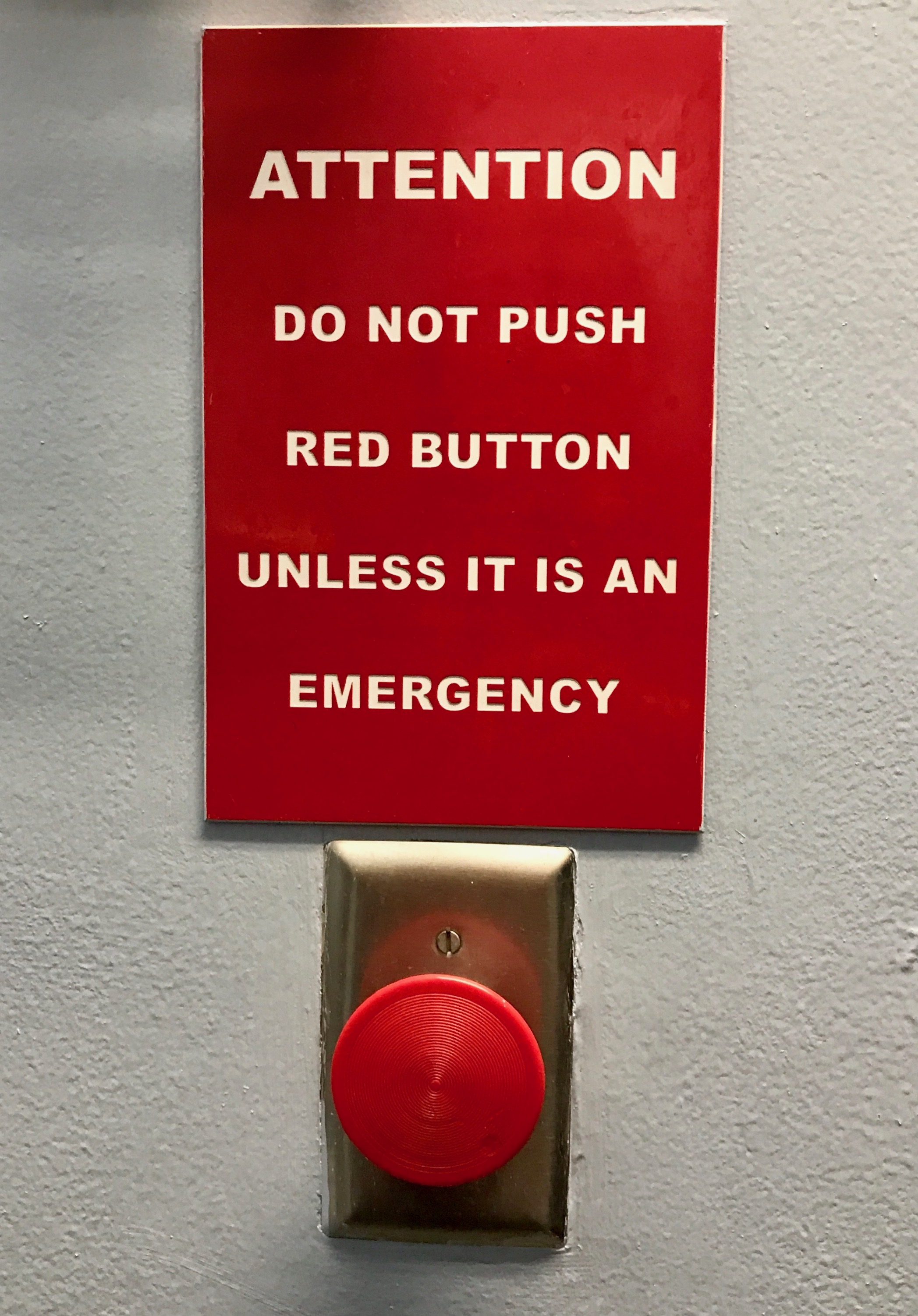
I really stayed in some “unique” establishments. For instance, what sort of emergency might I have that would require me to push this button? And, you have to know the sign made me want to push the button all the more!

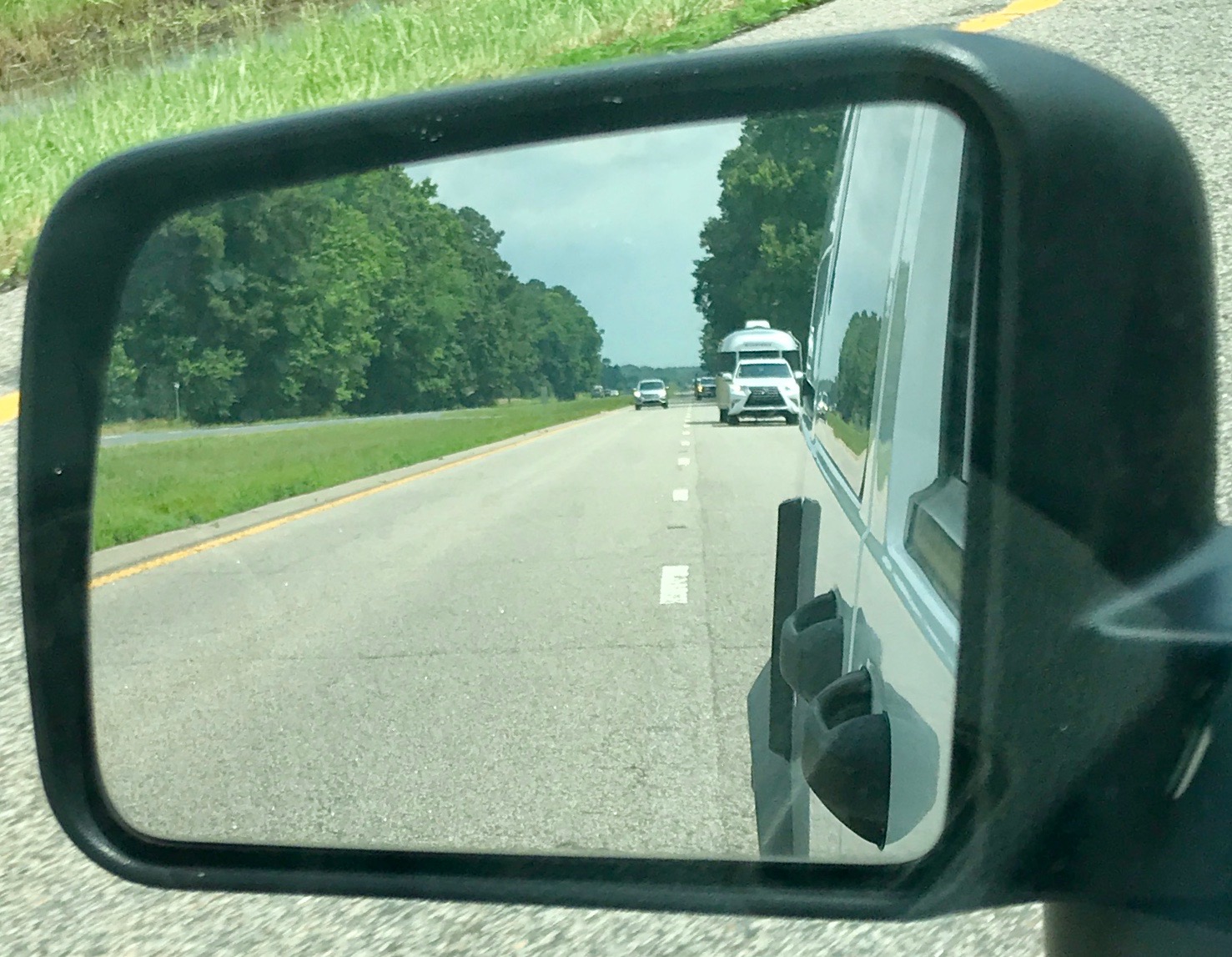
Continuing down the road in the morning, I was delighted to be able to snap this photo of an Airstream in my rearview mirror.

Photo from the Internet for nostalgia purposes

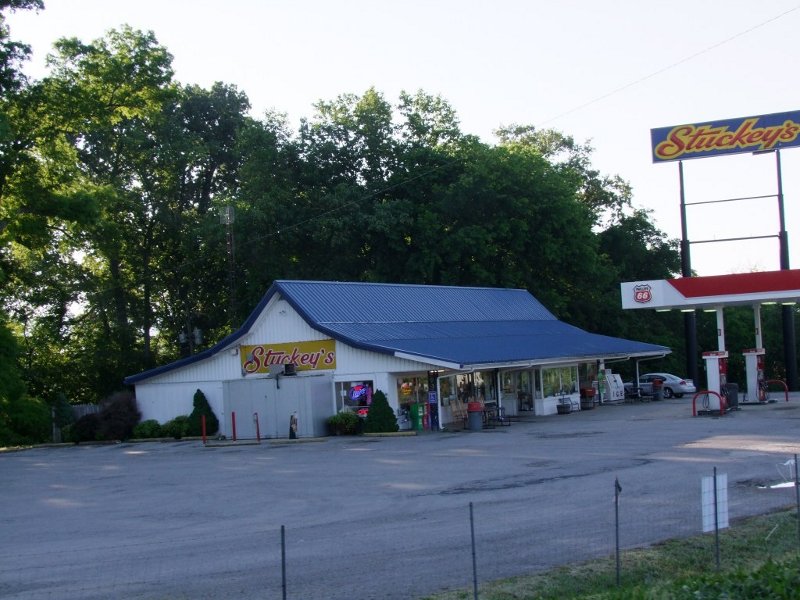
When I was a kid and I would take the rare trip with my parents, I remember being mystified by the blue roofs on the Stuckey’s and I couldn’t wrap my head around the concept of the pecan logs they advertised.

What in the world is a pecan log? I knew what logs were and what pecans were, but what is a pecan log?  (I’ve already told you I was a very literal child.) They were probably 25¢ back then – too rich for our family’s blood.

I was about to find out!

It turns out that the center is a cylinder of some sort of white nougat that is rolled in pecans. It was good enough, but once is enough.

Of course, this is probably not the size that was sold in the mid ’60s. Everything is inflated. For instance, a 25¢ log in the mid ’60s would now cost around $2.00. Since the price on this one was $5.99, I’m sure it wasn’t what was sold when Stuckey’s dotted the landscape.

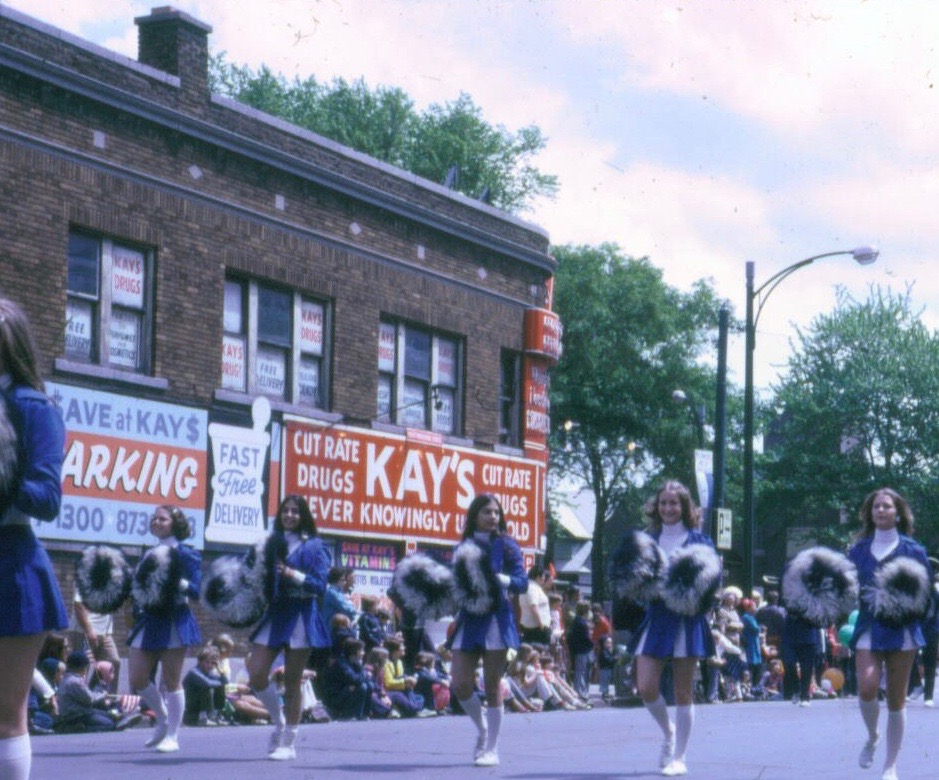
In 1965 dollars, this would have cost about 75¢. When I was a kid, in the mid ’60s, I could buy six 5¢ candy bars for a quarter at Kay’s Drugs in Kenmore.

Ah, but I digress…

And, speaking of digressing, my route took me near Assateague National Seashore. I didn’t really have time to enjoy the park, but I had been meaning to buy my America the Beautiful Lifetime Senior Pass!

It used to be an outrageously good deal at $20 for a lifetime of visiting national parks and federal recreational lands. You had to be 62 to buy it, and I missed the deadline by three months. They raised the price to $80, but for a lifetime of enjoyment, it is still a great deal. The ranger who helped me with the purchase told me that the ponies that make the park famous are just down the road a little, so I decided to see if I could see any of them.

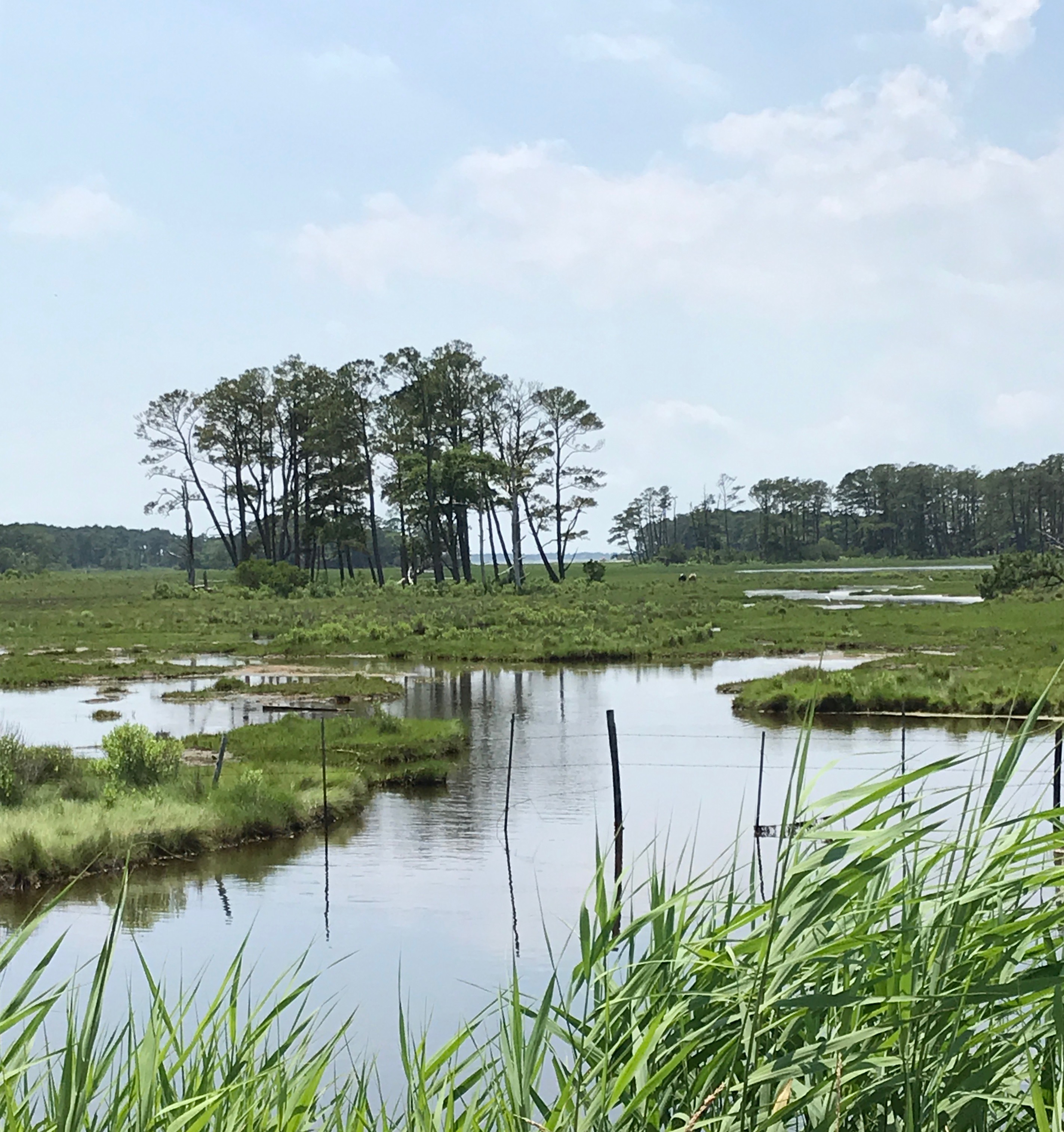
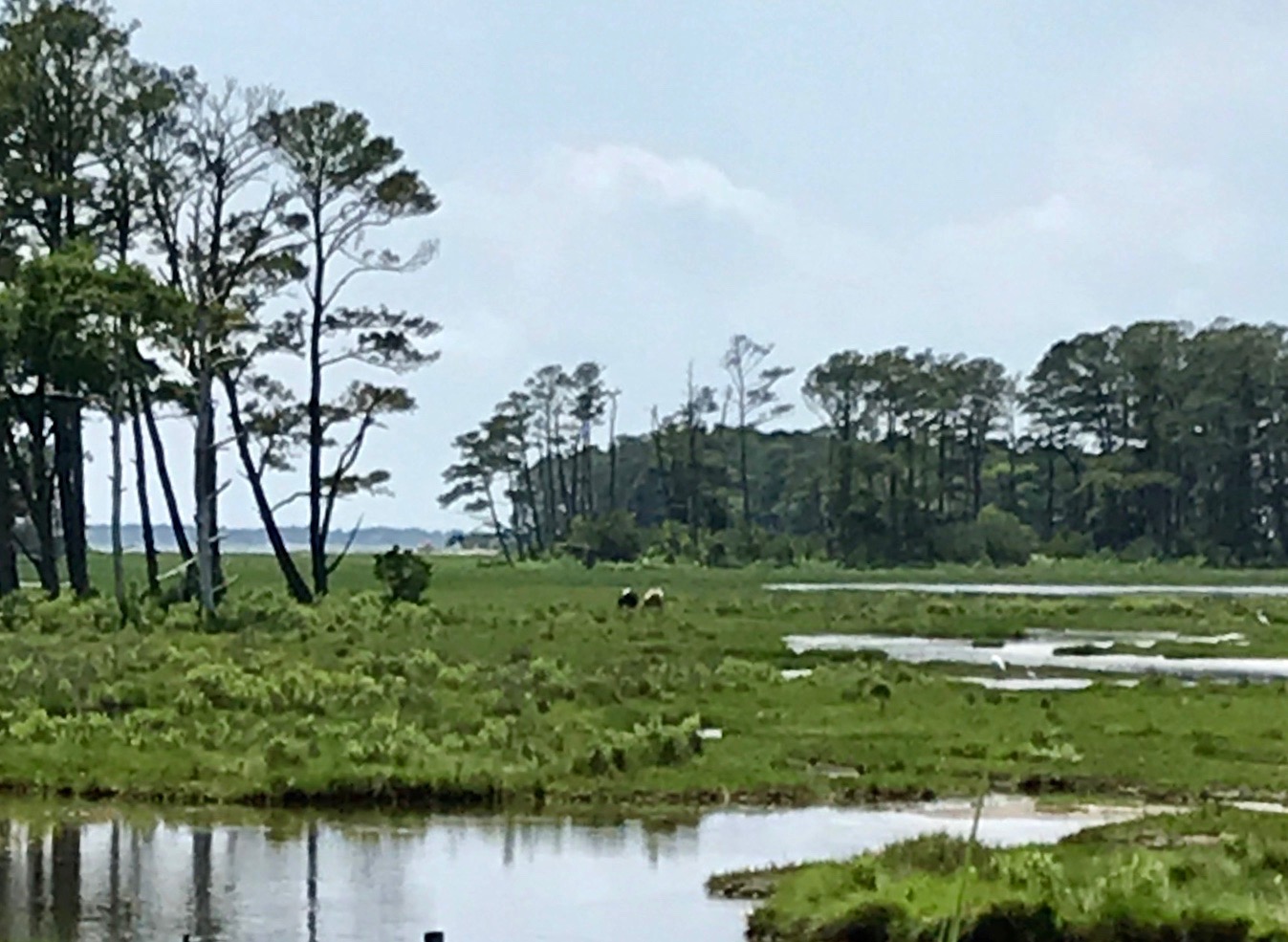
I pulled over and parked where I was told they like to hang out. Do you see them?

I zoomed in as much as my iPhone could handle and you can kind of make them out just below the middle of the frame. Not much to write home about.

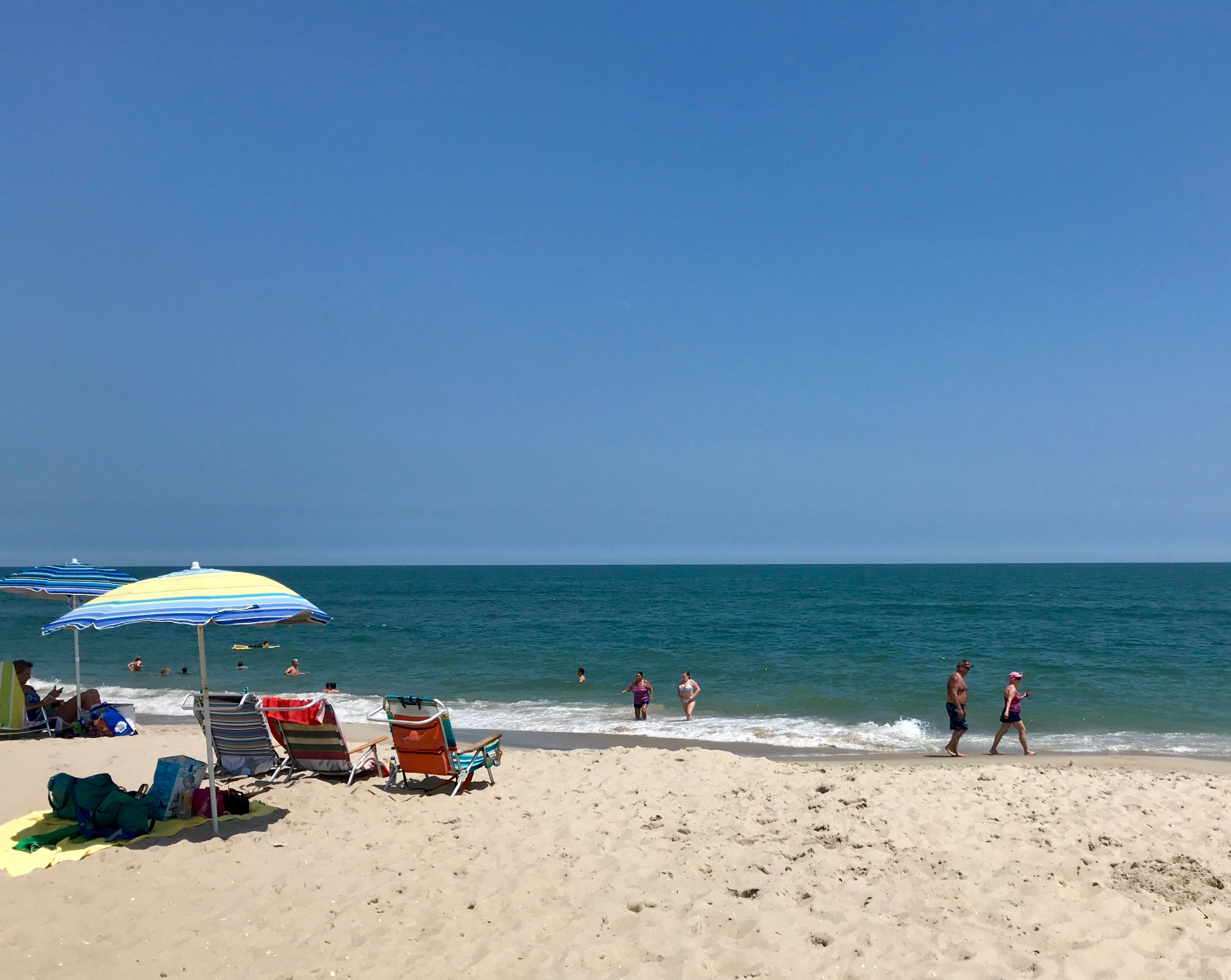
I continued to the end of the road and parked the car. I had to take a gander at the ocean, even if I didn’t really have time to even wade a little bit. Beautiful!
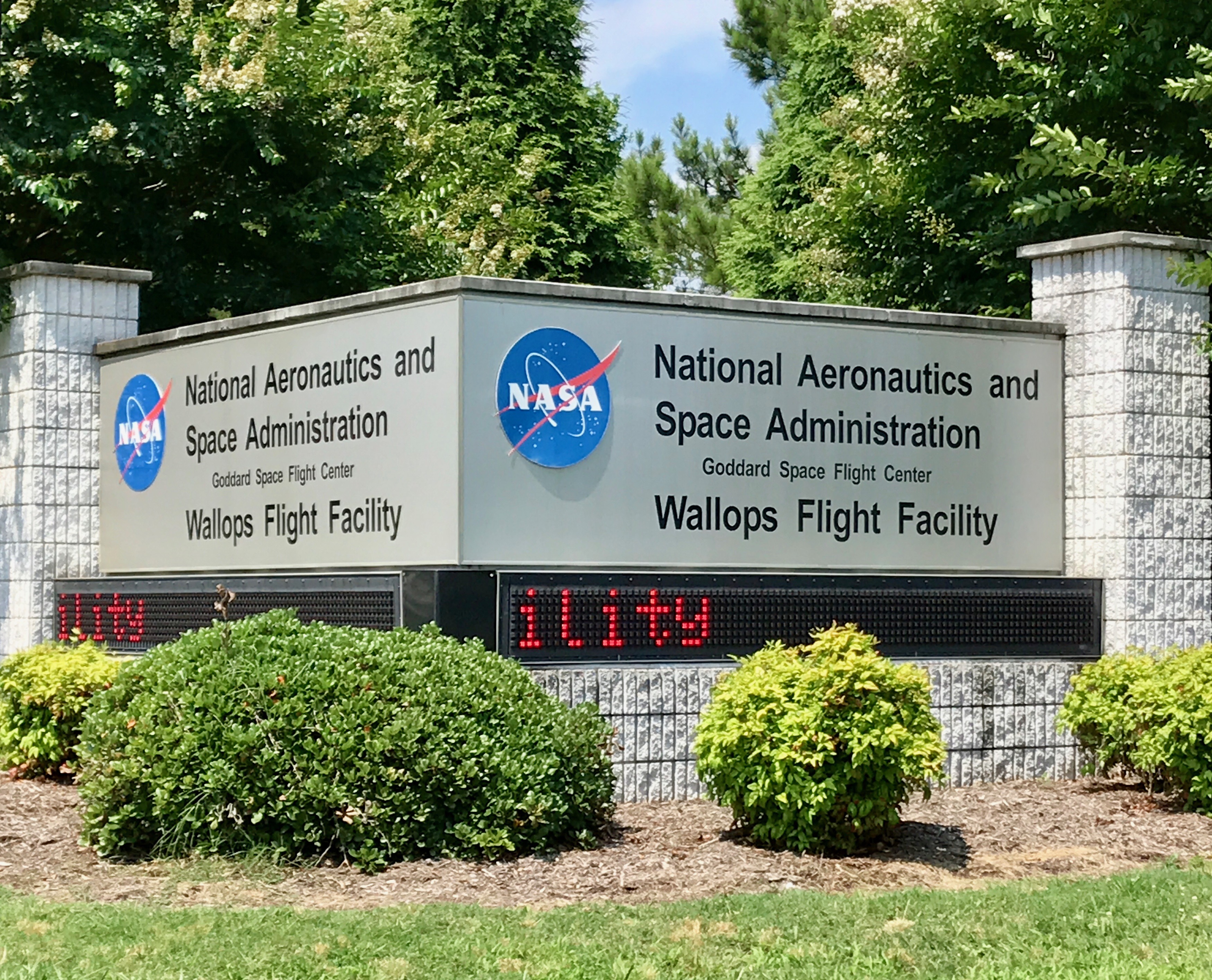
As I was leaving the area, I noticed the marquee for the Wallops Flight Facility. James Michener mentioned it frequently in his books, so I had to grab a quick photo.

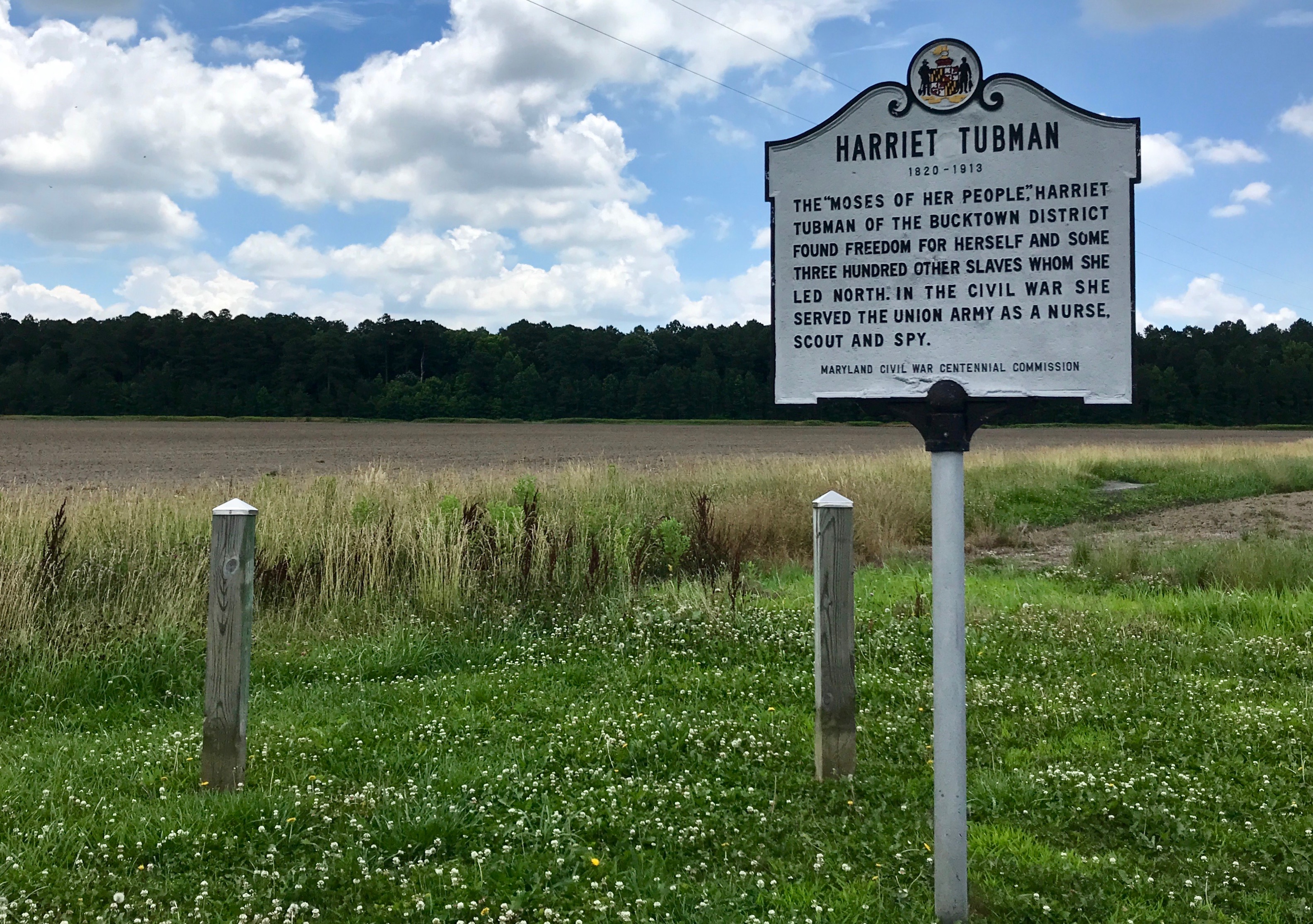
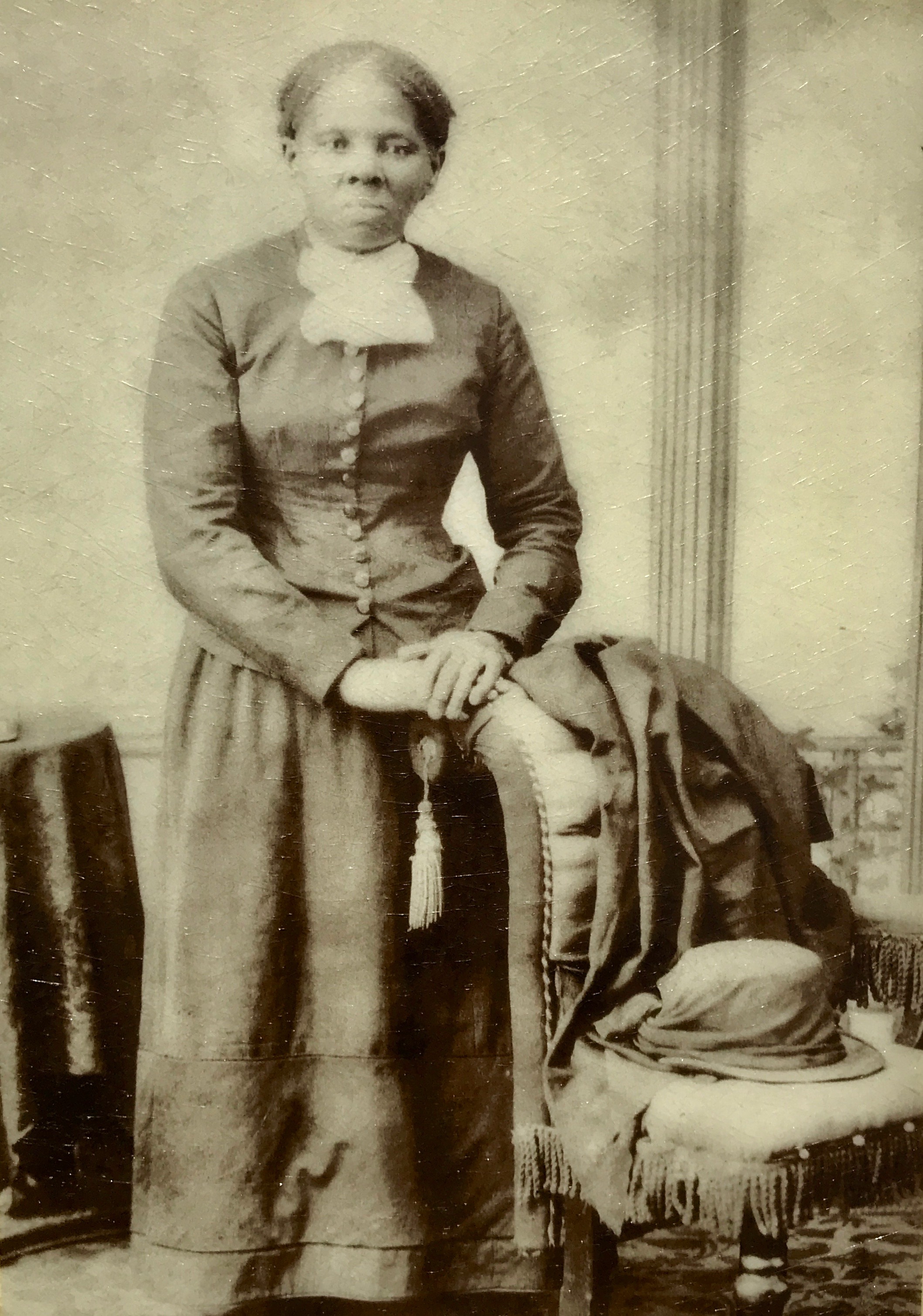
Another place that my HISTORY Here app directed me to was Harriet Tubman‘s birthplace. Of course, no one is really 100% sure where she was born, but I guess there is some evidence that the land she was born on was in this area.

A friend mentioned that she thought that this was a rather sorry memorial to such an important person. The thing is that this site was about 10 miles off the main road and a person can’t control where they are born.

There is a Harriet Tubman Underground Railroad State Park. I drove by it as I continued on my way down the main road. It looked interesting, and I picked up a brochure about it when I stopped at a rest stop along the way. It’s definitely on my “next time” list.

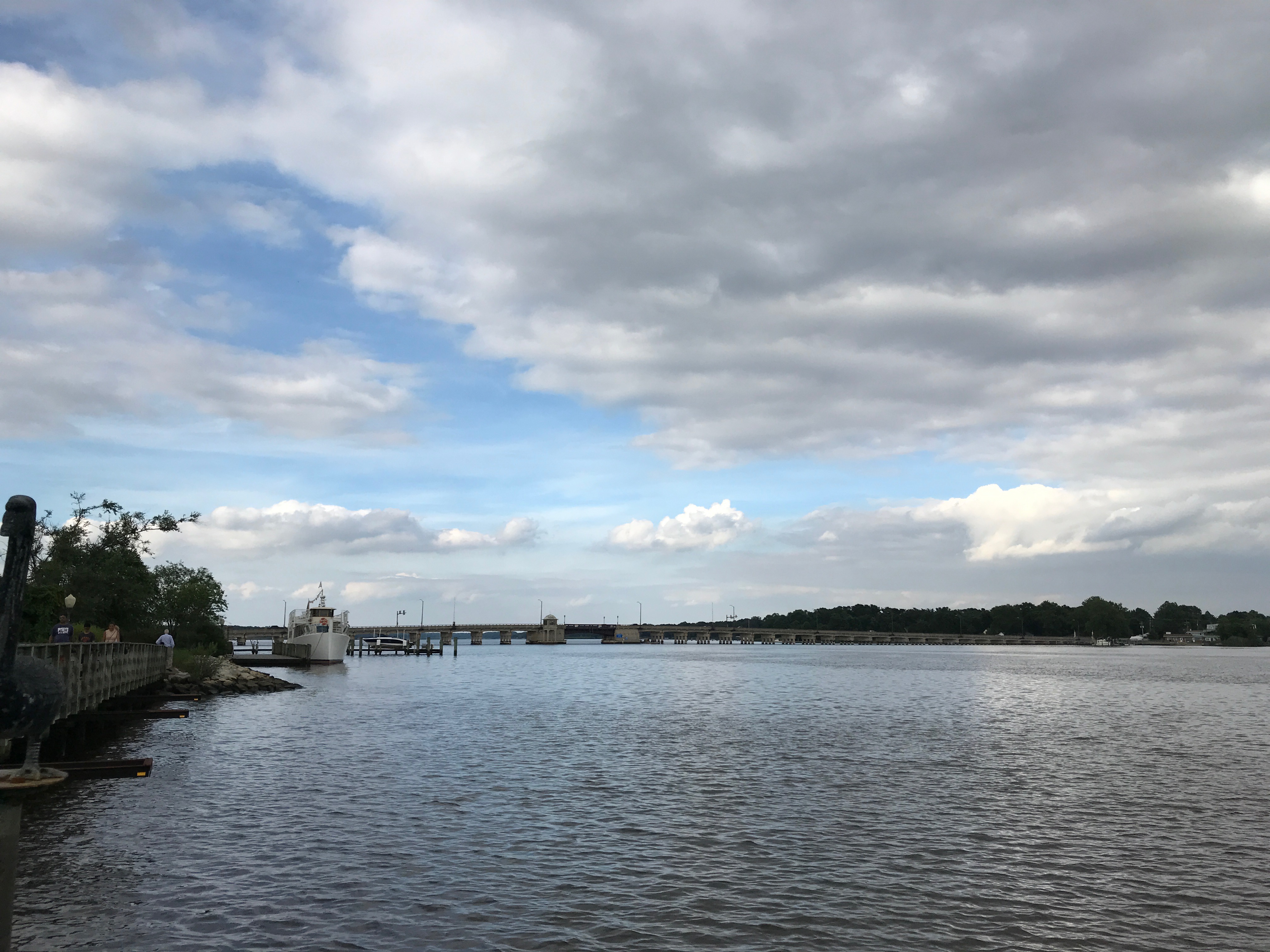
I stopped for the night near Chesterton, Maryland, right on the banks of the Chester River.

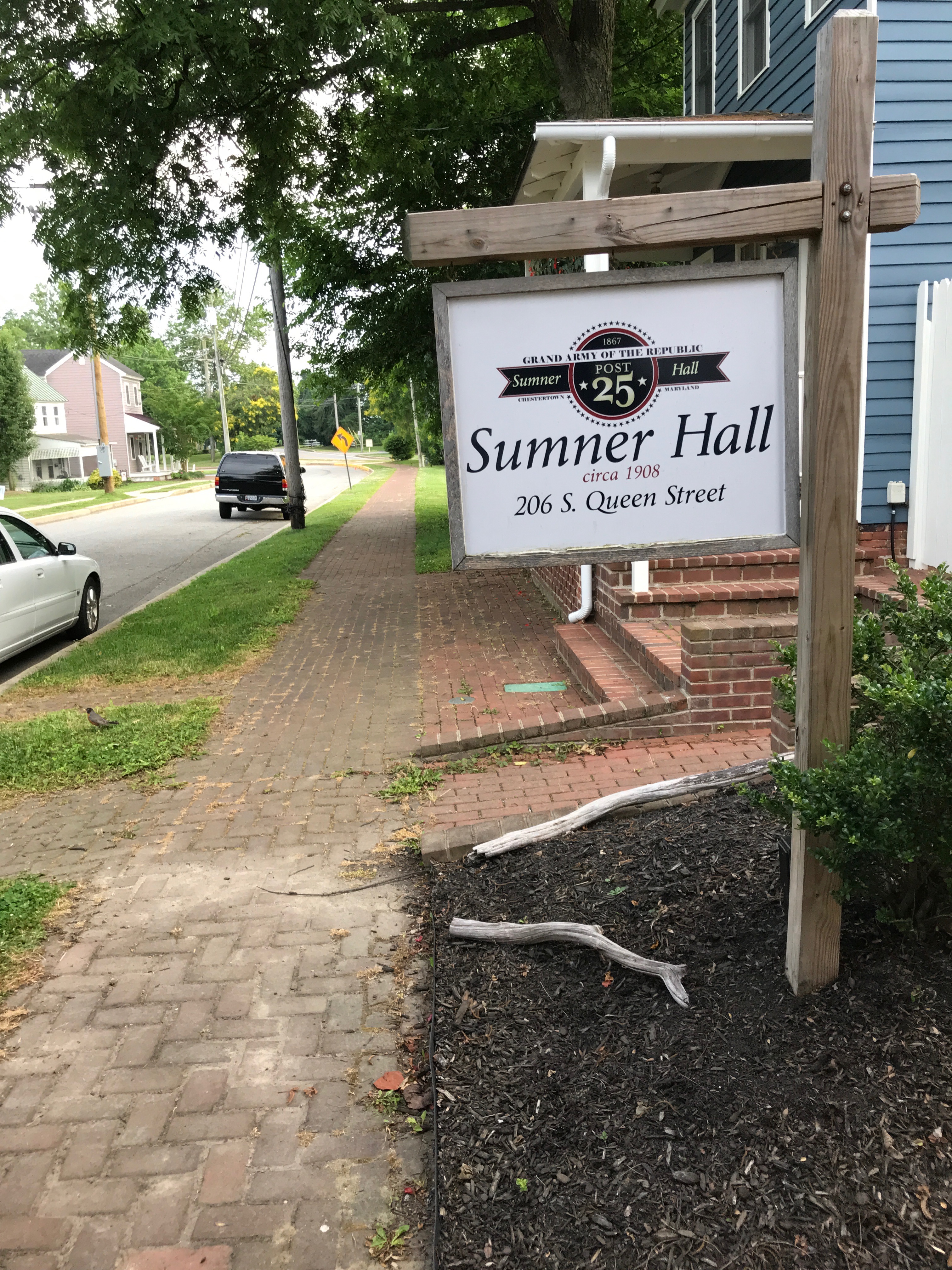
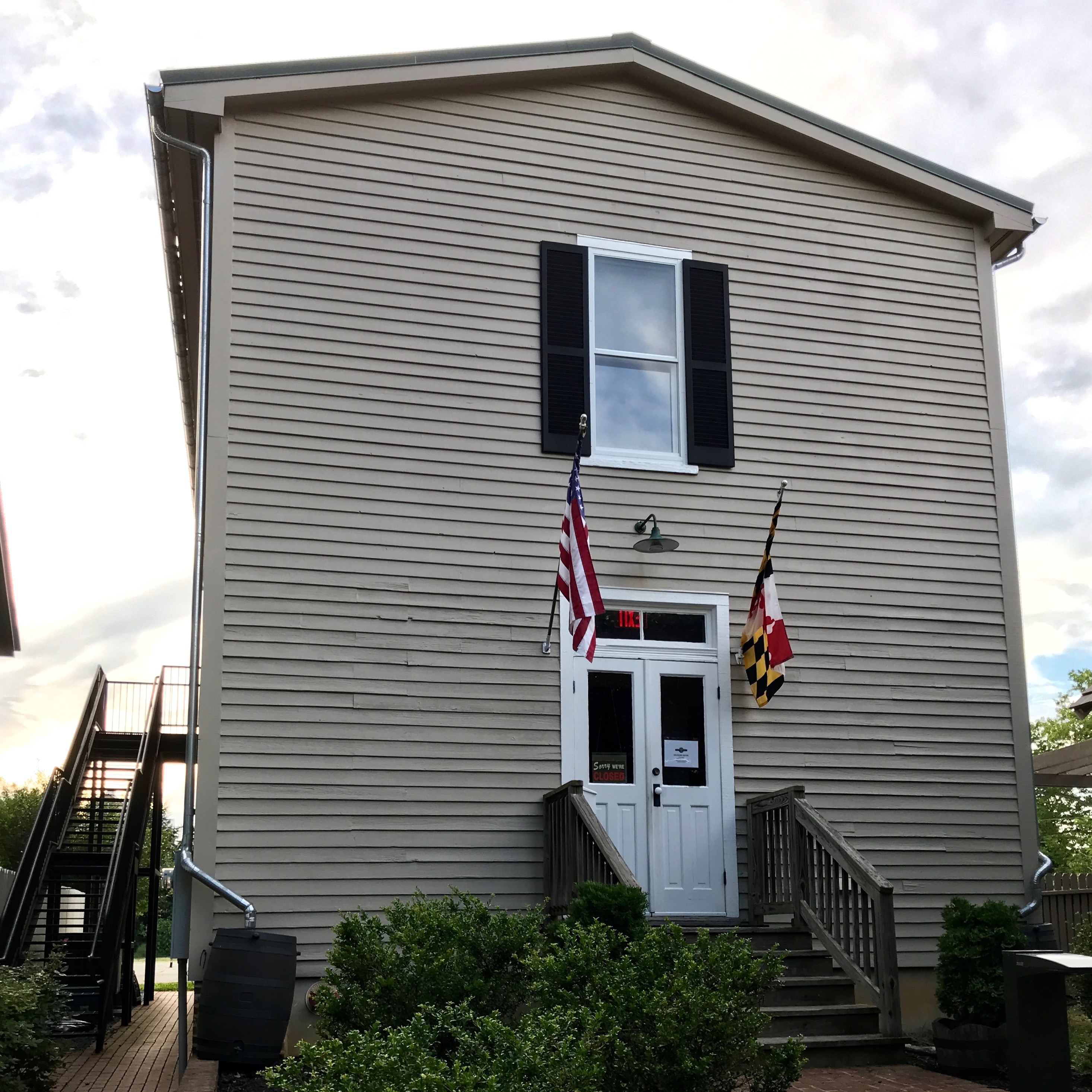
I prowled around a bit, to see what I could see. I came across this hall for veterans of the Civil War.

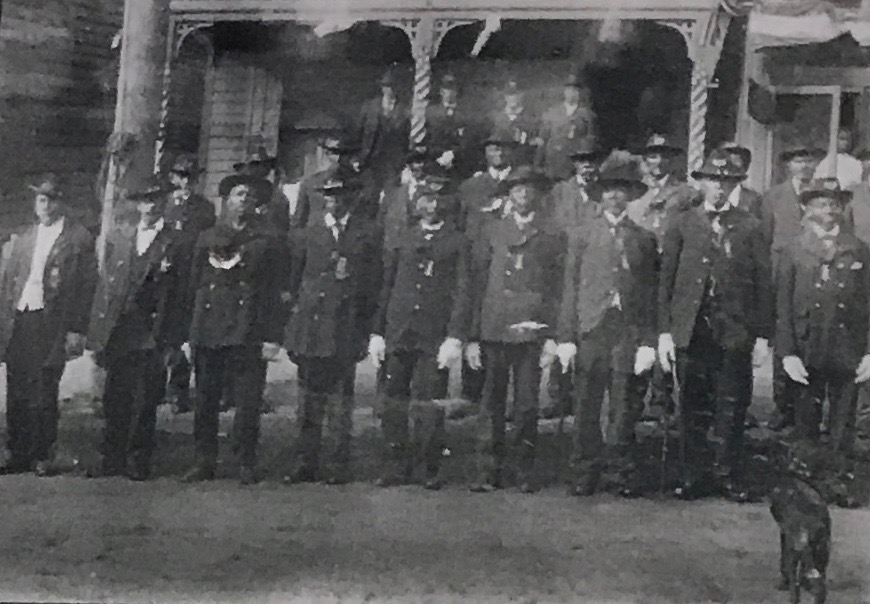
It was for African American Civil War veterans. It is one of only two halls known to survive that were built for soldiers who served in the USCT – the United States Colored Troops. These were segregated units composed of former slaves and free blacks. They were commanded by white officers.

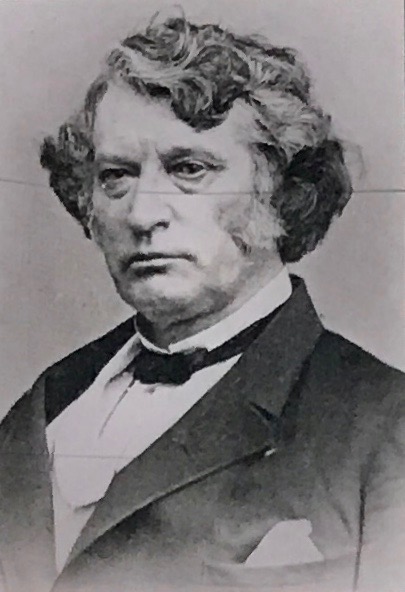
A small group of veterans formed the post shortly after the war, naming it for the abolitionist Massachusettes senator, Charles Sumner, who urged President Abraham Lincoln to extend full rights to African Americans.

As with most places at the end of my work day, Sumner hall was closed, so I didn’t get to go inside.

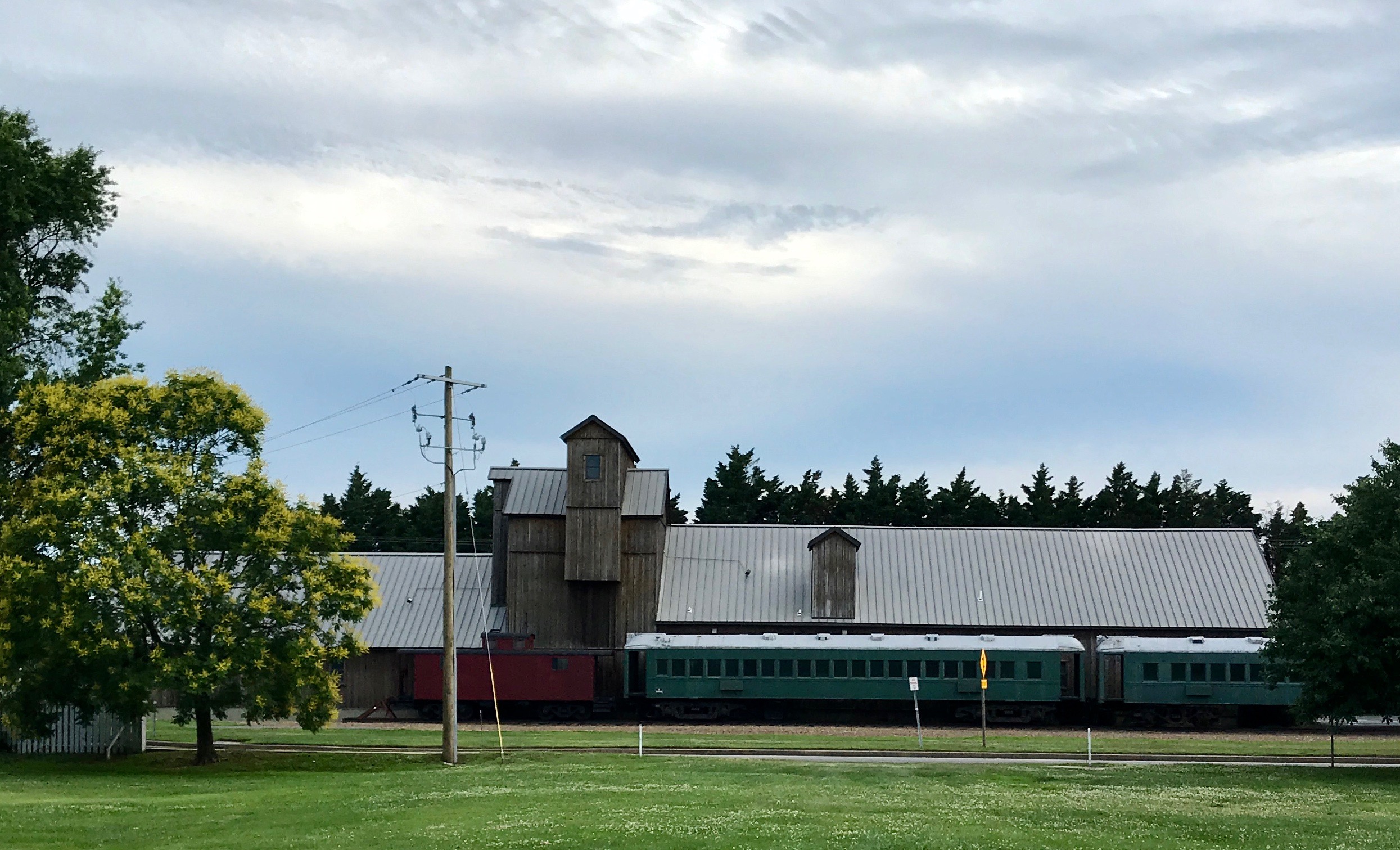
I also didn’t get to go inside the train museum.

But I was fine with that.

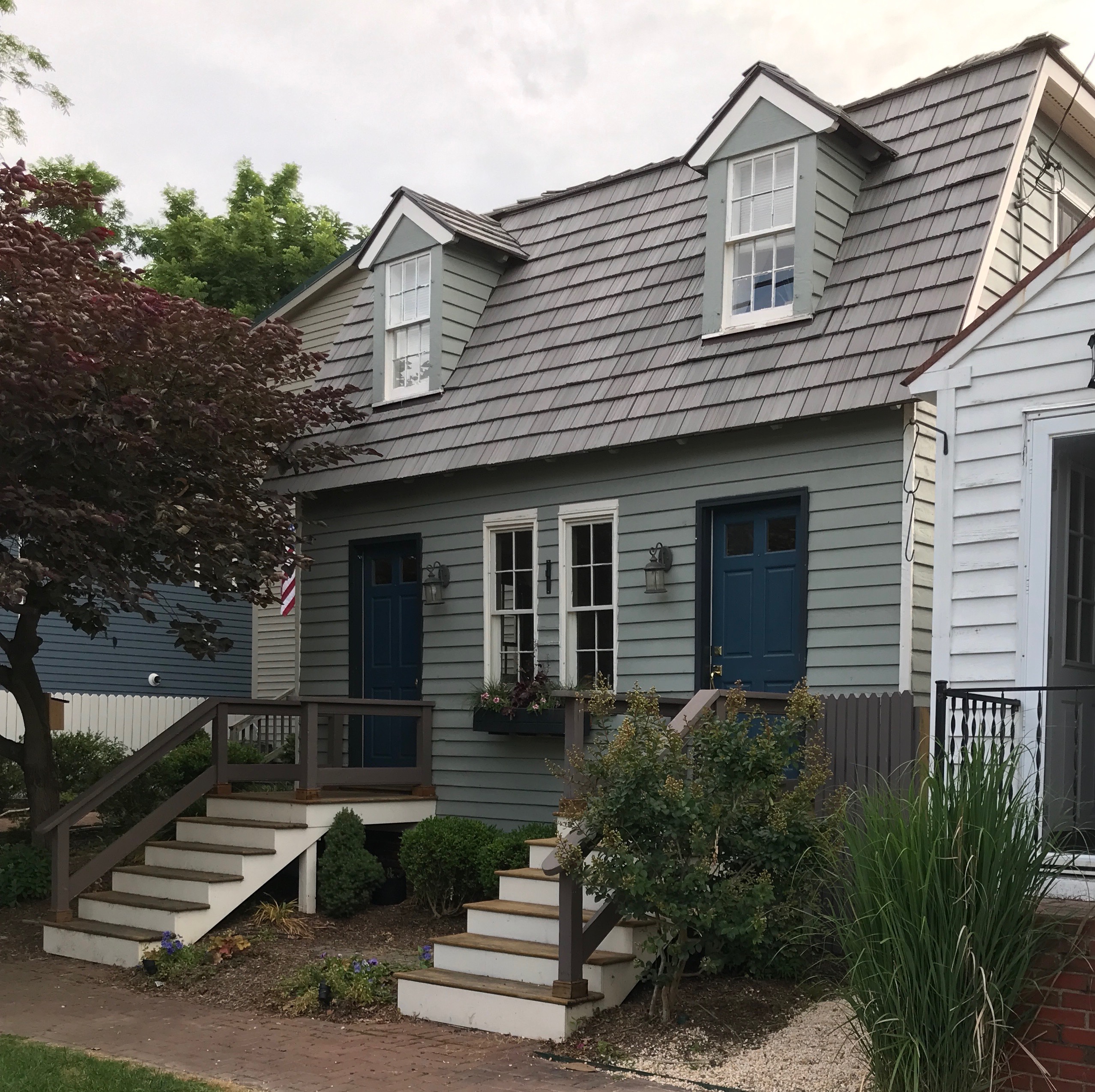
I thought these side-by-side duplexes were cute. I saw several of them as I took a quick glance around town. They seemed unique to the area.

What was next on my agenda was dinner. I had seen a place down by the river I wanted to try.

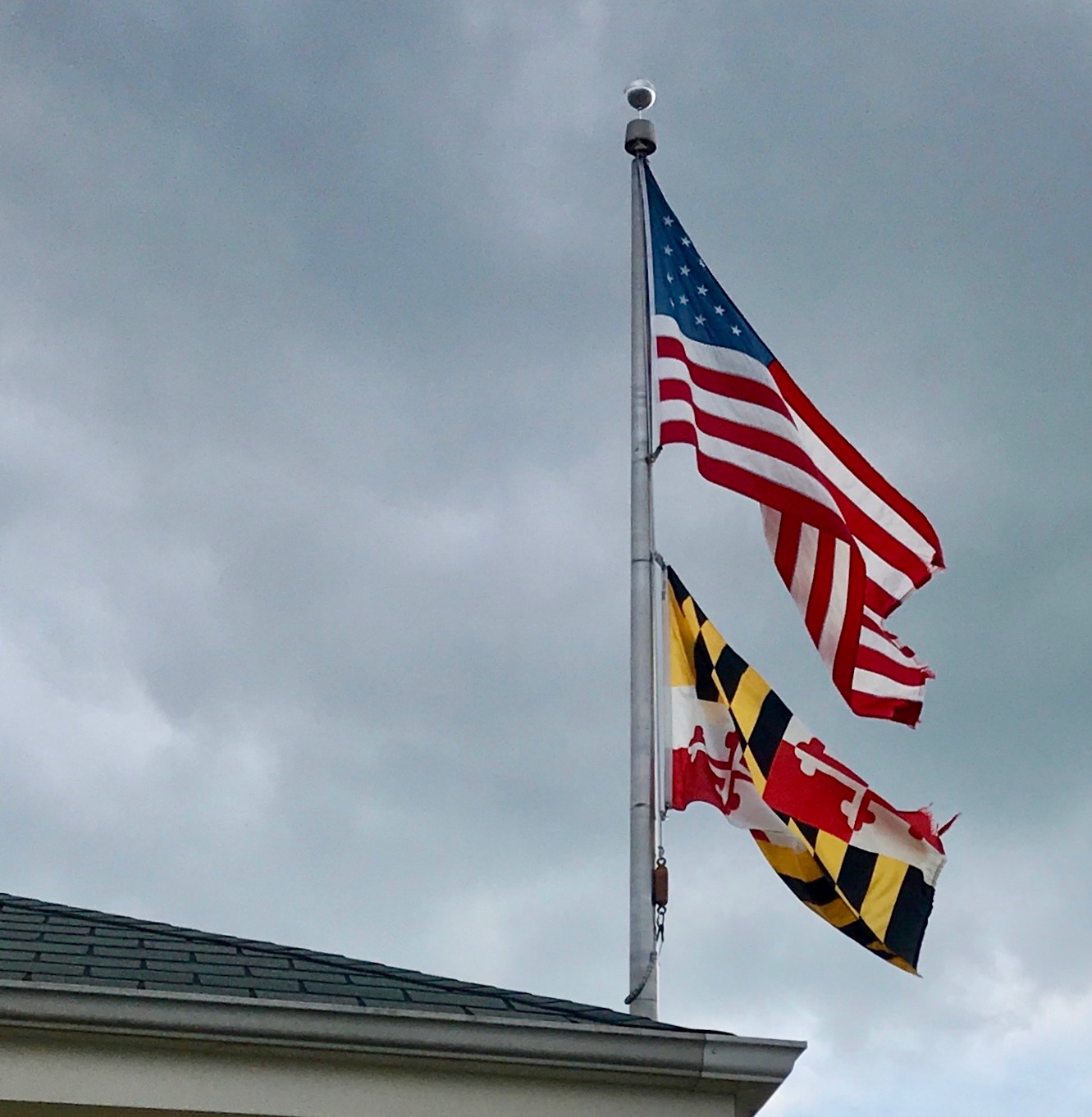
I headed back to the flags by the river.

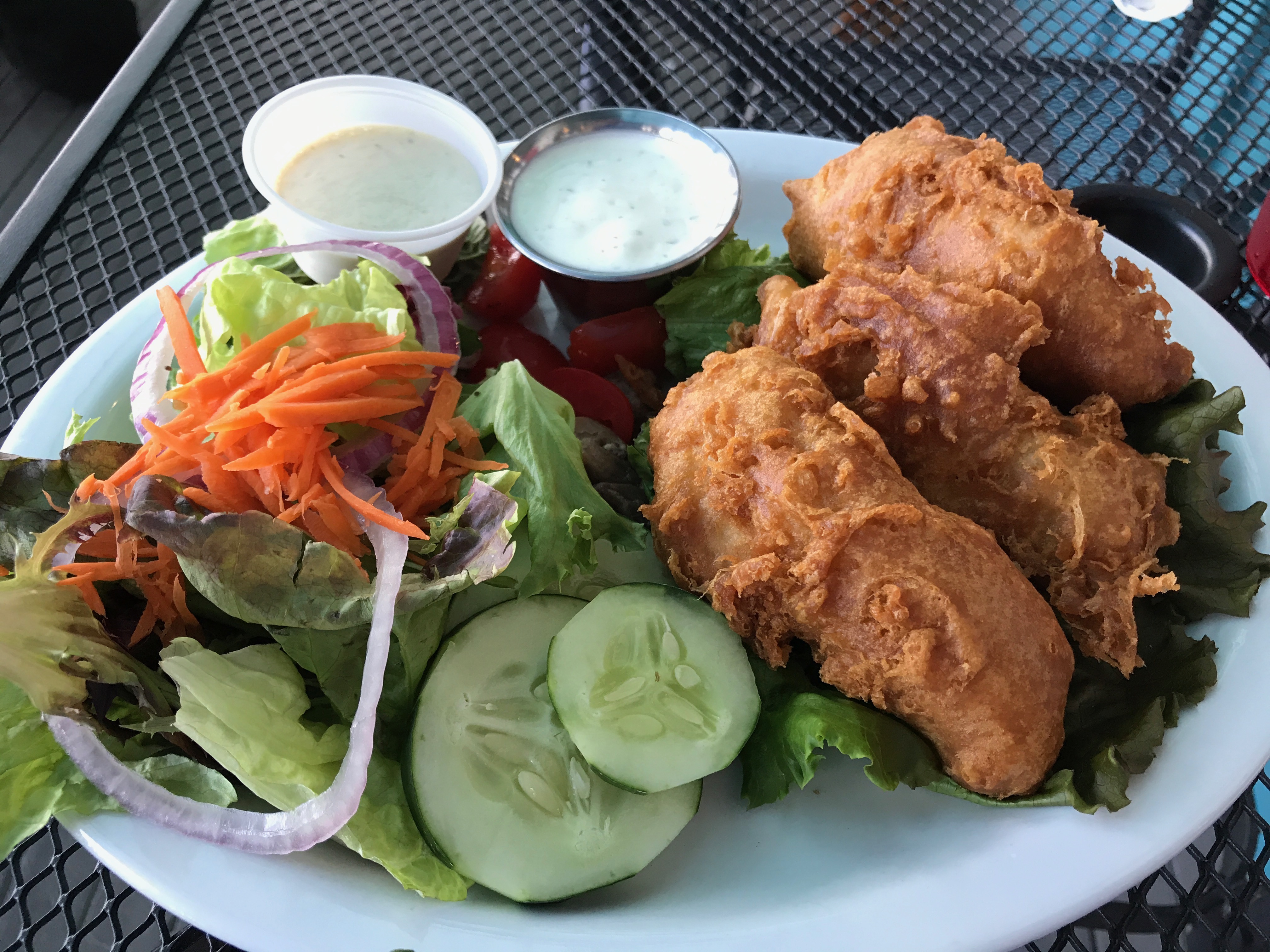
Those who know me well will wonder what is up with all the fish. I don’t usually eat seafood. But, when it’s battered, deep fried and slathered with ketchup, I do like fish. (Why they bring it with tartar sauce is a mystery to me.)

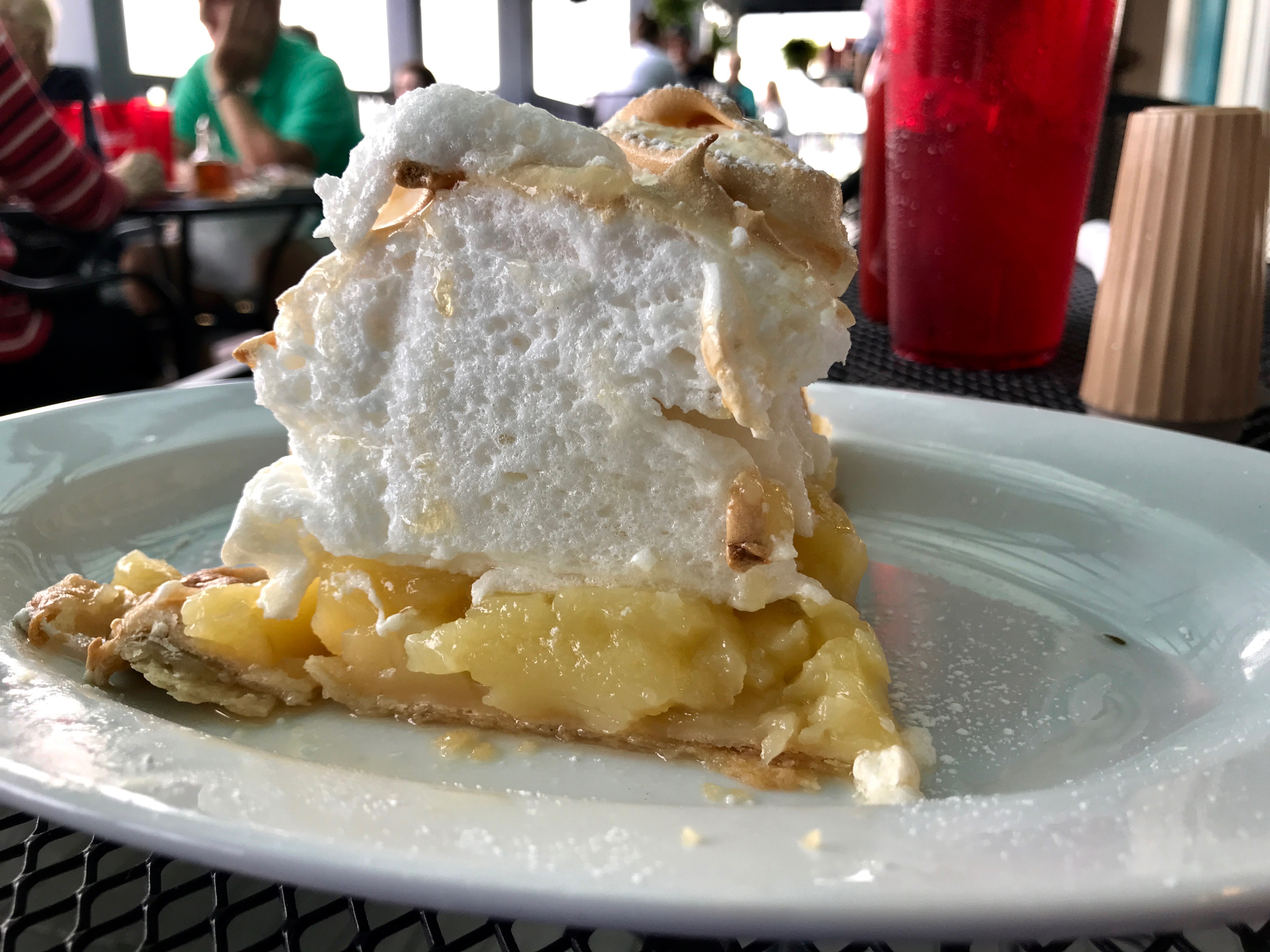
I decided to indulge in dessert.

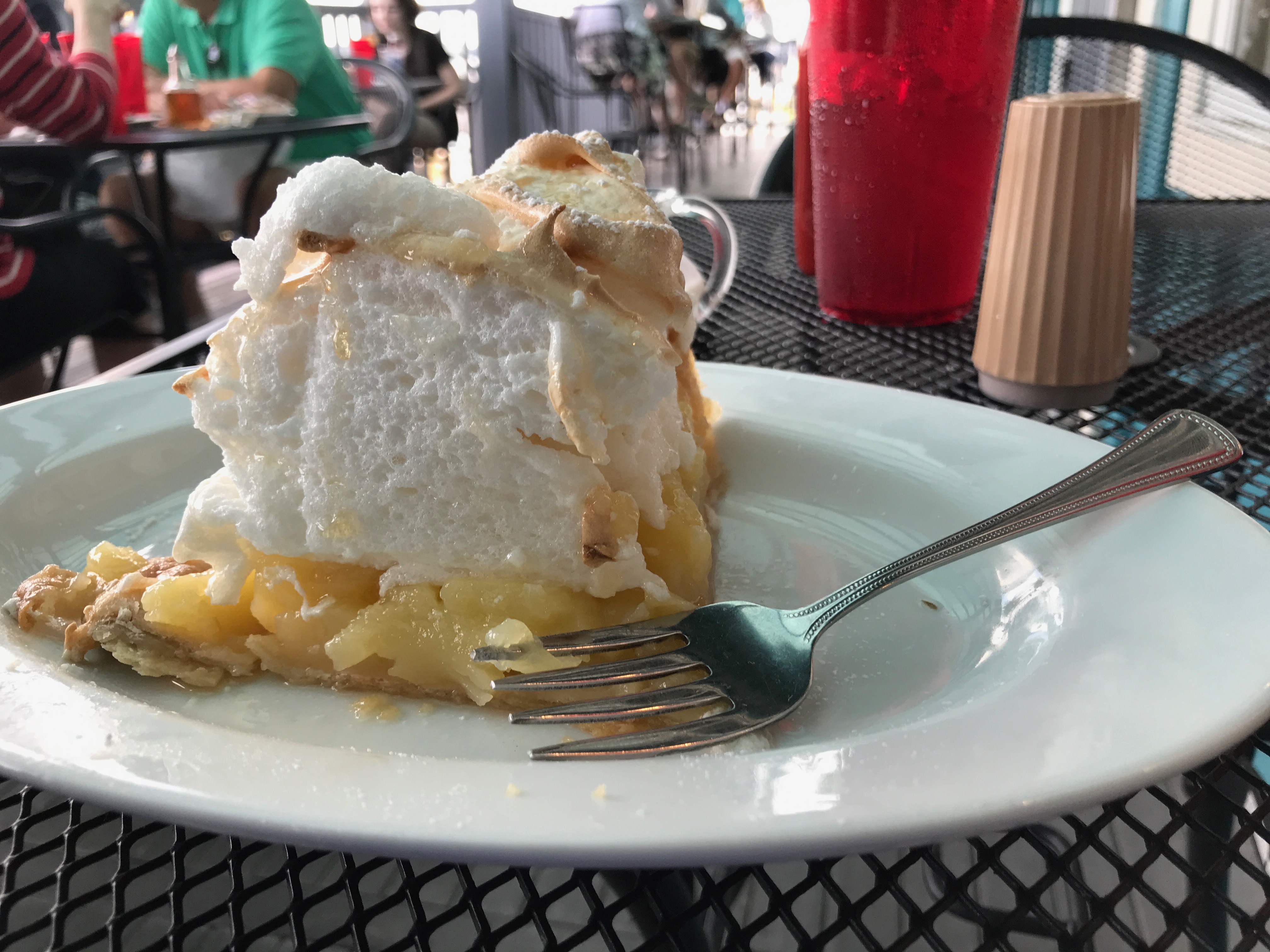
Oh, my! Pie!
I figured that I would just eat part of it. After all, it wasn’t like I was going to starve before my next meal.

But it turned out to be so tasty that I did a pretty good job of finishing it up. After dinner, it was time to head back to wherever I had booked for the night.

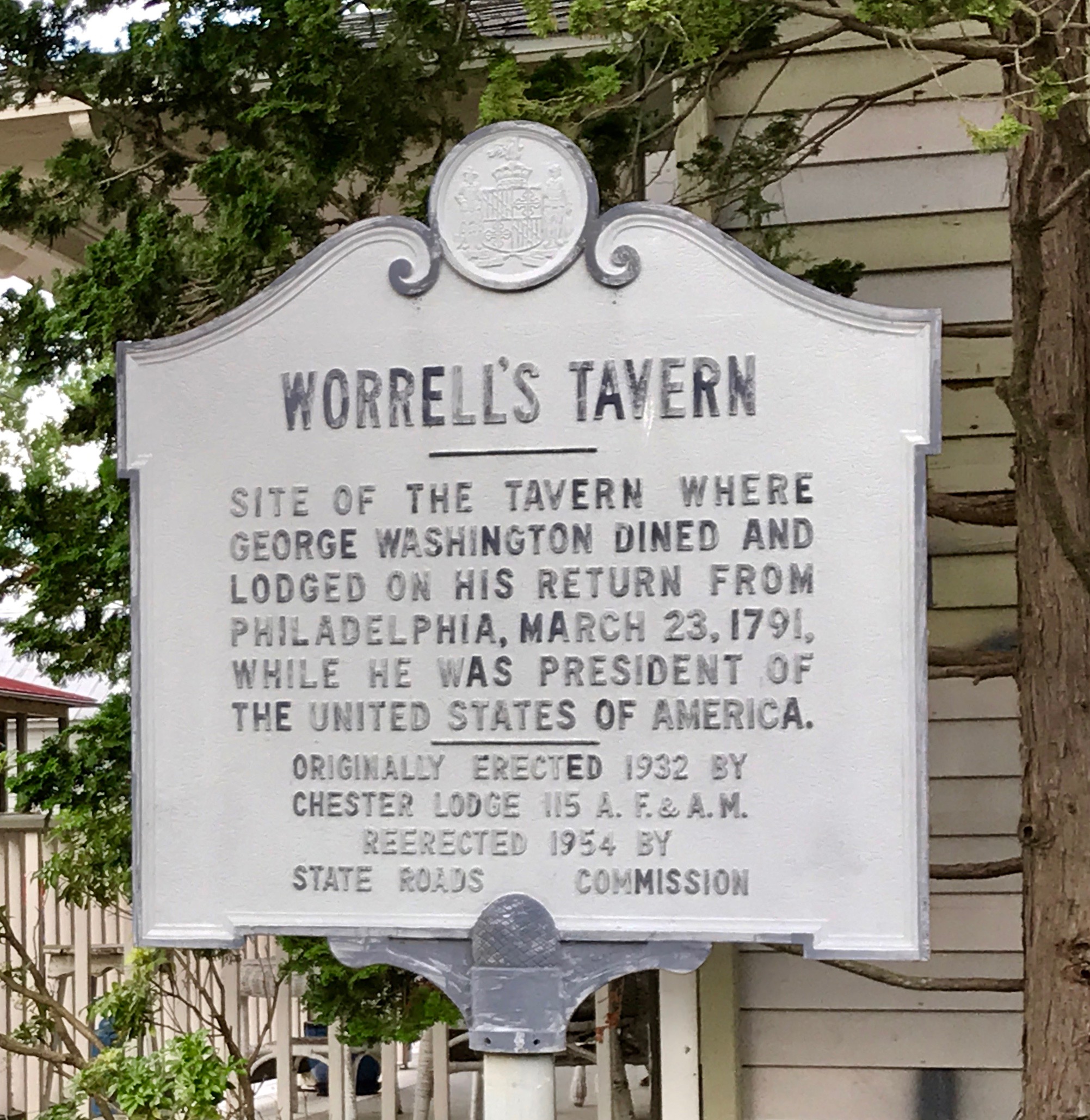
On the way, I passed this historical marker for a place that no longer exists. It’s interesting (to me) that this was erected in 1932. I imagine it was to celebrate the bicentennial of Washington’s birth in 1732.

And with that, my scattershot tourism post comes to a close. It’s amazing that I could get so much in over several days while carrying out my duties.


Washington Slept Here First

I was zigging and zagging my way around Virginia, collecting samples of wheat to ship back to the lab. I kept seeing signs for George Washington’s birthplace. When it got toward lunchtime, I figured that I might as well take my lunch break there.

So, where was George born? His family plantation was at the confluence of Popes Creek and the Potomac River. On this map, it is by the little river just northwest of the green state park.

I headed the truck down the driveway.

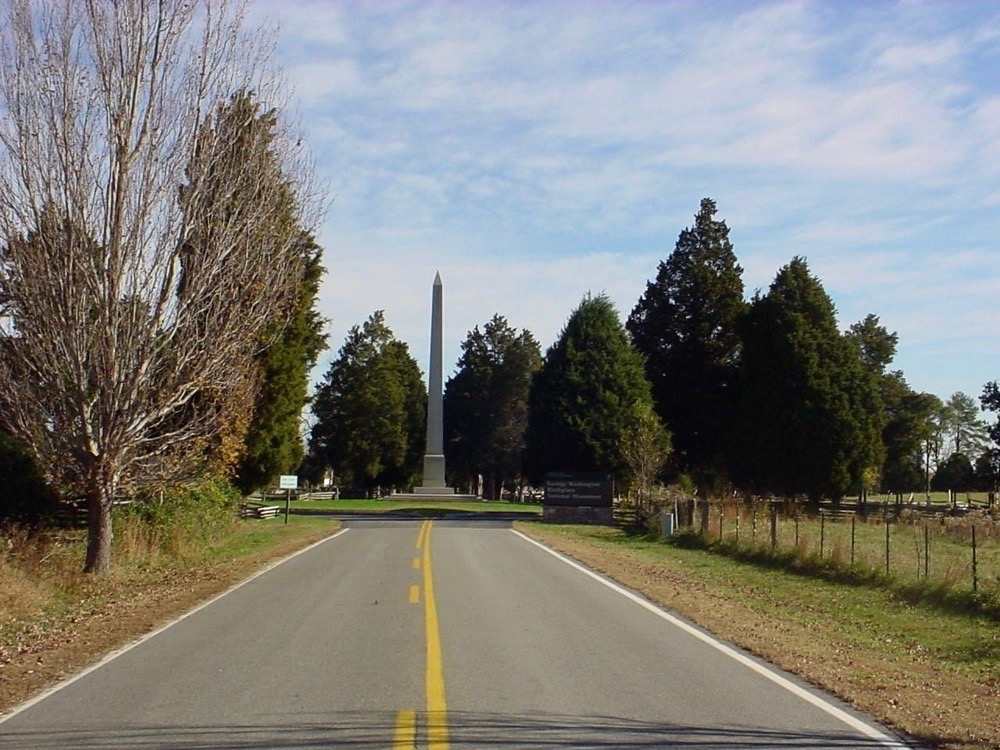
The Memorial Shaft obelisk just inside the entrance is made of Vermont marble and is a one-tenth scale replica of the Washington Monument in Washington, D.C. I made my way to the Visitor’s Center and waited a few minutes for the tour to begin.

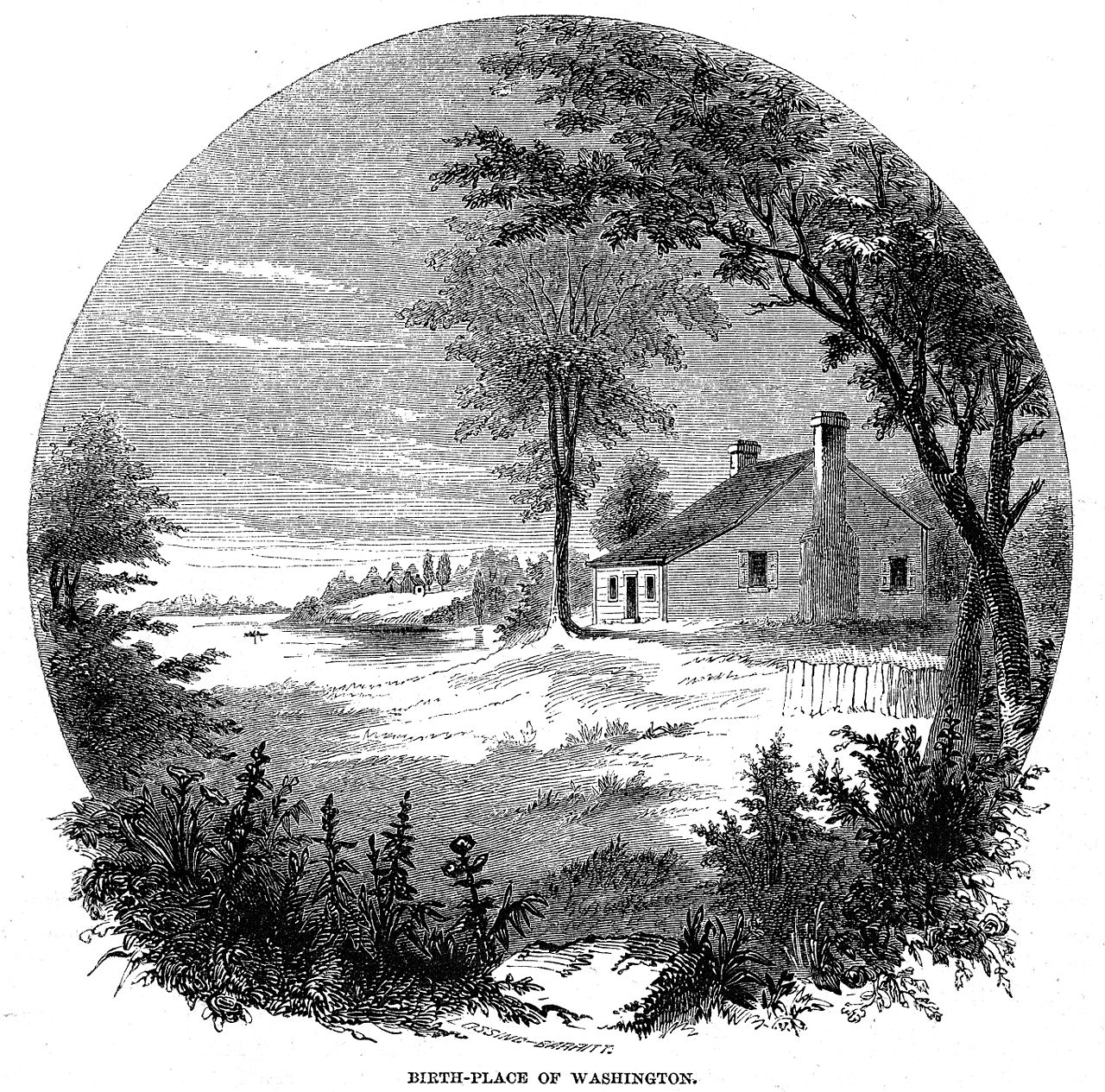
While I was waiting, I read the displays. George Washington was born February 22, 1732, in a house that was begun before 1718. His father, Augustine Washington, enlarged and added on to it, so that by the mid-1770s it was a ten-room house known as “Wakefield.” Unfortunately, it was destroyed by fire and flood on Christmas Day in 1779 and was never rebuilt.

By Benson J. Lossing & William Barritt for Harper & Brothers (publisher) – “Harper’s New Monthly Magazine” Vol. XII, No. LXIX, February, 1856, p. 291. New York: Harper & Brothers (Publisher)”The Cooper Collections ” (uploader’s private collection)Digitized by Centpacrr, Public Domain, https://commons.wikimedia.org/w/index.php?curid=27527277

Of course, since this drawing was done seventy-six years after it burned down, who knows how accurate it is?

After a short wait, it was time to meet the ranger and leave for the tour.

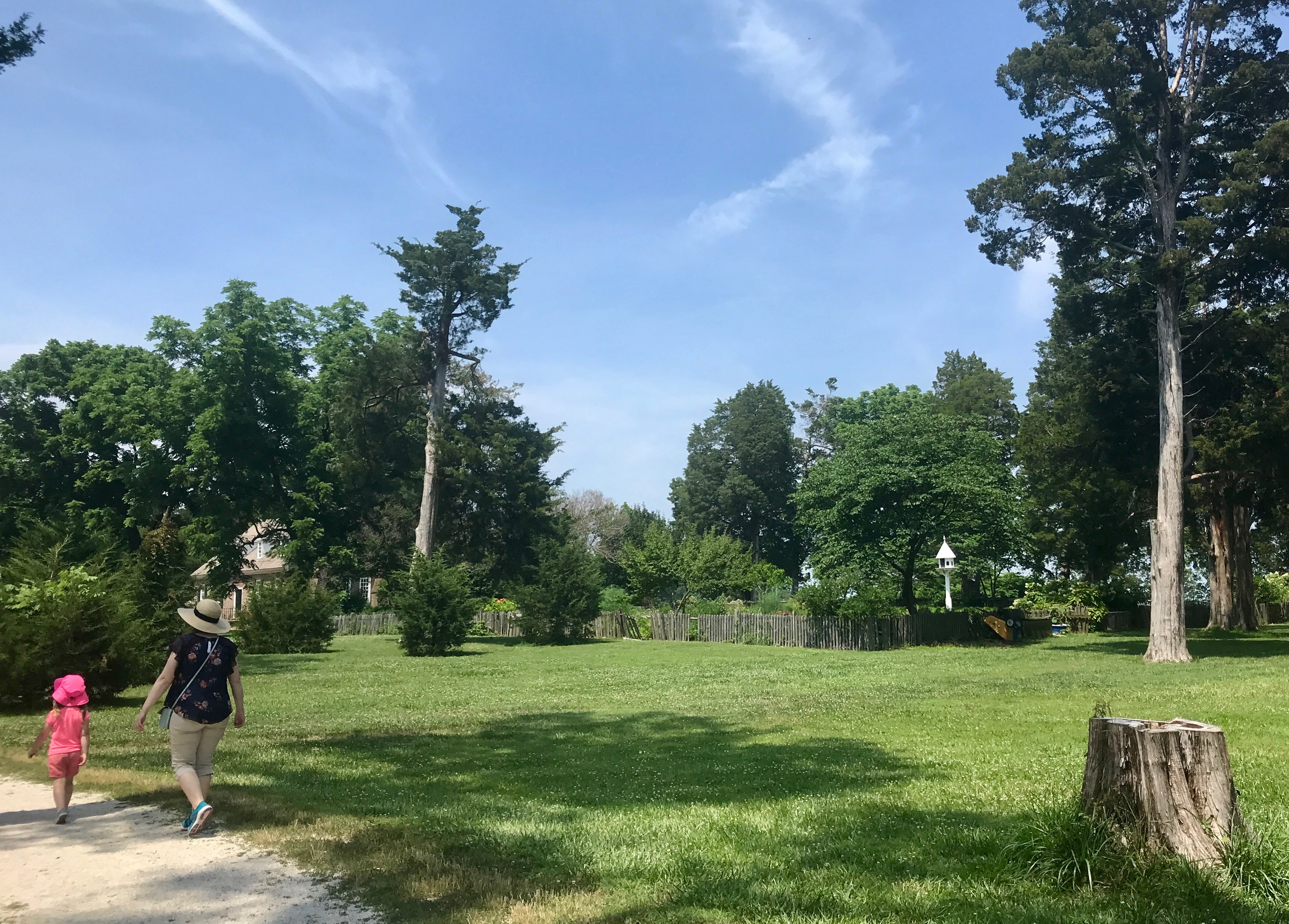
The grounds were pretty. In George Washington’s time, they were growing tobacco. His father had “20 or so” enslaved Africans working this plantation.

After a short walk, we got to the memorial house, which was built in the early 1930s.

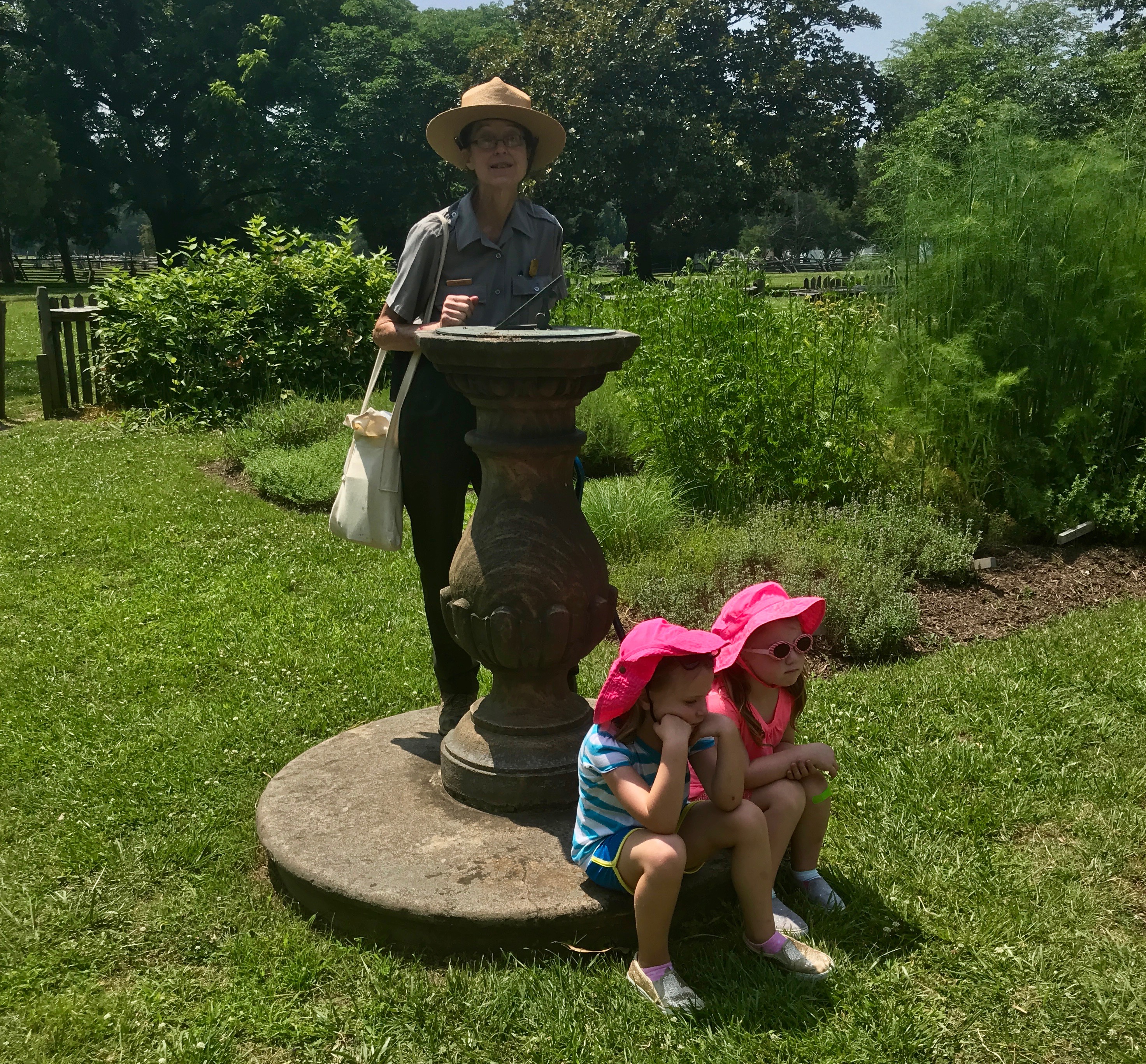
The little girls in the pink hats were less than enchanted, but I found the ranger to be well-informed and very interesting.

I guess it really was time for lunch.

By James G. Howes, Attribution, https://commons.wikimedia.org/w/index.php?curid=44251802

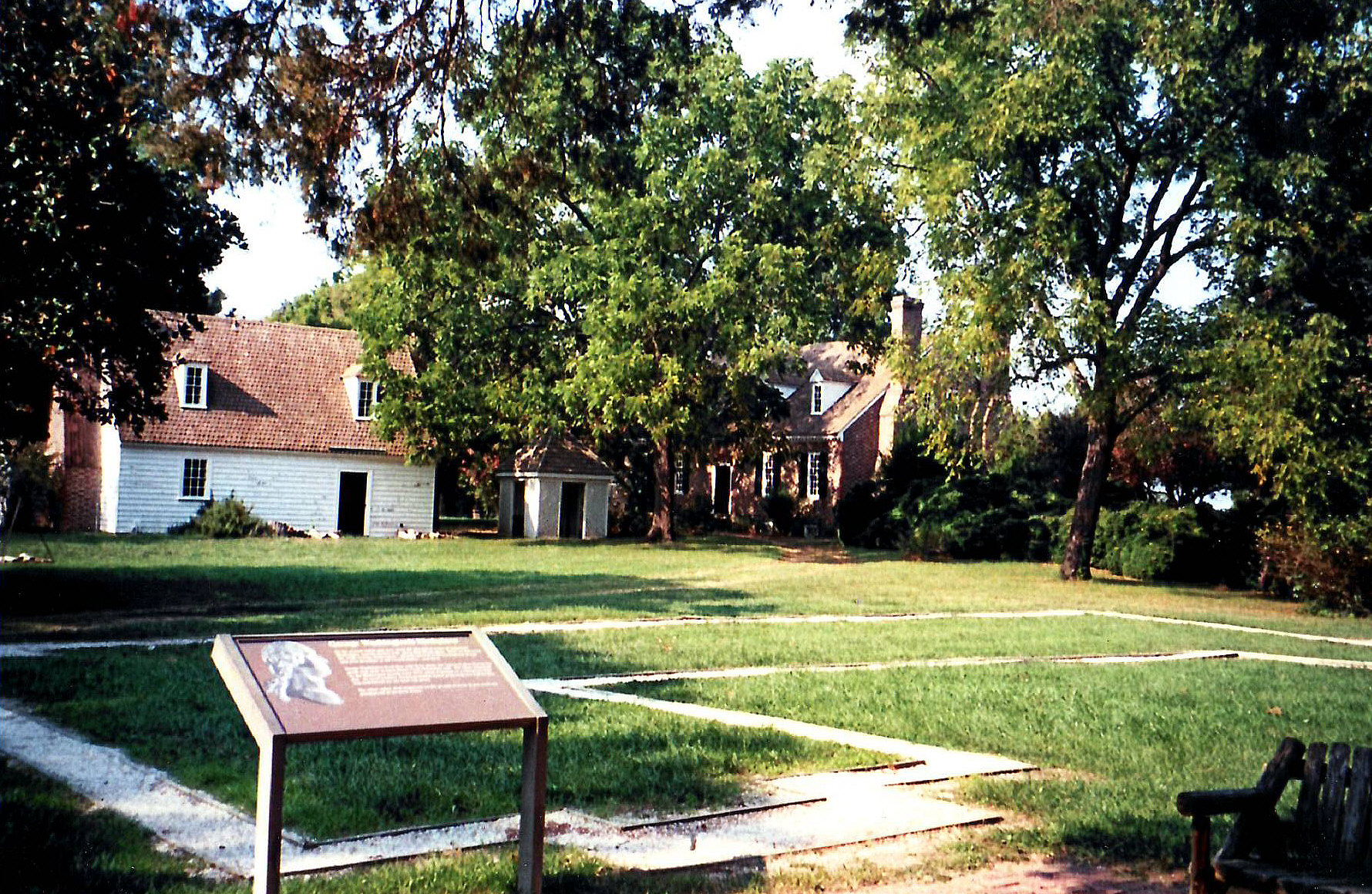
She explained to us that for a long time, they assumed that the part of the land outlined with white was the foundations of the house. But, as the field of archeology has advanced, they now believe that this is not the exact spot where he was born.

The park was opened in honor of the 200th anniversary of Washington’s birth. They hope to be able to pin the exact location down more precisely by the 300th anniversary, which will be here before you know it – 2032.

The ranger lead the way into the Memorial House, which represented how a wealthy planter would have lived at the time of Washington’s birth.

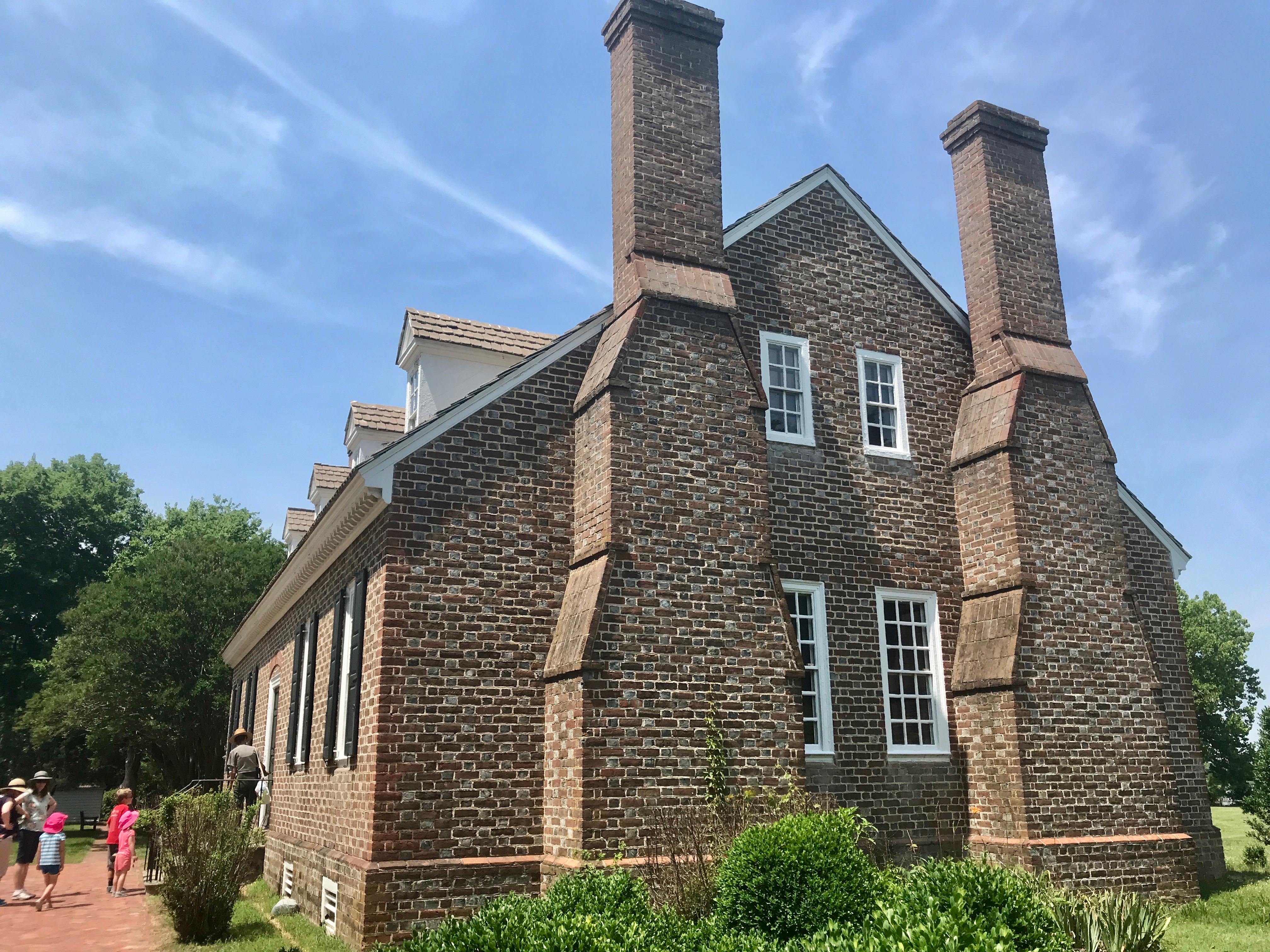
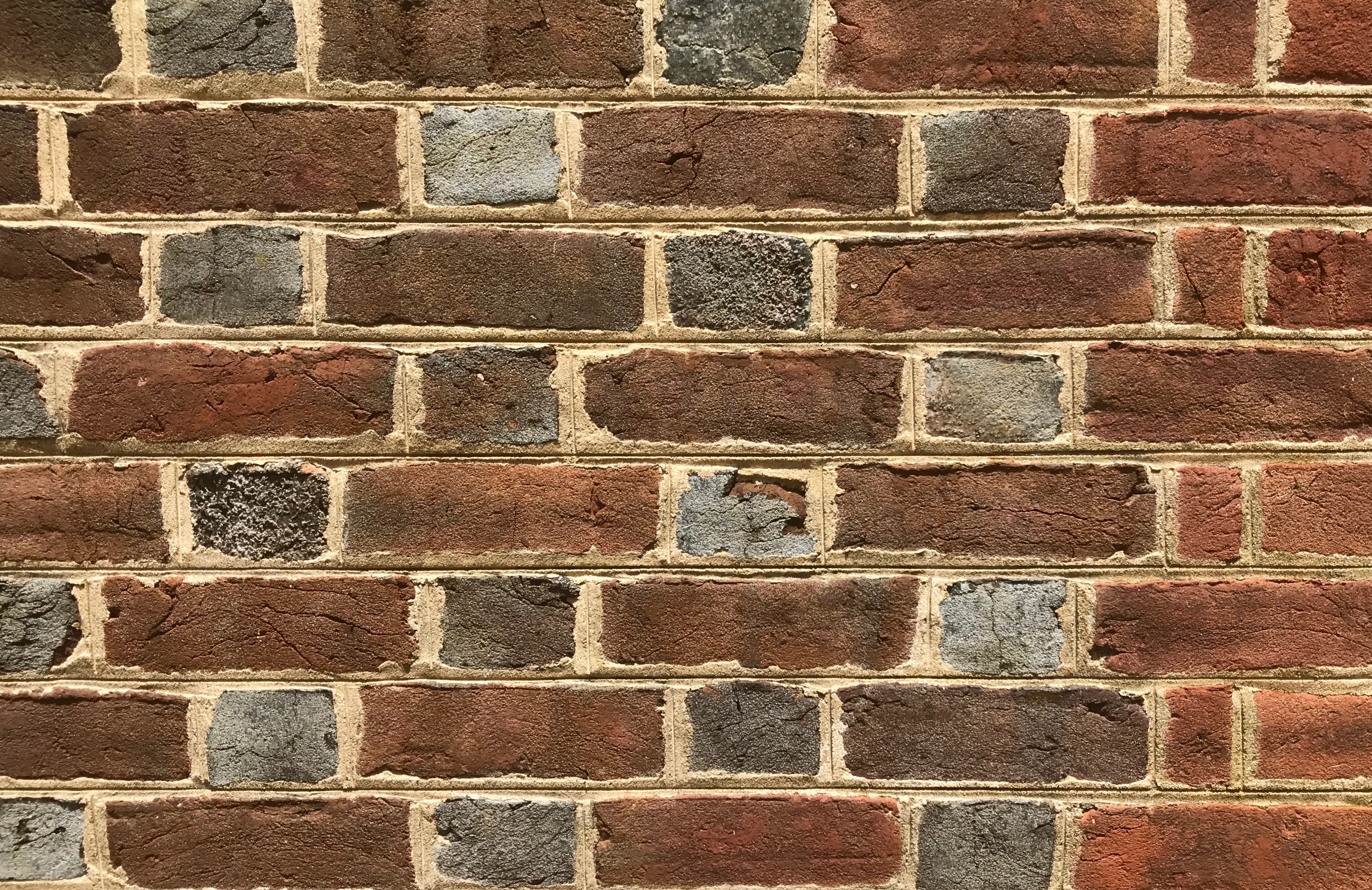
Before we enter, let us take a moment to appreciate the bond…

Flemish Bond.

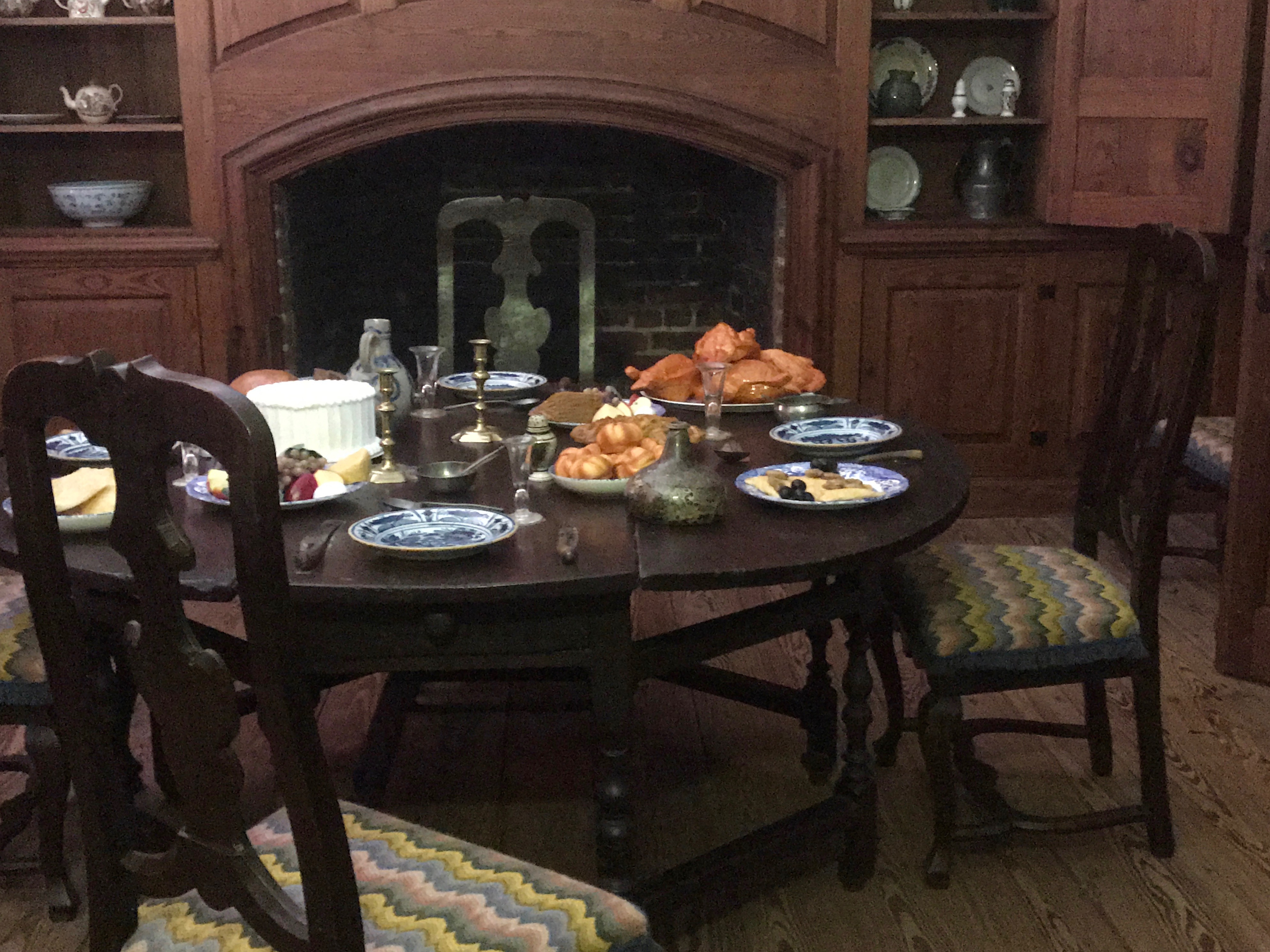
There was the dining room, with the table laid as if they were expecting us.

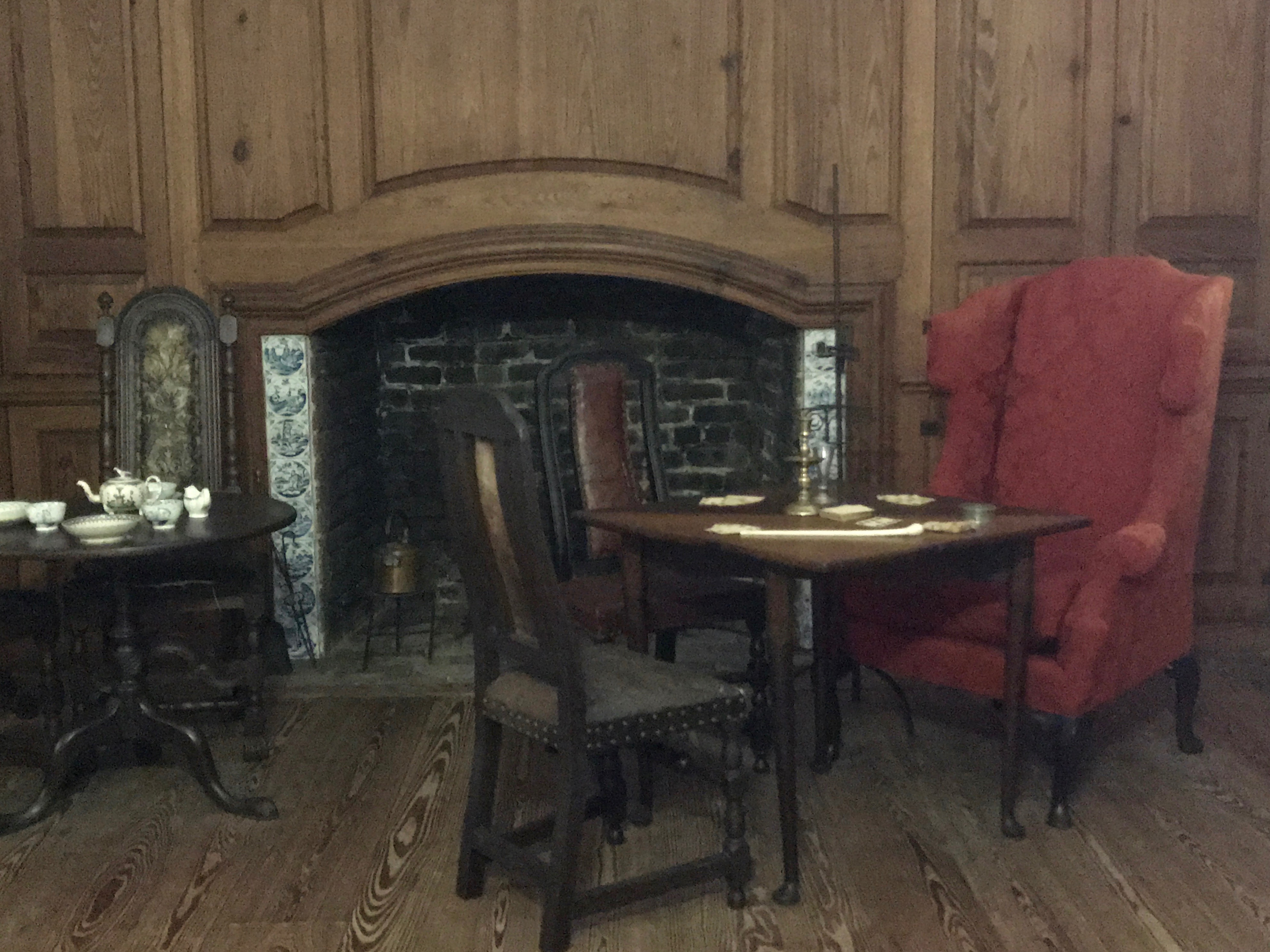
After dinner, time would be spent in the parlor.

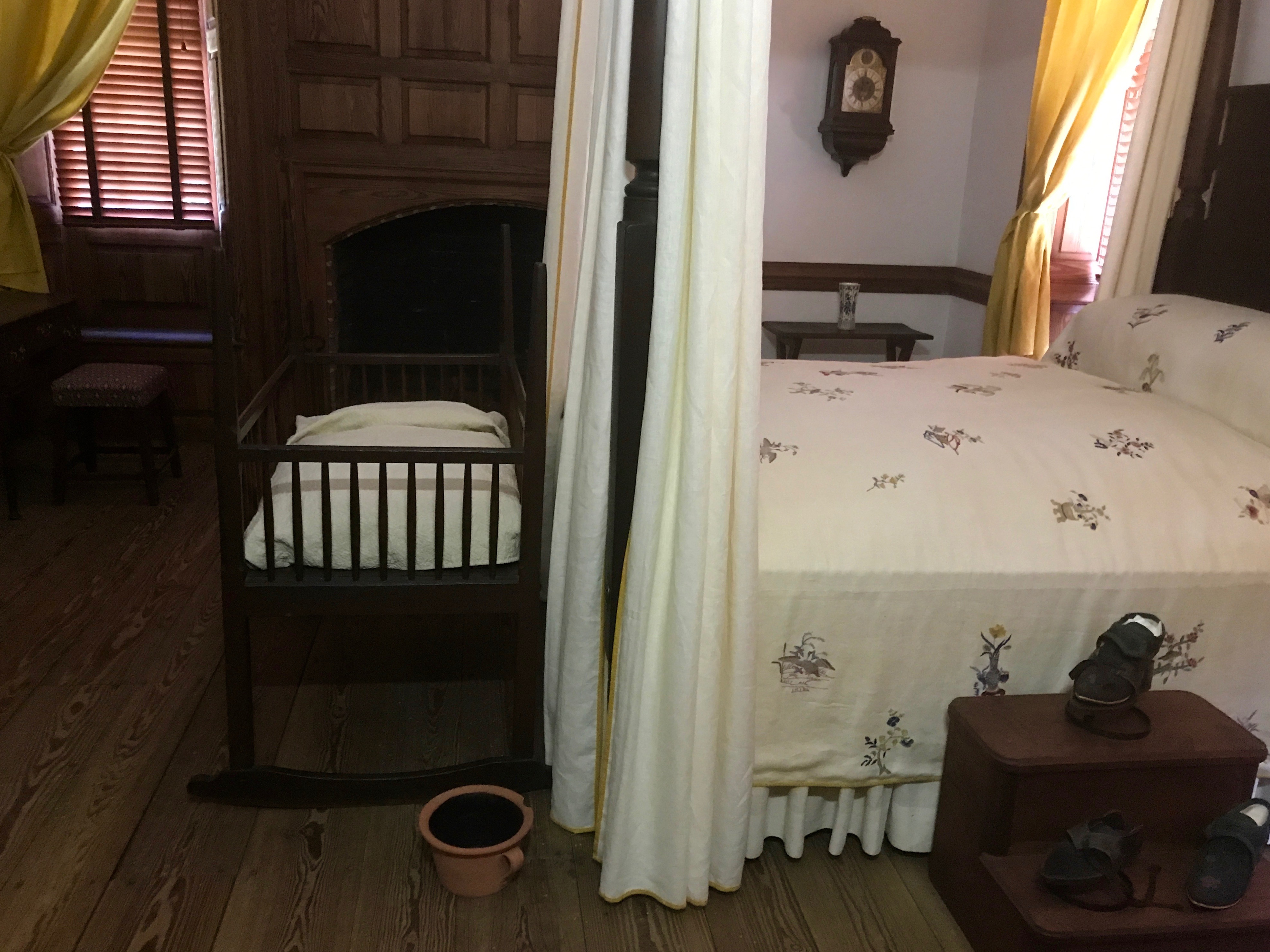
Bedtime would roll around soon enough.

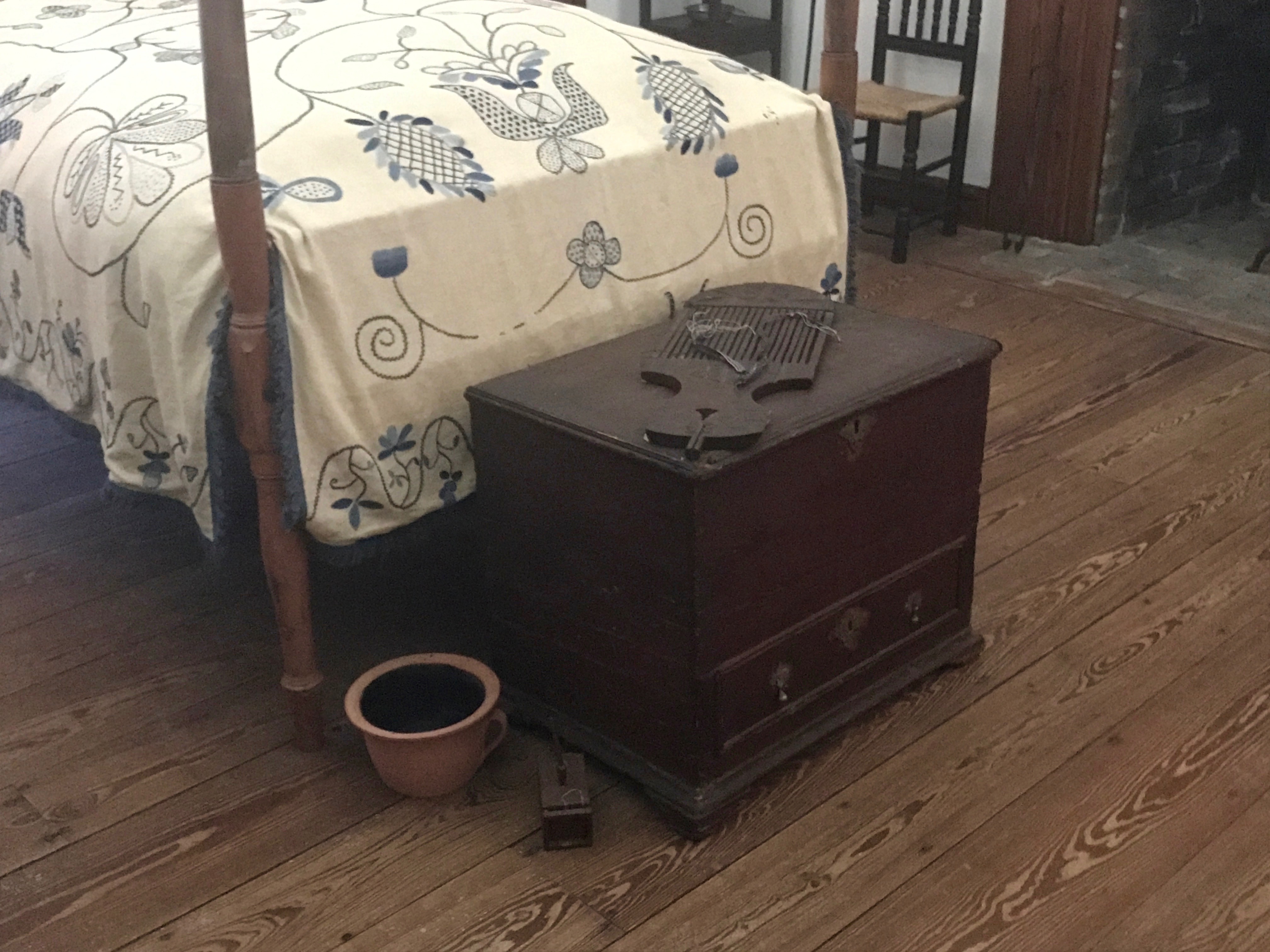
Of course, for those middle of the night potty trips, there were the chamber pots.

I could have roamed the grounds for a while longer, but I felt that I needed to continue on my way. After all, this was just my lunch break and I still had a few more facilities to call on that day.

There was one more area I wanted to visit and that was the boat landing for Popes Creek.

The boat landing was located somewhere near here. Several times a year, ships from English would anchor in the river channel. A small fleet of boats would then ferry the cargo – china, spices, linens, wines, silver and other luxuries – to the landing. On the return trip to England, the boats would carry hogsheads of Augustine Washington’s primary cash crop, tobacco.

Of course, nowadays we have a different cash crop.

Tourism and recreation.

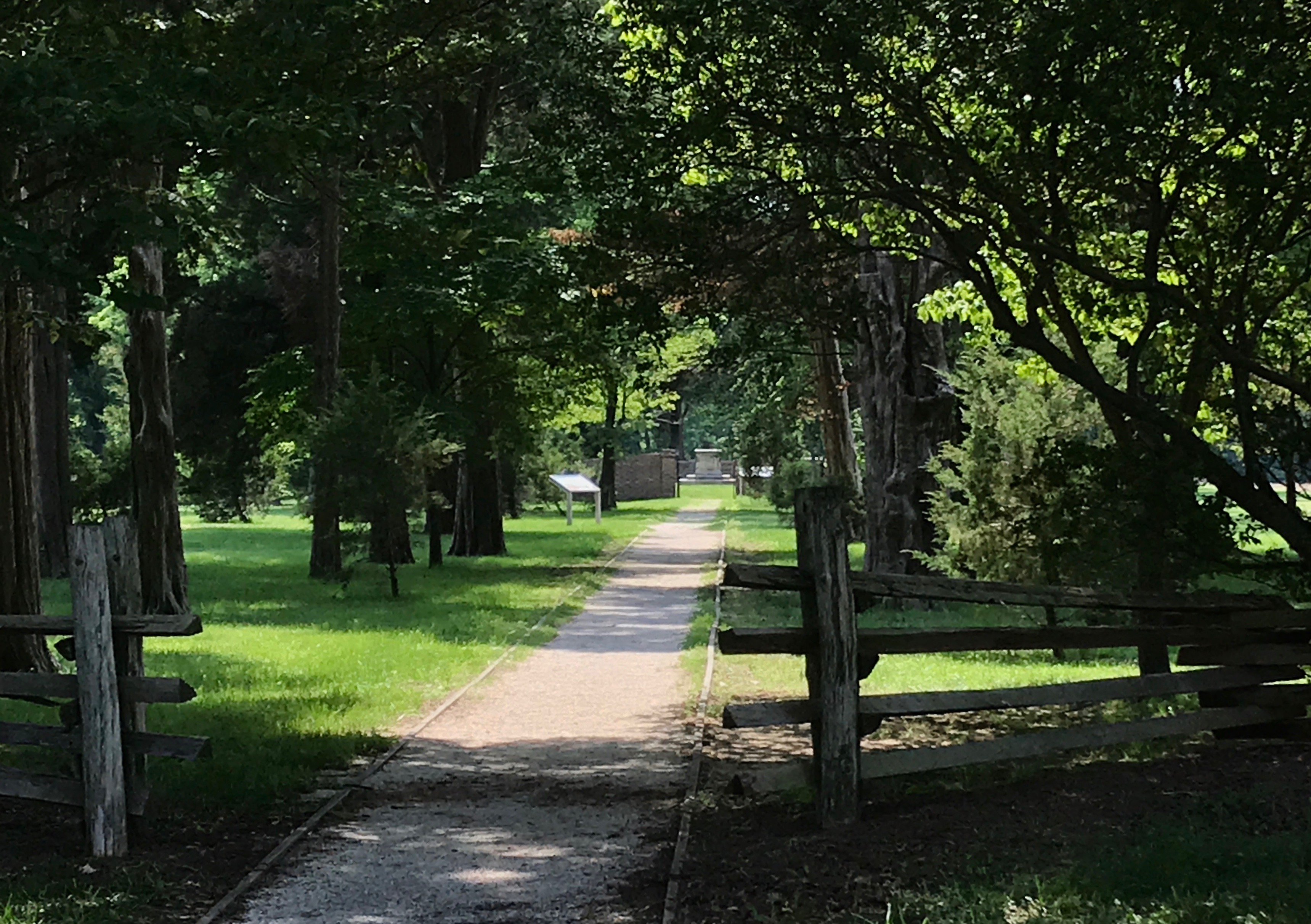
By now, I felt that I really needed to get moving, but I paused long enough to look down the pathway toward the family graveyard. Thirty-two graves of Washington family members have been found at the Bridges Creek cemetery plot, including George’s half-brother, father, grandfather, and great-grandfather.

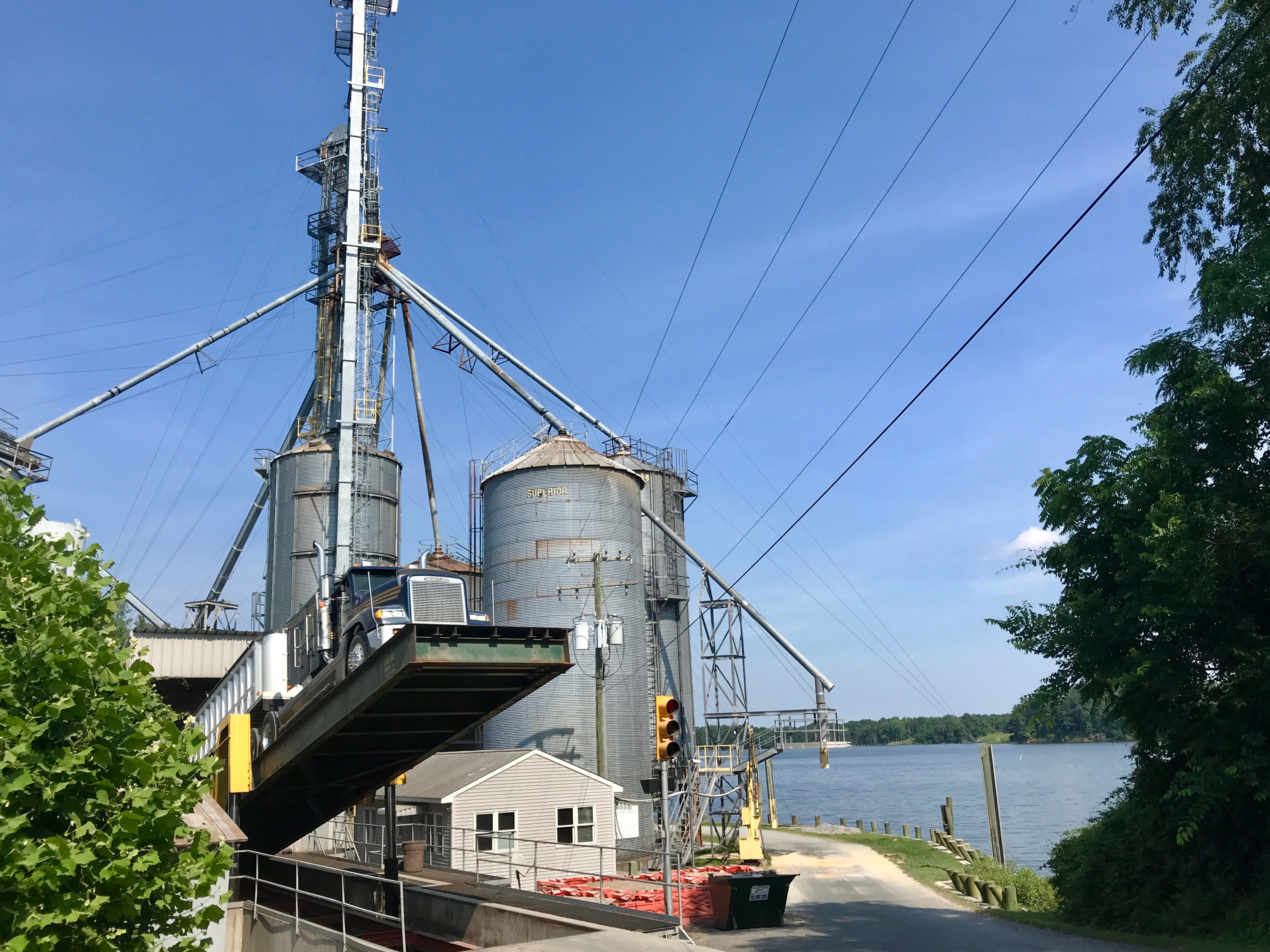
And with that I was on to my next site. It was on the water, and they load the grain right onto barges. This was the first time I had seen how they got the wheat off the trucks!

They tip the trucks up and the grain slides off.

Isn’t that something?


Richmond

Sunday was my day of rest – more or less.

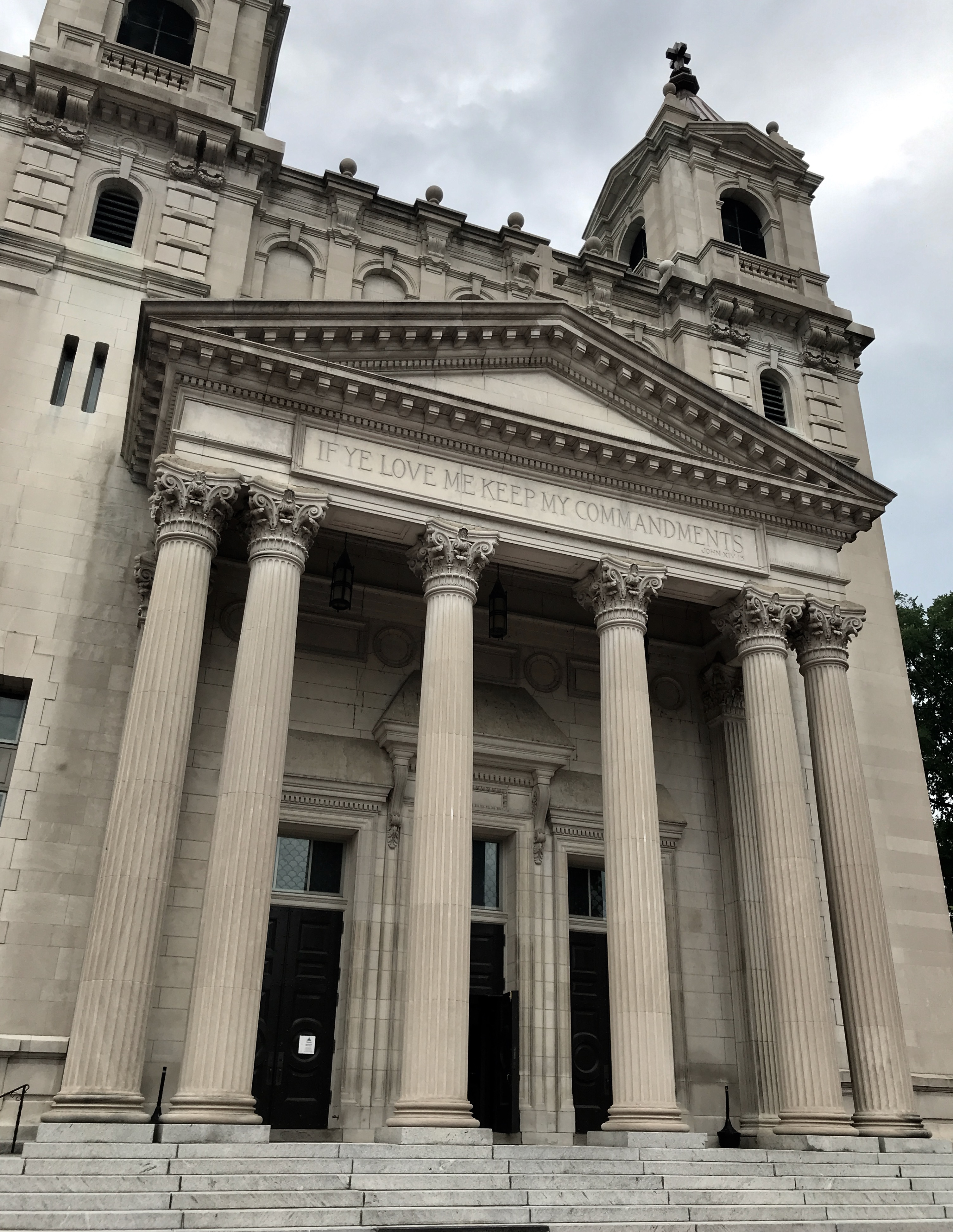
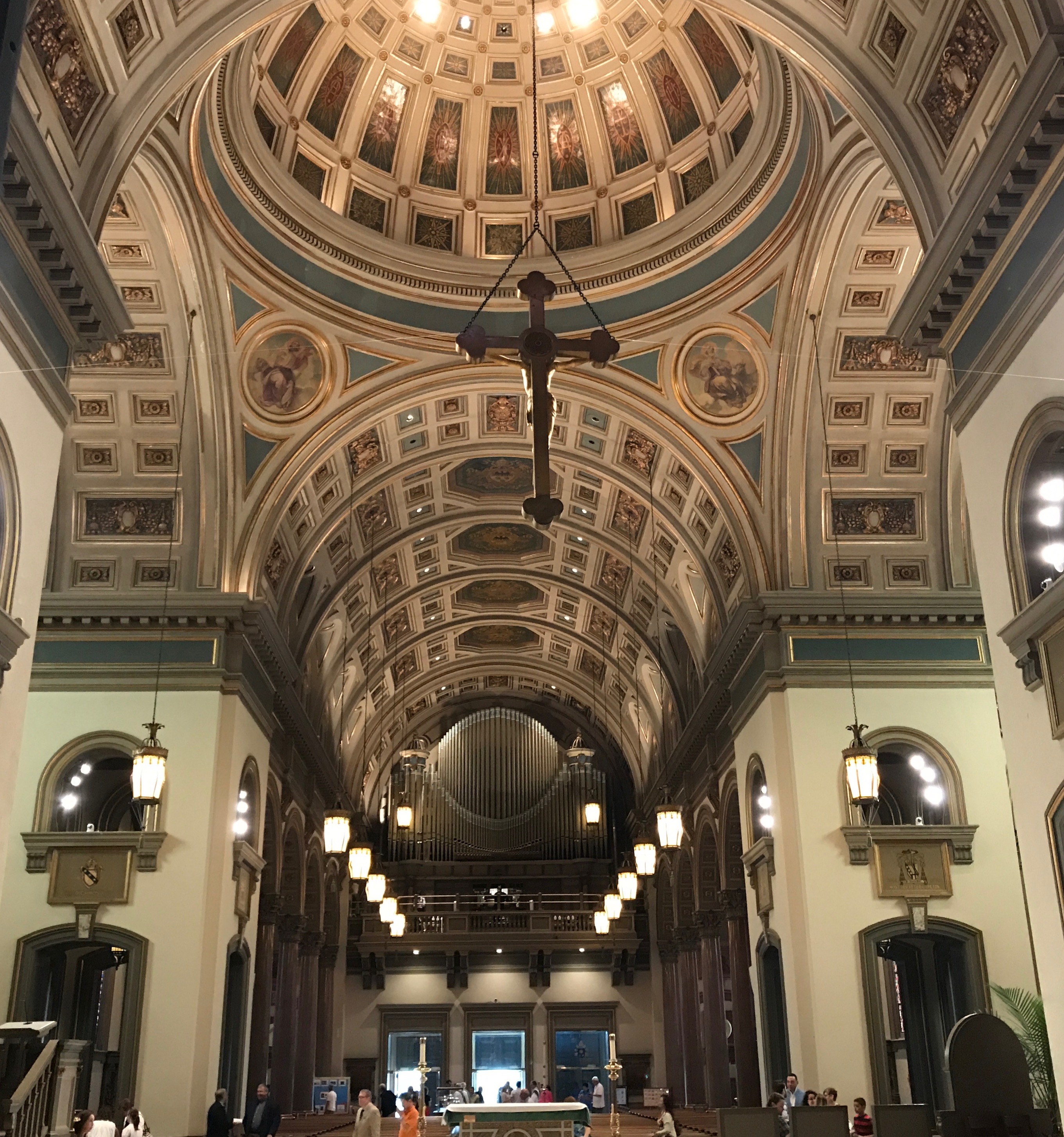
First stop was mass at the Cathedral of the Sacred Heart.

I ended up parking kind of a ways away, but I managed to get there on time – more or less.

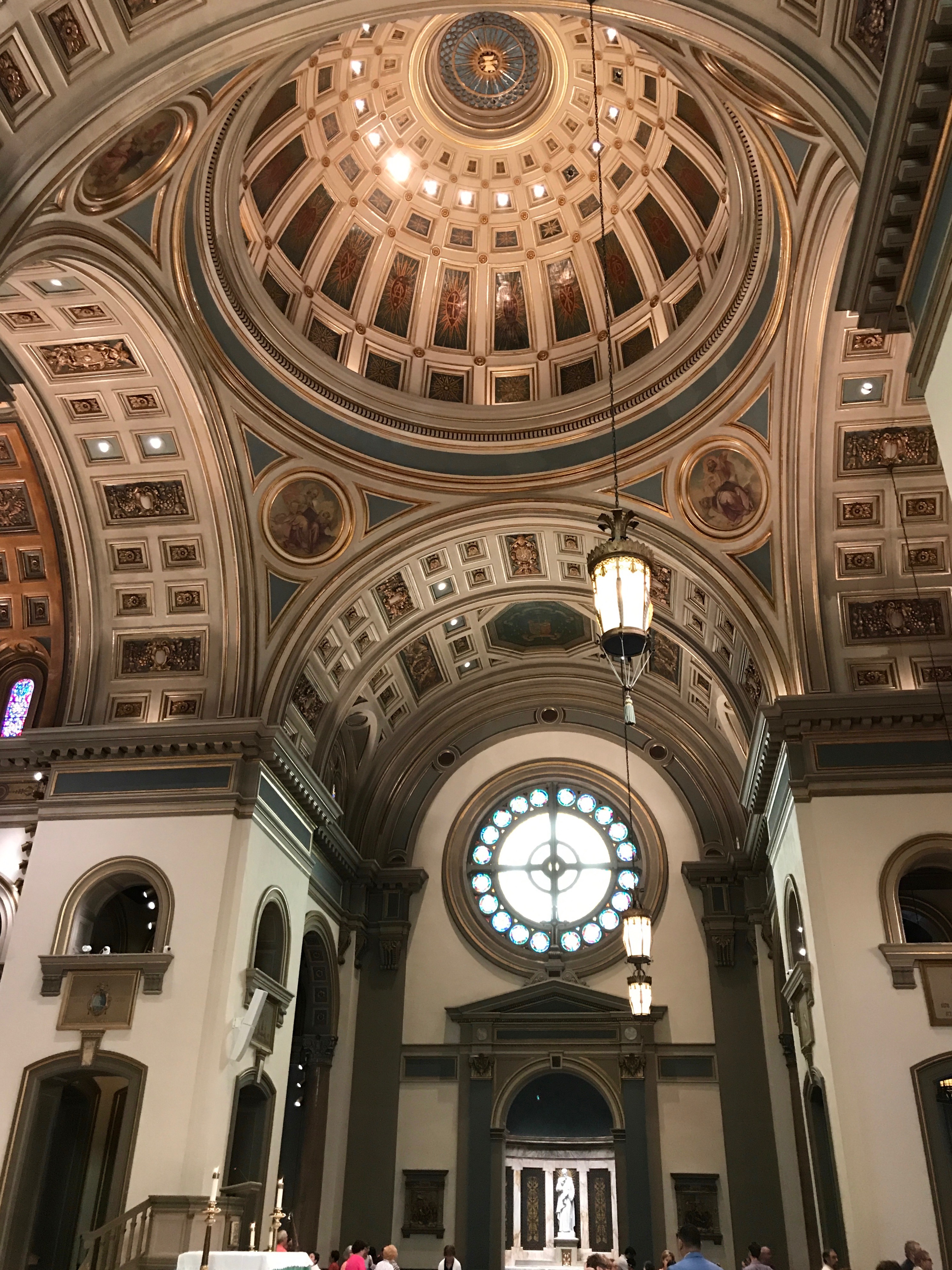
Just glancing around during the service, I thought that this would be a fun place to spend some time exploring.

The Corinthian capitals on the columns were elegant, and there were lovely architectural details abounding. The stained glass windows were eye-catching – but in a completely different way from the Tiffany windows in the Blandford Church in Petersburg.

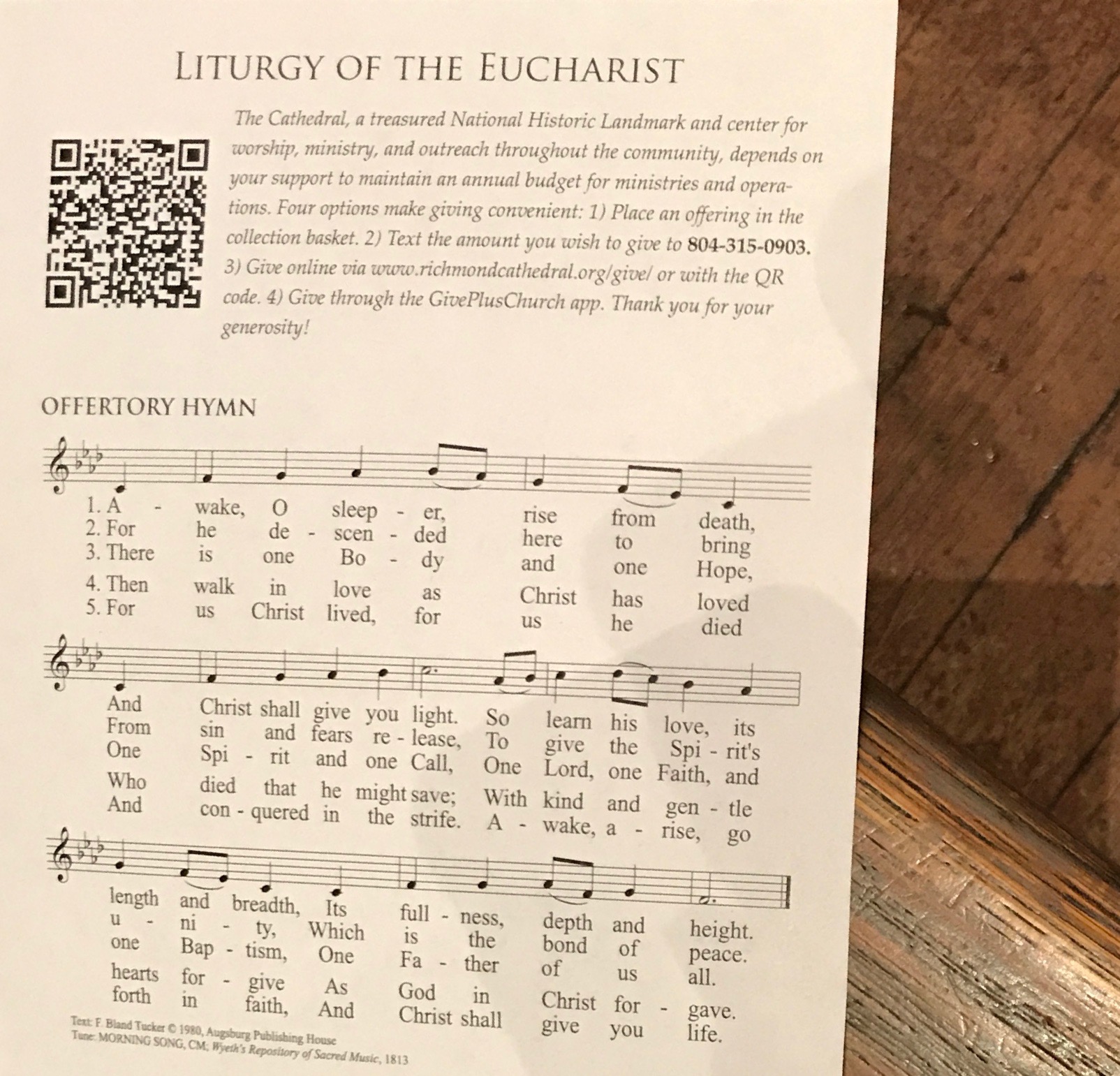
I snapped a photo of the mass guide for two reasons.

  1. Awake, O Sleeper is a favorite hymn of mine. This one has a different tune than the one I know, but I like the words.
  2. I found their take on how to participate in the offertory to be interesting. Put your donation in the basket, text, go online, or use the app.I guess I was just ahead of my time. I suggested alternative collection methods back in the ’90s, but they weren’t interested in the idea back at St.Augustine Cathedral in Kalamazoo.

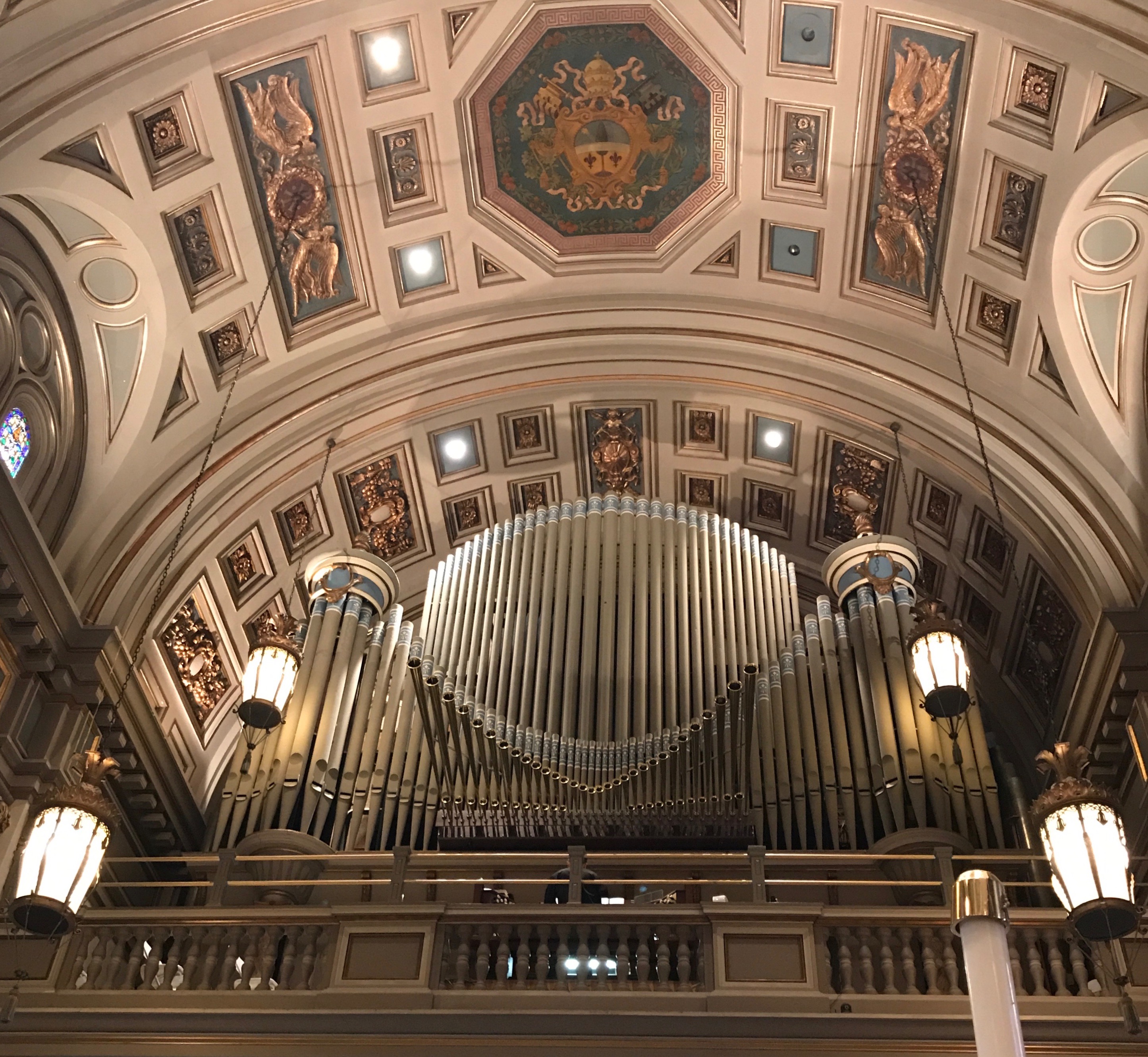
Speaking of Cathedrals, you have to know that there is a pipe organ lurking somewhere. Those who know me well – or have been reading my blog – know that I have a less than favorable opinion of pipe organ music. Pipe organs themselves don’t offend me. It’s just when they are played…

See? From this vantage point, the organ merely looks like a decorative architectural detail.

The dome over the crossing was lovely.

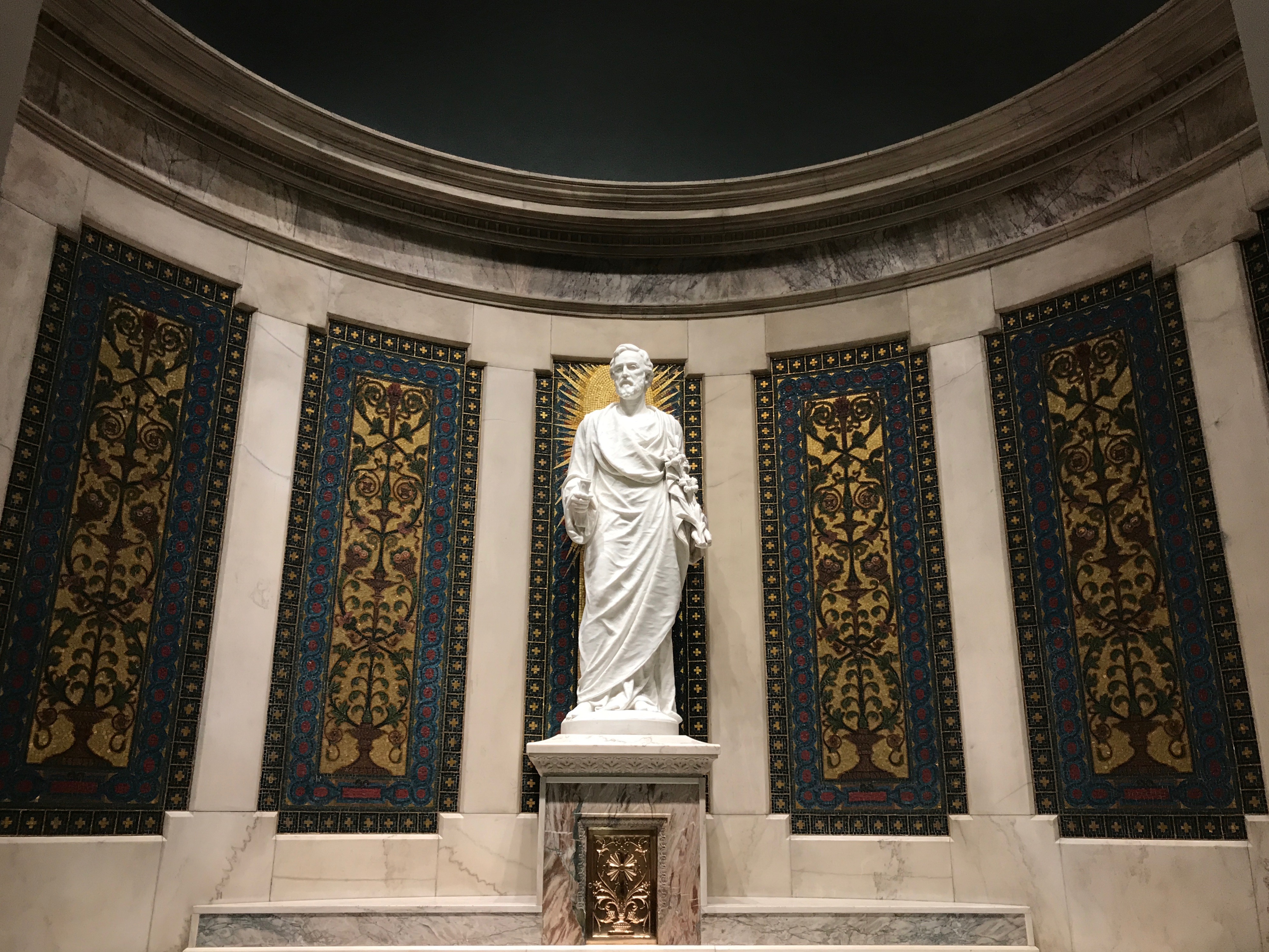
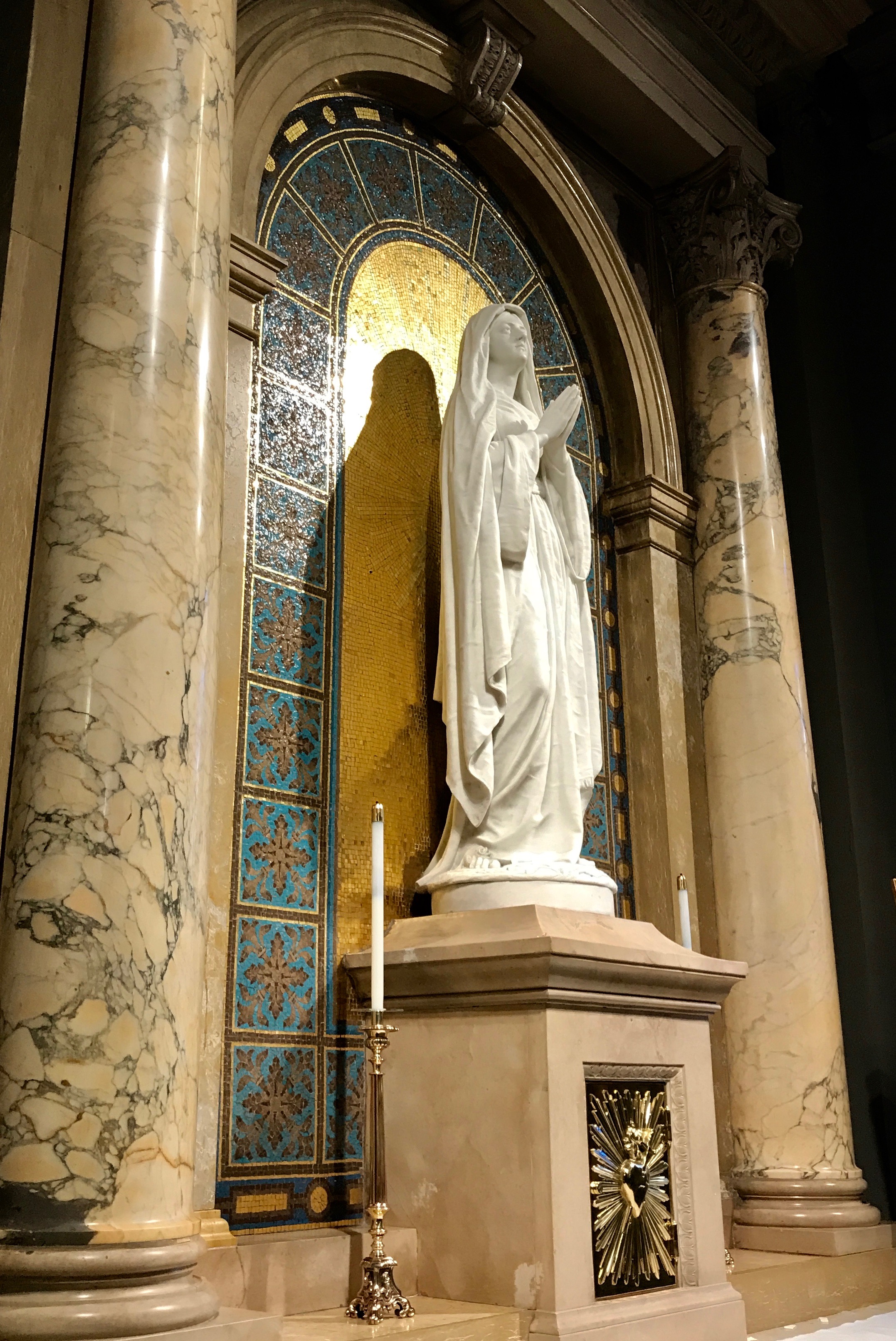
I am sorry to say that I don’t recognize the saints in many of these side altars. I didn’t see labels and there was no information about them in my Preferred Source or on the Cathedral’s webpage.

What I did find that was interesting was that the Cathedral was funded by one family – the Ryans, Thomas Fortune Ryan and his wife, Ida Mary. The cornerstone was laid in 1903, and the stone block came from the Garden of Gethsemane. It was built in the style of Italian Renaissance Revival, and it was the only cathedral at that time known to be constructed by the exclusive patronage of a single family.

Virginia-born Thomas converted to Roman Catholicism en route to Baltimore, Maryland in 1868. In Baltimore Ryan made his fortune in railroads and streetcar transit and married Ida Mary Barry, the daughter of a Catholic former employer. Thomas and Ida each donated $250,000, which would work out to about $15,000,000 in today’s money. I imagine Ida must have inherited her money from her father, Thomas’ former employer, which would mean that transportation was behind the funding of this building.

Anyway, back to the statues.

While this one isn’t labeled, either, it certainly looks like Mary.

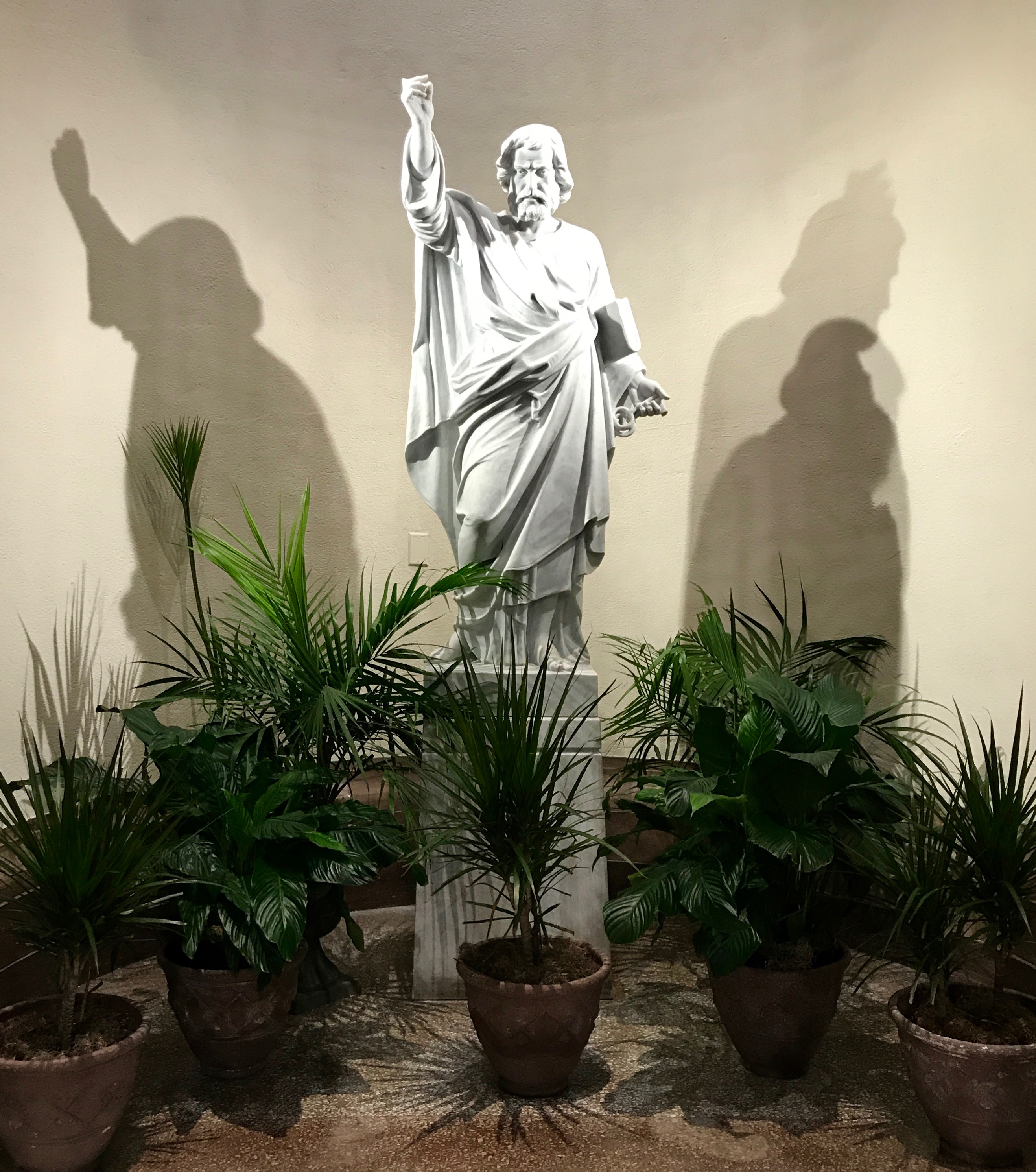
I would guess that this is Saint Peter, because he is holding the keys to heaven.

If I had to guess, I’d say this is Jesus.

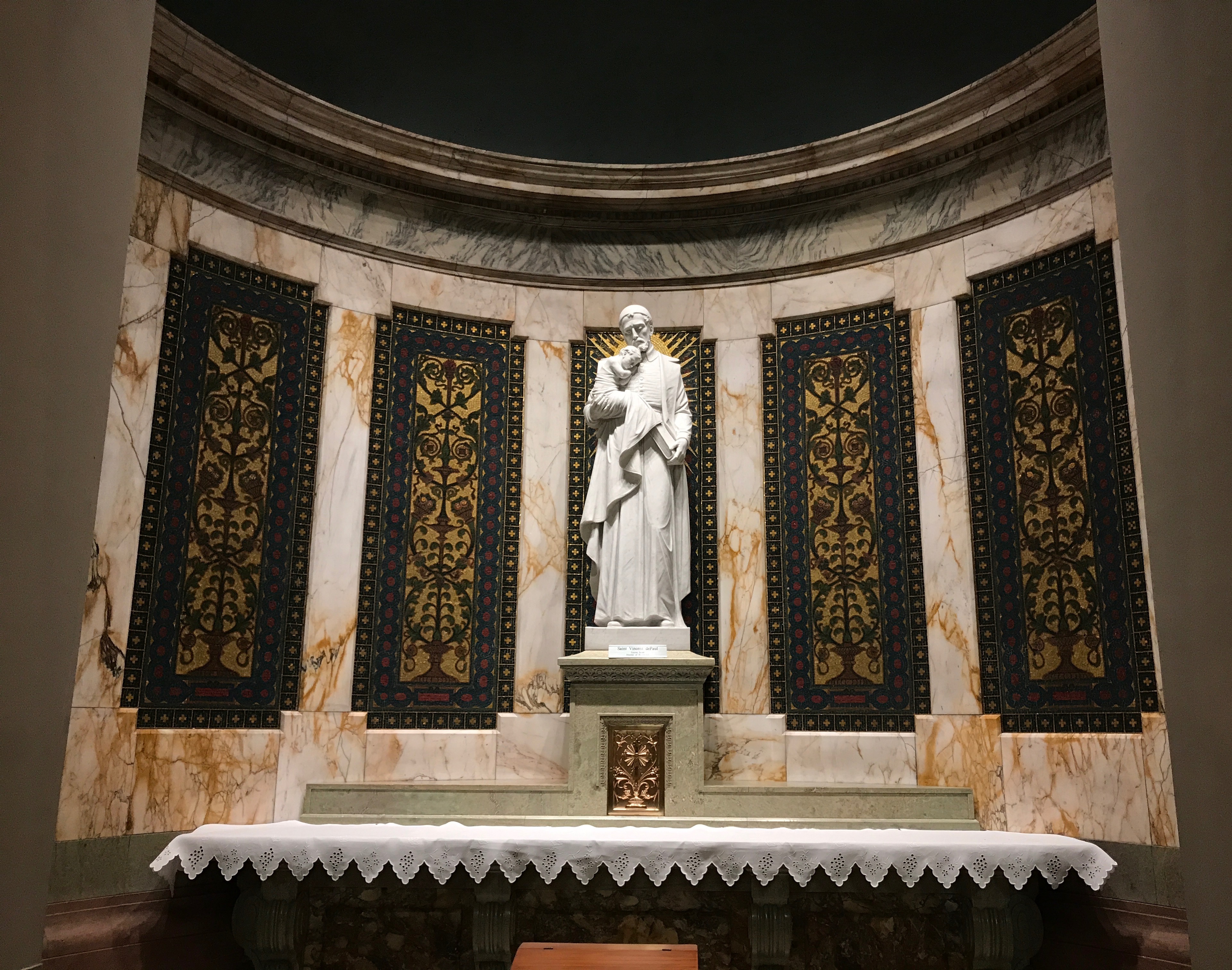
This statue actually has a label. This altar is dedicated to Saint Vincent de Paul. According to my Preferred Source, he is the patron saint of charities, horses, hospitals, leprosy, lost articles, Madagascar, prisoners, spiritual help, volunteers, and Richmond, Virginia, if I am reading that correctly. Another source has him more narrowly defined as the patron saint of charity.

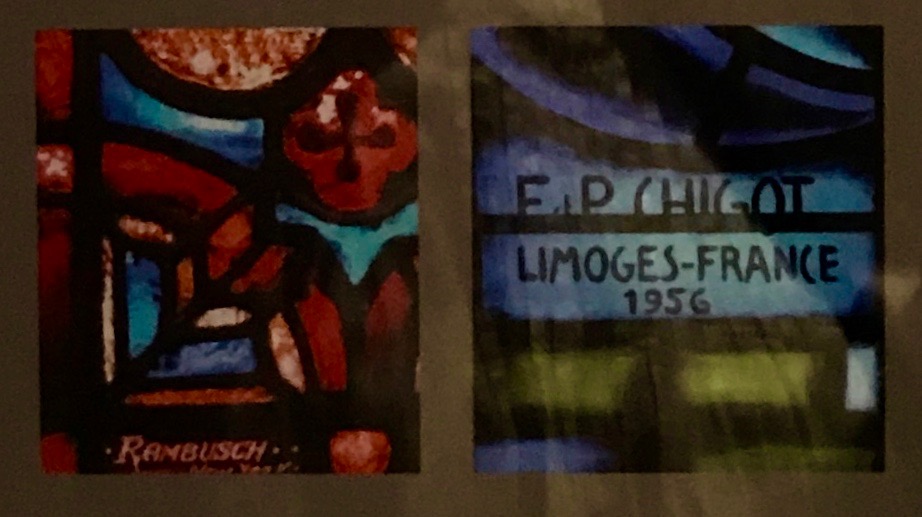
The windows are also worth some time to admire. In 1931, the Cathedral commemorated its Silver Jubilee and commissioned Rambusch Decorating Company of New York to paint and decorate the church for the anniversary celebrations. Four of the windows in the ambulatory, which is the area behind the main altar, were designed by Rambusch for the occasion. Unfortunately, I don’t have shots of those windows, as it was difficult to position myself to get a clear photo.

But, here is a shot of the iron grille that divides the ambulatory from the main altar.

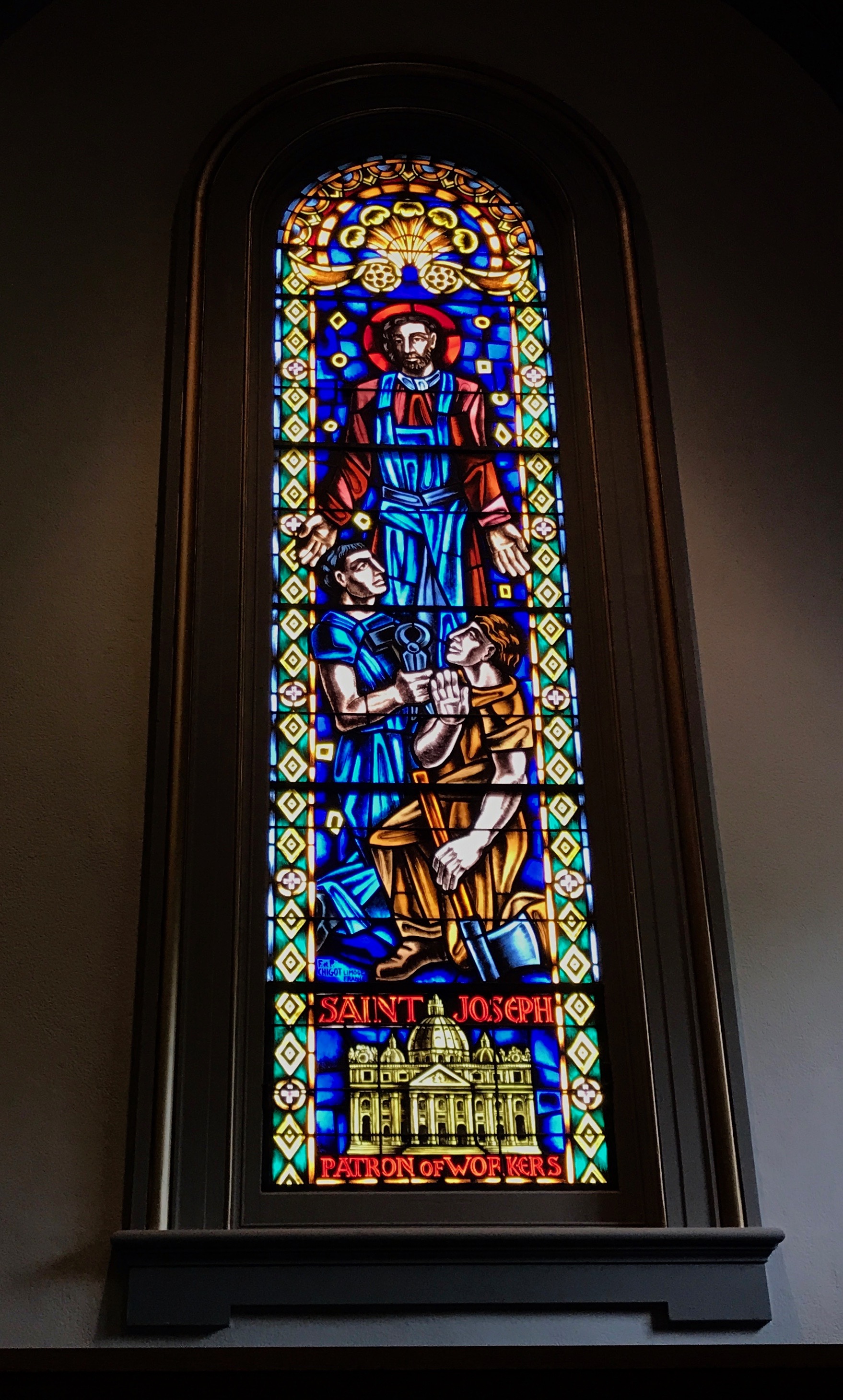
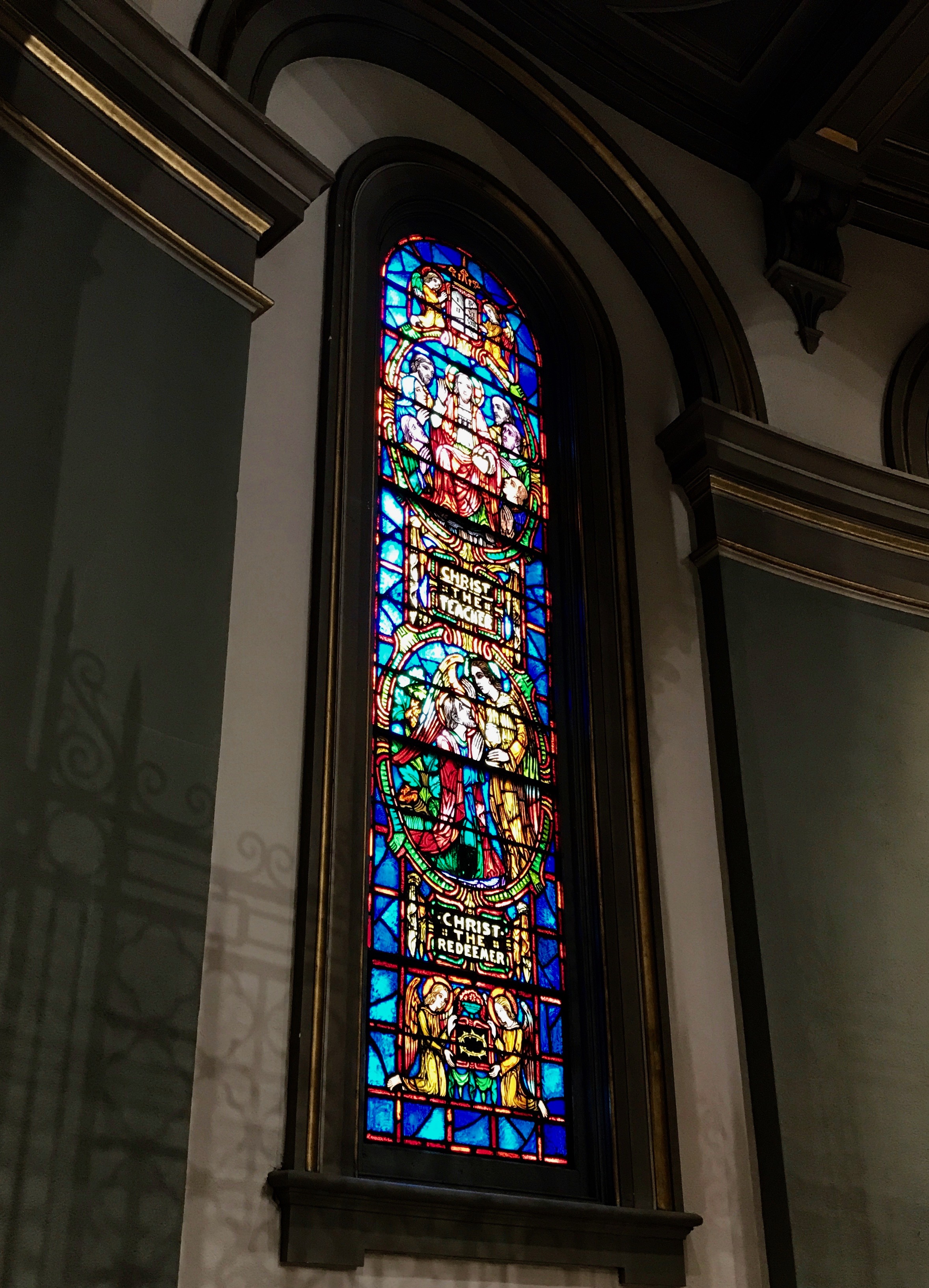
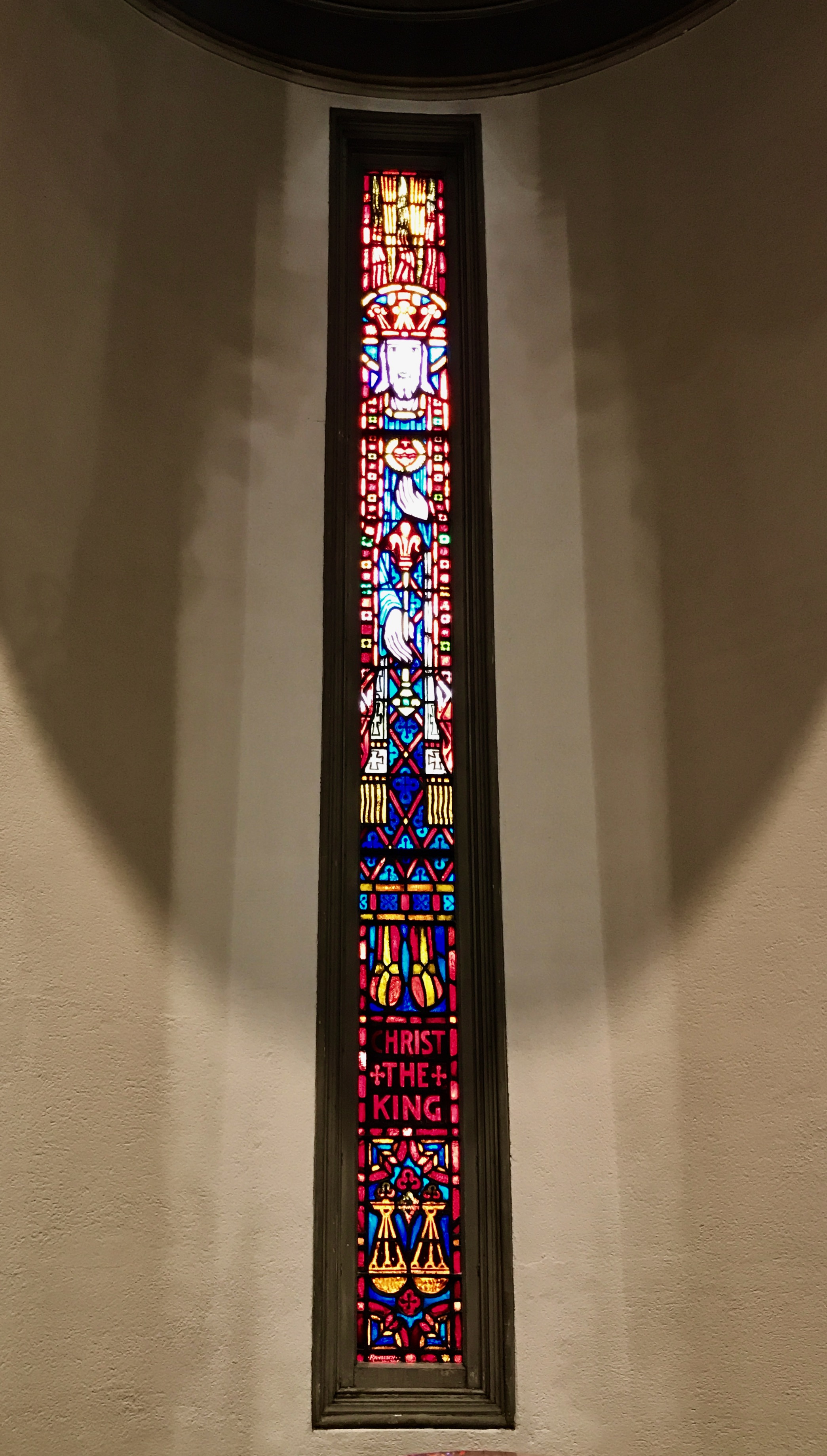
In 1956, the artisans Frances and Pierre Chigot of Limoge, France were commissioned to design several new windows for the church in honor of its 50th anniversary. Here is a sampling of what they created.

Saint Joseph, Patron of Workers.

Christ the teacher. This was in the ambulatory, and you can see the shadows cast by the grille. You can also see the oblique angle I had to stand at to snap this photo. The windows for the silver jubilee are right behind the altar.

The last window in my collection is Christ the King. If you enjoy “midcentury modern” stained glass, you can do no better than to plan a visit to Richmond’s cathedral.

While the building is impressive, I am pleased that they didn’t forget the needs of the people.

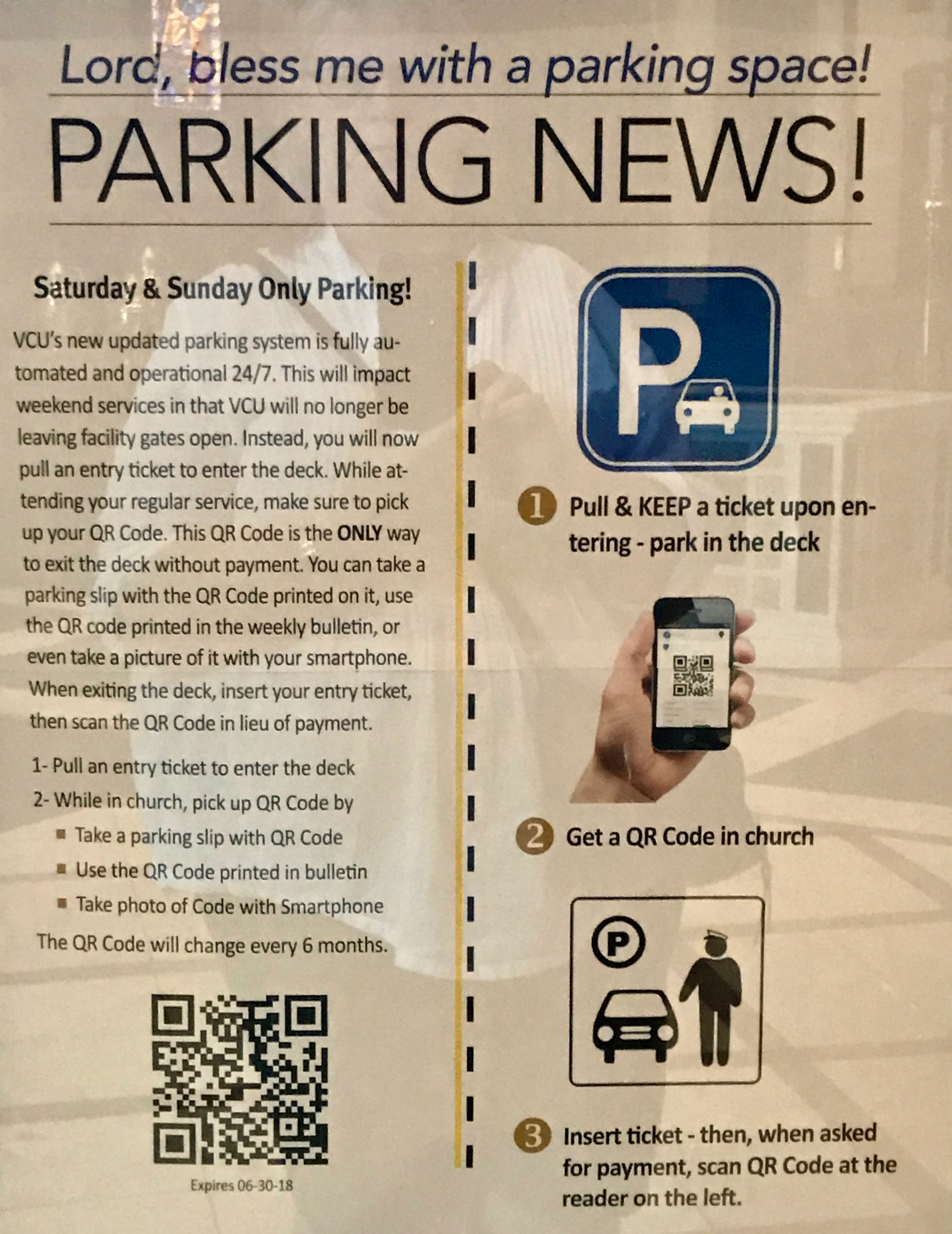
Lord, bless me with a parking space!

They didn’t forget our parking needs, either. Maybe I spent too long admiring the church after mass, but for some reason, I ended up having to pay for my parking. Or, maybe I parked in the wrong space. Oh, well…

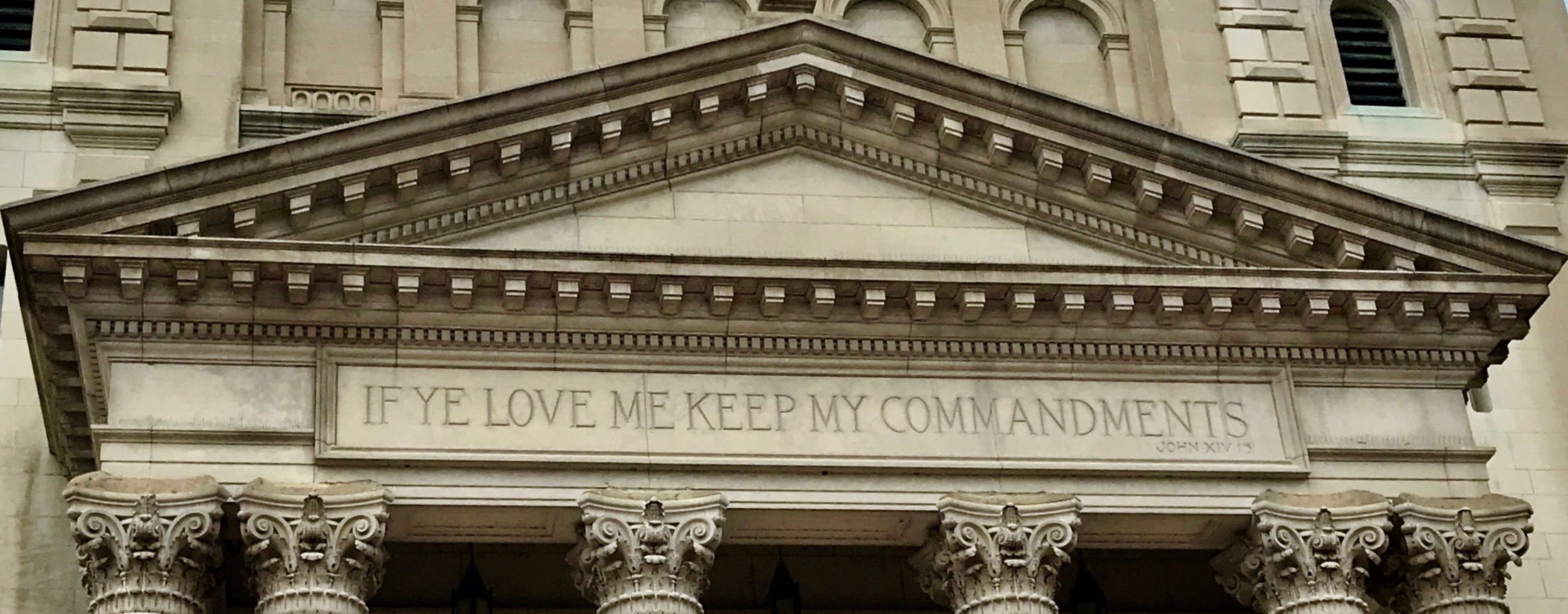
I liked the inscription over the door.

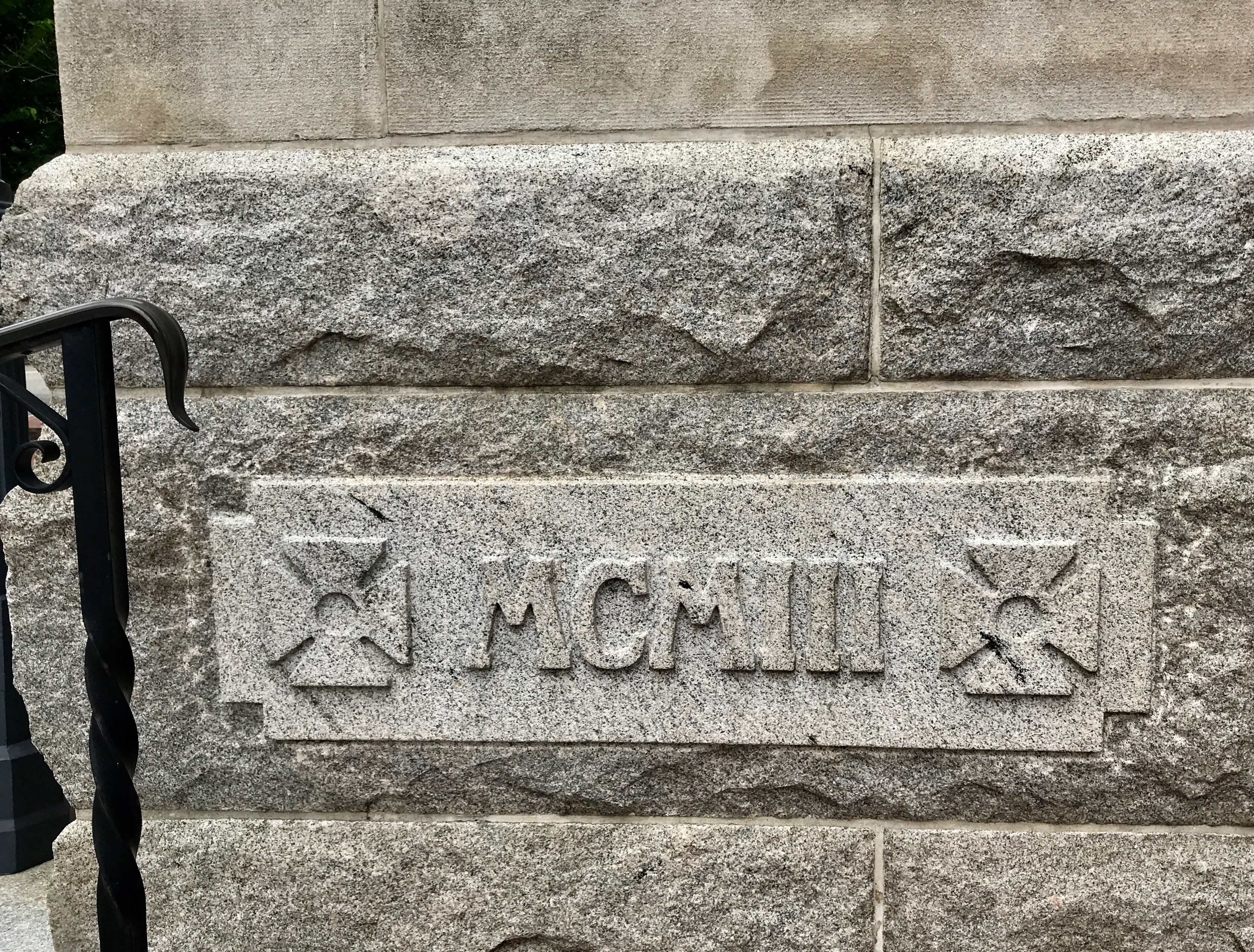
I also liked the Roman numerals on the cornerstone. 1903. I wonder if this was the stone from the Garden of Gesthemane?

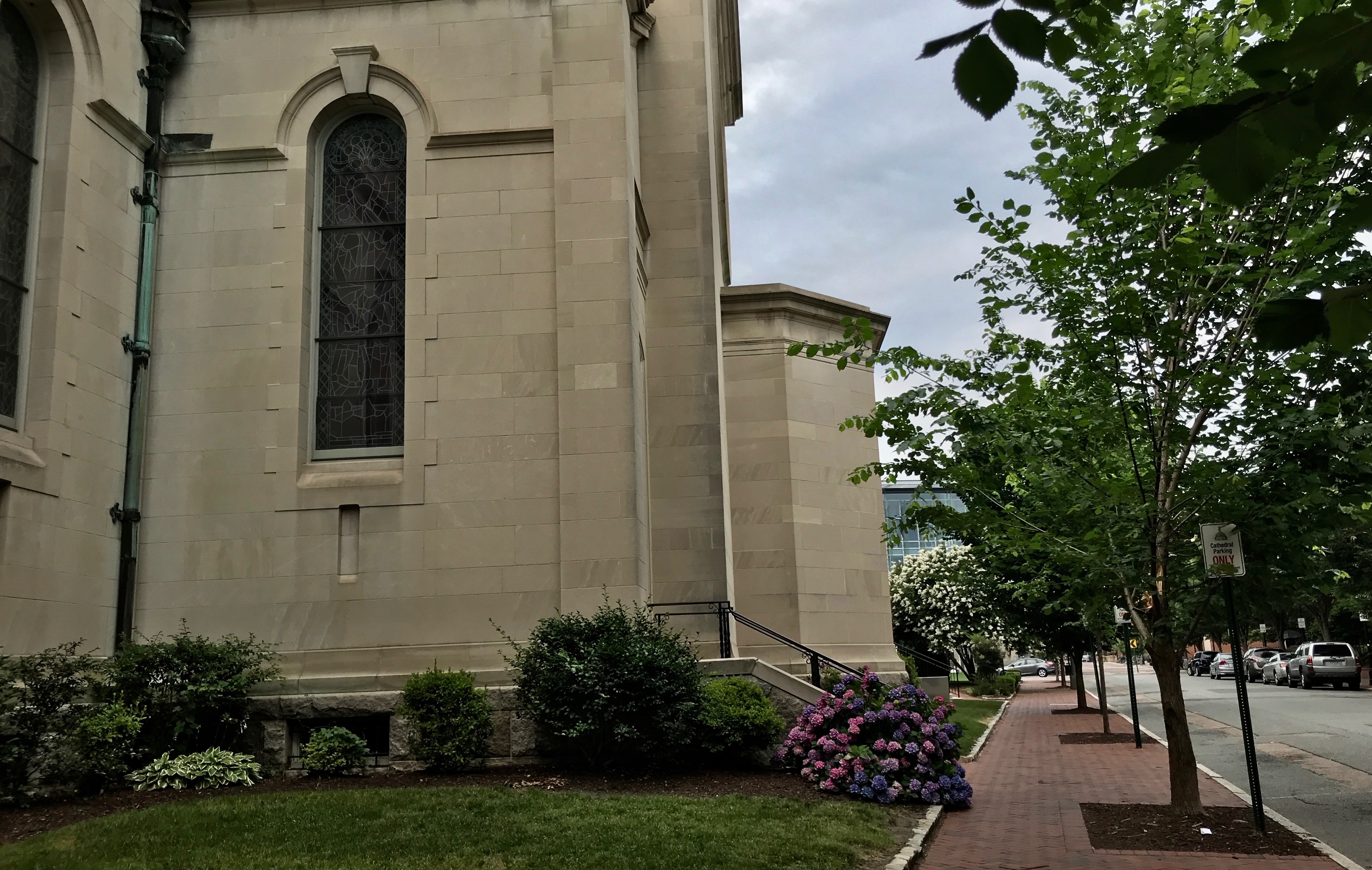
I headed back to find my car. The grounds of the cathedral were very nicely landscaped.

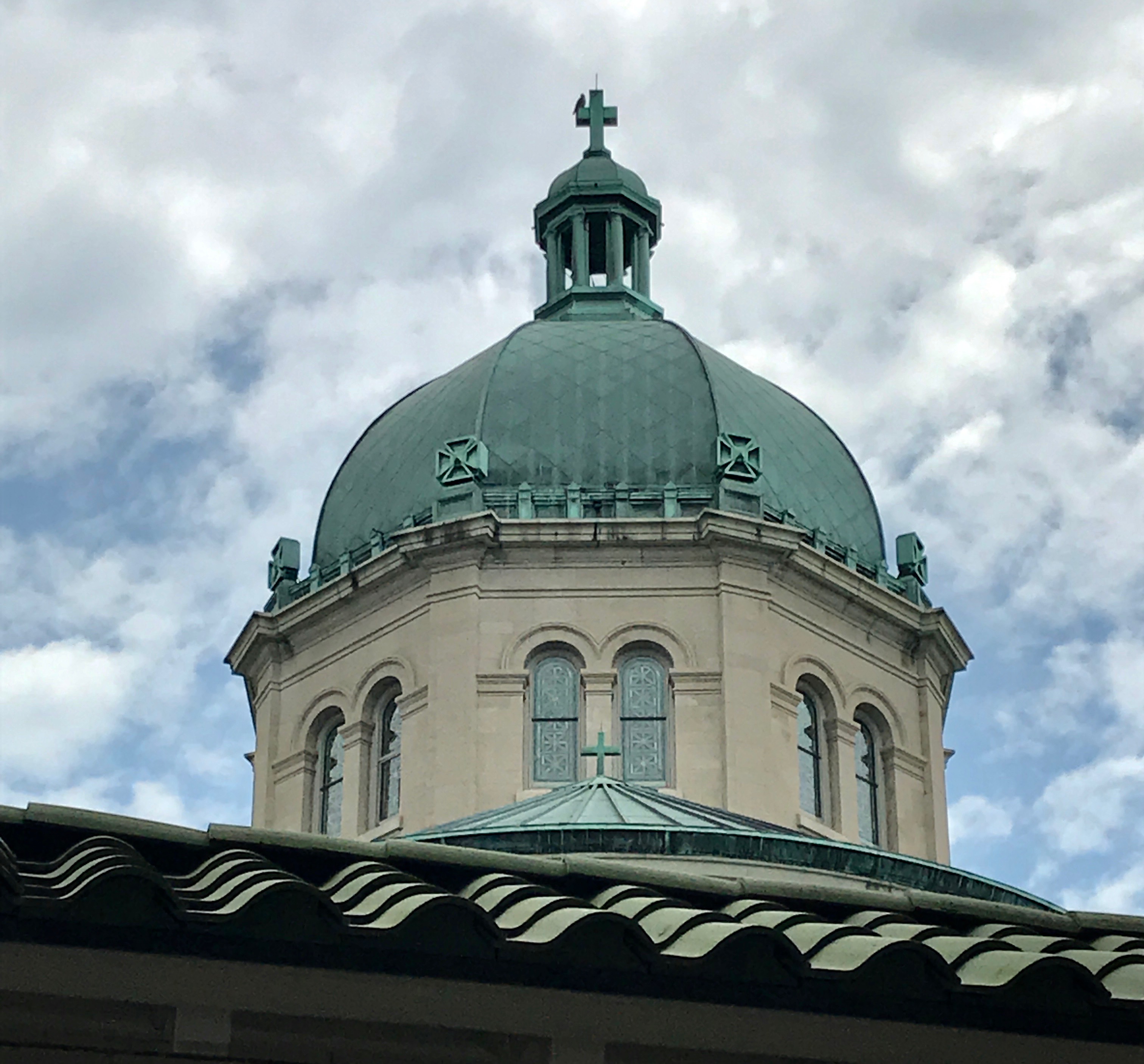
The cupola over the dome gave the exterior a regal appearance.

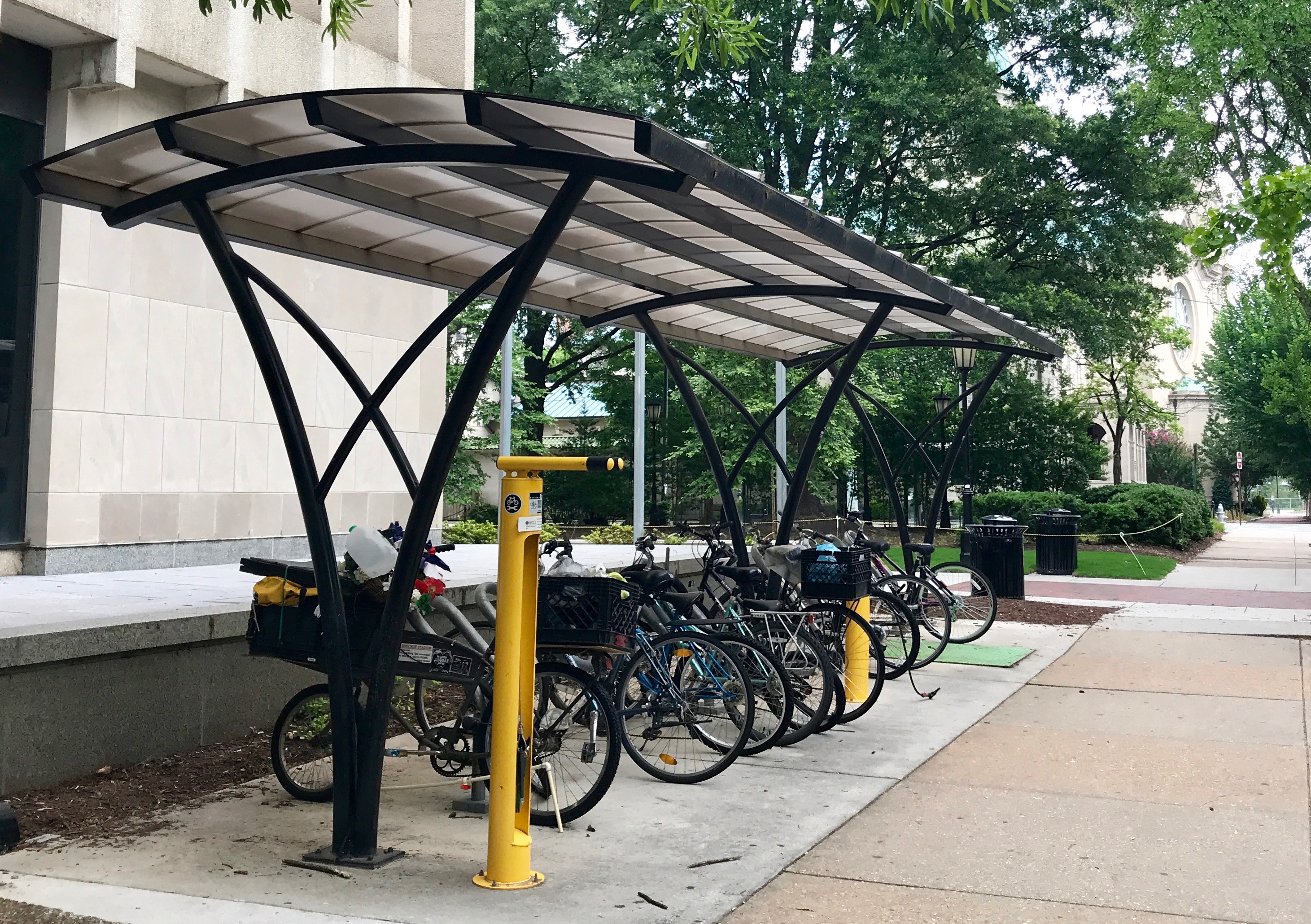
On my way back to the parking structure, I passed several facilities that really contribute to making a city “bike friendly.” I loved this little shelter.

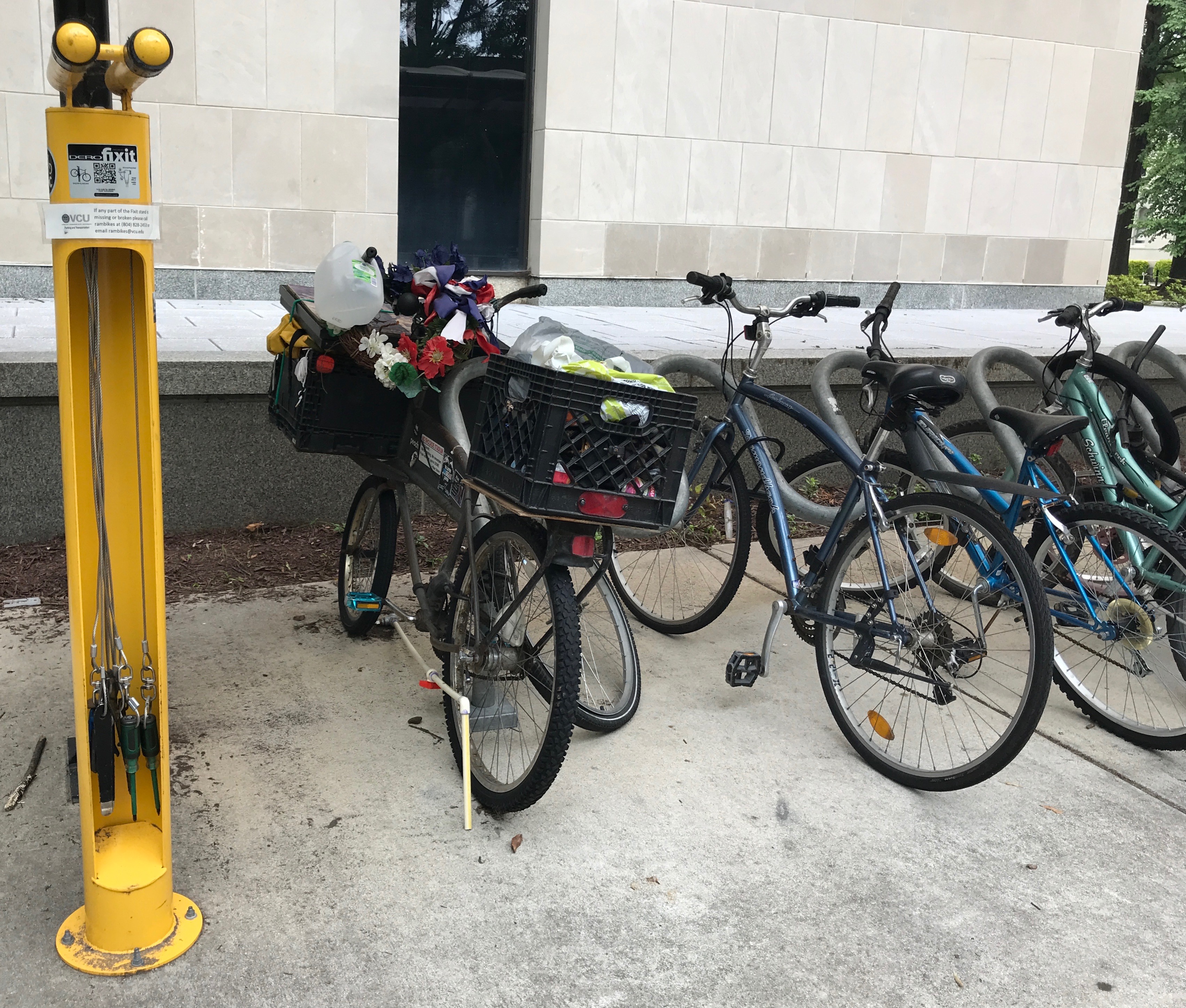
And those yellow poles? They are bicycle fixit stations! There are tools on all those cables.

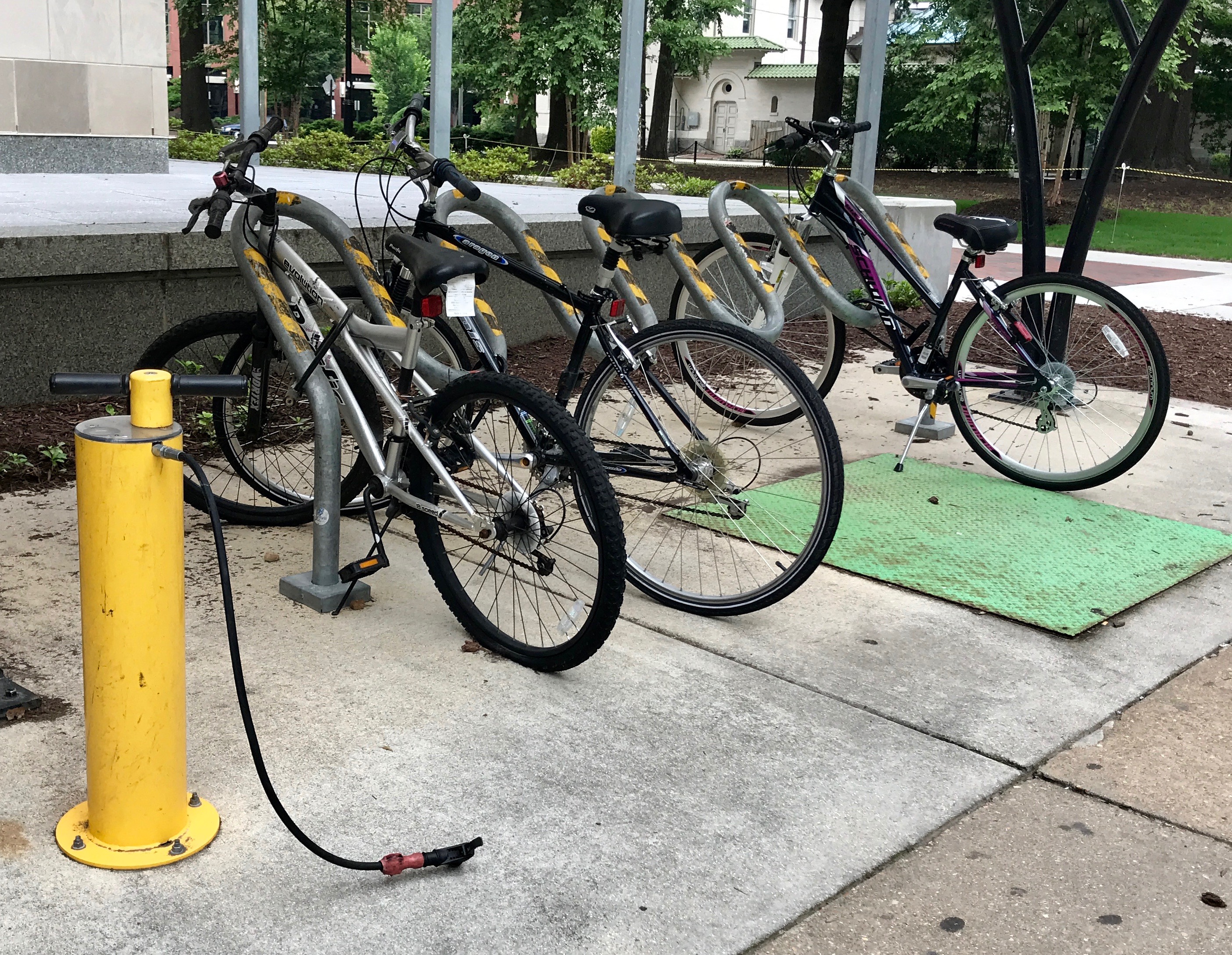
This one is a pump! I’d say Richmond is the most progressively bike-friendly city I’ve seen in the United States.

I retrieved my car and set out to find some lunch.

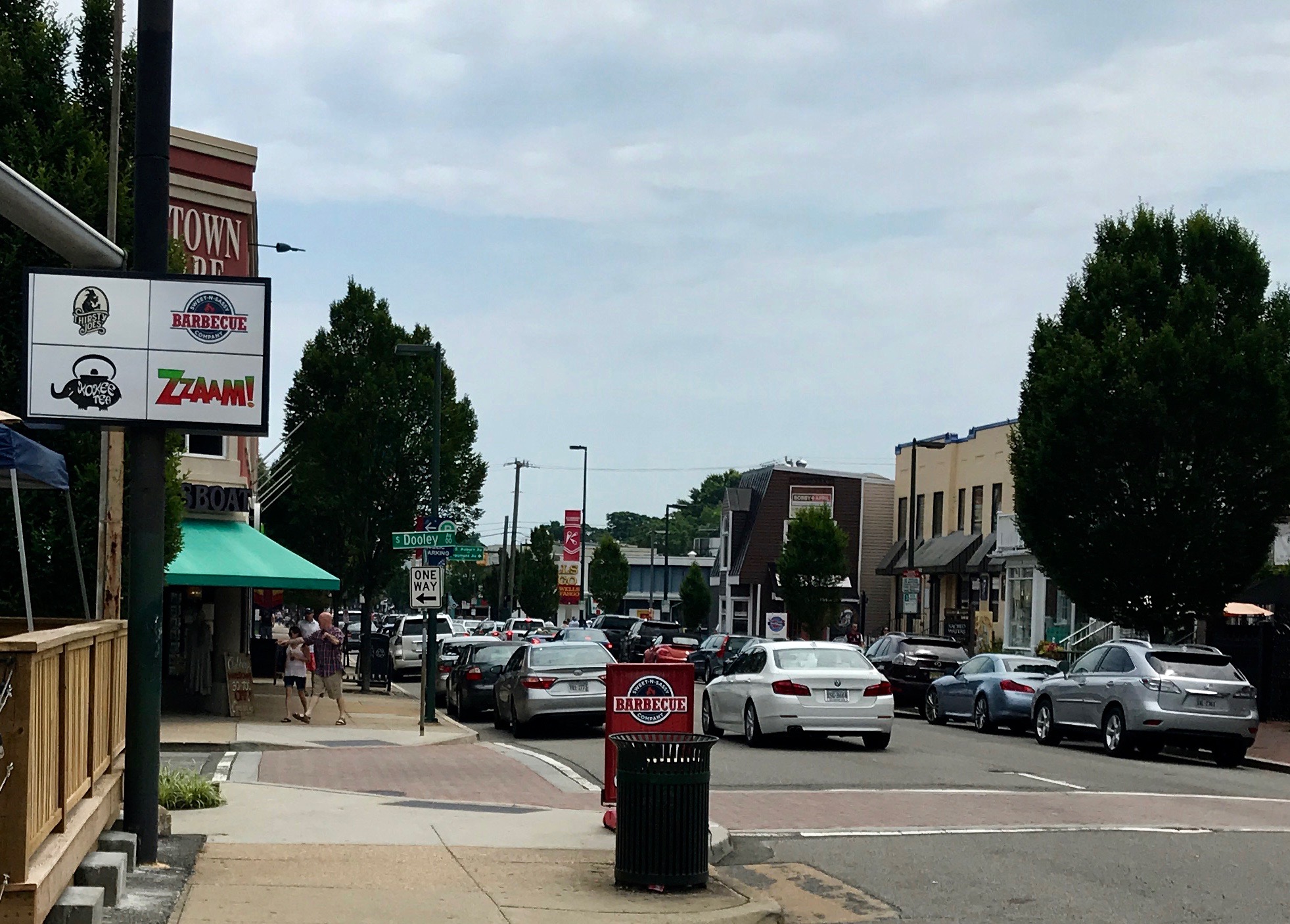
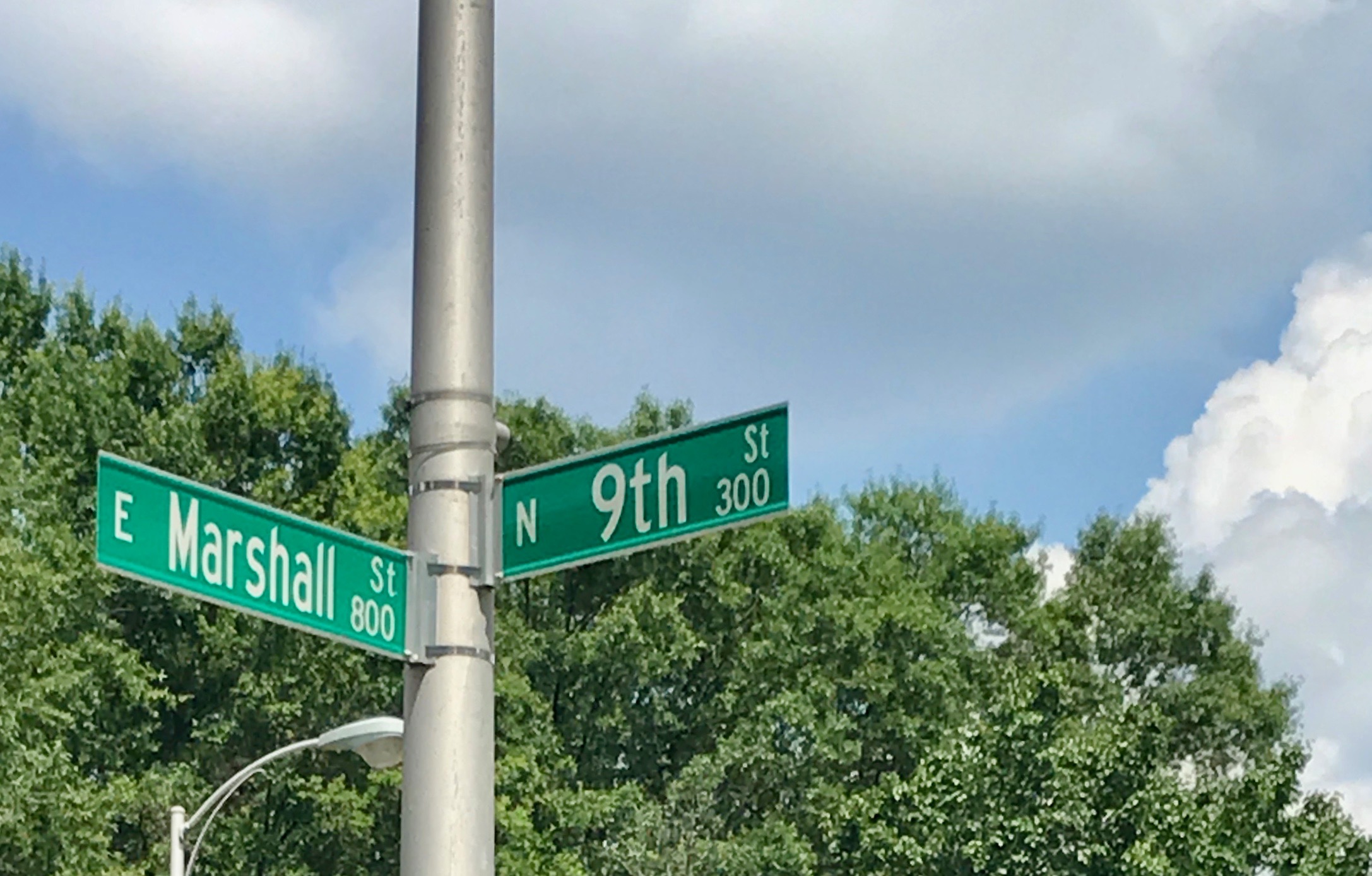
Here’s a thing that I do that helps me when I am on the move so much. Once I park, I take a photo of the street and the street sign. That way, I have a record of where to start looking for my car. I can also show it to people on the street when I ask for help. So far, I haven’t had to ask anyone for help, but I have checked my photos from time to time to help me head in the right direction.

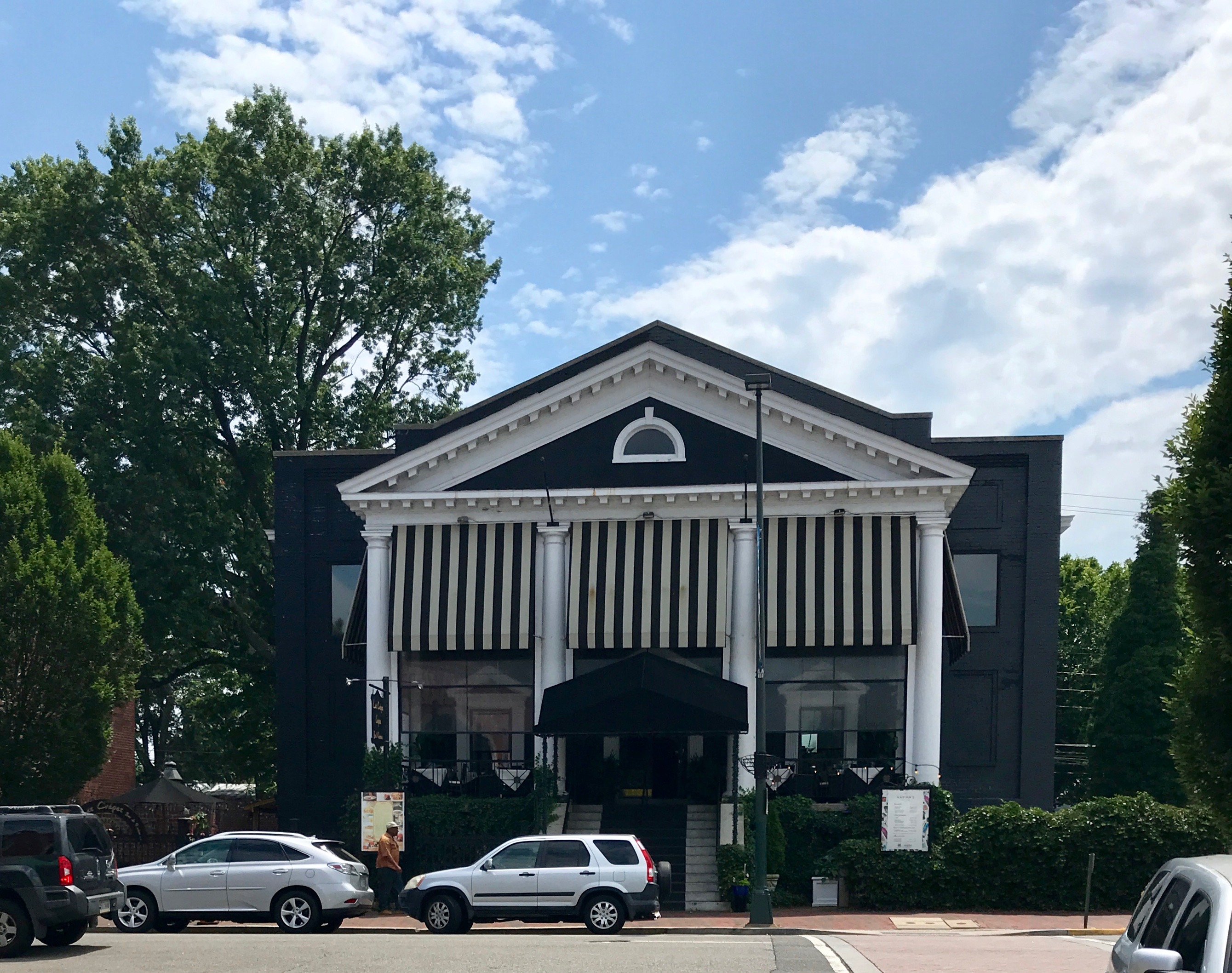
I Googled for someplace interesting to eat and found this place.

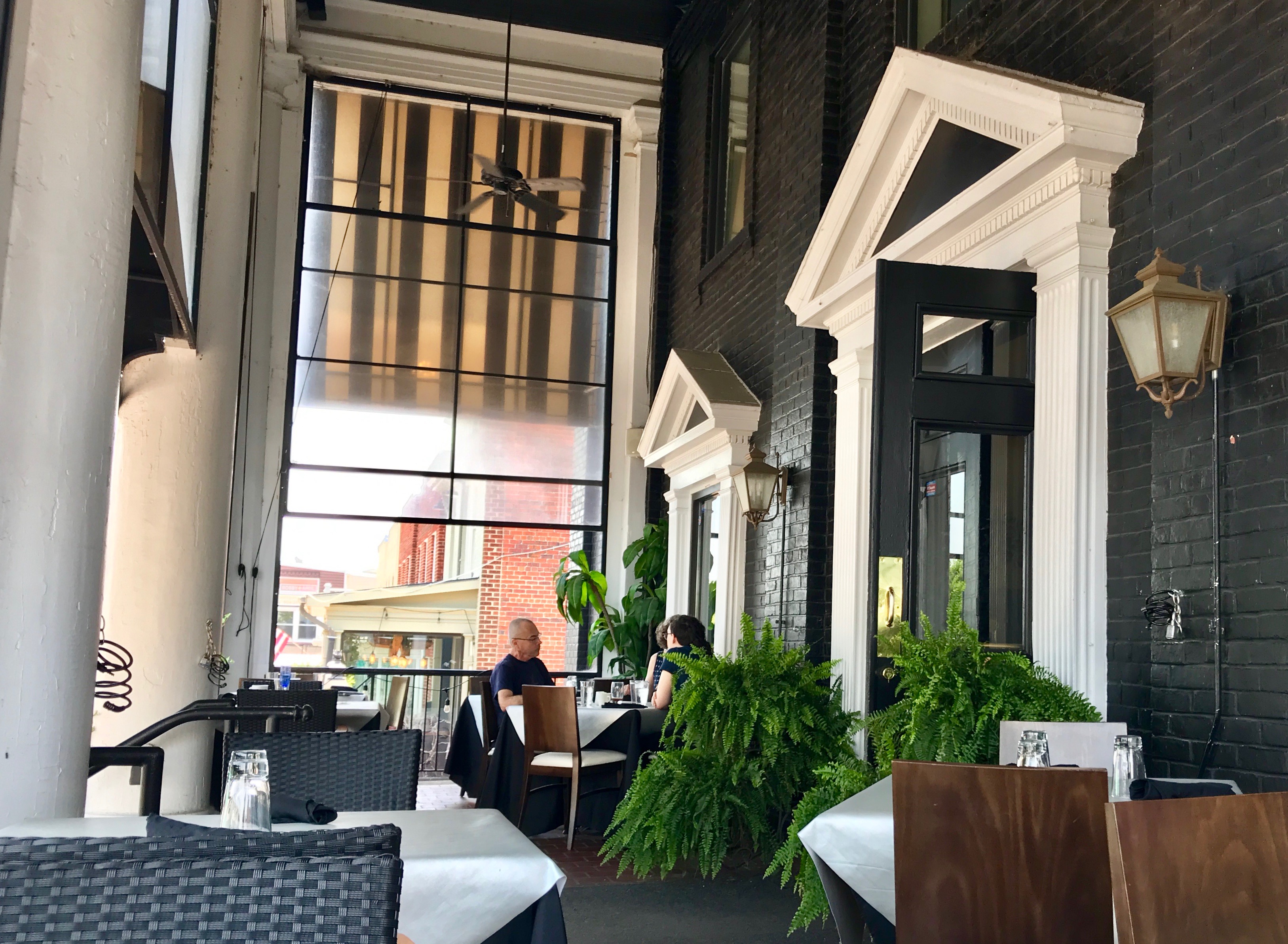
It was so relaxed and a pleasant respite from the sun.

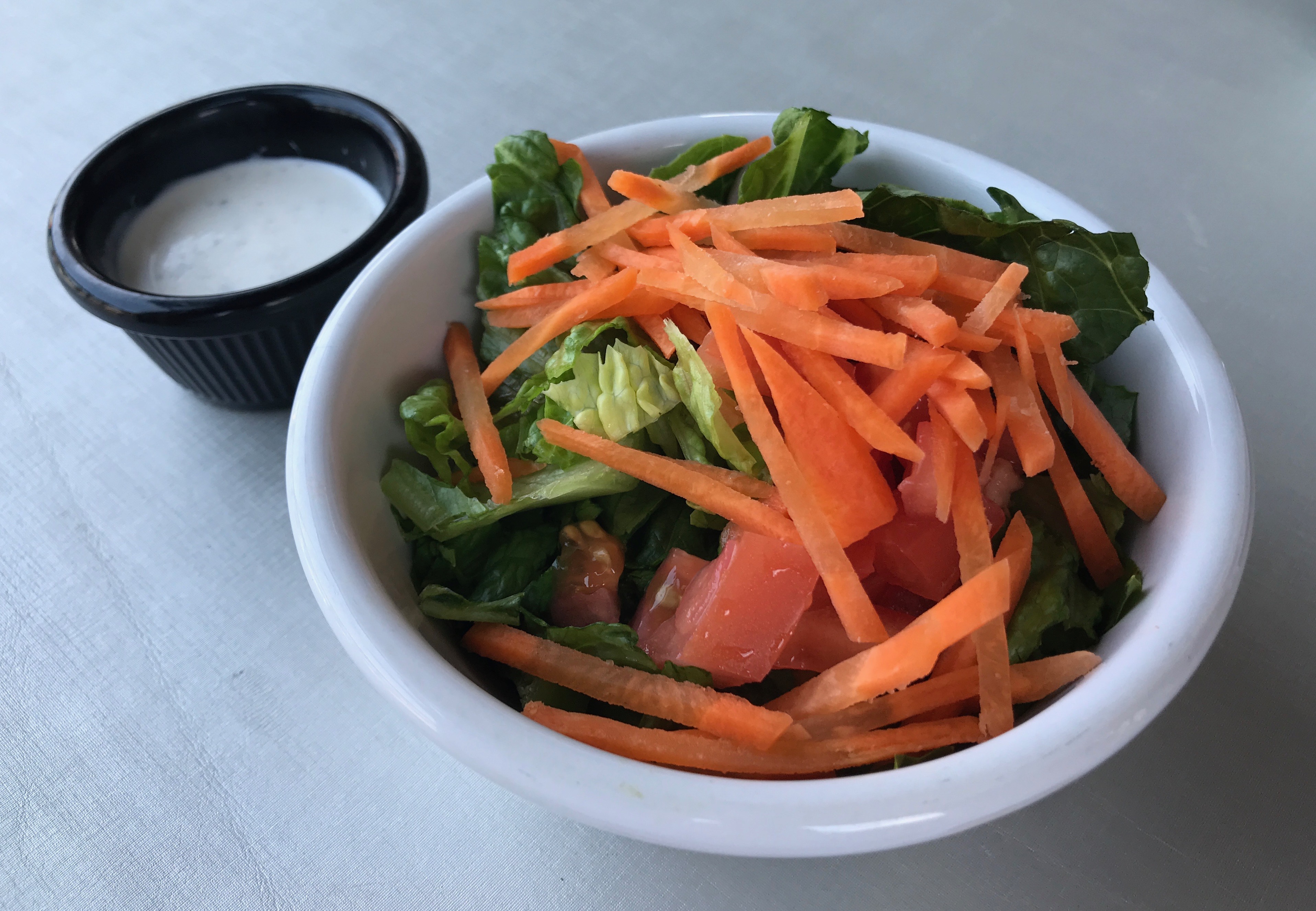
I started off with a salad.

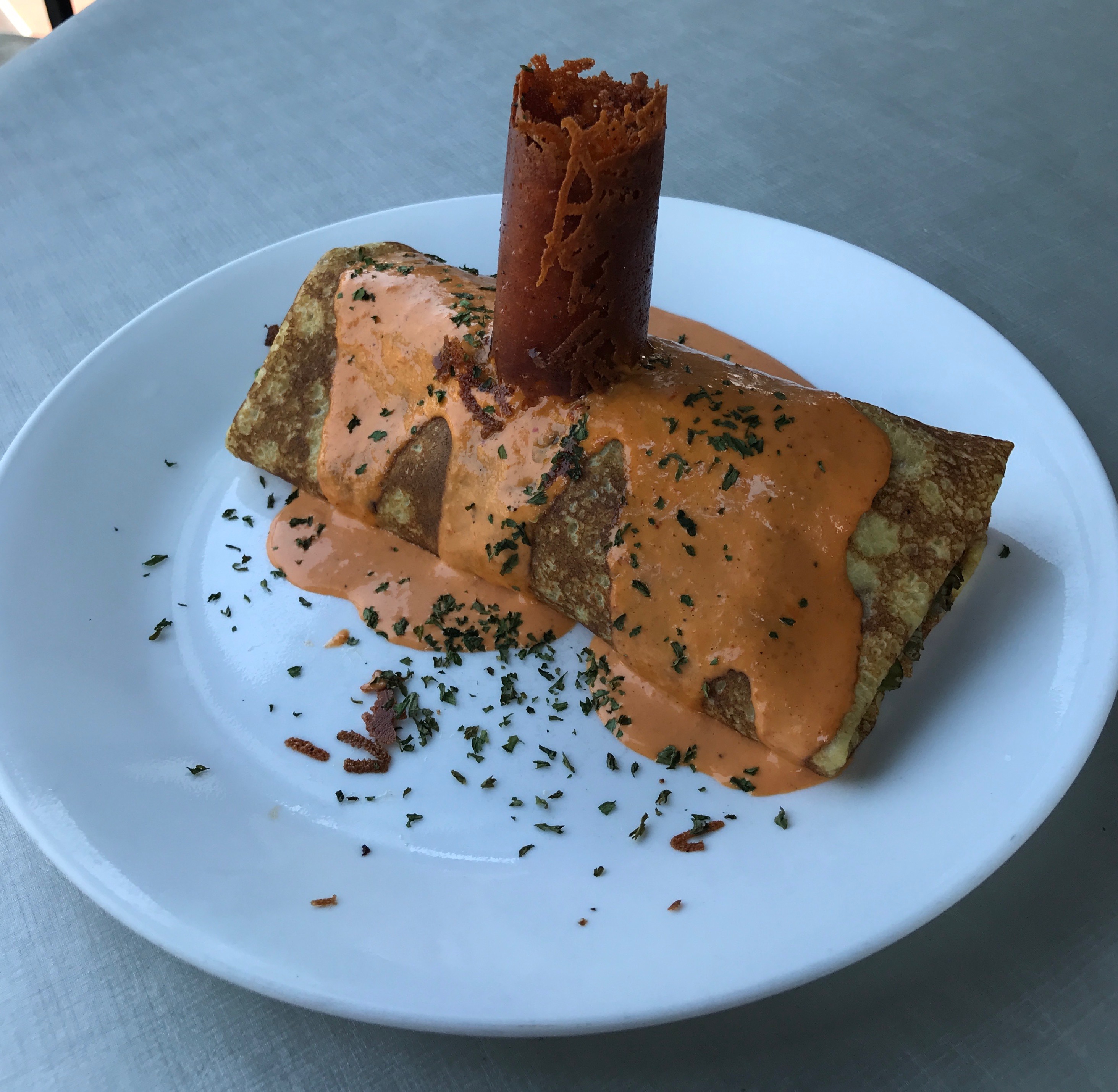
This was the main course. I think it was a crepe of some sort with a cylinder of some sort of cheese stuck in the top. It actually sounded more attractive in the menu, but I think it was acceptable fare.

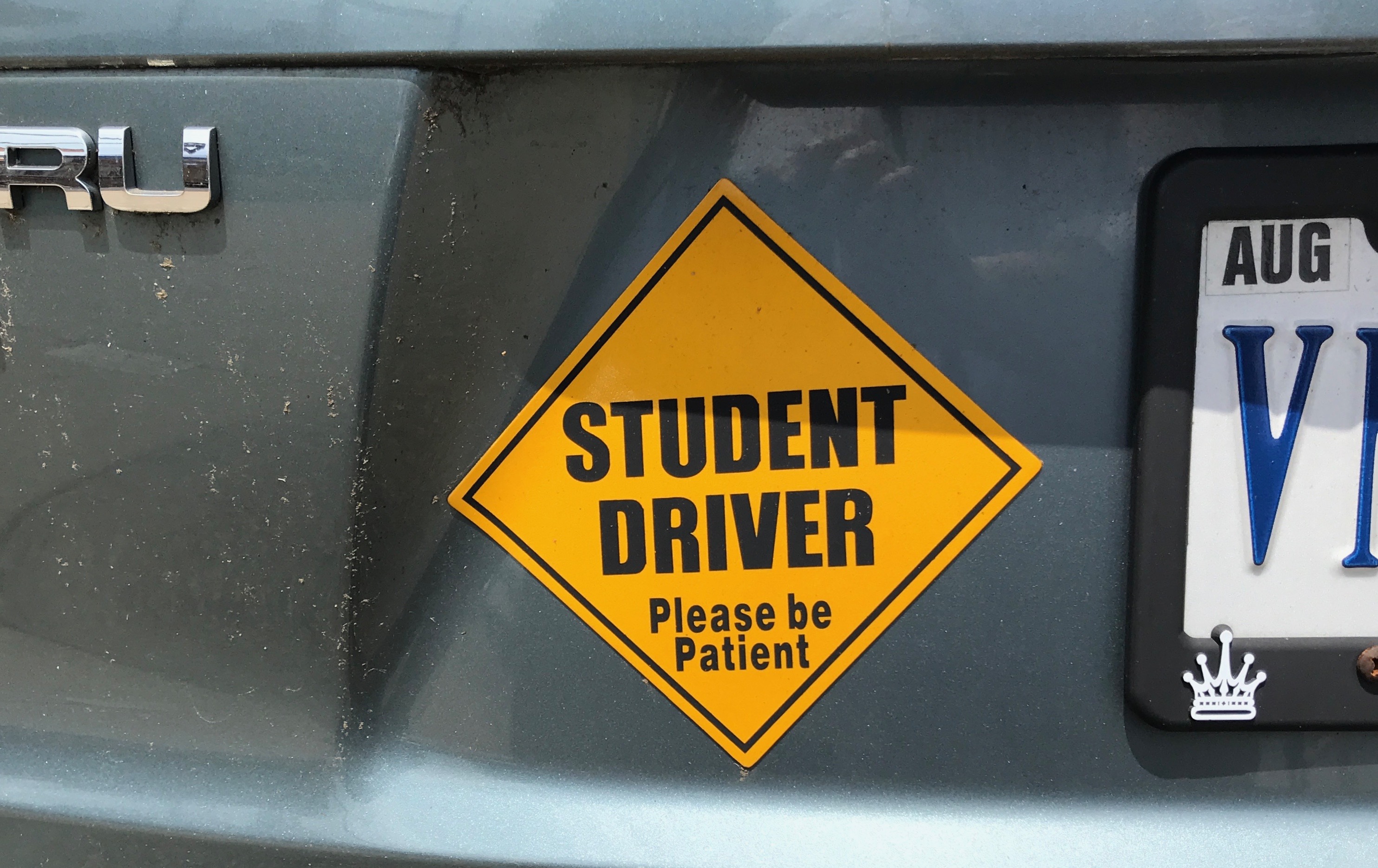
Heading back to my car, I noticed this sticker on a car. It was the first time I’d noticed it, but after this, I saw them quite frequently. Wouldn’t it be nice we were patient with everyone?

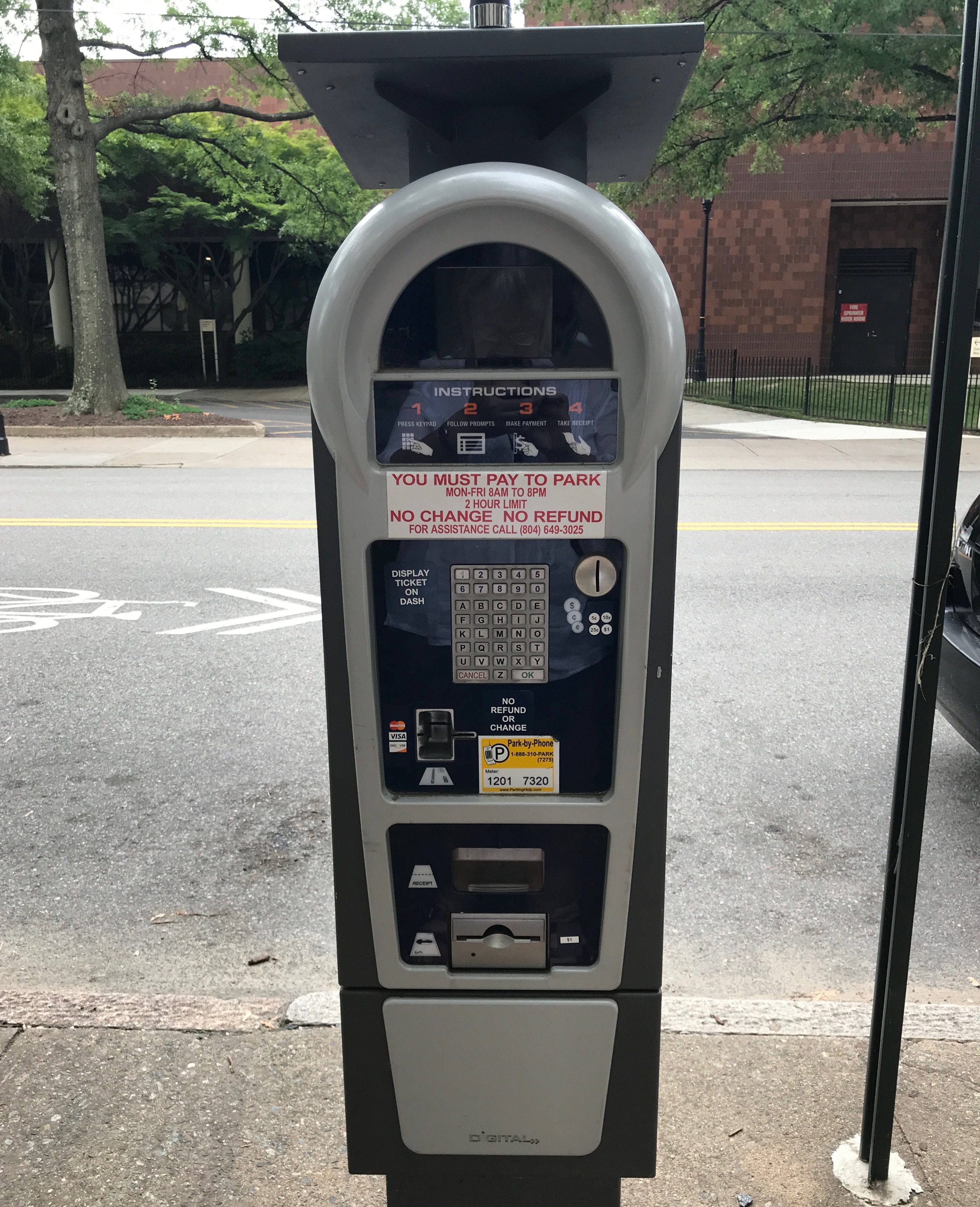
I also noticed what appeared to be a solar powered parking meter. Luckily, this was Sunday, and I didn’t have to worry about paying. These parking meters seem to be getting more complicated every year.

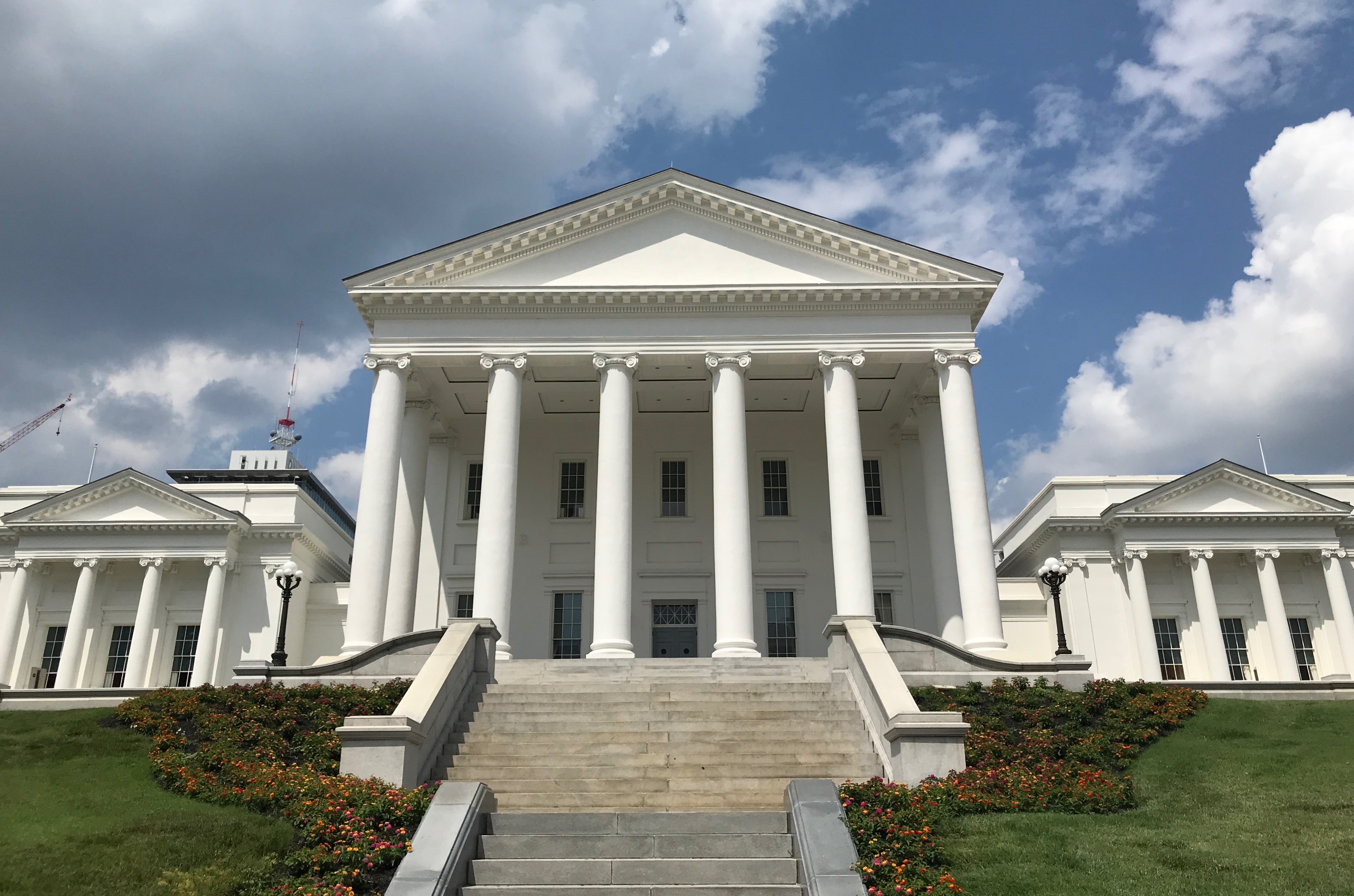
My next stop was the state capitol.

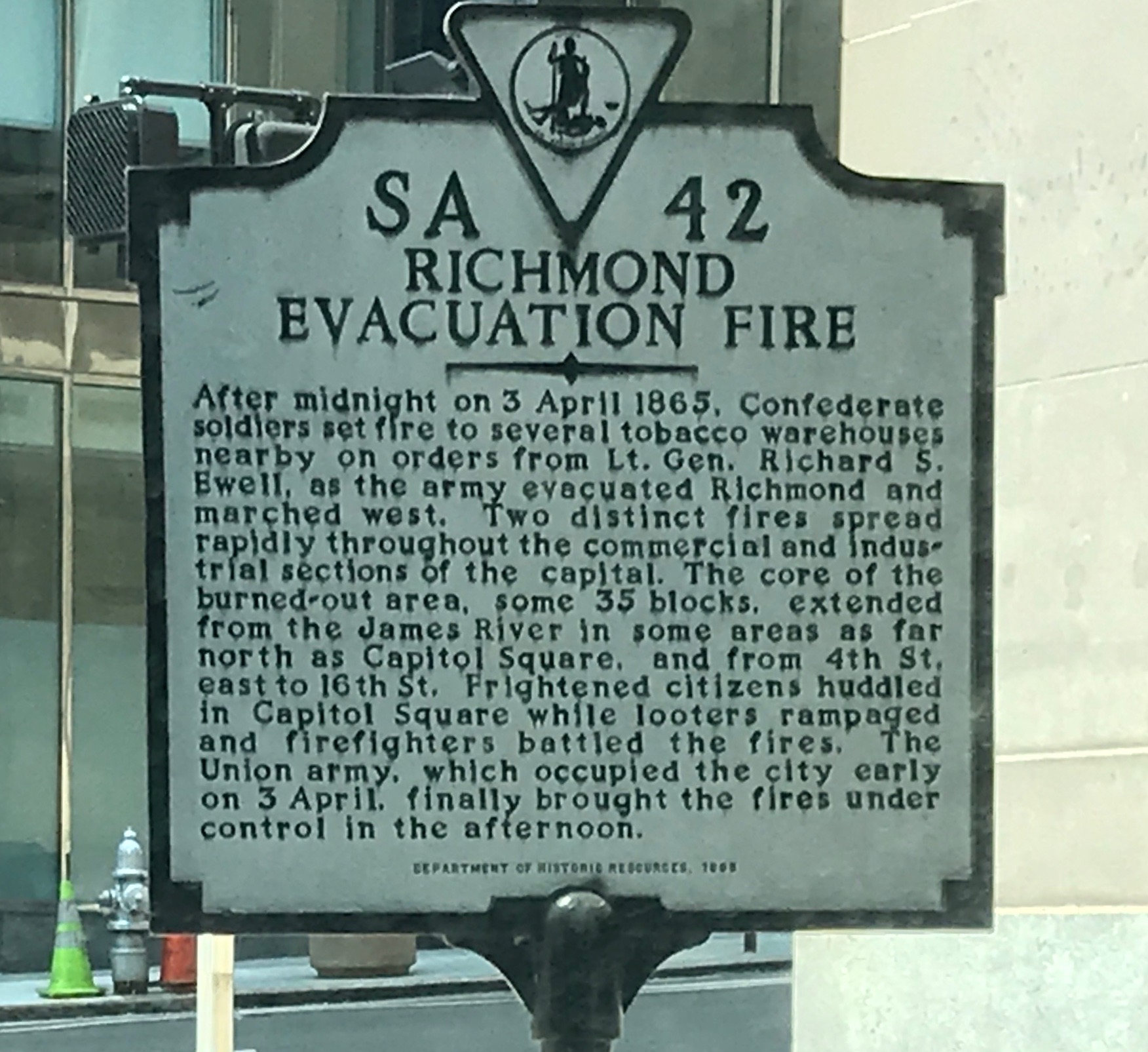
A little more drive-by tourism. I snapped this photo through the car window while I was stopped. I figured I could read it from the photo later.

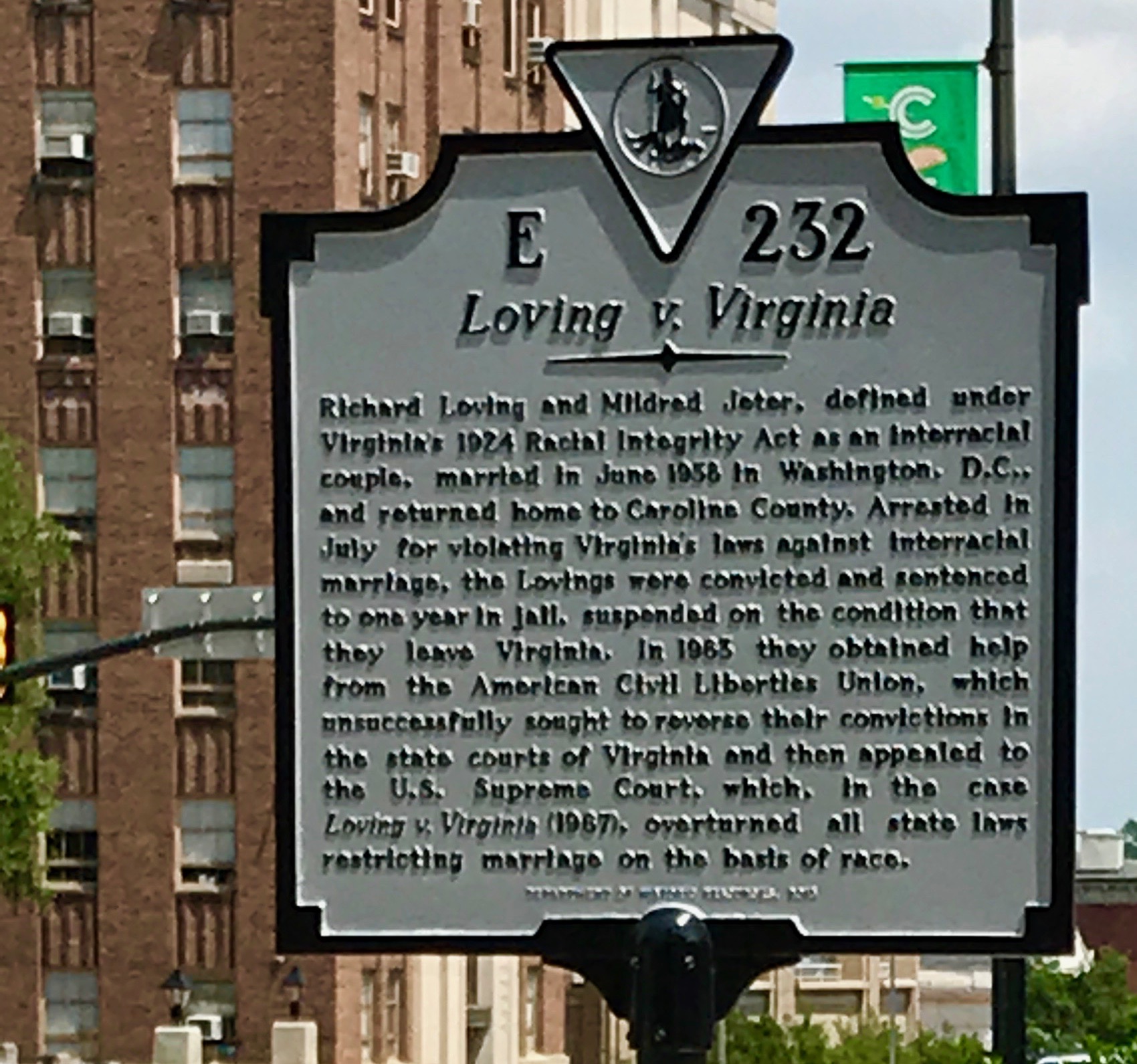
I snapped this one, too.

Finally, I snapped a shot to remind myself of where I ended up parking.

I strolled past a building undergoing some radical changes. The reinforcements make it look like they are trying to preserve the facade on the right side of the building. It would be interesting to see what becomes of it.

I turned the corner and headed toward the capitol.

Of course the tourist entrance was on the other side. I started across the front of the building.

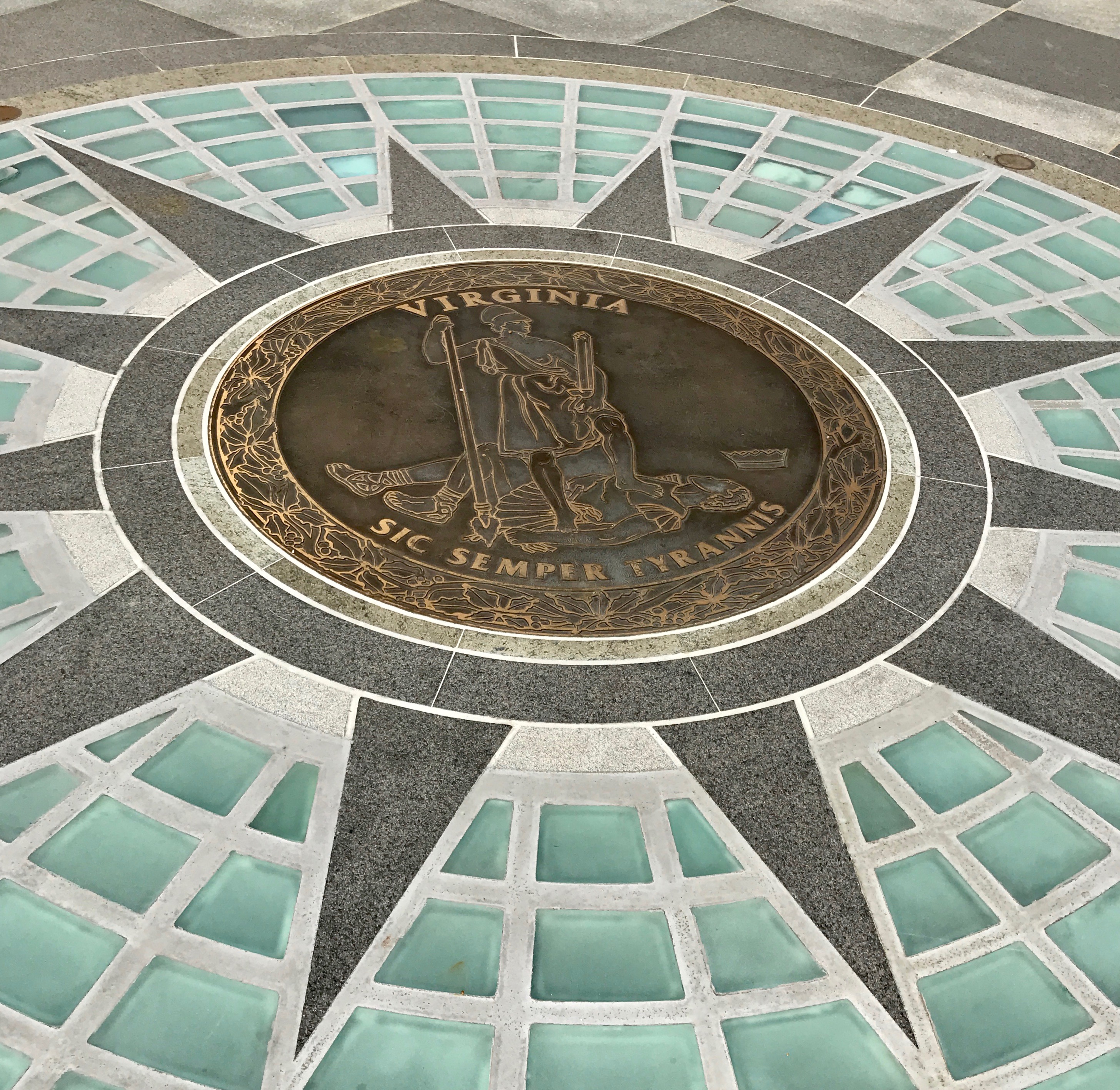
I crossed the state seal. Those of you who have studied the assassination of Abraham Lincoln will recognize the Virginia motto as what John Wilkes Booth shouted after he leapt down to the stage. Sic temper tyrannis.

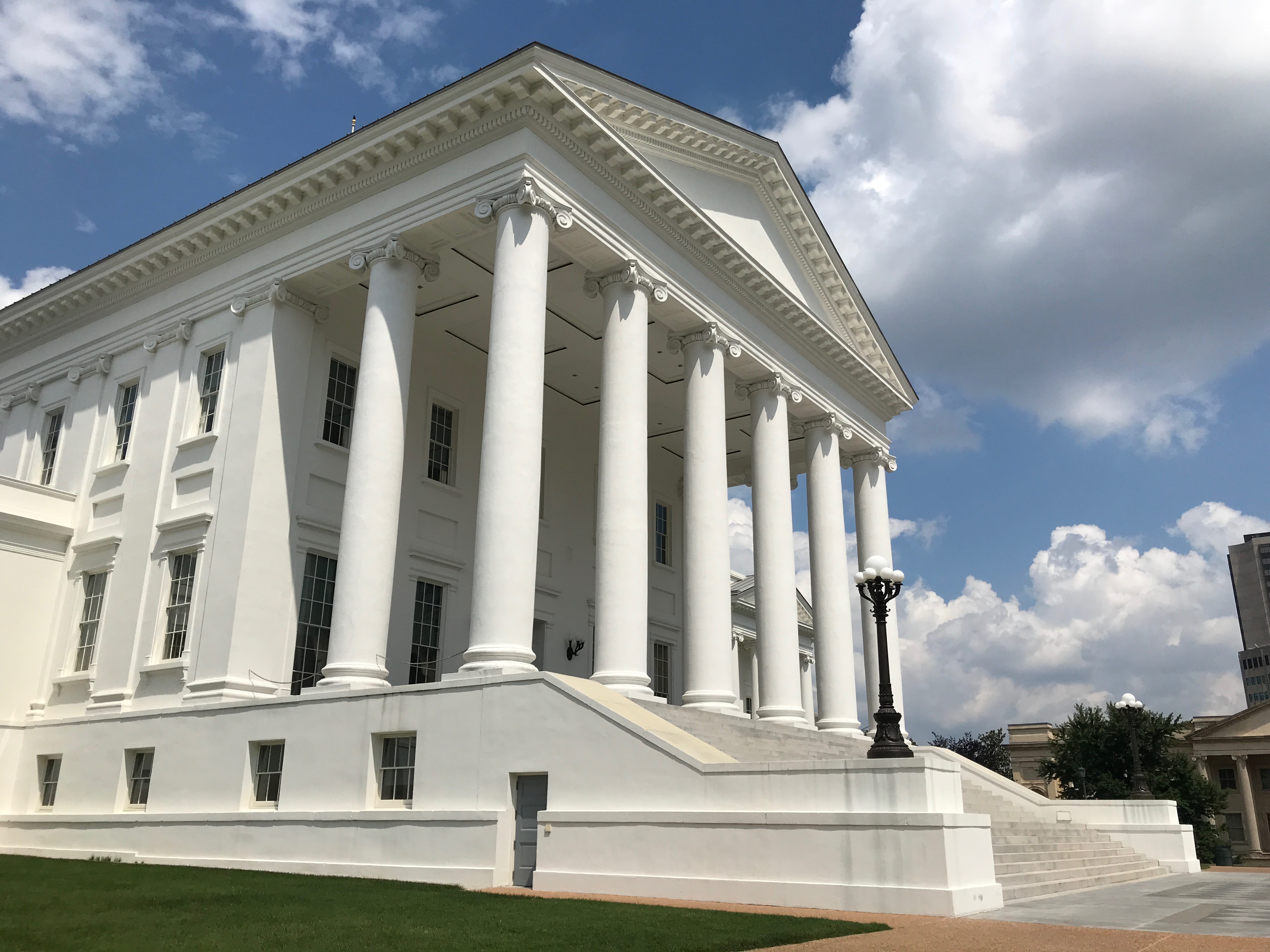
It’s quite the majestic looking building.

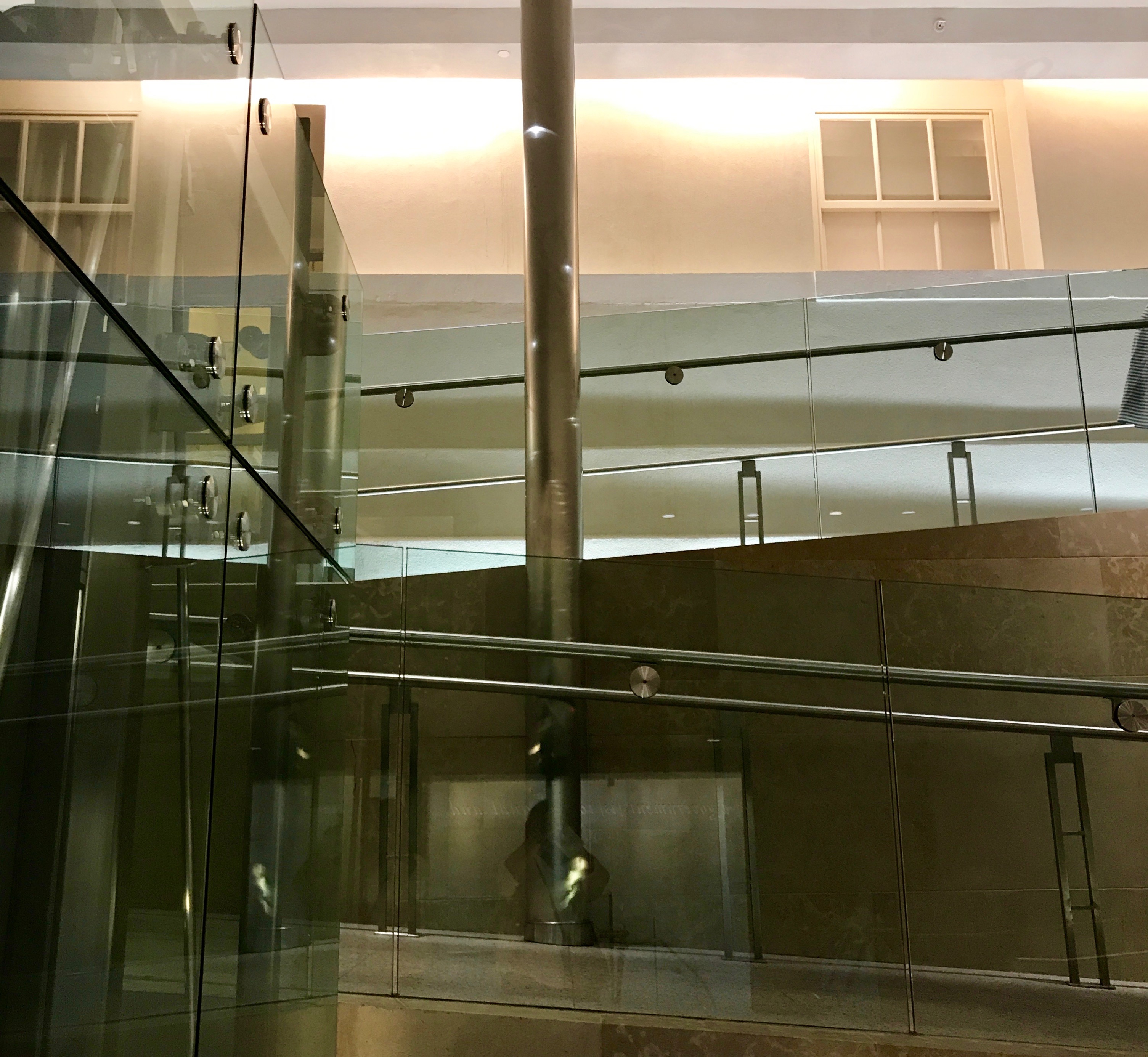
I finally made it around to the tourist entrance, which was in a newer addition. I was a little late for the tour, but I could catch up with them. They had already gotten to the older part of the building.

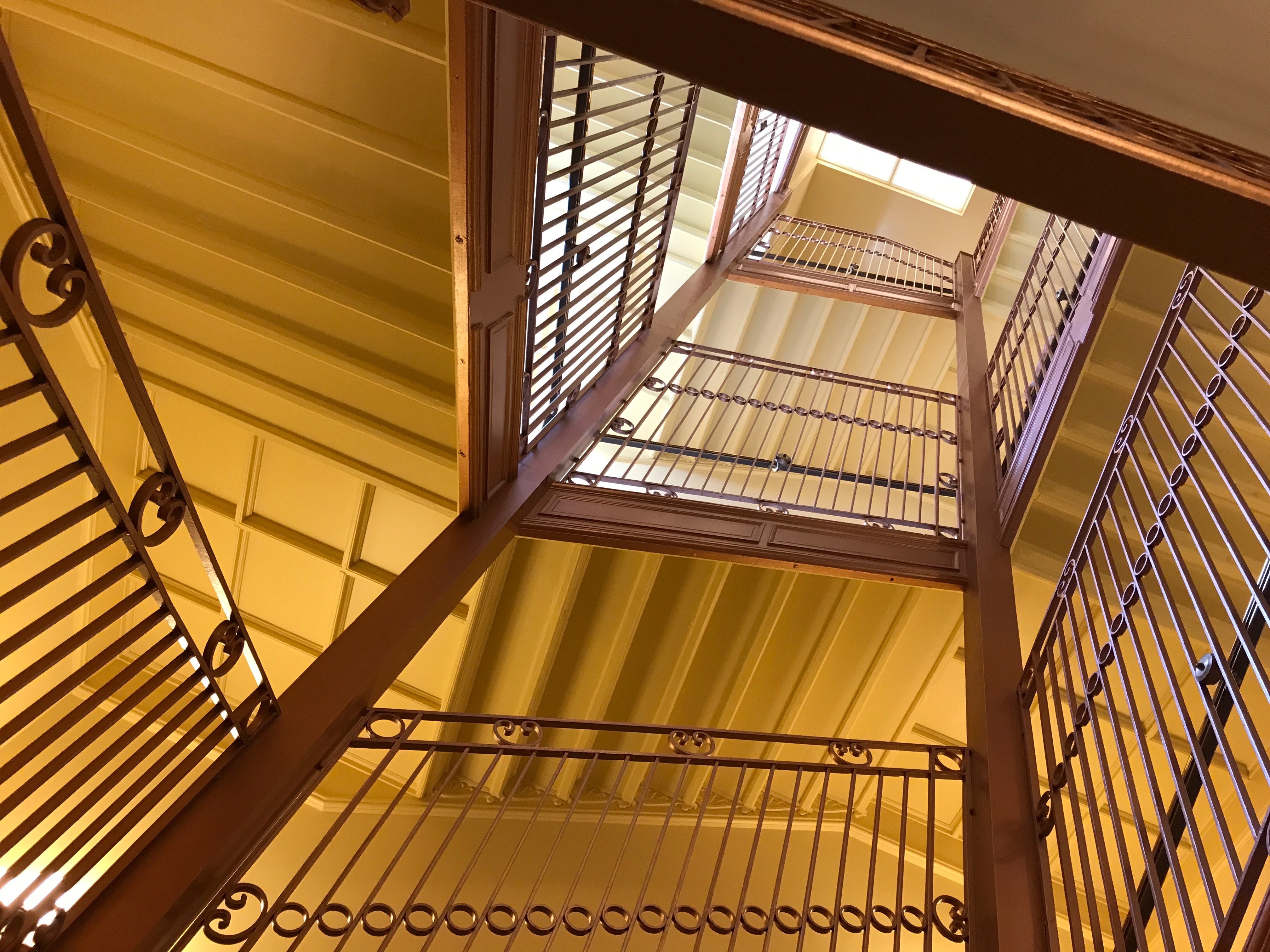
I am always looking around corners and into the backs of buildings. I thought this stairwell was interesting.

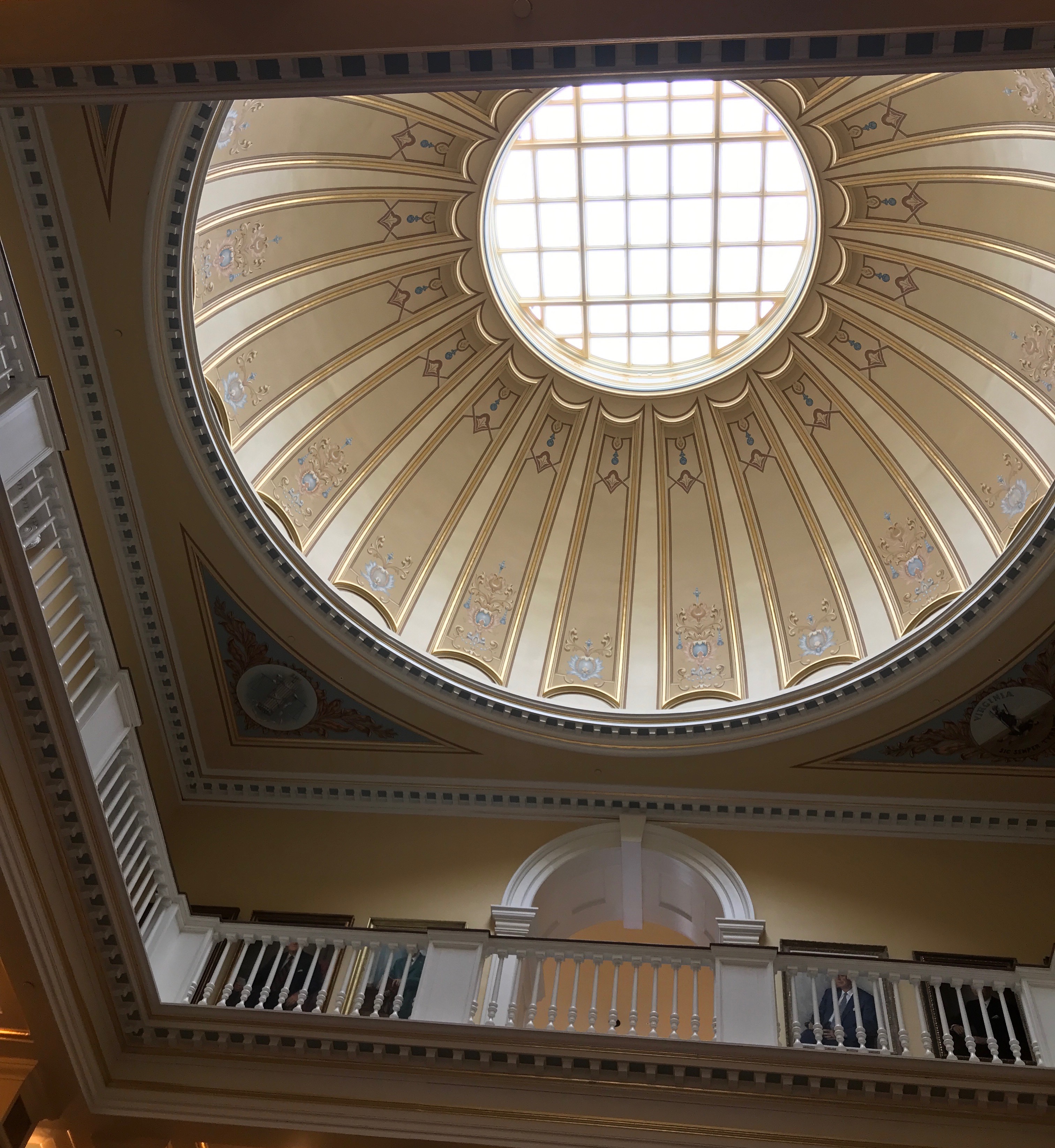
The guide took us into the rotunda. I find it interesting that this building has a rotunda but no dome.

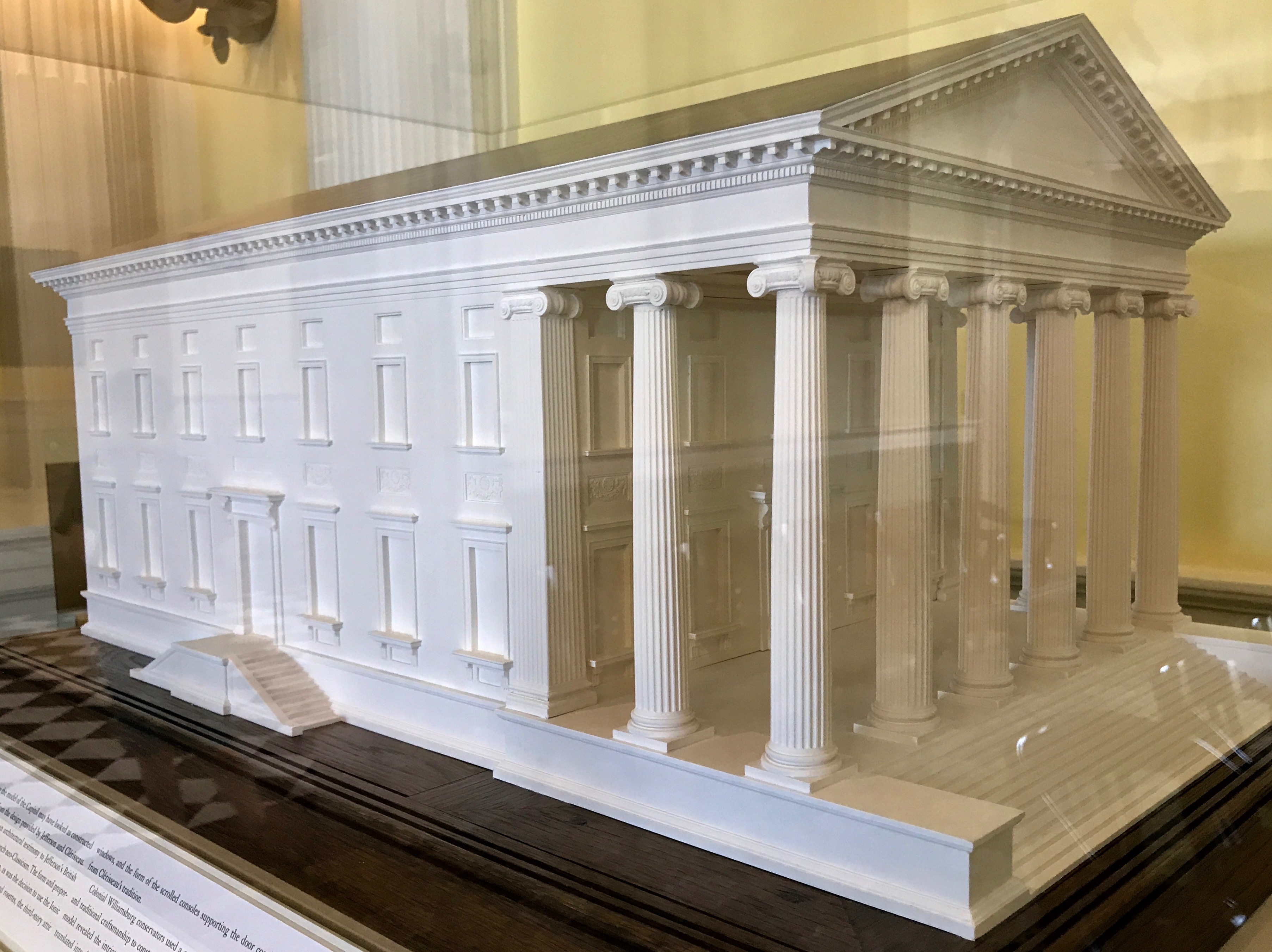
It sure looks like it has a dome, doesn’t it? But, the managed to hide it under the peaked roof.

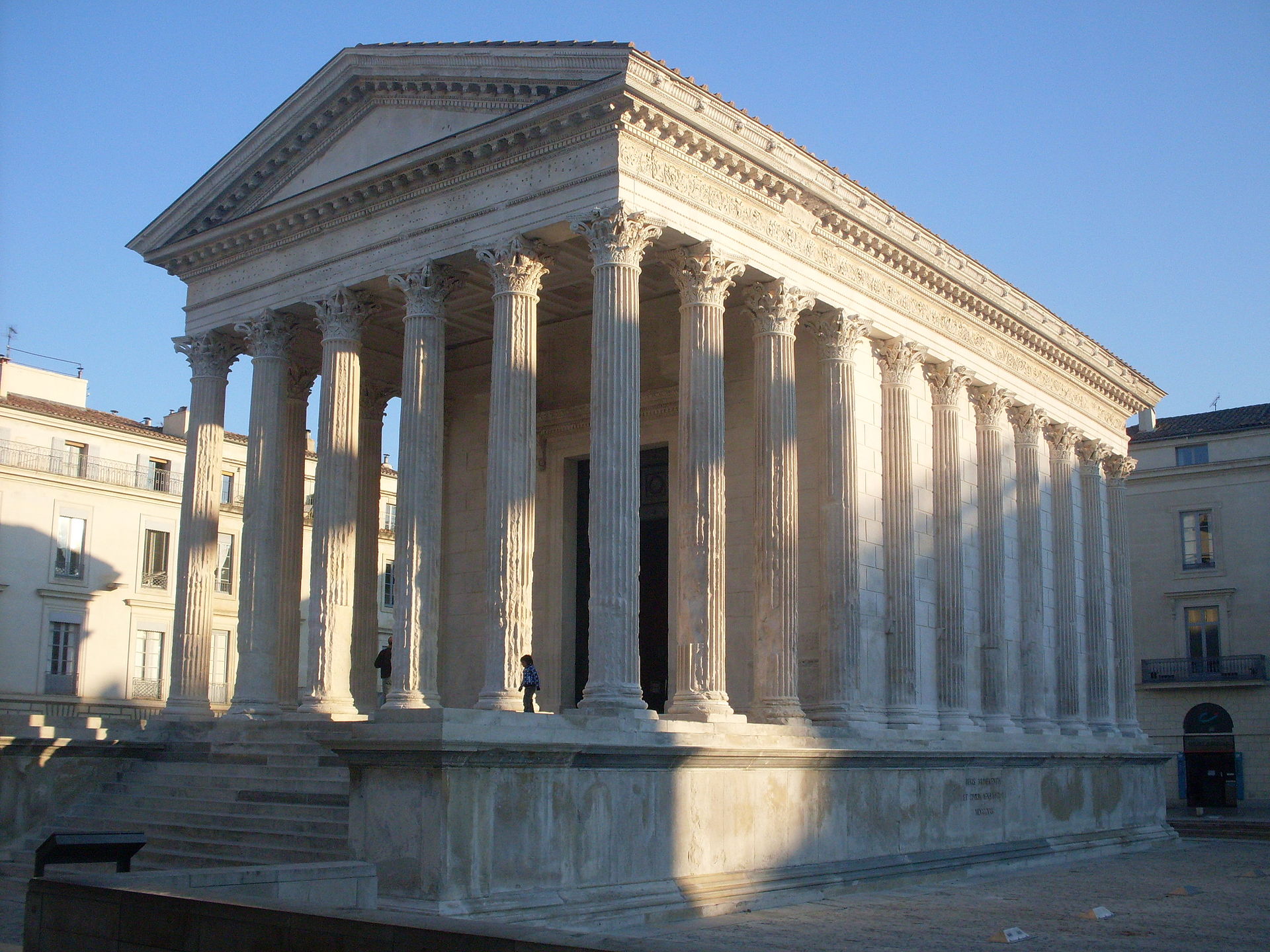
You can see from the model that there is no dome. That’s the way Thomas Jefferson and French architect Charles-Louis Clerisseau designed it. According to my Preferred Source, the design was modeled after the Maison Carrée at Nimes in southern France, which is one of the best preserved Roman temple facades to be found in the territory of the former Roman Empire.

By Danichou – Own work, Public Domain, https://commons.wikimedia.org/w/index.php?curid=12835245

This is the Maison Carrée.

In considering the fact that this capitol doesn’t have a dome, I thought that it was quite unusual. In fact, twelve of the fifty state capitols don’t have external domes:

Alaska
Delaware
Florida
Hawaii
Louisiana
Nebraska
New Mexico
New York
North Dakota
Ohio
Tennessee

So, now you know!

The cornerstone was laid on August 18, 1786, even before the design was completed. Later that year, a set of architectural drawings and a plaster model were sent from France to Virginia. It was sufficiently completed for the General Assembly to meet there in October 1792.

But, back to the tour.

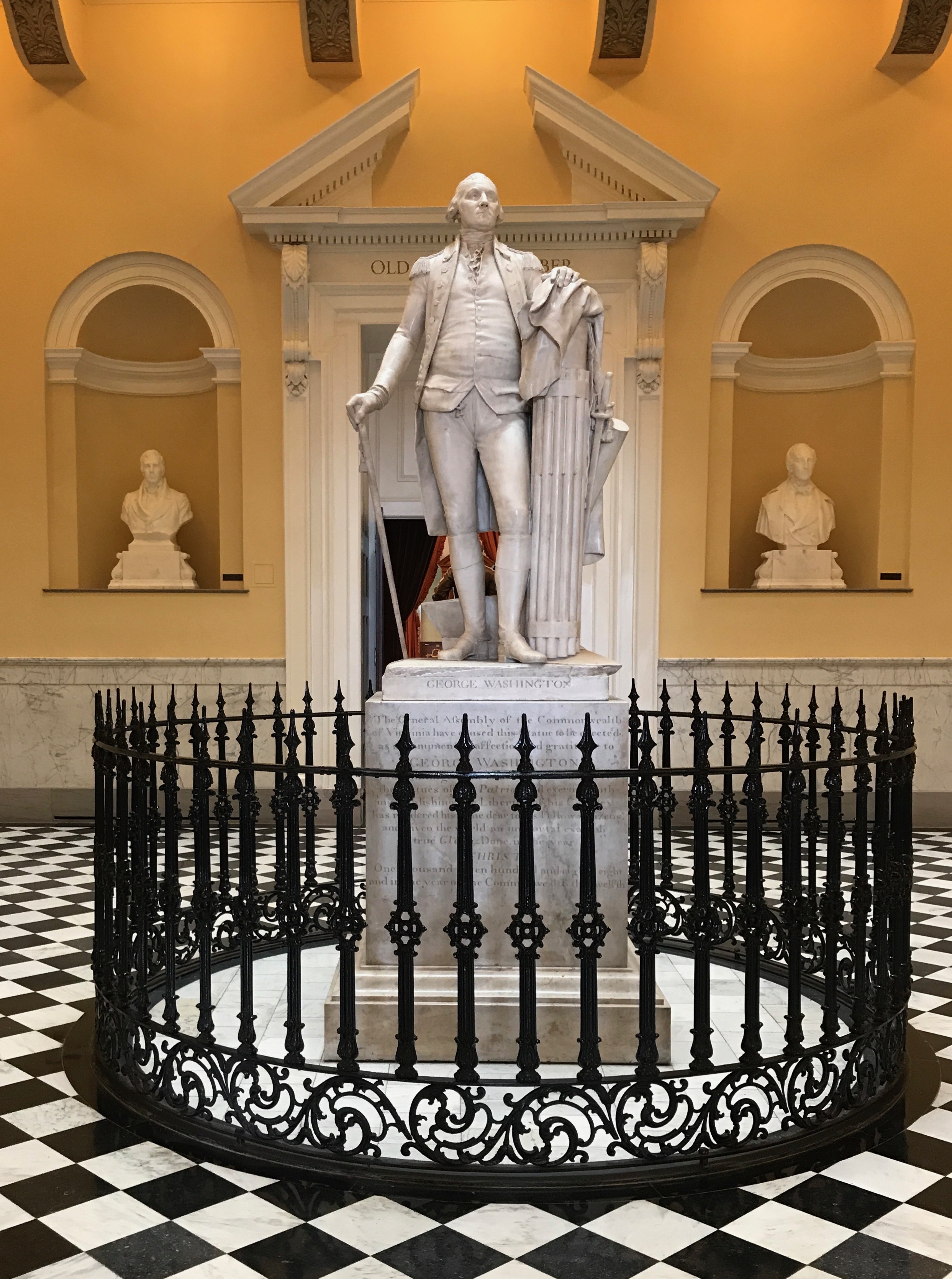
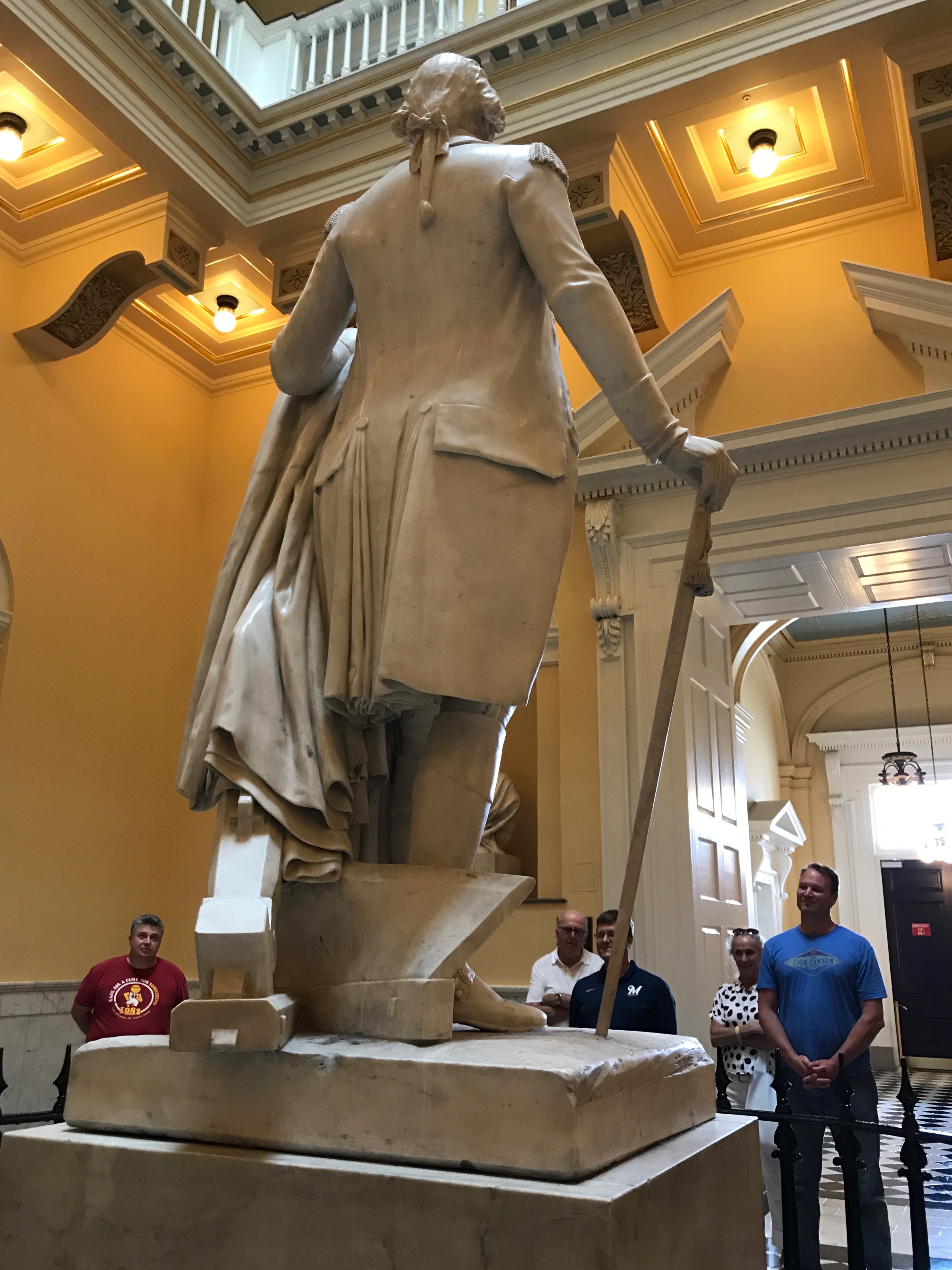
Houdon’s statue of George Washington has pride of place in the rotunda.

Benjamin Franklin invited Jean-Antoine Houdon to cross the Atlantic from France in 1785 so that Washington could model for him. Washington sat for wet clay life models and a plaster life mask. These models served formally commissions of statues of Washington, including this one that was commissioned by the Virginia General Assembly.

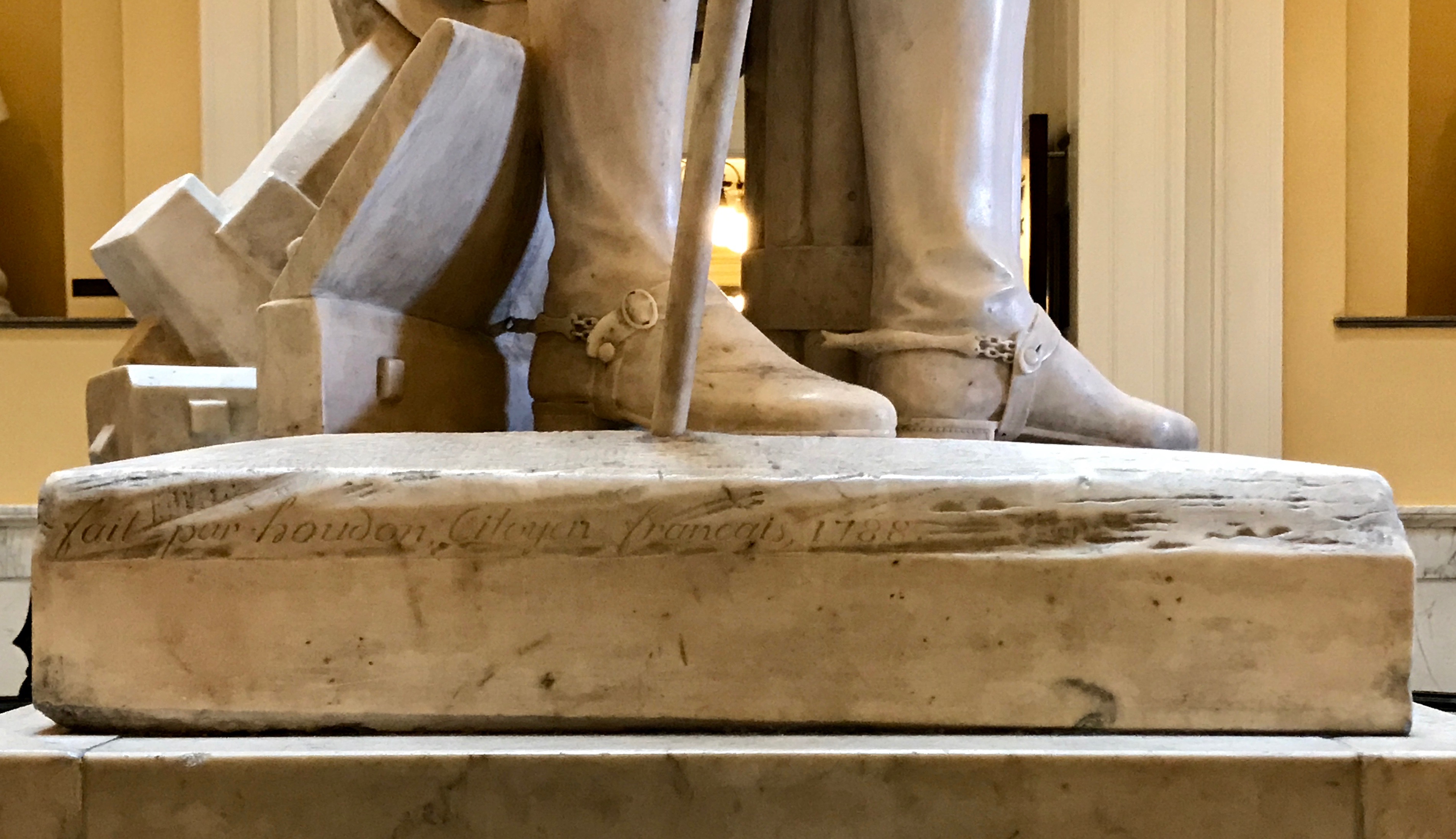
If you look carefully, you can see the artist’s signature on the left side of the base.

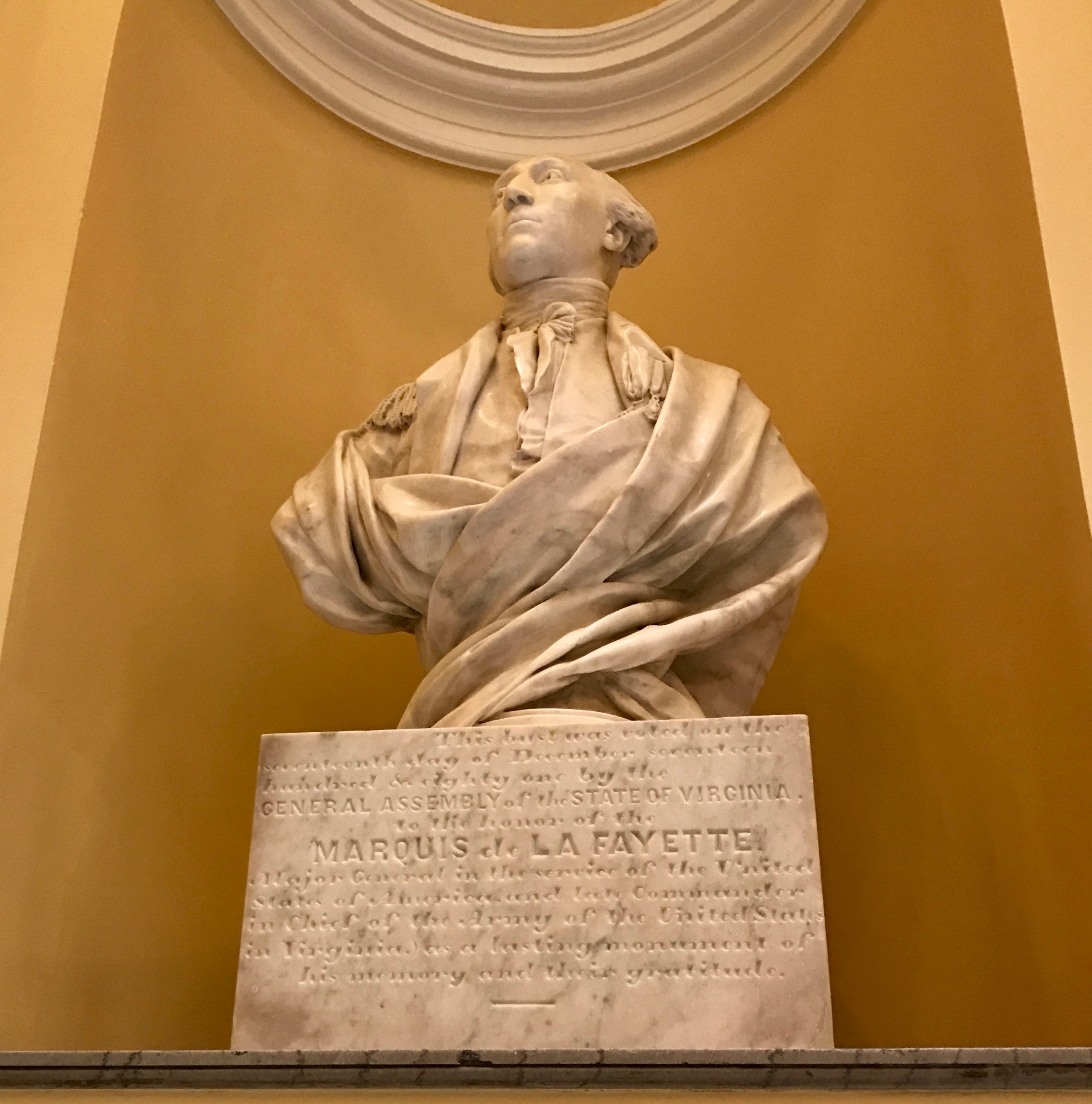
At the same time that the Virginia General Assembly commissioned a marble state of Washington, they also commissioned a marble bust of the Marquis de Lafayette.

The intent was that the statuary would represent public virtue from the Old and New Worlds. Lafayette was voted a citizen of Virginia by an “act of assembly” for his service on behalf of the Commonwealth during the American Revolution.

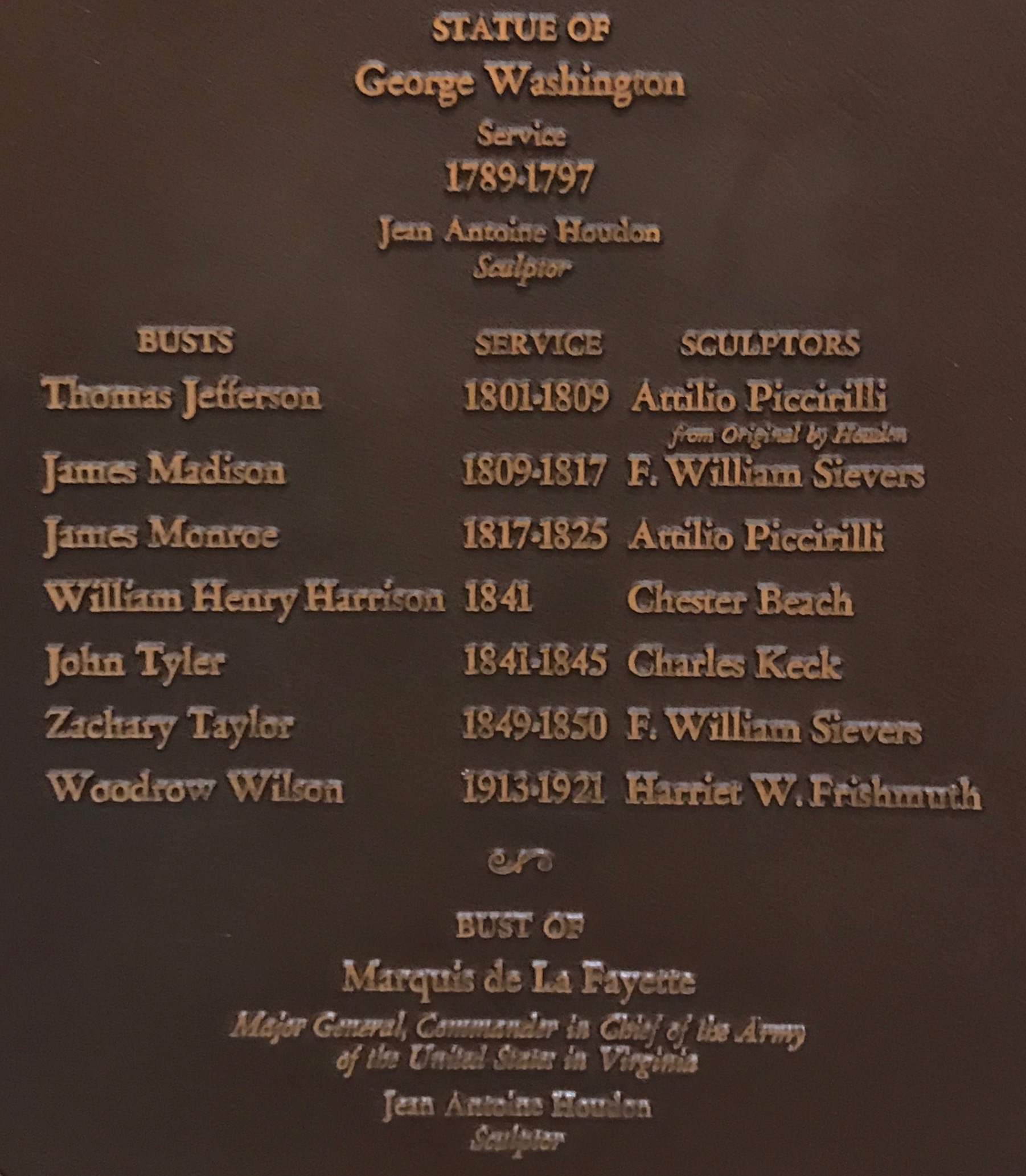
There were many other busts in the rotunda.

There were eight presidents that were born in Virginia!

After the Rotunda, we continued on to other parts of the Capitol.

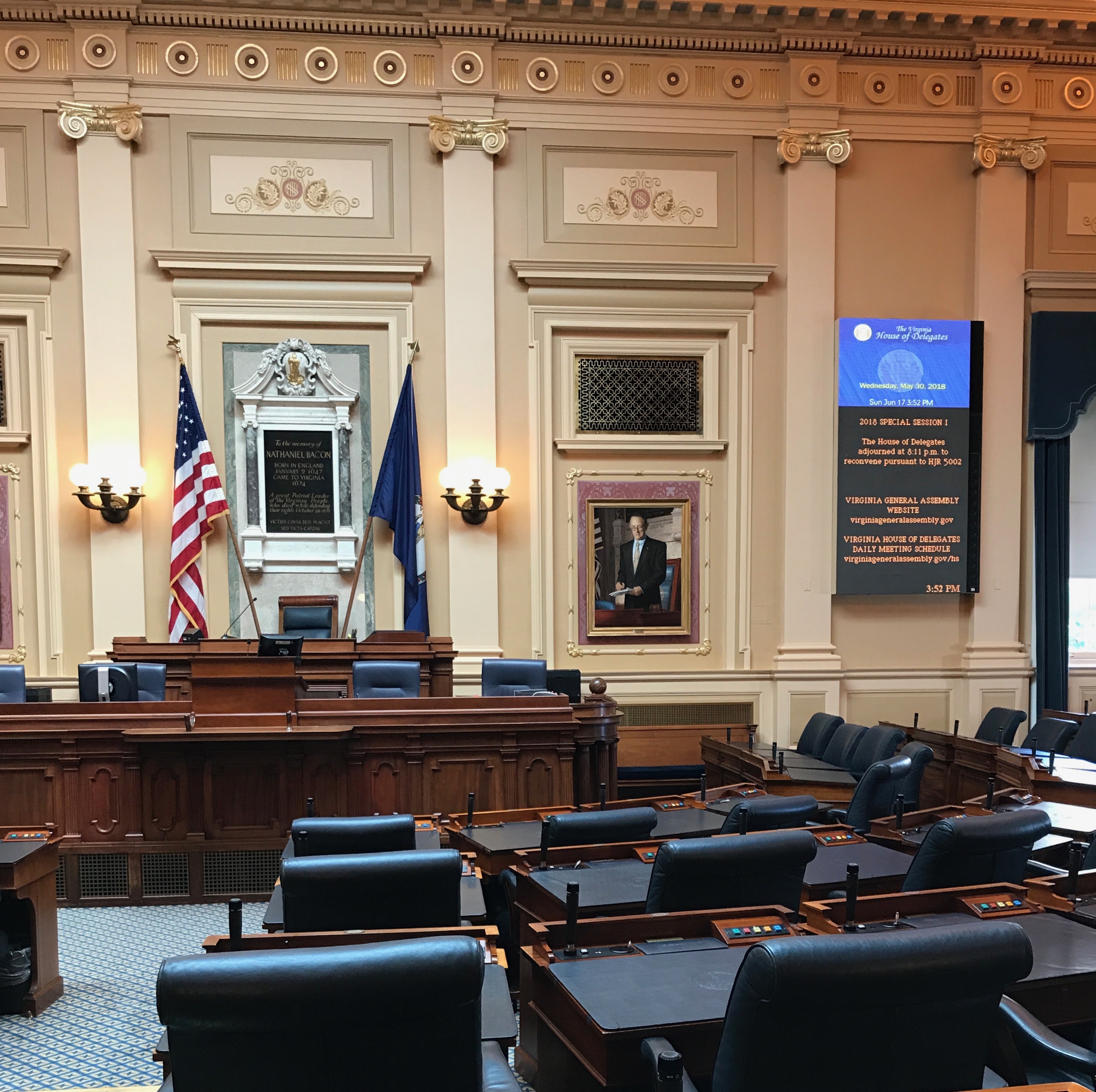
It looks like a comfortable place to work.

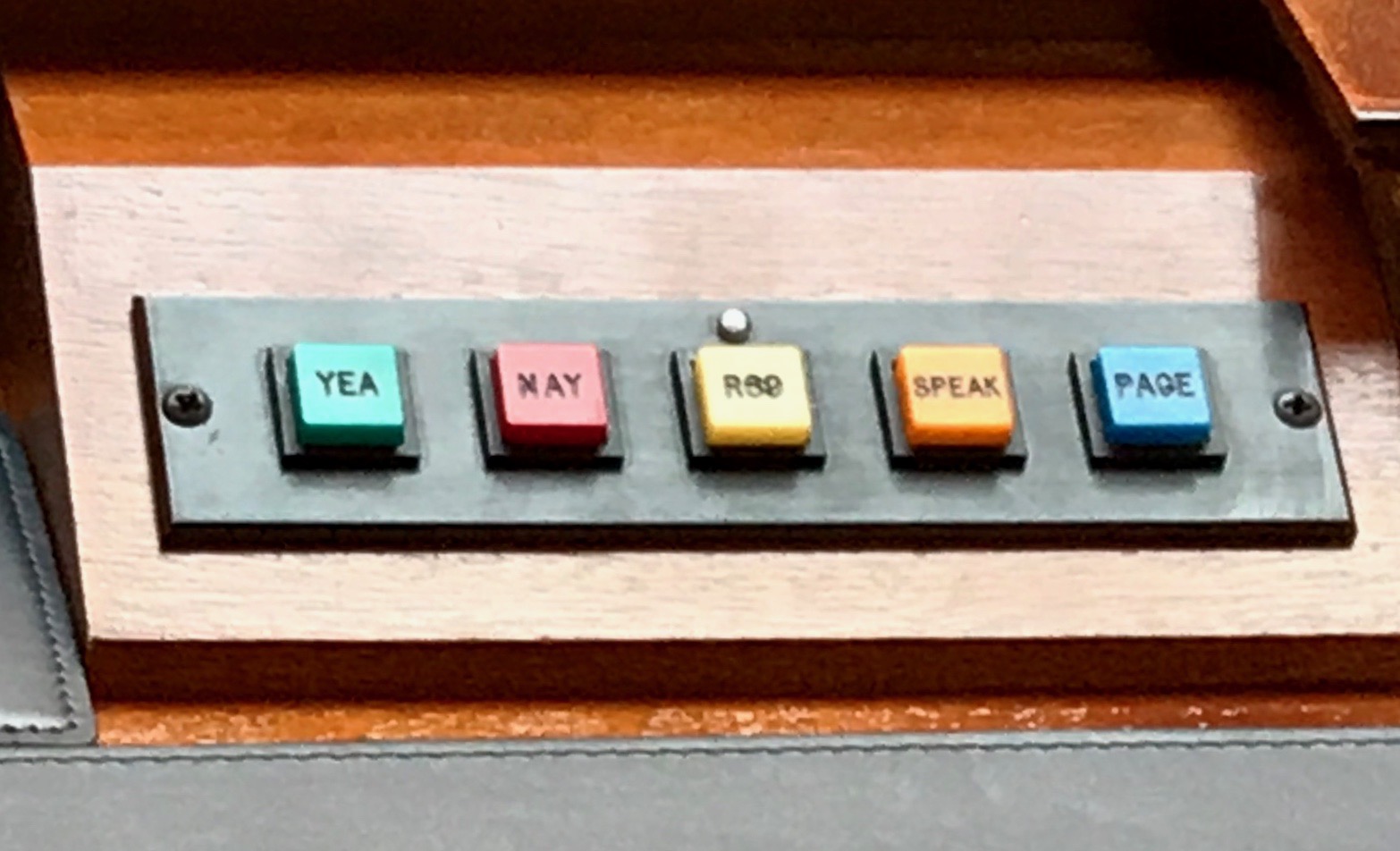
I guess pushing a button is easier or more accurate that raising your hands and having someone count.

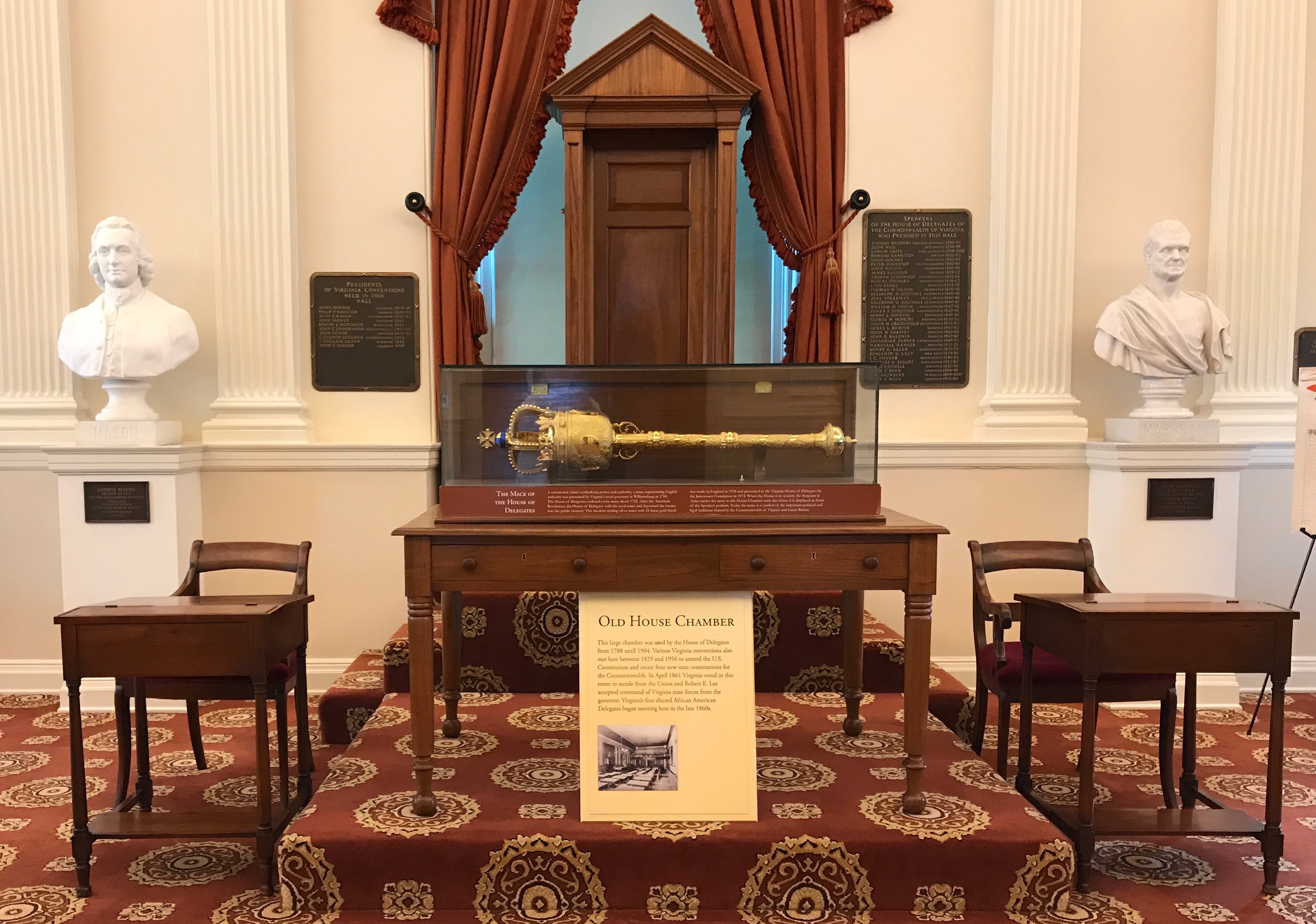
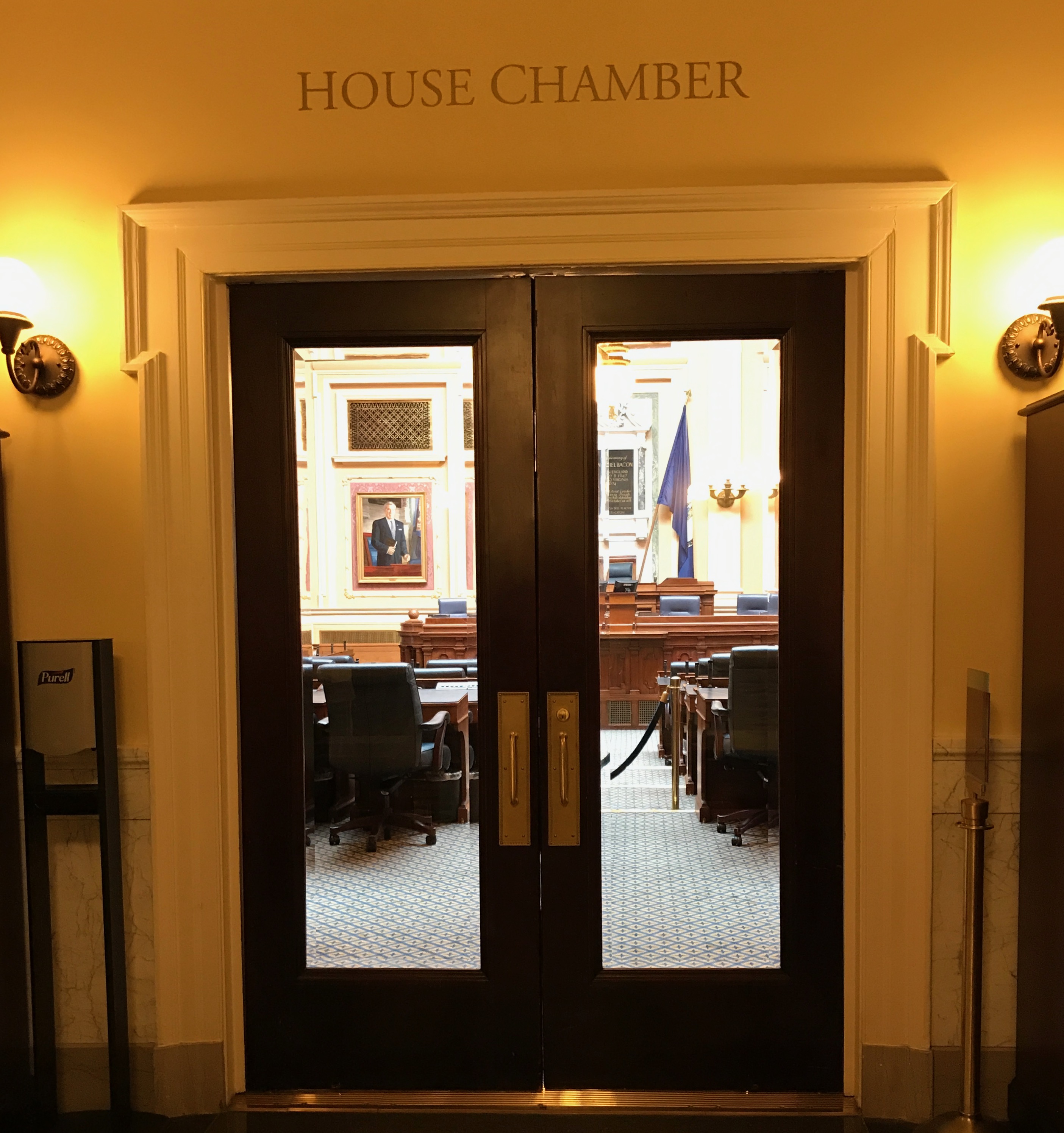
We continued on to the Old House Chamber.

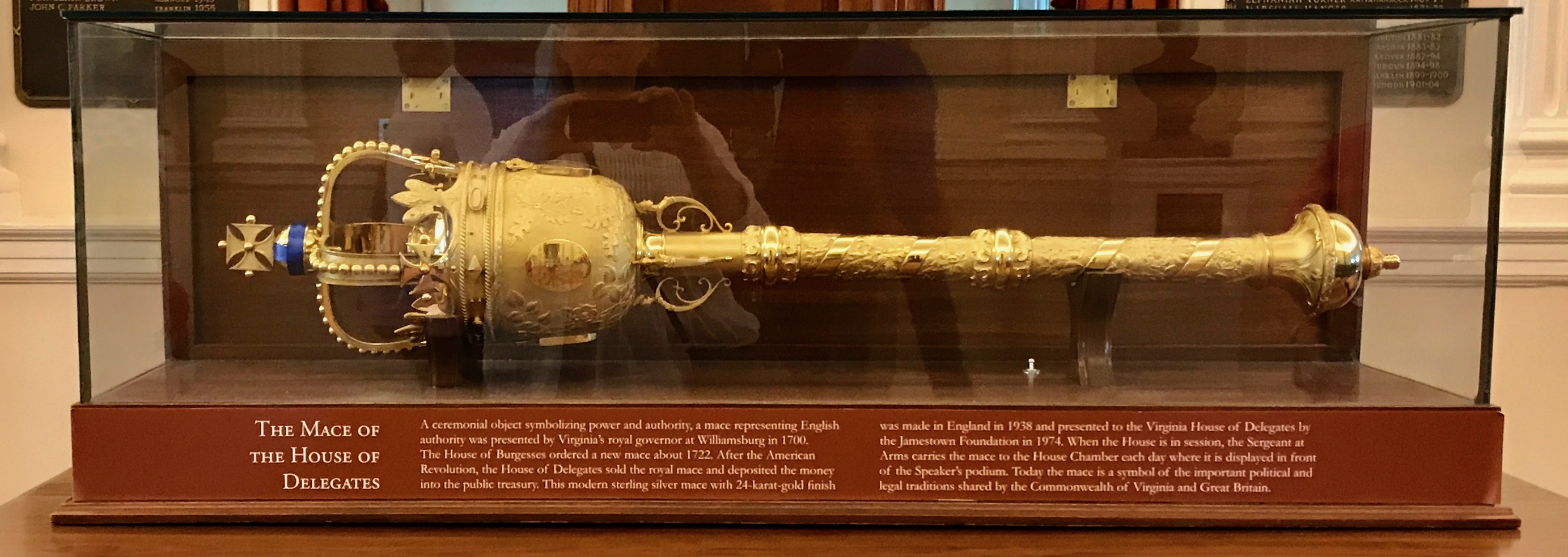
In  the Old House Chamber, there is a copy of The Mace of the House of Delegates.

It seems that Virginia’s royal governor at Williamsburg presented this mace to the House of Burgesses in 1700. The house of Burgesses ordered a new mace in around 1722. After the American Revolution, the House of Delegates sold the royal mace and deposited the money into the public Treasury.

This modern mace was made in England in 1938 and was made of sterling silver with a 24-karat-gold finish. It was presented to the Virginia House of Delegates by the Jamestown Foundation in 1974. I guess the folks in Jamestown must have just held on to it and admired it from 1938-1974.

When the House is in session, the Sergeant at Arms carries the mace to the House Chamber each day, where it is displayed in front of the Speaker’s podium. According to the information with the mace, “Today the mace is a symbol of the important political and legal traditions shared by the Commonwealth of Virginia and Great Britain.

I guess they are finally over that little fracas that happened in 1776.

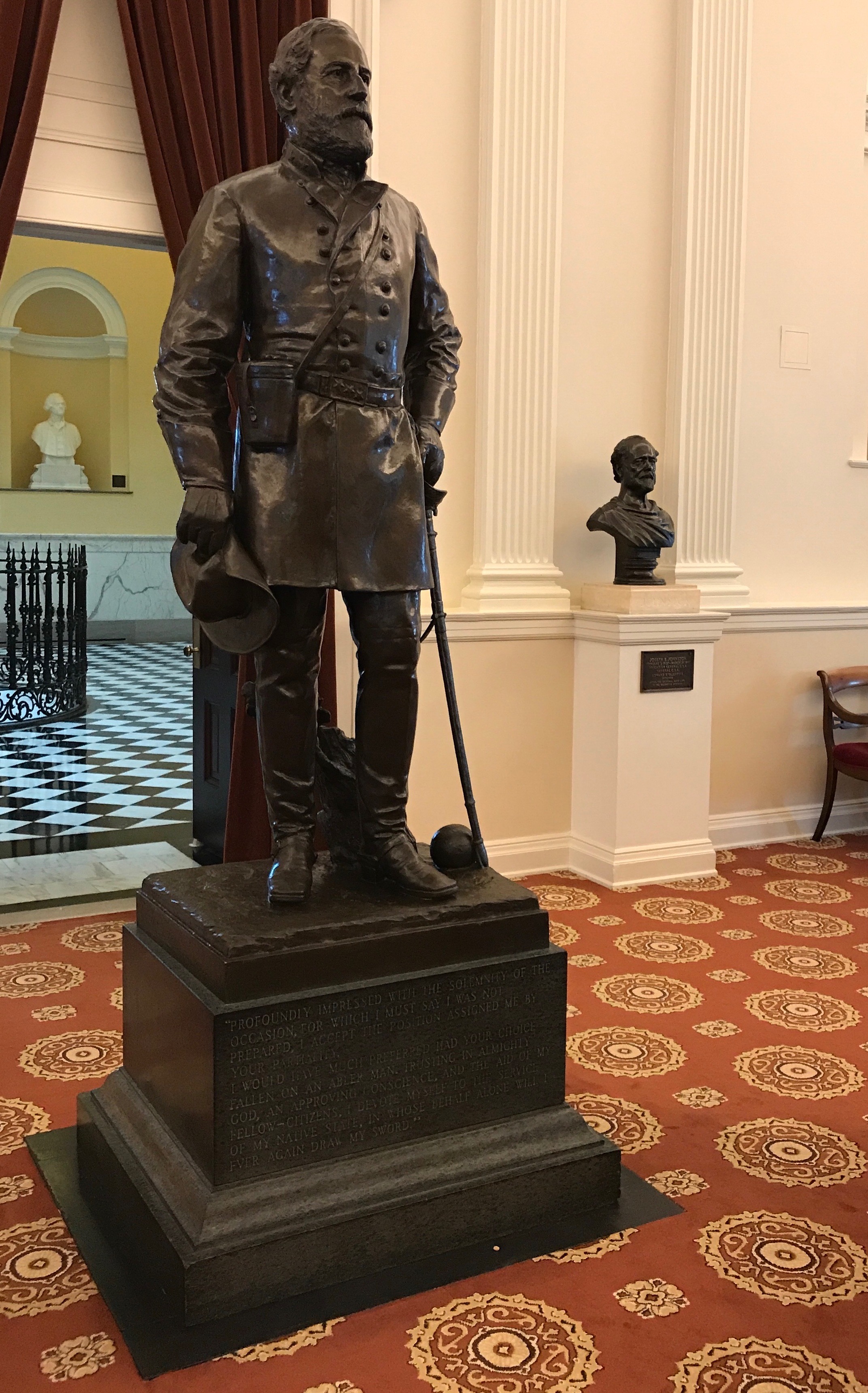
As we crossed back to the Senate Chamber, we passed this statue of Robert Lee.

Have you ever noticed that it doesn’t sound right without that “E?”

Robert E. Lee.

Incidentally, the statue was erected where Lee stood on April 23, 1861, when at the age of 54 he accepted command of the military forces of the Commonwealth of Virginia.

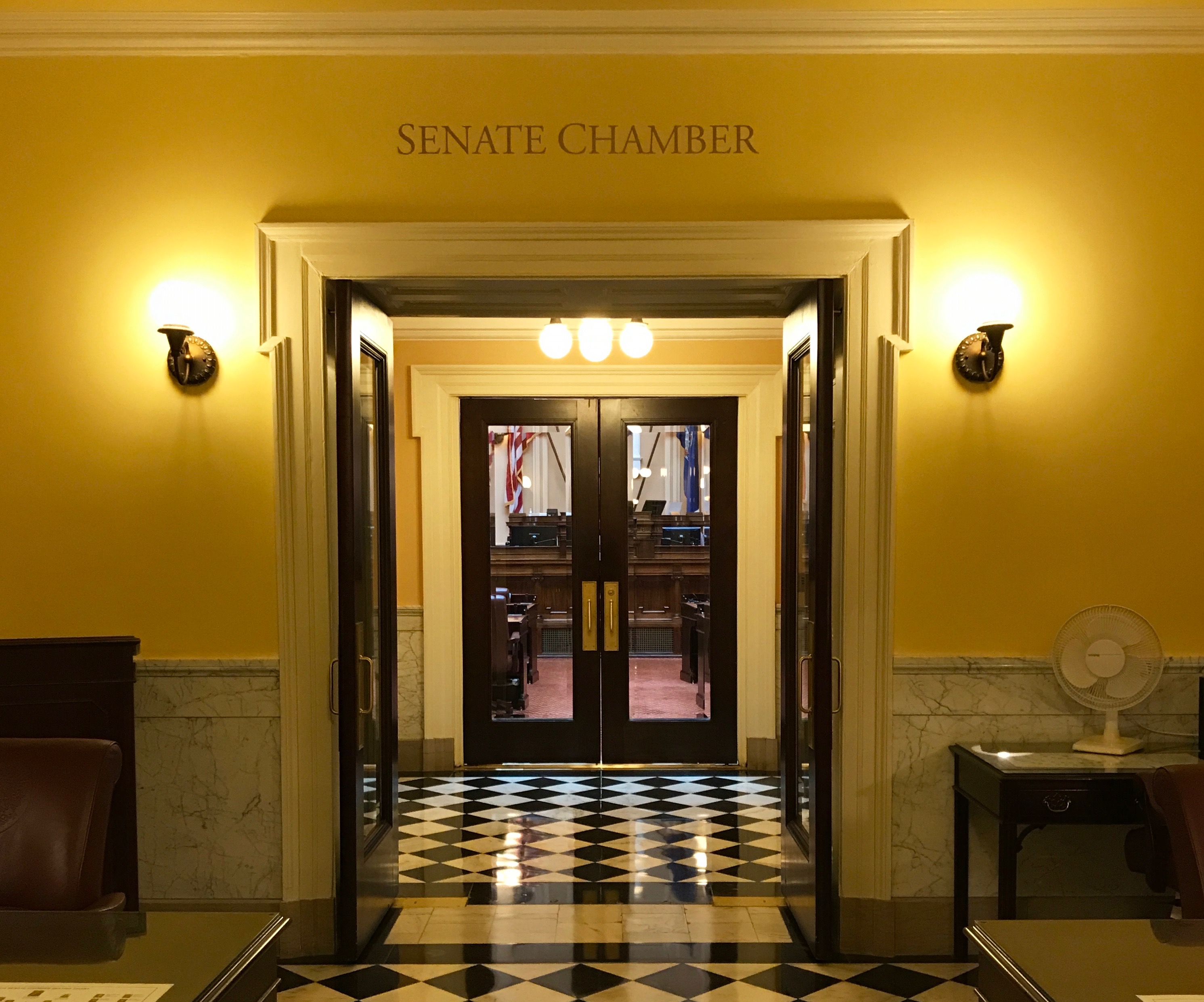
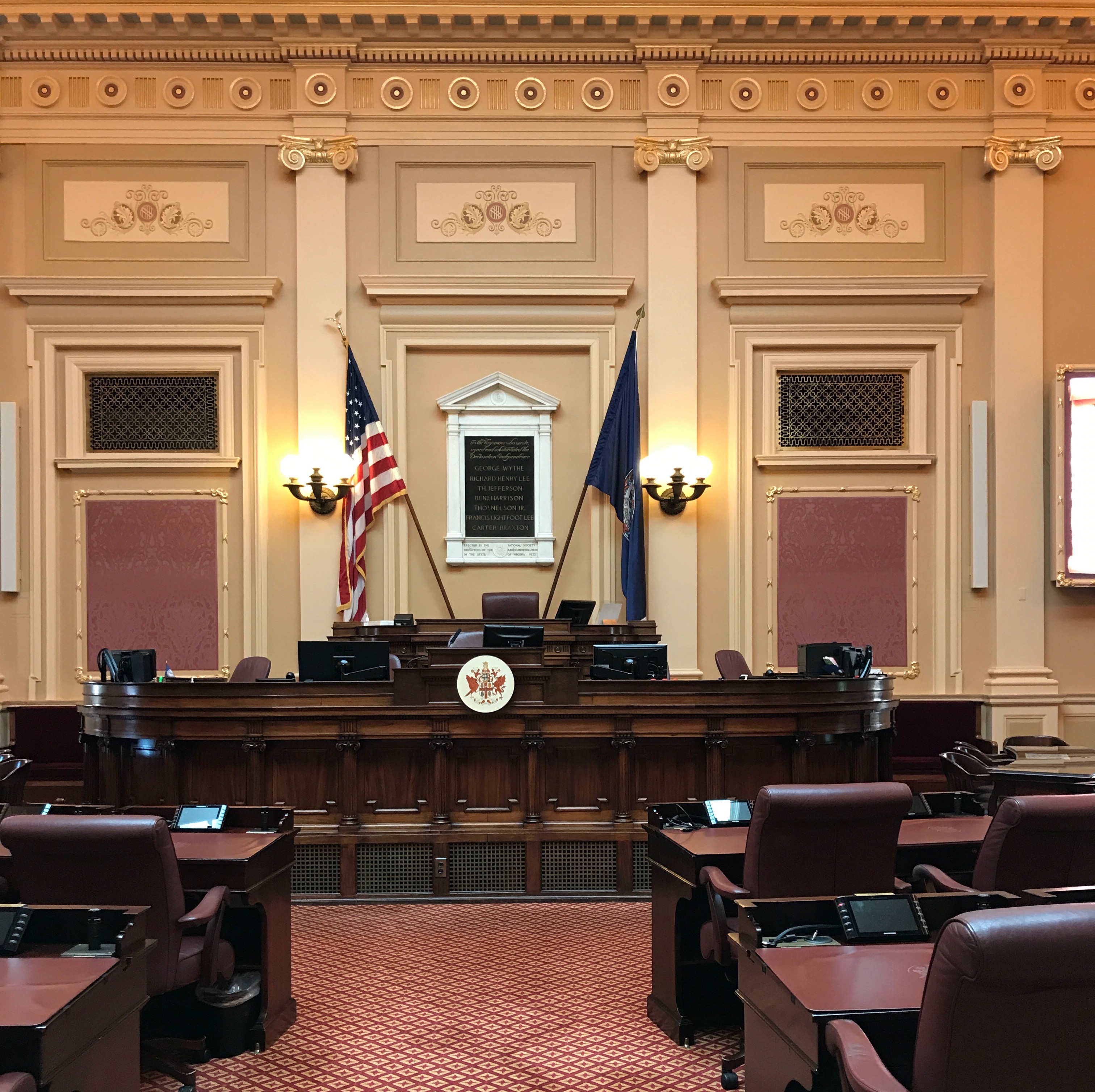
We entered the Senate Chamber.

It doesn’t look that different from the House Chamber, except for the color scheme.

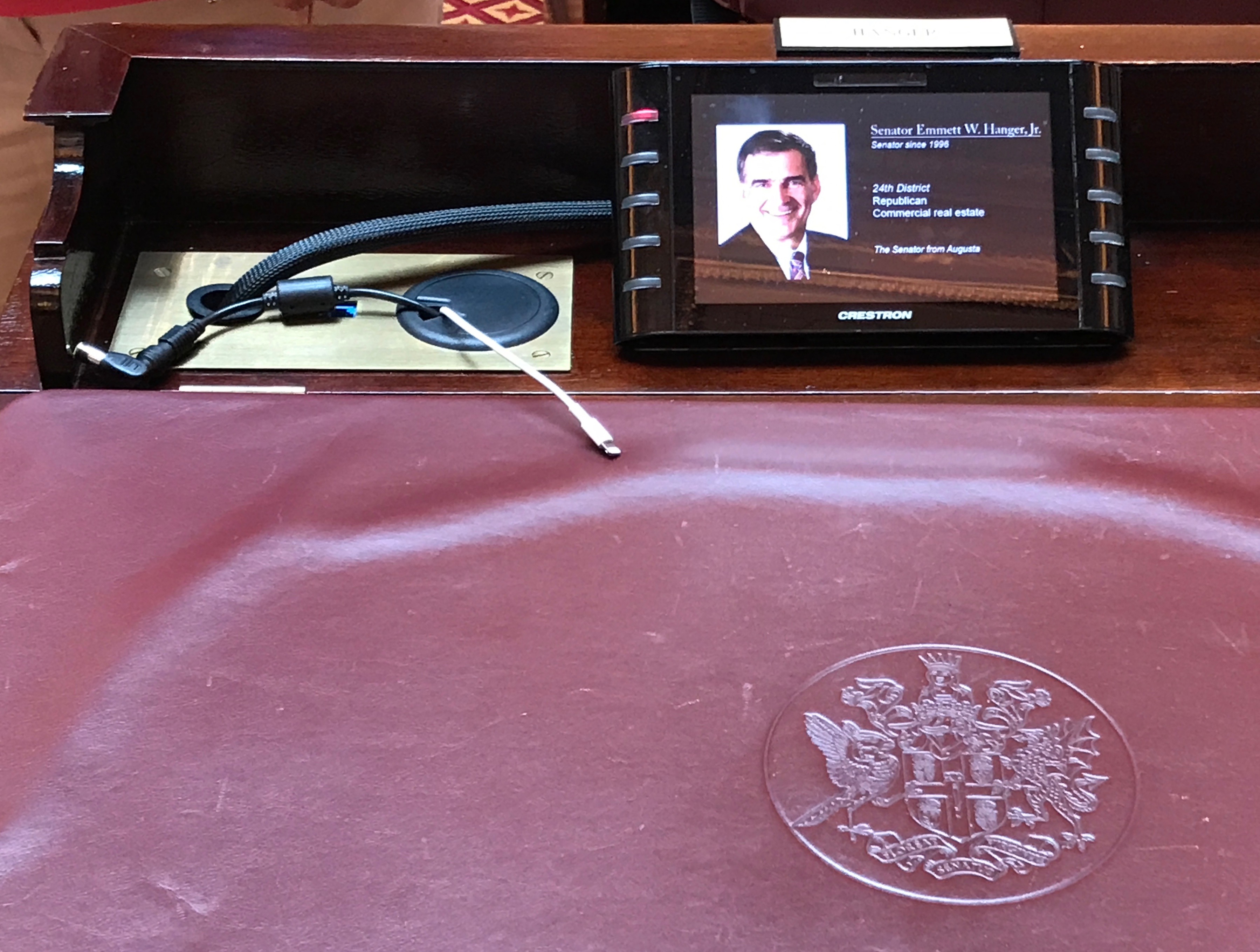
Oh, and the more up-to-date technology.

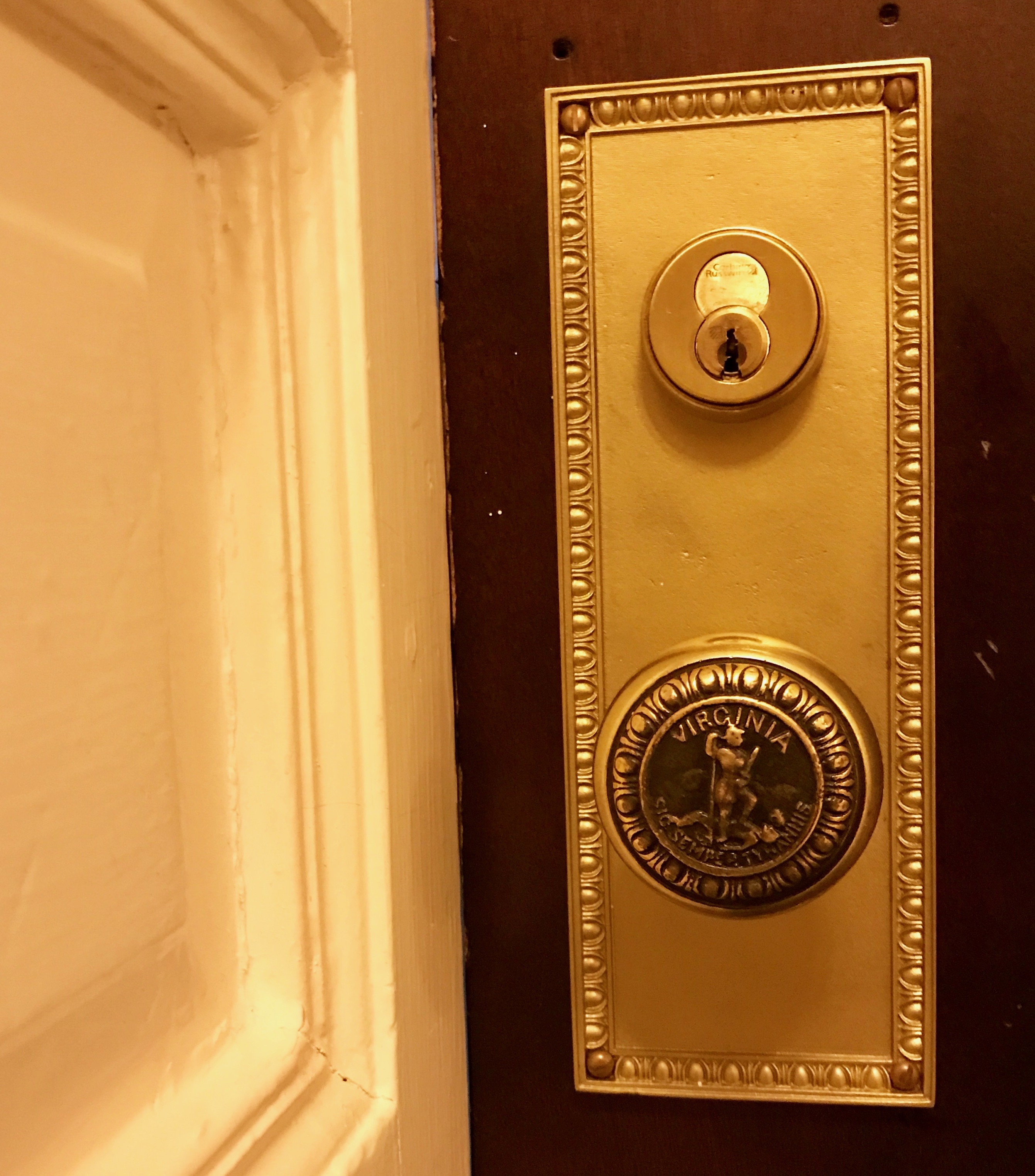
I was thrilled to find a fancy Virginia doorknob. One of these days, I’ll pull together a collection of doorknobs and hinge photos.

And with that it was time to head outside.

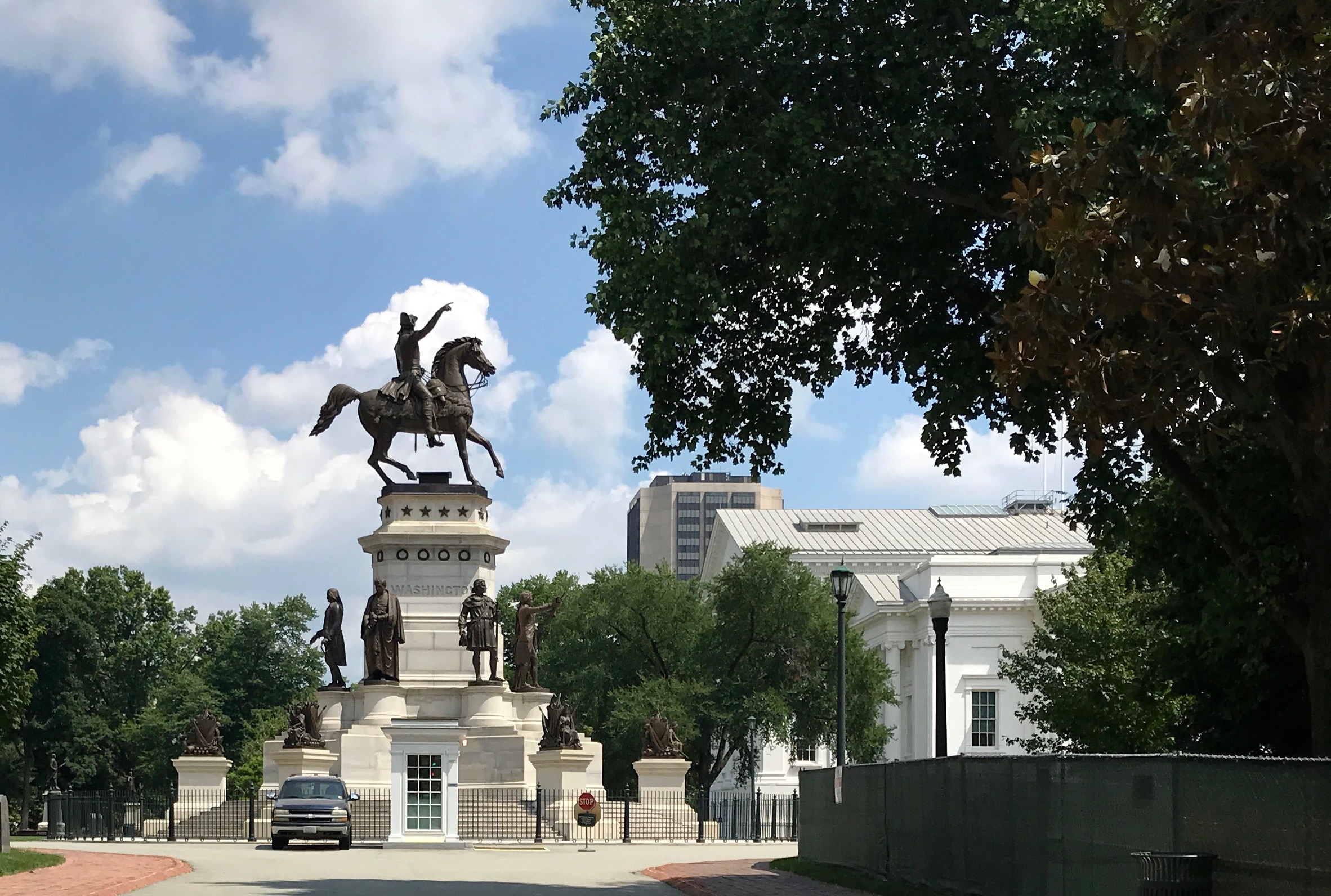
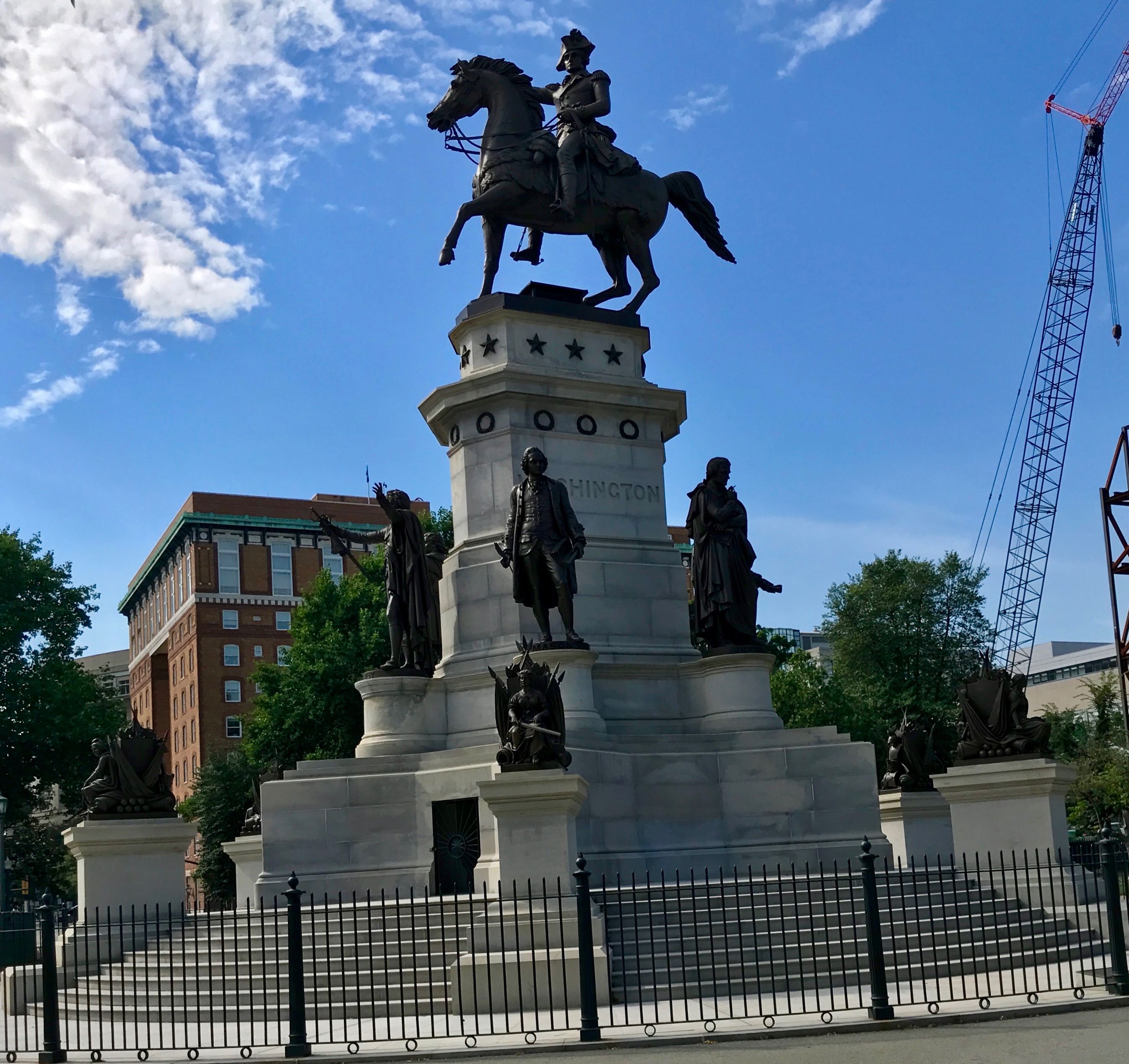
There’s Washington again. This large equestrian statue by Thomas Crawford,  was intended to honor Washington and to glorify Virginia’s contributions to our nation’s independence.

The cornerstone was laid on February 22, 1850, Washington’s birthday. Washington’s stature was unveiled on his birthday in 1858. Unfortunately, Crawford died in 1857, before completing the monument.

In addition to Washington, the following native sons are included: Andrew Lewis, Patrick Henry, George Mason, Thomas Jefferson, Thomas Nelson, and John Marshall.

Randolph Rogers completed the work Crawford started. The final pieces were put into place in 1869.

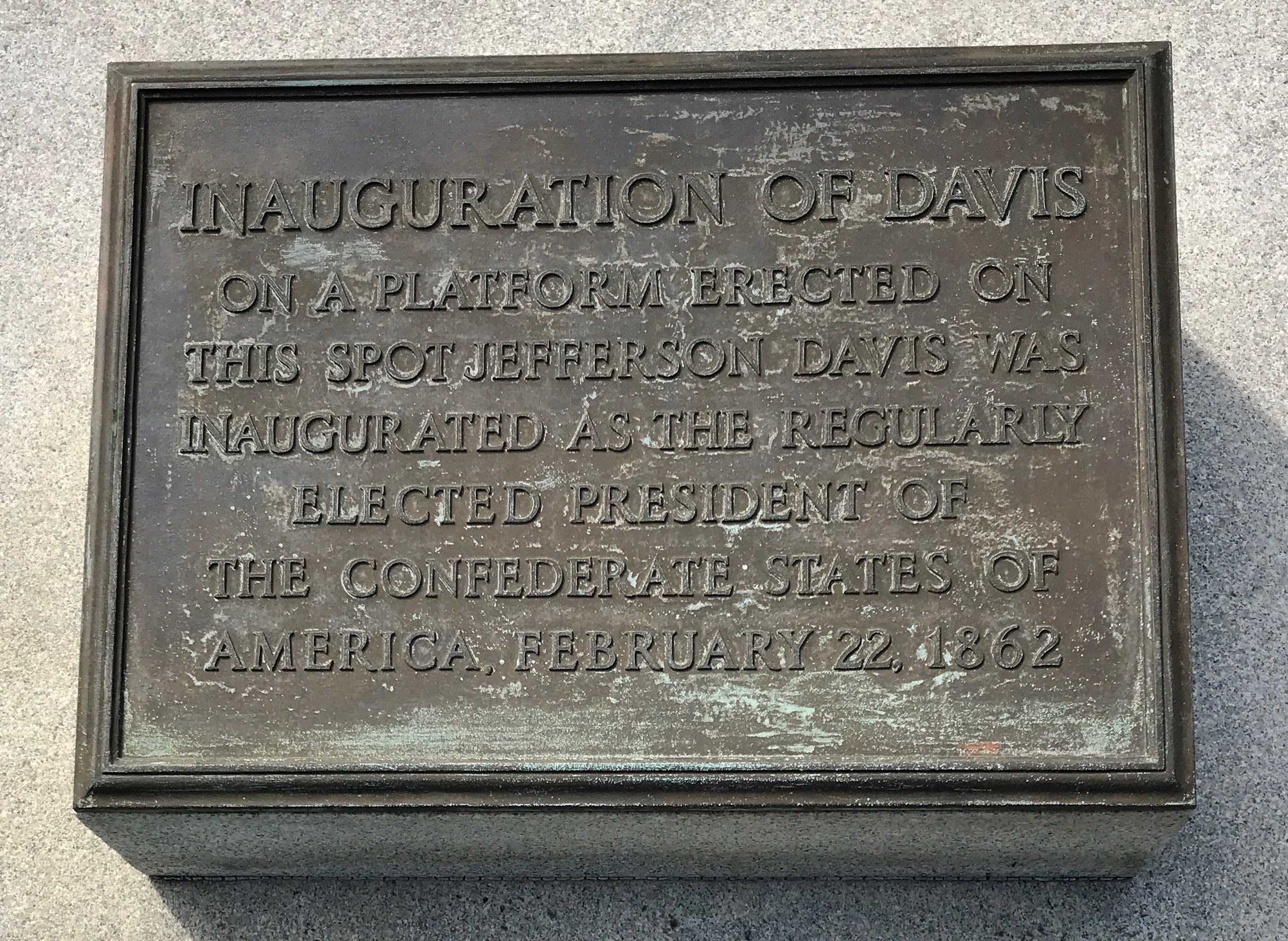
This plaque commemorates Jefferson Davis’ inauguration in 1862.

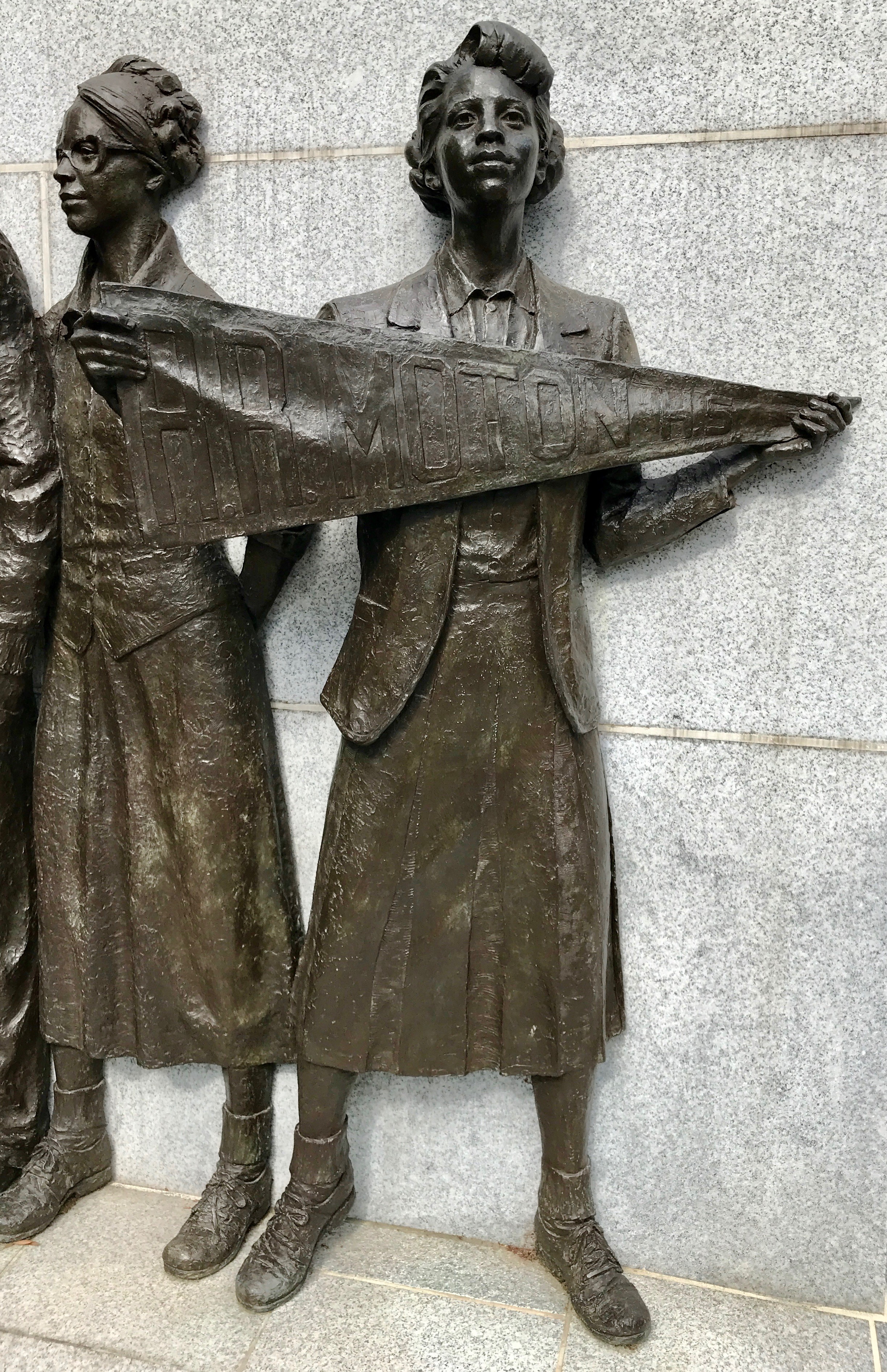
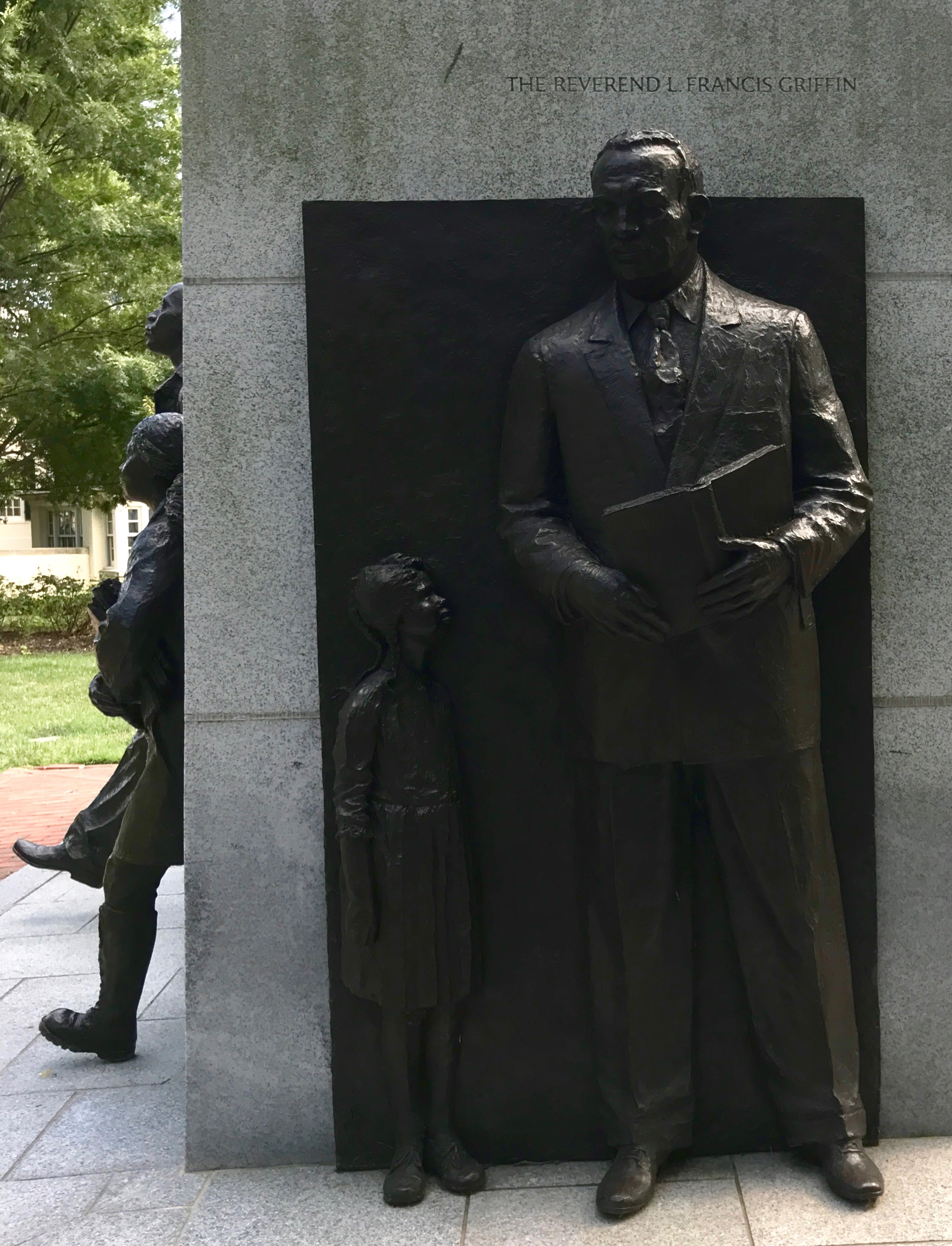
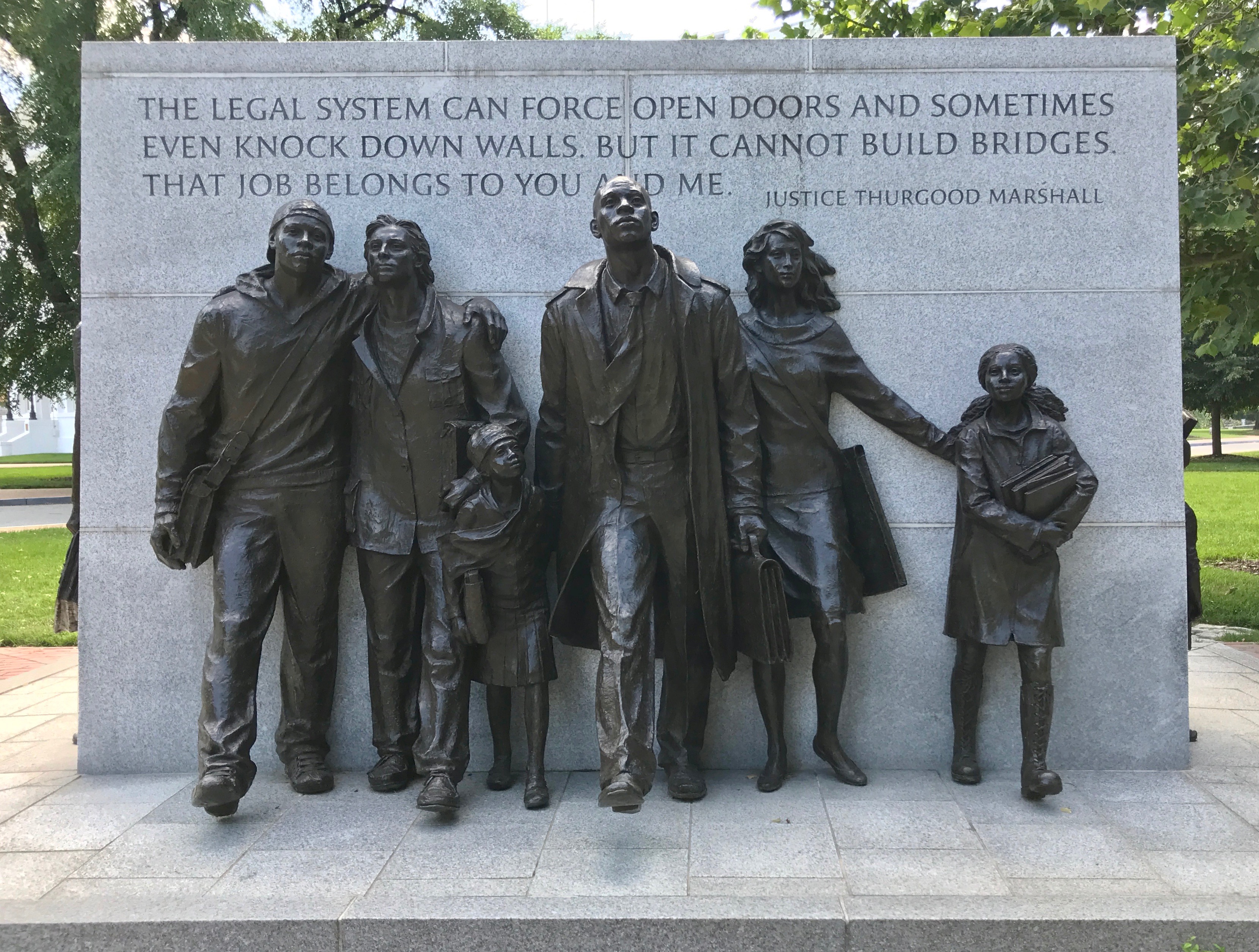
I do find it hopeful that this statue commemorating the struggle for civil rights is so much more impressive than that small plaque.

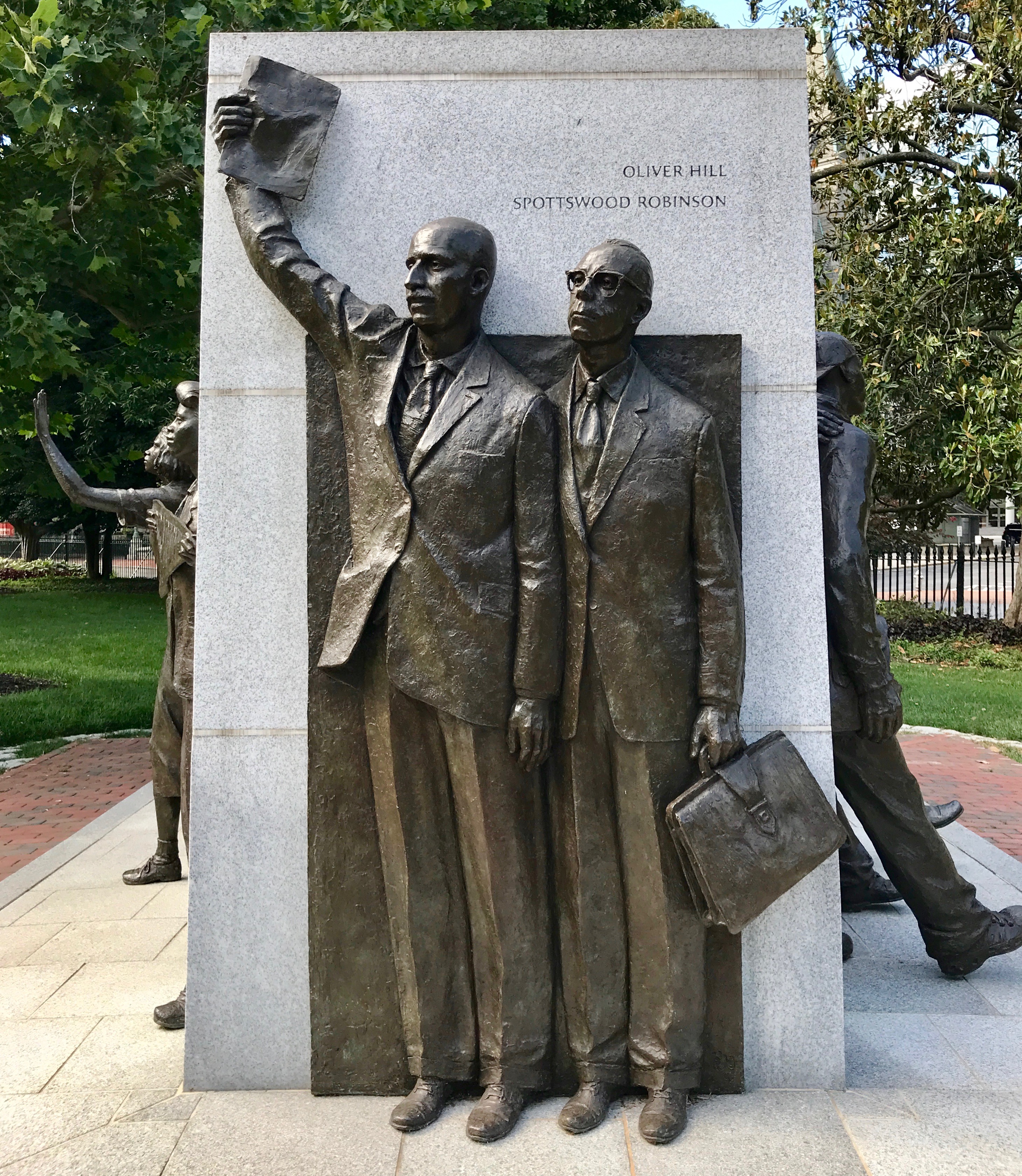
On April 23, 1951, 16-year-old Barbara Johns and several fellow students led a strike to protest the deplorable conditions at their racially segregated school.

The Reverend L. Francis Griffin united parents in support of the strike.He encouraged the students to contact NAACP attorneys Oliver Hill and Spottswood Robinson.

The lawsuit that followed was brought before the U.S. Supreme Court and joined with four other cases as Brown v. Board of Education Topeka in 1954. The Supreme Court ruled that racially separate educational systems are inherently unequal and unconstitutional.

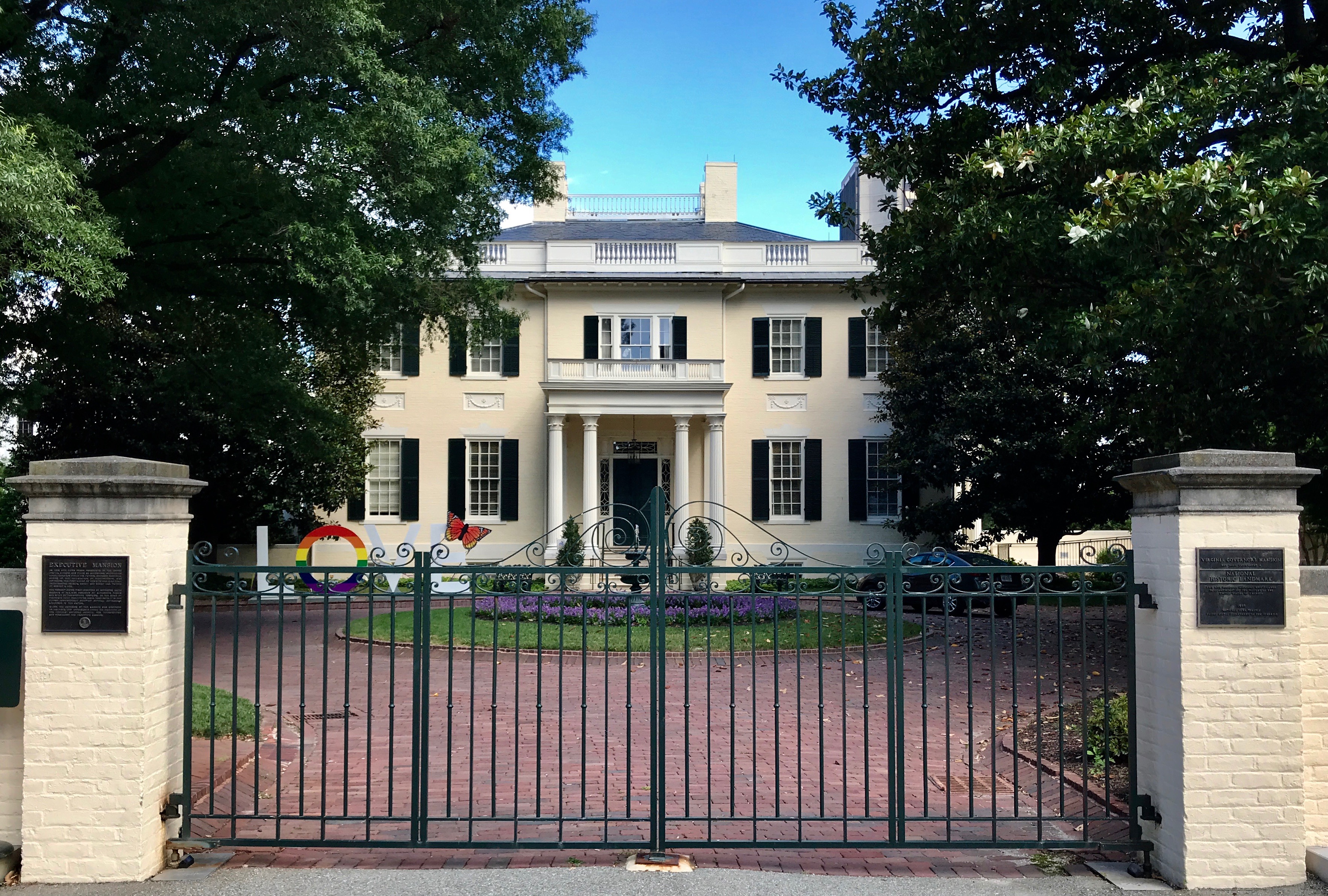
On my way back to my car, I passed the Executive Mansion.

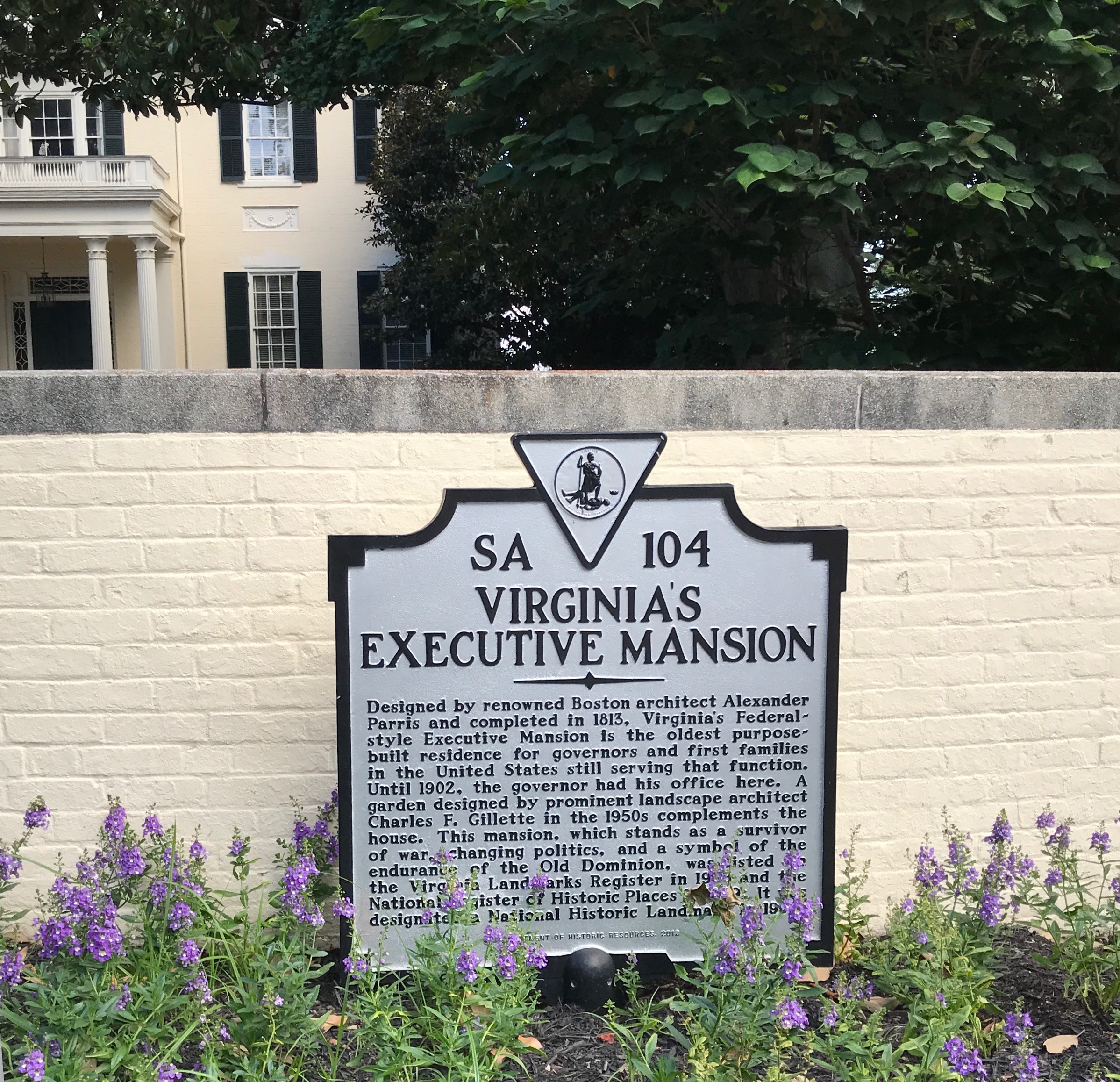
On this site live three presidents on the United States; Monroe and Tyler as governors, and William Henry Harrison while his father, Benjamin Harrison, was governor. The first house on this site was also home to governors Patrick Henry and Henry Lee, father of Robert E. Lee.

The present house was designed by Alexander Harris in 1813 and built by Christopher Tompkins, and has been the home of Virginia’s chief executives since that date. It is the oldest continuously occupied official governor’s residence in the nation.

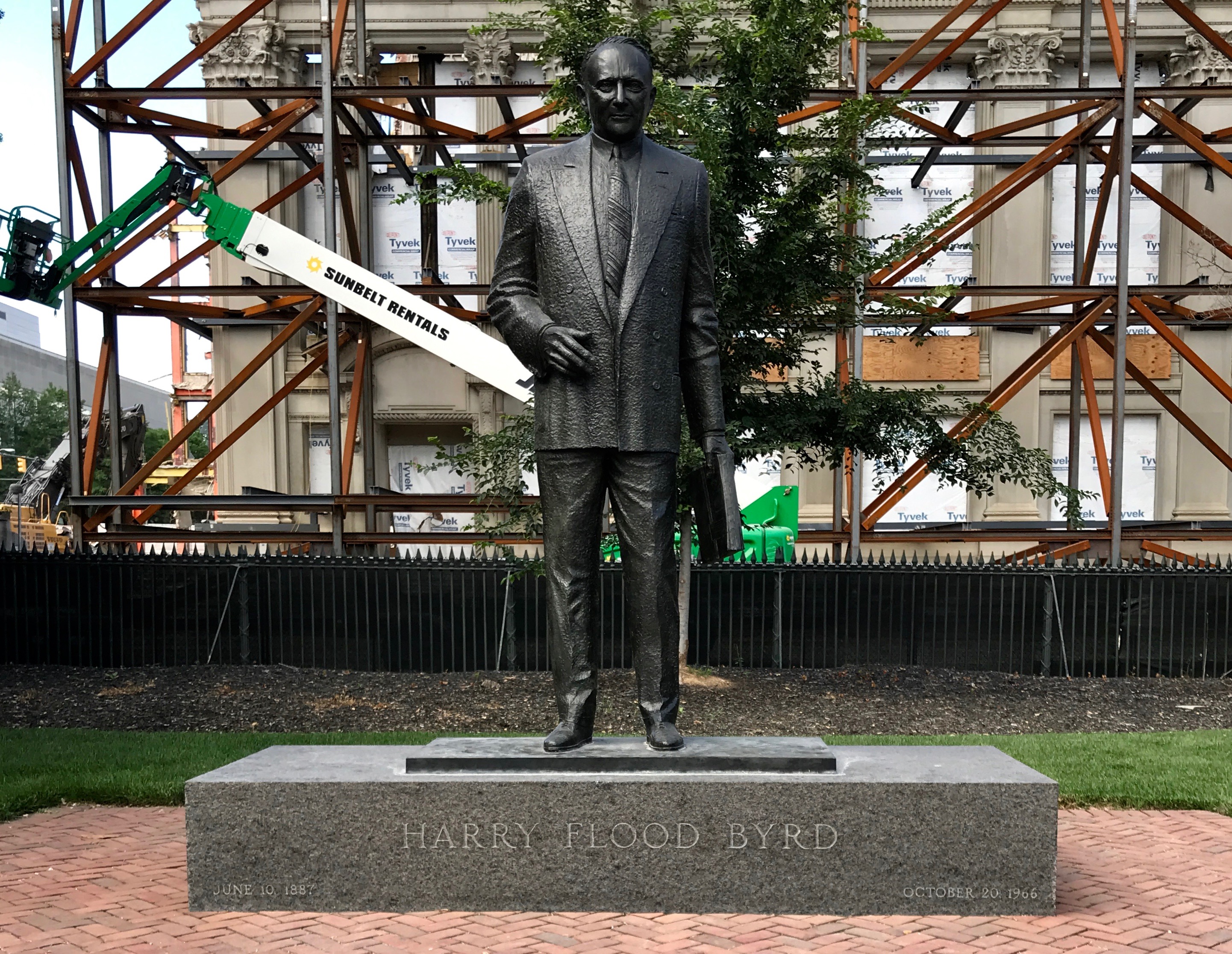
The last statue I passed before leaving the area is a memorial to Senator Byrd. He was a state senator 1916-1926, governor of Virginia 1926-1930 and a United States Senator 1933-1965. That’s some longevity!

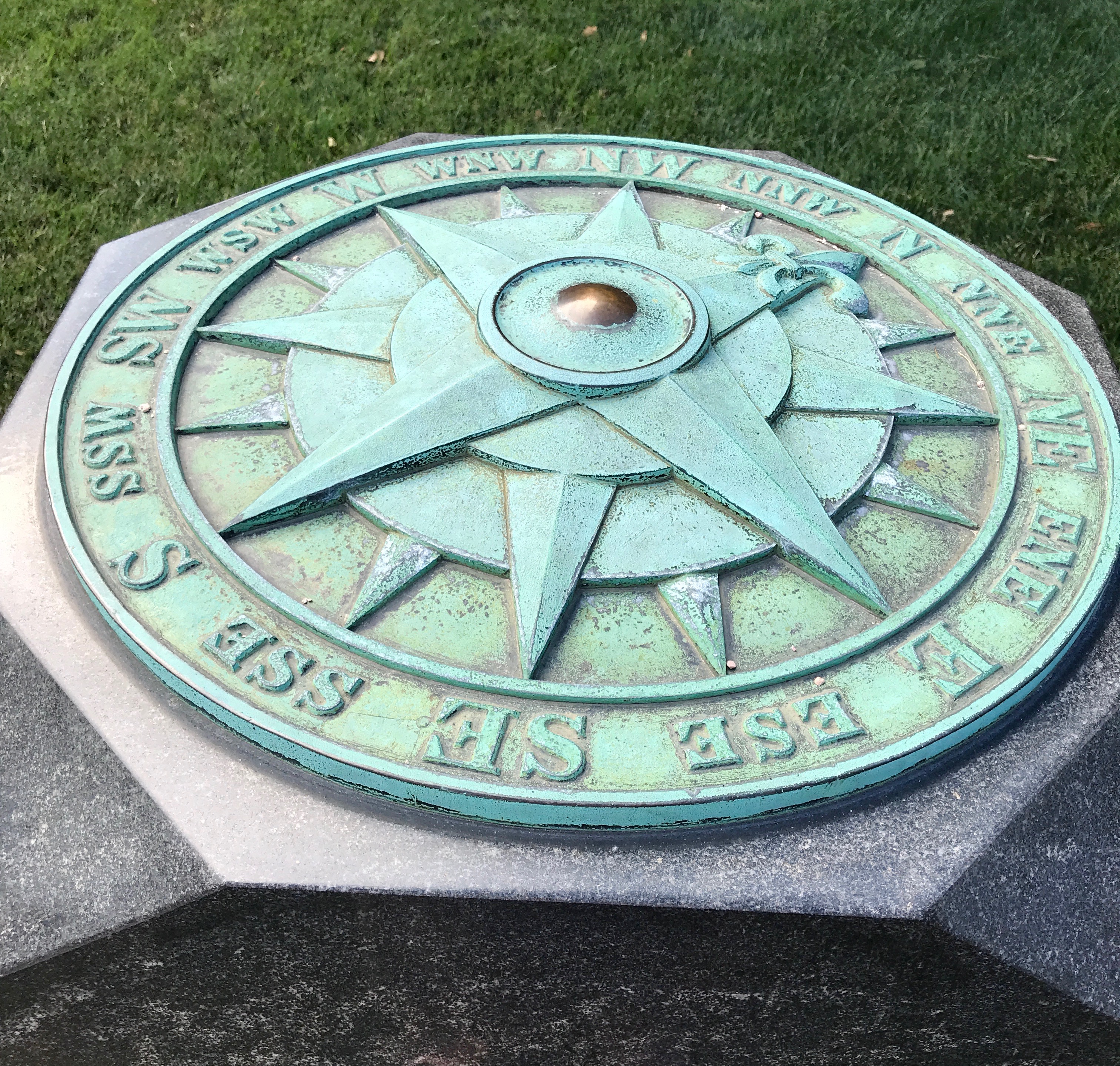
The geographer in me was fascinated by this marker.

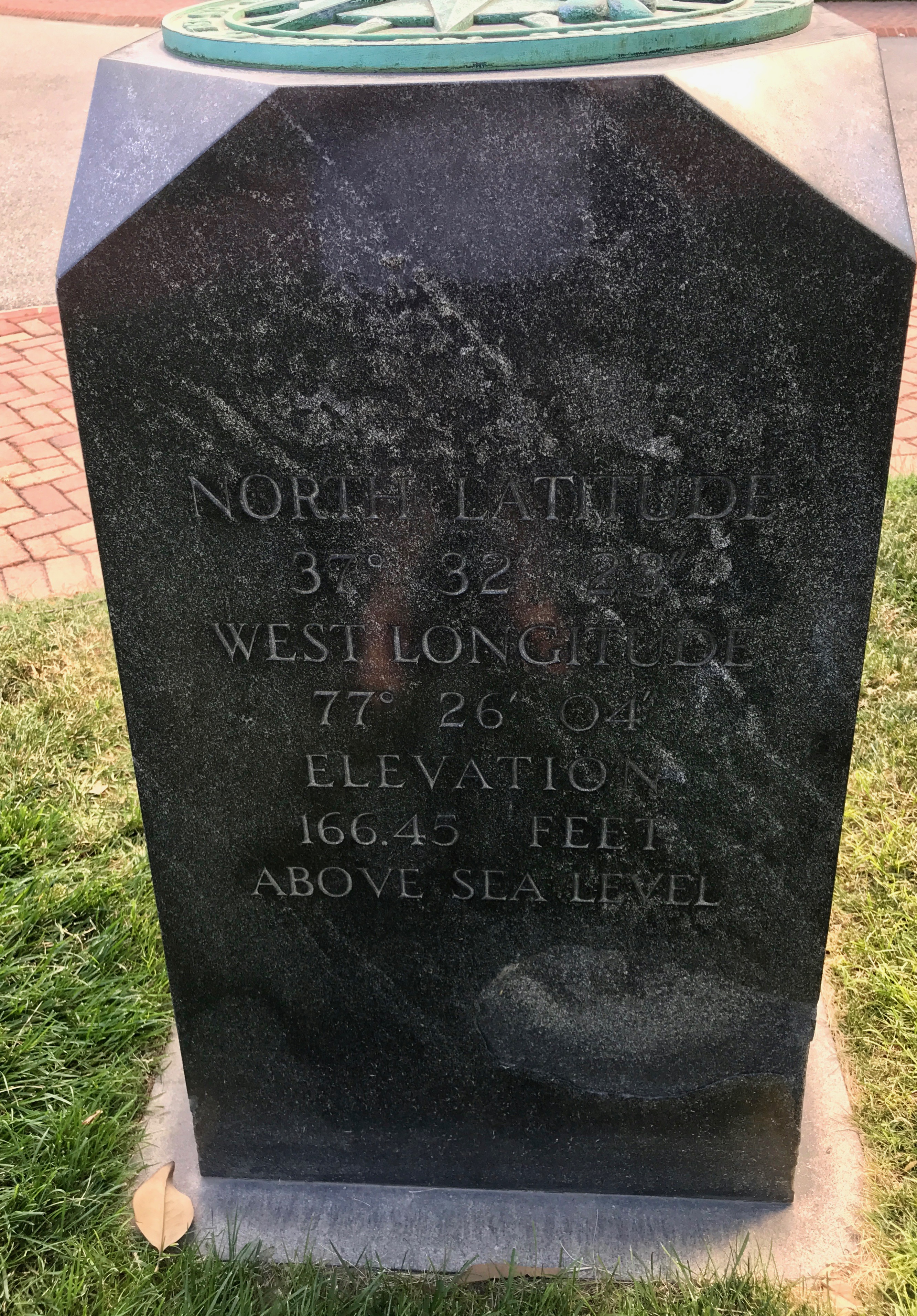
It’s the point for the measurement of distances from Richmond on highways of Virginia.

It also has the latitude, longitude and elevation above sea level.

I wonder where the next week’s travels will take me?


Blandford Church and Cemetery

My last stop of the day was Blandford Church and Cemetery.

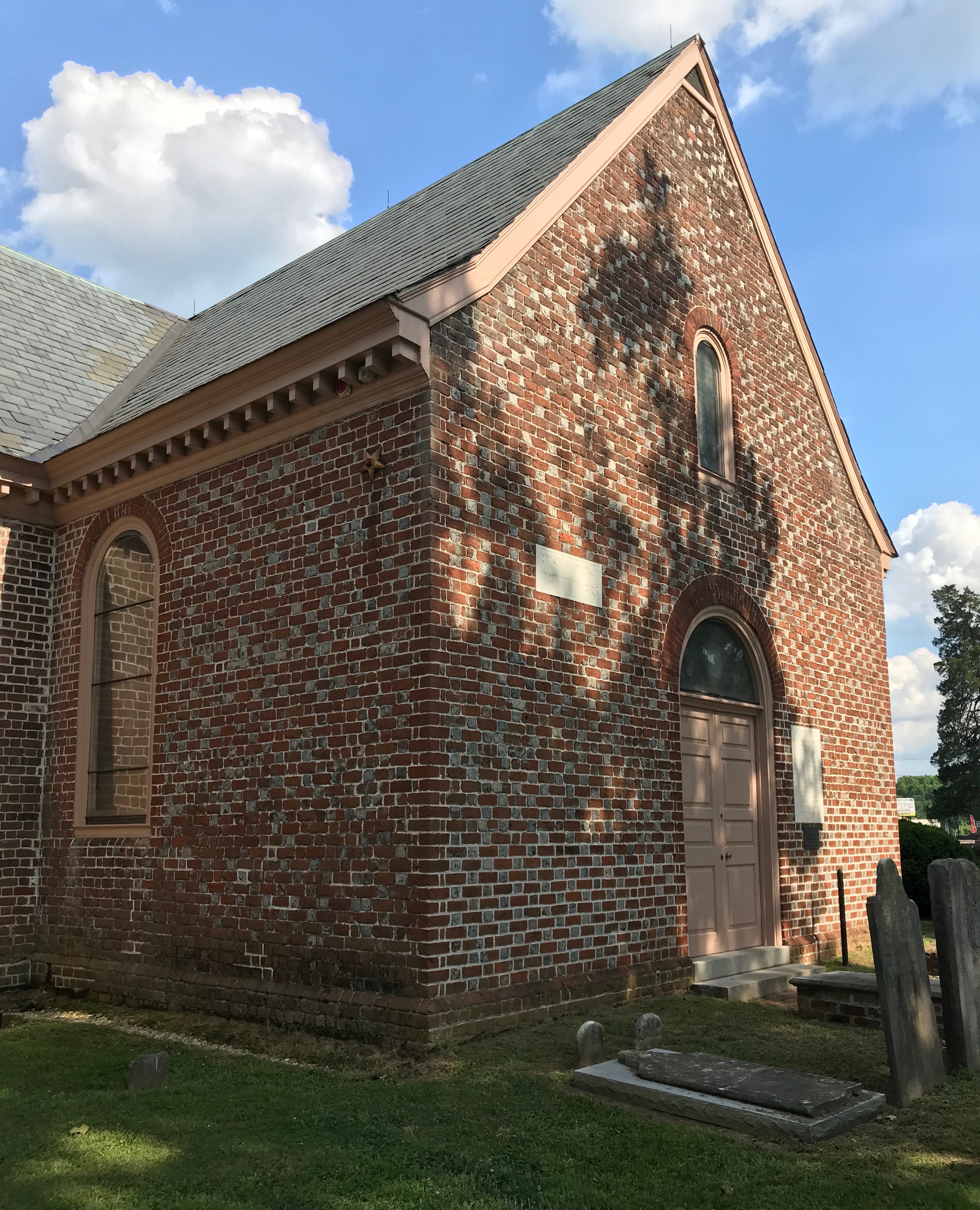
The church was erected in 1736 The age of the building alone would have been enough to get me there. The United States of America is such a young country that a building close to 300 years old is something you don’t see every day.

It has some very old graves in the churchyard. This grave predates the church.

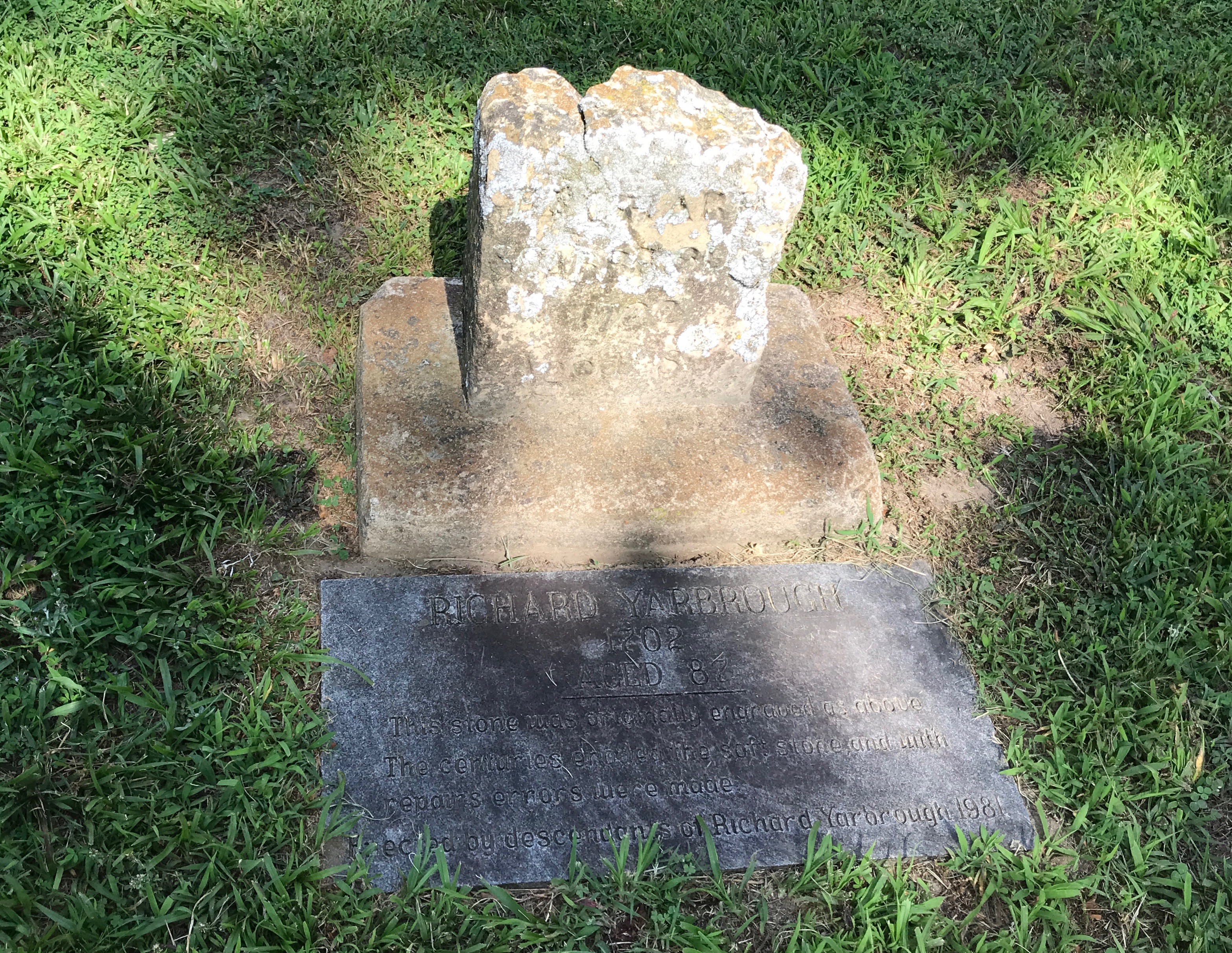
It is for Richard Yarbrough, who died in 1702 at age 87. My goodness! That means he was born in 1615! He must have had an amazing story.

According to my Preferred Source, General William Phillips fell ill after the Battle of Blandford, also known as the Battle of Petersburg, which was fought nearby in 1781. For those of you keeping track, that was during the American Revolution. He was ordered to wait in Petersburg to meet Lord Cornwallis. While in Petersburg, Phillips fell ill and died on May 13, 1781. He was secretly buried somewhere in the churchyard.

However, the age of the building is not the reason I wanted to visit. The main attraction for me was the Tiffany windows.

Sister Jeanne told us about these windows in Art History class. Again, thank you Sister Jeanne! I had mostly forgotten about them until I saw a rack card for the tour of the church. (A “rack card” is what we in the travel and tourism business call those card you find in racks that tout places of interest.)

Luckily, I managed to get there before they closed for the day. I paid my $5 and had a private tour of the church.

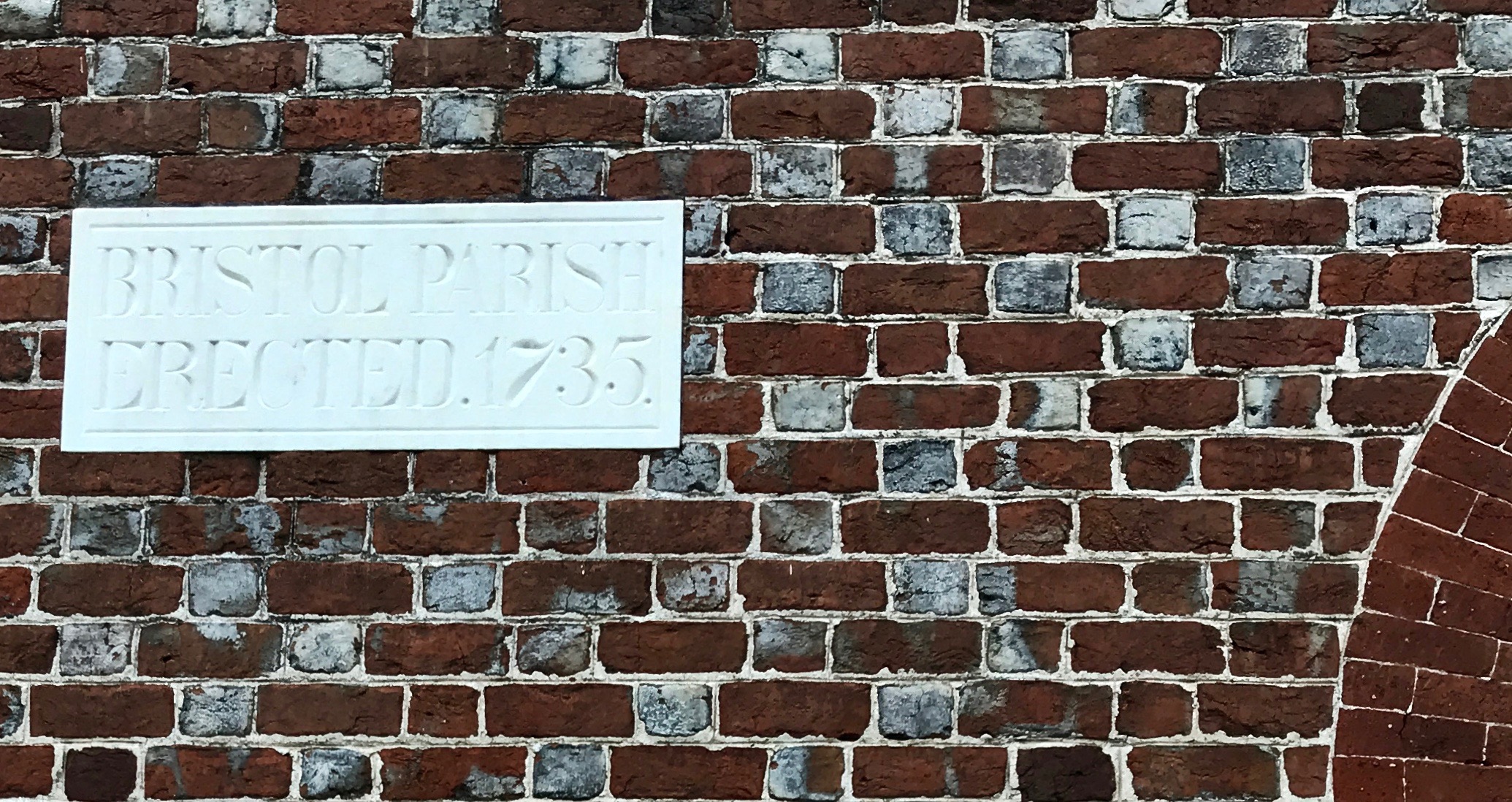
We entered the door set in the brick wall laid in the Flemish Bond. There is more than one way to lay a brick wall. If you are interested in the different styles, you can find more information here.  (And, if you are interested in tuck pointing, check in with me in a month or so. I am looking forward to learning all about that in an HistoriCorps project in New Bern, North Carolina.)

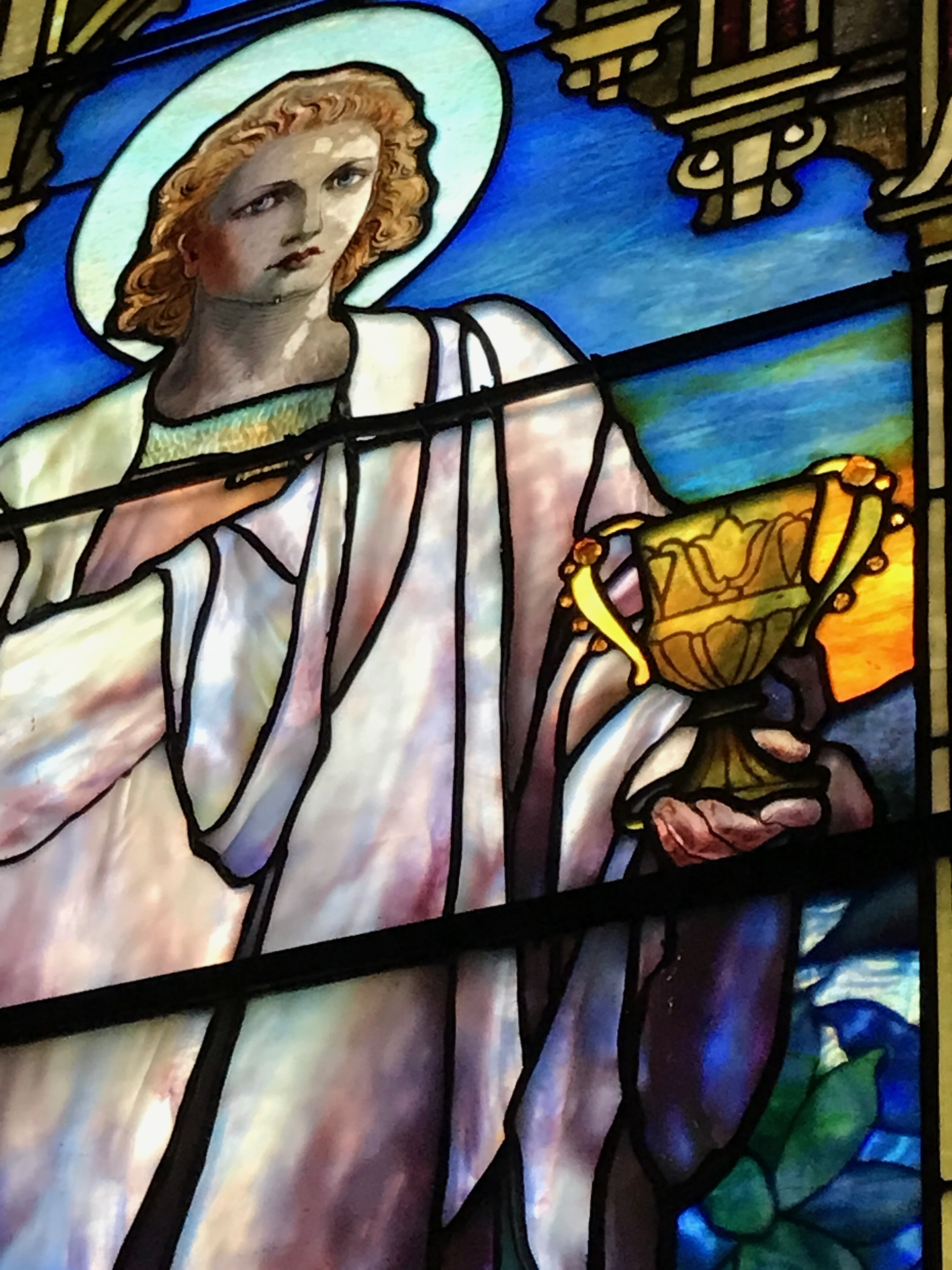
Blandford Church is a rare American treasure. It is one of the few churches whose decorative stained-glass windows were completely designed and installed under the direction of Louis Comfort Tiffany of New York. It is also one of the few churches that has all of their Tiffany windows intact and in place.

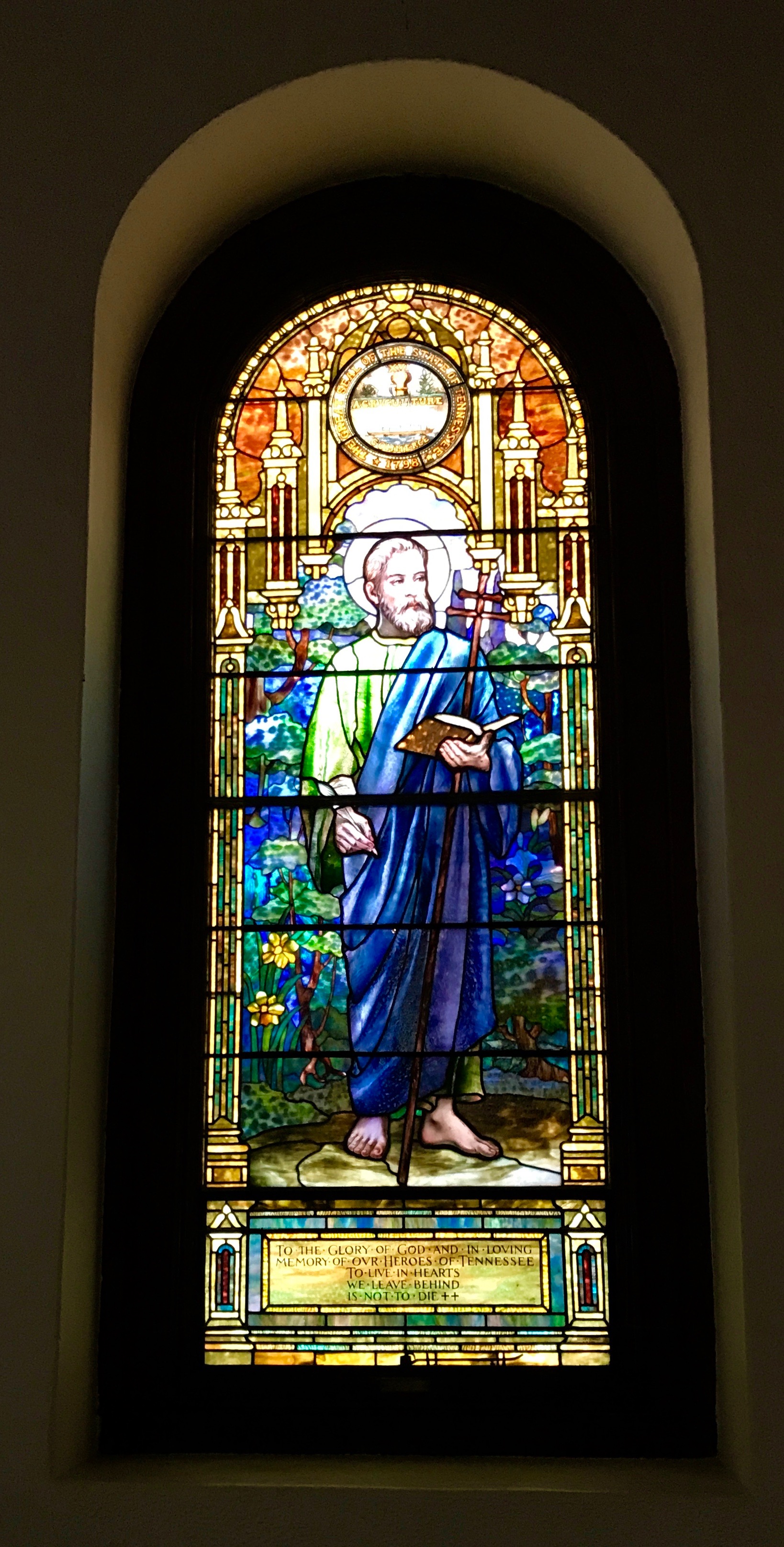
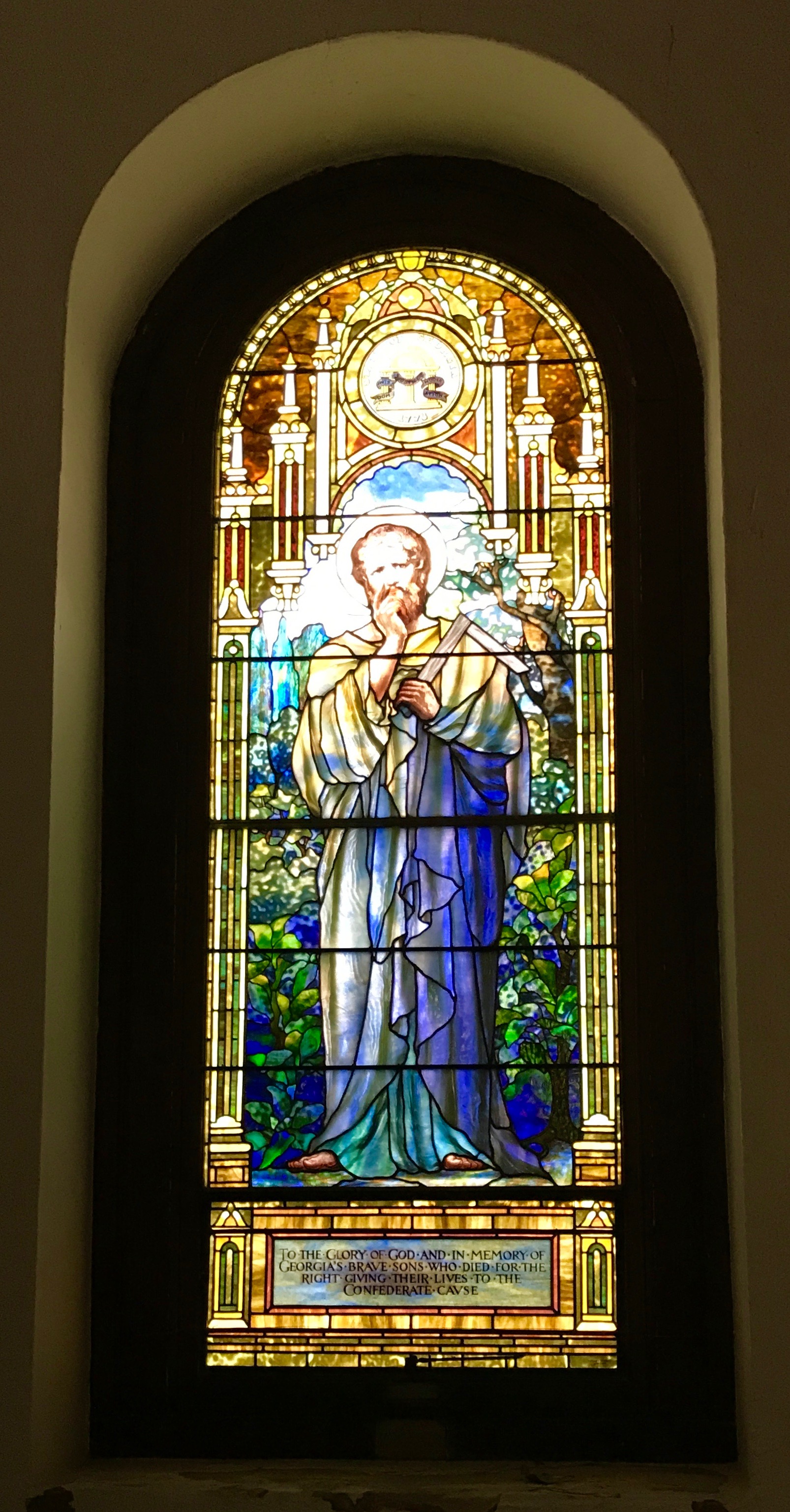
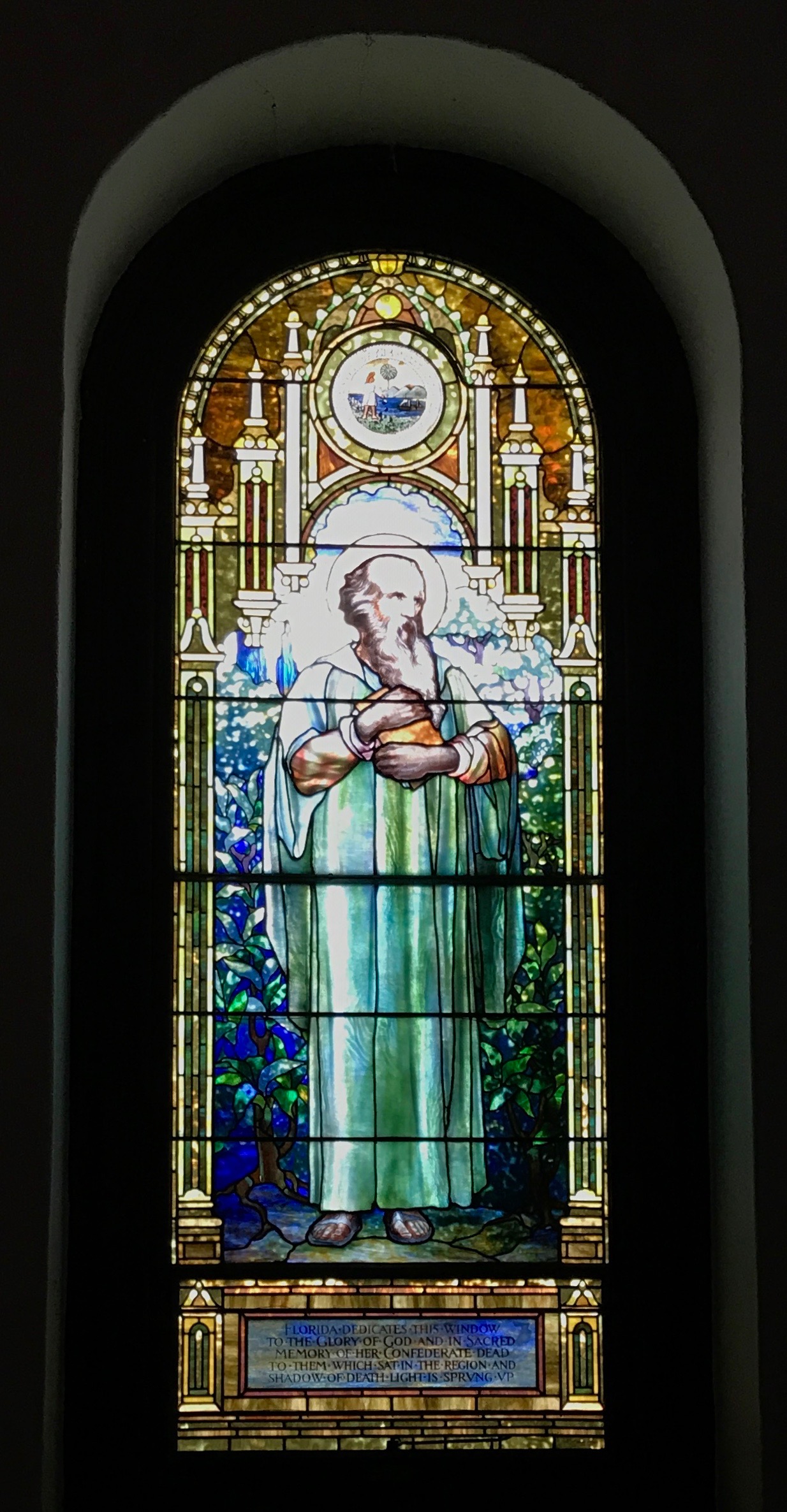
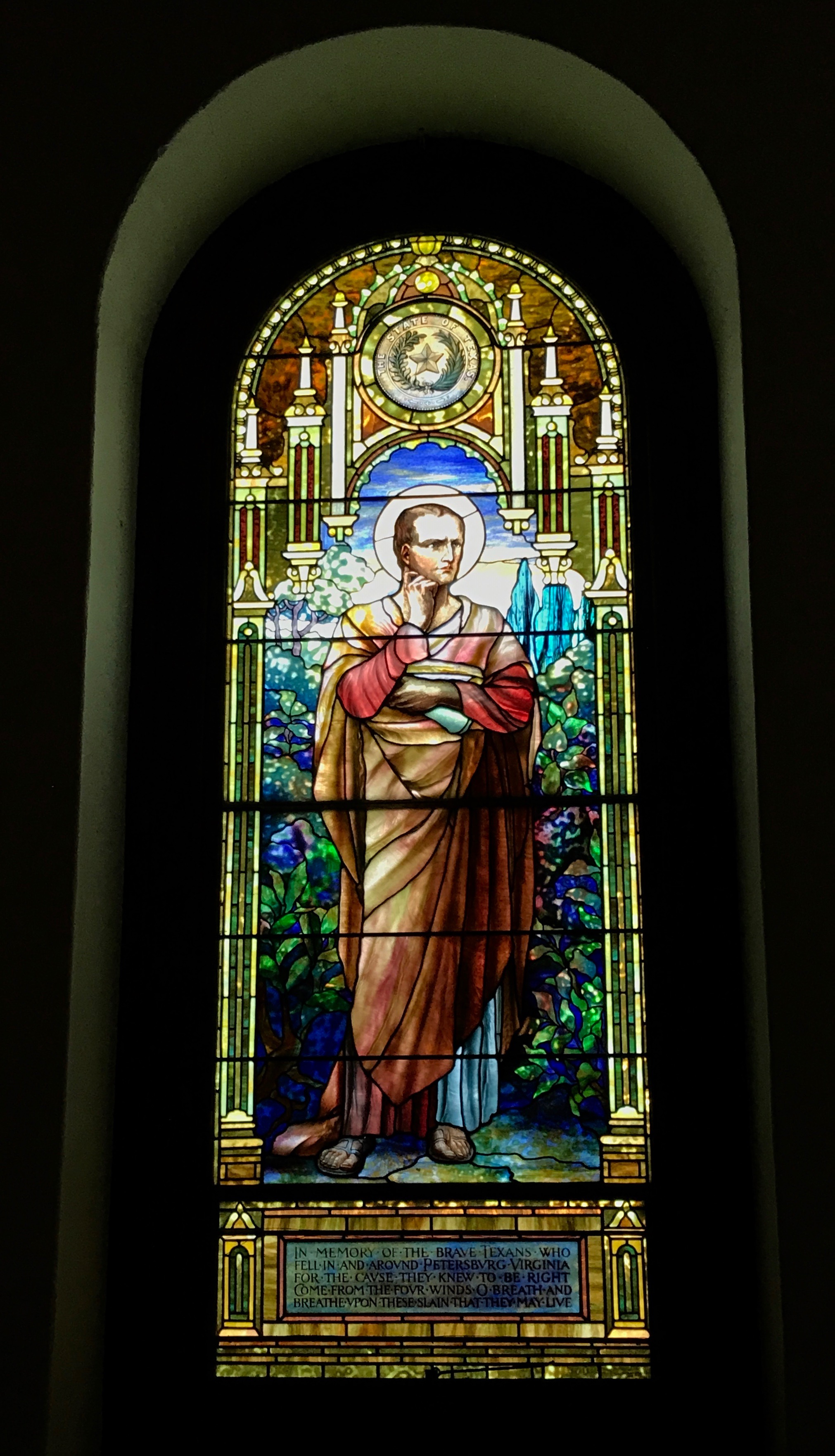
The Church’s fifteen exquisite windows were commissioned by the Ladies’ Memorial Association of Petersburg in memory of the Confederate soldiers buried at the adjacent Blandford Cemetery. From 1901 to 1912, Tiffany and his team of artists designed, created and installed the windows, which were financed by contributions from each of the Confederate states in honor of their war dead.

By Júlio Reis – by myself, CC BY-SA 3.0, https://commons.wikimedia.org/w/index.php?curid=1710151

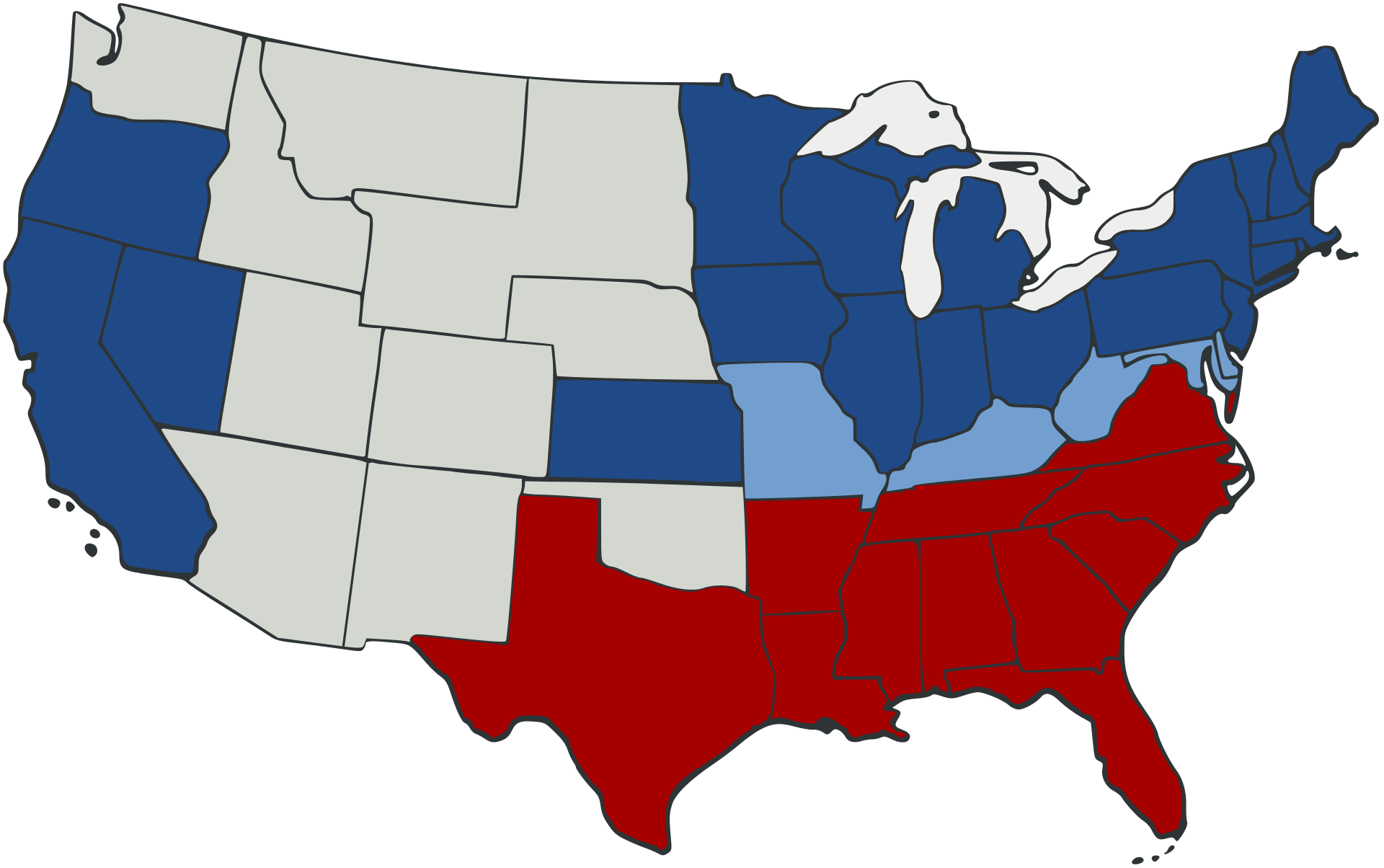
The red states were the states that seceded. The light blue represents the five Union states that permitted slavery (border states). The dark blue represents the Union states.

Windows were donated by each of the former Confederate states: North Carolina, South Carolina, Virginia, Mississippi, Alabama, Florida, Texas, Georgia, Louisiana, Tennessee and Arkansas. The border states of Missouri and Maryland also contributed windows. Kentucky, another border state, was the only state that refused to participate.

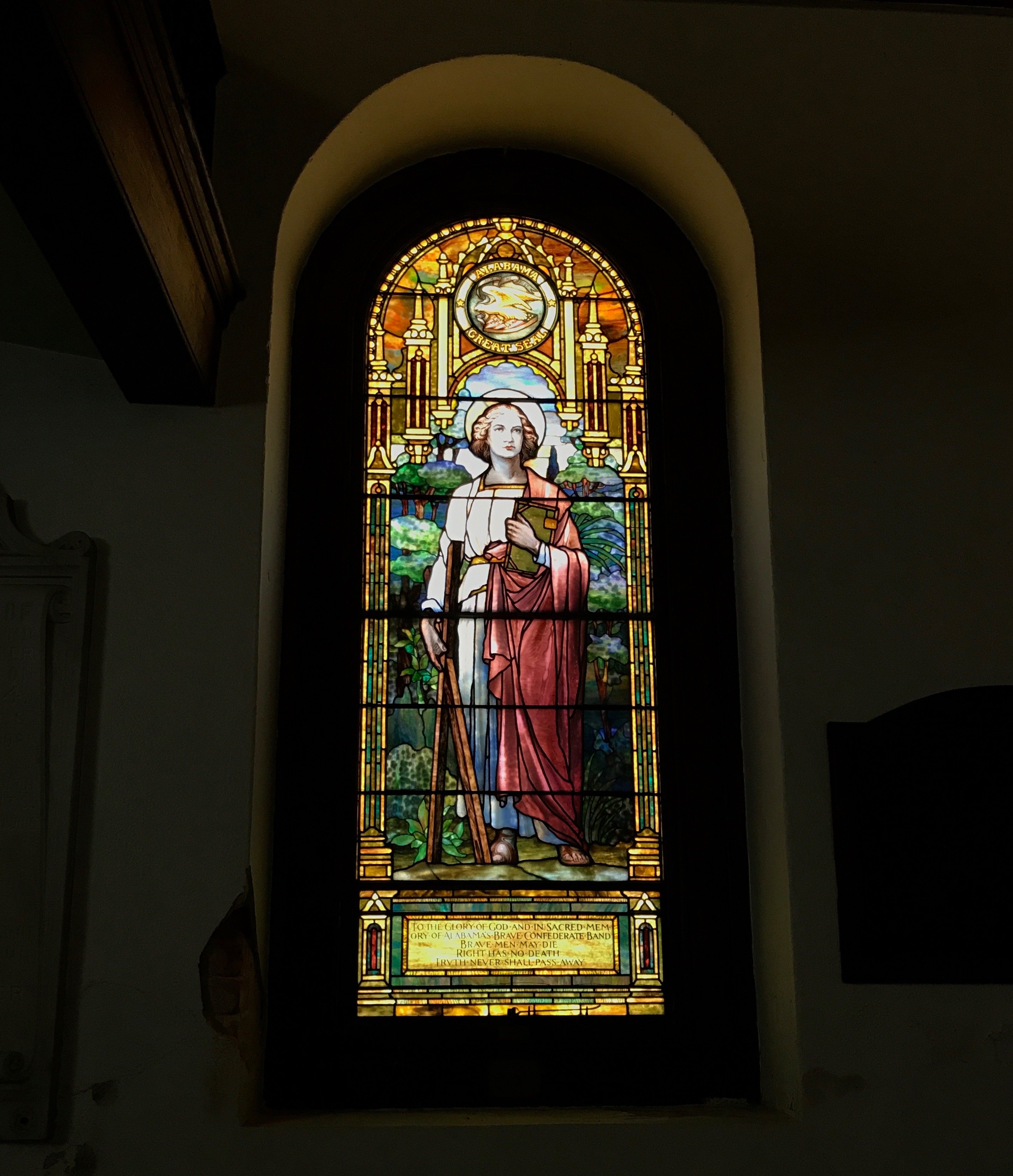
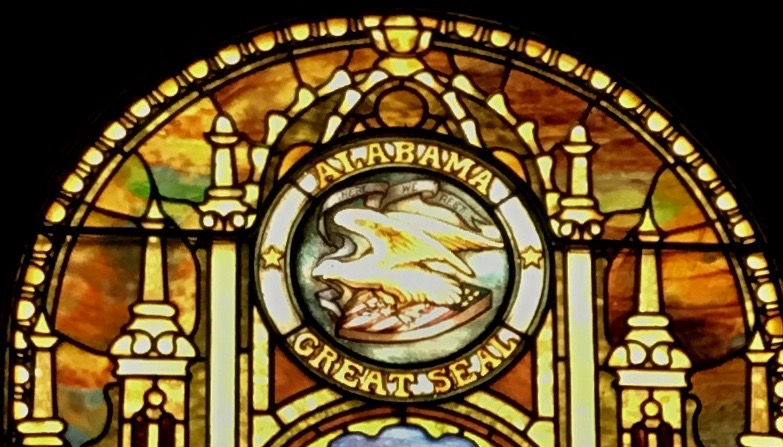
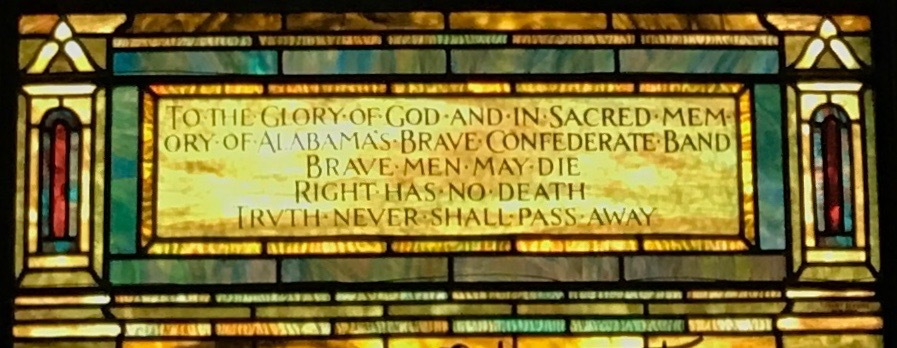
This is Alabama’s window. It follows the pattern of most of the windows.

Each state’s window depicts a saint. This is Saint Andrew.

At the top is the state’s seal.

At the bottom is an inscription.

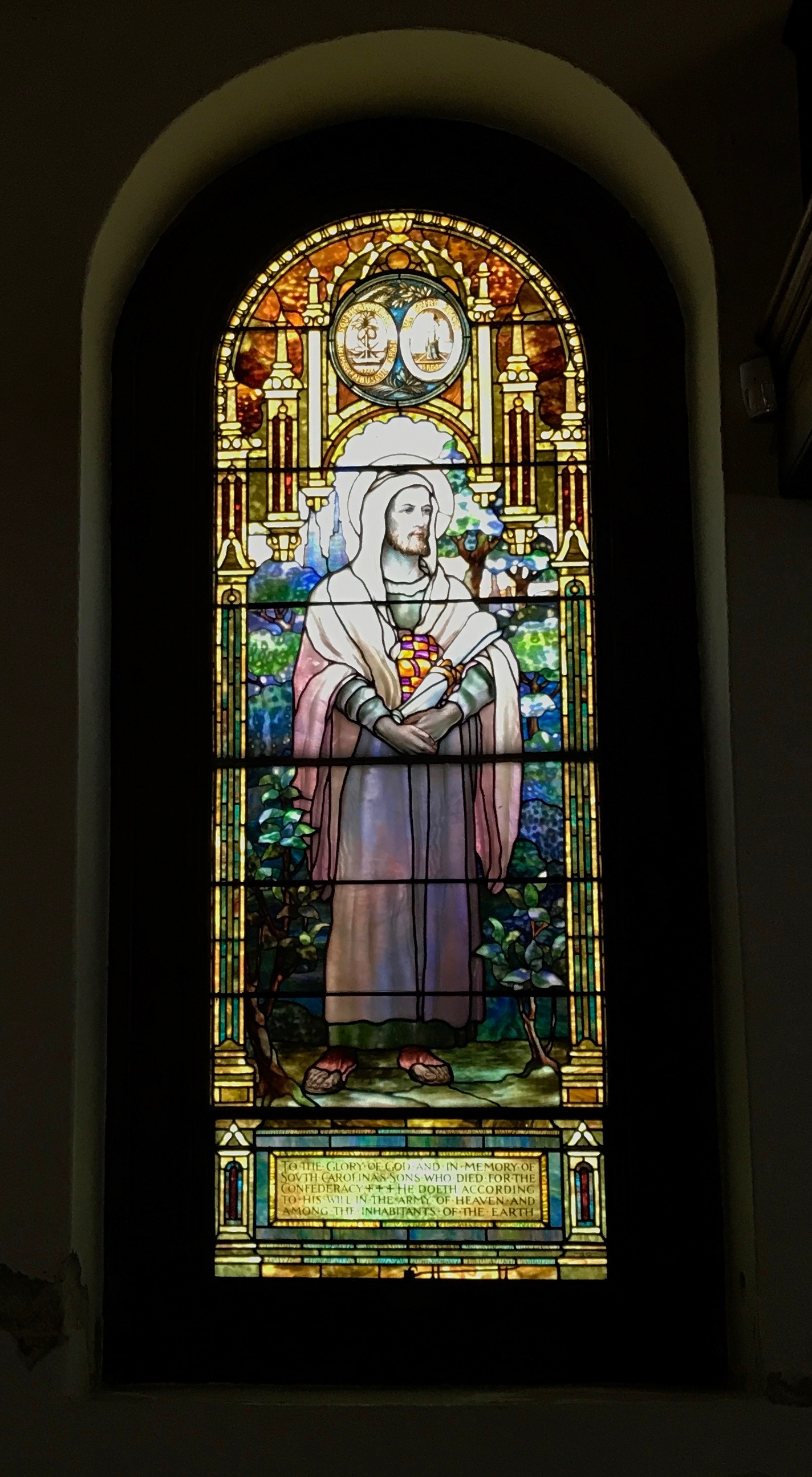
South Carolina’s window depicts Saint Mark.

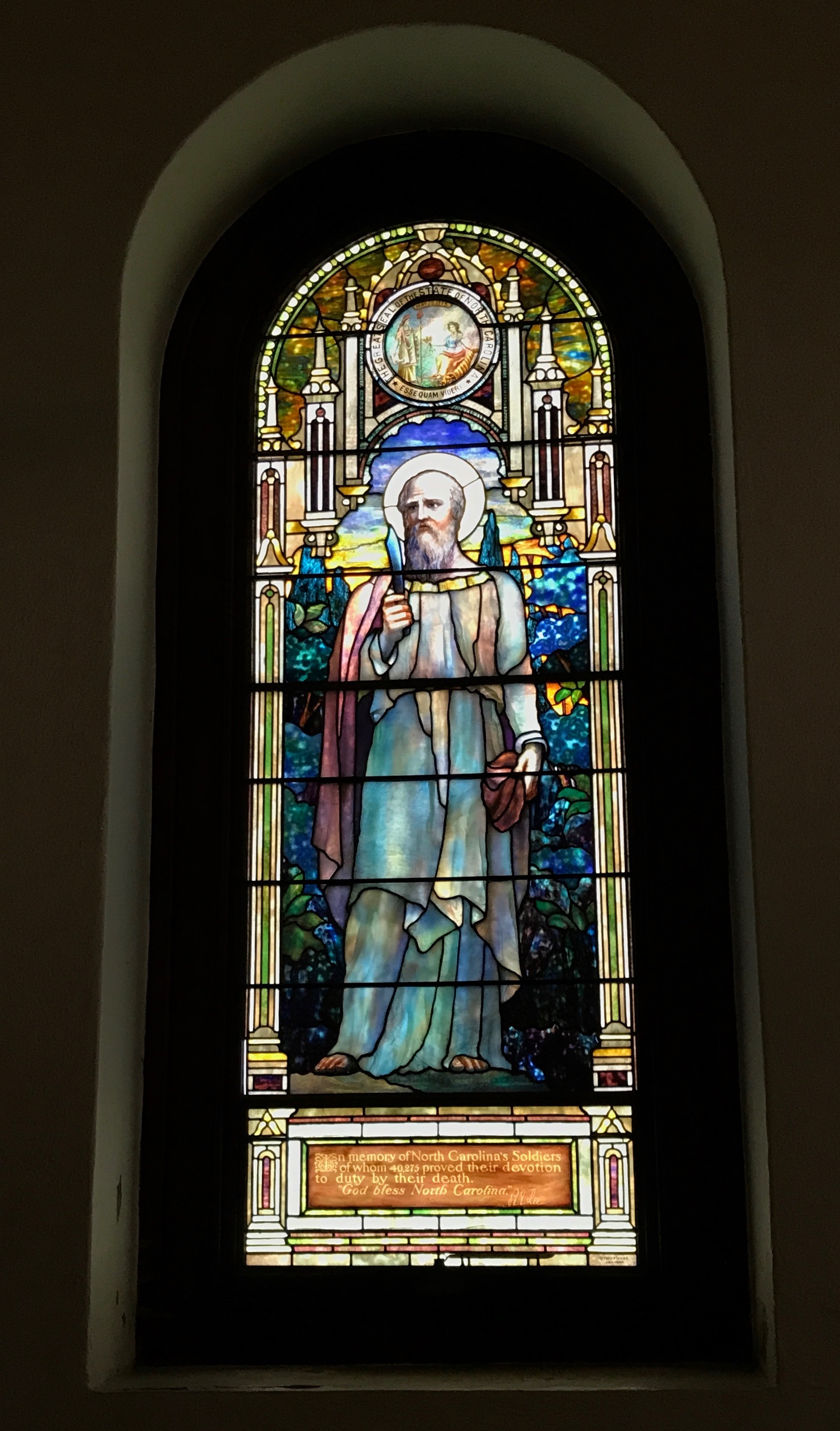
Saint Bartholomew is featured in North Carolina’s window.

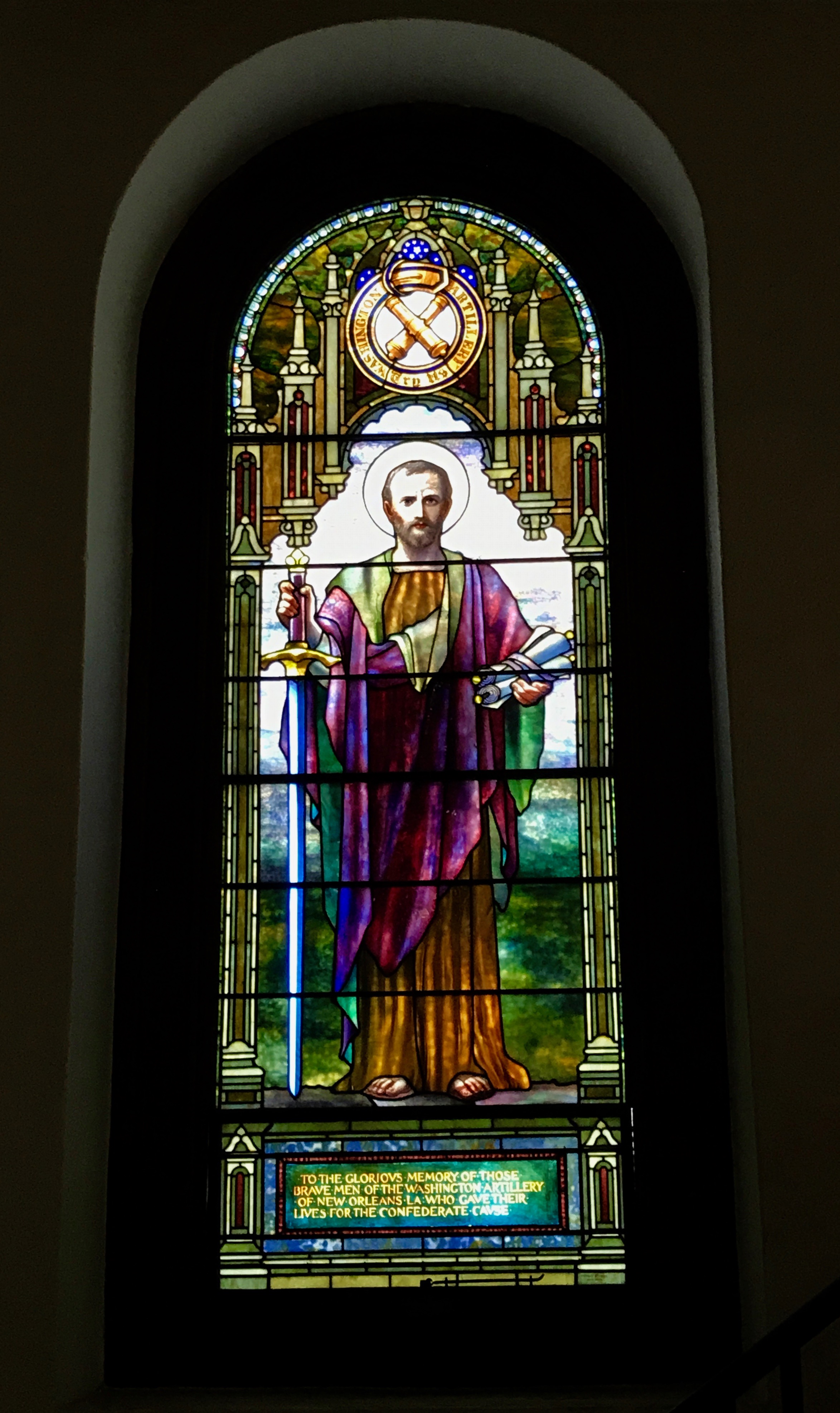
Louisiana’s window was funded by the Washington Artillery. It is the only state window that doesn’t include a state seal. At the top of their window is insignia of the Washington Artillery. The saint on their window is Saint Paul.

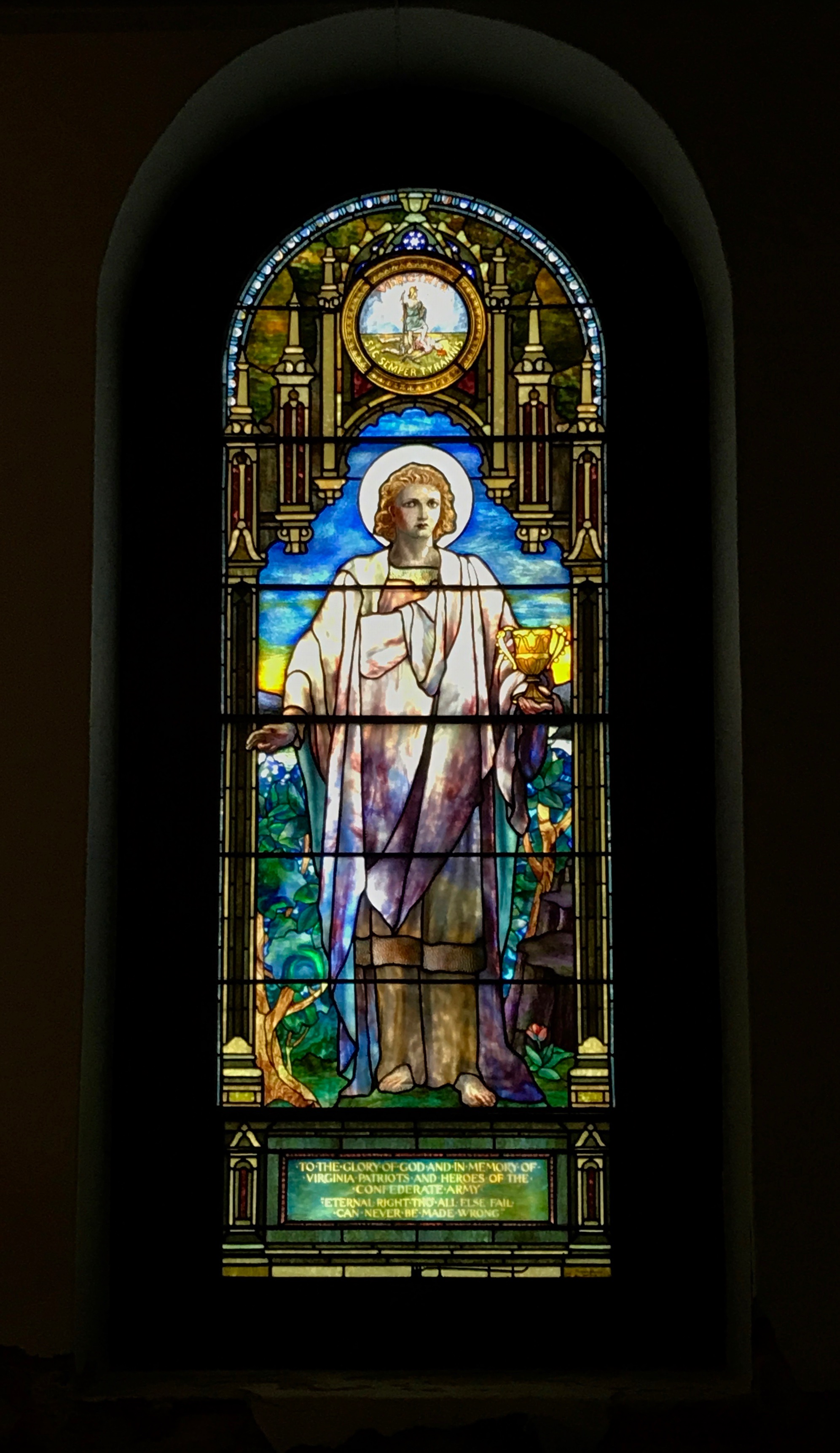
Saint John the Evangelist represents the state of Virginia.

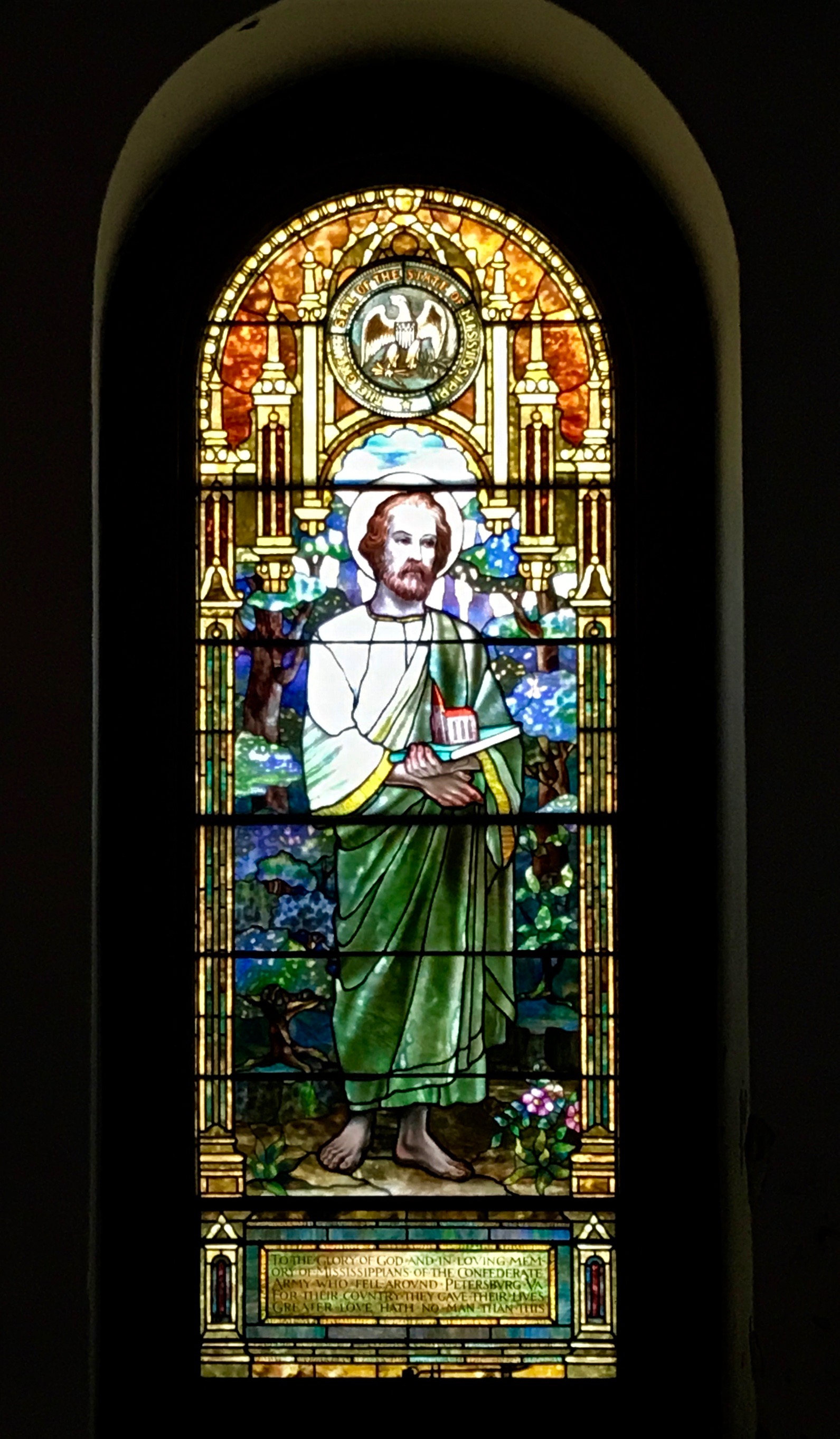
Mississippi is represented by Saint James the Younger.

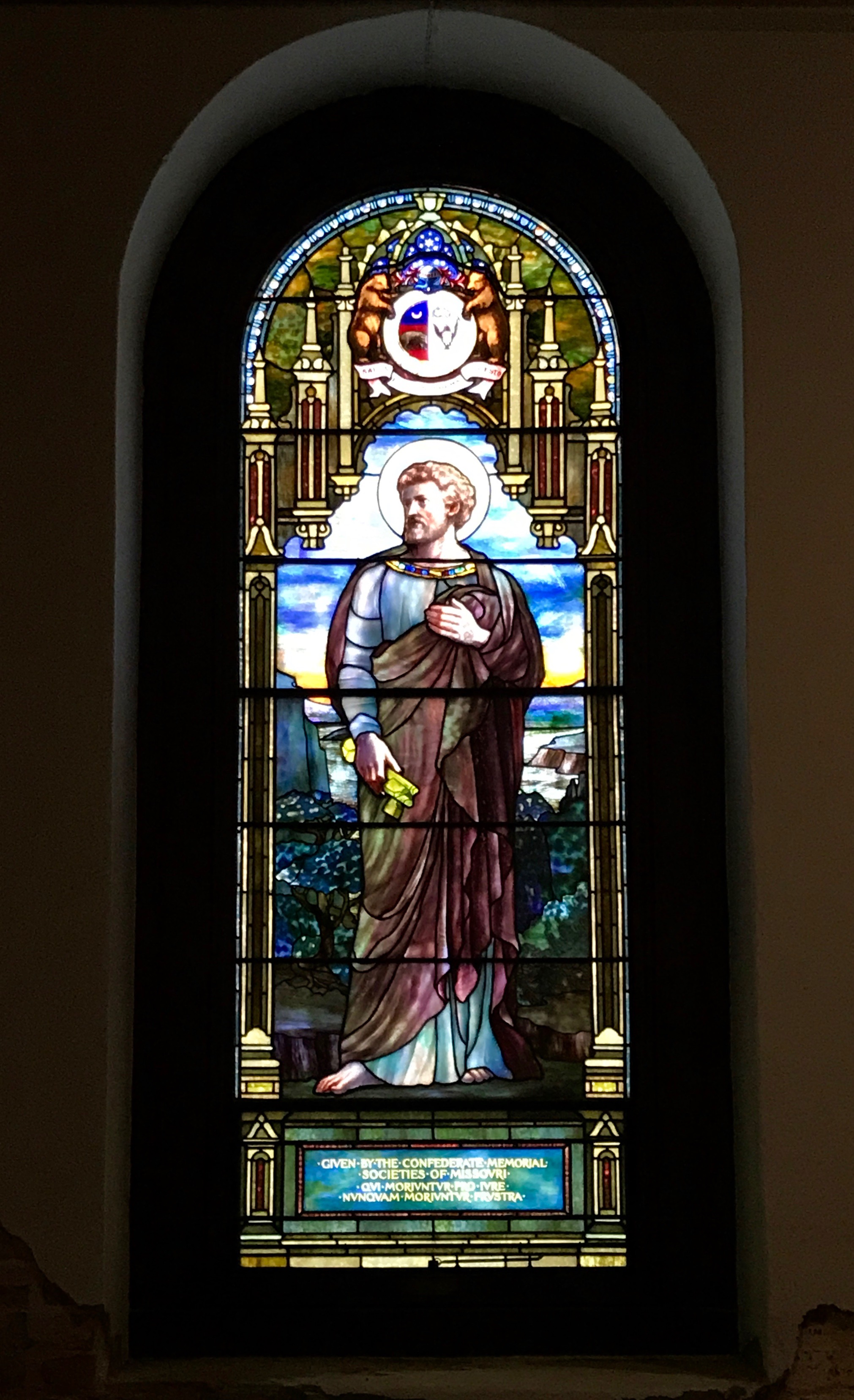
Missouri – let’s see…He’s holding keys. Yes, it’s Saint Peter.

Tennessee is represented by Saint Philip the Apostle.

Saint Thomas the Apostle represents Georgia.

Florida’s patron is Saint Matthew.

Saint Luke is watching over Texas.

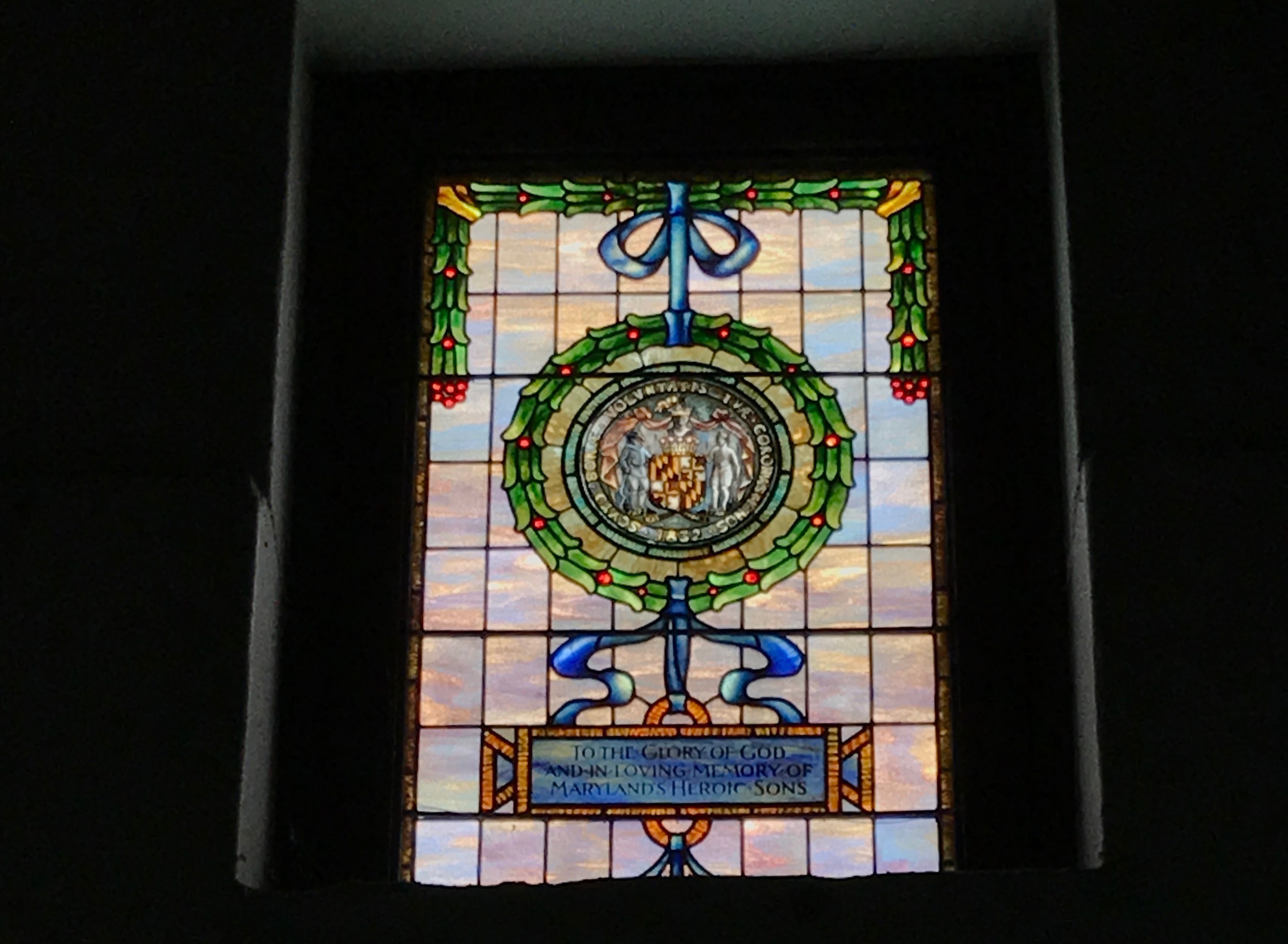
This is Maryland’s window. If I remember the guide correctly, some of the states had trouble coming up with the full amount to pay for the large windows. Maybe that is the case with Maryland.

I am not sure about this window. The light coming through the glass made it difficult to make out the inscription.

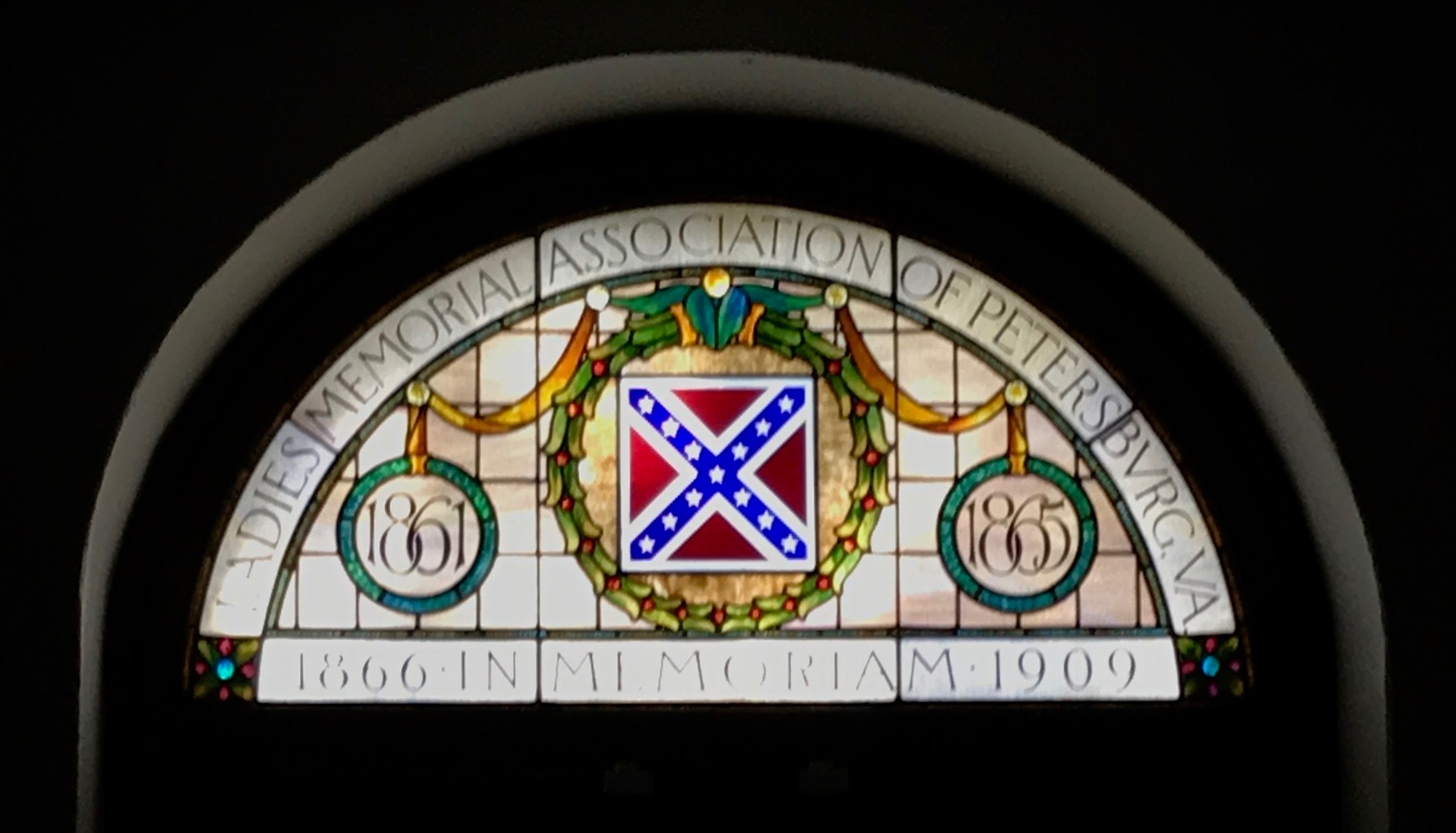
The lunette was over the door.

Louis Comfort Tiffany donated this window.

I wonder if Tiffany made any money on this job. If I remember correctly – and you all know that numbers are not my thing – the large windows only cost $175 each. That included the windows and the installation.

If you are interested in Tiffany’s work, I highly recommend a visit to Blandford Church. You can get up close and really examine the glass, which is what made his work so outstanding.

Let me take you through a few more things that caught my eye before I leave the Church.

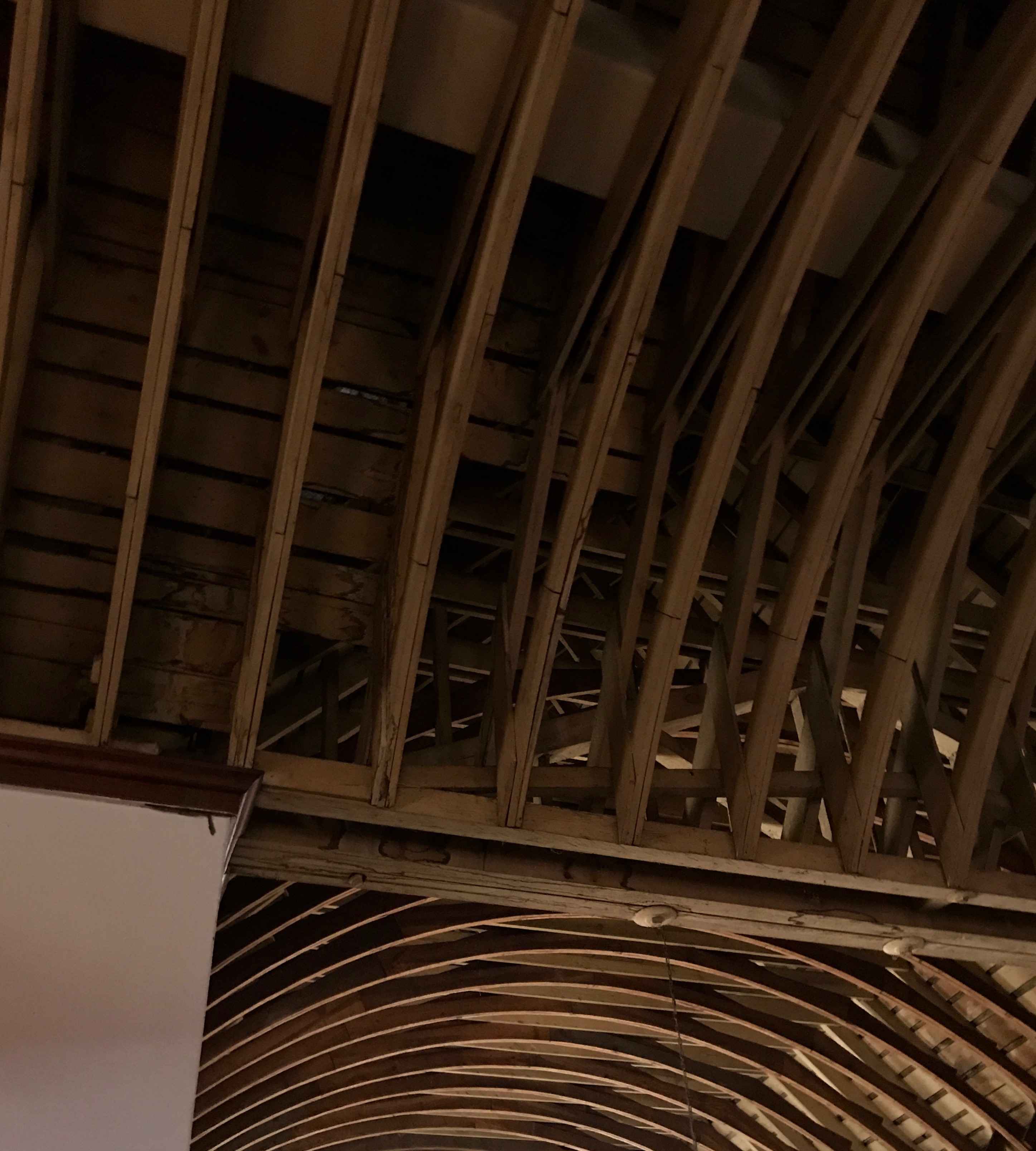
The building was quite stunning. I was taken with the rafters. I love it when you can see the structure of a building.

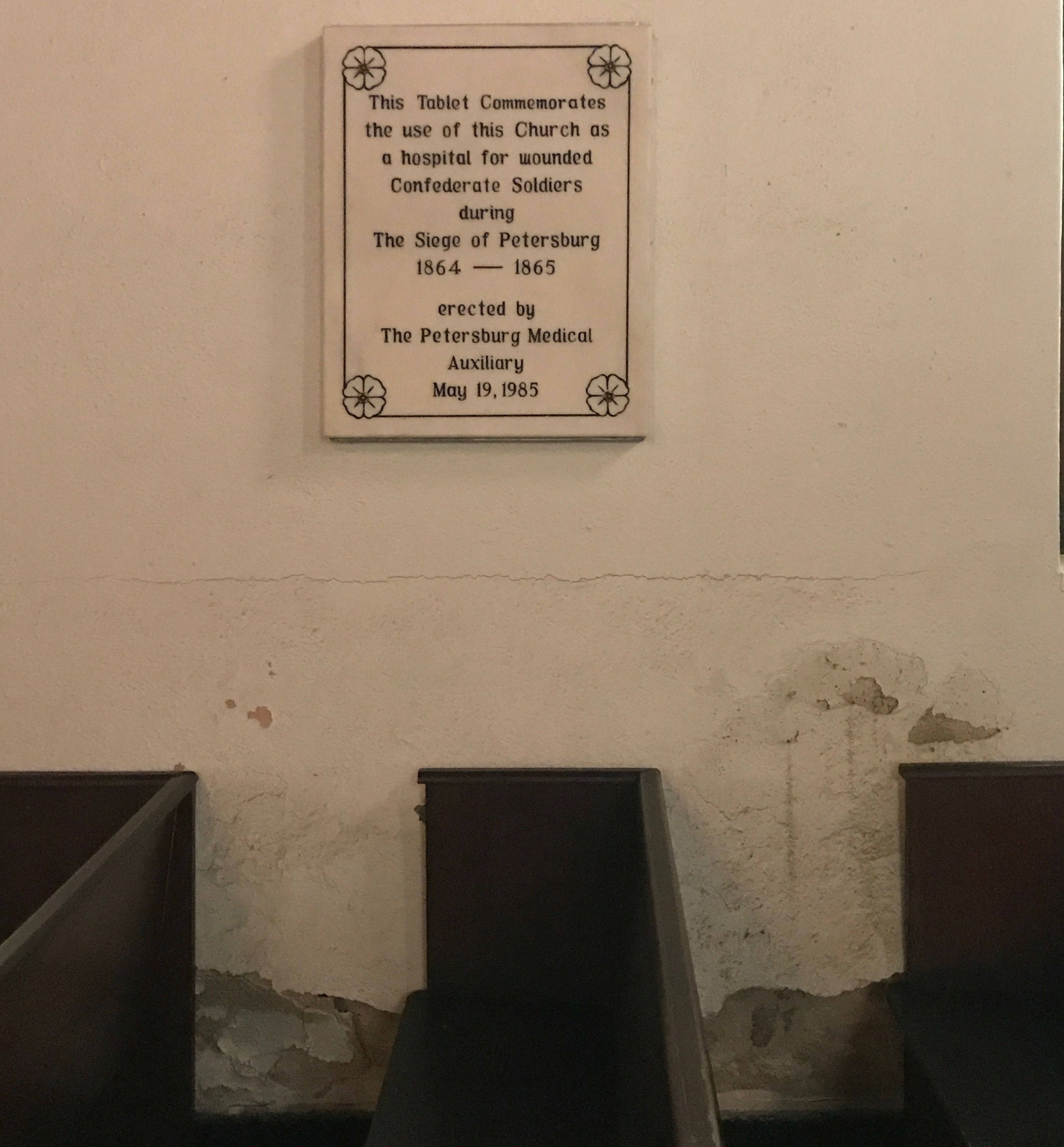
The building was used as a hospital during the Siege of Petersburg. It’s interesting – to me, at least – that this plaque was erected in 1985.

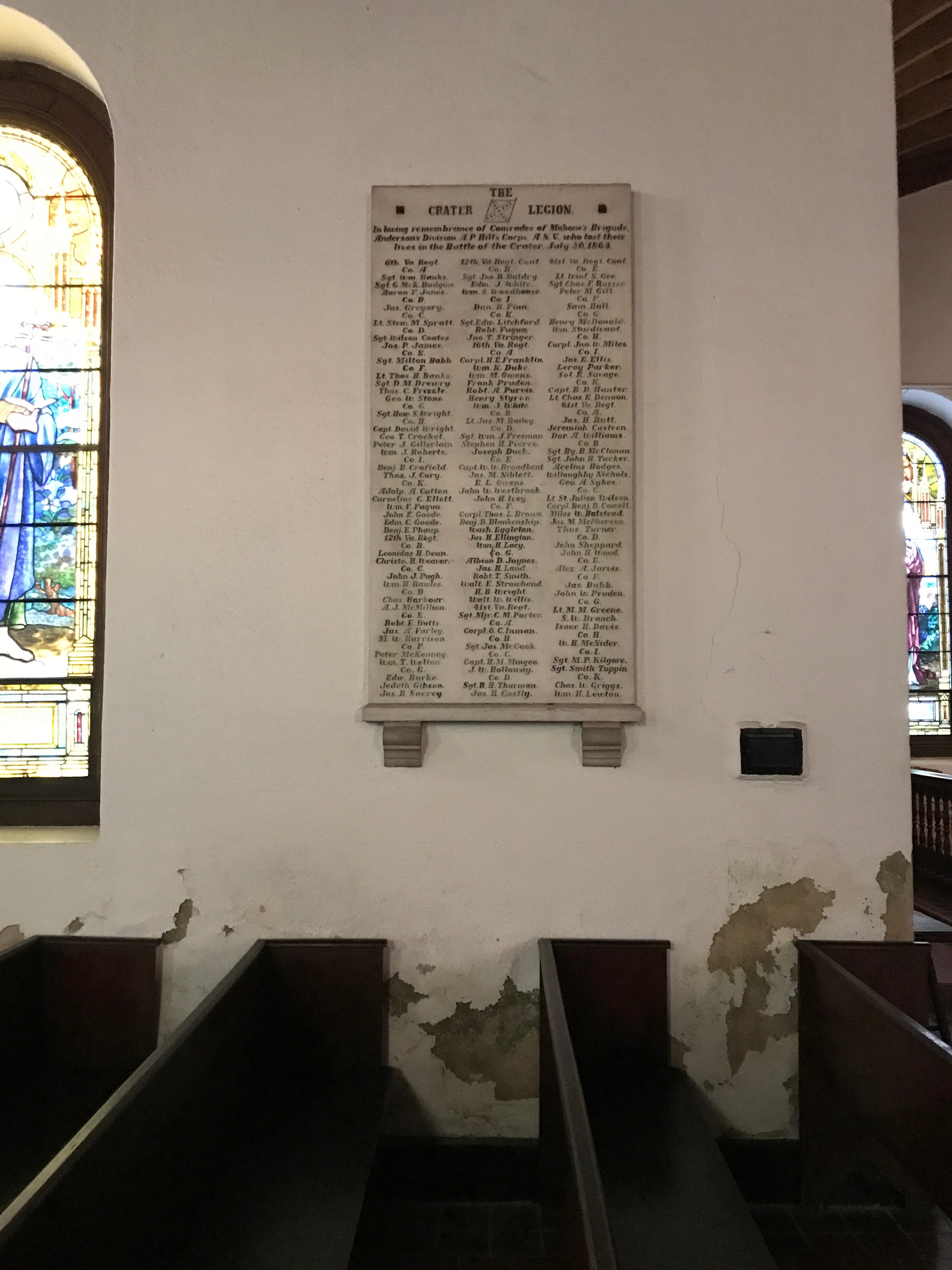
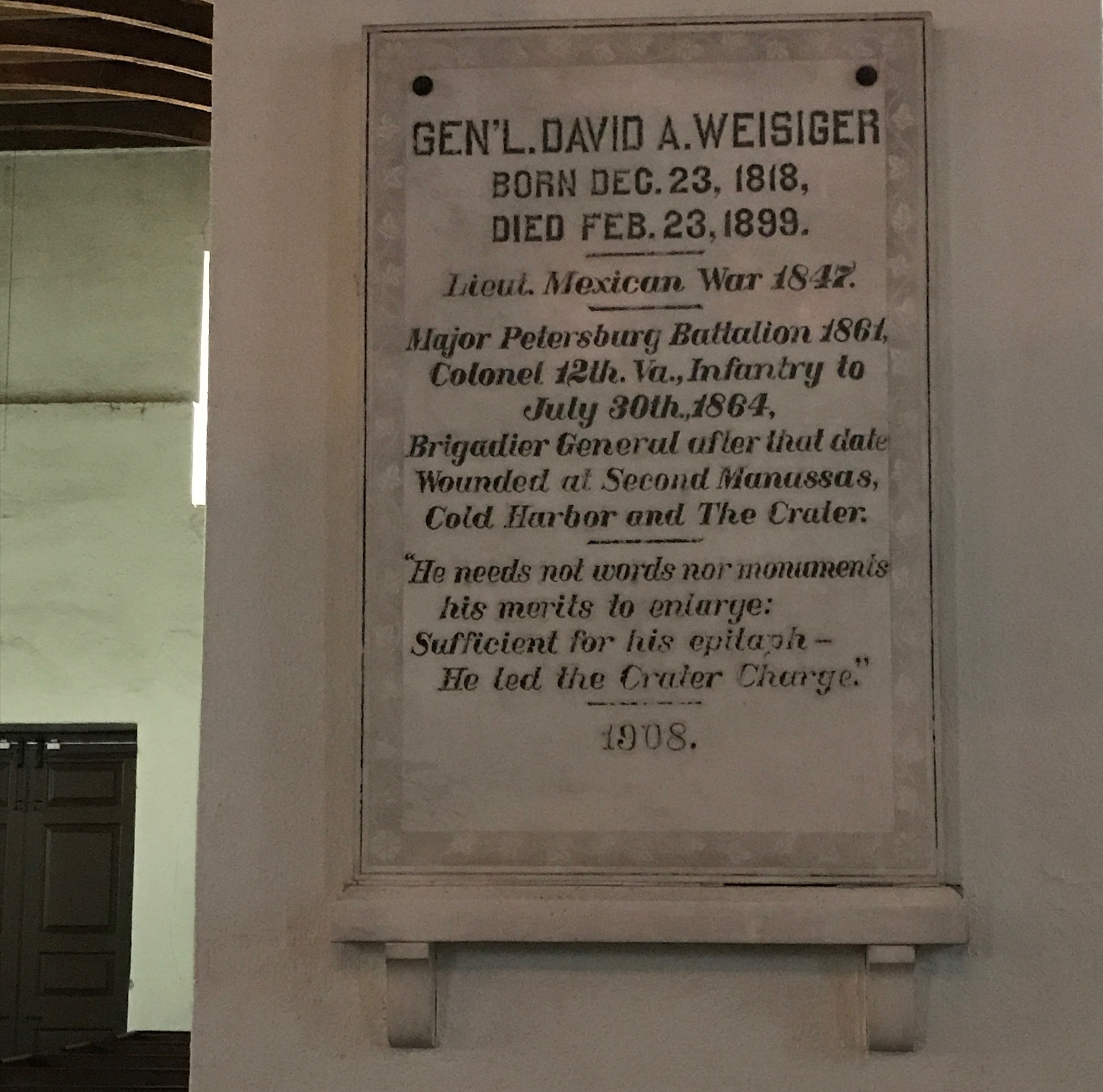
Mahone, who I mentioned in a previous post, is also remembered here.

Mahone’s men are also remembered. At the top of the plaque, it says:

THE CRATER LEGION
In loving remembrance of the Comrade of Mahon’s Brigade,
Anderson’s Division, AP Hill’s Corps, A.N.V who lost their
lives in the Battle of the Crater. July 30, 1864.

I’ll let you read the text on this one, if you are so inclined.

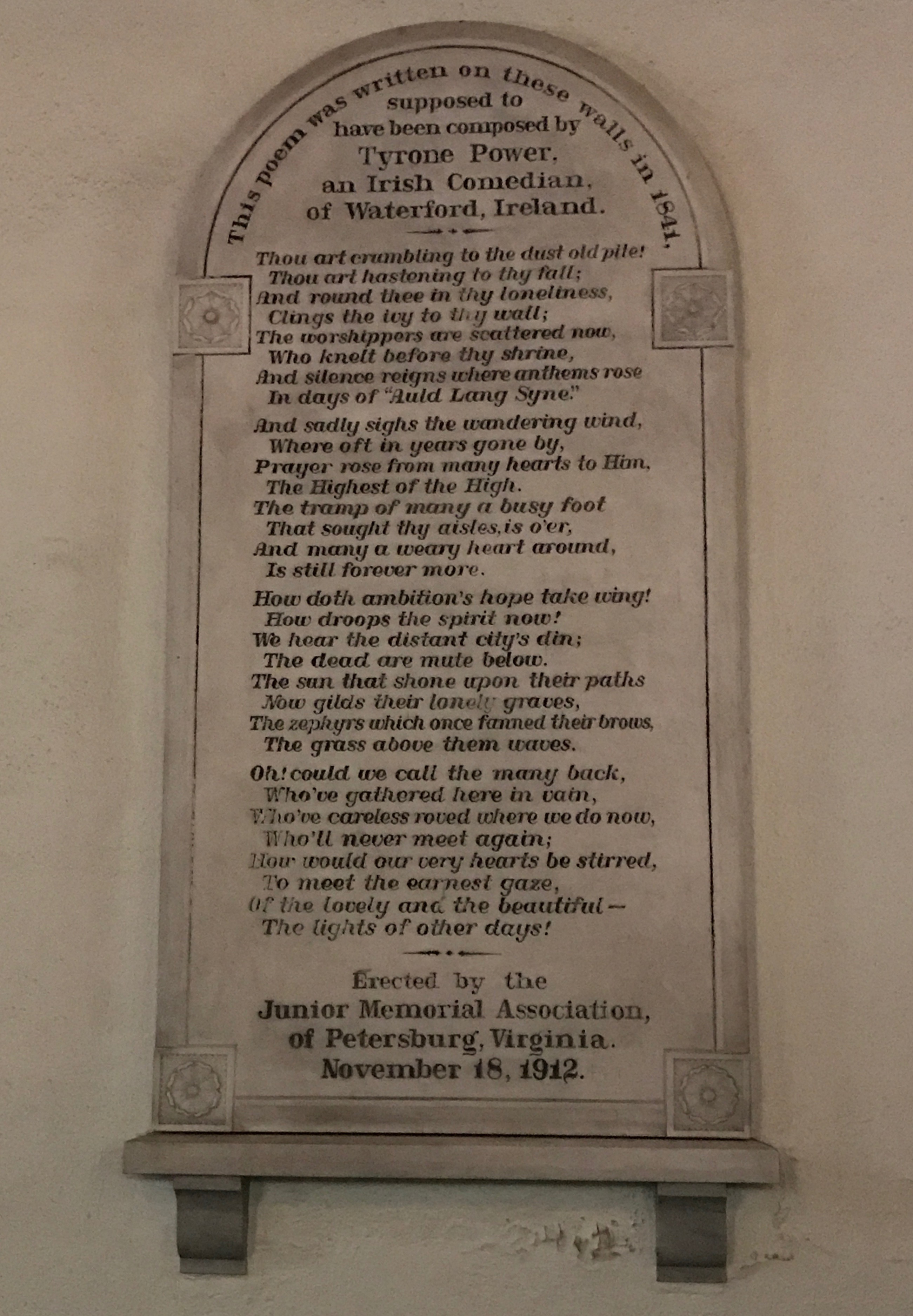
This plaque  was also on the wall of the church. The guide left me with the impression that it was significant, but I am not sure how it relates to the church.
The church had been abandoned in 1806 after the construction of another Episcopal church in Petersburg. Perhaps it was a romantic response to the crumbling building. After all, a building that hasn’t been maintained for 35 years is bound to show some signs of ruin.

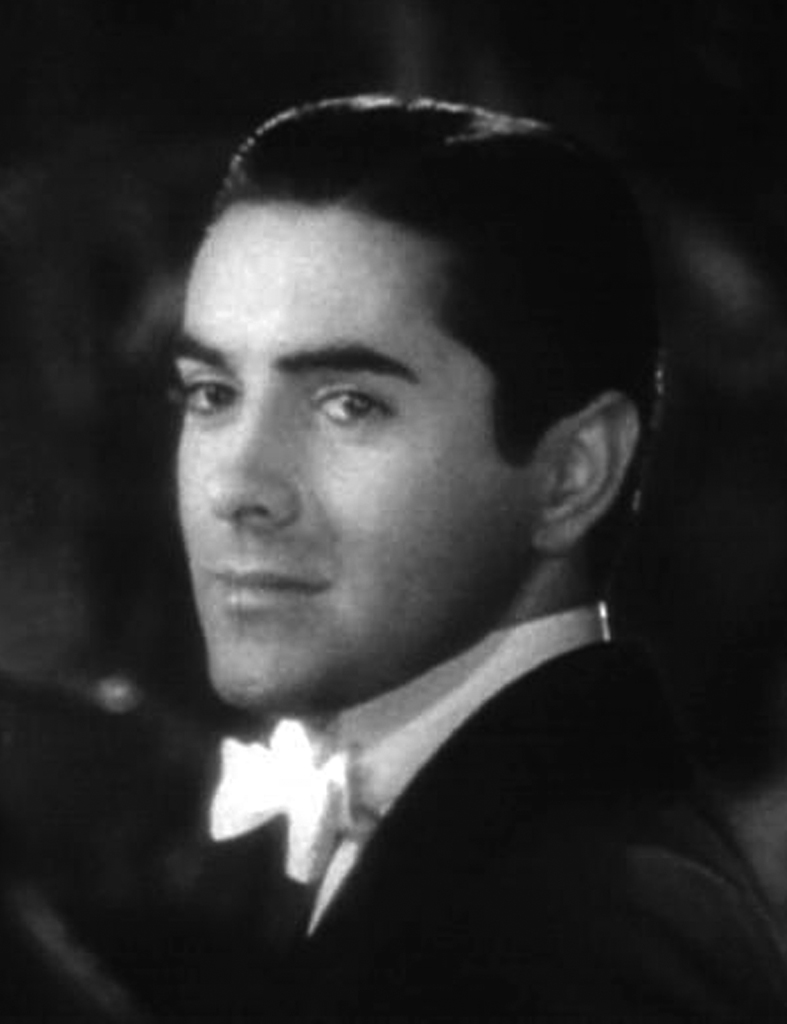
Or, maybe I was just captivated by the name of the supposed poet, Irish comedian, Tyrone Power.

No, not that Tyrone Power.

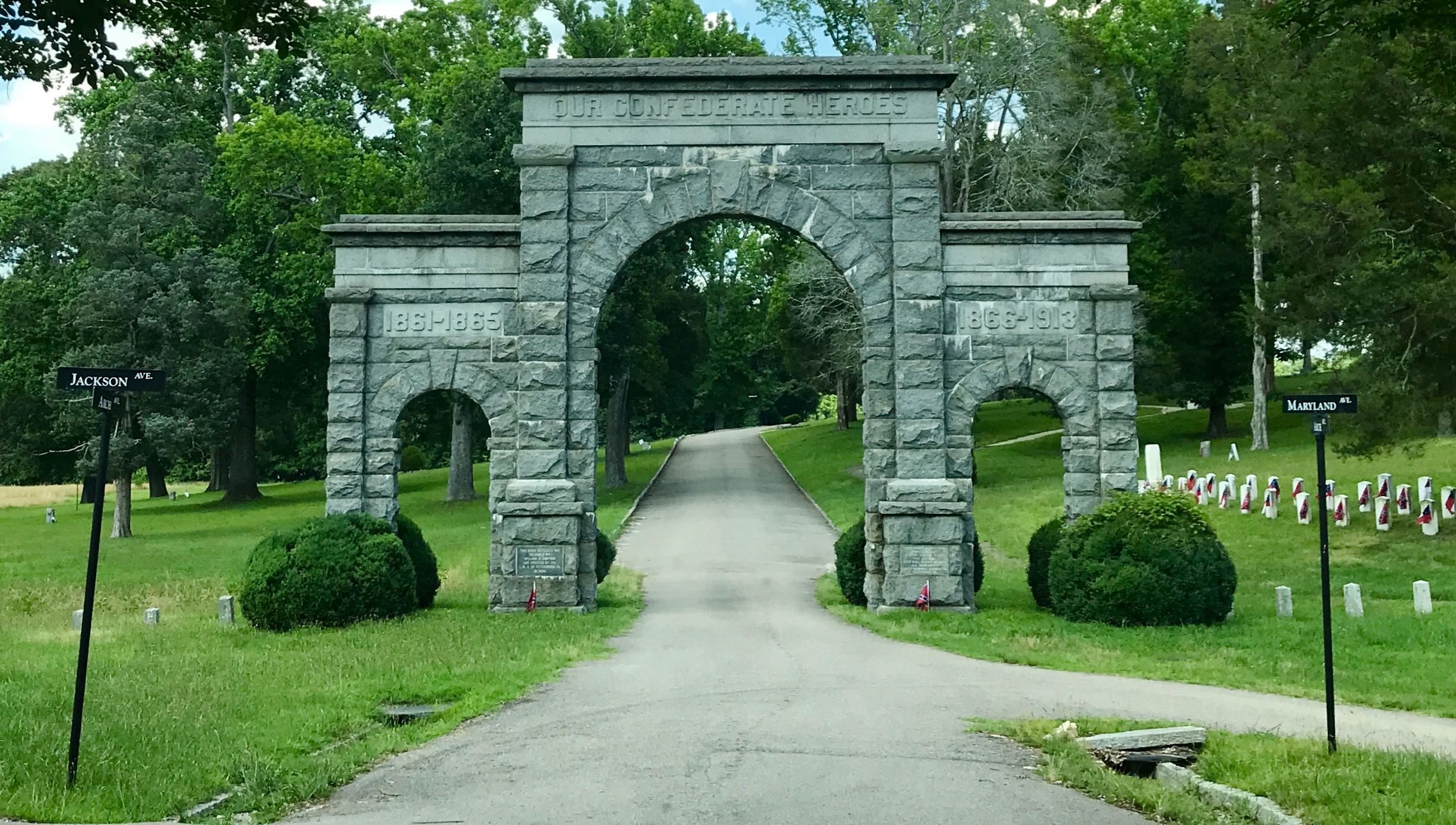
After my speed tour of the church, I decided to drive through the Confederate Cemetery. My guide told me that the women had taken the lead in exhuming the Confederate dead and reinterring them here. There are over 30,000 soldiers buried in the cemetery.

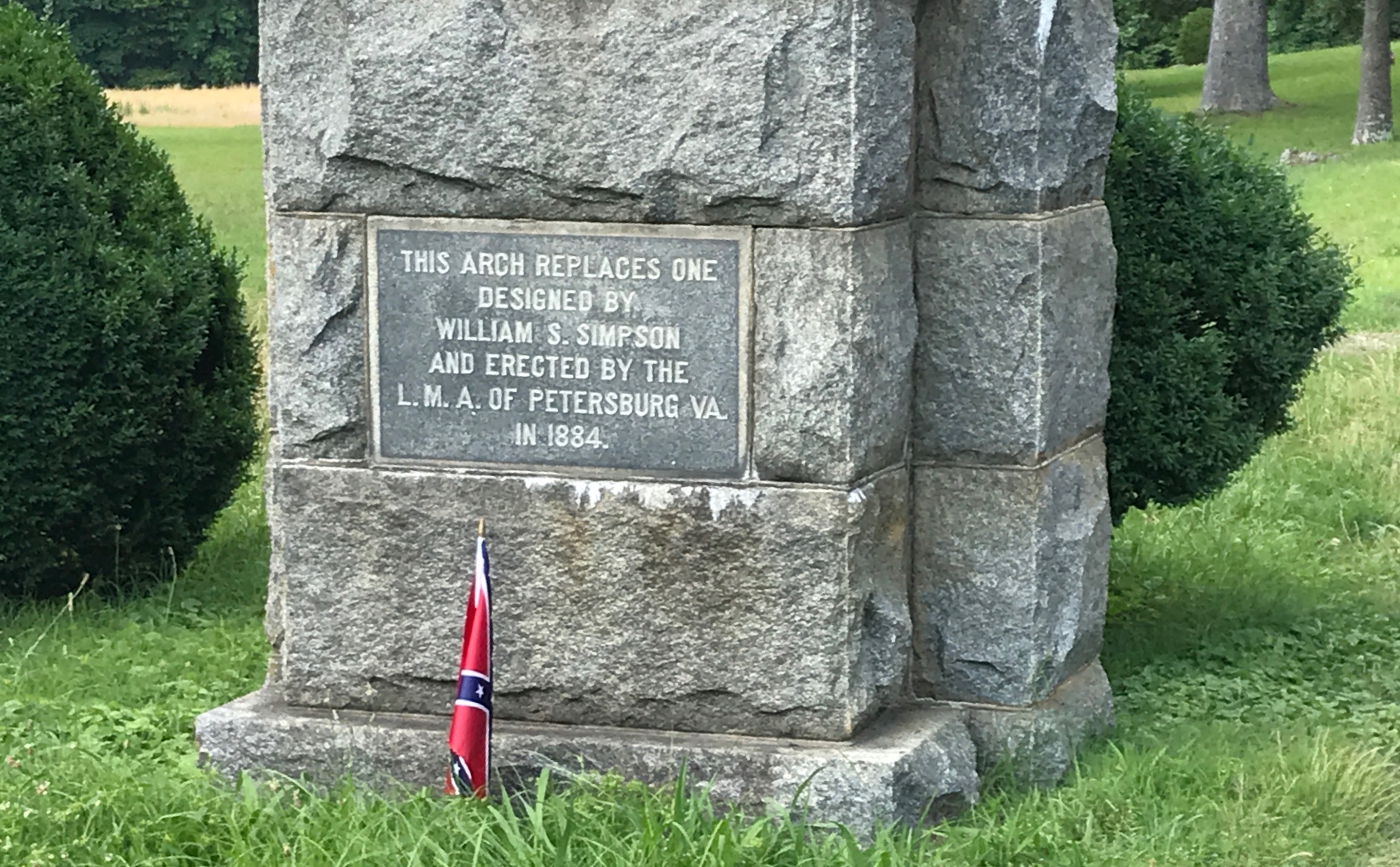
I drove through the civilian part of the cemetery and found the entrance to where the soldiers are interred. The arch carries the motto, “Our Confederate Heroes.”

This is the new arch.

My guide had mentioned how poor everyone in the south was after the war, and I think that is born out by the cemetery.

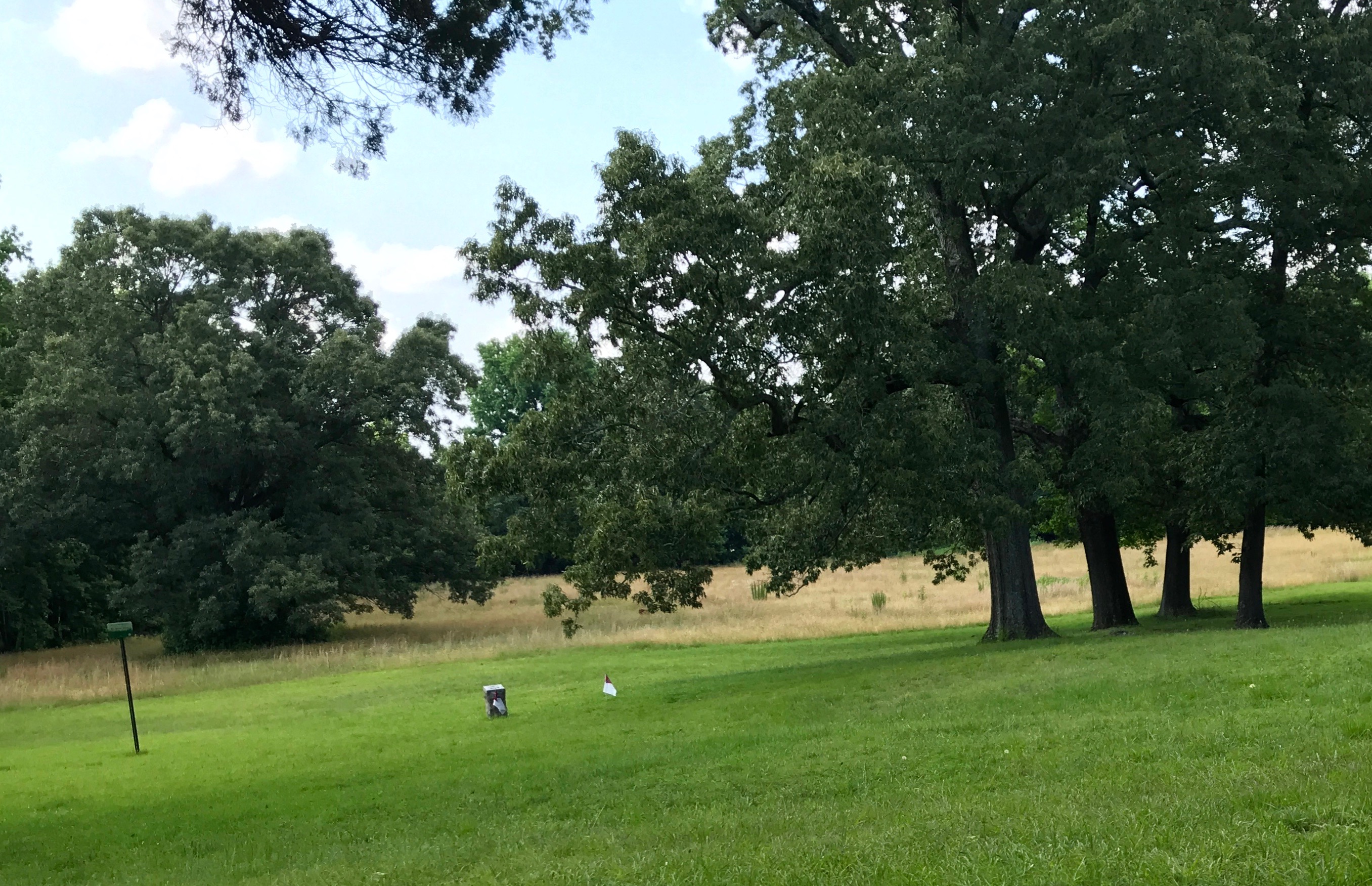
I had expected to see rows of markers like you see in the national cemeteries, like Arlington or the one in Vicksburg, Mississippi.

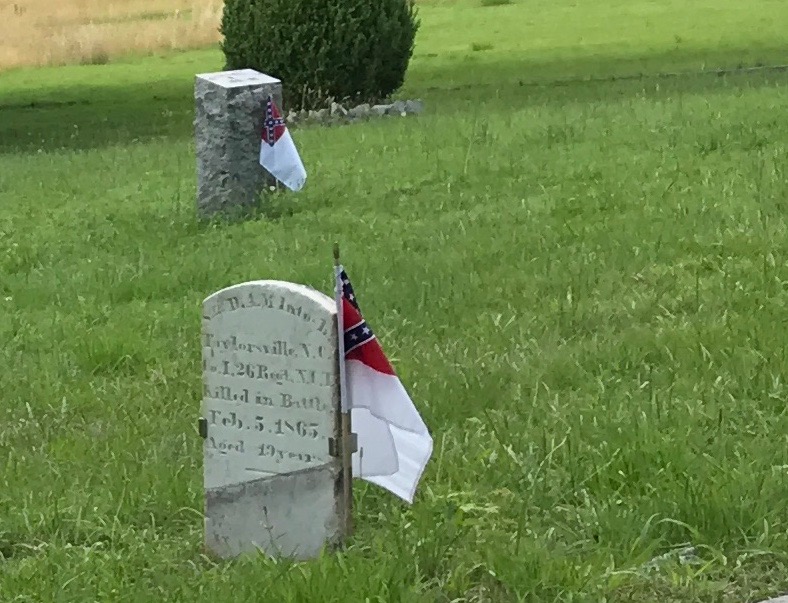
There were only a few markers scattered around the area where the Confederate soldiers were buried.

Maybe there was more to see, but I was out of time. If you have any additional information to share with me, feel free to drop me a line.

Thus ends my whirlwind tour of Petersburg, Virginia. Next stop: Richmond.


Downtown Petersburg

In the middle of my battlefield tourism, I started to feel a bit peckish and I headed into town for lunch.

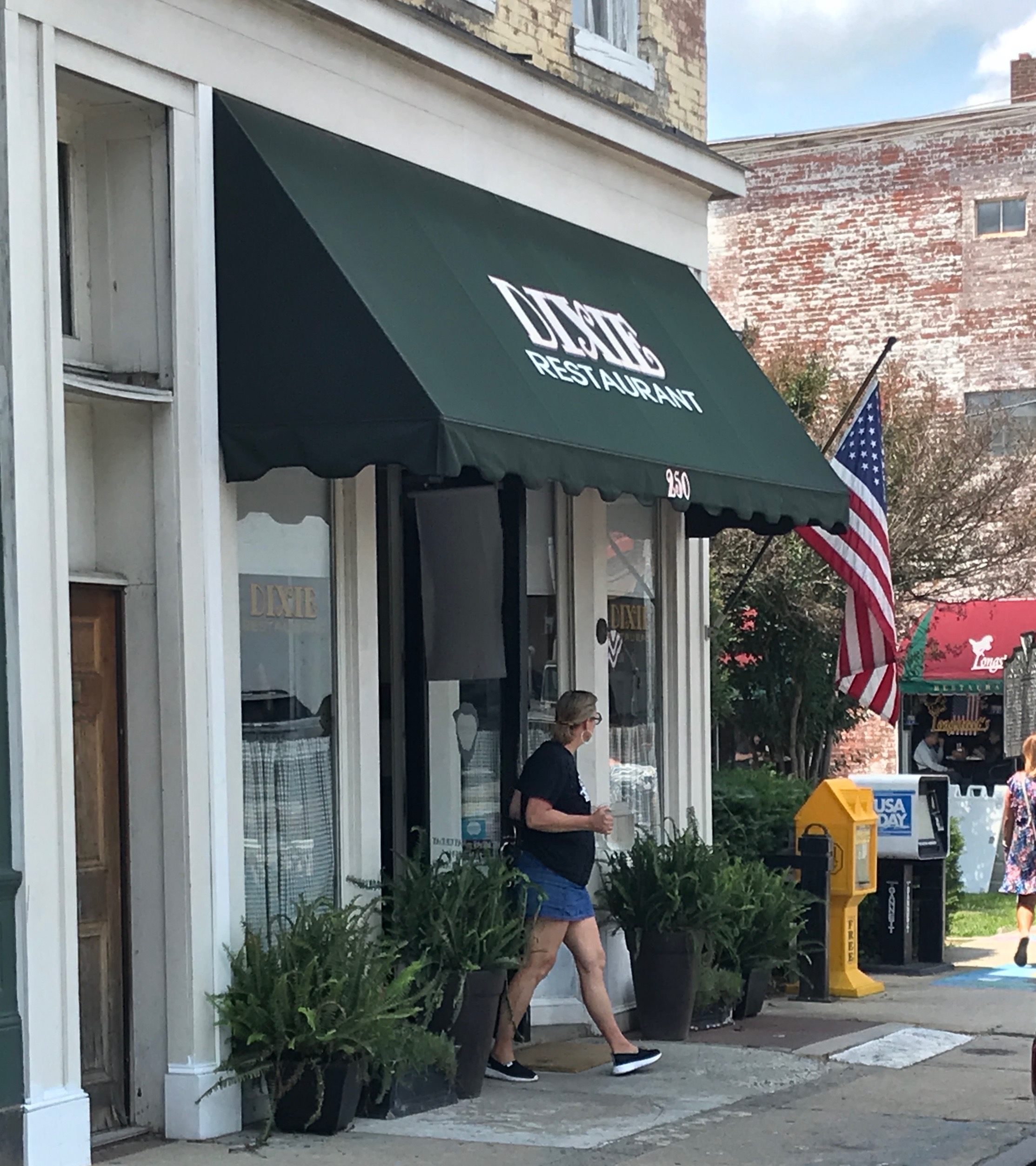
The Dixie Restaurant caught my eye, so I parked and went inside.

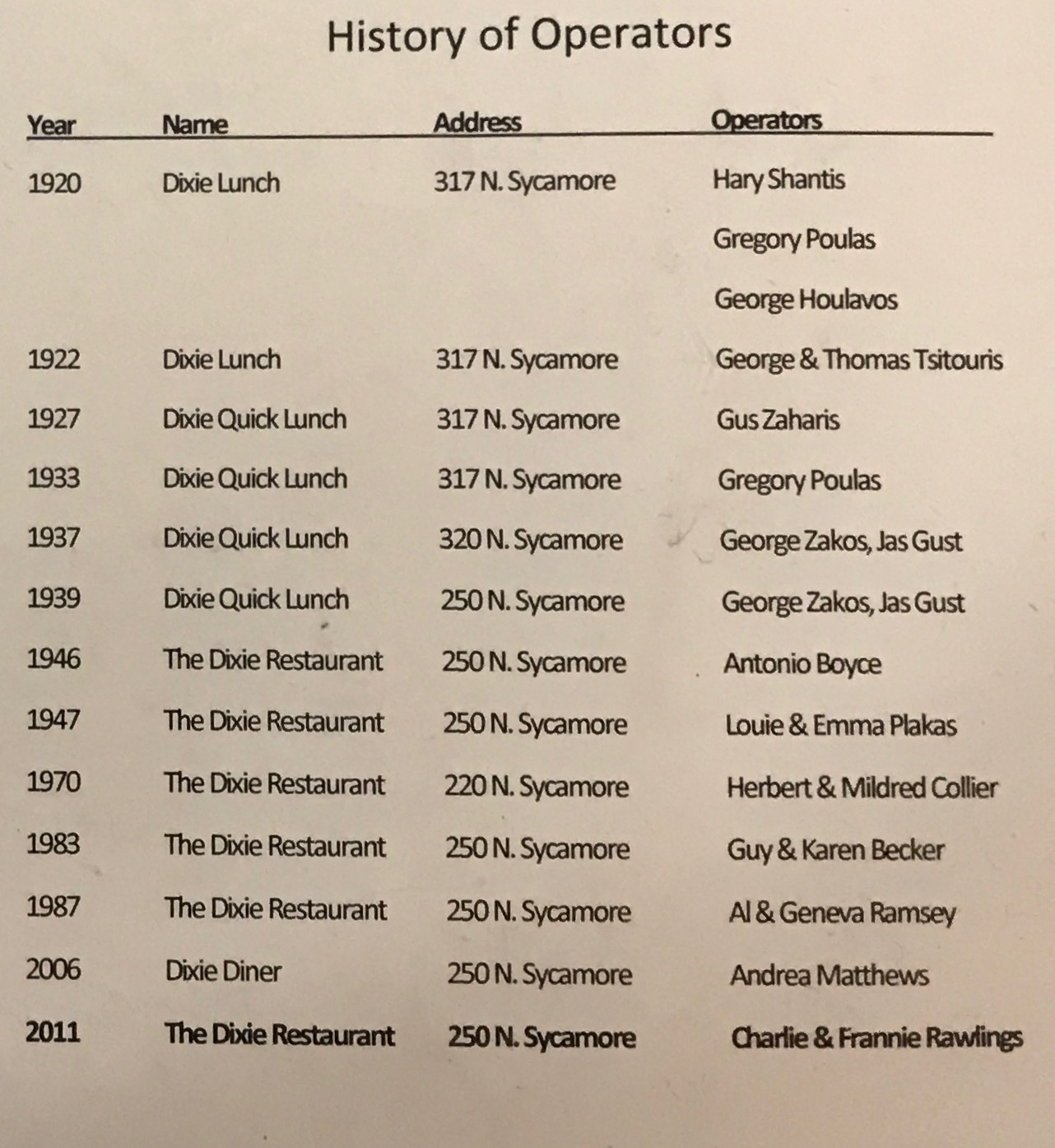
According to the information in the menu, The Dixie has been a Petersburg landmark since 1920, and has been in this location since 1939. The current owners, Charlie and Frannie Rawlings, spent three months renovating the restaurant, and reopened it in June 2011. They tried to keep as many of the old features as possible. They even managed to rehire some of the longtime employees, including Millie, a waitress, who has been serving for 25 years, and Mary, the cook, who has been whipping the southern delicacies for 15 years.

They value the history of the restaurant so much that they even listed the previous owners.

Hey! The Ramseys owned it in the ’80s! I wonder if we’re related? (On my mother’s side.)

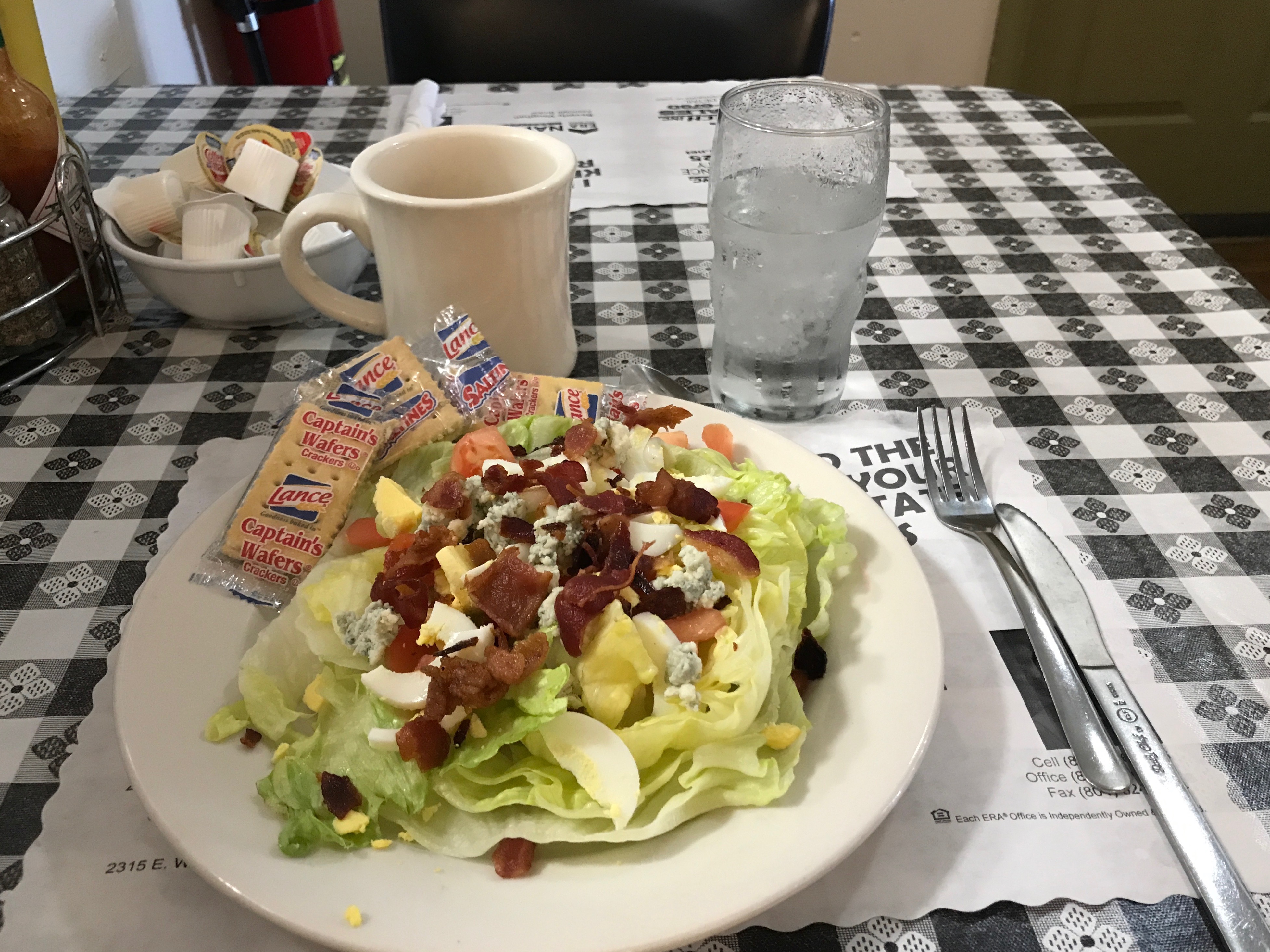
As I recall, this was a tasty Cobb Salad. It refreshed me and I was ready to explore a bit before heading back to finish my tour of the battlefield.

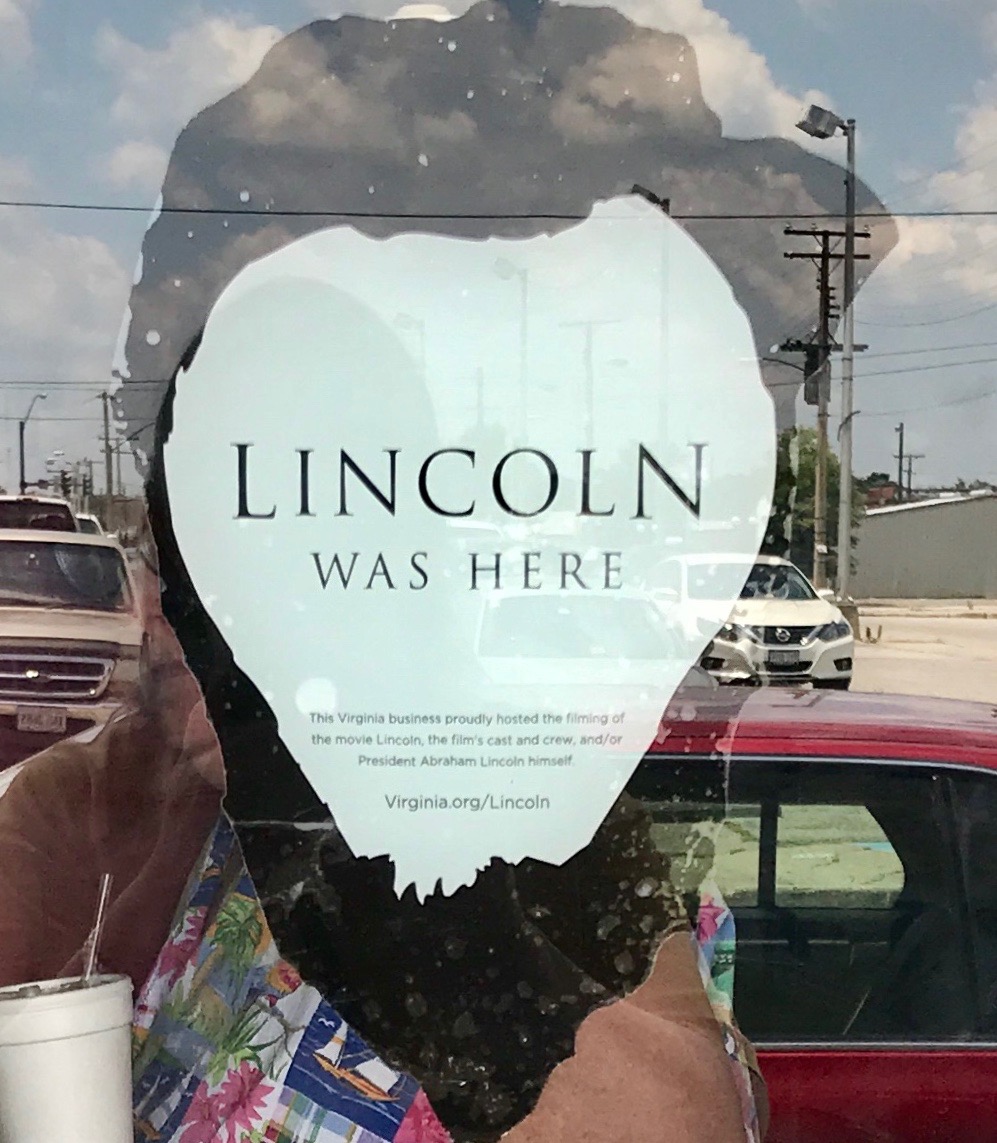
This decal was on the door. In case you are reading this on a small screen, allow me to share what it says.

Lincoln Was Here

This Virginia business proudly hosted the filming of
the movie Lincoln, the film’s cast and crew, and/or
President Abraham Lincoln himself.

I can easily see how they could recreate the appearance of what it must have looked during the Civil War.

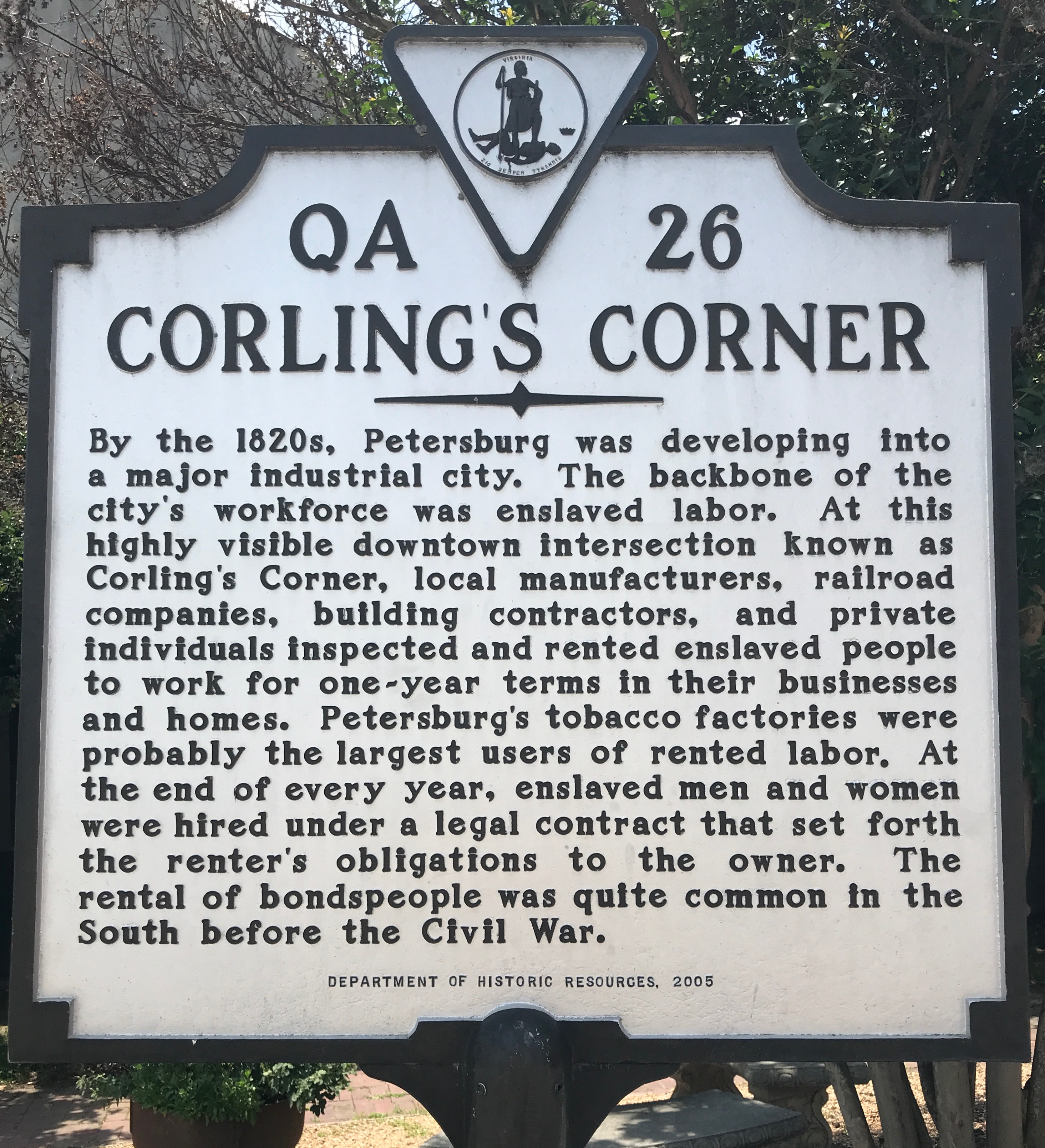
I found this interesting marker on a corner. It kind of reminds me of day laborers who gather in parking lots looking for work these days. Well, except that the day laborers are there by choice and they get to keep what they earn. But, other than that…

I saw a sign for a tourism office and went in to see what I could see. As an Information Specialist for Discover Kalamazoo, I find it interesting to check these things out and to see what the people on duty have to offer.

There were the usual brochures and such, but in the back they had an informative display of reproductions of photos from the 1860s.

It’s interesting to see the effects of war on life in a city under siege. At the beginning of the Civil War, Petersburg was ranked the second largest city in Virginia and ranked eleventh in size among all Confederate cities. The 1860 U.S. Census listed 18,266 residents in the city. The five railroads that crossed through the city and its location on the Appomattox River contributed to the area’s economic growth in the years before the war.

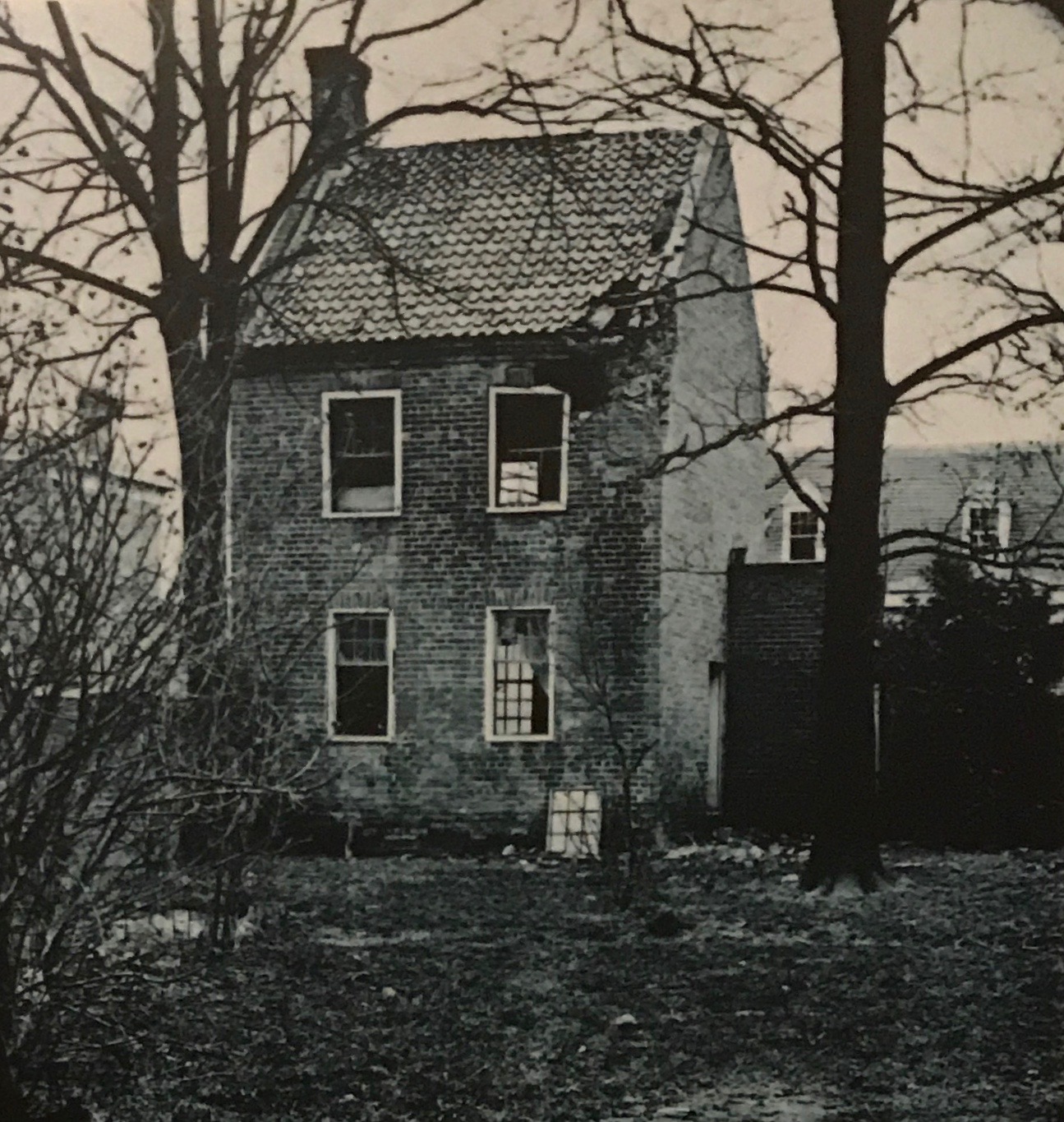
This photo was labeled “Damaged home in Petersburg.”

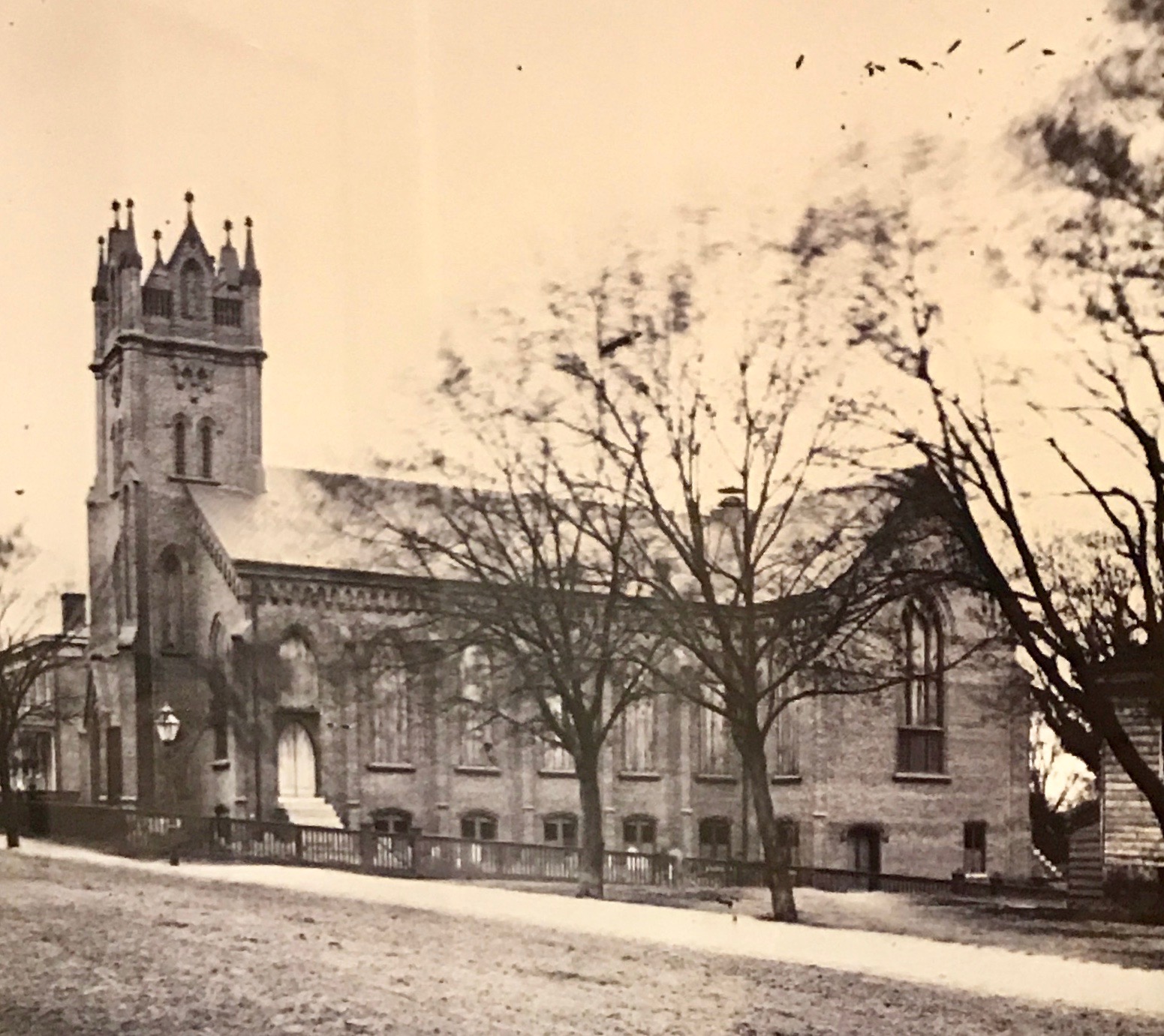
Reverend William Platt, the priest of Grace Episcopal Church, wrote a letter to Federal forces asking them to refrain from shelling on Sunday mornings, so that the citizens of Petersburg might be able to attend worship services. The Federal troops were ordered to comply with the request.

Grace Episcopal was one of the newer churches in Petersburg. Construction started around 1859, and at least the basement space was completed by the Siege. A Wednesday evening prayer service was held during the Siege, and General Lee was reported to have attended several of these services, although he frequently attended morning services at St. Paul’s Episcopal Church. The building the housed Grace Episcopal Church was demolished in 1959.

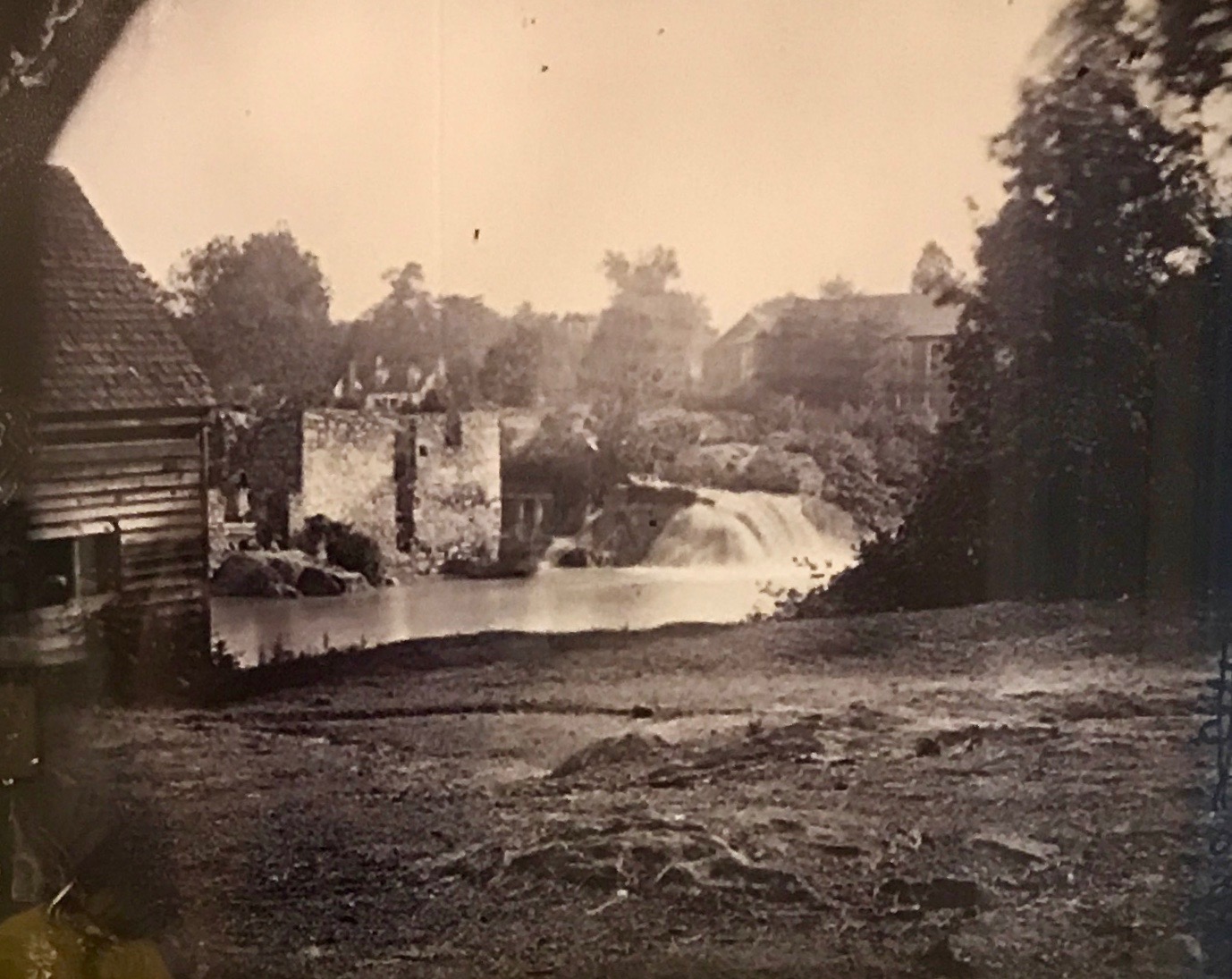
This is a photo of the ruins of a woolen mill.

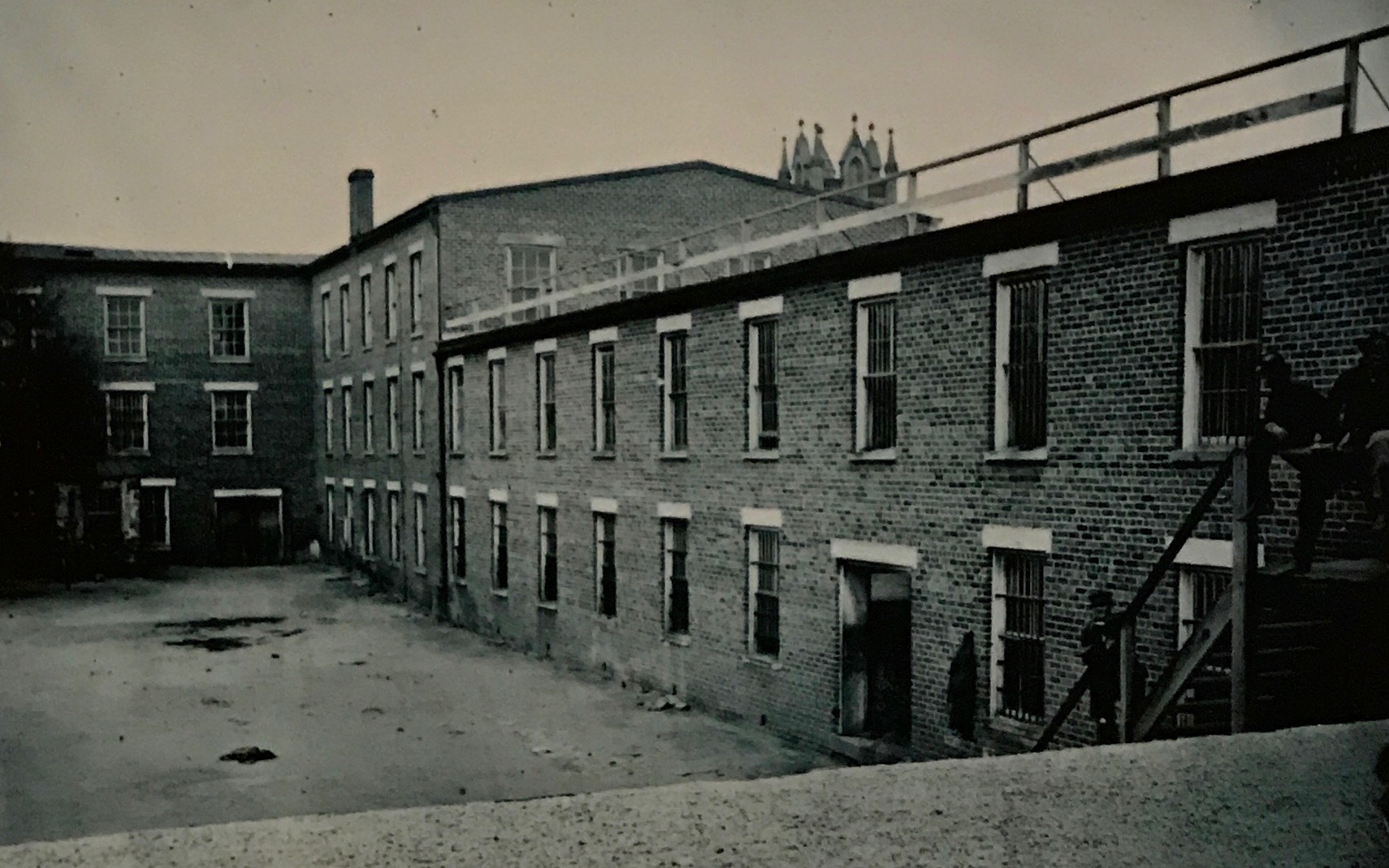
Buildings were commandeered for military purposes. This was a tobacco warehouse was used as a Confederate prison.

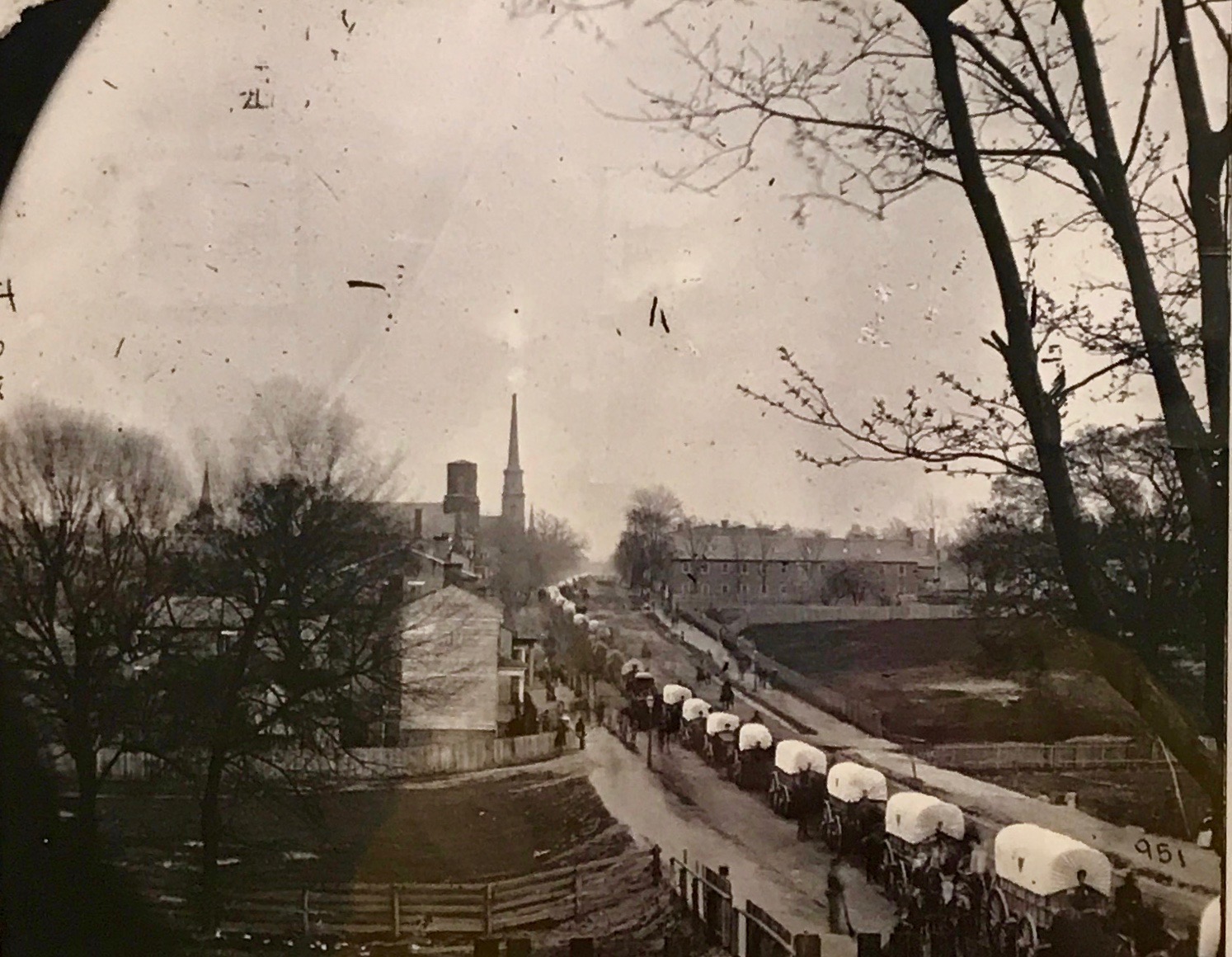
Here’s a Federal wagon train rolling through Petersburg.

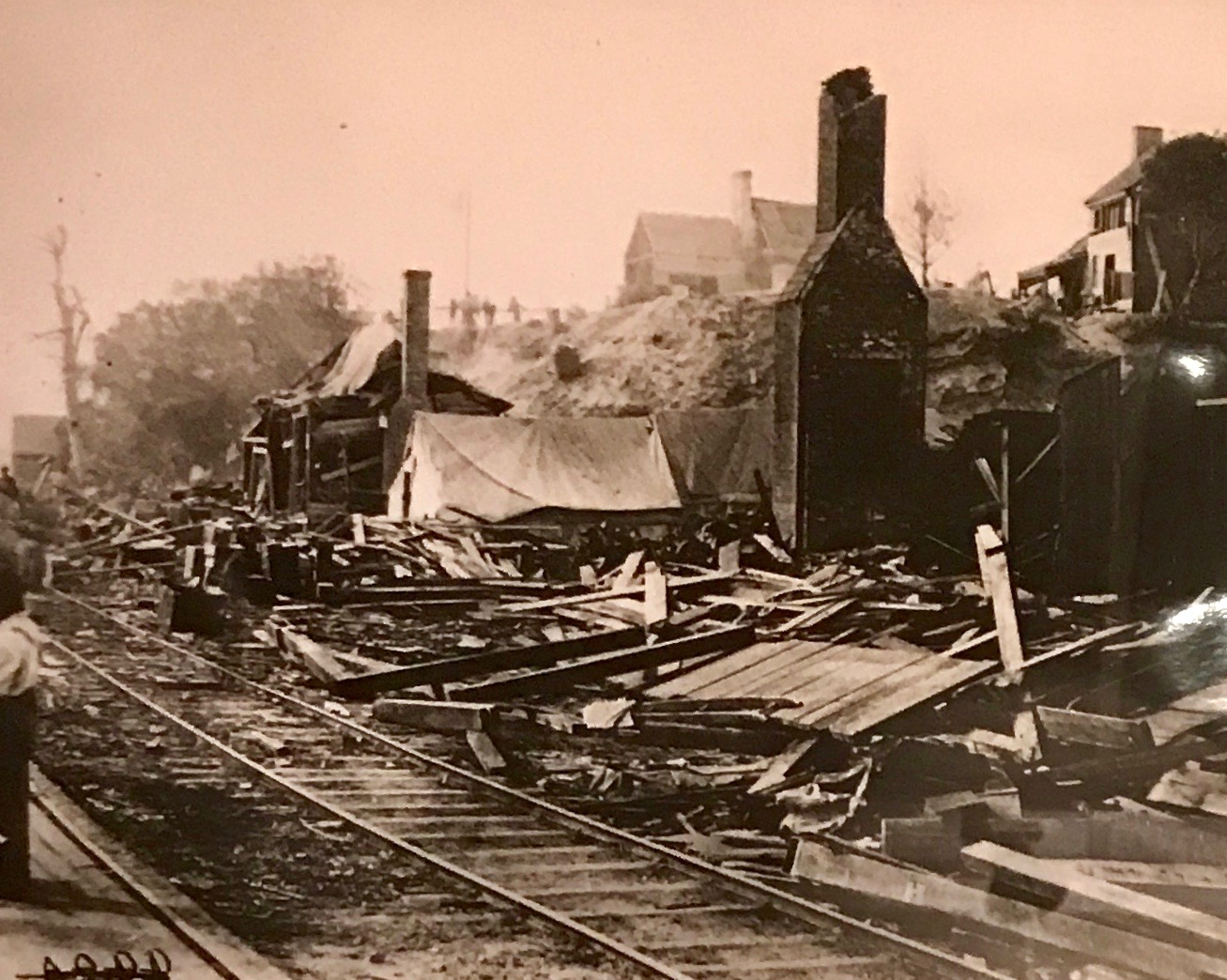
City Point was at the mouth of the Appomattox River, where it emptied into the James River. It was about 10 miles away, but was important because boats couldn’t get through once the Union forces controlled the area. General Grant made his headquarters and base for supplies in City Point.

The damage in this photo wasn’t caused by the Union troops, however. This photograph depicts damage at City Point following an explosion set by Confederate troops on August 9, 1864.

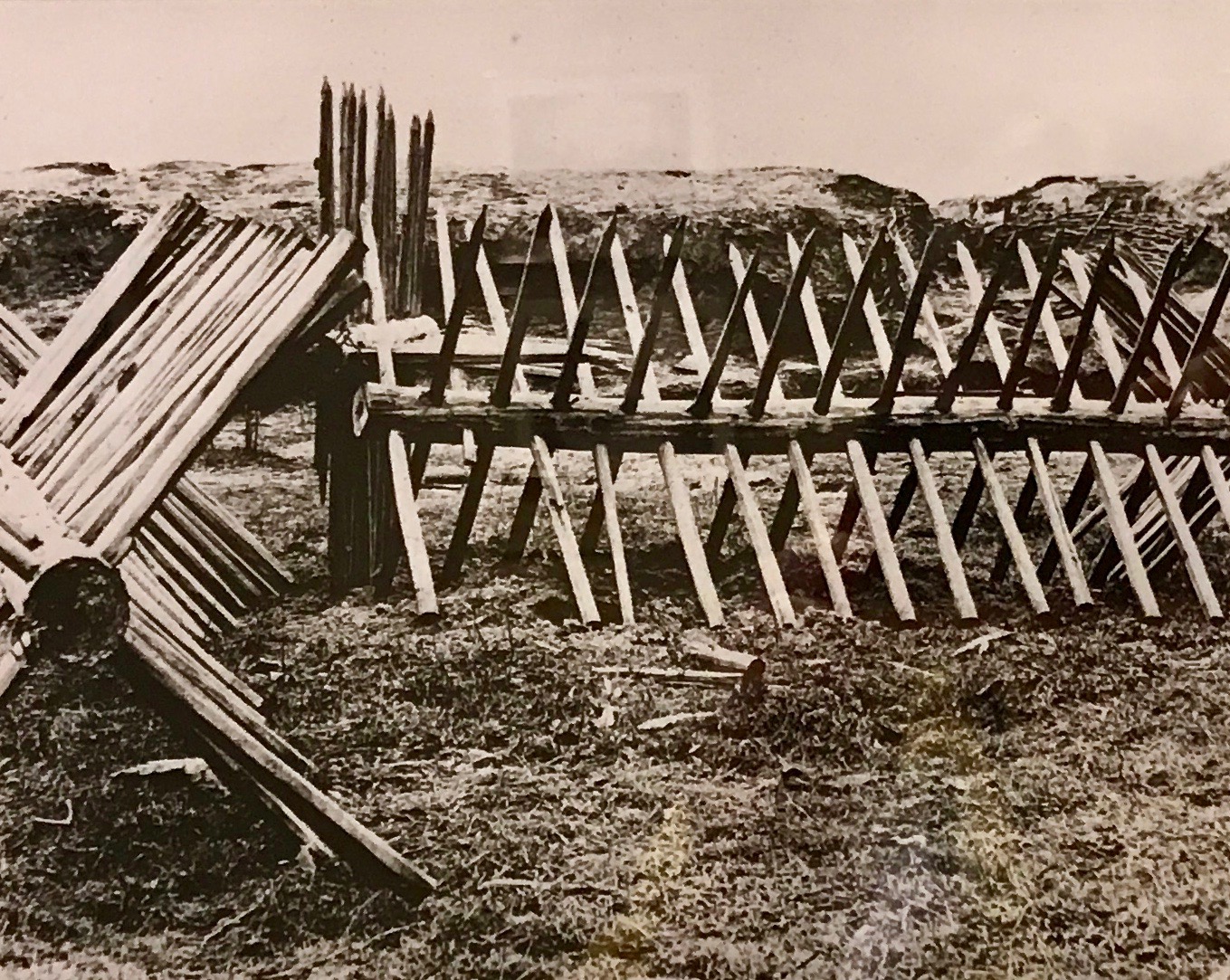
After the explosion at the Crater, the Confederates did what they could to prevent another mine explosion. They dug at twenty-seven foot ditch at the rear of fort Gilmer.

The twenty-seven foot ditch would slow down attackers, as would these structures known as “abates.”

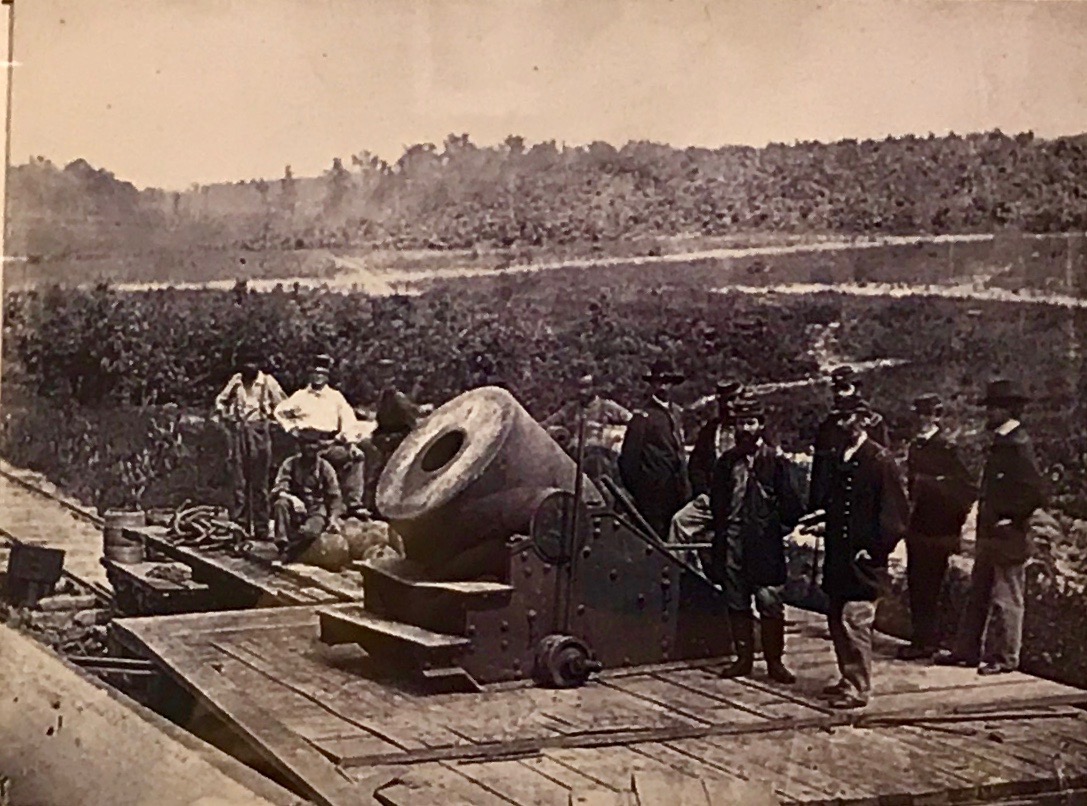
This Mortar was named “The Dictator.” It weighed in a 17,000 pounds and was mounted on a specially reinforced railroad car. It was transported to the Siege operations by rail from City Point. Th mortar could lob a 200 pound explosive shell about 2.5 miles. It was usually positioned in a curved sections of the Petersburg & City Point Railroad and it was used for about three months during the Siege. During the Siege, it was manned by Company G of the 1st Connecticut Heavy Artillery.

David Knox photographed this image of the mortar that Gardner later published in the Photographic Sketch Book of the Civil War.

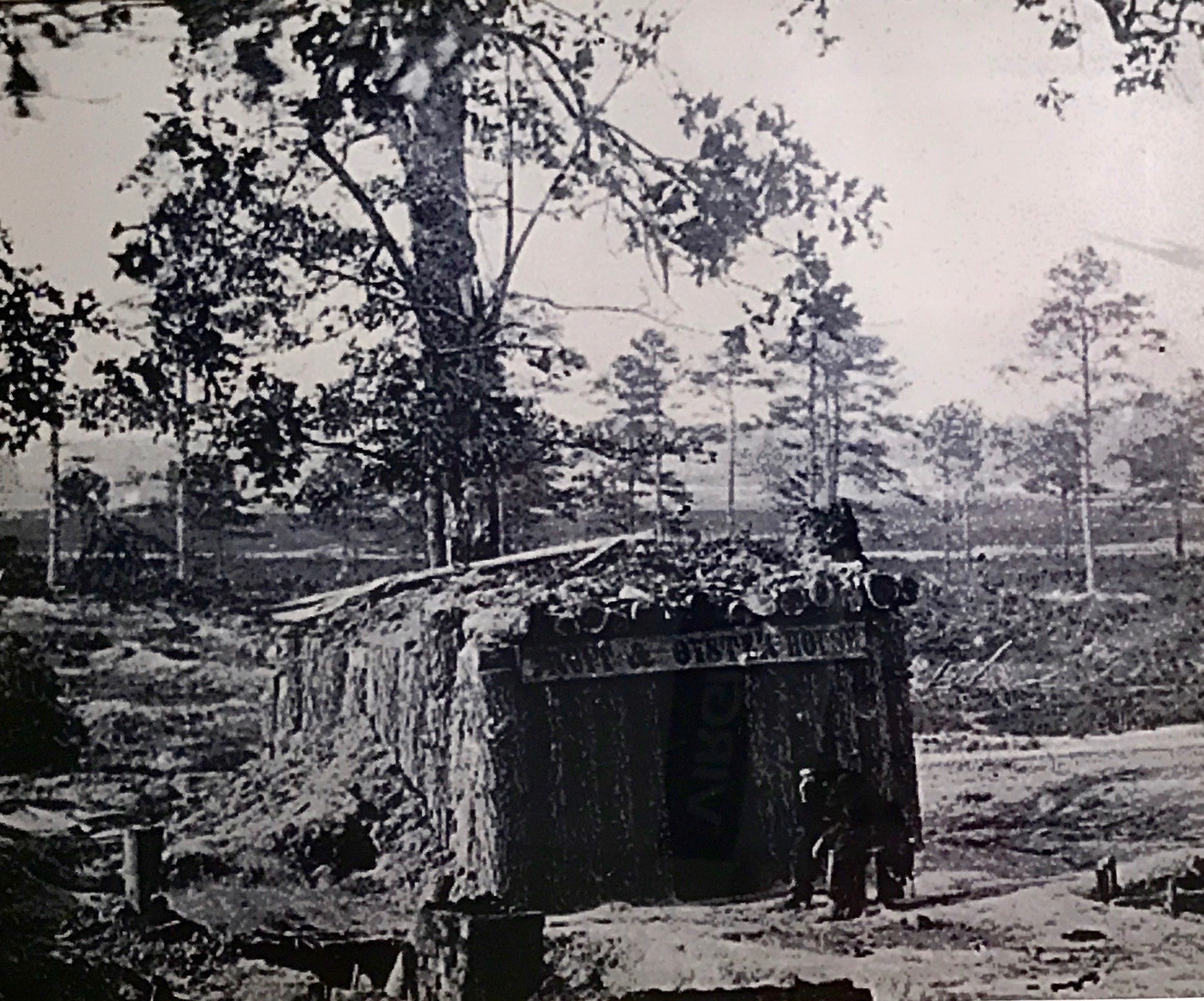
A soldier has to eat, and this is a restaurant. I don’t know if this was created by some enterprising individual or was created by the army.

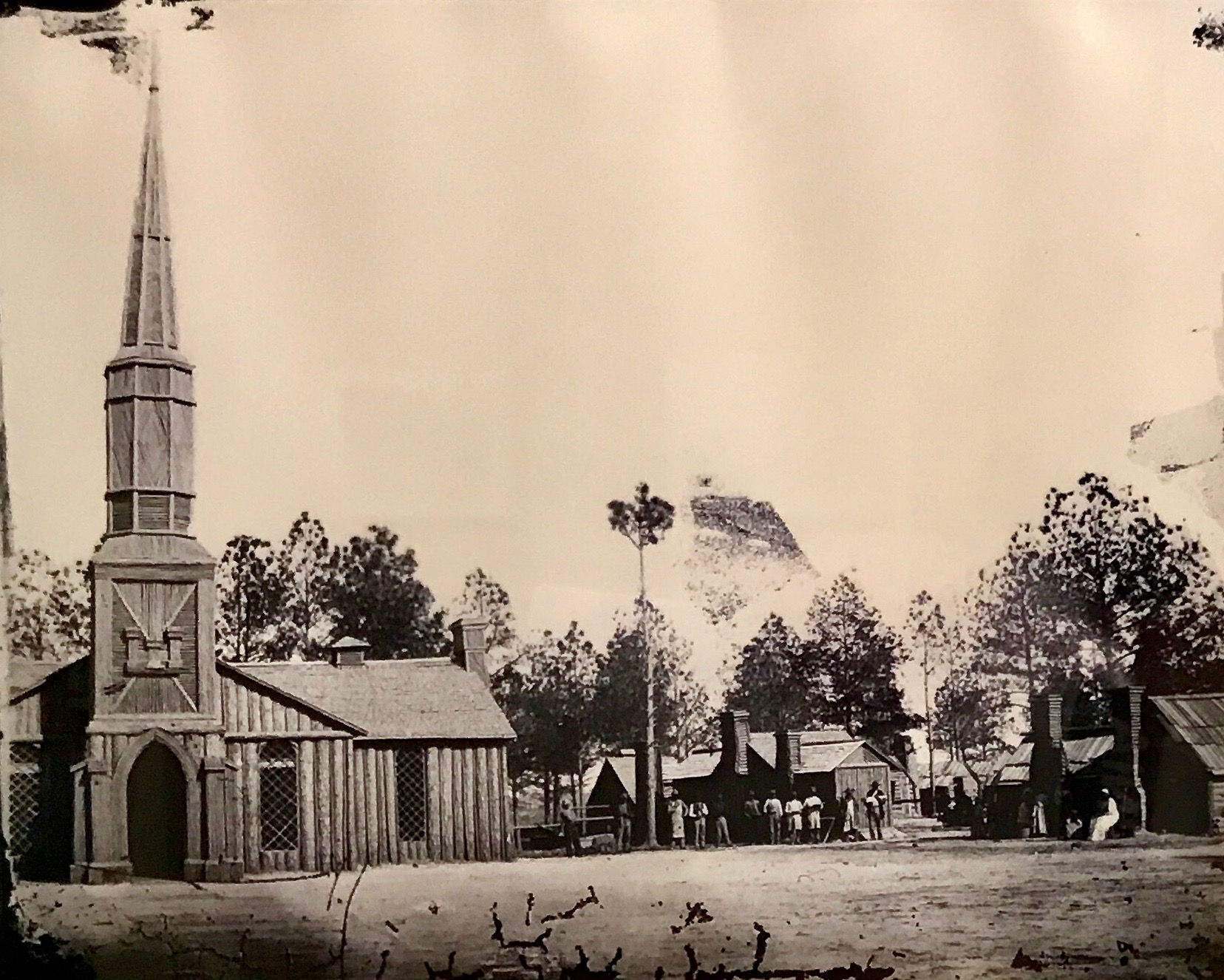
This structure was built by the army. Members of the 50th New York Engineers completed this church at their winter camp in February 1865. The church and the officers’ quarters to the right of the church were built from wood that had been cleared from the land. This church was built near the site of Poplar Springs Church, that had been destroyed during the Battle of Peebles Farm. The structure was demolished in 1868.

It tickled me to see that they managed to include the Army Corps of Engineers logo included over the door.

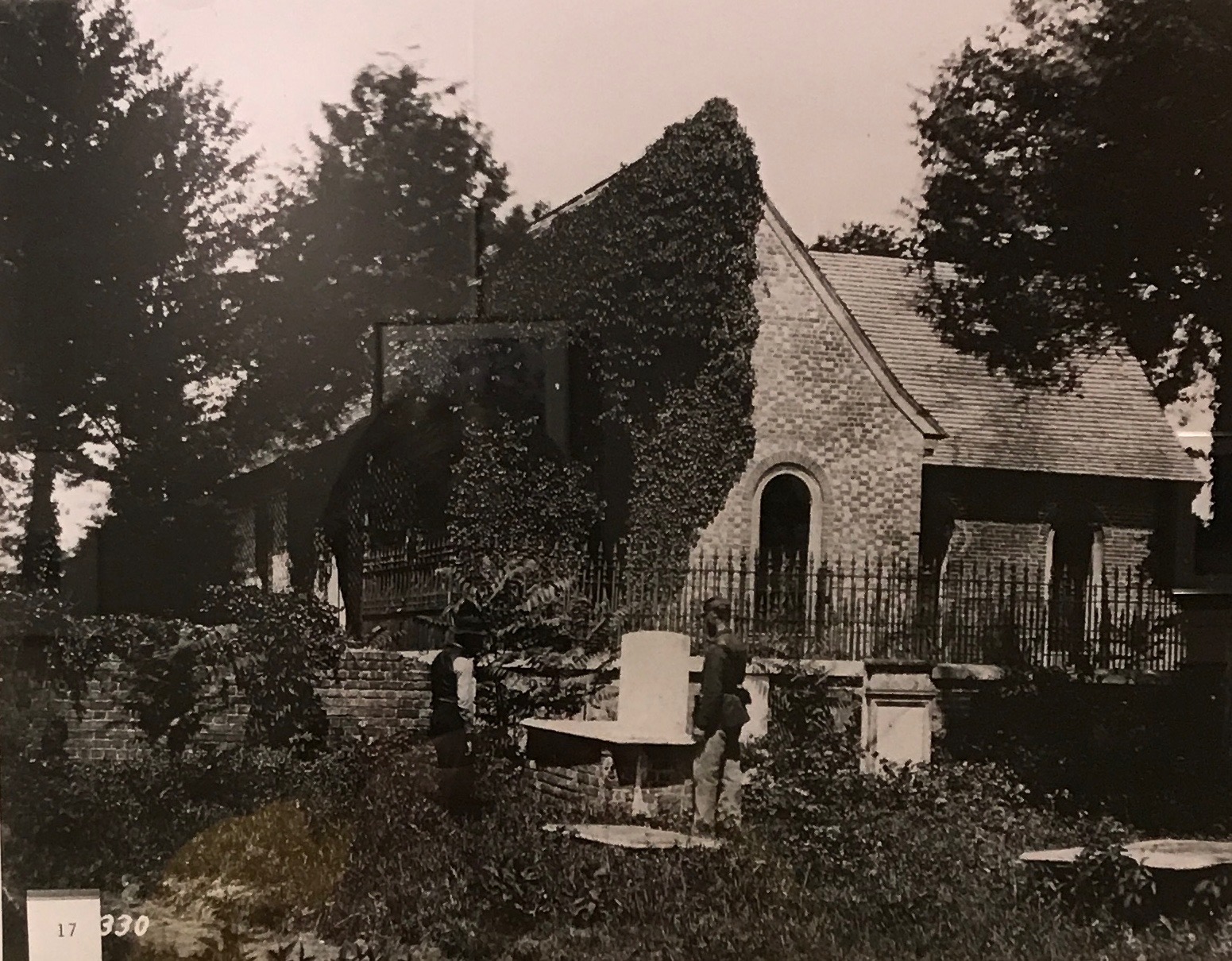
There was a photo of a place I hoped to get to before it closed for the day – Blandford Church.

It had been built in 1735, as the seat of worship for the members of Bristol Parish. The church building was abandoned in 1806. This image was taken by Timothy O’Sullivan in April 1865 and included in Gardner’s Photographic Sketch Book of the Civil War. It is now used as a Confederate Memorial, and roughly 30,000 Confederate soldiers are buried Blandford Cemetery.

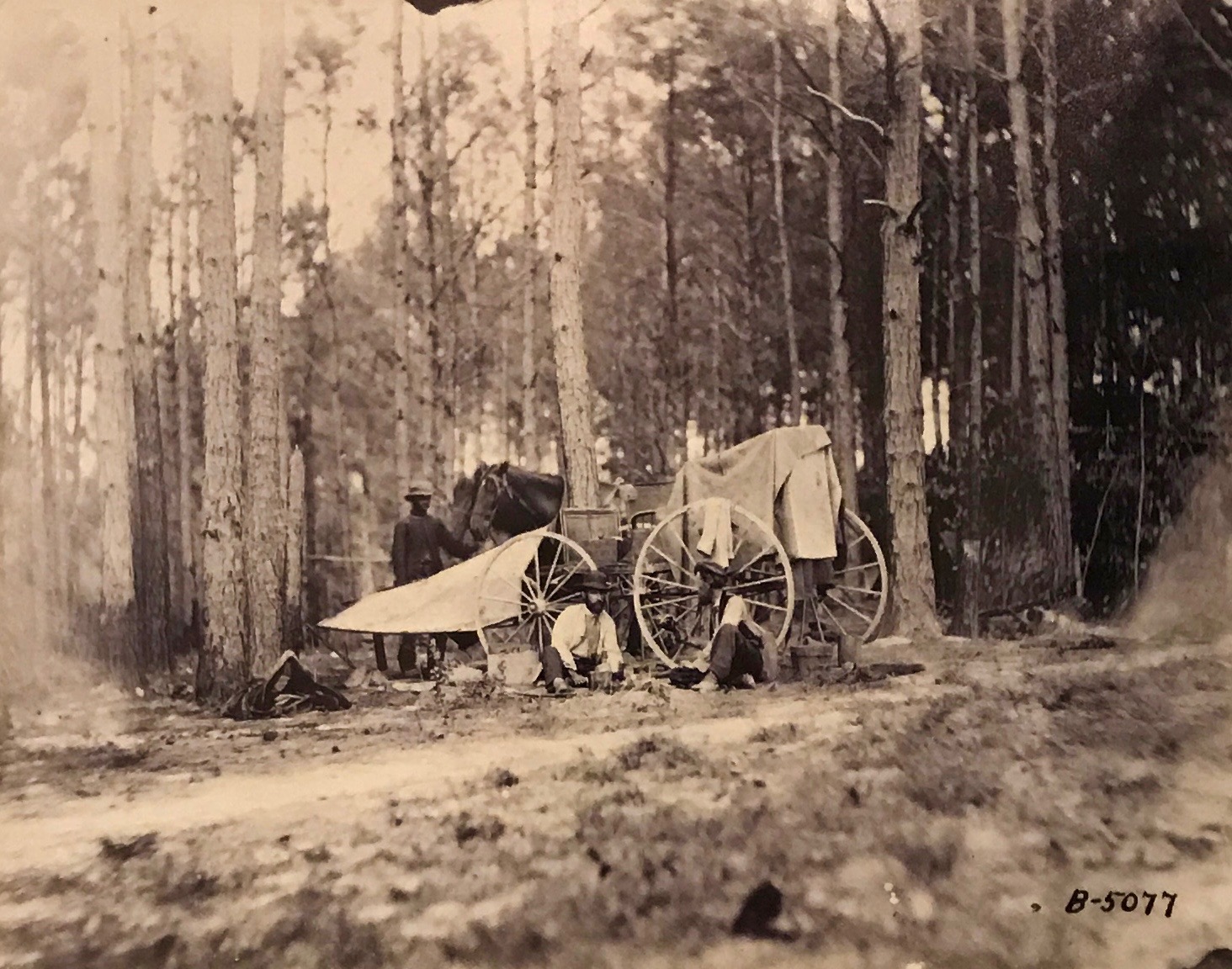
Some of the most prolific documentary photographers of the Civil War were Mathew Brady and his associates, Alexander Gardner, George Bernard, and Timothy O’Sullivan. They travels throughout the easter part of the country visually recording scenes of war and its aftermath. The result is a collection of some 12,000 images that form a rich visual document of the Civil War.

Not to mention, forming the basis for Ken Burns’ PBS miniseries. Cue Ashokan Farewell.

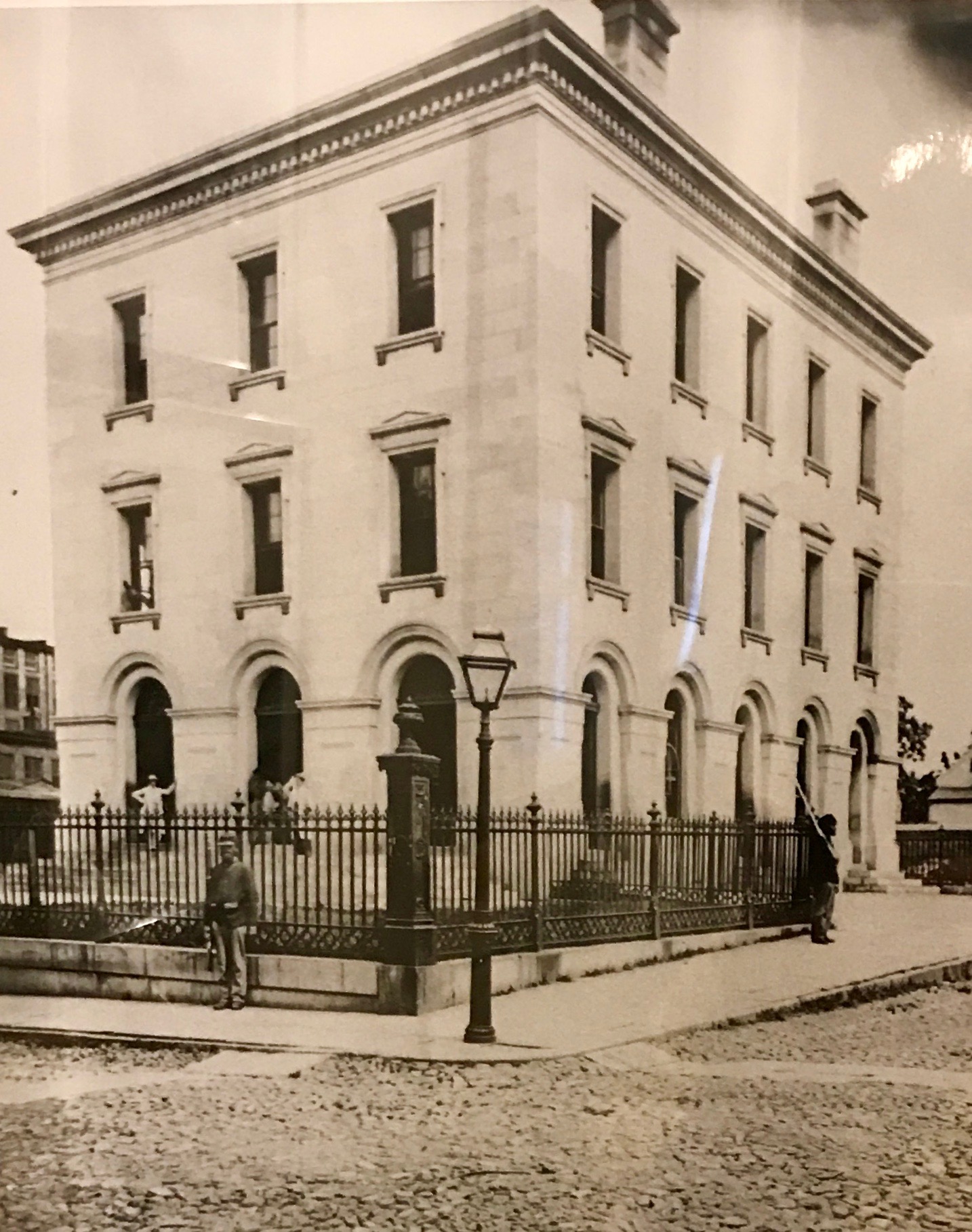
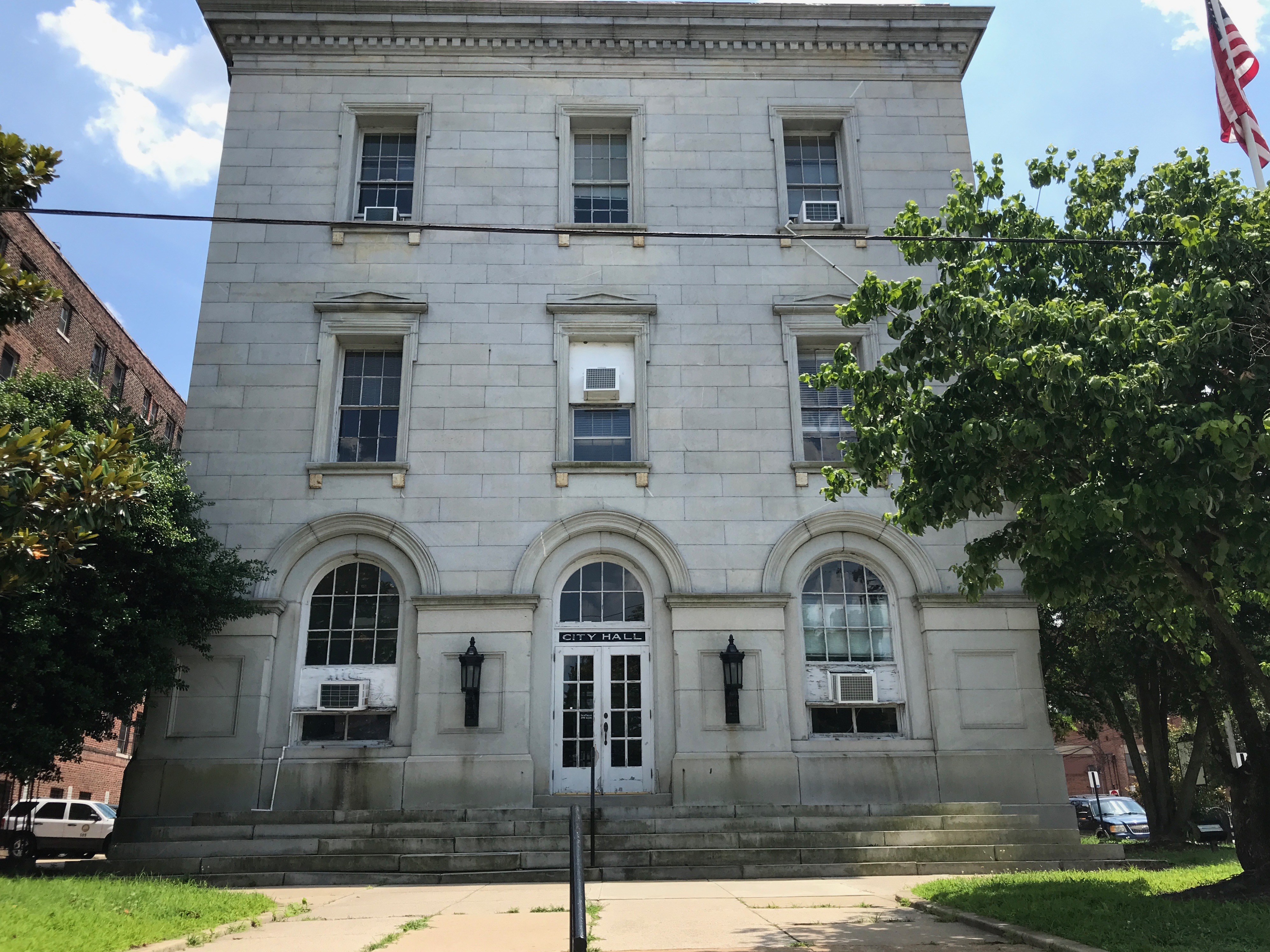
The Post Office and Customs House was built between 1856 and 1859. In July 1864, the postmaster moved the post office to Dunlop Street in the western portion of Petersburg because he felt that this location was too exposed to shelling.

The building was used as a meeting place for Confederate officers during the Siege. General Lee and General Beauregard met here on at least one occasion. A Confederate signal Station was also located on the roof.

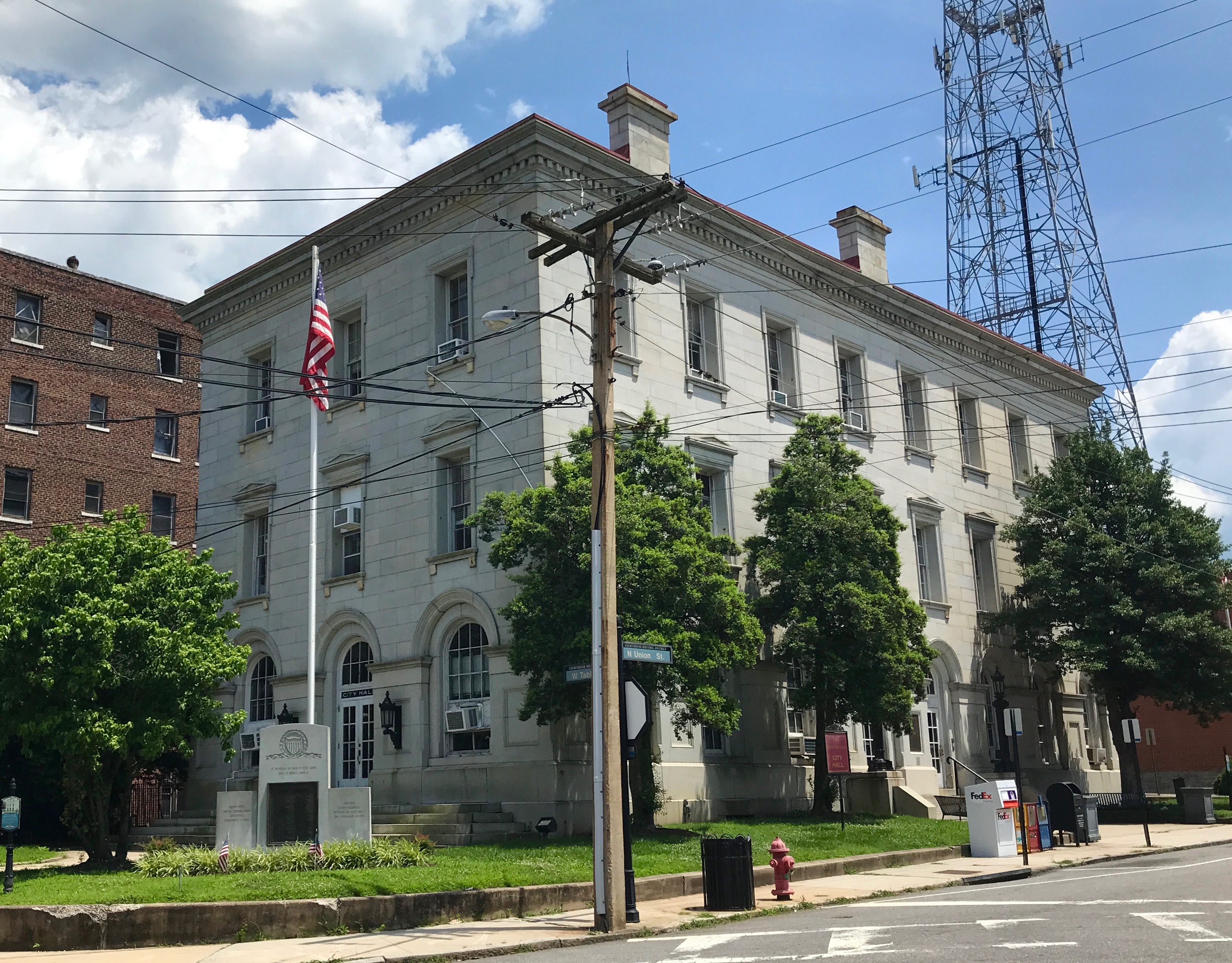
The building became Petersburg’s City Hall in 1938.

Yes, the same building is still in use.

And with that, it was time to find the truck and head back to the battlefield.


Petersburg National Battlefield, Petersburg, Virginia

Weekends are great as a seed courier.

For one thing, I don’t have to schlepp all my stuff in and out every day. If you are smart, you book for three nights – Friday, Saturday and Sunday. Or you do what I did, and forget about Sunday night. No bother! I got to visit another place that I had on The List on Sunday.

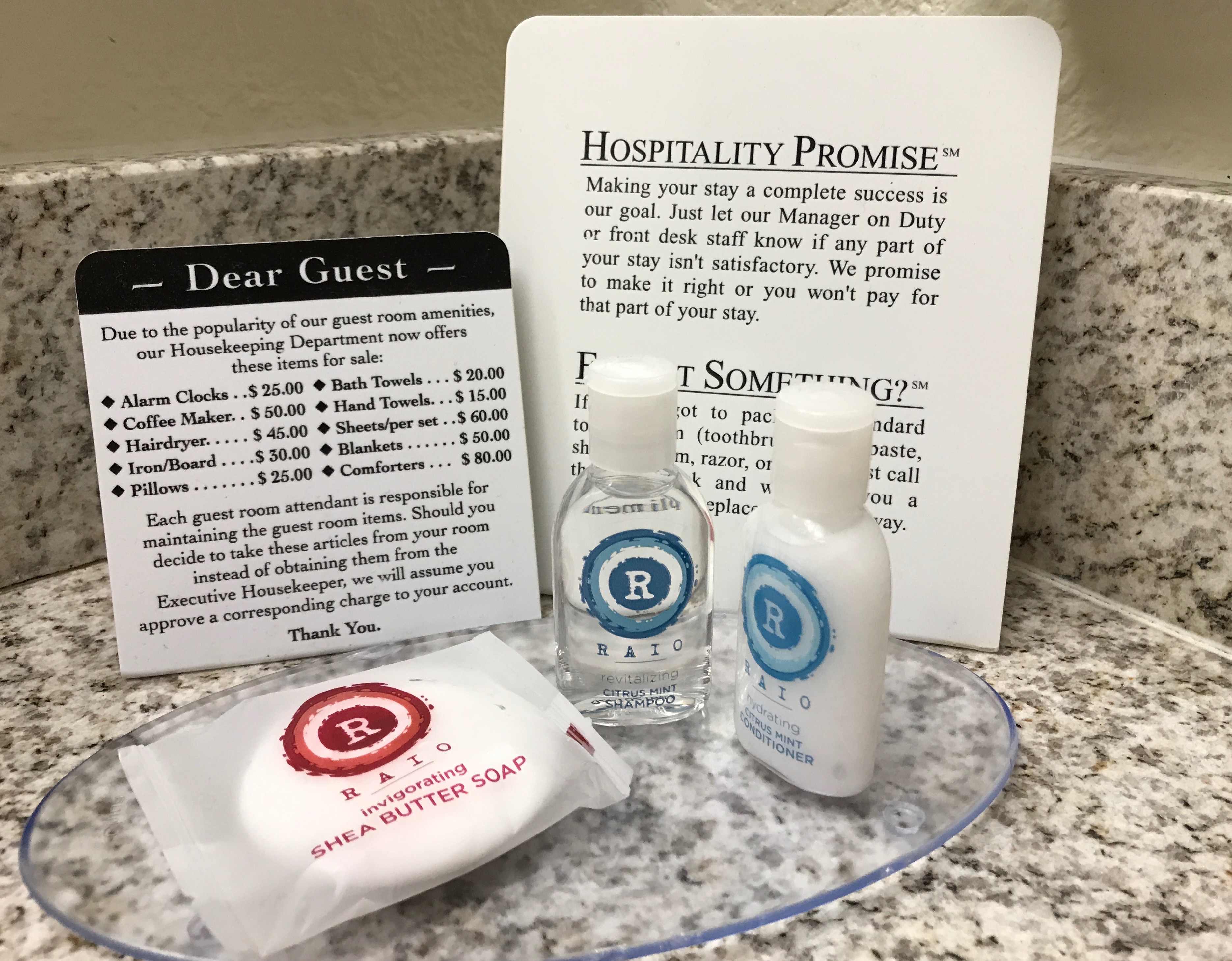
Permit me to digress from Petersburg for a moment and discuss lodging. Those of you who travel and stay in moderately priced hotels may be familiar with the concept of a “Hospitality Promise” that comes with toiletries and a threat.

For goodness sake! Their “guest room amenities” can’t possibly be that popular!

By this time, I was getting pretty familiar with the complimentary breakfast bar. This time, I got to see something I hadn’t seen in years.

A woman out in public with curlers in her hair. Perhaps she had some special event, like a wedding or some such thing, where she was going to get fixed up once she got there.

It’s fun to look at the people you see along the way and make up backstories for them.

The reason I had been looking forward to visiting Petersburg is that it is the site of was a major battle in the Civil War. When I was younger, I could have told you a lot about it. At this point, however, all I could remember were the words “siege” and “crater.”

Petersburg has been on “The List” forever.  I’ve been close several times, but just couldn’t work a visit in. Today was the day!

Upon my arrival, I learned that Petersburg was the longest battle of the Civil War, lasting 9 months and 18 days. I happened to arrive on June 17, on the 144th anniversary of the beginning of the battle, and there were people on hand to help explain the battle. I arrived just in time to join a tour with a ranger.

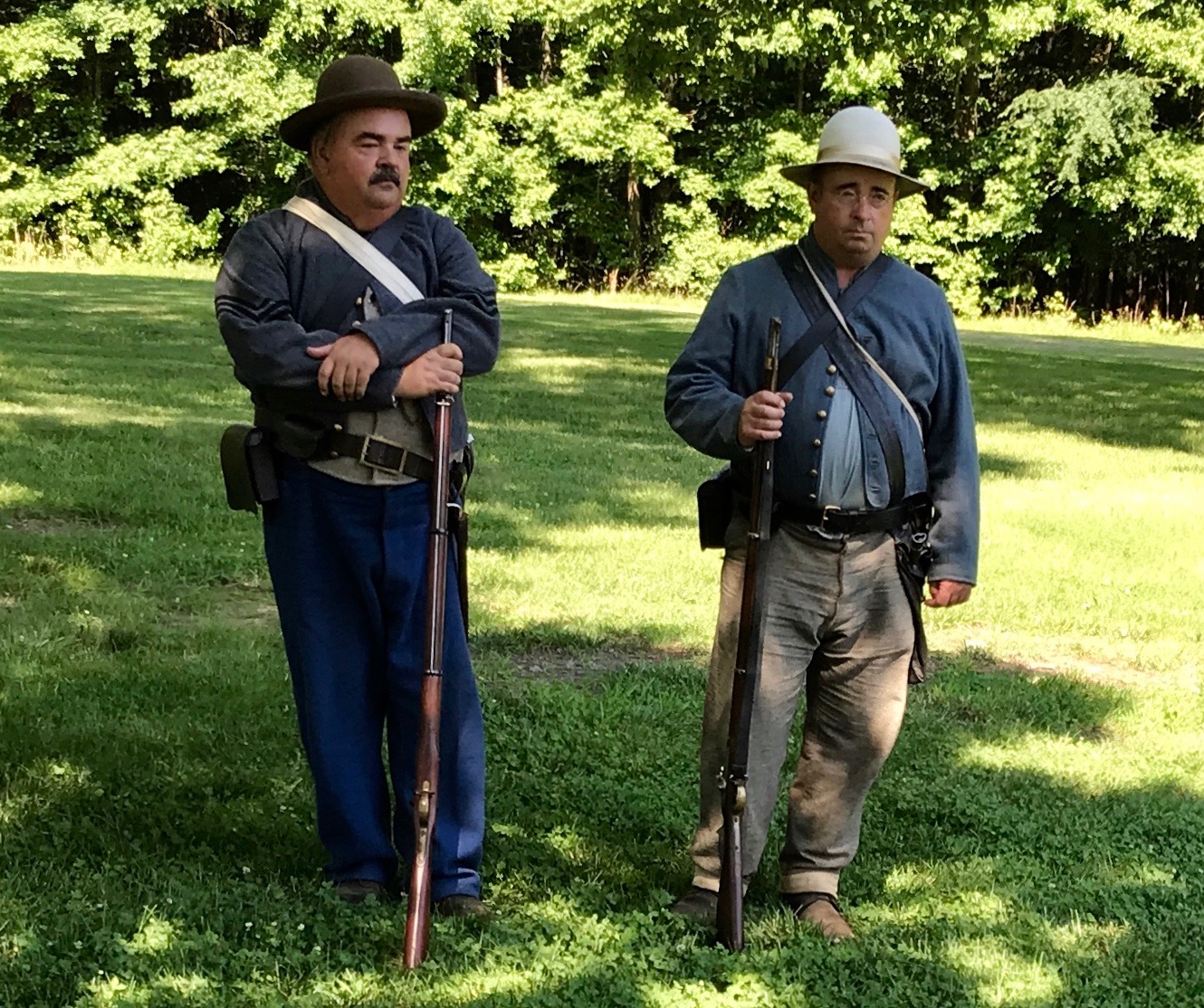
After talking to us for a bit about the scope of what happened here, including a total of about 70,000 casualties, he guided us to a spot where some reenactors were waiting to talk with us.

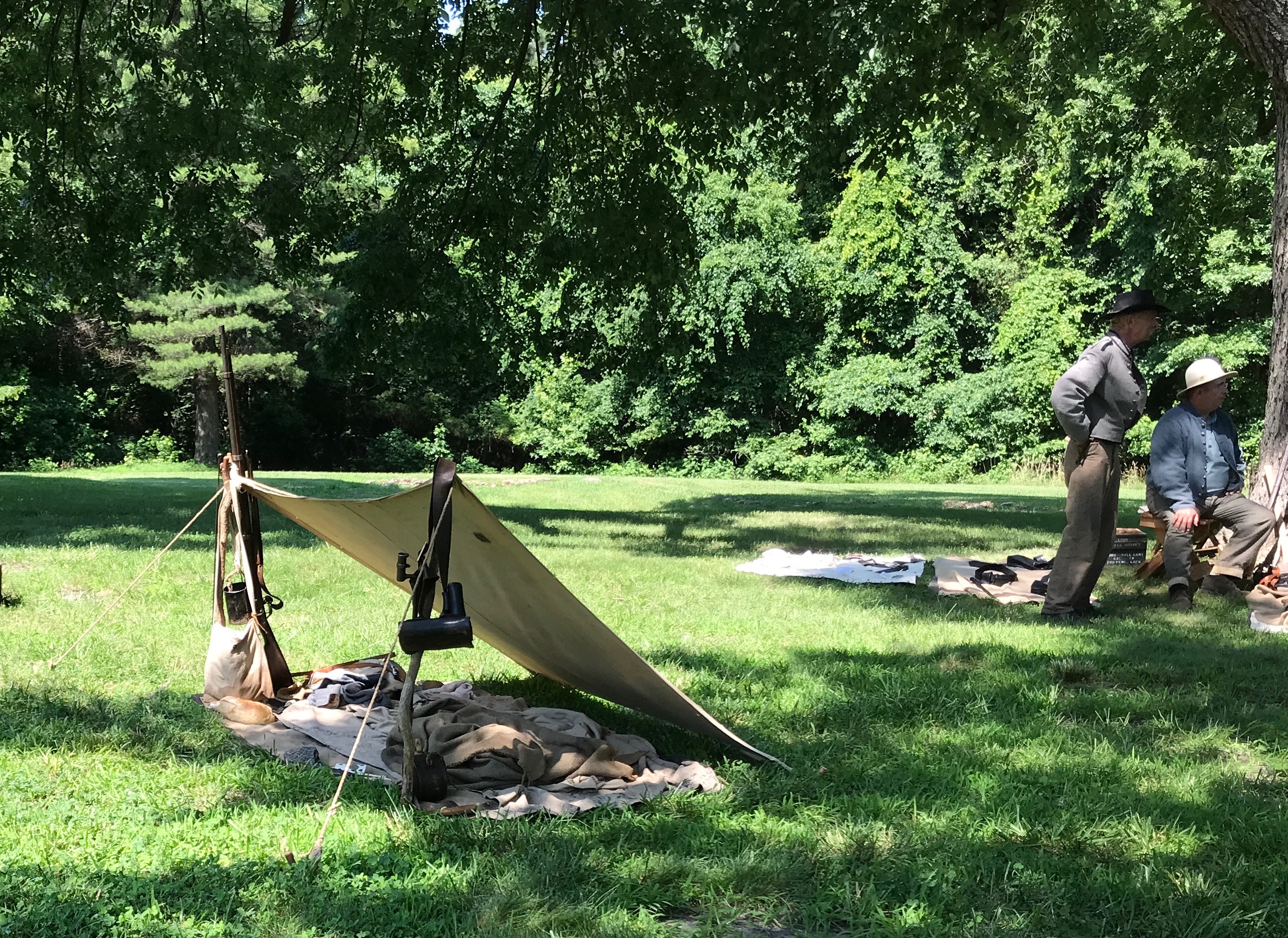
They had camp set up. Can you believe that this is a tent? Well, I am sure you can believe that it is a tent, it’s just tents have certainly progressed a lot through the years.

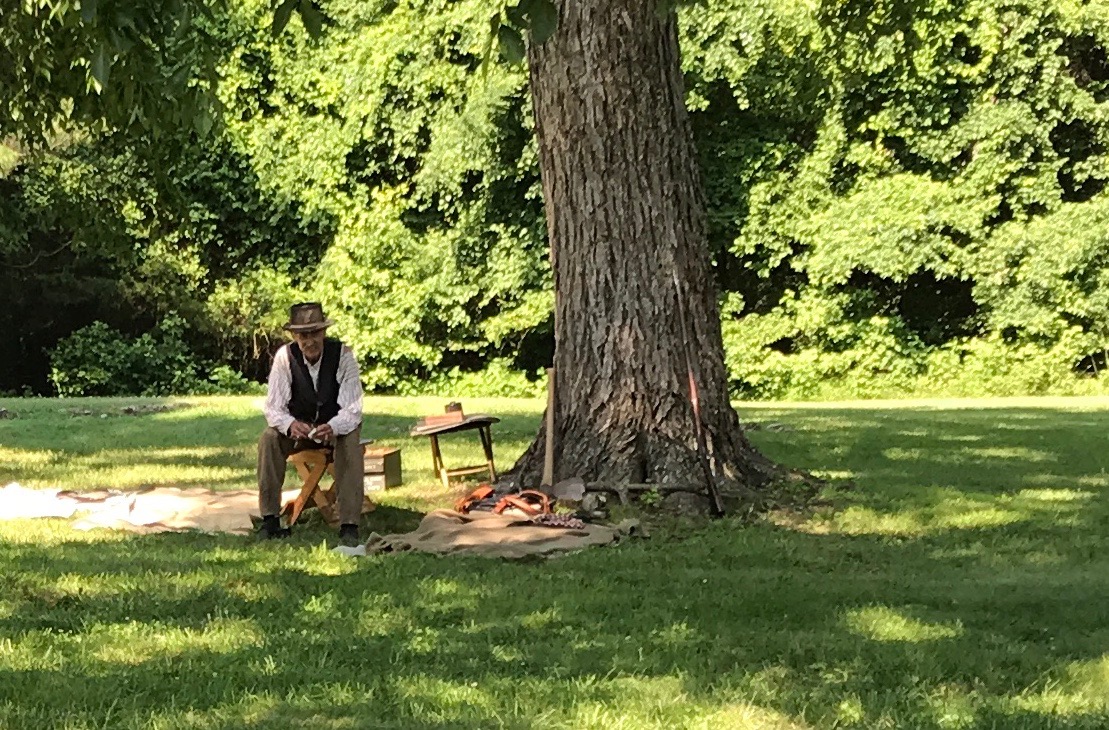
Since this was a nine-month siege, there must have been a lot of “hurry up and wait” time. I imagine that whittling, like this guy is doing, was a major source of entertainment.

Our reenactors told us about the problem of shoes wearing out and what they would do to try to make them last longer. I had never seen real hobnail boots before.

They even demonstrated what went into firing their rifles. I can’t even imagine firing and reloading with people an equal distance away firing and reloading at me. Yet, somehow they managed to do it.

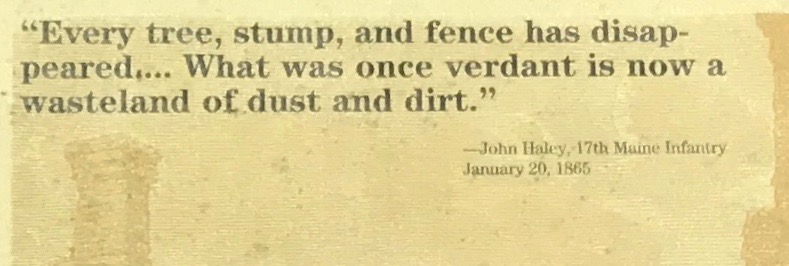
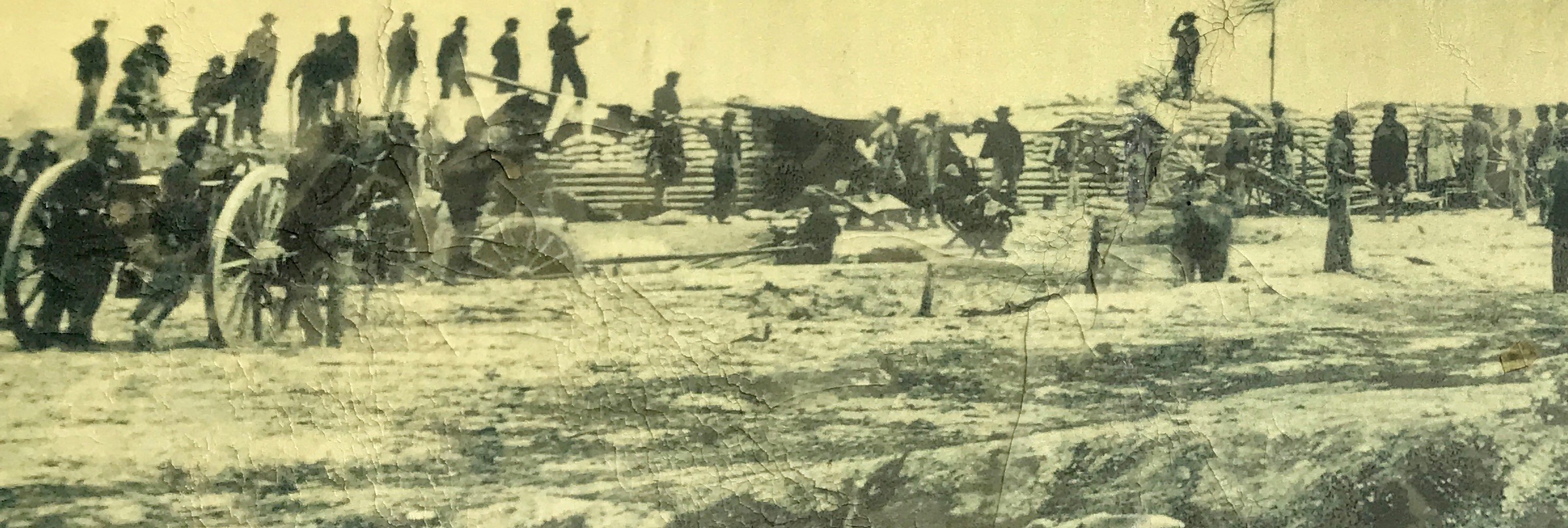
By the end of the war, this is how John Haley of the 17th Maine Infantry described the battlefield:

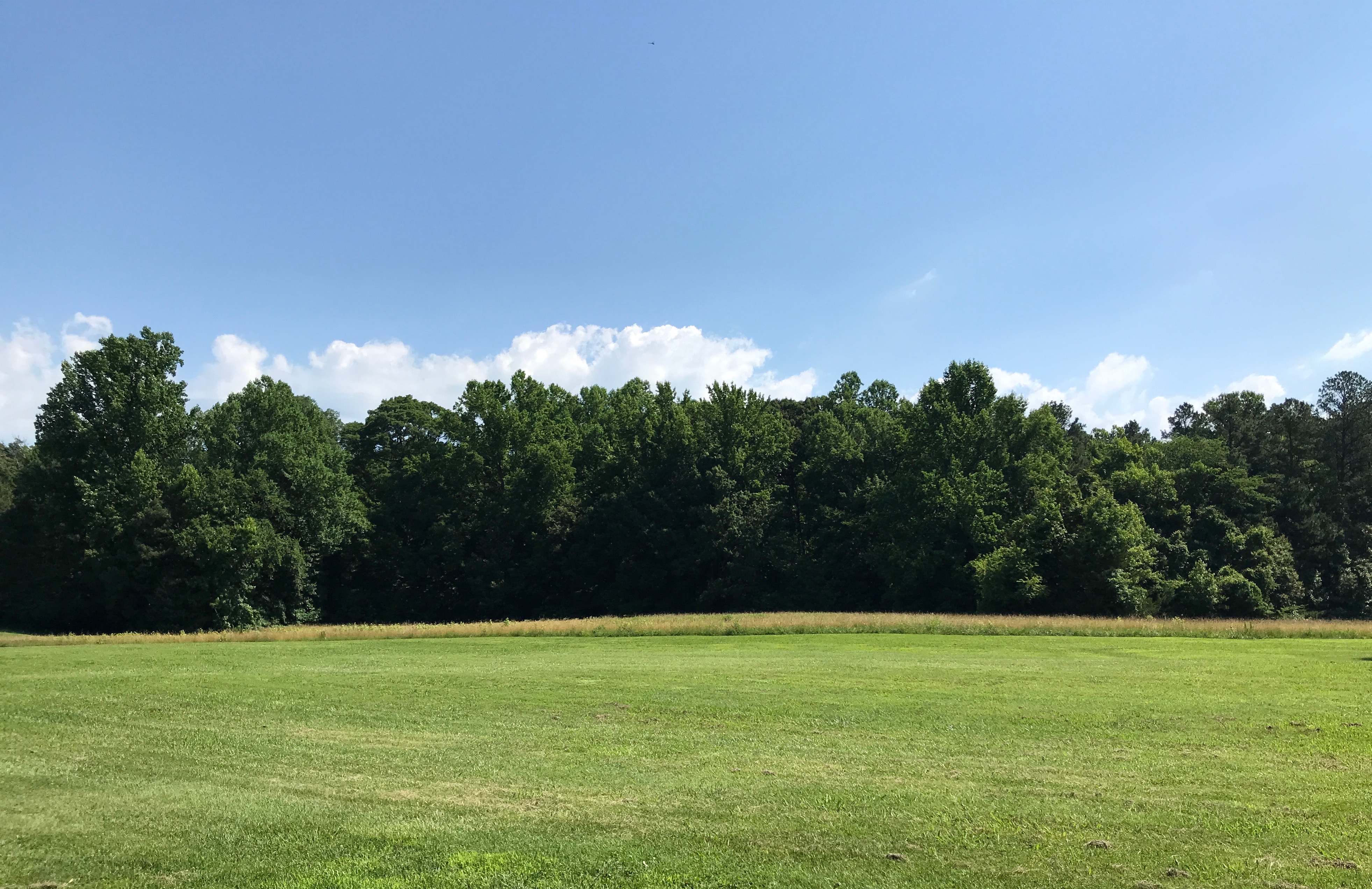
It’s hard to reconcile the peaceful countryside with what must have been a Hell hole.

Somewhere is this photo is something that is described as a “gentle depression.” It is the only vestige remaining of the Josiah Jordan House. It was dismantled by Union troops in 1862. It was only yards from Battery 5 of the Dimmock Line that was built to defend Petersburg.

Our next stop on the tour was Battery 5.

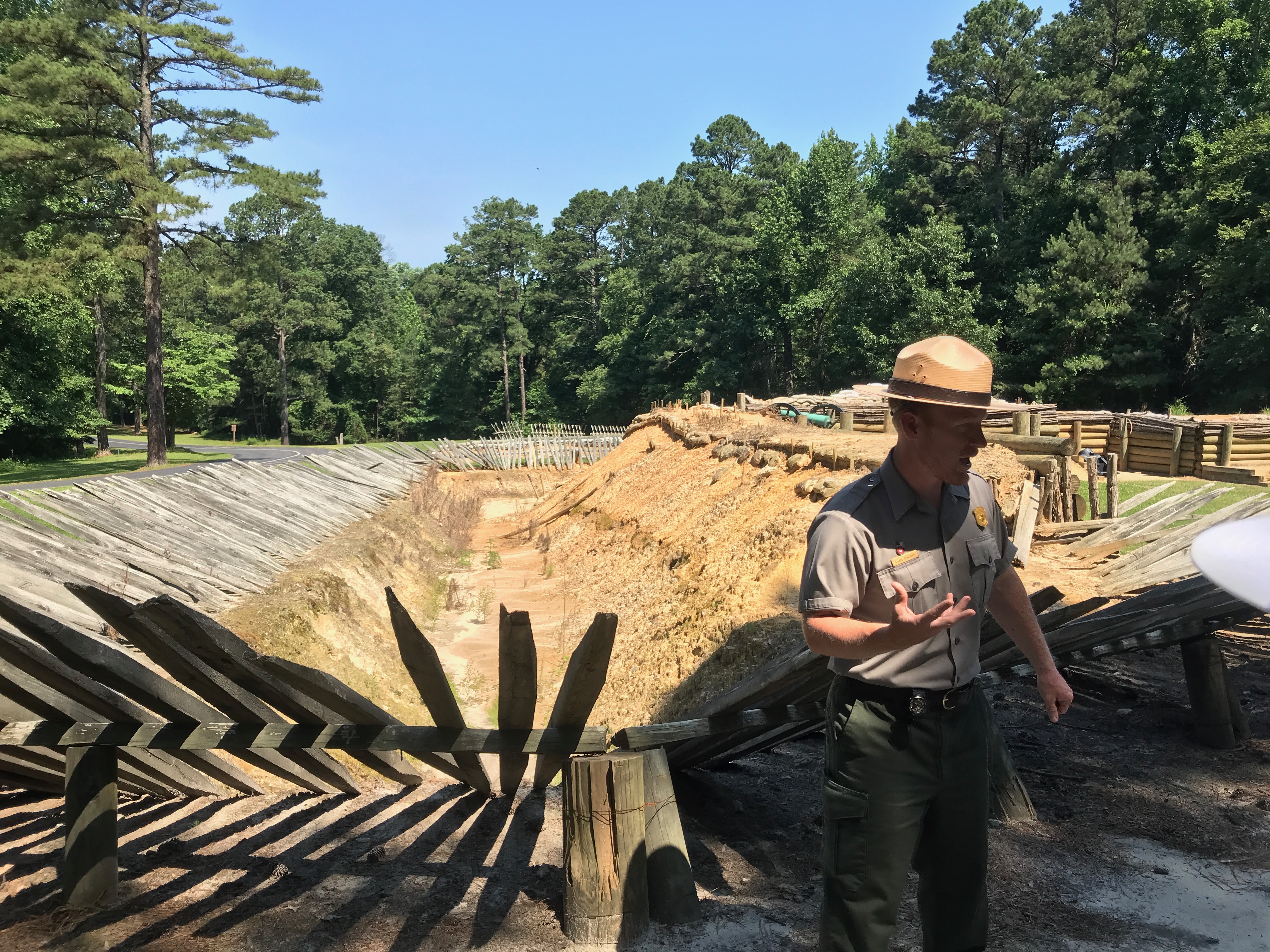
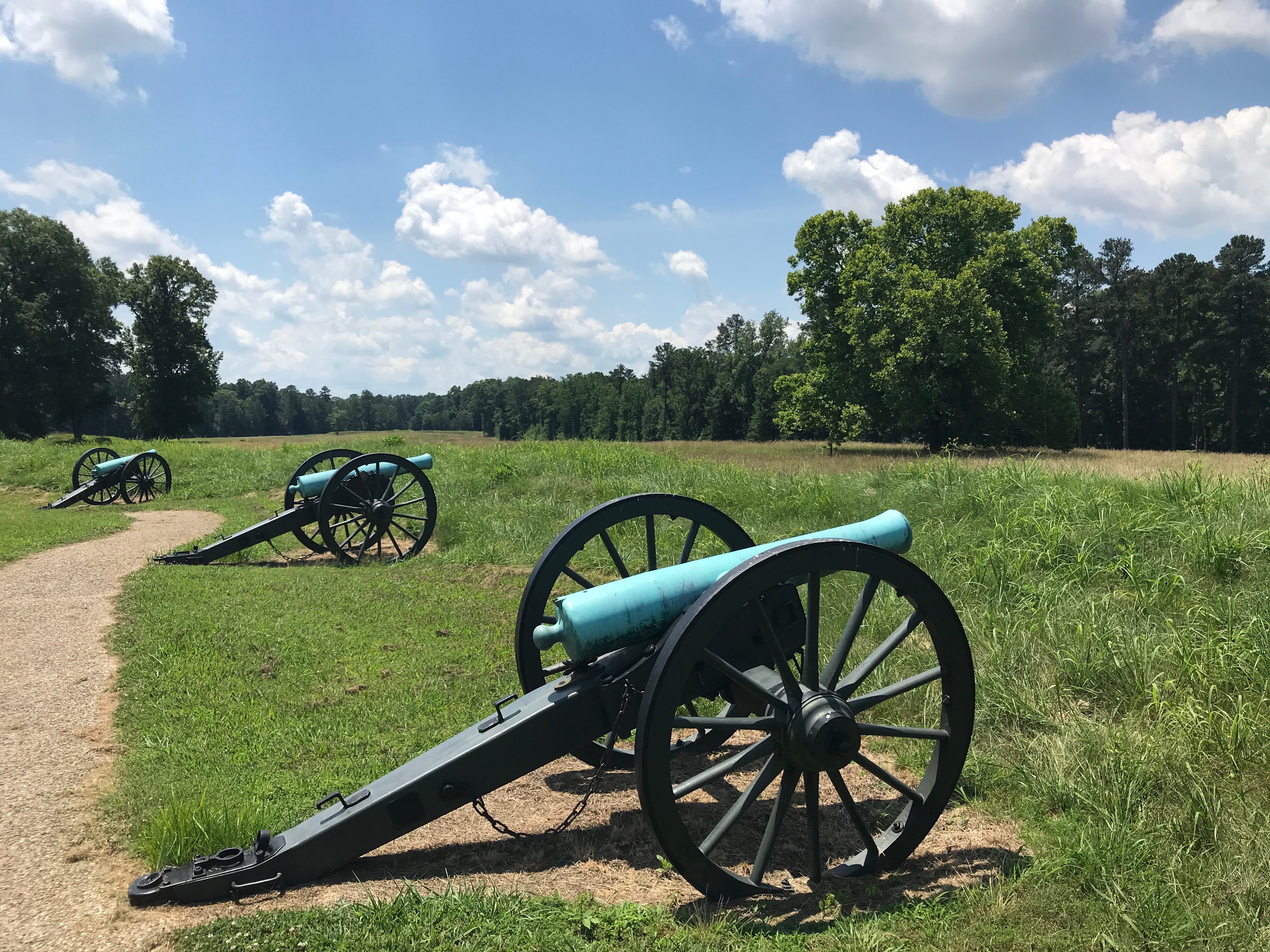
As you can see, these batteries were not luxurious affairs. It looks like they started with the dirt. They dug ditches, piled up walls and then augmented the ditches and mounds with timbers they cut from the forests nearby.

Until late summer of 1862, Petersburg was an unfortified city, which is surprising to me in that it was in an important transportation hub. It was decided to encircle the town with a series of partially enclosed forts connected by trench lines. The project was overseen by Captain Charles Dimmock, although it was laid out by others, and came to be known as “The Dimmock Line.”

The finished line consisted of 55 numbered batteries. Over four thousand troops from three brigades helped with the initial construction, and as many as one thousand conscripted slaves from Virginia and North Carolina also worked on the line.

The defenses weren’t perfect, but the Union Army was breathing down their necks. They had already crossed the Appomattox River, so they used what they had and did what they could. Once the Army of the Potomac withdrew to northern Virginia, work slowed down on the construction of the line. Dimmock kept working on the line. As late as March 1863, Dimmock was still conscripting slaves and free blacks to work on the defenses.

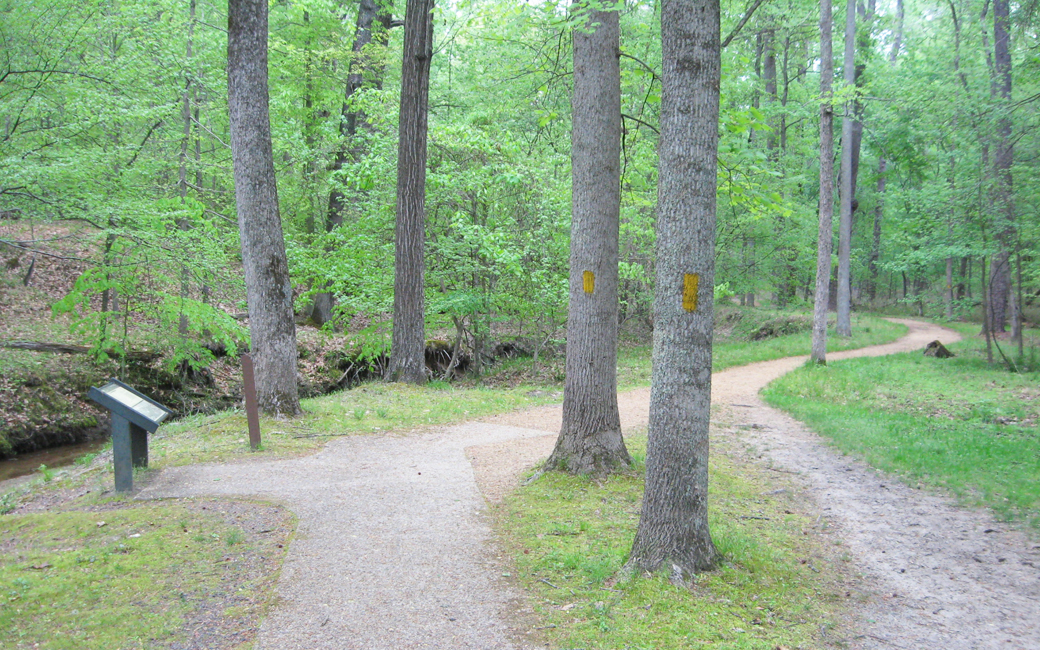
The next stop on our ranger-lead tour was Harrison’s Creek.

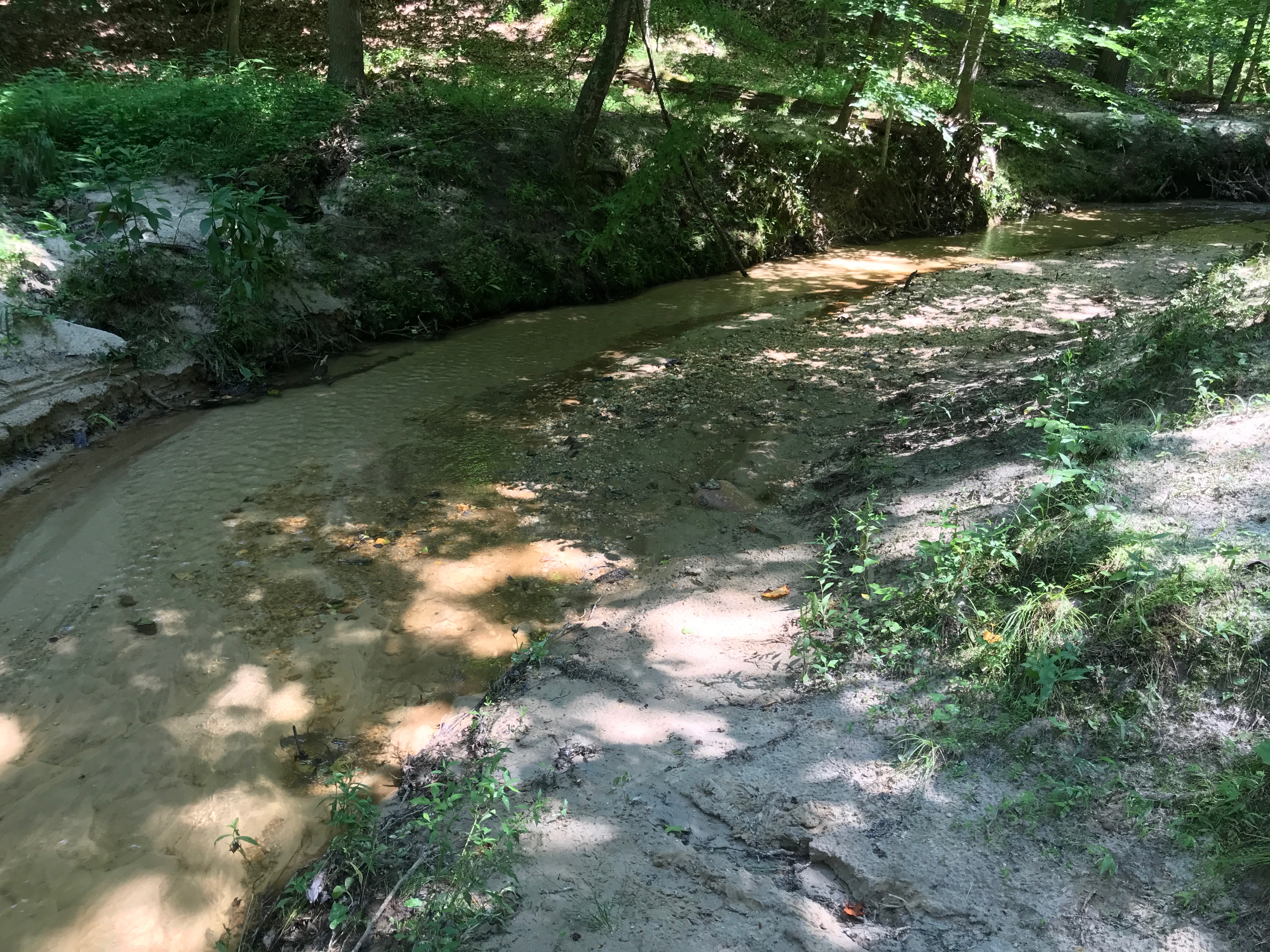
This small stream played a large roll in the battle. Ranger Rowland told us that the summers here were particularly hot and dry, so the stream was an important source of water for the troops.

In June, 1864, the outnumbered Confederate defenders of Petersburg formed a new line on the heights just across the stream.

You probably can’t tell from this photo, but the “heights” were not all that high. The Confederates scrambled to the top of the rise and started digging in to augment the small advantage the rise gave them. Bear in mind that this was not a forest at the time. It was just bare ground.

The Confederates held their position for two days, weathering repeated Union attacks.

Our Ranger did a great job of describing the fighting. After the demonstration of what went into firing a rifle, and knowing that the soldiers advancing on this little rise had to fight up hill with no cover, I felt particularly somber. This quiet little patch of ground was the site of much death.

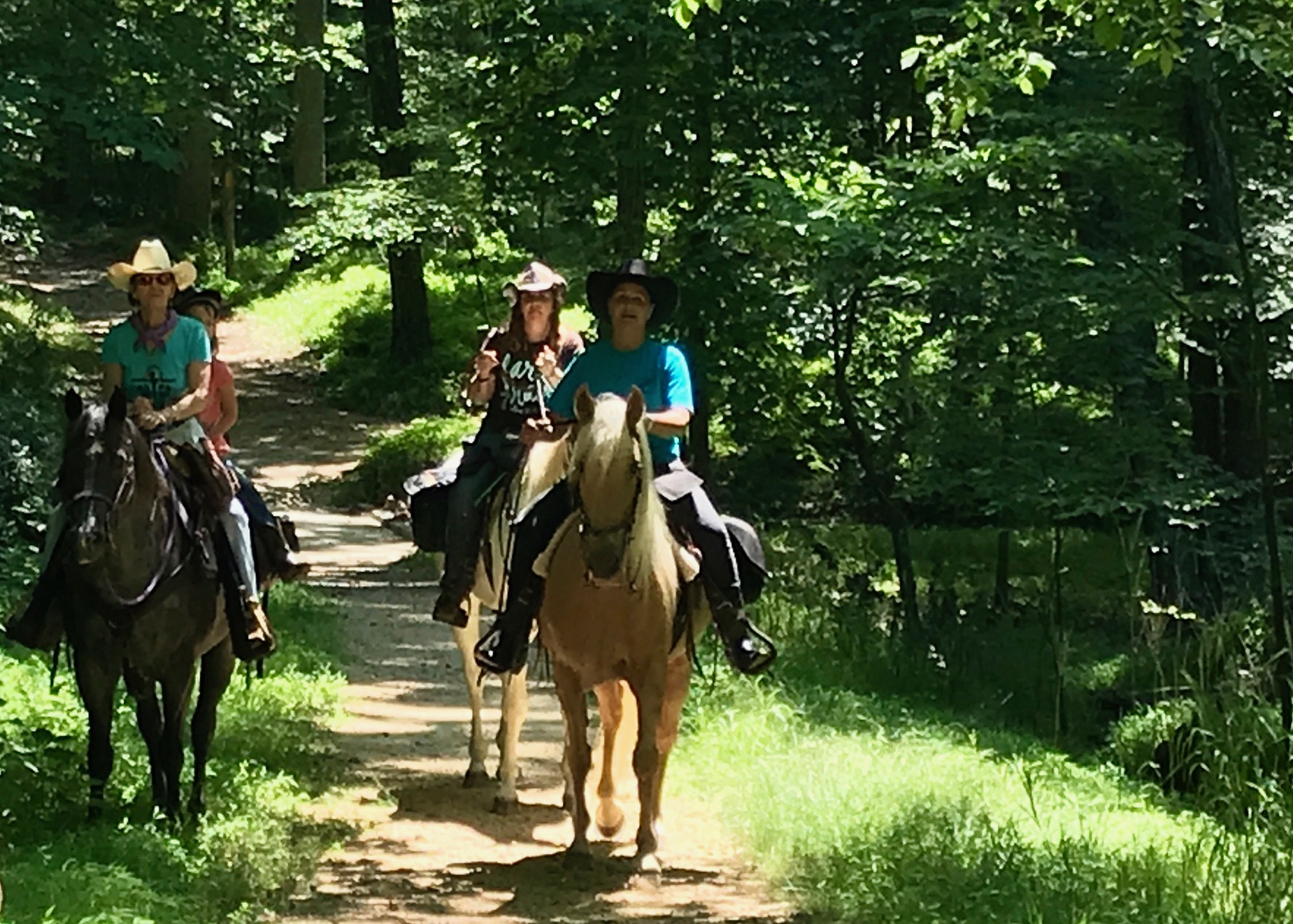
The horses coming down the trail helped to relieve the melancholy.

Harrison’s Creek also marks the farthest advance on General Lee’s last offensive on March 25, 1865.

After this stop we were on our own. My next stop was Fort Stedman.

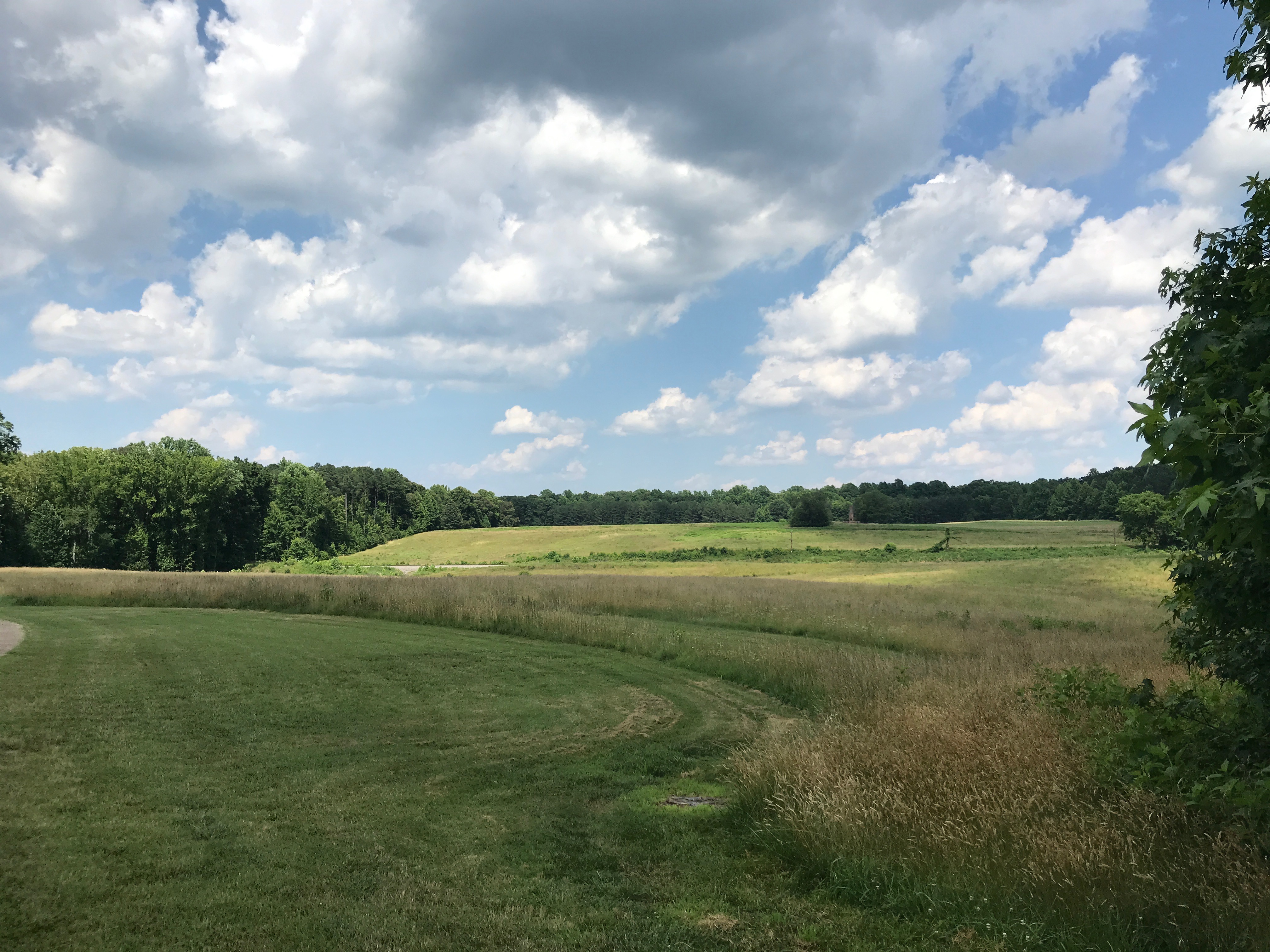
There is not much left to see of the fort, although I suppose the area is rich in archeological evidence.

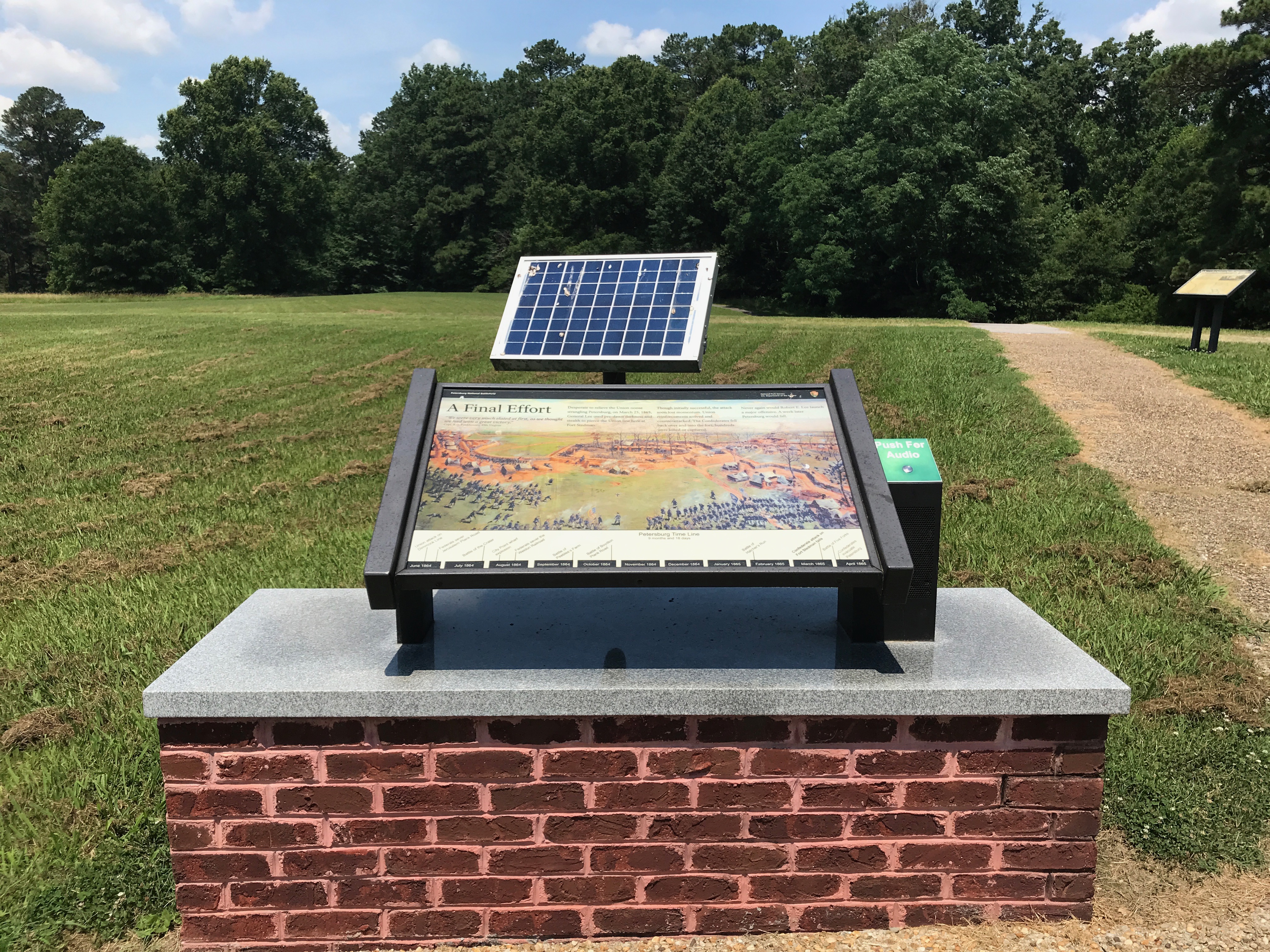
There are descriptive signs along the trail through the site. I took a photo of this one to show off the solar-powered multimedia efforts.

There are still the “old-fashioned” forms of information, though.

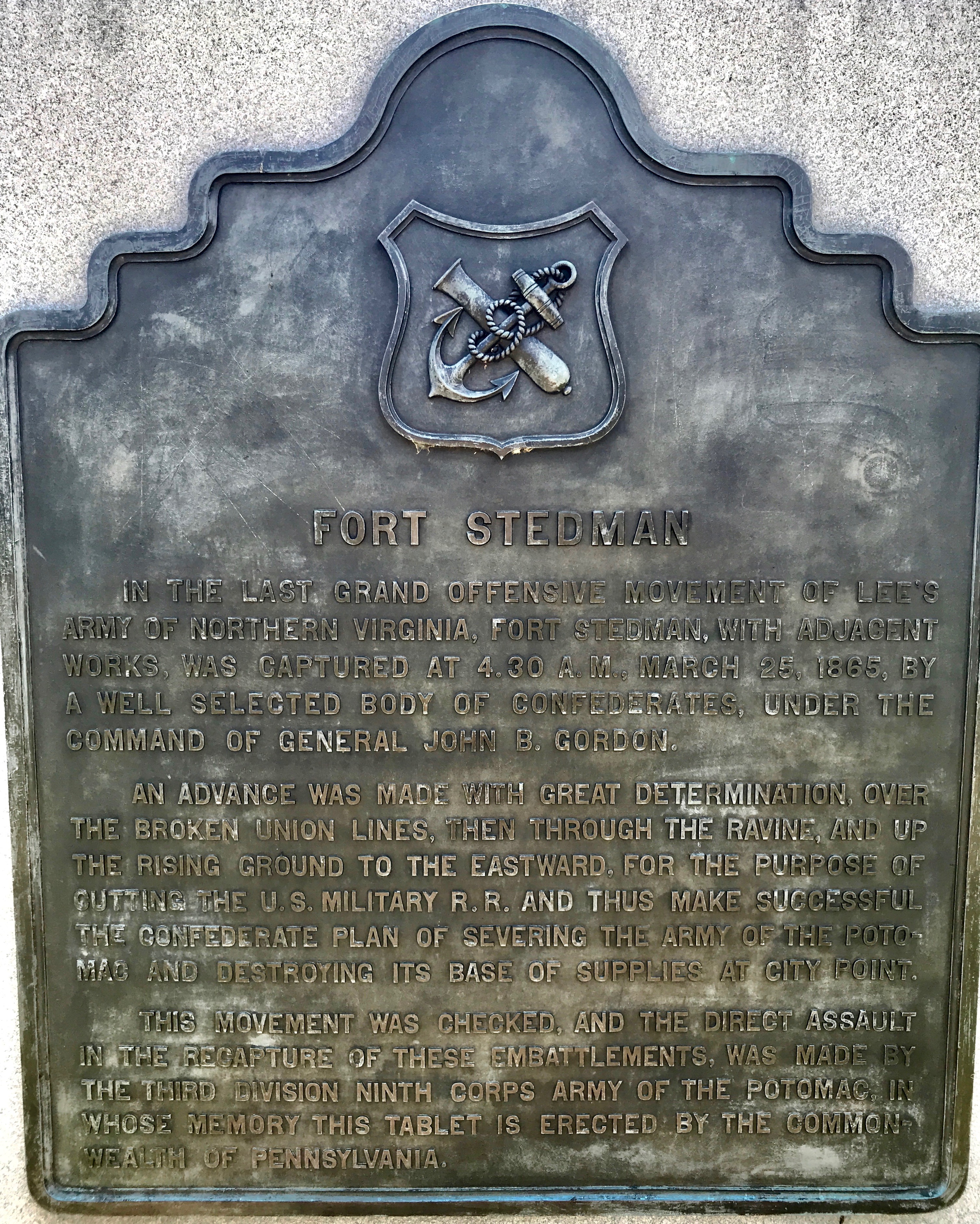
This plaque that was erected by the Commonwealth of Pennsylvania.

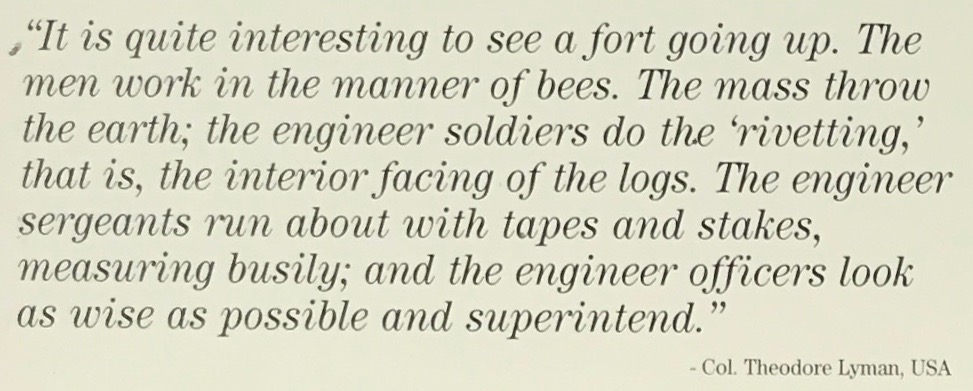
There were the usual displays with quotes from observers and participants.

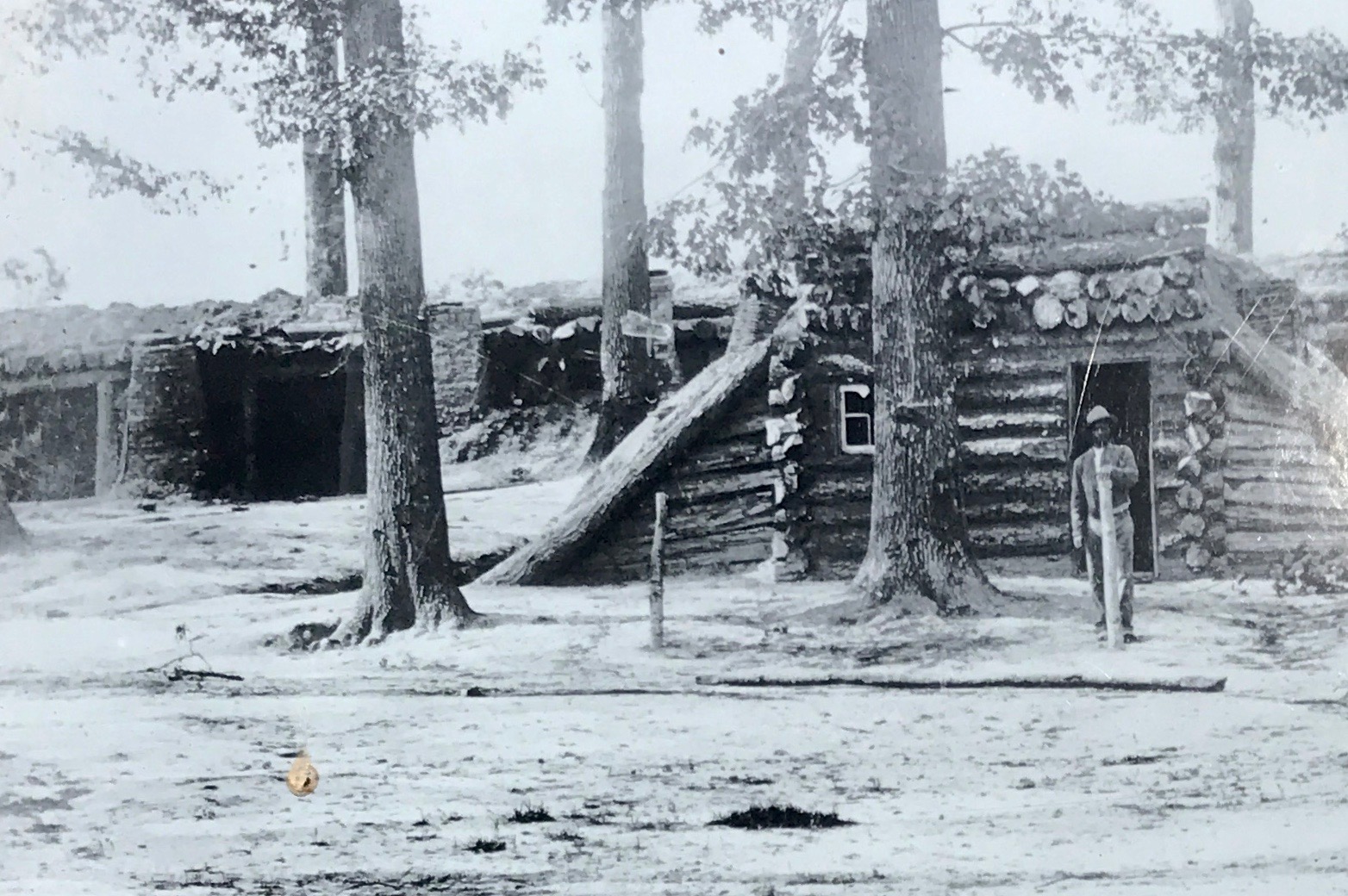
There were photos, too.

Union engineers decided to leave Stedman’s trees standing, which was an uncommon luxury for the troops stationed here. With up to six cannons and 300 infantrymen, Fort Stedman was typical of the more than 30 forts that studded the Union siege lines. What set it apart from other similar forts was that the Confederate line lay only 300 yards away.

The dirt and logs gave shelter against Confederate shells and bullets. According to the display, life the fort was described as;

“Endurance without relief; sleeplessness without exhilaration; inactivity without rest; and constant apprehension requiring ceaseless watching.”

When I saw this photo in the display, it occurred to me that this might be an early selfie.

By the time I finished my tour of Fort Stedman, I was starting to get hungry. I went into town for sustenance and decided to save the Crater for after lunch. I will save my info about my visit to the city of Petersburg for another post.

So, the last thing I had on my list of things to see was the Crater itself.

I parked and walked along the trail. The scenery surely is more beautiful now that it was in 1864.

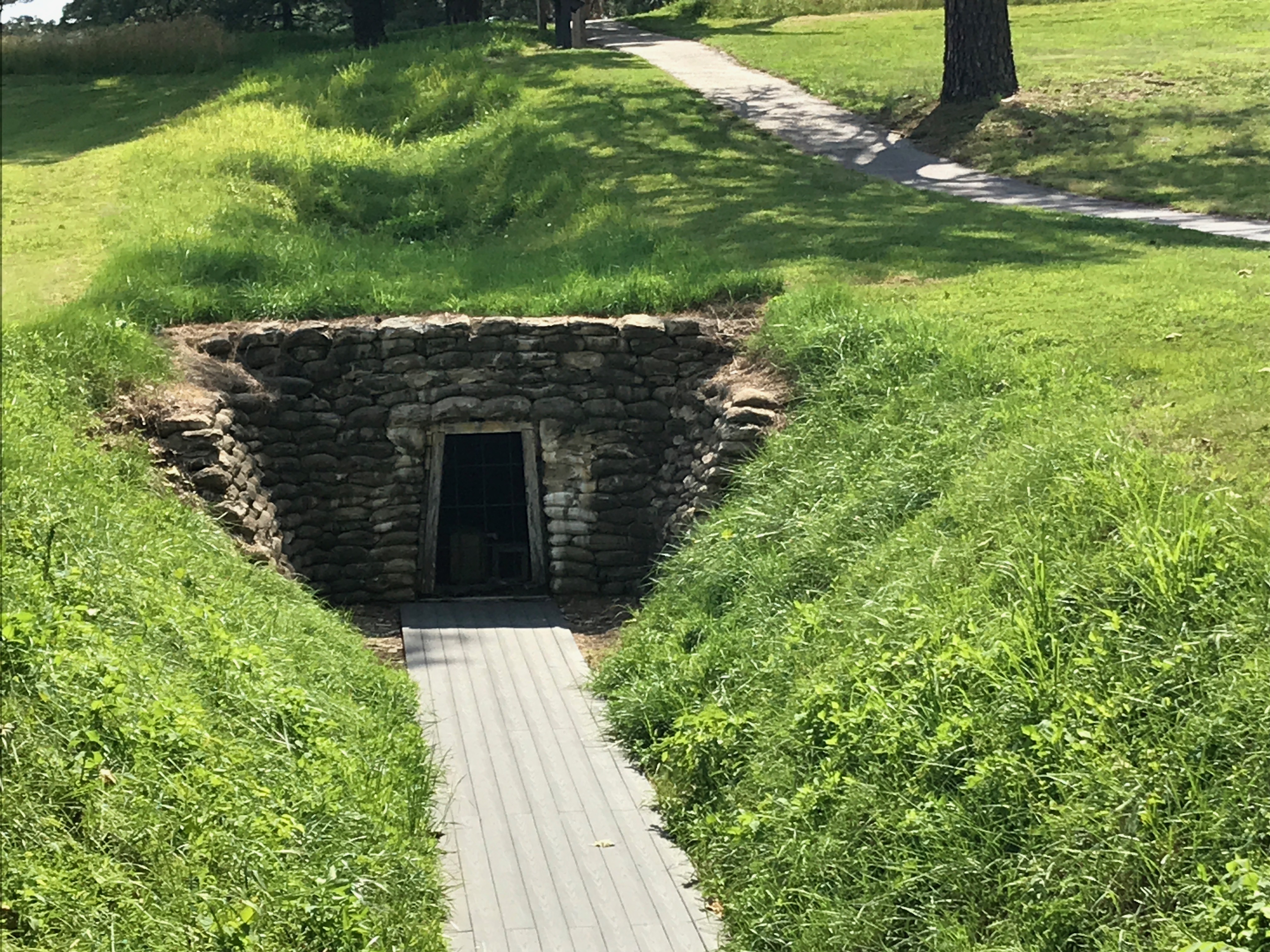
Lt. Col. Henry Pleasants, a mining engineer from Pennsylvania, proposed digging a long shaft under the Confederate lines and planting explosives directly under a fort know as Elliot’s Salient. His superiors – Burnside, Grant and Meade – saw this as a way to keep the men occupied, and eventually lost interest in the project. This left Pleasants scrounging for materials to complete the mines.

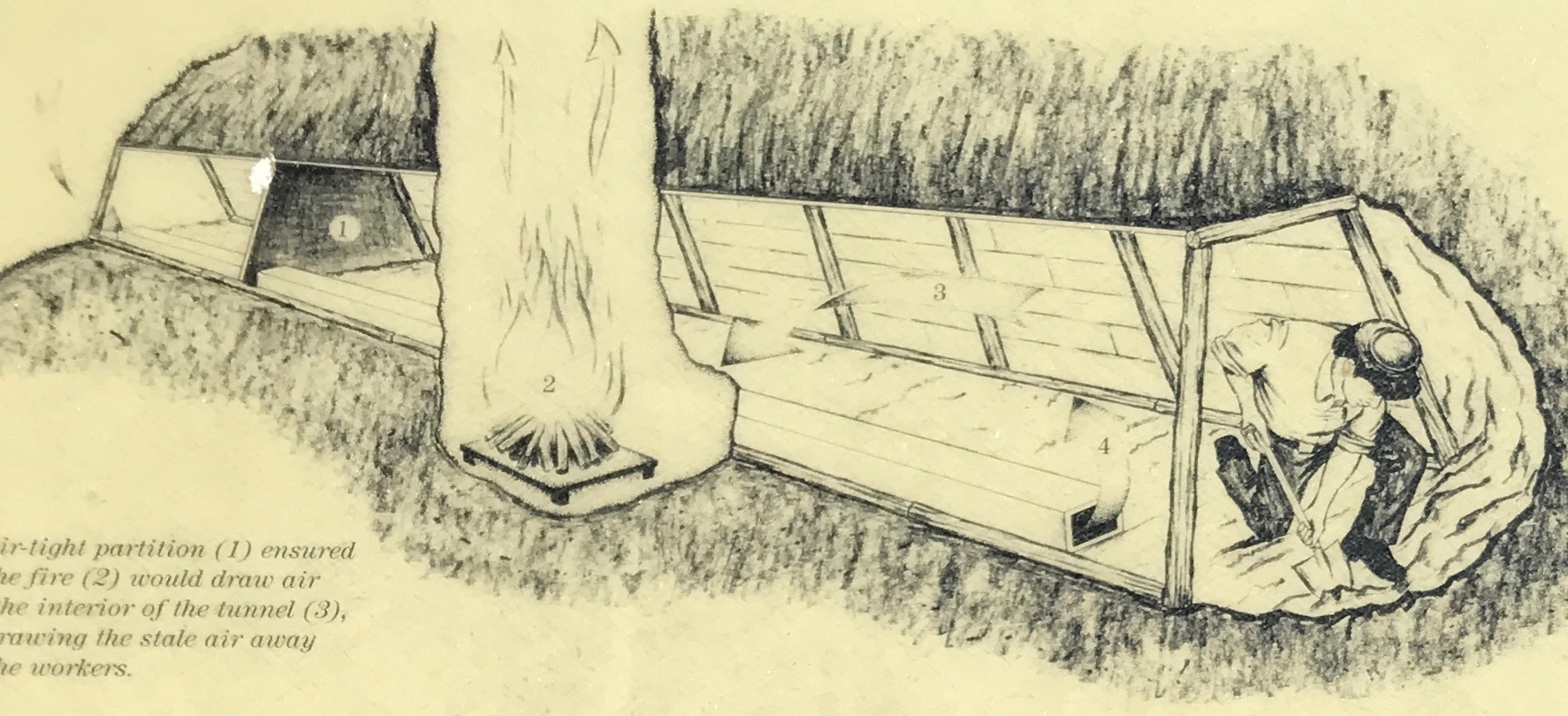
They came up with an ingenious way to provide ventilation as the men worked. This is from my Preferred Source:

“The miners had constructed a vertical exhaust shaft located well behind Union lines. At the vertical shaft’s base, a fire was kept continuously burning. A wooden duct ran the entire length of the tunnel and protruded into the outside air. The fire heated stale air inside of the tunnel, drawing it up the exhaust shaft and out of the mine by the chimney effect. The resulting vacuum then sucked fresh air in from the mine entrance via the wooden duct, which carried it down the length of the tunnel to the place in which the miners were working.[5] That avoided the need for additional ventilation shafts, which could have been observed by the enemy, and it also easily disguised the diggers’ progress.”

Work continued, in spite of the lack of materials. Earth was removed by hand and packed into improvised sledges made from cracker boxes fitted with handles.

To avoid a problem with moisture from the ground, the mine rose in elevation as it got closer to Elliot’s Salient.

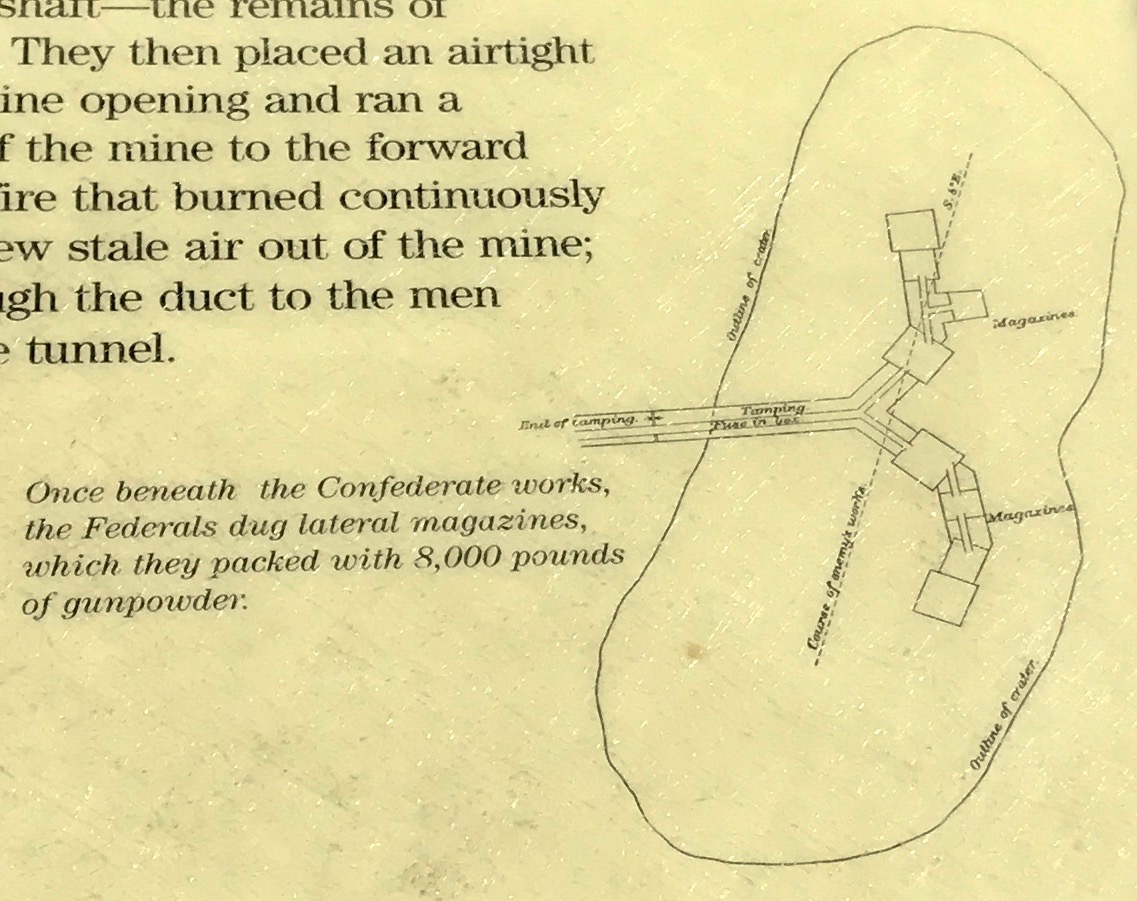
At the end, the tunnel branched into two lateral magazines. The Union soldiers filled the mine with 320 kegs of gunpowder, totaling 8,000 pounds. The explosives were approximately 20 feet under the Confederate works, and the T-gap was packed shut with 11 feet of earth in the side galleries. A further 32 feet  of packed earth in the main gallery to prevent the explosion blasting out the mouth of the mine. On July 28, the powder charges were armed.

The plan was to detonate the charges between 3:30 and 3:45am on the morning of July 30. Since Pleasants had been given substandard materials all the way through, it should be no surprise that they had also been given poor quality fuse, which the men had to splice together. The fuse kept burning out.

Time was passing and dawn was not far off. This would create a threat to the men at the staging points, who were in view of the Confederate lines.

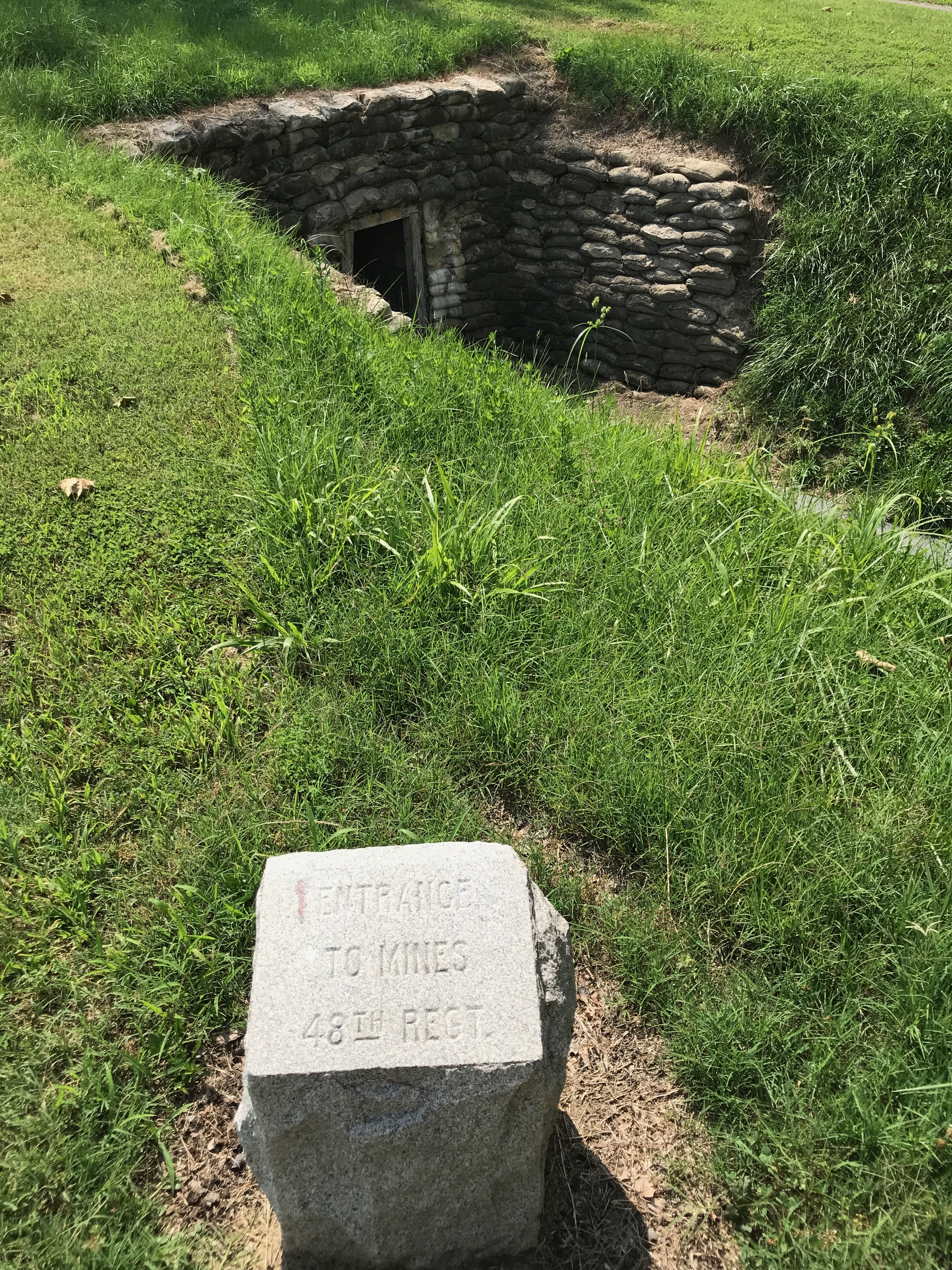
After more and more time passed and no explosion occurred (the impending dawn creating a threat to the men at the staging points, who were in view of the Confederate lines), two volunteers from the 48th Regiment (Lt. Jacob Douty and Sgt. Harry Reese) crawled into the tunnel. After discovering the fuse had burned out at a splice, they spliced on a length of new fuse and relit it. Finally, at 4:44 a.m., the charges exploded in a massive shower of earth, men, and guns. A crater was created that was 170 feet long, 100 to 120 feet wide, and at least 30 feet deep.

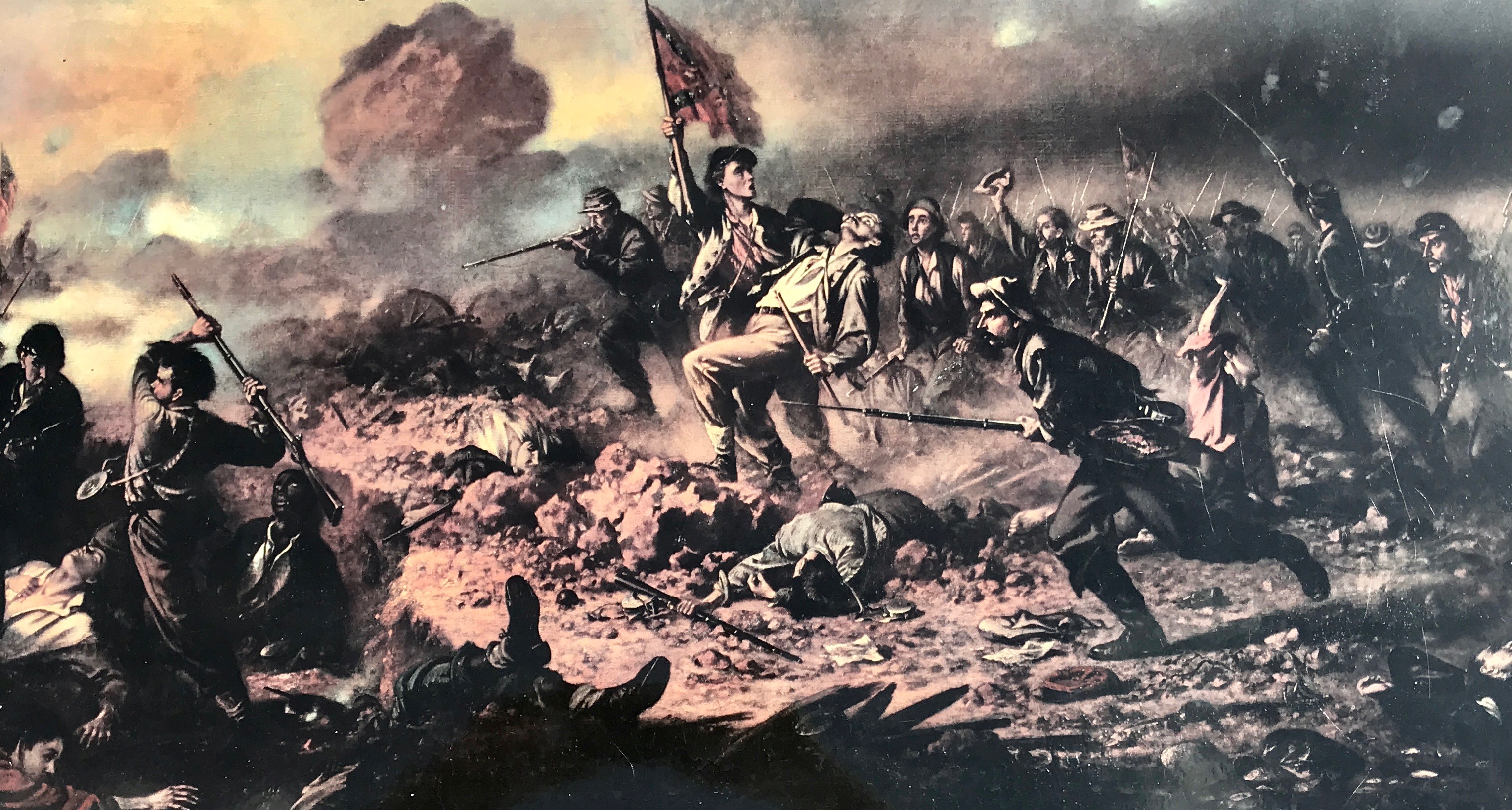
The ensuing battle was horrific. I would encourage those of you interested in more details to click on the video below or check out my Preferred Source.

I continued walking along the path and came across this plaque.

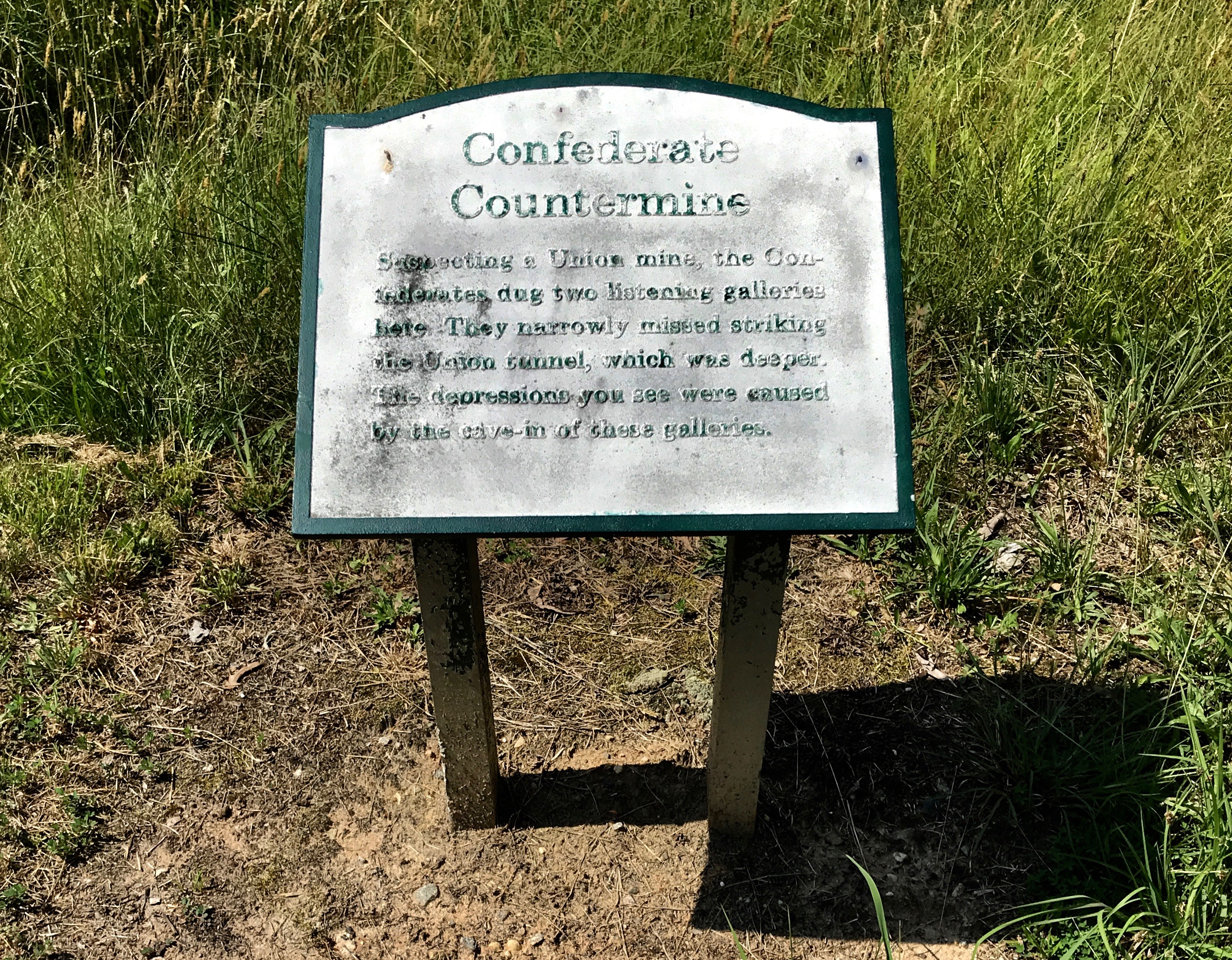
Apparently, the Confederates thought something might be up. They dug some tunnels of their own to see if they could hear anything.

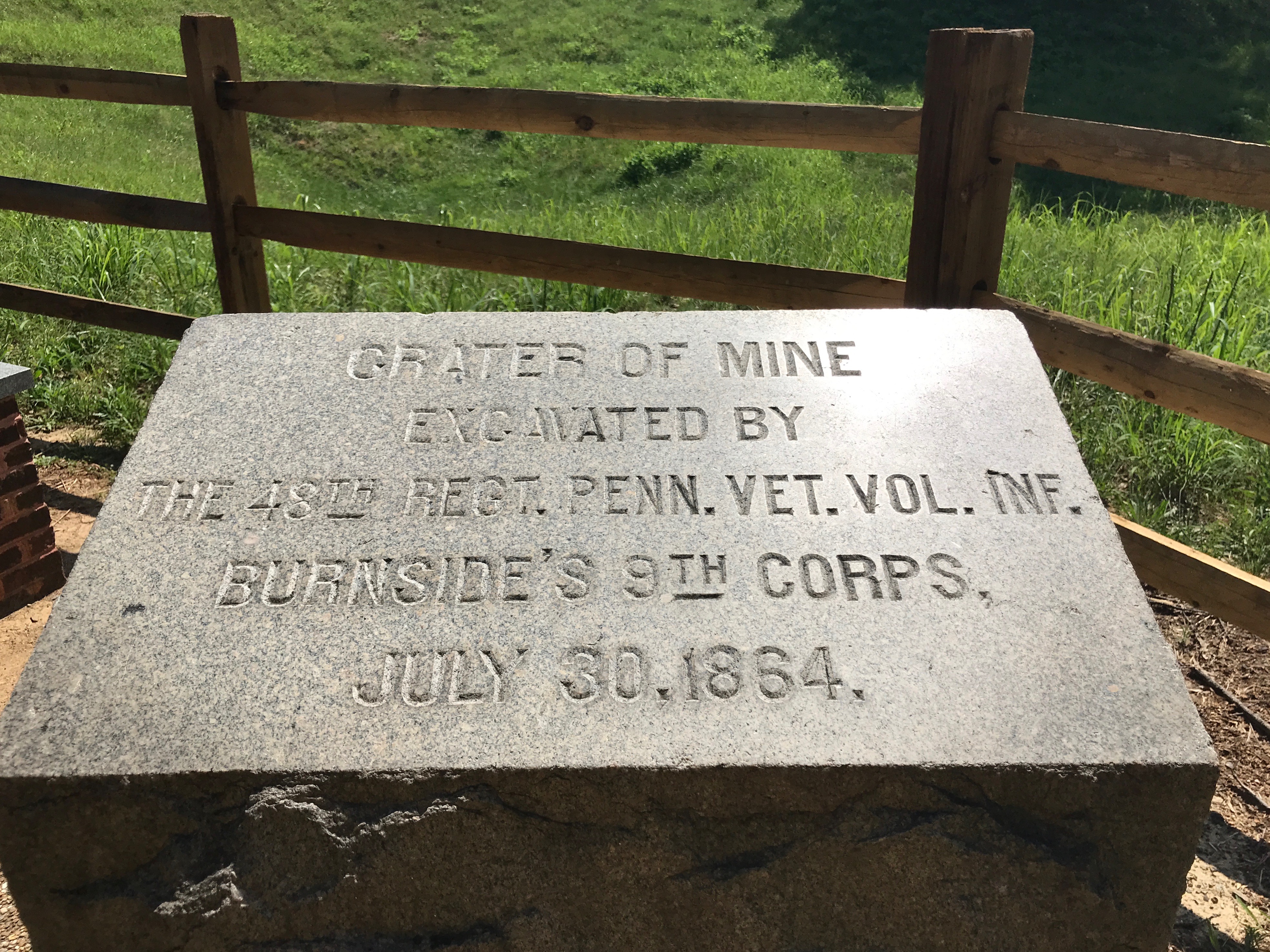
A little further along, I came to the marker for The Crater.

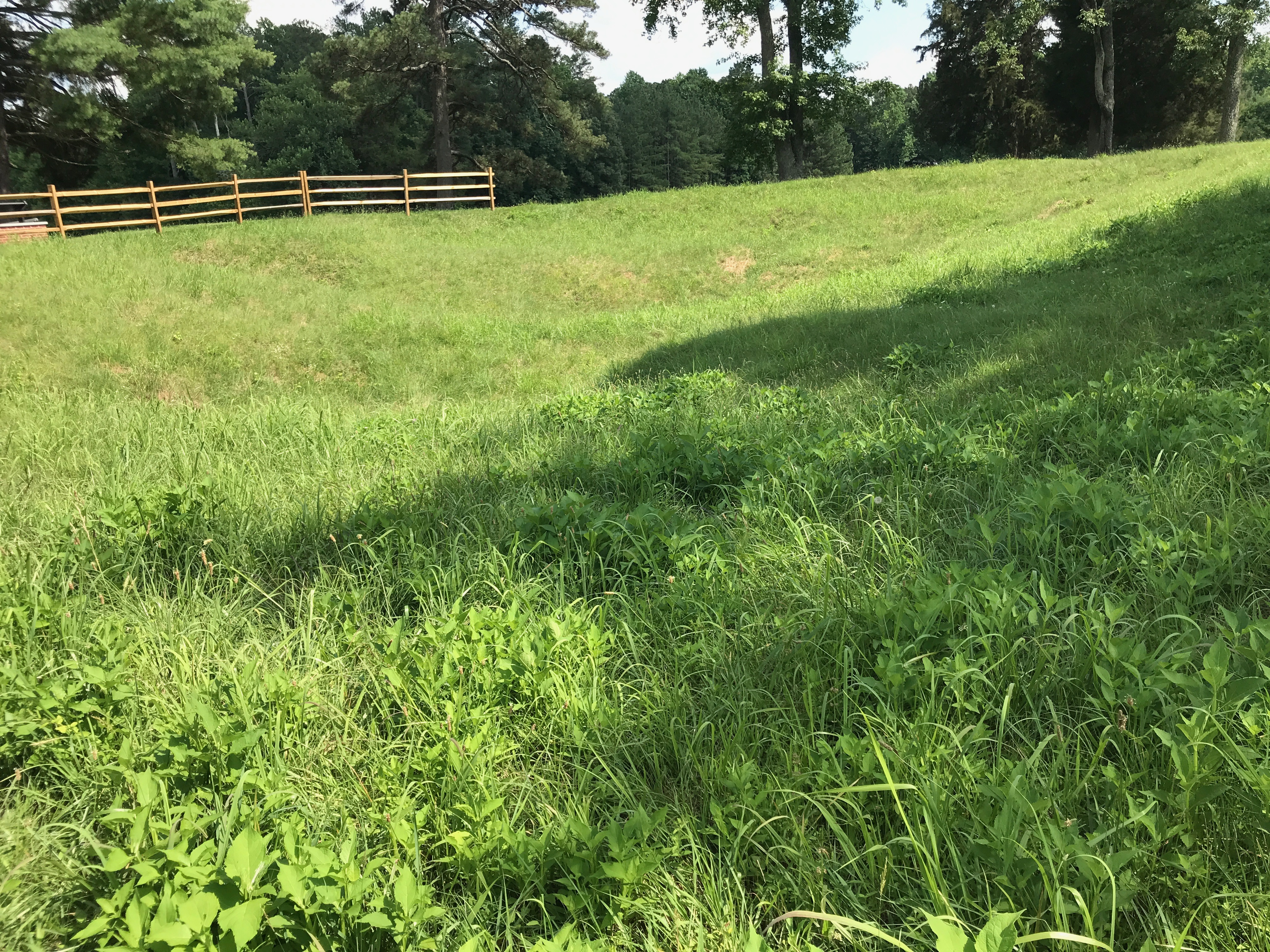
It looks quite lovely today, but I’m sure it took years for it to recover.

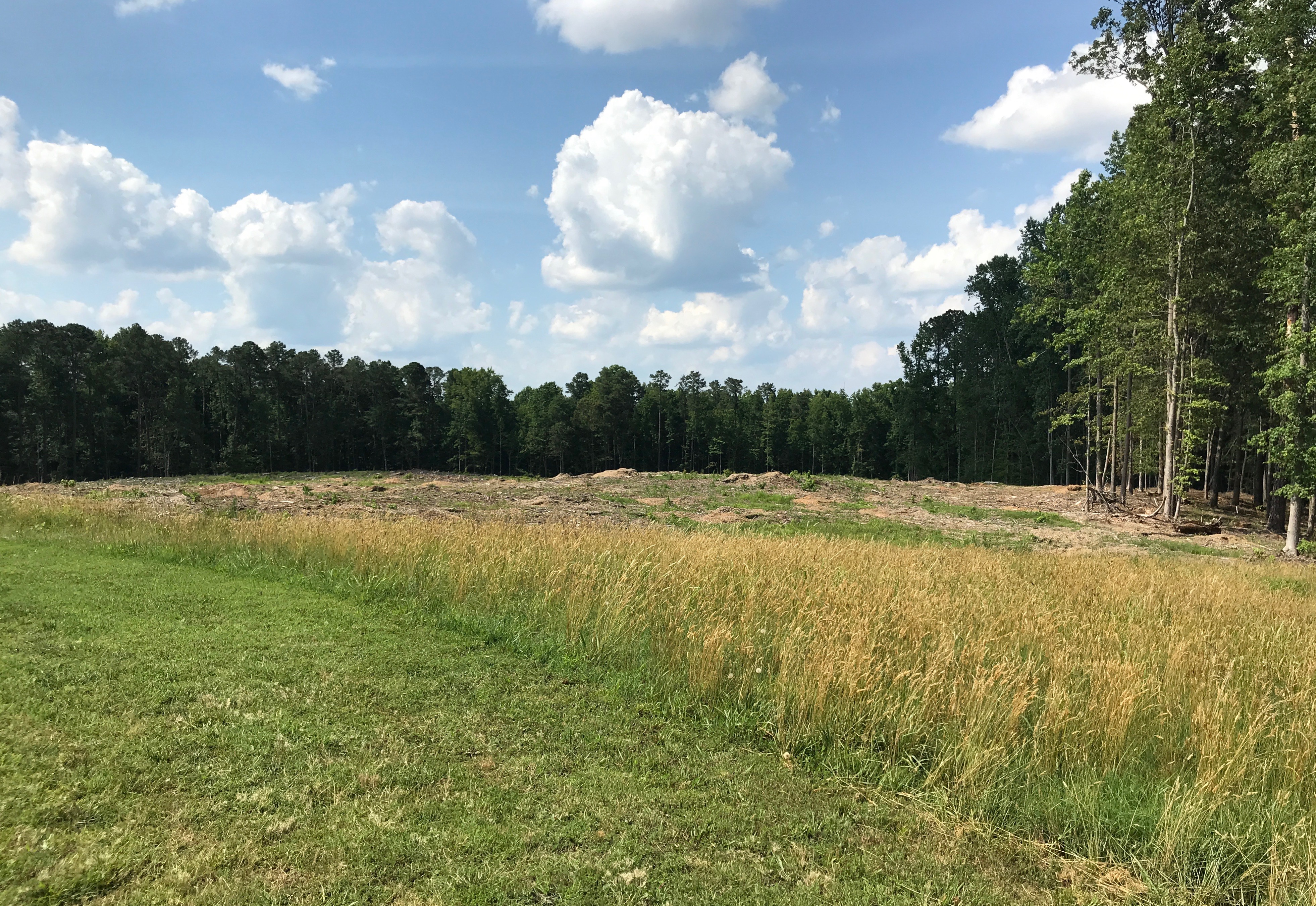
Speaking of nature reclaiming the land, in this section, they are working on trying to “restore” part of the battlefield to the way it was on June 30, 1864.

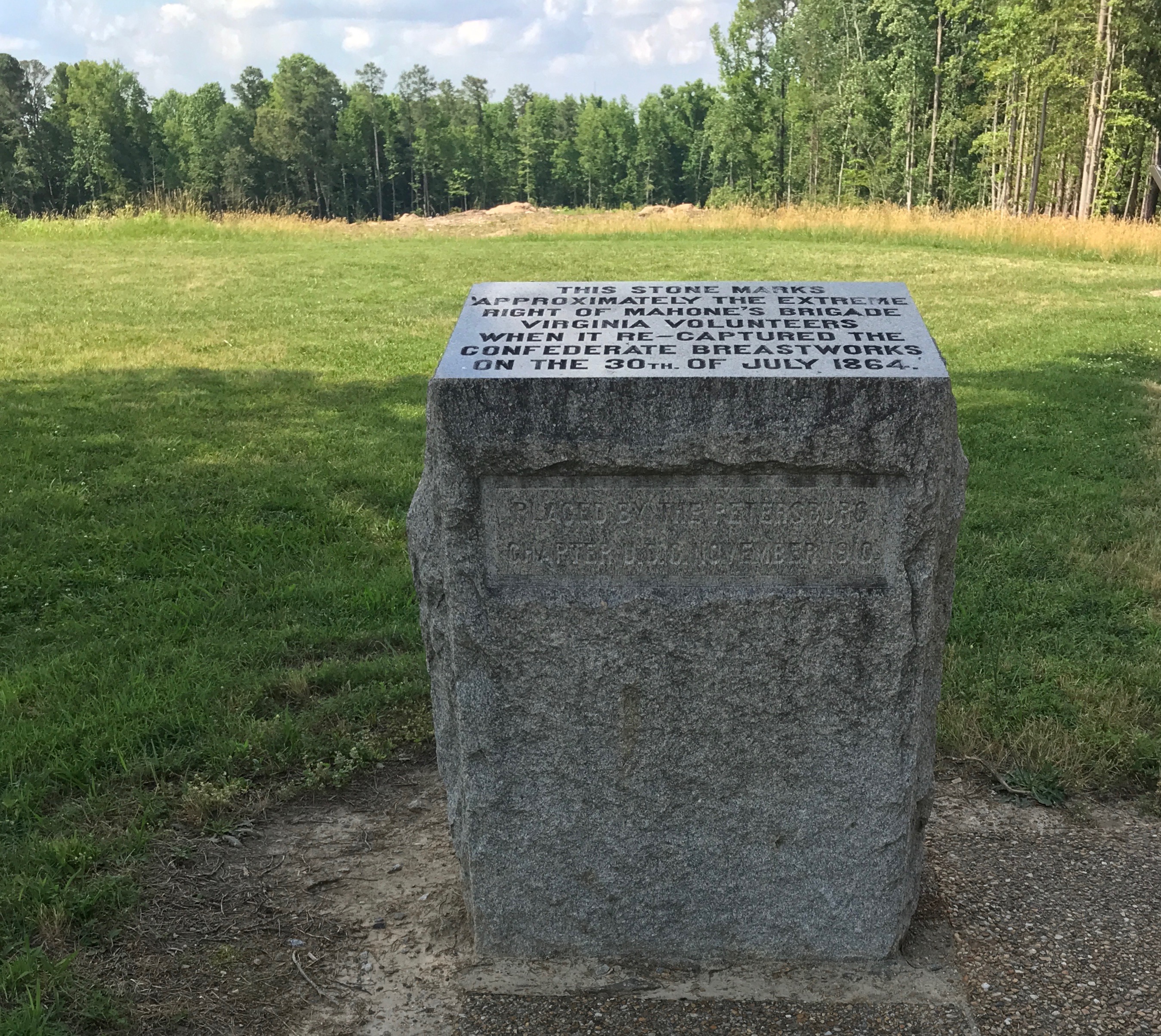
There was a counterattack that took place on the site in the photo.

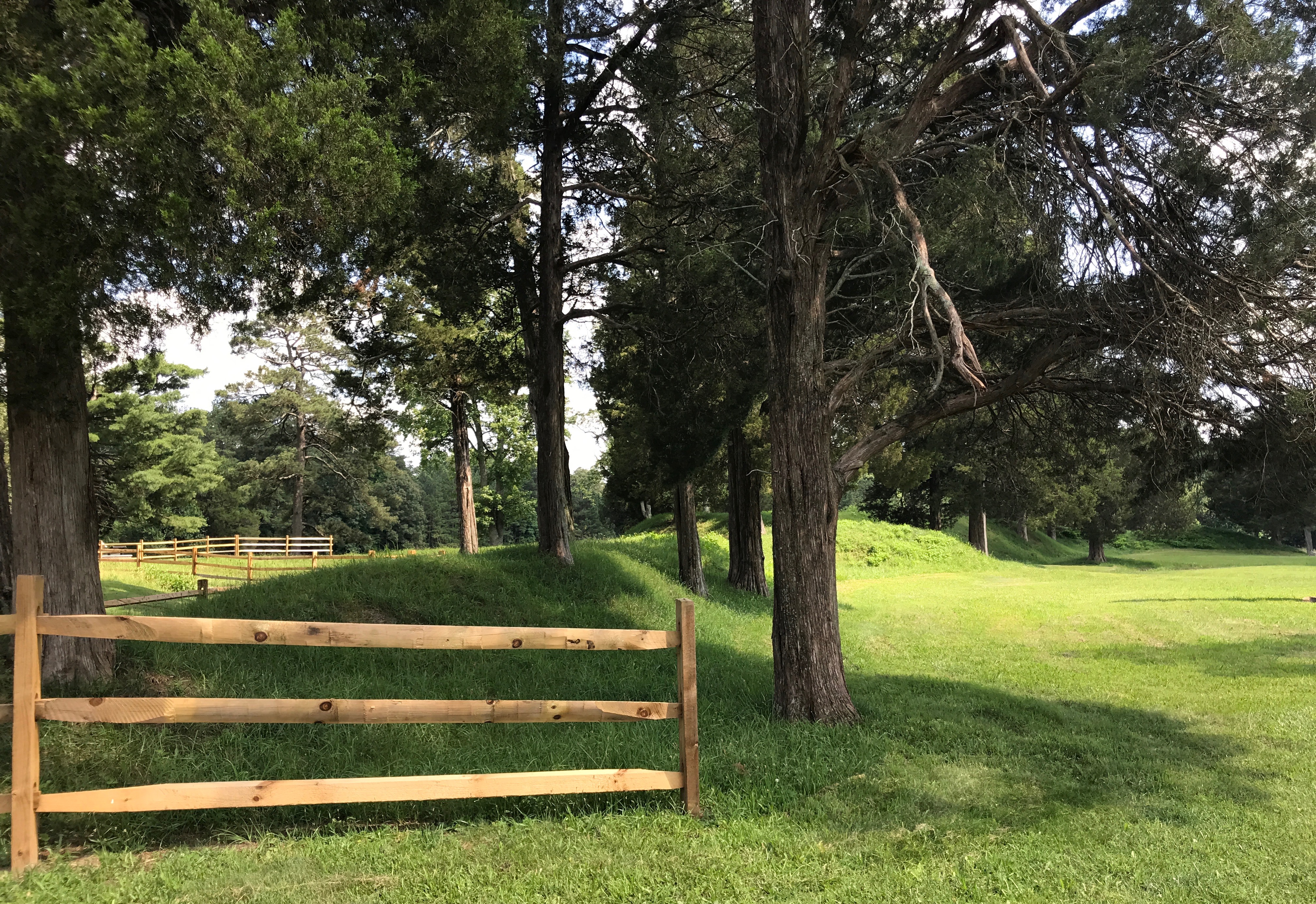
This little berm is the remnant of Confederate breastworks. I had to look the word up. I was curious to see if it meant what I thought it meant. Breastworks are temporary fortifications, typically made of earth, that reach up to a man’s breast to allow defenders to fire over it from a standing position.

In this war, a shovel appears to be as important a weapon as a firearm.

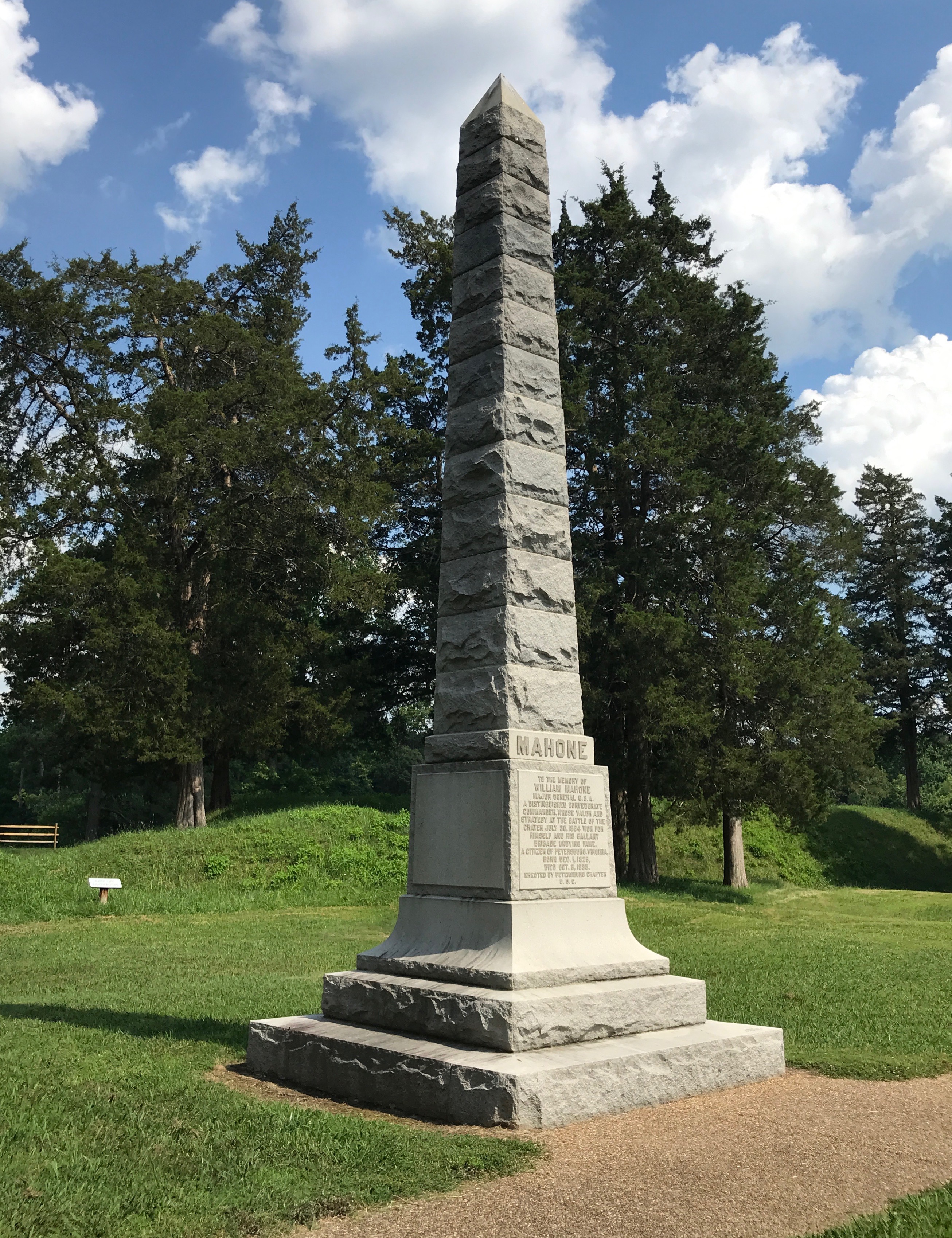
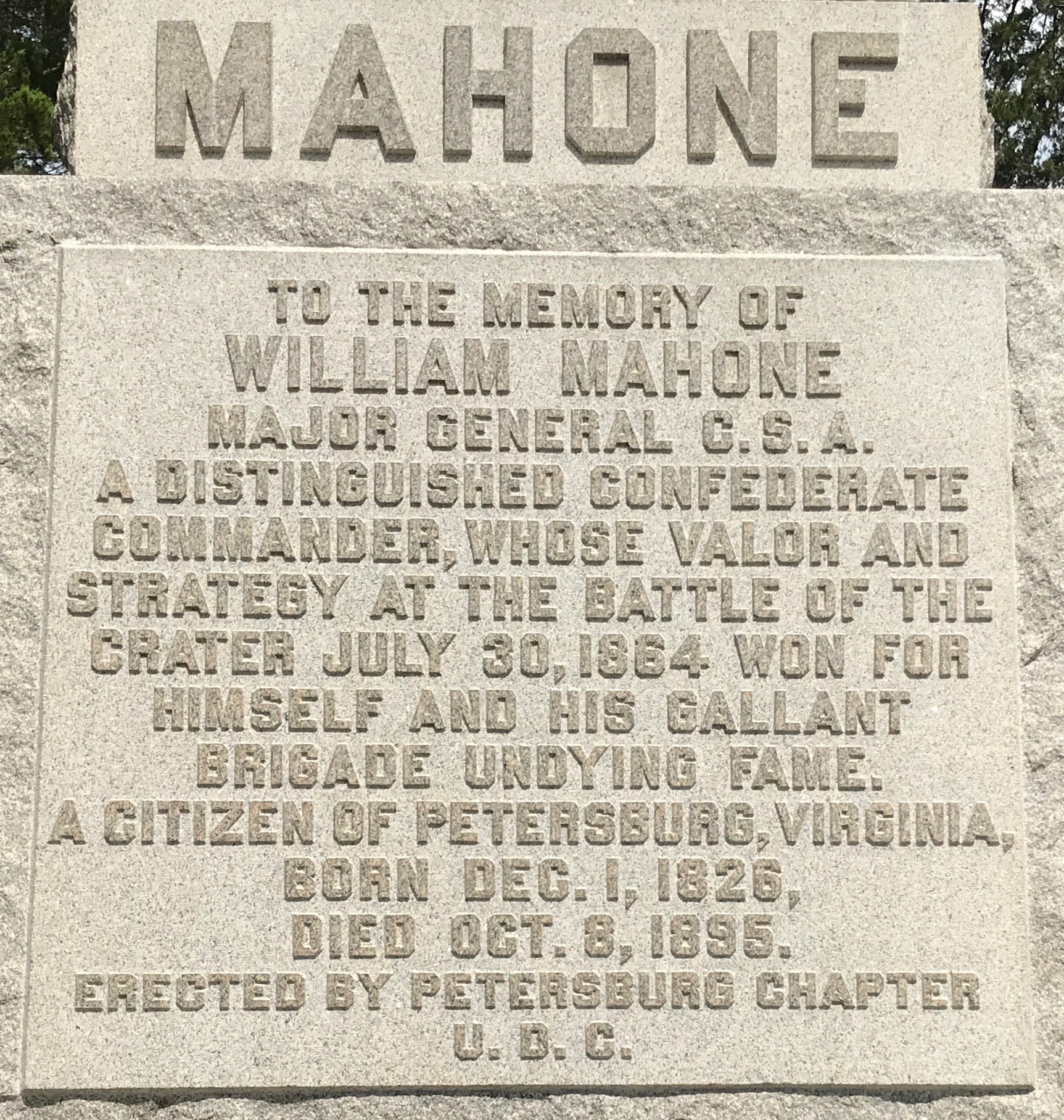
This memorial is to honor General Mahone, who lead the counterattack.

I wonder if the fact that this battle was in his hometown had any additional impact on him.

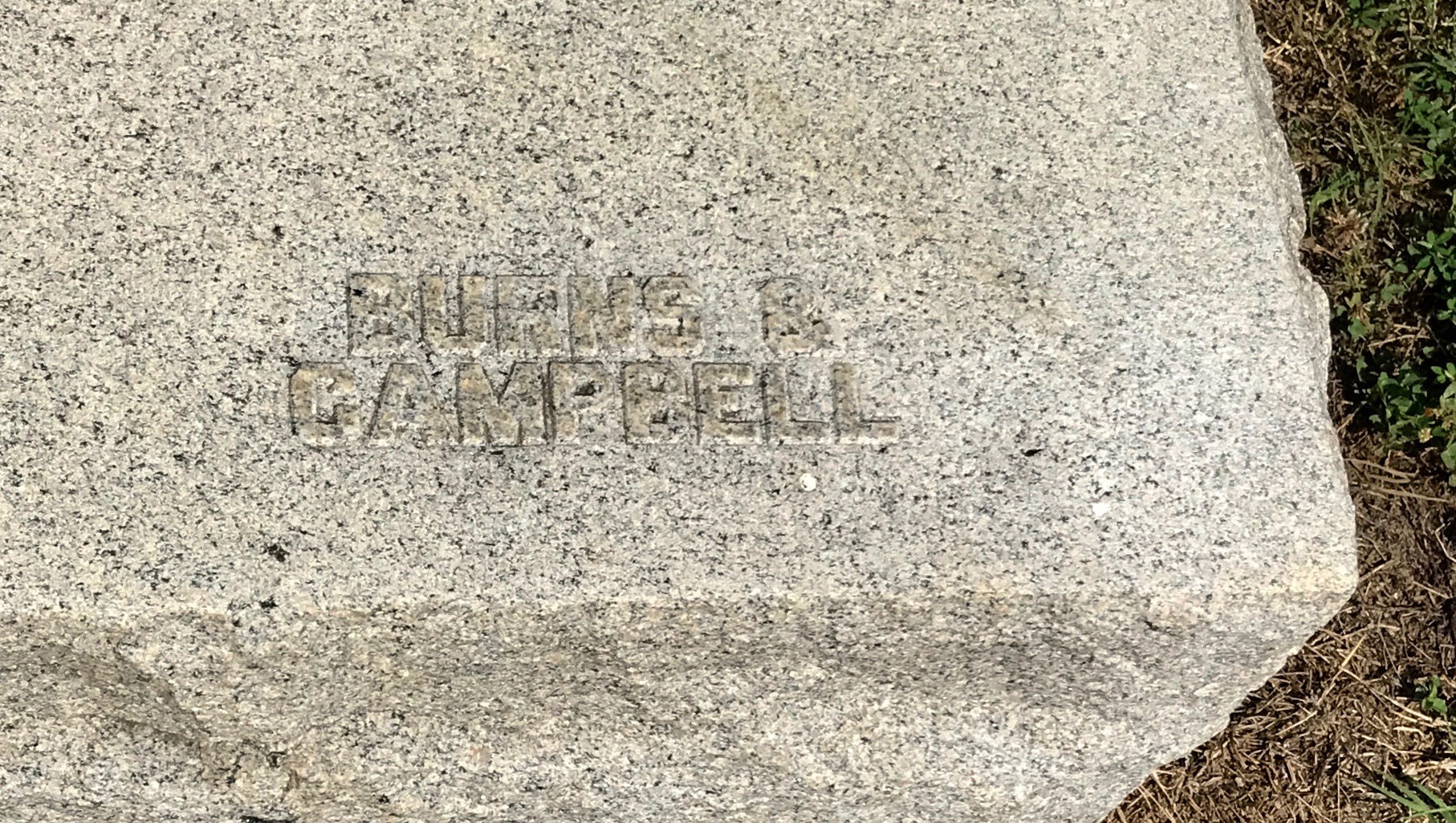
I always look to see if I can find any additional information on memorials, such as the date it was made or dedicated, who sponsored it, or who made it. Burns and Campbell were the craftsmen.

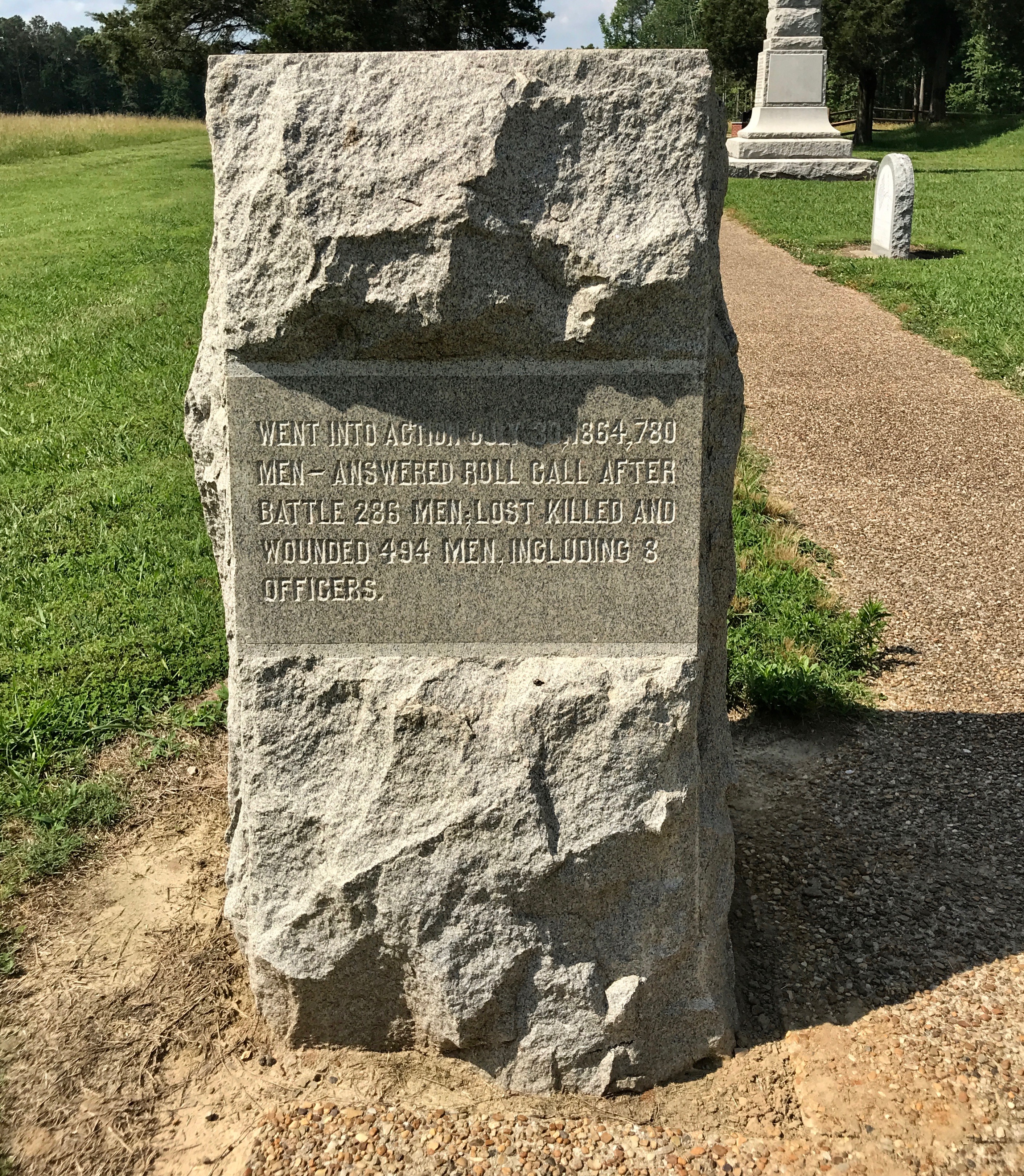
These are somber statistics. 780 men answered roll call on July 30, 1864. After the battle, just 288 men remained.

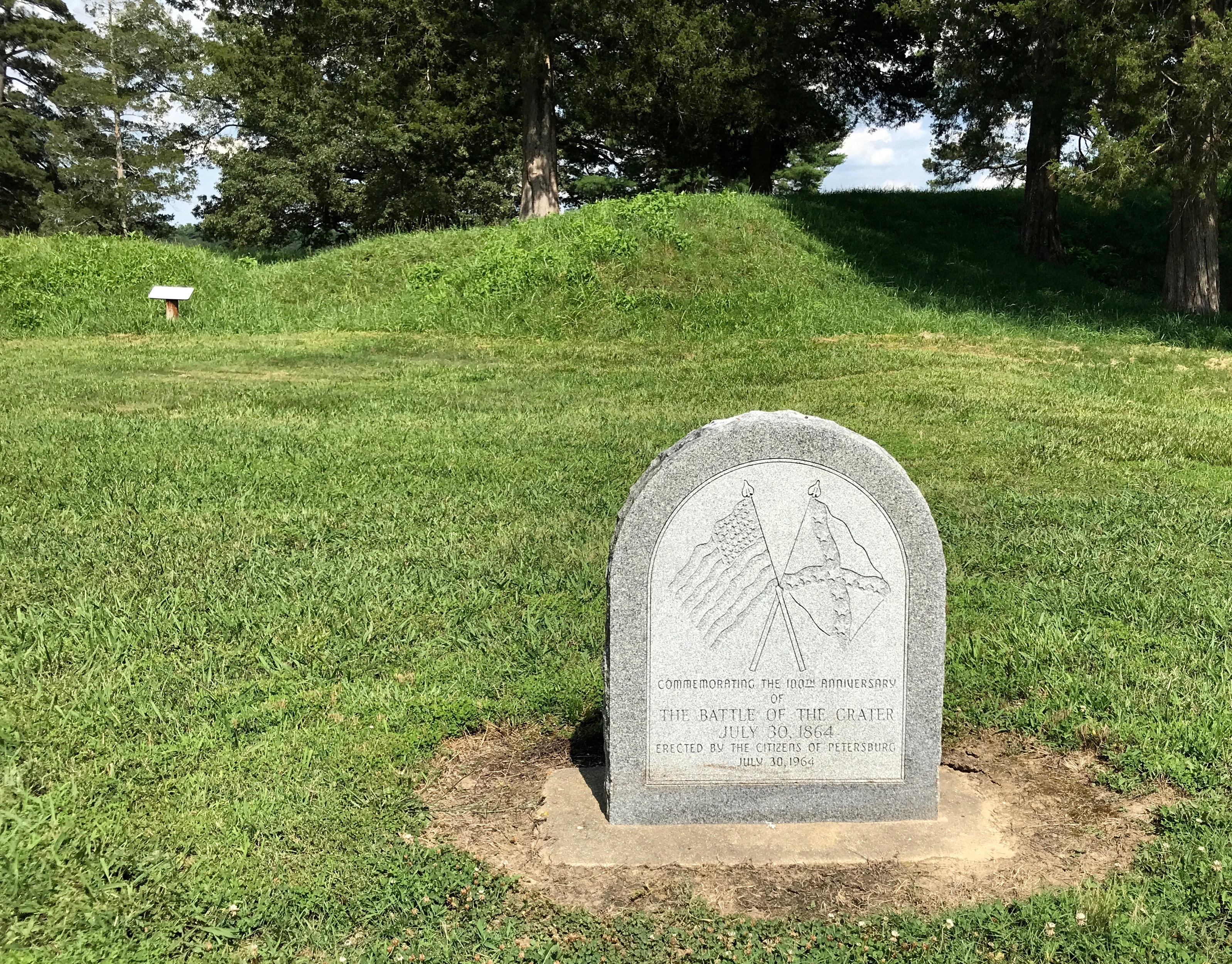
In front of the breastwork, there is a memorial commemorating the 100th anniversary of the Battle of the Crater. This was erected by the citizens of Petersburg.

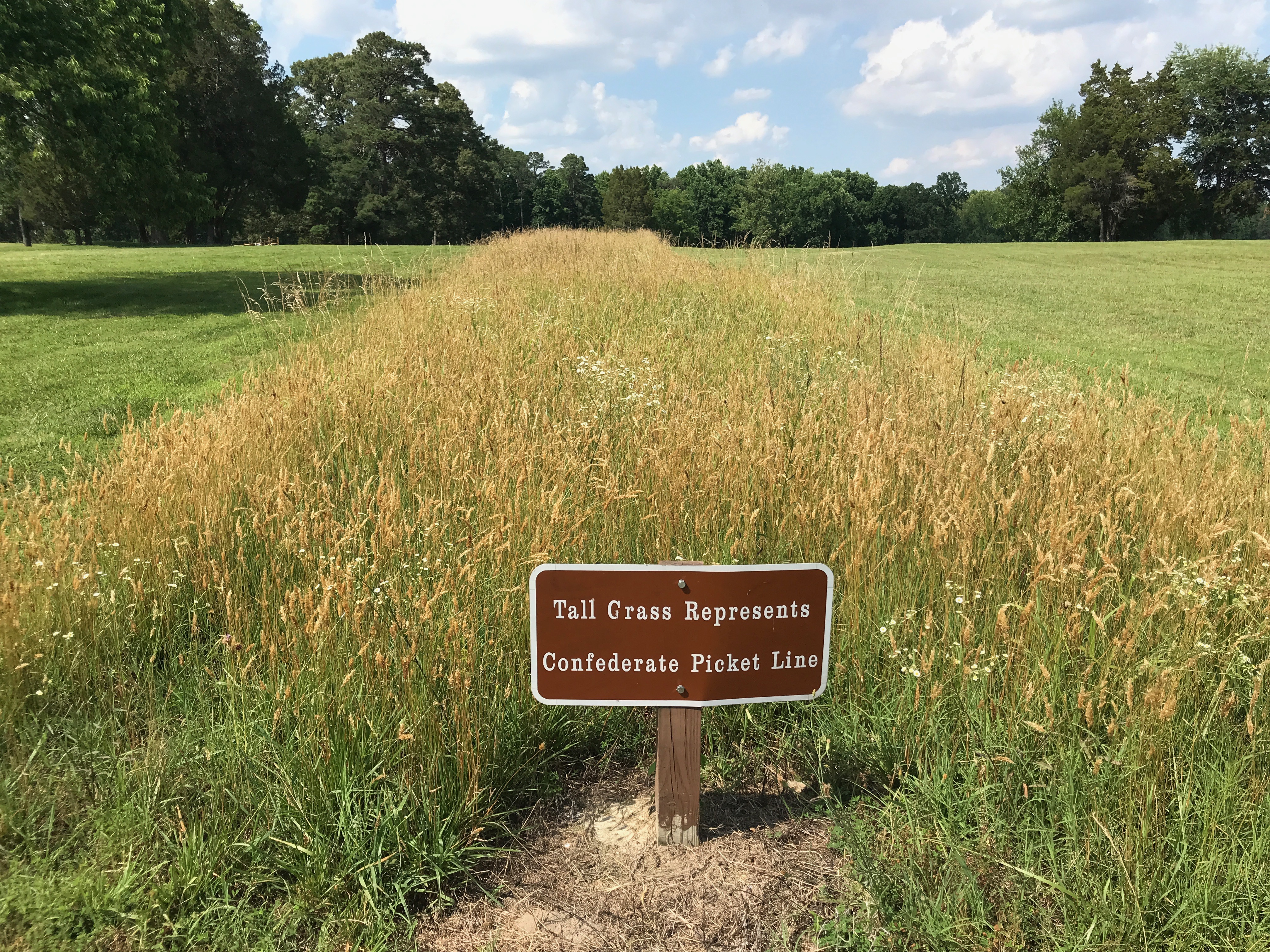
If you visit, look for the picket lines cut into the grass. The Union and Confederate soldiers were incredibly close to each other. I don’t have a photo that does the proximity justice.

With that, it was time to head on to other things.

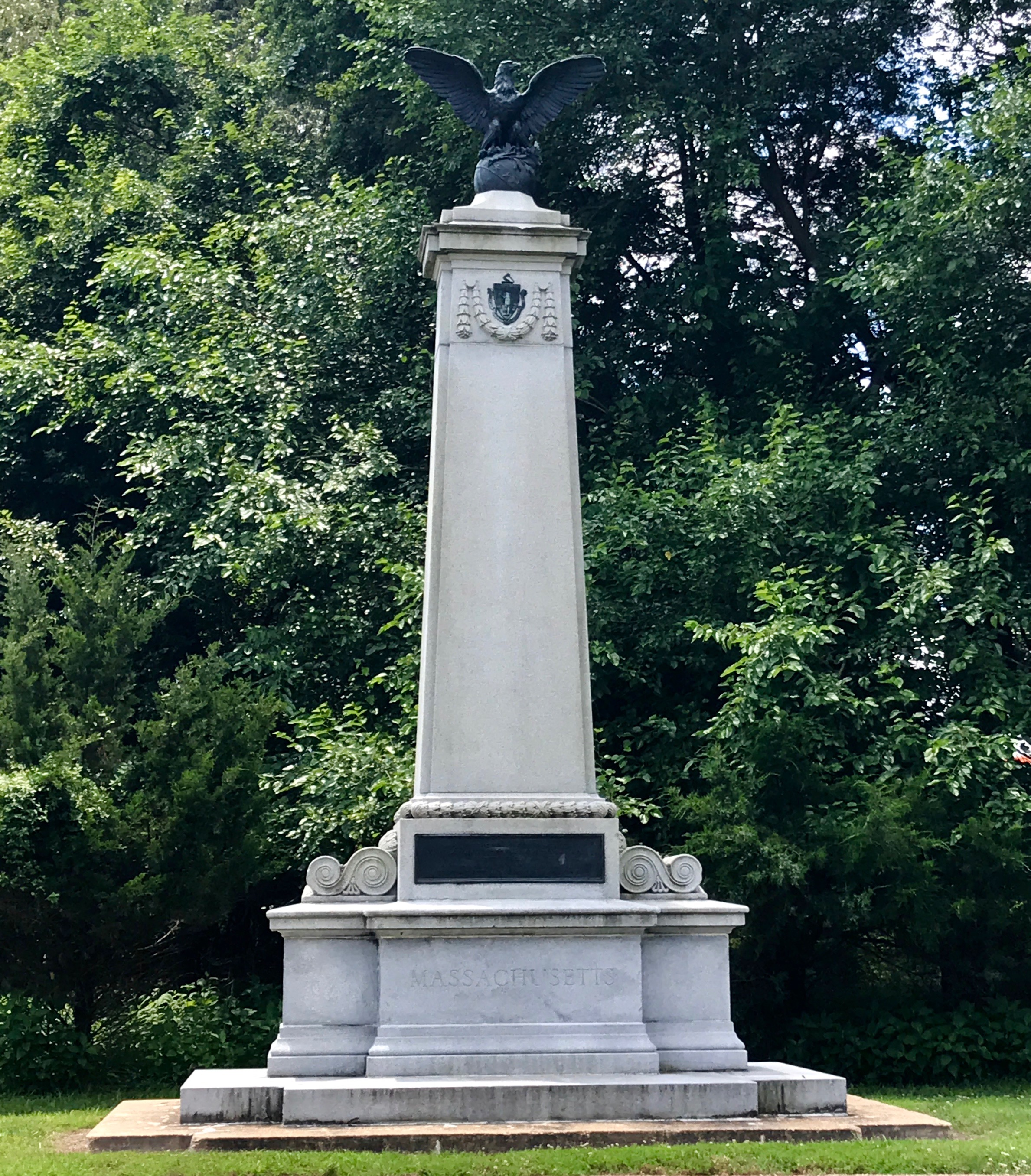
Close to the exit was this memorial to Massachusetts. When I saw it, I realized that there were very few pieces sponsored by states, unlike in Gettysburg.

I wonder why that is.

But, that is a question for another day.