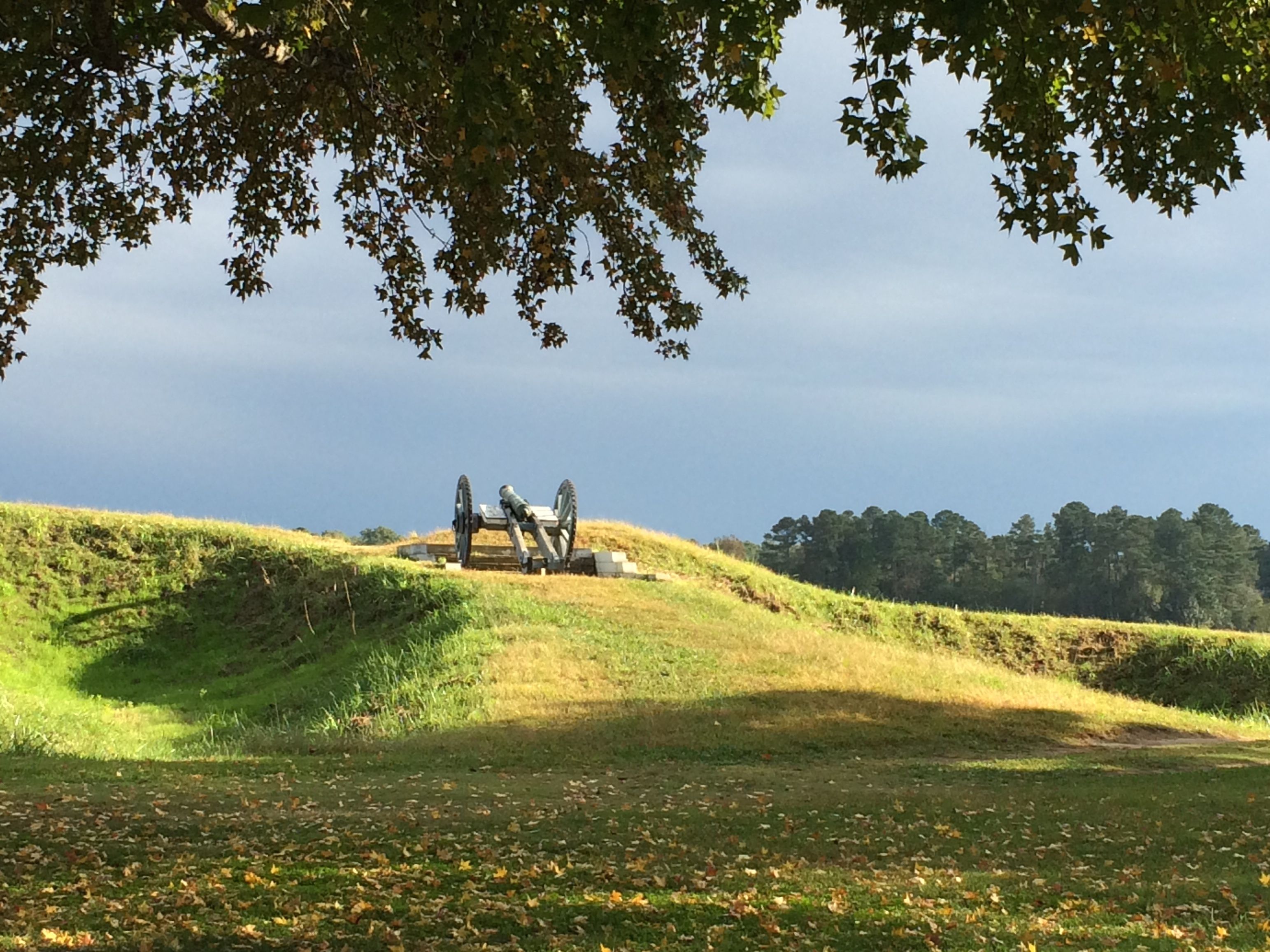
I drove over to Yorktown with no preconceived ideas about what I would find. I knew that it was where Cornwallis surrendered to Washington; it was the last battle in the Revolutionary War. What I didn’t realize was just how much drama was involved in getting to this point.
I entered the National Park Service museum building, happy to be using my America the Beautiful pass once again. The helpful ranger gave me the brochure and directed me to the small museum and told me that a ranger would be giving a talk in a few minutes.
First I toured the museum. Can you believe it? They have Washington’s tent! It was kept in the family and they have all the documentation, so they can prove its provenance. (Thank you Antiques Roadshow for the vocabulary word.)
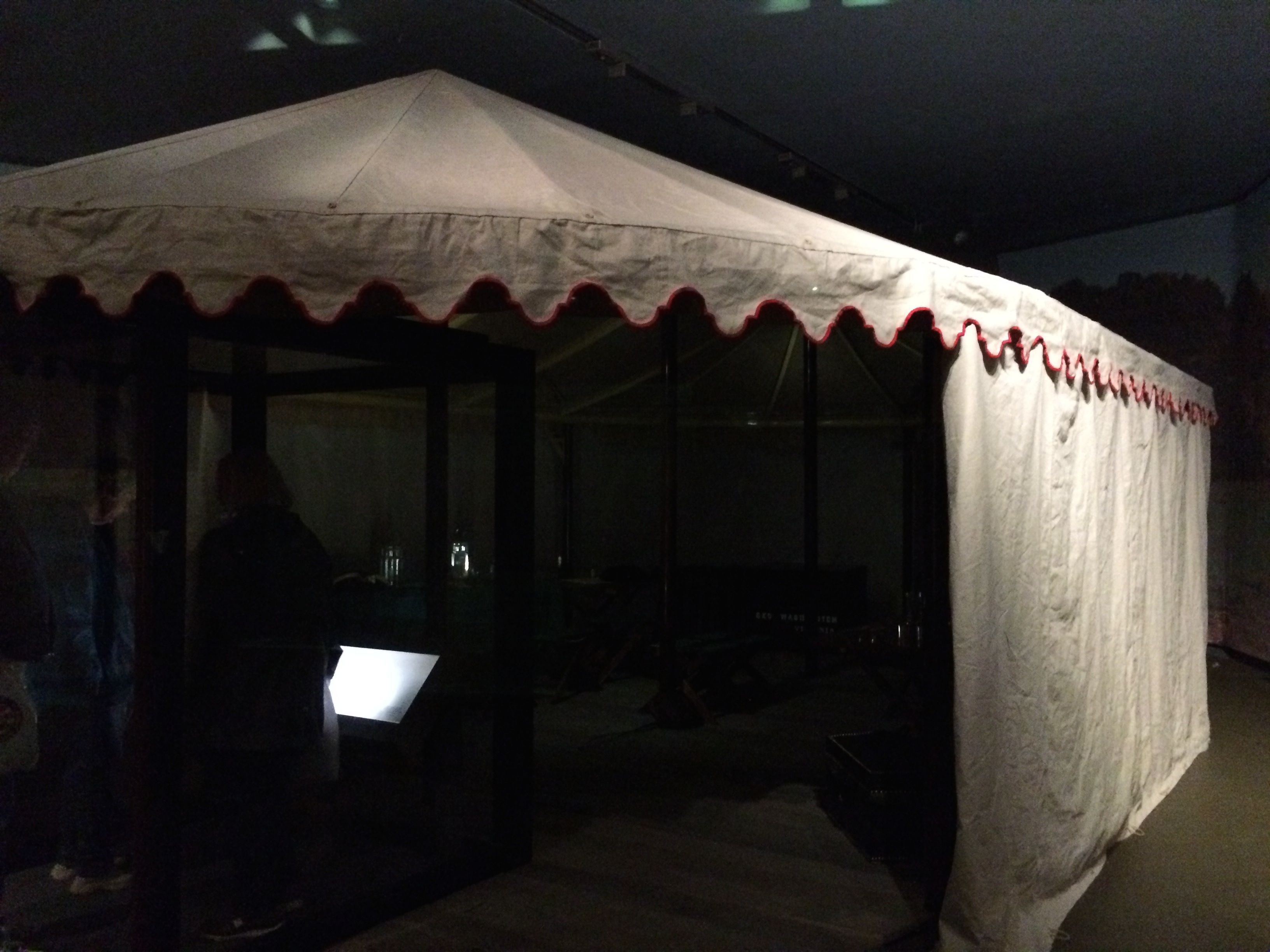
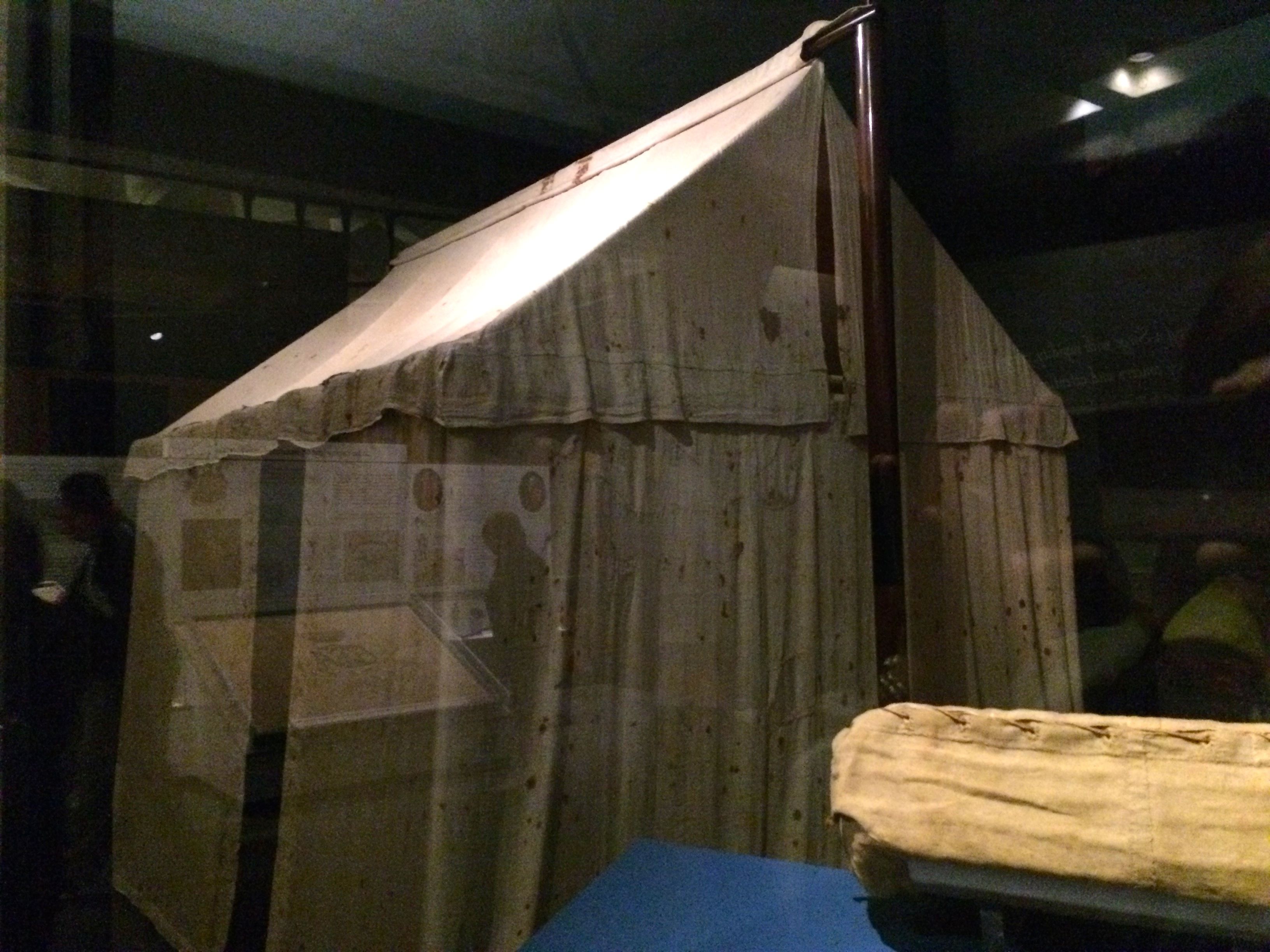
It was kind of hard to take pictures of these artifacts. They were behind glass and kept under low light.
They also had a cannon called “The Lafayette”. The story is that Lafayette recognized this cannon when he came back to the United States in 1824. He recognized it by the ding in the barrel.

I am SO GLAD that I opted to listen to the ranger. She really made the place come alive! A strong storm was just about to sweep into the area, so she did her talk indoors. It was powerful in an empty room. I wonder what the talk would have been like on the battlefield.
One thing that she told us was that the earthworks outside the visitor center were the actual earthworks from the battle. They weren’t recreations, although They were added to by the Confederates during the Civil War and the Works Progress Administration (WPA) tidied things up a bit during the Depression, but the real, original earthworks from the battle are still out there.
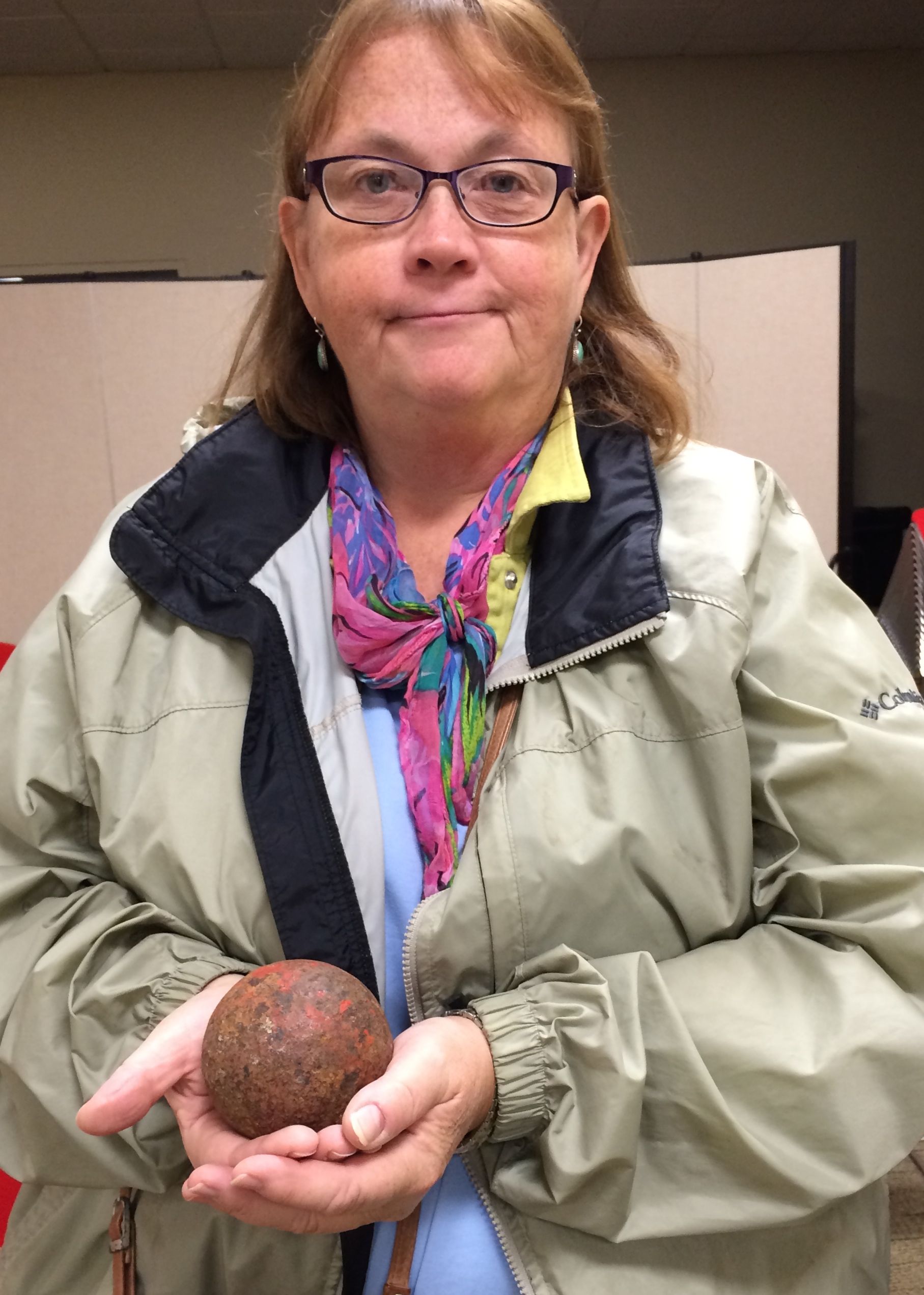
Talk about real! This is a real cannonball that was fired in the battle.
The ranger really drove home how close the Revolution came to failing. Washington was just barely holding on up near New York City. He got the word that the French were going to be able to help out down in Virginia, and he managed to sneak most of the Continental Army away before the British knew they were gone.
While the Army was slogging southward, Washington and Count de Rochambeau took a slightly different route and stopped off at Mount Vernon. This was the first time Washington had been back at his beloved home since the beginning of the war.
Lafayette was already In Virginia, with orders from Washington to prevent a land escape by Cornwallis from Yorktown. In the meanwhile, a large French fleet under the direction of Count de Grasse prevented British reinforcements from arriving and kept Cornwallis bottled up in Yorktown.
The combined armies of Washington and Rochambeau managed to cover the 200 miles from New York City to the head of Chesapeake Bay in 15 days. The French fleet transported the men down to Virginia where they joined up with Lafayette and encircled Yorktown.
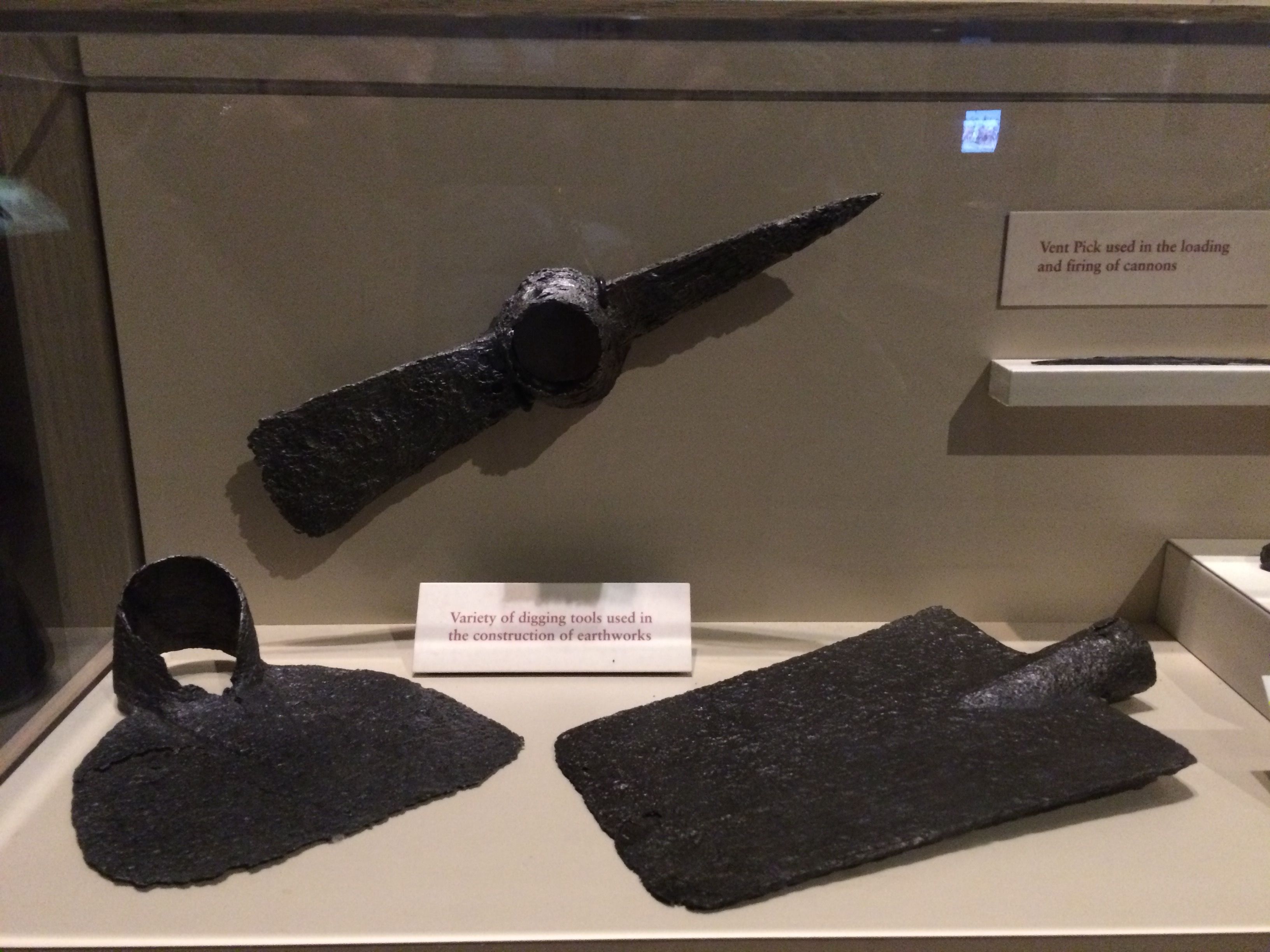
The amazing thing was that the armies met up and dug the earthworks without being detected. According to the ranger, it was raining fiercely. It softened the soil and muffled the sounds of the digging. These tools contributed mightily to the success of the operation.
The French had brought in the cannons and they started raining lead down on the British.
The British fought back as best they could, but their reinforcements never arrived. Cornwallis sent out a drummer and a messenger bearing a white flag asking for a parlay.
Cornwallis wasn’t able to escape and he wasn’t able to fight, but he didn’t want to agree to the terms of surrender – which were the same terms of surrender that he extended to the Continentals when the British defeated them at Charleston, South Carolina.
The surrendering soldiers had to march out with their colors furled, surrender their arms and then leave for detention. The officers got to keep their side arms and then leave for Britain or a British-occupied American port. They also had to play a mournful song, “The World Turned Upside Down.” According to the ranger, the terms were almost a deal-breaker for Cornwallis. In fact, they disturbed him so greatly that he was “sick” on the day of surrender and refused to attend the ceremony.
After the engaging talk, I headed for the exit. The storm had blown over and the sky was clear. I decided to take the driving tour around the battlefield and town. Somehow, I managed to miss the direction signs and turned a corner. The battlefield and the earthworks were right next turn the town!
In fact, down by the shore of the river, below the bluff, was a place where the British tried to take shelter during the shelling.
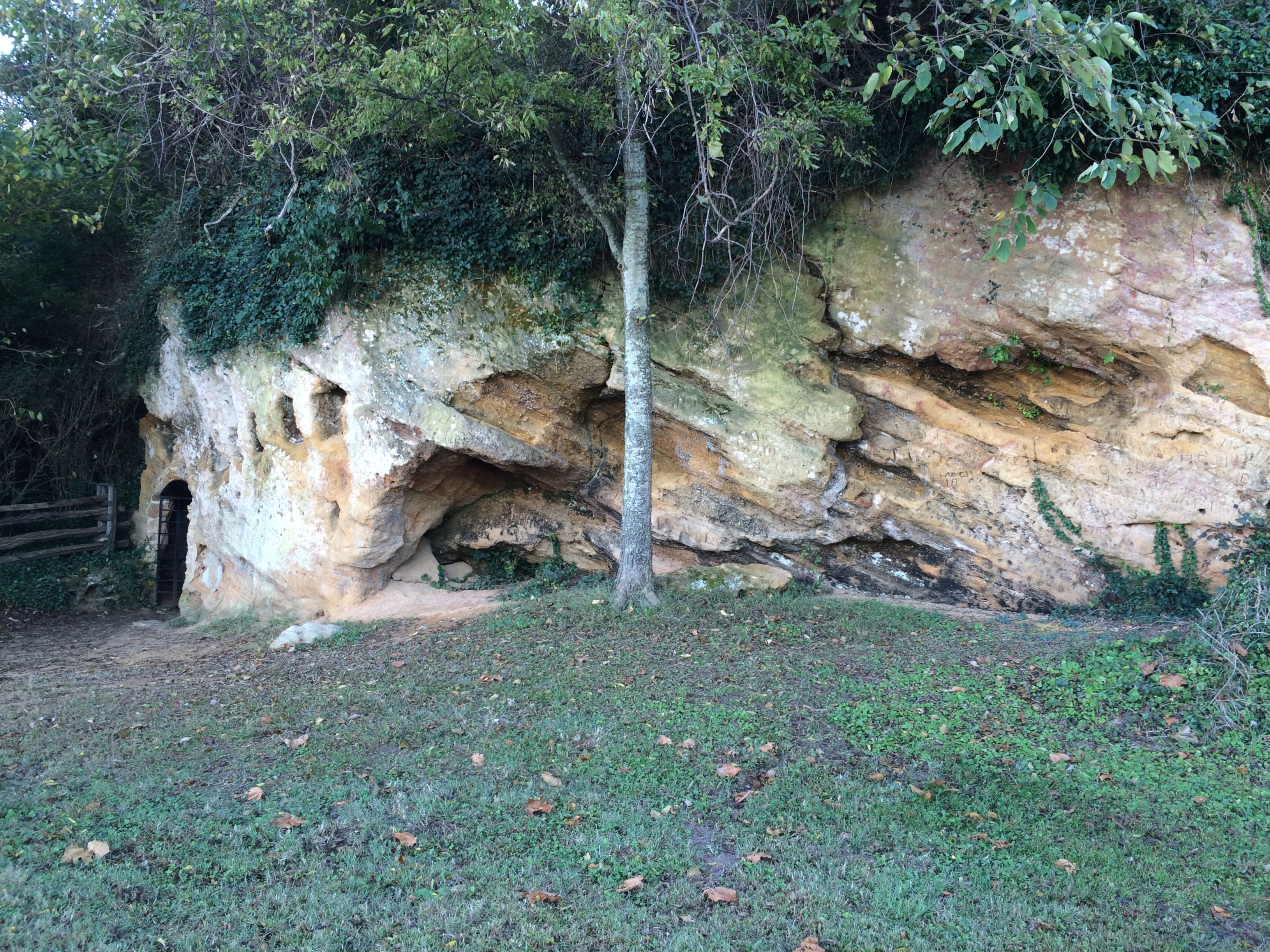
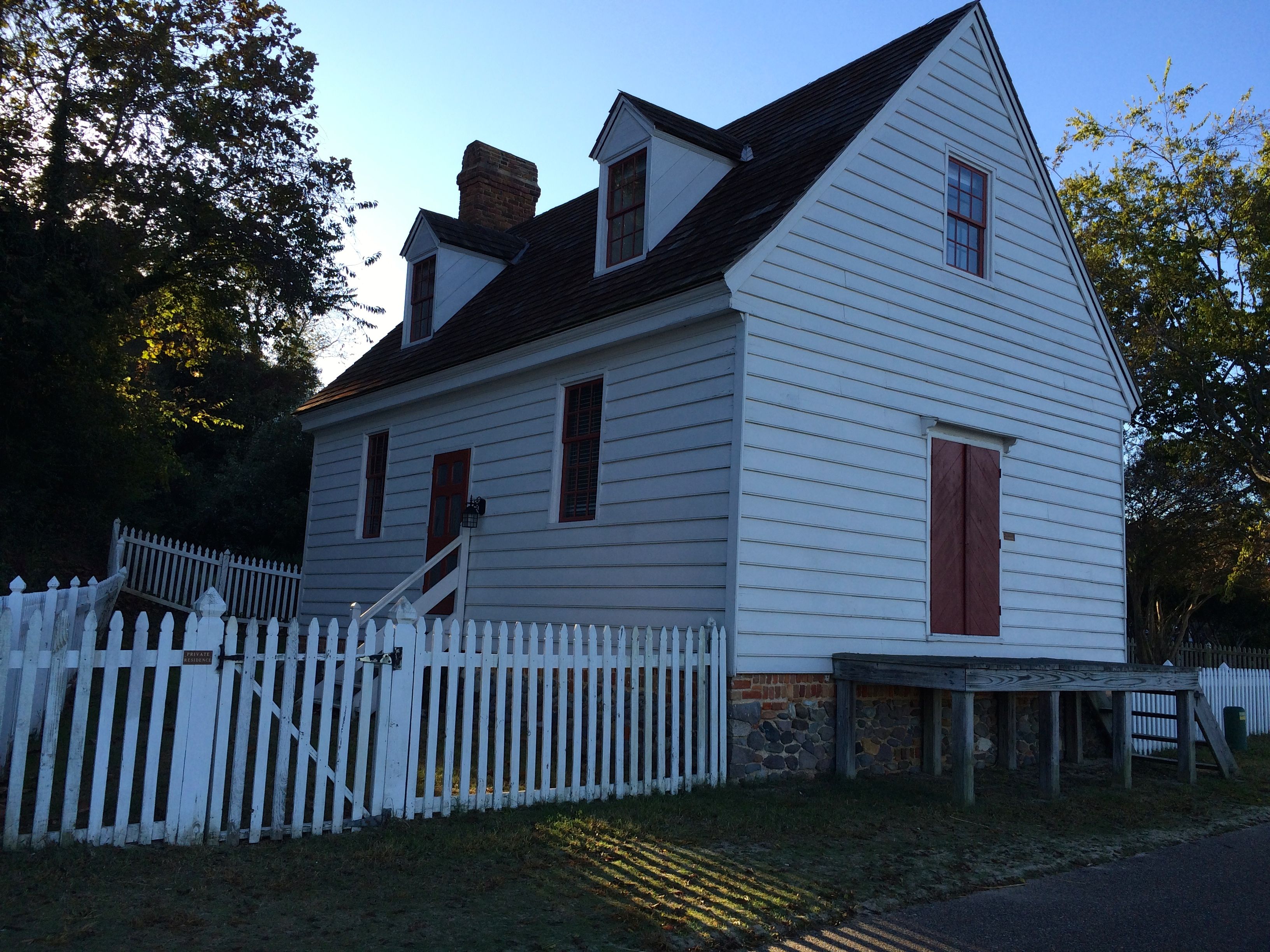
This is a reconstructed house of the sort that was in the part of the town called “under the hill”.
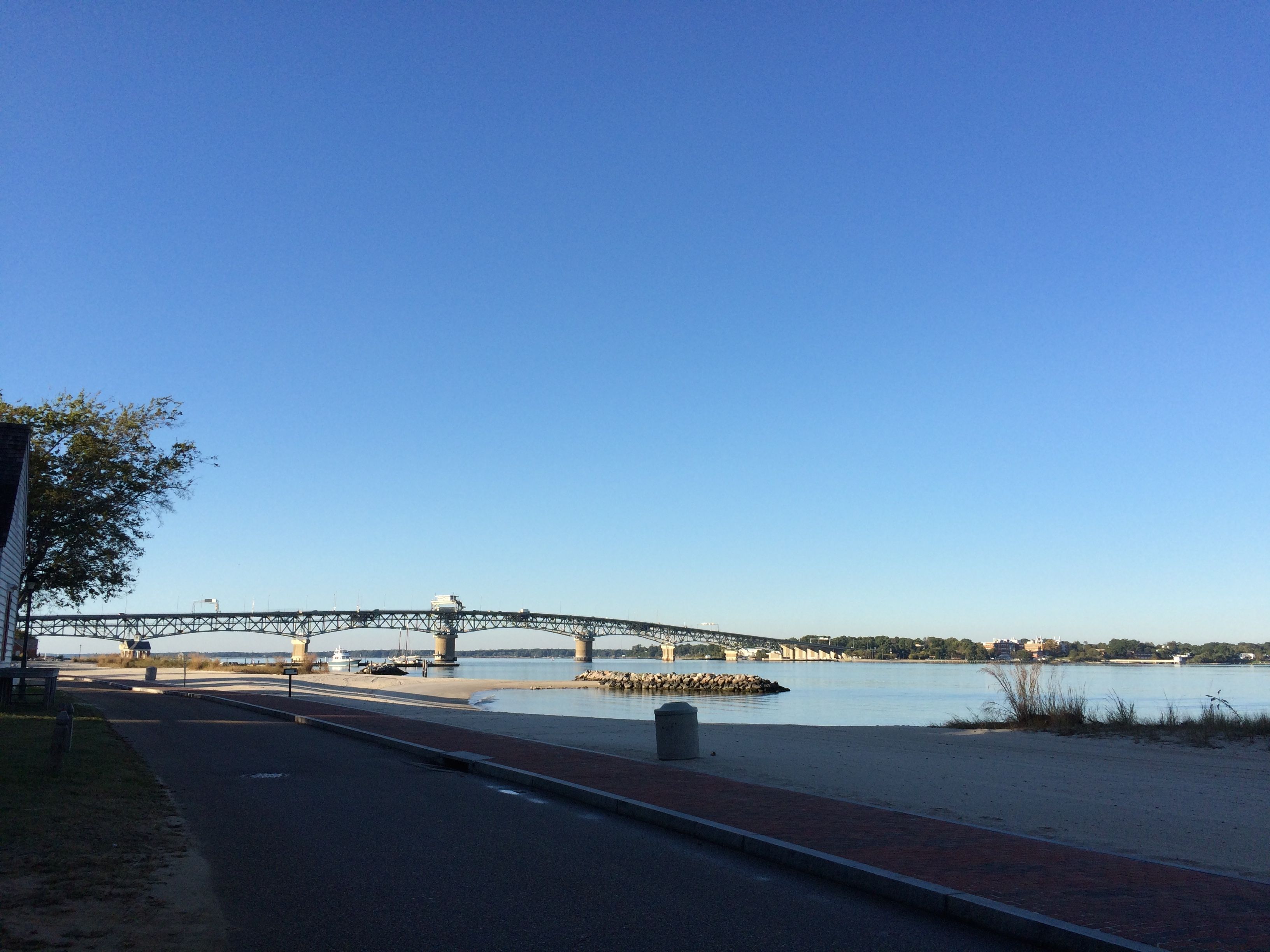
Here is the view today. I imagine that is was not as tranquil in 1781. Oddly enough, I was making my visit right at the time of the year when the battle was taking place, a mere 234 years ago.
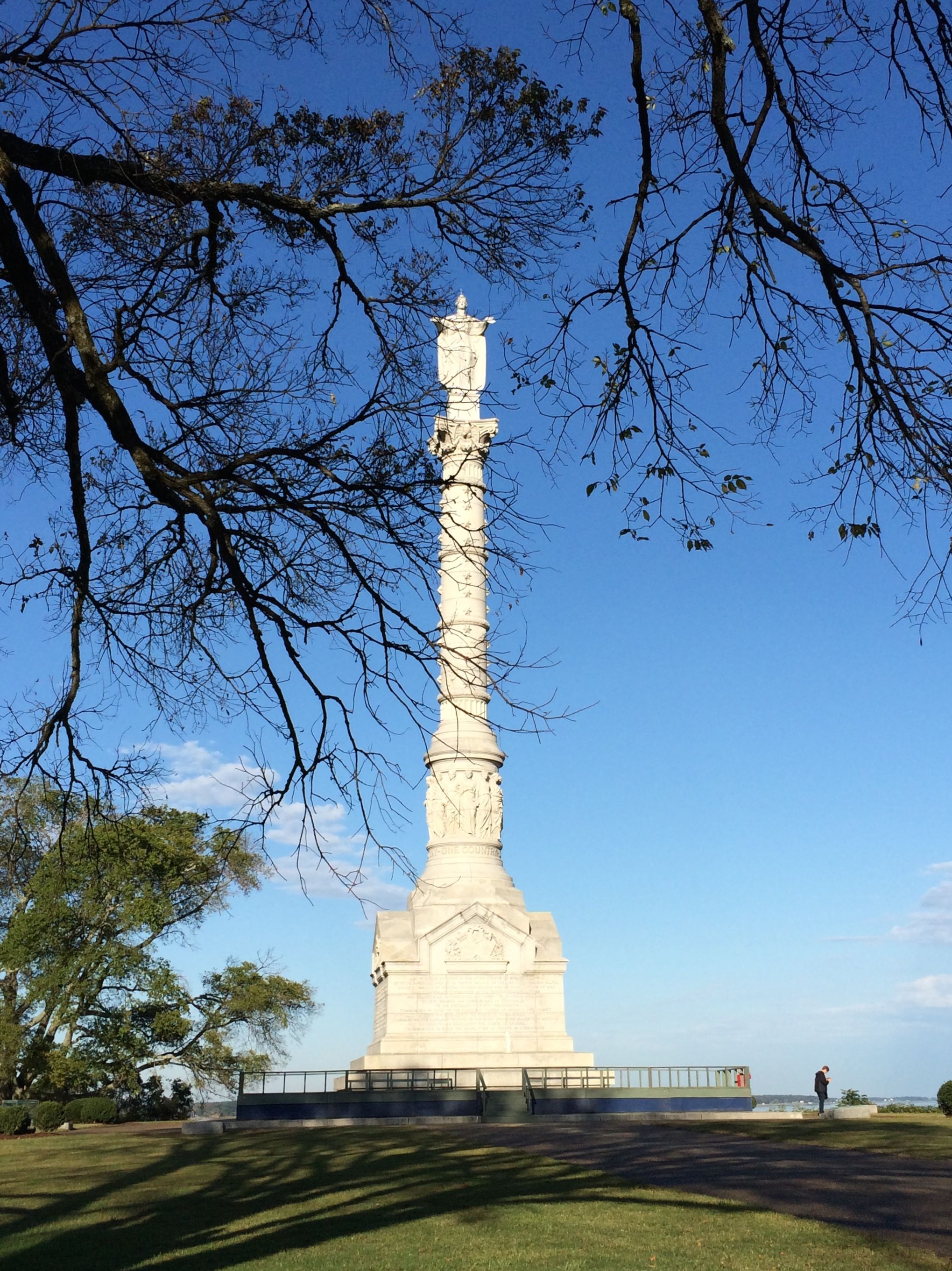
I was impressed that there was a plaque written in French and English. We owe so much to the French – and I didn’t realize just how much until the ranger’s talk.

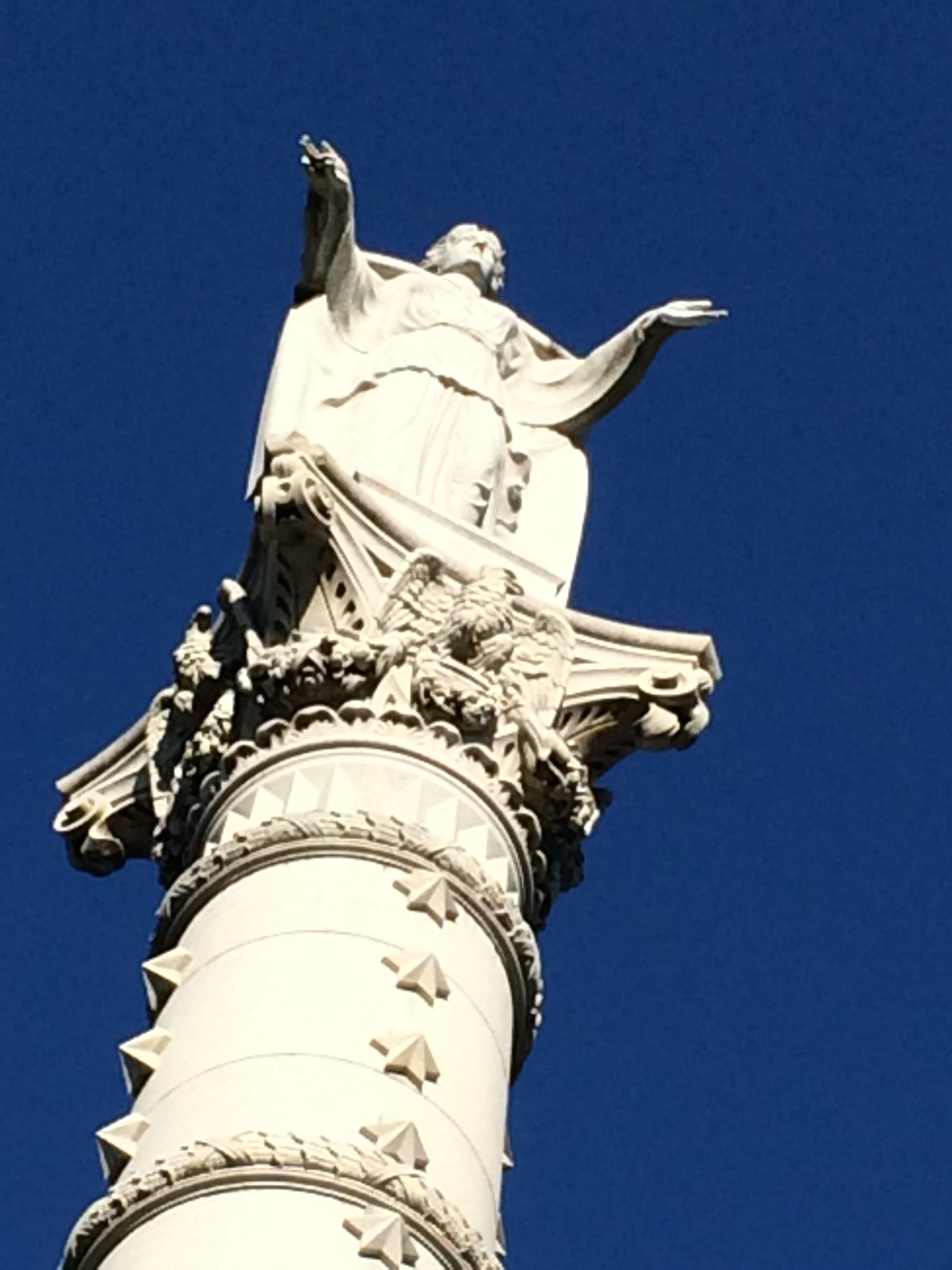
And the sky really was blue!