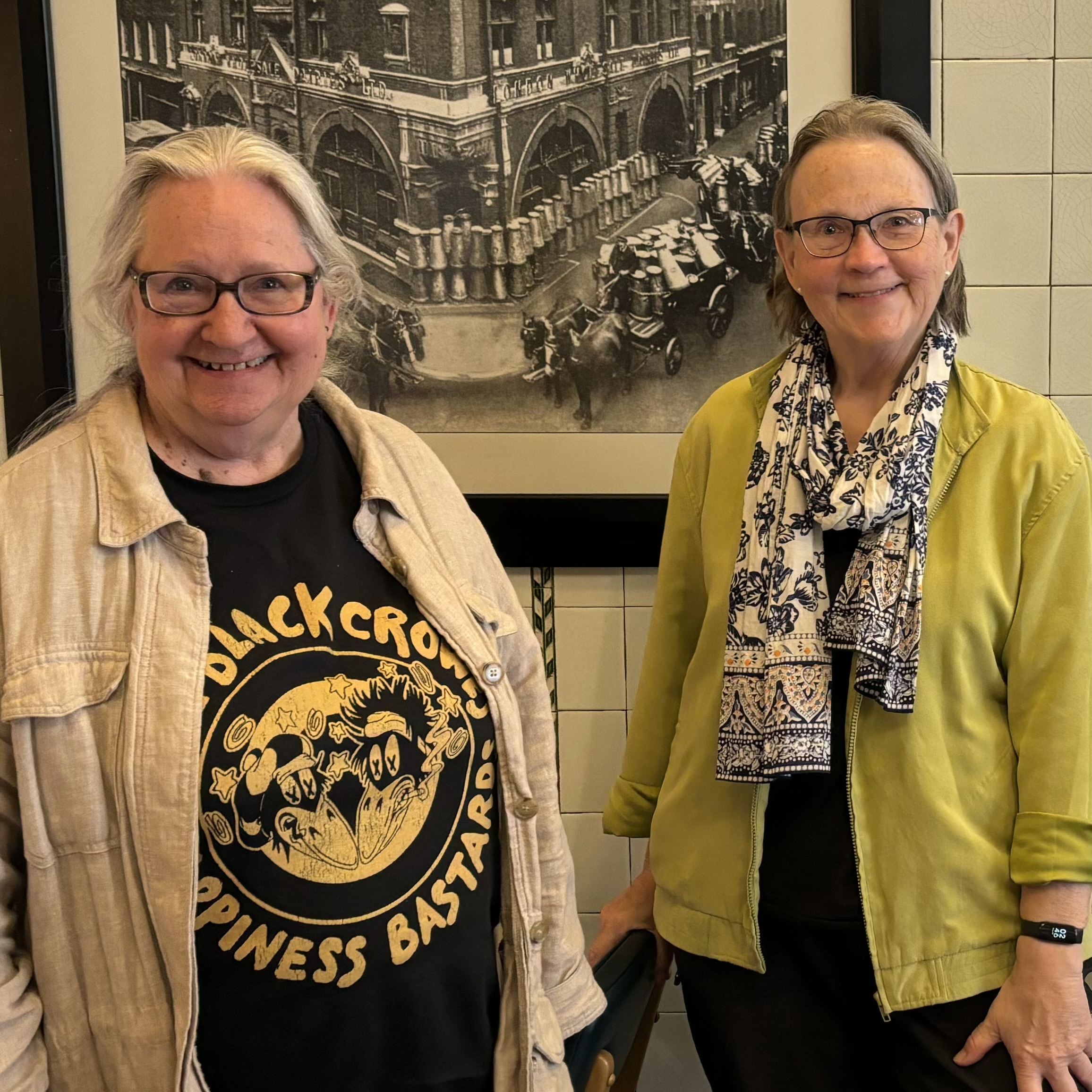
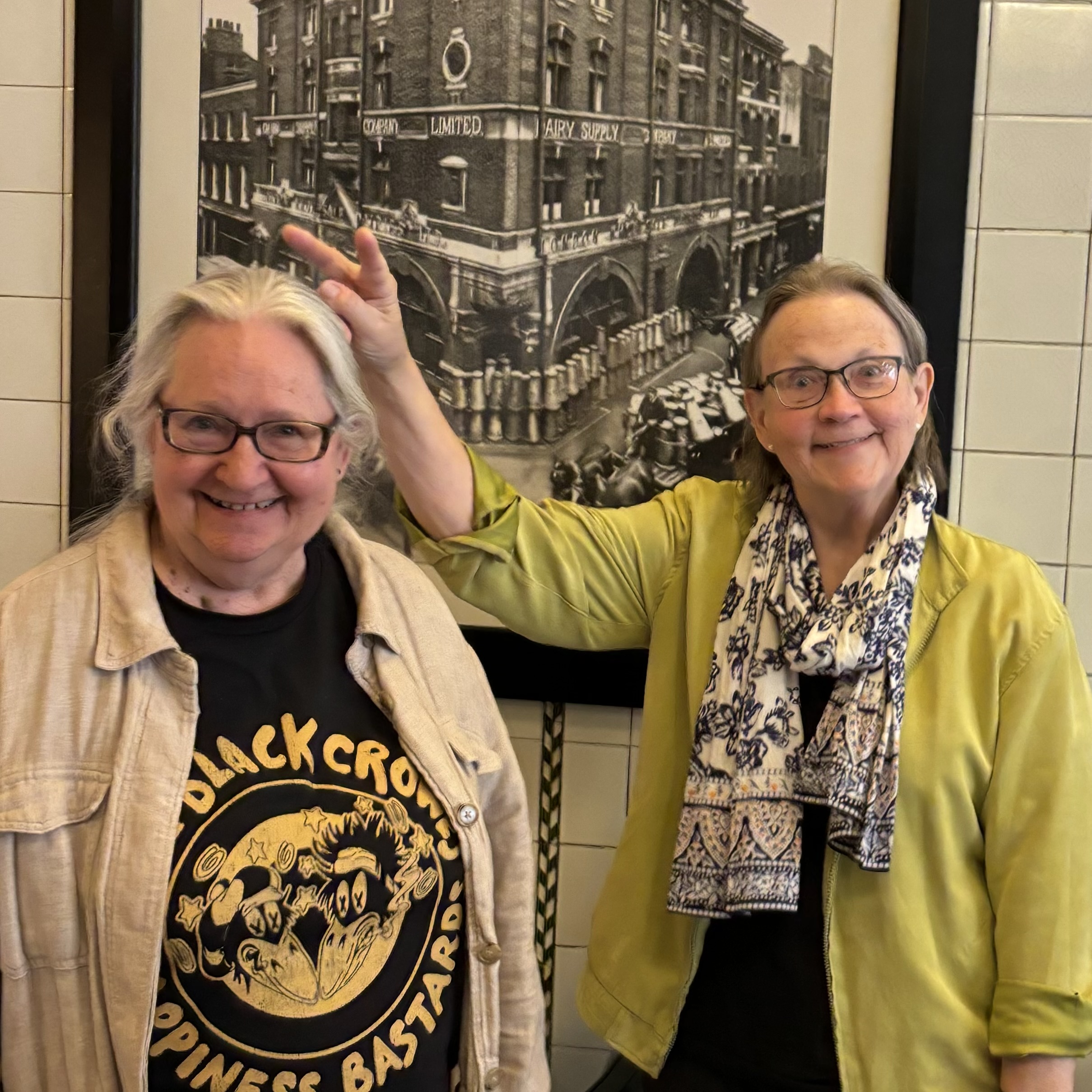
I love it when schedules work out and I am able to get together with people when I travel.
Today was the day I met up with Catherine, an internet friend pre-Facebook! We met up on the Dictionary.com forum.
I saw her on my last visit to London – in 2006. I’m sure we haven’t changed a bit since then.
Catherine was an archeologist at the British Museum, so we arranged to meet there, enjoy the museum a bit and then have some lunch.
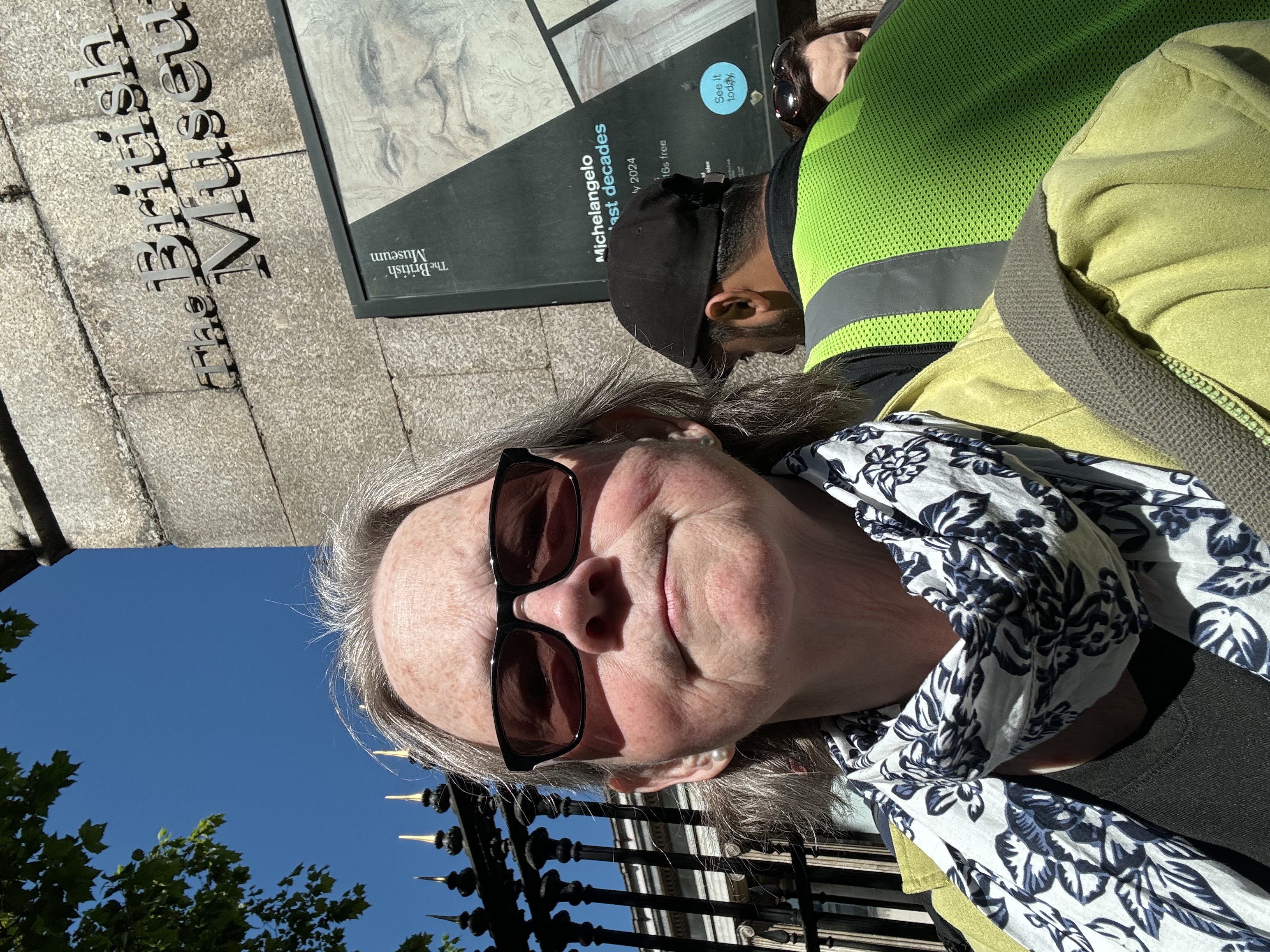
I got there at the appointed time and sent her a selfie so she could see what I was wearing and generally where I was standing.
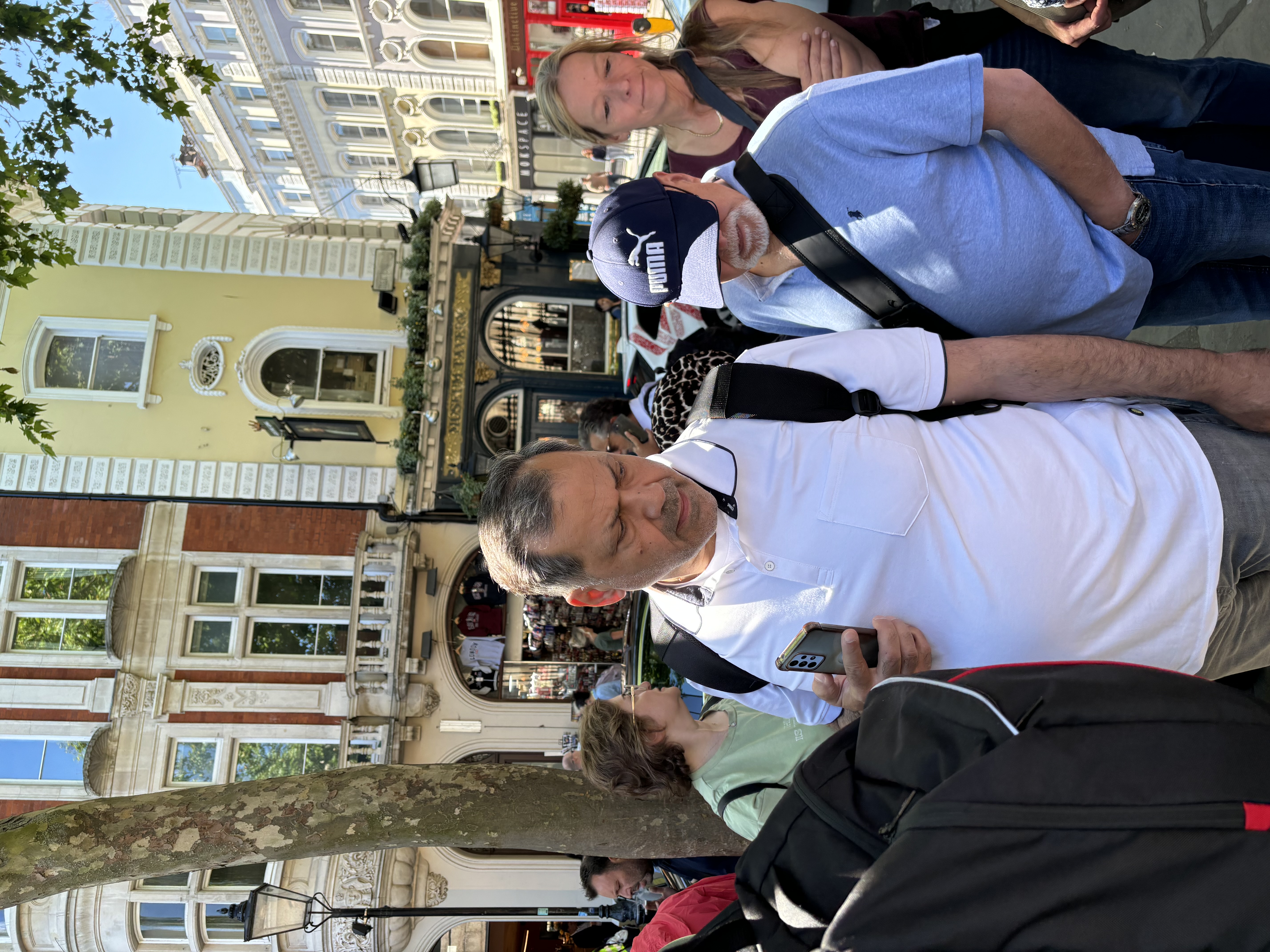
She texted me that she didn’t see me, so I sent her a photo of what I was looking at, hoping that would help. It was so crowded!
After a moment or two, I saw a hand waving above the crowd.
It was Catherine!
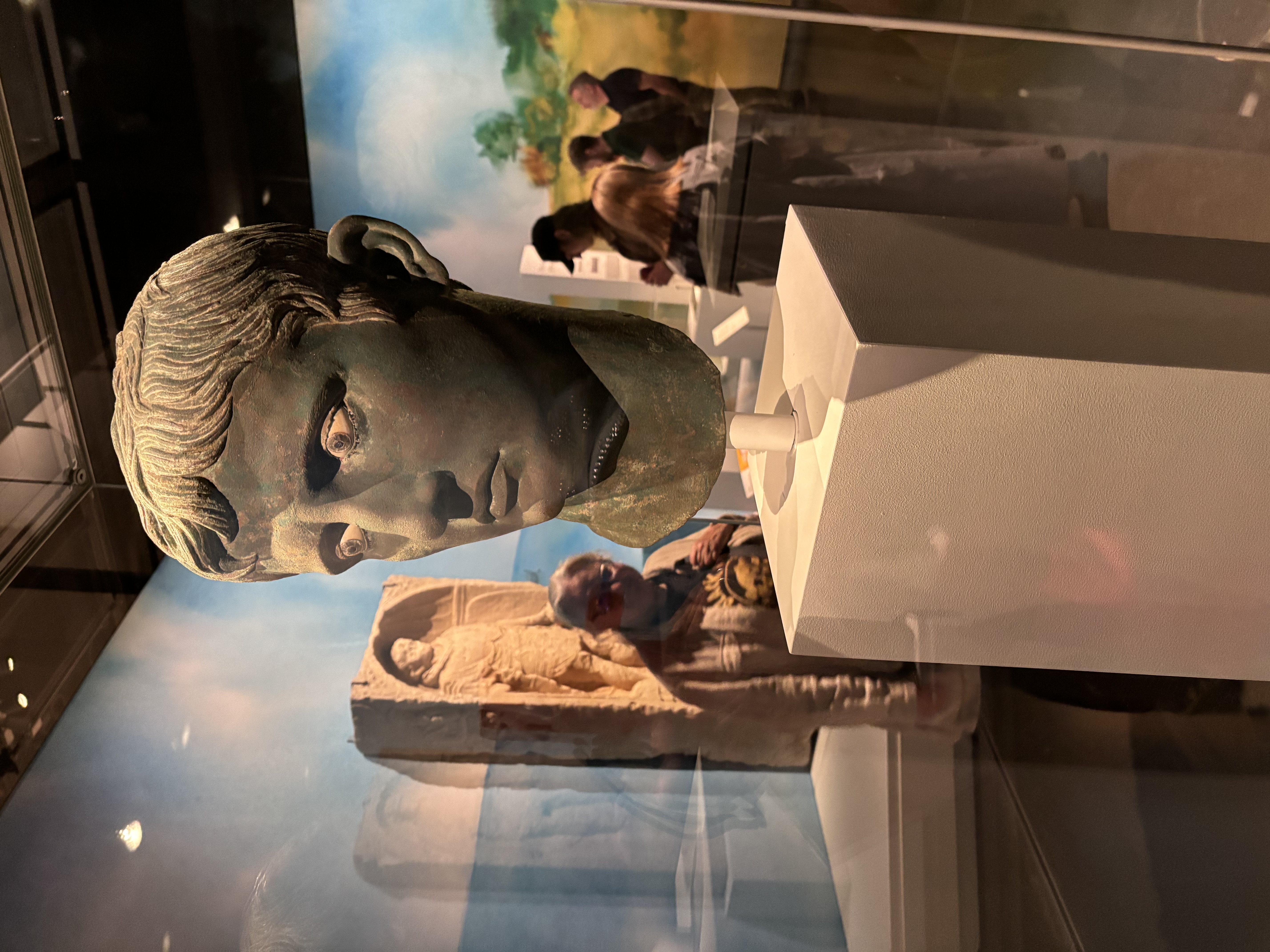
We chatted while we made our way inside. After they searched our bags, we decided to see the exhibit on the Roman Army.
I tried to take photos of interesting things – and there were many interesting things I would have liked to document – but it was crowded and Catherine and I were chatting…
Well, thank your lucky stars that you have been saved from a Tate Museum style review of this exhibit.
After making our way though the Roman Army exhibit and wading through the school groups that were between us and the exit, Catherine gave me a choice of lunch options. I don’t remember the first two options, but the third was pizza!
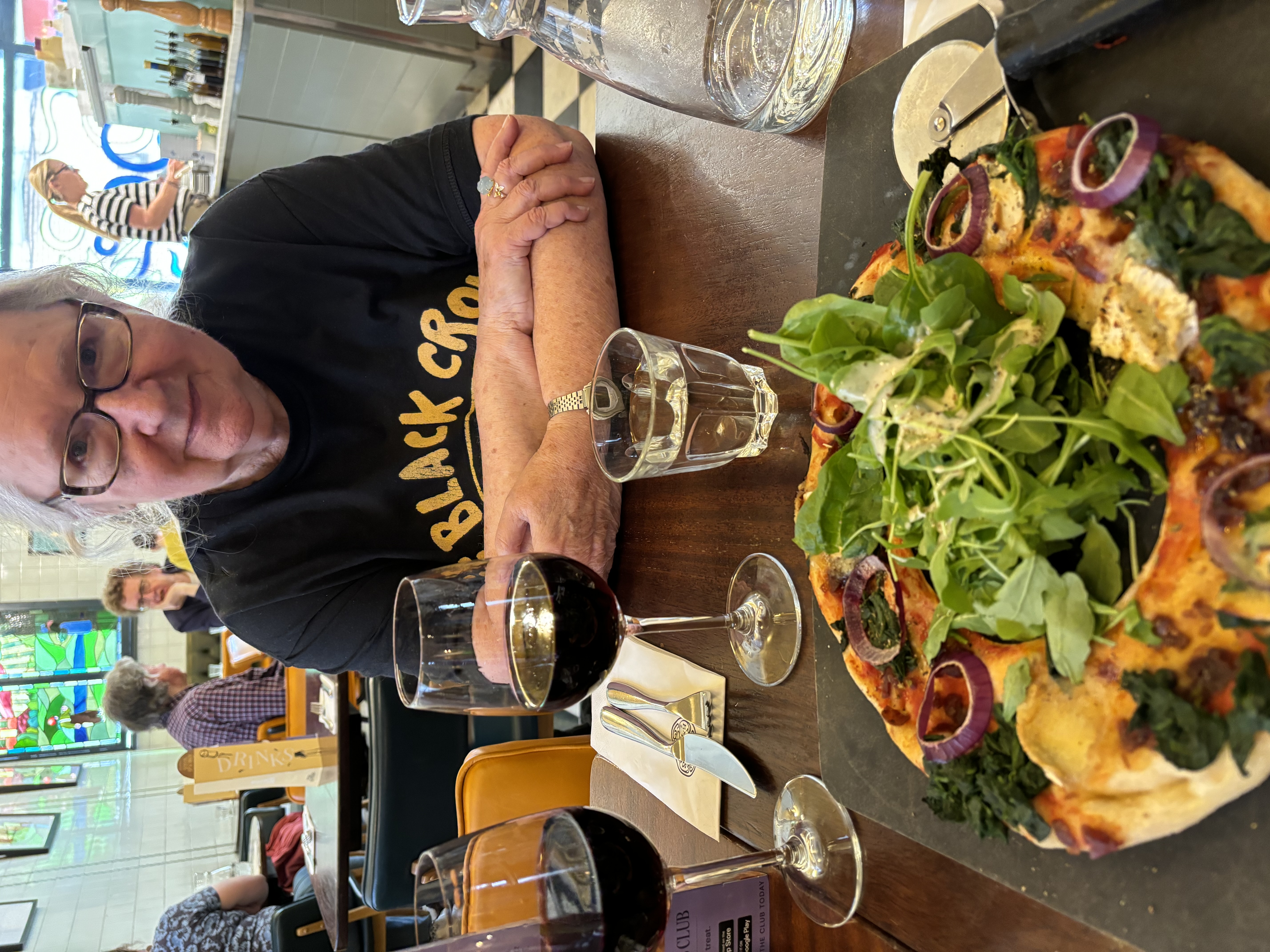
Catherine was fond of Pizza Express, from her time working at the Museum, and it was quite lovely.
We both opted for the Pizza Leggera. Pizza for under 600 calories – who knew? All you have to do is cut a hole in the middle and fill it with salad. It was such an intriguing concept that I couldn’t say no.
We chatted about this and that and caught up on things.
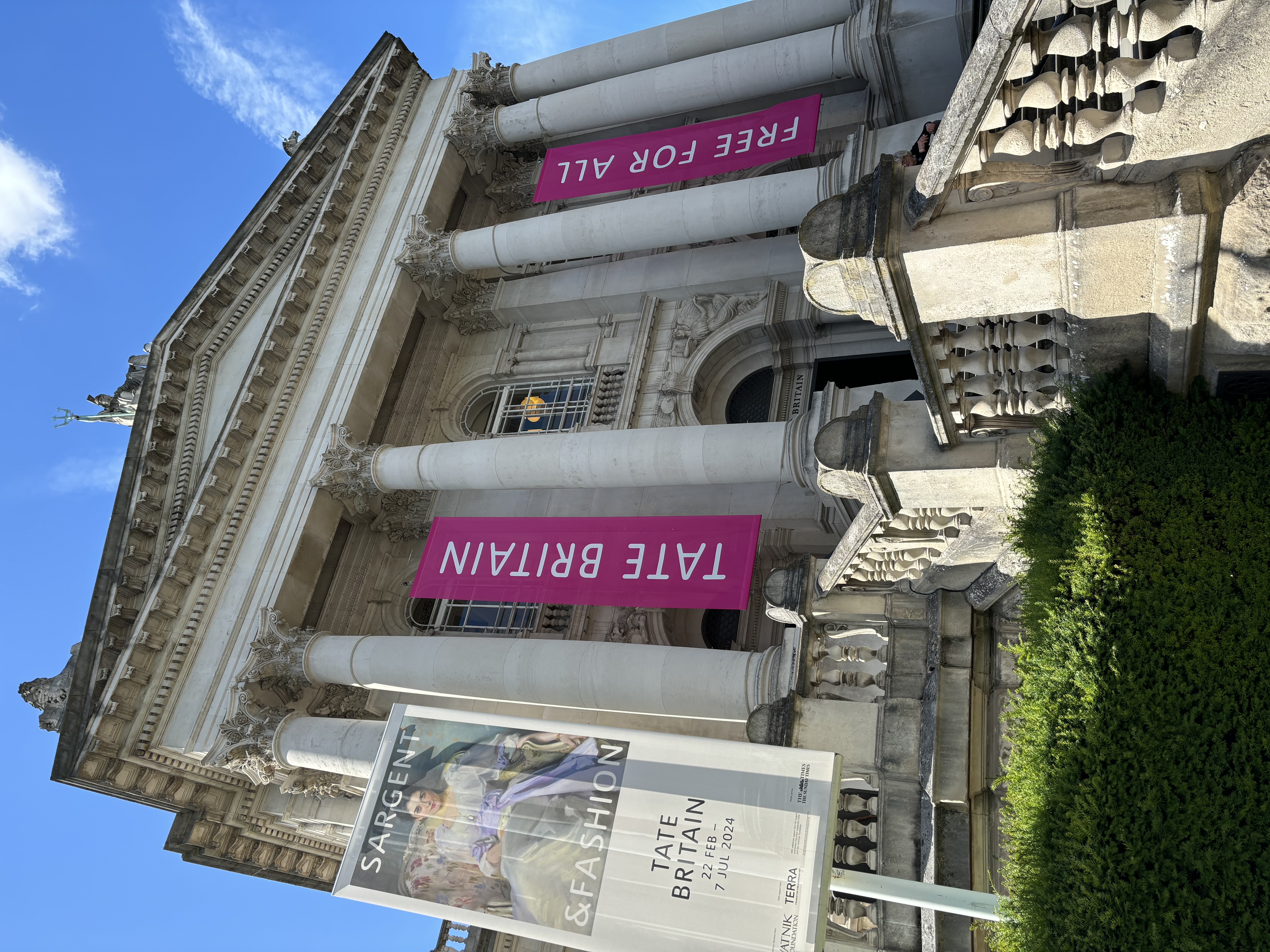
My last trip to London was in 2006. Ever since then, my artistically inclined friends would ask me if I had been to The Tate. I hadn’t, but I have finally rectified that situation.
See that banner on the right? My favorite word!
Well, but they do encourage donations.
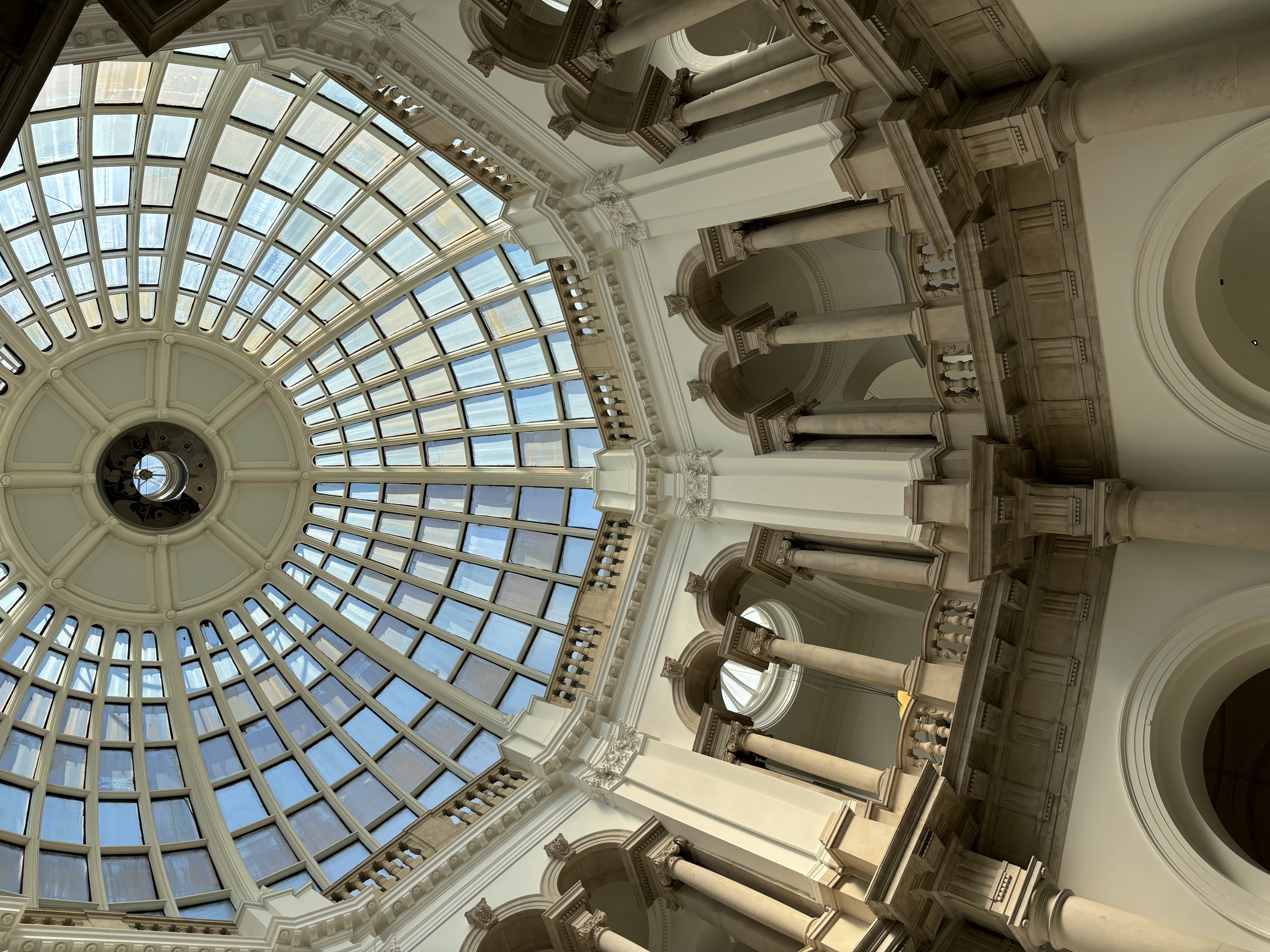
I have always been partial to domes.
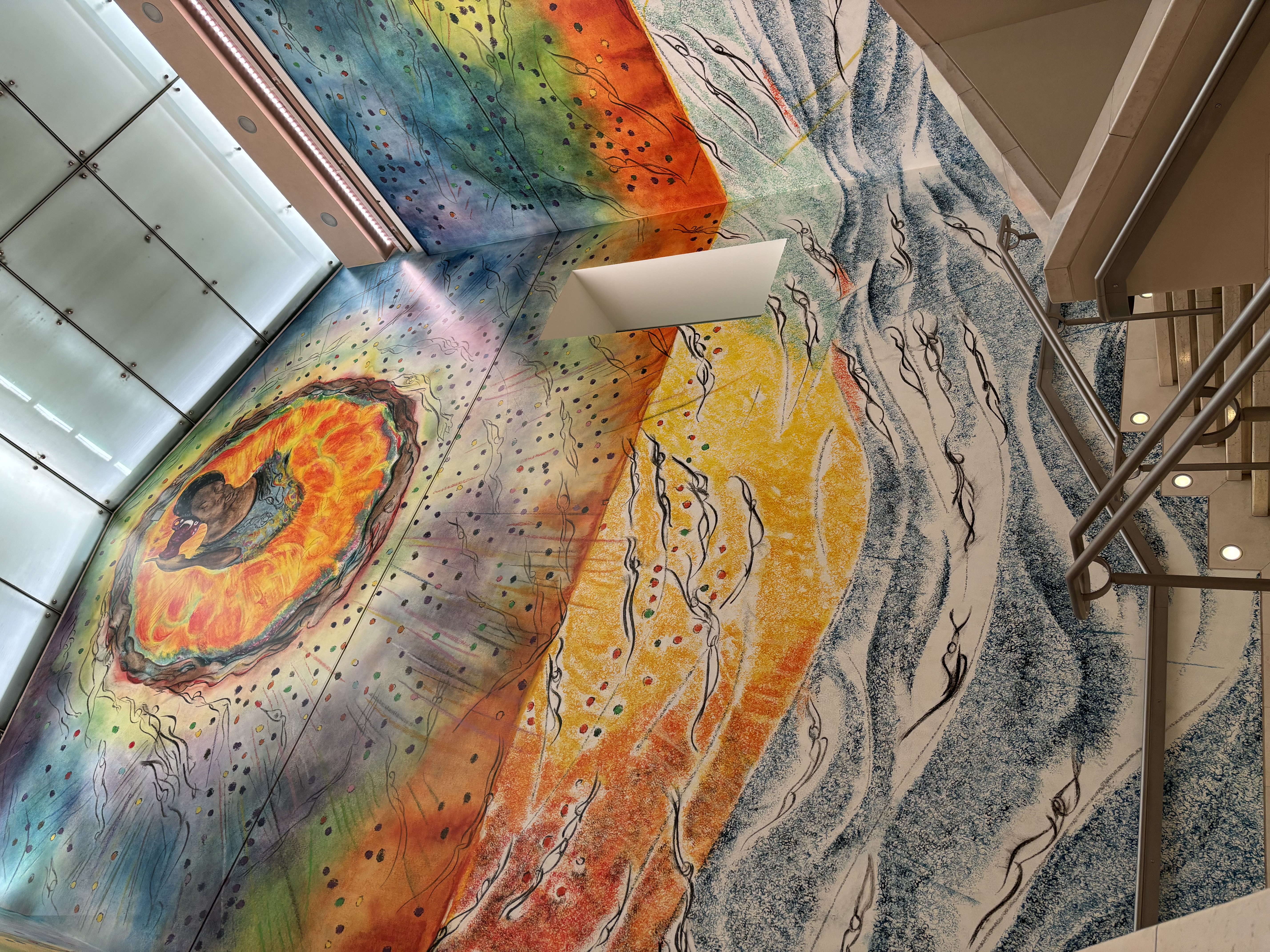
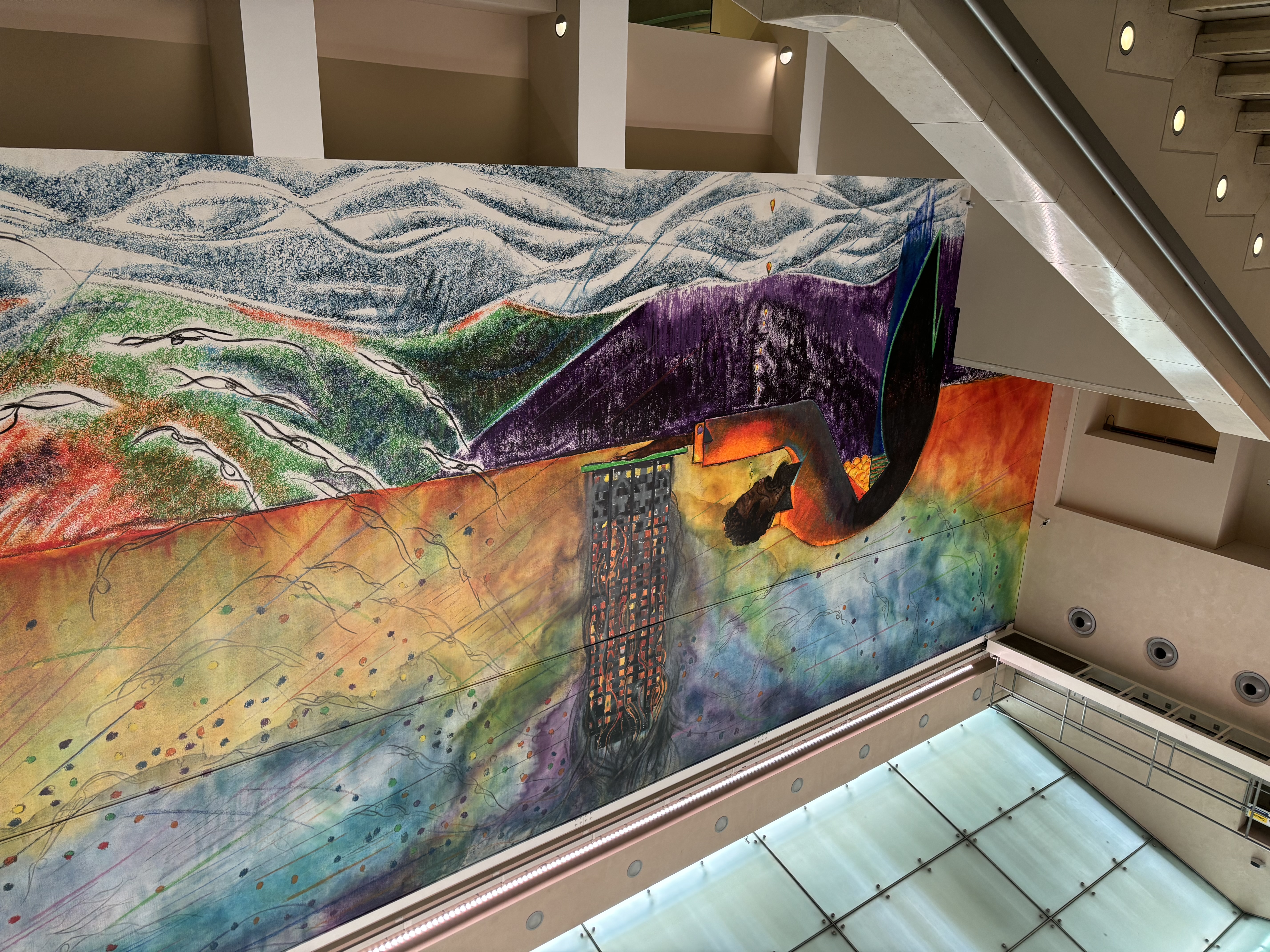
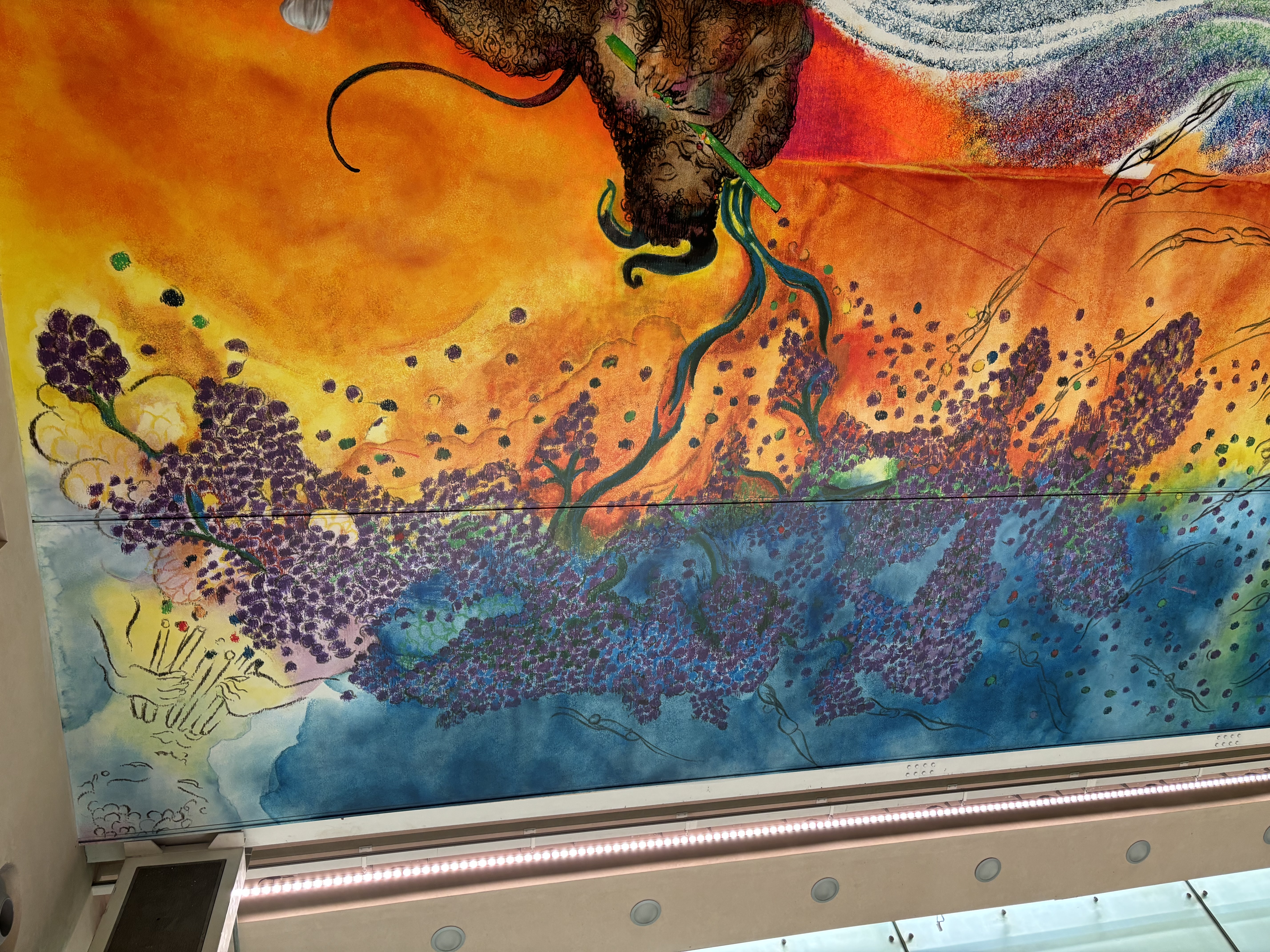
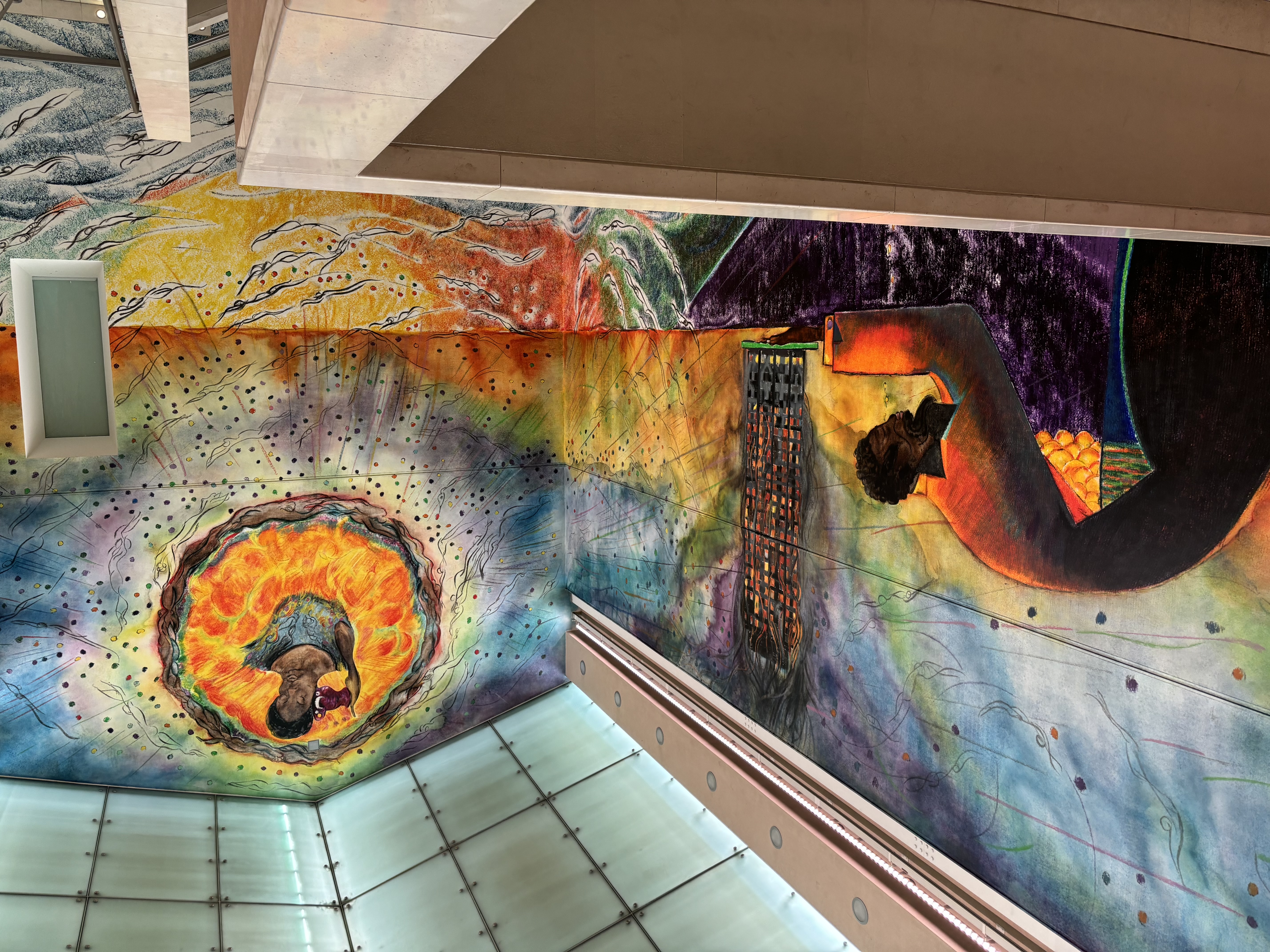
I made my way to the stairway to the exhibits. In the stairway is a work by Chris Ofili, entitled Requiem, which is a reflection on the death of artist Khadija Saye in the Grenfell Tower fire in June 2017.
It was a moving piece of art.
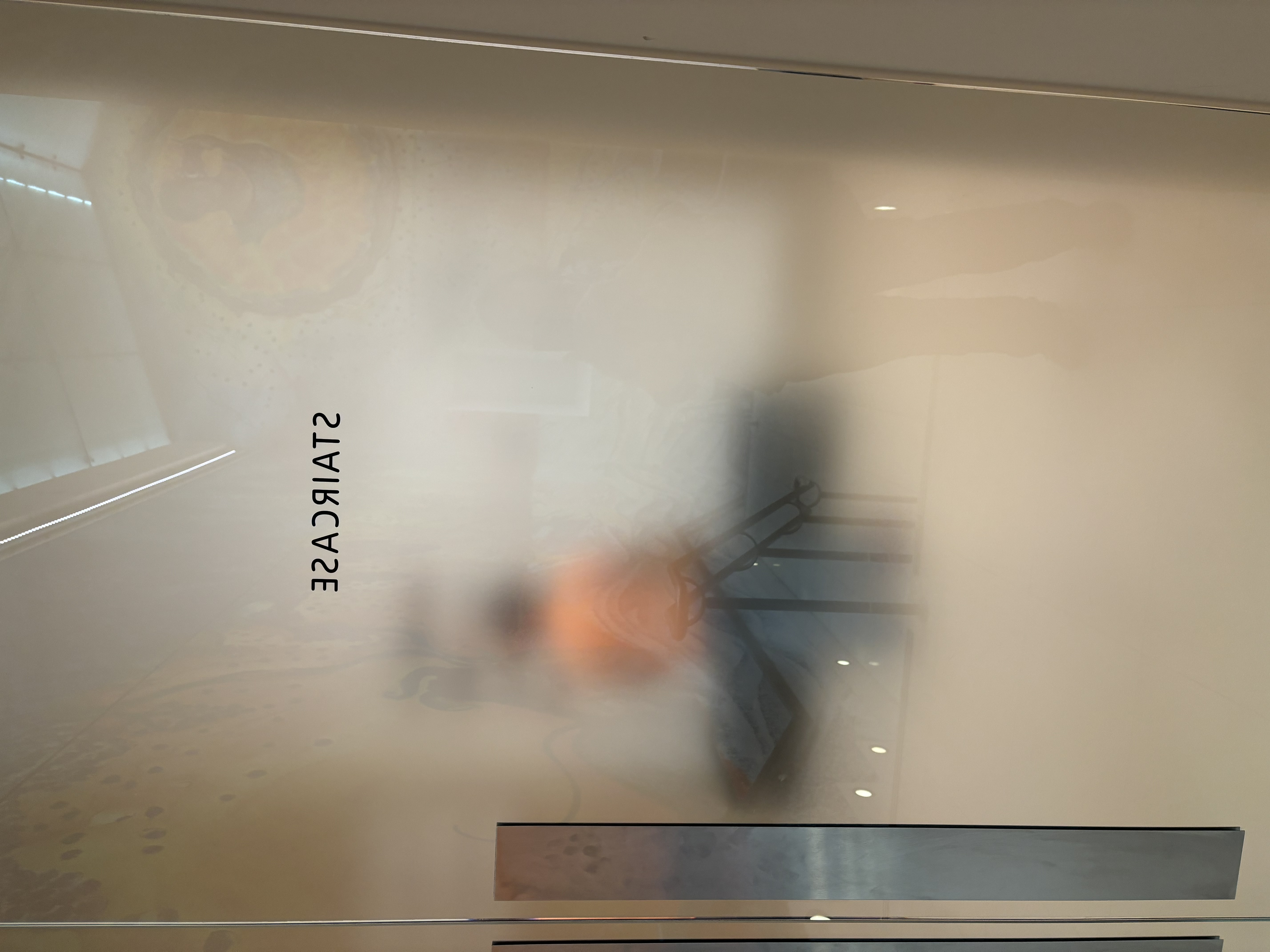
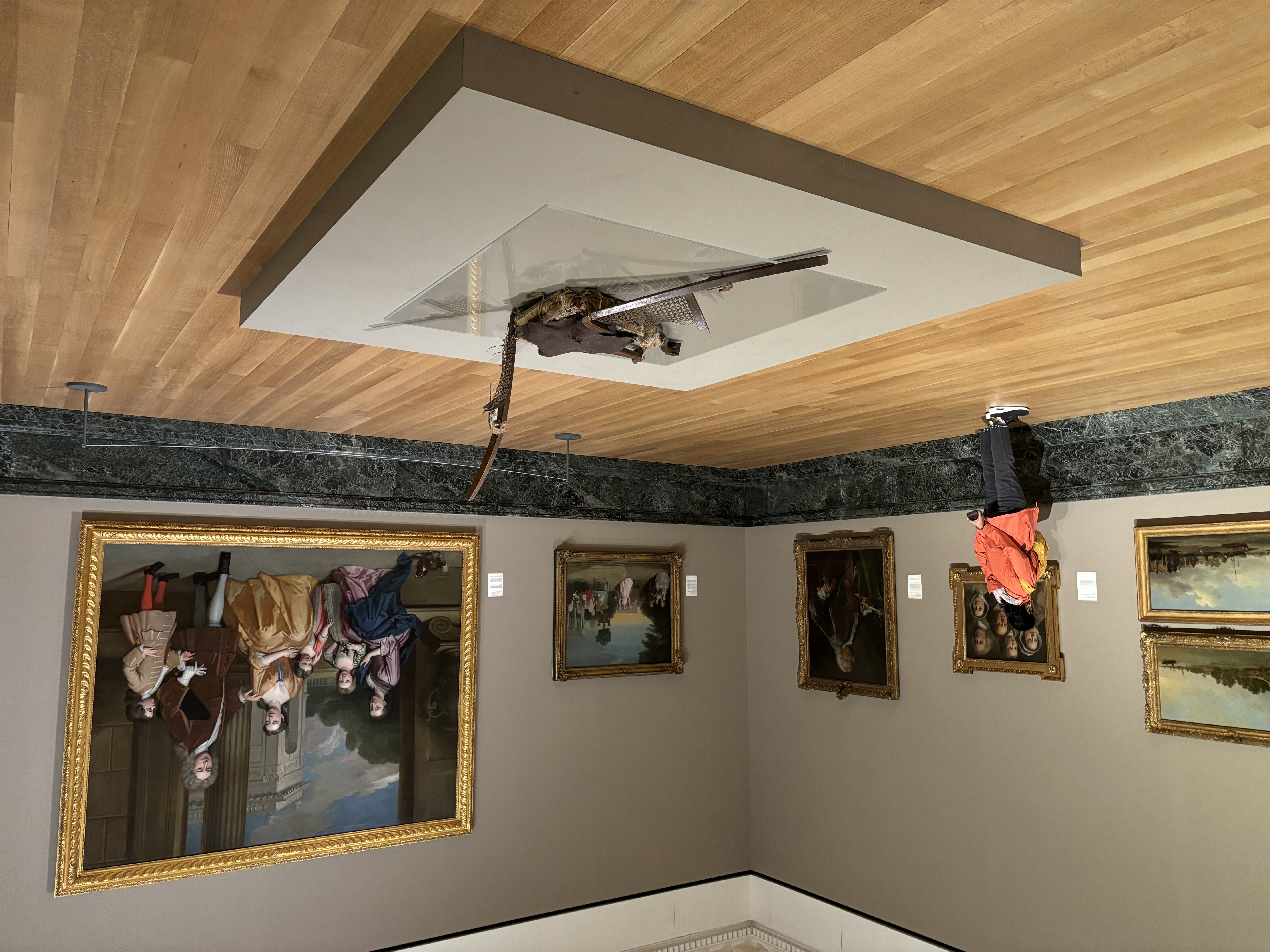
I must admit that I was confused by this installation, until I realized that sometimes a door is just a door, and the strange word just spelled “staircase” if you looked at it from the correct direction. It all depends on your point of view.
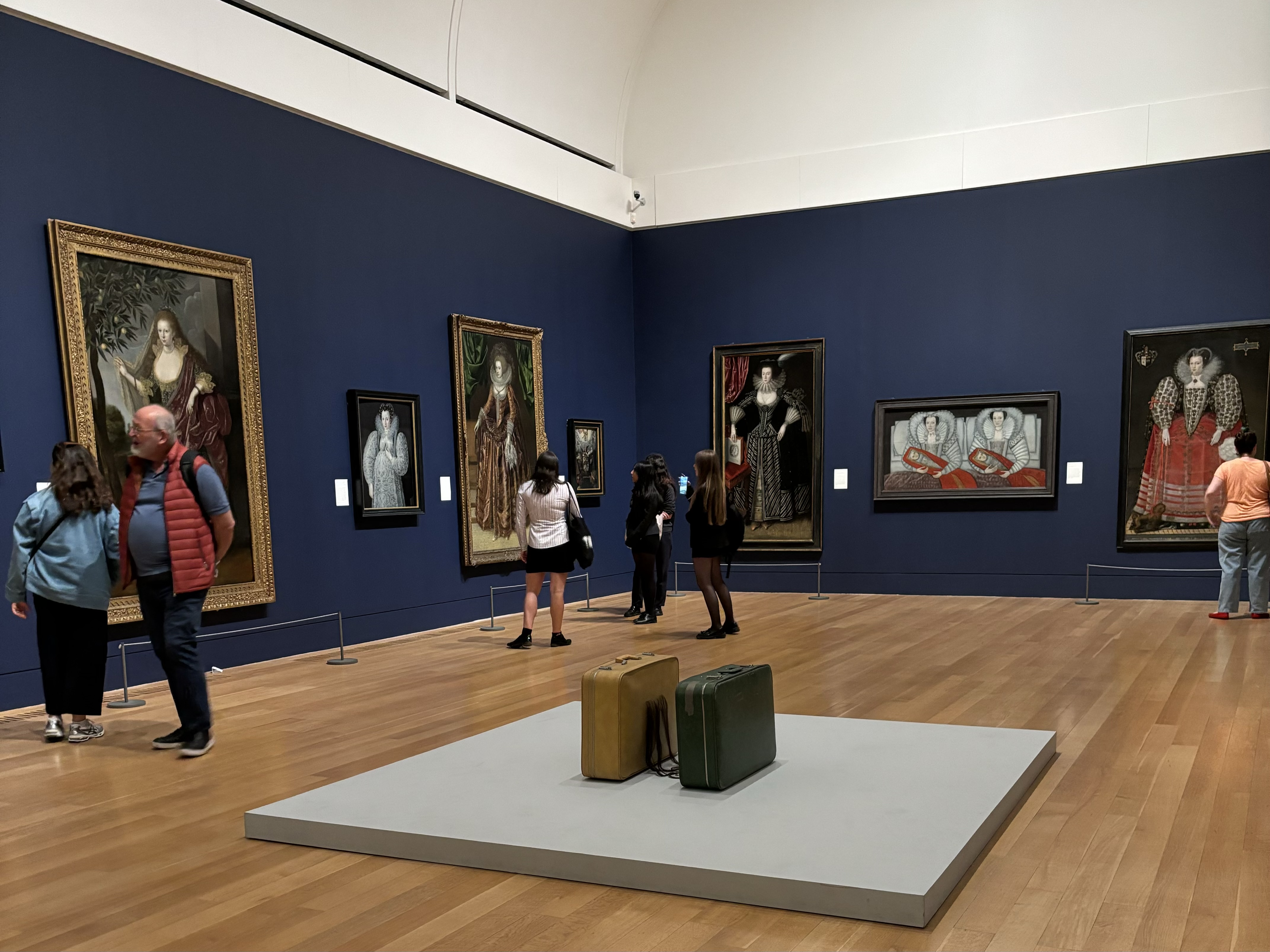
The first room focused on works from 1545-1640, and was titled Exiles and Dynasties. The portraits tells stories of migration and power. England is gaining wealth and power and the aristocrats have their portraits made by the Europe’s greatest artists. They are sure to show off their bling.
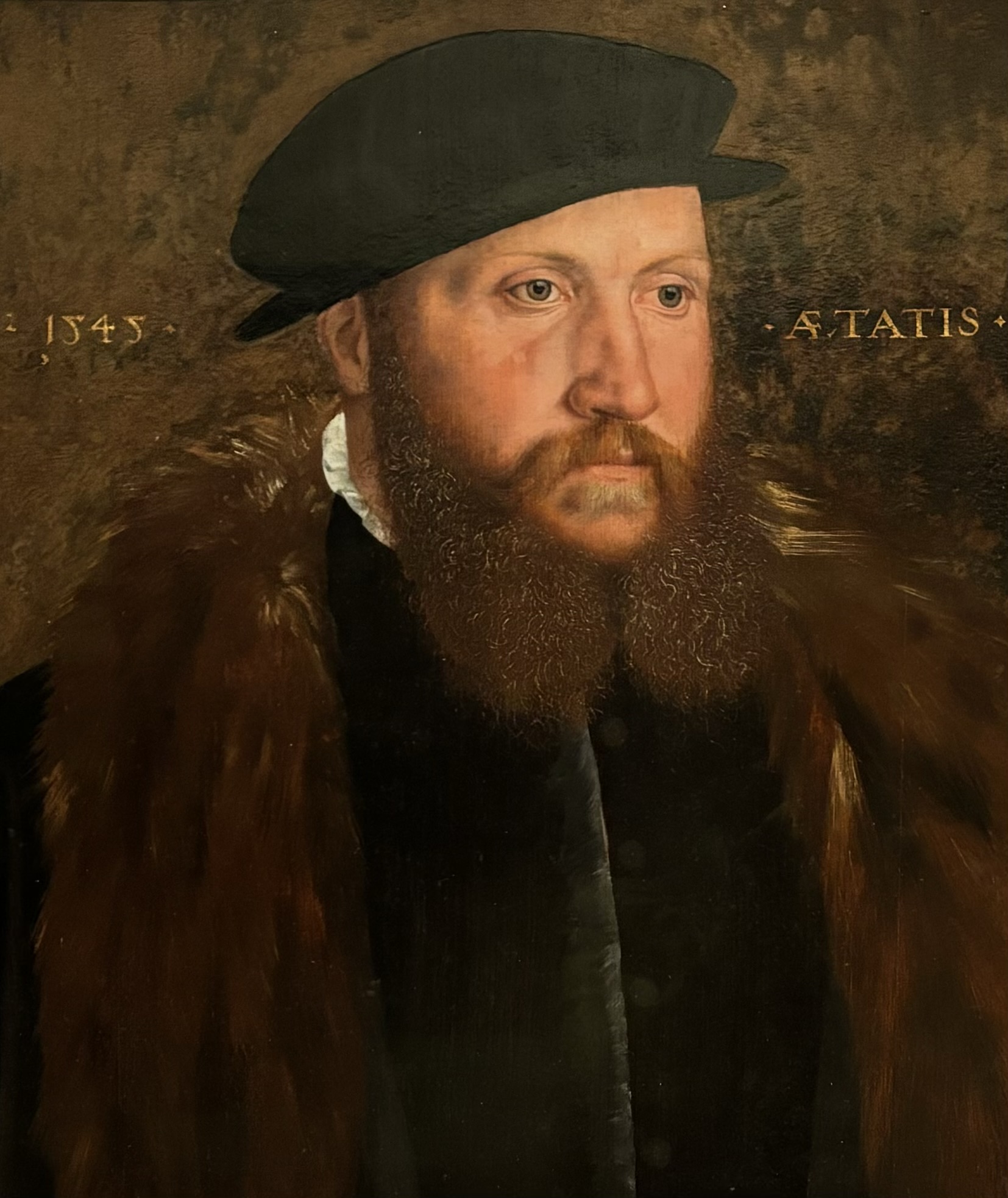
This is the earliest picture in the Tate collection. A Man in a Black Cap 1545 by John Bettes.
Marcus Gheeraerts painted this portrait of an unknown lady in 1595. Look at her, would you? She got all dolled up, adorned herself with pearls, which are symbols of moral purity, pasted a smile on her face and she’s pregnant! The painting celebrates the woman’s role in continuing her husband’s family line, and they didn’t even bother to record her name.
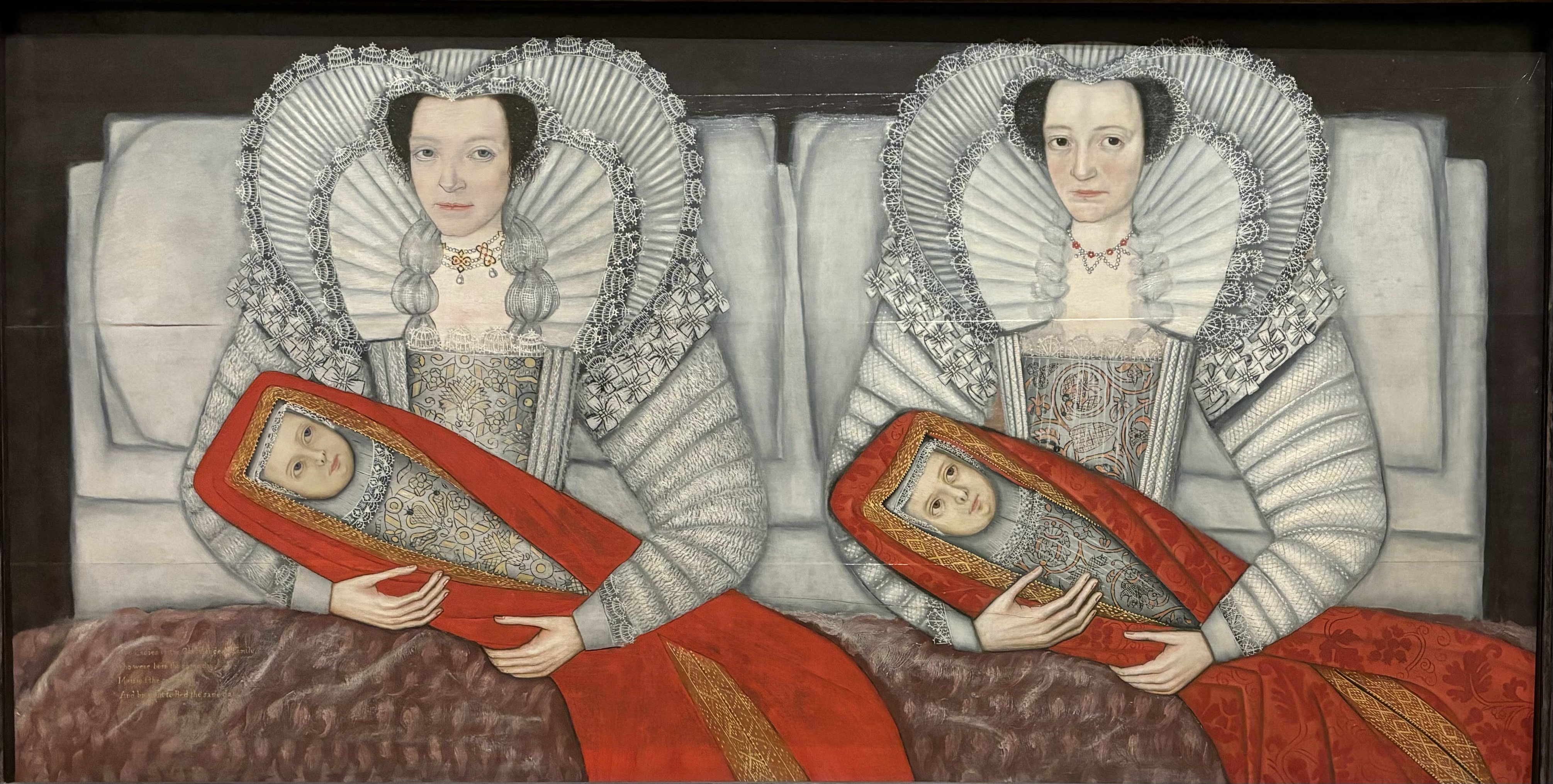
On the other hand, The Cholmondeley Ladies, painted around 1600, at least records their names. According to the inscription on the painting, they were born on the same day, married the same day and gave birth the same day. Hmm…since they have the same last name, do you suppose they married brothers?
At first glance, they appear identical, but upon closer inspection, you can see that the unknown artist took care to differentiate them. See if you can spot the differences.
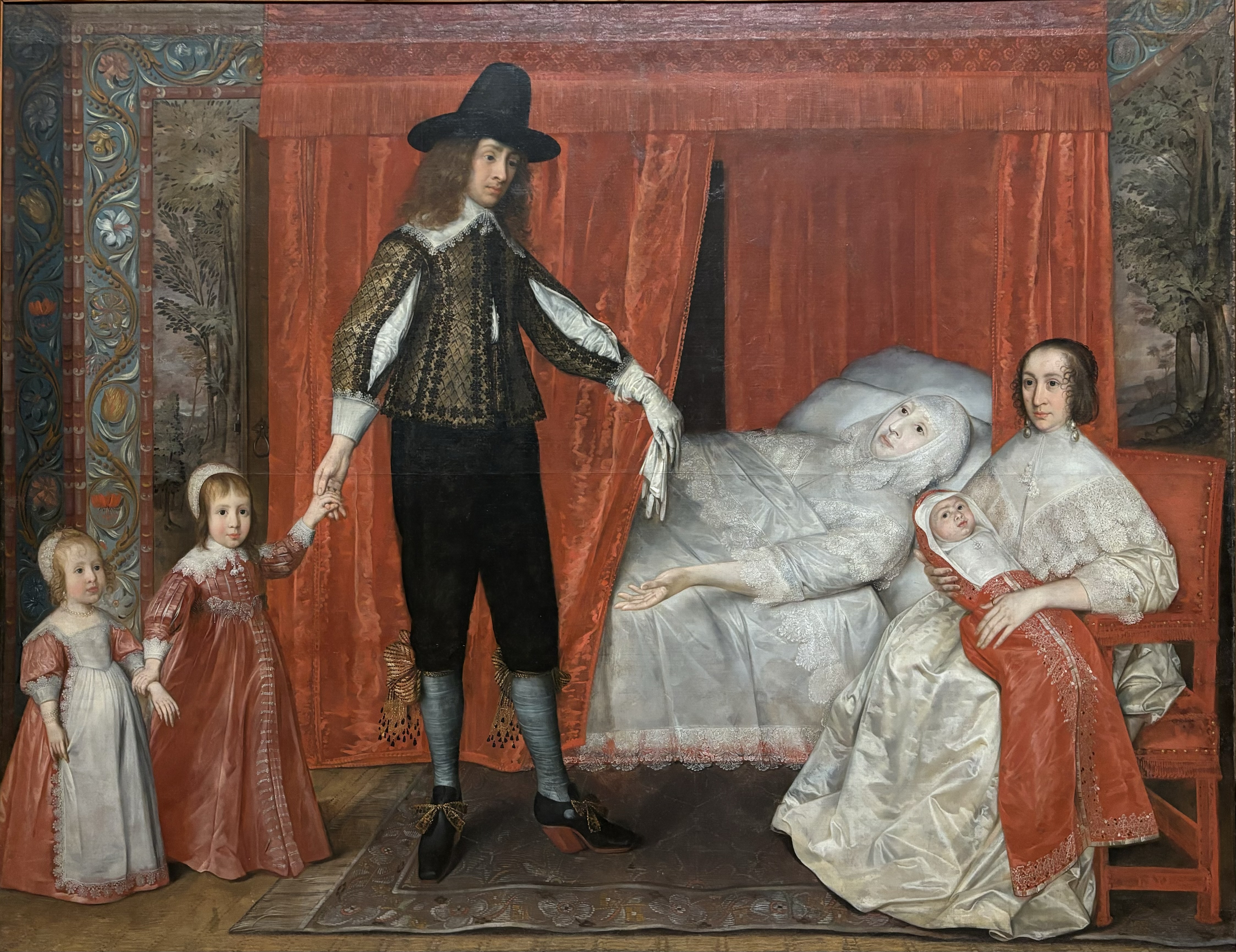
This portrait seems to take its inspiration from the family tombs of the time, according to the information displayed by the painting. The Saltonstall Family was painted around 1636 by David Des Granges.They think it shows Sir Richard Staltonstall and his family. He draws back the red curtain around the bed that contains his deceased first wife. She gestures toward the couple’s two surviving children. Meanwhile, he gazes towards his second – living – wife, who sits holding her own Saltonstall baby.
It is all about preserving the bloodline, I guess. I just hope Sir Richard didn’t hang it in his bedroom.
I liked how they had modern artists in conversation with the historical artists. I missed recording the artist for the piece in the center of the gallery, but she is expressing her feelings of being in exile. She was born of parents who were refugees. They were visiting in England when conditions at home made it impossible to return. The two suitcases are linked by the artist’s own hair.
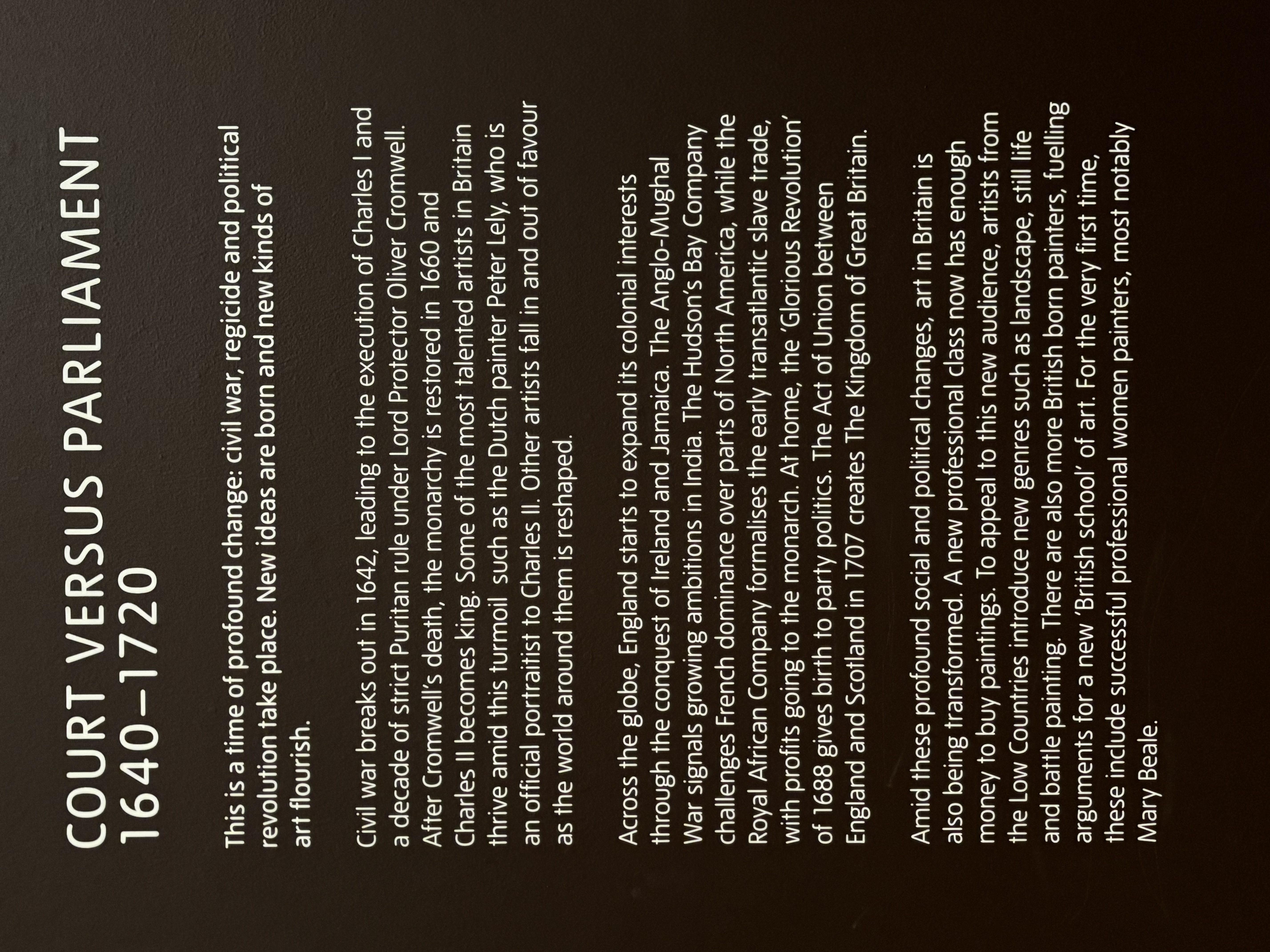
The next phase of English history has a lot going on. Rather than try to paraphrase the information from the gallery, I’ll let you read it yourself, if you would like.
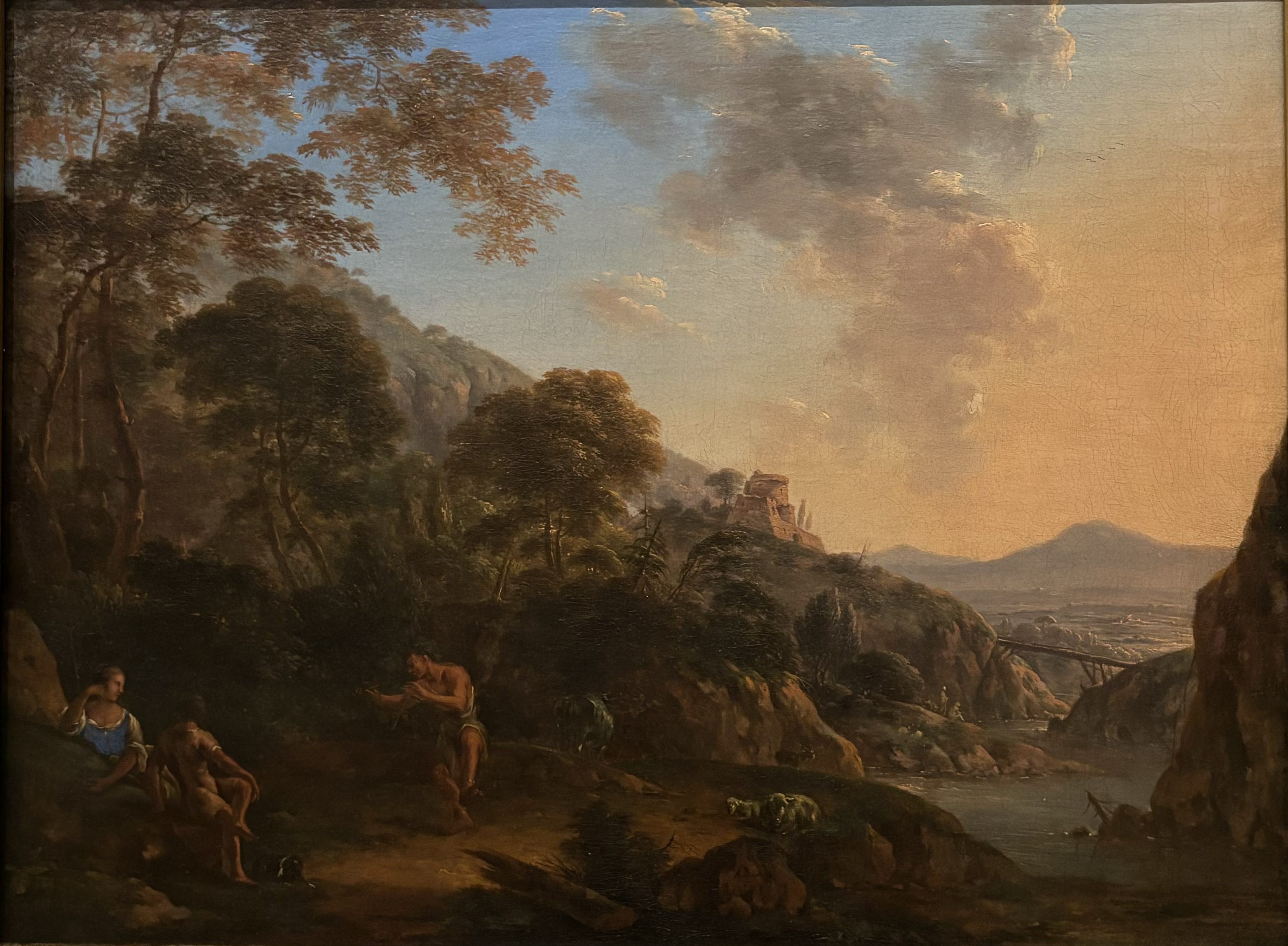
I wonder which member of the new professional class had “Mountain Landscape with Dancing Shepherd” hanging on their wall. Henry Anderton, who was possibly born and lived in London, created this painting, one of the earliest oil paintings of a landscape by a British artist. It was created around 1650-1660.
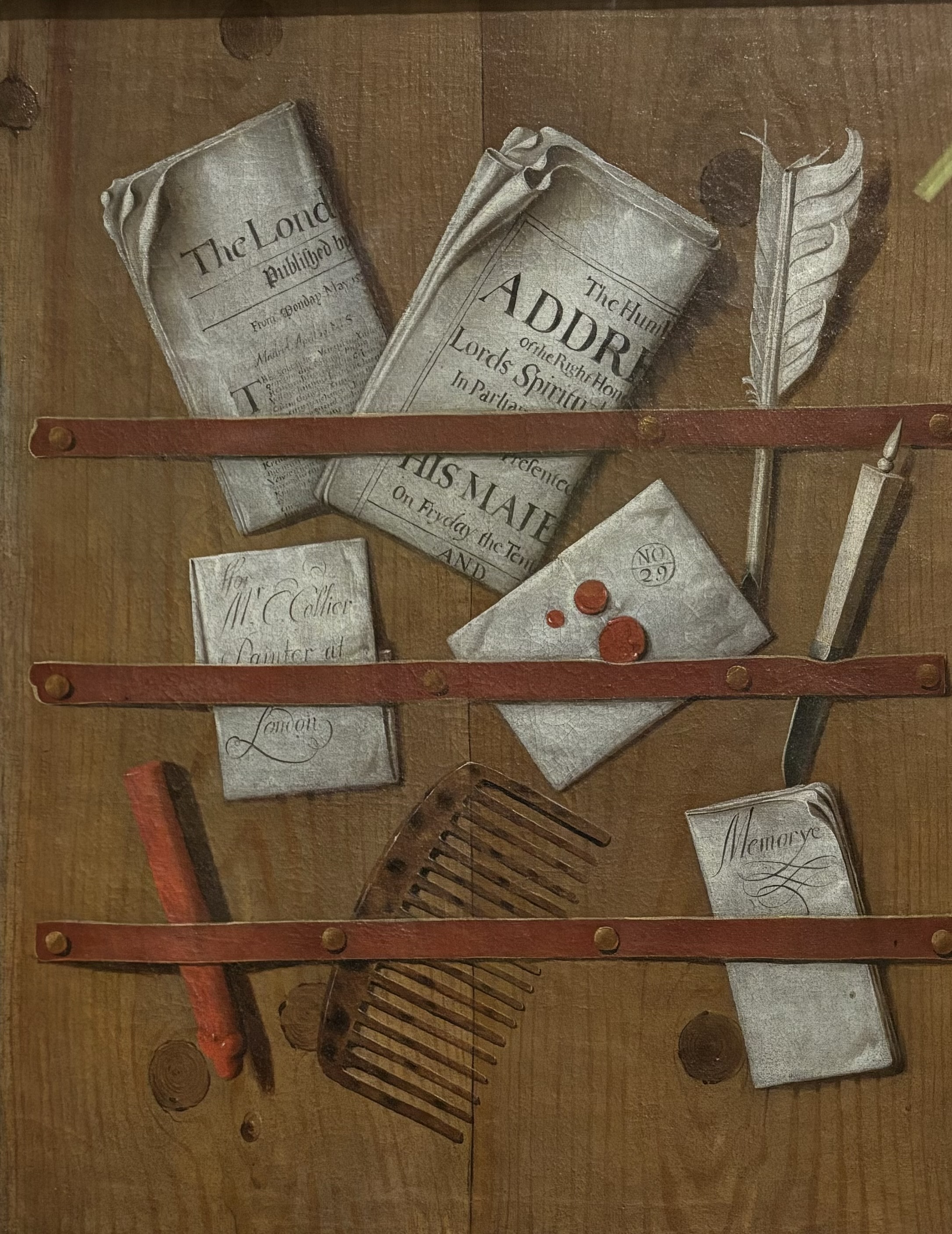
Edward Collier was noted for his ‘trompe l’oeil’ pictures. Just in case you didn’t have Sister Jeanne teaching you art history, that means ‘trick the eye.’
He created the illusion of real, graspable objects, and the letter rack with newspapers, writing implements, seals and combs was one of his favorite subjects. The picture is undated, but the newspaper gives a clue. The date is Monday, May 15, and the only likely Monday to fall on this date was in 1699.
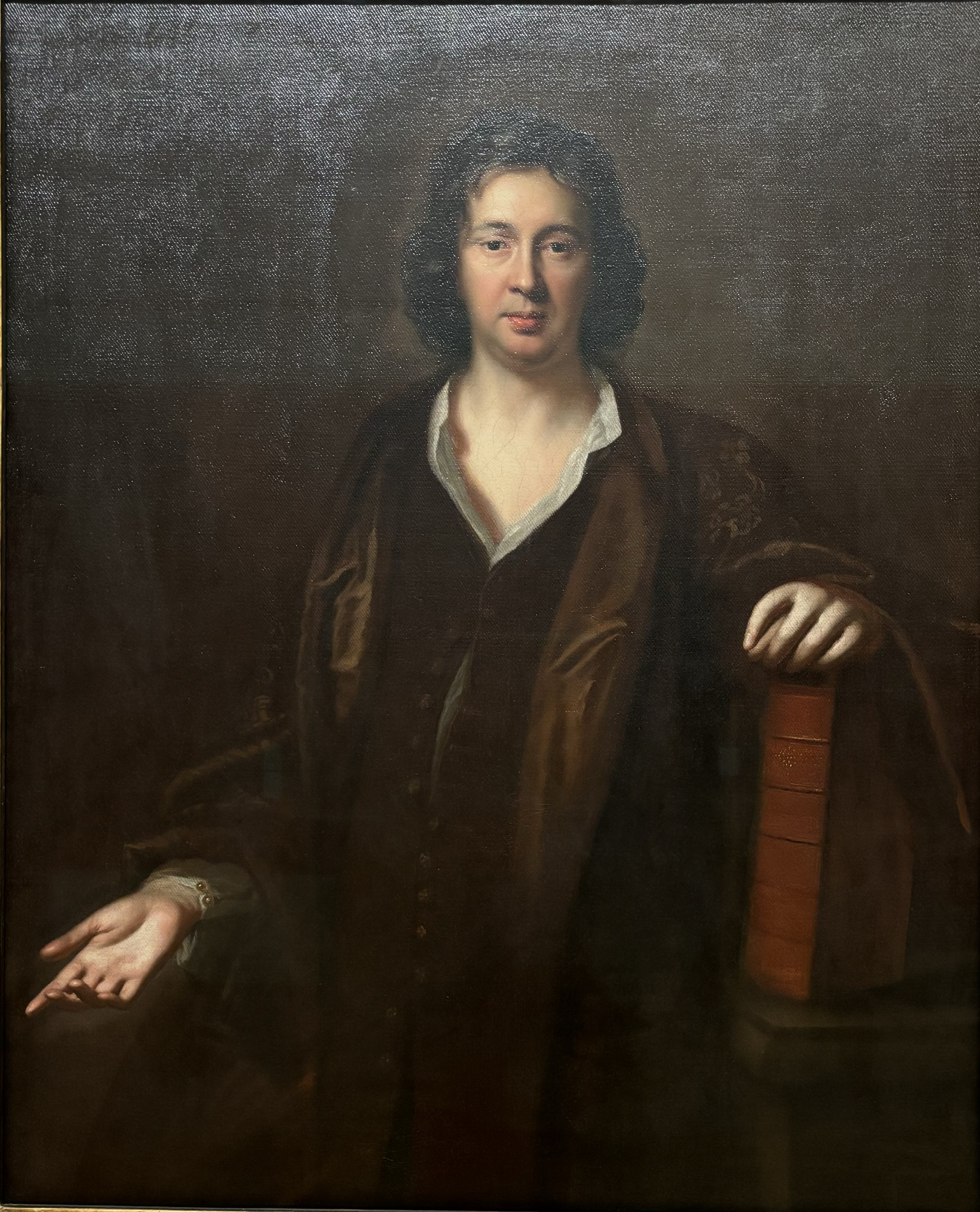
This is a portrait of Charles Beale, painted around 1680, by his wife, Mary Beale. She was the first British professional artist. Charles kept a series of notebooks which tell of his affectionate support of his wife and his pride in her achievement. Not only was he proud of her, he managed her studio. He bought the materials, prepared the canvases, mixed pigments and managed the accounts.
That’s really support!
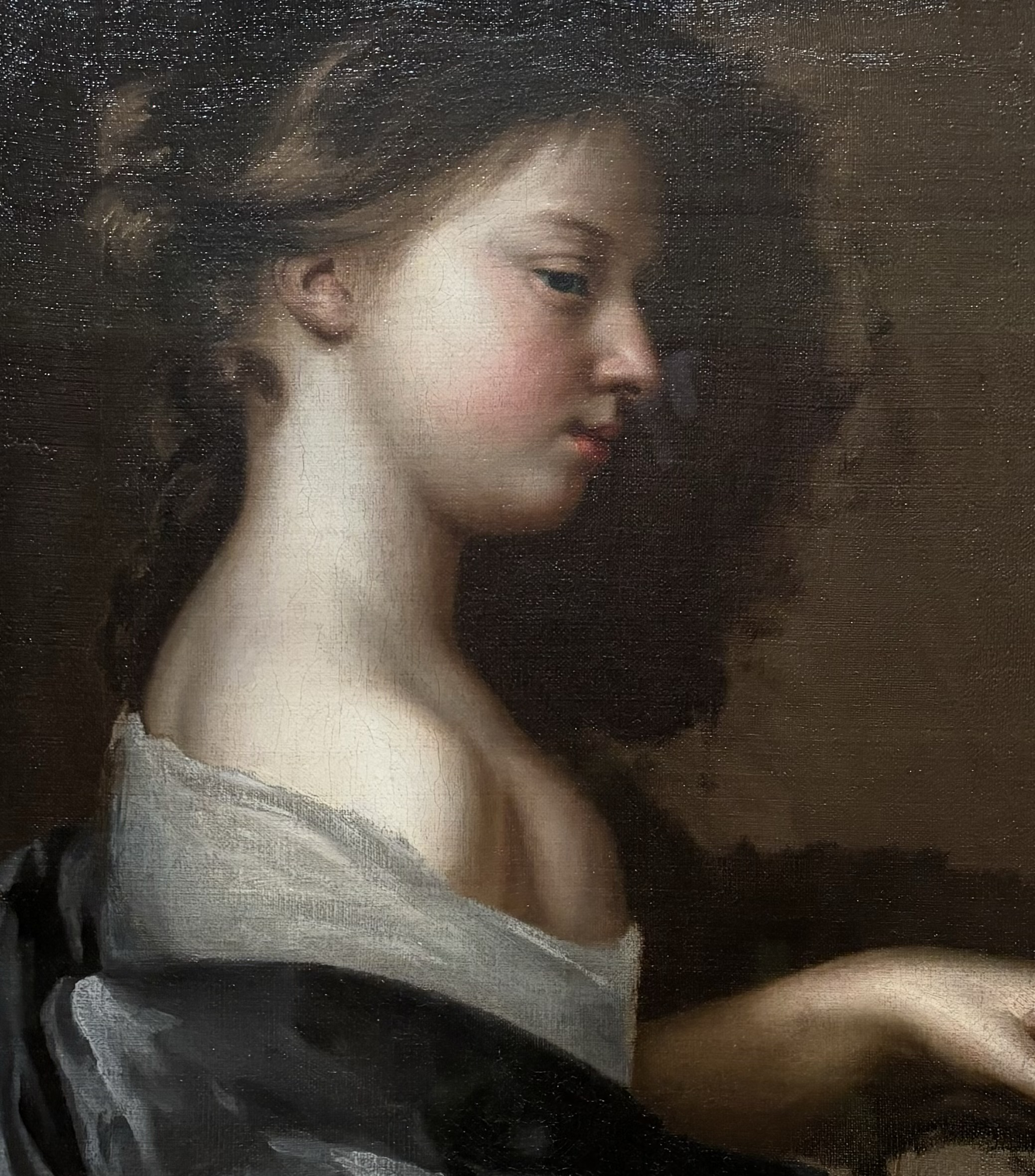
This is another of Mary Beale’s works, entitled Portrait of a Young Girl. She had a large, recorded body of work. This informal oil sketch was probably an experiment in attempting to finish a work quickly, rather than the more costly and time consuming four or five hours normally spent on a standard portrait.
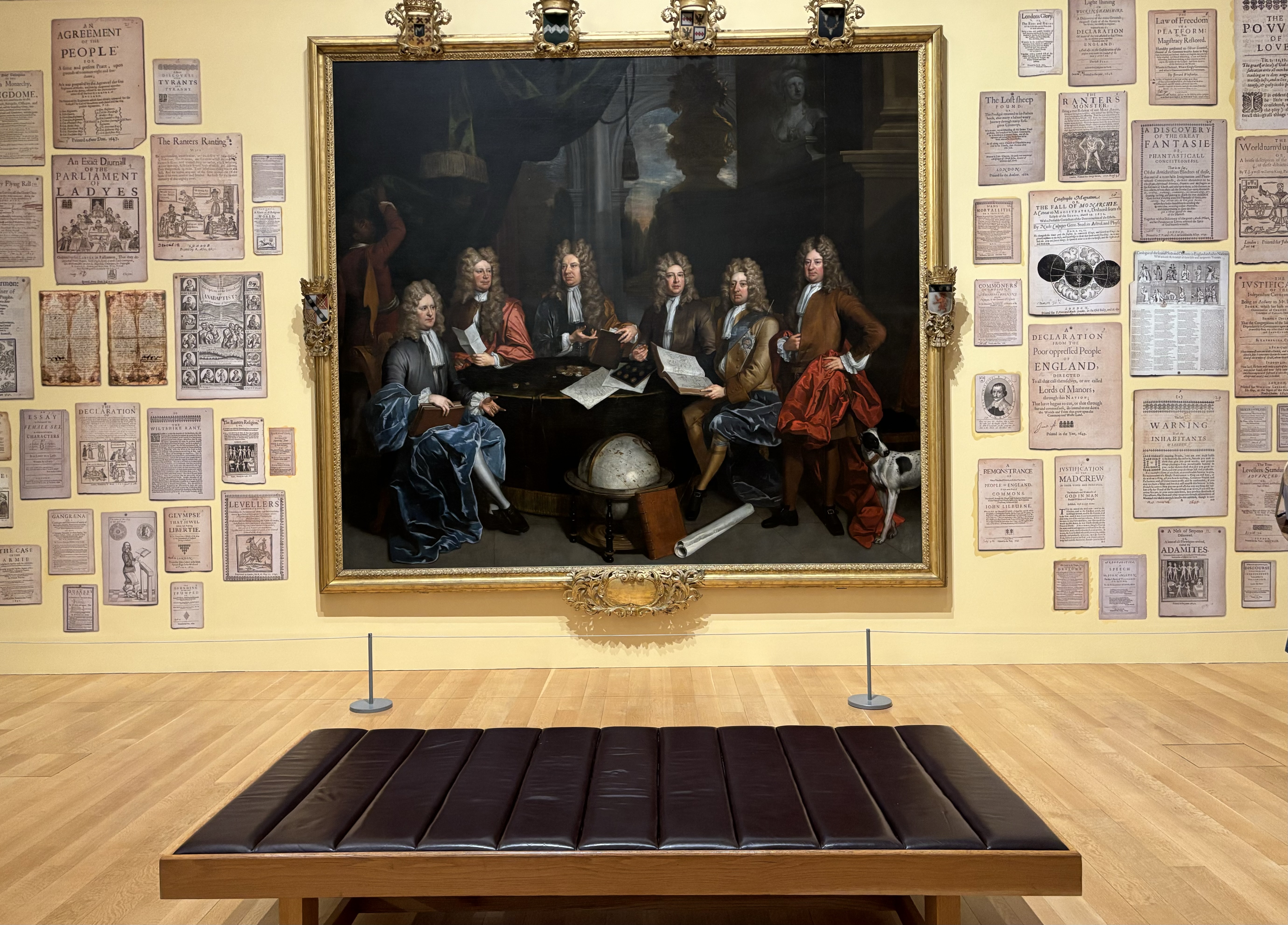
The large portrait in the center of this frame is called The Whig Junto and it shows the leaders of the Whig party.The first Earl of Orford, who is standing on the right, commissioned the picture.
A black boy stands on the left of the gathered guests. We don’t know his identity or even if he was a real person. The artist likely included him to show the wealth, status and power of the white sitters. Prints of Roman victories emphasize Britain’s military successes and a desire for empire building.The globe may refer to a British interest in accessing new trading routes.
Around the painting is a work of art by Nils Norman. Between 1640 and 1660, Parliament relaxed censorship rules, which allowed previously silenced groups to disseminate their ideas through self-published pamphlets and newspapers.
Nils Norman took these pamphlets and broadsides and turned them into vinyl wallpaper that he called Sparkles of Glory. He surrounded The Whig Junto, a portrait of status and power, with the rising ideas of the various radical, often utopian movements that sprang up during the tumult of the English Civil War. (1642-1651)
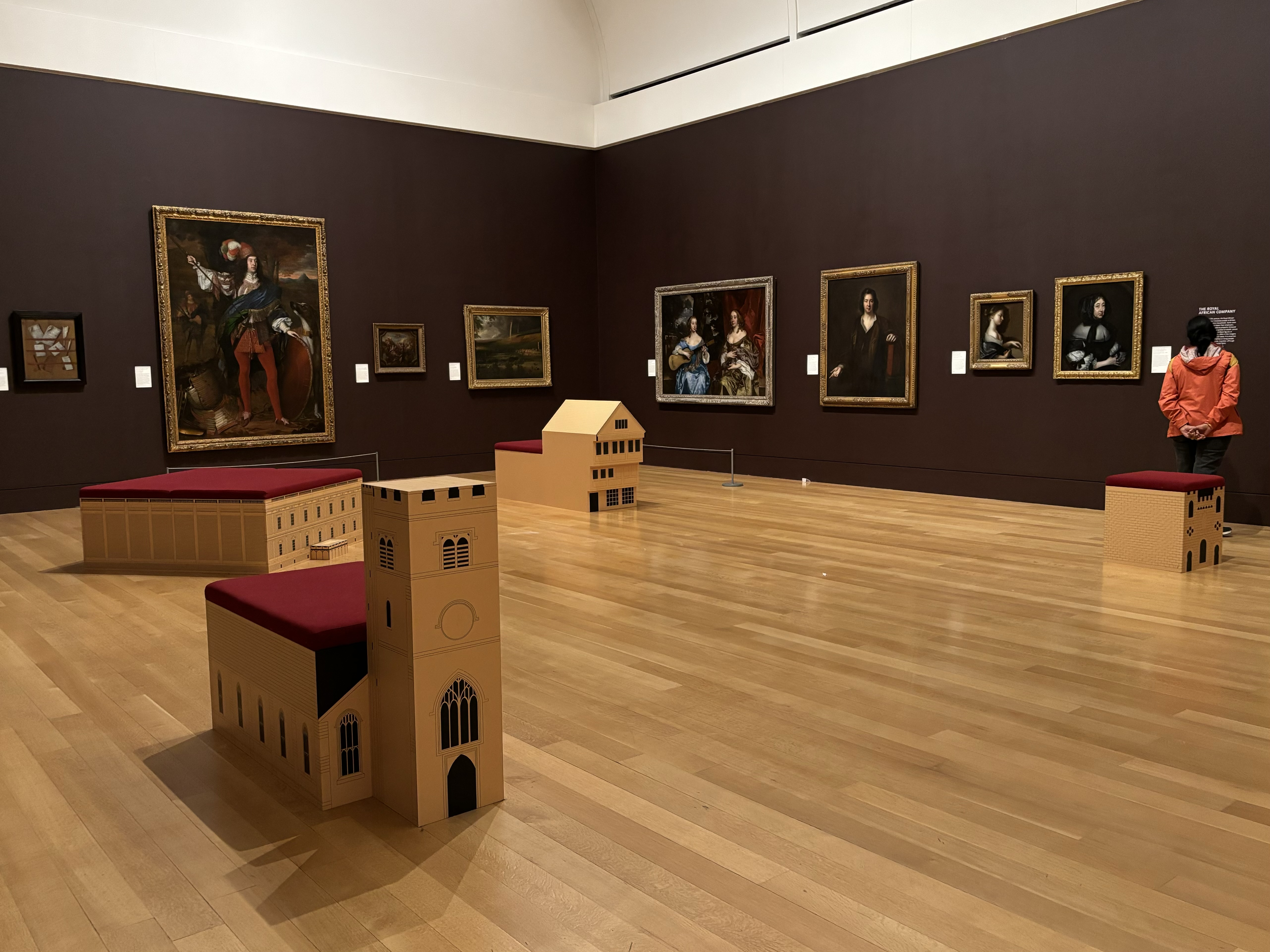
Nils Norman also took the ideas expressed in the wallpaper version of Sparkles of Glory and embodied them in these four pieces of furniture representing buildings where the members of these radical movements might have met. Fragments of spoken text, taken from the pamphlets emanate from the furniture at different times.
AND NOW A WORD FROM THE WRITER (ME)
You know, a few things just occurred to me.
1. I am writing way to much for me to finish this post in a timely fashion.
2. I am probably writing more than anyone cares to read.
So, I am going to select a few works of art from each room and post them with limited commentary. Let’s see how that goes.
METROPOLIS
1720-1760
London is the largest city in the world and the hub of global trade and commerce.
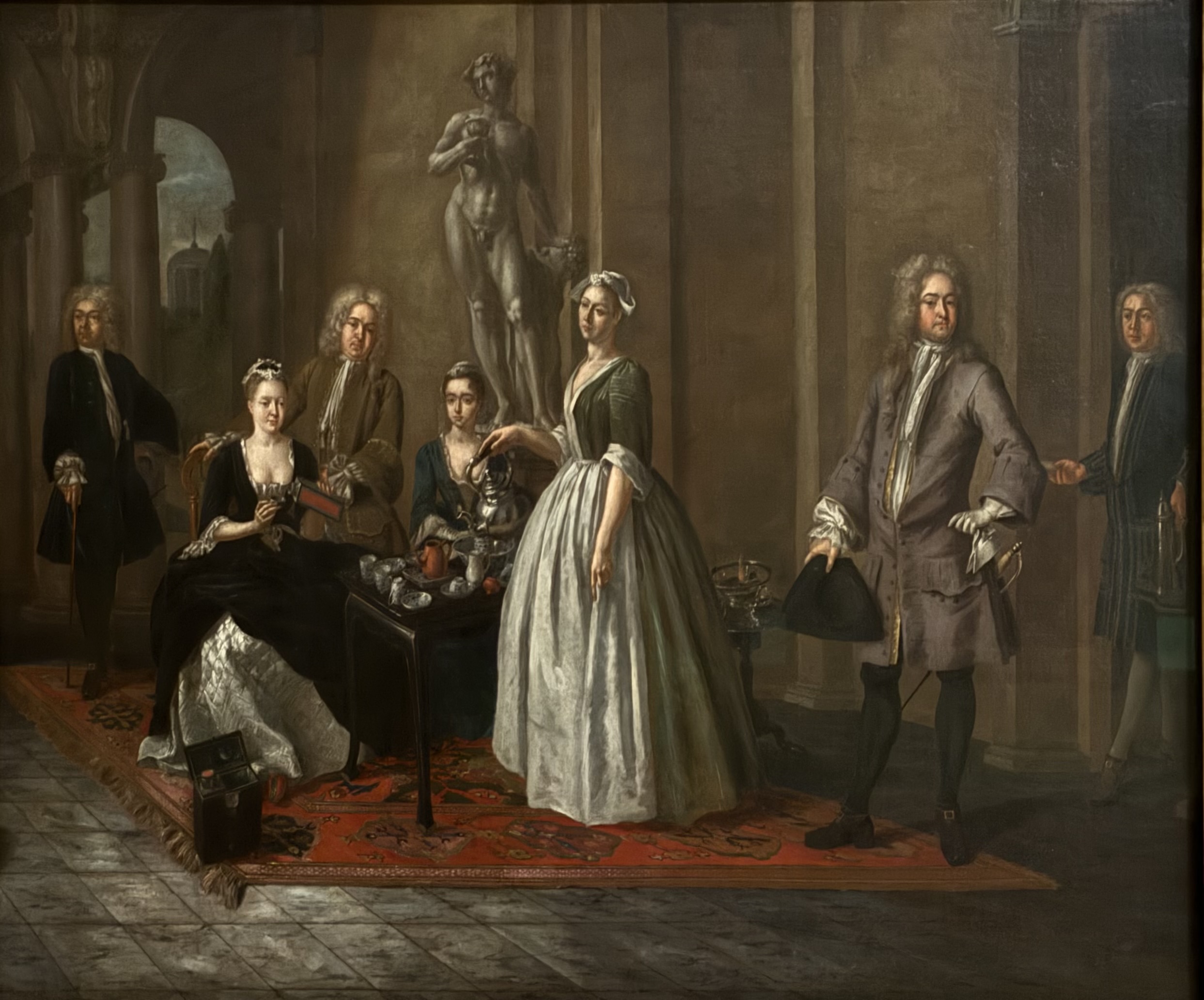
An English Family at Tea
c. 1720
Joseph Van Aken
Tea drinking demonstrated wealth, domesticity and genteel informality. In the 18th Century, it came to epitomize civilized behavior for British people.
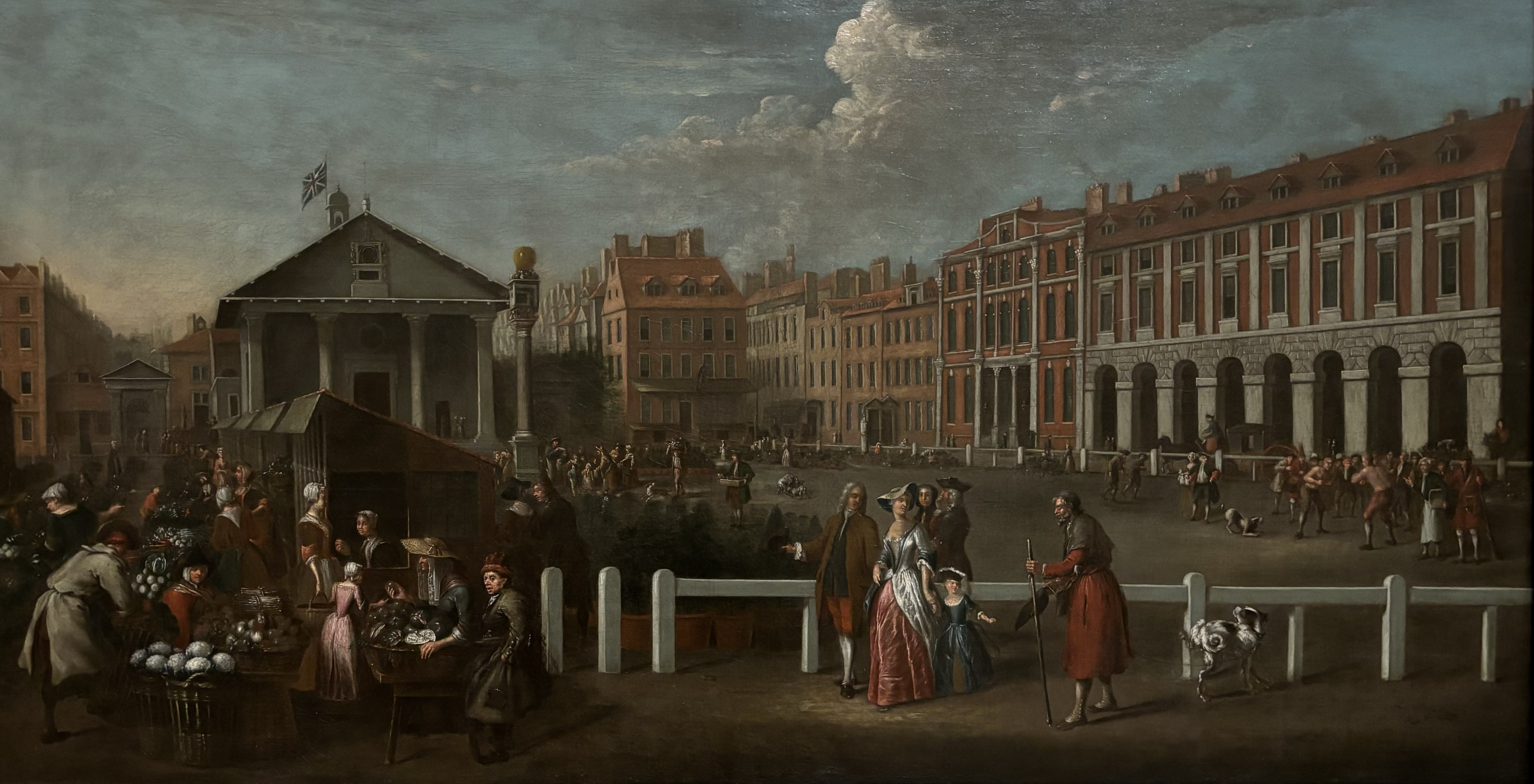
Covent Garden Market
1737
Balthazar Nebot
The market was first developed in the 1850’s. 20 years later, the Earl of Bedford was given permission to ‘hold forever a market in the Piazza on every day in the year except Sundays and Christmas Day for the buying and selling of all manner of fruit, flowers, roots and
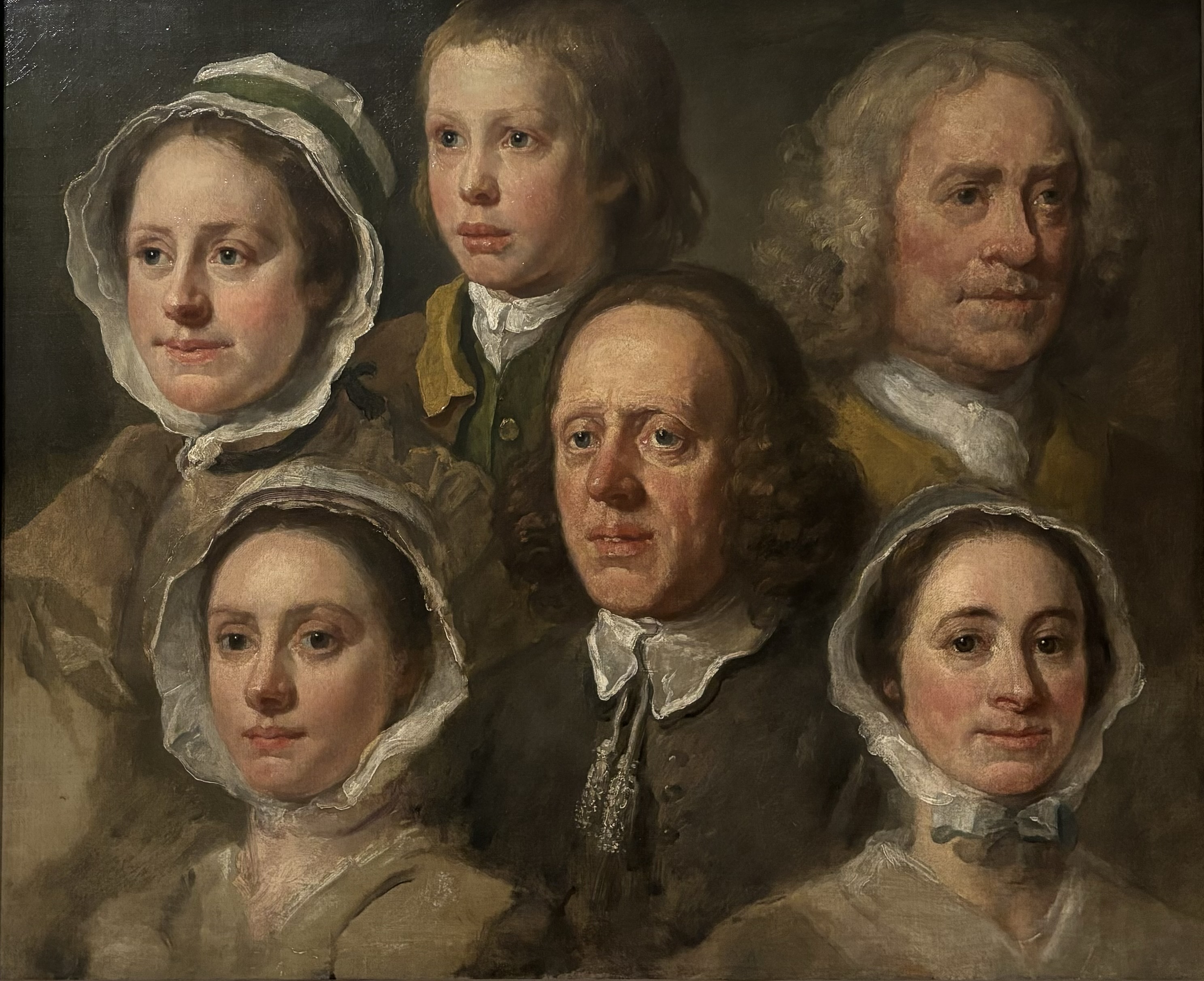
Heads of Six of Hogarth’s Servants
c. 1750-1755
William Hogarth
William Hogarth appears to capture each sitter’s individuality. This is a remarkable and rare portrait of the 18th century working class. The picture may have also served as a kind of advertisement for Hogarth’s skills.
Chair No. 35
2013
Sonia E. Barrett
Barrett’s symbols speak about the impact of climate change and the stresses it places on people to leave their homes to seek refuge in other places. The plant (the wood) the animal (the claws and paws)and the brown human body combine in this reconfigured Georgian-style chair. English furniture in the 18th century was often made from mahogany produced by enslaved people in the Caribbean.
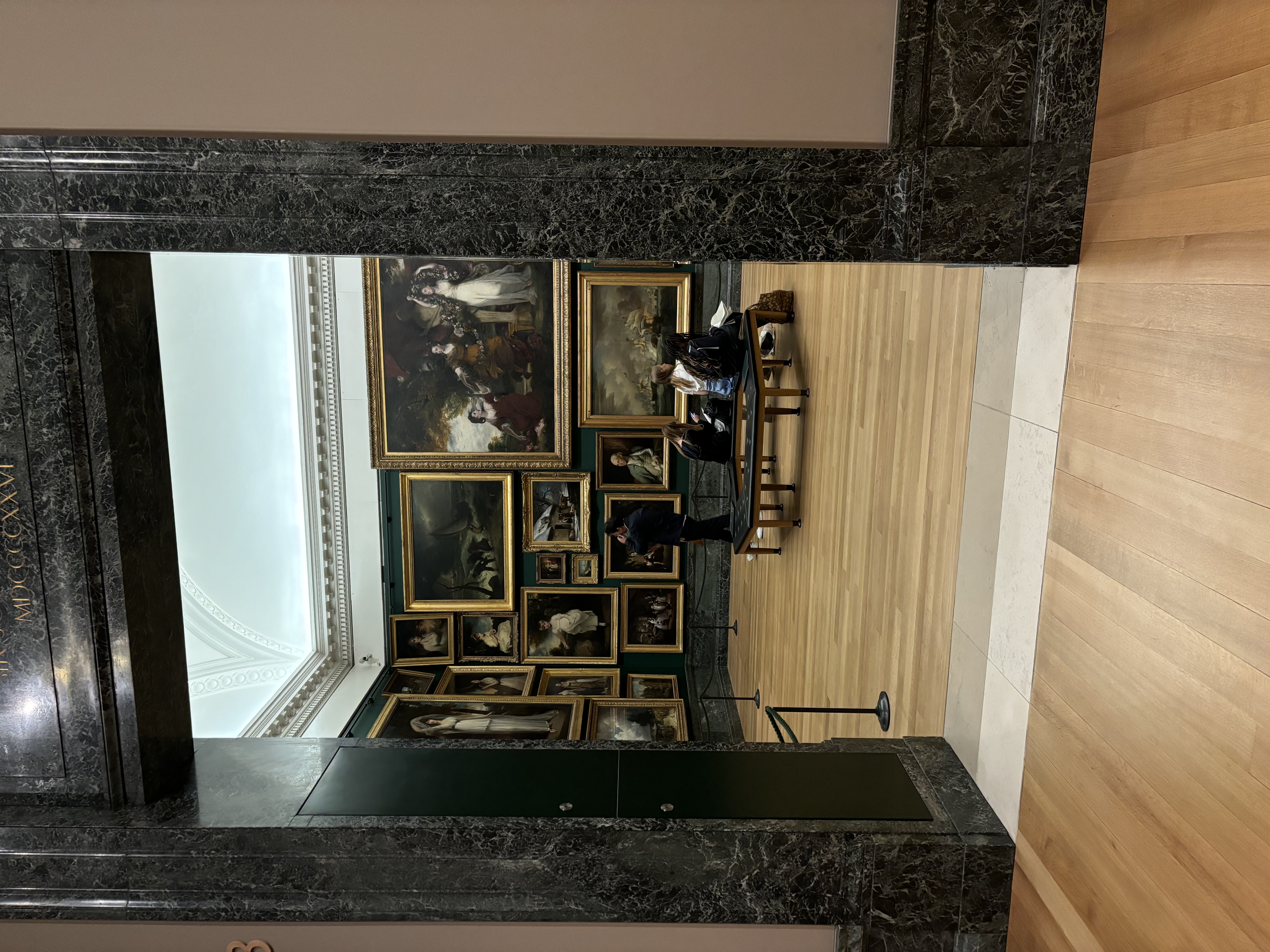
I walked past this room. I always found artwork presented this way to be overwhelming. This is referred to as salon style exhibition. There were many other things to see.
TROUBLED GLAMOR
1760-1830
At first glance this room represents a glamorous image of 18th century society. However, the lives and places pictured here give clues to the underlying tensions of the time.
While the popular paintings of the time – flattering portraits, scenes of contented workers, and idyllic landscapes – promote a sense of harmony, order and elegance, British society, both in Britain and across an expanding empire is far from cohesive or peaceful.
The tensions are rarely explicit in the art of this time, but they lie under the surface, in the stories of who commissions paintings, where their money comes from and the choices the artist makes about what is or is not pictured.
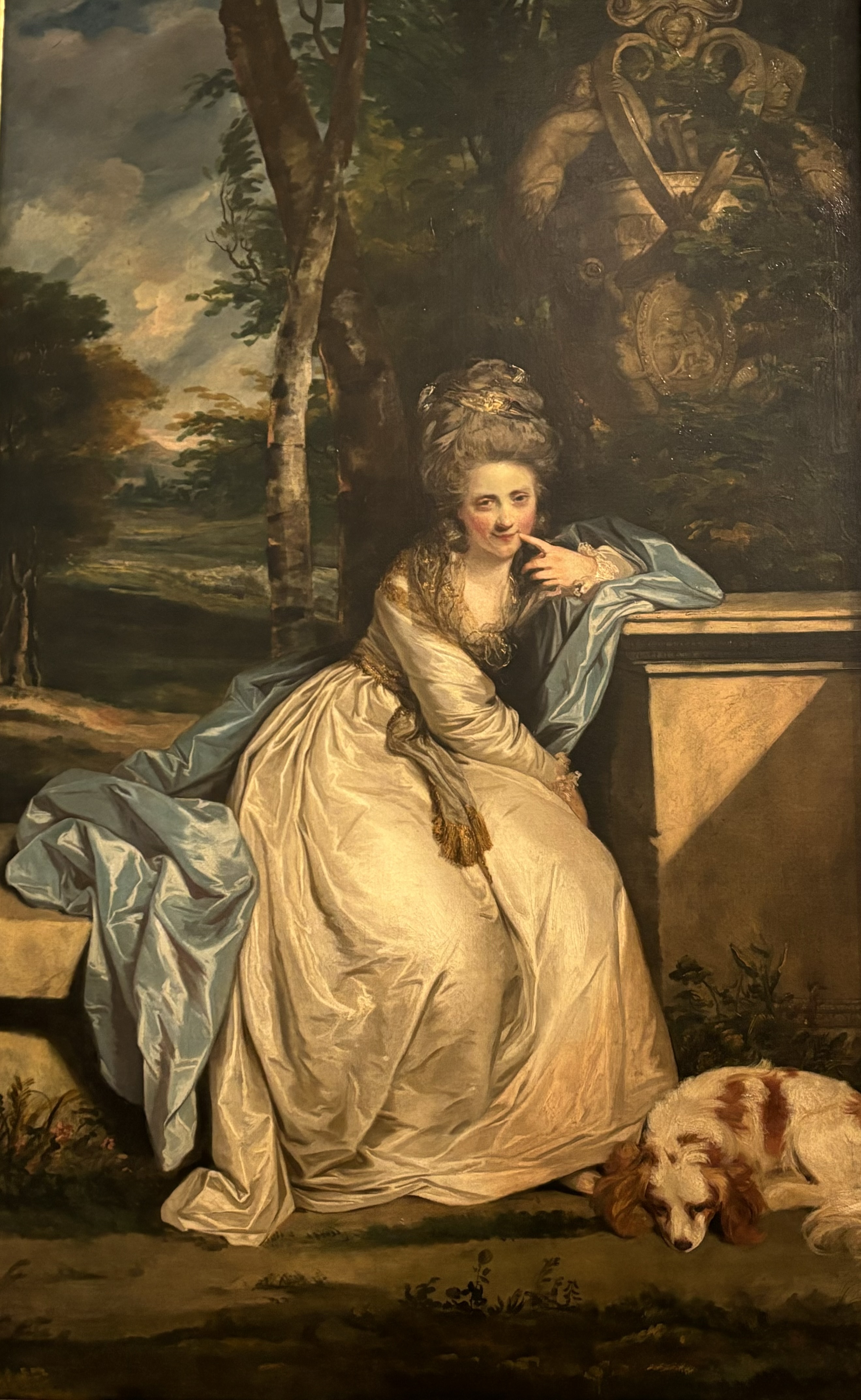
The Hon. Miss Monckton
(1777-8)
Joshua Reynolds
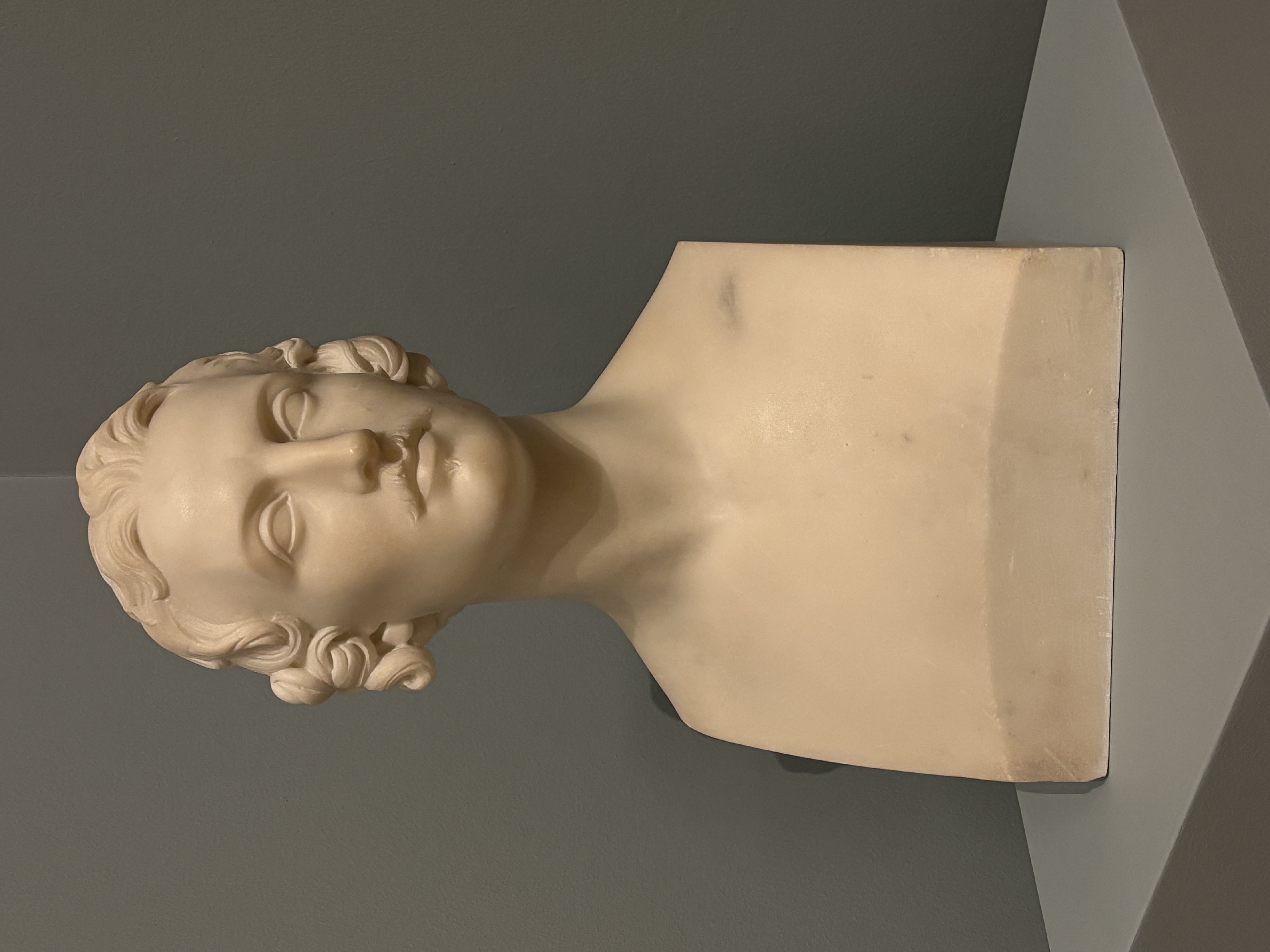
Bust of William Bewick (1827-53)
John Gibson
This is a portrait of the British painter William Bewick, whom John Gibson met in Rome. During this time period, many British and European artists visited or lived in Rome, where they studied classical and Renaissance art, and exchanged ideas.
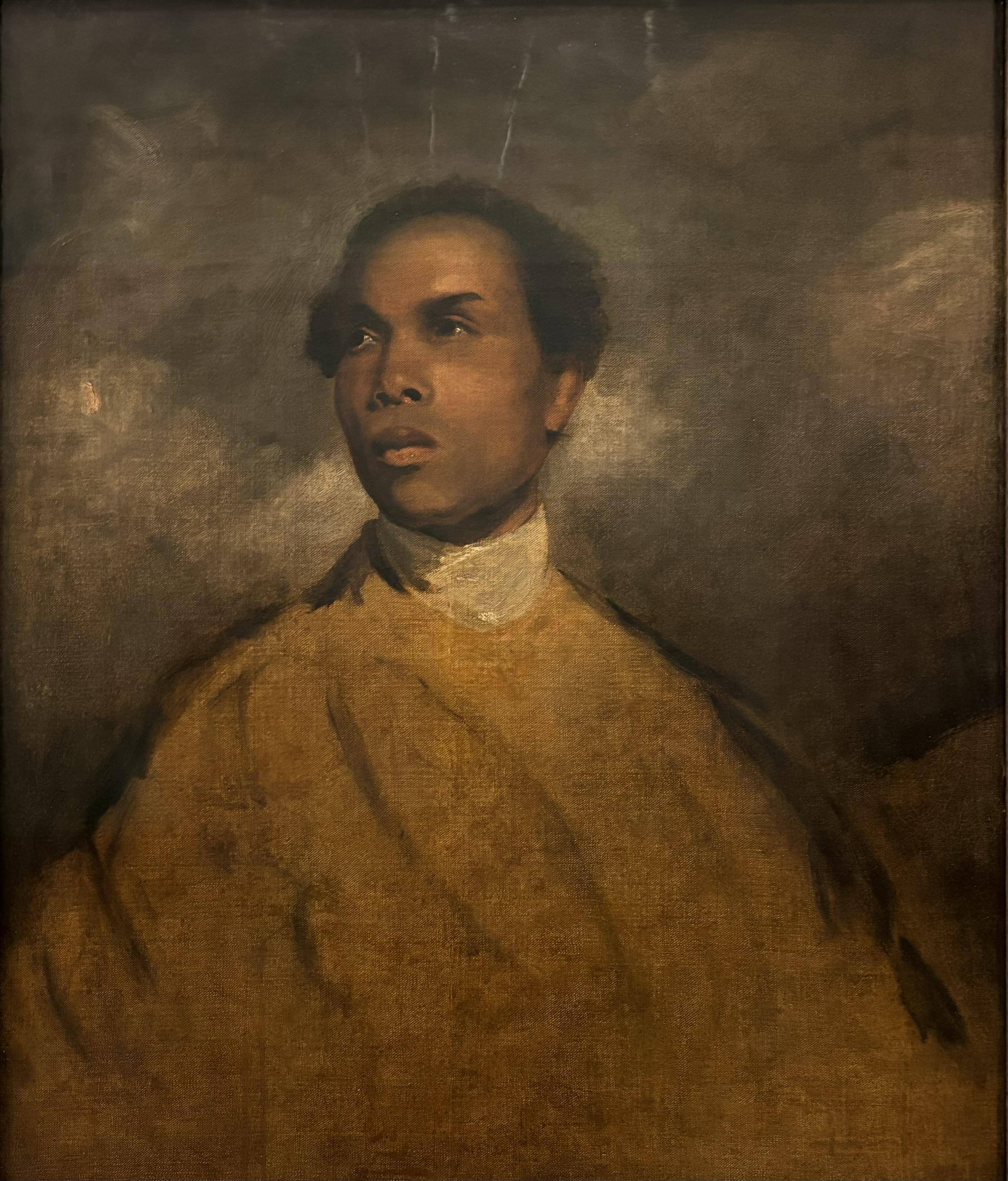
Portrait of a Man, probably Francis Barber
In the Manner of Joshua Reynolds
This is a copy of an unfinished portrait by Joshua Reynolds. While not firmly identified, the sitter is understood to be Frances Barber, who was enslaved at birth in Jamaica by Colonel Richard Bathurst. He took him to England, where Barber was later freed.
This next piece that I selected to include is one of the modern responses to the period.
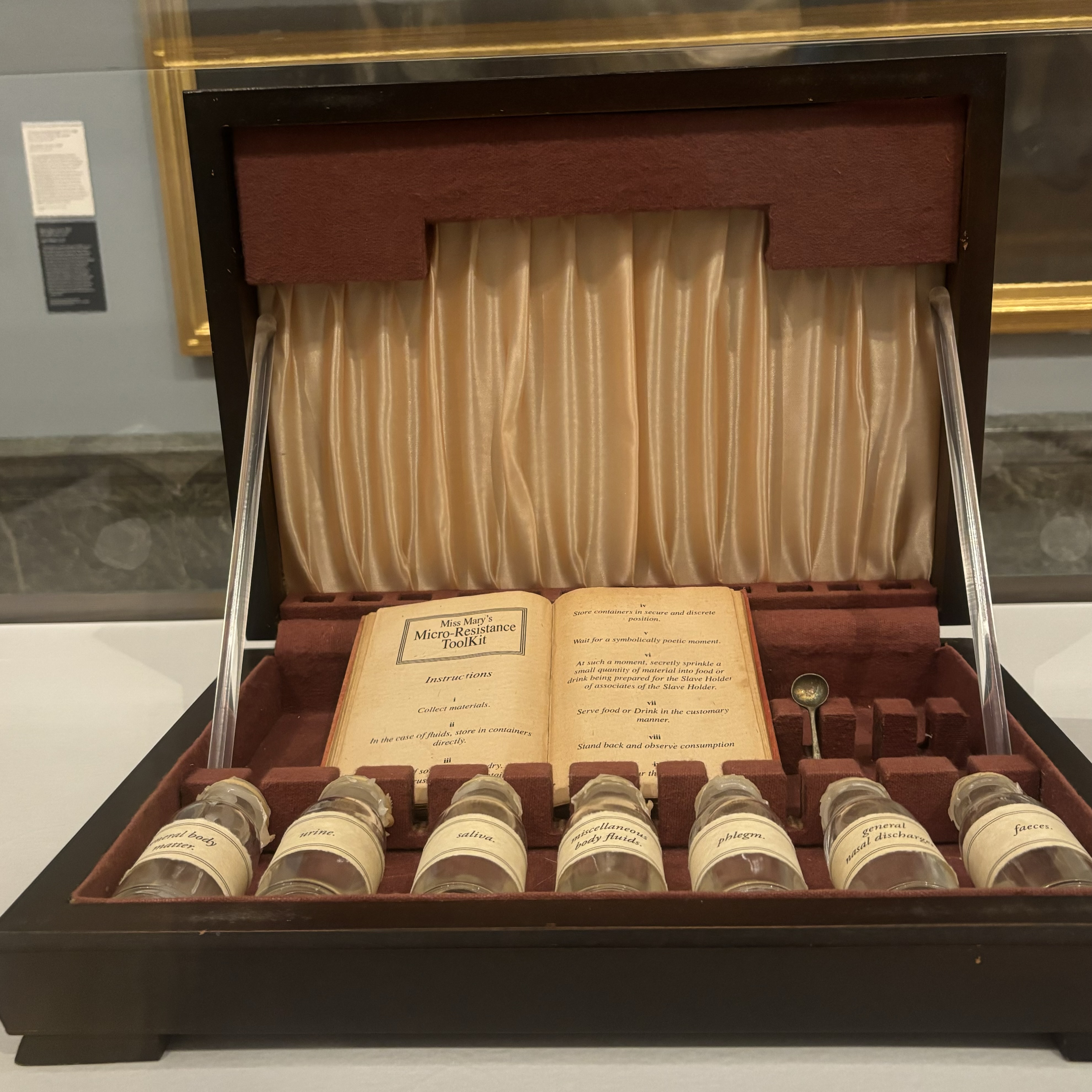
Miss Mary’s Micro Resistance Toolkit
2007
Keith Piper
Mr. Piper says, “History tells us that small acts of resistance, revenge and rebellion were carried out by enslaved people through plantation societies. Spitting into, or otherwise interfering with food or drink, as a gesture used by people with access to little more than their own bodies as tools of defiance. This work imagines an elaborate “toolkit” for enslaved people to systematically collect, store and administer their own bodily excretions in a series of small, labelled jars with instructions for their use.”
This work of art was created in 2007 as part of a larger project at the Victoria & Albert Museum’s Georgian galleries. It helped mark the anniversary of the Abolition of the Slave Trade in the British Empire.
Abolition
Calls to end slavery gained momentum from the 1780’s onward. Abolitionists faced powerful political opposition, and it wasn’t until 1807 that the trading of enslaved people in British territories became illegal. The use of enslaved labor continued until the 1833 Slavery Abolition Art. However, this legislation also had limits, as formerly enslaved people were tied into unpaid contracts and the law only applied to the British Caribbean, Mauritius and the Cape of Good Hope. Forms of enslavement and indentured labor persisted elsewhere. In contrast, enslavers were awarded vast sums of money in compensation.
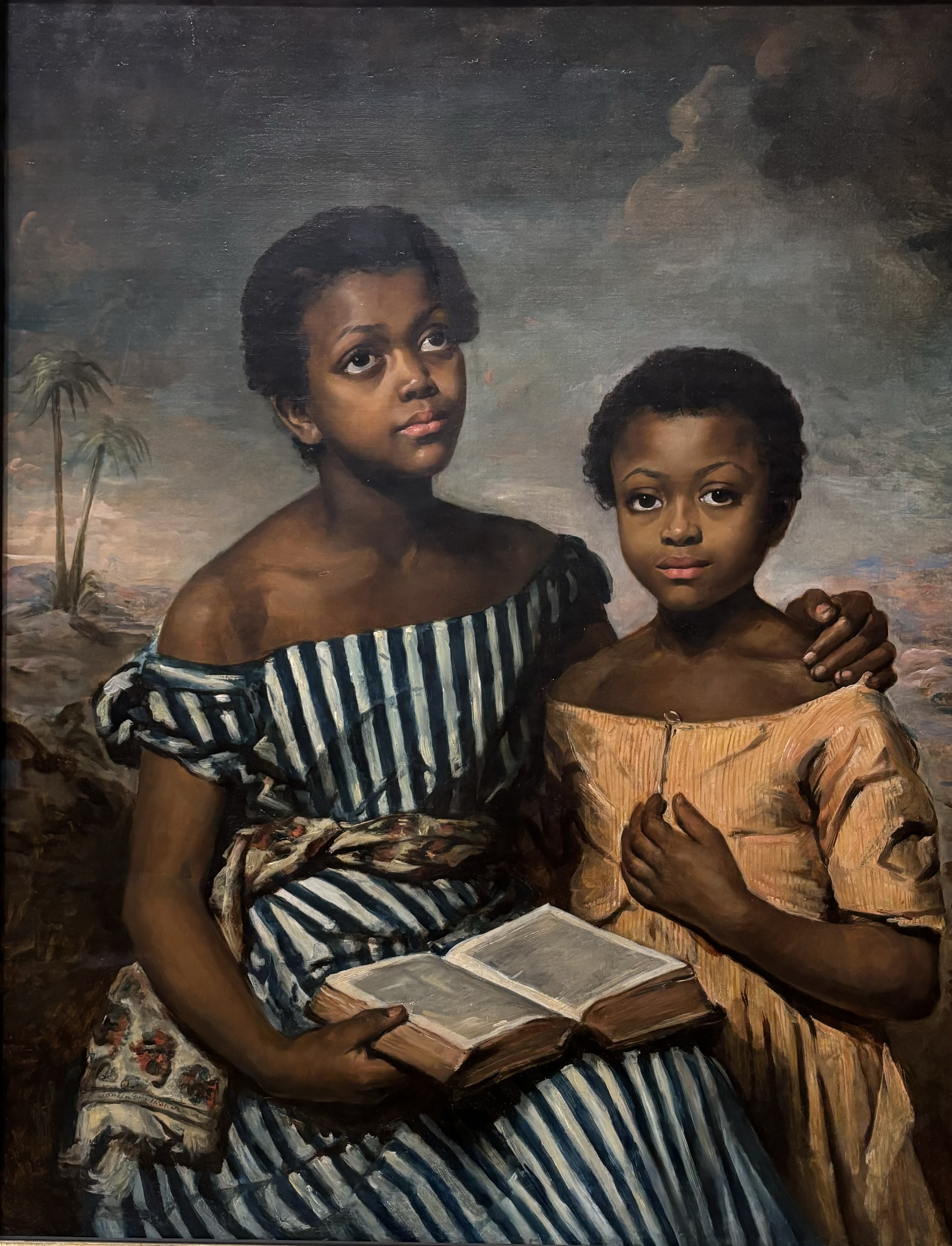
Two Children with a Book (1831)
Emma Soyer
This is a rare example of a 19th century European portrait of Black sitters. The date of the painting coincided with the increased campaigning of Black Caribbean clergymen for an end to slavery in the British Empire. The girls’ smart dress and Bible reflect their self-sufficiency and the literacy in Caribbean communities. The factors were used to encourage the emancipation of enslaved people in the Caribbean.
Art for the Crowd
1815-1905
Prosperity in Victorian Britain helps art become spectacularly popular. Britain’s wealth swells in the 19th century, fueled by imperial expansion and industrial development. While most people remain poor, many have more money and more leisure time. Millions enjoy art and culture, whether reading cliff-hanger novels by writers like Charles Dickens or visiting vast imperial displays like the Great Exhibition of 1851.
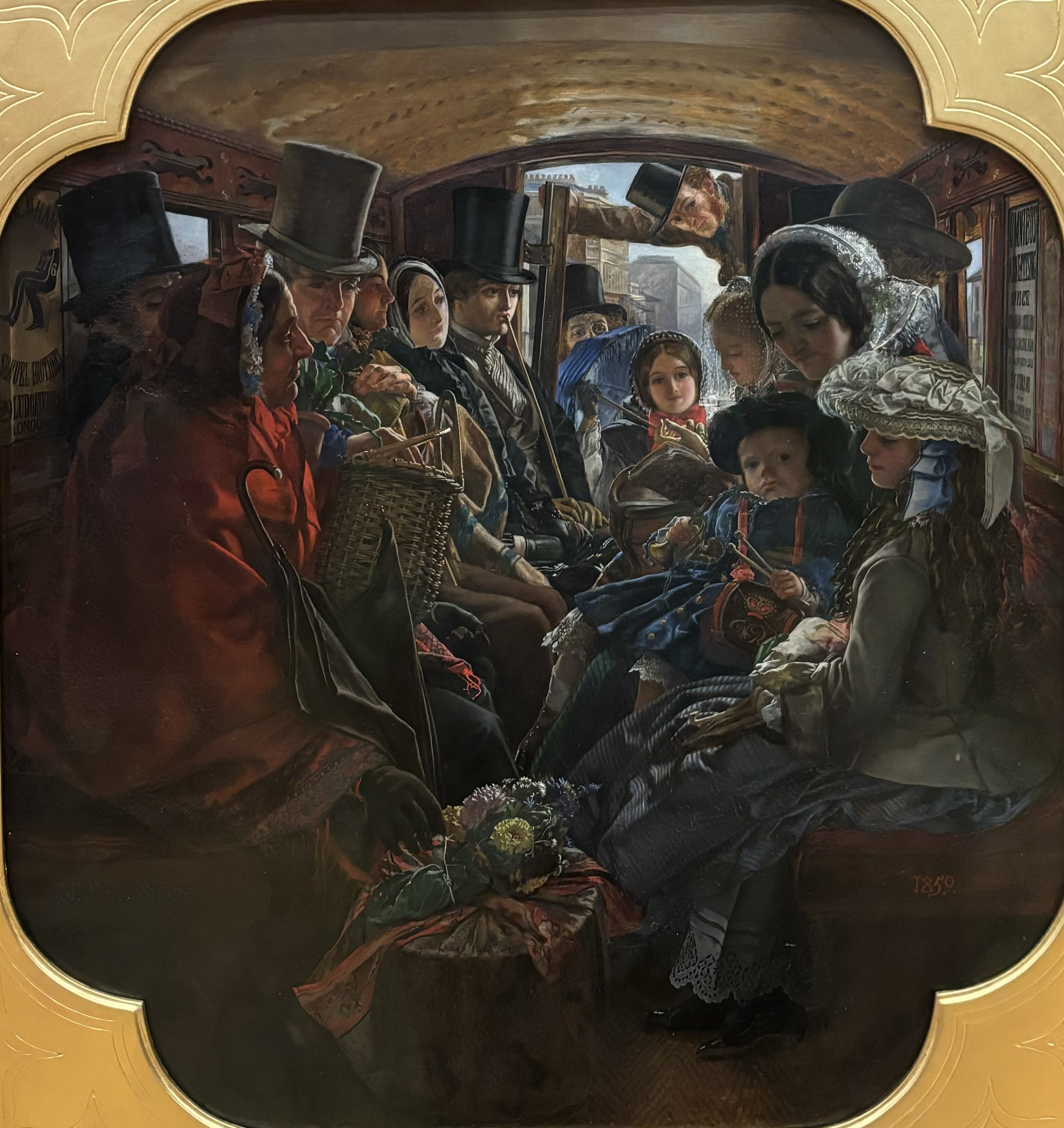
Omnibus Life in London
1859
William Maw Egley
William Egley conveys the claustrophobia of the inside of an omnibus, which is a horse-drawn equivalent of today’s buses. People from different parts of society share a small compartment.
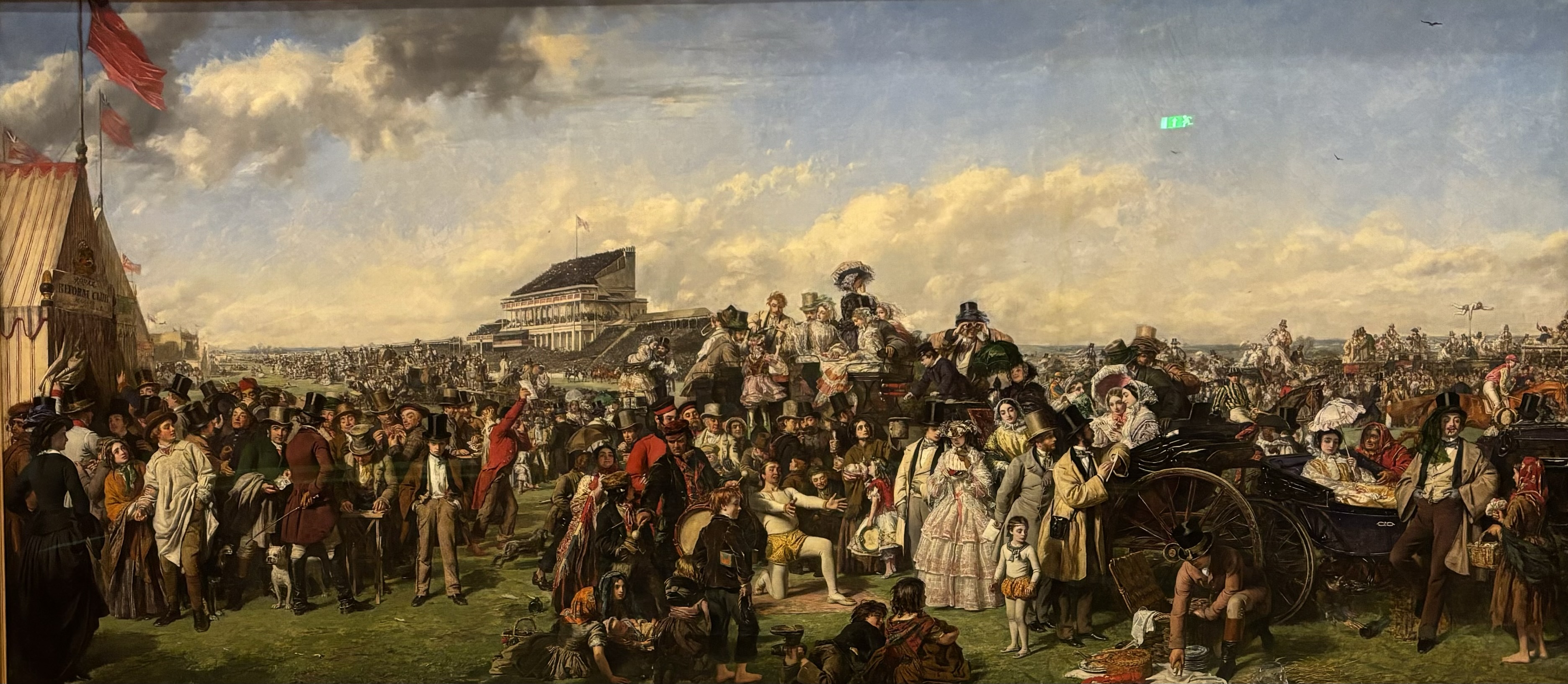
The Derby Day
1856-8
William Powell Frith
This painting was so popular when it was first exhibited in 1858 at the Royal Academy in London that a barrier had to be put up to protect the work.
IN OPEN AIR
1810-1930
Technological advances allow artists to explore faster, more spontaneous ways of painting, often outside.
Winter Work
1883-1884
George Clausen
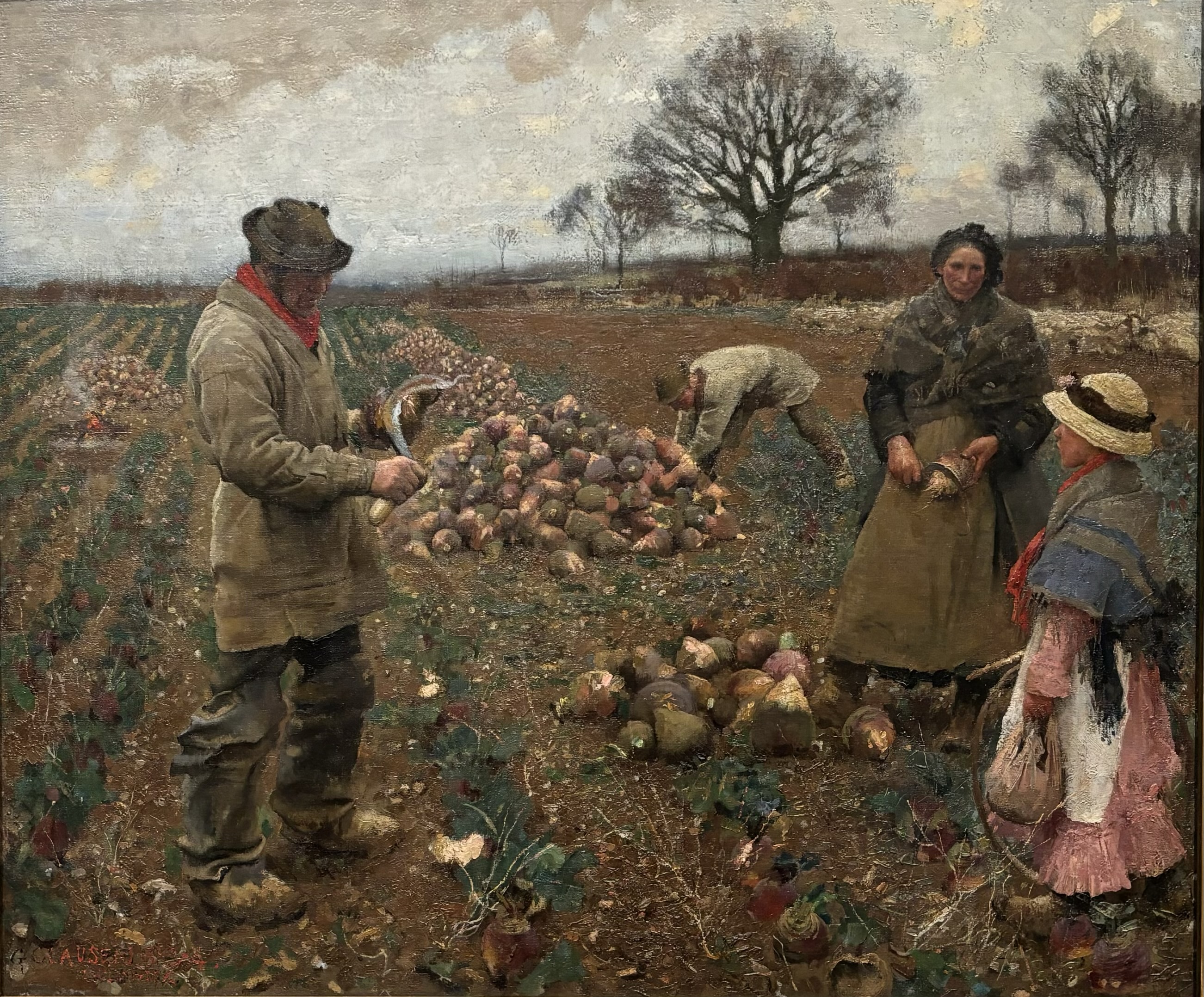
George Clausen’s scenes of rural work were influences by pictures of the same theme by French artists. Clausen painted this piece outside and from photographs of Chilwick Green near St. Albans, where he lived. Such unromanticized scenes of rural life were often rejected by Royal Academy annual exhibitions and had to be exhibited at new galleries, like the Grosvenor Gallery in Bond Street, London.
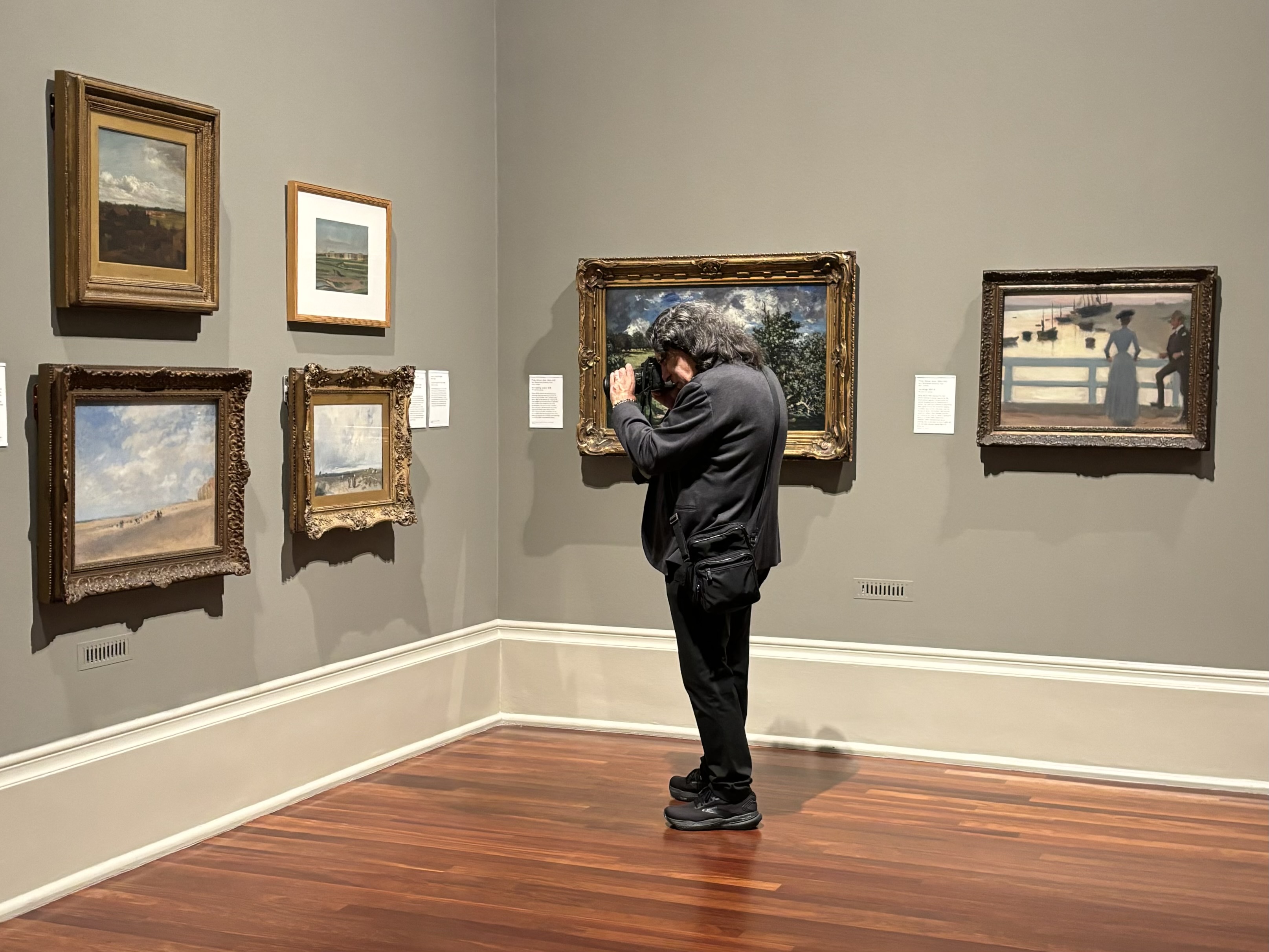
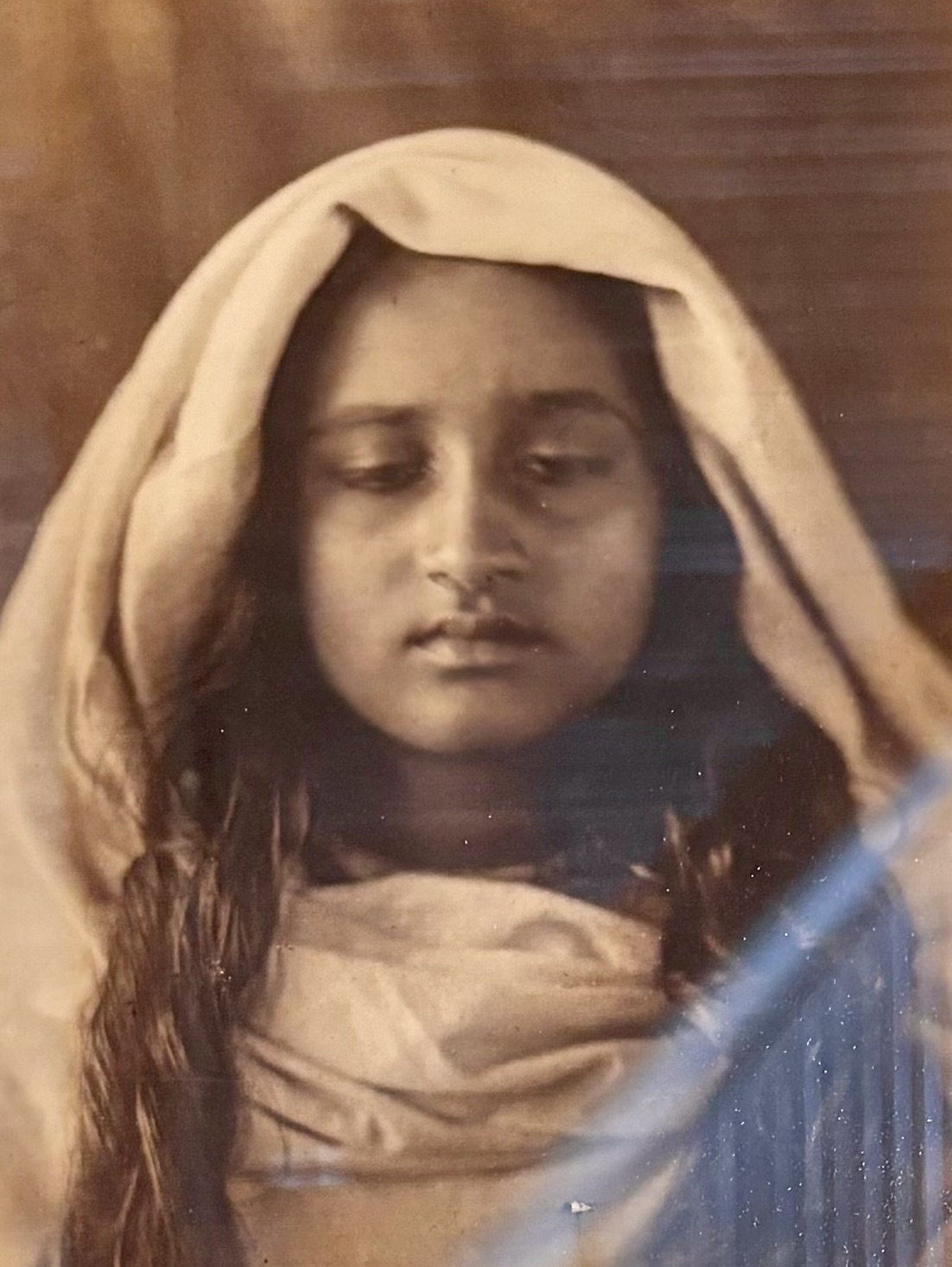
I wasn’t the only one photographing the paintings, but I was the only one I saw photographing the photographs.
Singalese Girl
1875-1879
Julia Margaret Cameron
People are experiencing the works of art in their own ways.
BEAUTY AS PROTEST
1845-1905
The men and women of the Pre-Raphaelite circle question mainstream Victorian culture and ideas.
In 1848, revolutions all over Europe spread the spirit of reform across the continent. Three art students, Dante Gabriel Rossetti, John Everett Millais and William Holman Hunt, launch a revolution in art. In November 1848, the trio create a radical artistic group called the Pre-Raphaelite Brotherhood.
I’ve always been drawn to revolutionaries! The Pre-Raphaelites reject the academic art of the Royal Academy, which holds certain historical subjects and styles in high esteem. They look for authenticity in art of all periods, but seek relevance to their modern times. They update stories from the Bible, Shakespeare and medieval poetry. They paint real people, objects and settings. Later on, their work becomes concerned with beauty and imagine worlds.
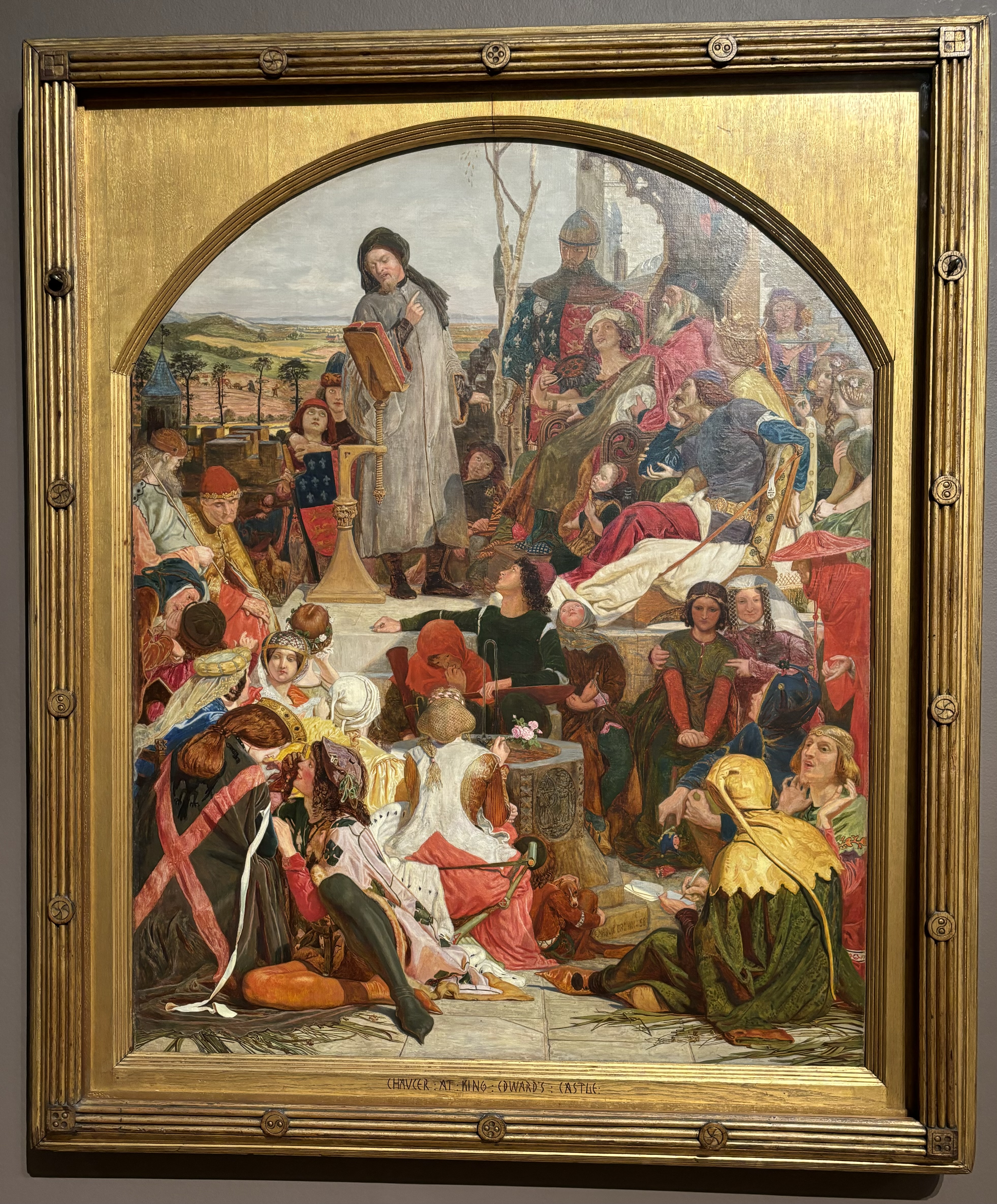
Chaucer at the Court of Edward III
1856-1868
Ford Maddox Brown
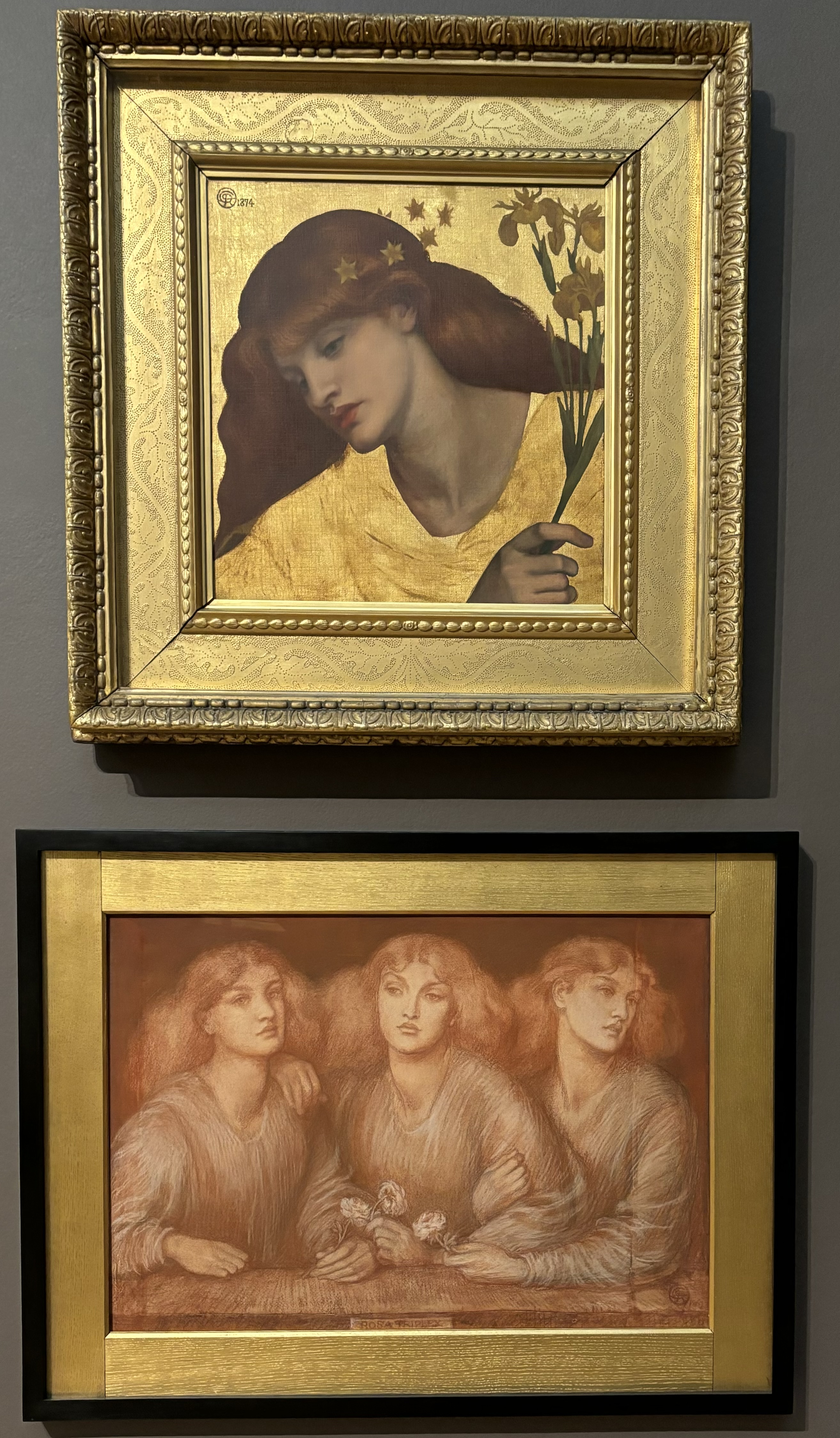
Sanctus Lilias
1874
Rosa Triplex
1867
Dante Gabriel Rossetti
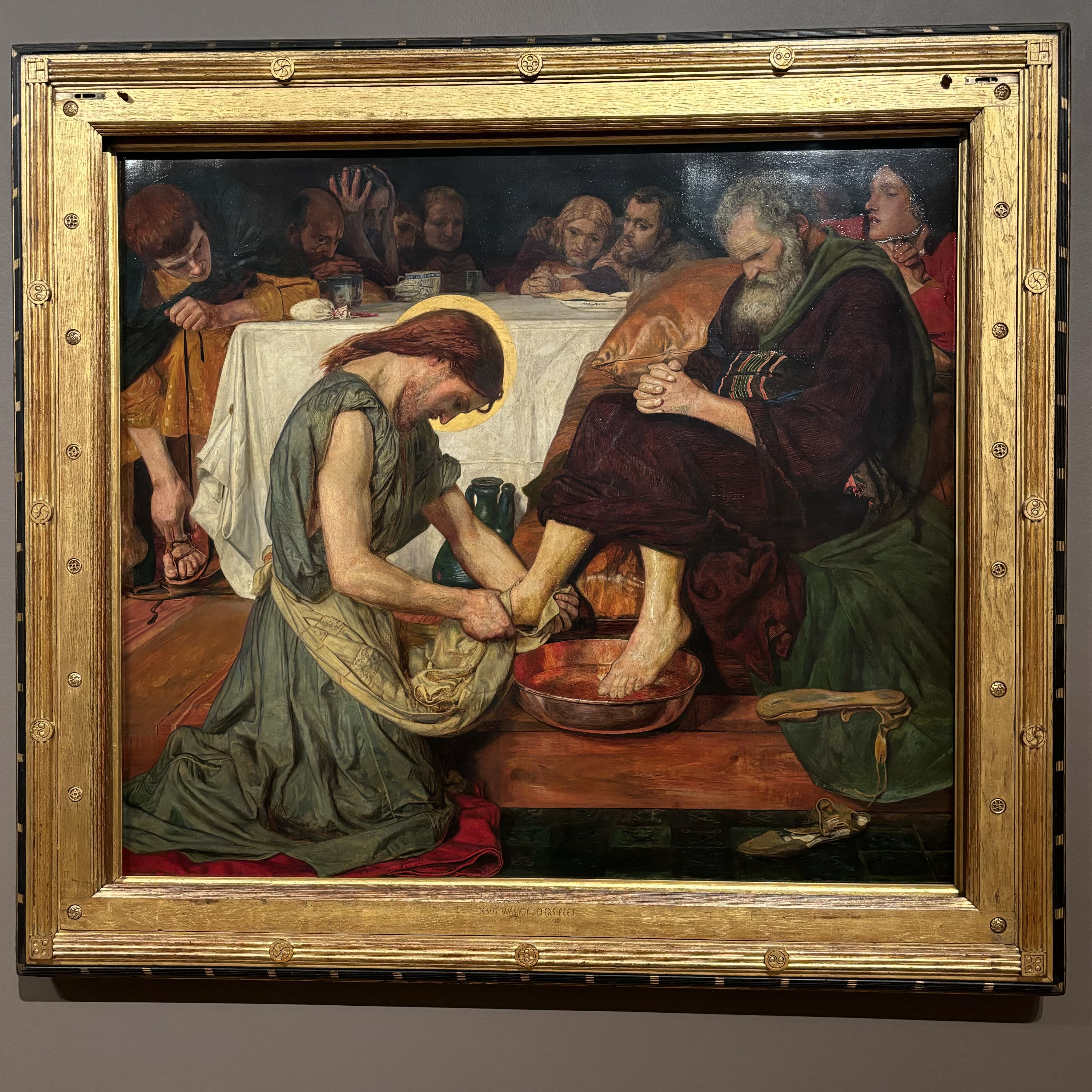
Jesus Washing Peter’s Feet
1852-1856
Ford Madox Brown
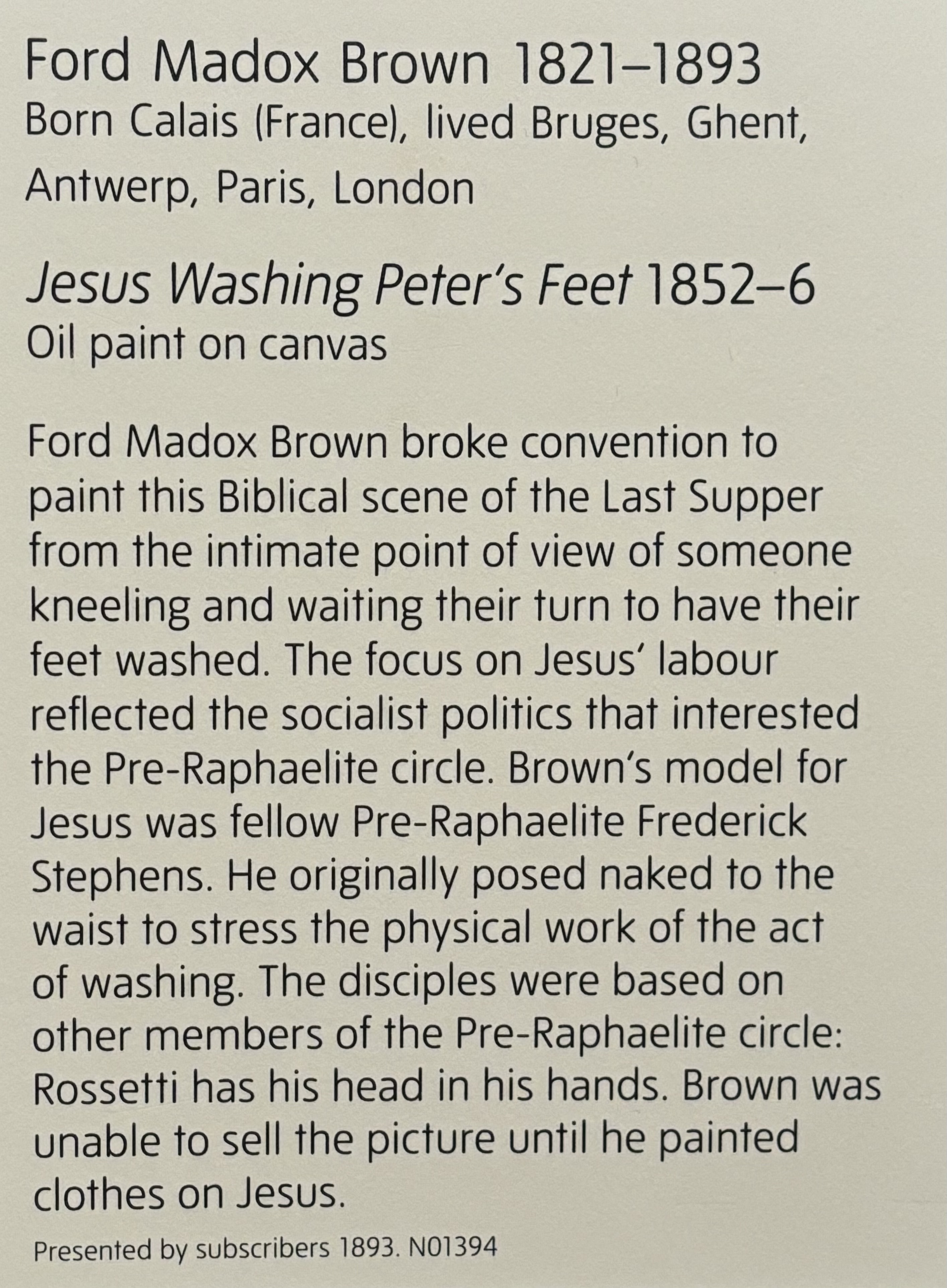
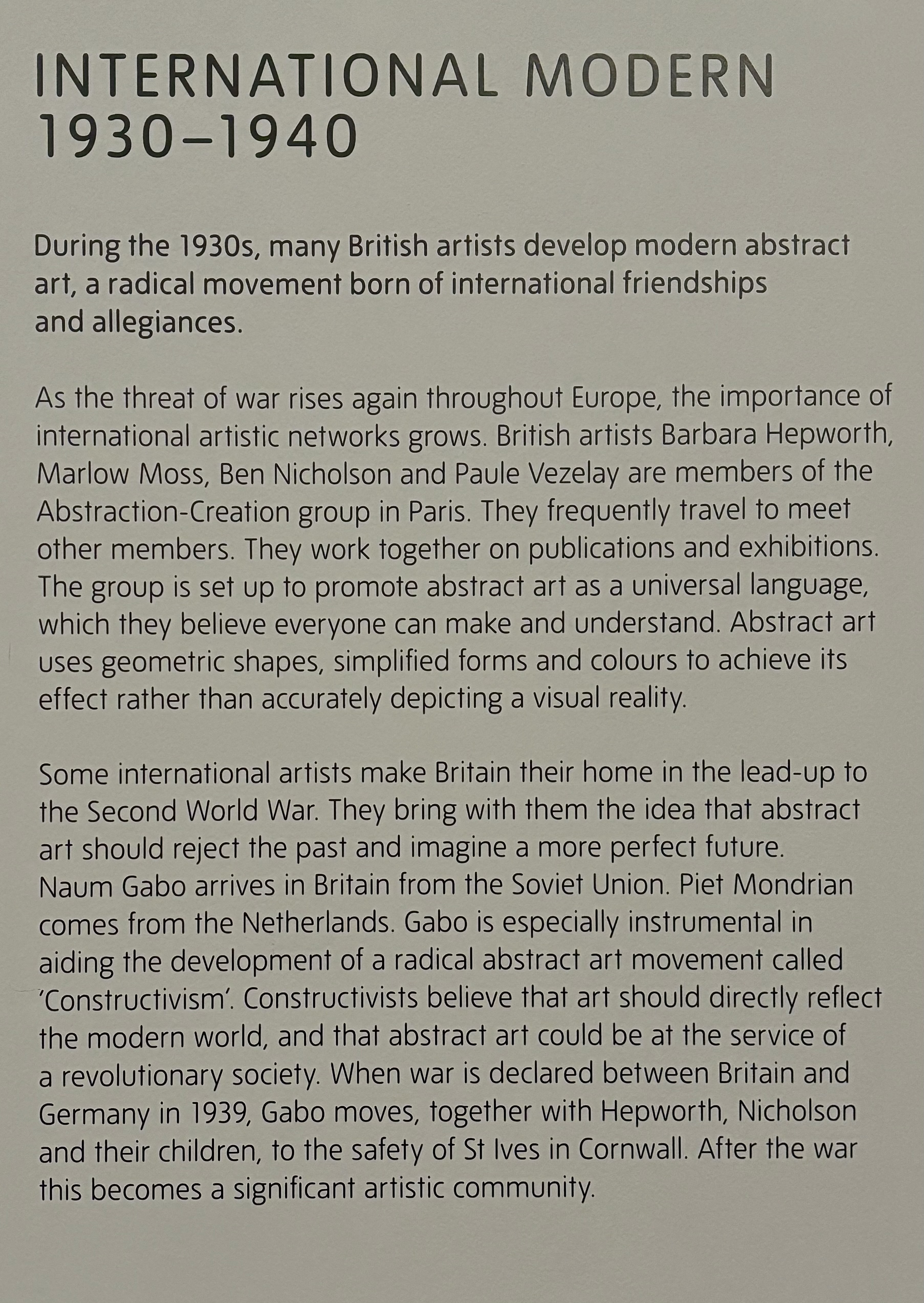
I’m not going to paraphrase the explanation of the painting. It’s short enough and I managed to take a pretty clear photo of it.
MODERN TIMES
1910-1920
In the years leading up to war, a new generation of British experimental artists emerge who challenge traditional artistic practices.
Tense international politics lead to the outbreak of the First World War in 1914/ Millions of people in Britain and British colonies volunteer or are drafted. This ‘war to end all wars’ results in death and destruction on and unprecedented scale. Meanwhile, events such as the Easter Rising in Ireland in 1916 and the Amritsar Massacre in India in 1919 strengthen call for independence from British rule.
During this period, growing cultural internationalism between European cities inspires artists to experiment and make new connections.
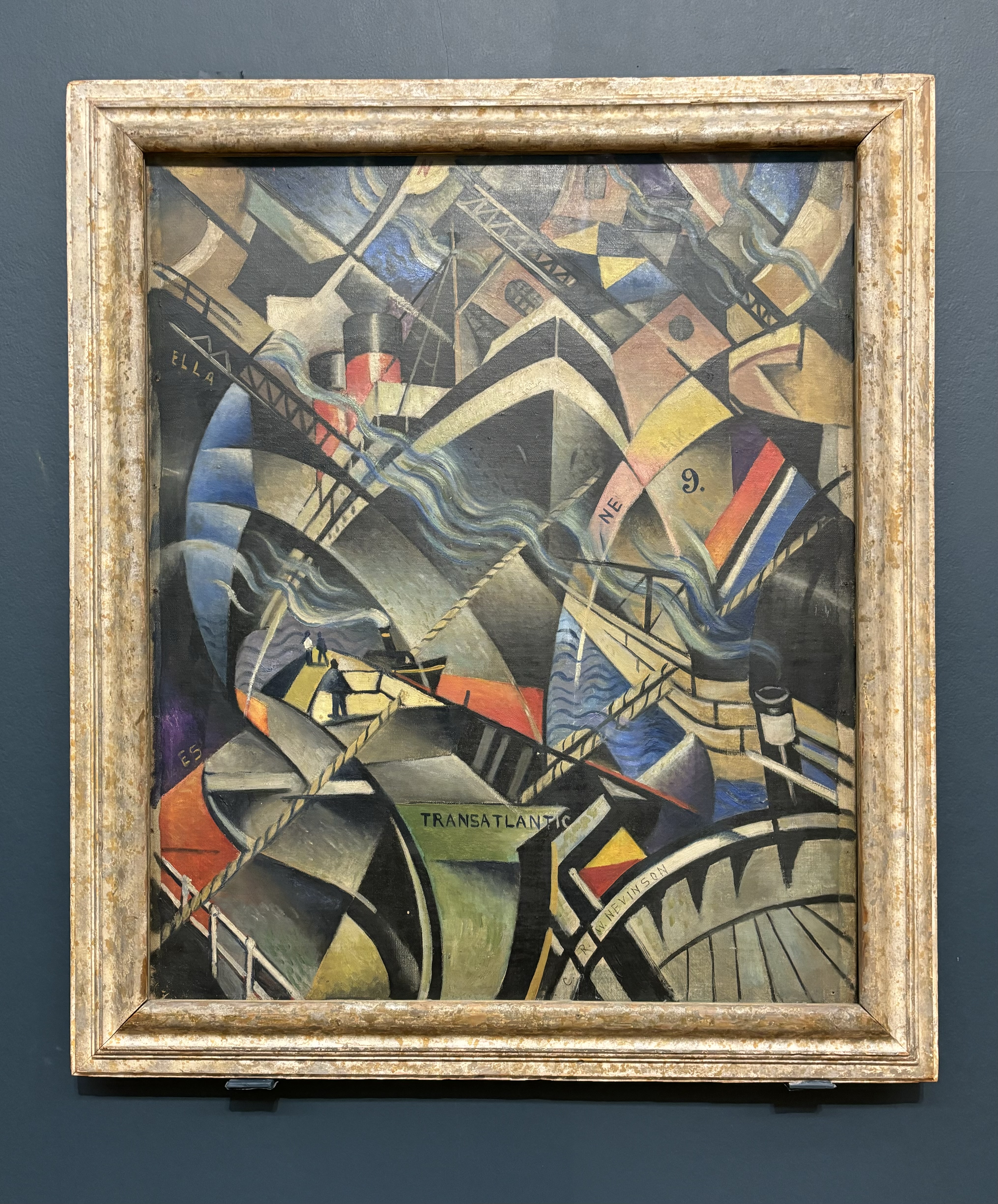
The Arrival
c. 1913
Christopher Richard Wynne Nevinson
Nevinson was interested in the idea of ‘simultaneity’, the way in which humans can experience multiple elements of a moment all at once. Here. Nevinson paints various details of a ship arriving to land all at once.
Somehow, I seem to have jumped ahead in the chronology without making note of it. Well, onward!
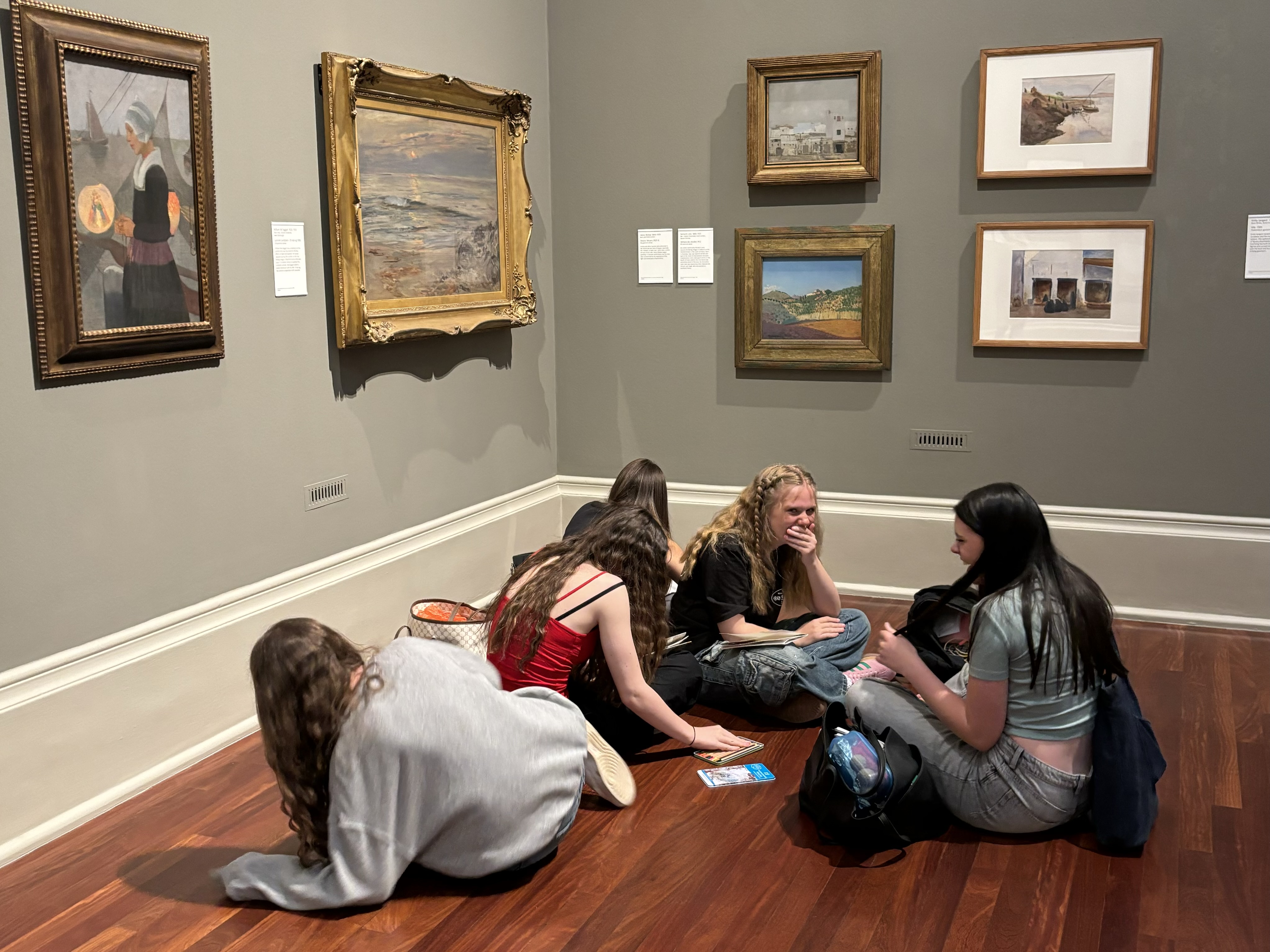
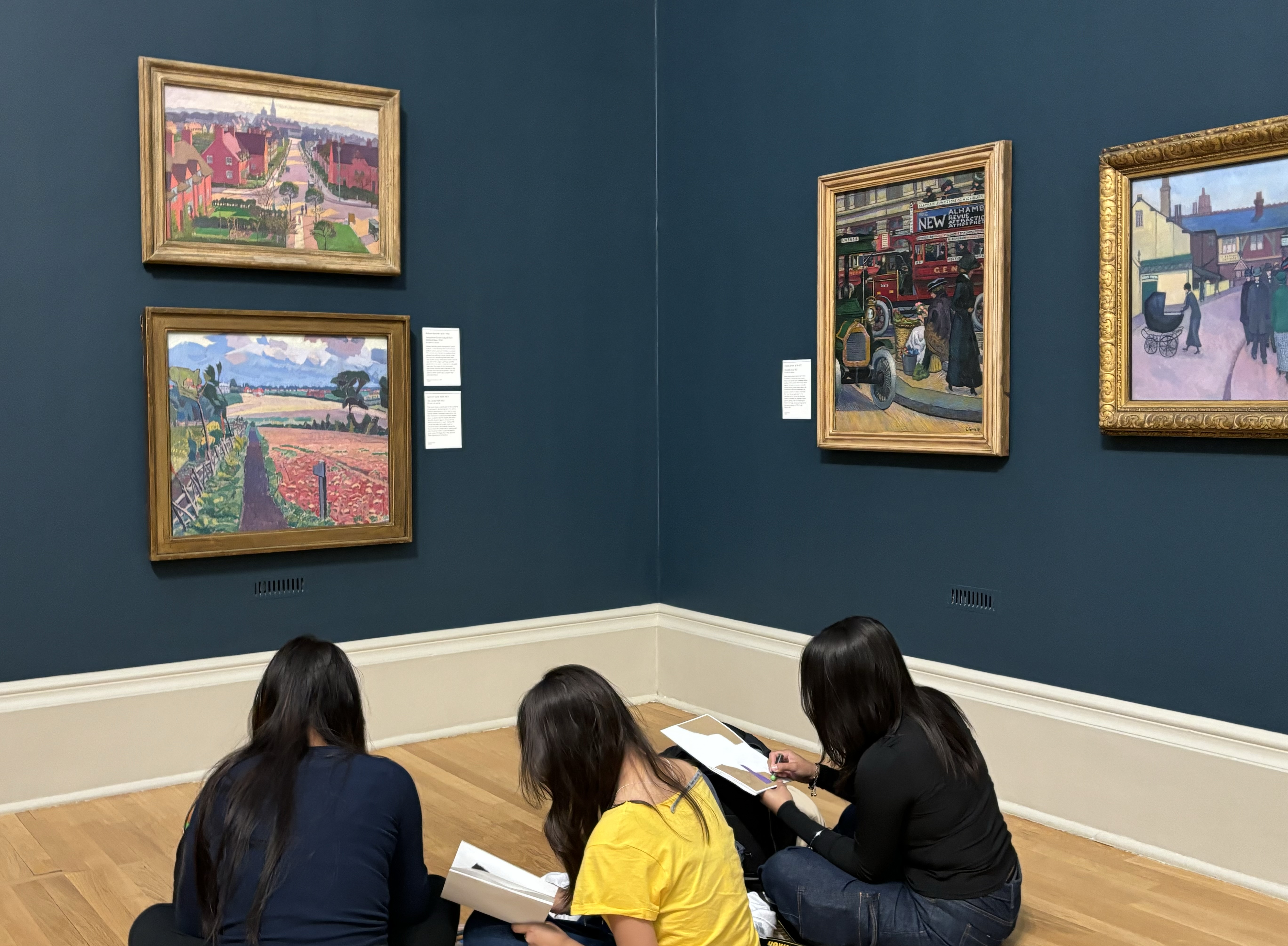
I loved seeing these students working on copying works of art on display, just as artists have done forever.
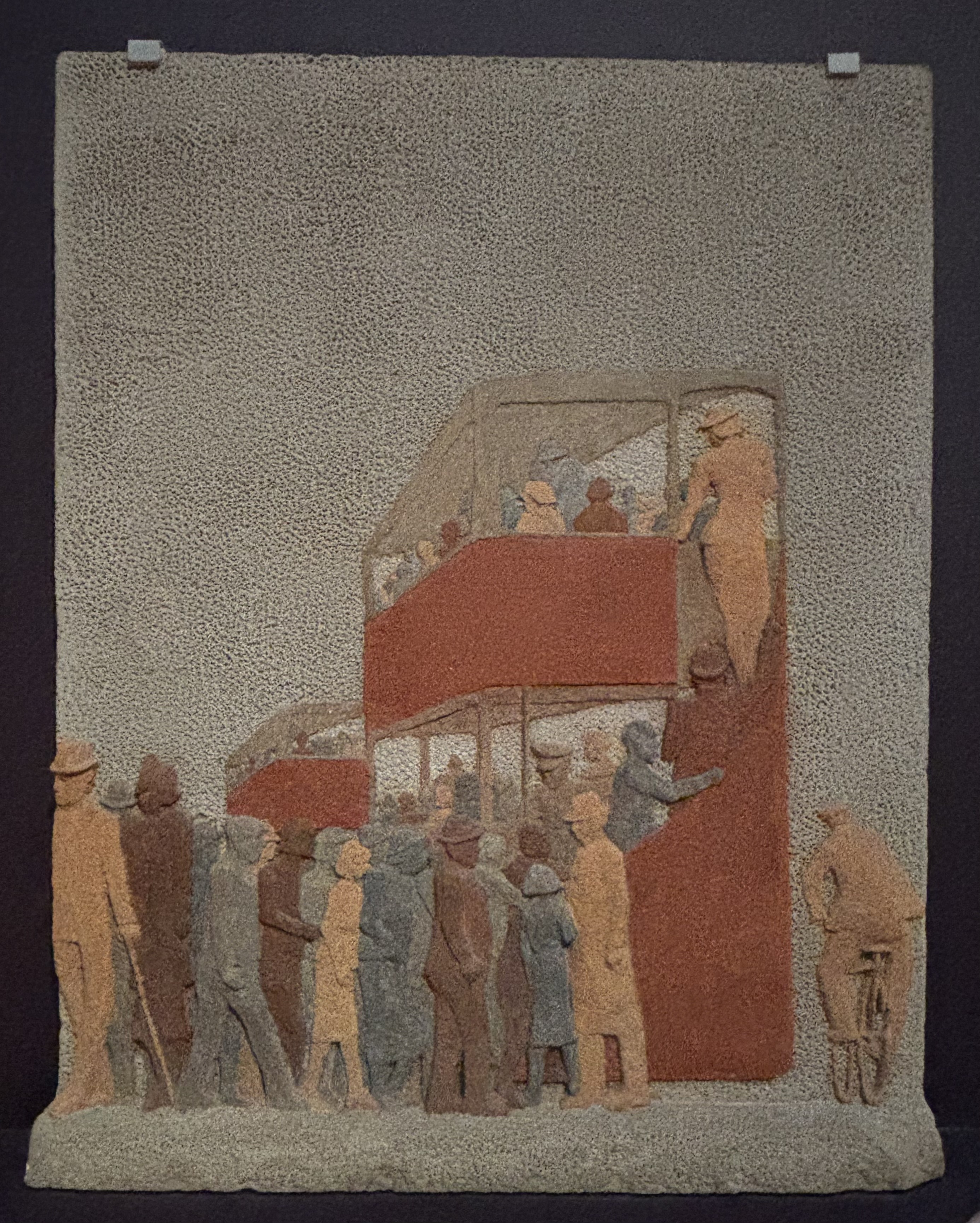
Rush Hour
1937
Peter Lászlō Peri
Peri developed a method of modeling concrete without needing to cast it. He did it by gradually layering his works with different colored wet concrete. His usse of concrete was practical and he made his work with the political adgenda of opening art to a wider audience.
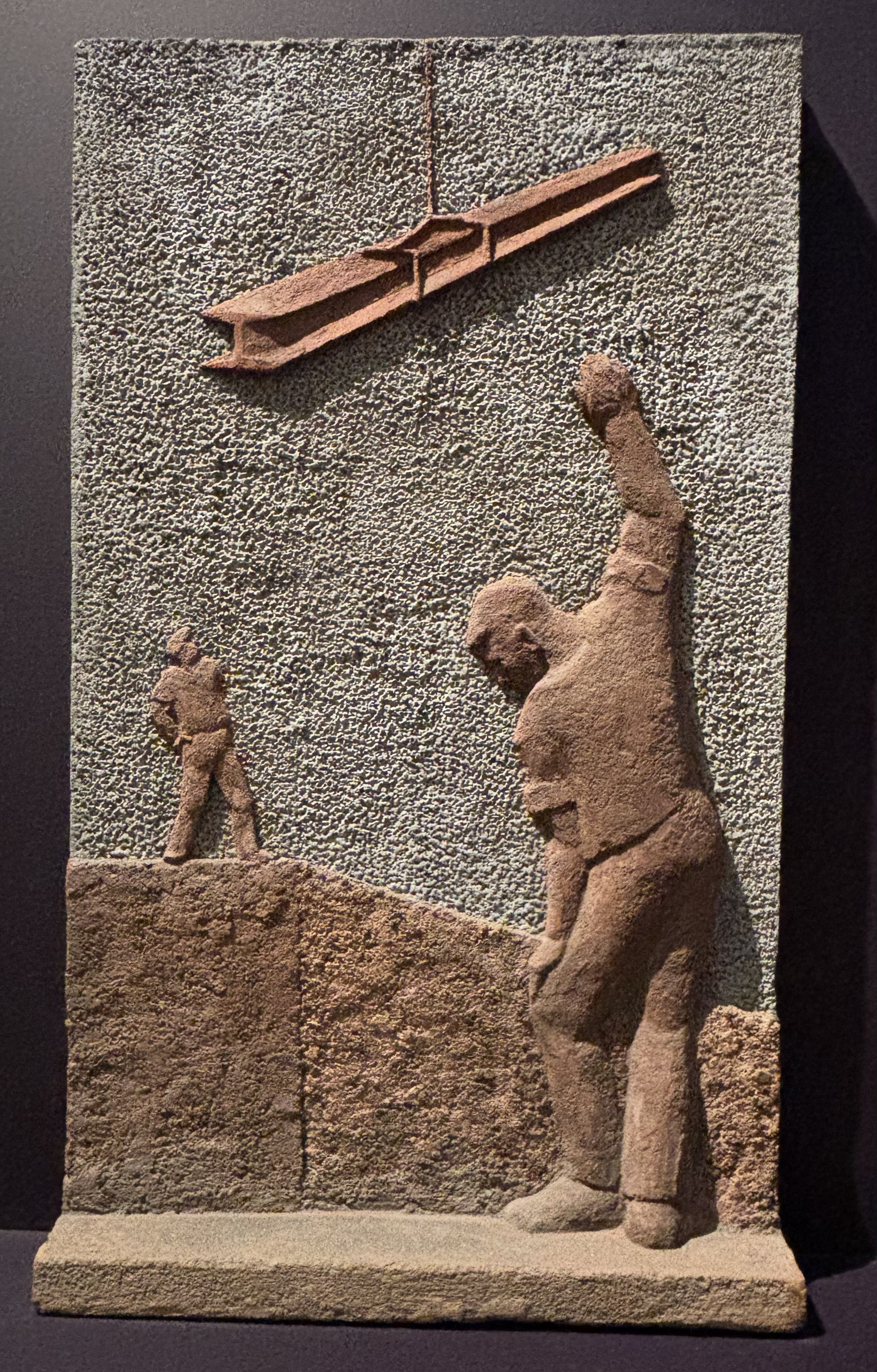
Building Job
1937
Peter Lászlō Peri
This piece was displayed along side the work above in the artist’s widely reviewed solo exhibition, ‘London Life in Concrete’ at 36 Soho Square in London in 1938.
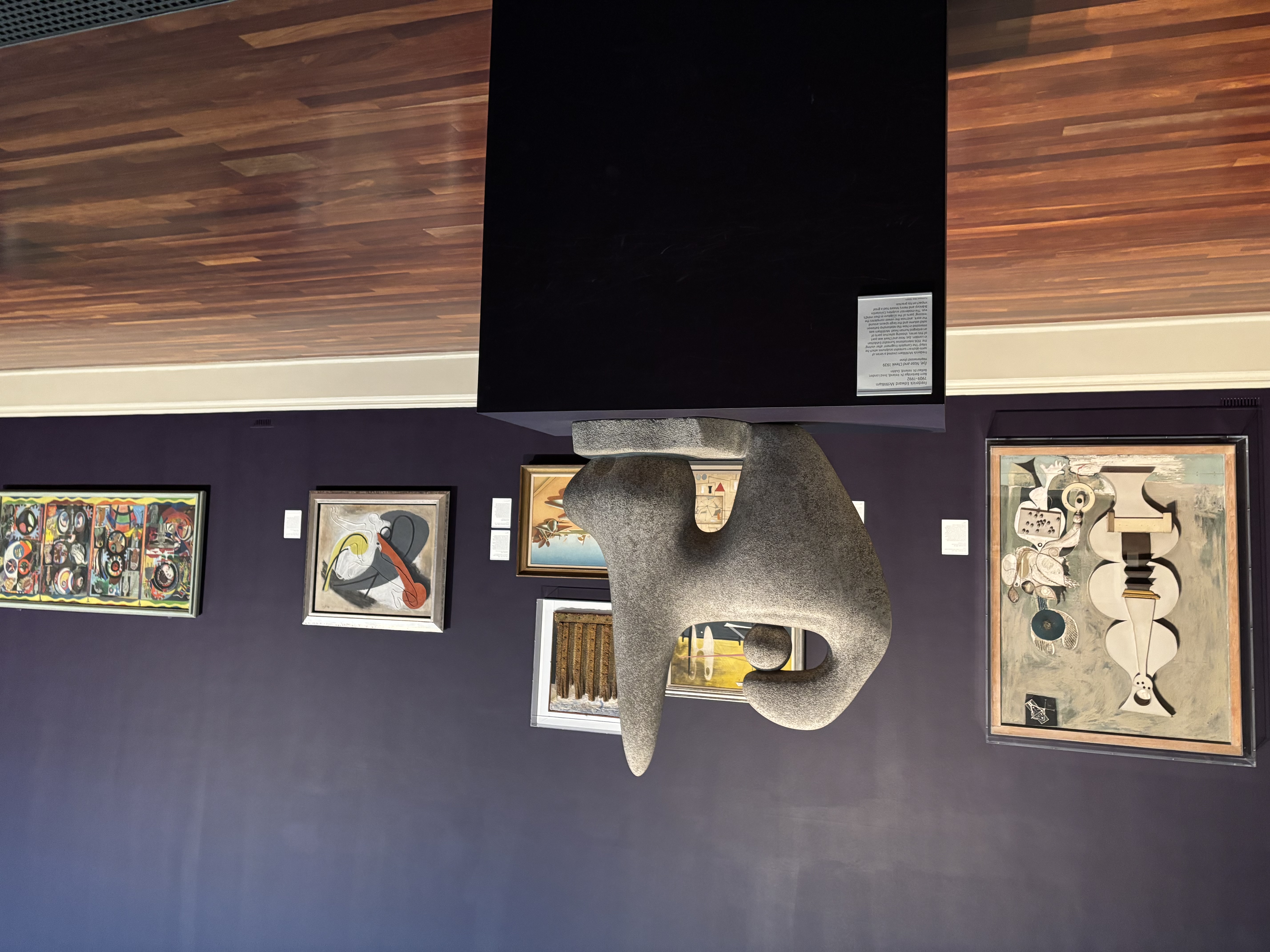
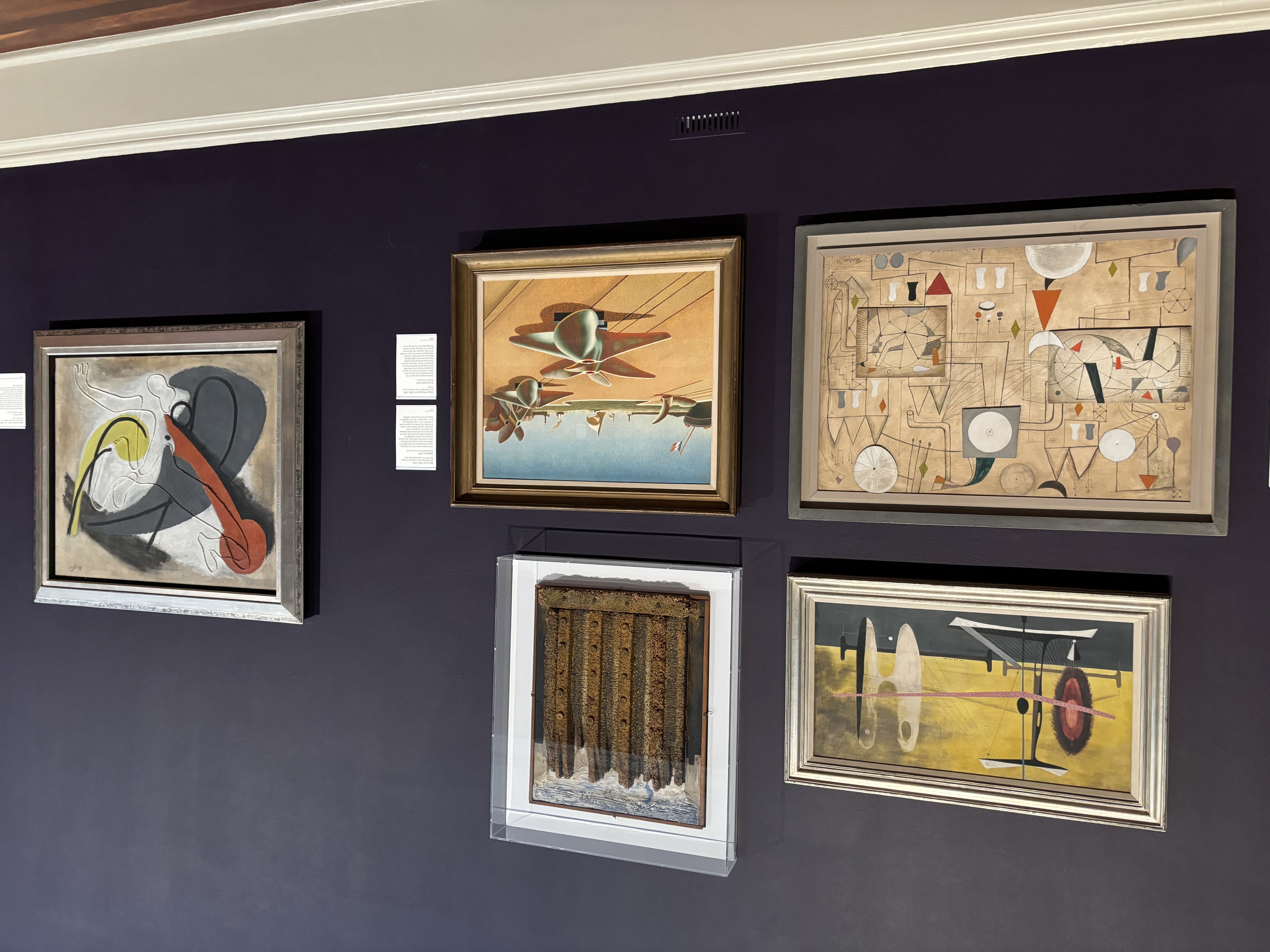
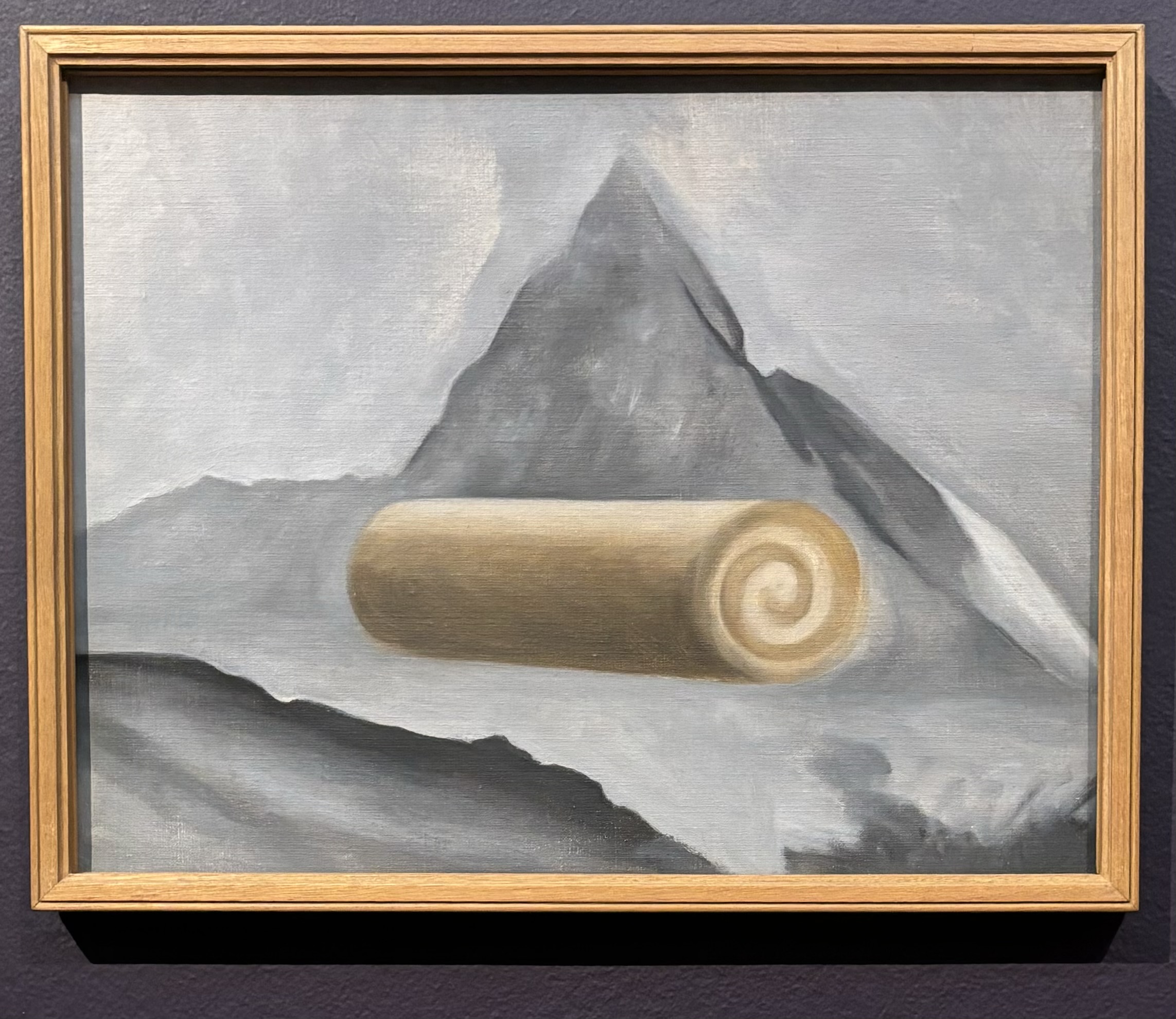
Swiss Roll
1938
Humphrey Jennings
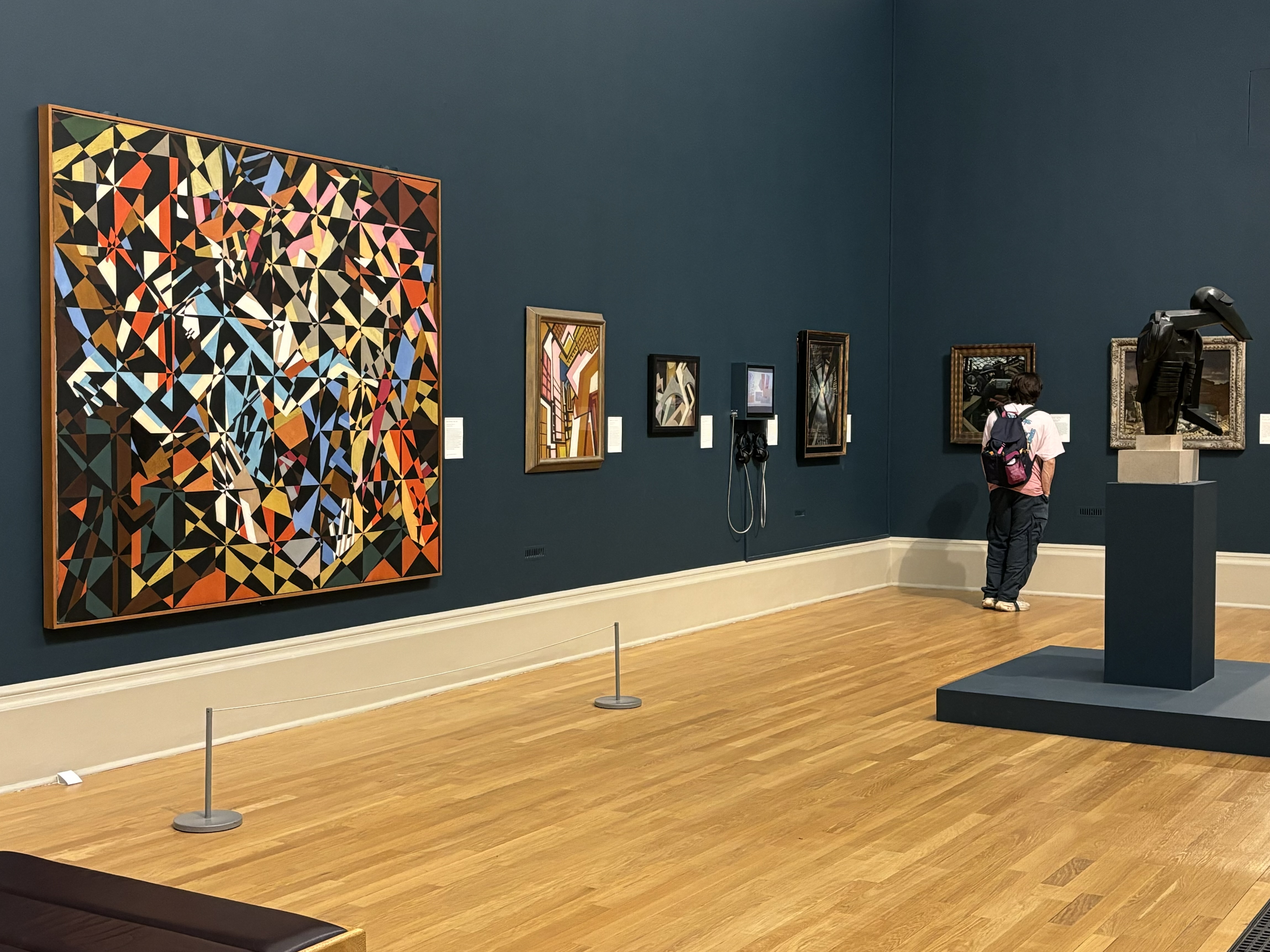
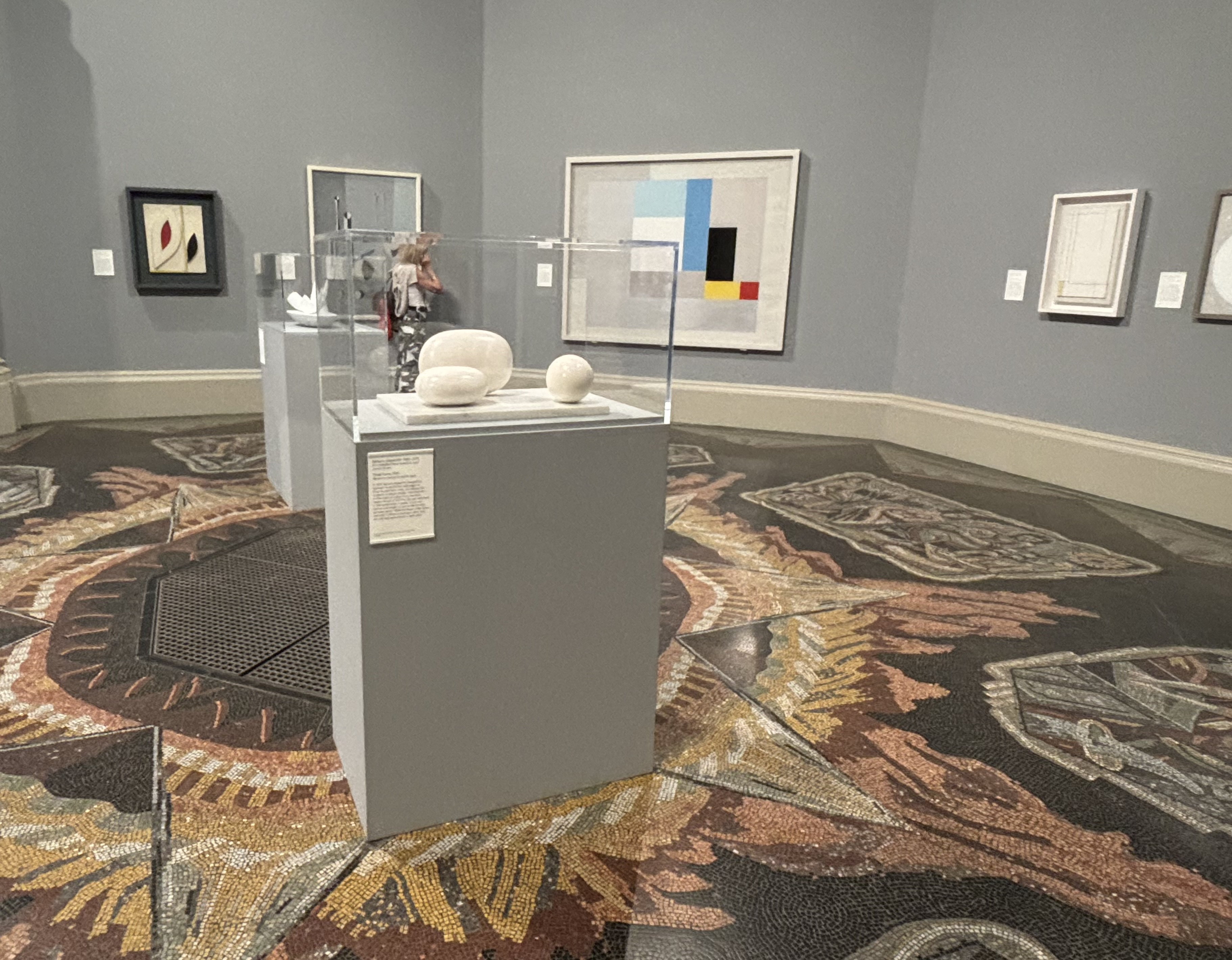
Wait! I think I’m getting close to the end of this part of the museum! These works of art seem quite modern.
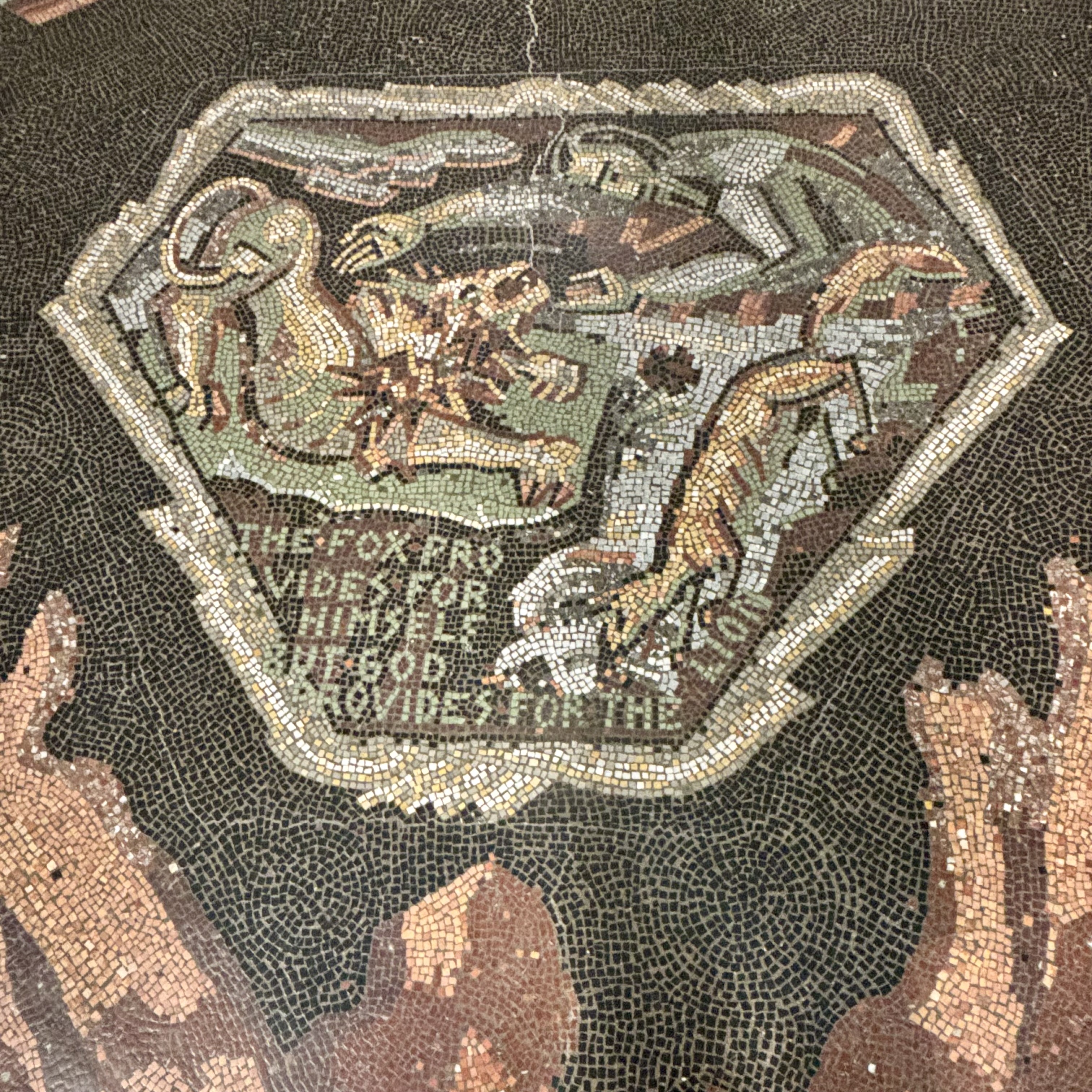
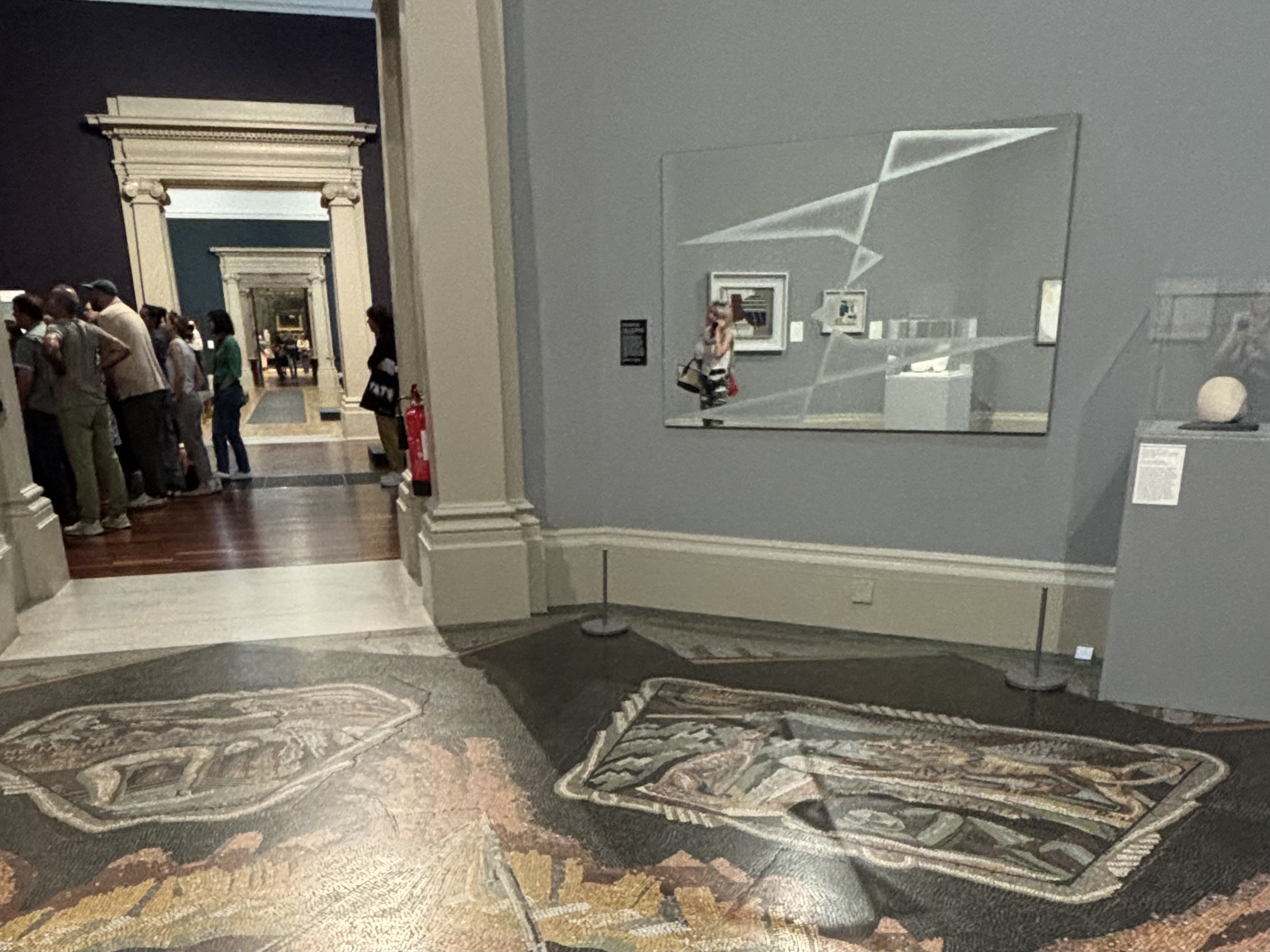
But look at the floor! I do love mosaic floors.
And that looks like a door into a gift shop! I do believe we’ve made it – well, at least through part of it.
By this point. I was worn out – over stimulated and tired. I needed to refresh.
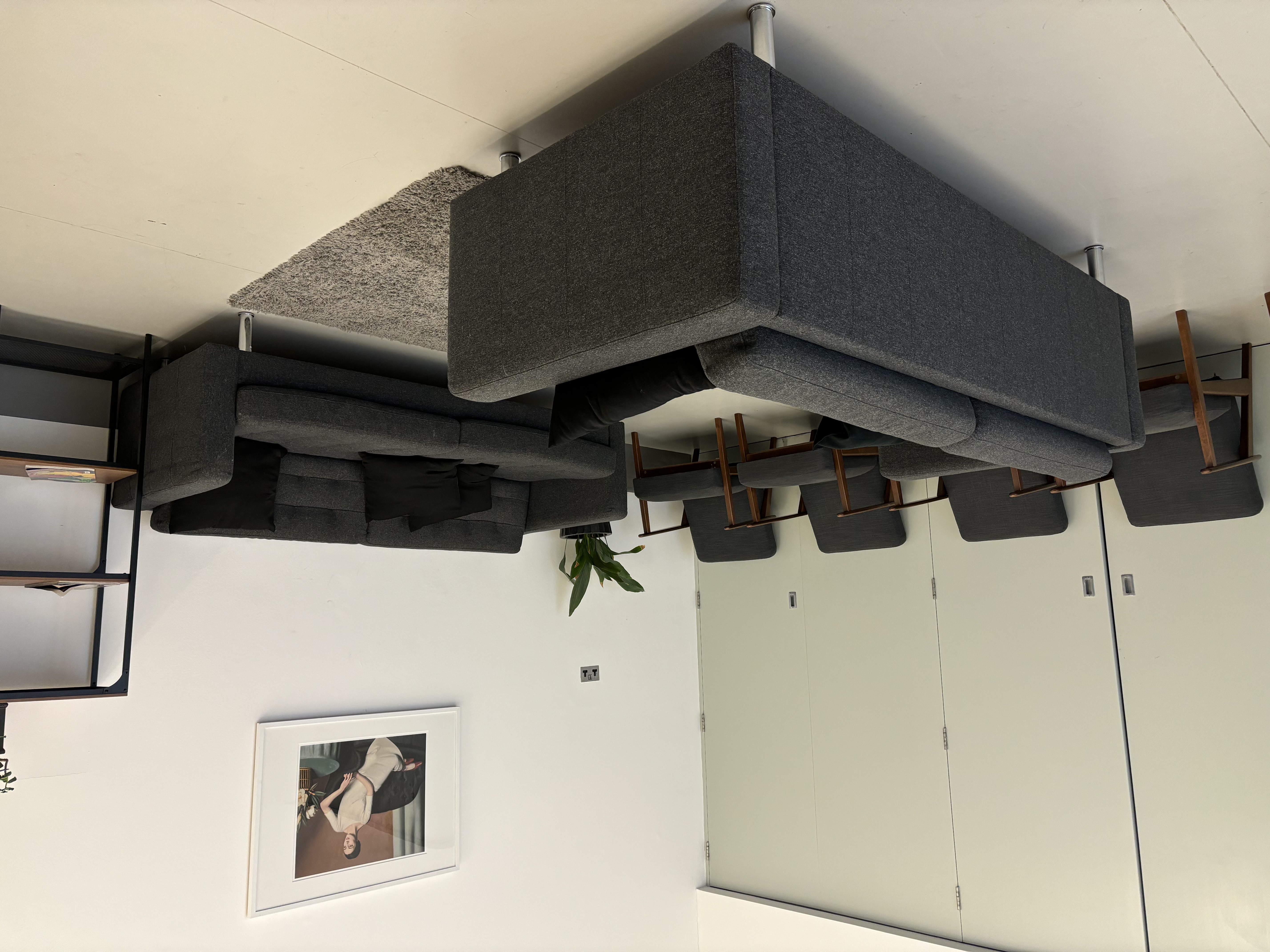
I was delighted to find that they had a quiet space. So relaxing! I considered my options. There was so much more art, but I was feeling depleted. Maybe lunch would help.
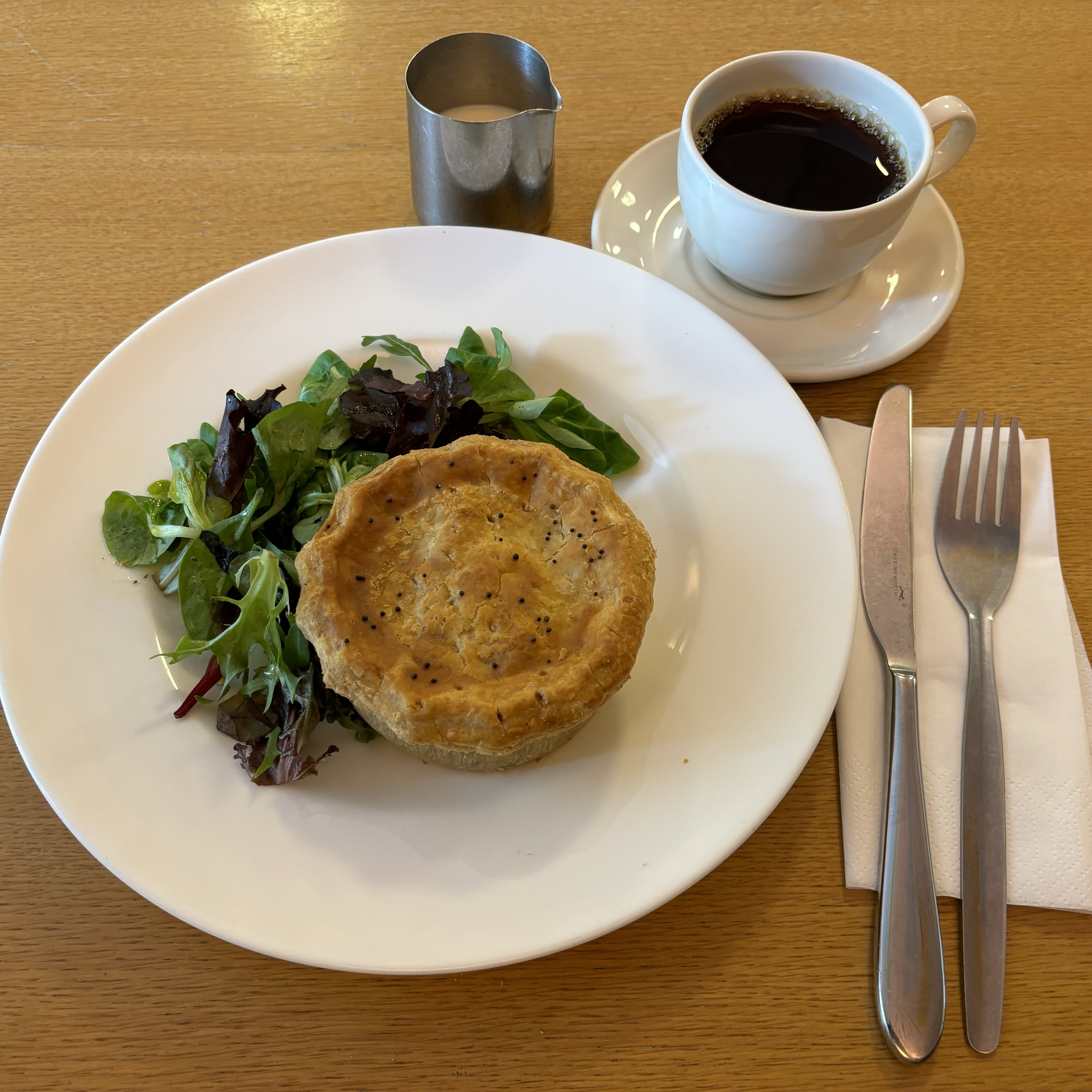
I headed down to the cafe and selected the beef and ale pie. With coffee, of course.
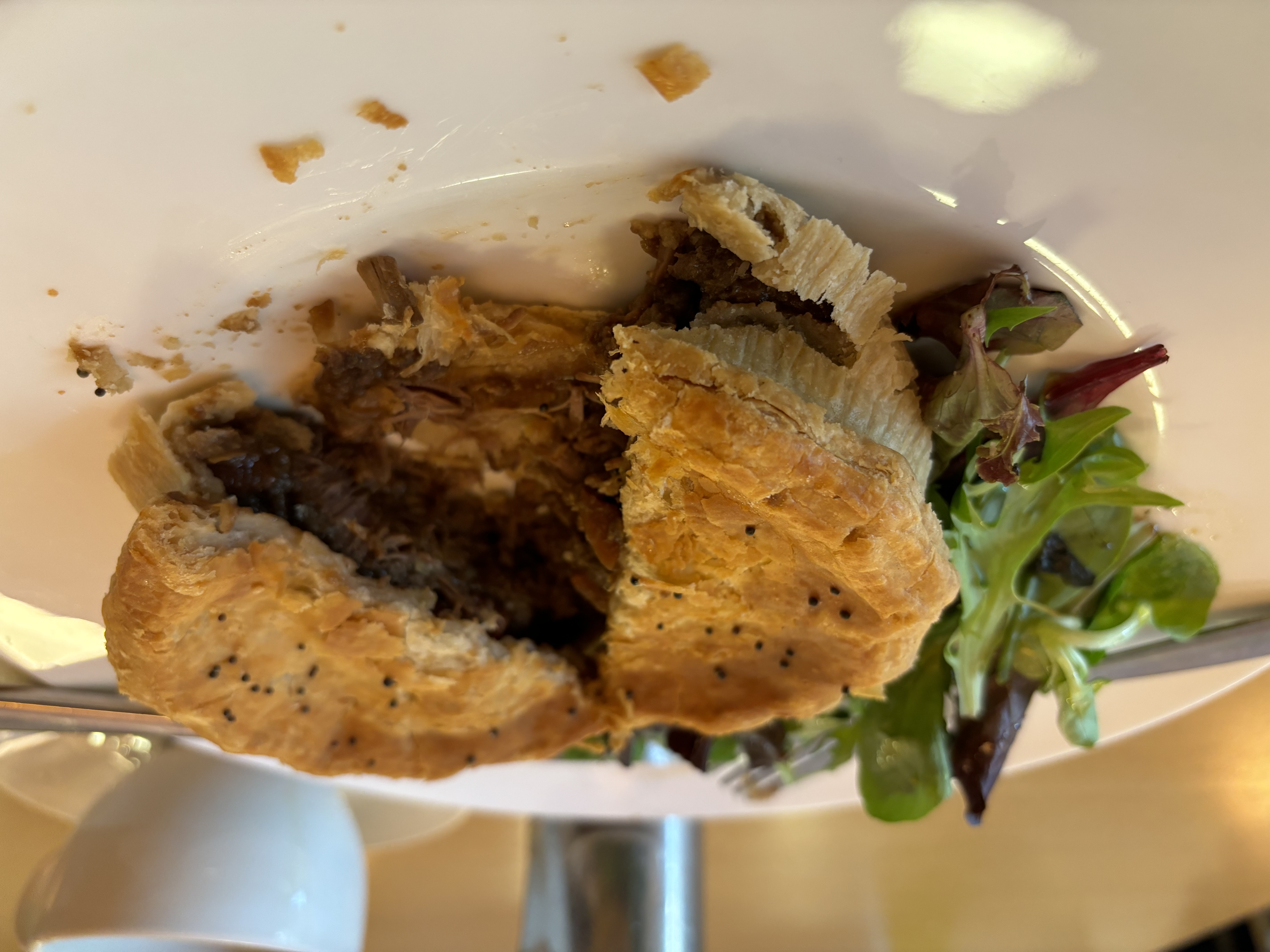
This is what it looked like inside. Honestly, I didn’t know what it would be like. I thought maybe the insides might have a meat in sort of an ale based gravy. It was moist and tasty.
And, this is where I am going to stop with my retelling of my visit to the Tate. Yes, I did see some more great art, but I don’t need to tell you everything.
But, you never know. I might come back and fill you in later.
After working hard to get everything done before I left, I managed to get a few hours of sleep and get up and out of the house in time to catch the Kalamazoo Metro Bus to the train station.
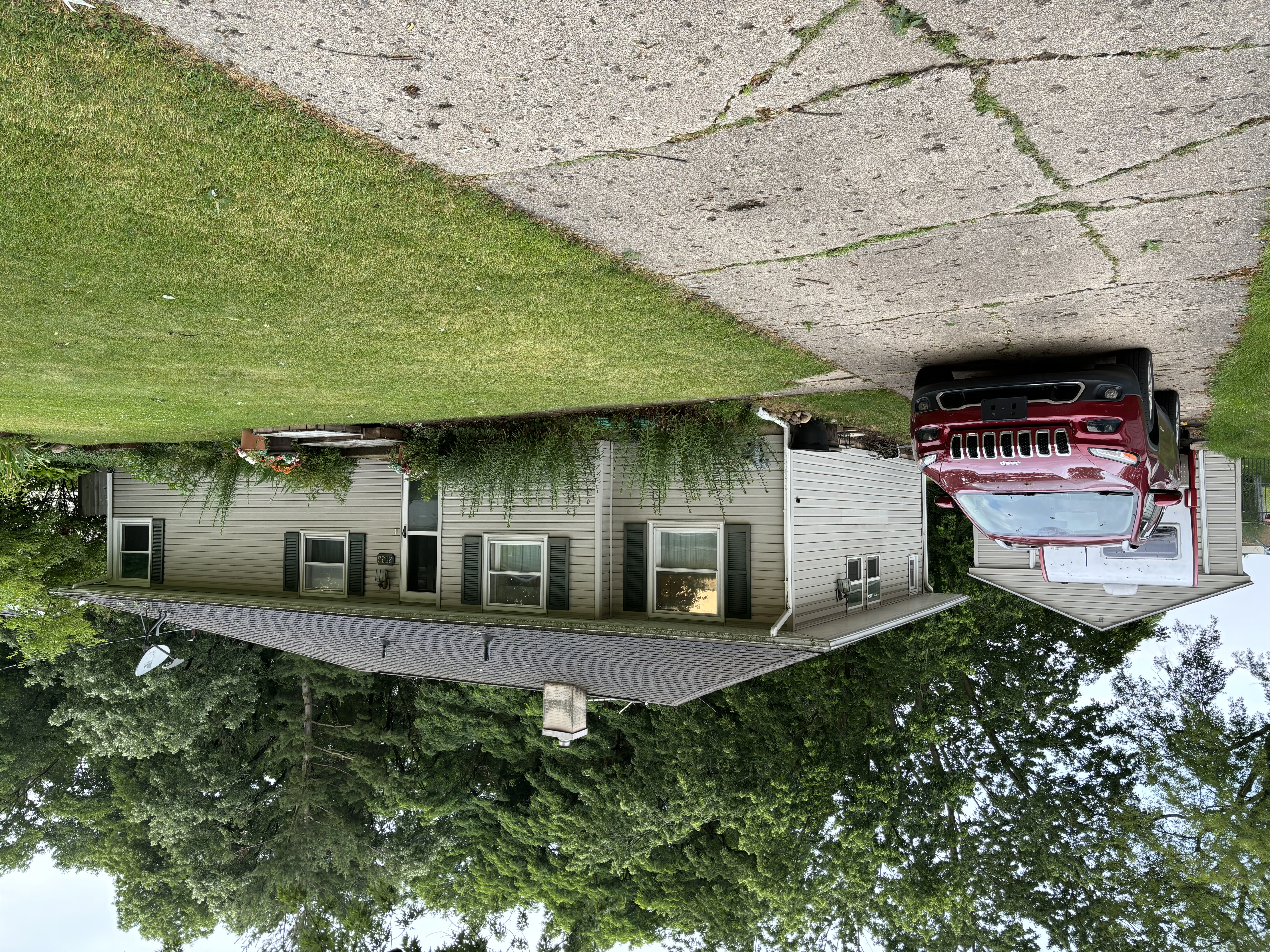
Goodbye, house! See you in July!
The night before, we had a wicked storm blow through. My house was unscathed.
It was probably a good thing that I had the extra branches removed after the ice storm in 2023. I mean, I lost some branches off the trees in front of my house that were the size of small trees. I was lucky, though. Other than my bank account, the only damage was a dented gutter.
I had nothing to deal with as a result of this storm.
Oh,no!
The house down the street from me was not as lucky.
I continued down to the corner to catch the bus. I was a few minutes early, and the other rider assured me that it was a few minutes late, so we just chit chatted and watched the workers from Consumers Energy work on the lines at the corner.
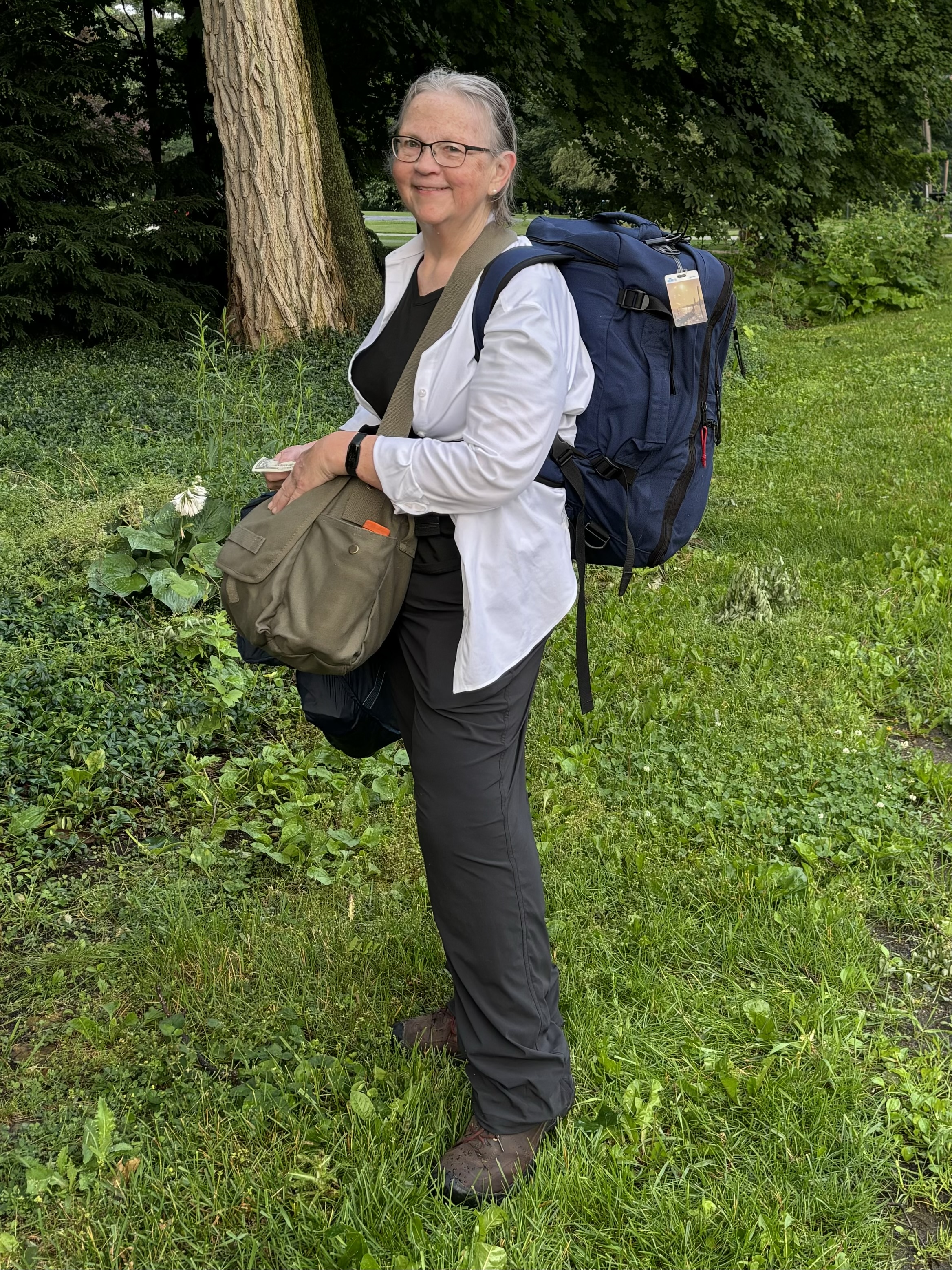
While we waited, I had her take my picture. In spite of my practice walking with a loaded backpack in the run up to this trip, it still felt pretty heavy. Oh, well. I am on my way. No turning back now!
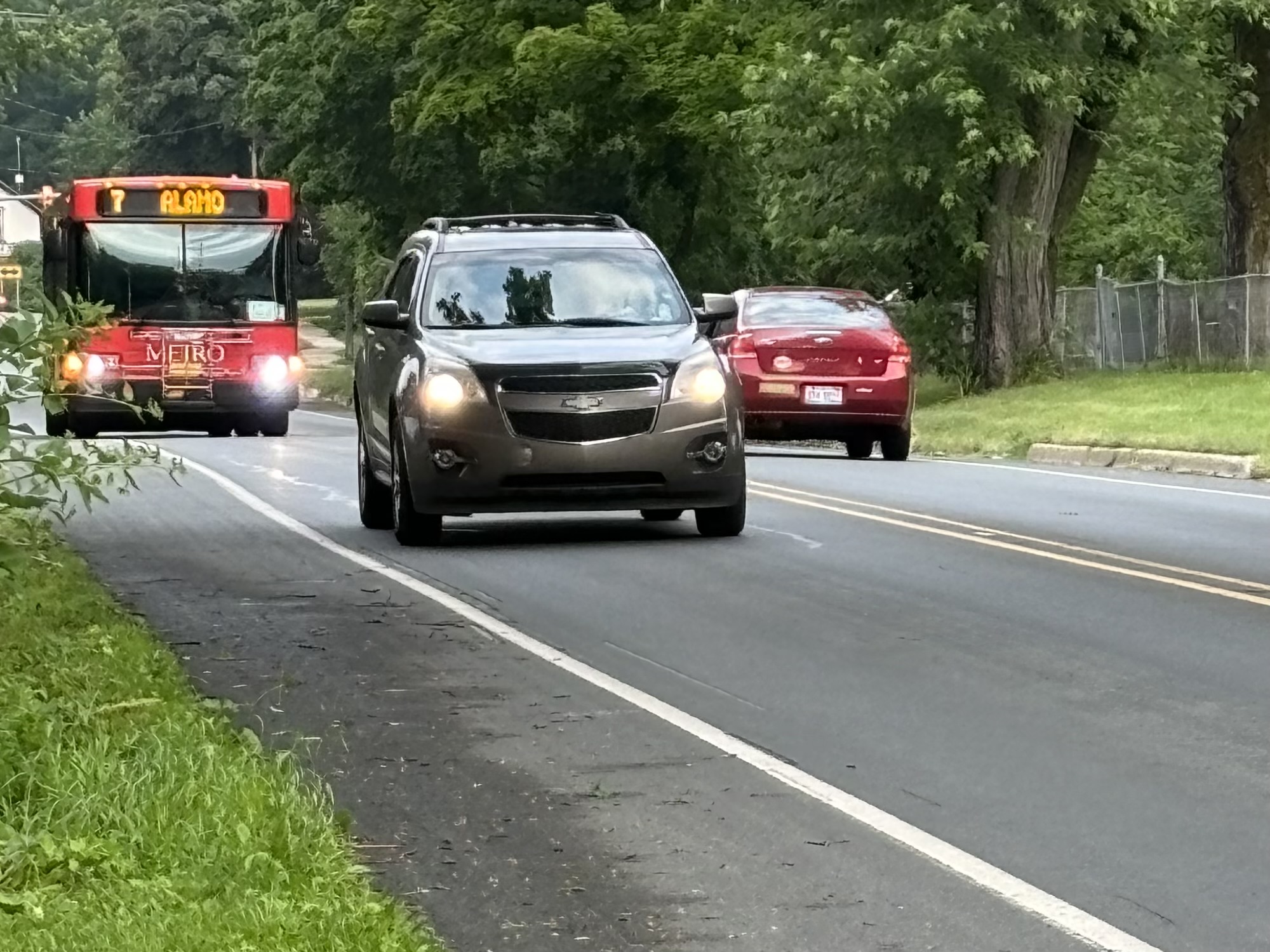
Here comes the bus!
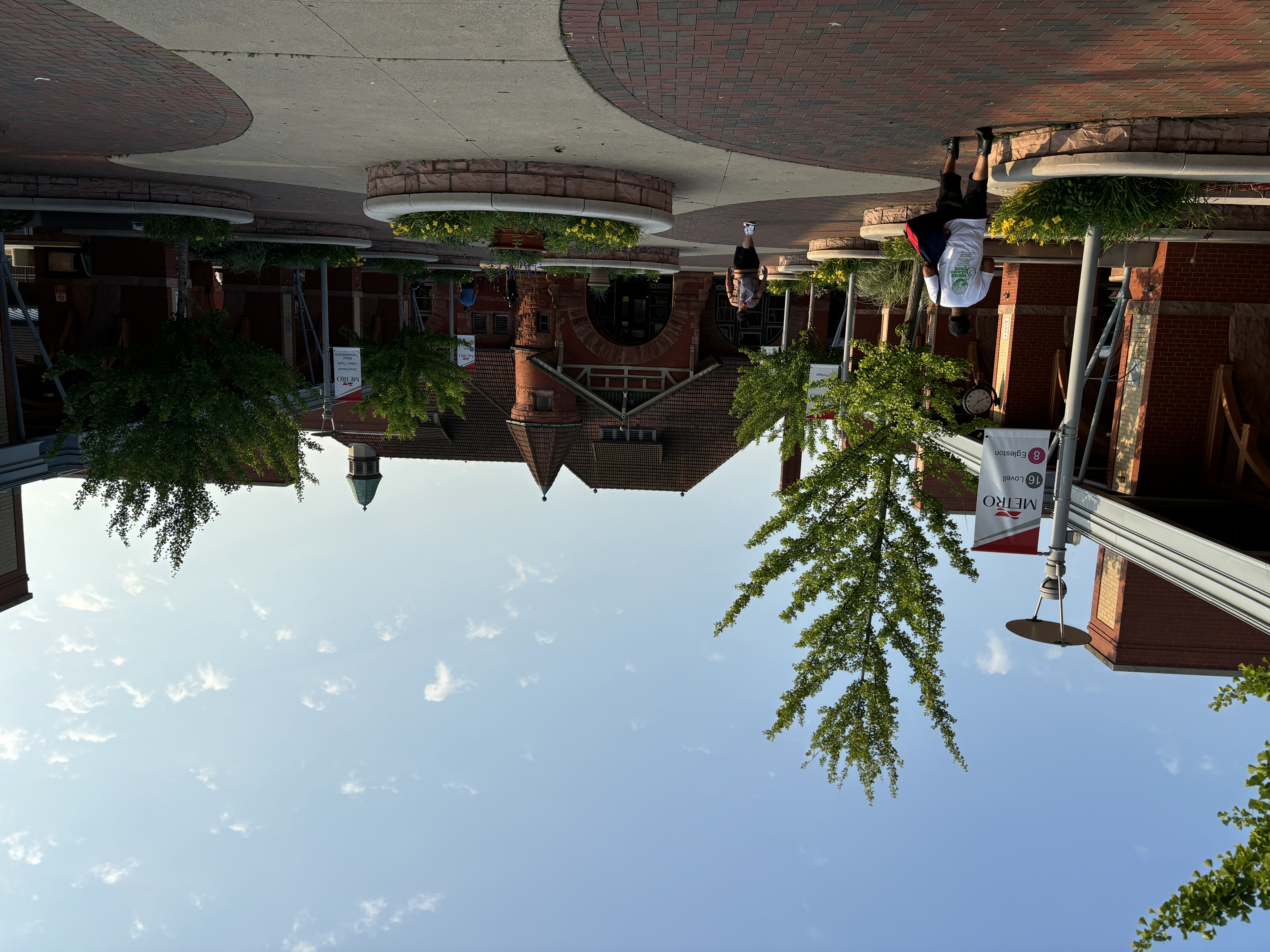
We rolled into the transit center exactly on time. If I had wanted to risk the bus being late and the train being on time, I could have taken the next bus. But it worked out just fine.
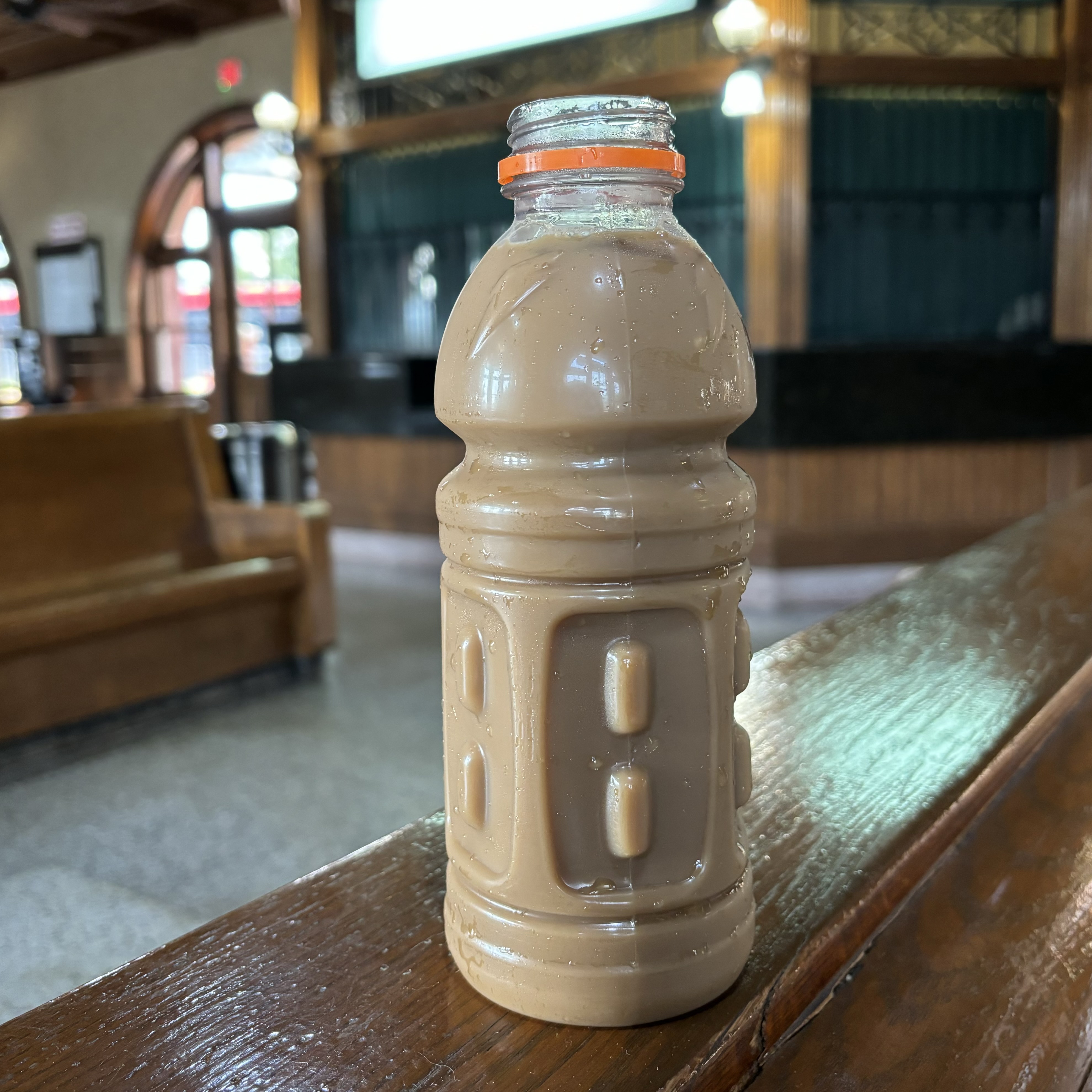
The train station was air conditioned and I had an iced coffee I made at home to sip on while I waited.
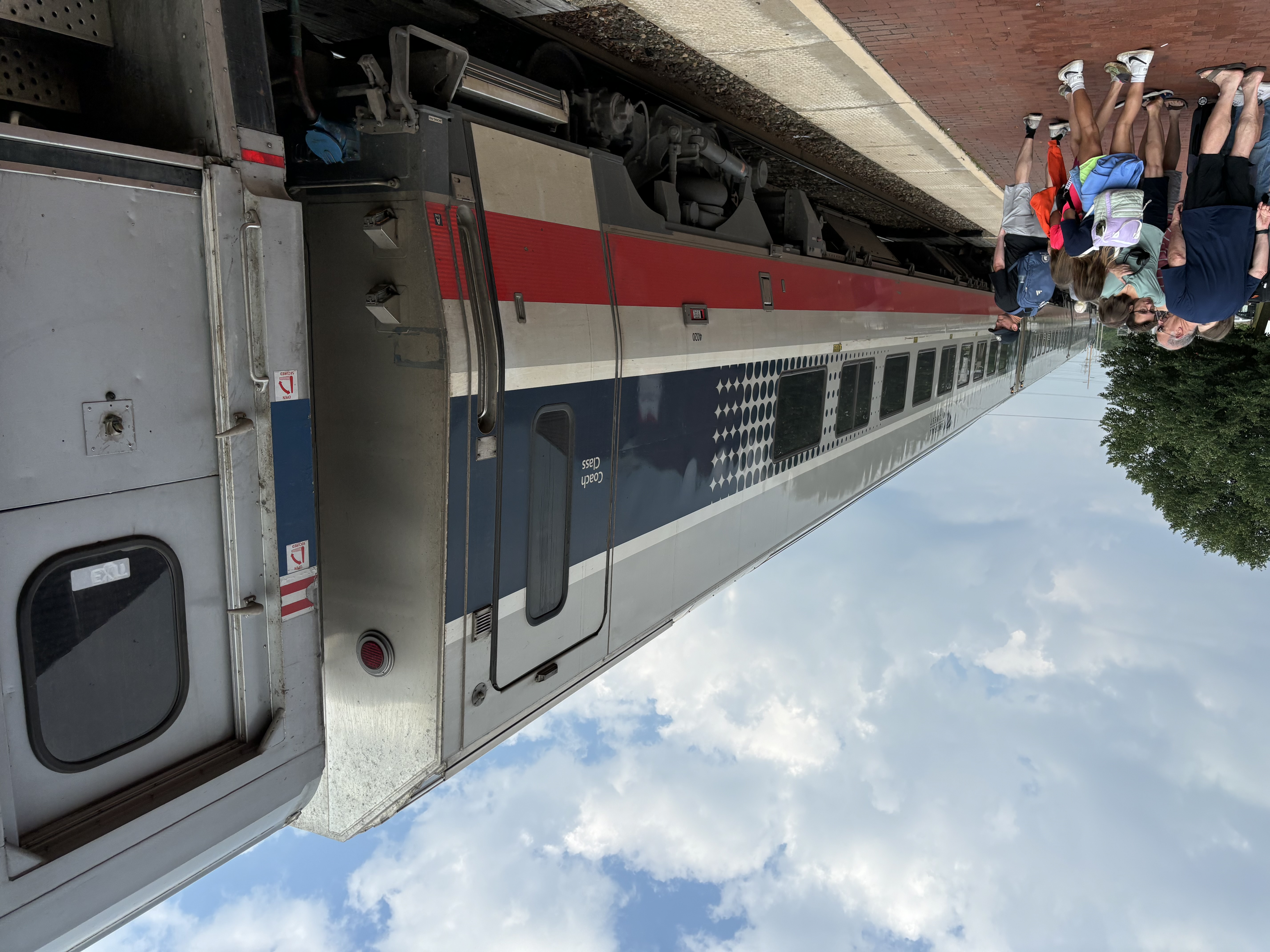
The train arrived. All Aboard!
I sat next to a lovely woman named Sandy, who was a retired teacher from the U.P. – that’s the Upper Peninsula, to those of you who might not know. We had a lovely chat all the way to Union Station in Chicago.
I managed to get myself to the Blue Line and get on the train with my luggage. I had my first experience with tapping my credit card to get transportation. In this case, I had to get a ticket and use that to get to the train.
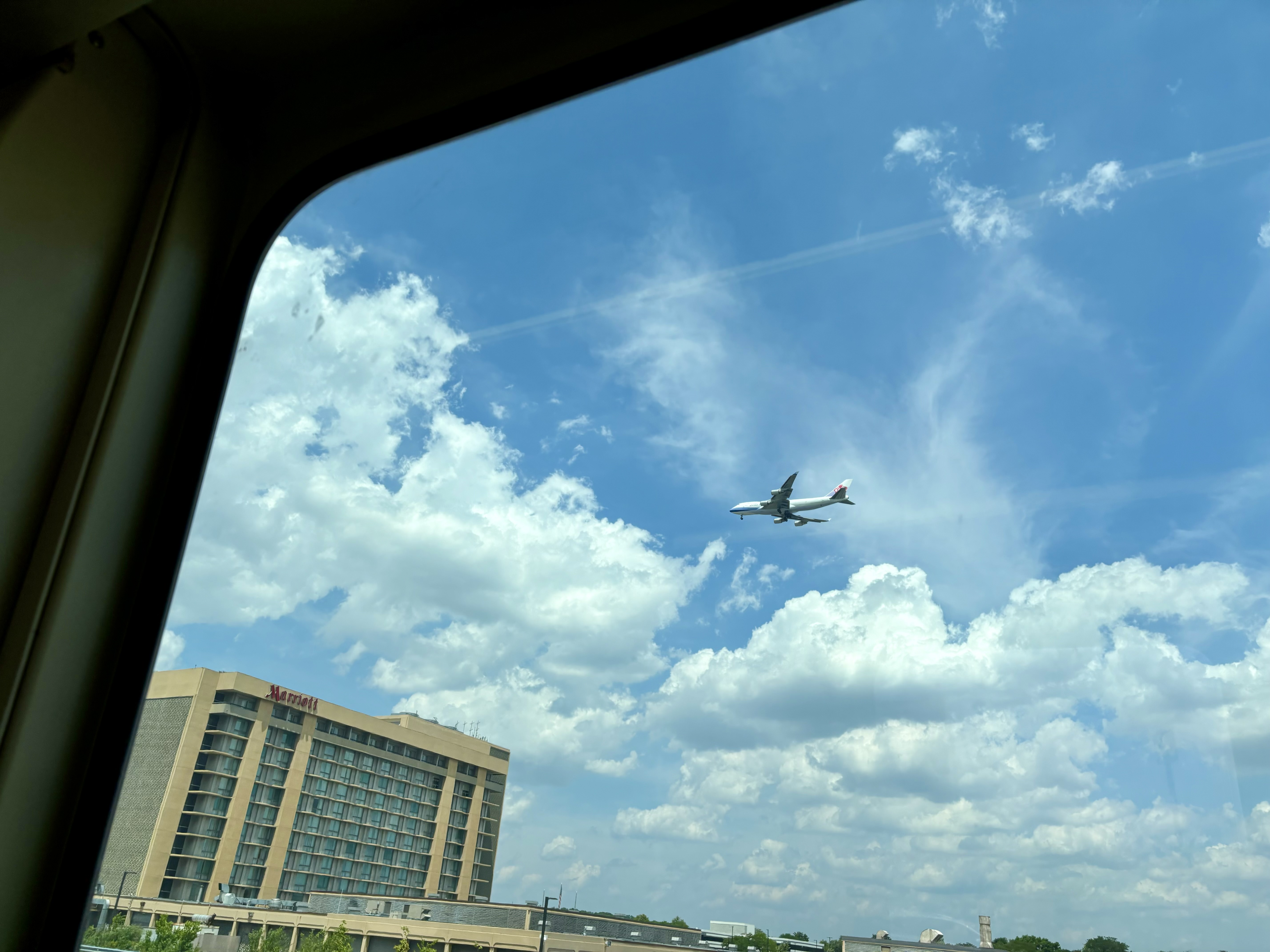
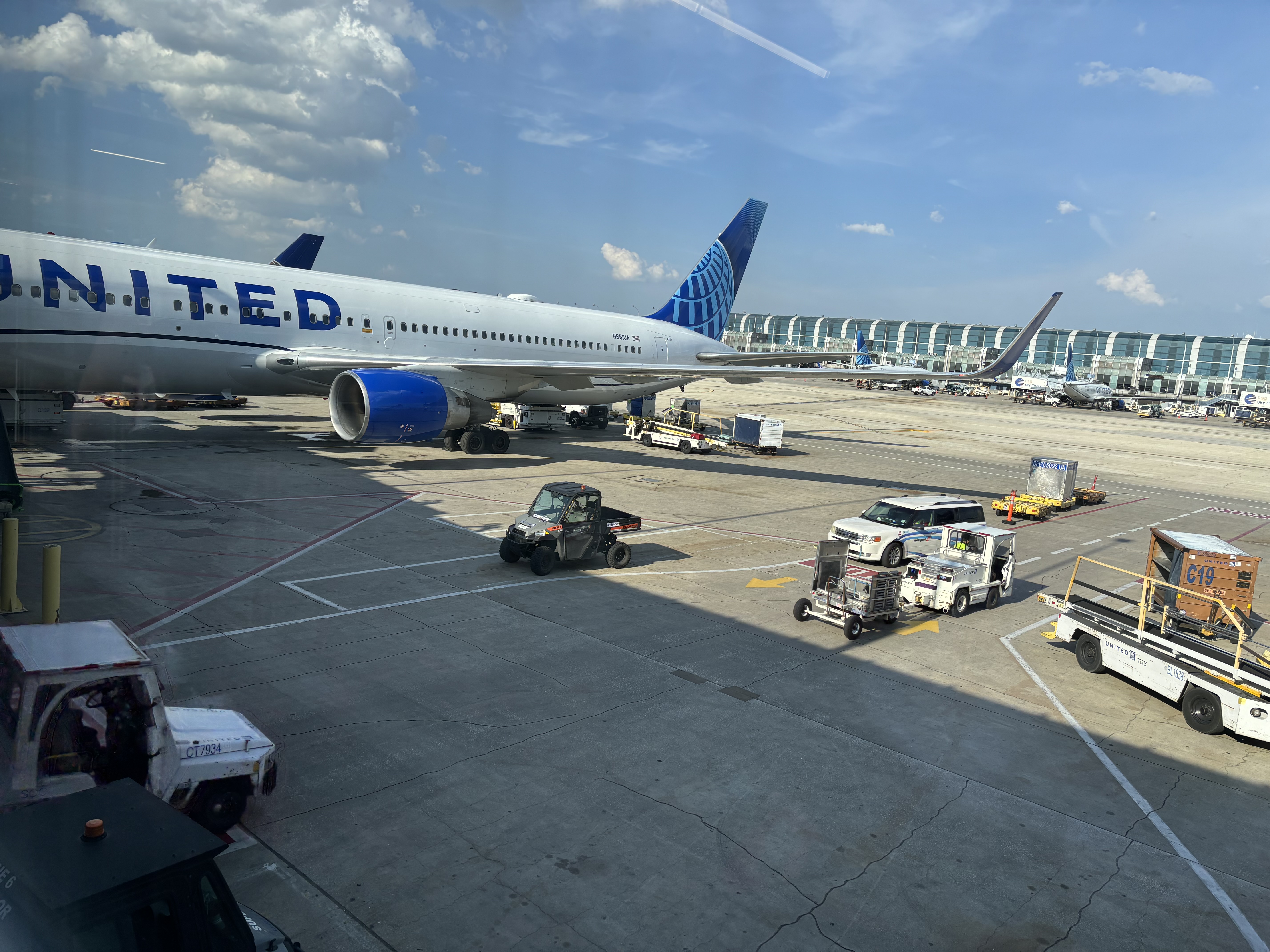
The plane and the CTA train are both headed in the same direction. I must be getting closer to O’Hare!
I got off the train, managed to get myself to where I had to check my luggage. In all the examination and comparison of fares, I didn’t realize that I had booked a seat that didn’t allow a carry on bag. I could only have one small bag that would fit under the seat in front of me.
Luckily, I discovered that while I was still at home, so I could pay the extra fee ($75) and get my meds moved into my carry on bag and take some things out of the carry on and move them to the checked bag.
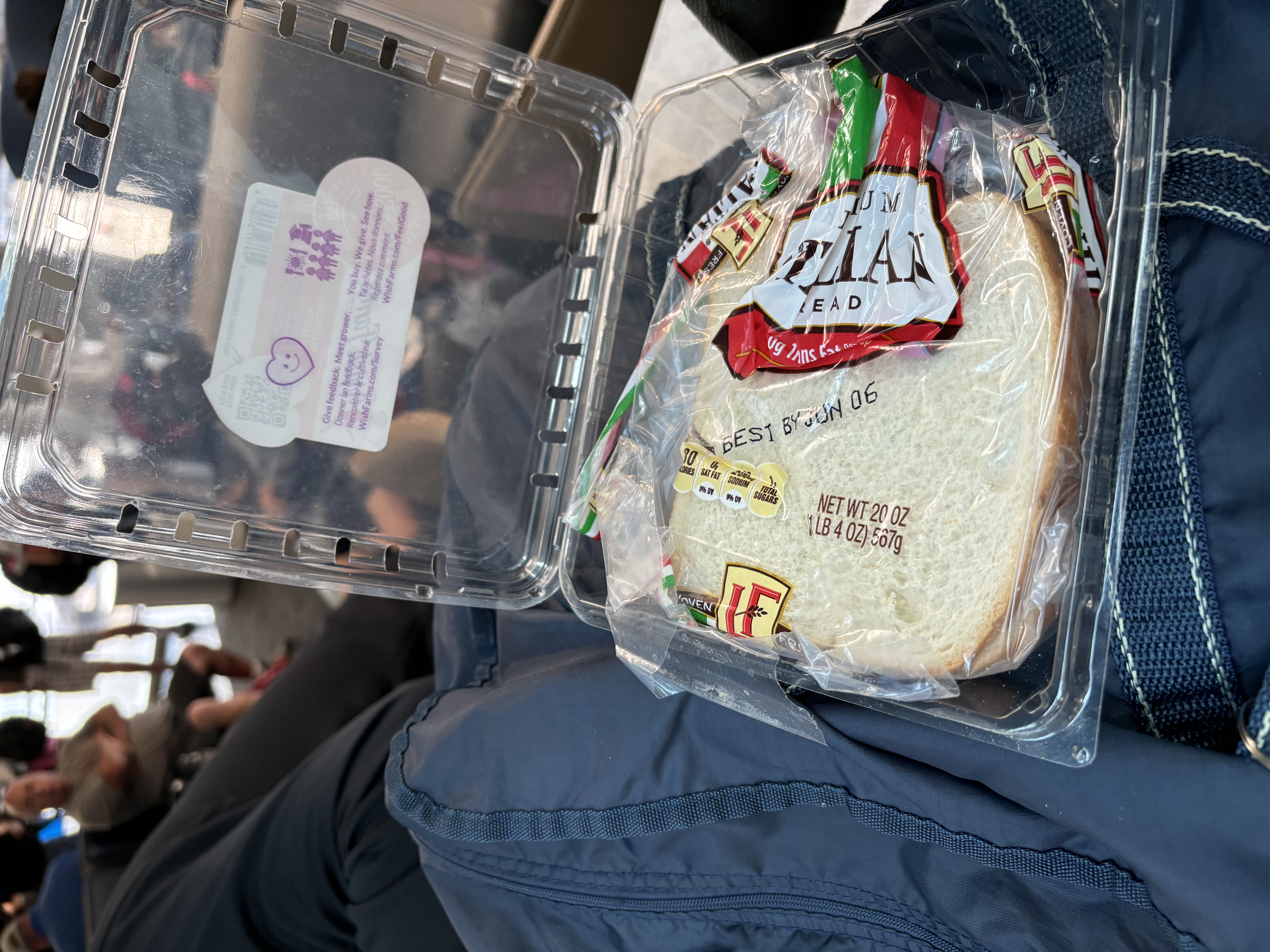
My lunch did make it into the carry on bag. After all, a girl has got to eat! I didn’t want to find out how much airport food cost these days. I will never forget when my brother, Craig, picked me up at the old Buffalo International Terminal back in the ‘90’s and gestured toward the new terminal being built and proclaimed it “new home of the $7 hotdog.” At that time, I couldn’t conceive of such an expensive hotdog. I wouldn’t be too surprised if that’s not out of the ballpark these days.
Ah, but I digress.
Oh, what kind of sandwich? Peanut butter and jelly topped with potato chips.
I had arrived plenty early. Way too early. But I managed to while away the hours and soon enough it was time to board.
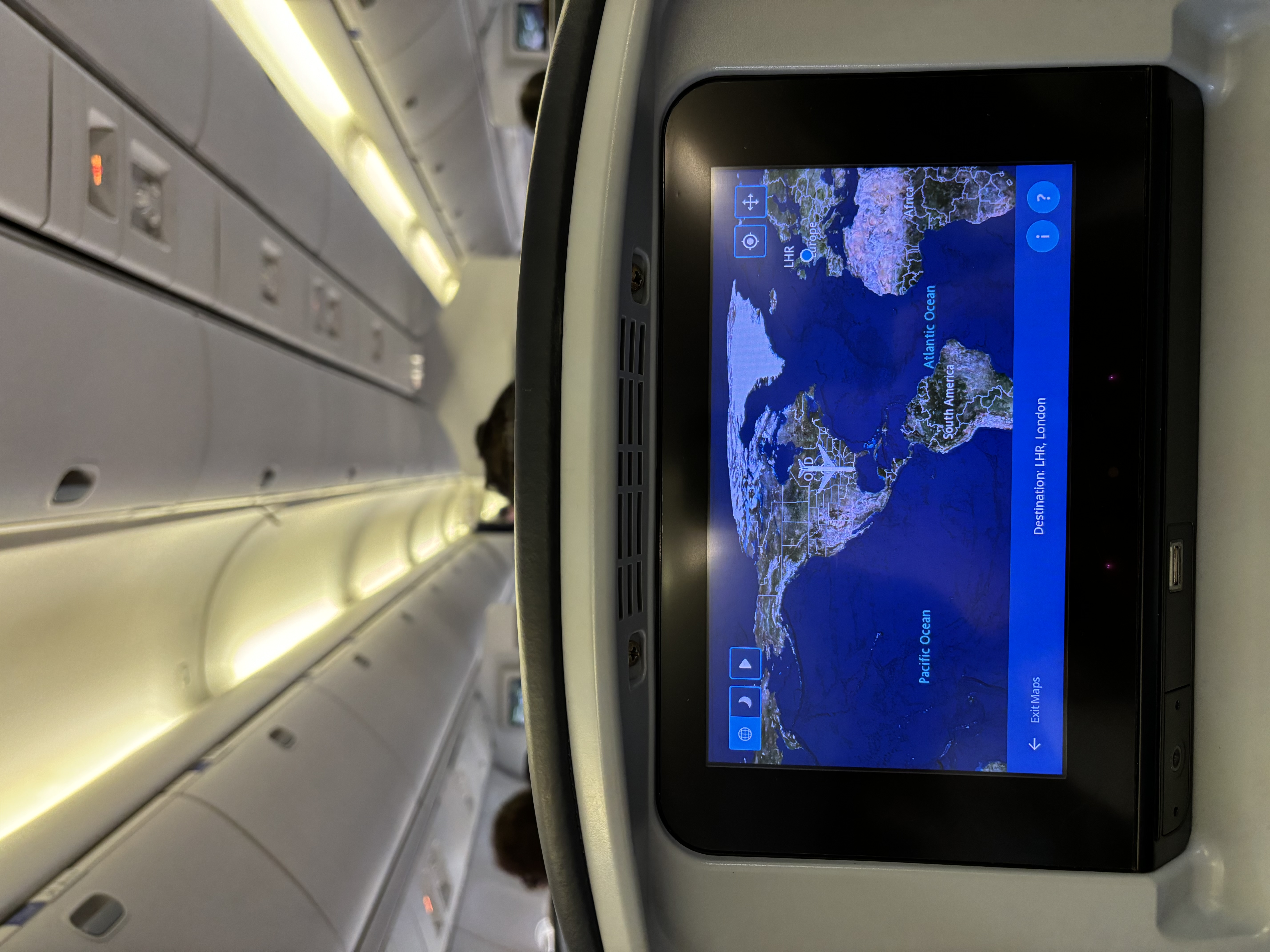
I always enjoy watching the map showing the progress. Here we are, starting out in Chicago.
The time passed. They served dinner. I chose chicken, although the pasta smelled good. I ate a few bites. I watched a few shows and the movie, The Boys in the Boat, which I truly enjoyed. I got up and walked a bit to exercise my knees a bit, chatted with the flight attendant and tried to sleep. Eventually they turned on the lights and gave us breakfast.
And then we were landing in London!
Somehow, I figured out the Underground and got to a station somewhere in the vicinity of the hostel. I sat down at a Dunkin’ Donut to have a restorative coffee and figure out my next steps.
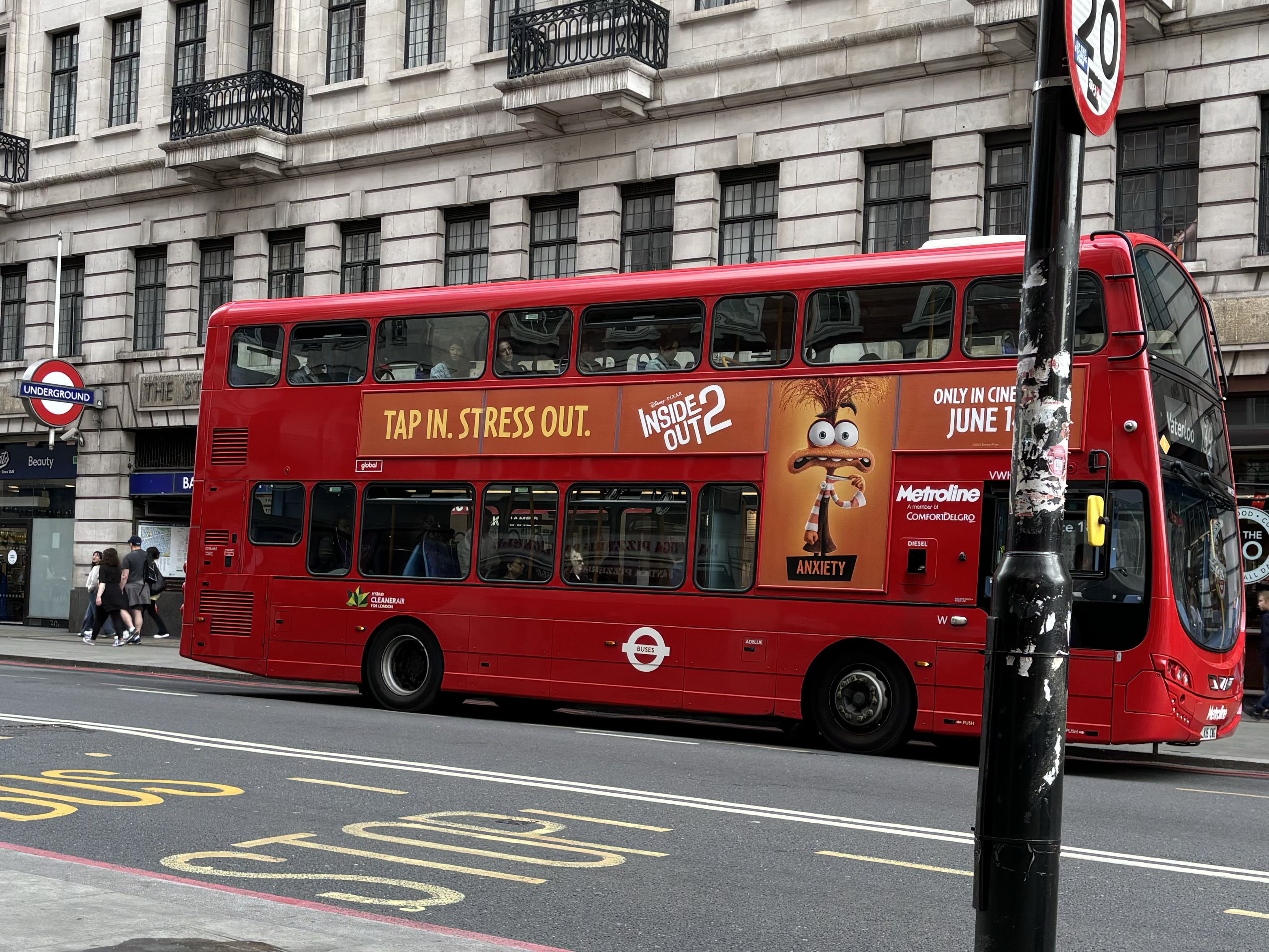
When an iconic red double decker bus rolled up in front of me. I considered that a good omen and I set out for the hostel.
There have been so many adventures since I last posted. Covid just kind of took the wind out of my sails to write them all down.
However, with the loss of my beloved travel partner, Cora, I’ve decided to embark on a different sort of adventure – one that isn’t based on towing a trailer. Next week, I leave for Europe!
How did this trip come about? As with most things that I do, it was kind of a spur of the moment decision.
I had a total knee replacement during the summer of 2023. I scheduled it so that it would be after my fiftieth high school reunion and would give me enough time to recover so that I could make the trip to Detroit to celebrate my goddaughter’s wedding in October.
It was a good plan, and it would have worked, too, if I hadn’t fallen getting out of the shower two weeks after the surgery.
The fall could have caused many more problems than it did. As it was, I tore my quads of the operative knee. So, I had more surgery and a much longer recovery. I was strapped into a leg immoblizer and used a walker to get around. It was fortunate for me that the involved leg was my left leg, so I could drive as long as I wasn’t taking any pain killers. This meant that I could still get to appointments and buy groceries and such, so I wan’t completely reliant on others.
The new situation made attending the wedding in Detroit an iffy proposal, and eventually I decided against it. While I could handle driving for fifteen or twenty minutes, the trip to the other side of the state would have been extremely uncomfortable.
Okay, so what does this all have to do with going to Europe? Well, my goddaughter is marrying a man from Greece, and they are having another wedding in Greece in July! I made attending the wedding a goal for recovery. I decided that if I could walk five miles and climb stairs I would be good to go.
I’m pleased to announce that I hit my goals! Nor only was I doing my PT zealously, I loaded up my backpack and wore it as I walked around the neighborhood.
It was inconceivable that I would fly all the way across the Atlantic to just go to one place, so the trip kind of grew.
I figured that after the wedding in July, I would head north to Norway to visit Erik, a friend from my time at MSU back in the ‘80s and his wife, Jen. But then what? Well, I’d never been to Scotland, and my grandmother was born in Edinburgh. Great! That’ll be my next stop!
Wait, not great. That would put in in the city at the beginning of a month-long arts festival – the Edinburgh Fringe Festival. Crowds, crowds and more crowds. Uh, that wouldn’t work. I wanted to see where my grandma was from, not this.
So, I decided to put what I was considering doing after Norway at the beginning of the trip.
Now it was time to start booking flights. So many options! Well, one of the options was to stop off in Malta between London and Athens, so I stuck in a visit there, too. I could have gotten a reasonably priced flight from Chicago to Portugal to London at the beginning of the trip, but I figured that I had already been to Portugal, so the extra stop in Malta would be enough “while I’m in the area” travel for this trip.
If you read all the way through this print dense post, kudos to you! I promise more photos in the coming posts.
The next morning, I hitched up and started up the Trace. It was the end of April and it was full-blown spring/early summer down here. I wonder what it’ll be like by the time I get home. Will I watch the seasons reverse themselves? Will it be spring when I get home or will it be winter/spring? I don’t imagine that it will be quite as nice as it is here.
With that thought, I was happy to take advantage of many of the places to pull off and enjoy the season and the land.
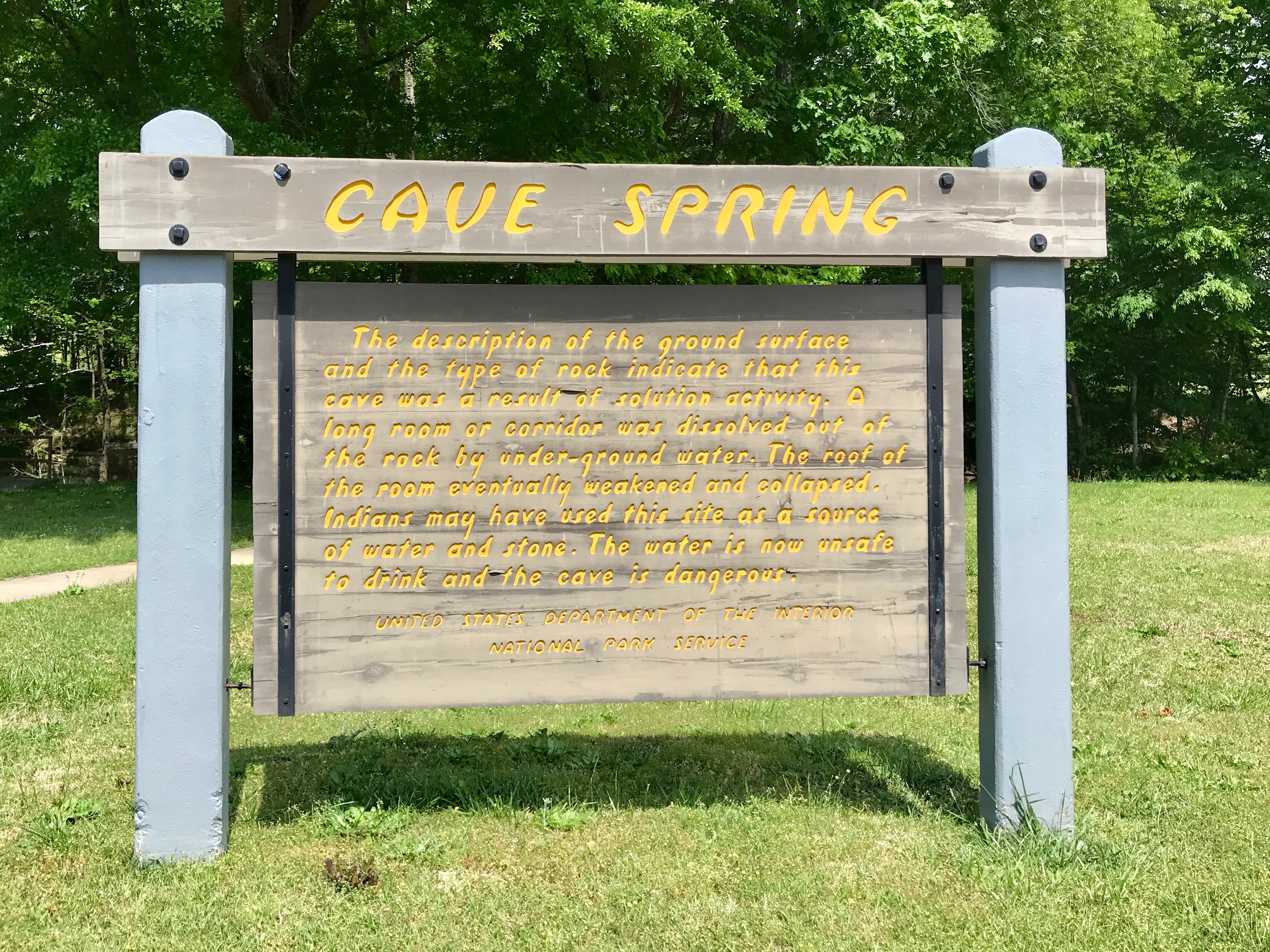
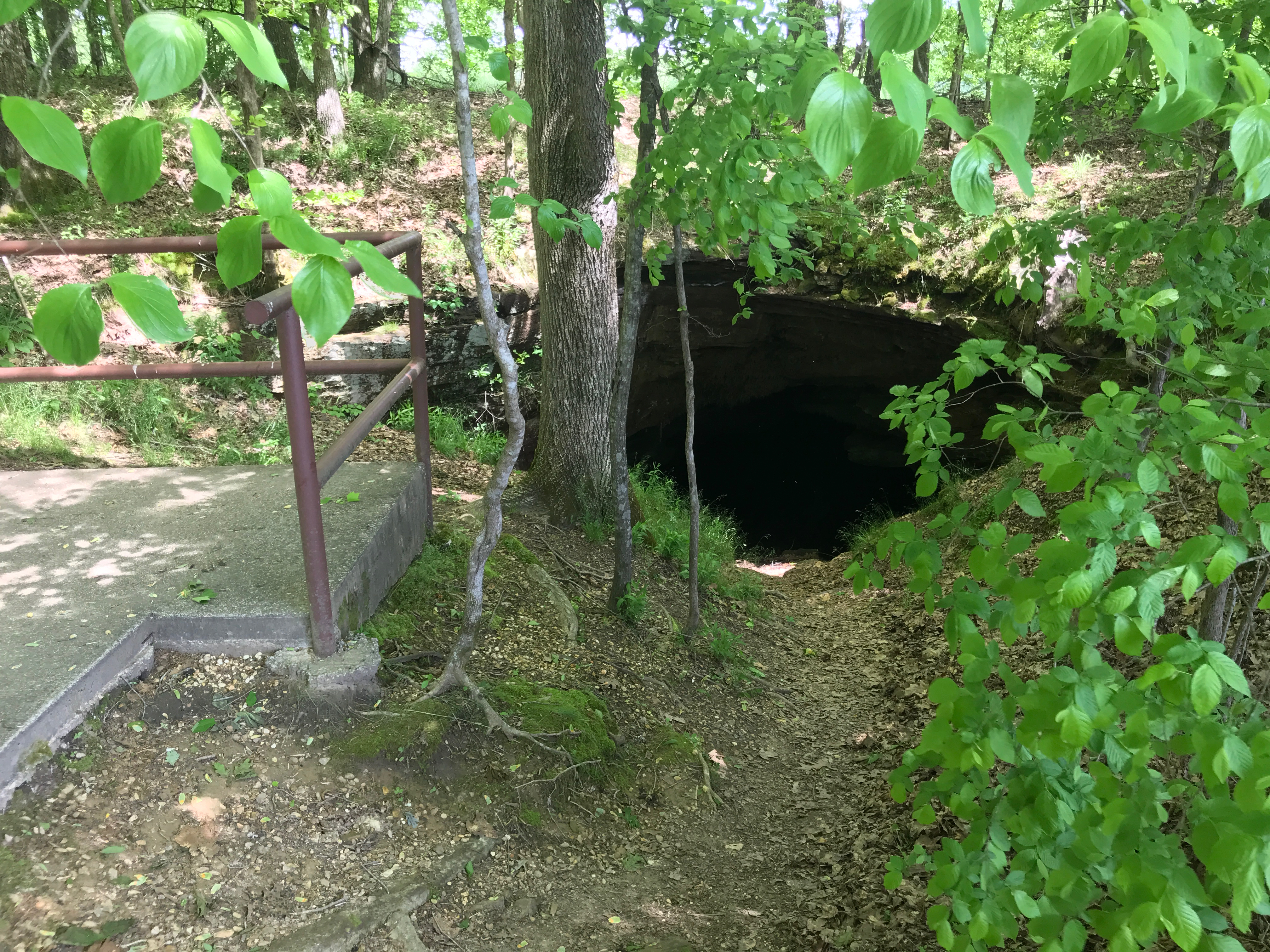
The first place I pulled over was Cave Spring. Based on the description, it sounds like the spring was something like a sinkhole or a cenote.
It’s not much to look at now-a-days, but it had its uses as a source of water and stone.
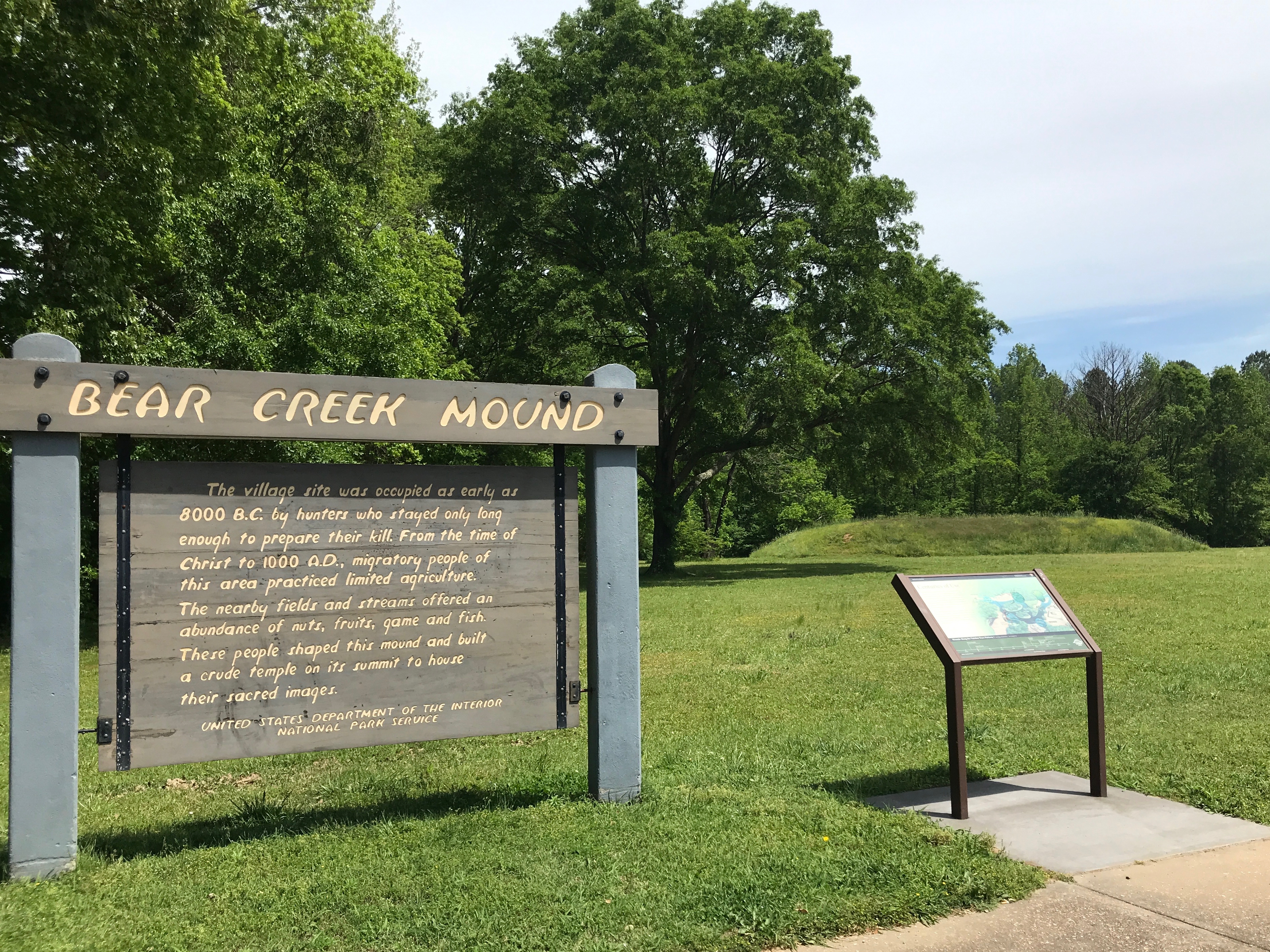
I stopped at another mound.
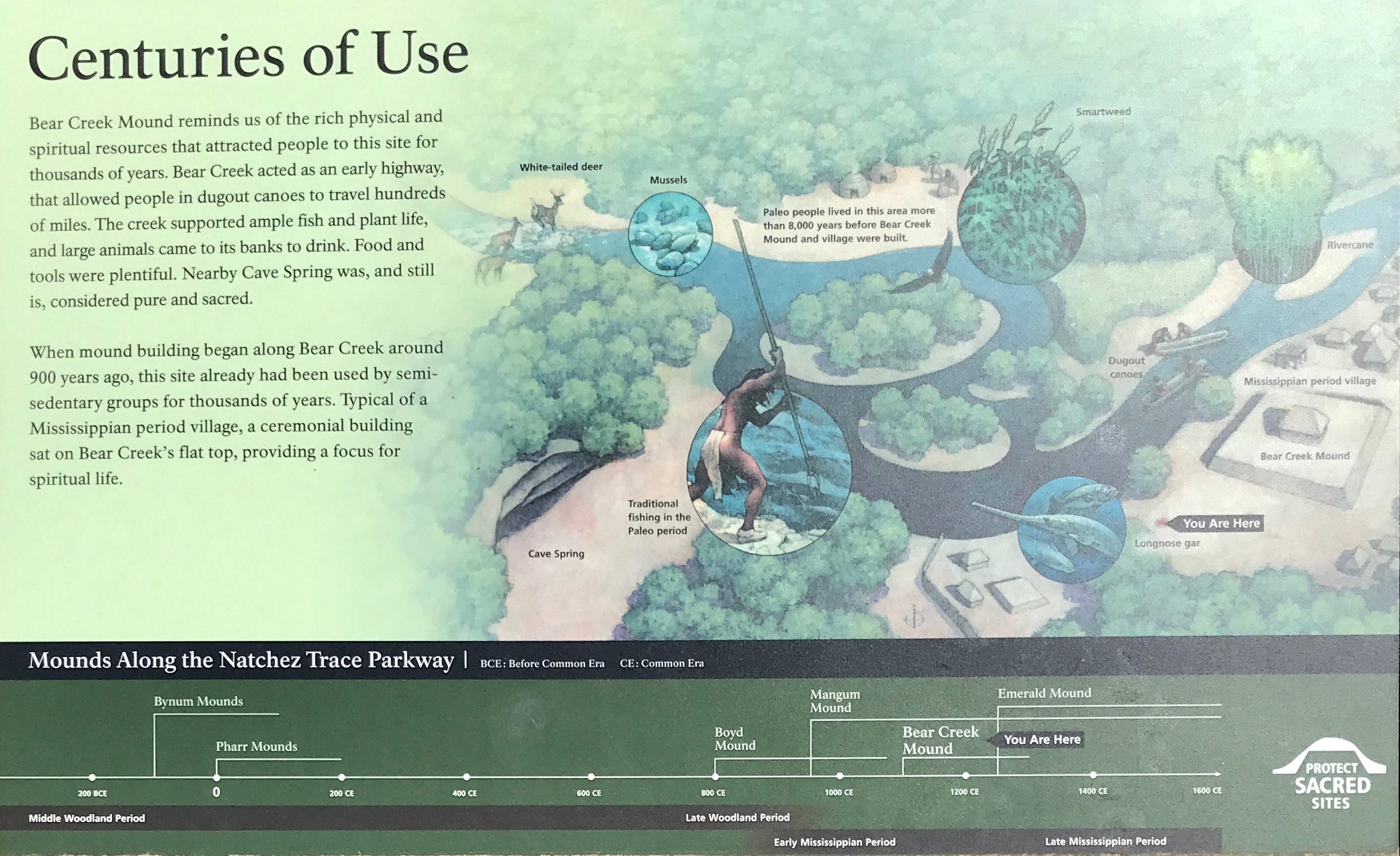
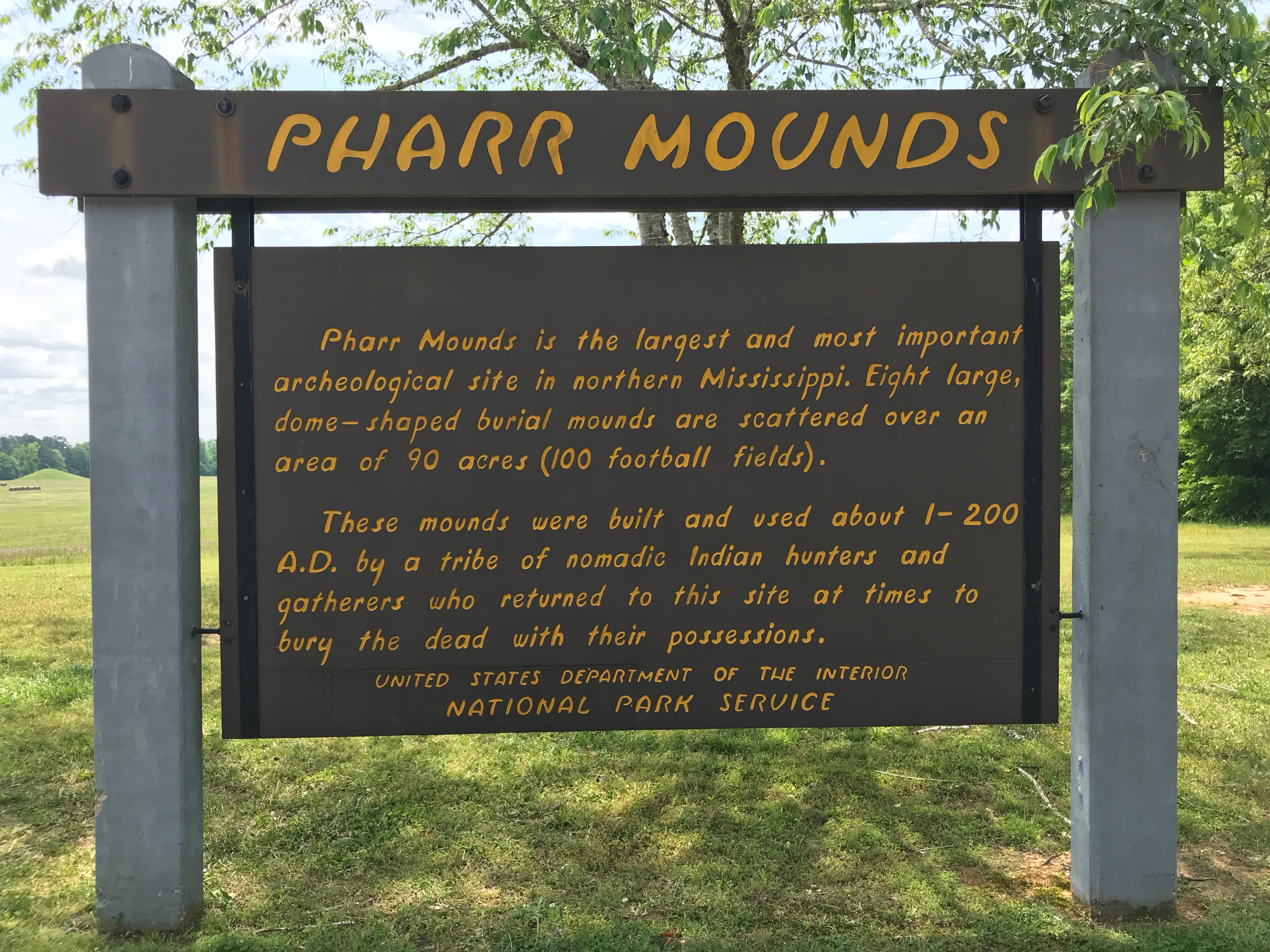
I was impressed with the interpretive signage that the National Parks service provided.
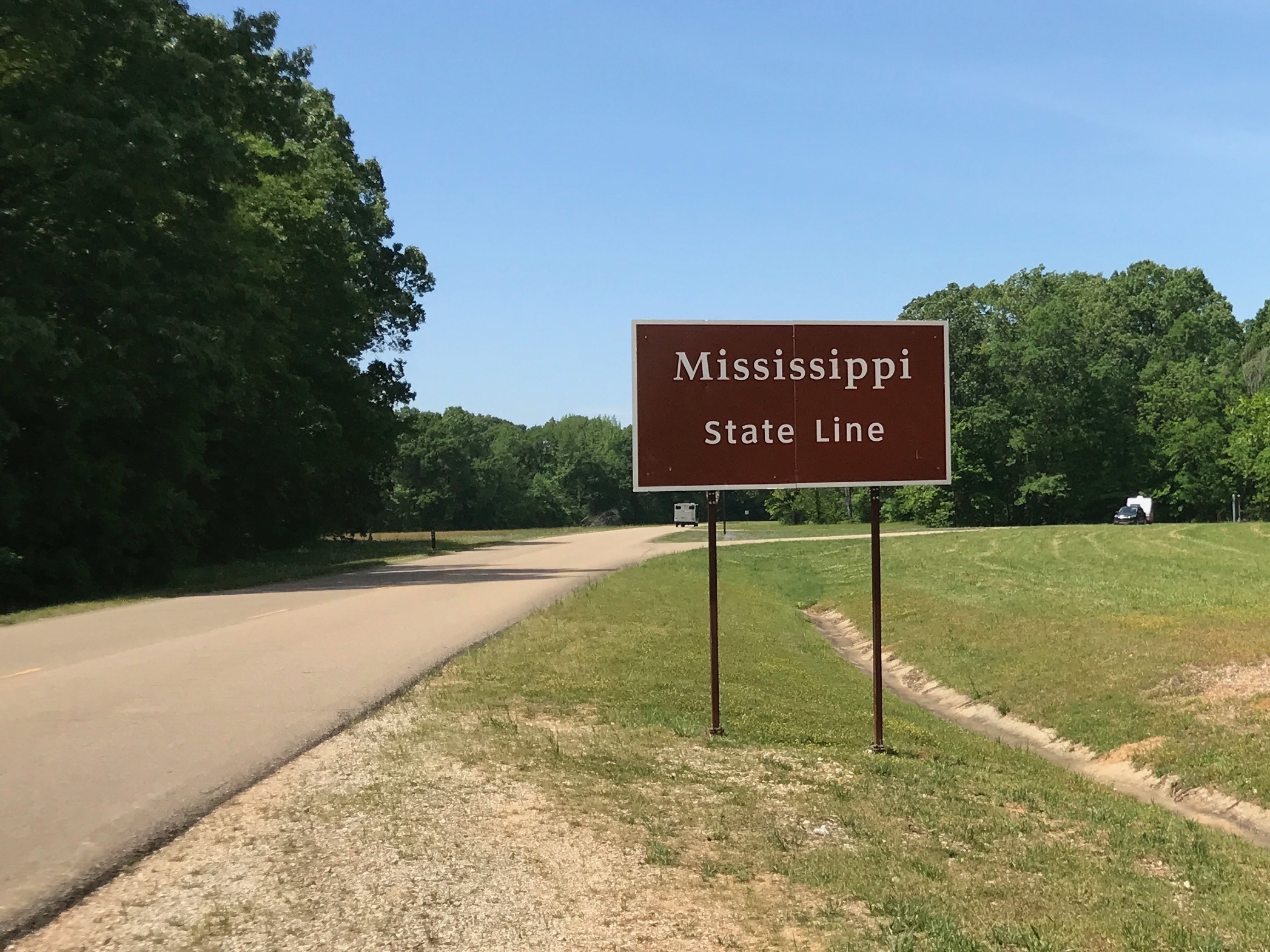
Leaving Mississippi…
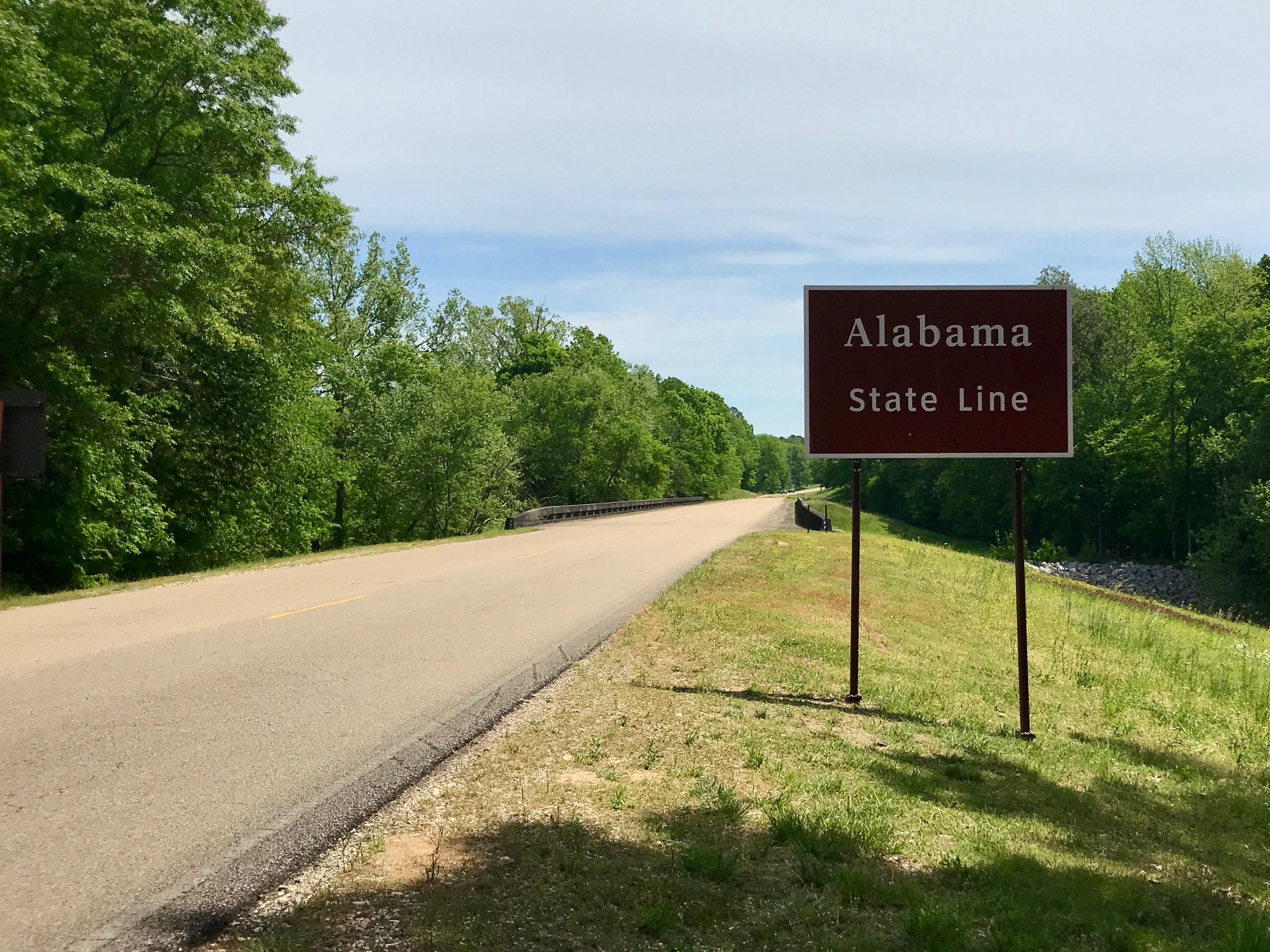
…and entering Alabama for a few miles. This is important because this was one of the first – if not THE first Interstate in the nation.
Okay, tell the truth.
When you read the name of this location on the sign, did you read it as ColberT…
…or Colbear? (As in Stephen Colbert.)
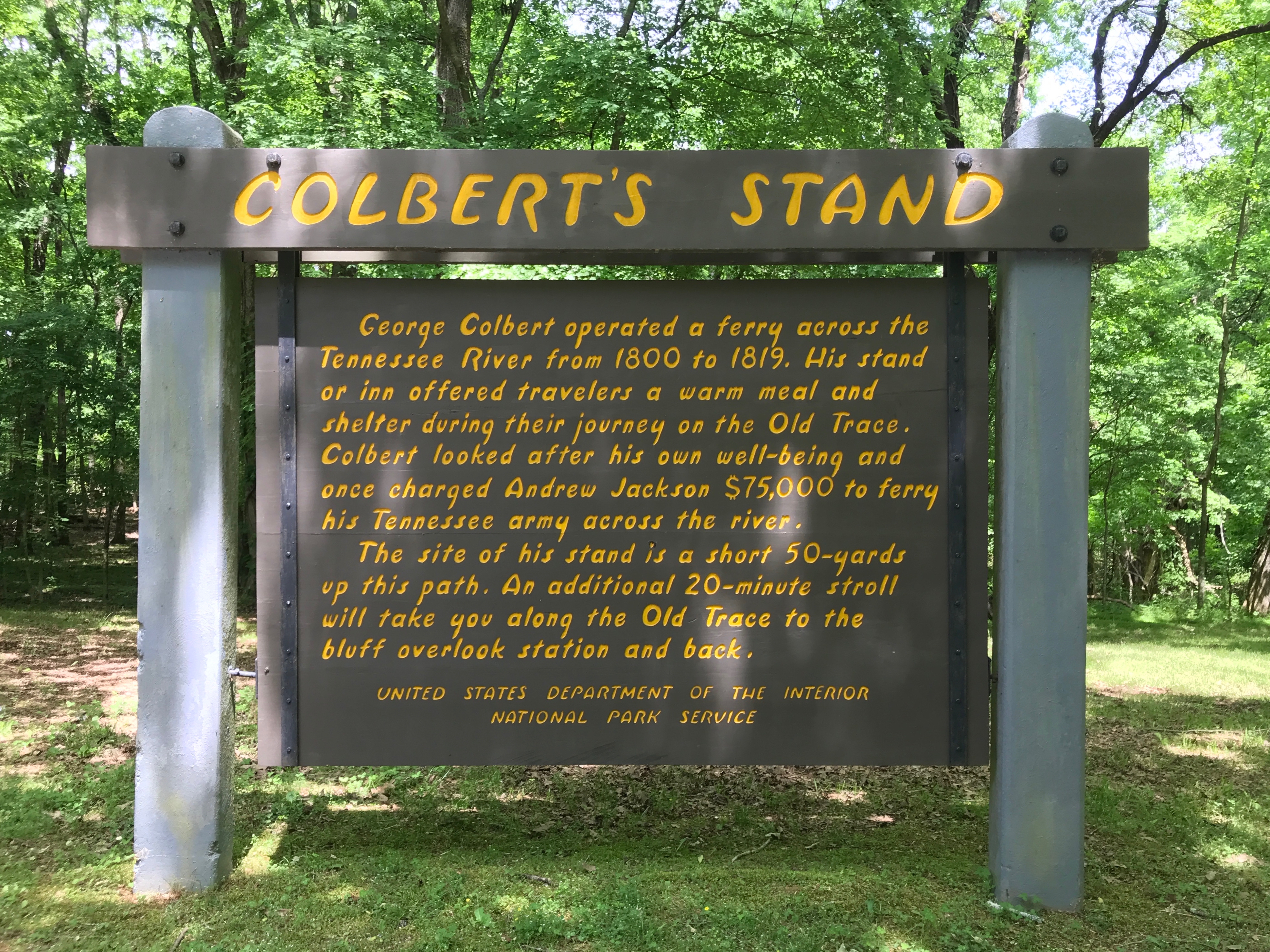
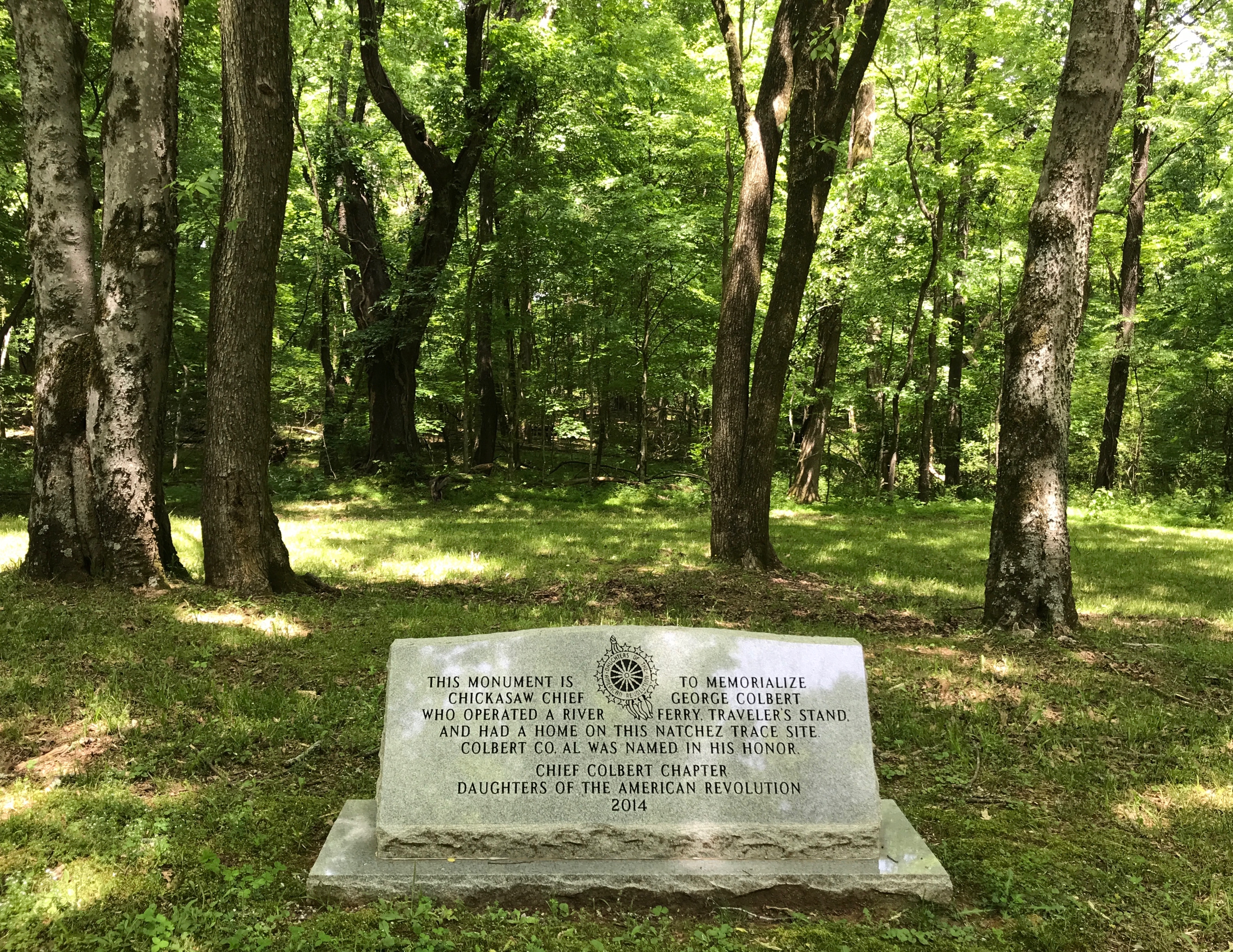
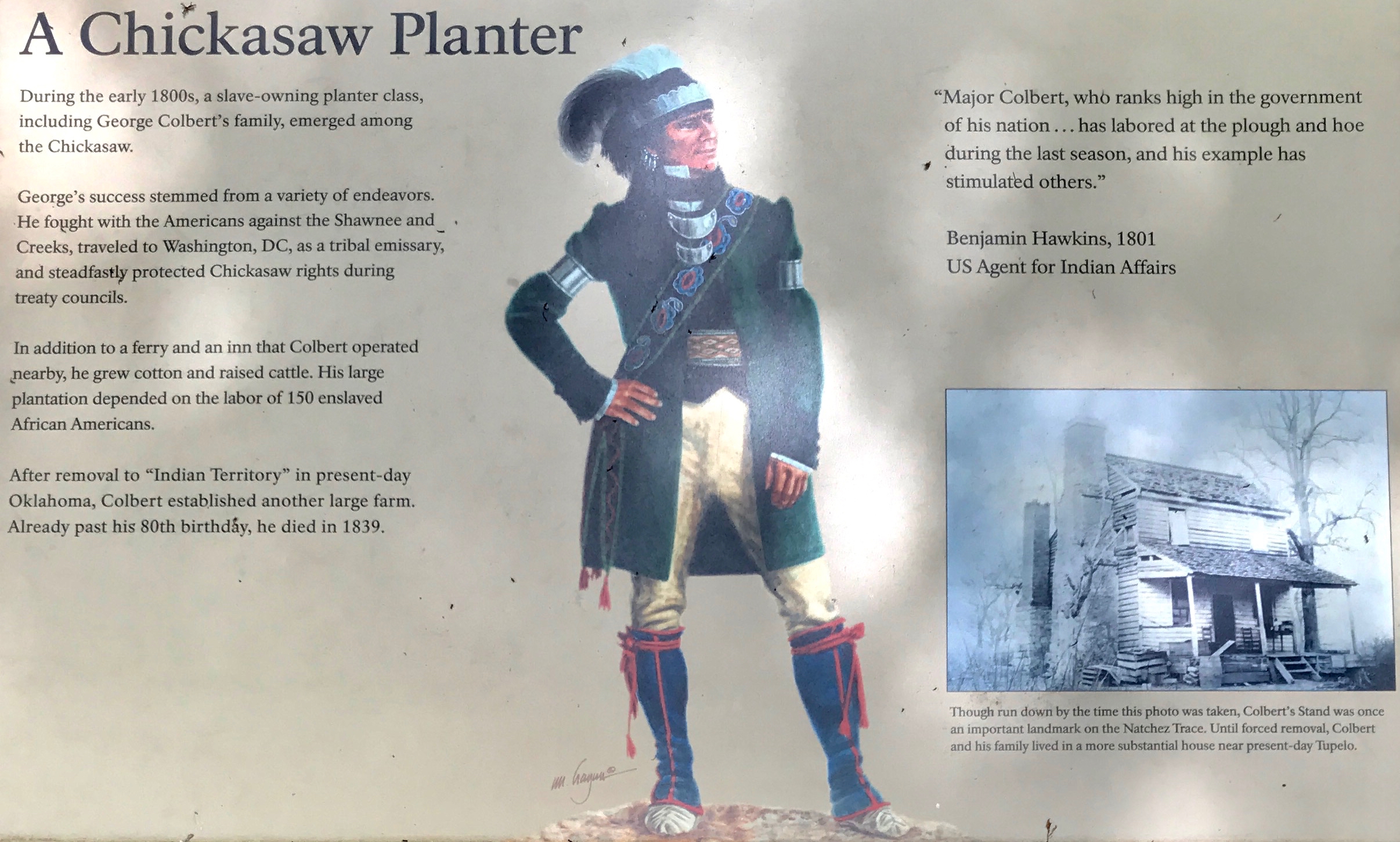
In any event, George Colbert was an interesting person. I invite you to click on the link to read more about him. He did many things, according to the Wikipedia entry.
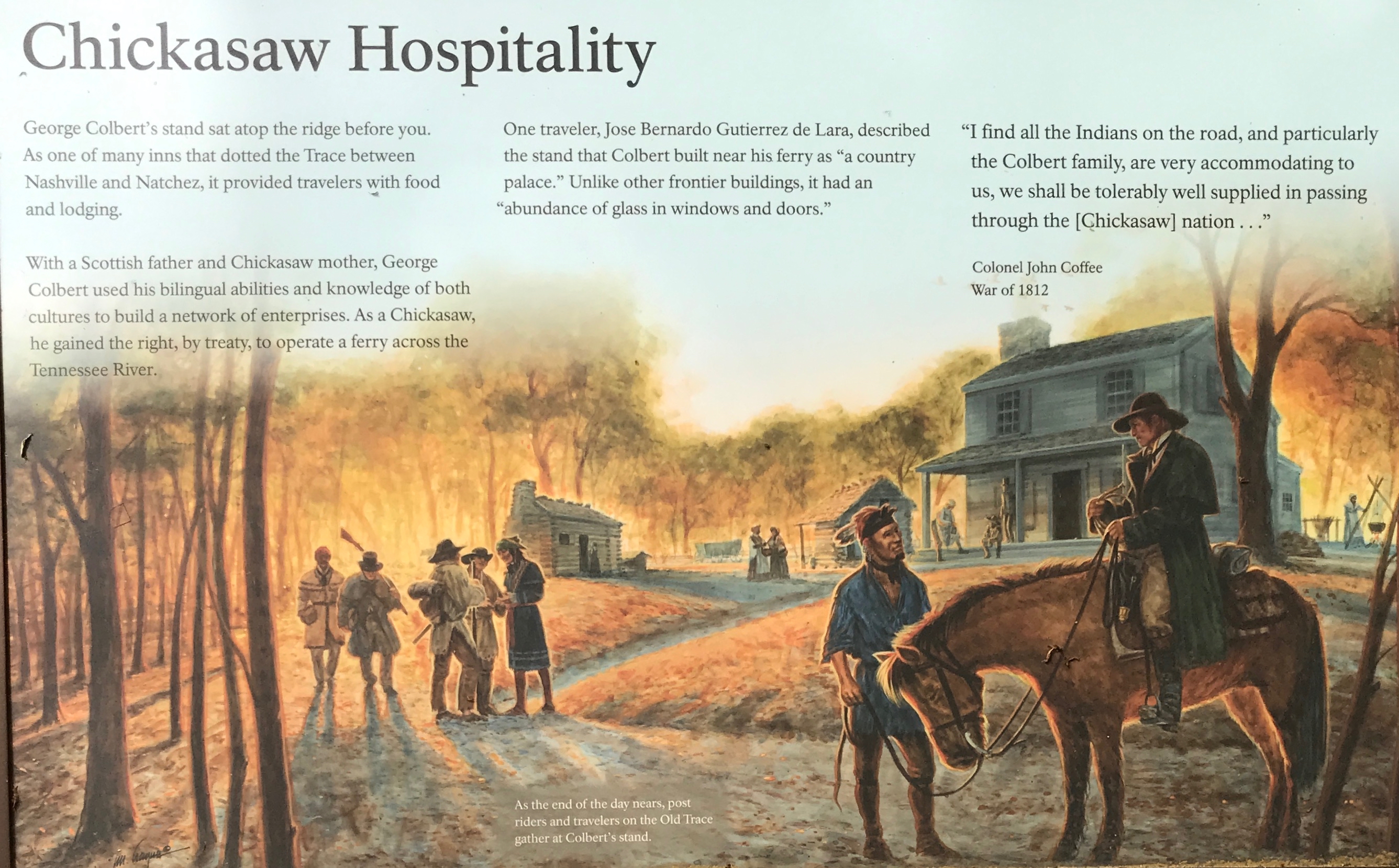
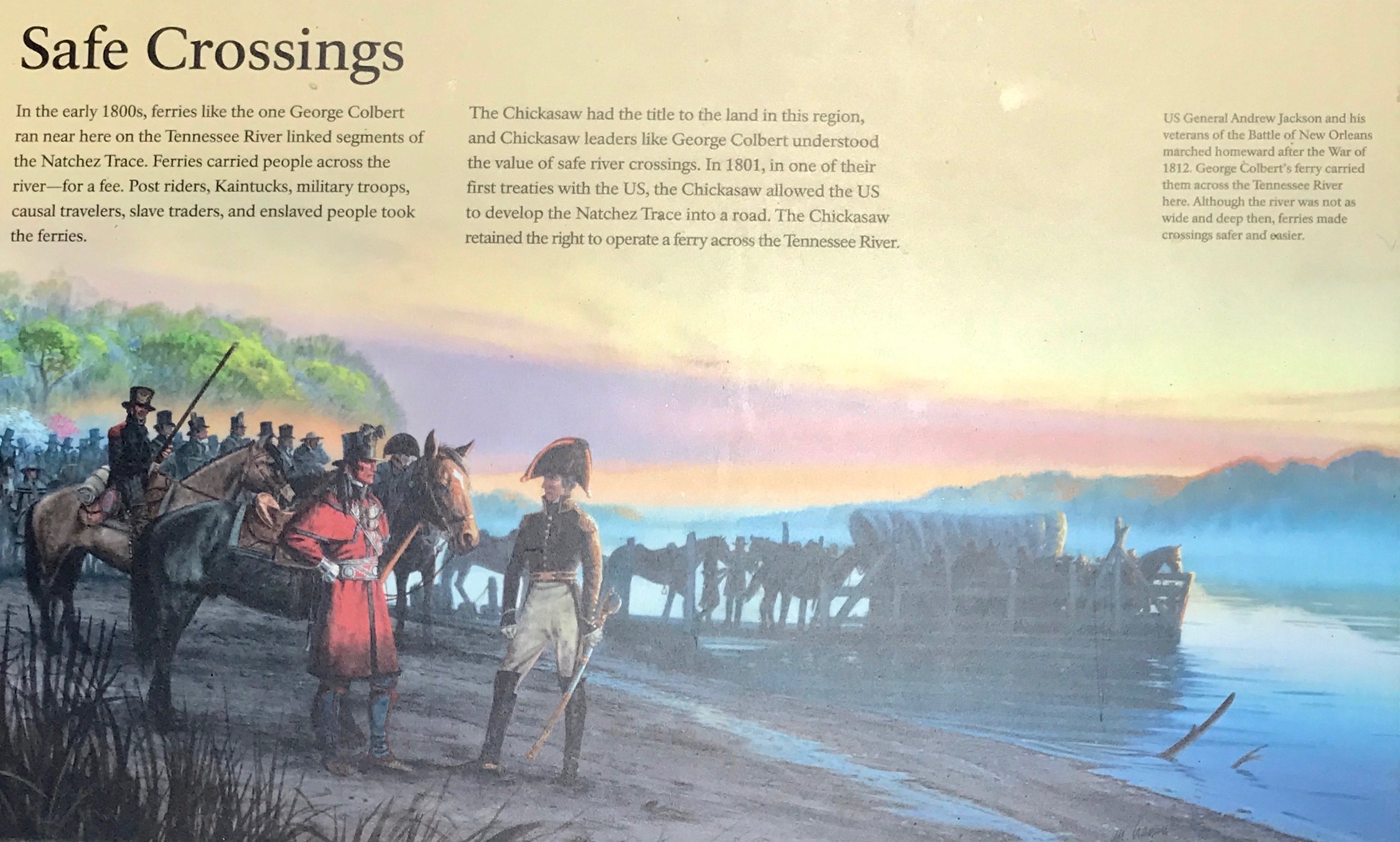
At this stop, they focused on his ferry across the Tennessee River and his “Stand” which was an inn.
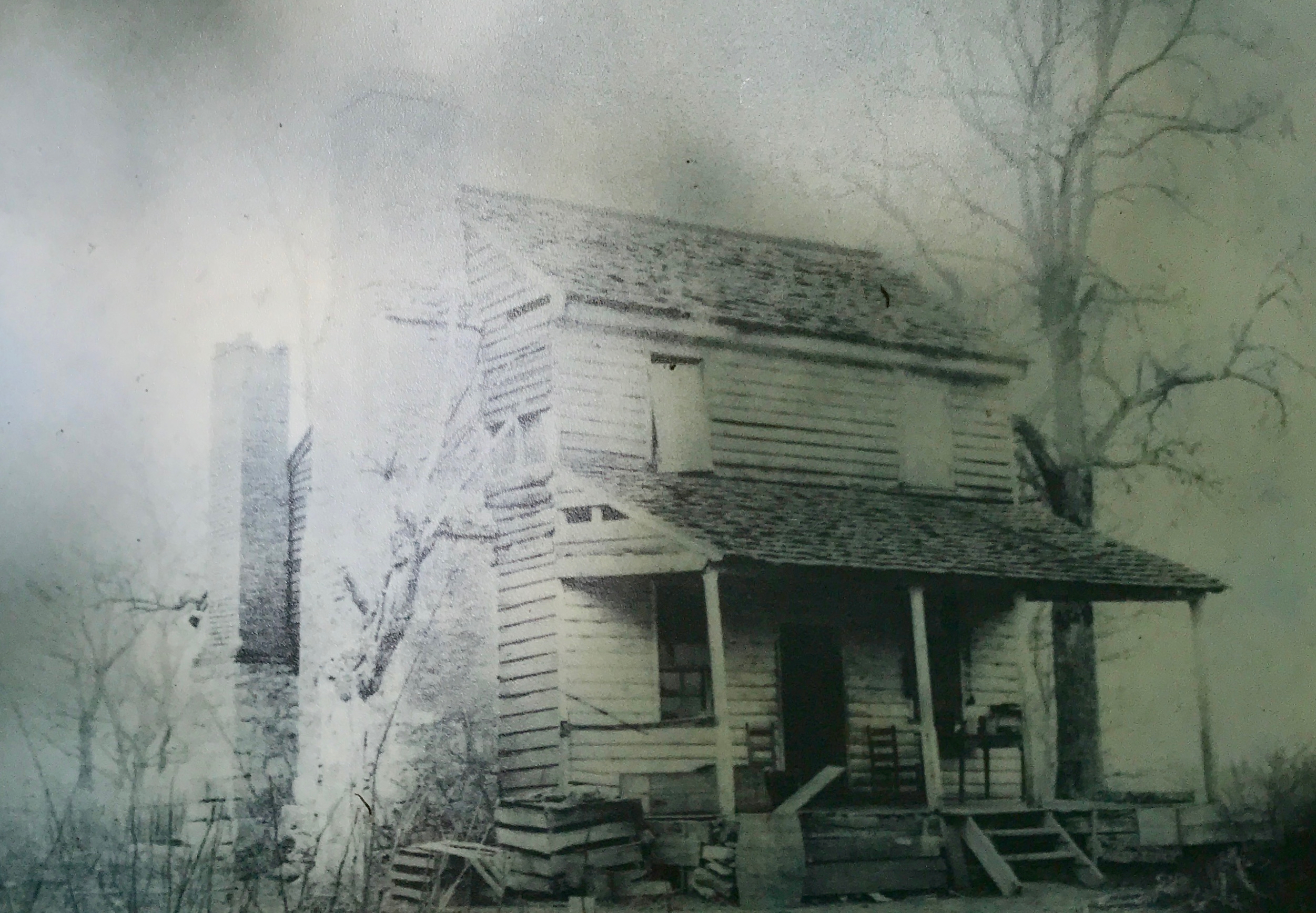
This photo was taken after it was no longer offering lodging to travelers, but was important in its day.
Something I read someplace said the George Colbert ferried Andrew Jackson’s troops across the river after the War of 1812 for an enormous sum. The figure $15,000 sticks in my mind, but that seems like an outrageous amount, and I can’t find where I originally saw it, so I may be way off.
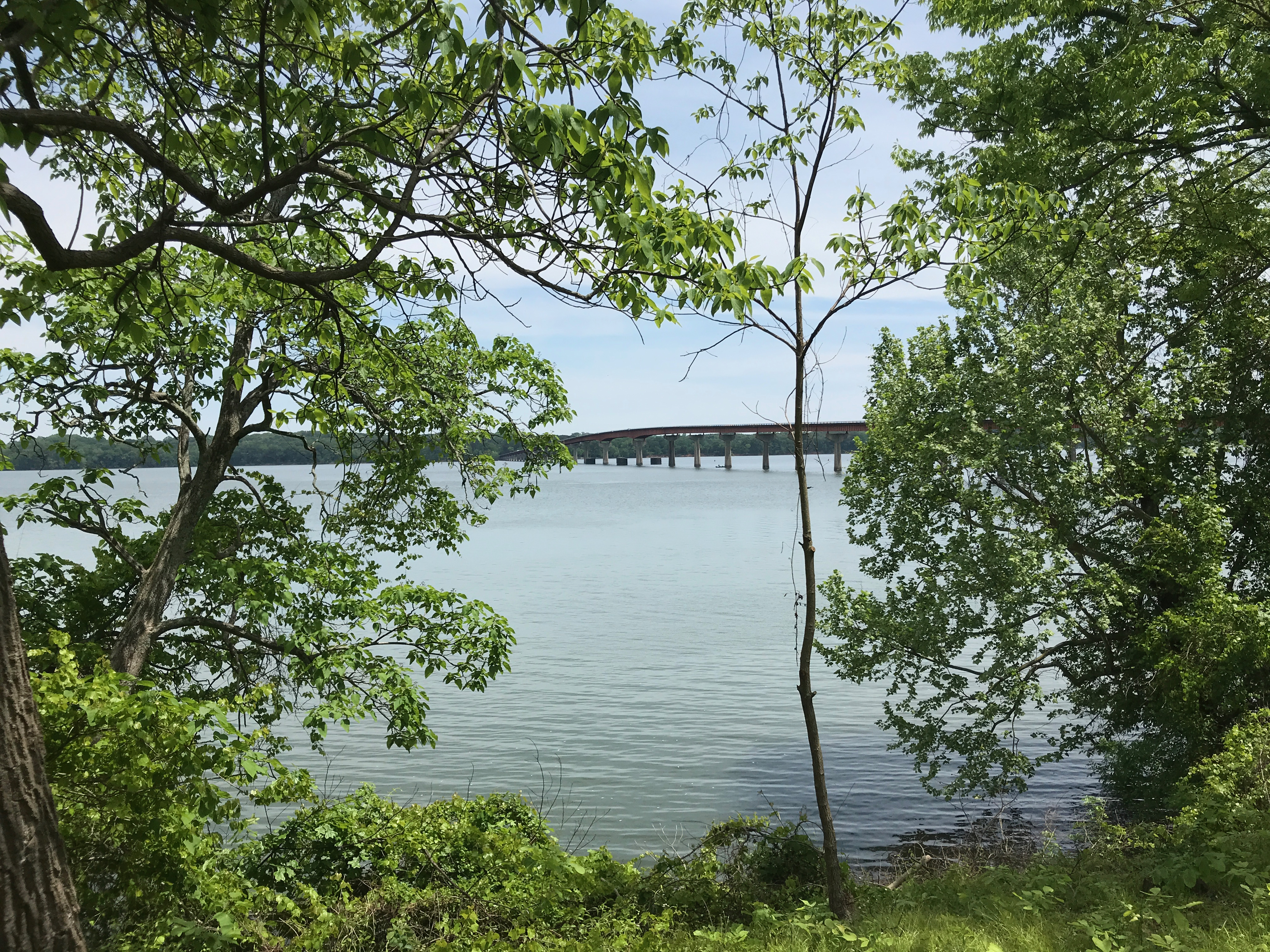
I took the trail down to the river to see where the ferry had been.
I saw this on a plaque, which didn’t photograph well, so here is the text:
“The mail – and the military muscle – that kept the isolated Natchez district bound to the Union, based along these ruts. n 1801 the loose chain of Indian trails was made a post road, vital to the communication, defense, commerce and settlement. Bu 1820, steamboats made upstream travel practical and the Trace fell into disuse.”
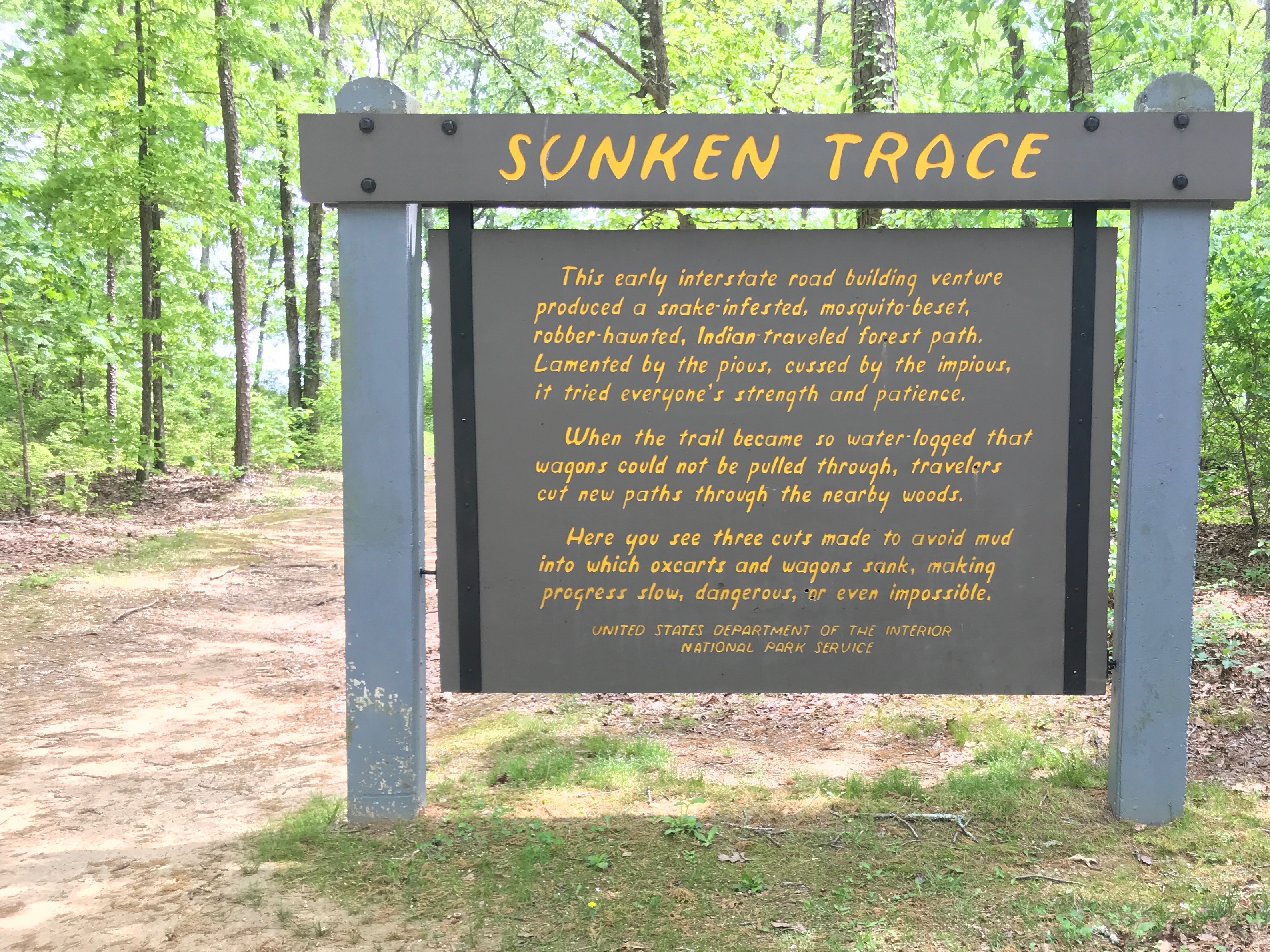
Next time you are grousing about the conditions of the current Interstates, Give thanks that you are not walking on the Trace, which this sign describes as “snake-infested, mosquito beset and robber-haunted”. The potholes may be troublesome, but I have never felt that I needed to cut new paths to get where I was going. (I have used service roads on occasion, though.)
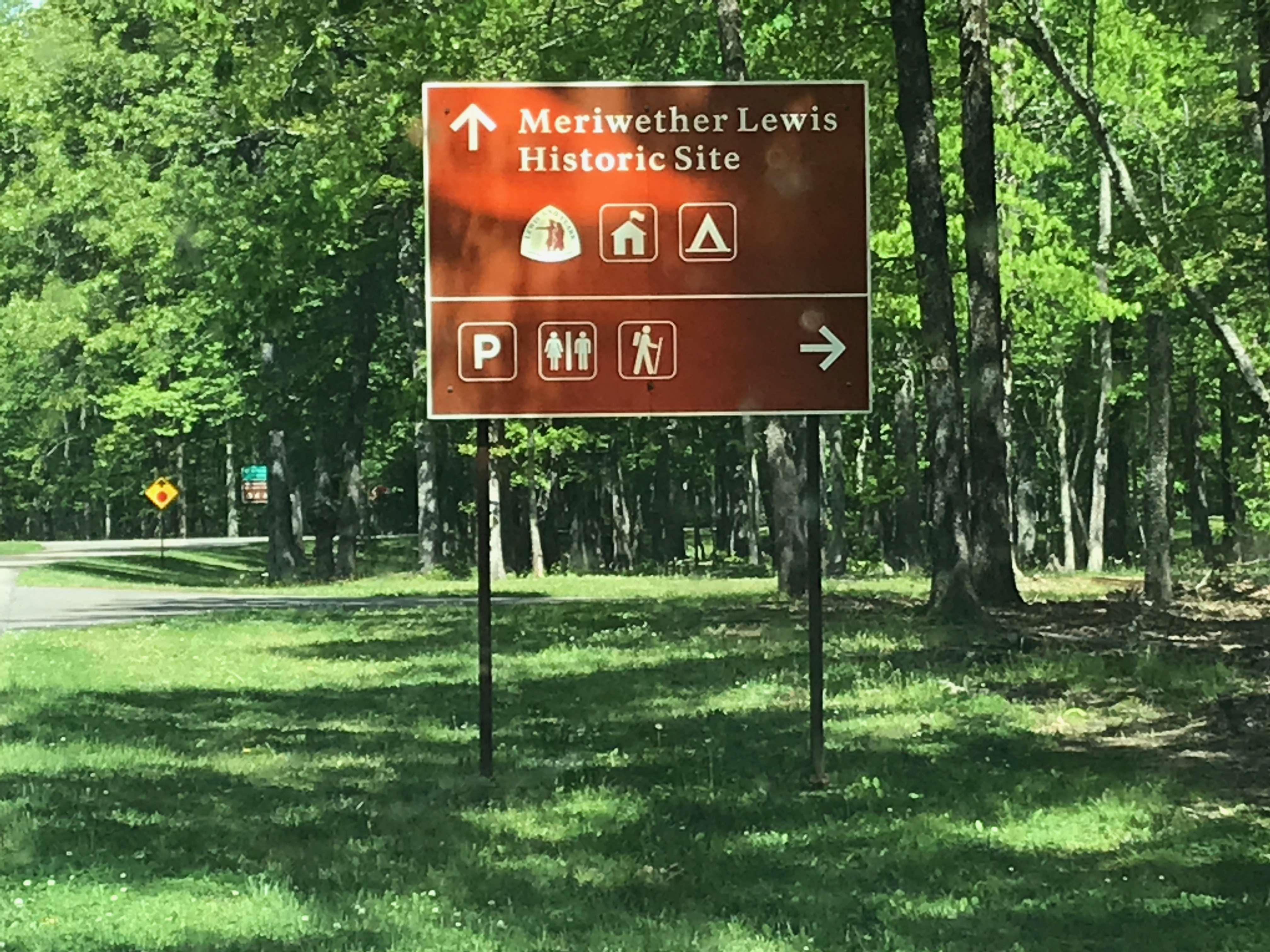
My next stop was the Meriwether Lewis Historic Site. Back at the Park office near Tupelo, I learned that there was a free campground there. No hook ups, but it was my favorite price. FREE!
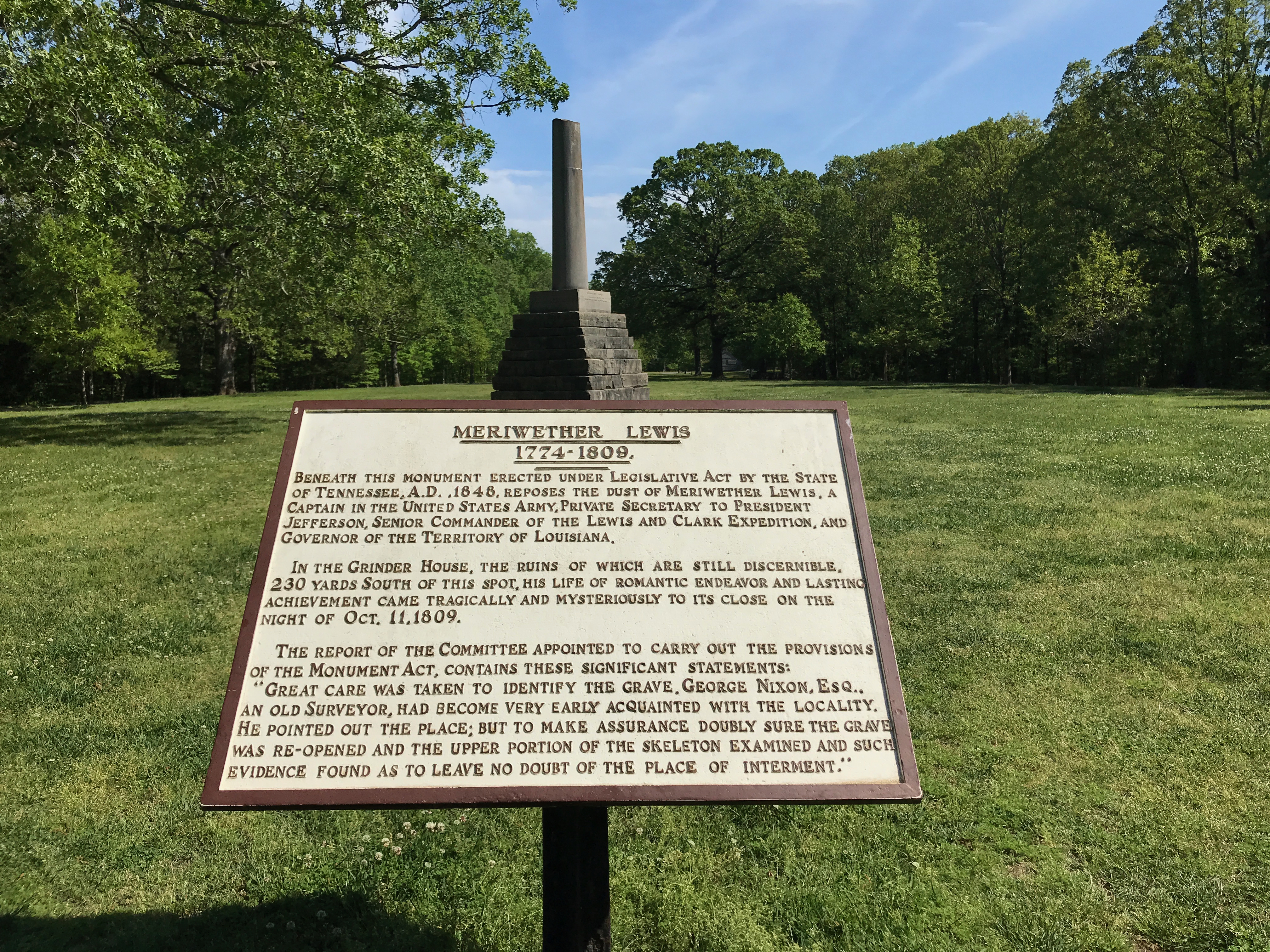
I dropped my trailer at a site and headed over to see Lewis’ grave.
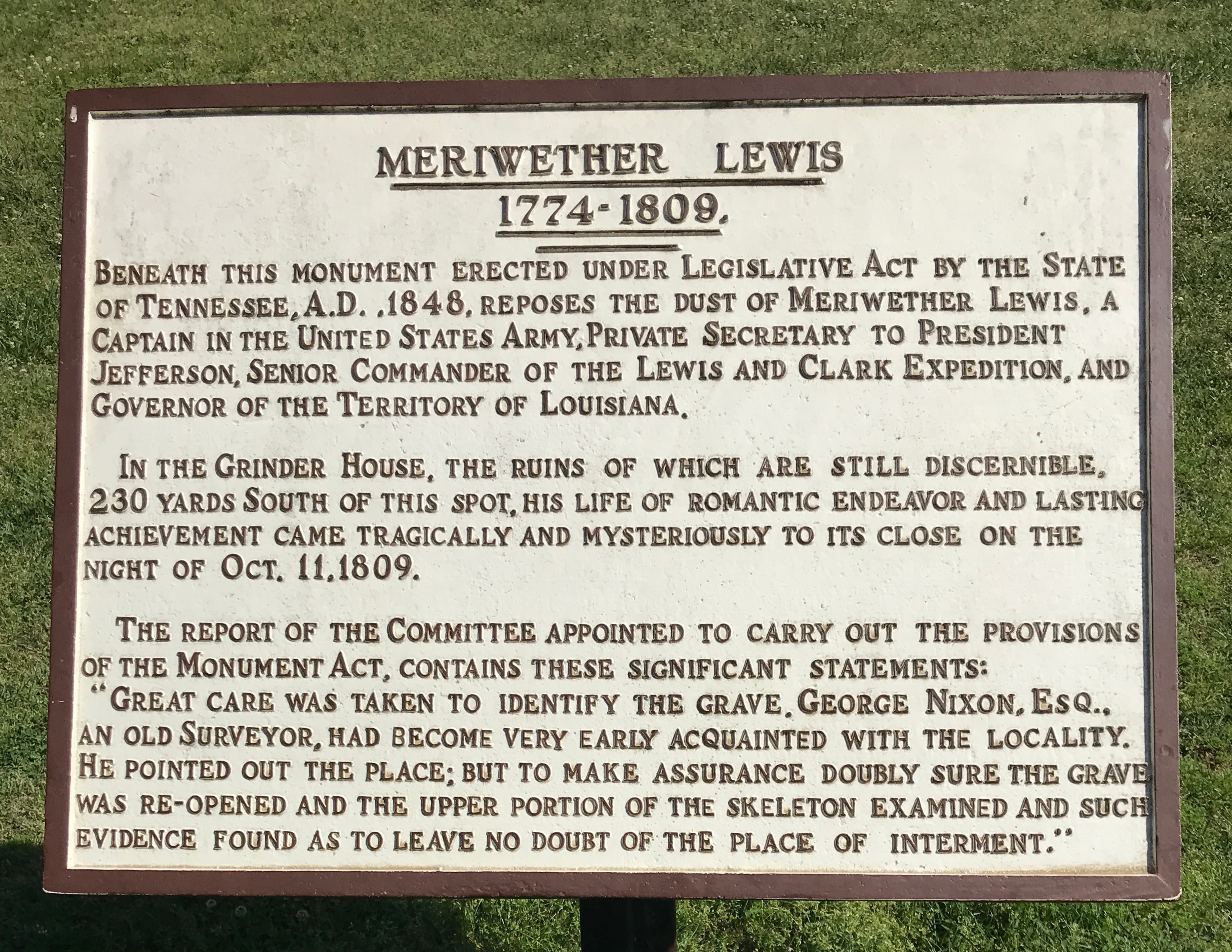
Just below this photo, I’ll post a close up of the sign for you to read.
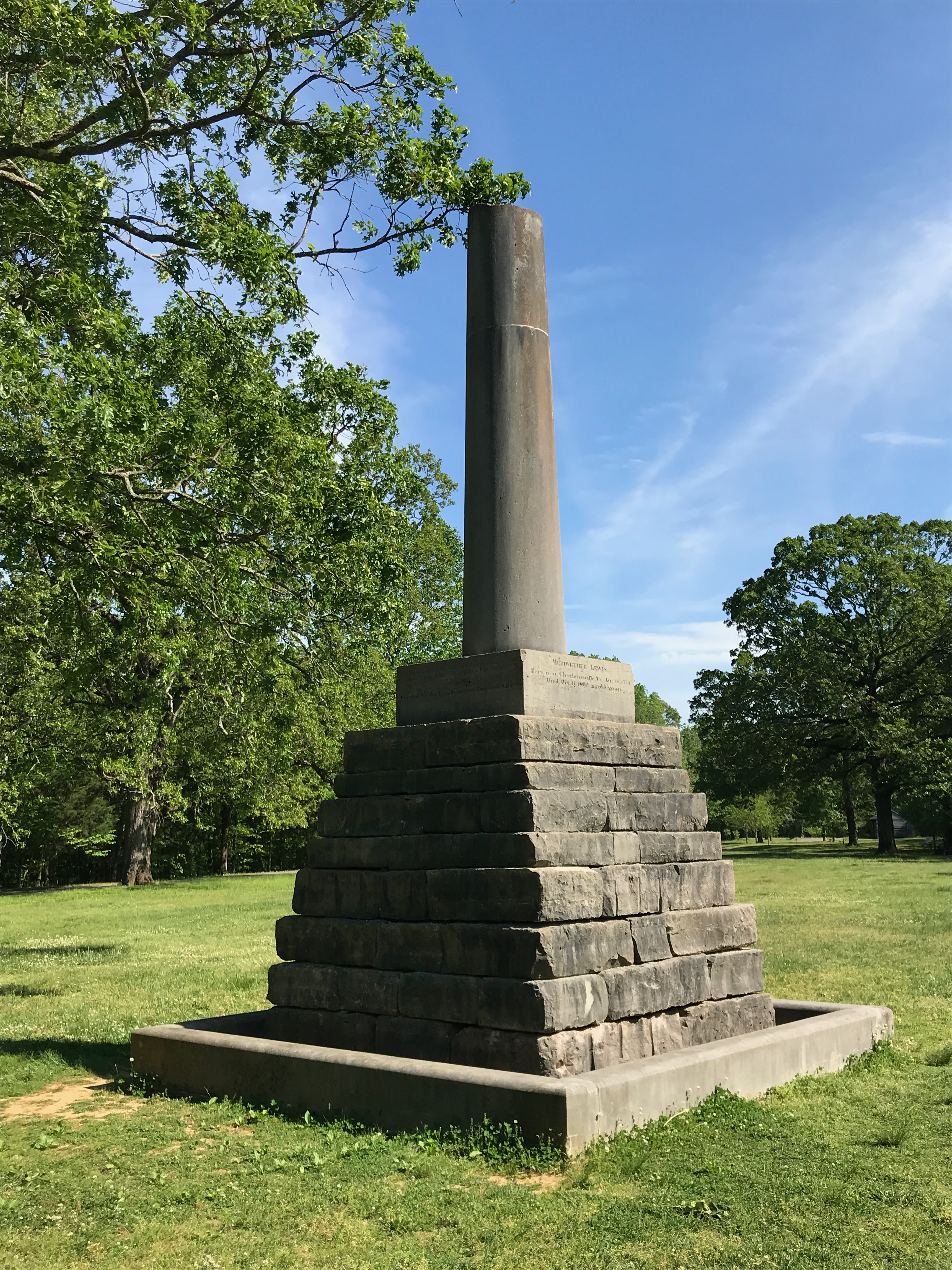
It was a lovely day! Look at that blue sky!
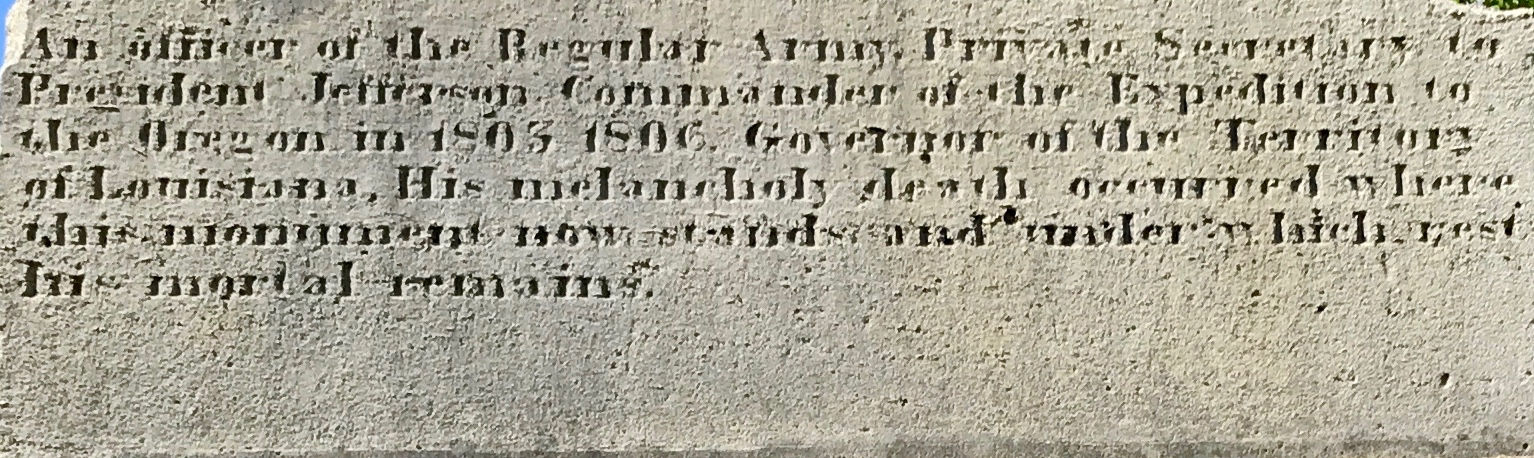
There was writing around the bottom of the column, but the angle of the sun made it hard to see. This portion says:
“An officer of the Regular Army, Private Secretary to President Jefferson, Commander of the Expedition to the Oregon in 1803-1806. Governor of the Territory of Louisiana, His melancholy death occurred where this monument now stand and underneath rest his mortal remains.”
I came across this marker, too.
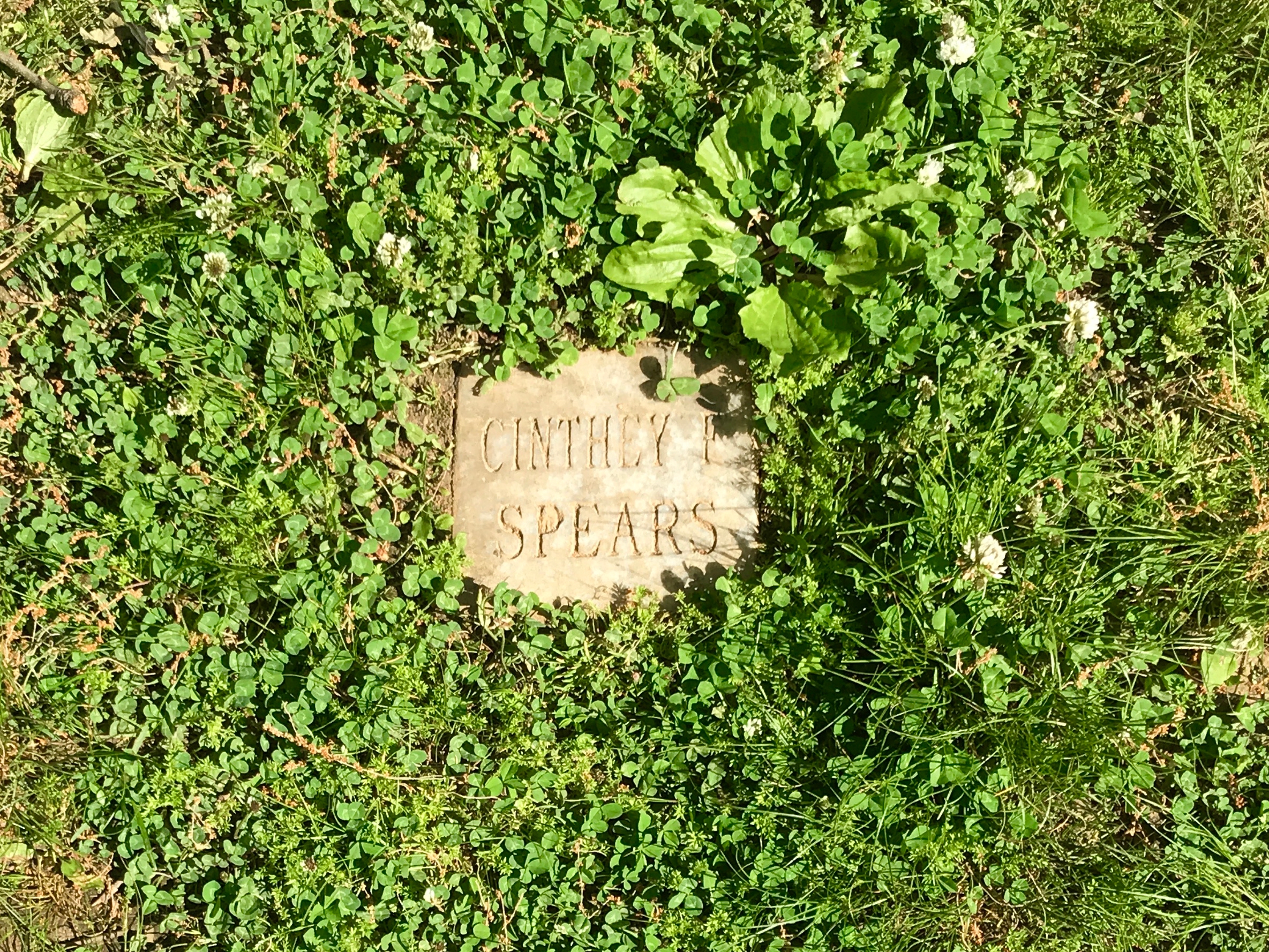
I wondered if I could find anything about it. Whaddaya know? I did! I don’t know anything about Cinthey F Spears, but there is information about her in Findagrave.
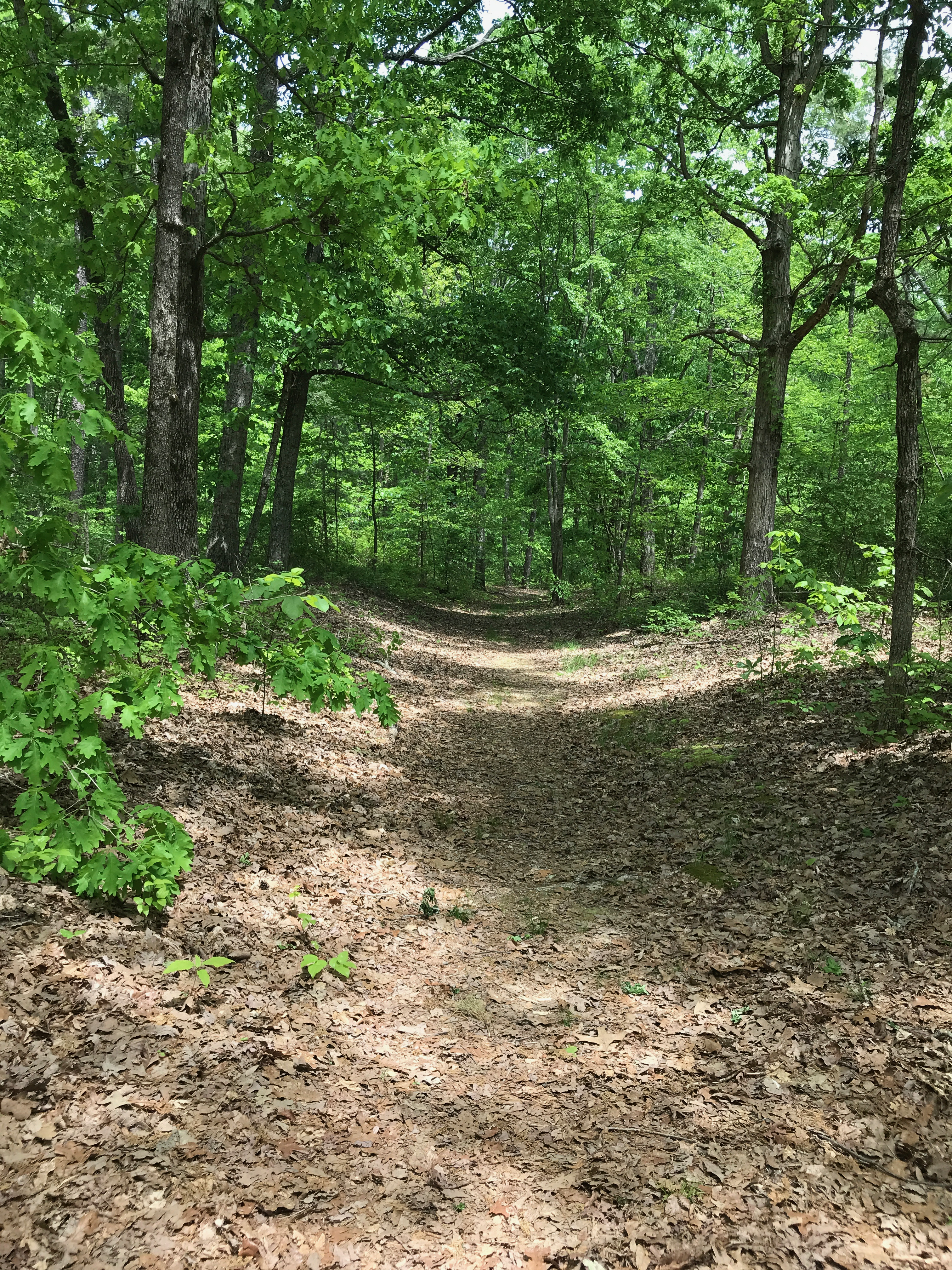
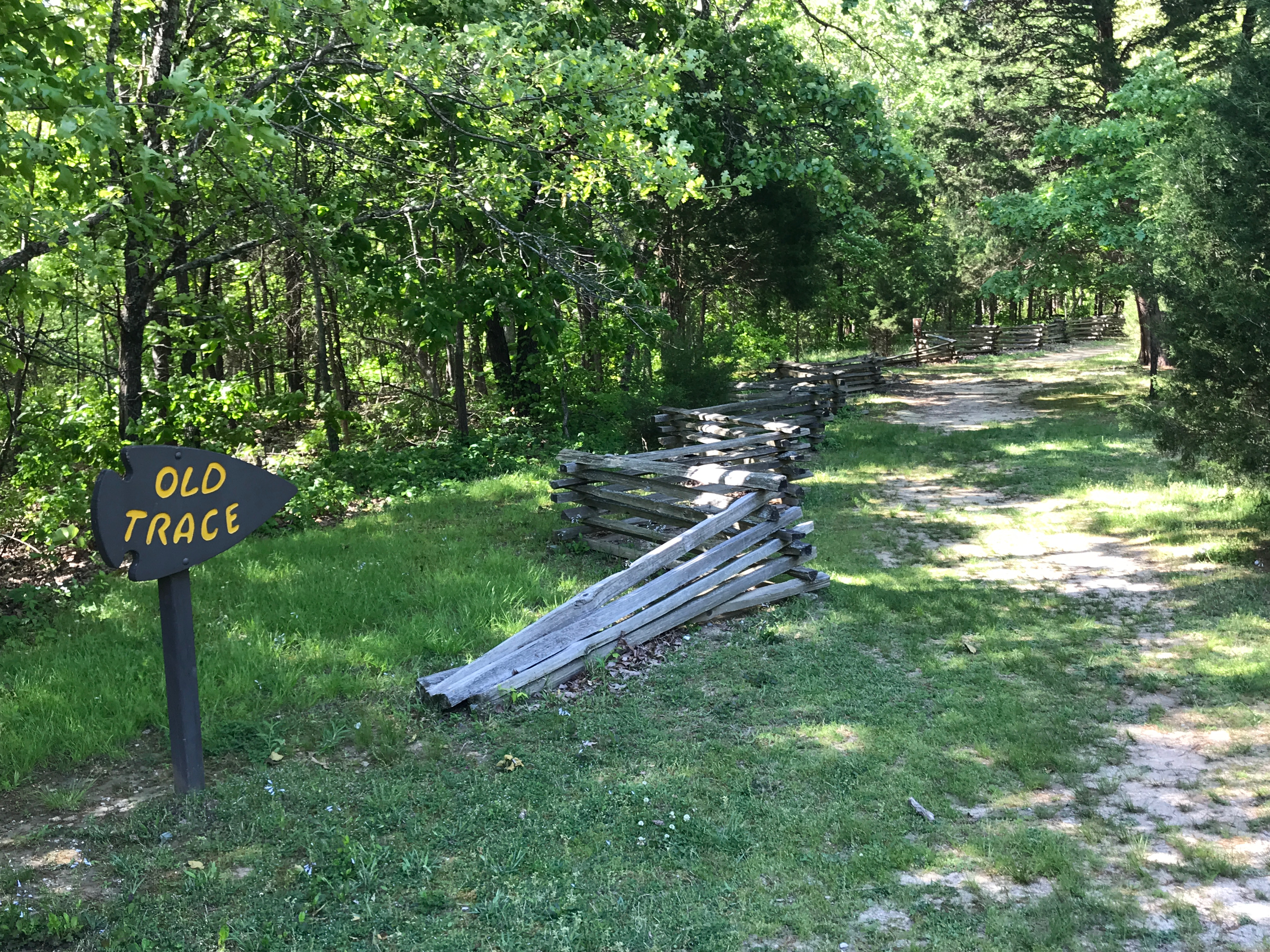
There is a little more of the Old Trace.
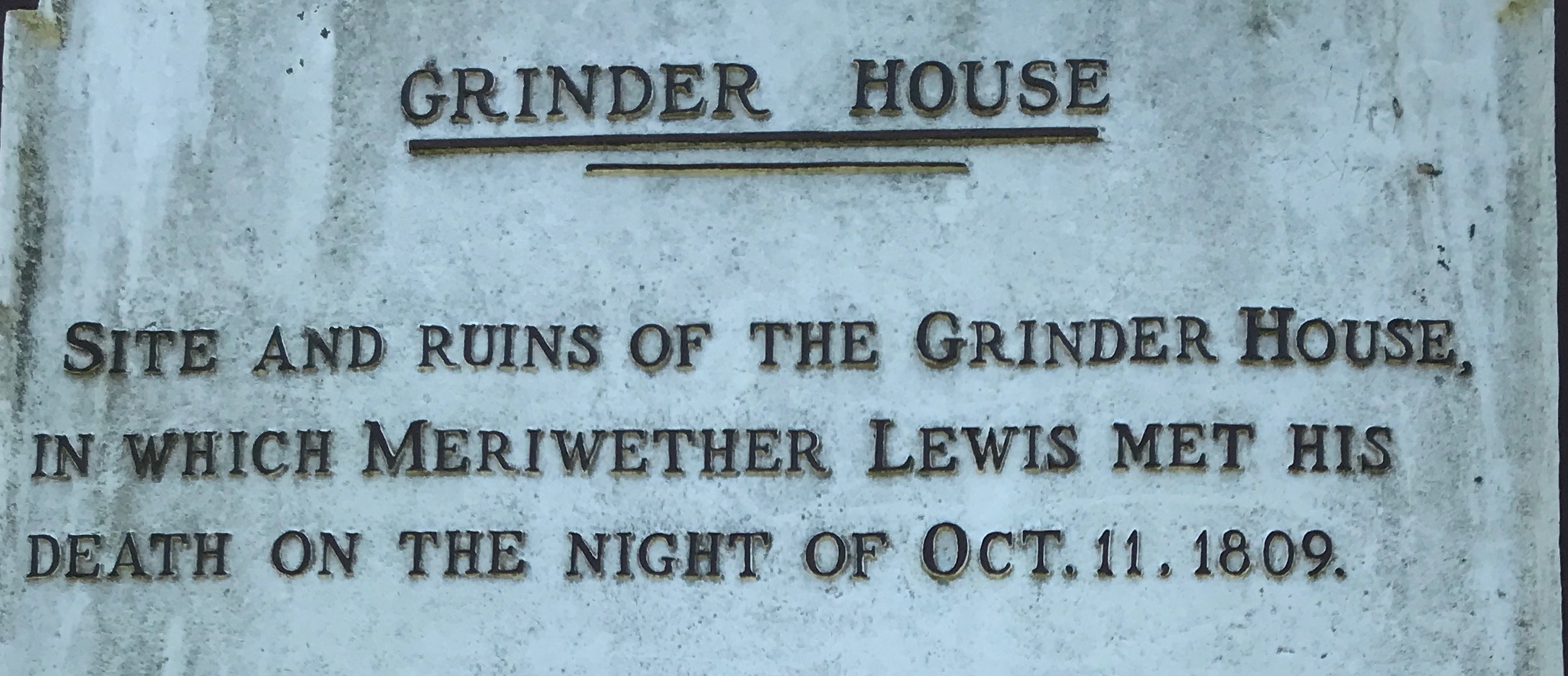
And another sign that you can read, if you so choose.
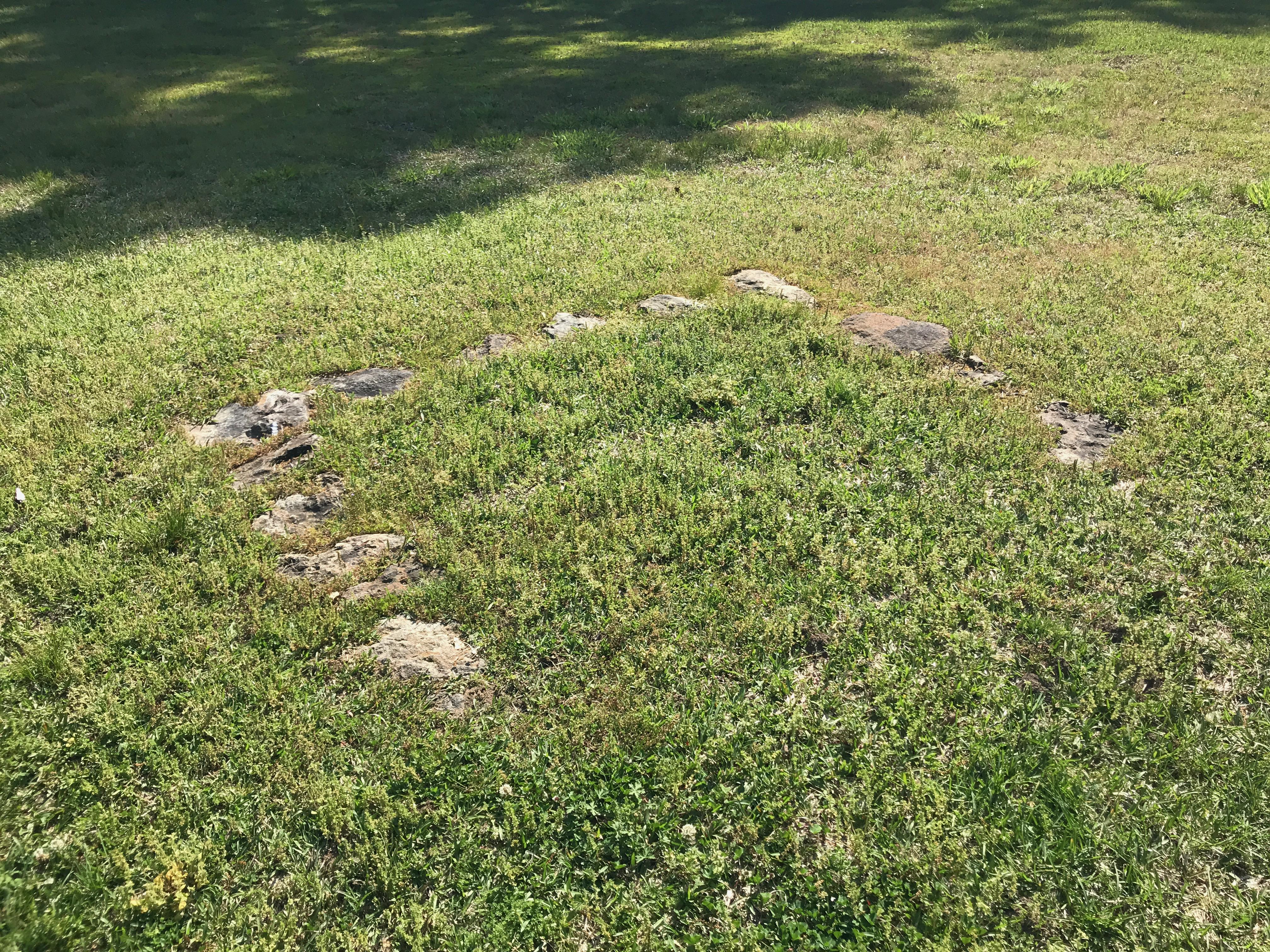
Ah! The ruins of the Grinder House.
There isn’t much left of it.
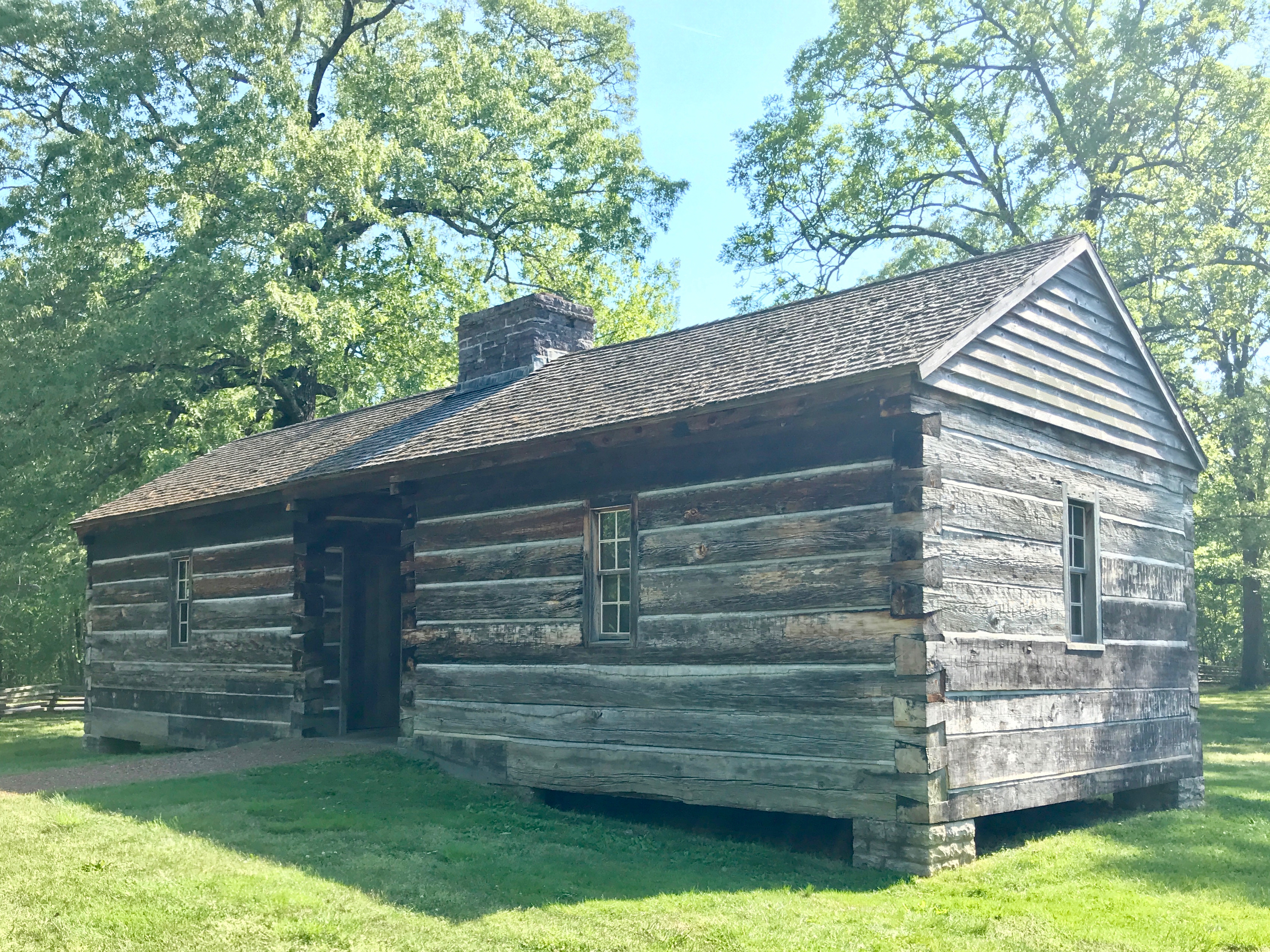
They did build a recreation in the vicinity.
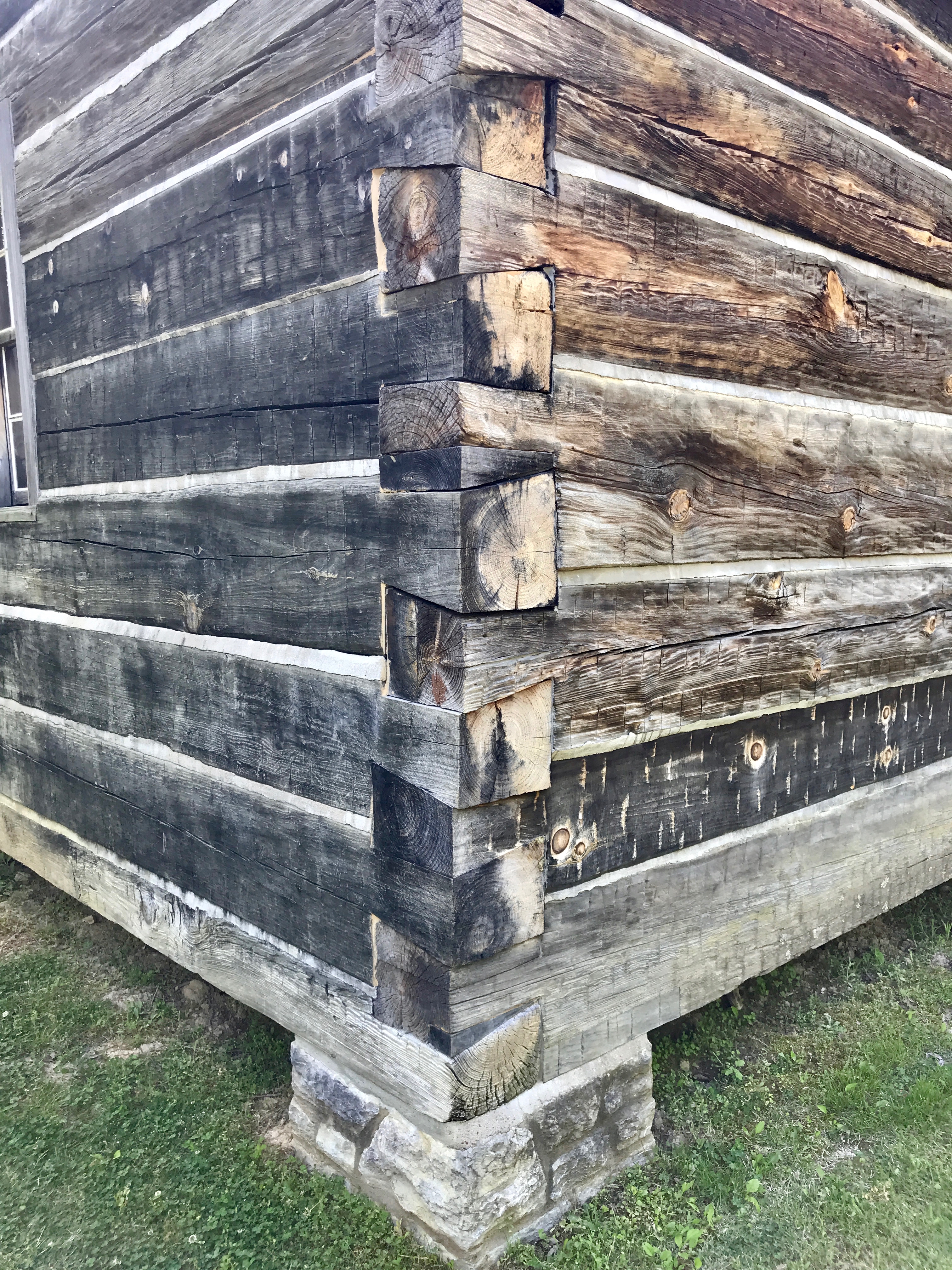
It looks like they used hand tools and old construction techniques.
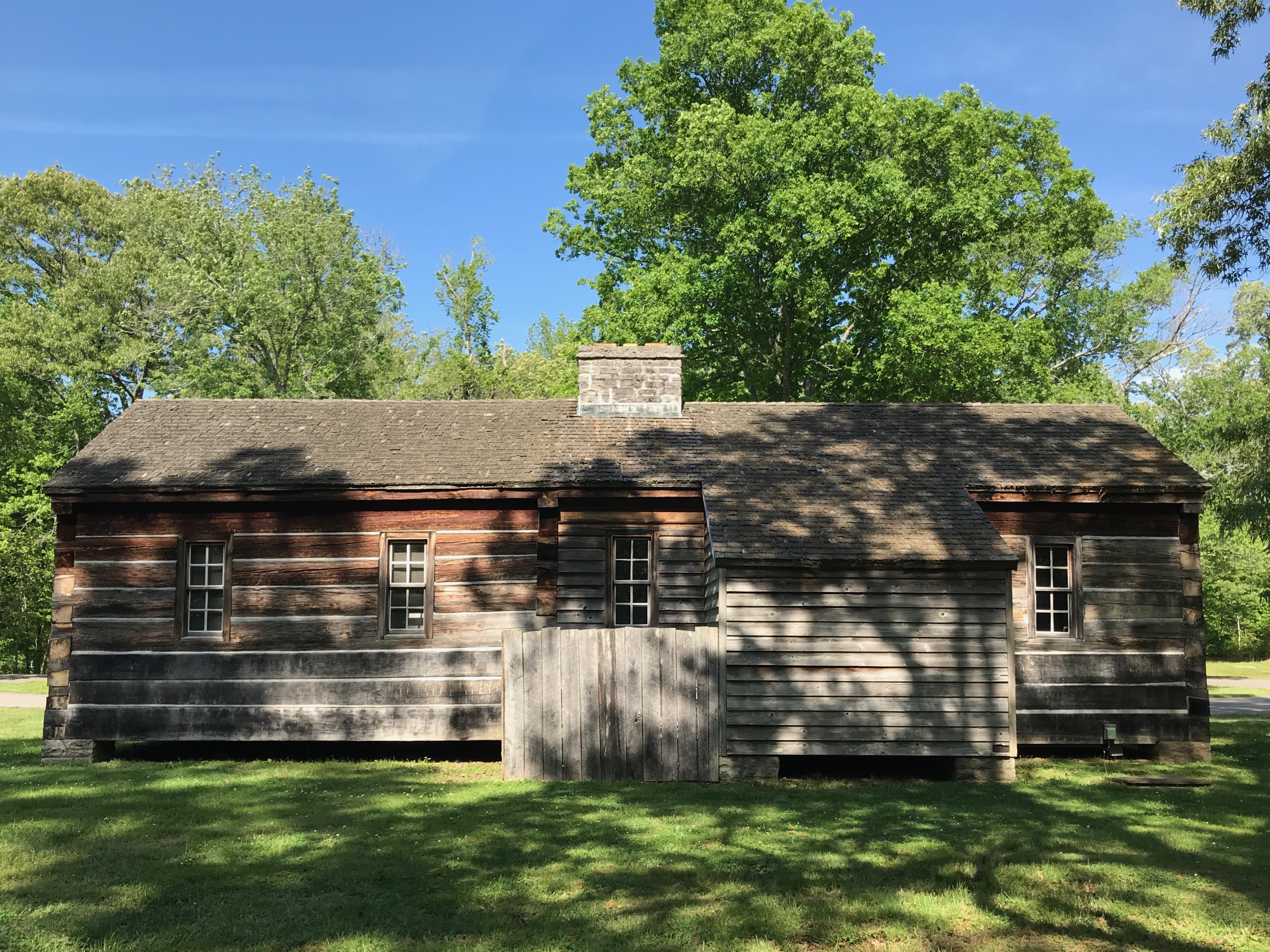
I always walk around the back, when I can, just in case there is something interesting to see.
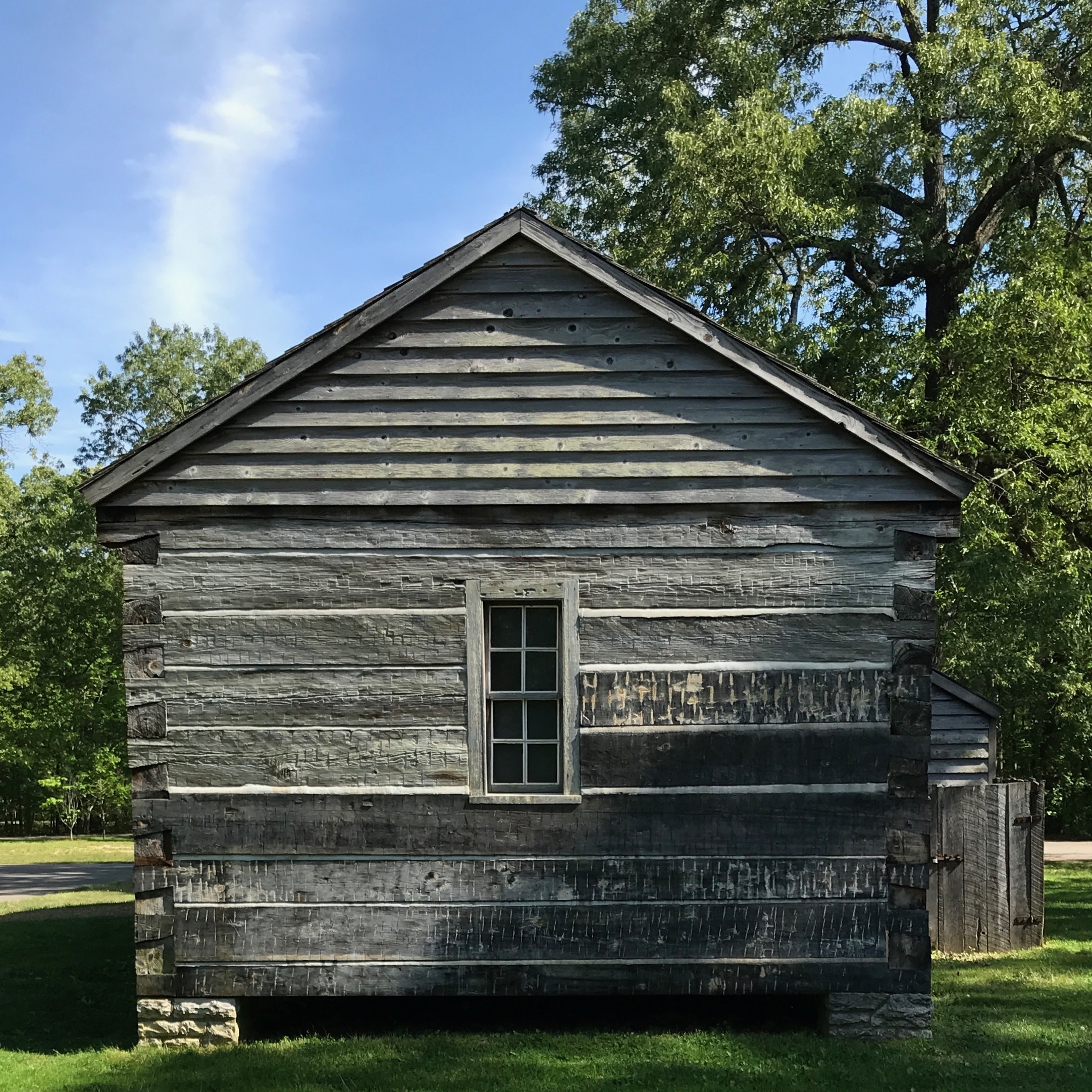
And, as long as I am walking around, here is the end of the building.
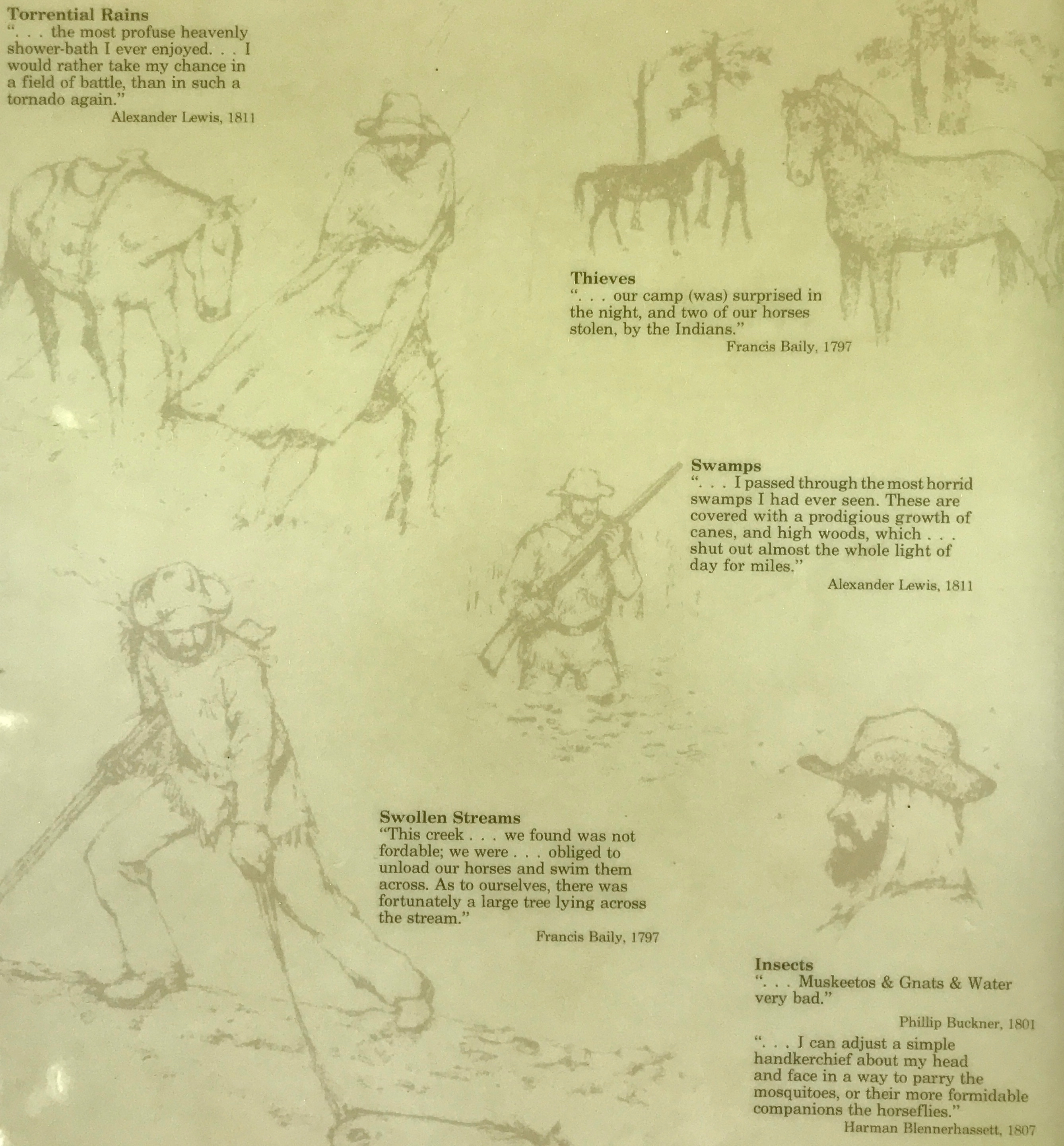
Here are some comments by the travelers along the Trace.
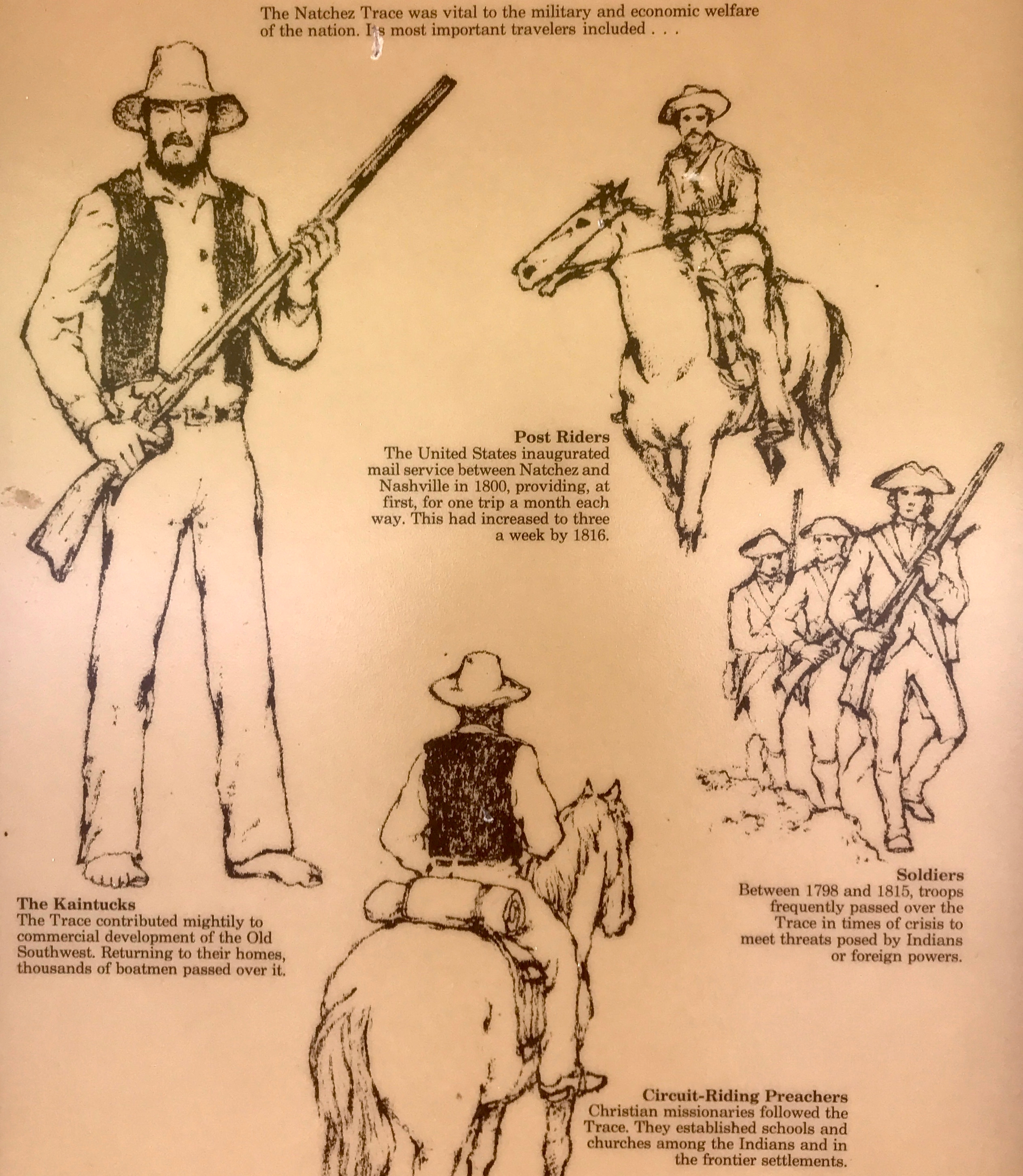
Just who was using the Trace? According to this sign, these are some of the people you might find along the way.
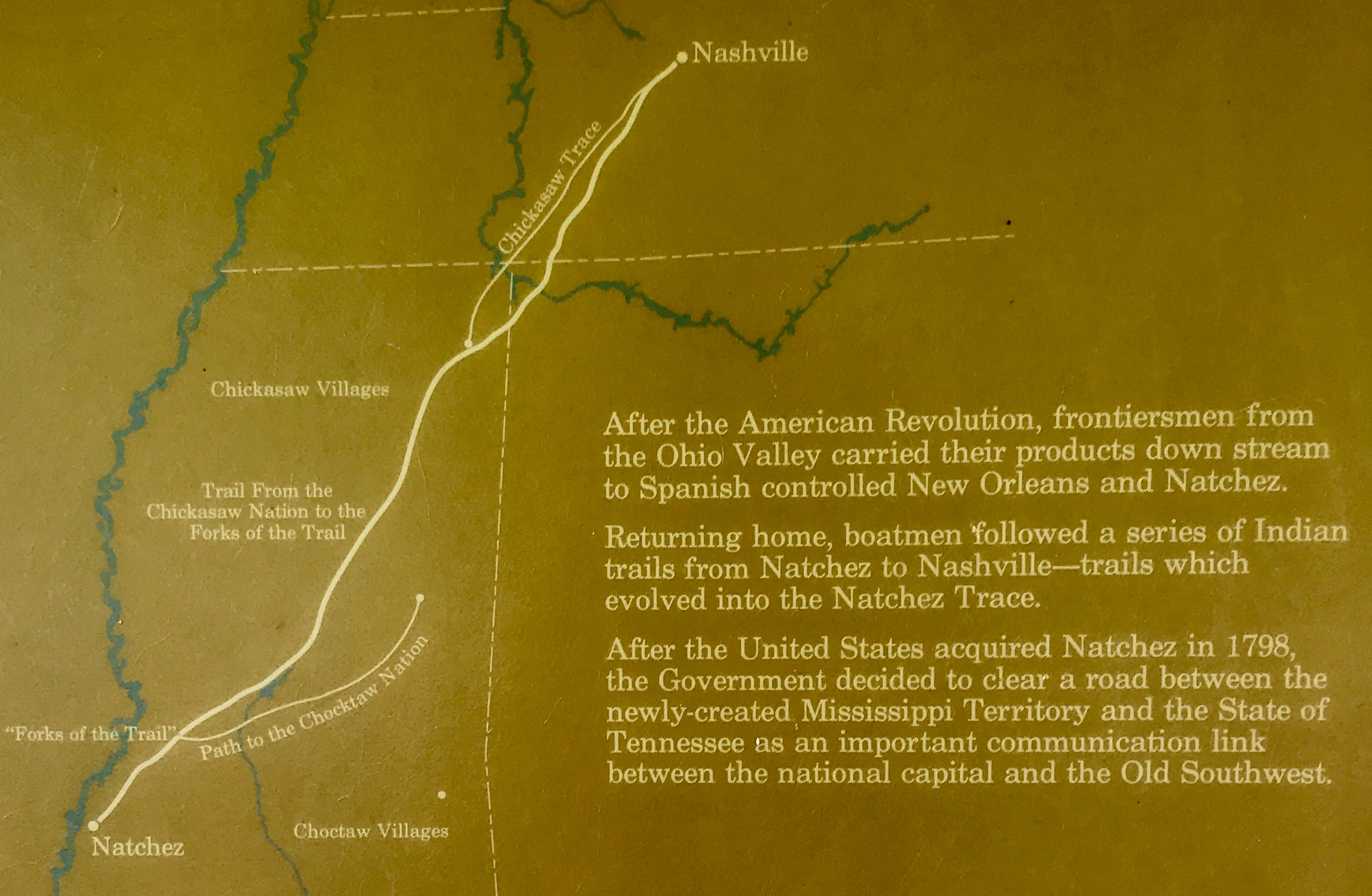
Here’s the route the Trace followed.
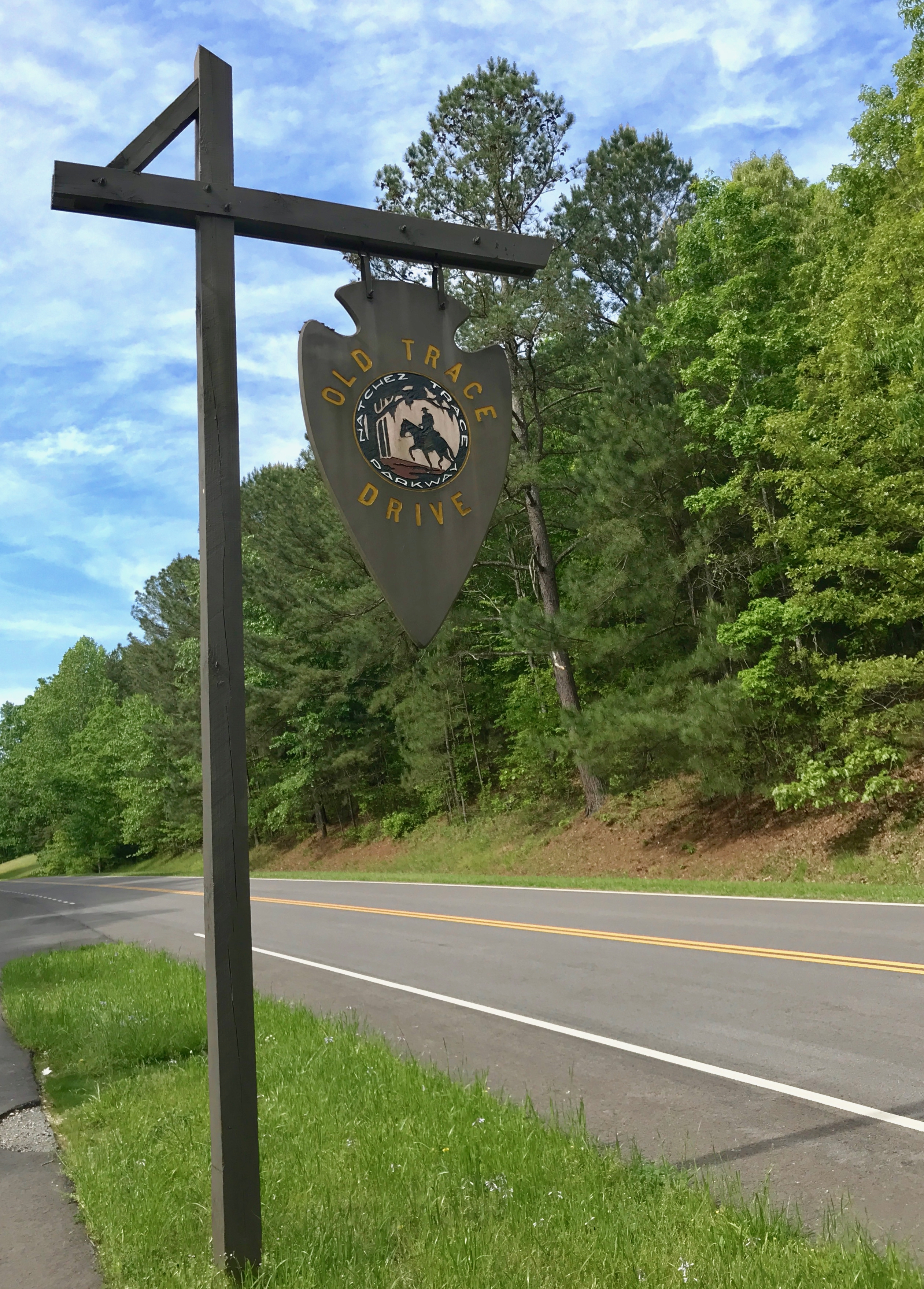
I had a little time before the sun set, so I decided to check out this Drive and then head in to Hohenwald, the nearby town.
And why did I do it then and not in the morning on my way north?
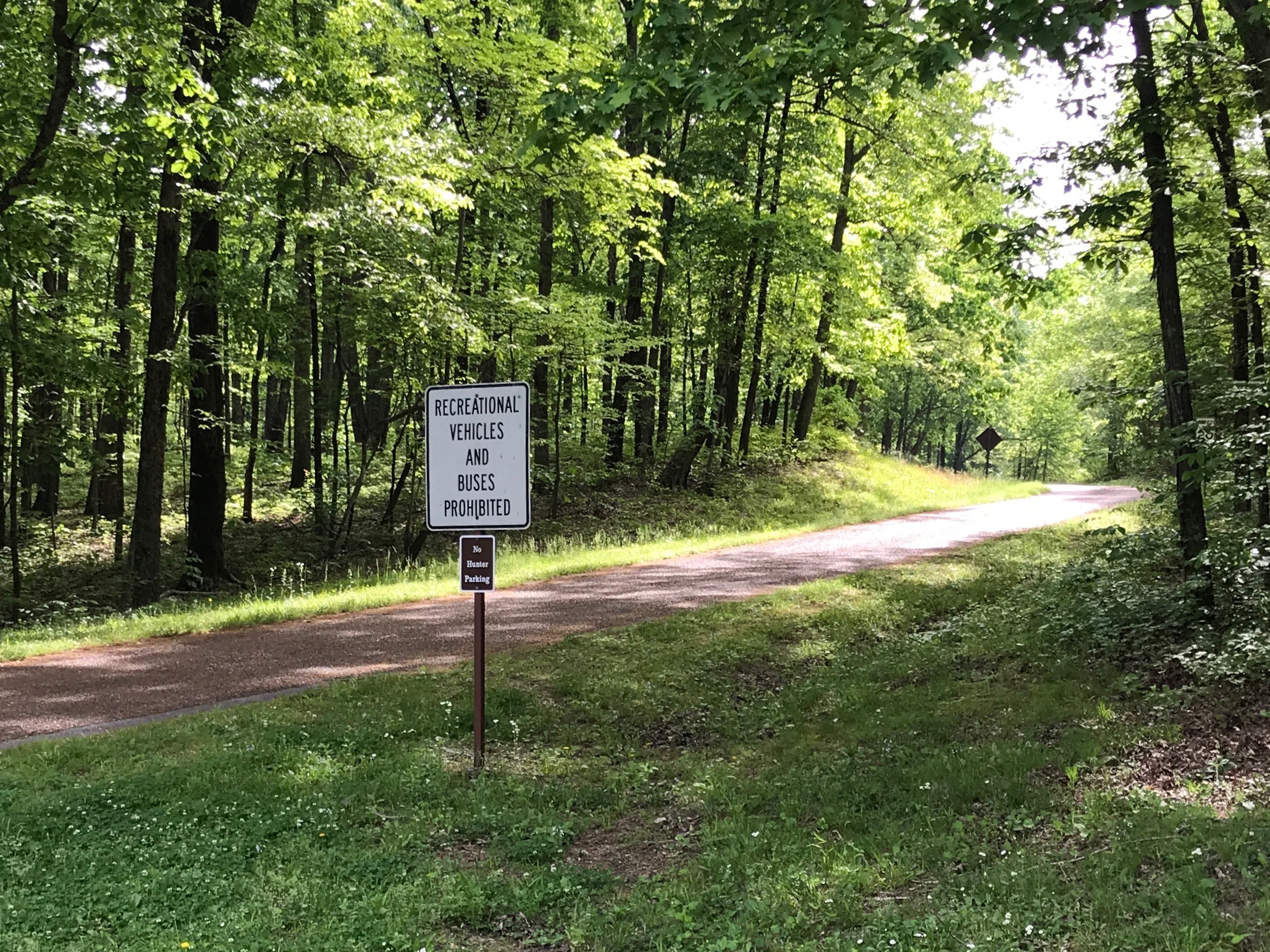
See that sign? Recreational Vehicles prohibited. the road wasn’t meant for towing.
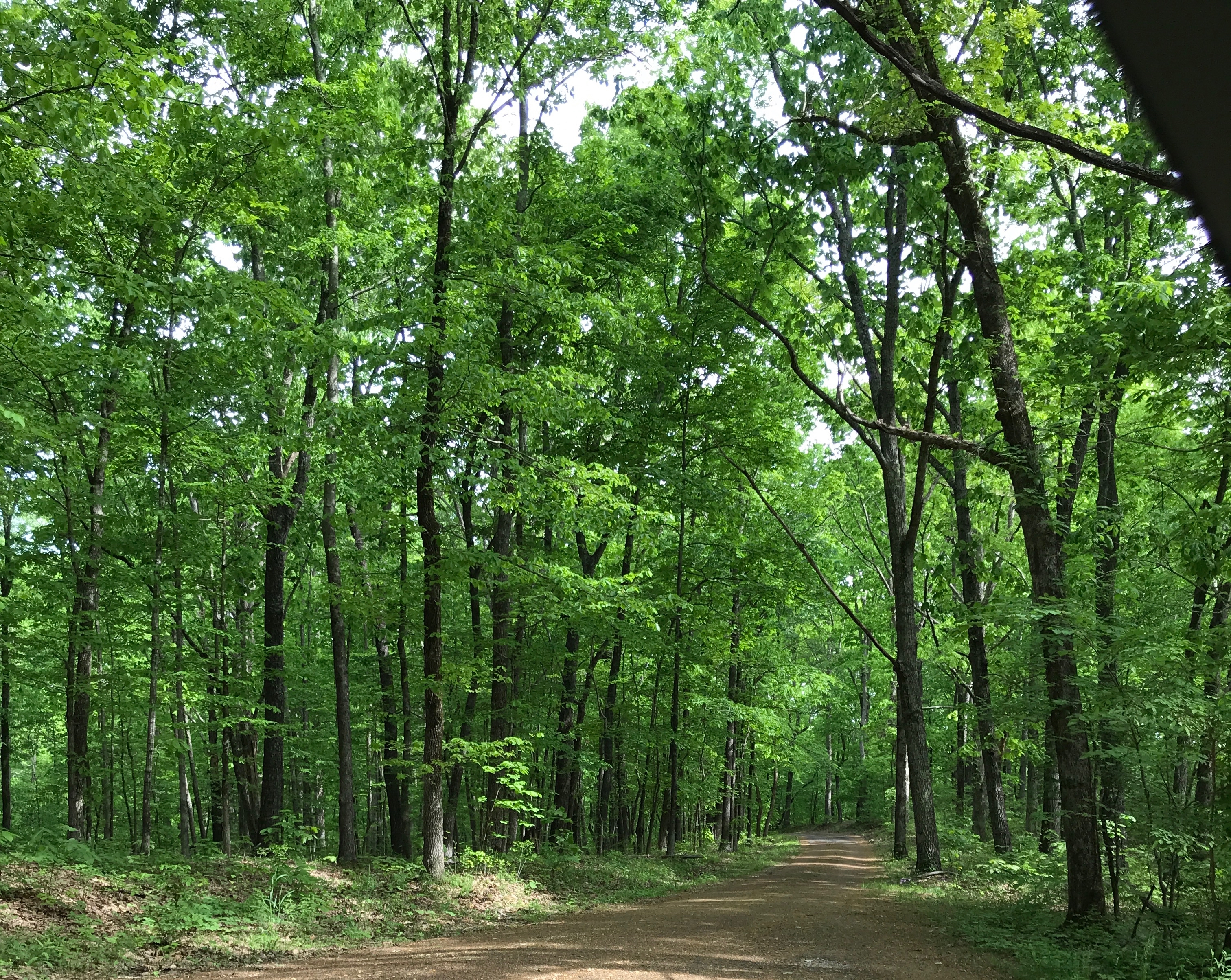
It’s kind of narrow. In fact, if I remember correctly, it’s currently a one way drive.
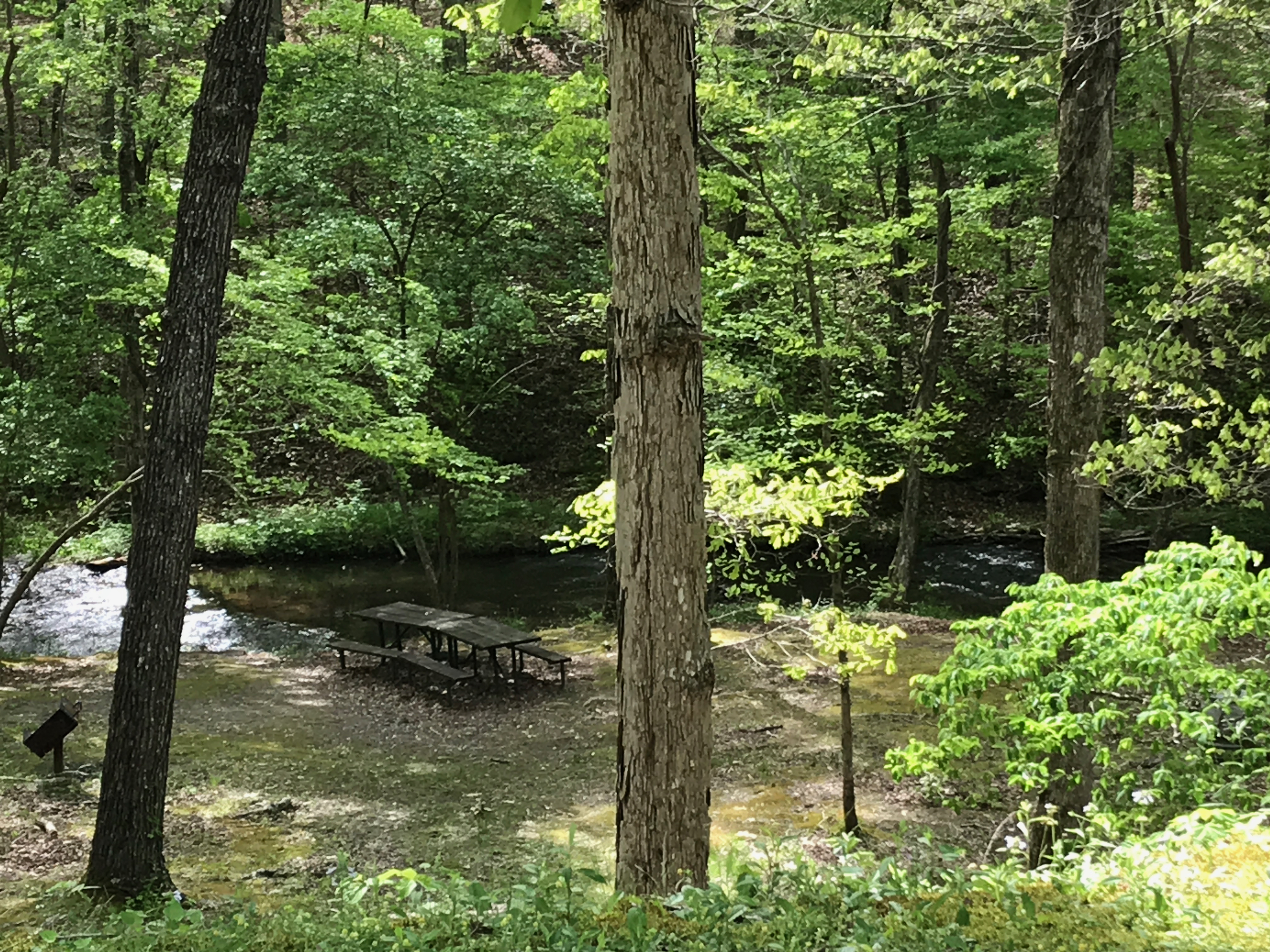
There was a nice little picnic area.
I came across an abandoned iron mine. The deposits were so shallow that they were relatively easy to extract. They dug it out with pick axes, transported it out of the pits using mule-drawn wagons and then the men used 26 pound sledge hammers to break up the large pieces. Then they washed the ore to remove dirt, sand, gravel and rock so that it could be smelted.
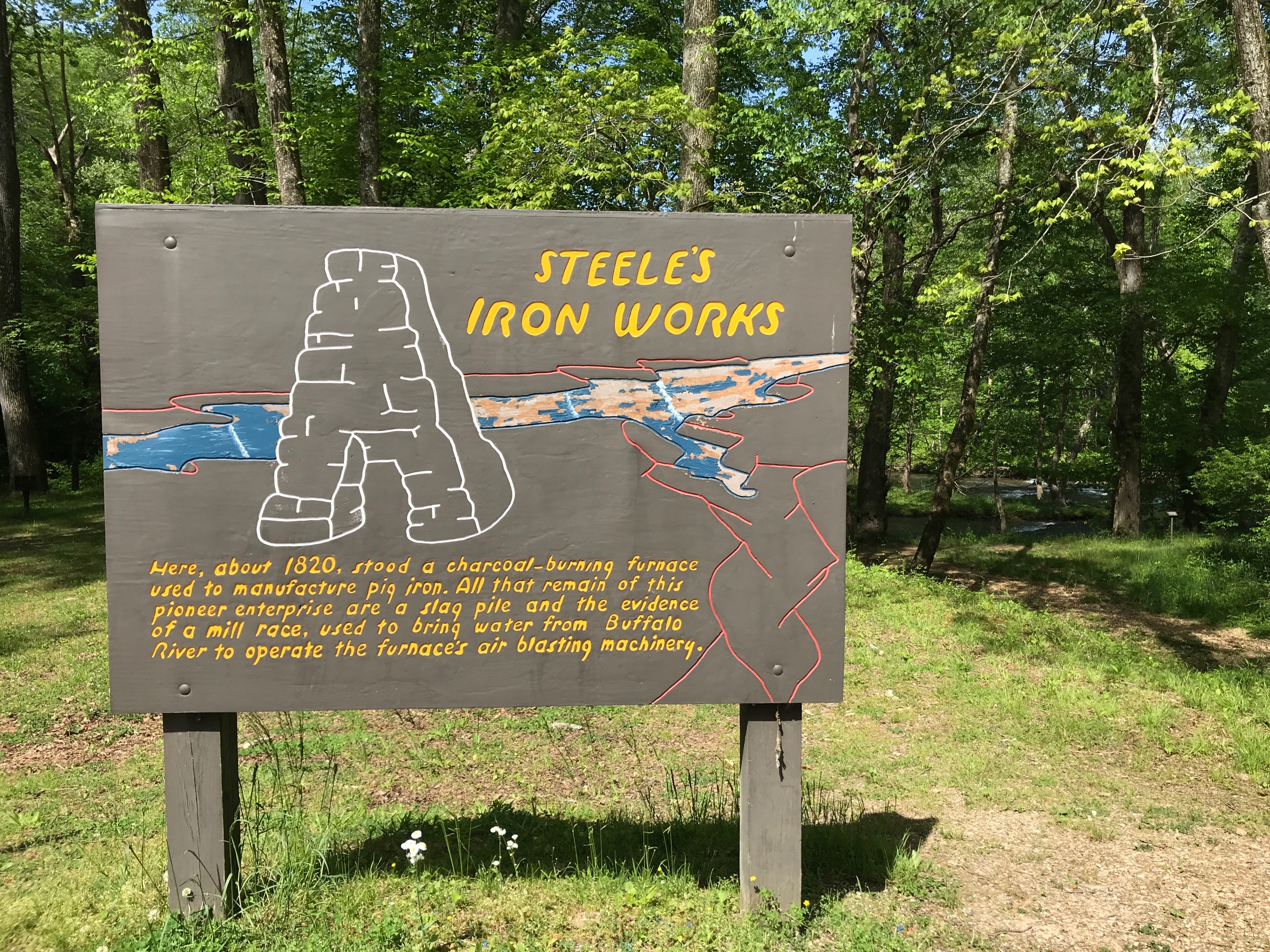
Speaking of smelting, another stop lead me to this spot.
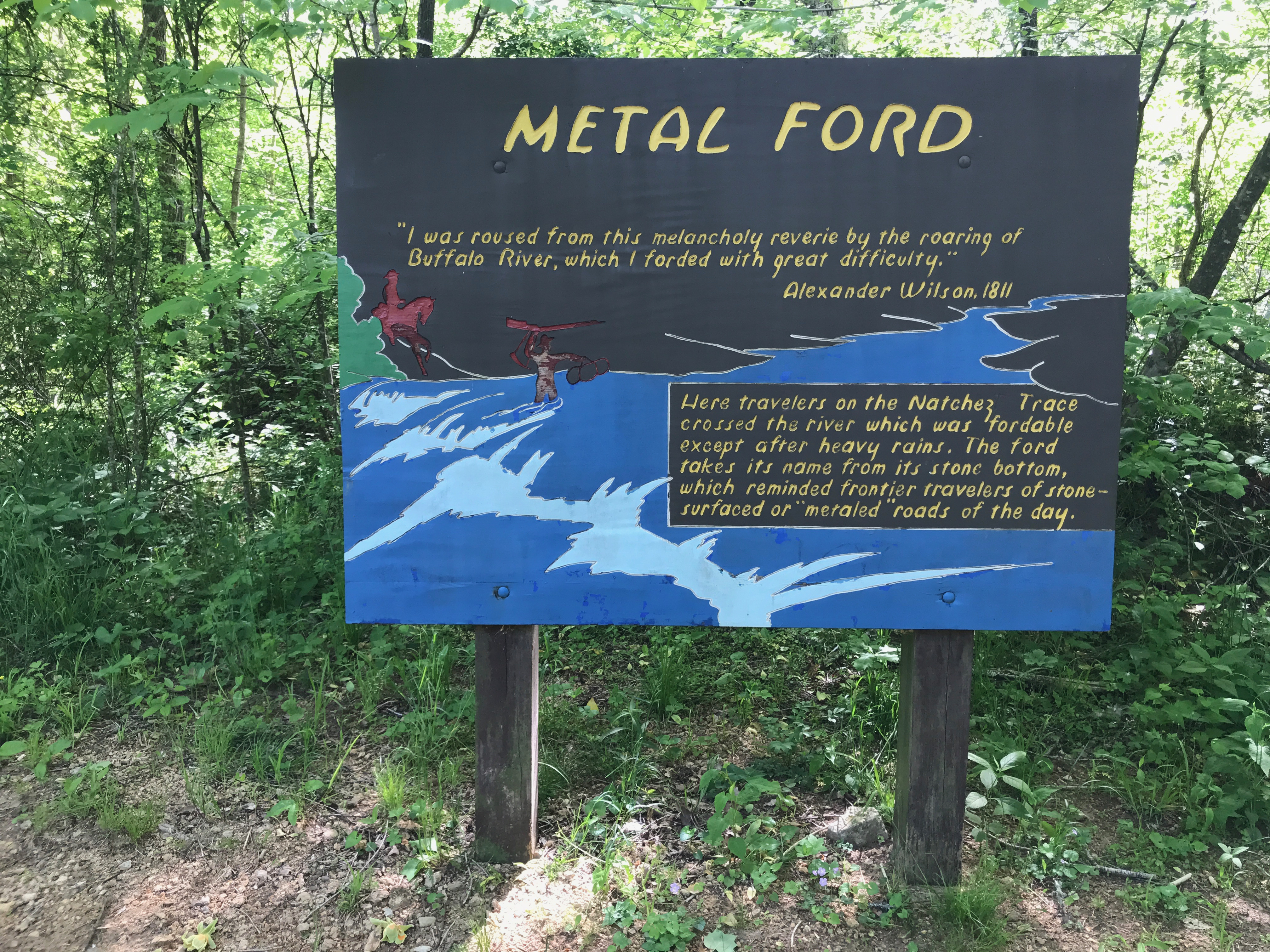
I might as well head down to the Metal Ford.
I love the sound of the river.
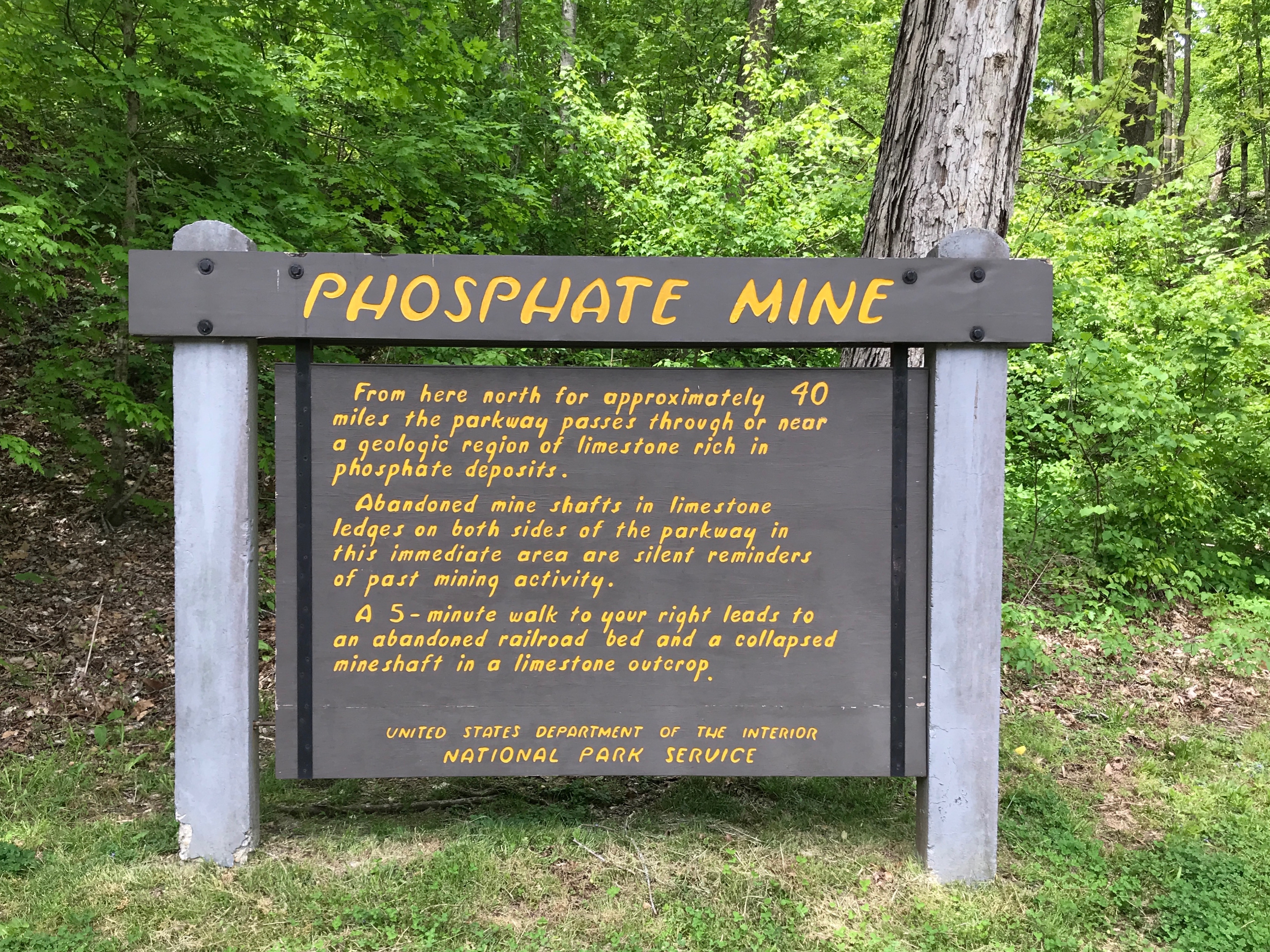
A five minute walk? That sounds doable!
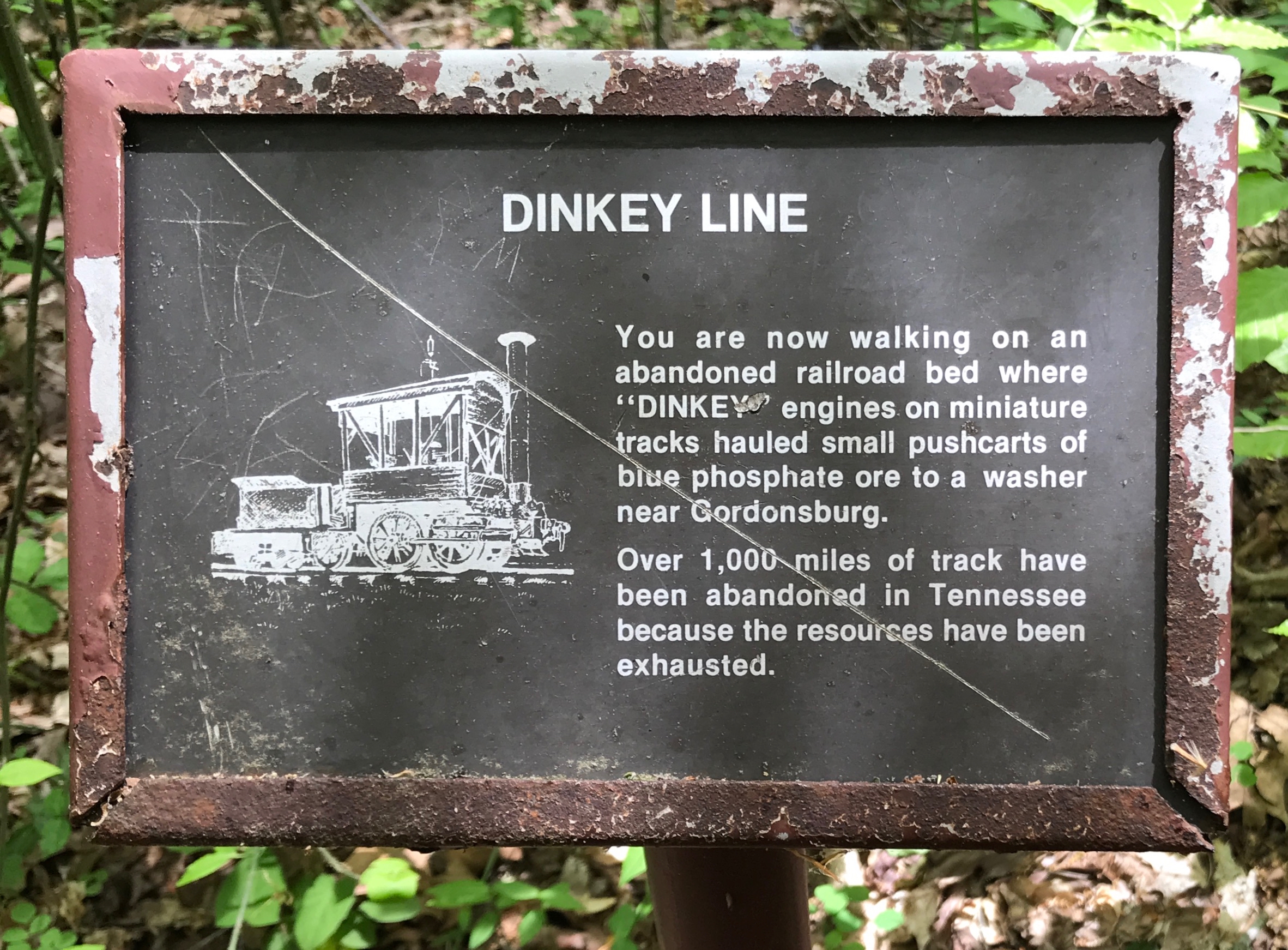
What do you know? I’m walking on an abandoned railroad bed!
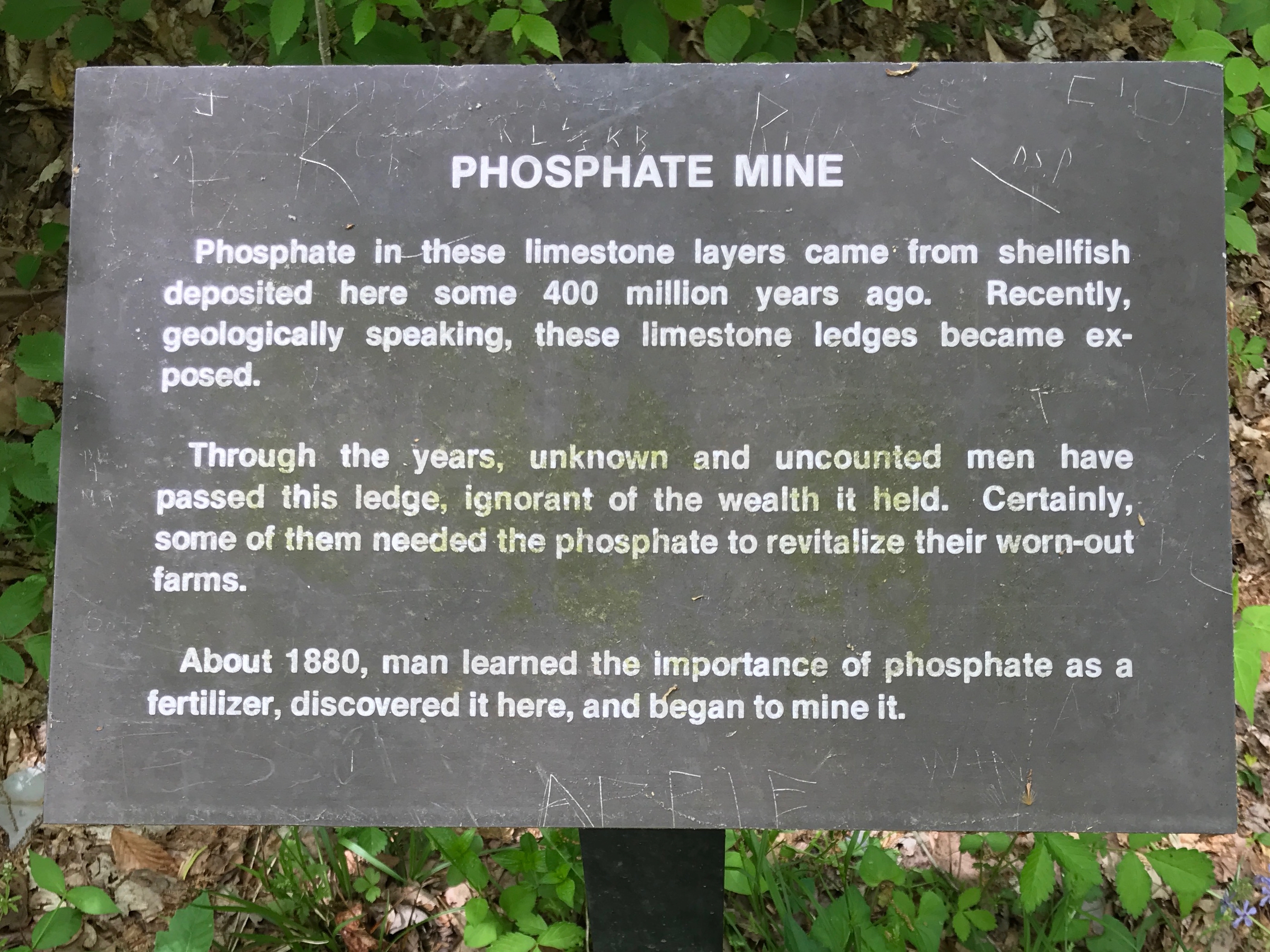
On to the phosphate mines!
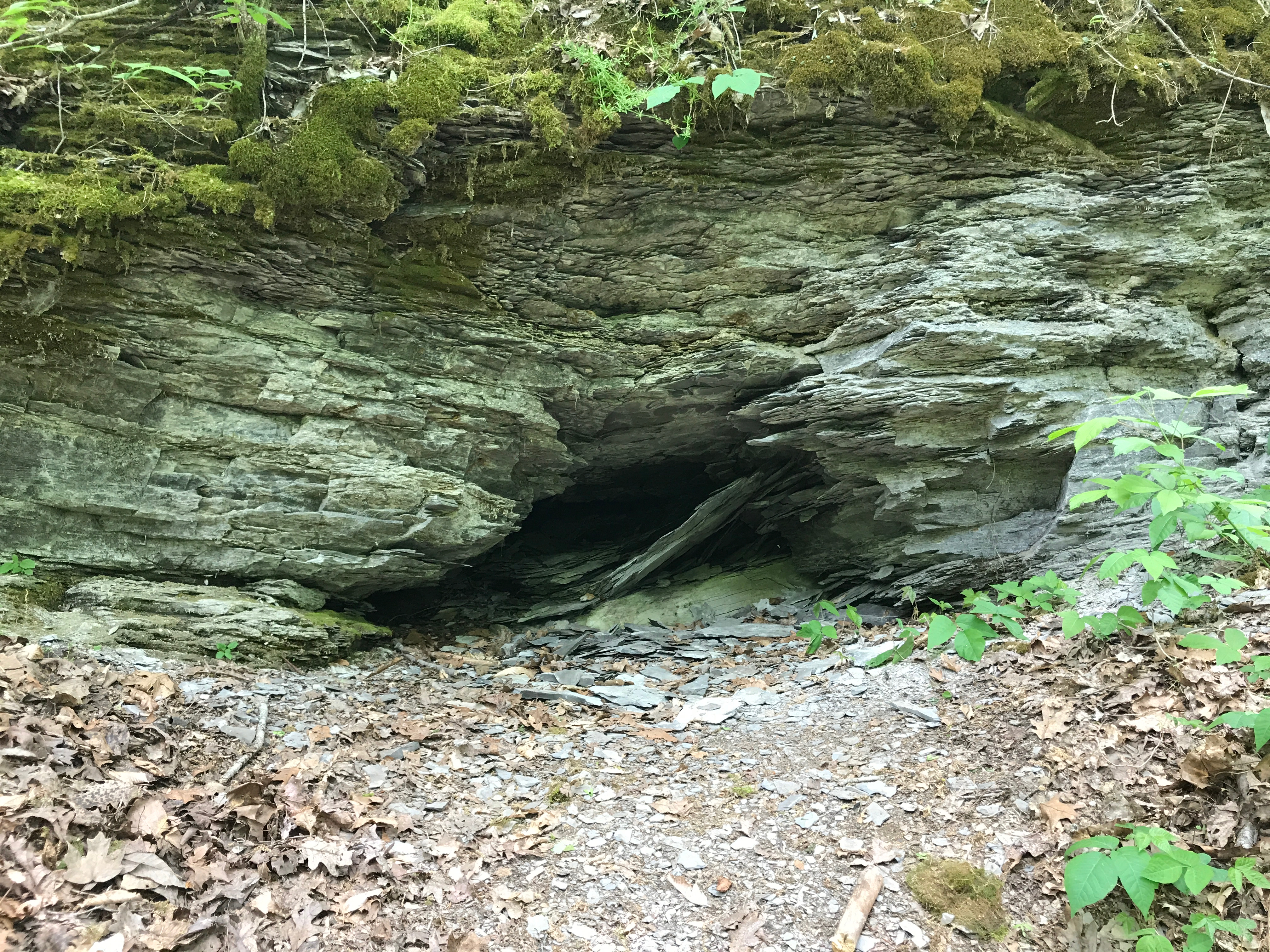
Here’s one mine.
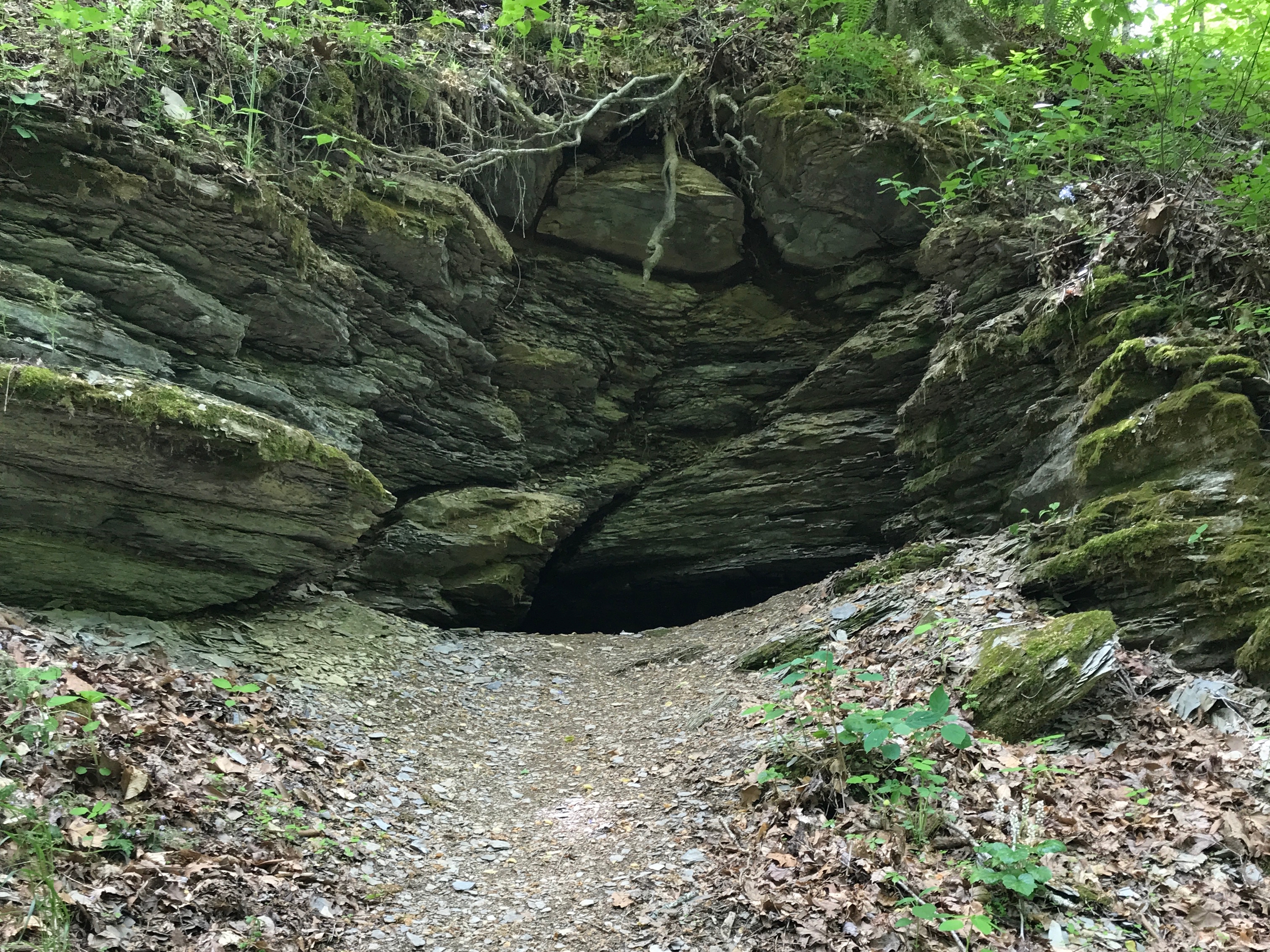
Here’s another. Where’s OSHA when you need it?
After that, I zipped into town and got gassed up for the morning. Then back to the campground for a good night’s sleep.
At this point, I had been on the road for a month. I had decided to book two nights in Tupelo before making the trek north. This was a day of rest and preparation.
I had a scenic campsite, and it was early in the season, so it was peaceful there. I hung out a bit, got things squared away and set out to see what I could see.
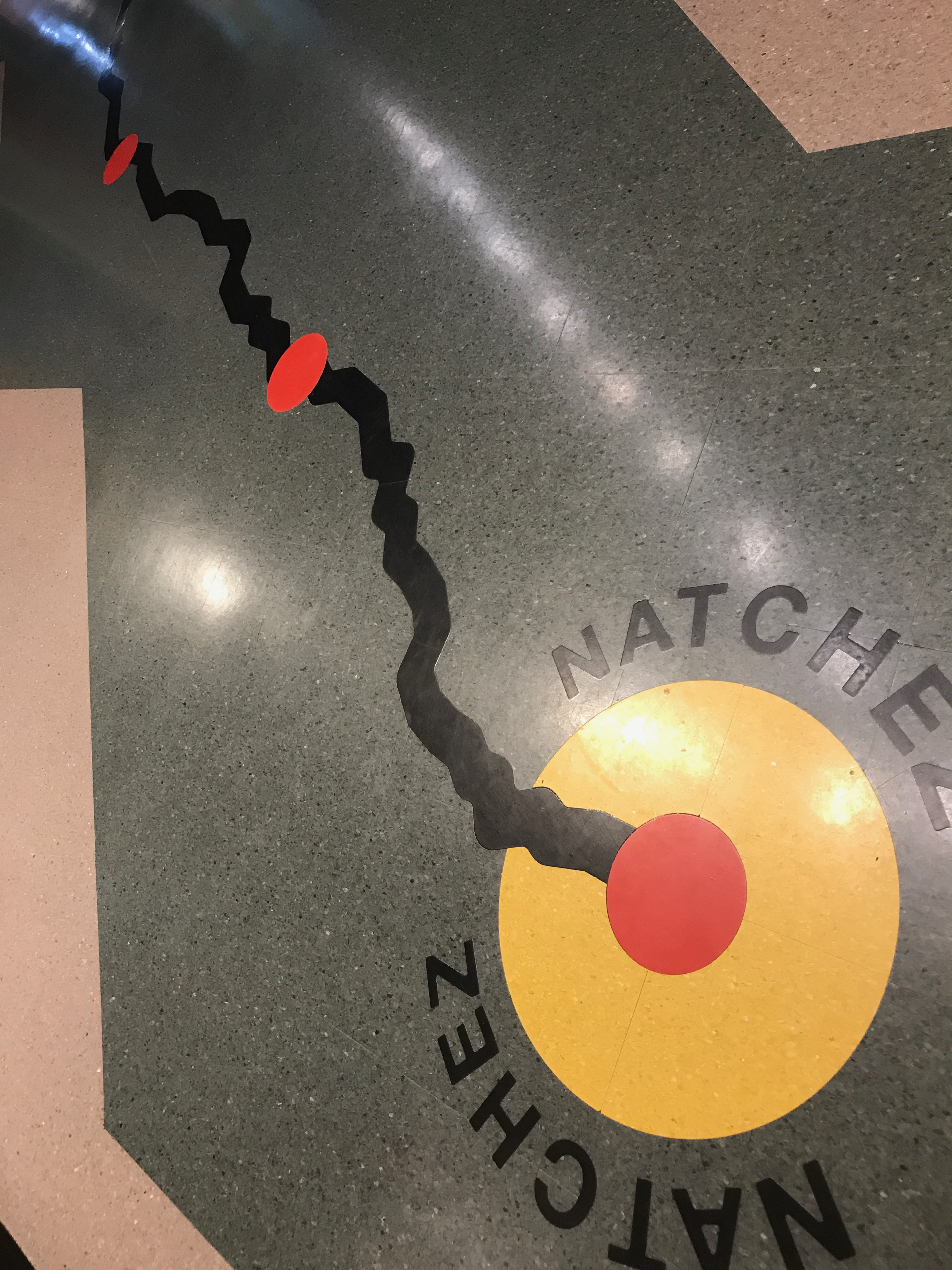
My first stop was the Natchez Trace Visitor Center. There were a number of interesting displays about the Parkway, and the volunteer was very informative. I decided to hit a few places along the Trace and then circle back to town.
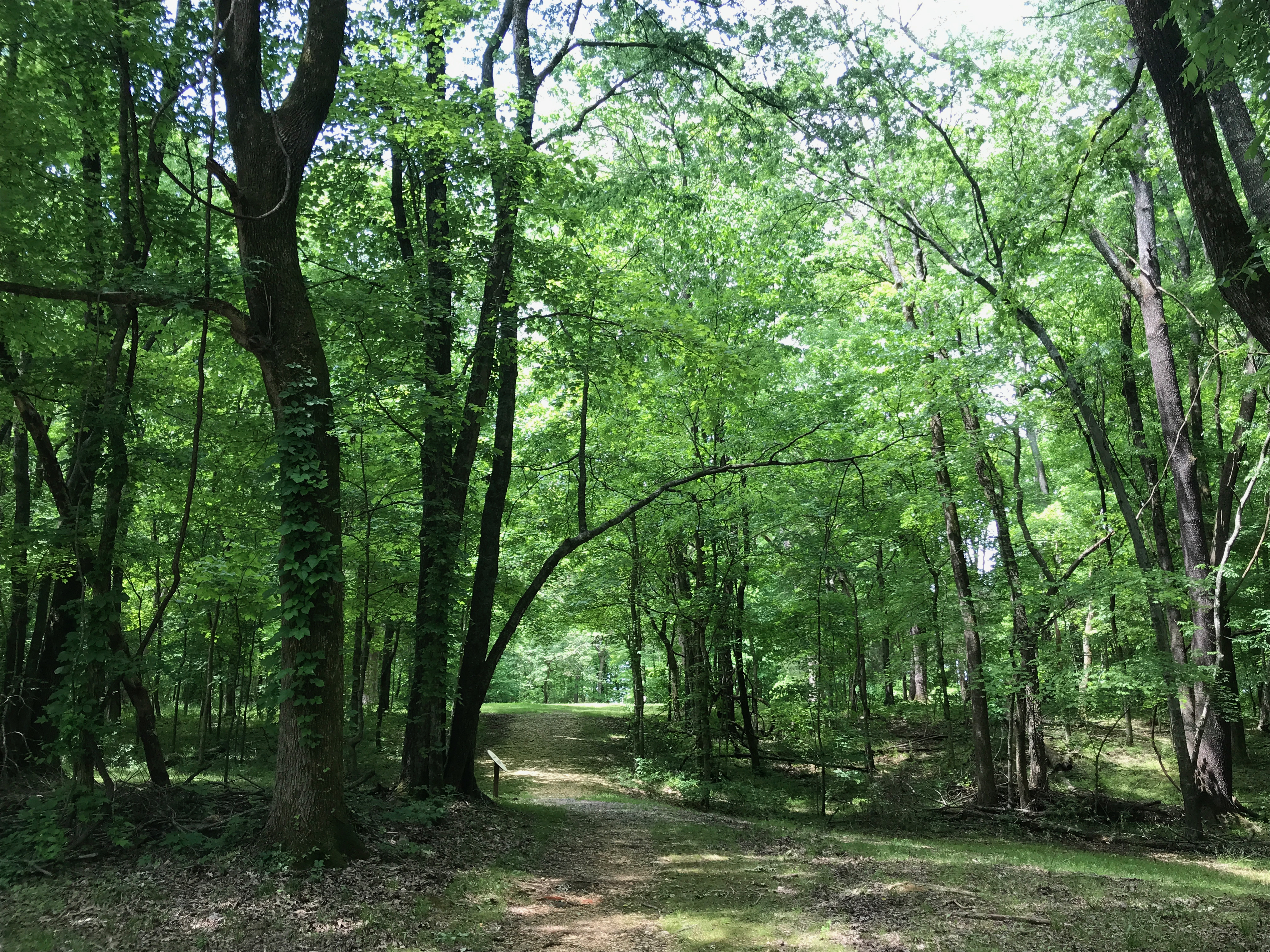
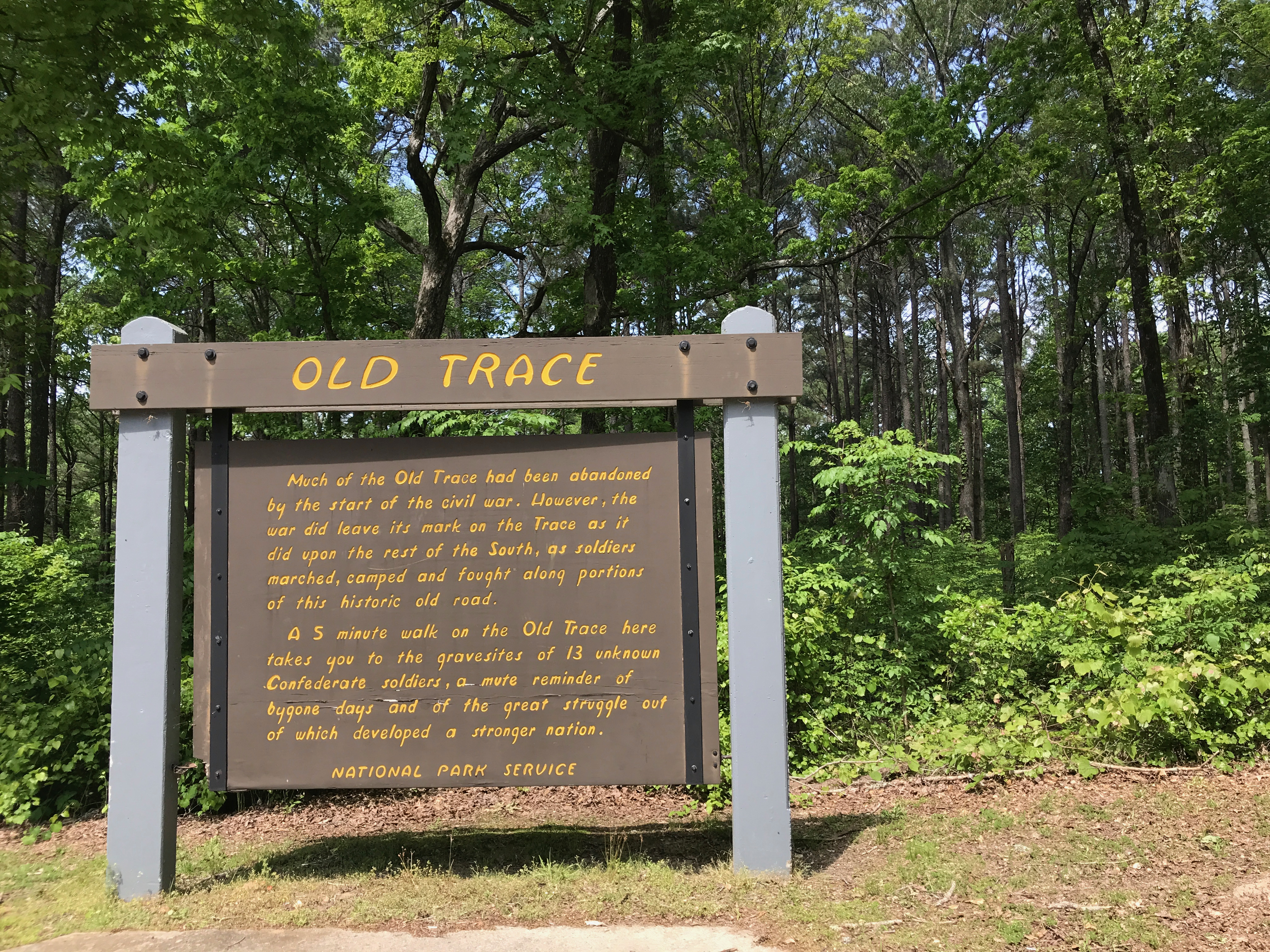
My first stop was a section of the Old Trace, which was a trail through the woods.
Can you imagine setting out on a journey and encountering this level of growth? I’ll bet no one was fighting to go first in that line! A trail must have seemed like a real improvement!
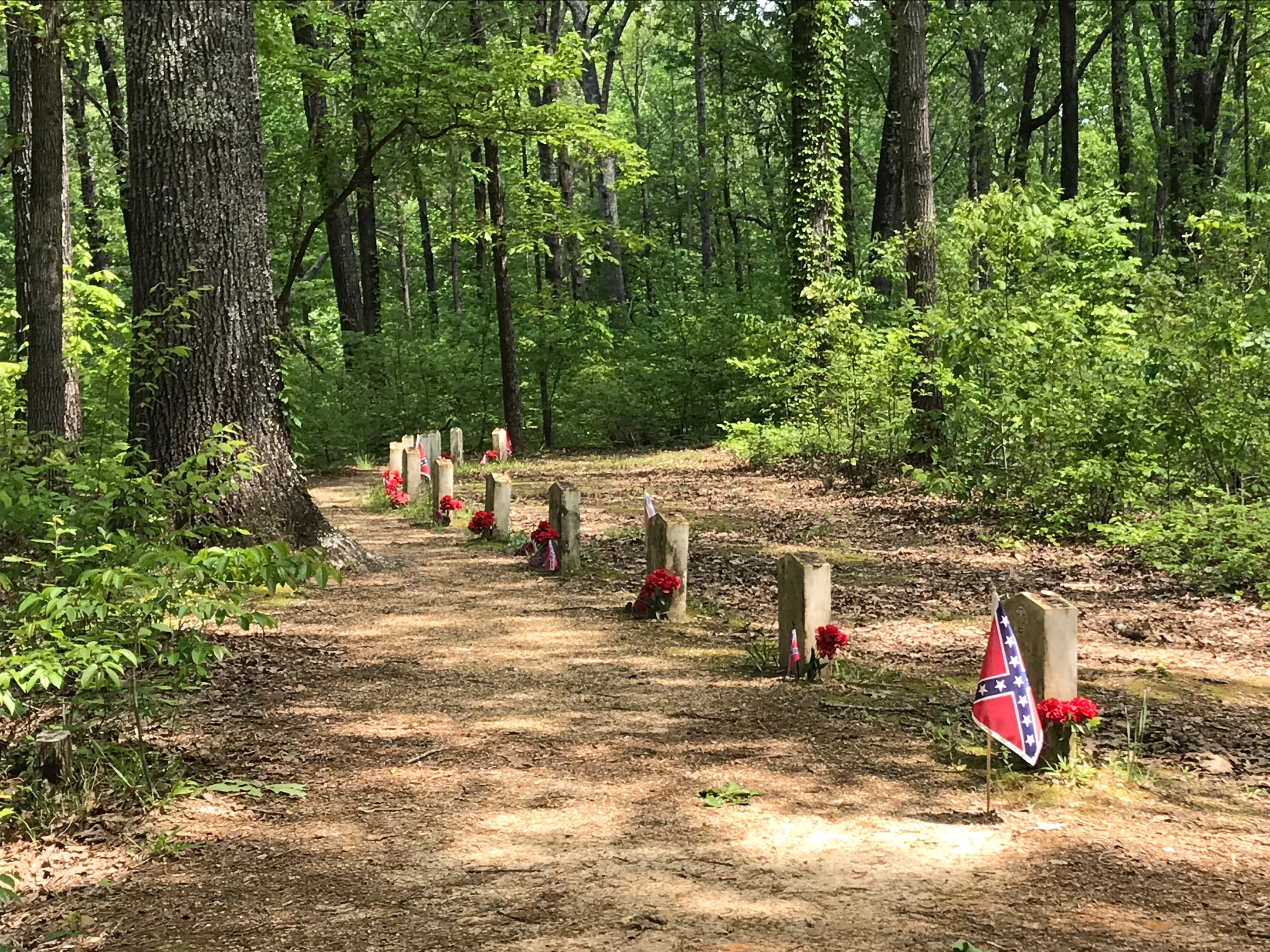
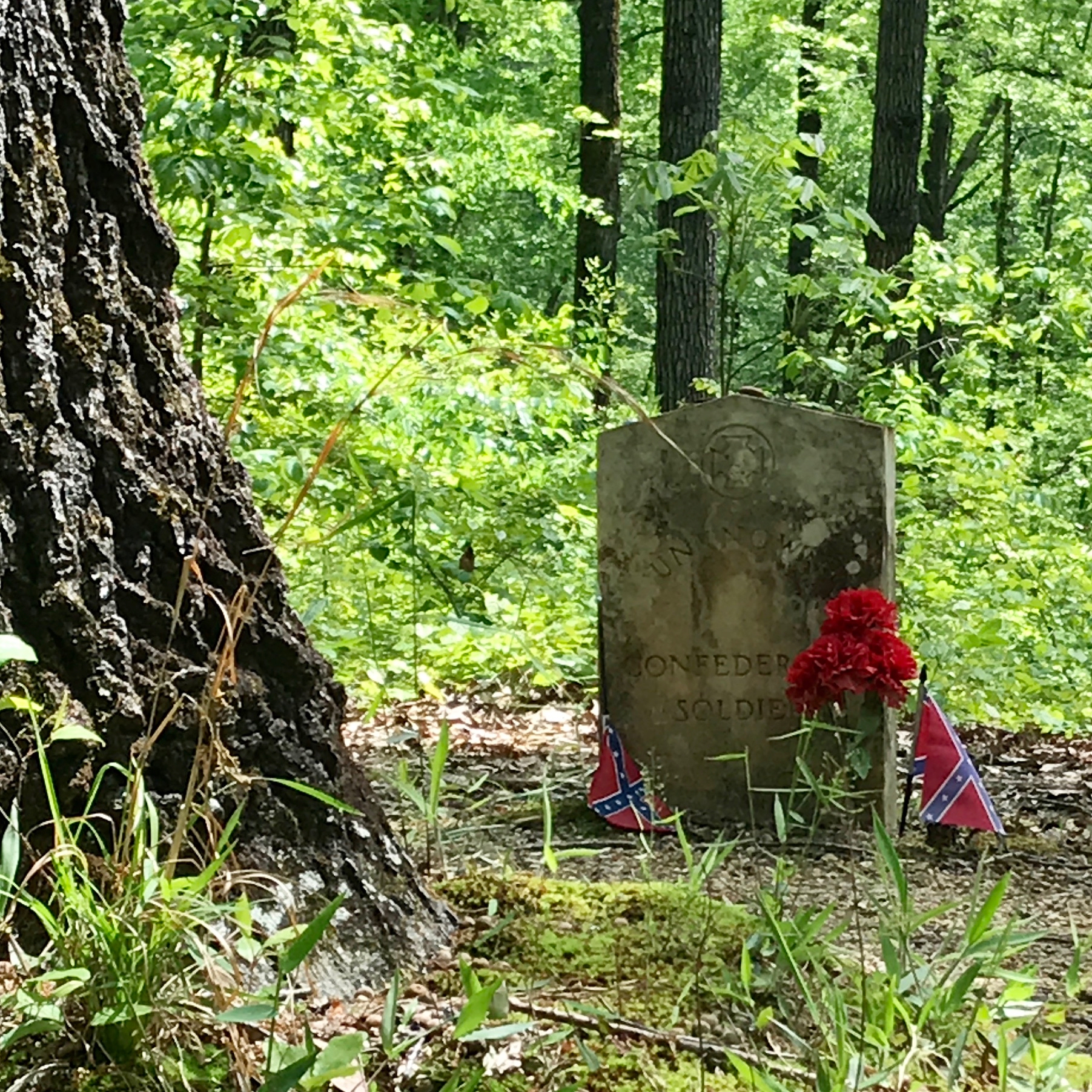
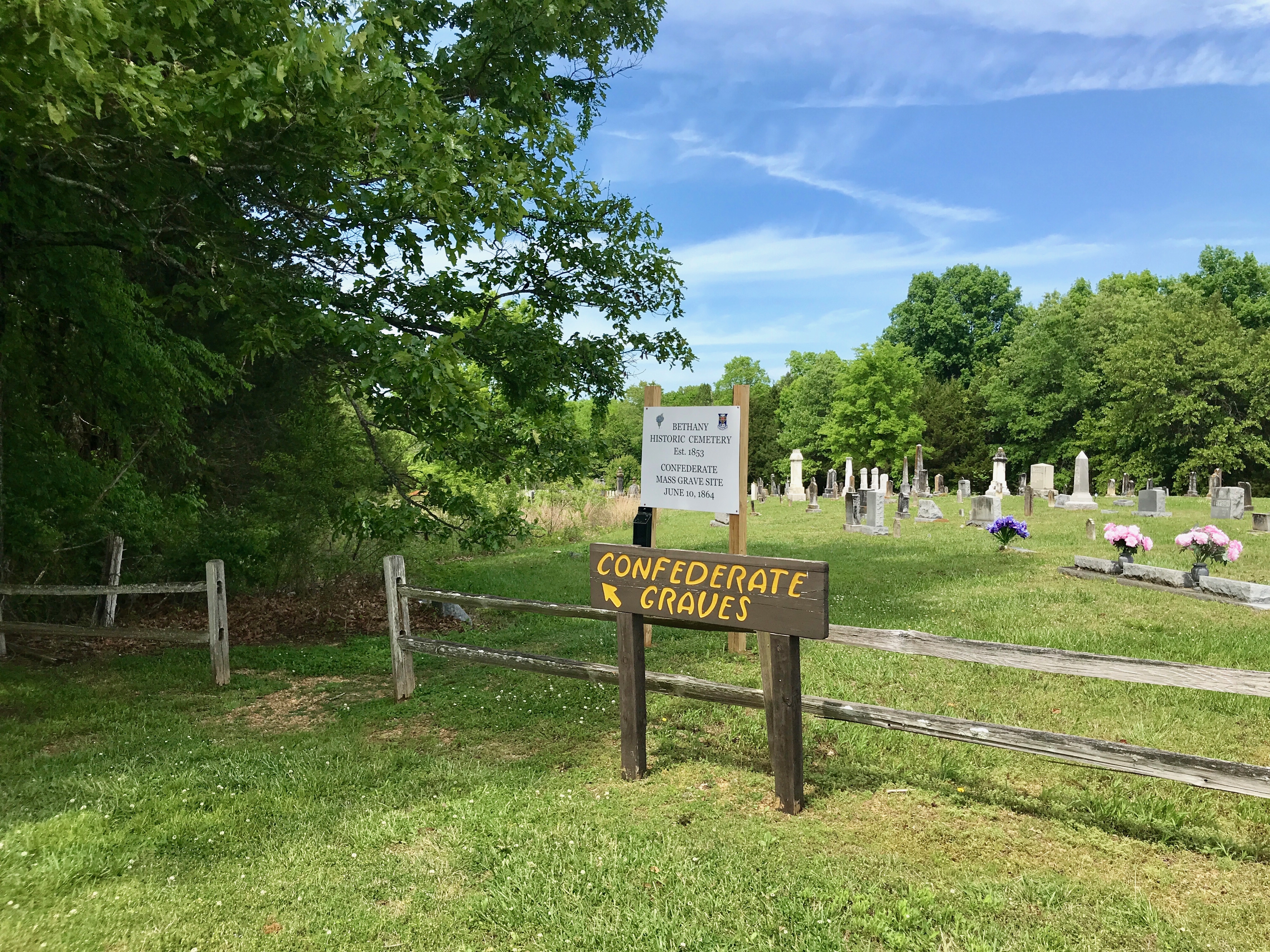
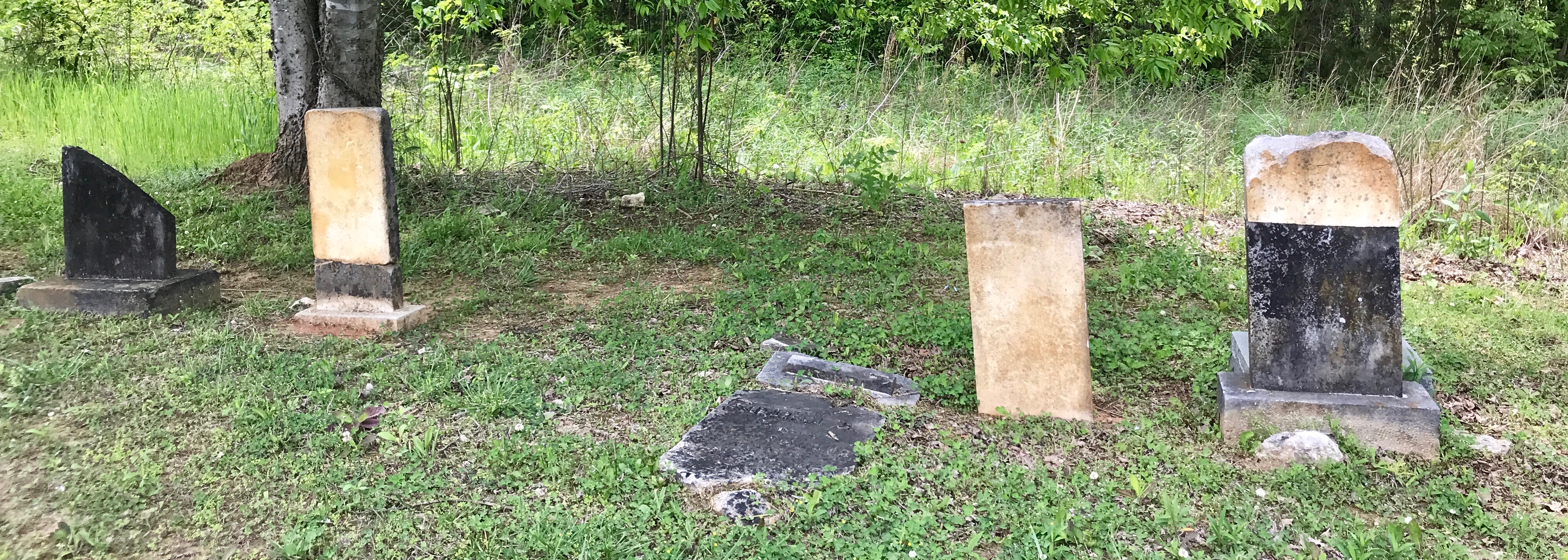
I walked down the Old Trace until I came to the graves of the unknown Confederate soldiers.
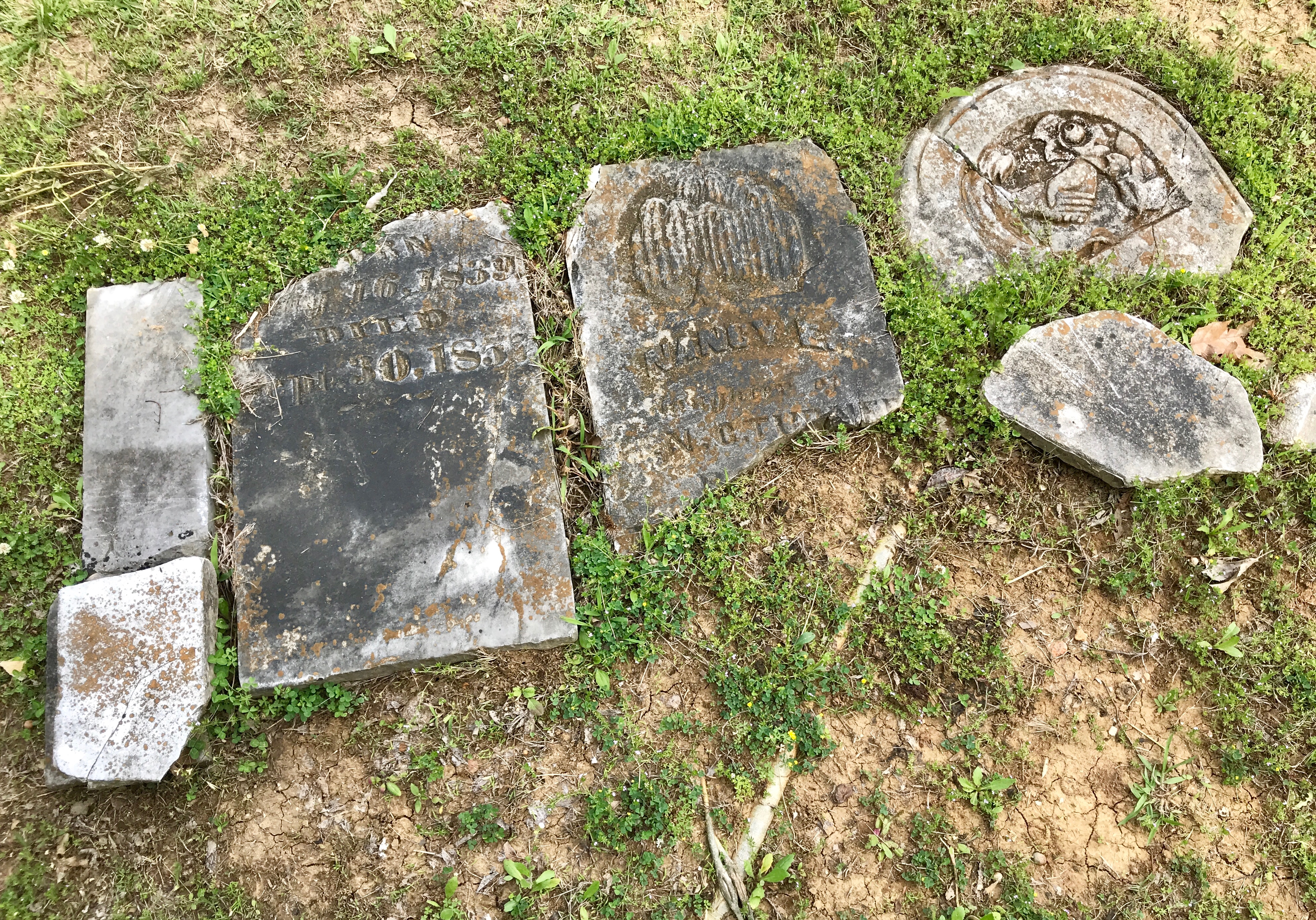
These graves aren’t identified, and they are not sure how they came to die here. The original markers may have borne names, but they disappeared long ago.
In 1940, Senator Theodore Bilbo arranged for marble headstones, but they were stolen.
The National Park Service erected the headstones that are now in place.
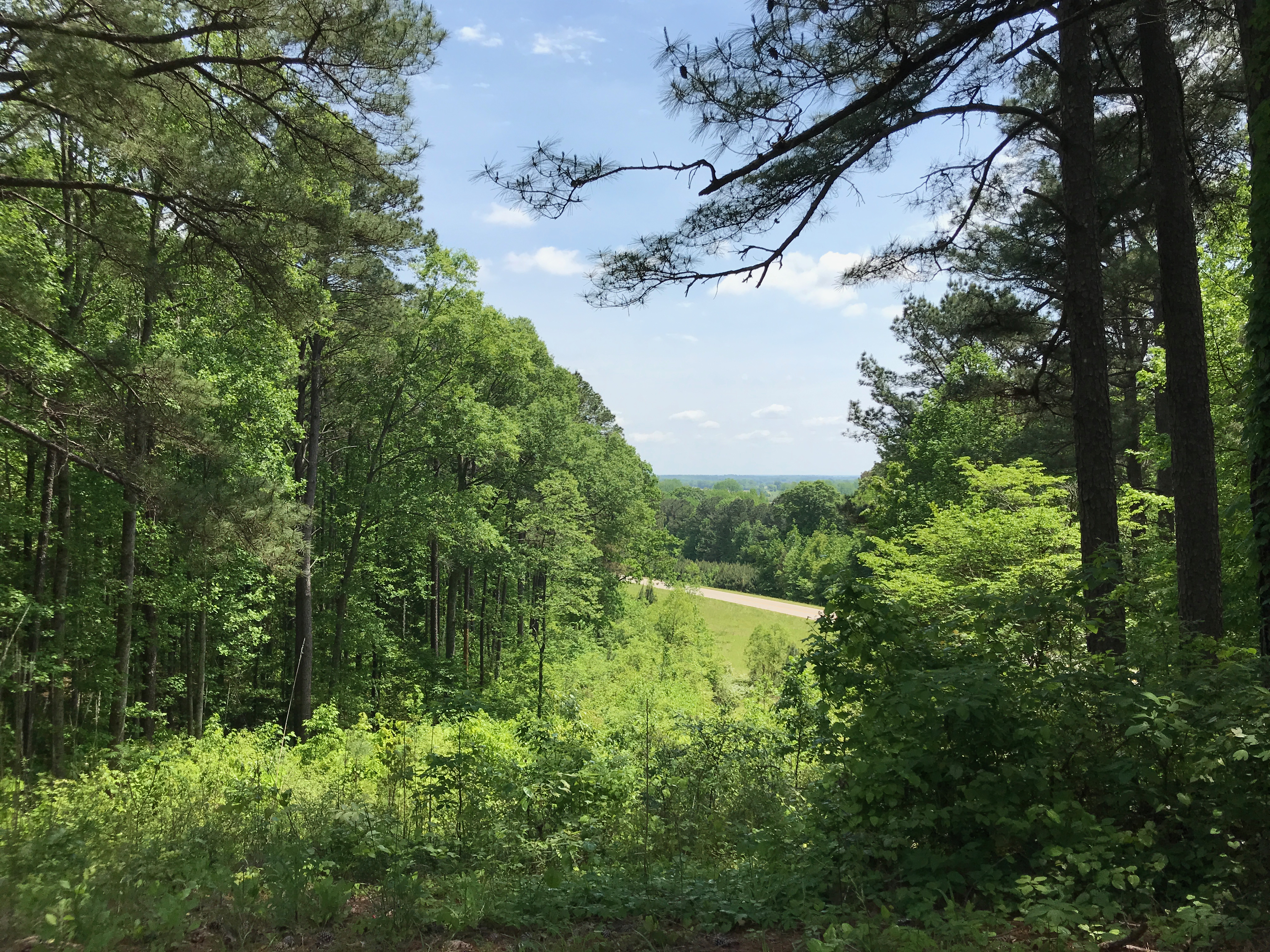
Ah, but what a beautiful world we live in!
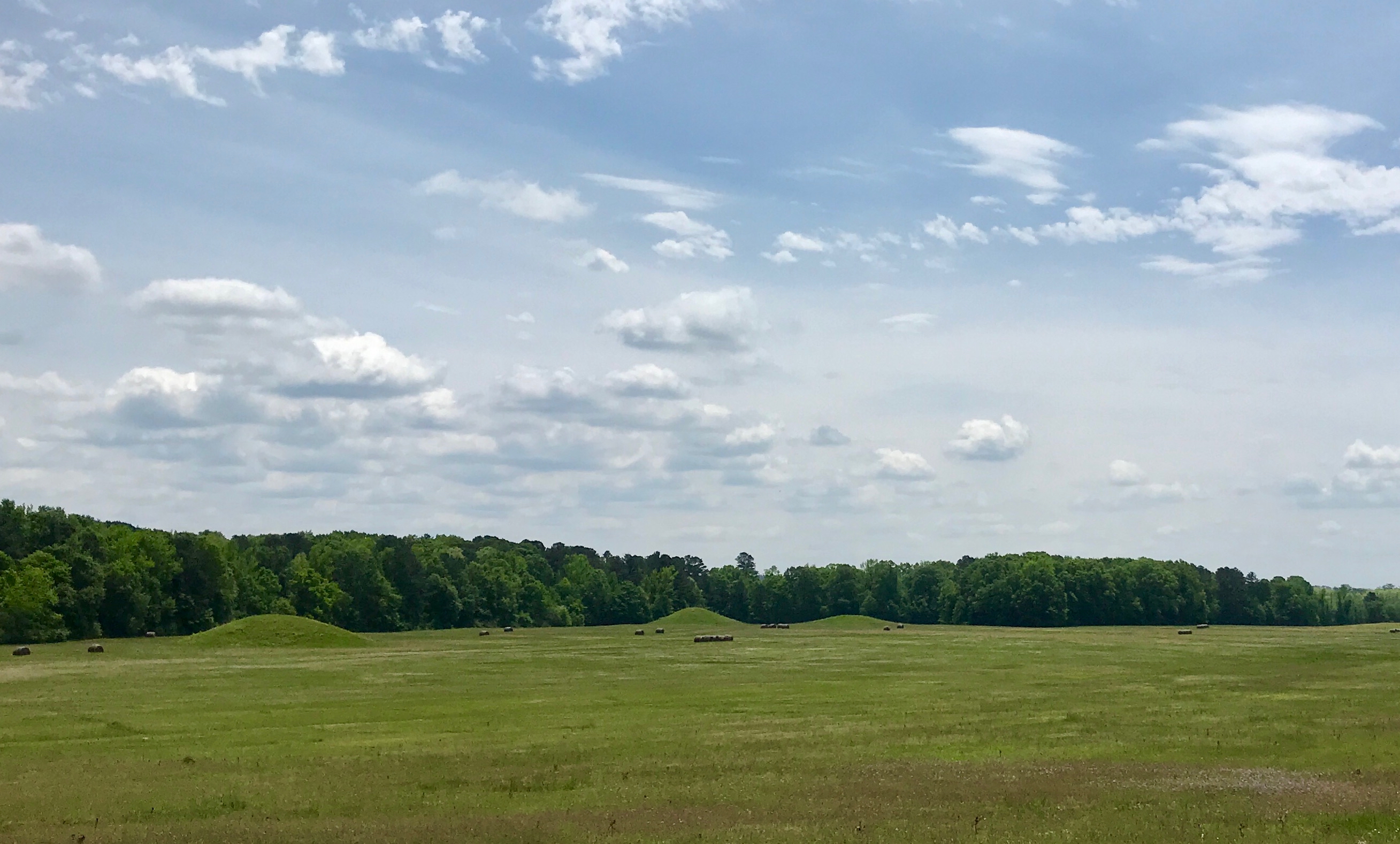
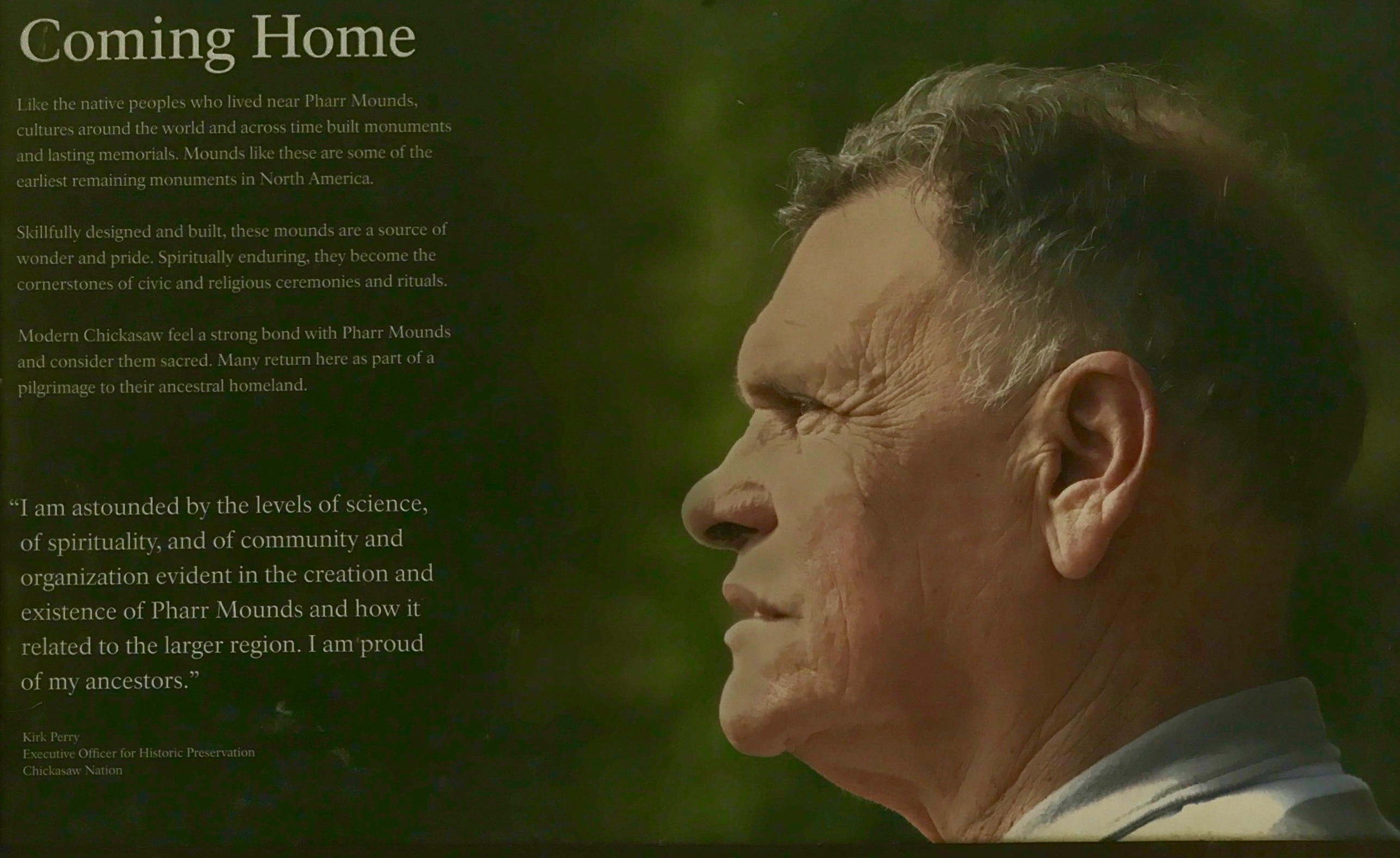
I continued north on the Trace until I came to Pharr Mounds.
The next time you are driving past fields with mounds that seem out of place, stop to consider what they might be and why they might be important.
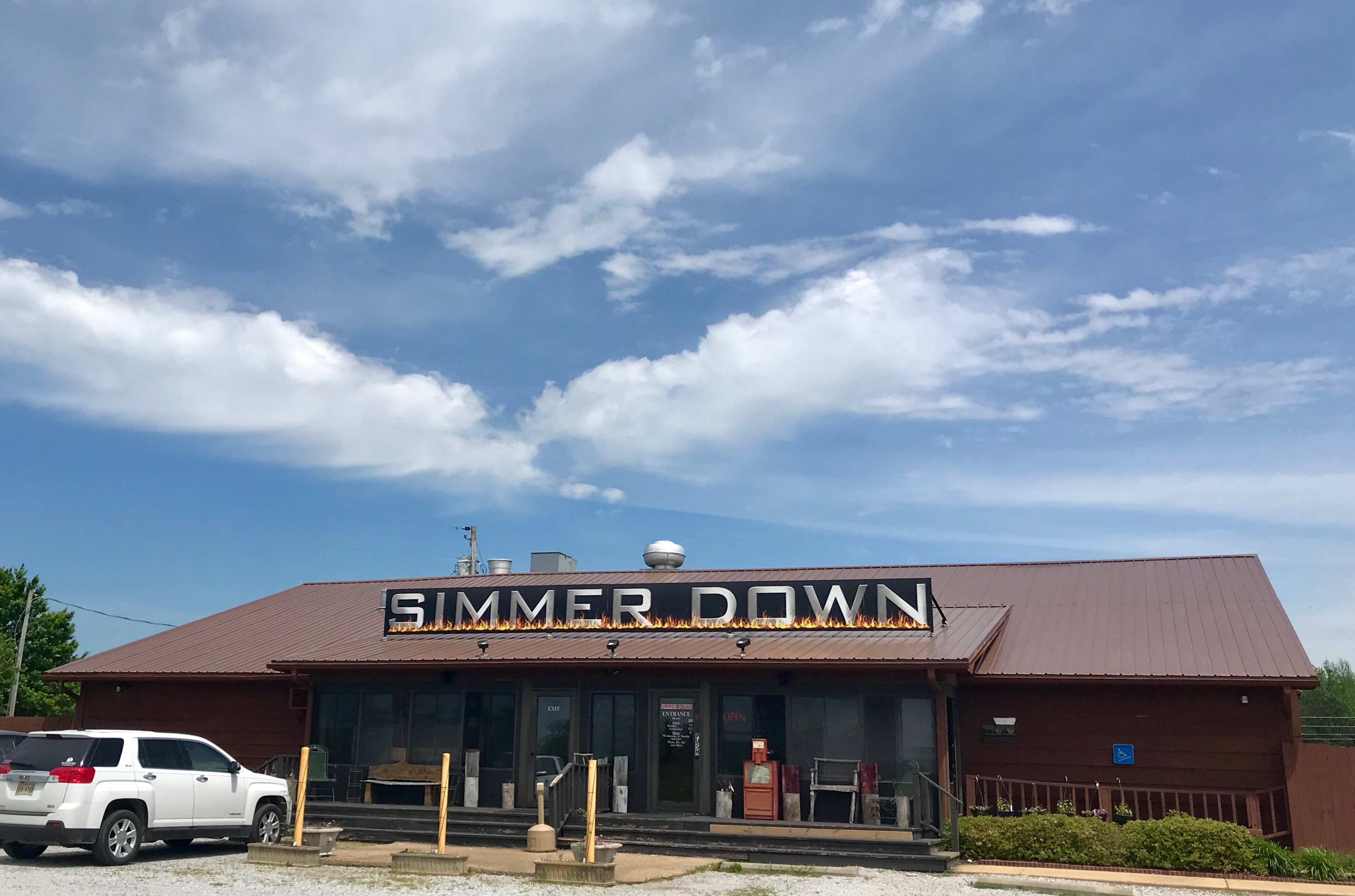
At this point, I was starting to feel peckish. I got off the Parkway and found a restaurant.
Isn’t that a great name? My mother would always tell us to do that.
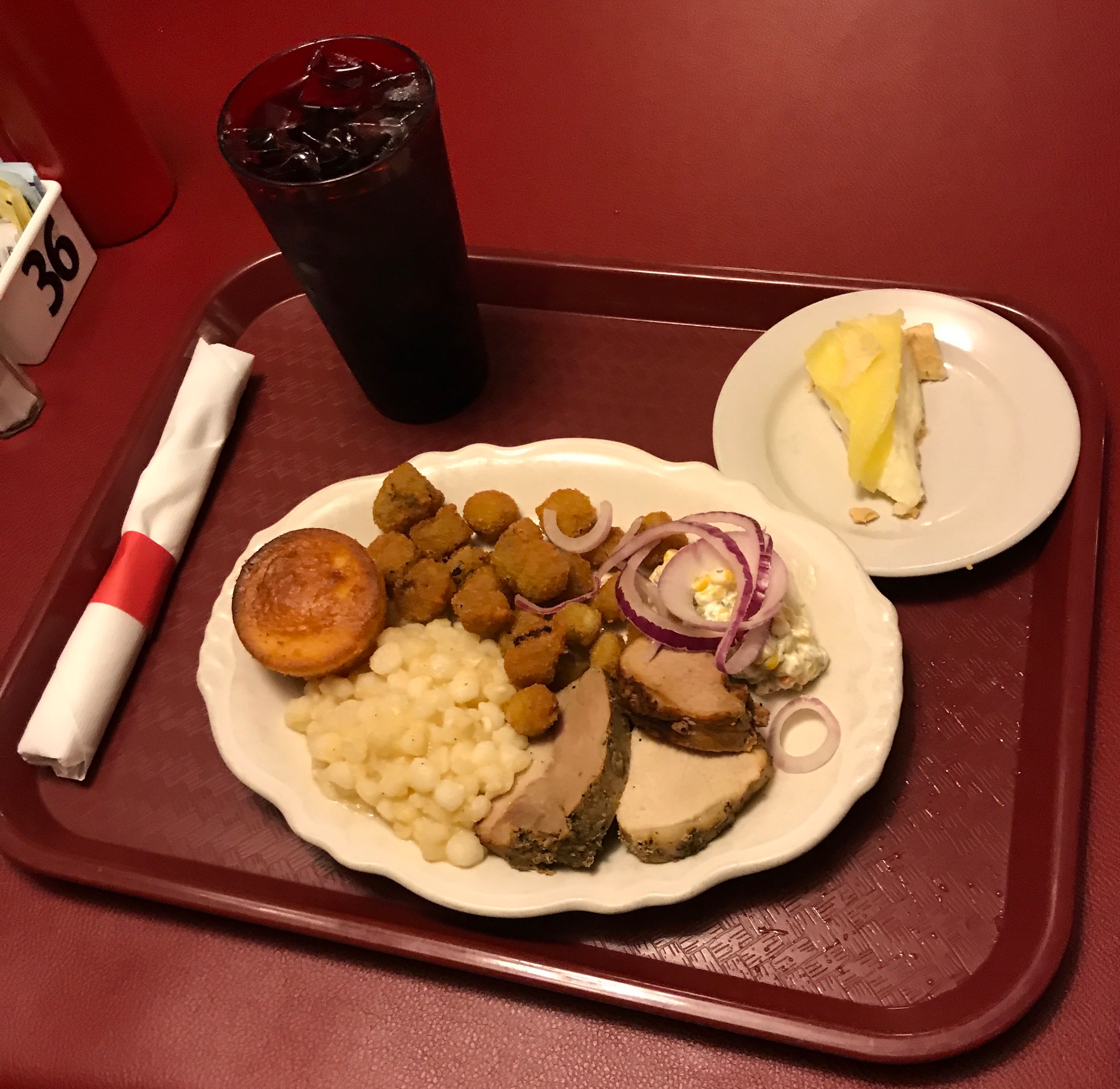
I stopped for a “meat and three” – which apparently came with dessert. If I remember correctly, the dessert was Chess Pie.
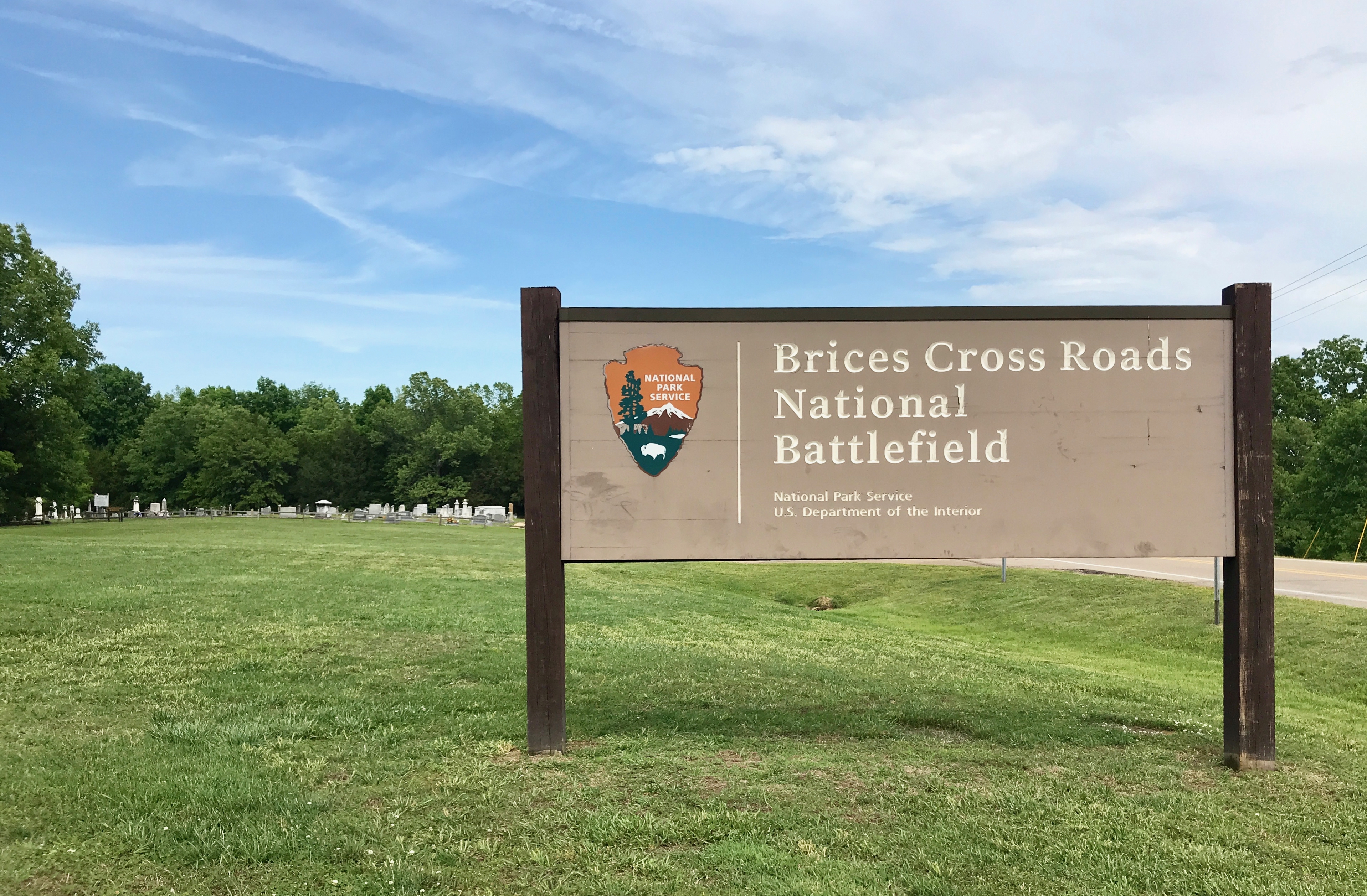
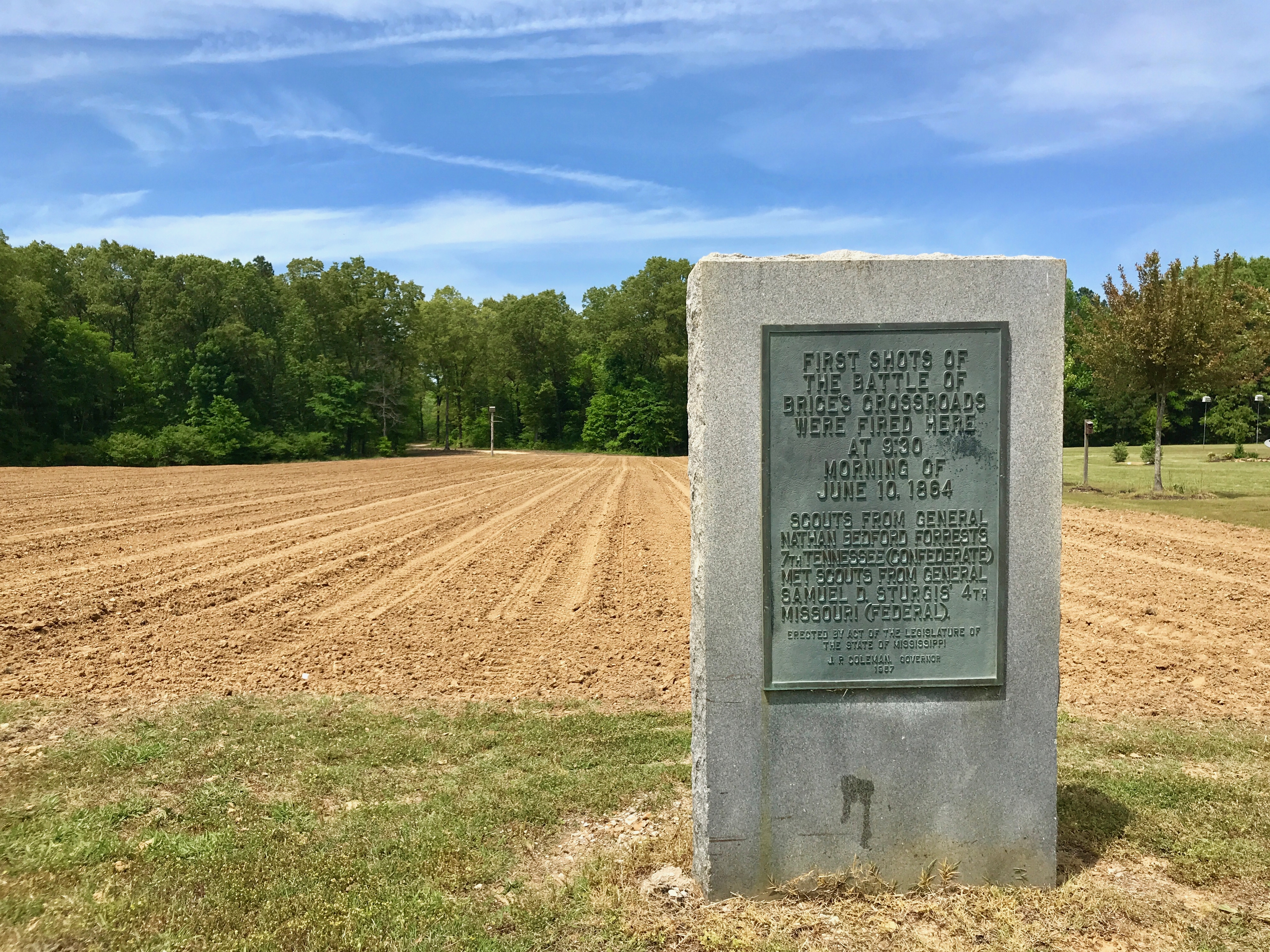
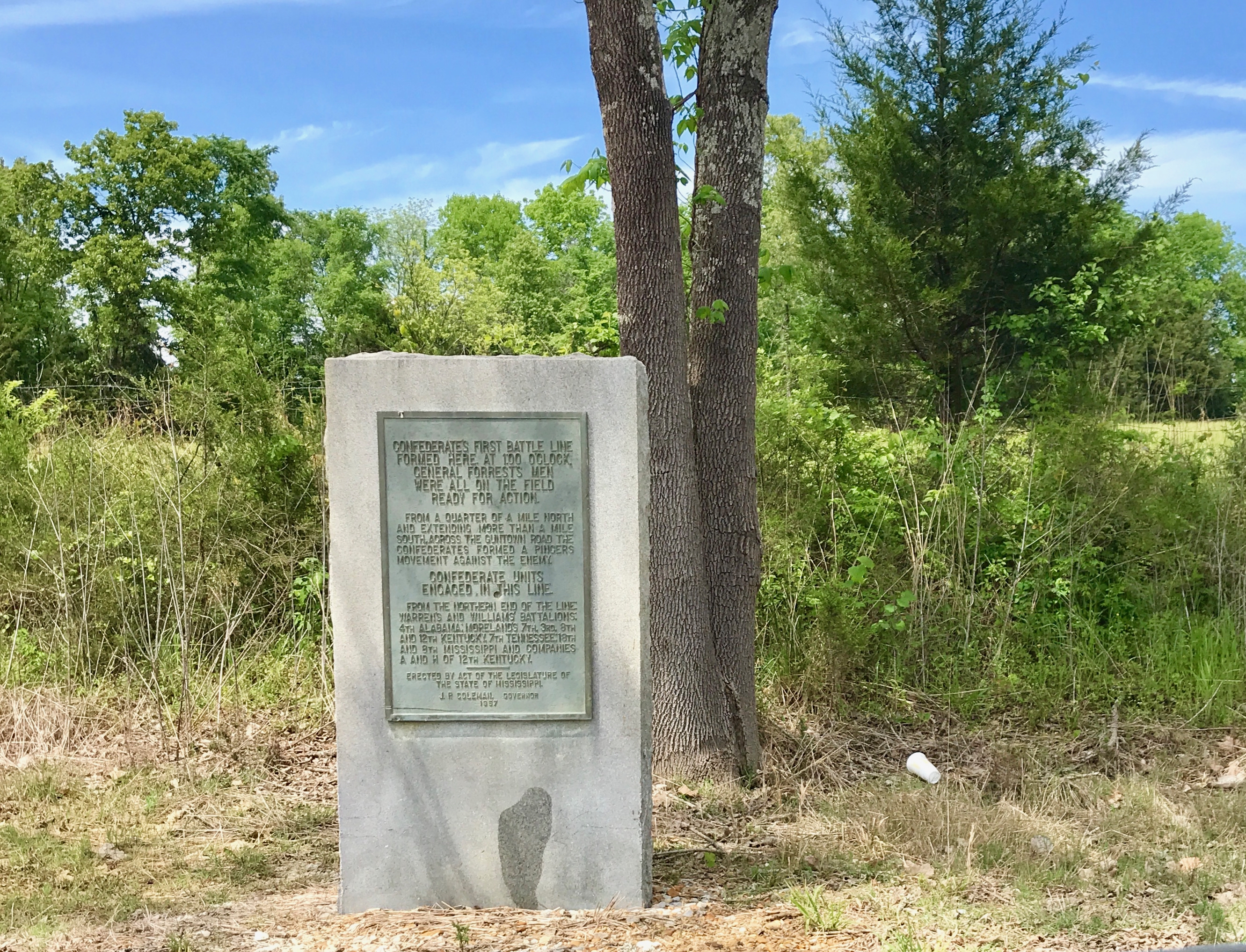
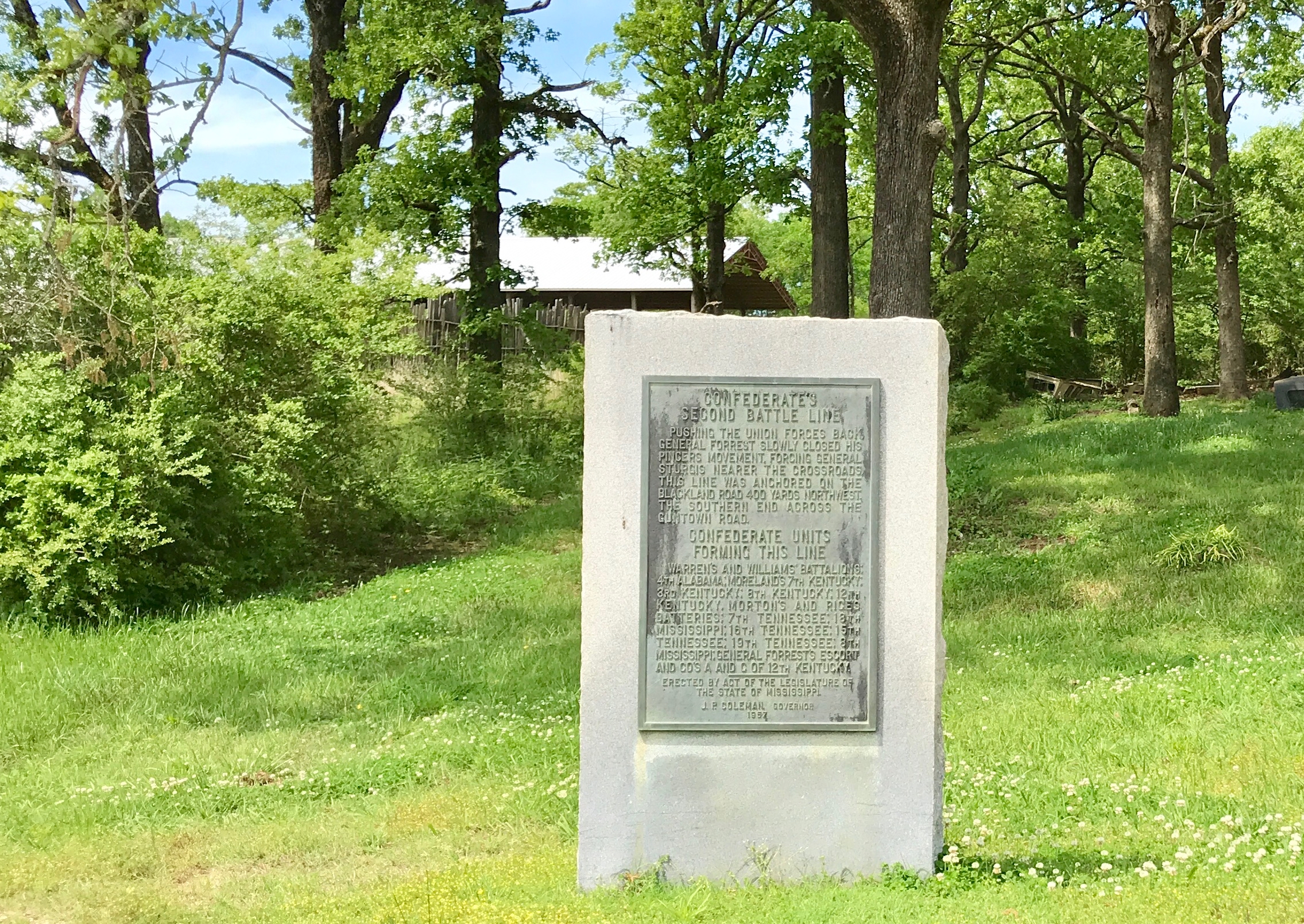
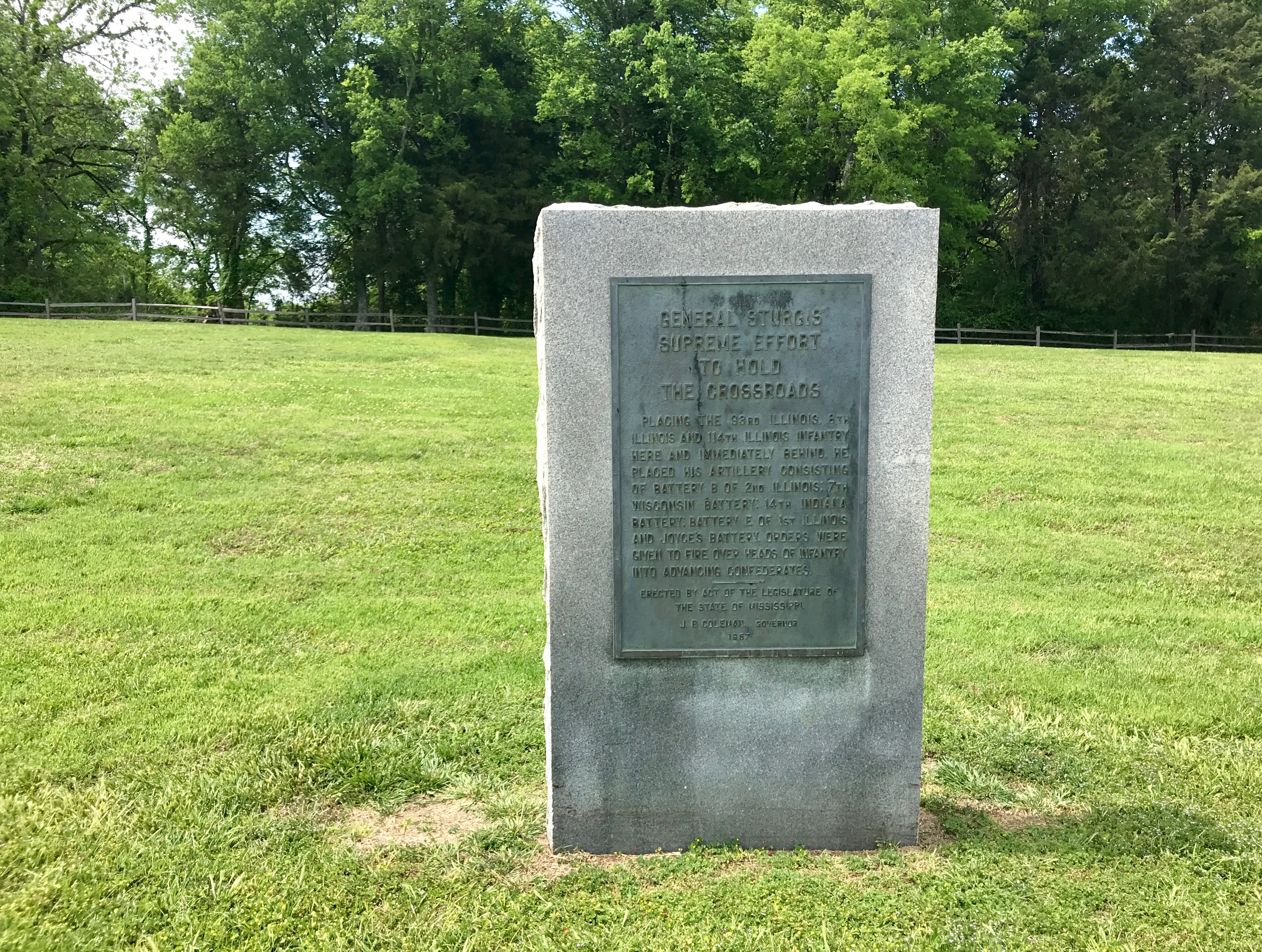
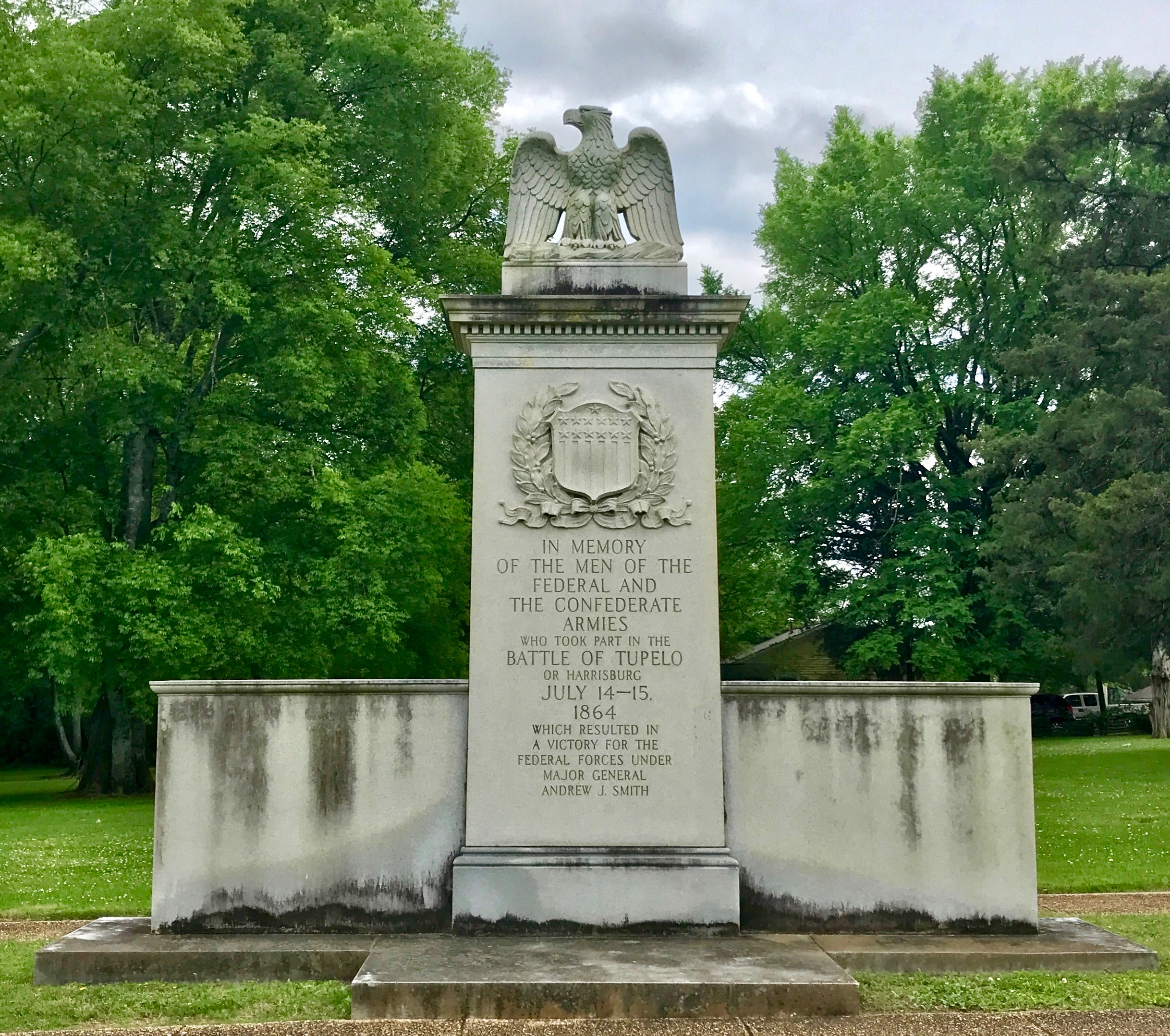
I came across a memorial for a battle I had never heard about. All around the area there were markers about significant events in the battle.
The first shots…
The first Confederate battle line…
The second Confederate battle line…
The Union soliders’ supreme effort to hold the crossroad.
This is where the fighting took place…
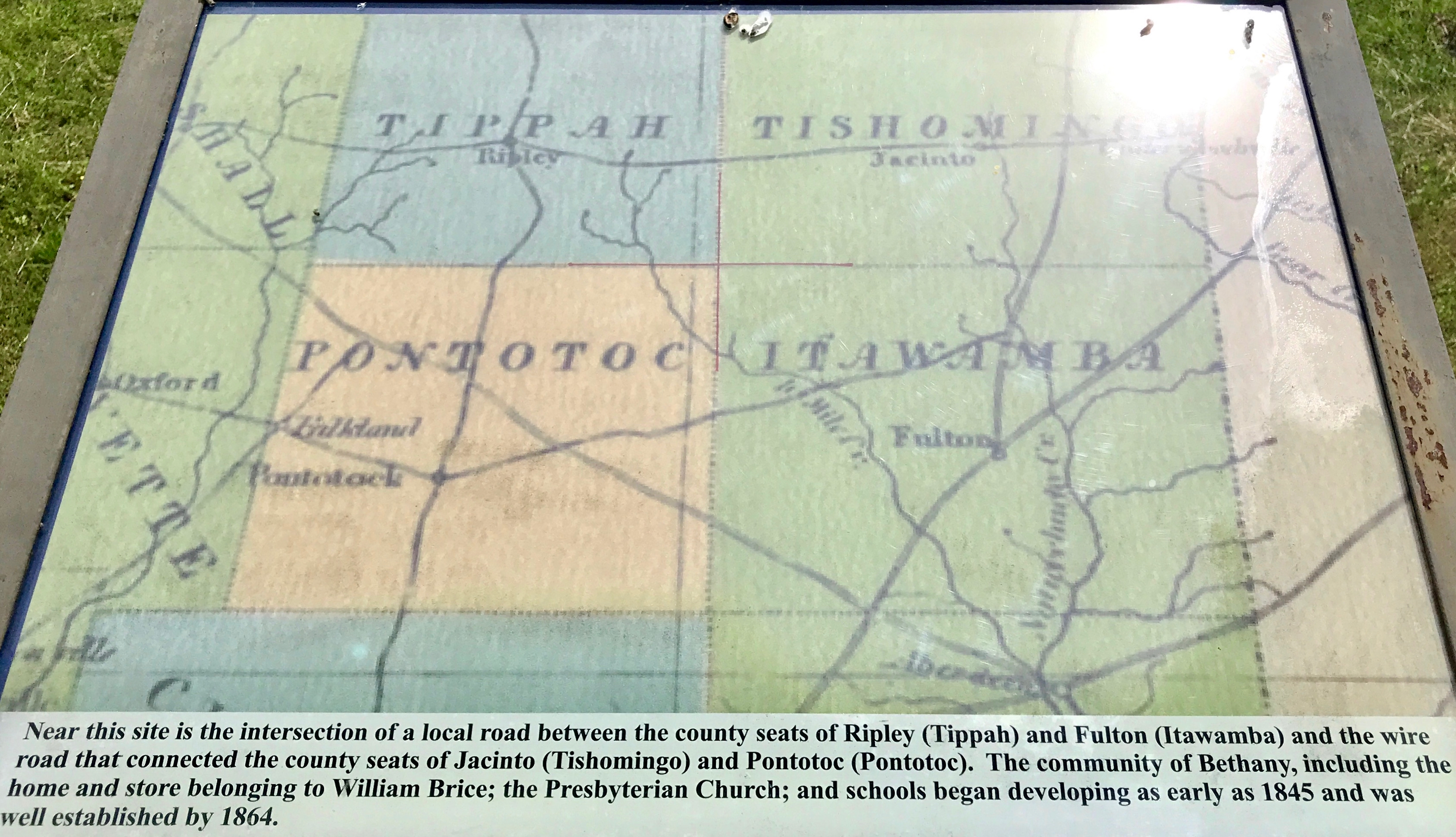
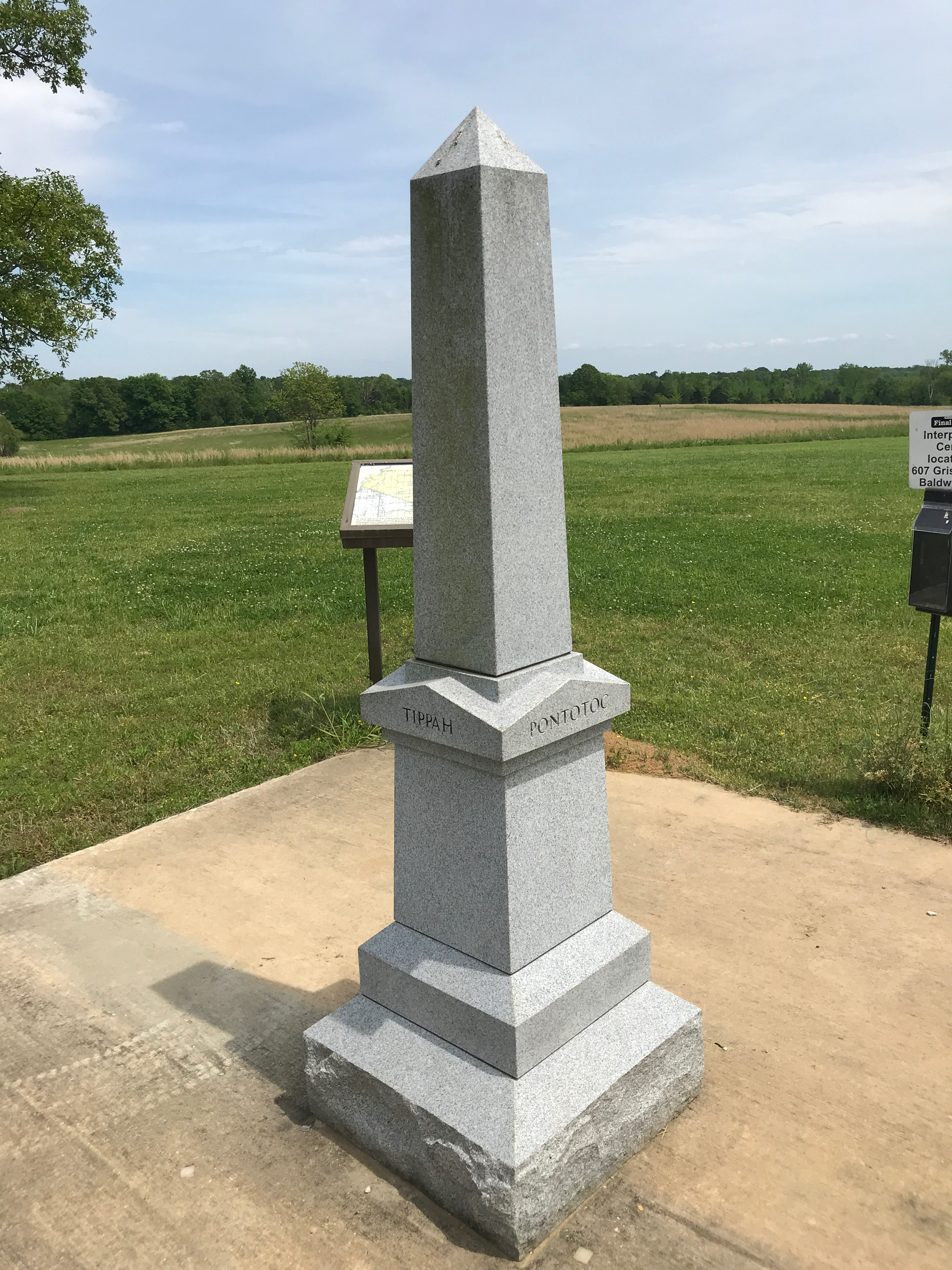
and the marker of the spot where the four counties connect.
A major portion of the Battle of Brice’s Cross Roads was fought through the cemetery, much of it was destroyed. The church and William Brice’s house, which flanked the cemetery, were also involved.
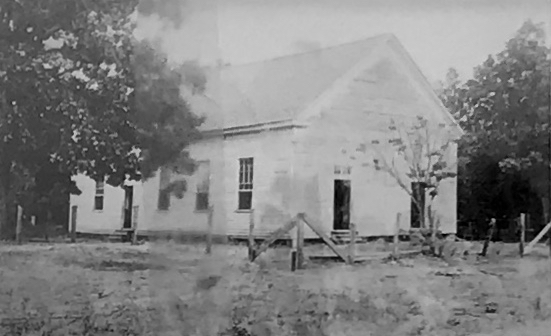
This is the second church, which was build in 1872.
It was a lovely day to stroll through a cemetery.
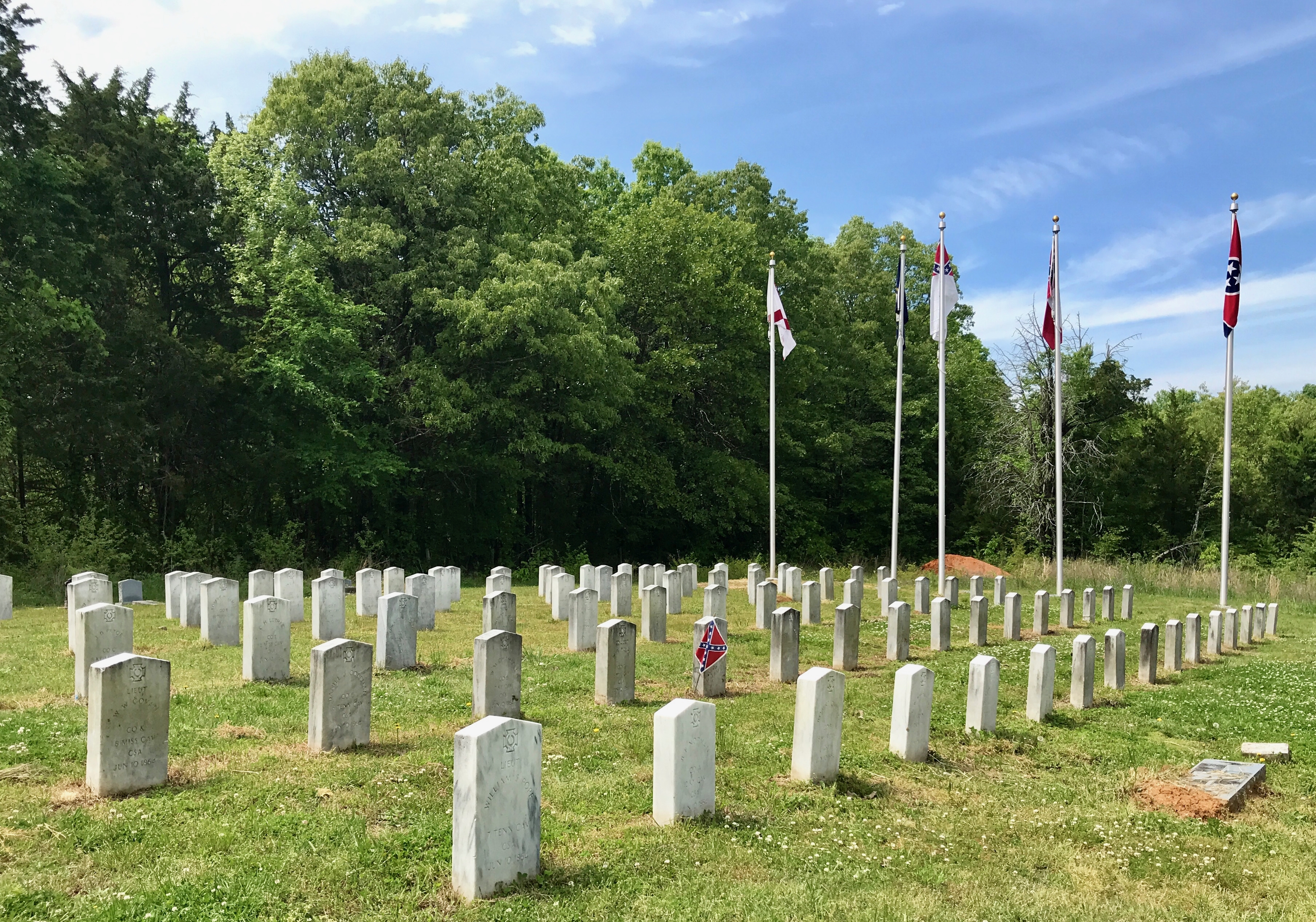
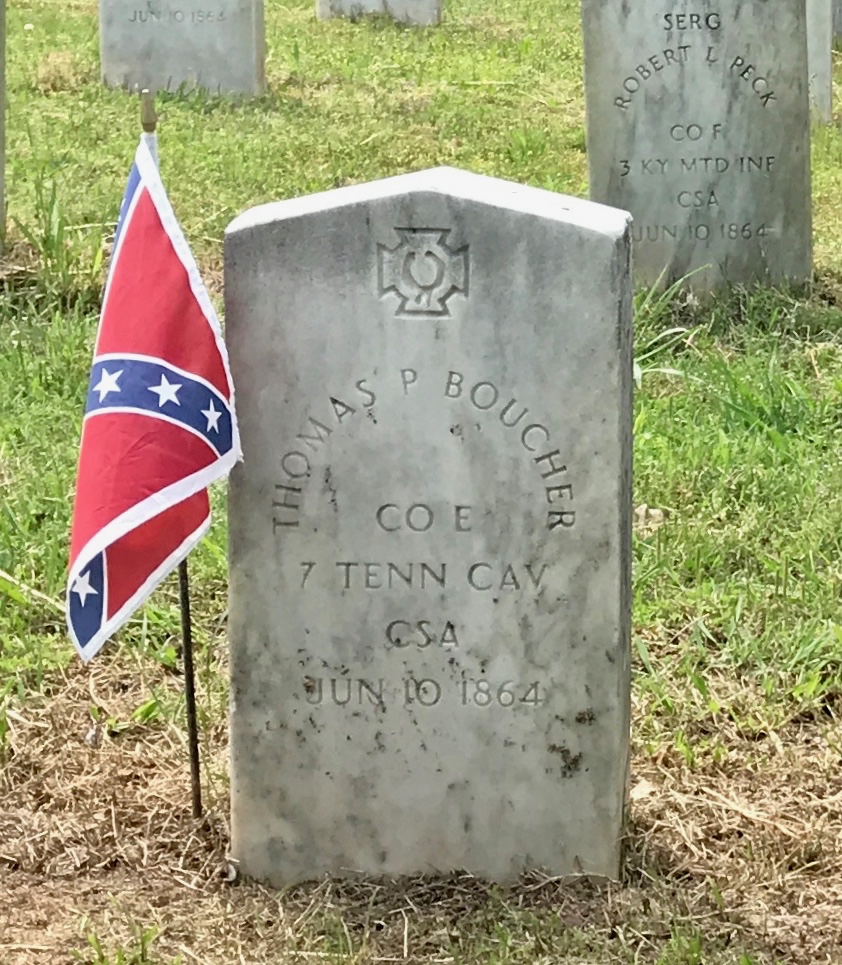
And back to the Confederate graves.
Everyone deserves to be remembered.
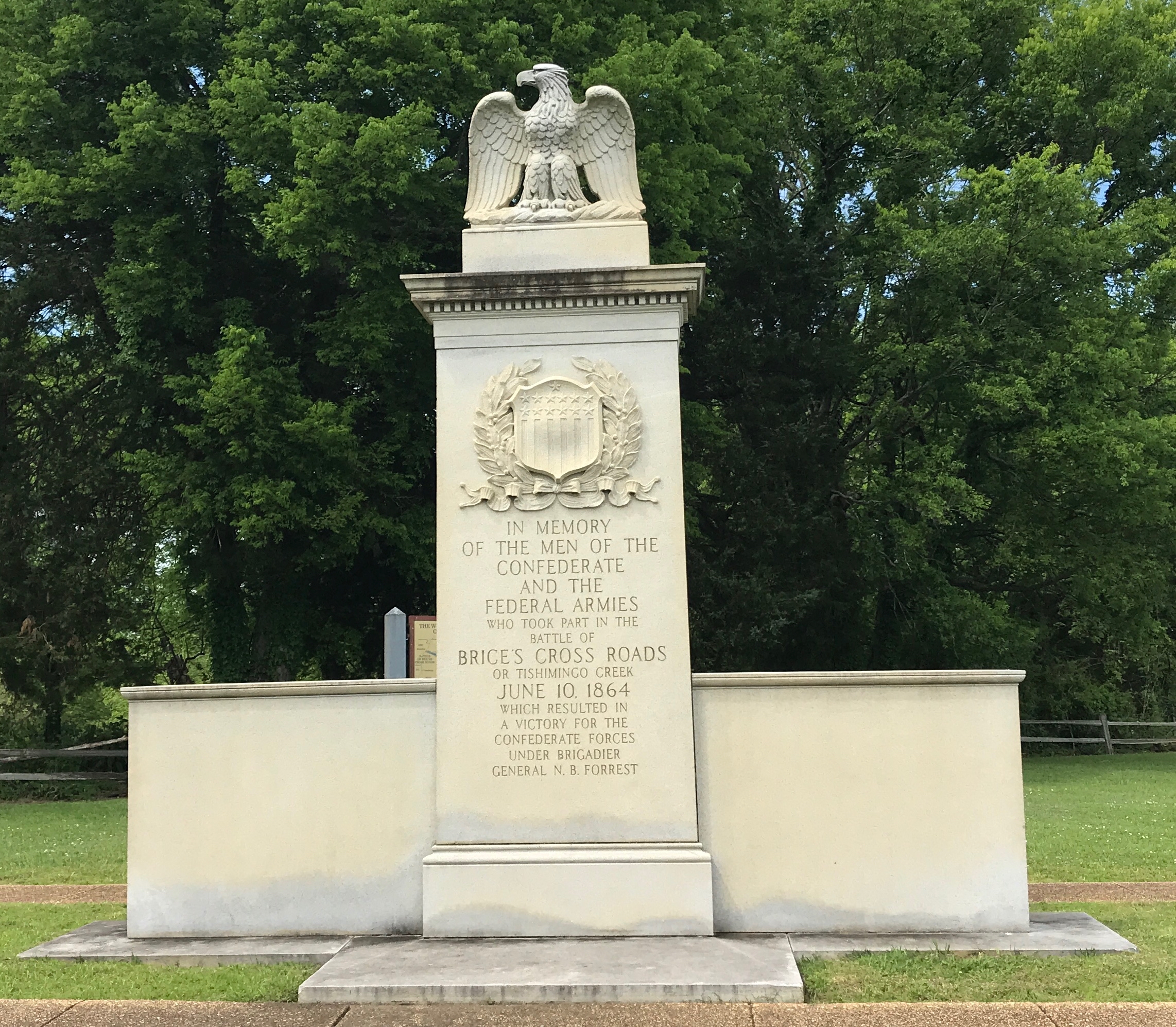
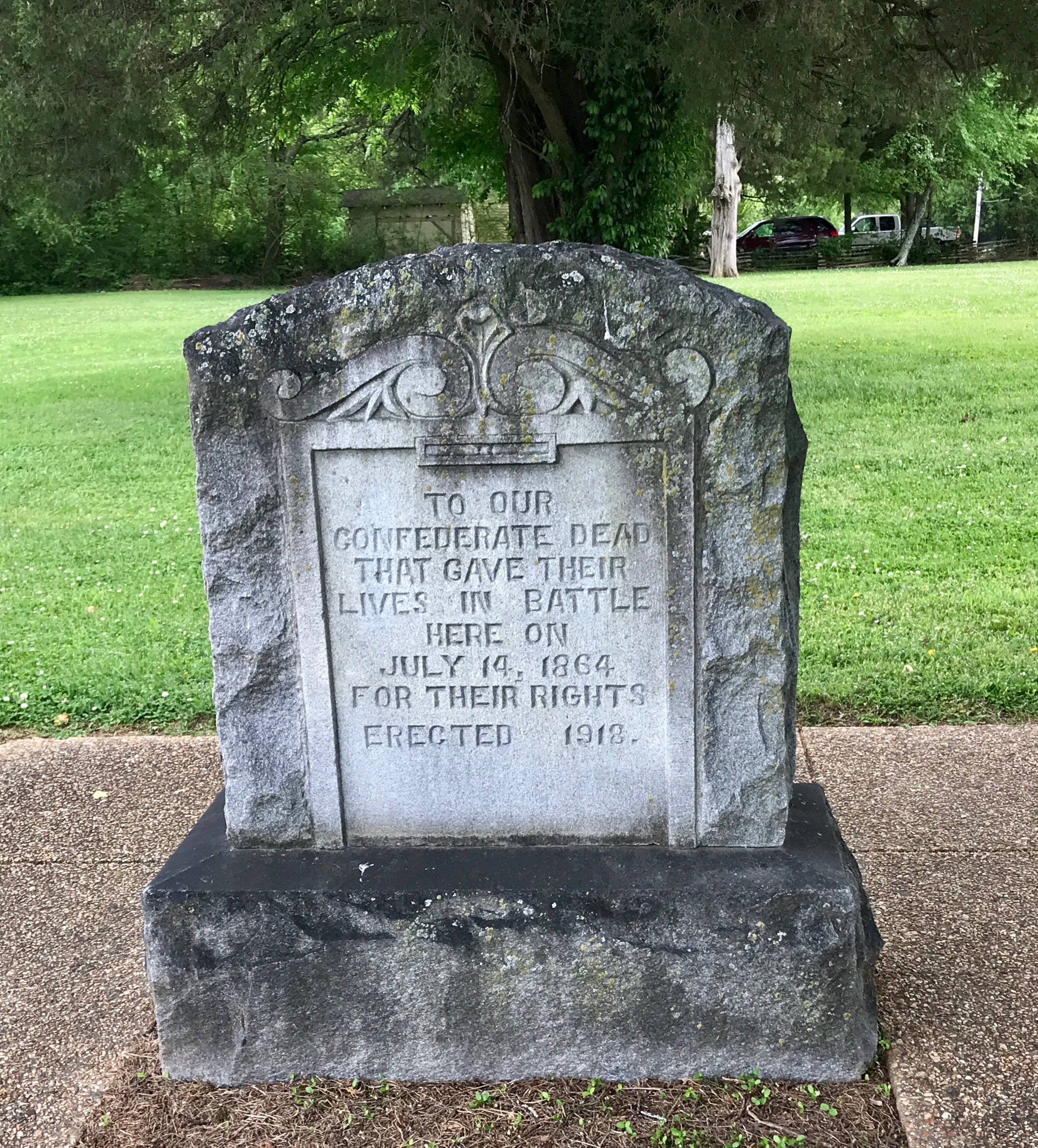
I wonder when this memorial was erected?
Something about it reminds me of artwork from the ’30s and ’40s.
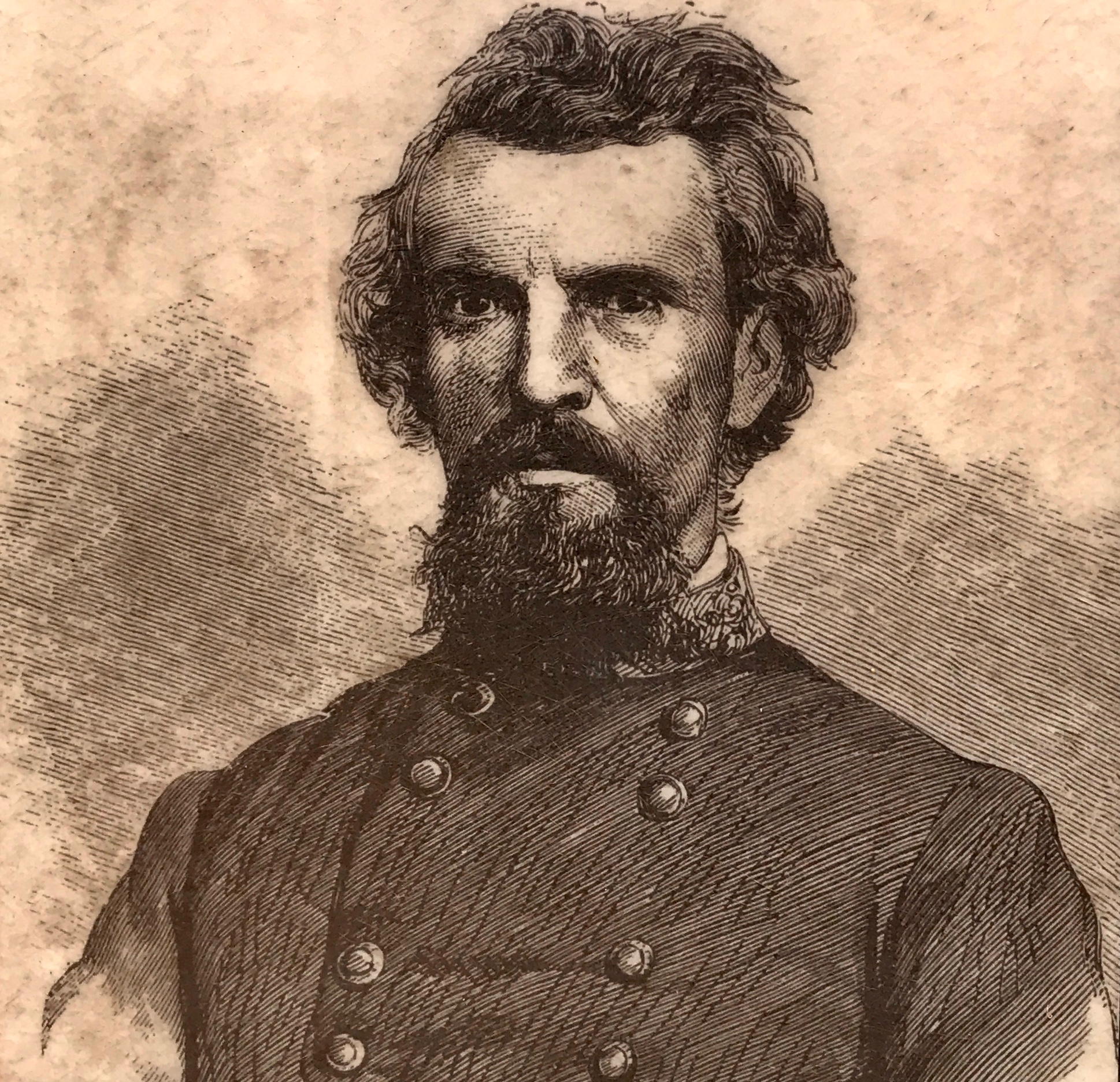
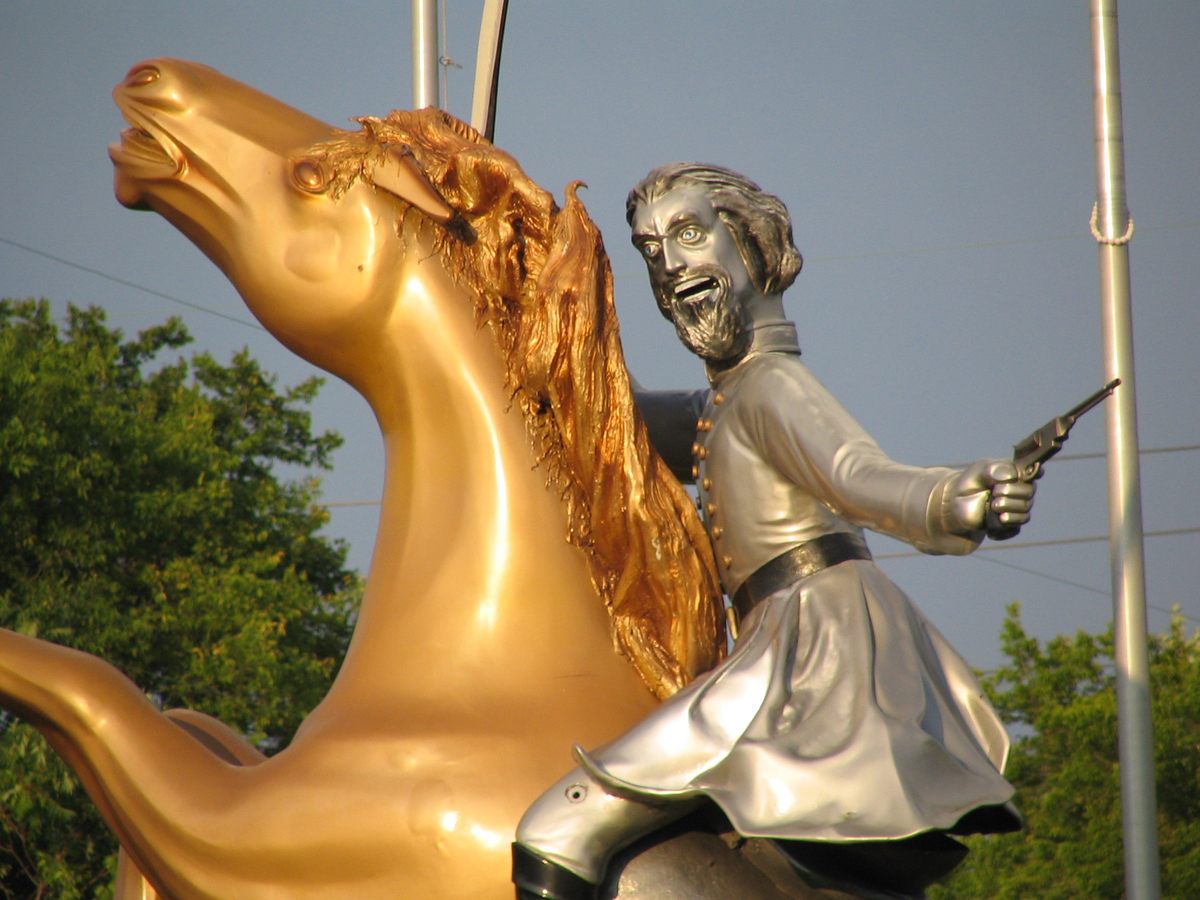
The first time I’d heard the name was in Forrest Gump.
Before coming across this monument, The only other time I’d heard of him was when this sculpture was in an Atlas Obscura email.
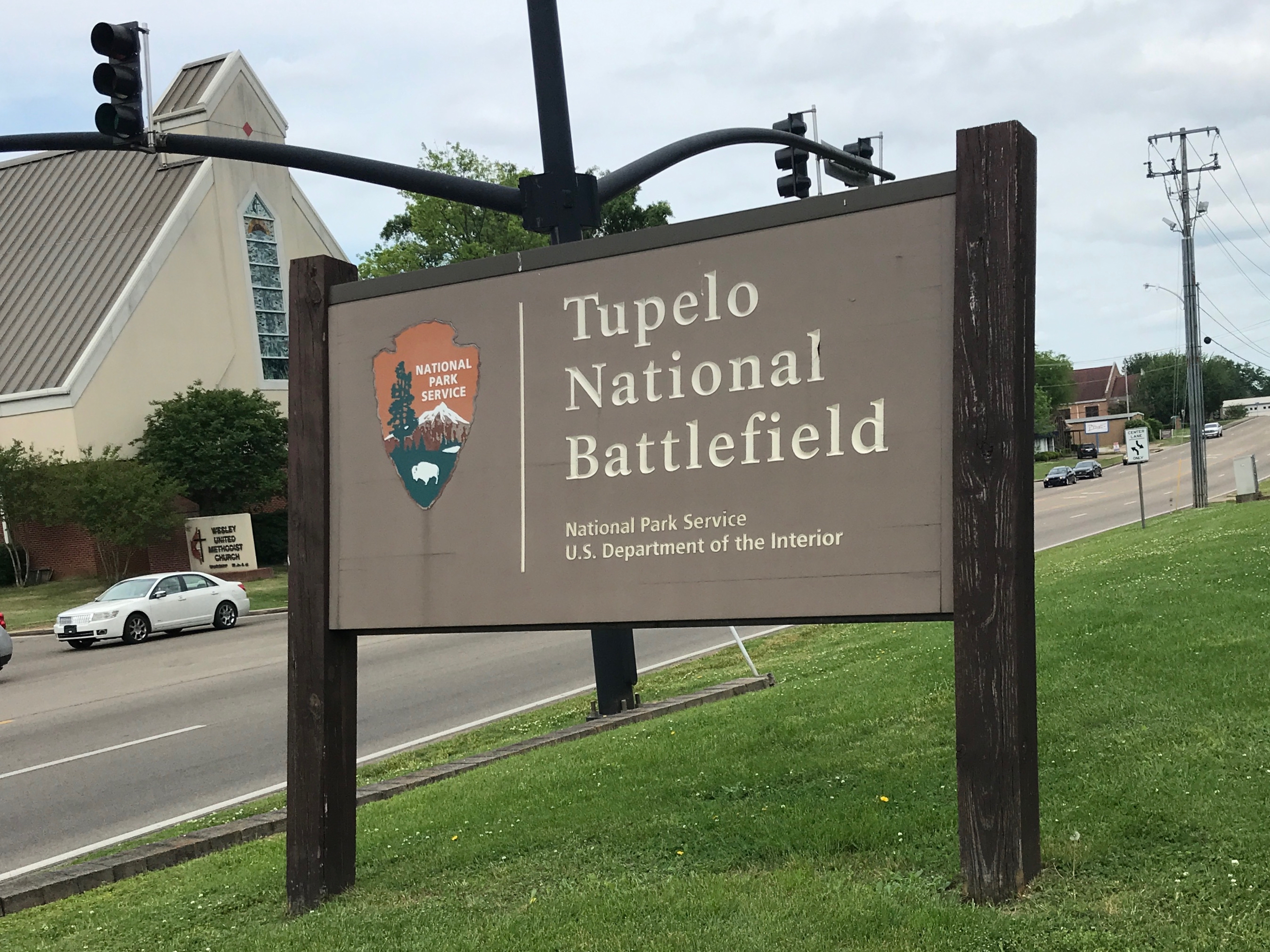
Time to head back to Tupelo, and another battlefield.
Well, we can see when time memorial was erected.
Hmm…something about this memorial looks familiar.
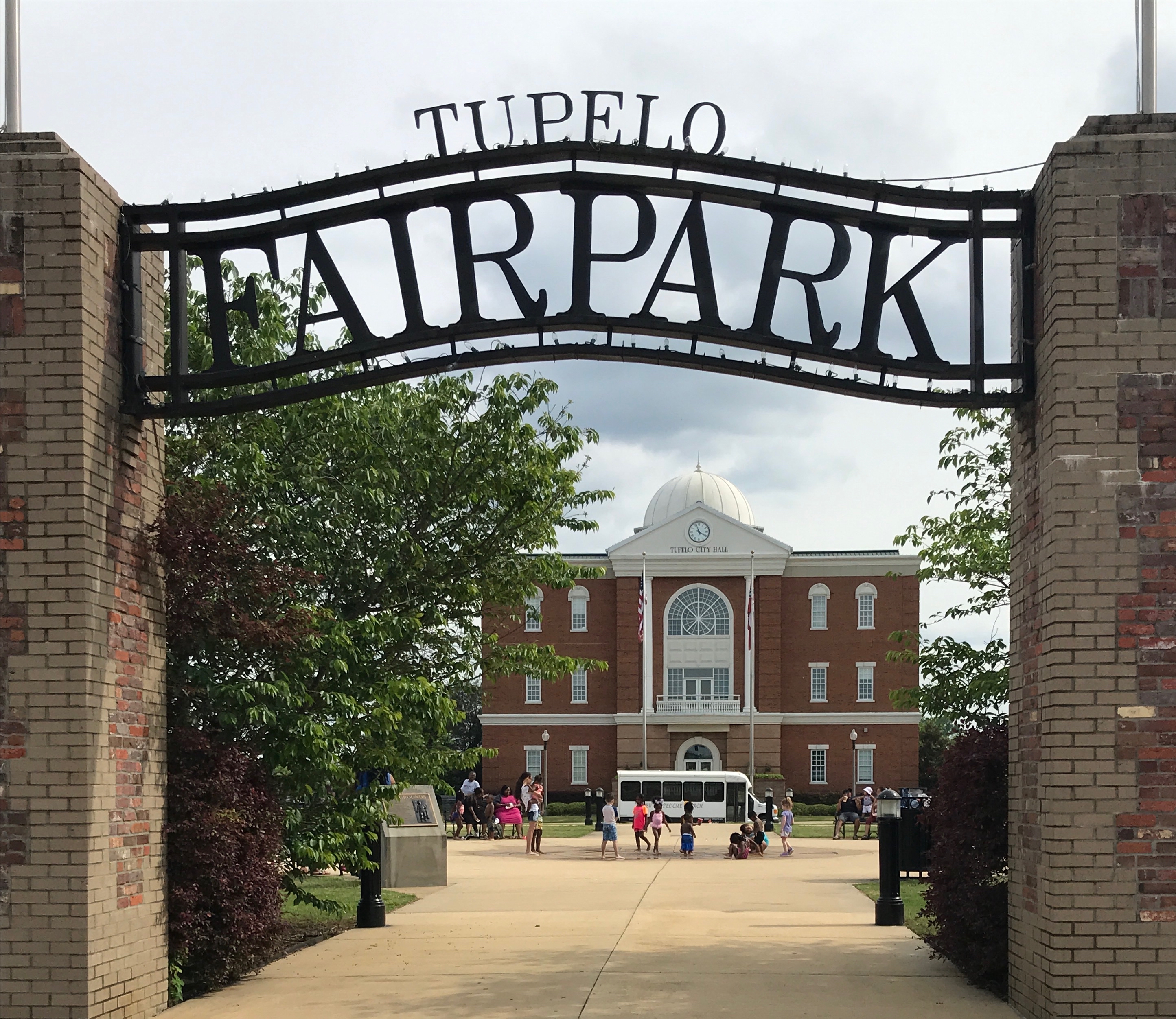
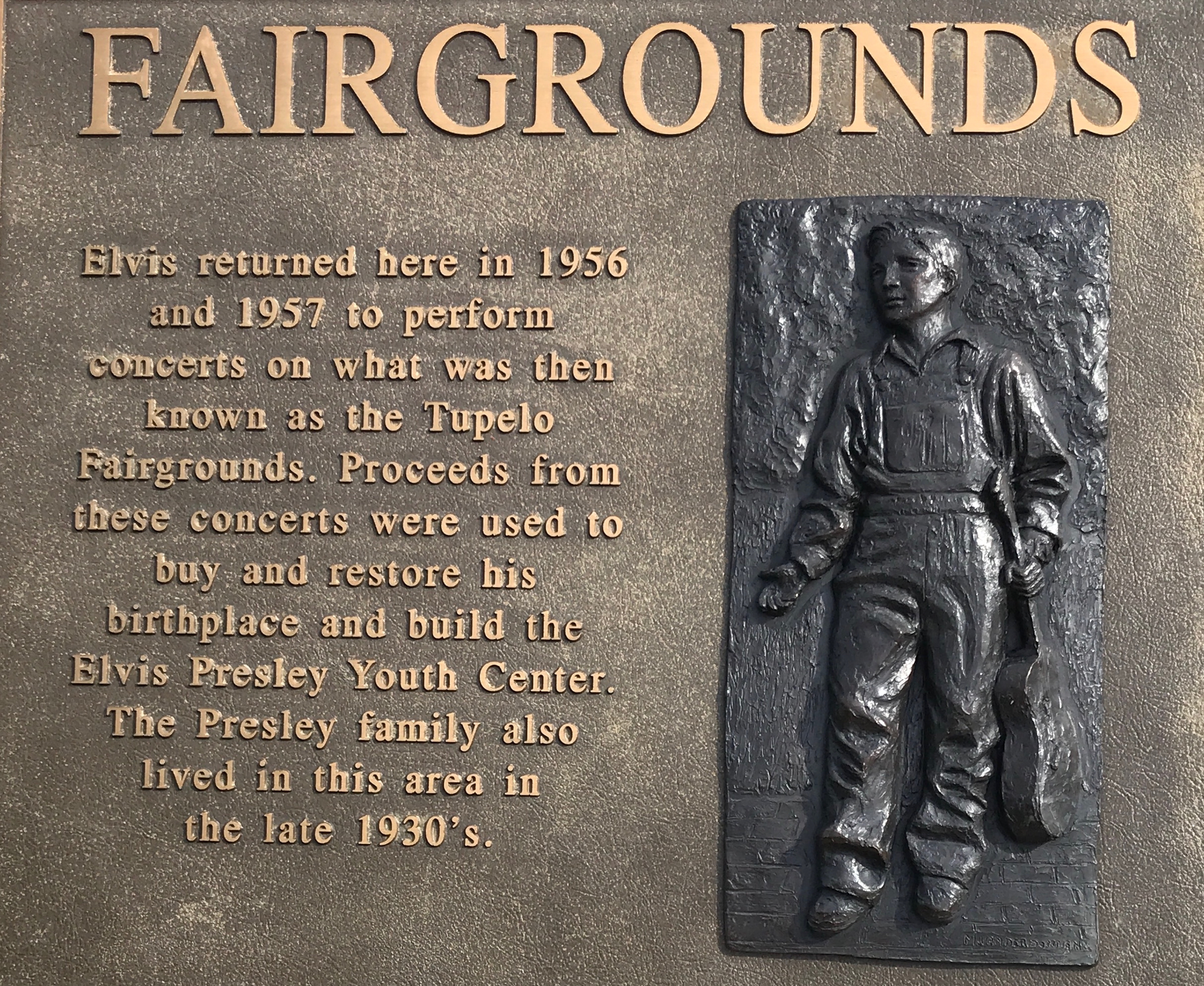
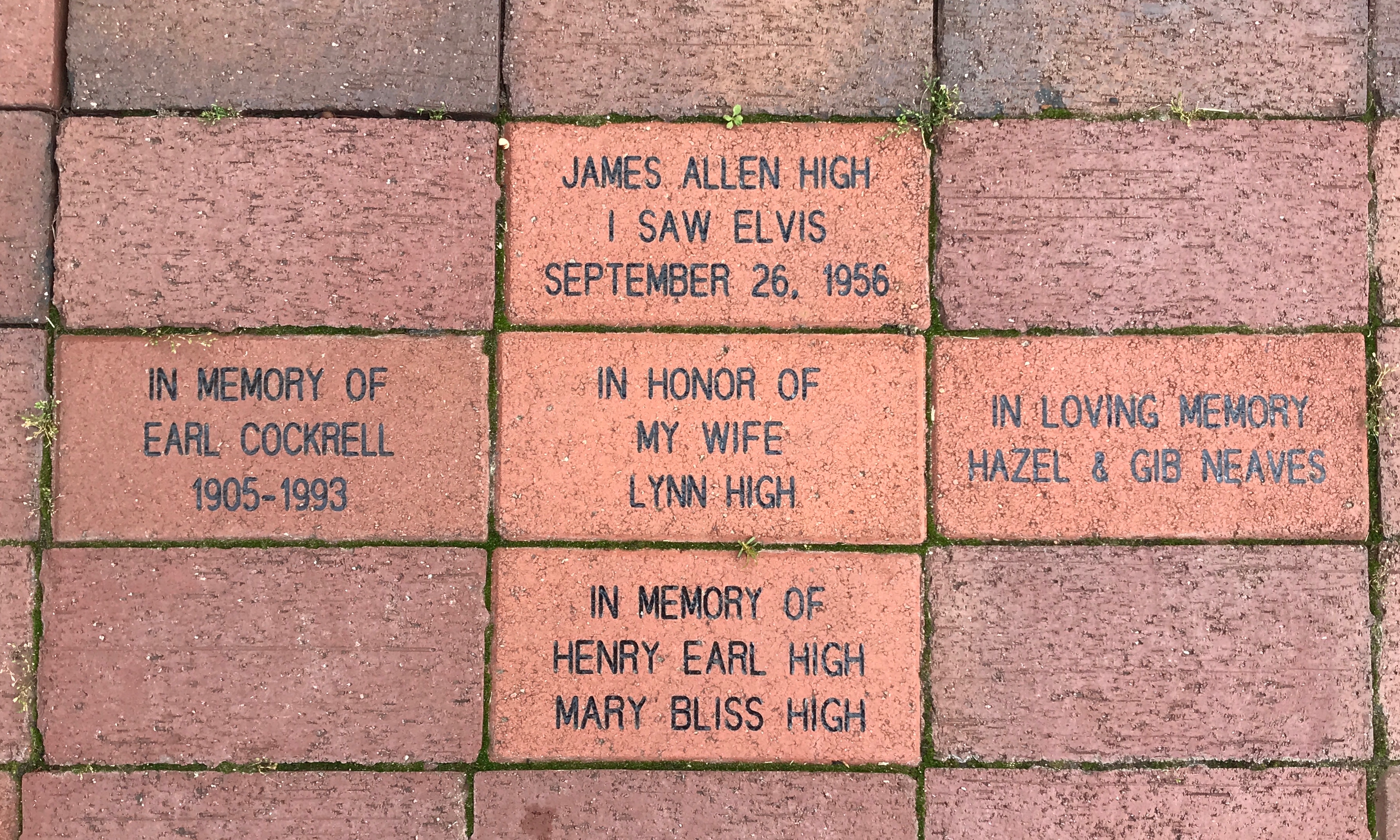
I headed over to the Tupelo Fairpark.
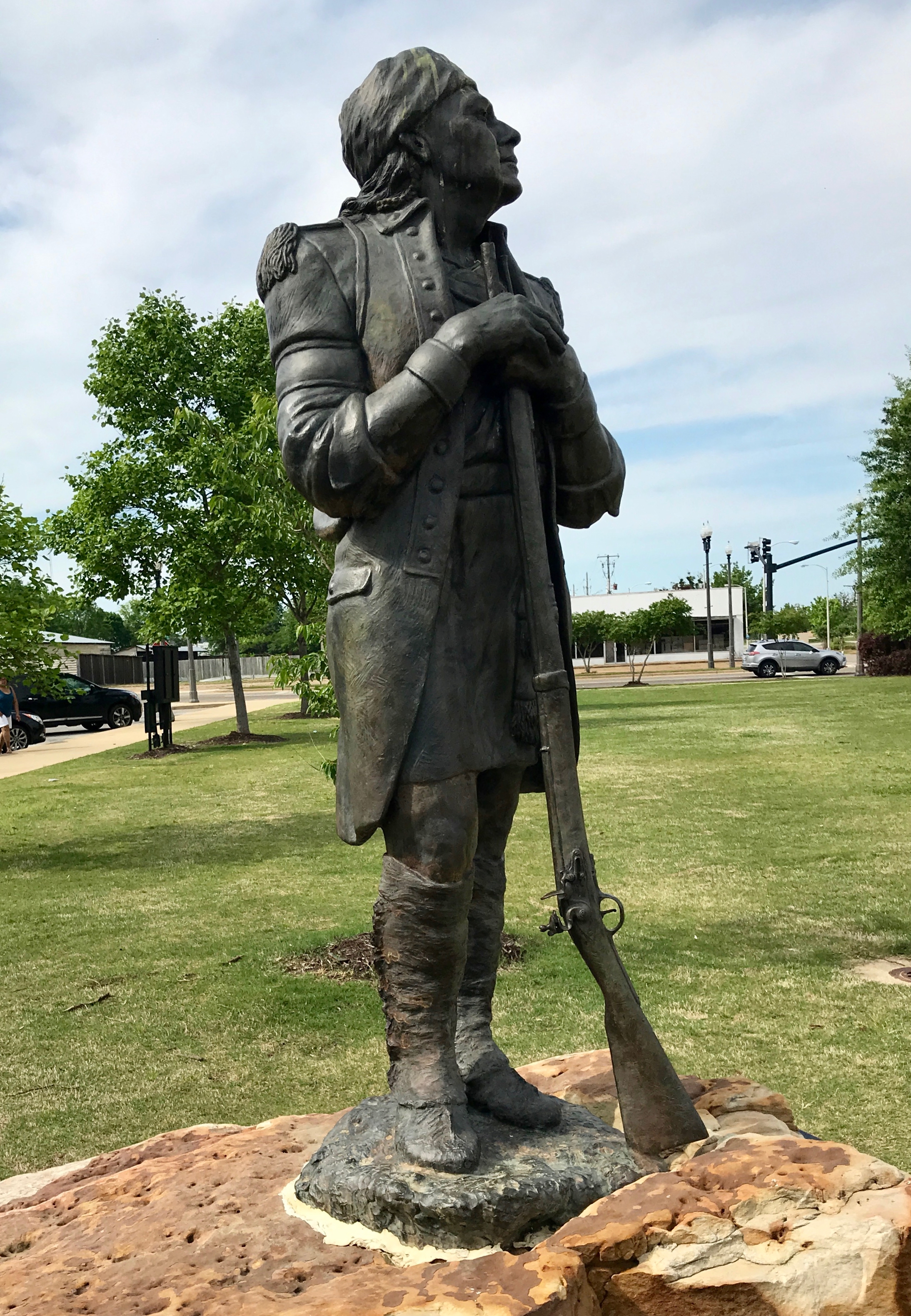
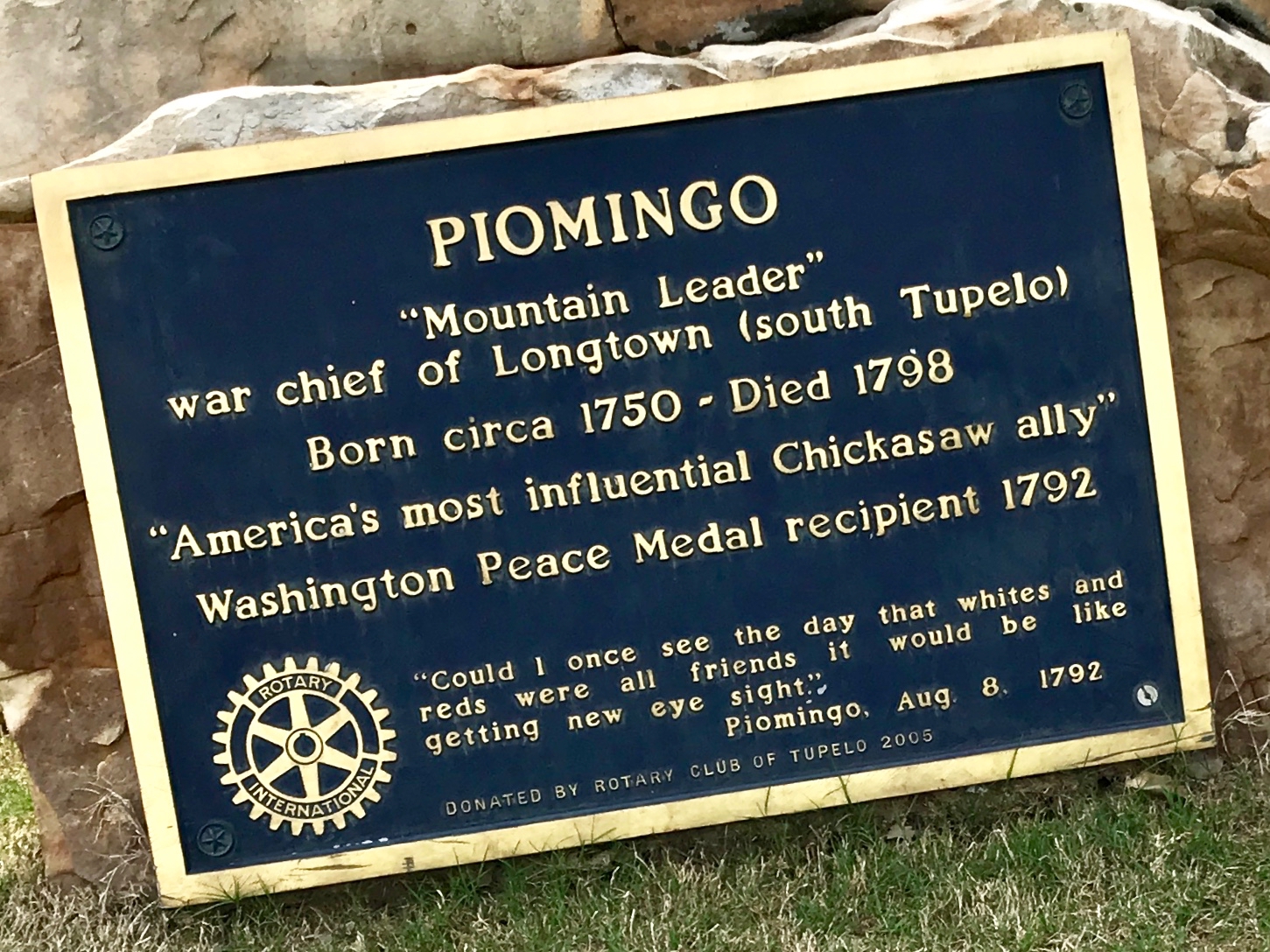
It was refreshing to see a monument to a native American leader.
Piomingo lead his people at a crucial time in their history. The alliances he forged and the choices he made paved the way for Chicasaw prosperity into the 19th century.
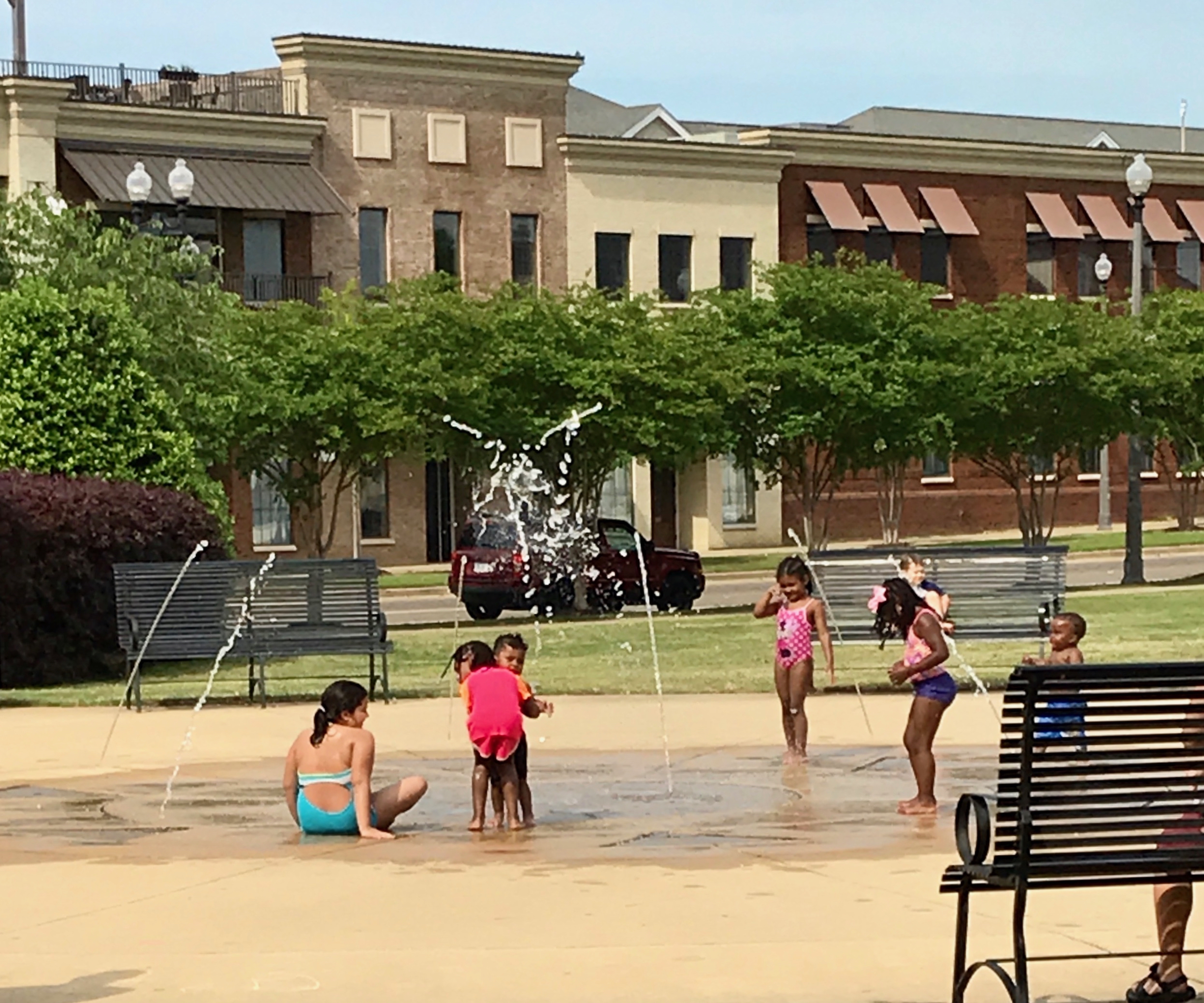
I walked about the park a bit more, and saw this delightful splash pad. The children were having fun playing and the adults were sitting around relaxing.
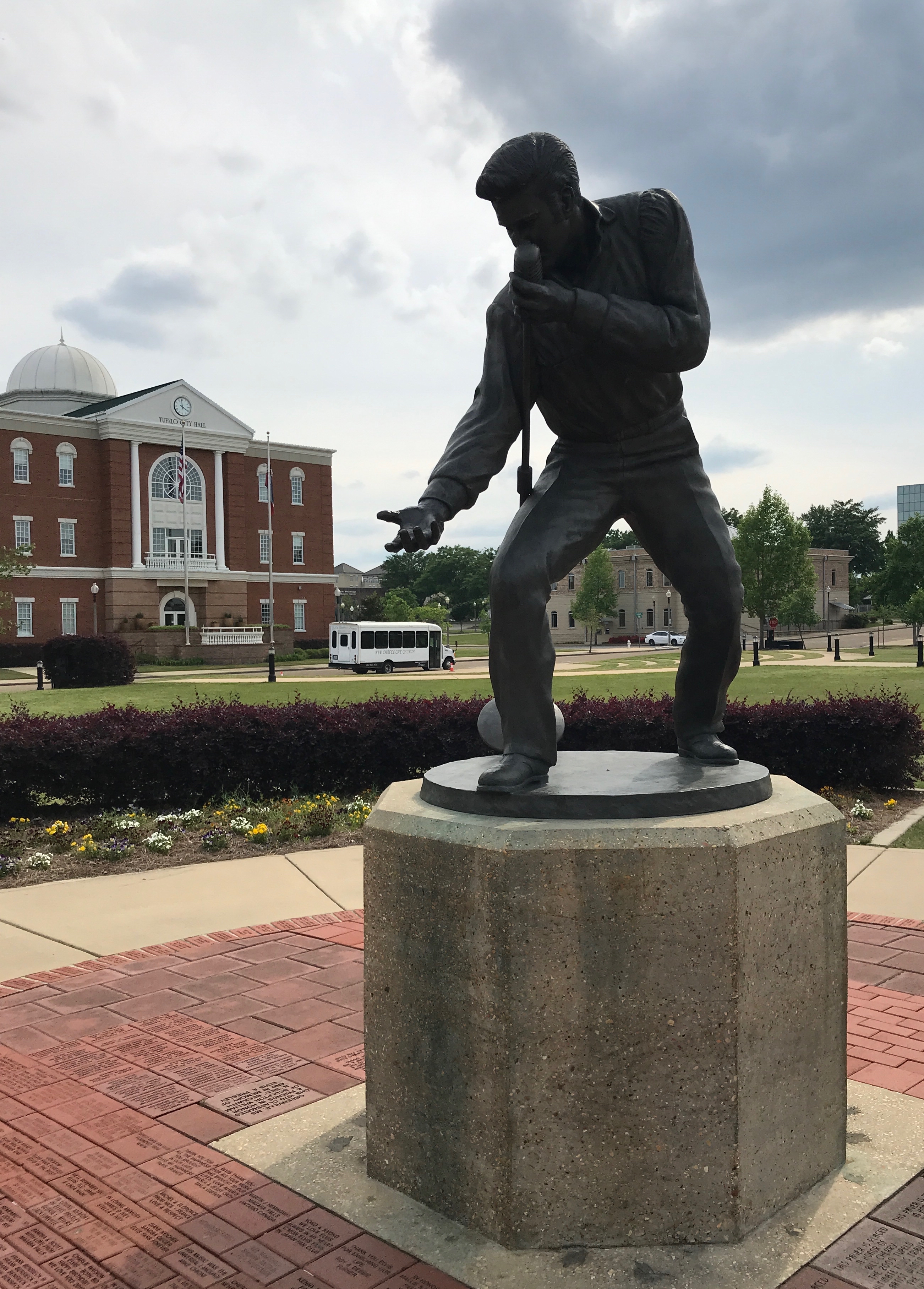
What would Tupelo be without Elvis?
Well, Elvis and the people who love him.
Goodbye, Elvis!
It’s time to bid adieu to Tupelo and start my trip north in the morning.
My next stop was Tupelo, Mississippi, birthplace of…
The King!
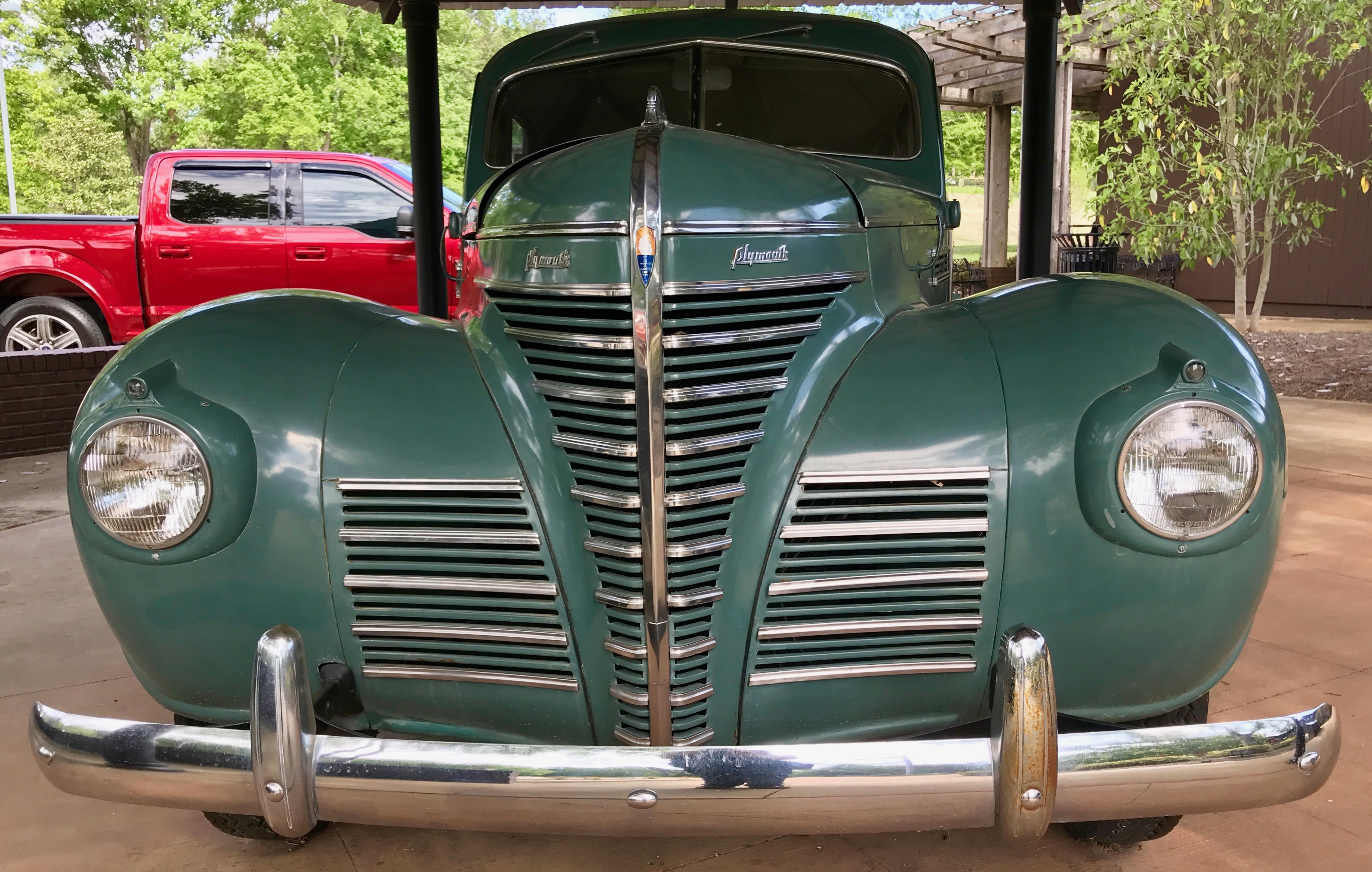
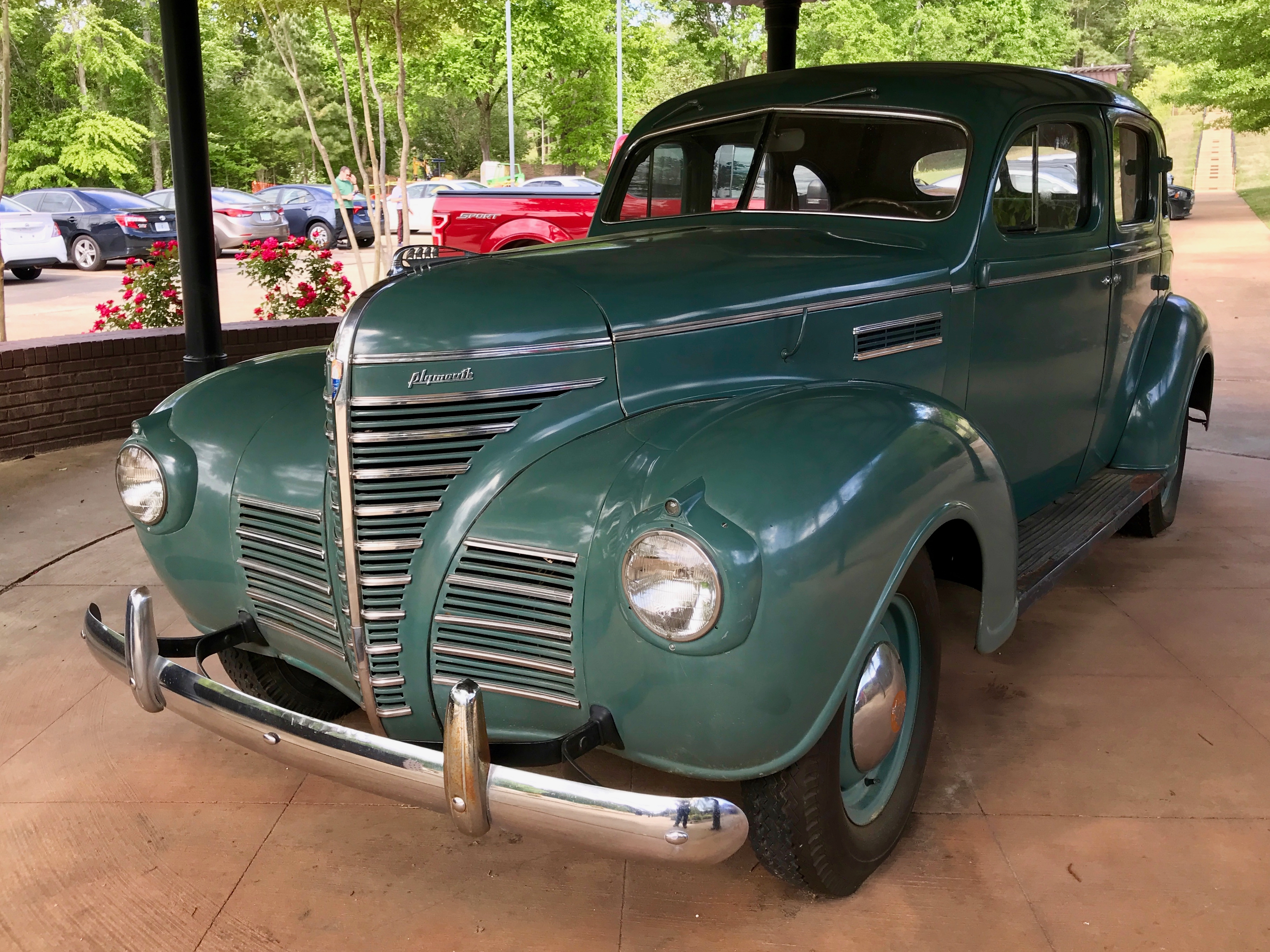
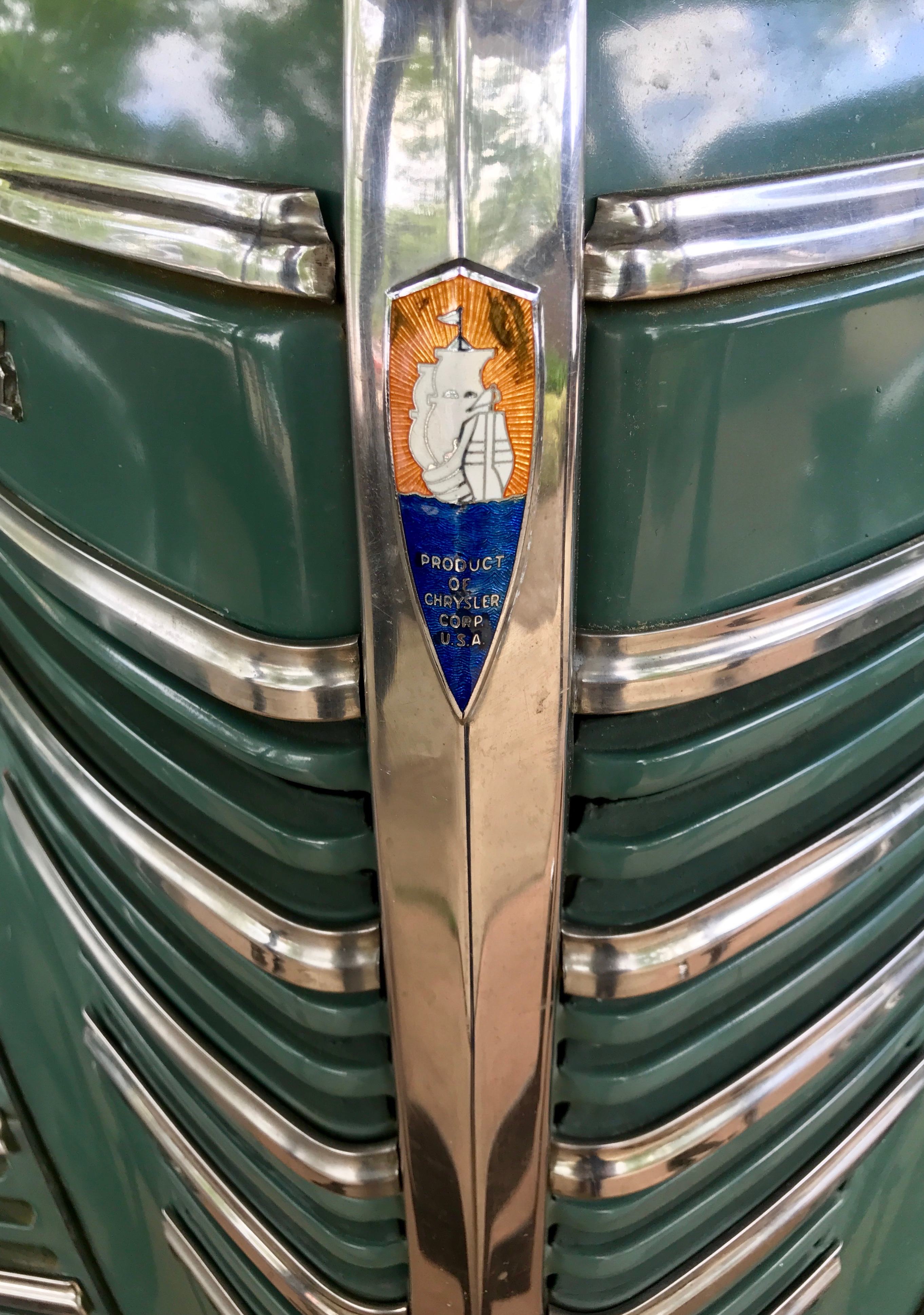
After a short drive, I set up camp in Tombigbee State Park and set out to see what I could see. I pulled in to the parking lot at Elvis Presley Birthplace and was greeted by this gorgeous piece of automotive design.
I’ve always been partial to Plymouths.
There wasn’t any information nearby, so I decided to puzzle about it while I token what I could at the site without paying the admission fee. While it wasn’t all that expensive, I just wan’t into the full experience.
I set out on his walk of life.
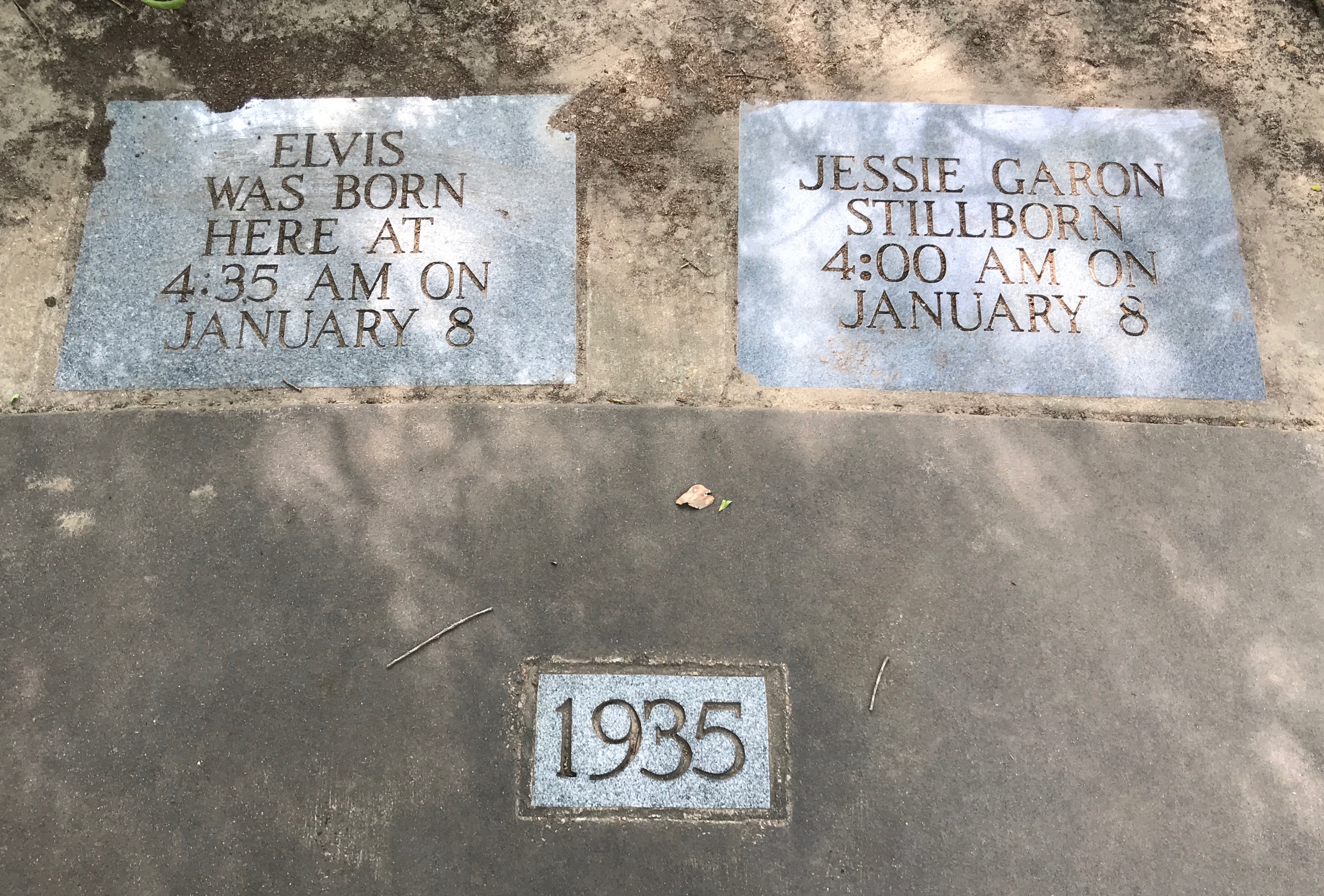
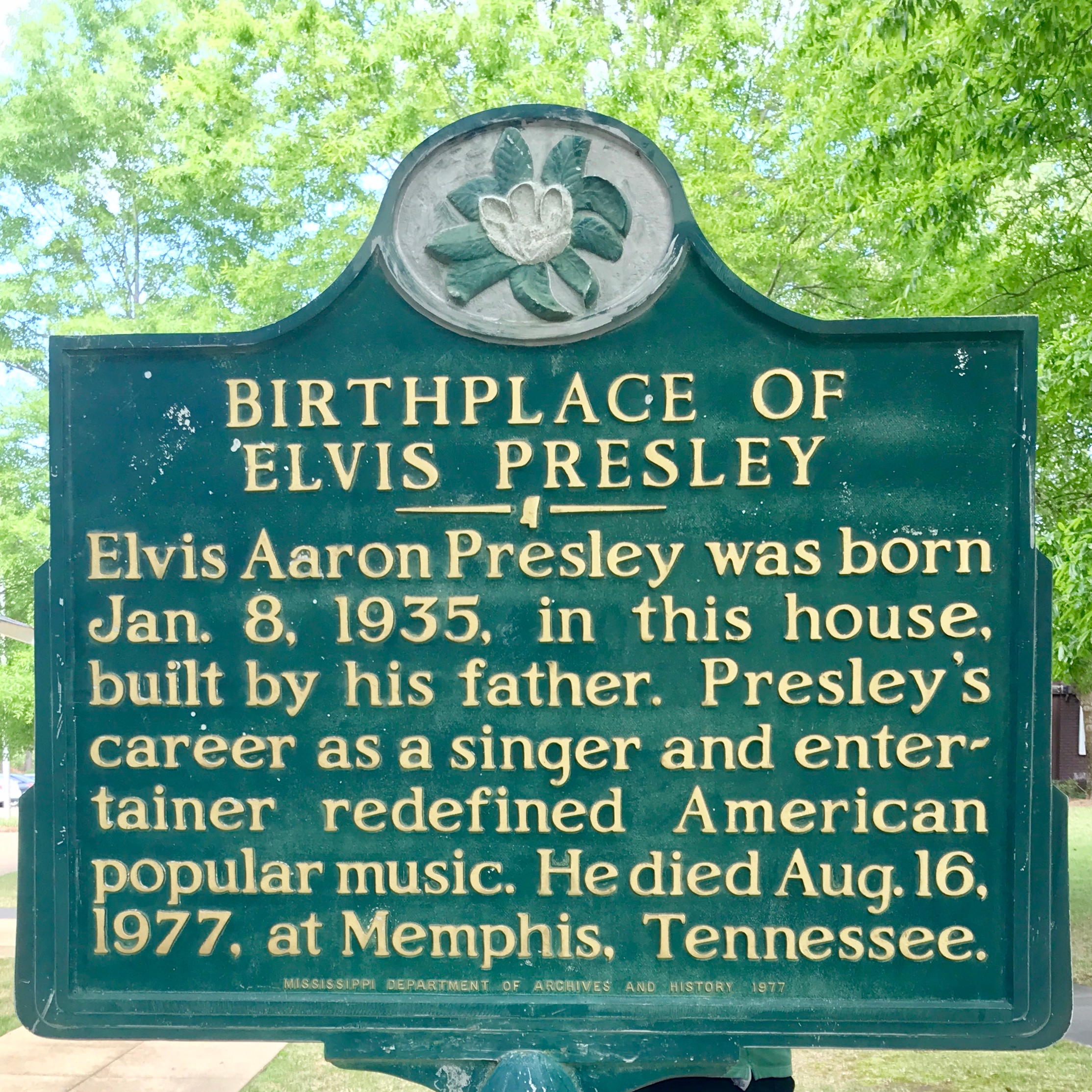
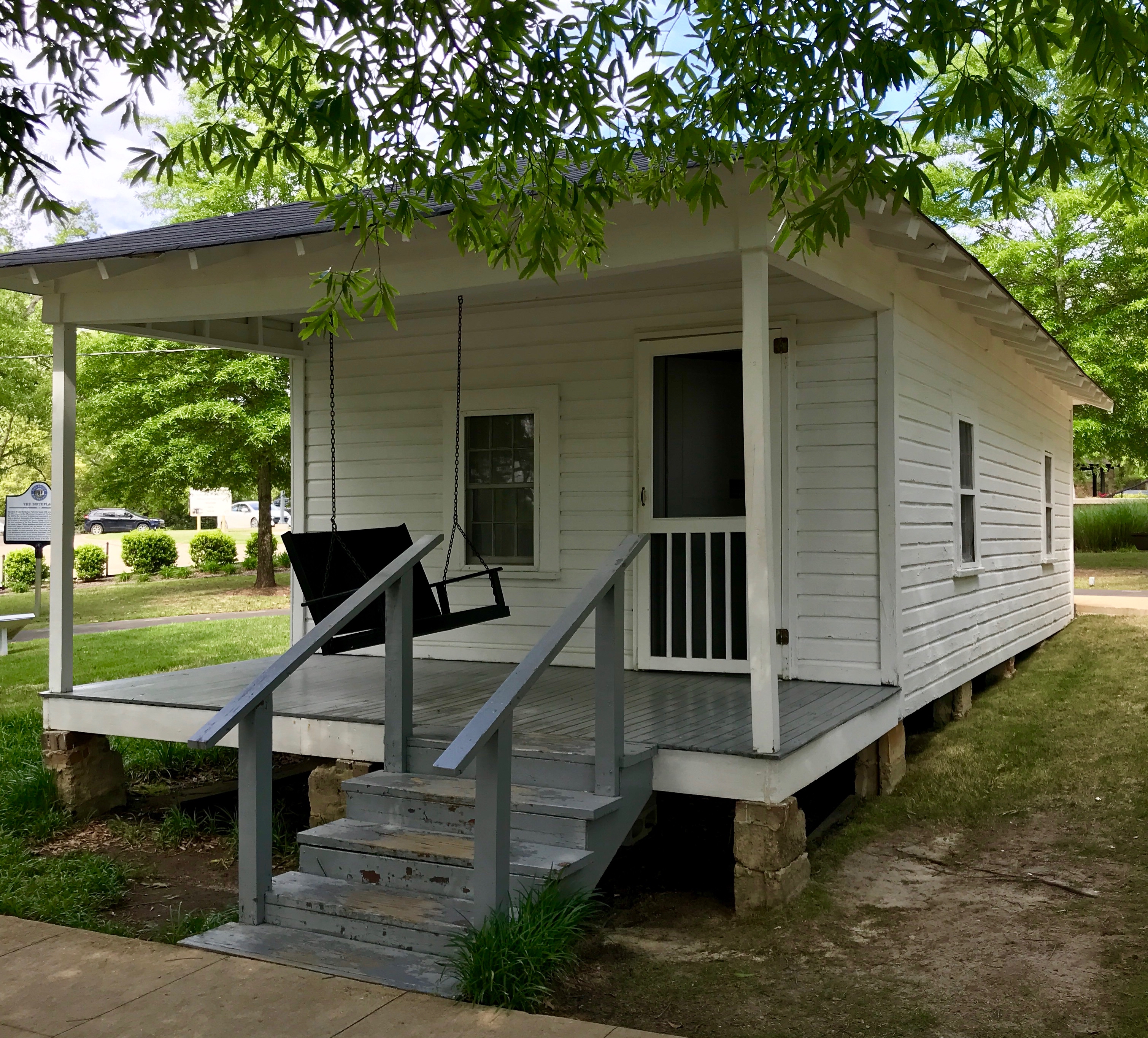
This plaque was in front of the two-room house his father built.
I’ve always liked houses with porches.
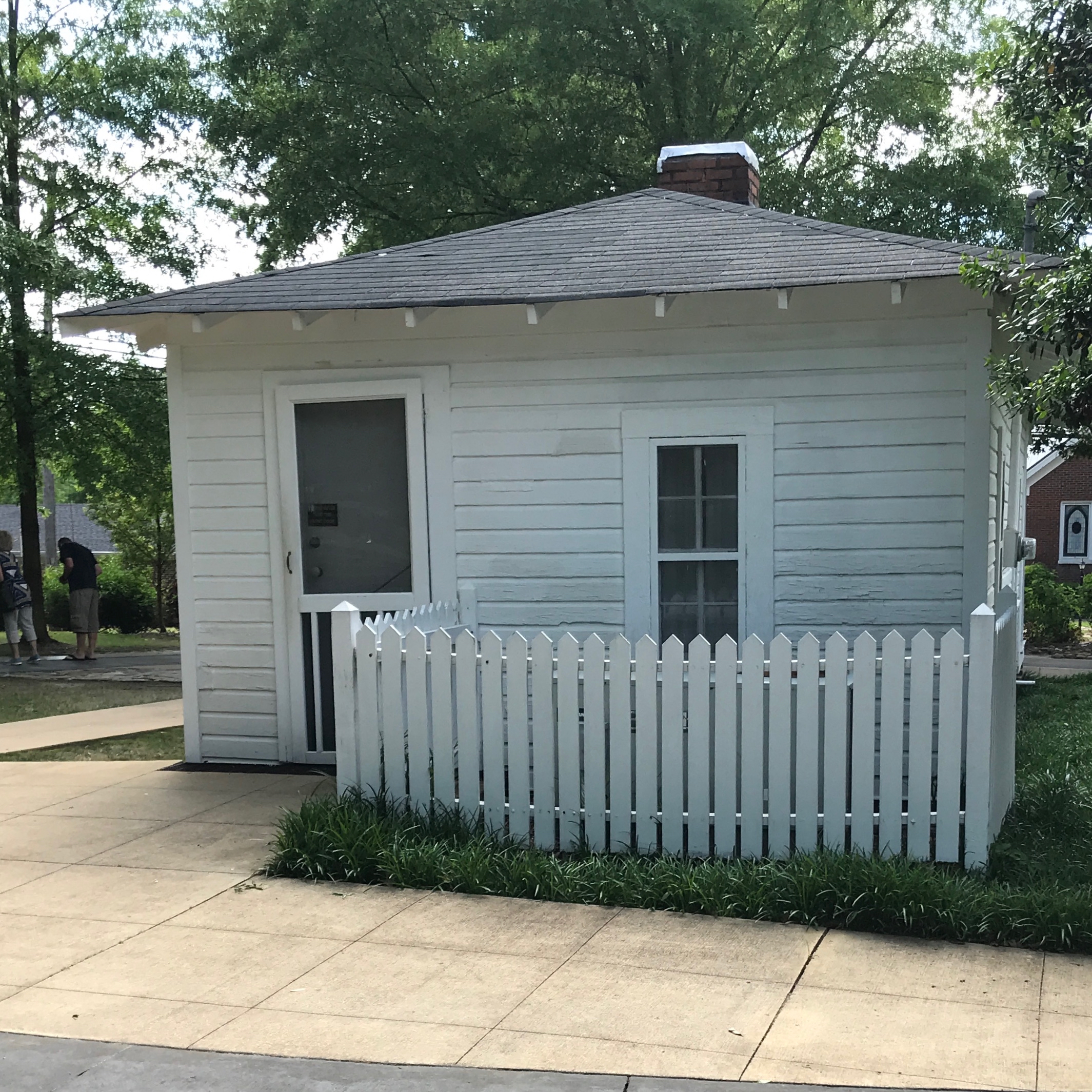
I had to take a look at the back, because that’s just the way I am.
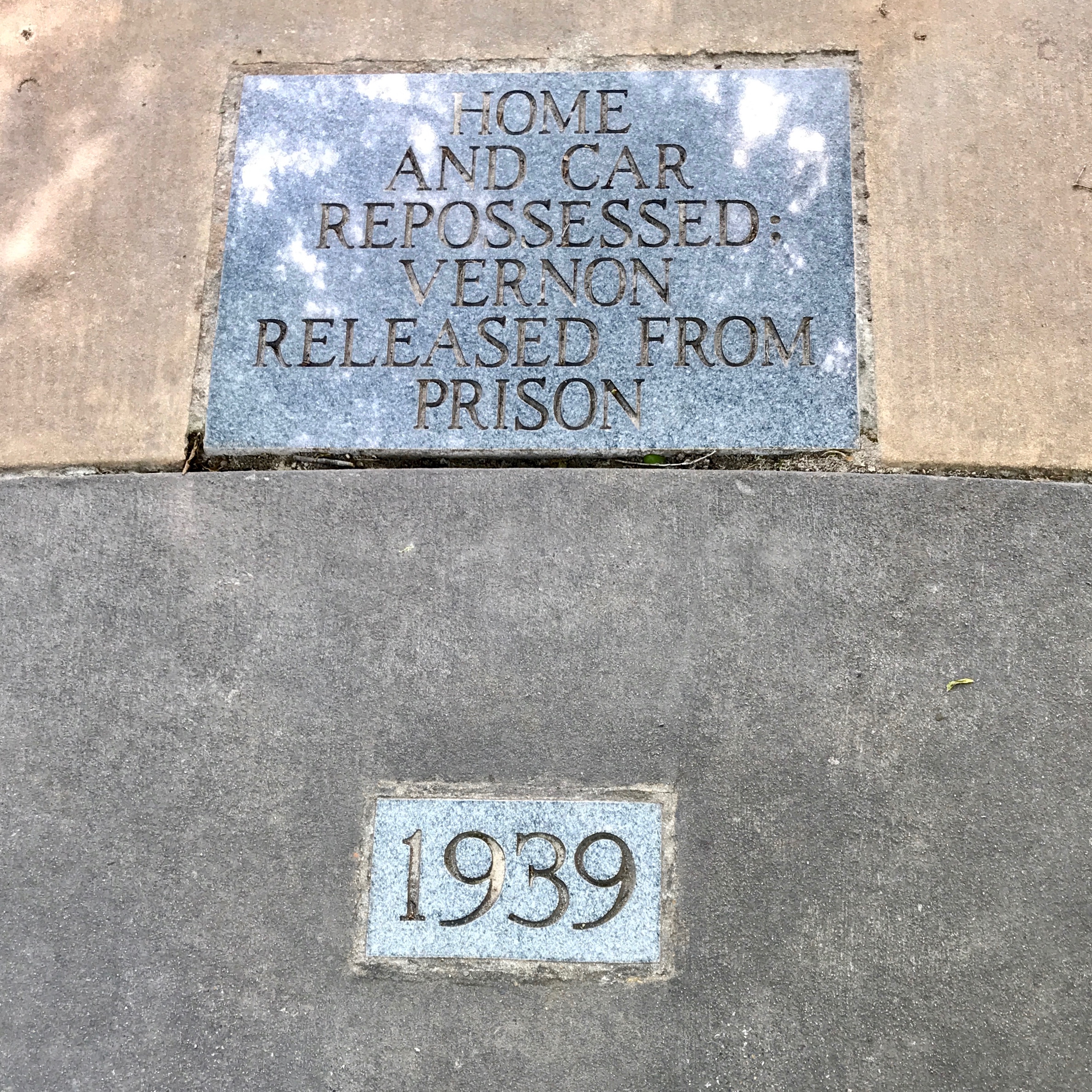
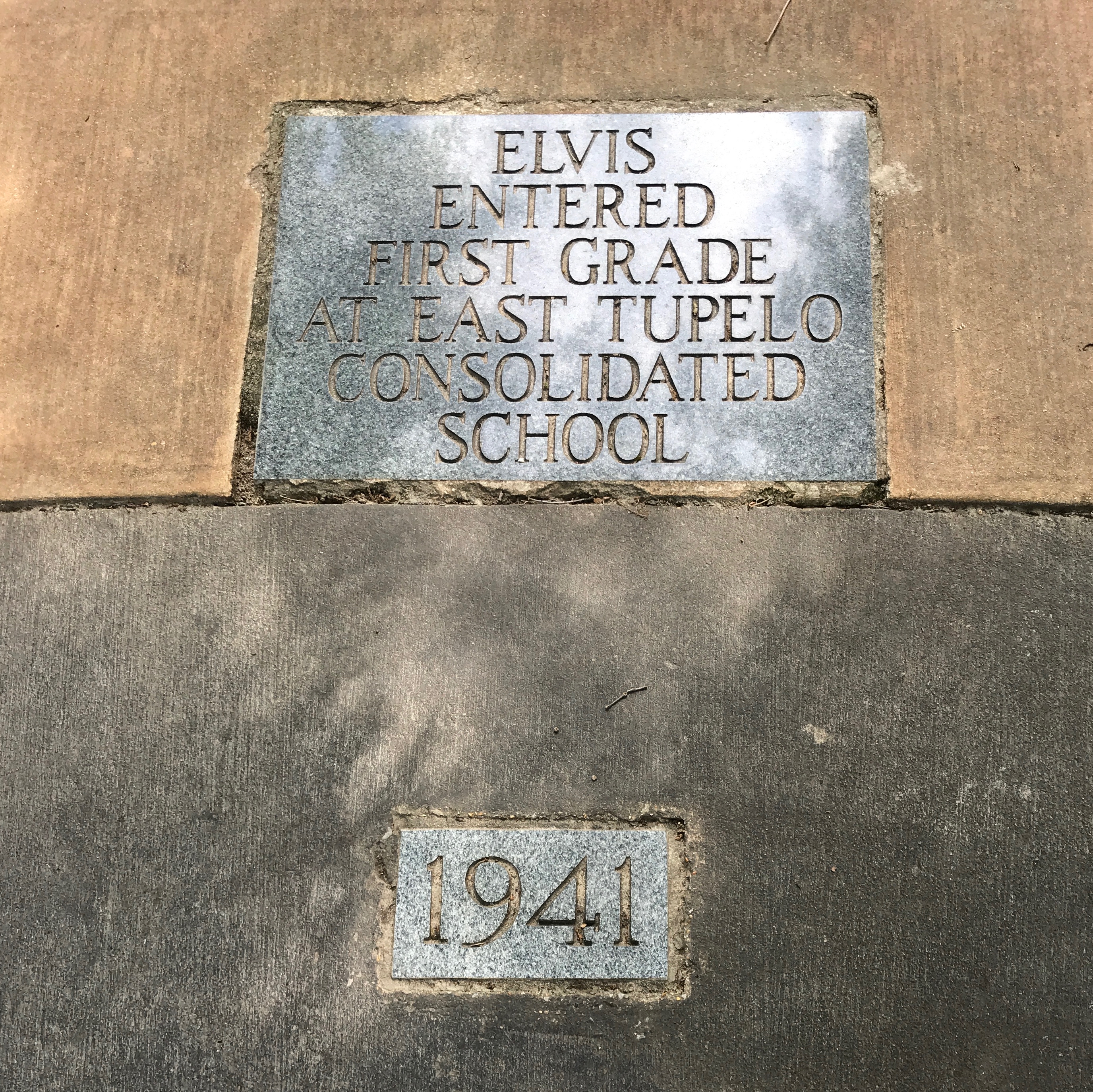
Further along his walk of life, we come to another milestone.
The first day of school is always a milestone.
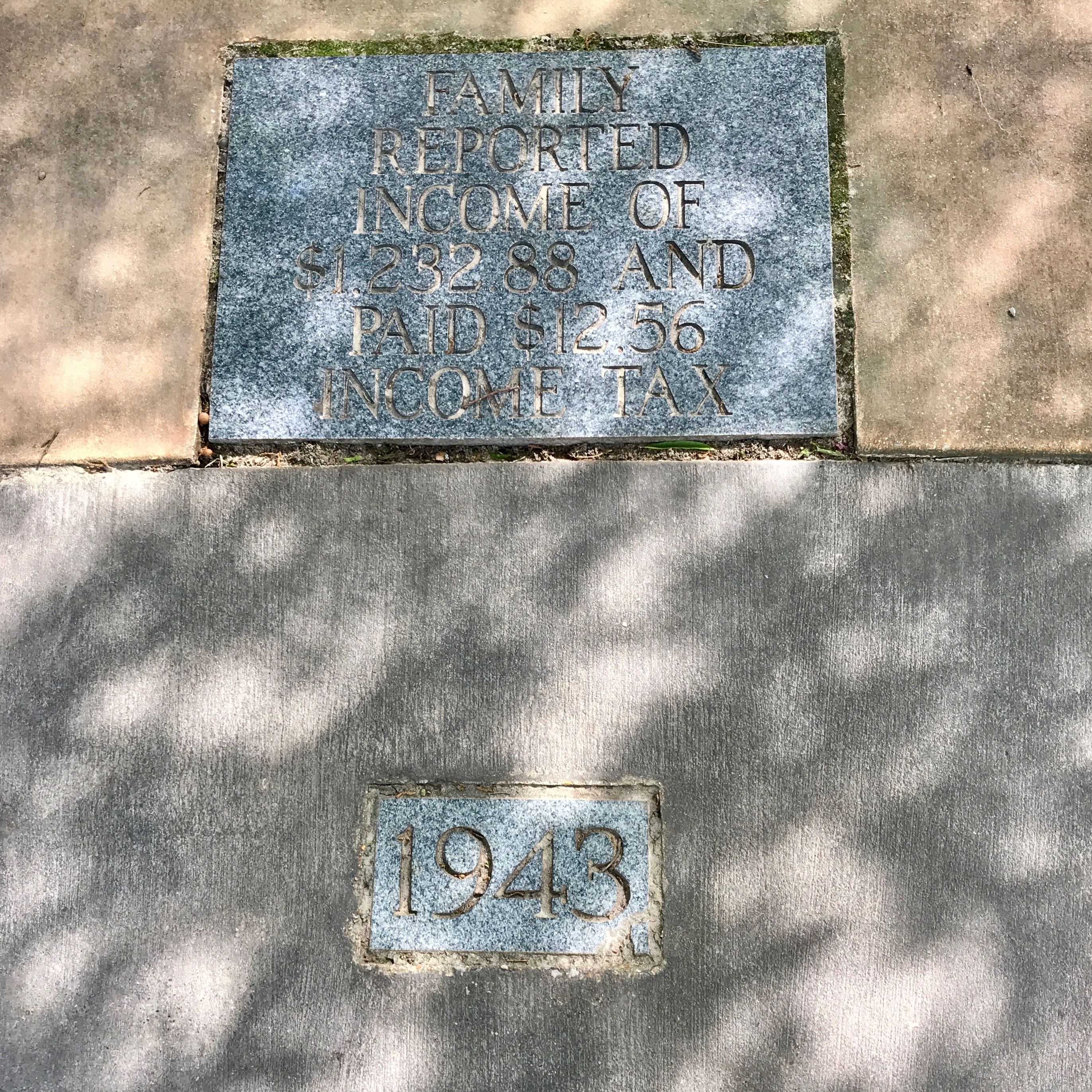
Nothing’s certain but death and…
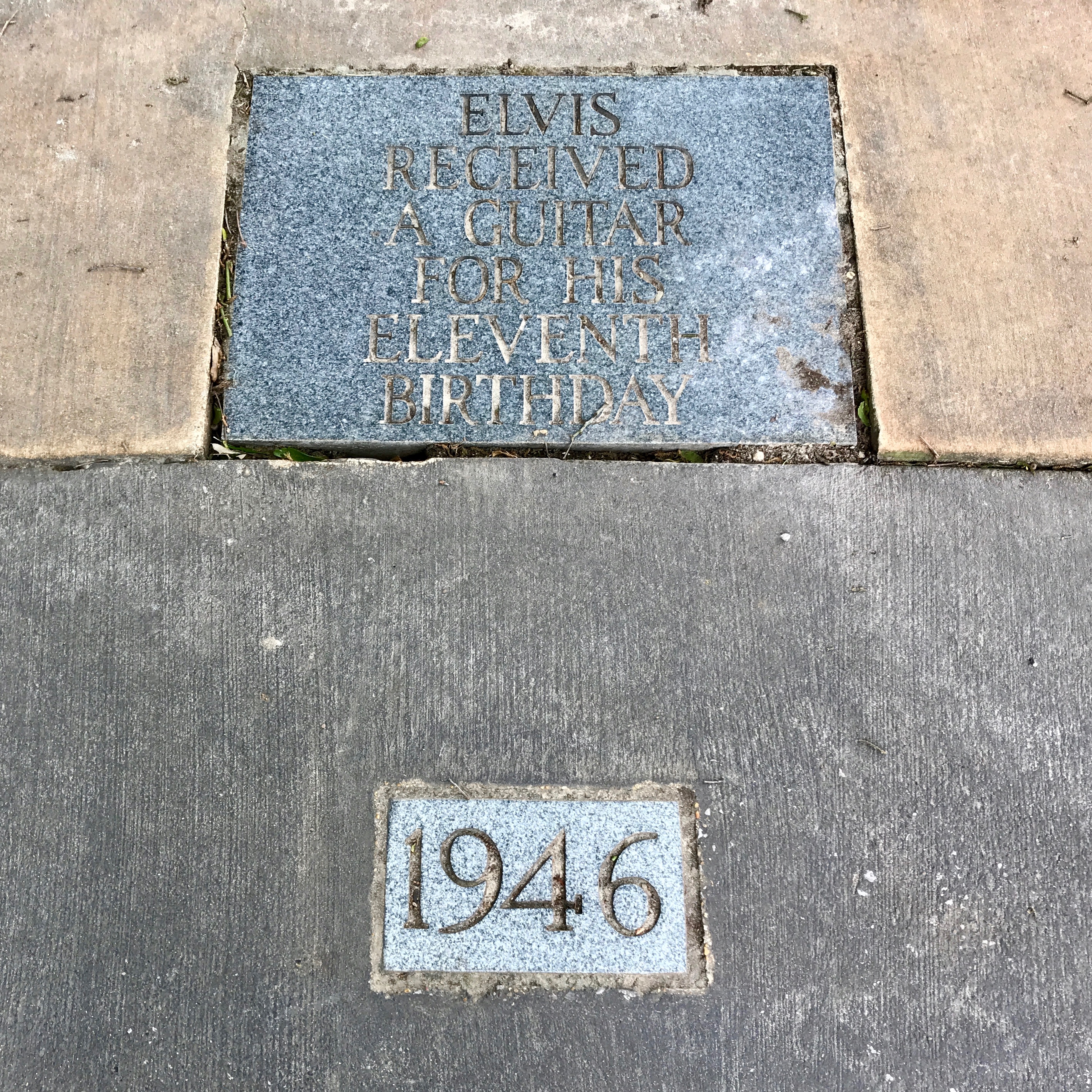
1946 is when it all started.
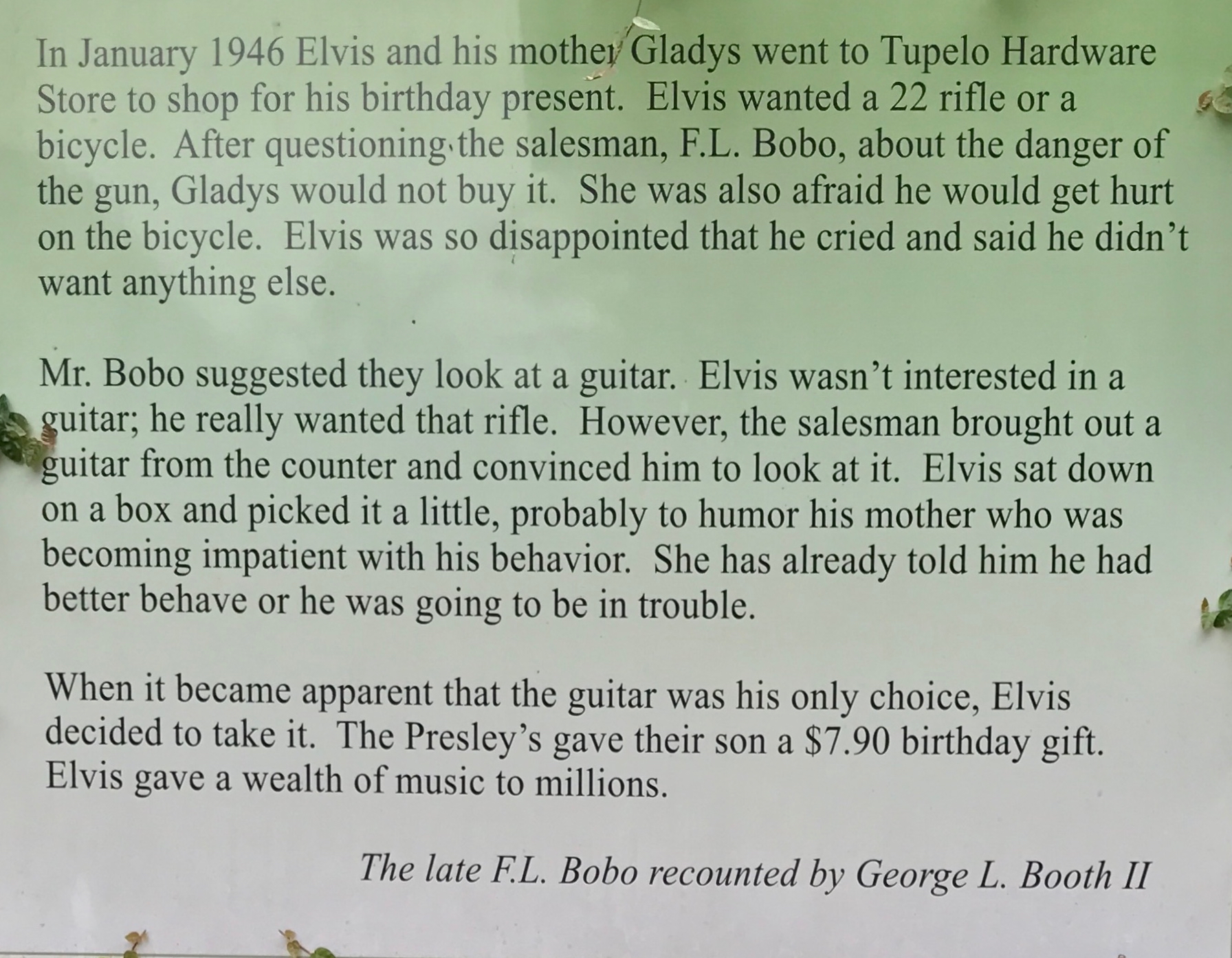
Apparently, a guitar wasn’t his first choice, though.
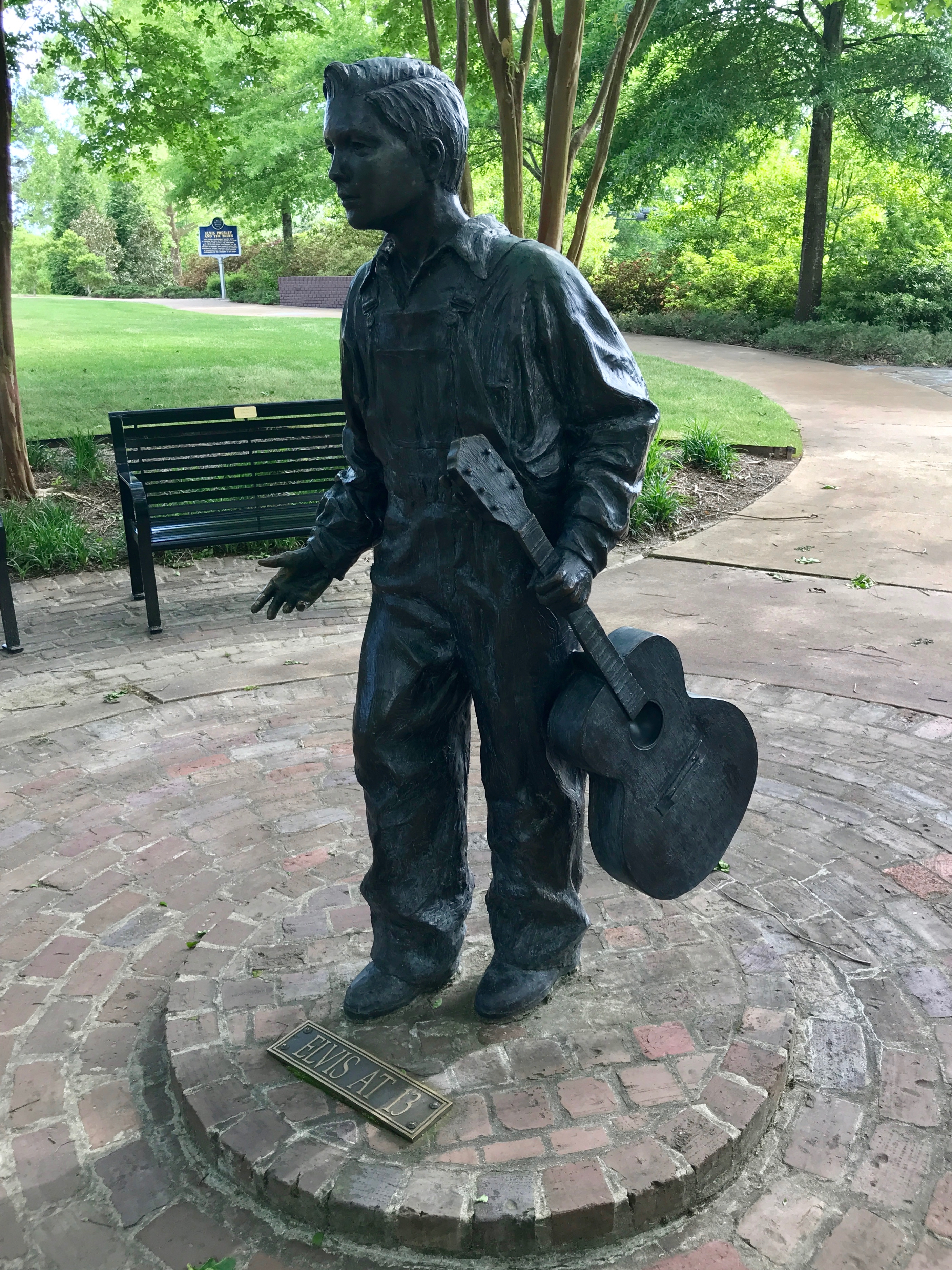
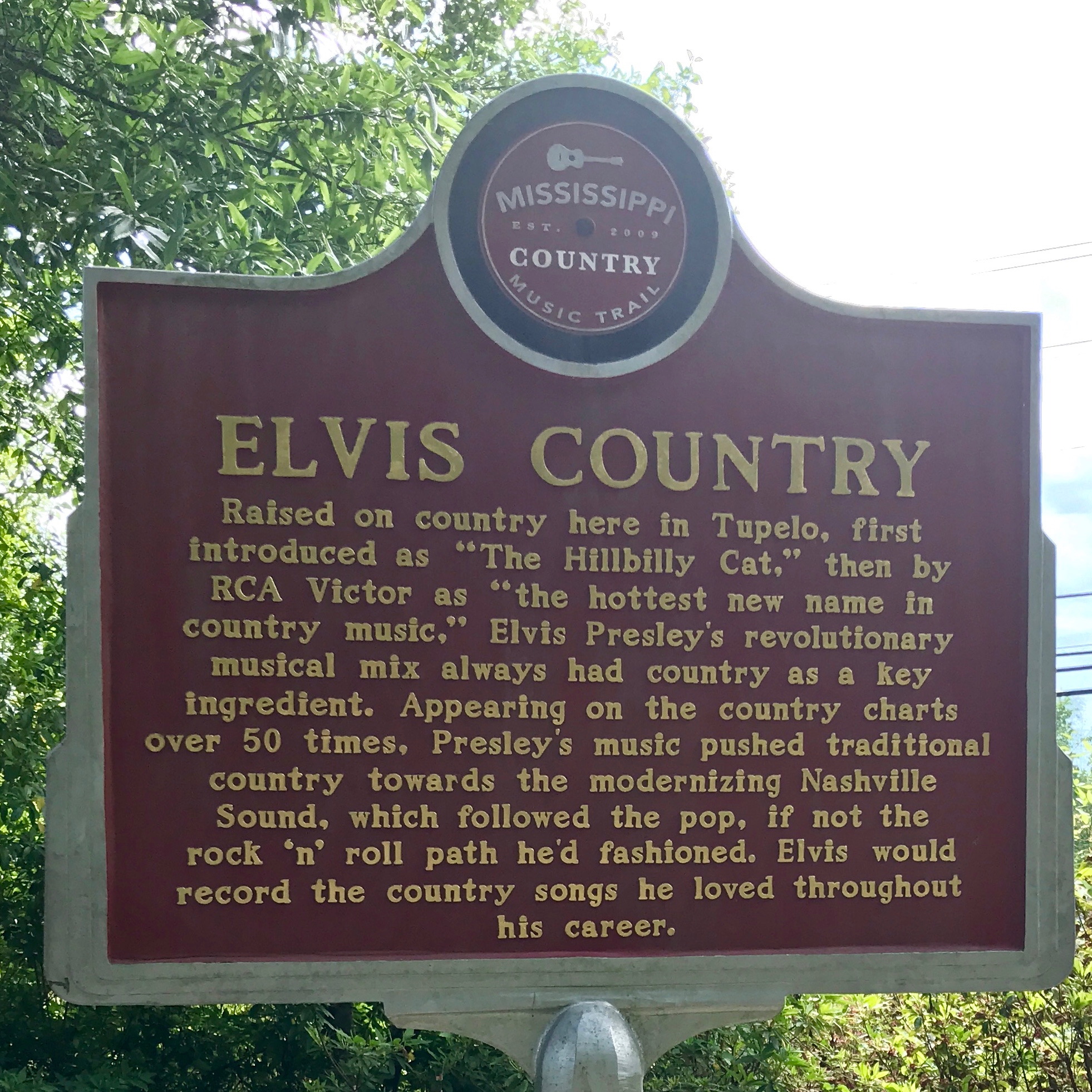
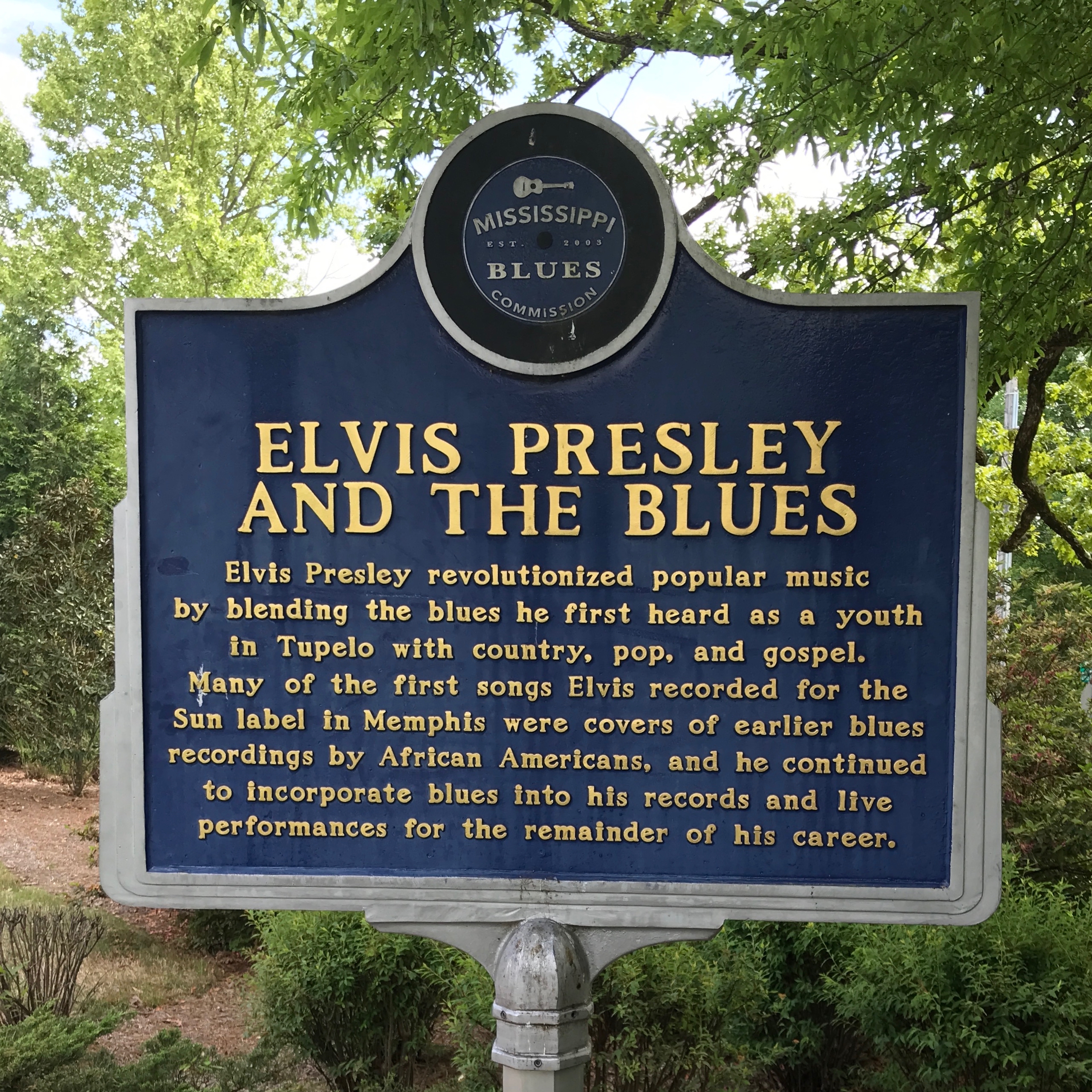
As I continued along the walk of life, I came across some plaques about his music career.
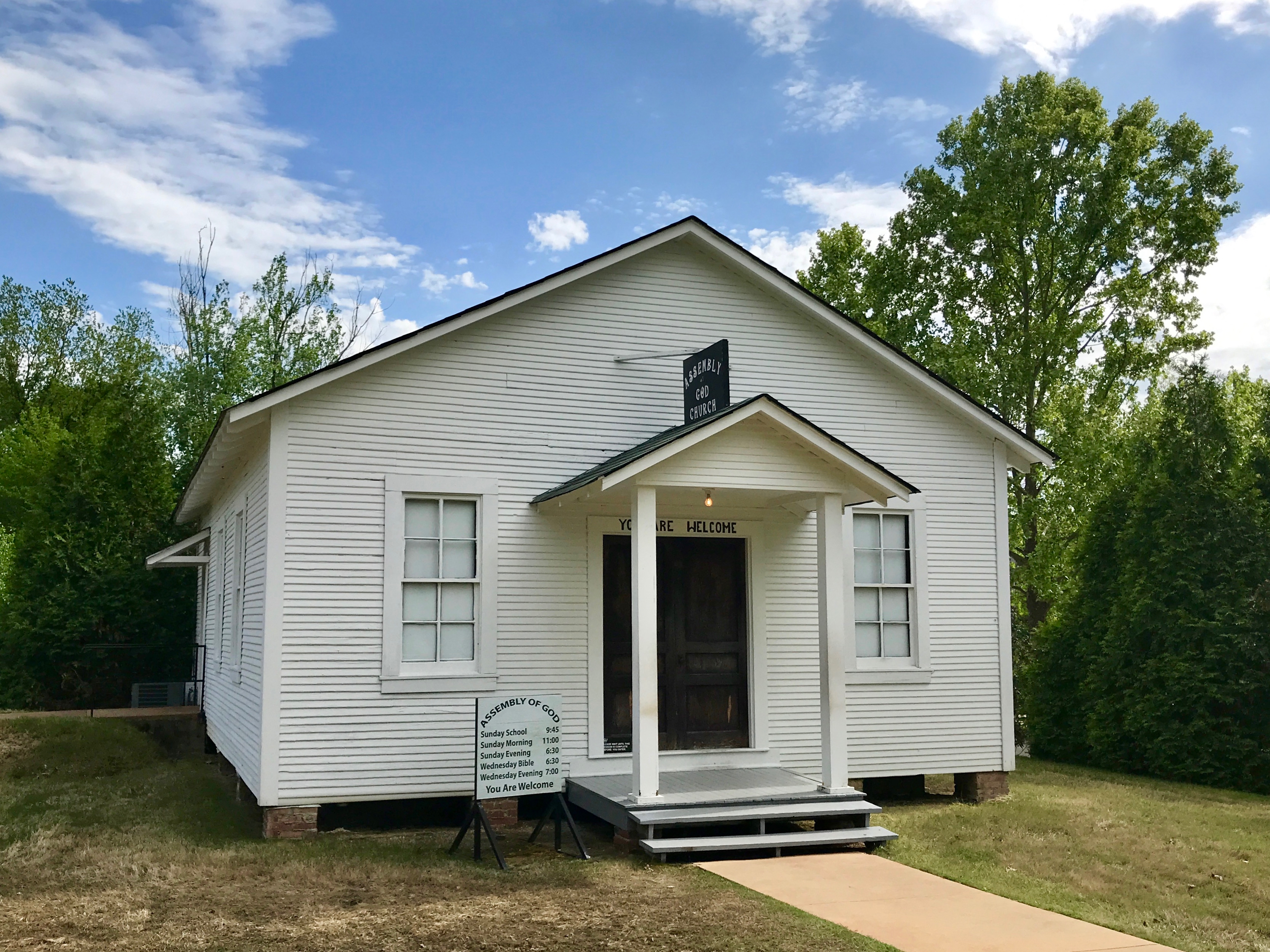
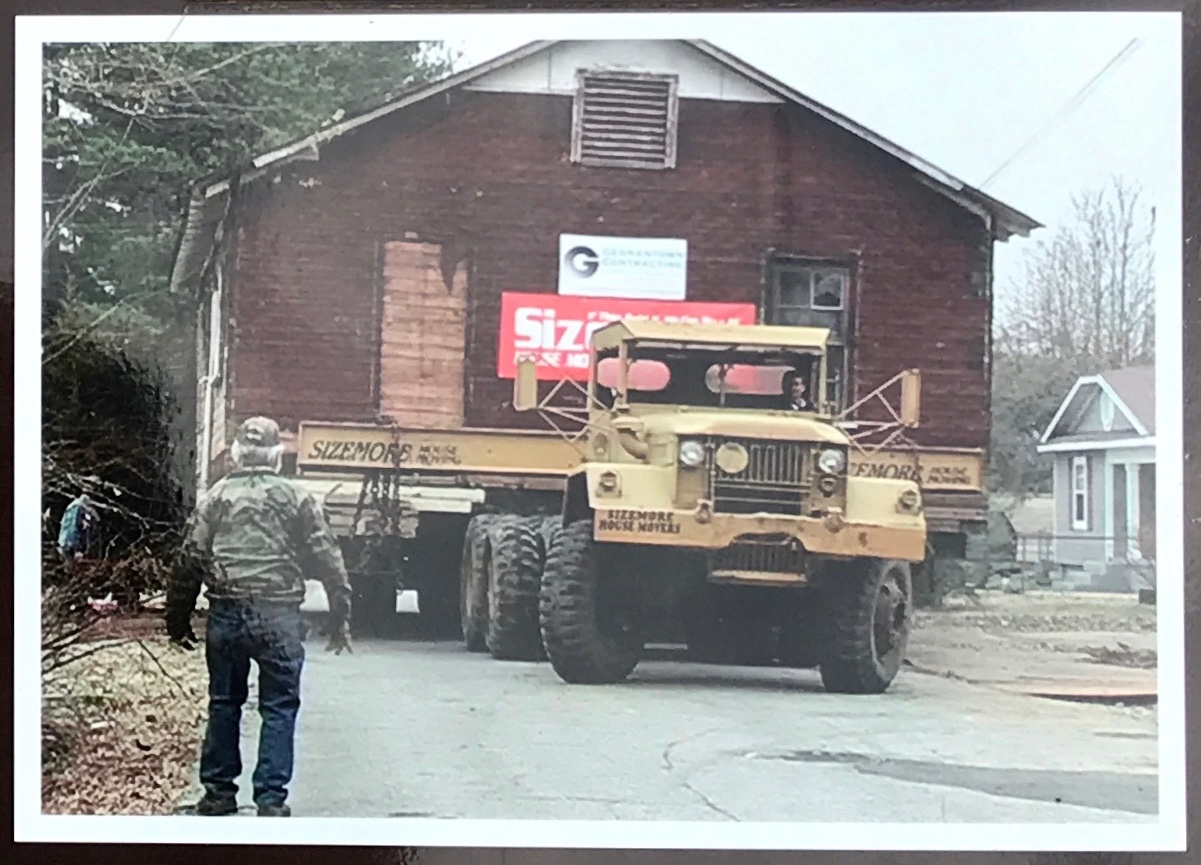
They also had his childhood church at the birthplace.
They moved it to the birthplace and restored it to its original condition in 2008.
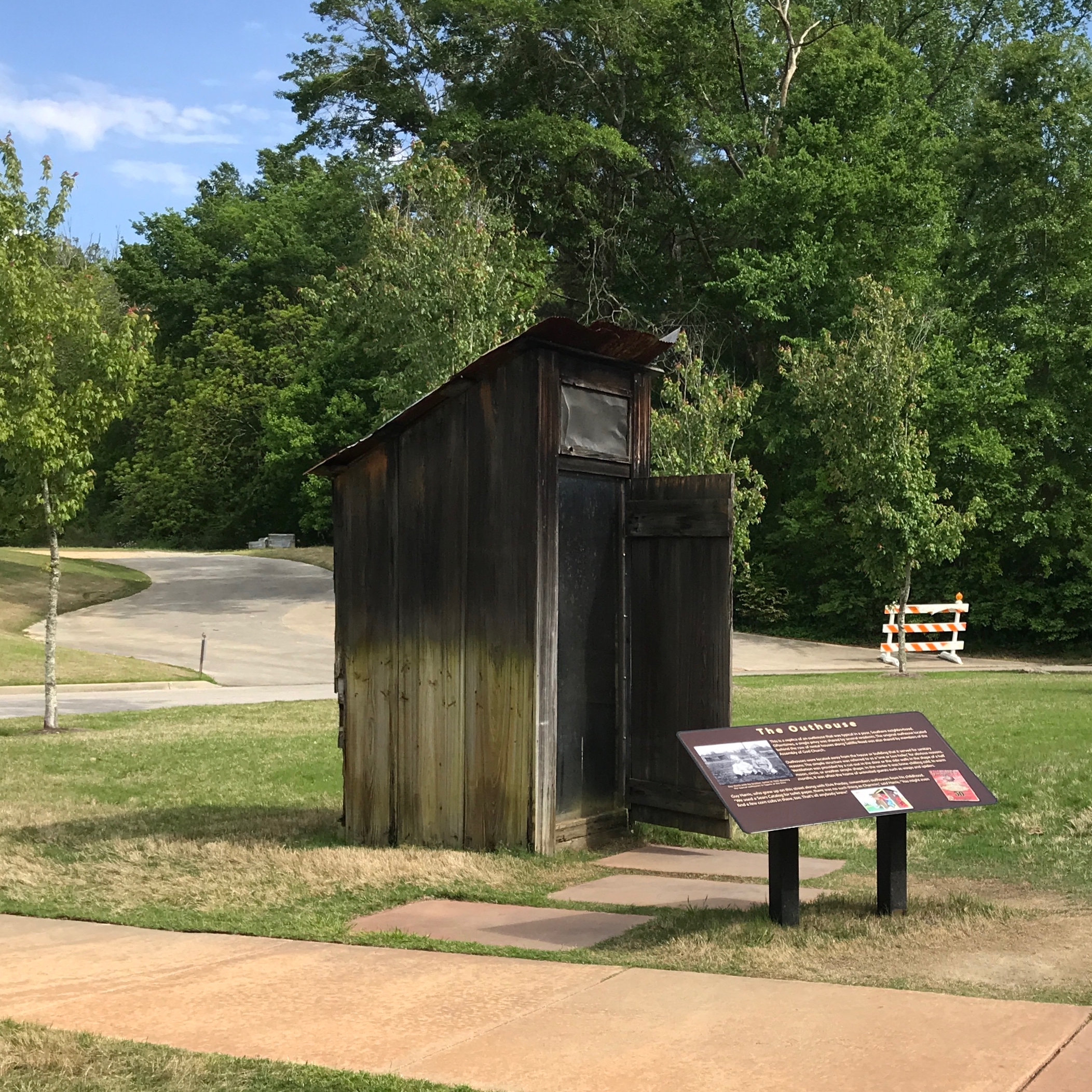
Thankfully, the outhouse was a replica.
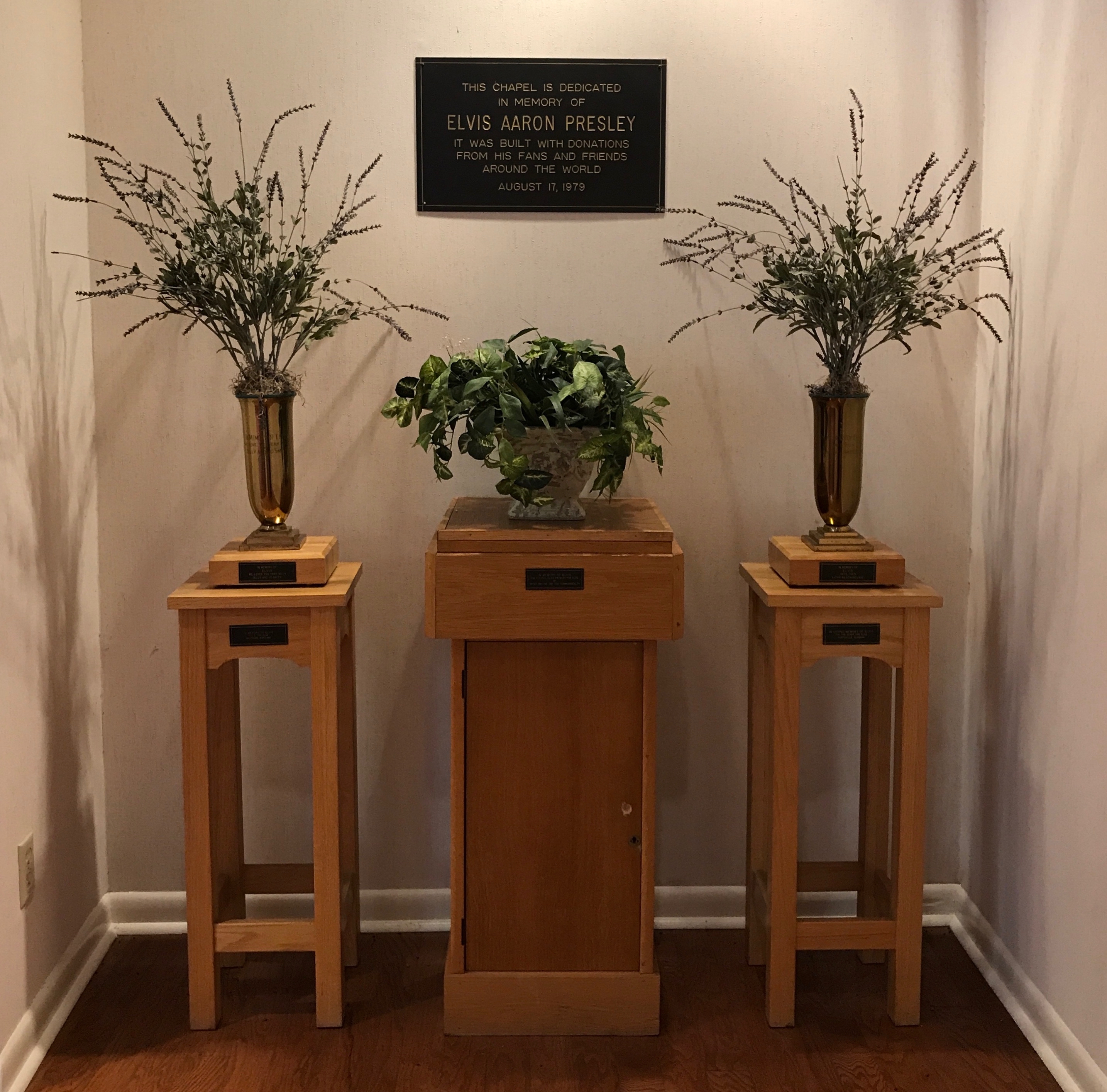
I continued along to the chapel.
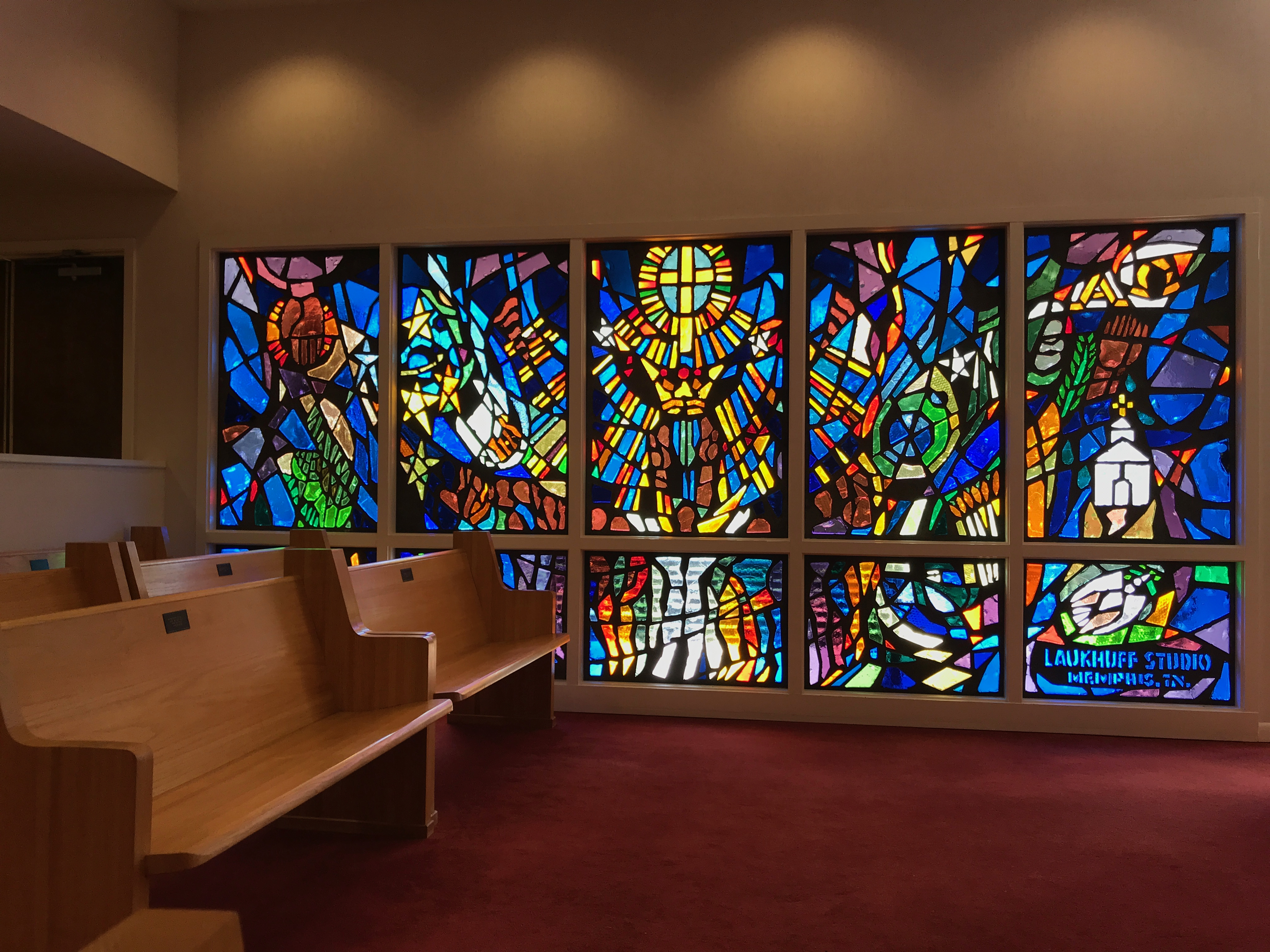
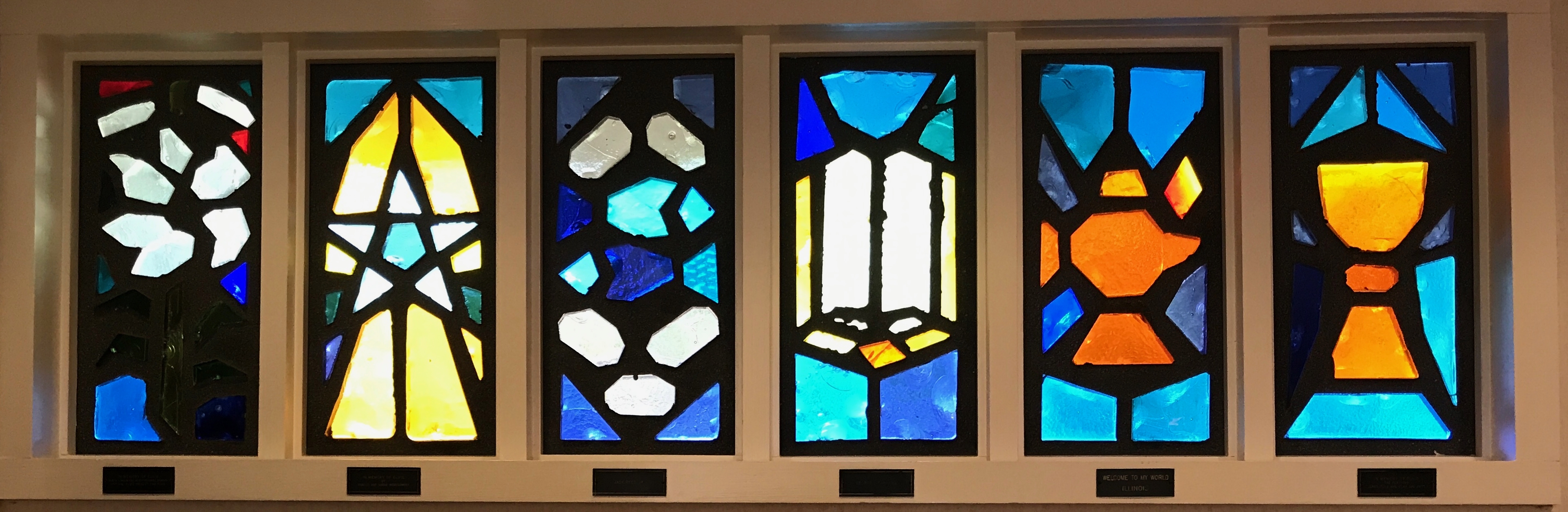
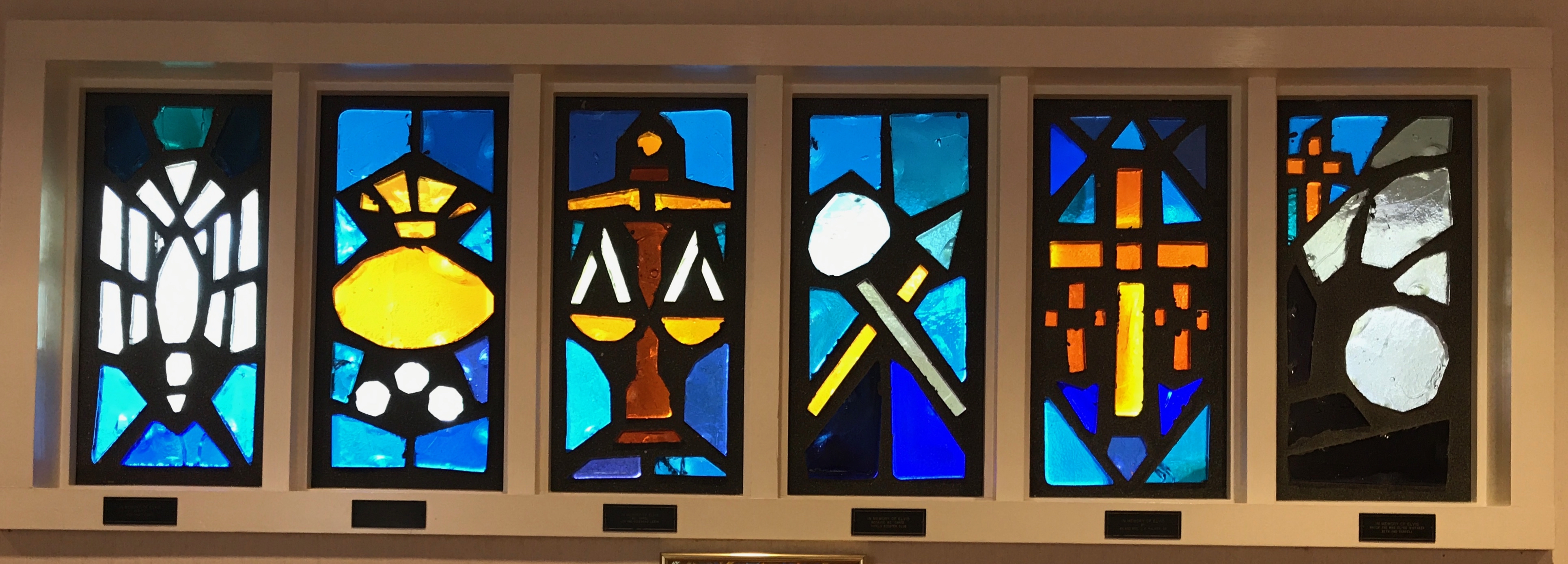
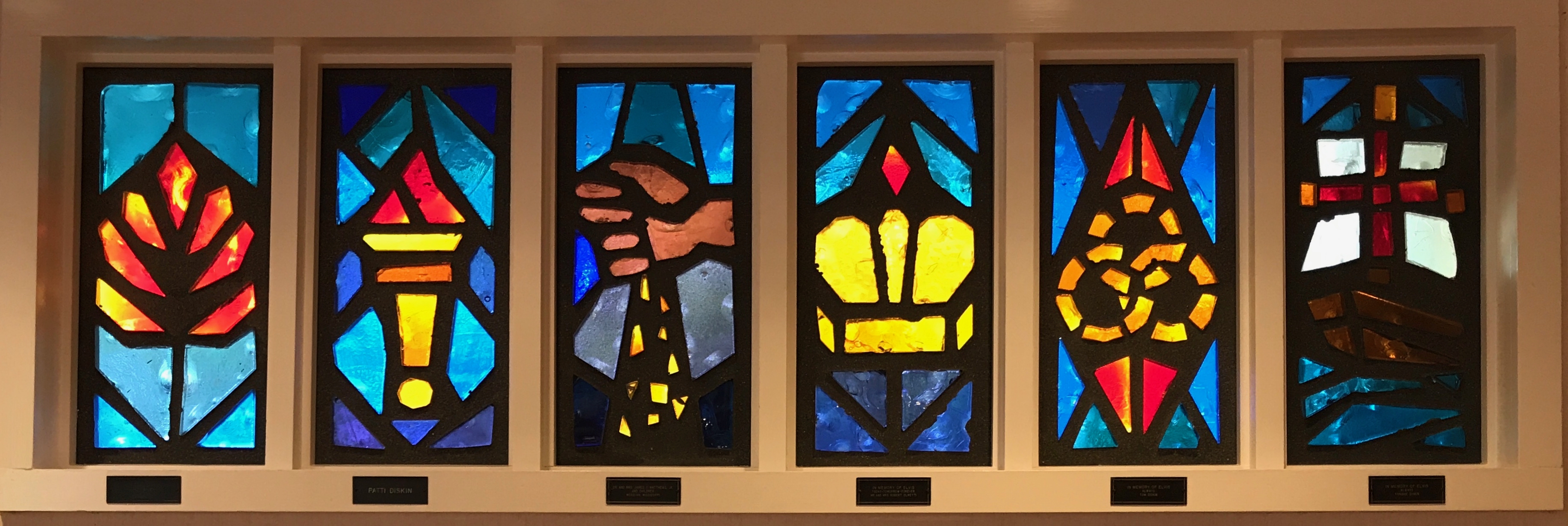
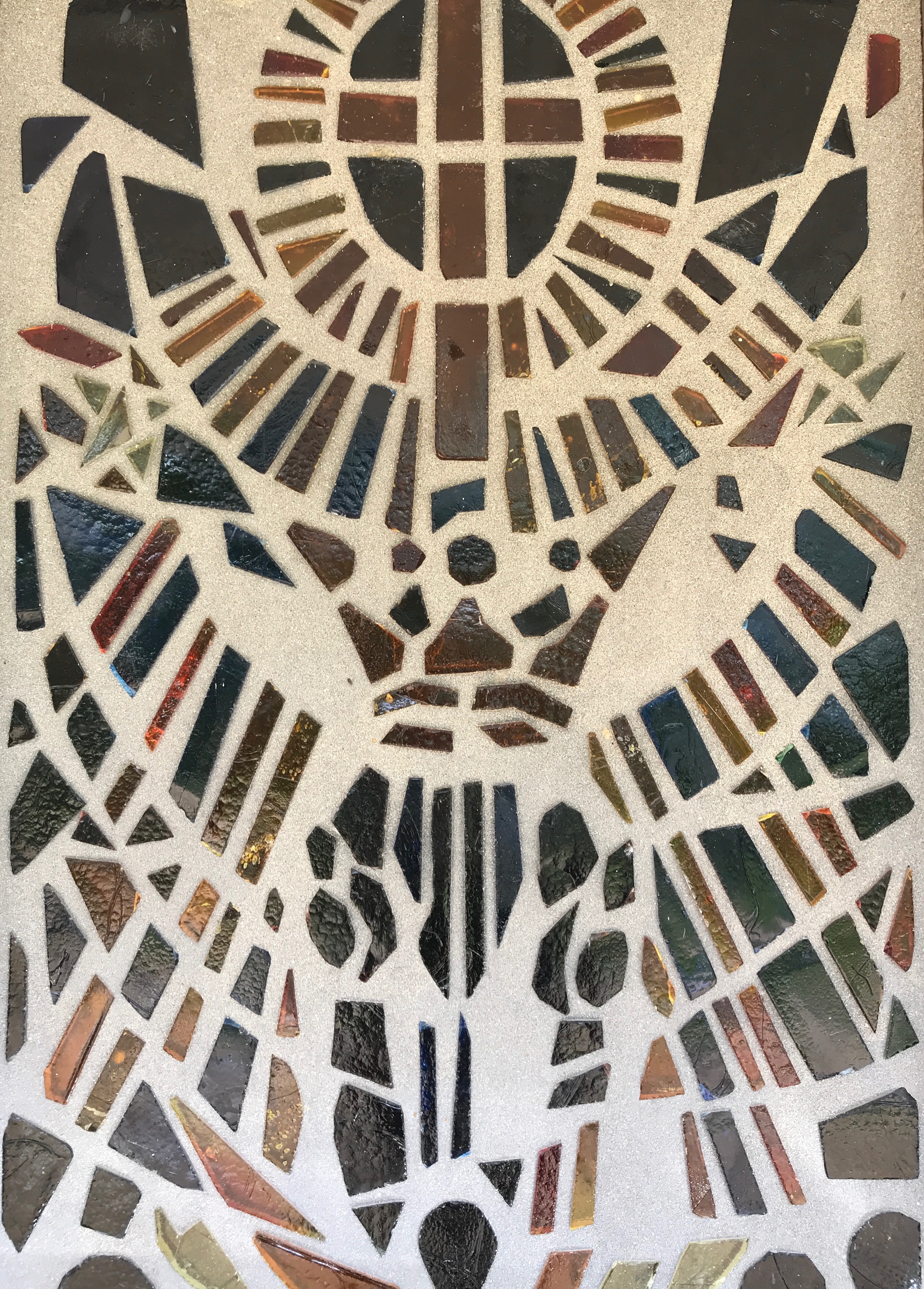
There were some dramatic stained glass windows.
A series of smaller windows was there, too.
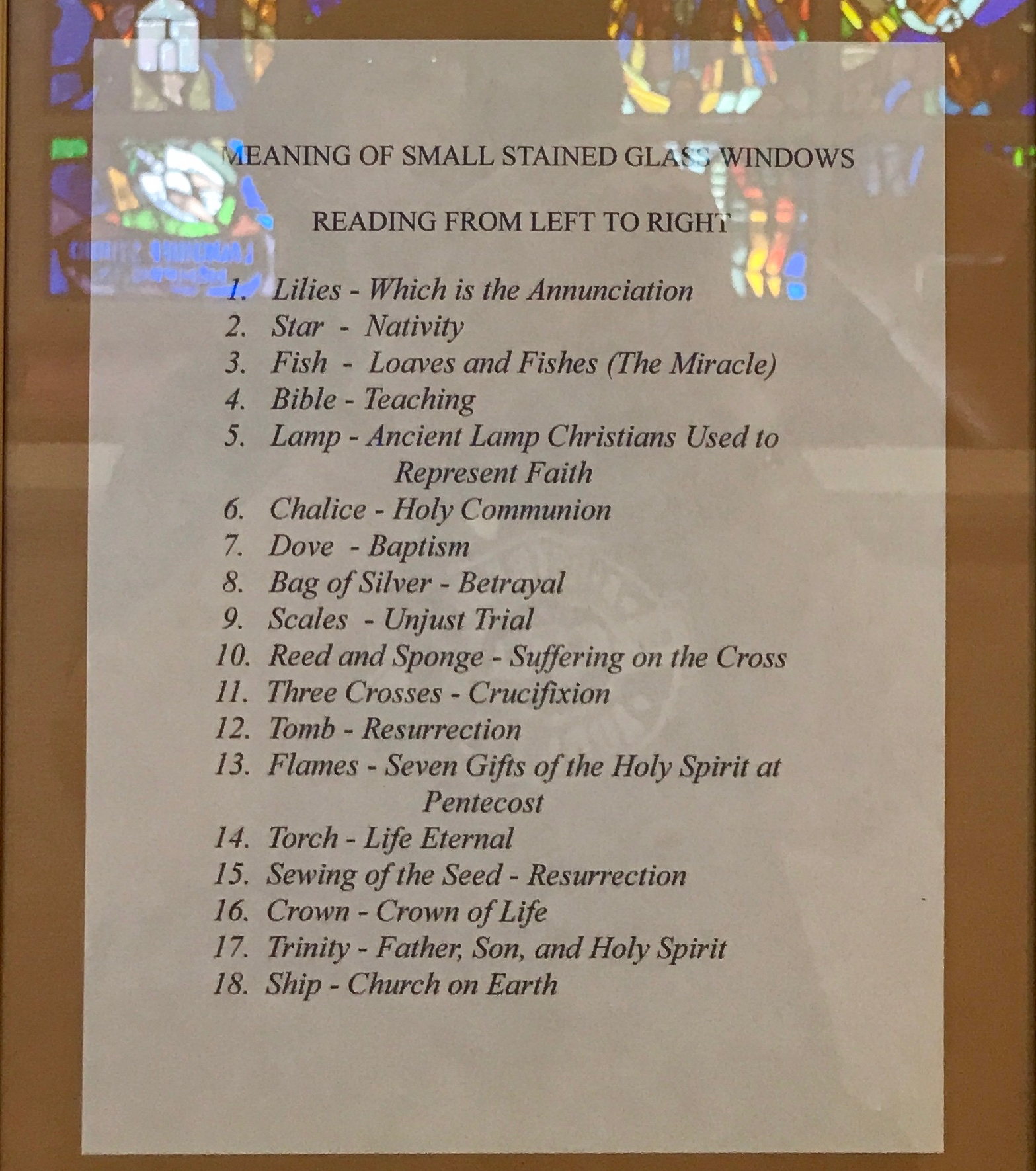
I liked the symbolism that was used.
It reminded me of the windows used to remind the congregation of the Bible stories back in the cathedrals of Europe.
If you’re interested, I’ve included a shot of a chart of the meanings of the individual windows.
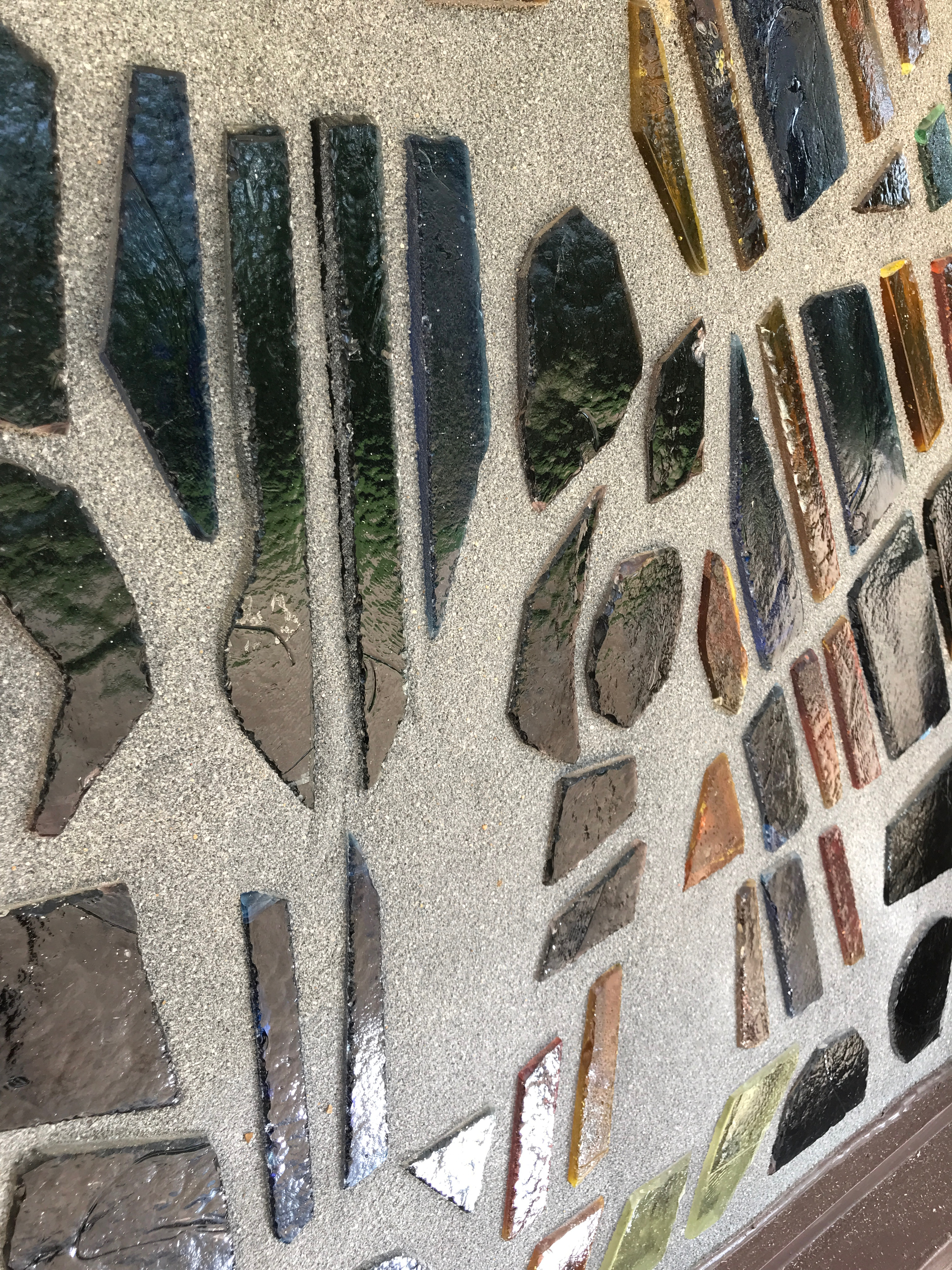
I’ve always been fascinated by this method of making a stained glass window. I saw a video about it years and years ago. The artists take thick chunks of glass and stand them up in a bed of sand to make the design.
Then the cement is poured in around the pieces and allowed to set up.
They remind me of one method of making a mosaic.
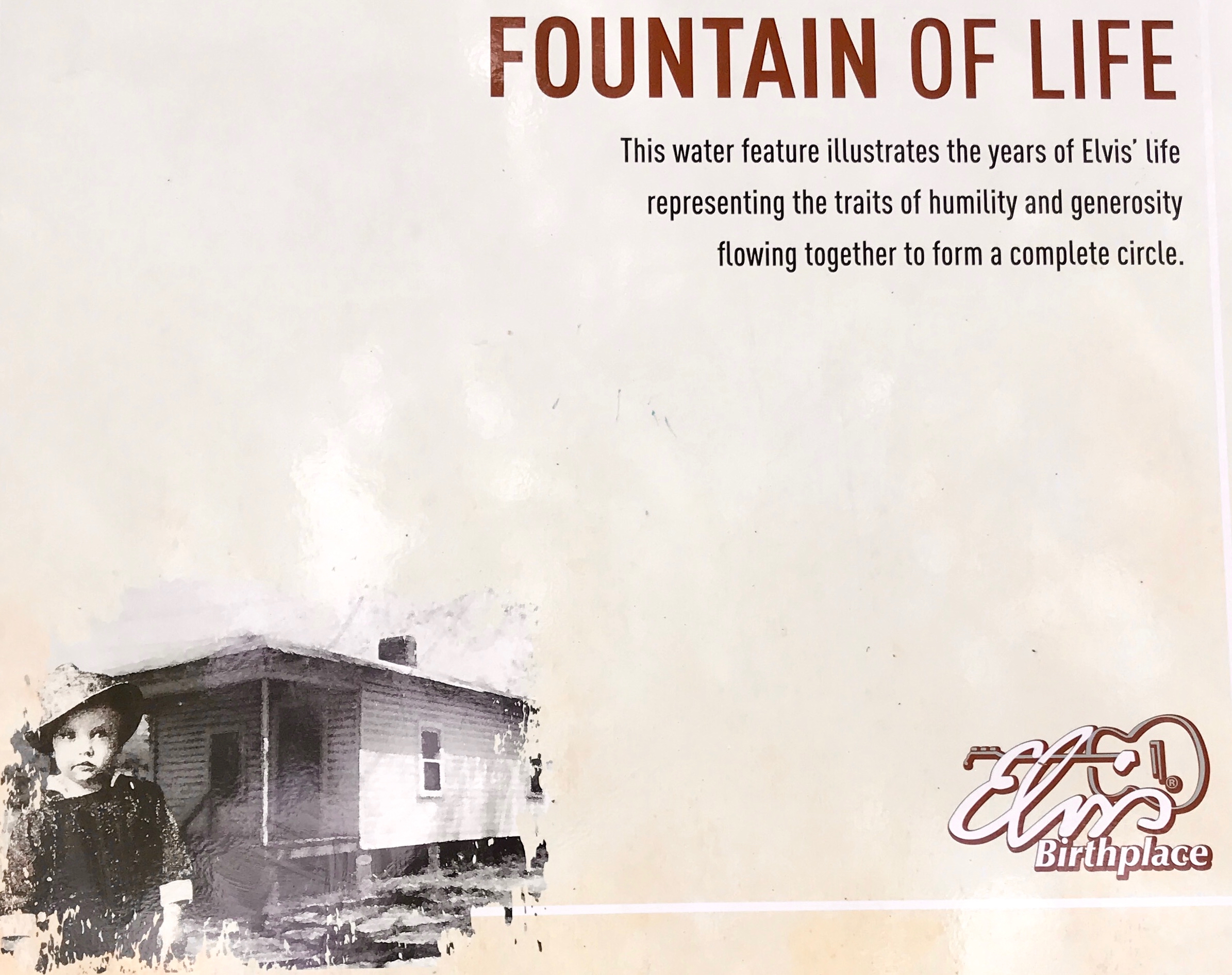
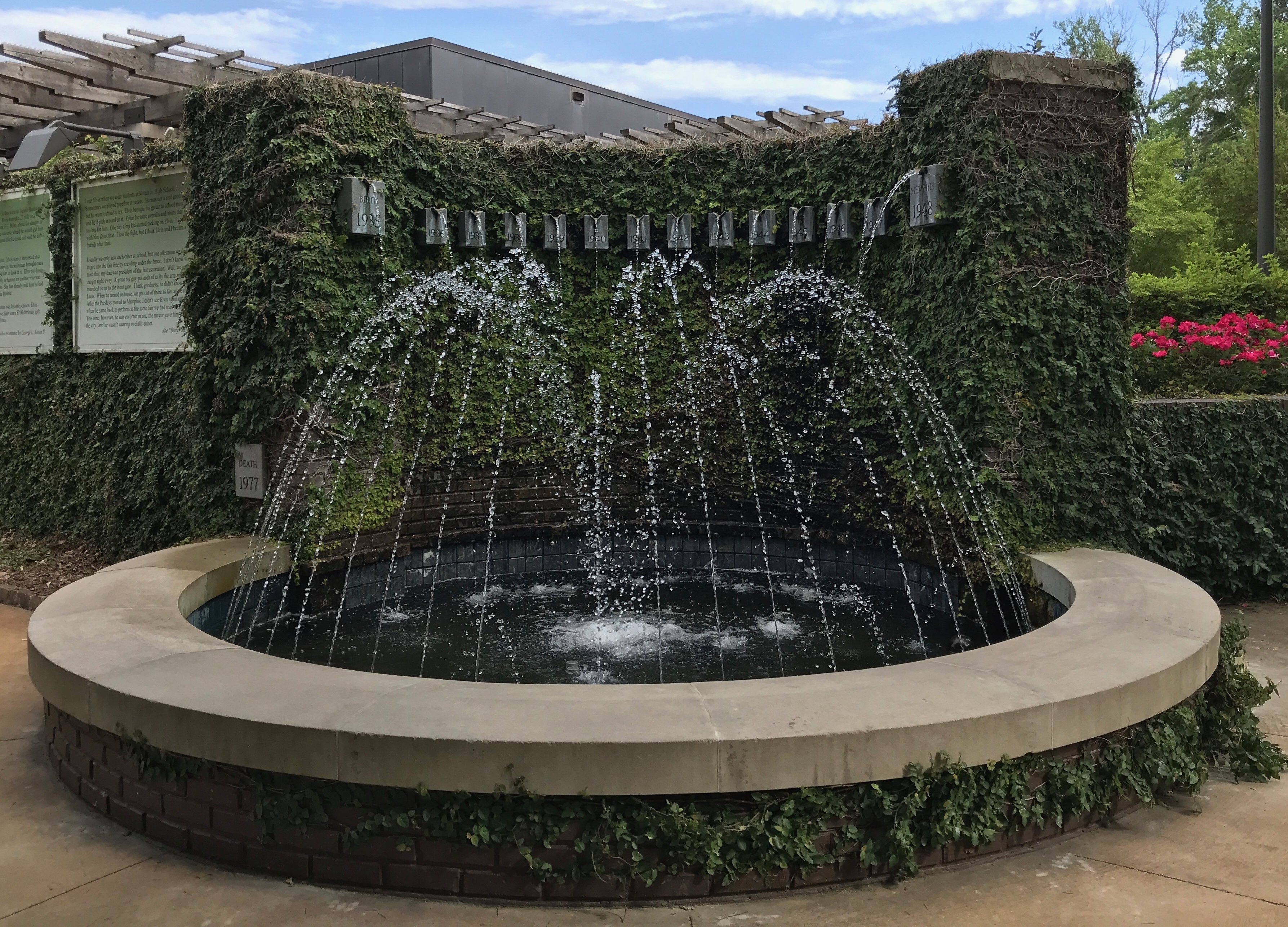
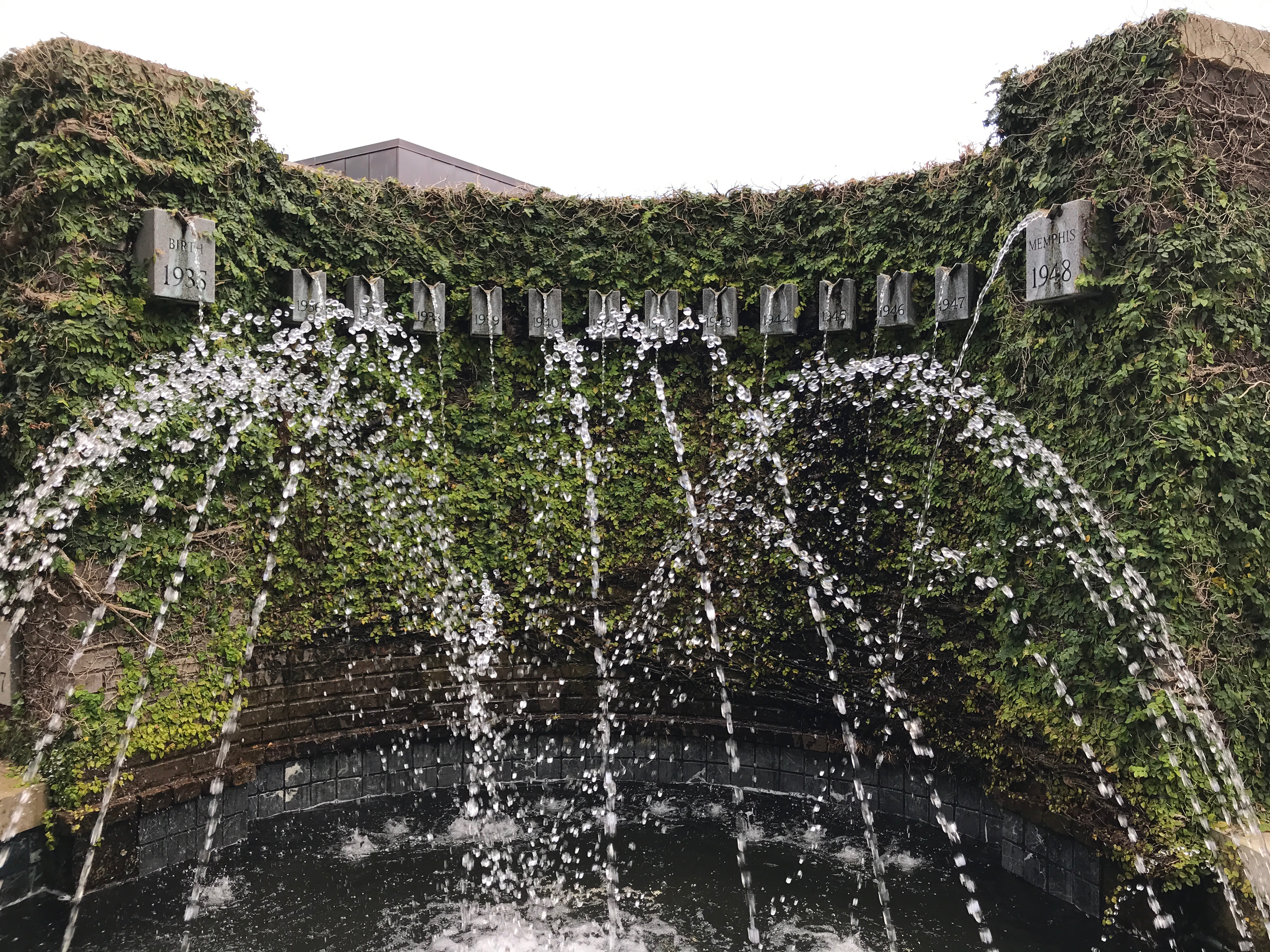
After the chapel, I went to the Fountain of Life.
It is a rather nice memorial.
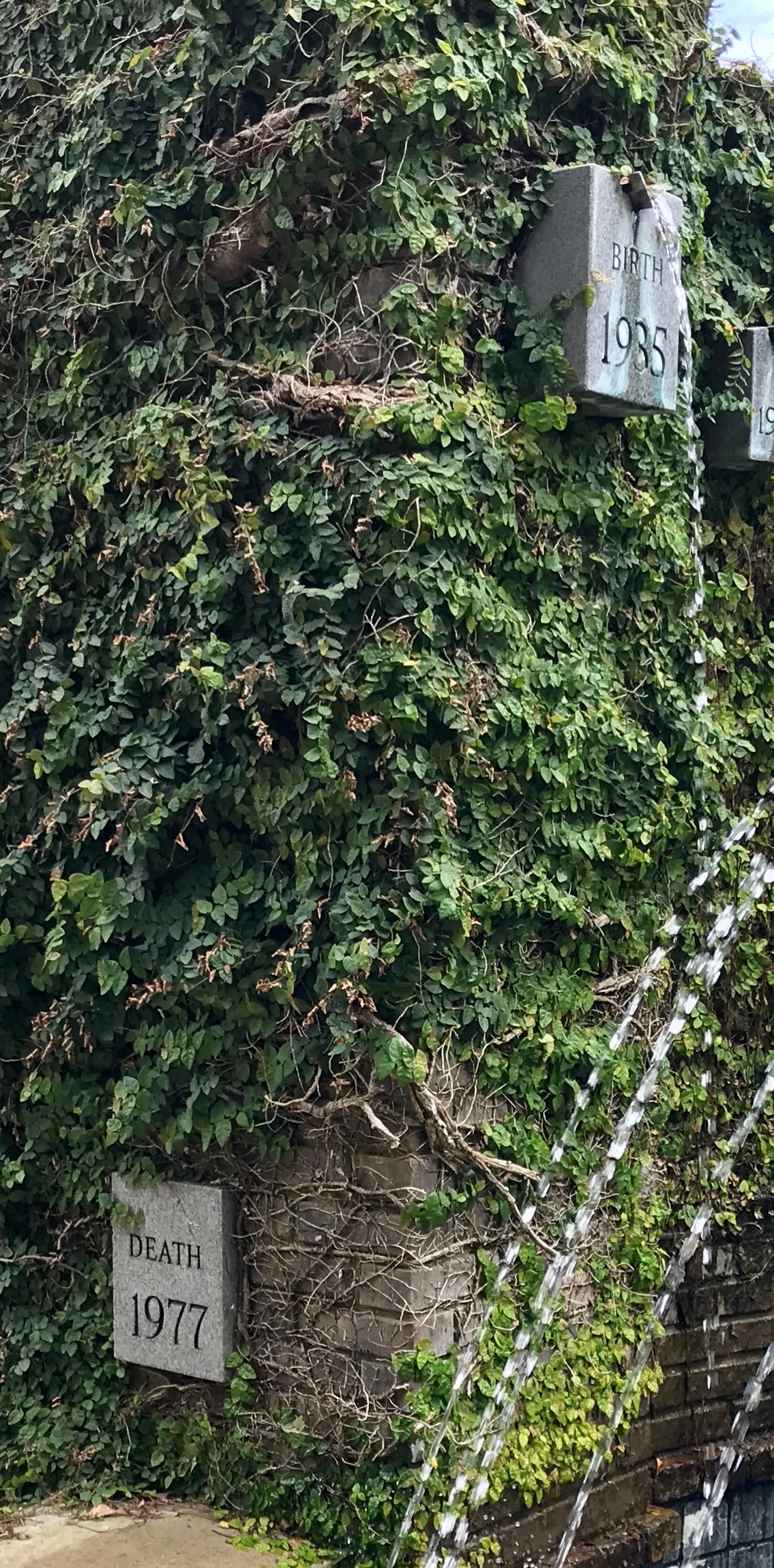
From birth until death.
And the circle is complete.
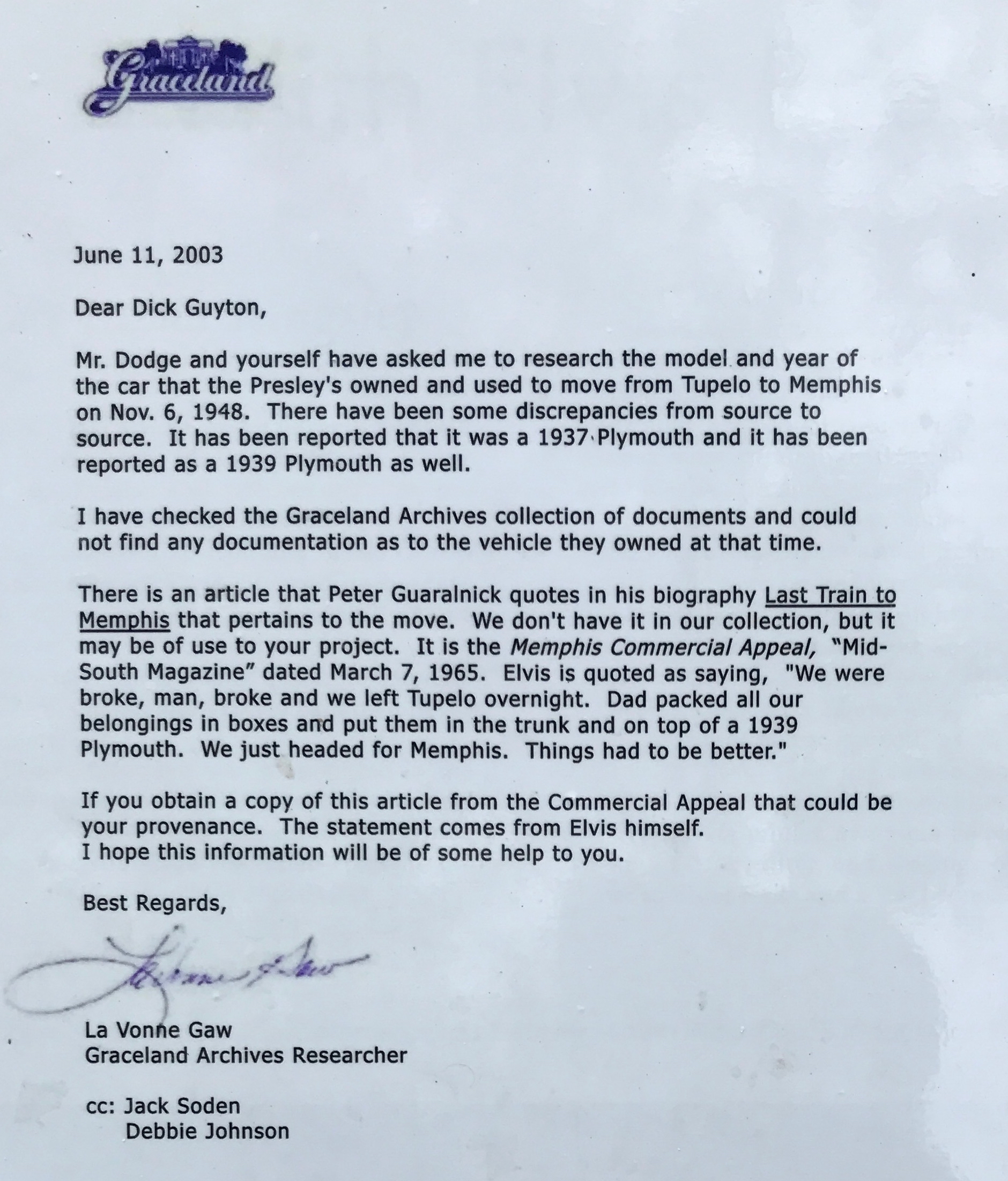
I had one more stop to make. The souvenir store. Oddly enough, you didn’t have to exit through it. While I was inside, I came across some information about the car that was in front of the entrance.
Apparently, this is a car like the car that Elvis’s family used to leave Tupelo in 1948.
What a gorgeous car!
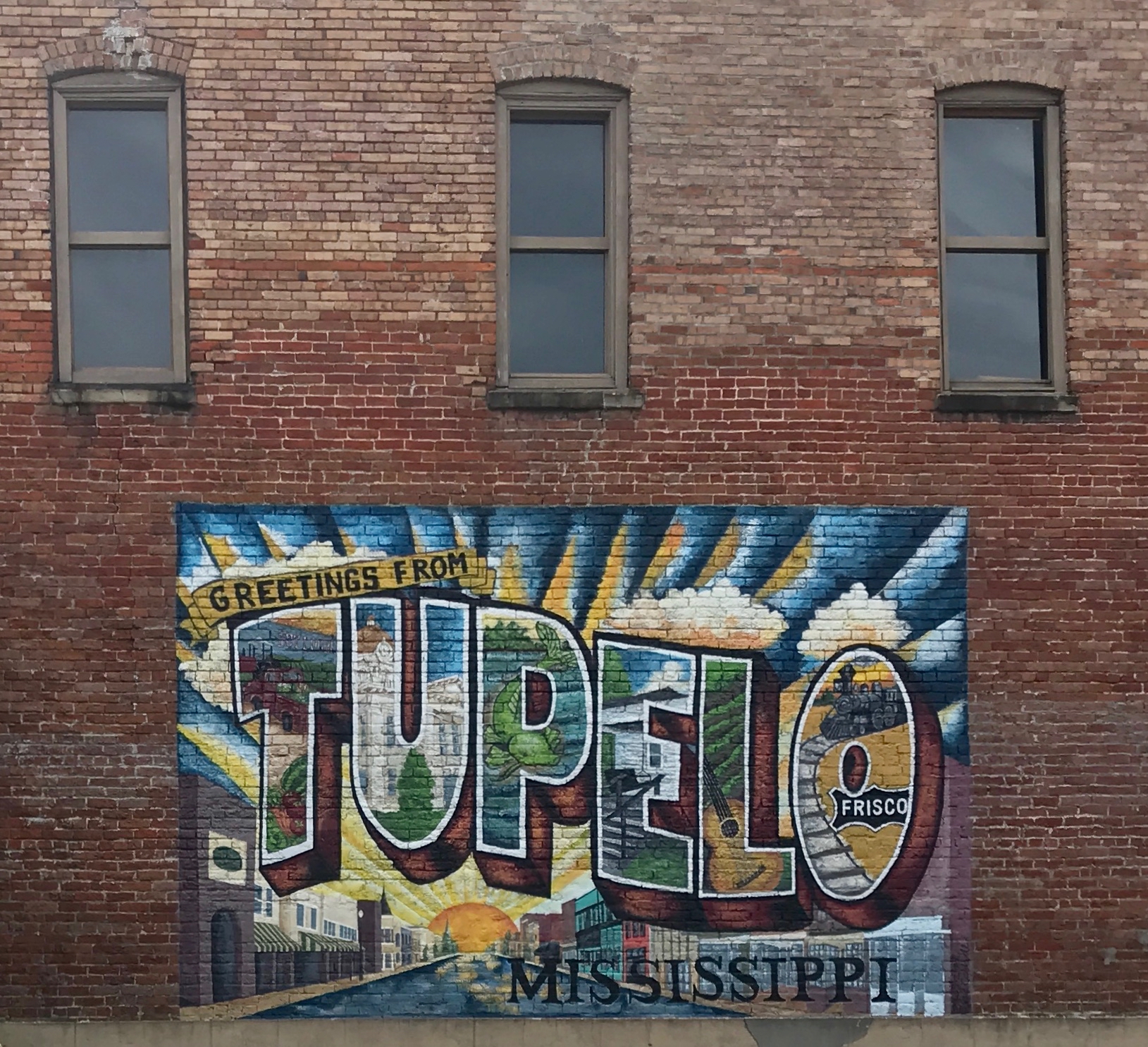
I headed in to town to see what I could see.
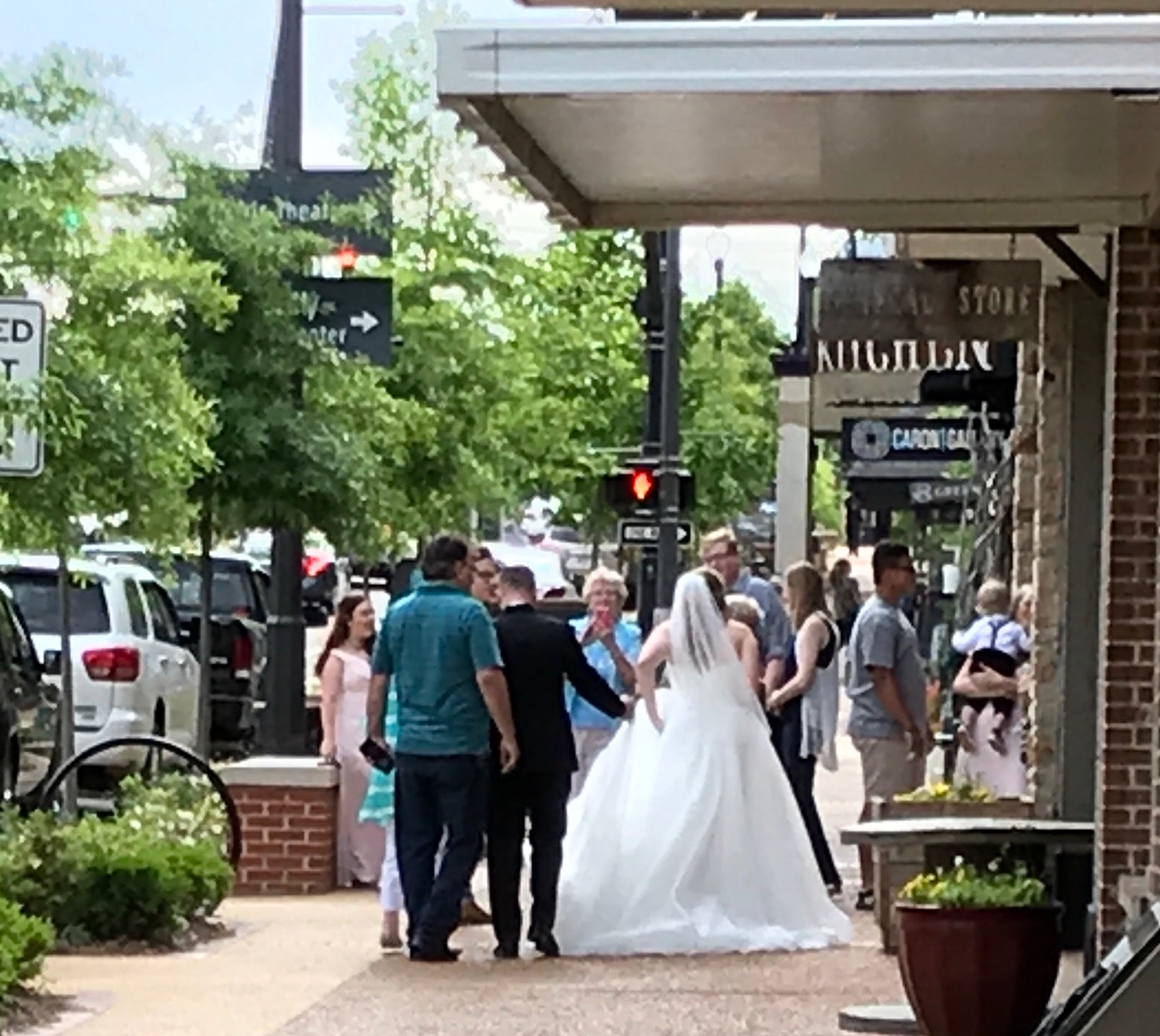
It was all happening there, including a wedding!
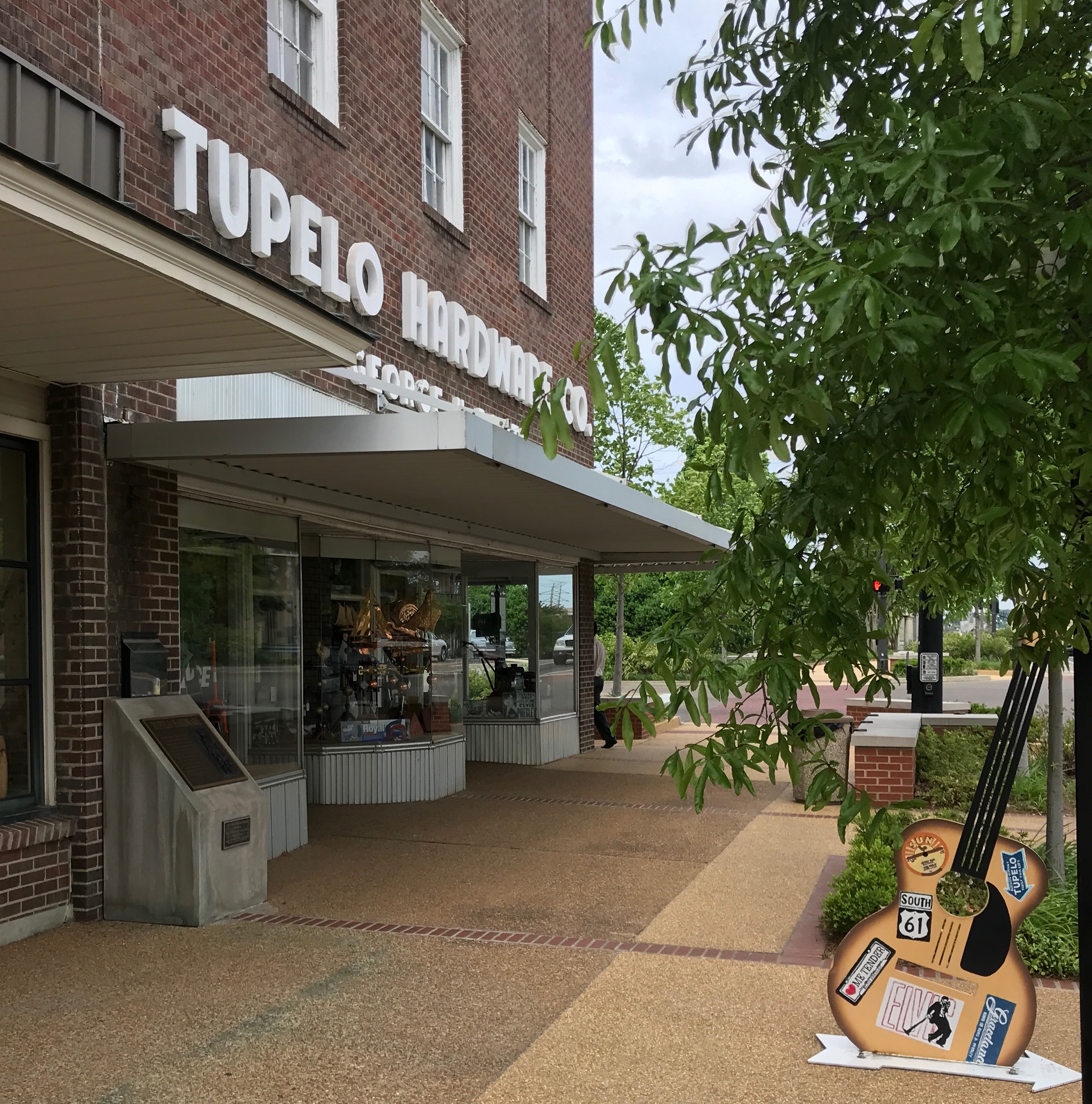
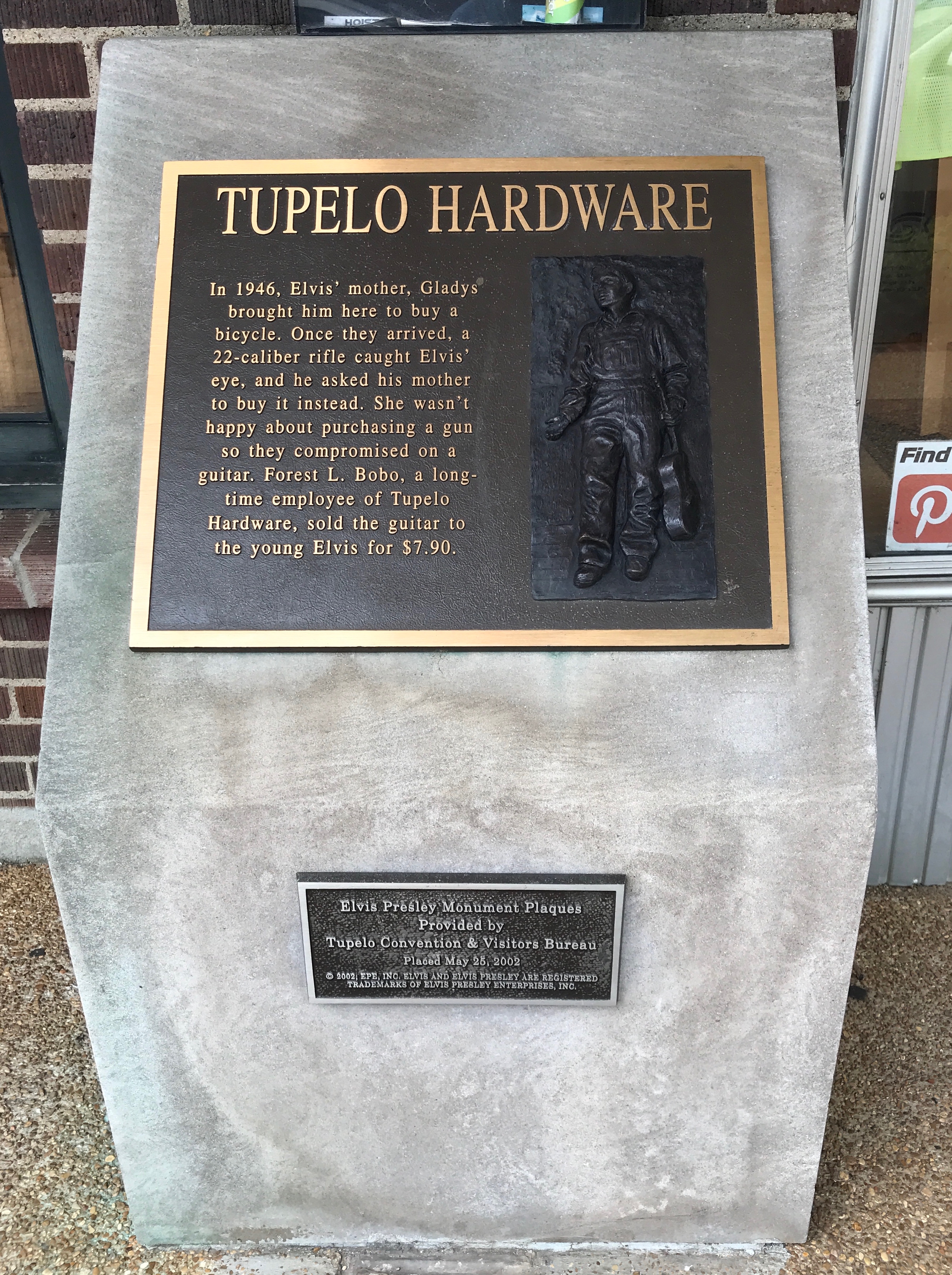
Ah! There’s the famous hardware store where Elvis’s mother got him his first guitar.
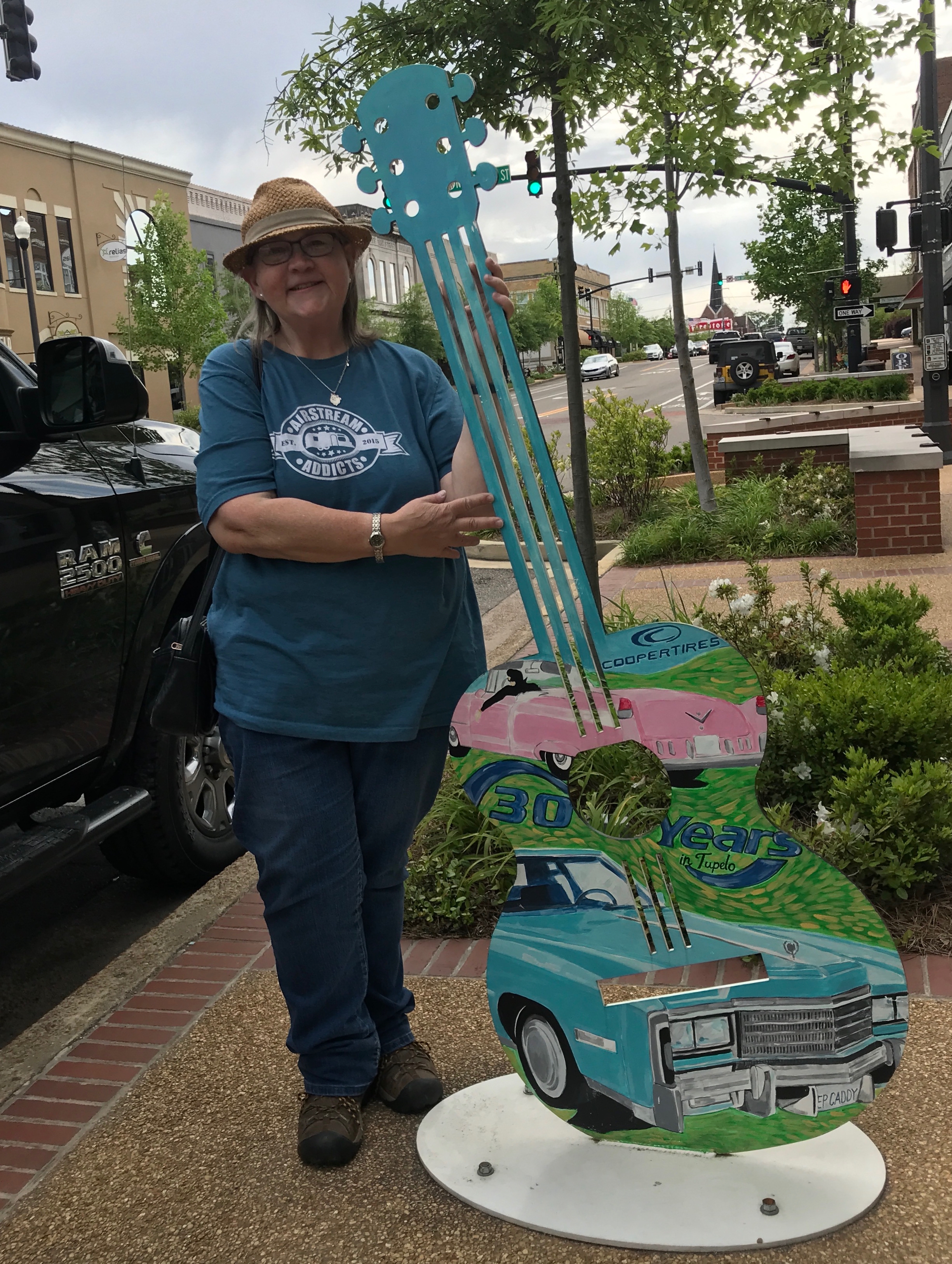
They had these guitars around town.
I asked a passerby to snap a photo of me with one.
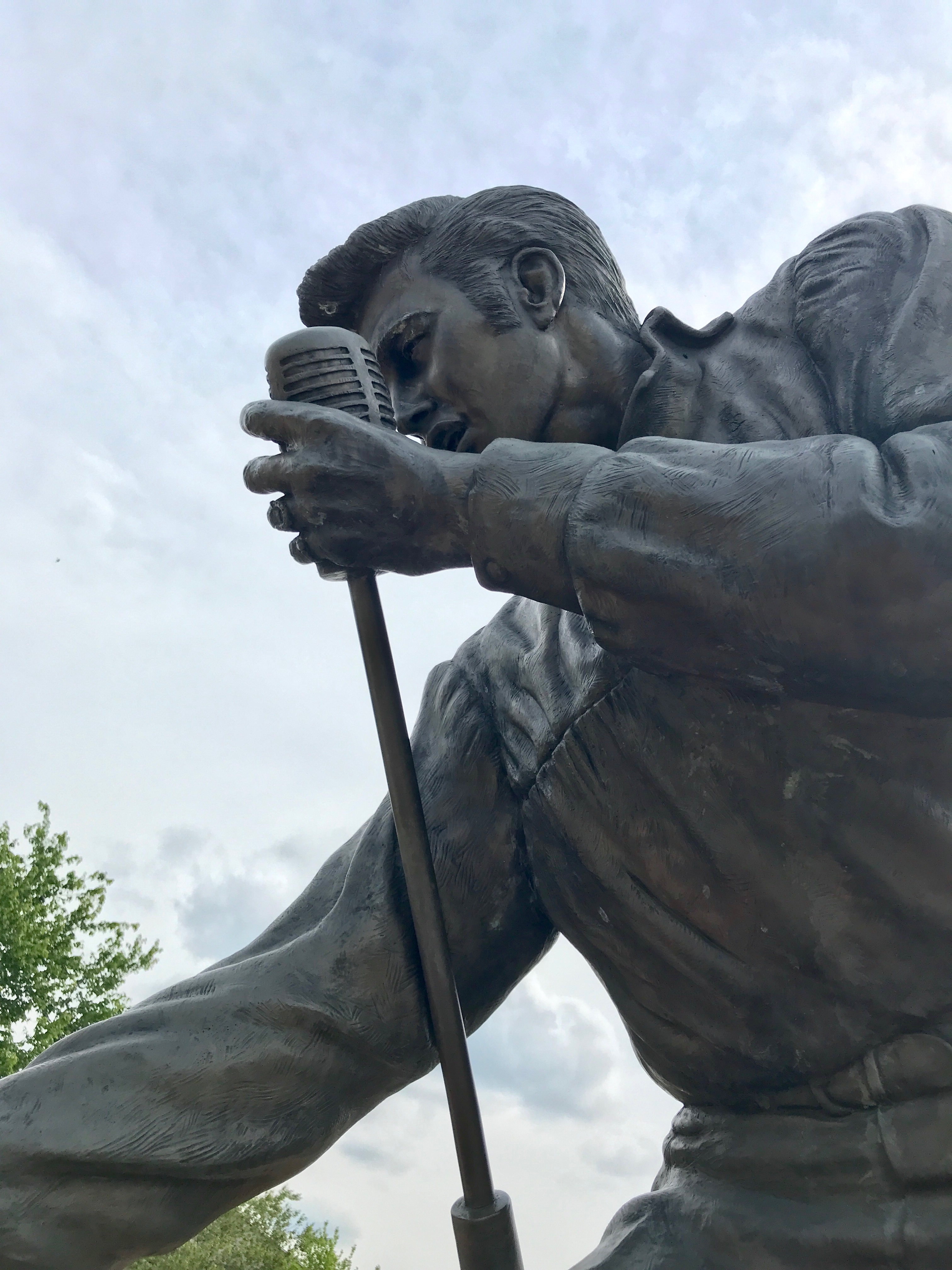
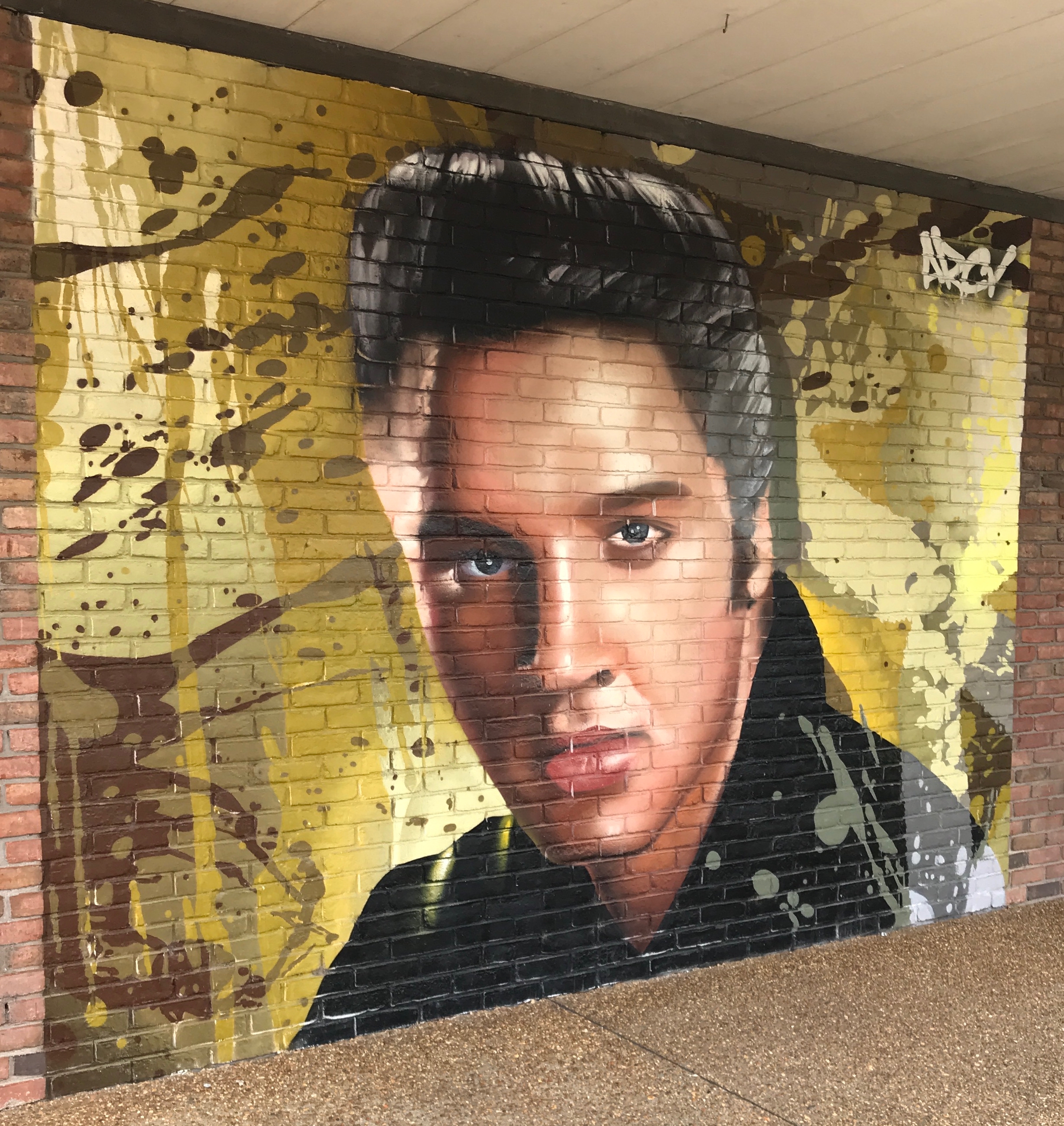
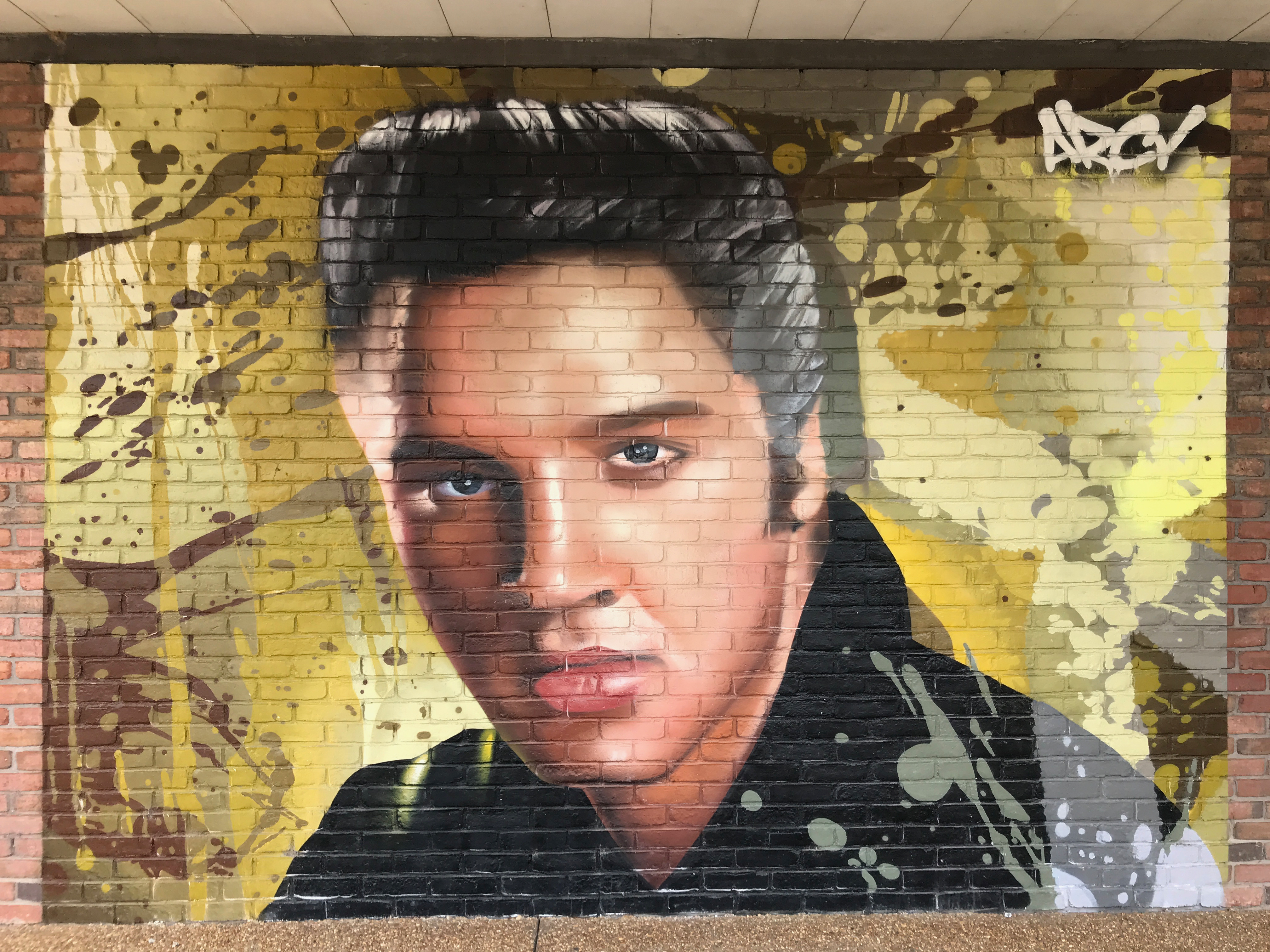
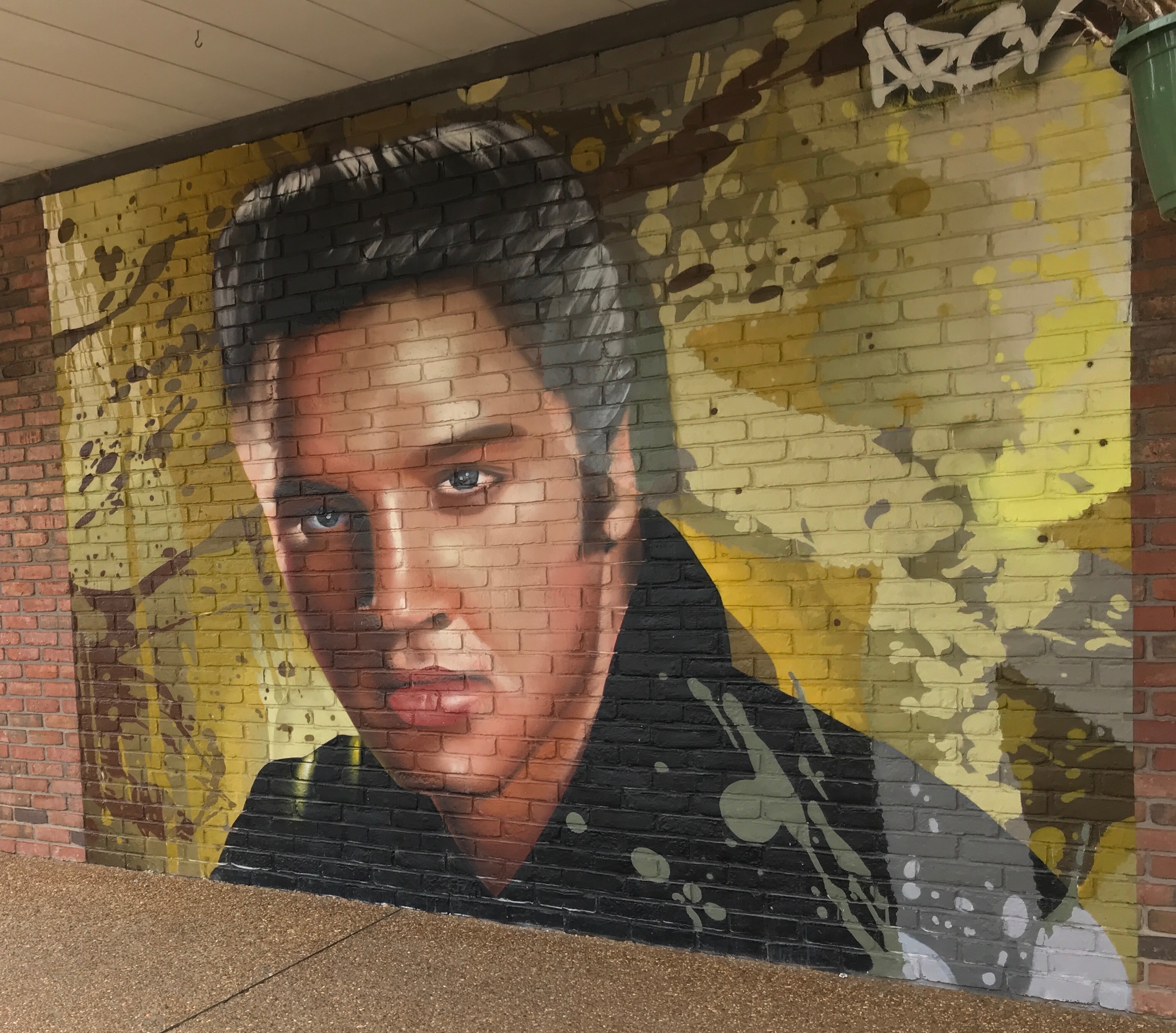
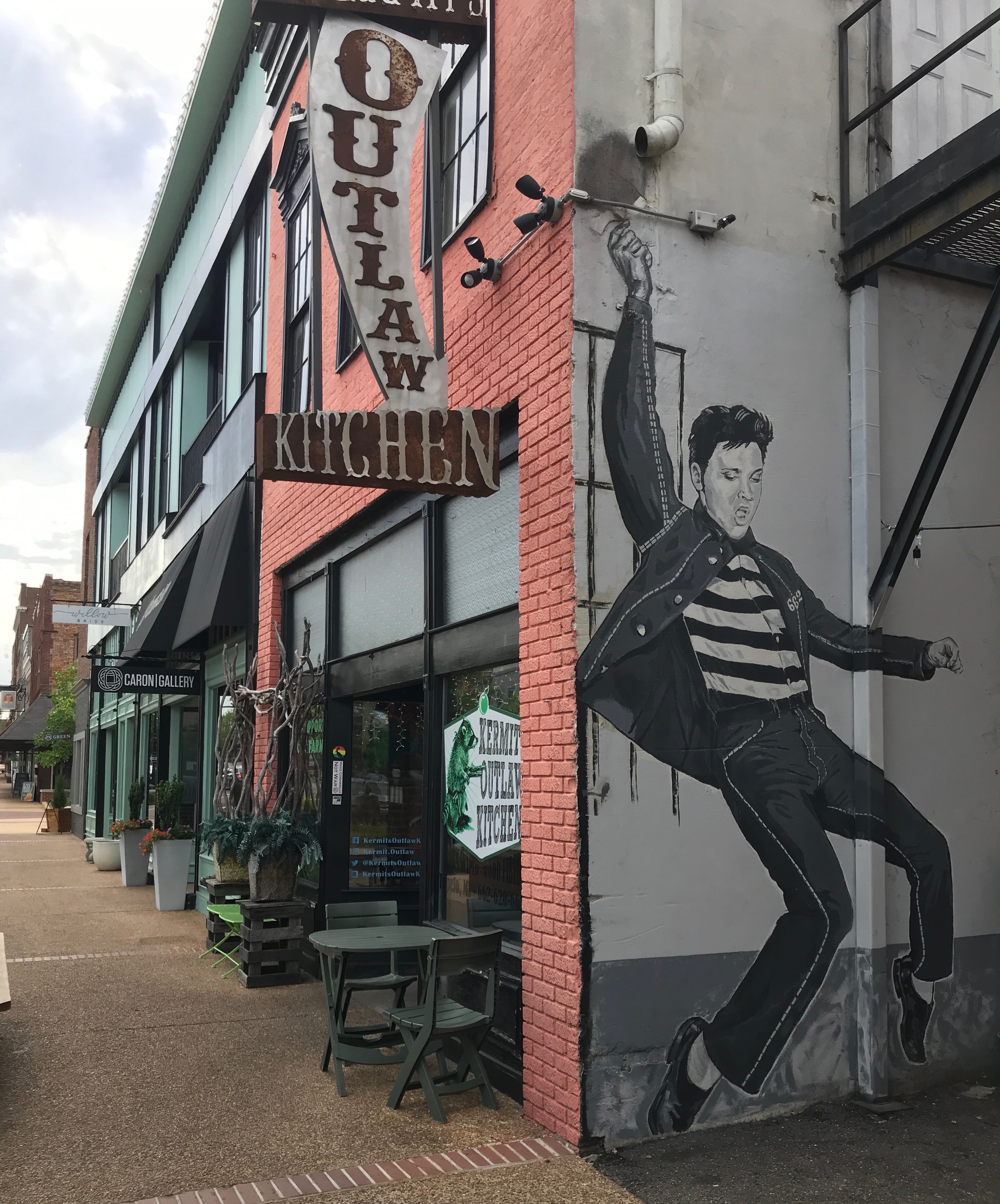
Elvis was all over, too.
His eyes…
…they seem to follow you.
Elvis is everywhere!
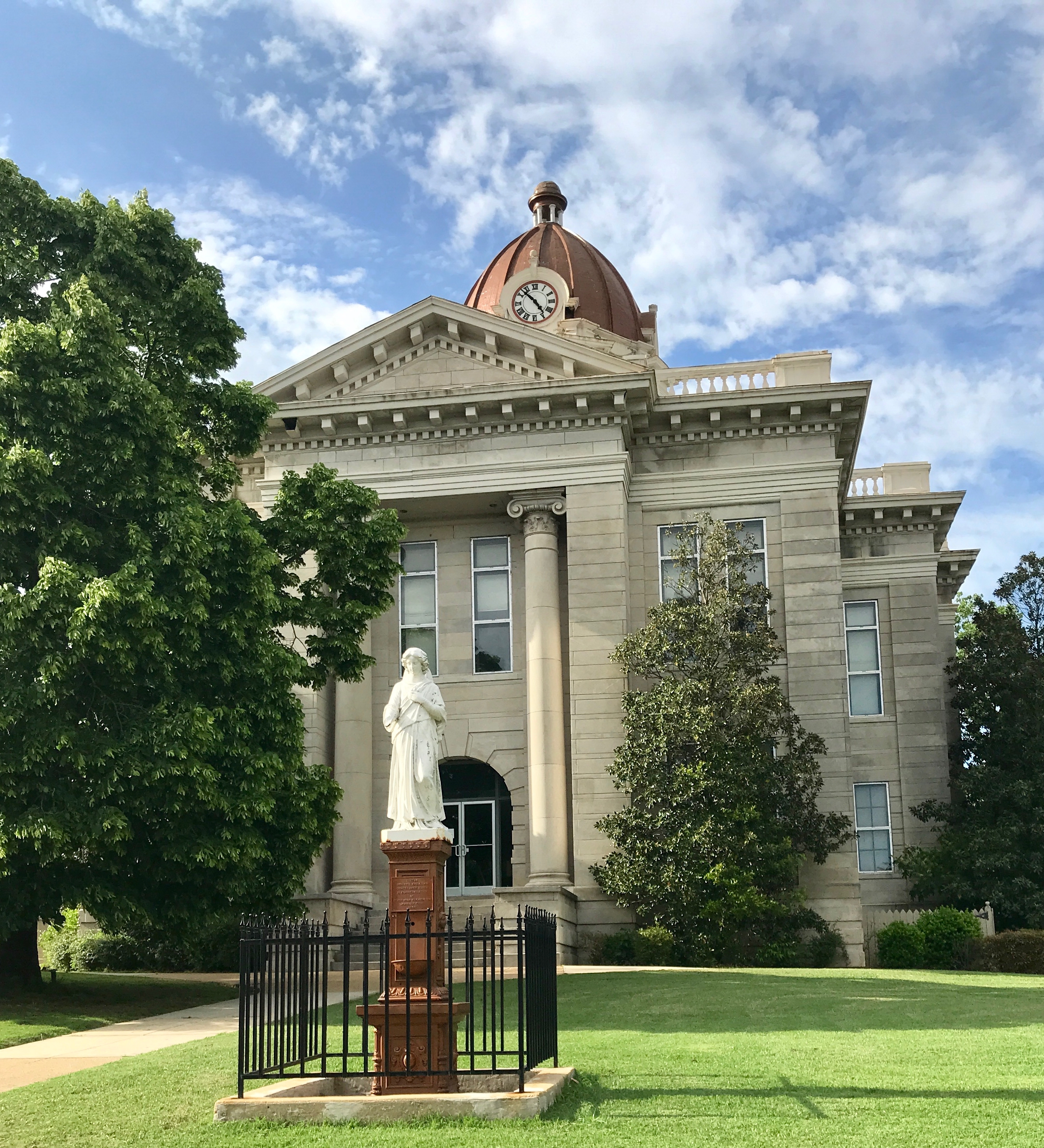
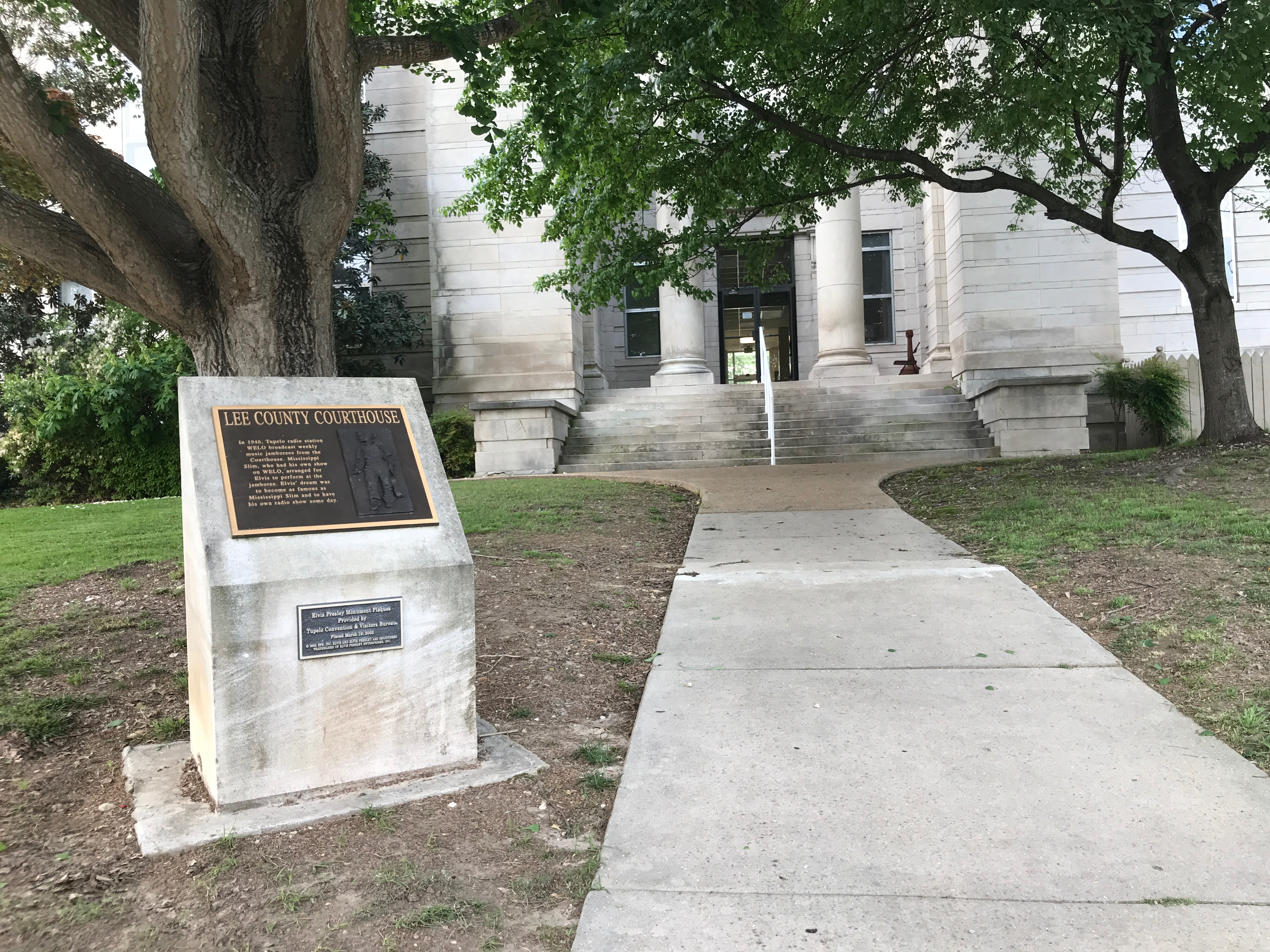
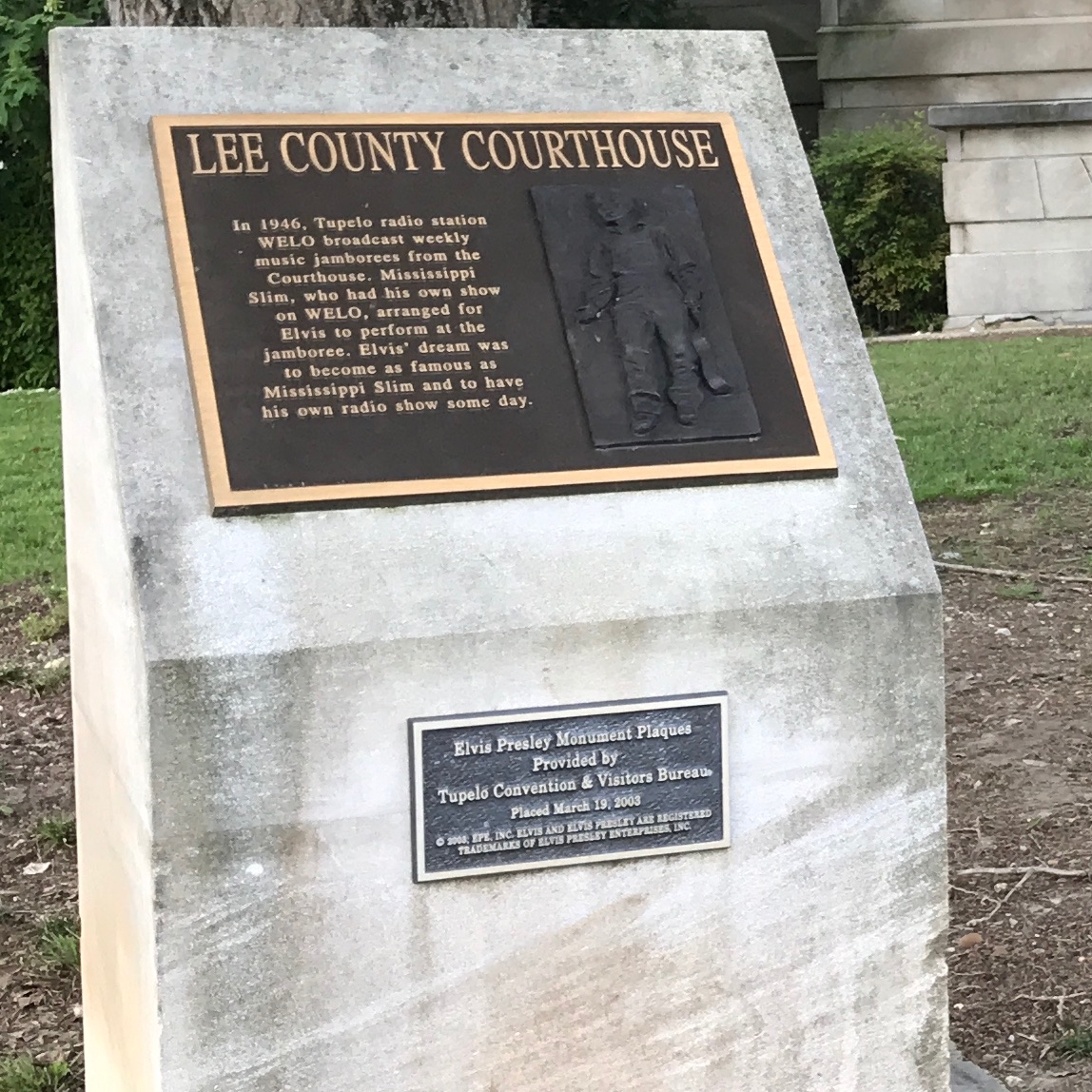
I strolled over to the courthouse to see what they thought was worthy of honoring.
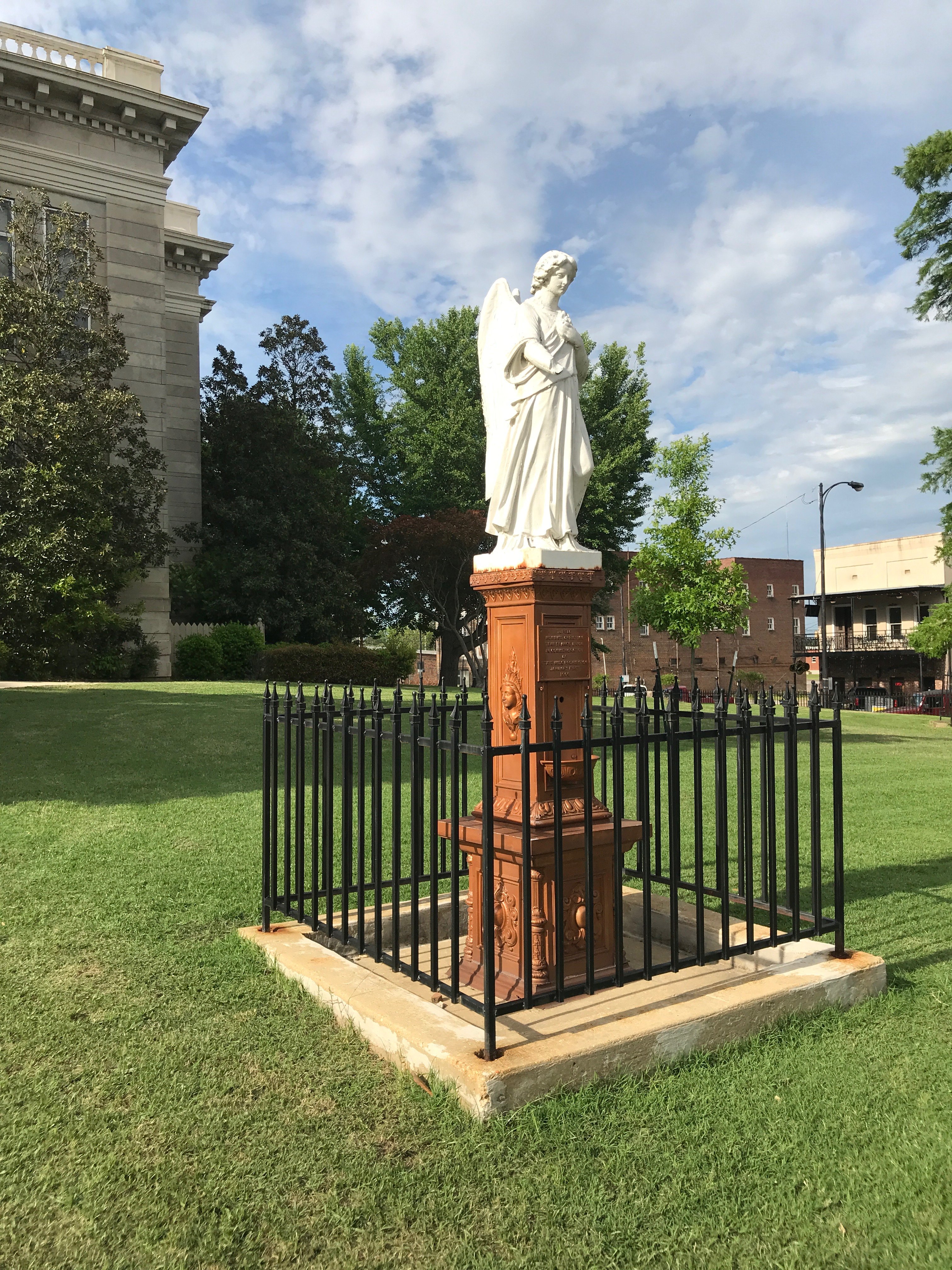
This piece of sculpture looks like it was probably a fountain at one point. It was erected by the Tupelo Woman’s Christian Temperance Union in commemoration of statewide prohibition beginning January 1, 1906.
Huh. I didn’t know that some states were dry that far back.
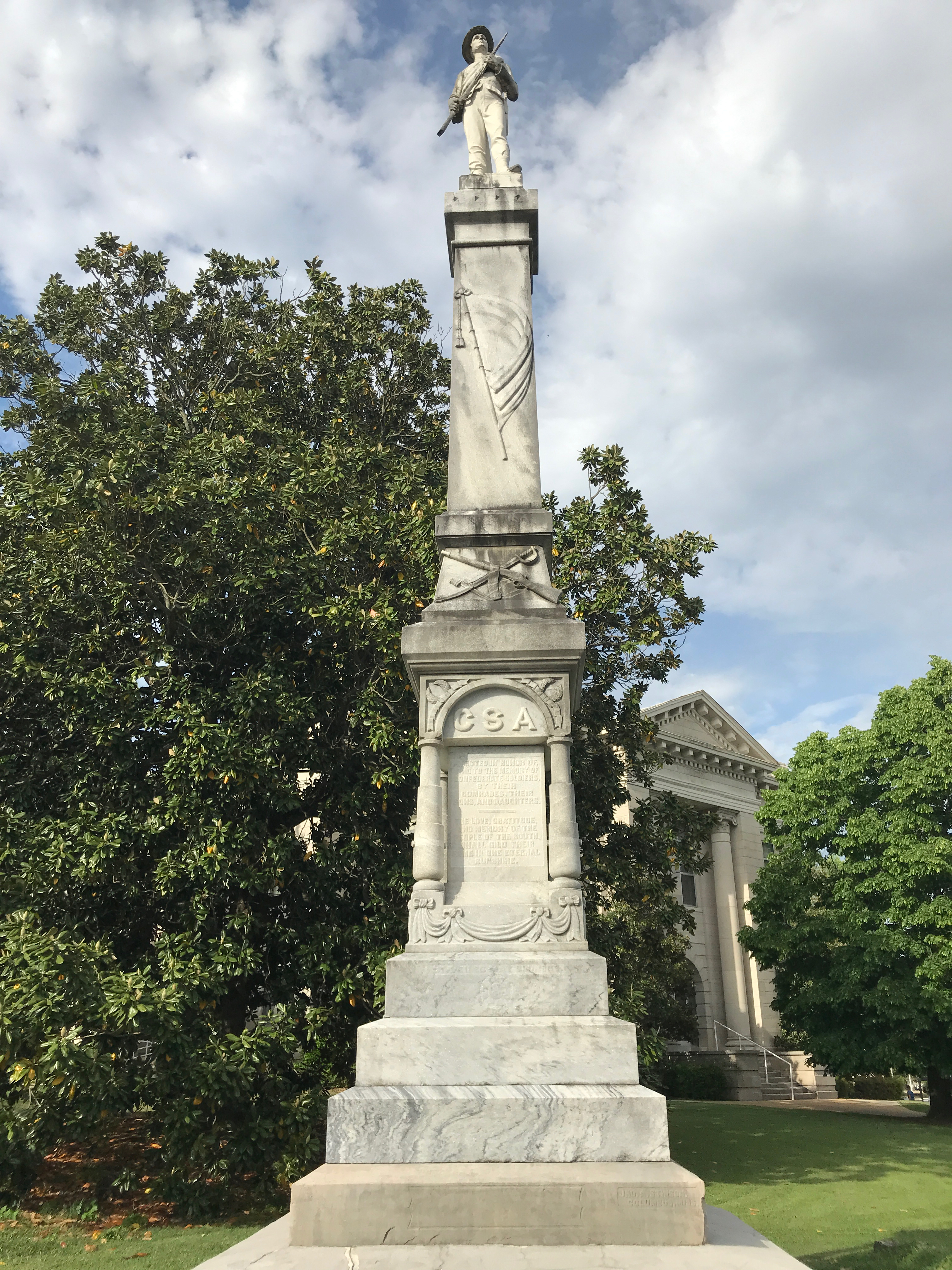
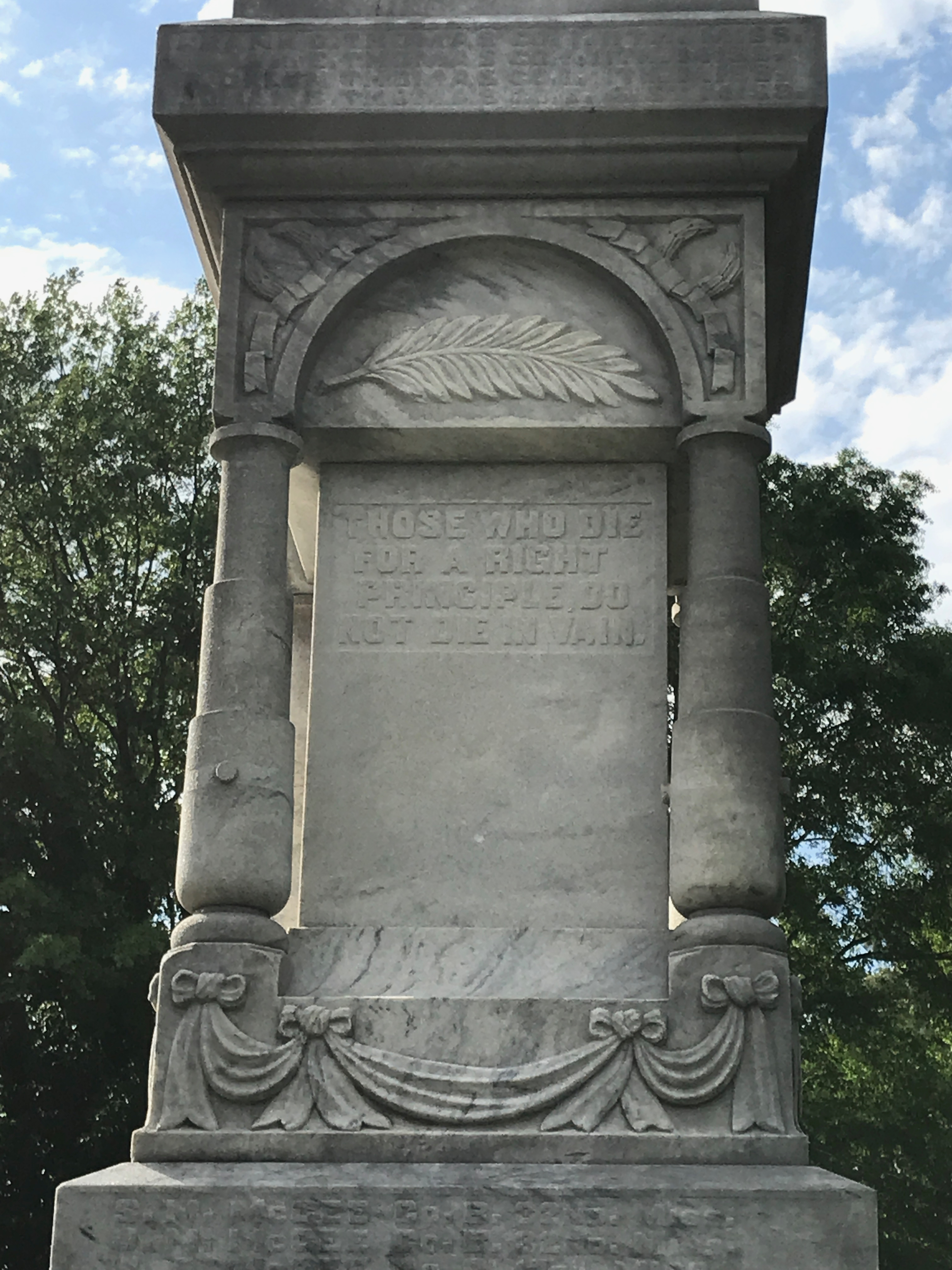
Then there is the statue commemorating the Civil War dead.
Those who die for a right principle do not die in vain. Interesting.
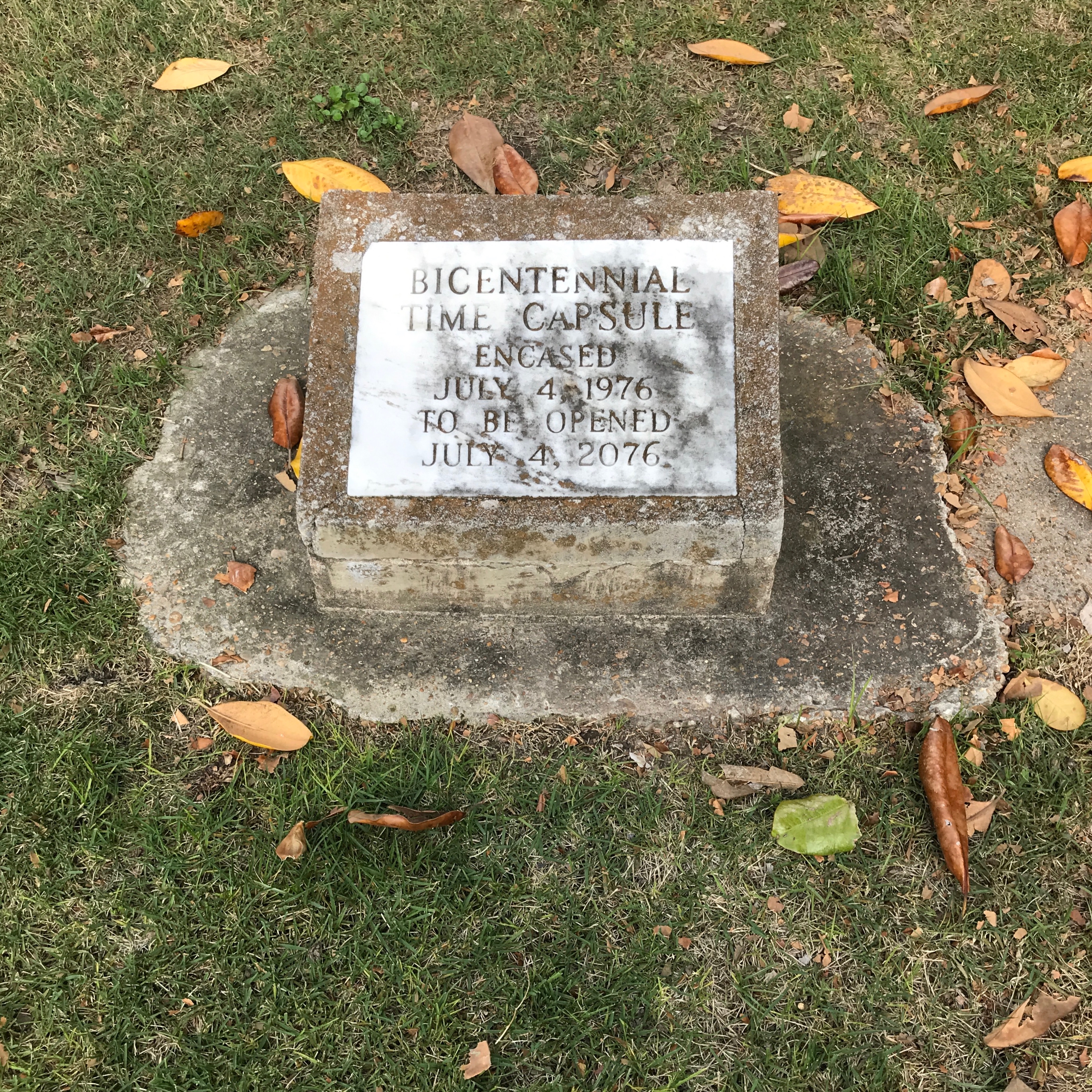
Bicentennial Time Capsule…I wonder if they had bicentennial fire hydrants, too?
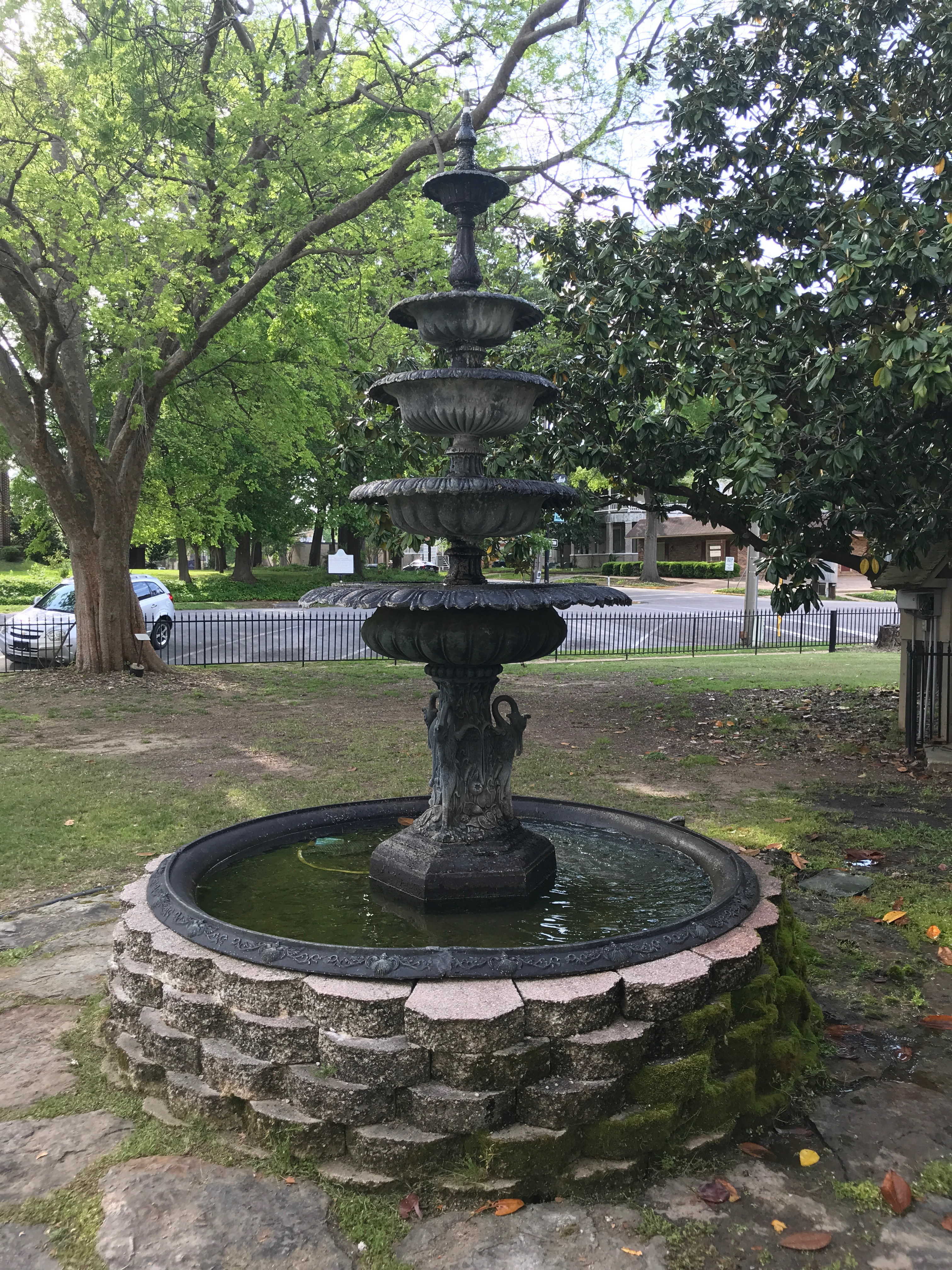
There was also one of those graceful cascading fountains that are found so often down south.
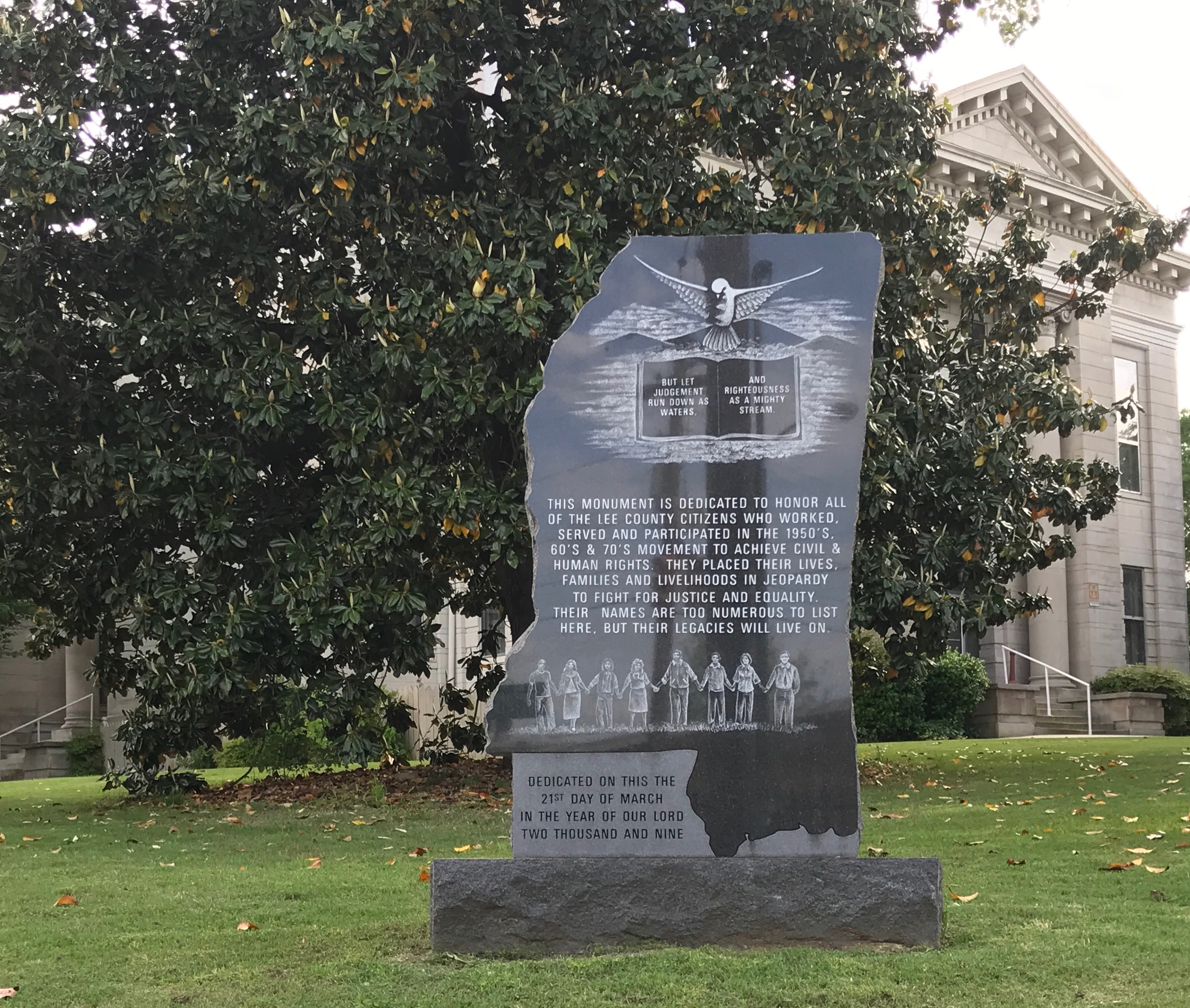
This memorial commemorates those who “worked, served and participated in the 1950’s, 60’s & 70’s movement to achieve civil & human rights.” It was dedicated in 2009.
One more memorial before I head back to the campground.
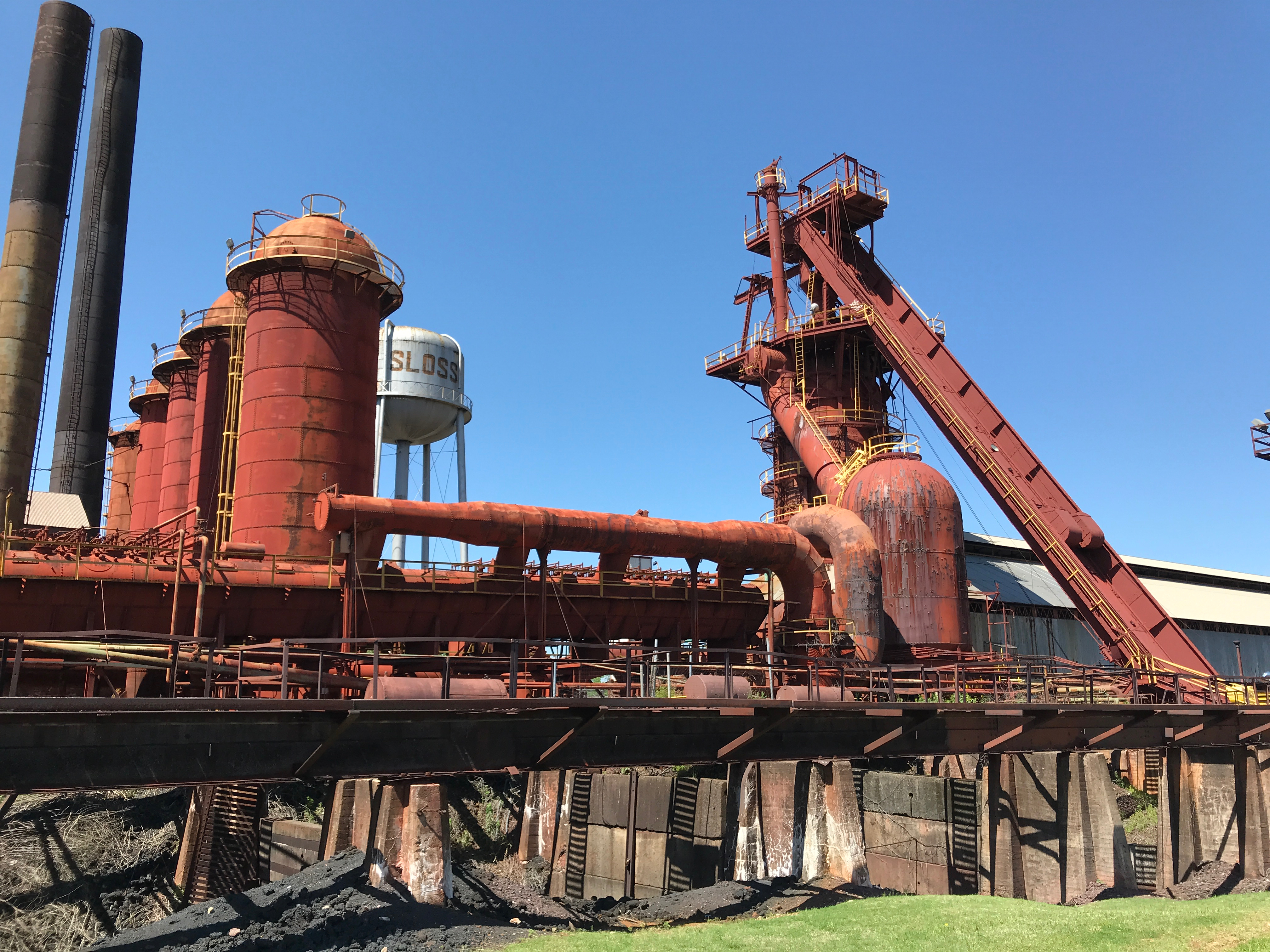
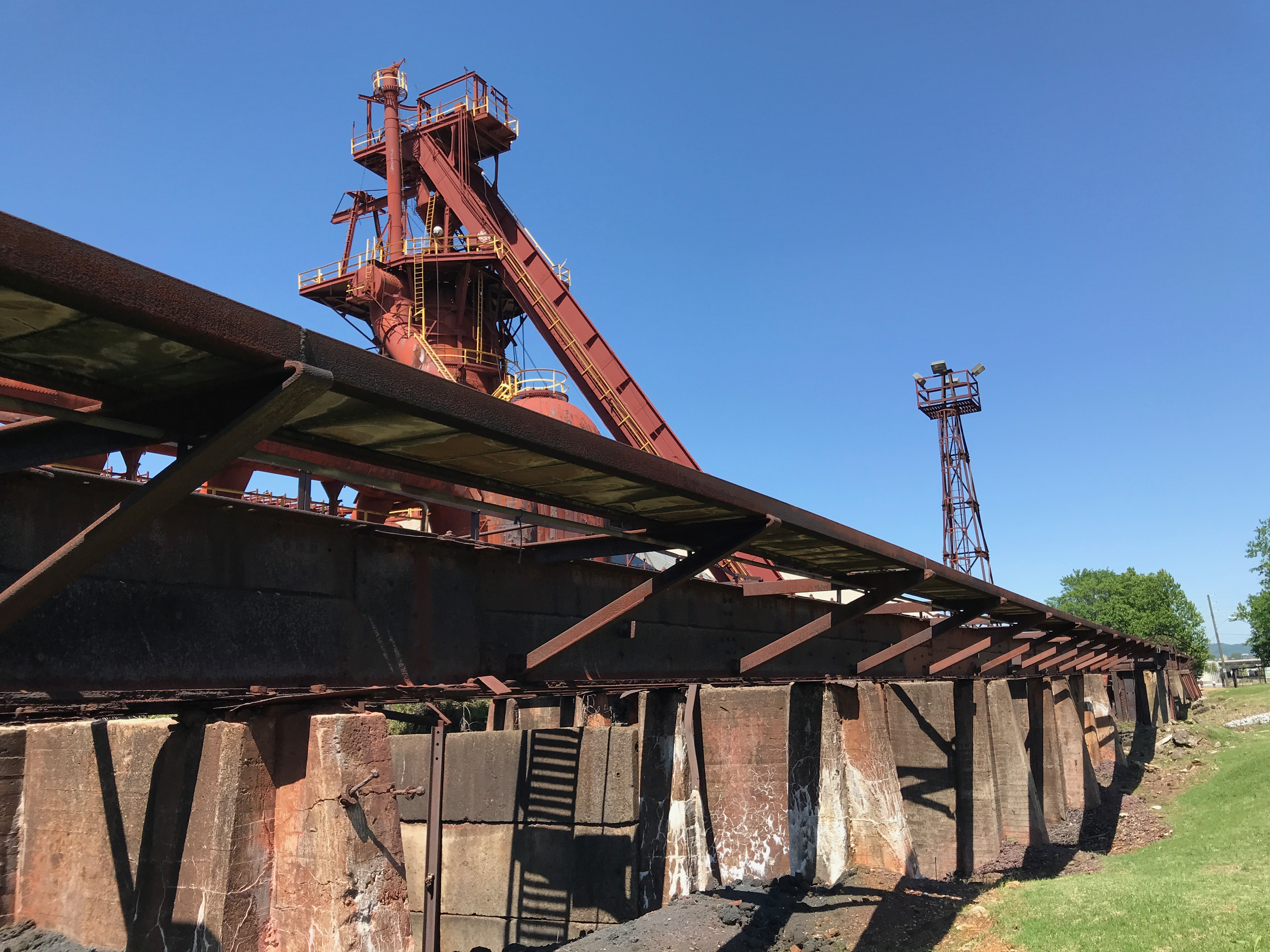
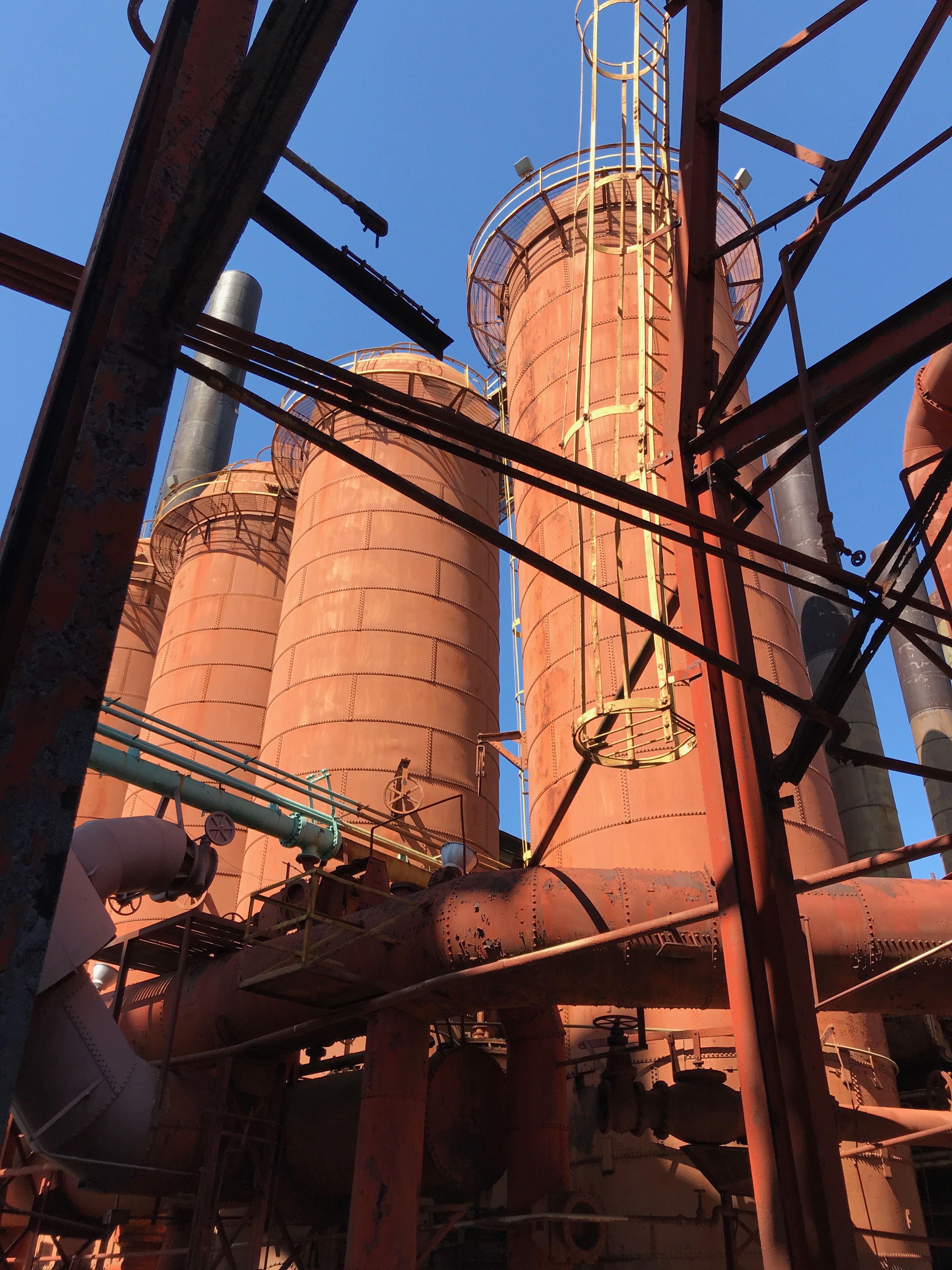
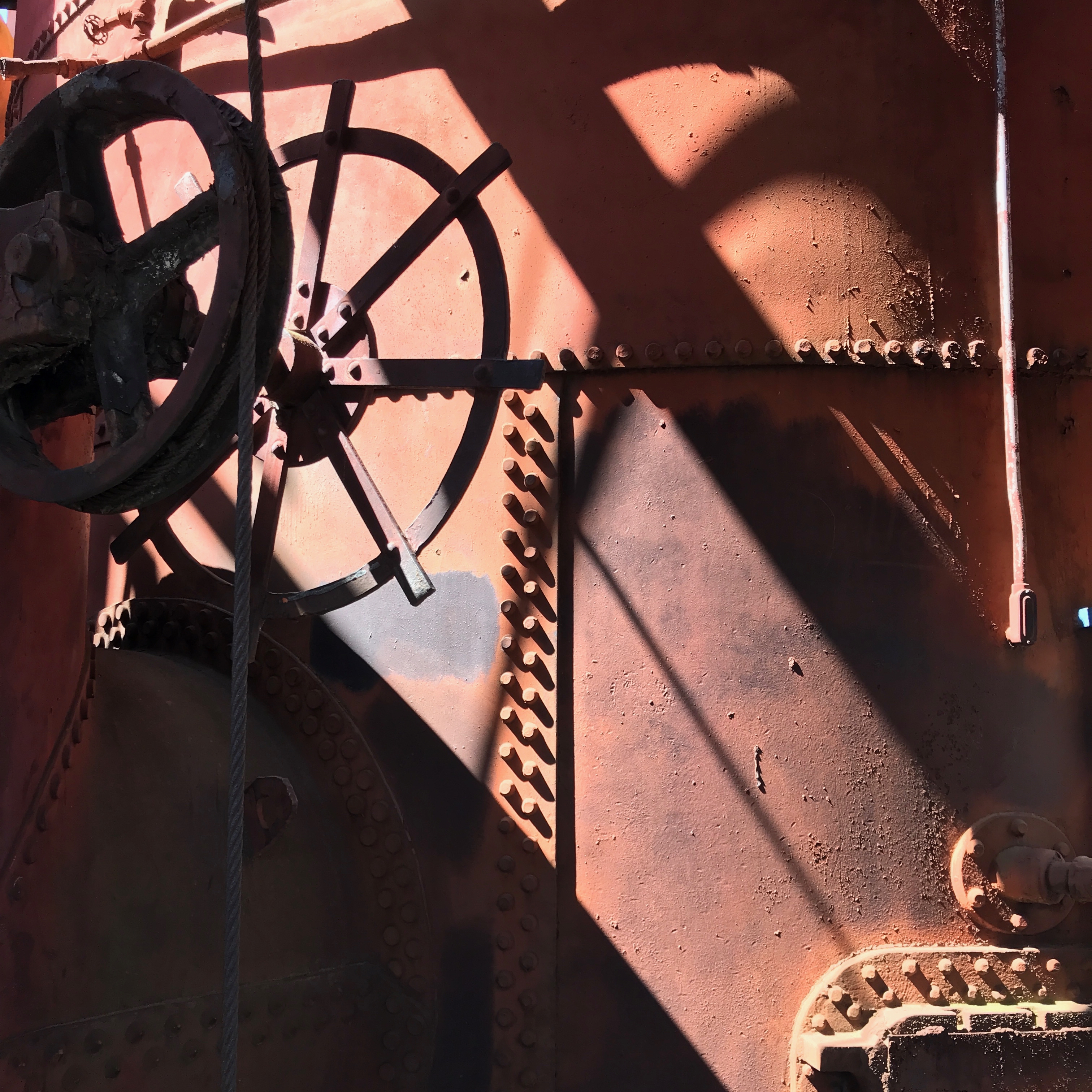
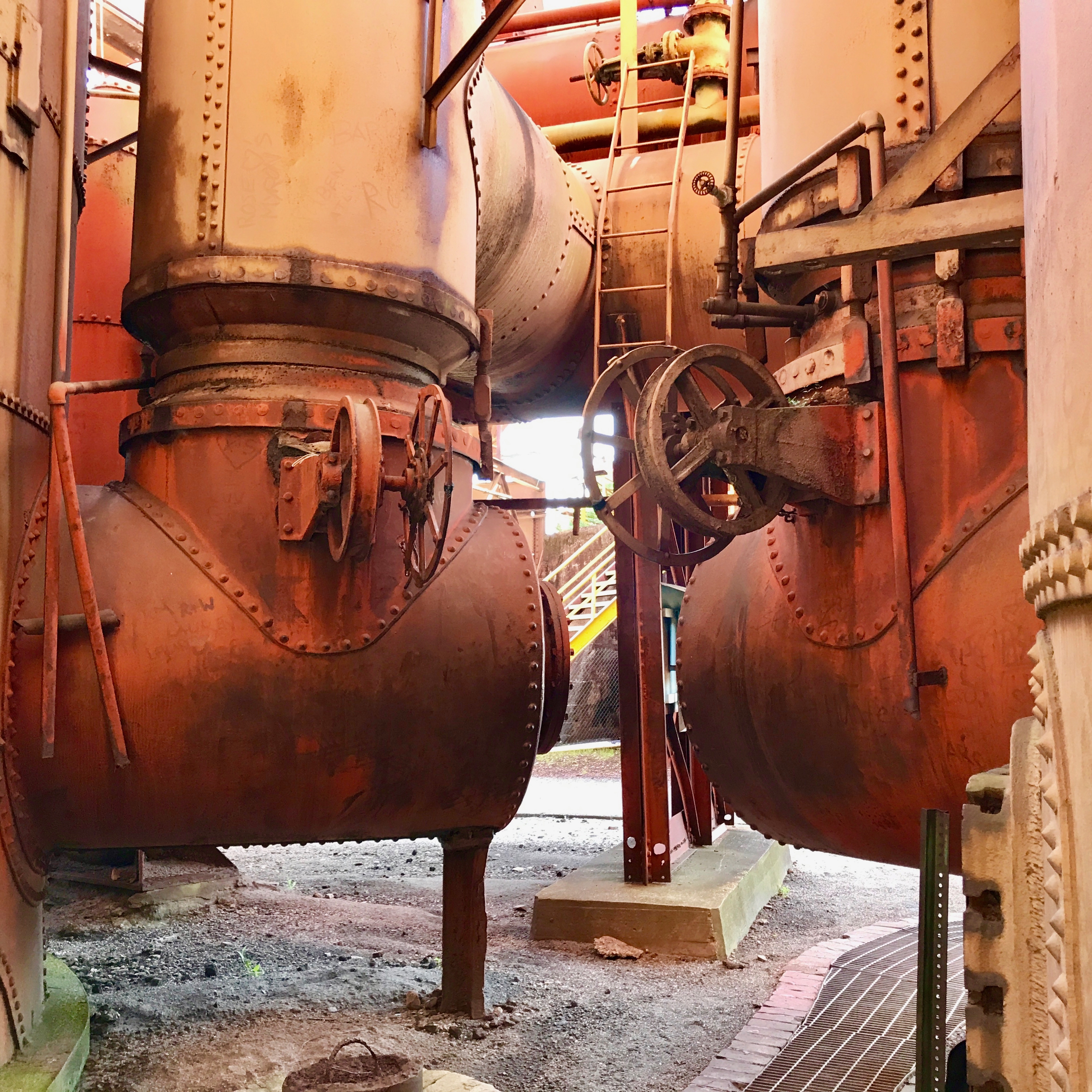
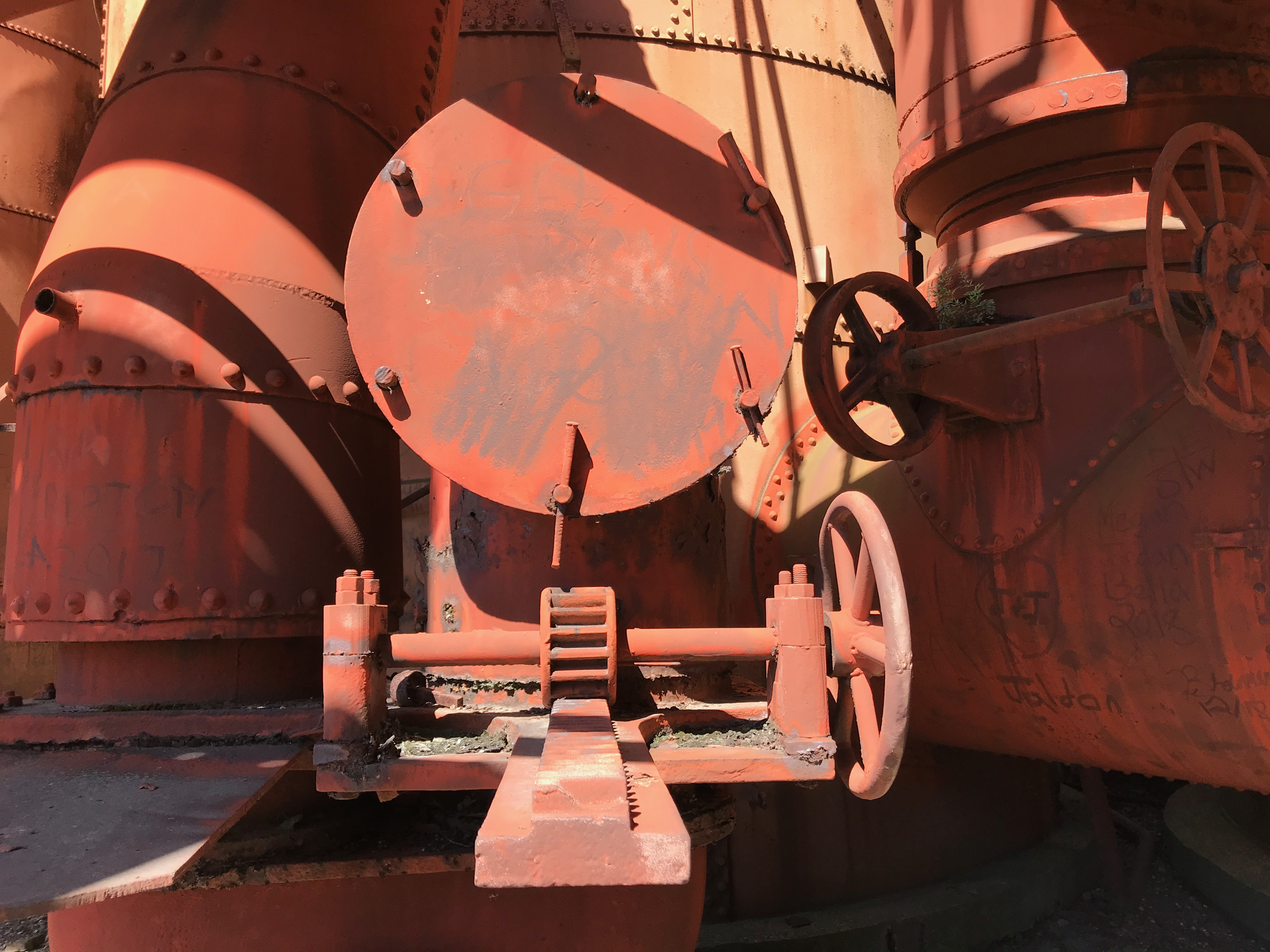
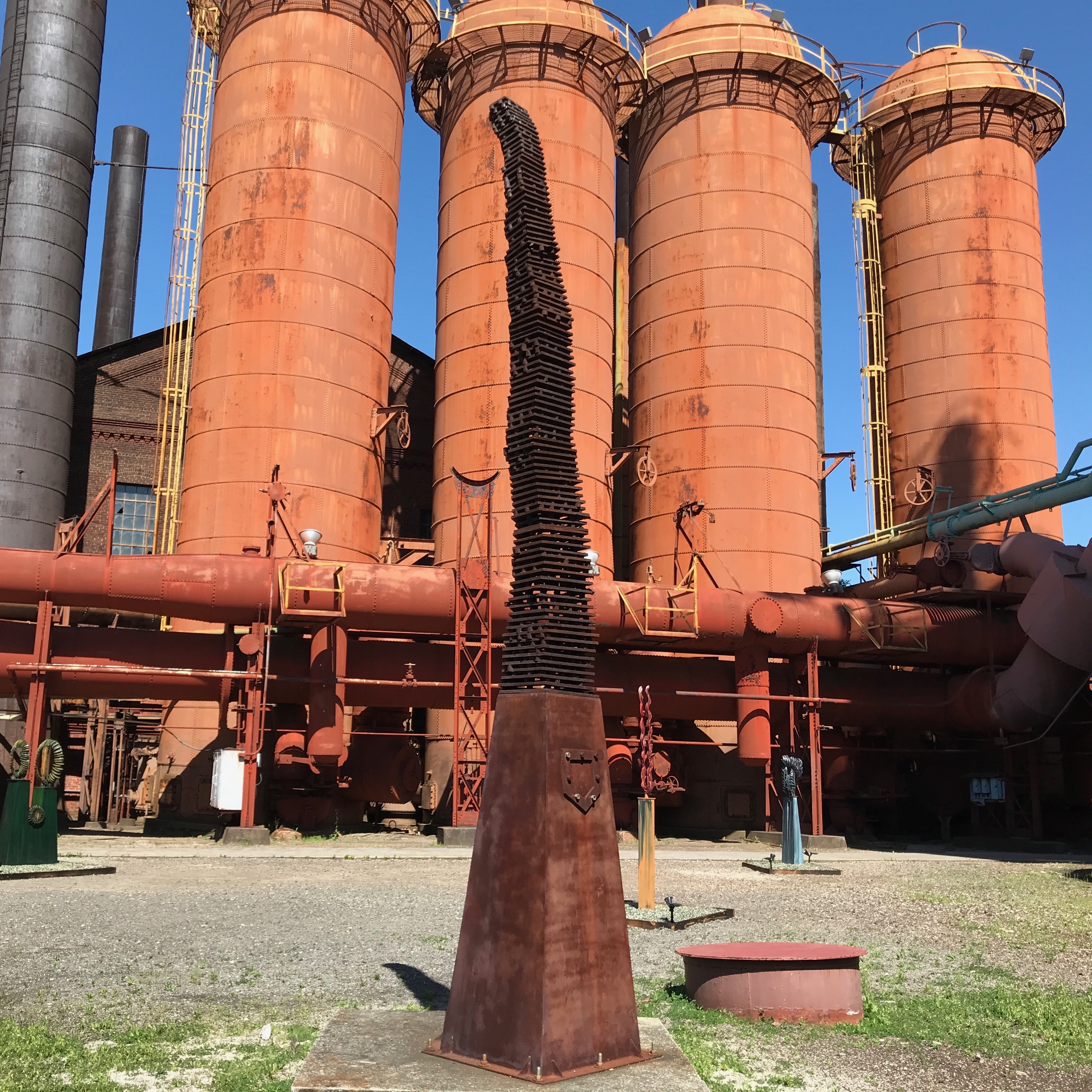
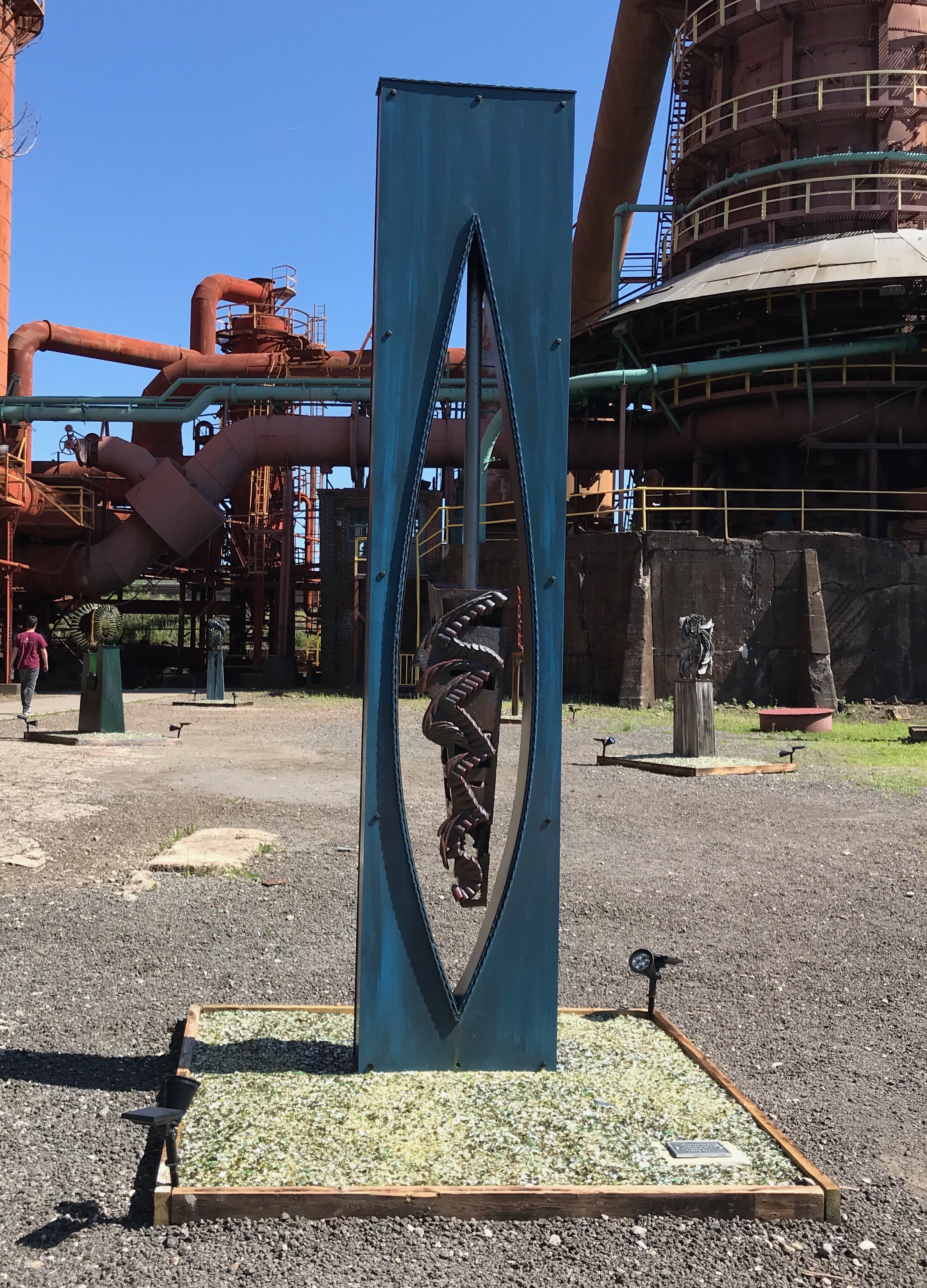
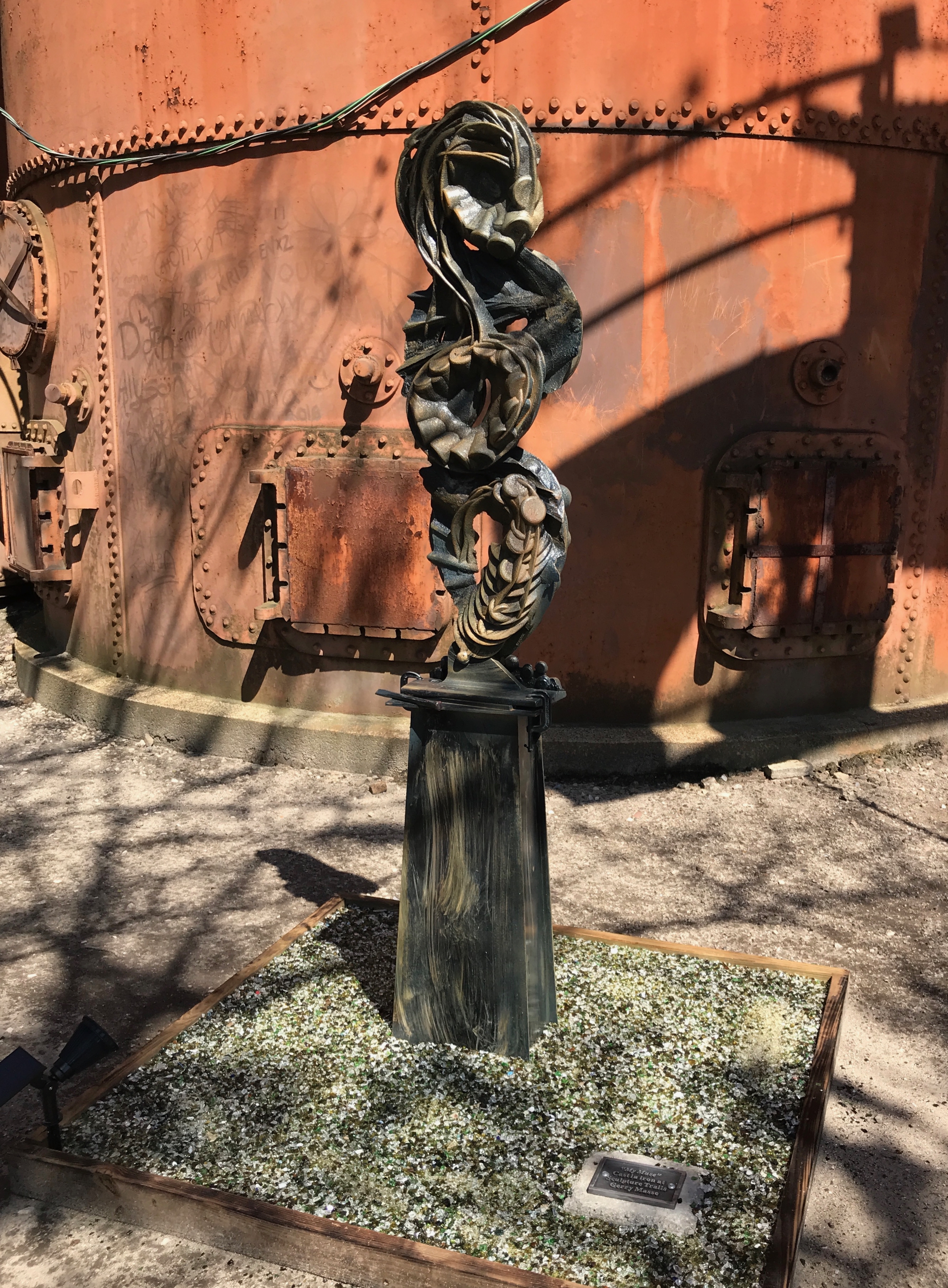
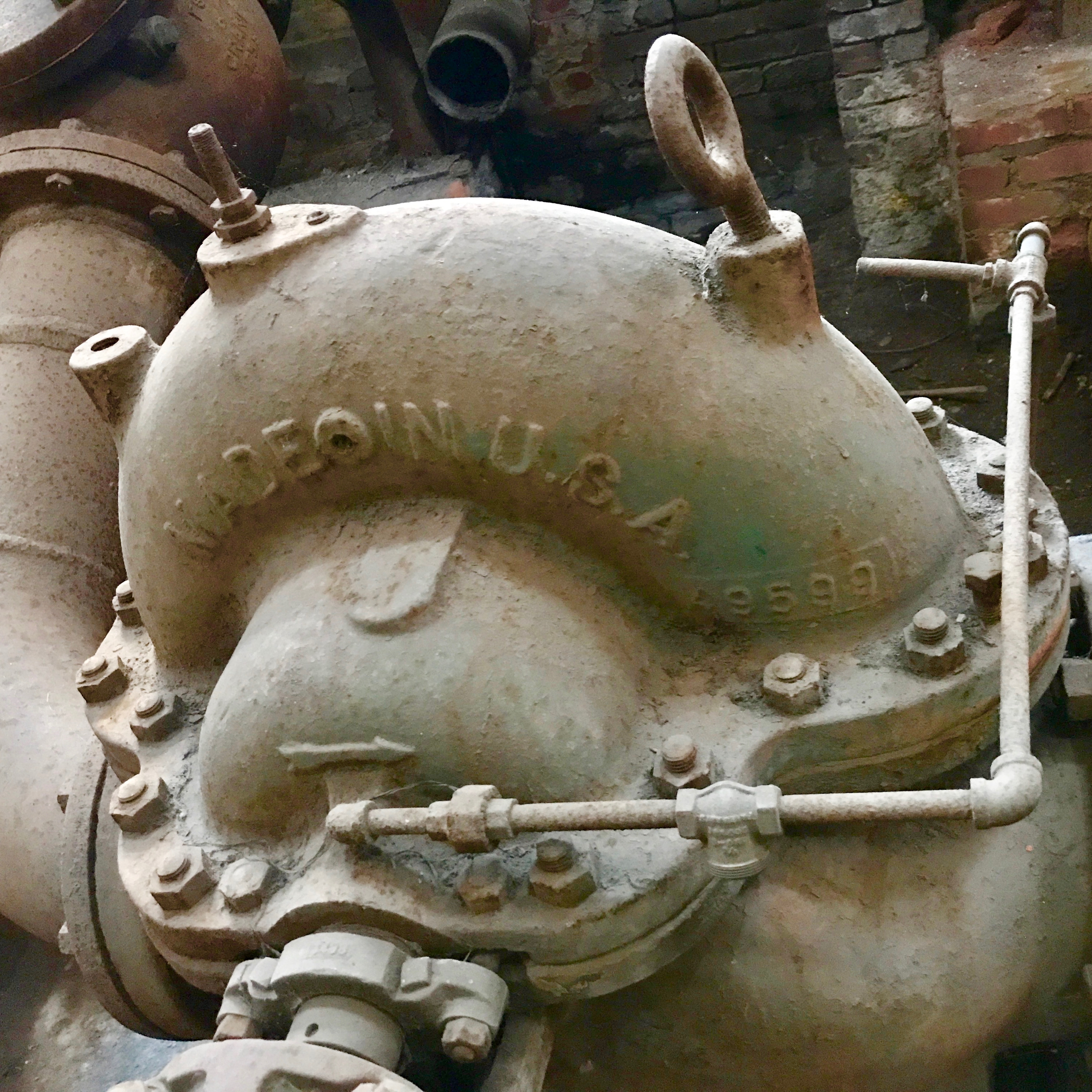
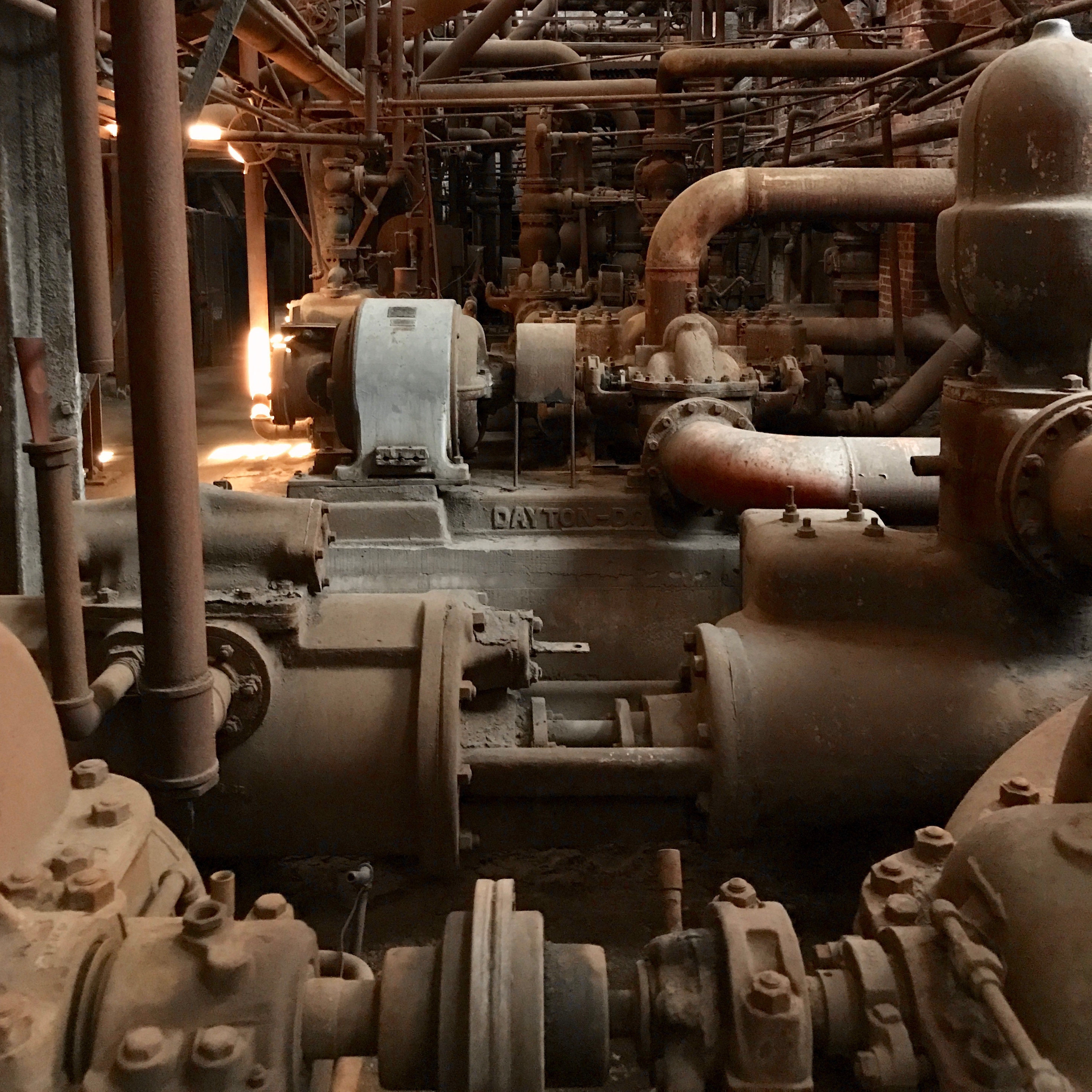
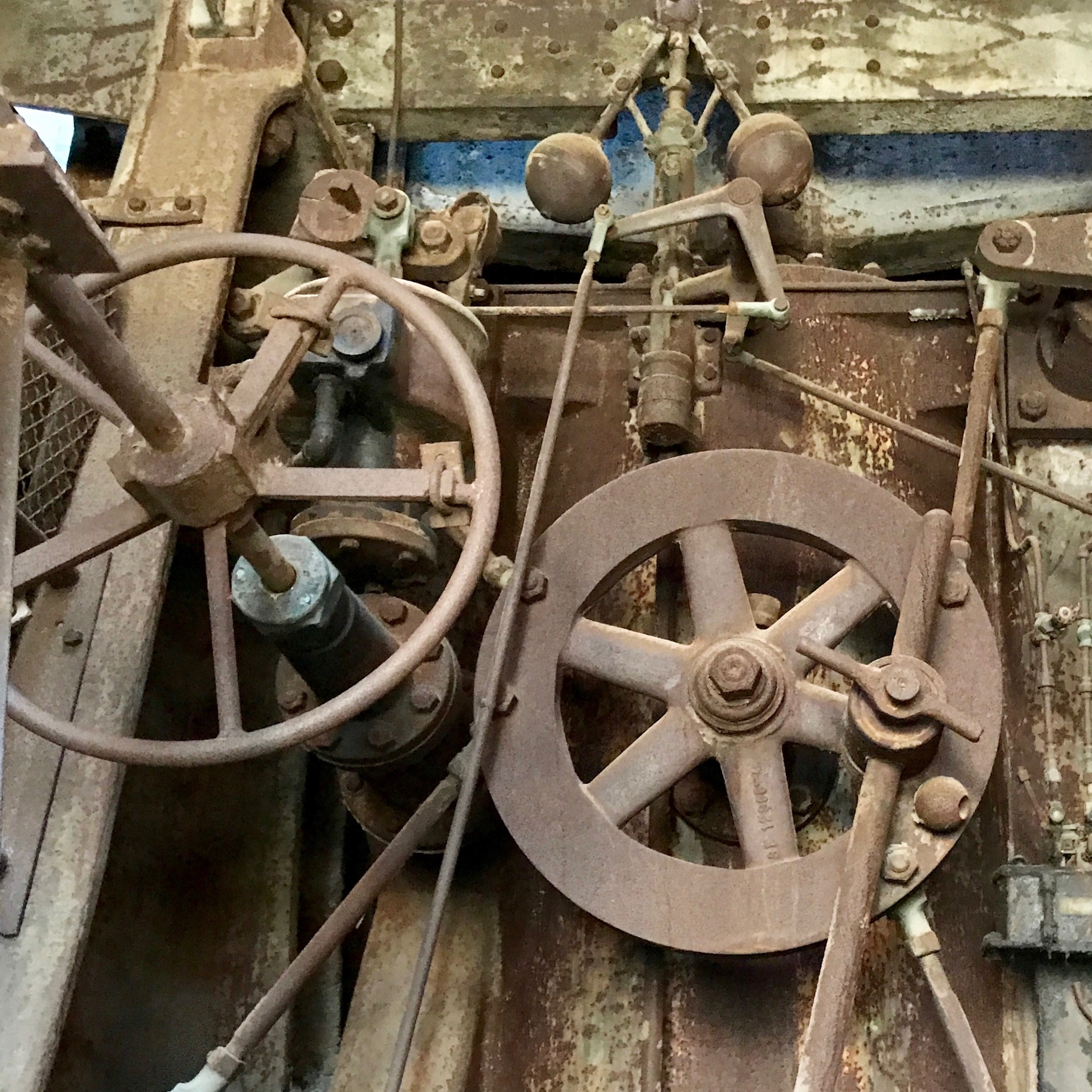
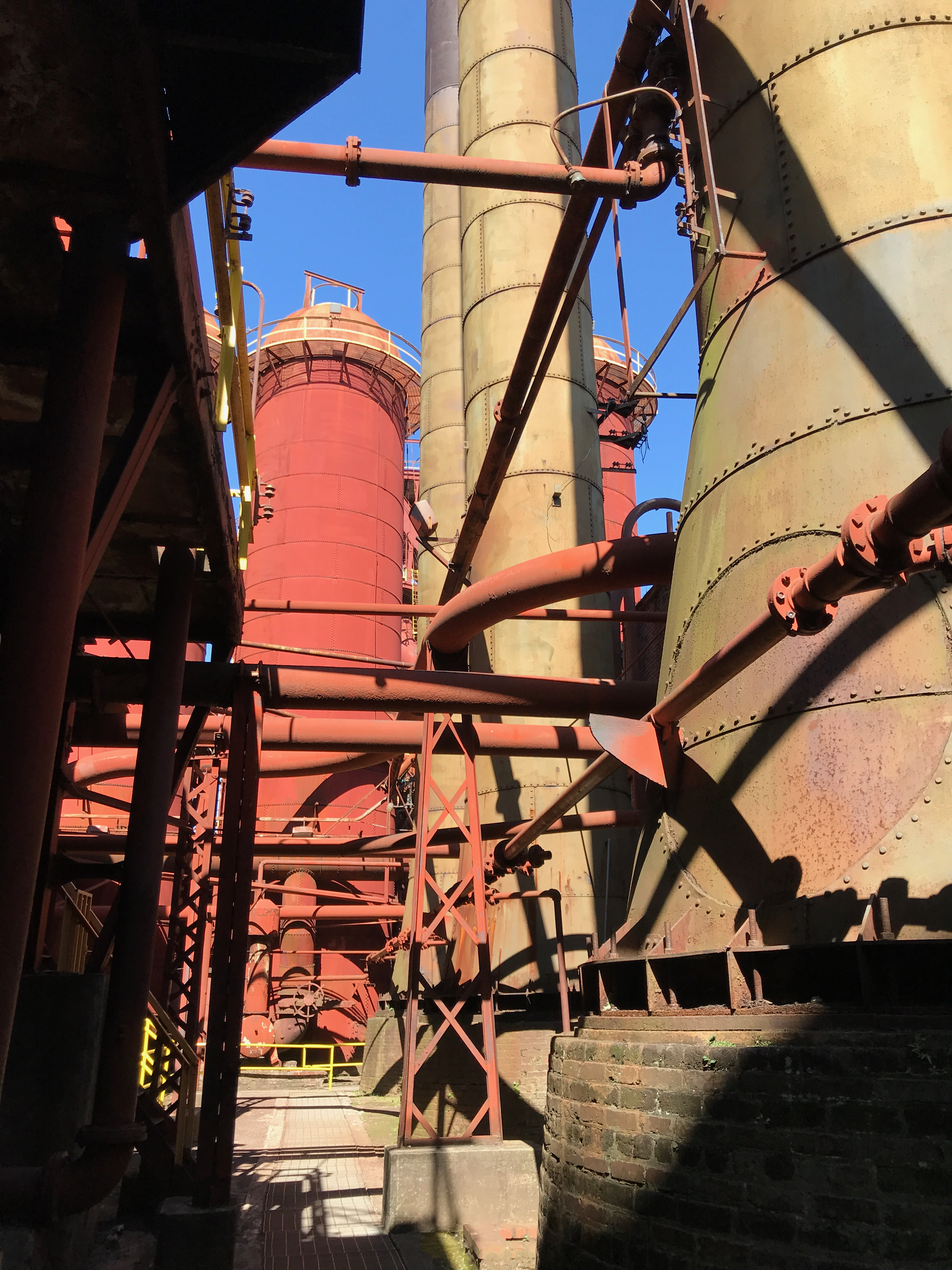
How do you get back in the mood to travel and explore after several days of grim history of recent and ongoing events? How about a trip to a defunct steel and iron company? The weather was good and I do love exploring, so I headed to Sloss Furnaces, a National Historic Landmark.
You can choose how to approach this post. You can focus on the photos, focus on the text or both.
It operated as a pig iron-producing blast furnace from 1882 to 1971. After closing, it became one of the first industrial sites – and the only blast furnace – in the U.S. to be preserved and restored for public use.
Putting on my geographer’s hat, I asked myself why they would produce pig iron here. It turns out that all the ingredients needed were located nearby – iron ore, coal and limestone, and Colonel James Withers Sloss (C.S.A.) knew it.
Prior to the war, Sloss had become one of the richest men in Alabama, thanks to his plantation and his store in Athens, Alabama. After the war, he became president of the railroad line from Tennessee to Alabama, and convinced them to finish a line of railroad track between Birmingham and Decatur.
Having secured the kind of transportation that made production of iron feasible, he also secured iron ore mines.
They had the location, transportation and raw materials. What else did they need?
That’s right. They needed labor.
Where do you suppose the laborers came from? After all, slavery had been abolished with the enactment of the 13th Amendment in 1865. People now had to be paid for their labor.
Except as a “punishment for crime whereof the party shall have been duly convicted, shall exist within the United States, or any place subject to their jurisdiction”
And, oddly enough, Blacks found themselves convicted of random and specious “crimes” and re-enslaved.
Alabama began convict leasing in 1846 and outlawed it in 1928. It was the last state to formally outlaw it. The revenues derived from convict leasing were substantial, accounting for roughly 10% of total state revenues in 1883, surging to nearly 73% by 1898.
It’s hard to go very far “down south” without evidence of horrendous injustices.
When you’re a tourist, it’s easy to identify them.
As you move around, you look at things and ask yourself, “What is that? What happened? Why did it happen? Why here?”
It’s easy to overlook things you see every day back home.
During my research for my last blog post, I learned a new term: dark tourism. According to the article from the Washington Post, dark tourism refers to visiting places where some of the darkest events of human history have unfolded. This portion of my travels has been loaded with dark tourism.
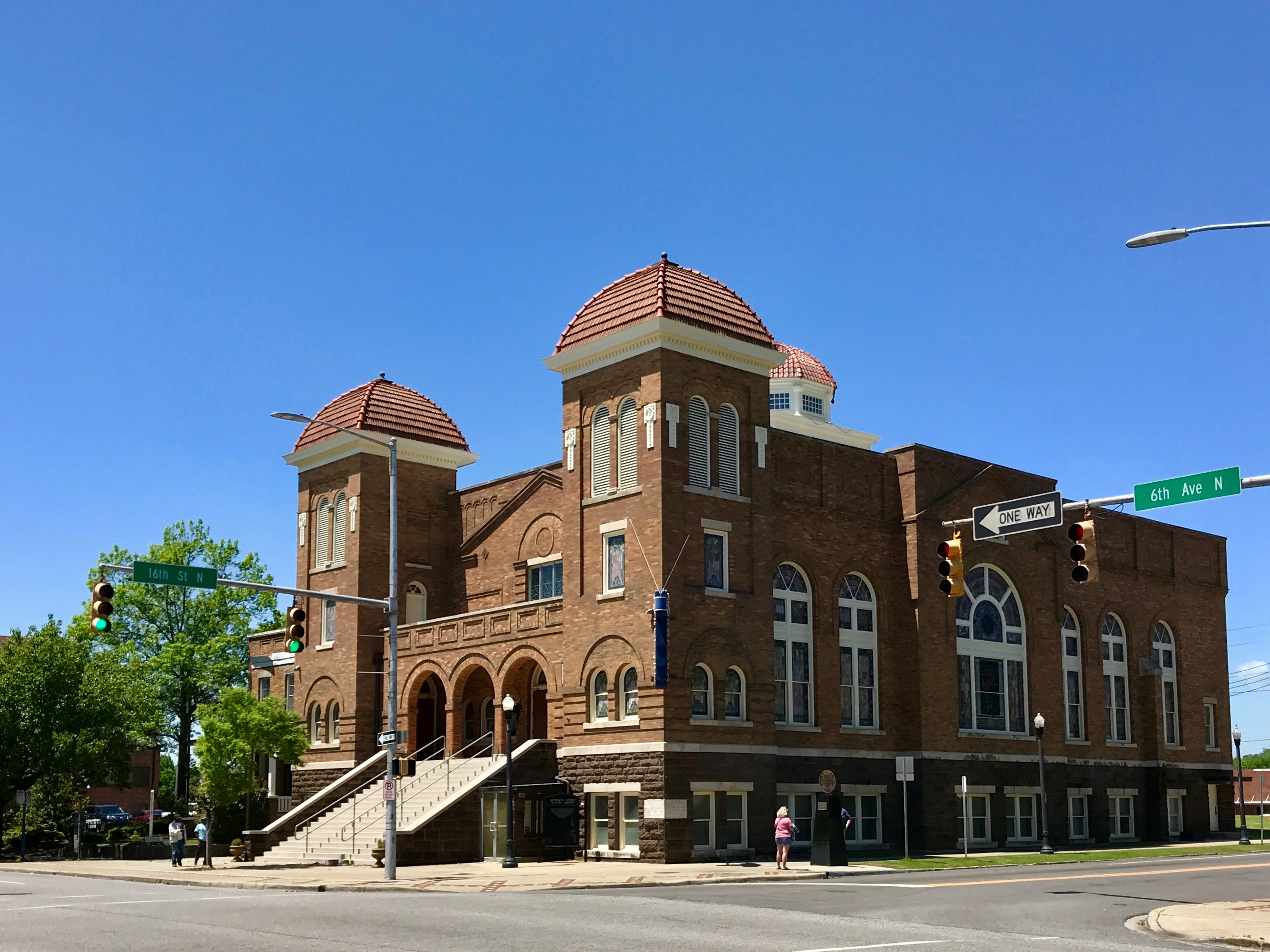
Now, I was always under the impression that the 16 sticks of dynamite were exploded on the 16th Street side of the church, but in refreshing my memory in order to write about my visit, it seems that the bomb was planted under the front steps.
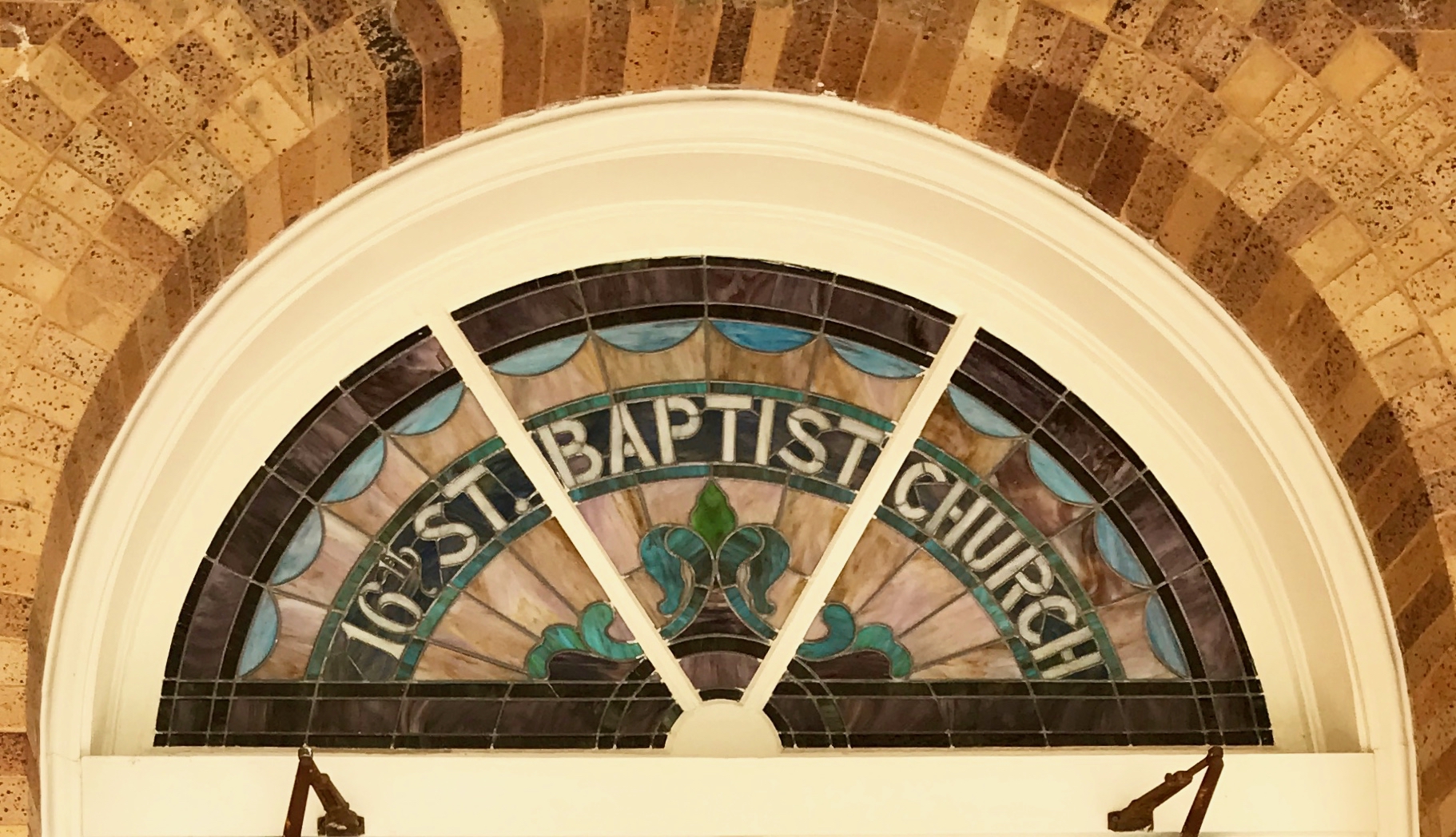
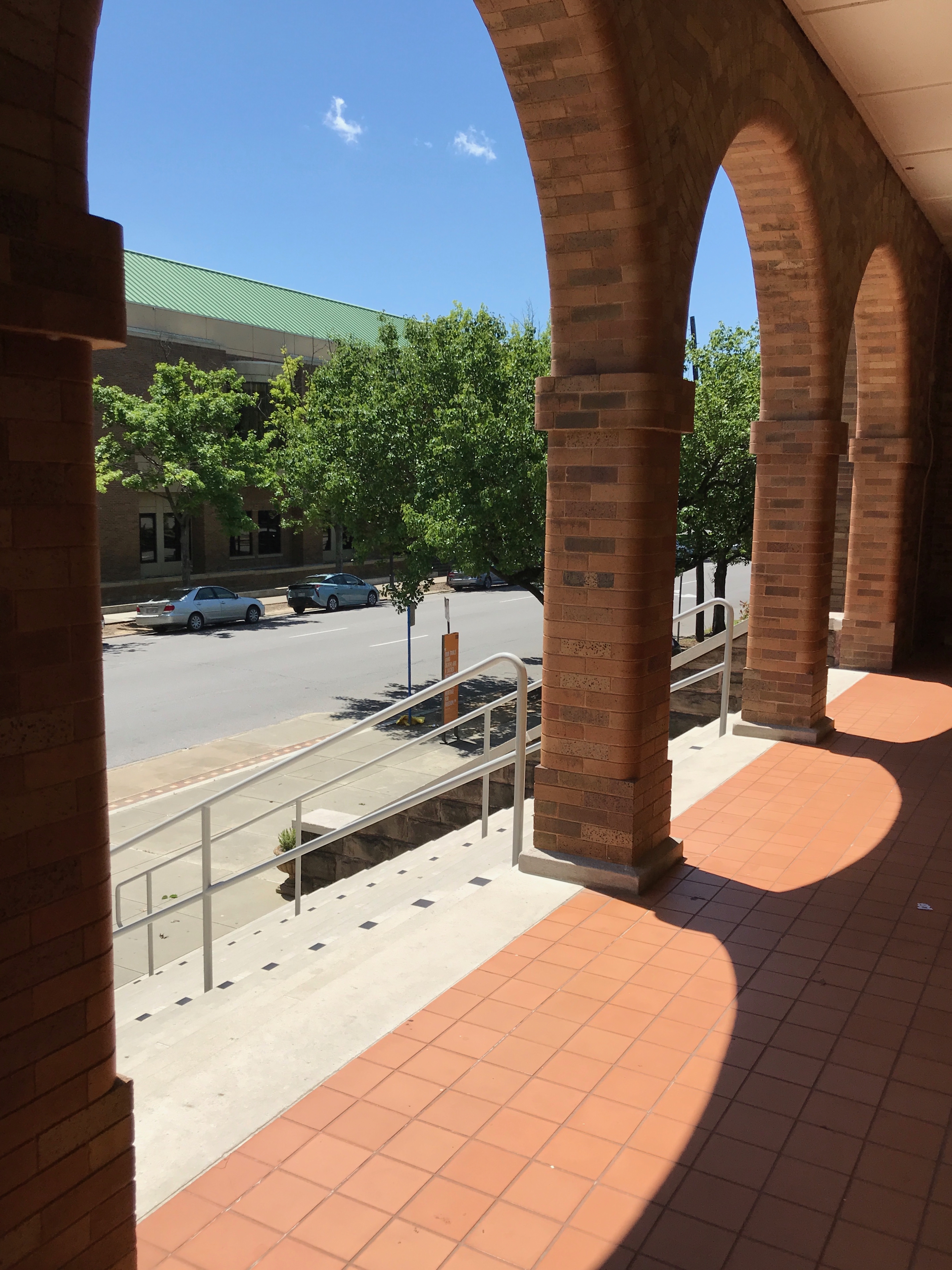
The church offers tours, and I had come to take a tour. I had some time before it began, so I started by looking around the exterior.
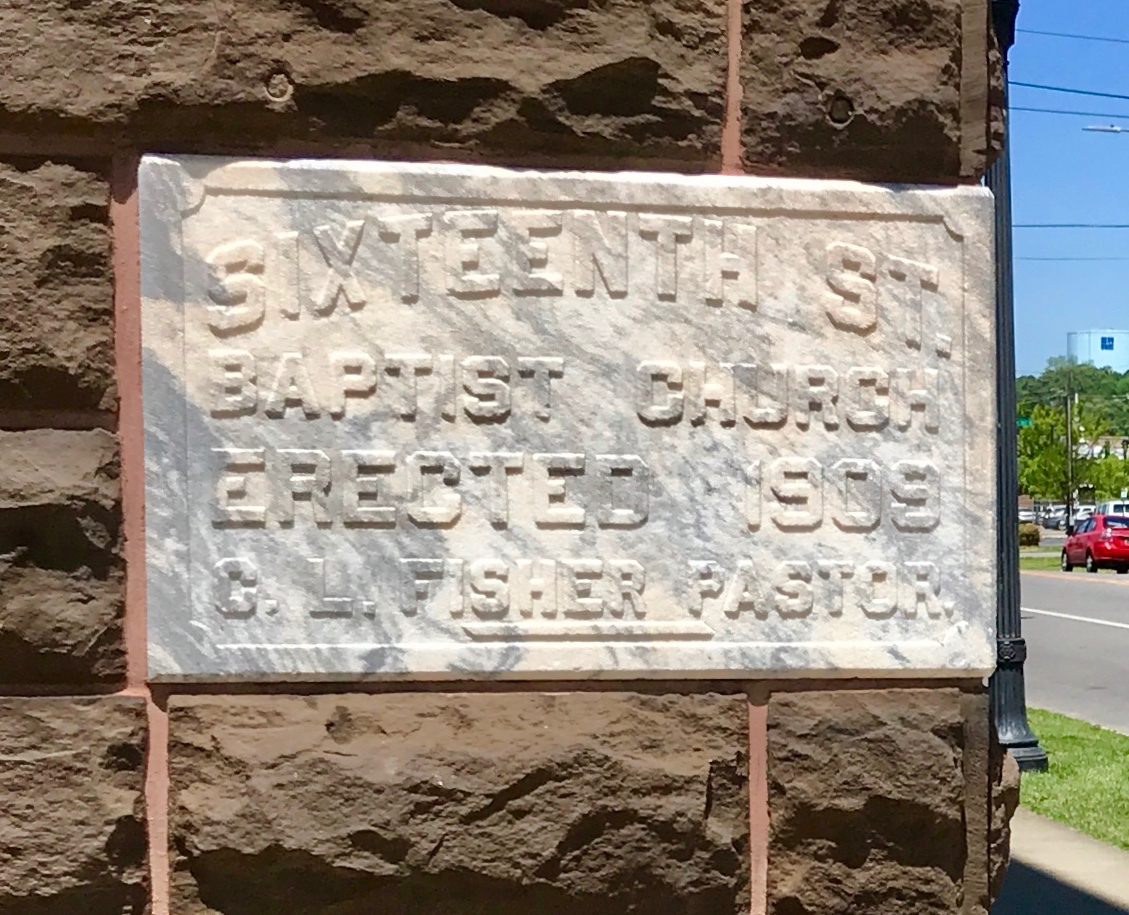
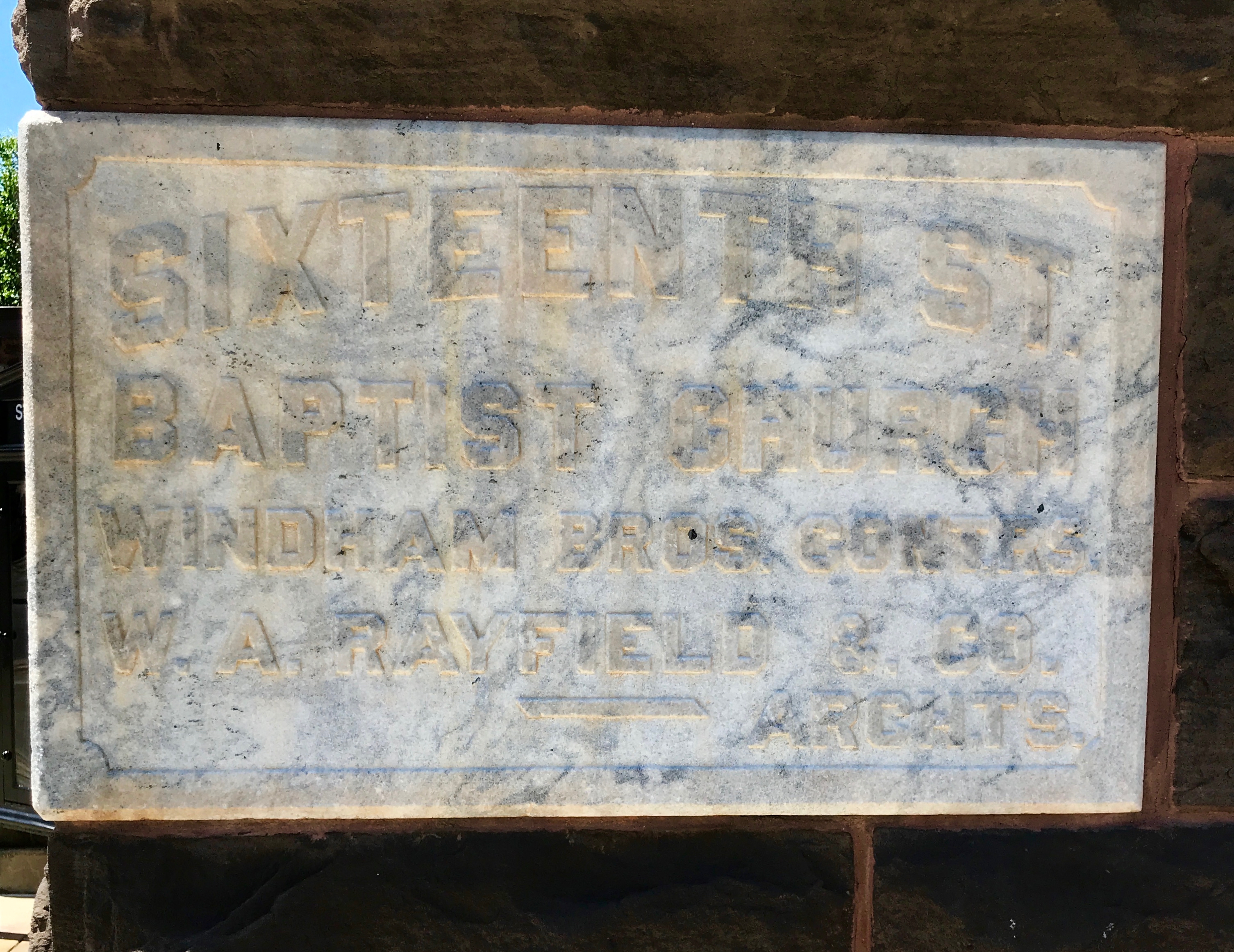
I always appreciate when there is a cornerstone.
It’s nice that they give the architect and the builders their due.
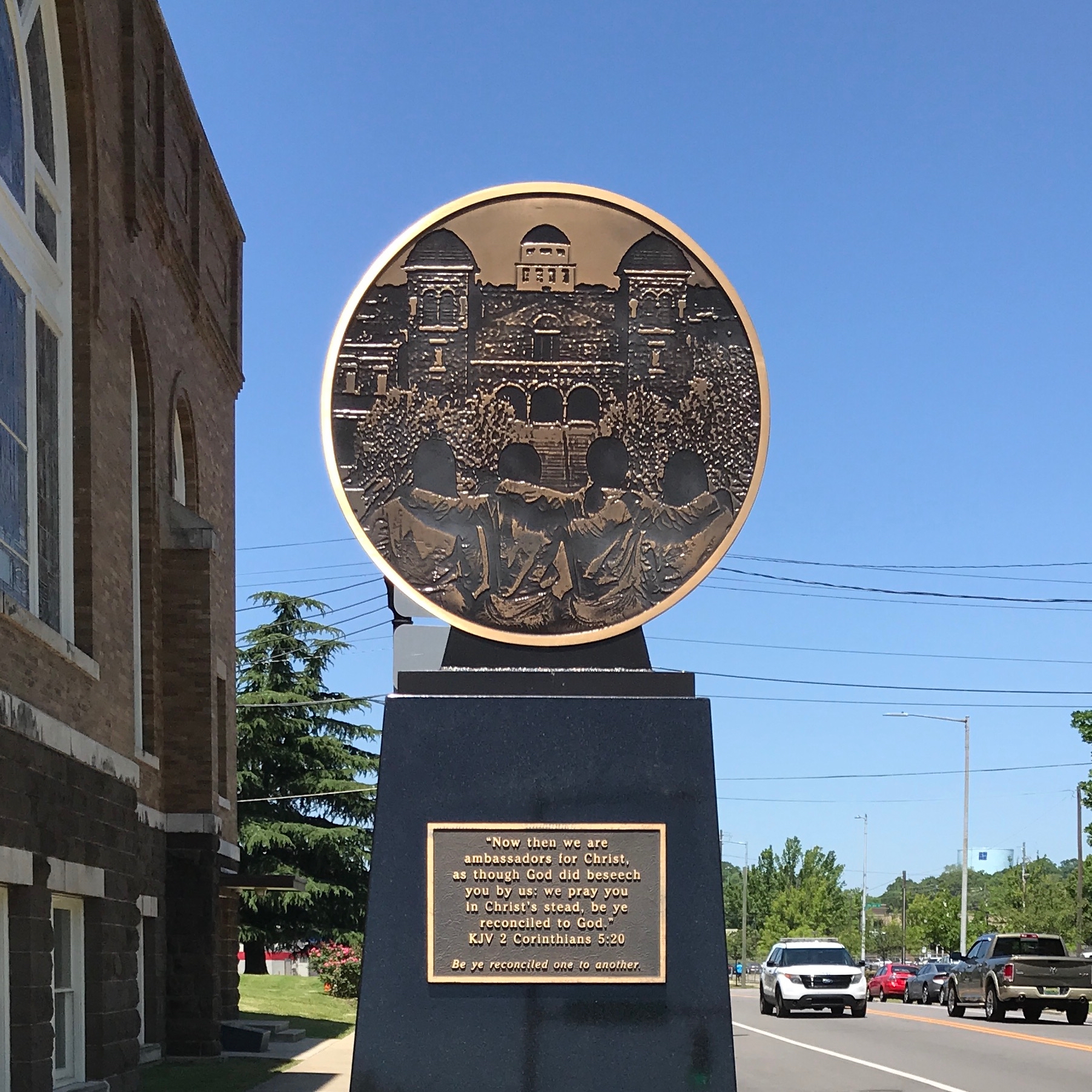
On the 16th Street side there is a memorial.
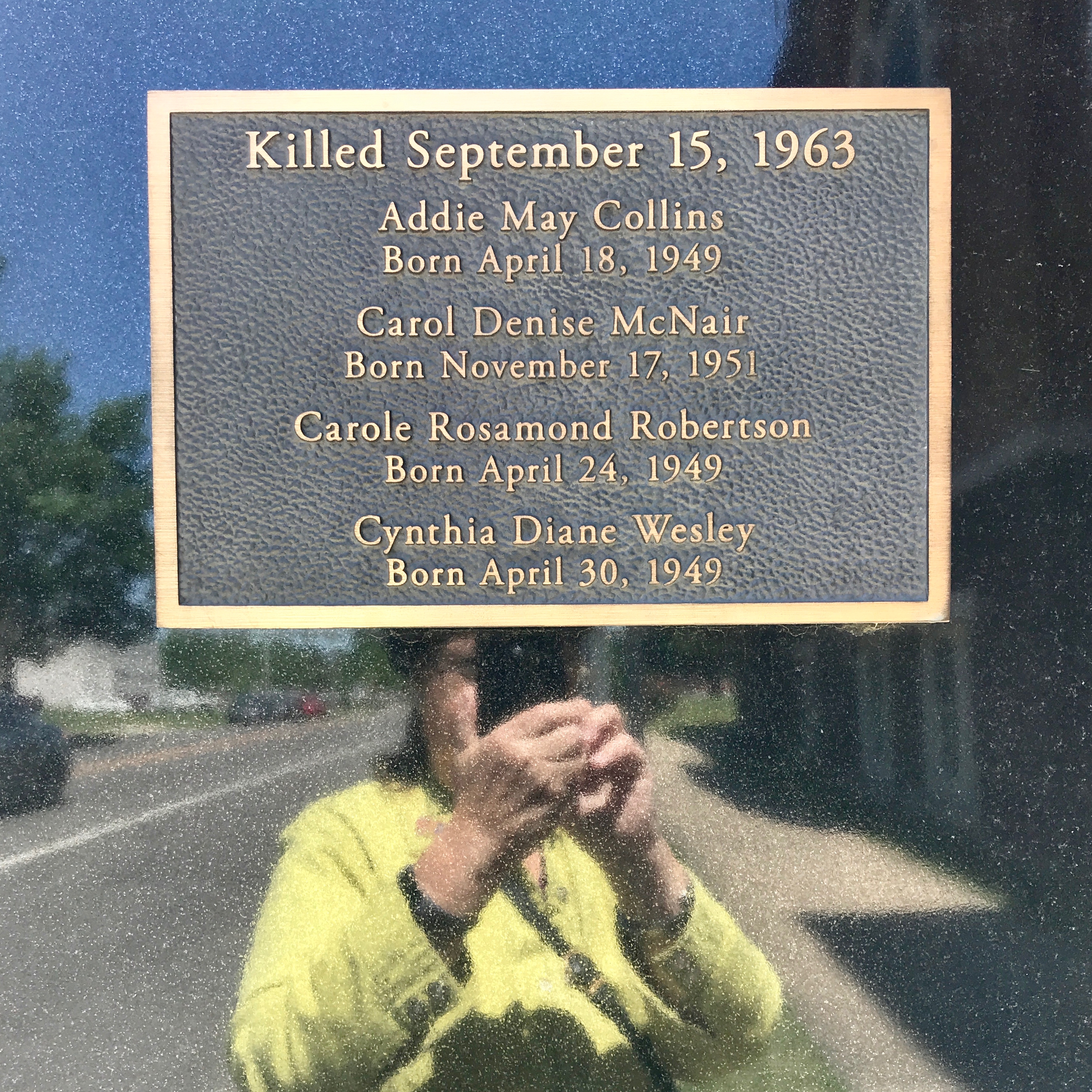
The names of the four girls killed in the bombing are listed.
I figured it was time to head inside.
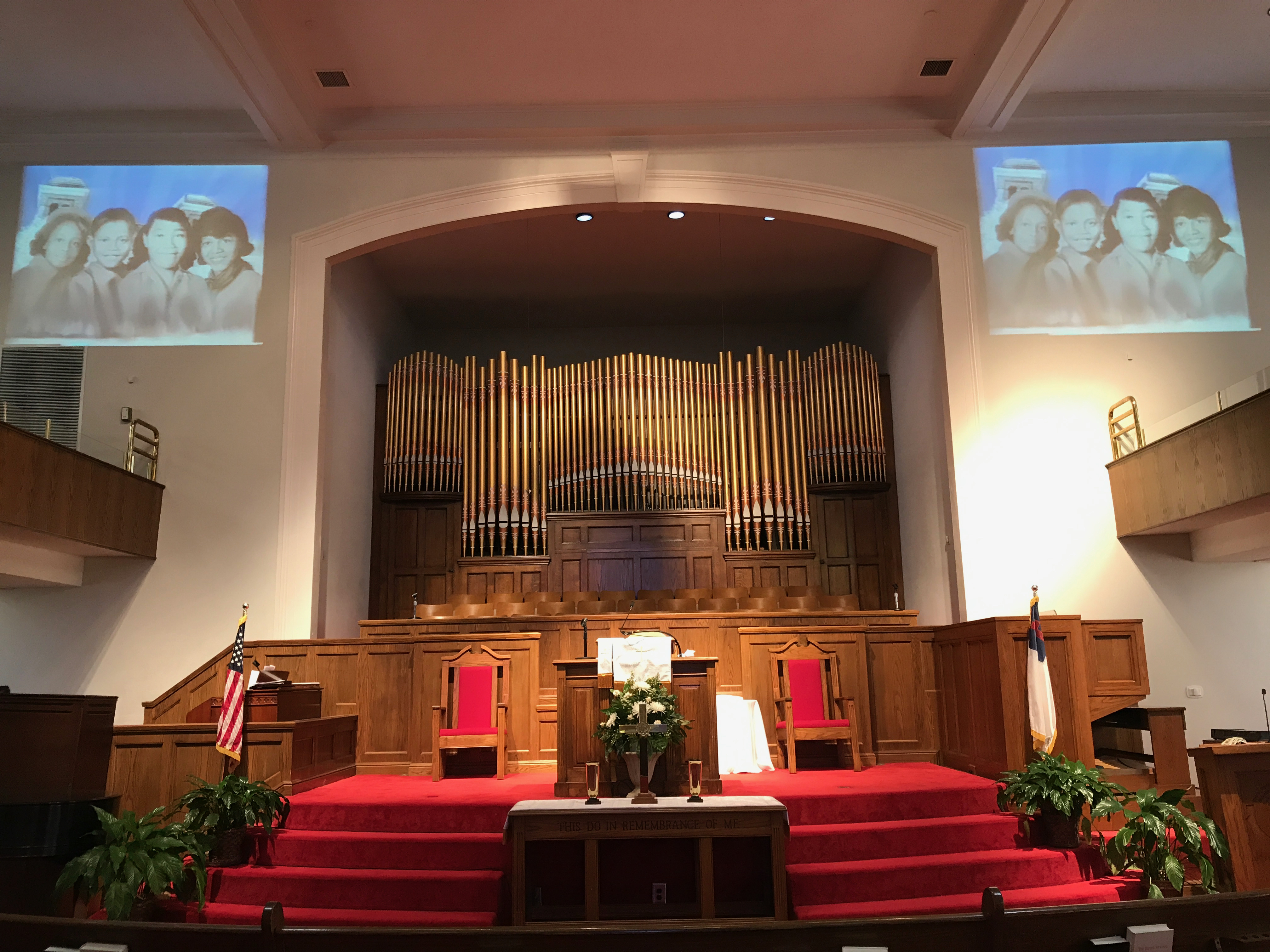
The altar was simple, yet elegant.
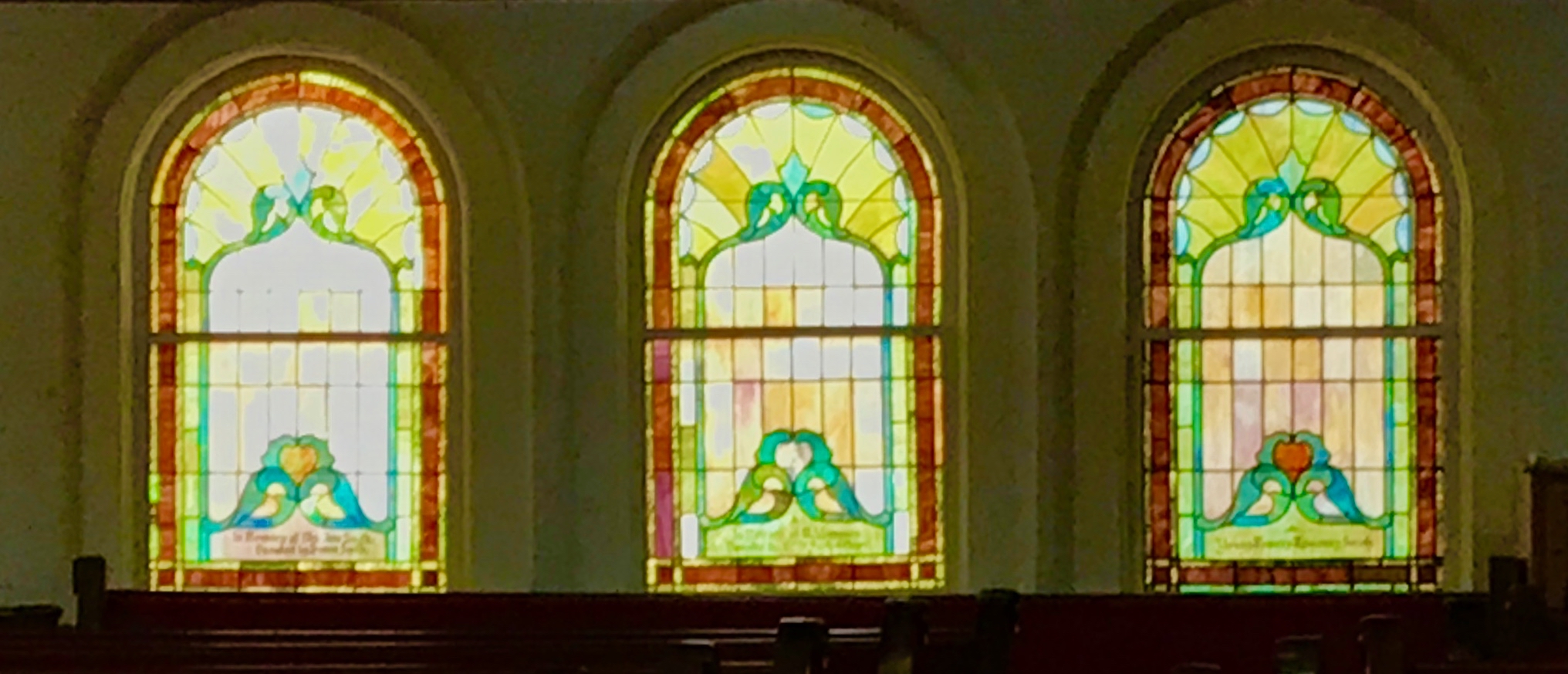
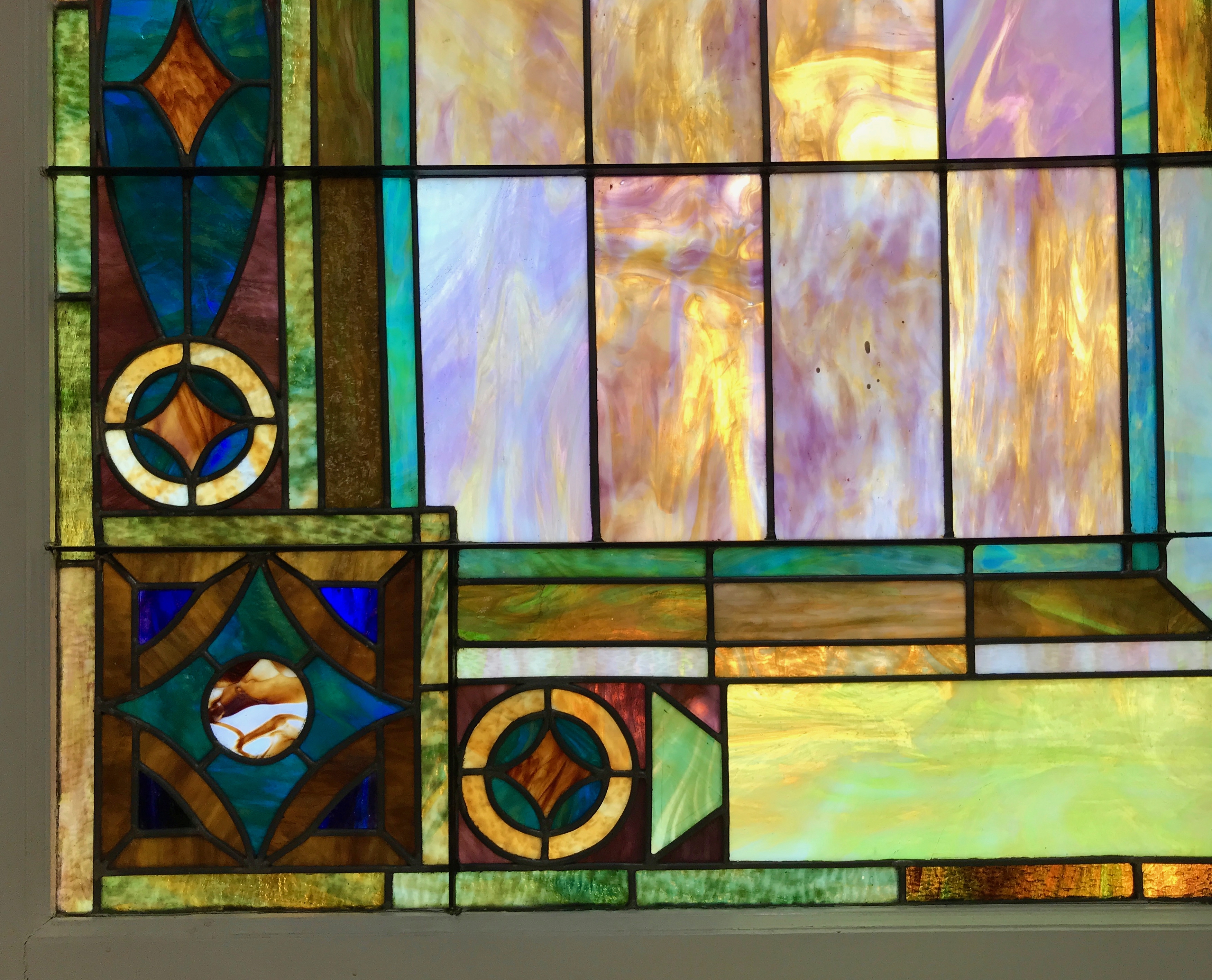
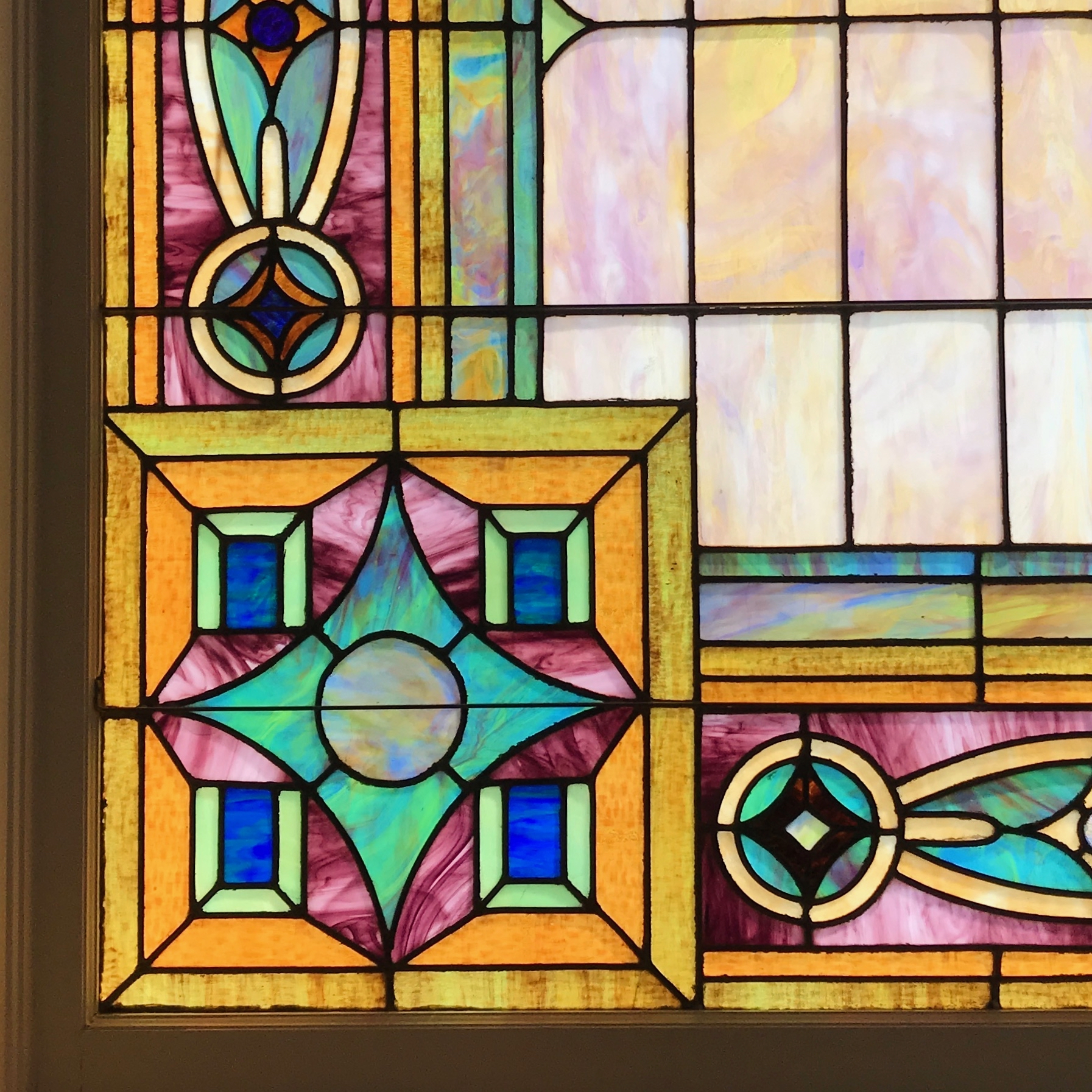
There were many lovely stained glass windows.
The sun made it a little difficult to photograph entire windows, but the details really stood out.
The colors were so vibrant.
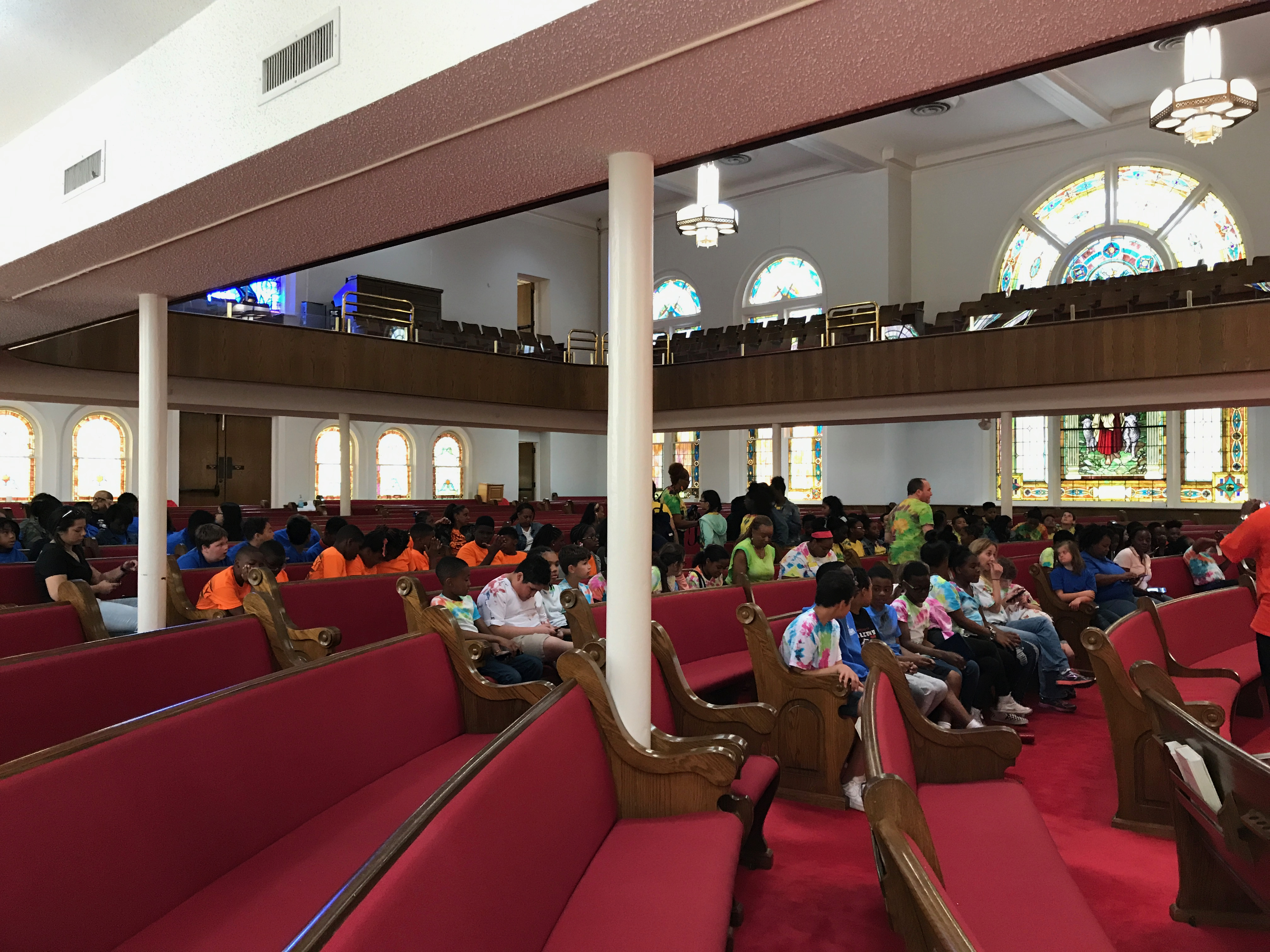
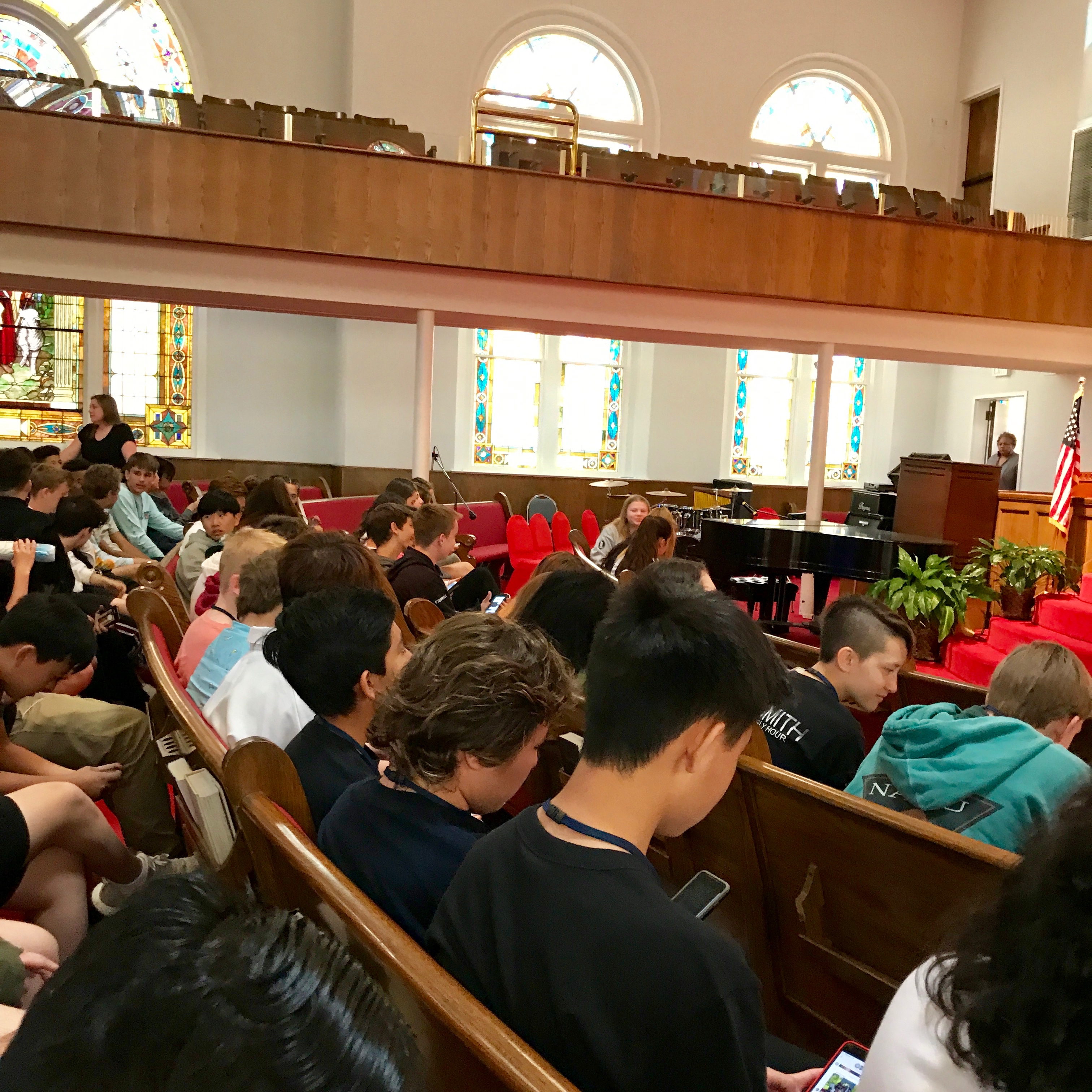
It was spring, and that must mean it’s field trip season down south, too.
The kids sat quietly. Some looked at their phones and others read the materials in the pockets on the backs of the pews.
I listened to the presentation. I must admit that I didn’t know as much as I thought I knew about the event. It makes you wonder if we are ever going to treat each with the respect all people deserve.
After the last few days, I was feeling really bogged down by it all.
I was glad to get back out into the sunshine.
I crossed the street to tour Kelly Ingram Park. It’s known informally as West Park, but it was named to honor Osmond Kelly Ingram, and Alabama native who was the U.S, Navy’s first enlisted man to die in World War I.
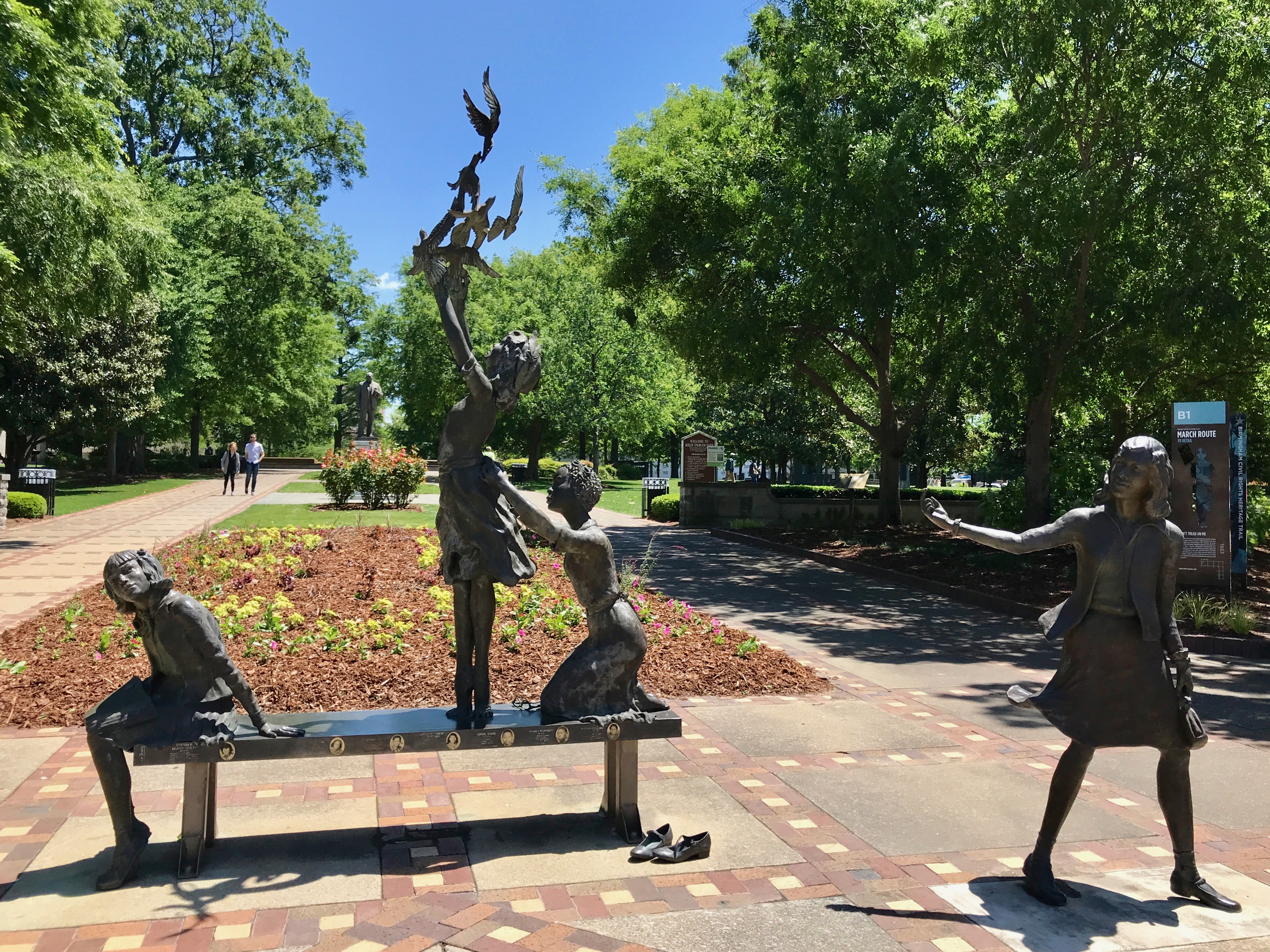
The first statue I came across honored the four girls killed in the bombing. While the photos I have seen make them look as if they are pressed under glass, this statue is so full of life.
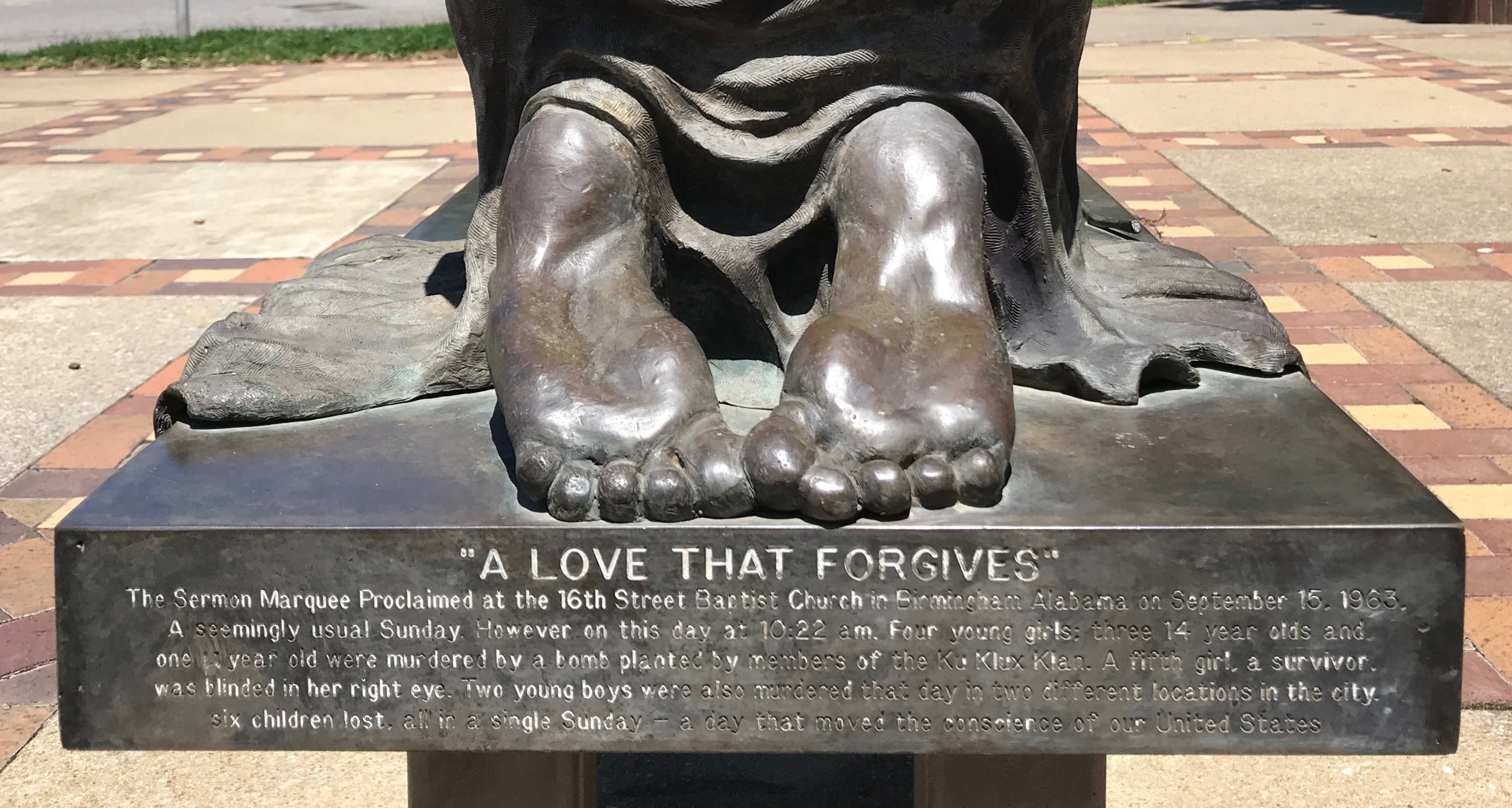
I loved this detail that was included. The information is there, but it doesn’t define the girls.
“A Love that Forgives”
The Sermon Marquee Proclaimed at the 16th Street Baptist Church in Birmingham, Alabama on September 15, 1963.
A seemingly usual Sunday. However on this day at 10:22 am, four young girls,: three 17 year olds and one 11 year old were murdered by a bomb planted by members of the Ku Klux Klan. A fifth girl, a survivor, was blinded in her right eye. Two young boys were also murdered that day inn two different locations in the city.
Six children lost. All in a single Sunday – a day that moved the conscience of our United States.
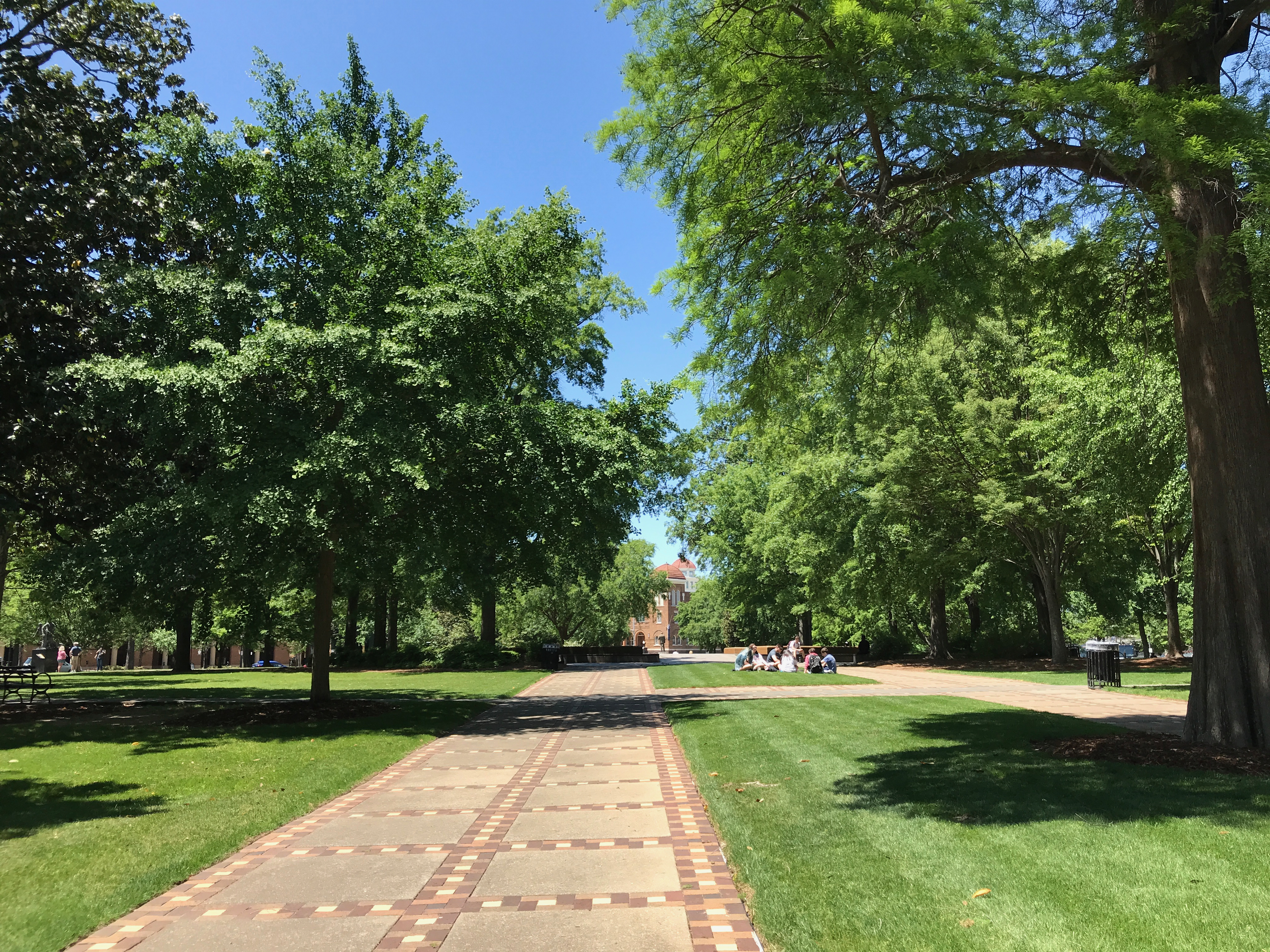
I set off to explore the park. I appreciated how common materials were used to create a beautiful oasis.
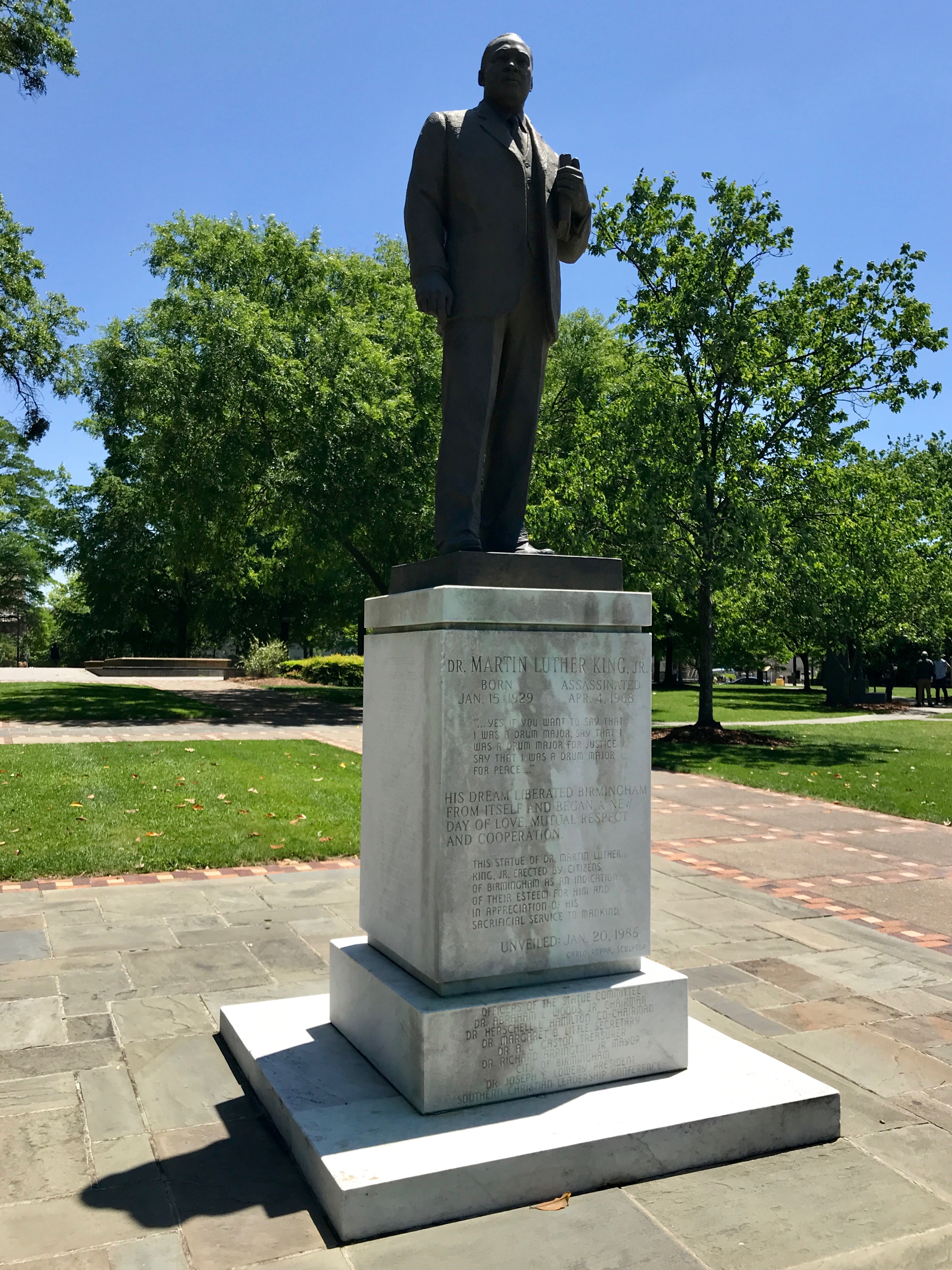
Dr. Martin Luther King Jr.
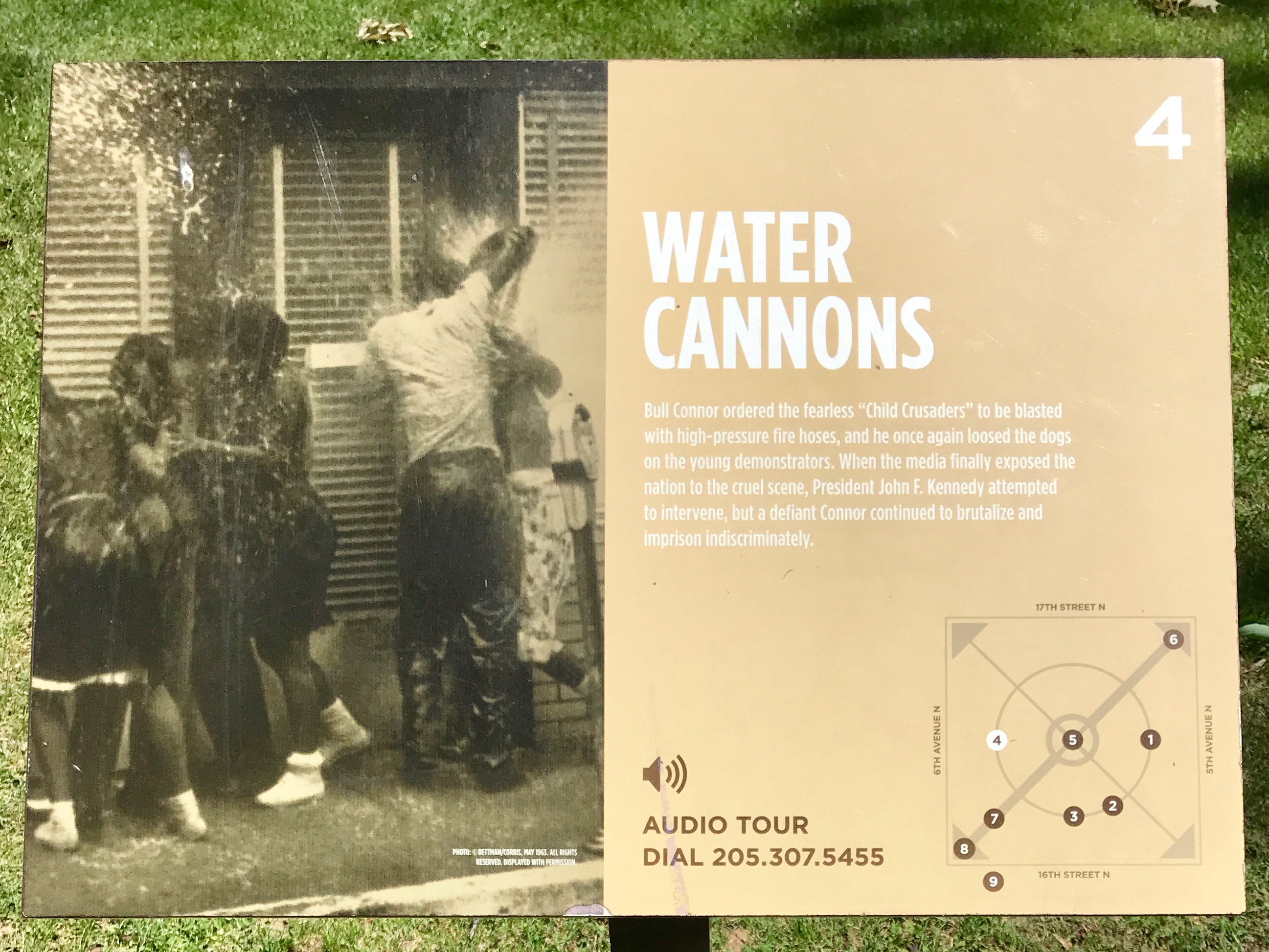
After that, there were memorials to the young people who suffered through the protests in 1963, under the merciless hands of Bull Connor.
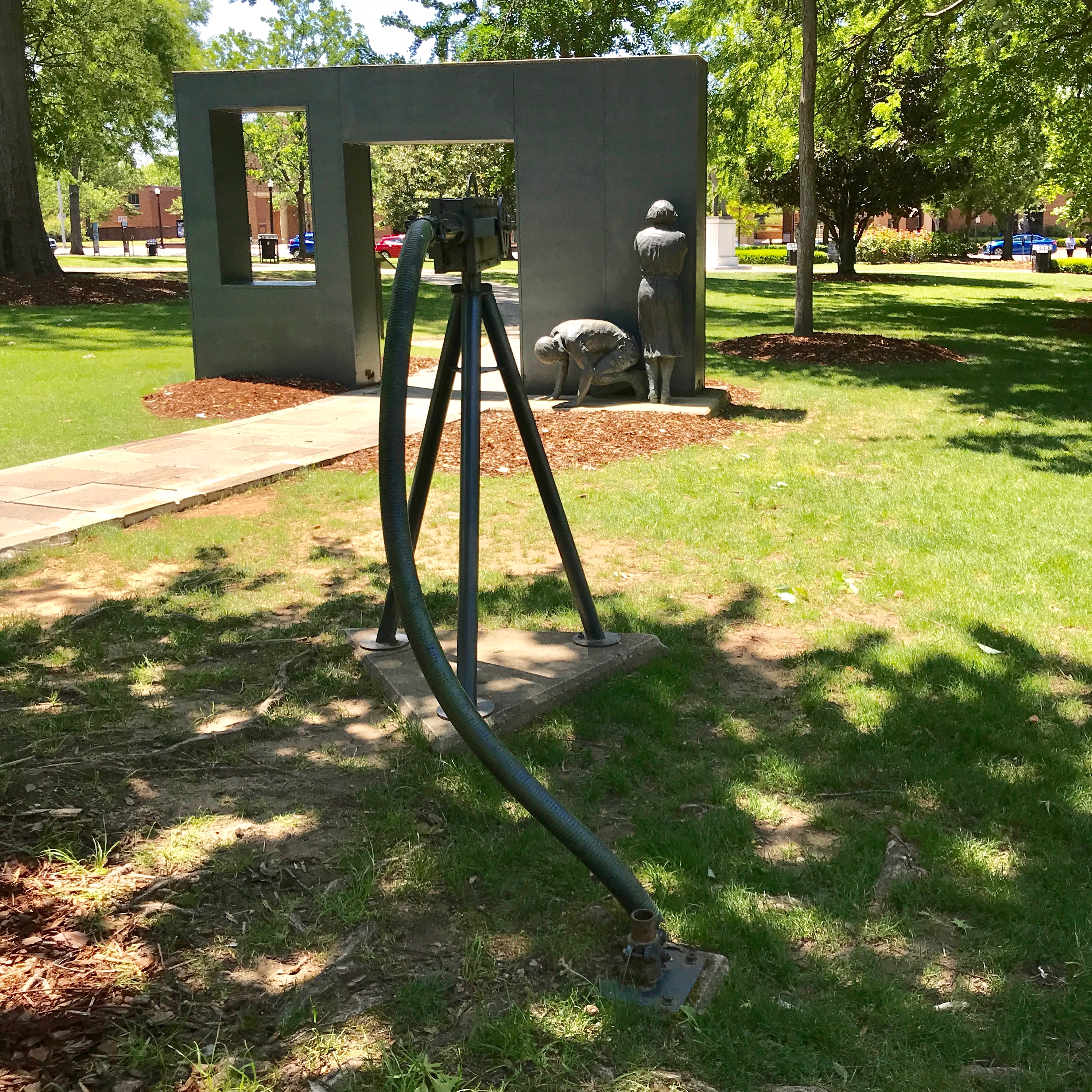
Can you imagine a water cannon?
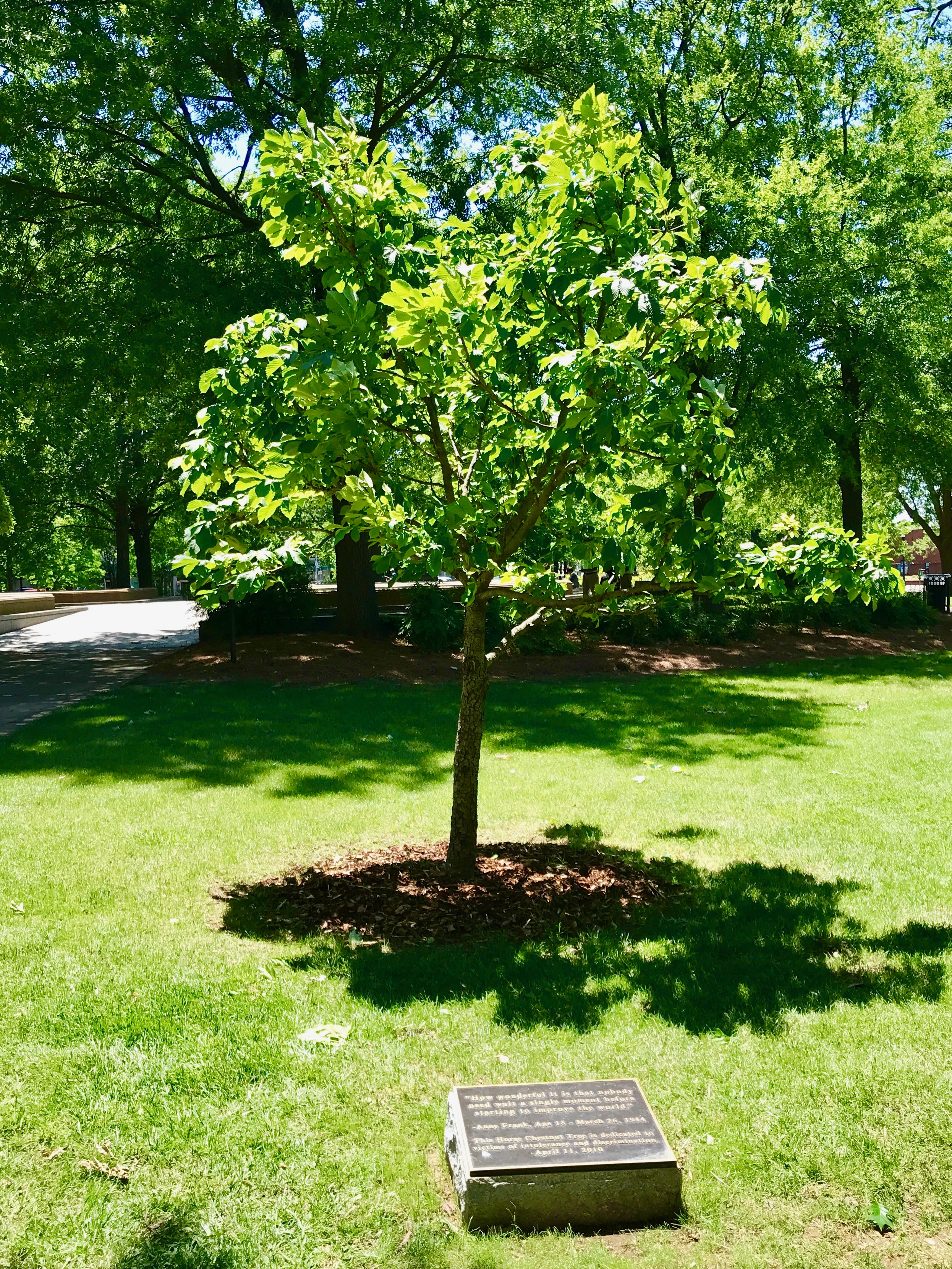
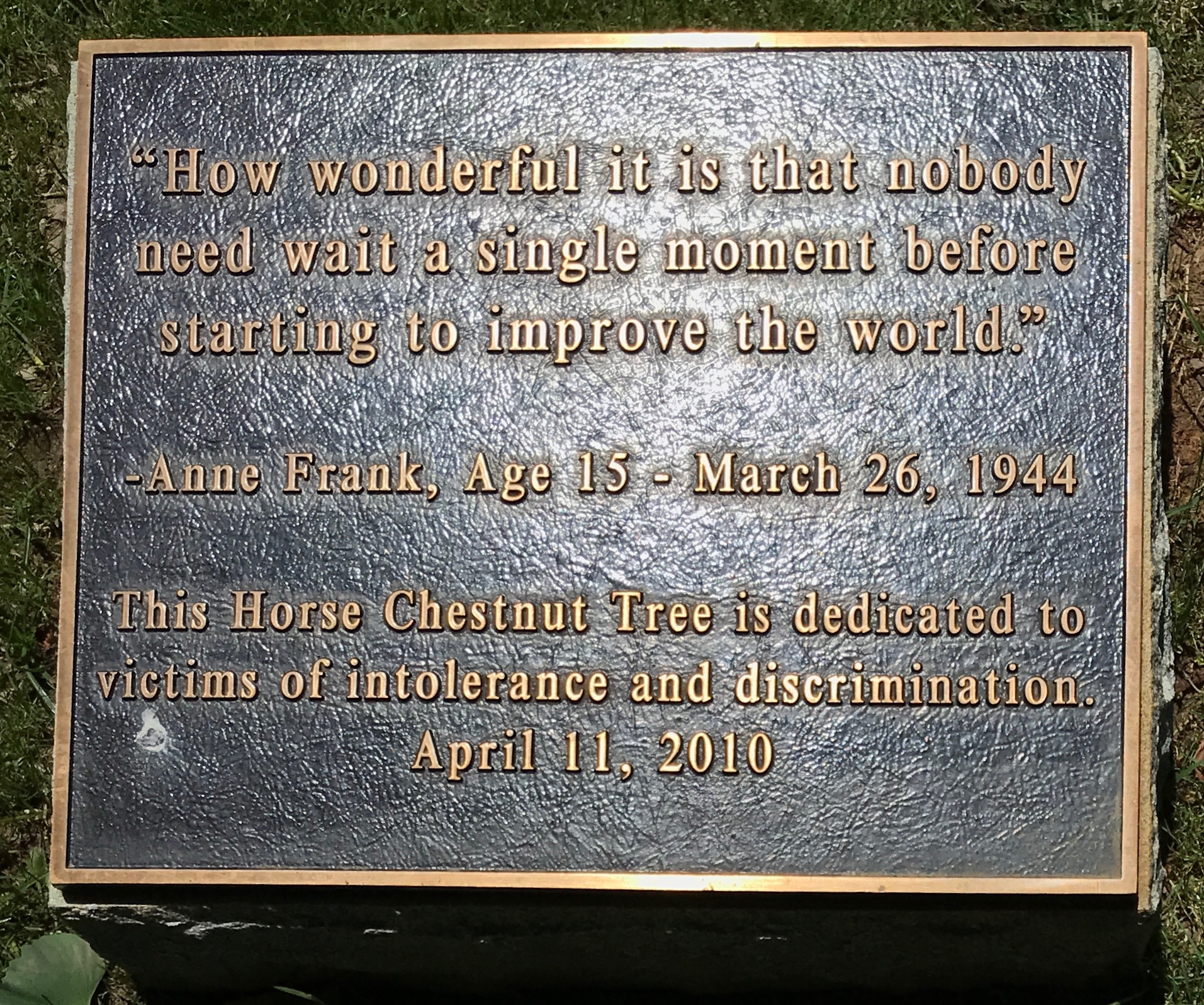
I came across a younger tree with a plaque nearby.
Those young people taking part in the Children’s Crusade didn’t wait.
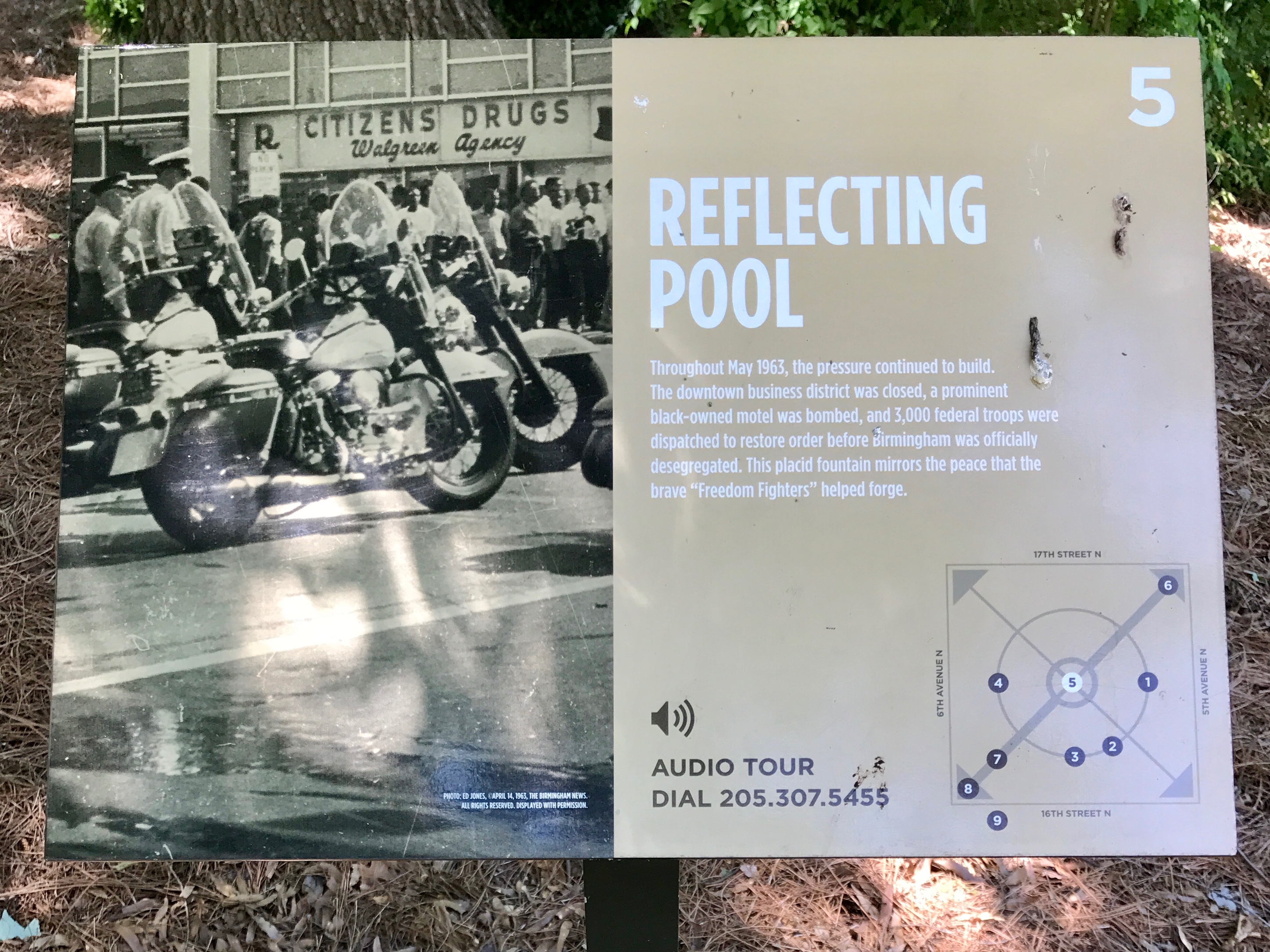
In the middle of the park is a reflecting pool.
I imagine that it was too early in the season for the water to be turned on.
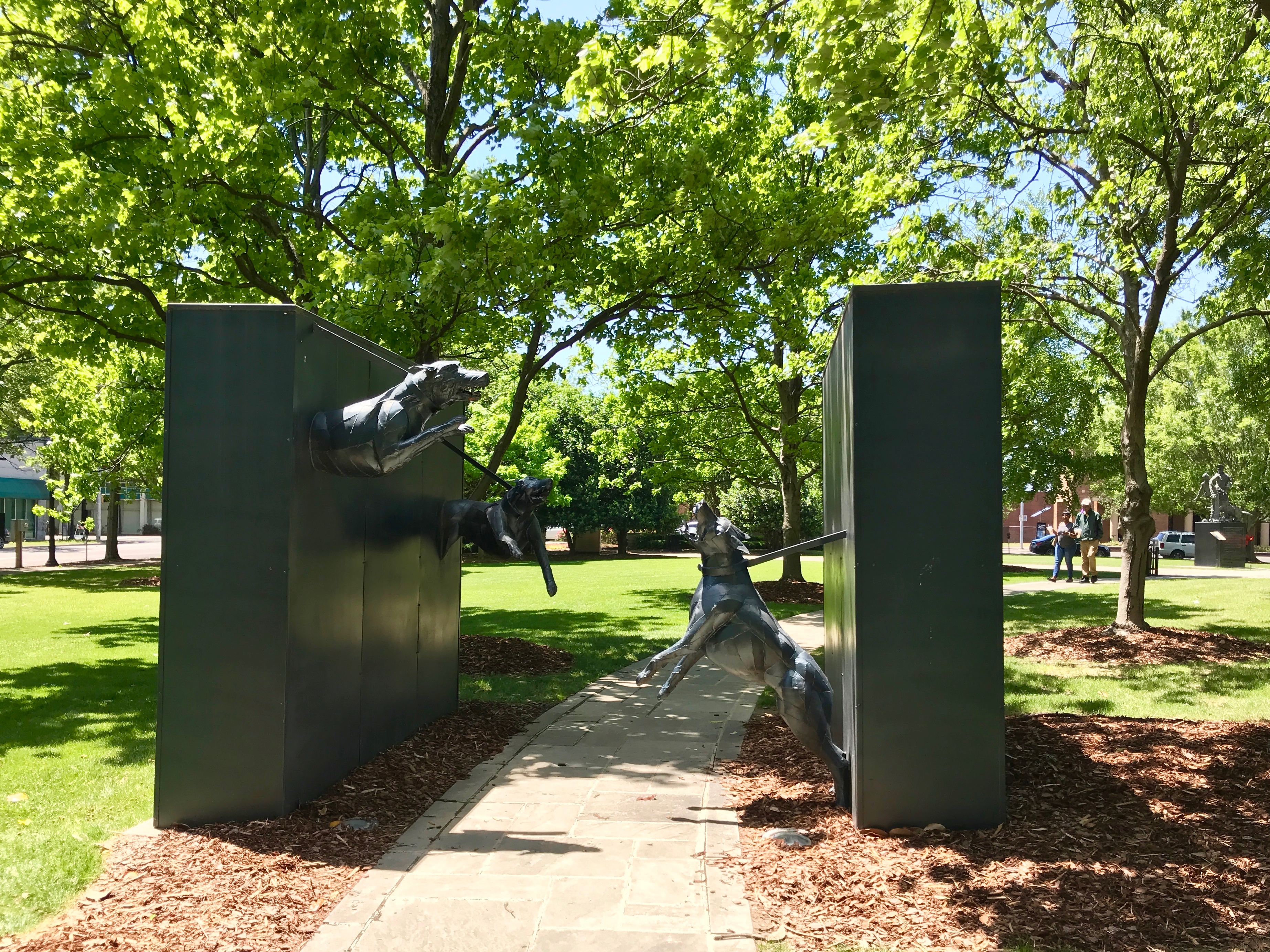
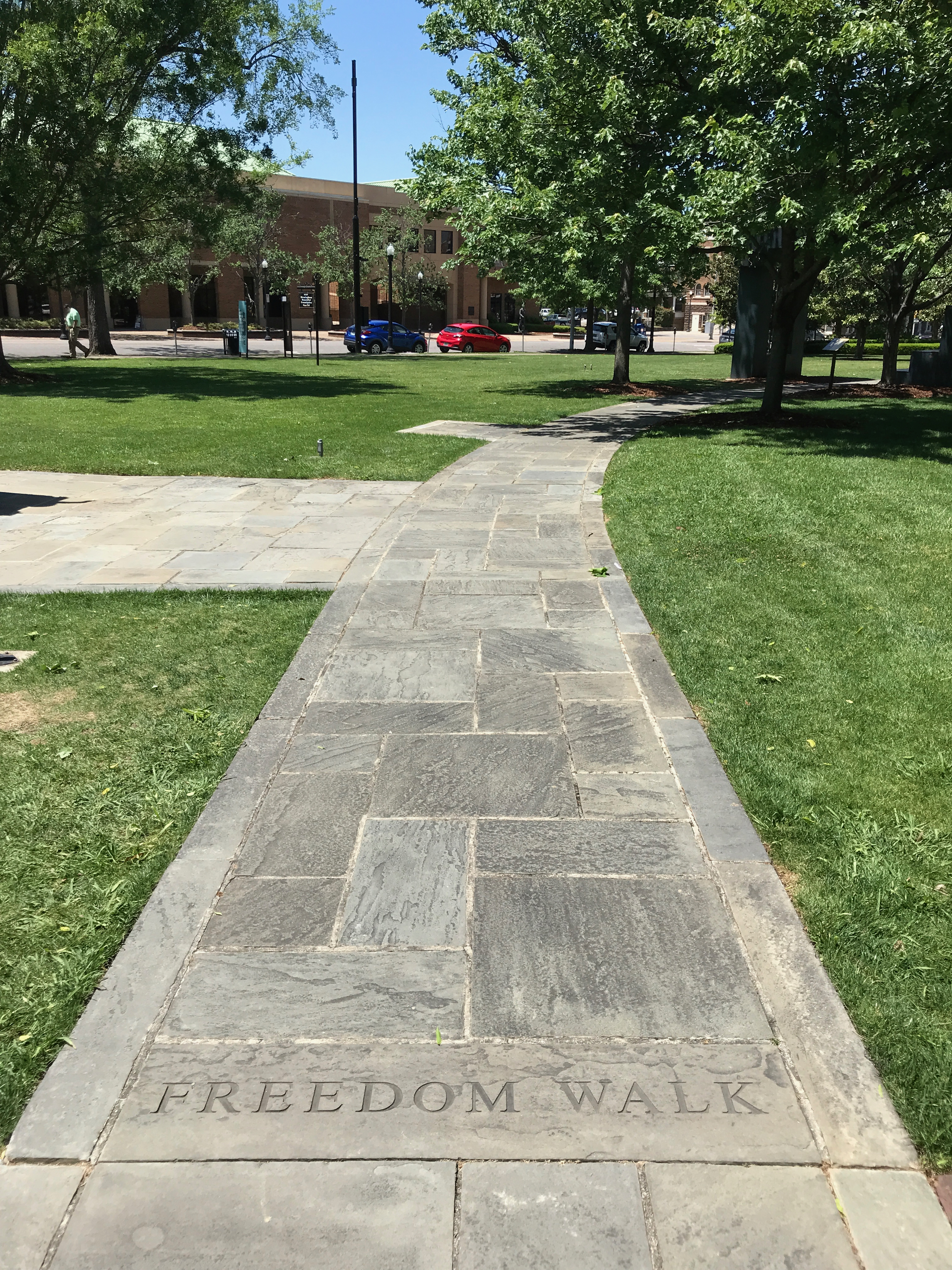
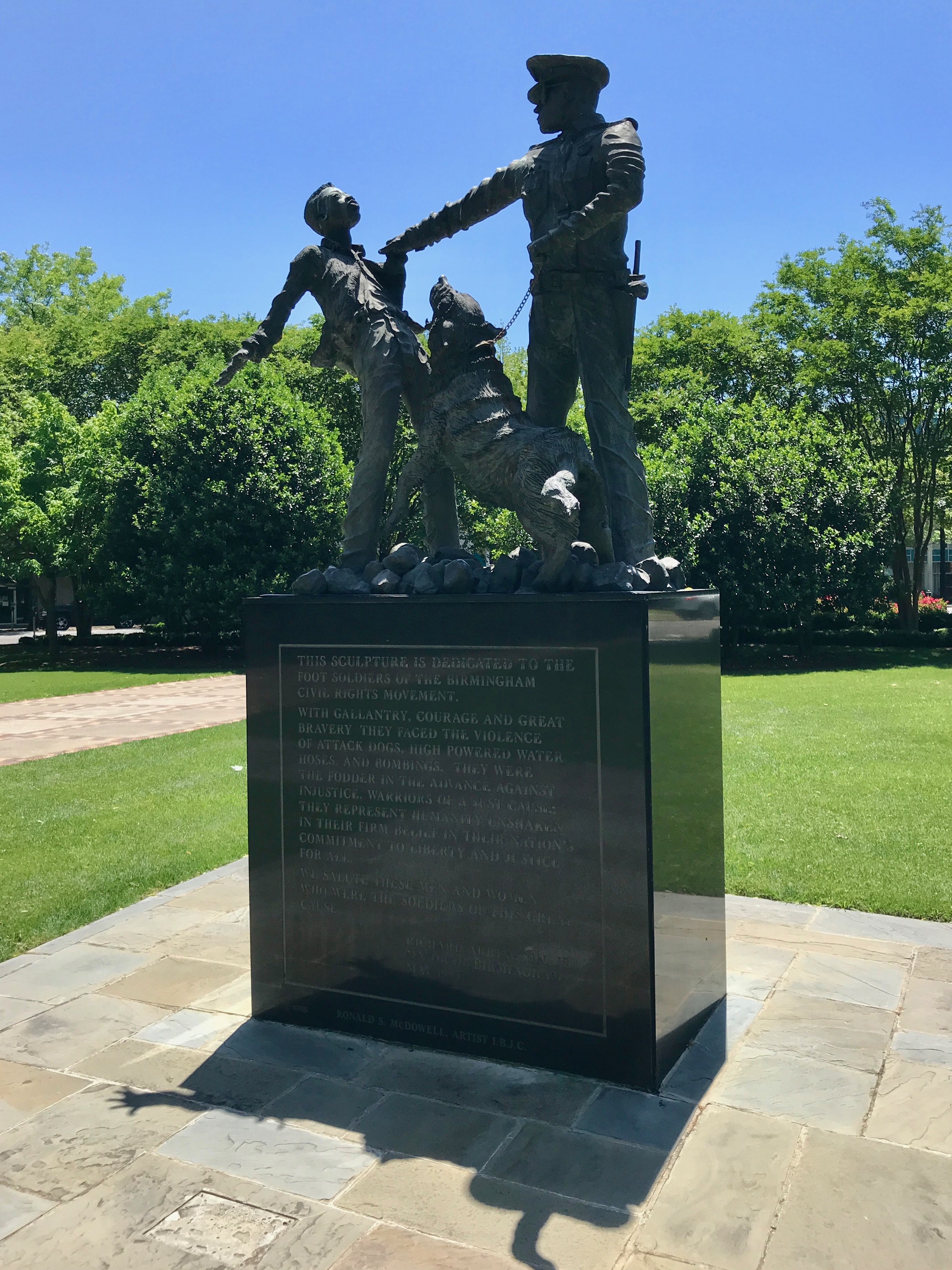
After walking through the water cannons and the reflecting pool at the center of the park, the path lead though the dogs that Bull Connor set on the children.
This is truly the freedom walk that many had to take.
The inscription on the base says:
This sculpture is dedicated to the foot soldiers of the Birmingham Civil Rights Movement.
With gallantry, courage and great bravery, the face the violence of attack dogs, high powered water hoses and bombings. They were the fodder in the advance agains injustice. Warriors of a just cause, they represent humanity unshaken in their firm belief in their nation’s commitment to liberty and justice for all.
We salute these men and women who were the soldiers of this great cause.
Richard Arrington, Jr.
Mayor of Birmingham
May 1995.
Incidentally, Richard Arrington was the first Black mayor of Birmingham.
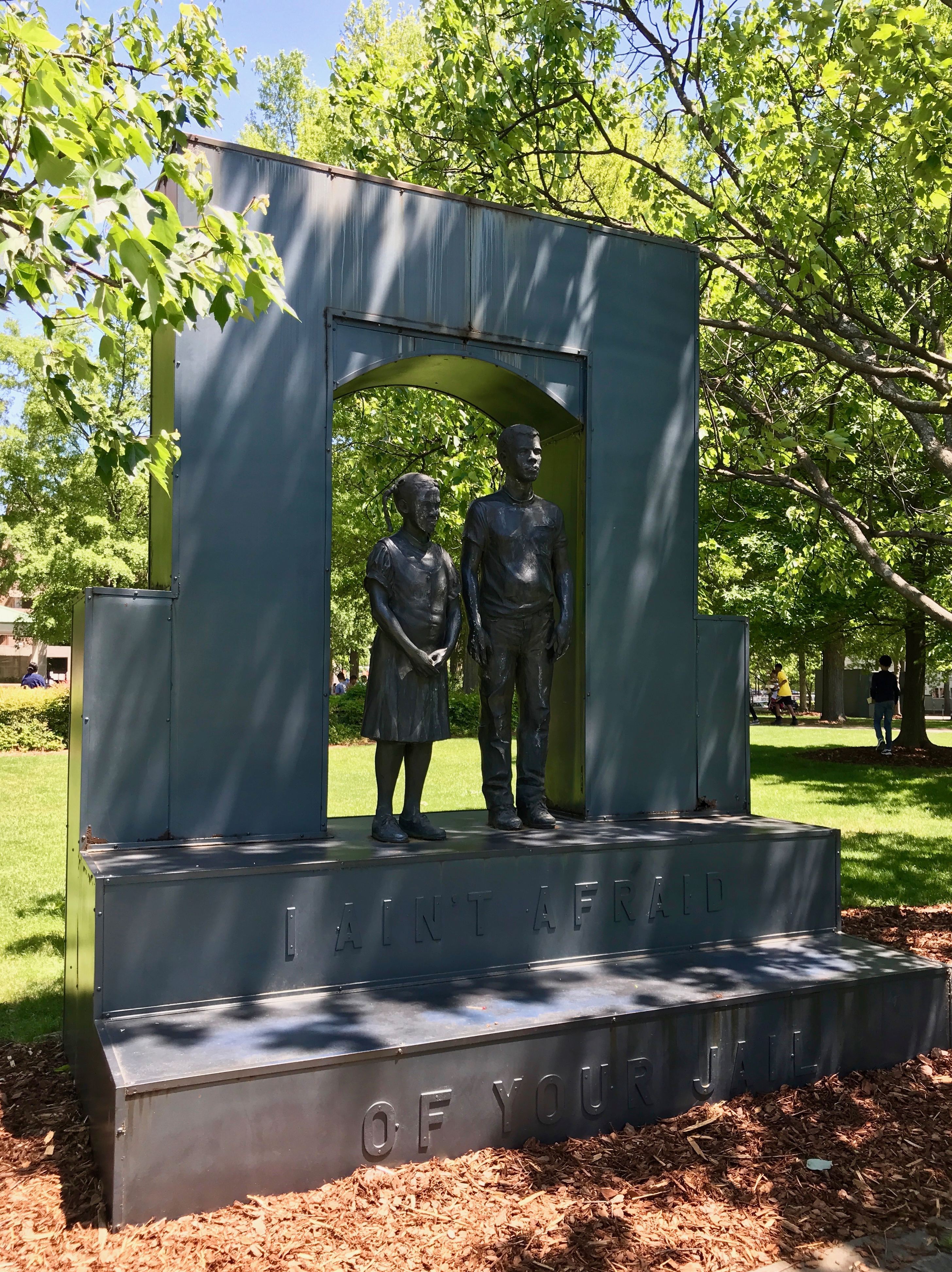
I continued along the path and came across this group of boys from a field trip enjoying their boxed lunches. I kind of think their teacher came and had them get down from the sculpture. They just made such a charming photo.
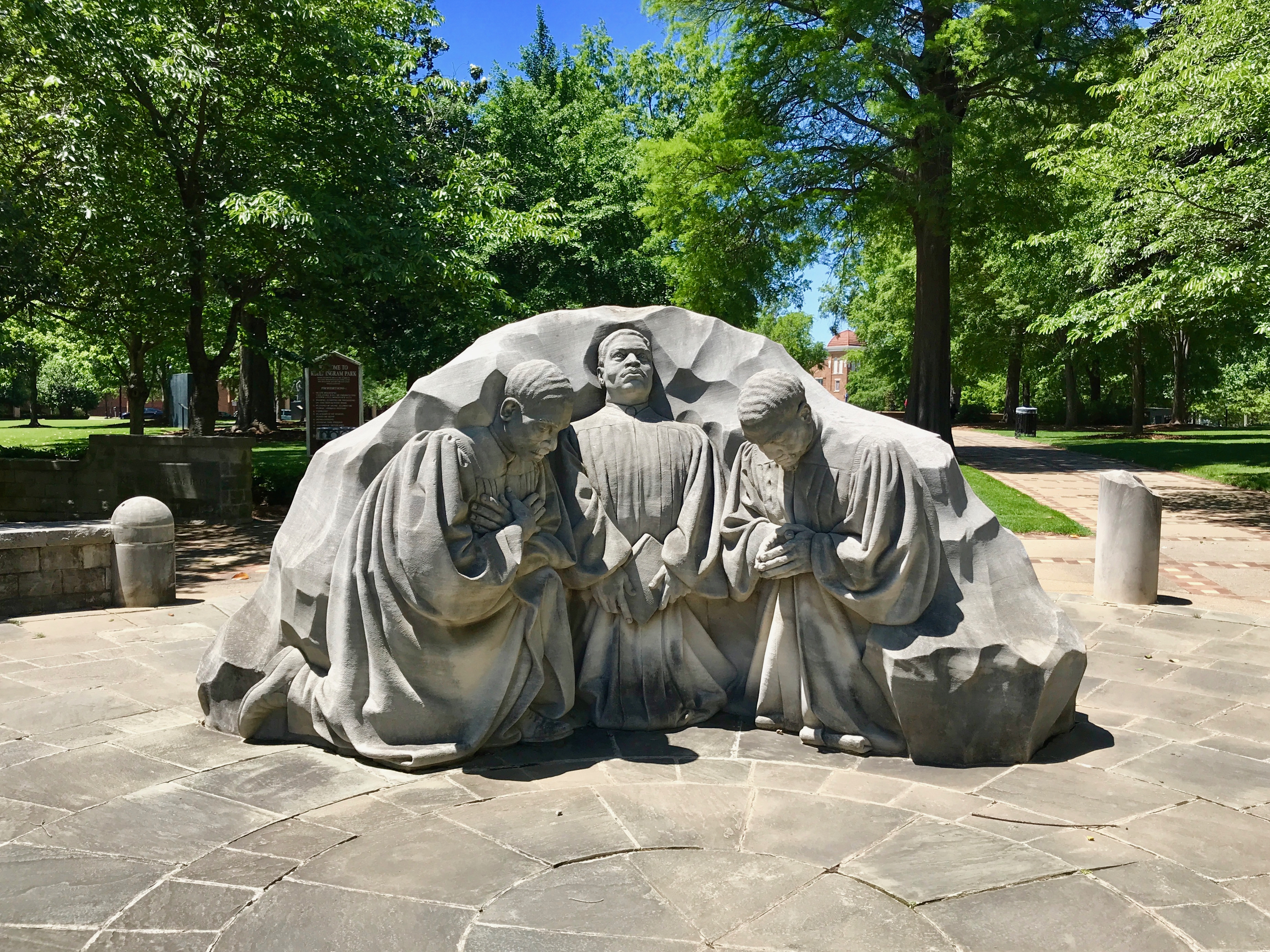
Incidentally, this is the work of art they were sitting on.
By now, I was getting hungry and I decided to set out and find some lunch.
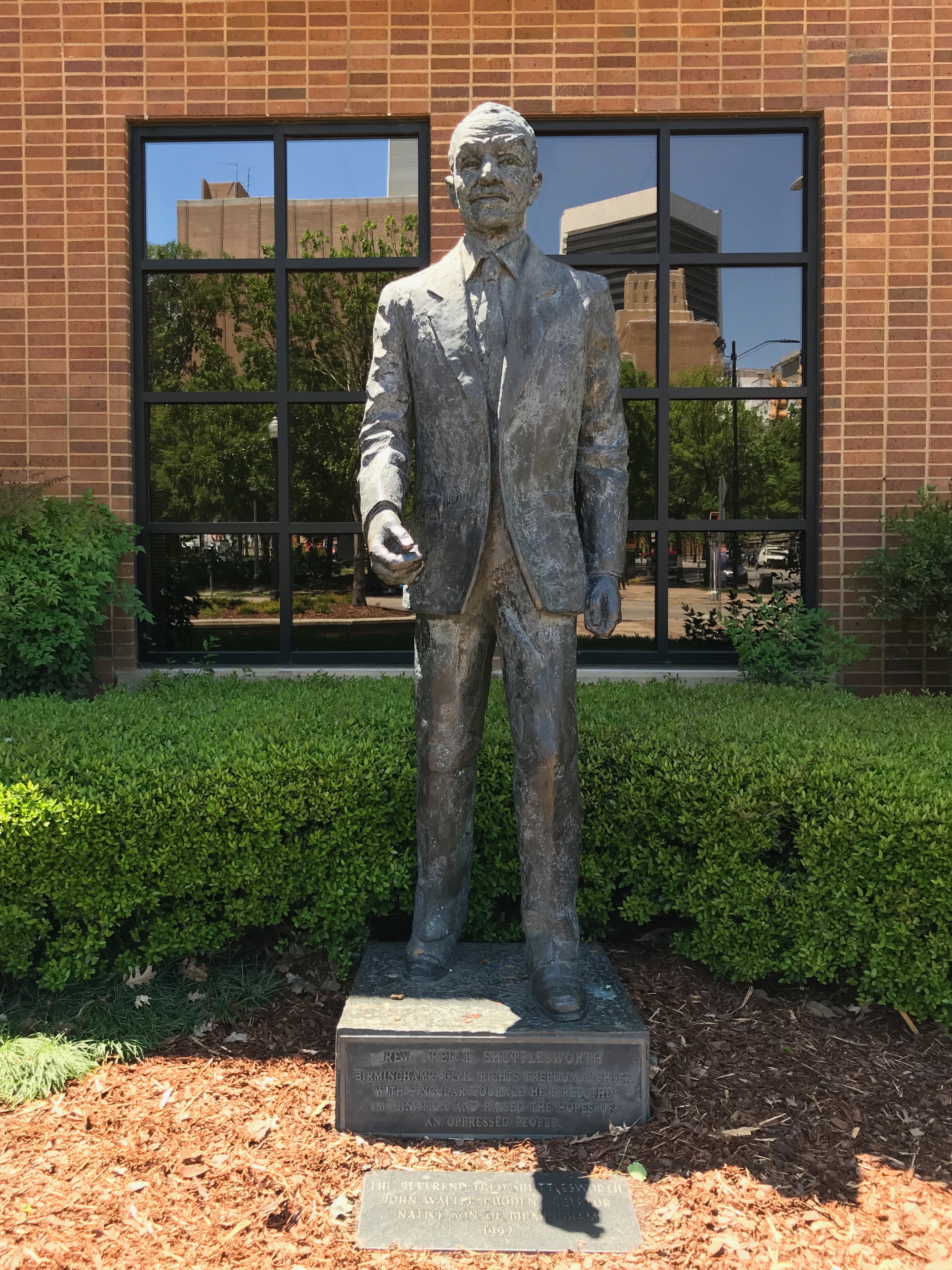
Across the street, there was a statue honoring Rev. Fred Shuttlesworth, a tireless and fearless worker for social justice.
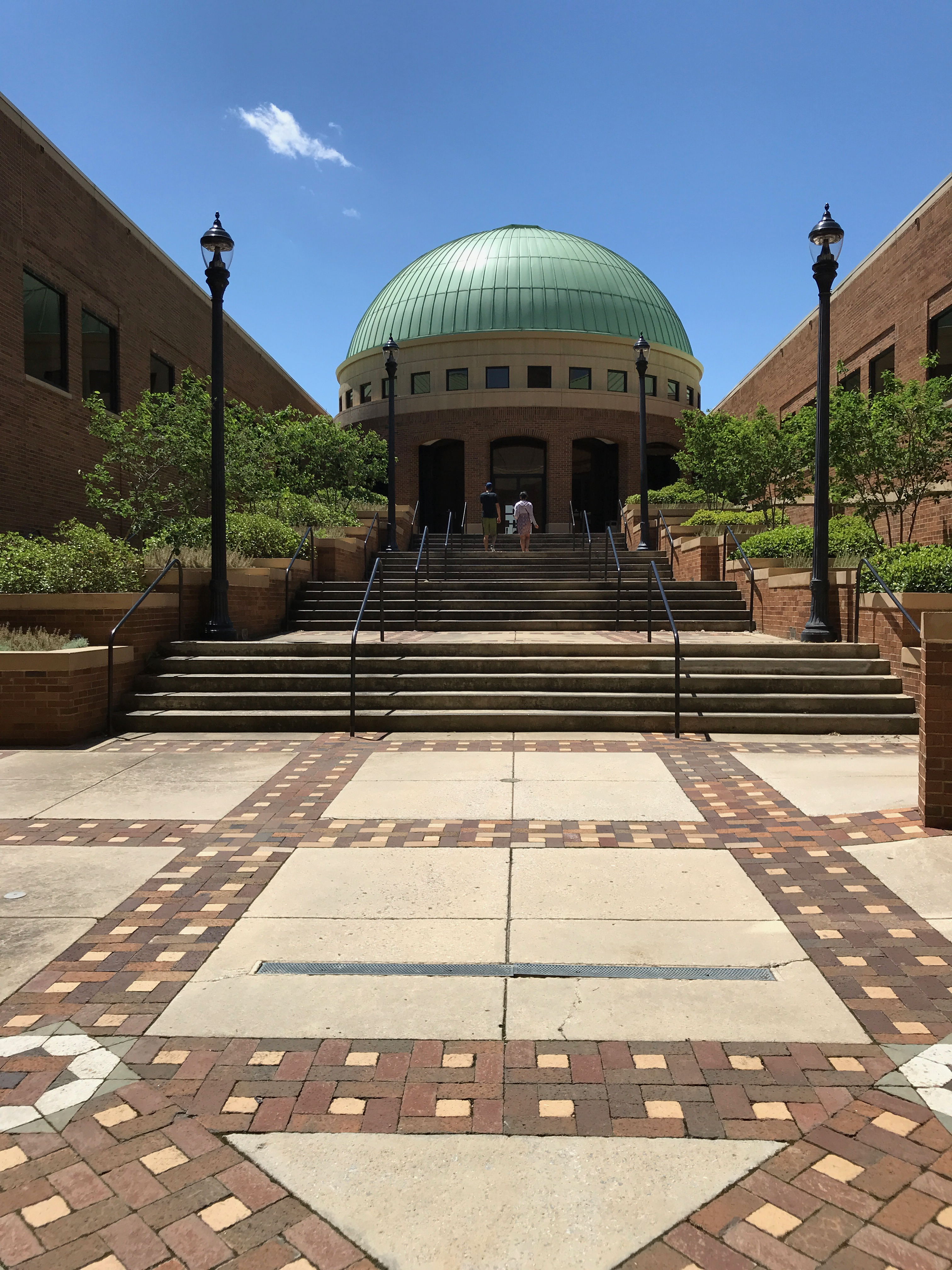
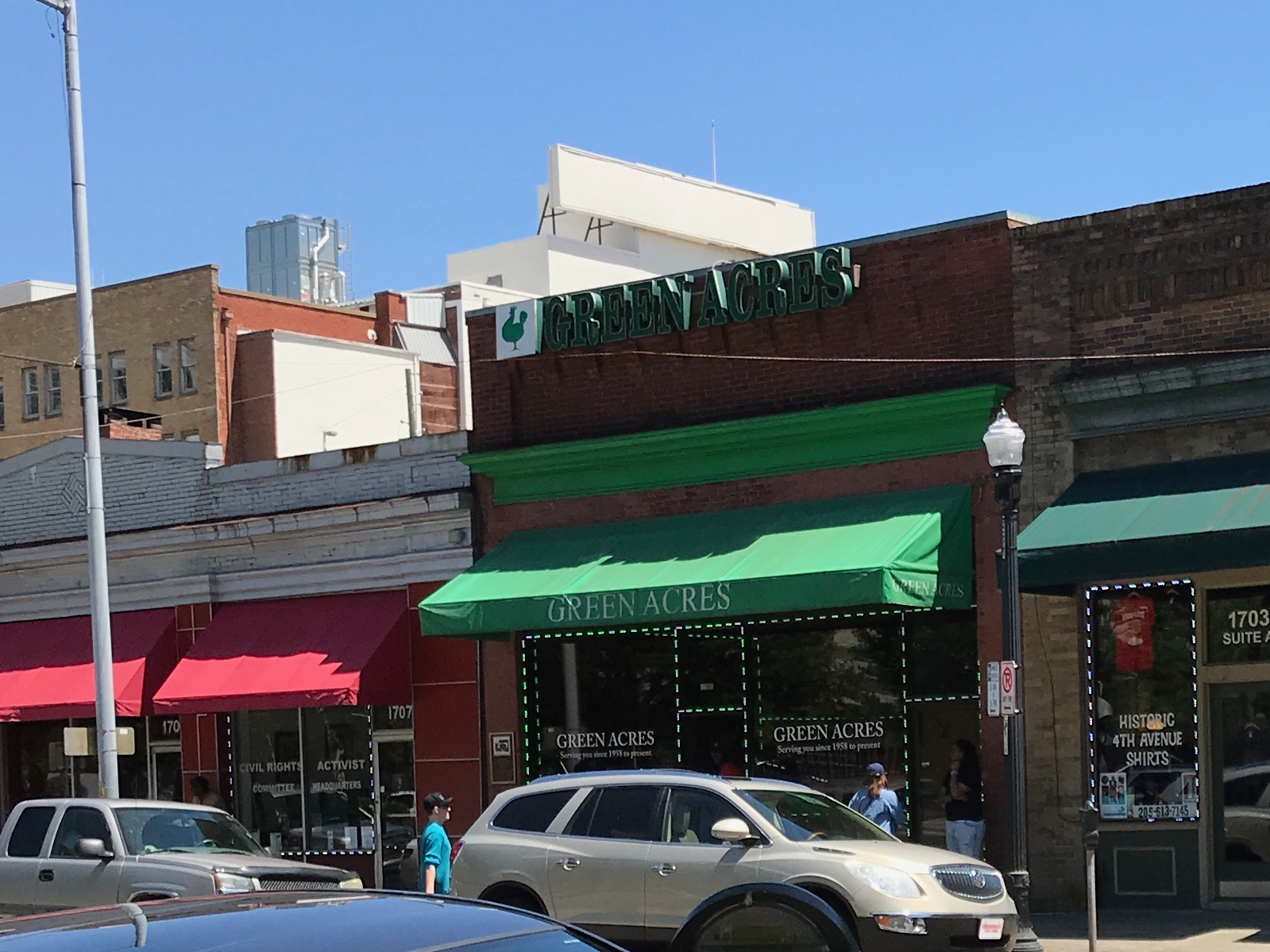
His statue is outside the Birmingham Civil Right Institute, which bestows the Fred Shuttlesworth Human Right Award. Apparently it is an interpretive museum, but I didn’t go in. I needed to find some lunch. I asked the security guard for a recommendation, and he directed me to a place on Fourth Avenue.
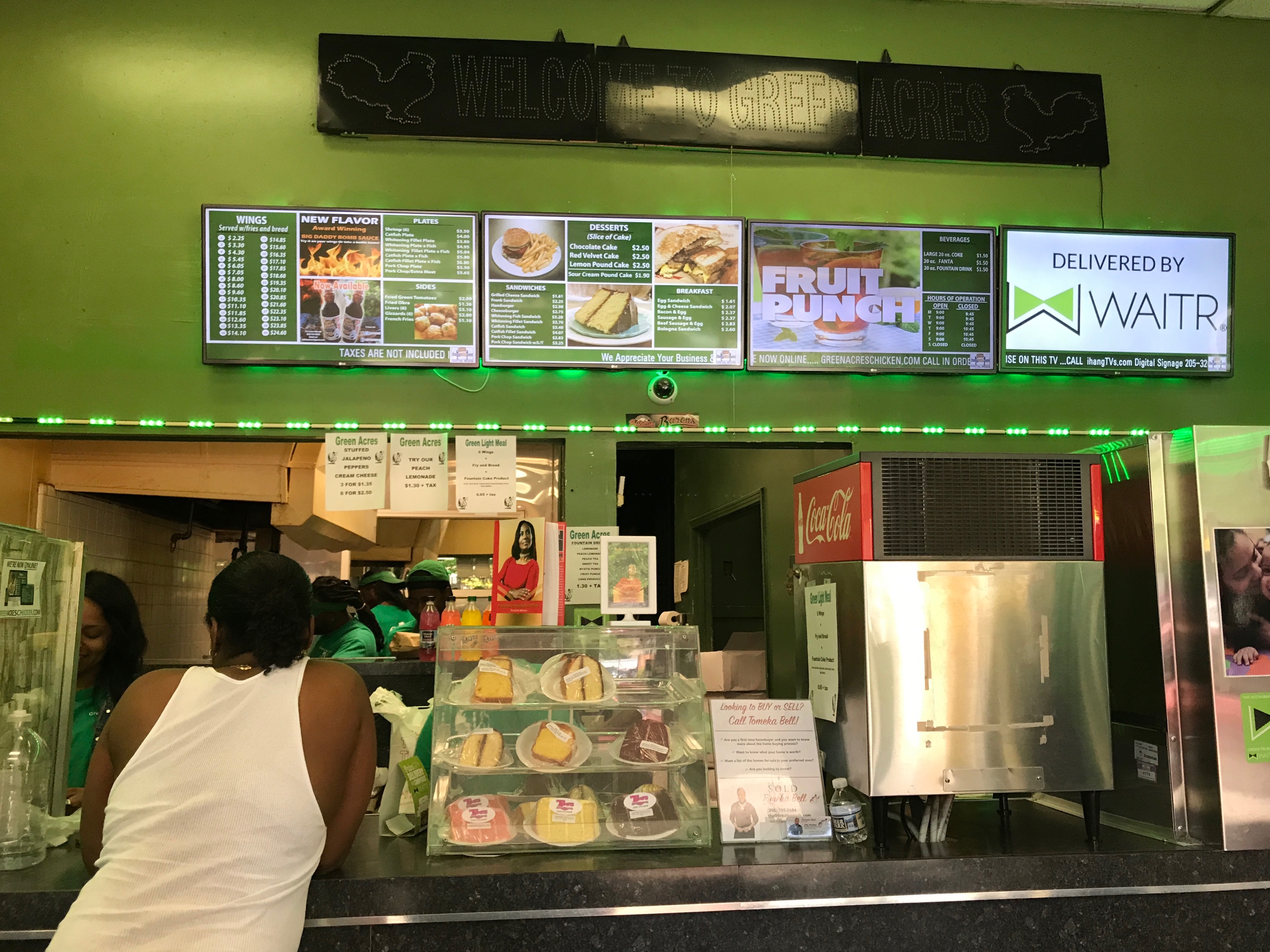
I guess Green Acres is the place to be!
I looked over the menu and placed my order.
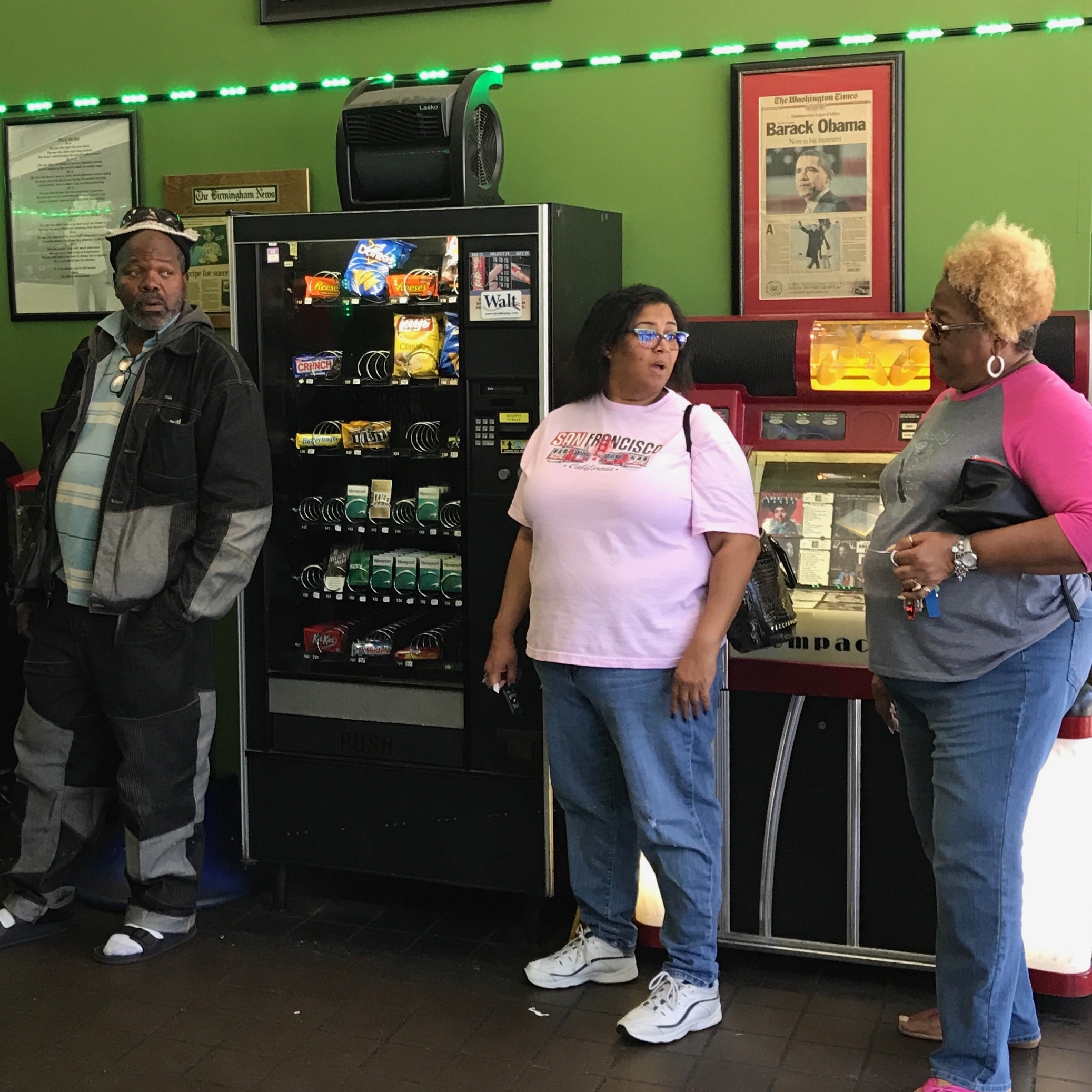
Then I waited with the rest of the customers.
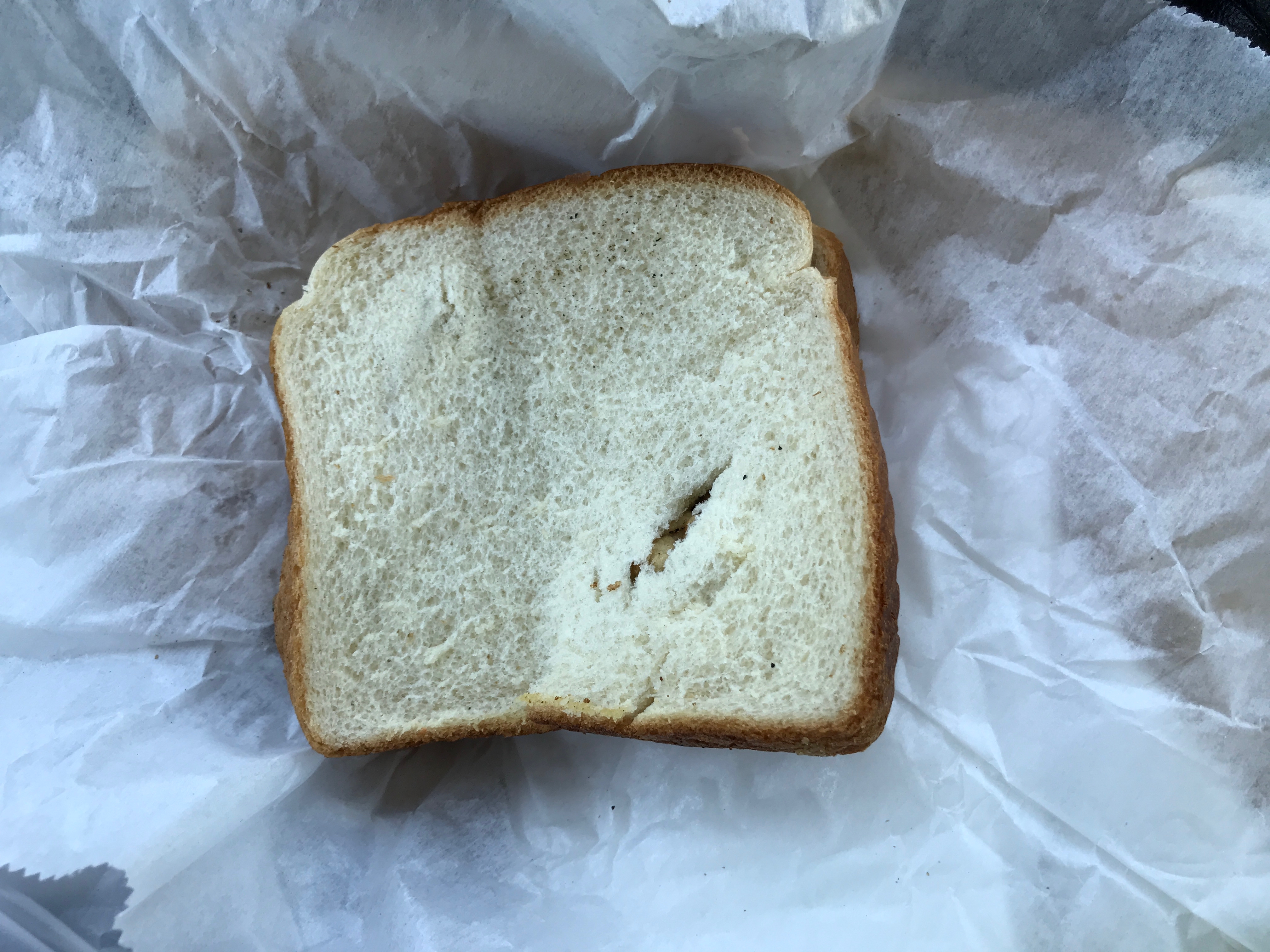
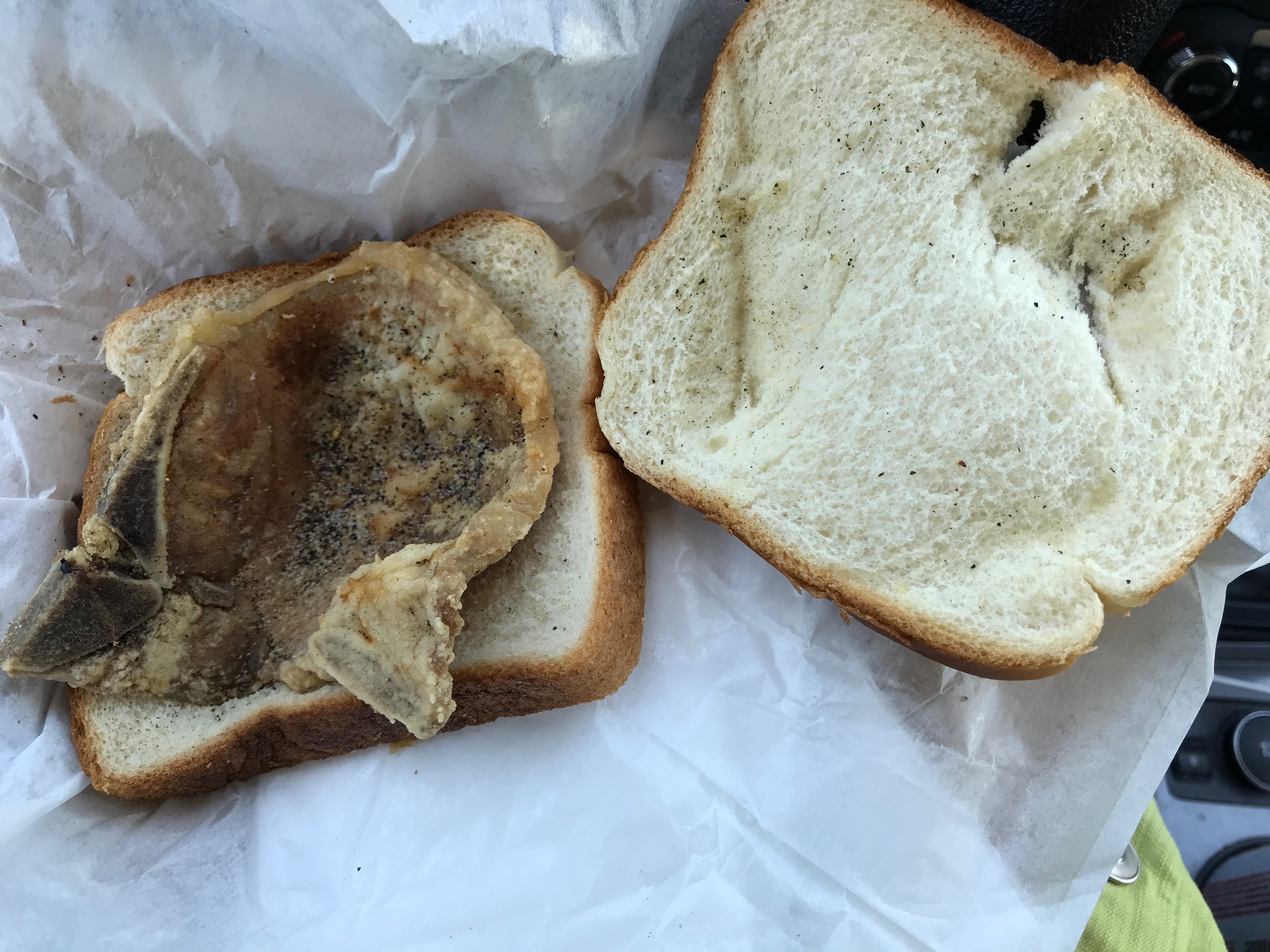
This food is all “to-go”, so I took it back to my car to eat.
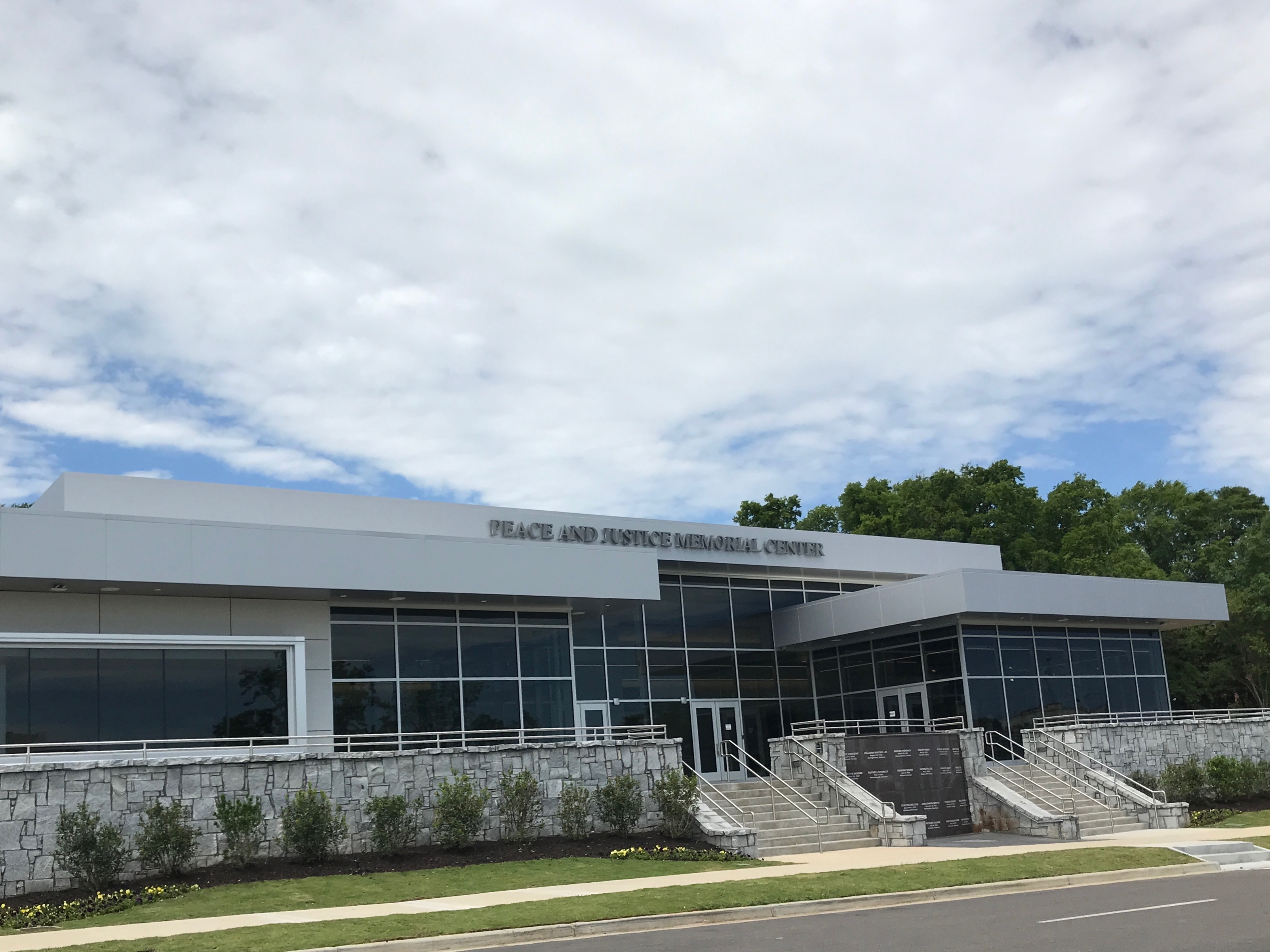
The next day, I headed over to the National Memorial for Peace and Justice , which is informally known as the National Lynching Memorial. It had opened just the year before, in April 2018. I remembered hearing about it one news programs at the time, and I was eager to see how the artists involved had created a work of art that commemorates the black victims of lynching in the United States, many of them nameless.
It was founded by the non-profit Equal Justice Initiative and it is intended to focus on and acknowledge past racial terrorism and advocate for social justice in America.
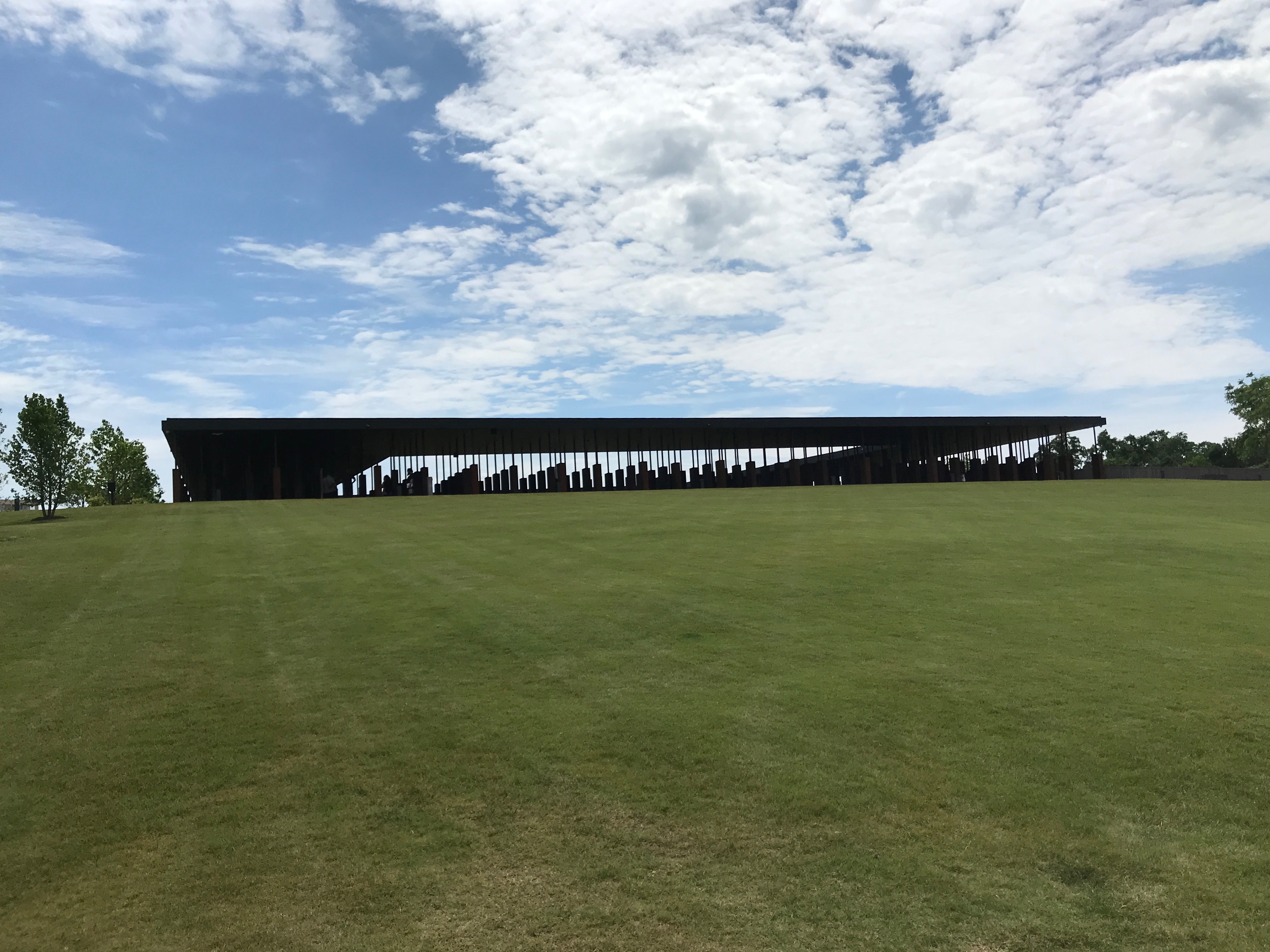
I arrived and parked in the lot next to the headquarters and started over to the memorial, built on six acres near the site of a former market where enslaved African Americans were sold. Bryan Stevenson, founder of the Equal Justice Initiative (EJI) was inspired by the examples of the Memorial to the Murdered Jews of Europe in Berlin and the Apartheid Museum in Johannesburg, South Africa. His goal was to create a single memorial to the victims of white supremacy in the United States.
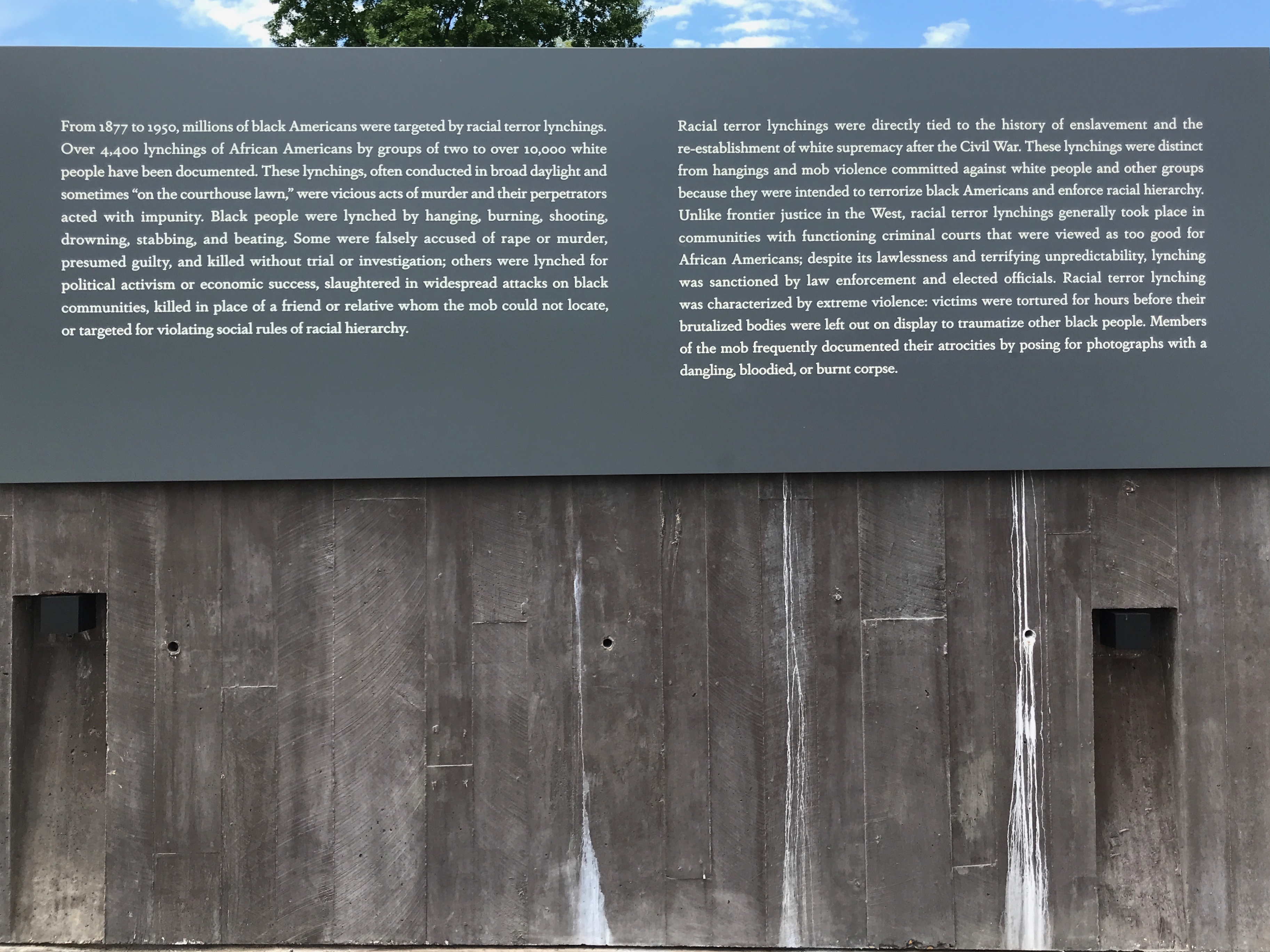
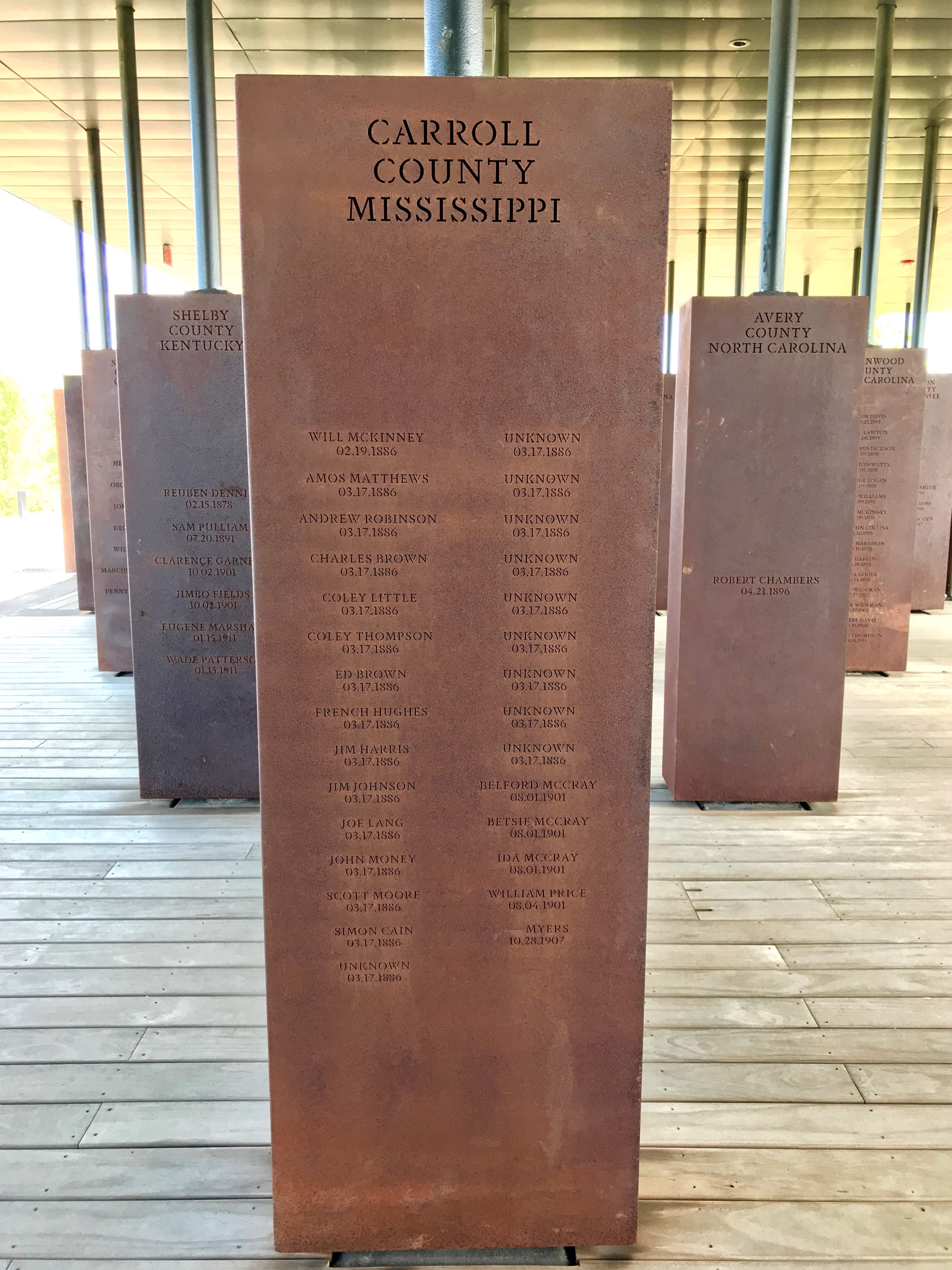
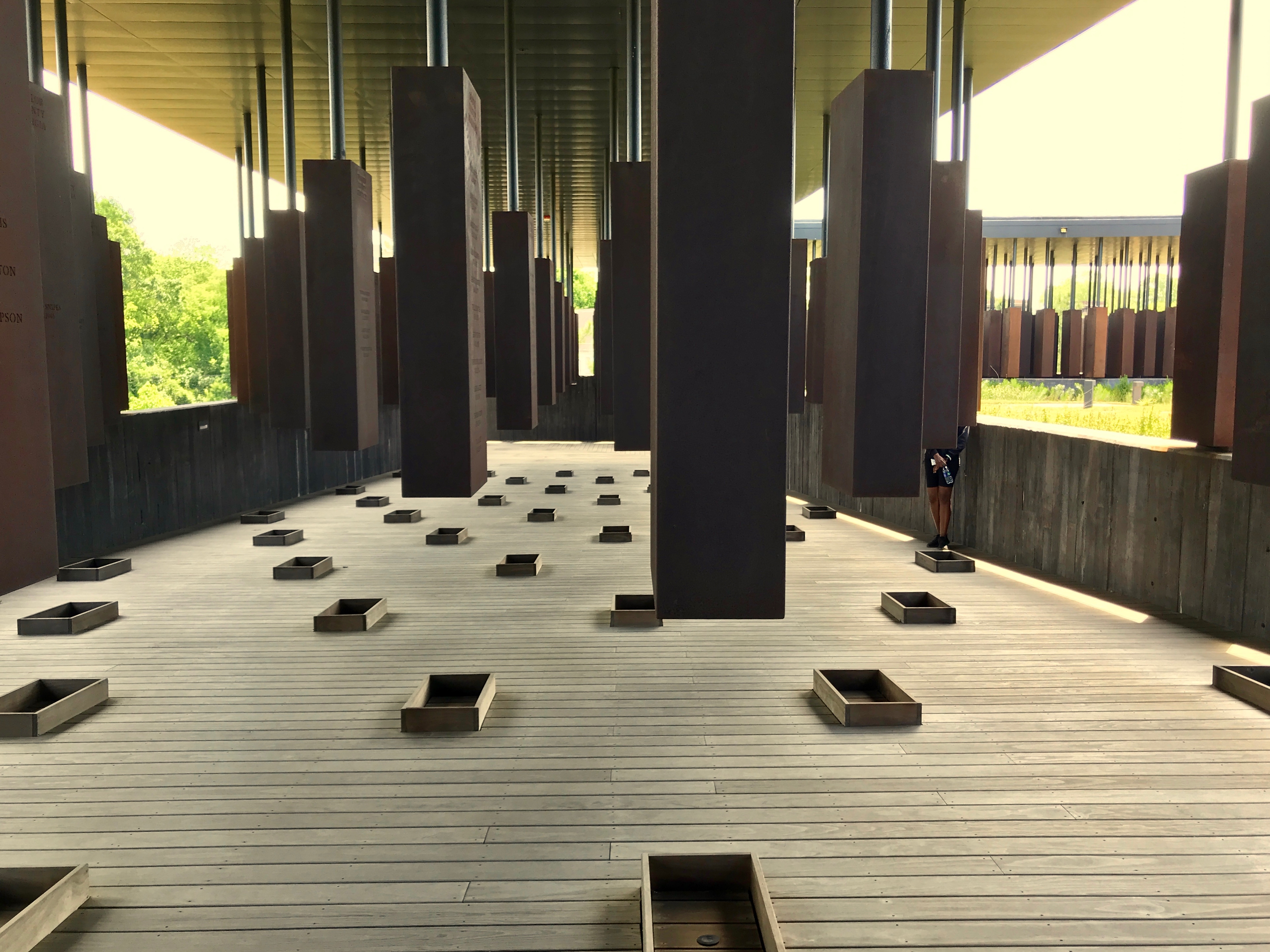
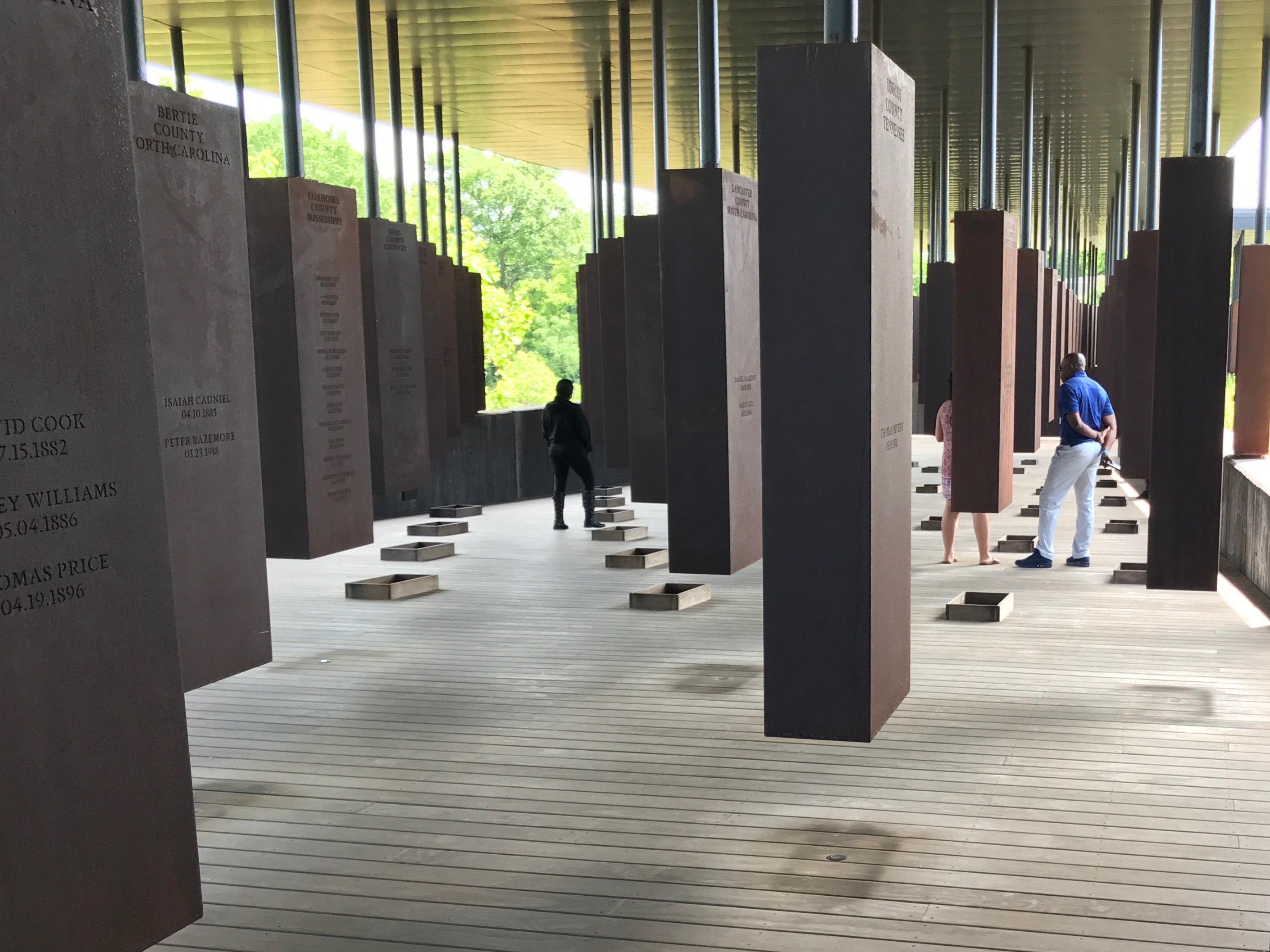
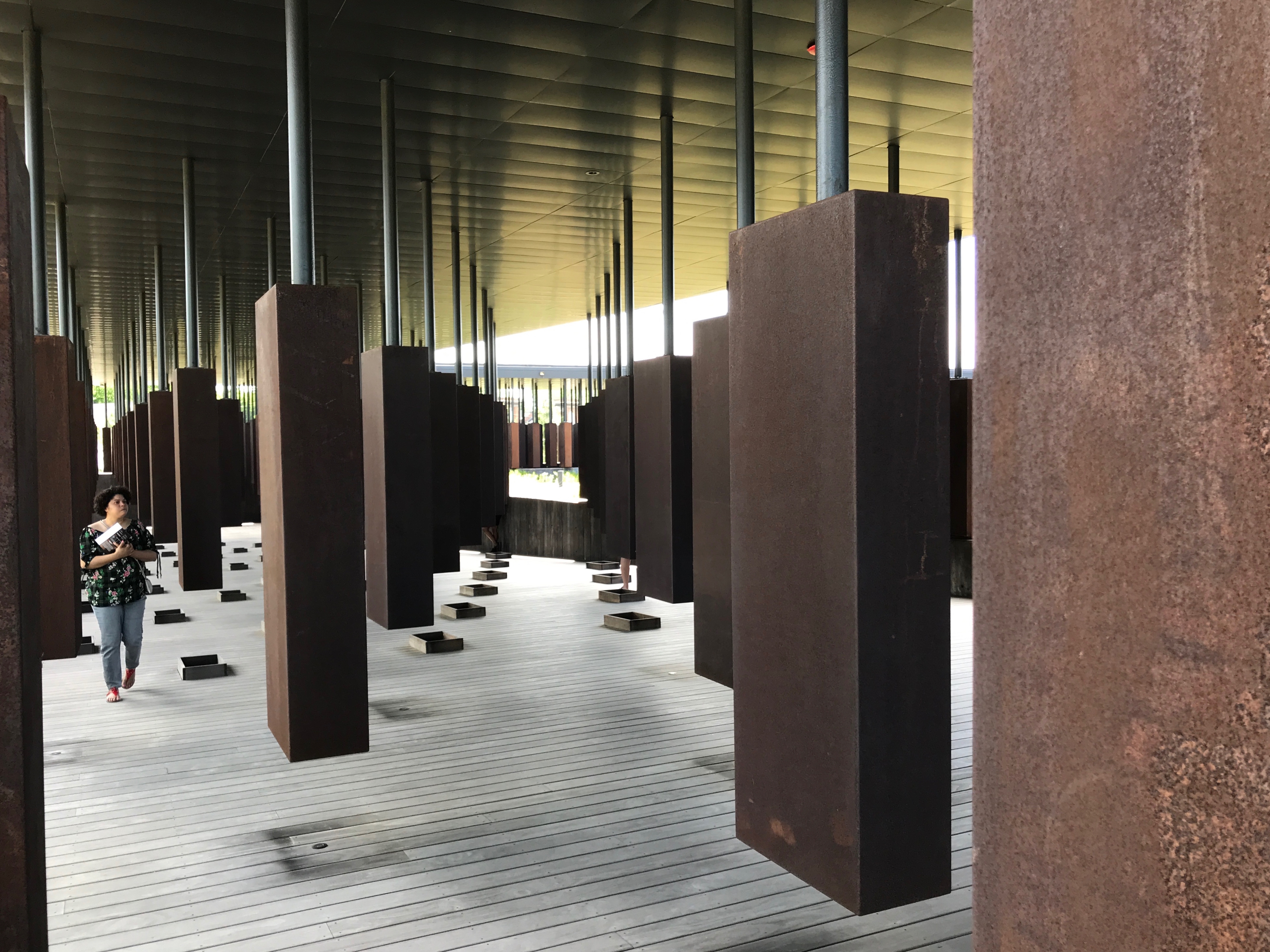
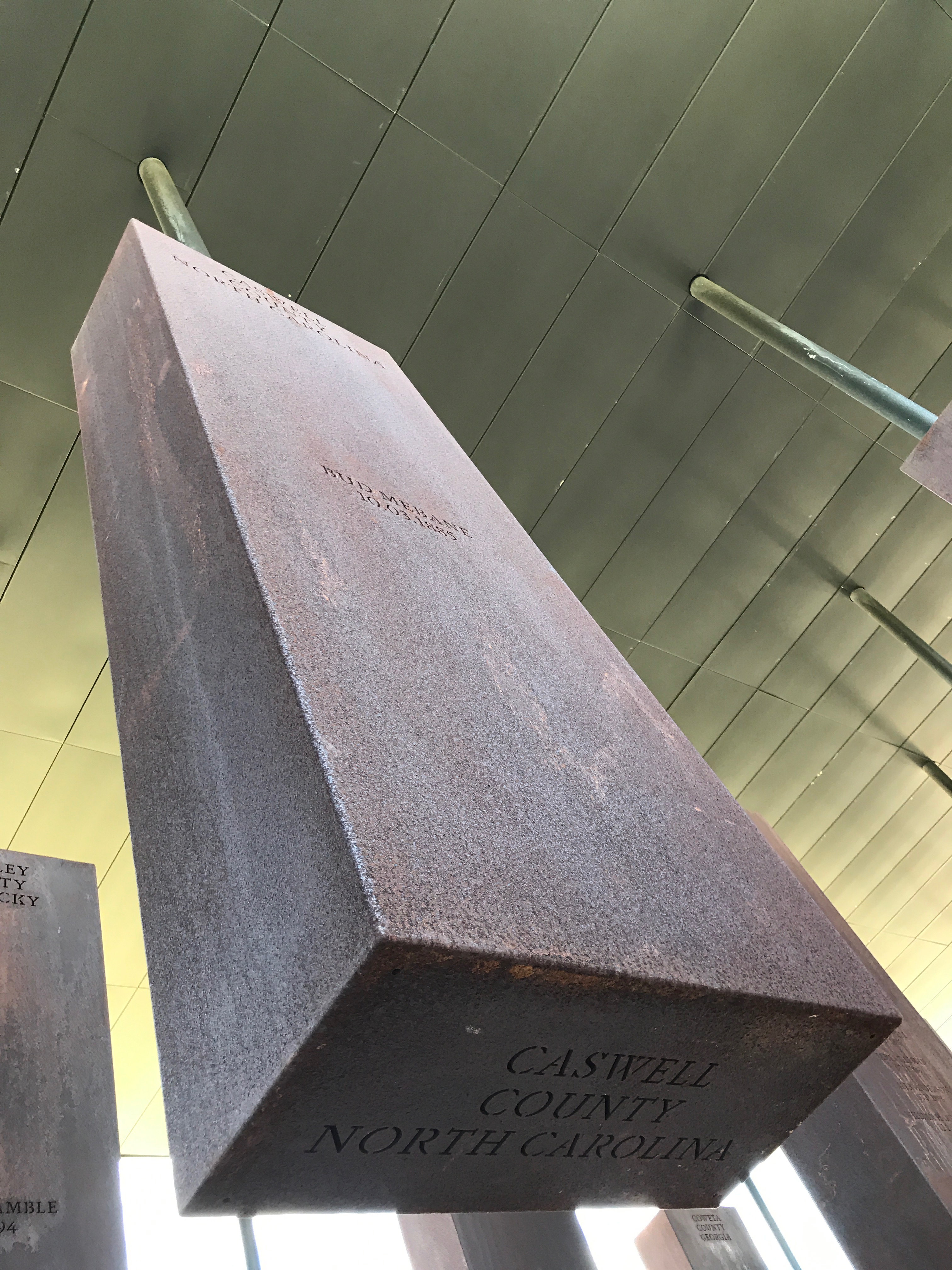
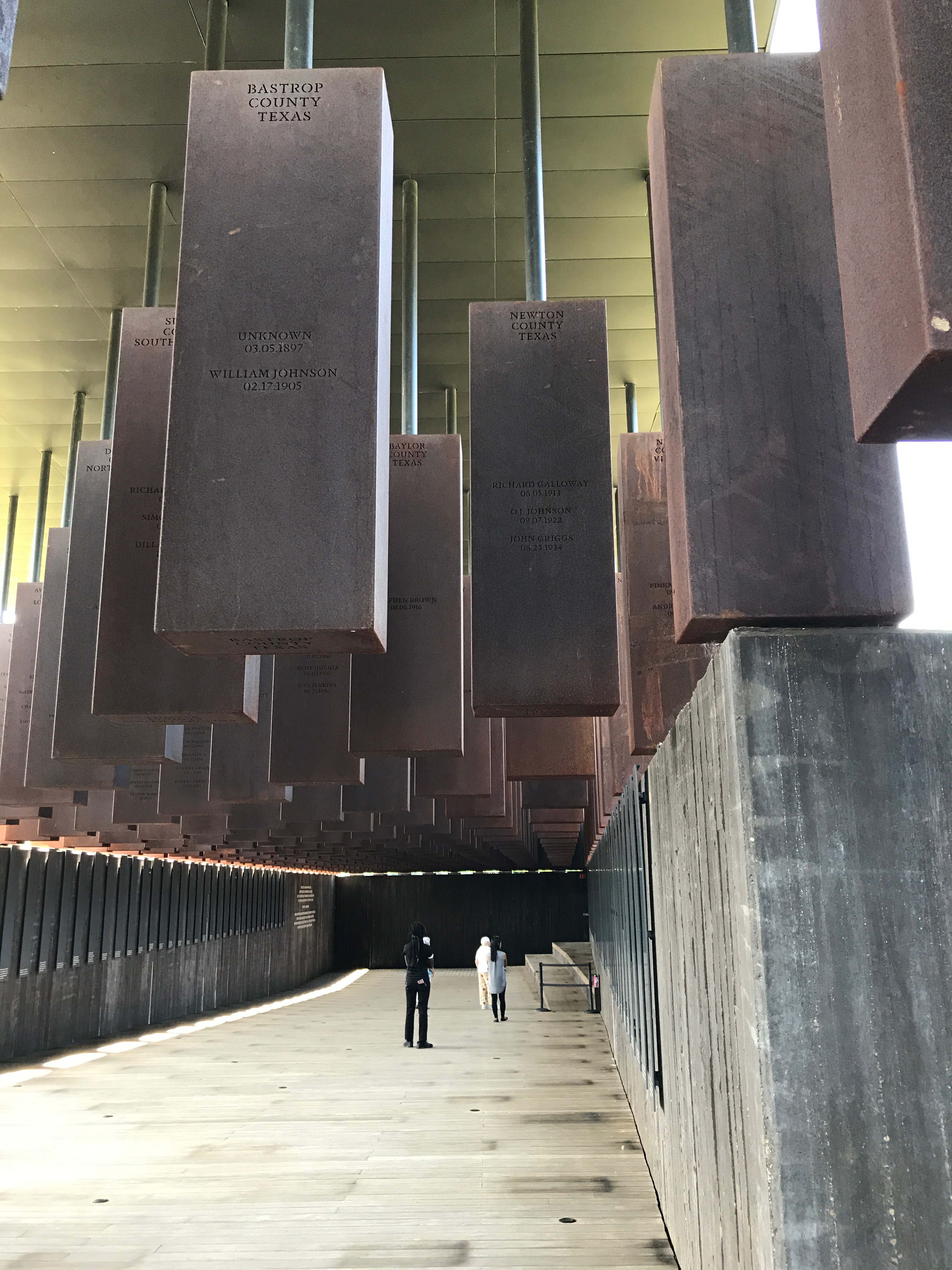
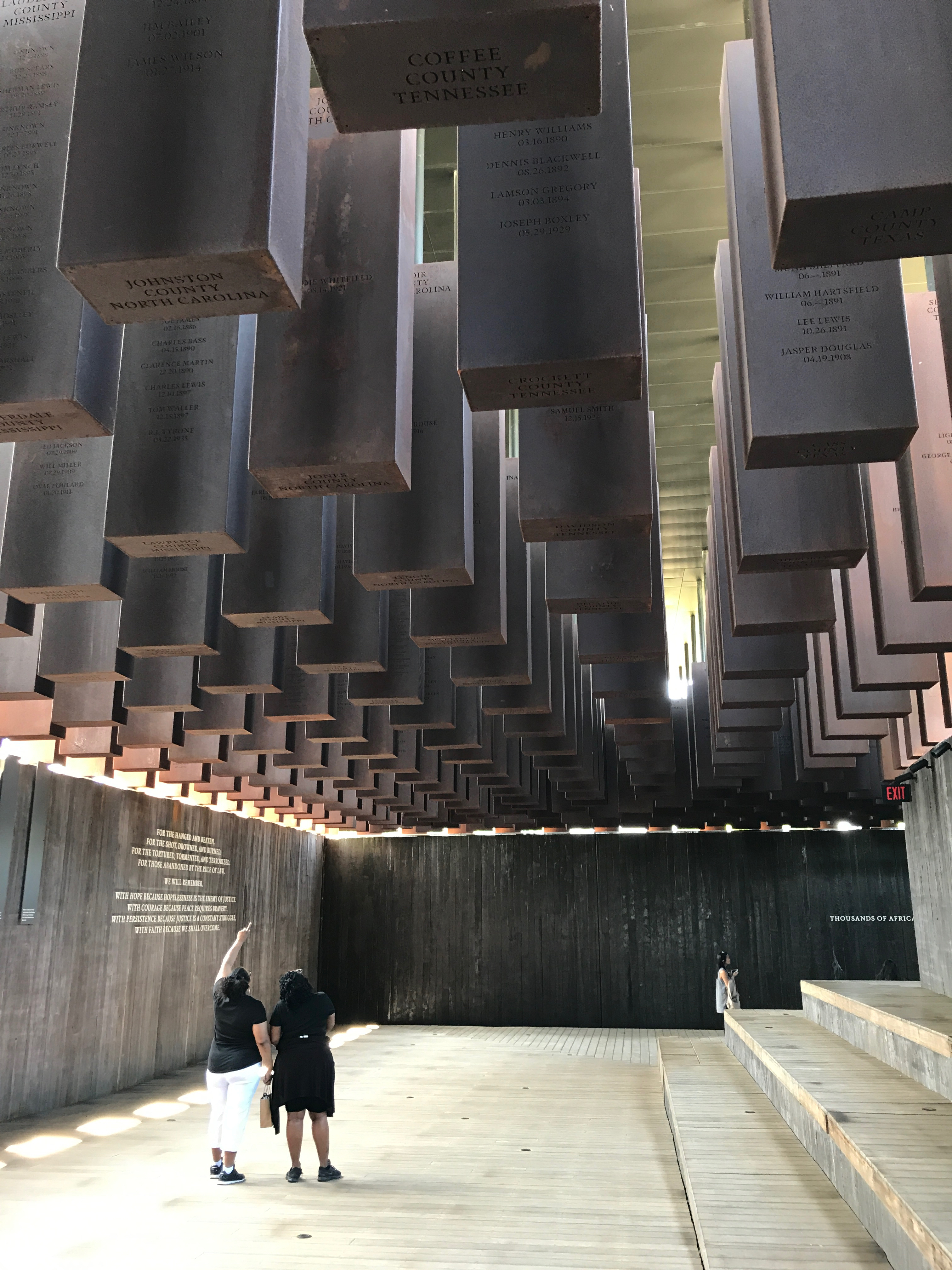
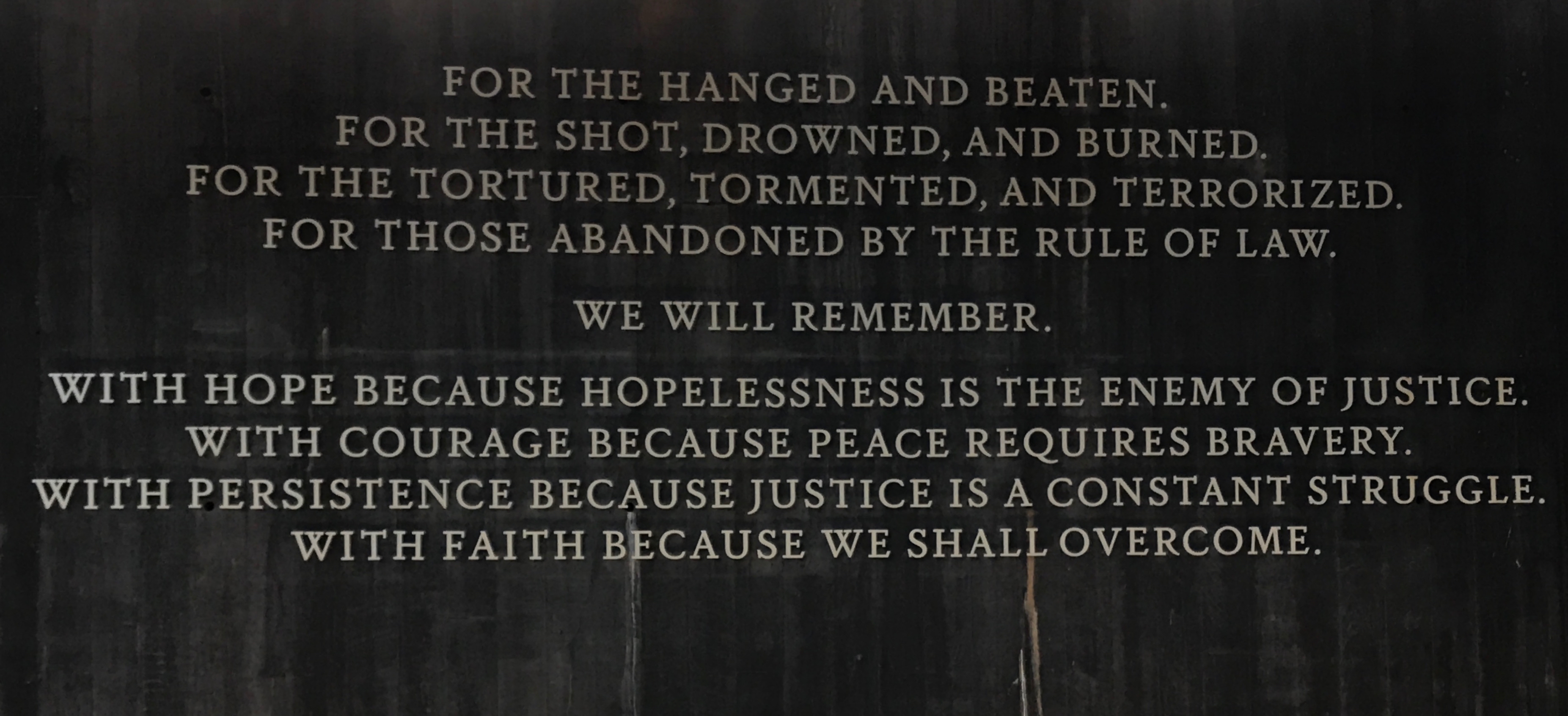
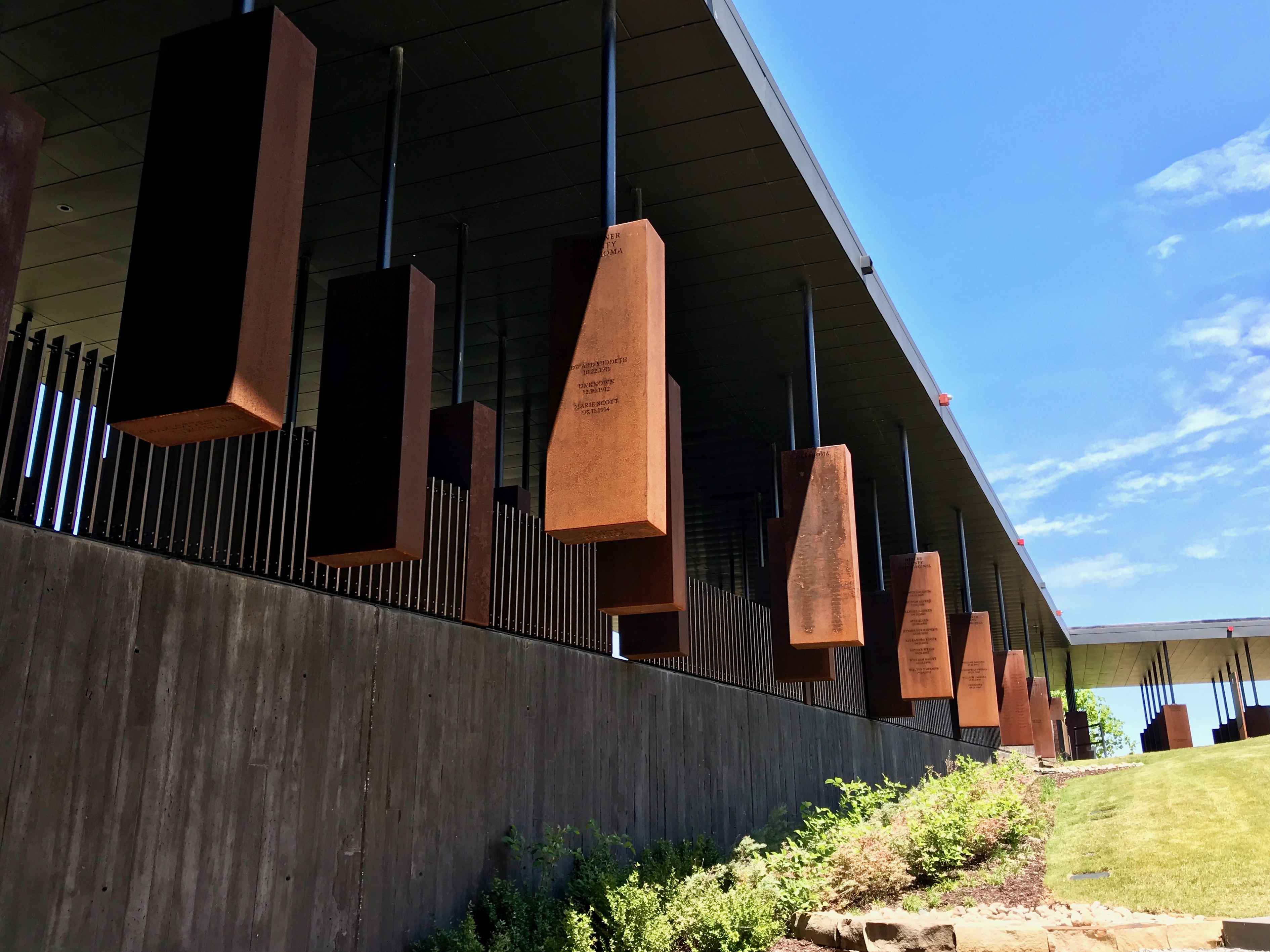
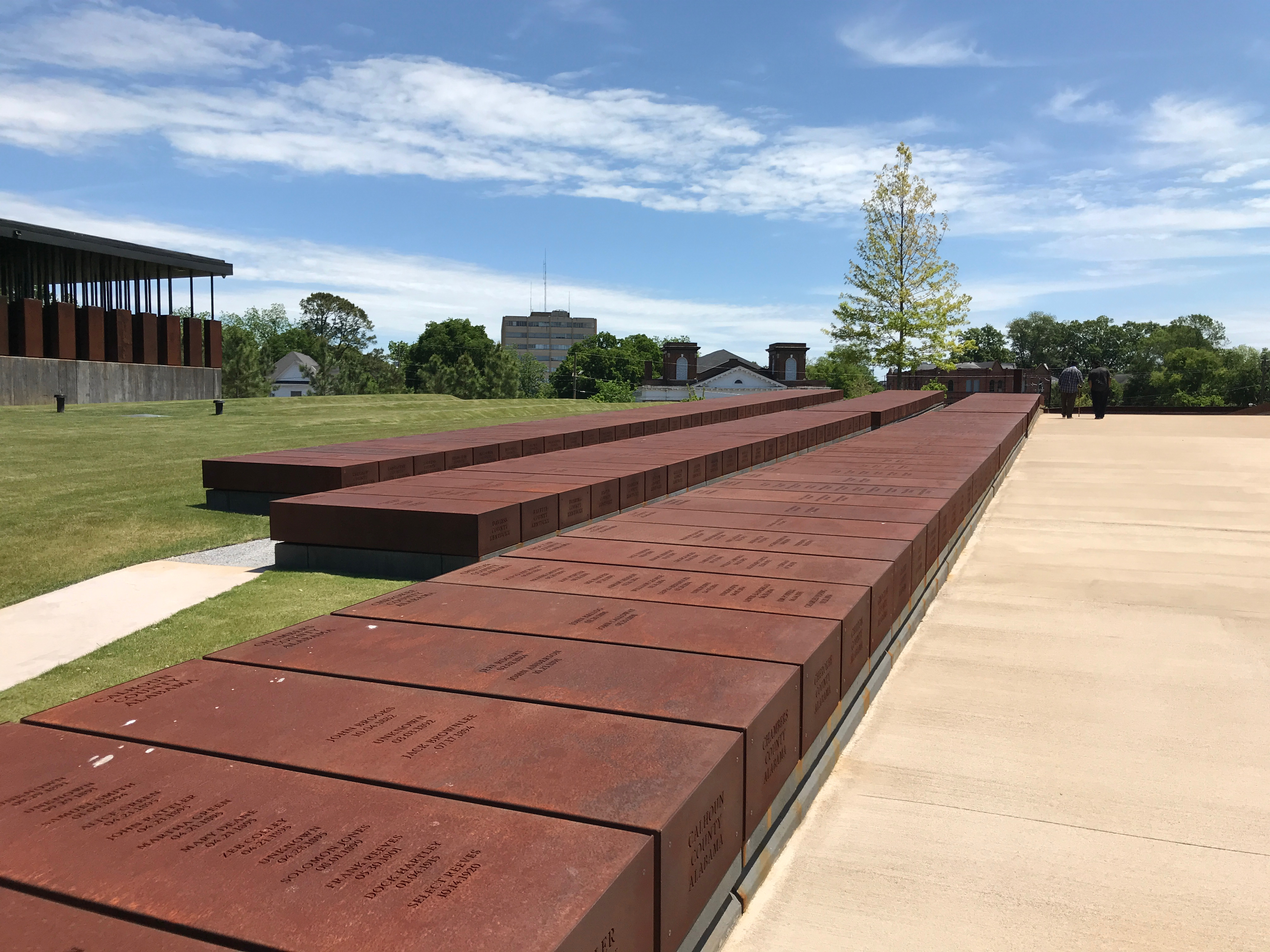
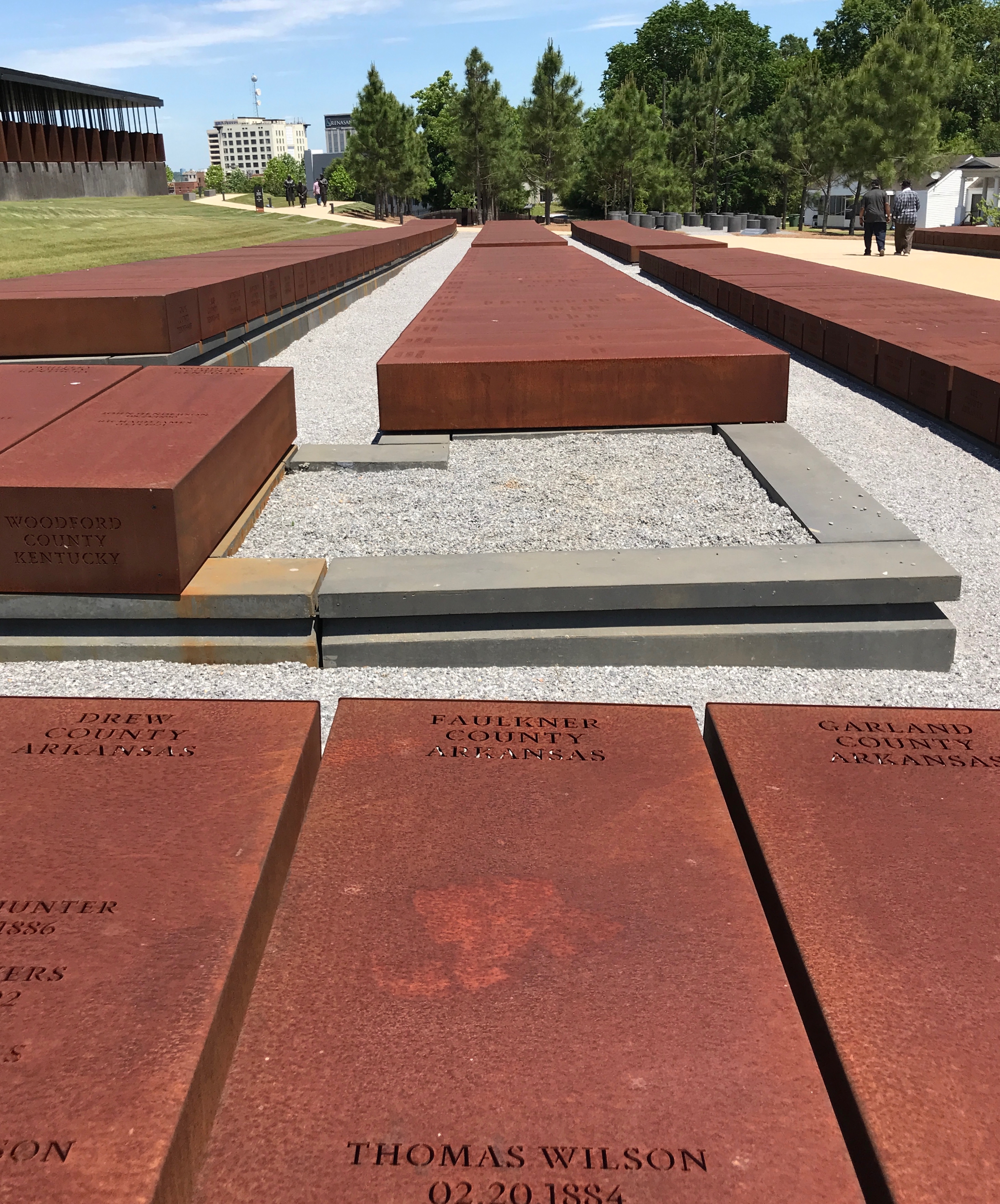
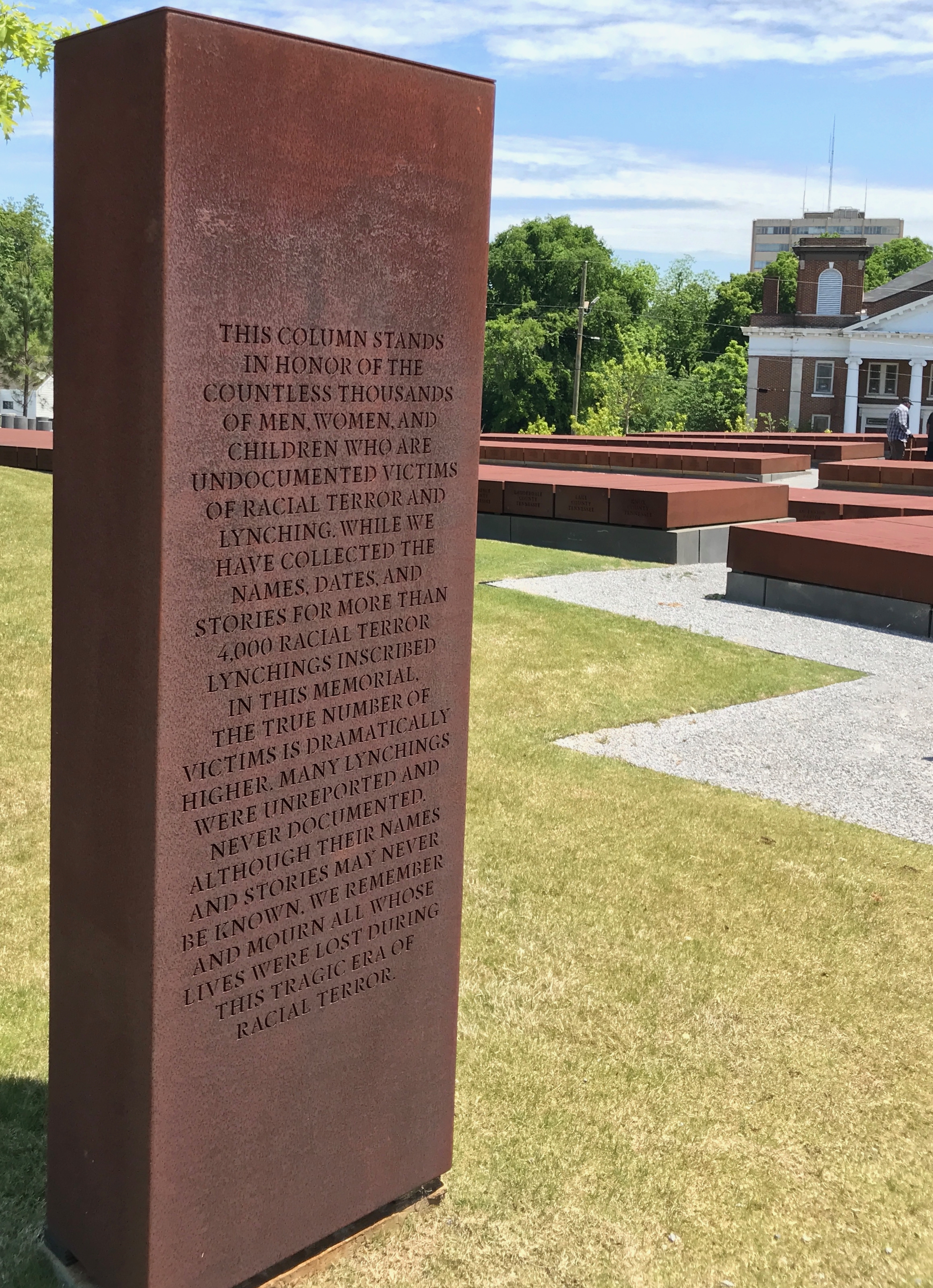
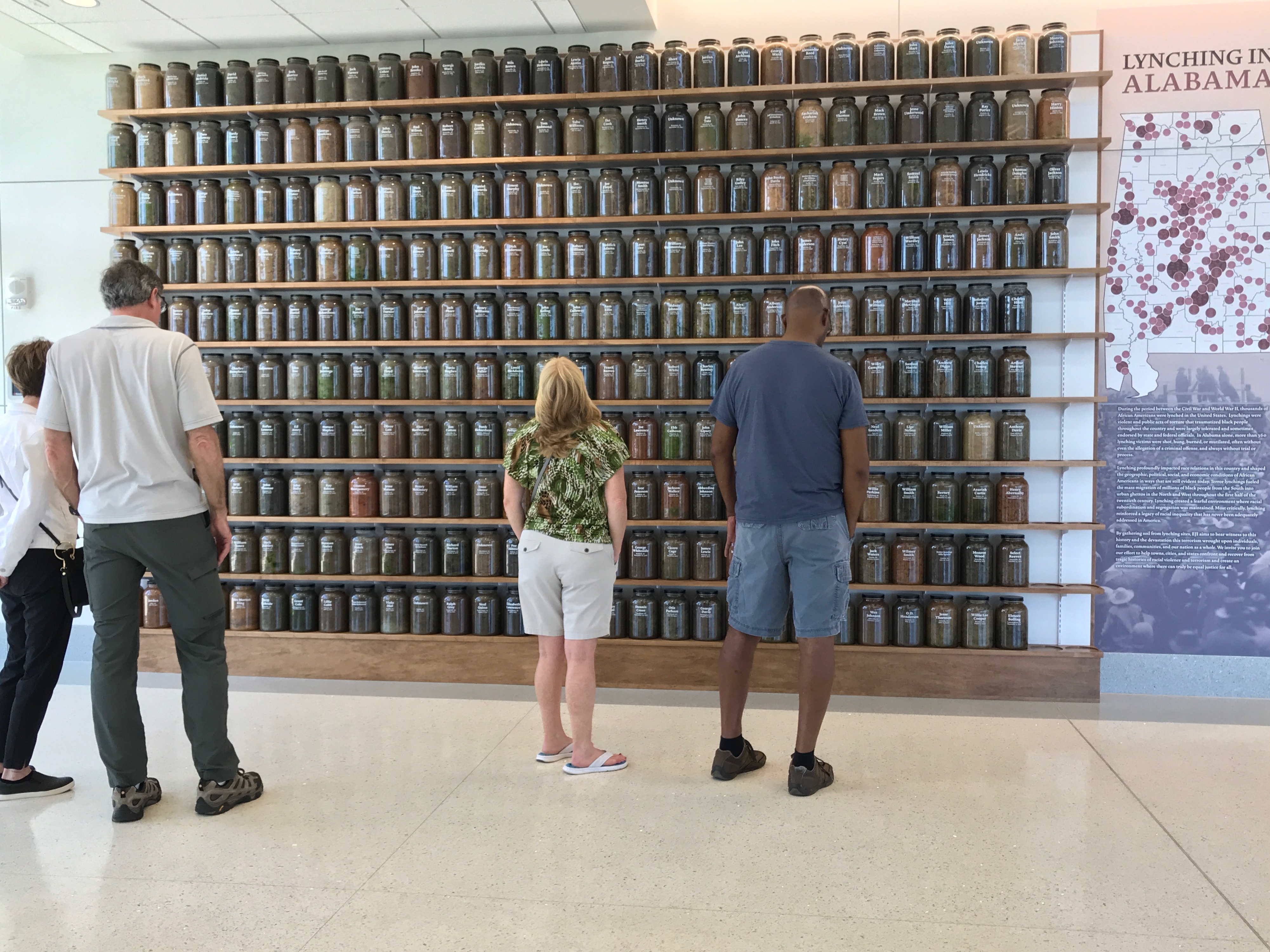
Researchers studied the records in counties and parishes across the United States and documented around 4,400 racial terror lynchings in the Post-Reconstruction era between 1877 and 1950. From what I had heard at the time of the opening, those hanging rectangular prisms inside the memorial represented each of the counties where a documented lynching took place in the United States. On each piece, in addition to the name of the county, is the name of the state and the names of the victims and the dates of their murders. If the name is not known, “unknown” is engraved on the panel.
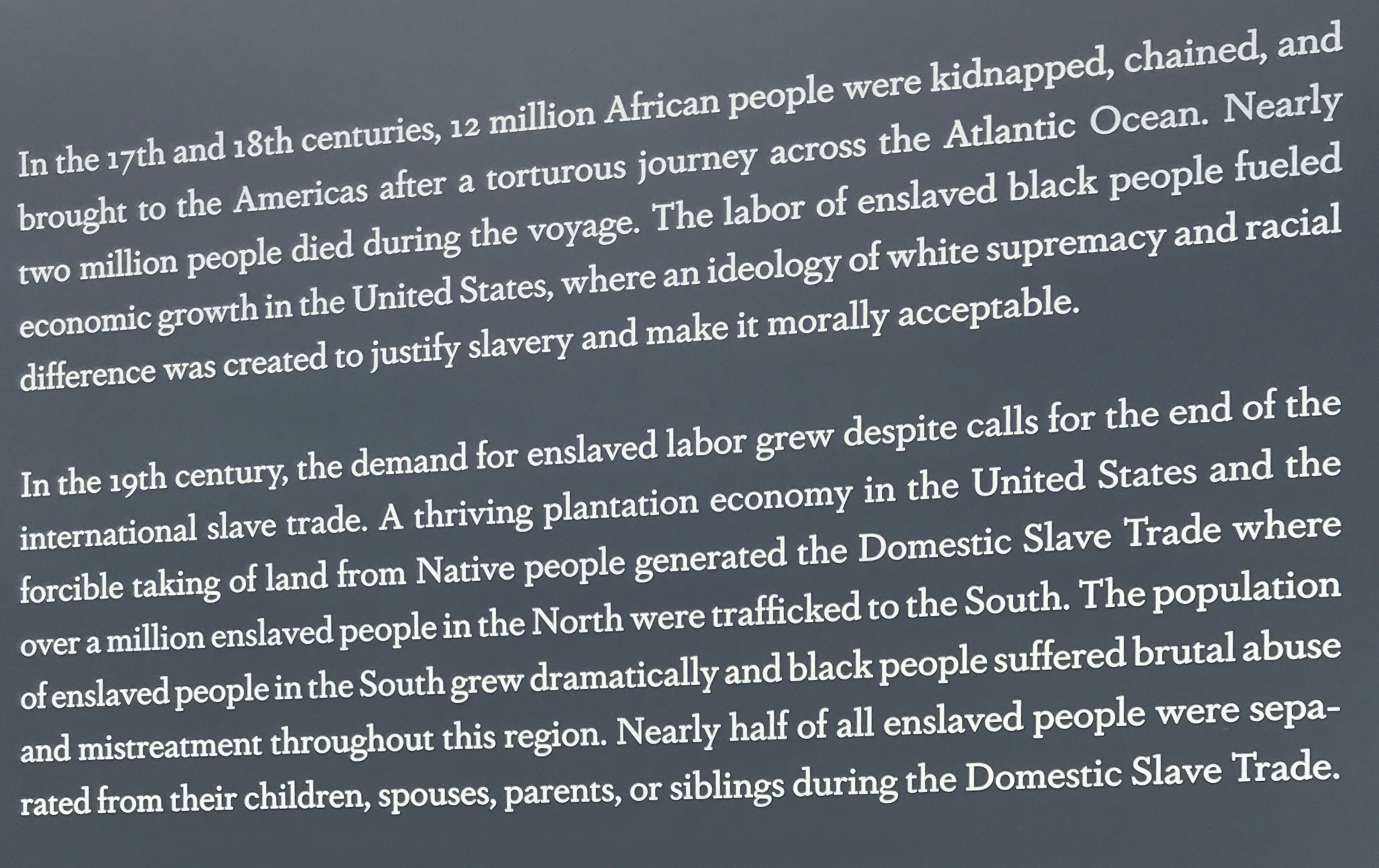
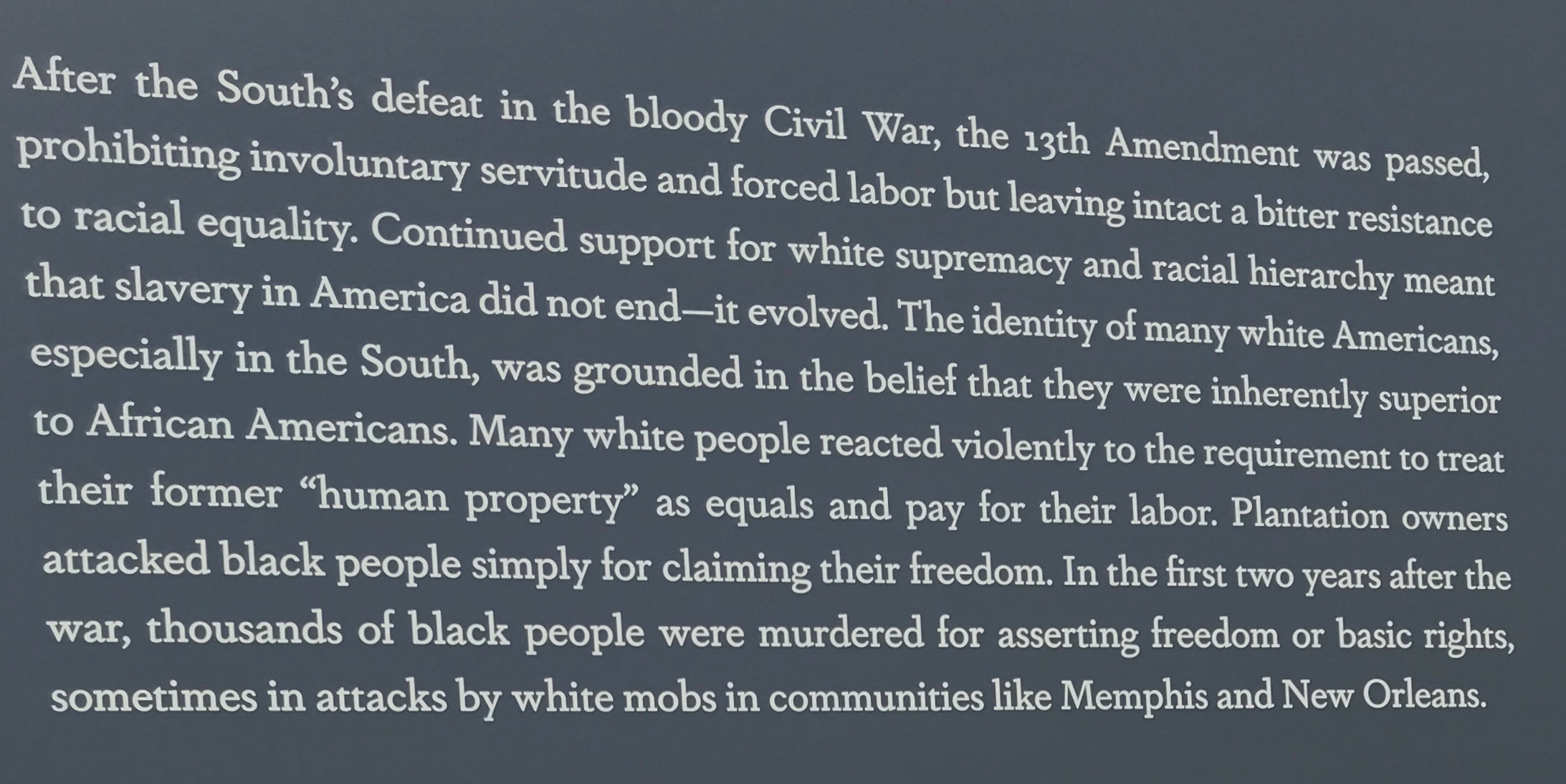
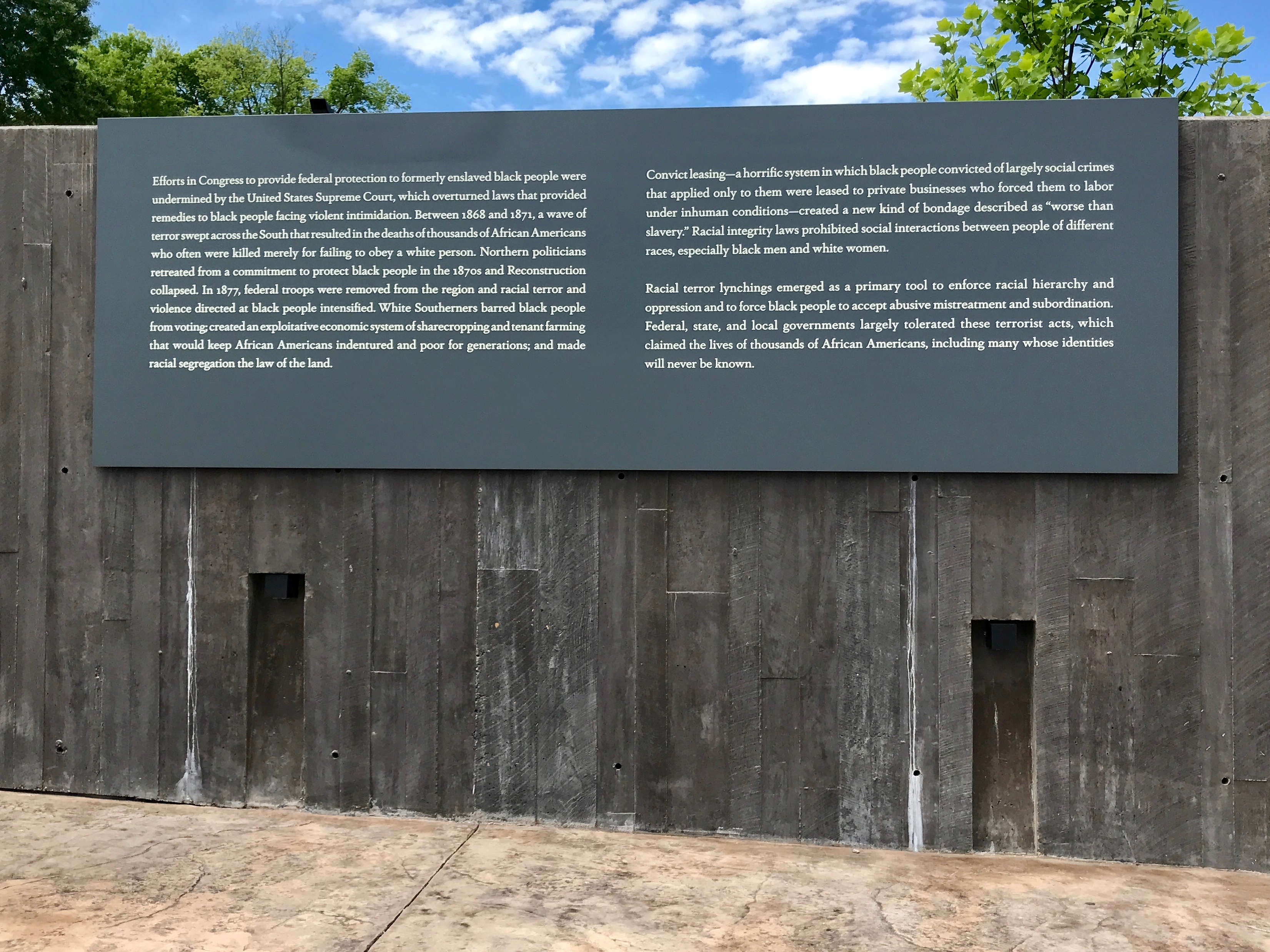
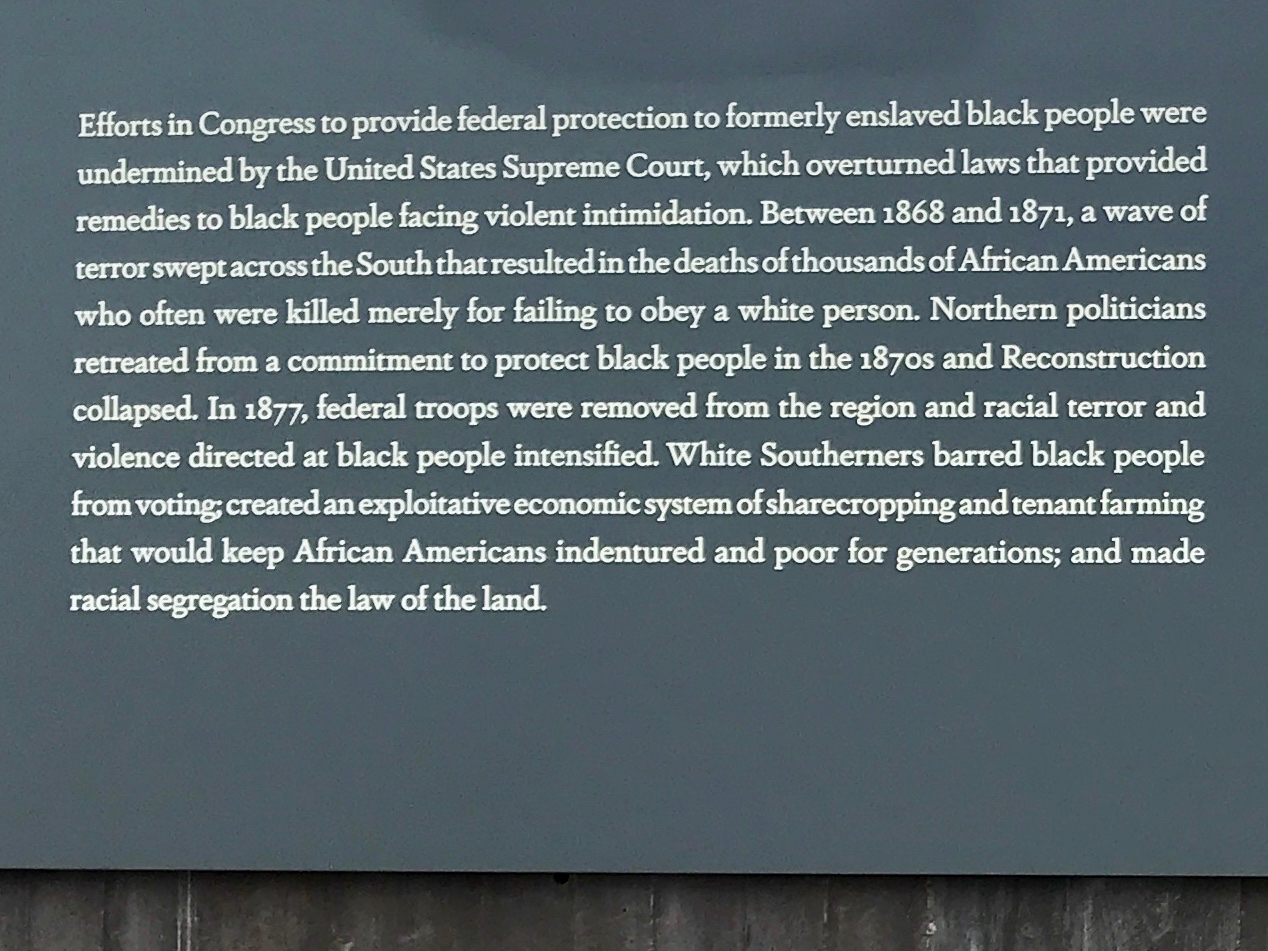
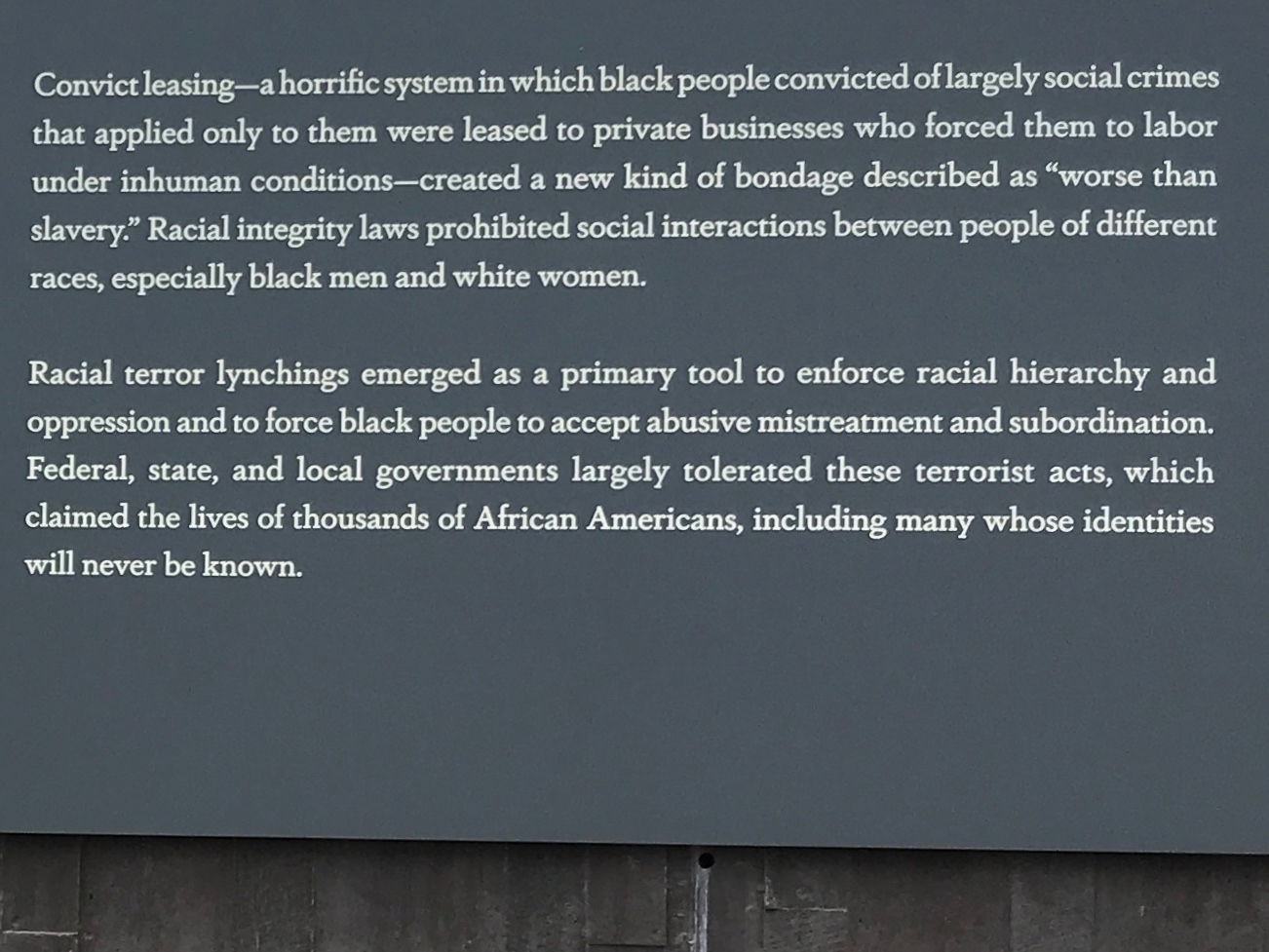
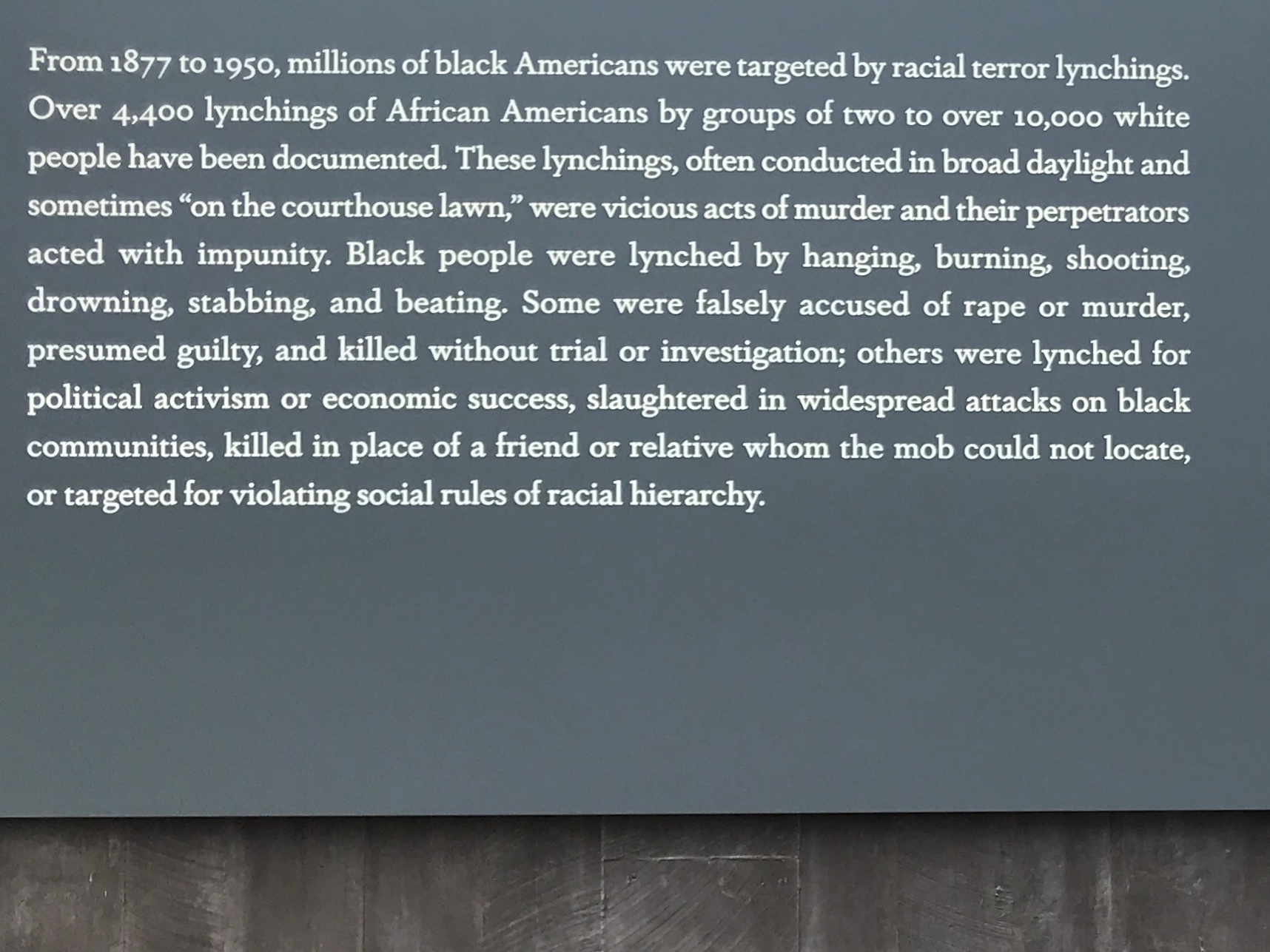
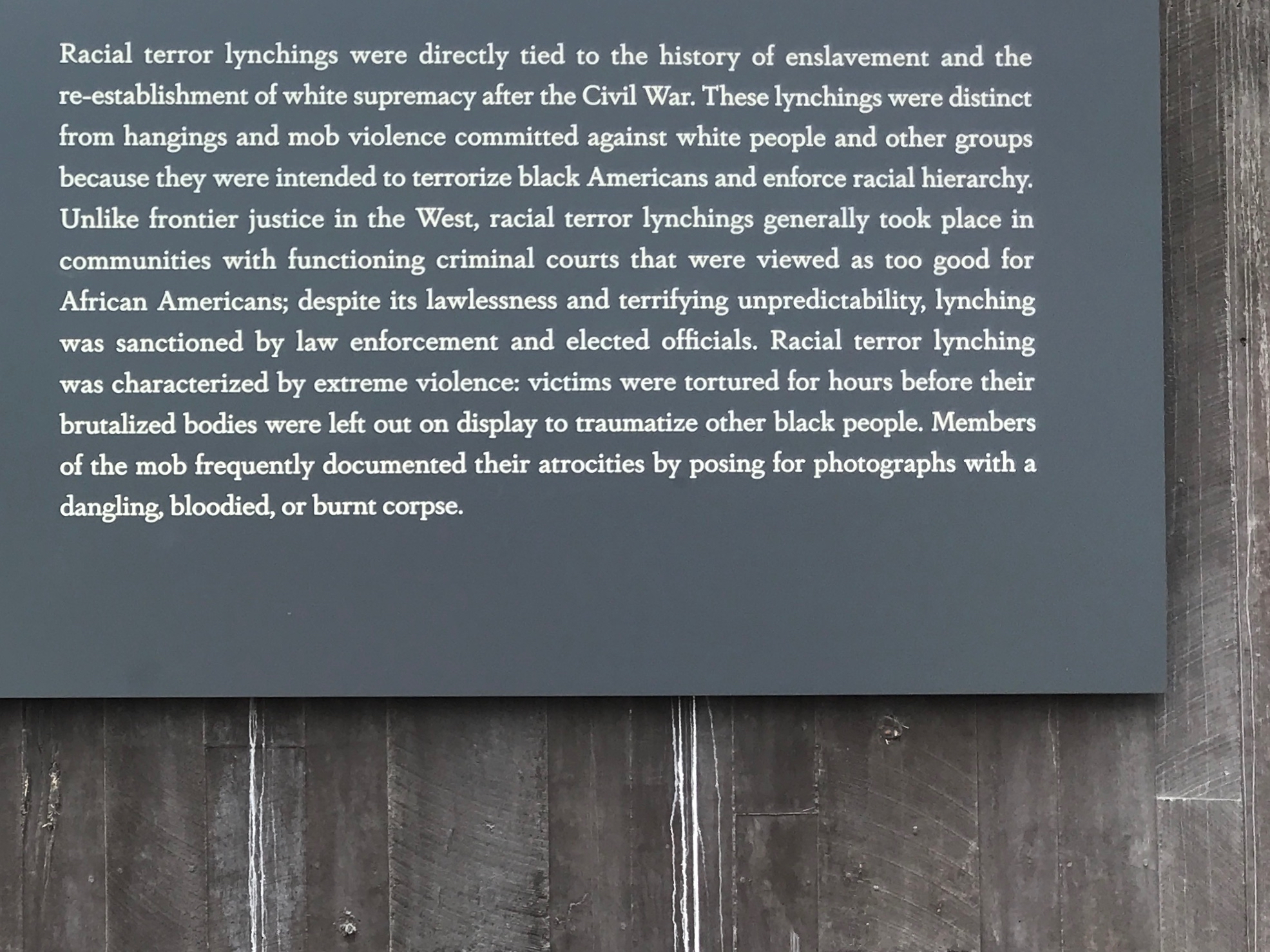
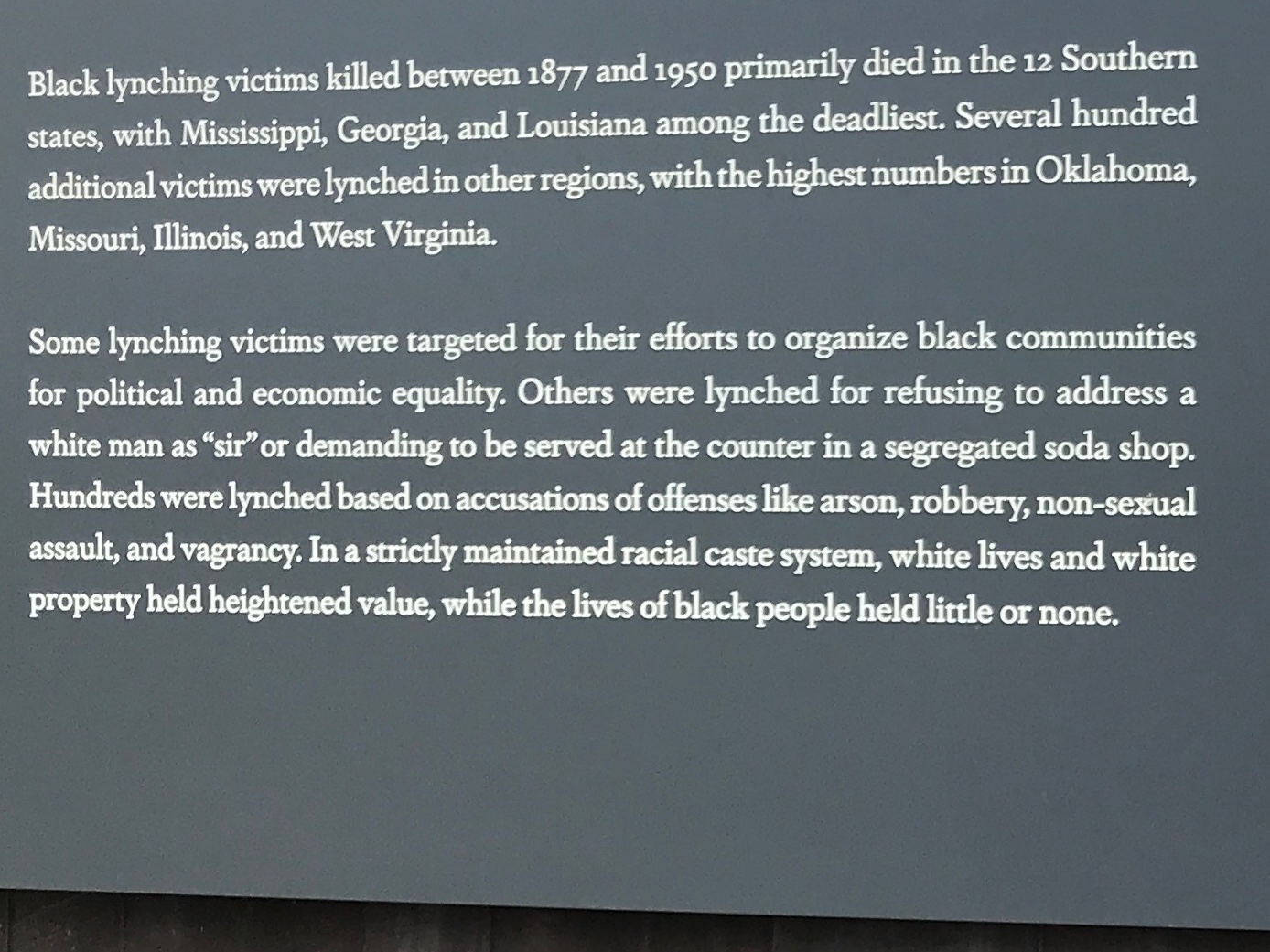
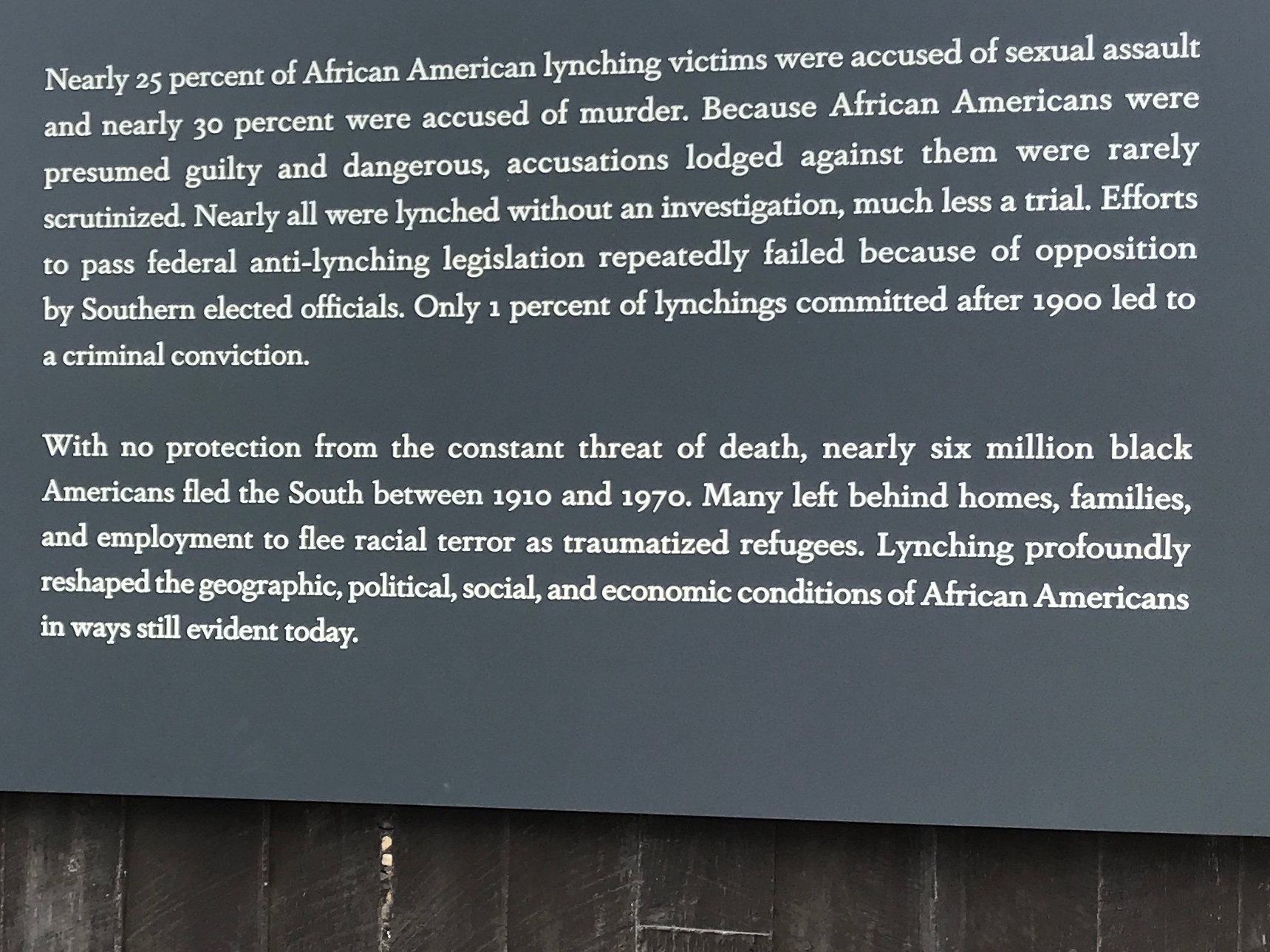
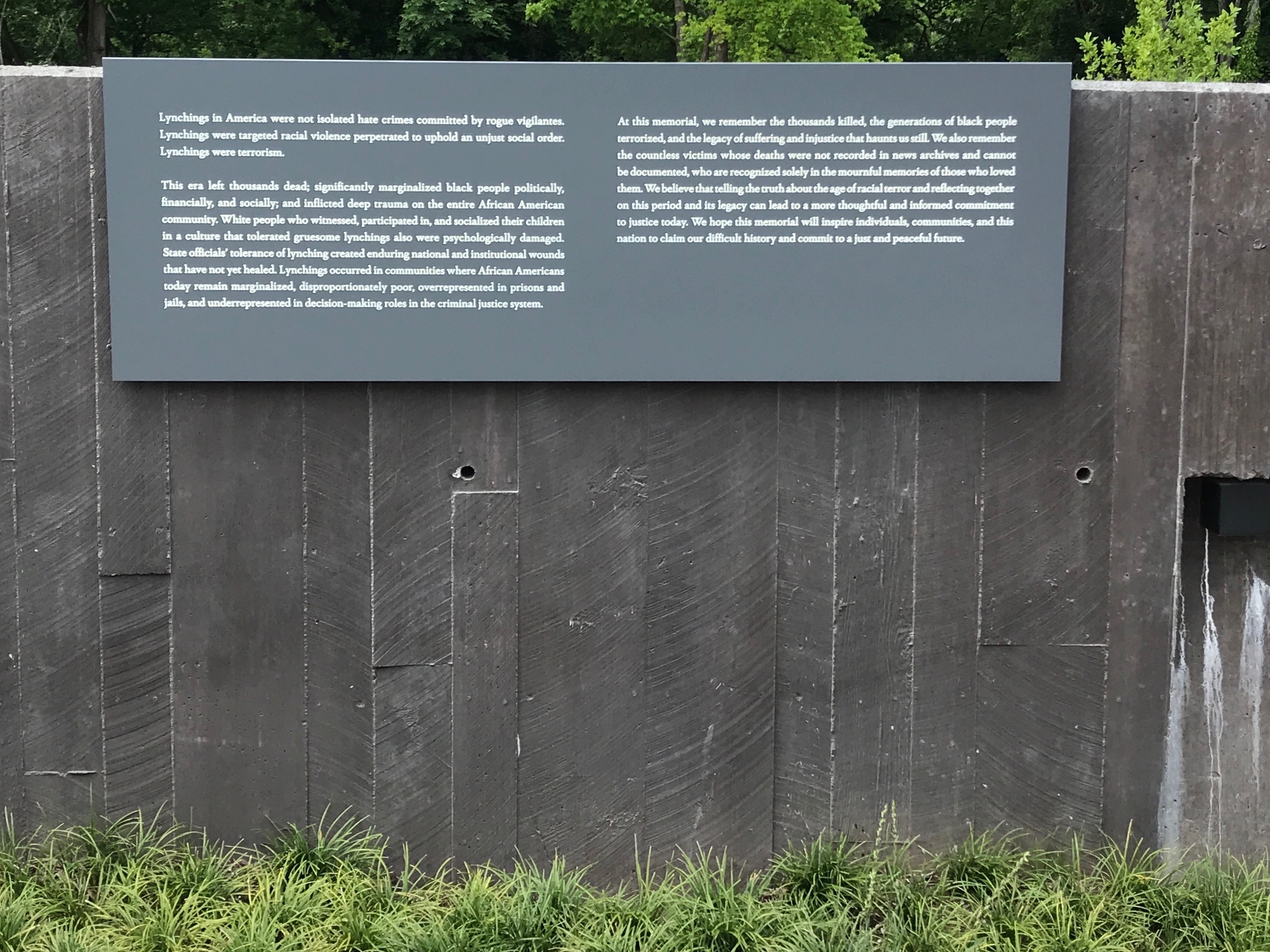
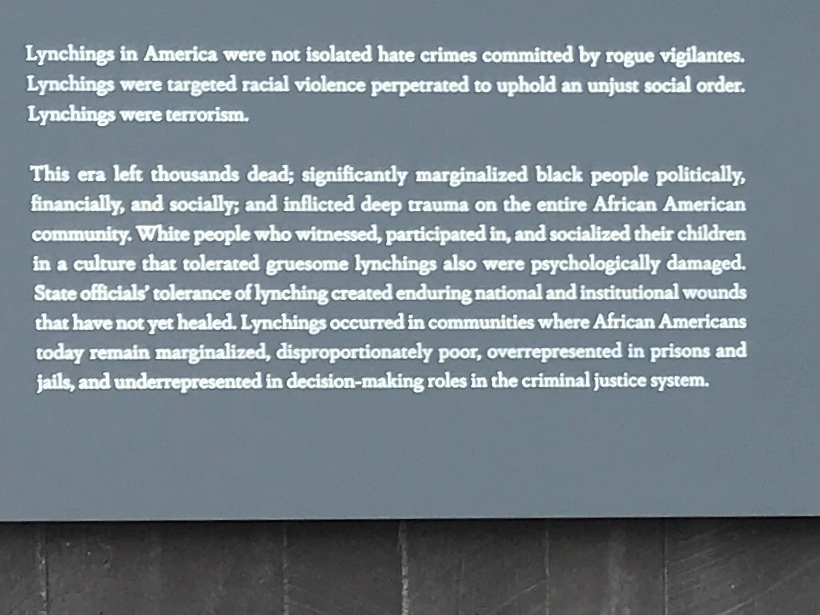
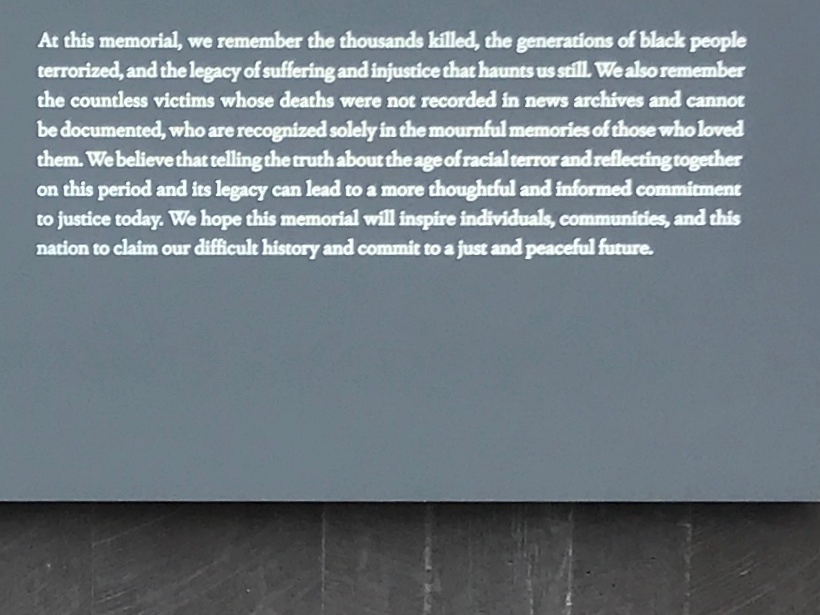
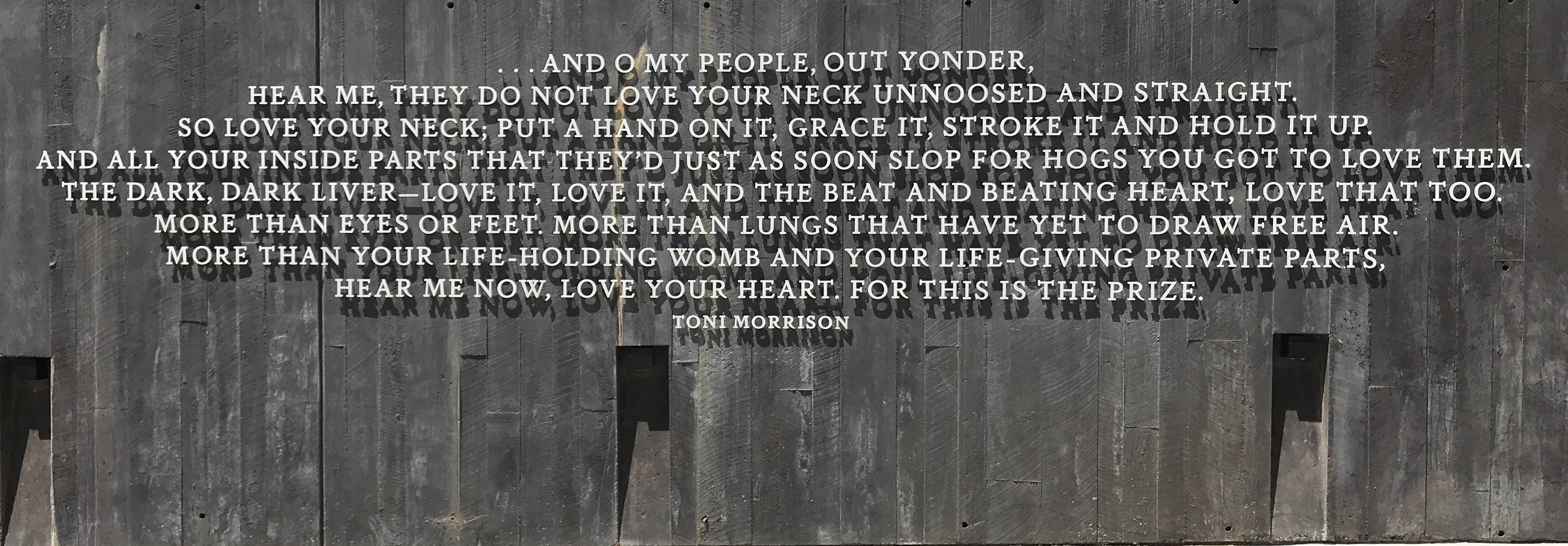
As you approach the memorial square, you pass educational signs that give background to the injustice that is documented in the memorial. I recommend wearing comfortable shoes and planning to take the time to read them. If you are having trouble reading them on site, take photos.
Rather than a synopsis of the material, I am including my photos in this post.
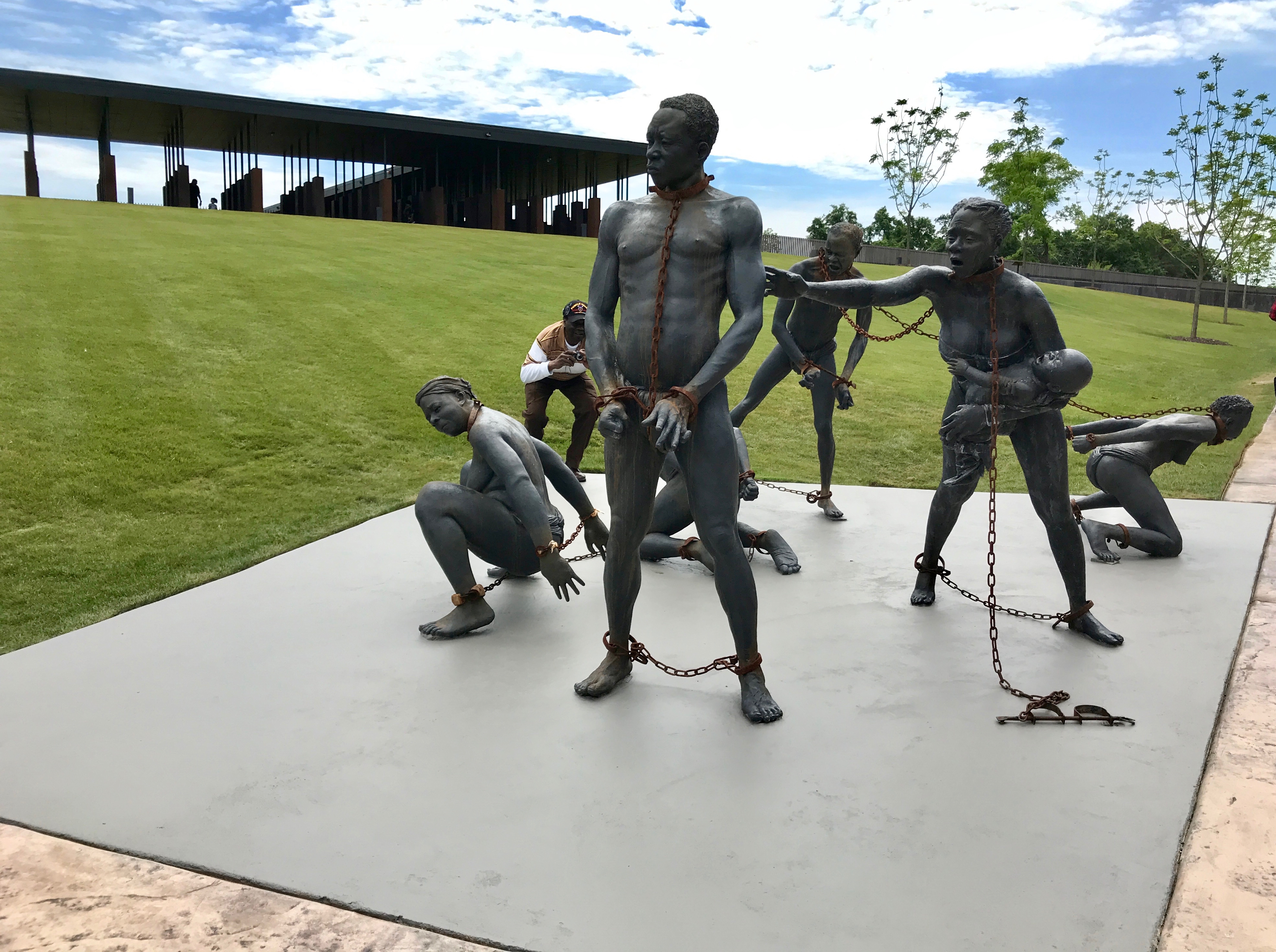
As the path to the memorial square winds around the grounds, you come to the first of three sculptures, Nkyinkyim by Ghanaian artist Kwame Akoto-Bamfo. Nkyinkyim means “twisted”, taken from a Ghanaian proverb, “life is a twisted journey”.
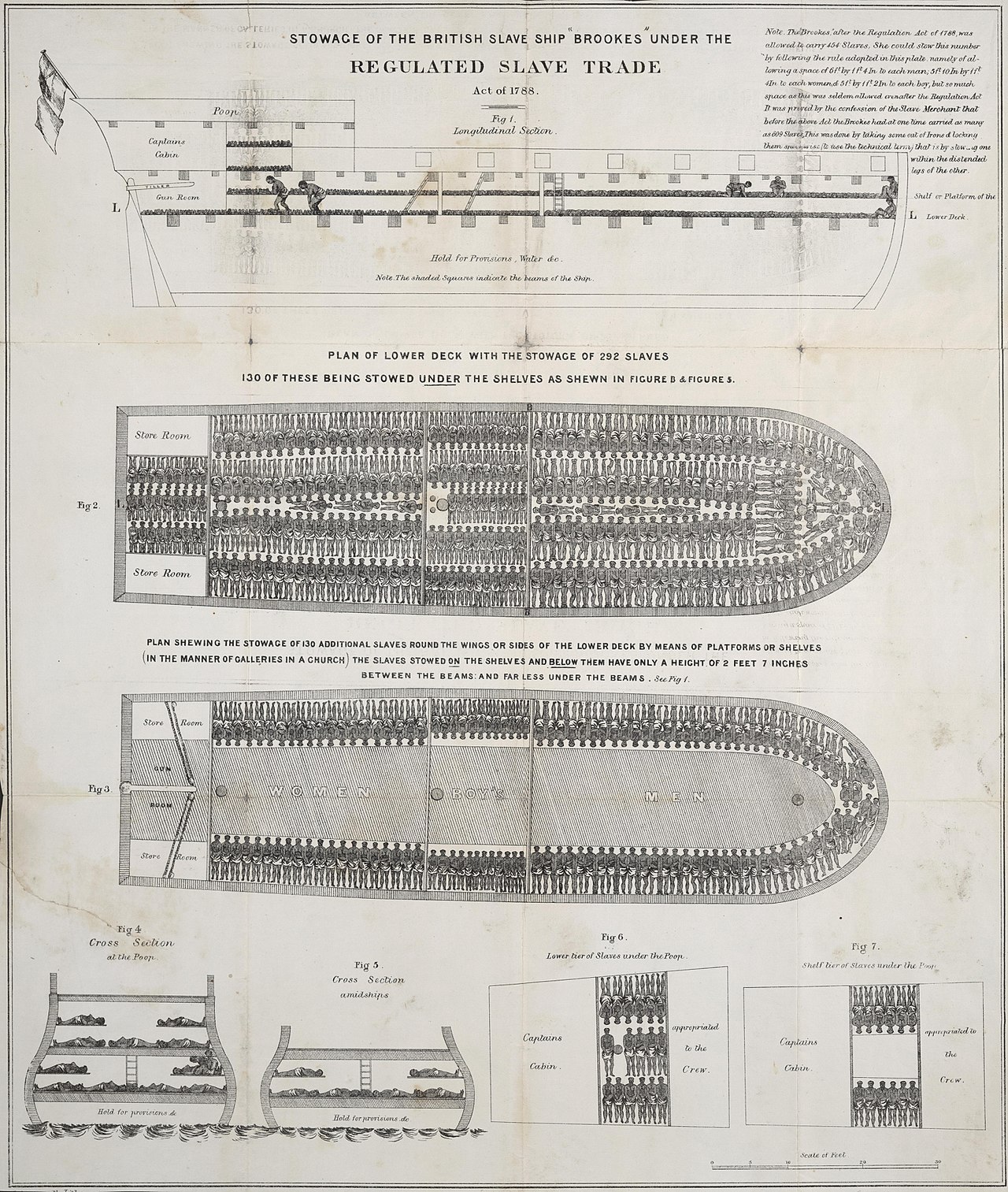
While I had seen the famous illustrations of slave ships and their cargo, like this one, they never conveyed the terror of the victims like Akoto-Bamfo’s work of art did.
By Plymouth Chapter of the Society for Effecting the Abolition of the Slave Trade – This image is available from the United States Library of Congress
I continued past more educational material.
And still more.
It is long, but worth the time it takes to read it.
Really, if this is too much for you to read, you can come back to it later. It’ll still be here.
As hard as it is to slow down and walk and read when you have a goal in mind, when you are there, it serves to focus and heighten the experience.
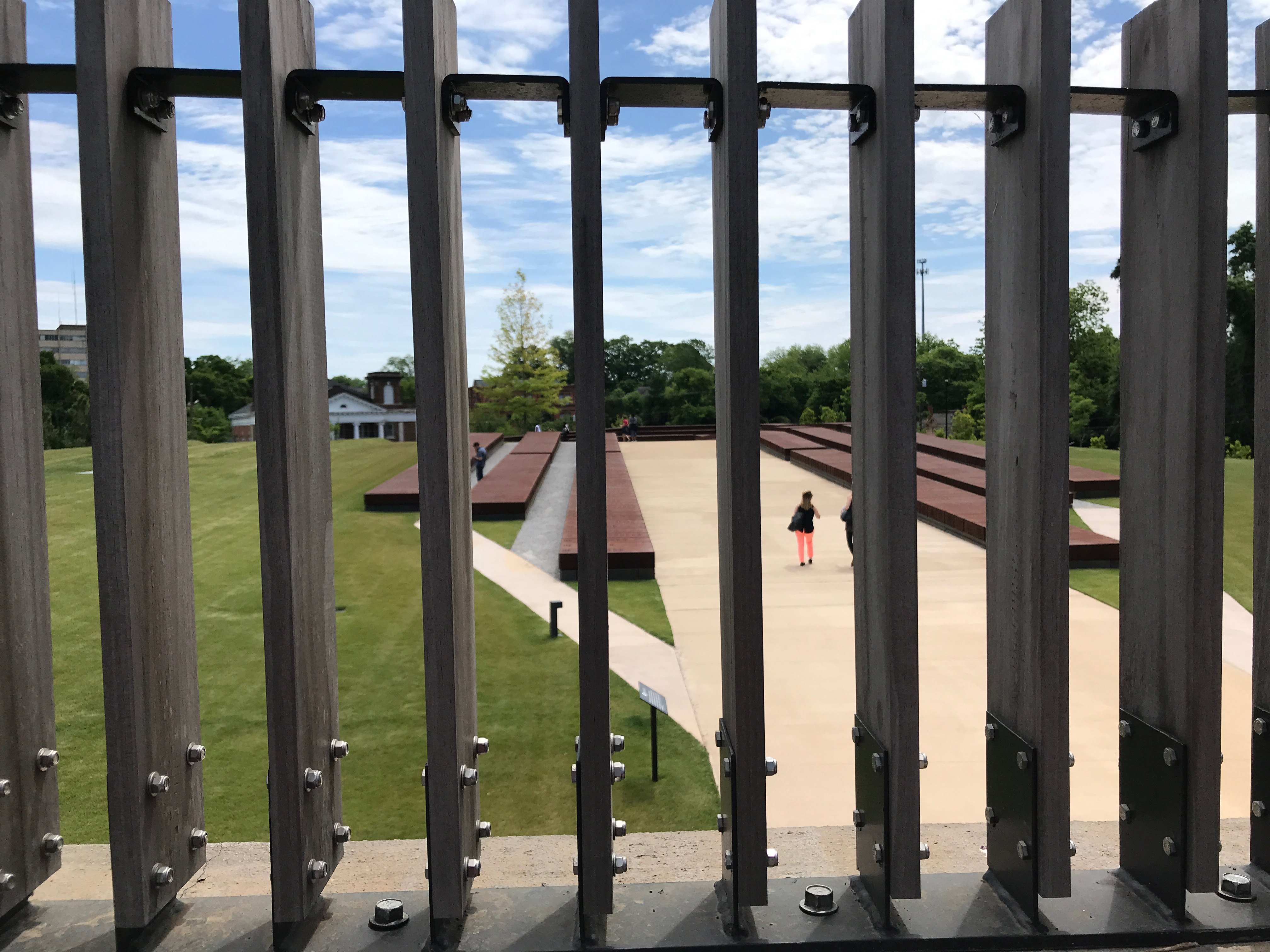
At last, I reached Memorial Square.
And then I am inside.
There are 805 of these coffin-shaped boxes.
It is overwhelming.
I left the structure.
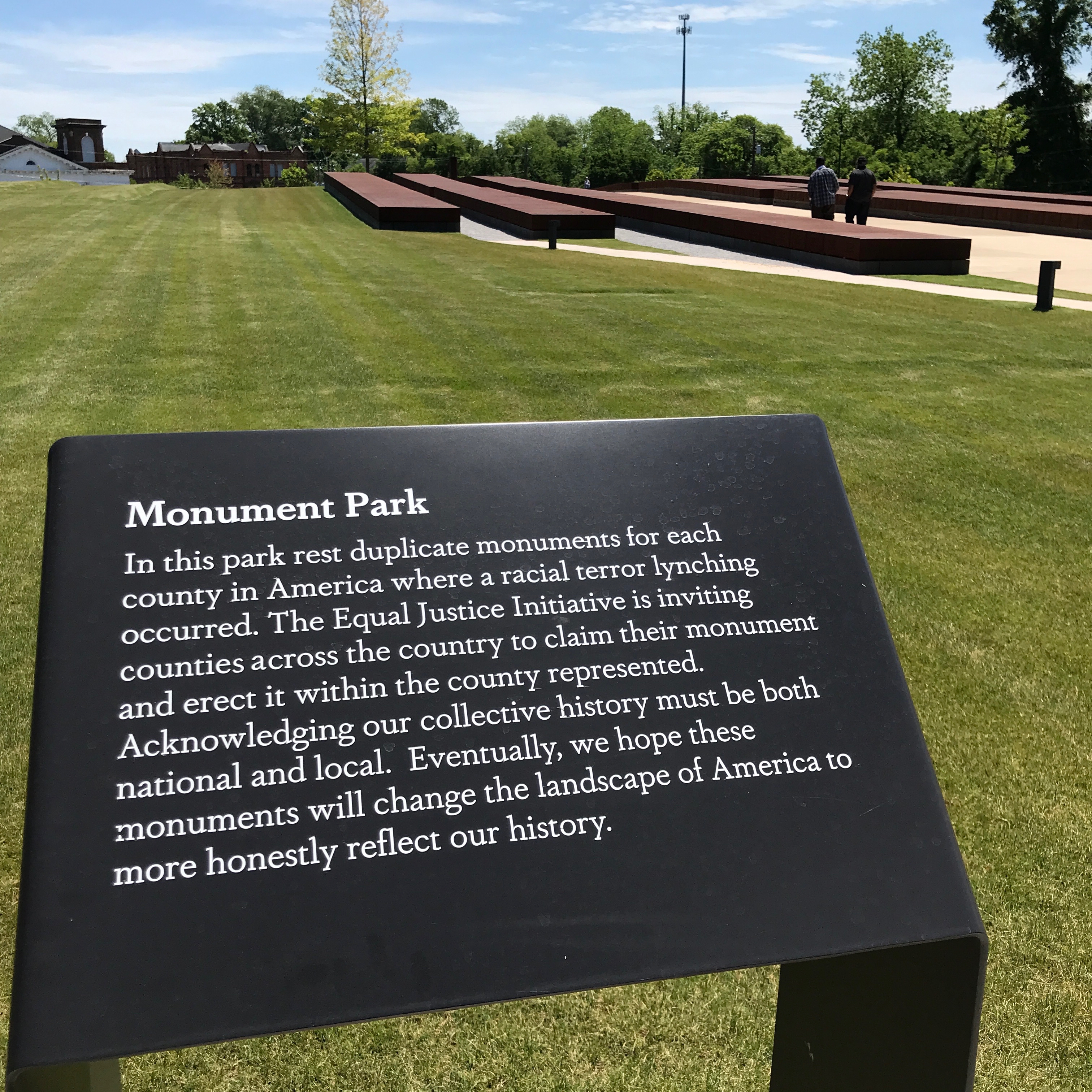
I went over to Monument Park.
I wonder how many counties have claimed their duplicate monument?
It is overwhelming.
How many?
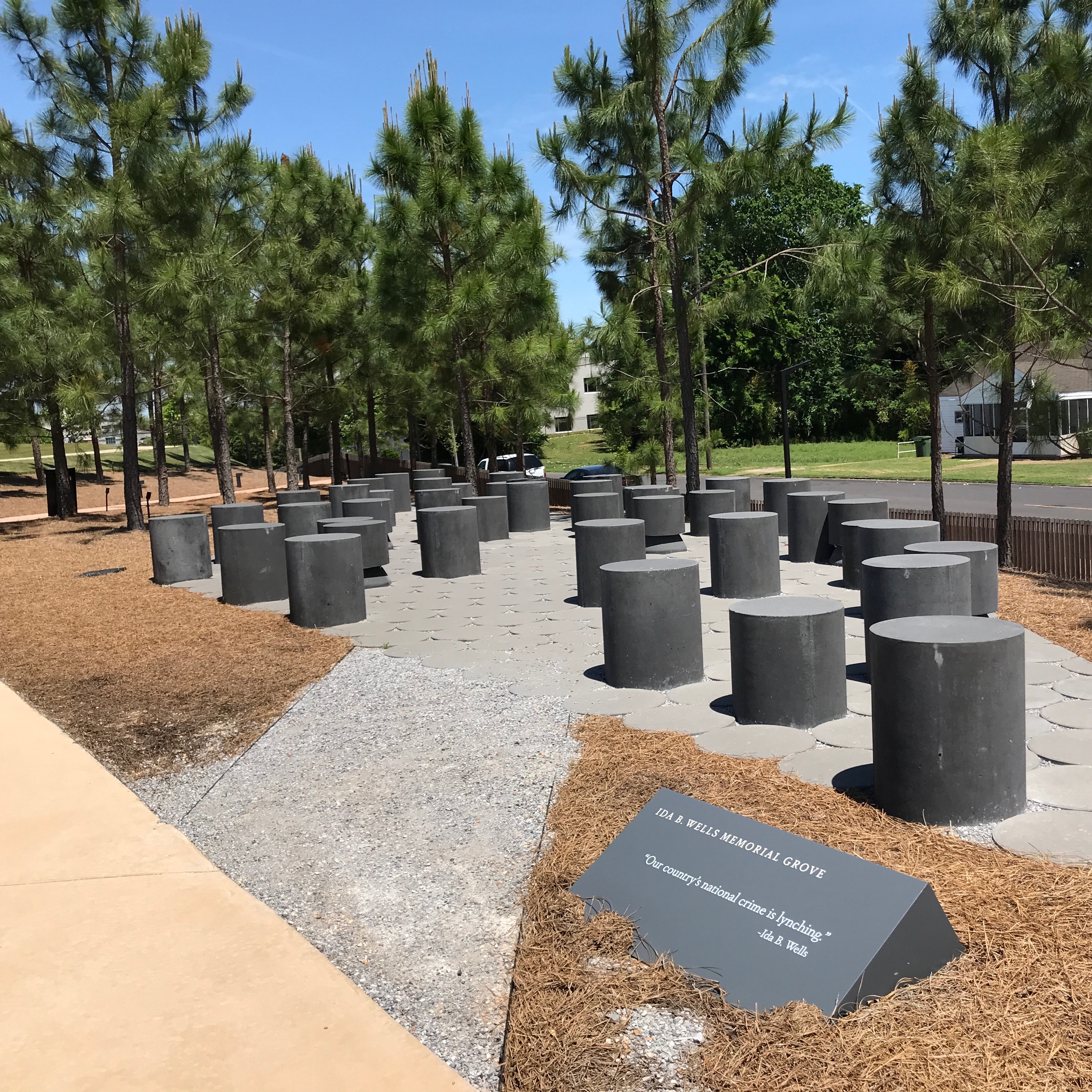
The Ida B. Wells Memorial Grove was interesting. There was no information about it that I saw nearby, although the memorial webpage describes it as a “reflection space.” In a few years, the trees will shade the area and make it a lovely respite from the sun.
Ida B. Wells is a historical American figure that we should all know about. It is particularly appropriate that she is honored here, as she was a journalist who wrote about lynchings in real time. What courage that must have taken.
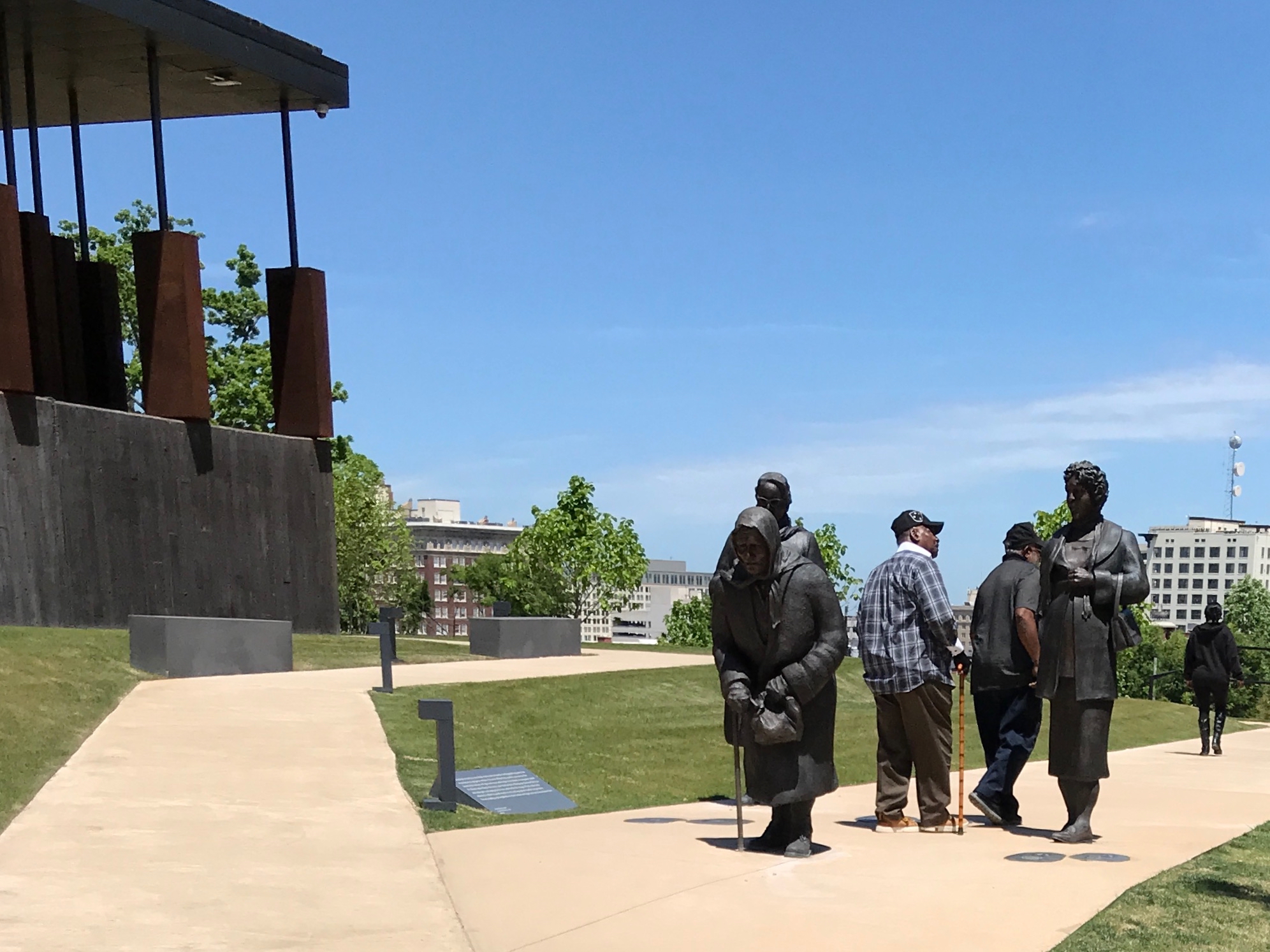
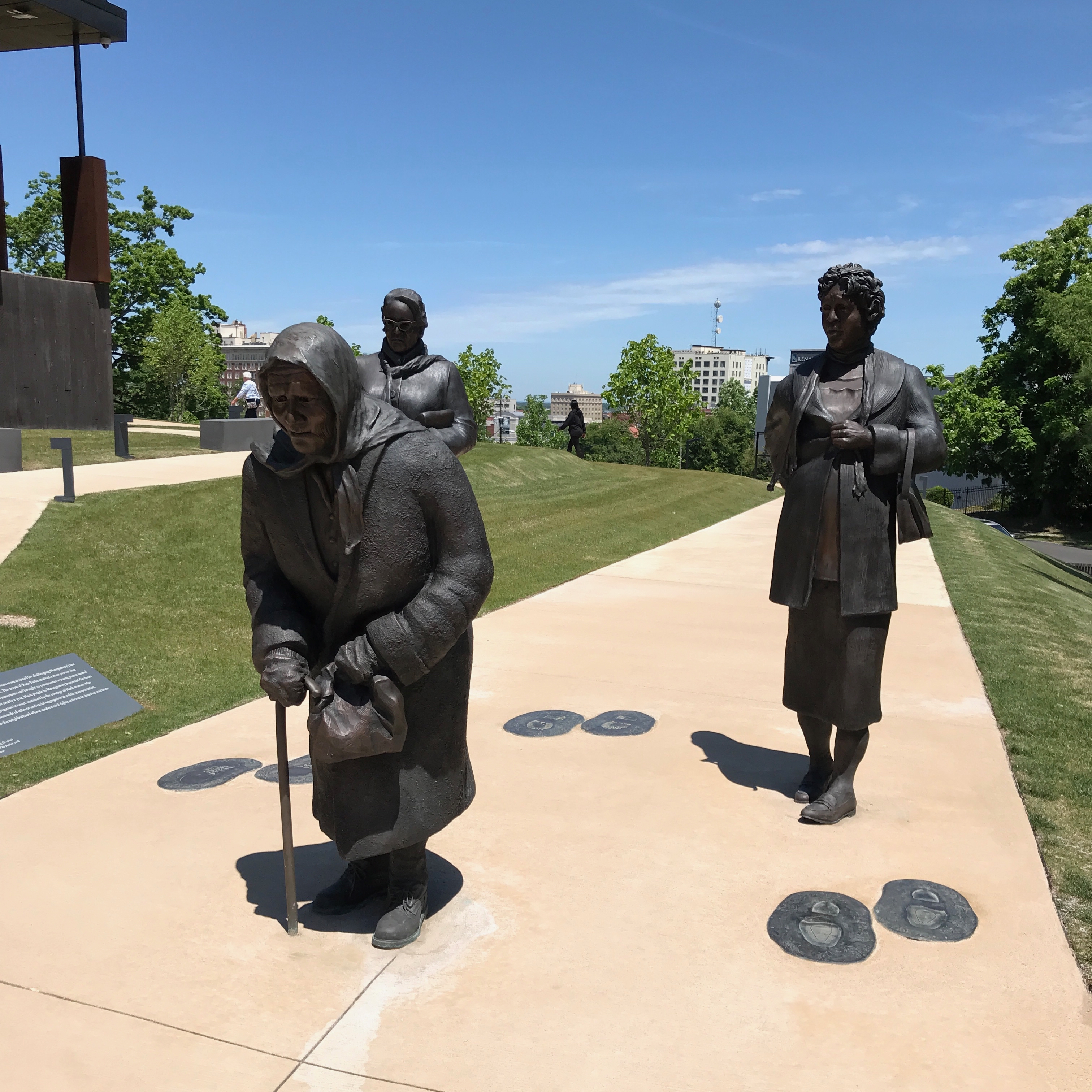
I wound my way around to this sculpture grouping, Guided By Justice by Dana King.
King’s sculpture honors the participants in the Montgomery Bus Boycott. She chose to depict three women: a grandmother, a teacher, and a pregnant woman. Her sculpture aims to have views reconsider the mythology of the heroines of the bus boycott. The focus on Rosa Parks draws attention away from the thousands of other black people who were central in the success of the bus boycott.
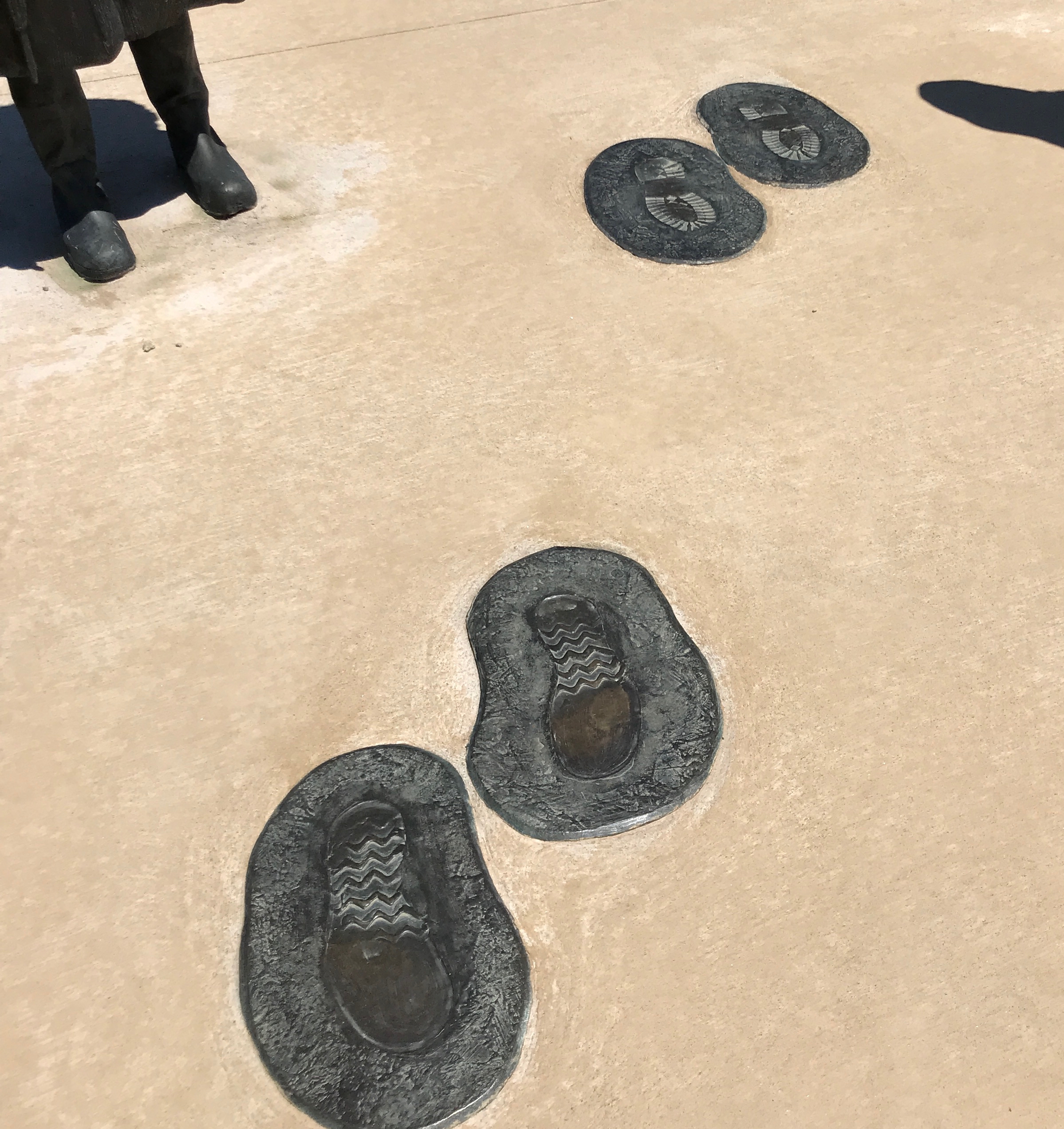
The footprints on the ground represent a call to action for others to join them in the cause.
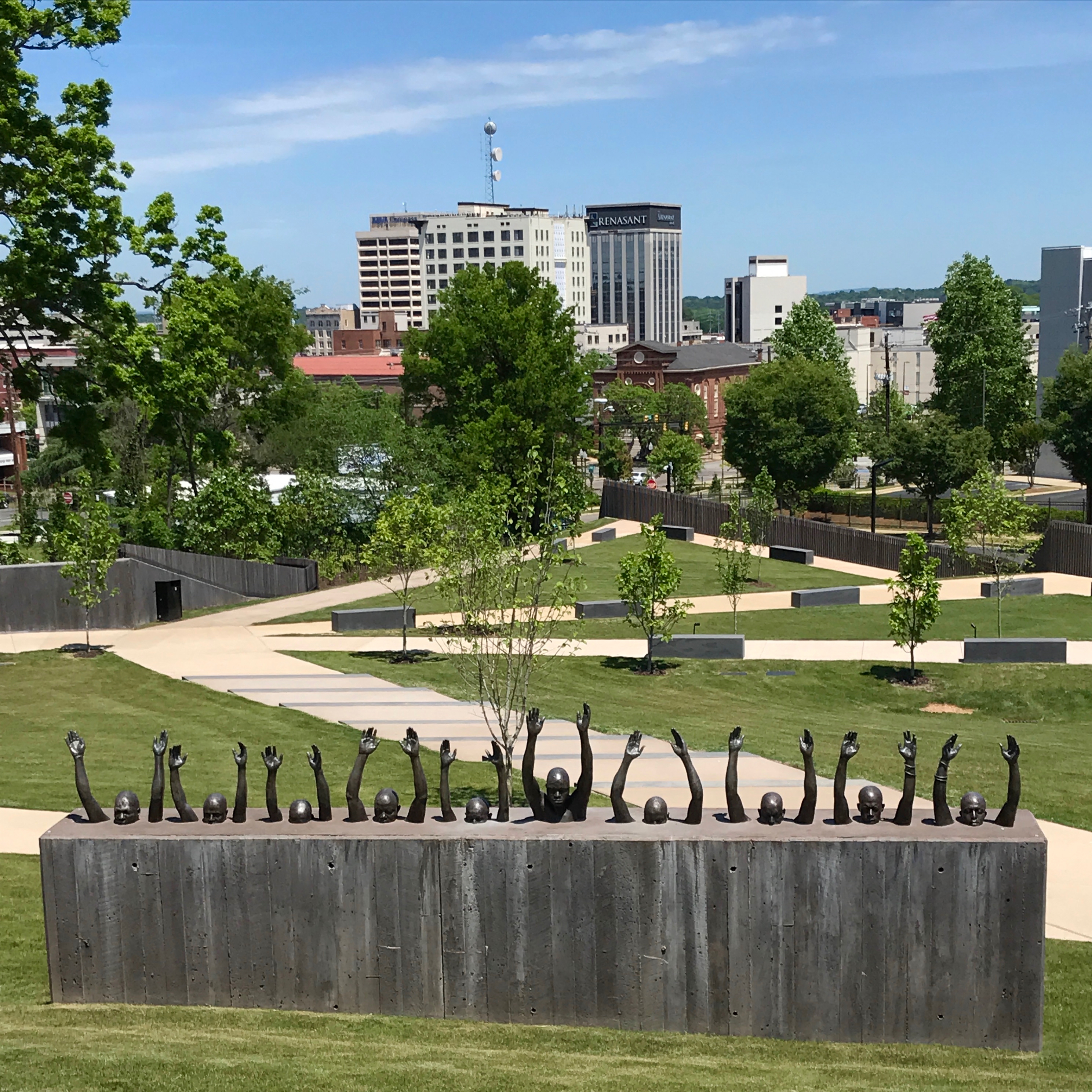
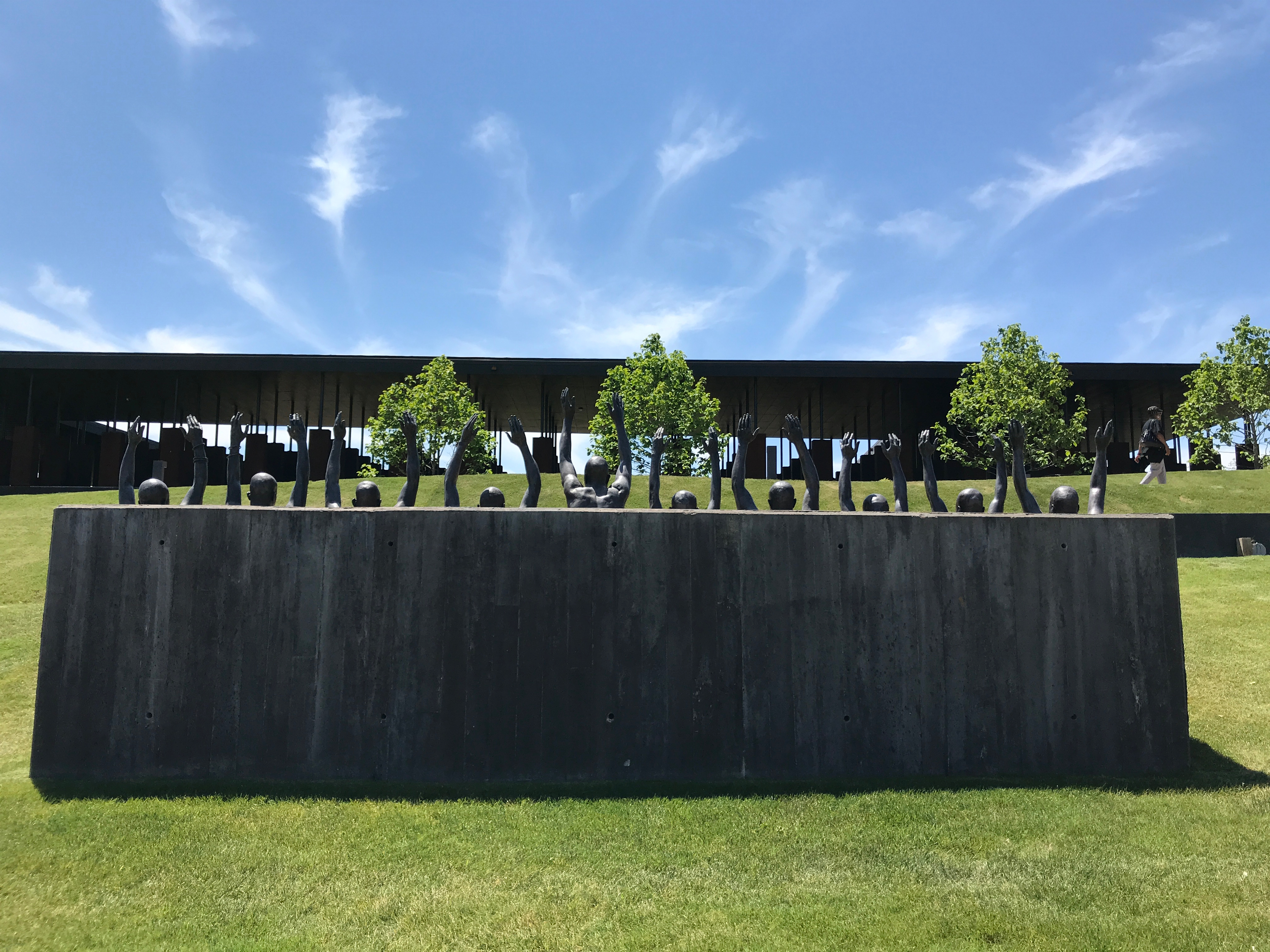
Hank Willis Thomas’ sculpture, Raise Up, is a depiction of policing in America. The sculpture depicts ten Black men encased on concrete, with their hands up and their eyes closed. His artistic choice to encase these men in concrete, some with their heads sunken in, demonstrates the lack of control and autonomy black people have over their own bodies. Though most of their bodies are covered and they are unable to move, their hands are clearly visible, referencing the many stories of unarmed Black men being shot and brutalized by police.
The National Memorial uses Thomas’ sculpture as a connection to the present, a kind of call to action that the fight for justice and liberation is ongoing.
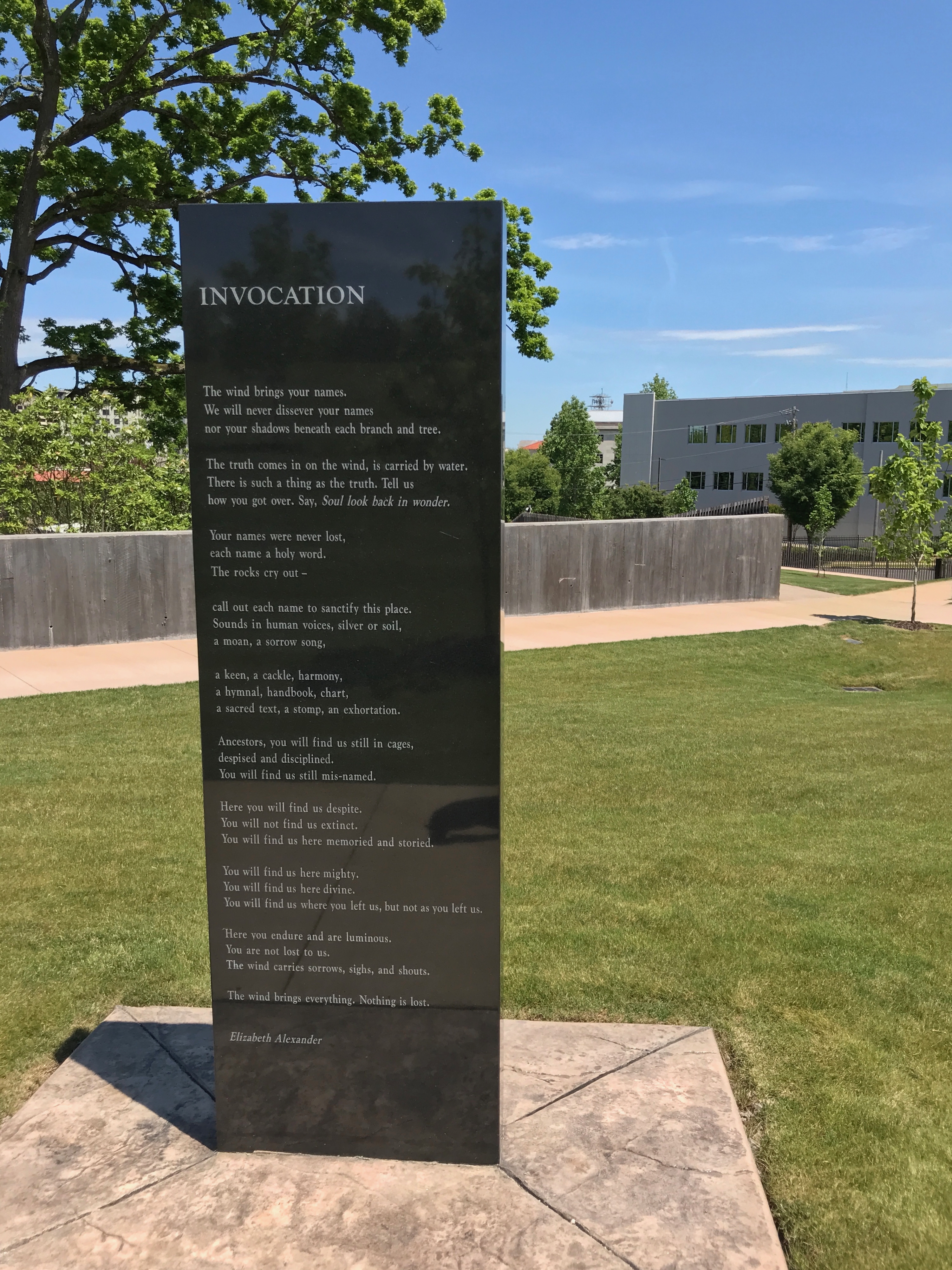
INVOCATION
The wind brings your names.
We will never dissever your names
nor your shadow beneath each branch and tree.
The truth comes in on the wind, is carried by the water.
There is such a thing as truth. Tell us
how you got over. Say, Soul look back in wonder.
Your names were never lost,
each name a holy word.
The rocks cry out –
call out each name to sanctify this place.
Sounds in human voices, silver or soil,
a moan, a sorrow song,
a keen, a cackle, harmony,
a hymnal, handbook, chart,
a sacred text, a stomp, and exhortation.
Ancestors, you will find us still in cages,
despised and disciplined.
You will find us still mis-named.
Here you will find us despite.
You will not find us extinct.
You will find us here memories and storied.
You will find us here mighty.
You will find us here divine.
You will find us where you left us, but not as you left us.
Here you endure and are luminous.
You are not lost to us.
The wind carries sorrows, sighs, and shouts.
The wind brings everything. Nothing is lost.
Elizabeth Alexander
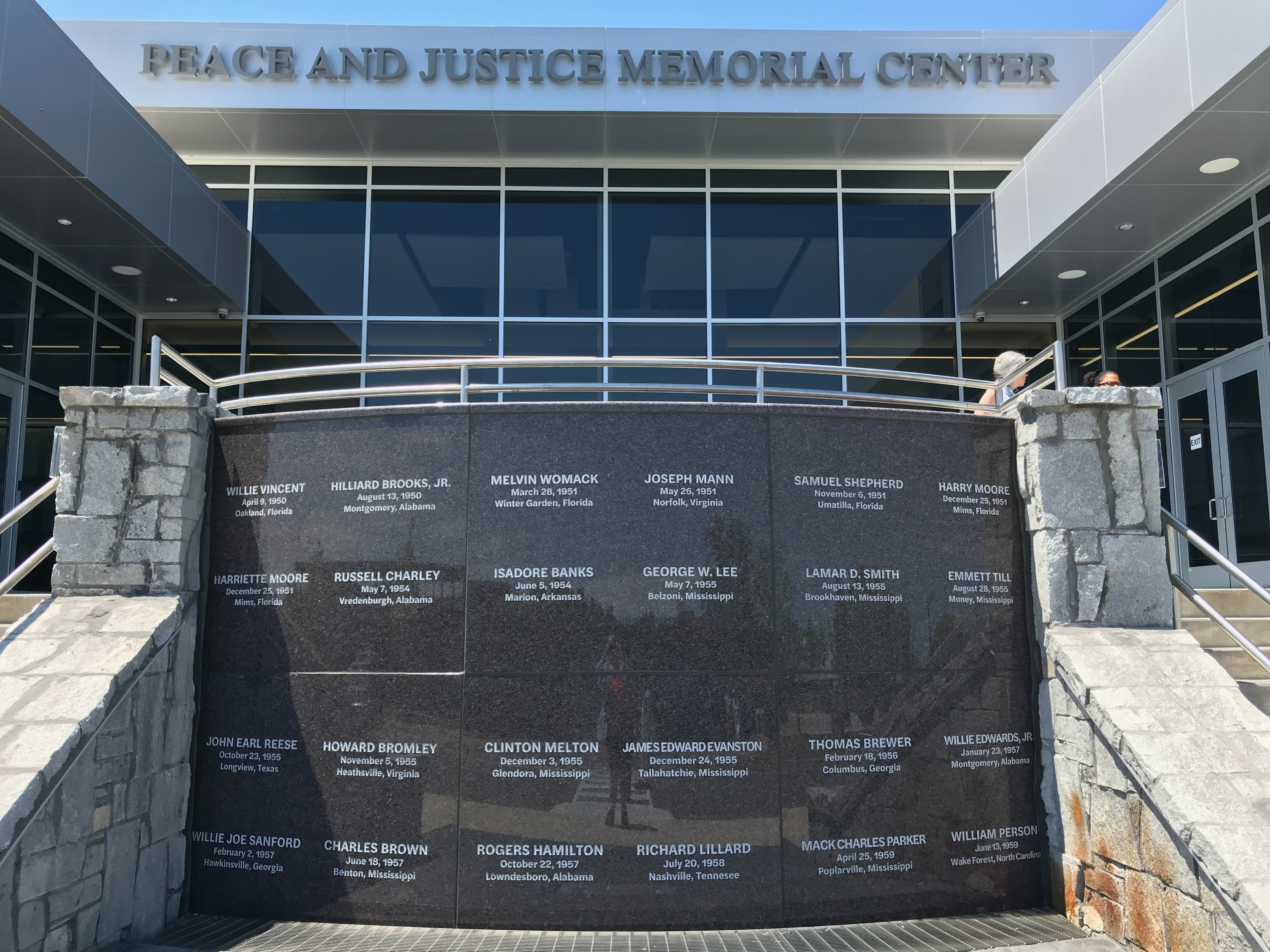
I headed inside the building to see what I might see. I wondered about the names that were displayed here.
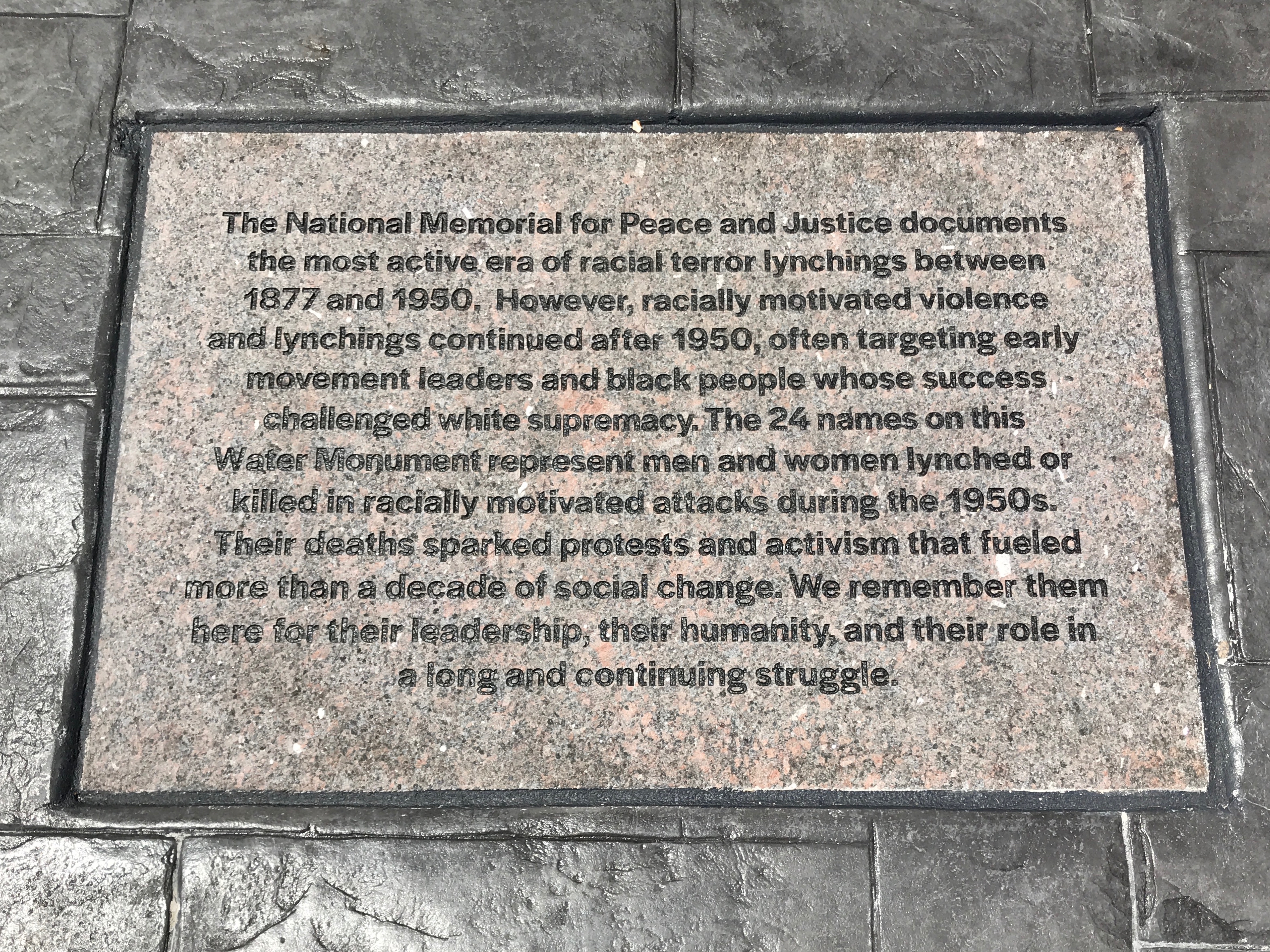
This plaque explains why these names have be singled out.
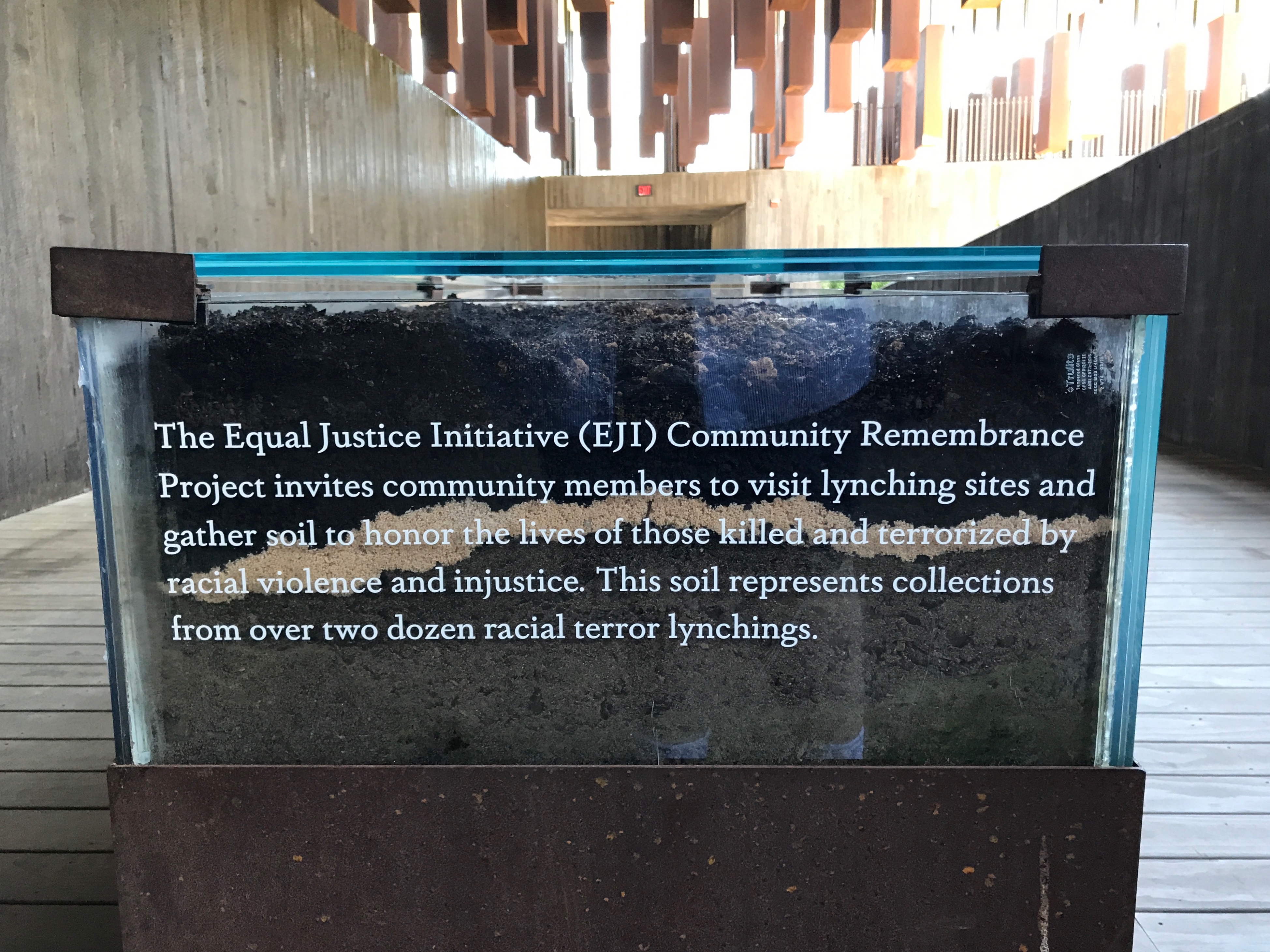
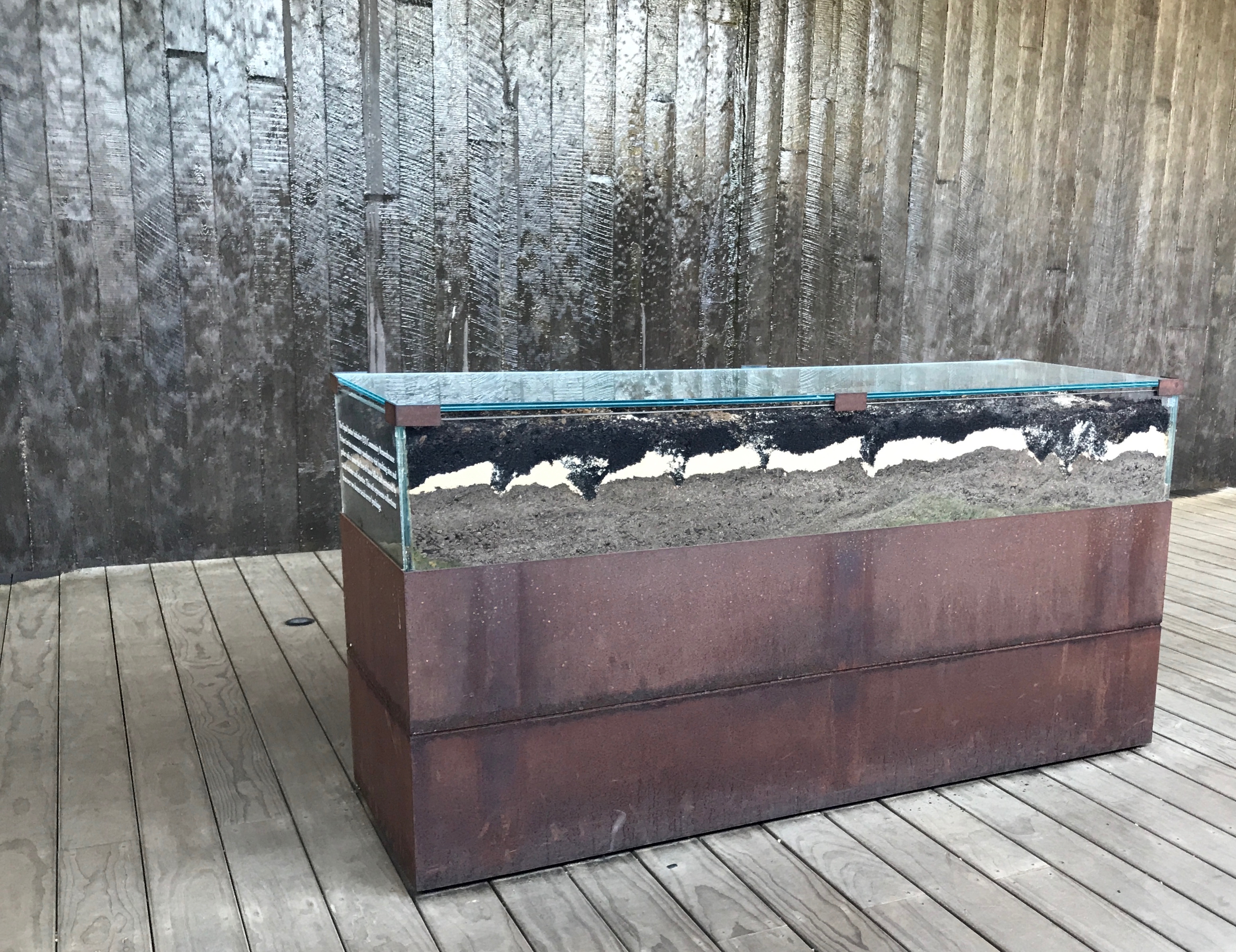
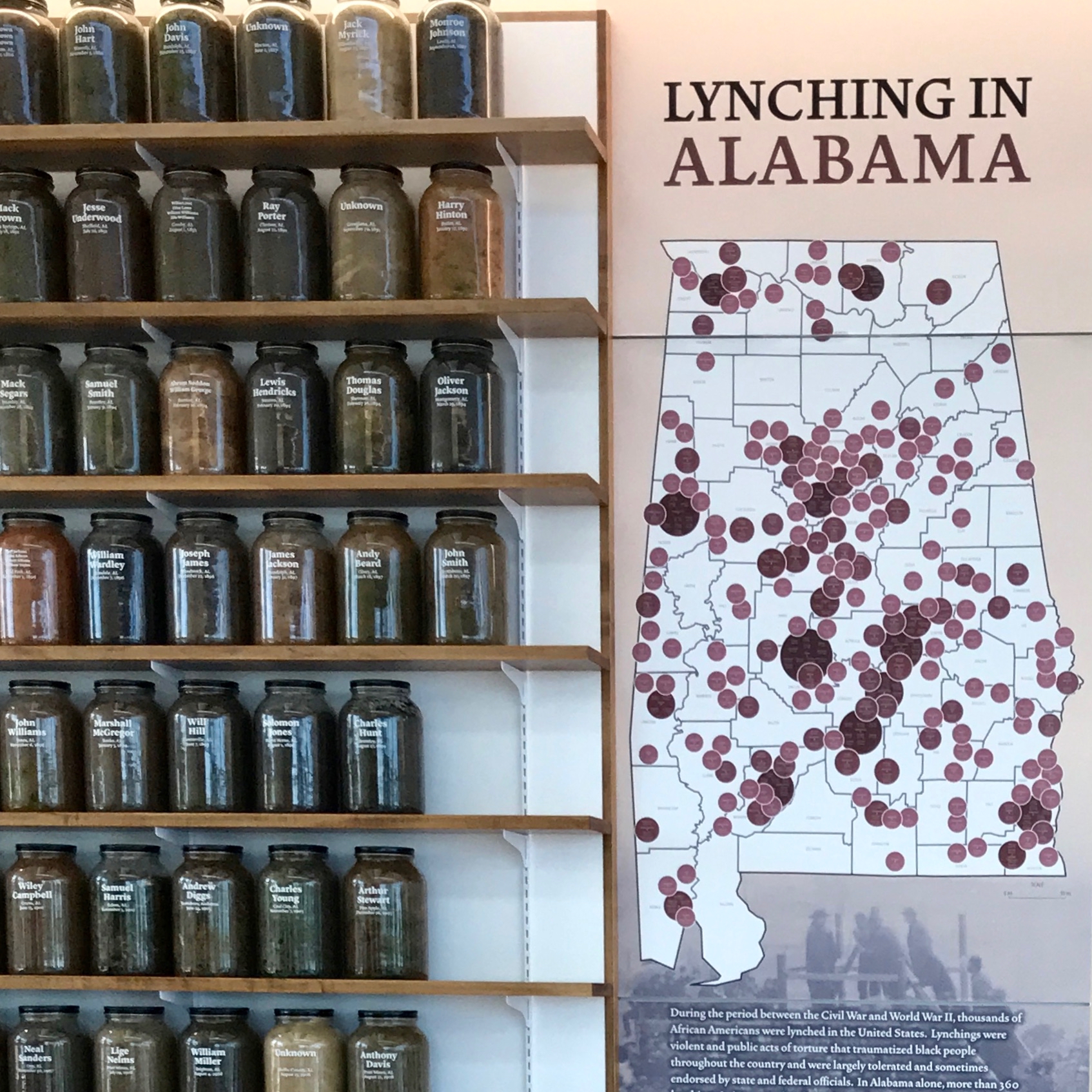
Inside there were rows and rows of soil collected at lynching sites.
There may have been more to see inside. I’m not sure, but I knew I had hit my limit for this part of my visit. I needed to have some food, something to drink and a bit of a break. I looked up restaurants in the area and ended up near Court Square.
This is taken from one of the markers in the square:
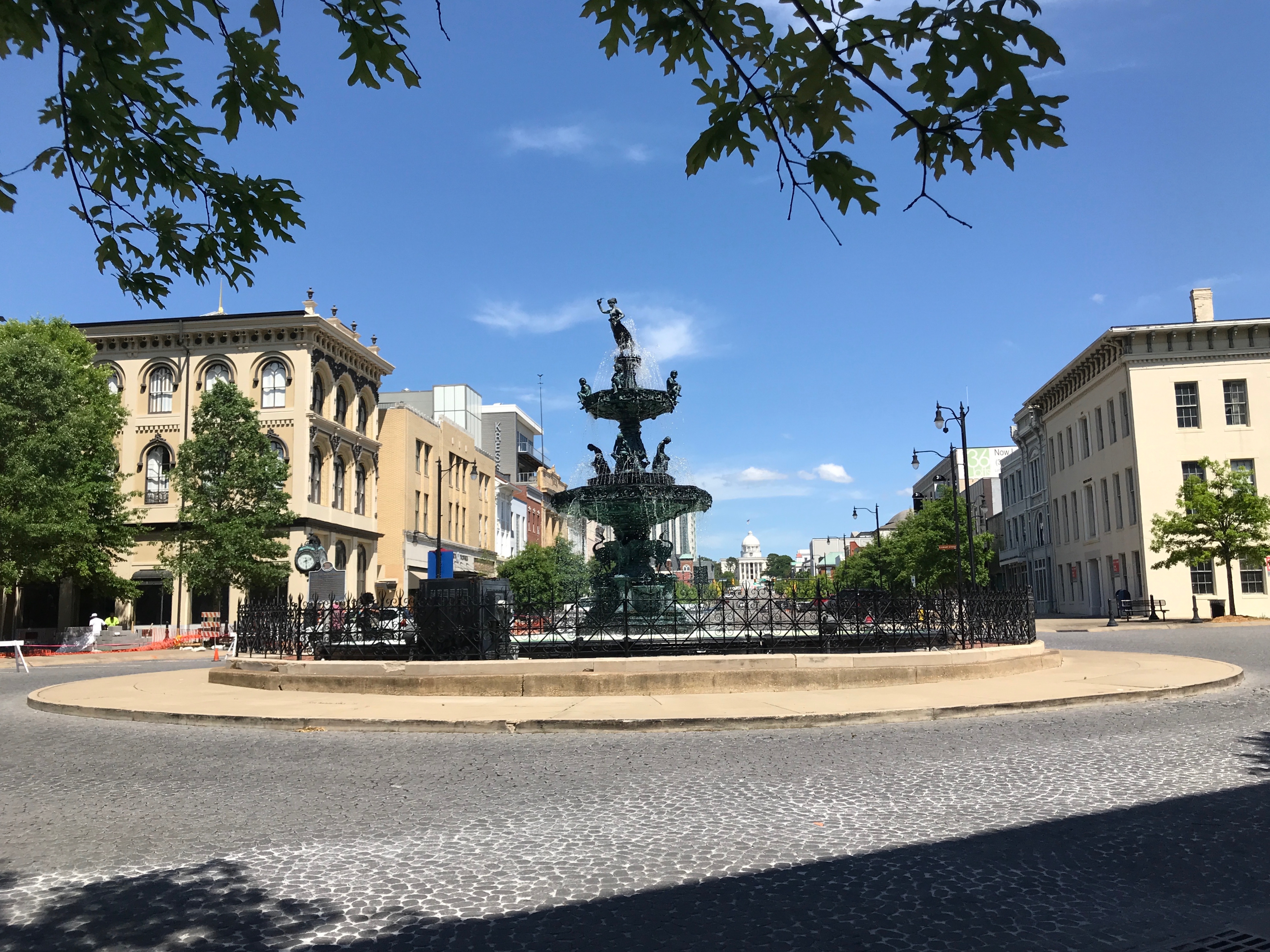
“At the intersection of Commerce Street and Dexter Avenue, Court Square is arguable the most historic location in America. As the center of 19th century Southern economic and political power, Montgomery’s Court Square was host to a massive slave market and the location from which the telegram that ignited the Civil War at Fort Sumter was sent.
Less than a century later, Court Square and downtown Montgomery was the epicenter of the civil rights movement, first with the Montgomery Bus Boycott which began December 5, 1955. Ten years later the civil rights struggle and Montgomery’s non-violent protests culminated in the Selma to Montgomery March as the marchers took the last steps up Dexter Avenue to the state capitol.
This duality of histories is the heart of Montgomery’s past. A citynwith a past as complex, difficult, and important to the American story can often struggle under the weight. Today, Montgomery honors its past all aspects of its history while looking to the future.”
The fountain was built on top of an artesian well that was used long before Europeans came to the area.
What is an artesian well?
I’m glad you asked. An artesian well is a well where the water is forced to the surface by groundwater pressure. You don’t need to pump it up. On the other hand, a spring occurs when the surface of the land dips below the water table.
Oh, you didn’t ask? Moving on…
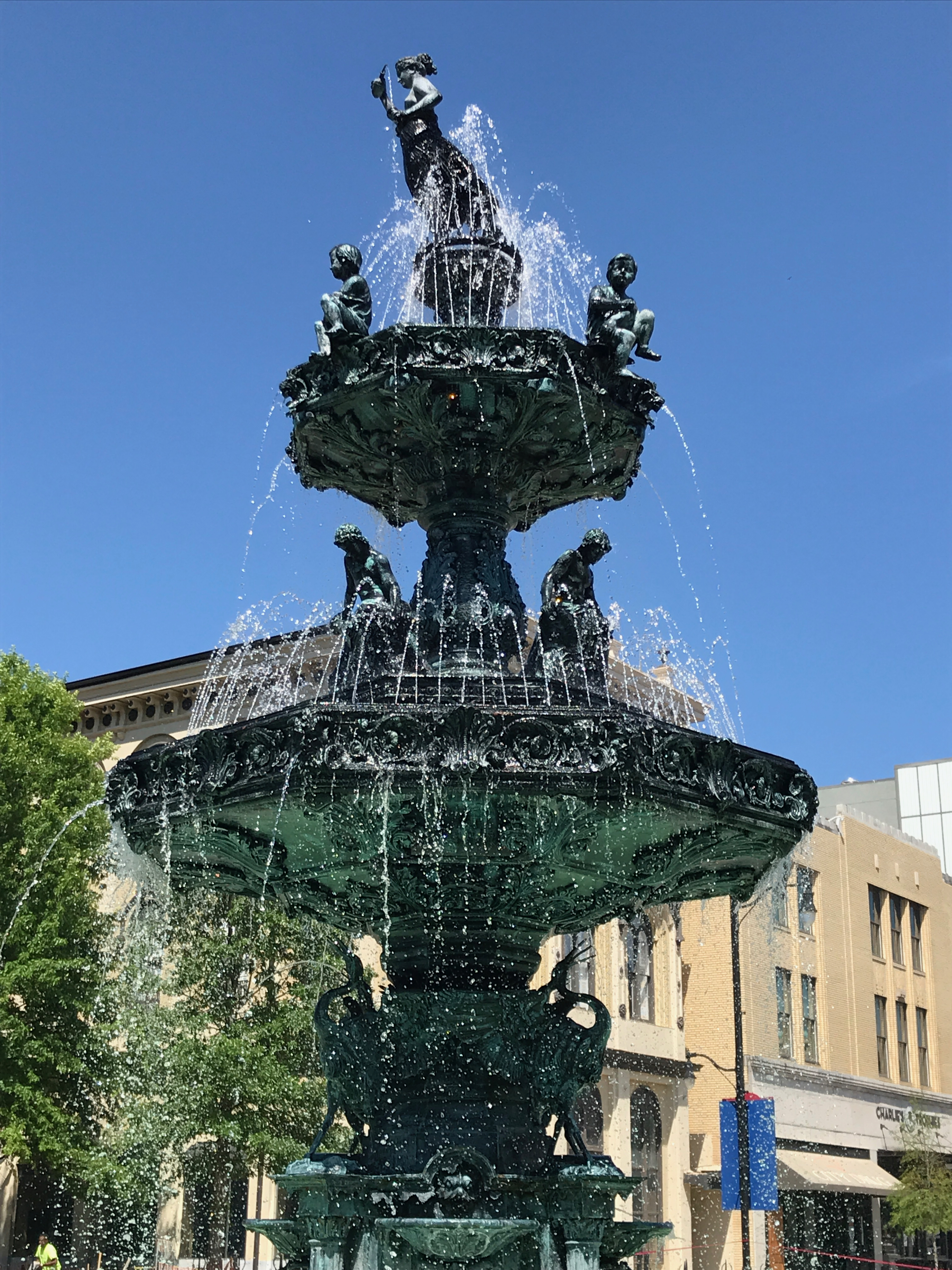
This fountain was erected in 1885, although they are not sure who was the designer. The sculpture of Hebe at the top of the fountain was likely modeled by a sculpture by Antonio Canova. Nearly identical fountains can be found at Fountain Square in Bowling Green, Kentucky, and Court Square in Memphis. They were cast by J.L. Mott Ironworks of New York.
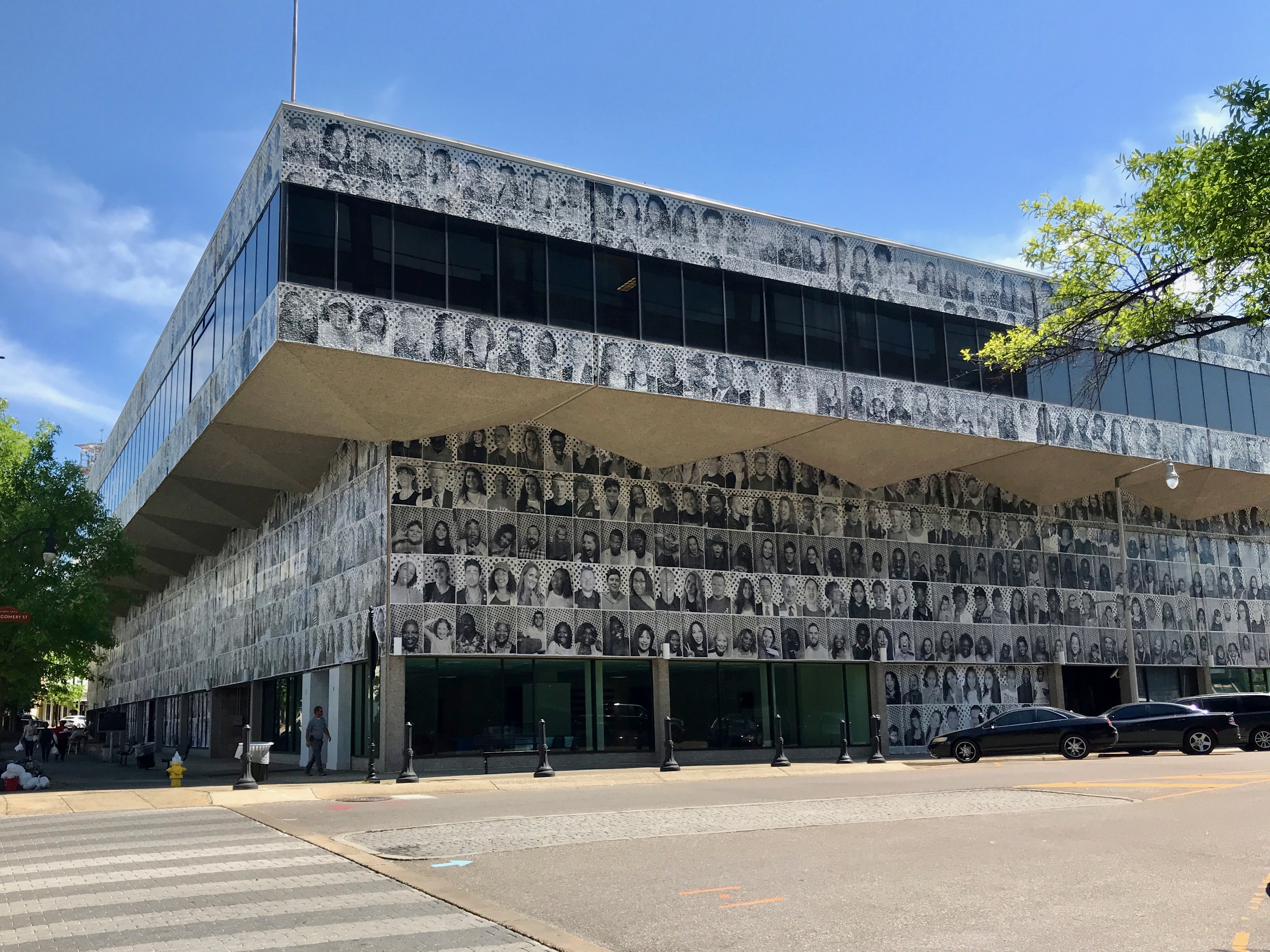
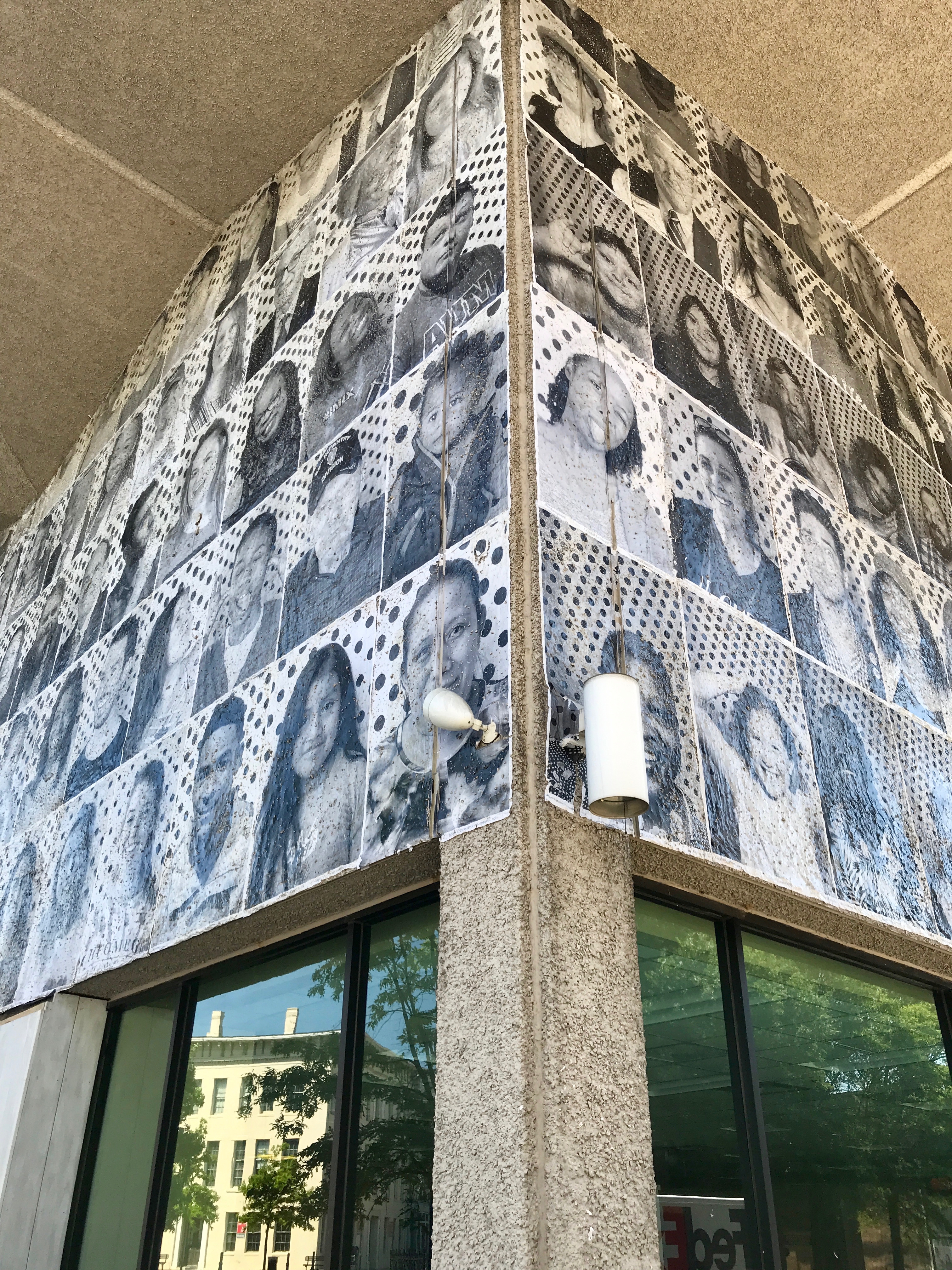
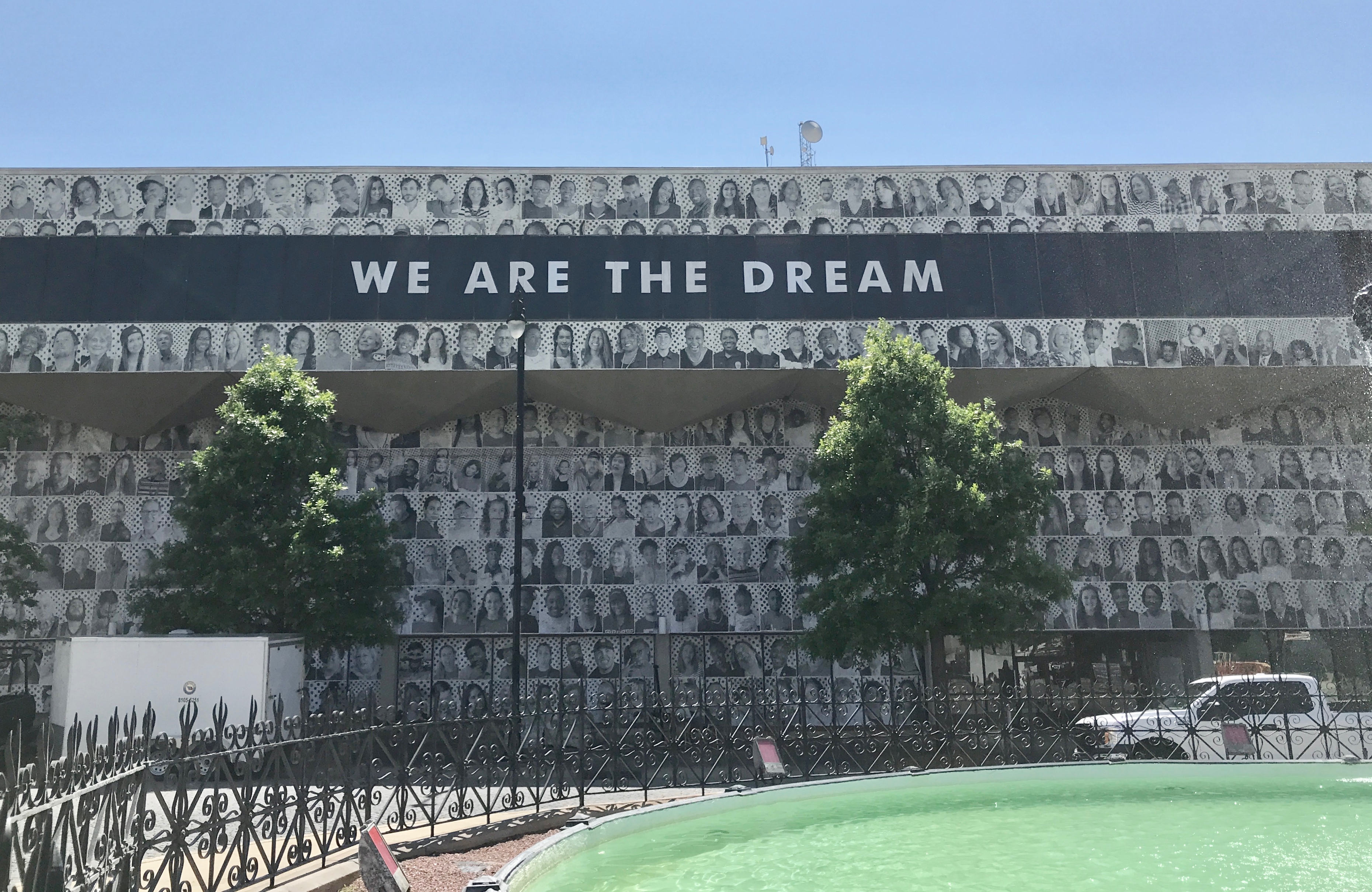
My attention was drawn to this building covered with portraits.
It appears to be a mixed use office and retail space.
And, you have to believe that they are, indeed, the dream and the hope for the future.