Just one more post before I weigh anchor and head out of Phoenix. I couldn’t leave town before I saw the Arizona Biltmore.
I do like nice hotels. Dad used to tell me that Gramma would get all dressed up in her fur, gloves and hat and take the bus over to Buffalo from Crystal Beach. She’d go to the Statler Hilton, order tea and then write letters on the hotel’s stationery.
I used to do the same sort of thing back when I lived in Guatemala. Well, I’d do that except for the fur, gloves and hat.
The special thing about the Arizona Biltmore is that Frank Lloyd Wright had a hand in the design. I called the hotel to reserve as spot on the tour. I had been told that the tours were free. It turns out that they aren’t. When I spoke to the woman checking us in, she told me that the tours were free for guests but $10 for the public. I was surprised and I told her that I thought they were free – that I read it on the website. I mean, I would have paid $10. She told me that I could go for free, but she would be sure to check their site.
After our conversation and I had returned to the lobby, I realized that I wasn’t sure that I read it on THEIR website. Oh, well…I didn’t try to get in for free.
My guide for the tour was an interesting fellow that had been with the hotel for years. He told us that he started out as a lobby host because he spoke English, French and Arabic. He has been giving these tours for years.
The hotel was begun in 1928. In order to beat the heat, they worked 24/7 and the construction was complete in six months. At the time of its construction, the McArthur brothers, who owned the Dodge dealerships in town, had purchased 1300 acres at 24 cents an acre. The hotel was eight miles outside of town. The town has since caught up to the hotel, and the land proved to be a good investment. 32 acres of the original 1300 are still part of the hotel.
The chief architect was Albert Chase McArthur, who was a student of Frank Lloyd Wright. Frank Lloyd Wright was signed on as an advisor. Our guide told us that Wright told them that he had a patent on the method used to make the blocks that McArthur designed and he charged them $10,000 for the rights to make the blocks. It turns out that he didn’t actually have a patent, and his active collaboration on the project ended after that misunderstanding.
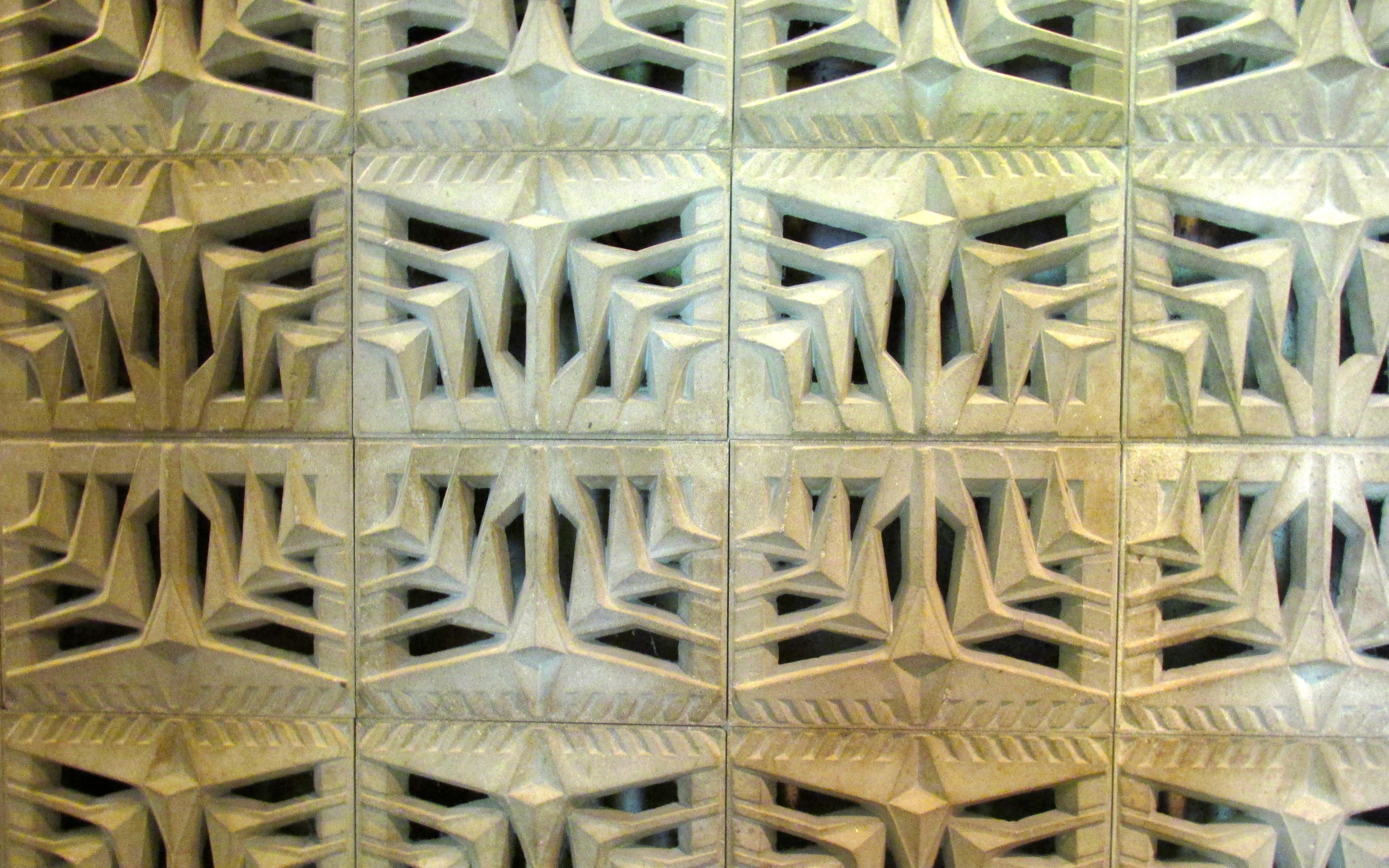
Wright’s influence is visible through the design. McArthur must have been a good student.
The hotel was estimated to cost $1.1 to build. It ended up costing $2.25 million to complete. Additional funds were needed to complete it. William Wrigley invested in the hotel and eventually bought the McArthur brothers out.
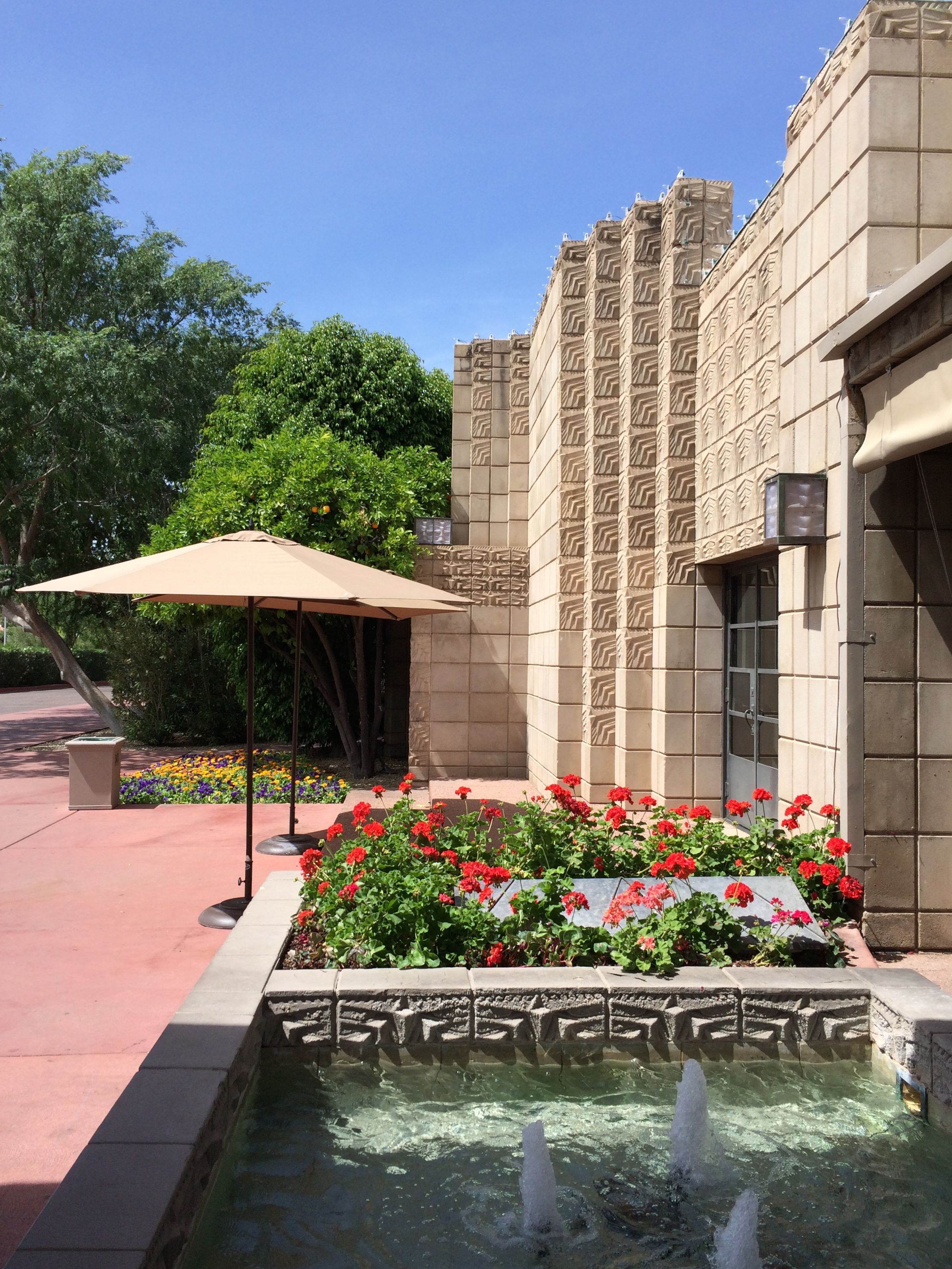
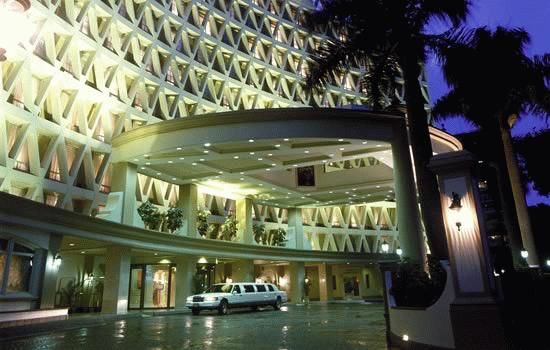
The entrance was typical Wright. It was not overdone, like the photo of the entrance of the Camino Real. In fact, I had trouble finding the entrance when I arrived. I am sure that Wright would feel that the task of designing the entrance had been accomplished.
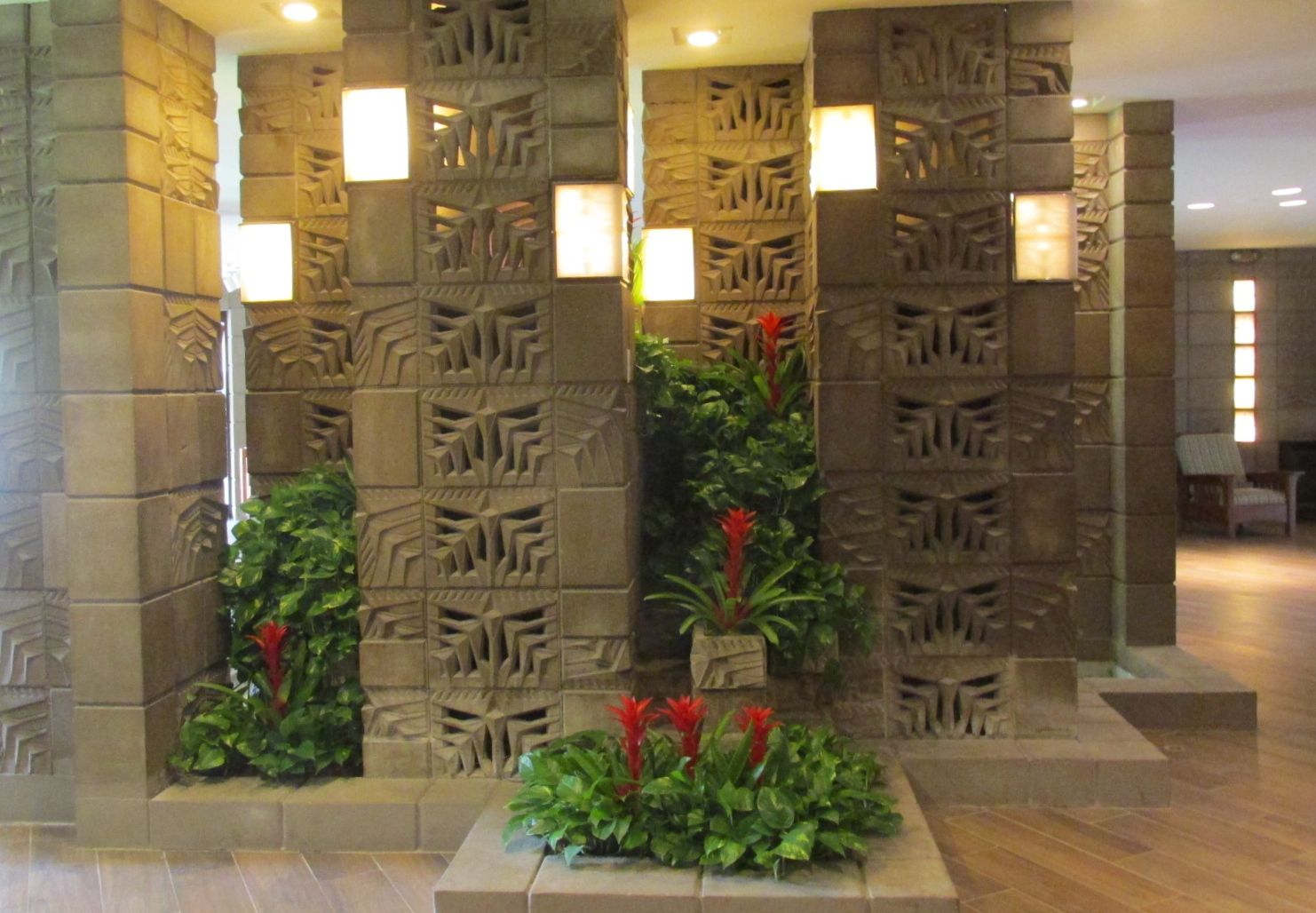
Pillars in the entrance lobby added to the sense of separation from the outside and creates a privacy screen.
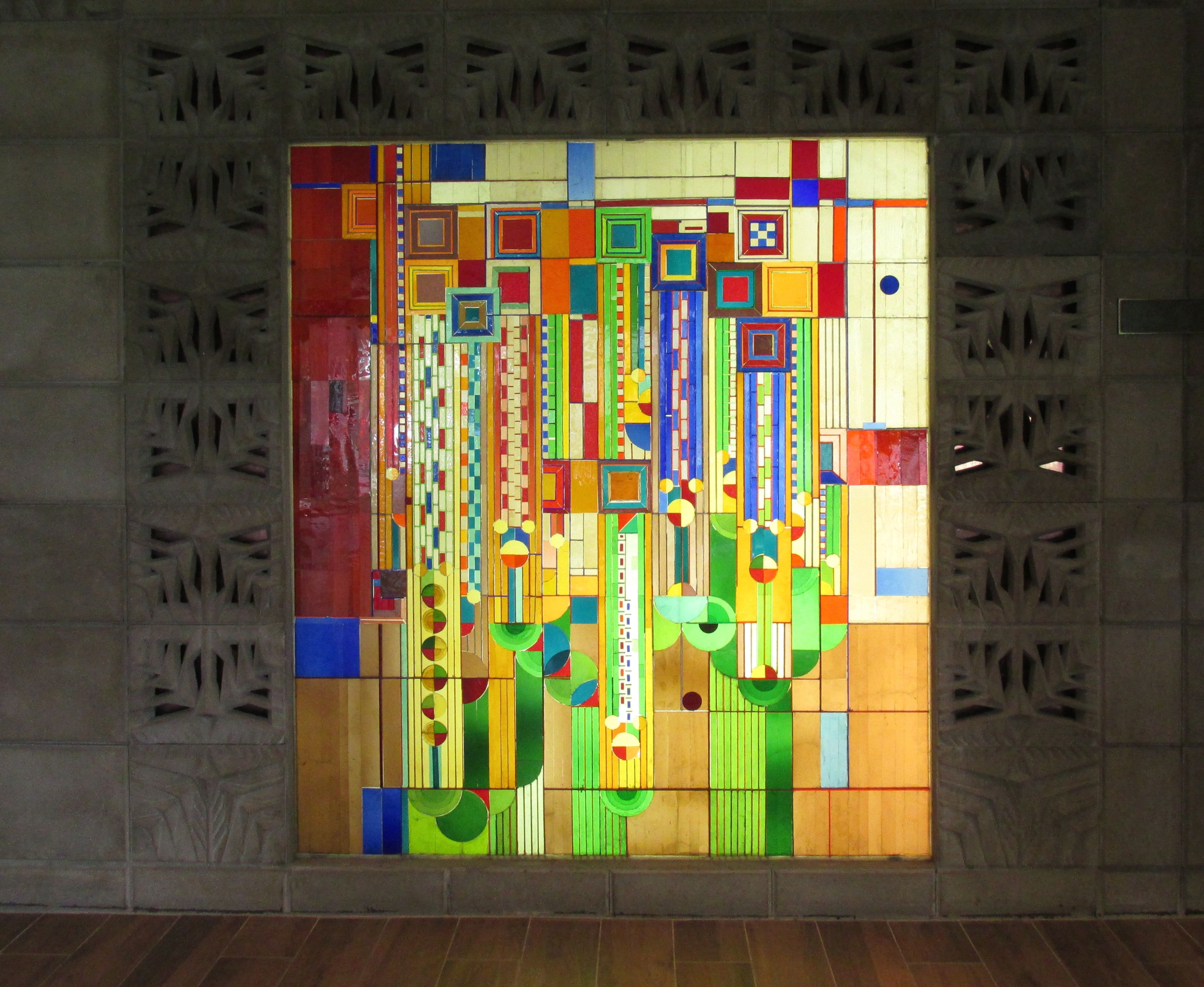
This stained glass piece is based on a Wright design called “Saguaro Forms and Cactus Flowers”. He did it for Liberty Magazine in 1926. It was rejected as being too far out for them. Olgivanna Wright donated the design after the disastrous fire in 1973. A fire was started by a welder’s torch during the instillation of a sprinkler system. Taliesin Associated Architects renovated the resort over a record 82 days. Our guide told us that they took advantage of the fire to upgrade the hotel.

The lobby has a cool, relaxed feel. Guest services, such as concierge and registration are tucked into the recesses.
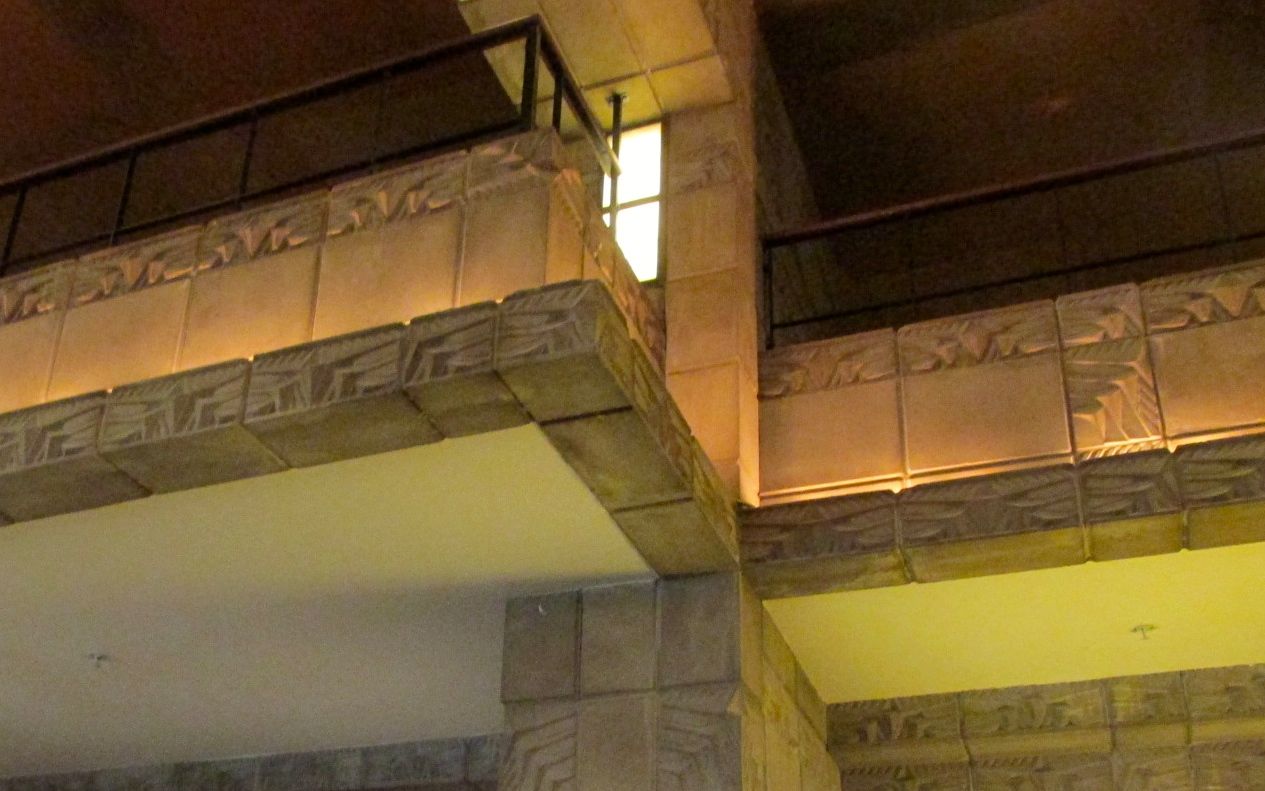
The mezzanine ran around the lobby. Indirect lighting bounced light up and filled the interior with light. Doors to guest rooms were on the mezzanine.
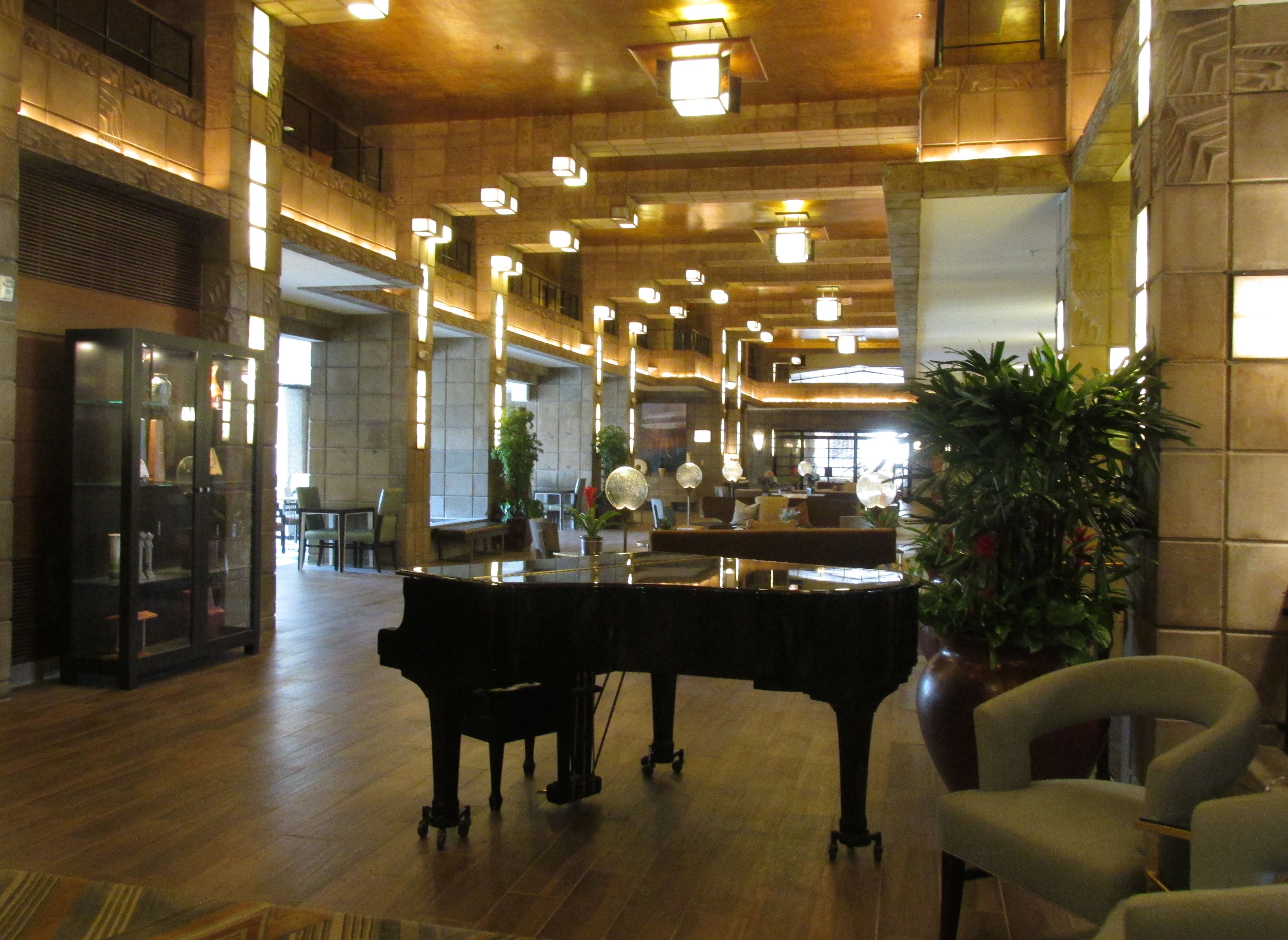
The guide told us a special story about this piano in the lobby bar. Late one night there was a lot of loud music late at night. A guest called down to complain. Our guide told us that, normally, they would apologize for the inconvenience and tell them that they would take care of it. This time was different. The manager encouraged the guests to come down to the lobby. He told them that they wouldn’t be sorry.
It turns out that the music makers were Frank Sinatra, Liza Minnelli and Sammy Davis Jr. who were singing after a concert!
After the lobby, our first stop on the tour was the Aztec Room, which was the ballroom. It was also used to show movies back when movies were on actual film. There was a small projection booth. Our guide made it sound like it was a job for small people. I guess it was a small projection booth!
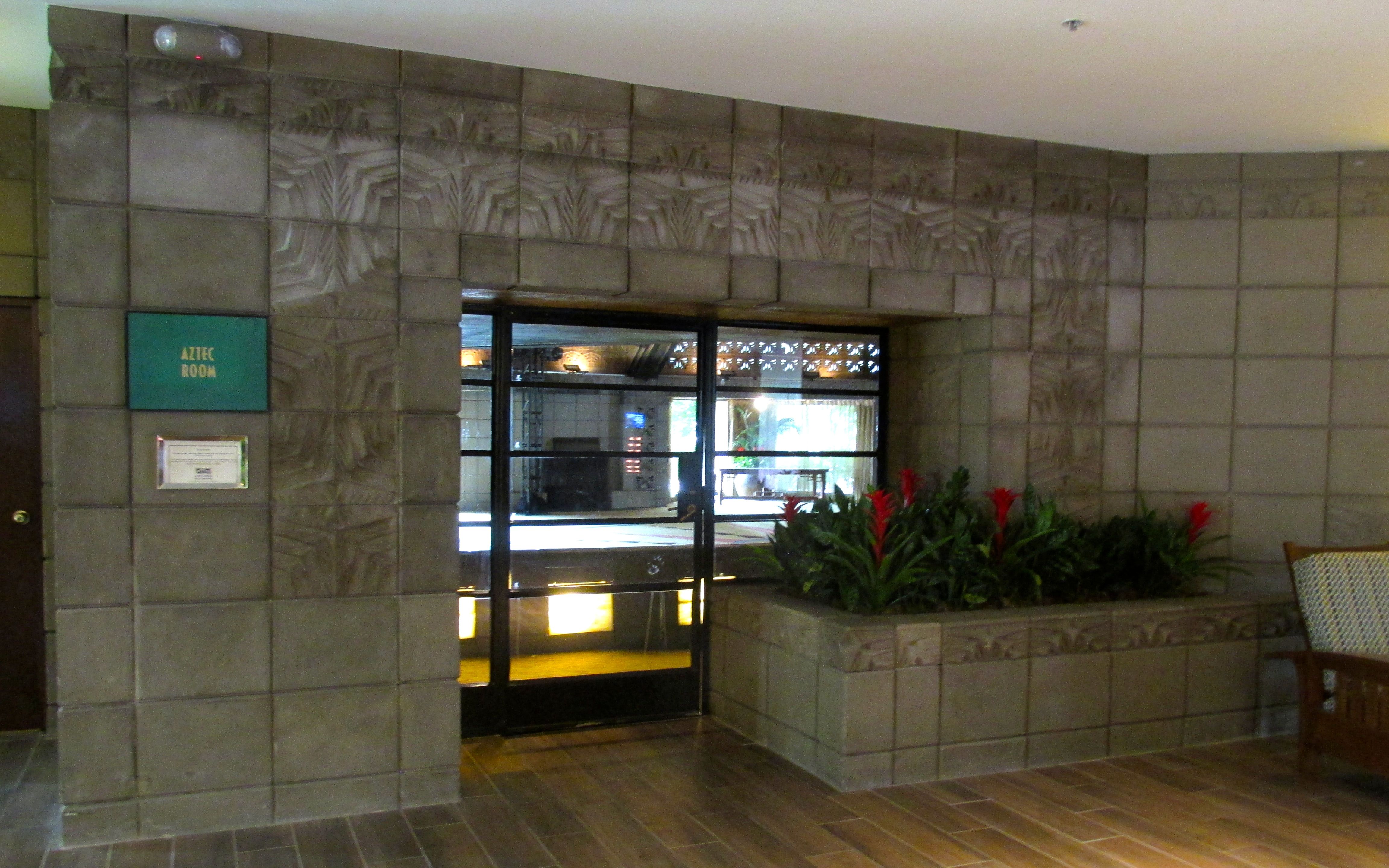
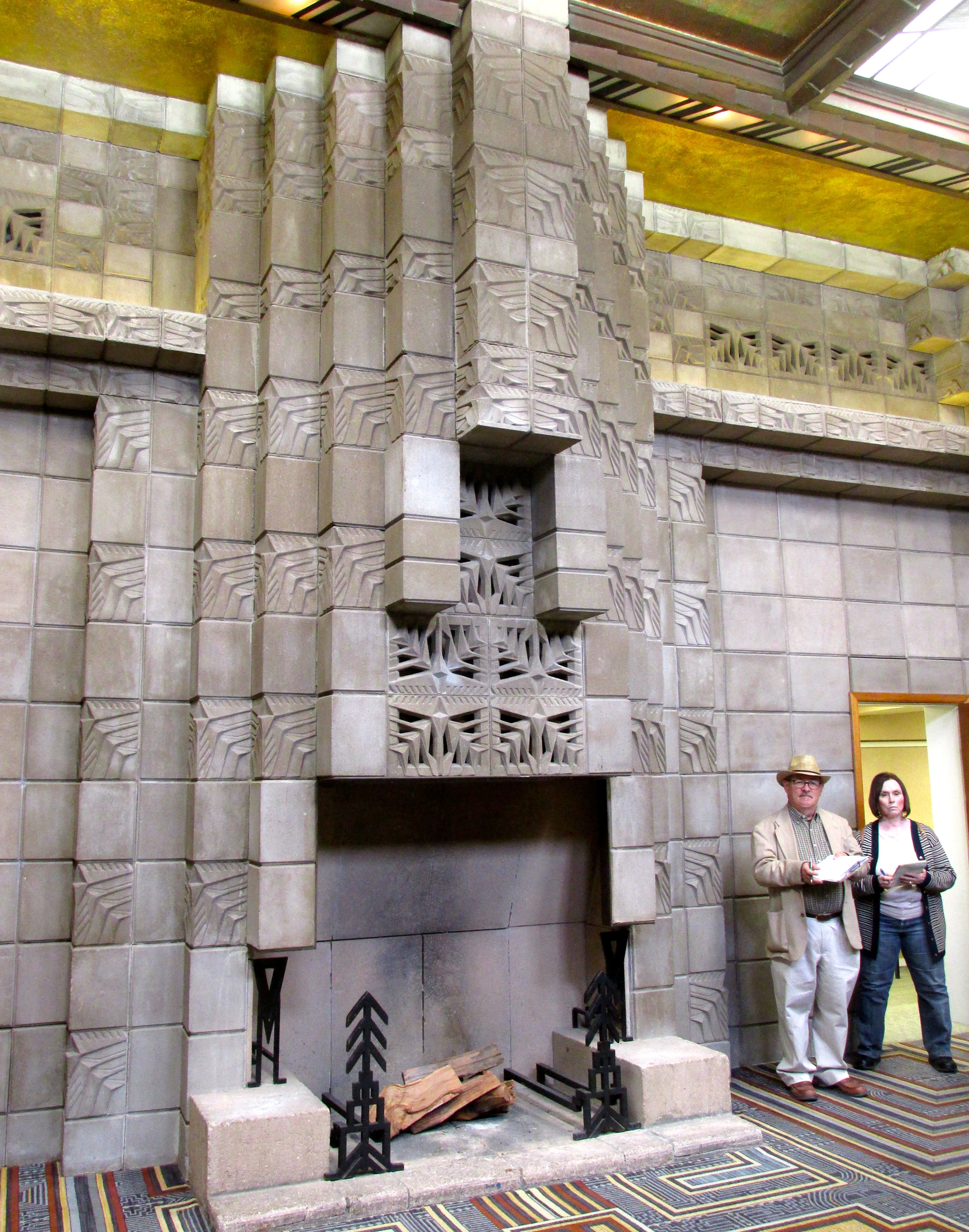
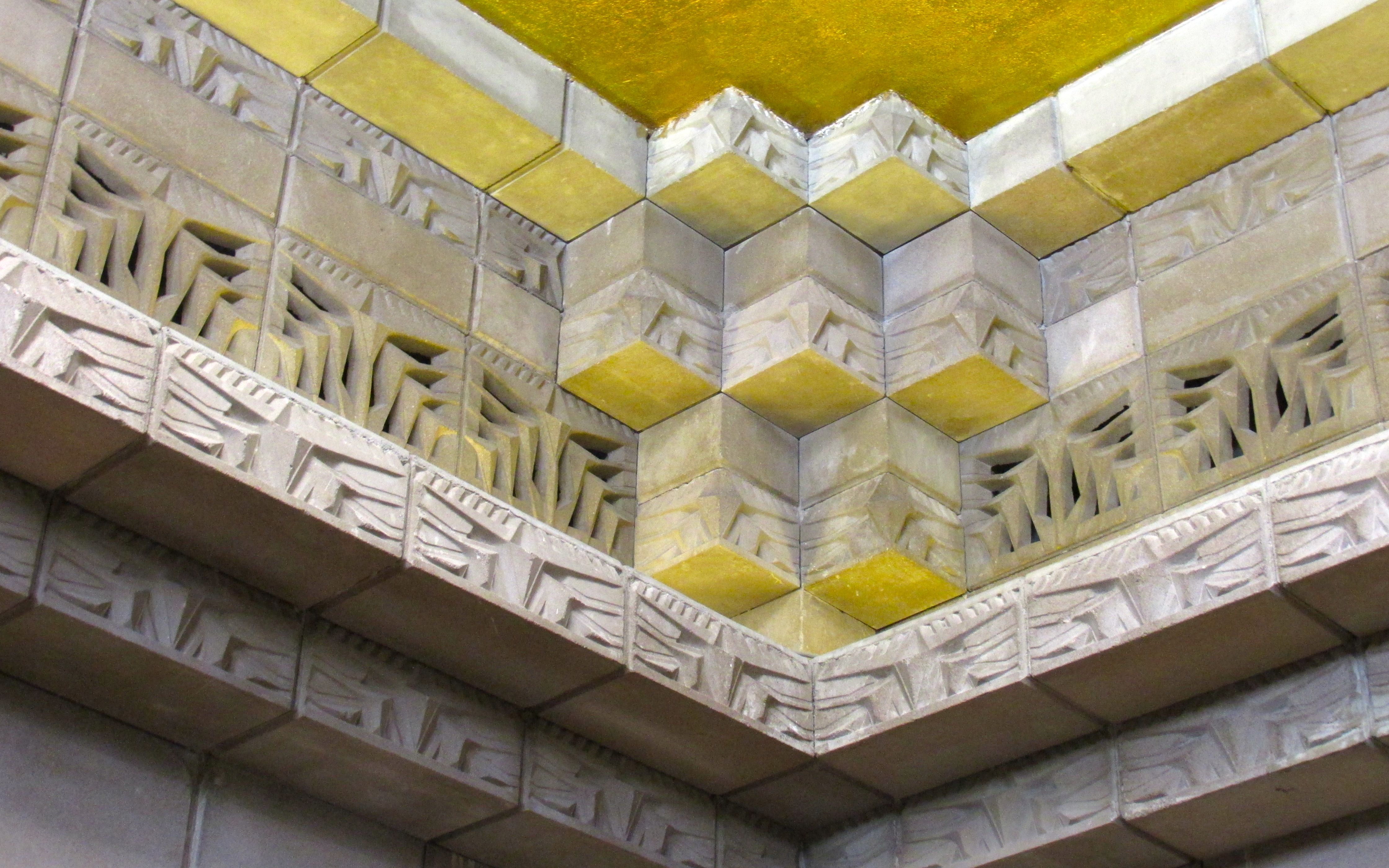
The “textile block” can be seen around the entrance to the ballroom.
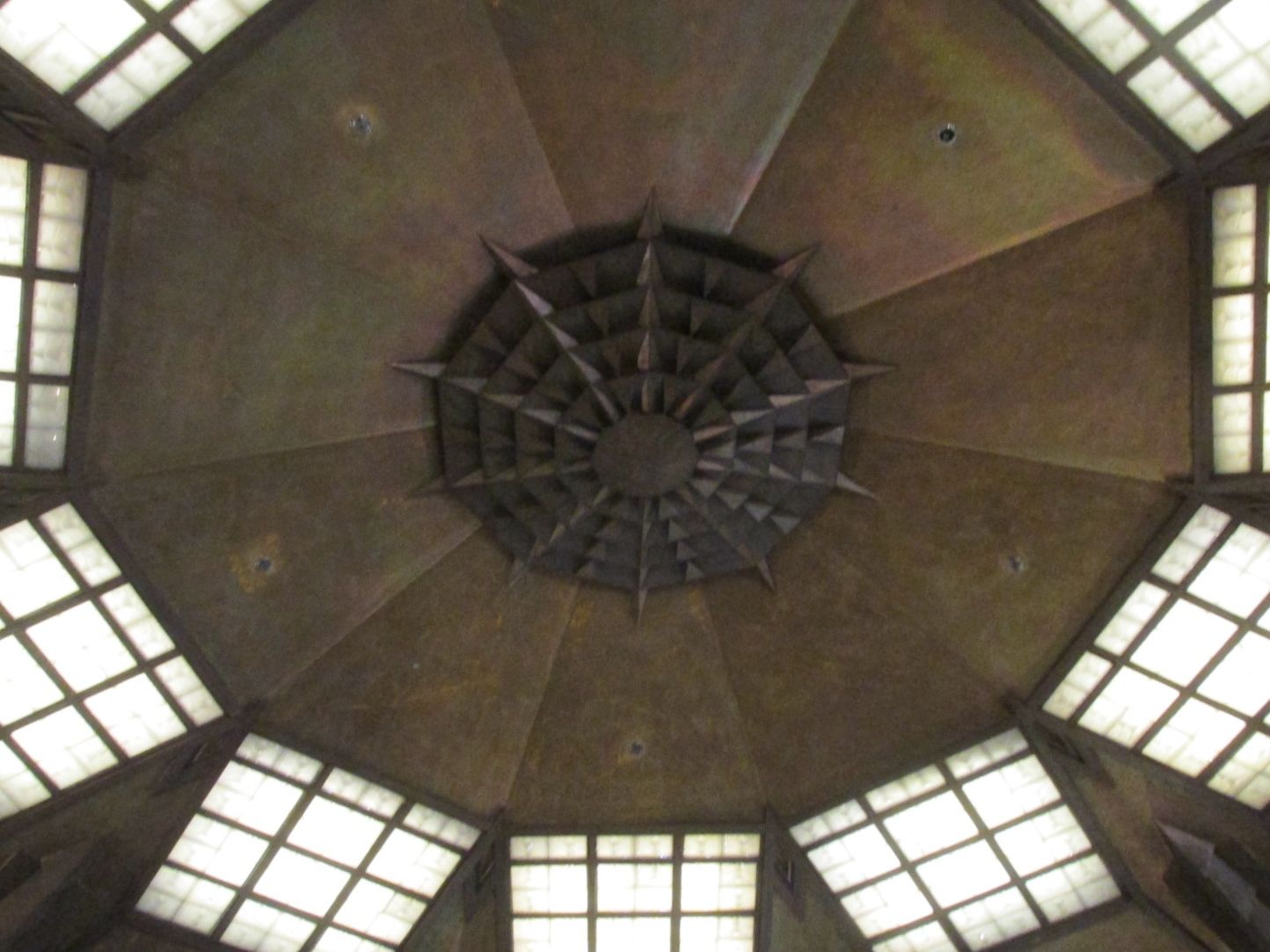
Here is the dome of the Aztec Room.
Our next stop on the tour was the dining room. Back in the day when the Wrigleys ran the hotel, only invited guests were allowed to stay. You had to have a personal invitation from the Wrigleys. Meals were served according to the schedule that was set by the hotel.
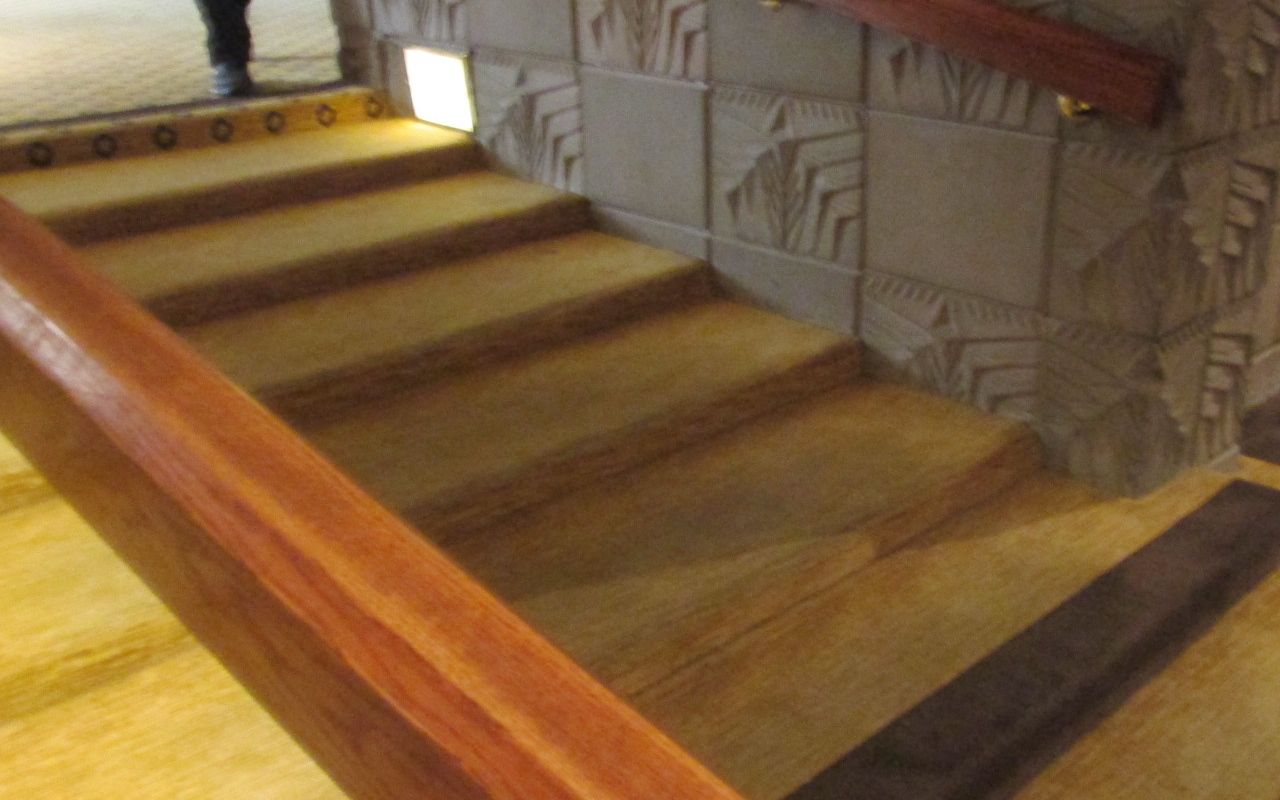
The entrance to the dining room had what the guide called “gliding stairs”. They were designed for women in ball gowns to be able to easily enter the dining room. Or course, all guests would dress for dinner.
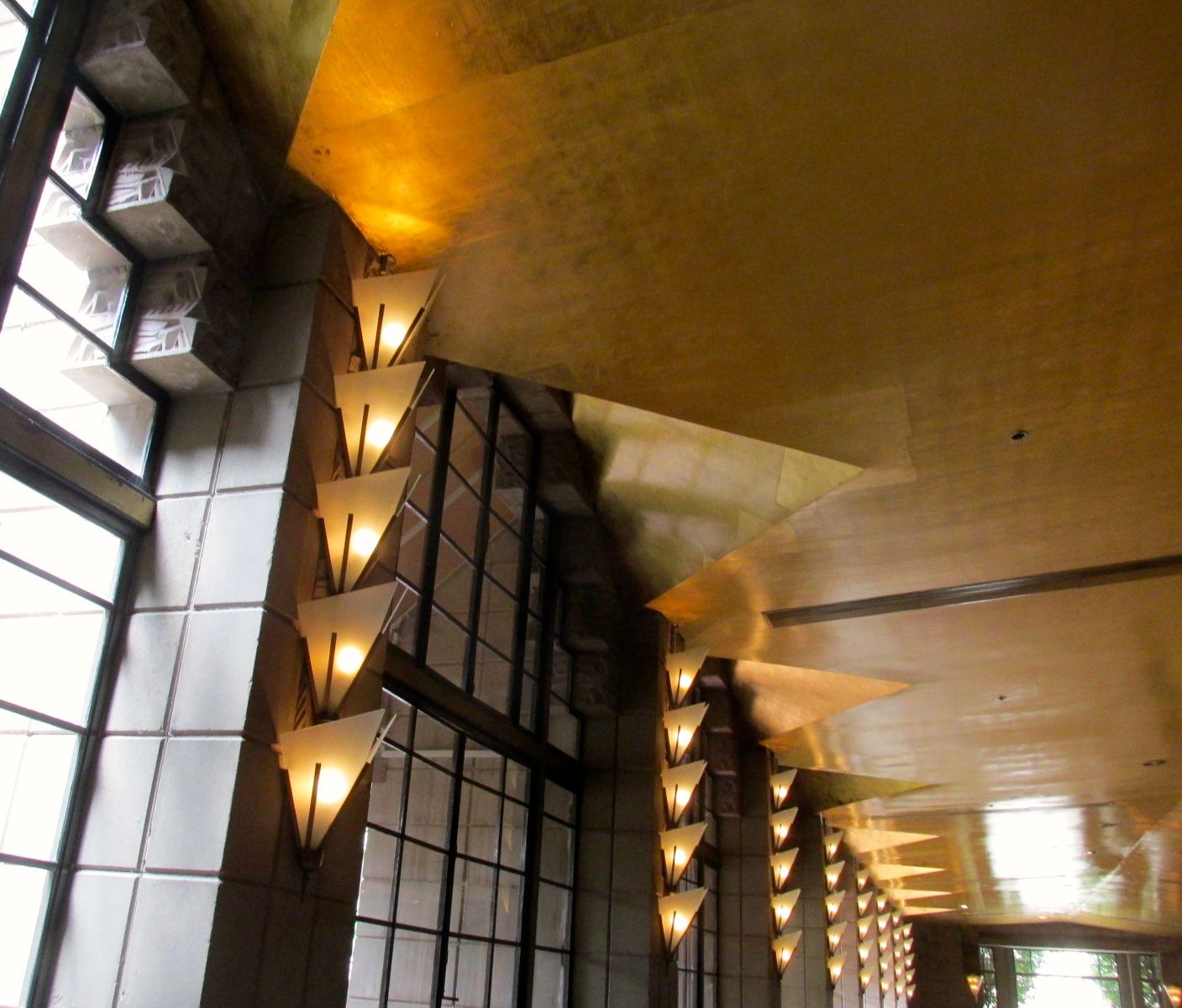
The dining room ceiling was done in gold leaf, which reflected the light from the windows.
Opposite the bank of windows were large murals painted on Belgian linen.
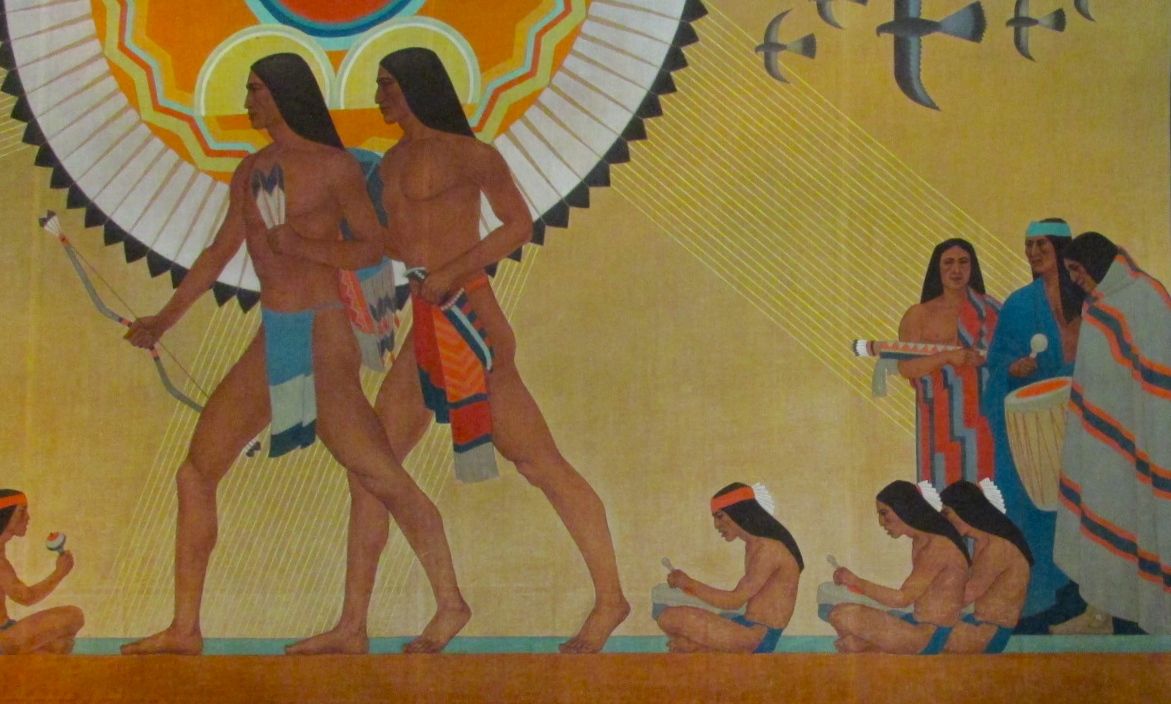
They were not stretched on a frame nor were they attached permanently to the wall.
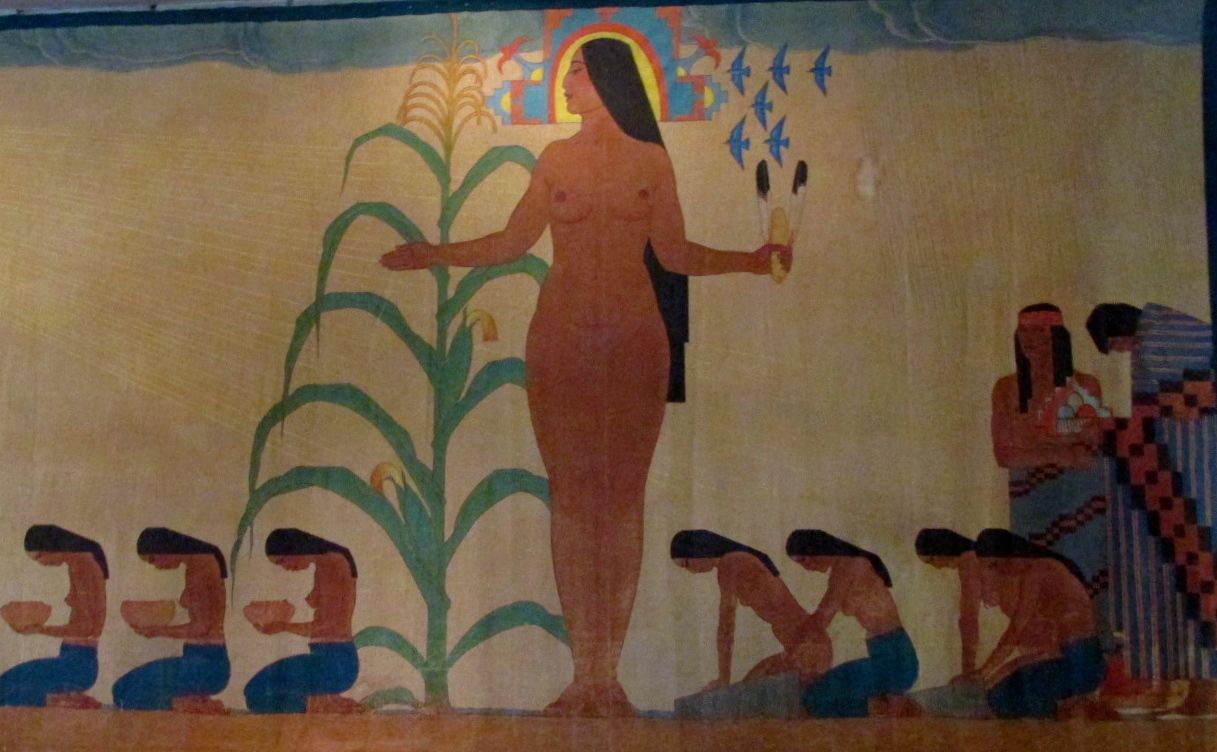
They hung loose so that the fabric could expand and contract with the weather.
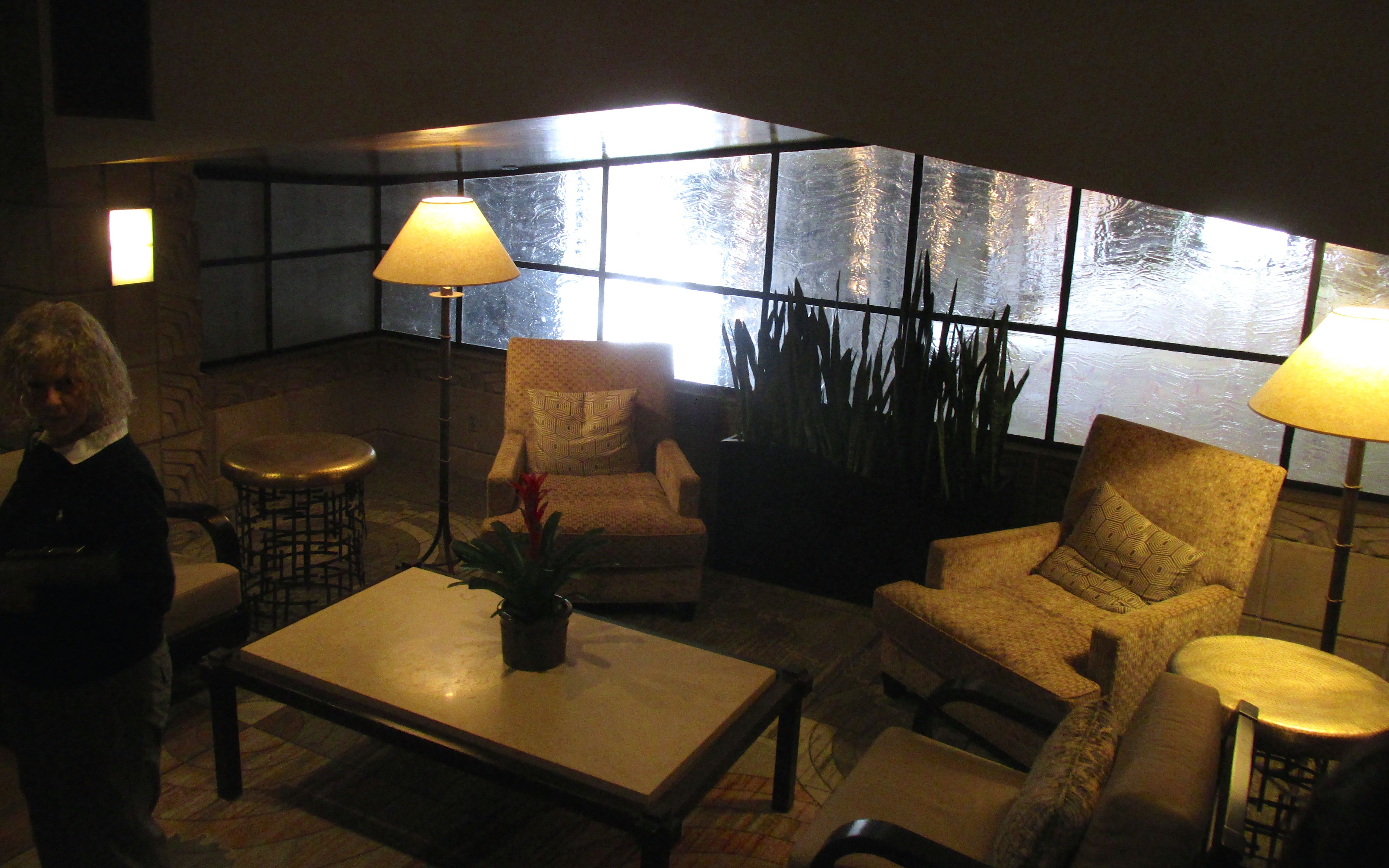
Above the dining room was an orchestra loft. It has since been repurposed as a sitting area.
The next stop on the tour was the Mystery Room. The hotel opened during Prohibition. The gentlemen would come here in the evenings, according to the guide, to enjoy their illegal beverages and cigars.
An opulent setting for a speakeasy. There was a spotlight on top of the building. Officially, it was to guide people to the hotel. Our guide told us that if the sheriff came, they would shine the spotlight into the room through a skylight.
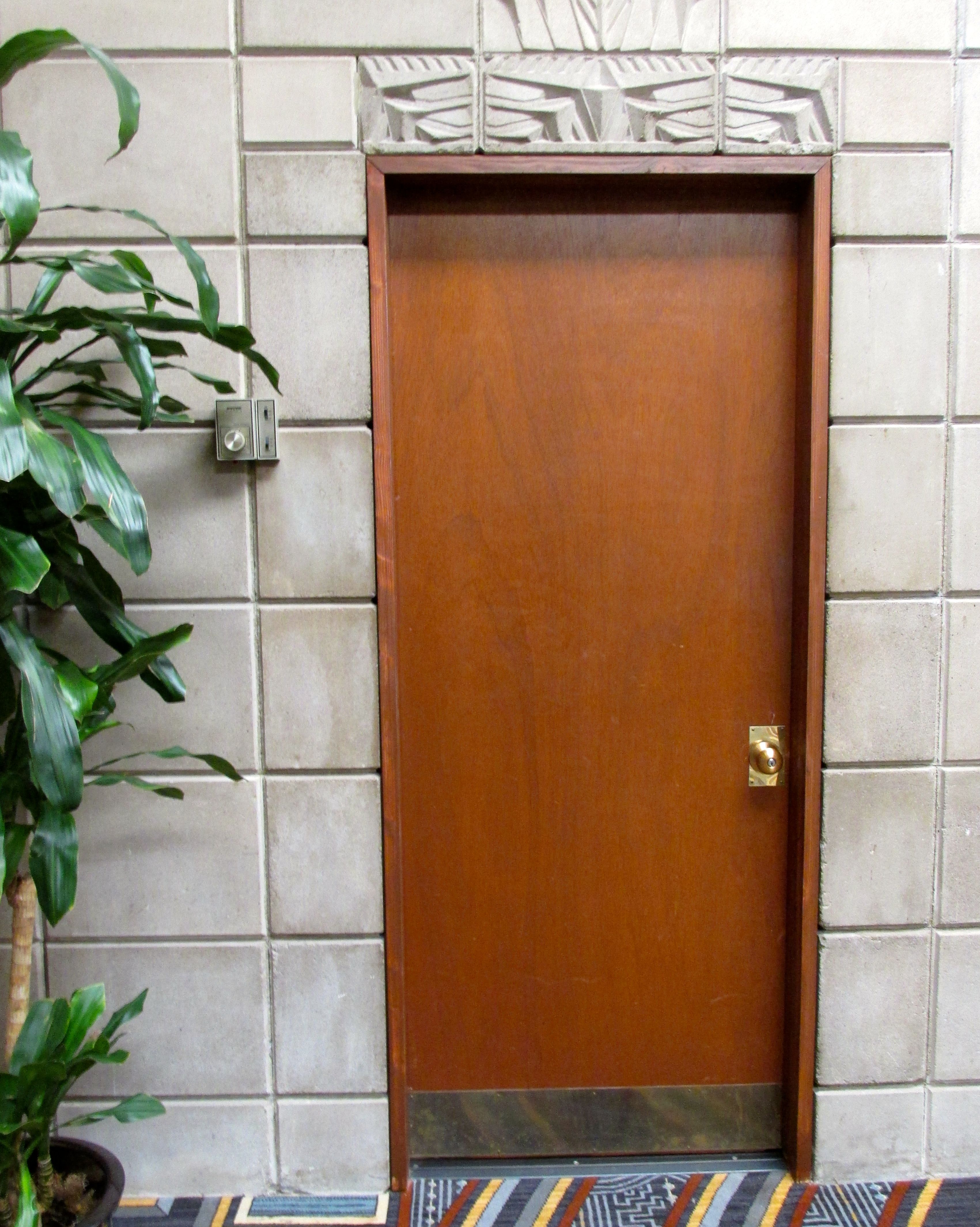
The guests would escape through this door.
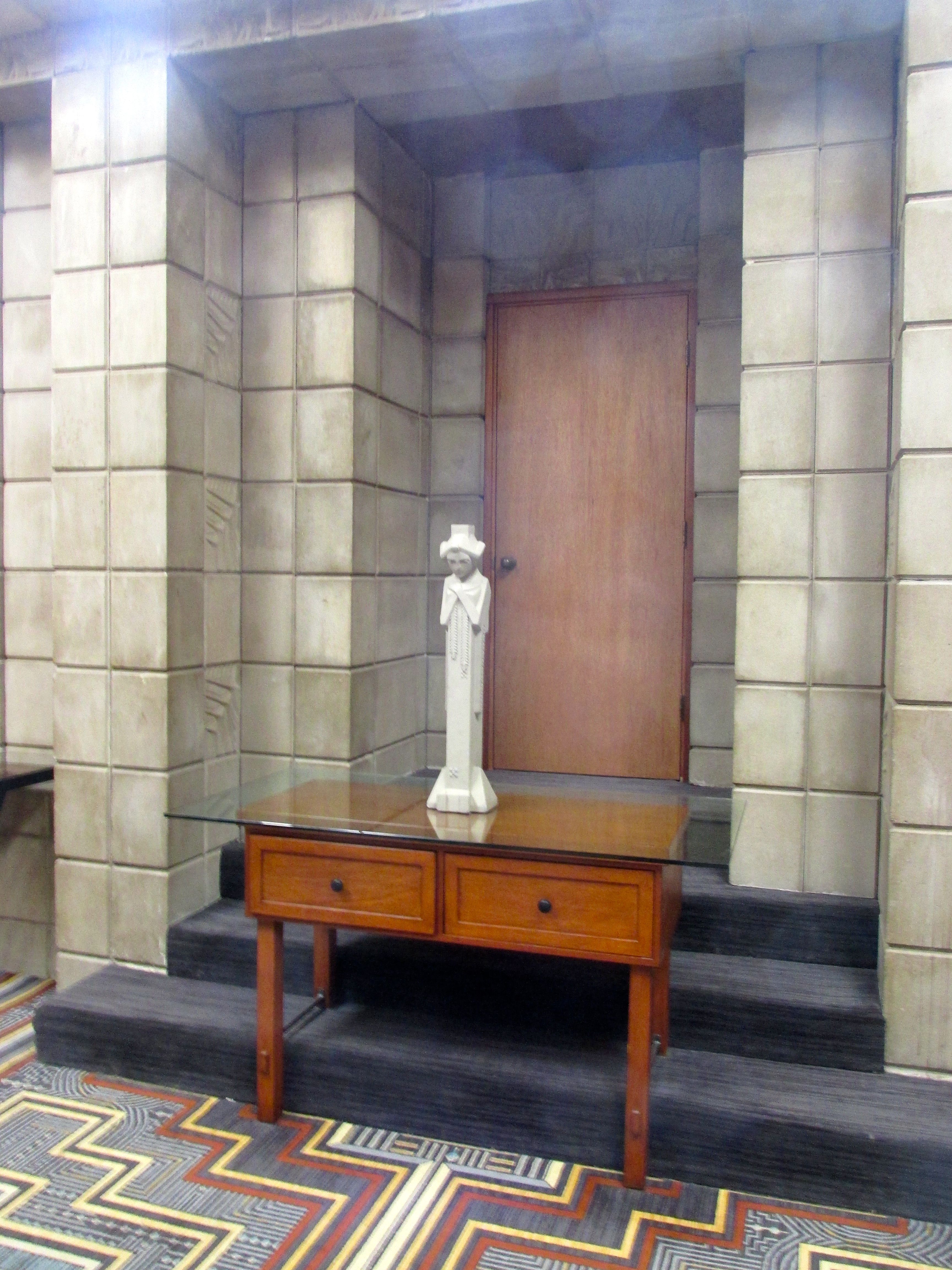
Where this door is currently, they used to have a rotating bar. On one side, it was a bar. When the call came, they would rotate it and there was a bookshelf on the other side. When the sheriff would inquire about the purpose of the space, they would tell them that this was a reading room.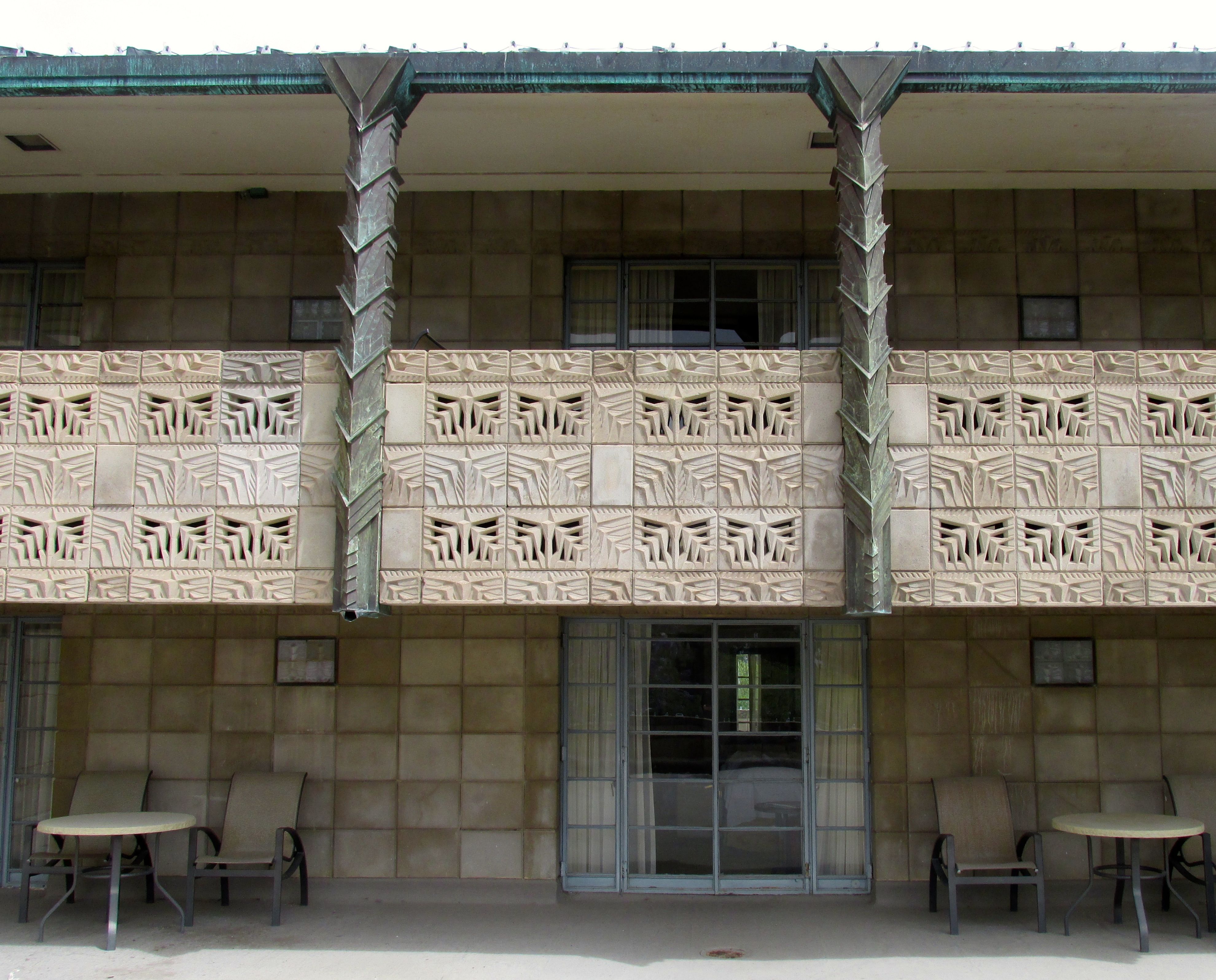
Our next stop was a patio. Those are guest rooms. I guess I could have taken a closer look, but I didn’t want to invade anyone’s privacy.
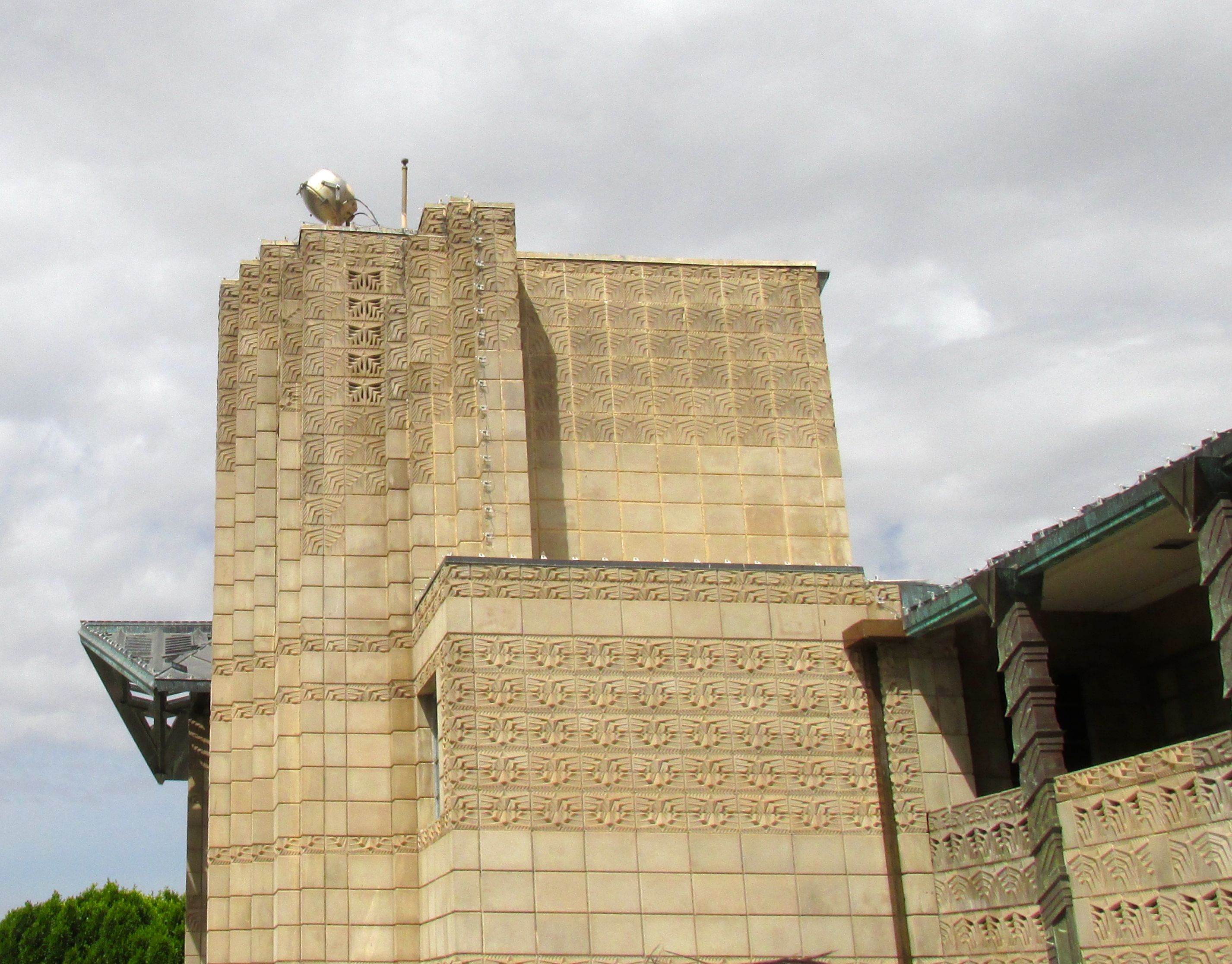
This is the beacon on top of the building that would alert the people in the Mystery Room that they needed to go somewhere else.
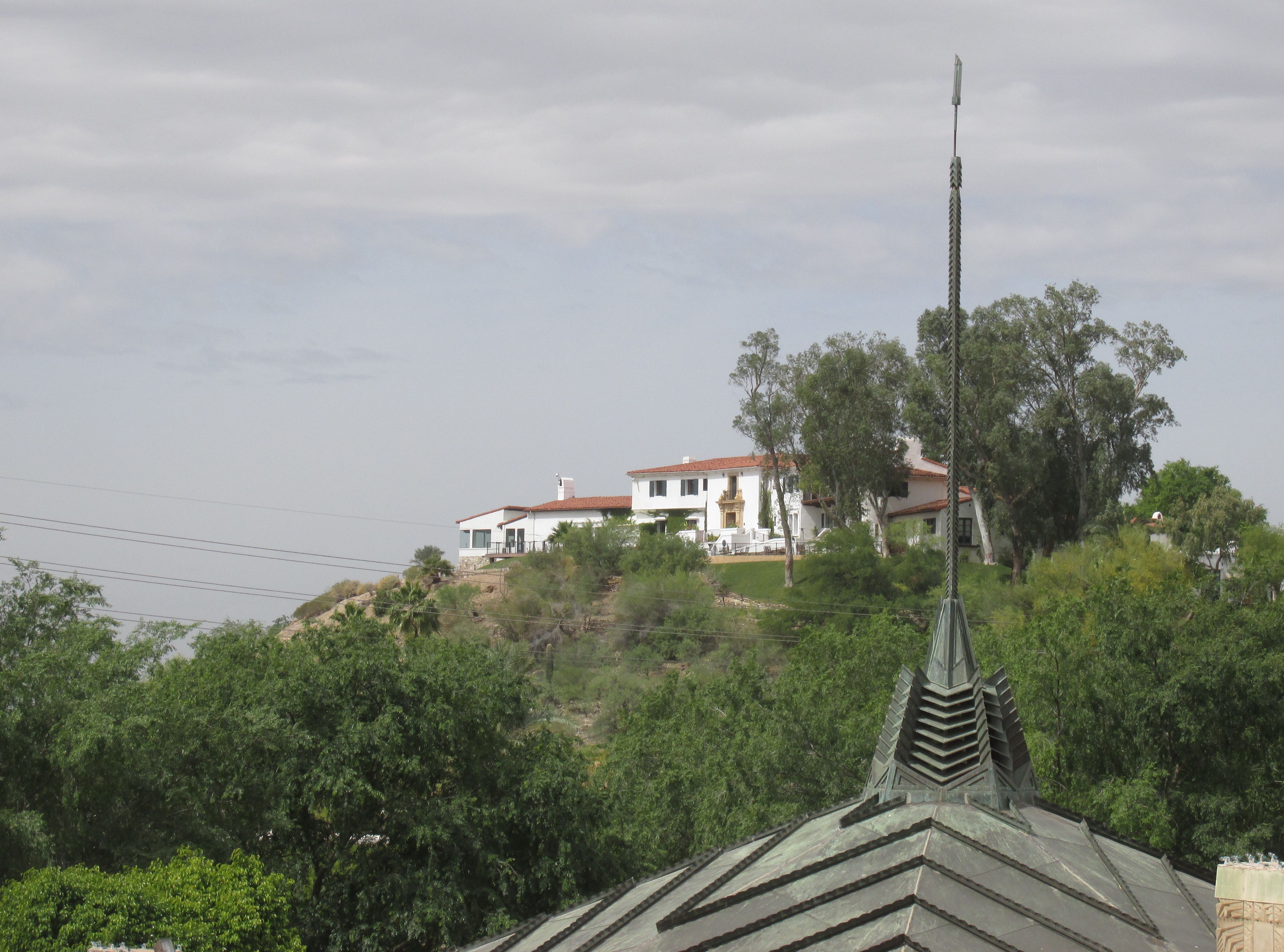
The white building on the hill is the Wrigley Mansion. Our guide told us that it was available for tours. “Some other time,” I thought to myself. the dome in the foreground is the dome of the Aztec Room.

In the garden right below the patio was a jacaranda tree. I am including it for two reasons:
- It was my favorite tree that I saw when I lived in Guatemala. The streets would be lavender canopies when they were in bloom.
- I love saying the name in Spanish: ha-ka-RAHN-da. Or, you can say it the way they say it in California: JACK-uh-RAN-da.
After this part of the hotel, it was time to see some of the grounds.
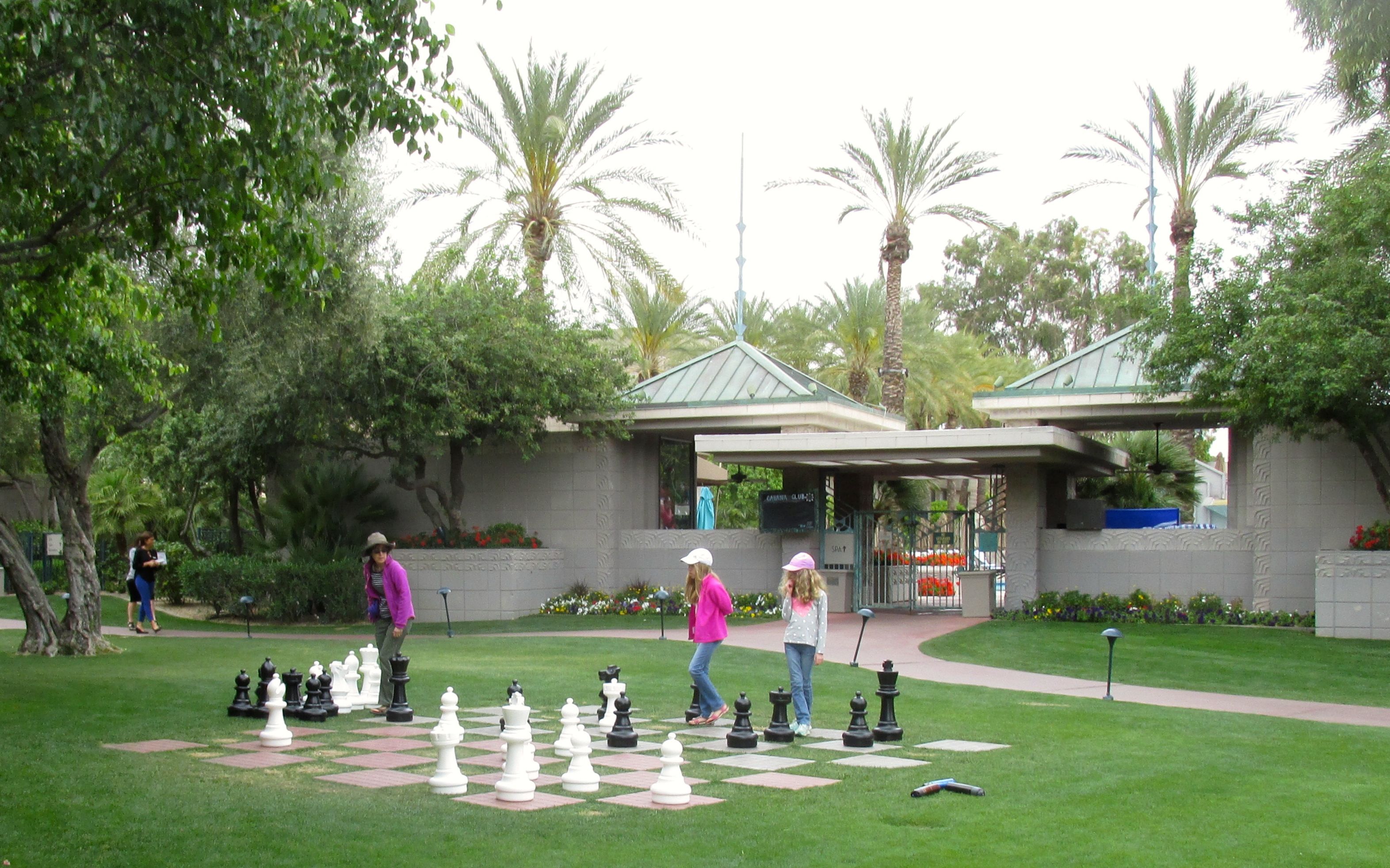
Lawn chess has been a thing here since it opened. These are exact replicas of the original chess pieces.
And into the pool area.
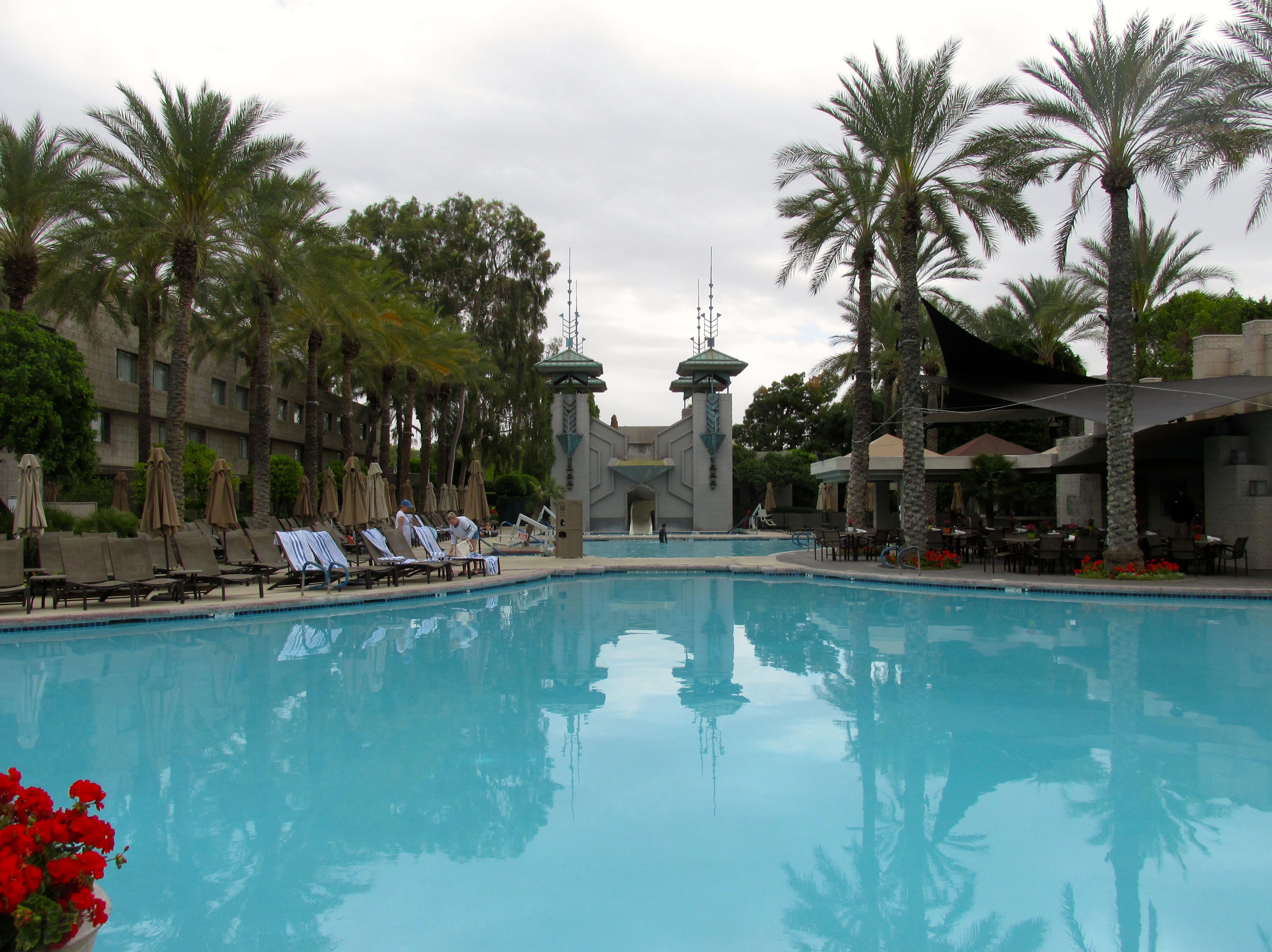
This is the newer pool. As you can tell from the overcast skies, it wasn’t exactly pool weather.
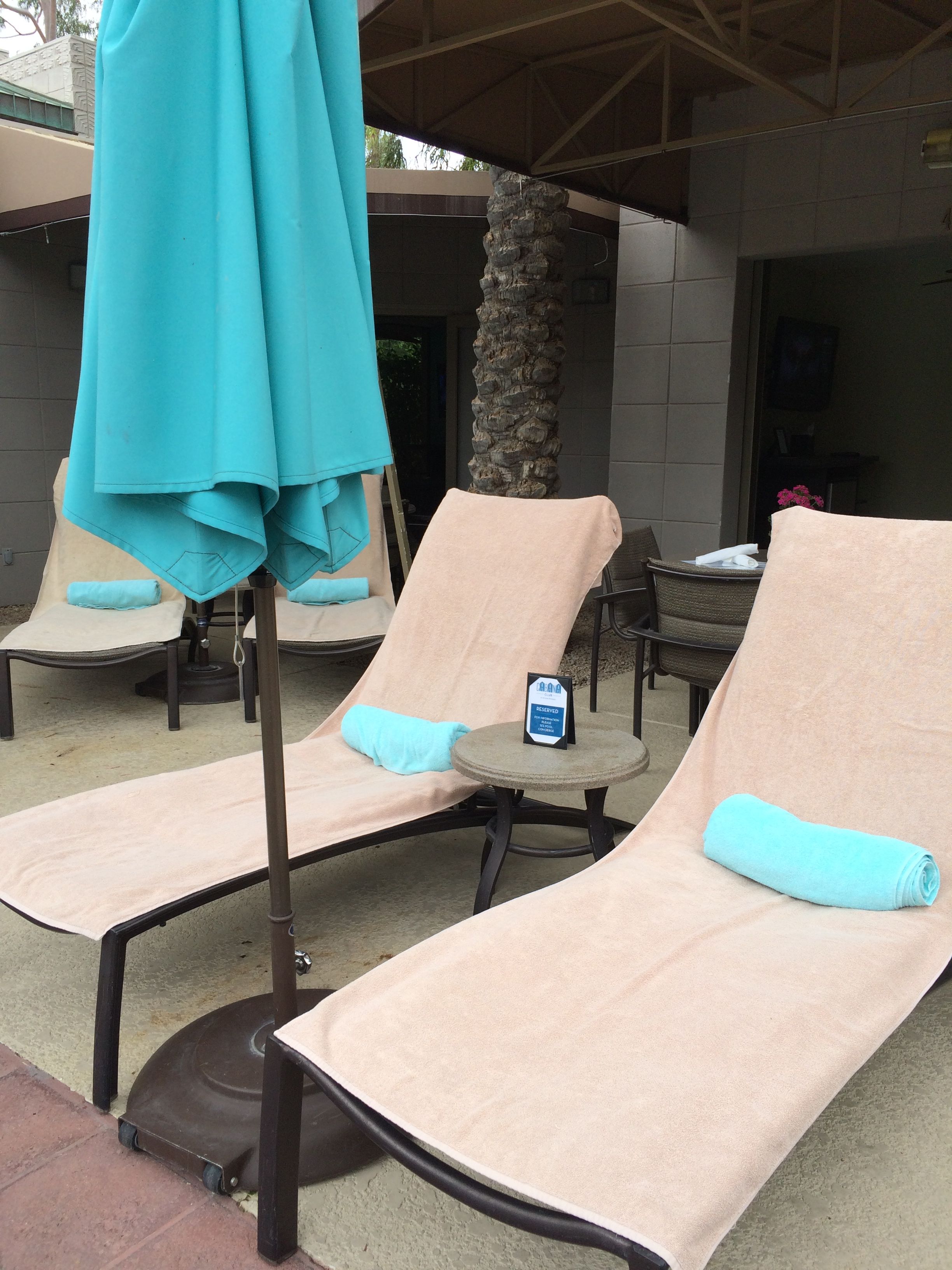
They were ready, though, just incase someone was brave enough to sit out to soak up the sun.
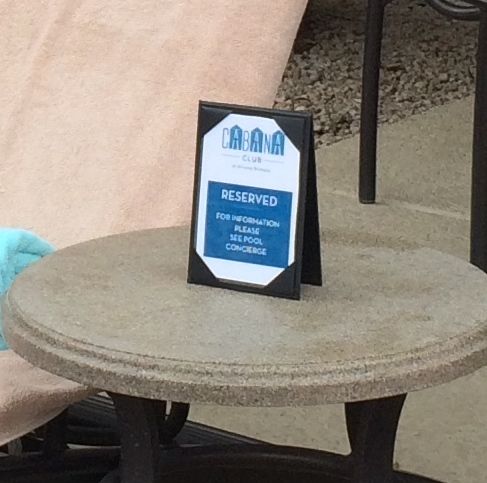
Just be sure that you have reserved a seat.
The second pool we visited was the first pool installed by Mr. Wrigley. It’s called the Catalina Pool, after Santa Catalina Island. Apparently, the Wrigleys owned the island. That’s a lot of chewing gum!

The closer pool was a wading pool.
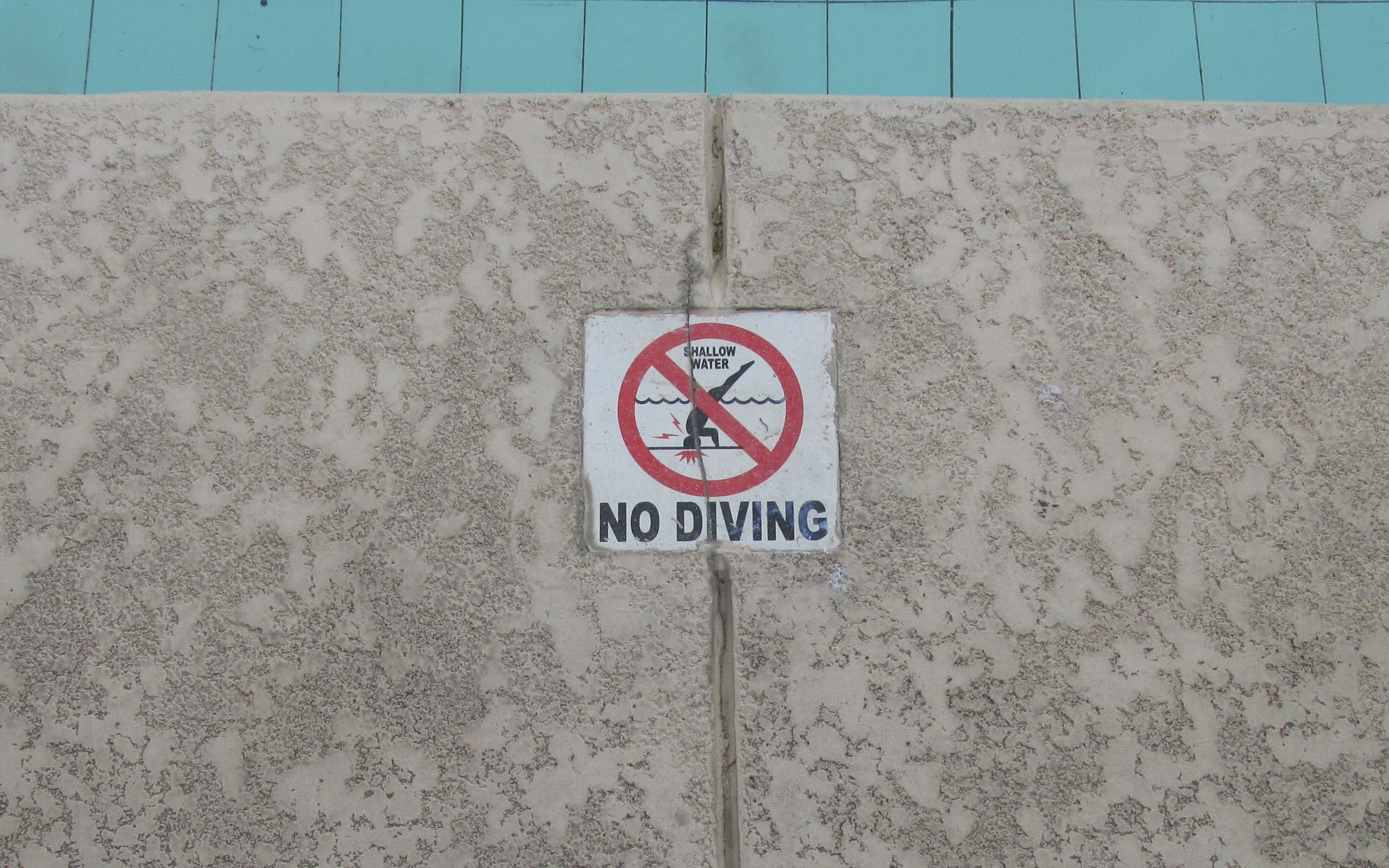
No diving – for good reason!
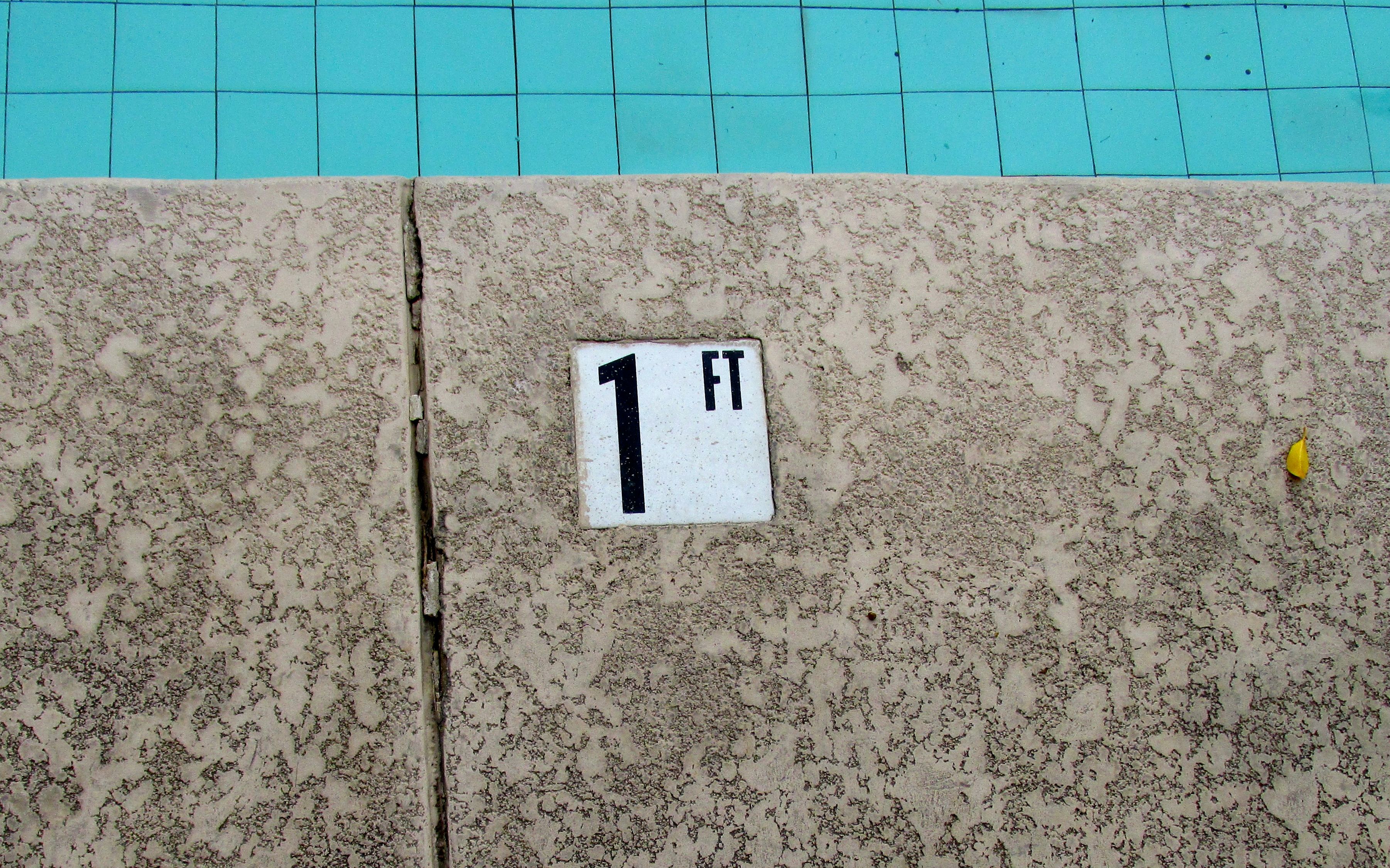
Originally the hotel had around 17 cottages. During expansion, several were taken down. They still have around a dozen.
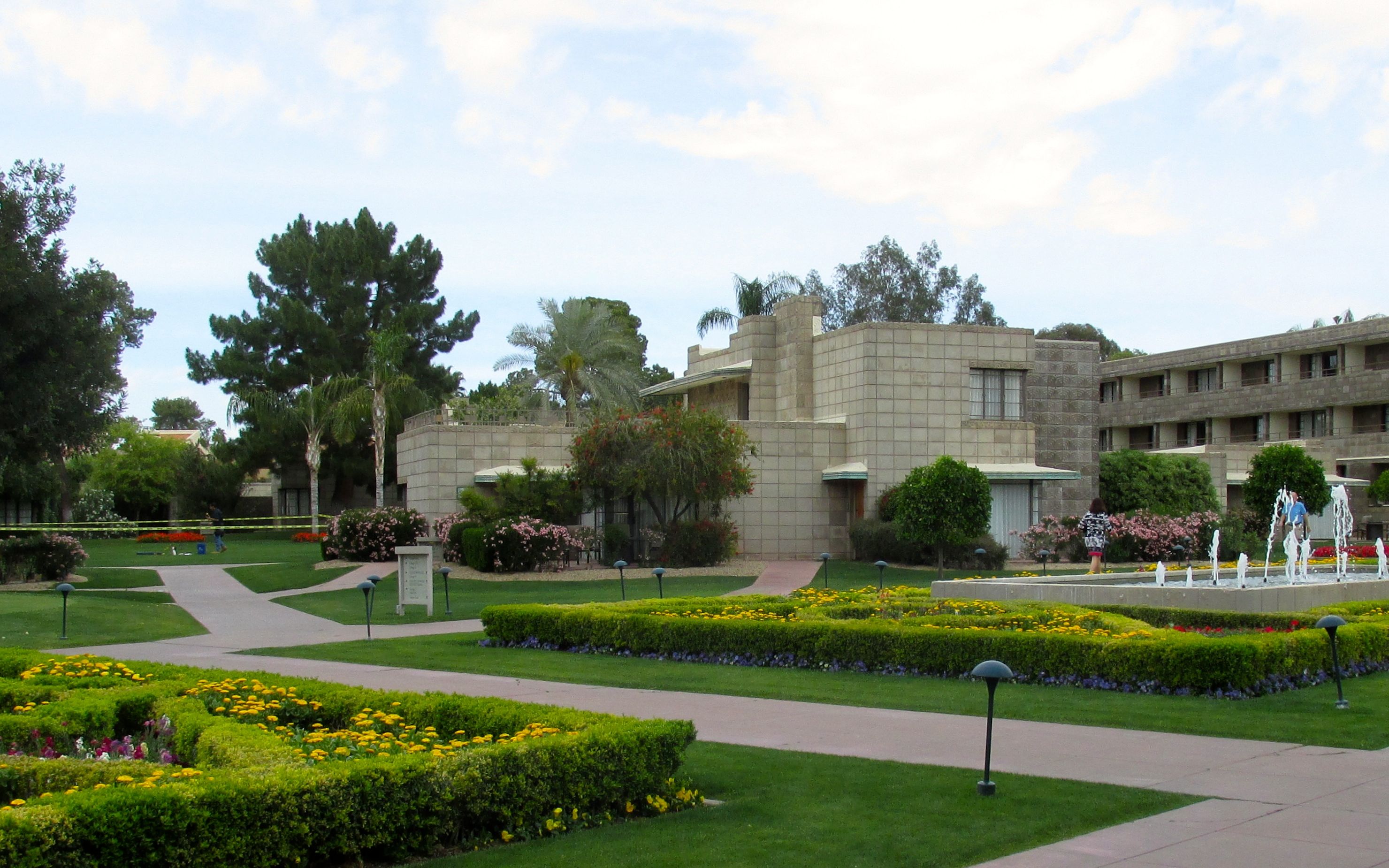
Nice cottage, eh?
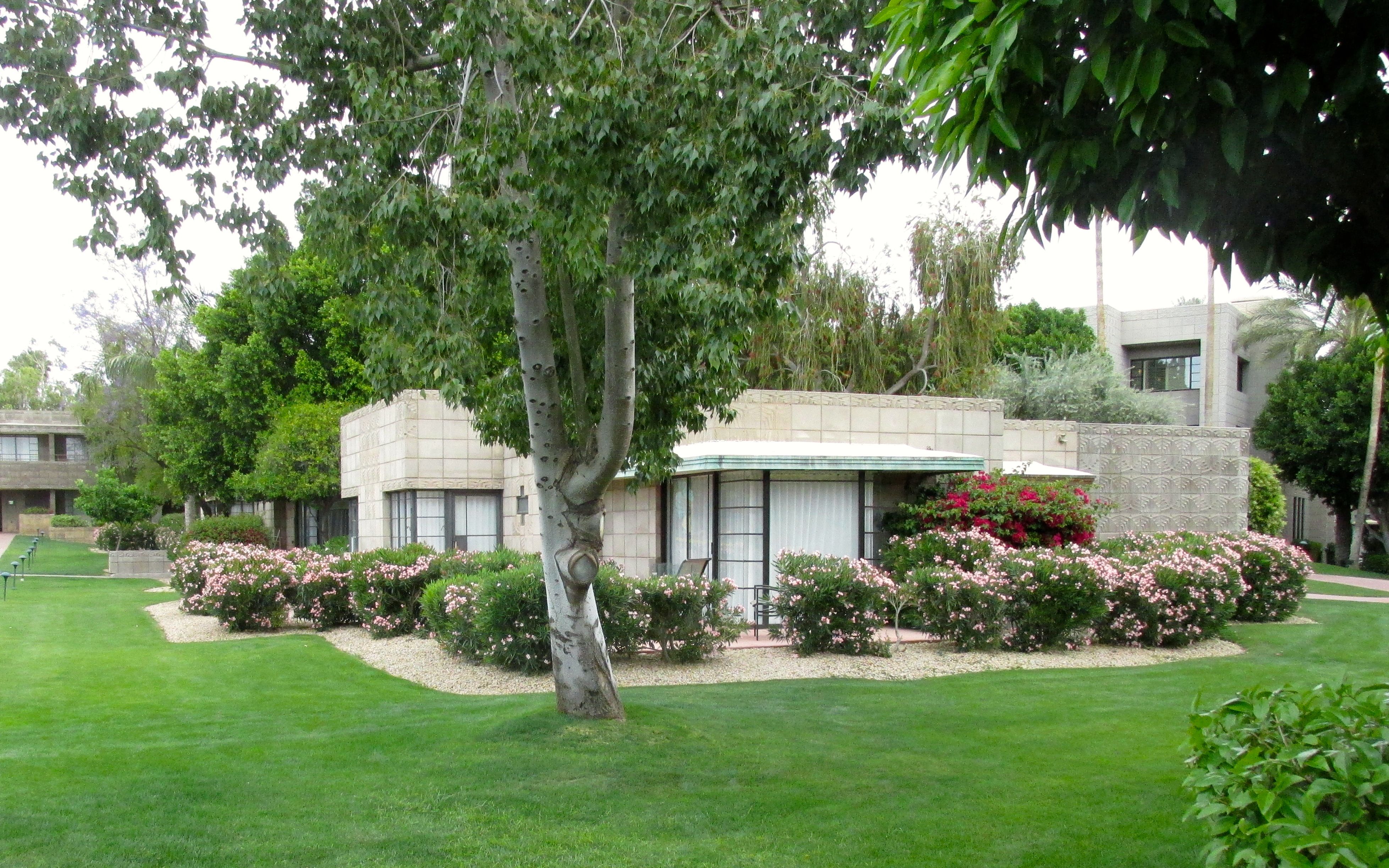
I think this is the one I would choose, if anyone cares to give me one.
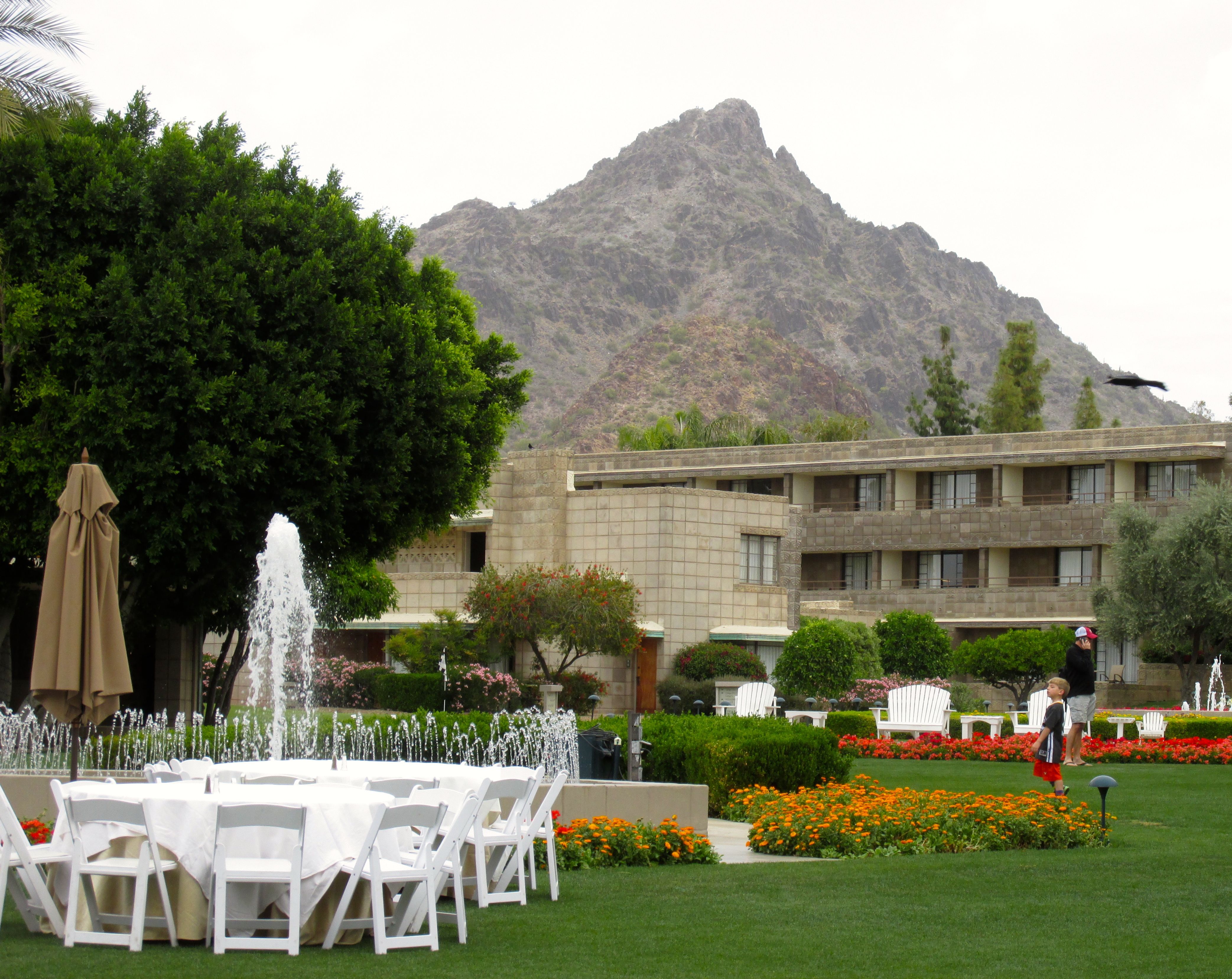
And what a view!
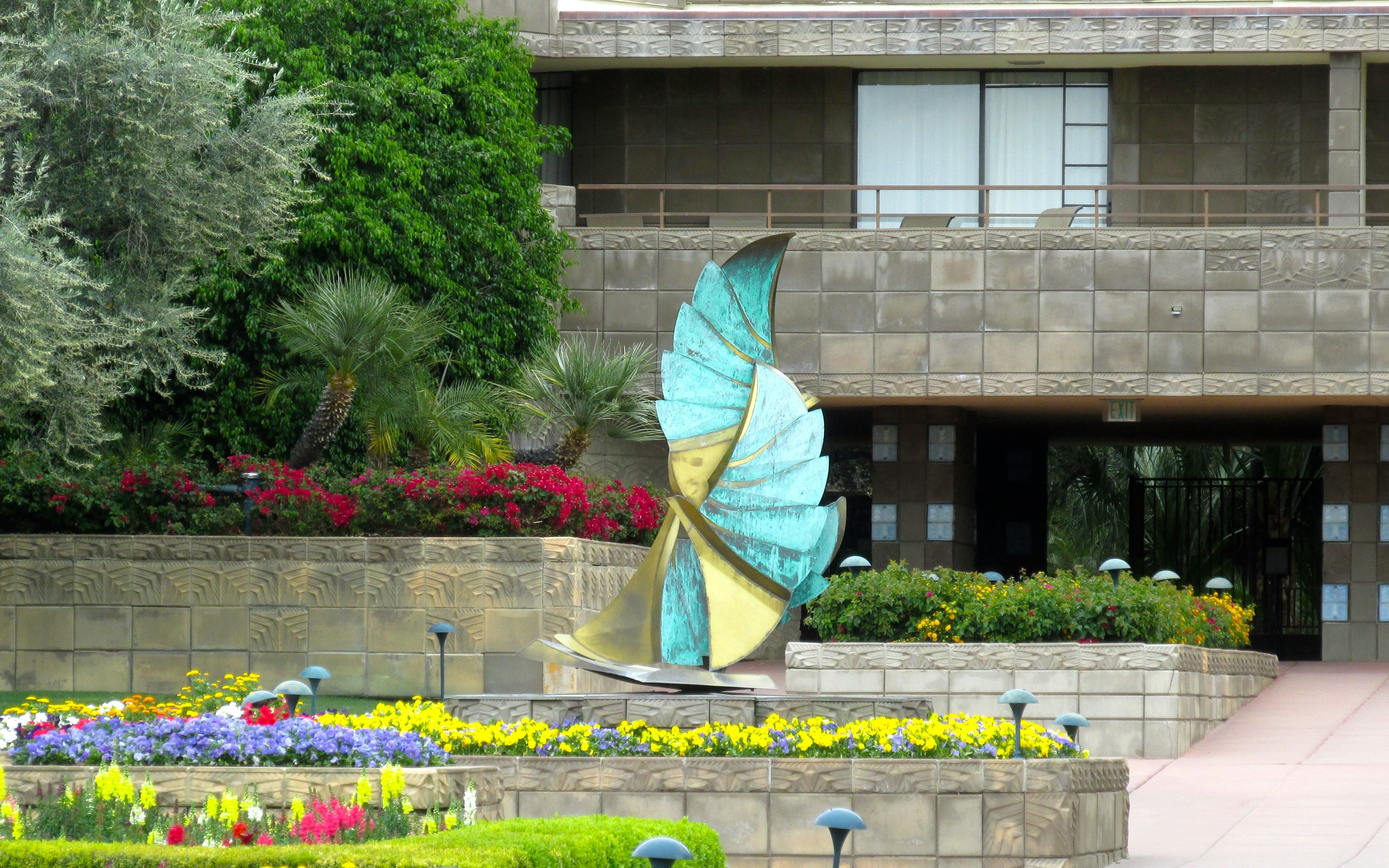
This sculpture is called “Wings of Phoenix”, by Heloise Crista, the sculptor I saw at Taliesin.
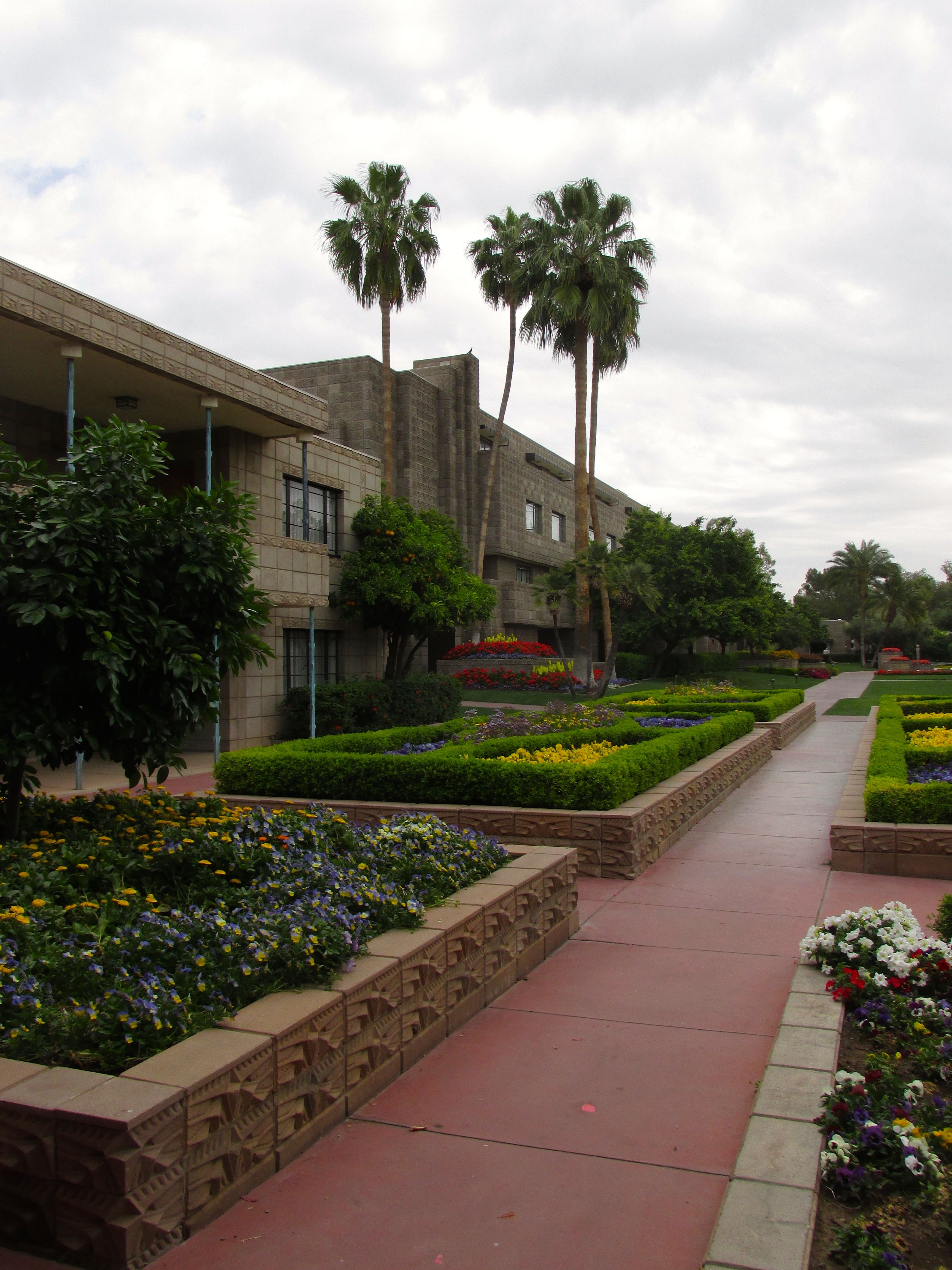
The Garden Patio is a popular site for weddings, according to our guide. You can also see the original wings. They are two stories and they are the lighter colored blocks.
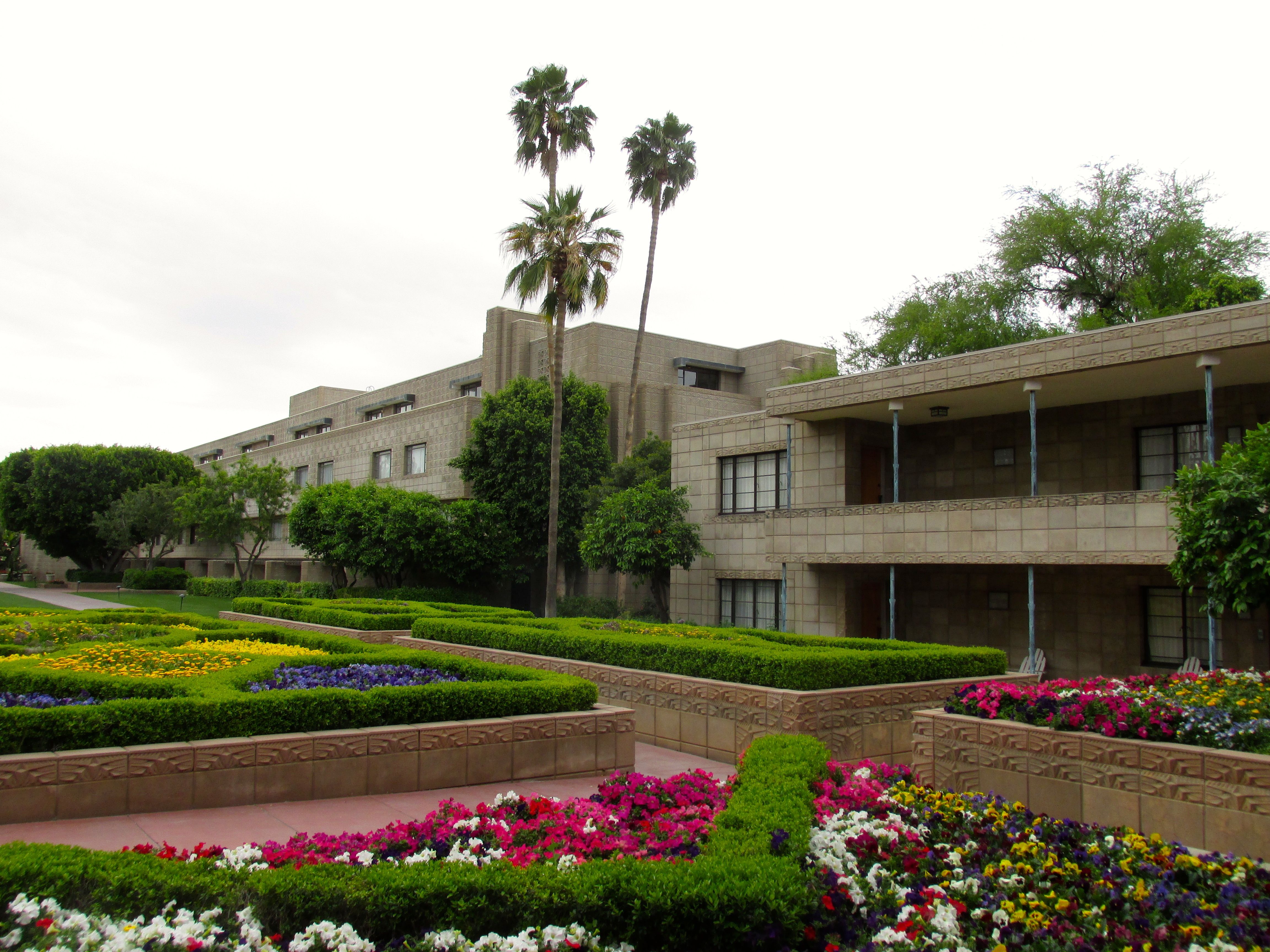
Here’s a view of the other side.
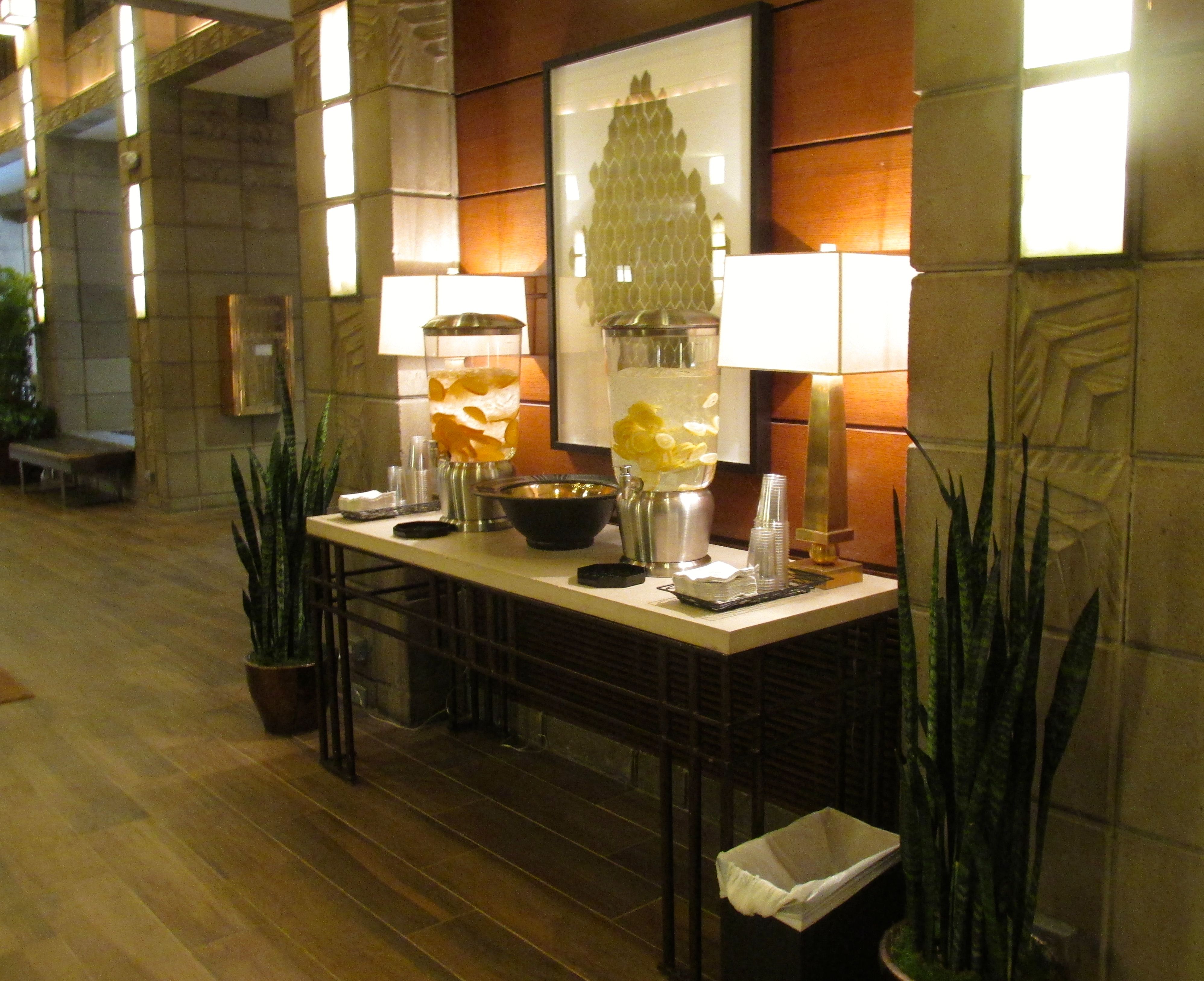
After the tour, I headed back to the valet parking. First, though, I stopped at the water station to rehydrate. What a classy way to present water!
And that’s all I have to say about Phoenix.
Thanks for the excellent tour of the hotel Kim, it was so informative and fun!
We love the Biltmore! Sometimes we’ll just go to walk around the gardens 🙂 Thanks for the informational tour. Now I want to go again!
Very impressive!
Thanks Julie!
My pleasure, Tina! Thanks for taking the time to read my post.
It is a lovely place, isn’t it?