During my research for my last blog post, I learned a new term: dark tourism. According to the article from the Washington Post, dark tourism refers to visiting places where some of the darkest events of human history have unfolded. This portion of my travels has been loaded with dark tourism.
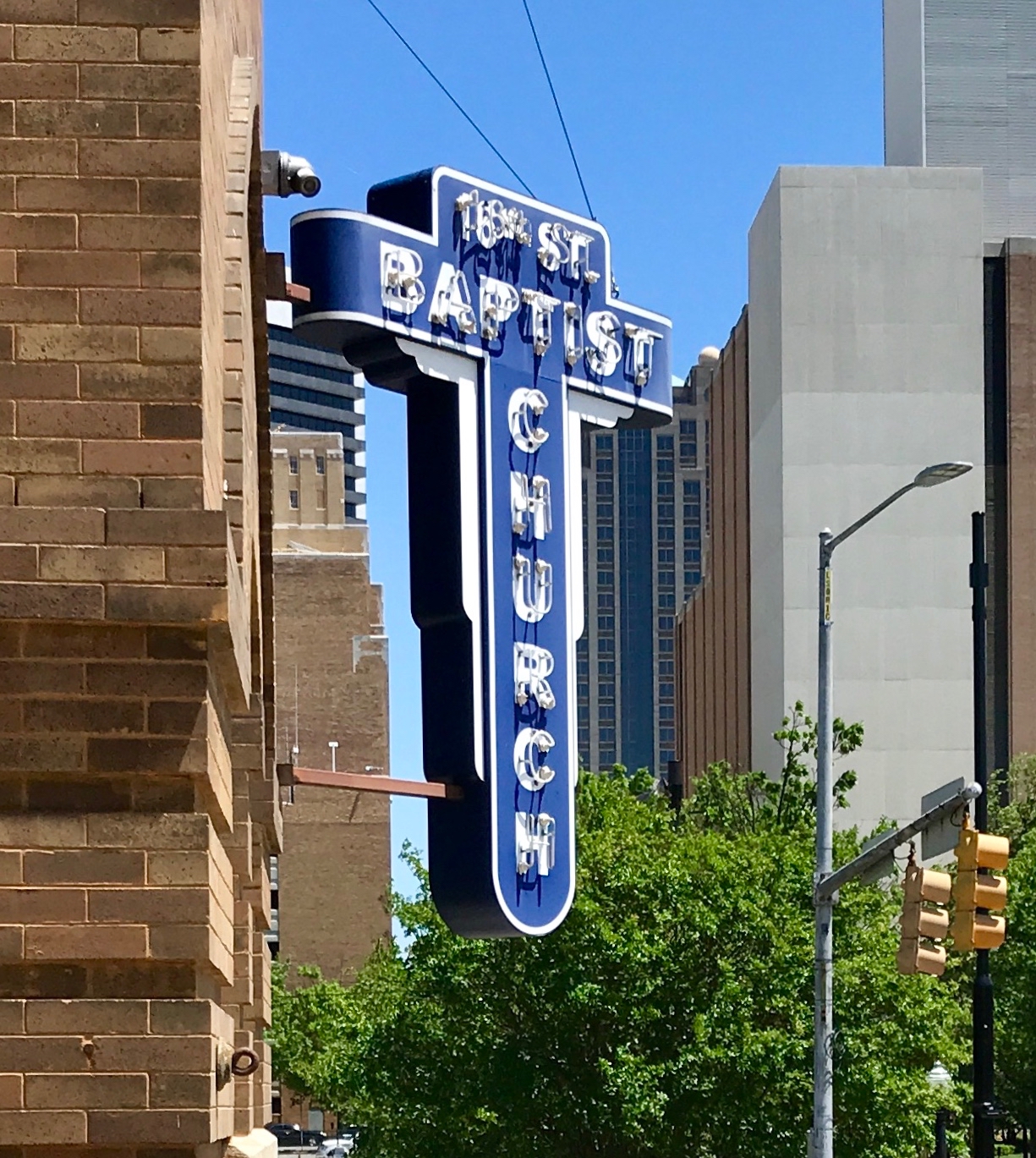
Today’s post deals with the 16th Street Baptist Church bombing that happened in Birmingham on September 15, 1963.
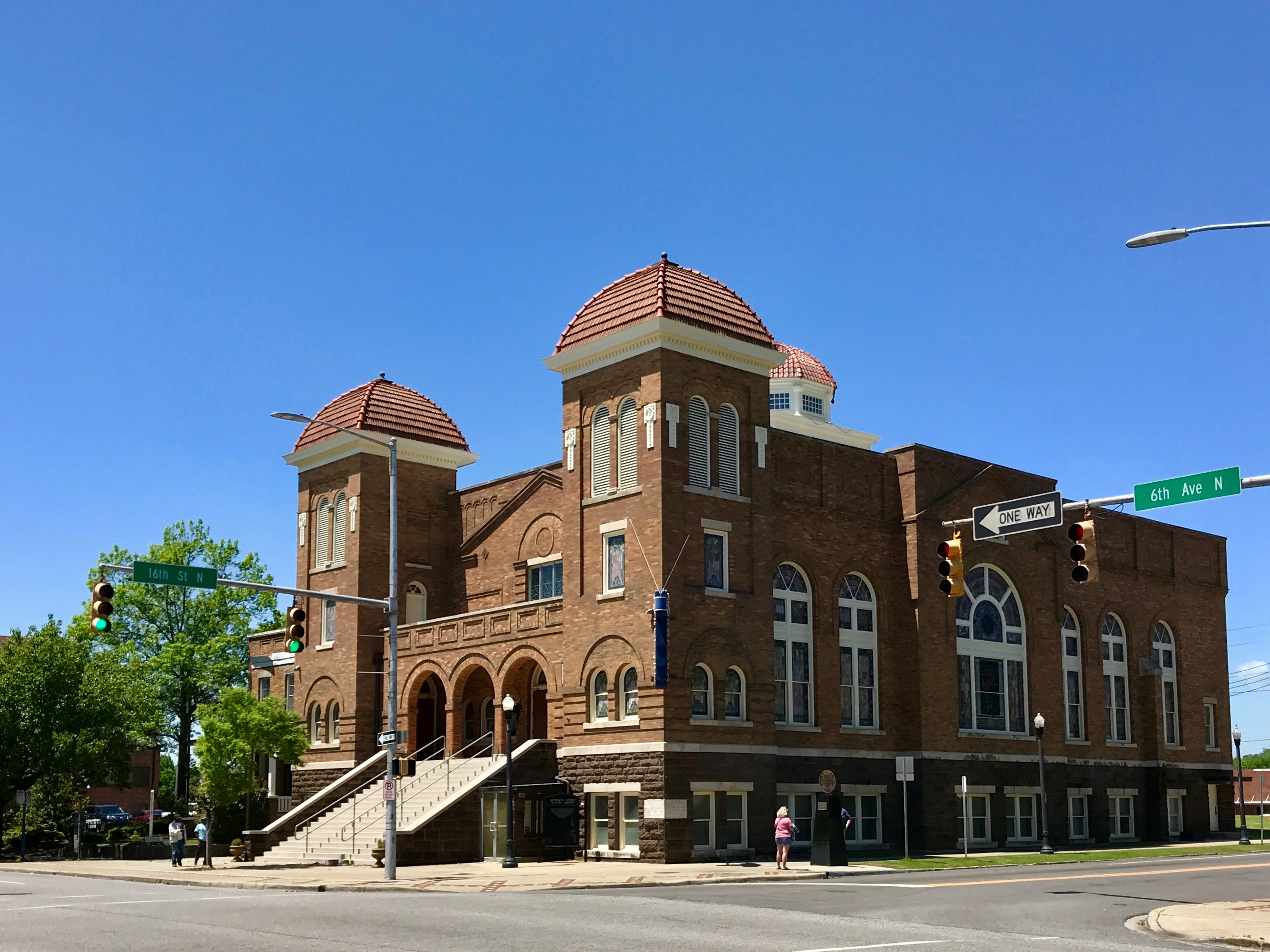
Now, I was always under the impression that the 16 sticks of dynamite were exploded on the 16th Street side of the church, but in refreshing my memory in order to write about my visit, it seems that the bomb was planted under the front steps.
The church offers tours, and I had come to take a tour. I had some time before it began, so I started by looking around the exterior.
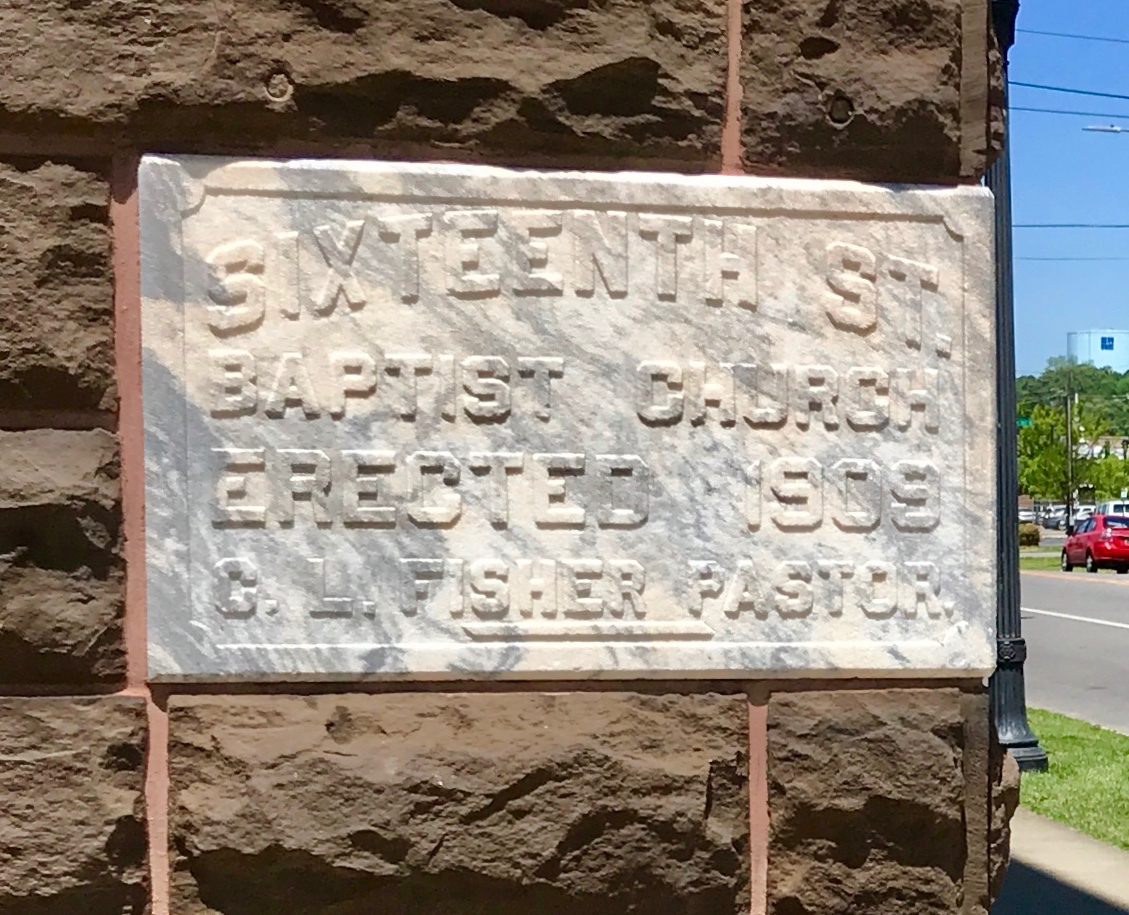
I always appreciate when there is a cornerstone.
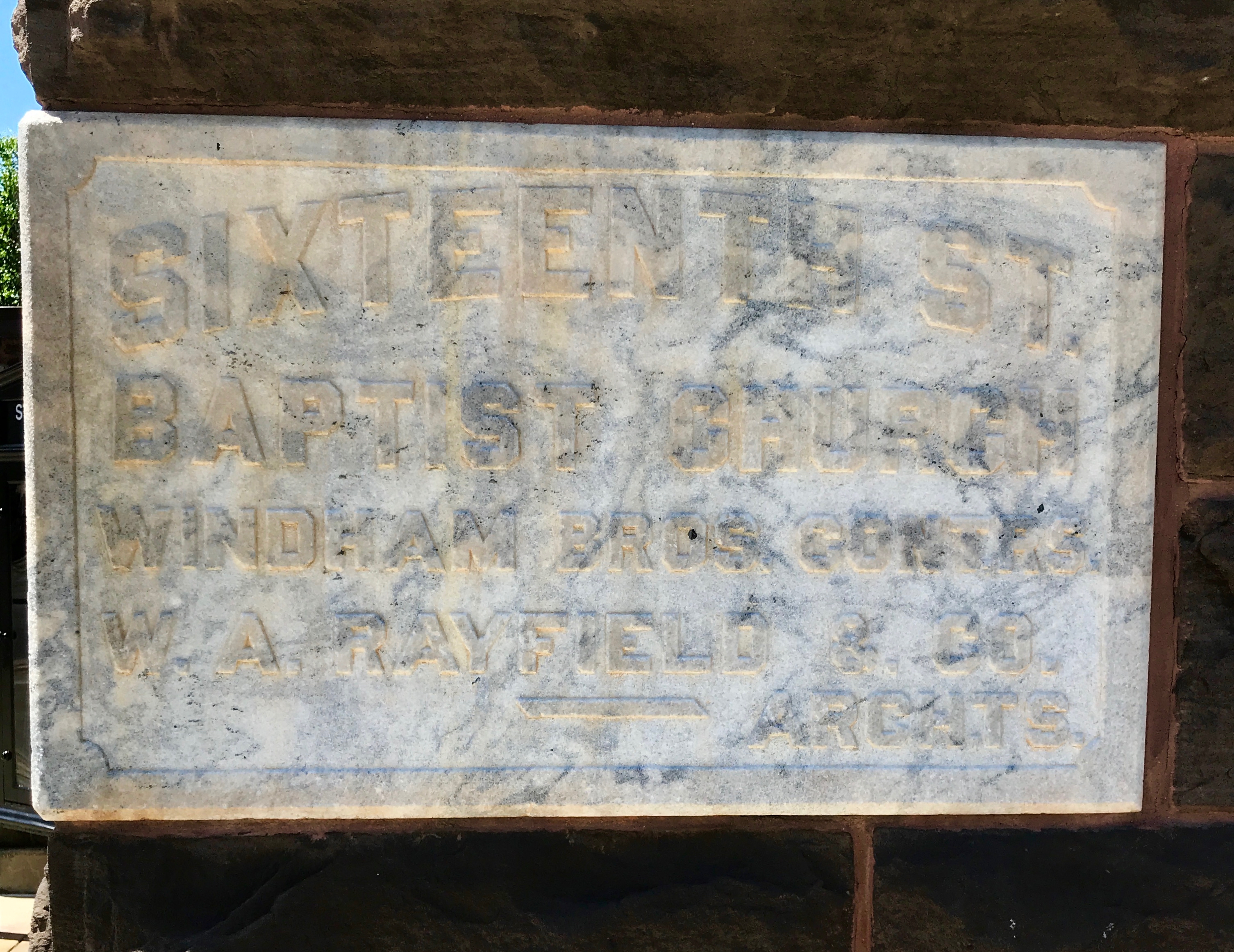
It’s nice that they give the architect and the builders their due.
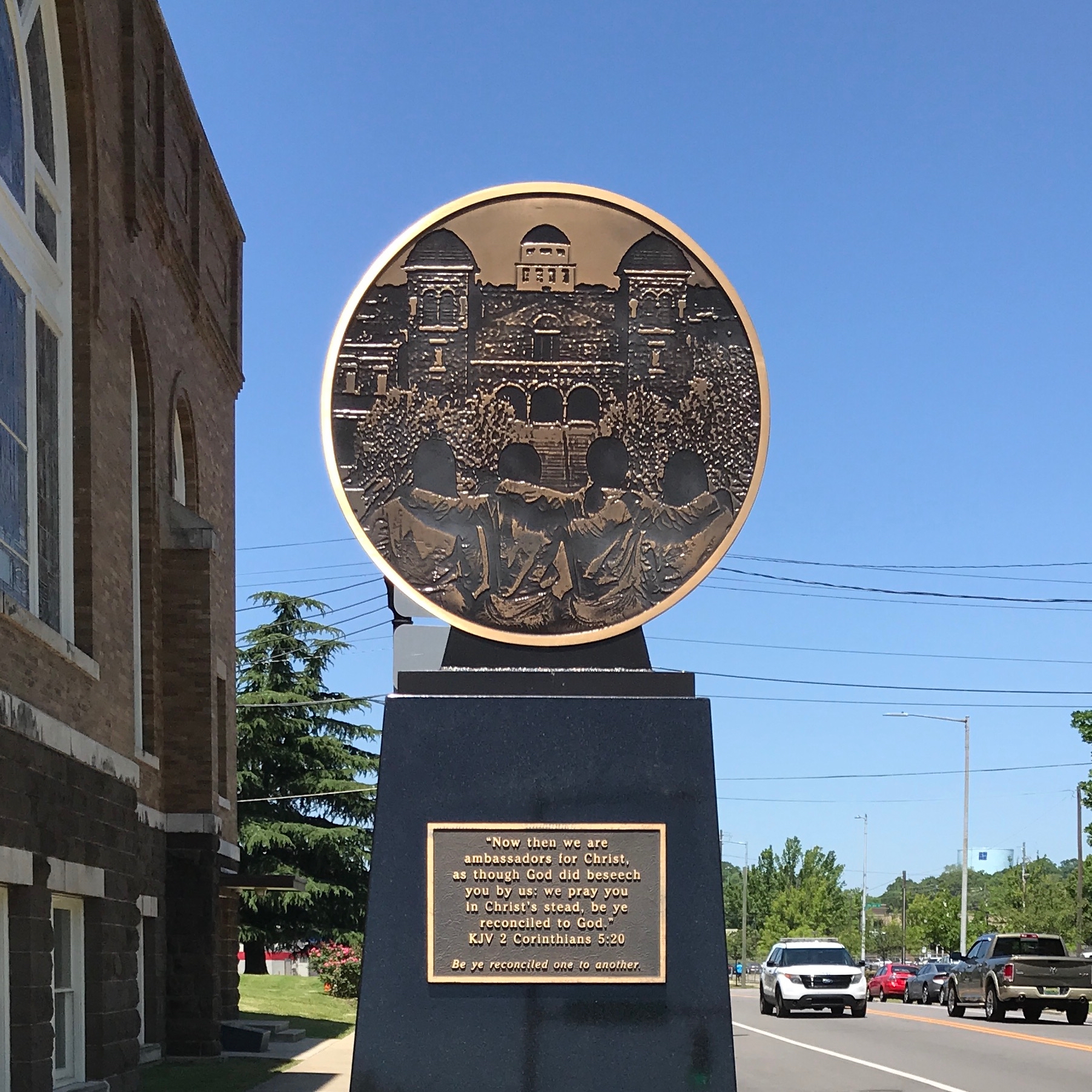
On the 16th Street side there is a memorial.
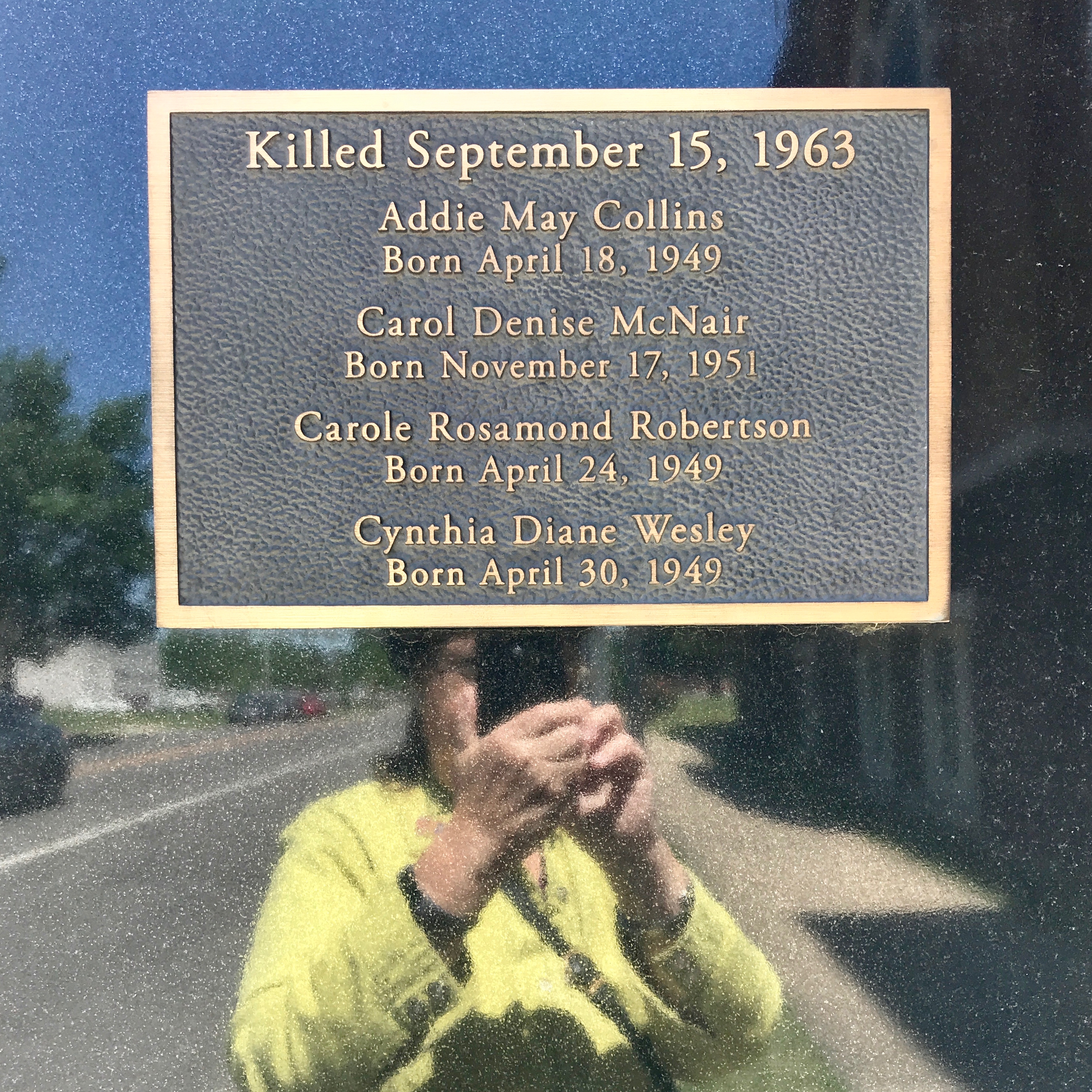
The names of the four girls killed in the bombing are listed.
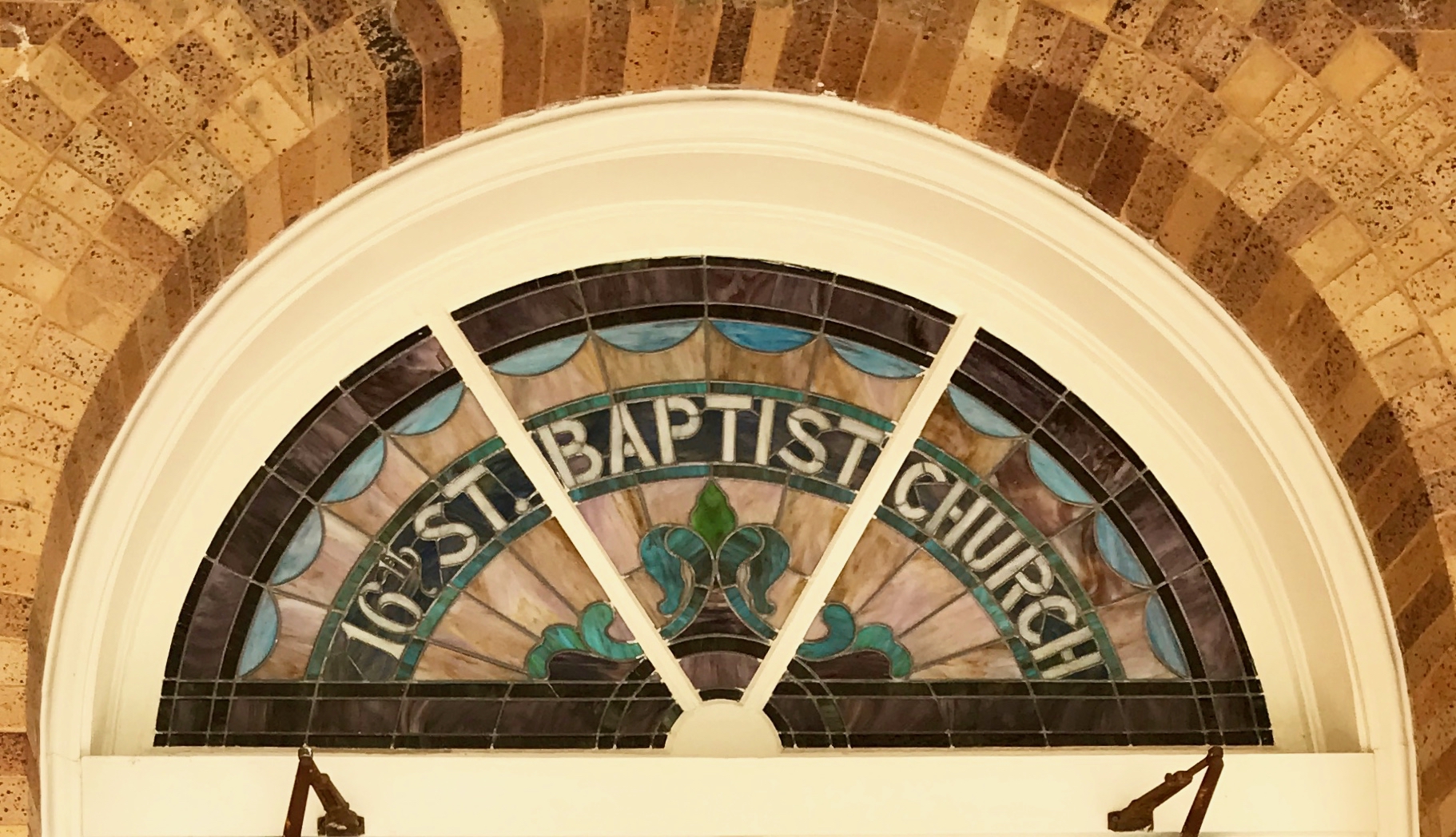
I figured it was time to head inside.
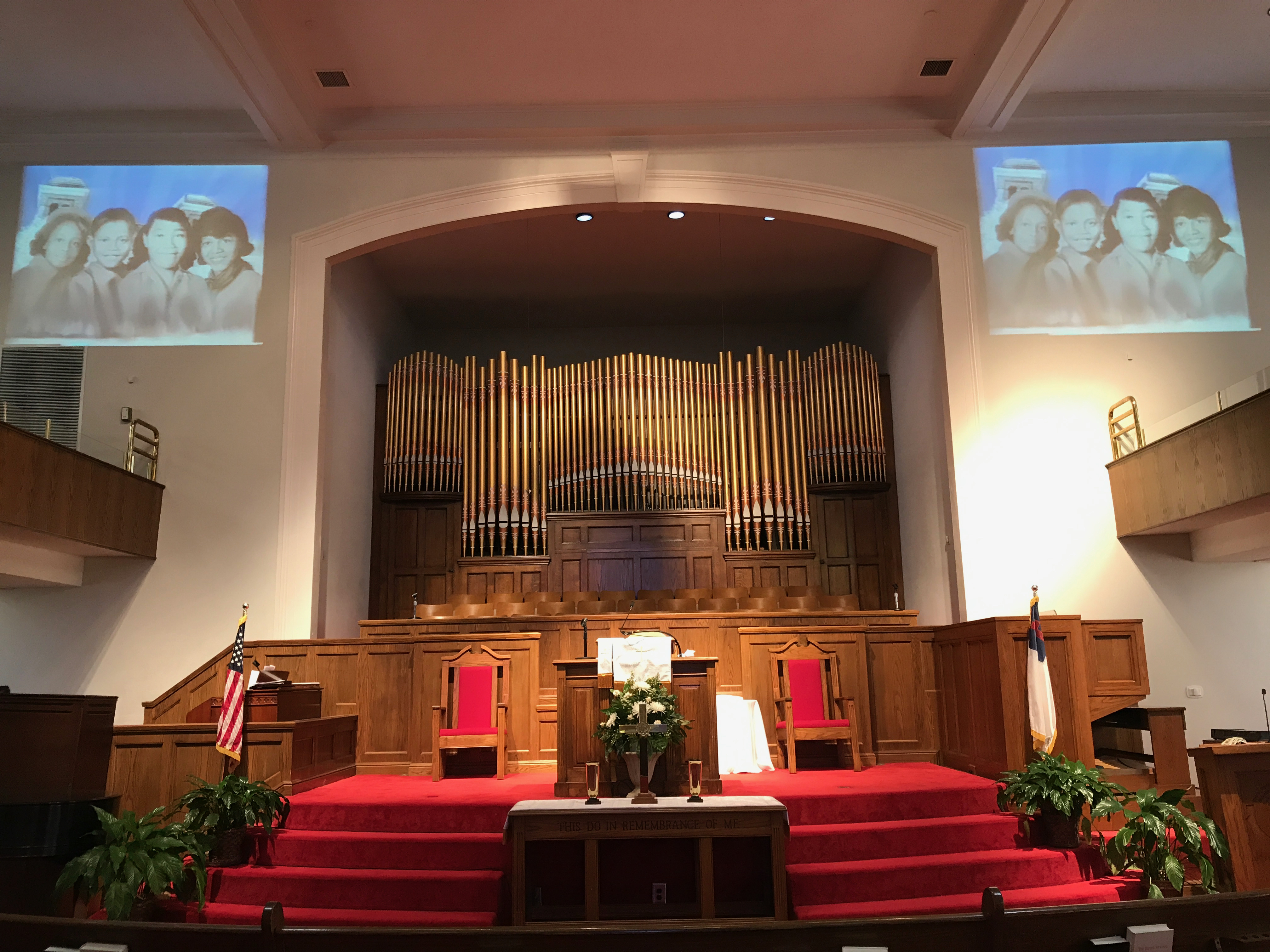
The altar was simple, yet elegant.
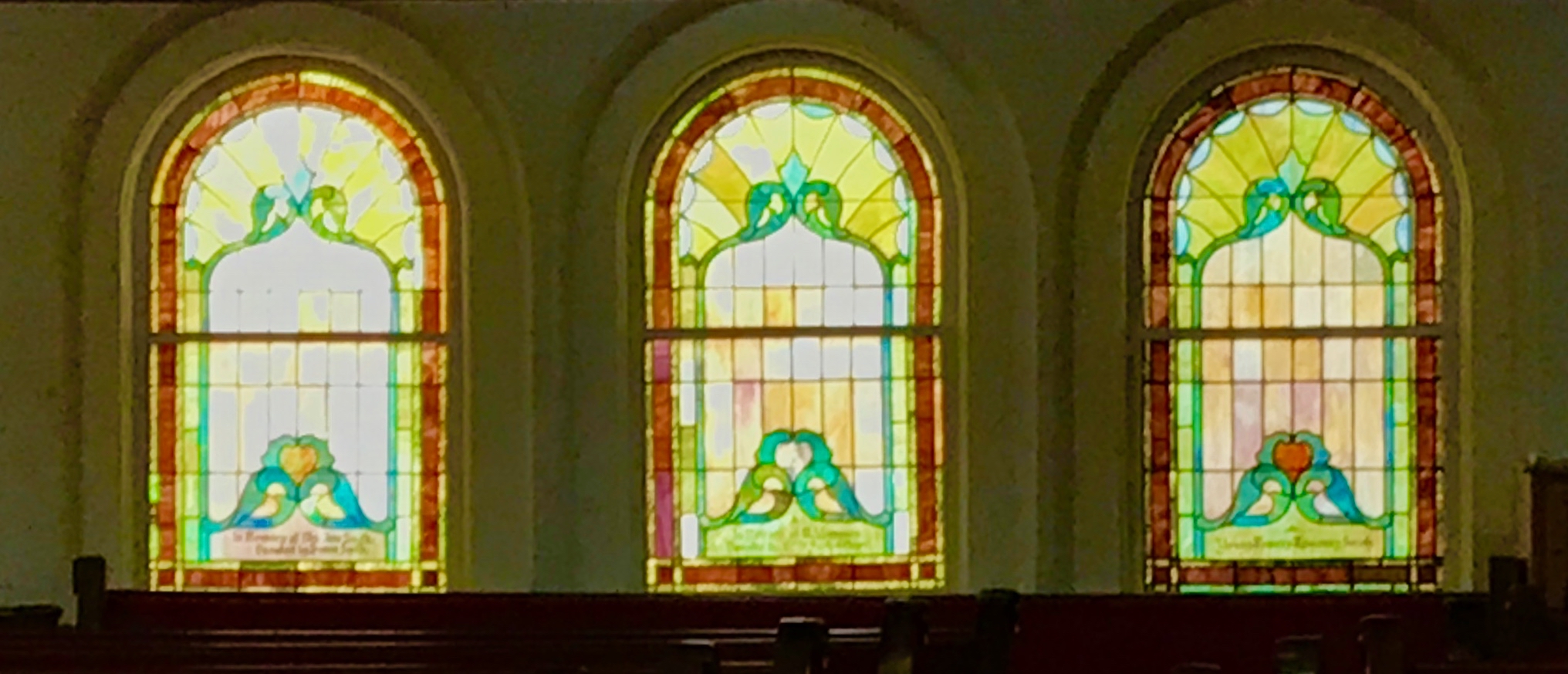
There were many lovely stained glass windows.
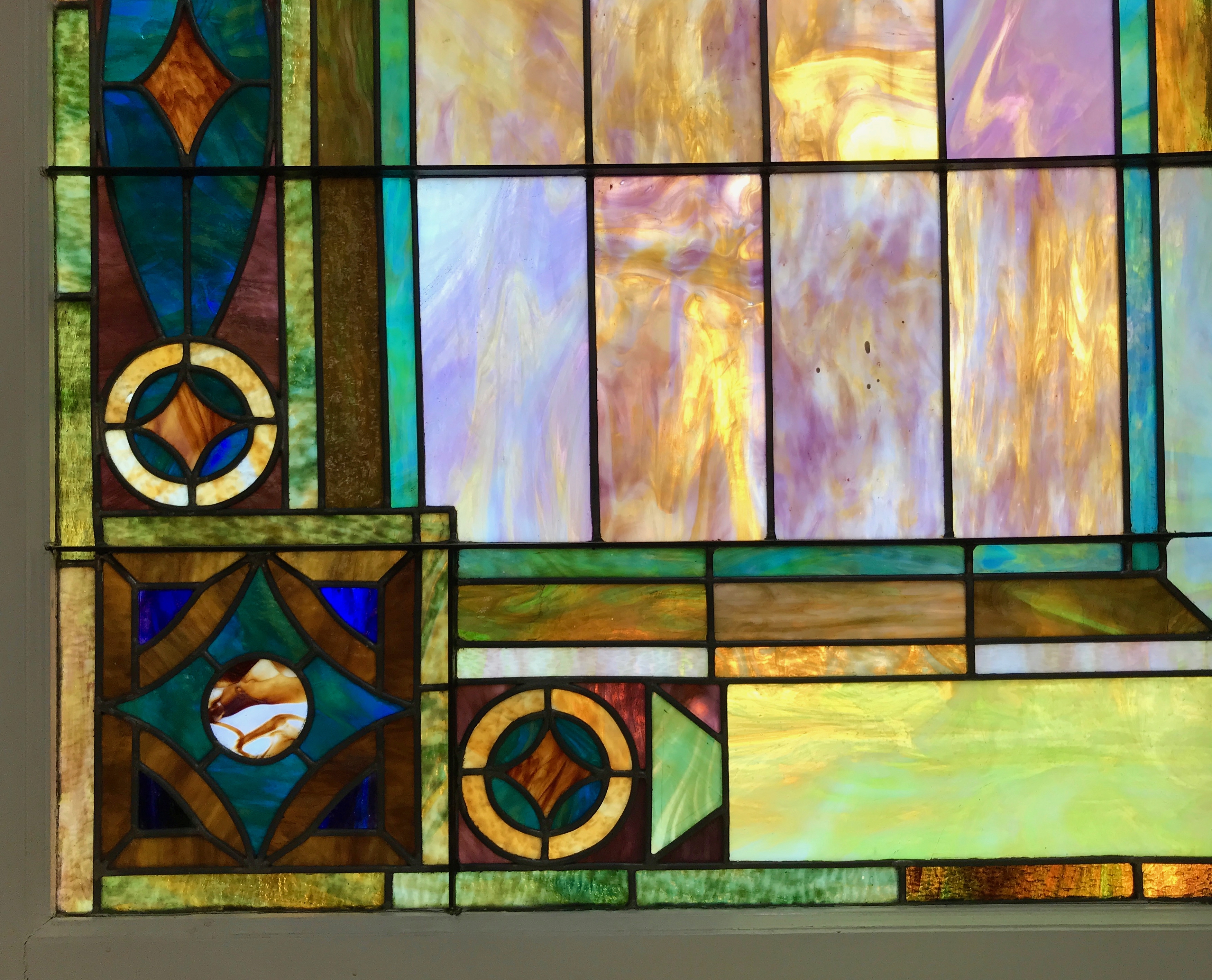
The sun made it a little difficult to photograph entire windows, but the details really stood out.
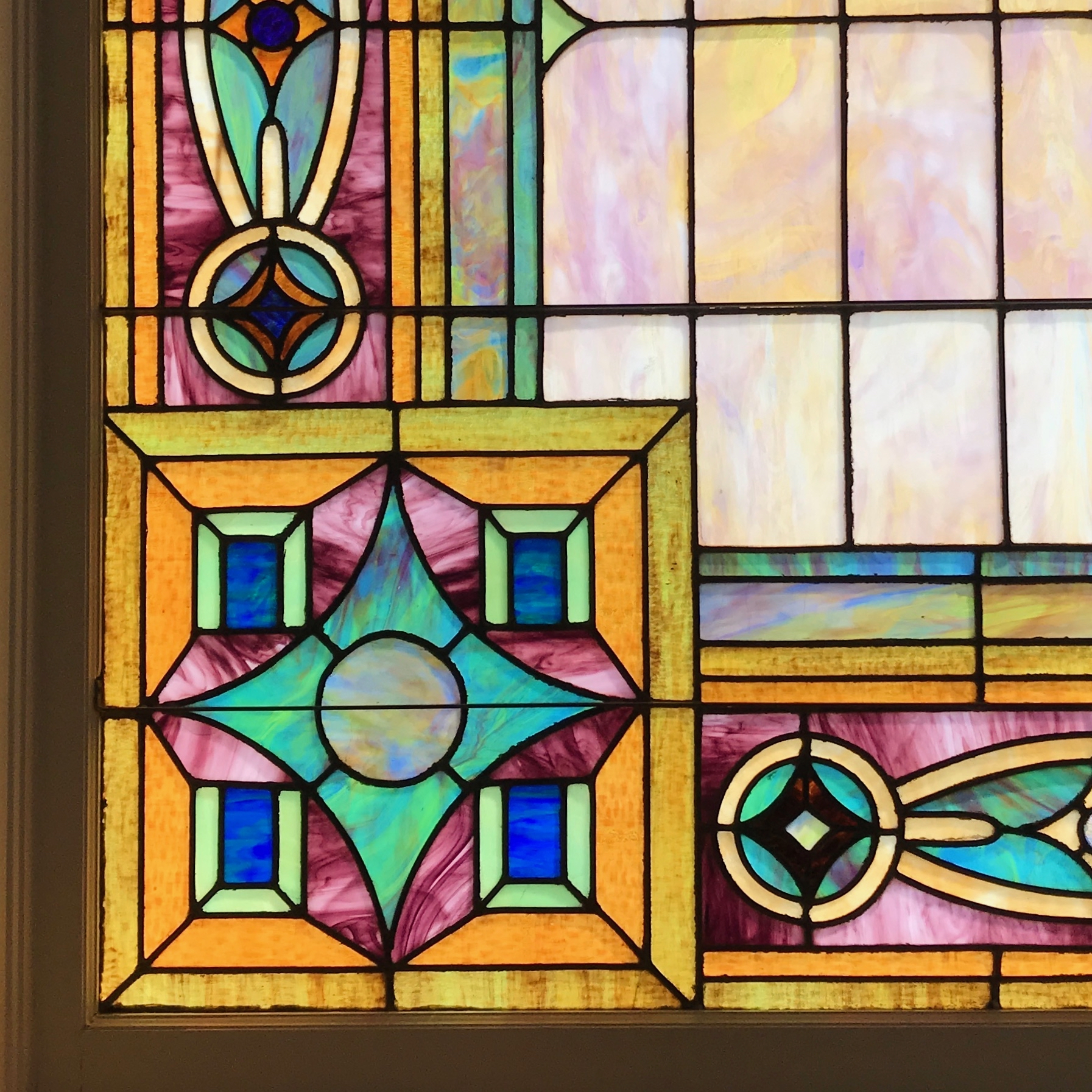
The colors were so vibrant.
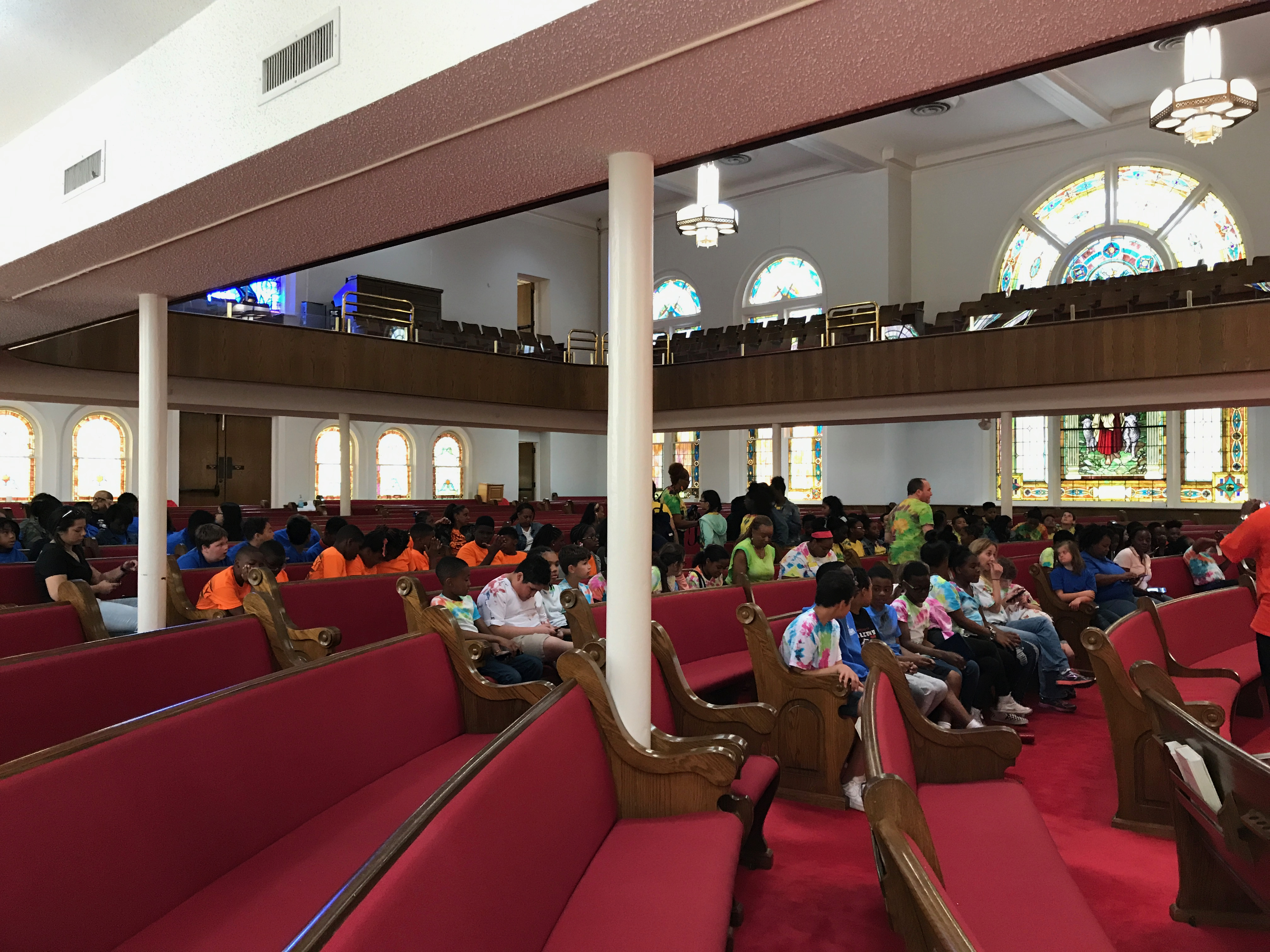
It was spring, and that must mean it’s field trip season down south, too.
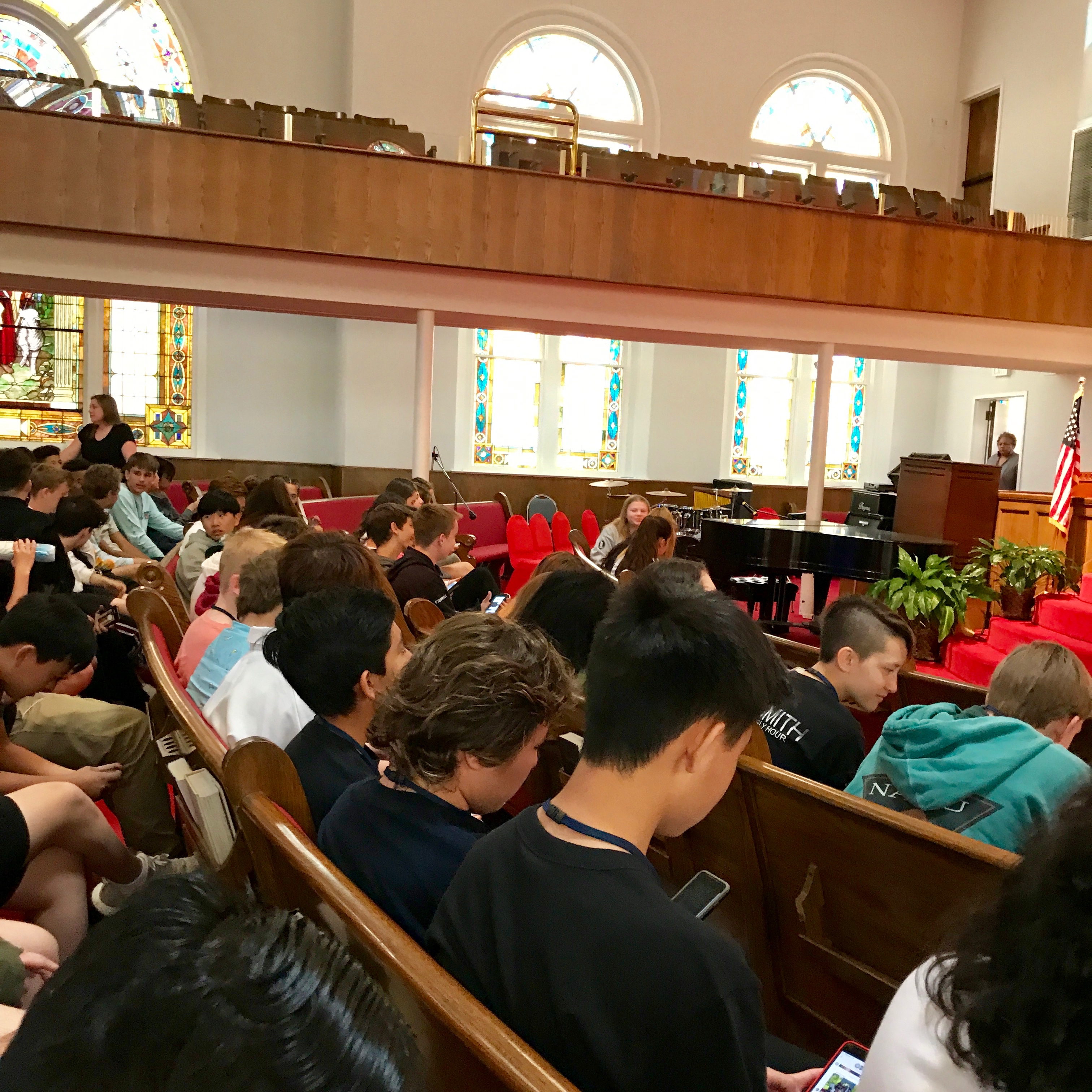
The kids sat quietly. Some looked at their phones and others read the materials in the pockets on the backs of the pews.
I listened to the presentation. I must admit that I didn’t know as much as I thought I knew about the event. It makes you wonder if we are ever going to treat each with the respect all people deserve.
After the last few days, I was feeling really bogged down by it all.
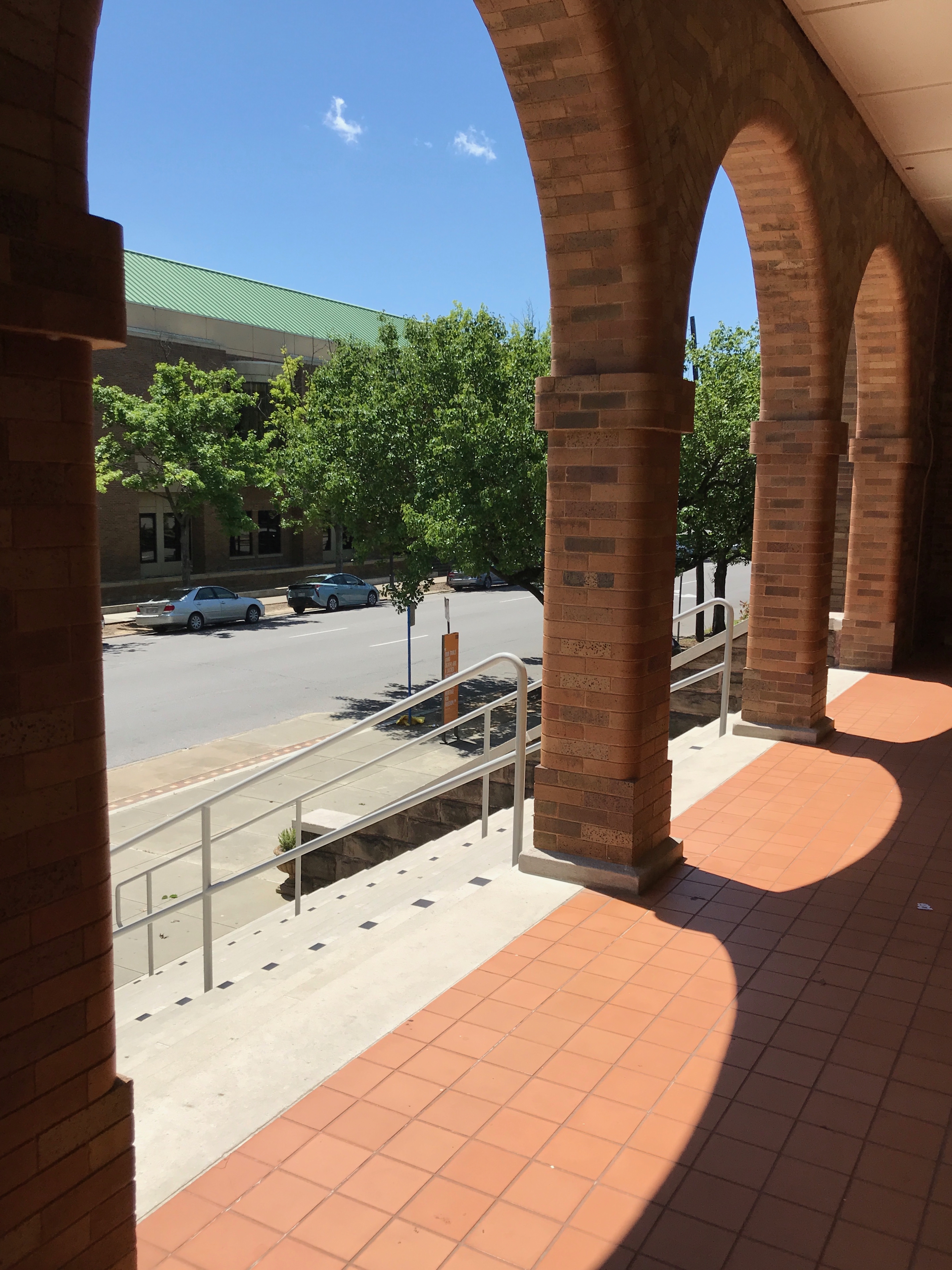
I was glad to get back out into the sunshine.
I crossed the street to tour Kelly Ingram Park. It’s known informally as West Park, but it was named to honor Osmond Kelly Ingram, and Alabama native who was the U.S, Navy’s first enlisted man to die in World War I.
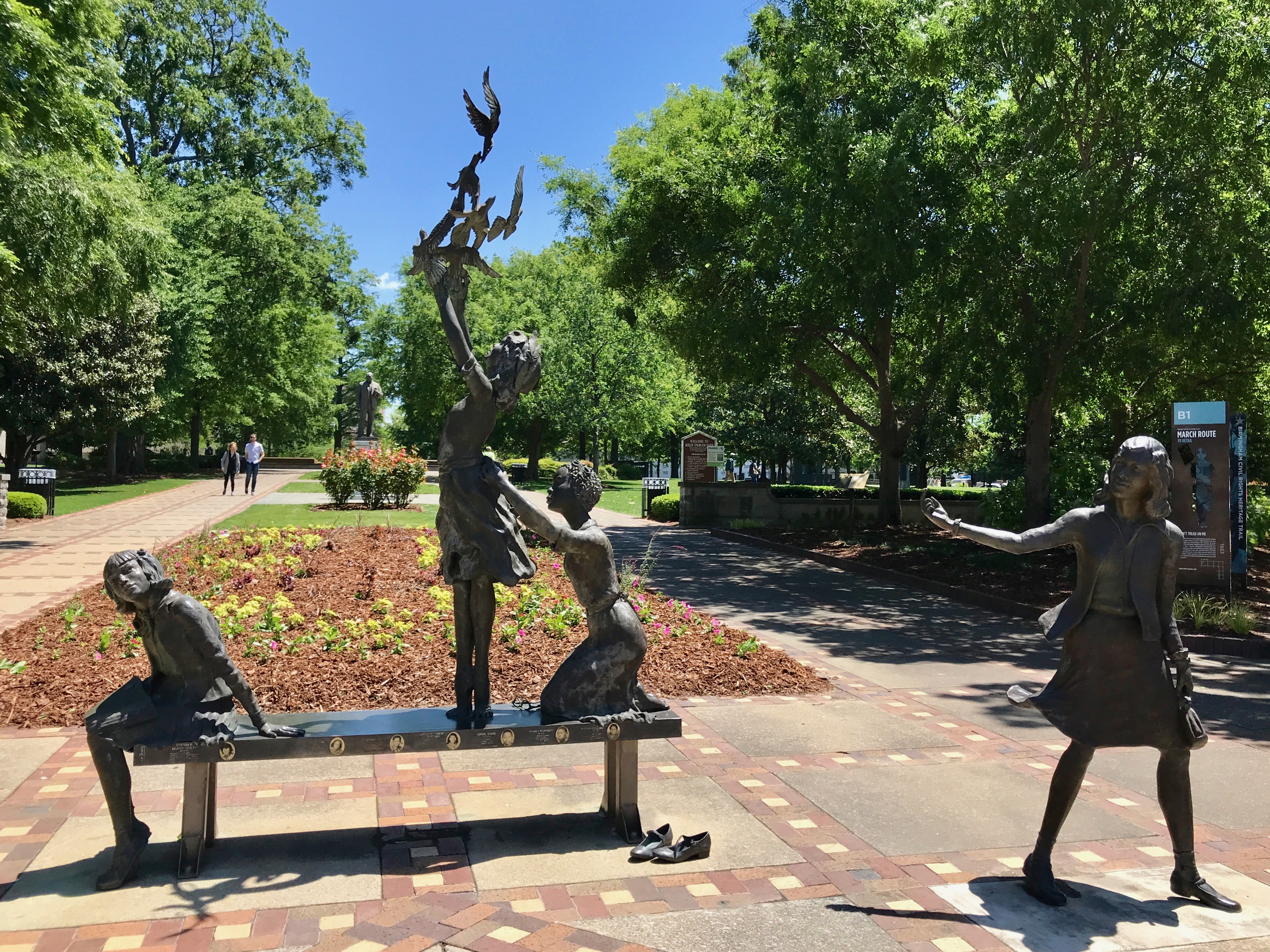
The first statue I came across honored the four girls killed in the bombing. While the photos I have seen make them look as if they are pressed under glass, this statue is so full of life.
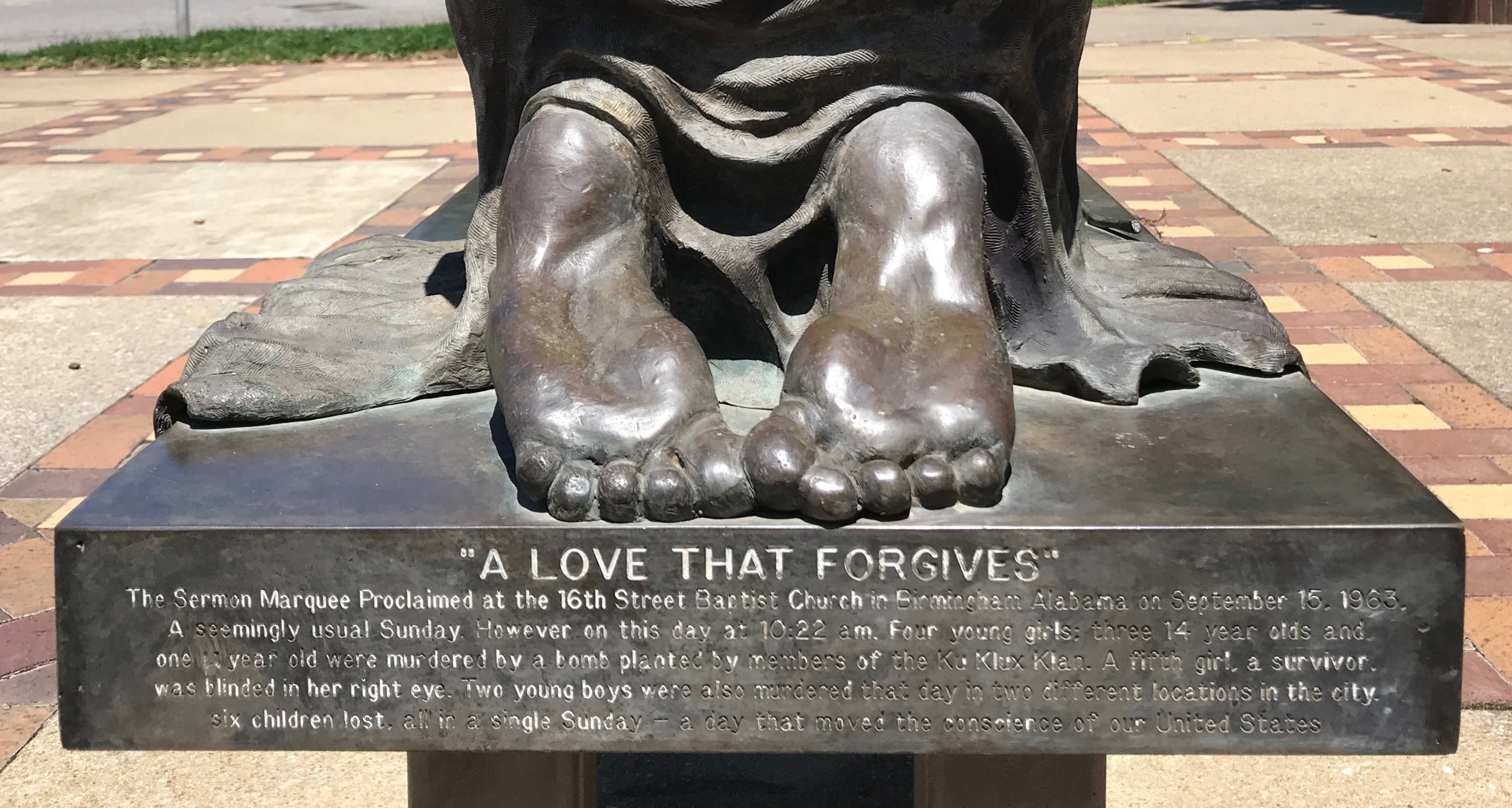
I loved this detail that was included. The information is there, but it doesn’t define the girls.
“A Love that Forgives”
The Sermon Marquee Proclaimed at the 16th Street Baptist Church in Birmingham, Alabama on September 15, 1963.
A seemingly usual Sunday. However on this day at 10:22 am, four young girls,: three 17 year olds and one 11 year old were murdered by a bomb planted by members of the Ku Klux Klan. A fifth girl, a survivor, was blinded in her right eye. Two young boys were also murdered that day inn two different locations in the city.
Six children lost. All in a single Sunday – a day that moved the conscience of our United States.
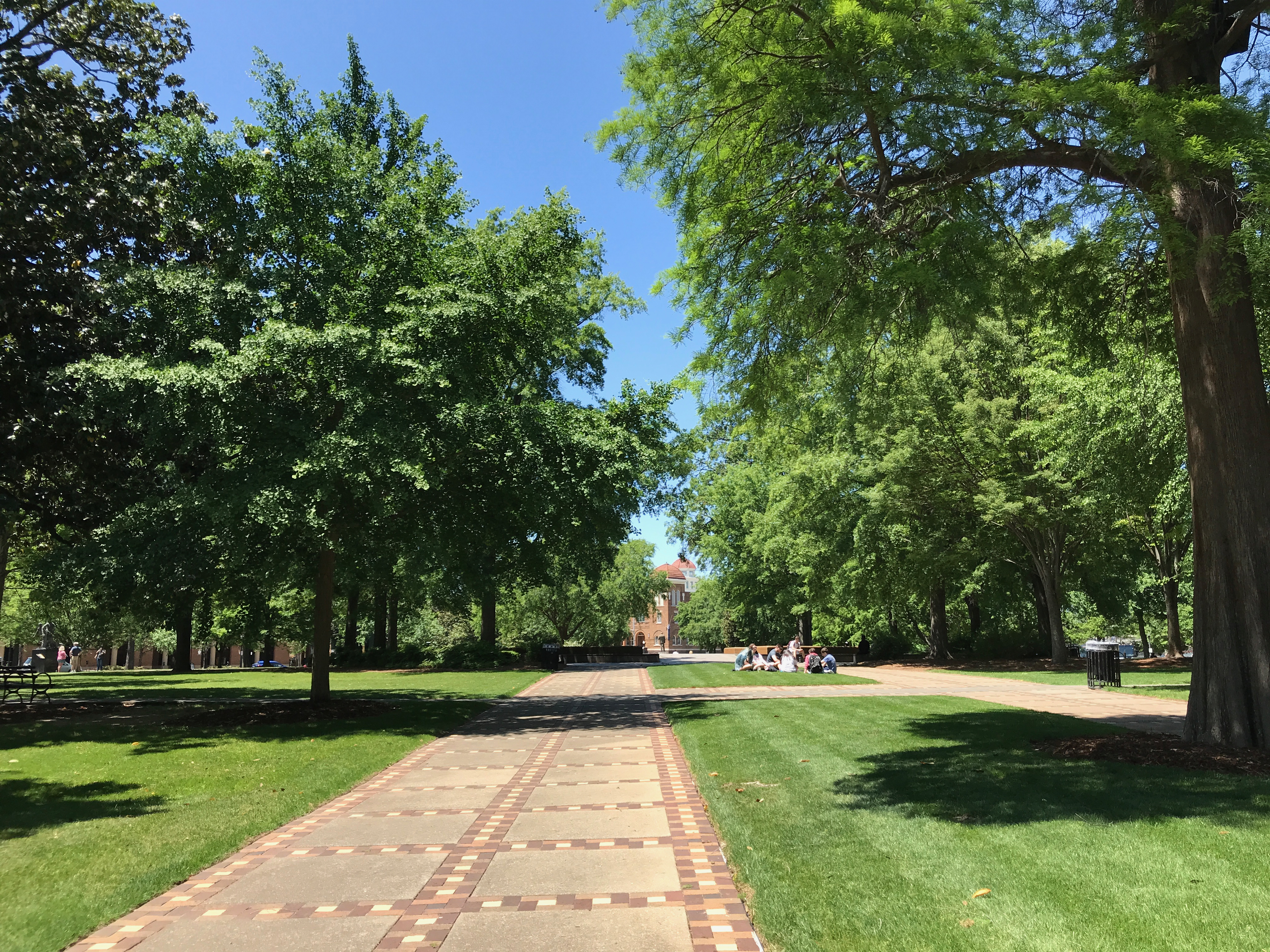
I set off to explore the park. I appreciated how common materials were used to create a beautiful oasis.
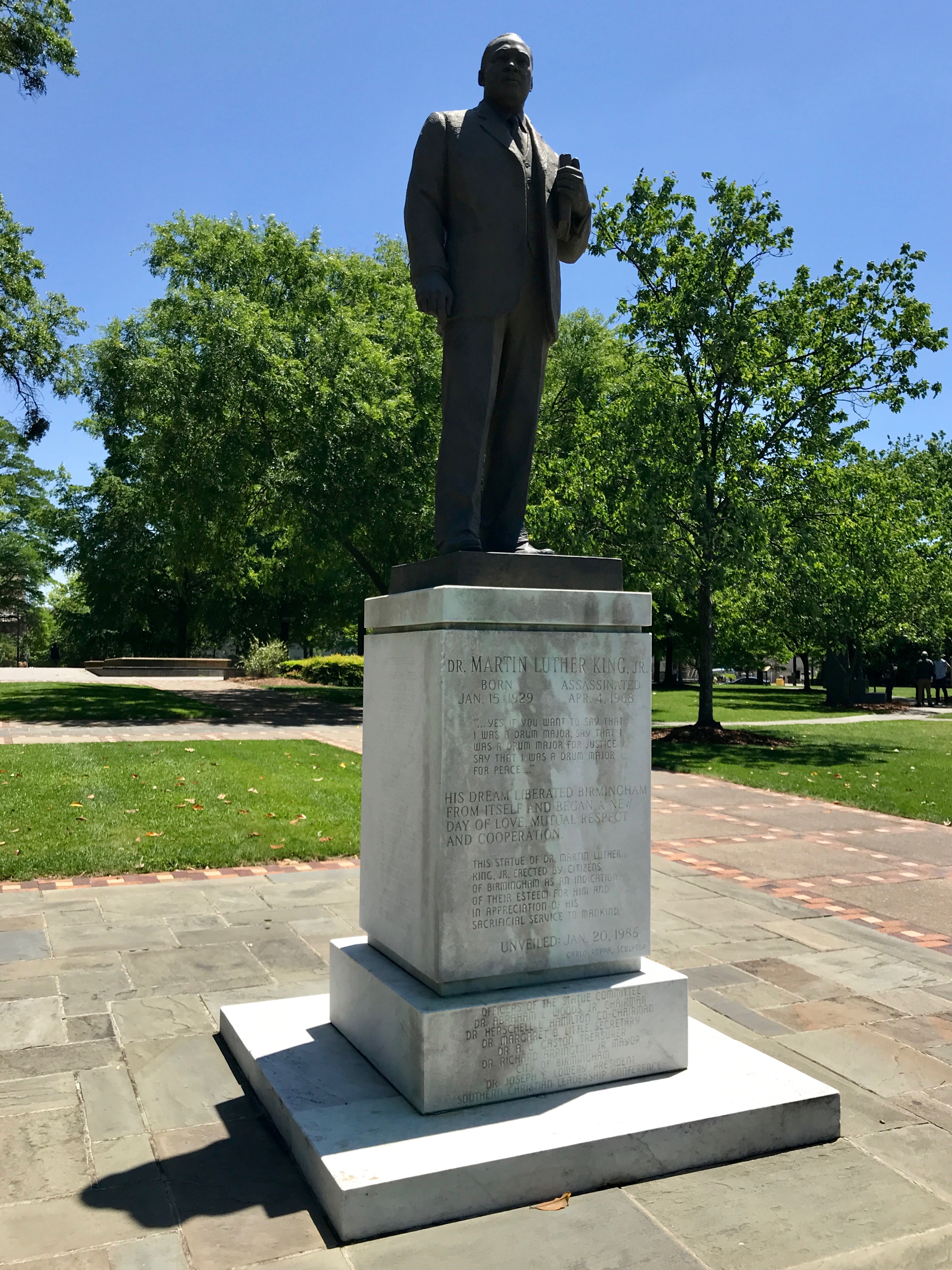
Dr. Martin Luther King Jr.
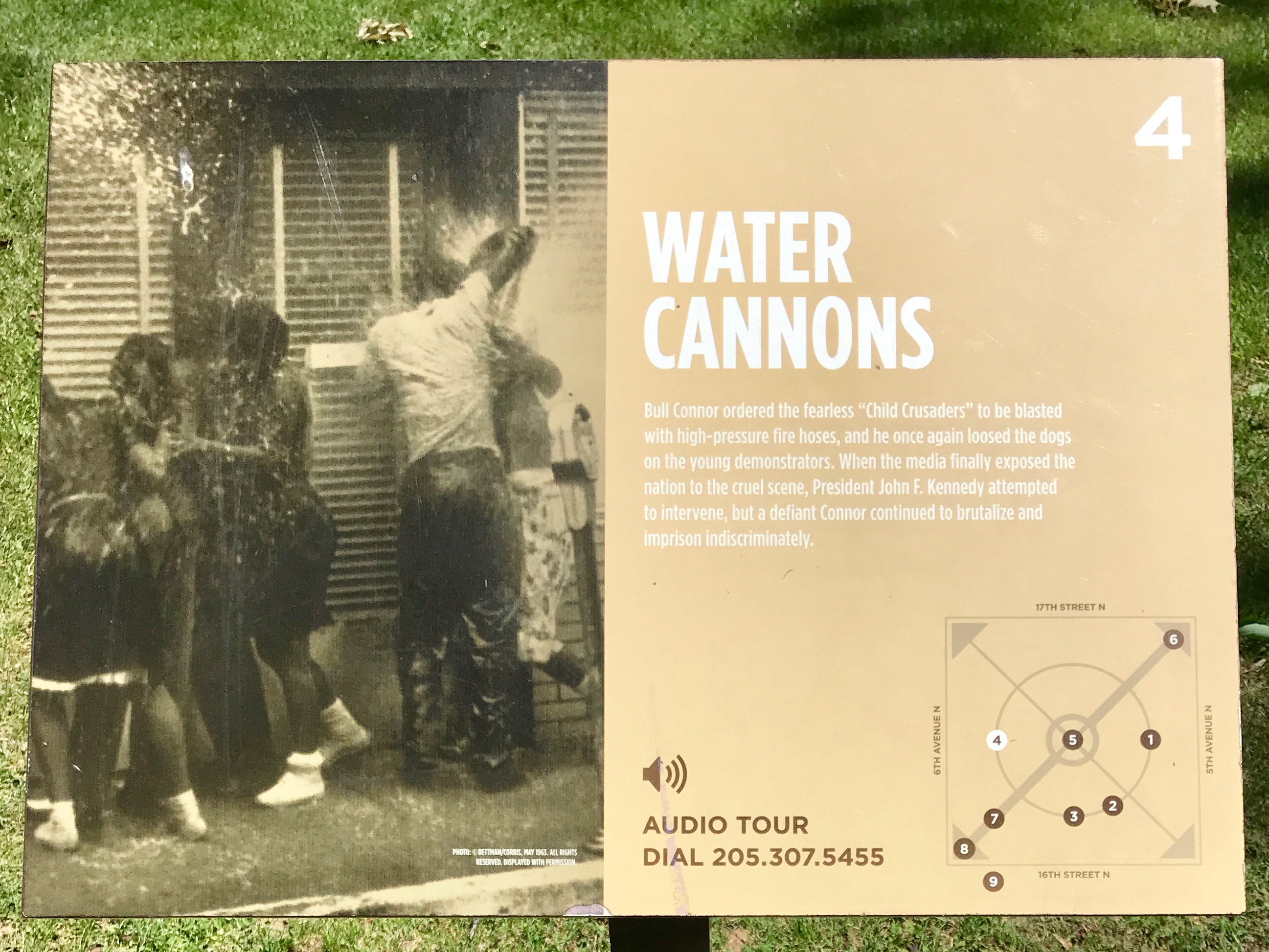
After that, there were memorials to the young people who suffered through the protests in 1963, under the merciless hands of Bull Connor.
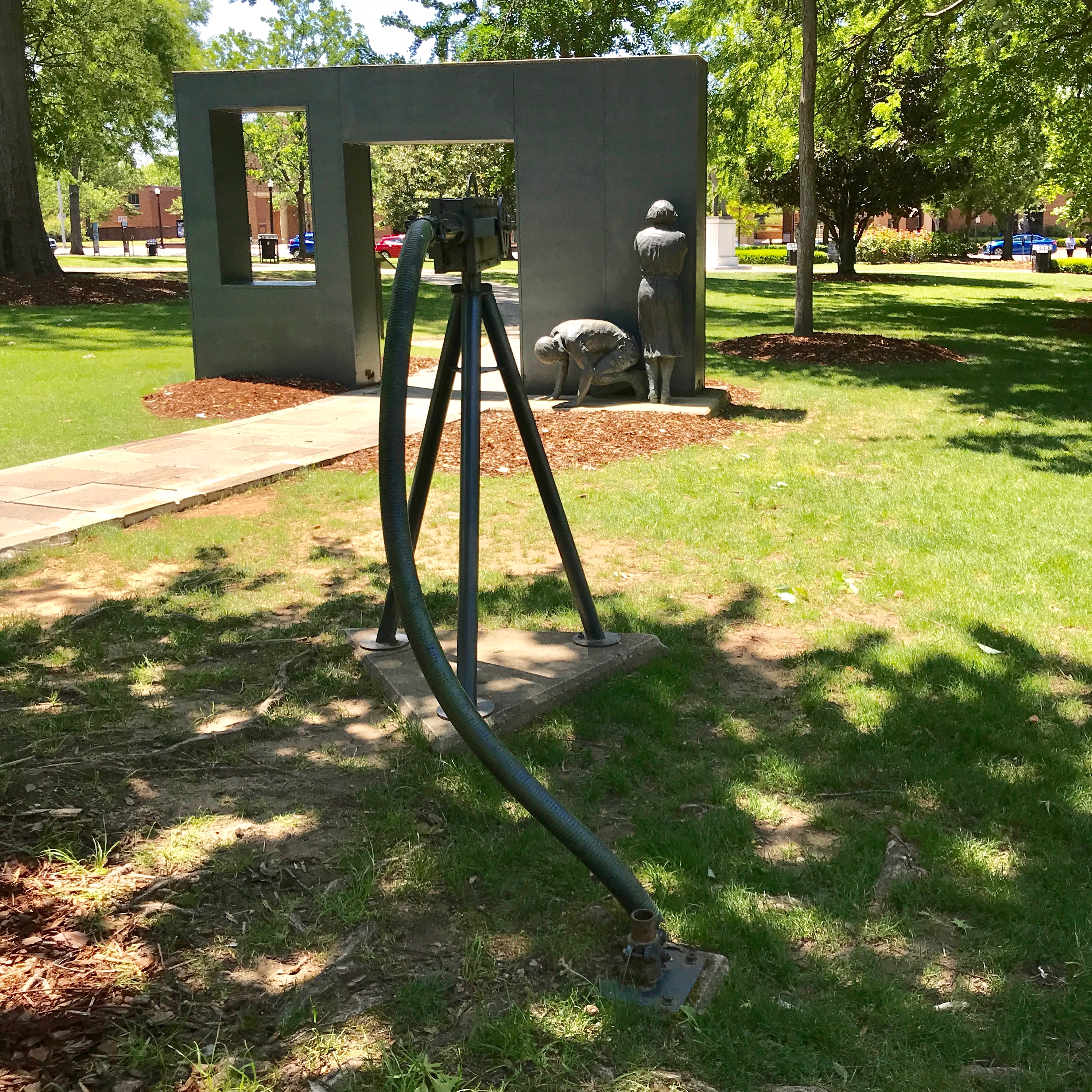
Can you imagine a water cannon?
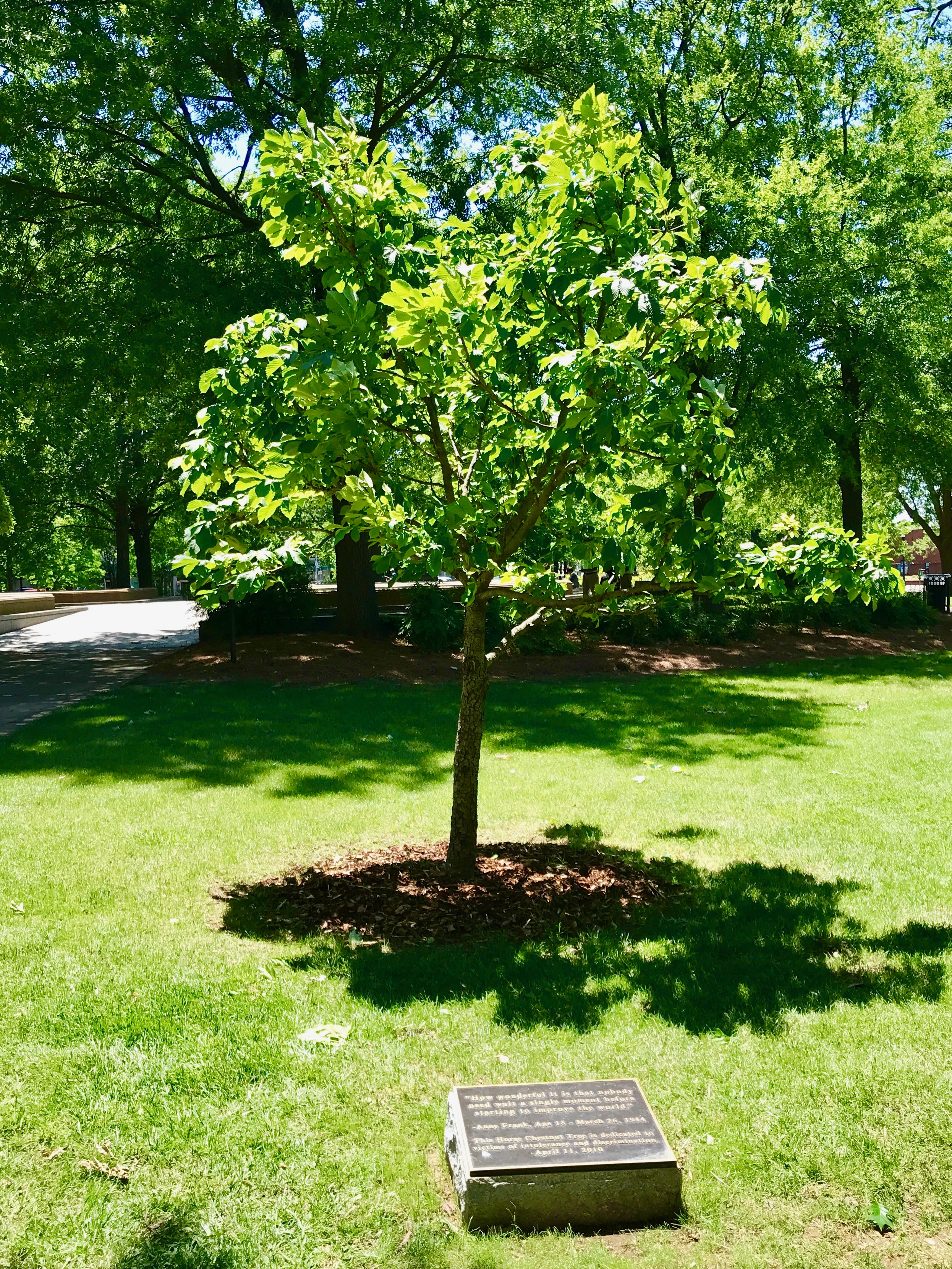
I came across a younger tree with a plaque nearby.
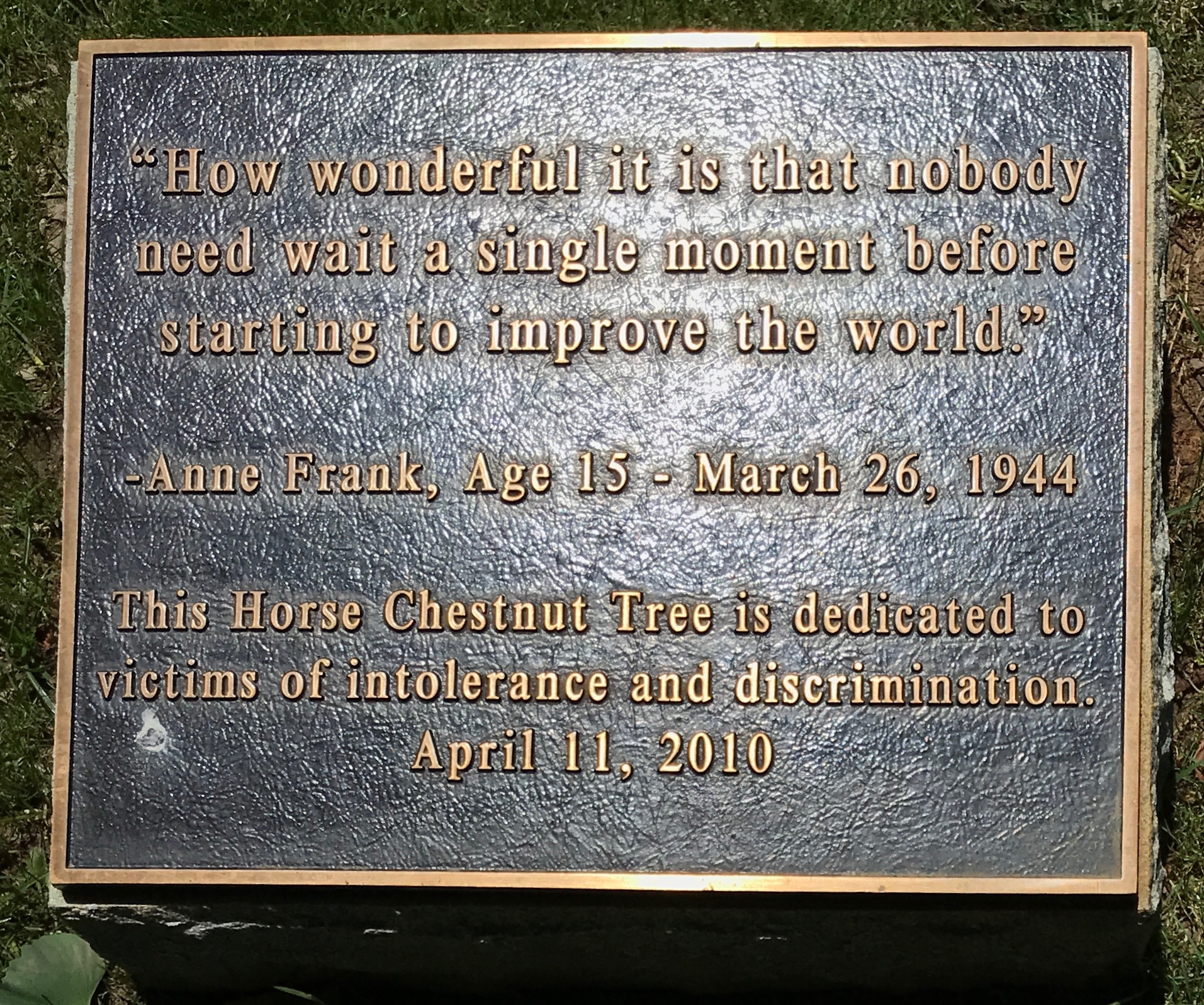
Those young people taking part in the Children’s Crusade didn’t wait.
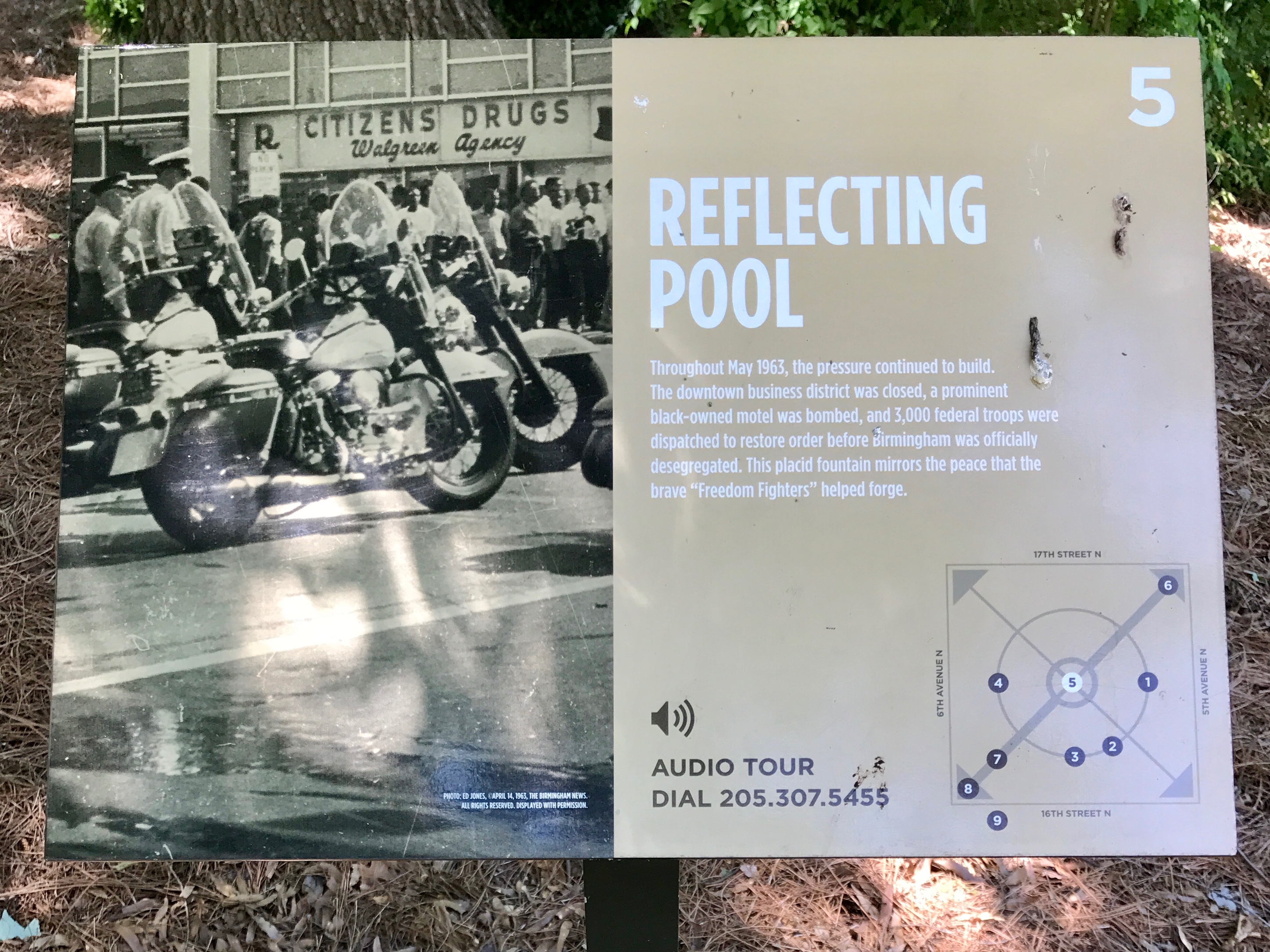
In the middle of the park is a reflecting pool.
I imagine that it was too early in the season for the water to be turned on.
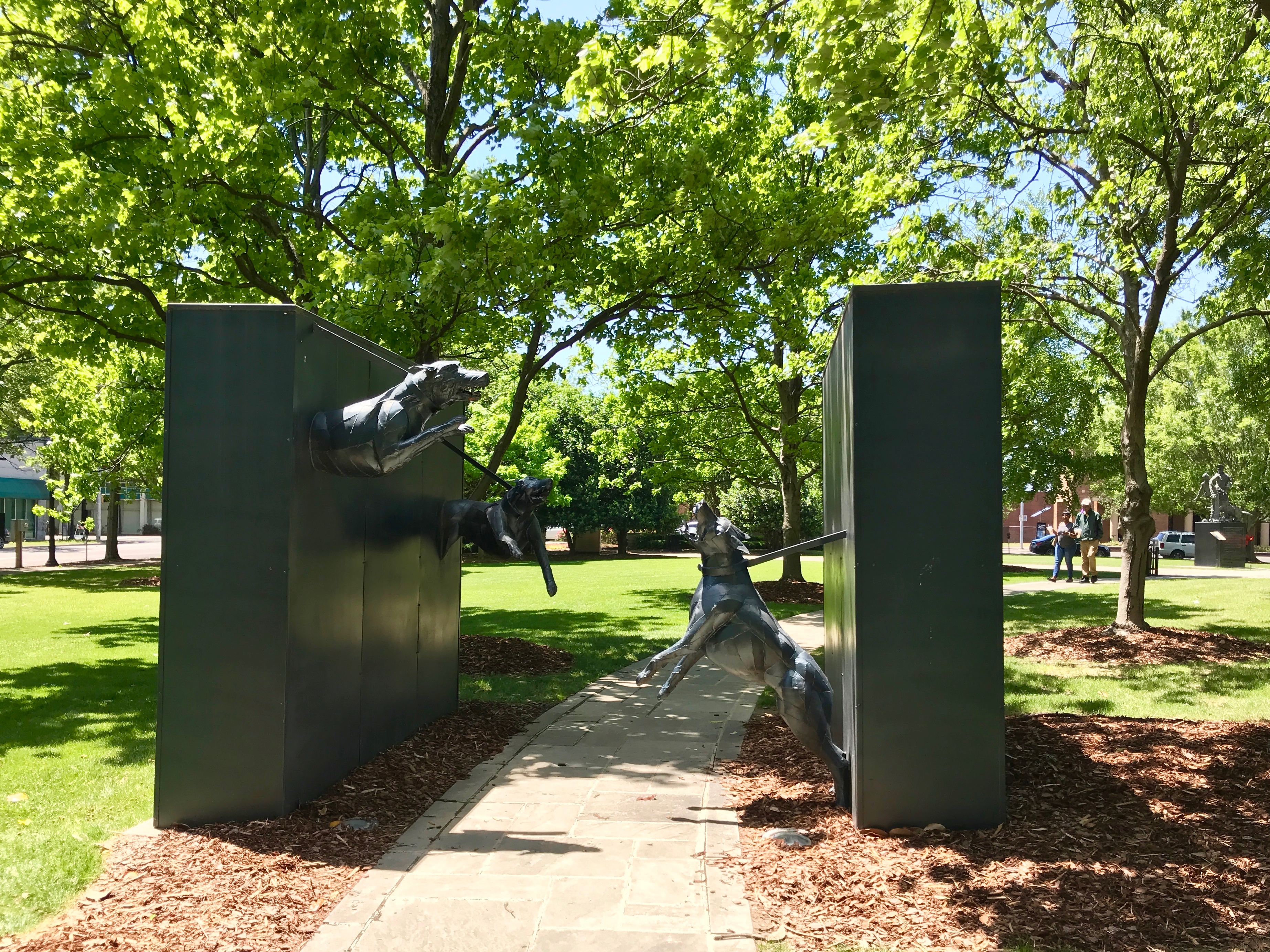
After walking through the water cannons and the reflecting pool at the center of the park, the path lead though the dogs that Bull Connor set on the children.
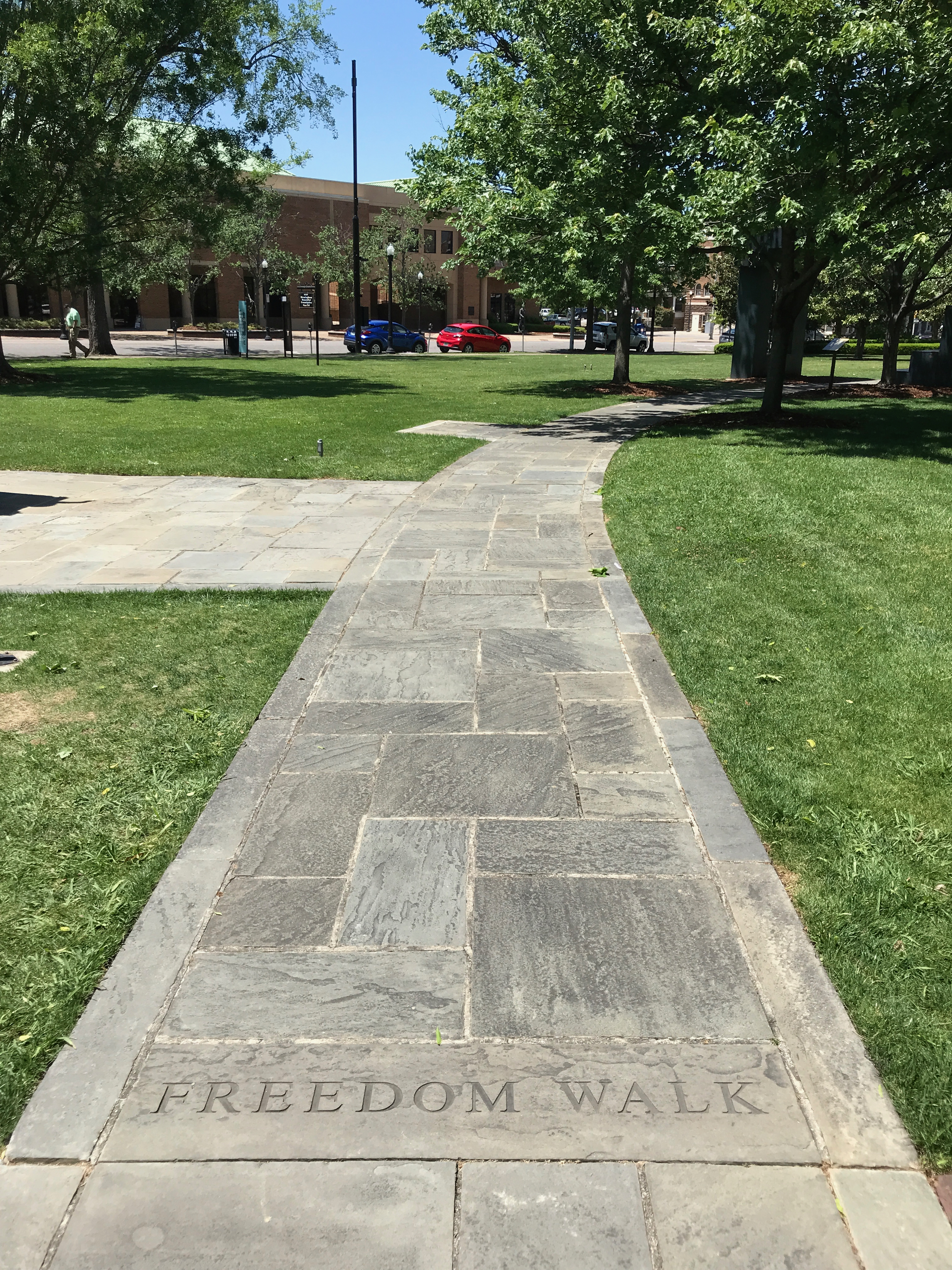
This is truly the freedom walk that many had to take.
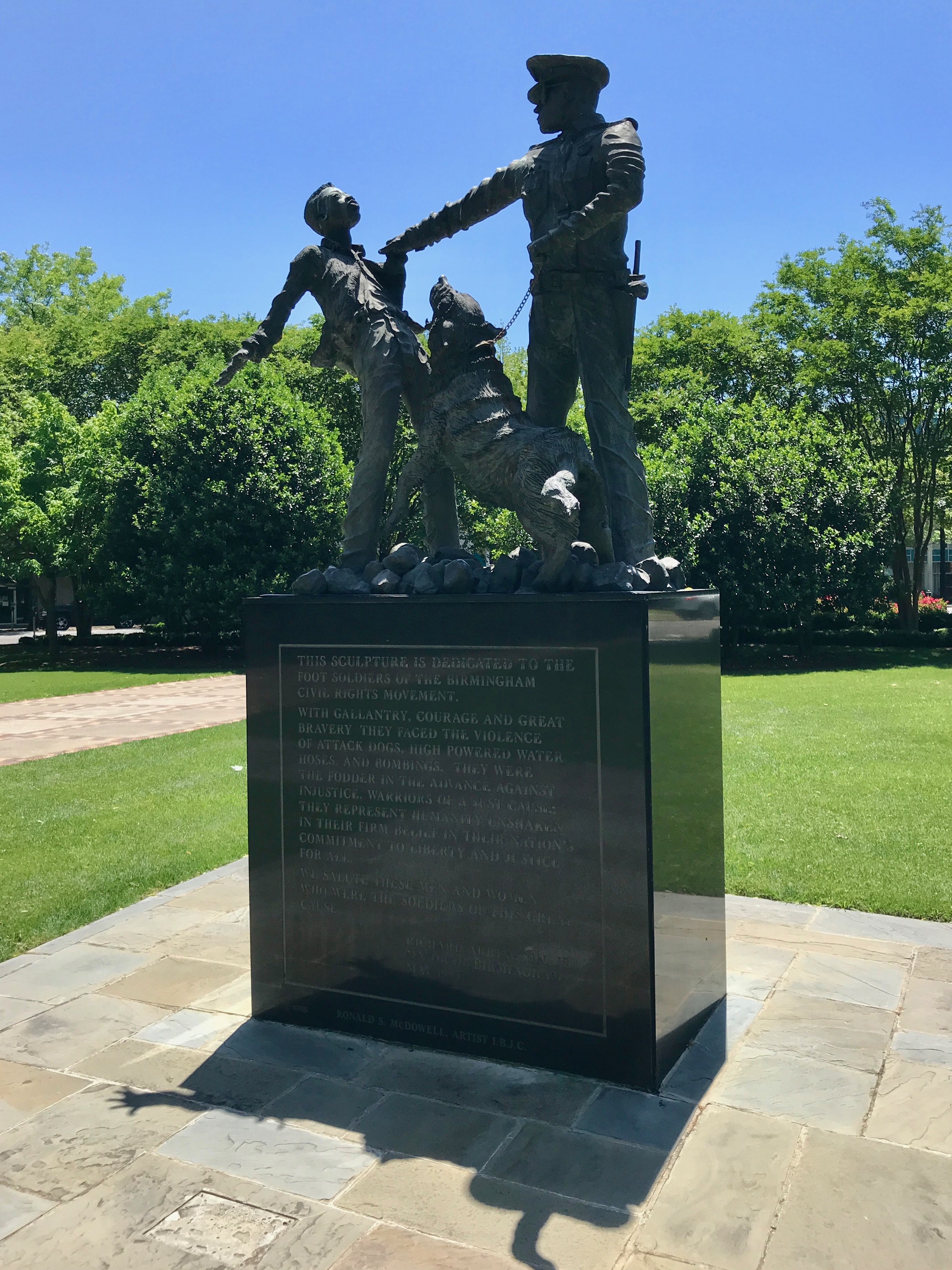
The inscription on the base says:
This sculpture is dedicated to the foot soldiers of the Birmingham Civil Rights Movement.
With gallantry, courage and great bravery, the face the violence of attack dogs, high powered water hoses and bombings. They were the fodder in the advance agains injustice. Warriors of a just cause, they represent humanity unshaken in their firm belief in their nation’s commitment to liberty and justice for all.
We salute these men and women who were the soldiers of this great cause.
Richard Arrington, Jr.
Mayor of Birmingham
May 1995.
Incidentally, Richard Arrington was the first Black mayor of Birmingham.

I continued along the path and came across this group of boys from a field trip enjoying their boxed lunches. I kind of think their teacher came and had them get down from the sculpture. They just made such a charming photo.
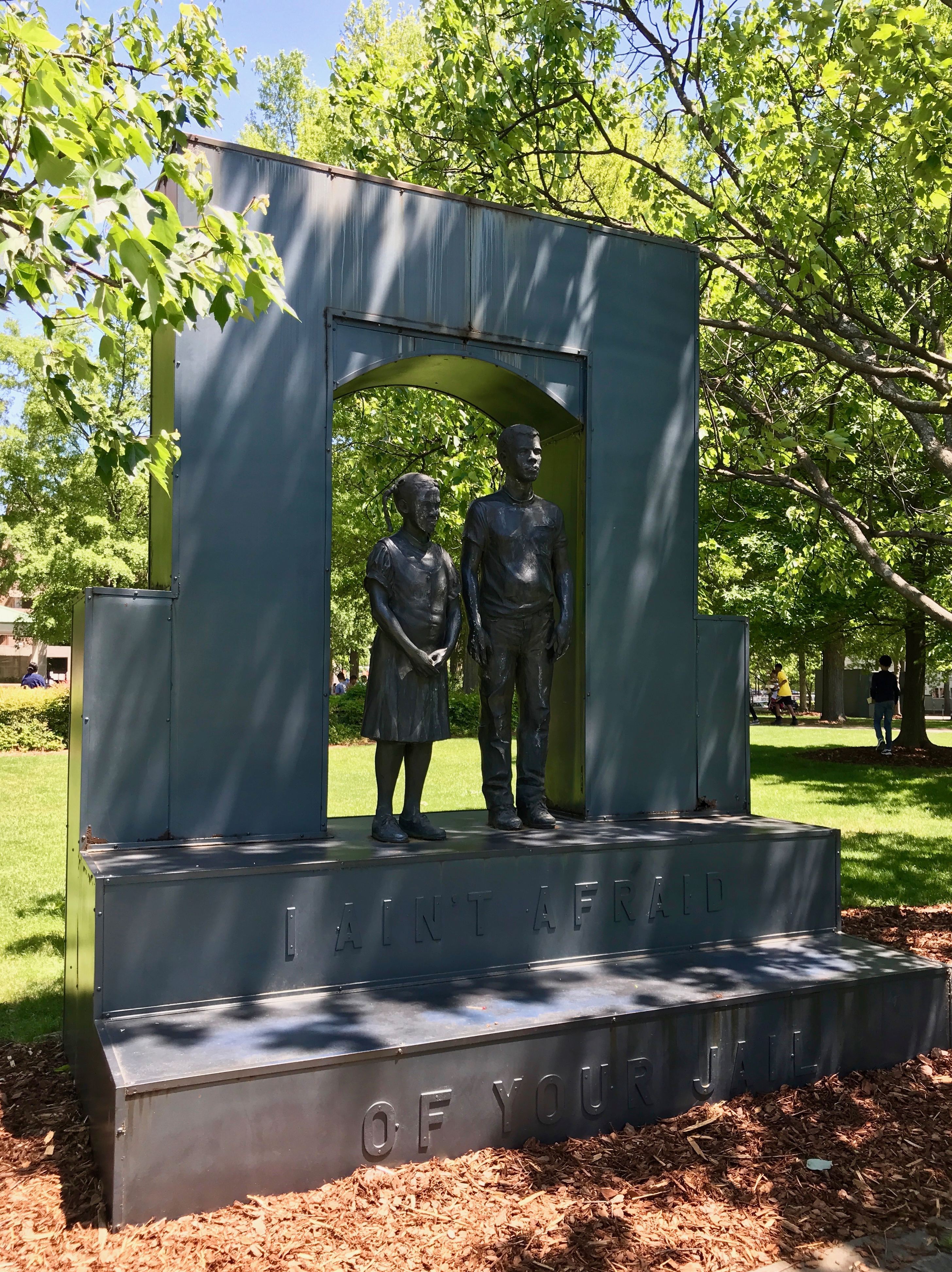
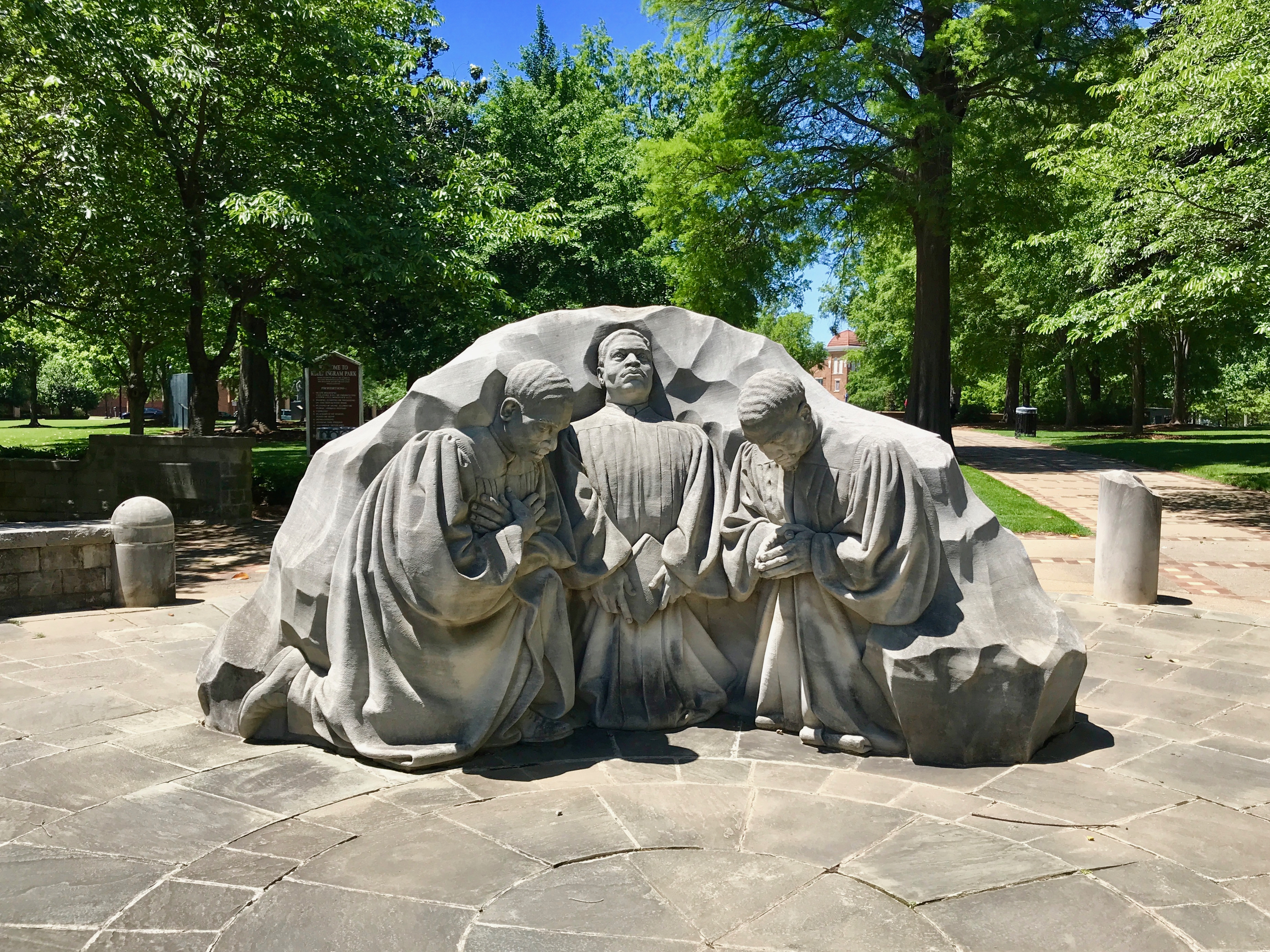
Incidentally, this is the work of art they were sitting on.
By now, I was getting hungry and I decided to set out and find some lunch.
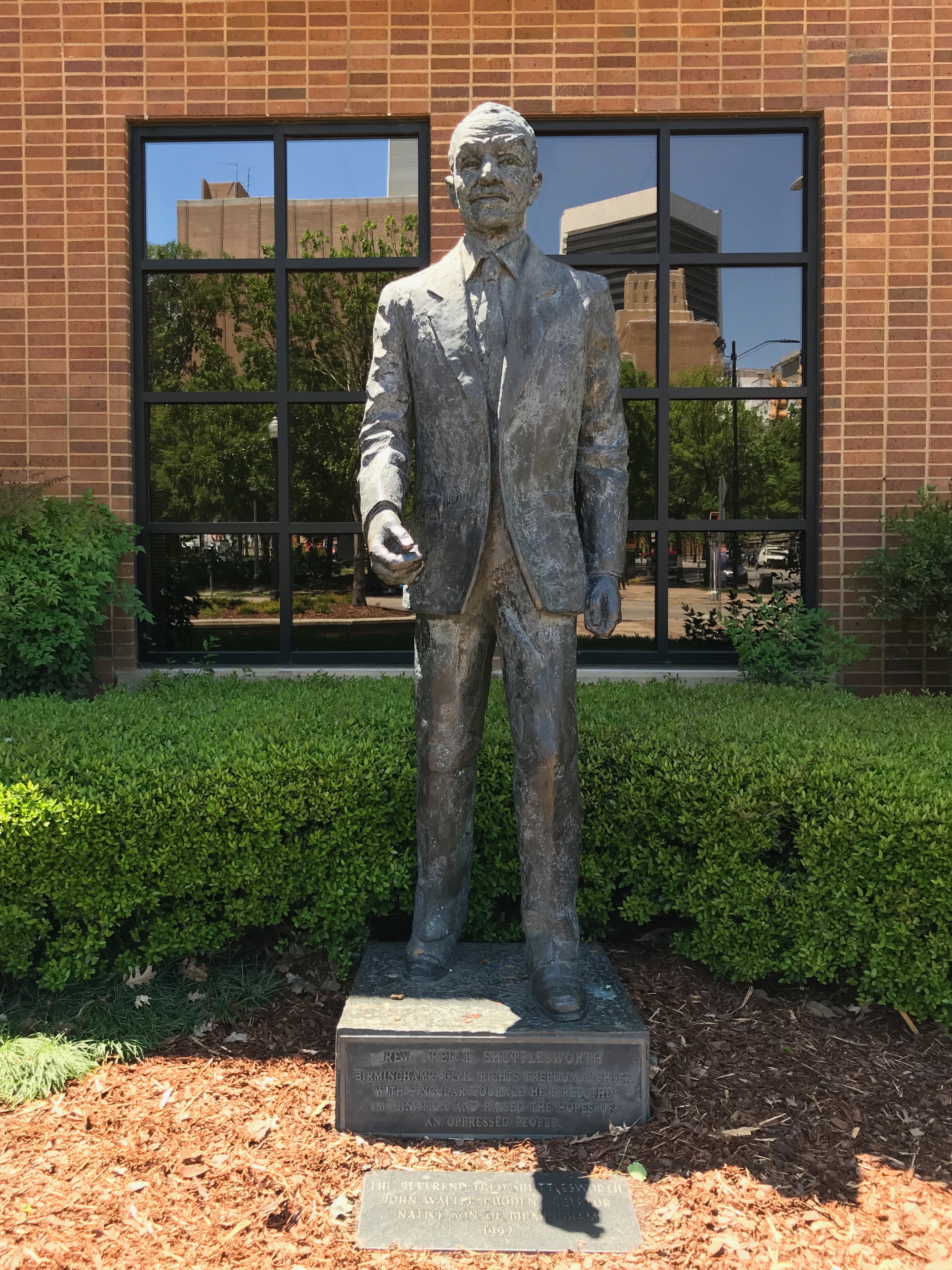
Across the street, there was a statue honoring Rev. Fred Shuttlesworth, a tireless and fearless worker for social justice.
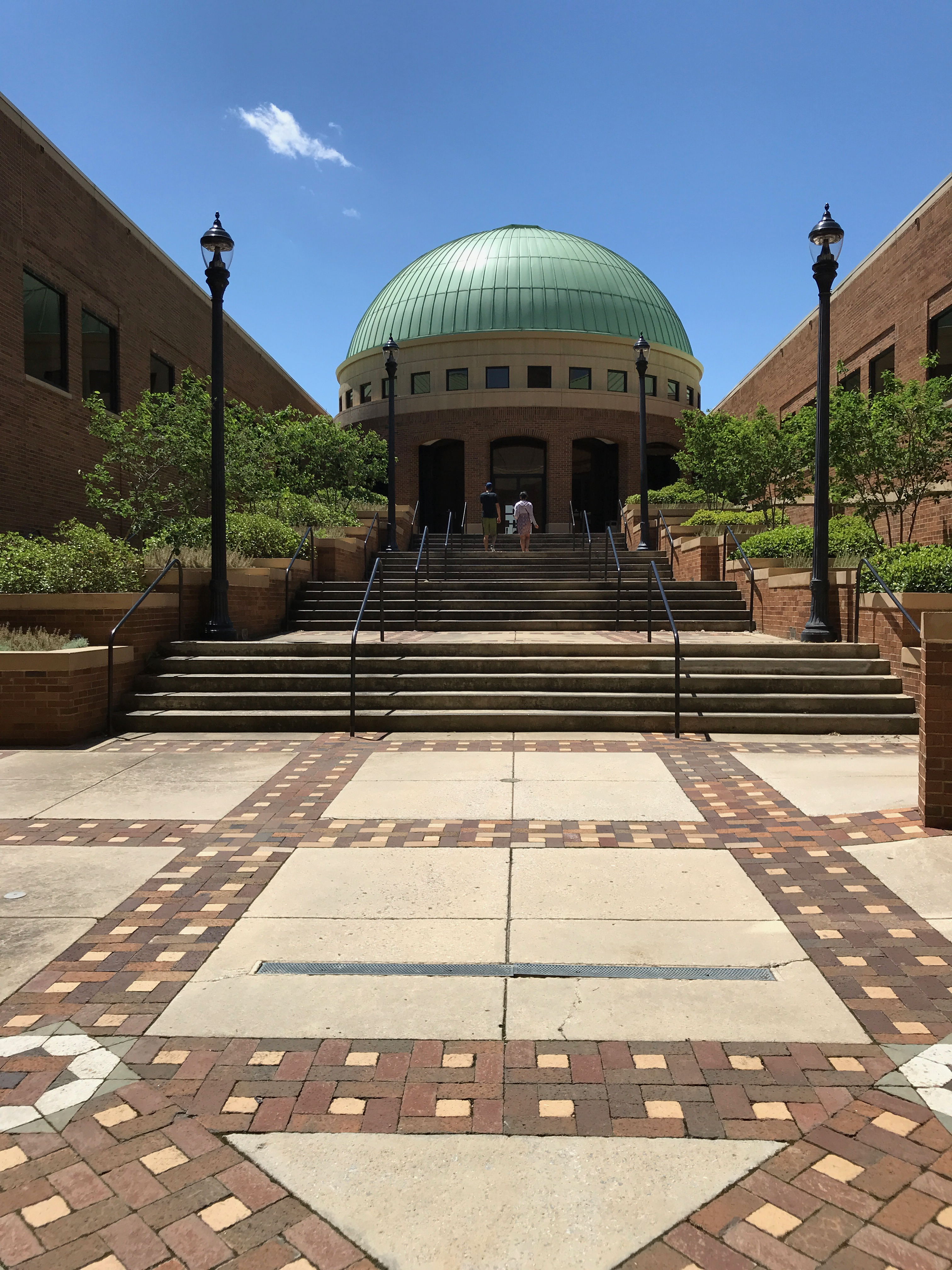
His statue is outside the Birmingham Civil Right Institute, which bestows the Fred Shuttlesworth Human Right Award. Apparently it is an interpretive museum, but I didn’t go in. I needed to find some lunch. I asked the security guard for a recommendation, and he directed me to a place on Fourth Avenue.
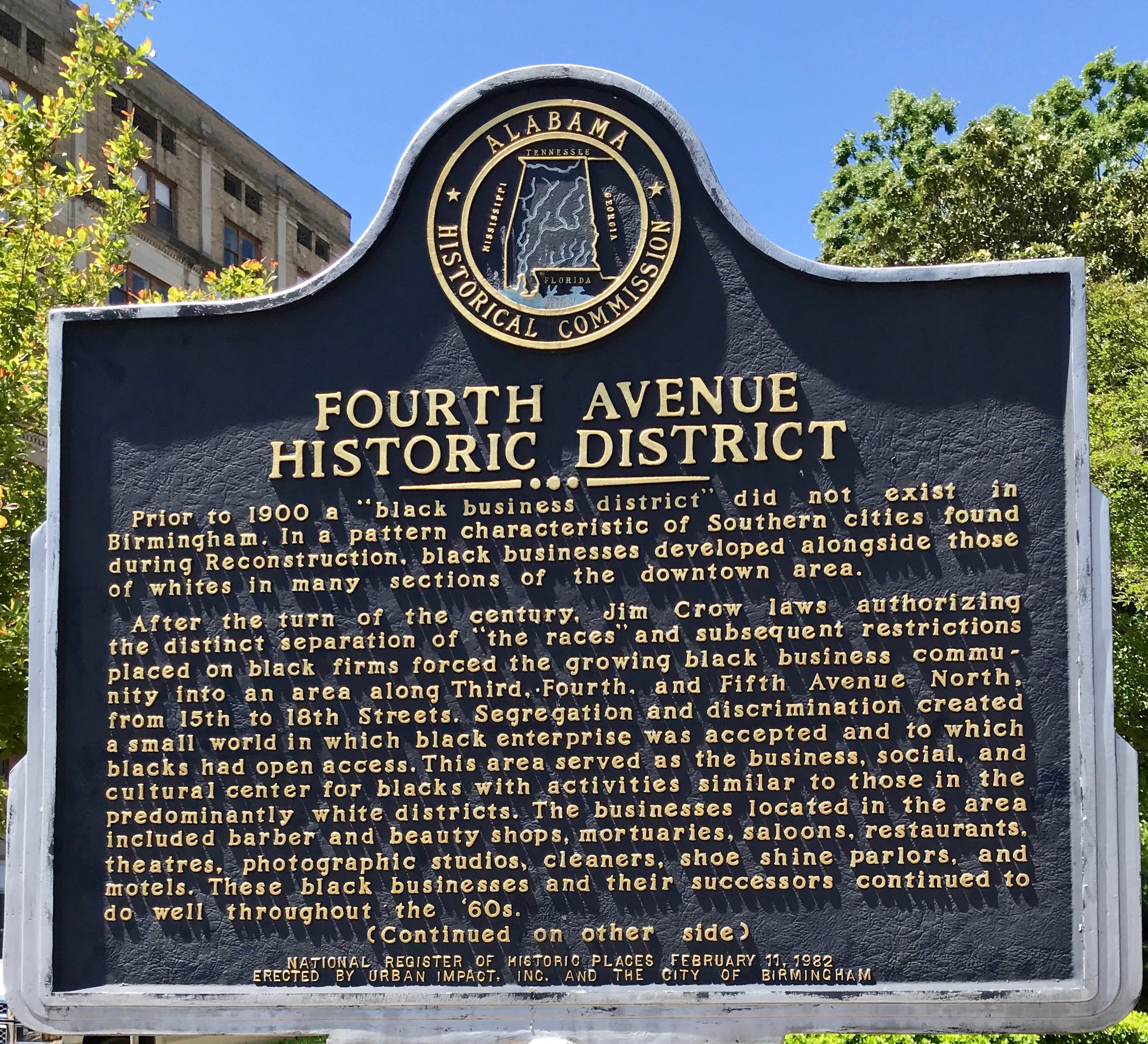
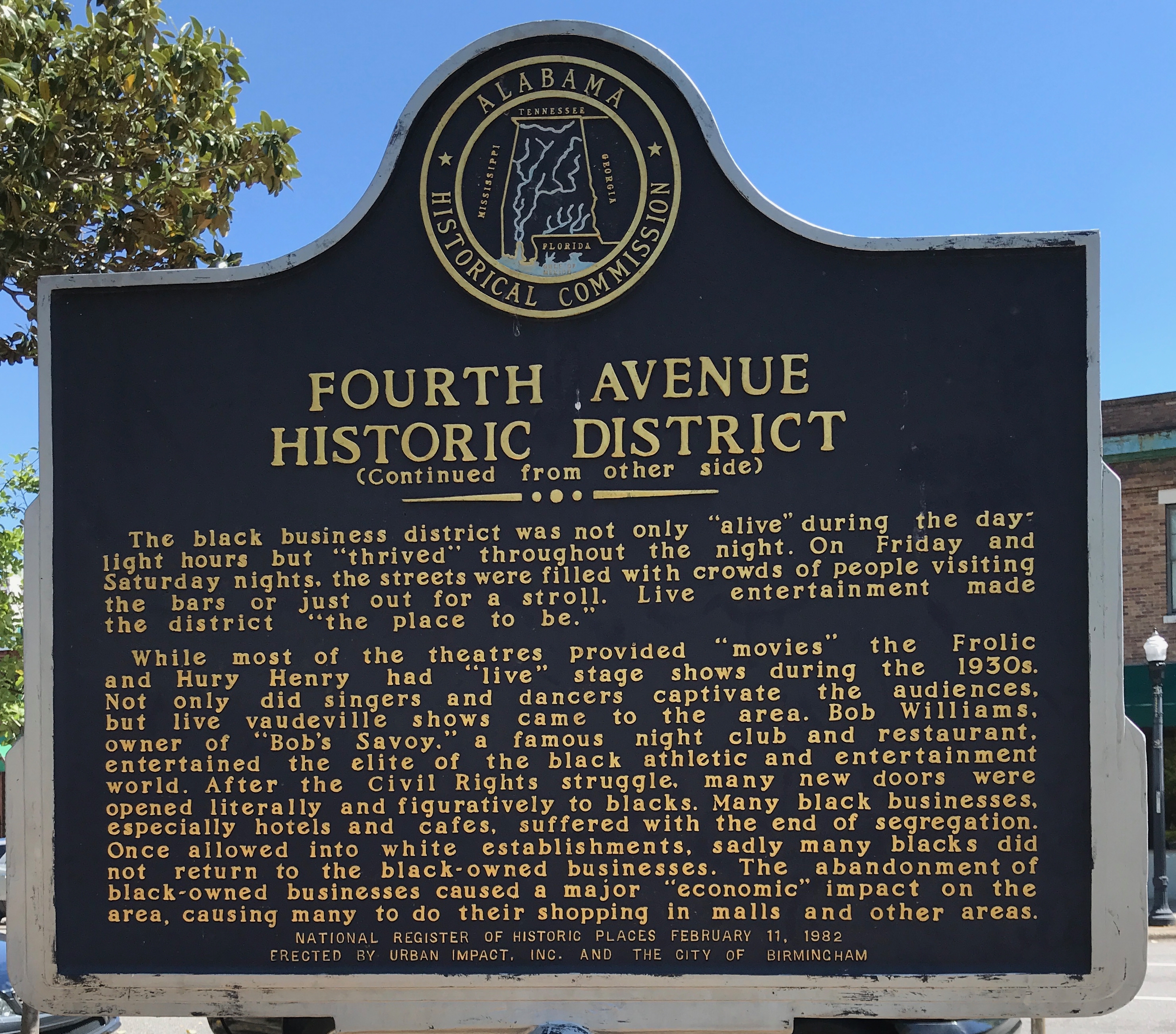
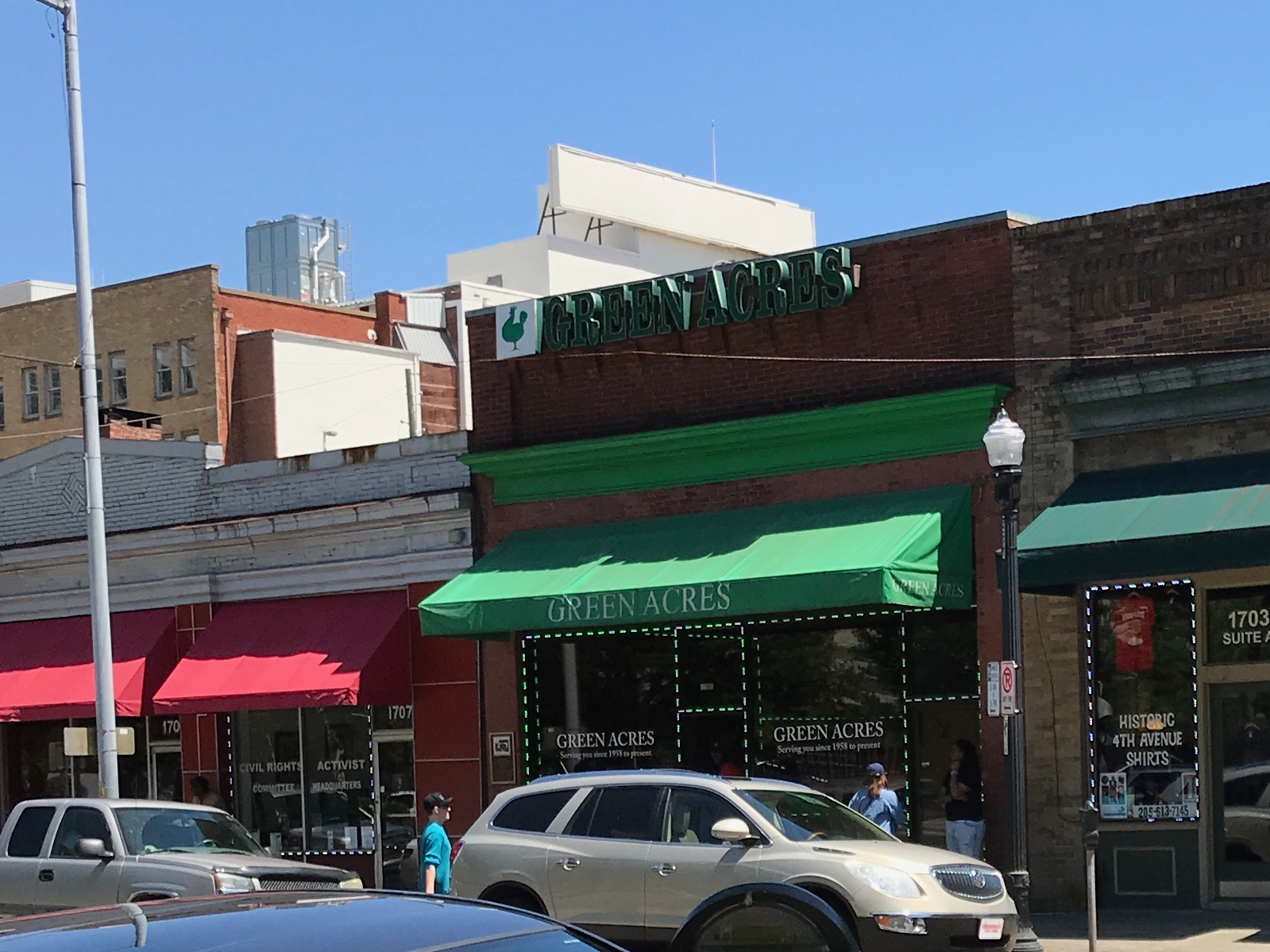
I guess Green Acres is the place to be!
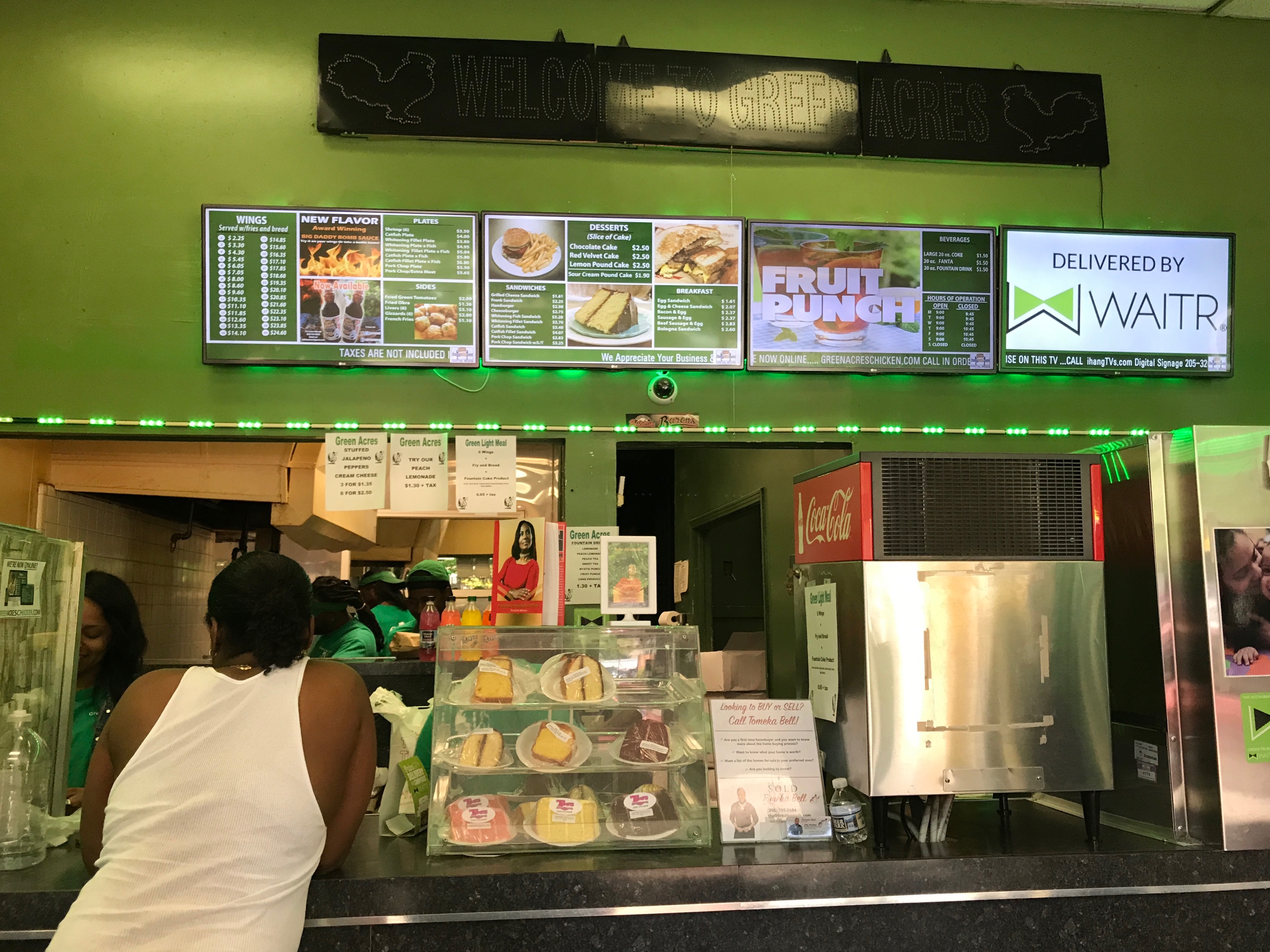
I looked over the menu and placed my order.
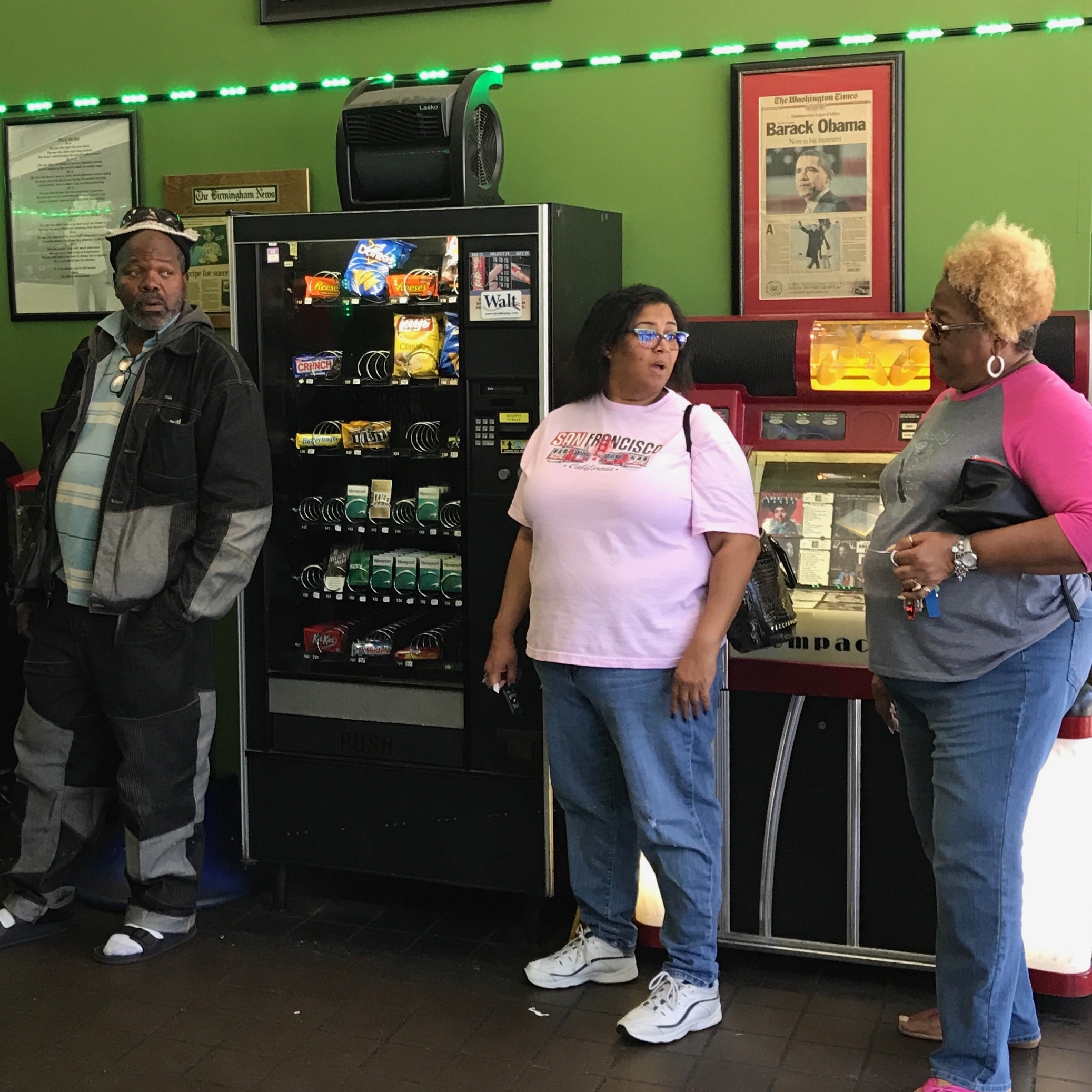
Then I waited with the rest of the customers.
This food is all “to-go”, so I took it back to my car to eat.
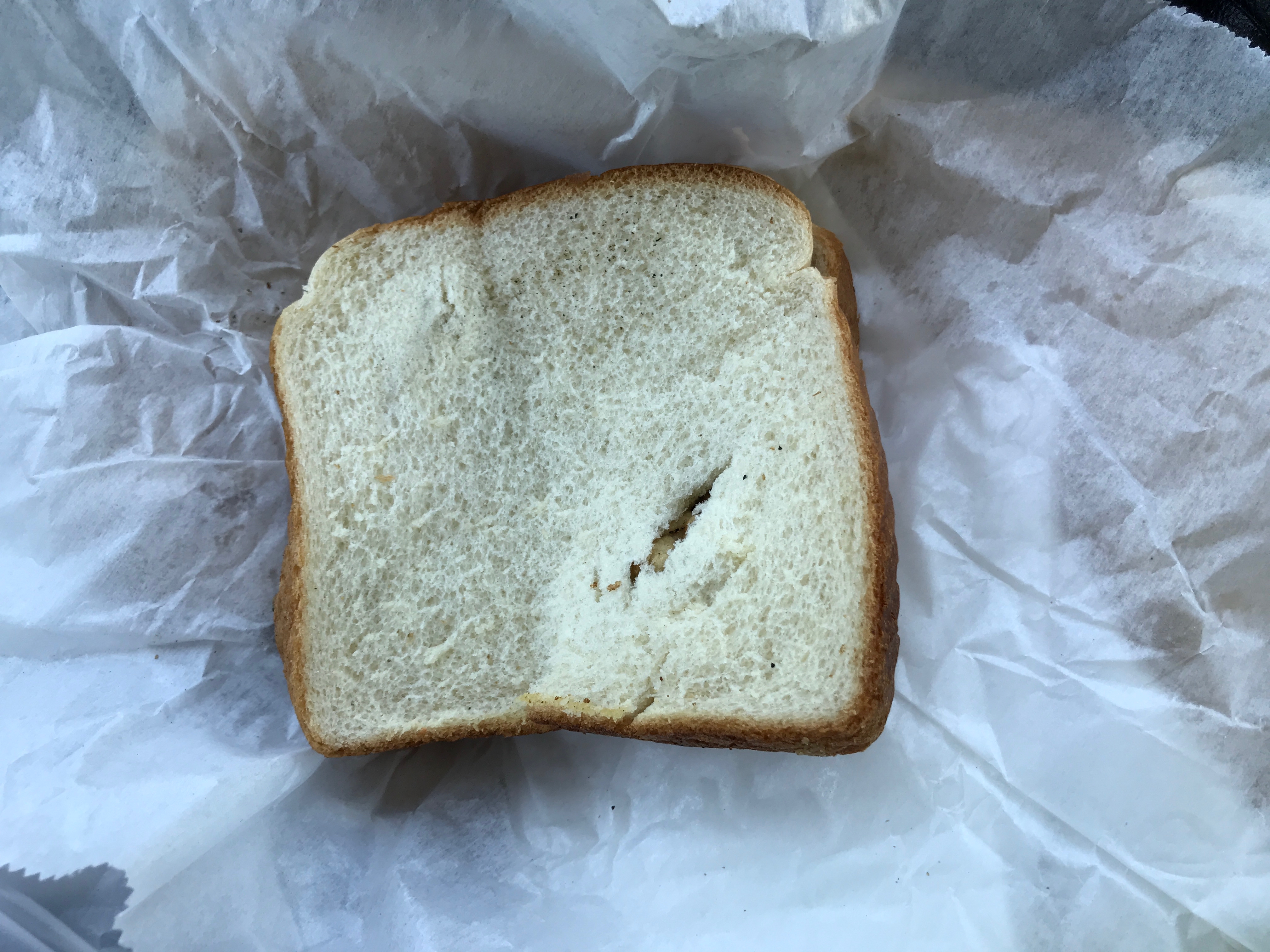
What did I order?
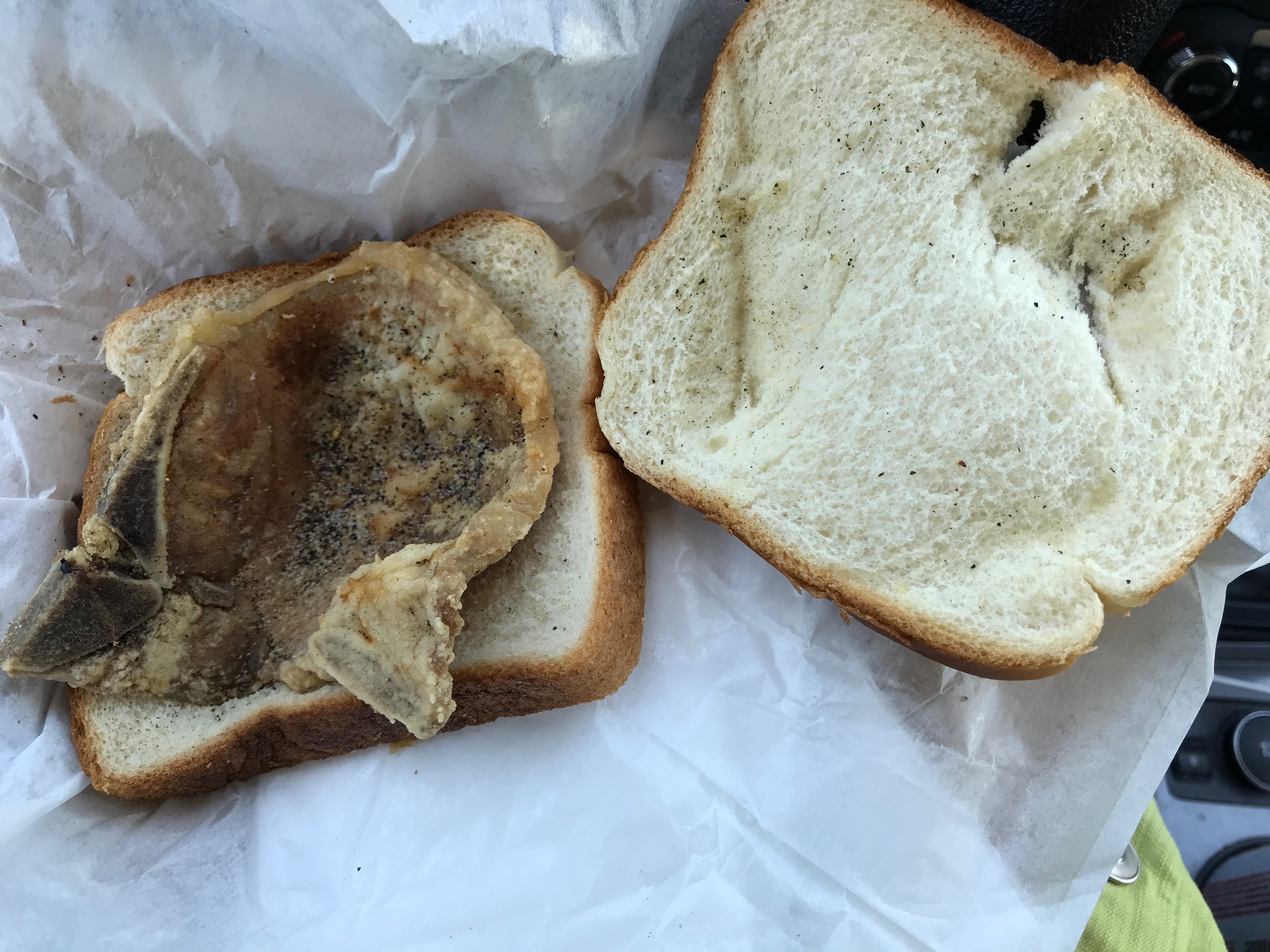
A pork chop sandwich
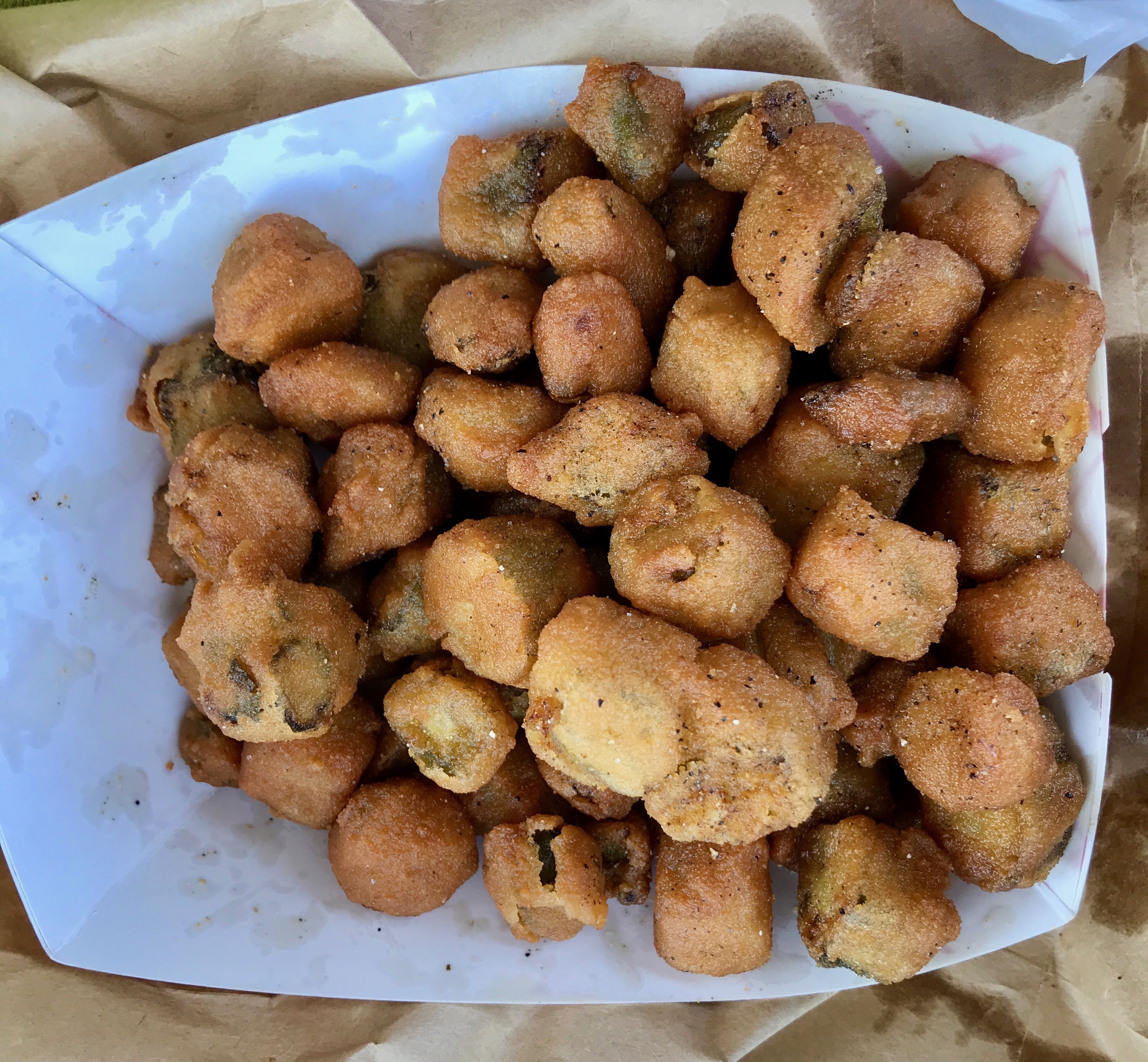
and a side of fried okra.
Sufficiently restored, it was time to move on.