My father used to talk about the Salton Sea. Try as hard as I could, I was unable to remember anything he told me about it. It is possible that he never went there, even though he lived in Long Beach. That is only about 175 miles away, but it was during the Depression, though, so it’s possible that they never went there.
Personally, I think he just liked the name. He always loved the way words sounded.
After an interesting drive through the Imperial Valley, I arrived at Oasis Palms RV Park. It was a nice place with a pool, hot tub, showers and a laundry room. It was close to the Salton Sea, and in the heart of an interesting agricultural area.
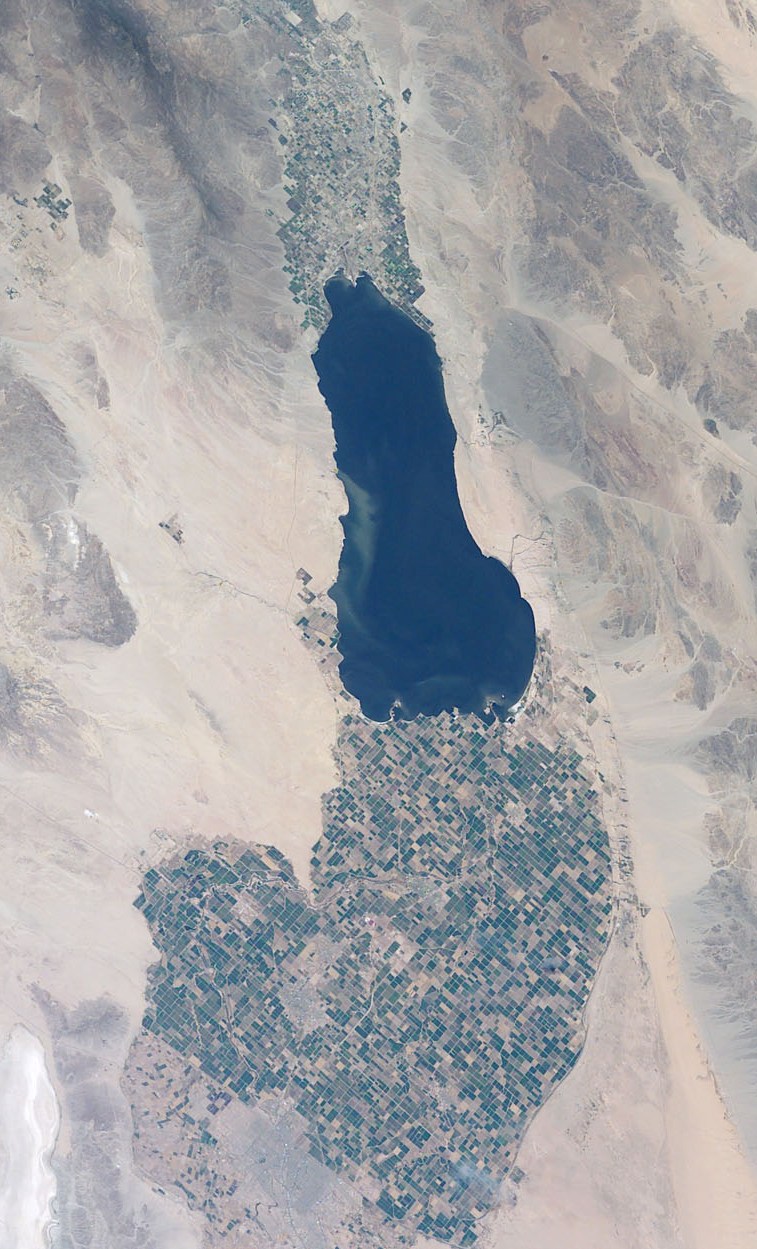
I think the park was on the left side of the Salton Sea up near the top.
The sea is an interesting geologic feature. In its current form, it is kind of a man-made accident. According to Wikipedia, the engineers of the California Development Company dug a cut in the bank of the Colorado River to manage the water flow. The outflow from the river overwhelmed the engineered canal and the river flowed into the Salton Basin for two years before repairs were completed.
The Salton Sea is a shallow, saline, endorheic rift lake located directly on the San Andreas Fault. Its surface is 235 feet below sea level. The deepest point of the Sea is only five feet higher than the lowest point of Death Valley
I love that word “endorheic”. It means that it is an enclosed basin where water flows in but there is no outflow. Water evaporates or it seeps into the ground, but there are no streams, creeks or rivers emptying the lake.
As a result, the water is getting increasingly more saline and polluted. While it is beautiful, it stinks.
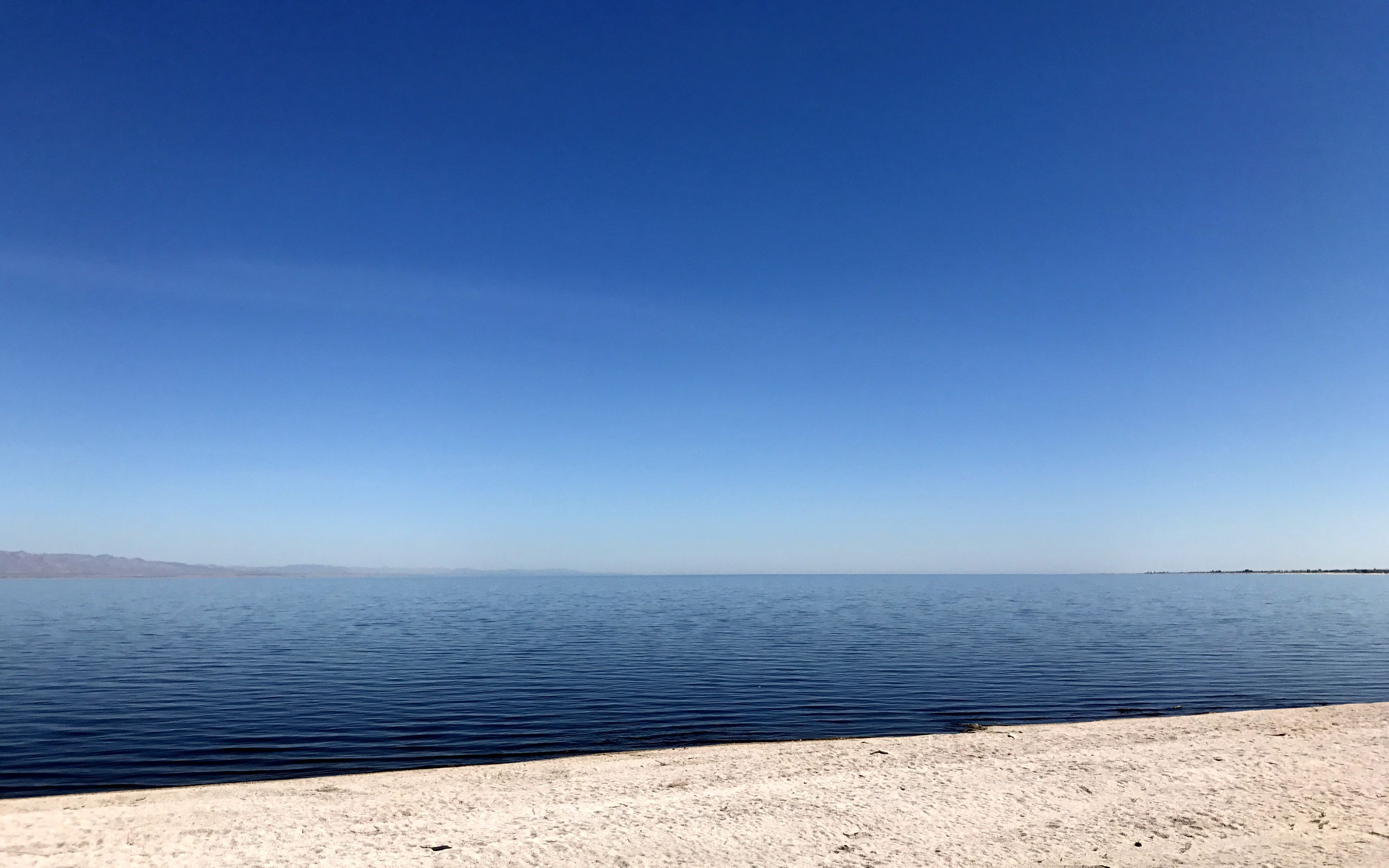
Really, doesn’t that look lovely?

I saw quite a few communities that were started up over the years, but abandoned.

Nowadays, it isn’t a place I’d want to be.
Somehow, though, there is a lot of agriculture – even more than shows up on the photo taken from space.

There are all sorts of greenhouses.
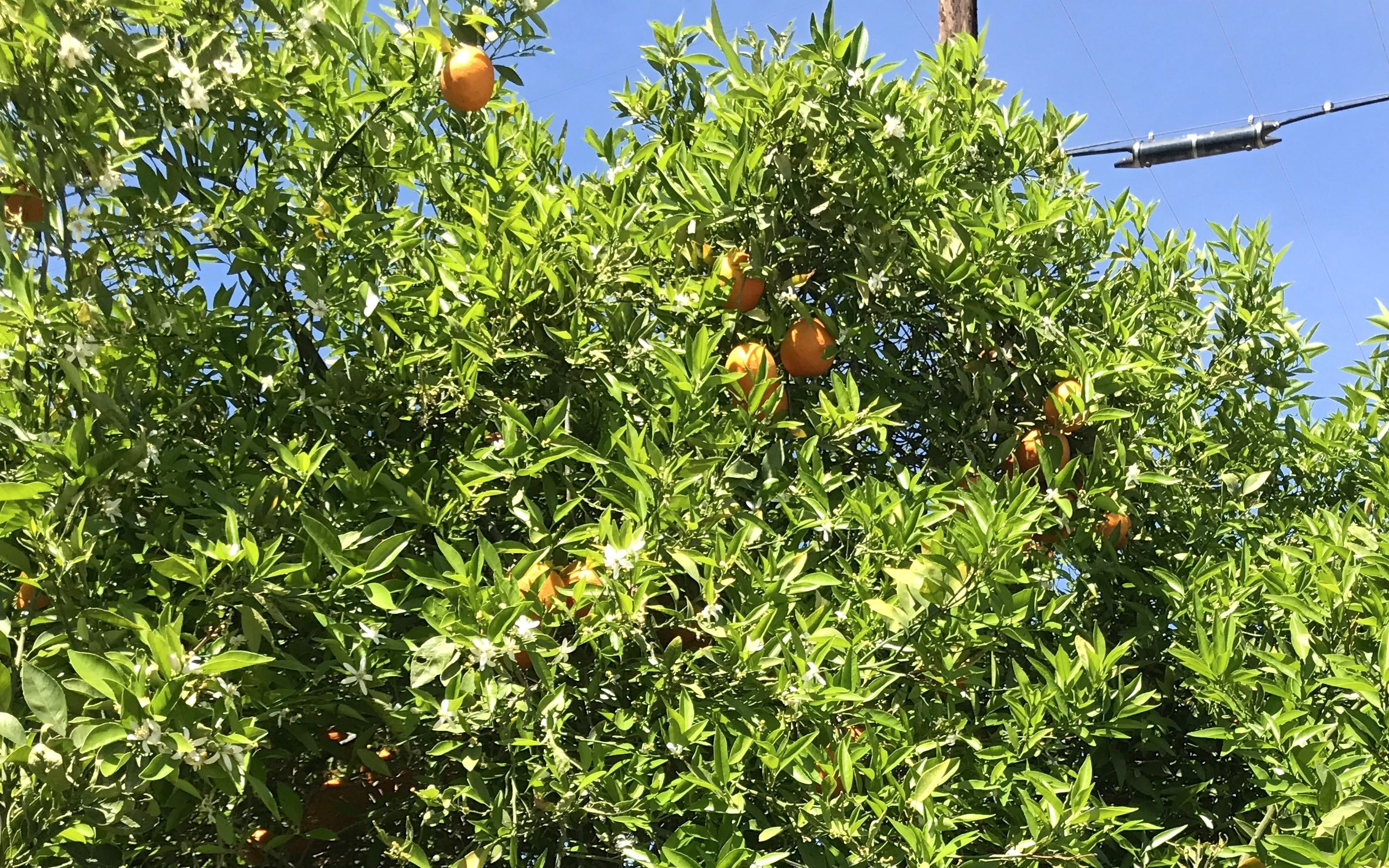
There are citrus ranches.
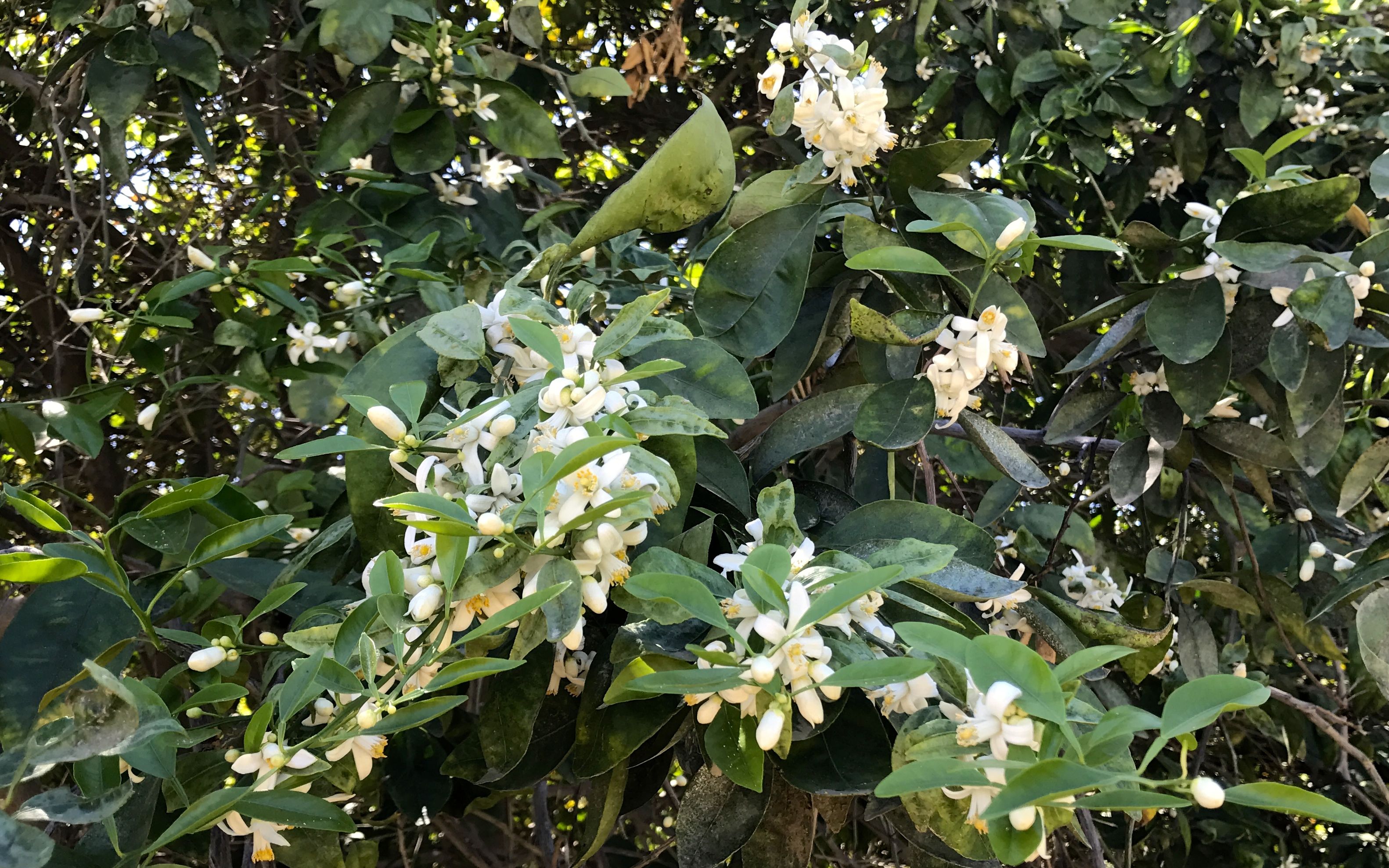
The orange blossoms smelled so sweet.
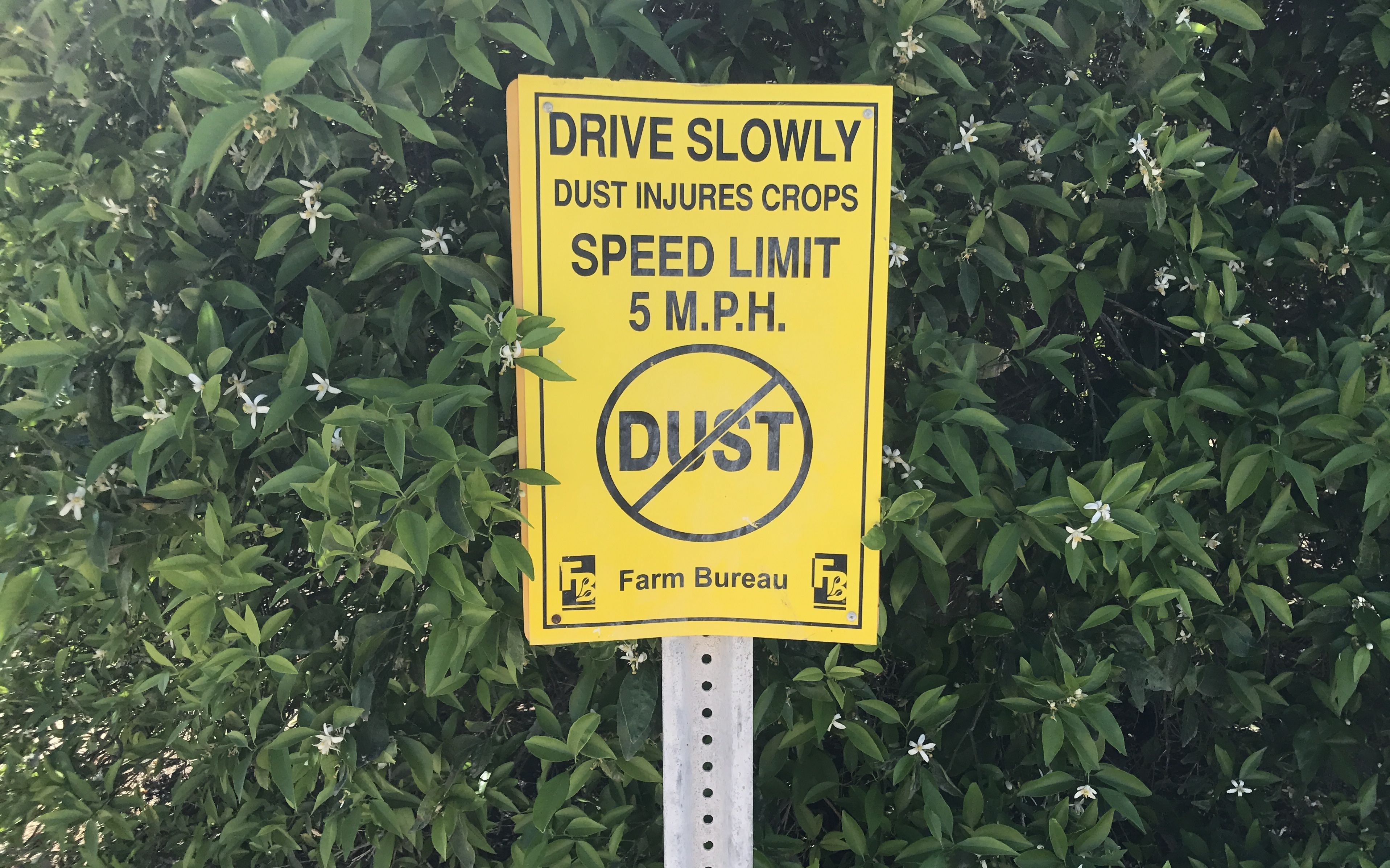
Of course, this is a desert, and the soil is dry. Water is applied judiciously. They don’t water dirt roads to keep the dust down.

The beehives are there, to assist with pollination.
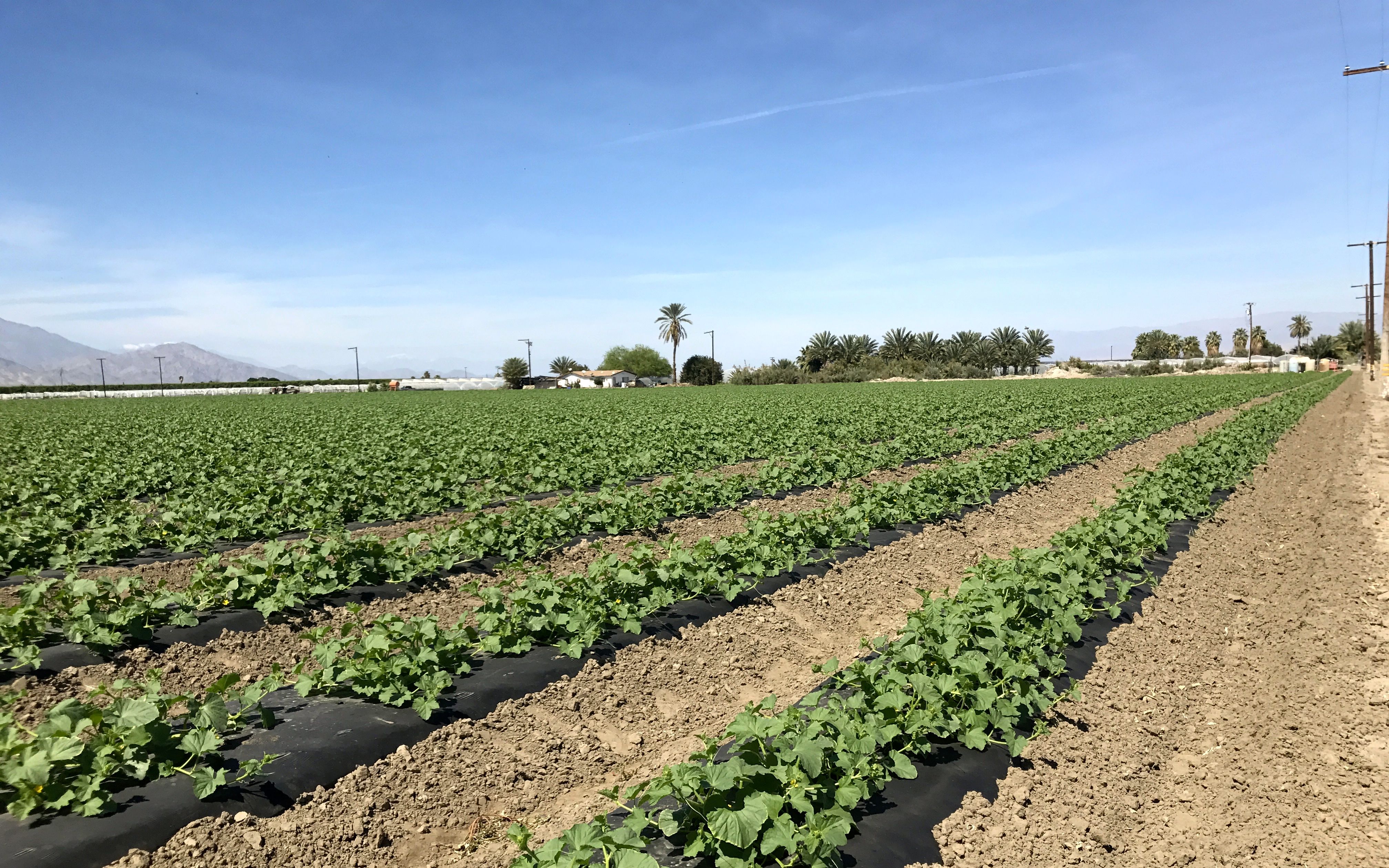
Squash is growing in the fields, as are many other plants that I was unable to identify.
One crop that absolutely fascinated me was dates. The date groves were all over the place. Some were tall and slender.

Some were short and squatty.
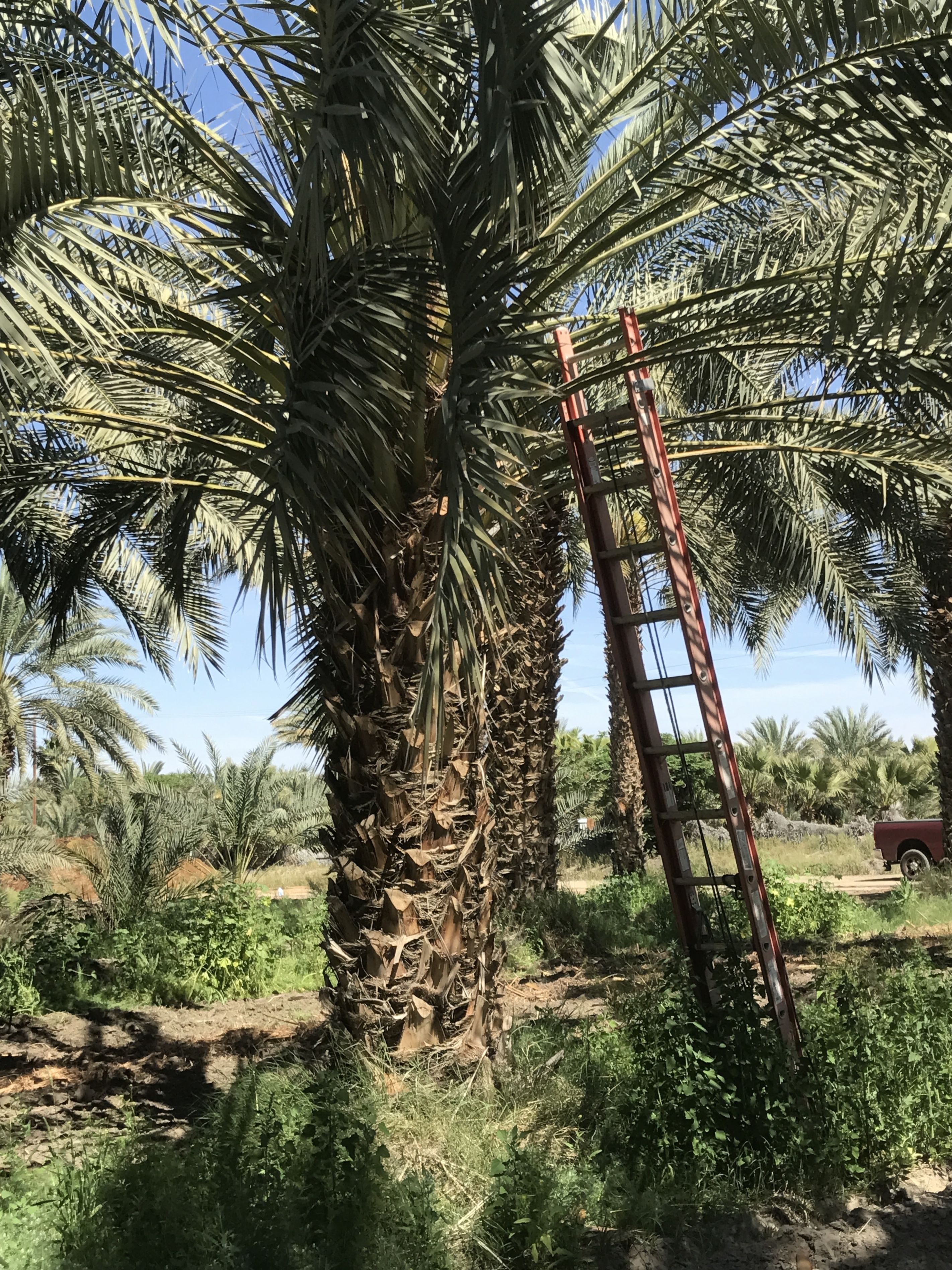
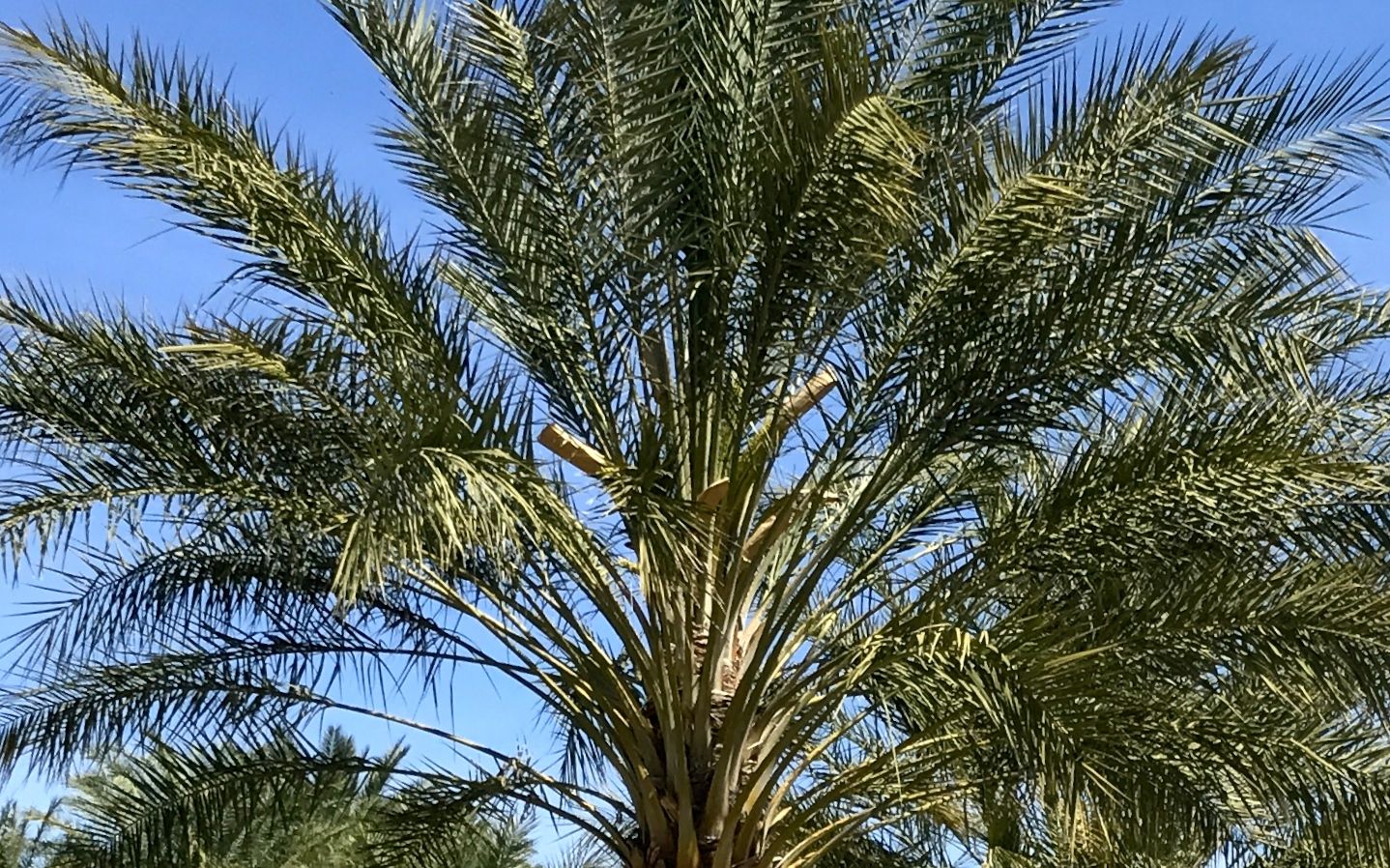
You can see the ladder leaning up against this palm. Did you notice the ladders attached to the tall, slender ones? Let me share a close up with you.

Can you see the ladders now? That is one job I would not want to have!
Did you know that date palms are either male or female? I know that there are many plants like that, but I don’t know how many of them are commercial crops.
Unfortunately, neither birds nor bees are attracted to the flowers, so they have to be hand pollinated. This is incredibly labor-intensive. If you want to know more about it, this information from Dateland will tell you just about everything you want to know.

My last stop during my independent agricultural tour was Oasis Date Garden. They had a sample table. There were all sorts of sizes and tastes, and I tried them all.
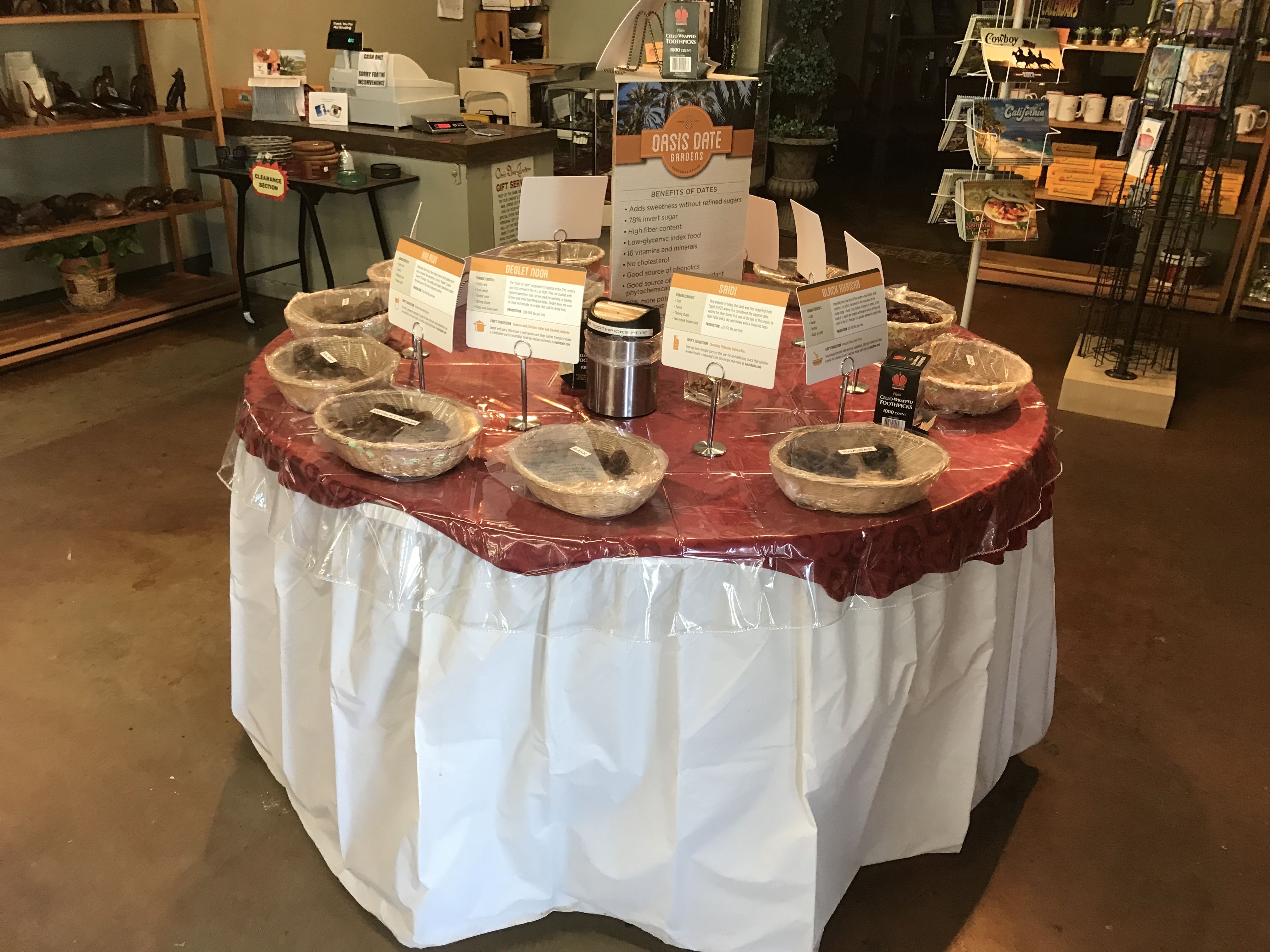
I liked them! Who knew that I would like dates?
Go figure!