Pop Quiz: What’s the capital of Minnesota?
If you are like me, you said Minneapolis. But, no, the capital of Minnesota is St. Paul!
By this time I was going through capitol withdrawal. When was the last time I visited a state capitol building? Helena, Montana? It’s about time I rectified that situation.
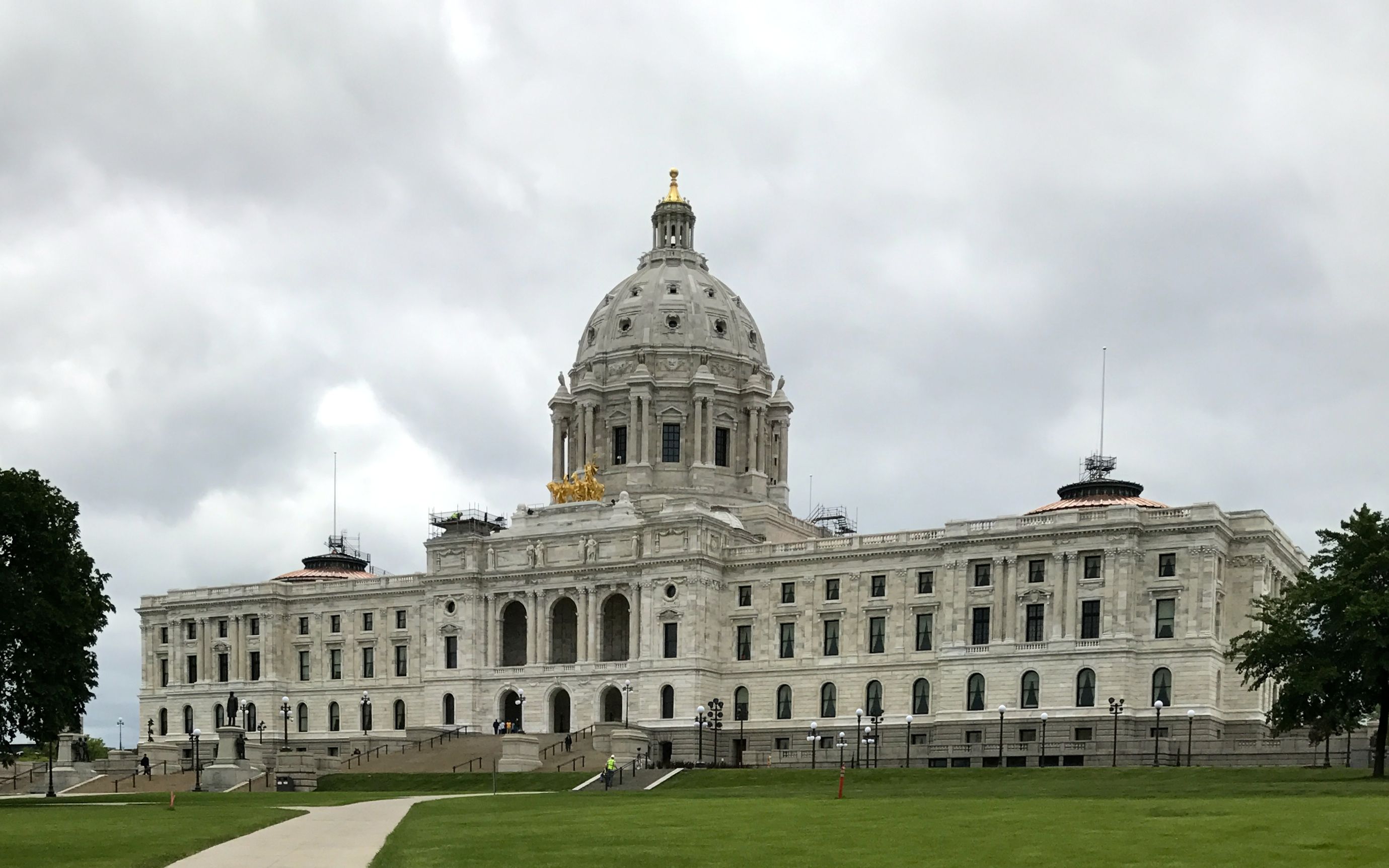
It’s quite the grand building. It was designed by Cass Gilbert, who also designed the Arkansas and West Virginia State Capitols as well as the United States Supreme Court building.
You know, I thought I had written about the Arkansas Capitol when I wrote about the Helena, Montana capitol building. I was right! Oddly enough, my sources at that time said that the rejected design was by George R. Mann, who sold it to Arkansas. Sometimes you just don’t know which Wikipedia entry to believe!
In any event, Cass’ public buildings were in the Beaux Arts style, and reflect the optimistic American sense that the nation was heir to Greek democracy, Roman law and Renaissance humanism, according to my preferred source.
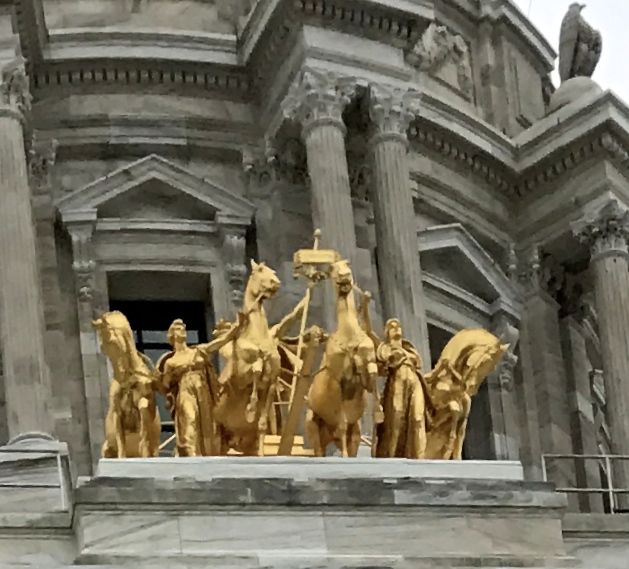
I was quite taken by the statue above the southern entrance. It is a gilded quadriga. Always curious, I had to look up the definition of “quadriga.” In case you didn’t know, a quadriga is a chariot drawn by four horses abreast. Incidentally, this was the Roman Empire’s equivalent of the Ancient Greek tethrippon, in case anyone asks.
The name of this sculpture is The Progress of the State. It was sculpted by Daniel Chester French and Edward Clark Potter. French is probably one of the most well-known sculptors of his era, as he also is responsible for the Lincoln statue in the Lincoln Memorial. Potter’s work is also well known, even if his name is less so. He was well-known for his equestrian and animal statues. His most famous works are the marble lions in front of the New York Public Library, Patience and Fortitude.
But back to this statue. The four horses represent the power of nature: earth, wind, fire and water. The women leading the horses symbolize civilization, and the man on the chariot represents prosperity.
I entered building and somehow slyly joined a tour.
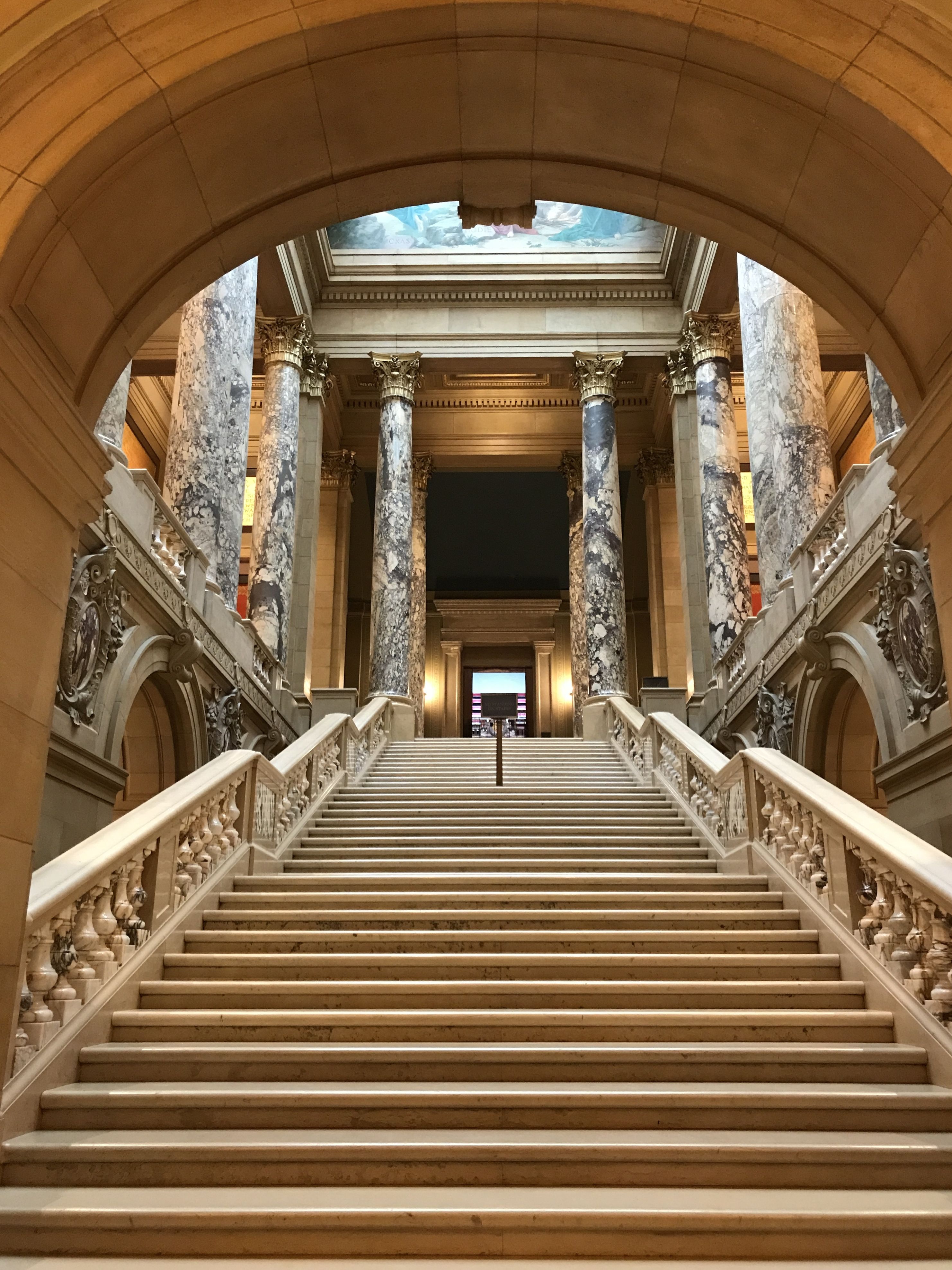
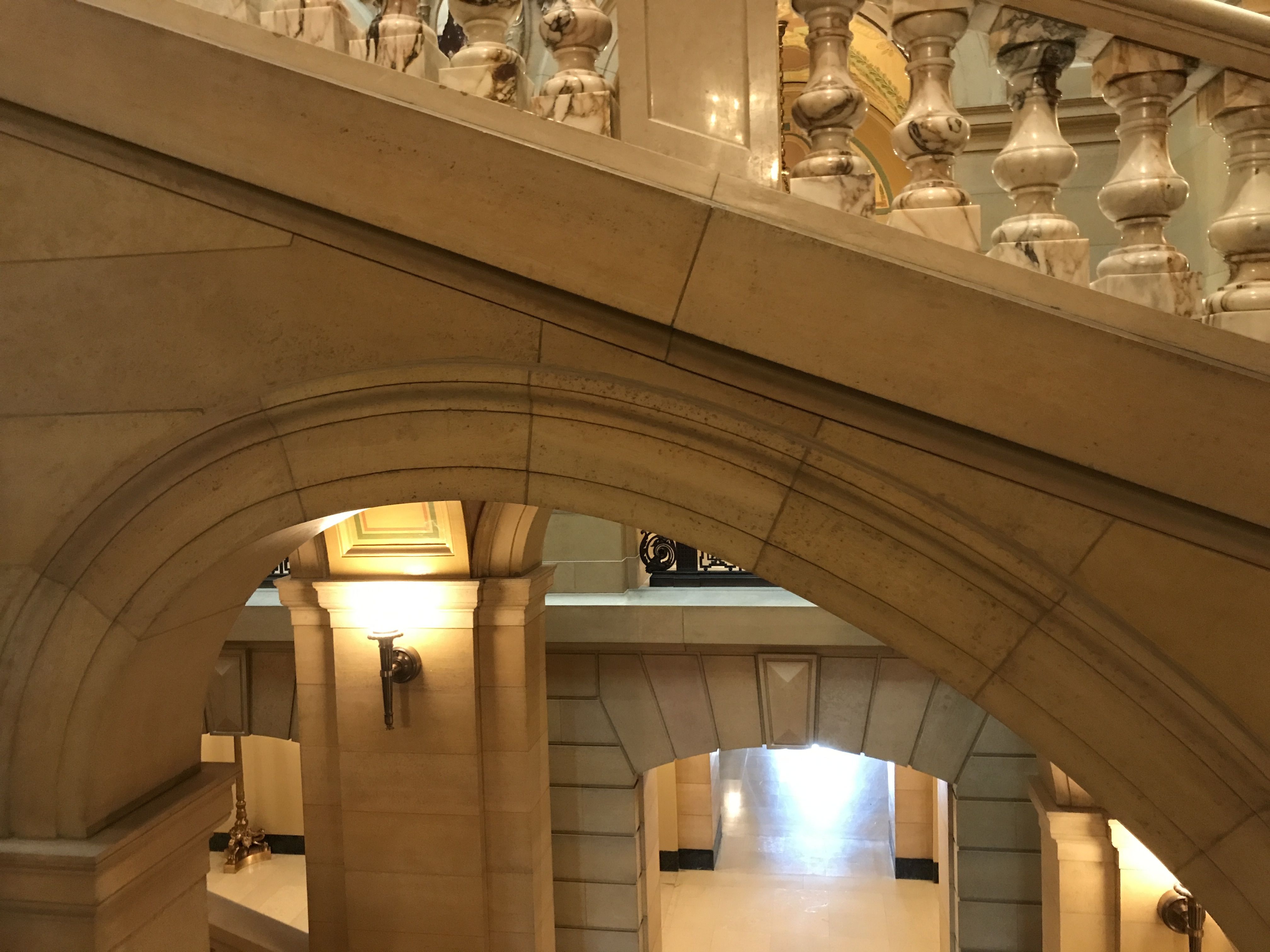
The interior was impressive.
On the way to the governor’s office, we passed this portait of Alexander Ramsey. He was the second state governor, from 1860-1863.
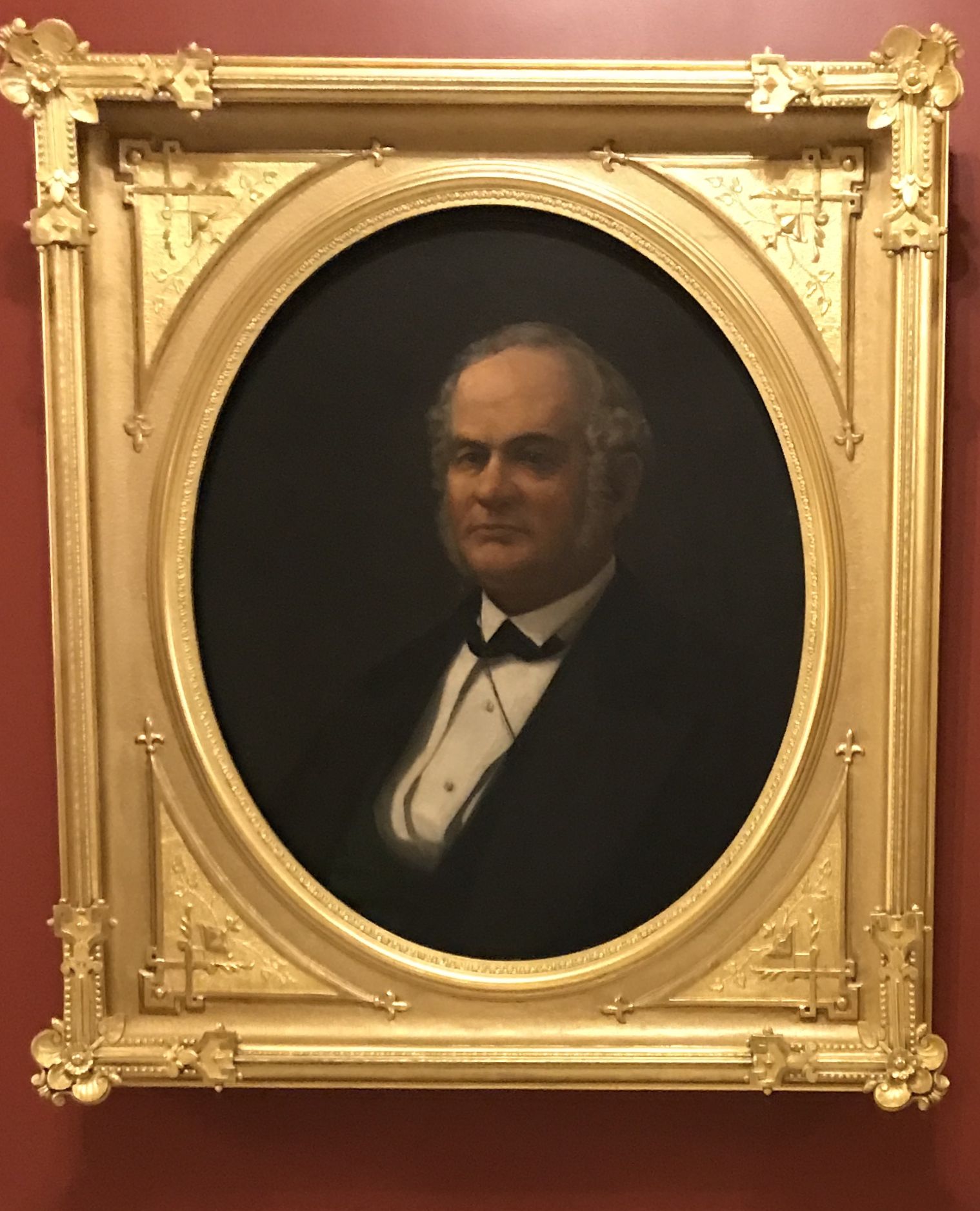
It seemed odd to me that they would have the second governor’s portrait hanging and not the first. Did I miss it? After all, with a last name of Ramsey, we might be related!
Well, it turns out that he was quite the politician, and held a number of offices. Including being the second governor of the state, Zachary Taylor appointed him the first governor of the Minnesota Territory, 1849-1853. Before that, he was a member of the House of Representatives from Pennsylvania. He was also the mayor of St. Paul, a U. S. Senator and the Secretary of War under Rutherford B. Hayes.

We got to peek inside the entrance to the governor’s office. What I was most impressed with, however, was in the hallway outside.
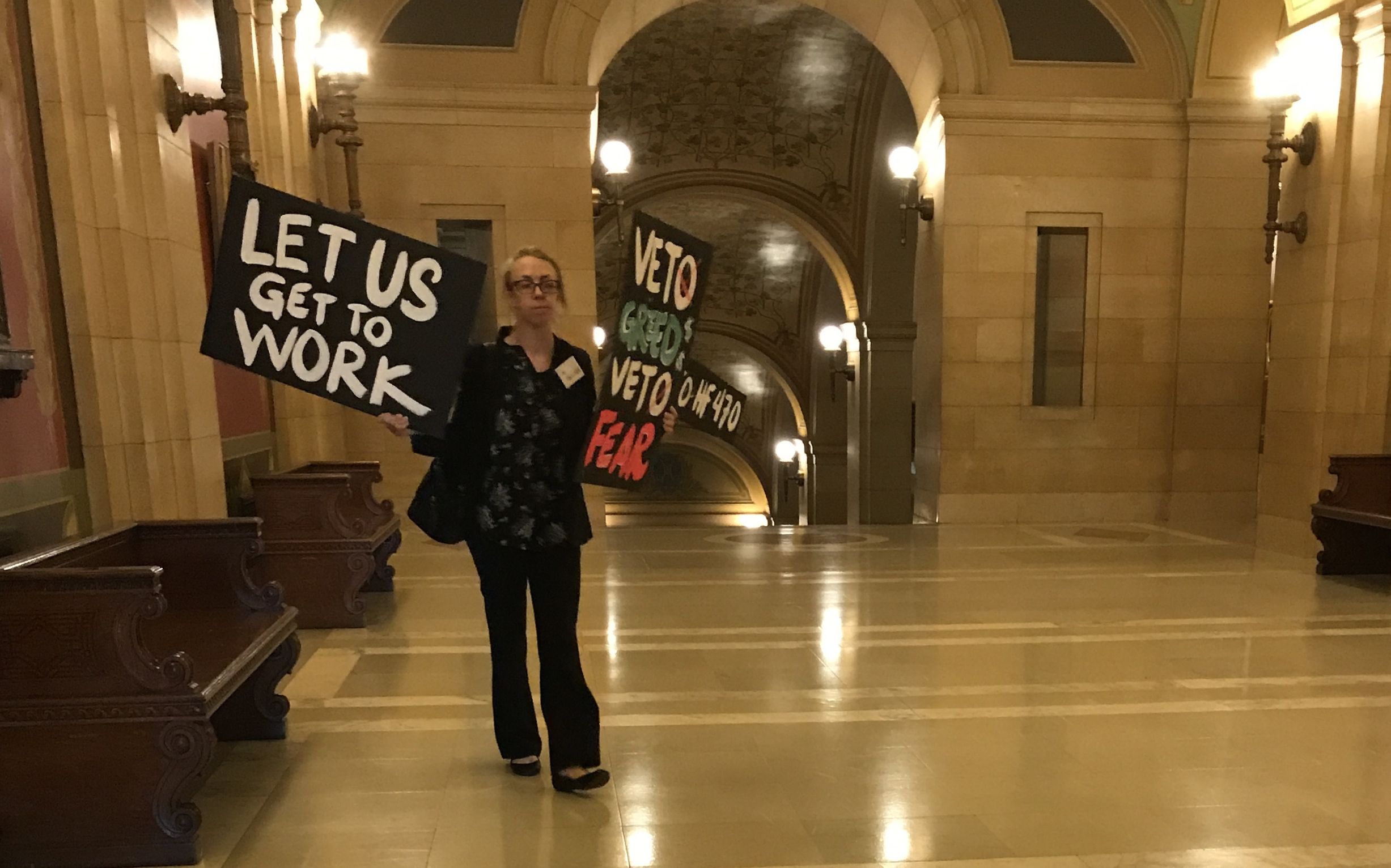
A woman was exercising her first amendment rights to free speech and to petition the Government for a redress of grievances. This was a peaceable assembly of one.
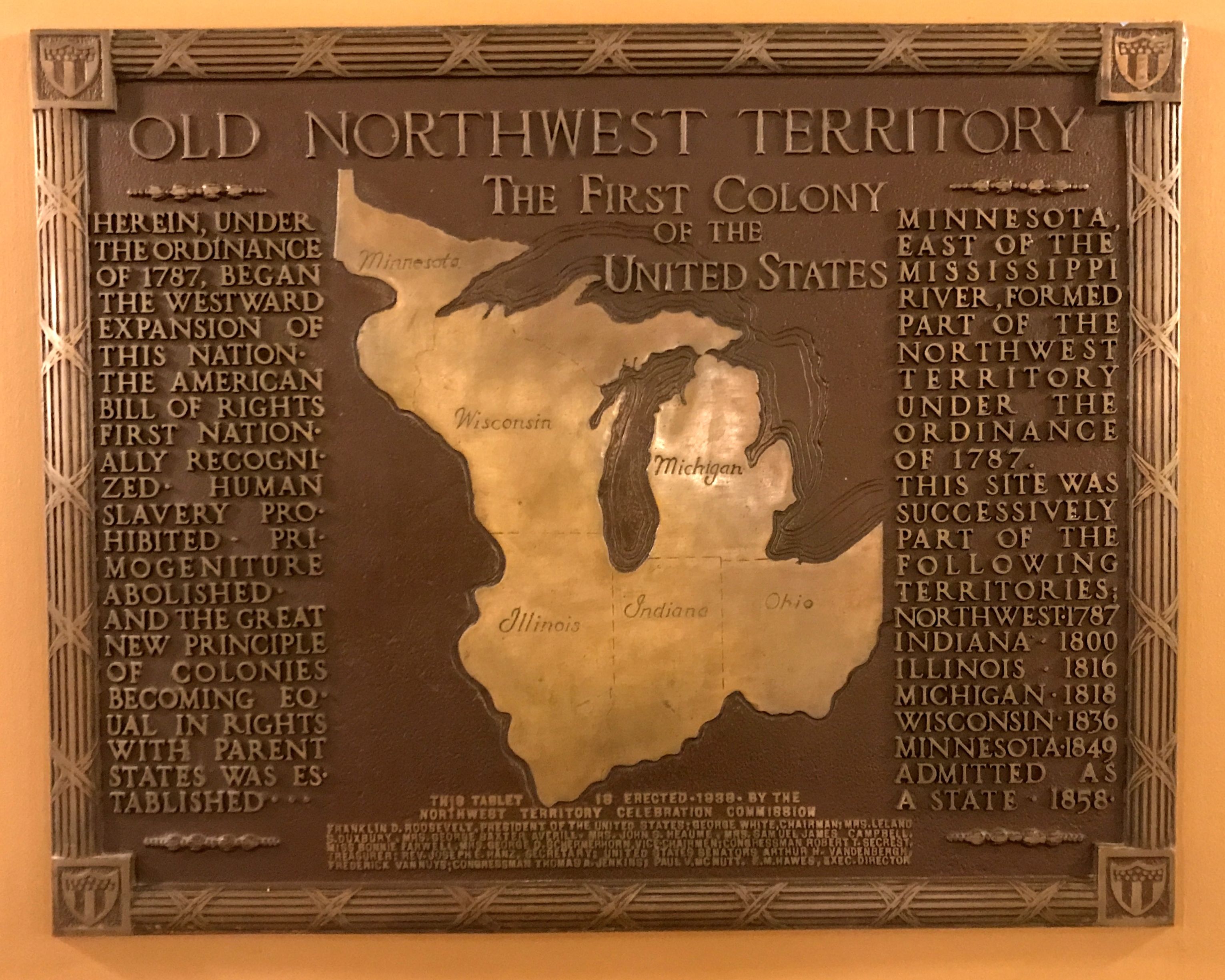
There were all sorts of interesting plaques and quotes throughout the building. You know, I never thought of the Northwest Territory as a colony.

Incidentally, this tablet was erected in 1938 by the Northwest Territory Celebration Commission. It must have been the sesquicentennial celebration.
Here’s one of the quotes from around the building:
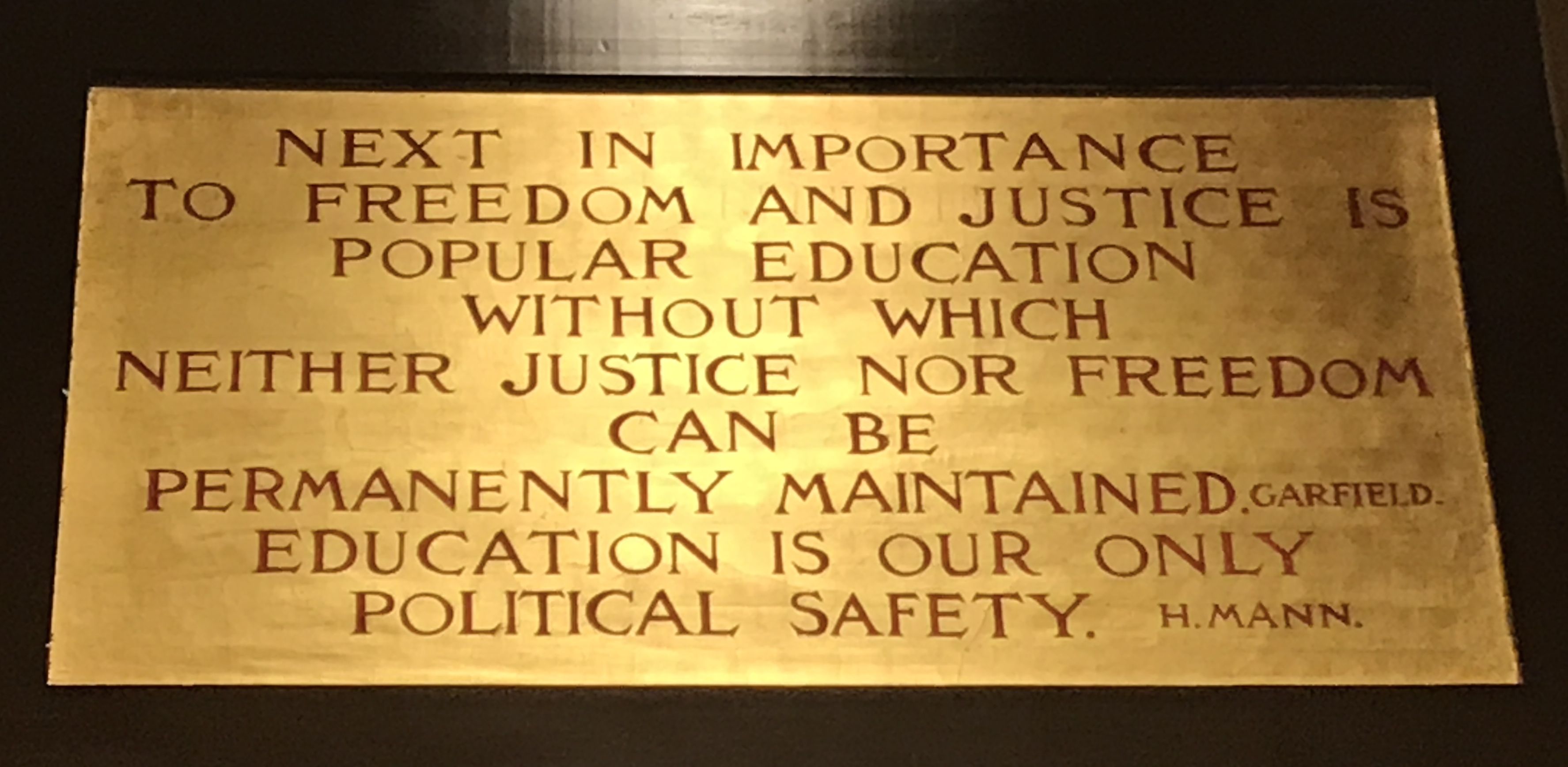
Here’s another quote.
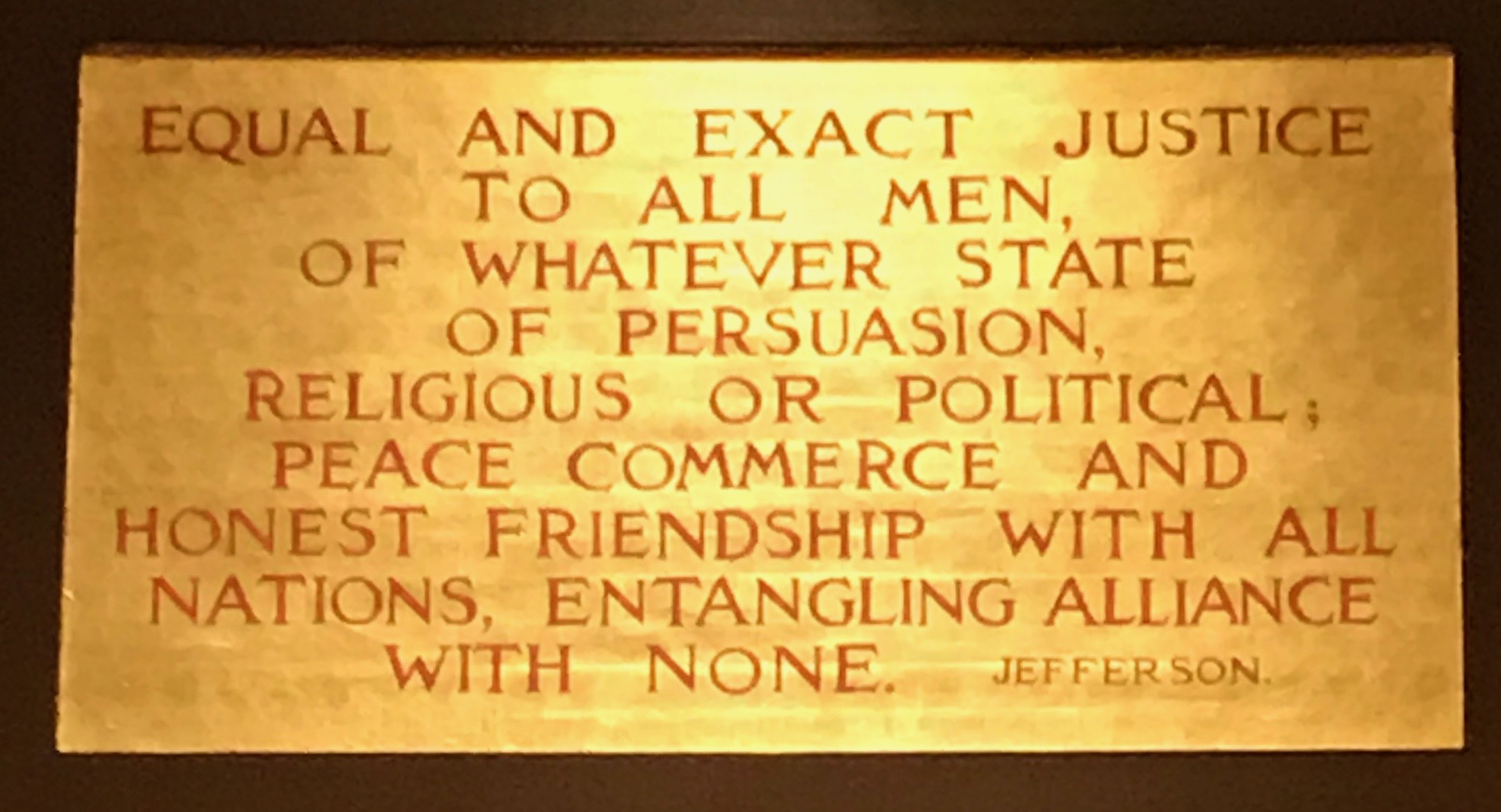
While taking a tour can be a good thing, they do keep you moving. I rather prefer moseying around at my own pace. But it does save you from looking at a bunch of photos of interesting quotes.

Scattered around the building are decorations with the state motto, L’Étoile du Nord, or, the North Star. According to my preferred source, French was widely spoken in Minnesota until the end of the 20th century.

The rotunda was a marvel. It was modeled after Saint Peter’s Basilica in Rome. It is the second largest unsupported marble dome in the world, second only to Saint Peter’s.
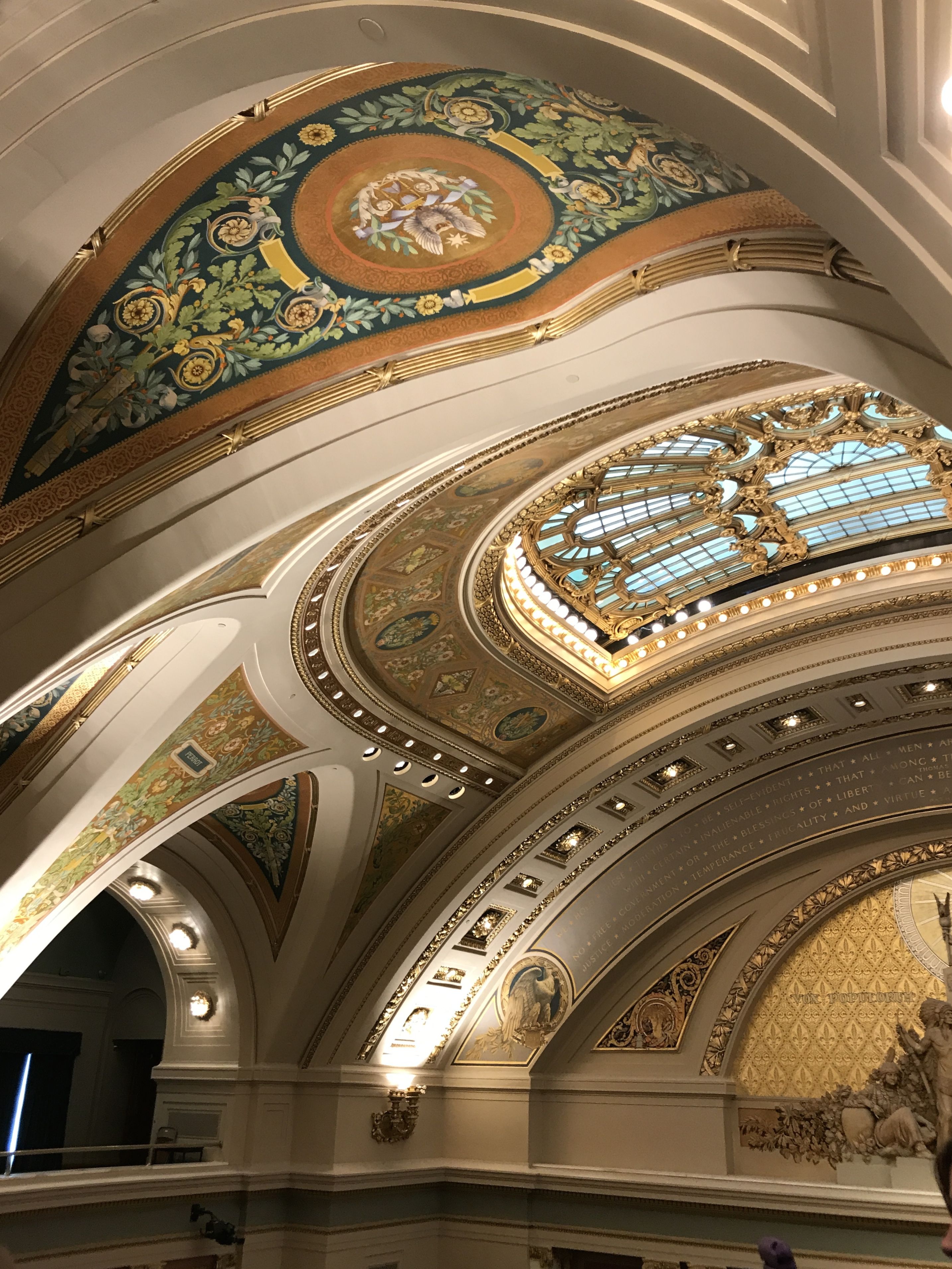
There were elegant details all over. This is a skylight in one of the legislative chambers.
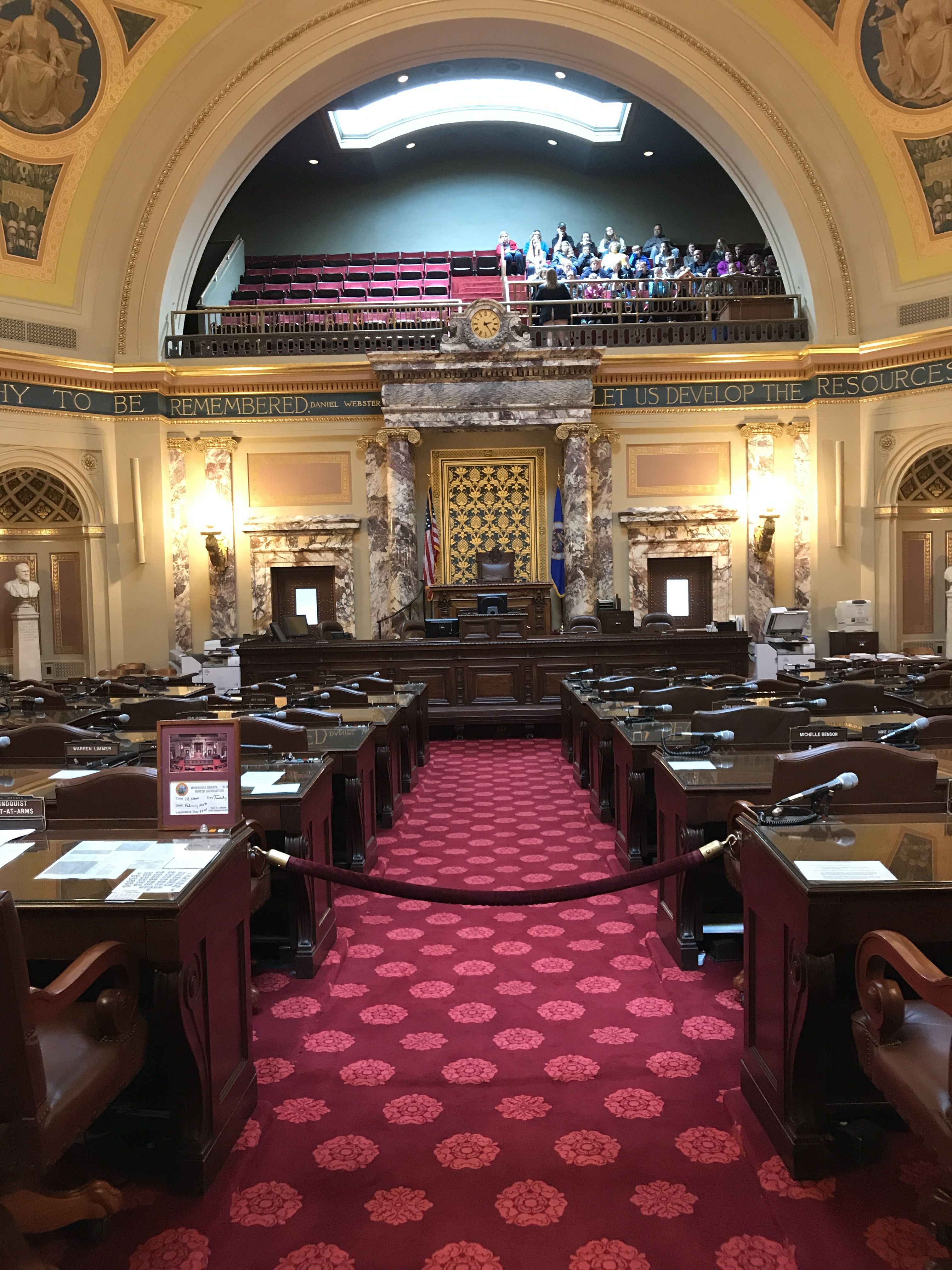
We got to peek into the Senate.
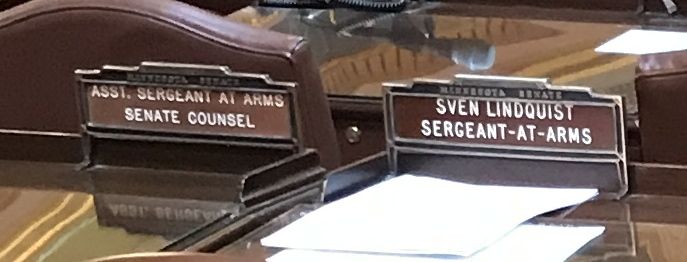
Thank goodness the Sergeant-at-Arms left his desk tidy. Incidentally, can you think of a more typical Minnesotan name than “Sven Lindquist?”
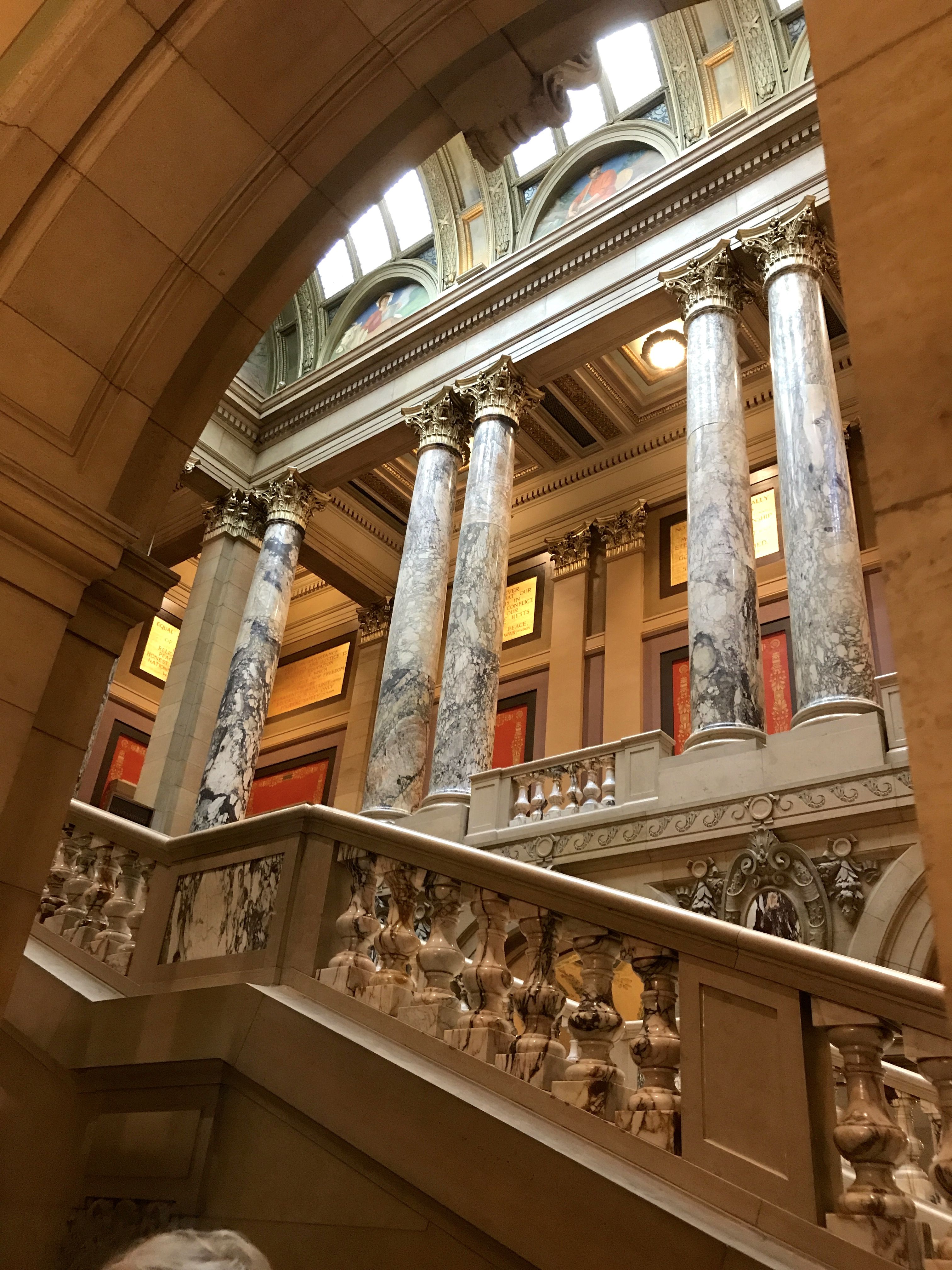
The building had many skylights. After all, it was built in the first years of the 20th century, when electrification was in its beginning stages.
And, with that, the tour was over.
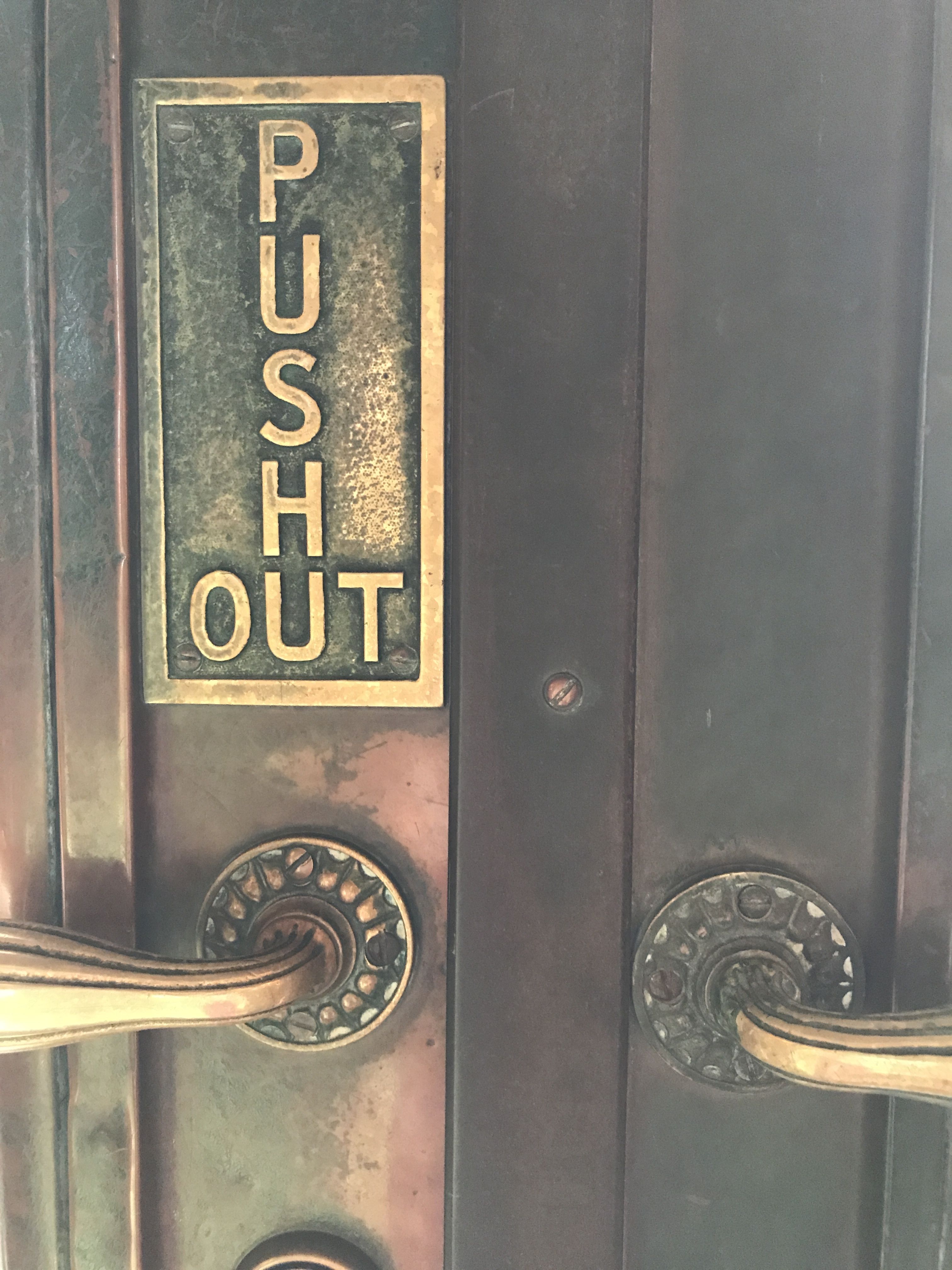
I went back to Bart and looked around. I spied my next location to visit.
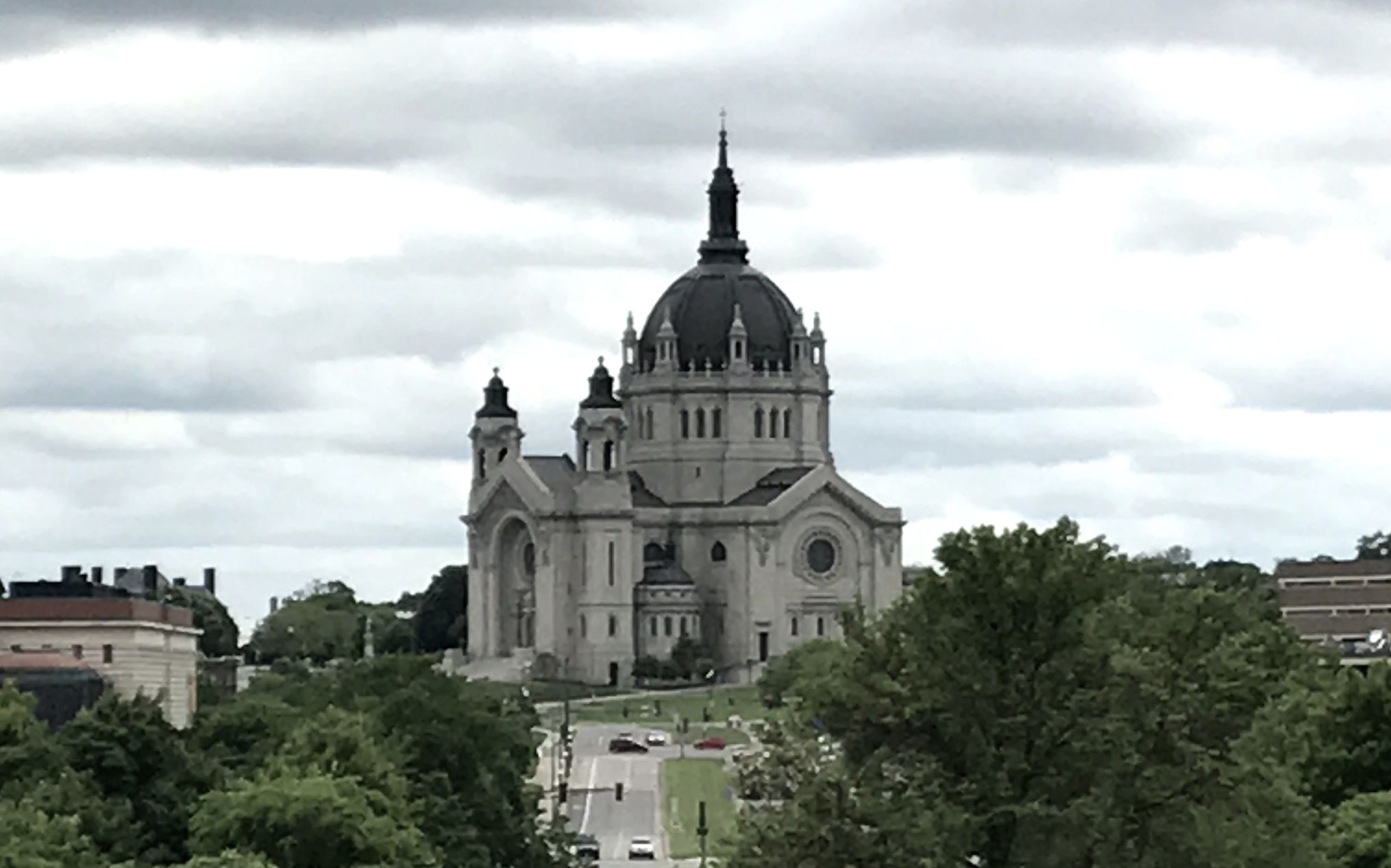
That looks like a cathedral! I wonder if it’s a basilica. I’d best go find out.