I usually like to go places I haven’t been before, but when it comes to family, I’ll make an exception. It’s time for a visit with the Davison Family South in Alabama.
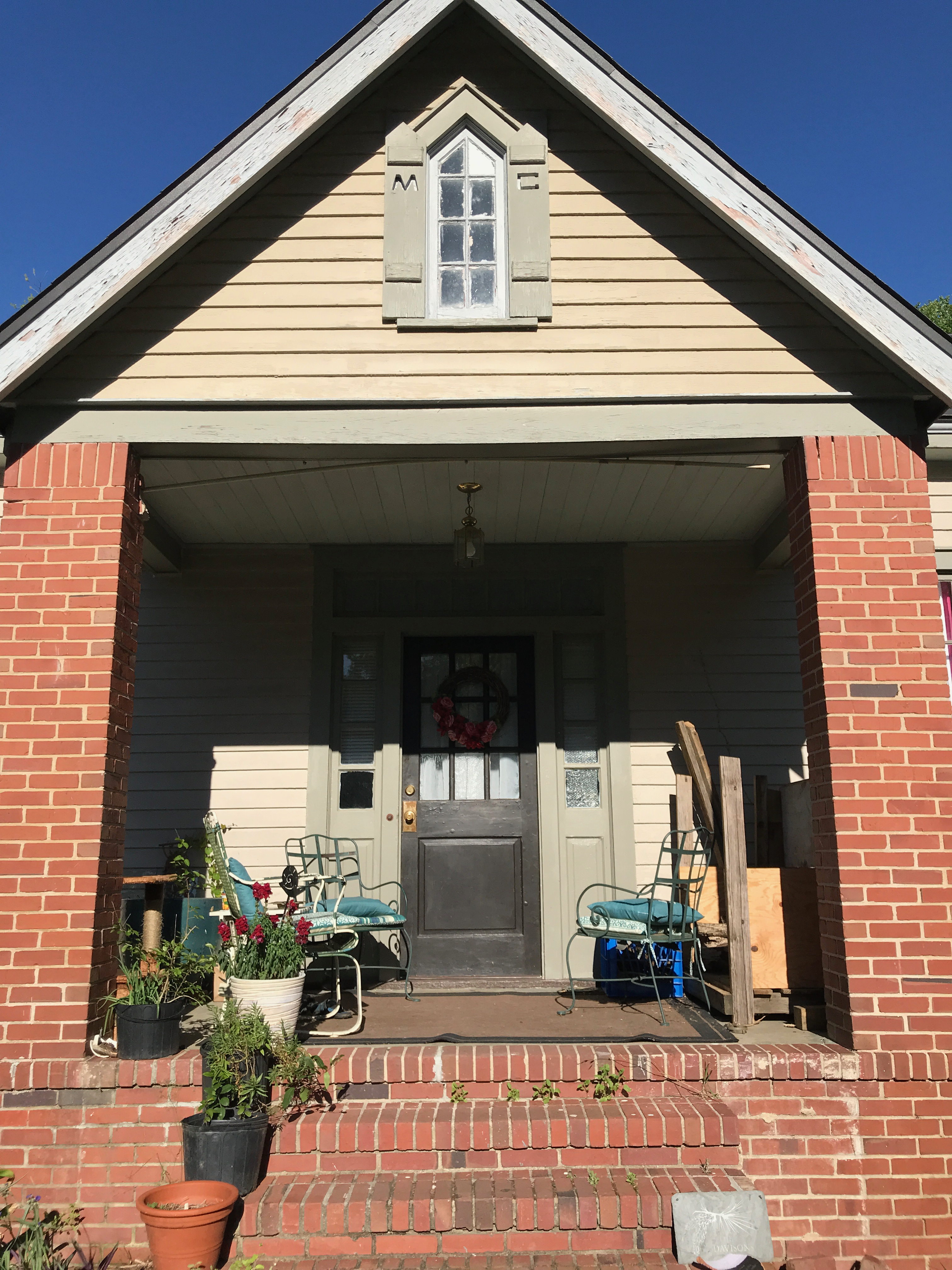
I always love seeing my brother Scott and his wife, Lesley. I think their front porch looks so homey! In all the places I’ve lived, I’ve never had a porch – and I still want one!
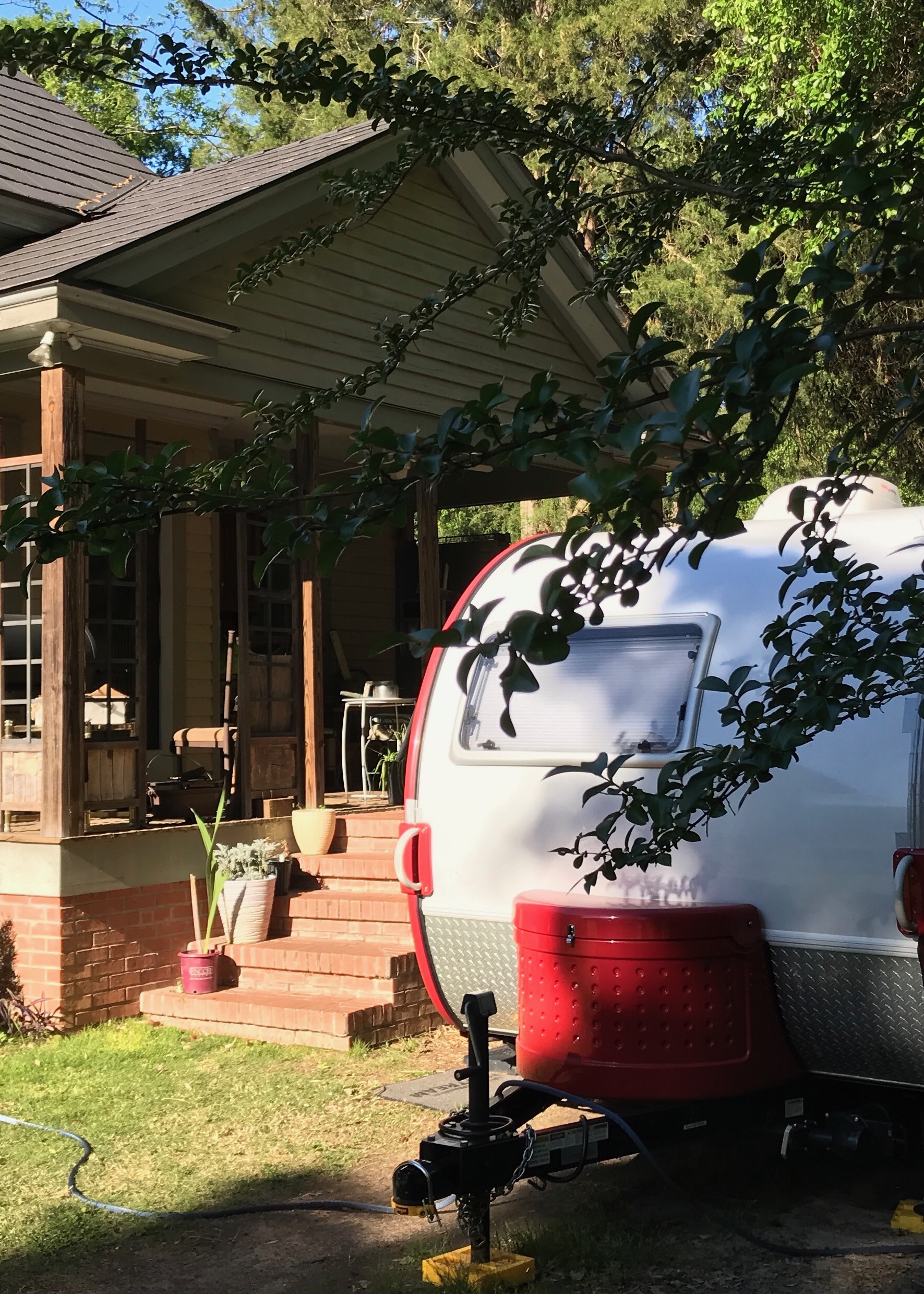
I get berthed next to their side porch and commence with the family fun.
Man! It’s no fair! They have a front porch, a side porch and a small porch on the back, too!
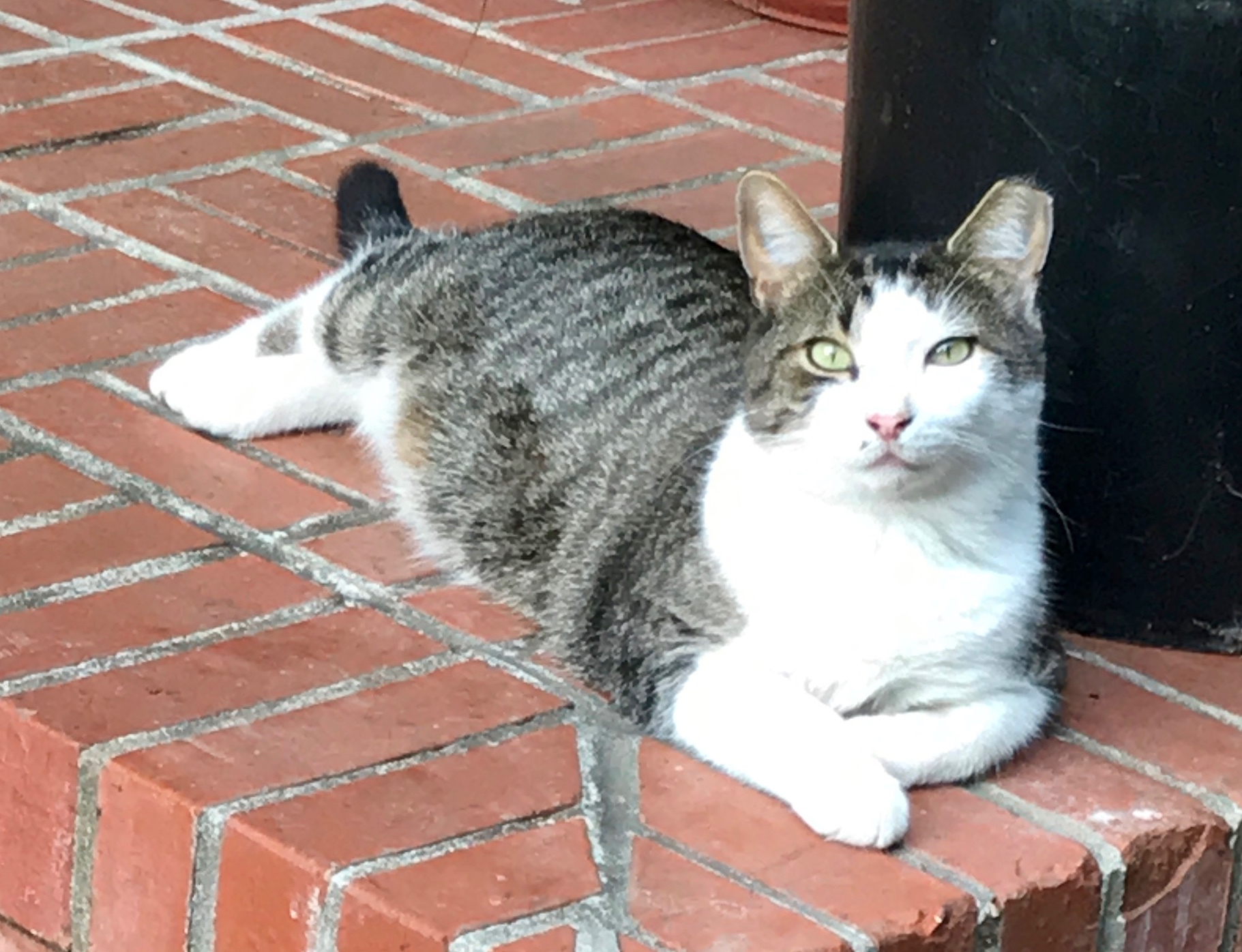
With all those porches, there’s bound to be a porch cat or two hanging around.
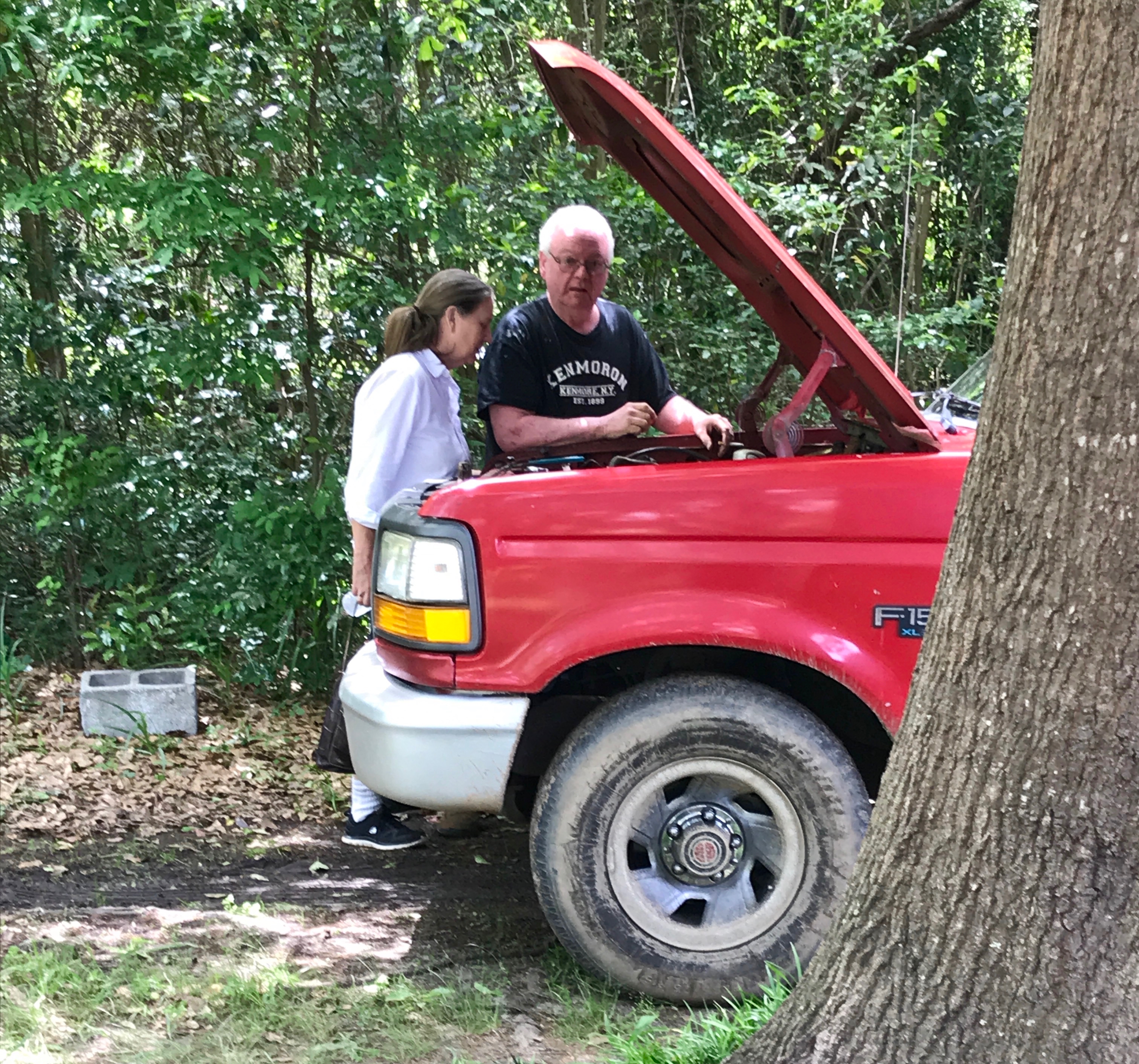
When you’re spending time with family, you just do ordinary stuff. It felt so good to watch Scott work on his truck, with Lesley at his side.
Lesley is an avid gardener.
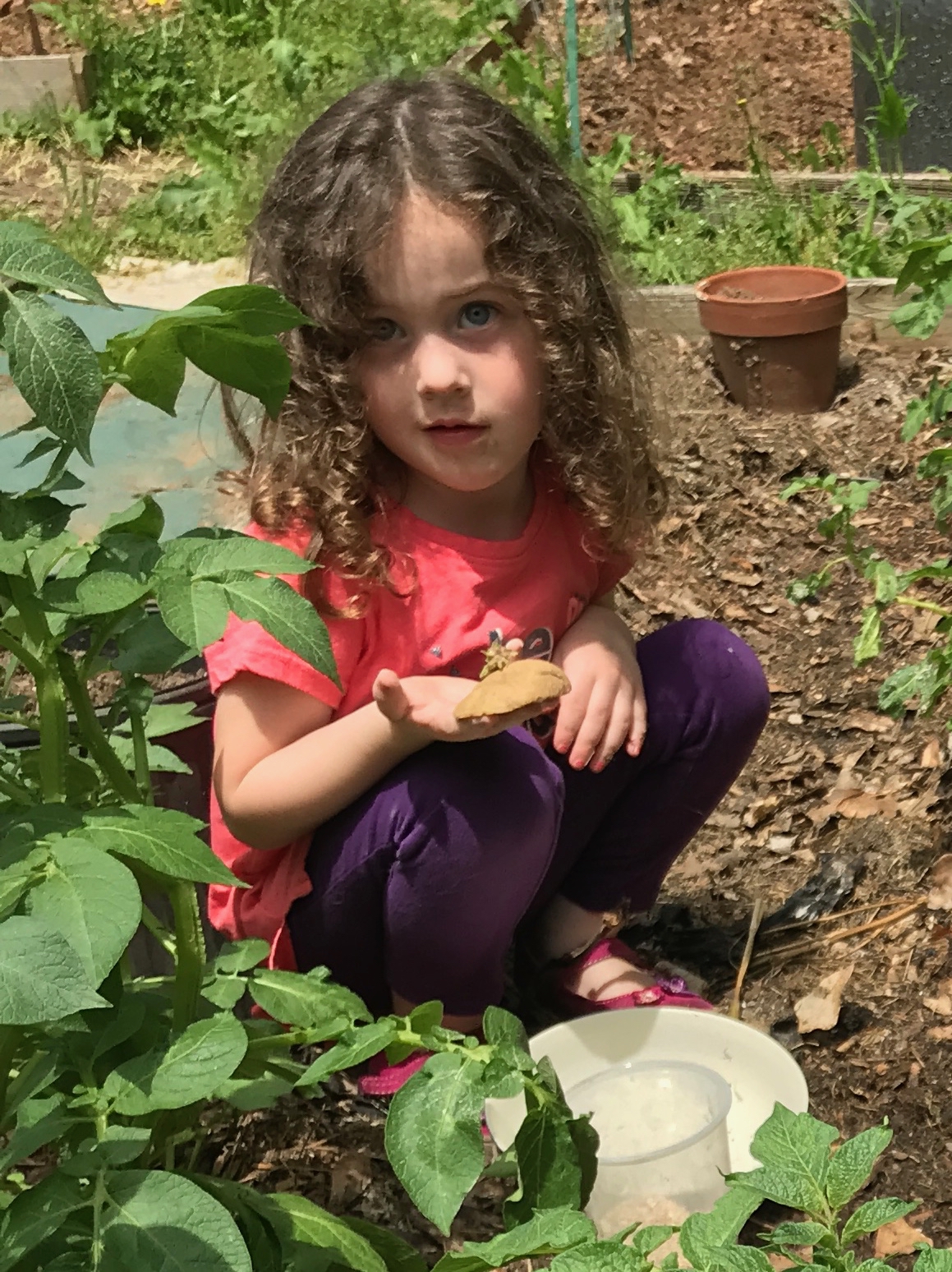
She gets her grandchildren involved. Here is Gwennie getting ready to plant a potato. She’s showing me the eyes that have sprouted.
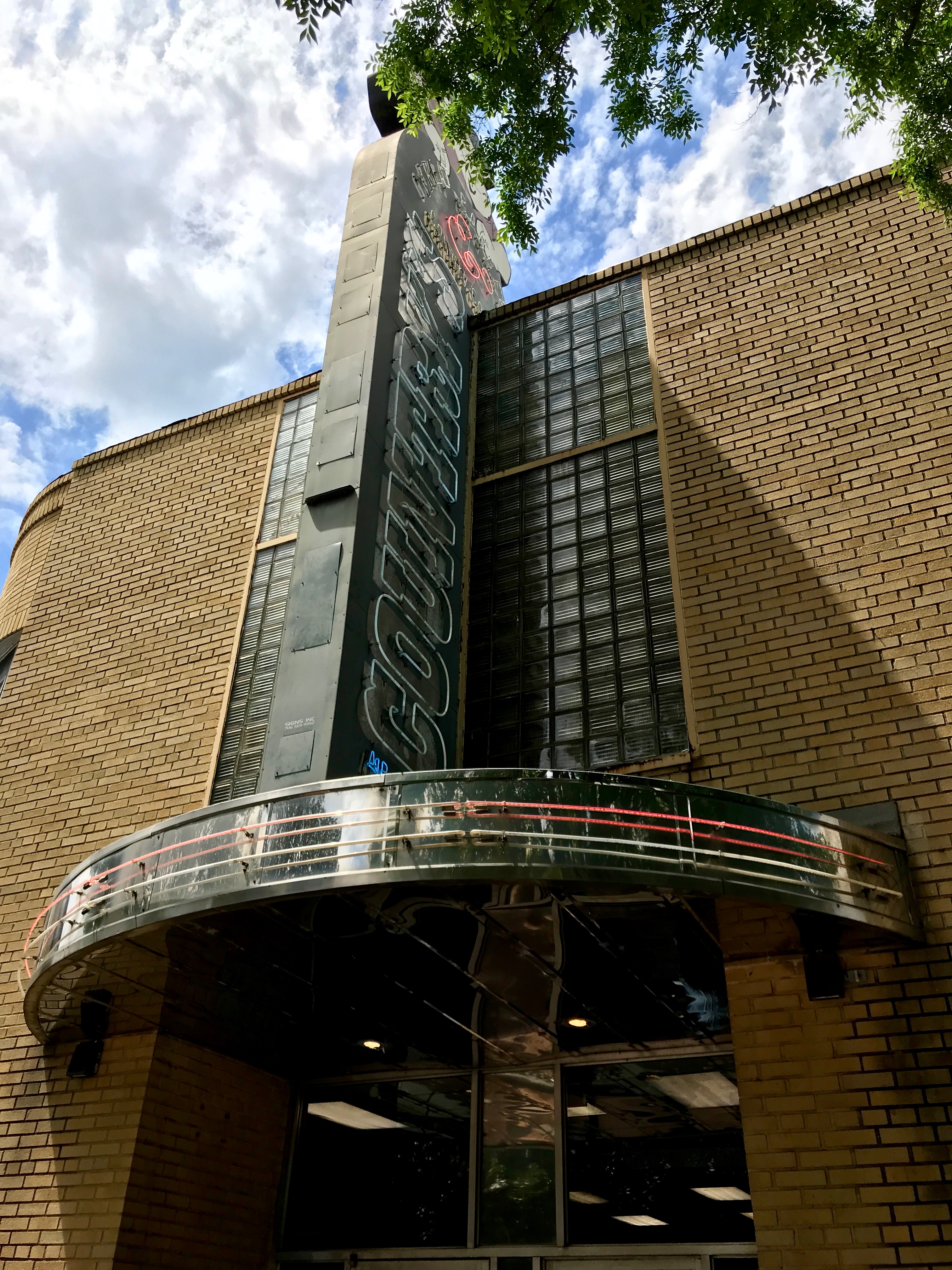
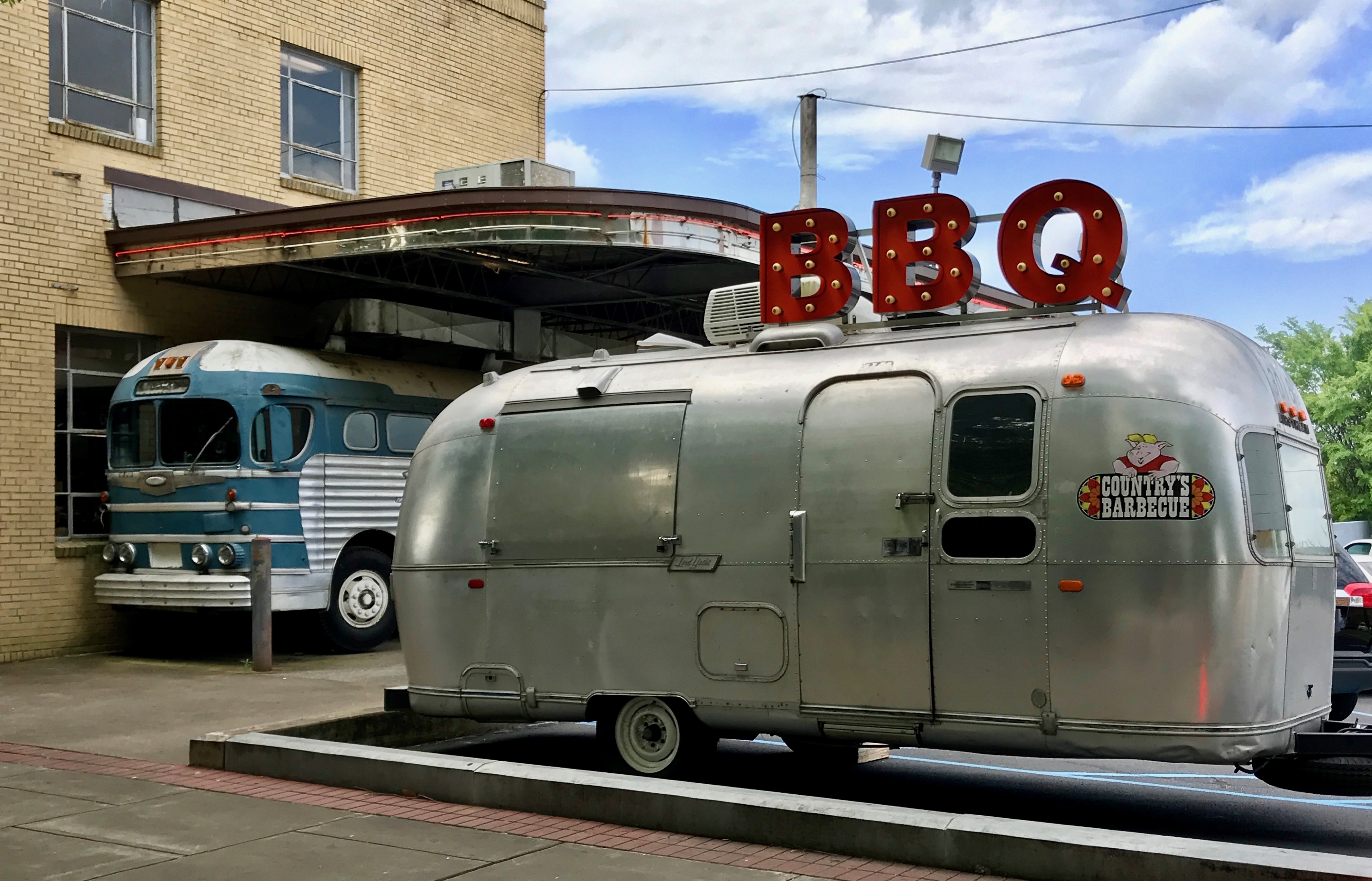
Now, Lesley is an excellent cook, as is Scott, but sometimes you just have to go out to eat. Scott took me across the river to Columbus, Georgia to Country’s Barbecue.
Does anyone recognize the building?
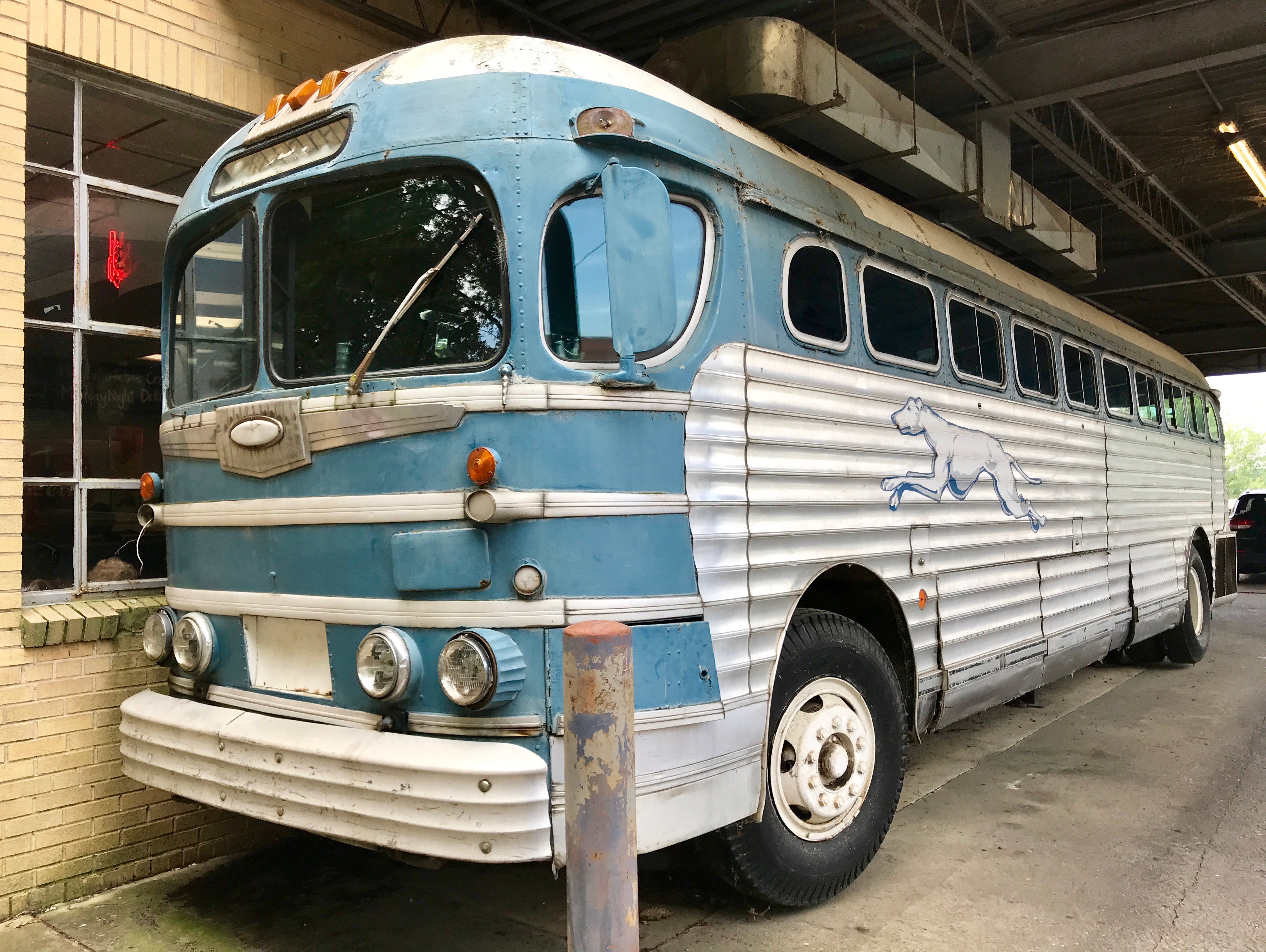
They converted an old Greyhound terminal!
It was kind of special to me to eat there, because my Grandmother used to take the bus from Crystal Beach, Ontario to visit us in Kenmore, New York. She’d arrive at the station in downtown Buffalo and then catch the NFTA bus out to us. She said that she’d take me to eat at the automat in the bus station, but we never got around to it. I wonder if they still have automats?
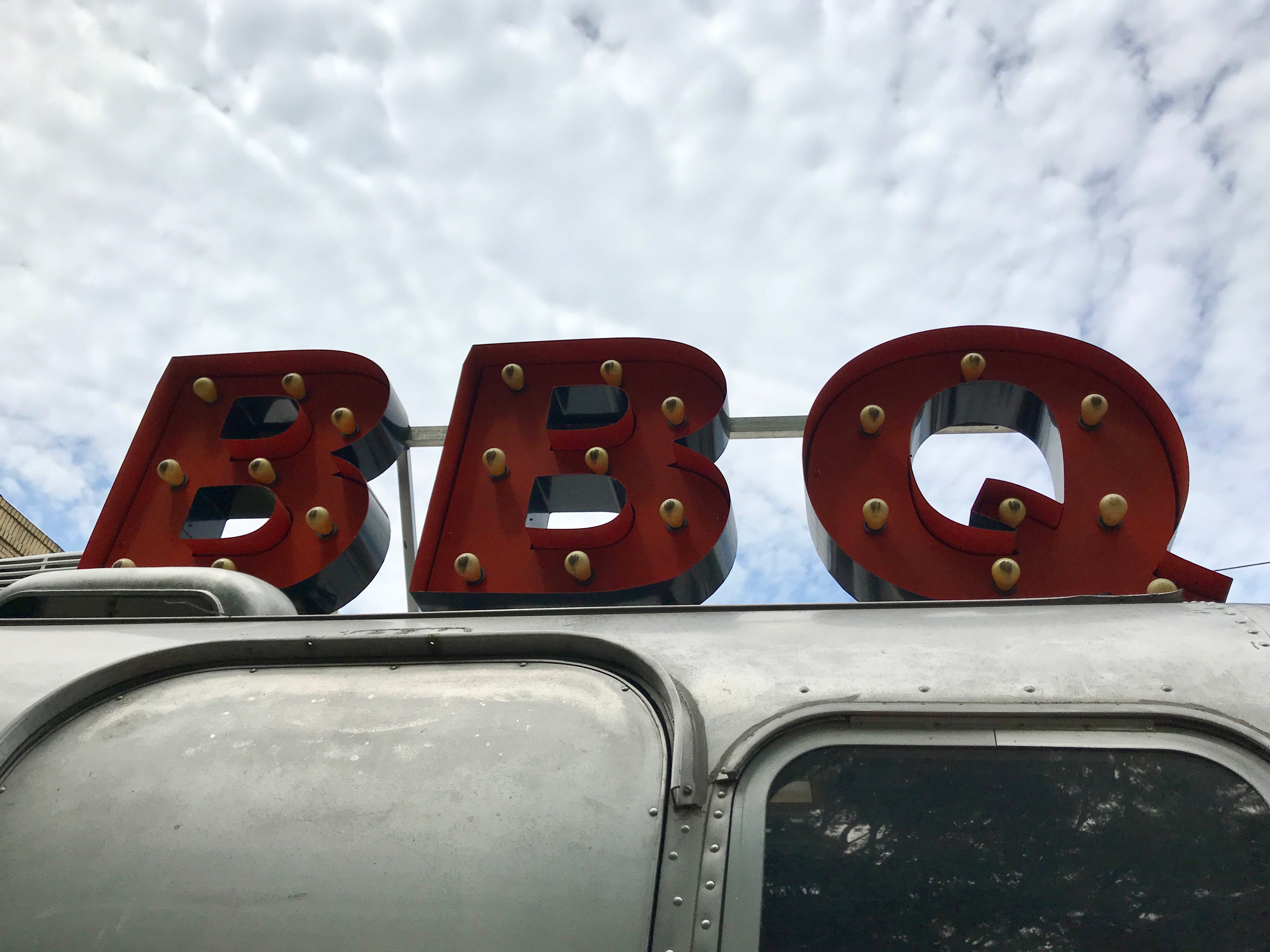
Sharp-eyed readers might recognize the trailer that the sign is on. Yep! It’s an Airstream!
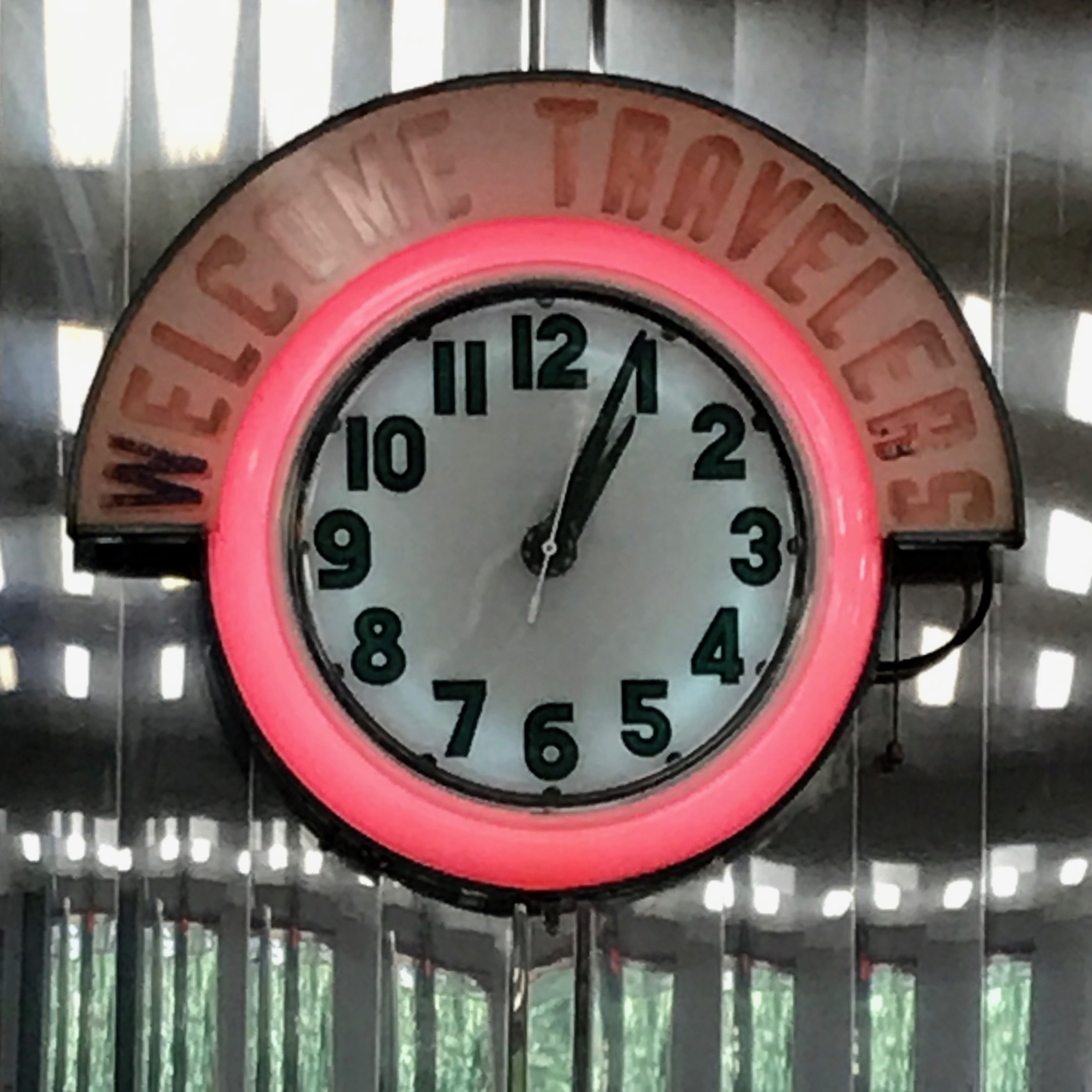
We go inside and order. I love all the art deco details.
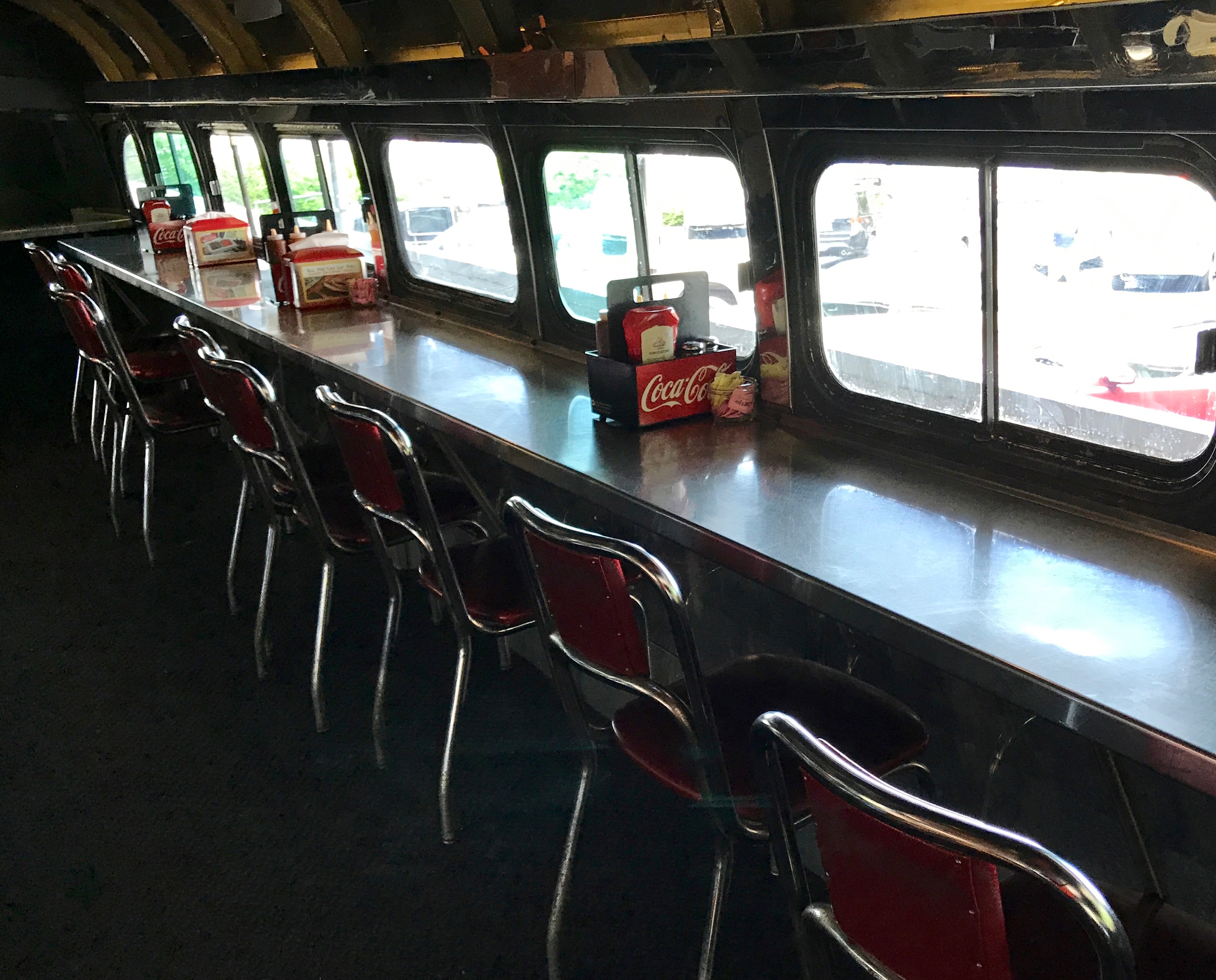
You can eat inside, but we opted to eat in the bus.
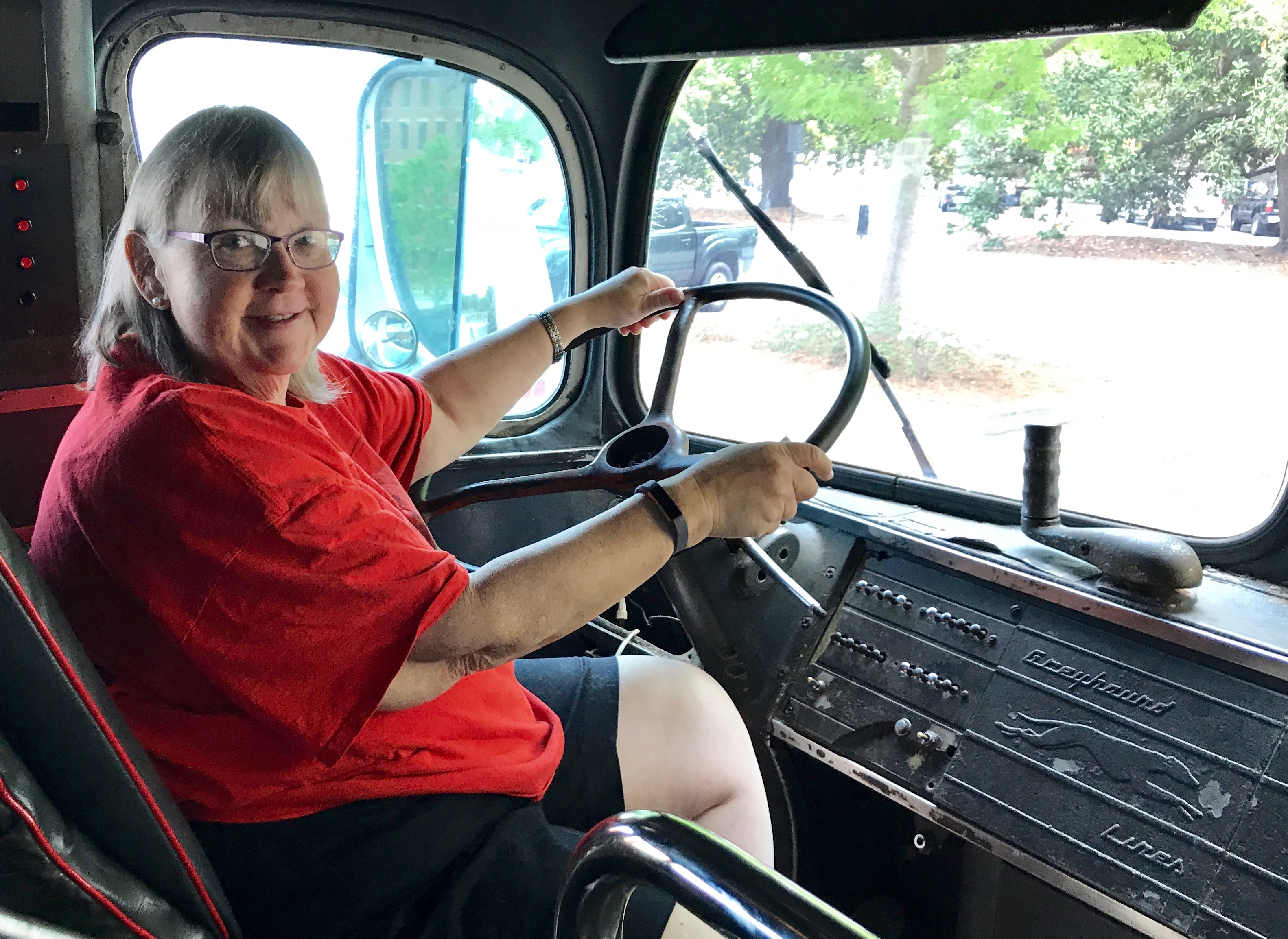
While we were waiting for our meals, we got to do a little pretend bus driving.
Get a load of the size of the steering wheel!
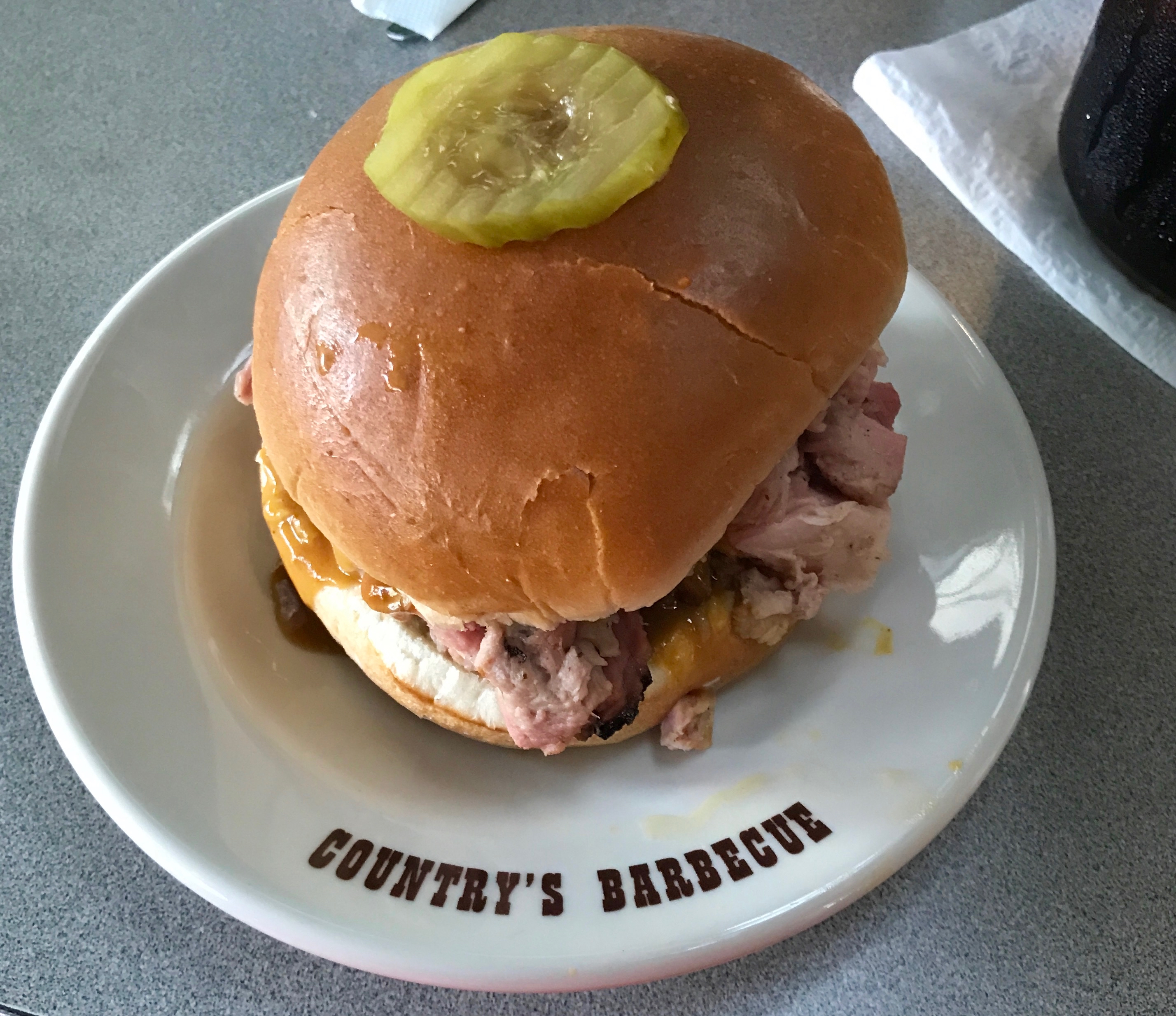
This is my lunch – according to my notes, it’s a chopped sandwich. I learned something about barbecue during this meal. You are supposed to add sauce to your food.
Duh! I could never figure out why people were so excited about barbecue. This northern girl is partial to her hamburgers, with ketchup, mustard and onions. To me, barbecue just seemed like a bunch on meat on a bun. But, put the sauce on it and it gets much tastier!
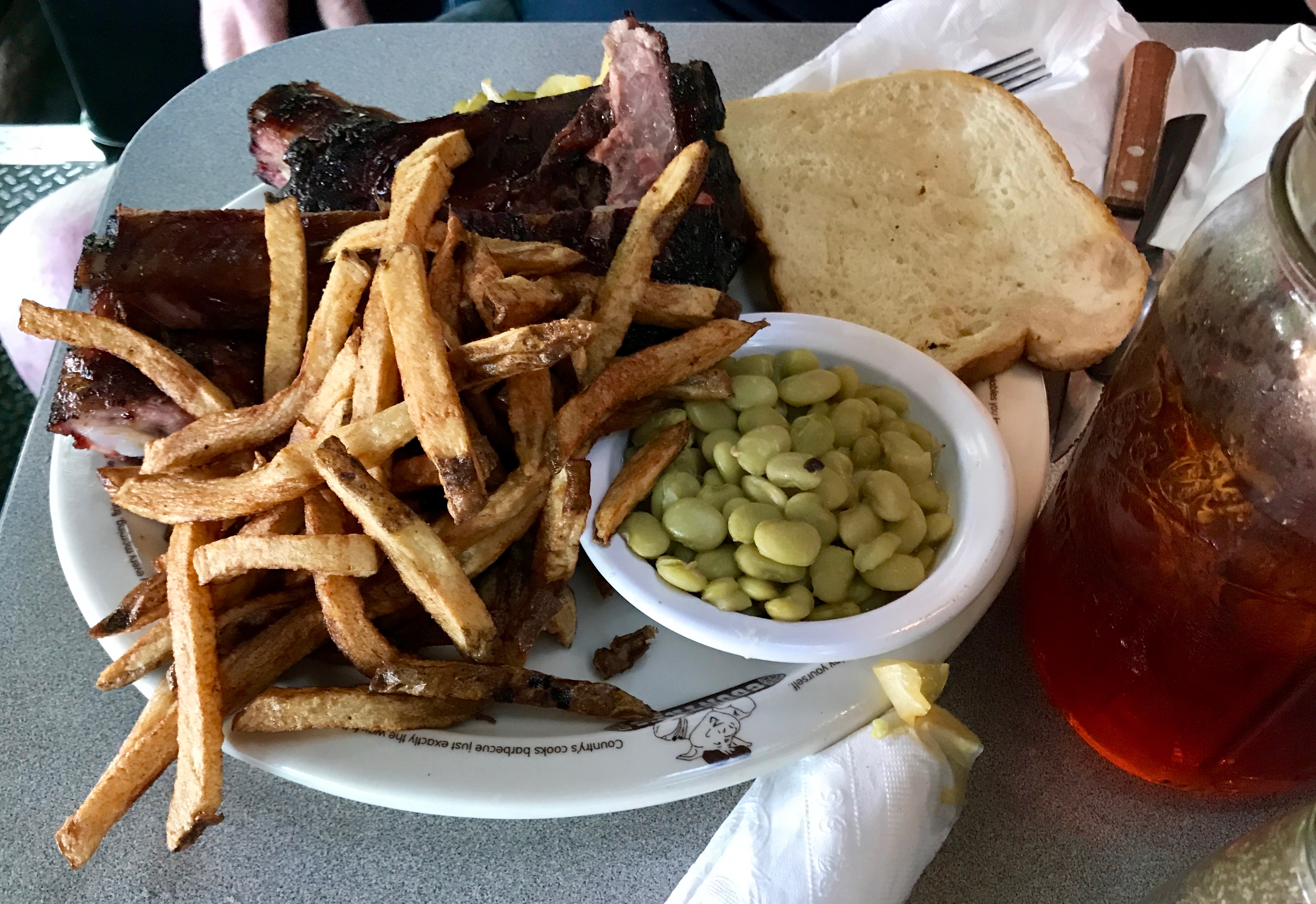
Scott opted for the ribs, fries and butter beans with iced tea.
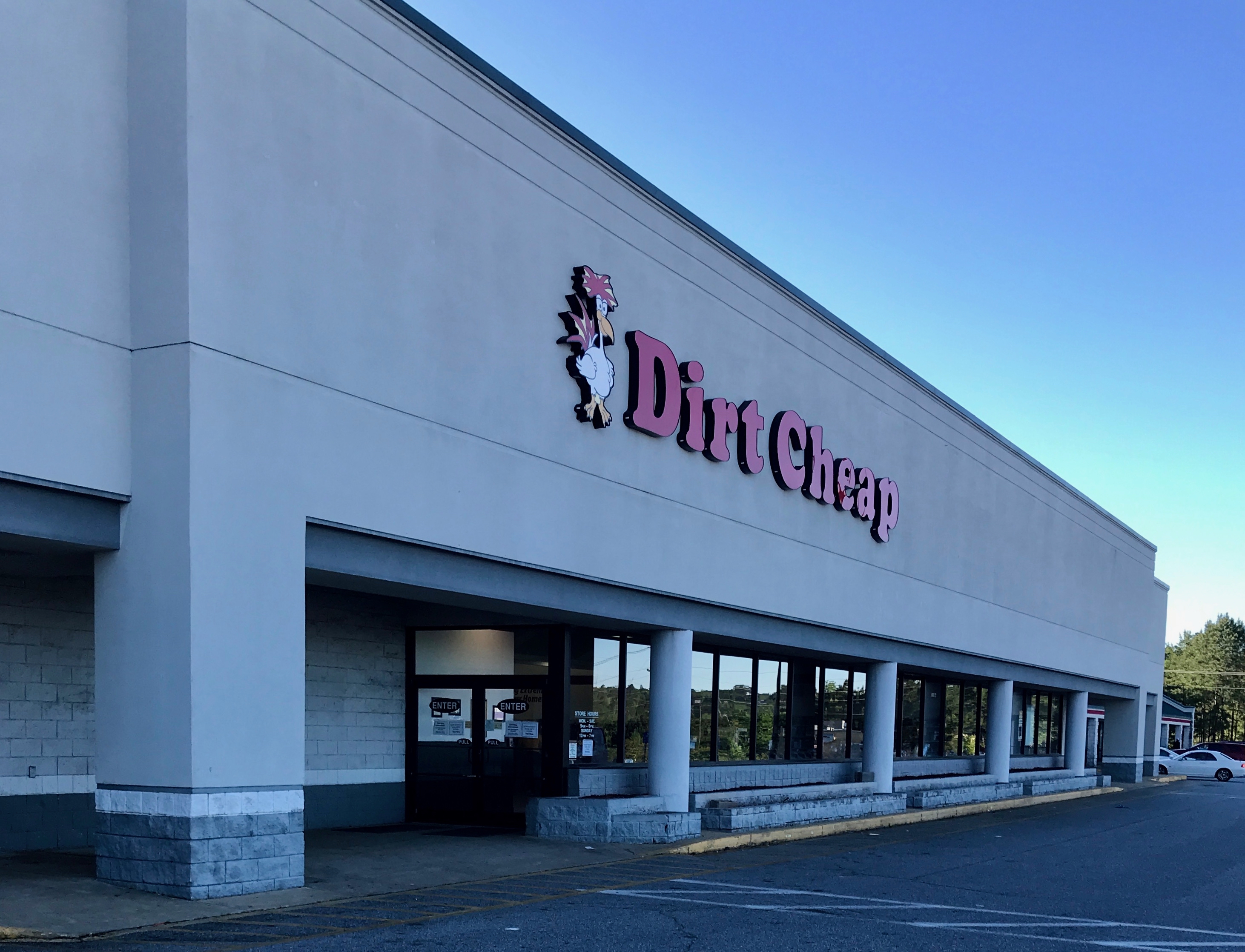
Of course, we did some shopping during my visit.
I prefer things that are free, but “dirt cheap” is the next best thing.
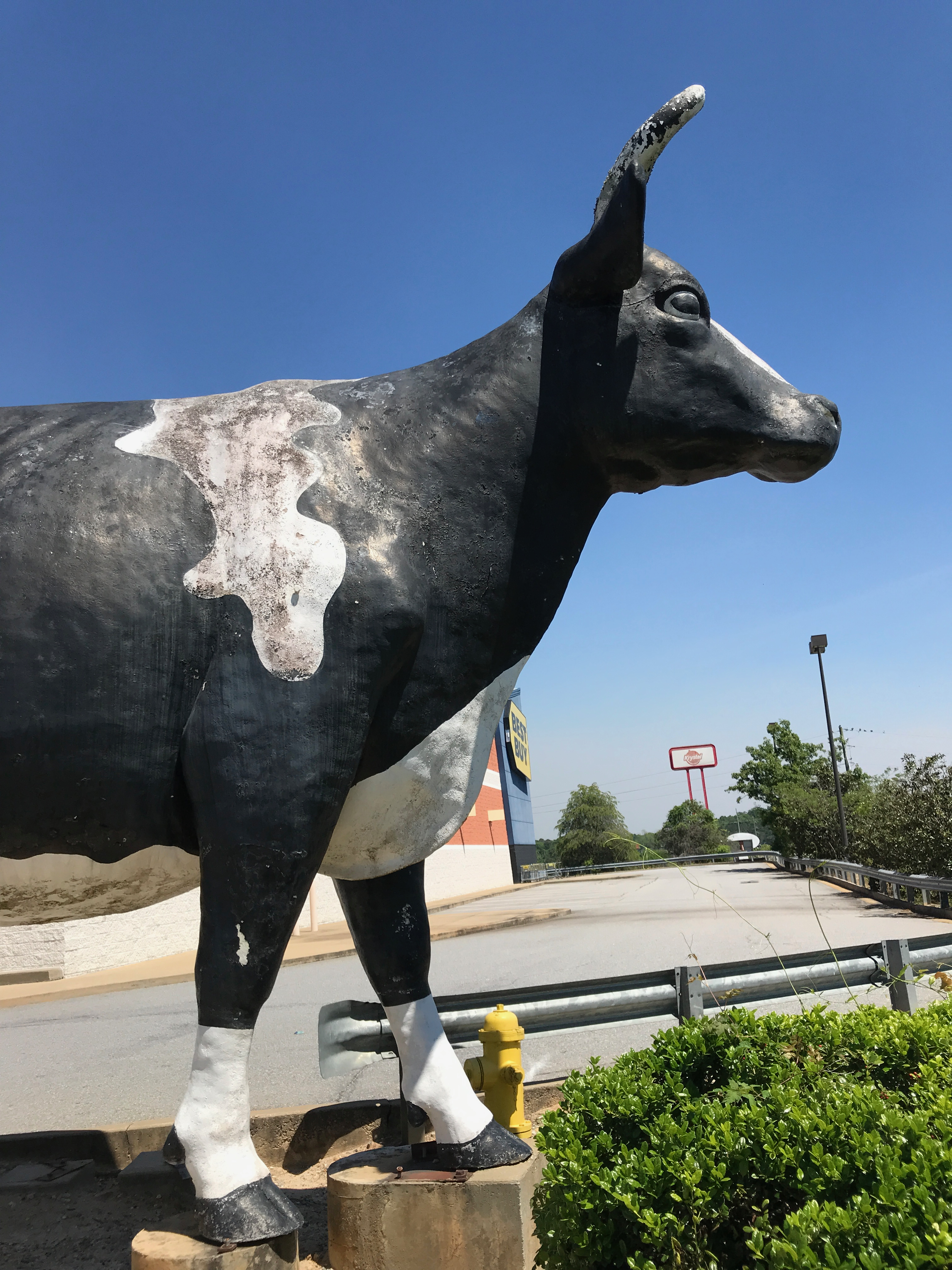
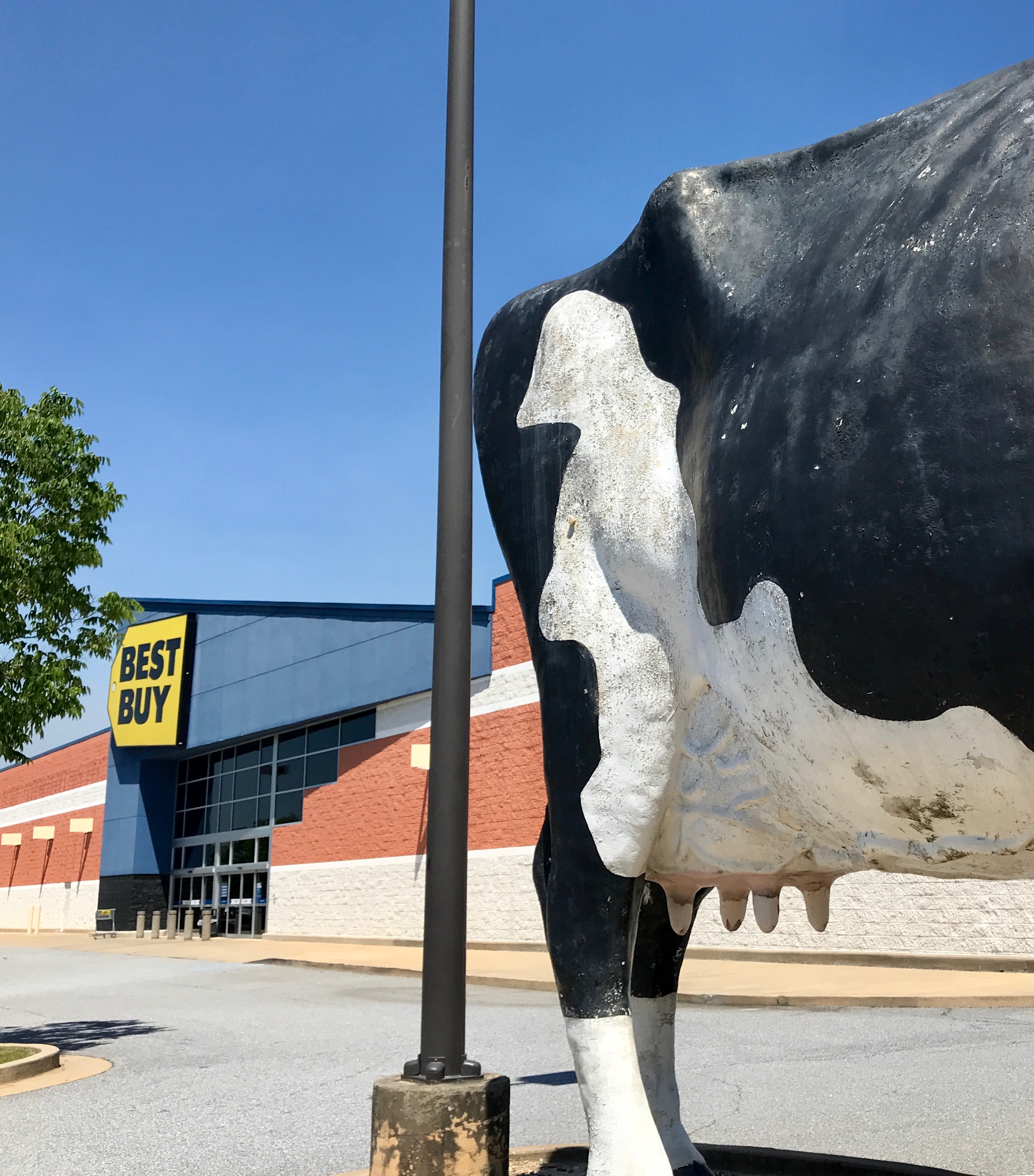
One day, I was out tooling around. I spied this large cow up on a hill looking down on the major thoroughfare. Of course I had to check it out.
I was curious as to why there would be a cow in front of a Best Buy.
It made “udderly” no sense to me.
When I got back, I asked and Lesley told me (if I remember correctly) that there used to be a dairy store at that location and the cow was a local landmark.
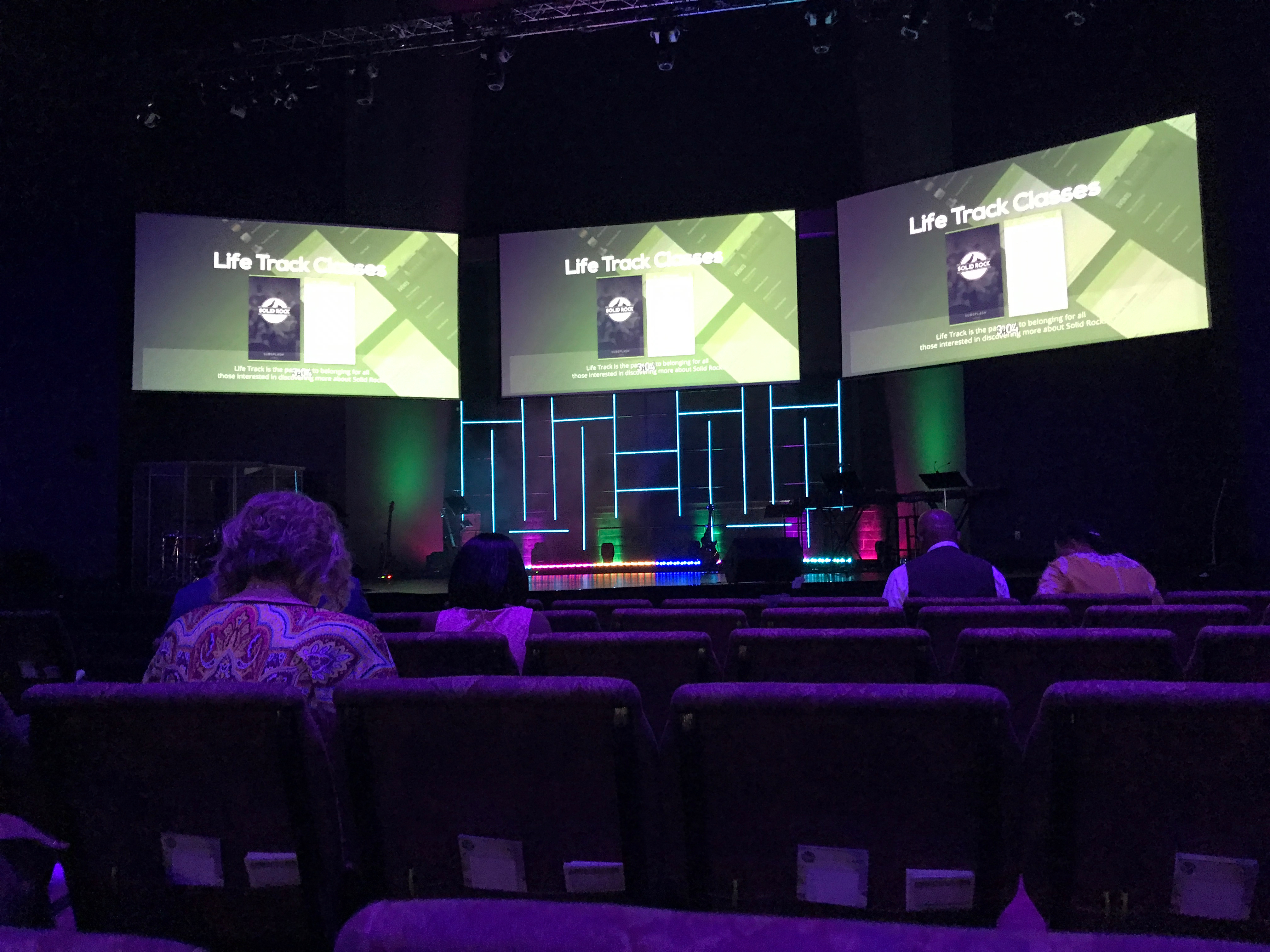
My visit coincided with Easter, so we all went to church. Scott and Lesley, their children and grandchildren and maybe some in-laws, too were all there. This wasn’t Scott and Lesley’s usual church. Someone else in the family picked it out.
You know how I usually gripe about organ music? There was nary an organ to be seen. It was the most unusual church I’d ever been to. I snapped this photo while we were waiting for everyone to arrive. The screens in the front kept scrolling messages. Judging by the darkness of the interior, it kind of looks like this might have been the Easter vigil.
No, it was at 9:30 in the morning.
Two-foot long light sticks that change colors when you shake them were distributed. A rock band played. There were dancers. There was a lot of energy. I never really considered myself terribly traditional, but the experience seemed more like what I imagine a rave would be than a church service.
But, hey, it was something different. When in Rome…
Wait a minute, I’m sure this was nothing like Easter in Rome.
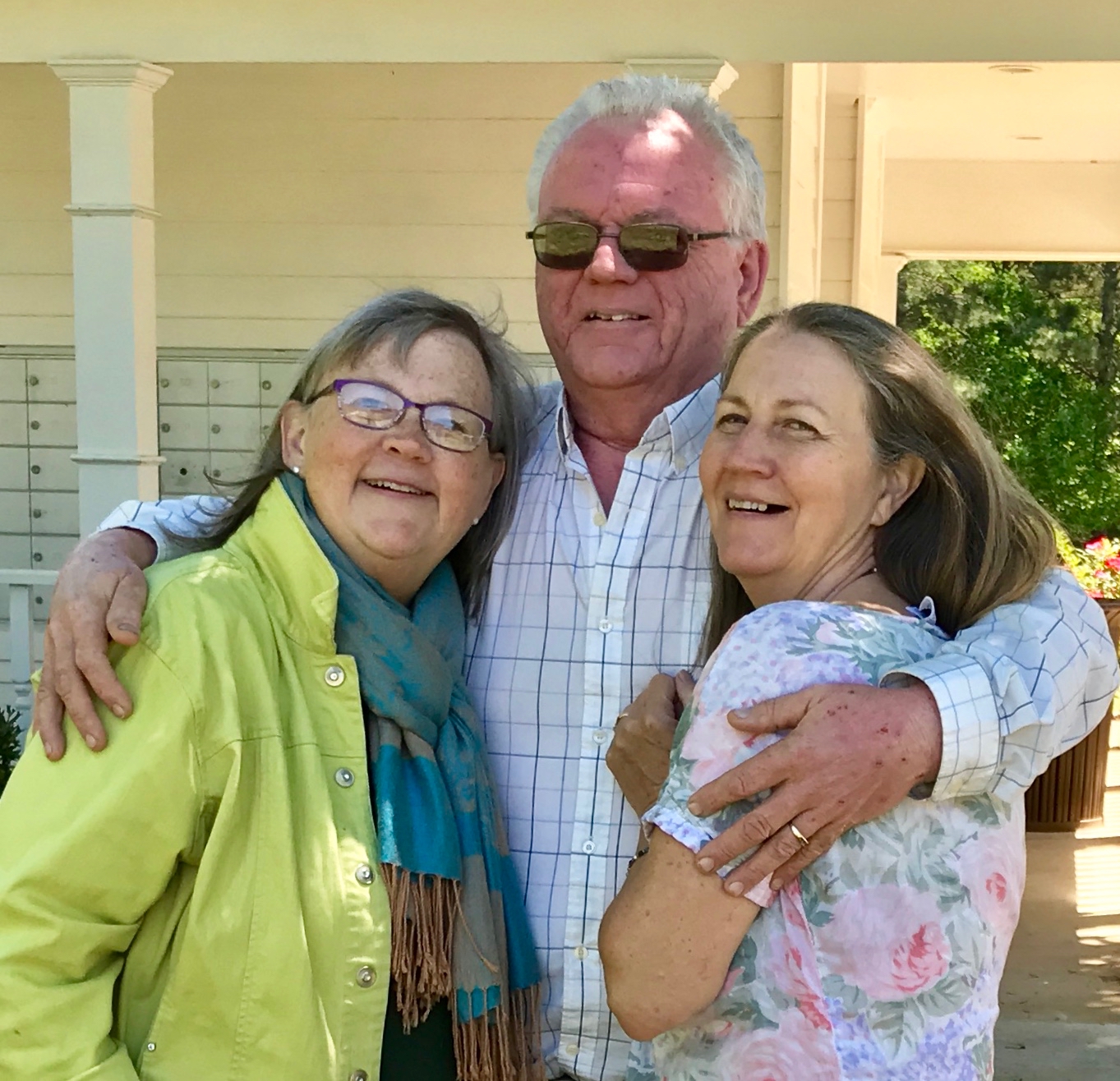
After church, we headed back to one of the kid’s places for Easter dinner. There was food galore! I got a photo of me with Scott and Lesley while I had someone there to take it.
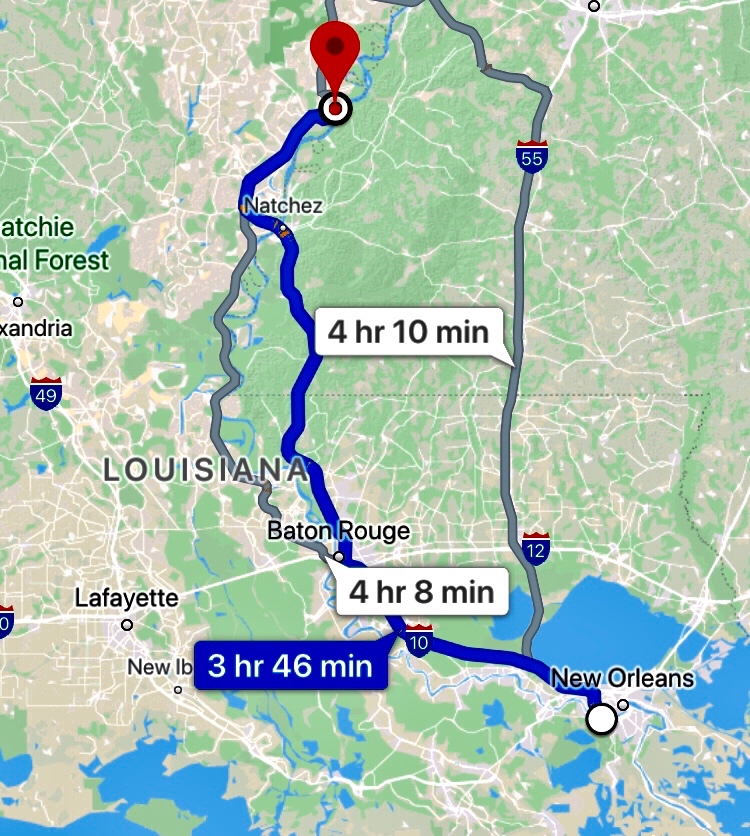
In my last post, I shared that my route to my next campground lead through Baton Rouge, Louisiana’s state capital.
It was time for a little drive-by tourism!
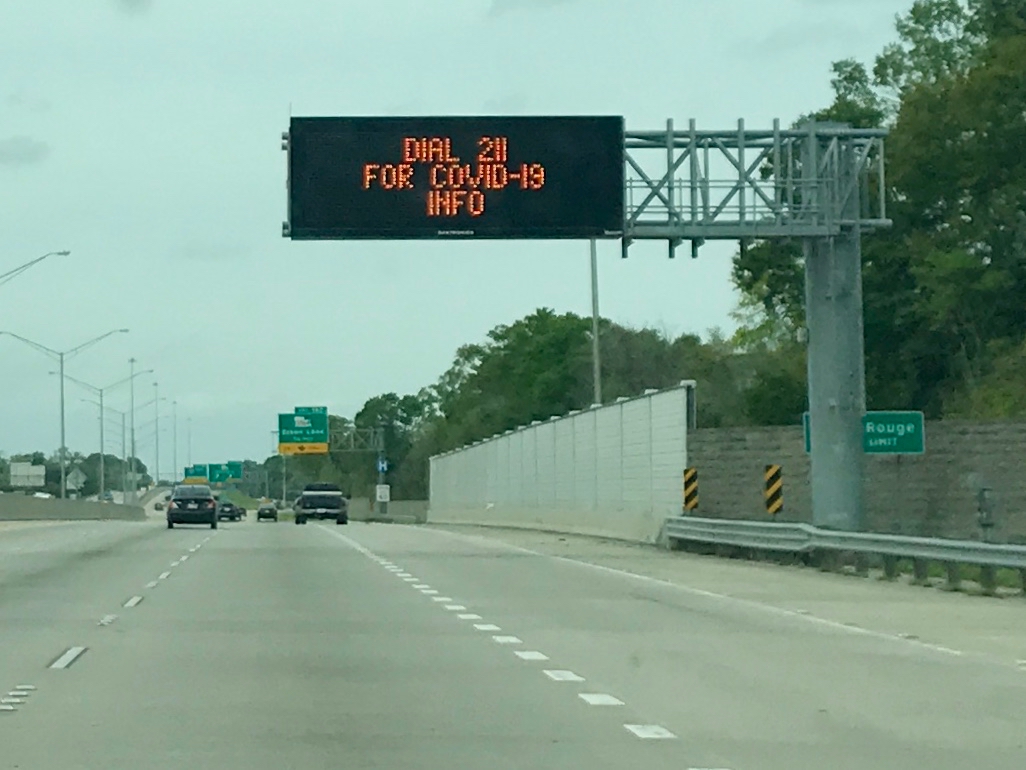
Along the way, I passed several of these signs, directing people where to access CoViD-19 information. As if my level of concern hadn’t been raised enough by the knock on my door that morning…
The streets were very empty, so it wasn’t too hard to make my way to the capitol. Of course it was Saturday, so maybe this is normal. Or, maybe, it’s the “new normal”.
(Note to self: make a list of the “New clichés” that are starting to get old.)
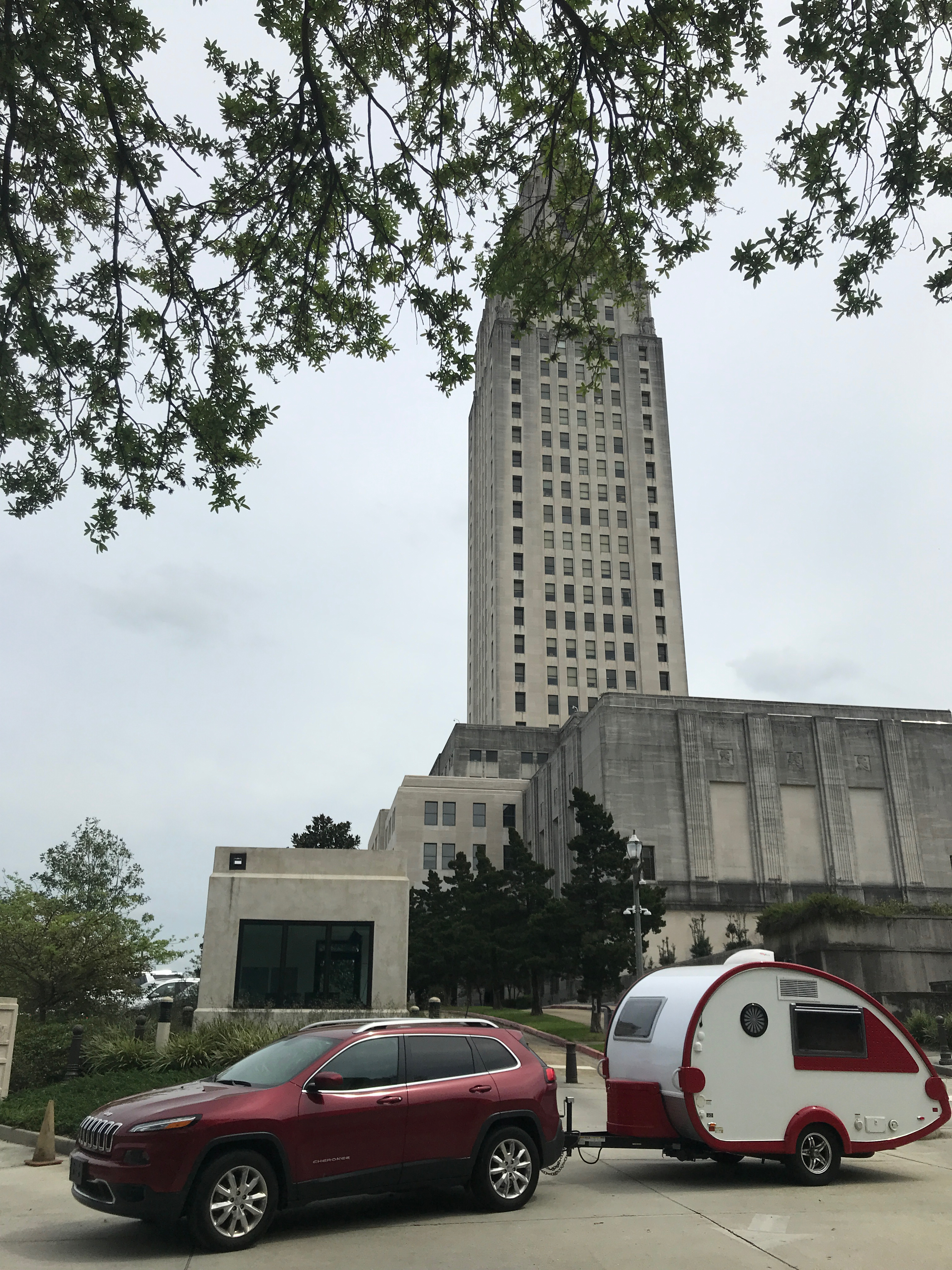
I snapped a few photos before I drew the attention of an official-looking vehicle with lights on the the roof. I waved and trotted back over to my Jeep. I wanted to be sure that I displayed an earnest amount of hustle to moving along.
I drove up a bit and looked for a place to turn around – or at least a safe place to assess my route out of town. Glory be, I found…
parking!
Loads of parking! I guess people were taking the warnings to maintain social distance seriously. Or, maybe it was just Saturday.
I decided to take a few minutes and walk around the outside of the capitol, which, I assumed, was closed.
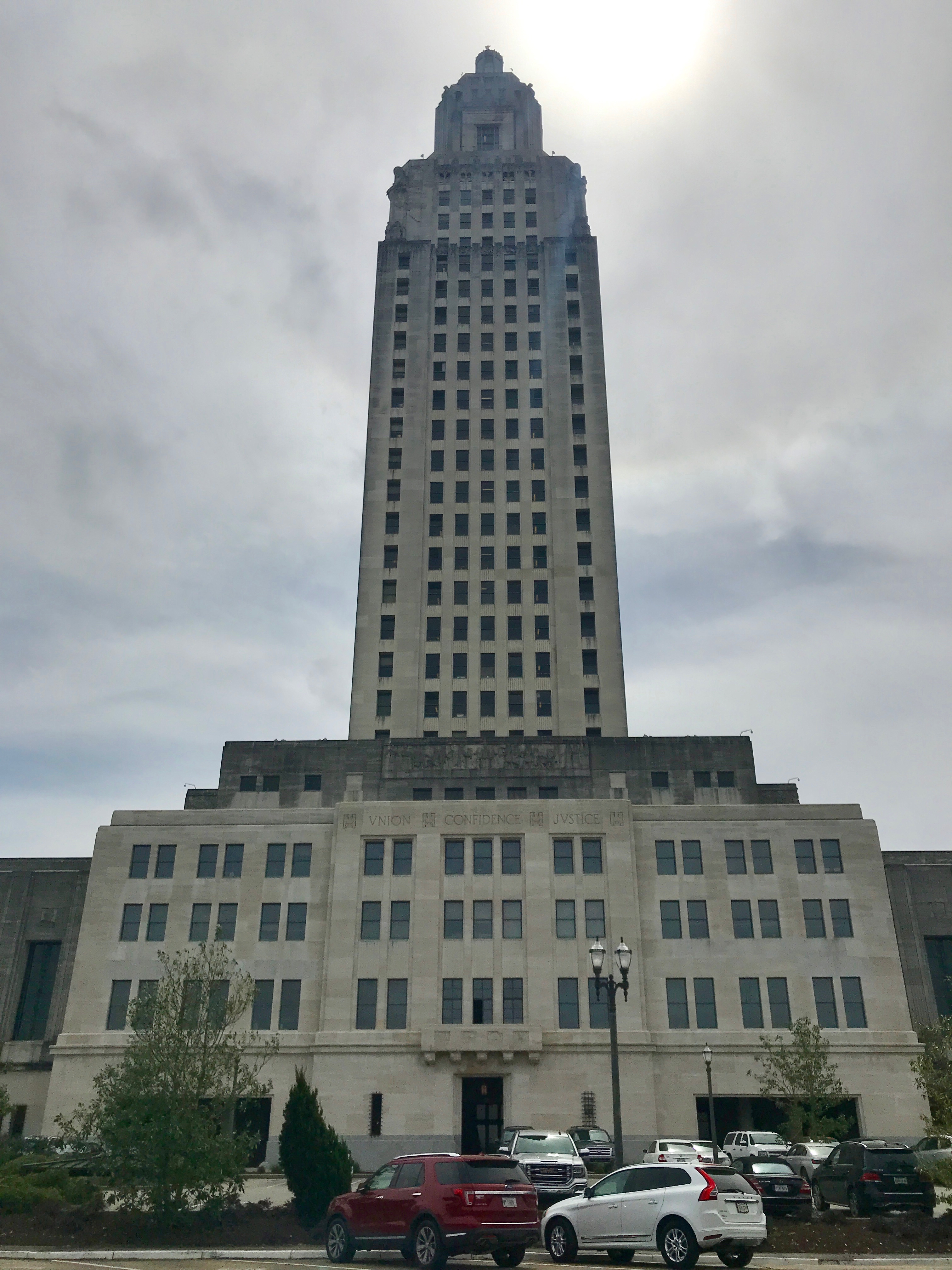
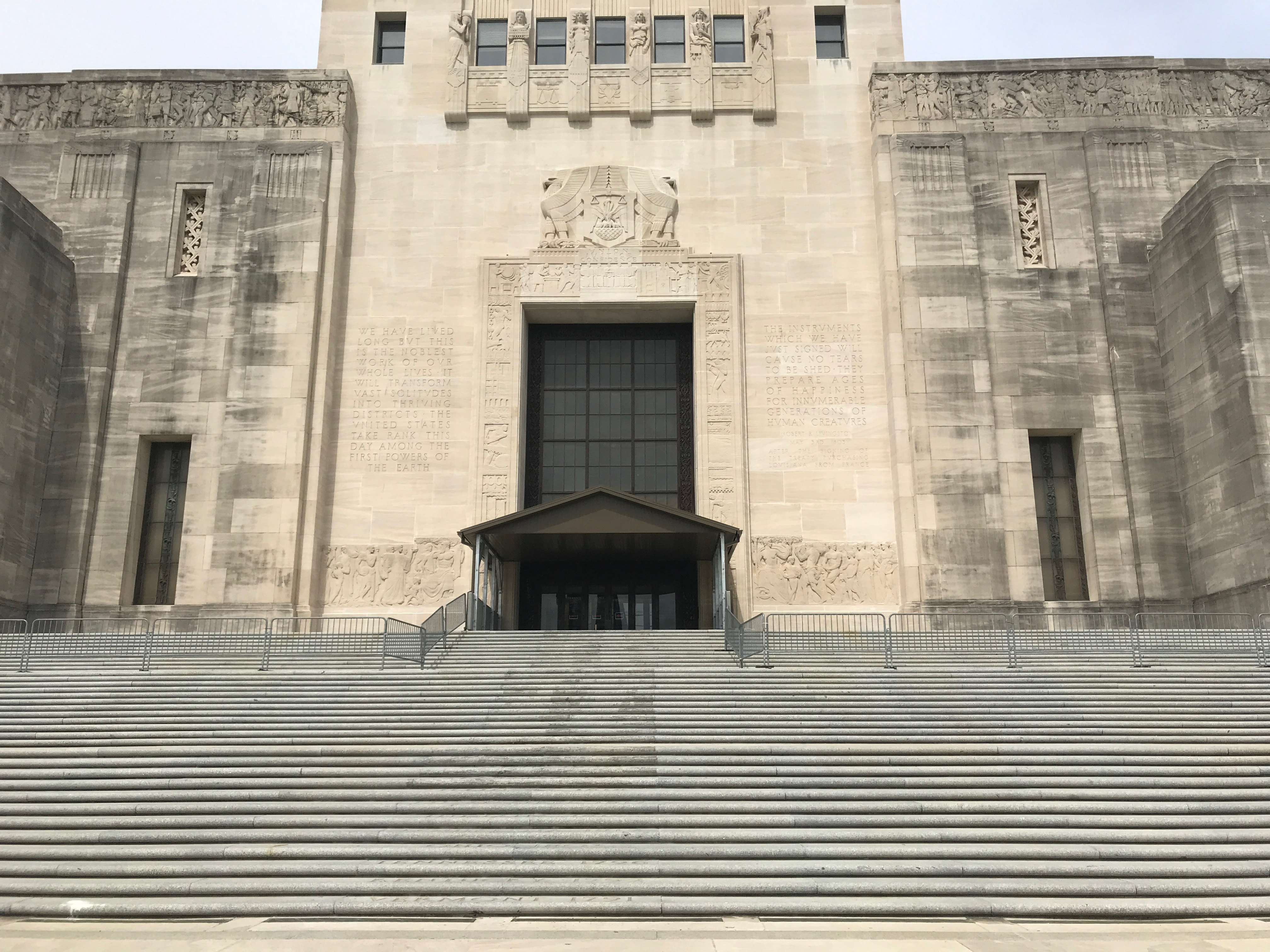
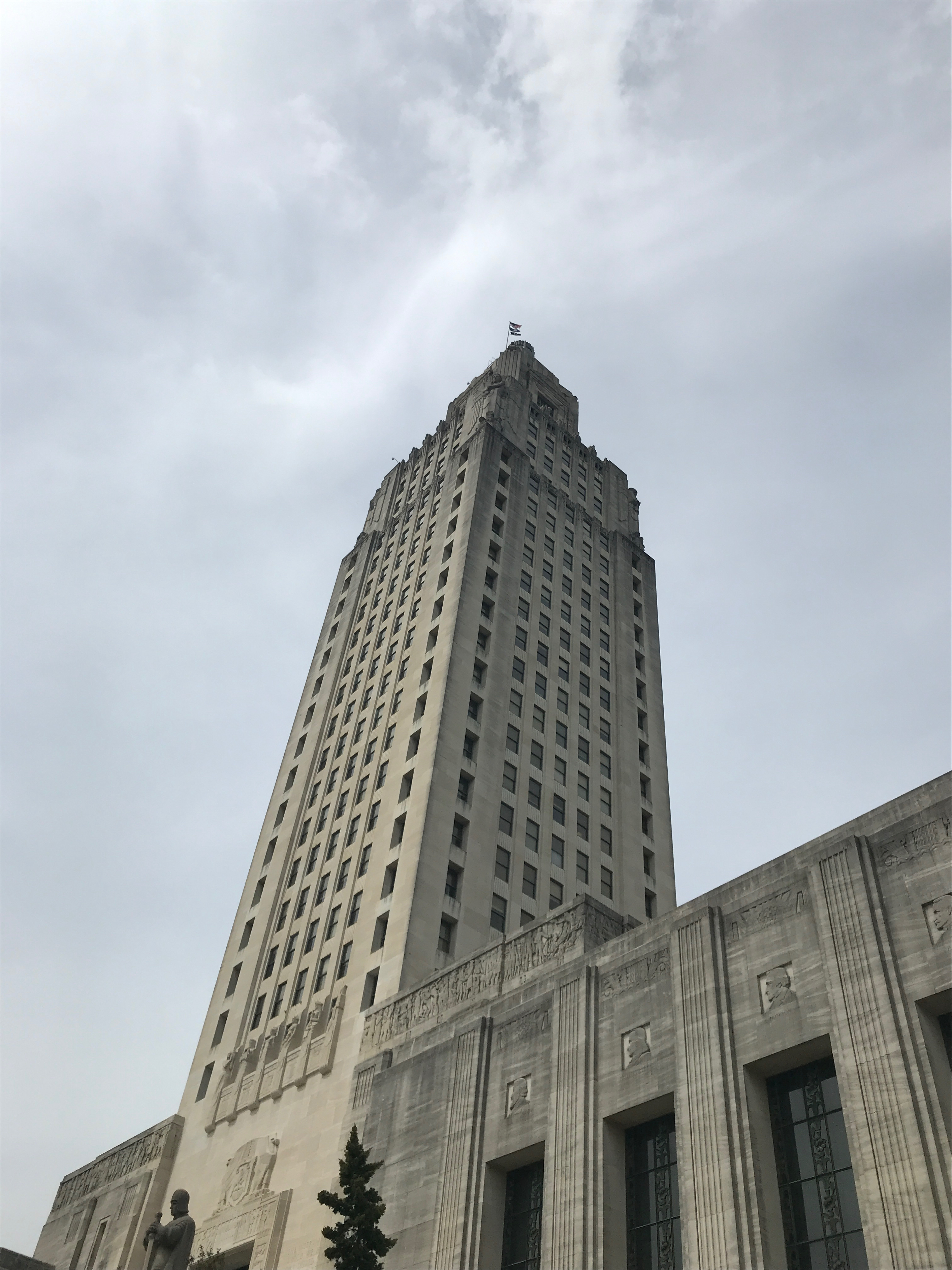
I finished mounting the stairs and got this good view of this Art Deco building.
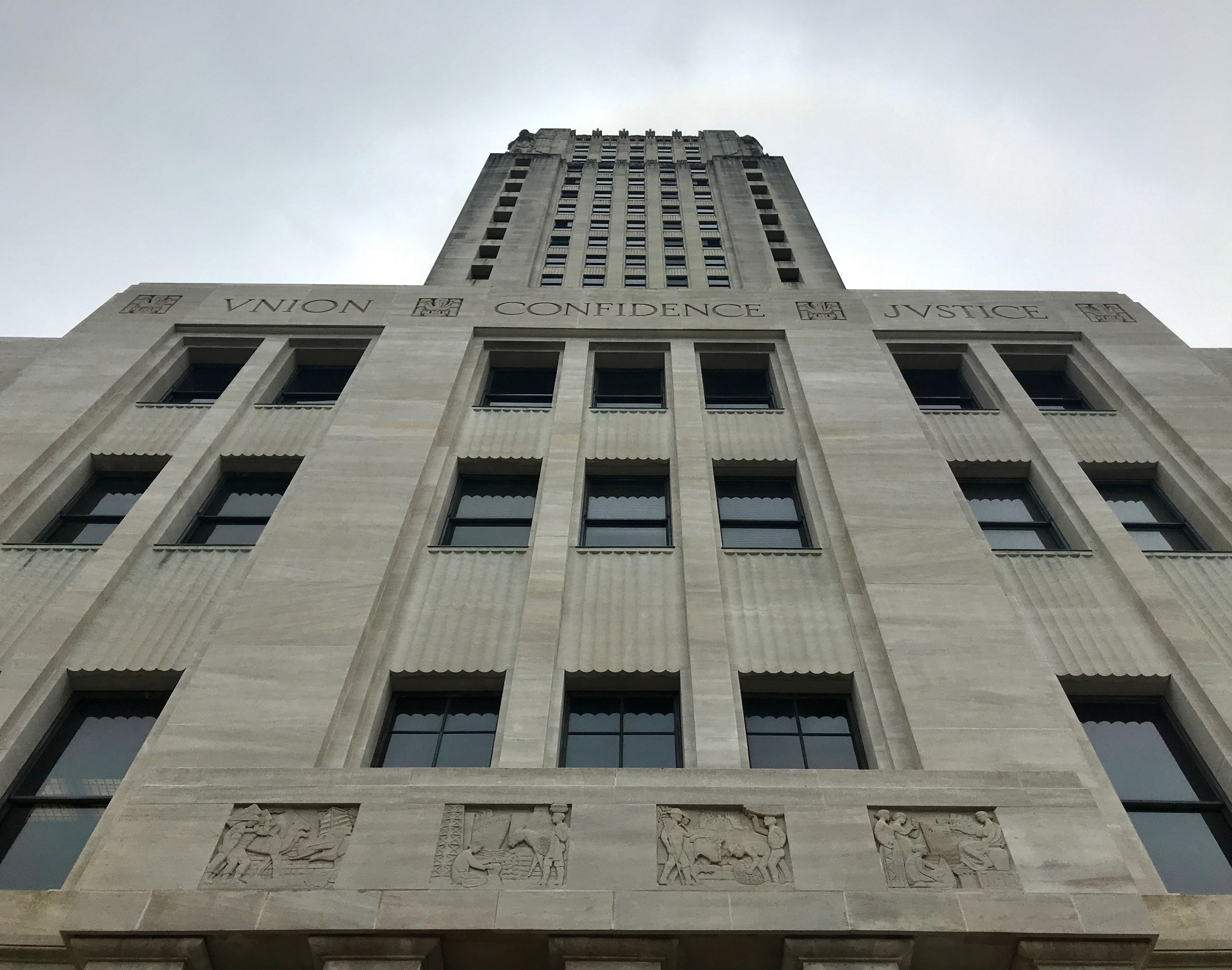
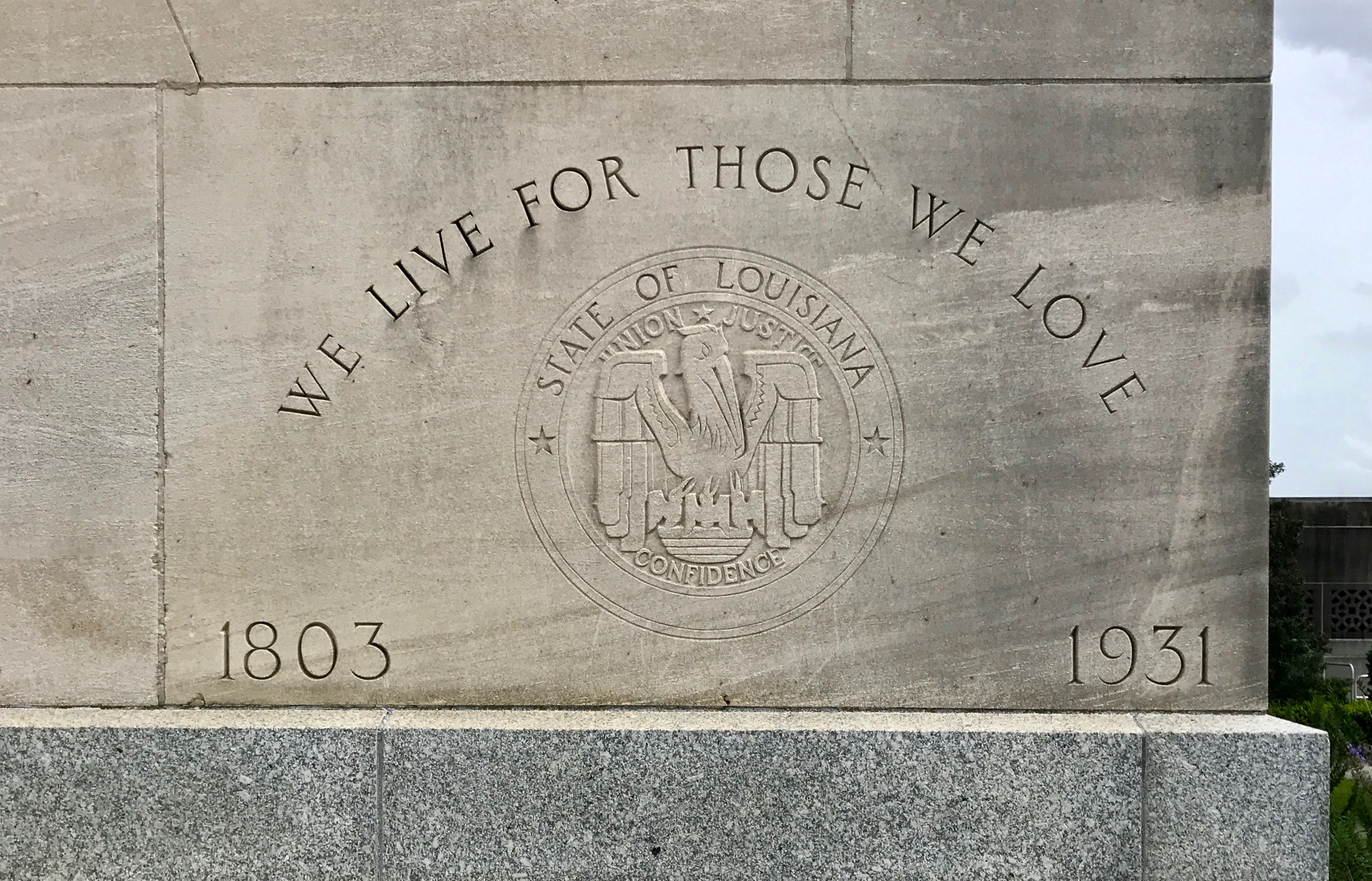
Union…Confidence…Justice.
Good motto.
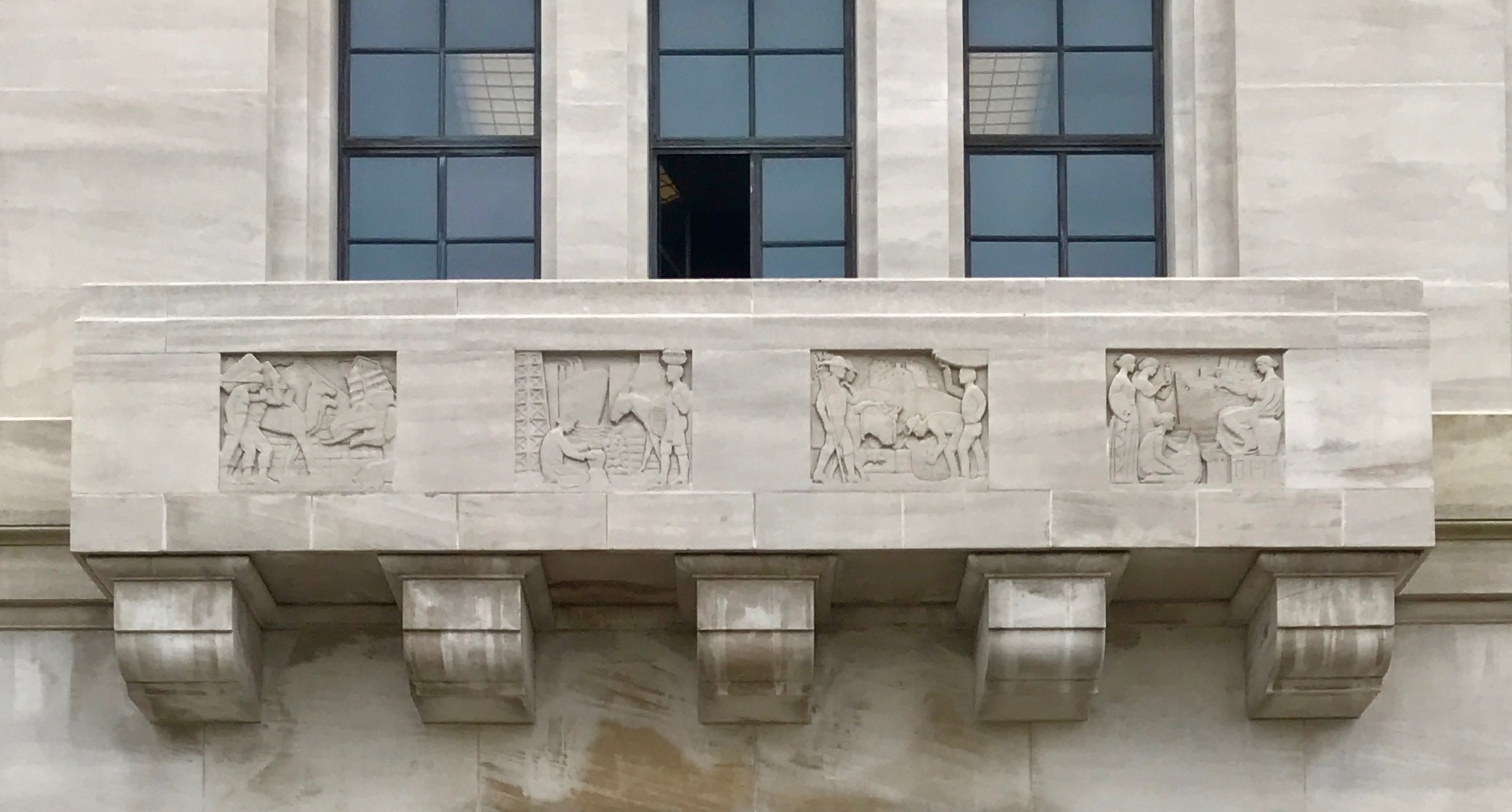
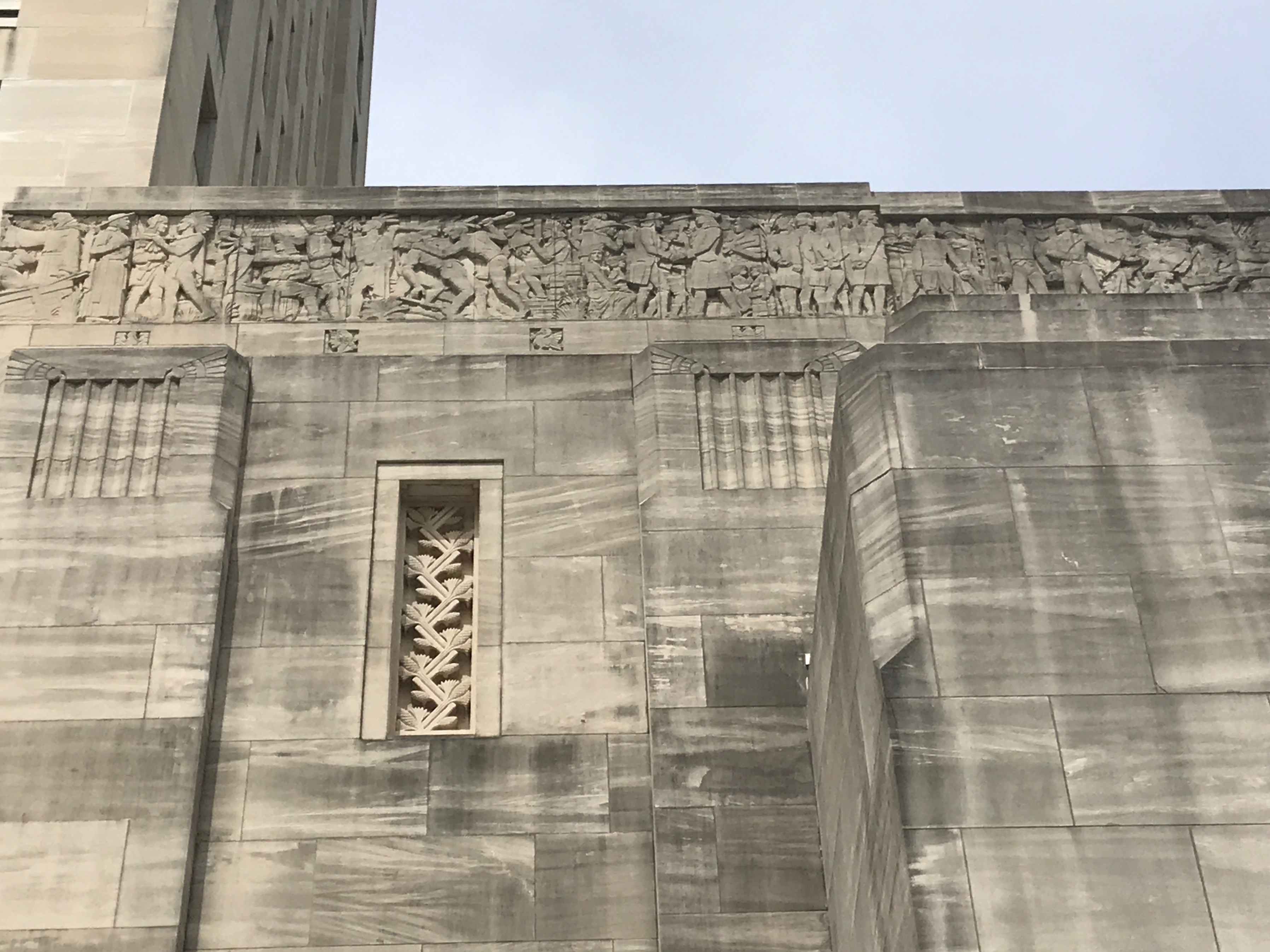
Although the building looks fairly unadorned from a distance, when you get up close, you can see all sorts of interesting details. I imagine that these all highlight scenes from Louisiana’s history, but I don’t know enough about this state’s history to know for sure.
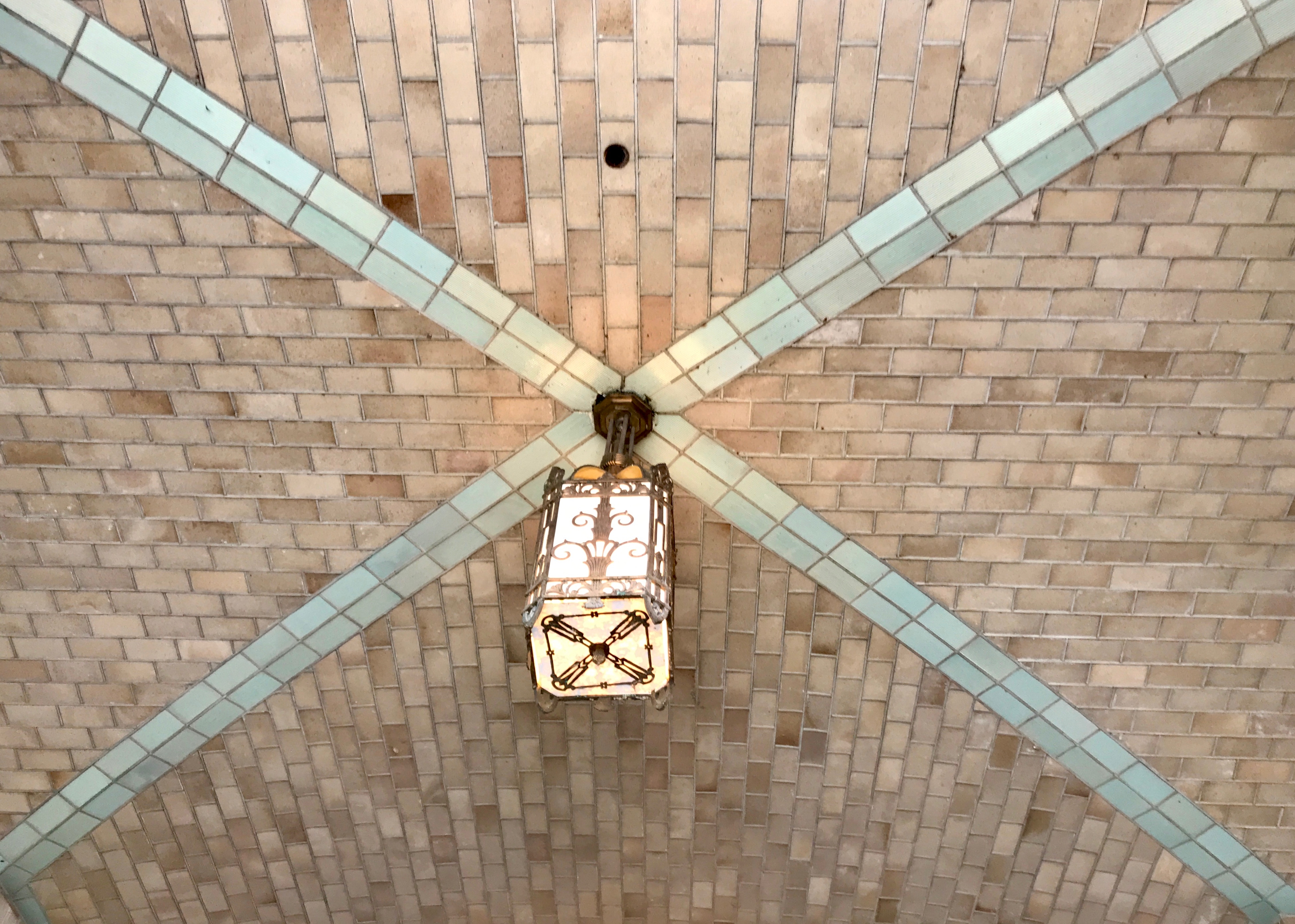
I continued to the porte cochere and looked up. The brick on the vault took me back to the first time I saw bricks used like that. It was 1976 and I was doing my study abroad program in Spain. Sister Jean had instilled in a passion for historically and artistically significant churches, so I never passed up an opportunity to visit them. I couldn’t believe that there were bricks and stones on the ceilings! (Okay, so they are really vaults, but I still thought of things over my head as ceilings. Isn’t education grand?)
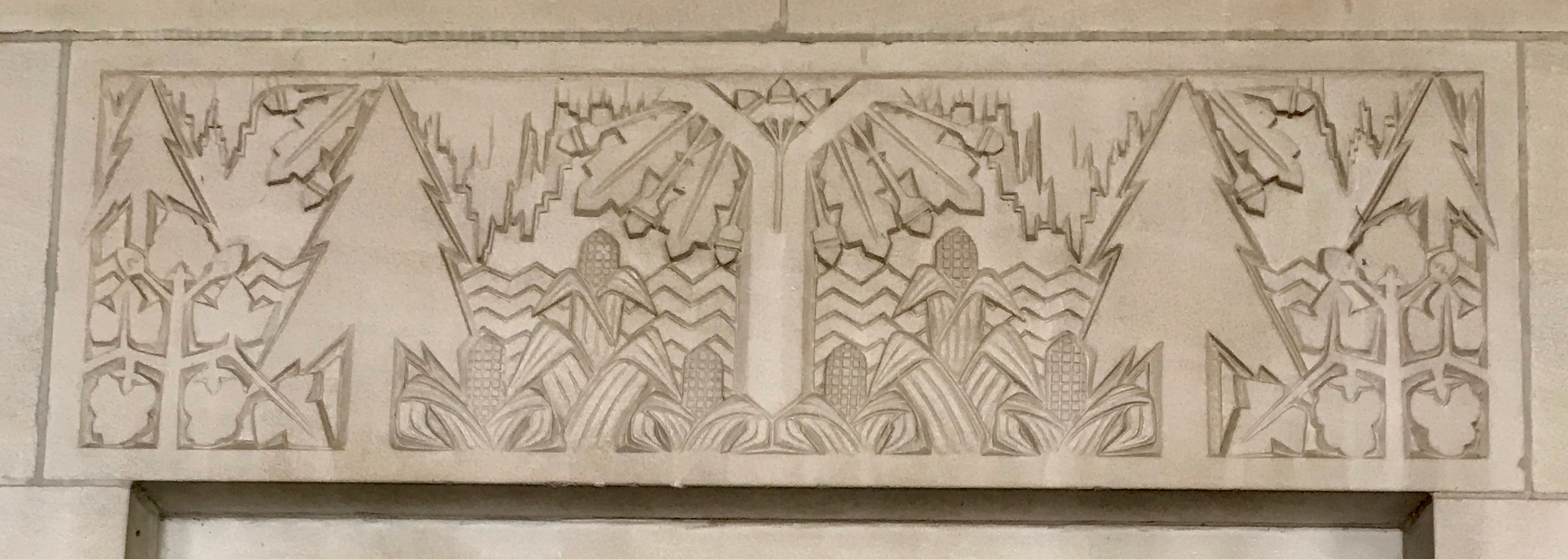
I continued around and encountered all these interesting design details. It looks like they are celebrating Louisiana’s agriculture and forestry.
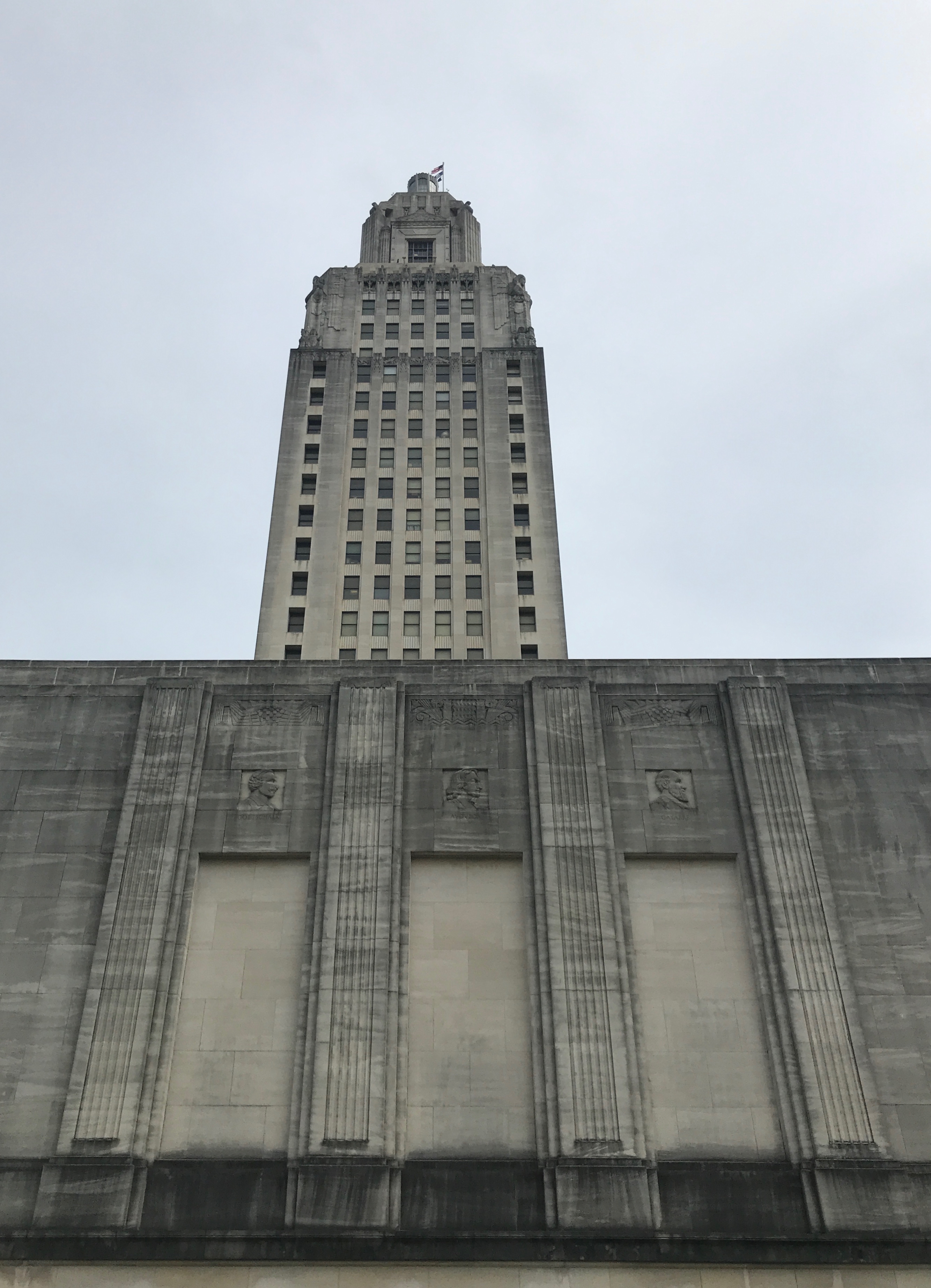
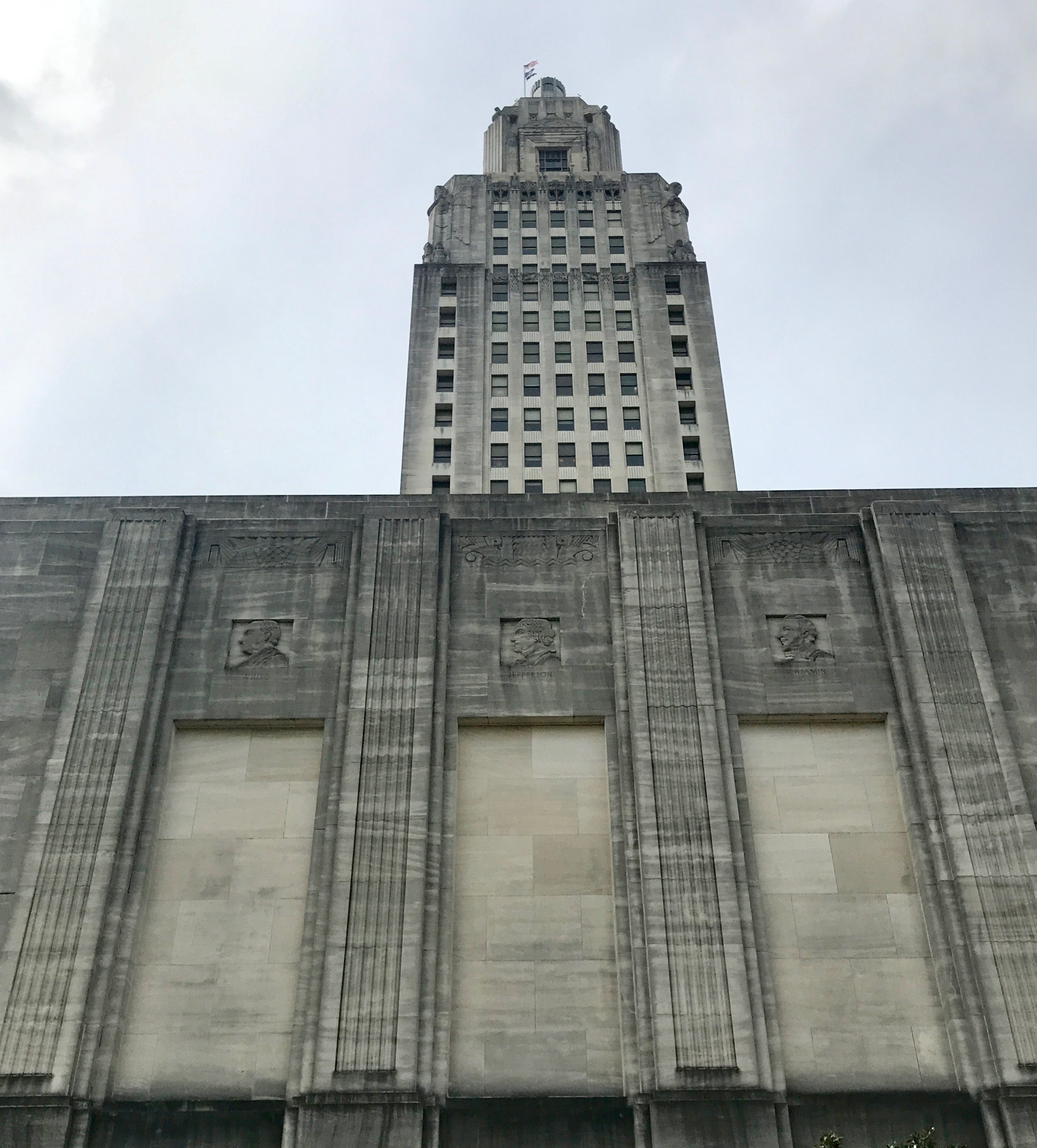
I rounded the building and walked along the side. The bas relief portraits honor Gottschalk, Audubon and Garrye. I assume that they are important to Louisiana.
Apparently, Gottschalk is Louis Moreau Gottschalk, a composer and pianist who was born in New Orleans in 1829.
Audubon, as in John James Audubon, has an interesting connection to Louisiana. While he didn’t spend much time here, he painted 32 of his famous bird paintings at Oakely Plantation House.
I am not sure who the third person is. I might not have been able to make out the name correctly.
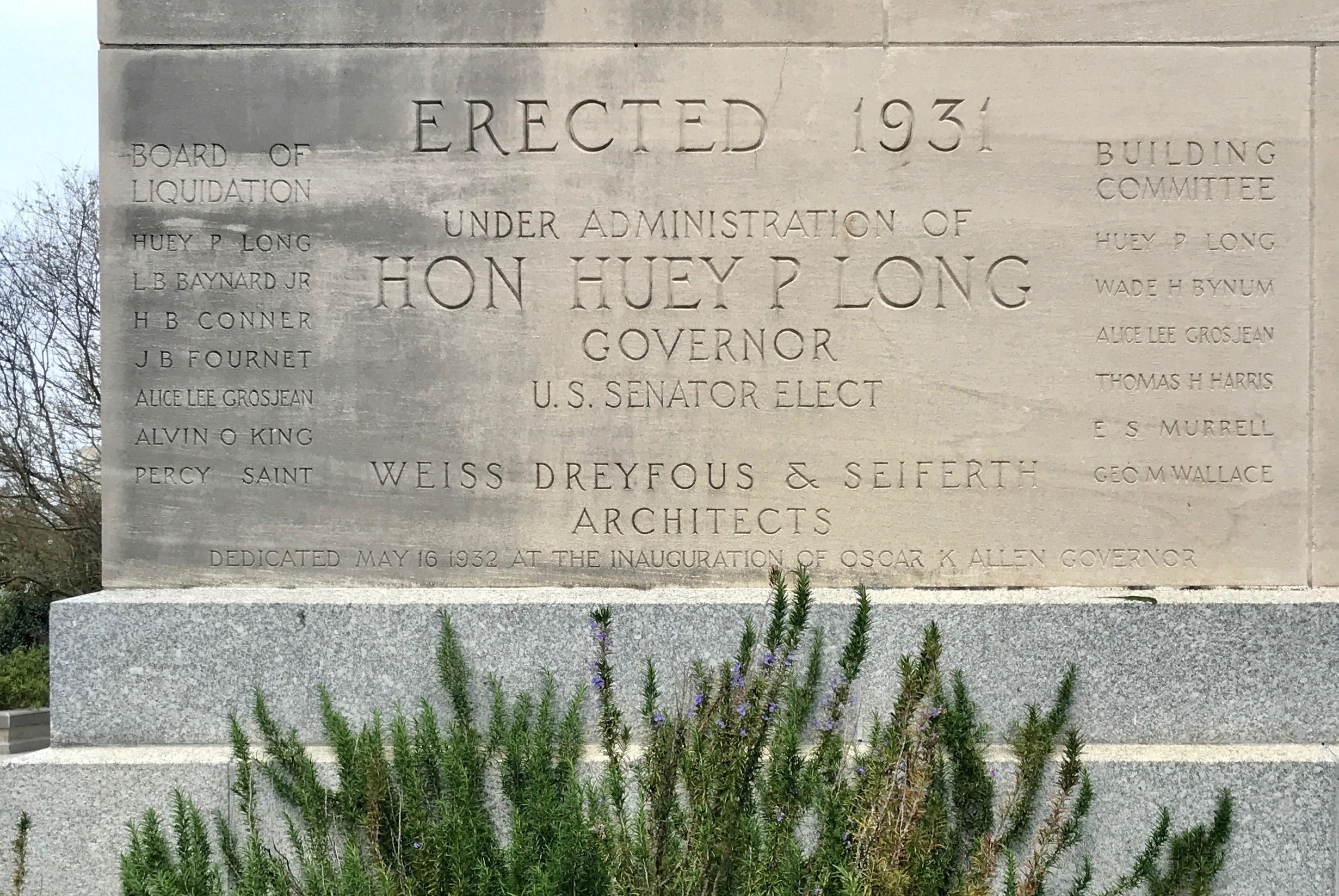
I got up to the corner, and what should I find? The cornerstone!
Huey P. Long – that is a person I need to read up on! If you spend a moment looking at that rather mundane cornerstone, you will notice that Huey P. Long’s name is on it three times. You can’t miss the “John Hancock” sort of inscription in the middle, which identifies him a governor and U.S. Senator Elect. He is also the first person listed in the Board of Liquidation on the left side and the first person listed in the Building Committee on the right side. That’s some sort of chutzpah. But, if you kind of squint, you can almost make out the sentence at the bottom, “Dedicated May 16, 1932 at the inauguration of Oscar K. Allen, Governor.”
Chutzpah, indeed!
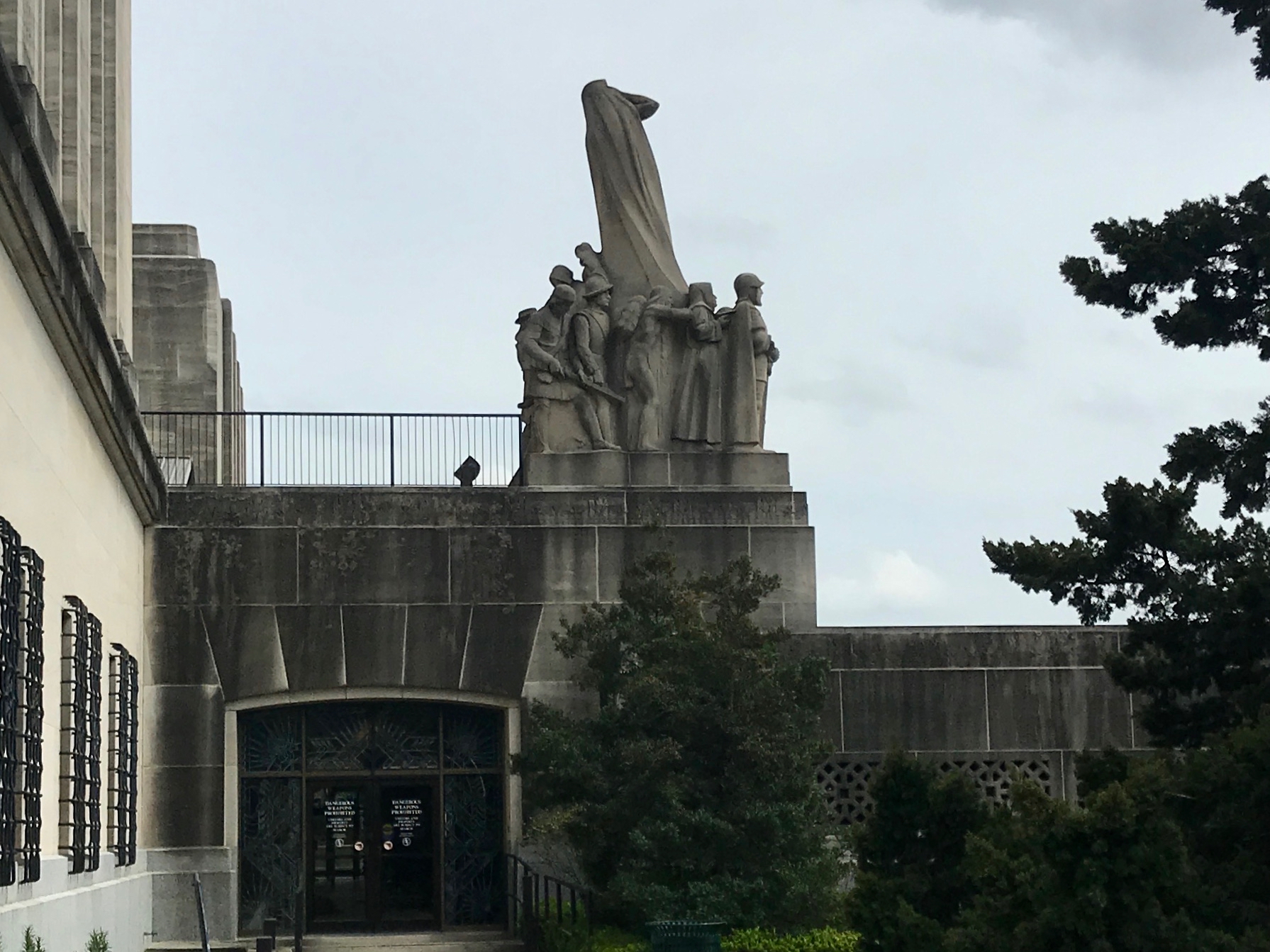
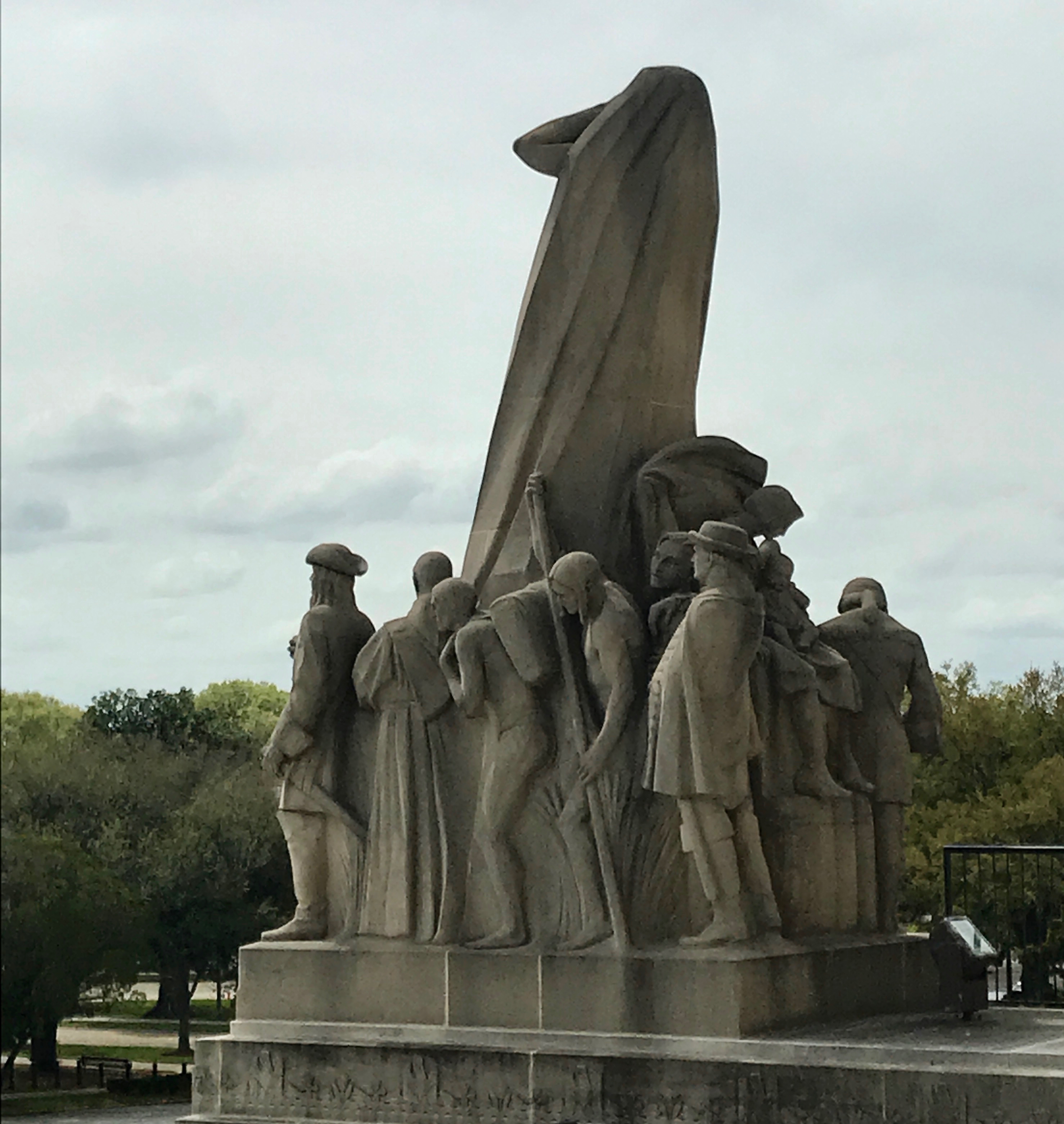
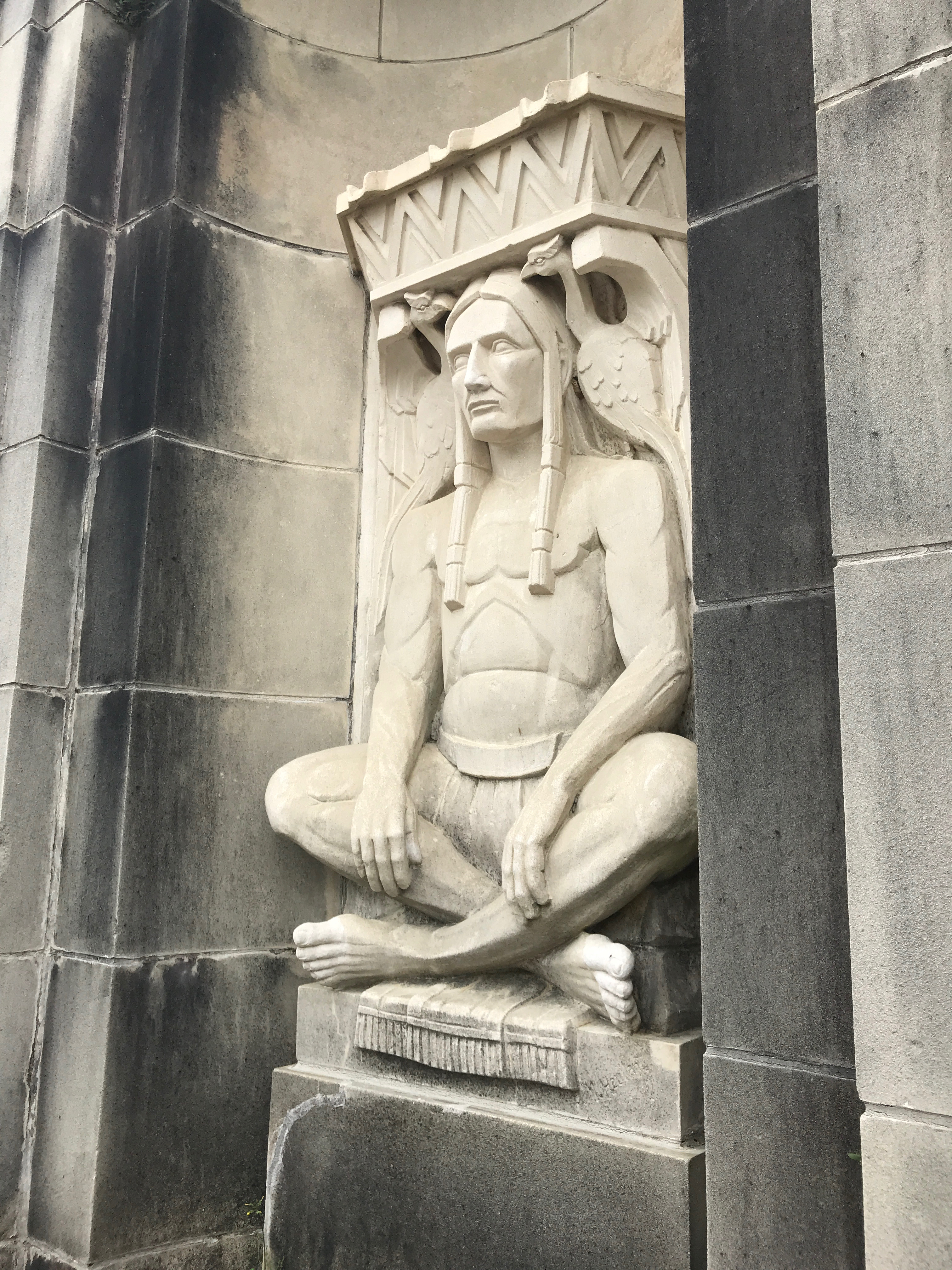
I started heading for the front and was a bit puzzled by this sculpture. It looked like they were trying to hold up something wrapped in a shroud.
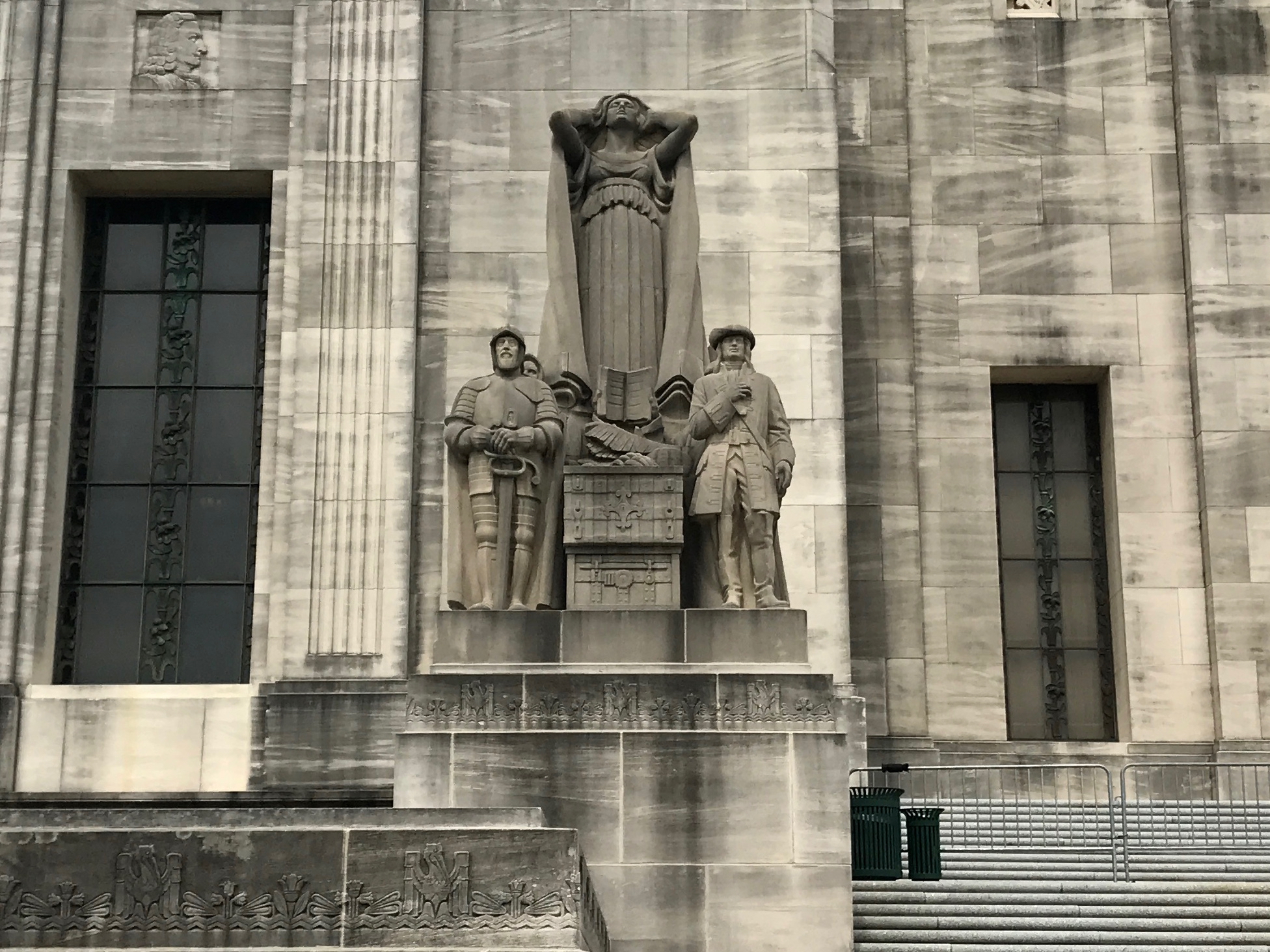
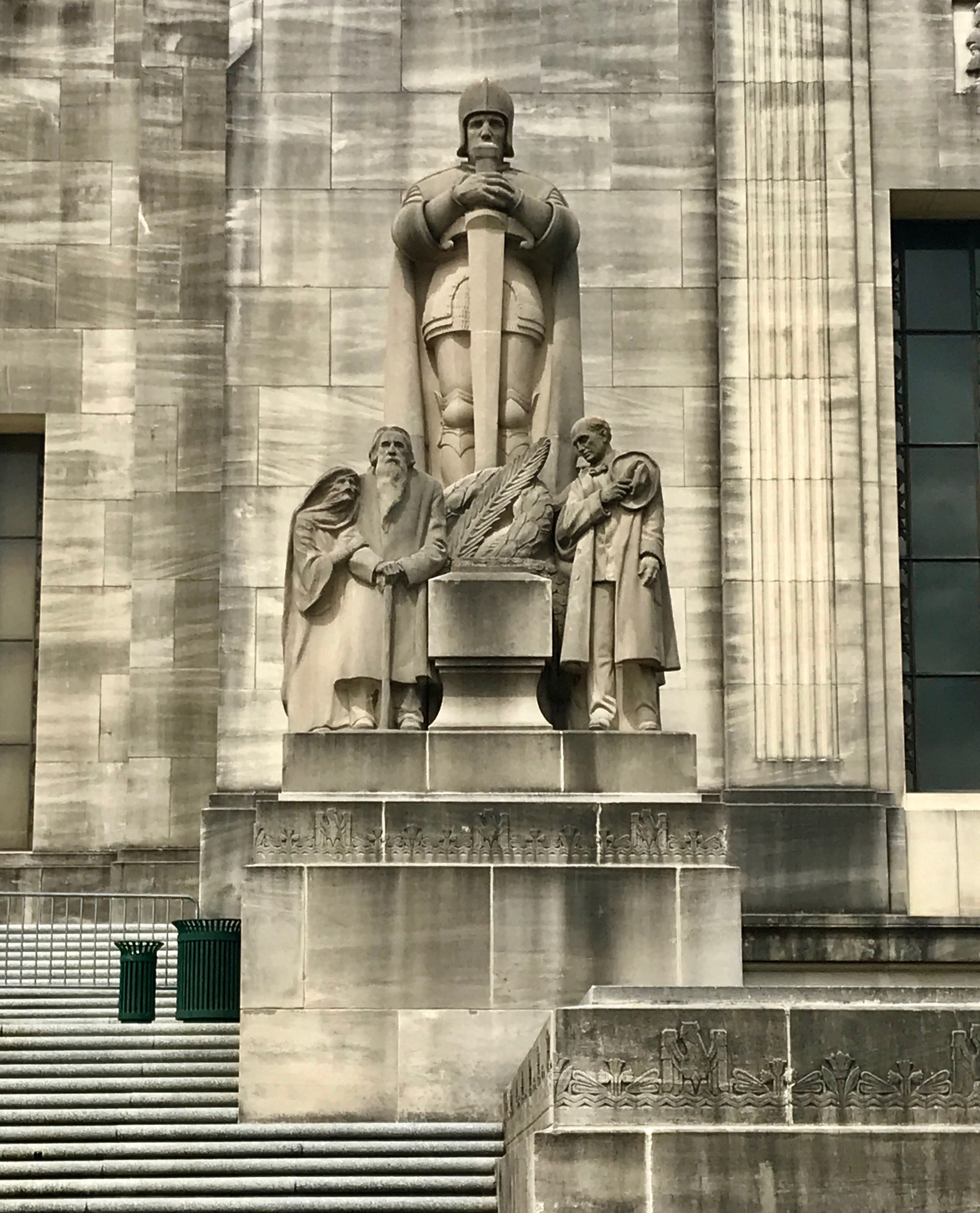
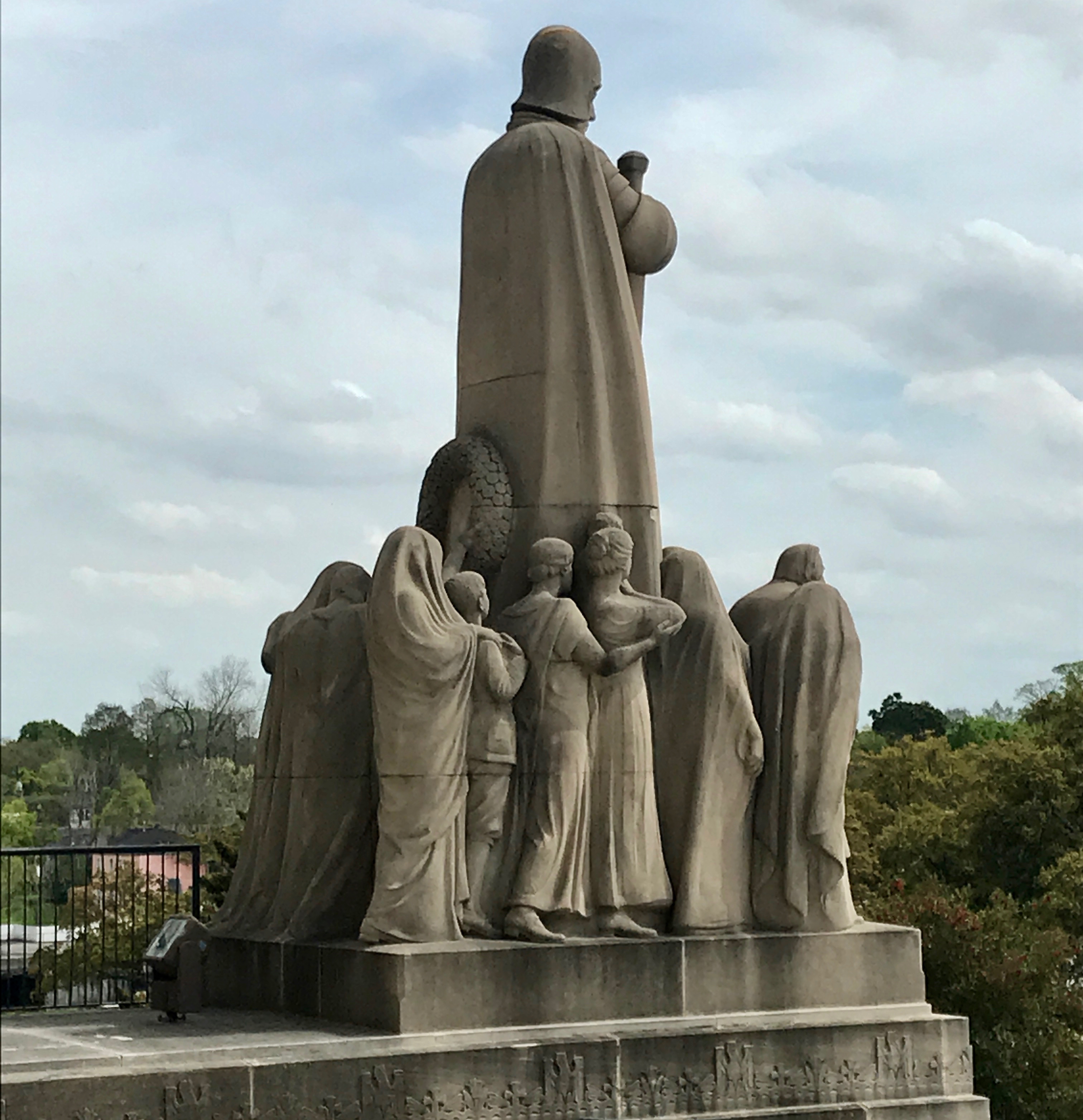
As I got to the front, I could see that it was one of a pair of statues flanking the entrance created by Lorado Taft. The statues are called Pioneers and Patriots.
They memorialize the early settlers and defenders of Louisiana.
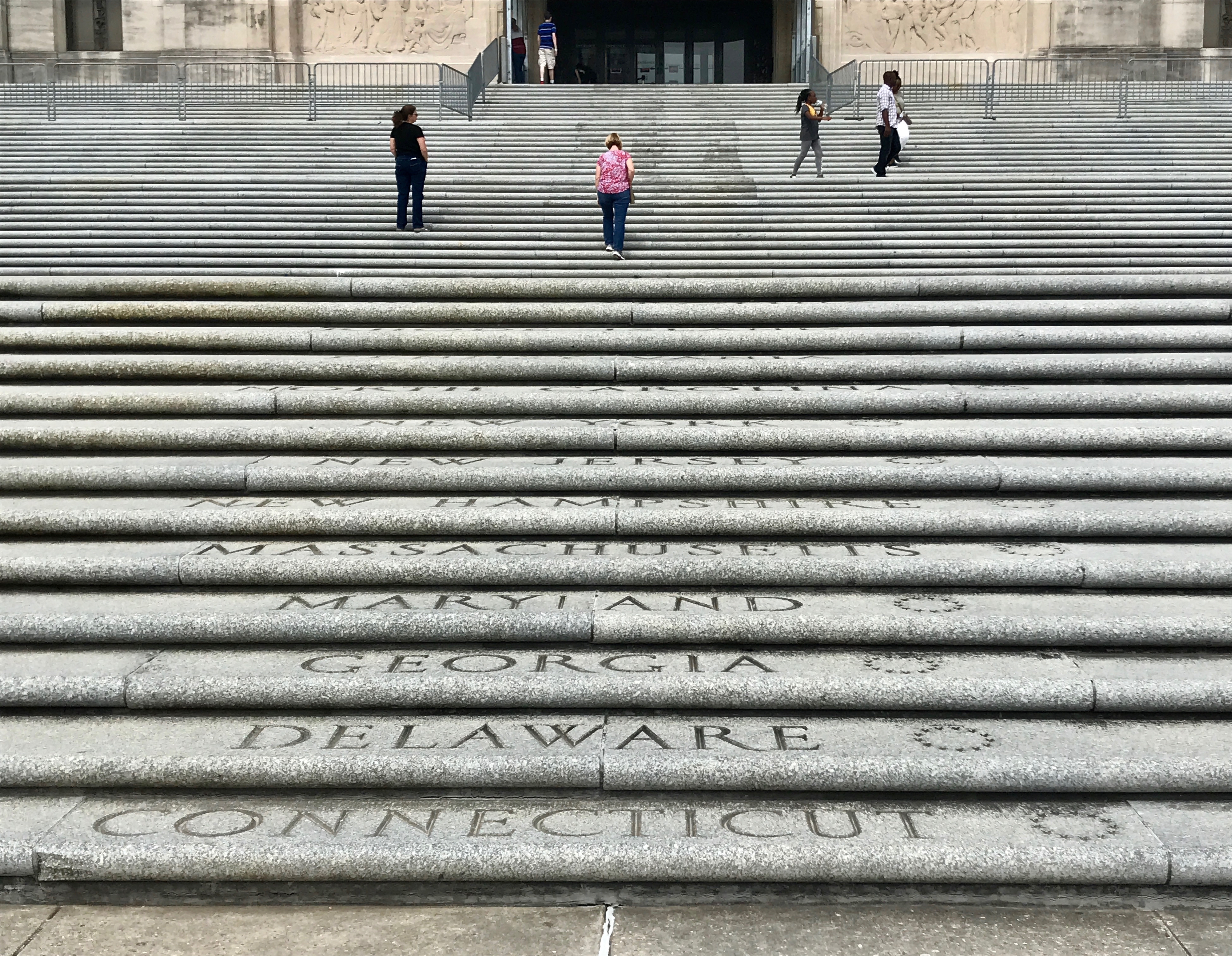
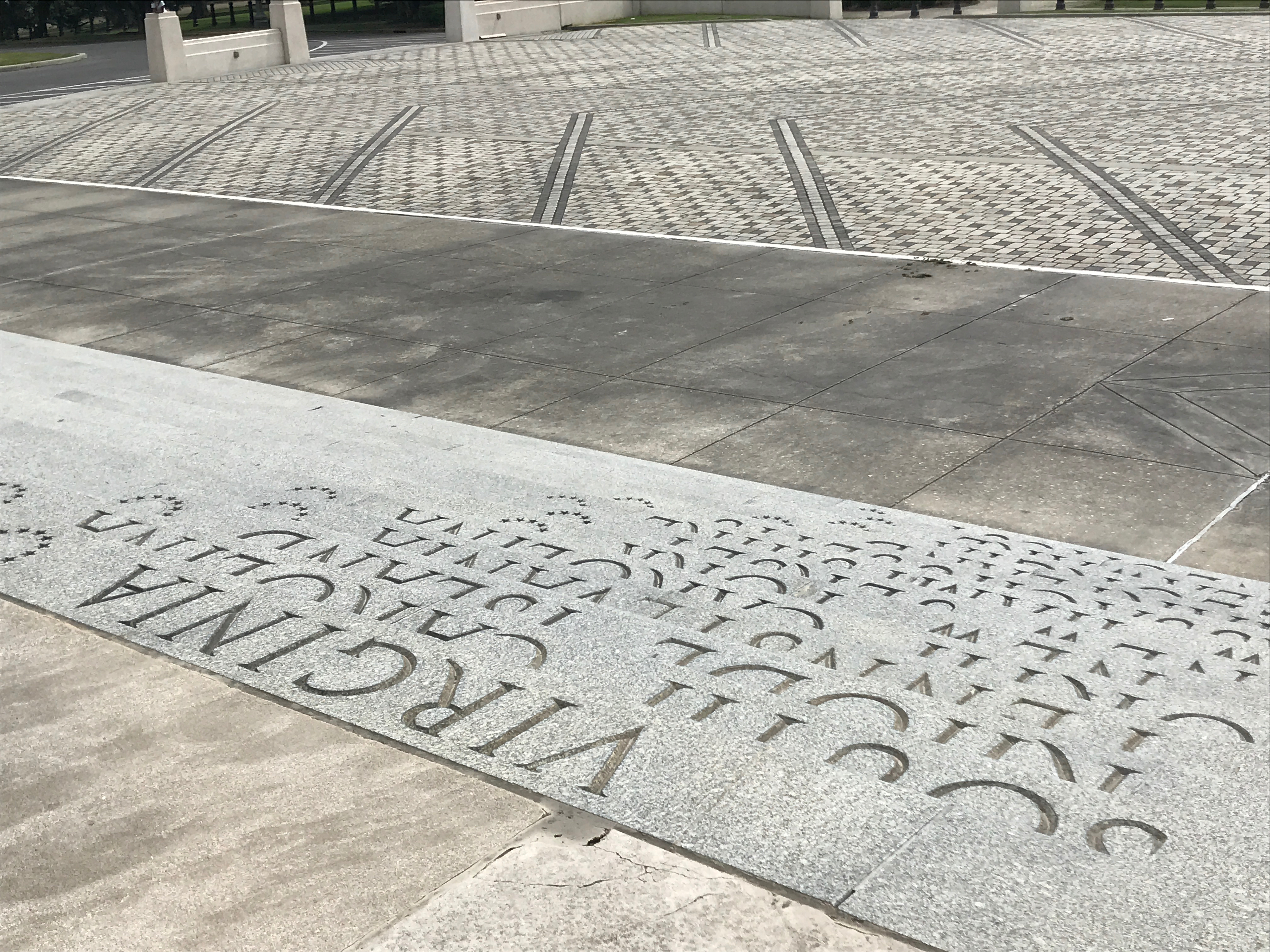
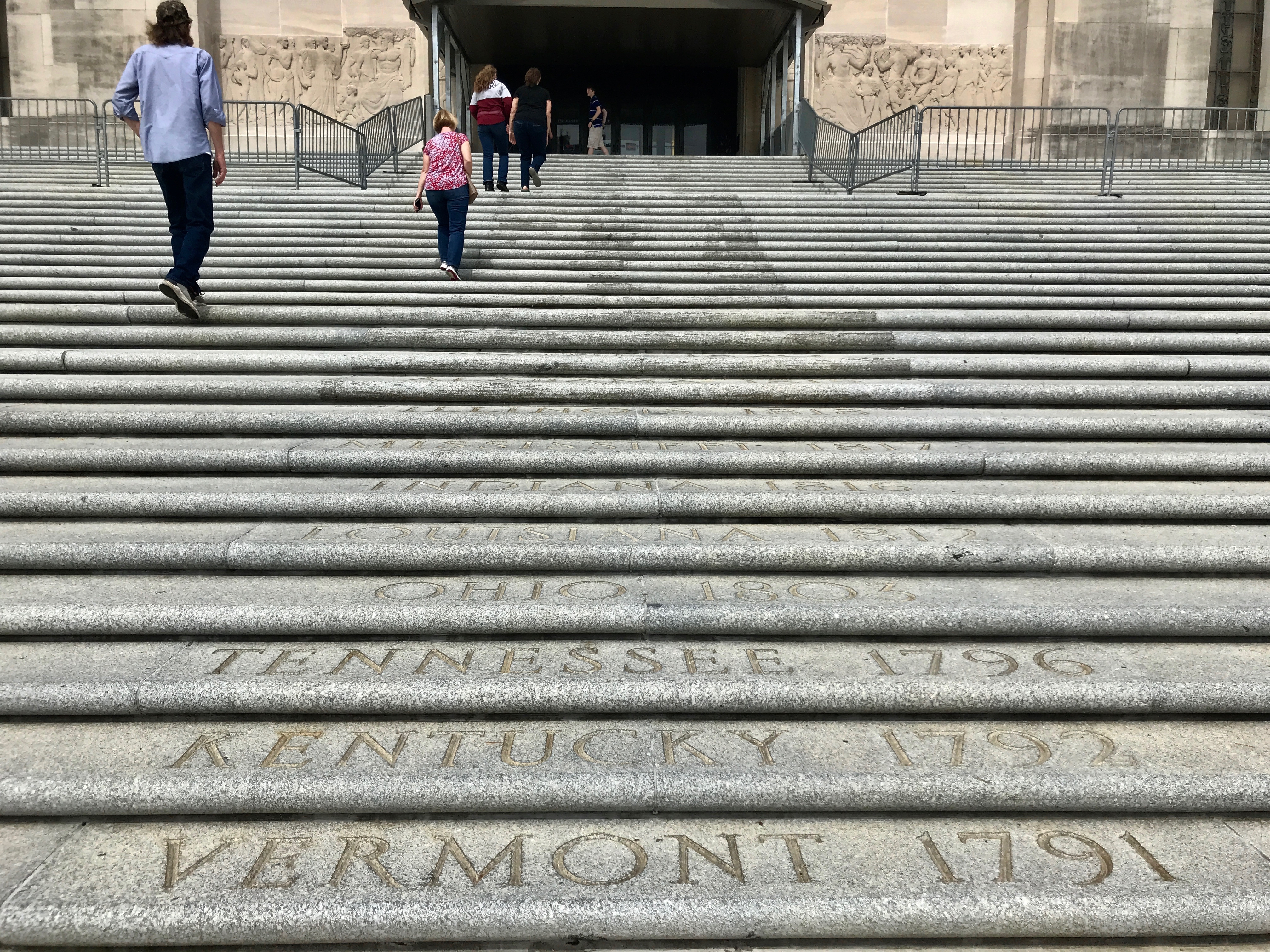
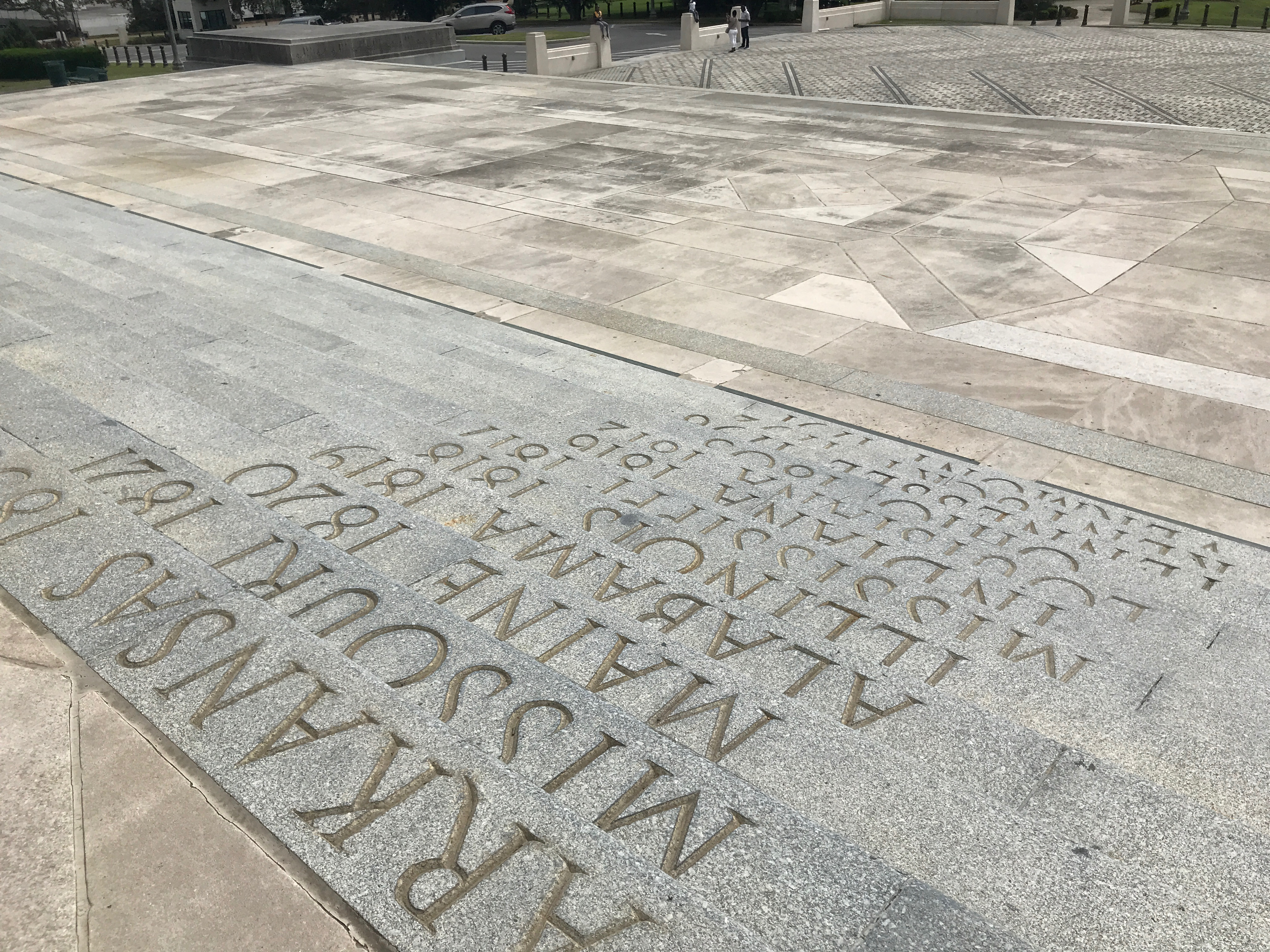
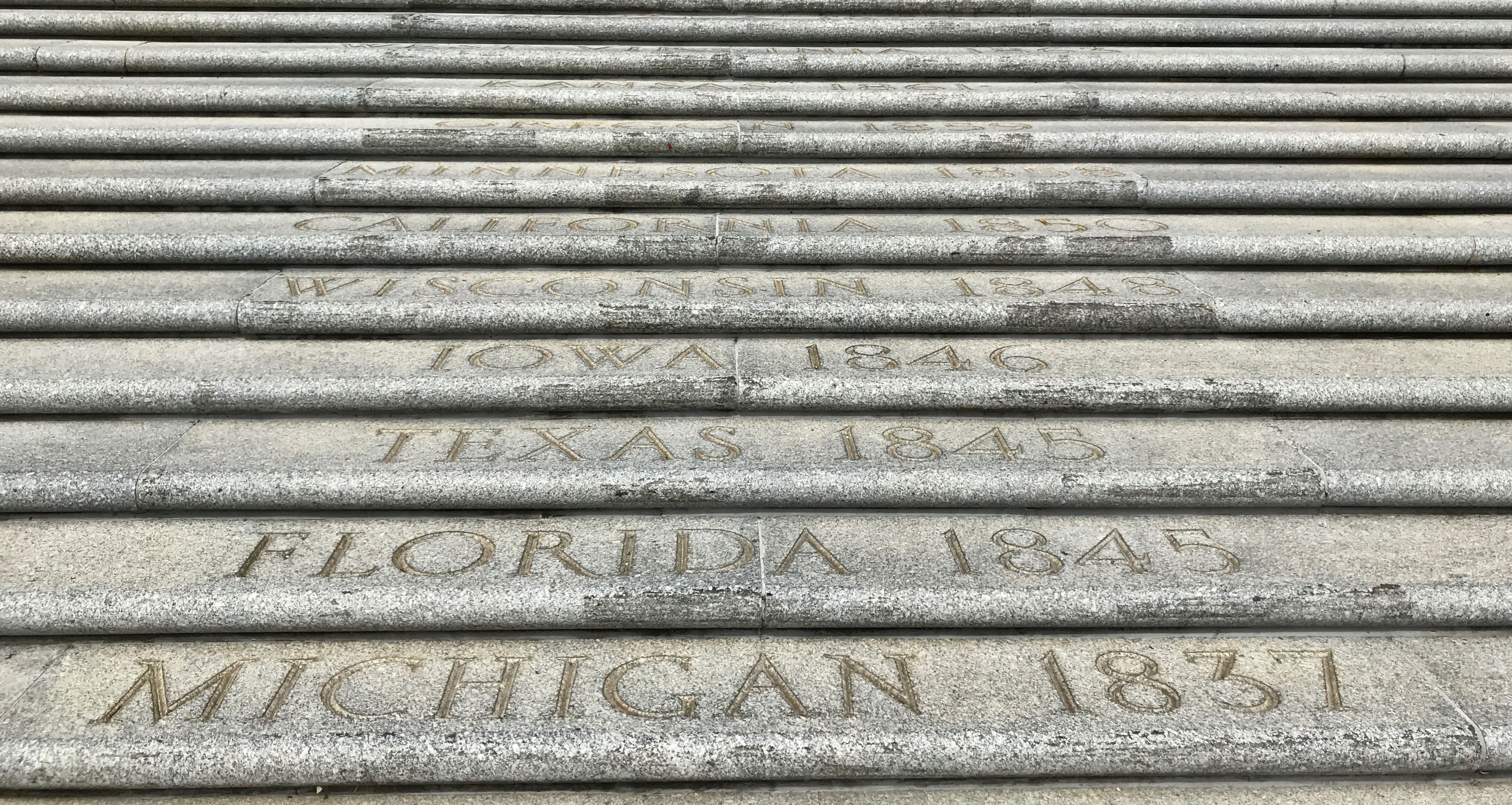
The front of the capitol has steps. Lots of steps. In fact, they call it the “Monumental Stairway.” They have 49 Minnesota granite steps, leading up to the entrance.
I do wonder why the chose to put Connecticut first. Delaware was the first state.
But, then, maybe they just decided to put the first thirteen states in alphabetical order.
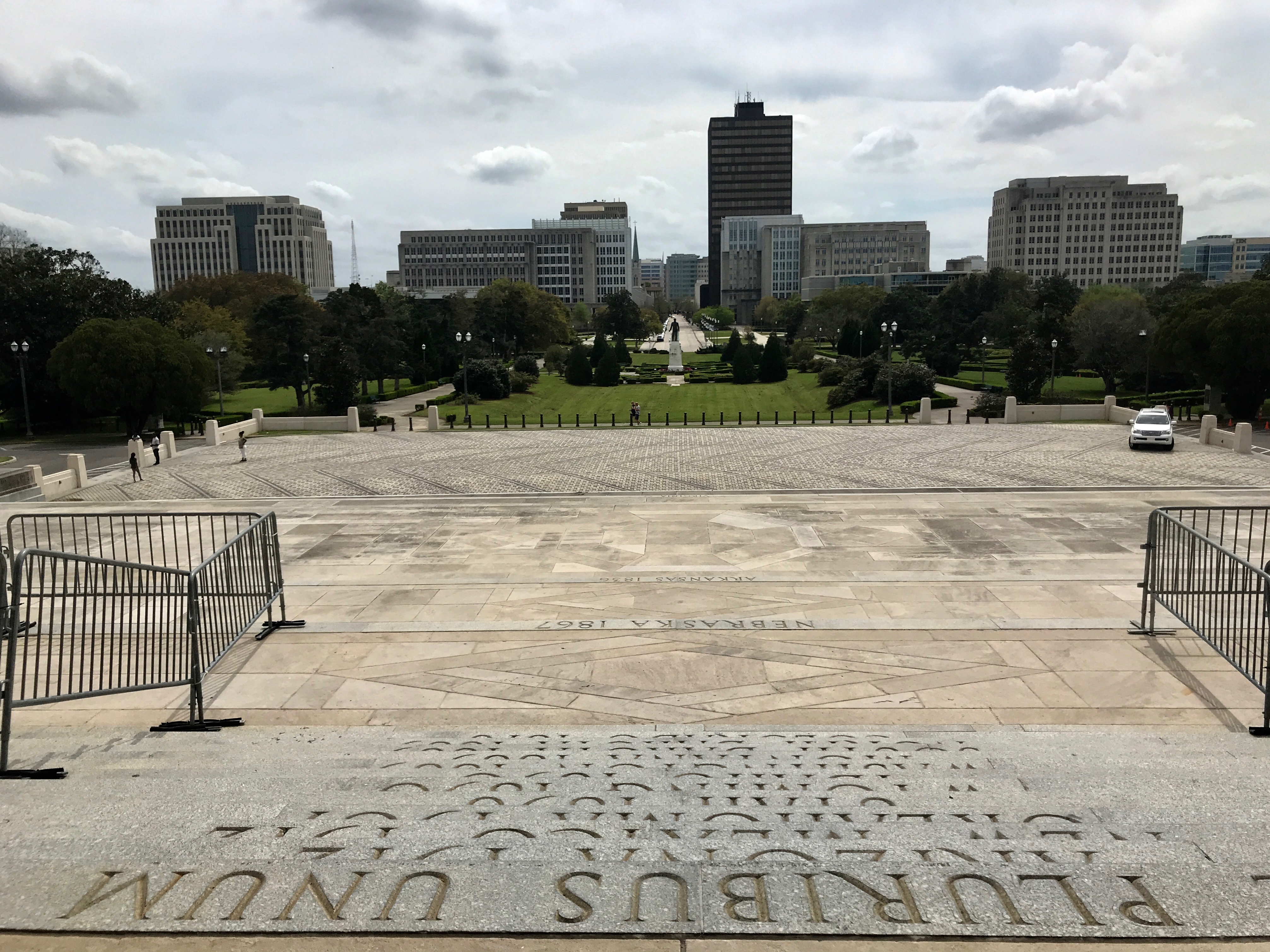
I scaled the first fight and looked back down.
Then, I looked up at the entrance. Hmm…people seemed to be entering. I might as well check it out.
And another view down.
Why look! There’s Michigan!
Why are there 49 steps in the “Monumental Stairway?”
When the building was built in 1931, there were 48 states. The last step before entering the building says, “E PLURIBUS UNUM.” This is the traditional motto of the U.S. of A. I’ll bet you knew that. I didn’t know that there is more than one way to translate it.
According to my Preferred Source, it can mean “Out of many, one.” It can also mean “One out of many”. I’m no Latin scholar, but those two translations seem to be contradictory.
The first one sounds like “We’re all in this together.” The second one sounds like “Me first!”
Anyway, back to the “Monumental Stairway.”
So, they included the 48 states in the Union in 1931, But what about Alaska and Hawaii?
They are written on the top step, on either side of the motto.
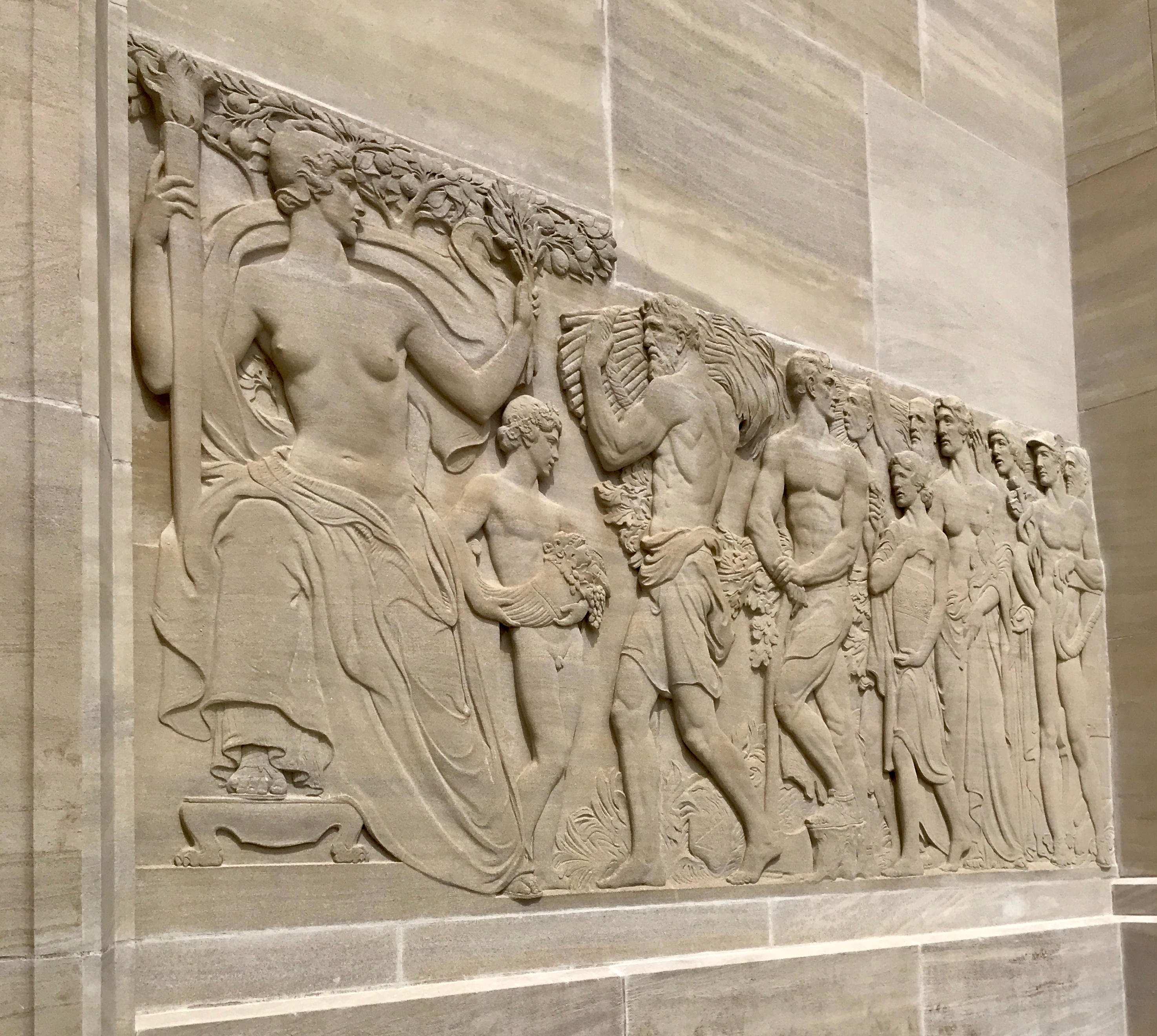
I proceeded to the door, This frieze was to the right side.
I entered and was greeted by a security guard.
Uh oh. I had my Airstream jackknife on my key chain. I asked him if they were able to hold it for me until I left. He told me that he’d take it and put it in a box where they dispose of contraband.
Hm. Well, that wouldn’t do. If I had thought I might have been able to enter, I would have left it in the Jeep. I asked him if he minded if I snapped a few pictures from my side of the barrier. He grudgingly gave me permission, but told me to stay out of the way.
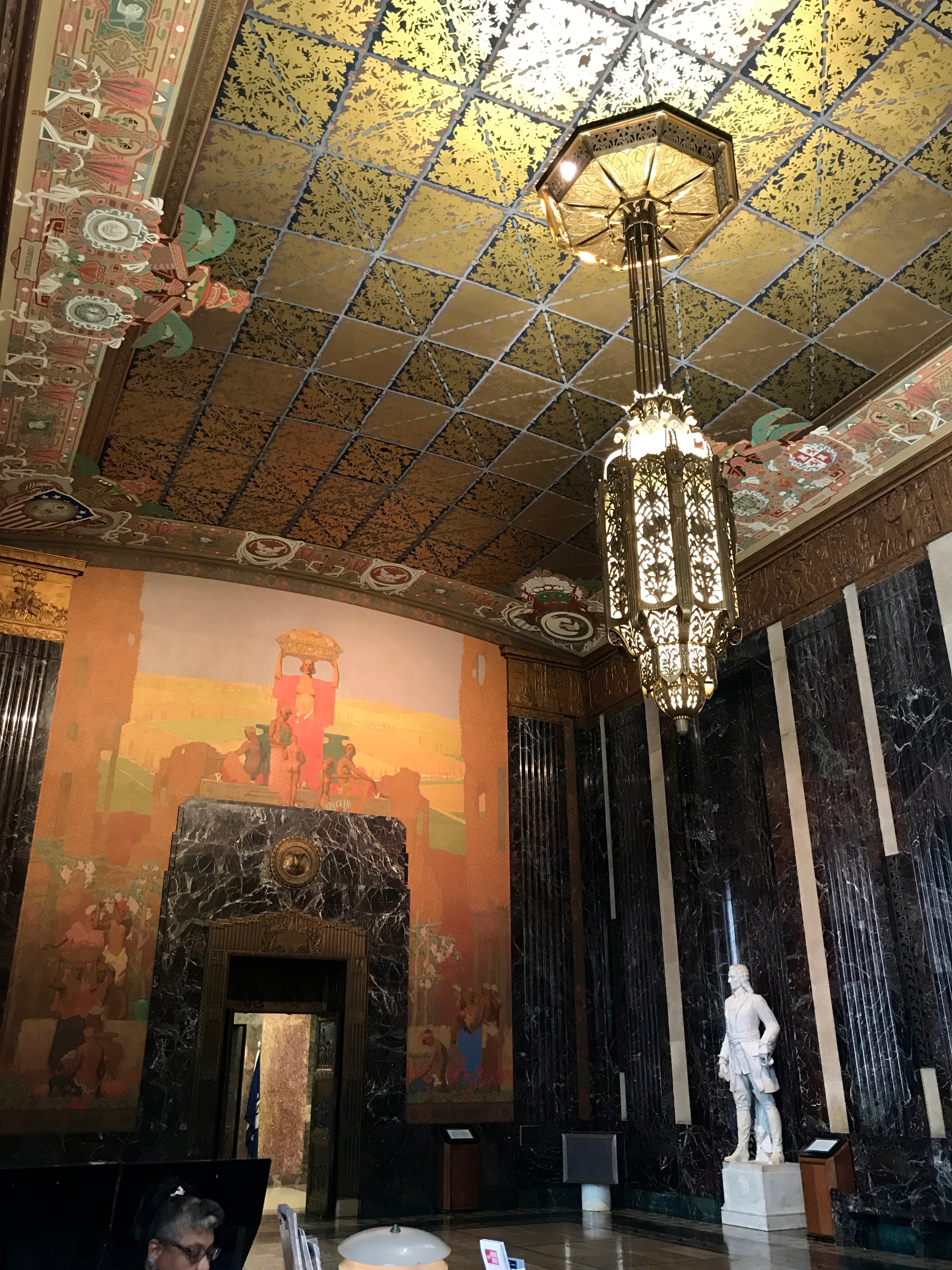
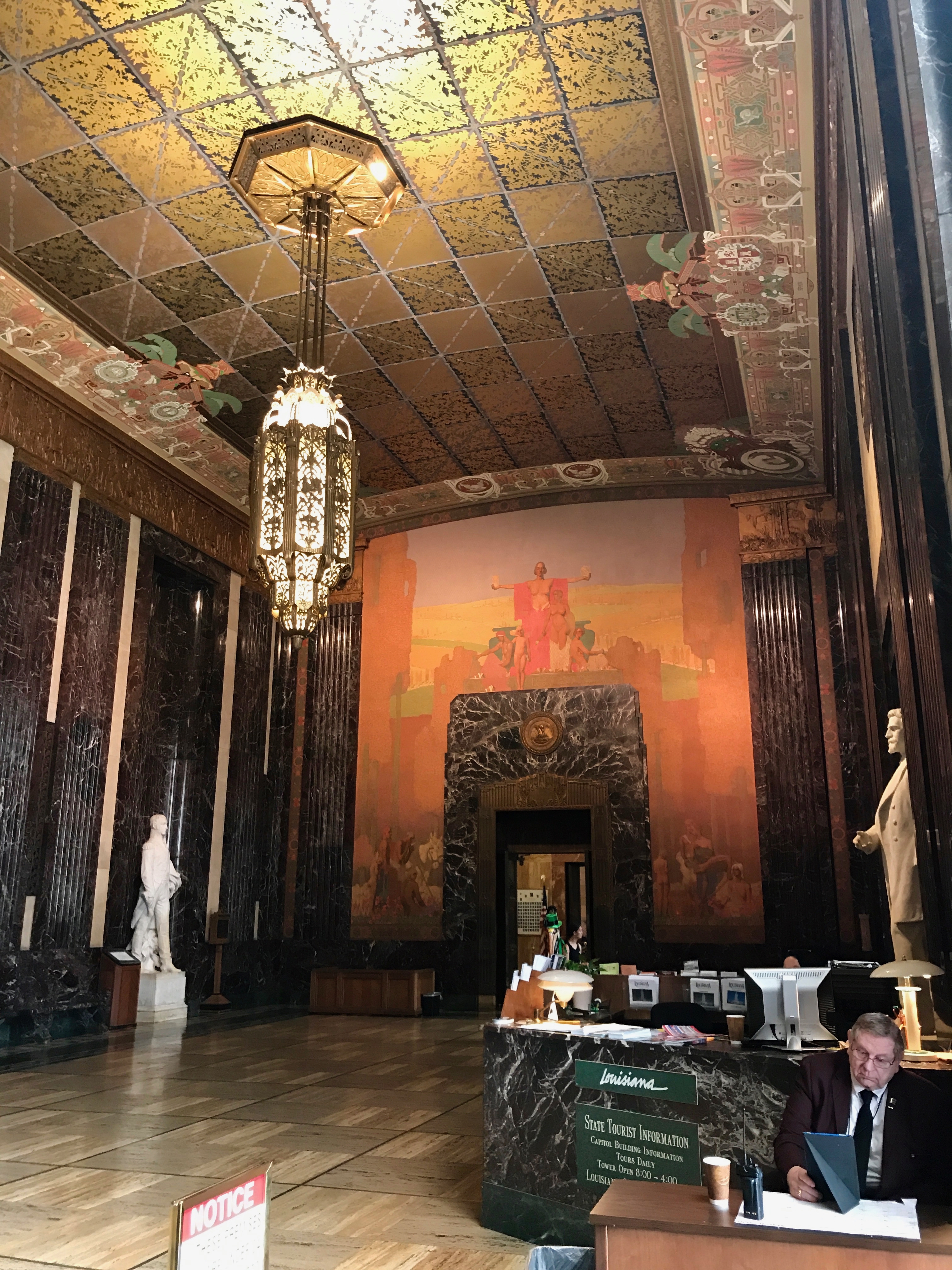
Rather impressive! First to the left…
…then to the right.
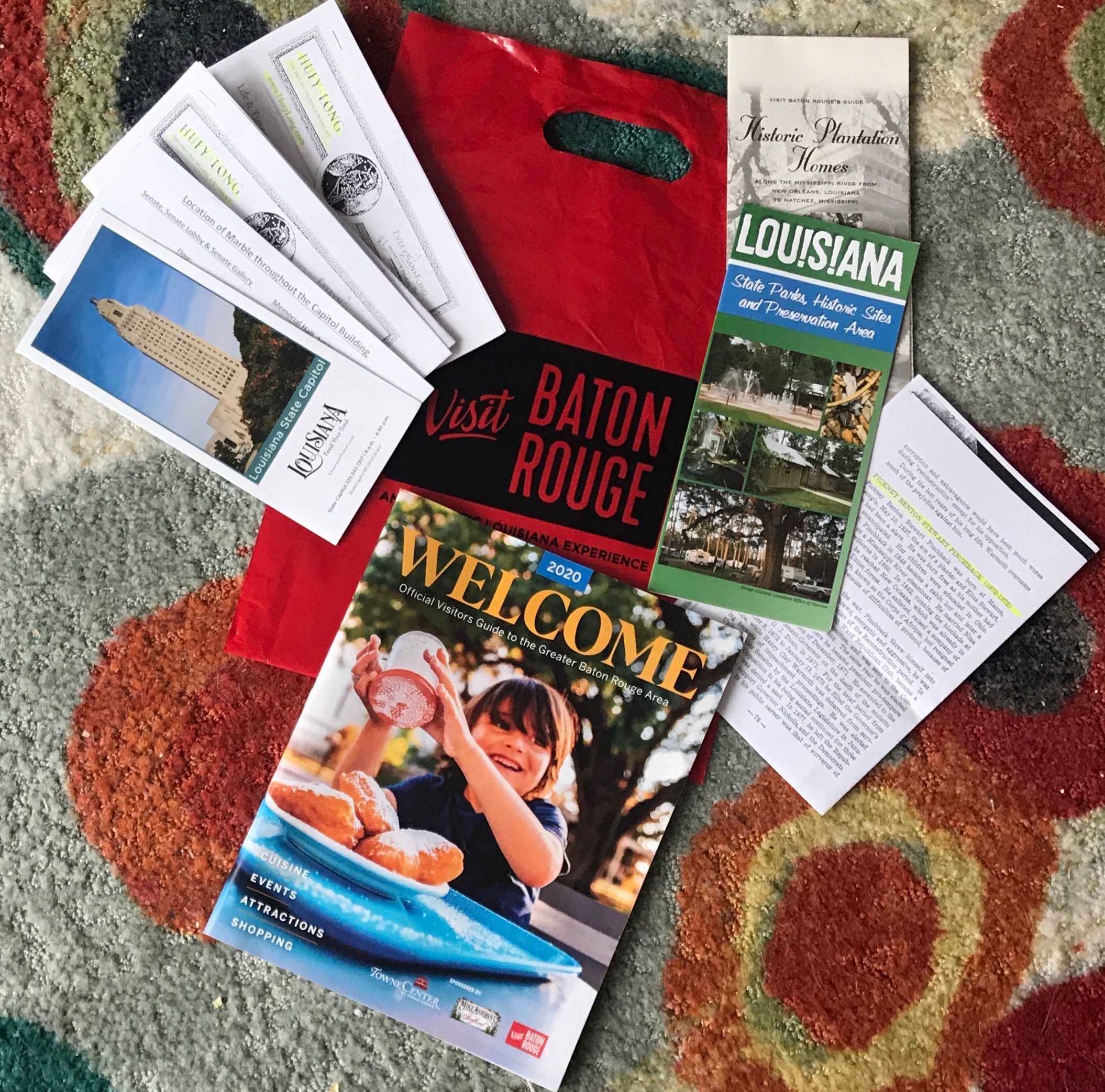
Since there seemed to be tourism information booths on both sides, I asked if there were any pamphlets about the capitol. The worker nearest me started gathering things together.
I didn’t get around to looking at the material until I got home. I guess they really do want me to return.
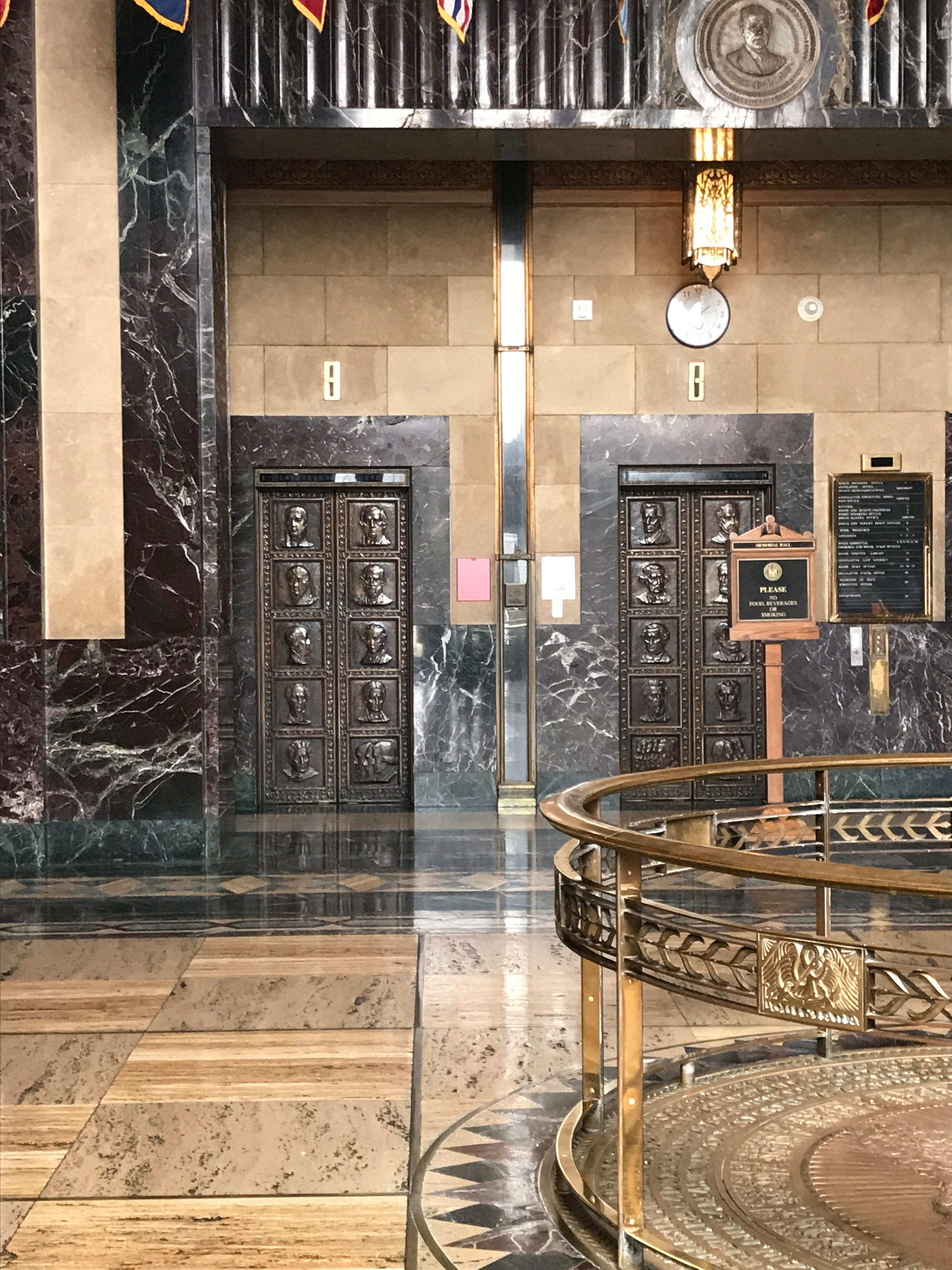
I thought those doors straight ahead were quite elaborate. I asked the guard what the doors were for.
“Elevators.” he grunted.
If those are the elevator doors, I imagine that the doors to the legislative chambers are stunning!
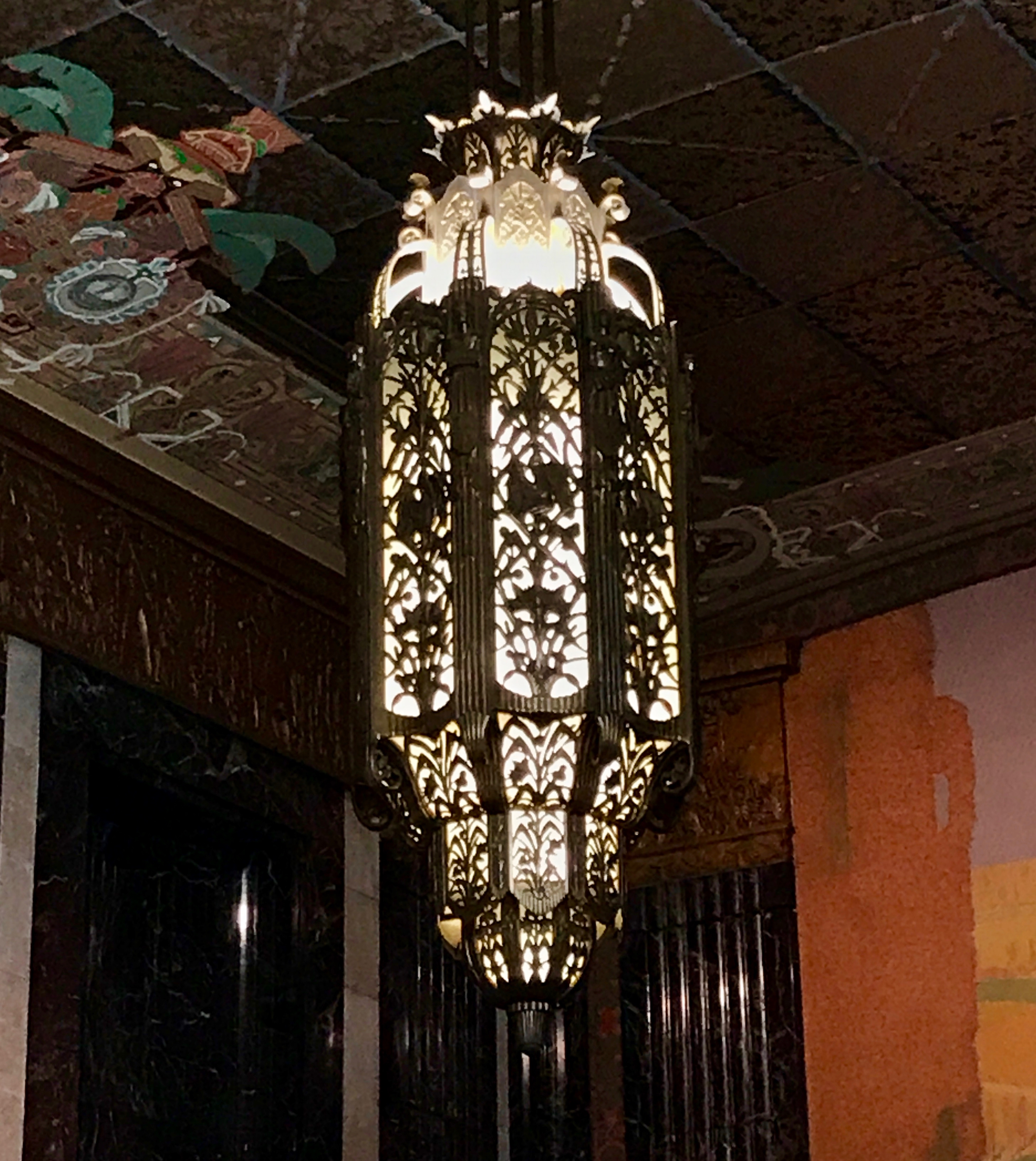
The lighting fixtures were elegant, as well.
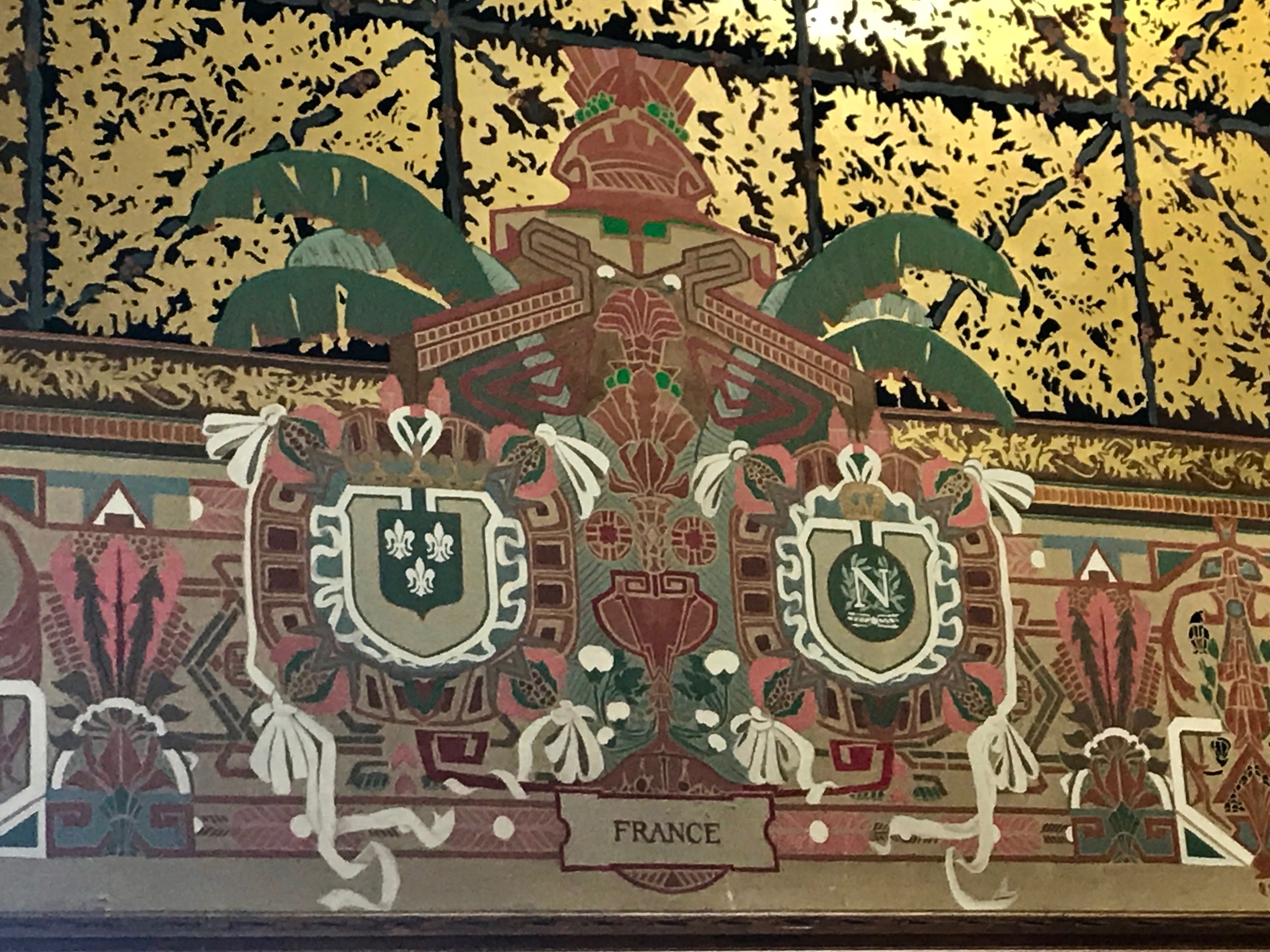
They paid homage to their French heritage, as well as Great Britain, Spain, the Republic of West Florida (who knew?) The Republic of Louisiana, the Confederate States of America (of course) as well as the United States of America.
And, with that, it was time to head out.
Here’s that statue from behind.
And here’s the other one.
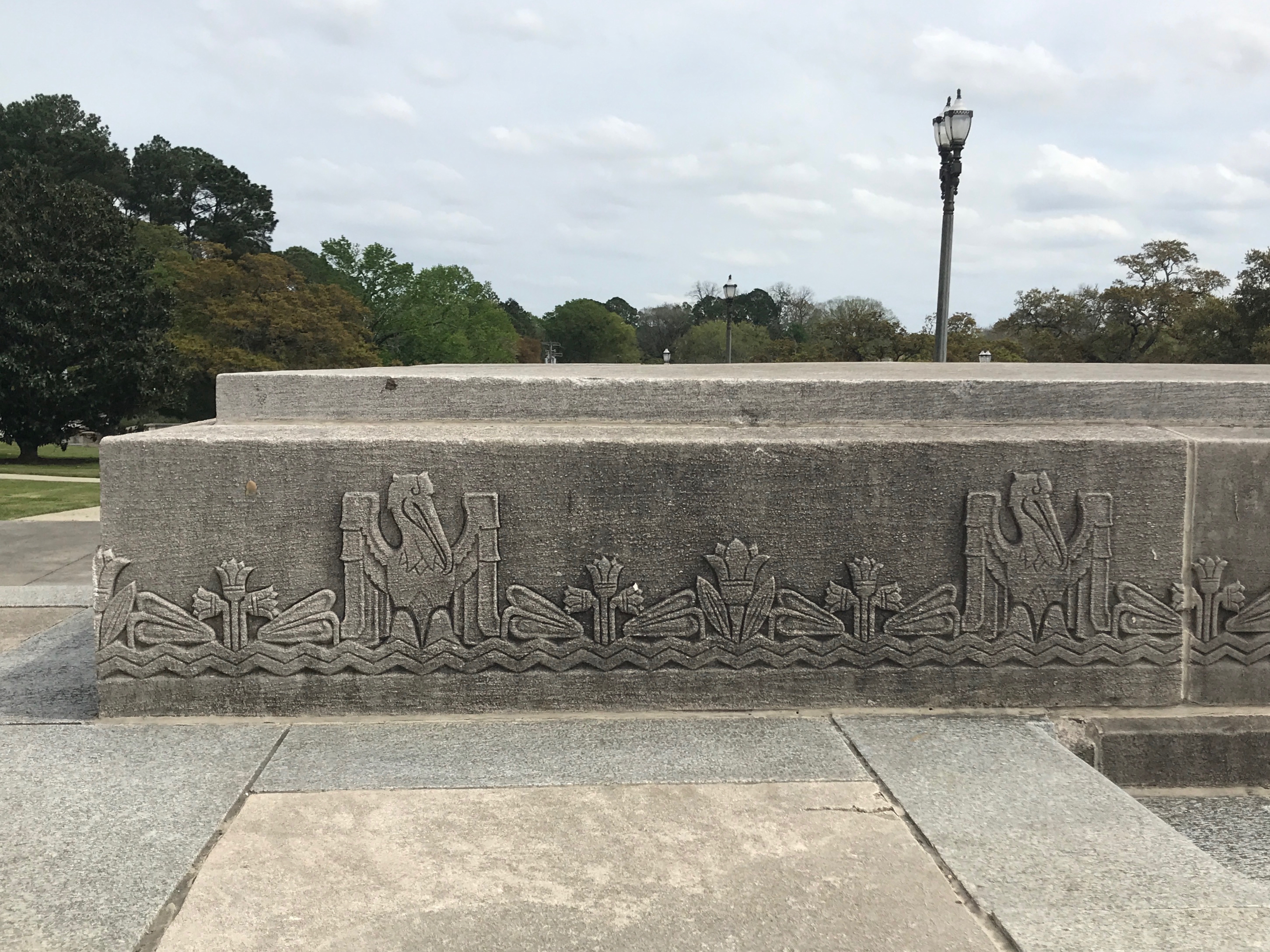
This frieze has pelican motifs, along with plants. The brown pelican is the state bird. The plants look like they are growing out of water, so they probably aren’t the state flower, which is the magnolia.
According to my Preferred Source, this frieze was designed by Ulric Ellerhusen, and runs along the top of the tower’s base. It depicts actions of Louisiana’s in wartime and peace, from colonization to World War I.
I stopped for a moment to grab a shot of the tower.
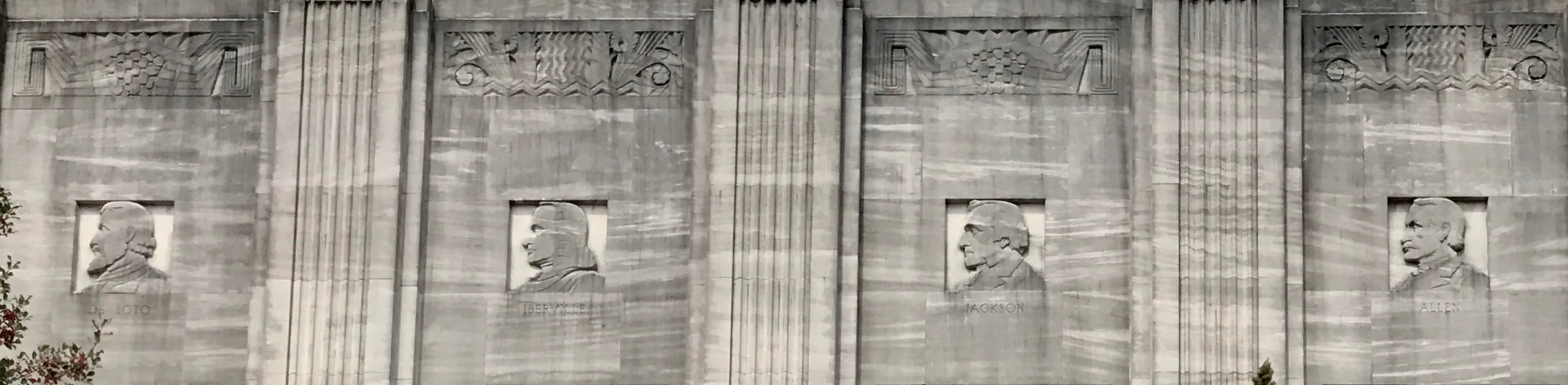
Incidentally, those portraits are of Hernando de Soto, Pierre Le Moyne d’Iberville, Andrew Jackson, and Henry Watkins Allen.
De Soto, Spanish conquistador of Peru, among other places, is credited with discovering the Mississippi River. He died in Ferriday, Louisiana in 1542.
D’Iberville was a soldier, ship captain, explorer, colonial administrator, knight of the order or Saint-Louis, adventurer, privateer, trader, member of Compaignies Franches del la Marine, and founder of the French colony of LA Louisiane of New France. Busy fellow!
Jackson’s claim to fame in Louisiana’s history is his victory of the Battle of New Orleans during the War of 1812. The battle was a decisive victory for the United States. Americans had about 60 casualties, while the British lost around 2,000. The only glitch was that the battle was fought on January 8, 1815, which was after the war was over. The Treaty of Ghent was signed on December 24, 1814, but the word hadn’t reached the men in the field yet.
Oops.
Allen was a brigadier general in the Confederate army and the 17th governor of Louisiana. He was born in Virginia, studied in Missouri, and then settled own for a time in Mississippi, where he taught, practiced law and served in the Mississippi House of Representatives. He fought in the Texas Revolution against Mexico and then went to Harvard to study law. Somehow, that prepared him for the life of a sugar plantation owner depending on slave labor.
He went to Europe in 1859 with the intention of taking part in the Italian struggle for independence, but he arrived too late. I guess he was like Jackson, and didn’t get the memo. So, he made the best of things and travels through Europe and then wrote a book about it.
Somehow, he managed to make it back in time to take part in the Civil War. He was wounded in the Battle of Shilo and right here in the Battle of Baton Rouge. He served as Governor of Louisiana from January 1864 to May 1865, then escaped to Mexico, where he died of a stomach disorder.
His travels weren’t over, even in death, as his body was returned to the United States. He’s buried in New Orleans.
And that’s more than you ever wanted to know about Henry Watkins Allen.
Oh, no! More portraits!
Lucky thing I couldn’t make out the names.
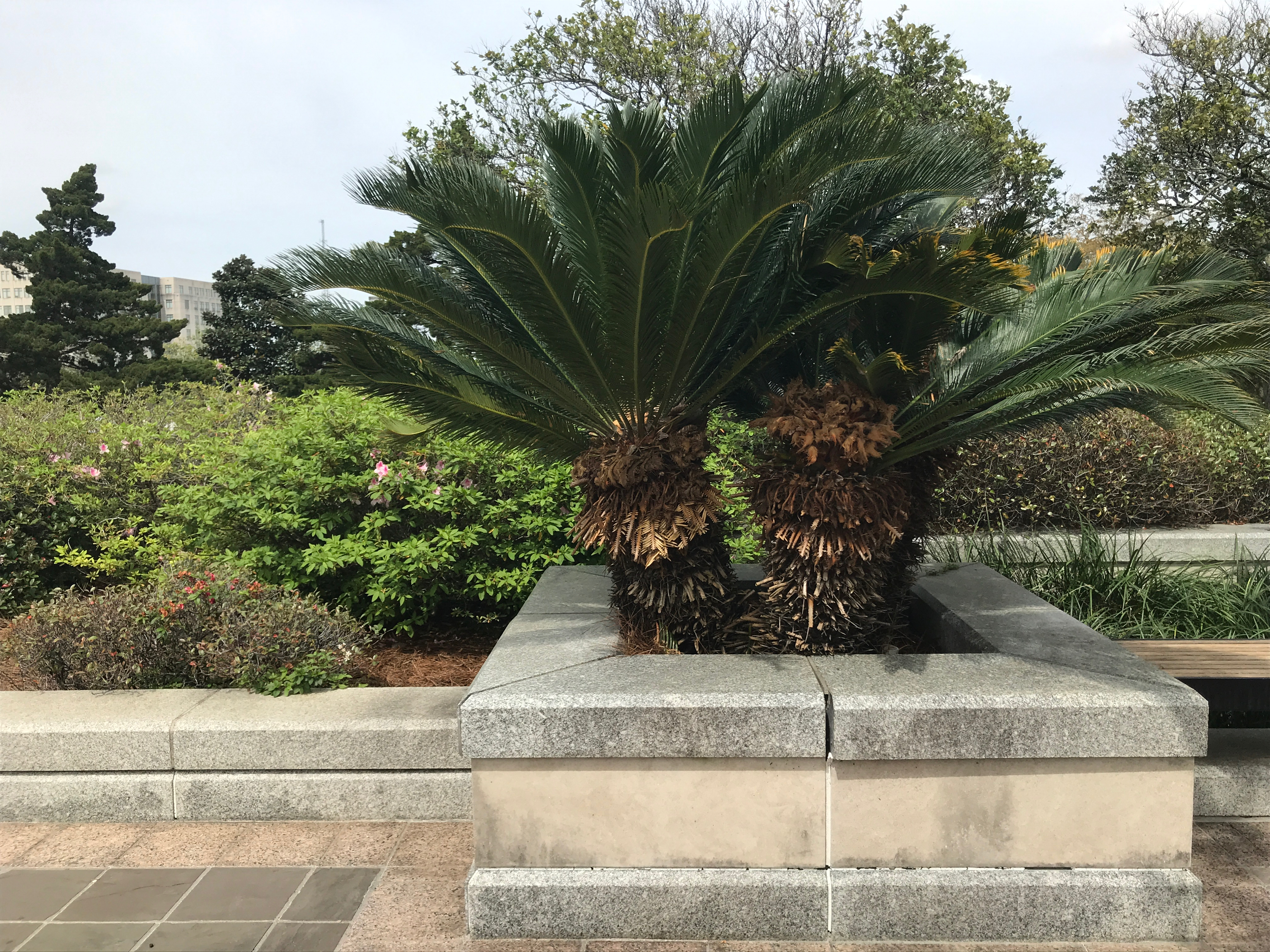
But this point, I was just about done with my quick walk around the capitol. I enjoyed the plantings.
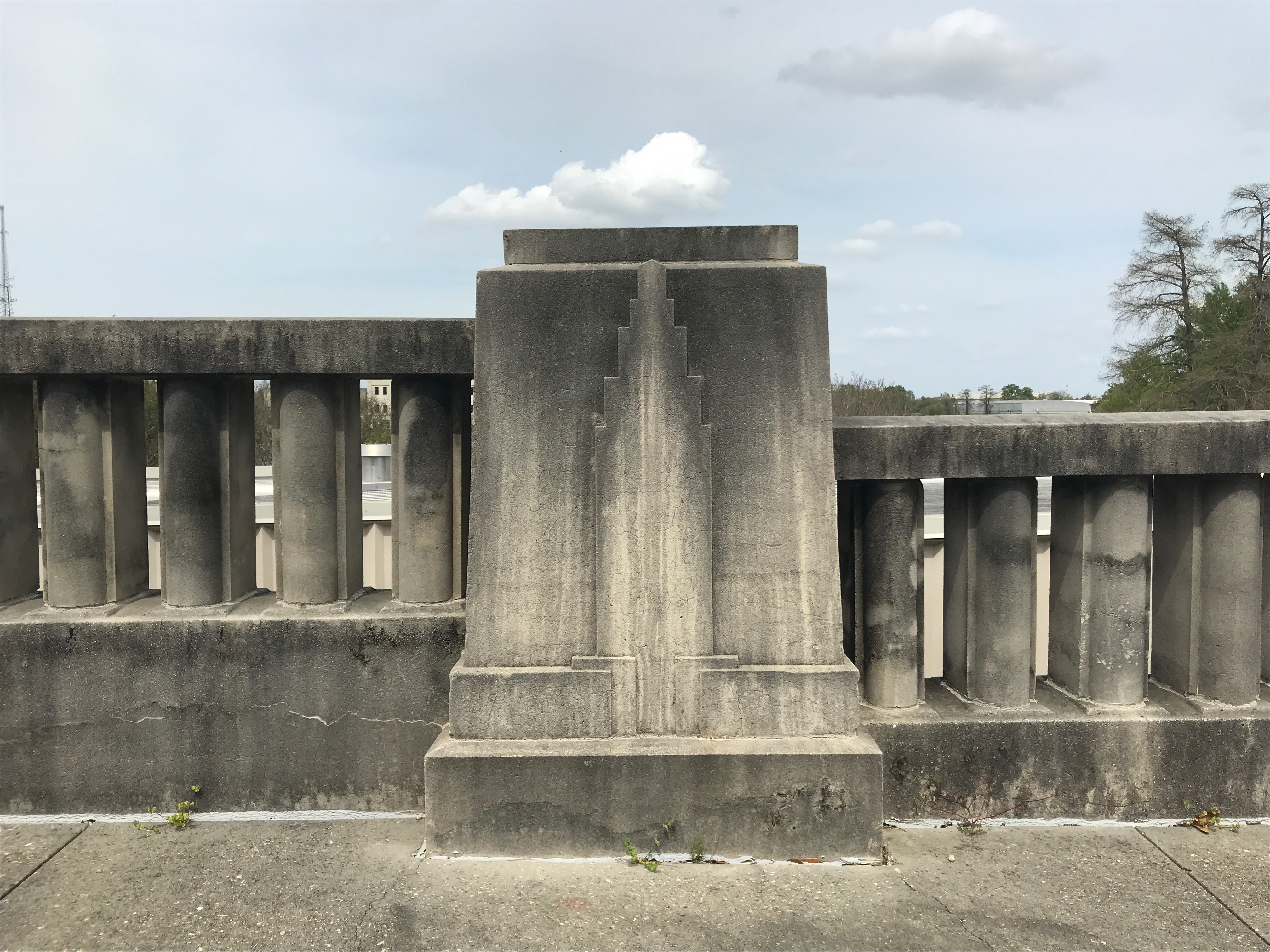
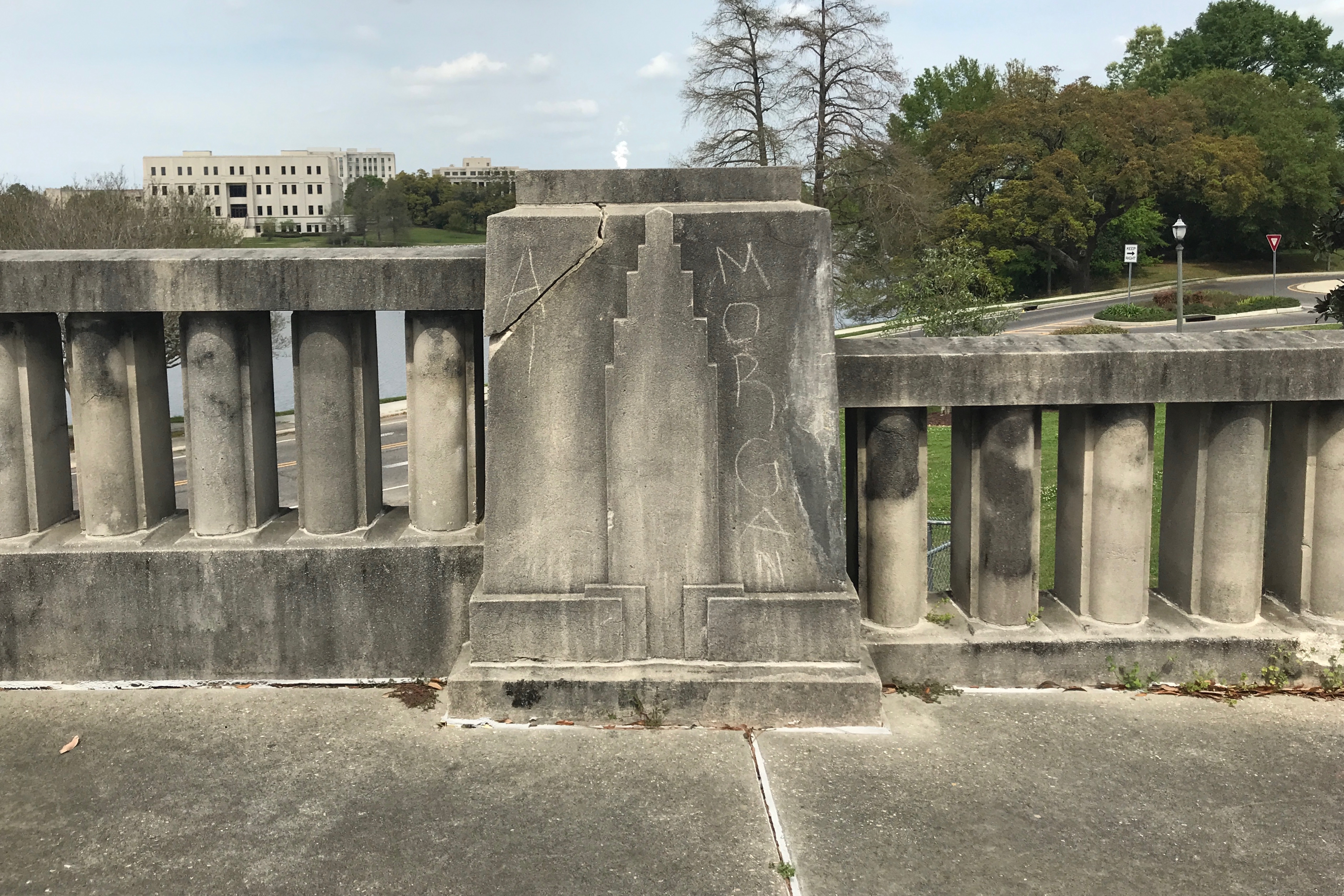
I admired how they worked thew art deco designs into the fence.
Good old Morgan is now part of the historical record.
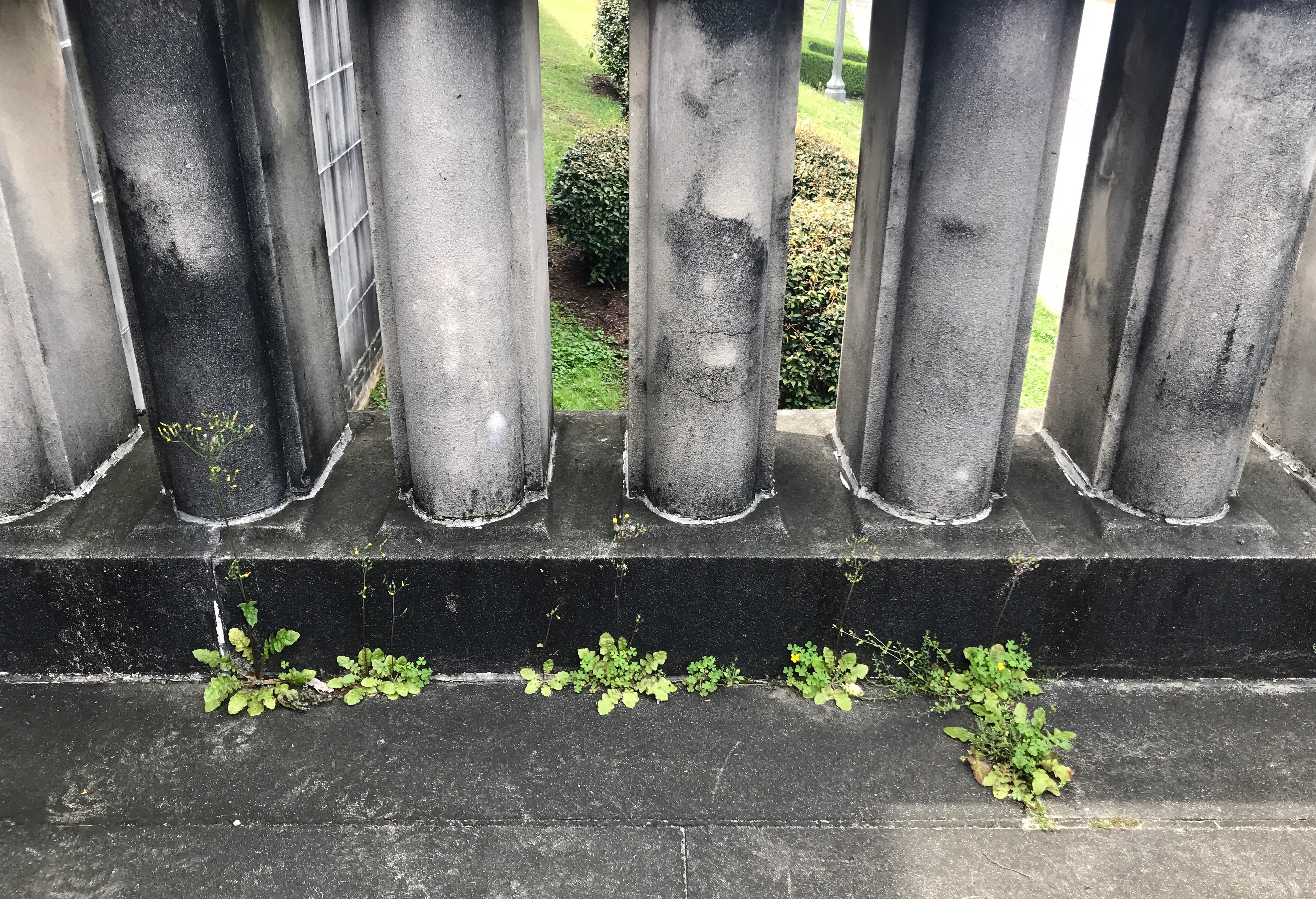
I do hope they weed the place. I imagine the roots can eventually cause a structure to fail. Ate least they don’t have to worry about the freeze-thaw cycle.
This sculpture was on my way back to the Jeep and T@b.
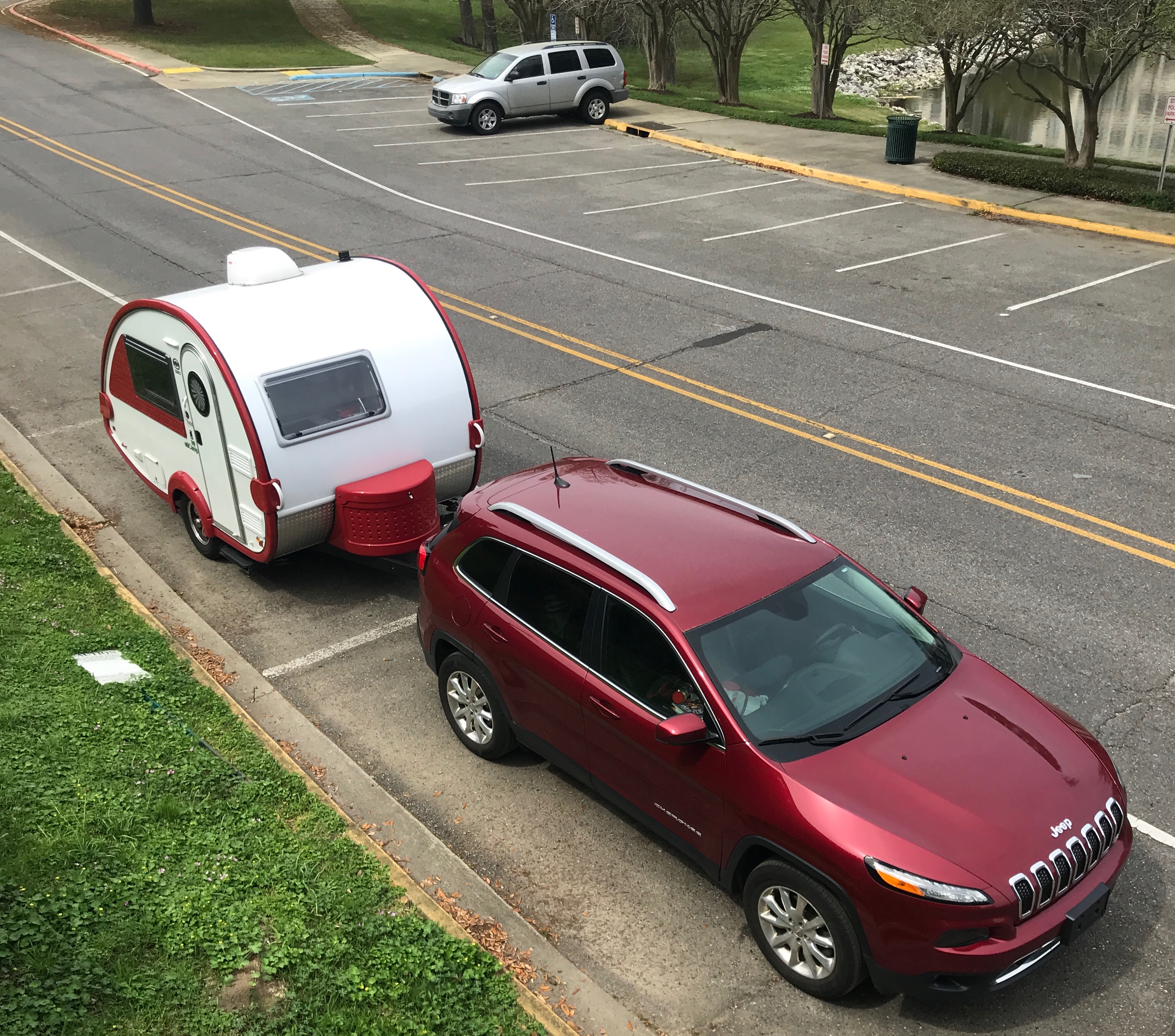
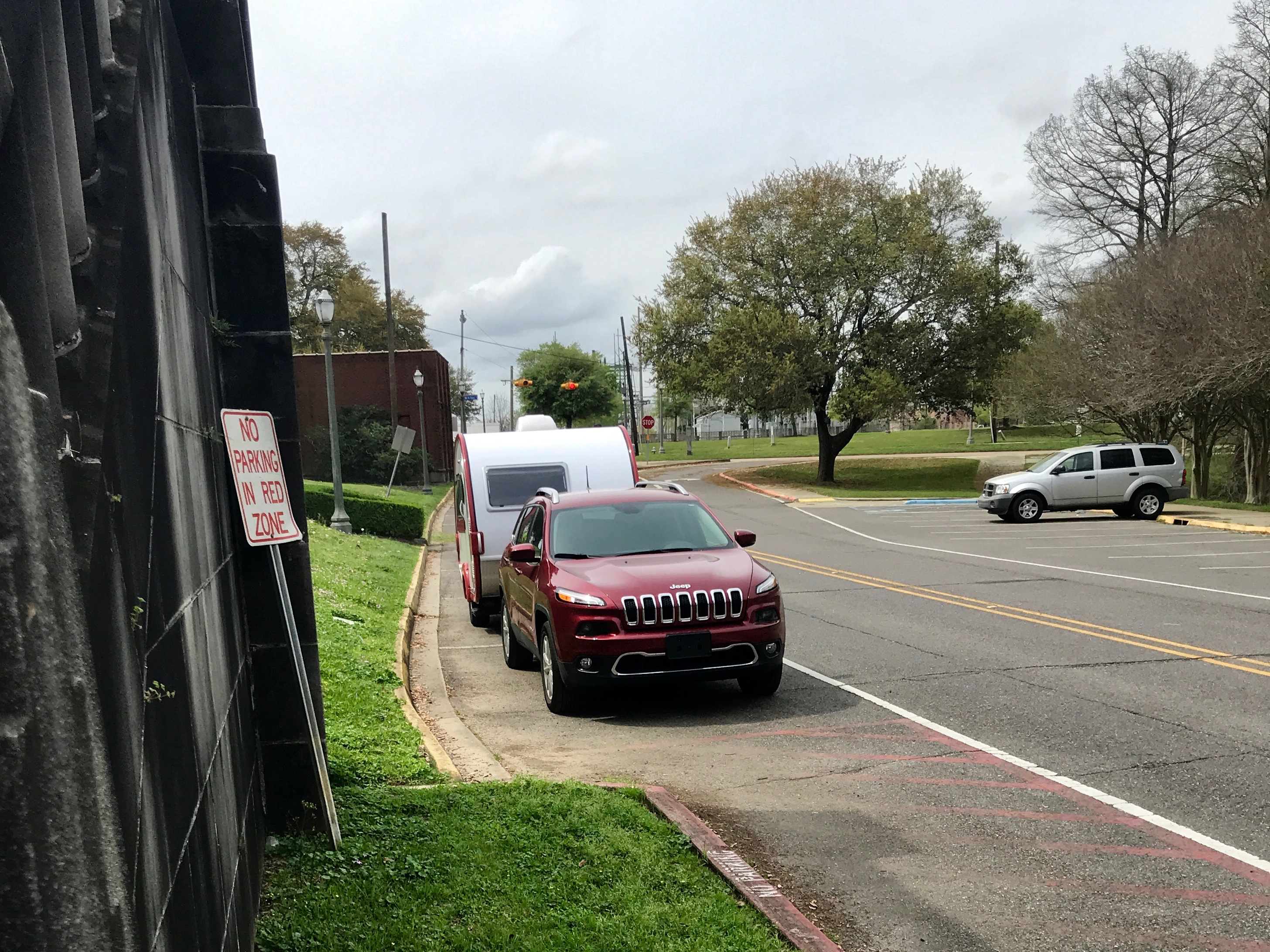
And, there they are!
Time to hit the road – only about three more hours of driving.