My last stop on this journey was Cincinnati. My friends, Ron and DC invited me to stop at their house. I parked in the street and enjoyed the comforts of their adorable house.
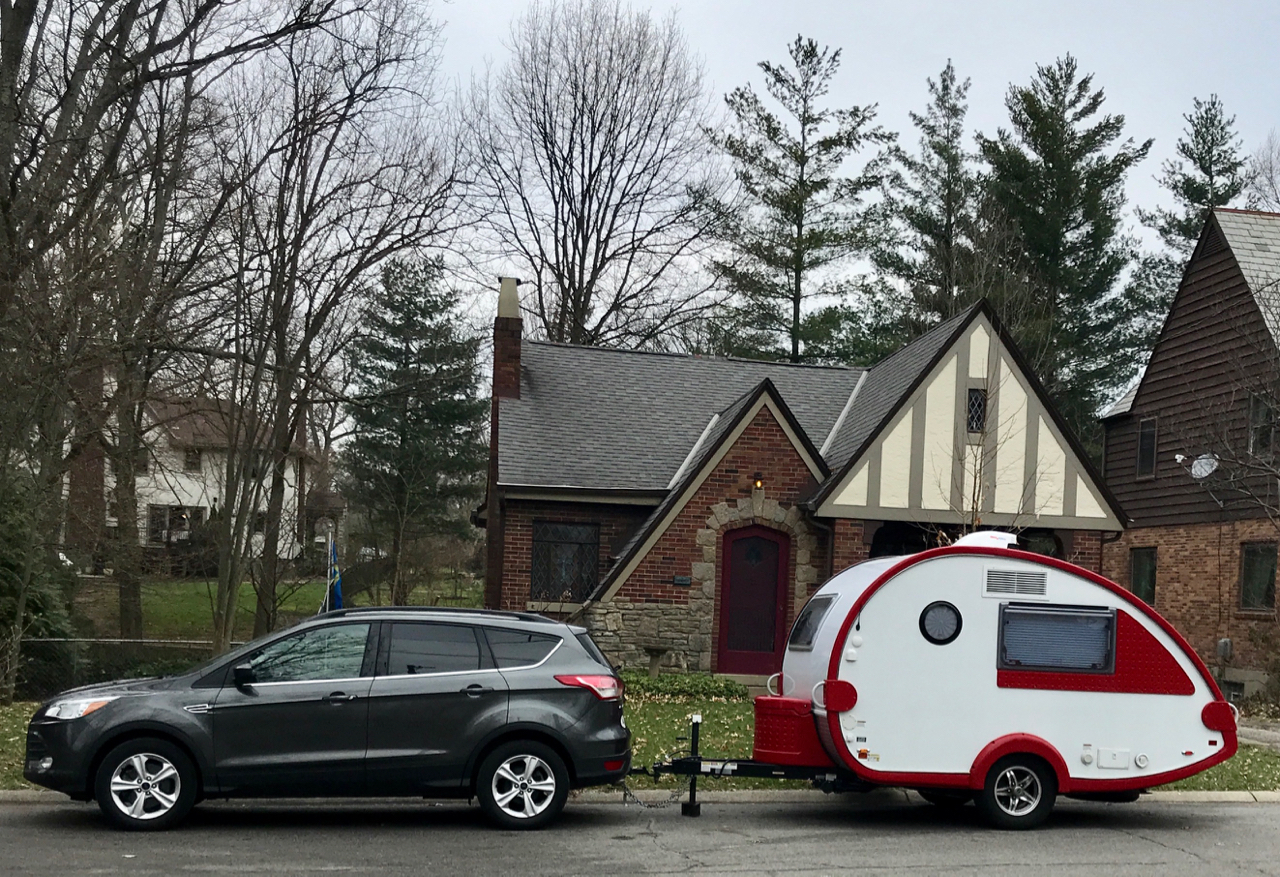
I always said that any house looks better with an Airstream in front of it, but a T@b isn’t bad, either.
This was just a short visit, as I really did need to get home. Ron took me across the river to Covington, Kentucky. Our first stop was George Rogers Clark Park.
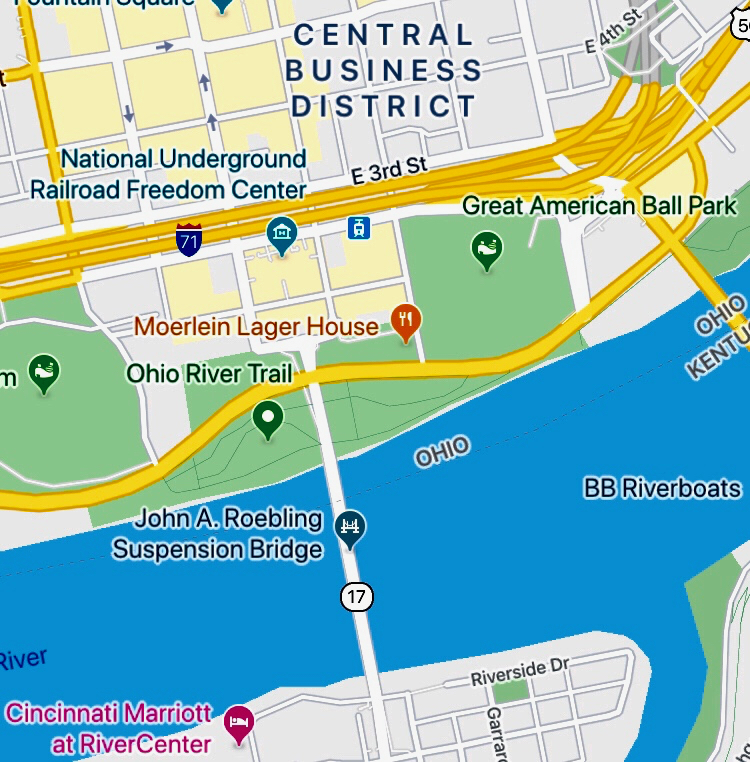
George Rogers Clark Park is that small green rectangle on the southern side of the Ohio River.
I was wondering who George Rogers Clark was, so of course I had to check my Preferred Source. I wondered if this was the Clark in Lewis-and-Clark. After all, it is right by the water. No, that Clark was William Clark, his younger brother. This Clark was a surveyor, soldier and militia officer from Virginia. During the Revolutionary War, he served as leader of the militia in Kentucky, which was still a part of Virginia at that time. Due to his successes during the Illinois Campaign, he greatly weakened British influence in the Northwest Territory. The British ceded the entire Northwest Territory to the United States in the 1783 Treaty of Paris. Clark has often been hailed as the “Conqueror of the Old Northwest”.
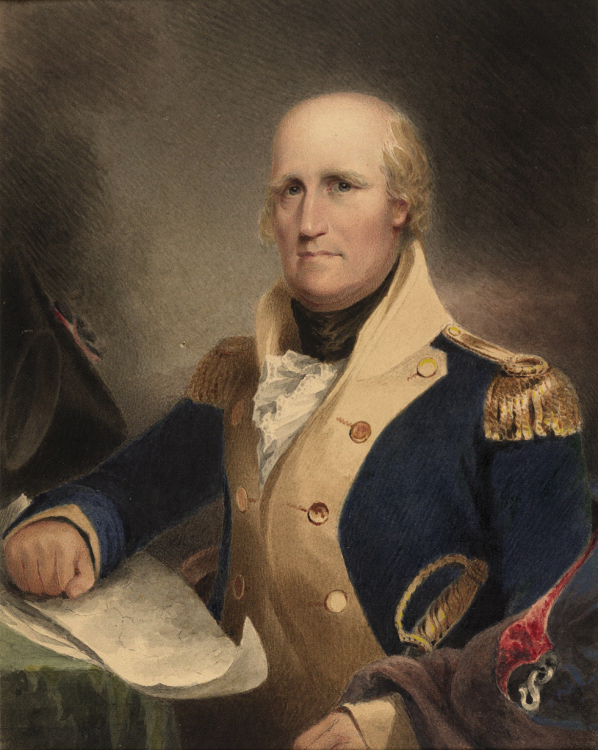
I don’t know how true of a likeness this is, as it was painted seven years after his death in 1818, but I offer it to you for your consideration.
Apparently they were big on sobriquets back then, as he appears to have had a number of them.
Conqueror of the Old Northwest
Hannibal of the West
Washington of the West
Father of Louisville
If you are interested in knowing more about his life, you can start with my Preferred Source. Or, maybe this is as much as you ever care to know about this person. In which case, you’re welcome.
Anyway, back to the park named in his honor.
It is a small, but scenic location with a great view of the Roebling Suspension Bridge and the Cincinnati skyline.
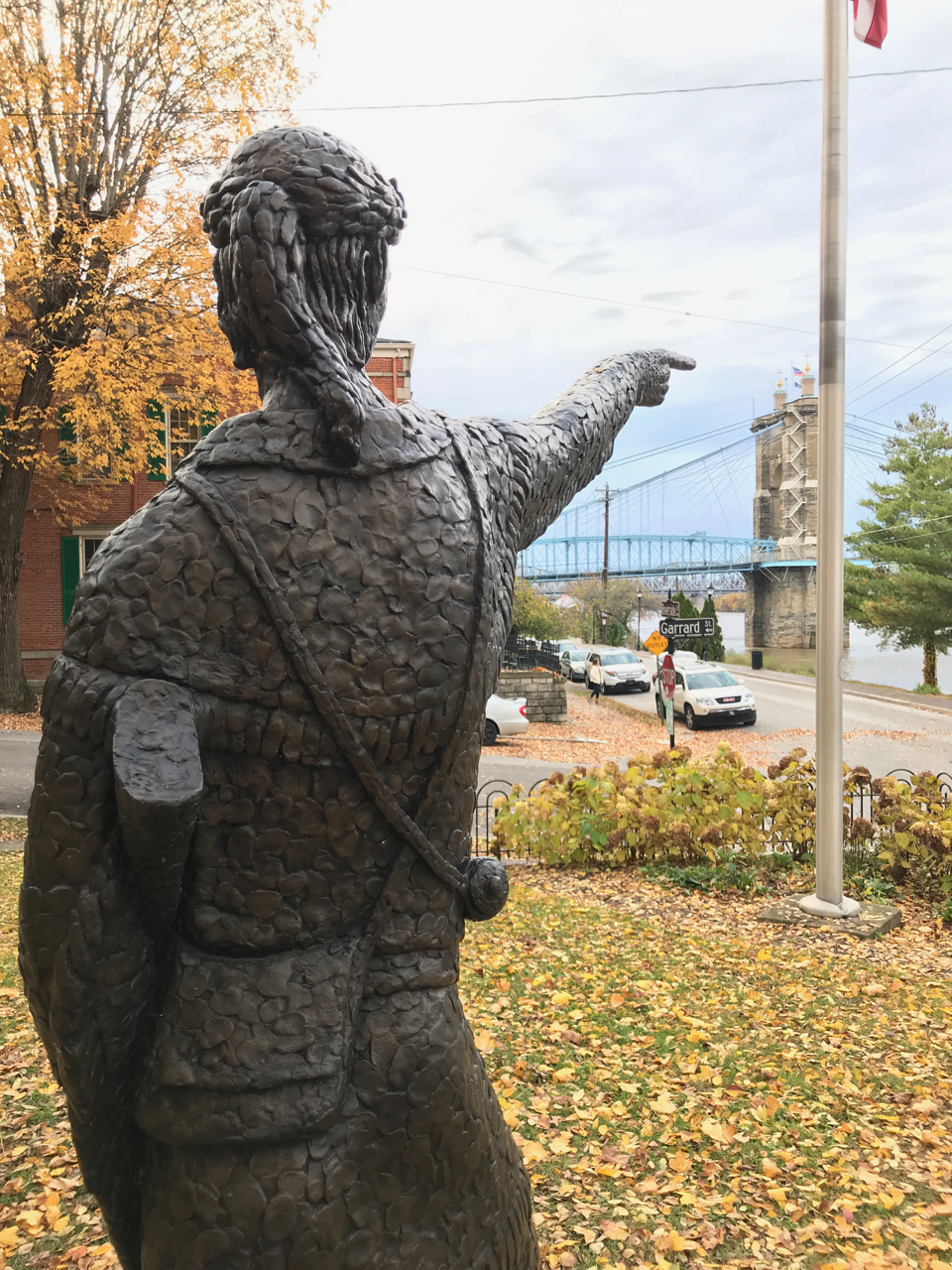
This statue that is pointing the way is of Simon Kenton.
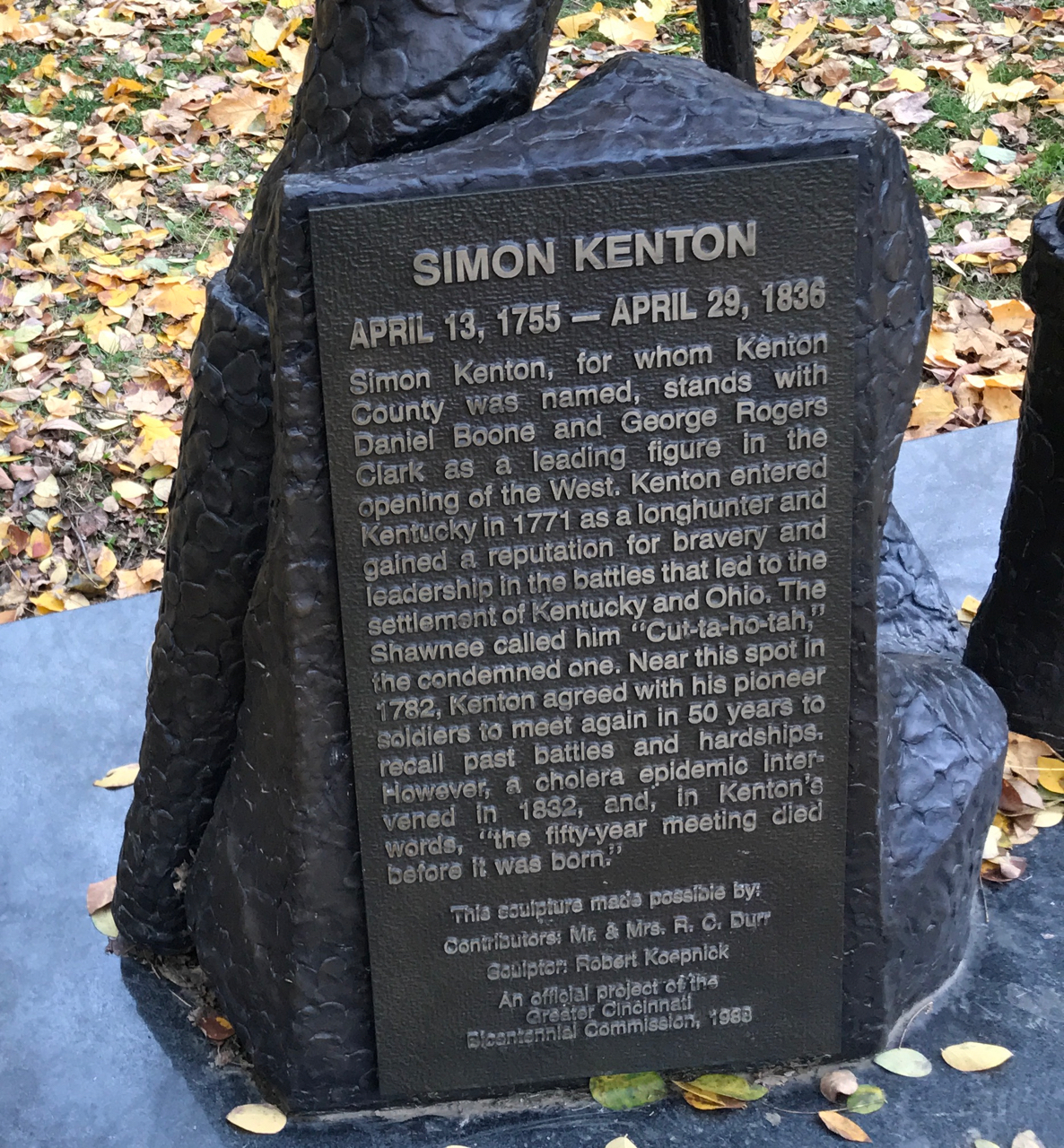
I’ll let you read the plaque that is on the base of the statue.
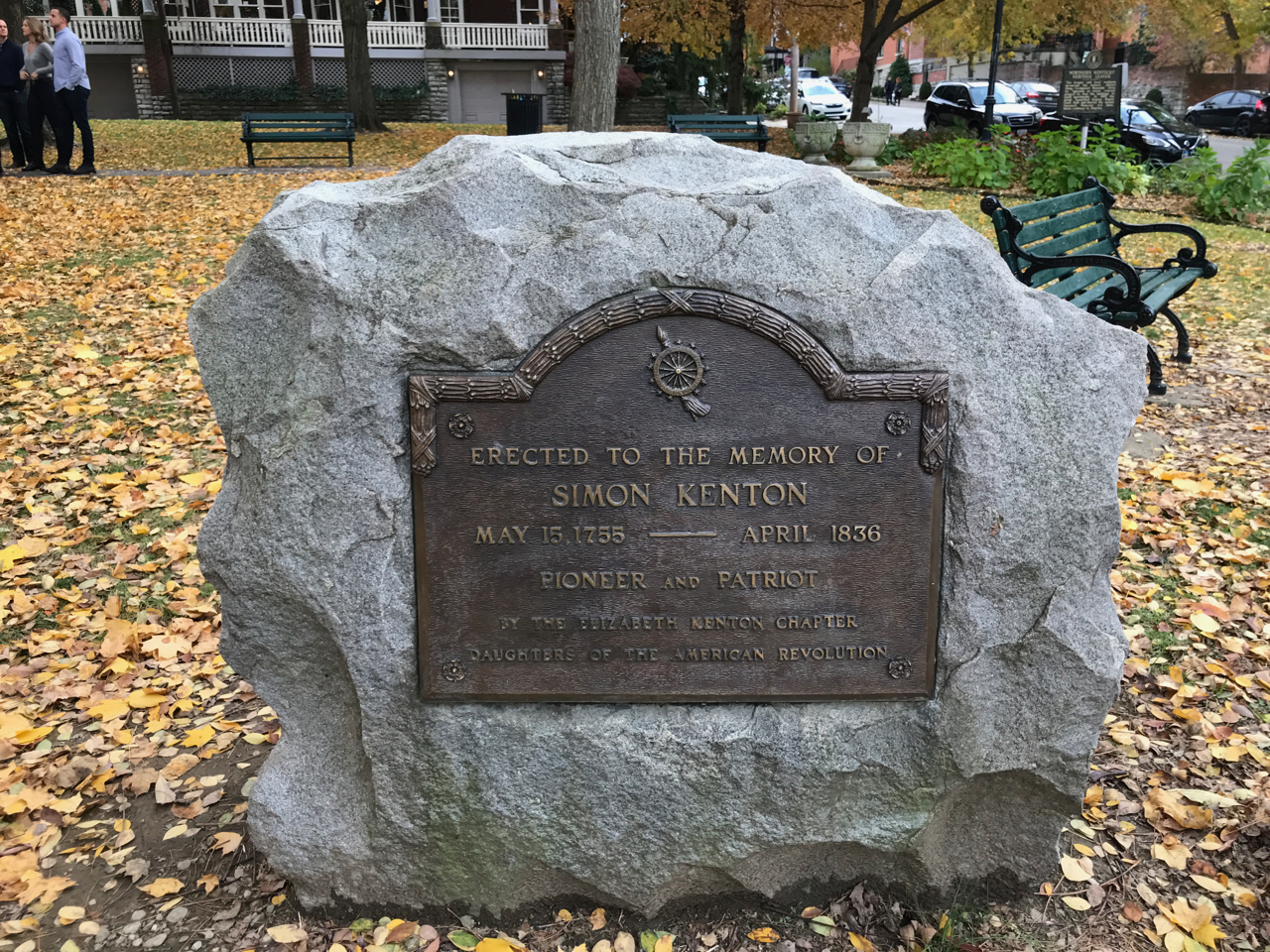
If the statue weren’t honor enough, there is also a boulder with a plaque on it.
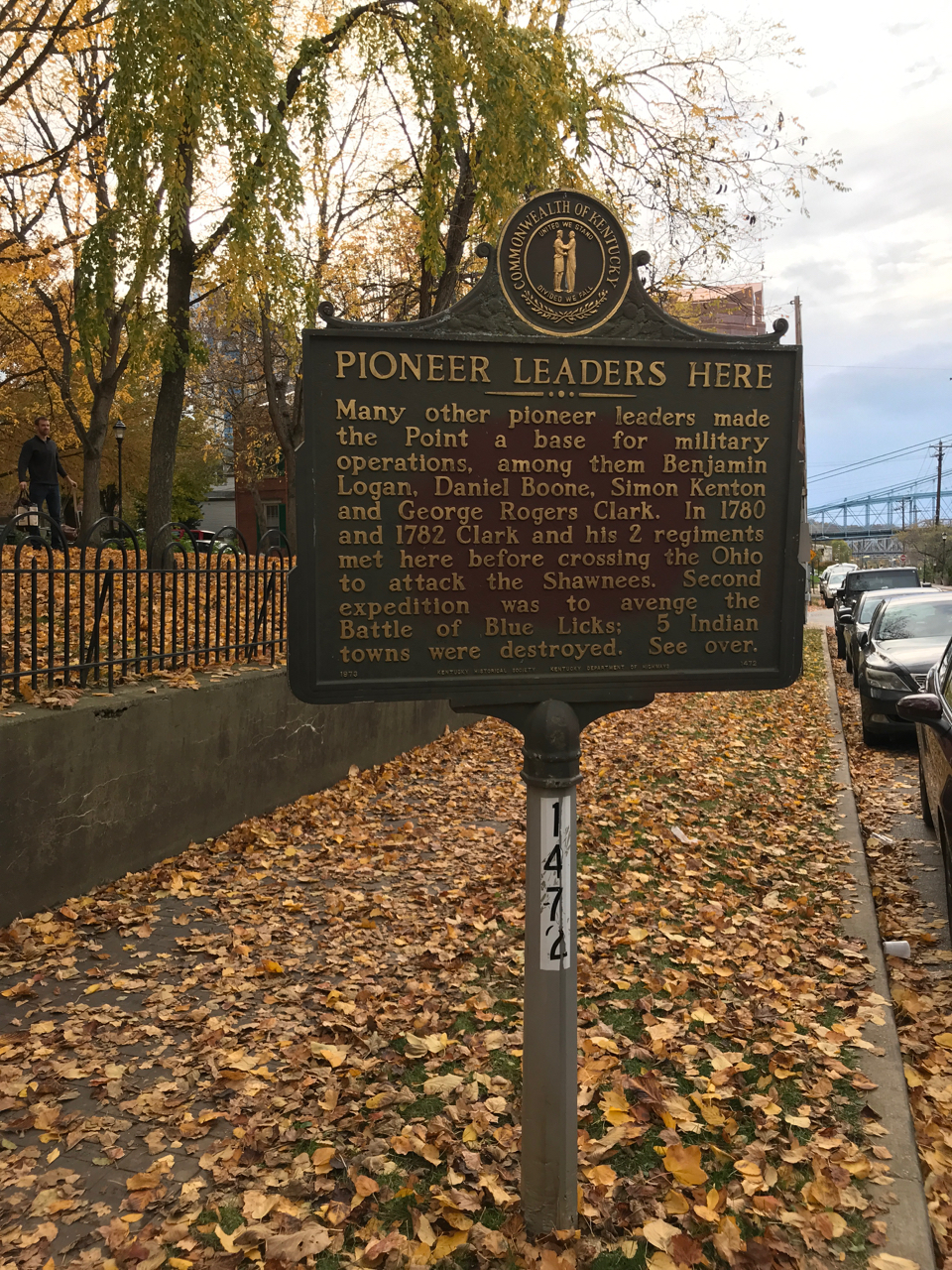
This place was frequented by many Pioneer Leaders. It certainly was a great location. For some reason, I neglected to take a photo of the other side.
It was a beautiful day, and we strolled about the park to see what we could see.
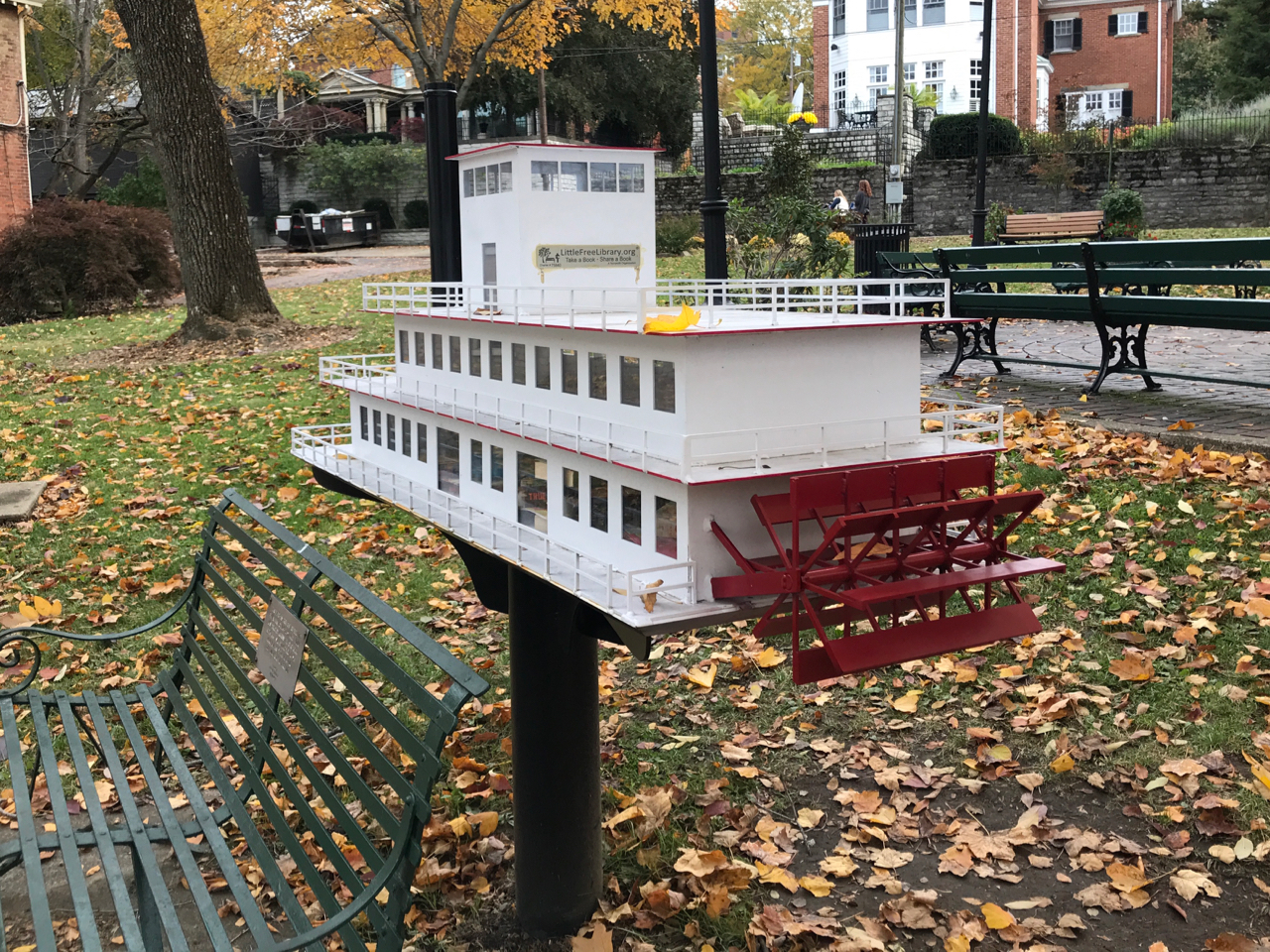
For some reason, I thought this was a Little Free Library. Upon closer inspection of my photo, I’m not sure if it is. I’ve seen some really cute ones in my travels, so I probably just assumed that is was. You know what happens when you a assume, right?
Maybe the riverboat was there in honor of Captain Mary B. Green, one of the few women to become a licensed Boat Master and River Pilot.
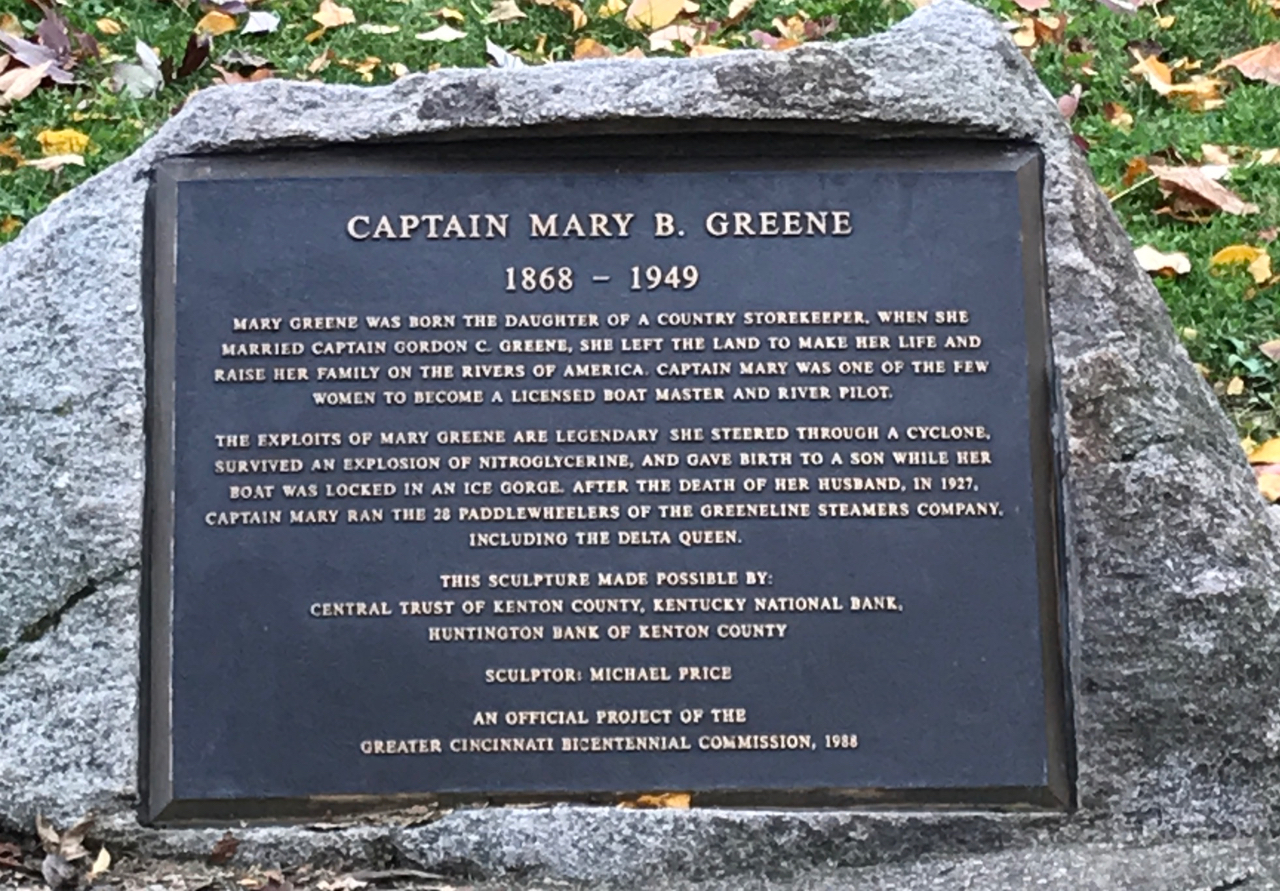
In case you can’t read the text on the plaque, let me share it with you.
Mary Greene was born the daughter of a country storekeeper. When she married Captain Gordon C. Greene, she left the land to make her life and raise her family on the rivers of America. Captain Mary was one of the few women to become a licensed boat master and river pilot.
The exploits of Mary Green are legendary. She steered through a cyclone, survived an explosion of nitroglycerine, and gave birth to a son while her boat was locked in an ice gorge. After the death of her husband in 1927, Captain Mary ran the 28 paddle wheelers of the Greeneline Steamers Company, including the Delta Queen.
I enjoyed this youngster exploring the statue of Captain Mary.
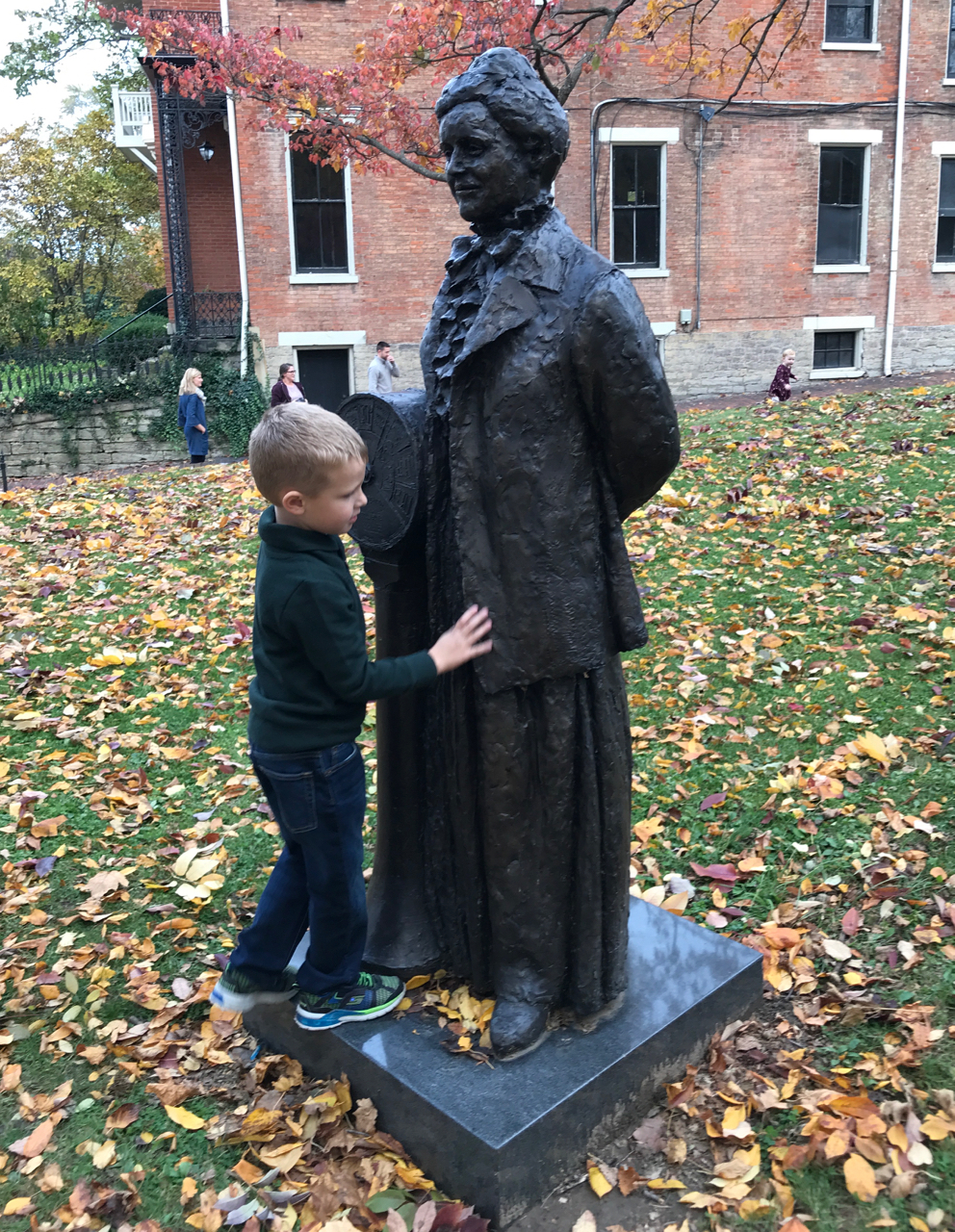
He worked his way around the statue, from the front to the back.
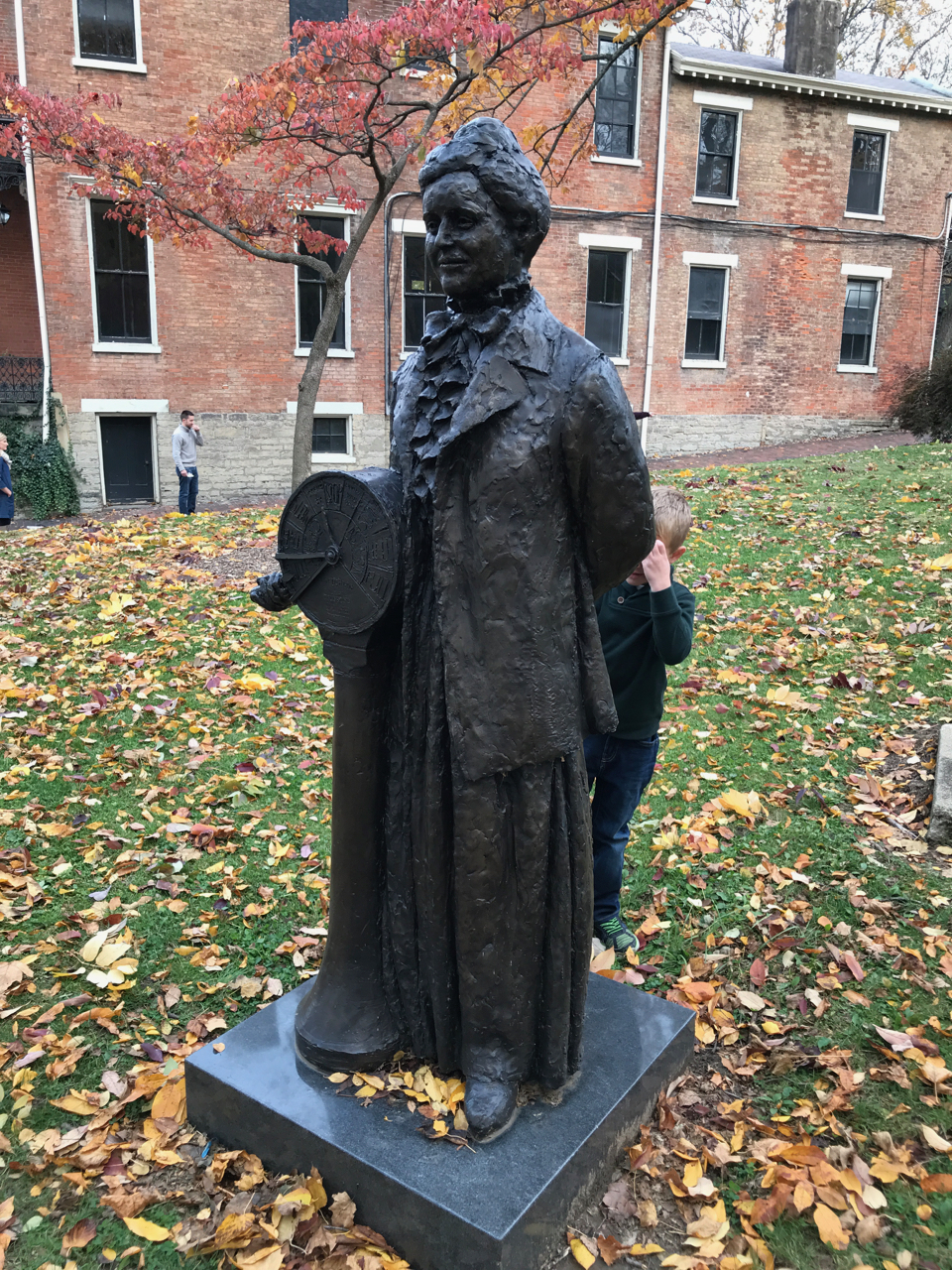
He looked like he was scratching his head, puzzling out something on the back of the statue, so I had to take a look.
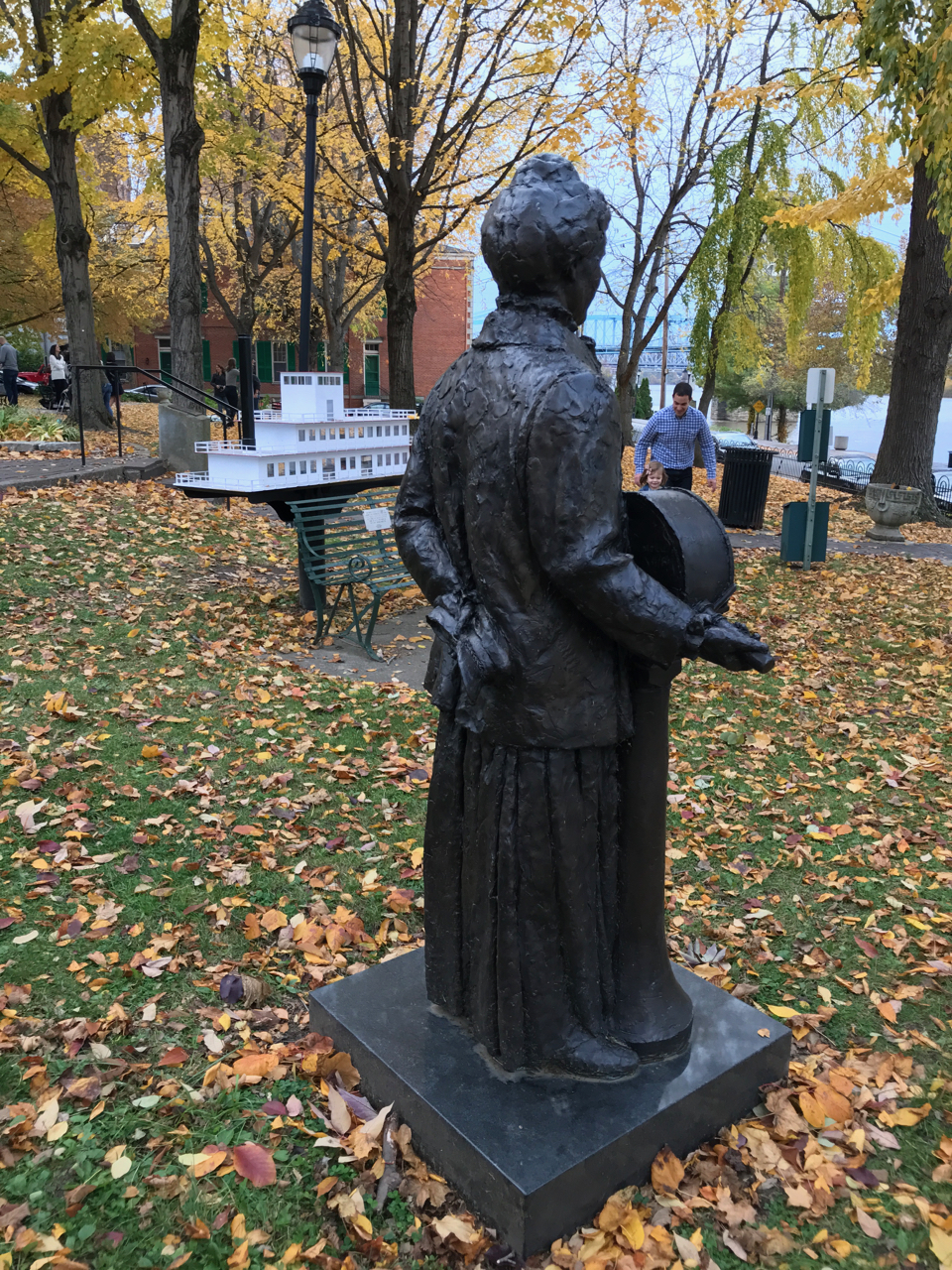
Hmm…I’m not quite sure what it is. It’s time for a closer look.
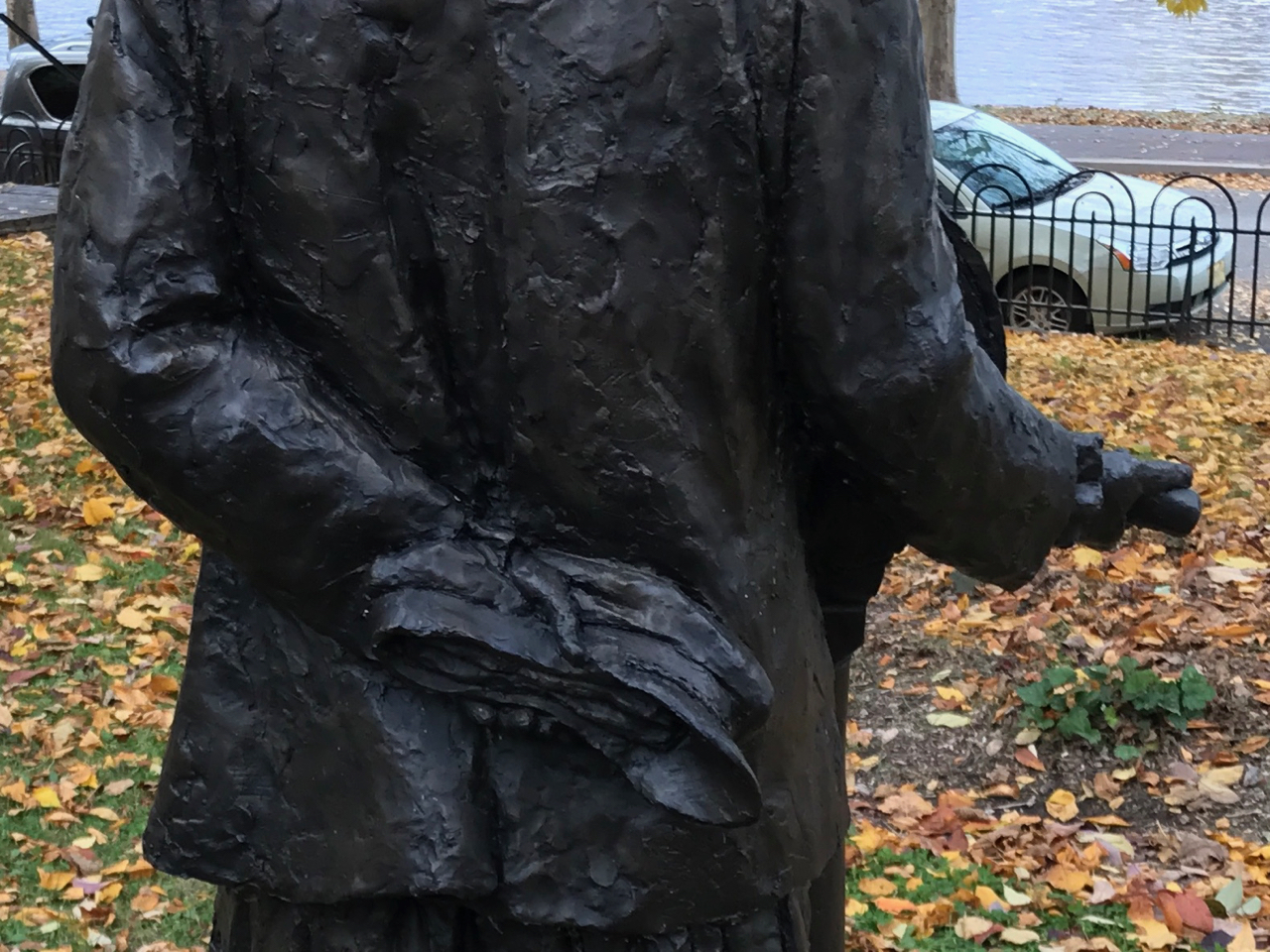
Ah! She’s holding her captain’s hat.
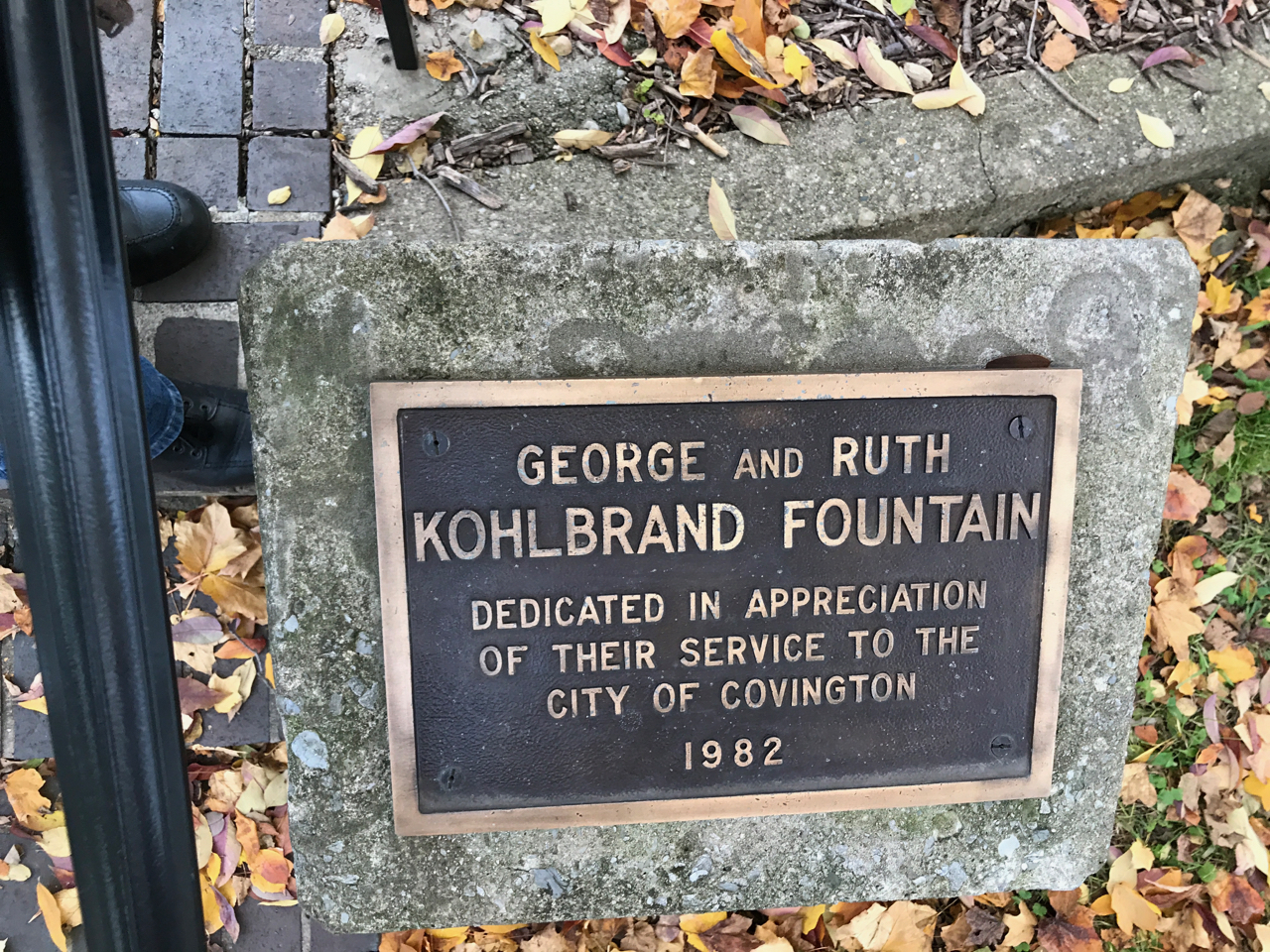
I saw this plaque, but I didn’t see the fountain. I went looking on the Internet for a photo – you know, you can find just about everything if you just look – but I didn’t find one.
I did find a newspaper clipping for George and Ruth. They moved into a house that was right on the park in 1940, and he was born in the area in 1905.
And that’s all I can find about them.
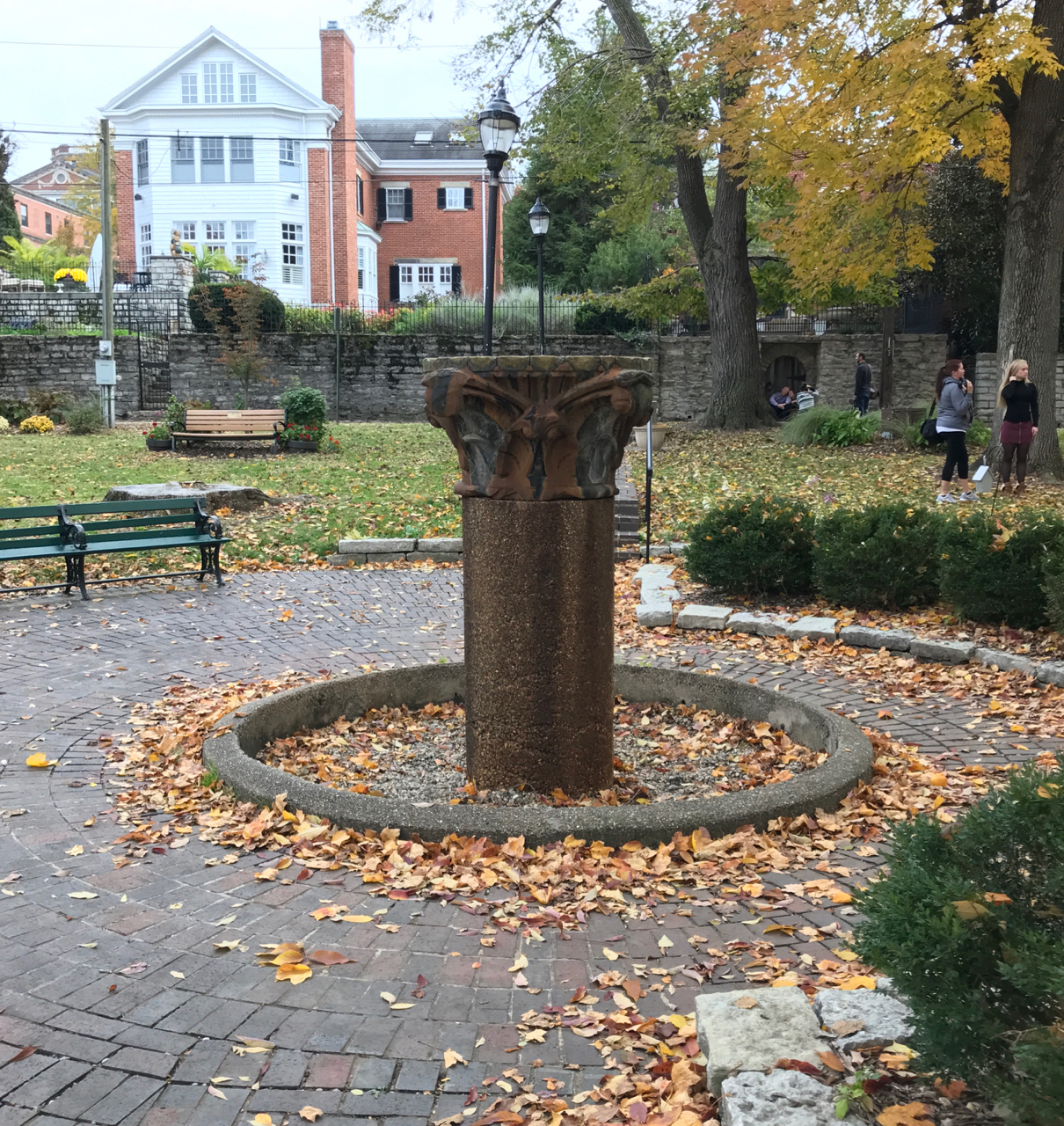
Thought that this might be their fountain, but it doesn’t quite look like a fountain. I mean, the area at the base of the pillar is filled with gravel.
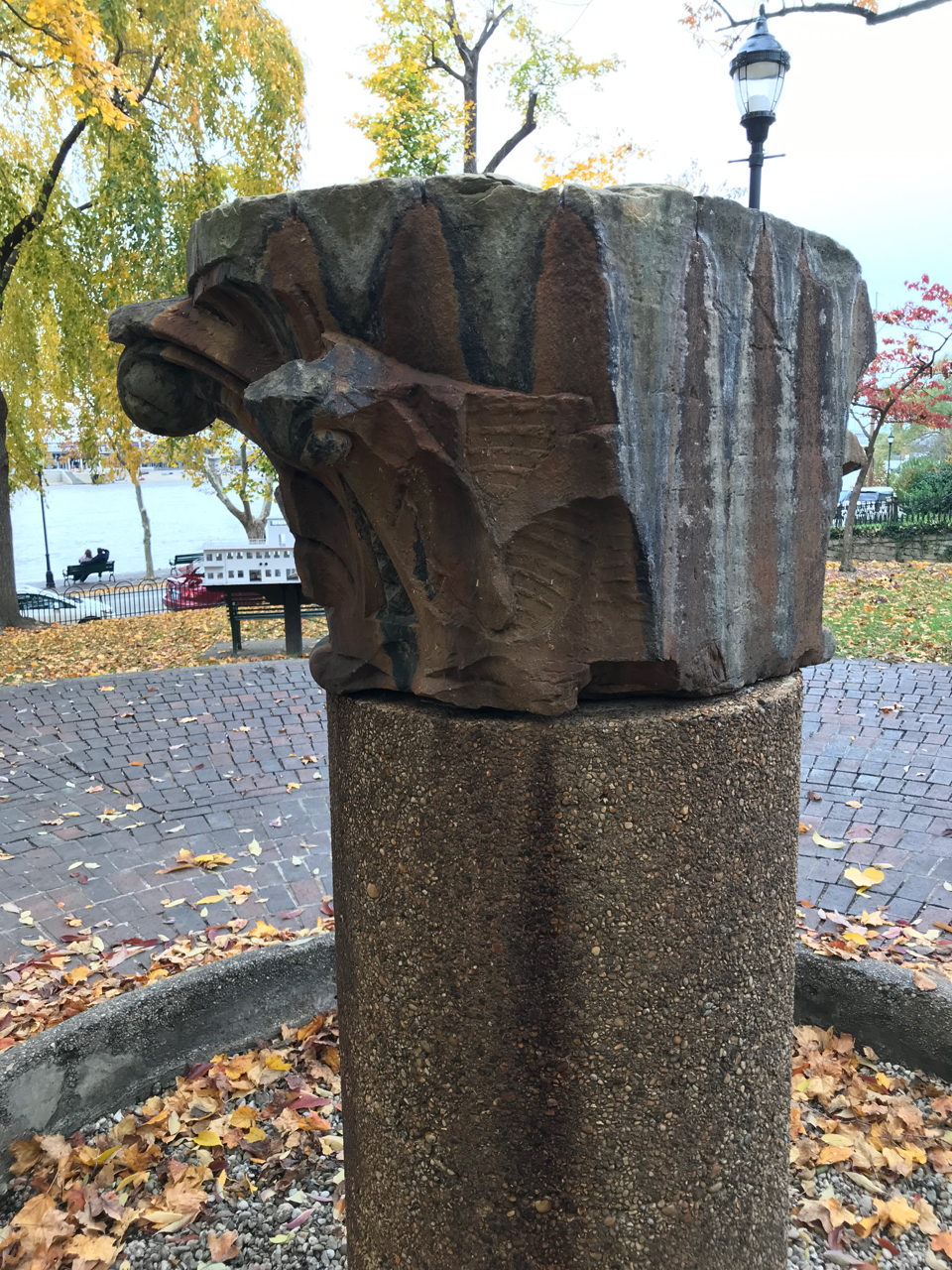
Hmm. This really doesn’t look like a fountain. Next time I’m in the area, I’ll have to look at it more closely.
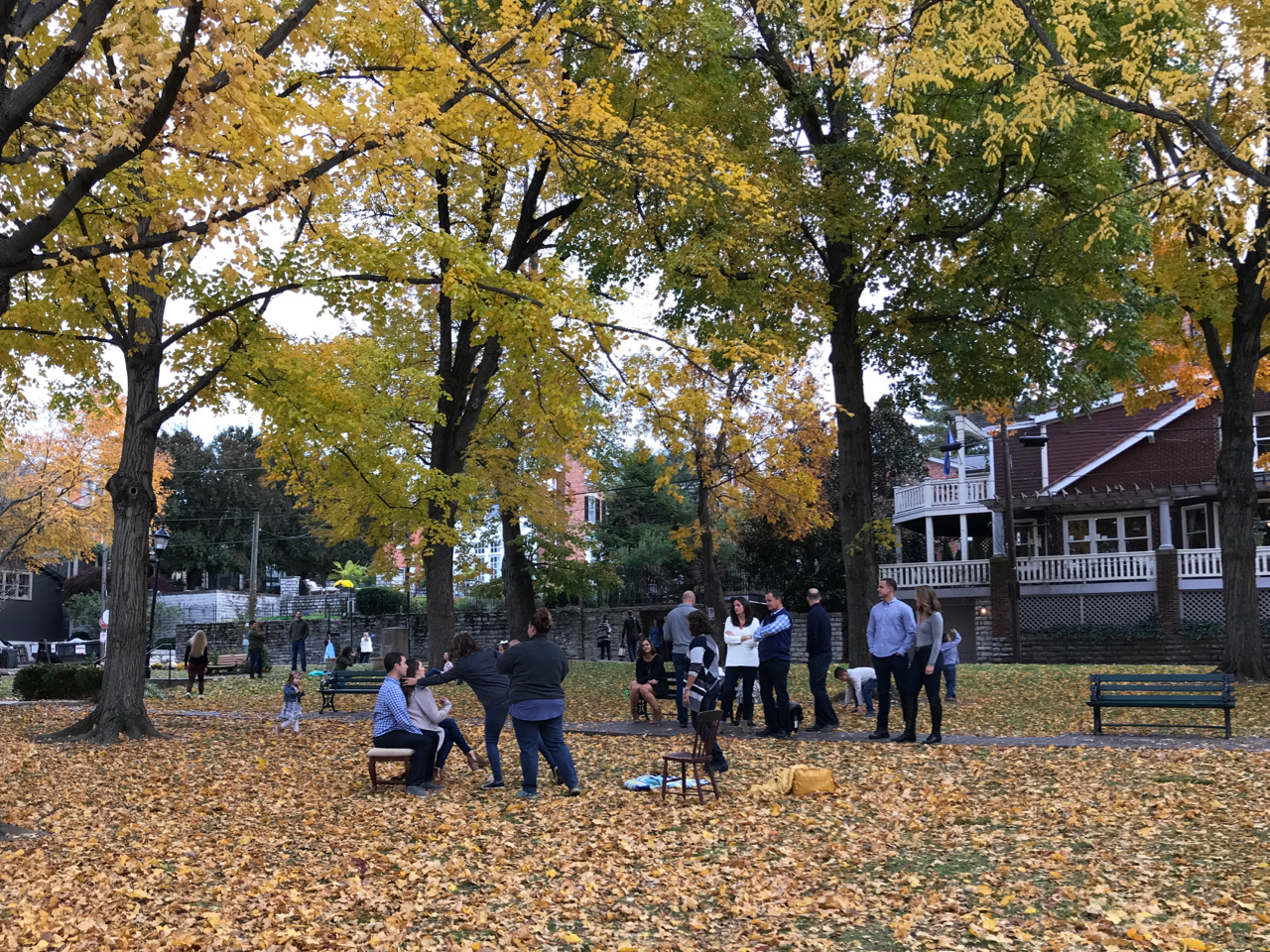
The park was filled with family groups taking photos. I am such an old fogey that my idea of taking pictures of the family is finding someone to point and shoot someone’s camera – a Brownie Hawkeye, a Polaroid Land Camera or maybe an Instamatic. Of course, the shots were out of focus or the heads would be cut off. And, since film and processing was so expensive, people only took one or two shots.
Now, with digital cameras and professional photographers, family portraits are great!
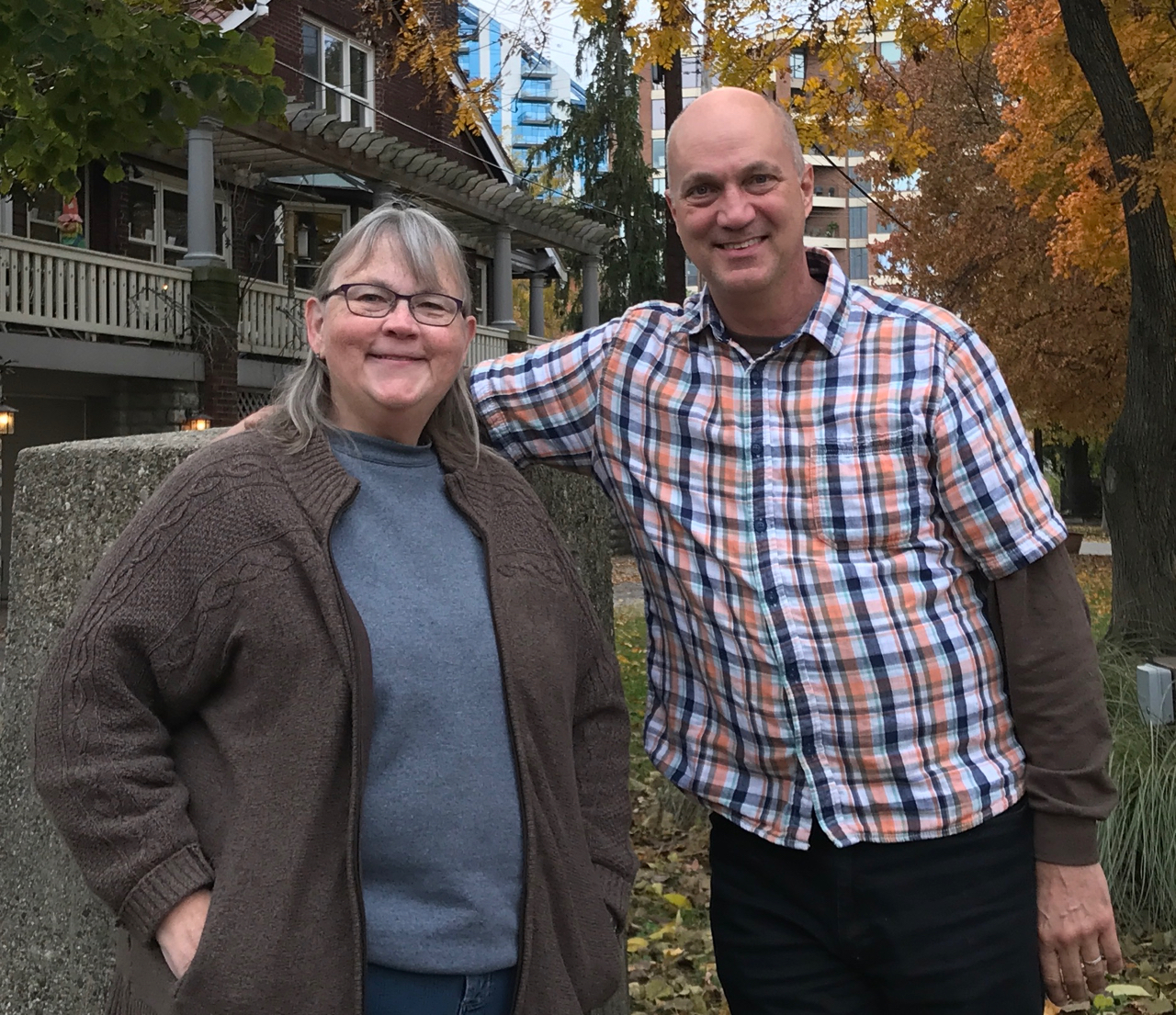
Ron and I kind of had a foot in each world. Digital photo, someone else took it – but it was just a passerby that I passed my phone to. Cheap, yet effective.
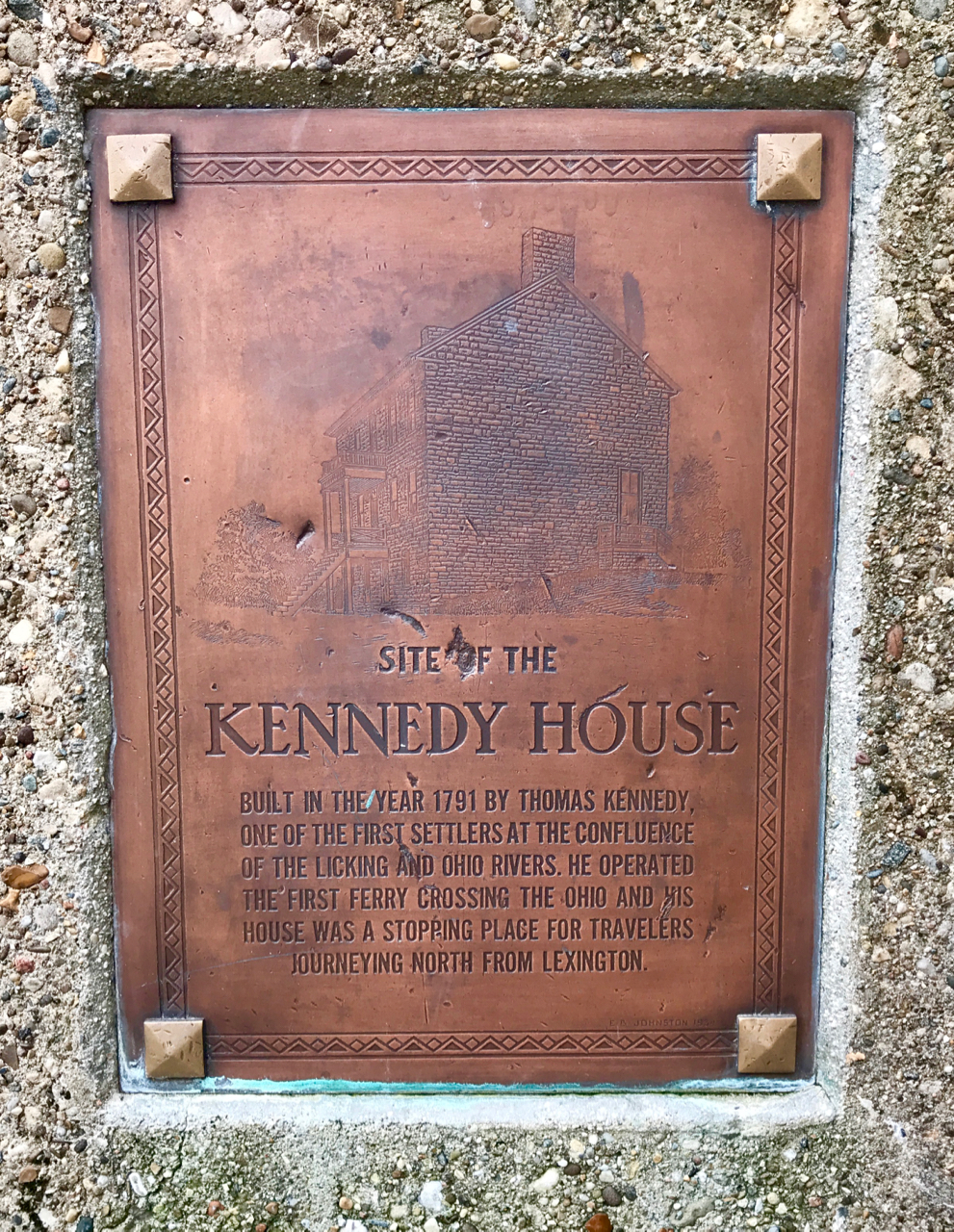
One last photo of a memorial to the history of the area before we move on. There were so many plaques and signs and memorials in the park! Maybe I’ll go back someday and read them all. (Or not…)
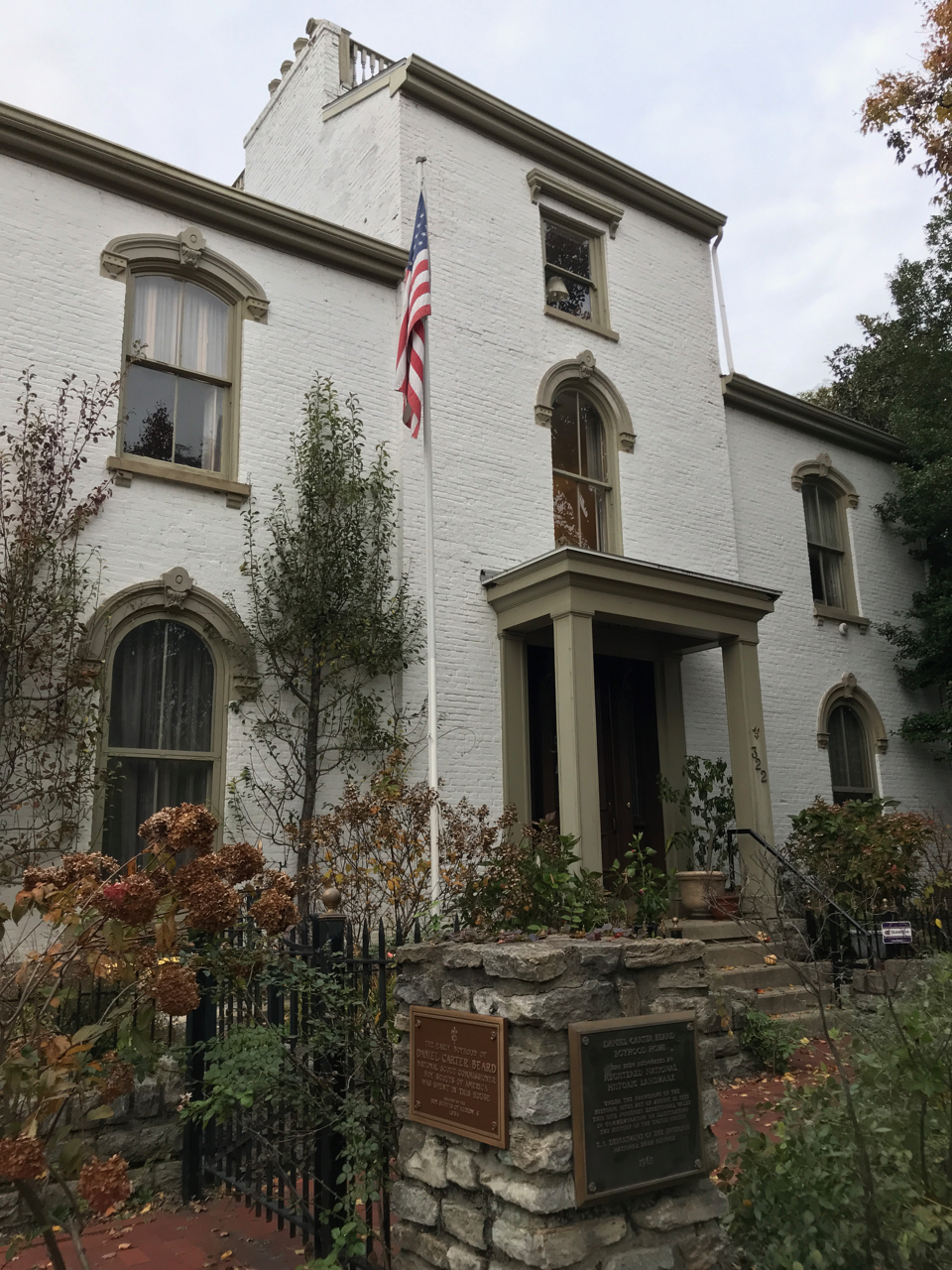
Our second – and last stop in Covington – was the home of Daniel Carter Beard. He is honored as “The Father of Scouting.” “Uncle Dan,” as he was known, was an interesting fellow. In addition to organizing a group called the “Sons of Daniel Boone,” he was an artist, a social reformer and a civil engineer. In fact, he did some work for Mark Twain.
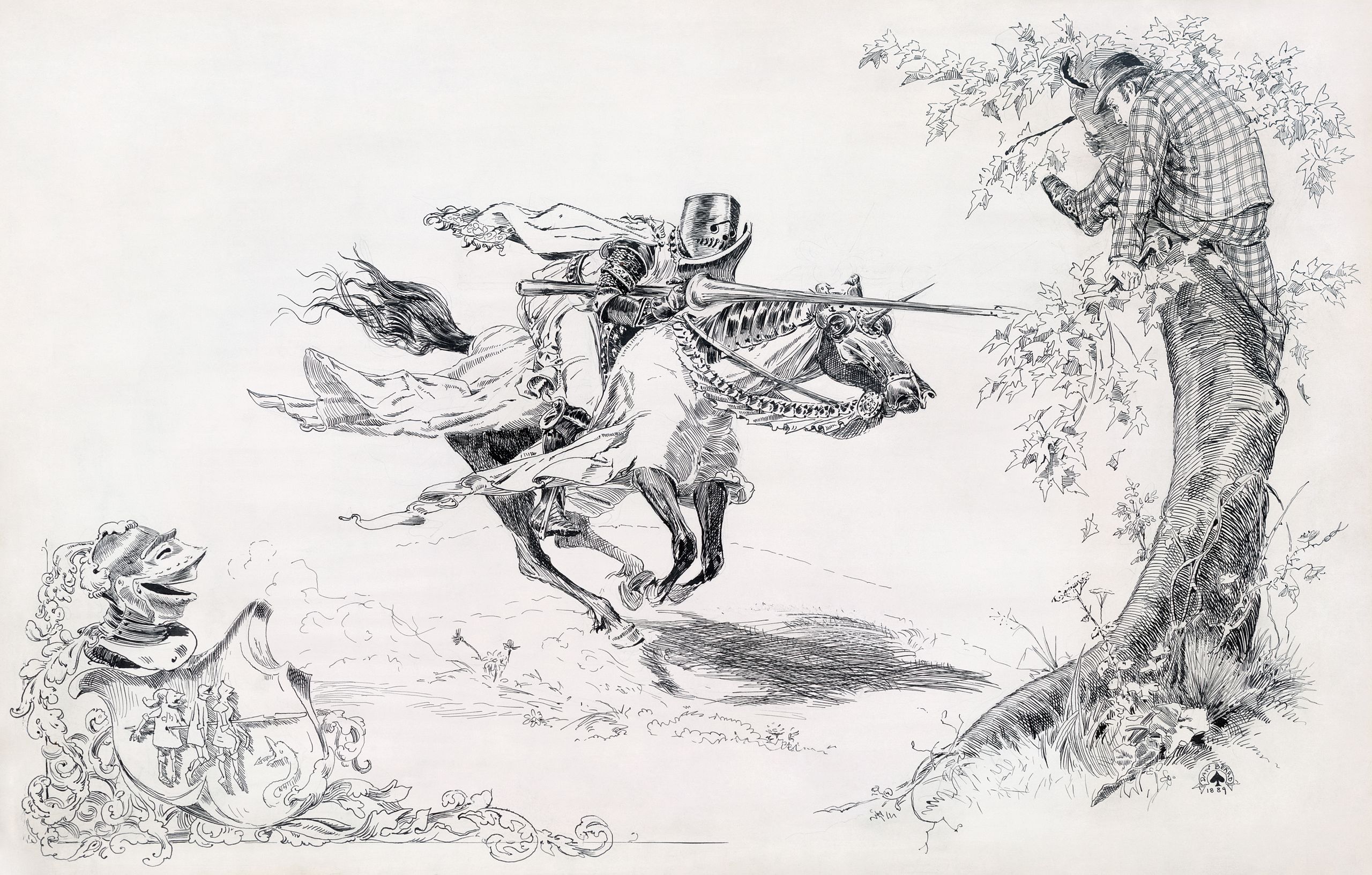
He came from a family of artists, and the home that we stopped to look at was his uncle’s House – William Holbrook Beard. His uncle specialized in satirical paintings of animals performing human-like activities.

His father, James Henry Beard, was also a painter. Incidentally, he was born in Buffalo, New York in 1812. There happened to be a war going on there in 1812. Not exactly a place you’d want to raise a family. I visited an 1812 cemetery in Buffalo on an earlier trip.
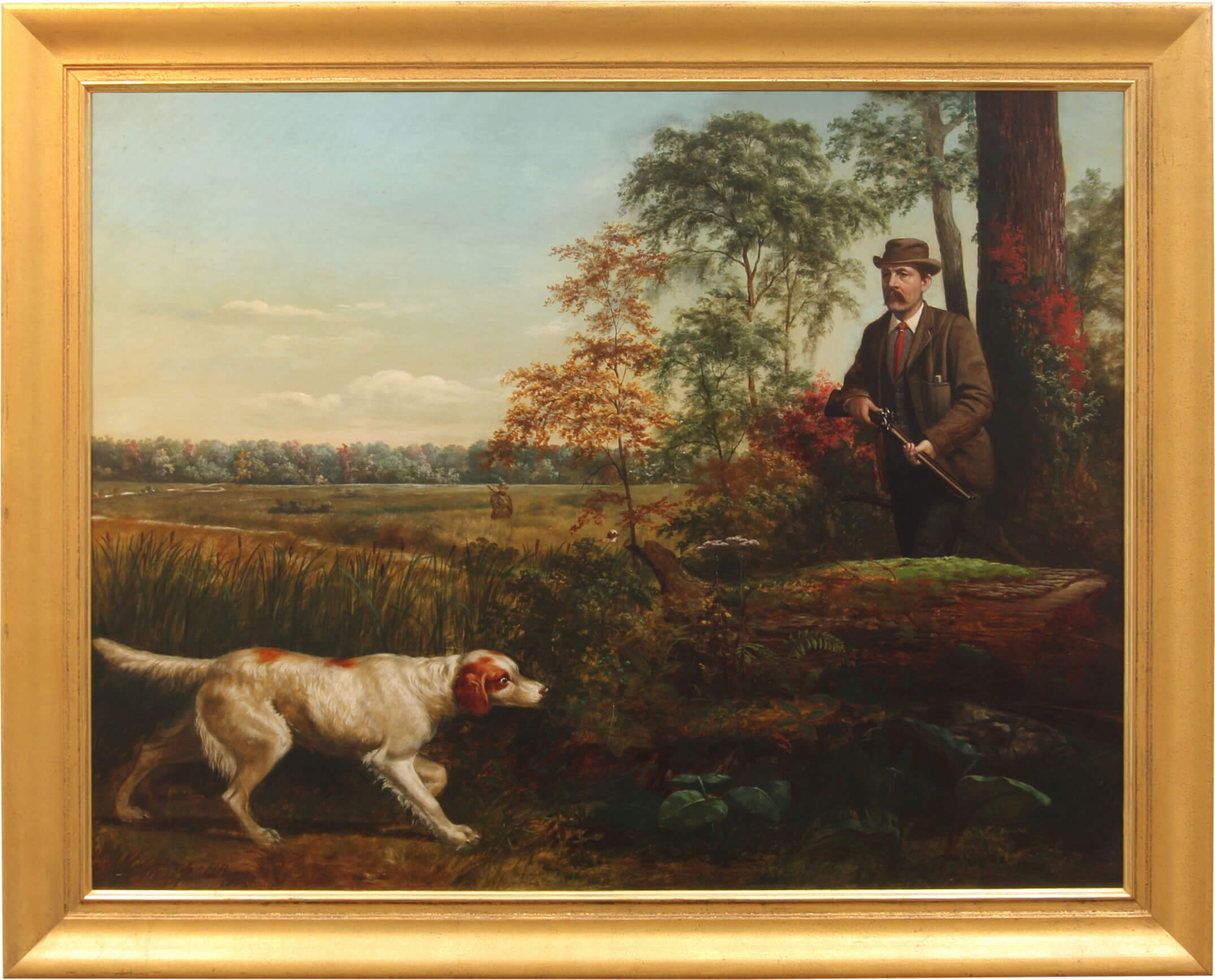
If you are interested in buying this painting, it is for sale at the Bedford Fine Art Gallery in Bedford, Pennsylvania.
Anyway, back to Uncle Dan. He founded his “Sons of Daniel Boone” in 1905, and merged it with the Boy Scouts of America in 1910, and is considered one of the founders.
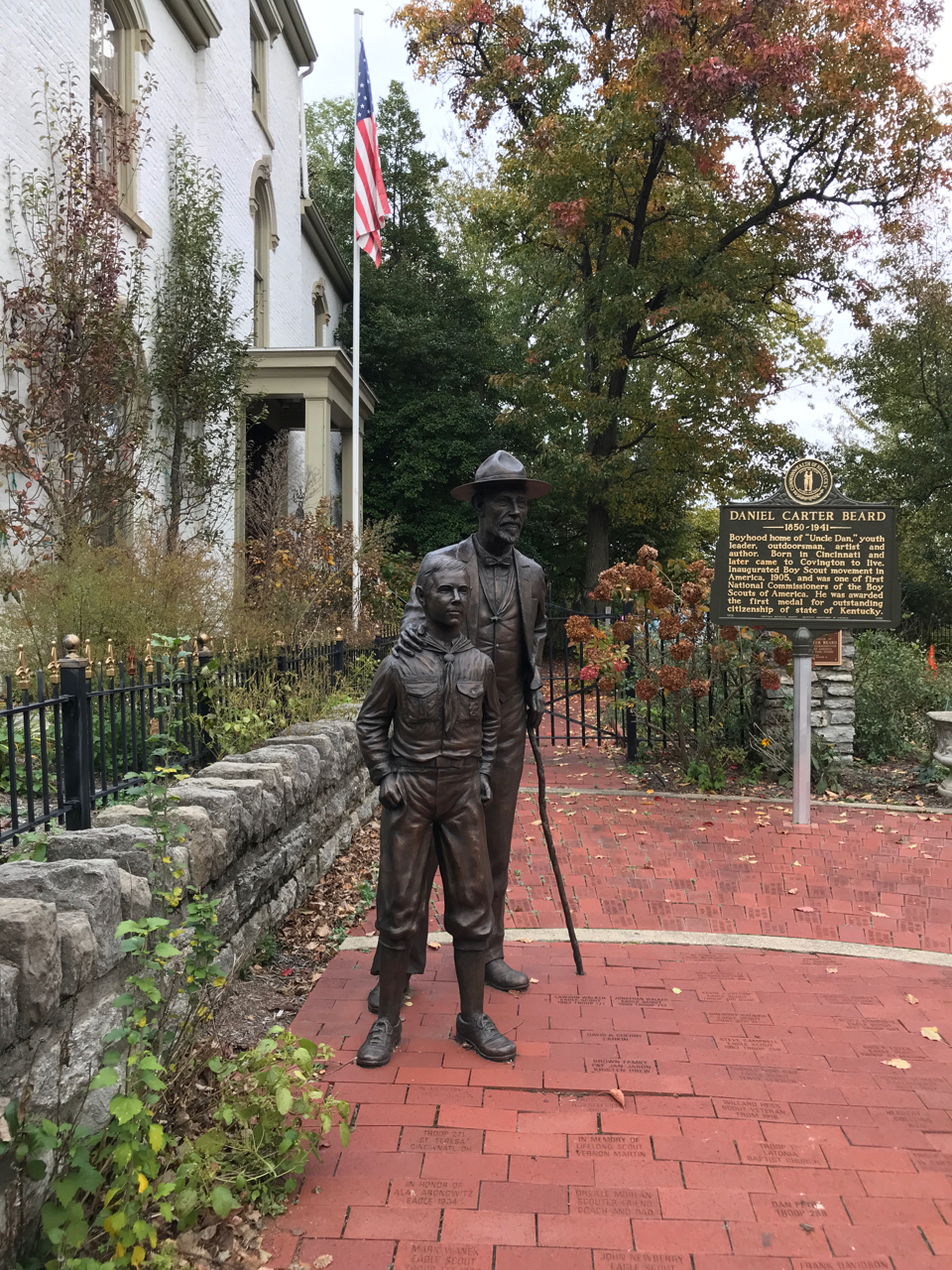
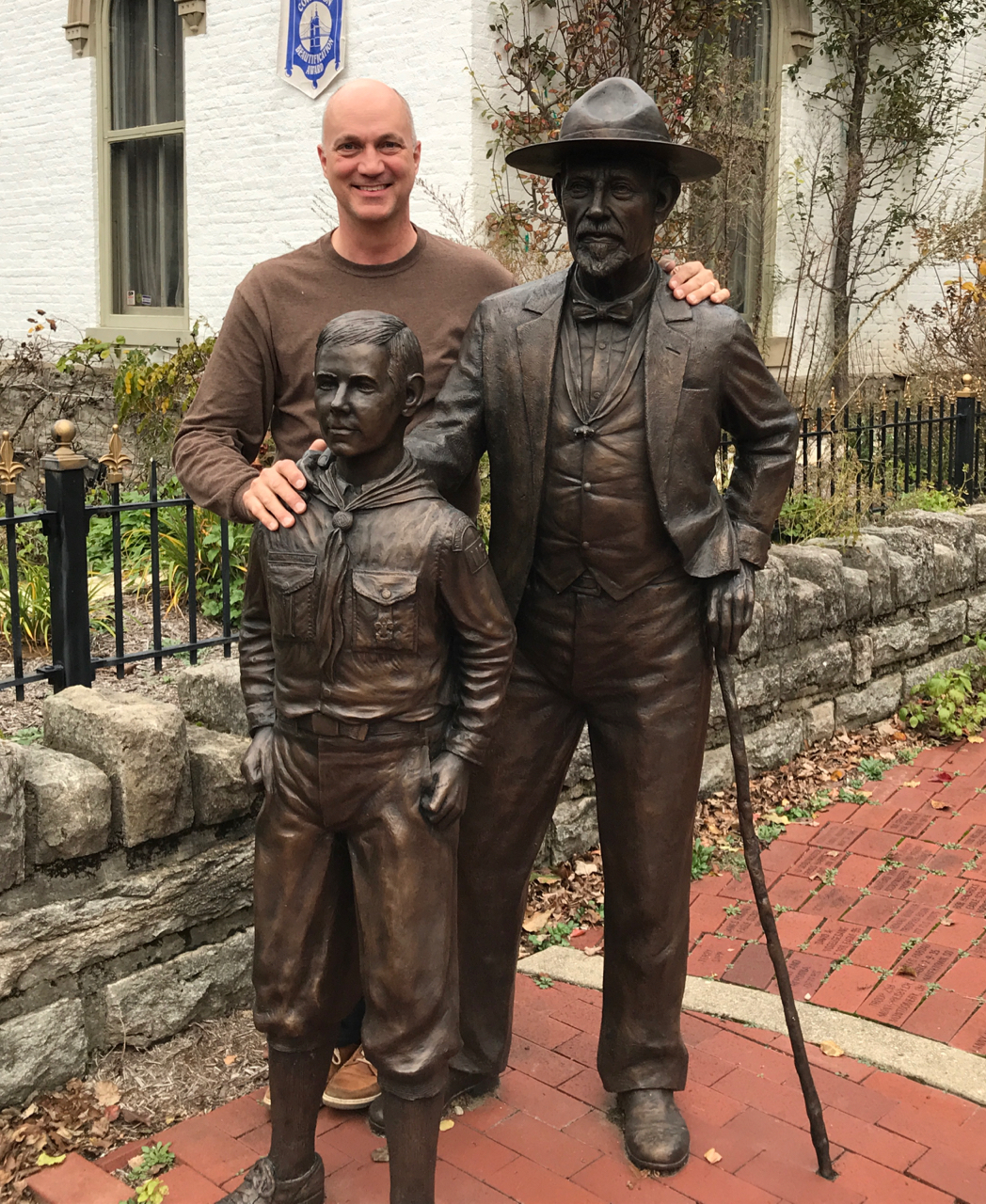
This sculpture dedicated to him is from the Cincinnati Bicentennial Project in 1988.
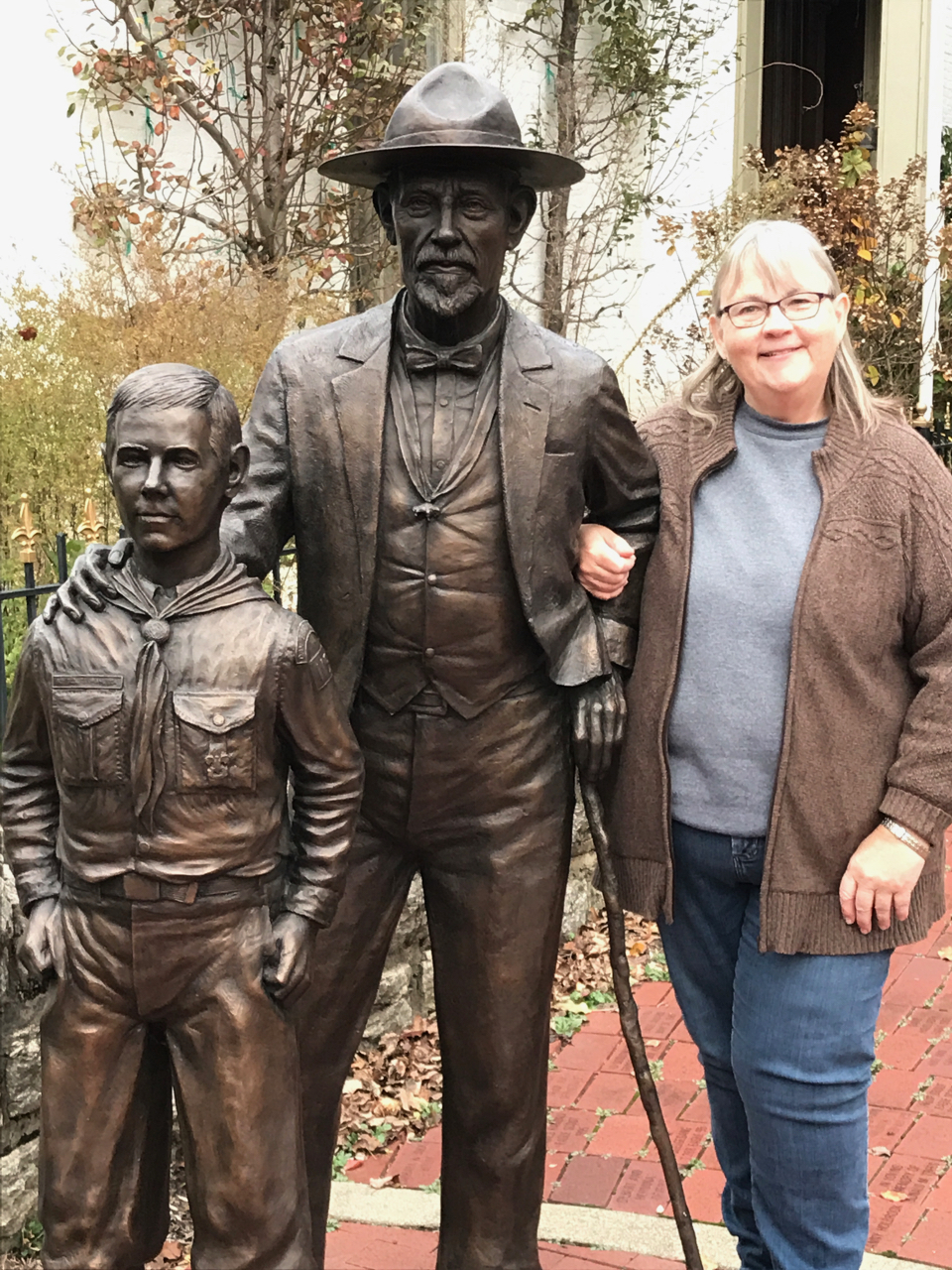
We had to take some photos. Here I am With Uncle Dan and a Boy Scout.
And Ron had his photo taken.
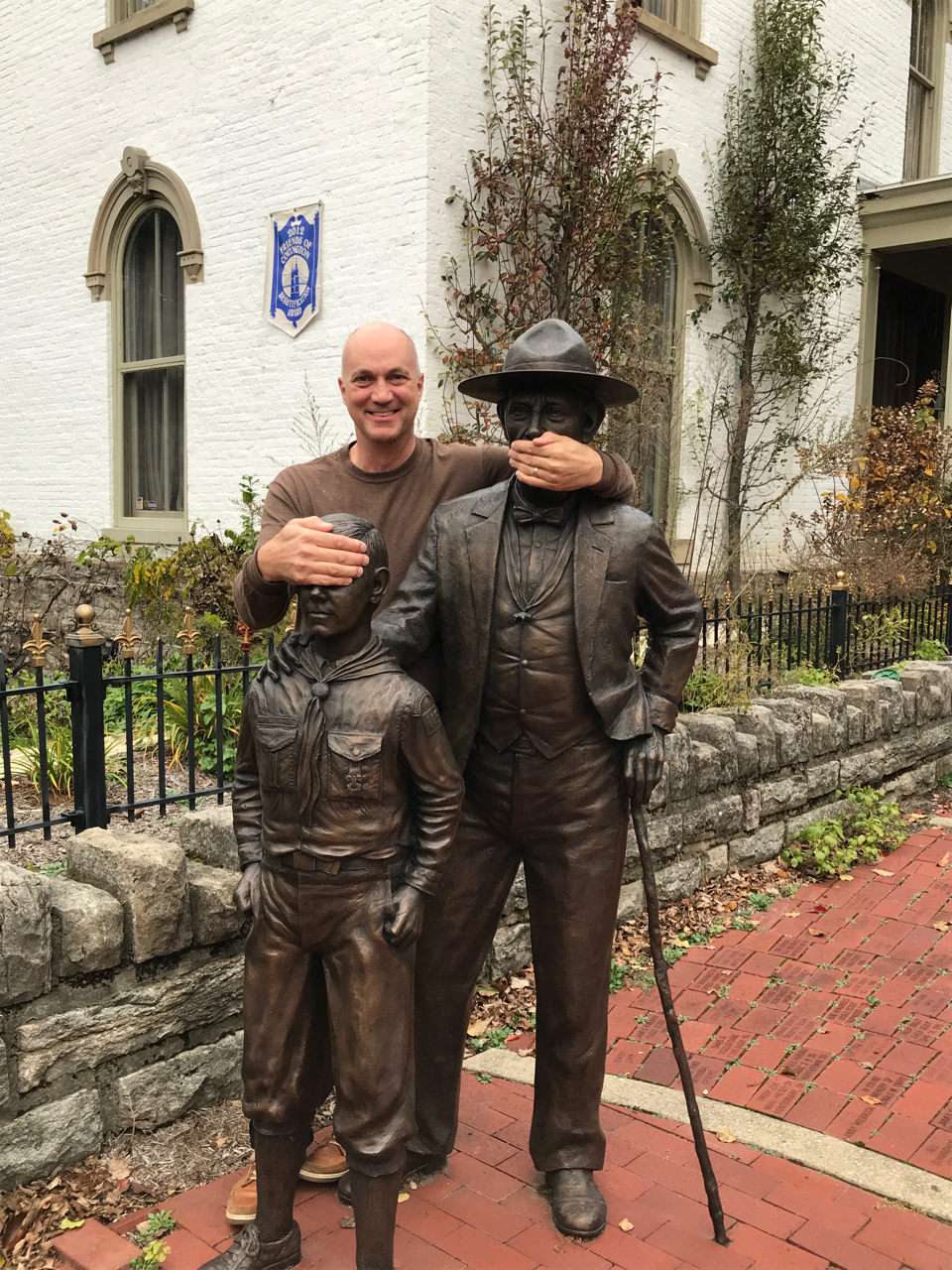
Ron had to get creative! I guess the boy is “see no evil” and Uncle Dan is “Speak no evil.” I guess that leaves “hear no evil” for Ron.
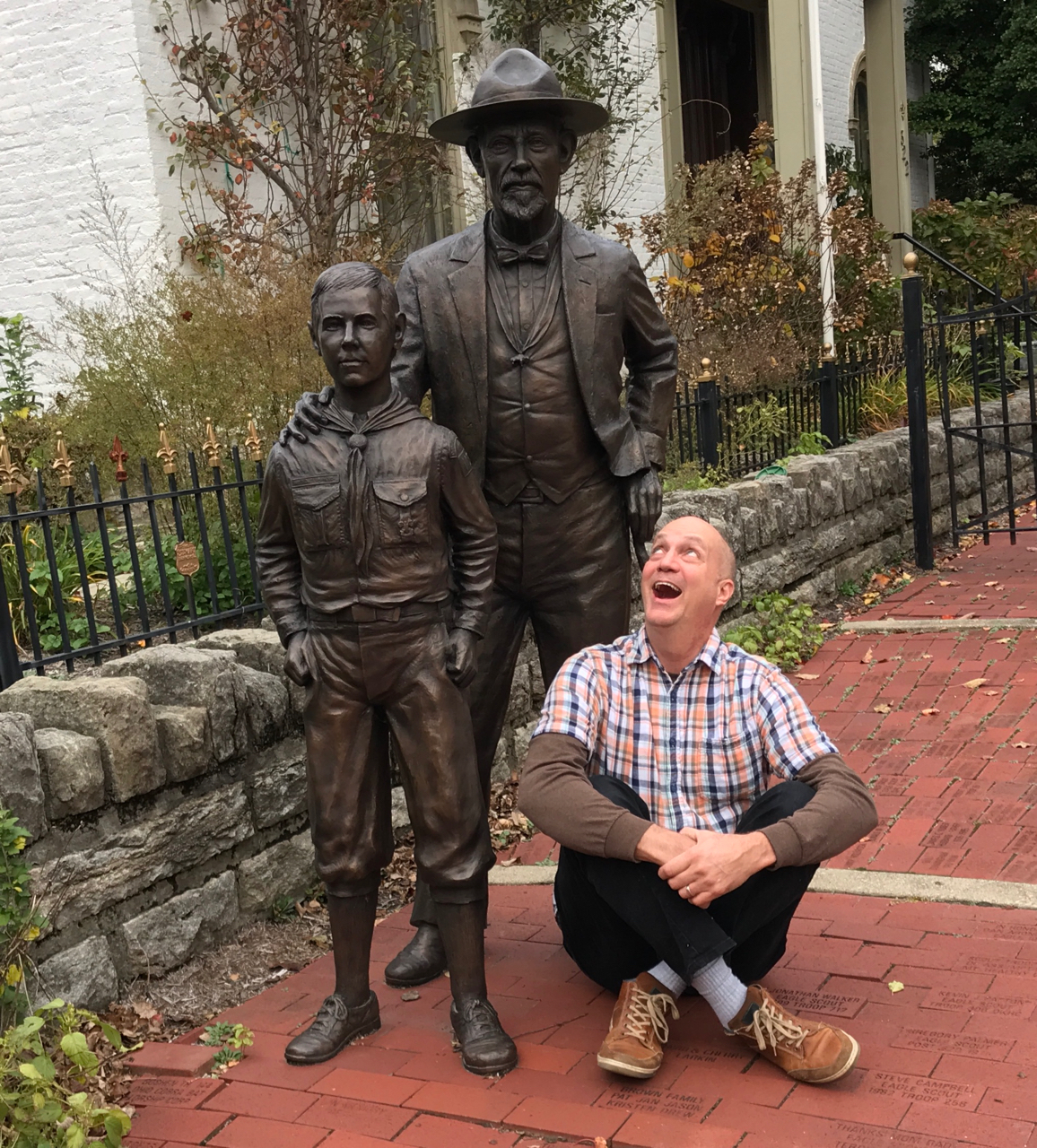
Time for one more funny photo and then it was back to Ron’s house. Dinner and a good night’s sleep and I hit the road in the morning.
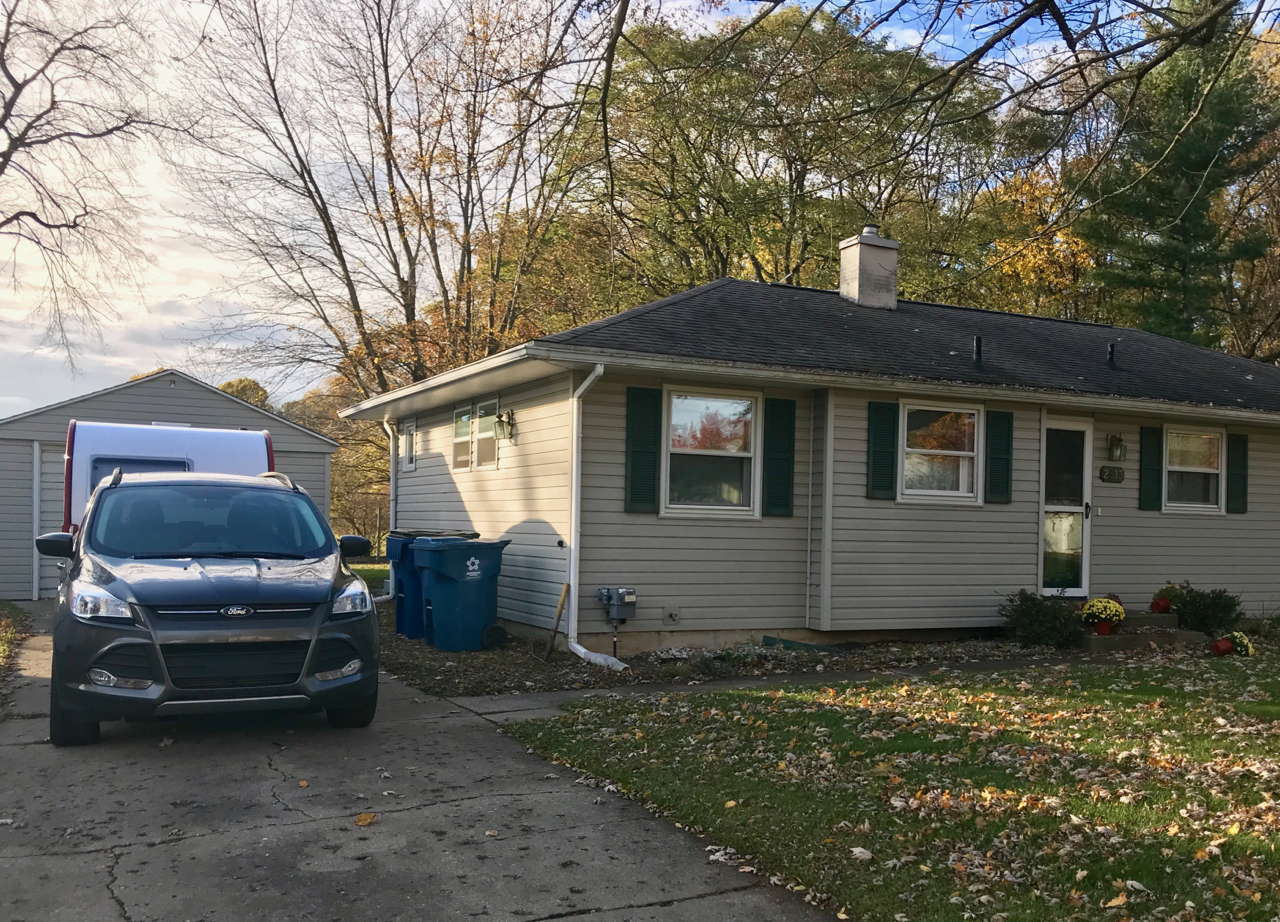
I was home before the sun had set!
So ends the Fall 2018 trip.