As I headed toward Rapid City, I had a sudden pang of nostalgia when I hit I-90. The New York State Thruway is part of I-90, and Buffalo, New York has several exits on it. Home, sweet home!
I-90 is the longest Interstate Highway in the United States, at 3,020.54 miles. It starts in Boston, near Logan International Airport, and ends in Seattle at State Route 519, near Safeco Field and CenturyLink Field.  I got to and around Rapid City and found a campground. Many people had raved about the campgrounds at Custer State Park, but I was having trouble ascertaining that they were open and if the sites would accommodate Flo and Bart. I ended up at Heartland RV Park & Cabins. Not exactly a forested paradise, but it would do.
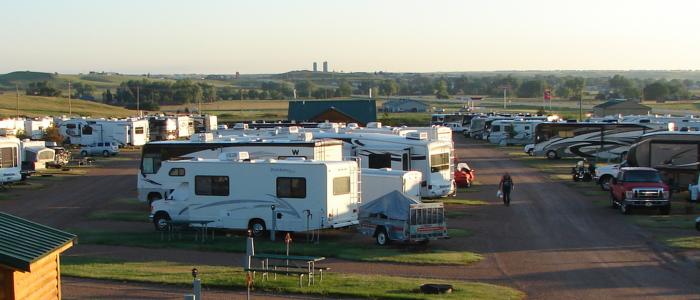
Incidentally, I borrowed this photo from their website. There were nowhere near this many RVs there. It was still early in the season.
I settled in and did some laundry and made plans to do some sightseeing. What was I going to see?
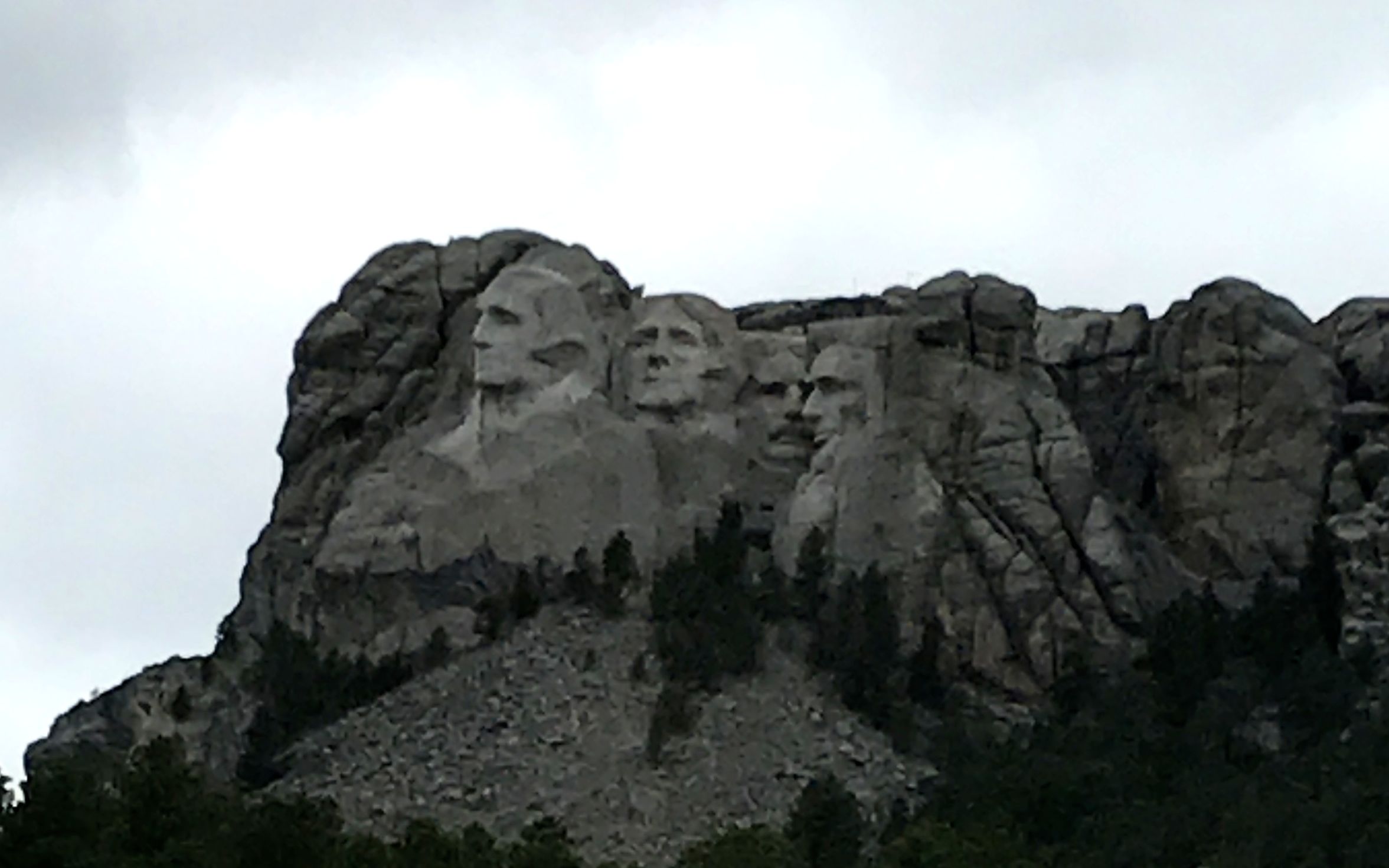
Mount Rushmore!
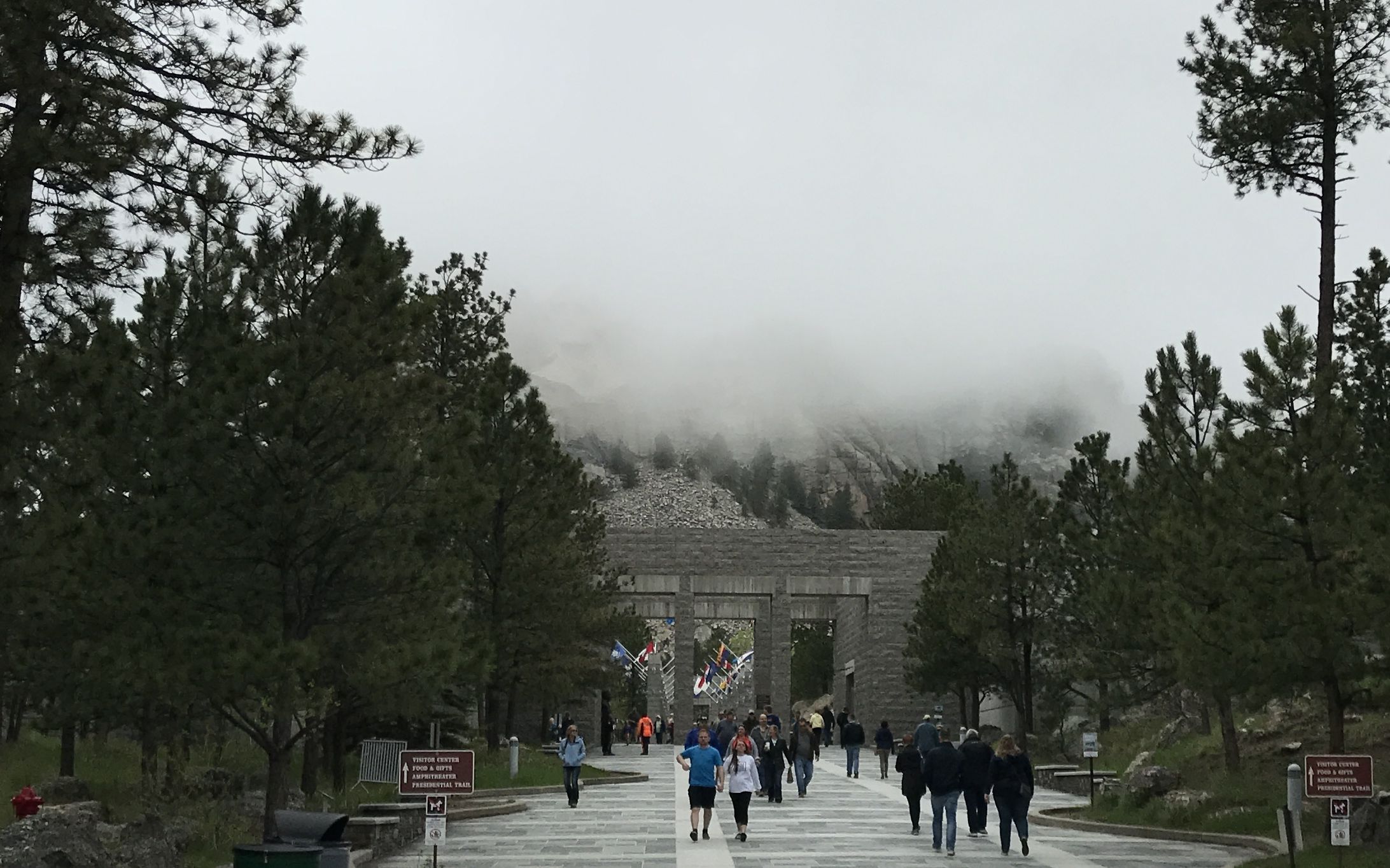
The weather wasn’t the greatest, but it would have to do. I paid for the parking and headed up to see what I could see. If you want to see what people are seeing right now, you can check out the EarthCam for Mount Rushmore.
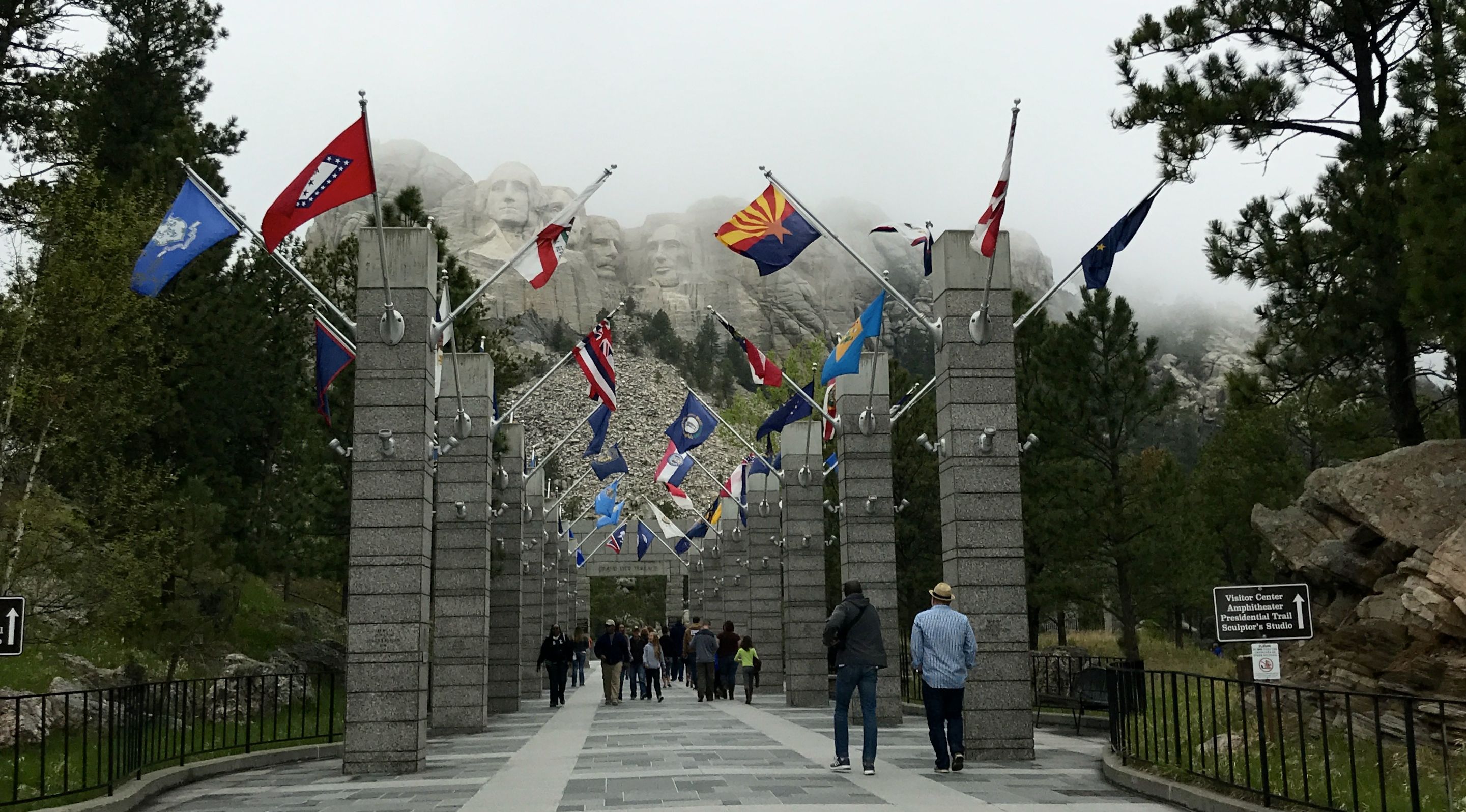
I walked up the Avenue of the States. The flags flapping the breeze where a nice touch of color on this cool, damp, dark day.
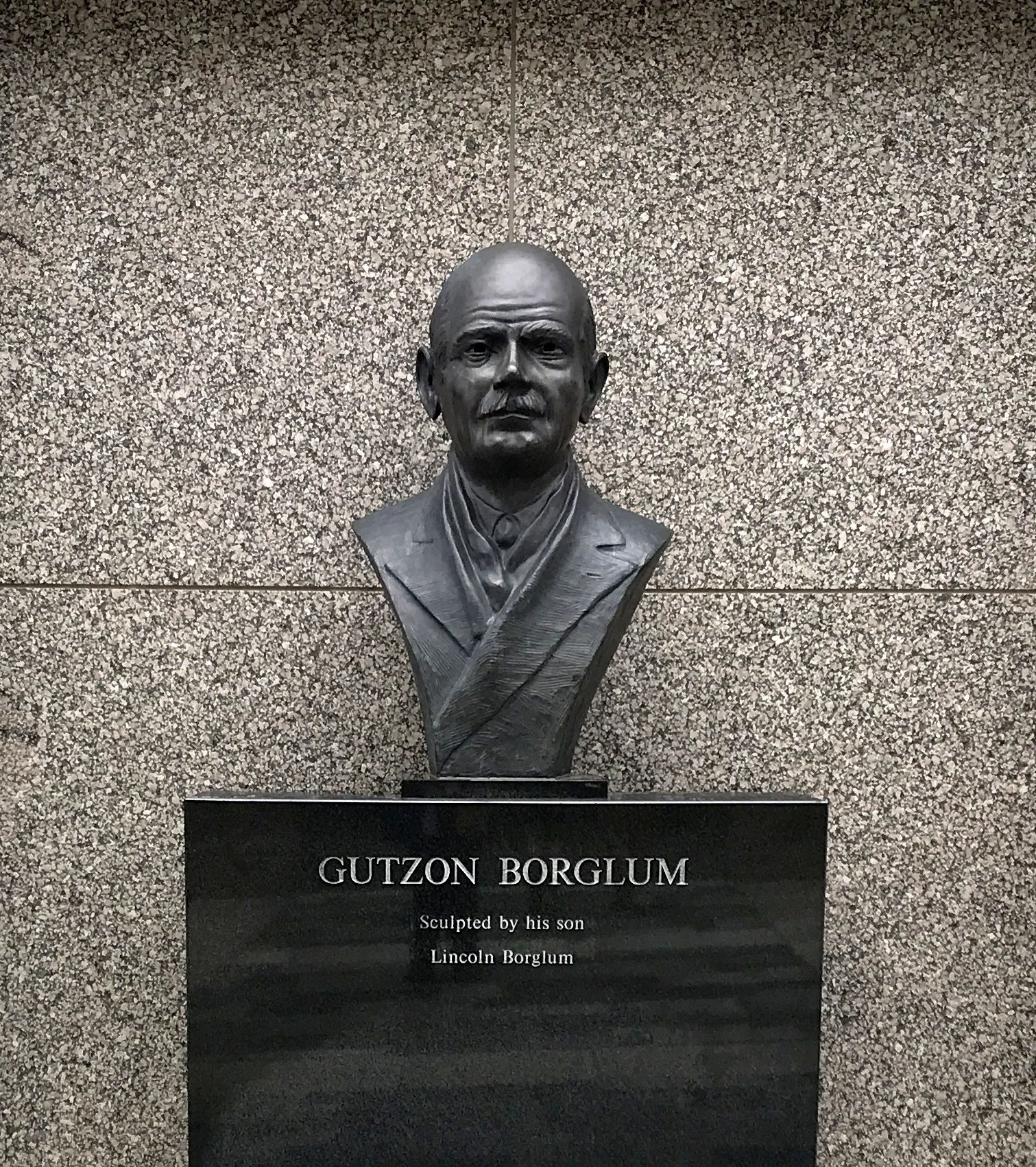
If you know anything about Mount Rushmore, you probably know that it was sculpted by Gutzon Borglum. He has such a memorable name – or maybe one of those names that is right on the tip of your tongue when you are playing a trivia game. His son, Lincoln, is also credited as involved in the creation of the monument.
You might not have known that Borglum was also the first artist to begin the sculpture on Stone Mountain in 1923. He had quite a different plan for that bas relief sculpture, which included General Lee and an army of 750 men. He left the project in 1925 over what appear to be “artistic differences.” Borglum’s work was removed and the next artist, Augustus Lukeman, took over.
Ah, but this post isn’t about Stone Mountain! If you are interested in more information about Stone Mountain, click here.
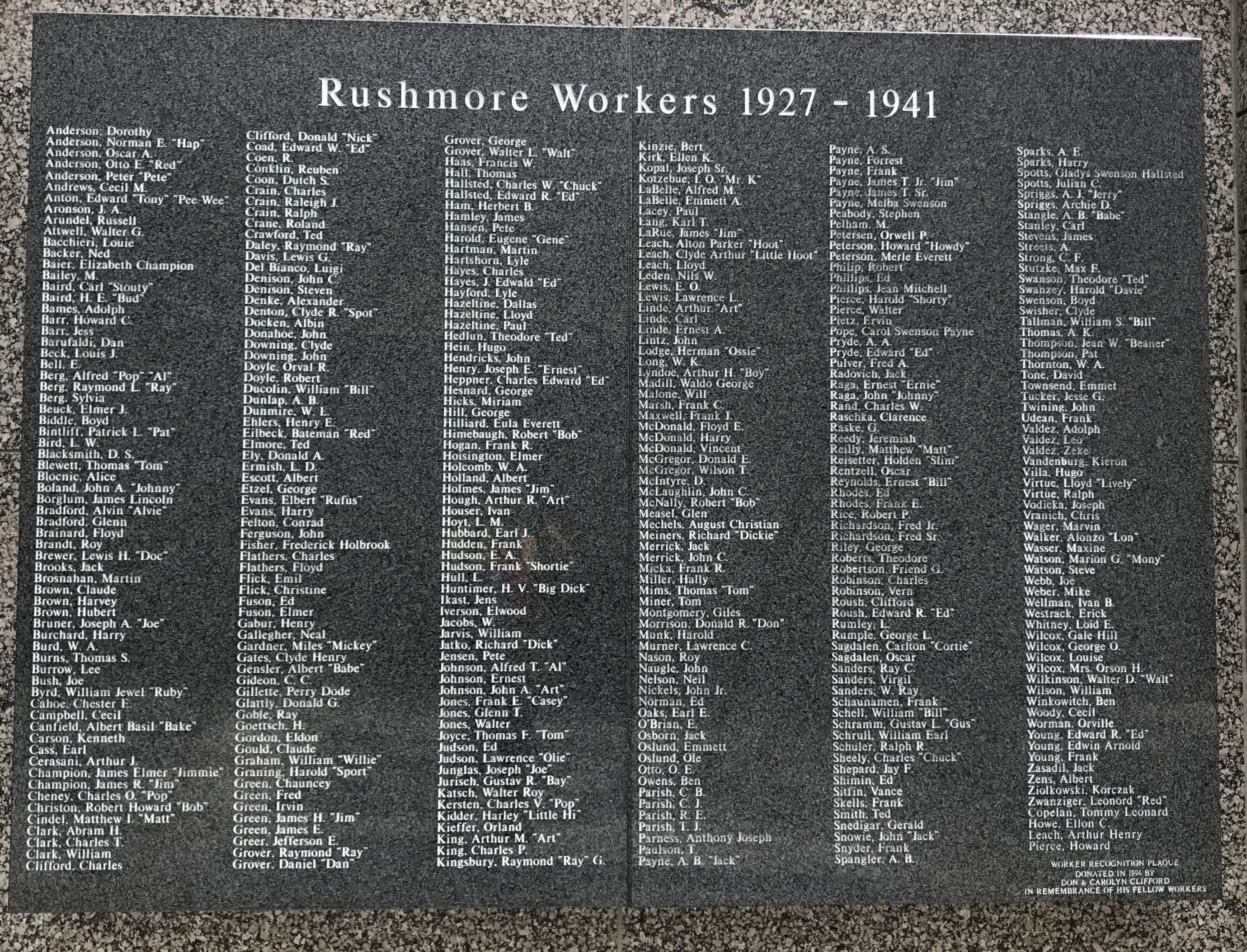
I liked the plaque that honors the people who worked on creating Mount Rushmore.
Since the weather was dreary, I decided to explore the museum and hope that it would clear up while I was exploring the exhibits. There were some interesting displays.
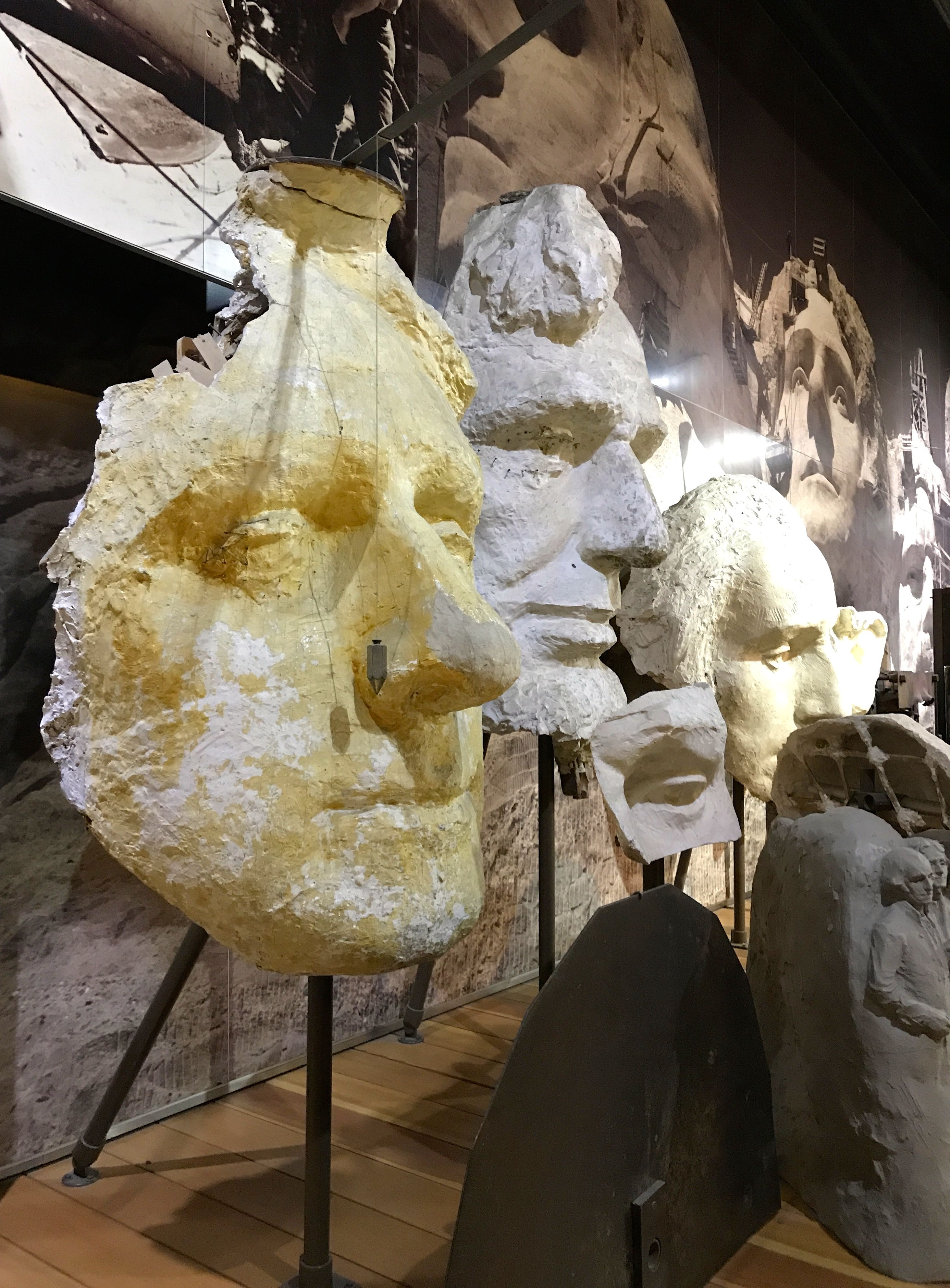
There were models of the faces to be sculpted. A mountain isn’t something you want to attack freehand.
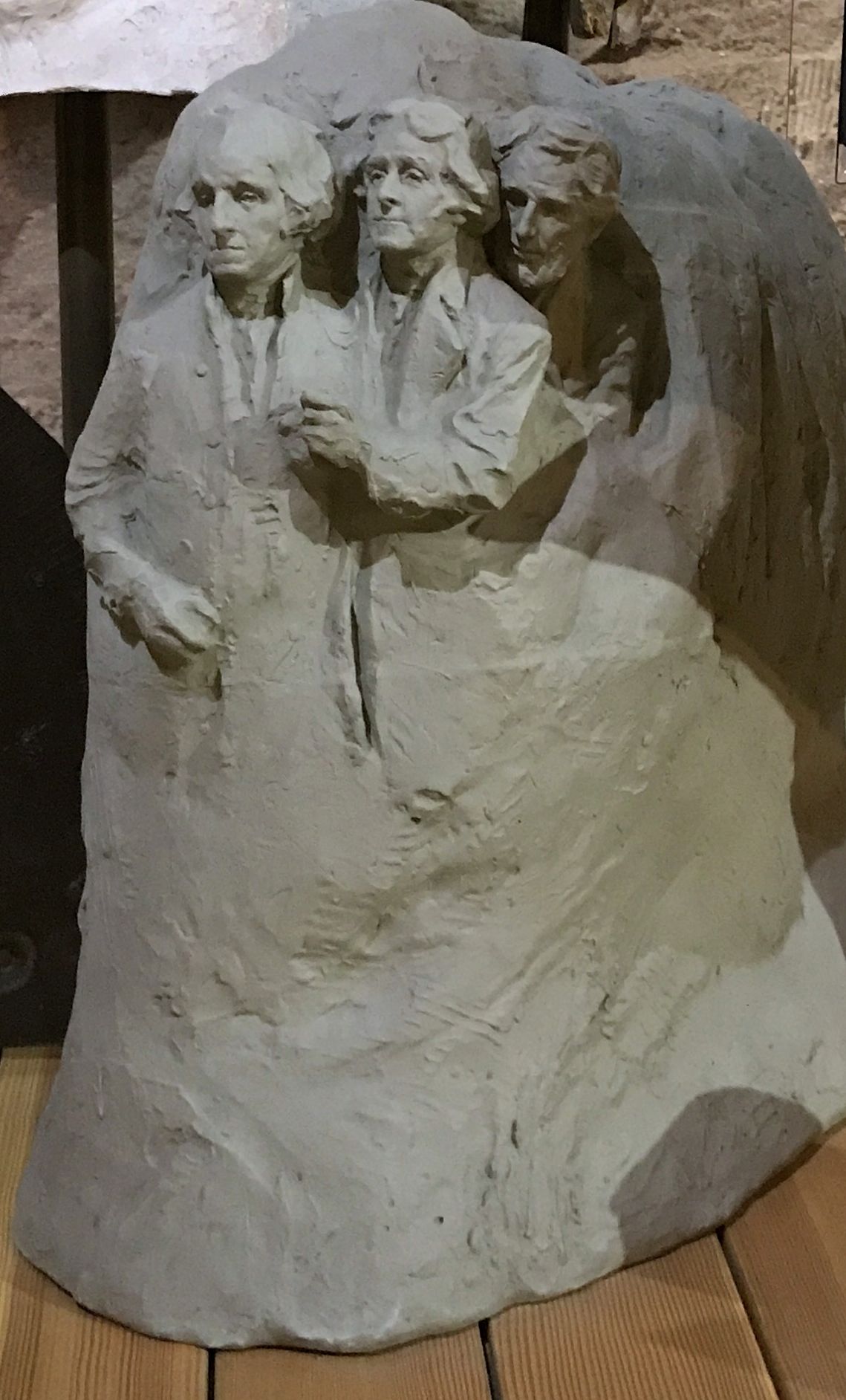
There were several ideas floated. This one with Lincoln peeking out over Jefferson’s shoulder is kind of cute.
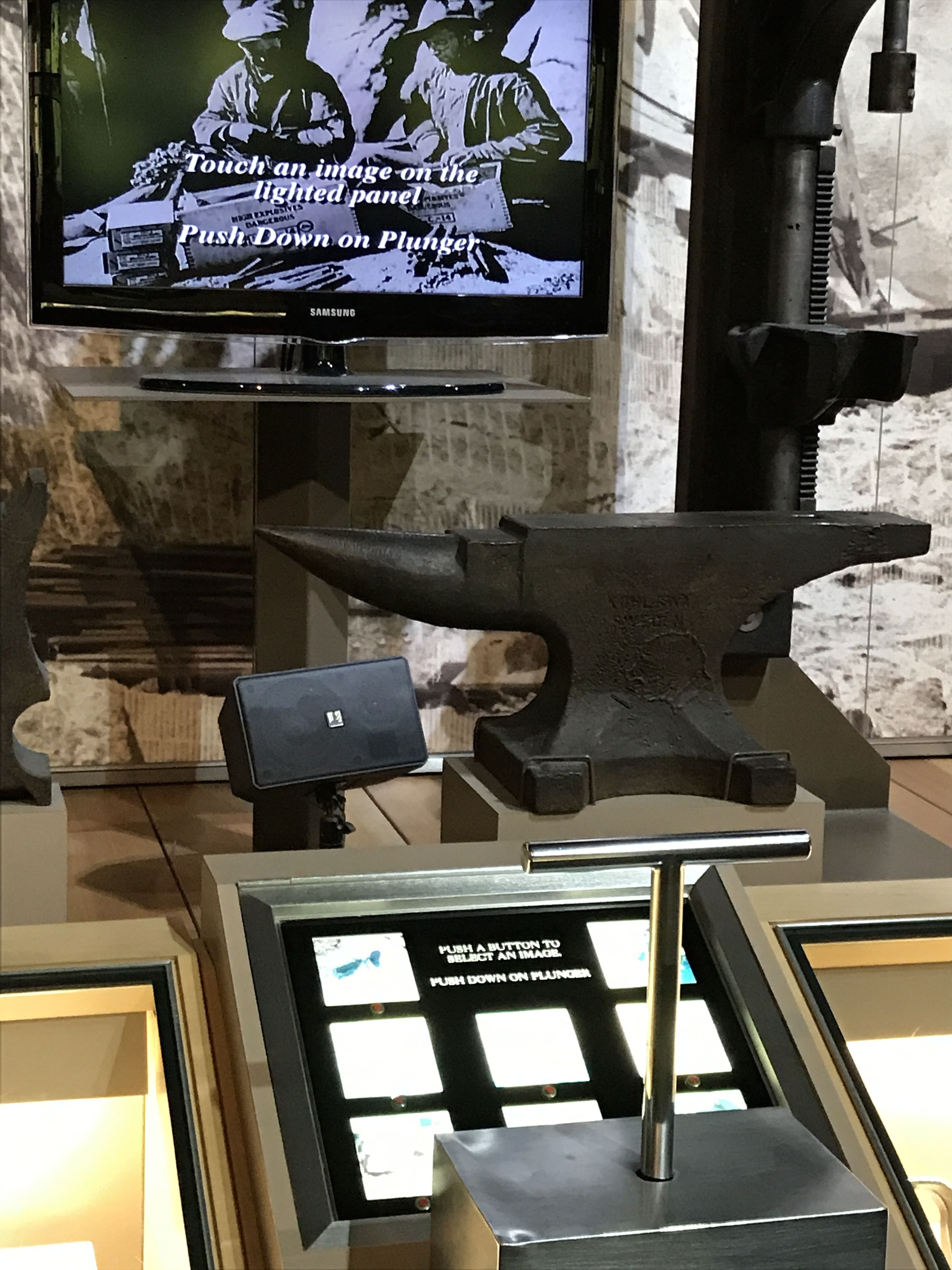
There was an interactive display where you got to depress the plunger and blow up part of the mountain.
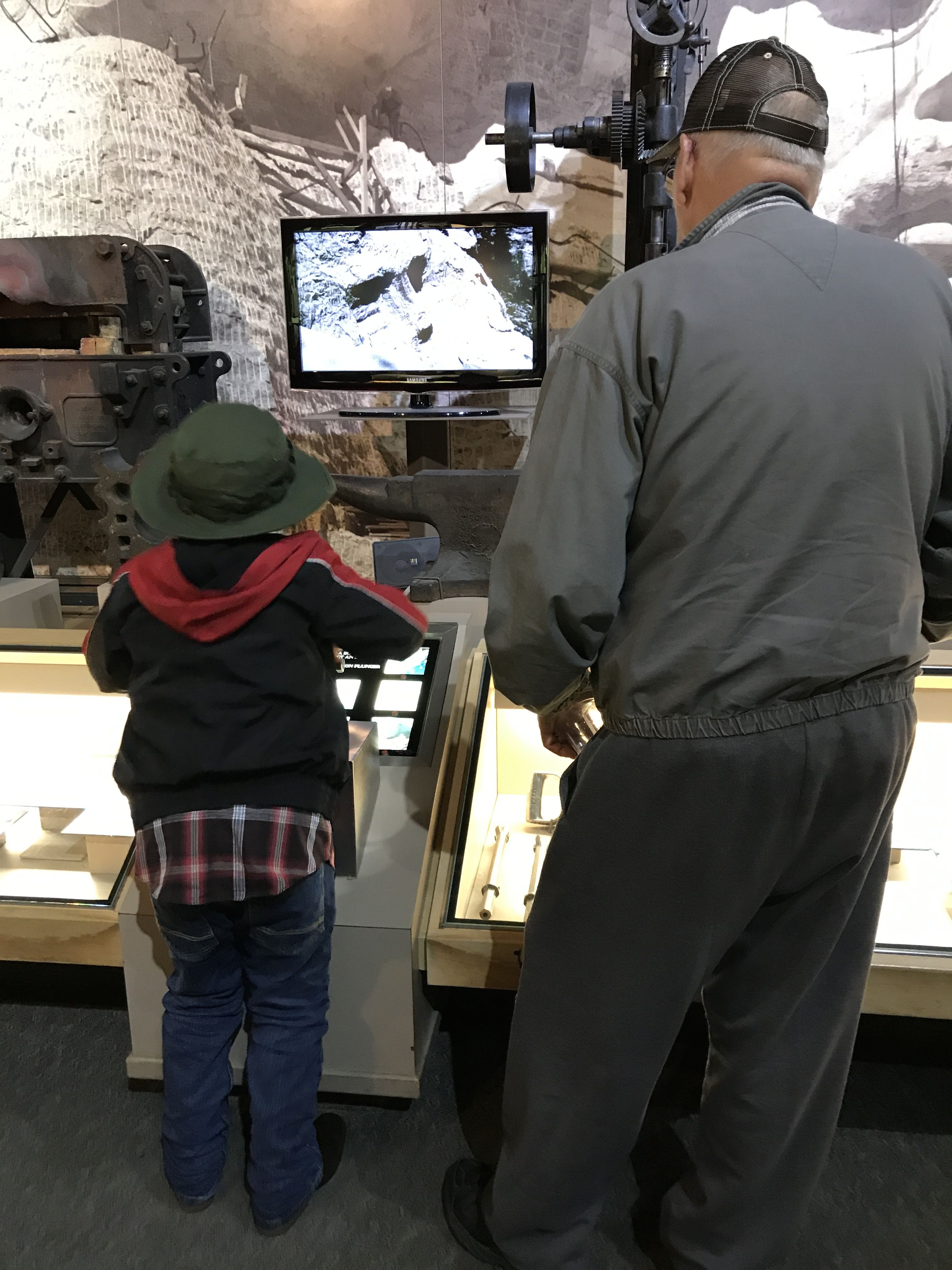
After I did my fair share of blasting, I let this young man have a turn. It was fun sharing in the creation of the monument, even if only digitally.
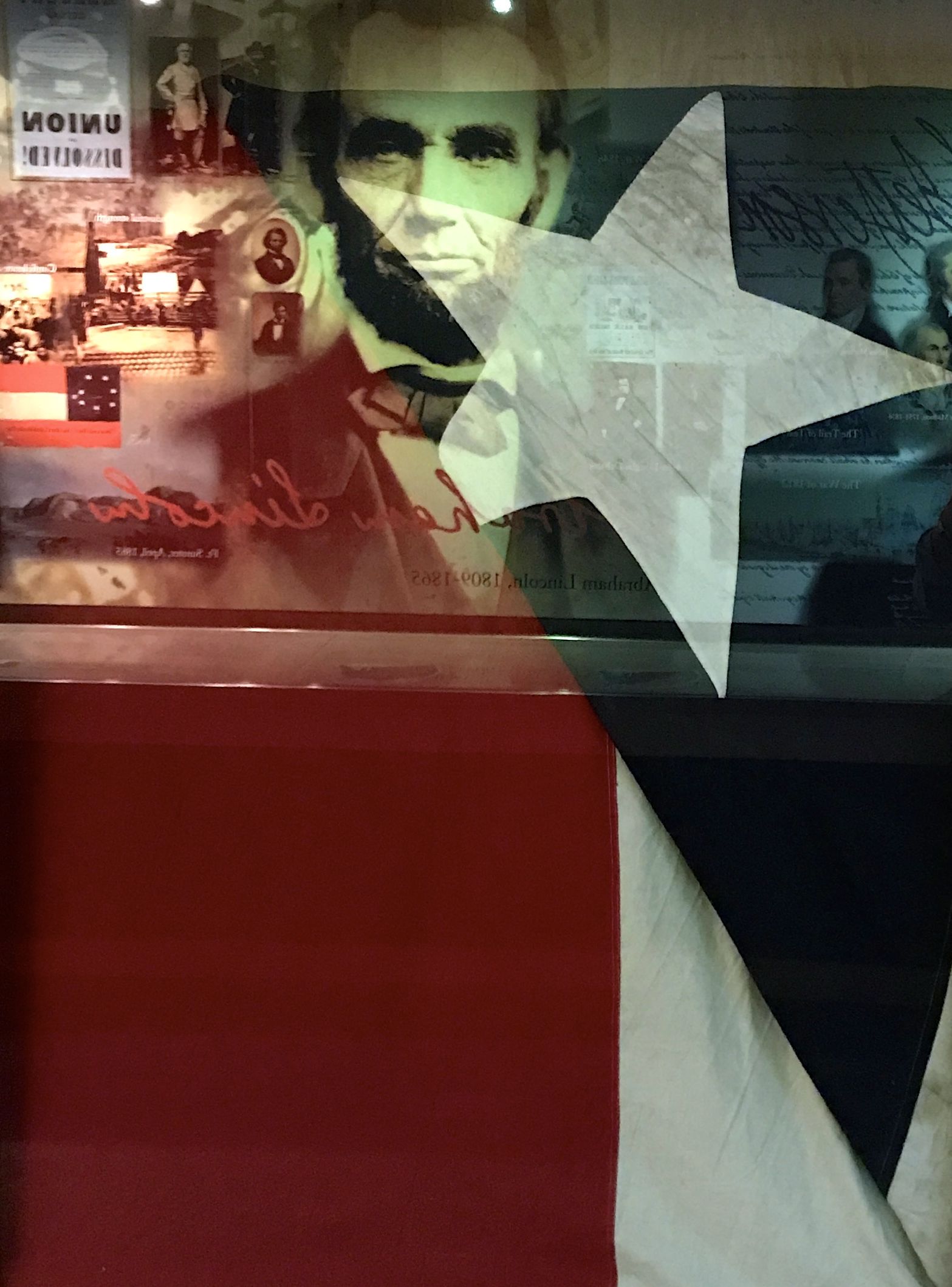
This is the dedication flag that was created by the Rapid City Women’s Club for the dedication of the Washington figure on July 4, 1930.
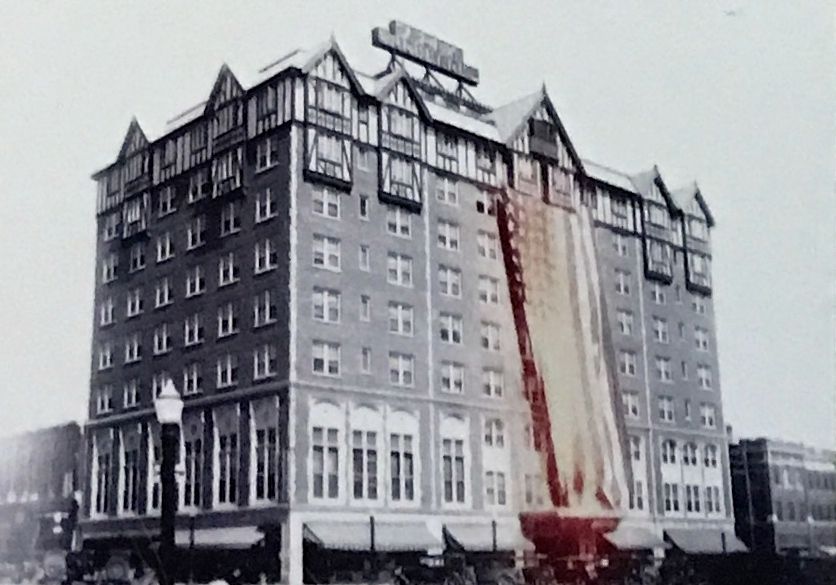
The machine-sewn flag consists of 13 red and white stripes and 48 stars within the field of blue. Each star, measuring 27 inches wide, was hand stitched in place.
Considered to be the largest flag in the world at the time, it was displayed on the Alex Johnson Hotel for a few hours before the dedication.
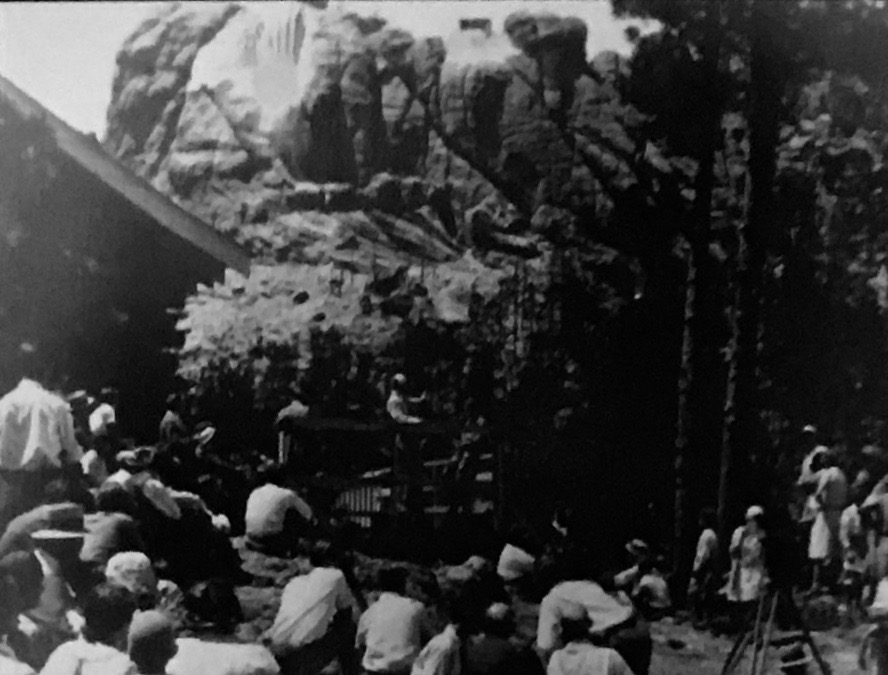
If you look carefully, you can kind of make out the stripes on the sculpture of Washington at the far left.
Borglum used the flag on the dedications of the remaining presidents. The, like other textiles, is affected by environmental conditions and will eventually deteriorate, although professional conservation can stabilize and reverse the damage. The National Park Service is pursuing conservation work to extend the longevity of the flag and preserve this unique treasure for the American people.
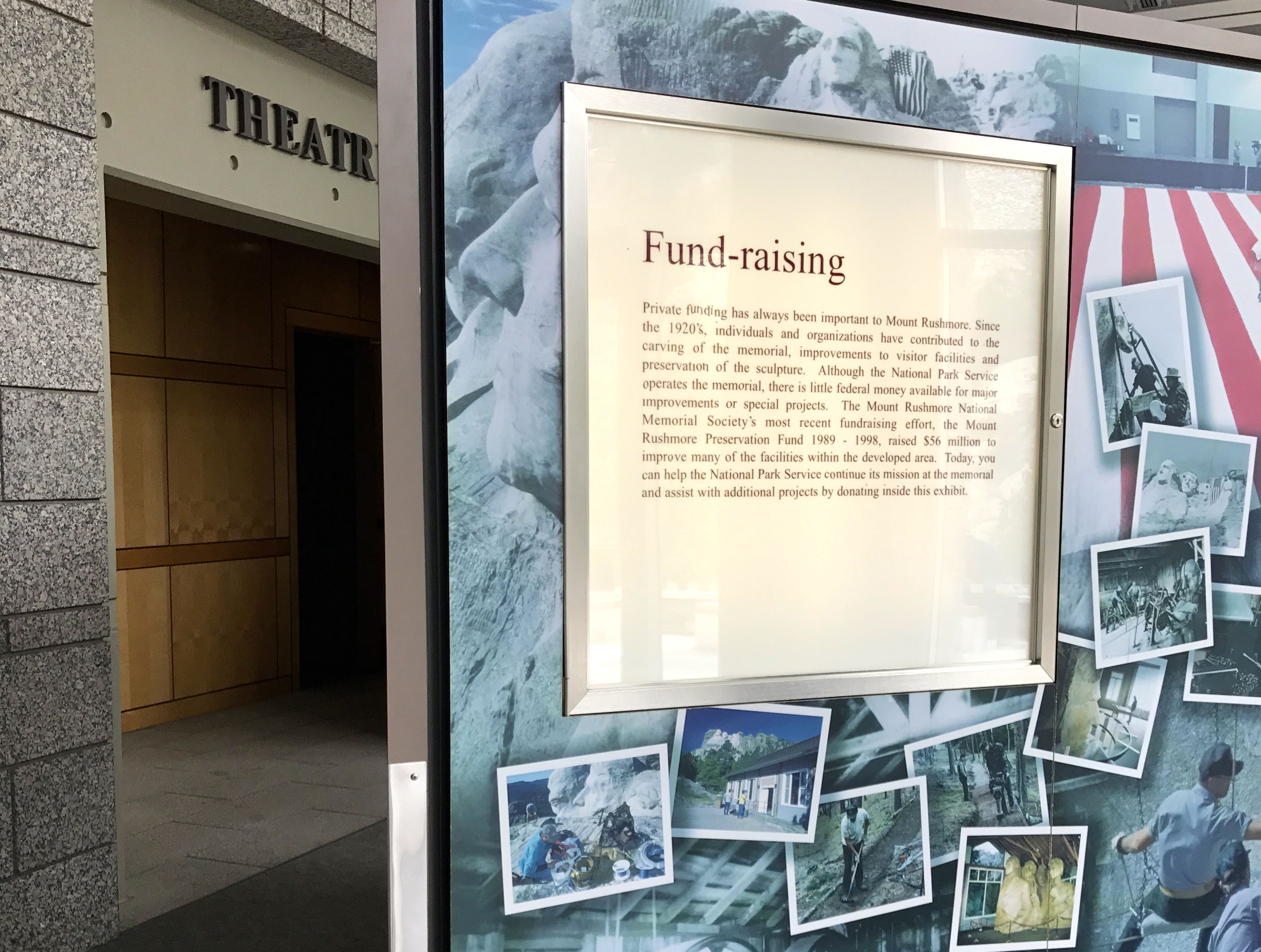
Which leads us to the never-ending requests for funds.
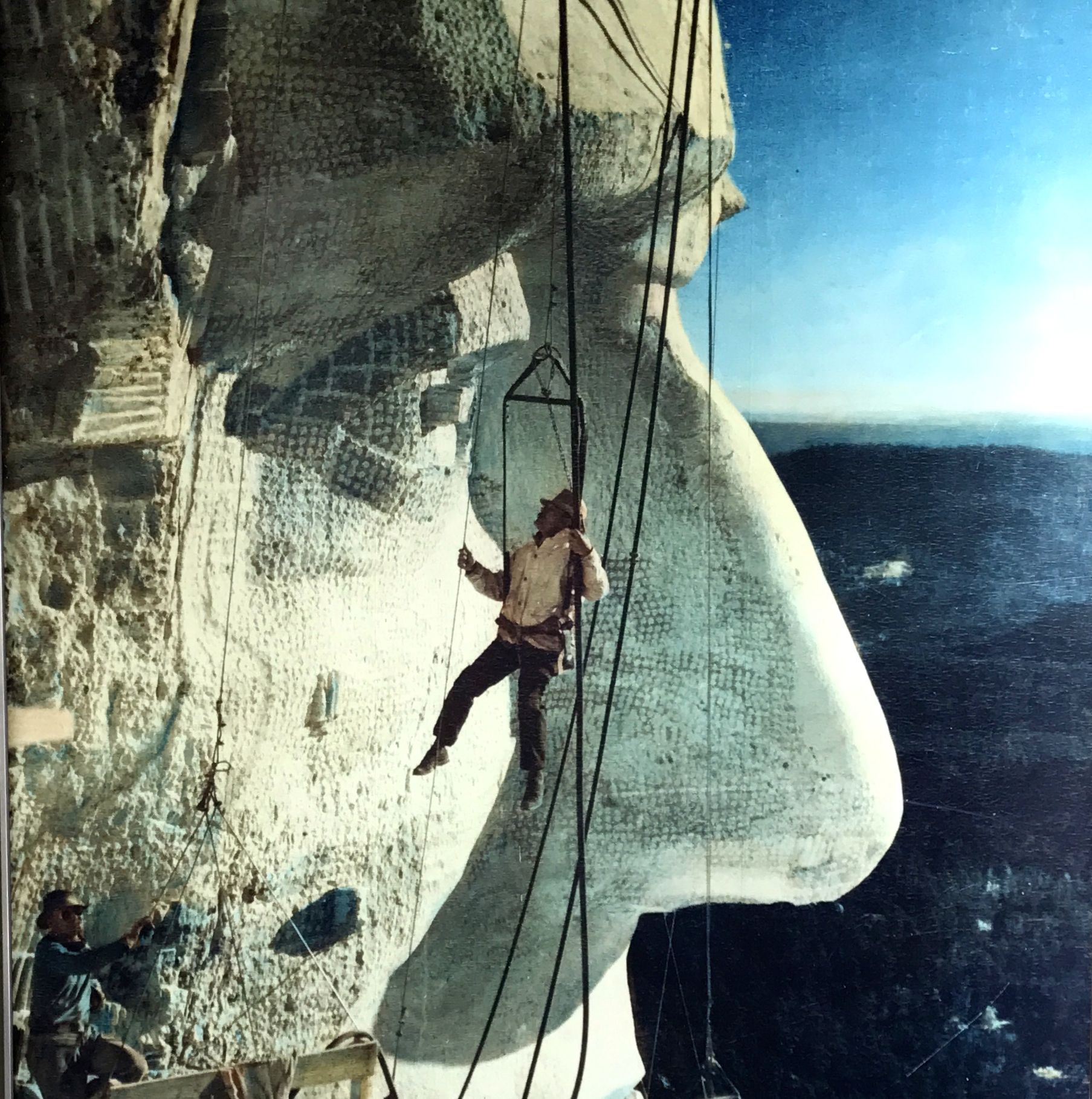
There really were some interesting displays and photos about how this sculpture was created.
The weather was still on the gloomy side, so I decided to have some lunch.
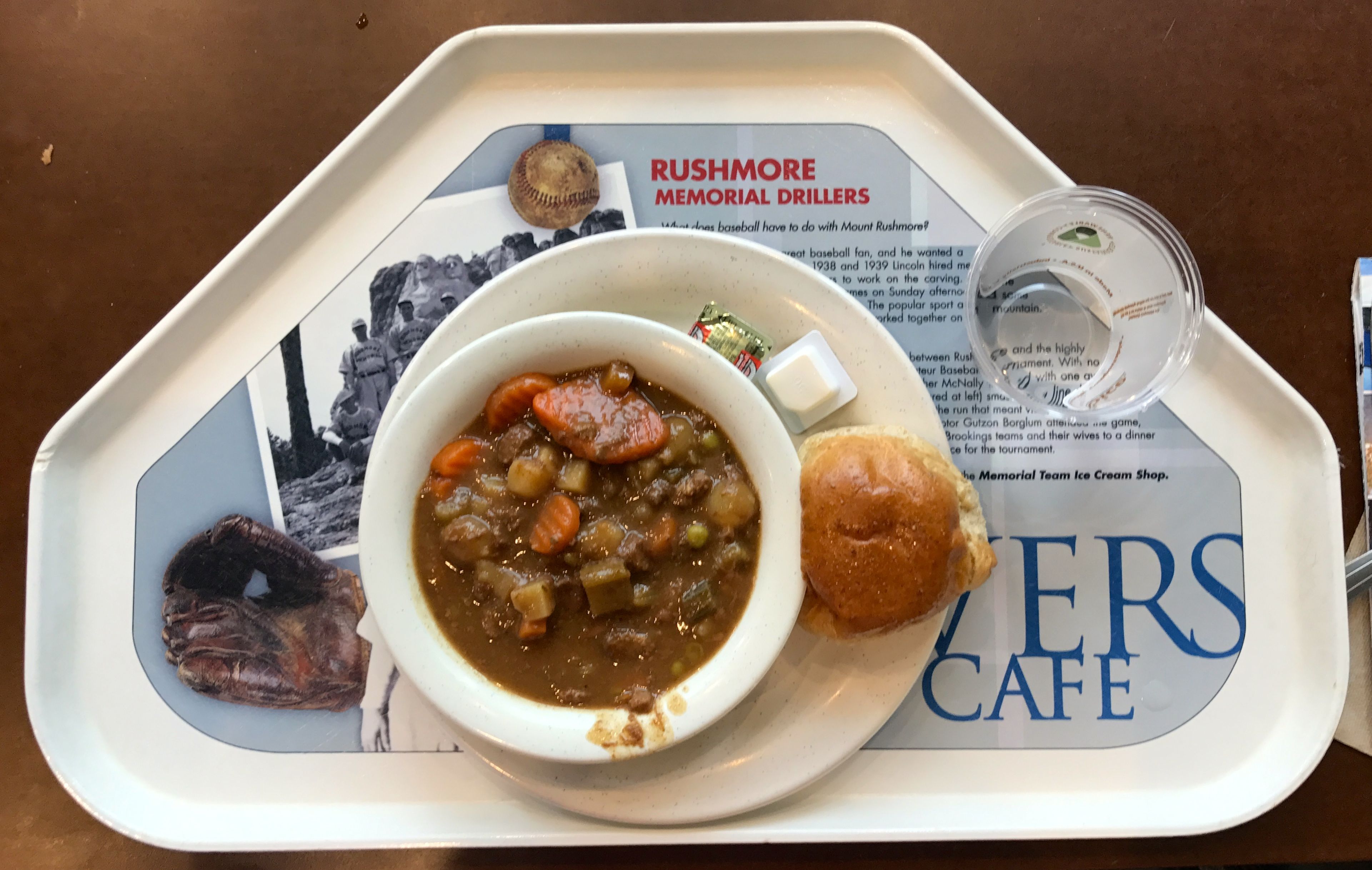
I had some buffalo stew, which was the hearty, stick-to-your-ribs fare I was looking for.
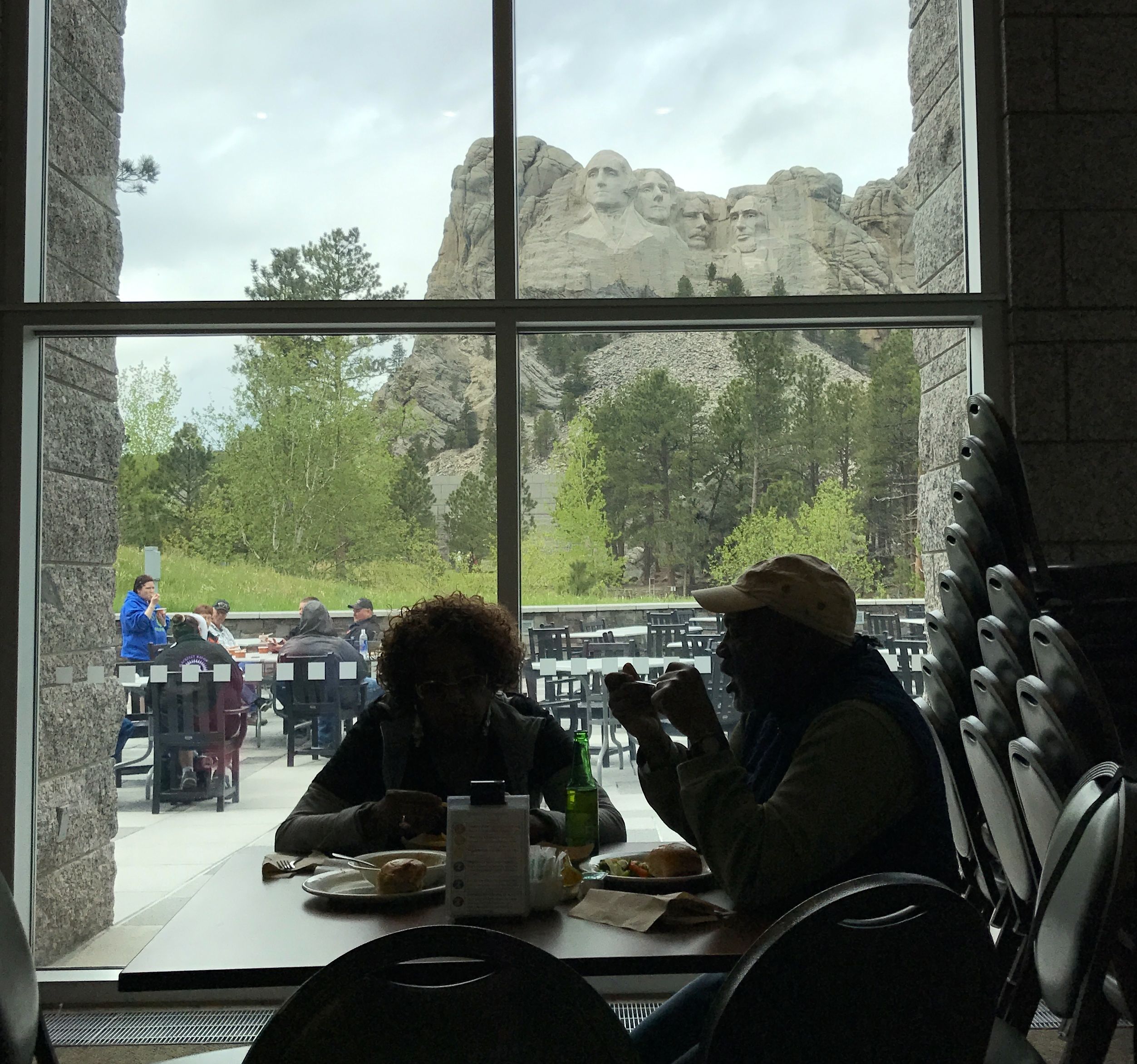
I while I ate my lunch, the weather started to clear. I set out to see what else I could see.
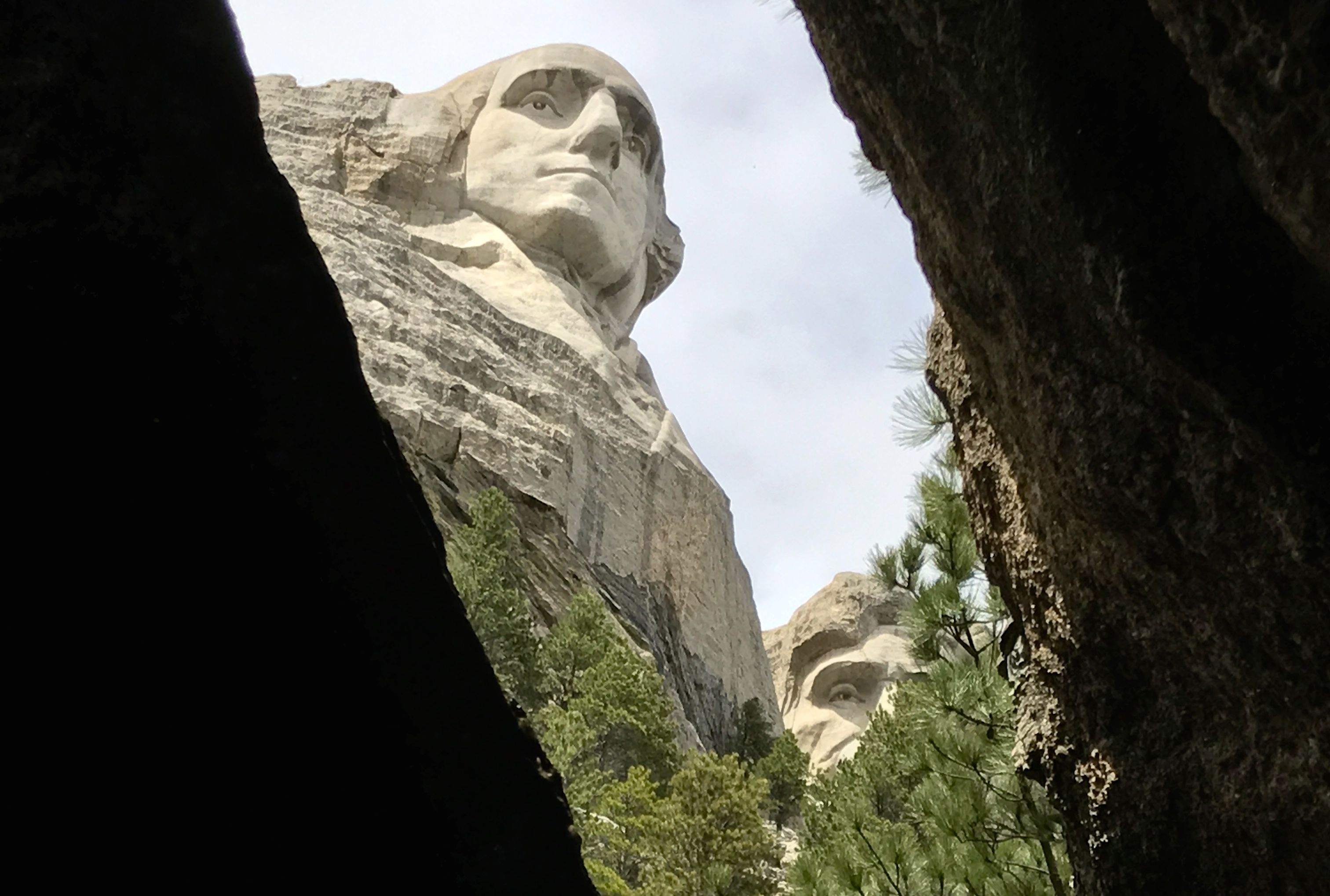
There was a “cave” you could go in and look up the carvings. There’s George, with Abe peeking over the pine trees.
With that, I decided it was time to move along.
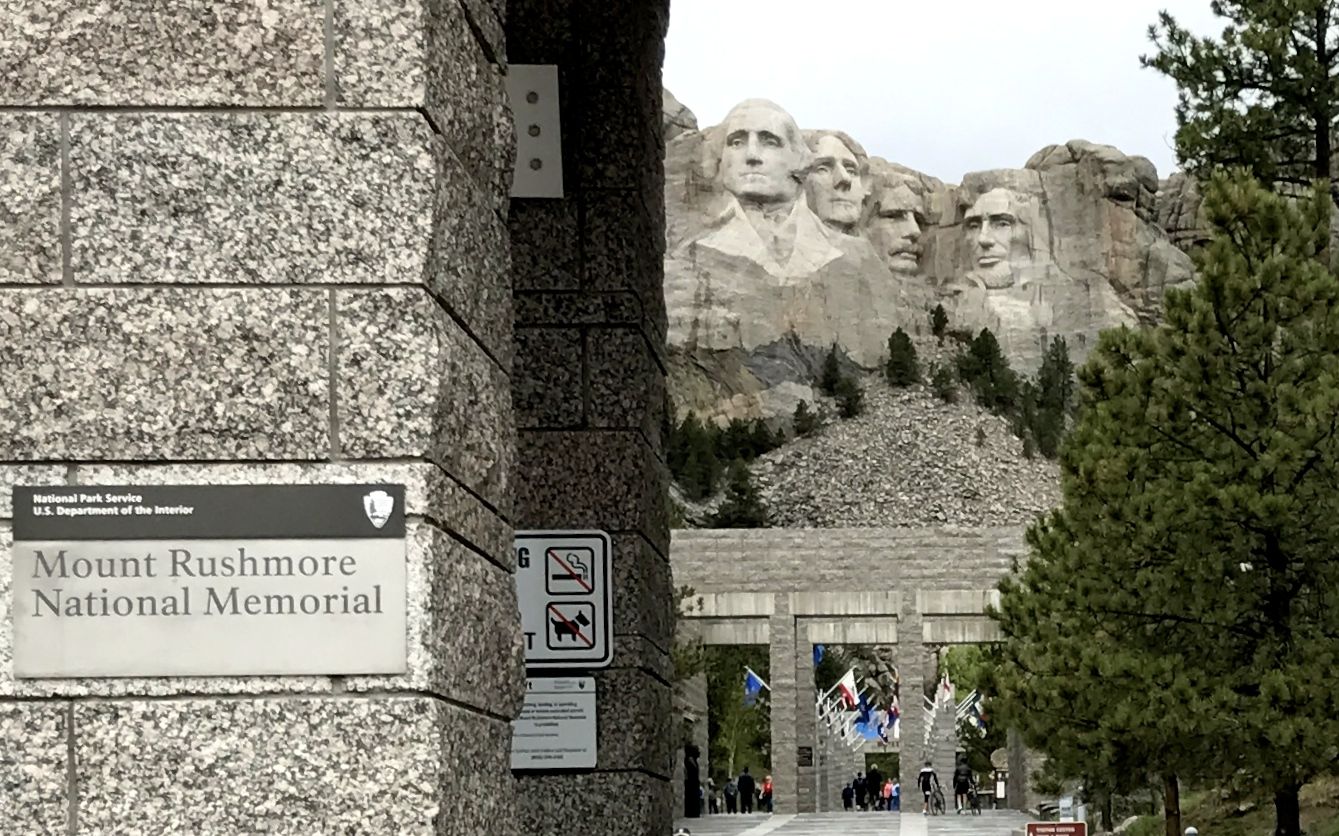
One last look back on my way to the truck. Then I was off.
There was a place where you could look back and see Washington’s profile from the road outside the memorial. According to the plaque where I stopped, the fact that Washington’s profile is visible from this spot was purely accidental.
Originally, Borglum had intended to put Thomas Jefferson on Washington’s right, but the rock there wasn’t suited to the design. The workers had already blocked out the rough features of Jefferson’s face when Borglum decided to reorder the line up. The Jefferson carving was blasted away and the rock smoothed down, allowing for a view of Washington’s profile from this spot.
The sculpture of Washington gives him a 60 foot tall head and a 20 foot long nose. Each eye is 11 feet across.
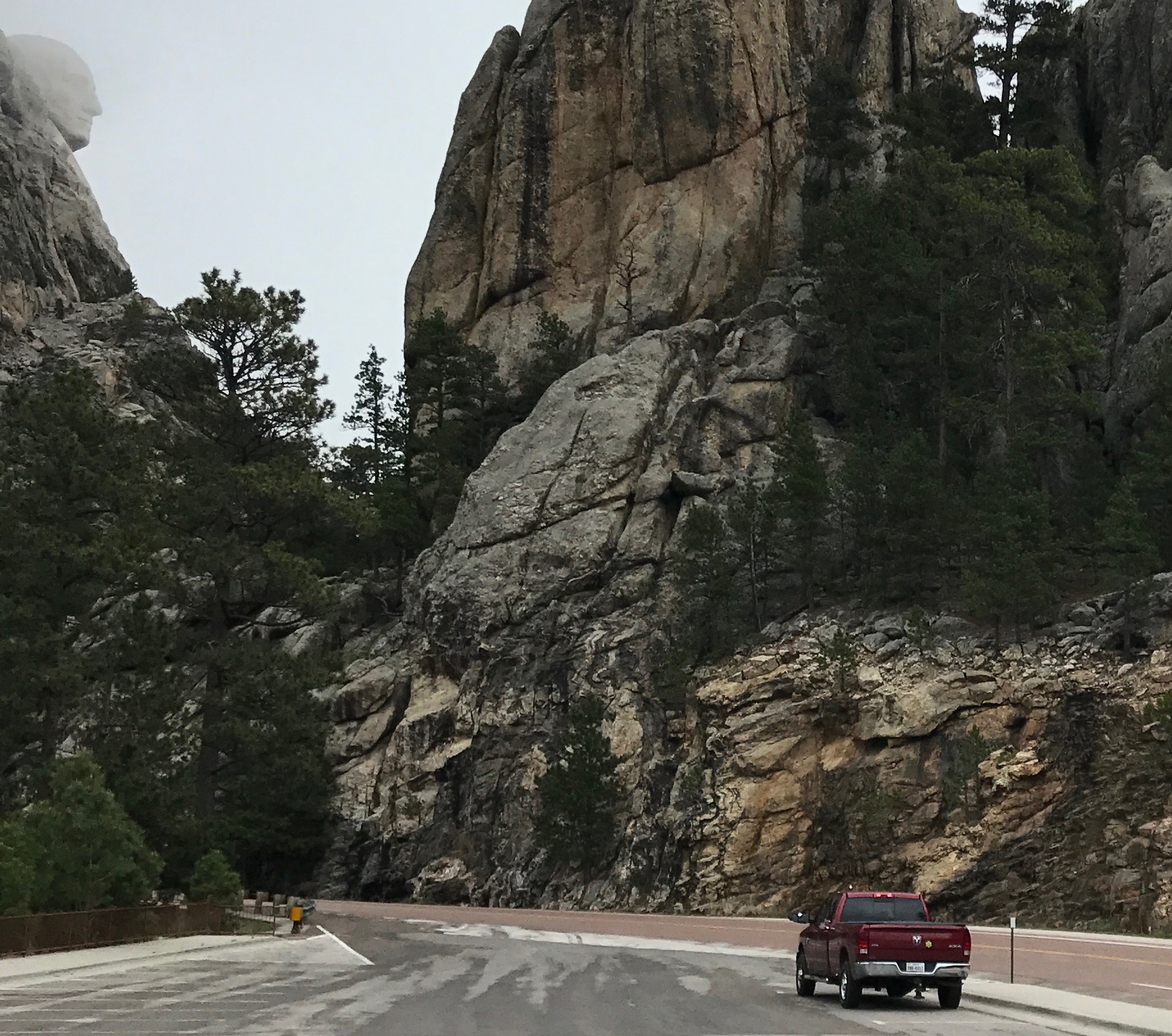
While I was stopped to take this photo, a mountain goat came ambling by.
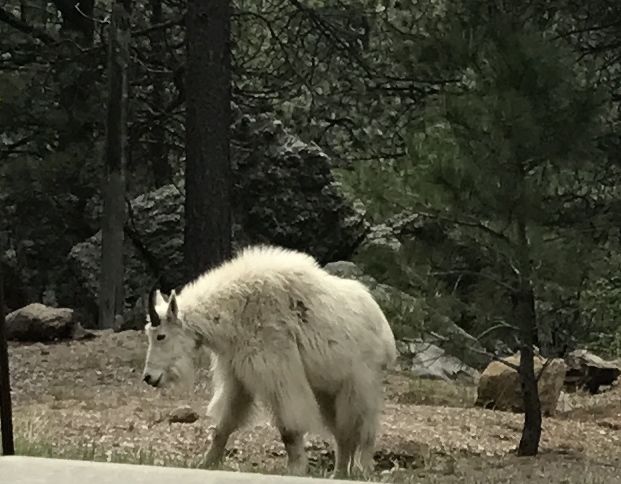
Mountain goats were introduced to the Black Hills in the 1920s. They have adapted well to the steep granite cliffs, where they spend most of their time.
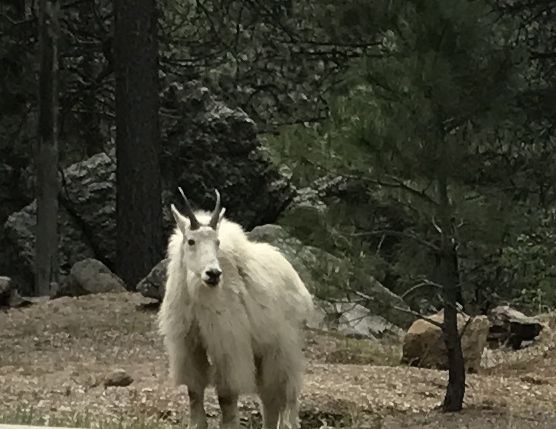
This one seemed happy to come down and visit. I guess he was ready for his close up.
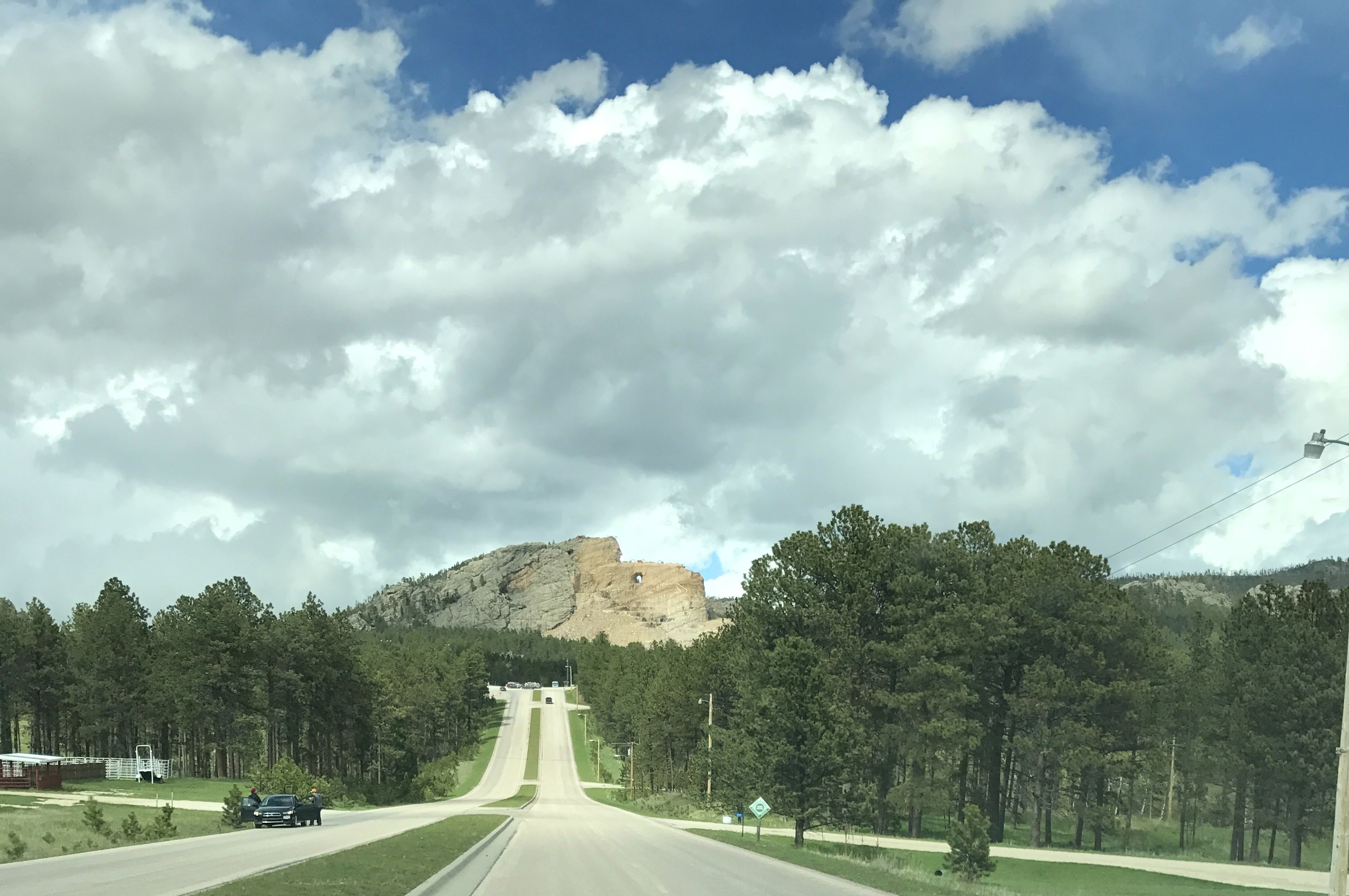
My next stop was Crazy Horse.
As you can see, it is a work in progress. It was begun in 1948, and is far from completion. Chief Henry Standing Bear, a Lakota elder, commissioned Korczak Ziolkowski to carve an image of the Oglala Lakota warrior, Crazy Horse, riding a horse and pointing into the distance.
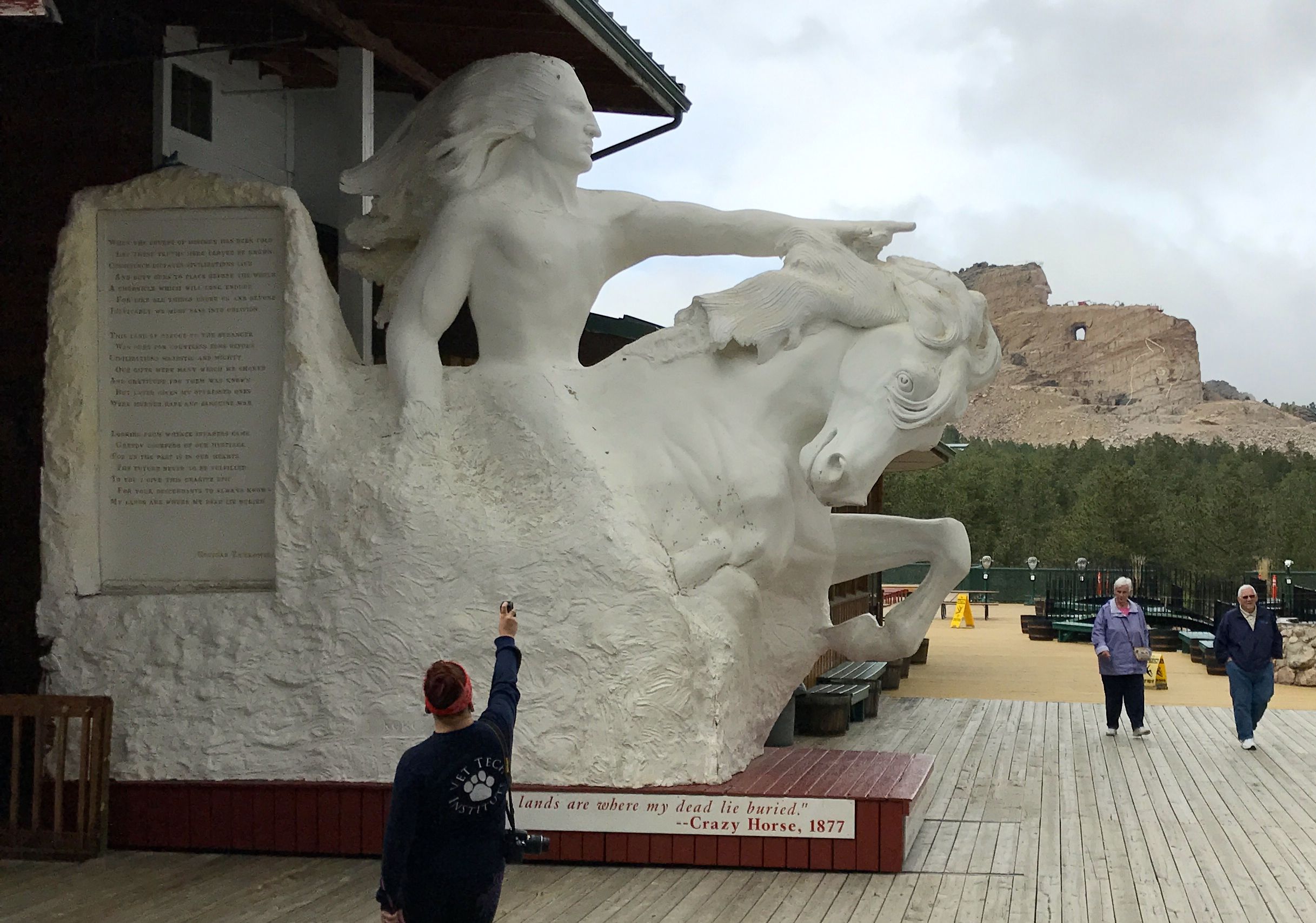
This is a model of the sculpture, with the monument’s progress in the background.
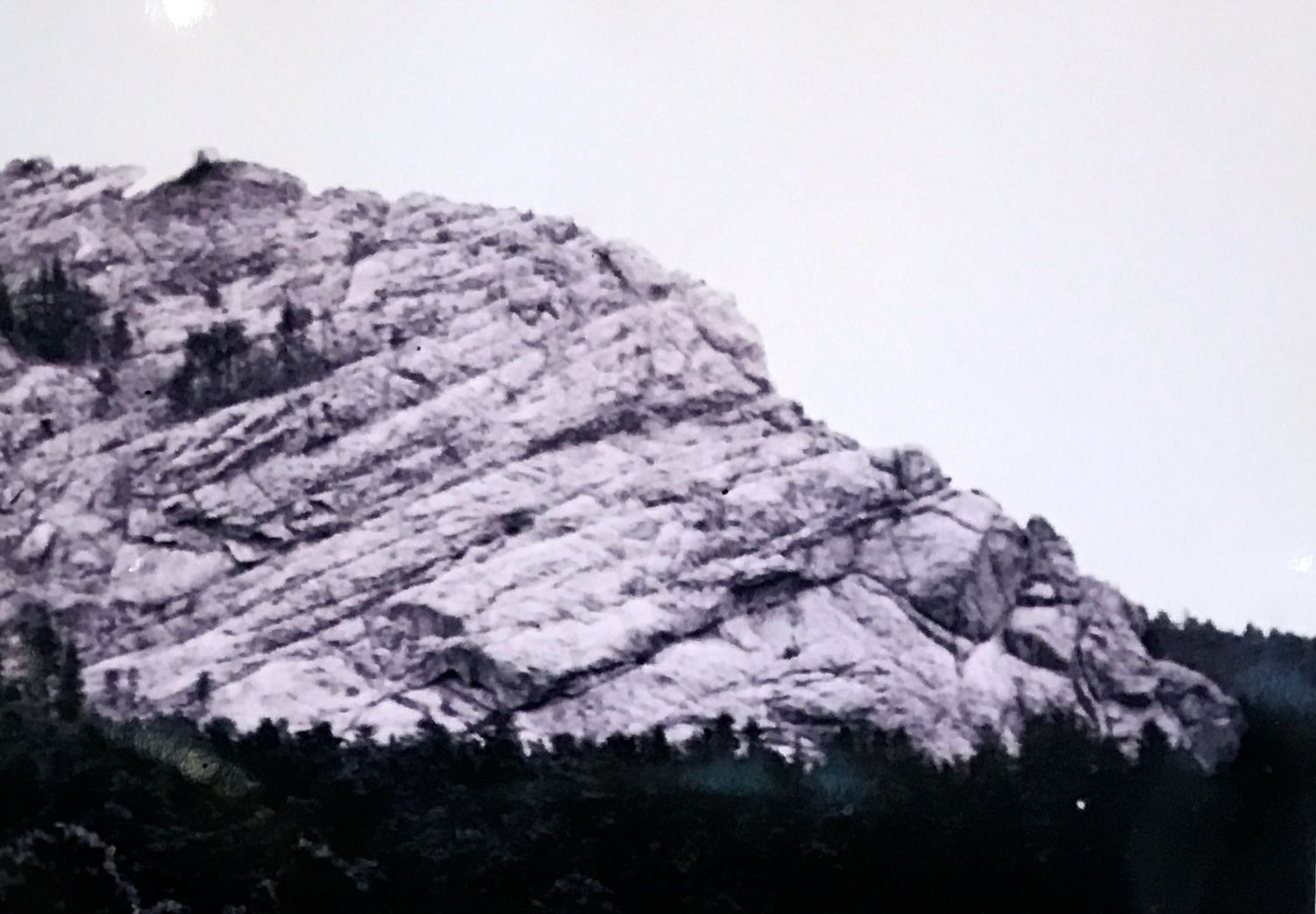
It doesn’t seem like much progress has been made until you consider the shape of the mountain that Korczak began with.
On the left side of the maquette is a poem written by Korczak Ziolkowski.
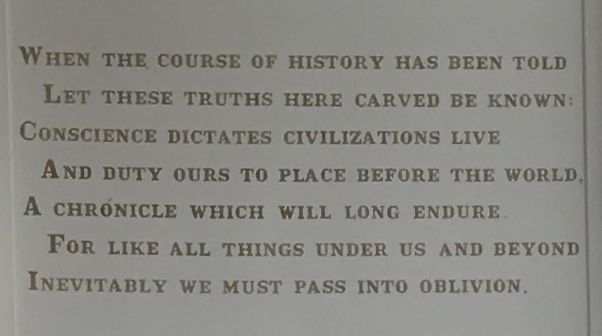
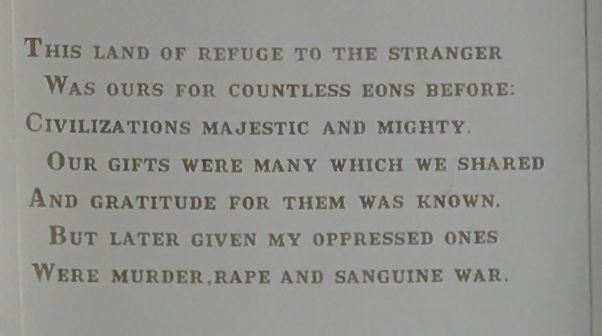
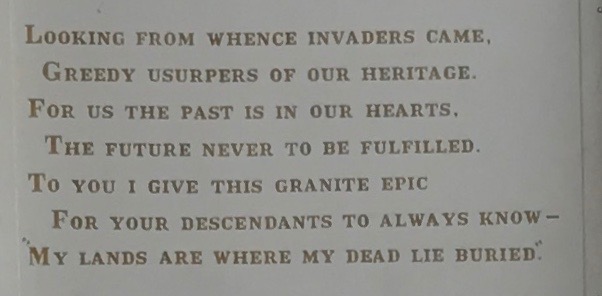
The master plan of the memorial includes the mountain carving, an Indian Museum of North America and a Native American Cultural Center. They seem to be making progress, but right now they seem to have a priority of telling the story of its creation.
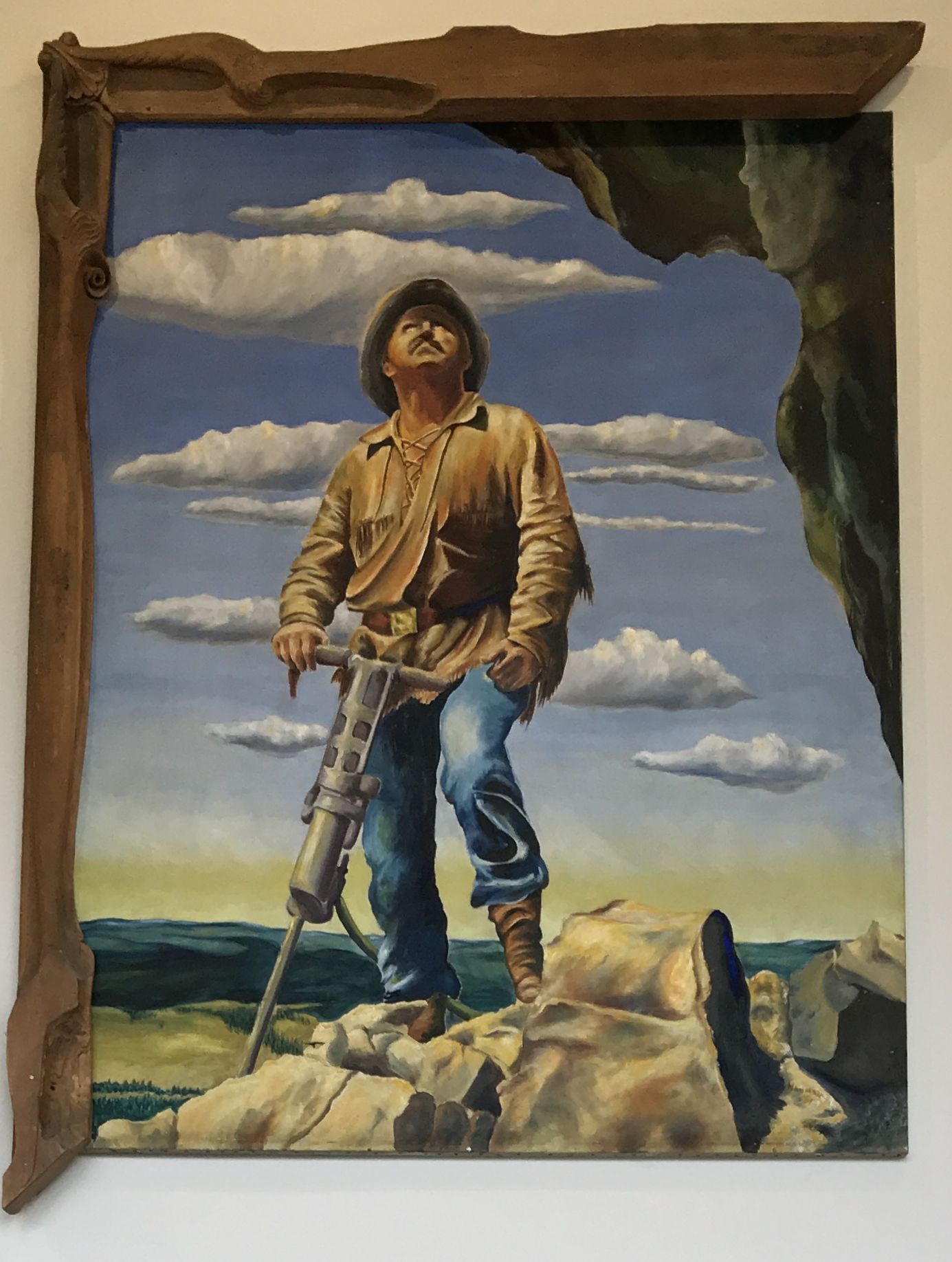
For instance, they have a movie at the beginning of your visit, and this inspiring portrait of the artist.
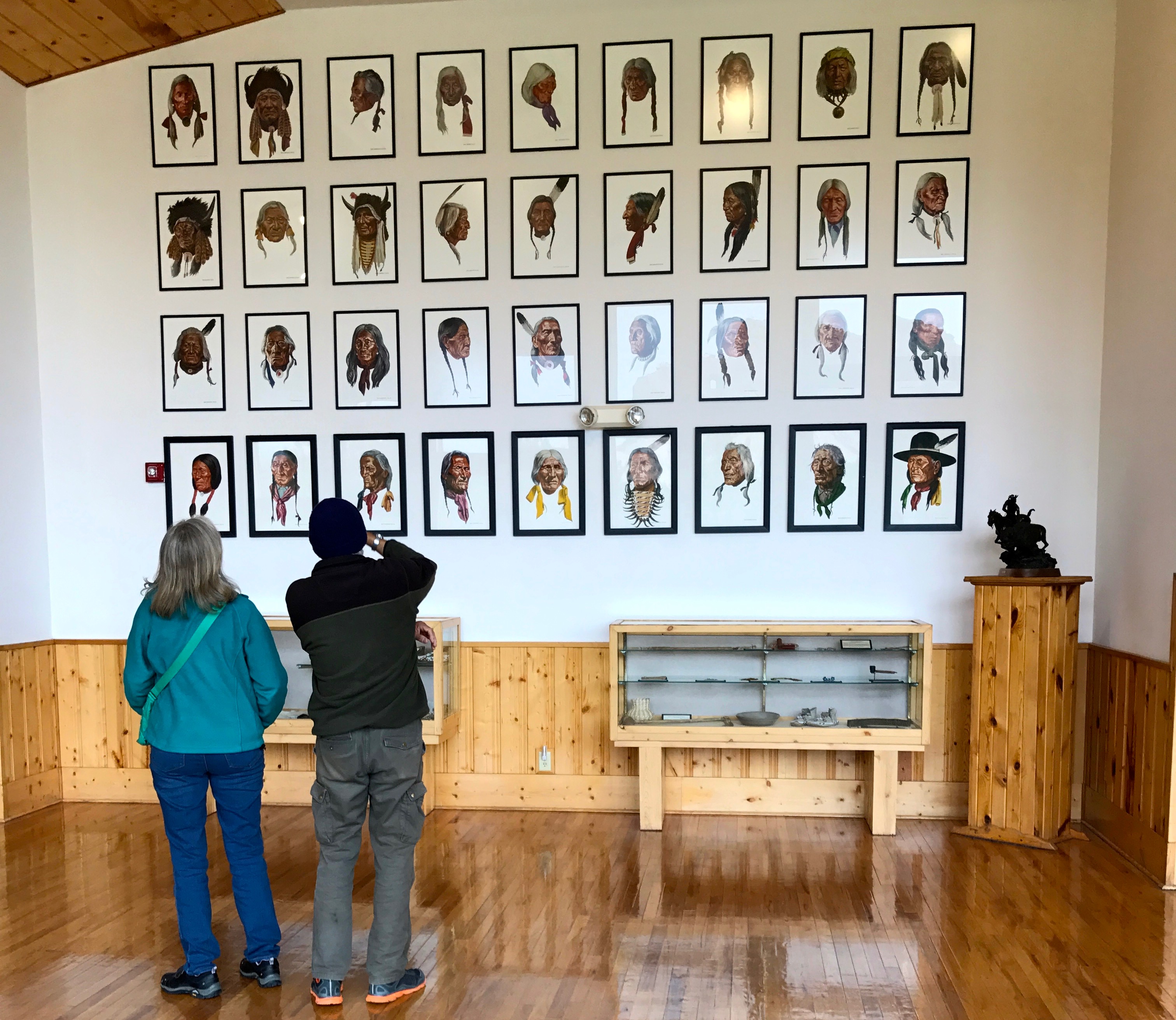
Coupled with array without information.
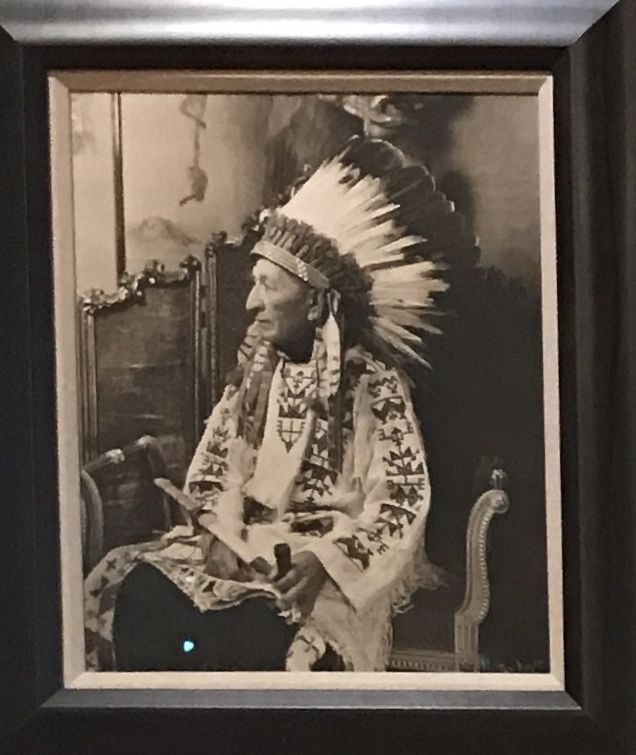
There is this photo of Chief Henry Standing Bear, which I find an interesting document. He was born along the Missouri River near present-day Pierre, South Dakota. He was probably born in 1874.
At age 14, he was one of the youngest and first of the Indian children to attend Carlisle Indian School in Pennsylvania, which was the first of a horrible American innovation, the Indian boarding school.
If you are interested in scholarly information about the school, a digital resource center is maintained by Dickinson University.
Chief Standing Bear made many trips to Washington, DC, serving as an interpreter to advocate for and protect the rights of his people. He also worked for a time for a theatrical company on the East coat and spent a year working in Buffalo Bill’s Wild West shows.
In 1939, while Mount Rushmore was progressing, he sent a letter to Korczak. He asked him to create a monument, stating, “My fellow chiefs and I would like the white man to know that the red man has great heroes, also.” Chief Standing Bear learned of Korczak when he worked for a short time as an assistant to Borglum in the summer of 1939.
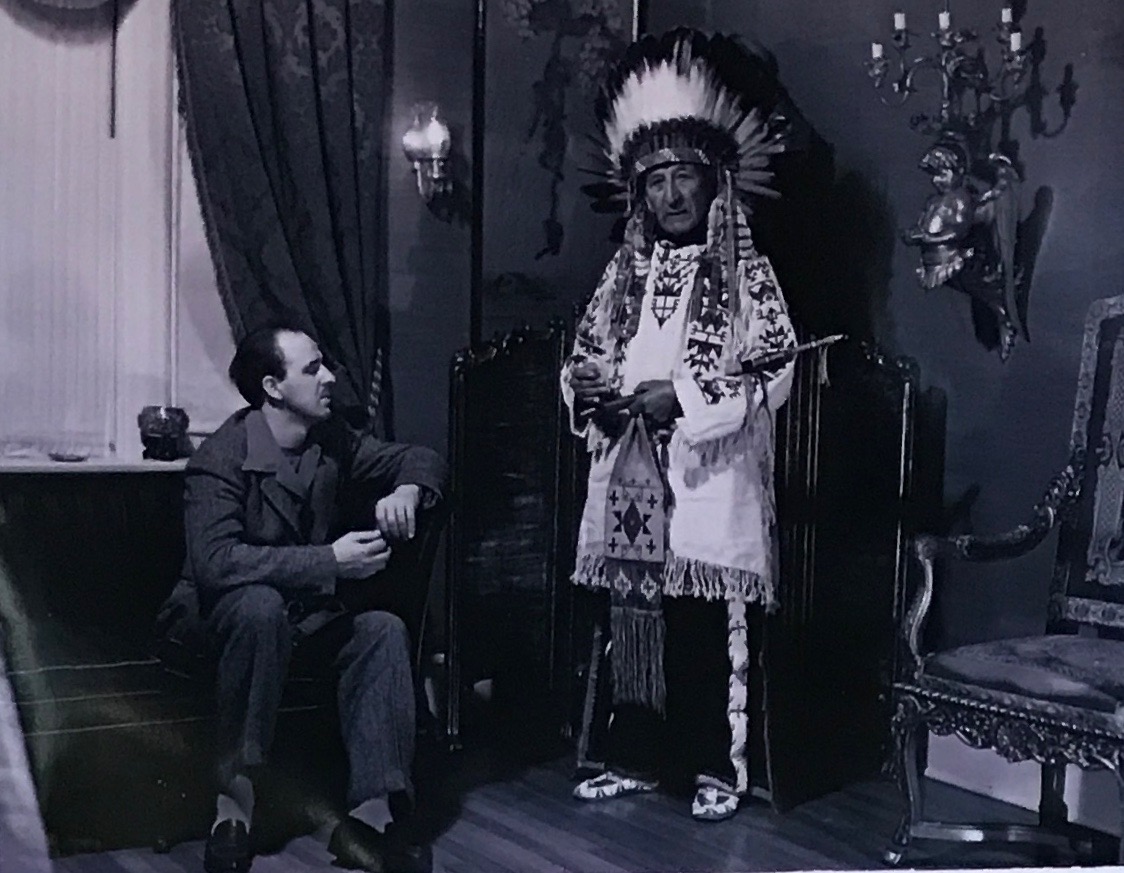
This photo was taken in Korczak’s home in West Hartford, Connecticut in 1947, when Chief Standing Bear came to discuss plans for the memorial.
Chief Standing Bear died in 1953 and is buried in Pine Ridge.
I guess it makes sense to tell the story of the massive undertaking of the sculpture, but I do hope they don’t forget the missions of the creation of the museum and cultural centers.
The sculpture’s final dimensions are planned to be 641 feet wide and 563 feet high. The head of Crazy Horse will be 87 feel tall. By comparison, the heads of the four U.S. Presidents at Mount Rushmore are each 60 high. If this monument is competed, it will be the world’s largest sculpture.
That won’t be in my lifetime.
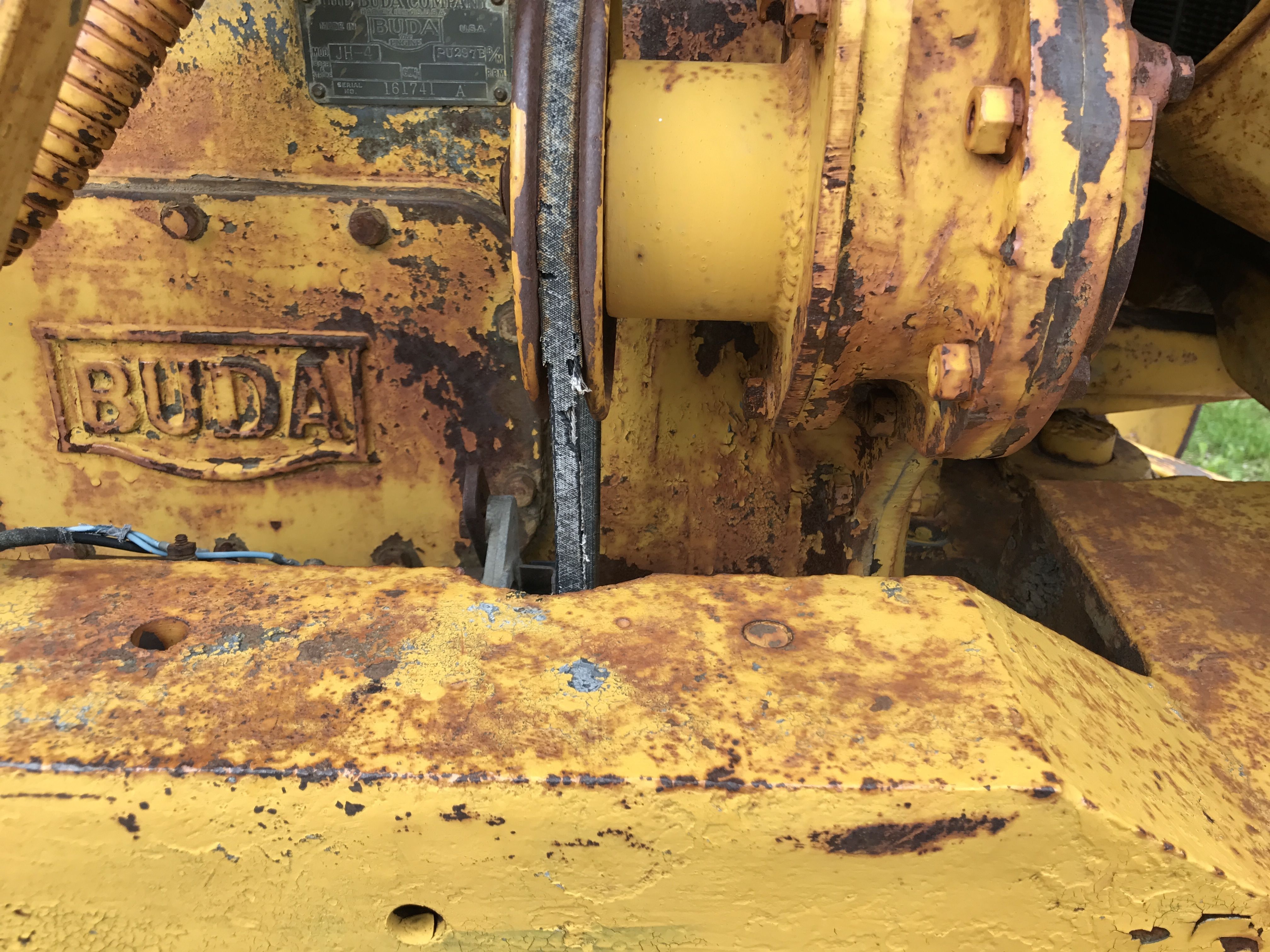
But, like the Buda compressor that served them well for many years, I guess they will just keep chugging along.