My last stop of the day was Blandford Church and Cemetery.
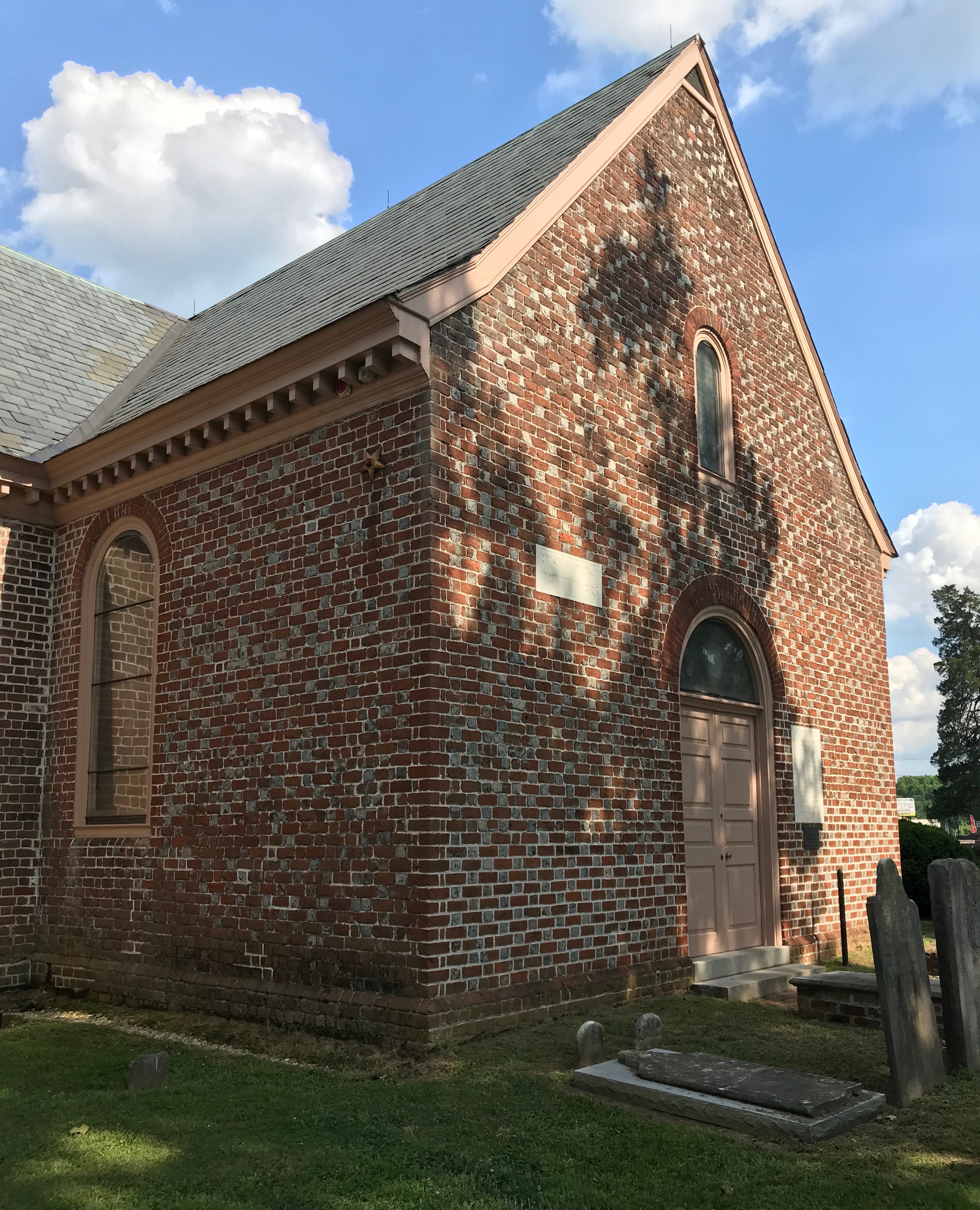
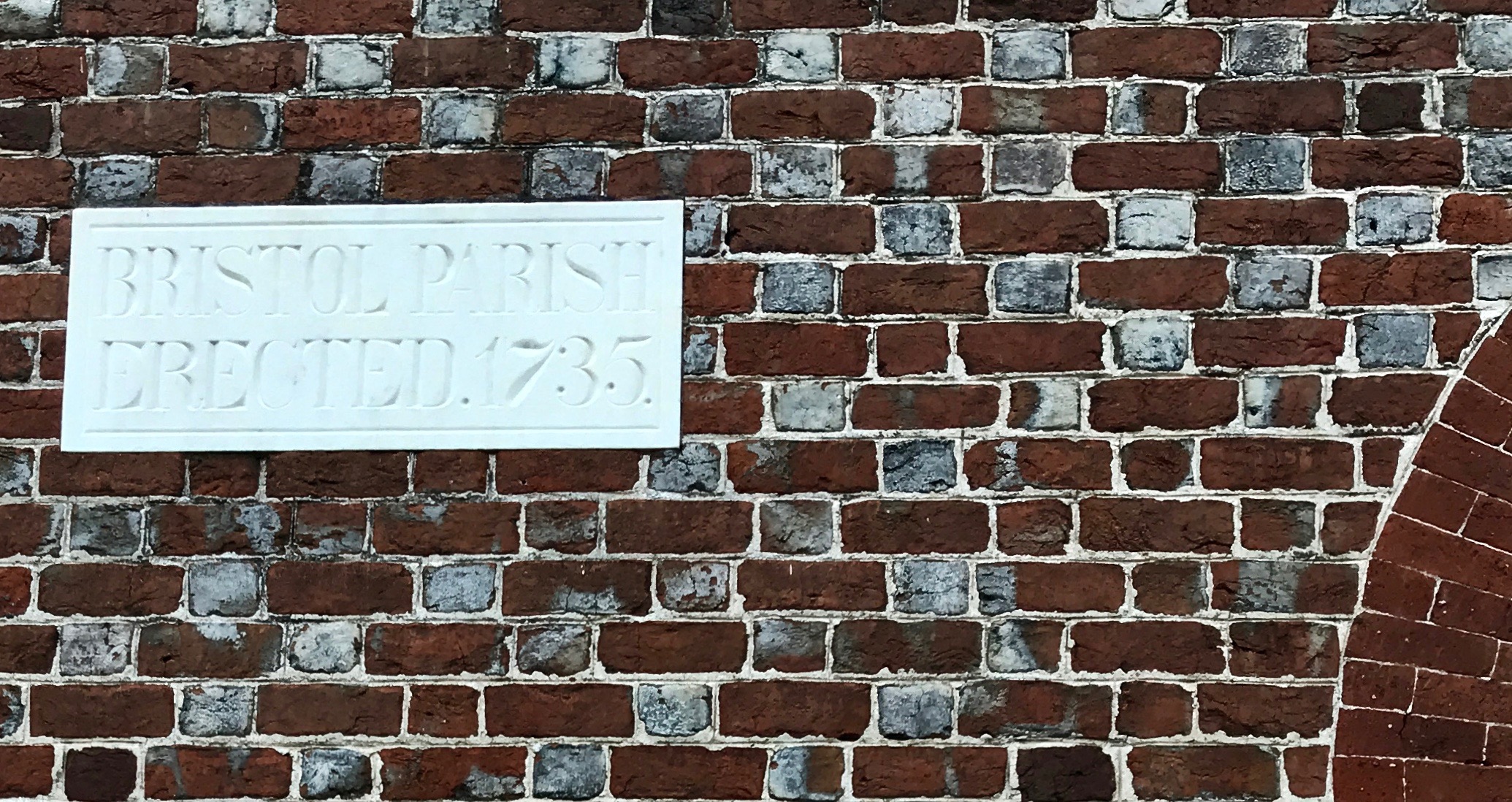
The church was erected in 1736 The age of the building alone would have been enough to get me there. The United States of America is such a young country that a building close to 300 years old is something you don’t see every day.
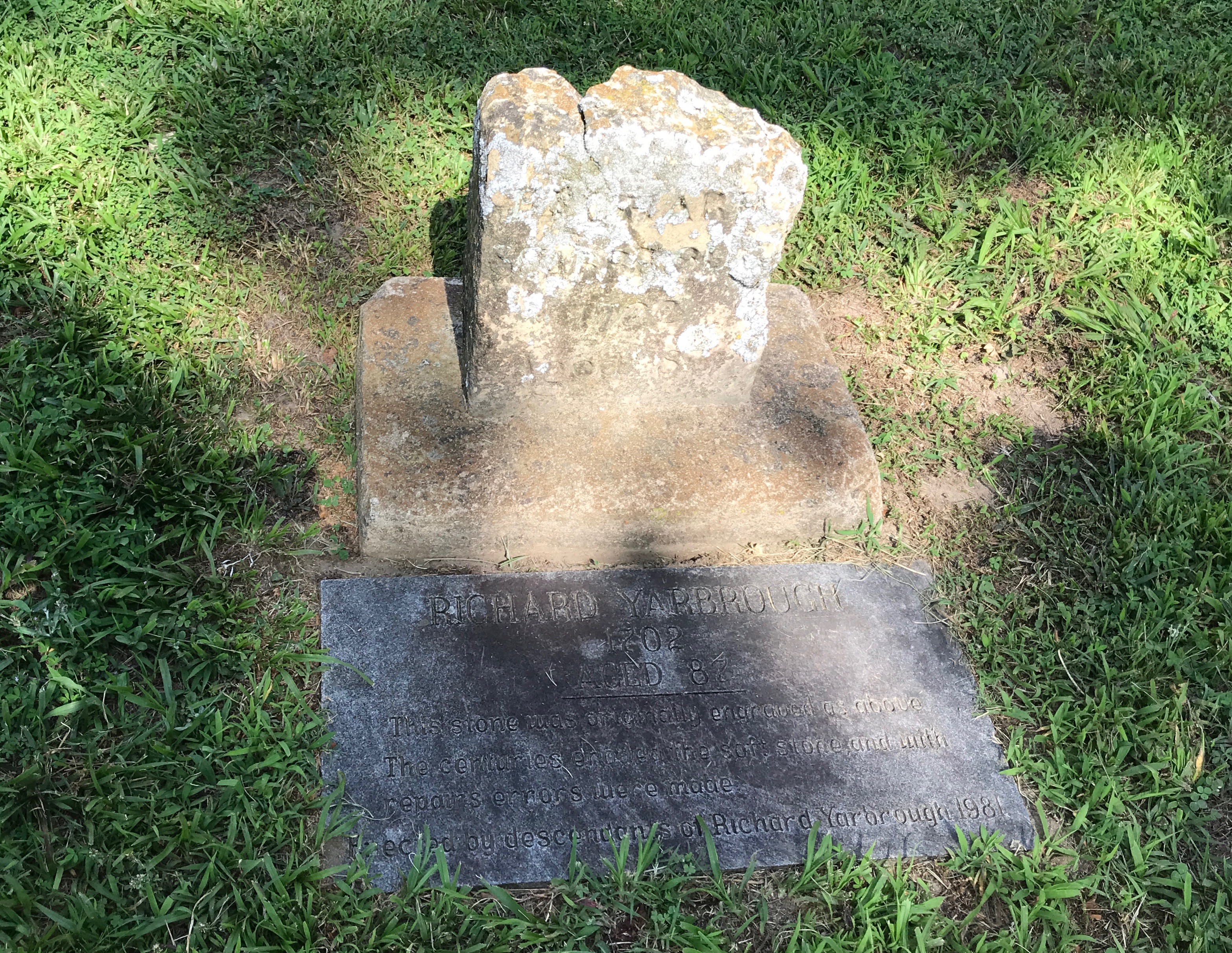
It has some very old graves in the churchyard. This grave predates the church.

It is for Richard Yarbrough, who died in 1702 at age 87. My goodness! That means he was born in 1615! He must have had an amazing story.
According to my Preferred Source, General William Phillips fell ill after the Battle of Blandford, also known as the Battle of Petersburg, which was fought nearby in 1781. For those of you keeping track, that was during the American Revolution. He was ordered to wait in Petersburg to meet Lord Cornwallis. While in Petersburg, Phillips fell ill and died on May 13, 1781. He was secretly buried somewhere in the churchyard.
However, the age of the building is not the reason I wanted to visit. The main attraction for me was the Tiffany windows.
Sister Jeanne told us about these windows in Art History class. Again, thank you Sister Jeanne! I had mostly forgotten about them until I saw a rack card for the tour of the church. (A “rack card” is what we in the travel and tourism business call those card you find in racks that tout places of interest.)
Luckily, I managed to get there before they closed for the day. I paid my $5 and had a private tour of the church.
We entered the door set in the brick wall laid in the Flemish Bond. There is more than one way to lay a brick wall. If you are interested in the different styles, you can find more information here. (And, if you are interested in tuck pointing, check in with me in a month or so. I am looking forward to learning all about that in an HistoriCorps project in New Bern, North Carolina.)
Blandford Church is a rare American treasure. It is one of the few churches whose decorative stained-glass windows were completely designed and installed under the direction of Louis Comfort Tiffany of New York. It is also one of the few churches that has all of their Tiffany windows intact and in place.
The Church’s fifteen exquisite windows were commissioned by the Ladies’ Memorial Association of Petersburg in memory of the Confederate soldiers buried at the adjacent Blandford Cemetery. From 1901 to 1912, Tiffany and his team of artists designed, created and installed the windows, which were financed by contributions from each of the Confederate states in honor of their war dead.
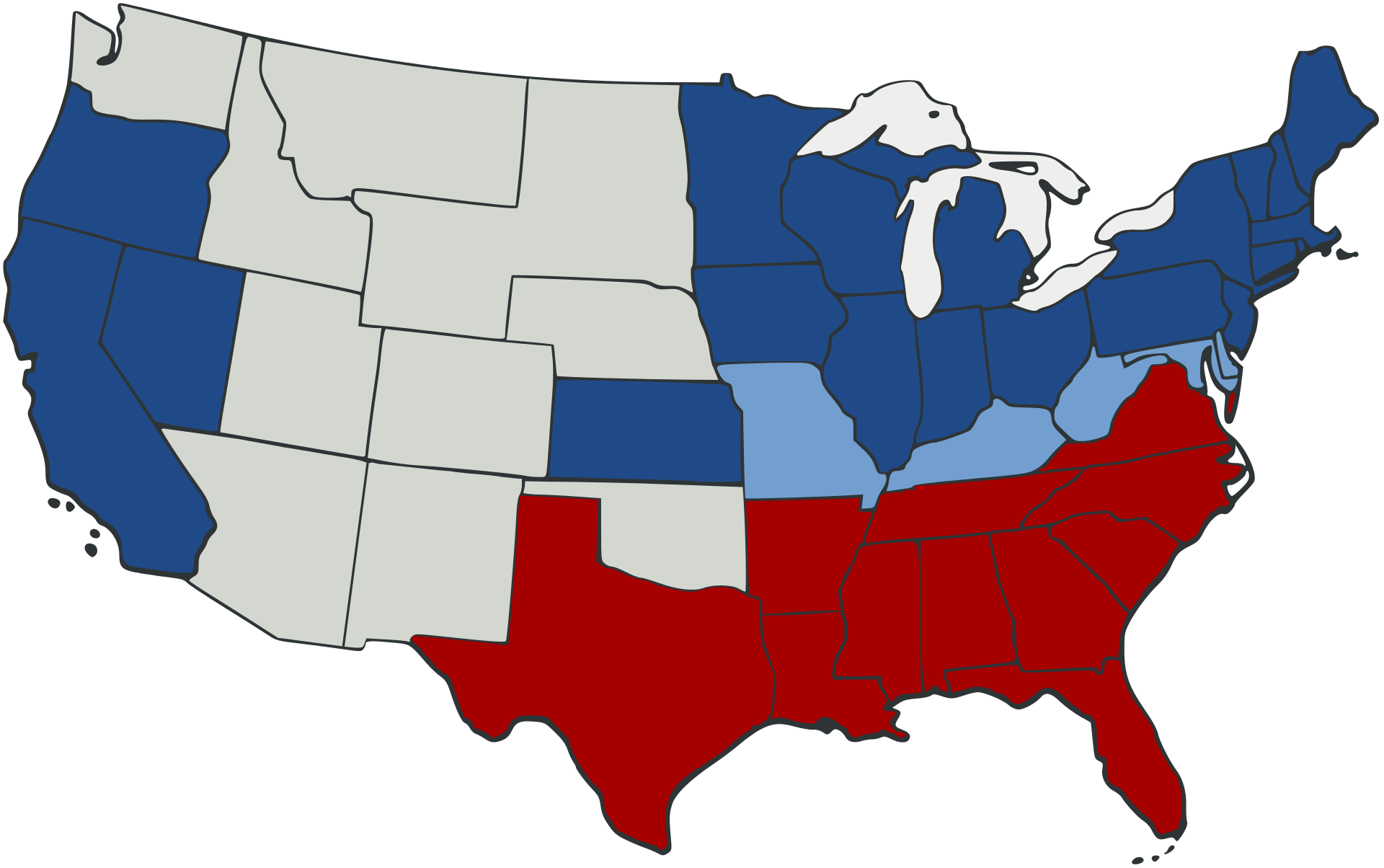
The red states were the states that seceded. The light blue represents the five Union states that permitted slavery (border states). The dark blue represents the Union states.
Windows were donated by each of the former Confederate states: North Carolina, South Carolina, Virginia, Mississippi, Alabama, Florida, Texas, Georgia, Louisiana, Tennessee and Arkansas. The border states of Missouri and Maryland also contributed windows. Kentucky, another border state, was the only state that refused to participate.
This is Alabama’s window. It follows the pattern of most of the windows.
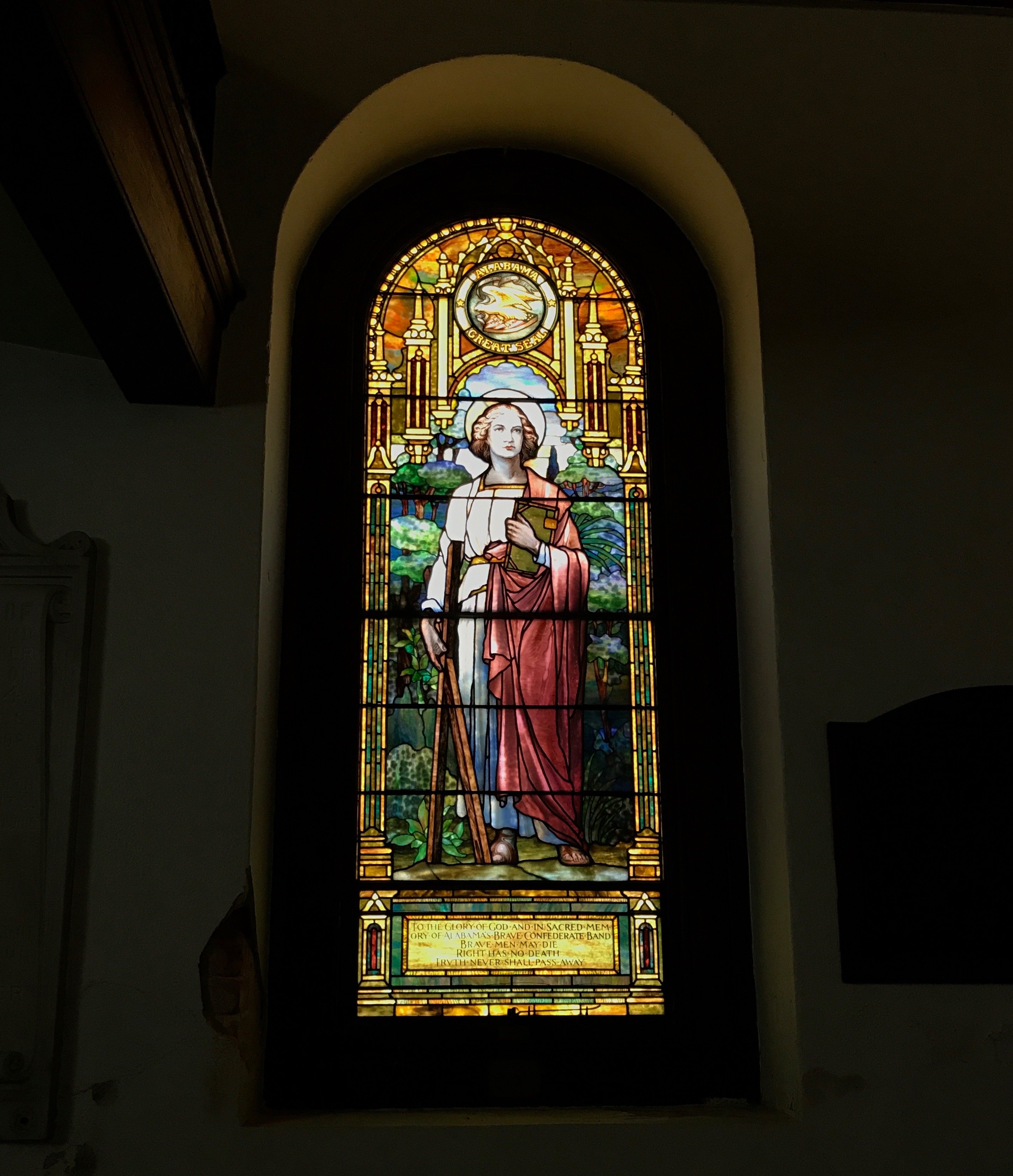
Each state’s window depicts a saint. This is Saint Andrew.
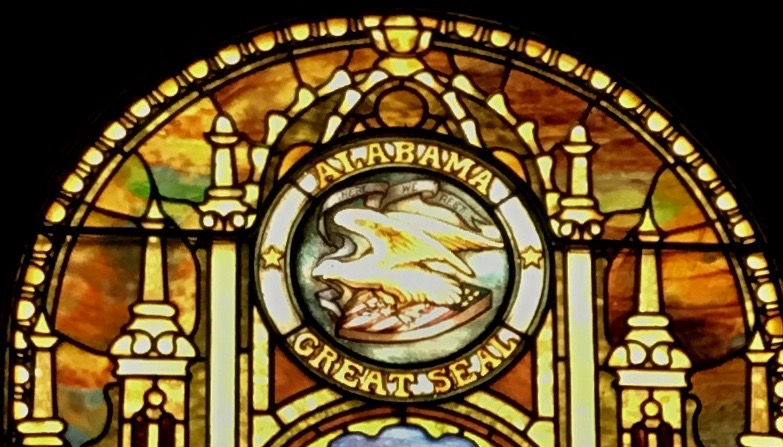
At the top is the state’s seal.
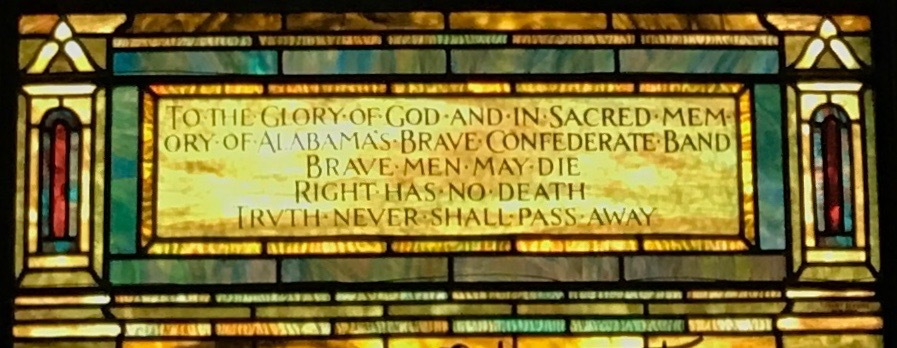
At the bottom is an inscription.
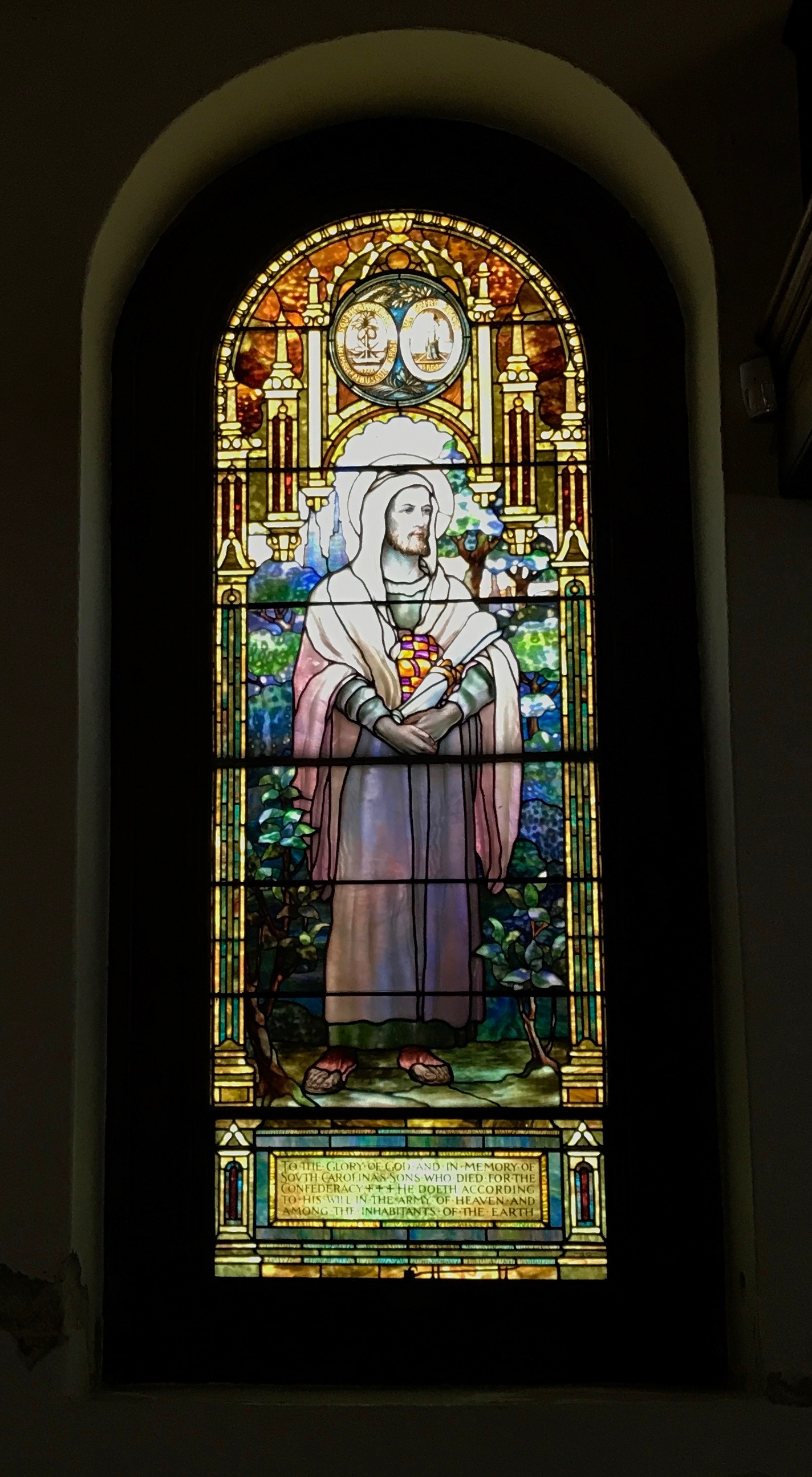
South Carolina’s window depicts Saint Mark.
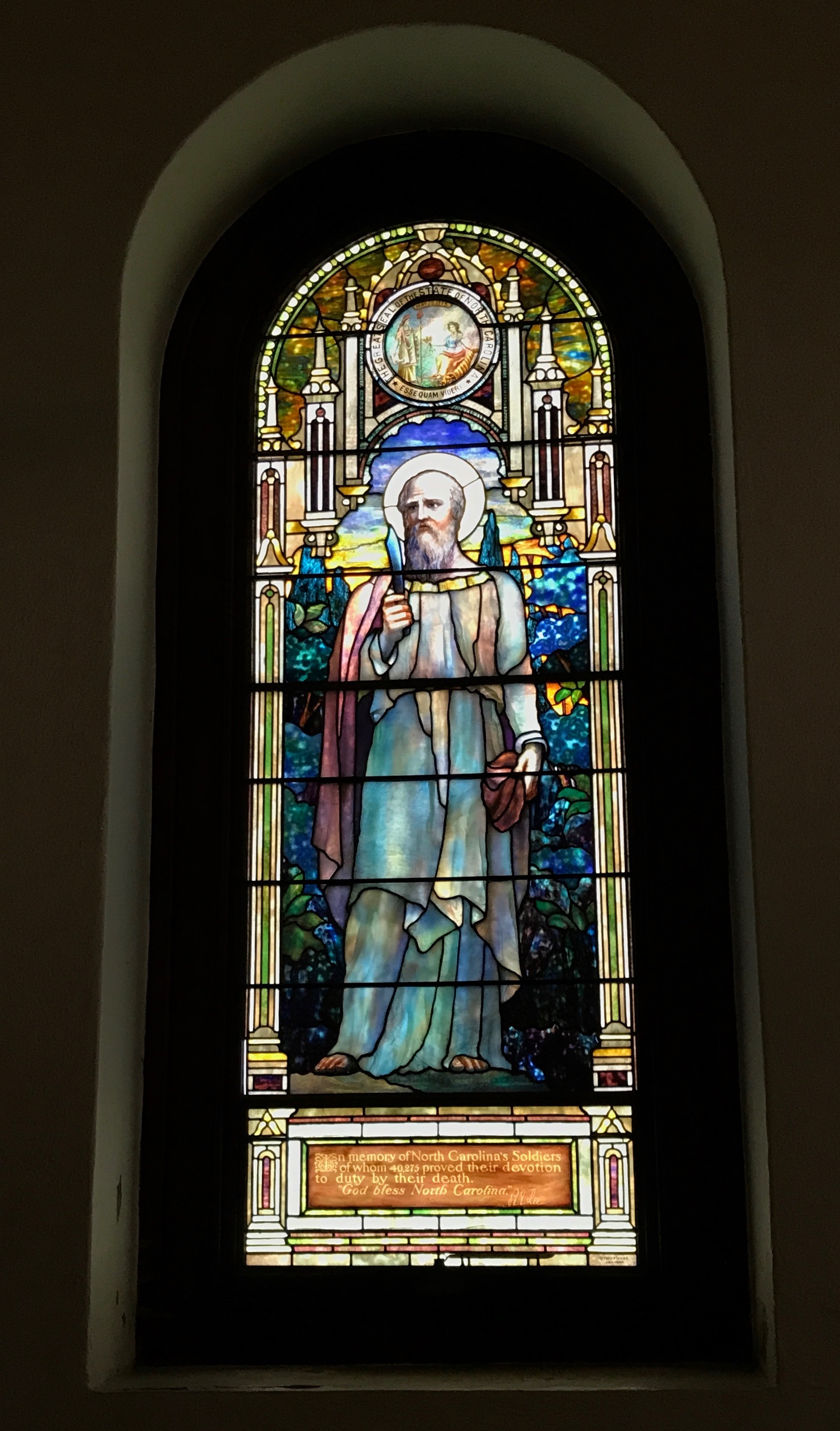
Saint Bartholomew is featured in North Carolina’s window.
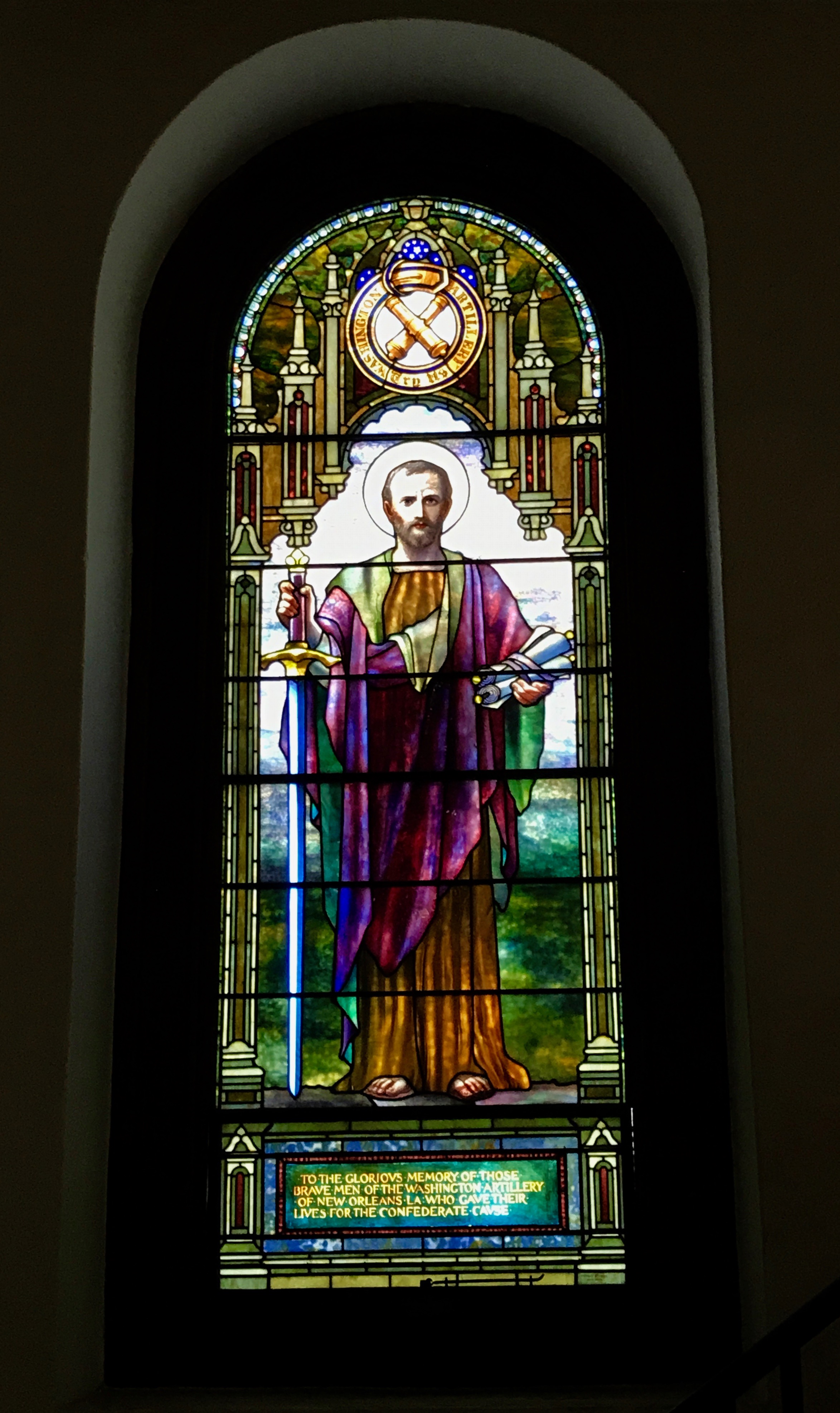
Louisiana’s window was funded by the Washington Artillery. It is the only state window that doesn’t include a state seal. At the top of their window is insignia of the Washington Artillery. The saint on their window is Saint Paul.
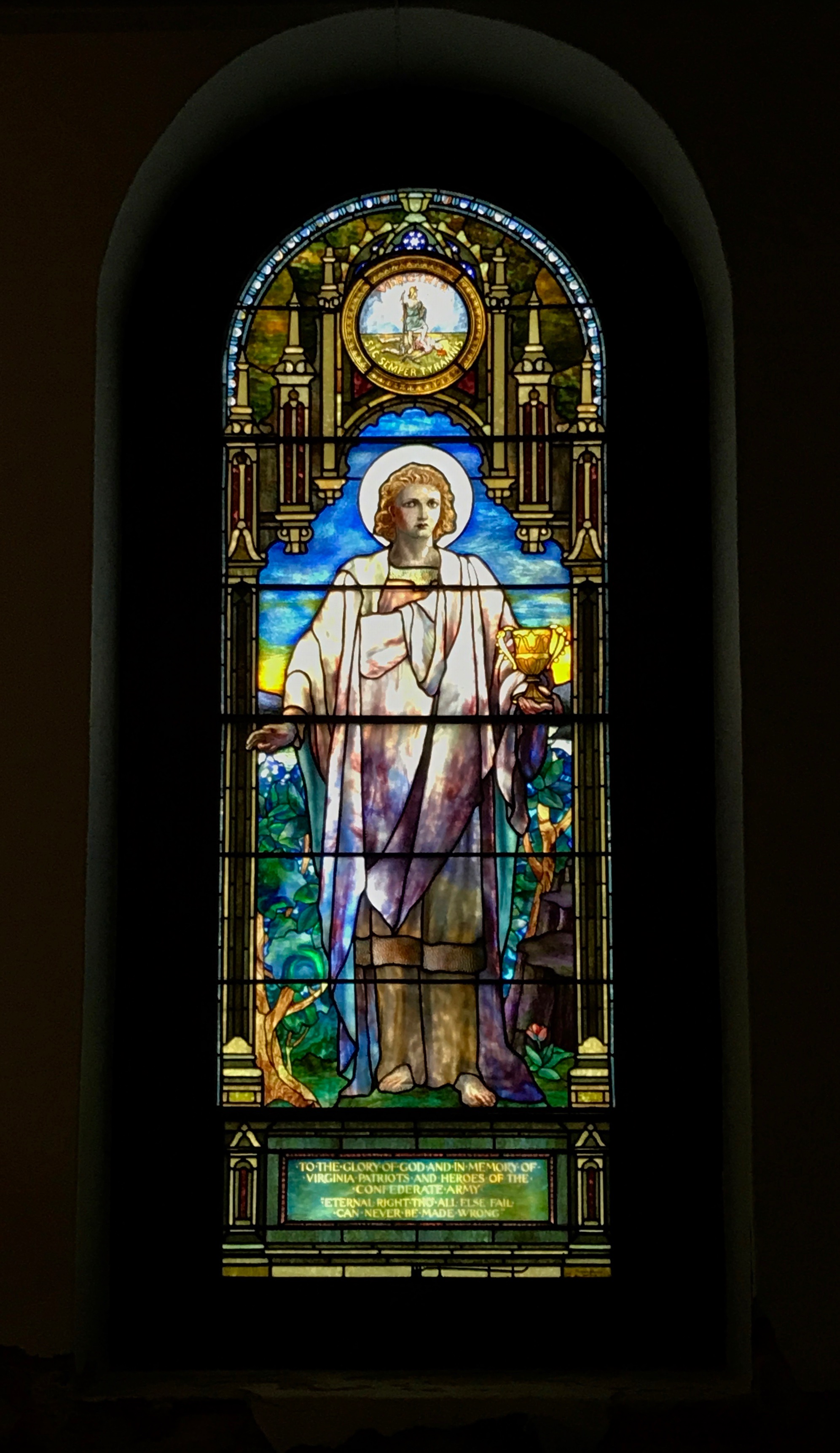
Saint John the Evangelist represents the state of Virginia.
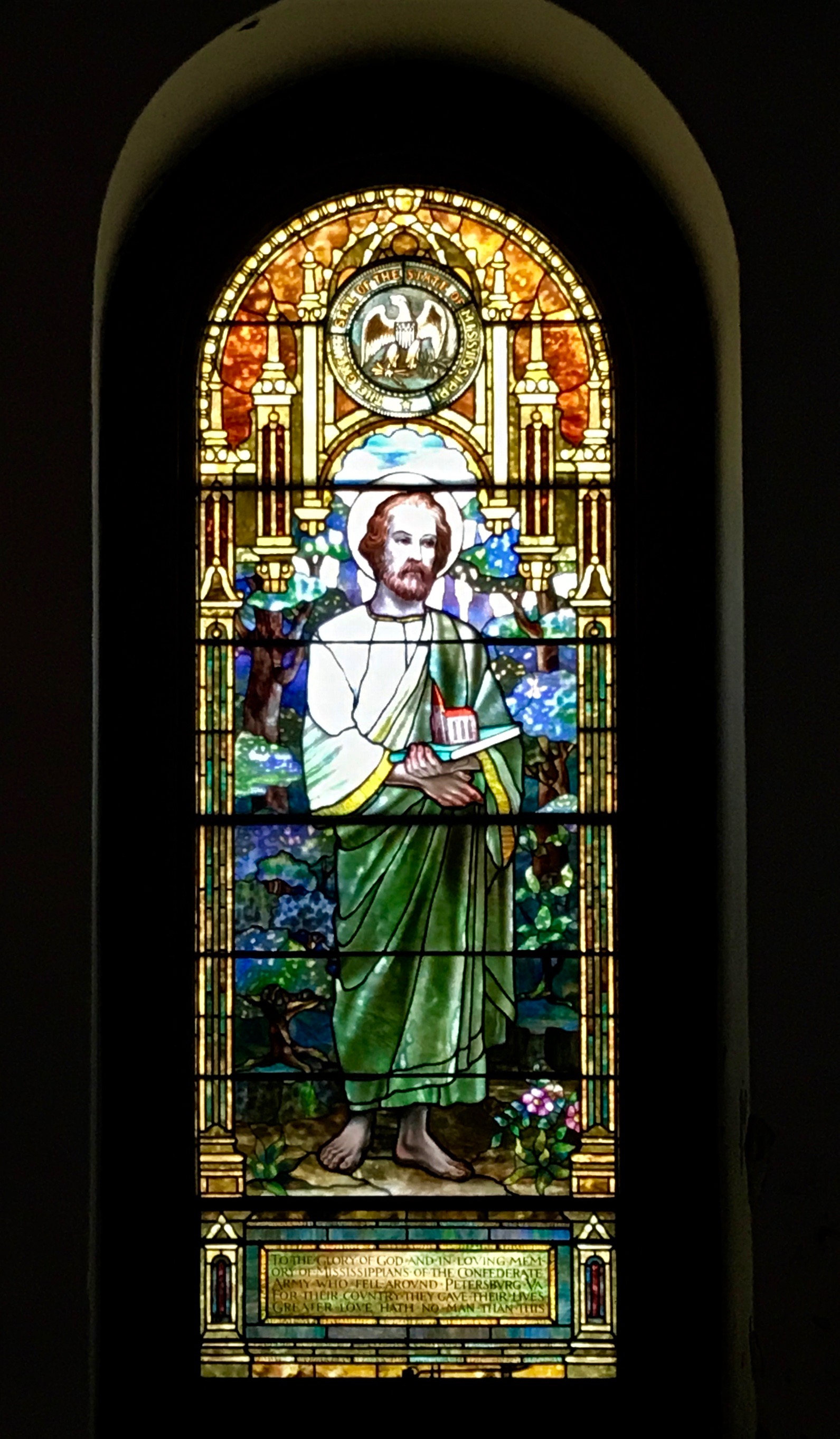
Mississippi is represented by Saint James the Younger.
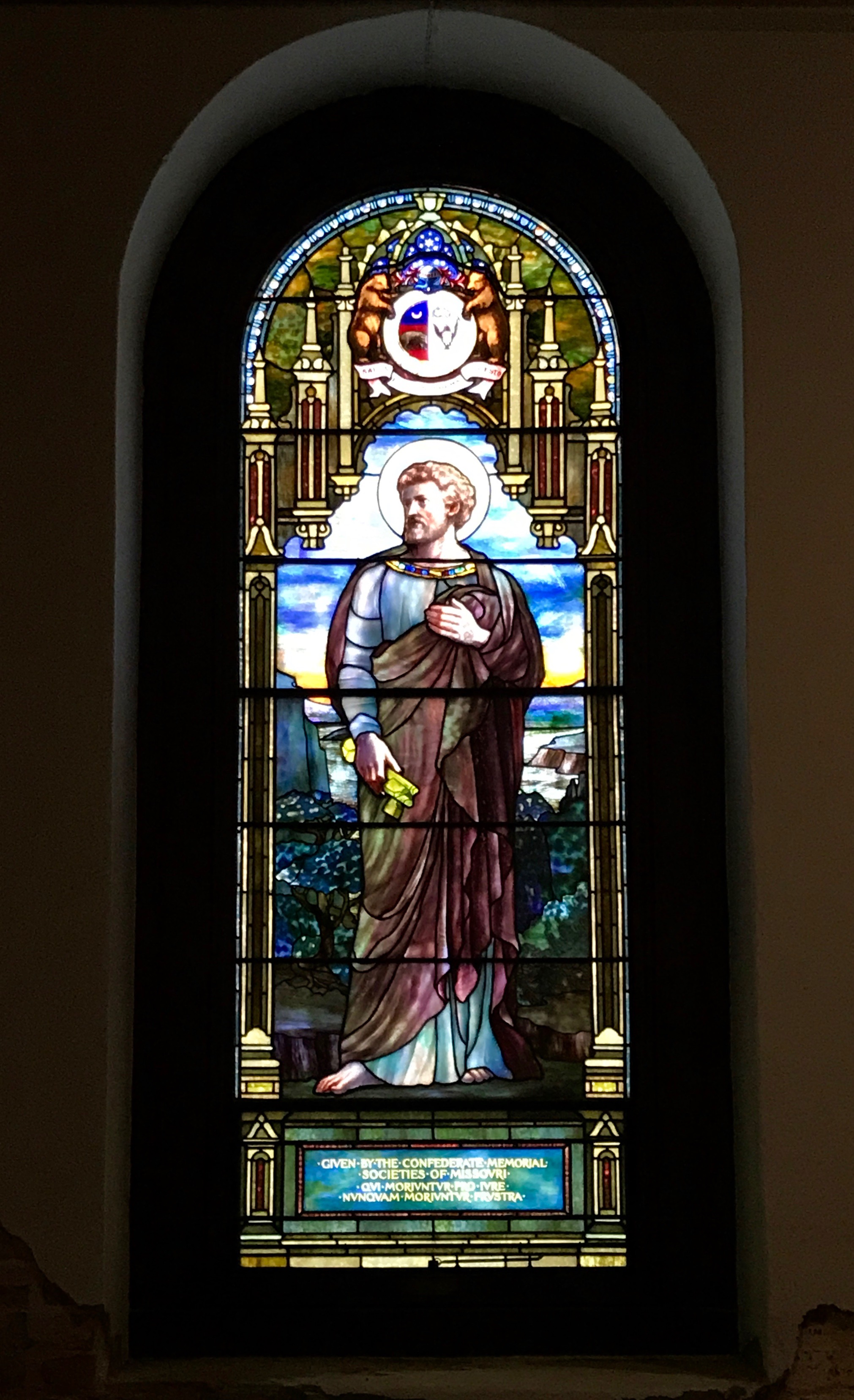
Missouri – let’s see…He’s holding keys. Yes, it’s Saint Peter.
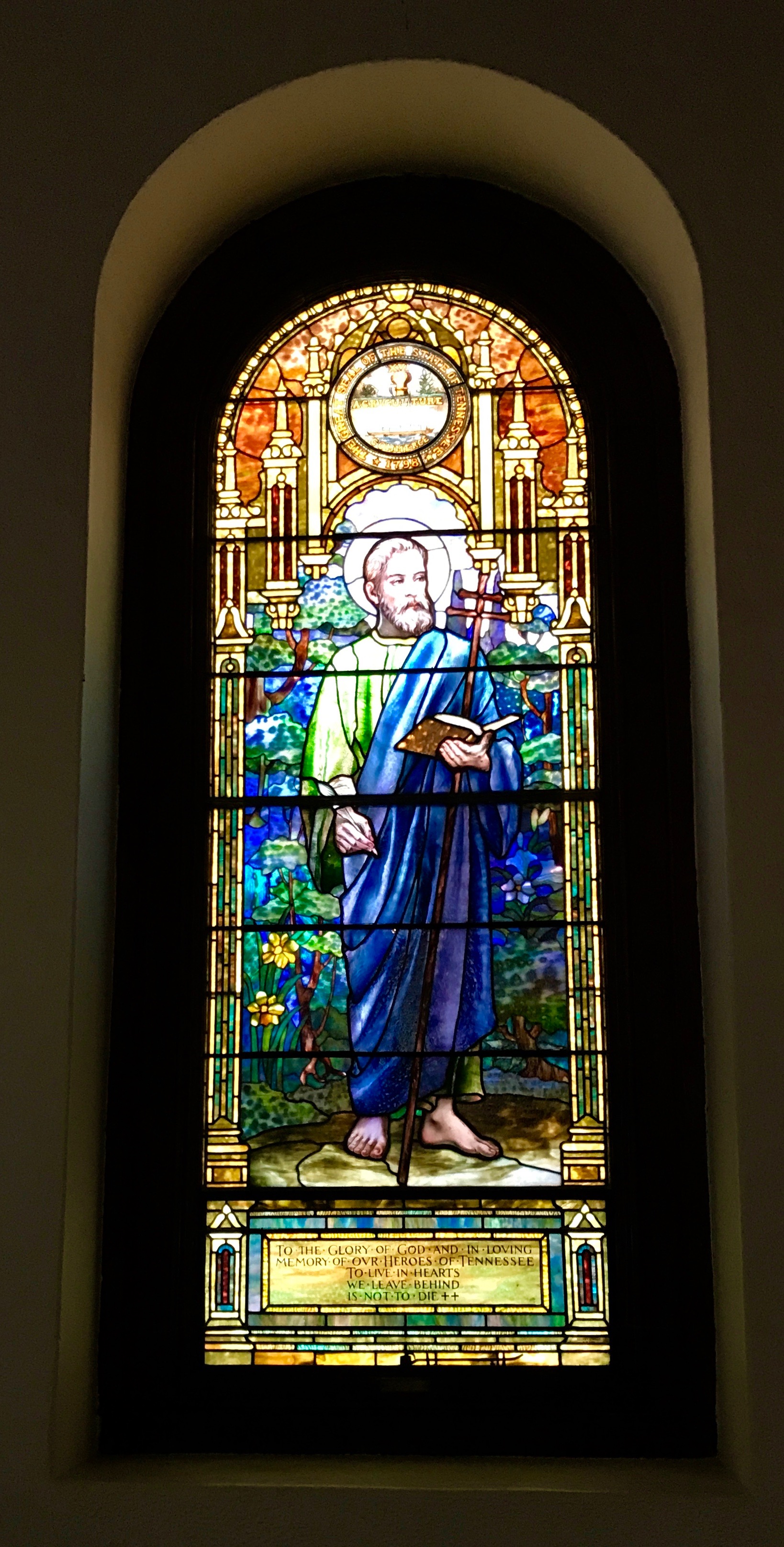
Tennessee is represented by Saint Philip the Apostle.
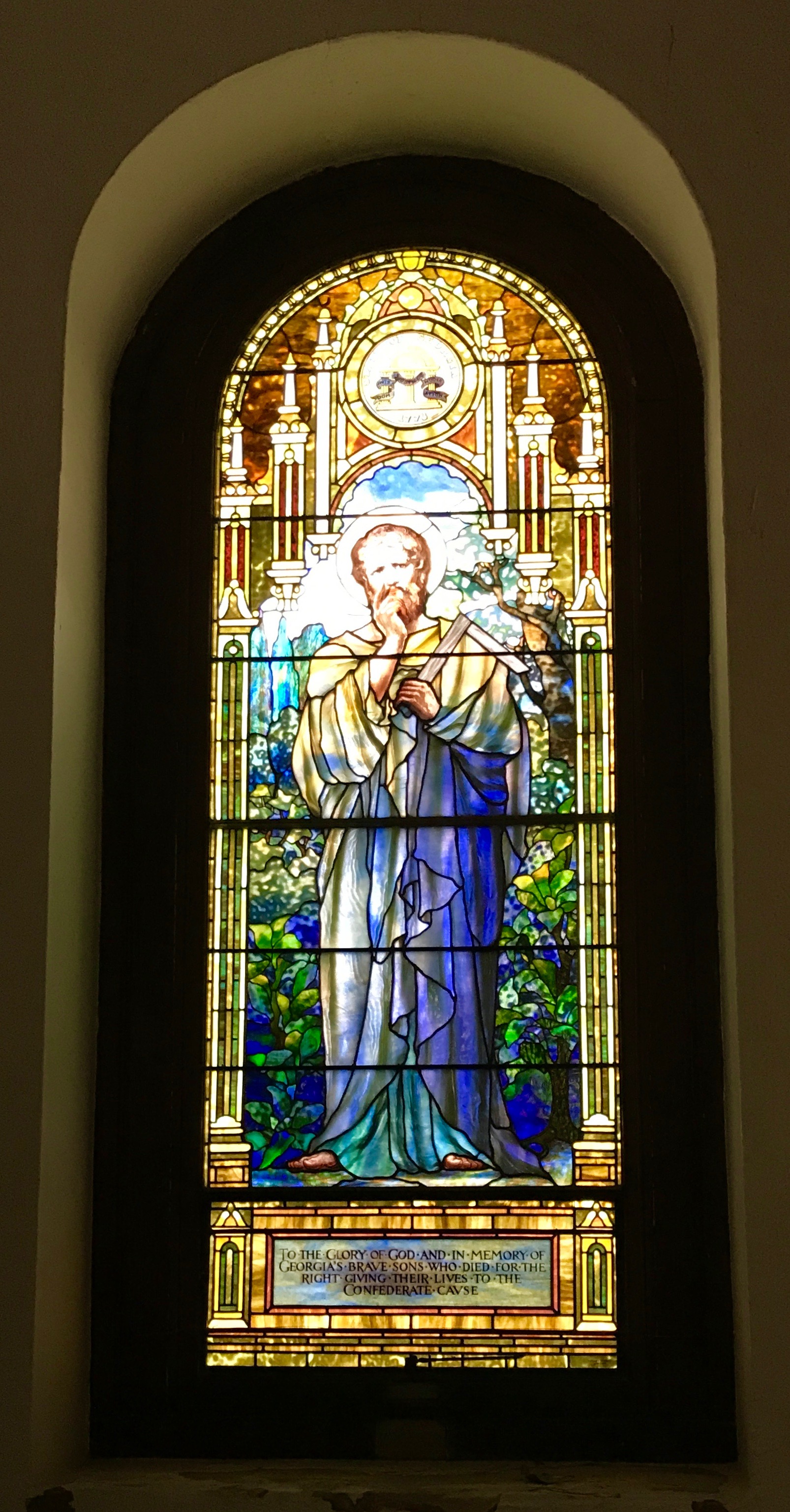
Saint Thomas the Apostle represents Georgia.
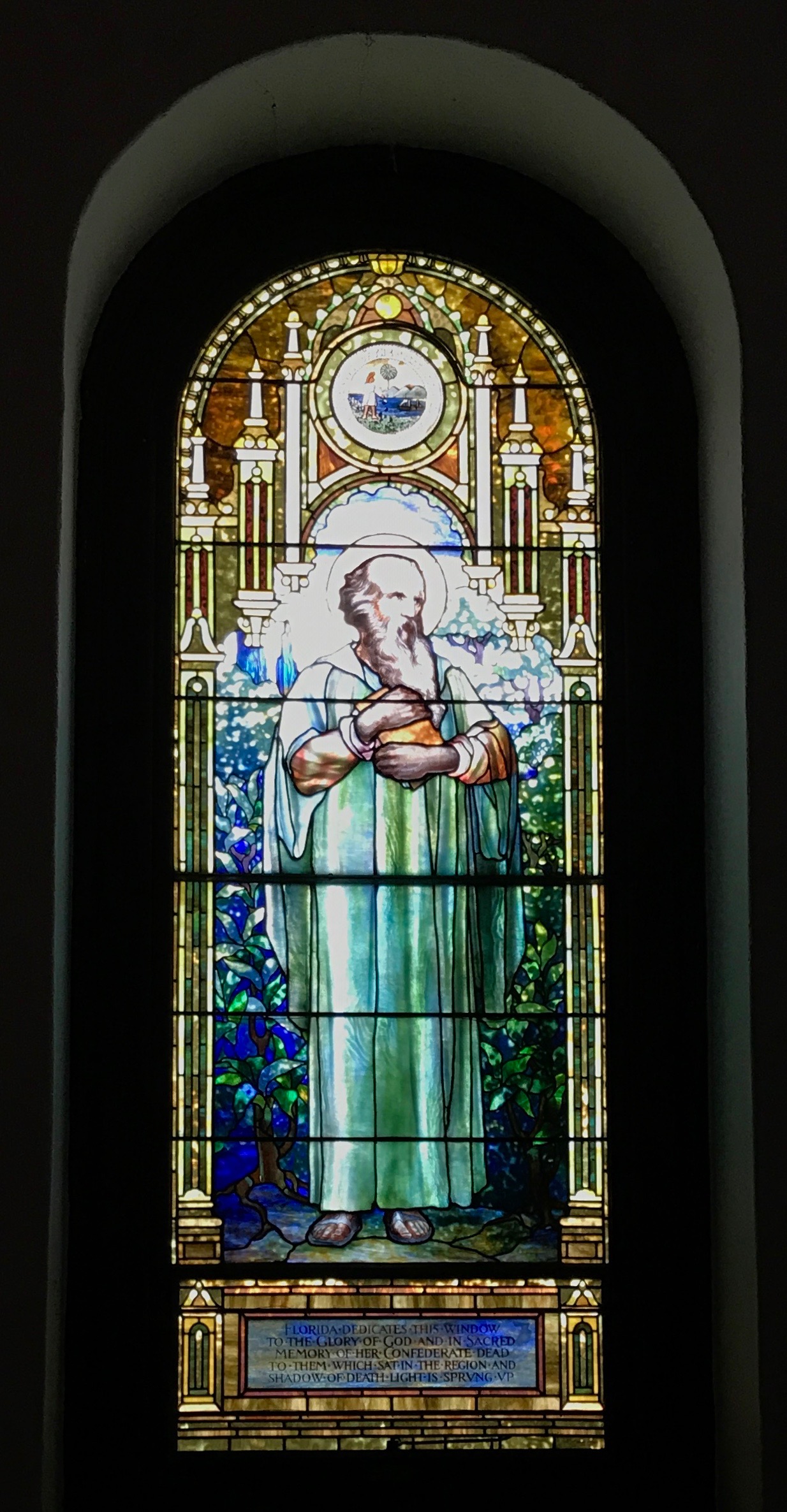
Florida’s patron is Saint Matthew.
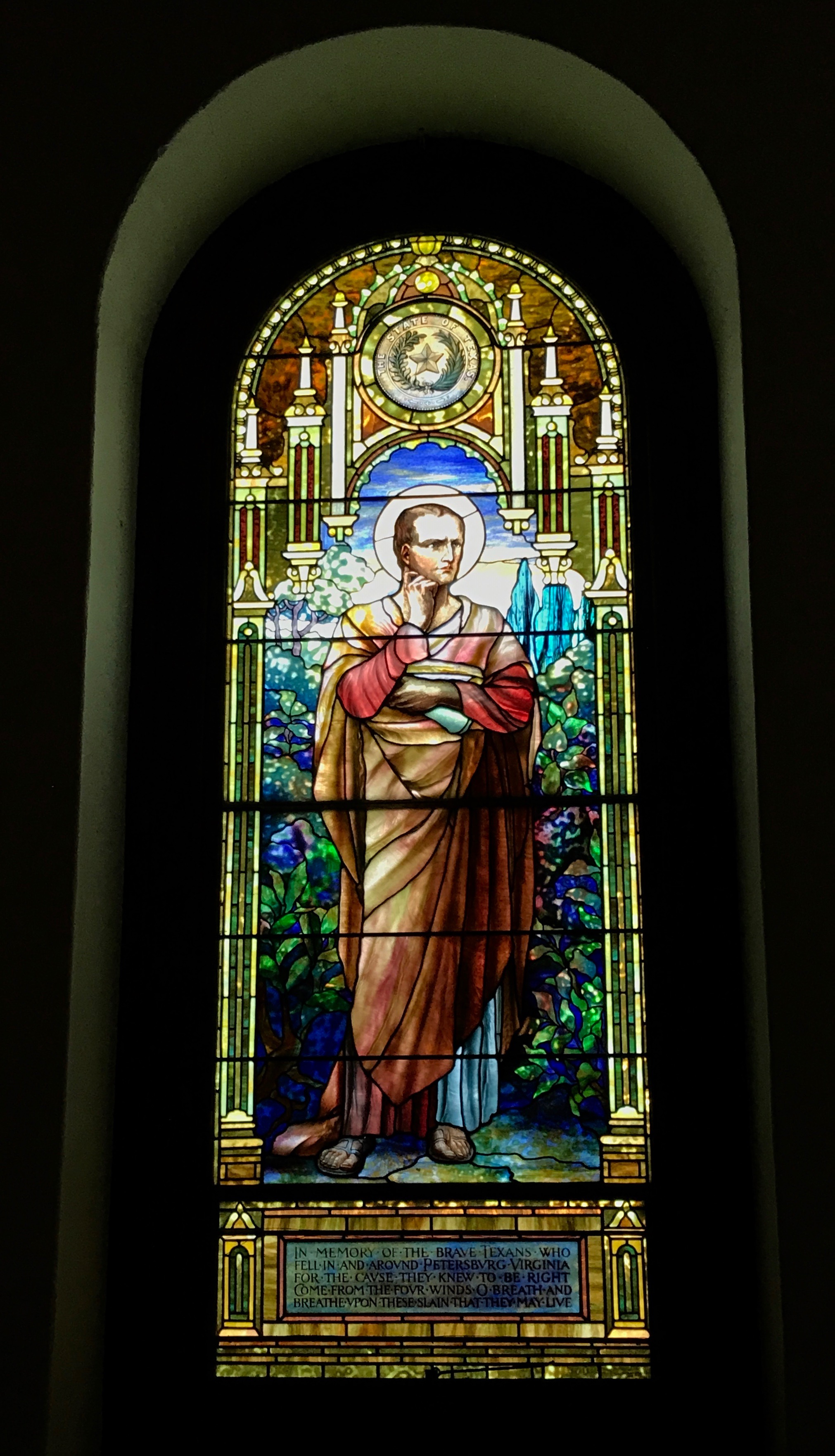
Saint Luke is watching over Texas.
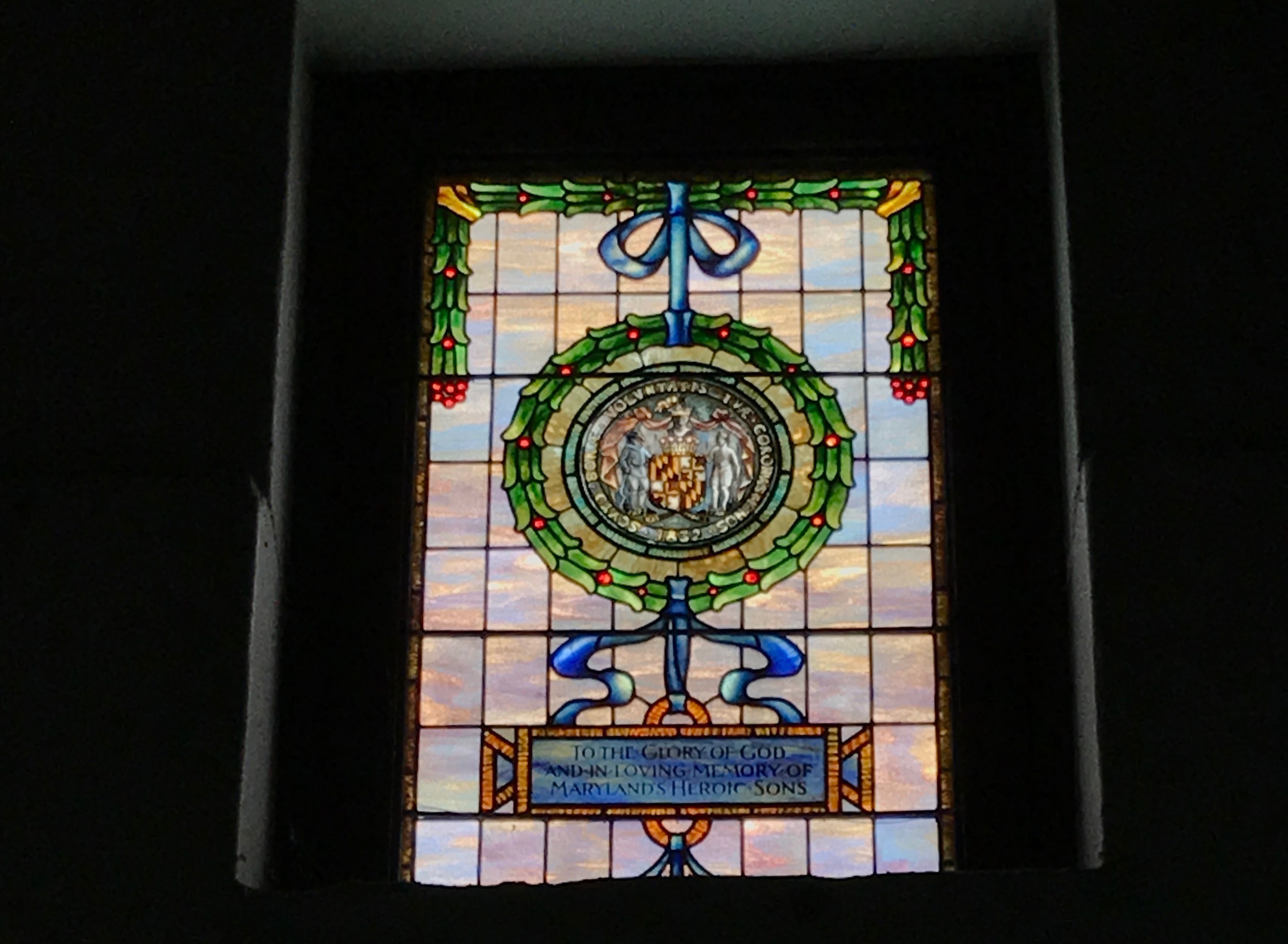
This is Maryland’s window. If I remember the guide correctly, some of the states had trouble coming up with the full amount to pay for the large windows. Maybe that is the case with Maryland.
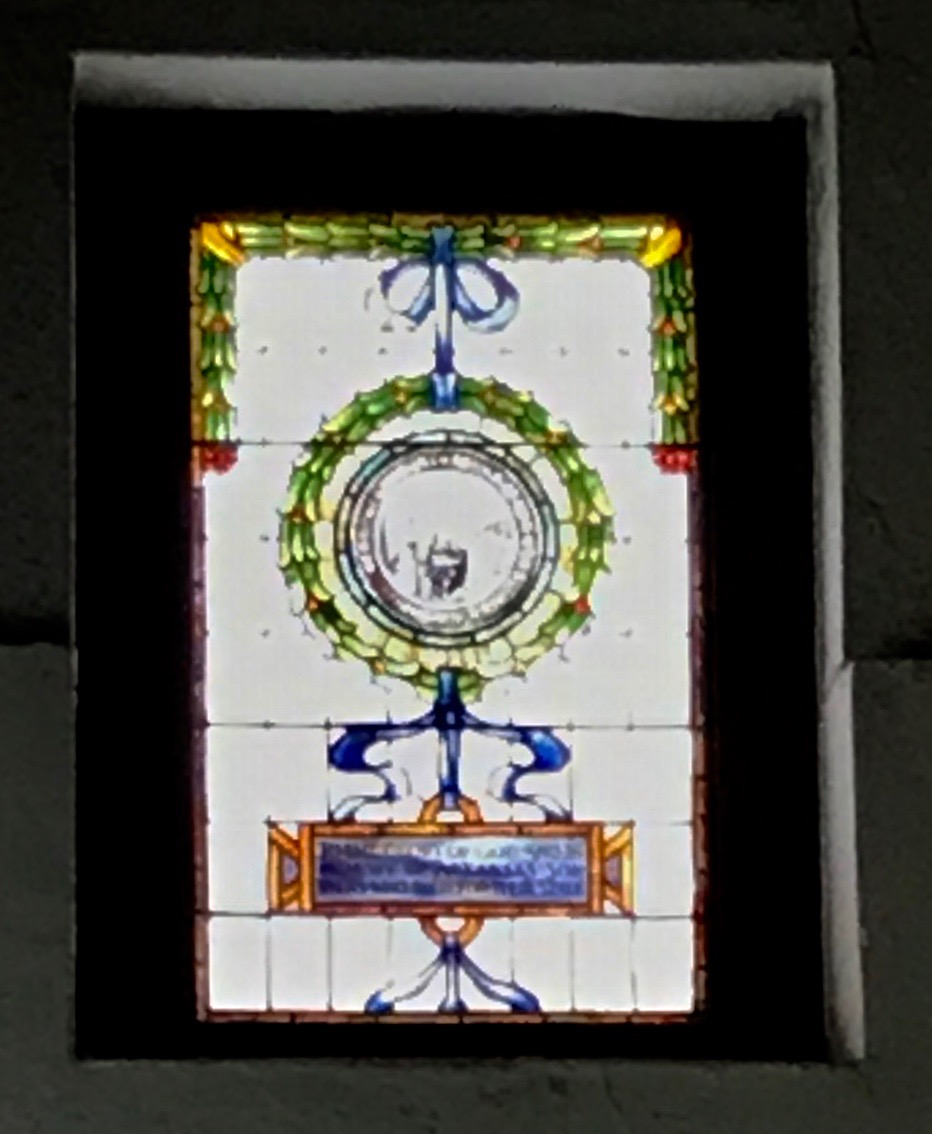
I am not sure about this window. The light coming through the glass made it difficult to make out the inscription.
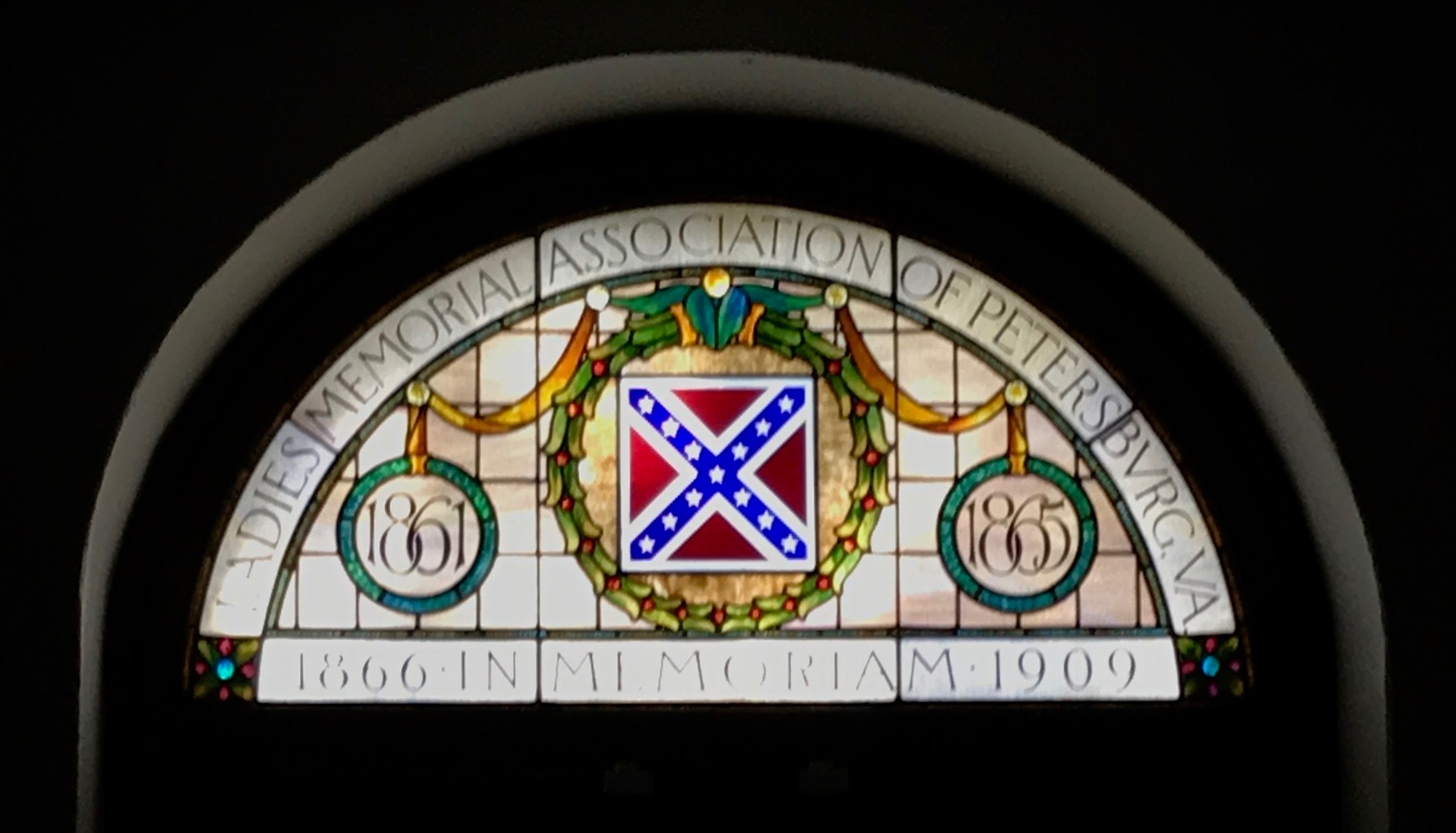
The lunette was over the door.
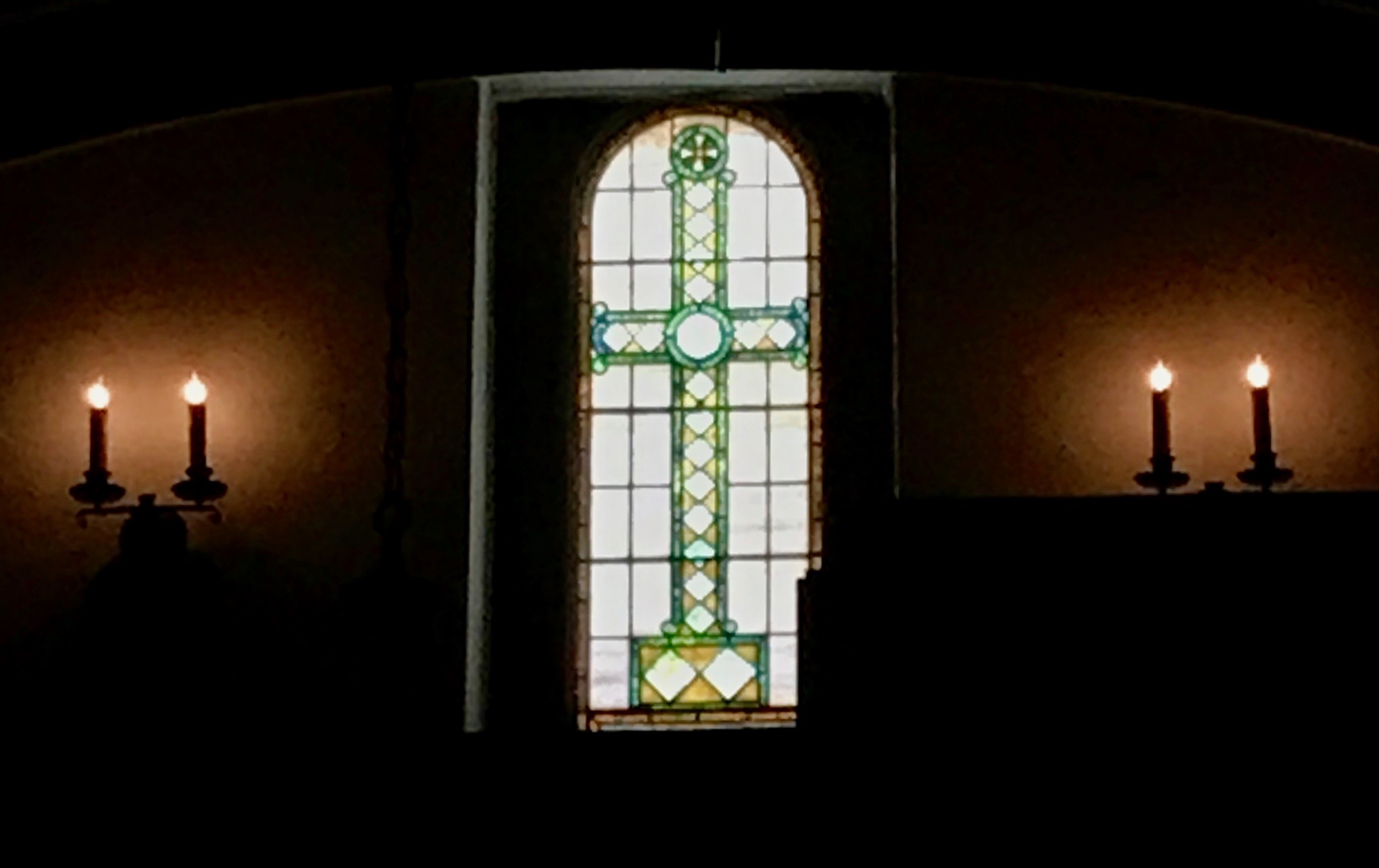
Louis Comfort Tiffany donated this window.
I wonder if Tiffany made any money on this job. If I remember correctly – and you all know that numbers are not my thing – the large windows only cost $175 each. That included the windows and the installation.
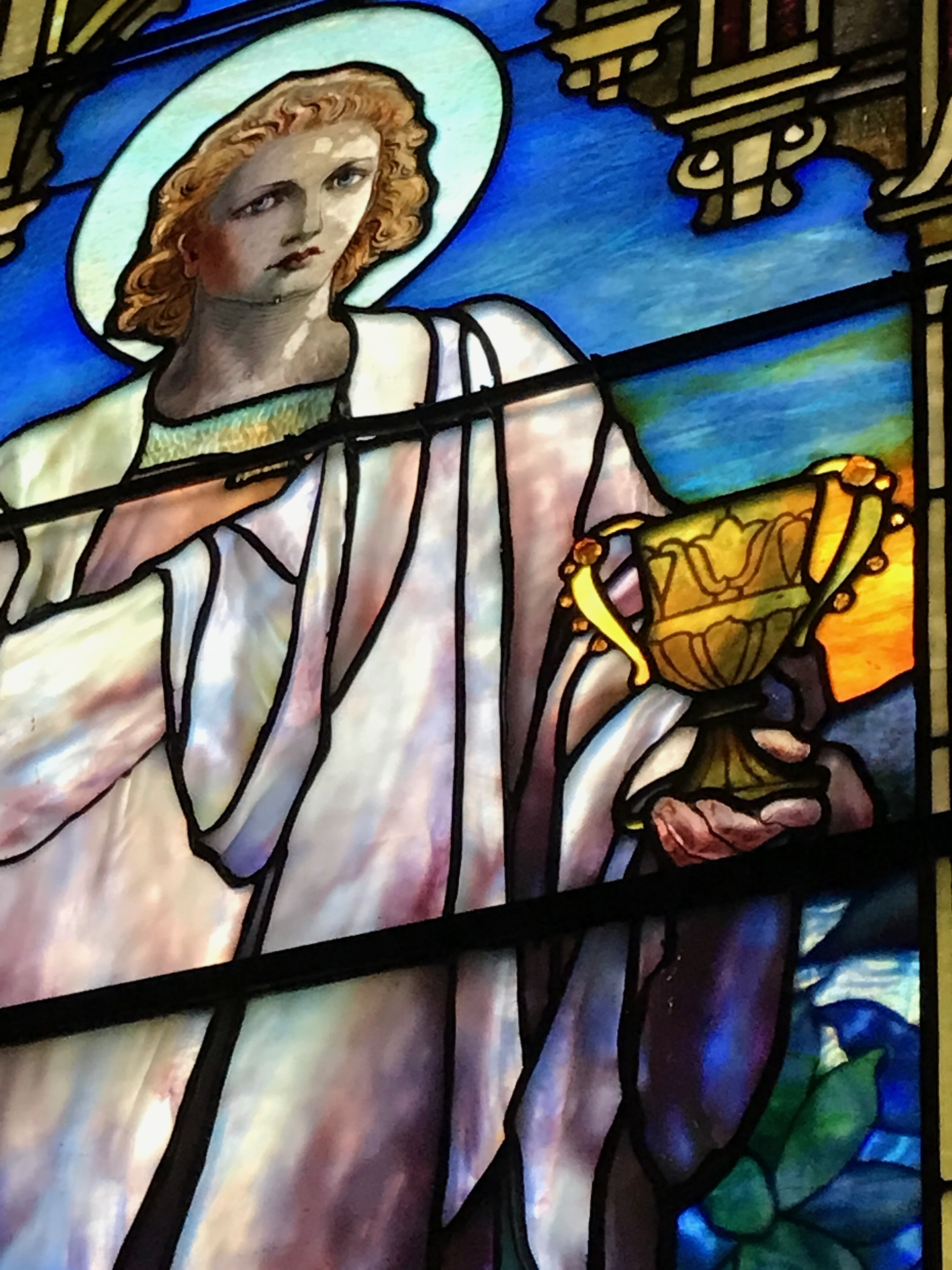
If you are interested in Tiffany’s work, I highly recommend a visit to Blandford Church. You can get up close and really examine the glass, which is what made his work so outstanding.
Let me take you through a few more things that caught my eye before I leave the Church.
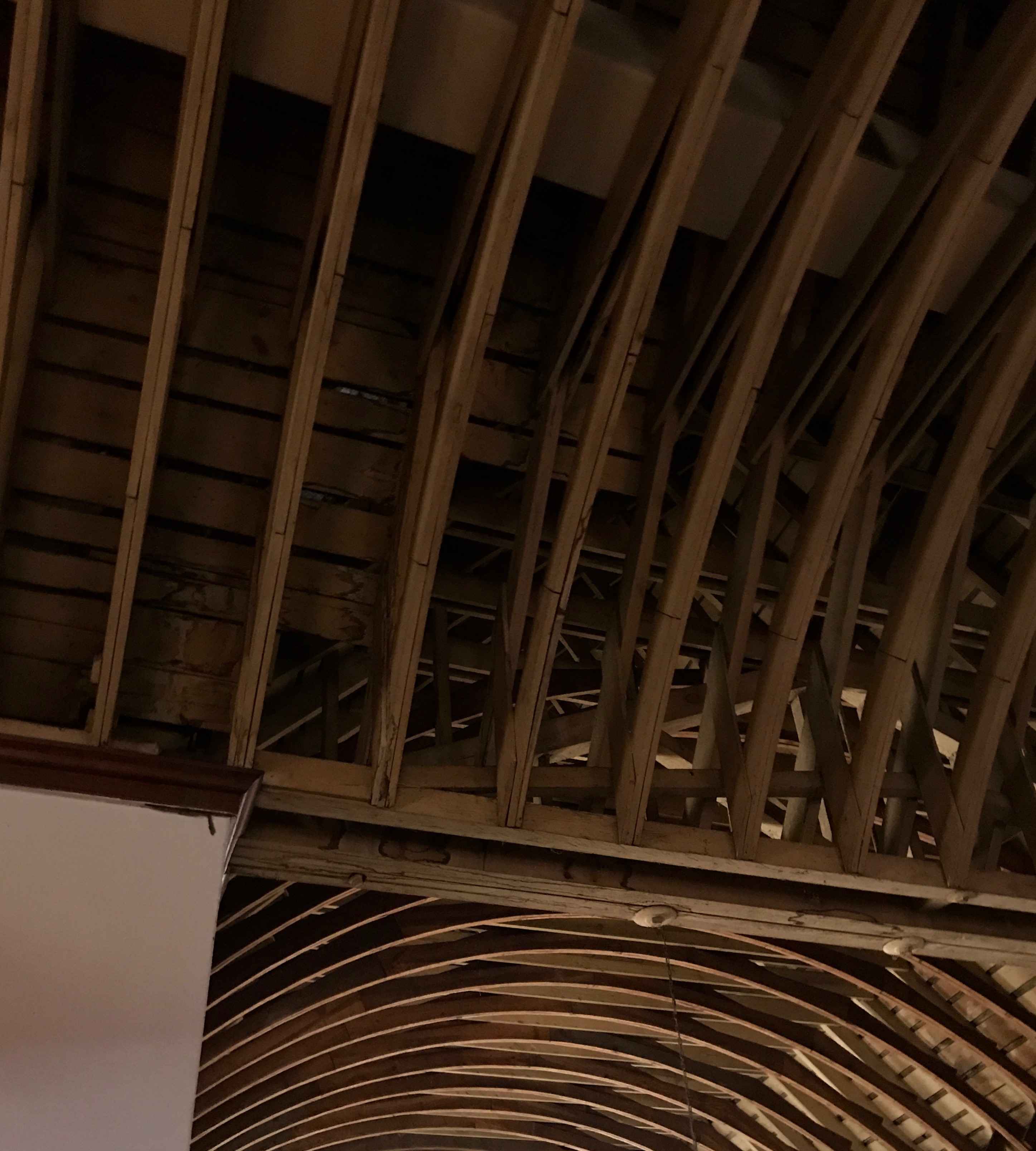
The building was quite stunning. I was taken with the rafters. I love it when you can see the structure of a building.
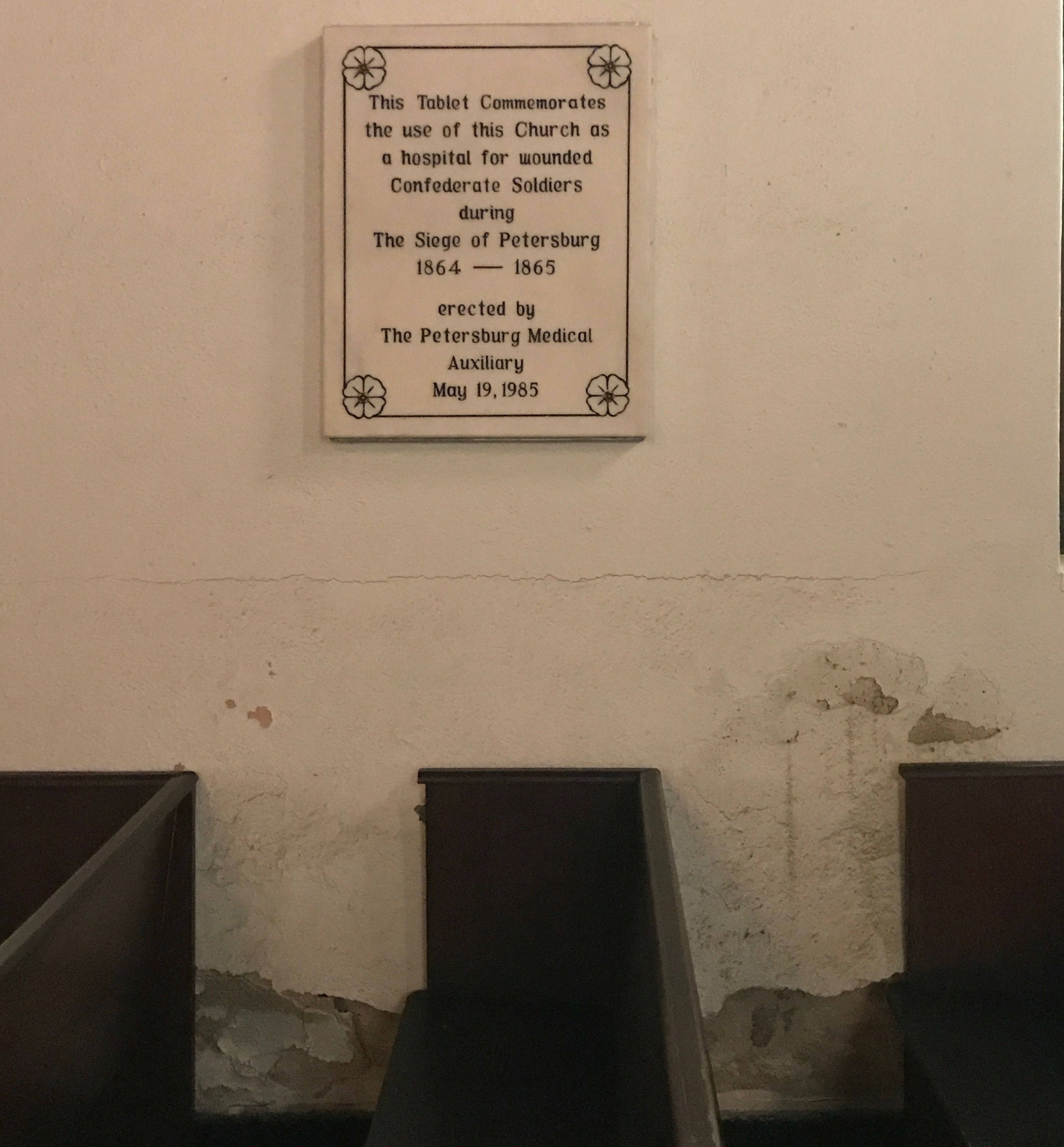
The building was used as a hospital during the Siege of Petersburg. It’s interesting – to me, at least – that this plaque was erected in 1985.

Mahone, who I mentioned in a previous post, is also remembered here.
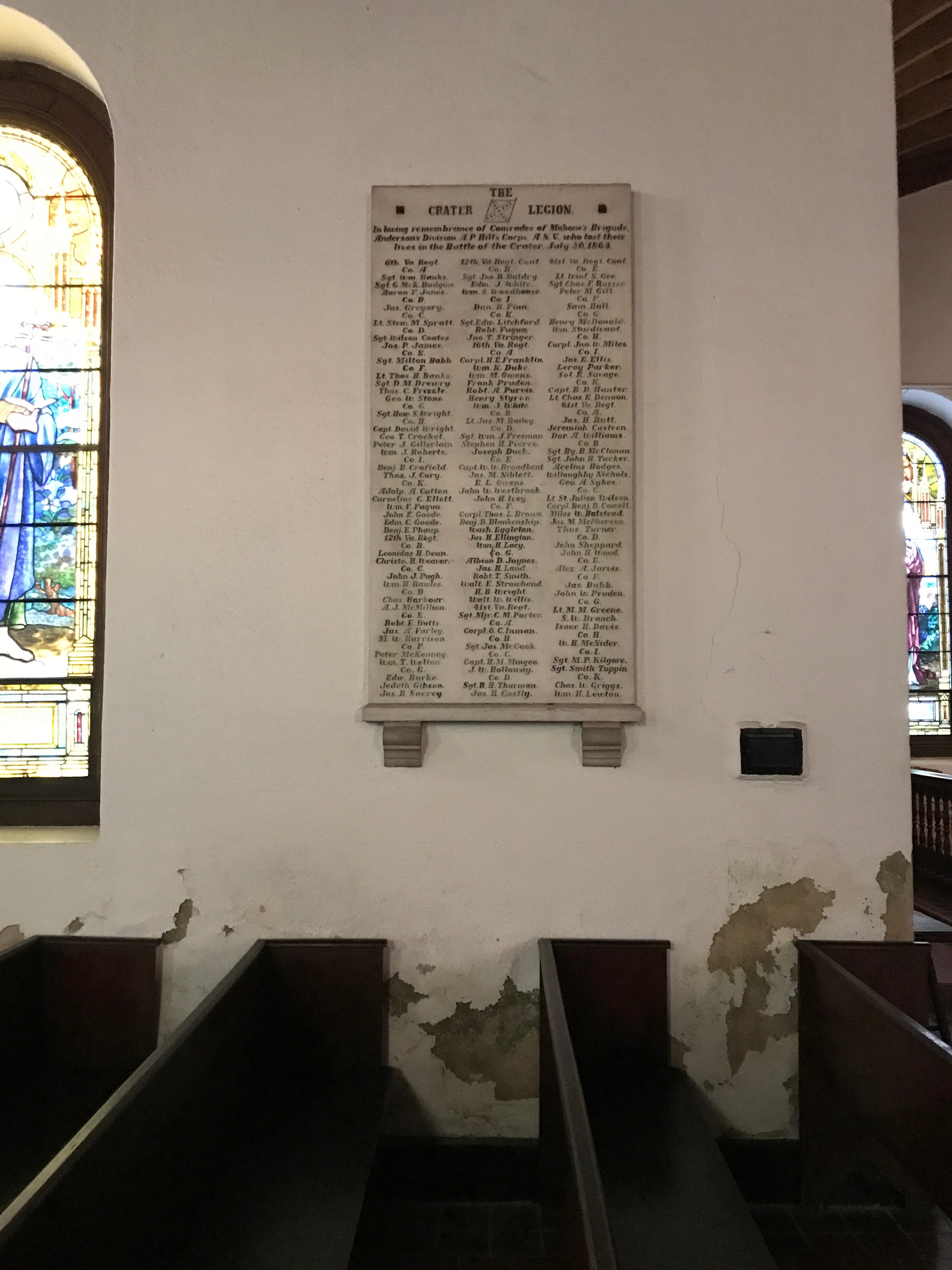
Mahone’s men are also remembered. At the top of the plaque, it says:
THE CRATER LEGION
In loving remembrance of the Comrade of Mahon’s Brigade,
Anderson’s Division, AP Hill’s Corps, A.N.V who lost their
lives in the Battle of the Crater. July 30, 1864.
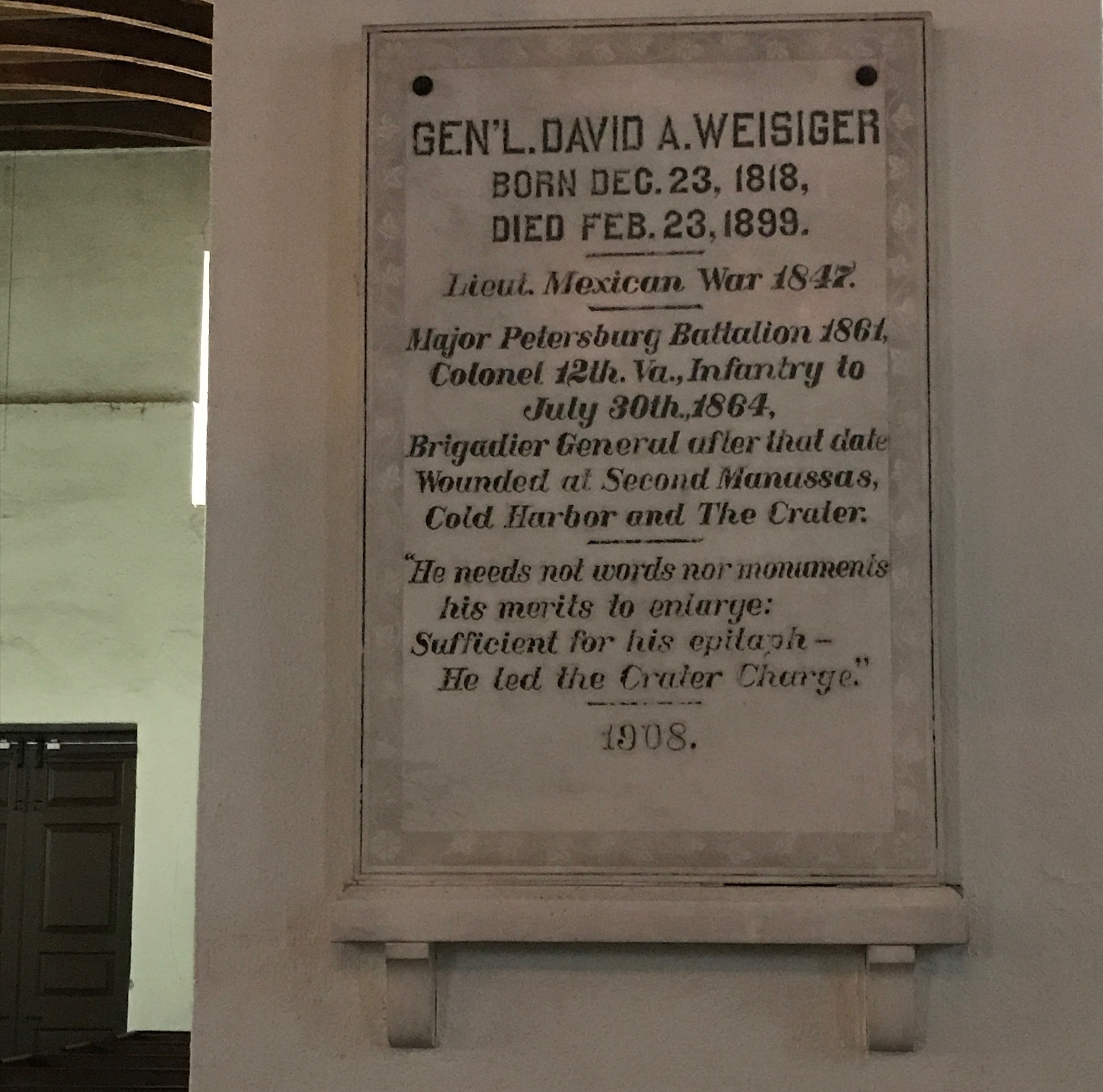
I’ll let you read the text on this one, if you are so inclined.
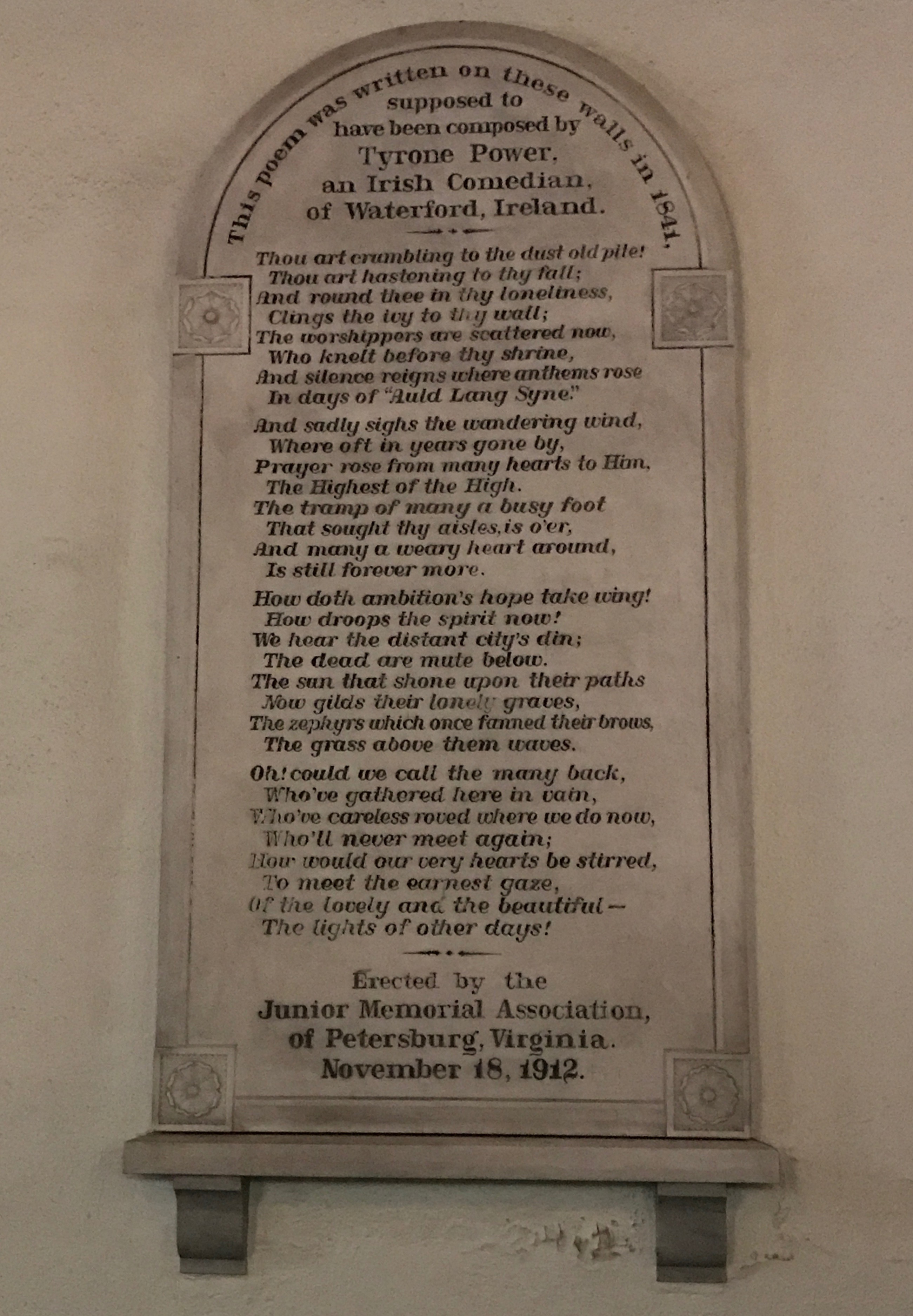
This plaque was also on the wall of the church. The guide left me with the impression that it was significant, but I am not sure how it relates to the church.
The church had been abandoned in 1806 after the construction of another Episcopal church in Petersburg. Perhaps it was a romantic response to the crumbling building. After all, a building that hasn’t been maintained for 35 years is bound to show some signs of ruin.
Or, maybe I was just captivated by the name of the supposed poet, Irish comedian, Tyrone Power.
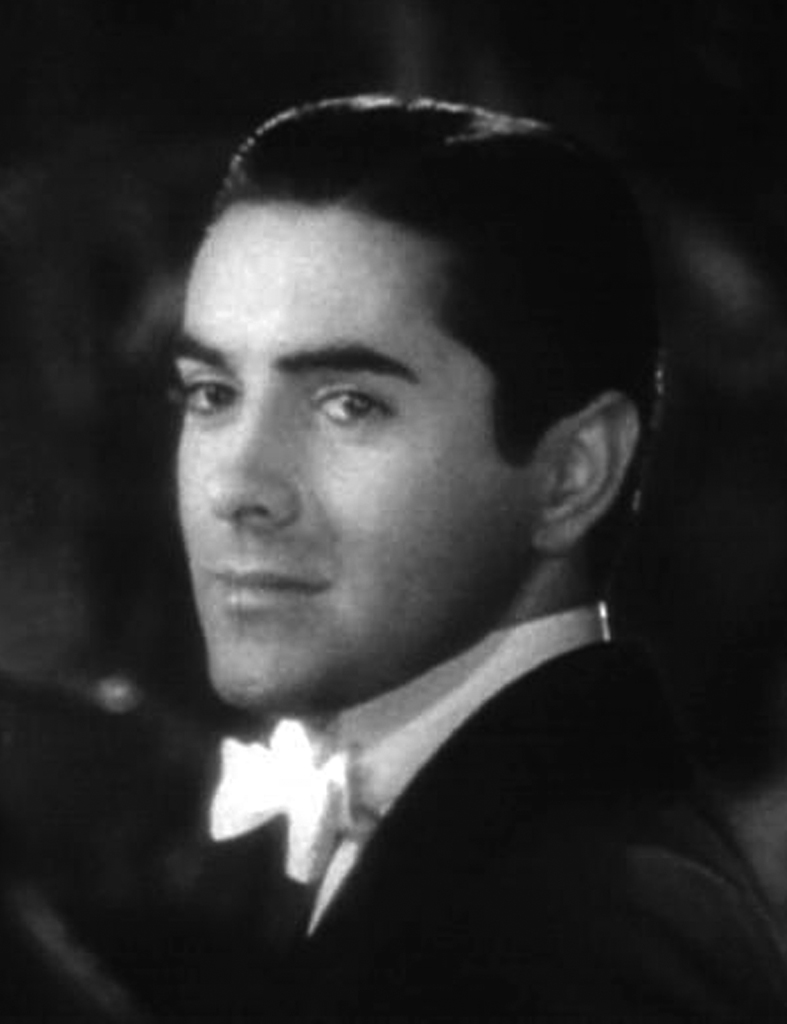
No, not that Tyrone Power.
After my speed tour of the church, I decided to drive through the Confederate Cemetery. My guide told me that the women had taken the lead in exhuming the Confederate dead and reinterring them here. There are over 30,000 soldiers buried in the cemetery.
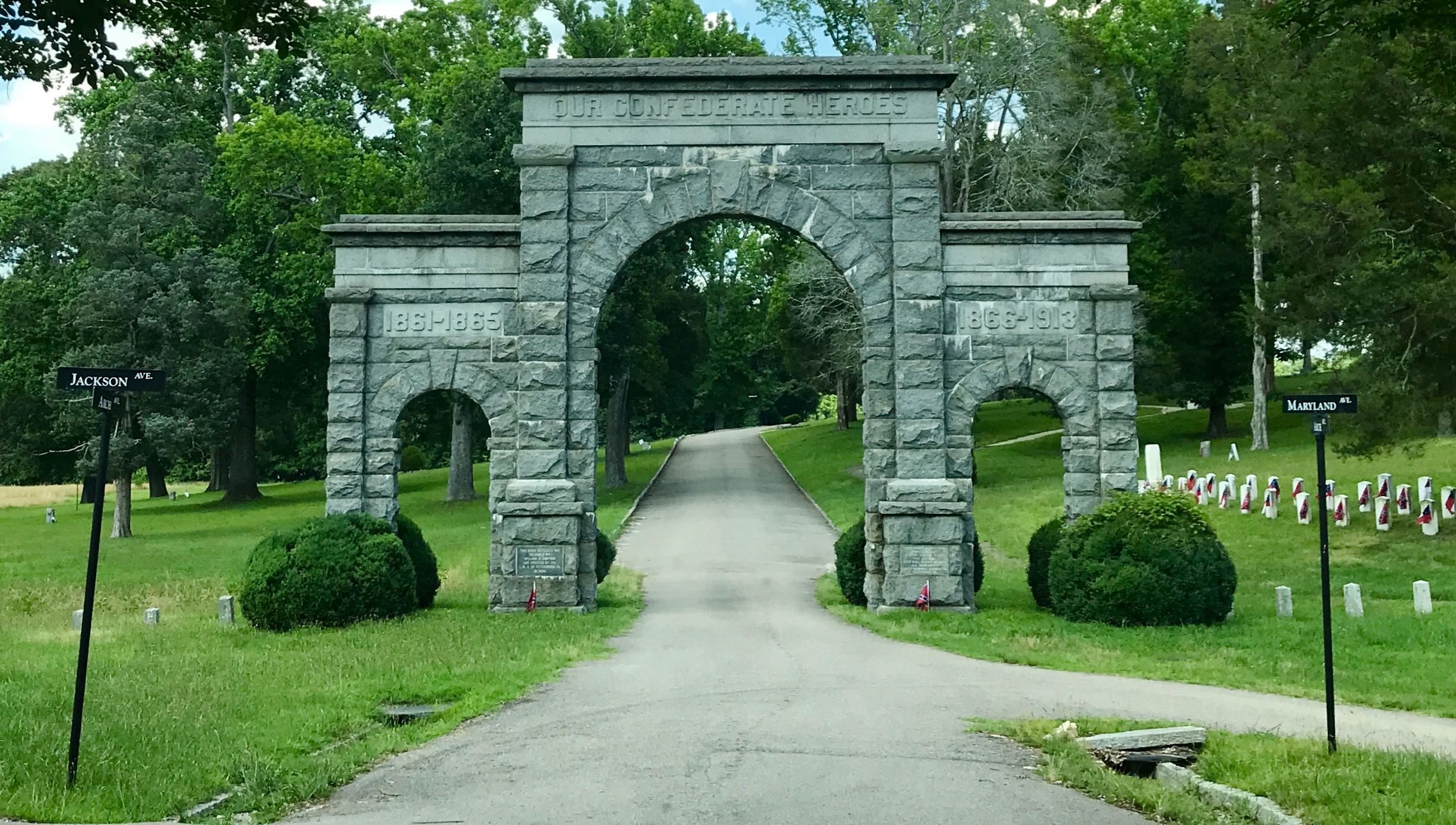
I drove through the civilian part of the cemetery and found the entrance to where the soldiers are interred. The arch carries the motto, “Our Confederate Heroes.”
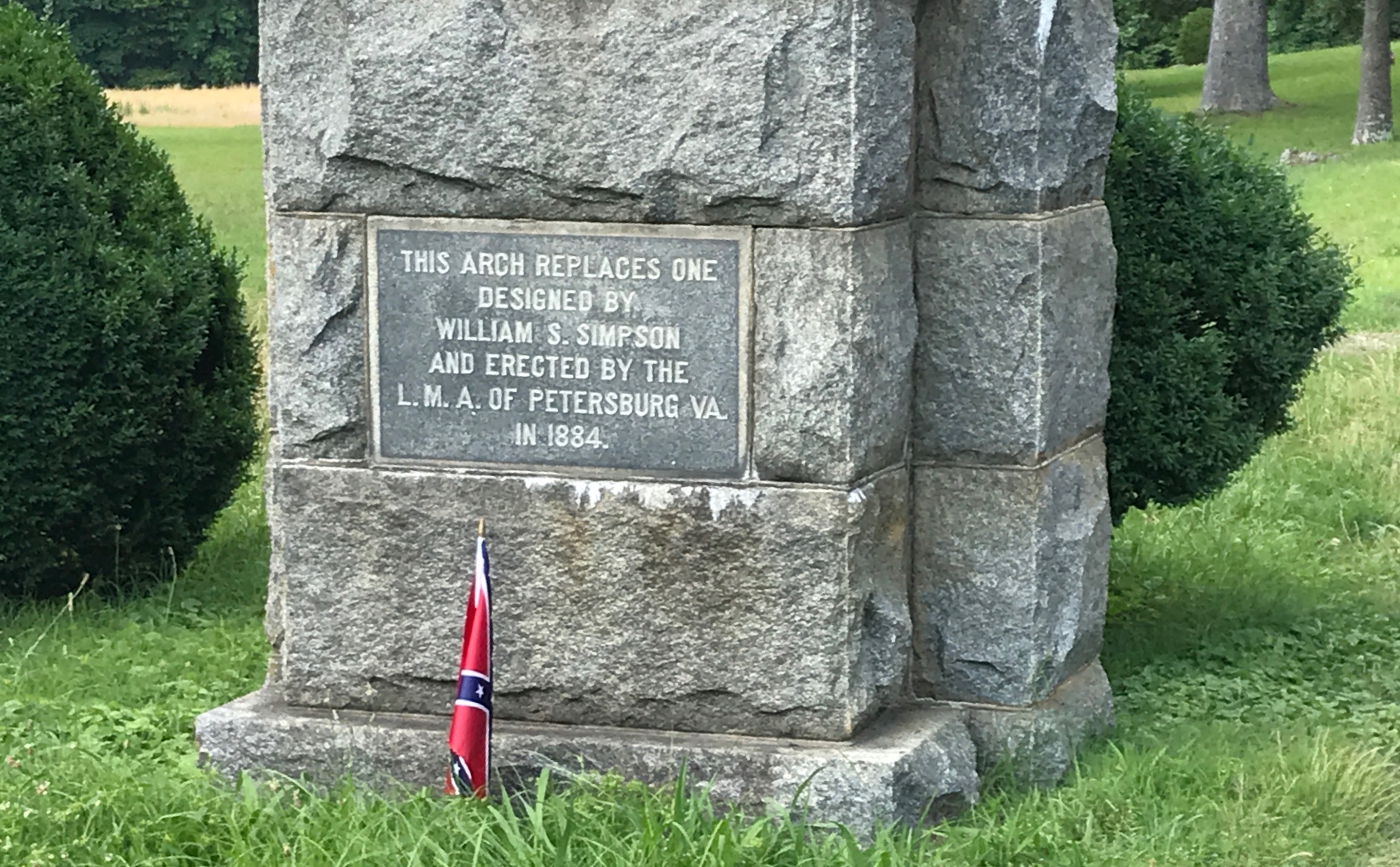
This is the new arch.
My guide had mentioned how poor everyone in the south was after the war, and I think that is born out by the cemetery.
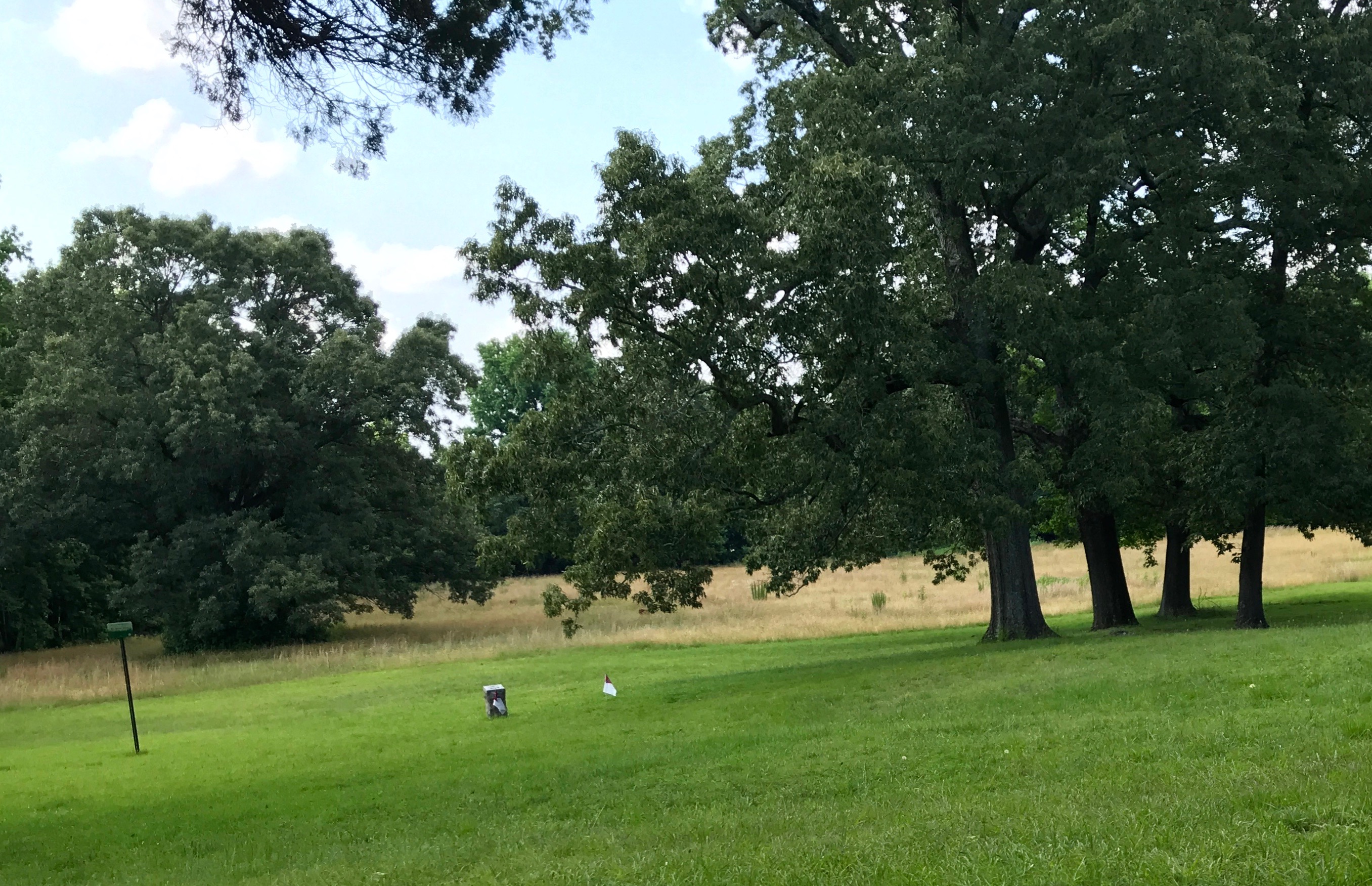
I had expected to see rows of markers like you see in the national cemeteries, like Arlington or the one in Vicksburg, Mississippi.
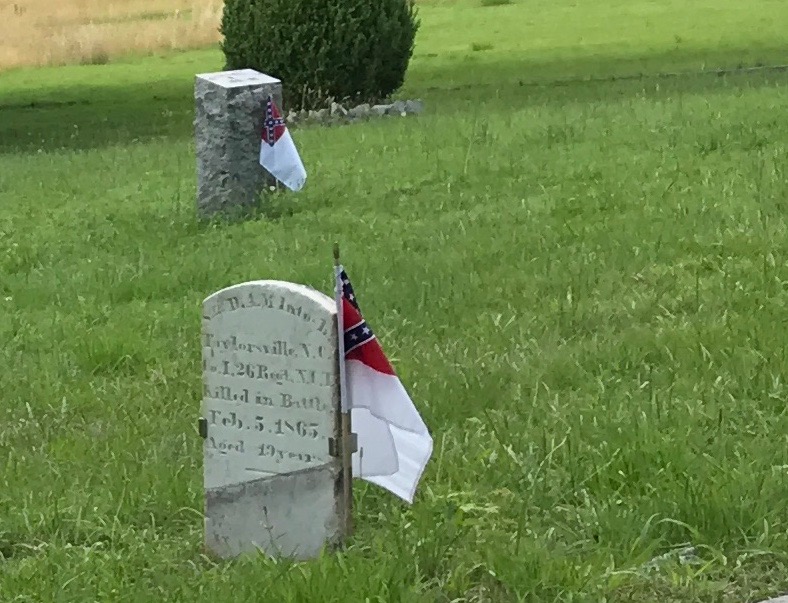
There were only a few markers scattered around the area where the Confederate soldiers were buried.
Maybe there was more to see, but I was out of time. If you have any additional information to share with me, feel free to drop me a line.
Thus ends my whirlwind tour of Petersburg, Virginia. Next stop: Richmond.