In the morning, after coffee, breakfast, cat cuddling and more coffee, I headed over to the diamond mine.
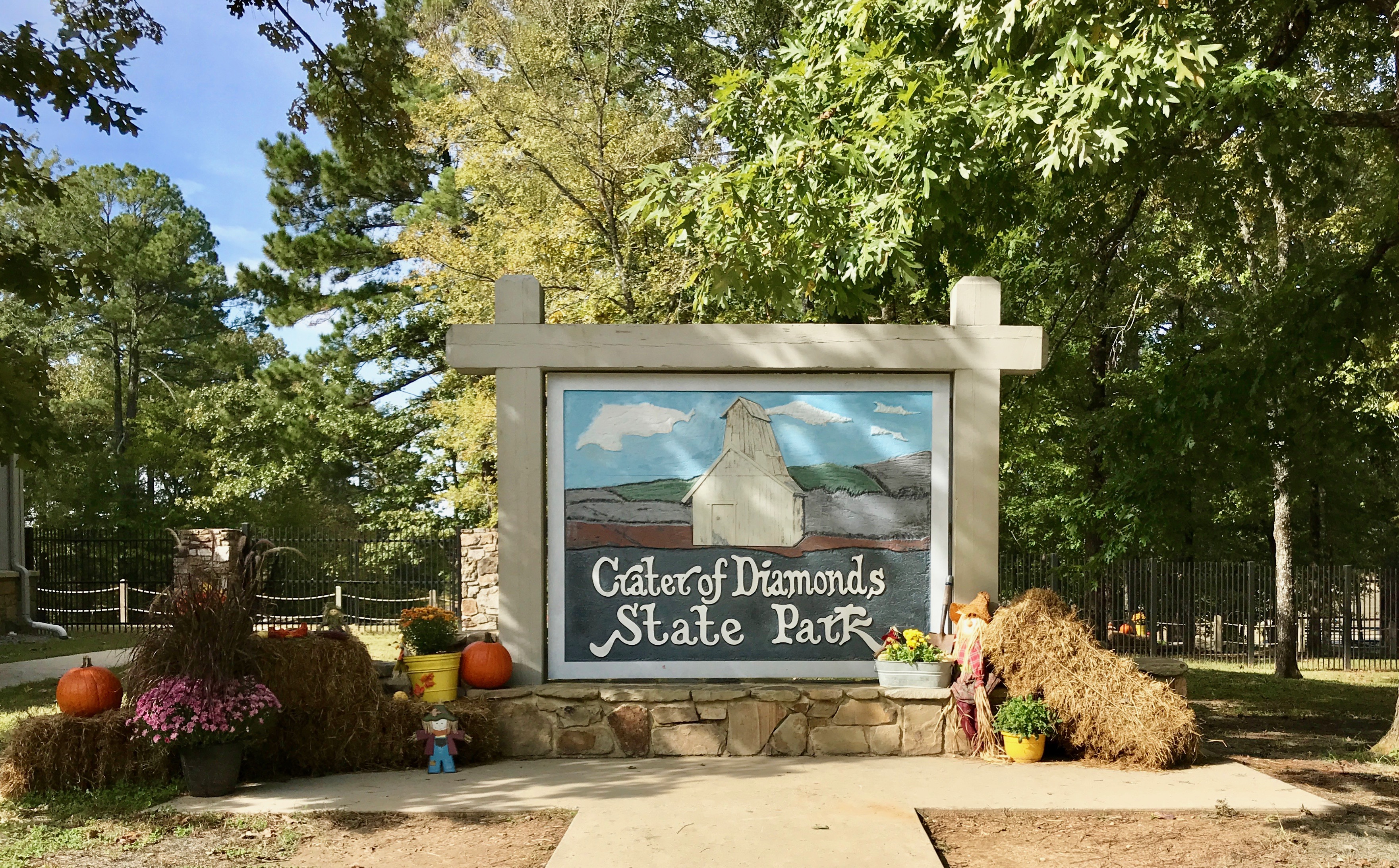
They are really into making their already attractive signs even more photogenic. They even have a little post for taking selfies with a timer.
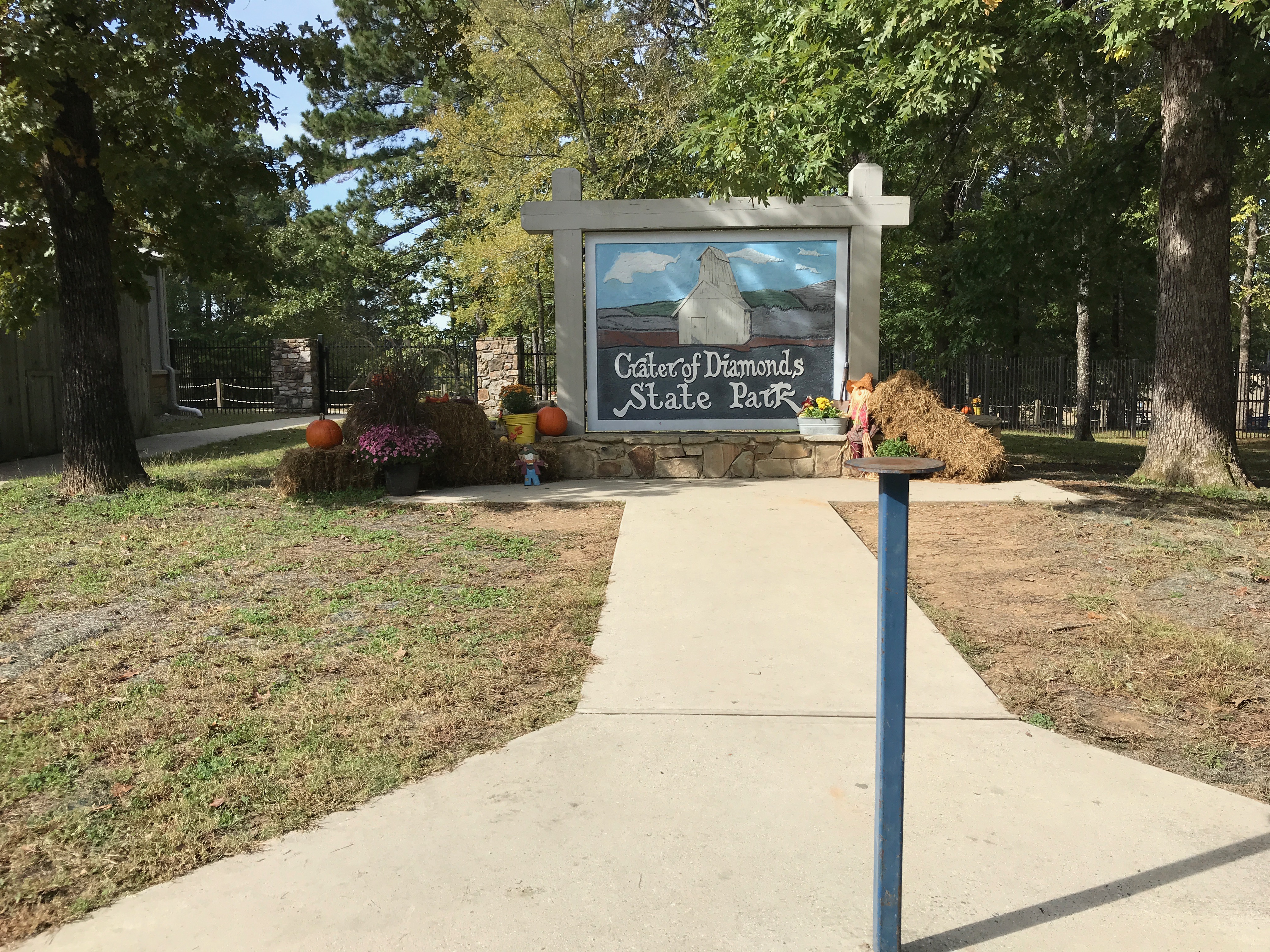
I thought that was ingenious, although it’s not quite as useful these days. Cell phones don’t sit up as well as cameras used to.
I went in, paid my fee, and headed for the mine.
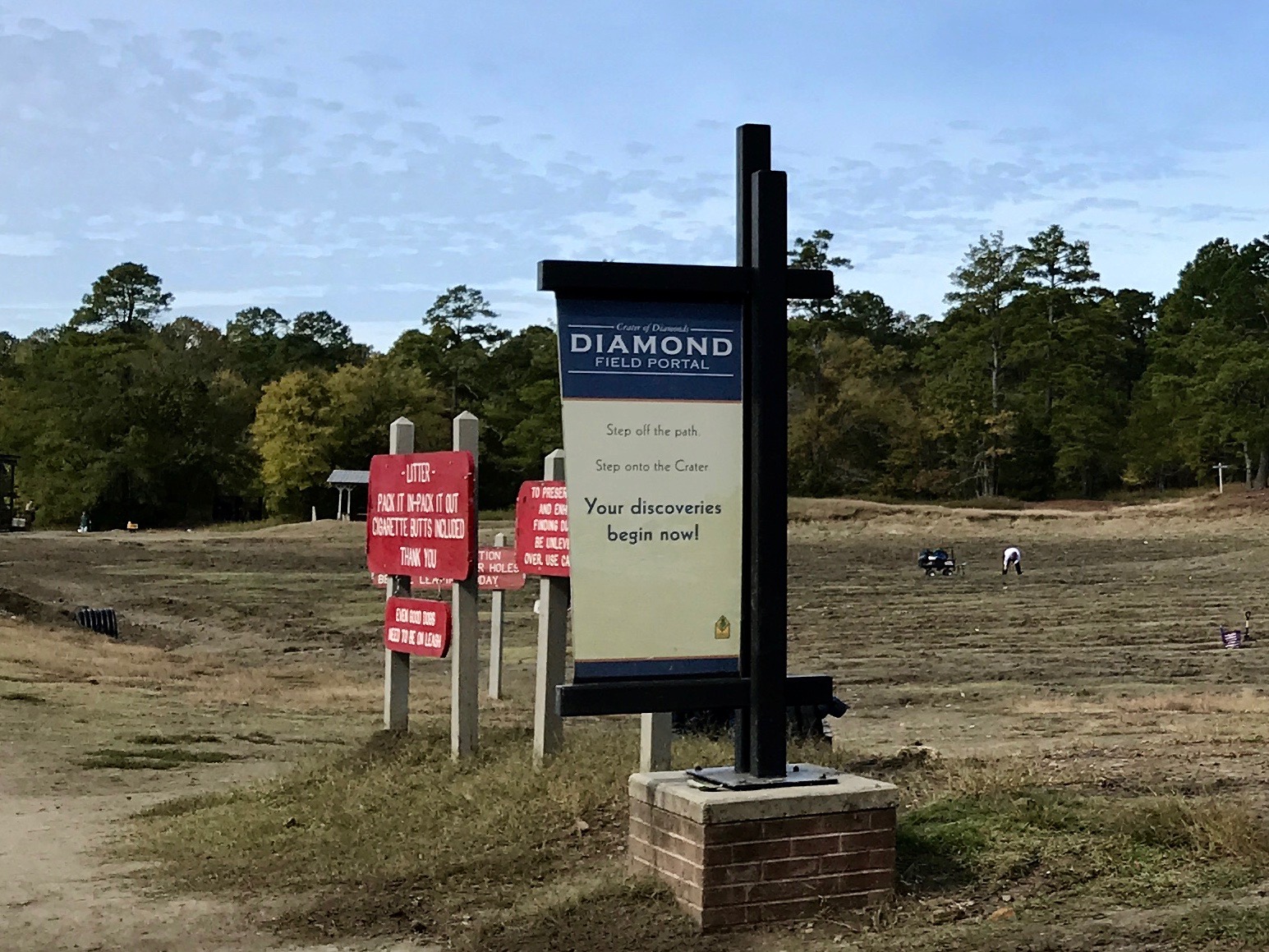
Incidentally, this is the mine.
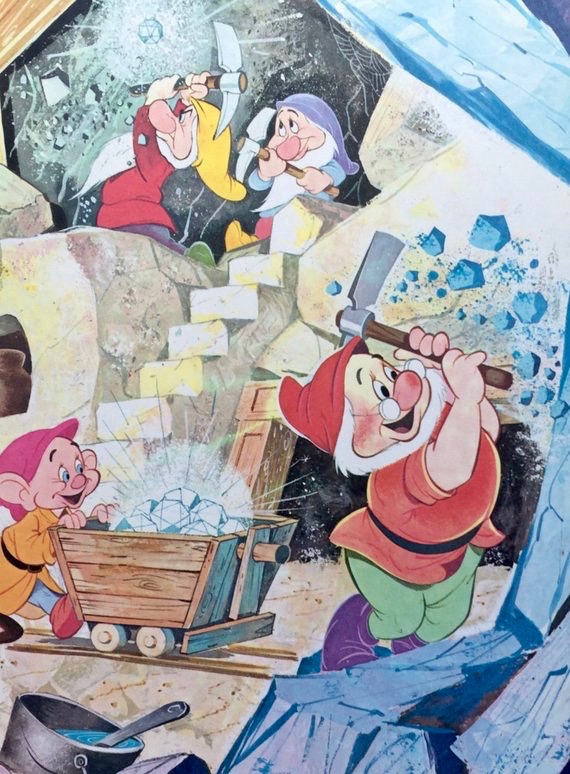
It’s a far cry from the Disney version.
All the things I read up in the display near where I paid to go in gave me the idea that many of the best diamonds are found on the surface, so I didn’t invest in the sifting equipment that they have available for rent just before you enter the mine. After all, I had already paid to enter the mine and I did bring some of my own stuff.
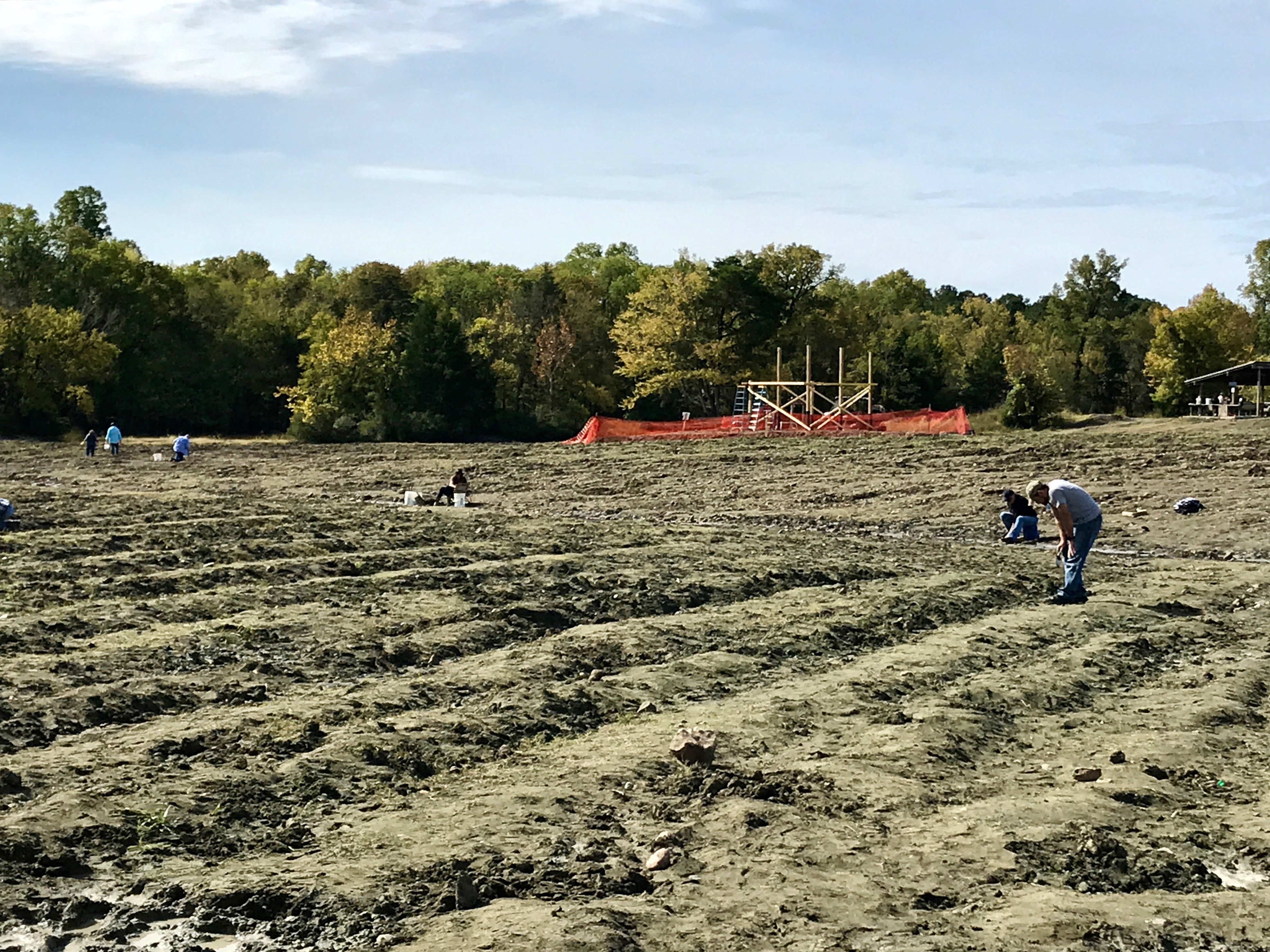
I walked in, looked for a likely spot and started looking.
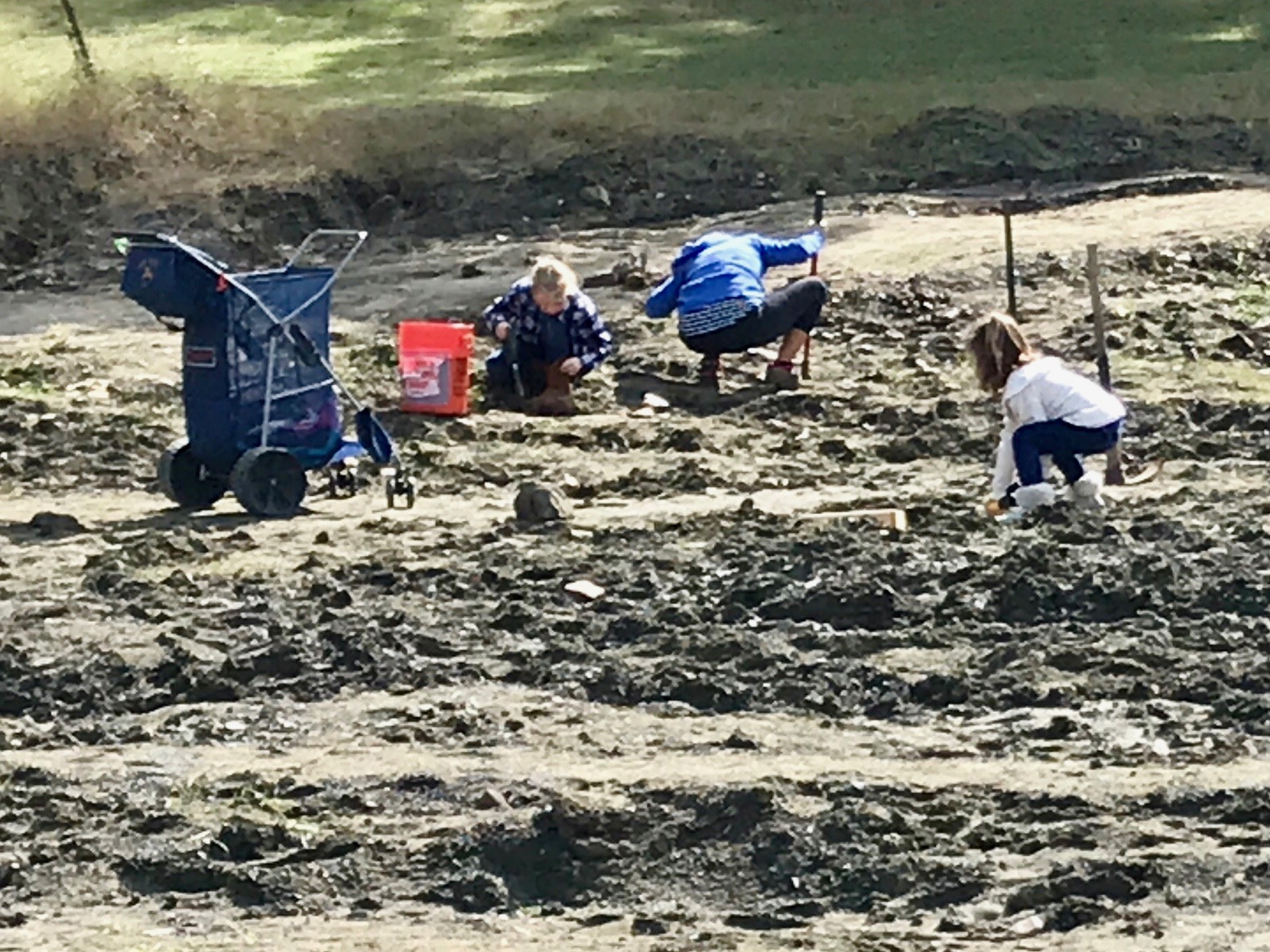
Lots of people were out hoping to hit it big. I hope this little girl found something.
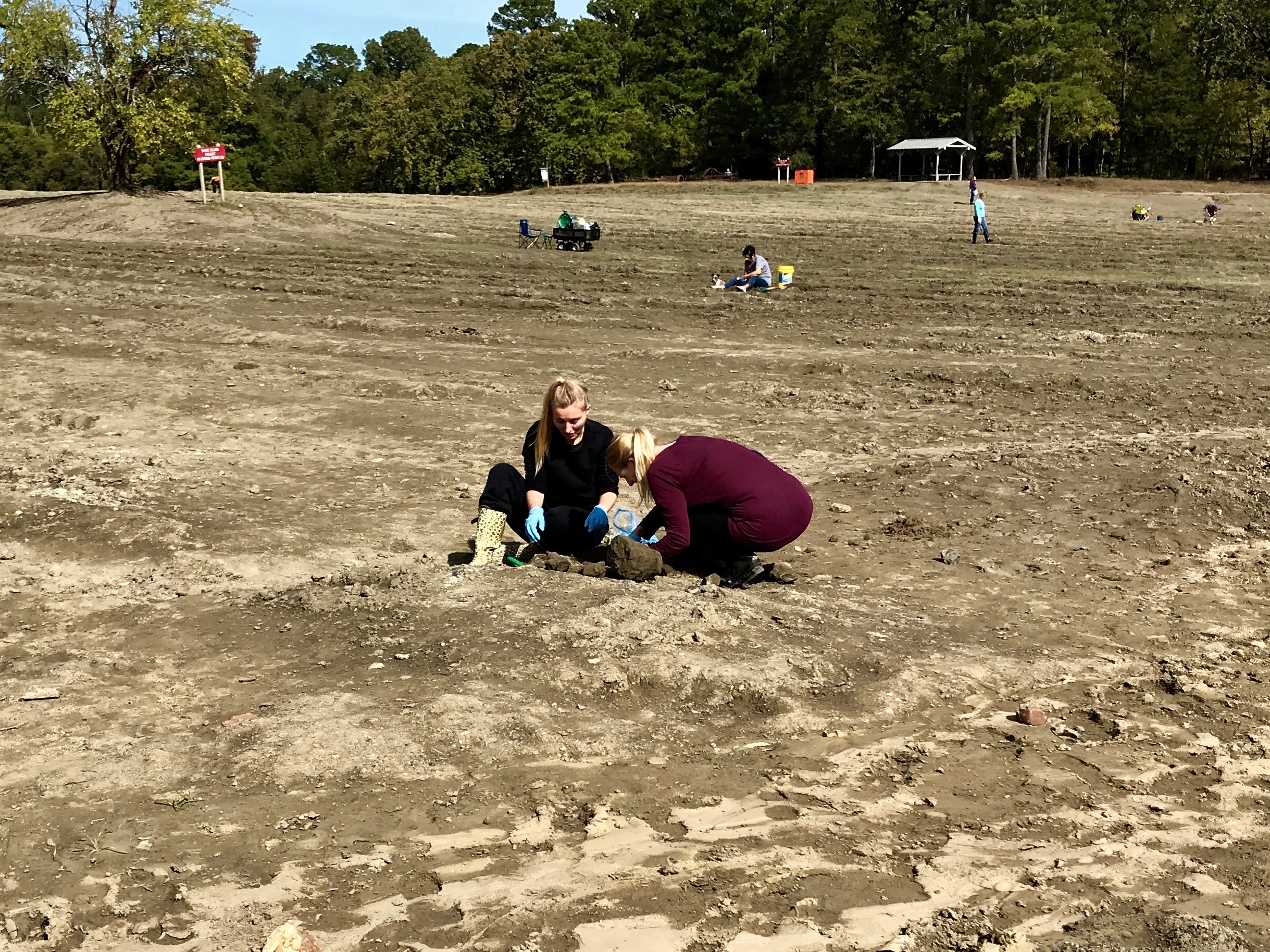
Maybe these young women found something.
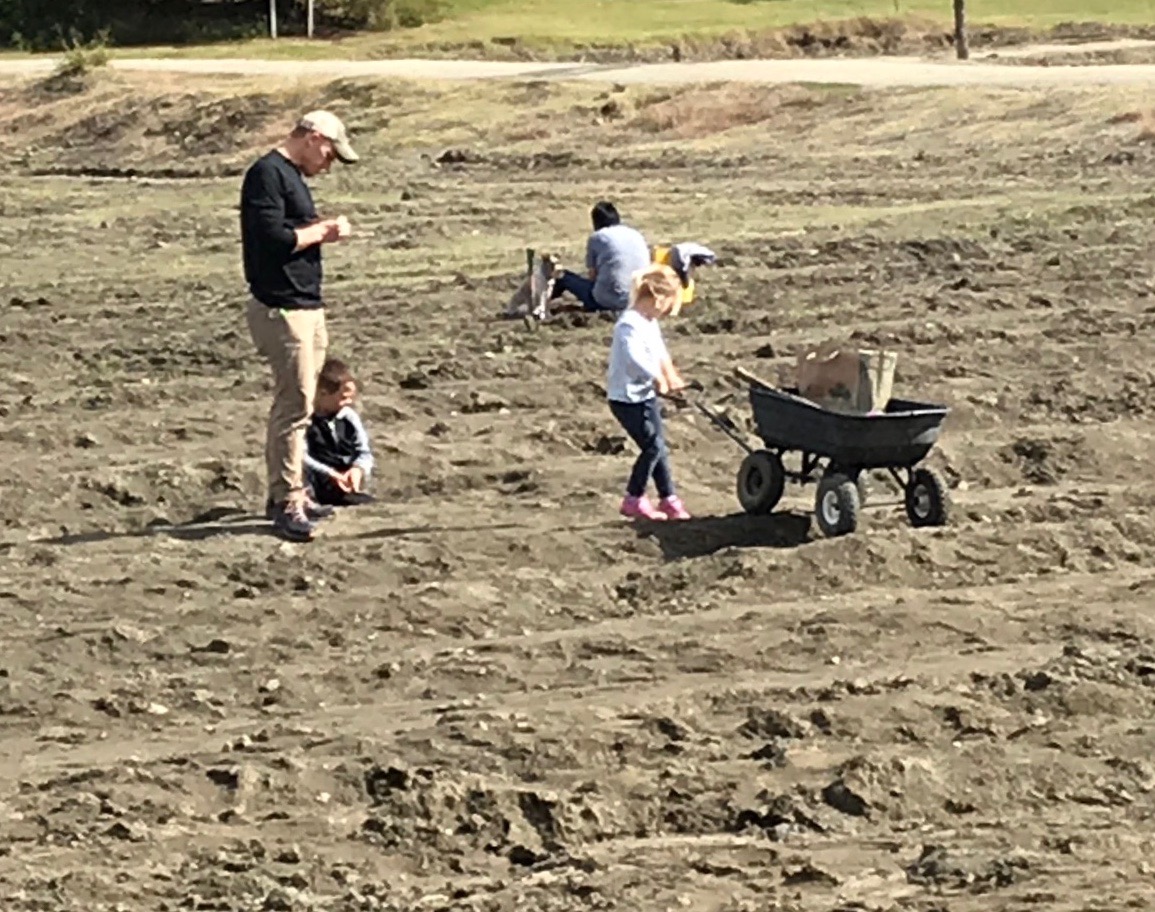
I guess this is a family friendly activity. I didn’t hear one child complaining about sitting and looking at dirt.
The serious hunters don’t settle for looking on the surface, though. They scoop up gravel and do what they call a “wet sift.”
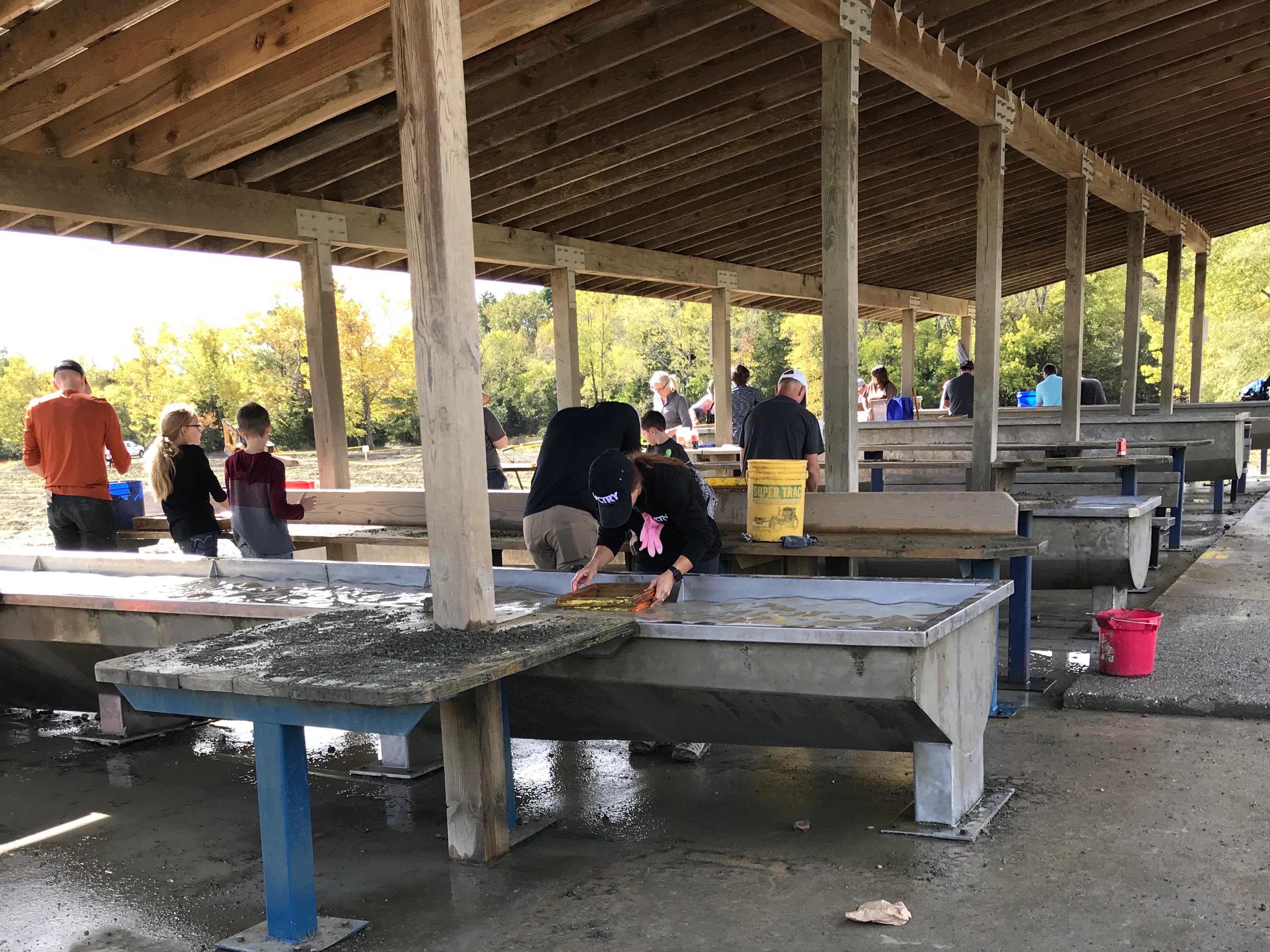
They make these troughs available for all.
The serious prospectors use the wet sift method.
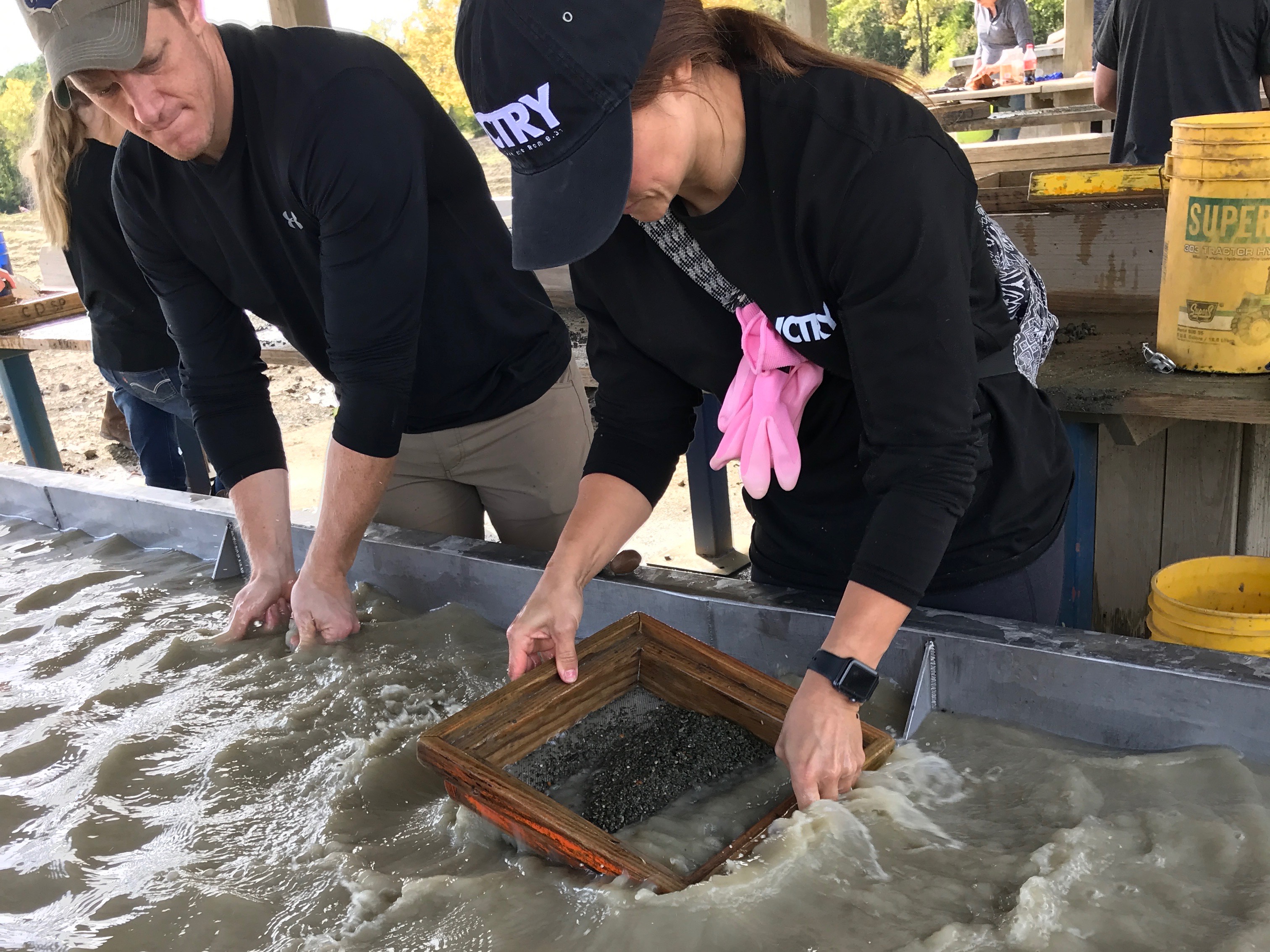
These folks were kind enough to let me snap a photo of them washing their gravel.
There are people back in the visitor’s center that will help you identify what you found.
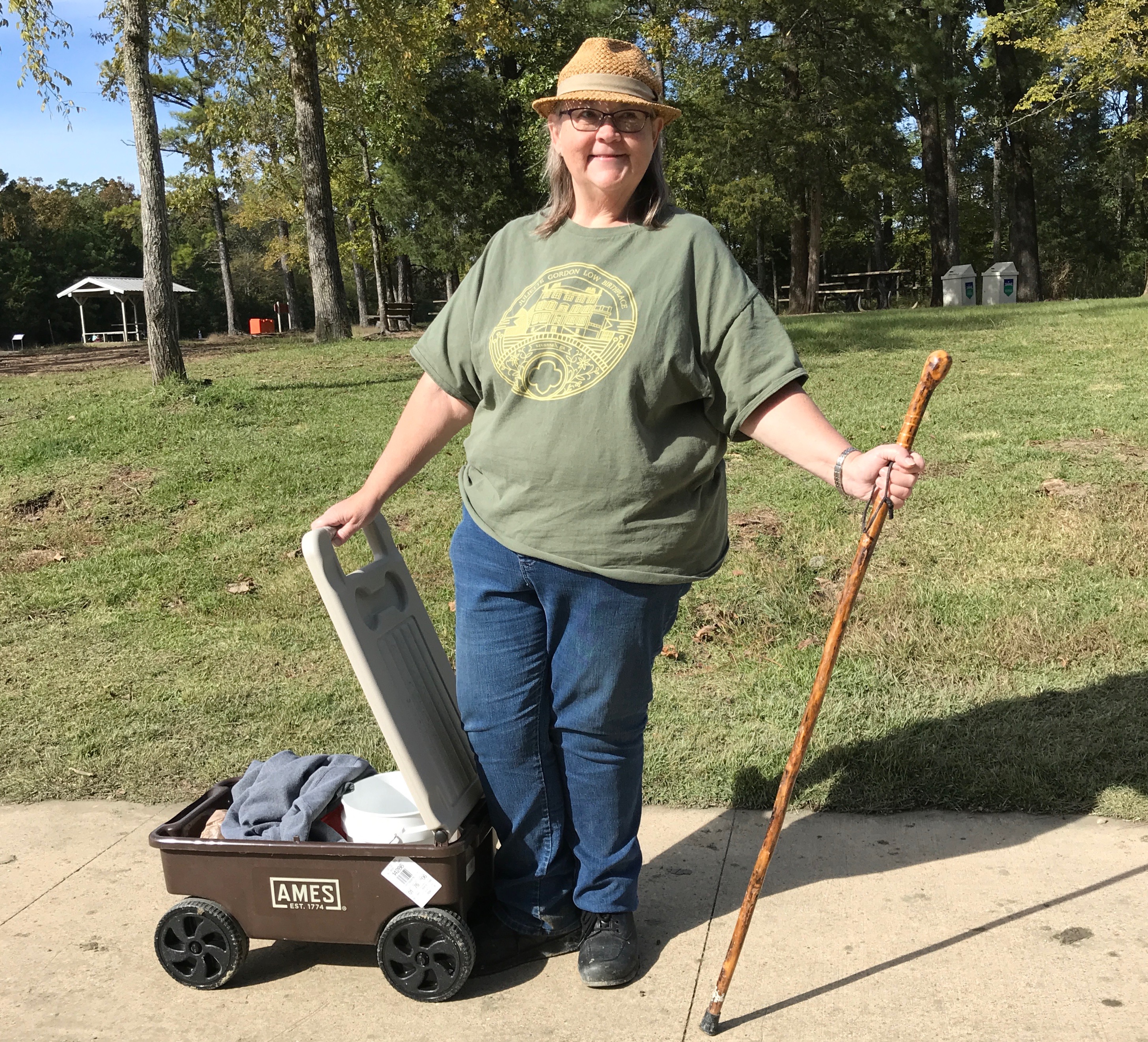
Here I am, heading to the visitor’s center to check my haul.
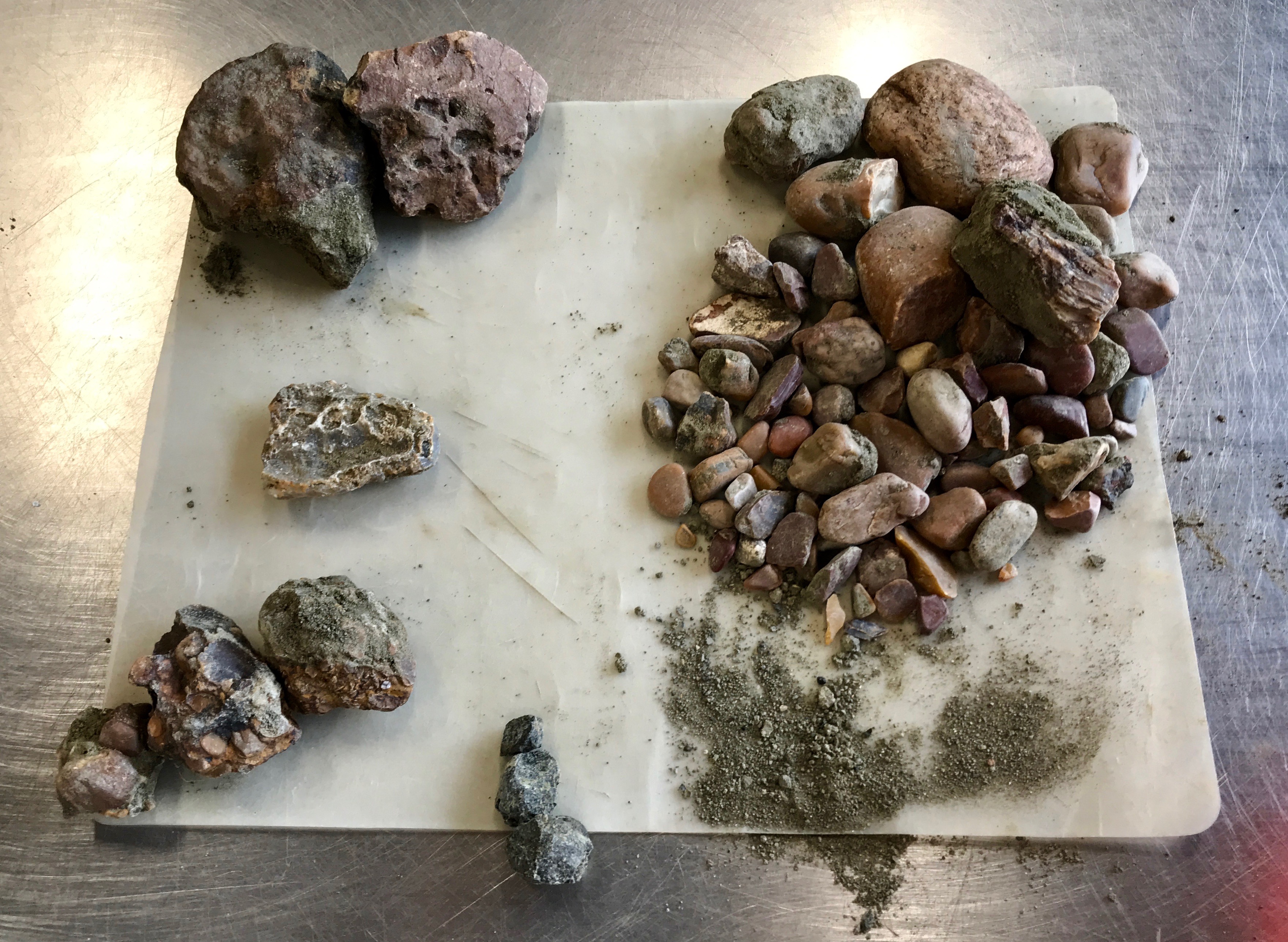
This is pretty much what I found. Do you see any diamonds?
No? Well, they didn’t, either.
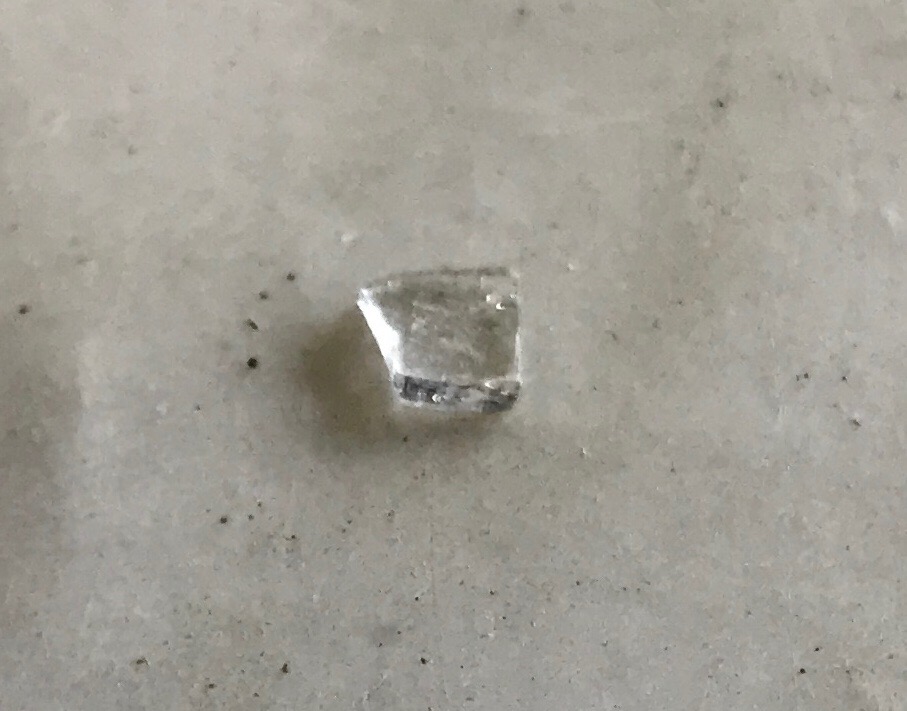
The closest I got was this chip of glass, which kind of reminds me of the “crystal” I found in Payson, Arizona.
But, hey! I didn’t really think I would find a diamond. I did what I came to do, which was look for diamonds. Mission accomplished!
Now on to the historical and informational displays in the visitor center.
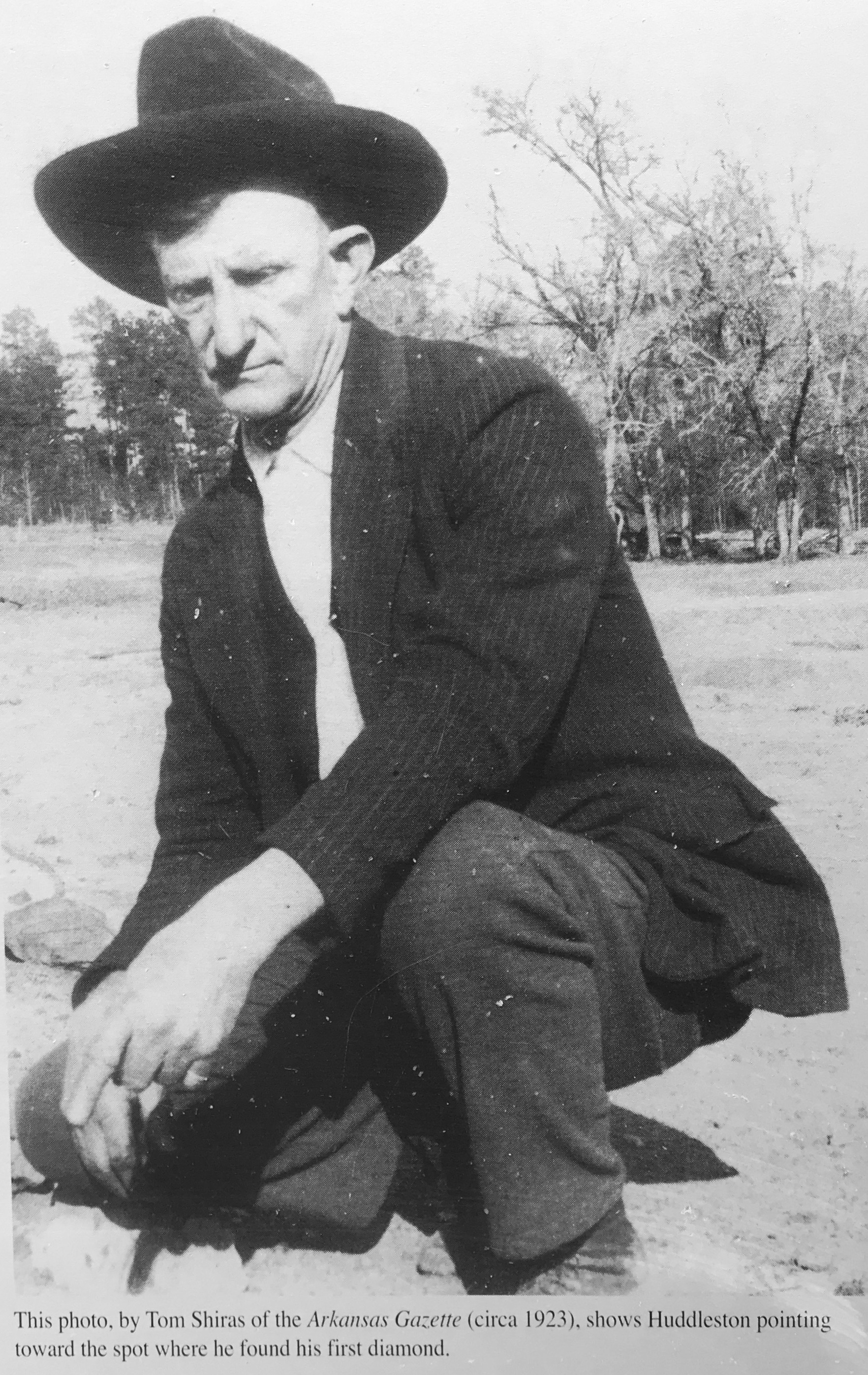
The first diamonds found in Pike County, were discovered in 1906 by John Huddleston on the farm that he had purchased earlier in the year.
Huddleston, recounted how he found the first diamond to Tom Shiras the Arkansas Gazette.
“I was crawling on my hands and knees…when my eyes fell on another glittering pebble…I knew it was different from any that I had ever seen before. It had a fiery eye that blasted up at me every way I turned it. I hurried to the house with the pebble, saddled my mule and started for Murfreesboro…riding through the lane, my eye caught another glitter, and I dismounted and picked it up out of the dust.”
The stones were sent to Charles Stifft, a Little Rock jeweler, who confirmed that they were genuine diamonds. He described tham as blue-white diamonds, one weighing 2 5/8 carats and the other 1 3/8 carats. To verify his findings, Stifft sent them to New York and said, “…after subjecting them to every test they were pronounced to be diamonds of fine grade.”
Huddleston sold his diamond bearing land for $36,000.
$36,000 seems to me like a small amount of money for a diamond mine. Well, I guess the State of Arkansas wanted to know the answer, too. They did some testing in two phases.
In Phase 1, They found that the “pipe” containing diamond bearing soil extends to more that 669 feet deep and is shaped like a martini glass. They extimated that the volume of the diamond bearing soil equals more than 46 million cubic yards.
In Phase 2 they found that the ore in the pipe is diamond bearing, but to varying degrees. They found a range of diamond content ranging from 1.2 carats per 100 tons to 0 carats per 100 tons. The average value of the diamonds was $12.31 per carat and the value of the higher grade ore was $0.12 per ton. In total, they recovered 210 diamond weight a total of 47.78 carats.
Their conclusion: There are plenty of diamonds but not enough to make a profitable commercial mining operation.
The State of Arkansas may not have found that they have a valuable diamond mine, but I think they have done quite well mining for tourists. At $10 per adult (children get in free) I’m guessing they more than recoup their expenses. When you add in the camping fees and benefit to local businesses, I’d say their investment has been worth it.
Oh, and if you are interested in making this a major pastime, you can buy a 20 visit pass for $170.
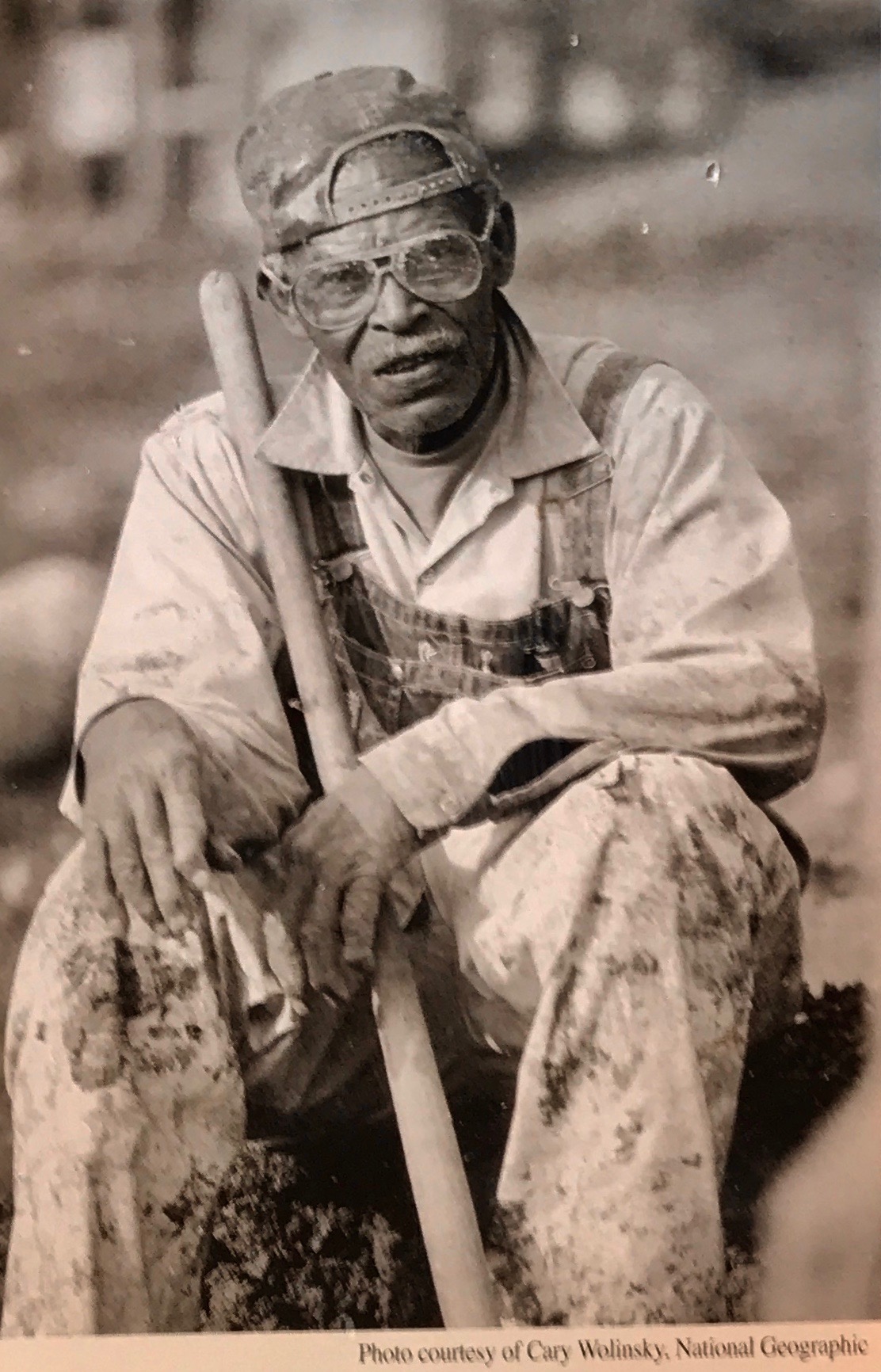
I imagine James Archer might have had a special pass. He prospected here for 30 years, almost full time since his retirement in 1987. During that time he found over 5,000 diamonds and helped countless others enjoy and understand what had become his favorite pastime.
James didn’t hunt for diamonds to get rich, but he did make some exciting finds. His two largest stones were 7.95 carats and 5.25 diamonds. He fine-tuned the art of studying the dirt and minerals in it. According to Harold Lay, a friend and fellow diamond prospector, “James was an artist with a shovel. He made it seem so effortless. No one knew that place like James Archer.”
His cheerful disposition and willingness to help made him the focus of many park interpretive programs. HIs popularity with visitors eventually led to his well-deserved billing as “The Living Legend.”
Archer died January 8, 2003, at age 77, on the diamond field he loved at Crate of Diamonds State Park.
Incidentally, the information about James Huddleston and James Archer were taken from informational signs at the park. I just read the information now. I do wish parks, museums and visitor centers would take the wearers of bifocals into account when posting signs. They were posted at an angle that made them hard to read. This is a pity because they had some interesting information on their signs.
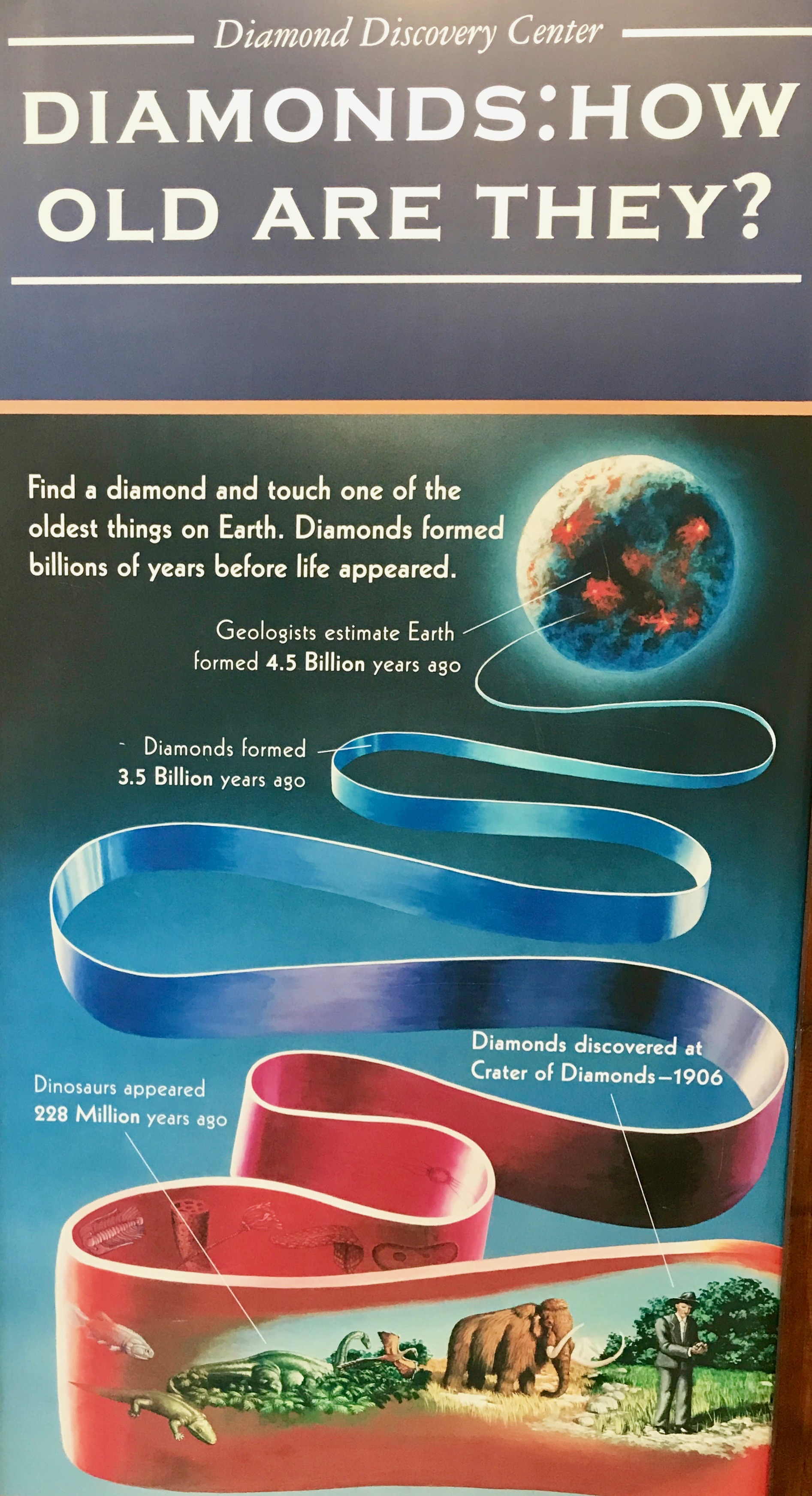
So, if you own diamonds, whether from Crater of Diamonds or some family heirloom, your gems are over 3.5 million years old. If someone compliments you on your jewelry, you can just wave your hand and say, airily, “This old thing?
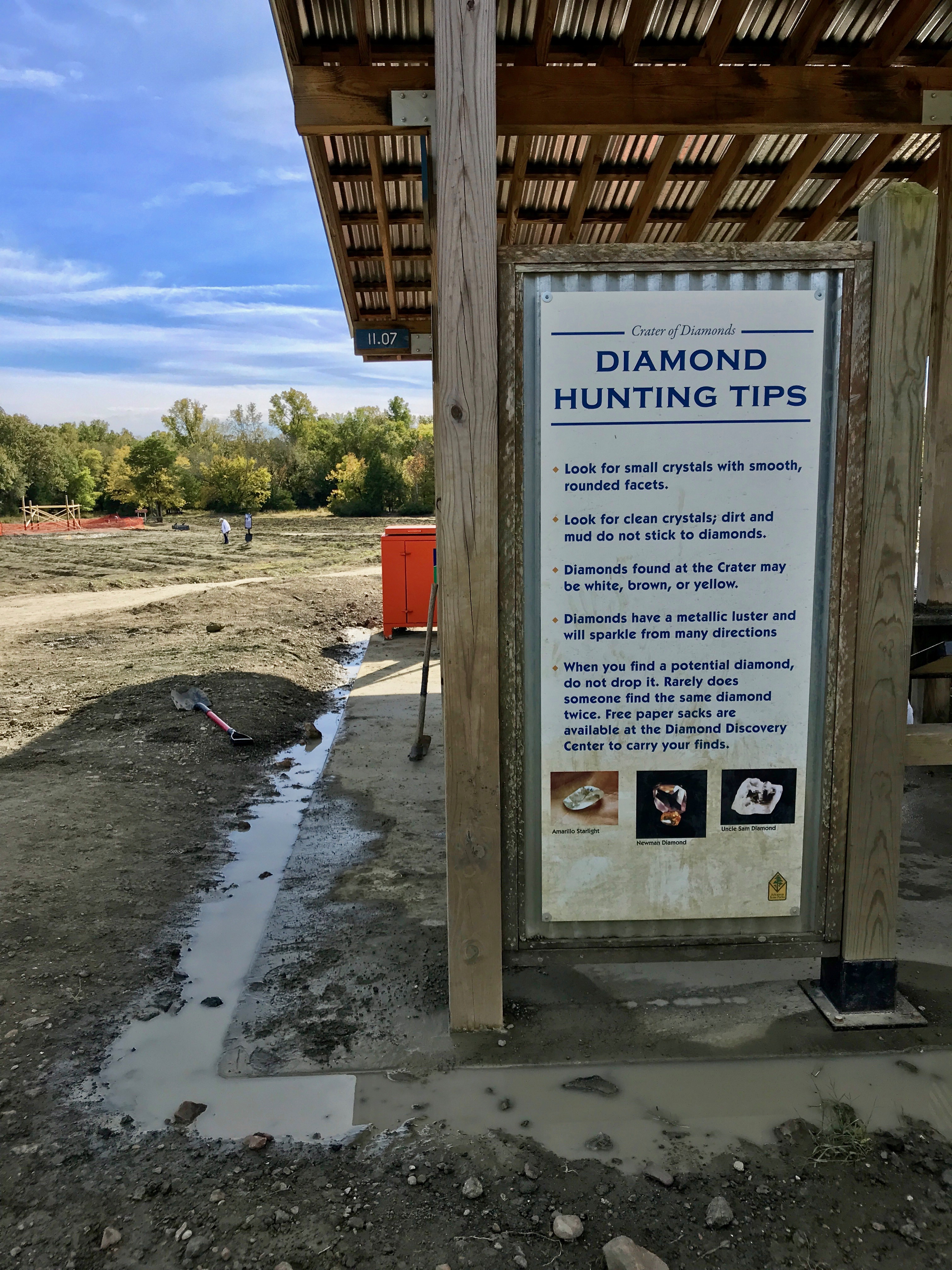
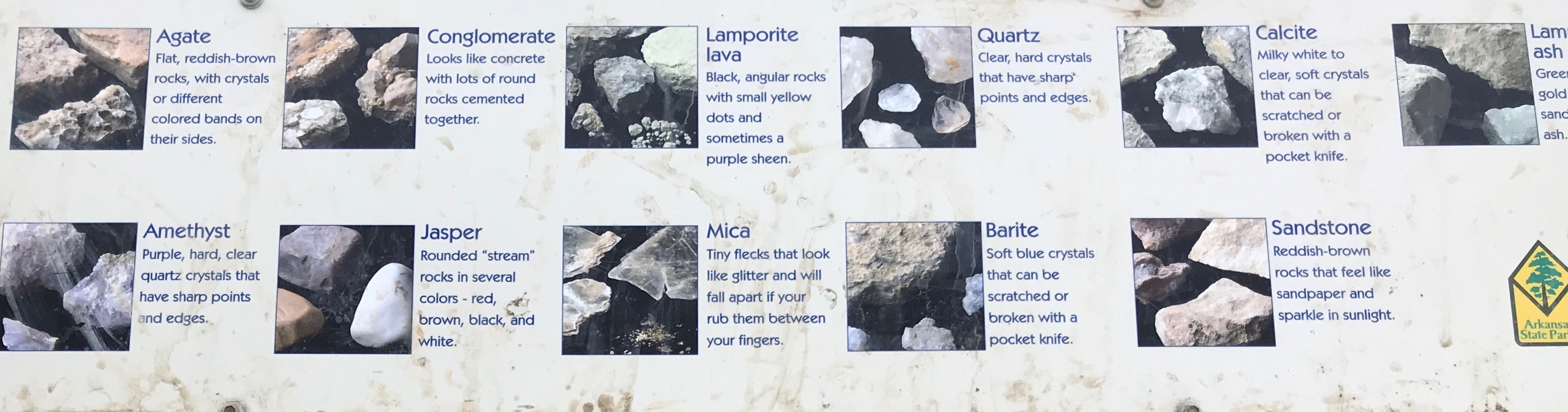
I also came across this panels than might have been useful information before I started prospecting.
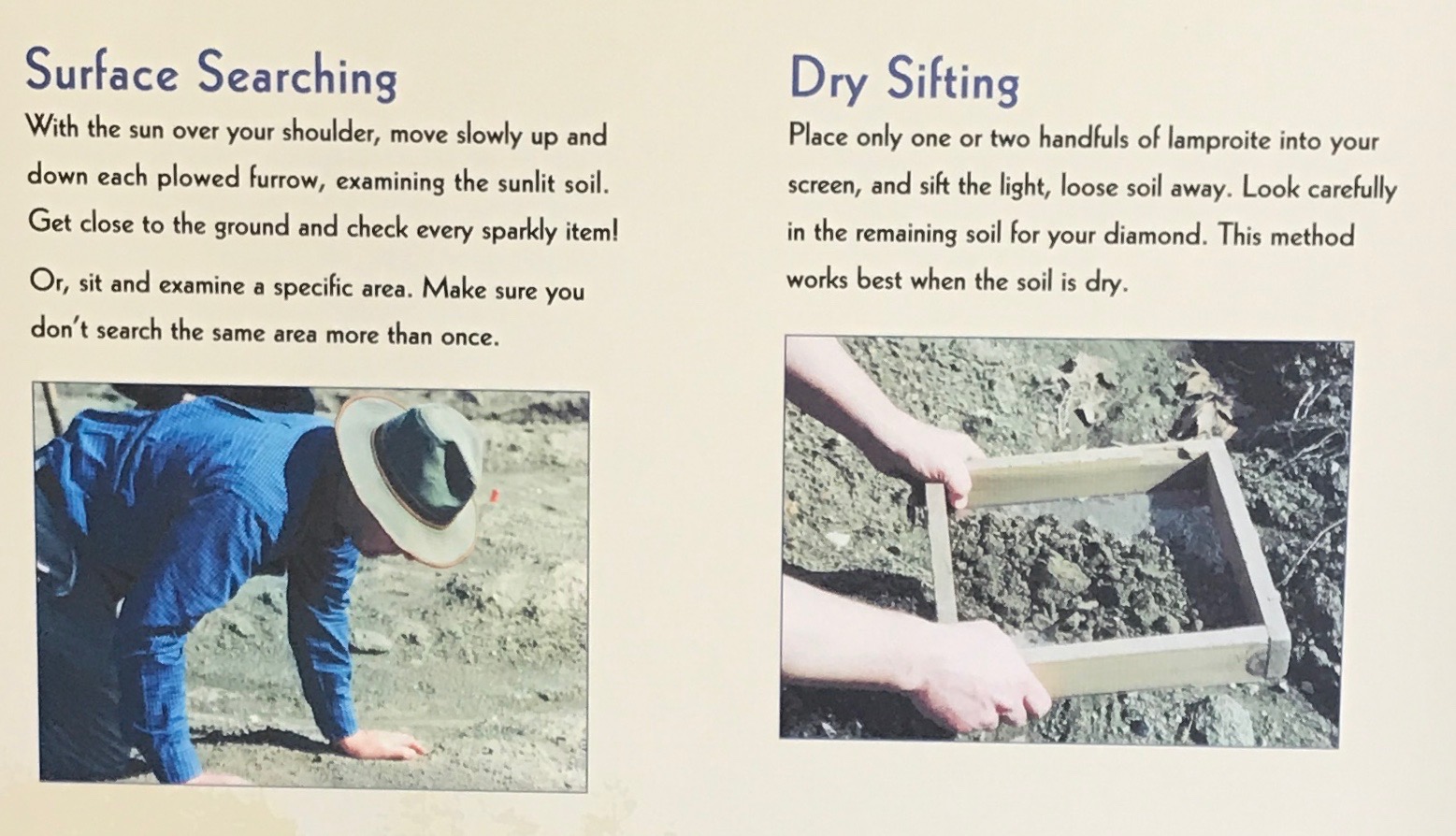
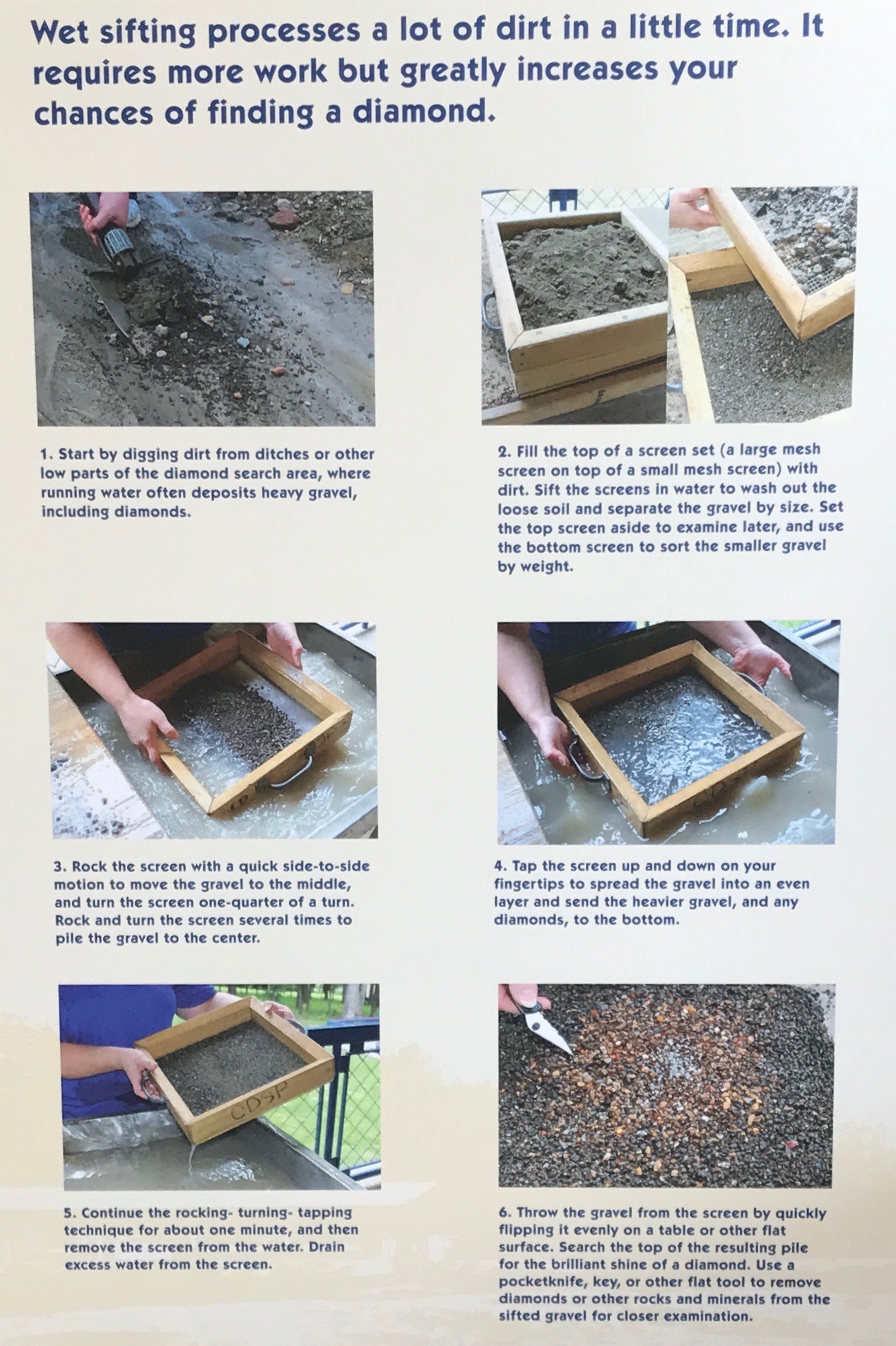
Oh, well…
It was about time for me to leave. Of course, I had to exit through the gift shop. But, to be fair, the entrance was also through the gift shop.
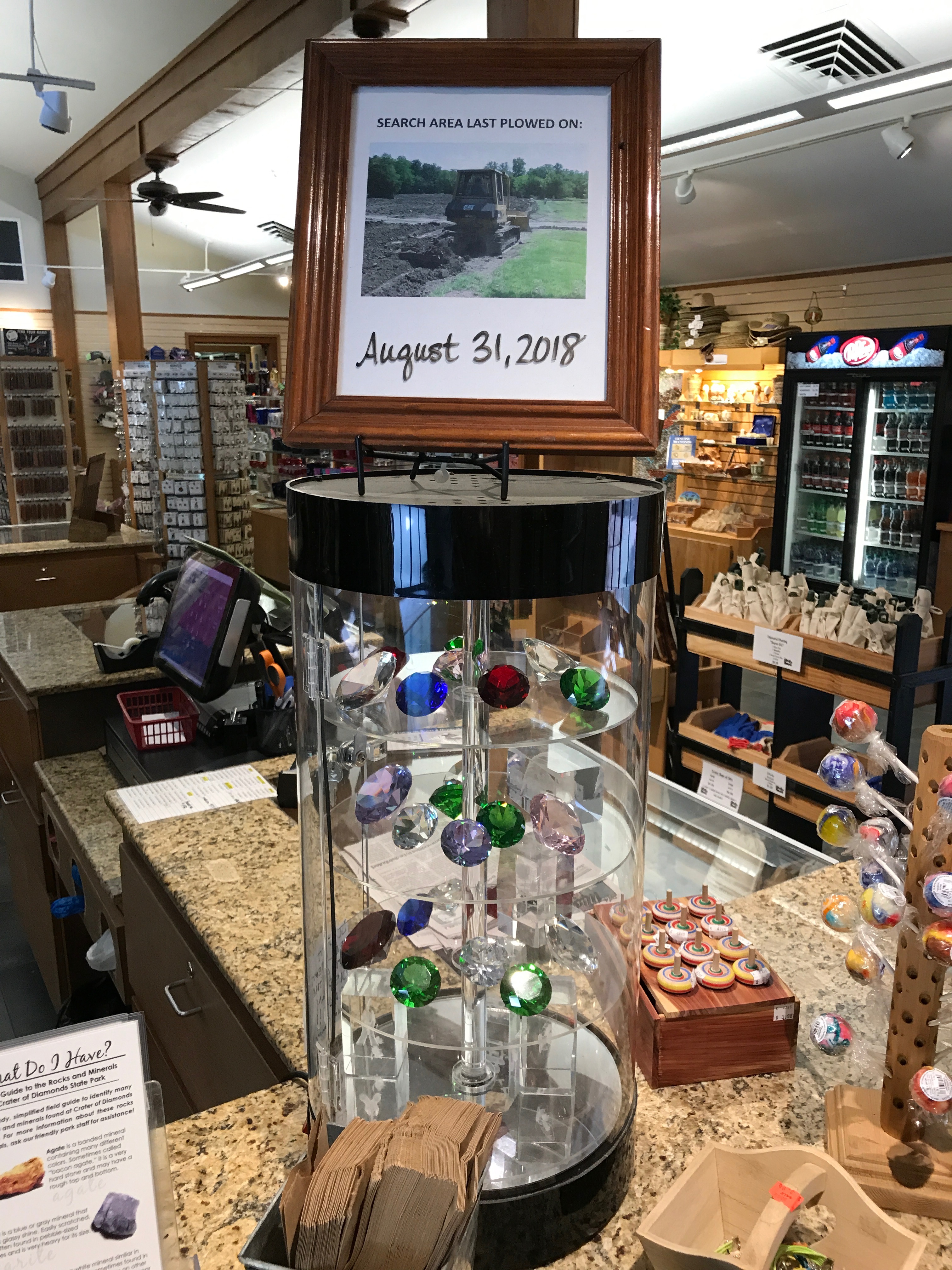
Hmm. I visited in October 2019. I wonder I I would have had better luck if I had visited when the mine was freshly plowed? Eh…probably not!
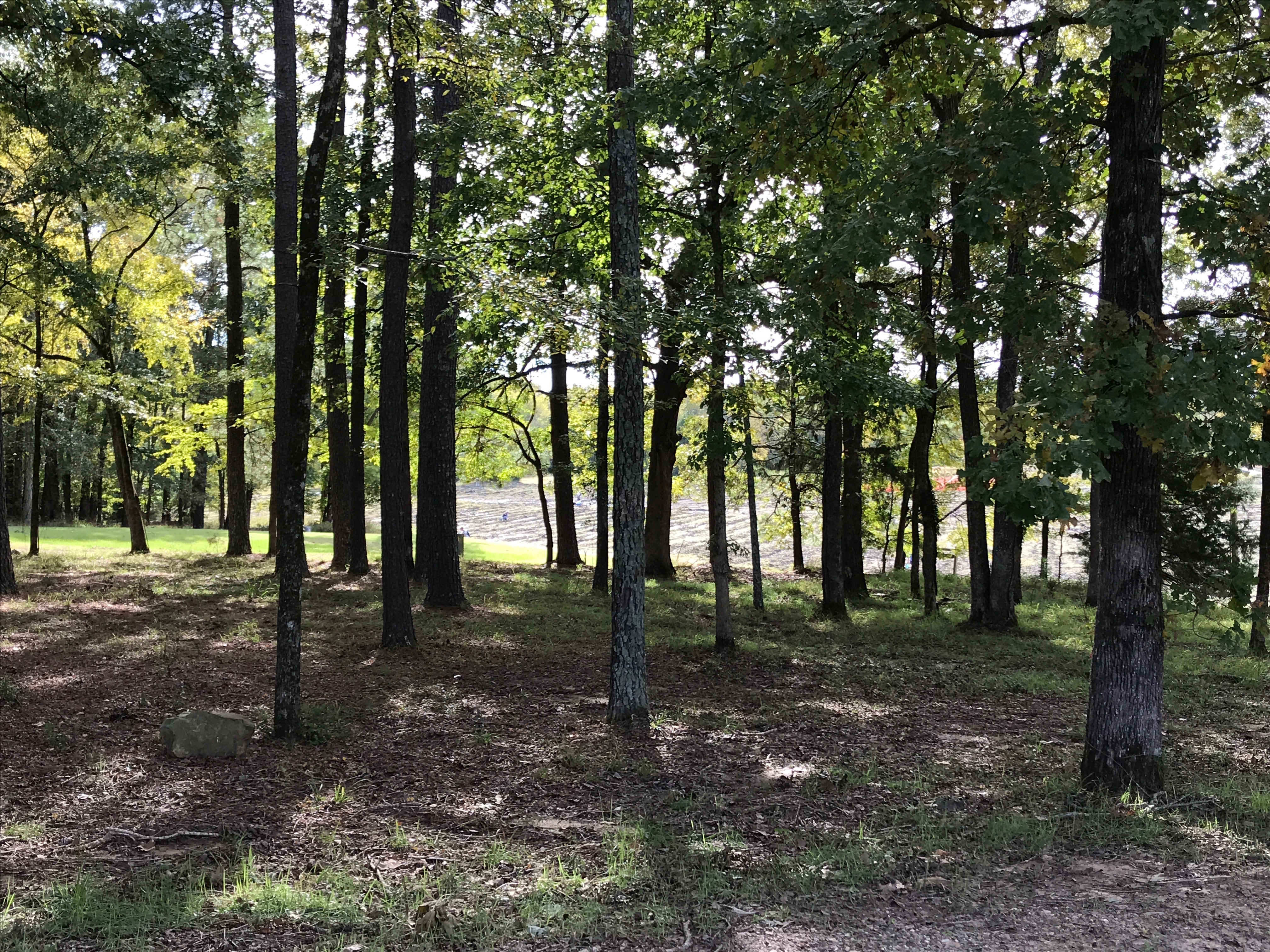
I headed back to camp. What a beautiful park! I decided to head into Murfreesboro for dinner.
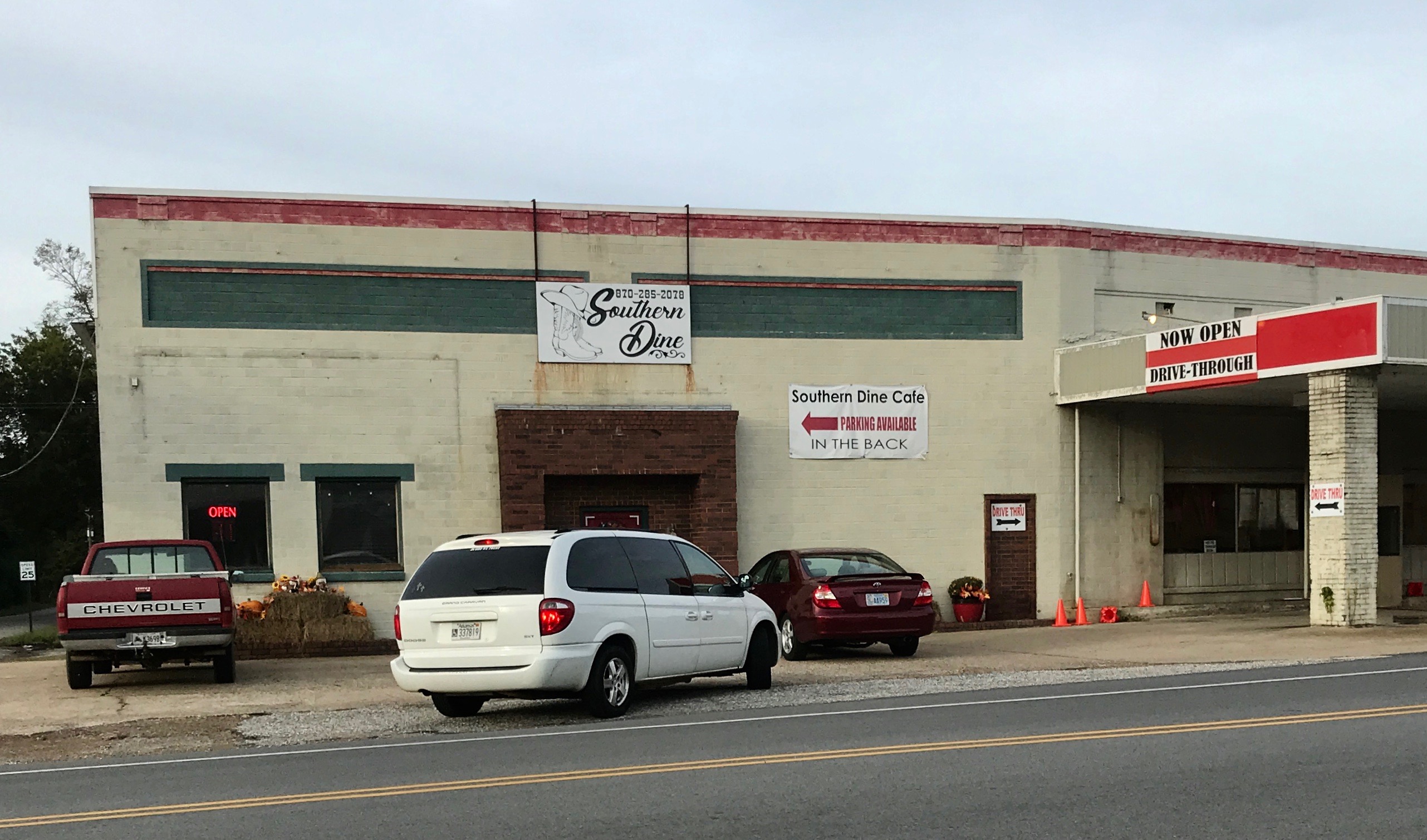
The Southern Dine Cafe looked interesting.
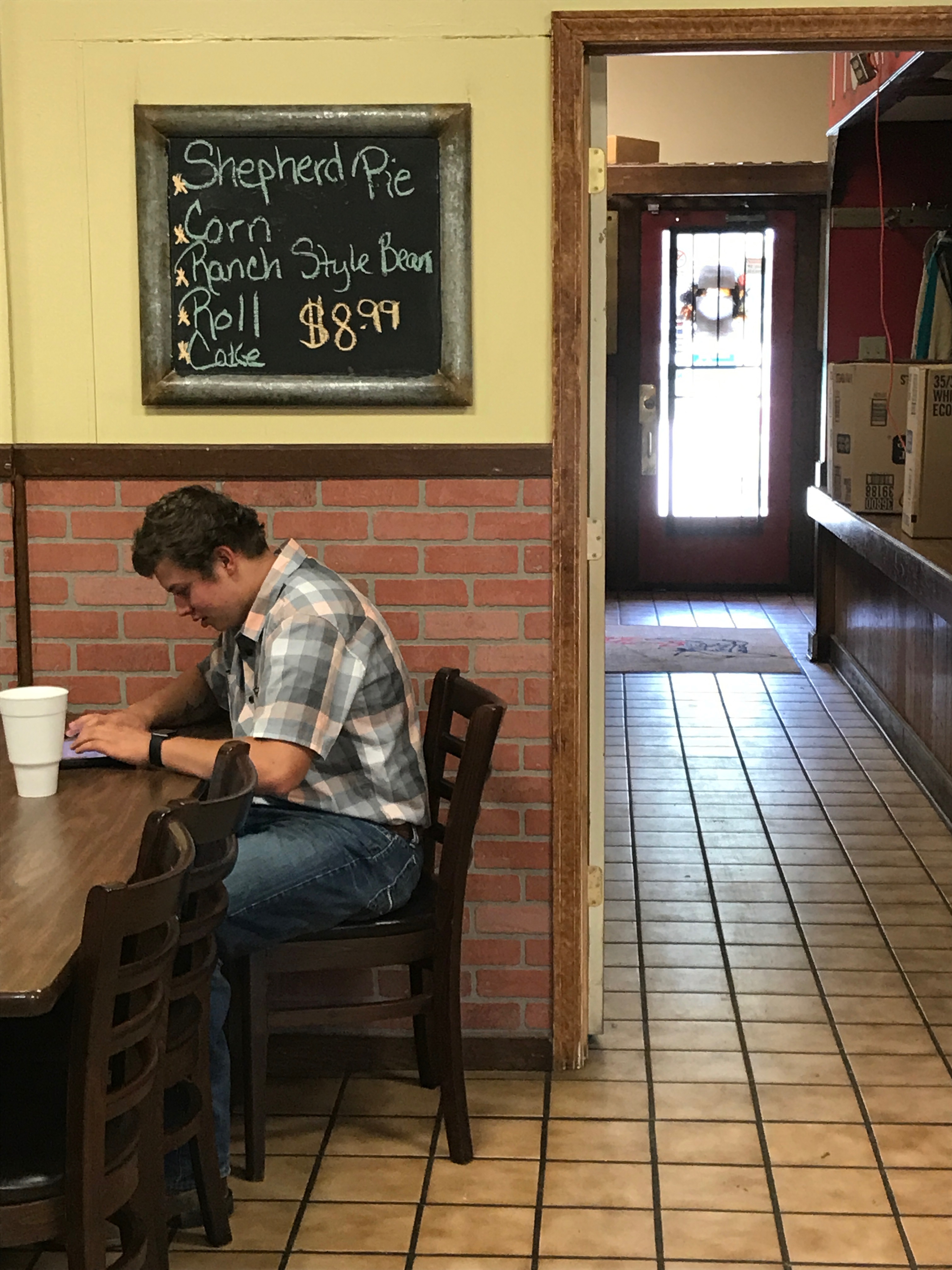
They had the Special of the Day posted, and I decided to go with that. I was tired and hungry and didn’t want to consider all the options at that point.
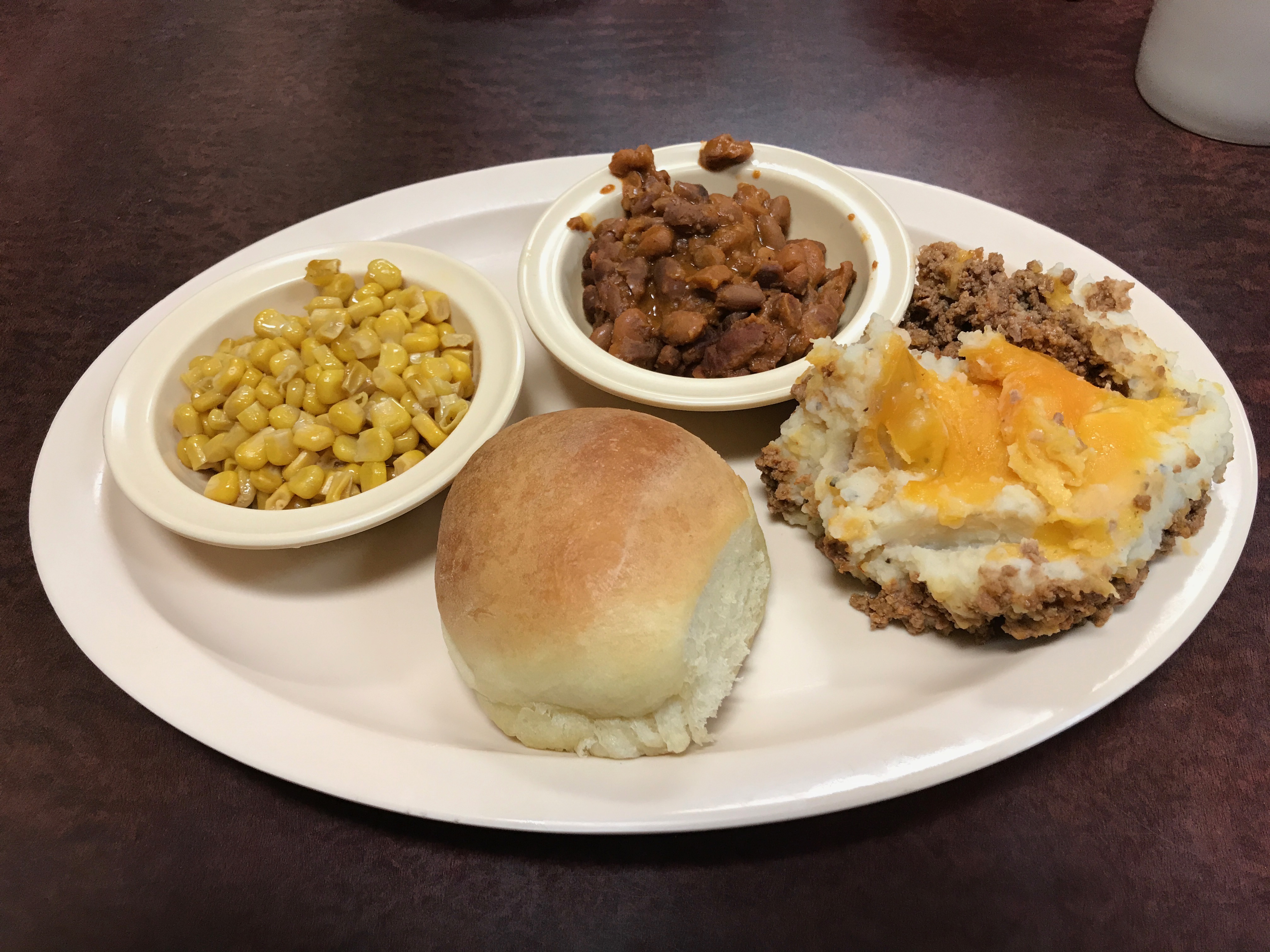
So, this is what Shepherd’s Pie is in Murfreesboro. It’s different from what I grew up with. For starters, we never put cheese on it. But, I ate every last bit!
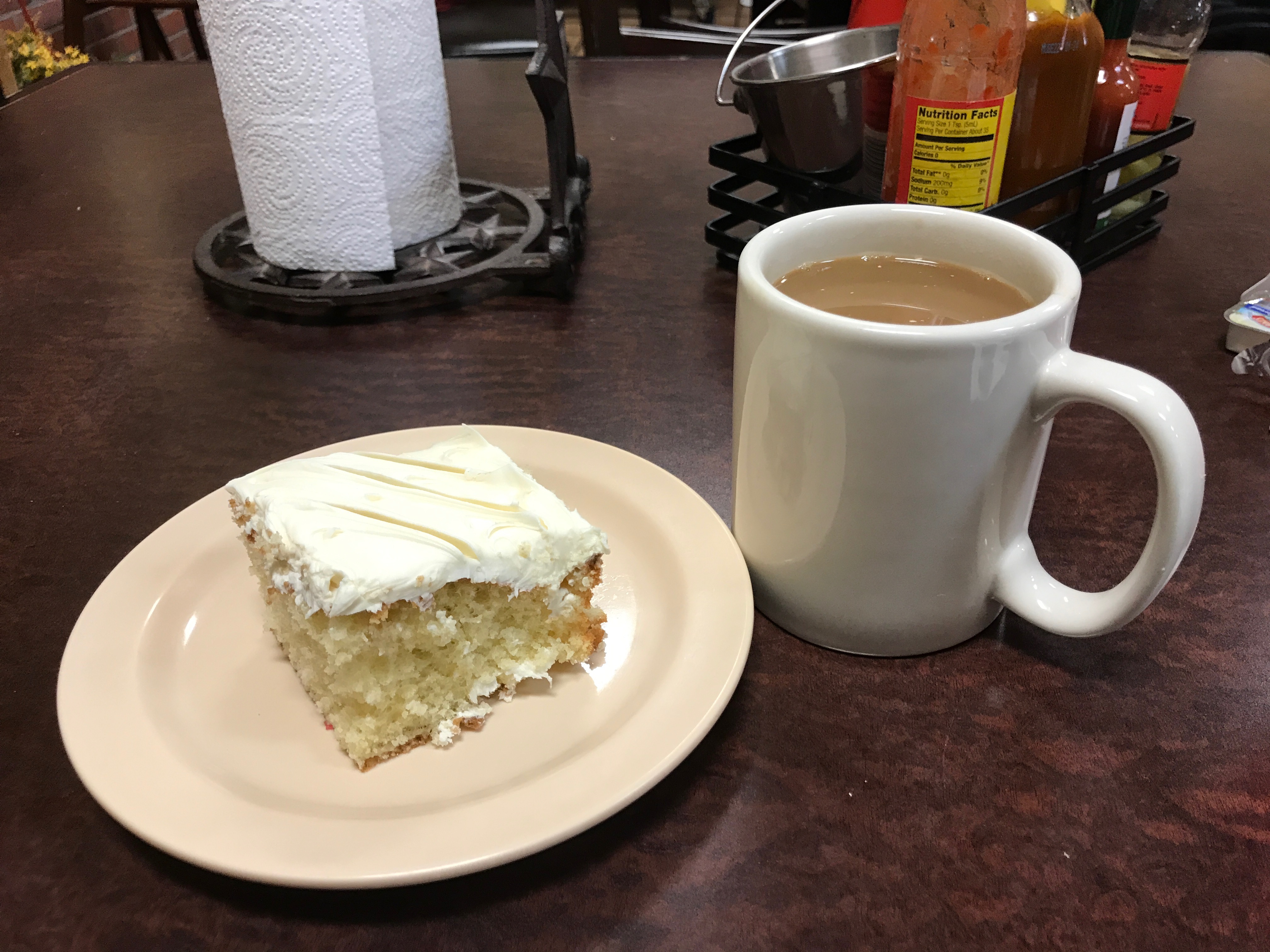
There was even dessert included in the meal.
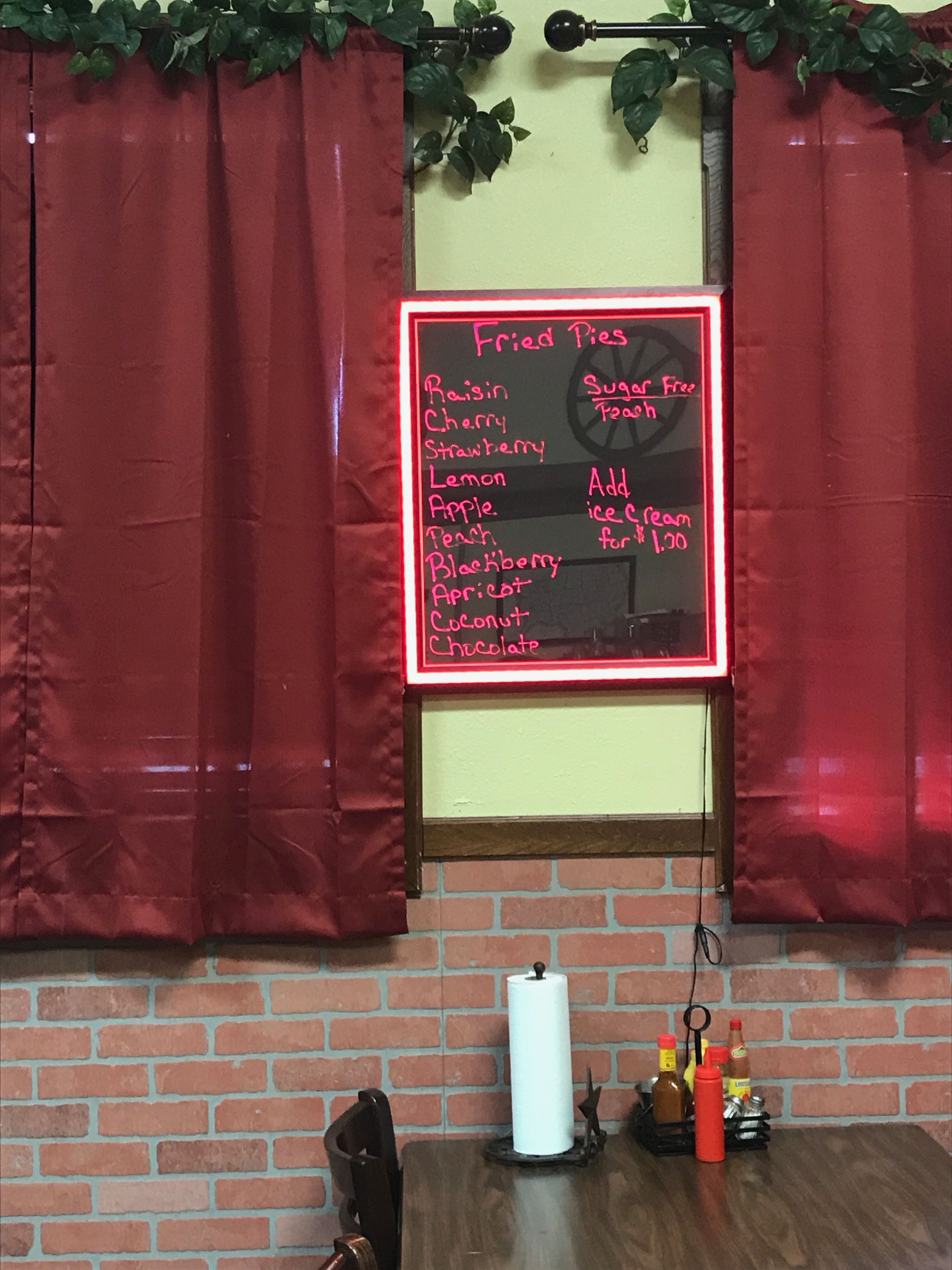
If I hadn’t been full to the gills (and if dessert hadn’t been included with the meal) I might have investigated an alternative dessert.
Fried pies!
Fried pie a la mode!
But, for now, it’s time to head back to the campground.