I just love it when I get to visit friends and family along the way. It’s fun if I am staying in a nearby campground, but home hospitality is even better.
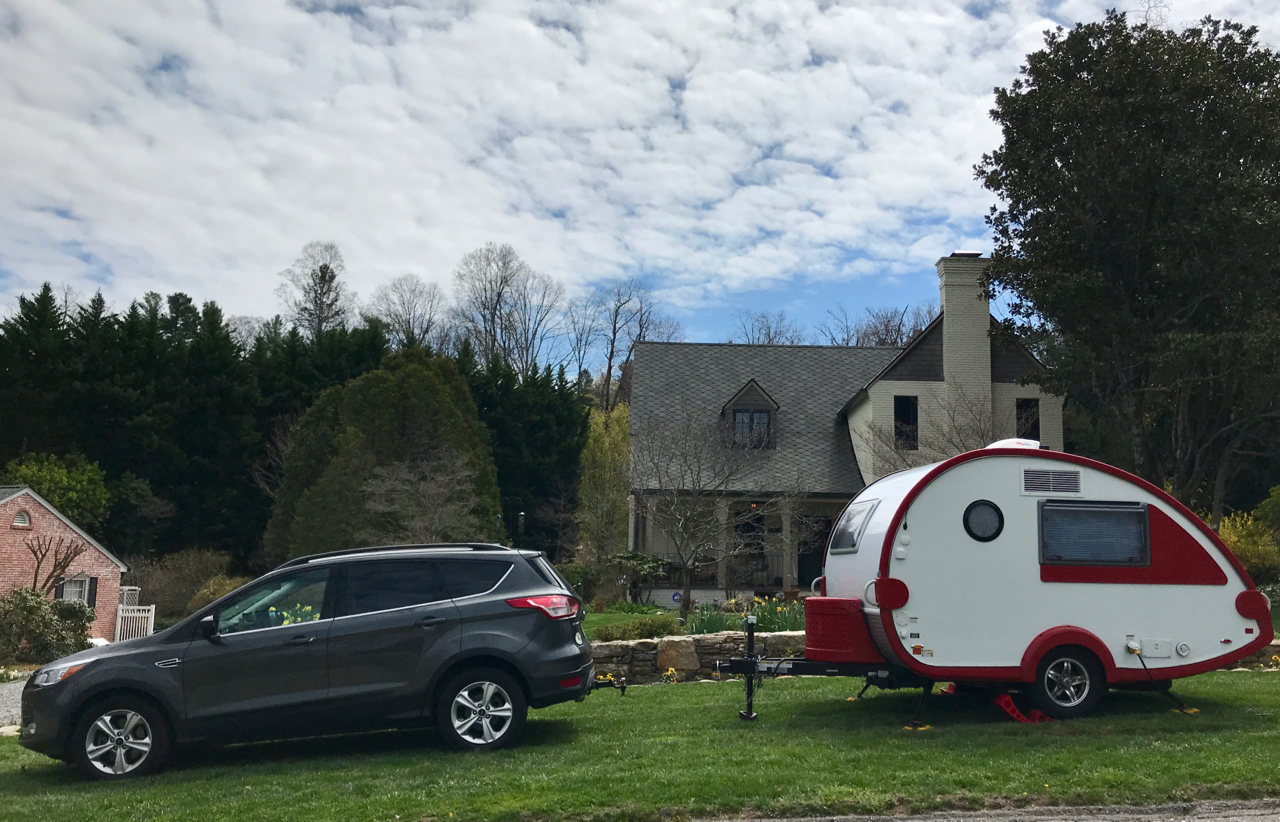
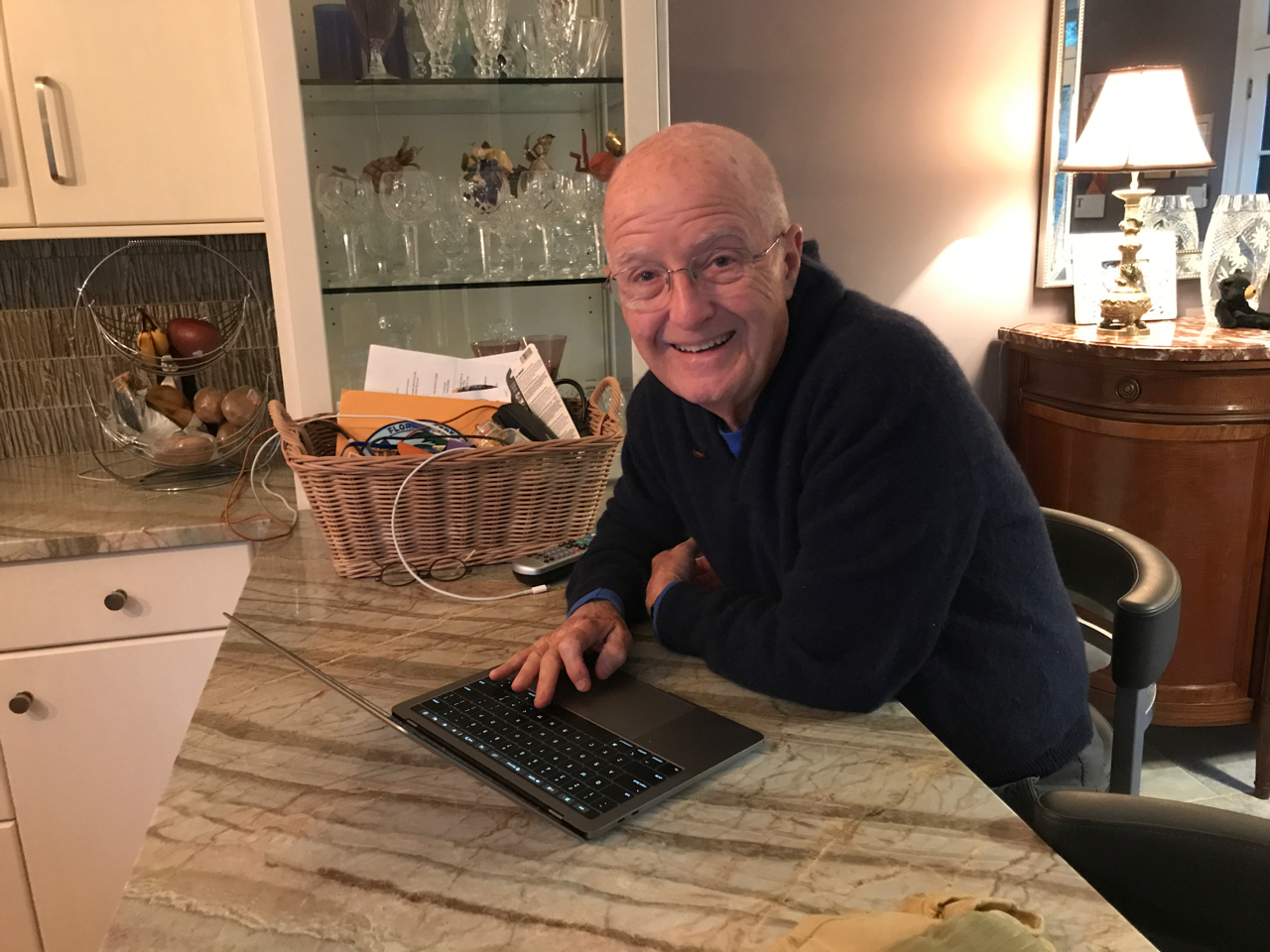
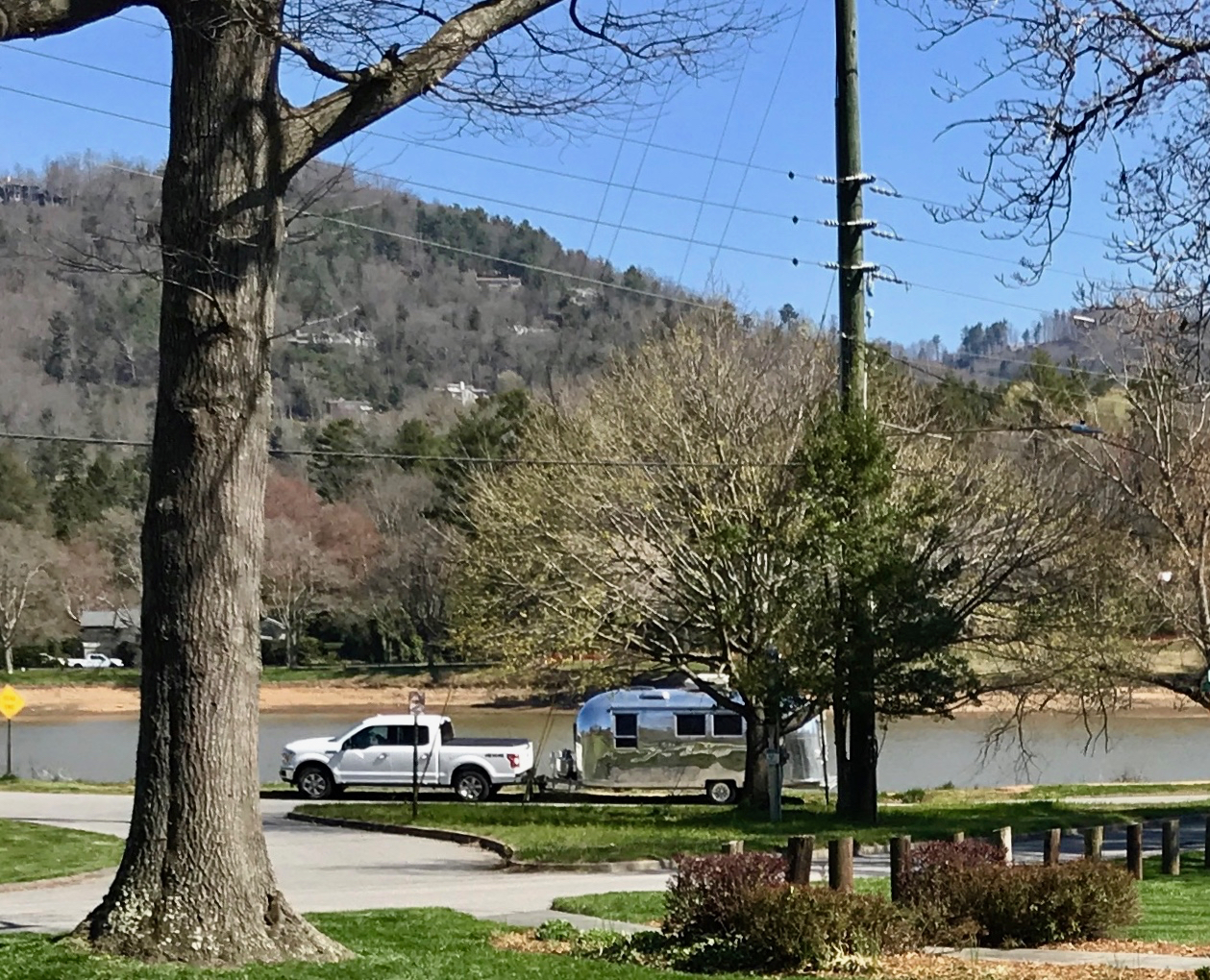
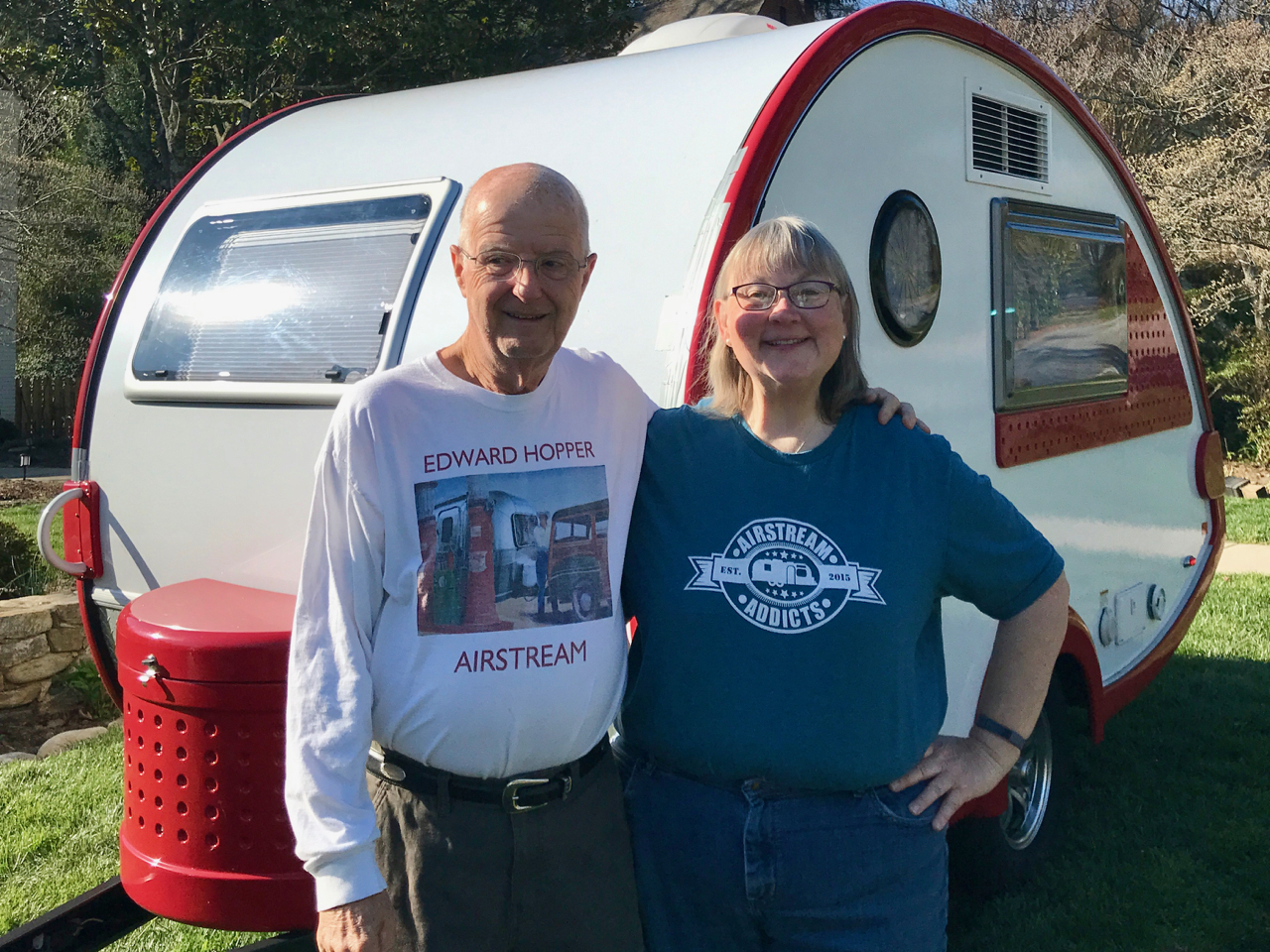
I visited Frank and Debbie in Asheville, North Carolina. I know them through my Airstream connections. And, while every house looks better with an Airstream in front of it, a T@b isn’t all that bad. They have electric and water hook ups at their Airstream parking spot, but they invited me to stay inside.
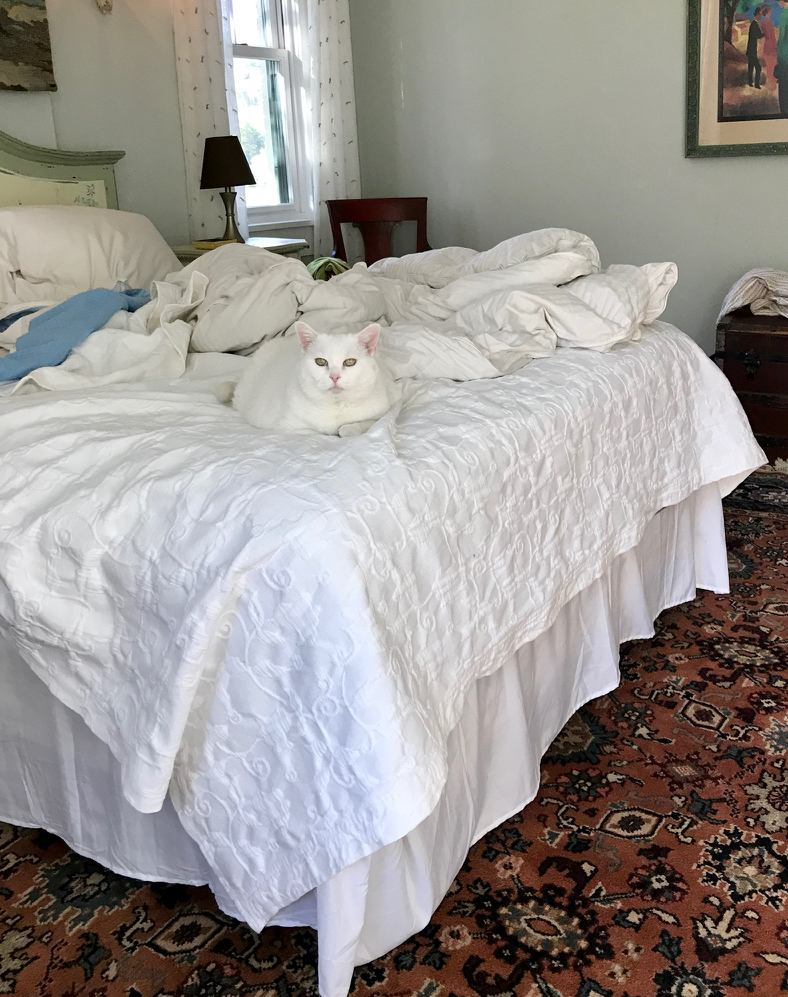
Cora made herself at home very quickly. She looks like she belongs there, don’t you think?
Incidentally, I arrived at Frank and Debbie’s house on April 1, 2019. Since it is now March 20, 2020 when I am finally immortalizing their hospitality, please forgive me if my recollections are a bit fuzzy. Thank goodness that the photos are stored by date, otherwise I wouldn’t even know when I was there!
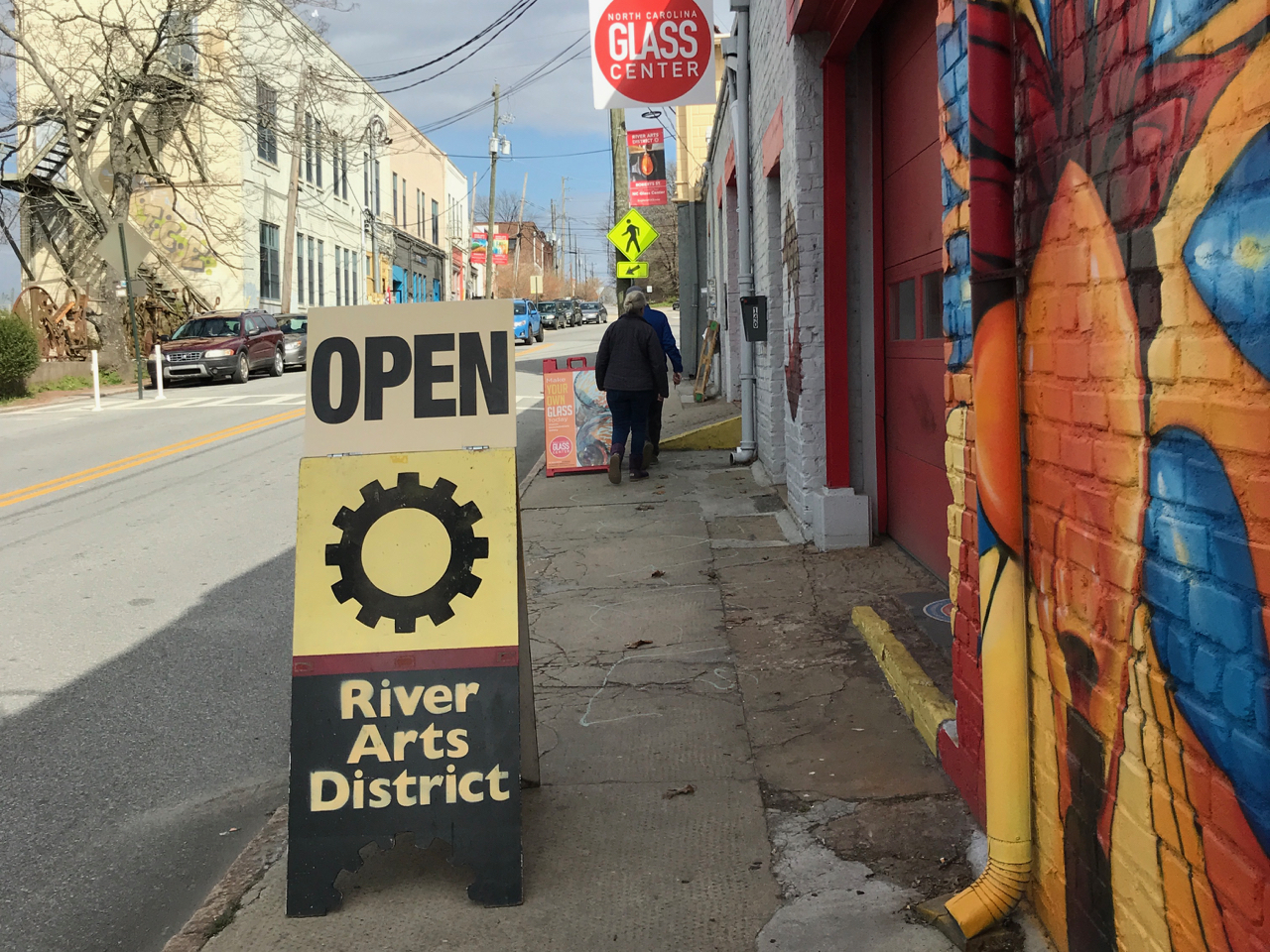
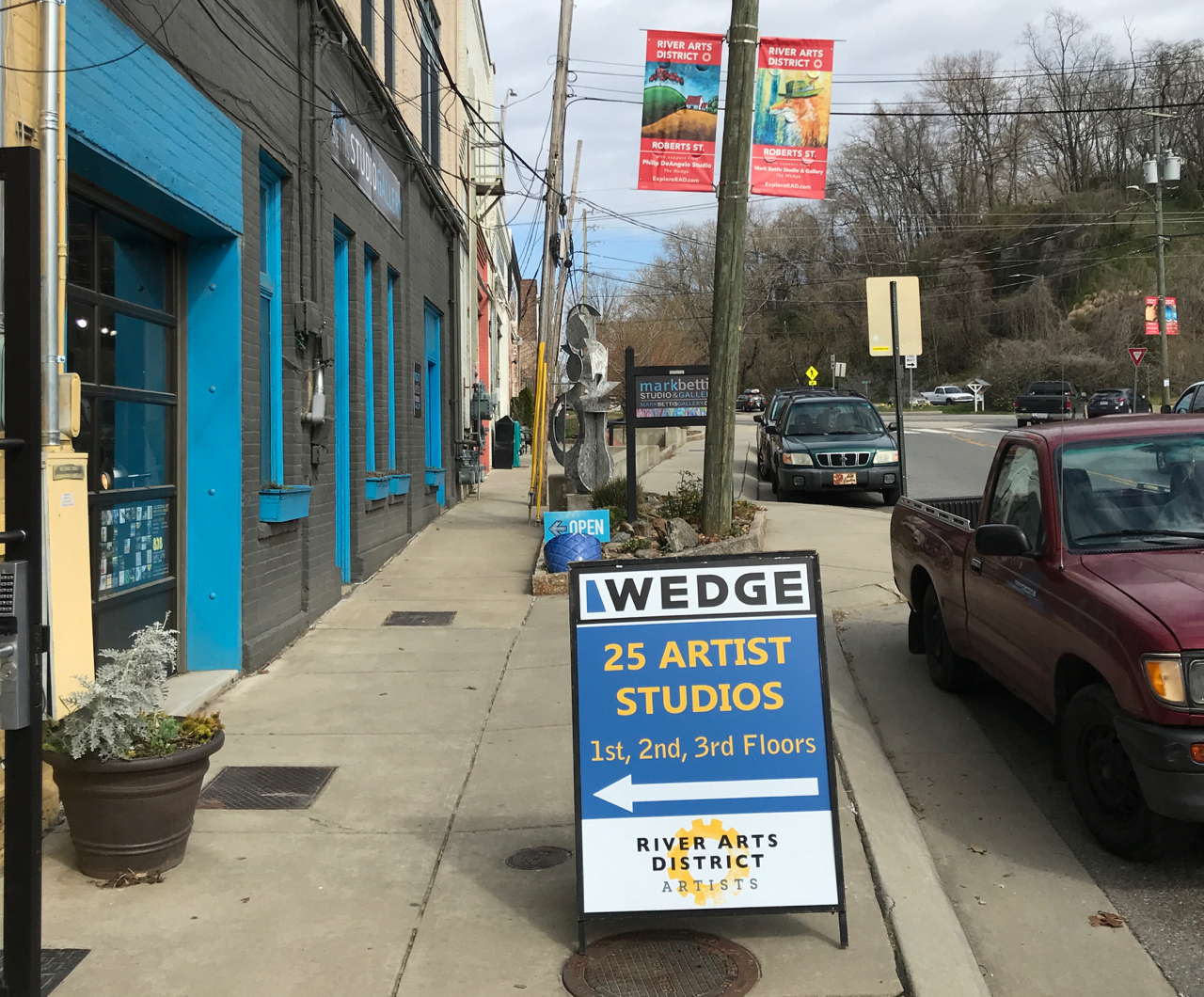
Anyway, the next day, we set out to explore the River Arts District.
There were many studios and galleries to visit.
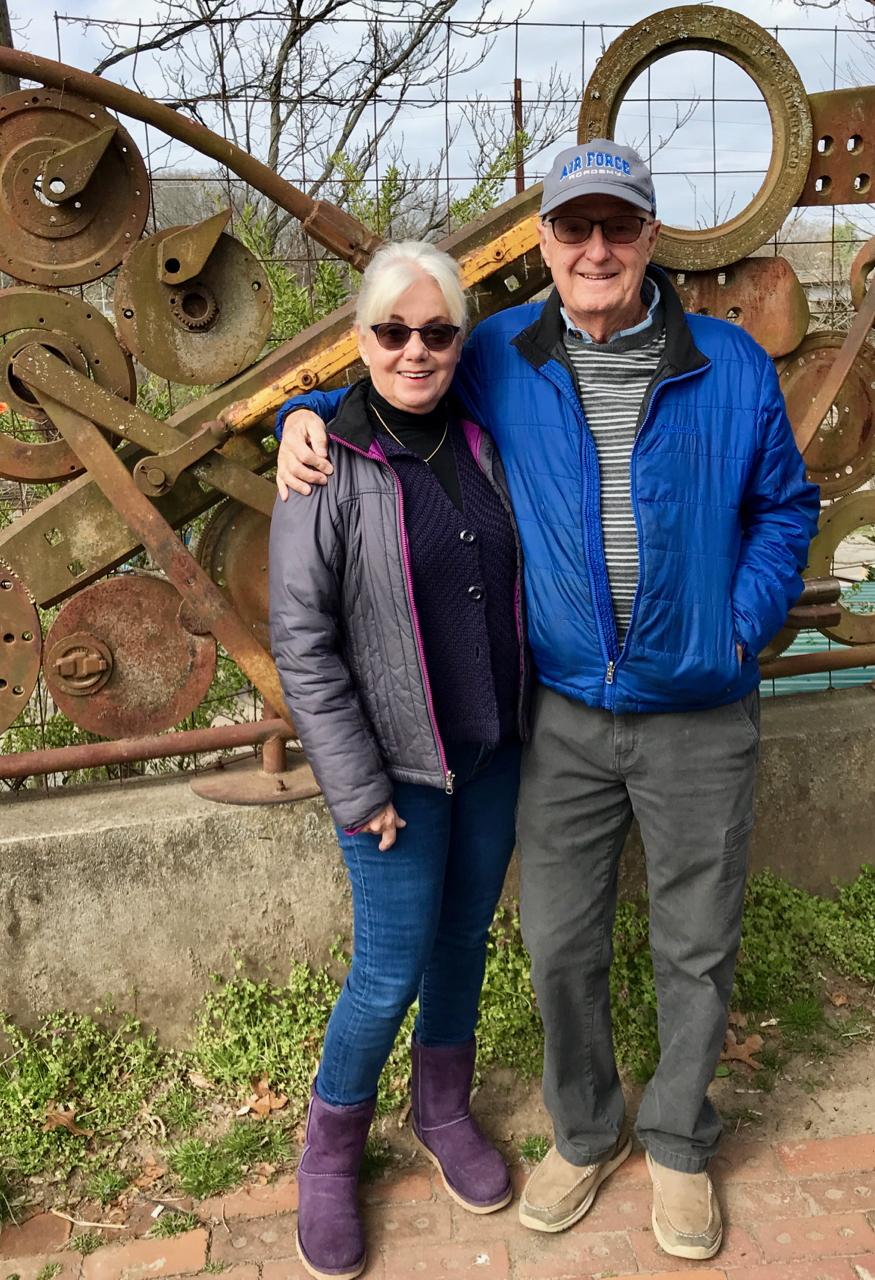
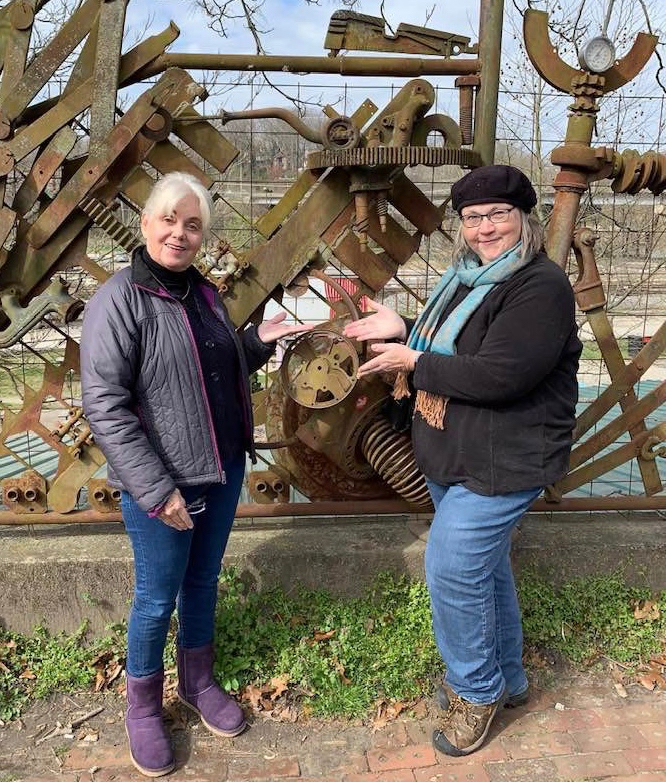
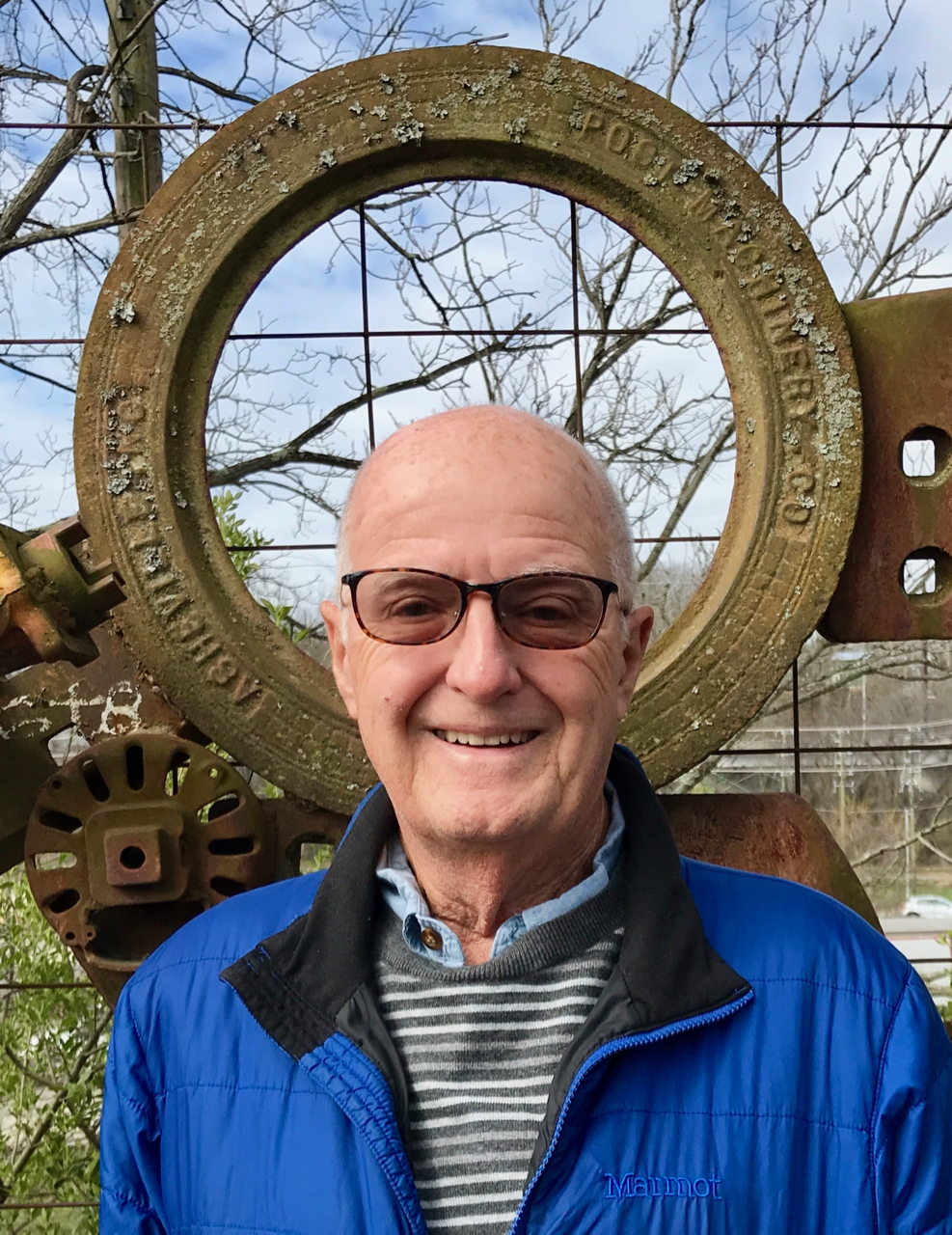
I thought this sculpture was interesting. I’ve always had a thing for found objects – otherwise known as “junk.” First I snapped a photo of Debbie and Frank.
Then Frank snapped one of Debbie and me gesturing artistically at each other.
Then, I couldn’t resist the opportunity to snap a shot of Saint Frank.
We continued our way around the studios and galleries.
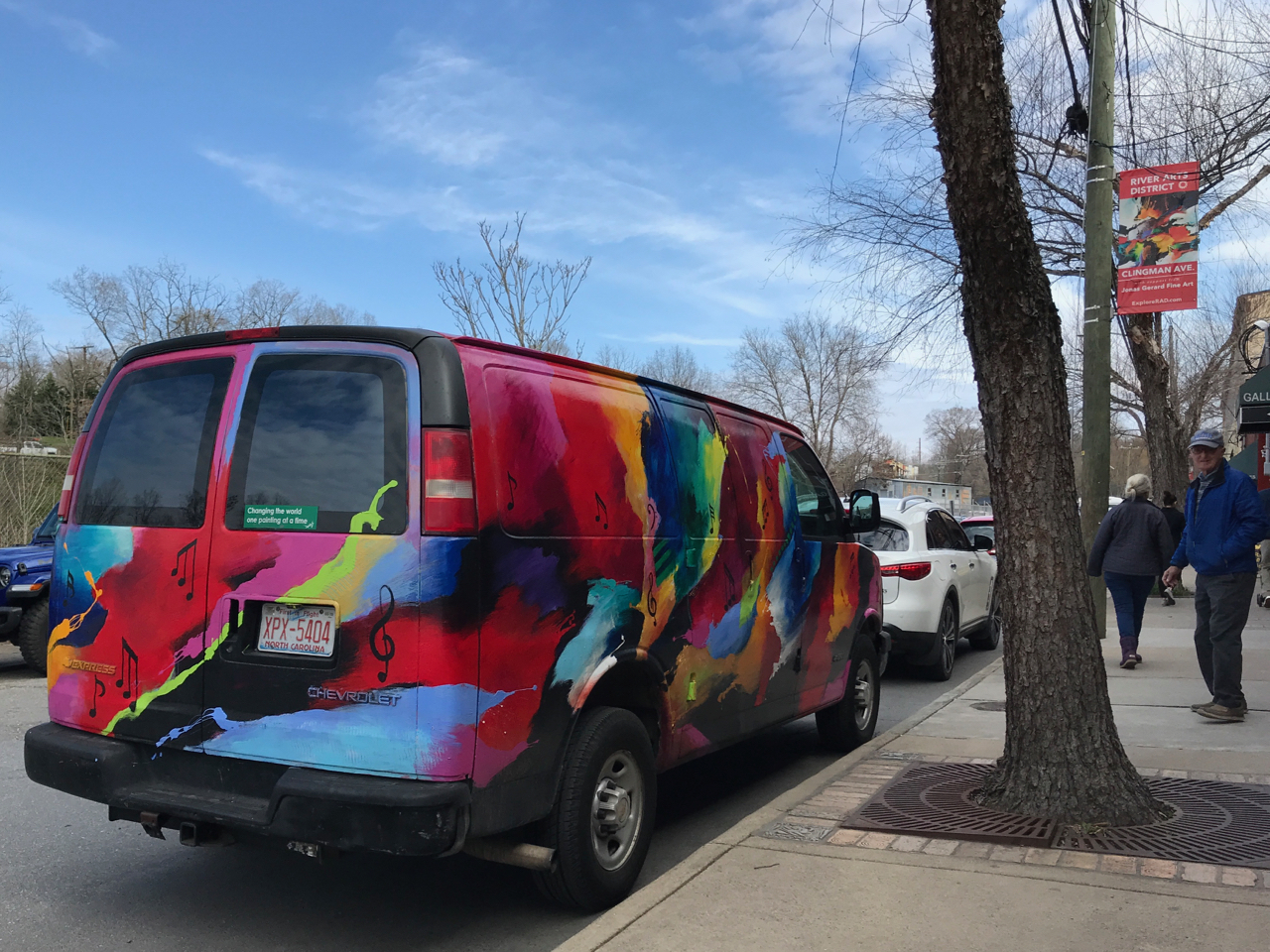
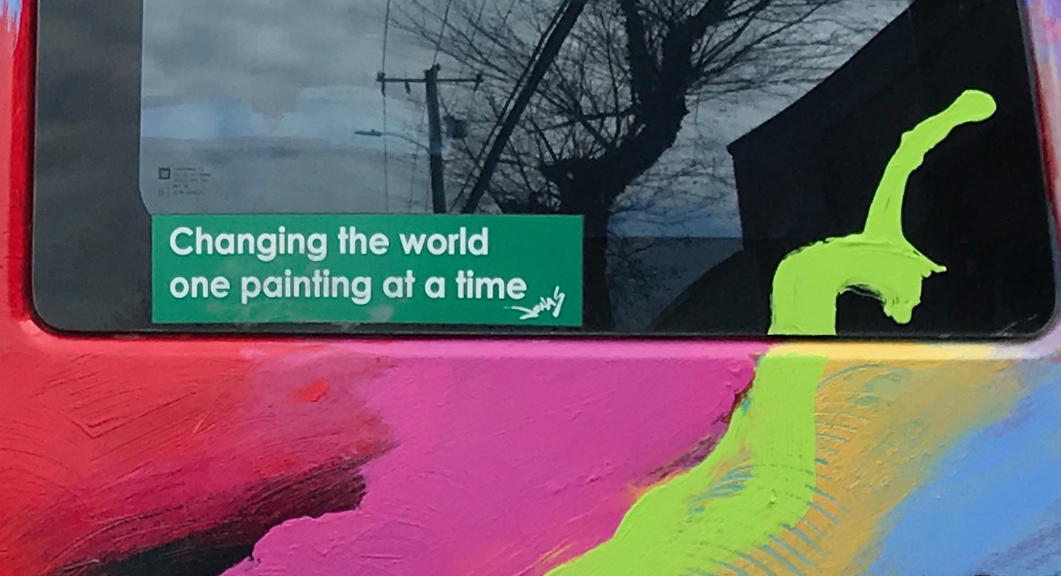
But, you didn’t even have to go inside to see art. This was quite the Art Van.
Okay, a little humor for those familiar with the Midwest chain of furniture stores that will soon join the ranks of Sears and Montgomery Wards.
At least this art van has a sense of itself. I imagine that colorful van changes any place in the world that it is parked.
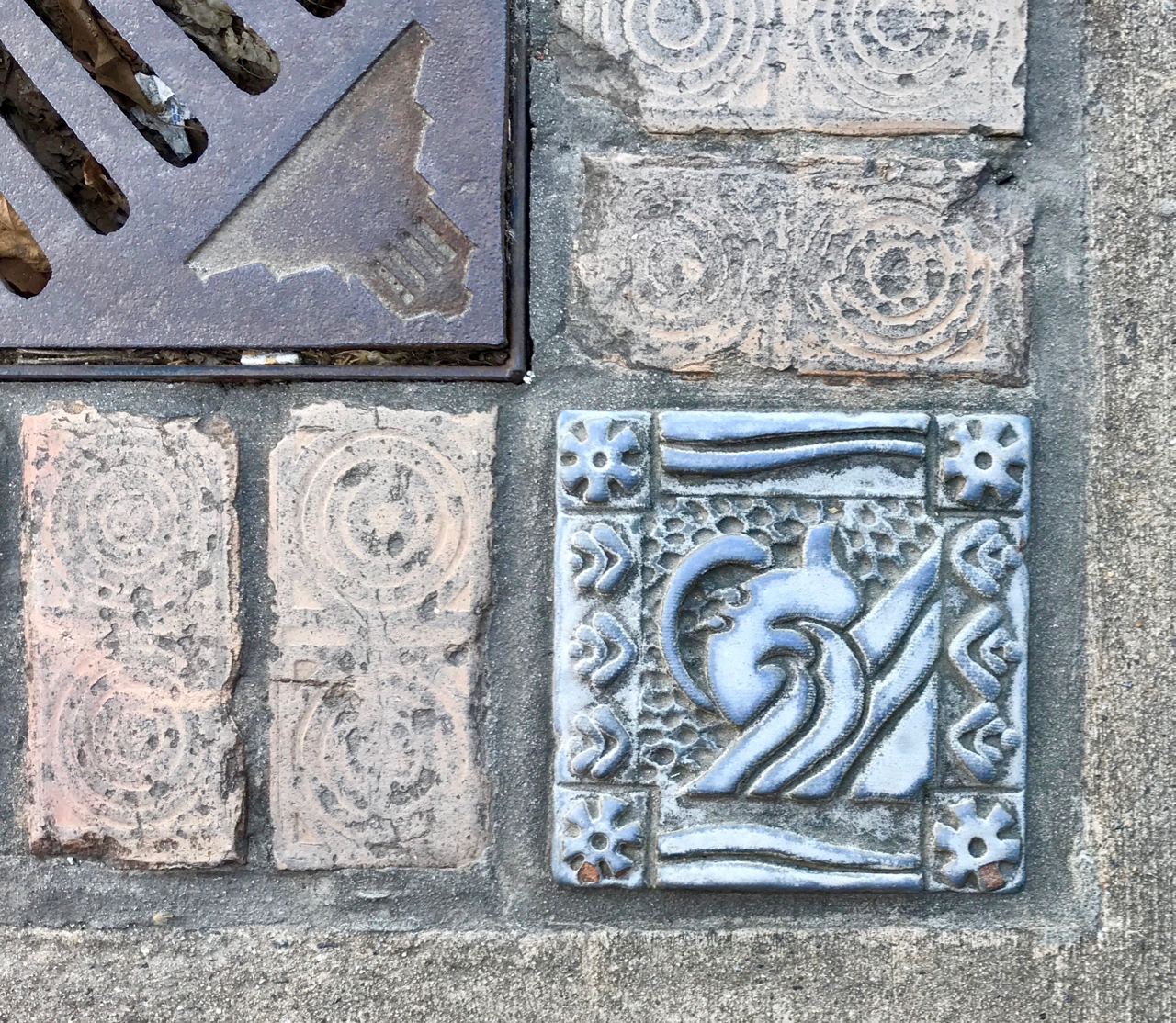
I also enjoyed the artistic tiles and grates in the sidewalk.
I didn’t take photos in the galleries and studios we visited out of consideration for the artists. I think they would prefer that people buy their art rather than take photos of their work.
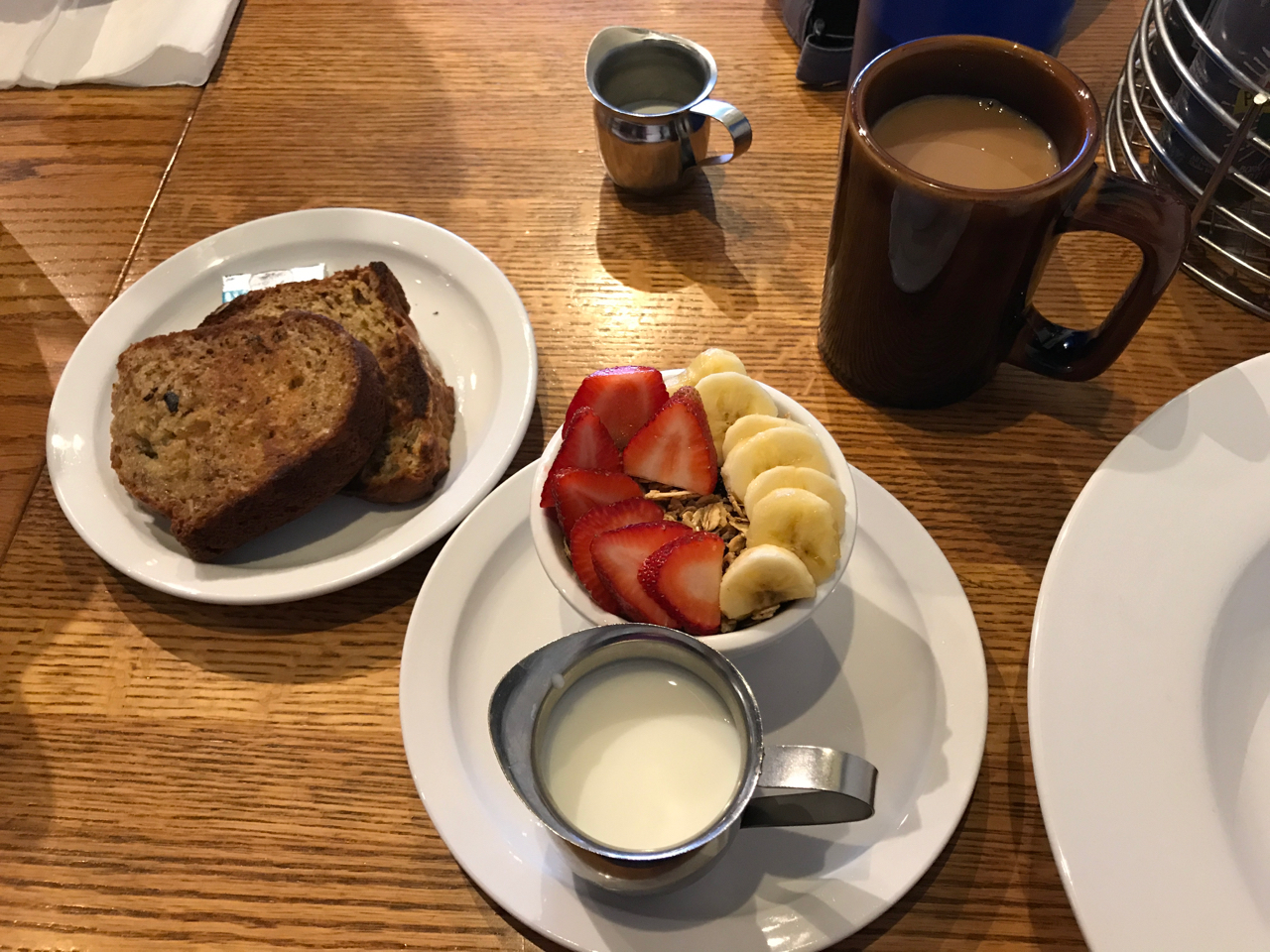
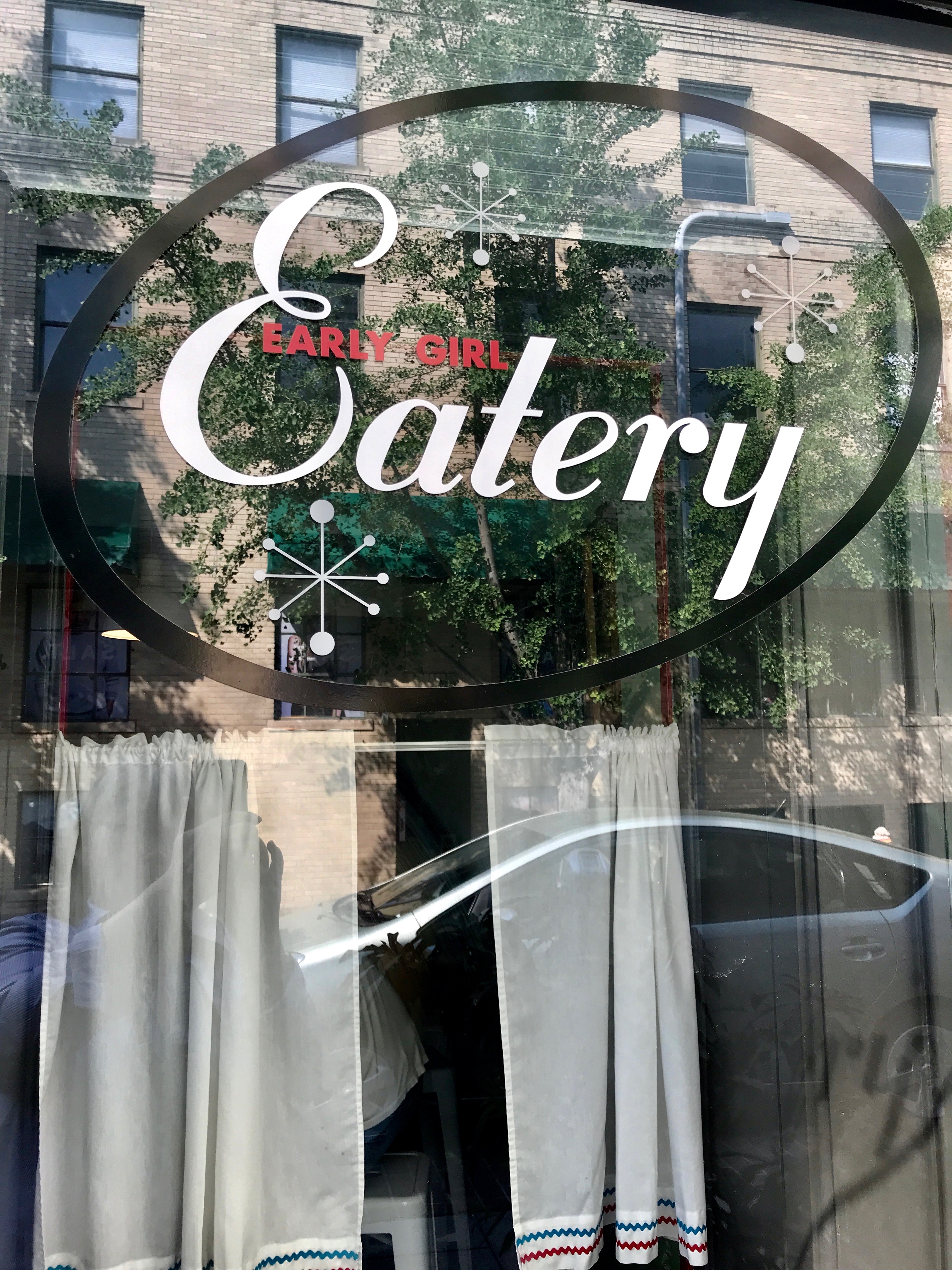
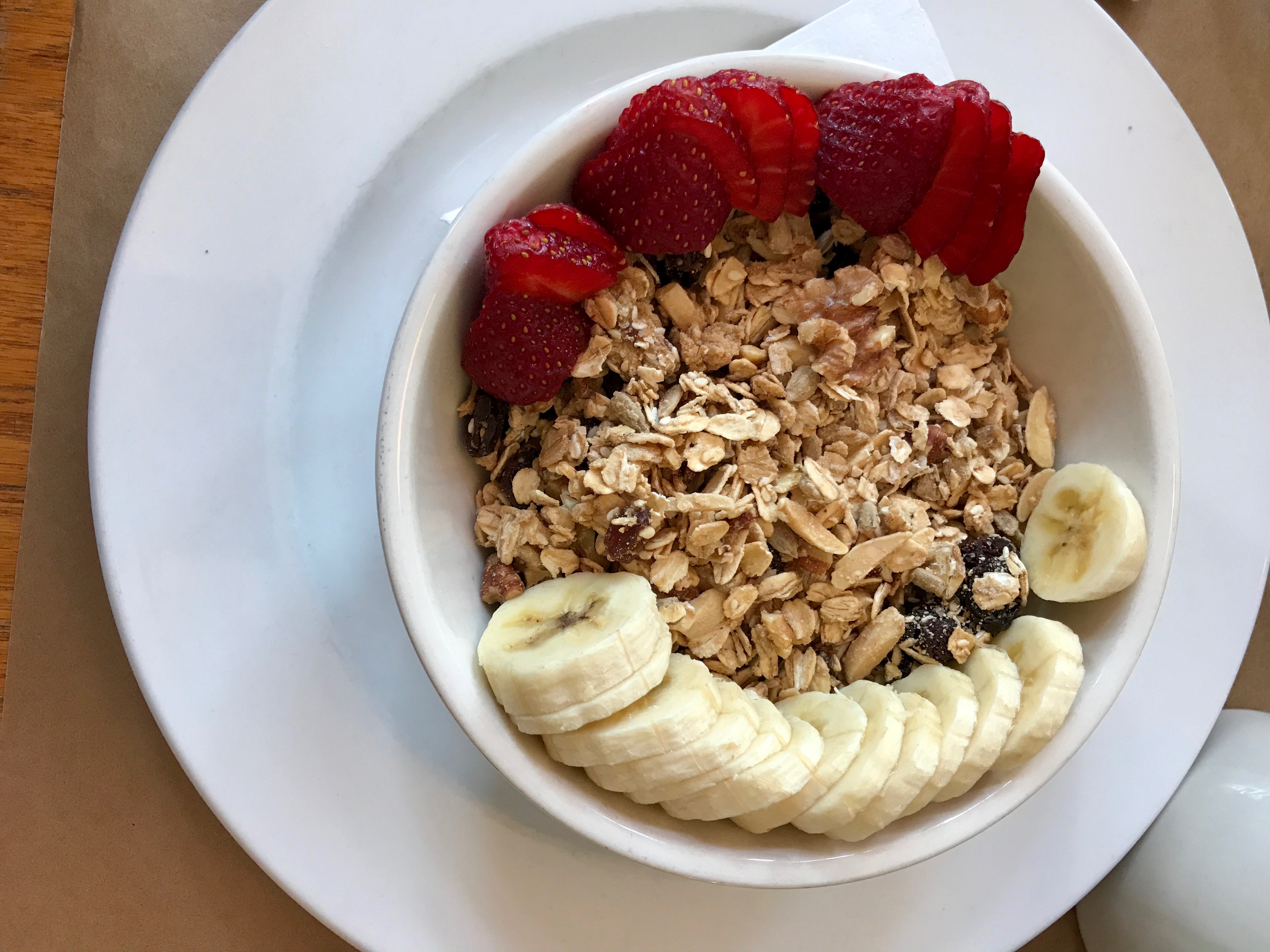
We stopped in at Early Girl Eatery for lunch. I couldn’t resist ordering the same thing I had when I visited the year before. I did have to request a larger bowl to put my granola in. The cup they served it in was too petite to add the milk.
When we got home, we spent some time doing our own things. Frank was working on a “mash up.”
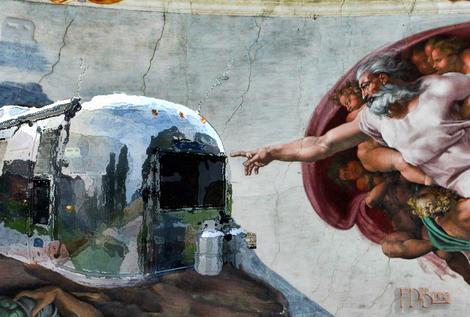
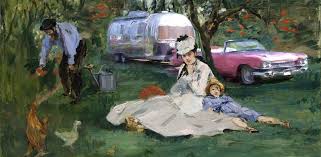
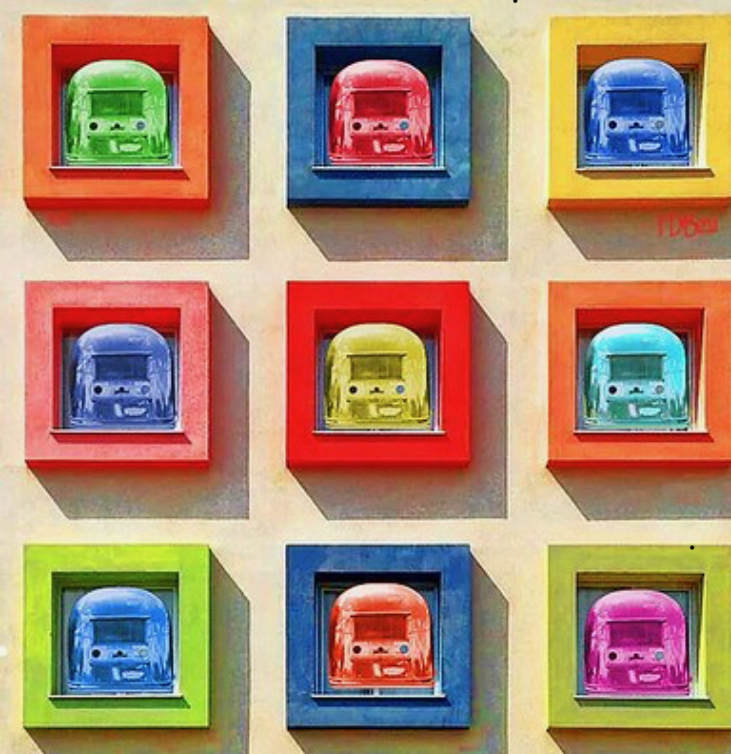
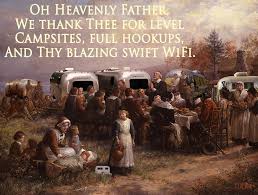
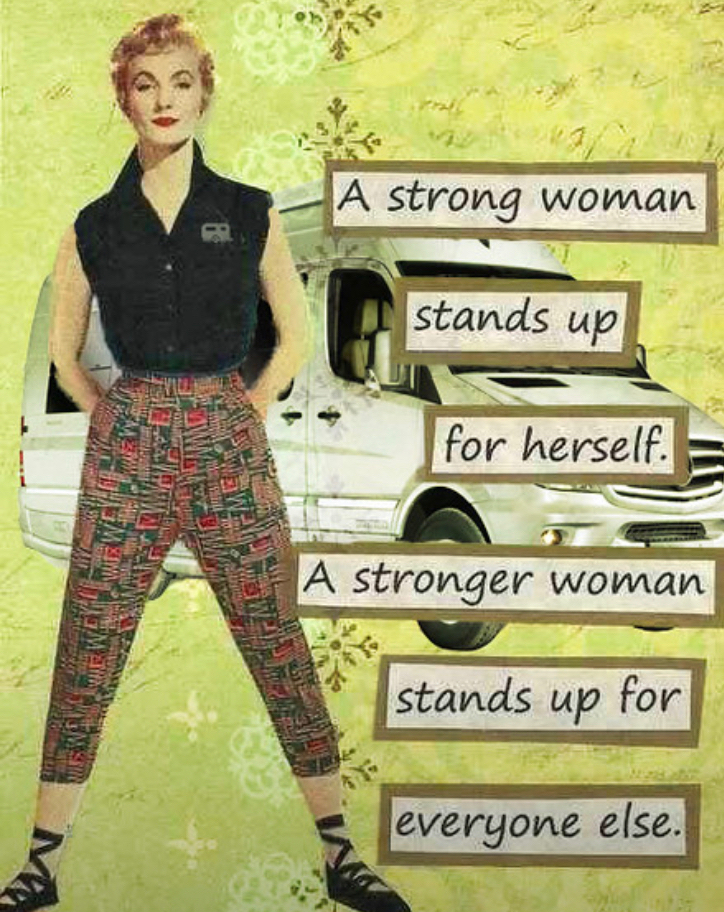
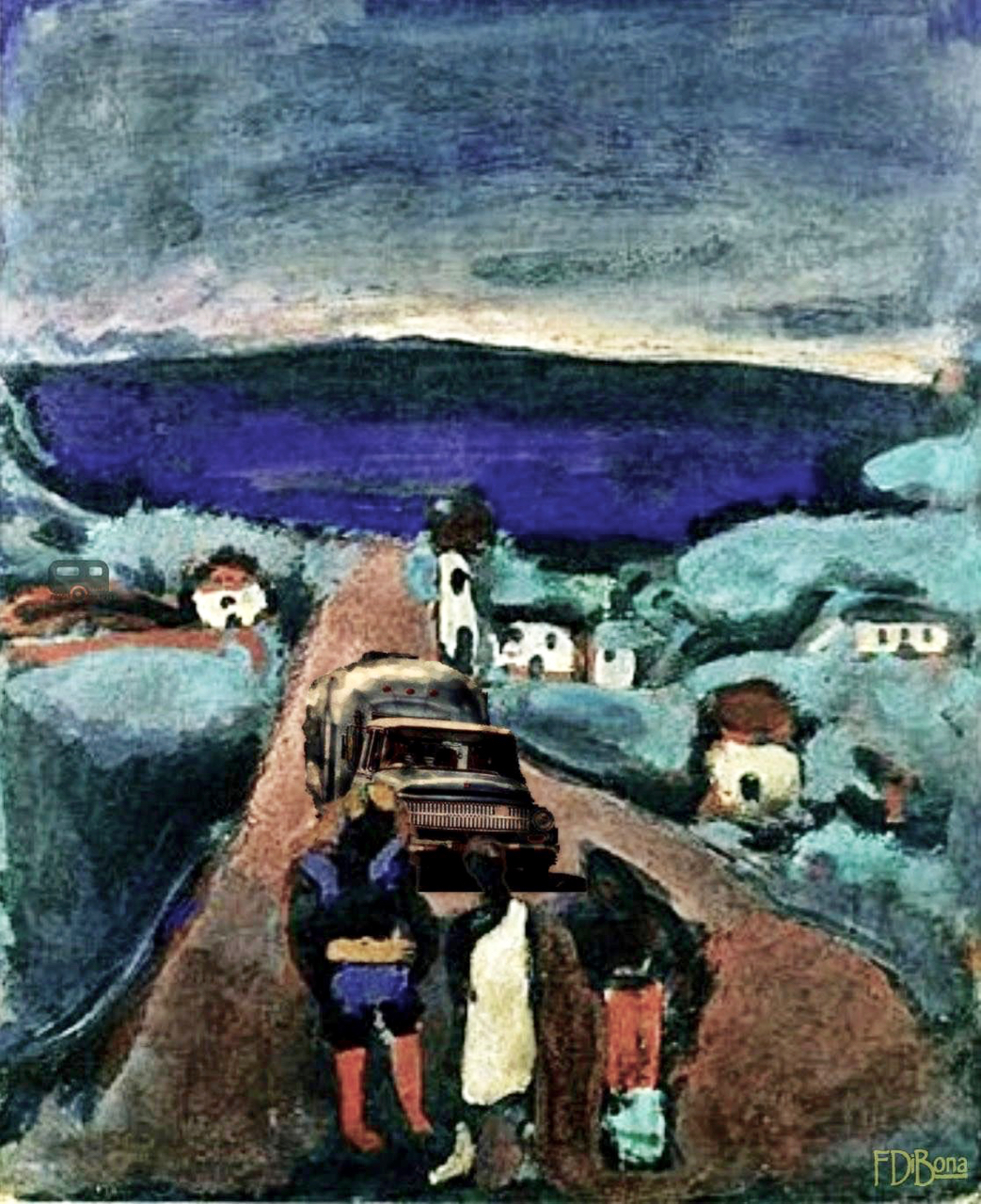
He does some really creative work putting Airstreams in other people’s artwork via photoshop.
This was his first “mash-up,” done shortly after he bought his Airstream.
Some of his works of art are based on more classical paintings.
Others are more modern.
He manages to capture the perpetual desires of the Airstream vagabond…
…as well as more universal themes.
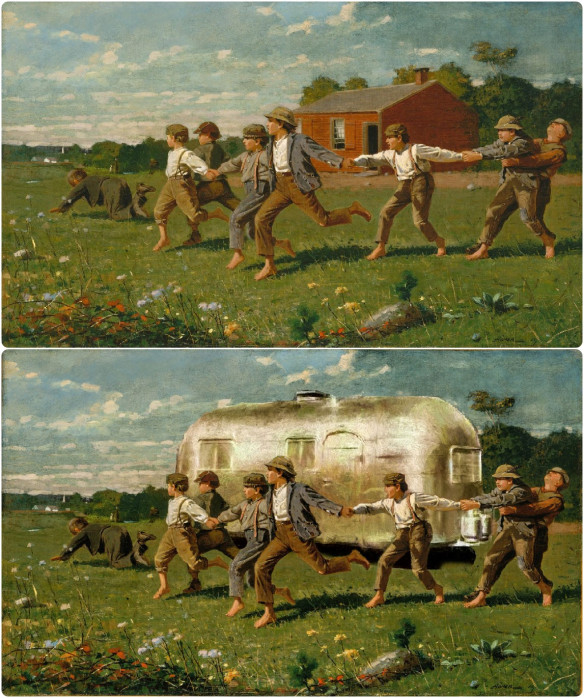
This photo shows Homer Winslow’s “Snap the Whip” before and after the famous Frank DiBona treatment.
He demonstrated how it works, and he let me have the thrill of working together to create this one. I think it needs more work, but it’s a start.
Frank’s sells his Airstream works of art though is business called “Airstreams Everywhere.” And, truly, there are Airstreams everywhere in this house.
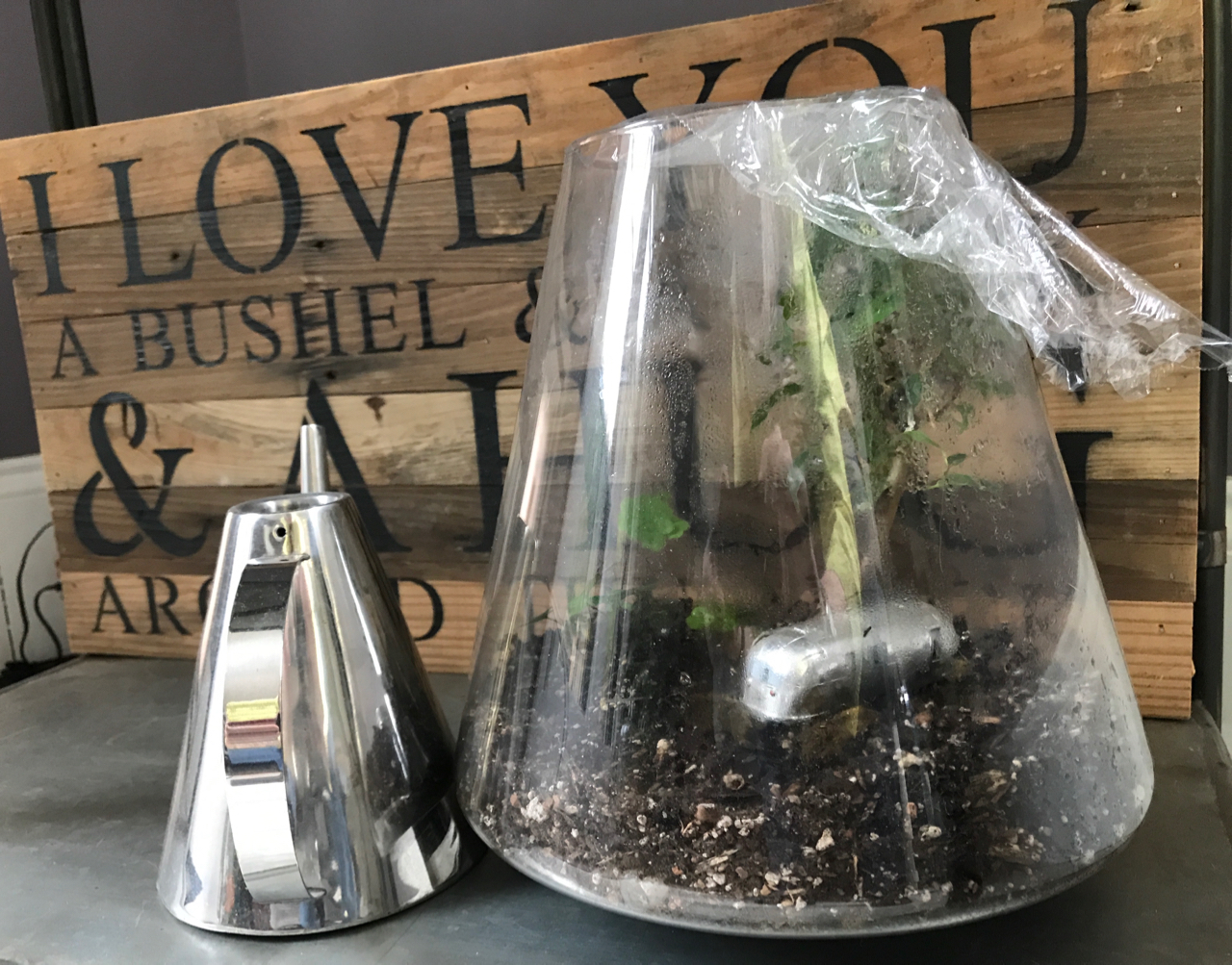
There is even one in the terrarium!
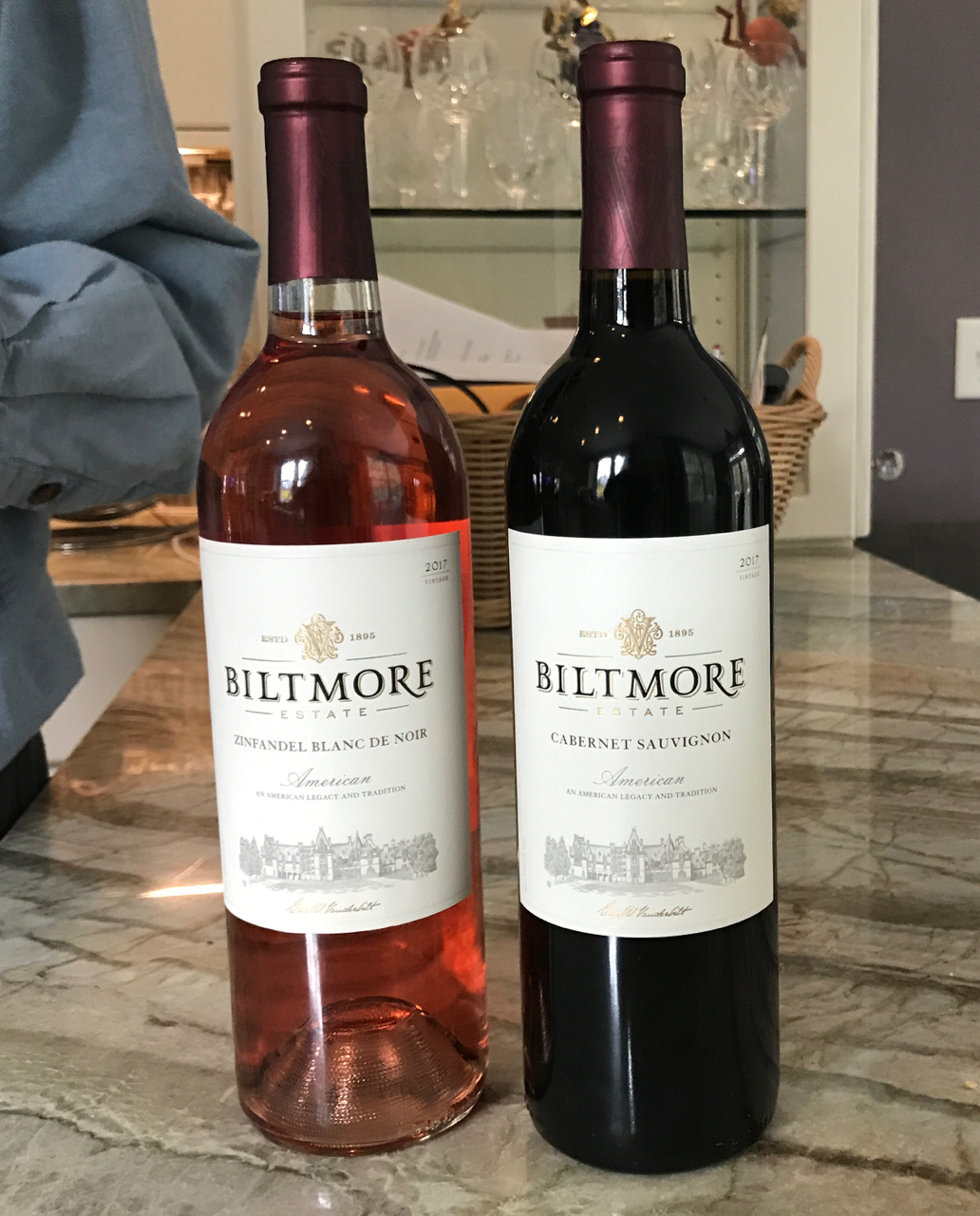
That night, Frank and Debbie had a few local Airstreamers over from the Facebook group we belong to. Before going out to dinner, we had a few appetizers and beverages. The Biltmore Estate is in Asheville. (Frank and Debbie have annual passes, and offered to take me there. But, those who are at all familiar with me could predict that I would have trouble justifying the $80 admission fee.)
Anyway, we went out to dinner at Vinnie’s, a popular local Italian restaurant.
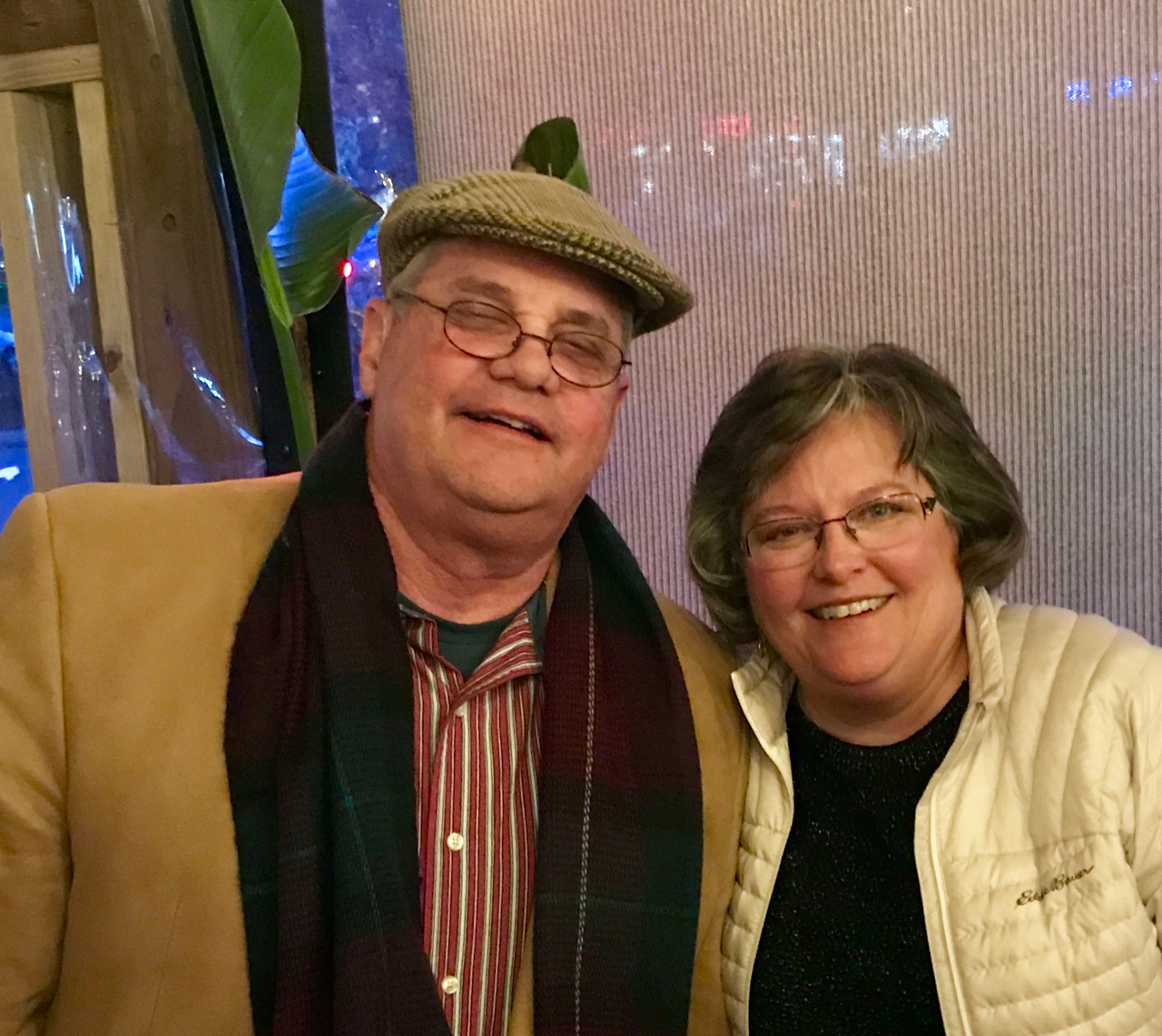
Alexis and Chuck were there.
John and Renee also joined in the pasta and merriment.
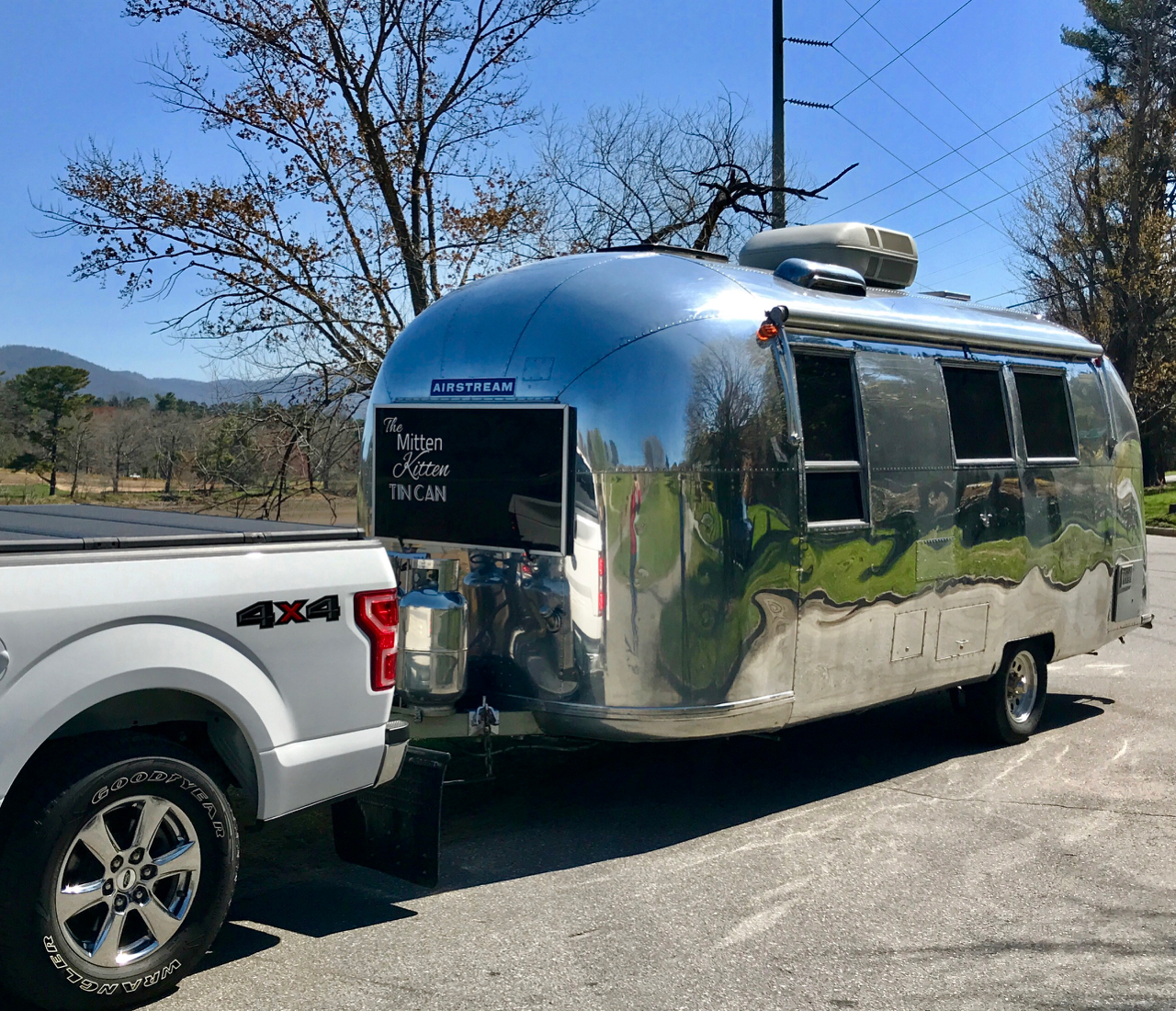
The next day, Lindy, also known as “The Mitten Kitten” rolled by.
Lindy and her pups are fellow Michiganians.
Get a load of her shiny Airstream! She has a vintage Airstream, and those can be polished to a mirror shine. I just love the shiny ones!
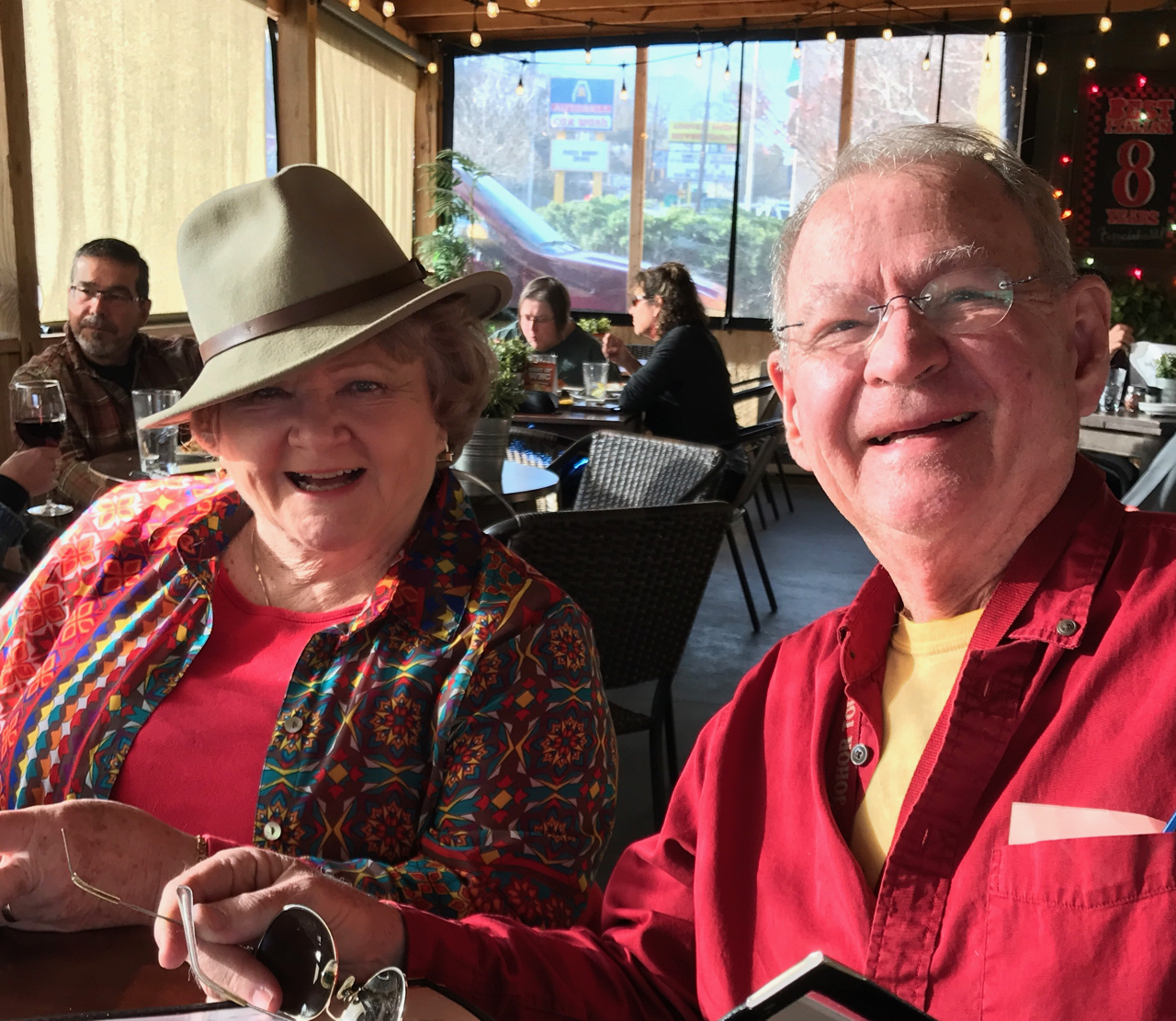
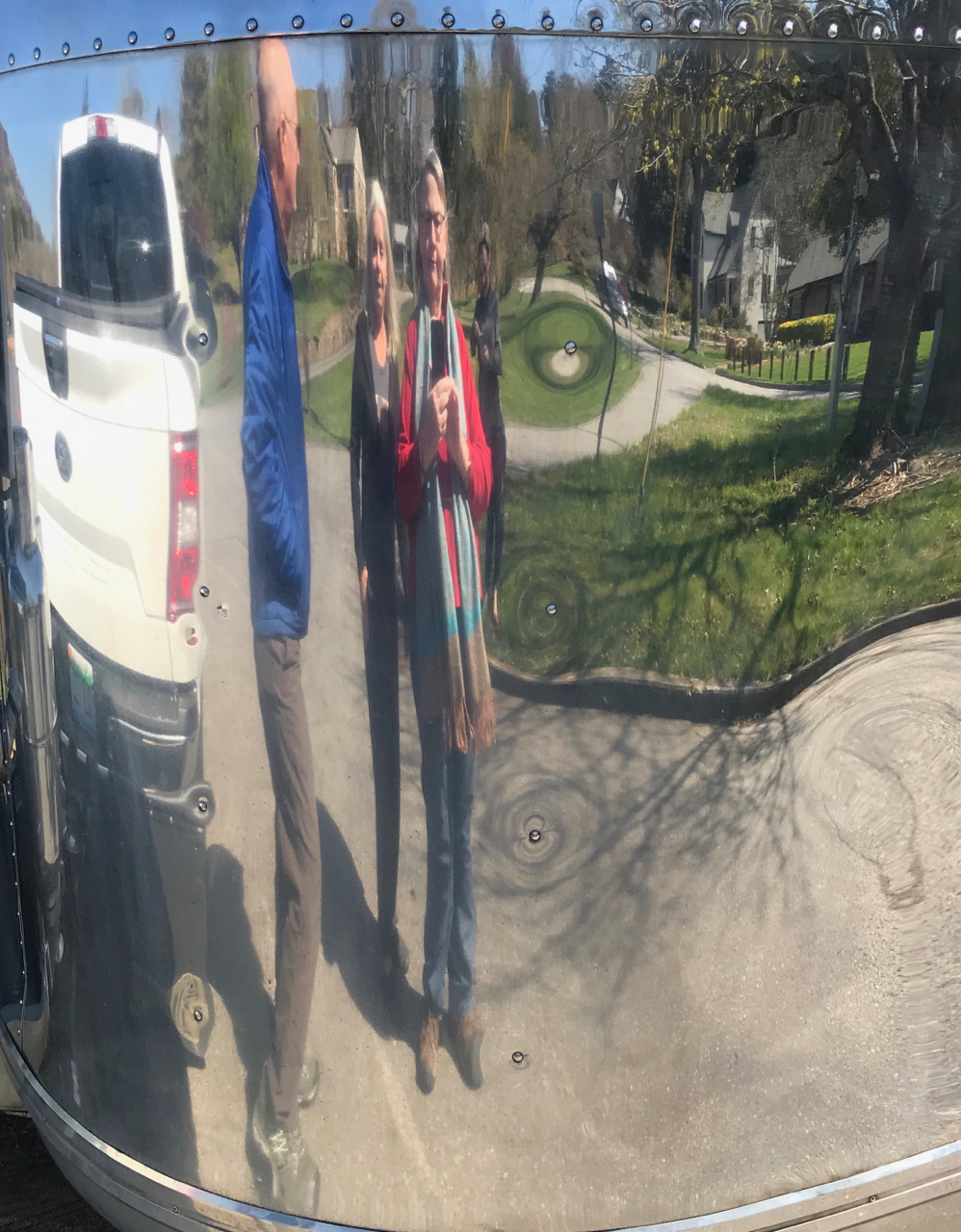
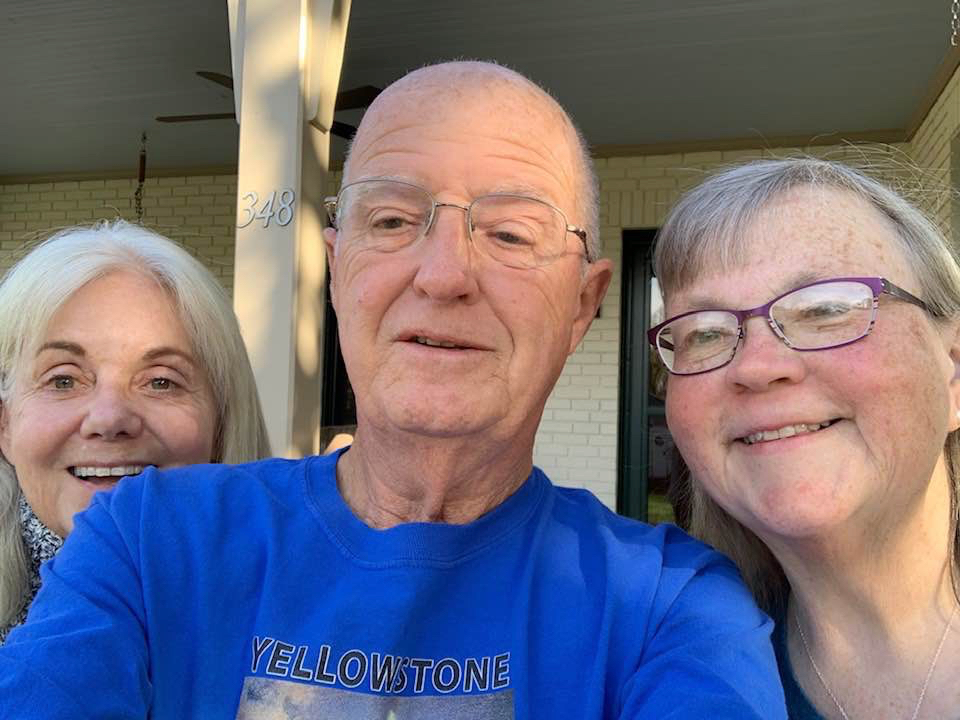
Here’s a photo of Frank, Debbie and me.
And, my own self portrait.
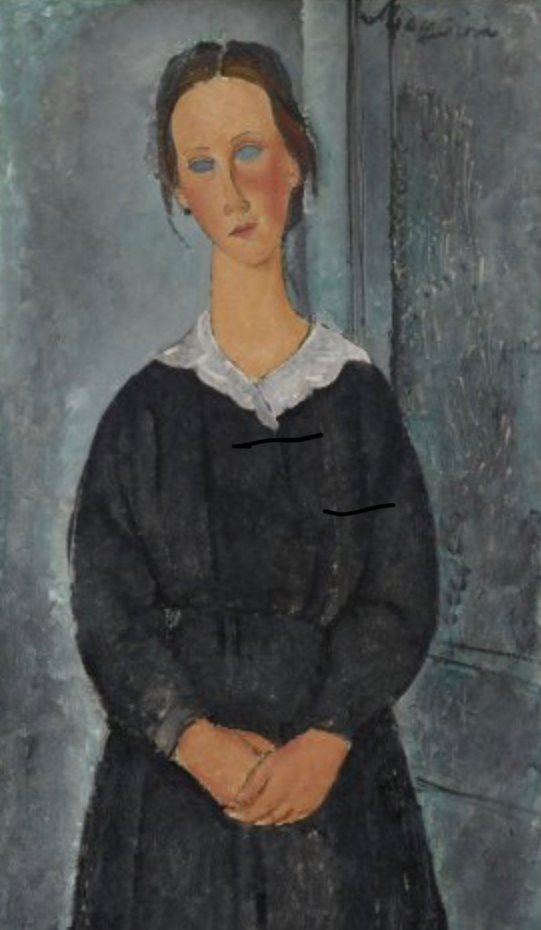
My photo kind of reminded me of a work of art I grew up with in the collection of the Albright-Knox, La Jeune bonne (The Servant Girl). It was painted by Amedeo Modigliani, and Italian Painter who lived from 1884 to 1920.
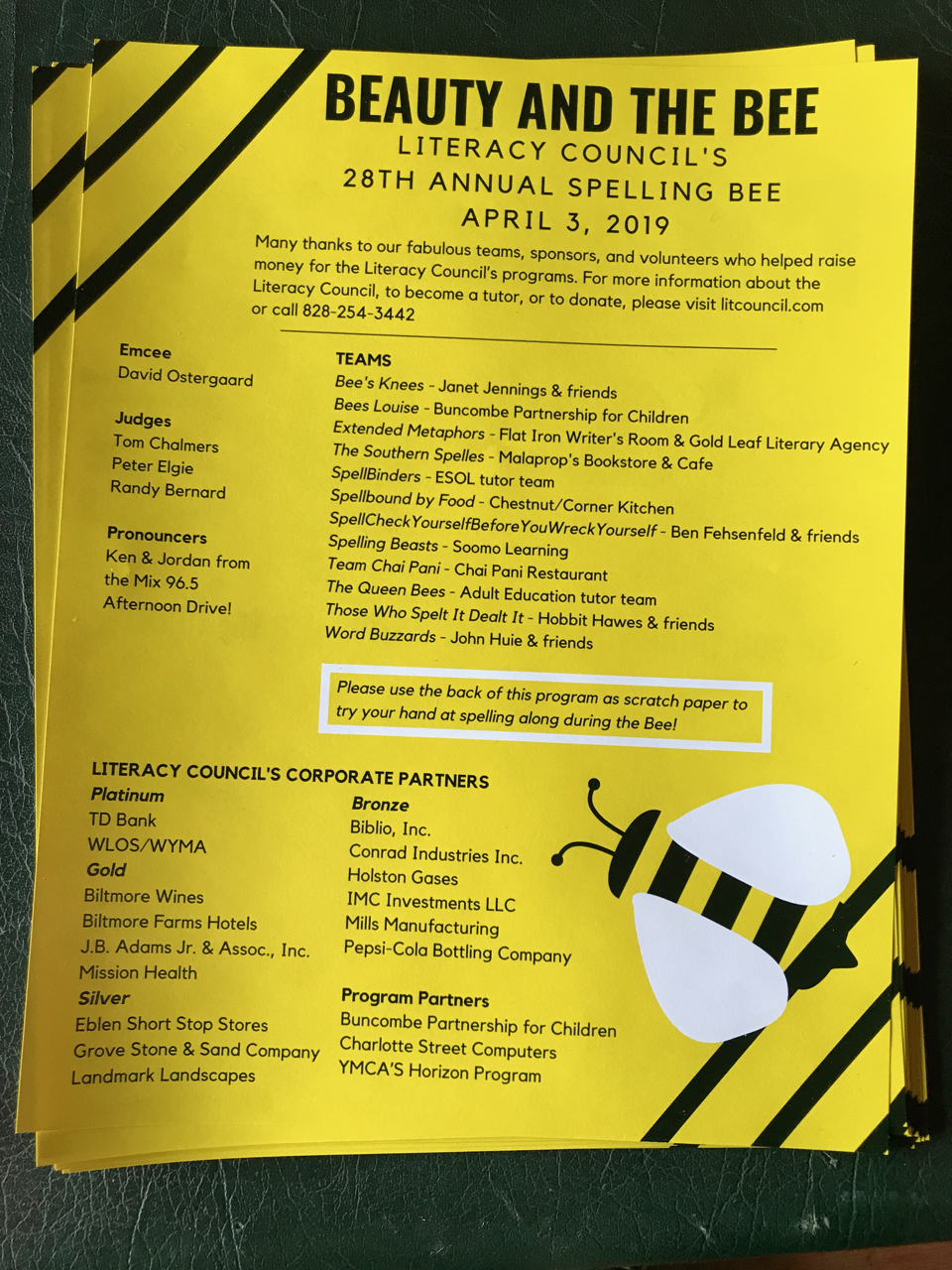
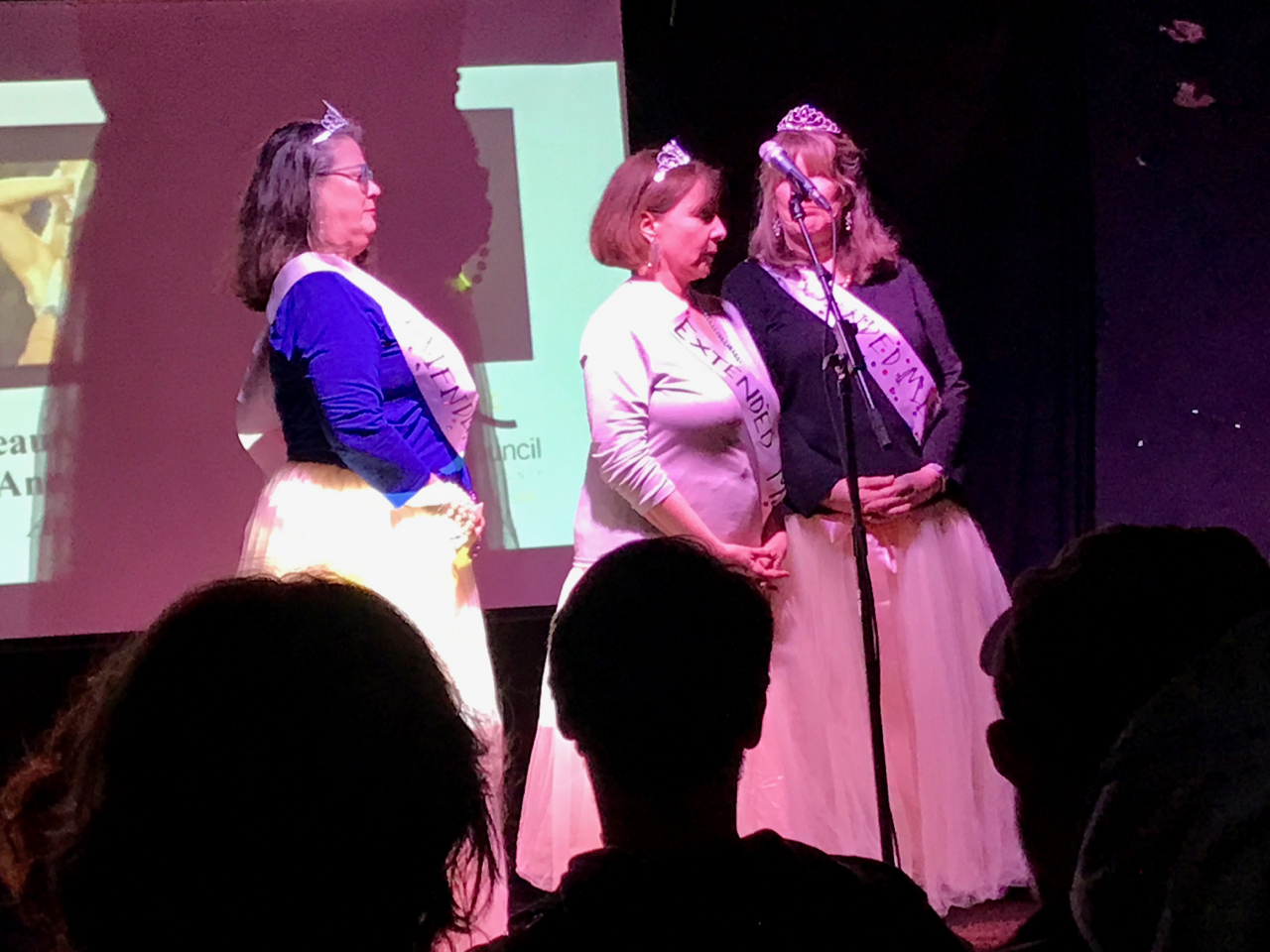
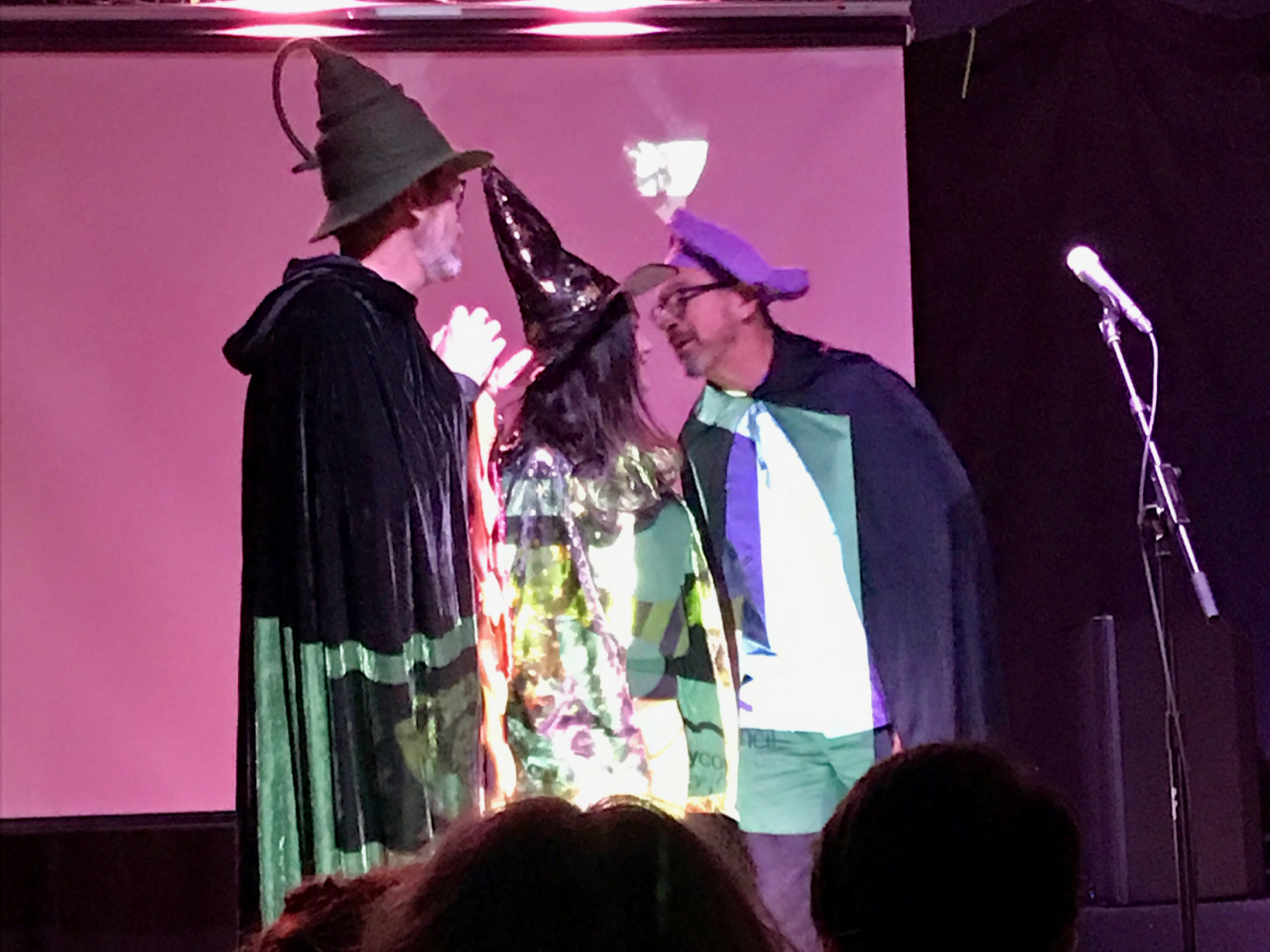
That evening, we attended a spelling bee that was a fund raiser for the Literacy Council.
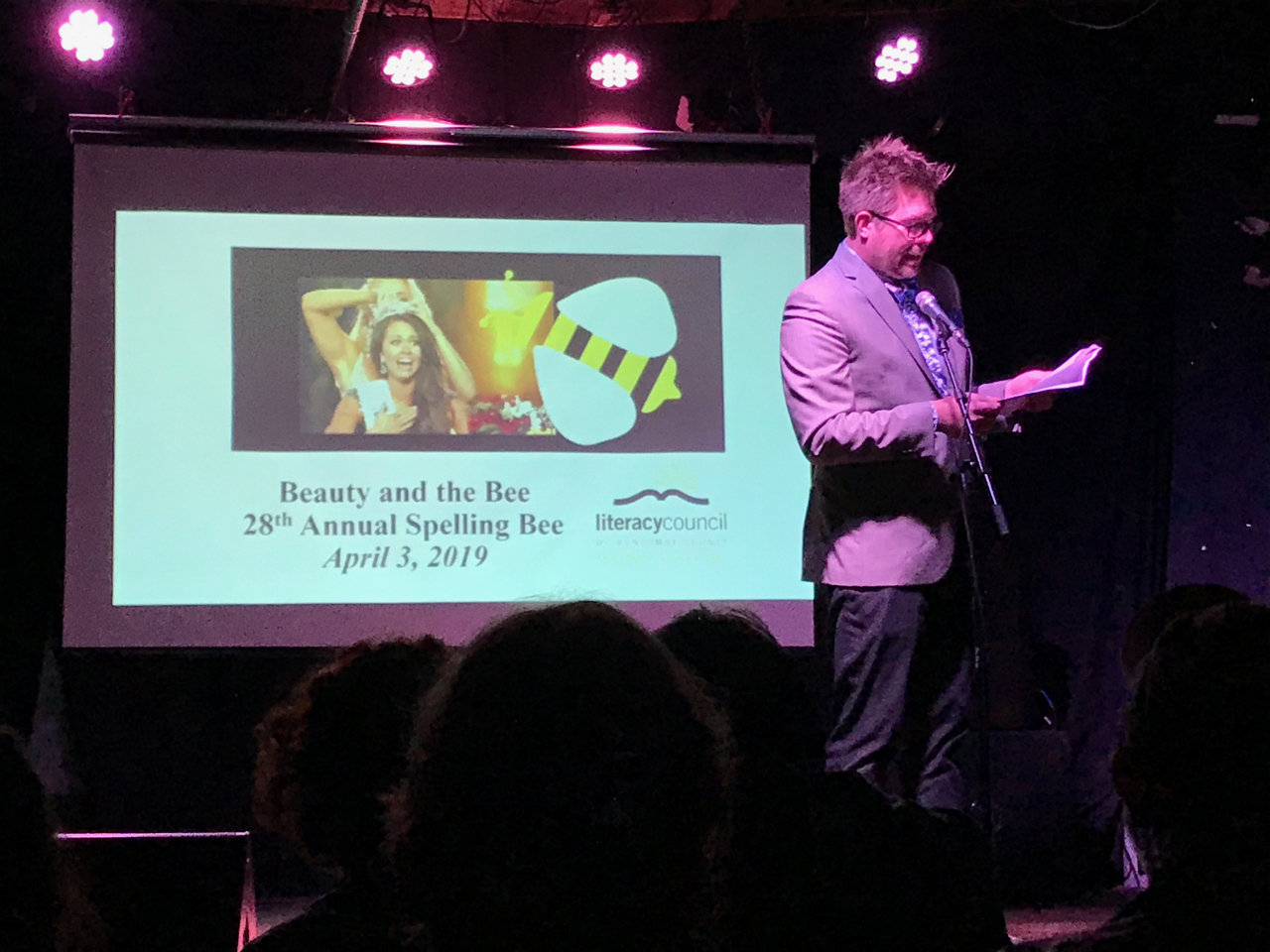
The Beauty and the Bee was hosted by MC David Ostergaard.
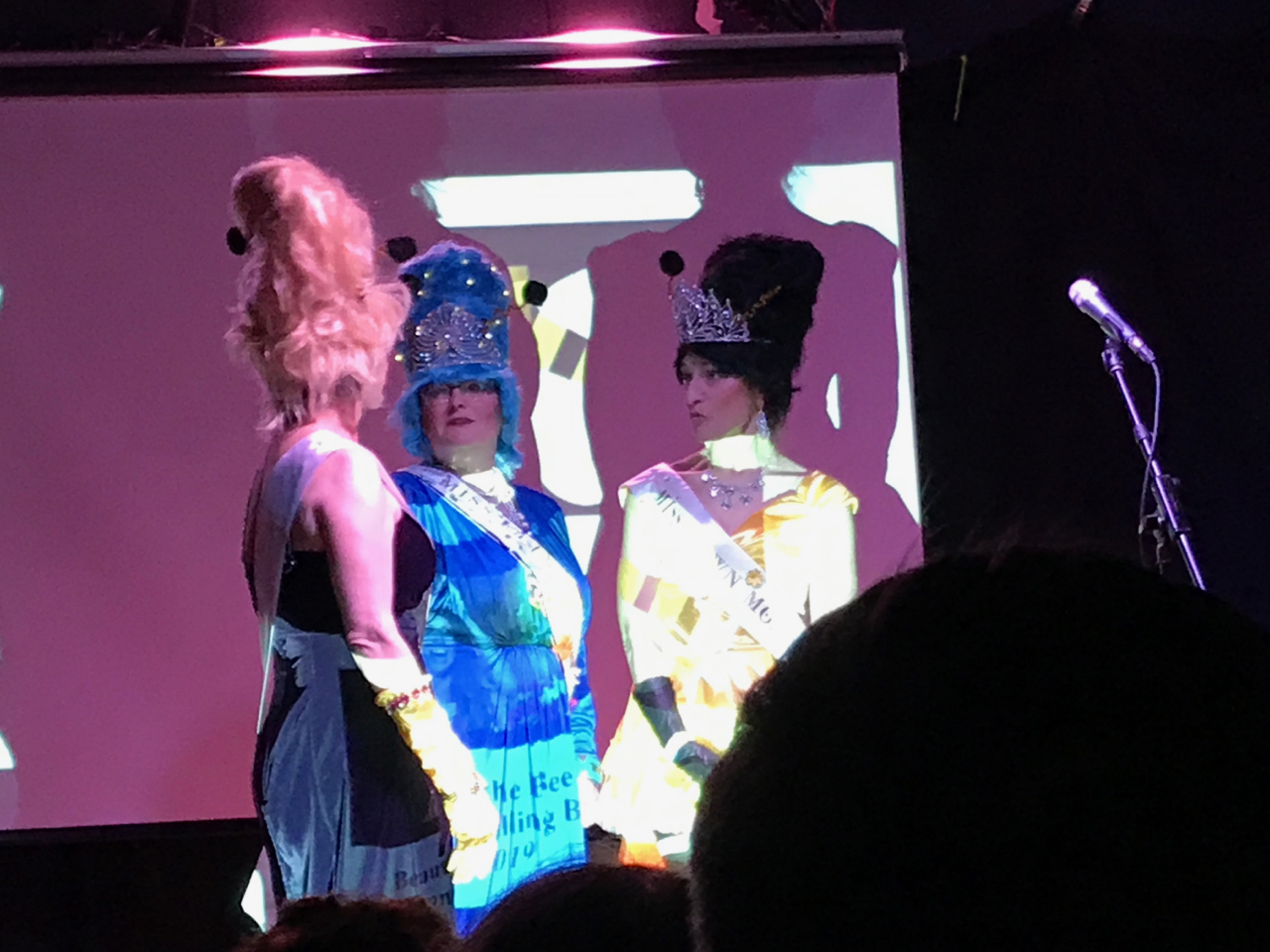
The teams really got into it with their costumes.
I wonder if they intended to sport those beehive hairdos for the spelling bee?
I love the literary reference in this team’s name – The Extended Metaphors.
I think they were having a ball!
The next day it was time to roll on. I’m not sure when this photo was taken, but here we are together – Debbie, Frank and me.
Once again, I booked a hotel through an online site. I found out that the owners really don’t care for these sites, as the booking sites take a large commission. You live and learn. If it’s a corporation, the people running the hotel don’t care that much. However, when it’s family owned and operated, they are a bit grumpy.
This would be another place I’d advise avoiding, if I could remember the name of it.
And this hotel was a bit dumpy. More than an bit. I was really glad that I wasn’t going to be there long. However, there was a lovely little Mexican restaurant on the other side of the parking lot. I went over to see what they had on the menu.
It looked good, so I settled in for dinner.
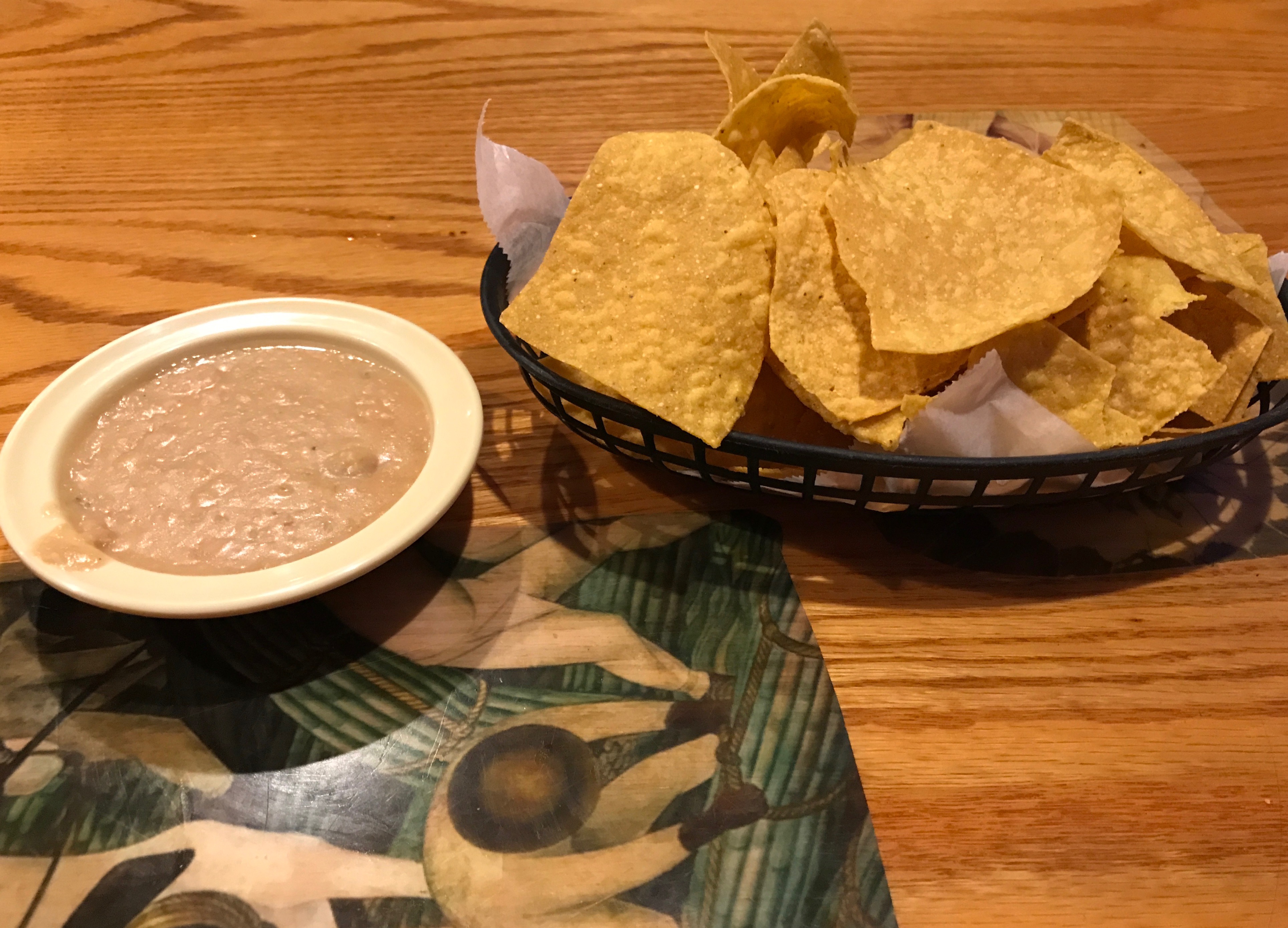
They started me out with chips and beans. I love beans! I think this is going to be good!
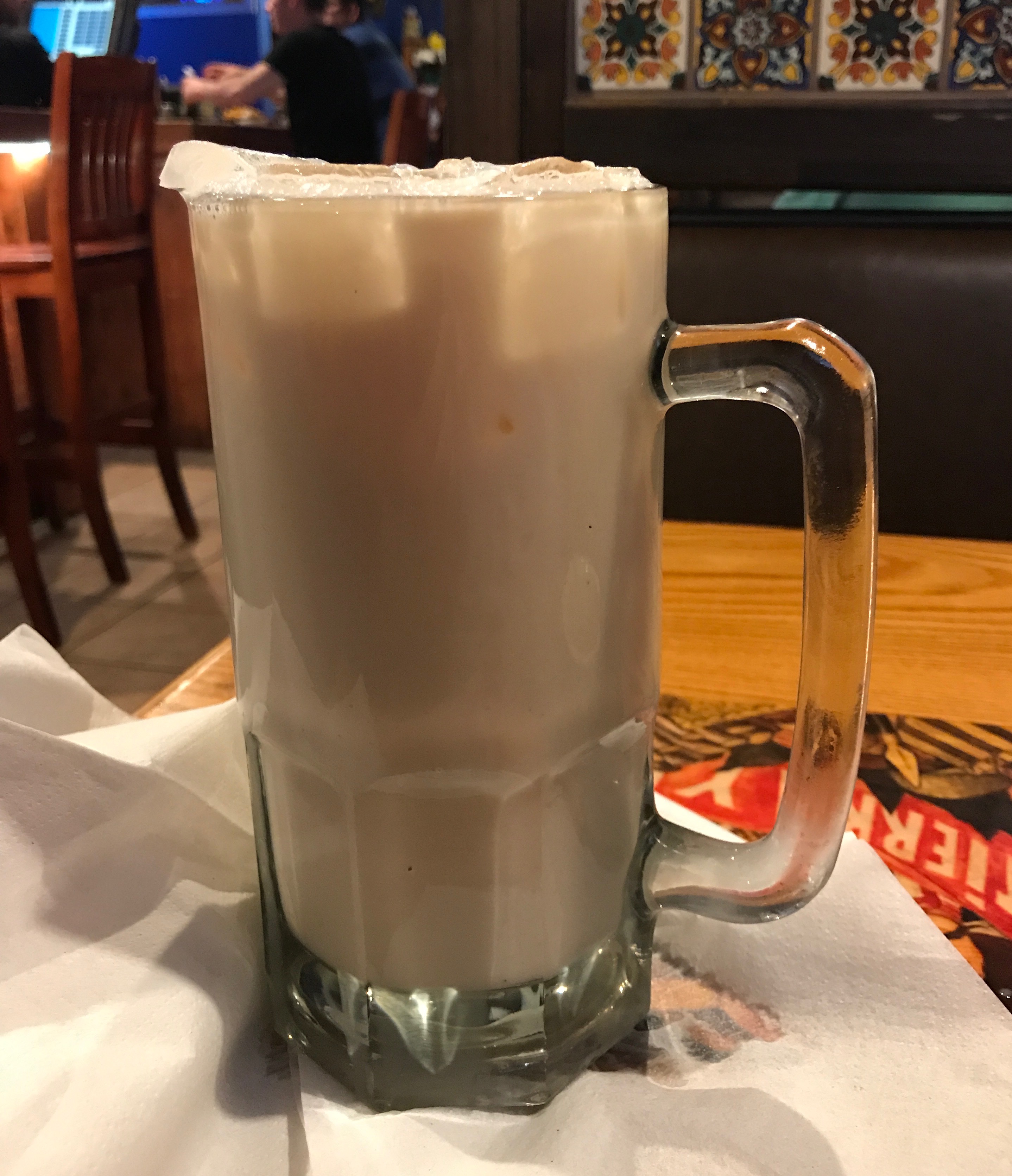
Next came the horchata I ordered. I really enjoy horchata. There are lots of different recipes, some more to my liking than others. As I remember, this was a good mug of horchata.
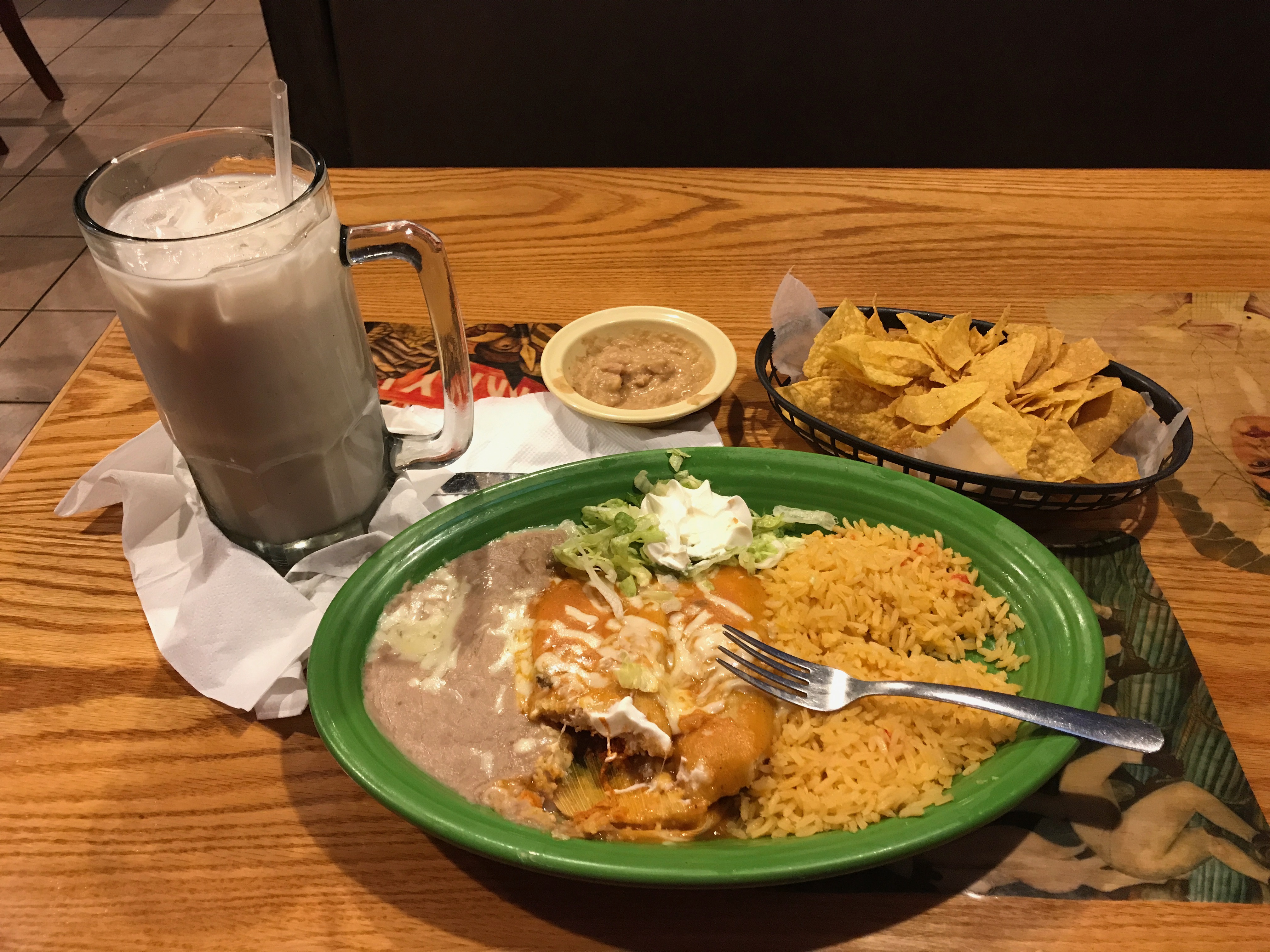
Dinner came. I got the tamale plate. Yum! Tamales are my favorite!
Everything was so good that I decided to indulge in dessert.
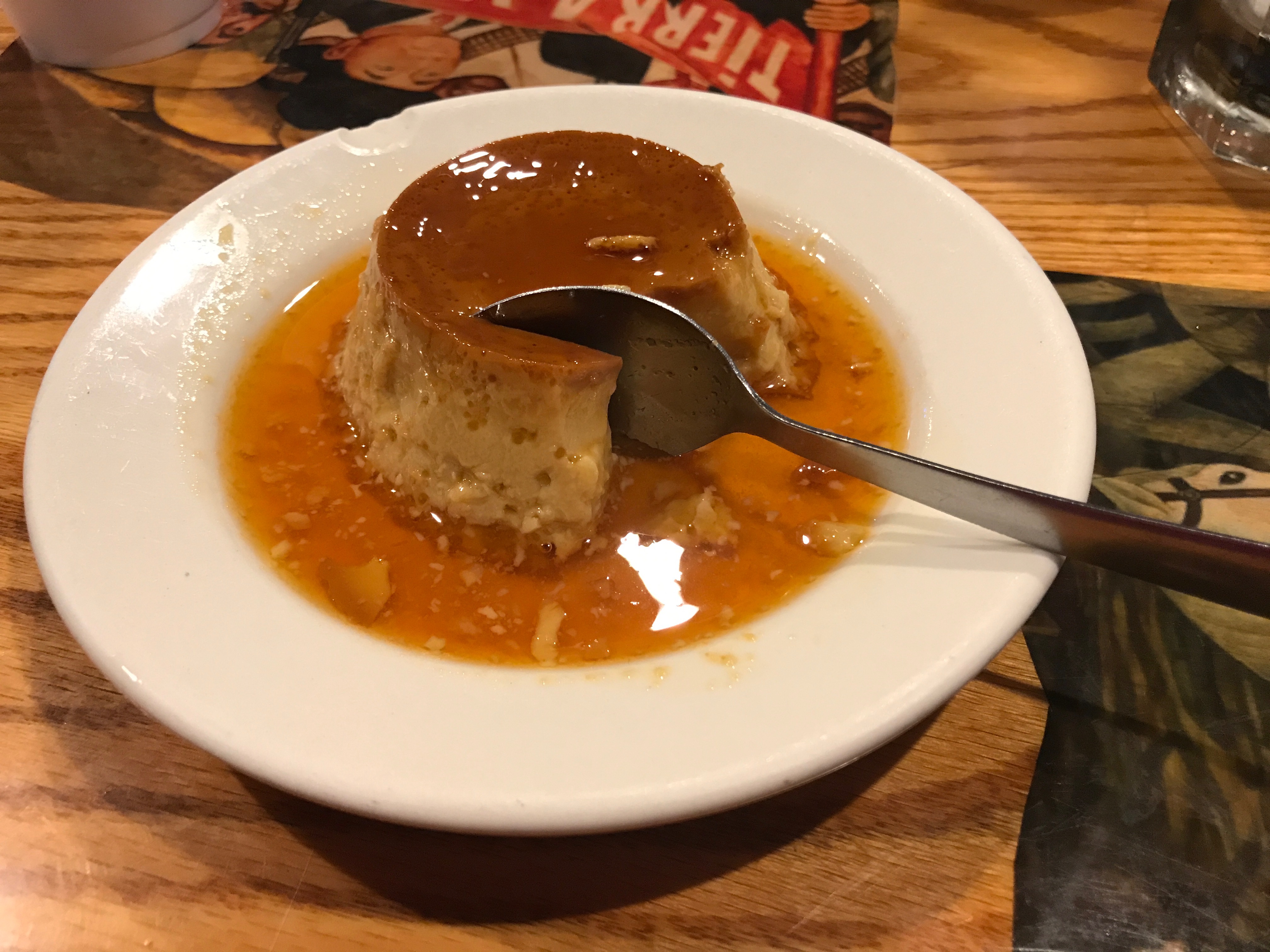
Flan! My goodness, what a treat!
The night passed uneventfully, and I looked up a good place for breakfast in Asheville. Whatever source I consulted gave high marks to Early Girl Eatery. I made my way there and circled about until I found a place to park.
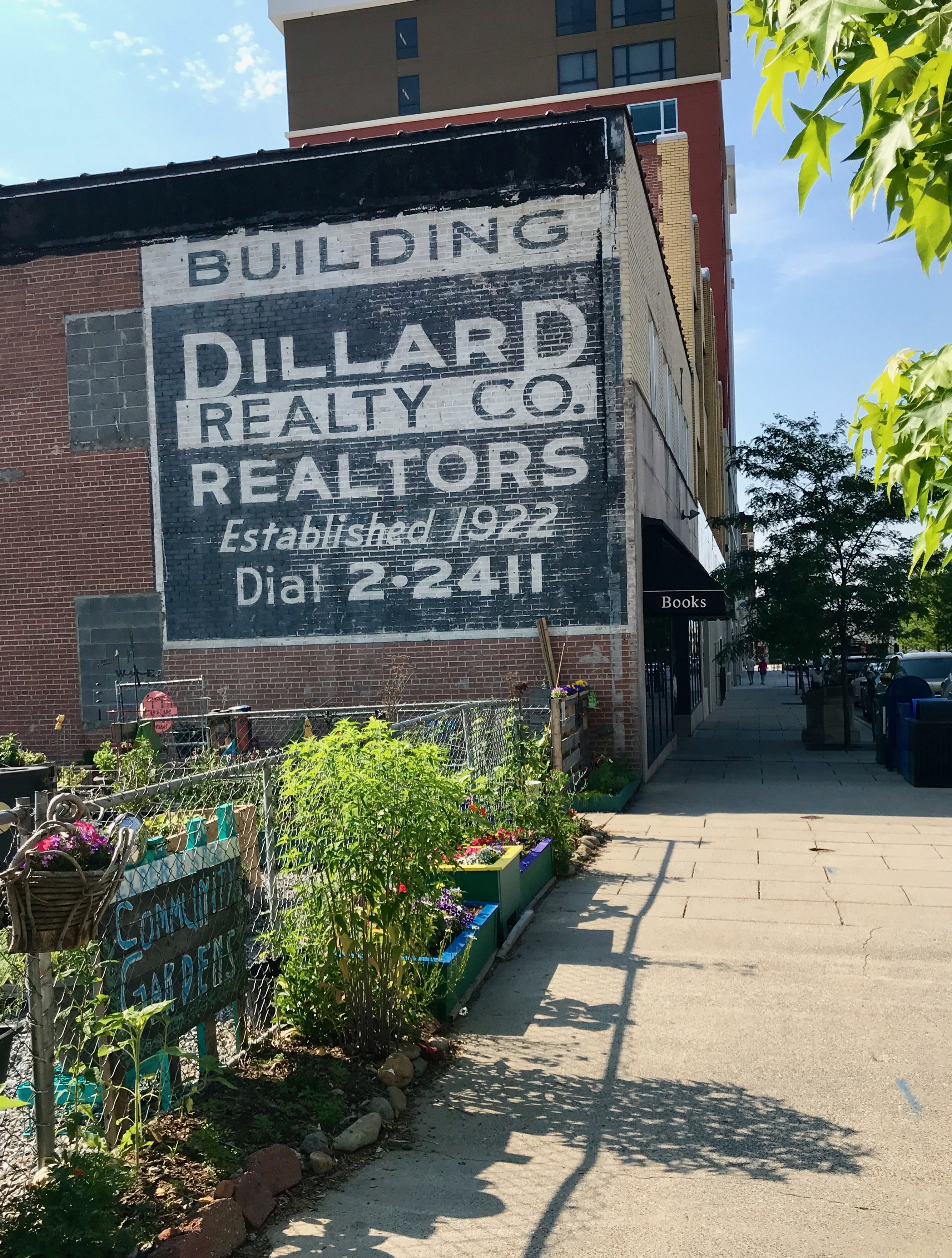
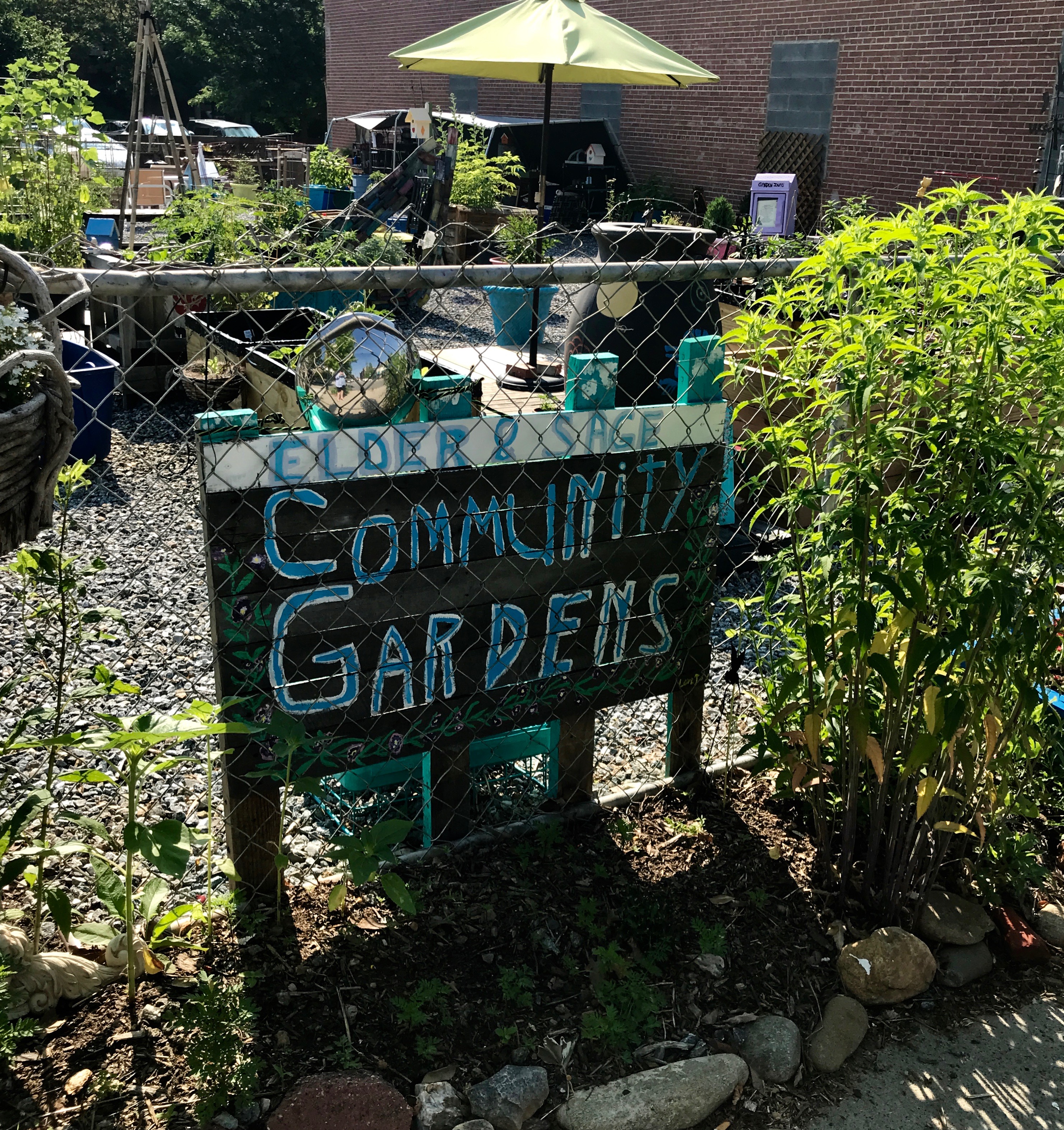
Apparently, there was very little gardening going on in the community garden that morning, although I’m sure the plants were soaking up the sun and doing their photosynthesis thing.
According to a sign on the fence, this garden is part of the Asheville Edibles Community Garden Program, and it opened June 1, 2017, just about a year before I visited. Volunteers have been working to transform a city-owned gravel lot into a garden that will provide area gardeners the opportunity to nurture and share organic vegetables, herbs and flowering pollinator plants.
So, not only is it an oasis for people, it’s an oasis for bees, too.
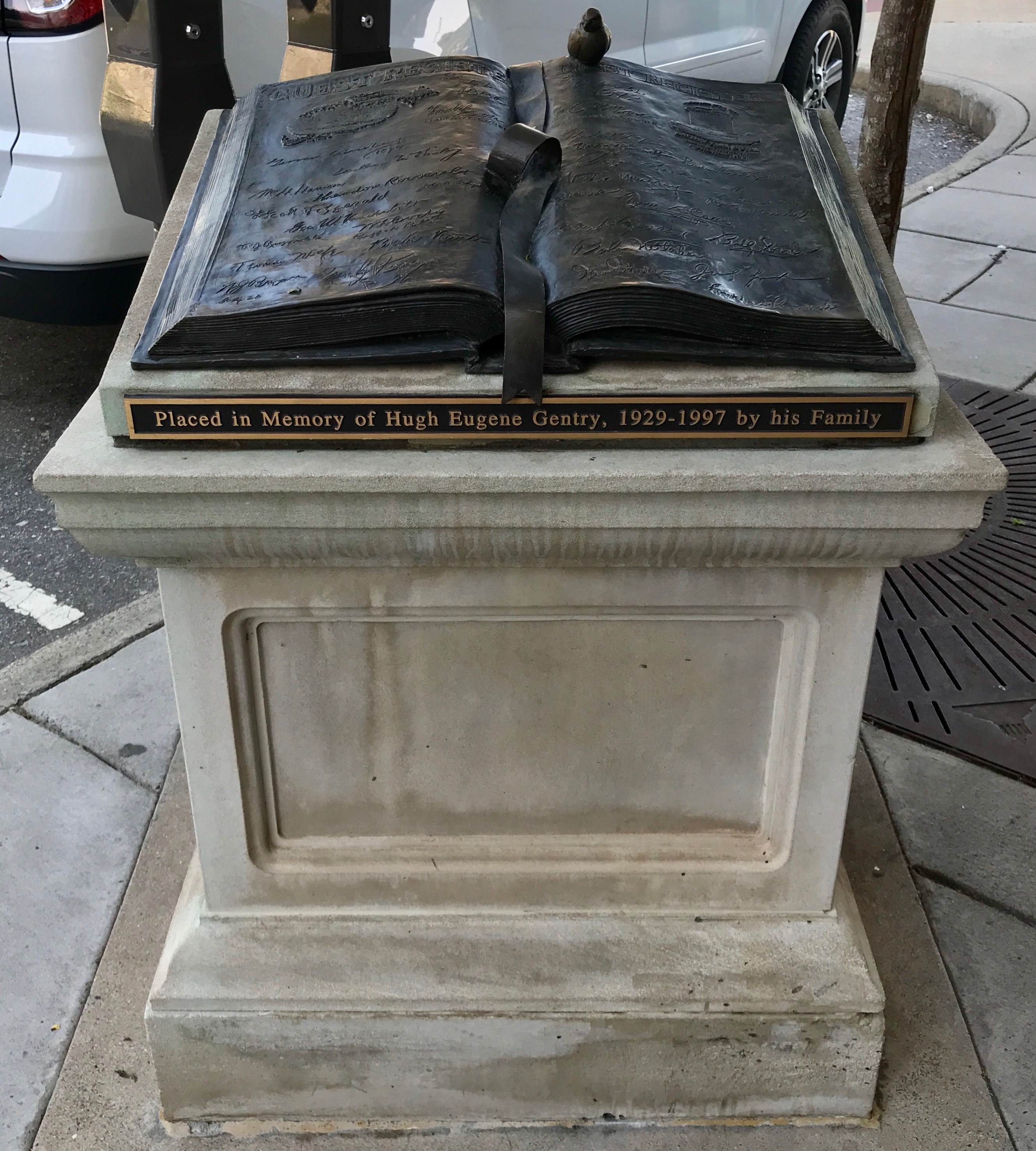
Just up the street was a monument that attracted my interest.
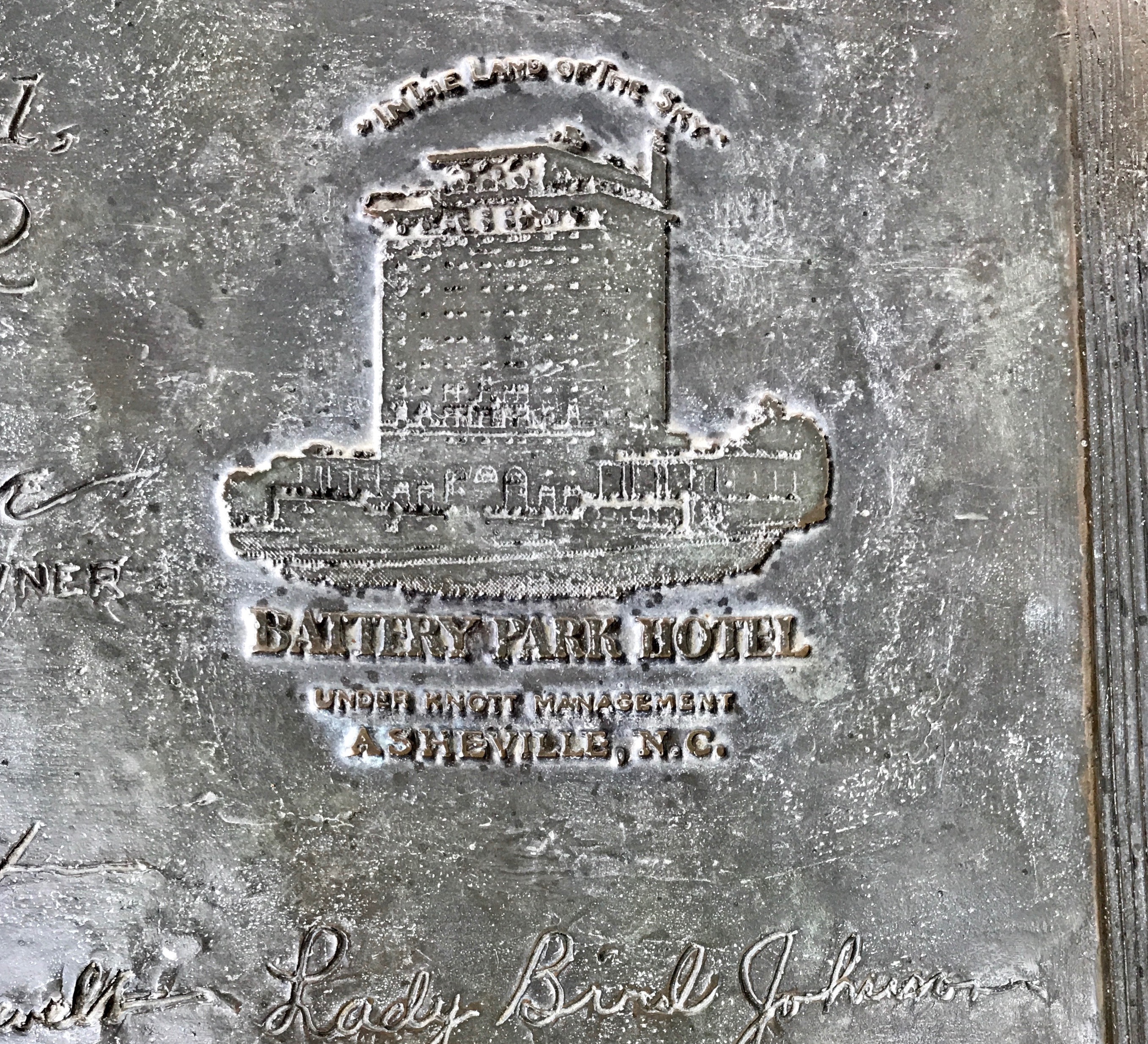
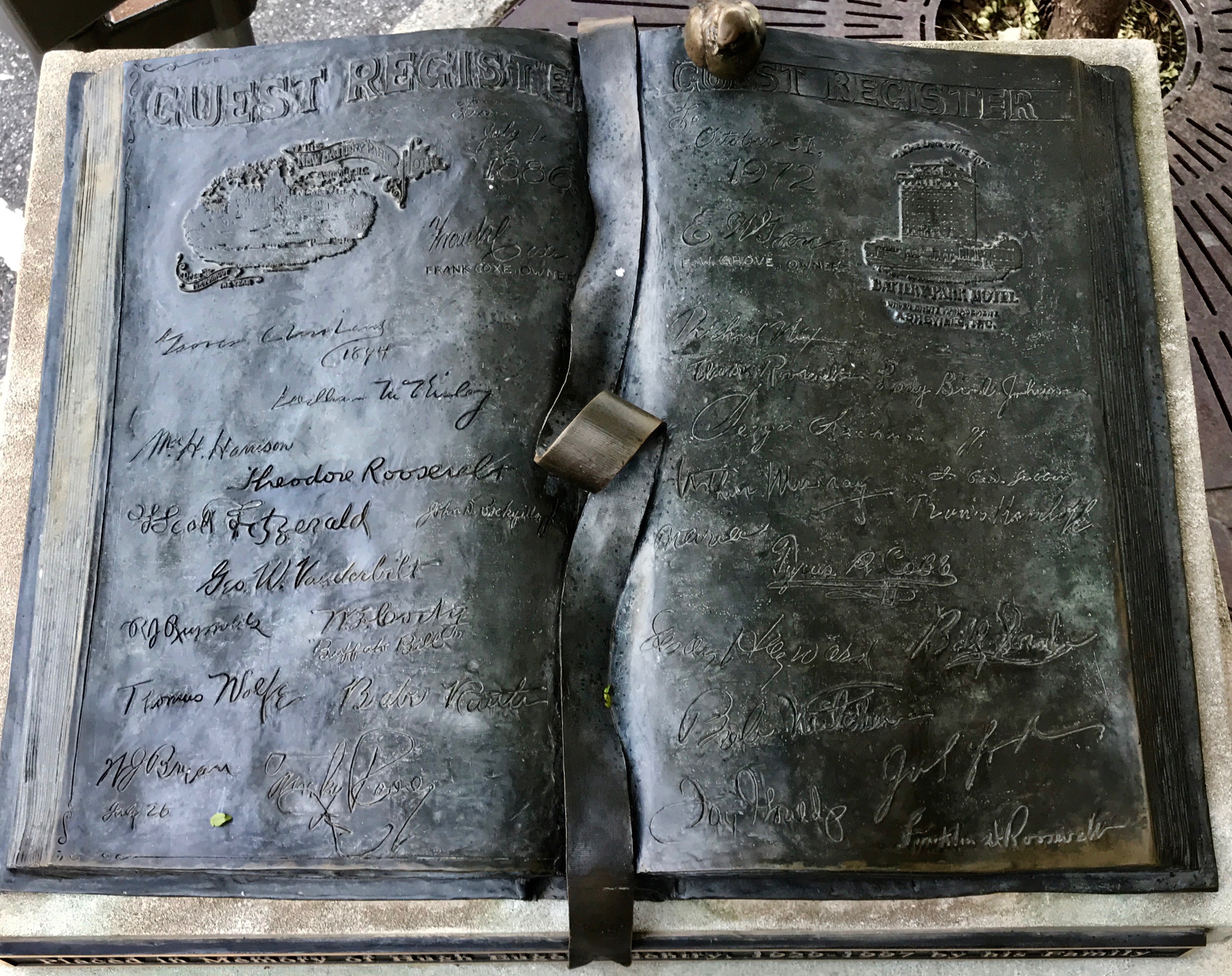
It was a facsimile of the guest registry of the Battery Park Hotel, with some of the more famous signatures inscribed on it.
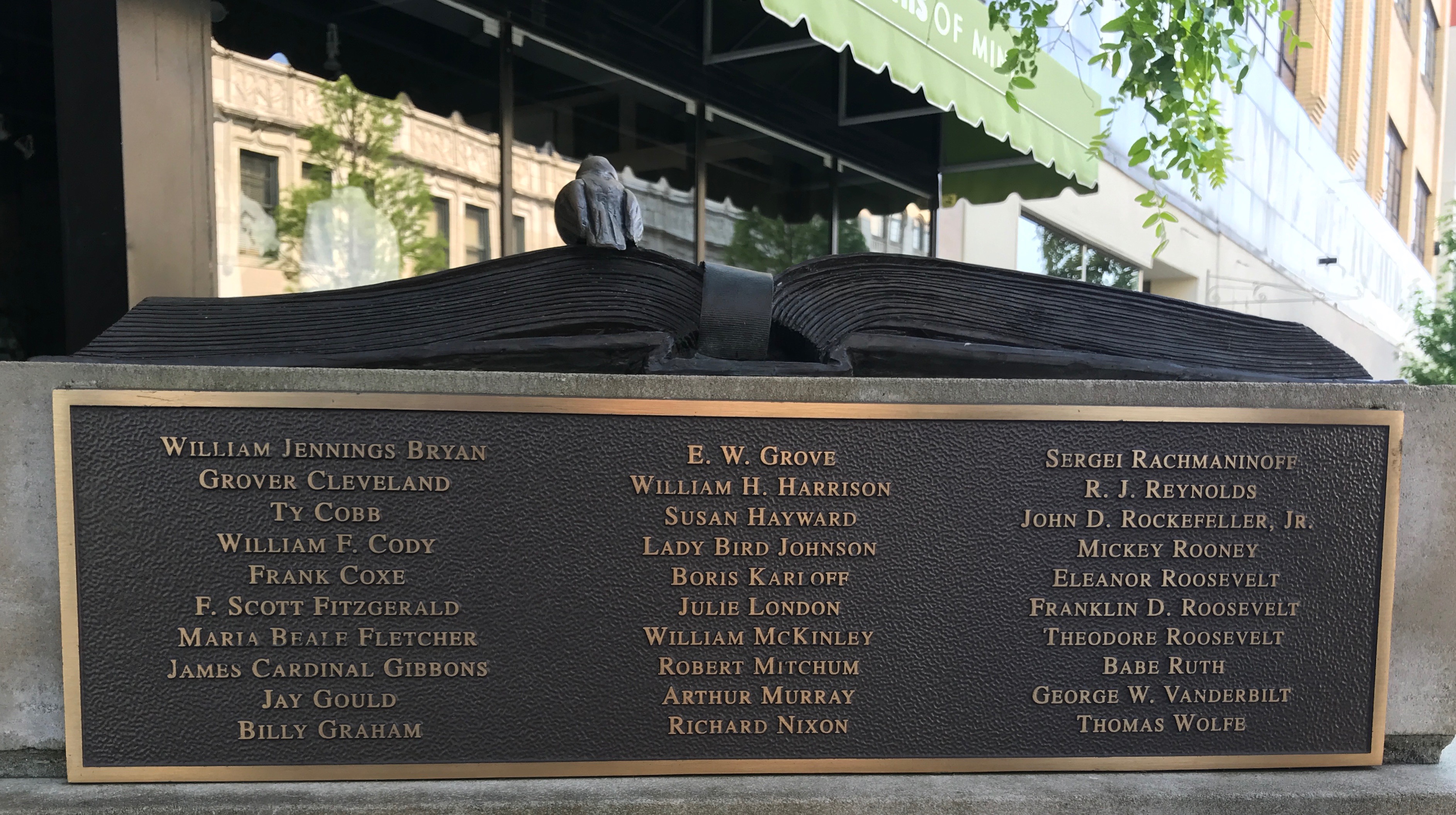
Just in case you can’t make out the signatures,
here’s a list of the famous folks.
Now, this was really fast-and-furious tourism. I should have taken better notes, but I still had a long drive ahead of me so that I would be in position for the next week’s grain collections. I headed toward the restaurant.
There was a short wait, so I went out to the street to enjoy the beautiful weather and to see what I could see.
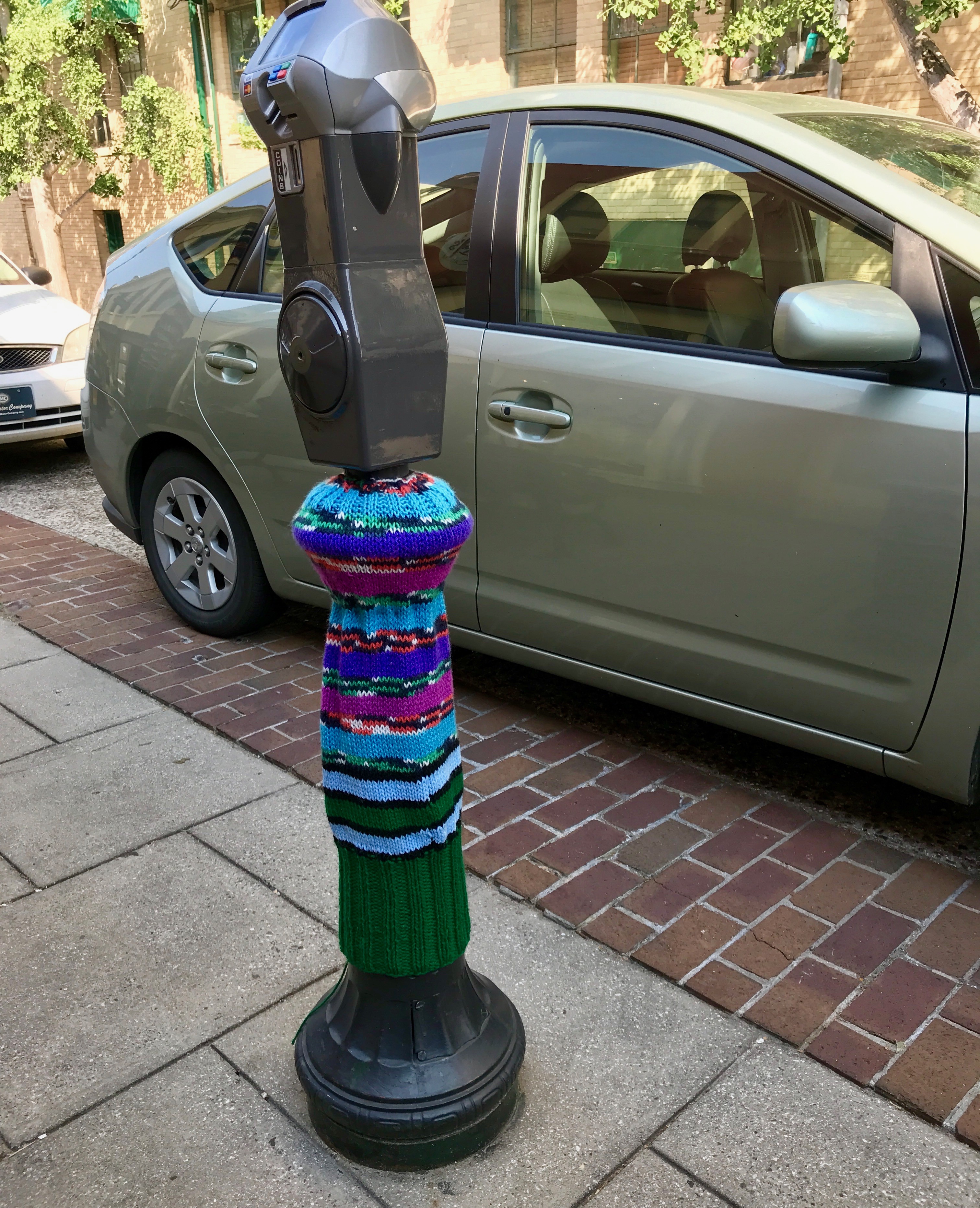
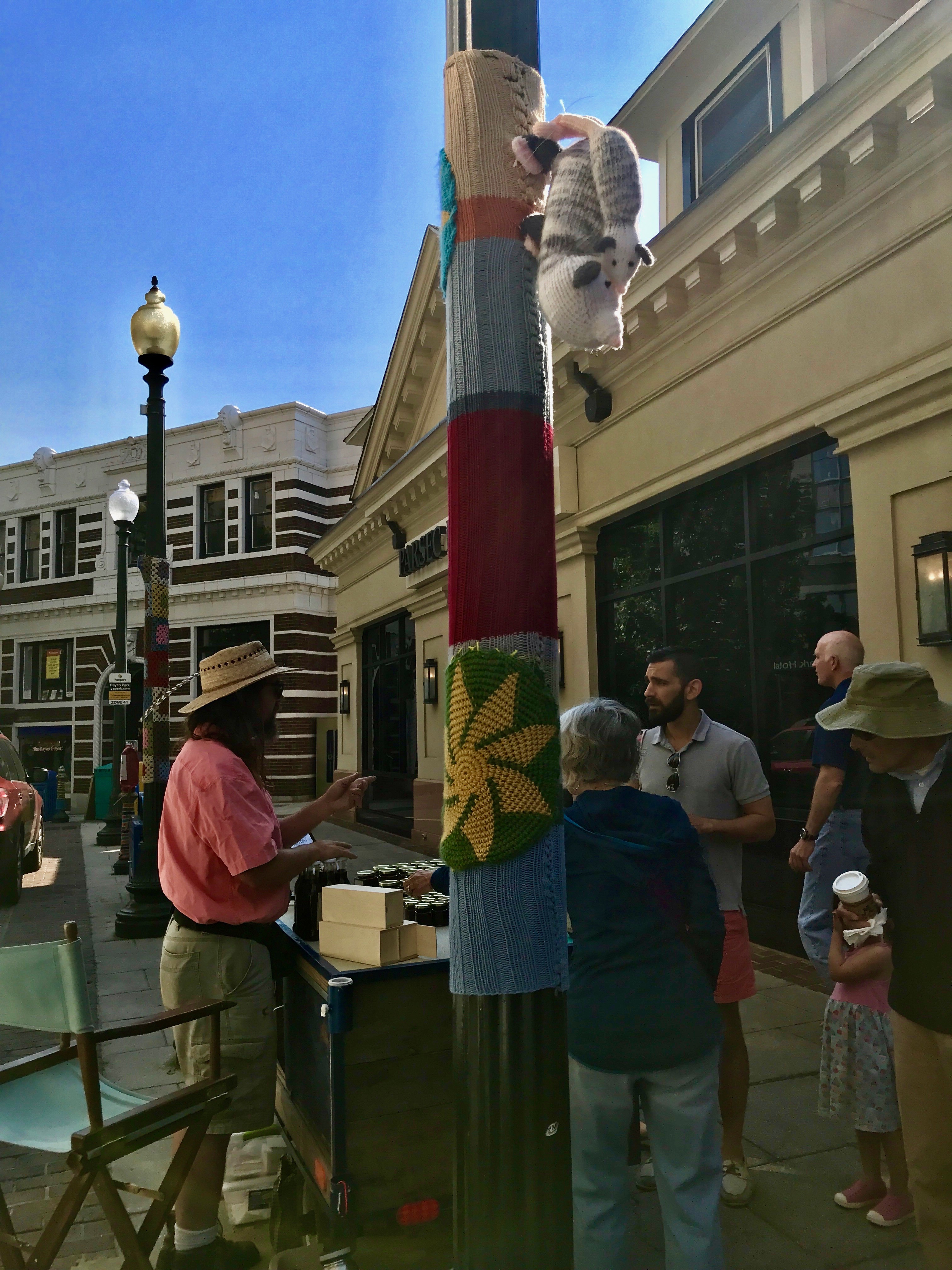
I noticed that they had a yarn bombing project going on. Here is a parking meter all decked out.
Right by the sidewalk vendor is a lamp post with some opossums. I wonder if they droop when they get wet?
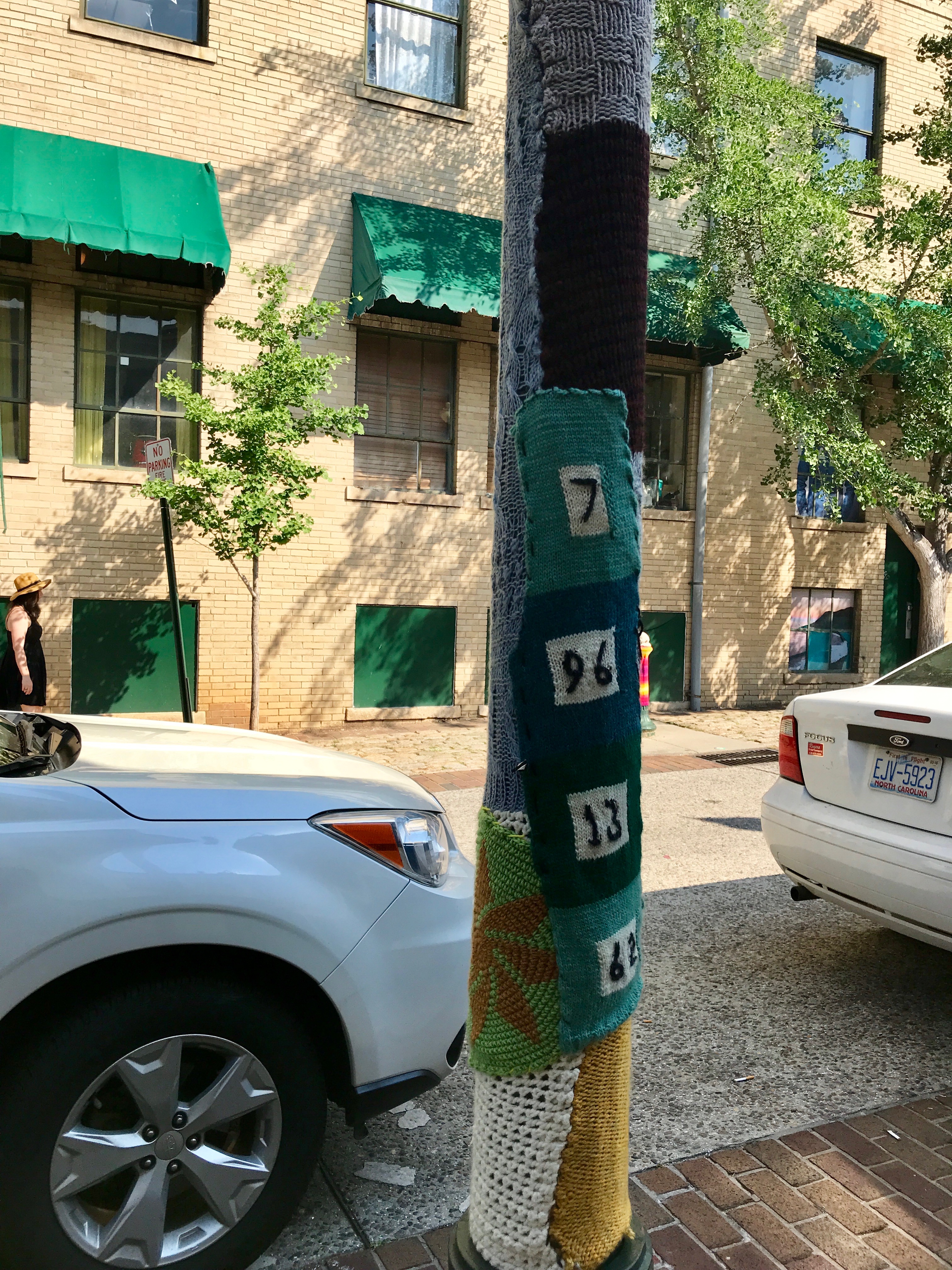
The patches with the numbers on them piqued my curiosity. I wondered what the numbers represented, but, then again, I guess getting people to notice things and wonder is part of the purpose of art.
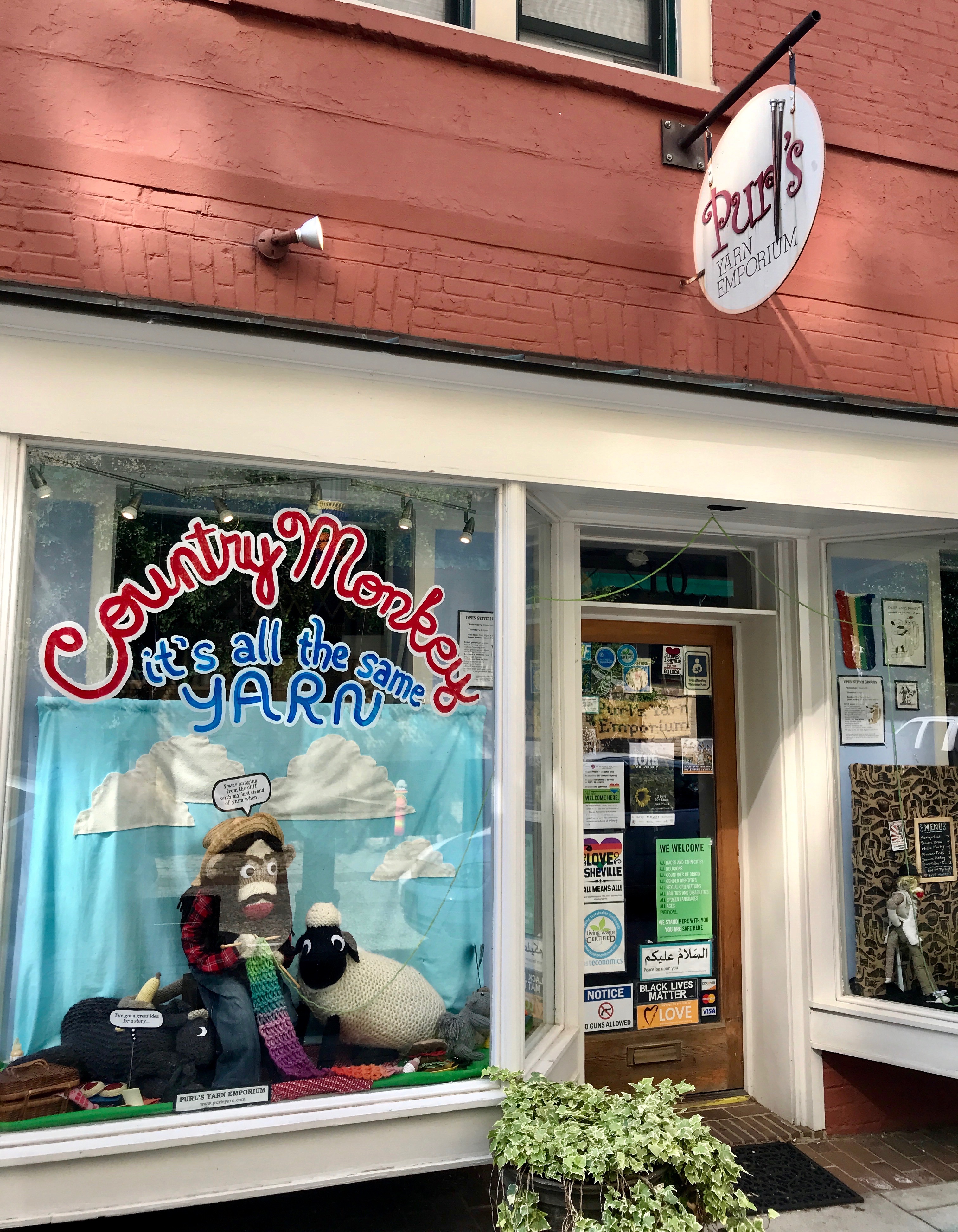
I wonder if selling yarn might also be part of the purpose, as Purl’s Yarn Emporium is in the same block. My Preferred Source says that yarn bombing originally started as a way for fiber artists to use up their left over yarn and unfinished projects, so maybe I am being overly cynical.
The window had a really cute display. With that, it was time to head back to the restaurant. I’d hate to miss my name being called!
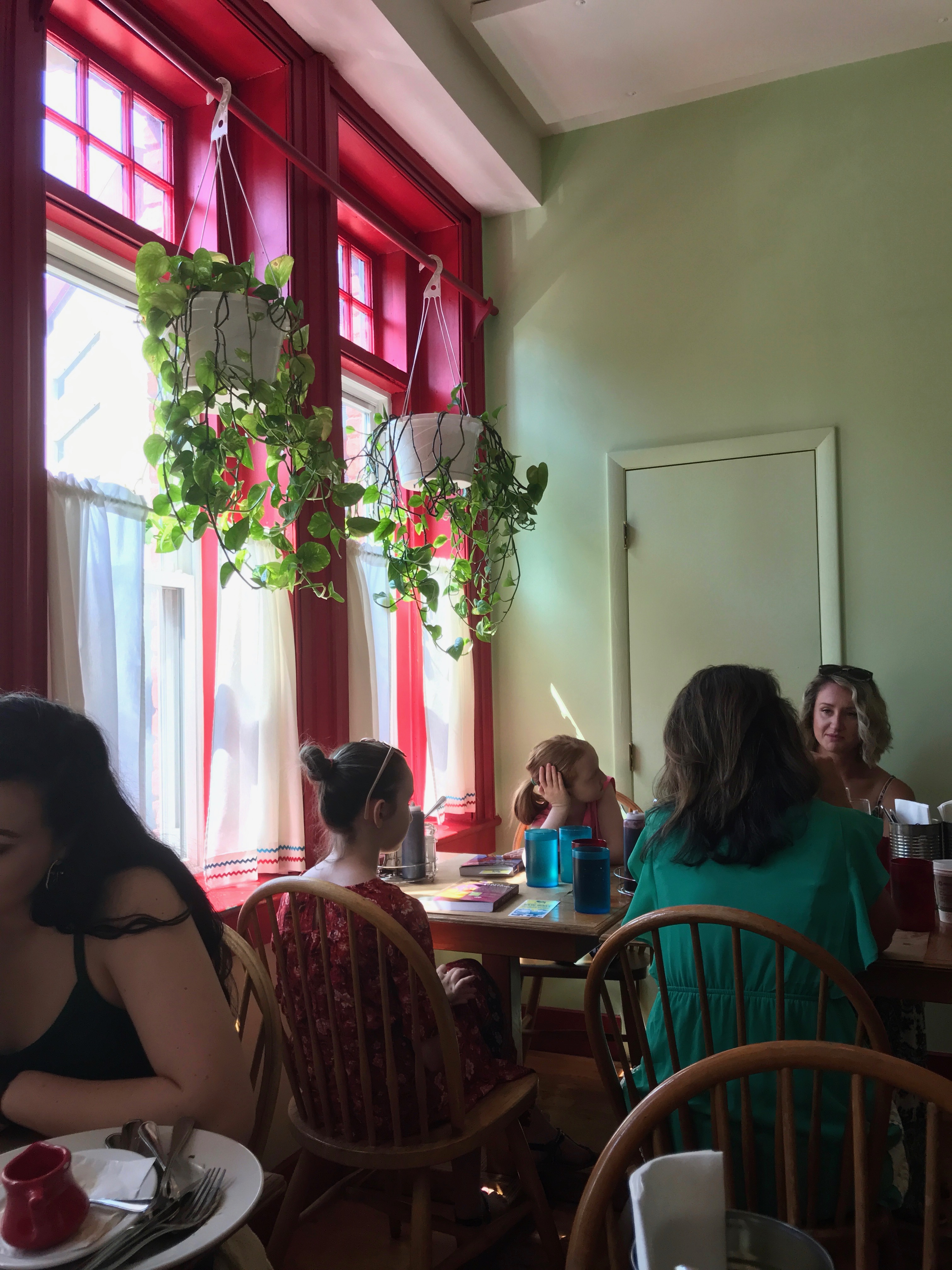
I was escorted to a lovely dining room. I looked over the menu and placed my order.
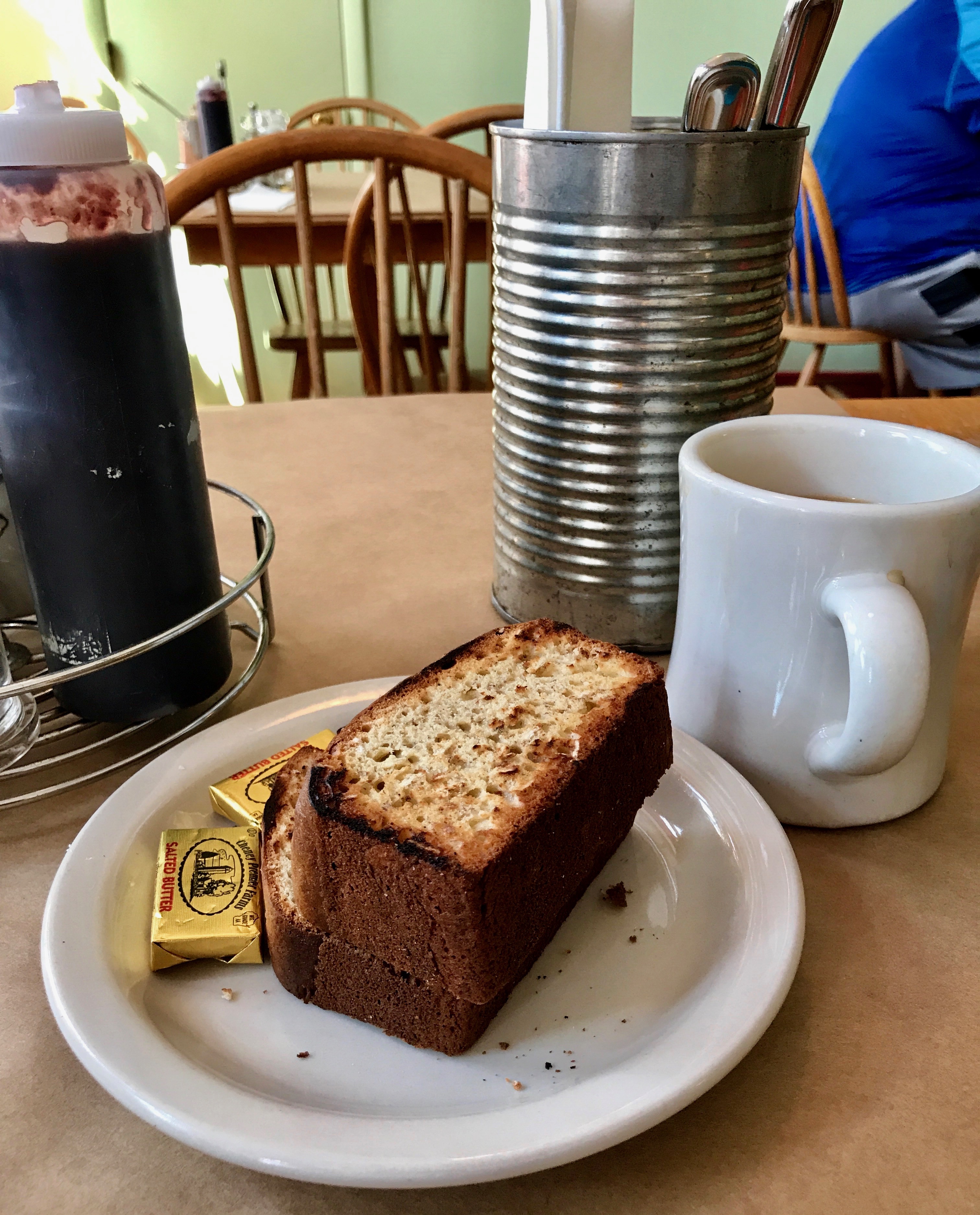
While I waited, I enjoyed my coffee and some sort of quick bread. I remember it as being tasty, but I don’t remember what it was.
My granola arrived. What lovely presentation! As I used to tell my mother, when I’d use cookie cutters to make her toast into hearts, “Presentation is everything!”
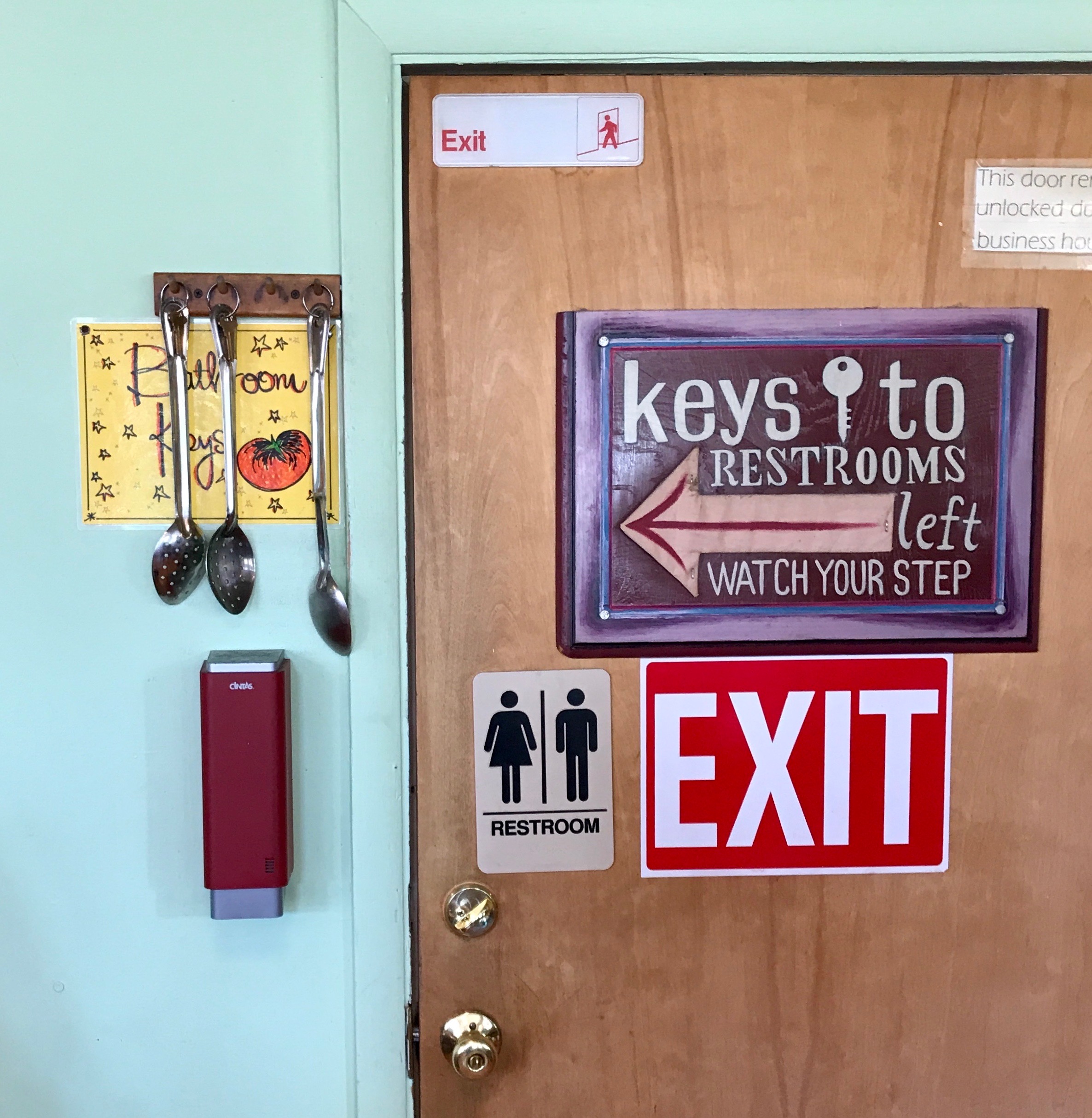
Before I left, I decided to skip to the loo. Well…use the restroom. I don’t do muck skipping anymore. Come to think of it, I couldn’t get the hang of skipping when I was a kid. Have you ever known someone who had to go to remedial gym class? I don’t know that it made a difference.
Back to the fly-by tourism.
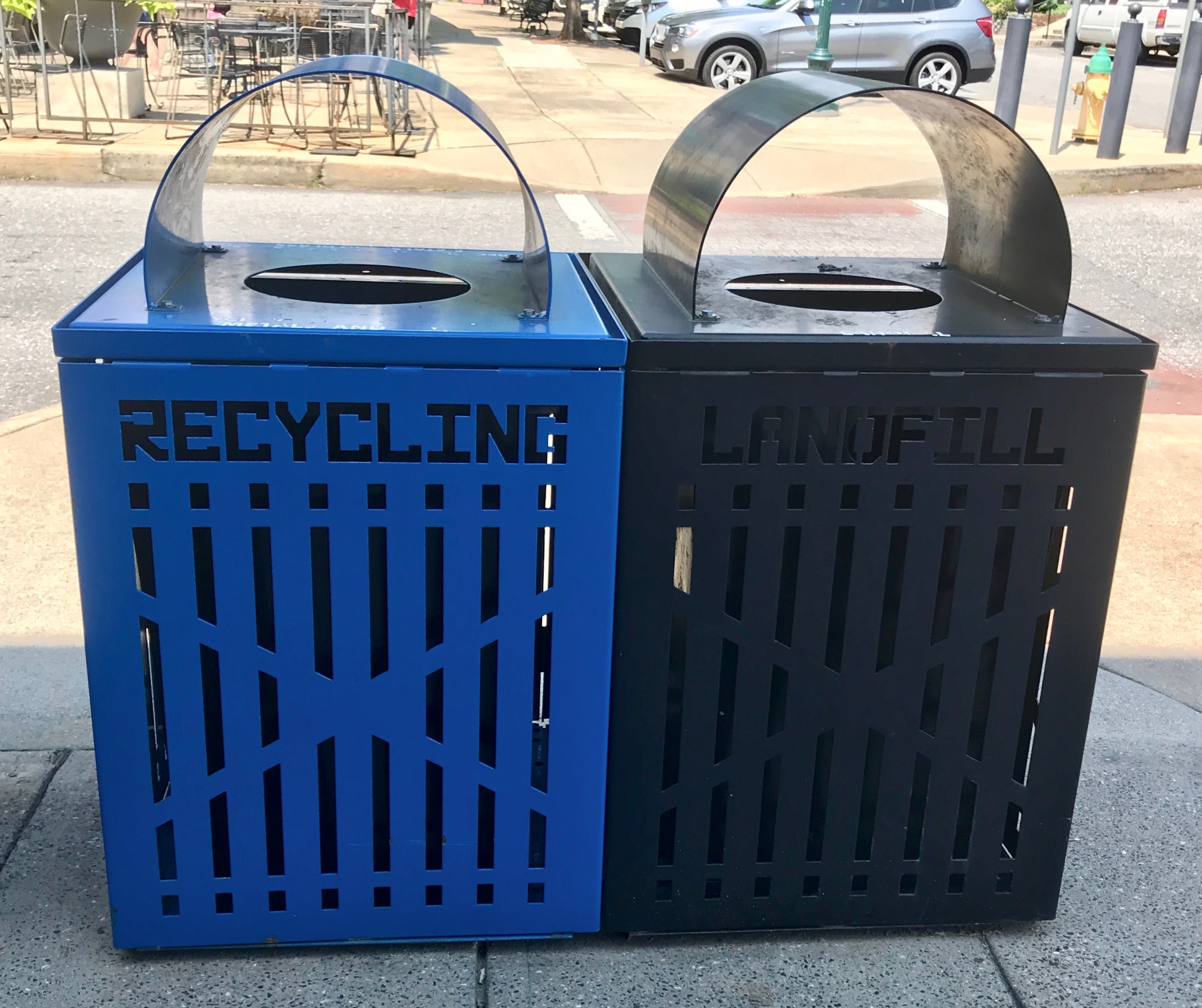
I approve of the receptacles that put out to handle people’s unwanted items. They make it clear that “throwing something away” is a myth. There is no “away.” Things get recycled or they get placed in a landfill.
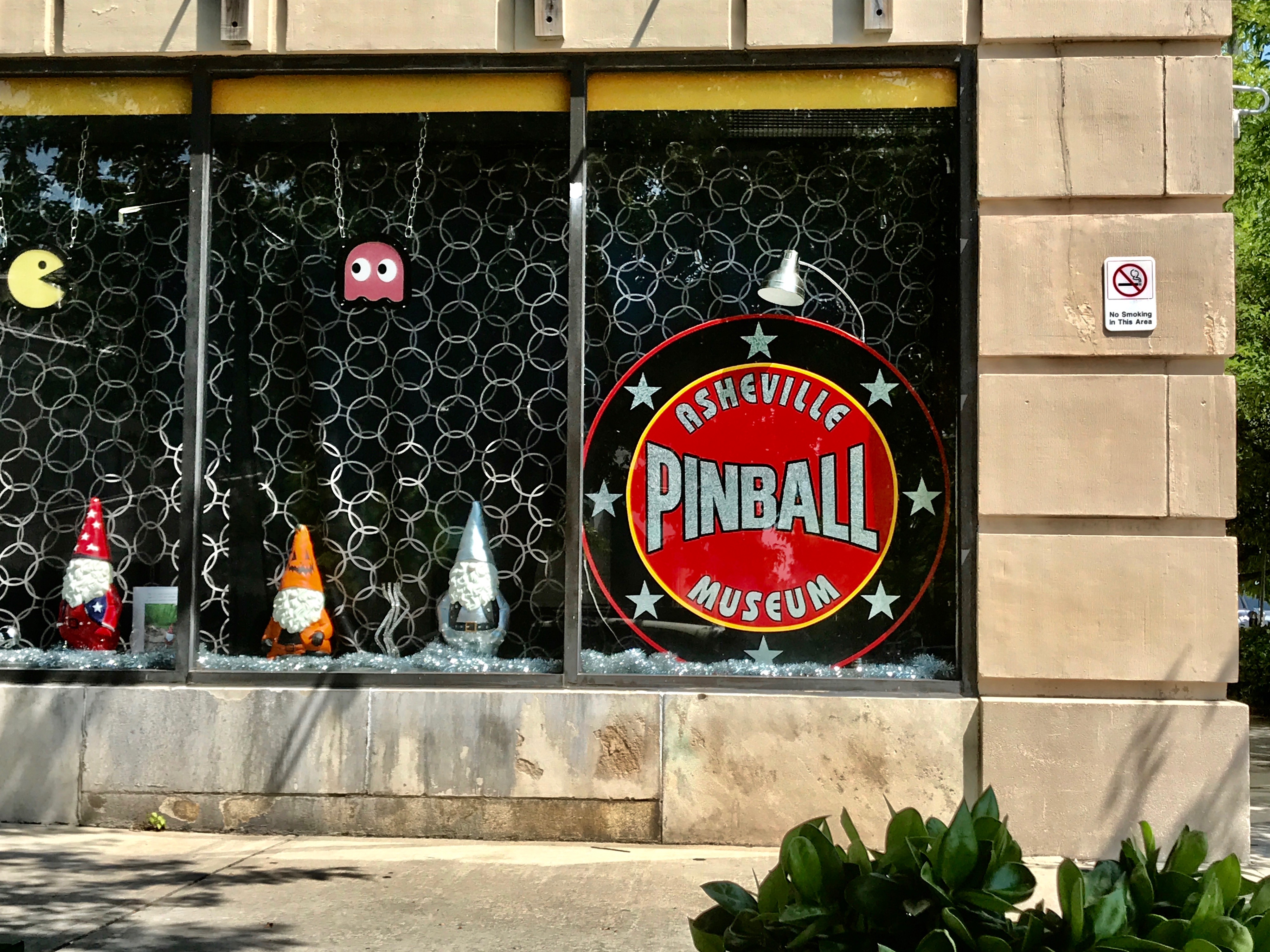
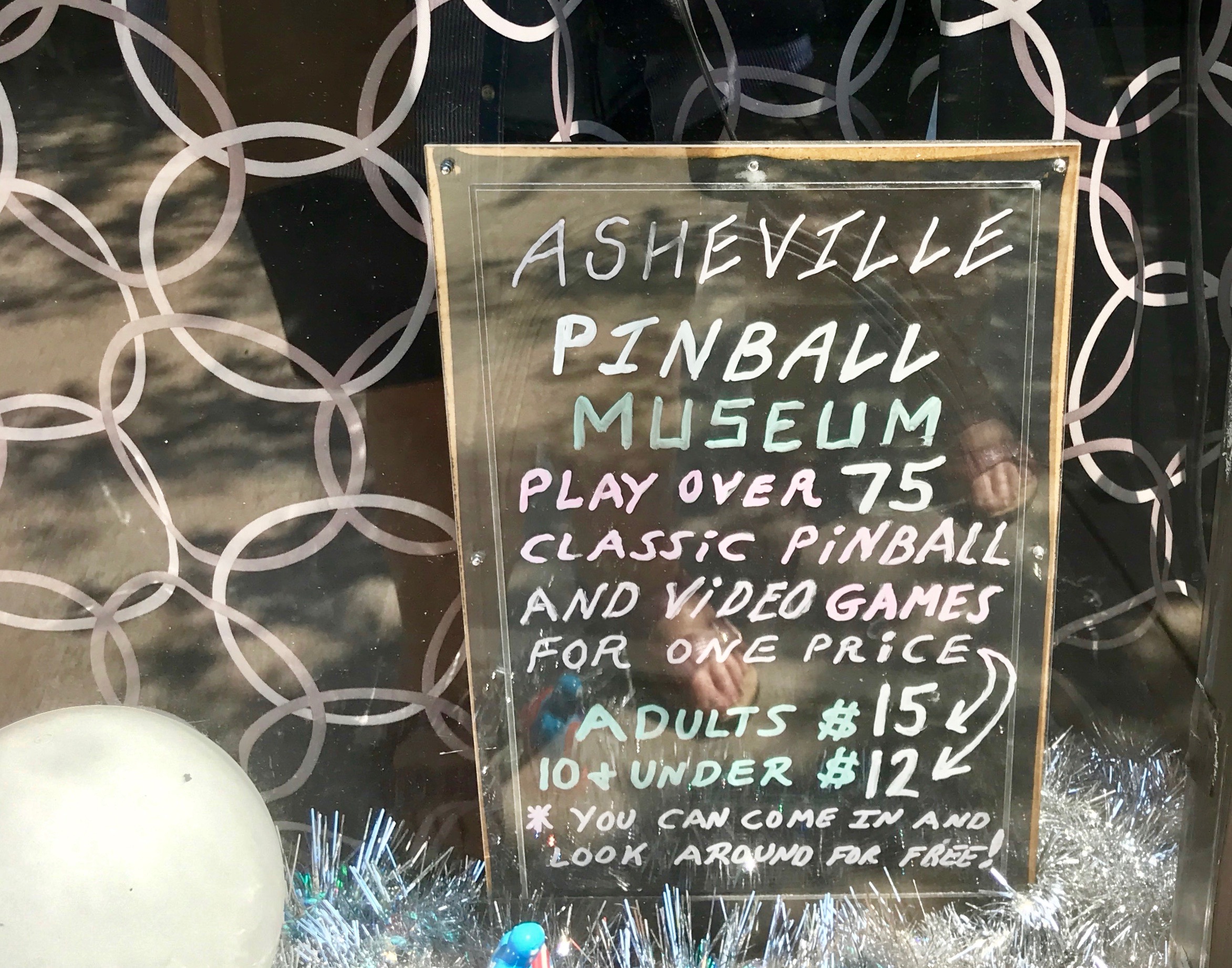
I took a different route back to my car and I happened upon the Asheville Pinball Museum.
It wasn’t open until 1:00 on Sundays, but I didn’t have enough time to play $15 worth of pinball. I might have gone in and looked around, because FREE is one of my favorite words, but it wasn’t open. I kept moving.
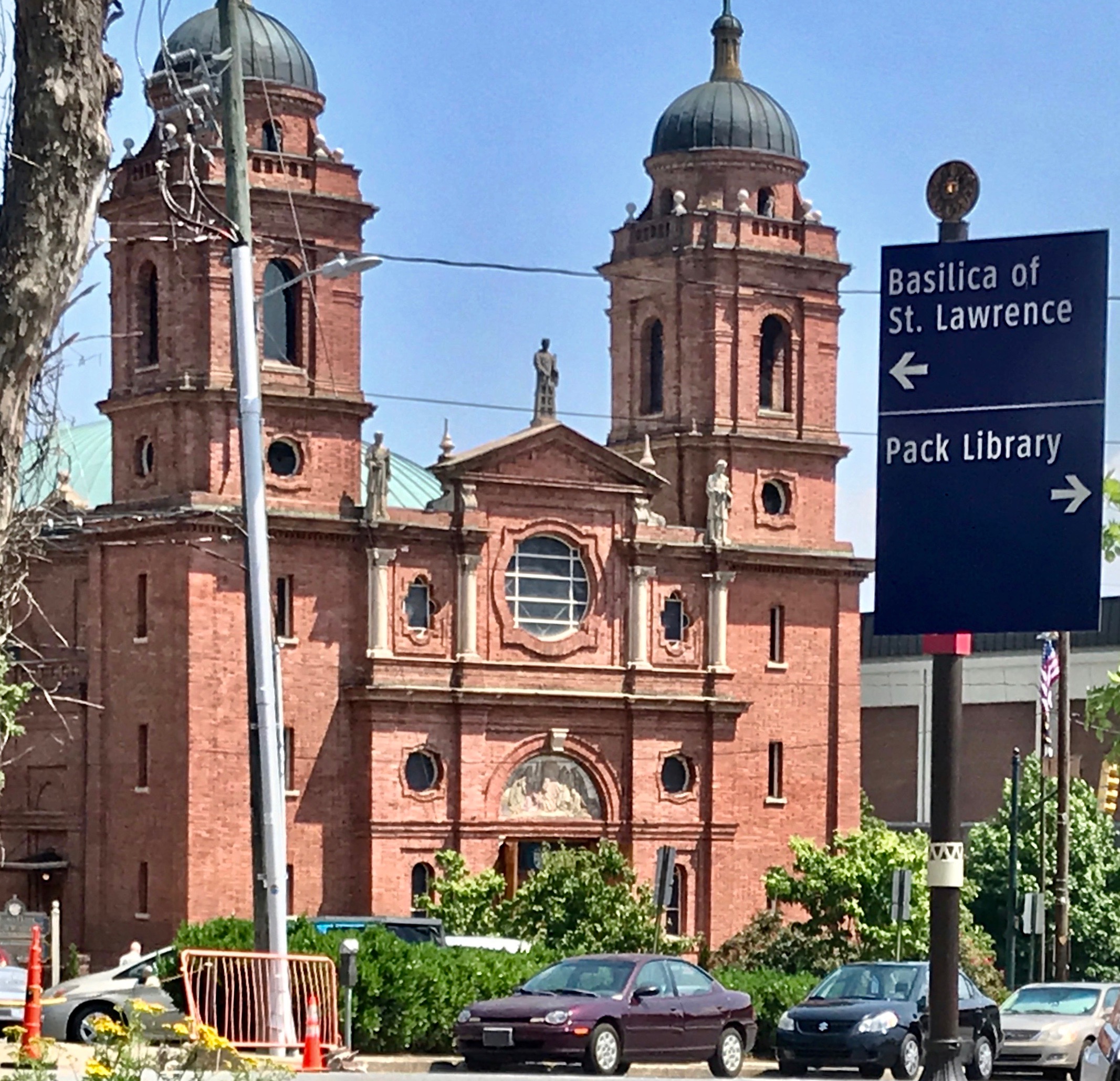
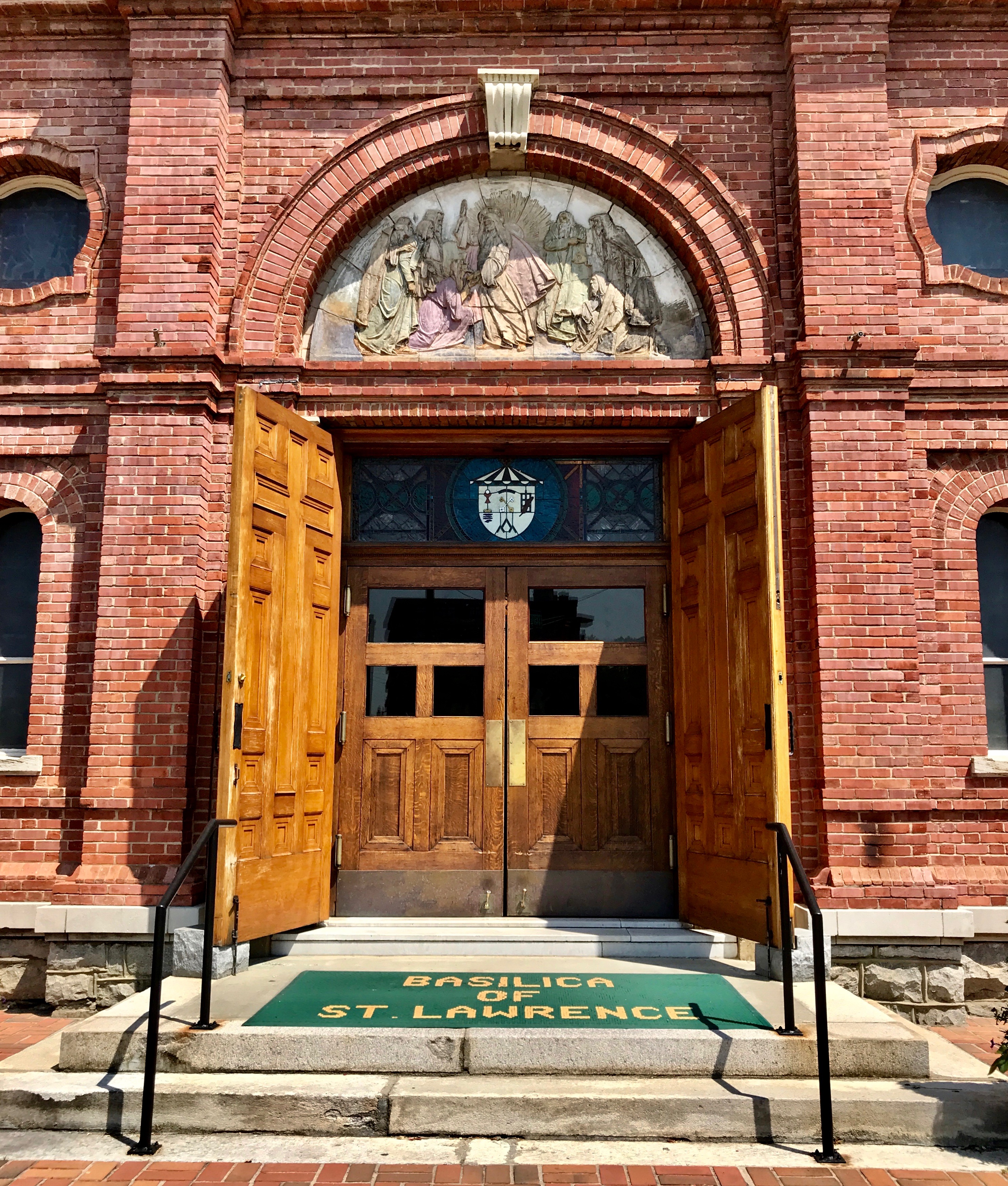
I came upon the Basilica of St. Lawrence.
It’s Sunday. It’s a church (excuse me – Basilica) so I imagined I might be able to take a peak inside.
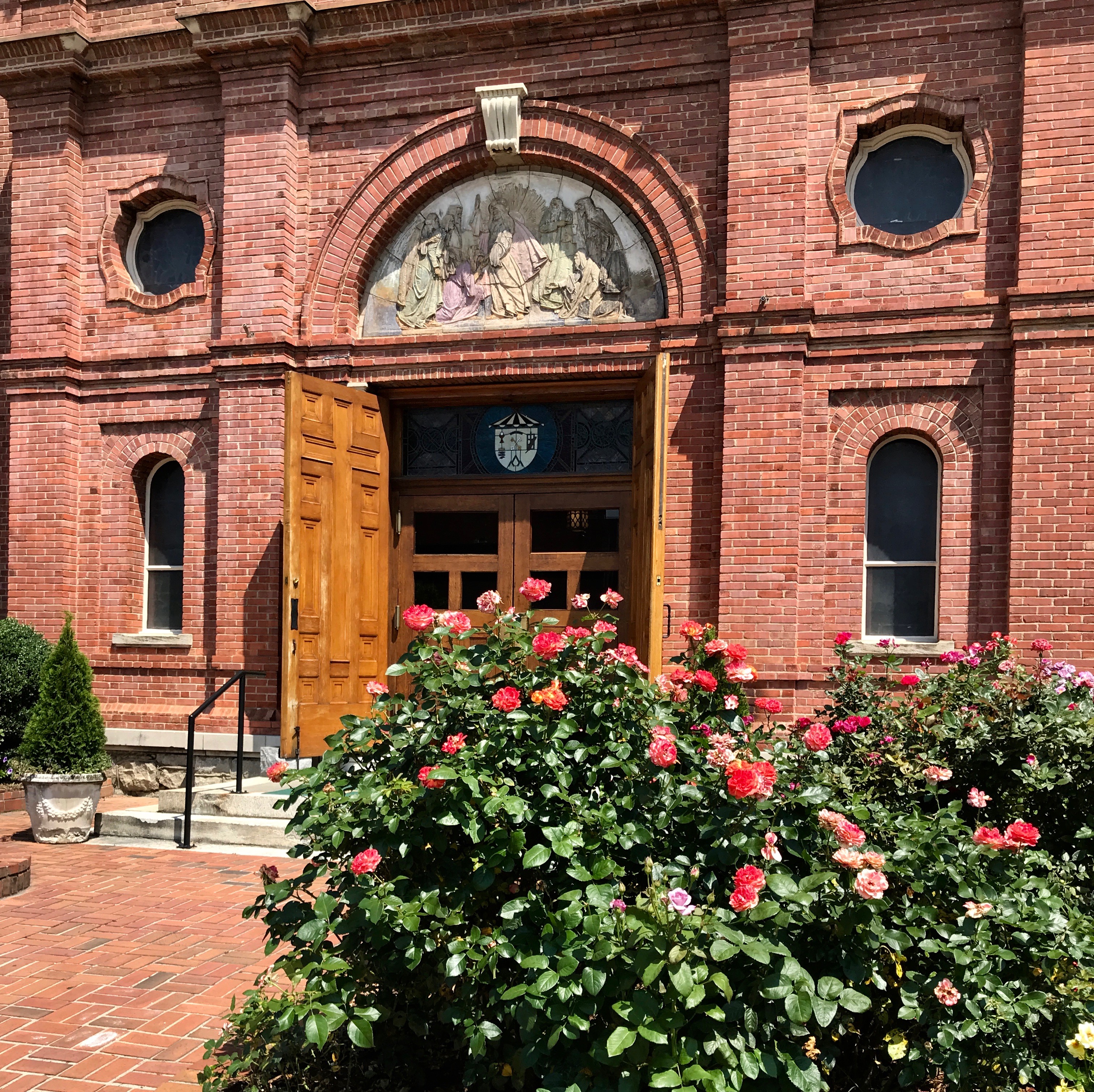
The doors were open, so I headed inside.
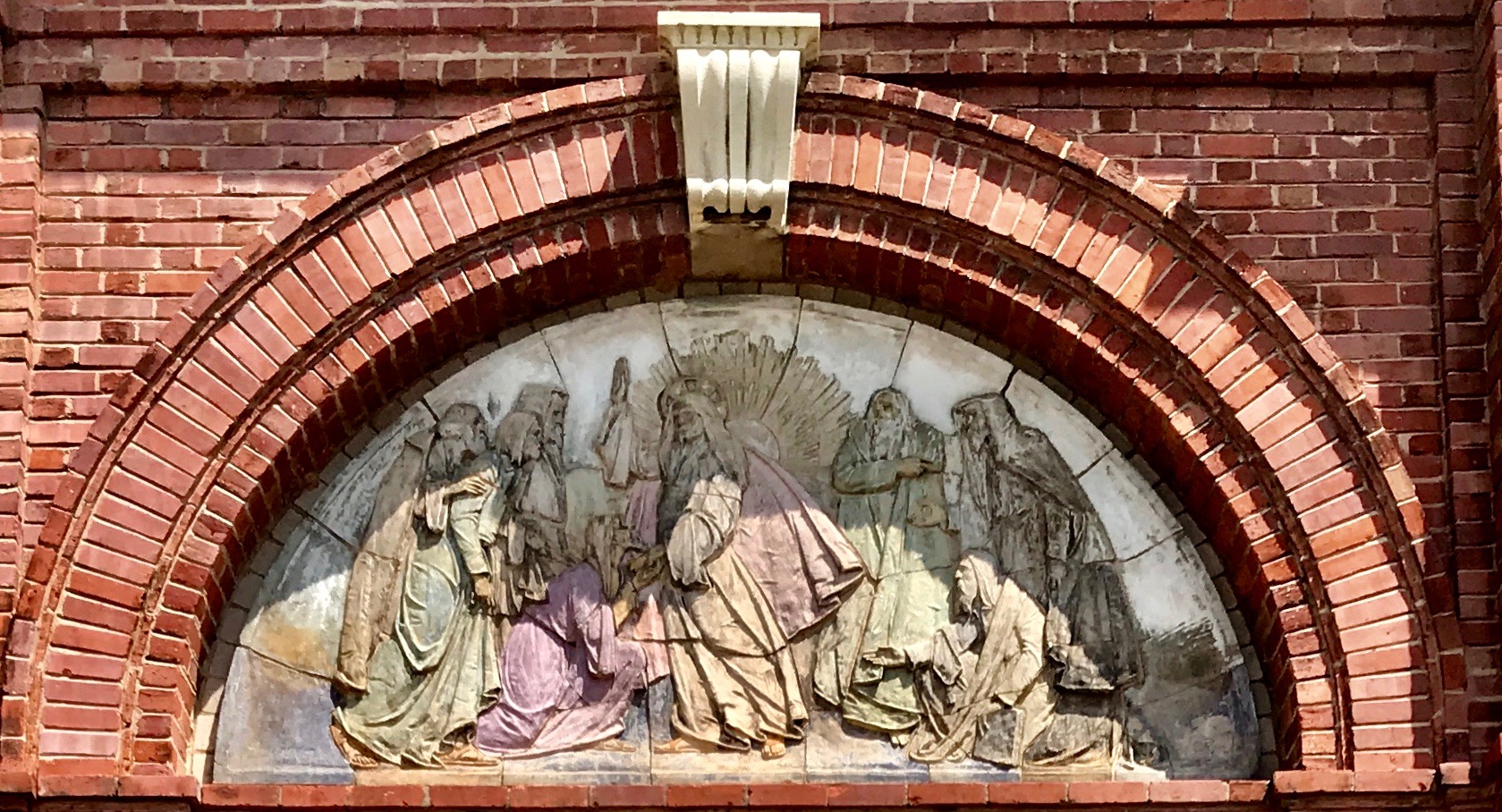
The tympanum has a lovely terra cotta insert. I am not sure if you would call it a mosaic or bas relief sculpture. I don’t think I had ever seen this sort of ornamentation in a tympanum before. But, maybe I had. Time to go inside.
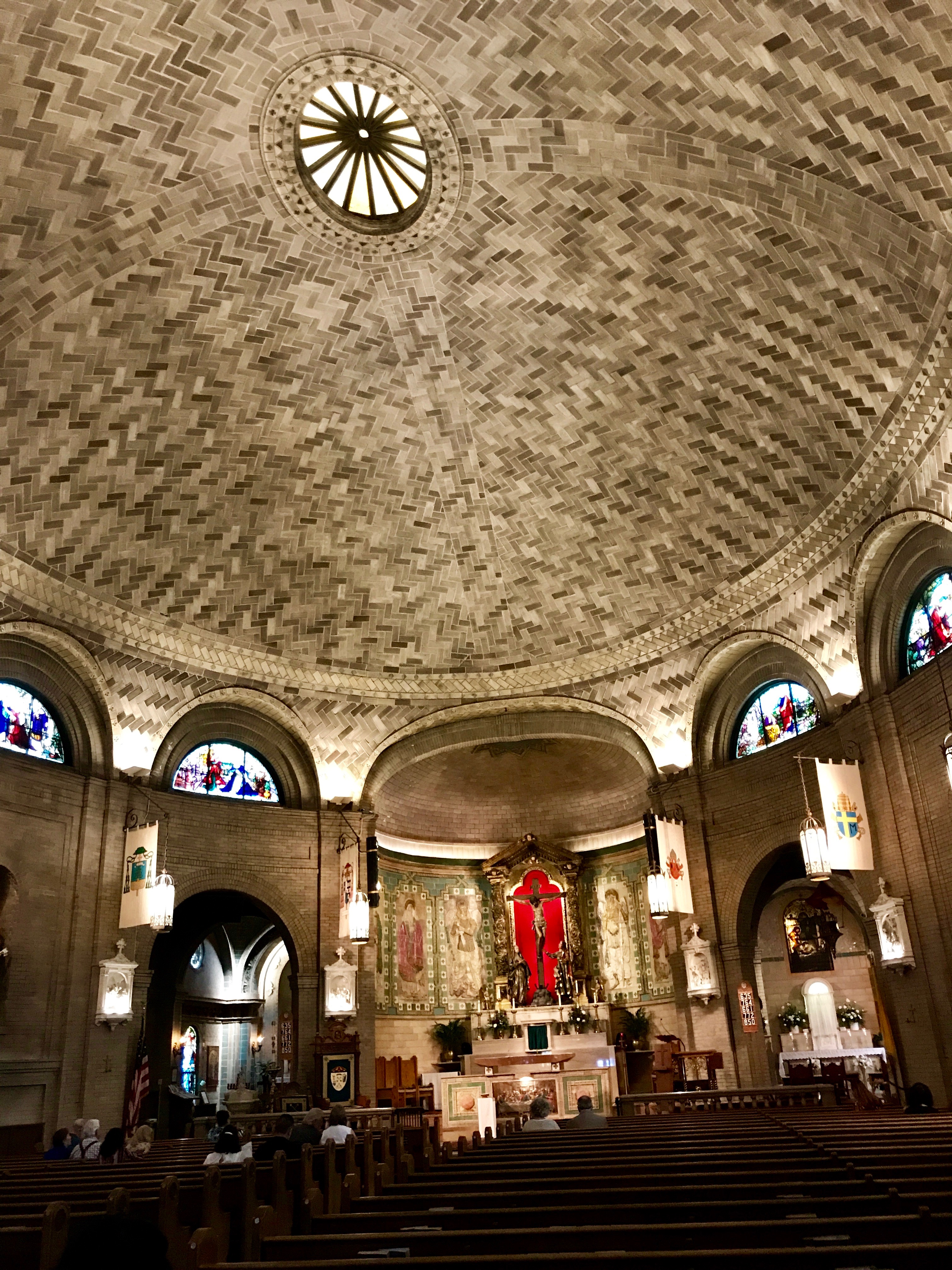
My goodness! An oval dome!
The pattern in the brickwork reminded me of the churches I’d seen in Spain more than 40 years ago. (Where does the time go?) Interestingly enough, it was designed by Spanish architect Rafael Gustavino.
According to my Preferred Source, the dome has a span of 58 by 82 feet and is reputed to be the largest, freestanding, elliptical dome in North American. This style of dome is referred to a Catalan vault.
The building is remarkable, there are no beams of wood or steel in the entire structure. All walls, floors, ceilings and pillars are of tile or other similar materials. The roof is of tile with a copper covering.
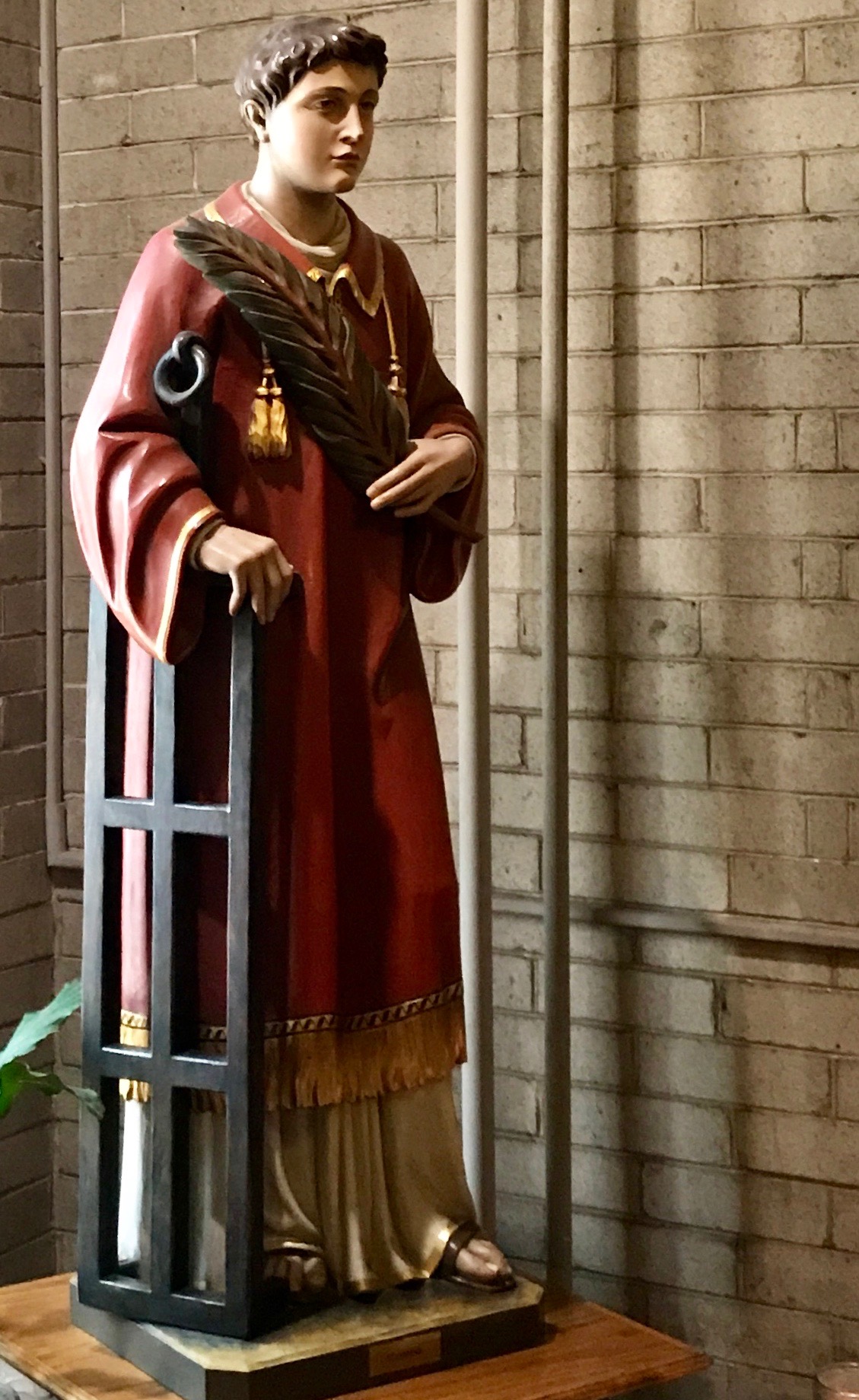
Just inside the door was a statue of St. Lawrence. You could tell it was St. Lawrence even without reading the plaque on the base because he is holding symbols of his martyrdom: a gridiron and a palm branch.
The prefect of Rome had him placed on the gridiron over hot coals because he wouldn’t turn over the wealth of the church to him. He is holding a palm branch in his right hand, which is a symbol of martyrdom. According to legend, after he had suffered pain for a long time, Lawrence cheerfully declared, “I’m well done on this side. Turn me over!”
Incidentally, St. Lawrence is the patron saint of cooks, chefs, and comedians.
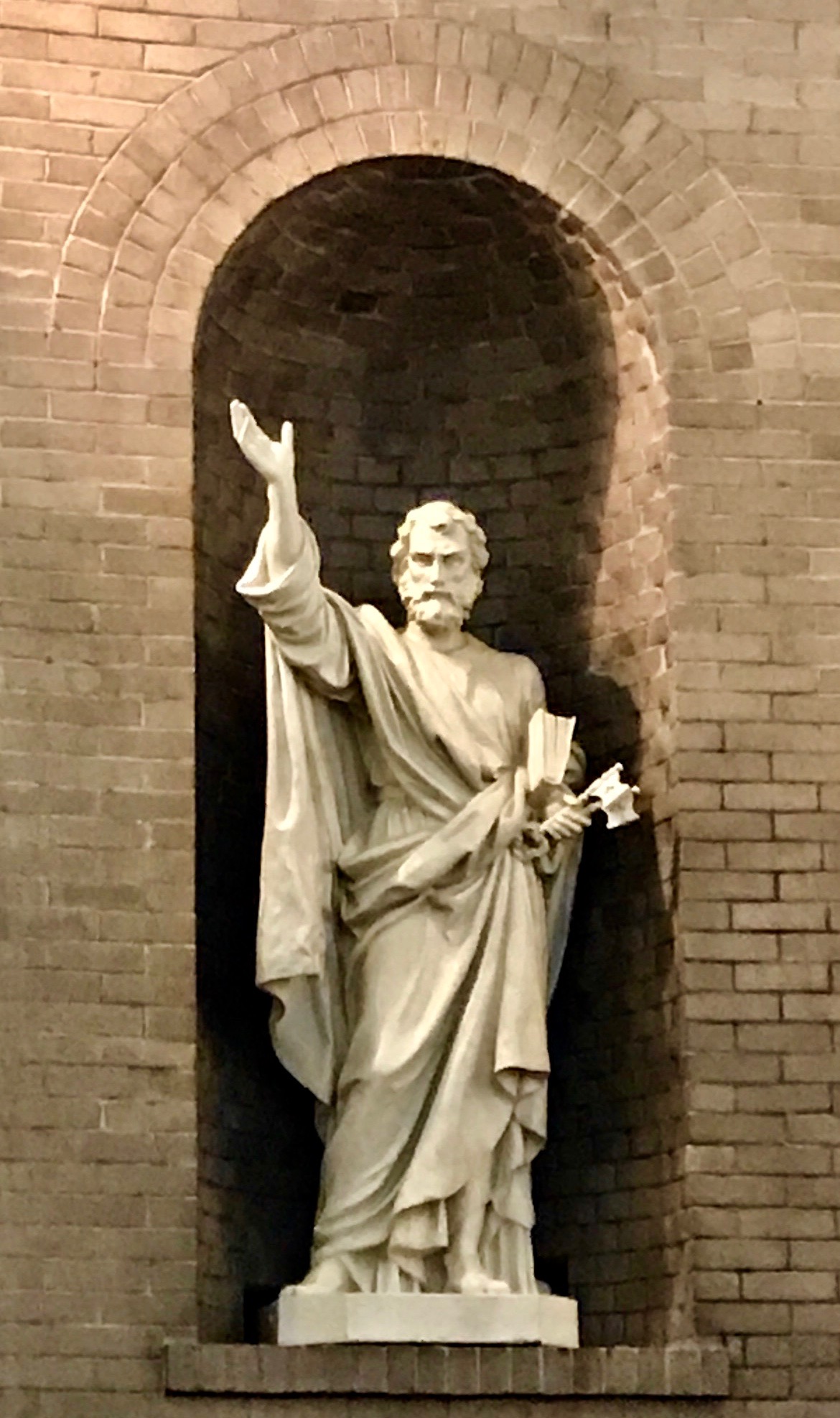
While we are on the topic of saints and their symbols, you can tell that this statue that was in the crossing area of the church is Saint Peter because he is holding the keys to heaven and the gospels.
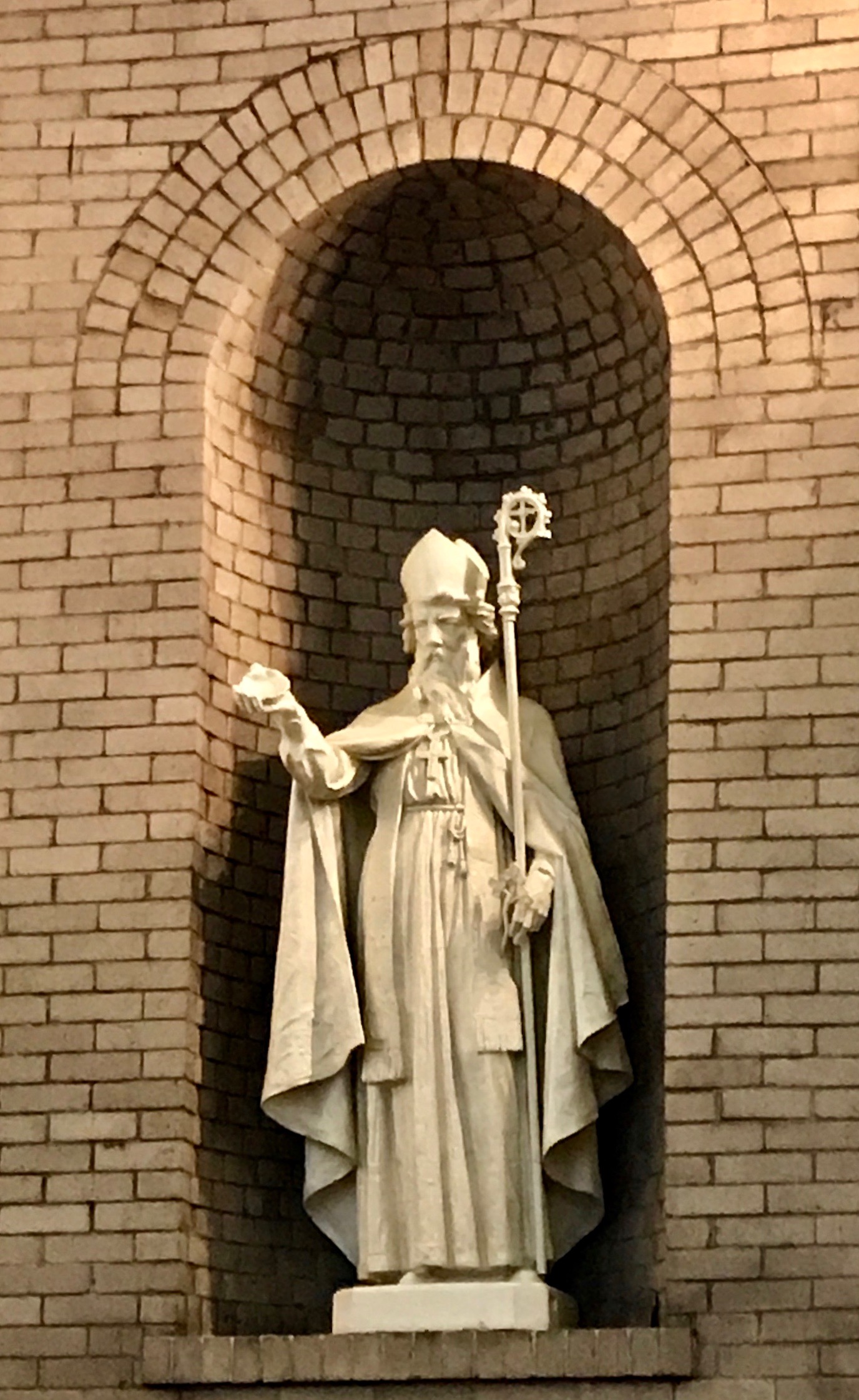
And this is Saint Peter. He is holding shamrocks and his staff in his left hand and he is wearing the bishop’s mitre on his head. I’m not sure what he is holding in his right hand.
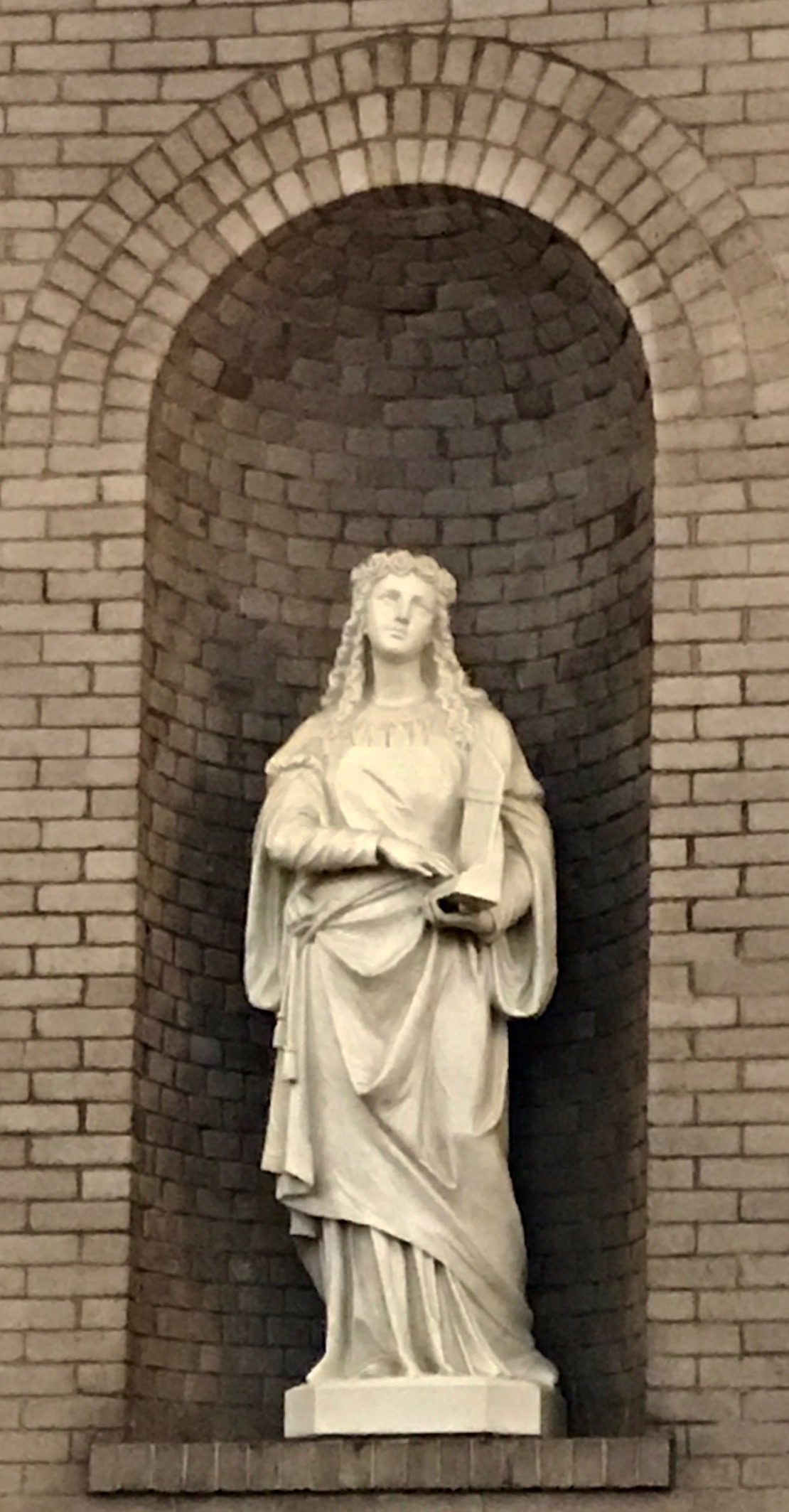
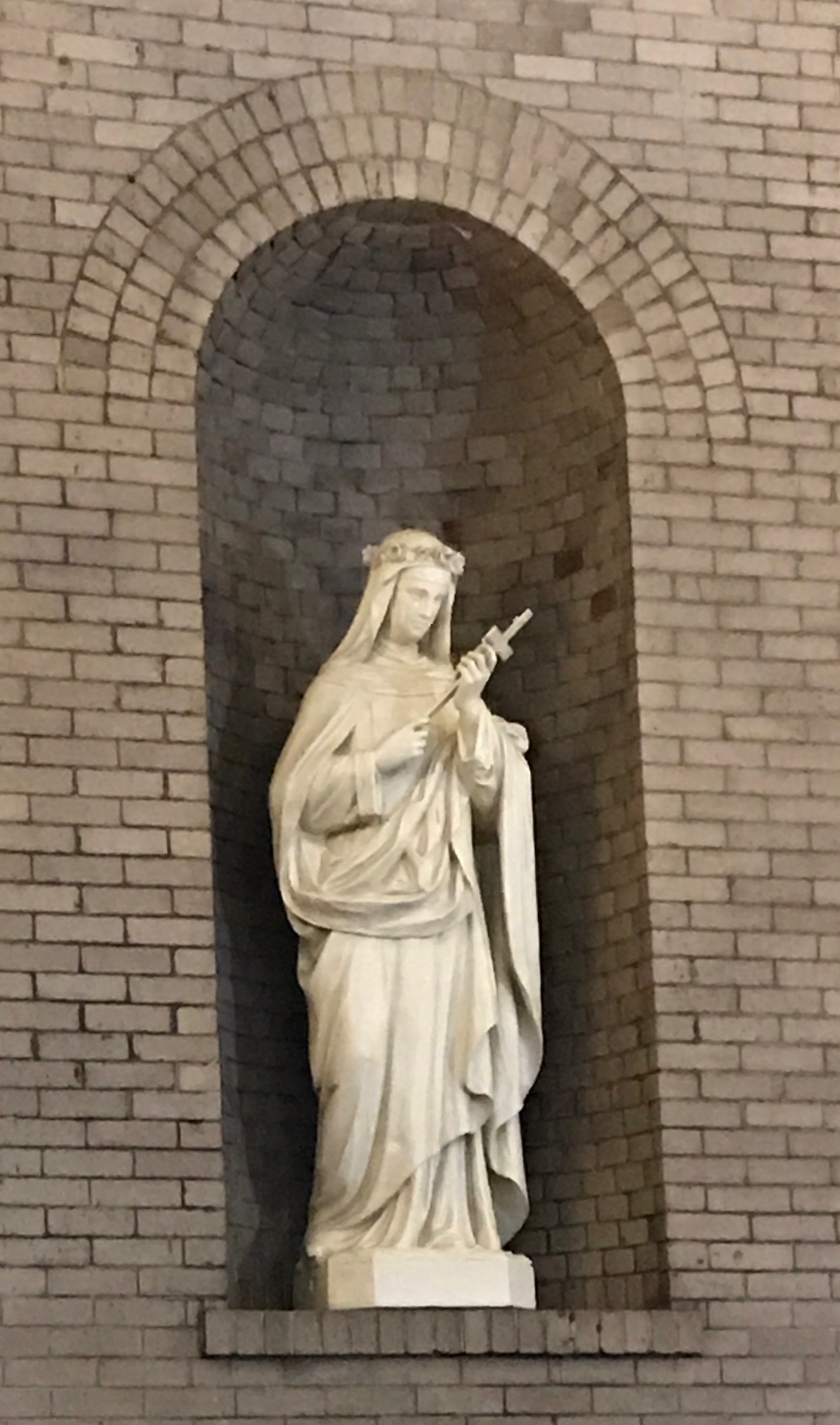
In addition to the two male saints’ statues, there were also two female saints honored.
Here is Saint Cecilia, the patron saint of music, who was beheaded in second century Rome.
The other statue is of Saint Rose of Lima, the first person born in the Americas to be canonized.
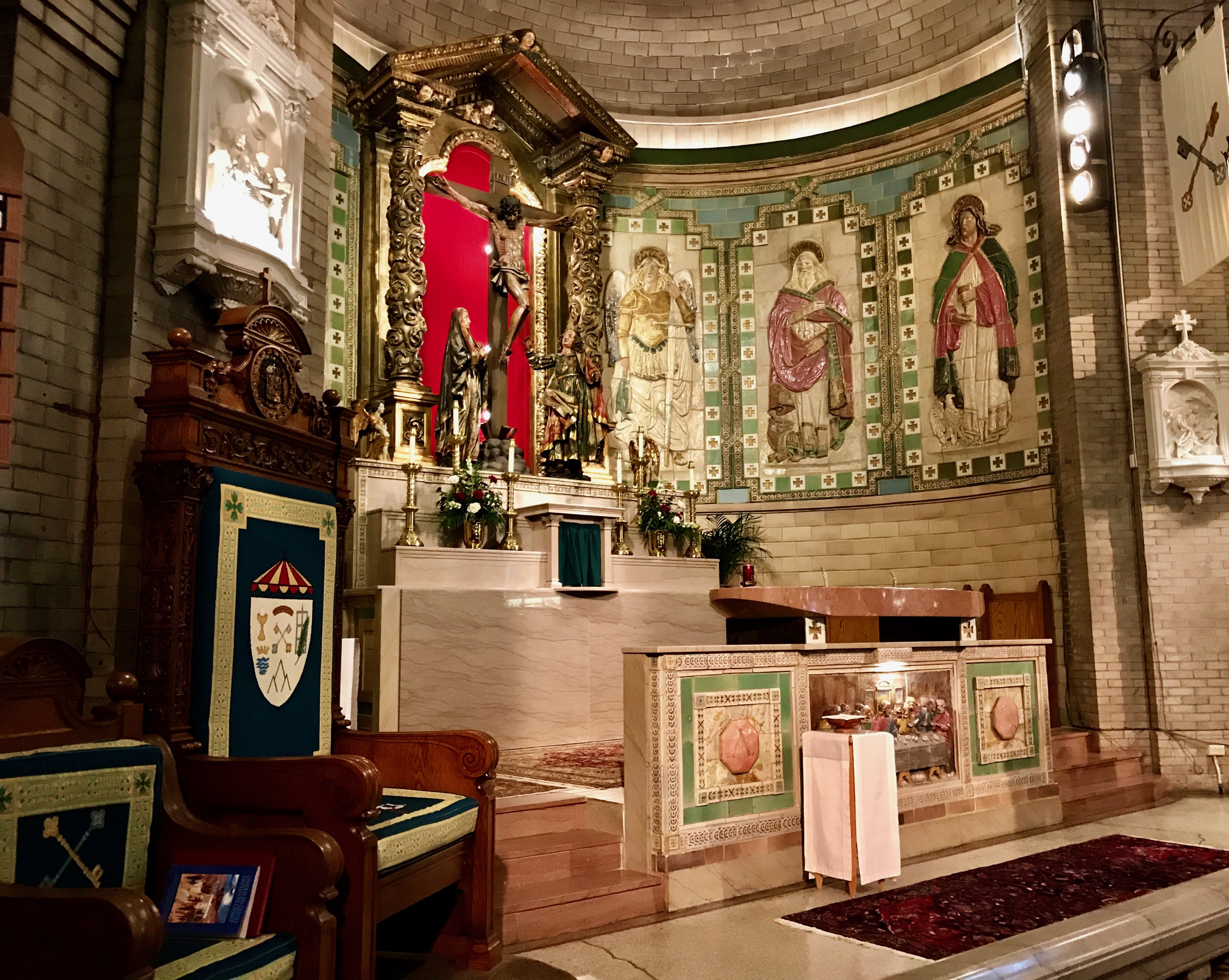
I found another source for information. According to information from the basilica, “Above the main altar stands a tableau depicting the Crucifixion. It is from the 17”’ century and it is hand carved walnut showing Mary, the Mother of Christ, and John, the beloved disciple.
The wall behind the altar is called a reredos. It has been executed in polychrome terra cotta and bears life size reliefs of the four evangelists, Matthew and Mark on the left; Luke and John on the right. Flanking the tableau are Michael the Archangel at the left and the Archangel Raphael at the right.
The altar was originally the base of the back altar. After Vatican II it was brought forward to enable the celebrant to face the congregation. The altar table was added when the base proved too low. Made of Tennessee marble and in the shape of a simple boat, it is a duplicate of the altar table of Pope Paul VI, and was created by the same artist, Napoli. In art a boat symbolizes the Church.”
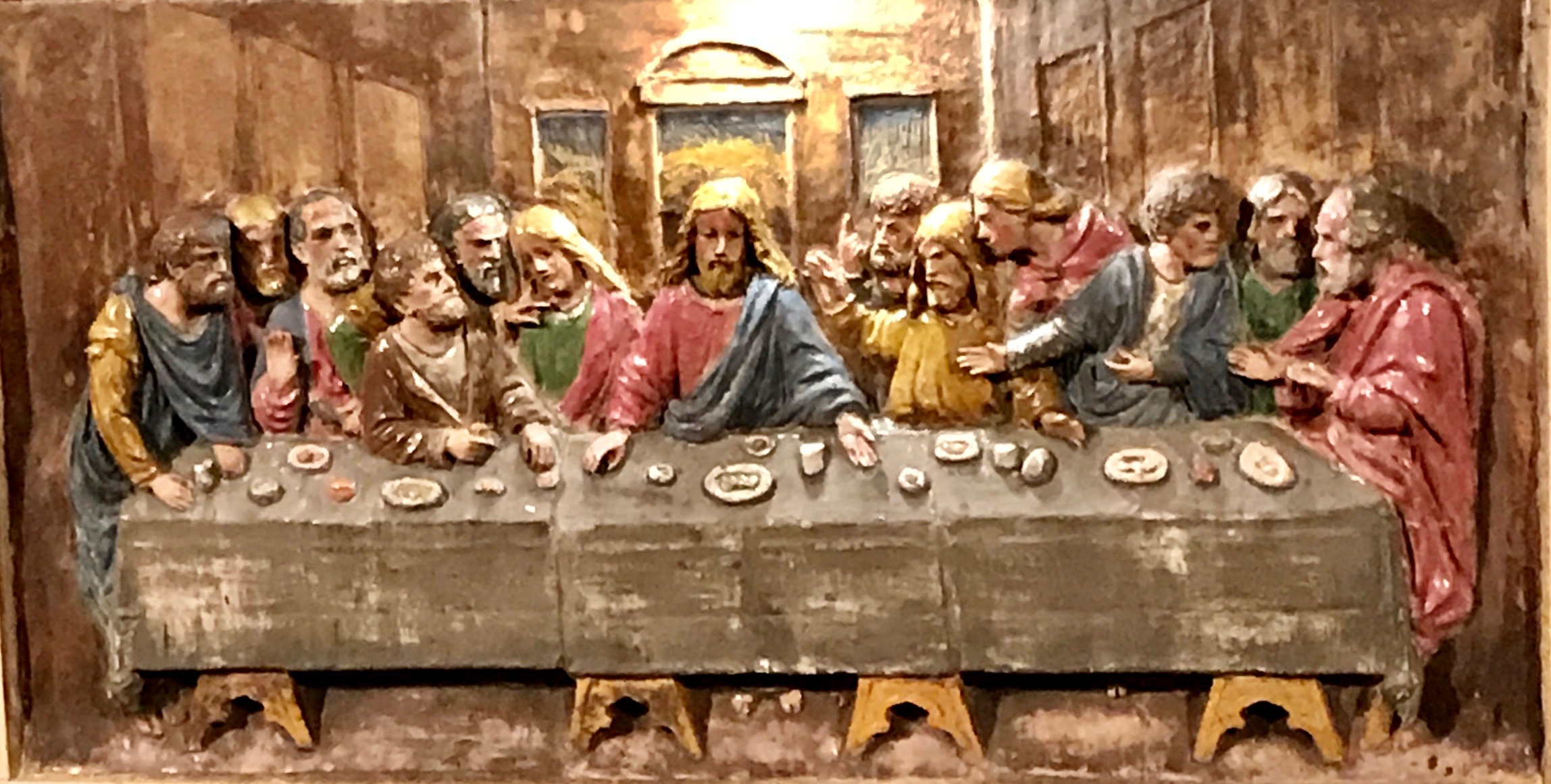
The terra cotta replica of Da Vinci’s Last Supper is on the front of the altar.
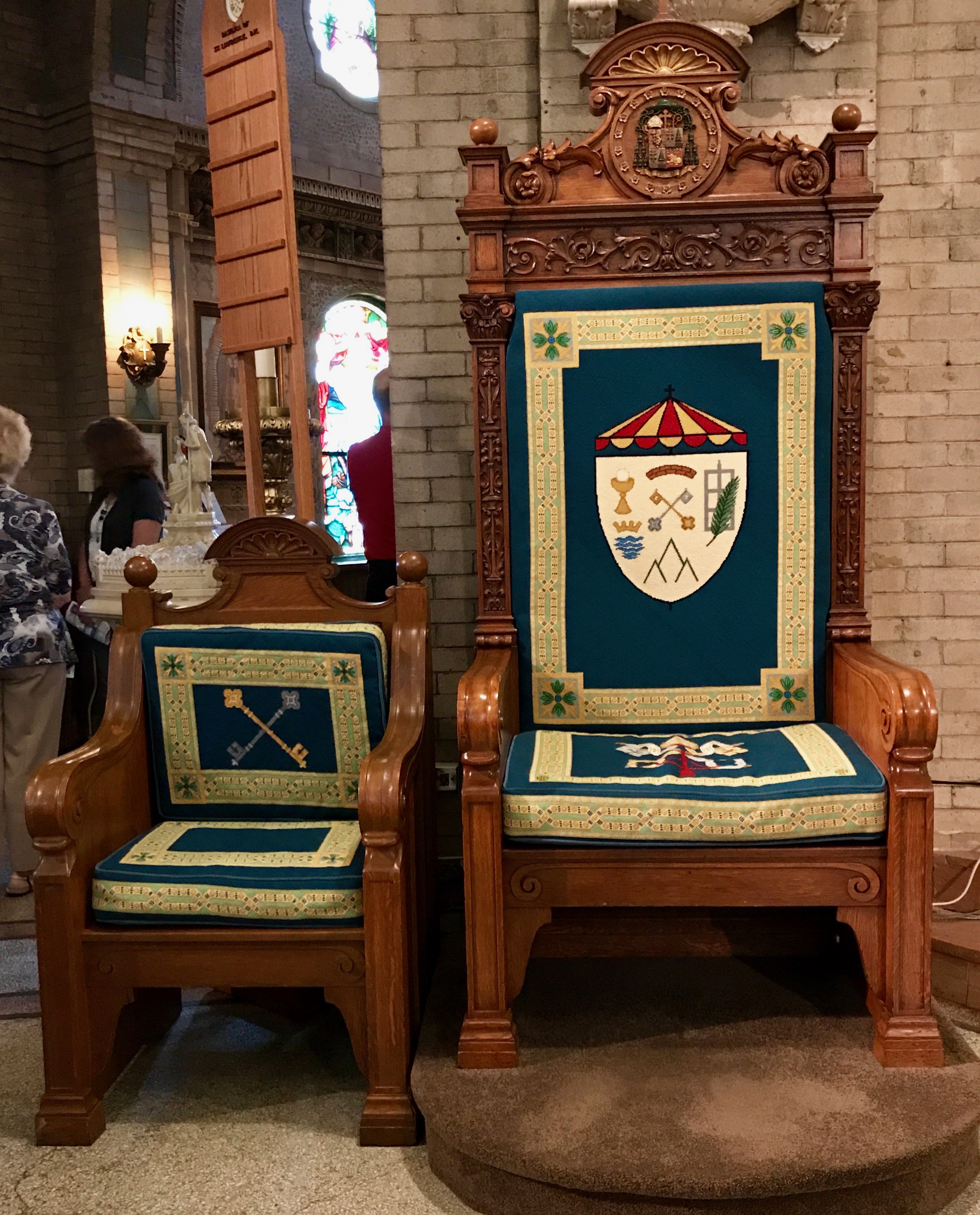
The cathedra is the bishop’s seat. Sometimes it is referred to as the bishop’s throne. Obviously, the seat on the right is for the bishop. The one on the left is for other participants in the mass.
You can see the crossed keys of Saint Peter, which is one of the symbols that lets you know you are in a basilica. On the diocese’s shield, you can see the conopaeum, a silk canopy designed with stripes of yellow and red, traditional papal colors.
In a side chapel, you can see the real conopaeum. In addition to the crossed keys and the conopaeum, basilicas are also entitled to have a tintinnabulum, which is a bell mounted on a pole and carried processionally, at the head of the clergy on special occasions. I guess the tintinnabulum was in the shop. I couldn’t find it on display.
There are side altars that feature interesting tile work.
Creative tile work is found everywhere.
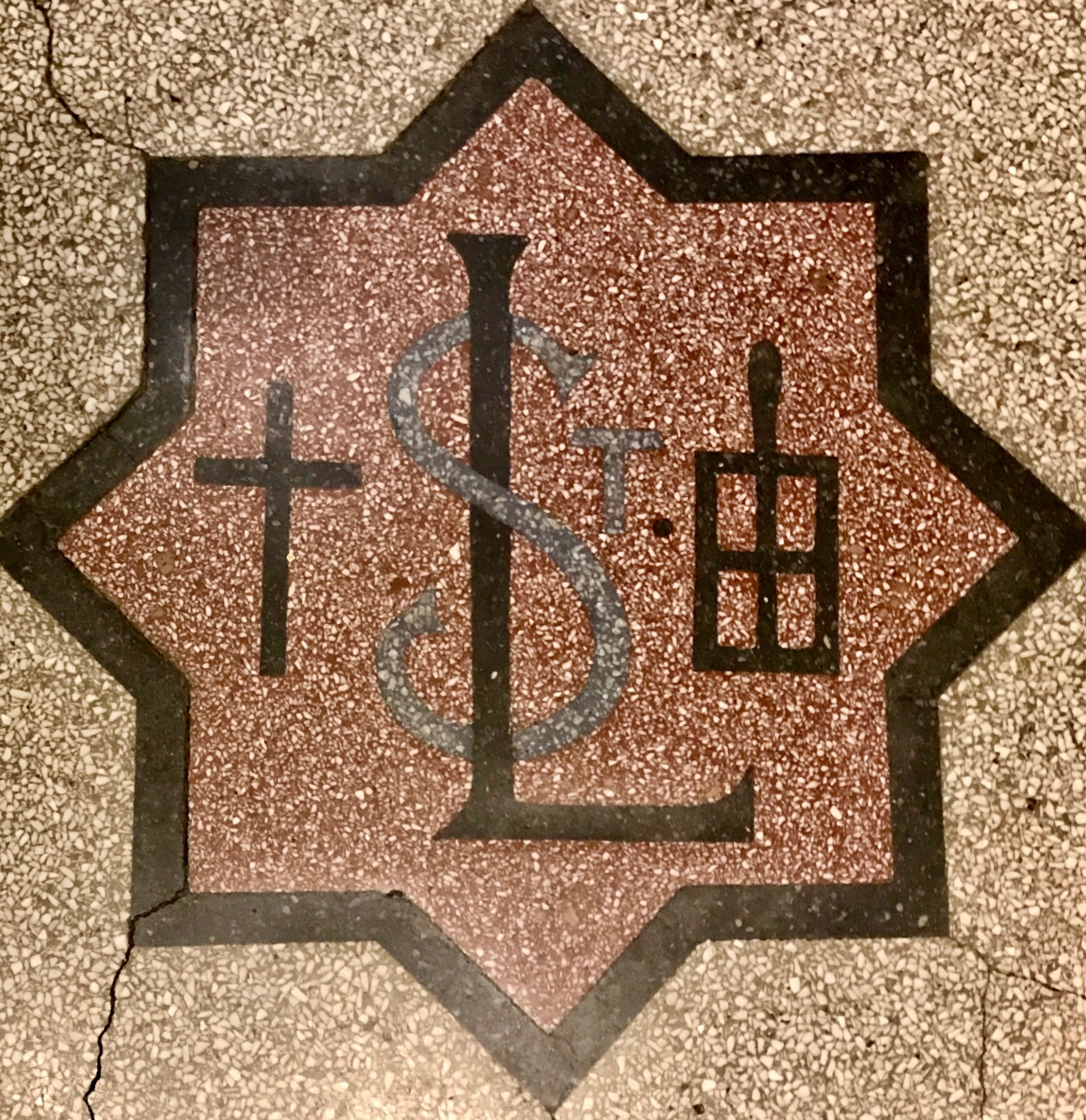
There is an old logo in terrazzo set in the floor. At least, I assume that it is an old logo. If it was made after the church became a basilica in 1993, I would imagine they would have included the crossed keys, at a minimum.
I spied this rosary on a kneeler, and snapped a photo of it.
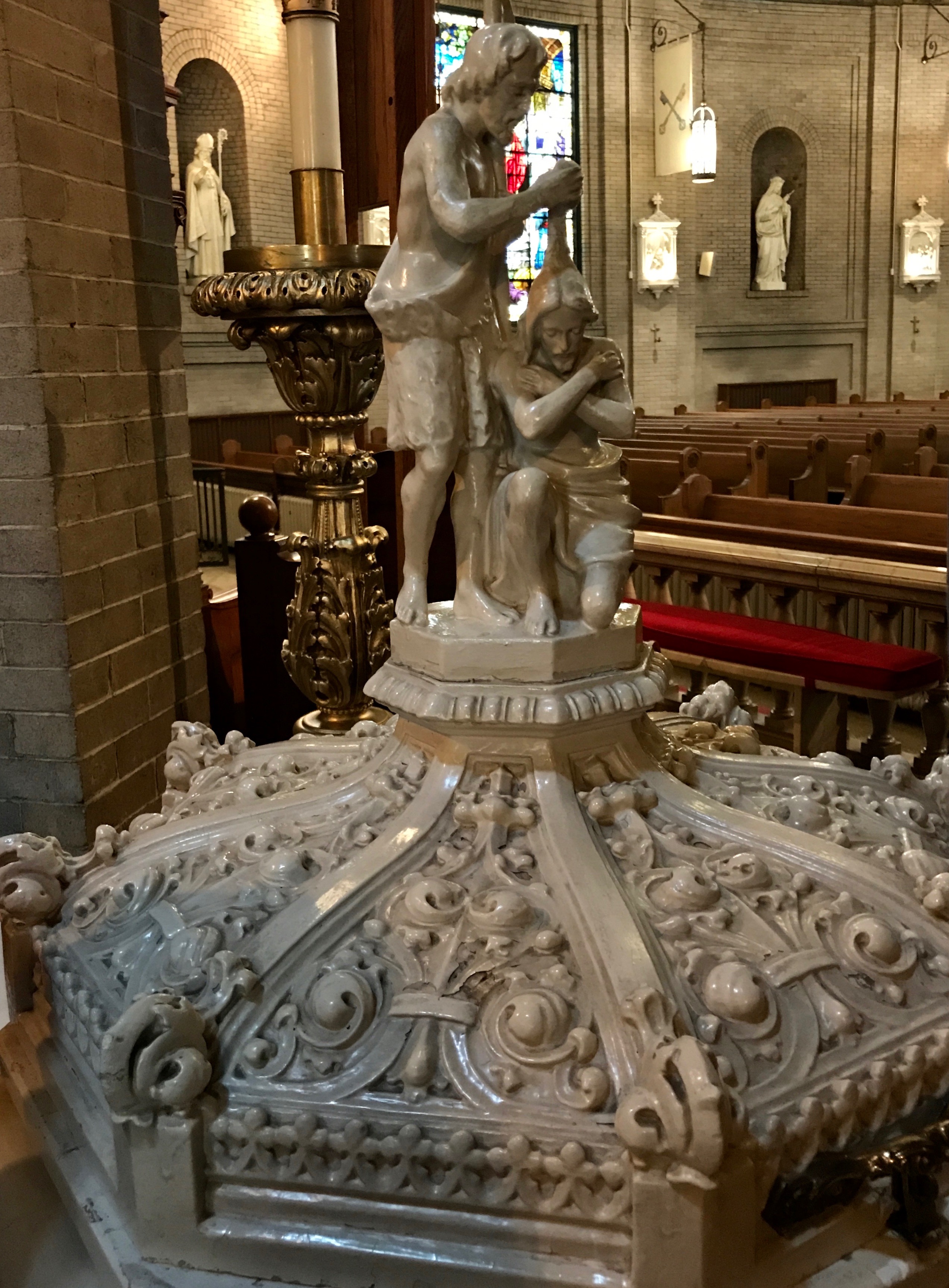
The baptistry shows John the Baptist baptizing Jesus.
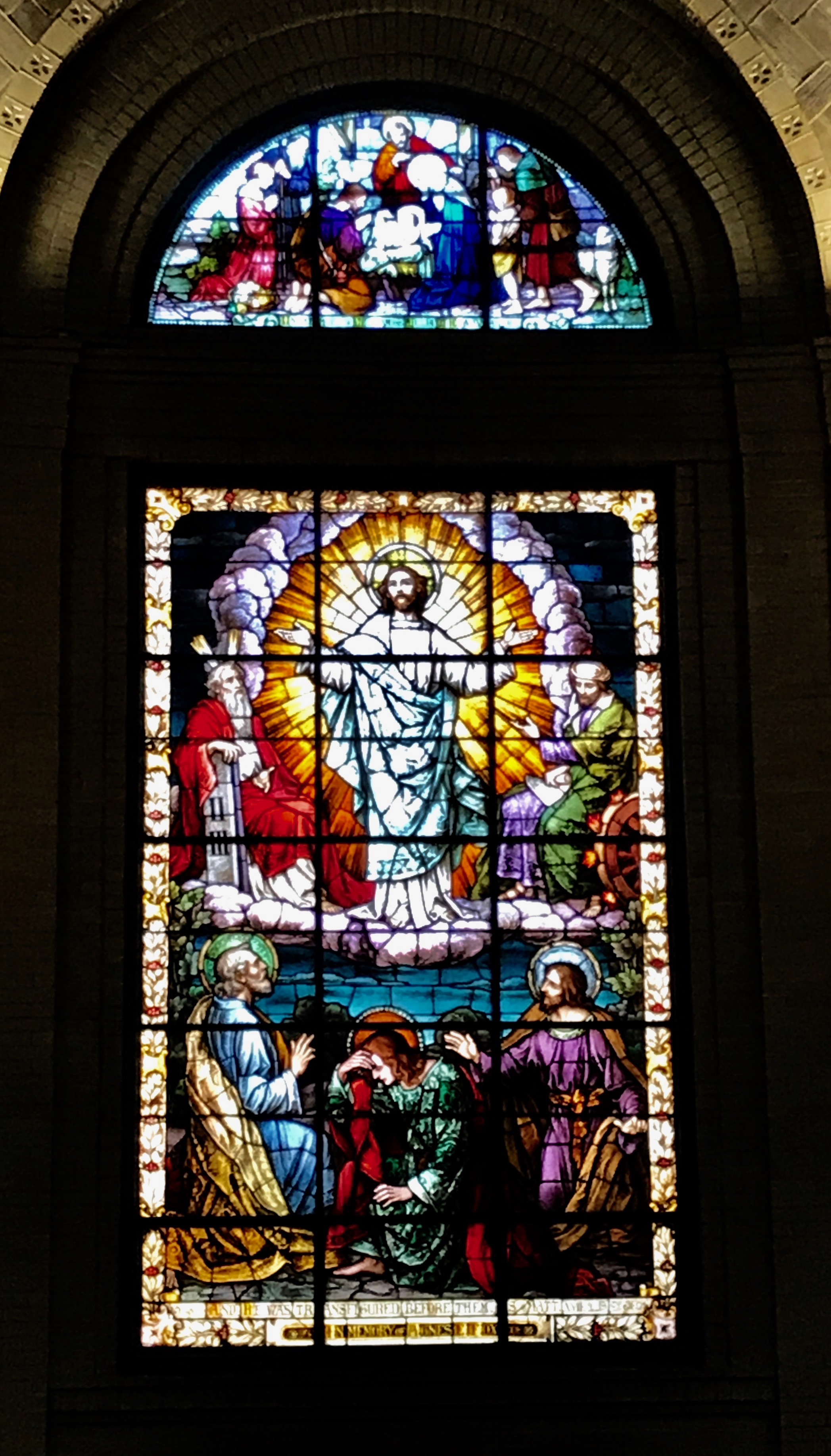
This marvelous German stained glass window shows the Transfiguration of Christ. He is flanked by Moses and Elijah and Peter, James, and John are at the base.
There was one last thing to check out before I hit the road.
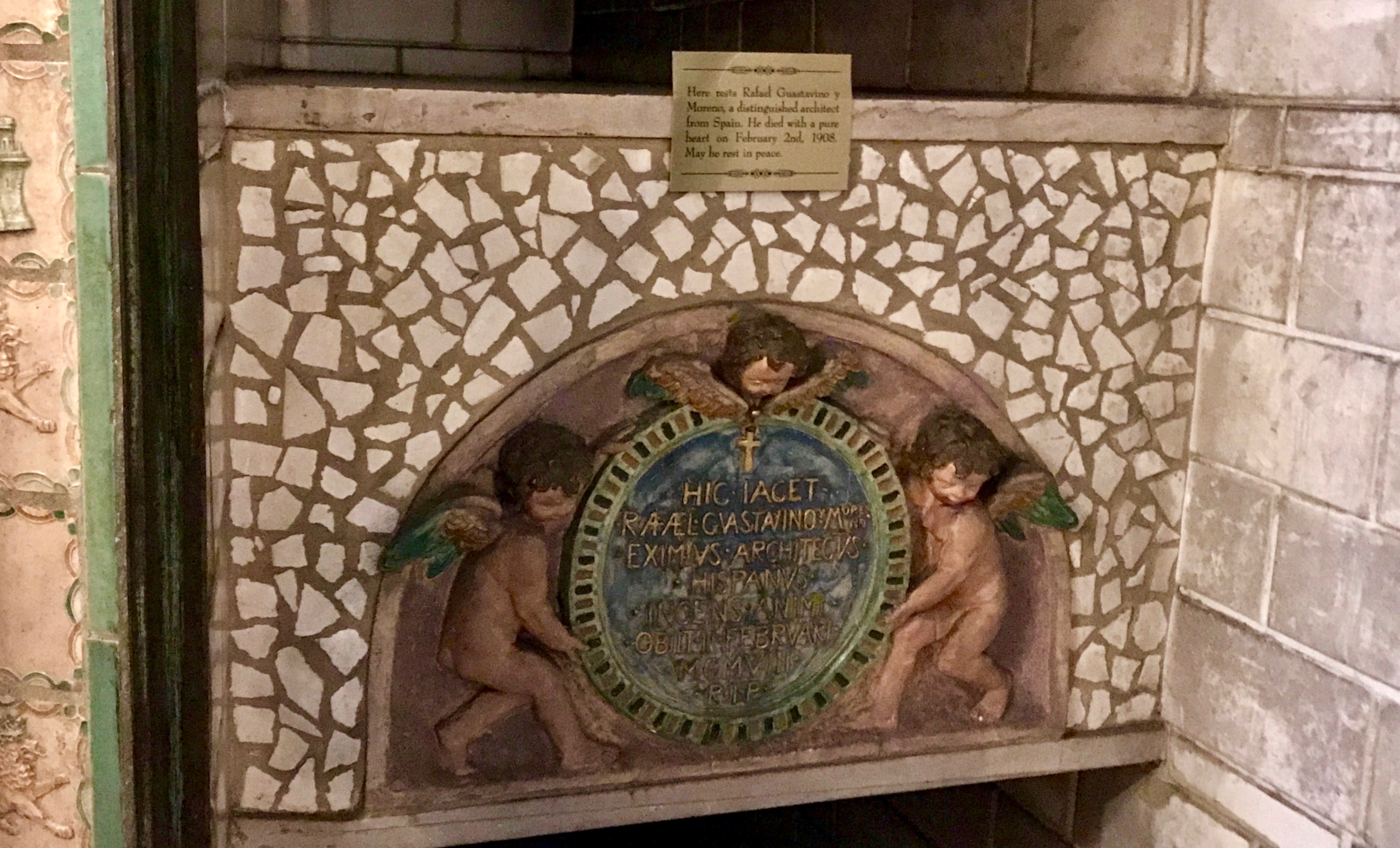
This is the tomb of architect Rafael Gustavino. According to the translation of the terra-cotta plaque, he died with a pure heart on February 2nd, 1908.
Unfortunately, he didn’t live to see the completion of his creation. If I remember correctly, his work was carried on by his son and it was completed in 1909.
Now it is time to hit the road!
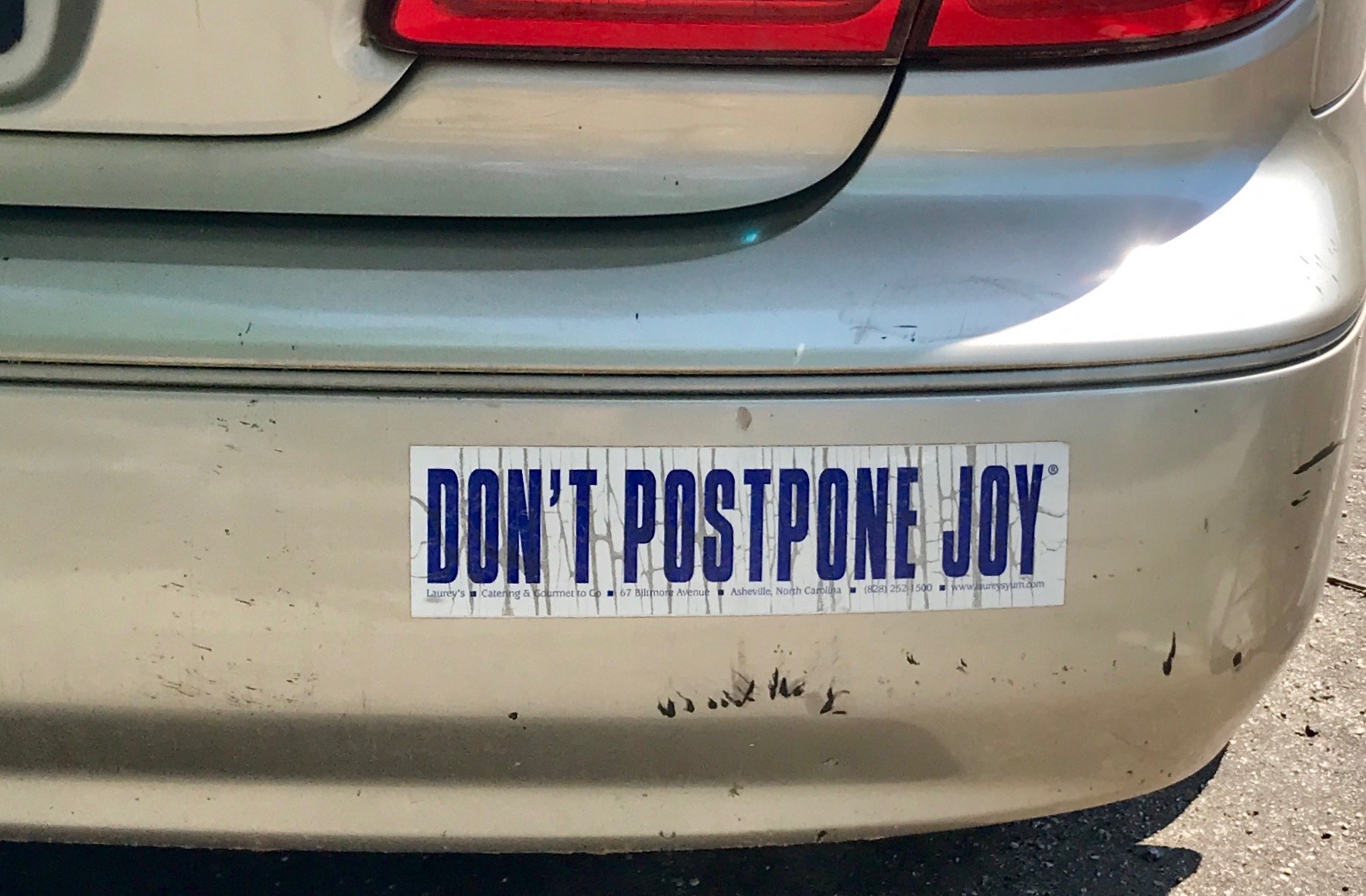
(What an appropriate bumper sticker.)