Actually, it’s time for a whole lot of art!
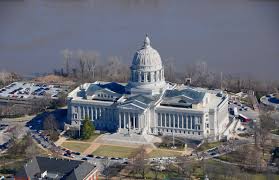
We’re back at the Missouri State Capitol, on the south bank of the Missouri River is Jefferson City. According to my Preferred Source, it was designed by the architectural firm of Tracy and Swartwout out of New York City.
NEW YORK CITY??!!!
Yeah, well, everyone has to be somewhere.
This capitol was completed in 1917, and the dome was topped with a statue of Ceres, the Roman goddess of agriculture.
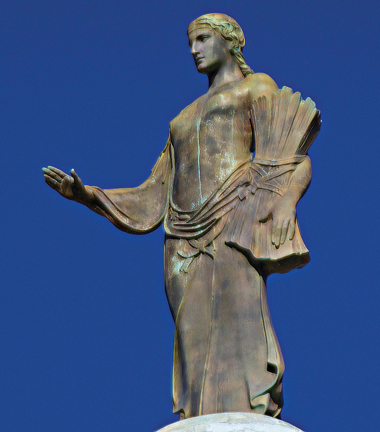
According to the Missouri Capitol website, Ceres was installed in 1924, and she was on top of the dome until November 2018, which is just weeks after my visit. I miss everything!
They had to winch her up in three pieces and then assemble it on top of the dome. She weights about one ton, and stands 10 feet, four inches tall. They took her down as part of a multi-year renovation. The last time she was cleaned was in 1995, when a crew restored her on top of the dome, which is 238 feet above ground level. She was suffering from “bronze rot.” If I were one of the conservators, I’d be suffering from a whole lot more than “bronze rot.” I do believe, though, that my face might have been a nice shade of verdigris. “Height” is not something I do willingly.
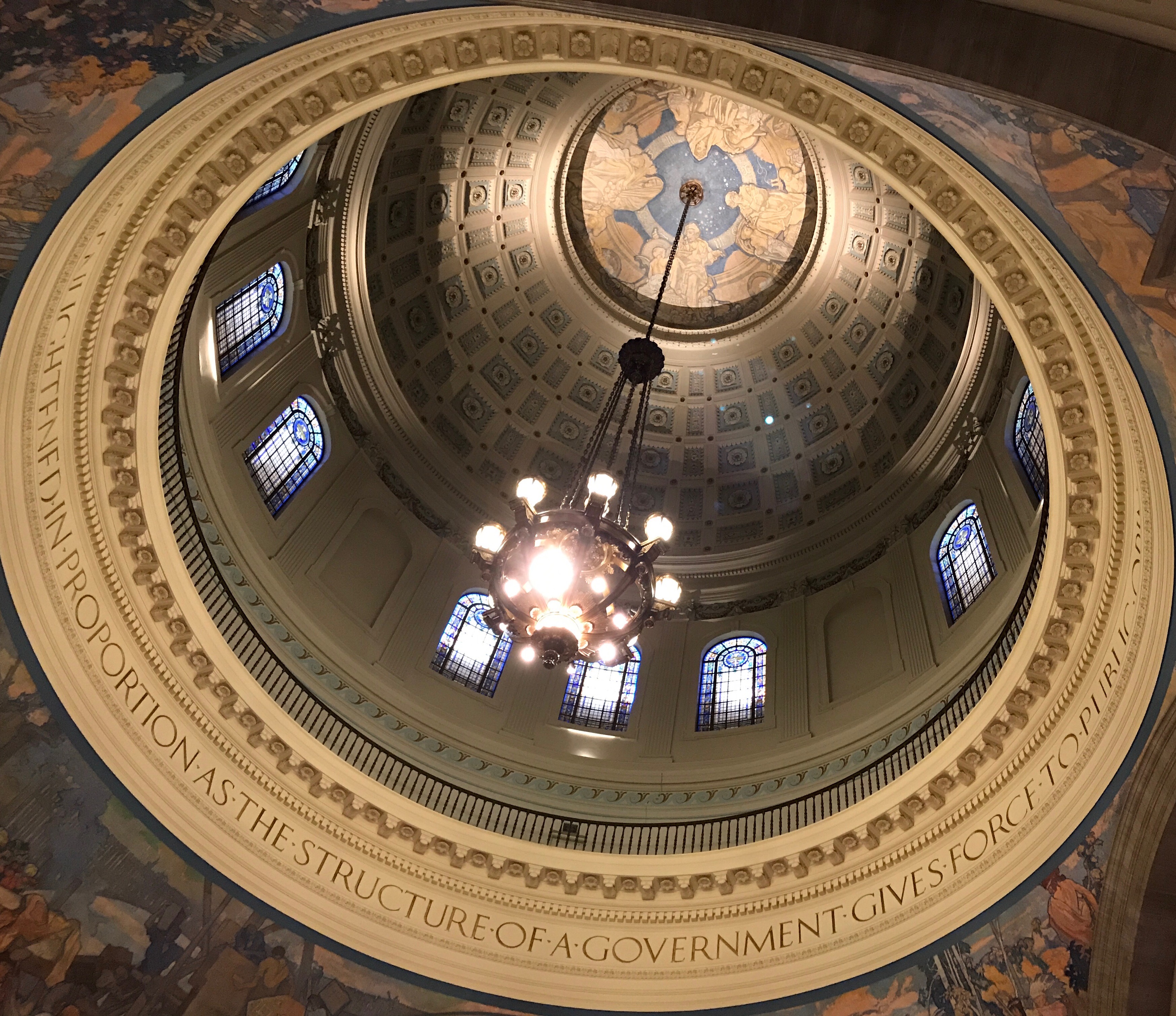
Hanging from the eye of the dome is a 9,000 pound chandelier. It hung there safely until 2006. It was lowered almost to the floor for maintenance when it fell the remaining five feet. While the chandelier cost $5,000 in 1918, which would be $83,285 in 2018 dollars, it cost $500,000 to be restored. That is $641,410 in 2018 dollars. It was reinstalled nearly a full year later.
The dome is covered with murals created by Frank Brangwyn, a prolific, popular and much awarded artist of the time. He was largely self-taught, but he did work in the studios of William Morris for a time.
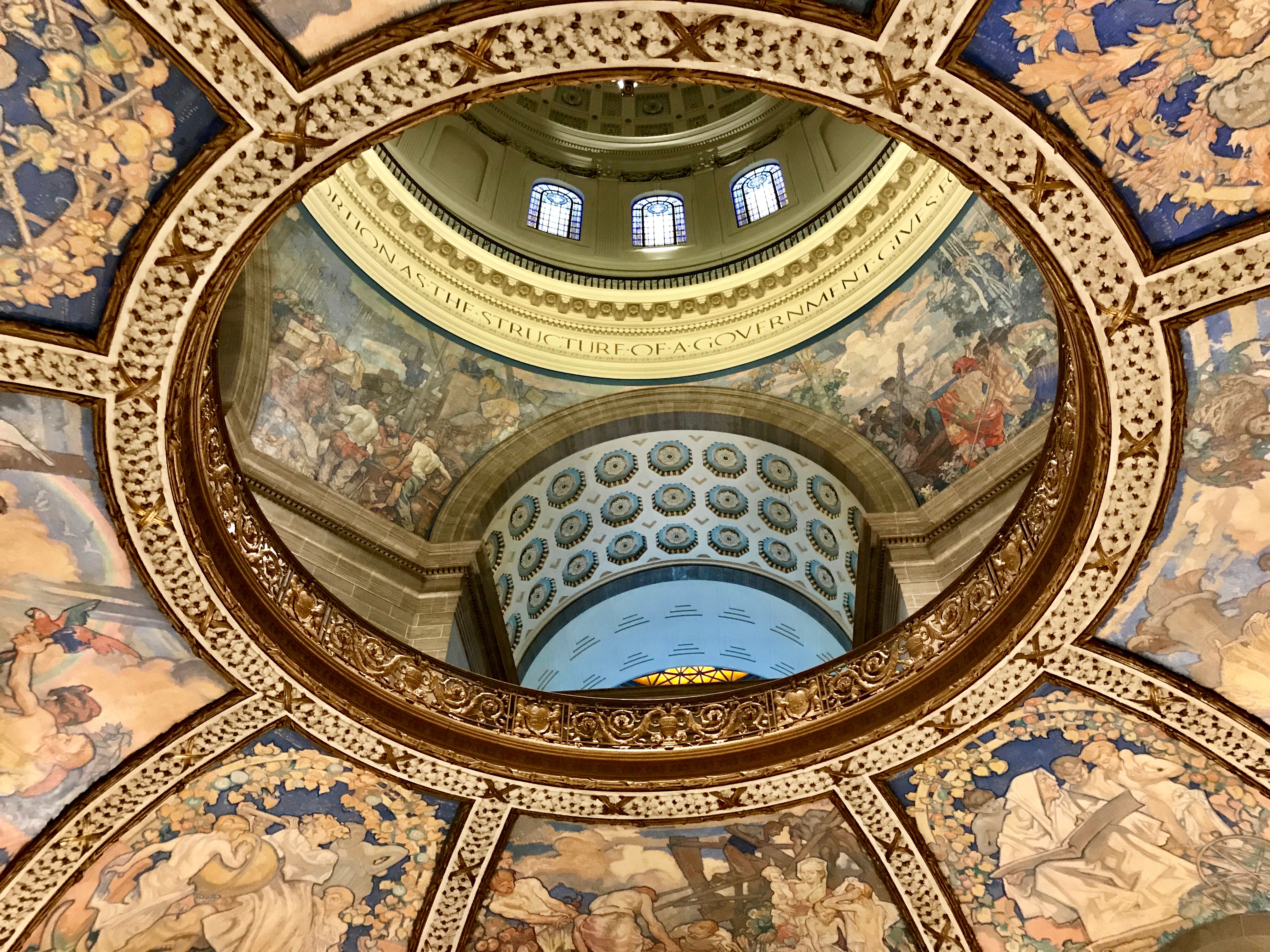
Those familiar with the work of William Morris might see some of his influences in his work.
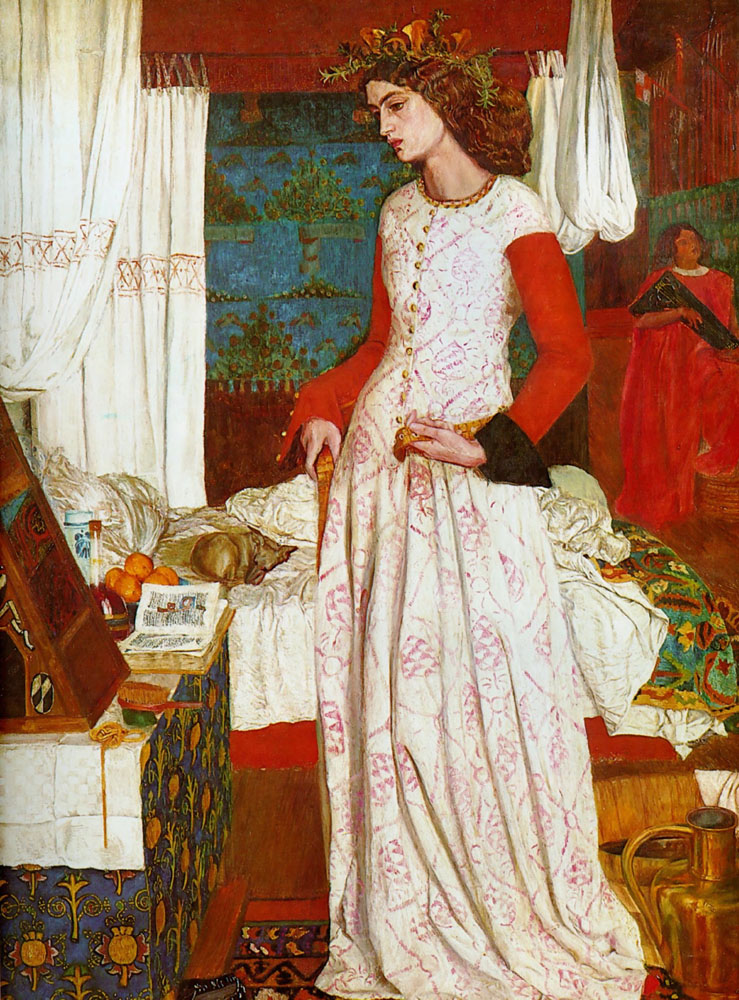
William Morris’ most famous quote is one that Marie Condo seems to have adopted:
“Have nothing in your house that you do not know to be useful, or believe to be beautiful.”
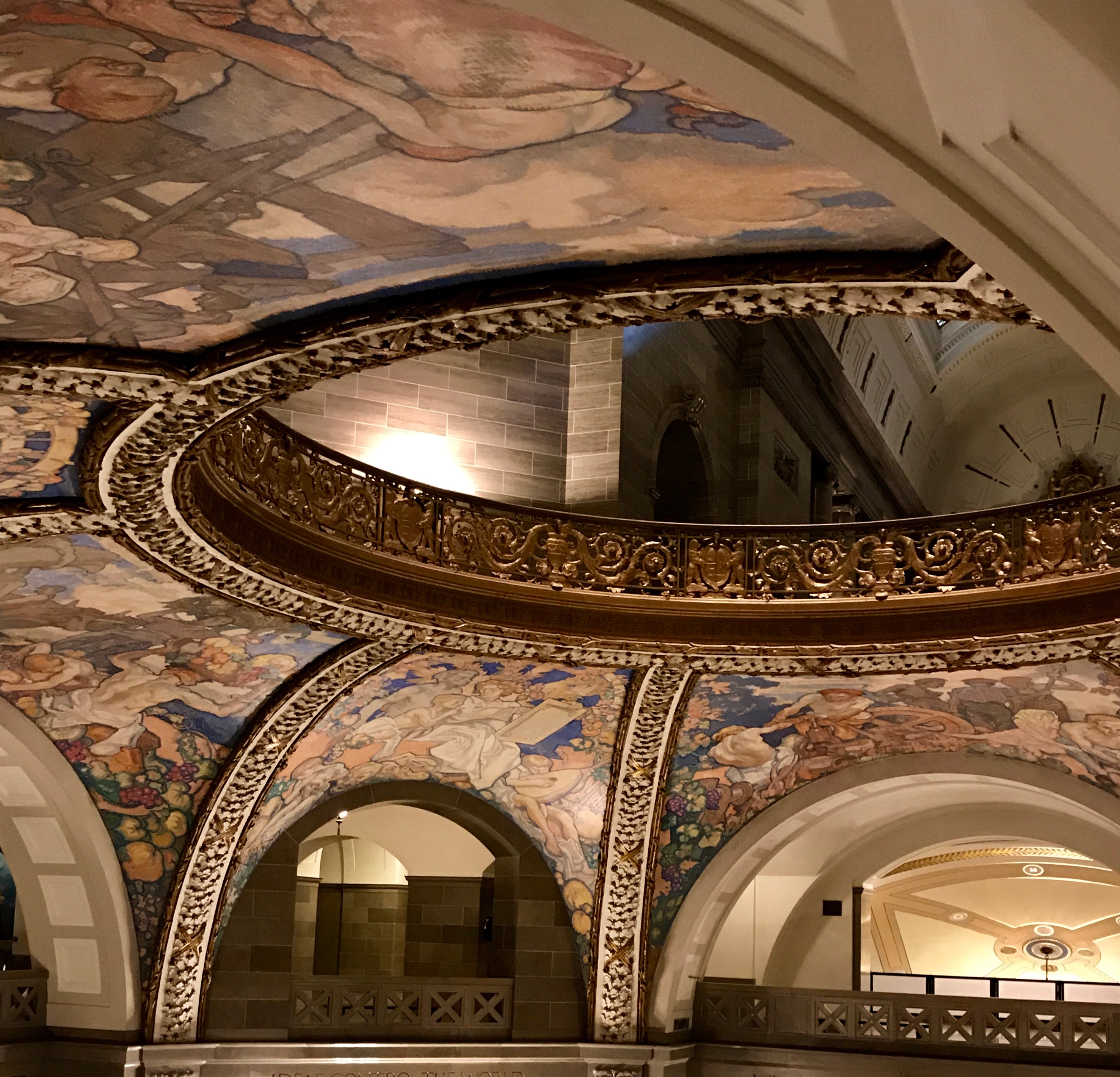
The interior of the dome almost reminds me of a Faberge egg, turned inside out.
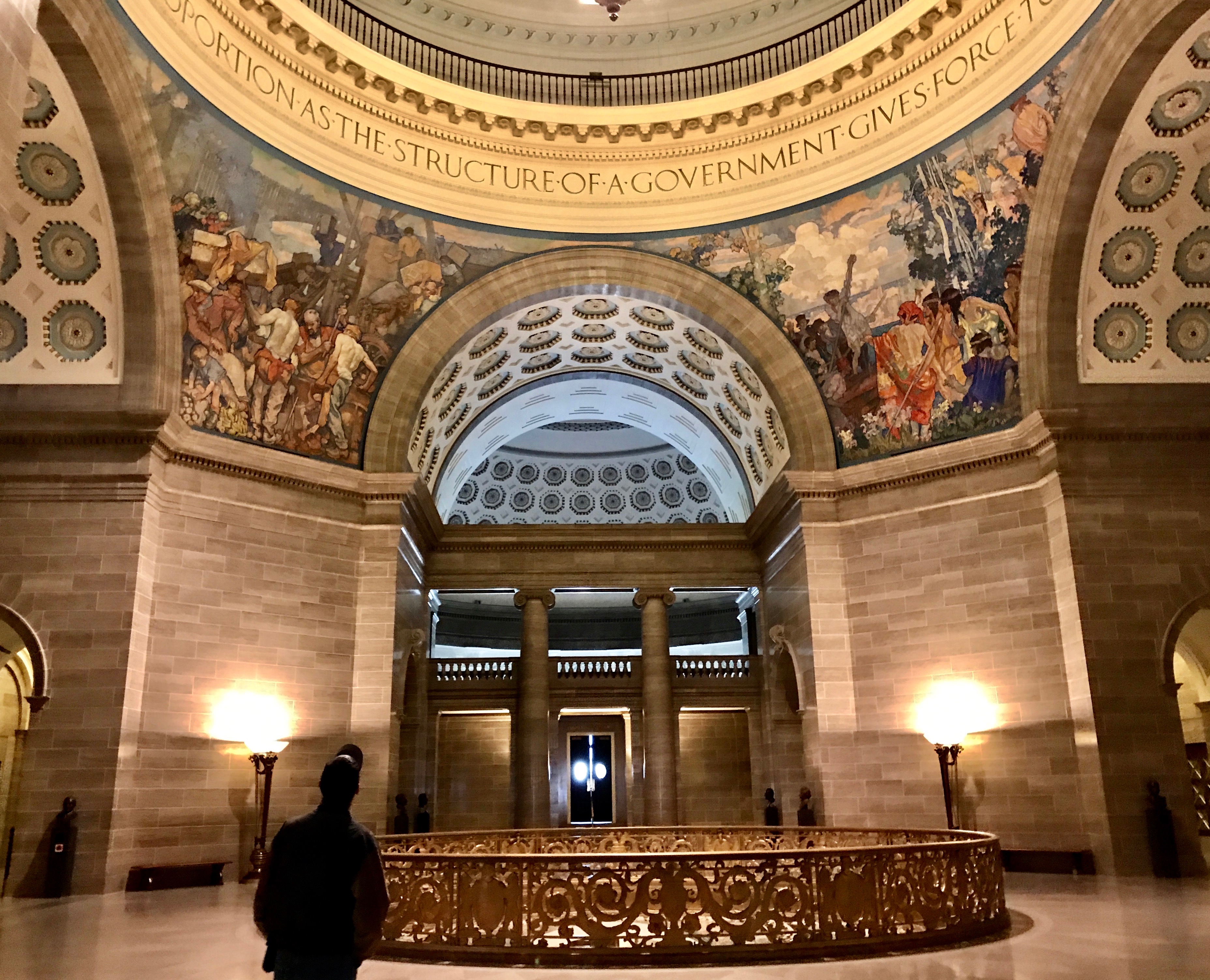
Around this level of the dome, there are works of art that show important aspects of Missouri’s history.
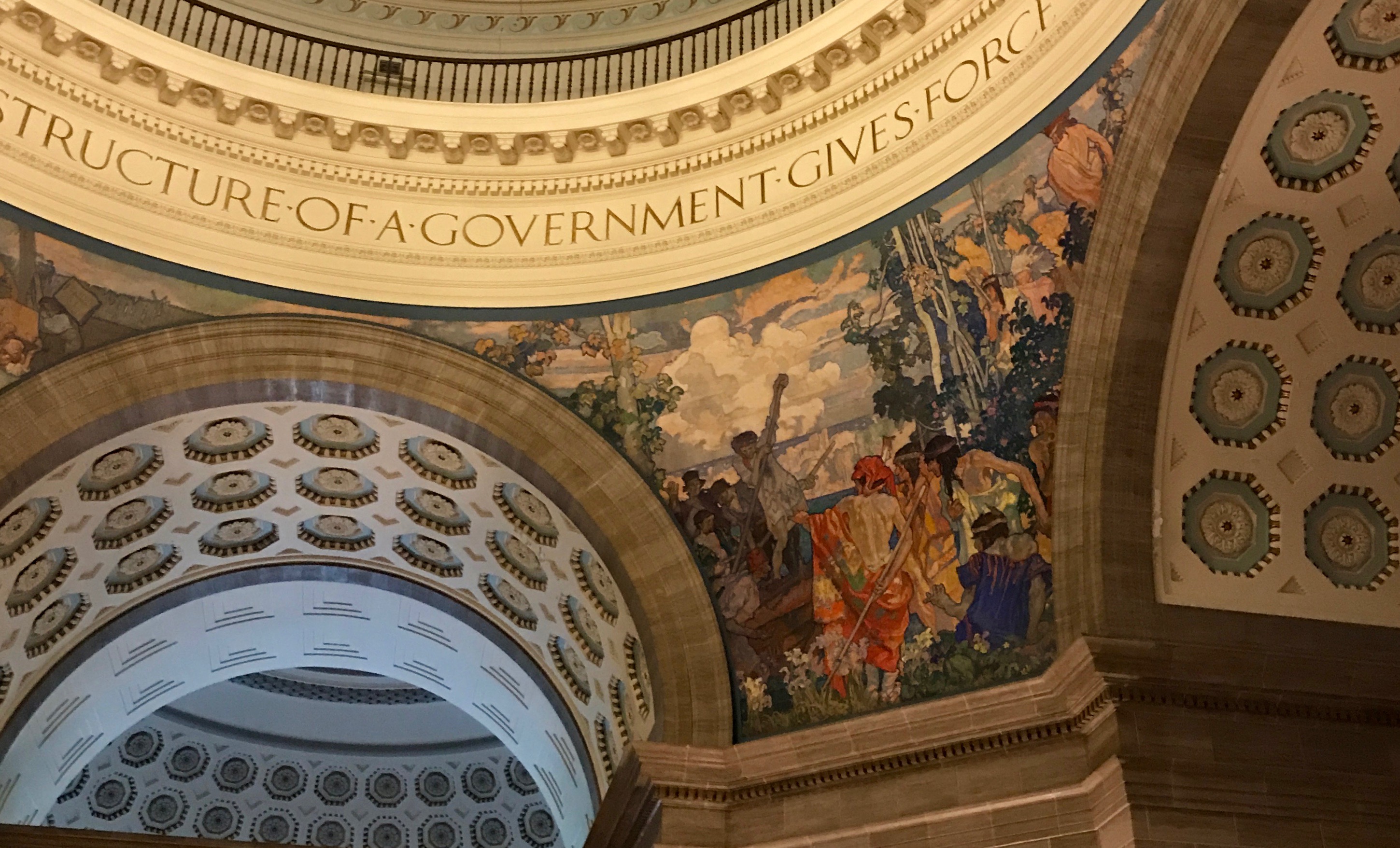
Really, there are so many levels that open onto the rotunda that it’s hard to keep track of which ones were on which level. The differing decorative bands help to sort it out.
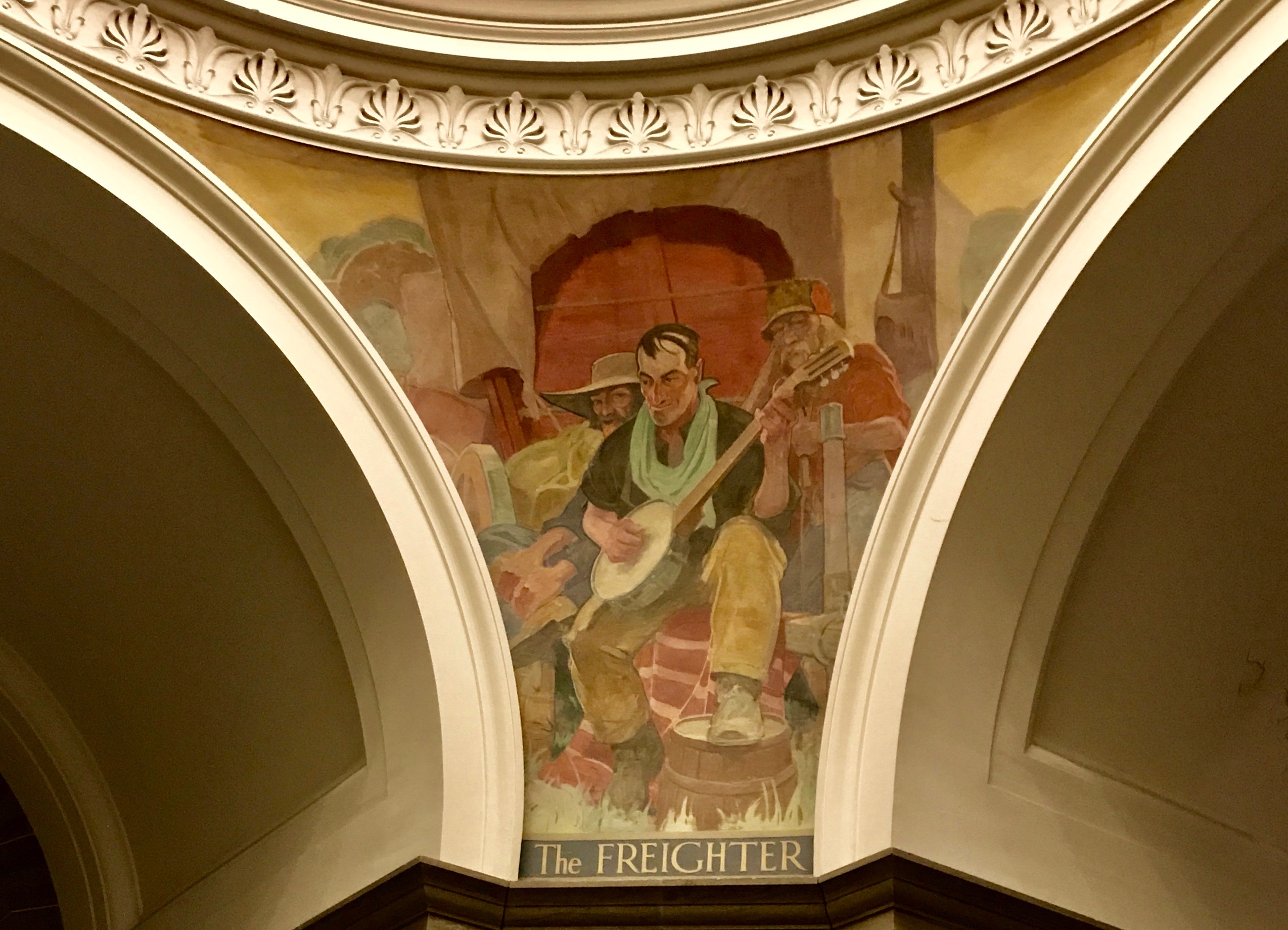
I have seen “freighters” honored in several of the western capitols. These wagon drivers were the long haul truckers of their day. The products and supplies they carried in their wagons made settlement possible.
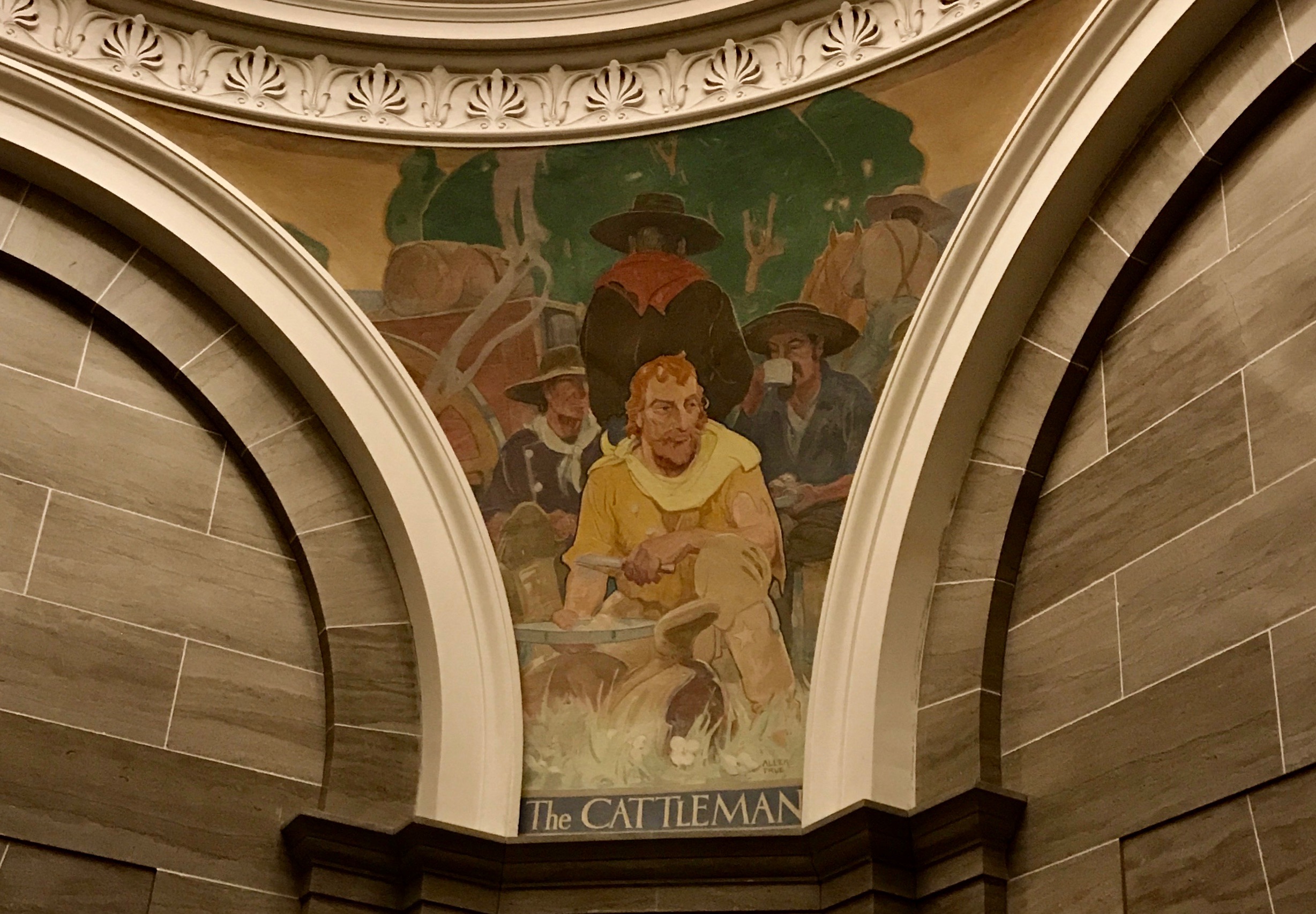
The cattlemen played a large part in Missouri’s economic development.
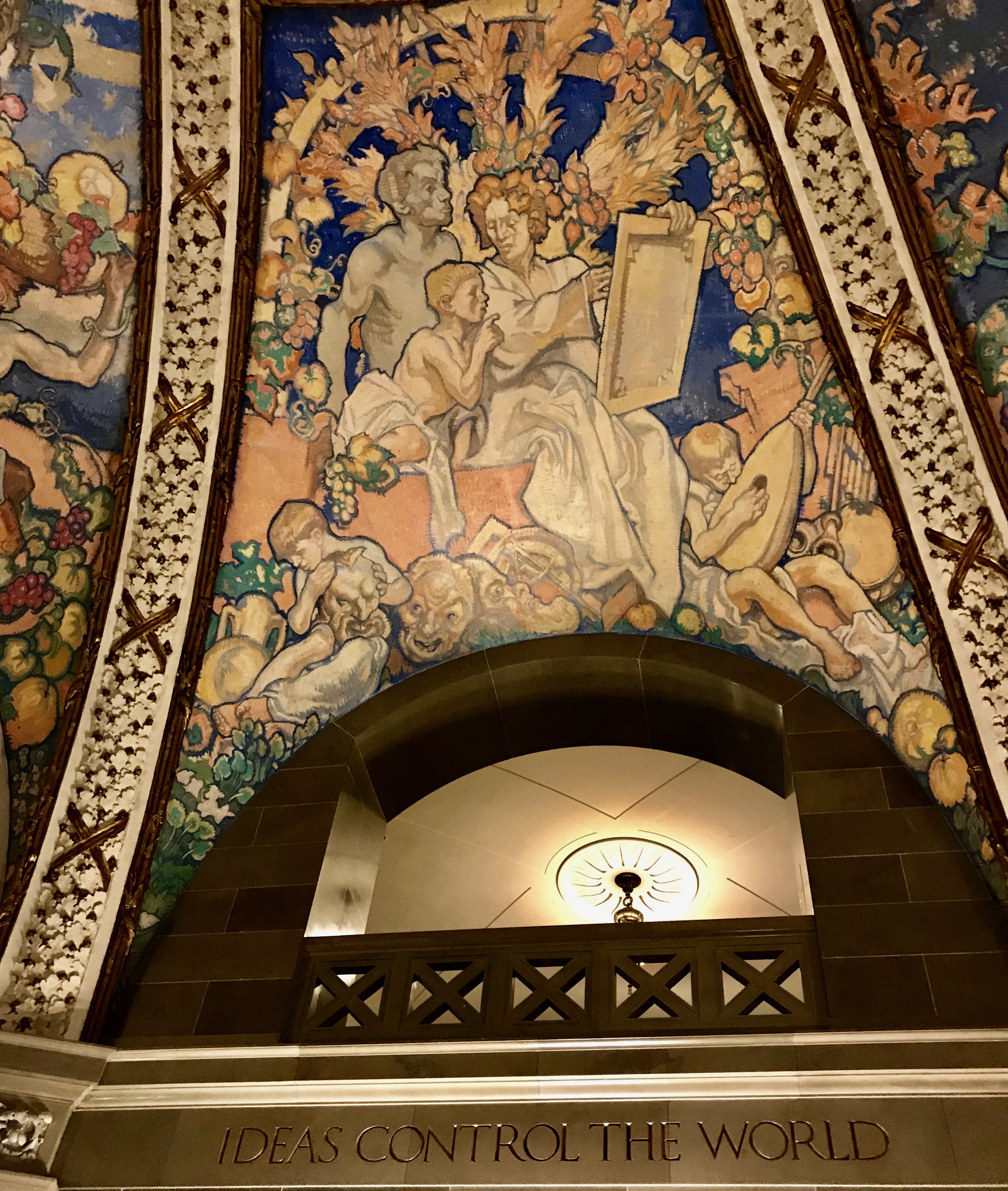
This is a section I shared in my last post. I like it, so I am sharing it again.
One more look up and then on to the works of other artists.
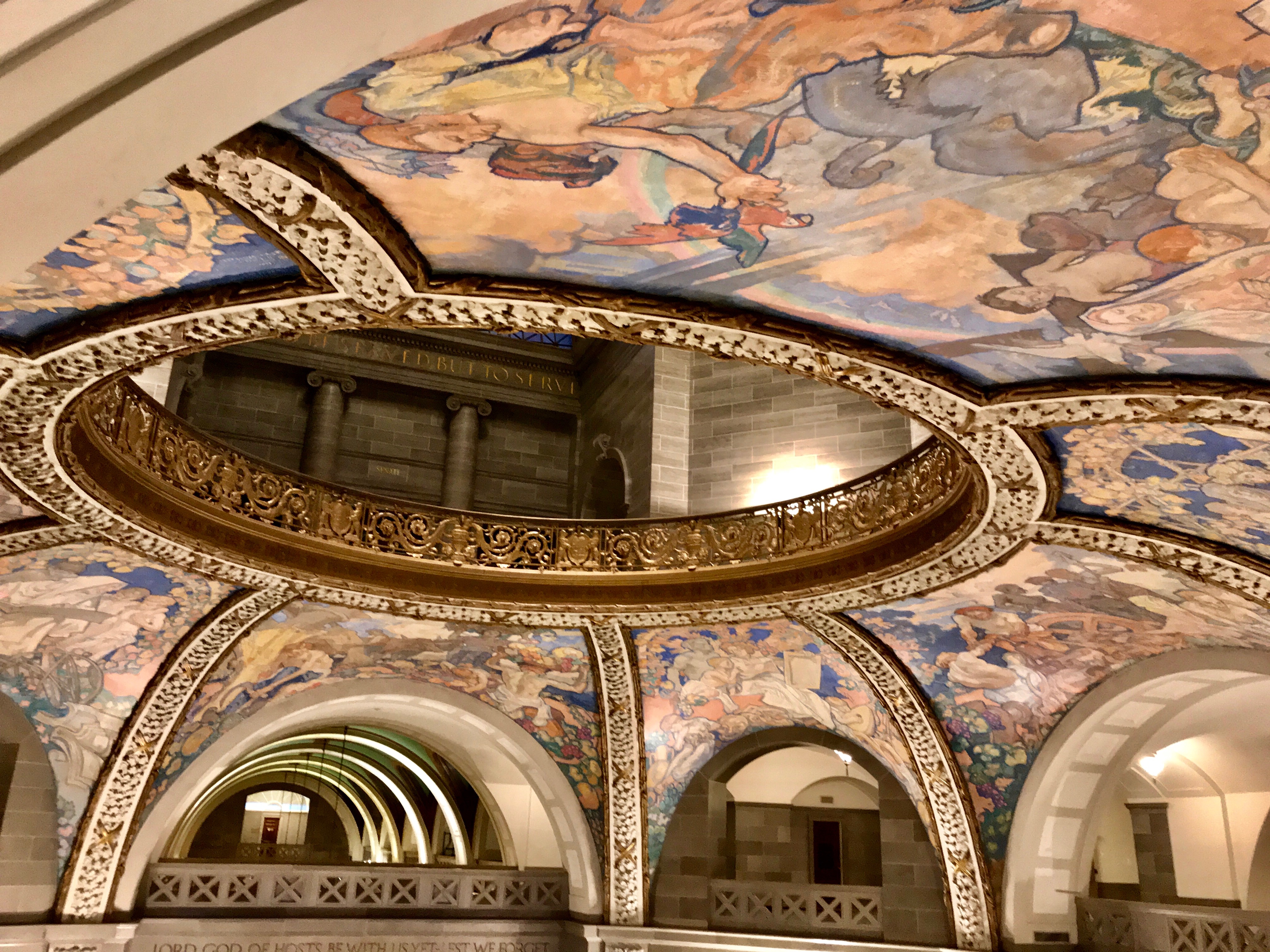
Okay, make that two more photos. Honestly, Frank Brangwyn did an amazing job of painting a complicated surface.
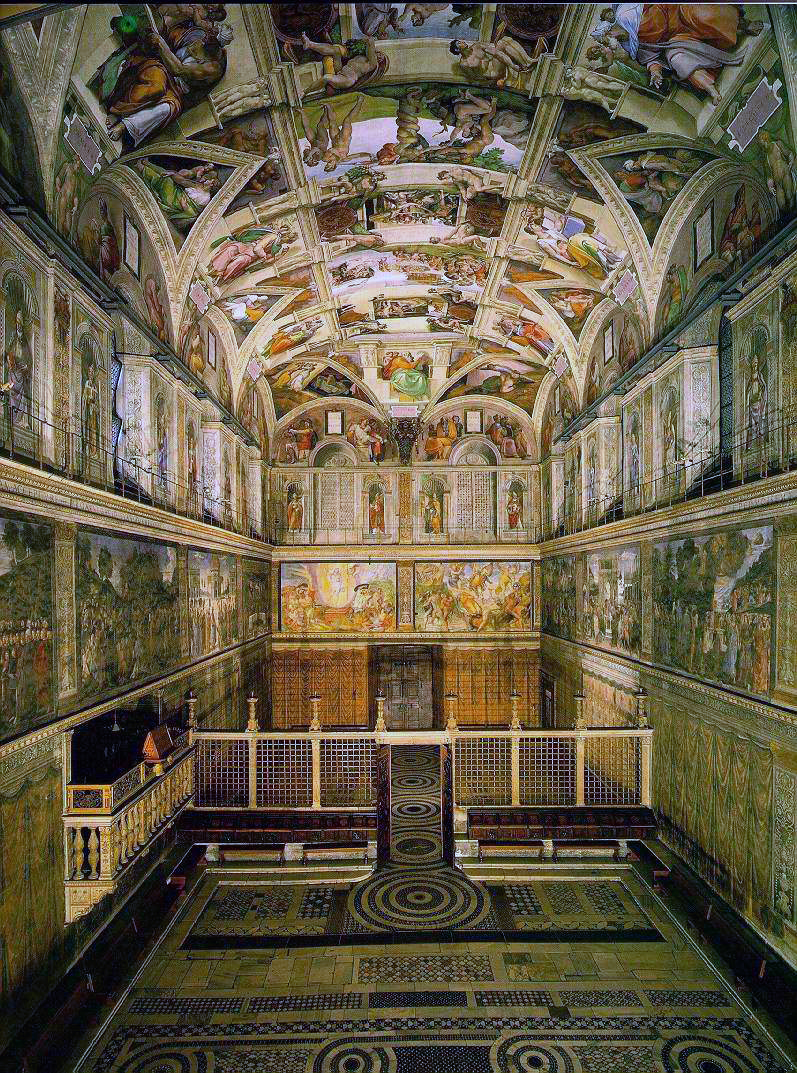
It’s not the Sistine Chapel, but it made me think of it.
Our guide made a point of showing us these works of art by Frank Nuderscher.
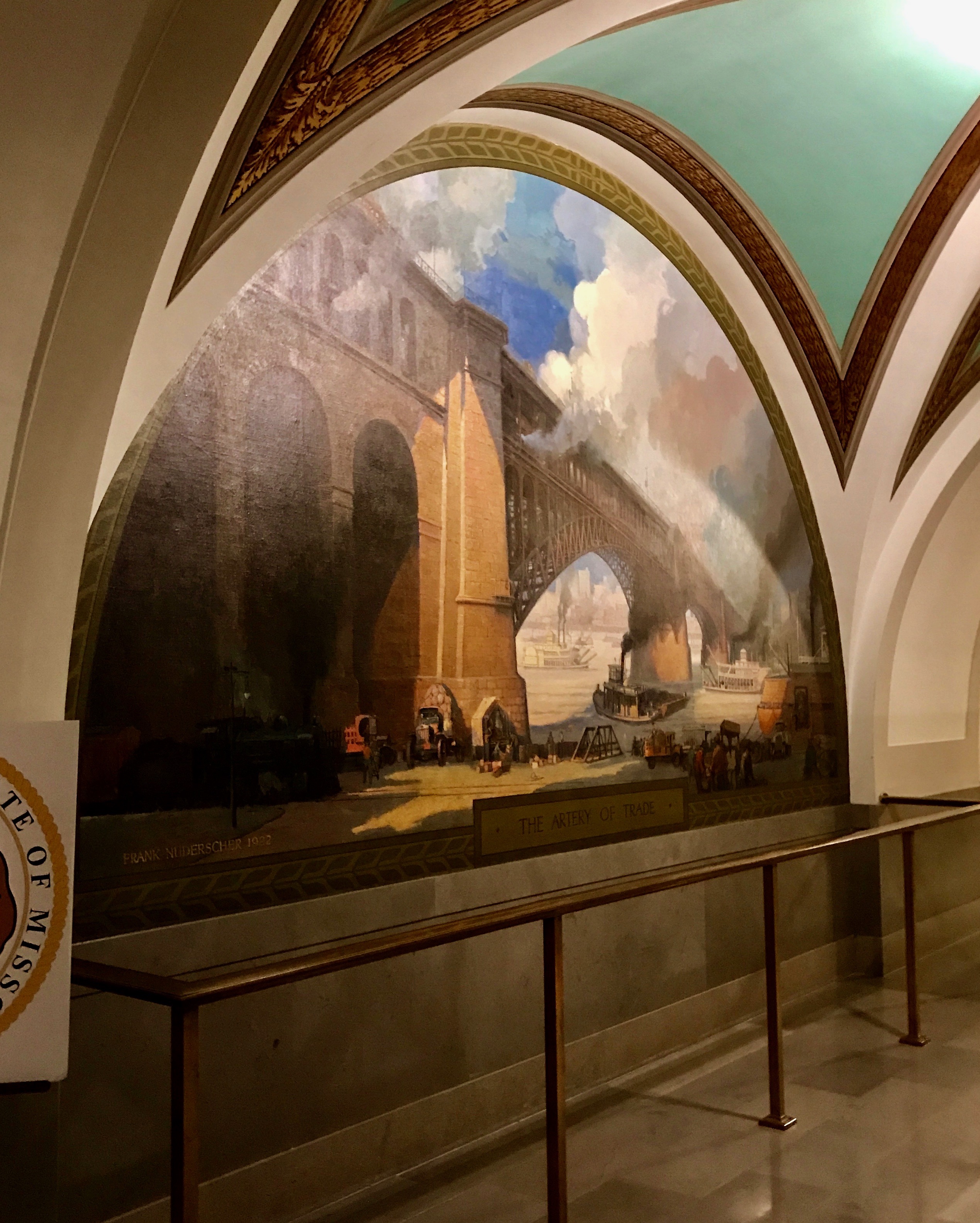
Born in St. Louis in 1880, he was an illustrator, muralist, and painter of the American Impressionism style. He was called the “dean of St. Louis artists” for his leadership in the Missouri art community.
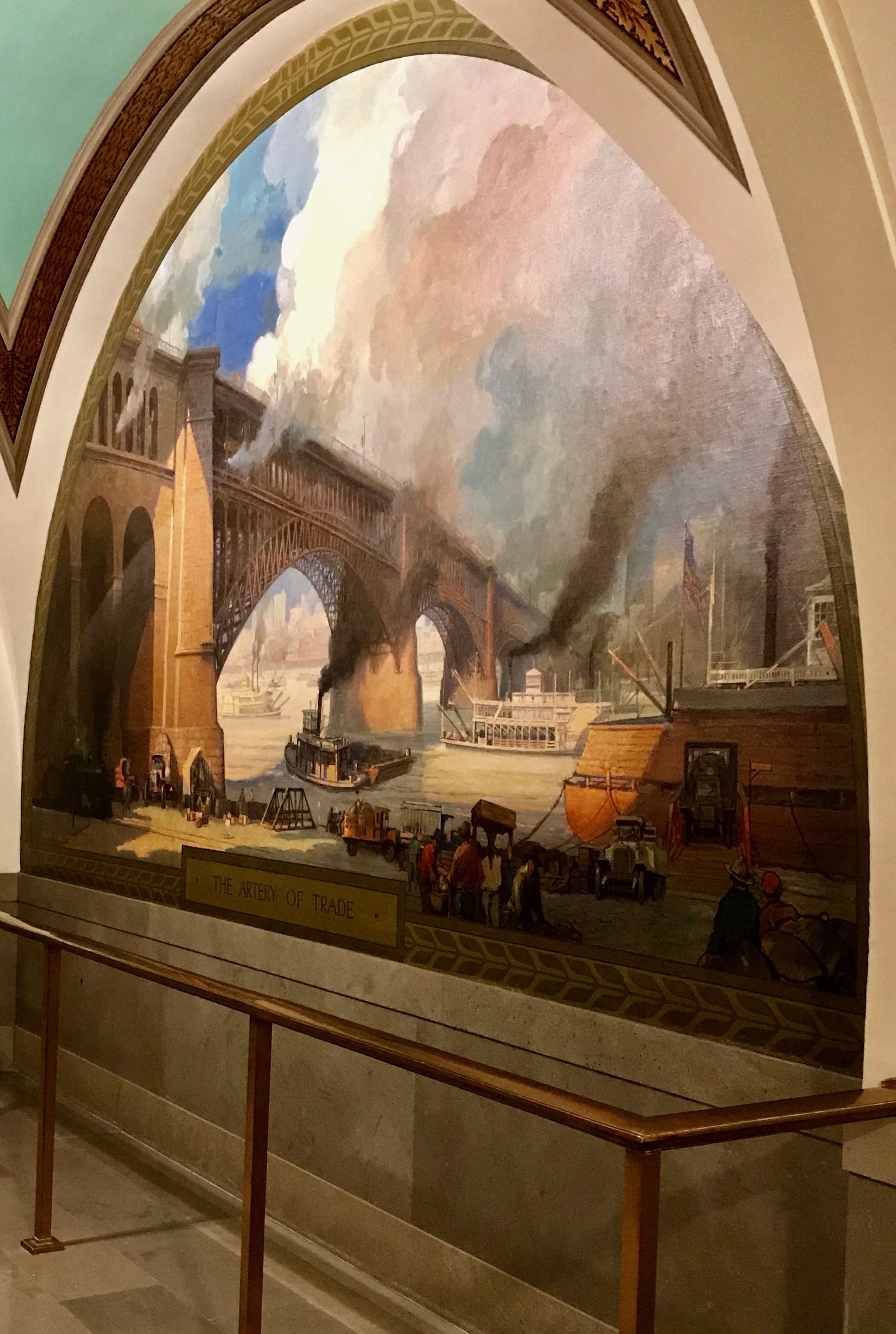
Our guide was very intent on showing us his painting from the two sides. He told us that there was a trick in the perspective that made things look different. Quite frankly, I don’t see it.
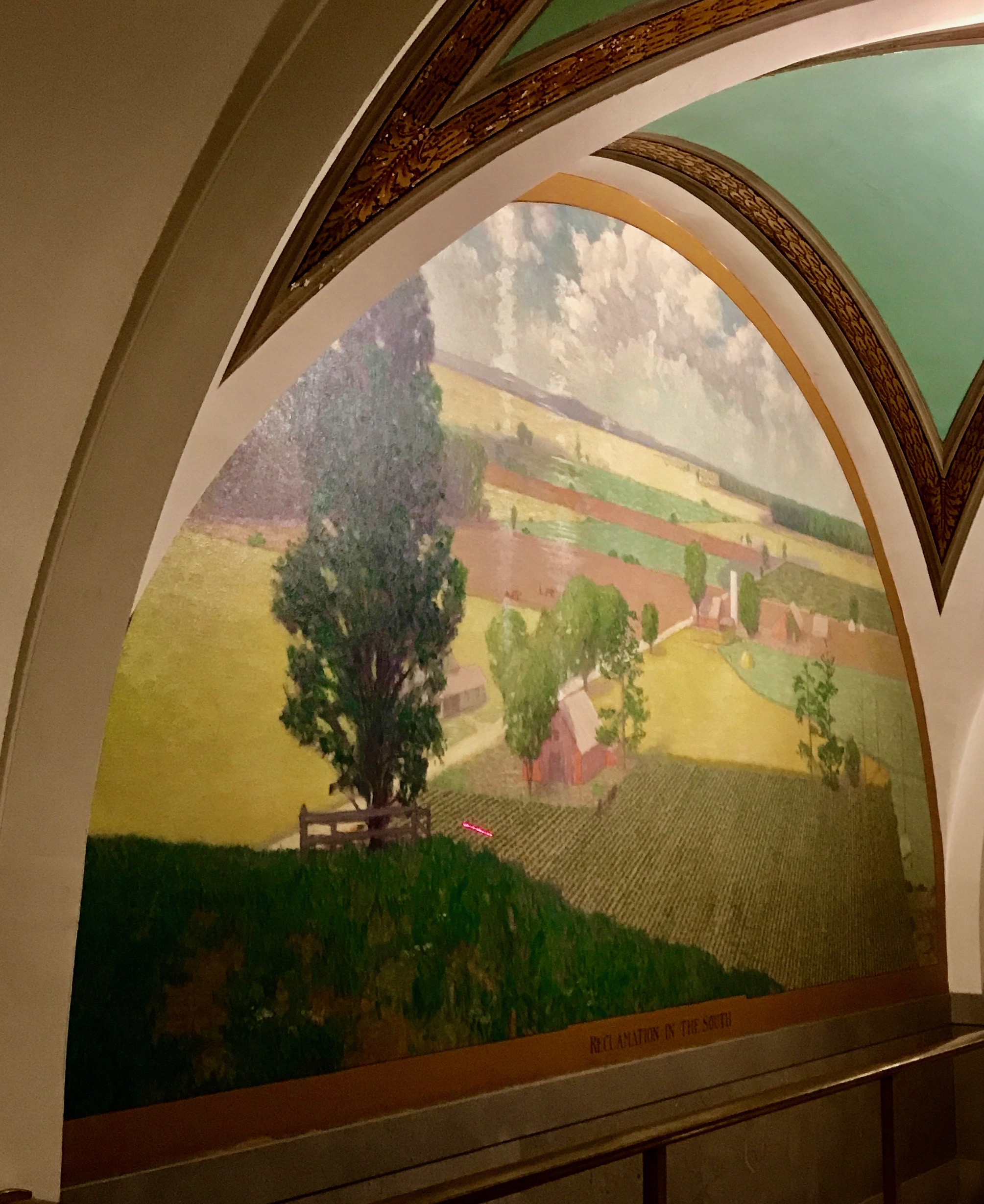
There was a second Nuderscher painting in the same hallway.
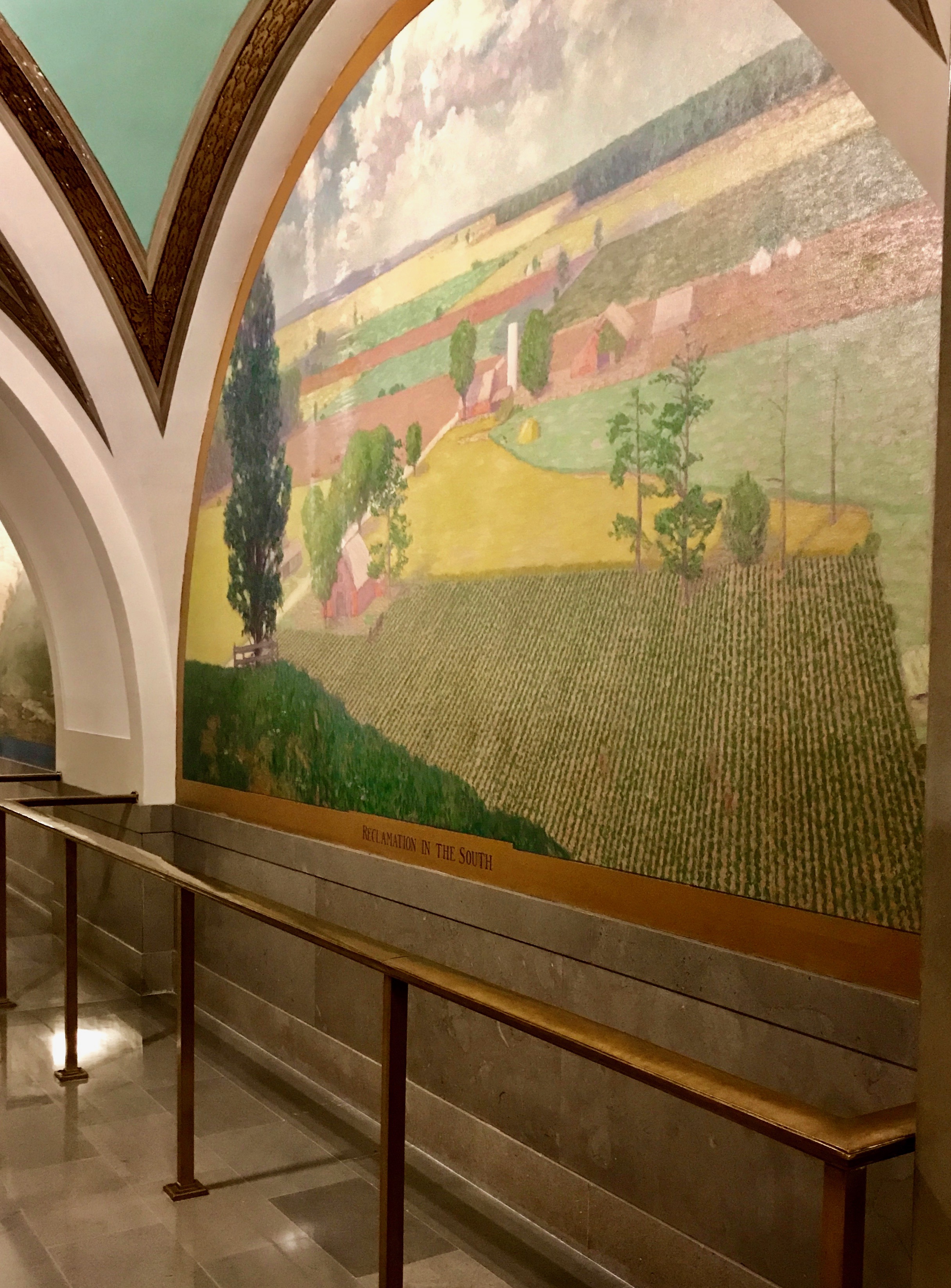
Again, there is supposed to be some sort of trick in the perspective. Supposedly the rows of crops change direction. If you see it, please let me know. Maybe I am looking in the wrong places.
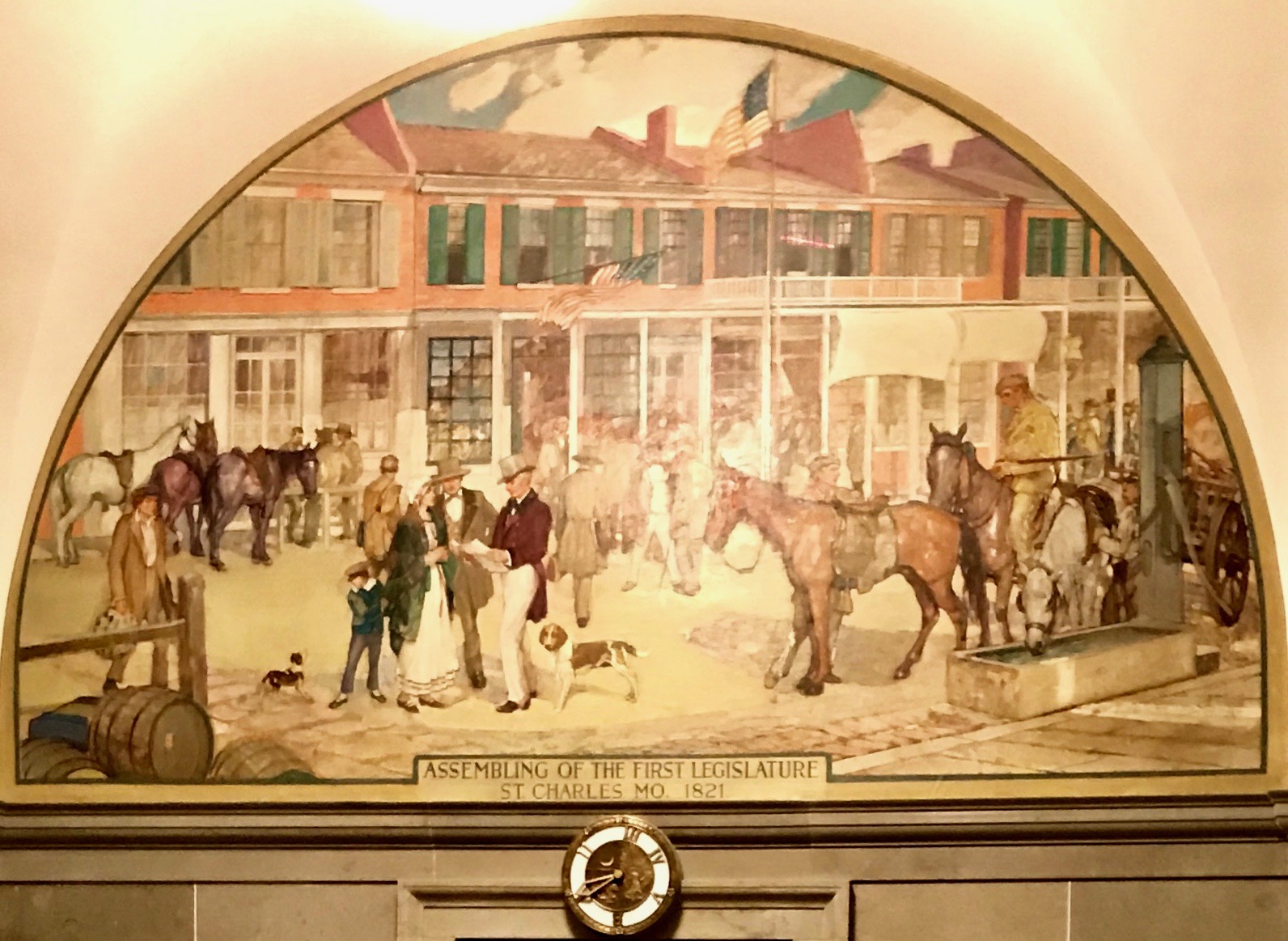
Smaller lunettes in the same hallway showed some of the history of Missouri. This is the assembling of the first legislature in St. Charles in 1821.
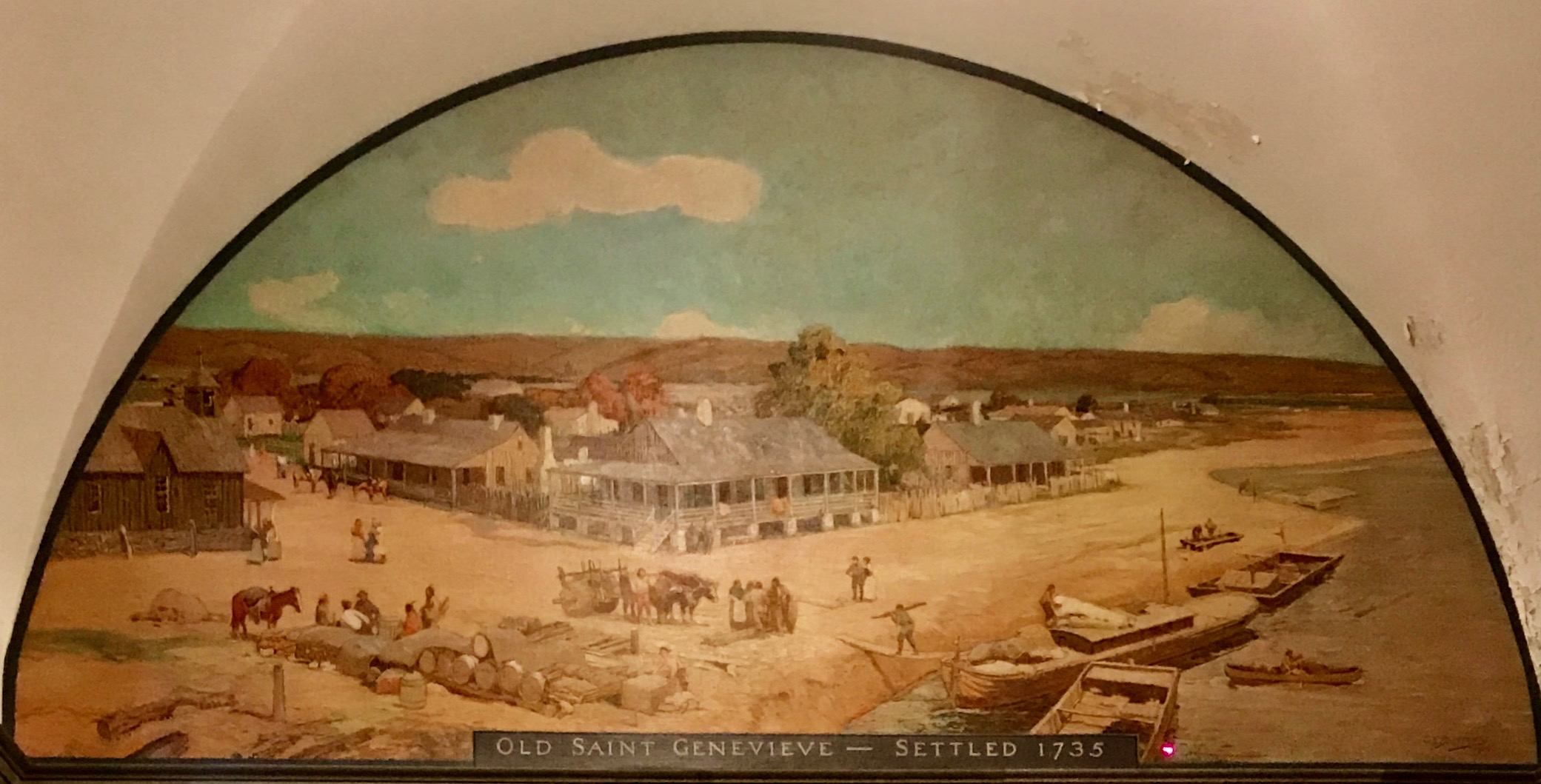
Old Saint Genevieve is in one of the lunettes. According to sources, it is the “first permanent civilized settlement” in Missouri. The French established it on the Mississippi River, about 60 miles south of St. Louis. According to the source, one of the reasons they settled there was to take advantage of the salt springs on Saline Creek. I didn’t know there were salt springs!
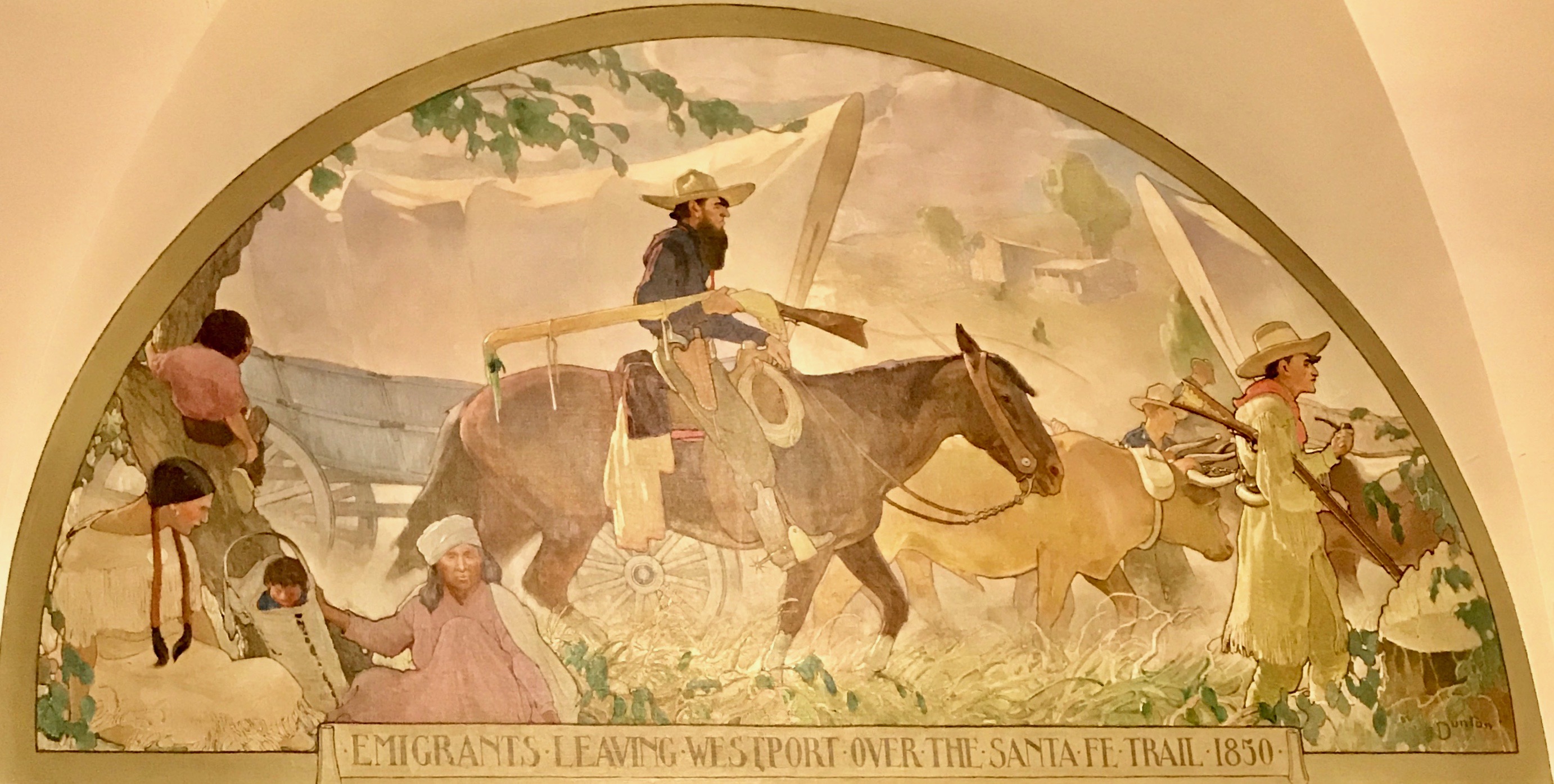
With all the discussion these days about immigrants, I had completely forgotten about emigrants. It wasn’t all that long ago that our own people were leaving all that they knew to make a better life for themselves and their families.
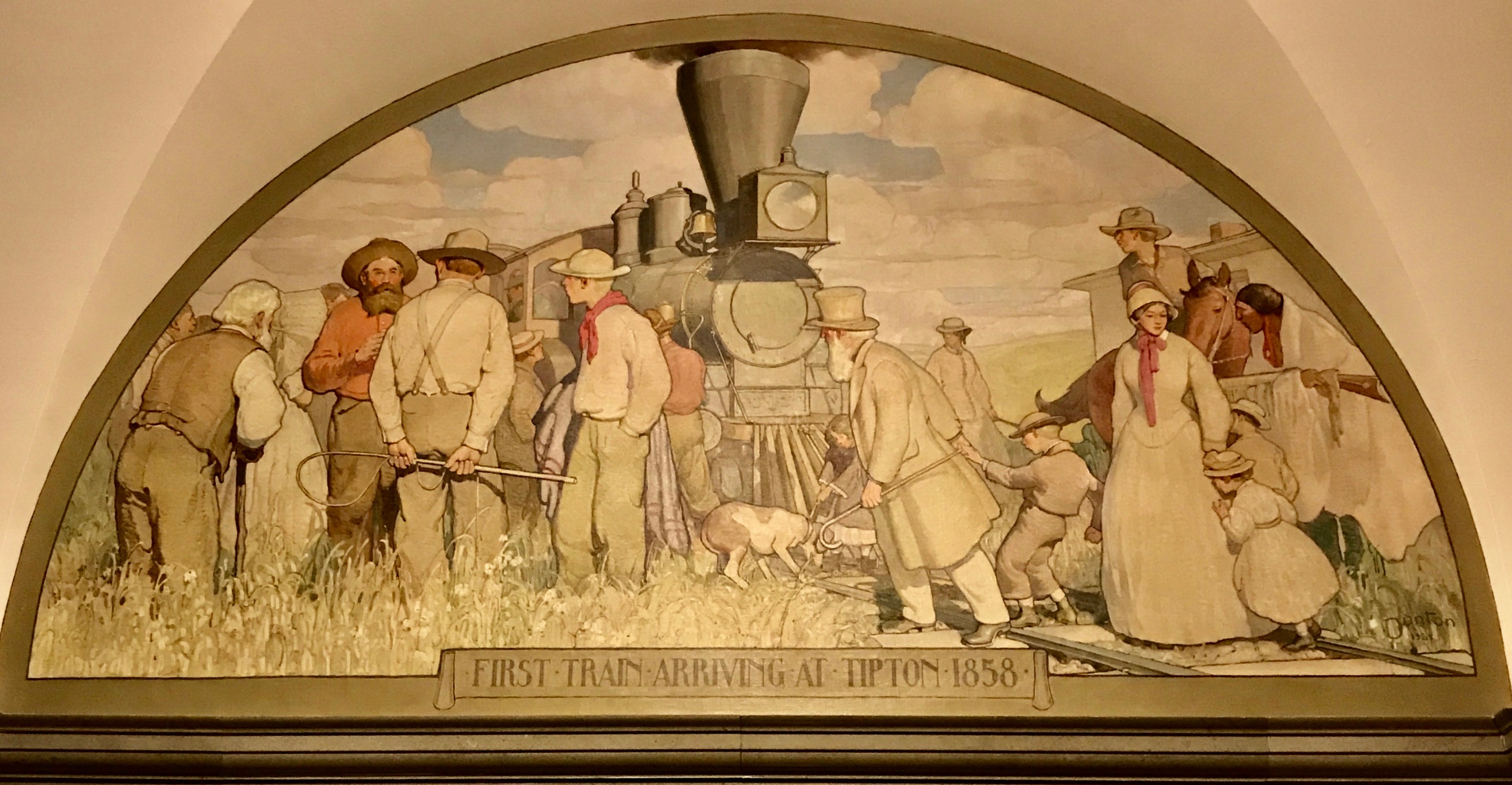
I guess pushing ever westward was a big part of Missouri’s history.

There’s Tipton, west of Jefferson City.
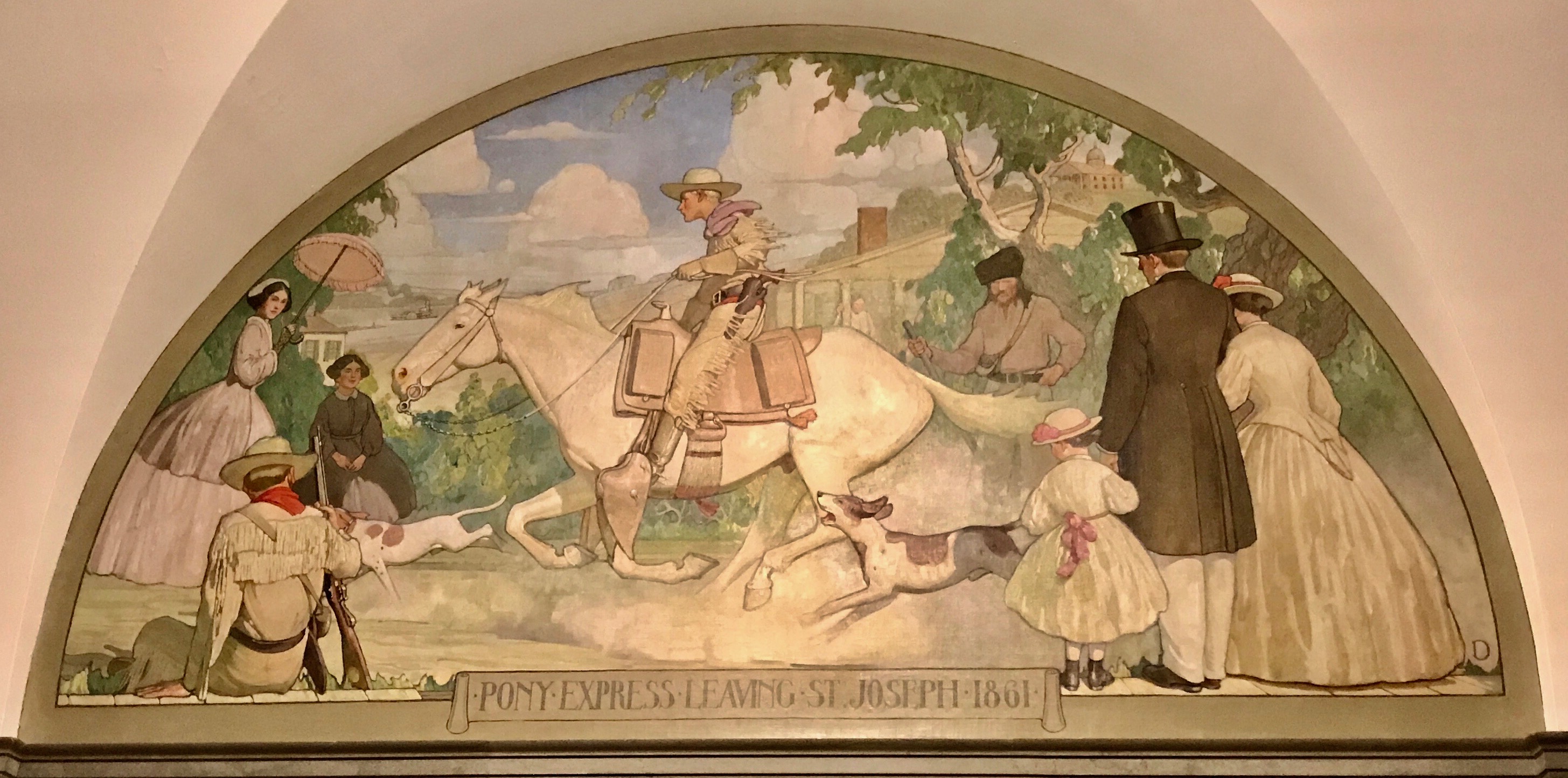
Moving information west (and east) was also important. The Pony Express was only in operation for 18 months, but it remains vivid in our imaginations.
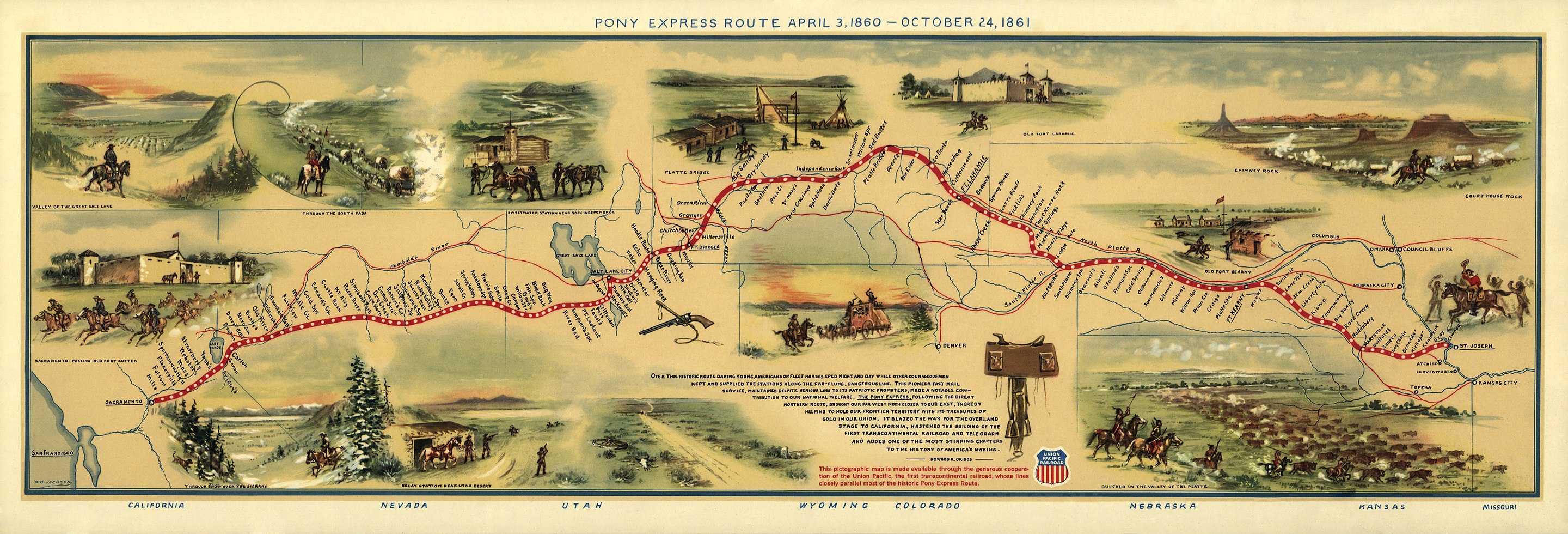
The first westbound Pony Express trip left St. Joseph, on April 3, 1860 and arrived in Sacramento, California on April 14. According to a famous advertisement, the employers were looking for, “Young, skinny, wiry fellows not over eighteen. Must be expert riders, willing to risk death daily. Orphans preferred.”
Whether or not that is true or an exaggeration, what is true is that they could not weigh over 125 pounds and they had to swear an oath:
“I, … , do hereby swear, before the Great and Living God, that during my engagement, and while I am an employee of Russell, Majors, and Waddell, I will, under no circumstances, use profane language, that I will drink no intoxicating liquors, that I will not quarrel or fight with any other employee of the firm, and that in every respect I will conduct myself honestly, be faithful to my duties, and so direct all my acts as to win the confidence of my employers, so help me God.”
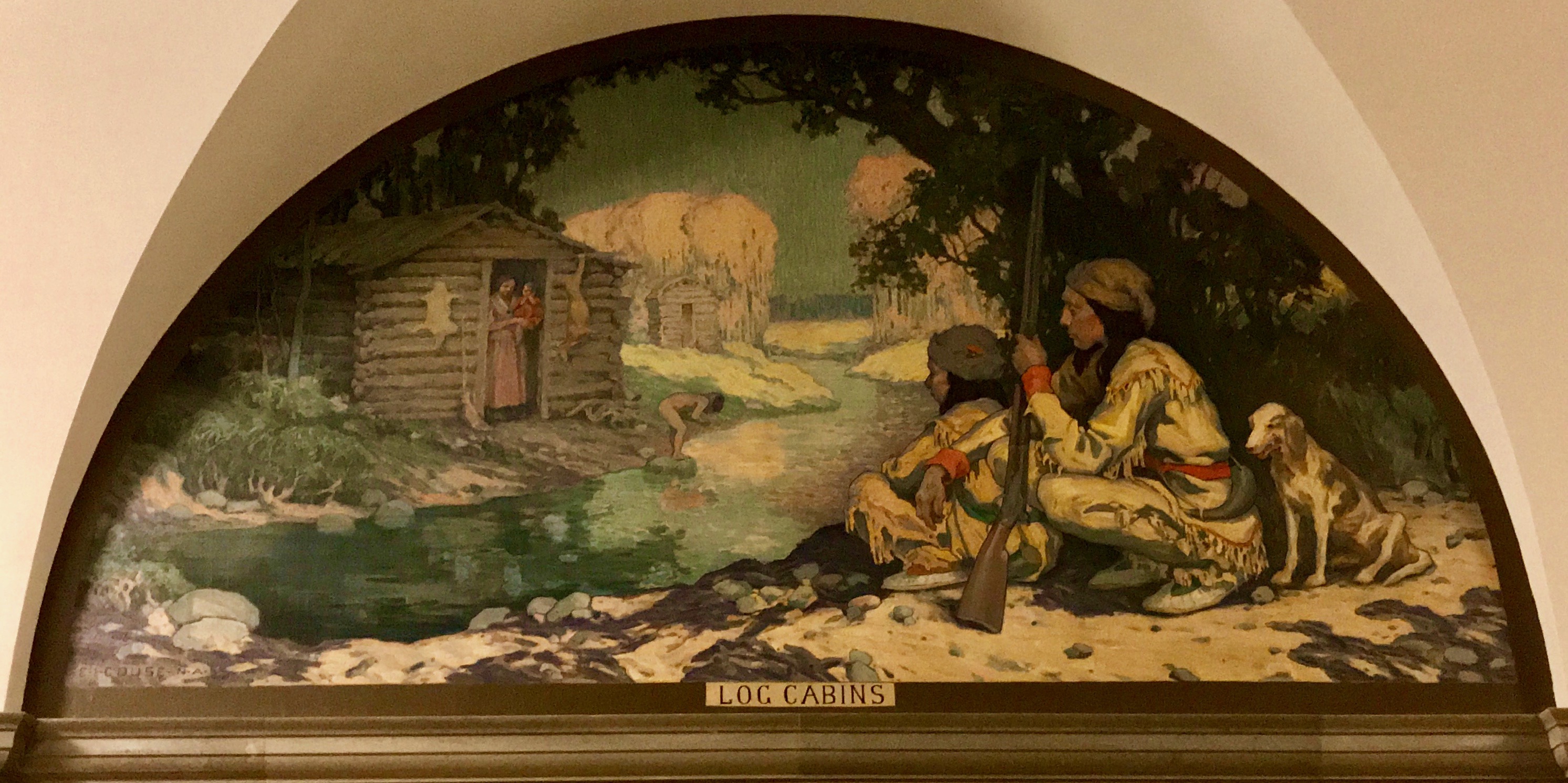
I am not quite sure what to make of this painting. At first, I thought that it showed the Osage looking at the settler’s cabin. Upon closer examination, I think the two figures on the right side are male anglo settlers watching a young girl bathe outside her cabin, with her mother looking on from the doorway. I wonder what the artist’s intent was?
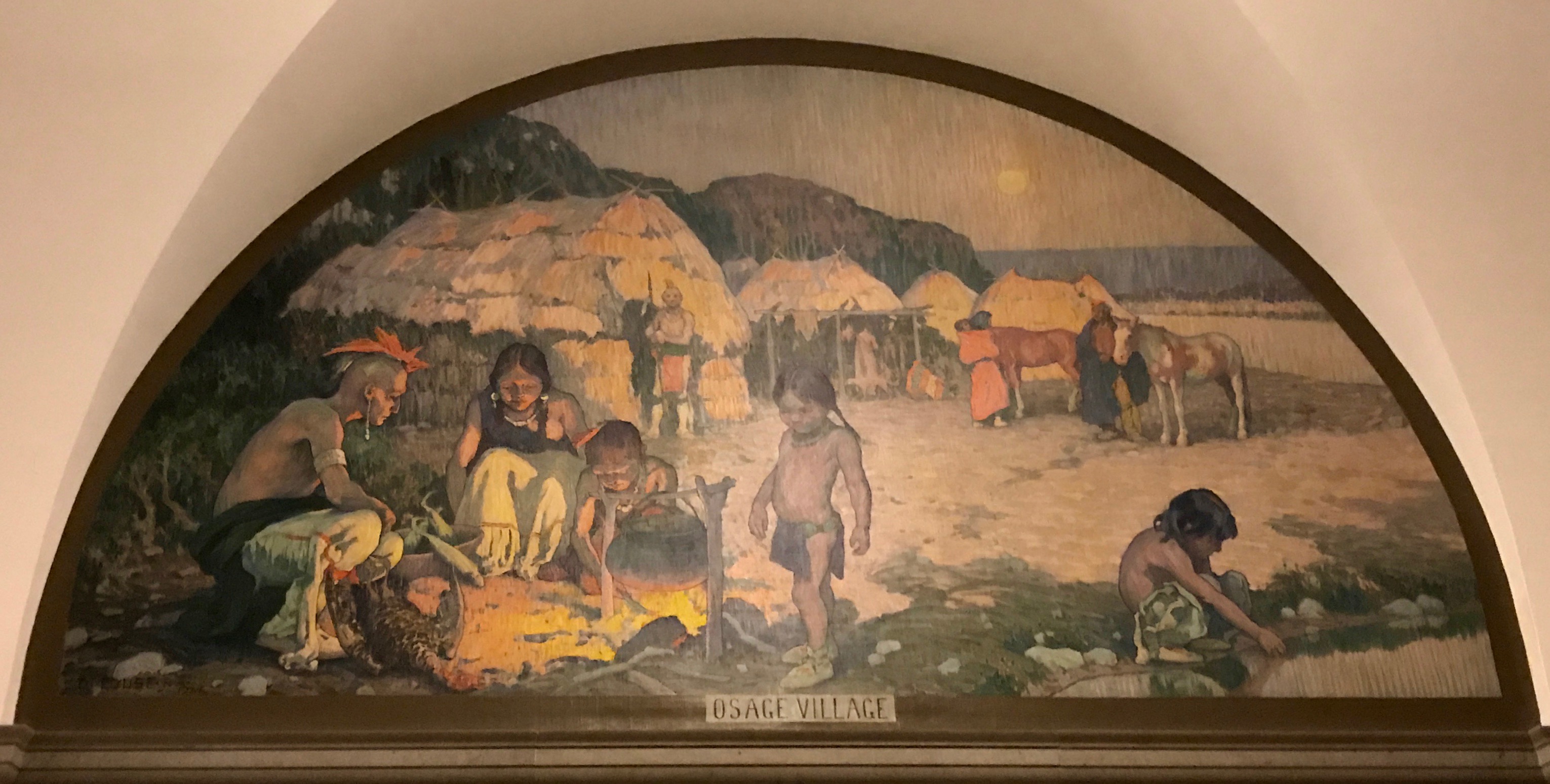
They did not completely ignore the first inhabitants of the land. Here’s a lunette showing an Osage village. We know it must be depicting a scene after 1942, as there were no horses in the Americas prior to the Columbian exchange.
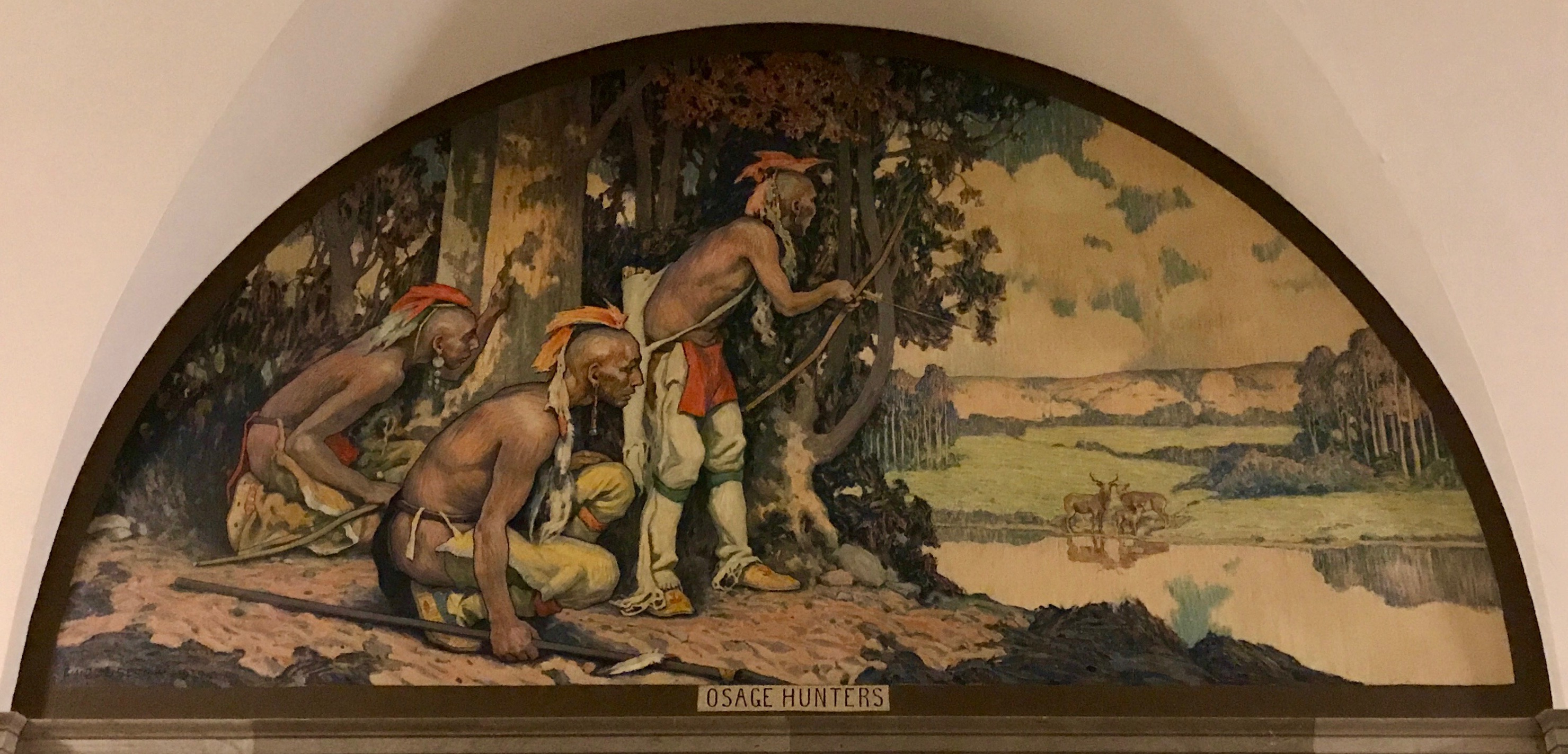
These people certainly knew how to make use of the resources available to them.
While these works of art were good – and in any other capitol, I’d say they were great – next up was what I was really eager to see. The Thomas Hart Benton murals.
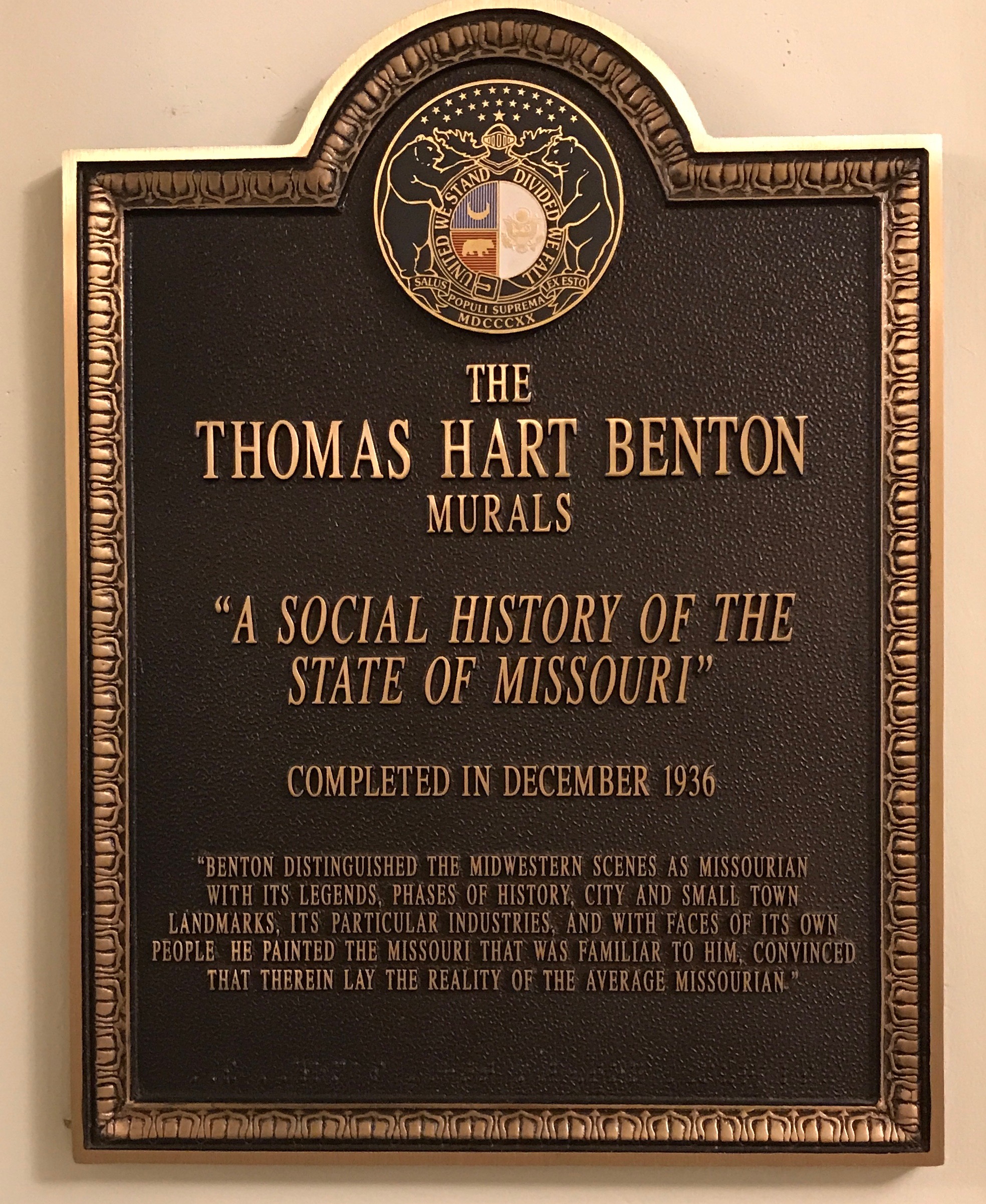
Thomas Hart Benton was commissioned to paint murals for the House Lounge, which is now used as a reception room – not what I think of as a lounge.
Thomas Hart Benton was an American painter who was in the forefront of the Regionalist art movement, along with Grant Wood and John Steuart Curry.
You all know Grant Wood, if for nothing more that his iconic American Gothic and the multitudinous parodies. 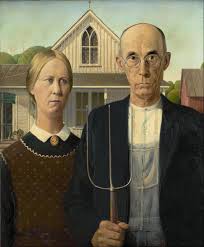
In fact, I visited the house that was used in the background and wrote about it in and earlier post.
The other name often mentioned as a Regionalist artist is John Steuart Curry. I have to admit that I wasn’t familiar with that name. Perhaps Sister Jeanne taught us about him, but that was a good 40 years ago. (gulp!) I may have forgotten.
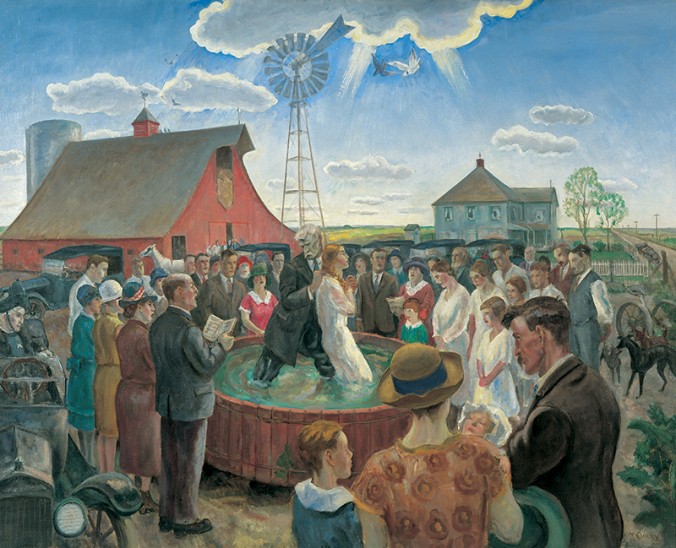
Curry also did murals, but in the state capitol of Kansas. I guess Regionalist art makes sense in a Midwest state capitol.
Regionalism is a realist modern art movement arose in the 1930s as a response to the Great Depression and ended in the 1940s, along with the end of World War II. Its height of popularity was from 1930 to 1935. It was appreciated for its reassuring images that focused on depicting scenes of rural and small-town America primarily in the Midwest and Deep South. According to my Preferred Source, Regionalist Art in general was in a relatively conservative and traditionalist style that appealed to popular American sensibilities.
I am not sure that the legislators found Benton’s work particularly reassuring. In fact, when the legislature convened in 1937, there was an uproar. The legislators wanted the murals covered up. They gave many reasons for wanting the murals covered up, including: the subject matter; the largeness of the figures; the bright colors; and the crowds flocking to the Lounge to look at the murals.
At the time, legislators did not have their own offices, and they used the Lounge to congregate and to get work done.
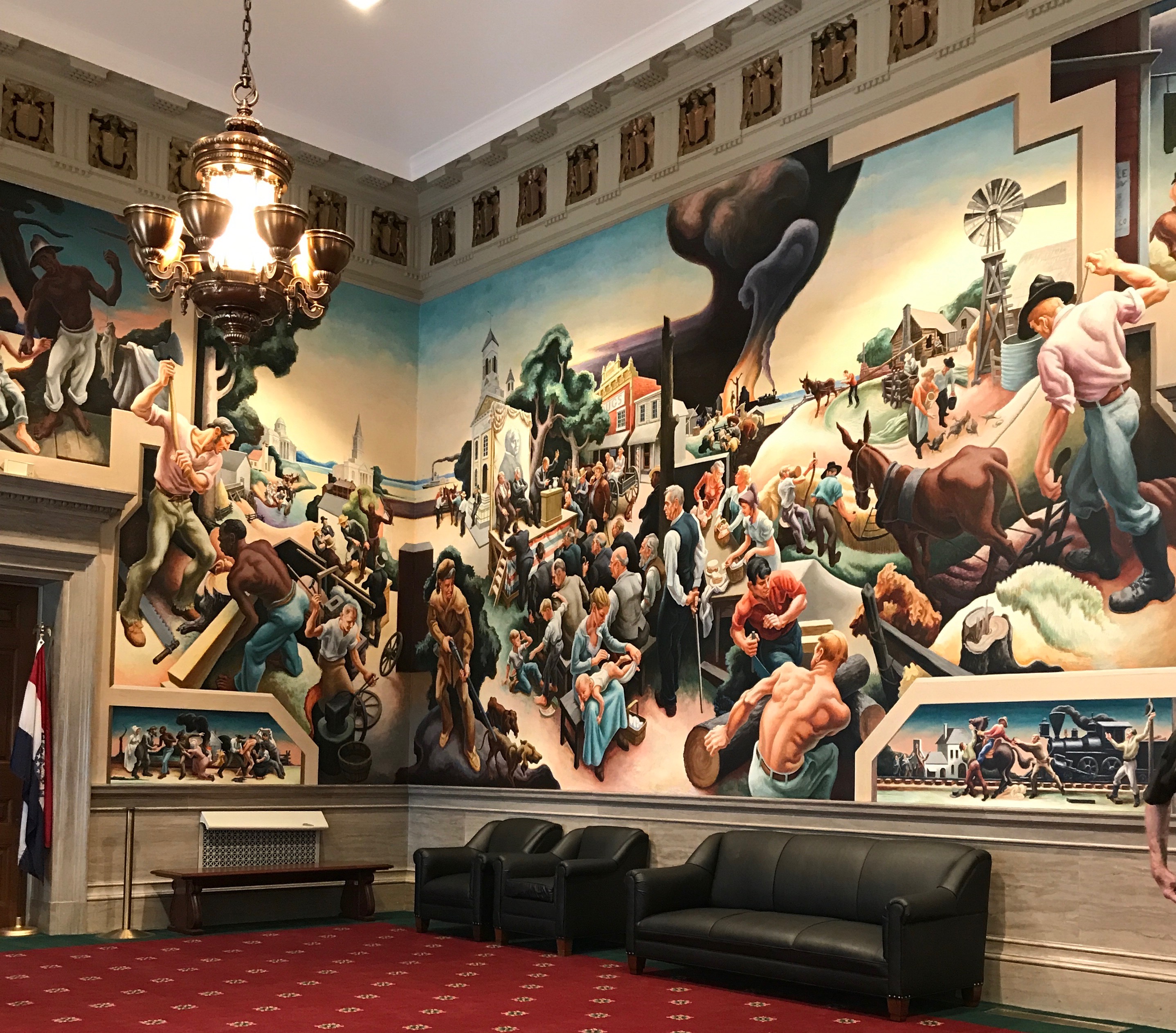
There is no denying any of those criticisms.
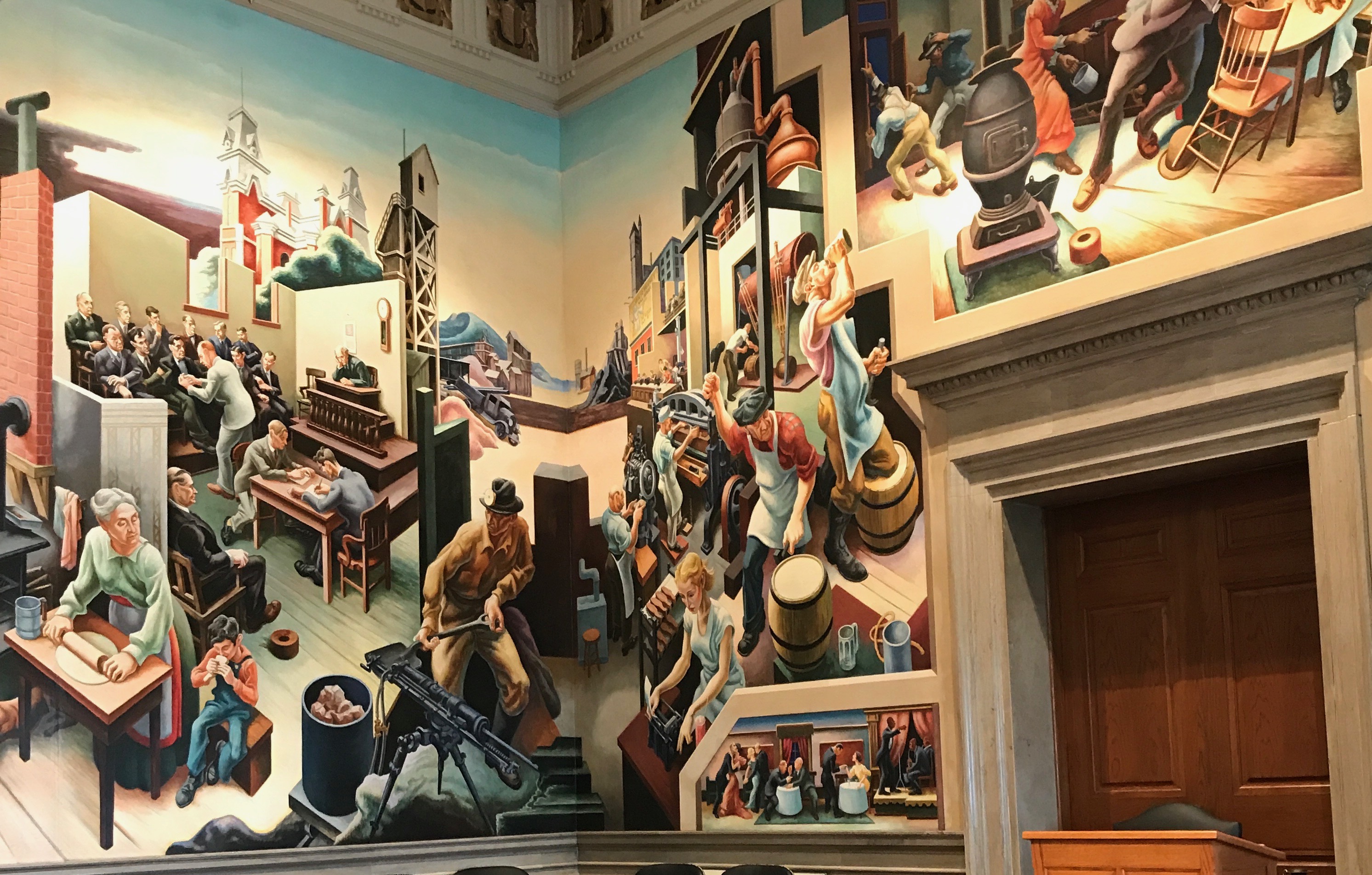
Benton was given the princely sum of $16,000 for decorating the Lounge. It was a considerable amount, considering that this was the height of the Depression. It was more than the Governor’s annual salary. In 2019 funds, this would be equal to almost $300,000. Quite frankly, I think they got their money’s worth.
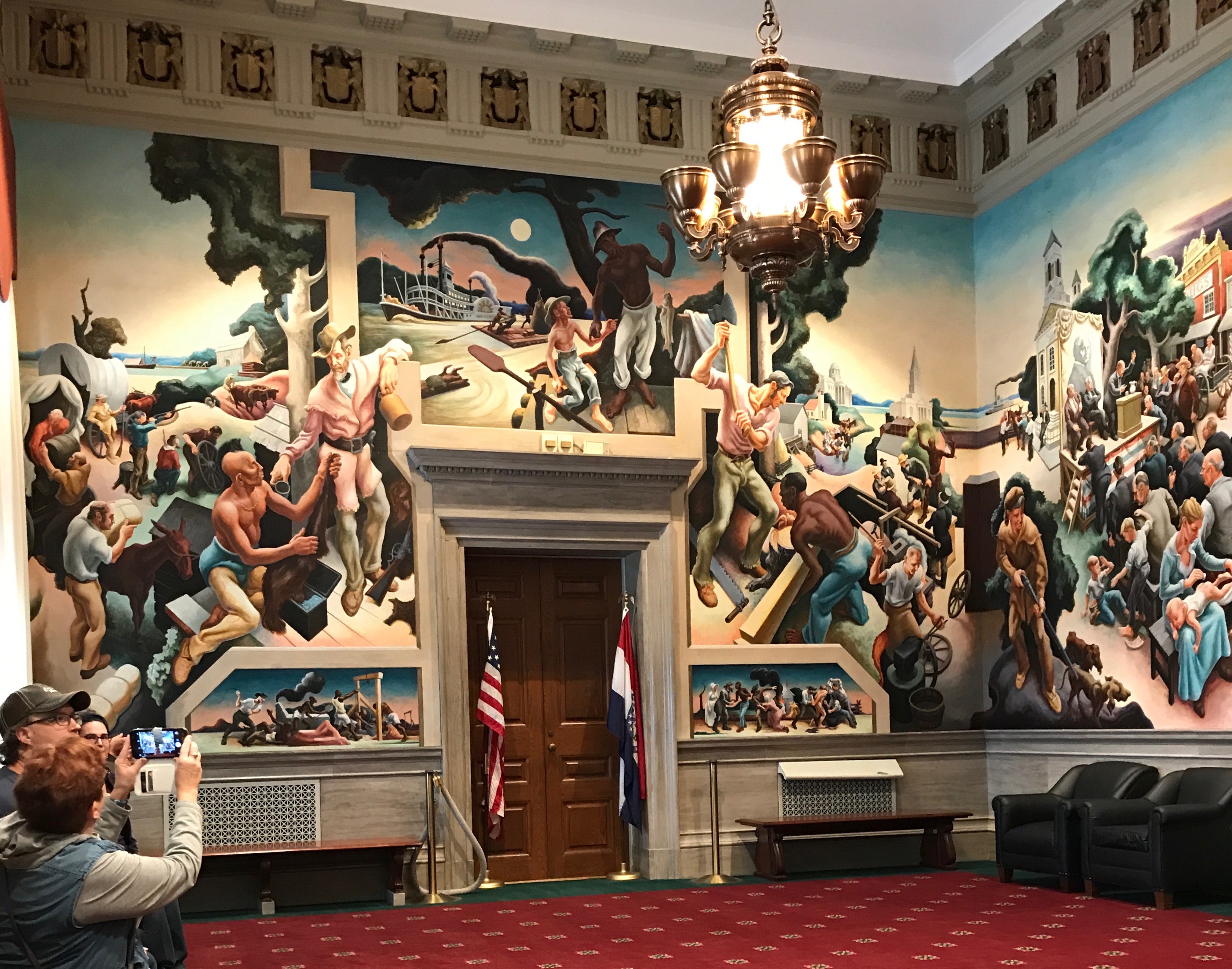
Benton was charged with showing the history of Missouri from the arrival of the French in the 1750s to the 1930s, when the painting was completed. It doesn’t look away from the darker episodes of the state’s history, including slavery and the Missouri Compromise.
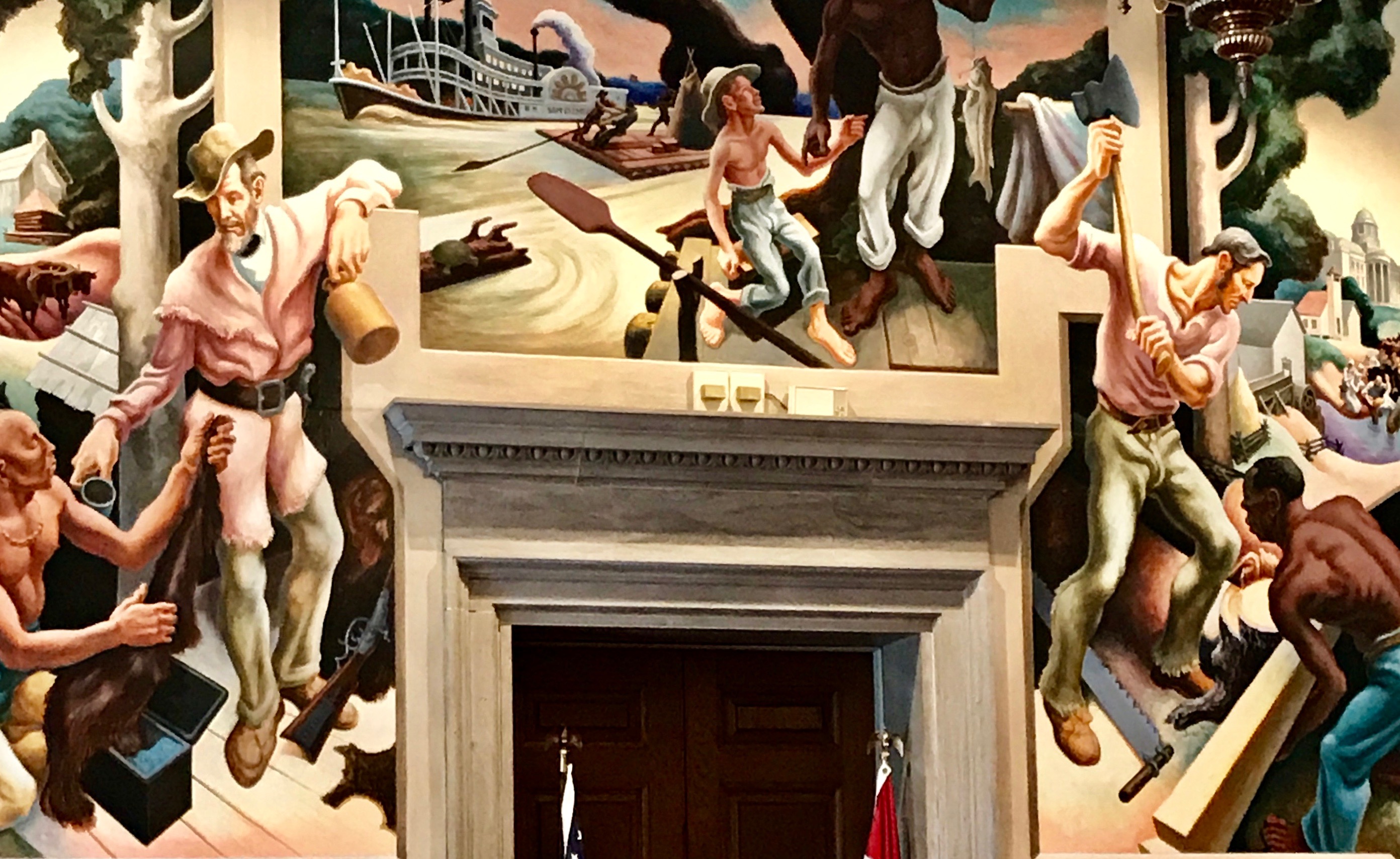
Notice the European settler on the left giving and native resident what I can only assume is alcohol.
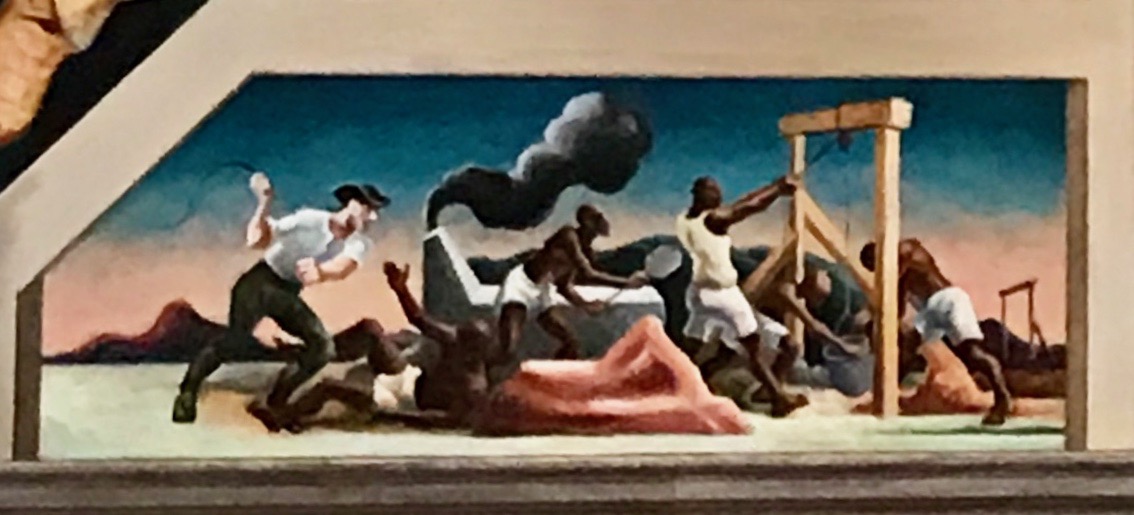
The treatment of slaves was included in the historical record.
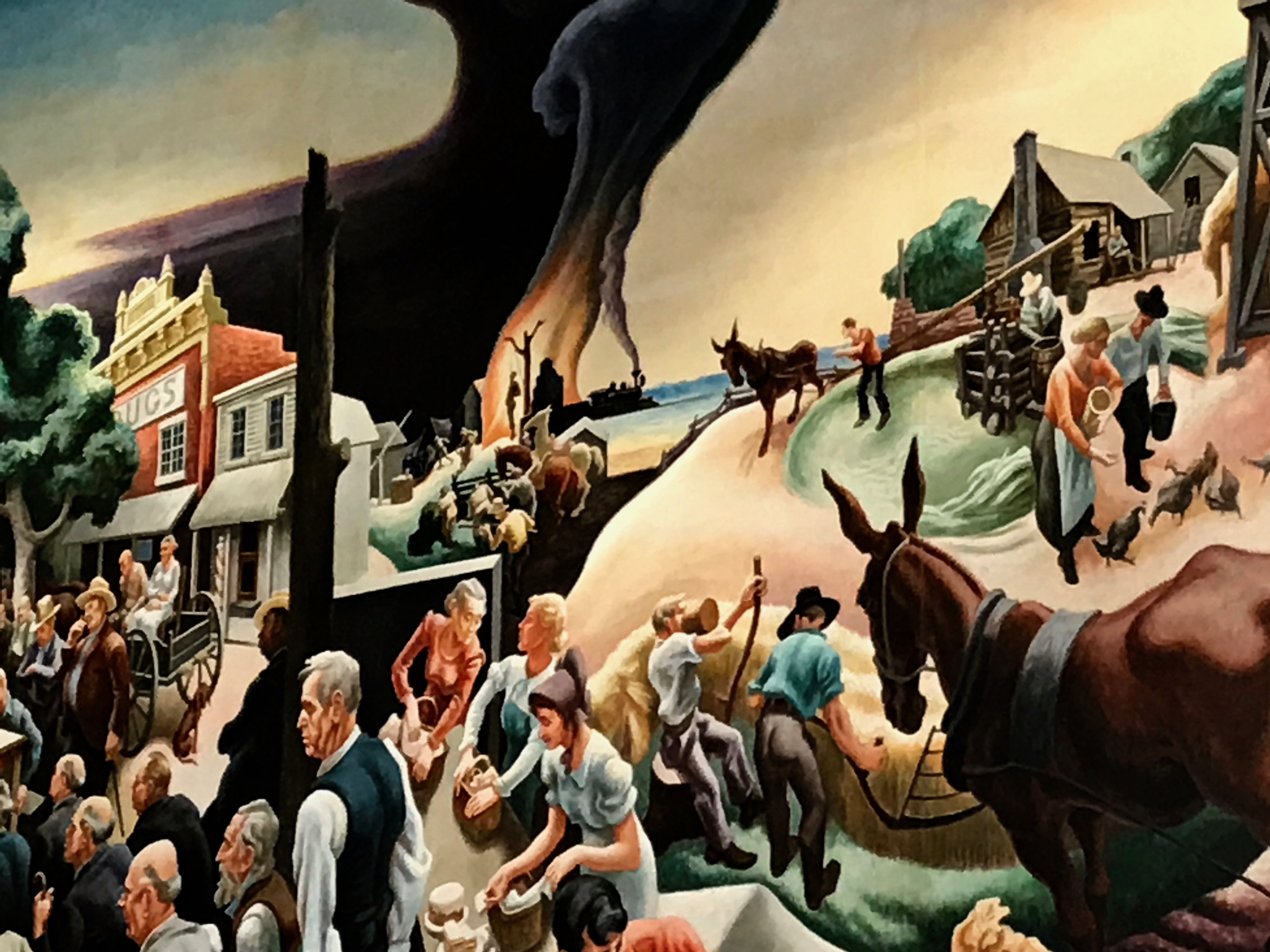
This painting reminds me of the work of Hieronymus Bosch, a Dutch painter born in the 15th century.
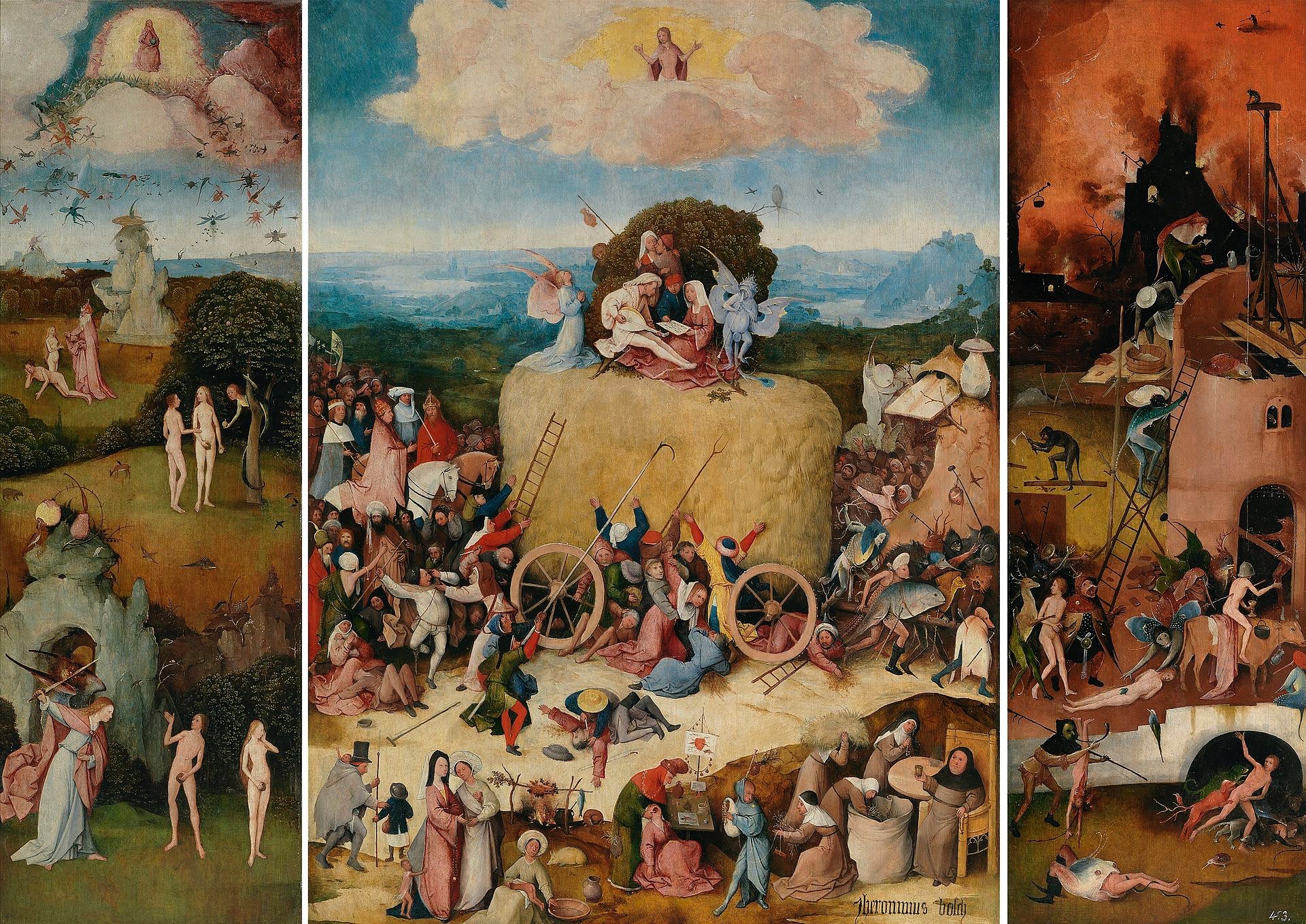
Everywhere you look is something astounding.
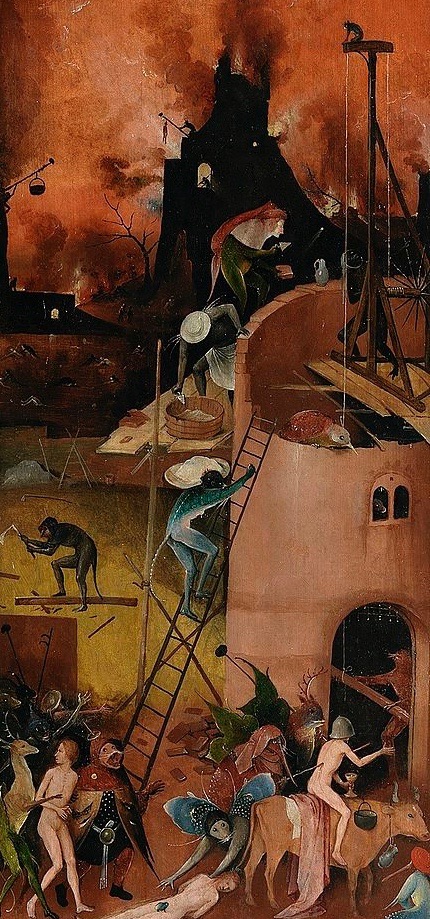
And unsettling.
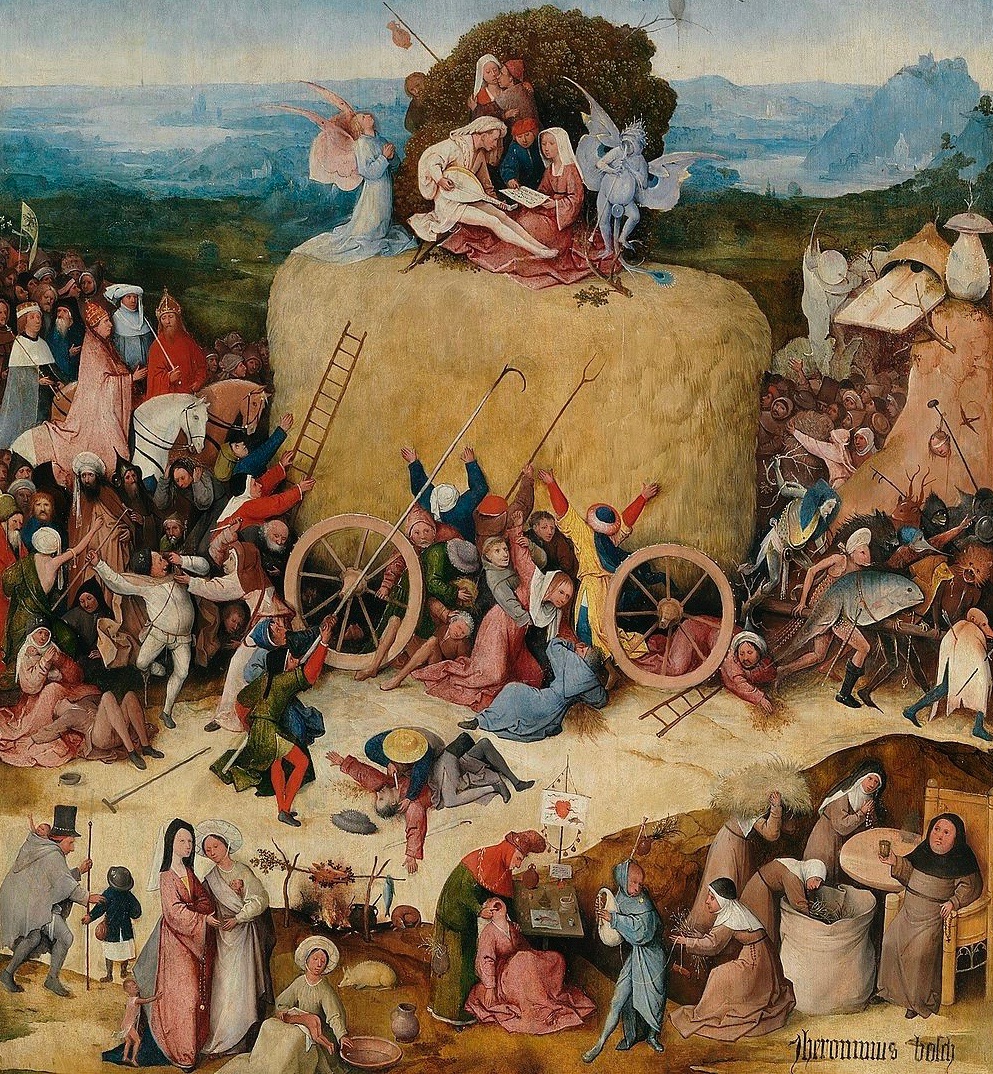
But we’re not here to talk about Hieronymus Bosch. Back to Thomas Hart Benton.
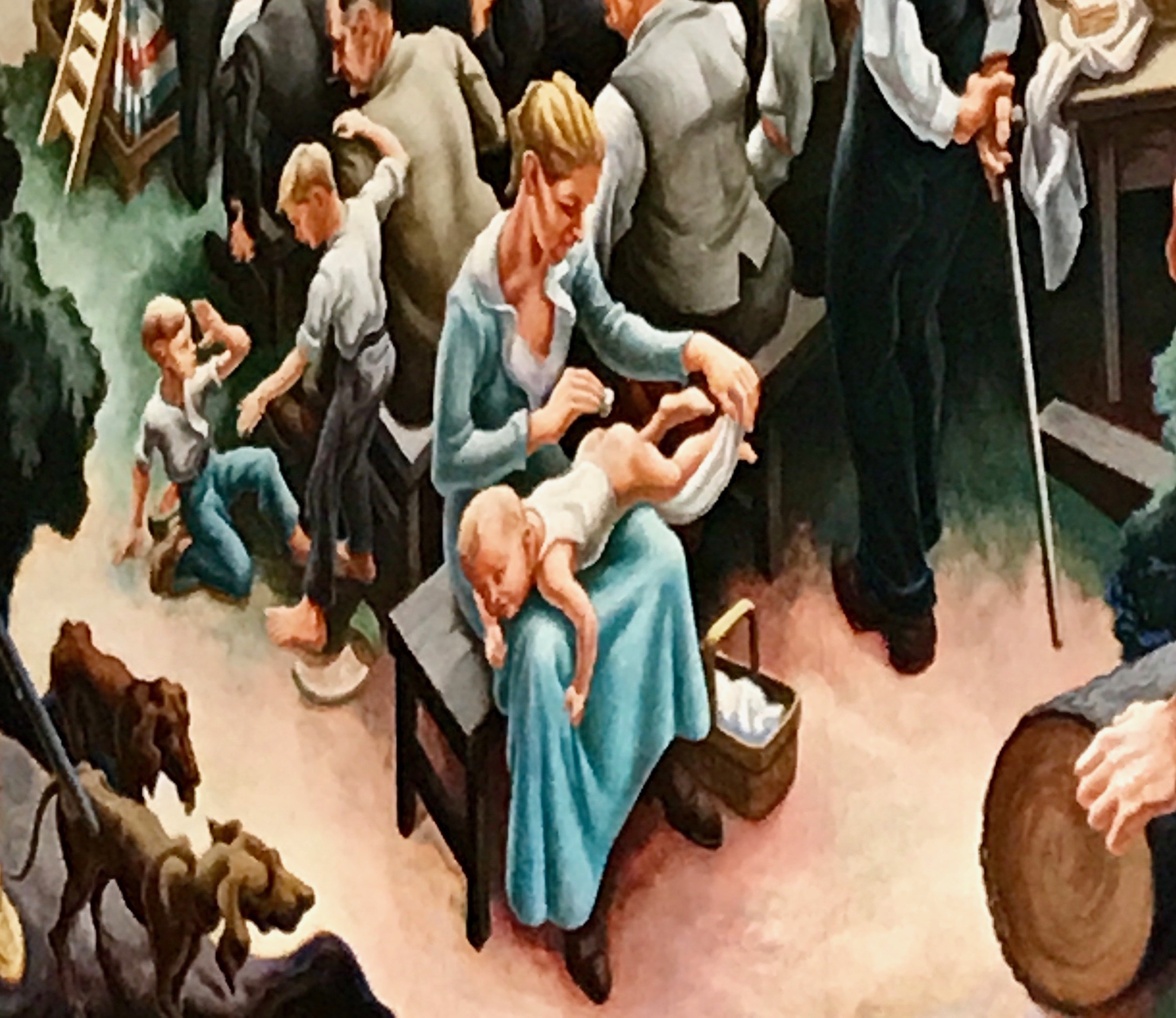
The lawmakers were scandalized by the inclusion of such quotidian activities.
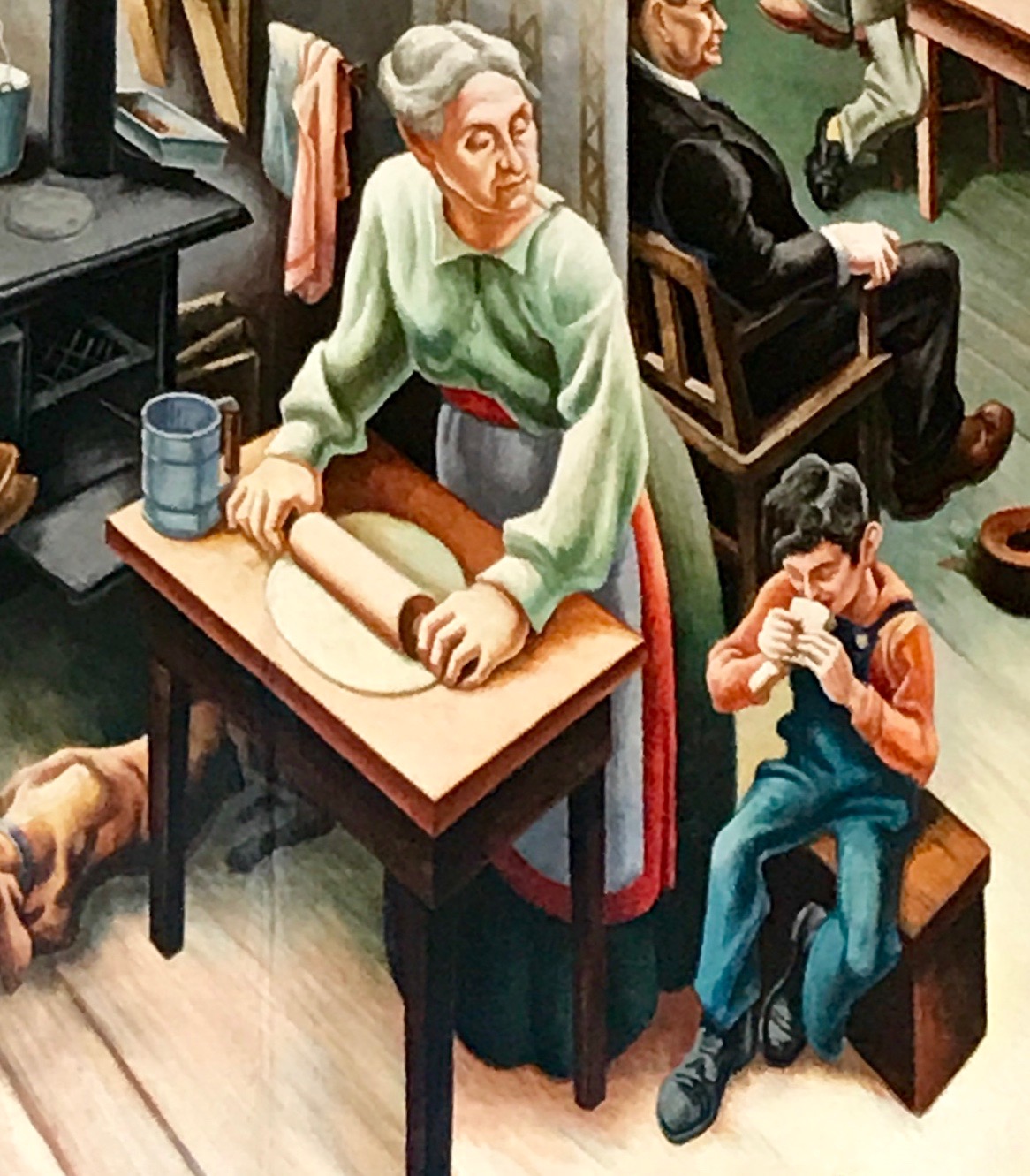
I think some of the models for these figures were family members.
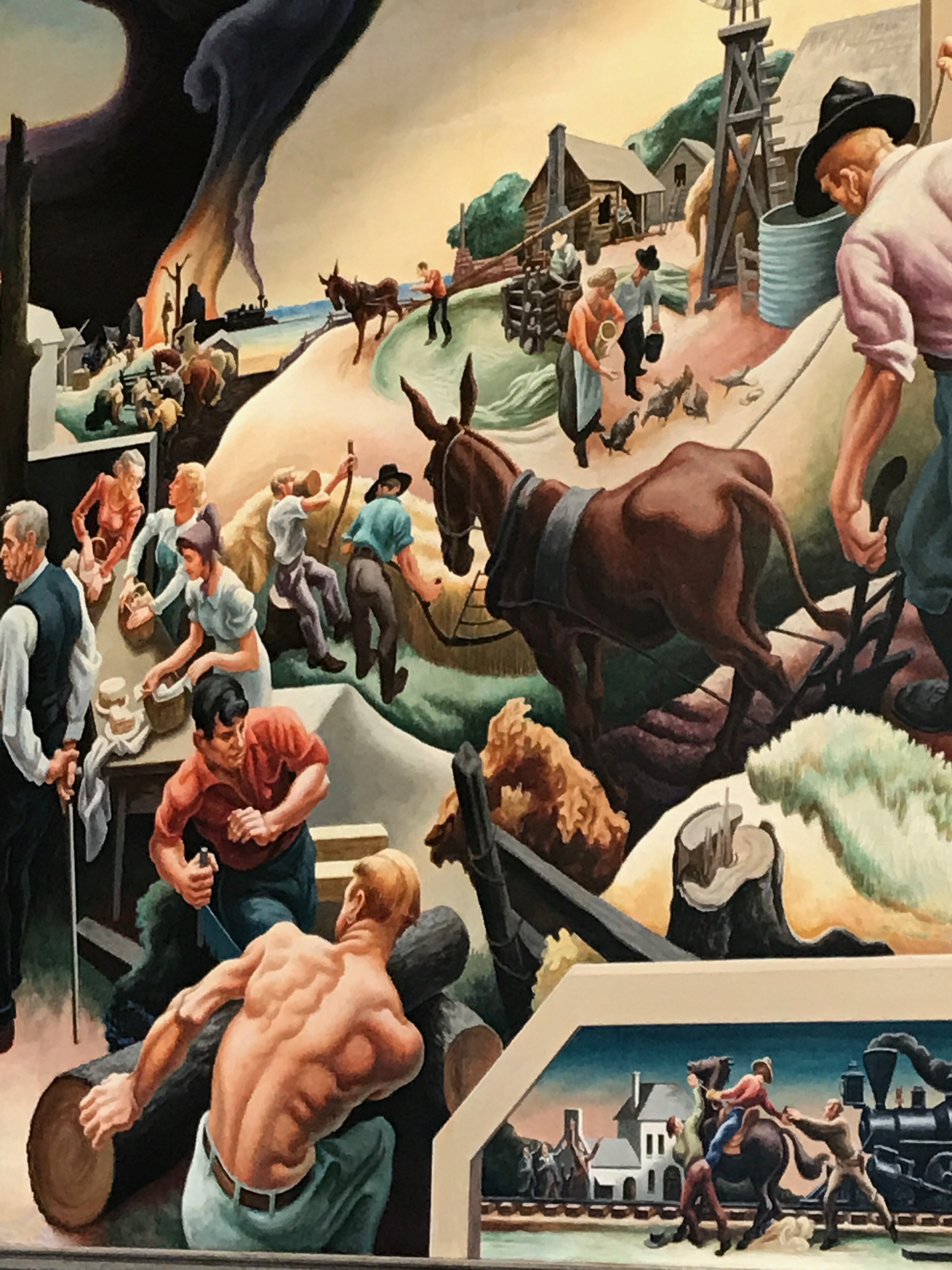
The lumberjack reminds me of the statue, “Laocoön and His Sons,” an ancient Greek statue. (Thank you, Sister Jeanne!) One of the things I remember her telling me about the Greek statue was that they really got into showing all the muscles bulging – and not in a natural way. I mean, if you are really doing something, some muscles are tense and others are relaxed. Anyway, if you want to see what I am referring to, click on the link.
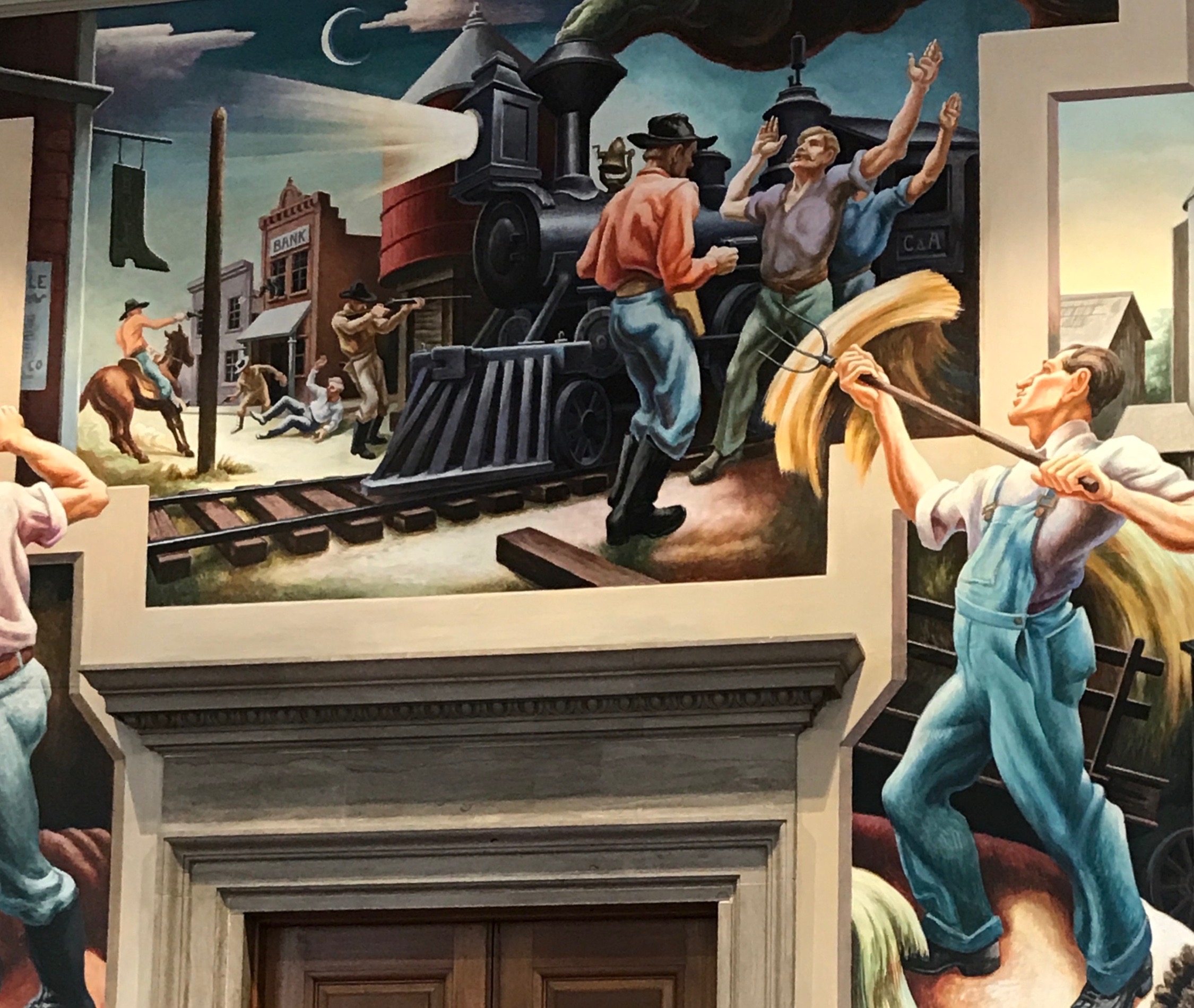
Benton included all sorts of things that were part of the history of Missouri, including Jesse James robbing trains.
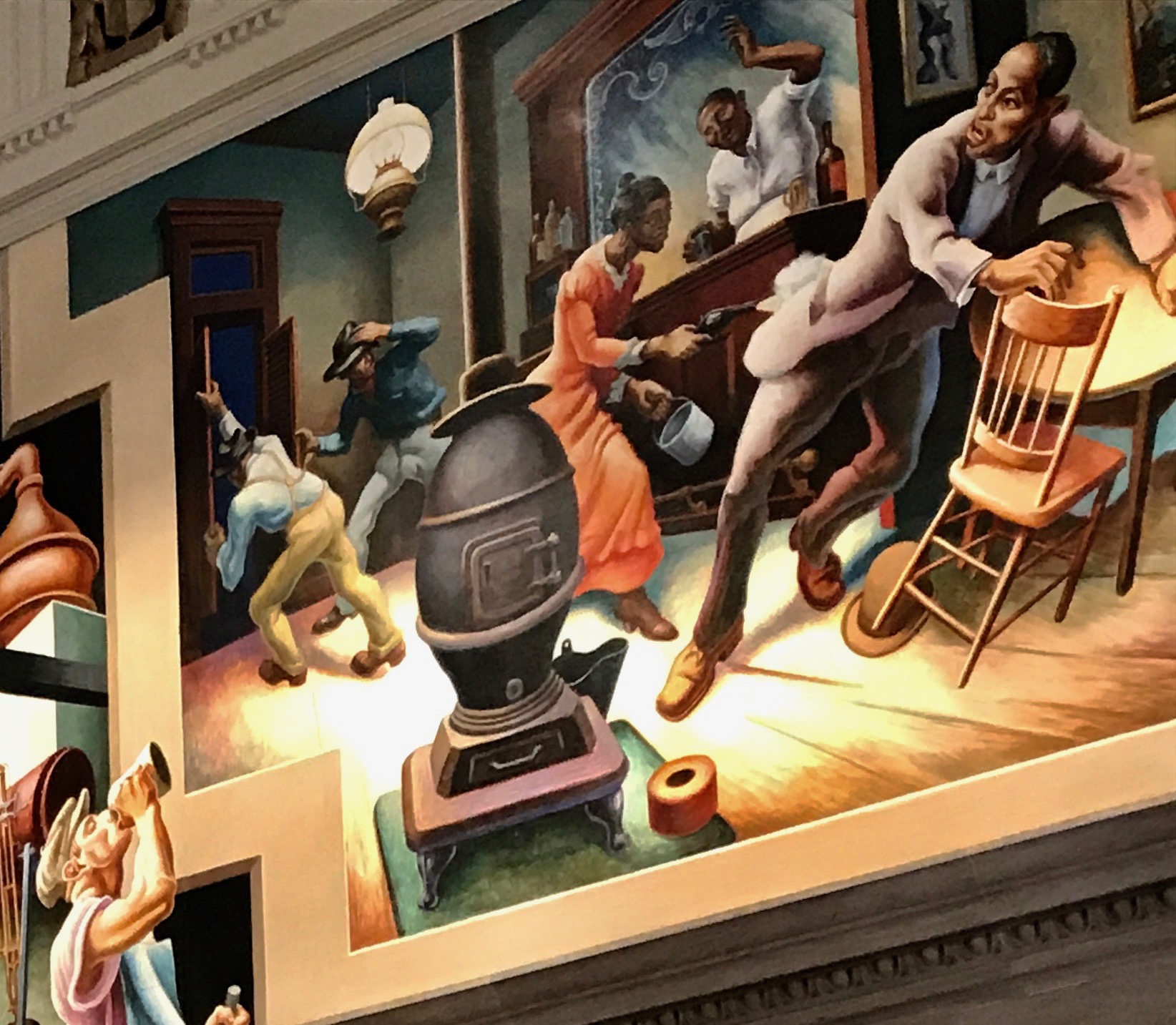
And the real life story behind the song, Frankie and Johnny. It was based on an 1899 St. Louis murder.
There are many versions of the song out there floating around. I selected this one for your enjoyment.
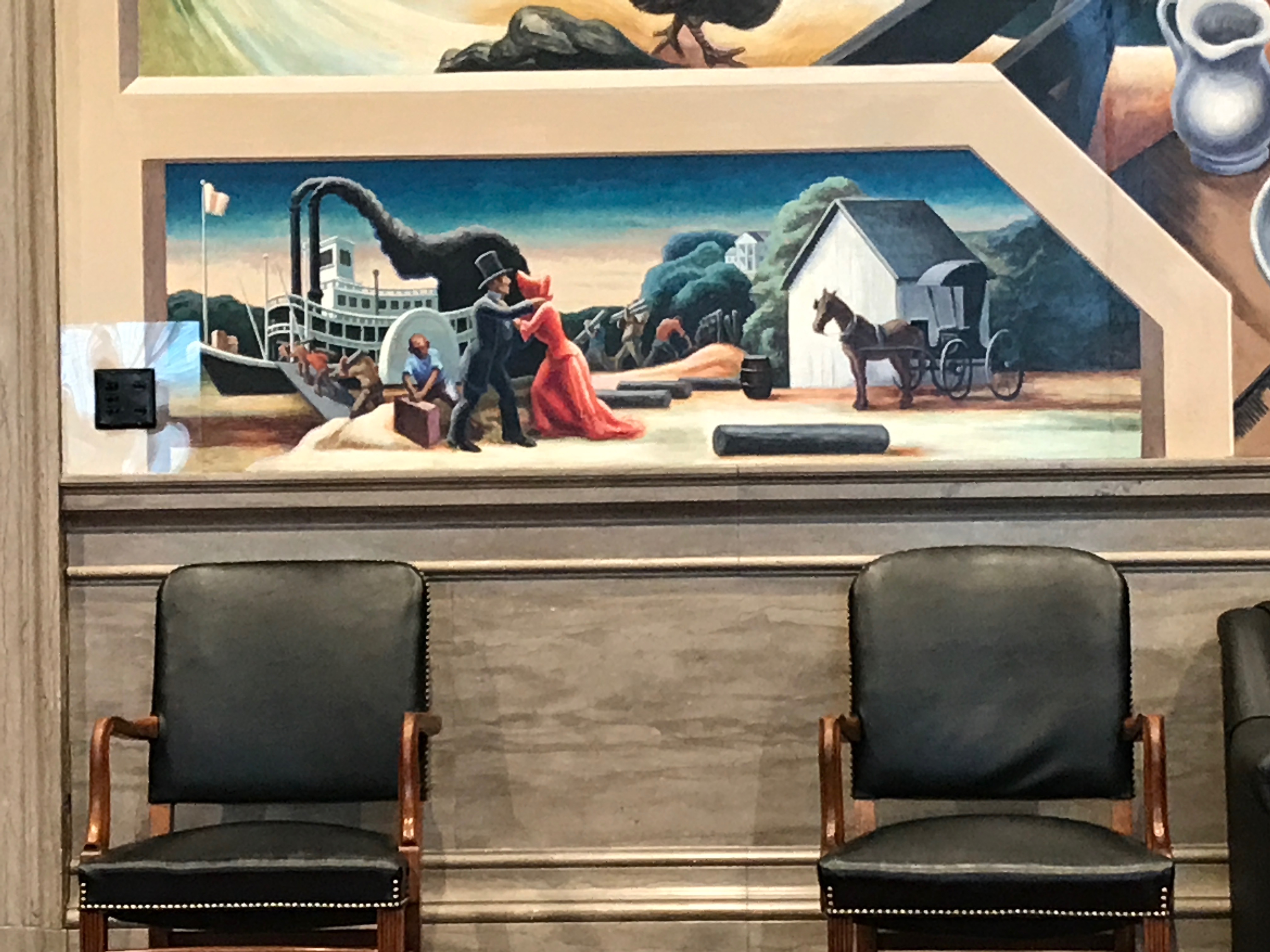
This detail looks like misogyny is also part of the state’s history.
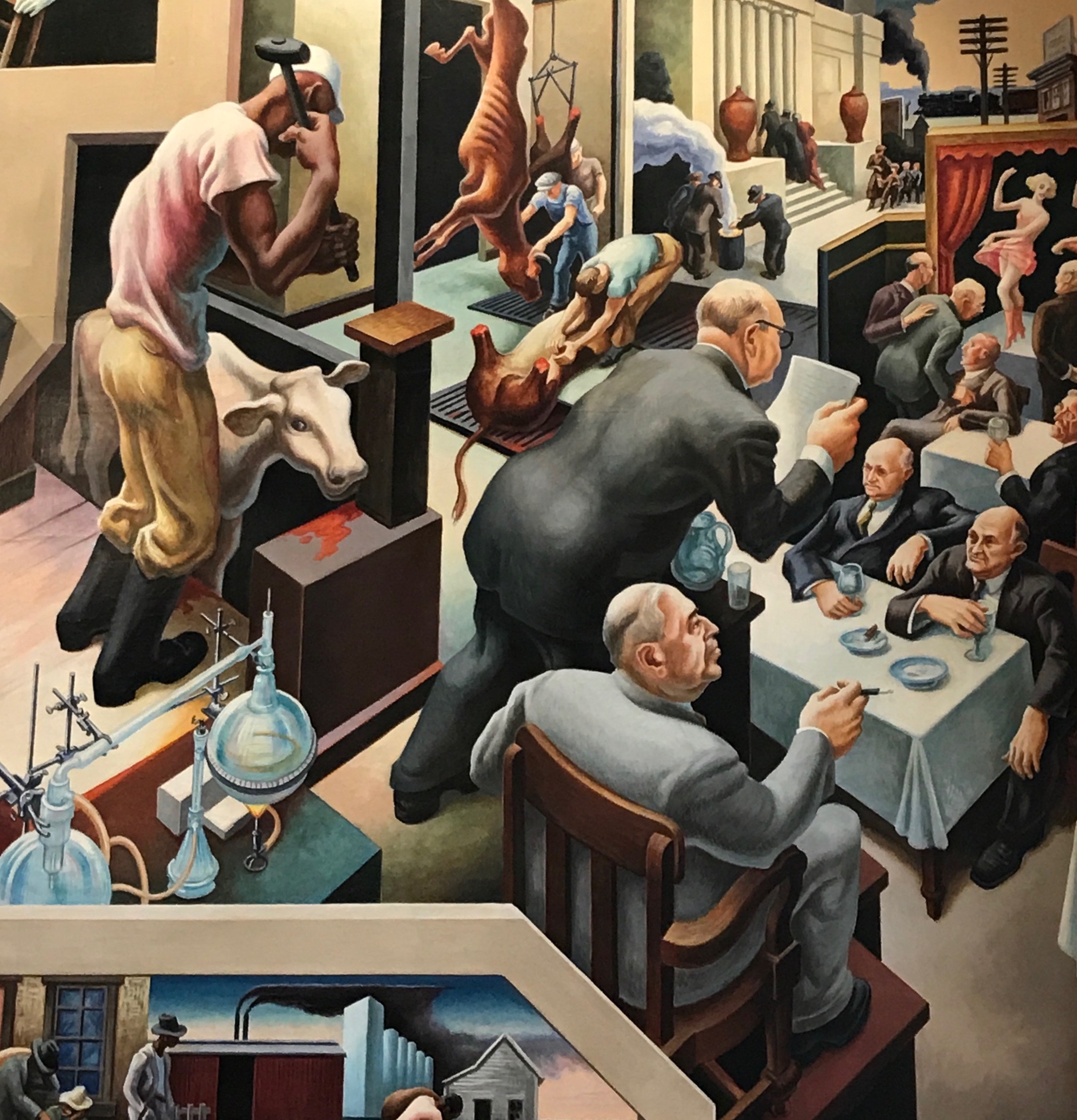
I’ve mentioned Tom Pendergast and his political machine before. Here he is, right on the walls of the state capitol. In fact, at the time this mural was painted in 1936, he was still very much in charge of Missouri politics. In 1939, he was convicted of income tax evasion and served 15 months in a Federal prison.
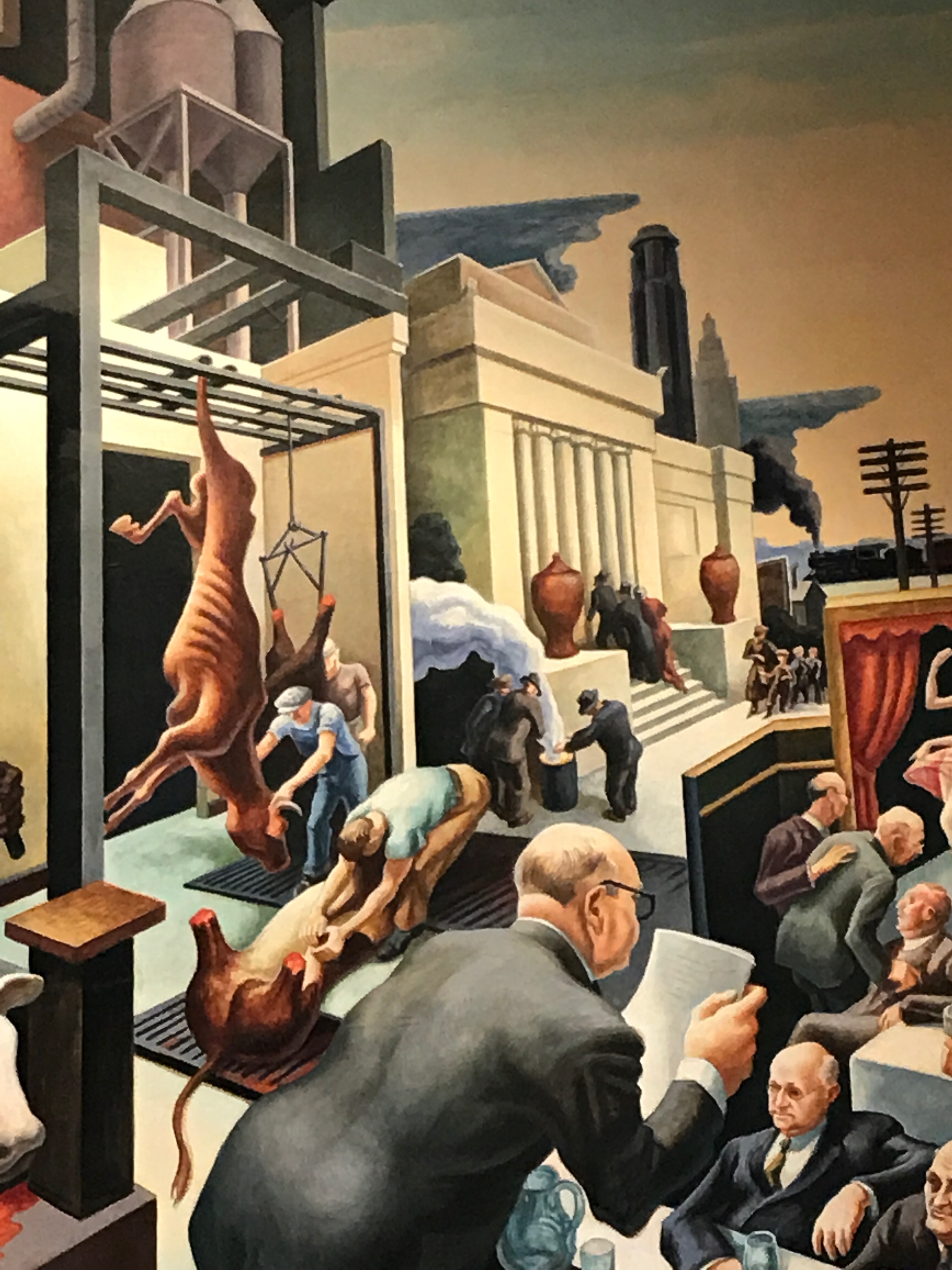
I have zoomed in on these images, because they are of places I hope to see while I am in Kansas City: The Nelson-Atkins Museum of Art and the Liberty Memorial, now known as the National WW I Museum and Memorial.
And, with that, we leave the House Lounge and the Thomas Hart Benton murals.
Believe it or not, there is yet another post coming about the Missouri State Capitol.
So, stay tuned!
(I promise the next one will be the last post about the capitol, at least for this visit.)