My next stop was Neosho, Missouri. Not a big city, nor a well-known place. Nevertheless, it was a destination I had been looking forward to with great anticipation for months.
I was in Neosho to take part in another HistoriCorps project to help preserve George Washington Carver’s first school, the Neosho Colored School. I was there during the first week of the project, and our tasks consisted of demolishing and removing additions and “improvements” that had been made on the original 1872 structure.
I arrived a day ahead of schedule and got settled in at the city’s Hickory Creek RV Park. It is not uncommon to find municipal campgrounds in the heartland, complete with electricity, water and dump stations. There was plenty of room in the park. This was due to the fact the the town had set aside the whole park for our use during the three week time that HistoriCorps would be in town.
The day before the project kicked off, I decided to head over to the George Washington Carver National Monument in nearby Diamond, Missouri. He was born into slavery there in the waning years of the Civil War.
I was lucky that I got to visit the site twice. For my first visit, I opted to walk the Carver trail.
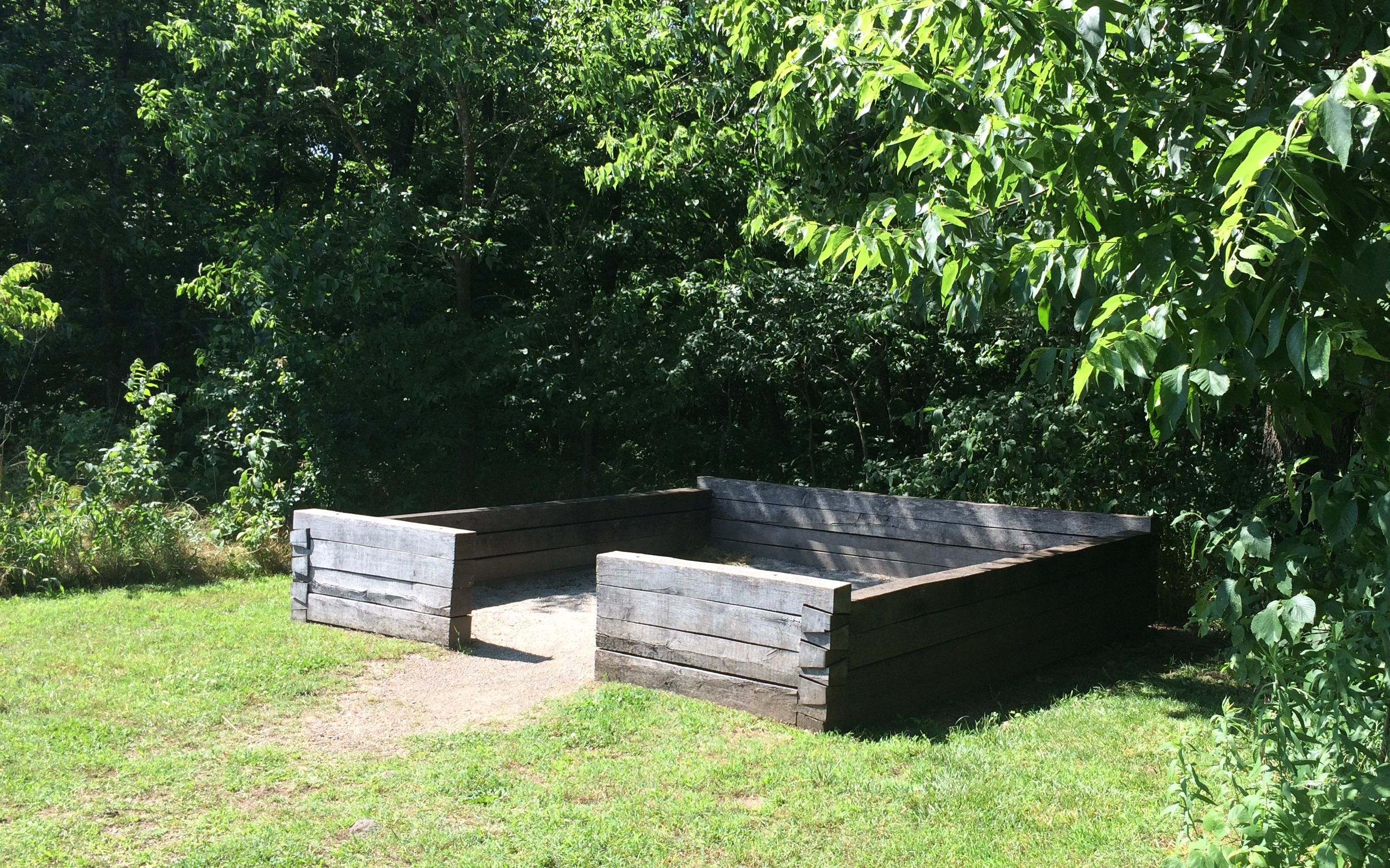
There was an outline of the site of the cabin where George was born that archeologists have identified. Moses Carver had purchased George’s mother, Mary, in 1855, when she was 13 years old. According to information I have read, George had 10 brothers and sisters, most of whom died prematurely. Record keeping was spotty, at best. Oh, Moses Carver did have the receipt for the purchase of Mary, but there is no record of the births.
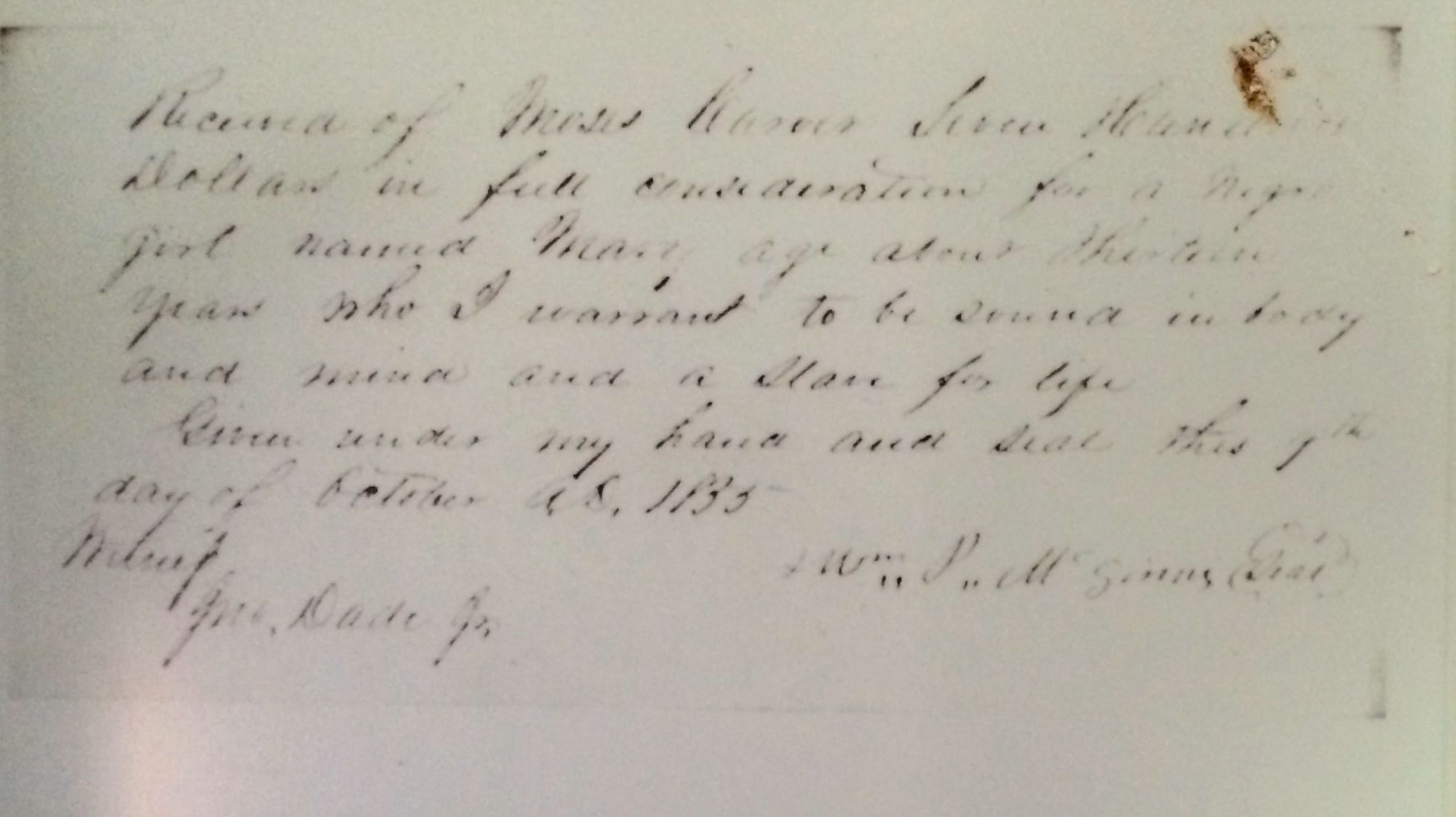
Sometime near the end of the Civil War, raiders came to steal what they could from the farm. According to Moses Carver, when the raiders found no cash, they carried off Mary and baby George, who was about a week or so old at the time. George’s brother, James, managed to hide when the raiders came.
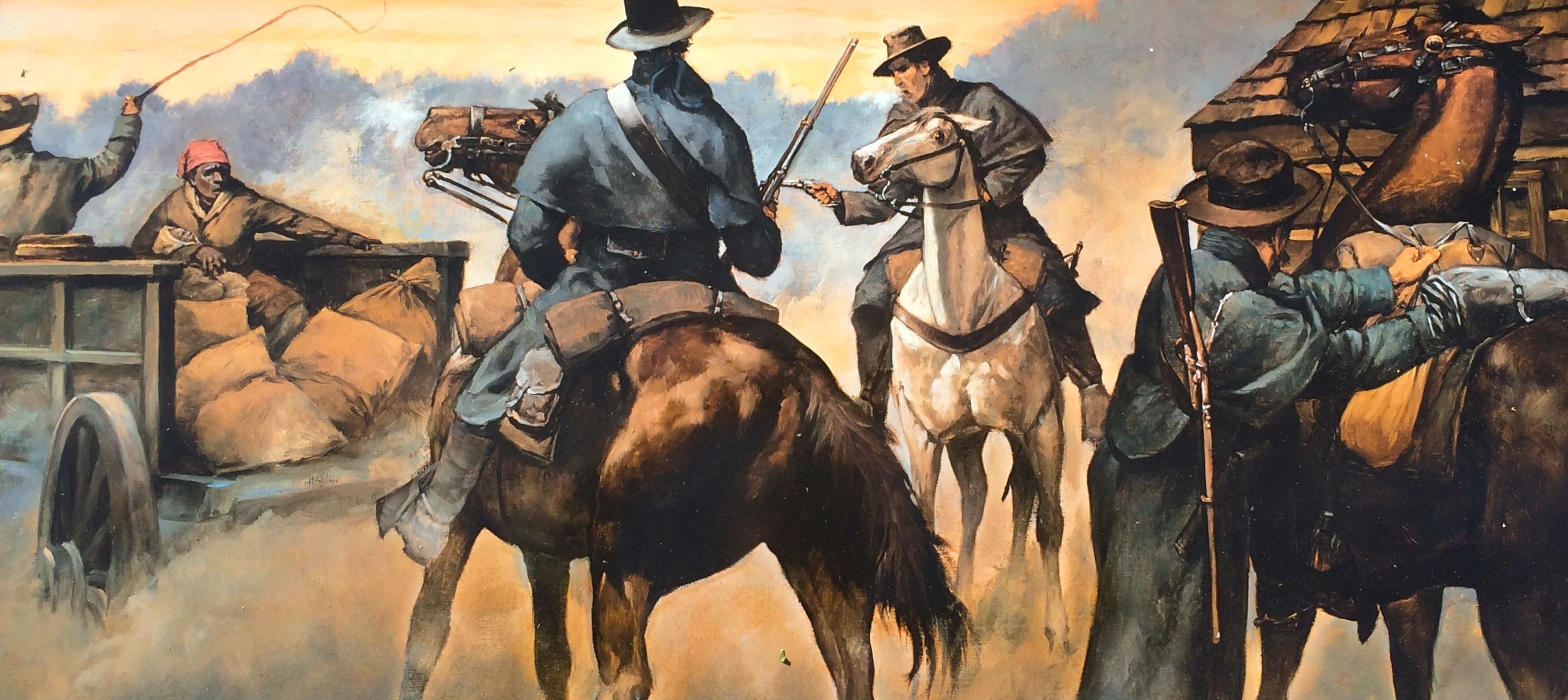
Moses asked a local Union scout, John Bentley, to recover his stolen property. Bentley returned with a very sick George, but Mary had disappeared with the raiders. Carver rewarded Bentley with a $300 racehorse. According to the informational signage at the site, in George’s later memory of this story, he focused on how Moses had made a special effort to get him back. To George, this seemed the first tangible indication that he was a special person, destined to accomplish much with his life.
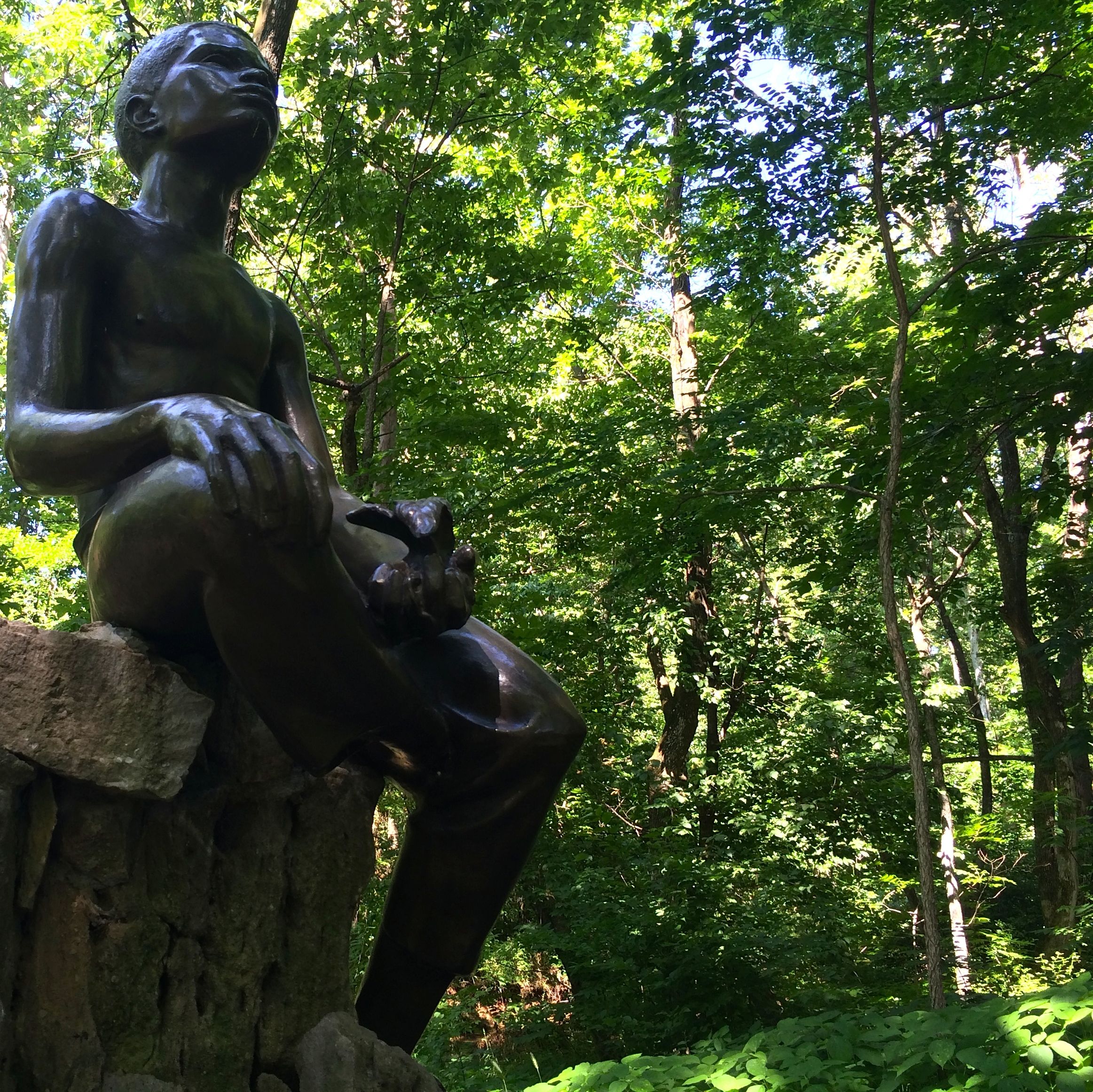
Susan Carver appears to have been particularly fond of him. George was not very strong, and was limited to lighter tasks. One of his duties was to fetch water, and this statue of him as a child is near the source of the water.
The water was flowing and the birds were singing. The typo in the title of the video irks me, but I don’t know how to fix it “post production.”
http:/https://www.youtube.com/watch?v=ipn0UbxV1js
I continued along the trail. I imagine that the forest was much the same as George might have experienced it. The birds were singing and it was peaceful in the woods.
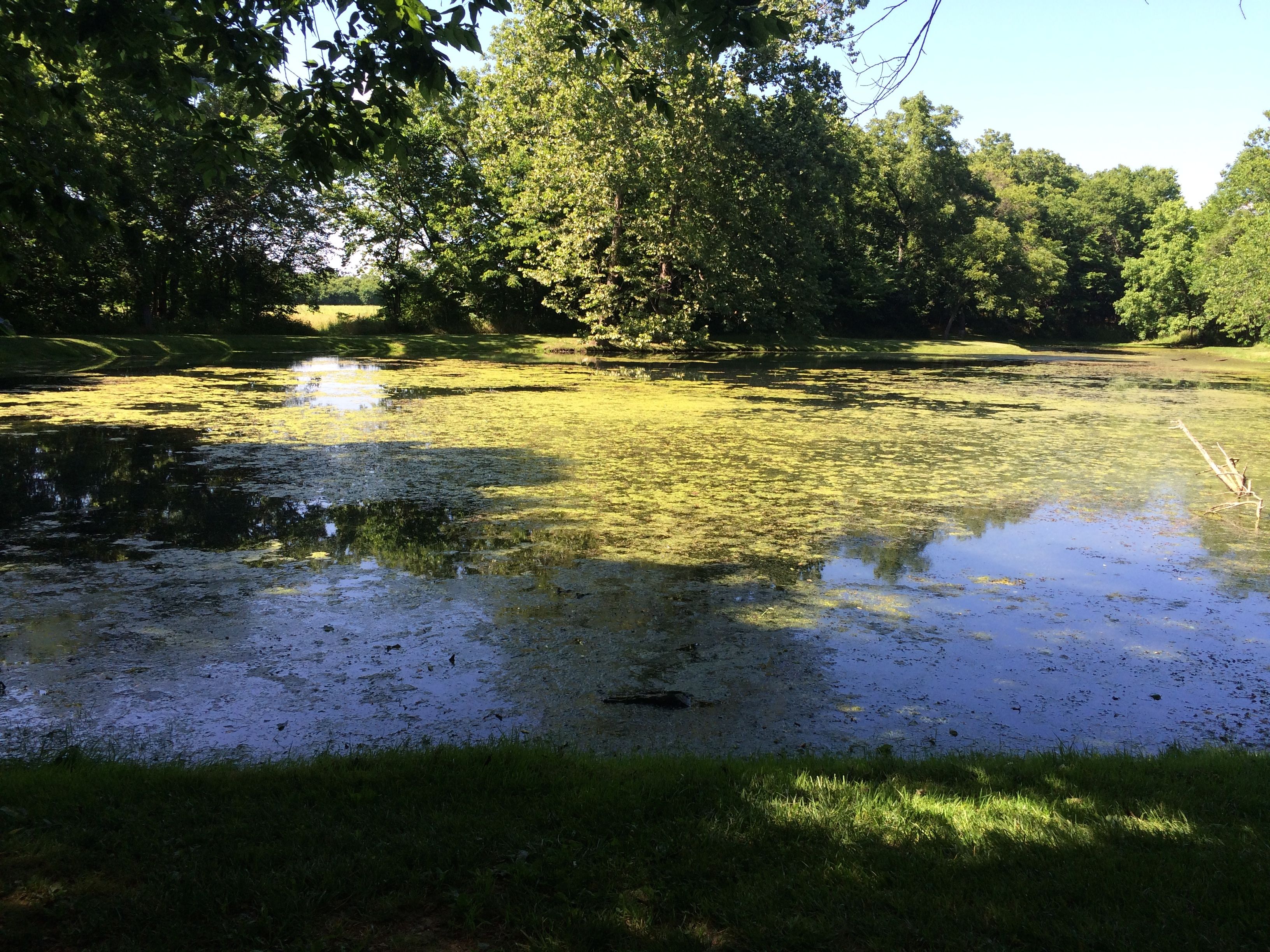
Owners who bought the farm later dammed one of the streams and created this pond in 1931. The changes to the landscape are also part of the history of the place.
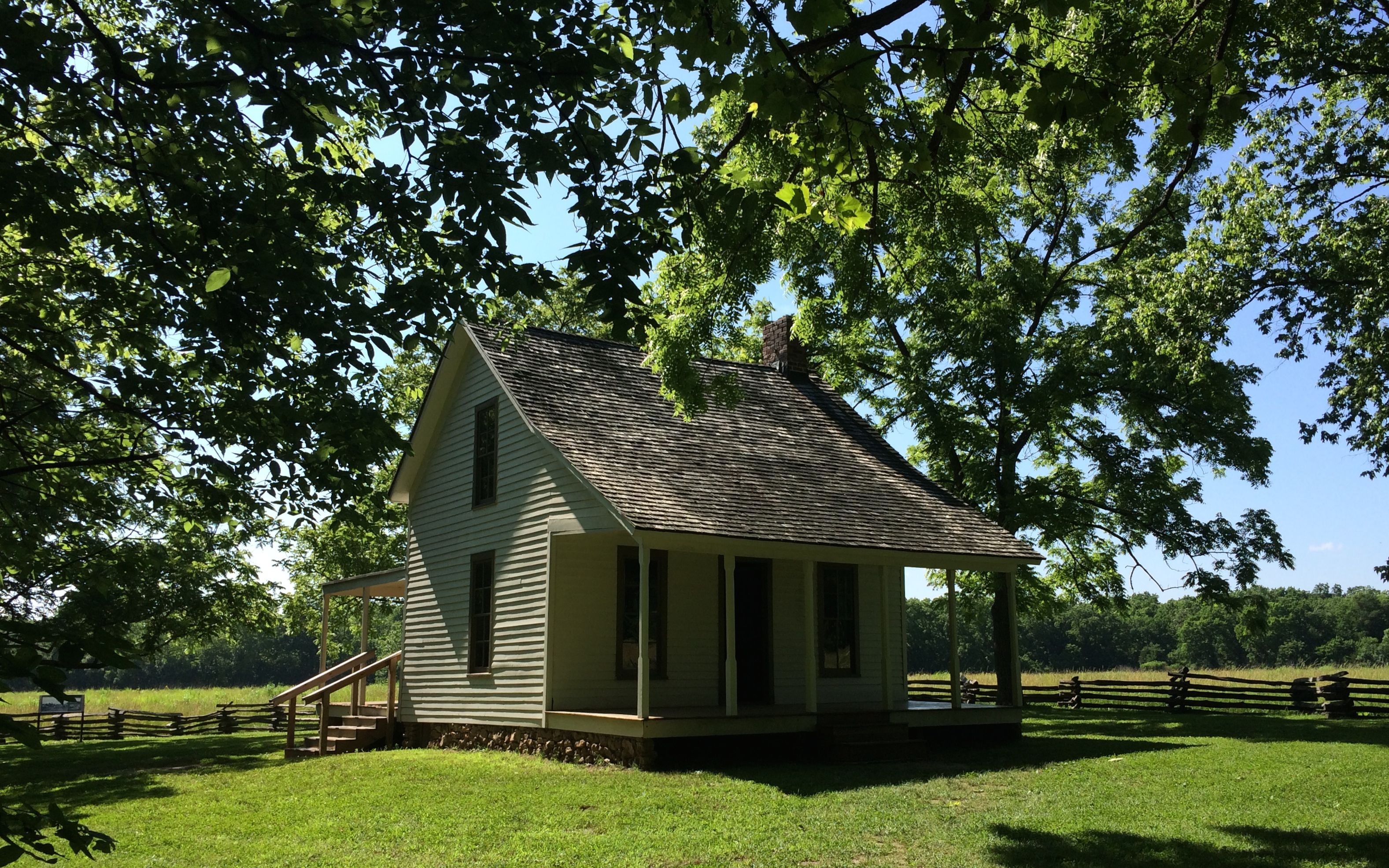
Speaking of changes, this is Moses Carver’s cabin, but it wasn’t the one that was there when George knew the farm. The original cabin was destroyed by a storm – some accounts said it was a tornado – after George had moved on.
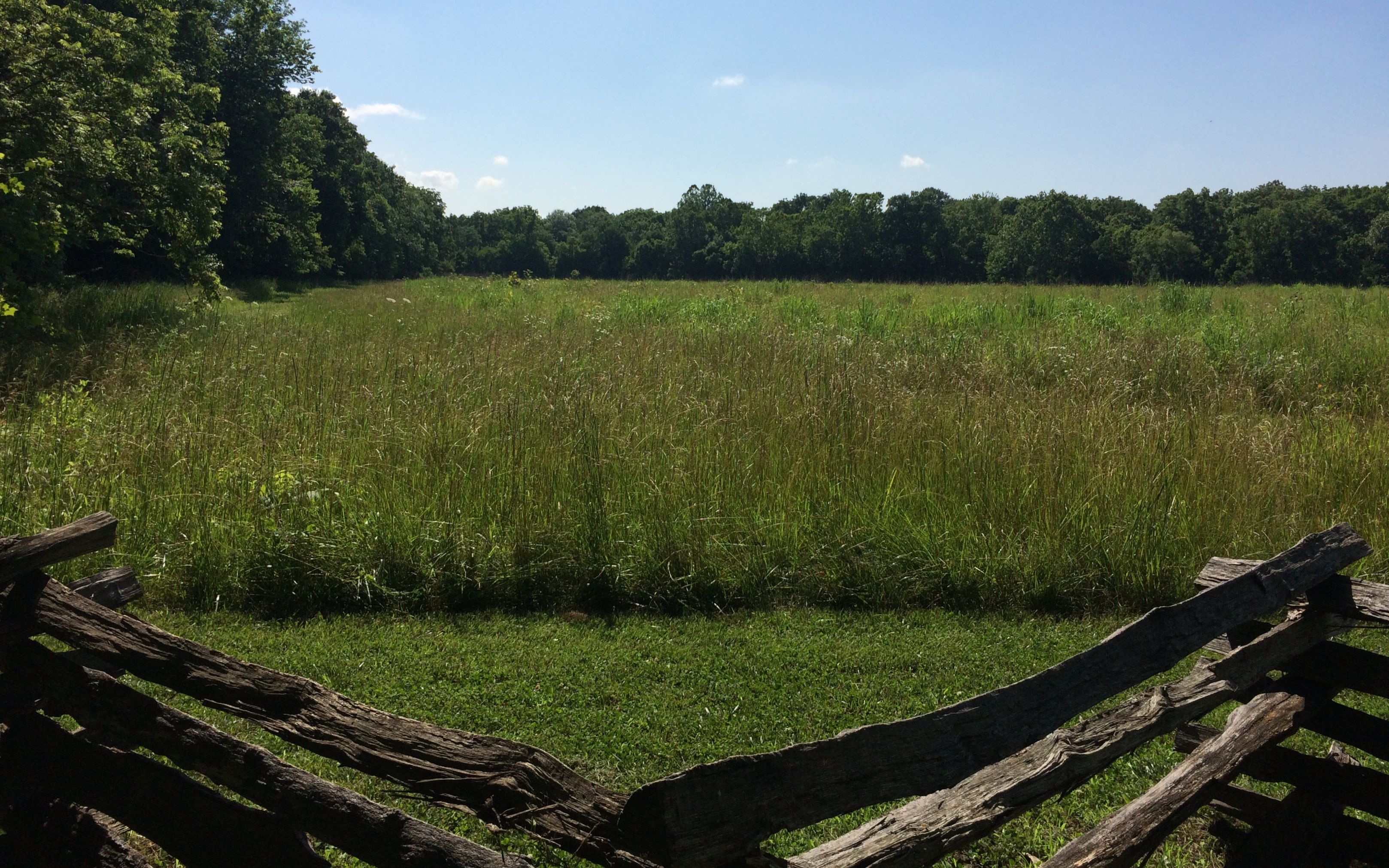
These are the fields around the cabin. It’s not to hard to imagine that this was a view that George might have seen when he lived here.
The next stop on the trail was the cemetery. These are the graves of Moses and Susan Carver.

The cemetery was surrounded by a dry stacked stone fence. Moses allowed neighbors to use his cemetery, too.
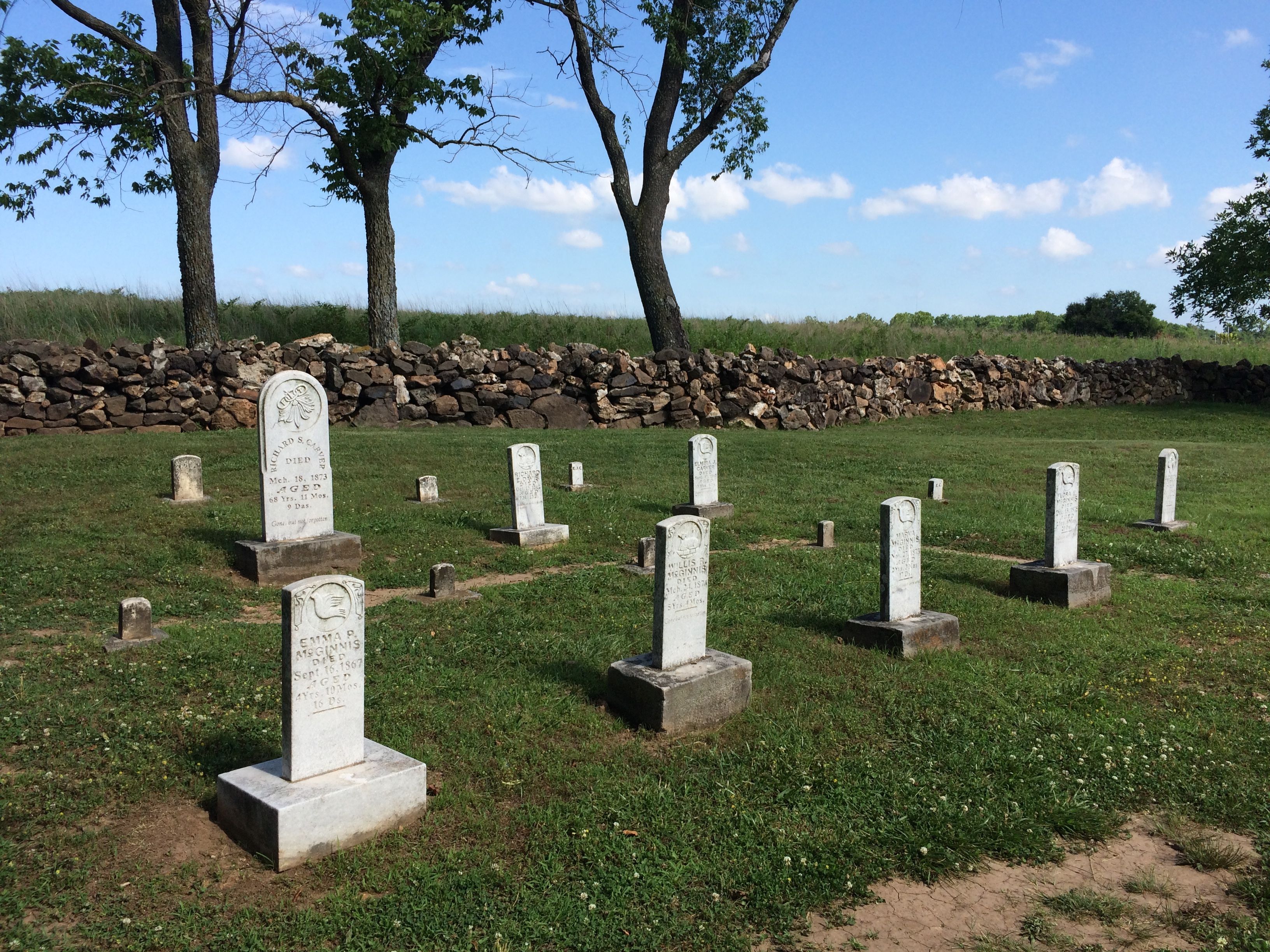
The smaller headstone are for children. Most of the graves that I saw were for children.
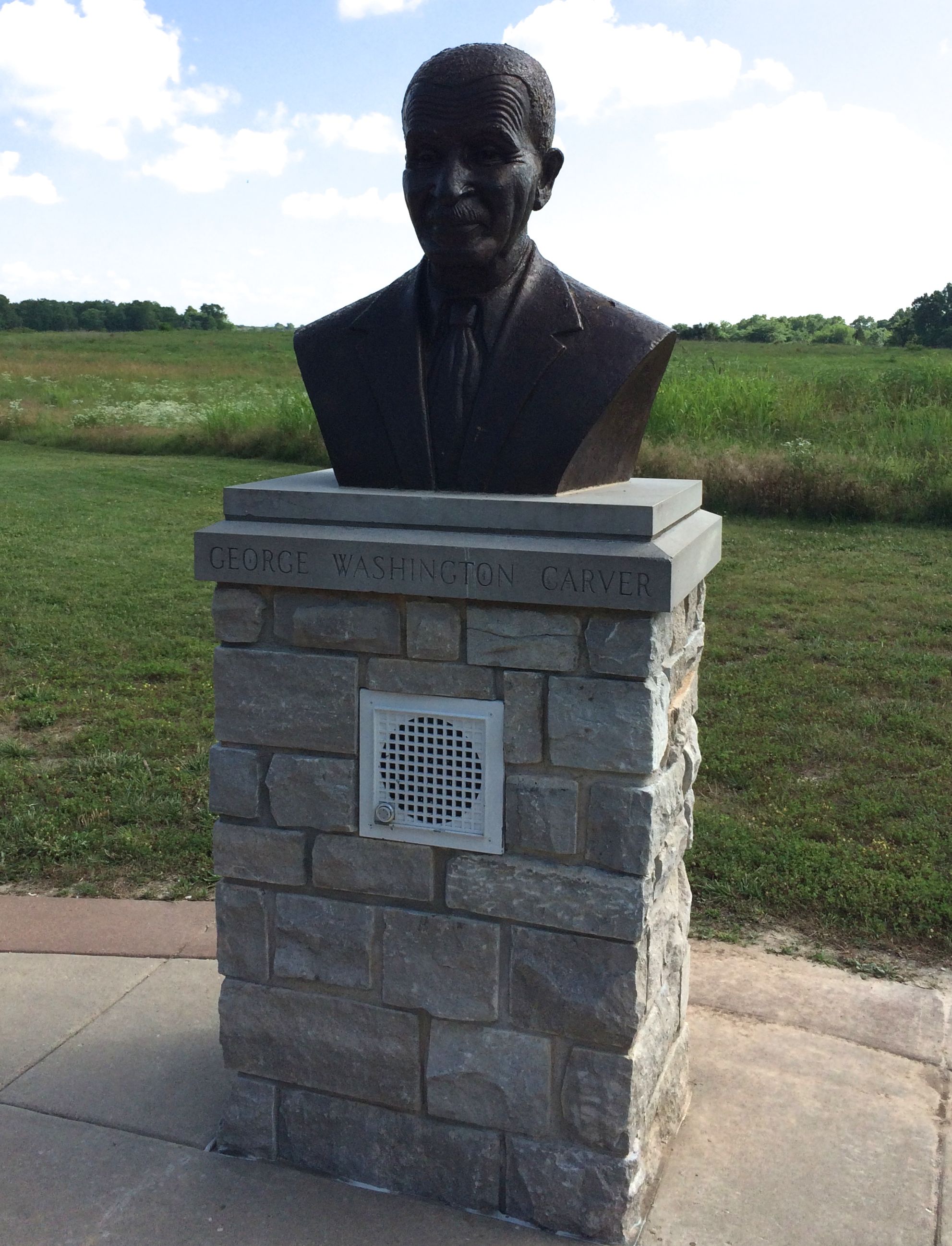
The last stop on the trail was a bust of George Washington Carver in his later years. You might notice a speaker in the pedestal. There is a button you can push to listen to a recording of a speech he gave at a commencement.
I don’t know why I should be surprised, but I am just amazed that we have recordings of people who were born of the 1860s.

There is a slab of a tree that was cut down on the property. There were a number of markers on the tree – kind of like a dendochronological timeline.In 1855, when Moses Carver bought Mary, the mother of George, this tree was a small seedling. I find this mind boggling, too.
Rather than try to rewrite the details, let me just share the plaques that are posted on the slab.
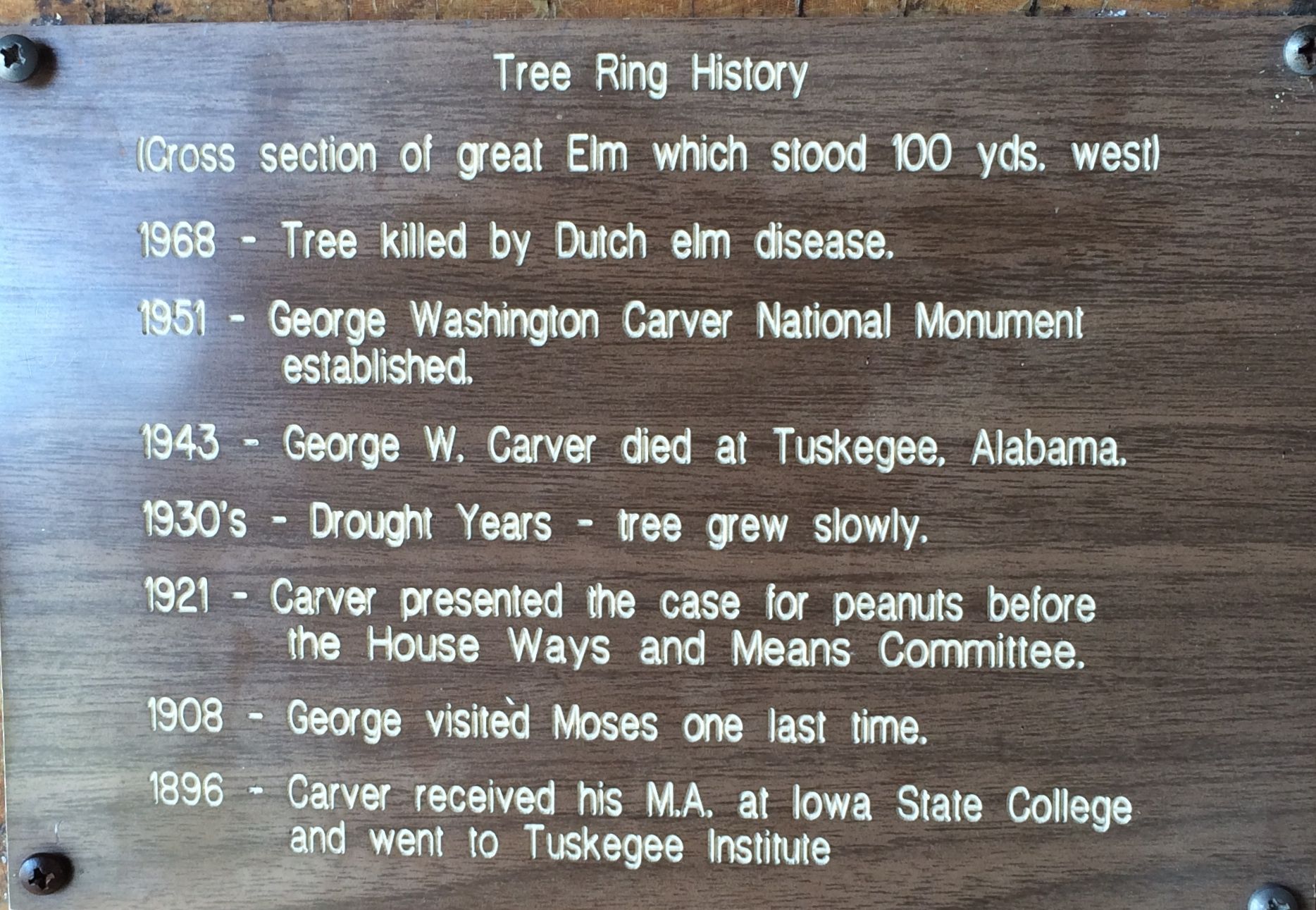
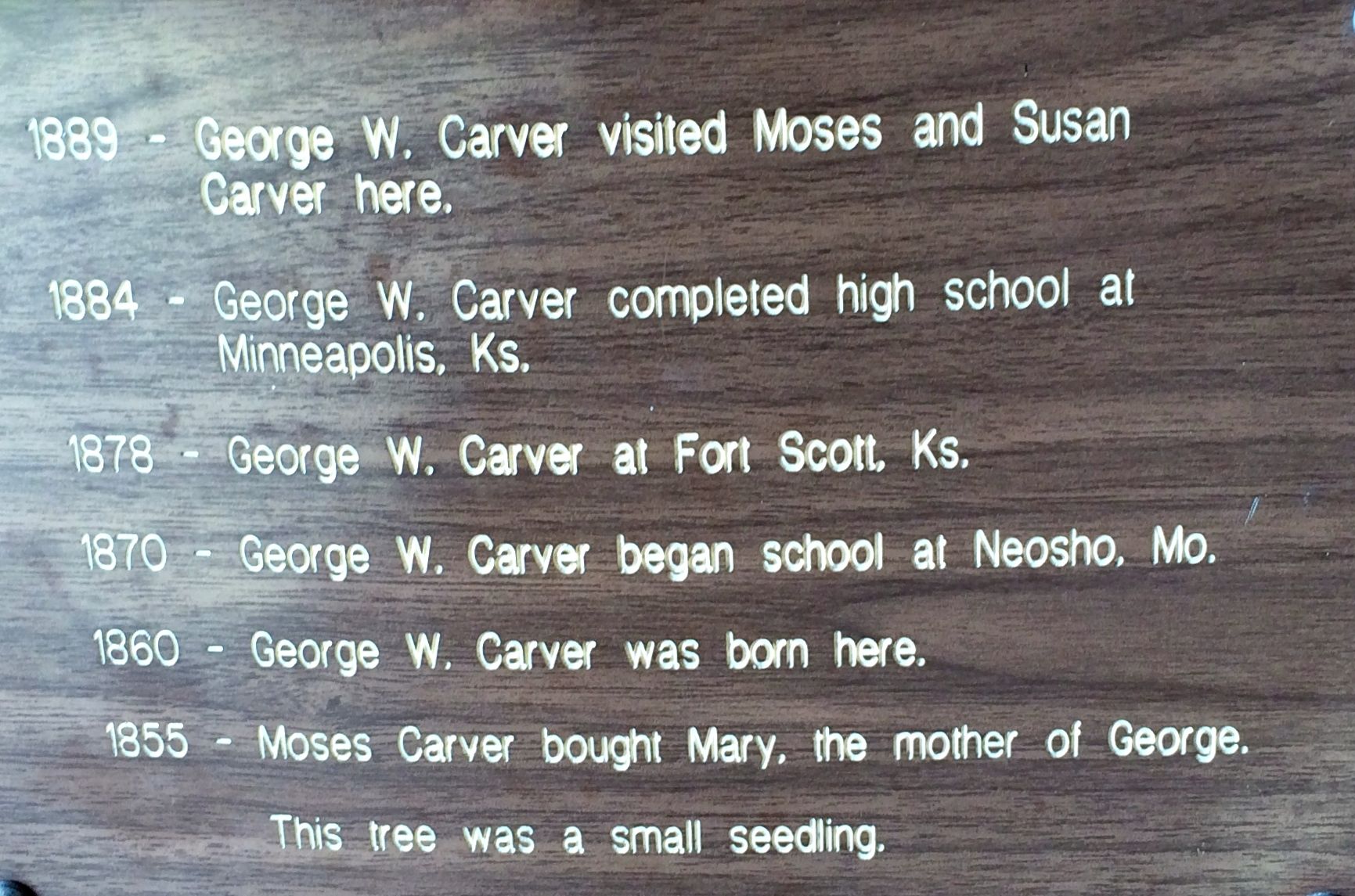
Of course, you have to read the list backwards.
Now, I arrived at the National Monument too late to see the museum that day, but through the magic of the Internet, let me share just a few things I saw inside a few days later.
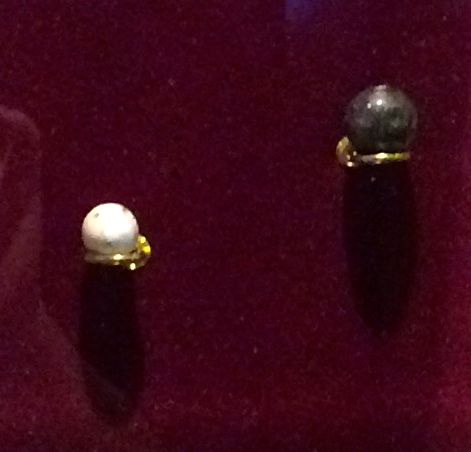
These are marbles that were found during an archeological search of the cabin George lived in. Do you suppose these were his marbles? Could be – or maybe they were someone else’s.
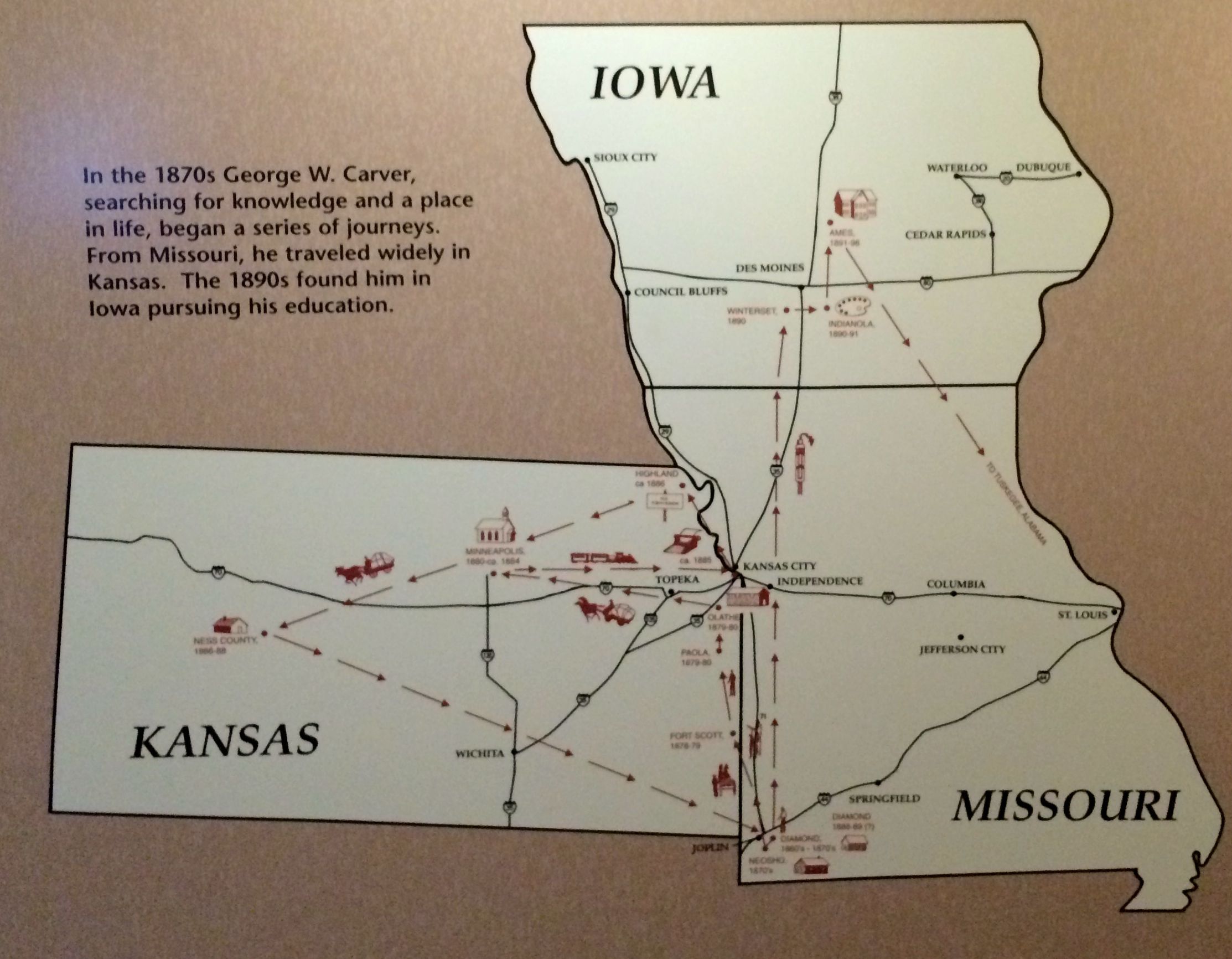
This map plots where George went to pursue his education. His first trip was an eight mile walk from Diamond to Neosho, where he went because the school in Diamond was for whites only.
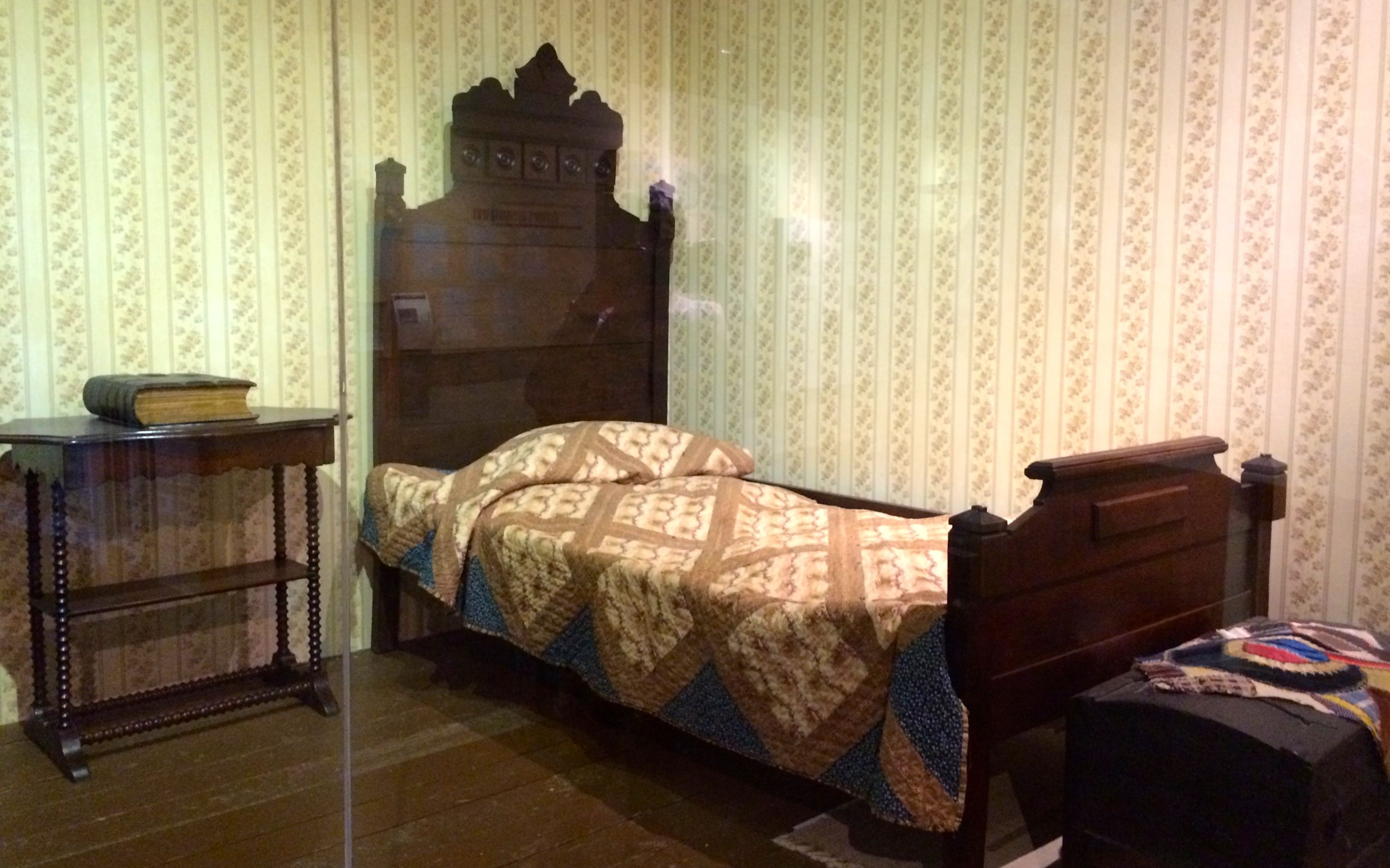
He was taken in by Aunt Mariah Watkins, who lived two doors down from the new Neosho Colored School. If I understood correctly, this was the furniture that was in his bedroom.
And, with that, I will leave you.
Stay turned for the story of helping to preserve the school.