After a few hours on the road, I made it to Ottumwa, Iowa, the City of Bridges. The municipal park is on a large island in the Des Moines River, and the bridges are necessary to cross back and forth between north and south halves of the town.
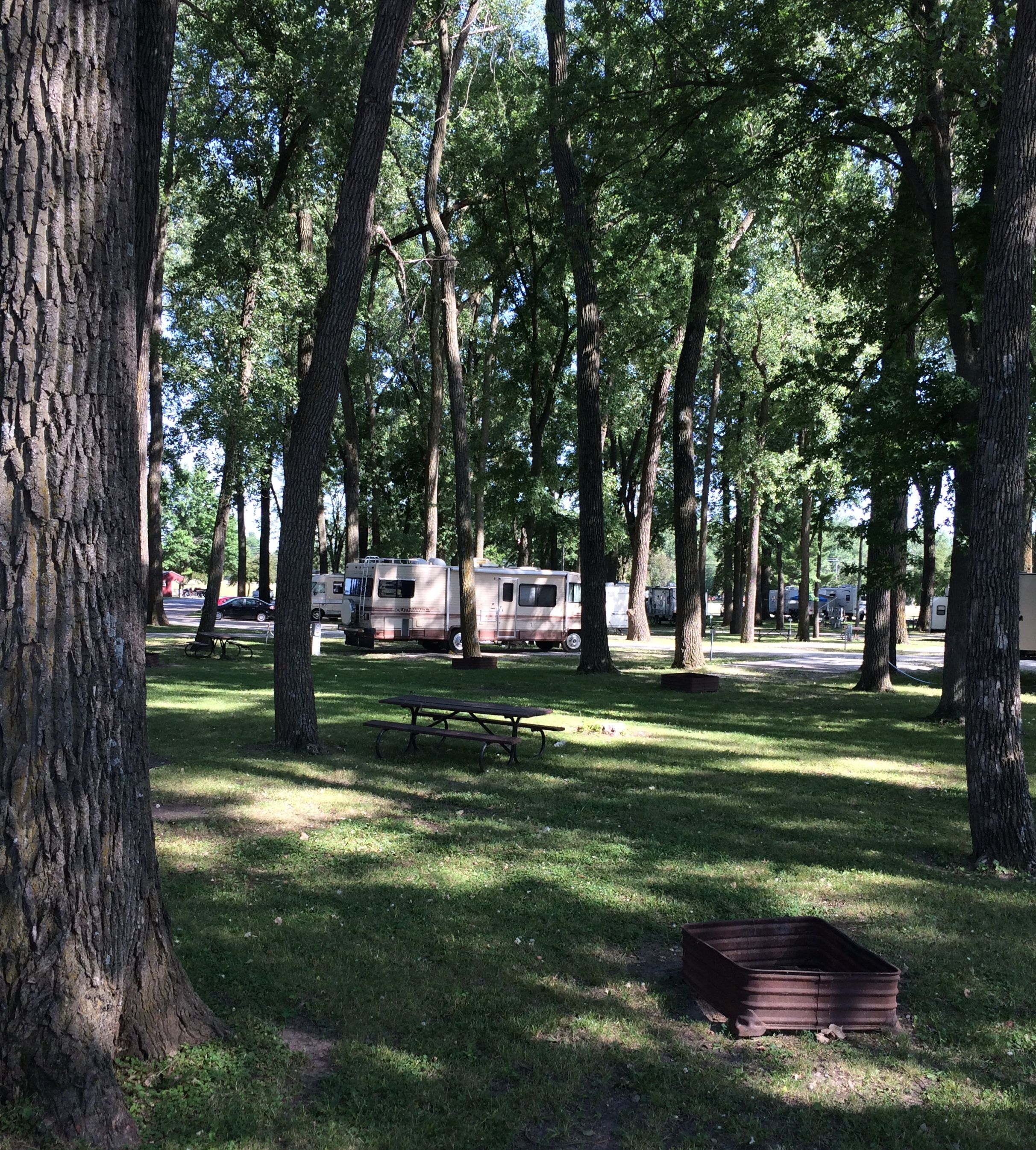
Here’s the view from my site. The campground is nestled beneath the towering cottonwoods. Actually, this view was amazingly empty of campers. the campground was packed as there was a fair going on. But, it was easy enough to get slid in between the trees, especially with the help of the camp host.
Once unhooked from the truck and hooked up to the electricity, I set about trying to find something I could do with the few hours I was going to have in Ottumwa.
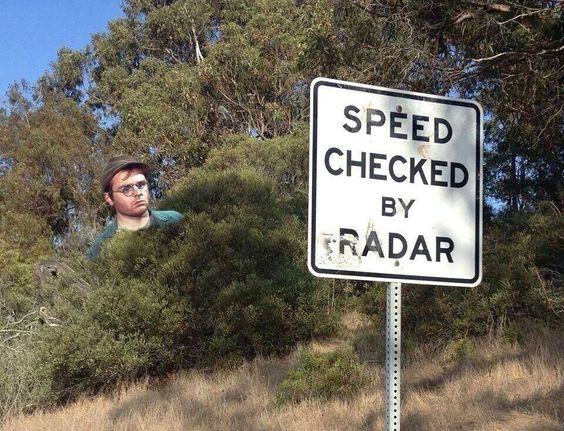
Of course, the main reason I wanted to visit Ottumwa was to see if I could find Radar O’Reilly. Since I never speed, I didn’t have occasion to see him.
I checked in with my History Here app, and found that the American Gothic House was just a few miles away, in Eldon Iowa. I jumped in the truck and arrived just as the visitor center was closing. But, I still managed to enjoy myself.
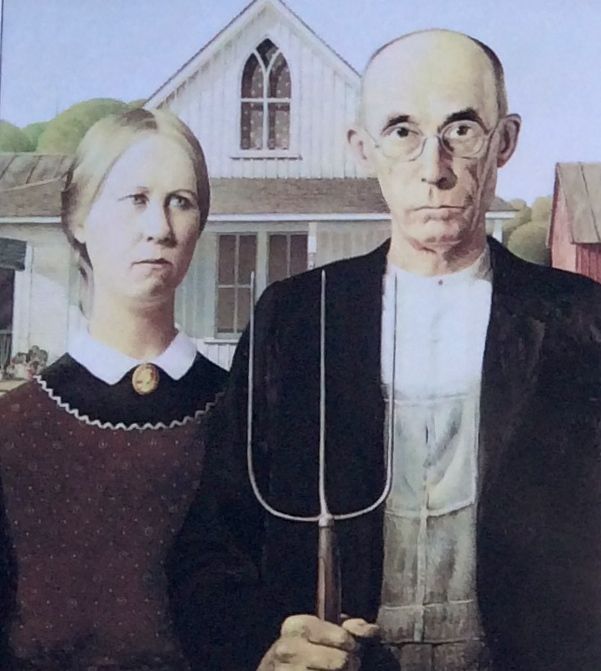
American Gothic is one of the most recognized and imitated paintings in the world.
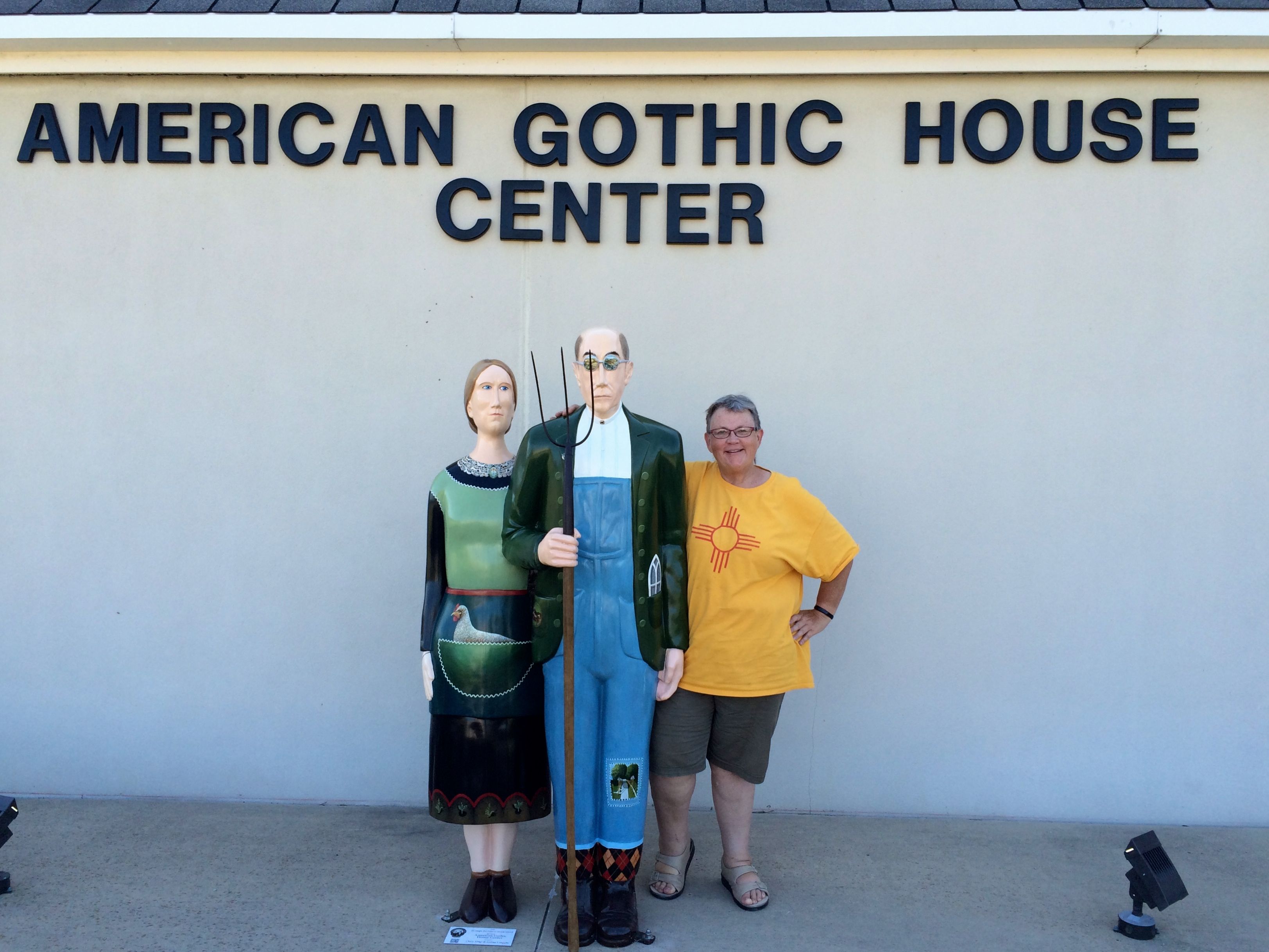
I was too late to go into the visitor center, but the person who was just locking up was happy to take my picture with the statues in front of the building.
After that fortuitous photo op, I turned my attention to the house.
In front of the house is a circular area with informational plaques about the house, the artist and the models. They also have a marker to show you where to stand to take your own “American Gothic” portrait.
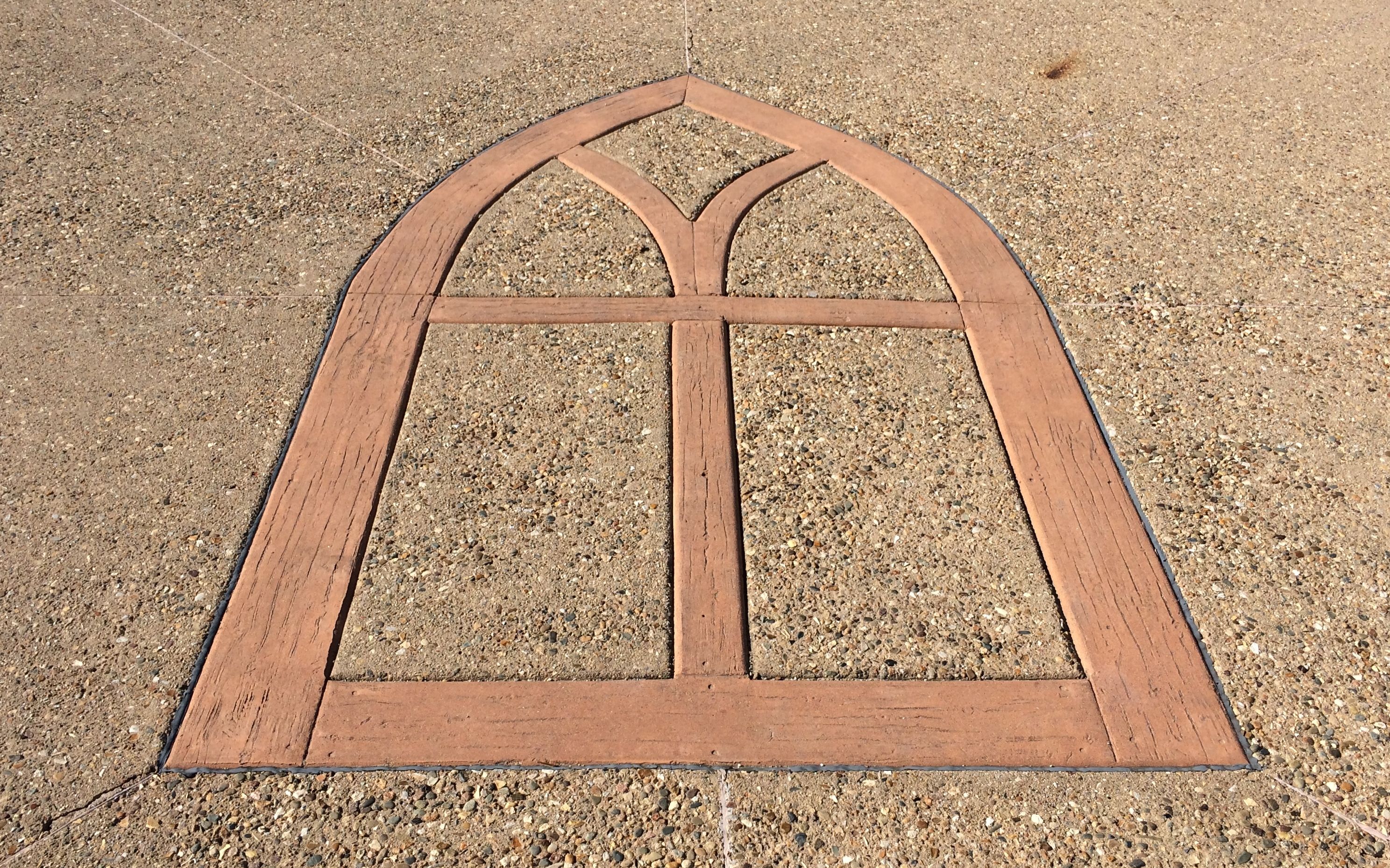
According to the information, the Visitor Center (when it is open) has costumes and props available for people to use to create interesting photos.
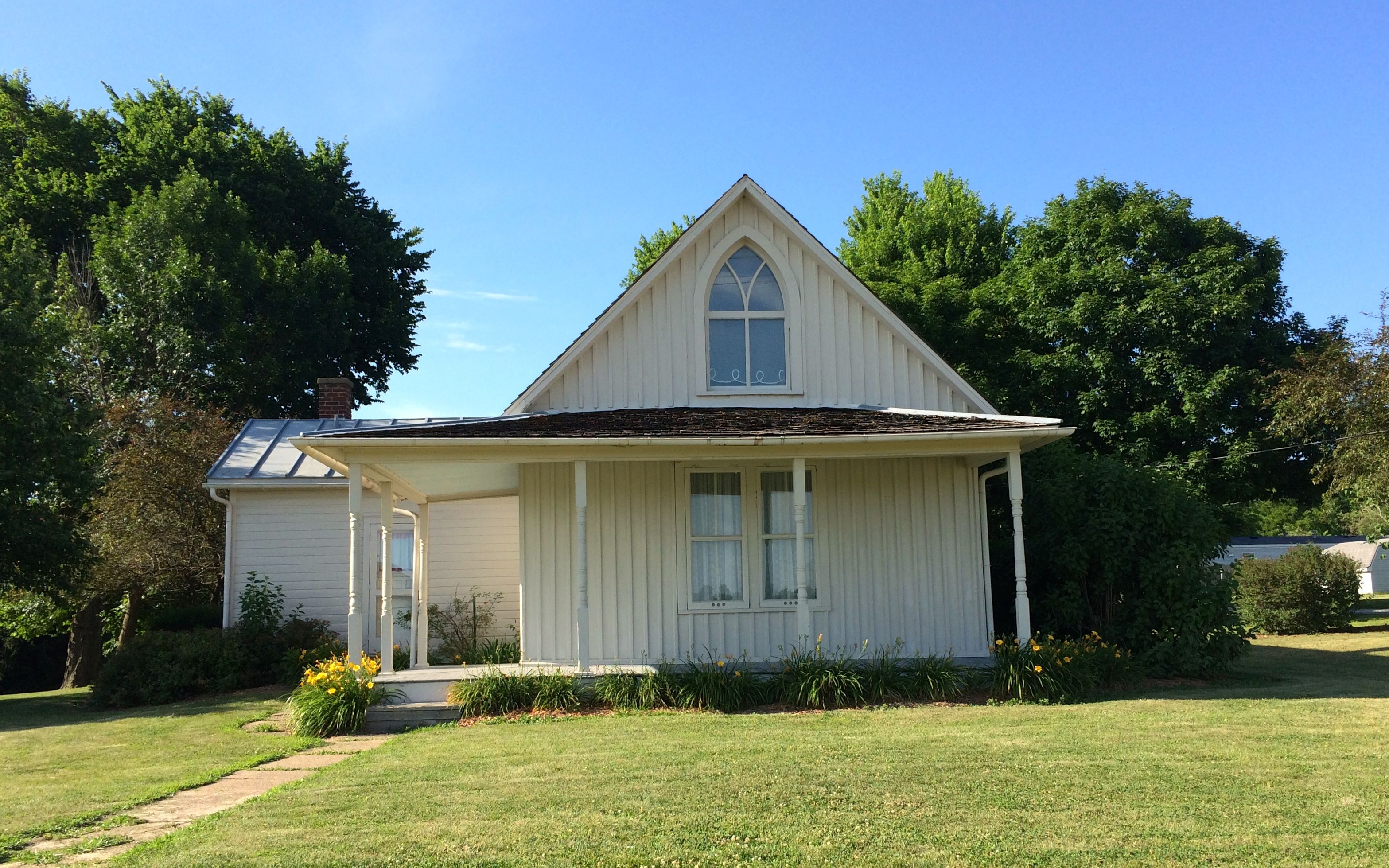
And here is the house. The original section of the house that contains the two gothic windows was built in the early 1880s by Catherine and Charles Dibble. Since they were the original owners, it is known in the National Register of Historic Places as the Dibble House.
Grant Wood was in town for an art exhibit at the Eldon Art Center. On a drive around the town, he saw the house and had the driver pull over so he could make a sketch. According to the information on the website, the only paper he had on hand was an envelope, so he made his sketch on the back of it. Envelopes sure have been handy. What do we do now that we do all our communication via email?
Wood took his sketch back to his studio in Cedar Rapids, where he combined the study with models. His sister and dentist were the models, and Wood only convinced his dentist that he would make sure that he wasn’t identifiable.
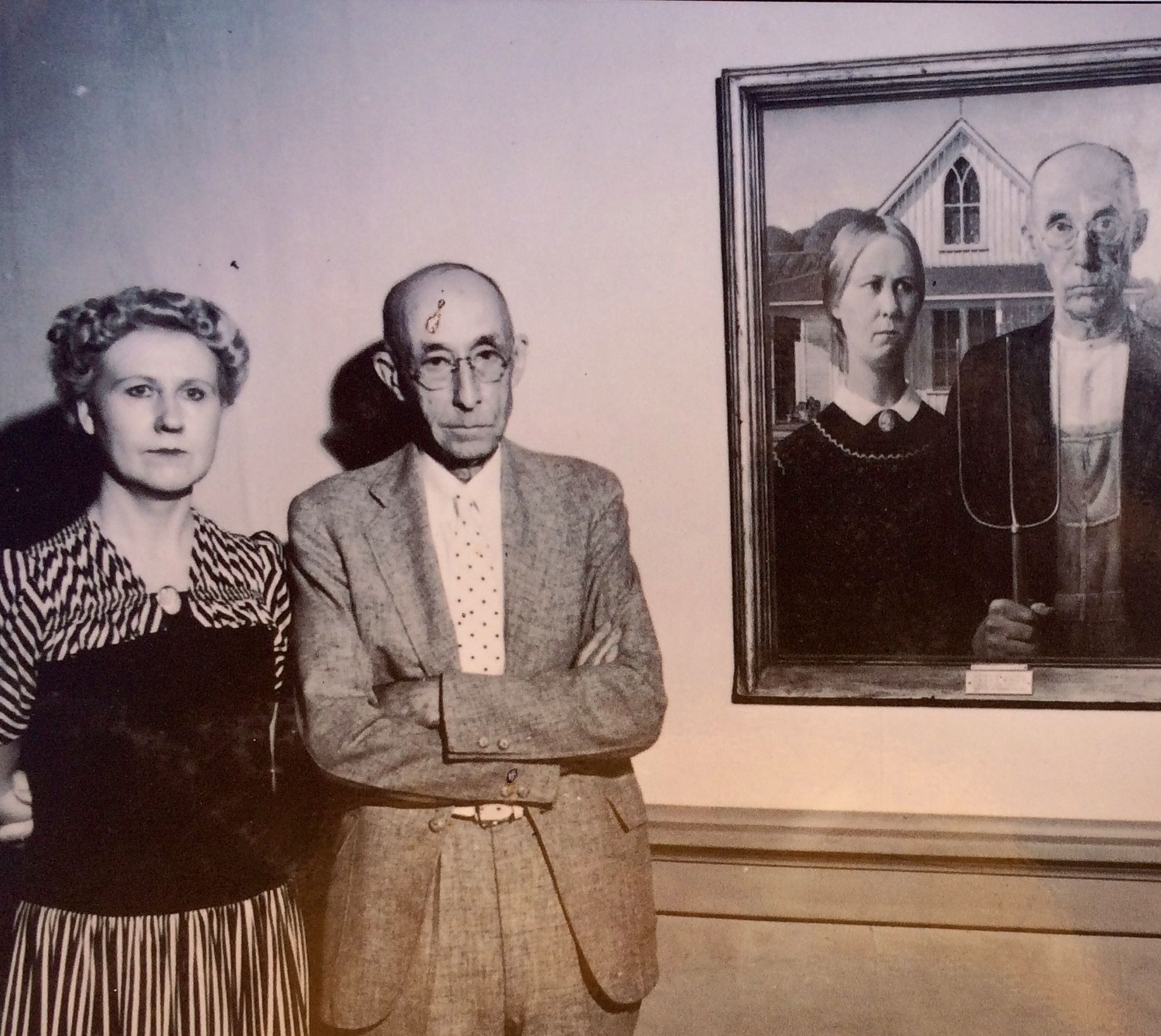
Here are the original models posing with the painting many years after the fact. Apparently, he wasn’t satisfied that Wood had protected his identity sufficiently and there was bad blood between them – especially when the painting became so well-known.
I walked around the house, just to see if there were any surprises to be found.
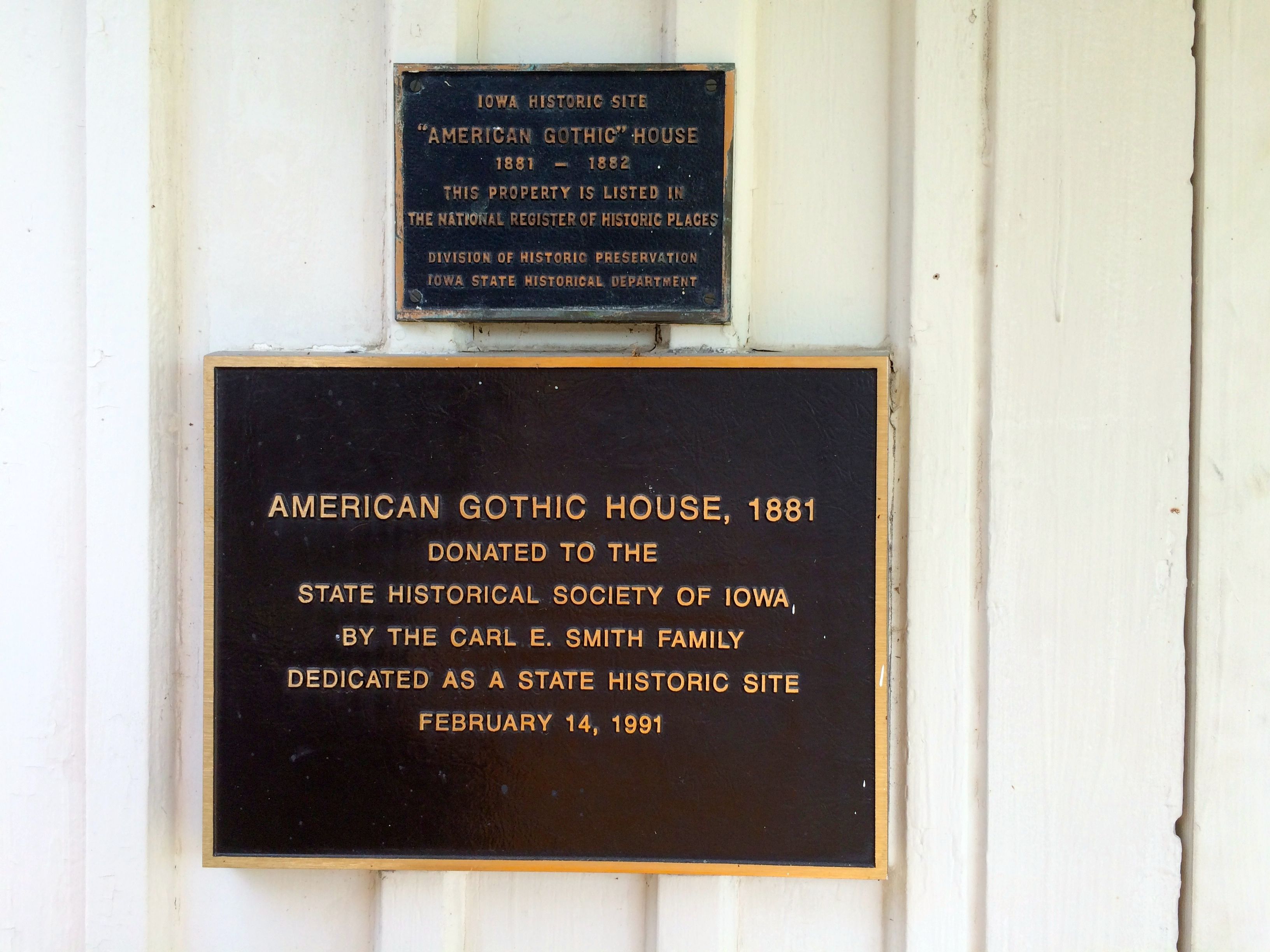
These are the plaques next to the front door.
I walked around to the back. You can see how the rear design echoes the front.
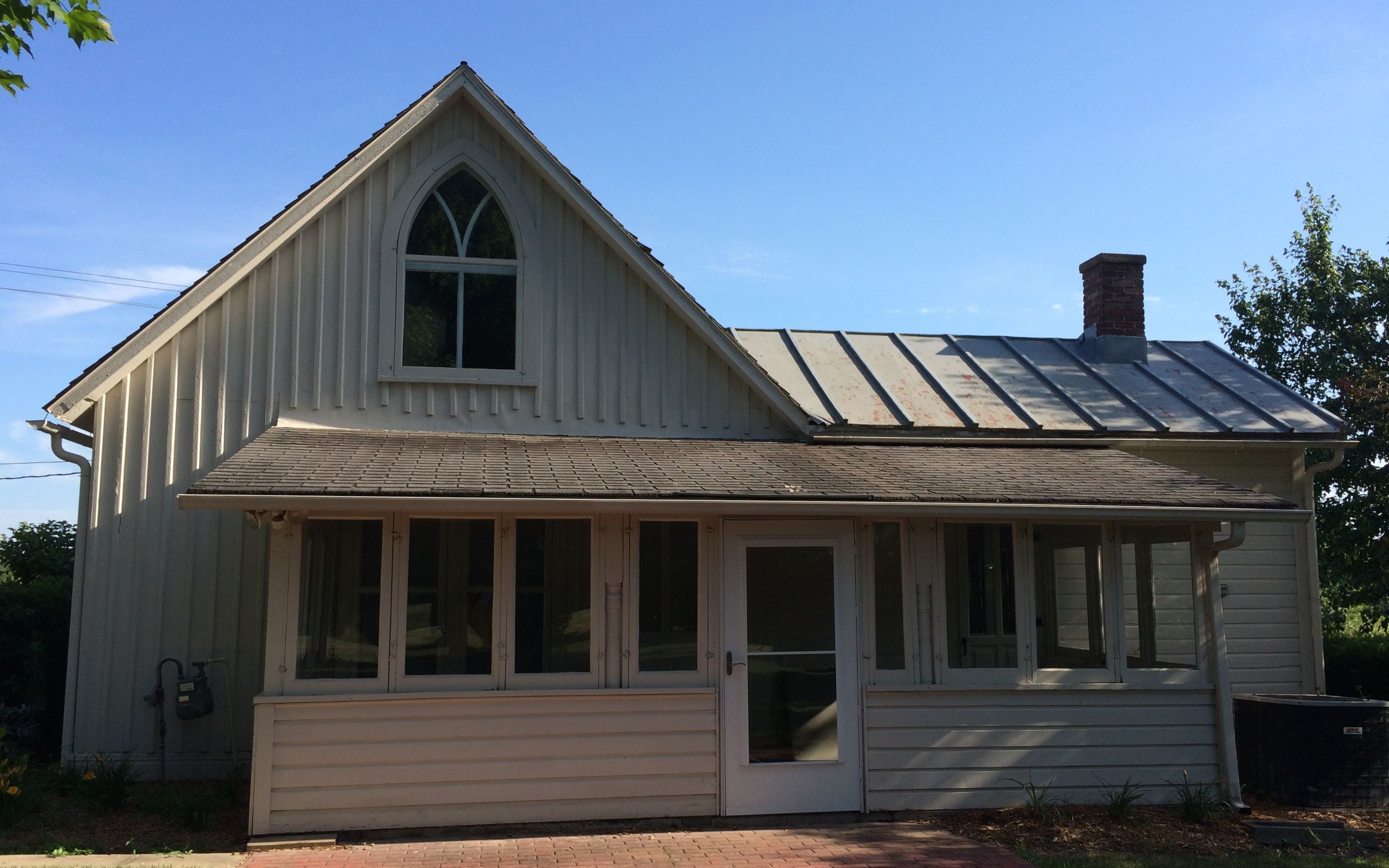
As I was heading back to the car, I turned to take one last look.
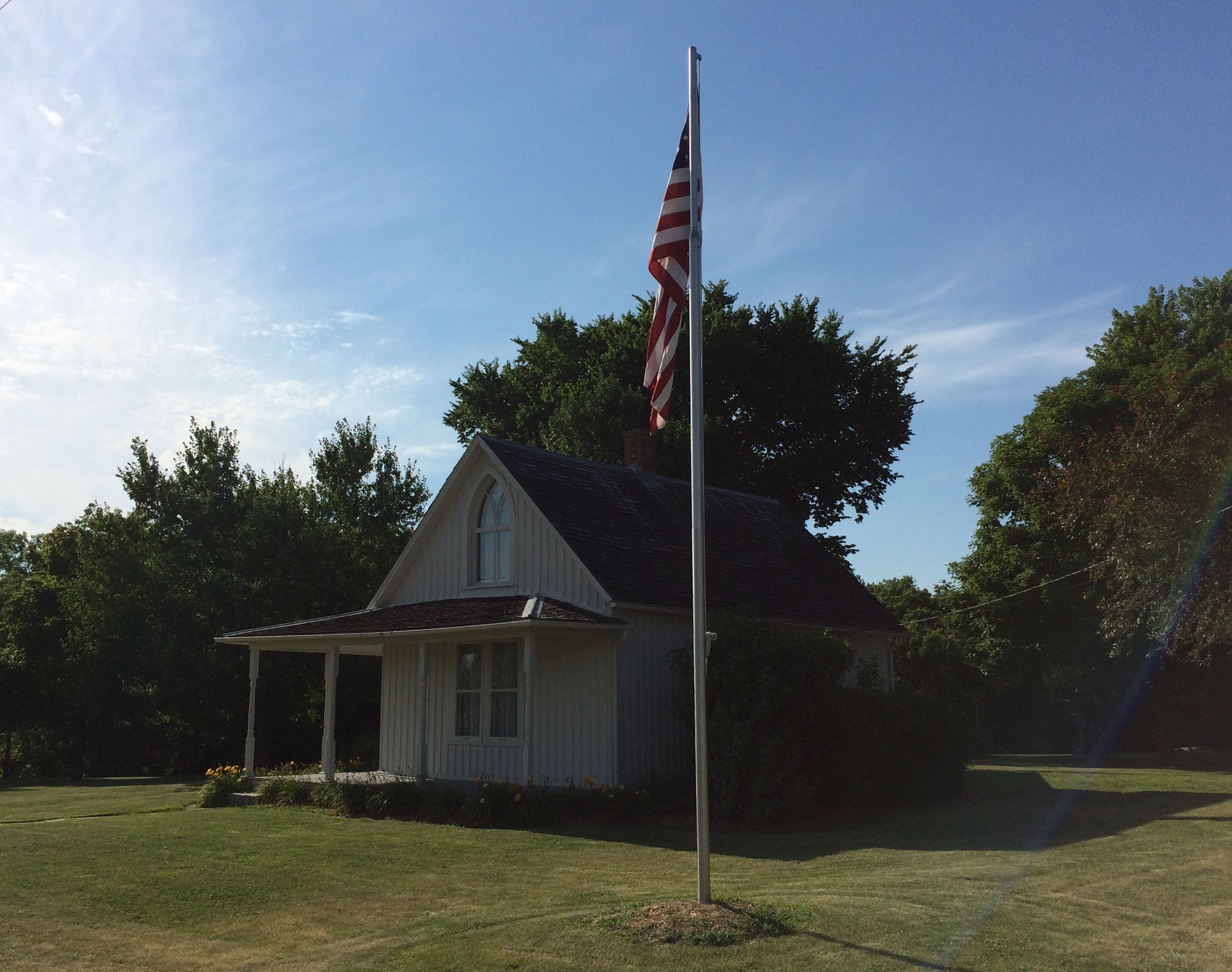
After that, it was time to continue with my examination of the town squares of the midwest. Next stop: downtown Ottumwa.

There was a lovely park, with the city hall on one side and the library on the other.
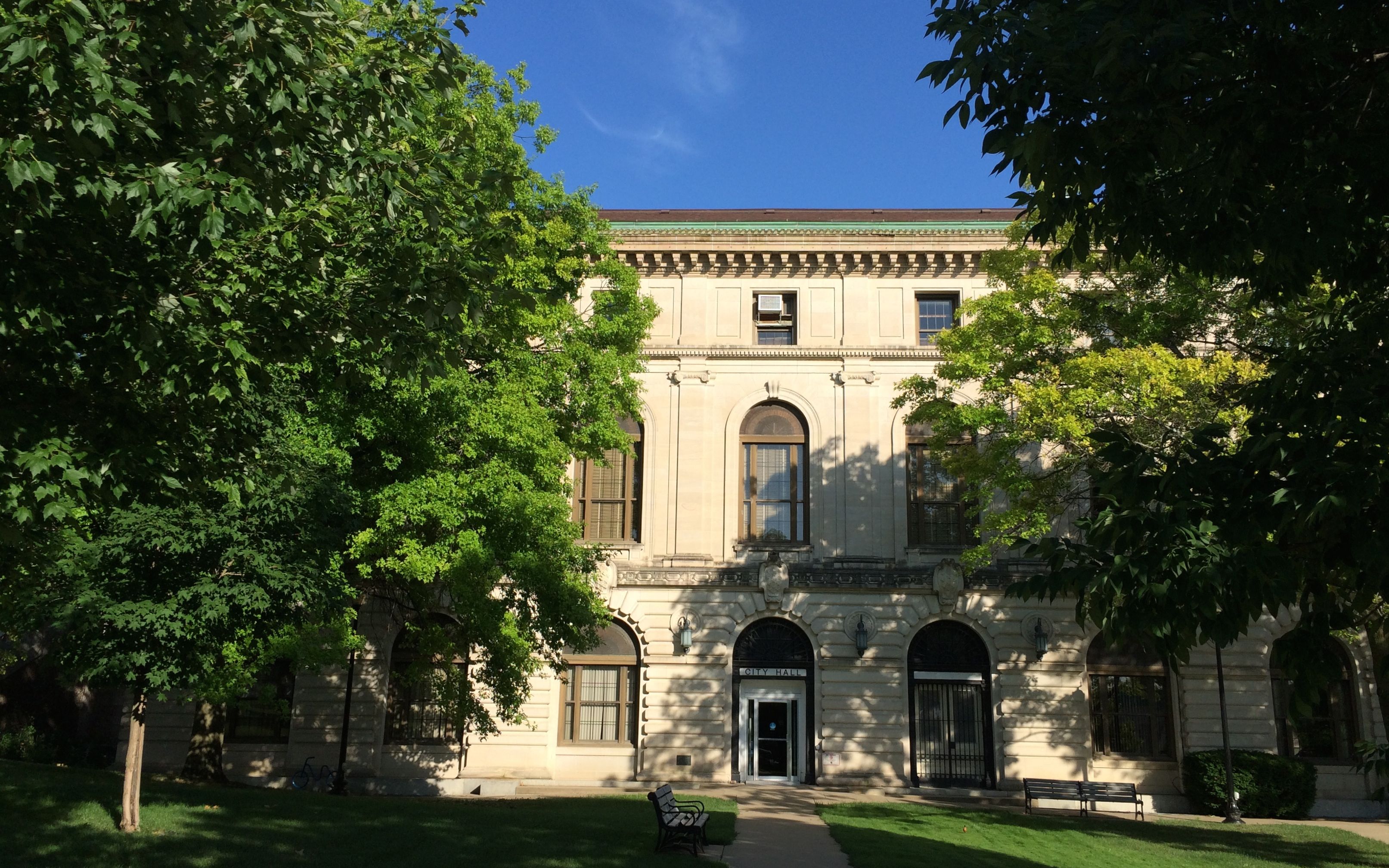
Here’s the city hall. I looked around, but I didn’t see a corner stone or plaque giving the date.
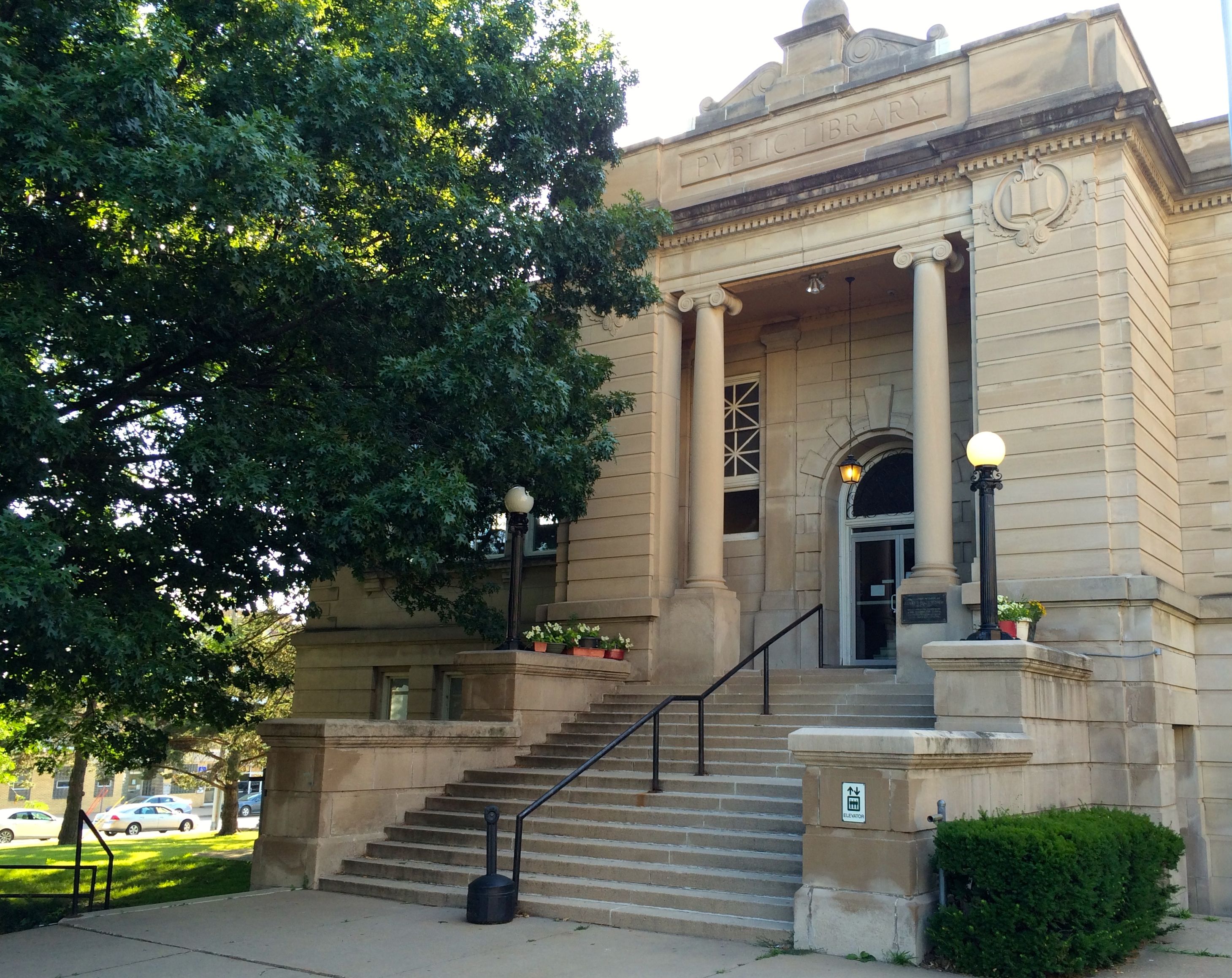
And here is the library. I didn’t see a date on this building, but there was a plaque.
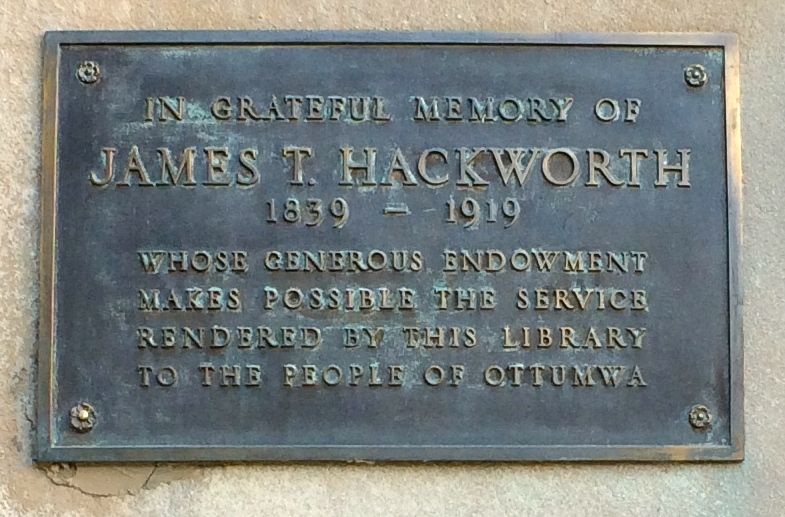
What a wonderful gift to the community!
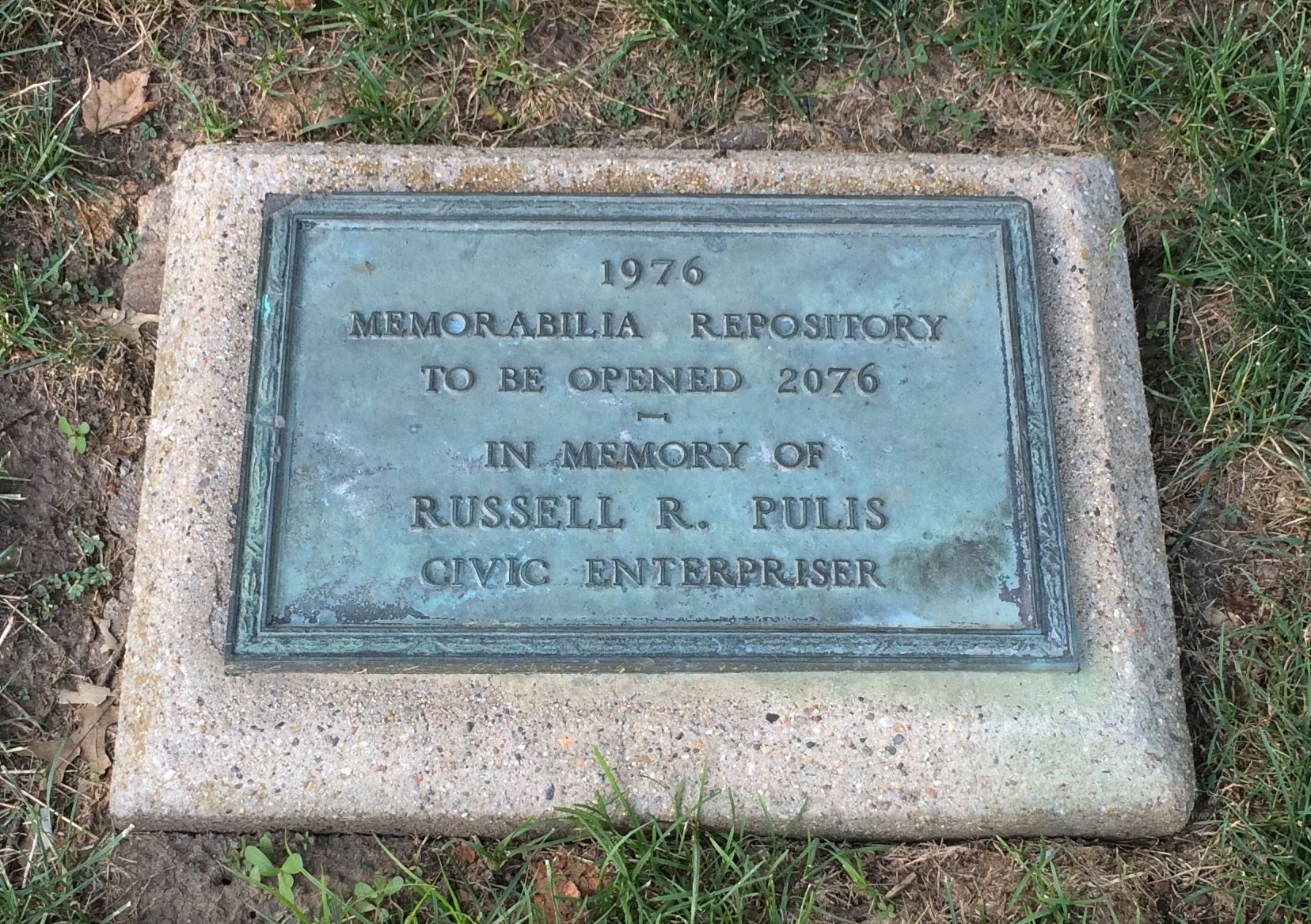
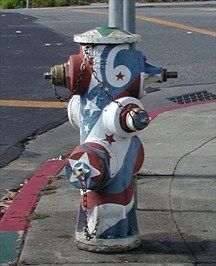
I did find a “memorabilia repository” buried flat in the ground. This is also a classier and more under-stated bicentennial memorial than Bicentennial Fire Hydrant.
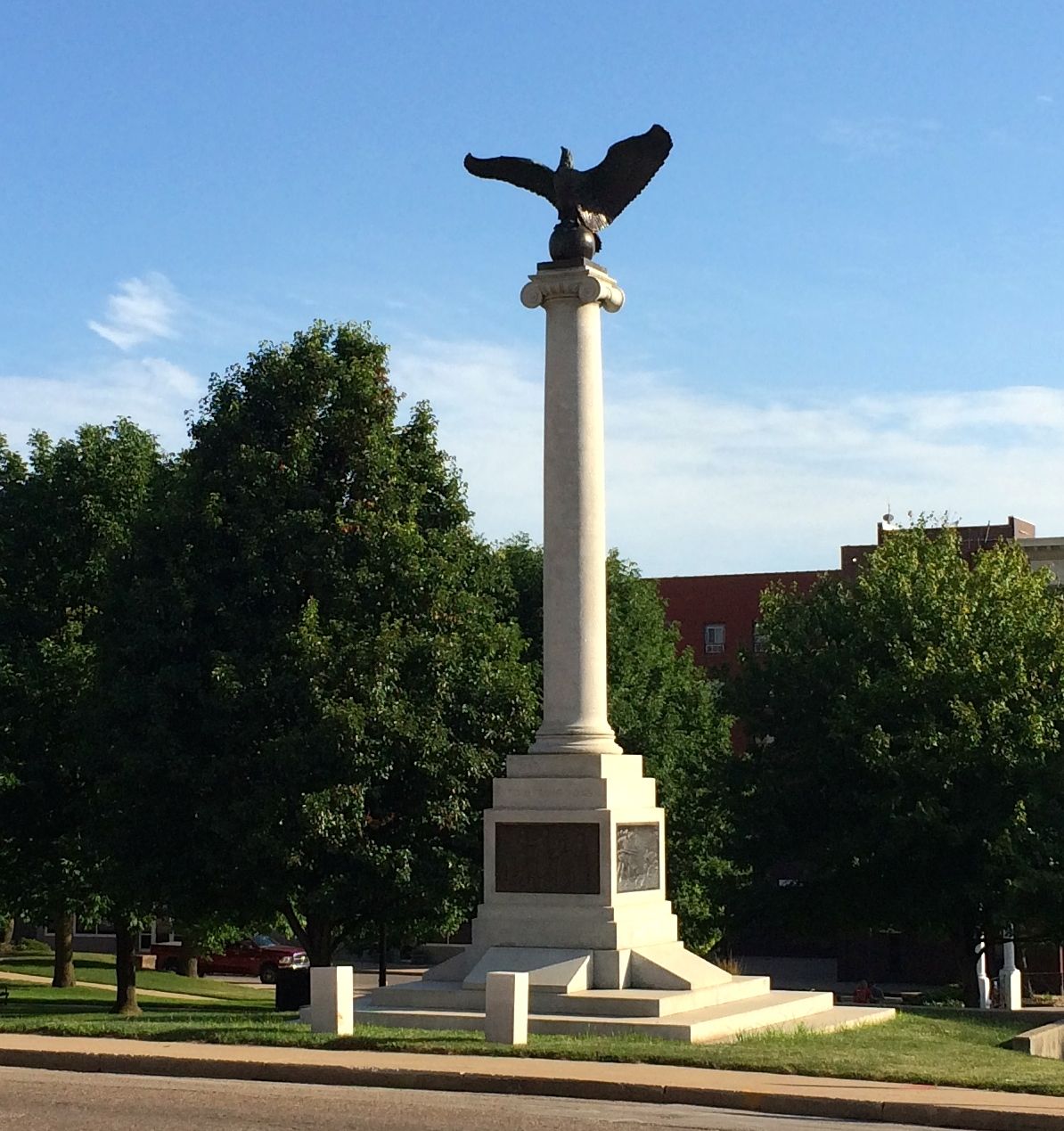
On the other side of the park, there is a memorial to the Civil War veterans. I couldn’t find a date as to the when it was put up. Judging by the style, it kind of made me think of the 1920s or ’30s.
The bas relief panels around the base were quite striking and tell the story of the soldiers and their families.
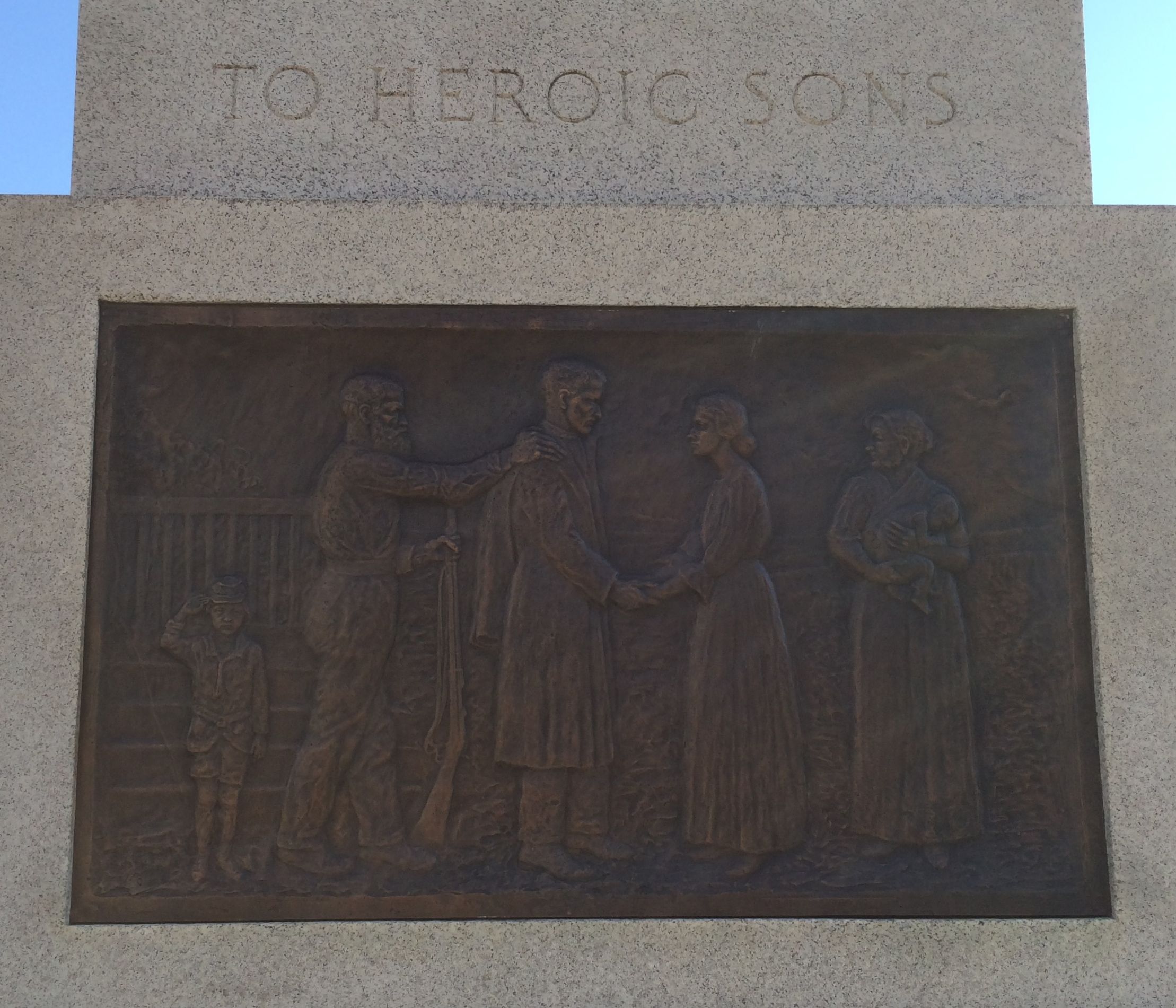
Here they are, sending their son off to war.
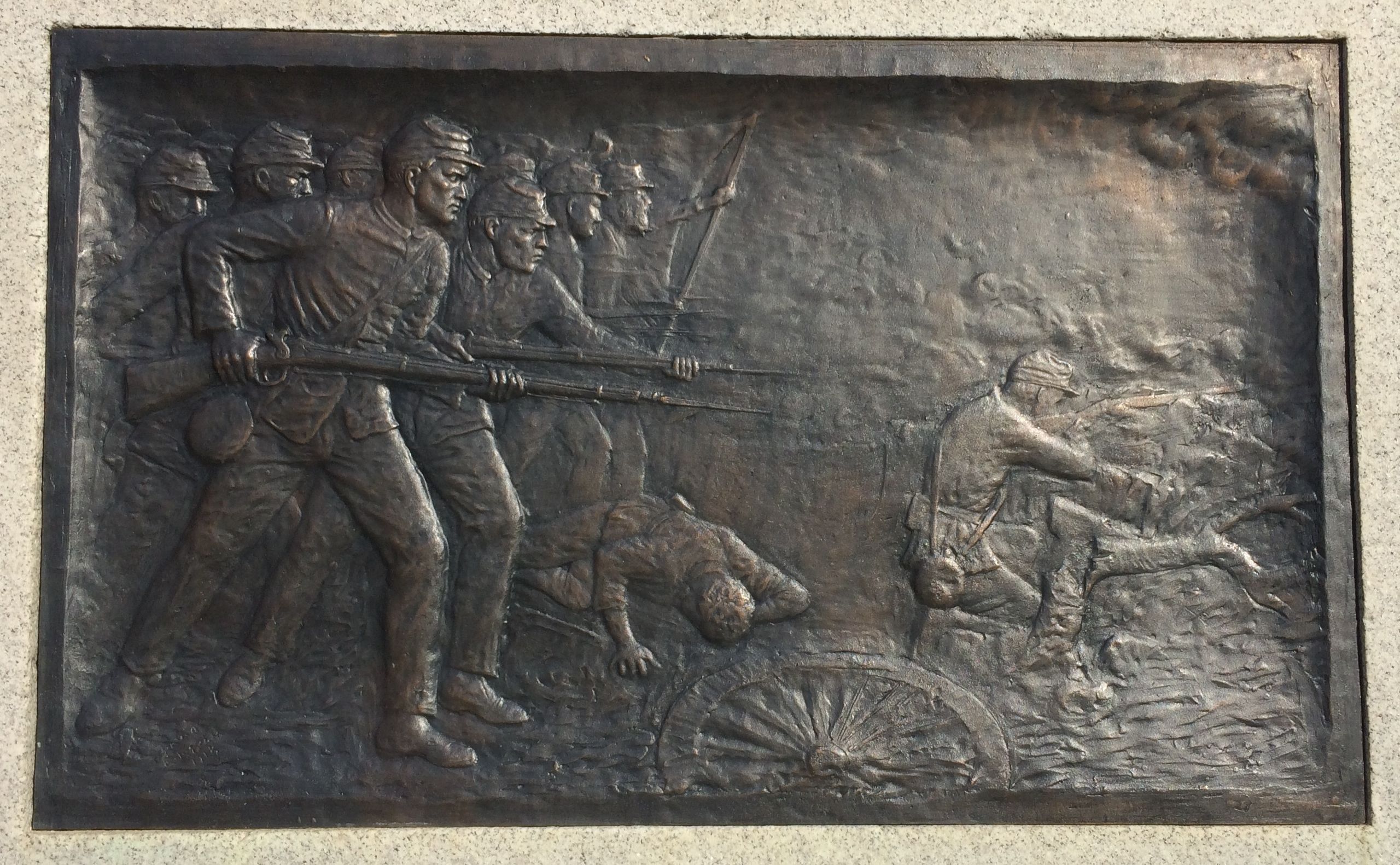
They fought.
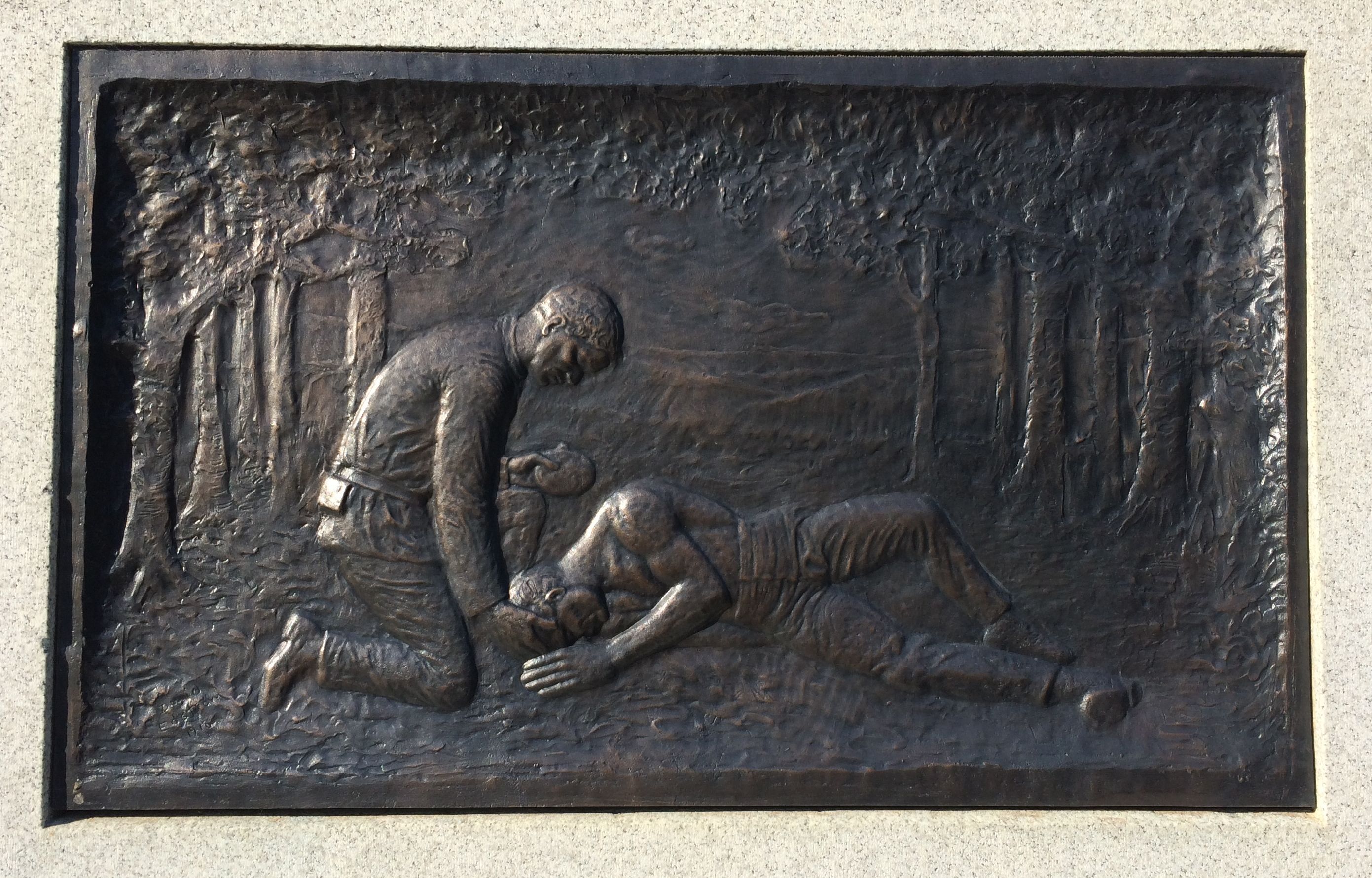
They died.
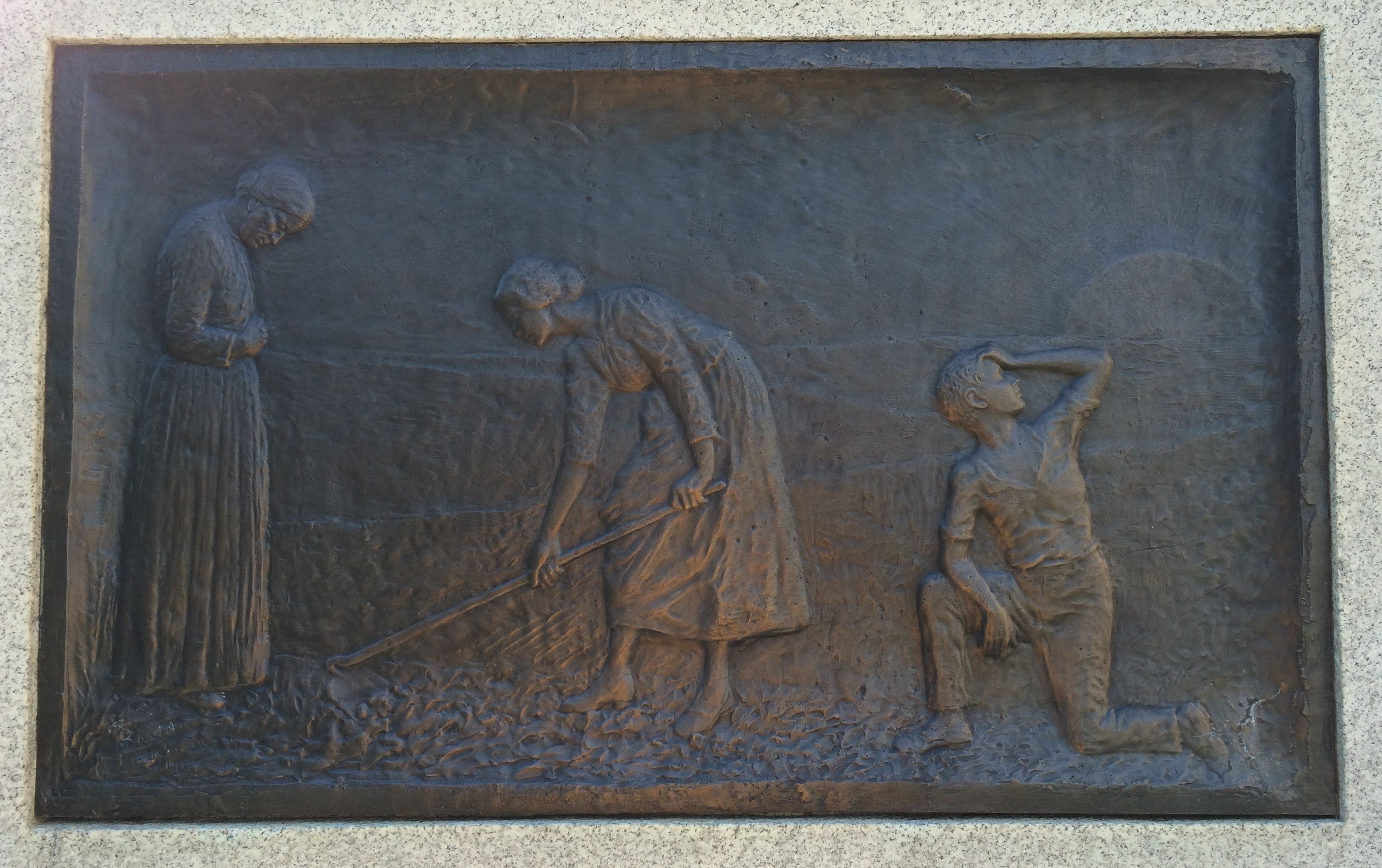
And the families had to take up the slack and fill in the holes left by the men who died.

Across the street from the park was the Wapello County Courthouse. The county appears to be named after Chief Wapello. Born in 1787, he was originally from the part of the country that is now Wisconsin. In 1829, he lead his tribe to the Muscatine Slough on the west bank of the Mississippi River and later settled in Iowa. He died while on a hunting trip near Ottumwa, Iowa on March 15, 1842.
I imagine that the statue on the top of the building is Chief Wapello.
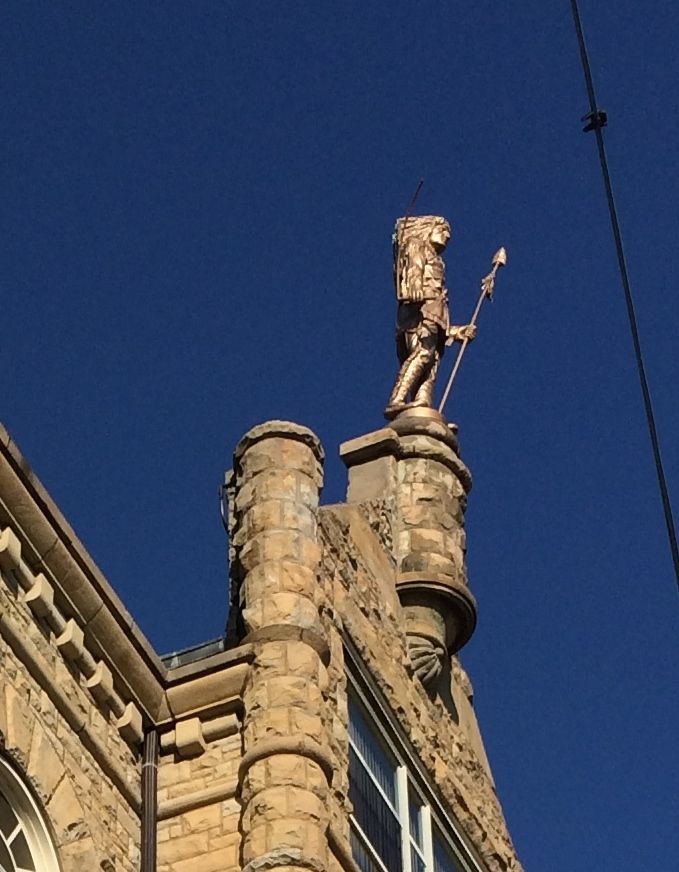
I think that is a lightning rod sticking up out of his back.
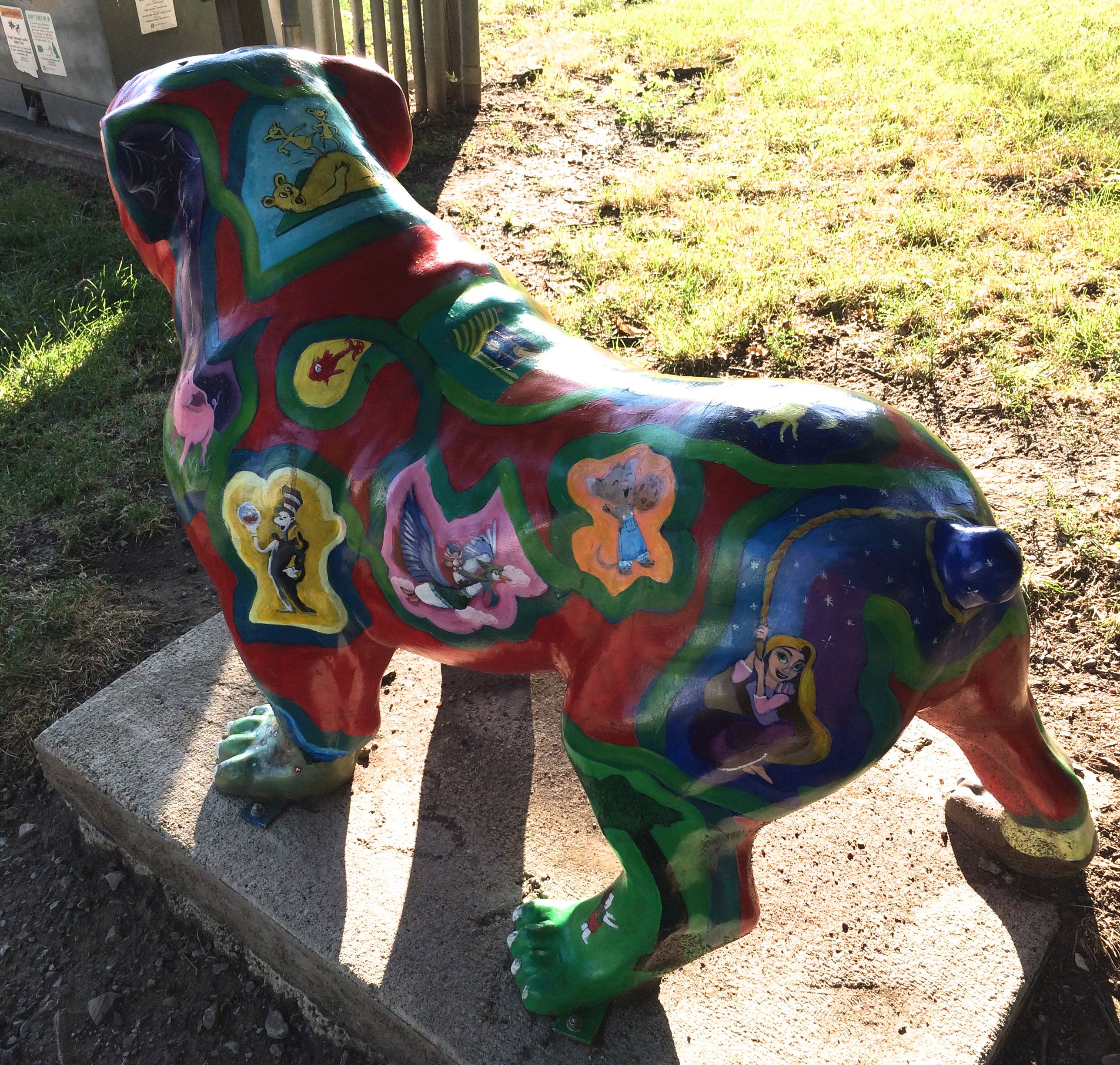
Just as I was about to leave the park and head back to the campground, I noticed this bulldog statue decorated with pictures from children’s books. As a reformed elementary school teacher, I thought this was adorable.
Back at the park I decided to go check things out at the carnival. I had a hot dog for dinner and strolled around to see what was going on.
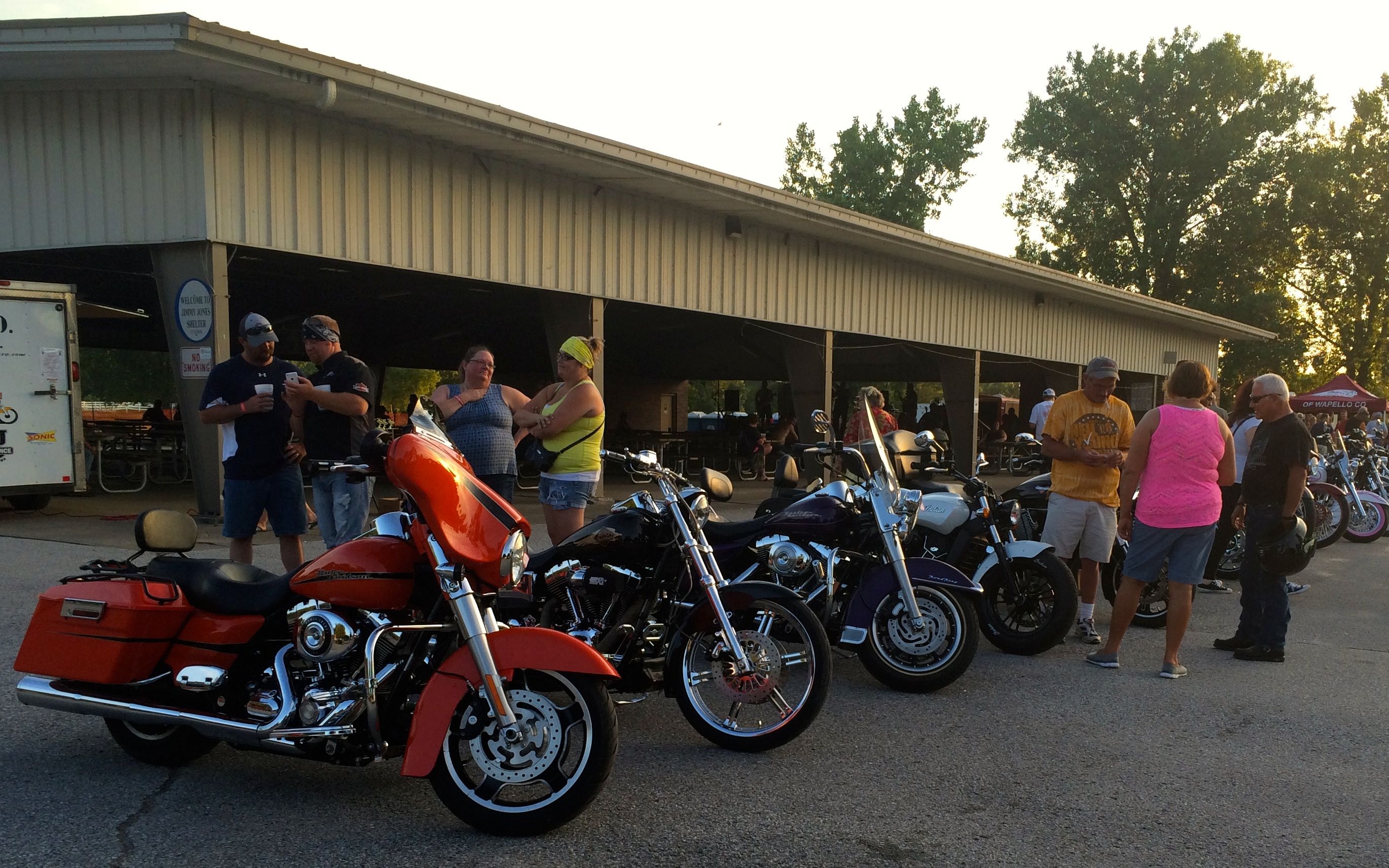
I passed the line up of motorcycles that belonged to the group “Hawgs for Dawgs.” People seemed to be enjoying looking at the bikes. I gave them a glance and went into the carnival.

There were games of chance.
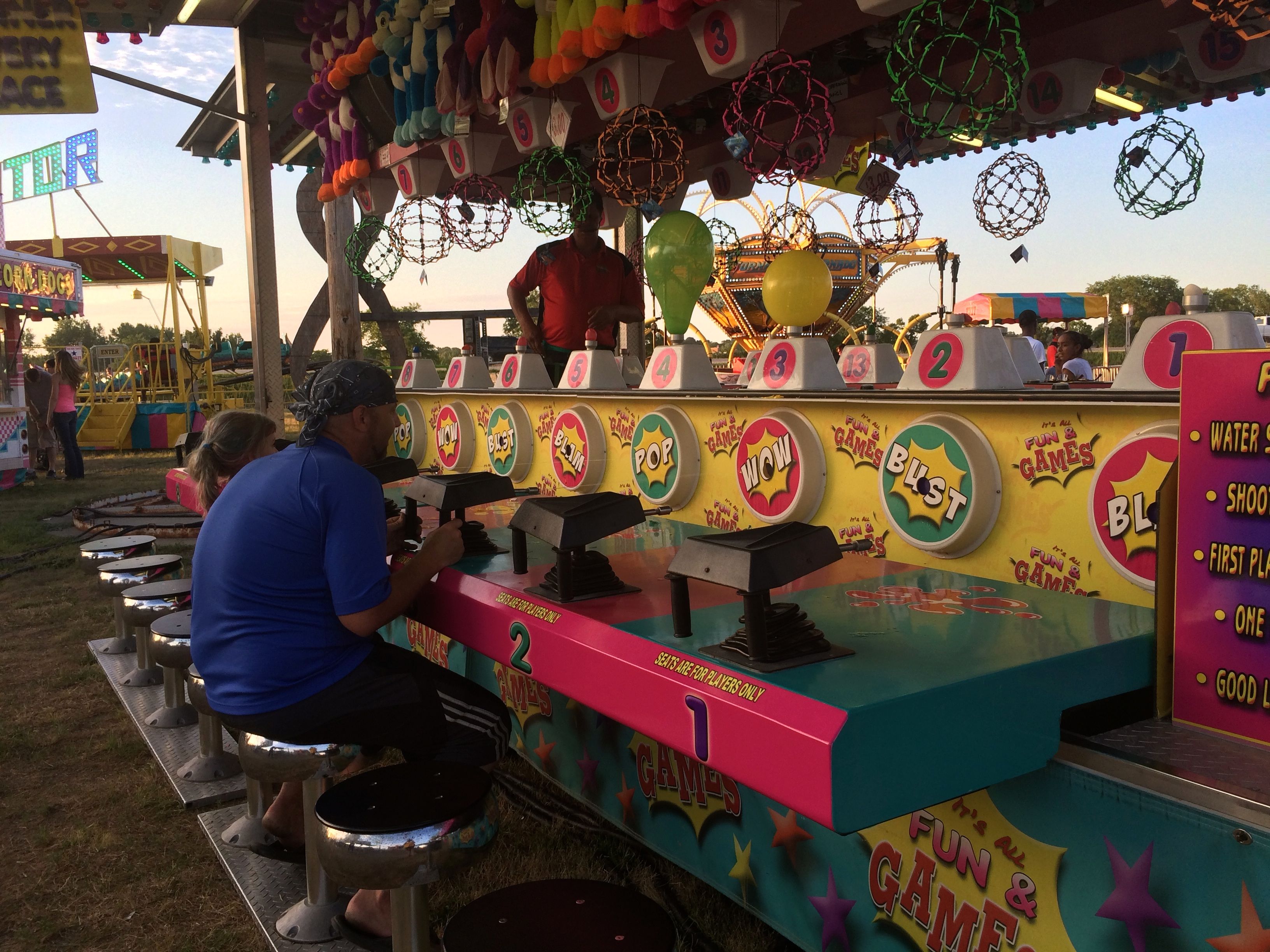
And games of relative skill.

The rides were kind of fun to look at. This one was called “Bear Affair”.

They went around the circle and spun around in circles.

It was fun to look at.

Then there’s the ride called “Reckless”, for people looking for a little more excitement that spinning bears.
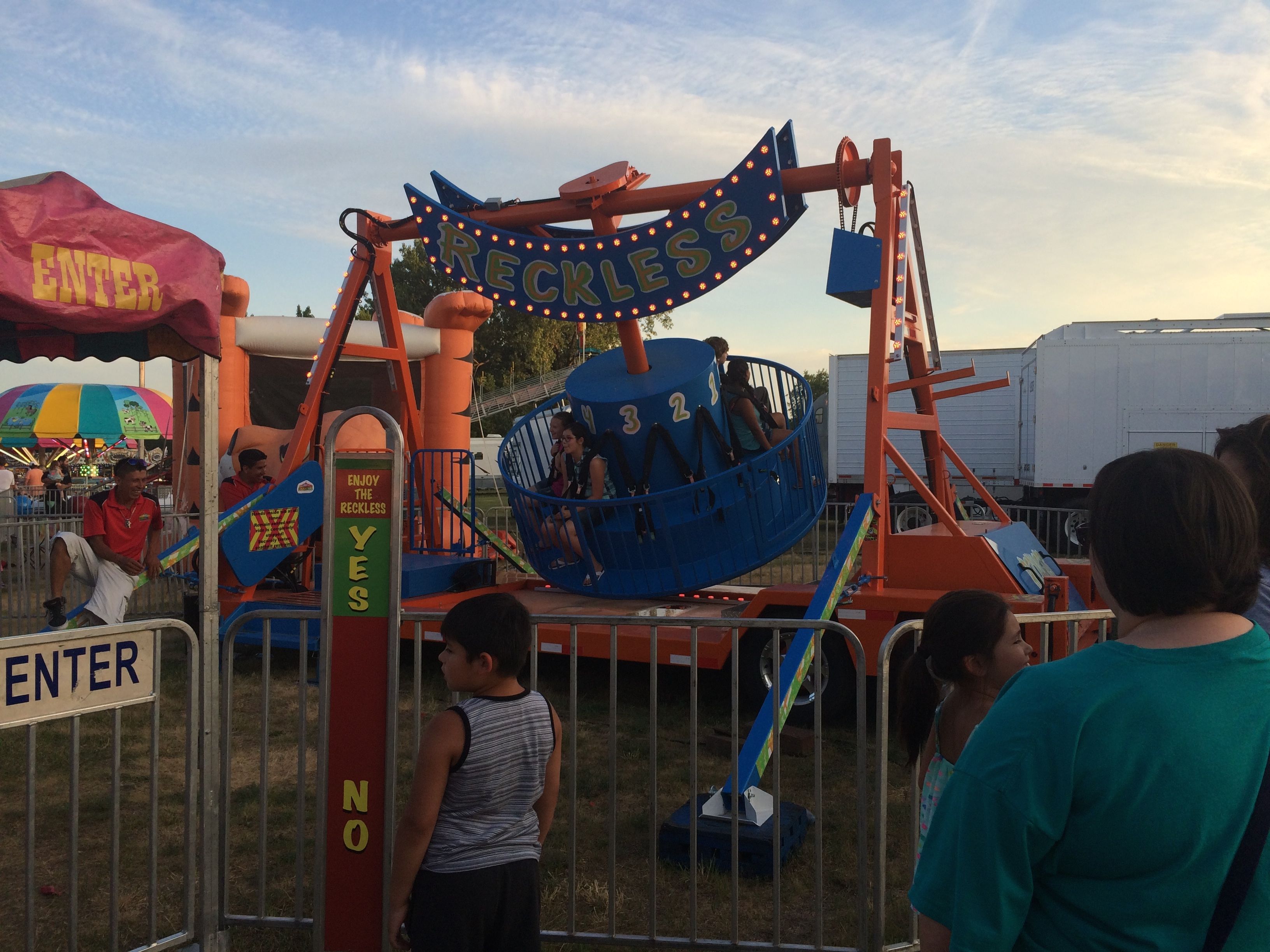
It swung back and forth and spun around.

And then there was the Round Up ride. I wonder if that is a particularly popular ride here in the corn belt?

The next day, before heading out, I made sure to add Iowa to the map on Flo.
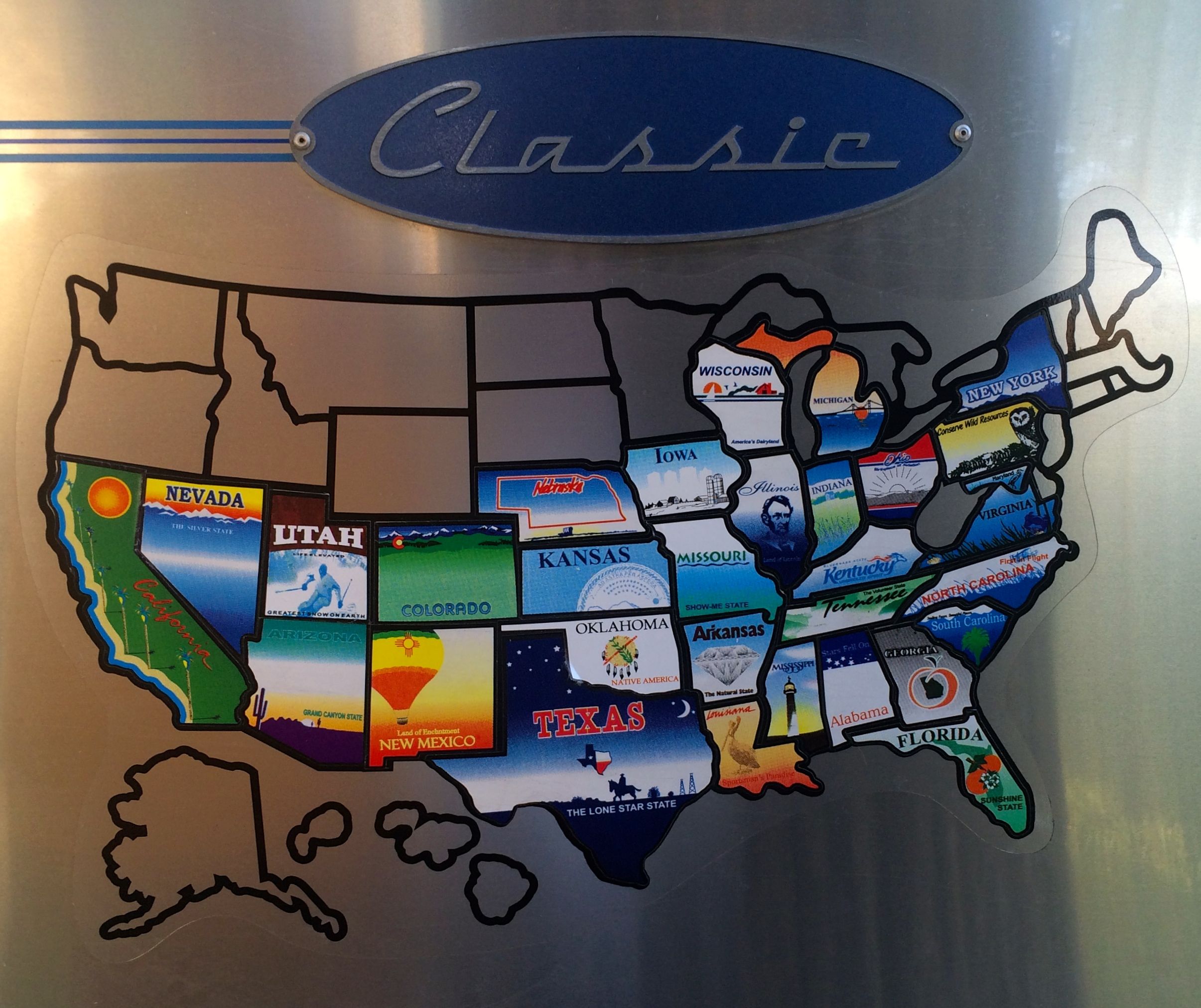
I’ll be rolling on, but there will be no new states added to the map for a while.