One of the things I really wanted to see in Charleston was the Hunley.
The Hunley was the first combat submarine to sink a warship, the Housatonic, on February 17, 1864 while the Housatonic was on Union blockade-duty in Charleston’s outer harbor.
On my first trip into the city, I saw a model of the Hunley.

Although the Hunley was successful in sinking the Housatonic, she was lost. Amazingly enough, the ship was found in 1995, more than 130 years after it was sunk. It was raised in 2000 and is now on display at the Warren Lasch Conservation Center along the Cooper River.

It is stored in a tank filled with water, which the fragile nature of the submarine requires. It was kind of hard to get a good view of the Hunley under the water. The guide told us that the water was fairly clear today, so I guess we were pretty lucky to see it this well.
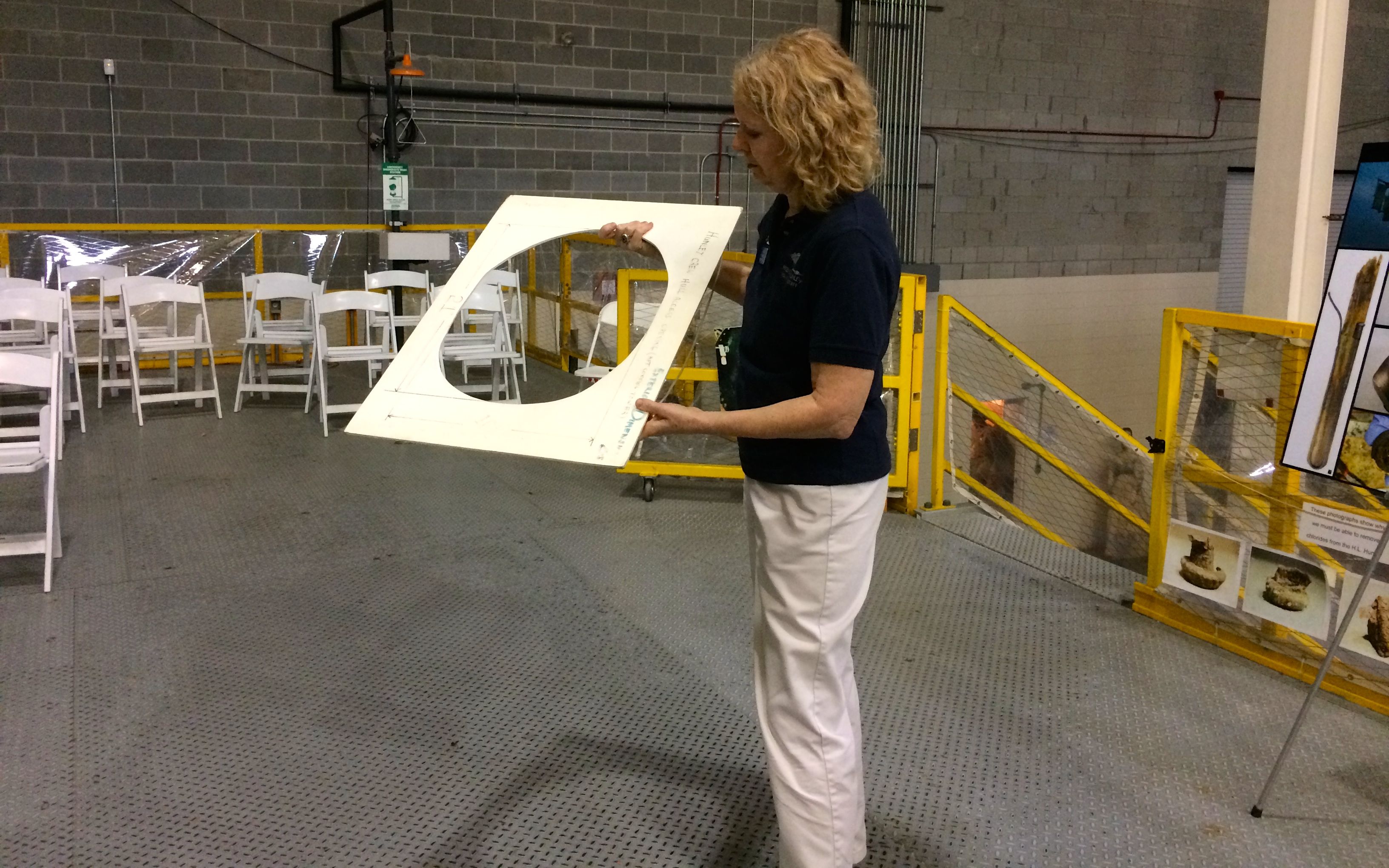
The guide displayed a hole the size of the hatch that the submariners had to use to access their seats.
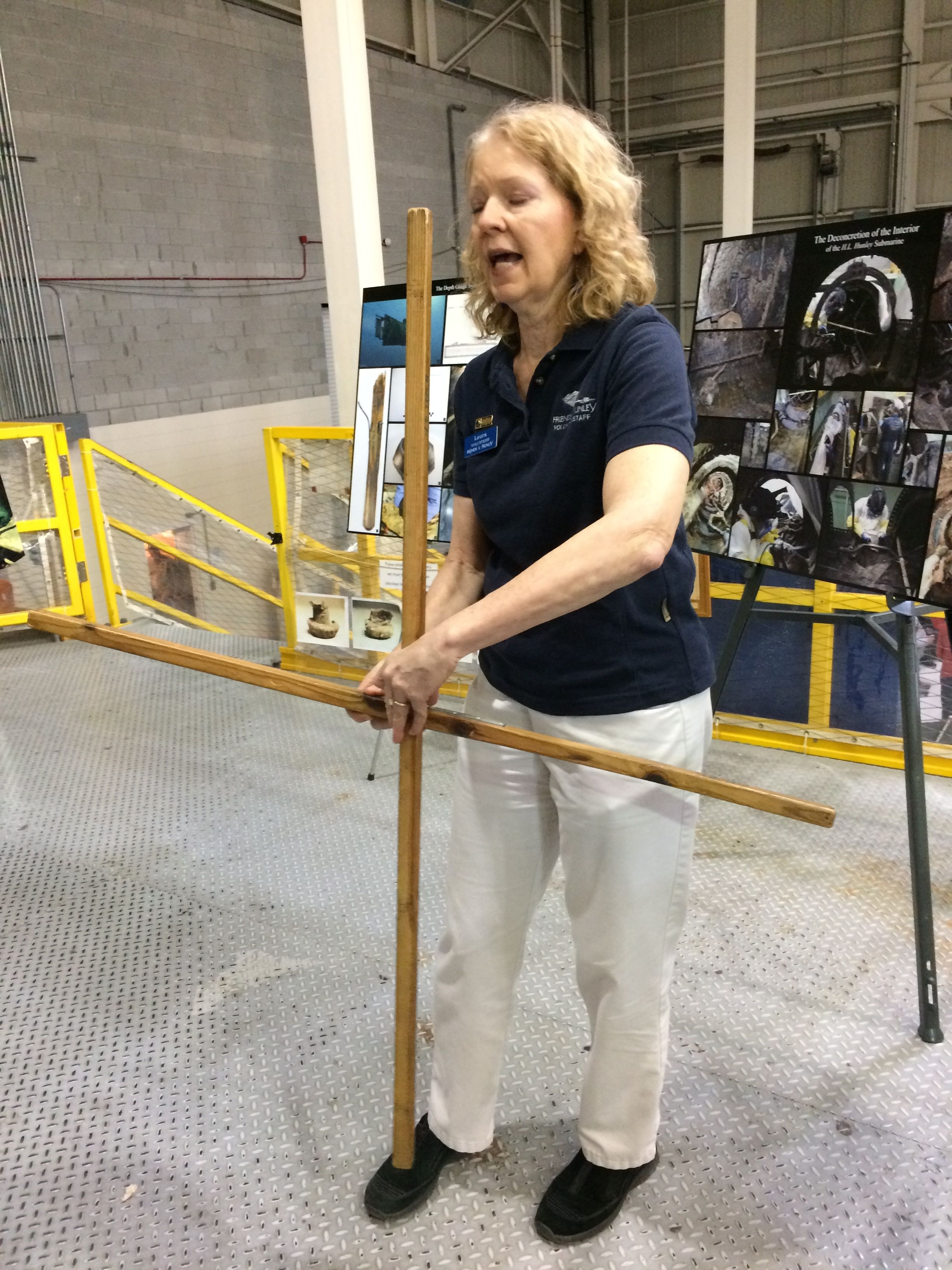
These bars showed how wide and how tall it was inside.
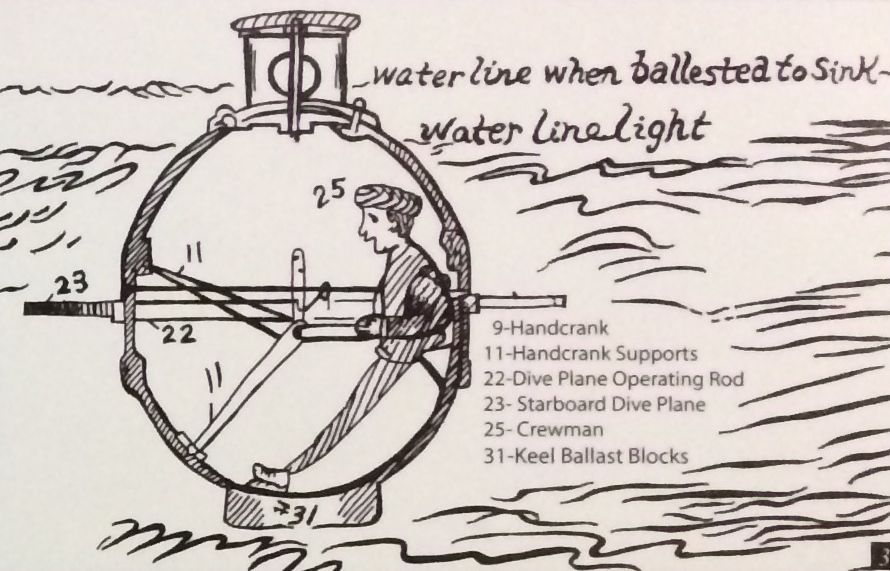
This is a sketch that shows how it worked. There was a small ledge that the eight man crew perched on. They had to crank the sub by hand.
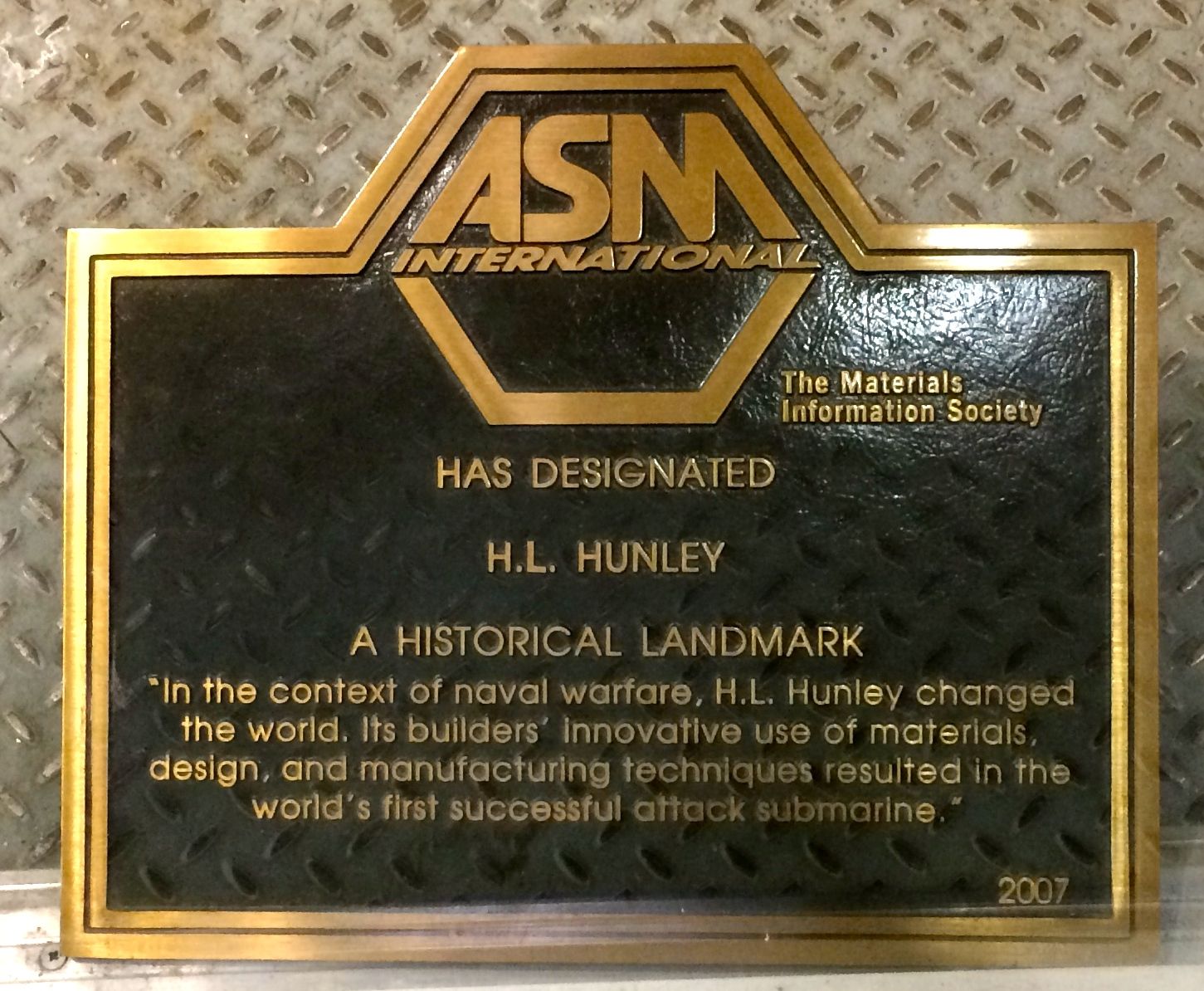
I always like it when I see things that I recognize. ASM was the organization that sponsored the last professional development opportunity I attended. Oddly enough, it was held after I retired. I was looking forward to it so much and I signed up for it before I decided to retire. I wanted to go to learn more about Materials Science even though I wasn’t going to be in the trenches anymore – and it was a great week with wonderful teachers.
Anyway, back to the Hunley.
The remains of the soldiers were found in the Hunley along with the artifacts that had with them at the time of their deaths.

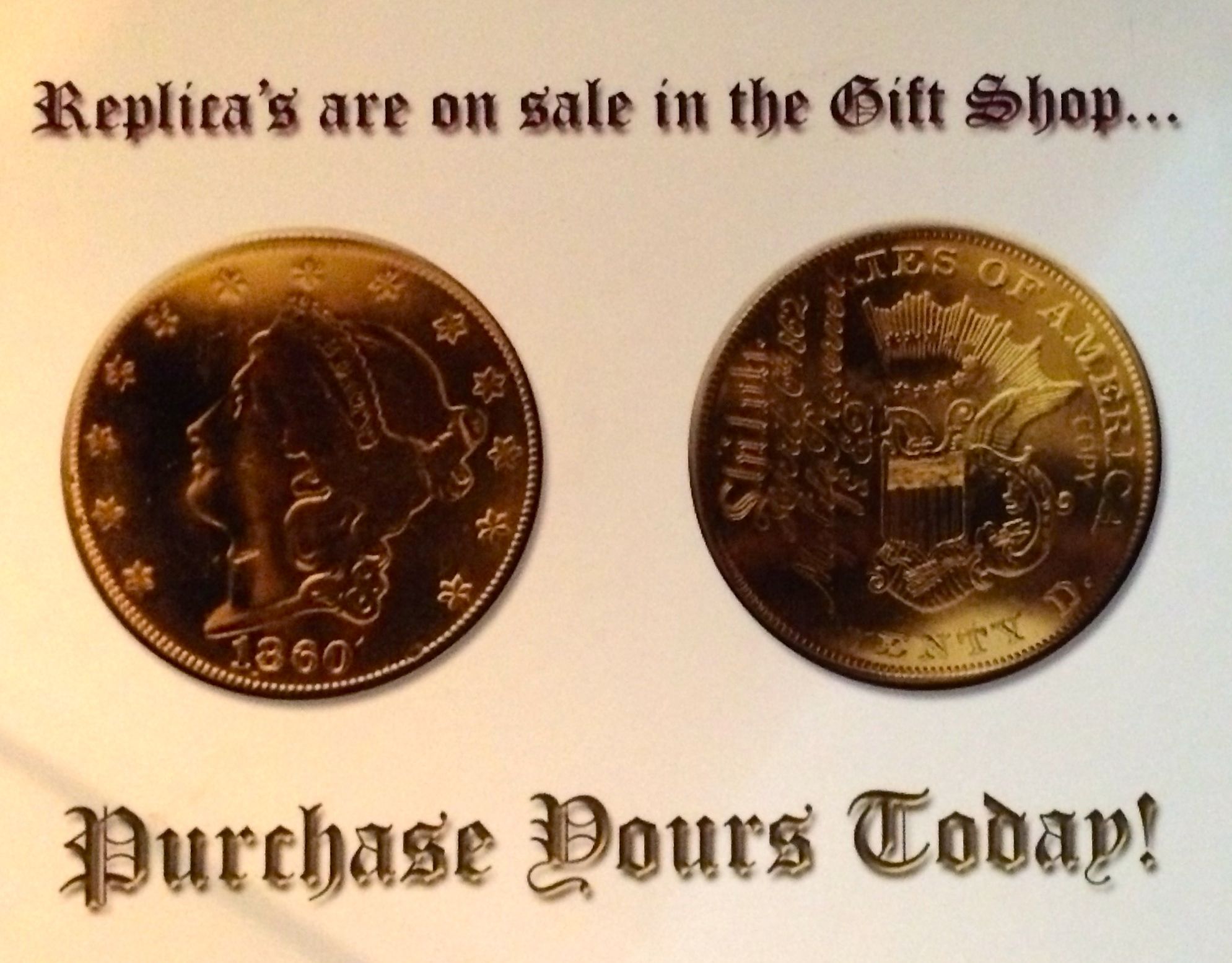
This twenty dollar gold piece was found with Lt. George Dixon’s remains. It was given to him by his sweetheart Queenie Bennett as a good luck charm when he went to fight in the war. Family legend had it that he kept it in his pocket and would rub it with his thumb and dream of when they would be together again.
During the battle of Shiloh, Dixon was shot point blank. The bullet ripped into the pocket of his trousers and struck the center of the gold coin. The impact bent the gold coin. Queenie’s good luck gift saved his life.
The back of the coin was sanded and inscribed:
Shiloh
April 6, 1862
My life Preserver
G. E. D.

There was also a sign next to the coin that was on display. Unfortunately, there was an “apostrophe catastrophe” on the sign. There was no way I could buy a coin with such poor puntuation!
They were able to do forensic recreations of the eight members of the Hunley crew that were lost in the sinking of the Housatonic.

In all the Hunley had three crews.
The first crew lost five of the eight crew members when the captain accidentally stepped on the lever controlling the sub’s diving planes as she was running on the surface. This caused the Hunley to dive with her hatches still open. The captain and two others managed to escape.
The salvaged the submarine and put her back into service.
The second crew was lost in 1863. They were taking part in a mock battle and attempted to go under another vessel. It got stuck in the mud and the entire eight man crew was lost.
The Confederate navy once again salvaged the submarine and returned her to service. On her last mission, she was successful in sinking the Housatonic and then was lost.
The part of this story that amazes me the most that they managed to locate the wreckage, which was 3.5 miles past Sullivan’s Island outside the entrance to Charleston Harbor, in 27 feet of water and buried under several feet of silt. The silt was key to the preservation of the Hunley.
After the tour of the museum at the Warren Lasch Conservation Center, I decided that I wanted to see the graves of the crews of the Hunley.
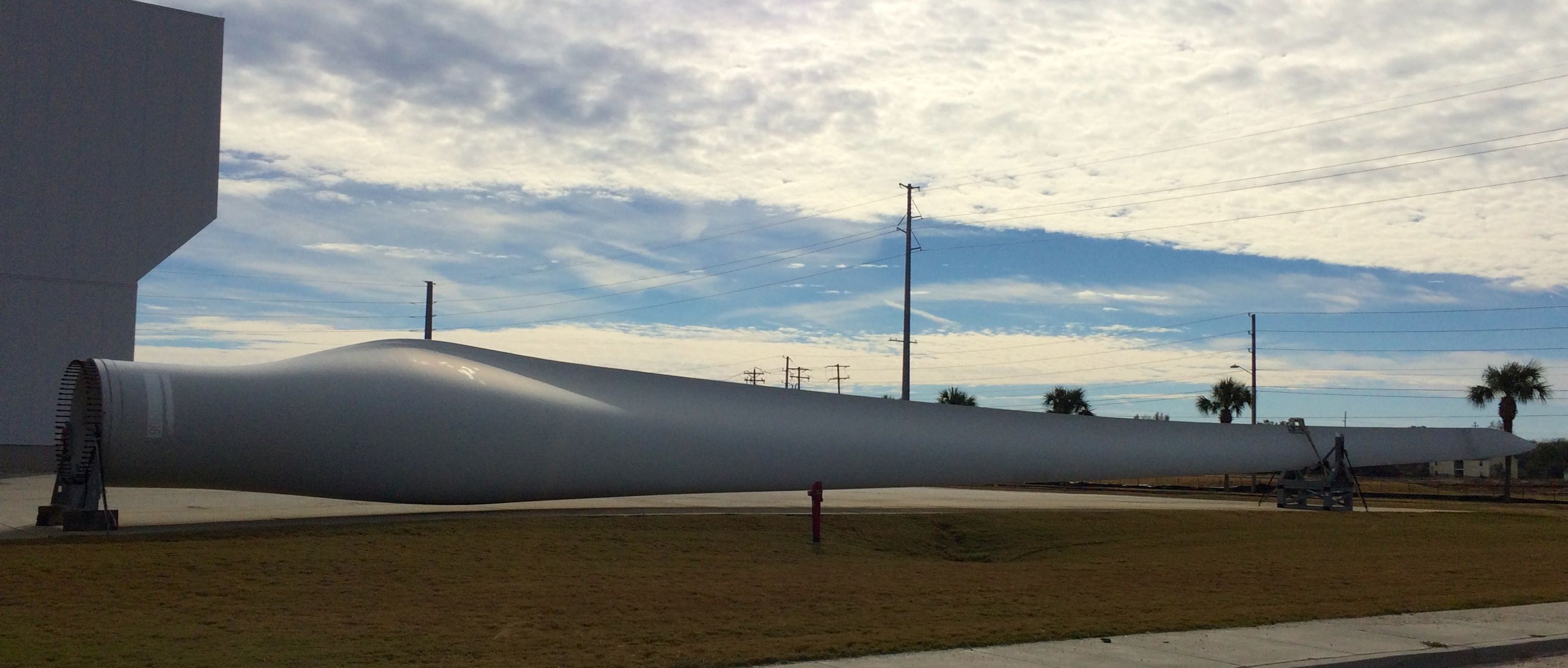
On the way out, I passed a blade of a windmill. I wonder where it was headed? Or perhaps it was on display. I didn’t see a sign to explain it.
On my way to the cemetery, I decided that I needed to grab a bite to eat.
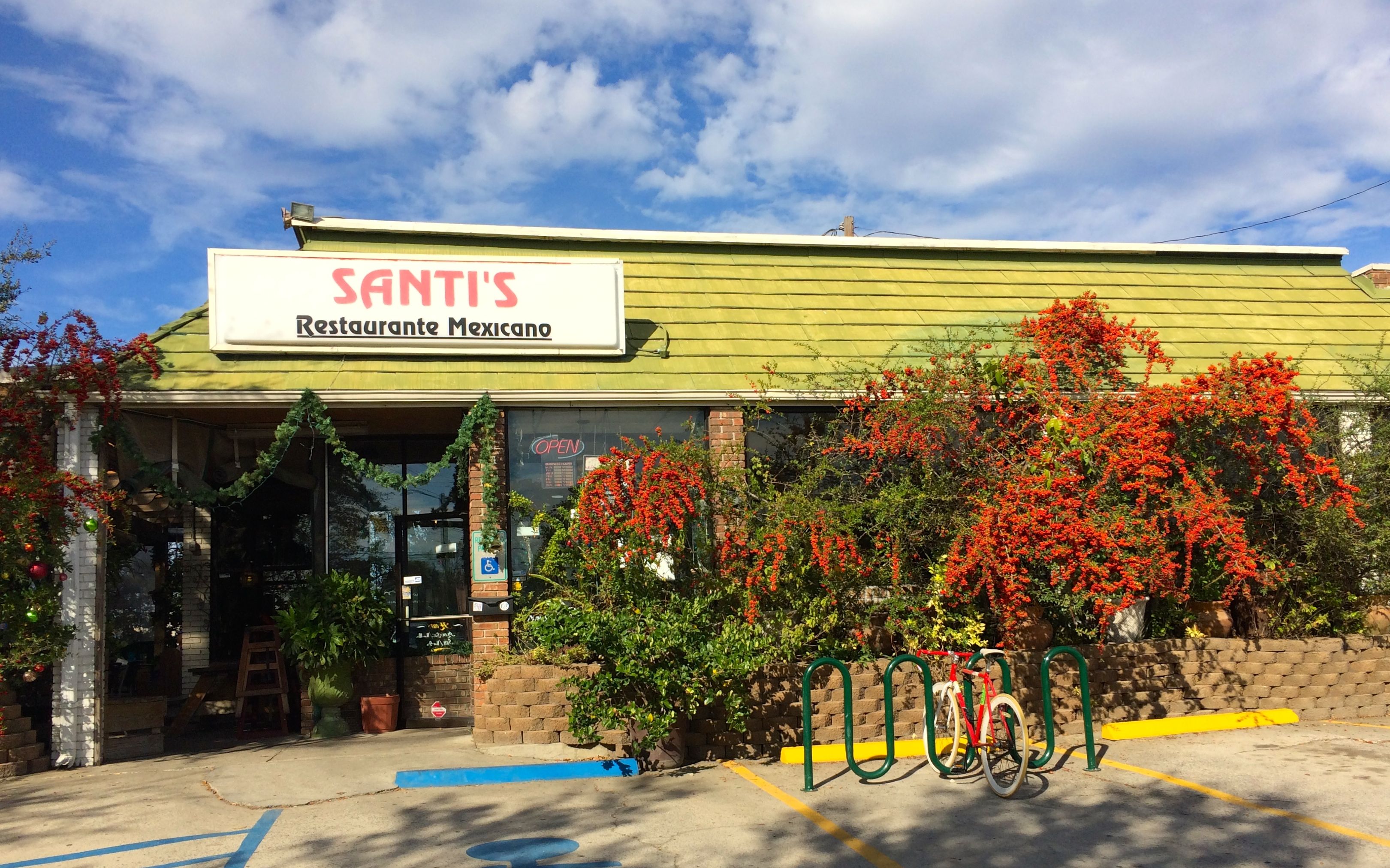
I saw a listing for Santis Resaurante Mexicano, and I thought that sounded great.

Apparently, the people of Charleston also think it’s a great place.
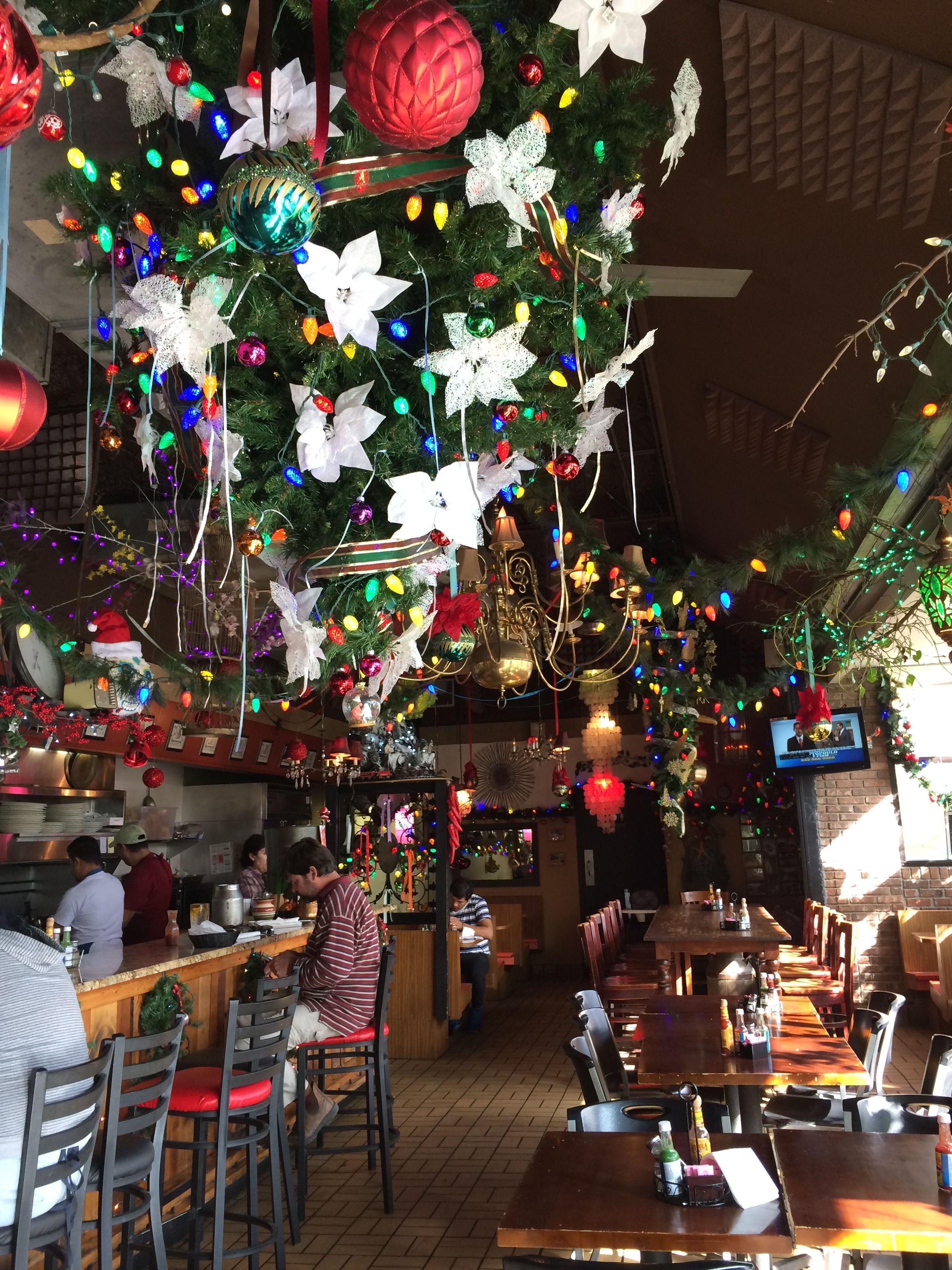
They were all ready for Christmas. They had Christmas trees hanging from the ceiling! It looked very festive, and since I was visiting in early December, the decorations were entirely appropriate.
Adequately reinforced, my next stop was Magnolia Cemetery. After driving around on the narrow roads that wound through the old graves, I came upon the Hunley memorial.
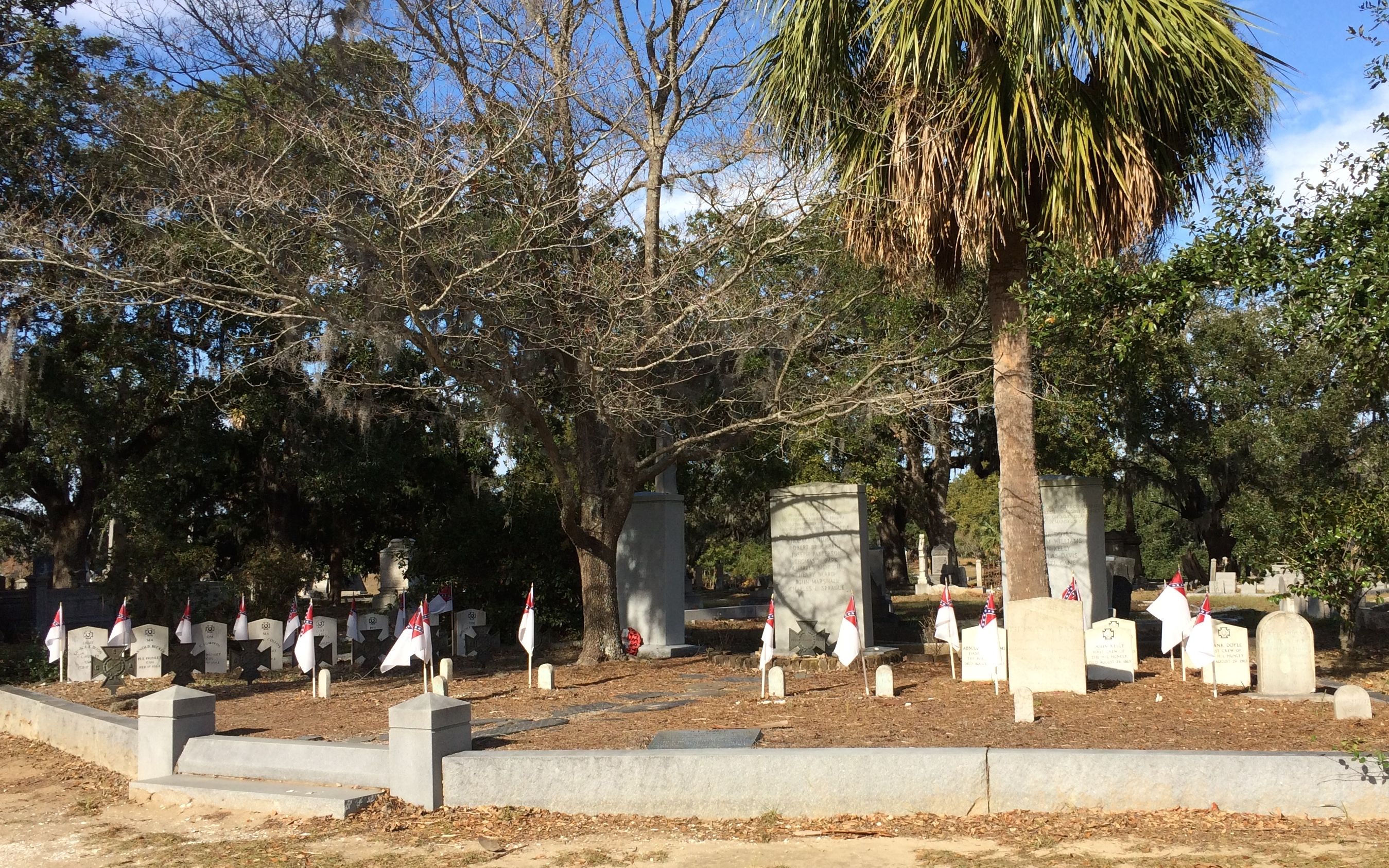
These are the graves of the first and second crews.
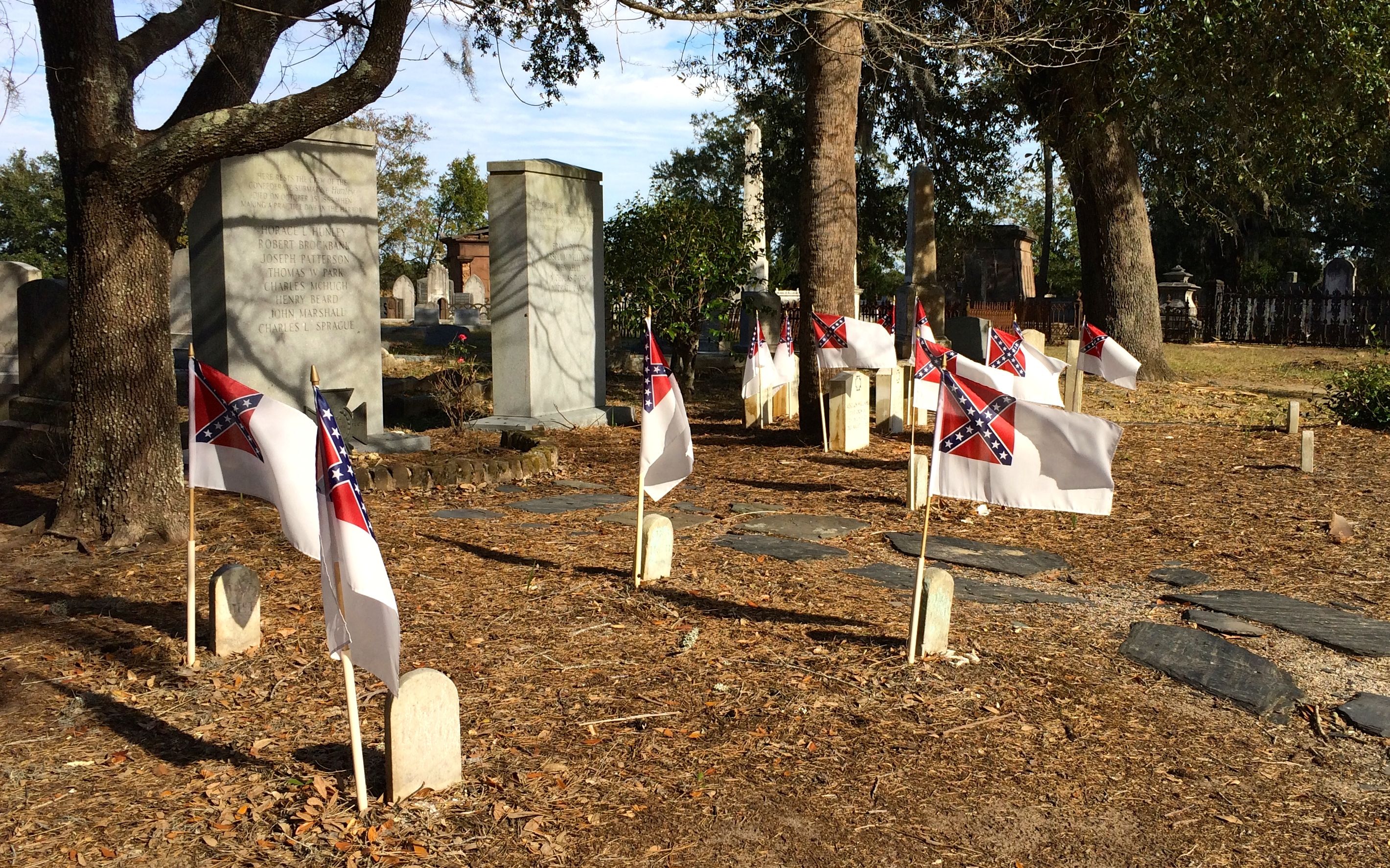
These are the graves of the third crew.
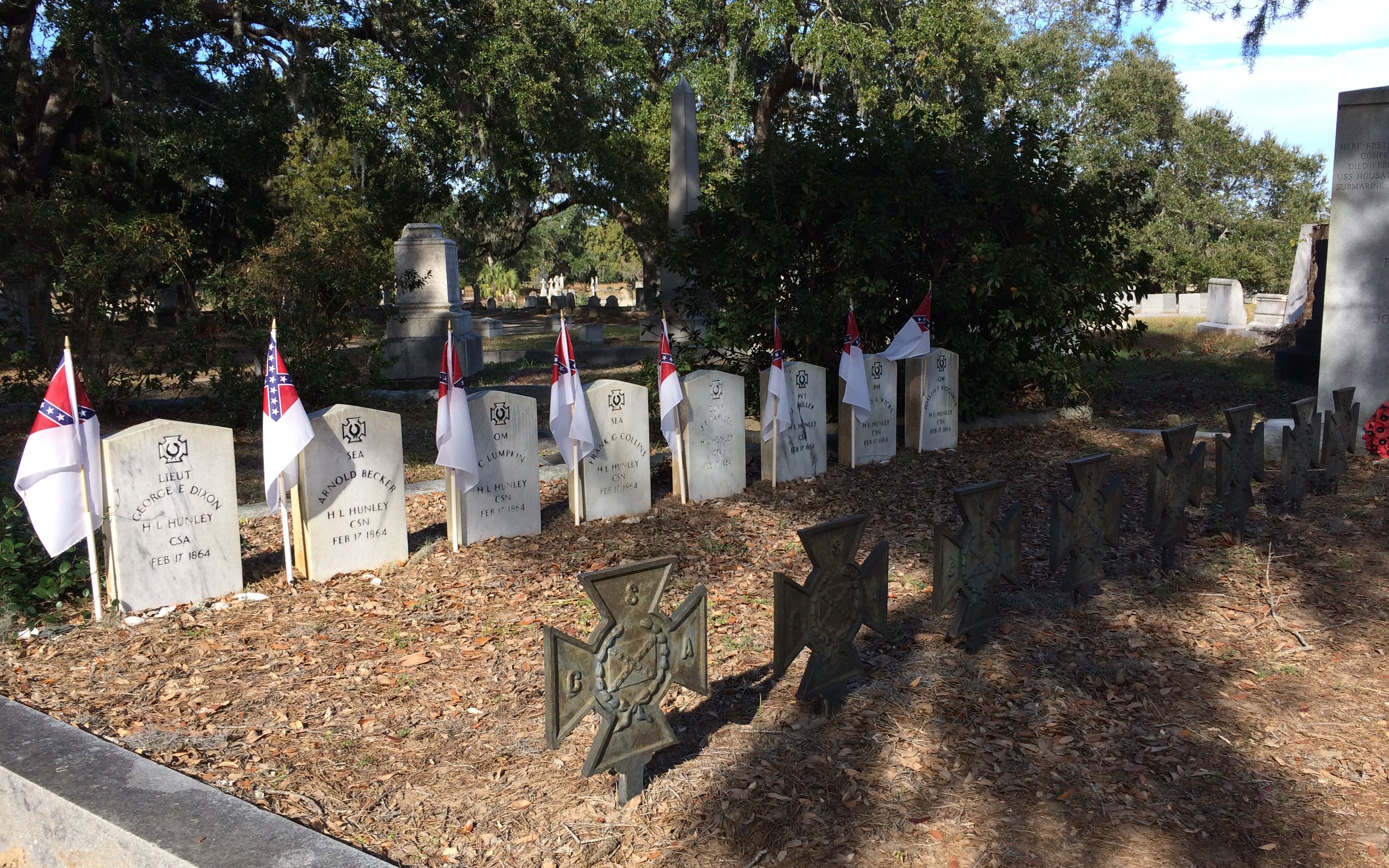
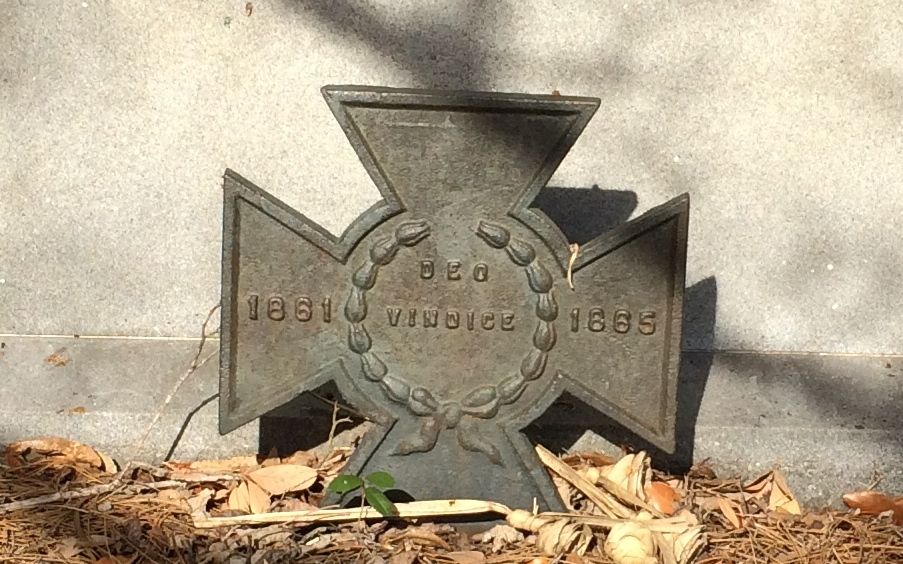
They have CSA grave markers in this cemetery.
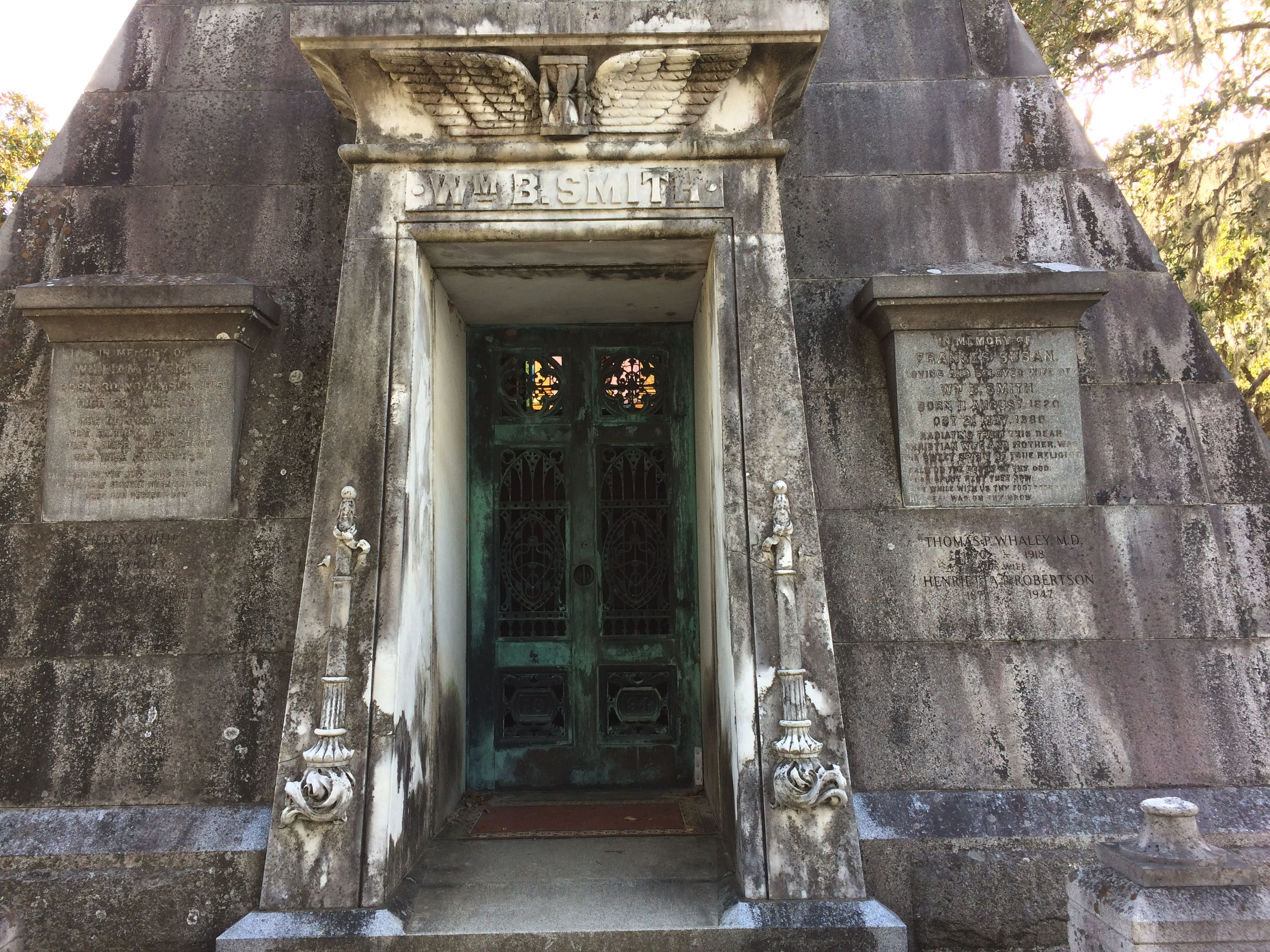
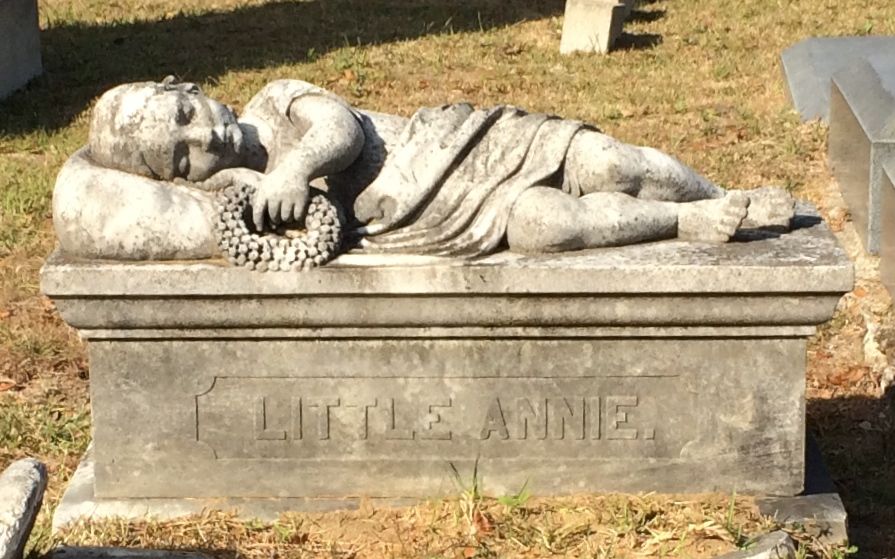
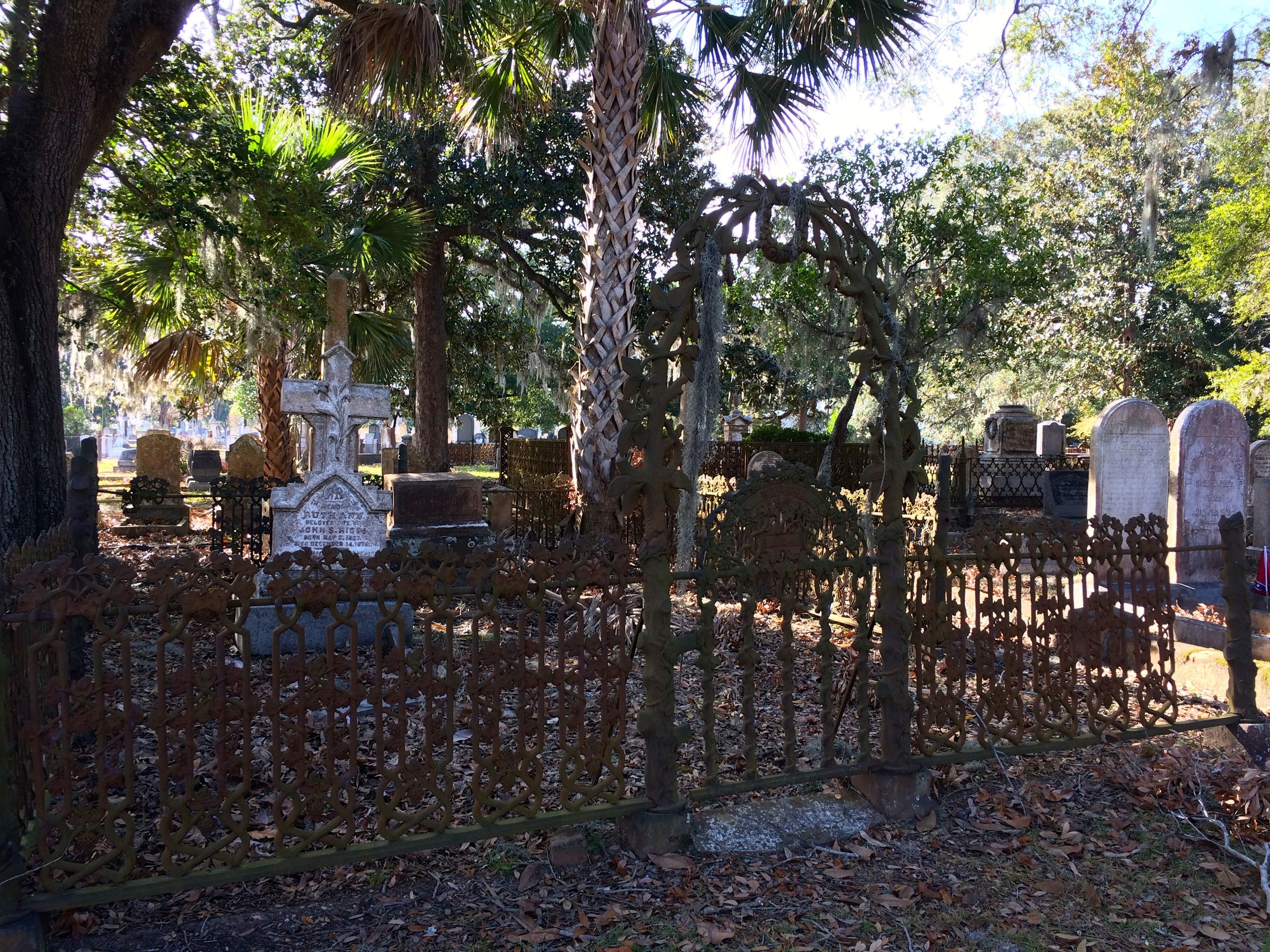
The graves and memorials in the cemetery were quite interesting.
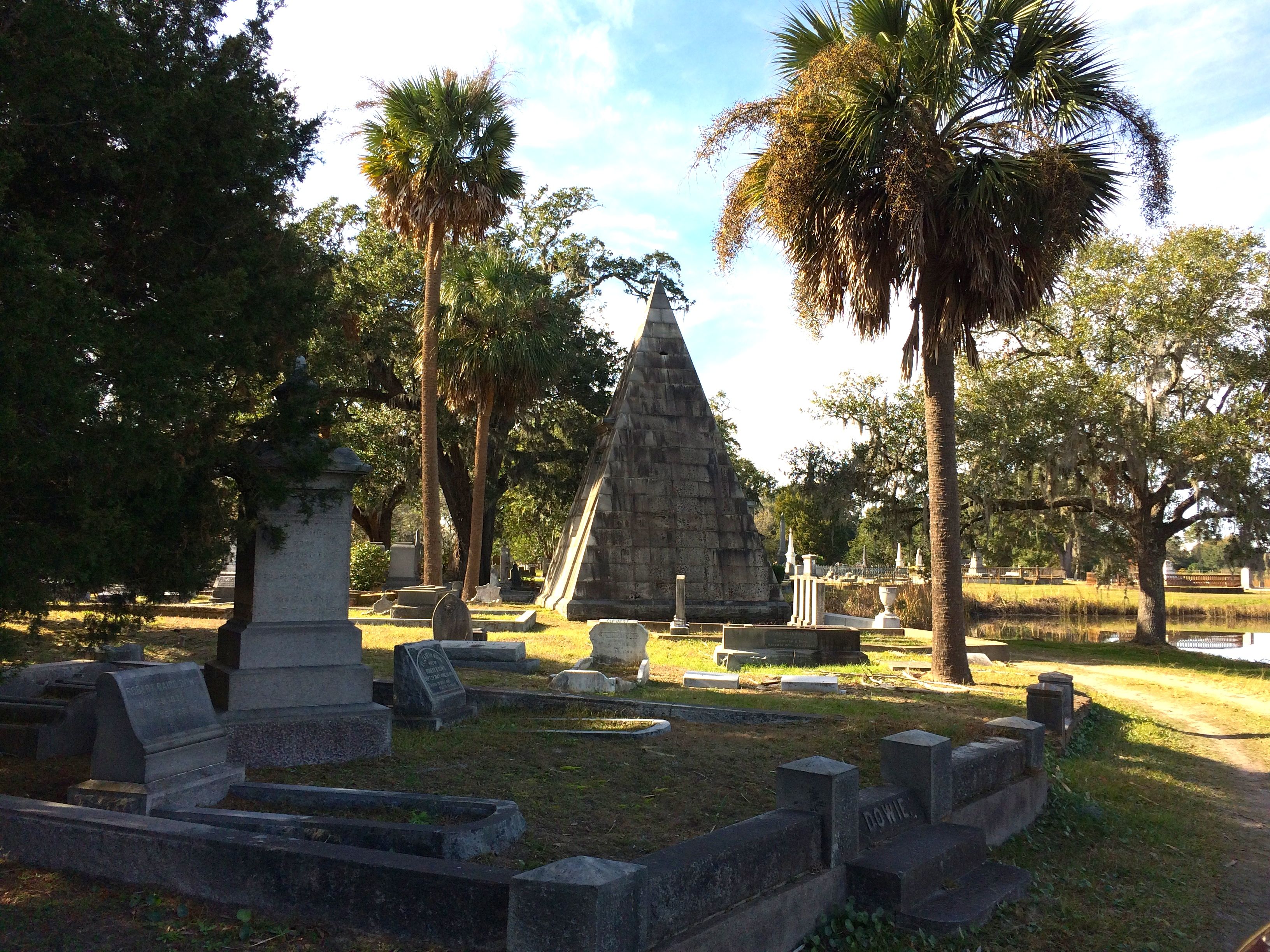
The pyramid mausoleum had an interesting door.
Some of the memorials were quite charming.
Others were run down and decaying.
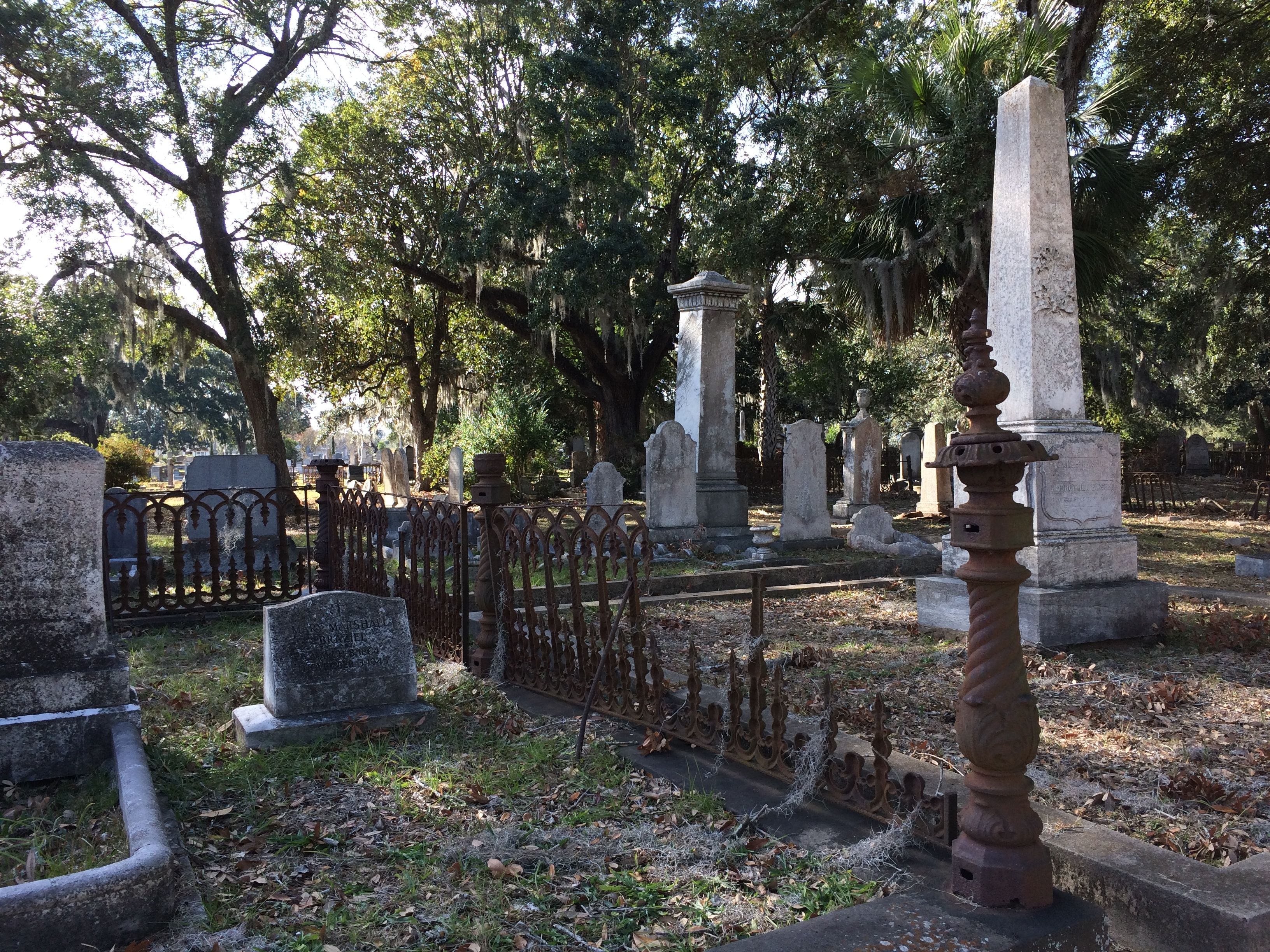
It would be interesting to take a day and just explore.
However, I had one more goal for the day. I wanted to visit Fort Sumter, and I needed to get going if I was going to take the last tour of the day.
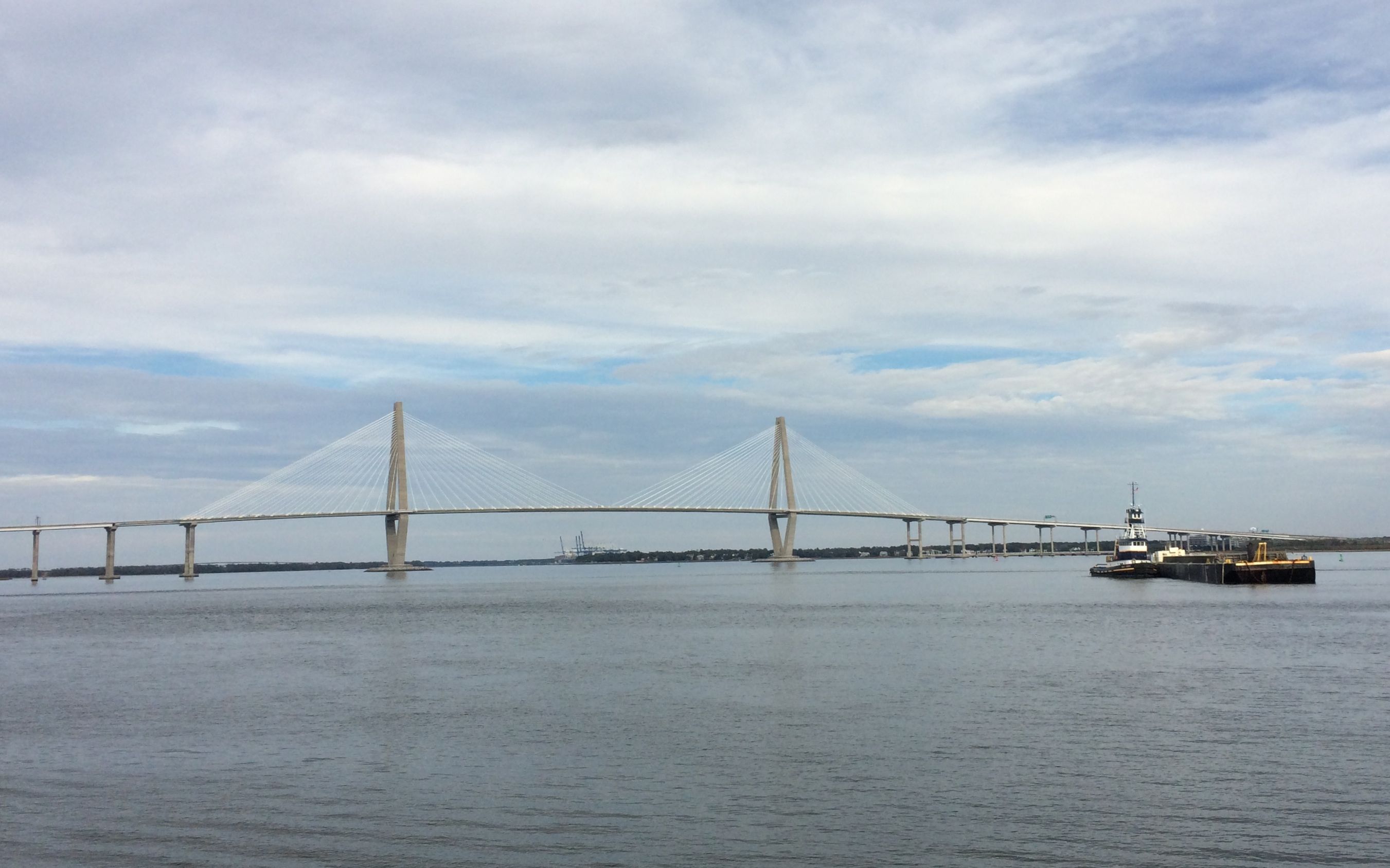
I made it to the ferry for the forty minute ride to the fort.
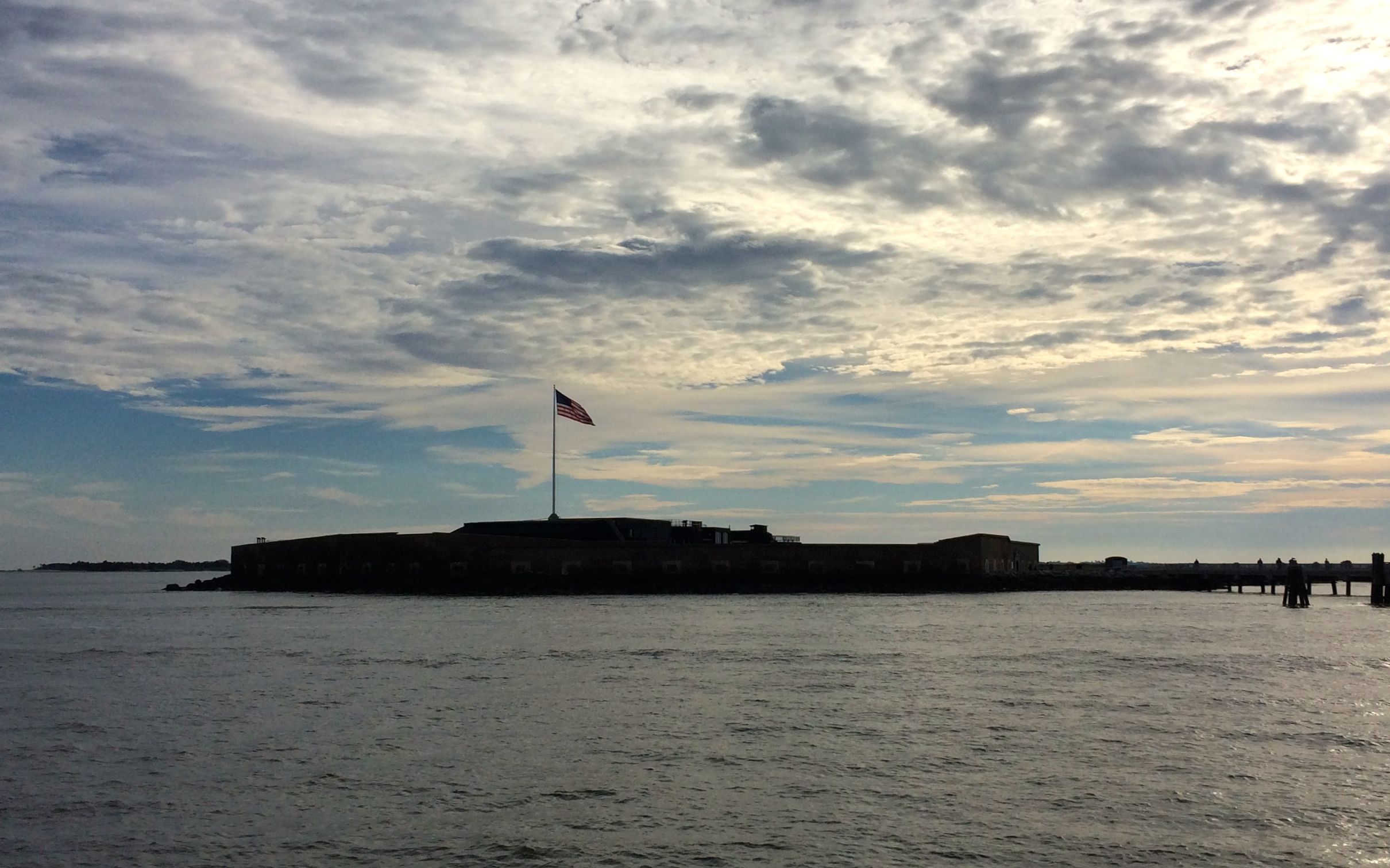
Oddly enough, there is a connection with the fort and my travels last summer. The island is actually a man-made island, and it was built in large part with over 50,000 tons of granite shipped from New York and New England.
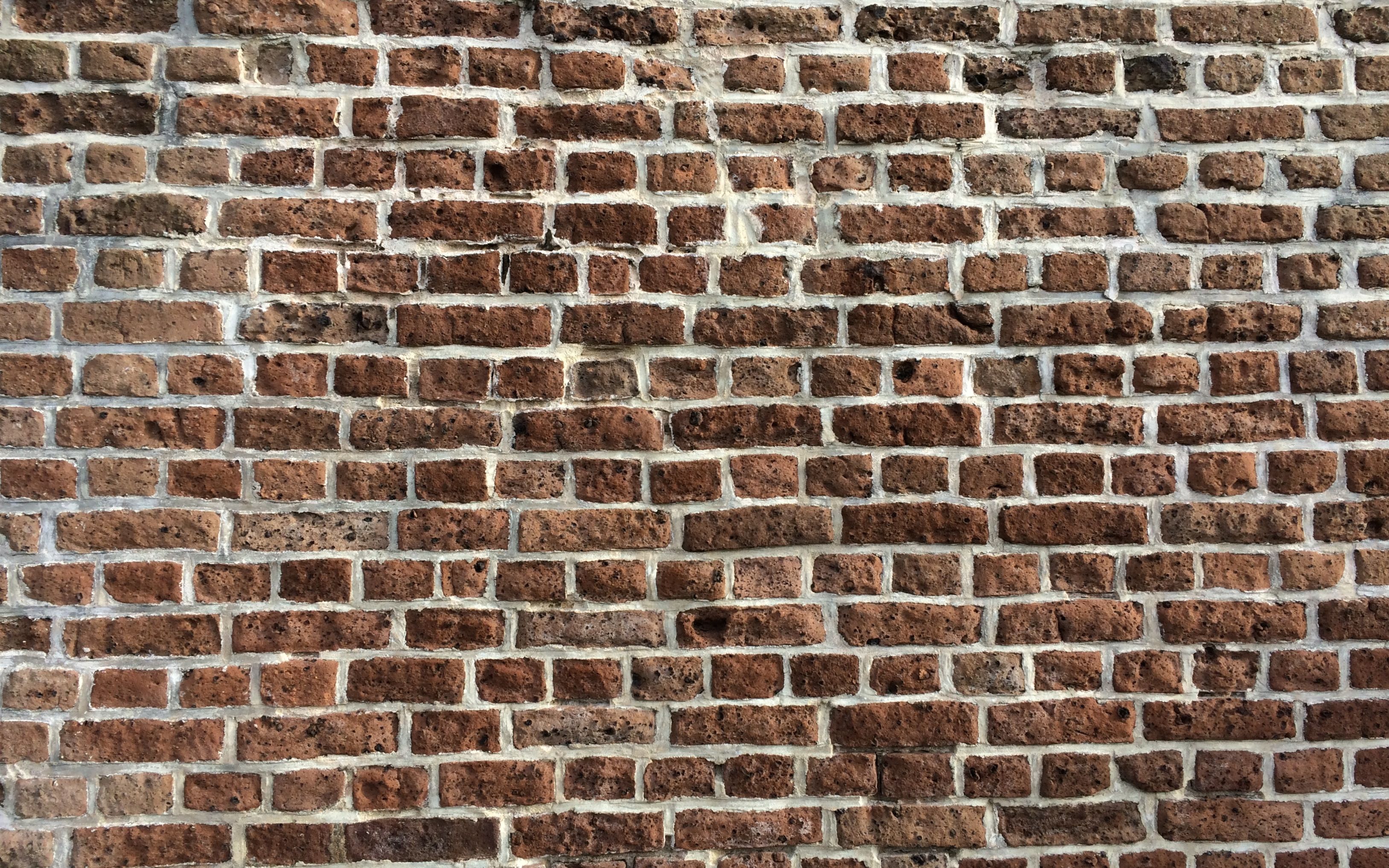
The Army Corps of Engineers began constructing the island in 1829 and they allowed it to settle before constructing the fort. The brick walls of the fort were constructed above the 1841 high water mark because the engineers knew that the brick and mortar walls wouldn’t stand up to the salt water and wave action.

The bricks looked pretty sound.
Of course, the fort wasn’t always in such good condition.
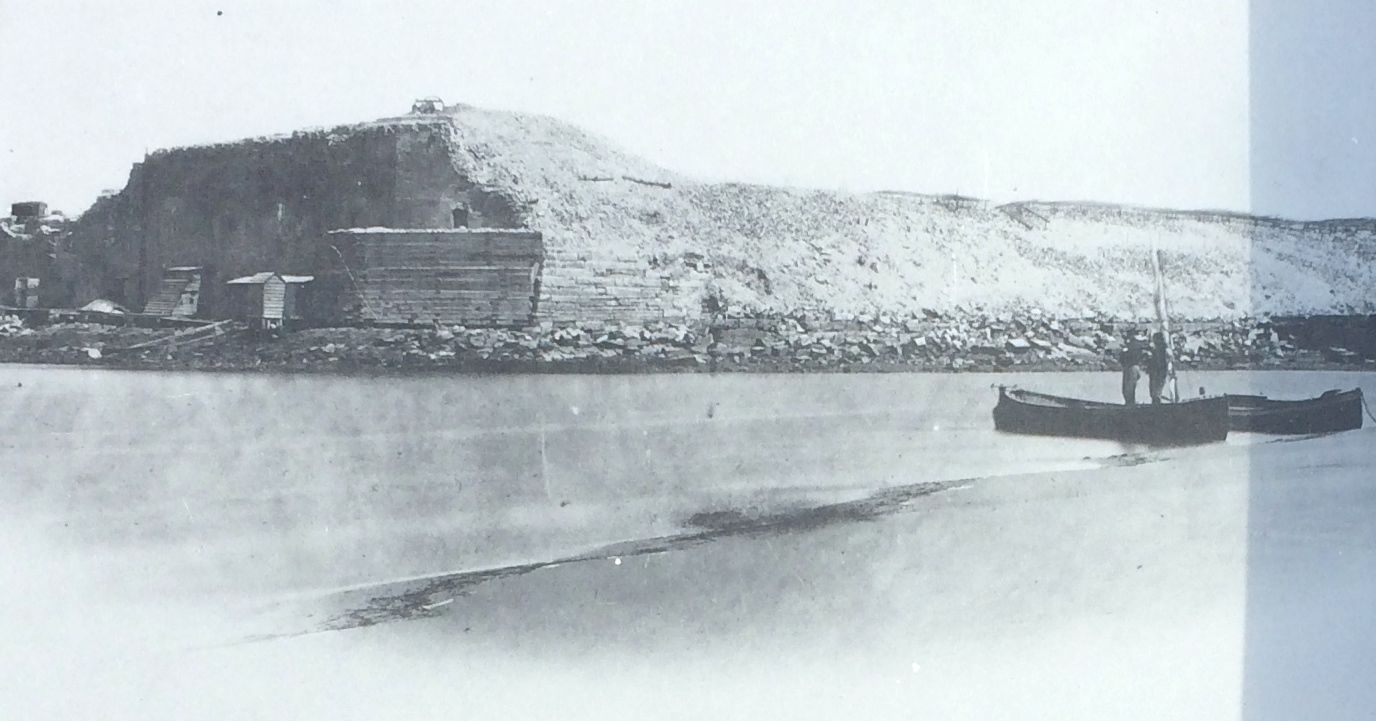
This photo was taken in 1865.
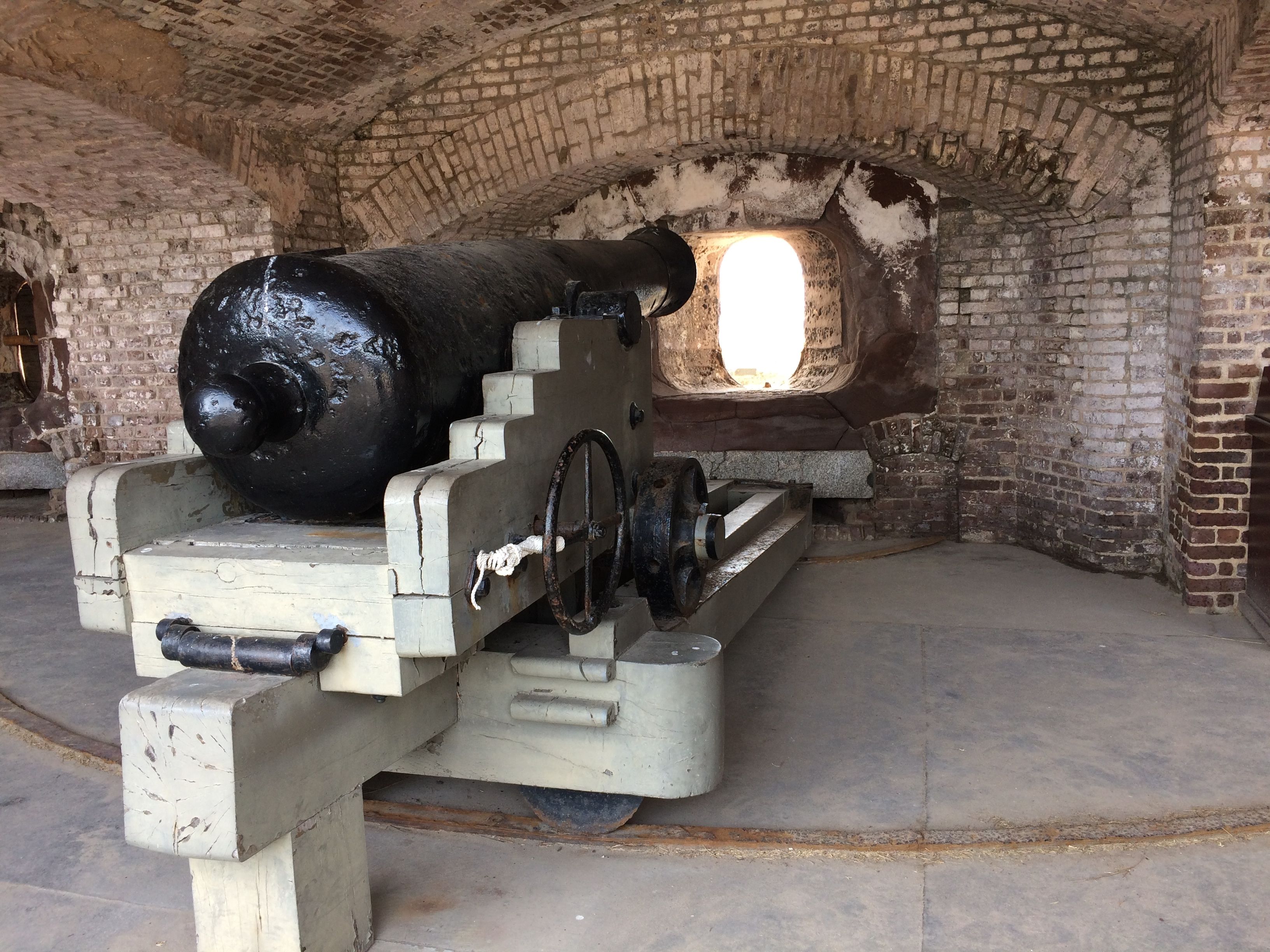
Just inside, you can see the ordnance. Look at the thick brick walls!
Fort Sumter was named for General Thomas Sumter, who was a soldier during the American War for Independence as well as a politician. He served in the House of Representatives and the Senate. He died in 1832 at the age of 97. Such service and longevity deserves recognition.

The Battle of Fort Sumter was actually more of a siege that culminated in the April 12-14 battle in 1861.

After the declaration of secession on December 20, 1860 – which is just 95 years to the day before my birth – South Carolina demanded that the U.S. Army abandon its facilities in the Charleston Harbor. On December 26, , Major Robert Anderson secretly moved his small command from Fort Moultrie on Sullivan’s Island to Fort Sumter, which was in better position to defend itself and to control the entrance to the harbor.
President Buchanan tried to resupply the fort with an unarmed merchant ship, Star of the West, but it was seized on January 9.
Confederate General P.G.T. Beauregard began strengthening the batteries around Charleston that were aimed at Fort Sumter. Major Anderson did his best to reinforce Fort Sumter and install additional guns, in spite of the shortages of man, food and supplies.
After Abraham Lincoln’s inauguration on March 4, 1861, he notified Francis W. Pickens, the governor of South Carolina, that he was sending supplies to the fort. The Confederate government demanded an immediate evacuation of Fort Sumter, which Major Anderson refused. The bombardment began at 4:30 a.m. on April 12.
Fort Sumter was not built to defend from an attack from the direction of the city. As a result, the fort took quite a pounding. After 34 hours, when it became apparent that the shelling was going to reach the powder magazine, Major Anderson agreed to the surrender terms.
Major Anderson was allowed to evacuate the fort with his garrison taking small arms and all private and personal property. In addition, Major Anderson could salute the United States flag and take it with him on his journey north.
They were always so big on those terms of surrender and getting to leave with dignity.
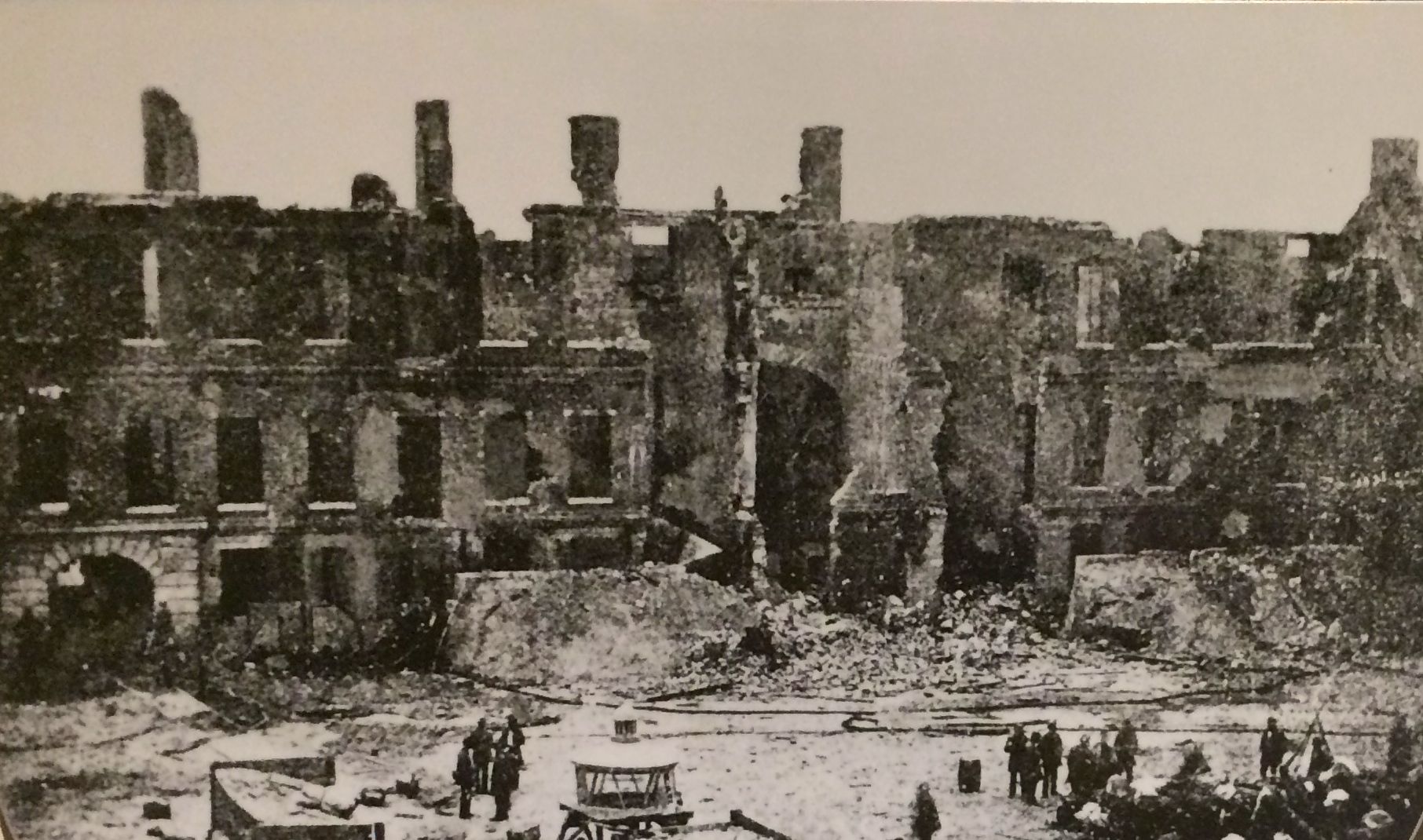
They really made a mess out of the fort, though, didn’t they?
They have managed to put things back together a bit.
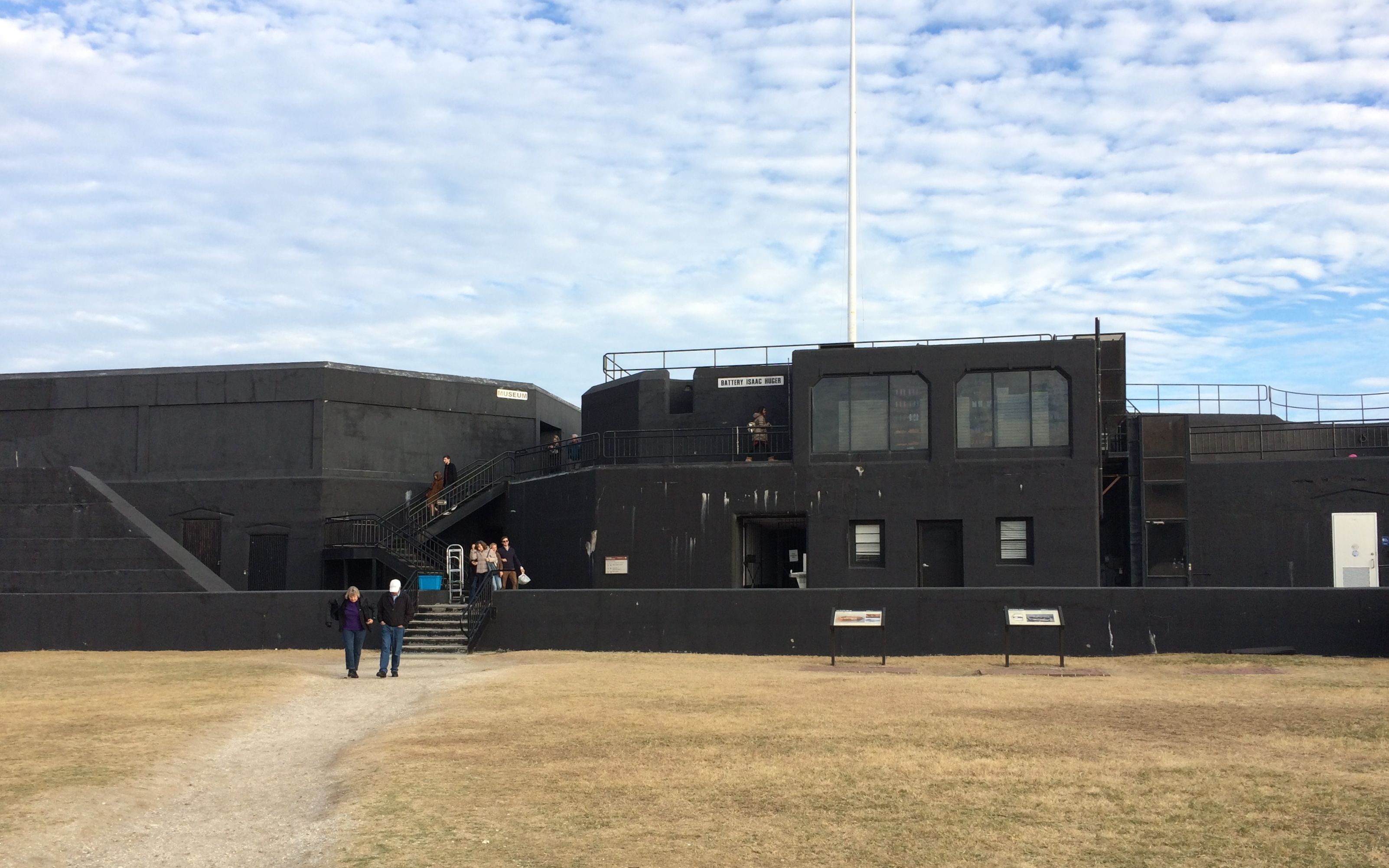
Inside the fort is a black cement structure called Battery Isaac Huger. It was built just before the beginning of the 20th century as a part of a major coast defense upgrade. It’s named of South Carolina Revolutionary War Brigadier General Isaac Huger.
It is painted black to resemble the first paint job from the early 1900s, when a mixture of tar and indeed oil were used as a waterproofing agent. The ranger told me that they use other paint now, but maintain the color in keeping with its original appearance.
There is a museum inside the battery now, but it isn’t an easily accessible museum. They might want to remove it and replace it with something else, but it would cost over $4 million to remove it – and that doesn’t even cover the cost of creating a new museum.
Speaking of the museum, I always wondered what exactly “grape shot” was. The stack of small balls on the right is grape shot. After firing, I guess they whole thing would hold together long enough to get there. It was useful when fired at the rigging of ships, as it would create havoc with the lines and sheets.
Incidentally, I always thought that the term “sheets” referred to the sails. Nope. According to my “go-to” site, Wikipedia, “In sailing, a sheet is a line used to control the moveable corners of a sail.”
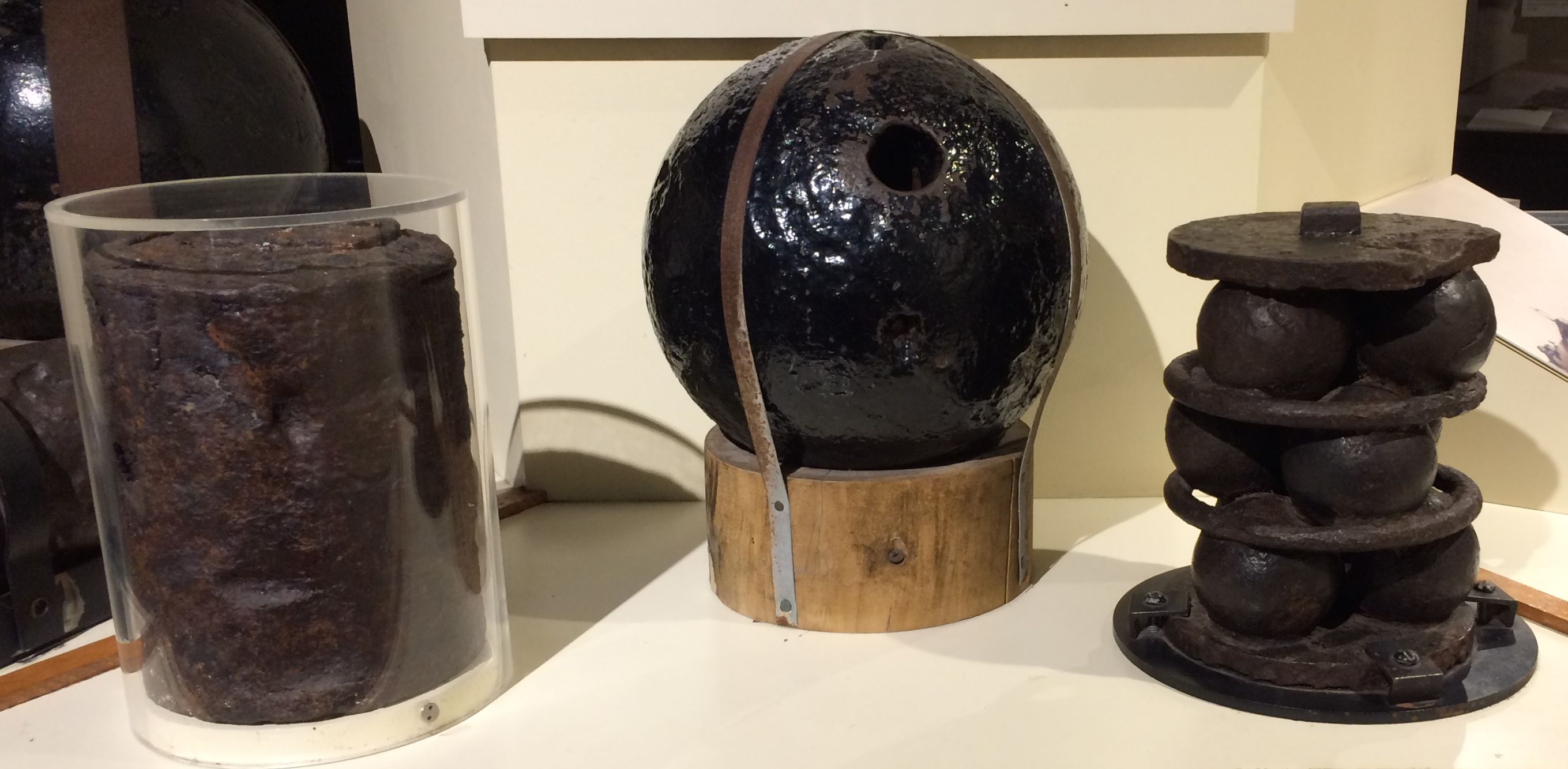
In the center of the photo is a 10 inch ball, and on the right side is an example of canister shot. The principles behind grape shot and canister shot are similar, except that canister shot is an anti-personnel ammunition. Rather than ripping through sails and rigging, canister shot is designed to rip through people.
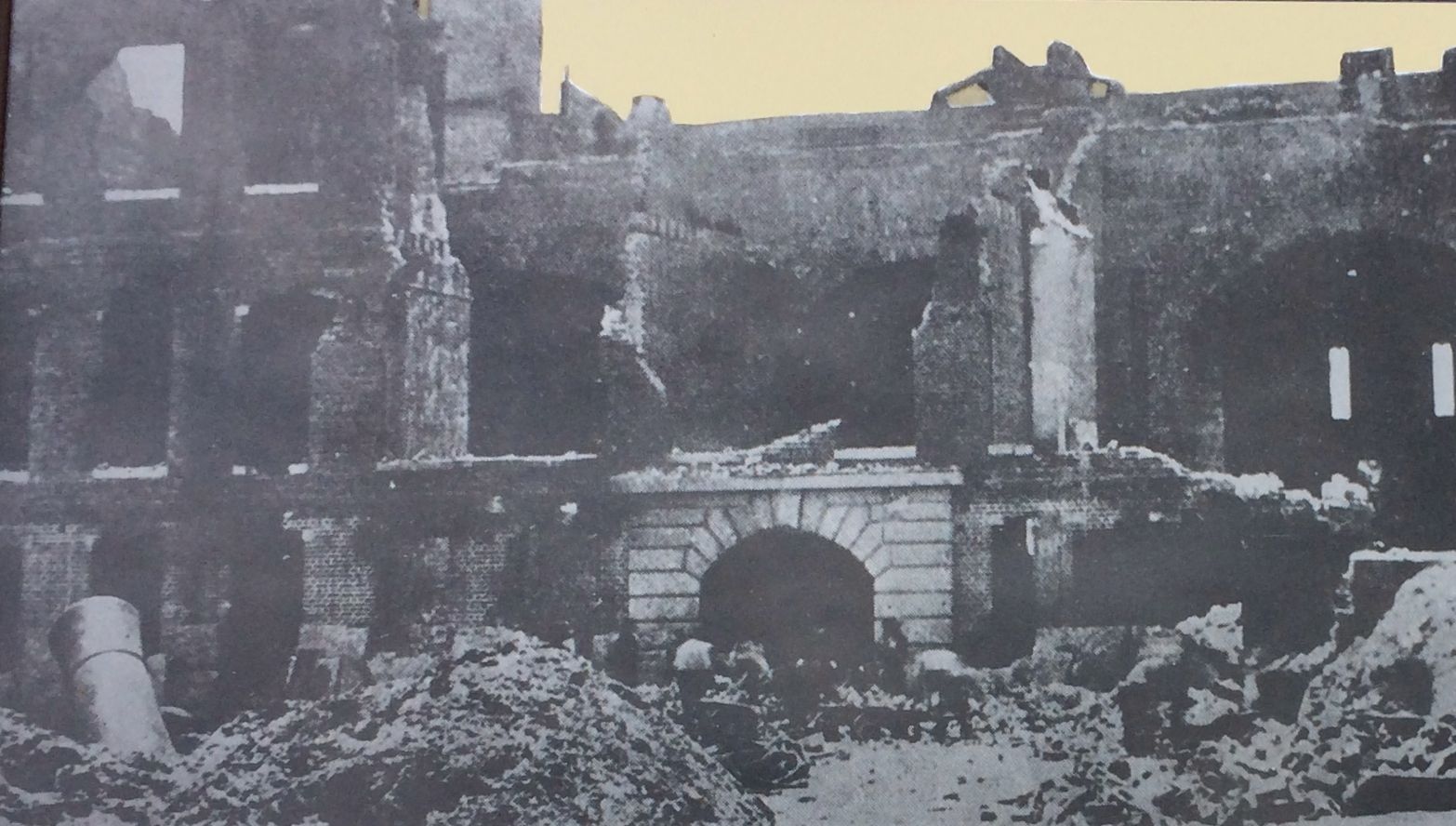
It looks like plenty of ammunition penetrated the walls.
After I finished touring the museum and the gift shop, a Ranger announced that there would be a flag lowering ceremony in a few minutes and we were invited to participate.
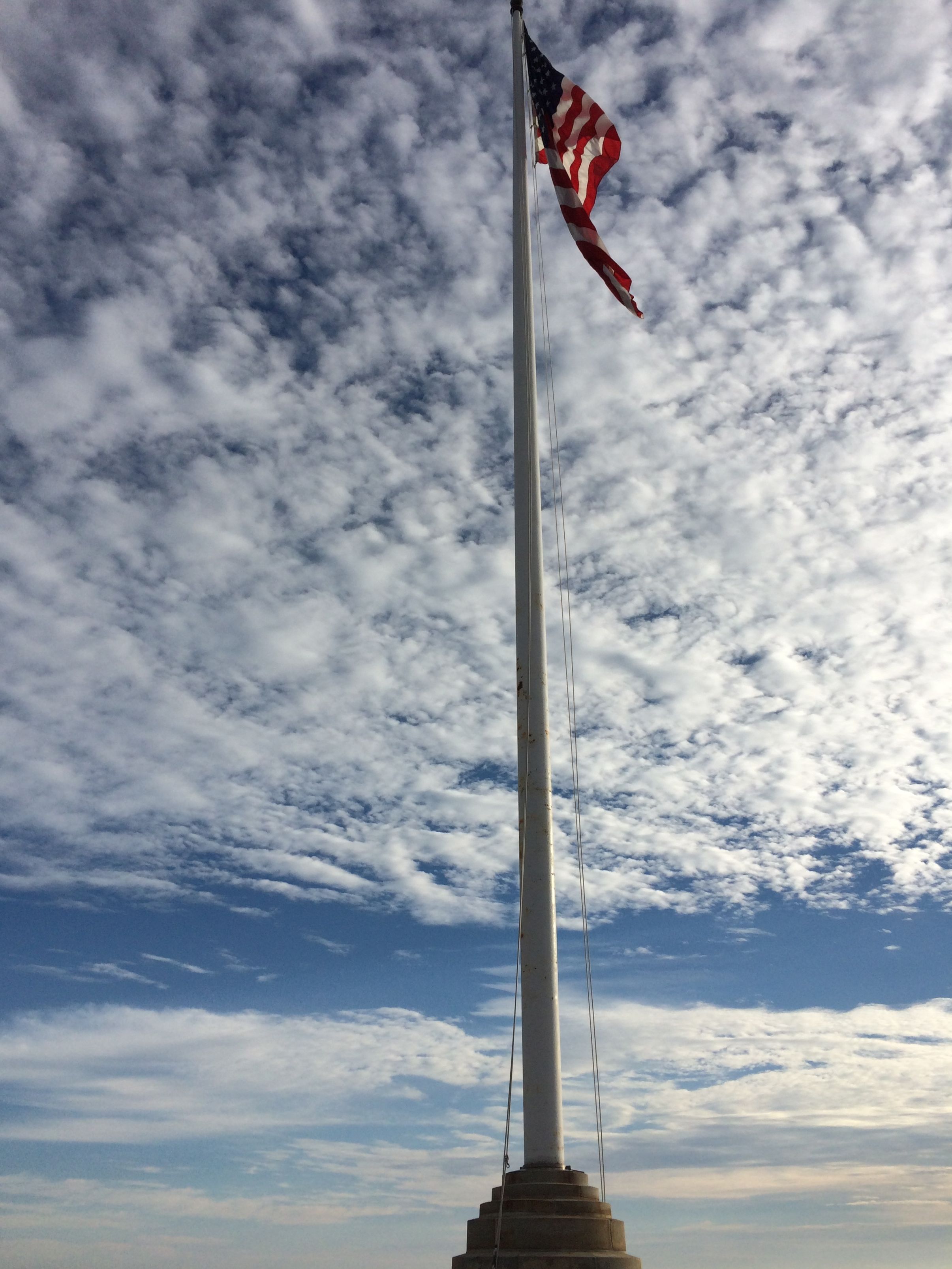
They have several different flags that they fly over the Fort. The treat each flag in an historically accurate manner. She told us that one of the flags is just rolled up and stuffed in a duffle bag. That is the historically accurate manner for that flag – I just wish I remembered which flag it was.
The current American flag was the flag of the day. If I heard her correctly, it measures sixteen by thirty feet and weighs about ten pounds.
She directed us to get ready to catch the flag and she proceeded to lower it.
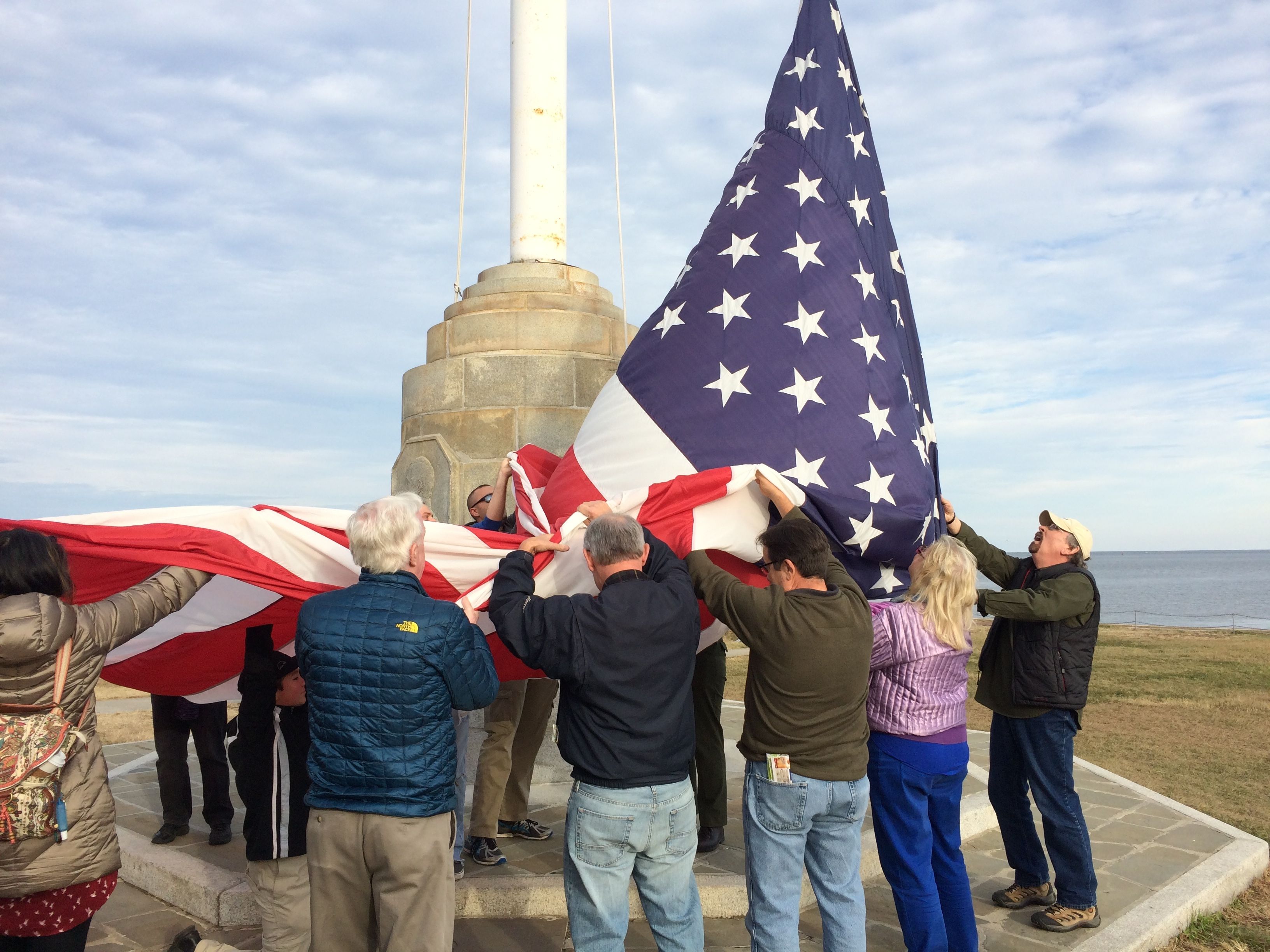
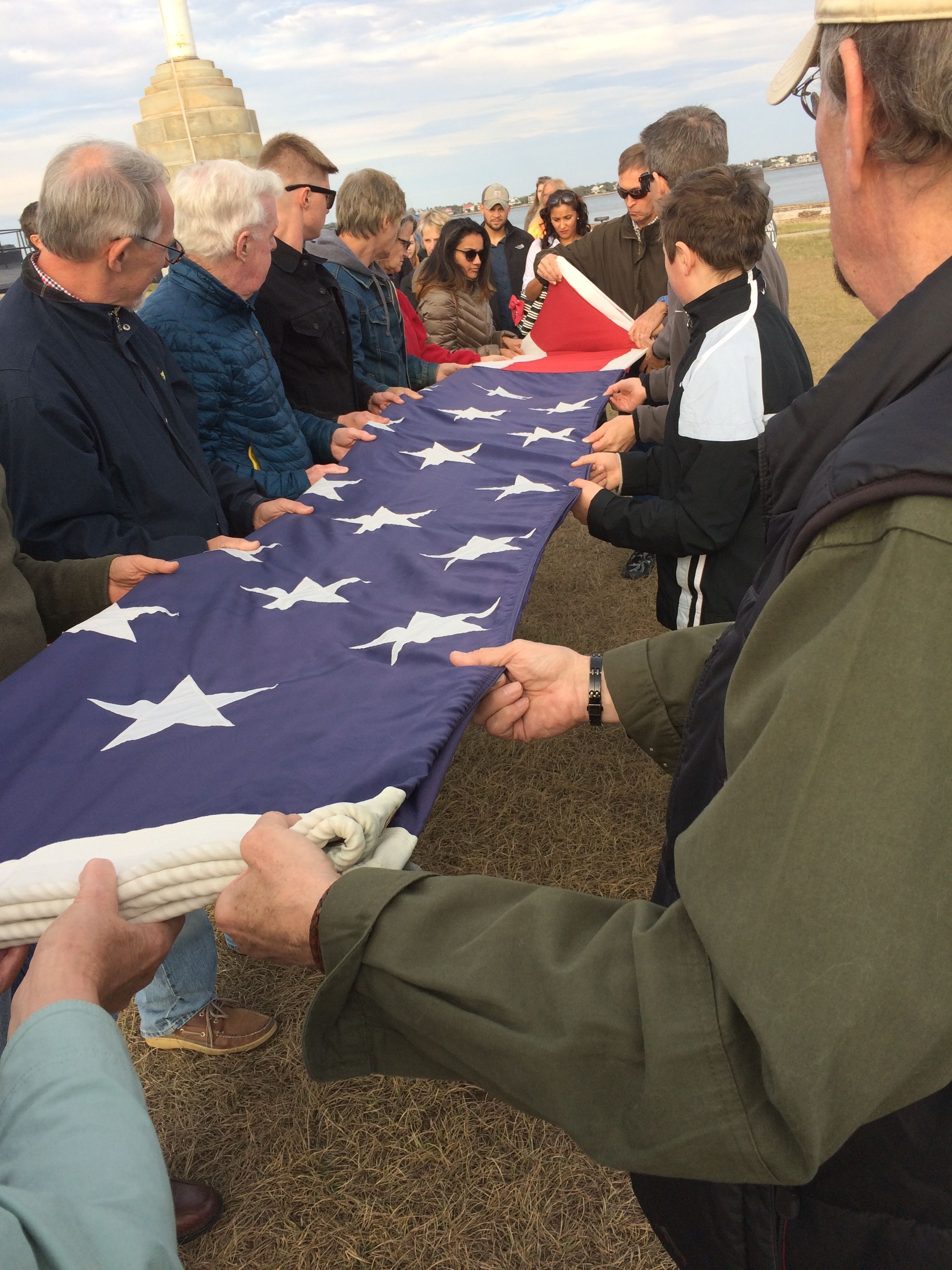
After it was down, we stretched it out and folded it. Since it was so wide, we had to fold it an extra time or two.
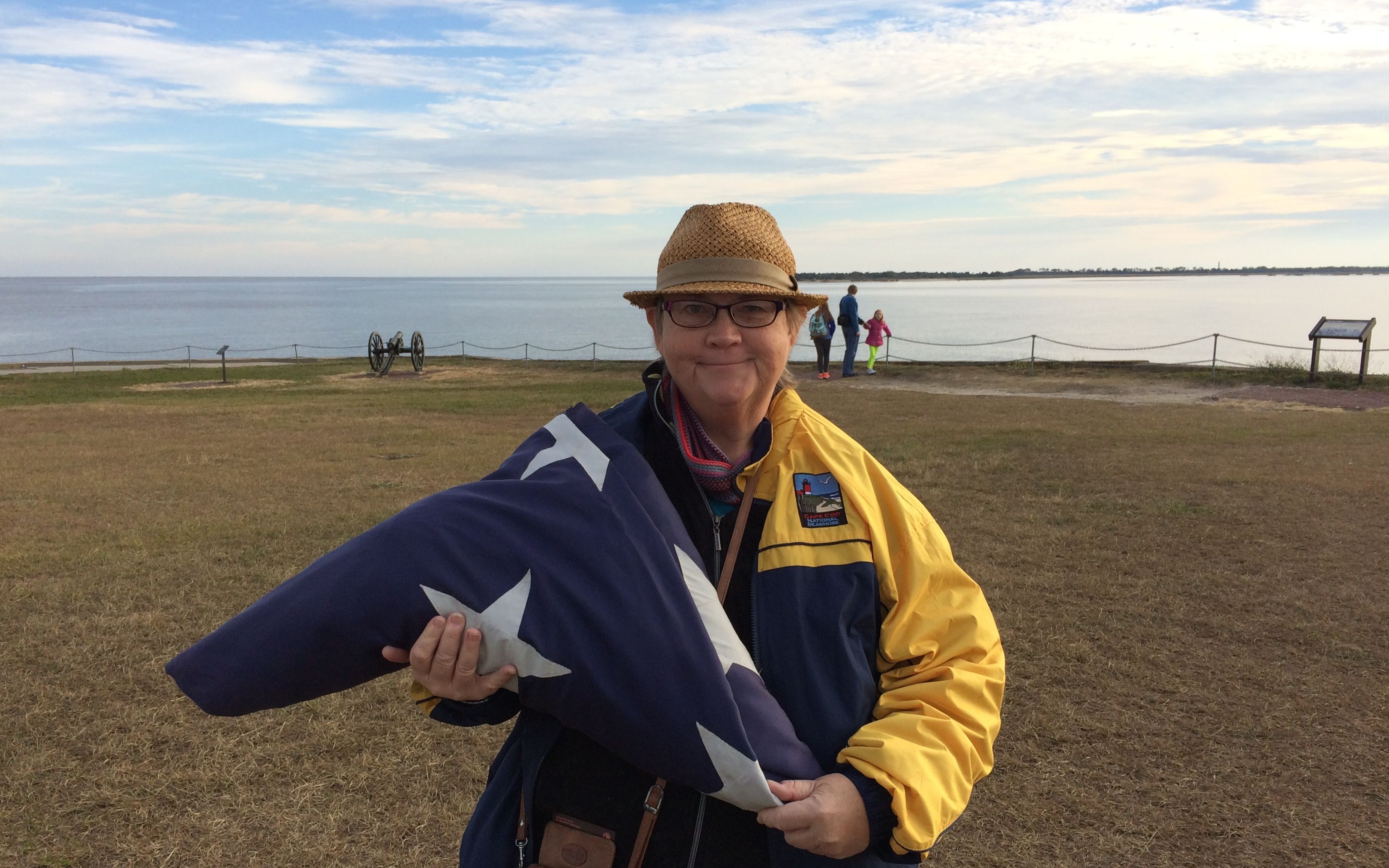
After we had finished, the Ranger agreeably took our pictures holding the flag.
And then it was time to head back to town.