My first week at Amazon was training week. We were only working half shifts, so I wasn’t as tired as I expected I would be during the coming weeks. So, before the work at Amazon set in for real, I decided to visit another place I didn’t get around to back in 2014 – Kentucky Cooperage in Lebanon, Kentucky.
It was a short drive away through the rolling hills. As I got into town, I noticed a one-man demonstration outside the Walmart.

Can you read the sign? Well, no worries! I can zoom in for you.

Good grief.
I got to the factory where they make barrels for many of the whiskey makers along Kentucky’s bourbon trail.
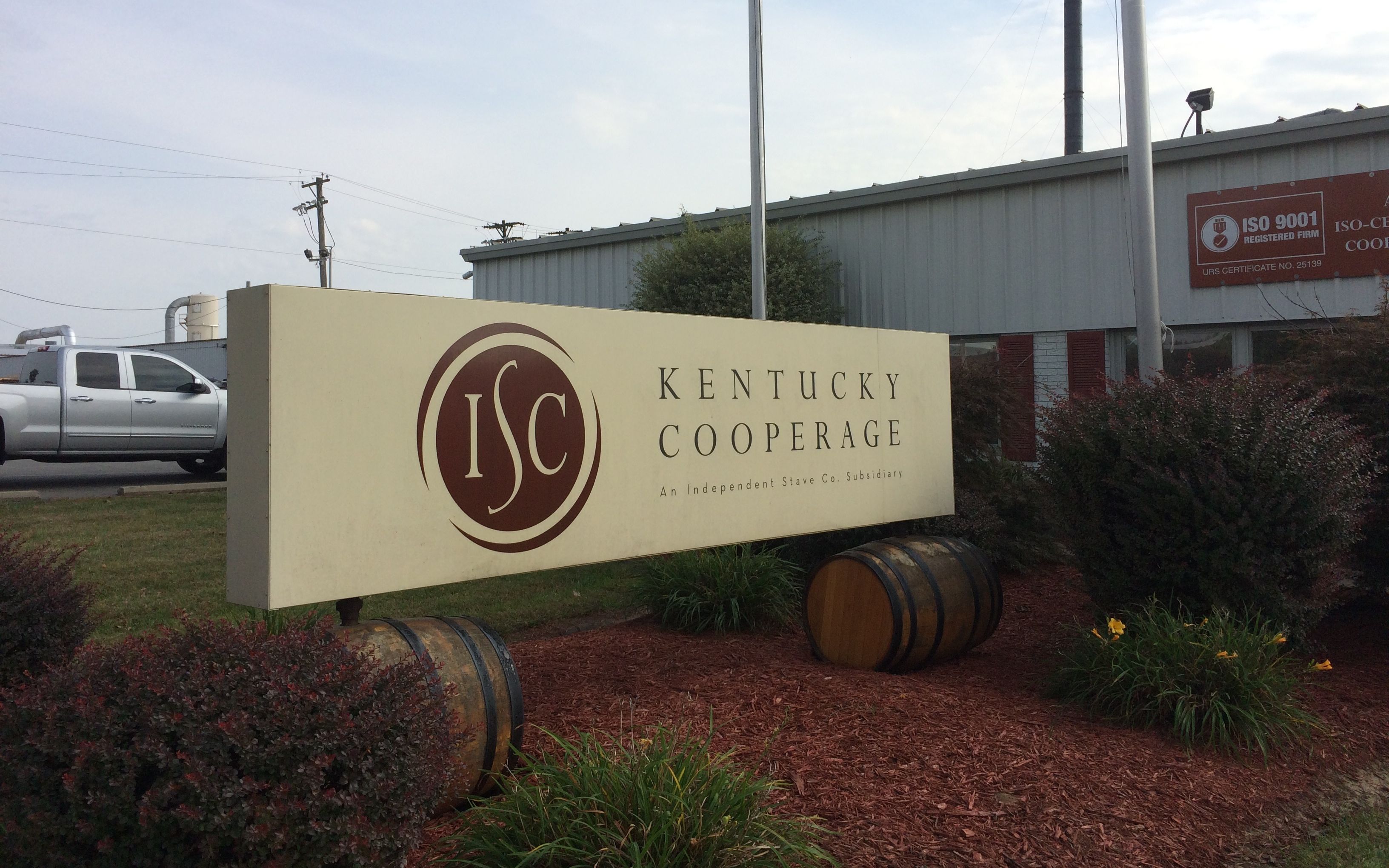
Kentucky Cooperage is a facility that is part of International Stave Company. It is a family-owned business that reaches customers in over 40 countries. In additions to the cooperage in Lebanon, they also have subsidiaries in California, France, Chile, South Africa and Australia.
The company was founded in 1912 and initially focused on producing staves that were headed for cooperage. Now they make barrels for wine and whiskey, from start to finish.
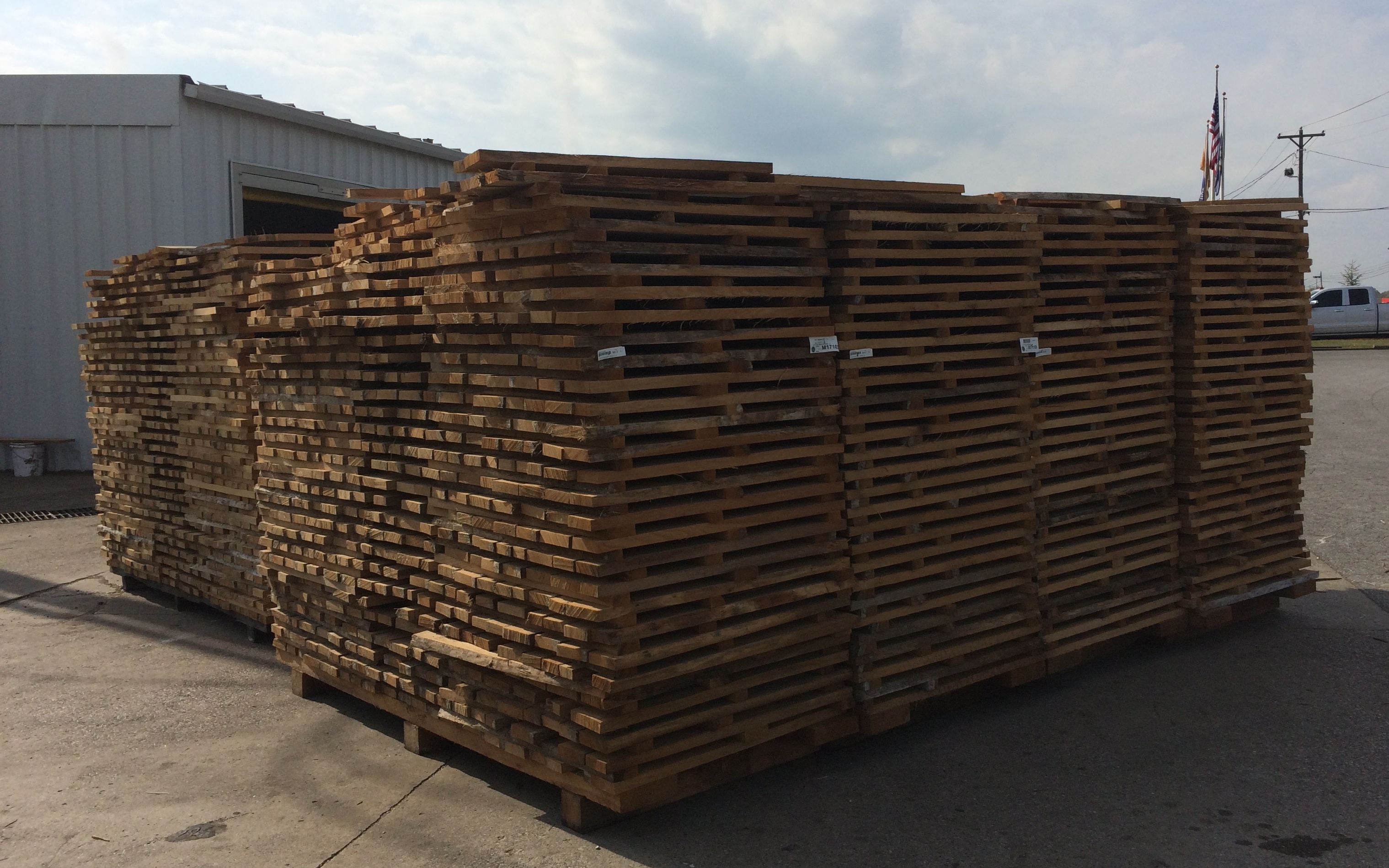
When I pulled into the parking lot, I saw stacks of wood. During the tour, I learned that they cure the wood outside to the specifications of the people who are ordering the barrels.
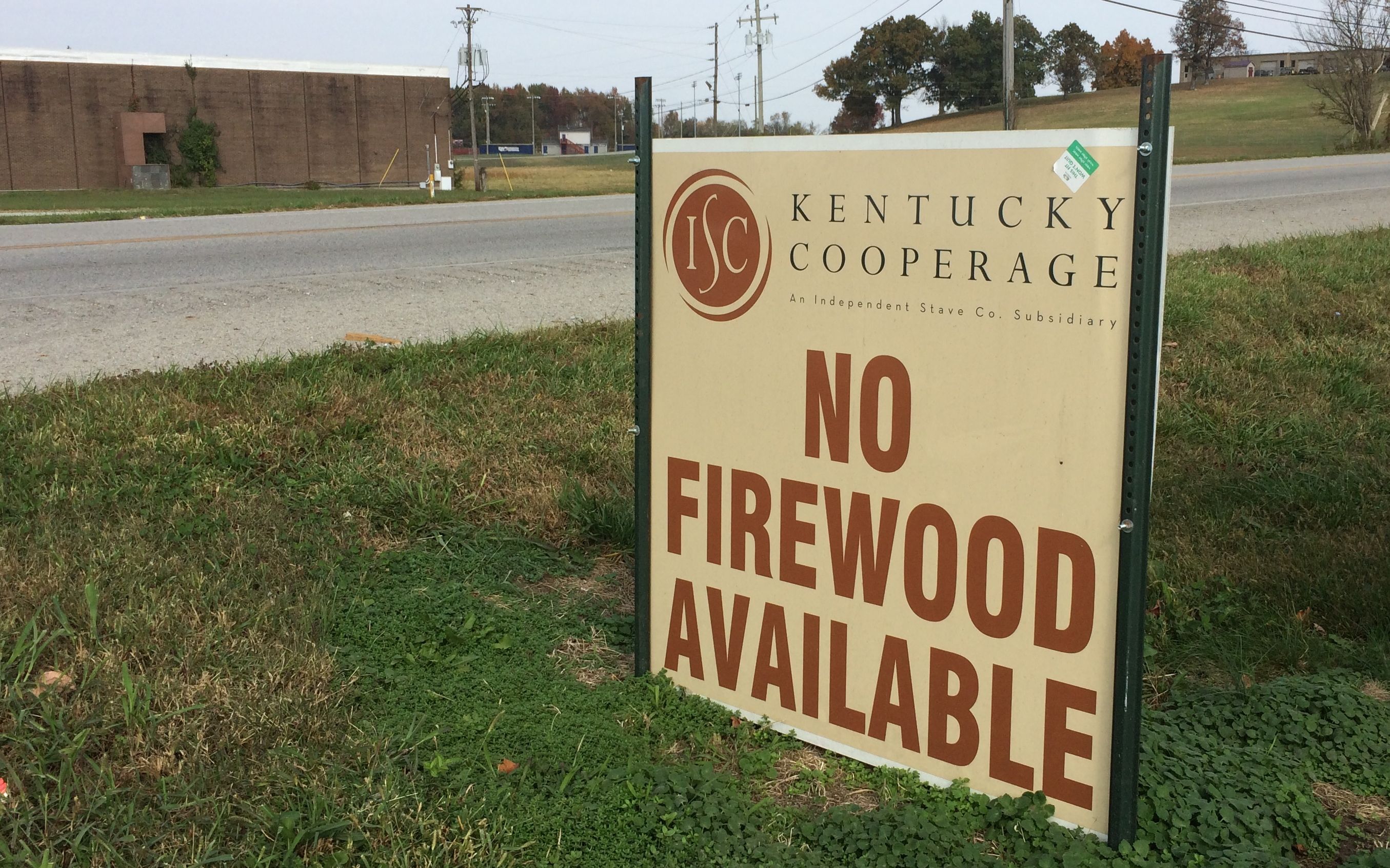
They make use of every bit of their wood. According to their website, they use the wood chips and “powder”(could that be the same thing as sawdust?) for various products. I wonder how they would ever have firewood available to sell.
I followed the sign to the area where the tour would start.
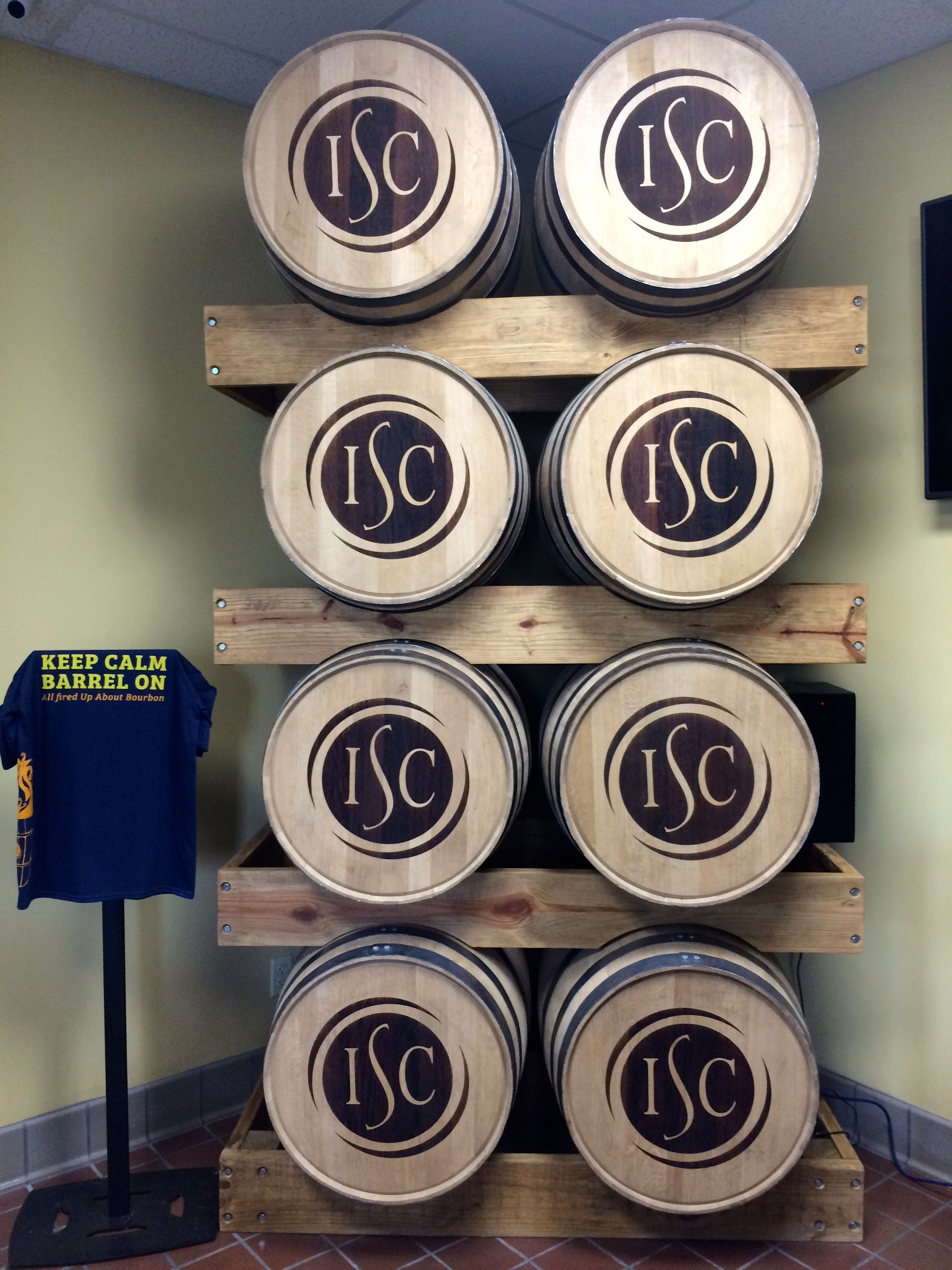
An impressive display of barrels greeted us in the area we were to meet the guide.
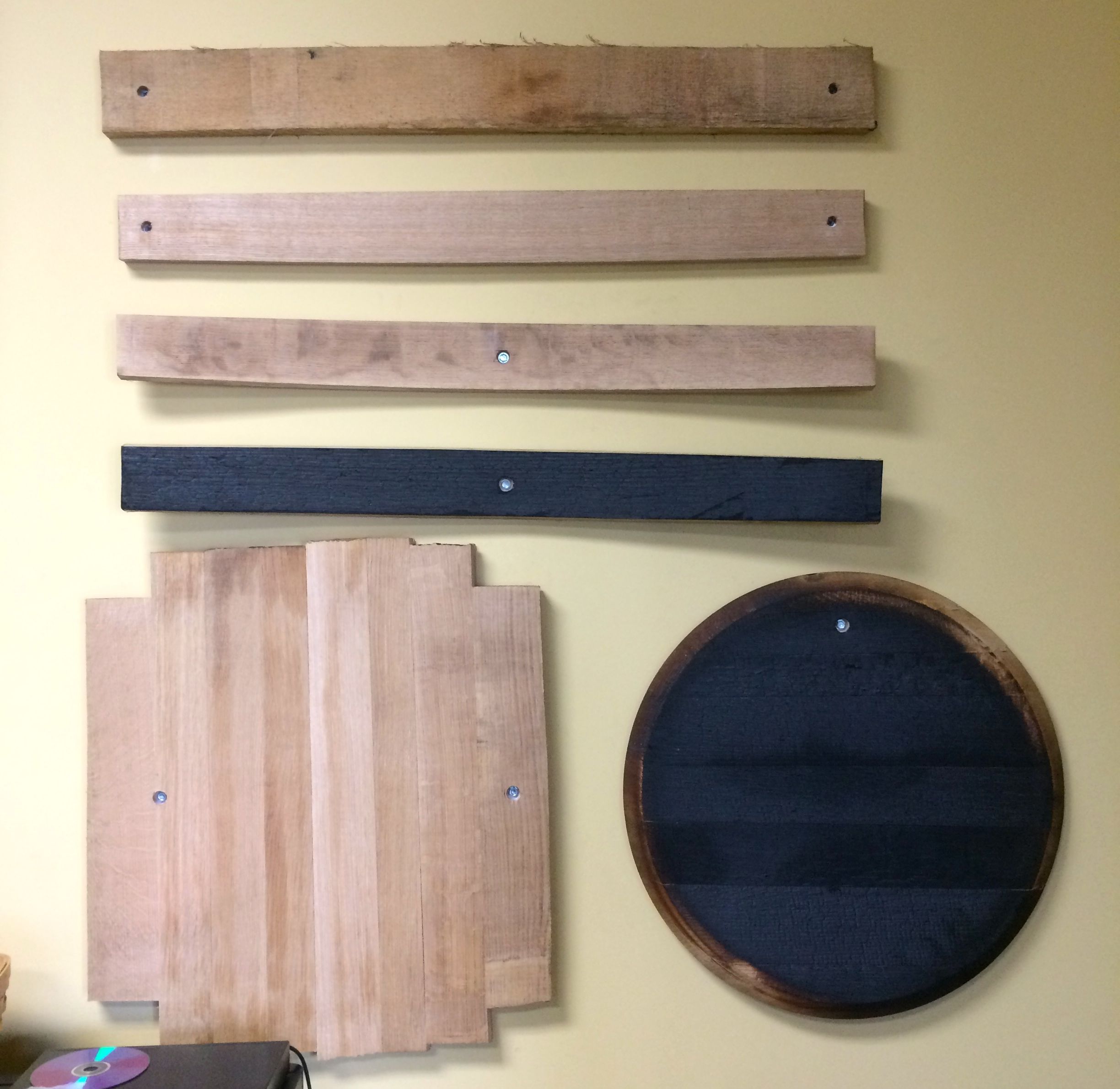
There was a display of the parts of the barrel on the wall, too.
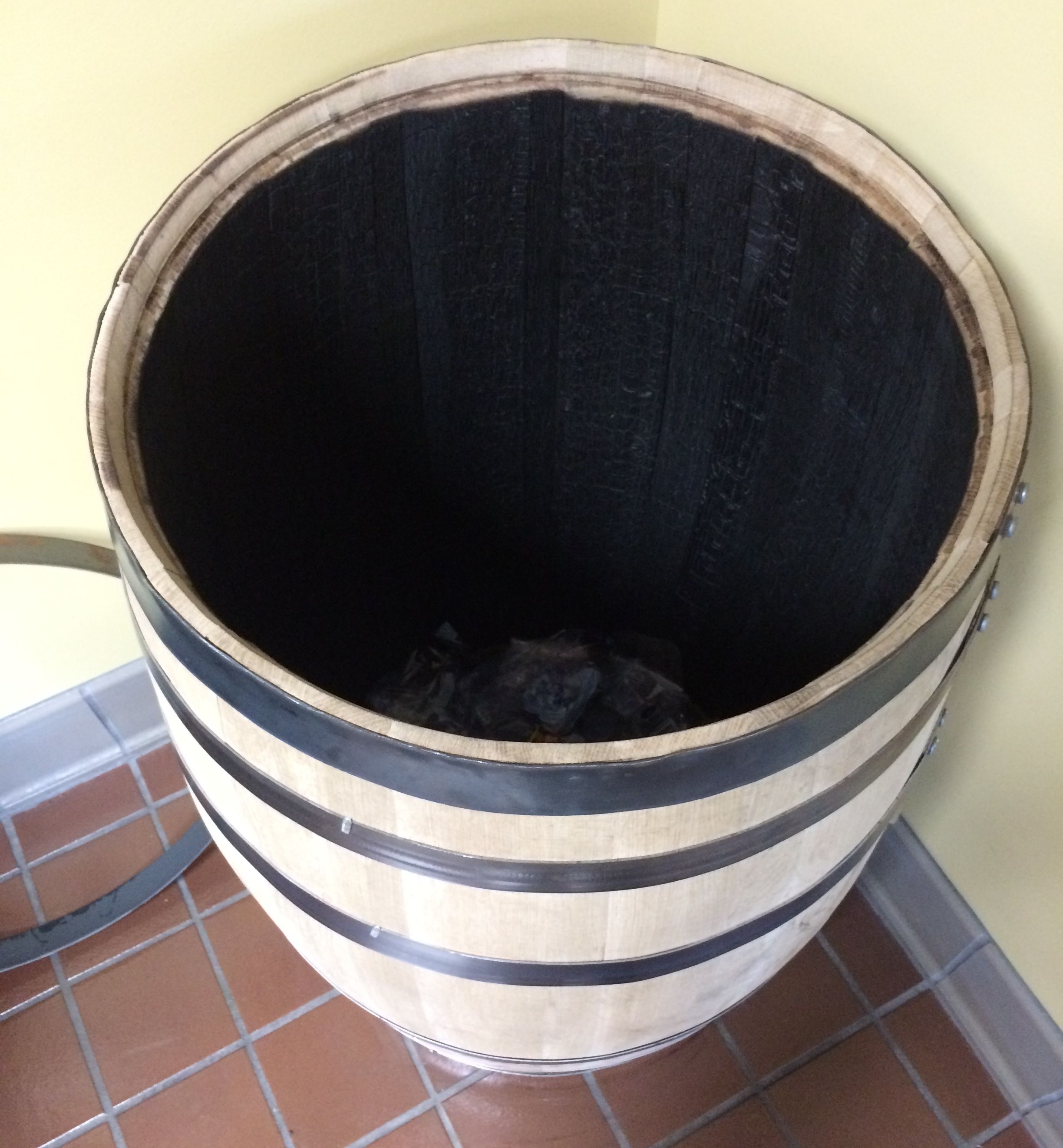
We found out during the tour that not only are the barrels constructed with wood to the specifications of the customer, they are charred to their specifications to impart the right flavor to the whiskey

There are four levels of char that they offer with their barrels.
The piece of wood on the left – level 4 – is the most charred. If you look carefully, you can see how much more charred it is than level 1.
Barrels are constructed without any adhesives at all. The barrels staves are held in place by the bands. I think the tops and bottoms are held together with dowels, and I say that because there was a broken top lying on the ground next to my campsite, and I could see the dowels. The tour guide made the point of saying that there were no adhesives used in making the barrels.
The tour was really interesting, and if you are in the area, I would recommend it. I have been on so many industrial tours where you don’t really see anything happening. This tour was full of action!
Unfortunately, we were not allowed to take pictures during the tour.
Not only did we see the barrels being assembled, we watched them being charred. They were rolled into some sort of a machine that shot flames into them. After the right amount of time, they were rolled out of the machine, still burning.
The wood that is used for the barrels is white oak, which is special because of a gummy substance found in them called “tyloses” that clogs the pores. It helps keep the liquids stored in them from leaking out. According to information from the company, over 90% of the oak used for spirits comes from the USA. The remaining white oak comes form France and Spain.
American oak is known for its sweet and toasty characters, as well as lactones. Now, if you are not the only person who doesn’t know what lactones are, Wikipedia comes to the rescue. Unfortunately, I don’t even understand the explanation!
French oak is known for sweet and spicy characters, high levels of tannin and the lack of lactones.
Did you know that barrels are first used in the bourbon business and then used to age other liquors, such as scotch, tequila and rum. I wonder if that affects the flavor of the “downstream” liquors?
As I’ve already said, the tour was a good one – and we got to see the action.
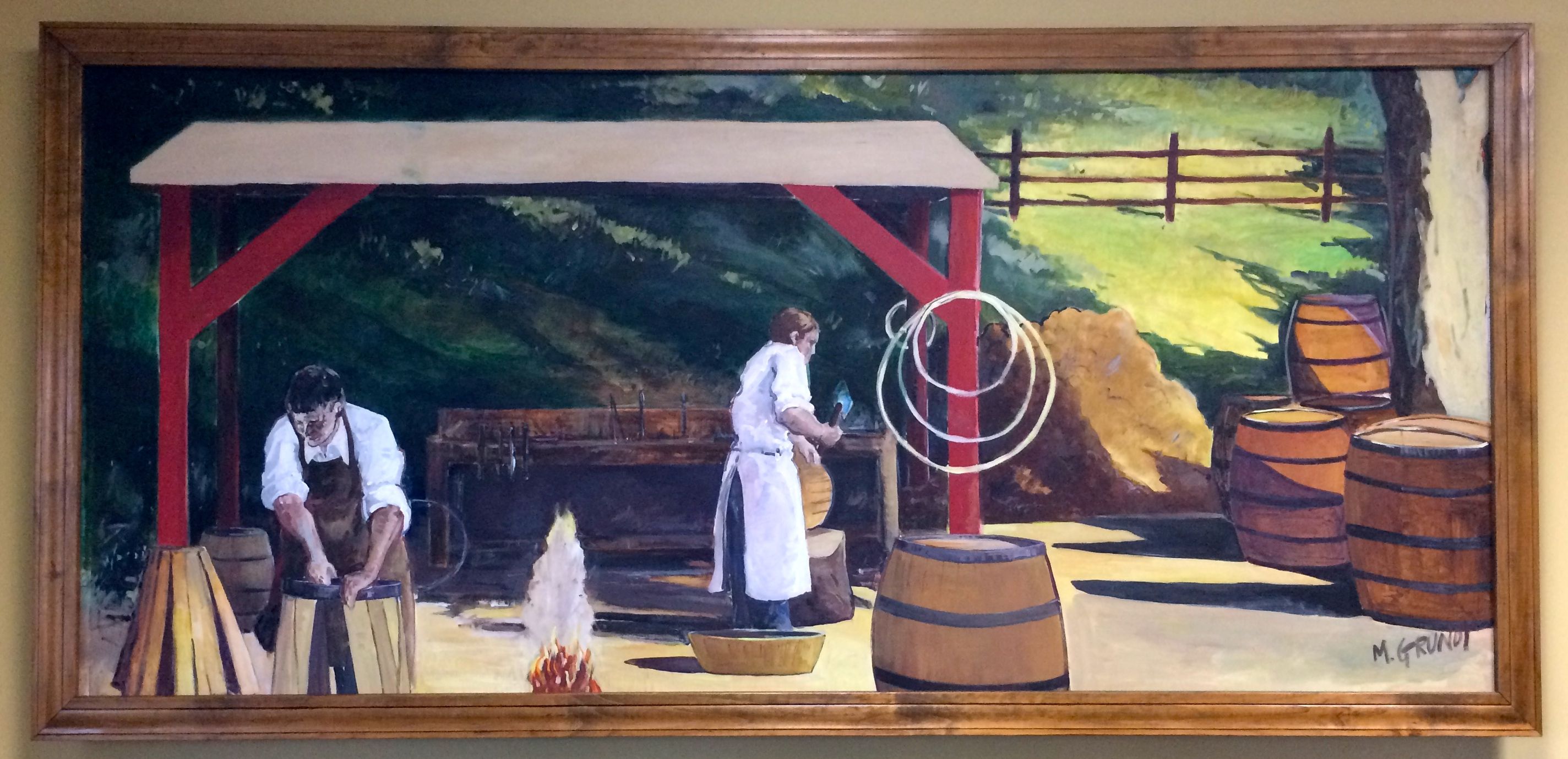
The factory had a lot more activity than the nostalgic cooperage painting that was hanging in the tour meeting area.
Now that my touristic duties are complete, it’s time to get ready for full shifts at Amazon!