Those founding fathers sure had great views!
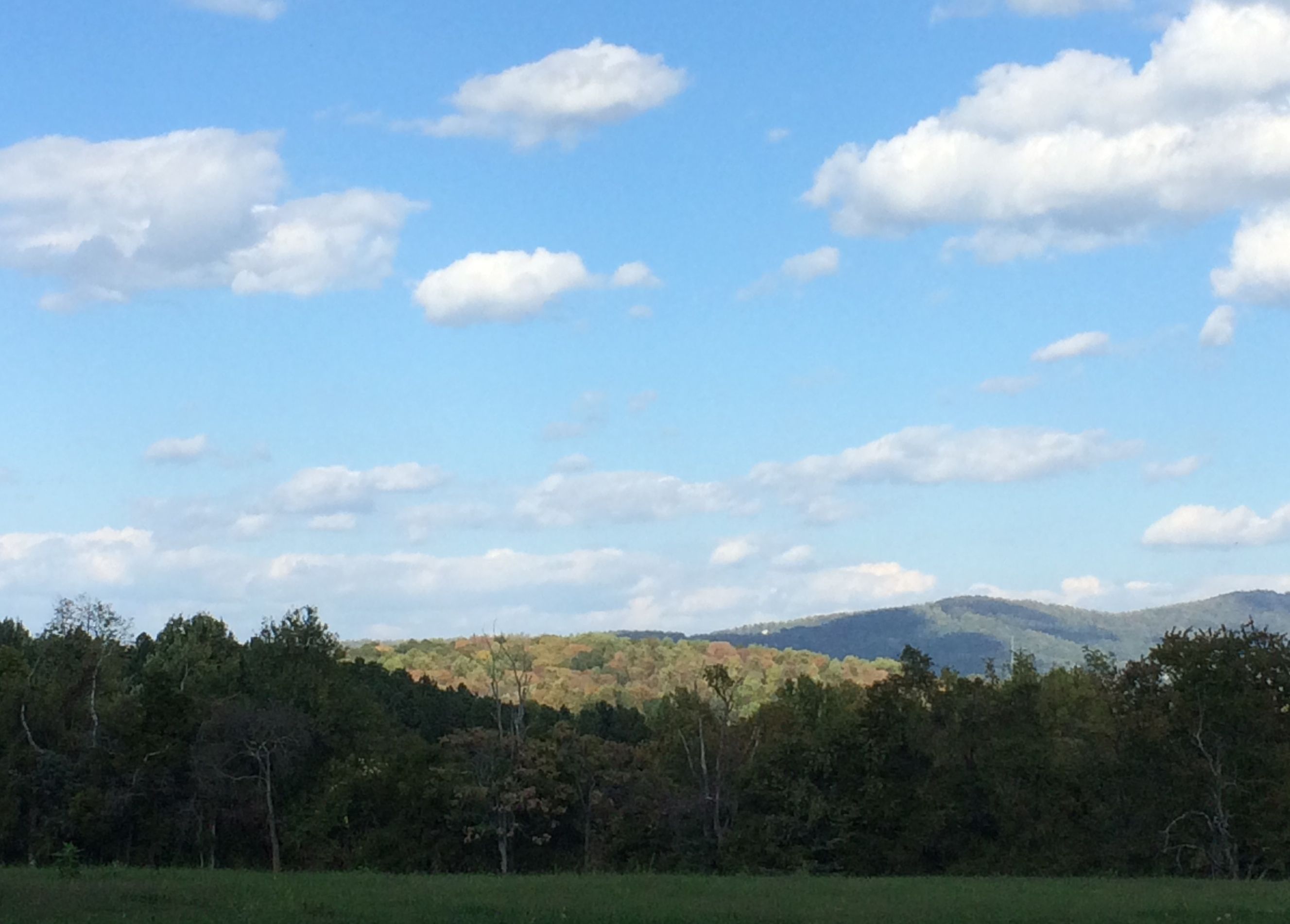
This is the view from Ash Lawn-Highland, James Monroe’s home near Charlottesville, Virginia.
James Monroe was the last of the Founding Fathers to be president, holding office March 4, 1817 – March 4, 1825. He purchased Highland in 1793. He and his good friend, Jefferson, were neighbors.
Now, Ash Lawn-Highland is no Monticello, and that is probably just as well. Whereas Jefferson’s estate needed to be liquidated to pay off debts after his death, Monroe sold his plantation and moved to New York after he left the White House. The guide indicated that he didn’t leave debt behind at his passing on July 4, 1831. When I was researching for this post, it seems that he was plagued with financial difficulties at the end of his life. I guess everything is relative. In any event, this property wasn’t sold off to satisfy his debts.
You may have heard of presidents dying on July 4. There are three of them. Thomas Jefferson and John Adams also died on July 4, 1831, five years before Monroe. However, July 4th isn’t all bad for presidents. Calvin Coolidge was born on that date in 1872.
But back to Monroe.
I entered through the gift shop, paid my fee and was told to meet the guide at the front door. The clerk gave me a map and invited me to explore until the tour started.
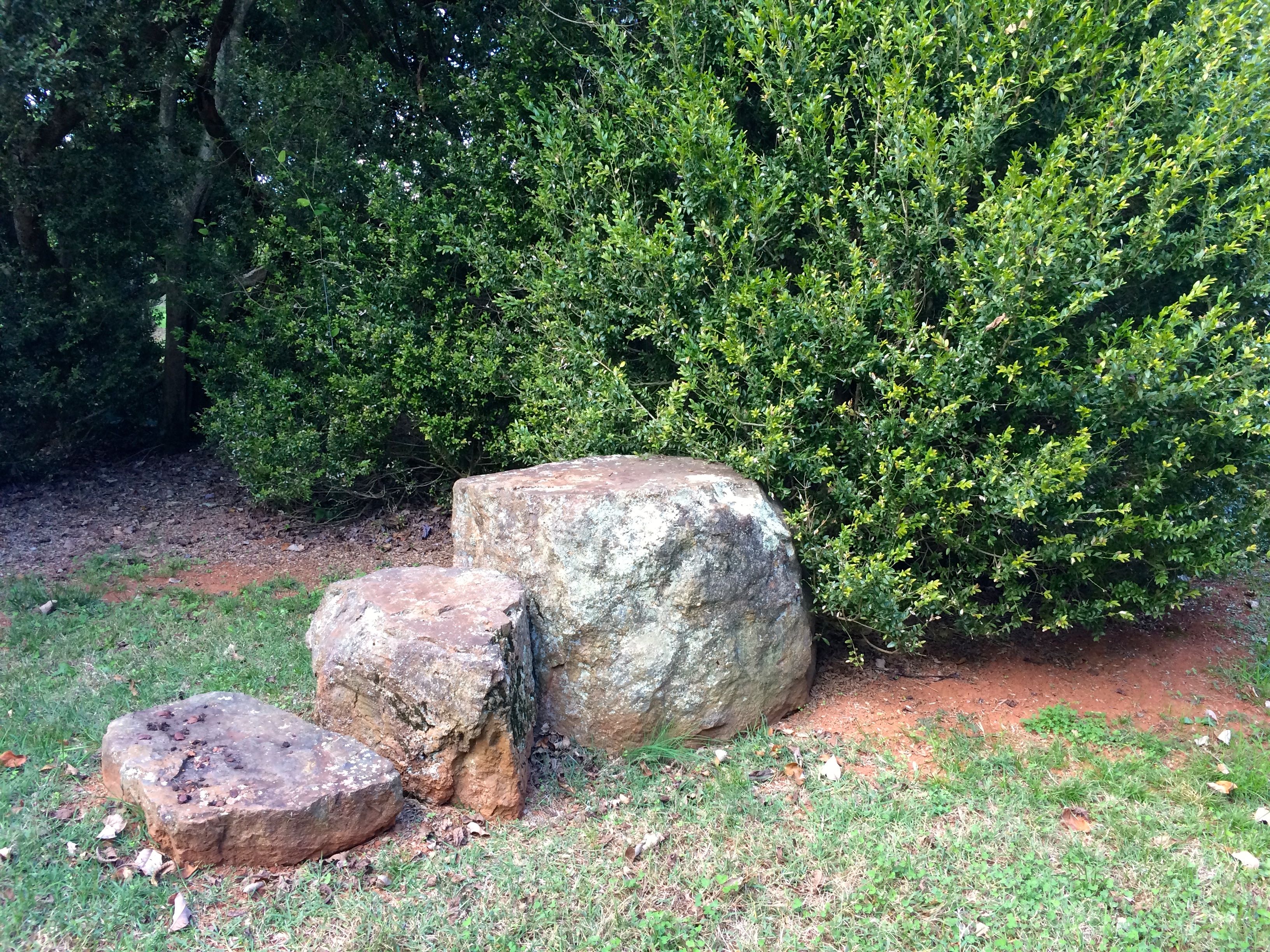
The map guided me to these mounting stones. They were not addressed by the guide and there wasn’t an interpretive sign. I don’t know if they were used by Monroe, but they might have been. He was 6 feet tall, so I imagine he could have mounted a horse easily enough. Maybe they were there for someone else. And maybe they are just a random collection of stones from some other use.
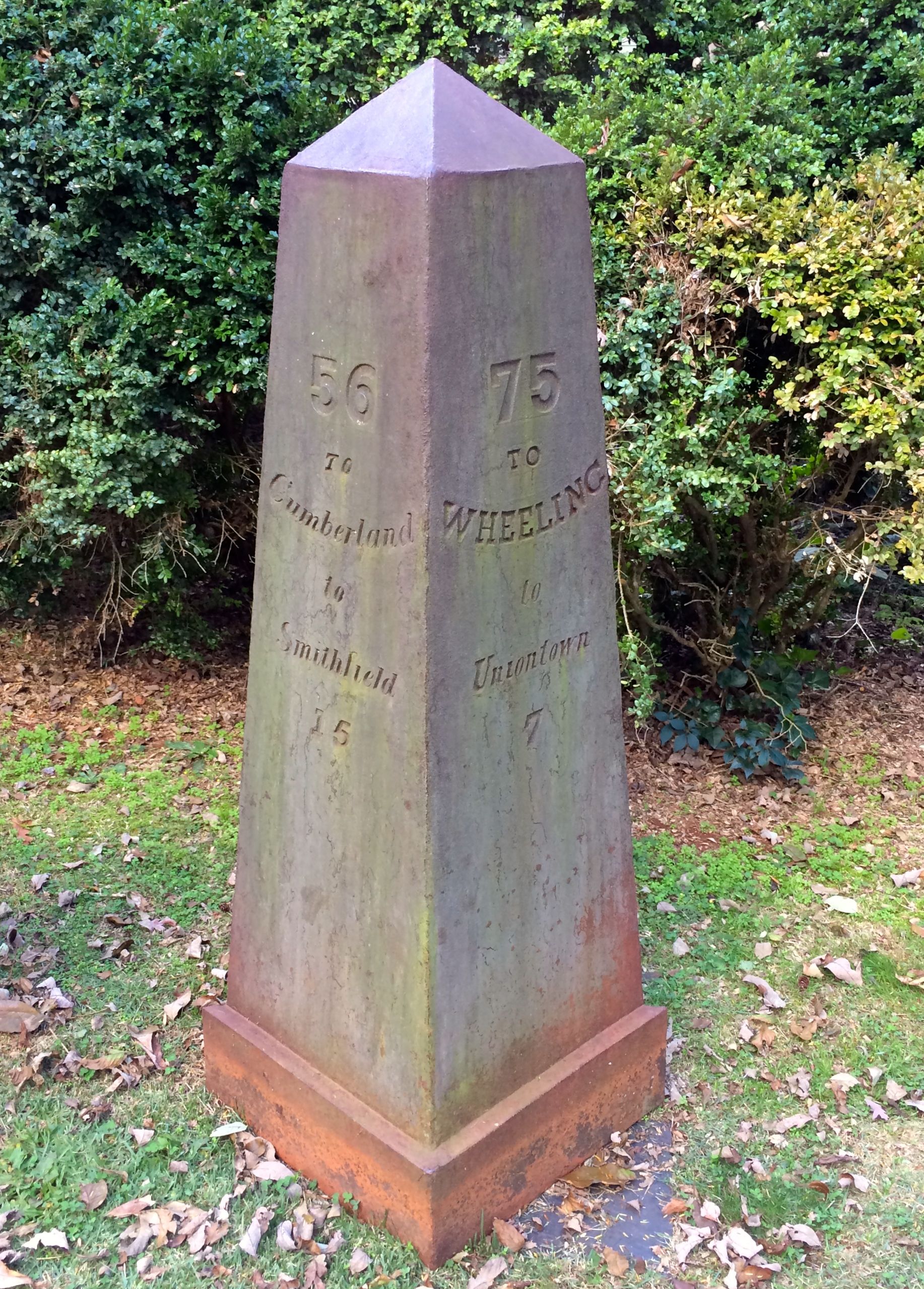
This mileage marker casting was from Highway 40 was from the first federally-supported interstate roadway, which was created during James Monroe’s Presidency. It is from a section of the road in Pennsylvania, and was given to Jay Winston Johns, who began Ash Lawn-Highland’s restoration in 1931.
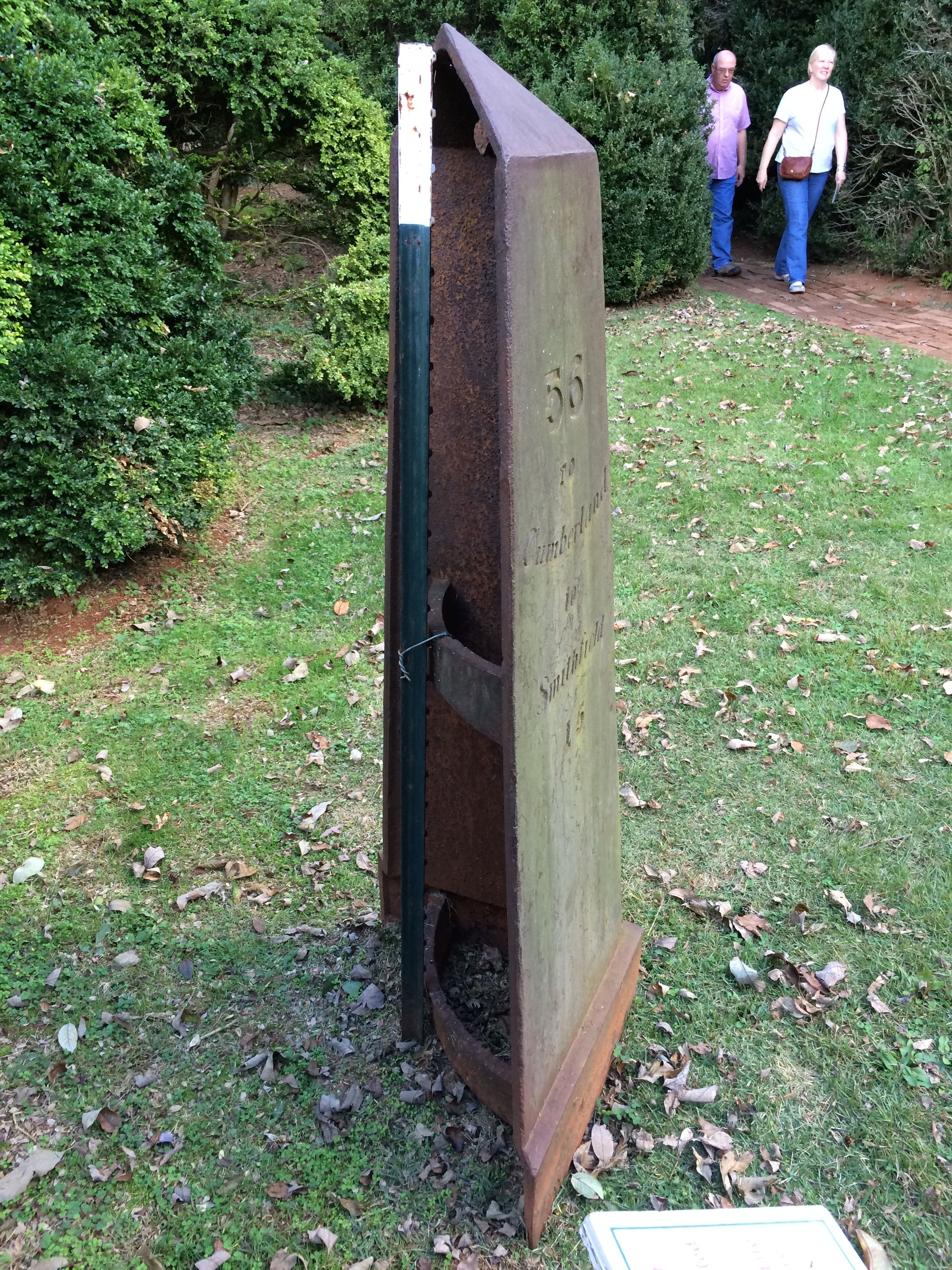
I had taken a course at Fallingwater in Pennsylvania that focused on the highway. I had seen these markers then, so I knew to look at the backside. I guess I should be glad that they didn’t waste money casting both sides.
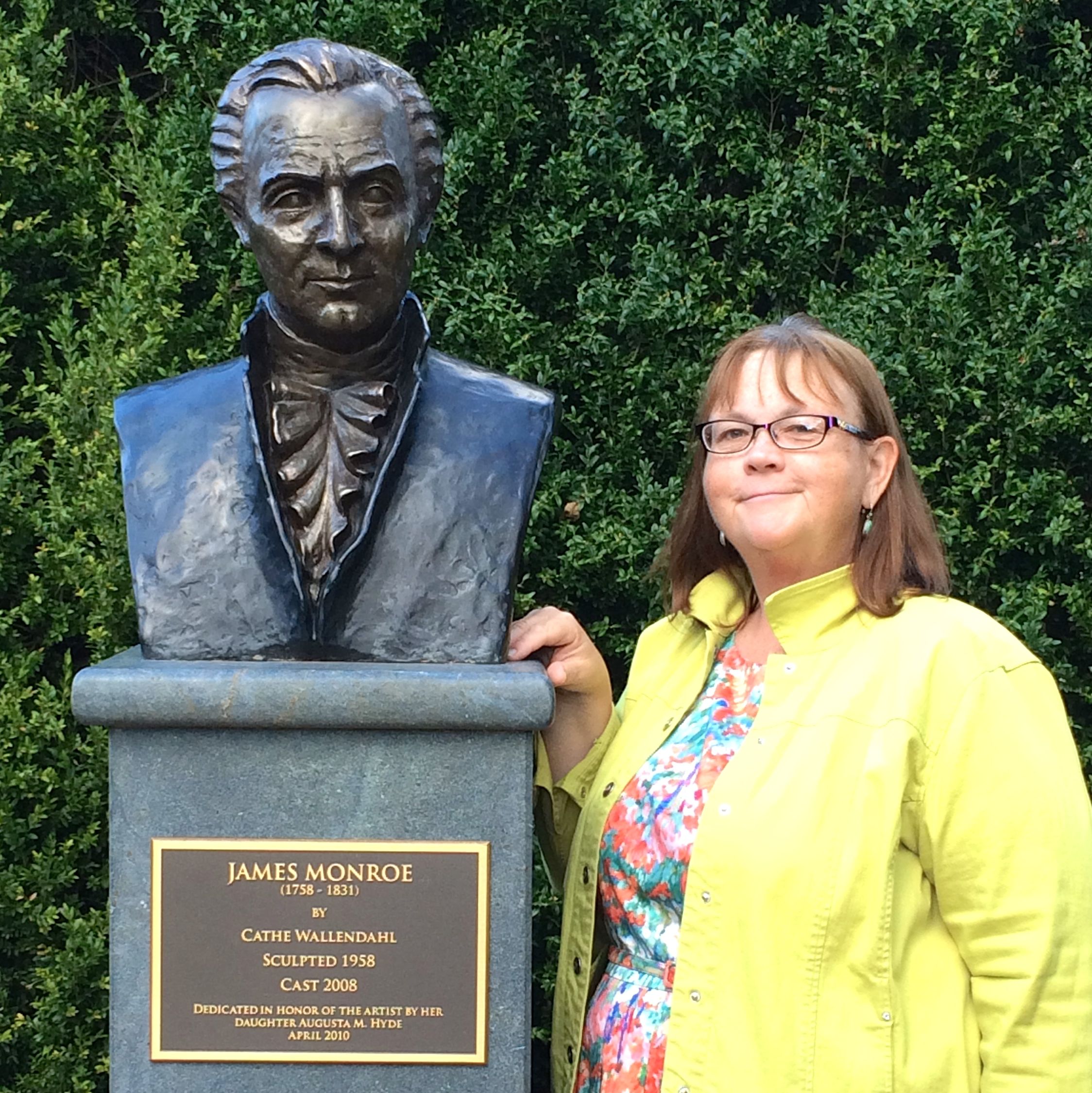
Those people coming along the path in the picture above helped me out with a photo op with a statue of James Monroe.
And then it was time to meet at the front door for the tour.
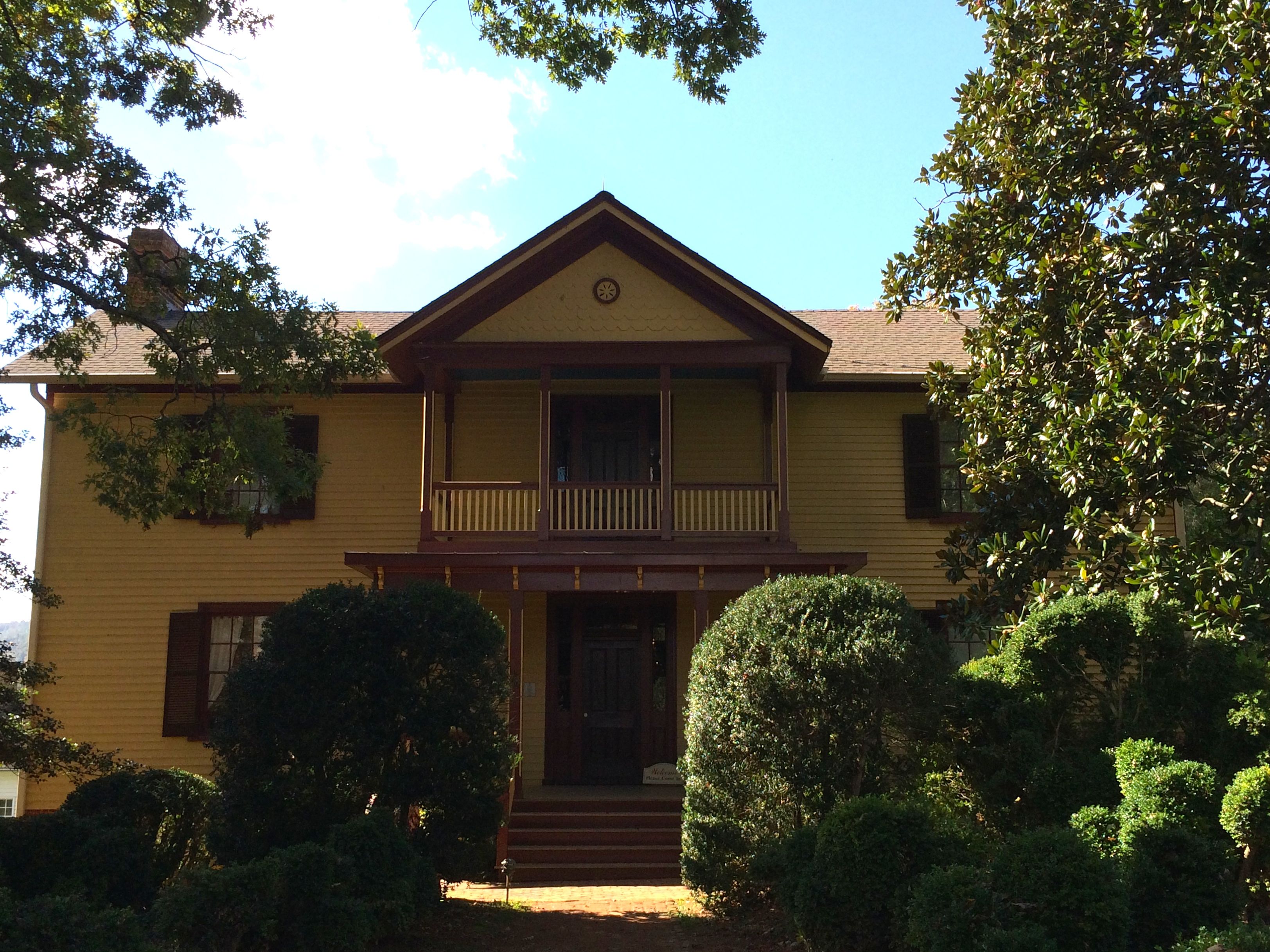
The first thing I found out was that this wasn’t the entrance to Monroe’s home. This was a portion that was built on after Monroe sold the house.
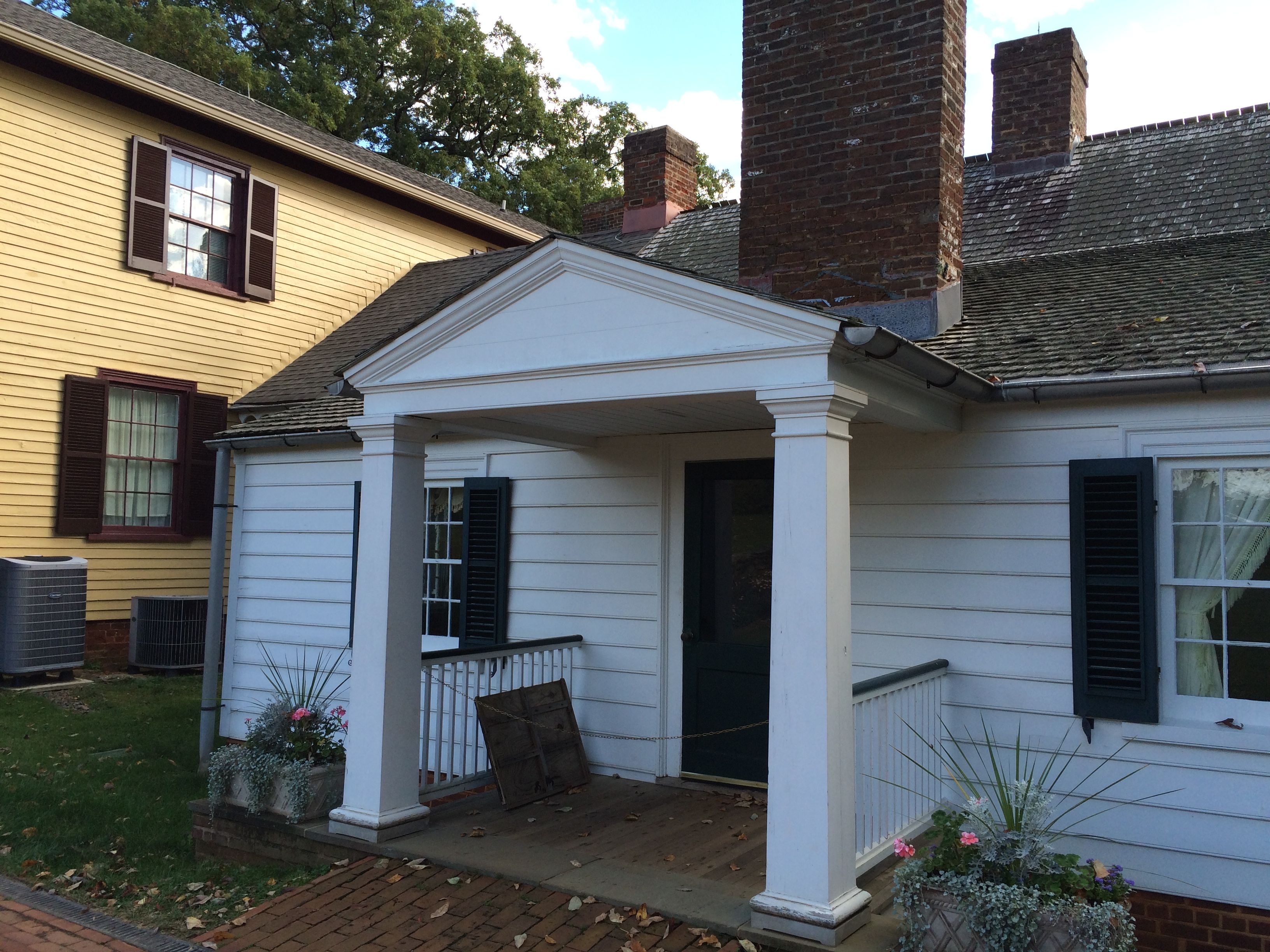
The white part is what is left from Monroe’s home after part of it burned in a fire. Fire was a big danger in those days. Living on the top of a mountain also didn’t help, as we all know that water runs downhill.
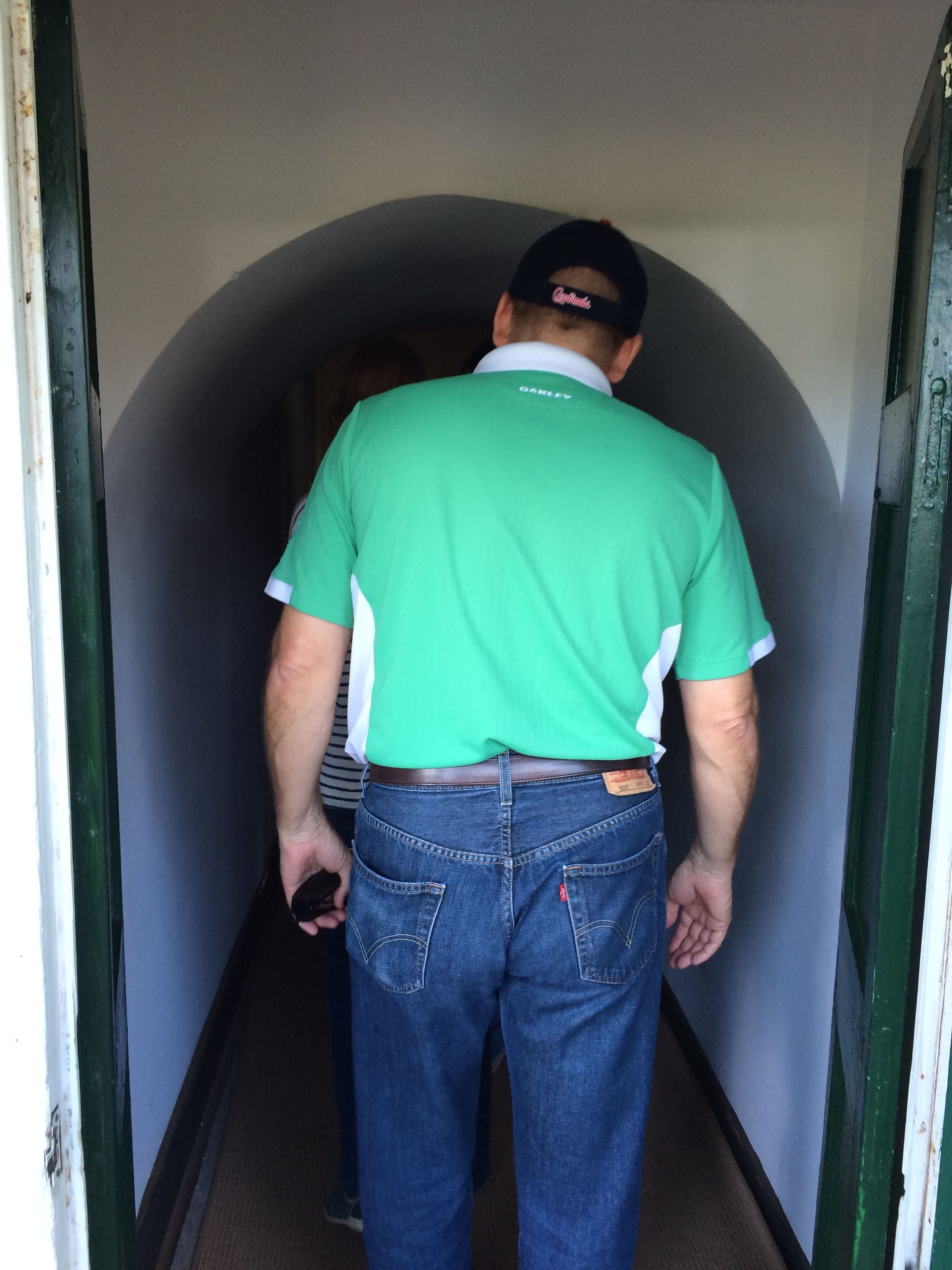
Monroe was a thrifty soul, and I do appreciate that. Houses were taxed based on the number of chimneys and windows they had. This tunnel is through the the chimney. There are fireplaces on either side and they share the same flue.
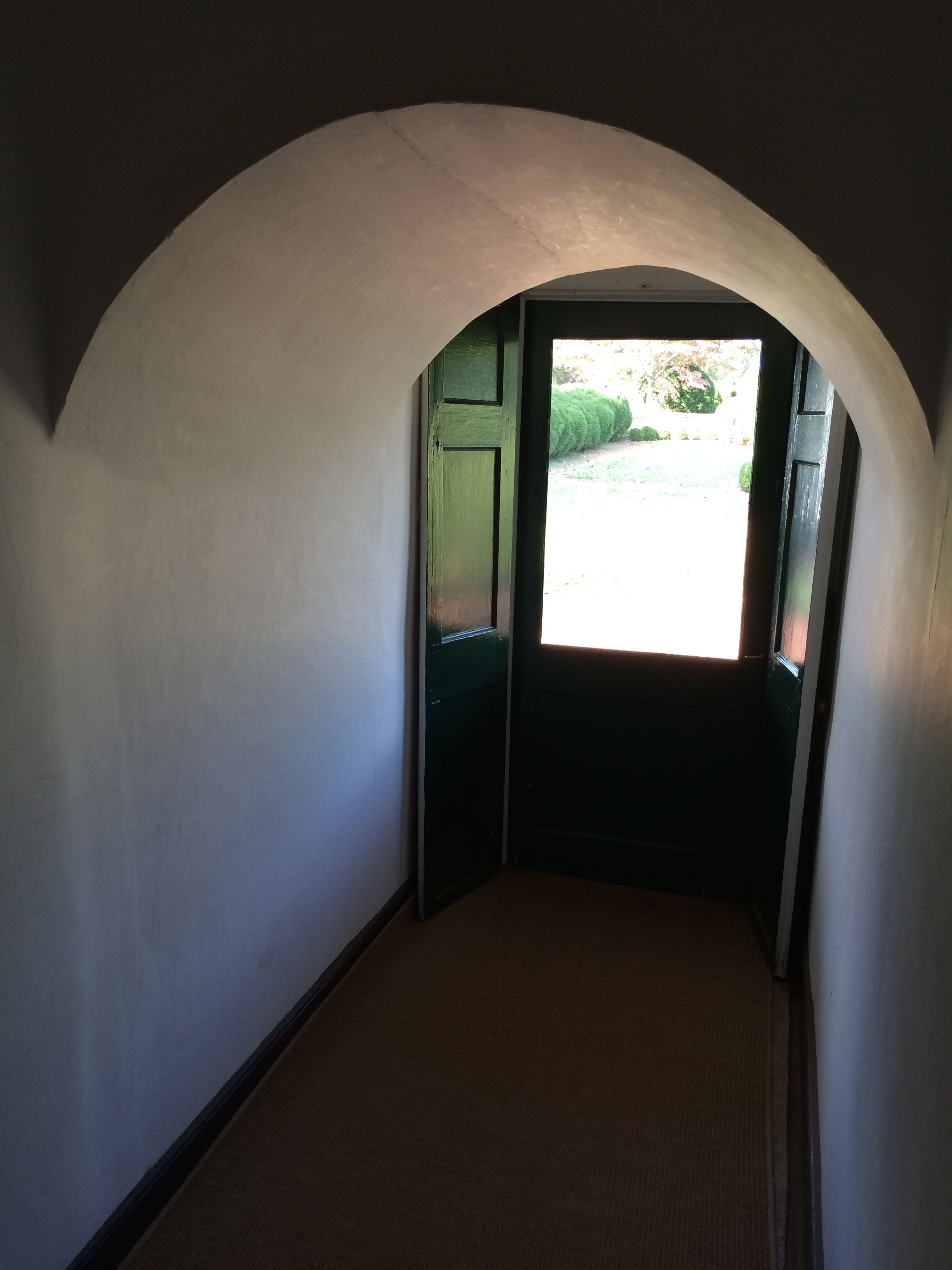
The tunnel wasn’t particularly high.
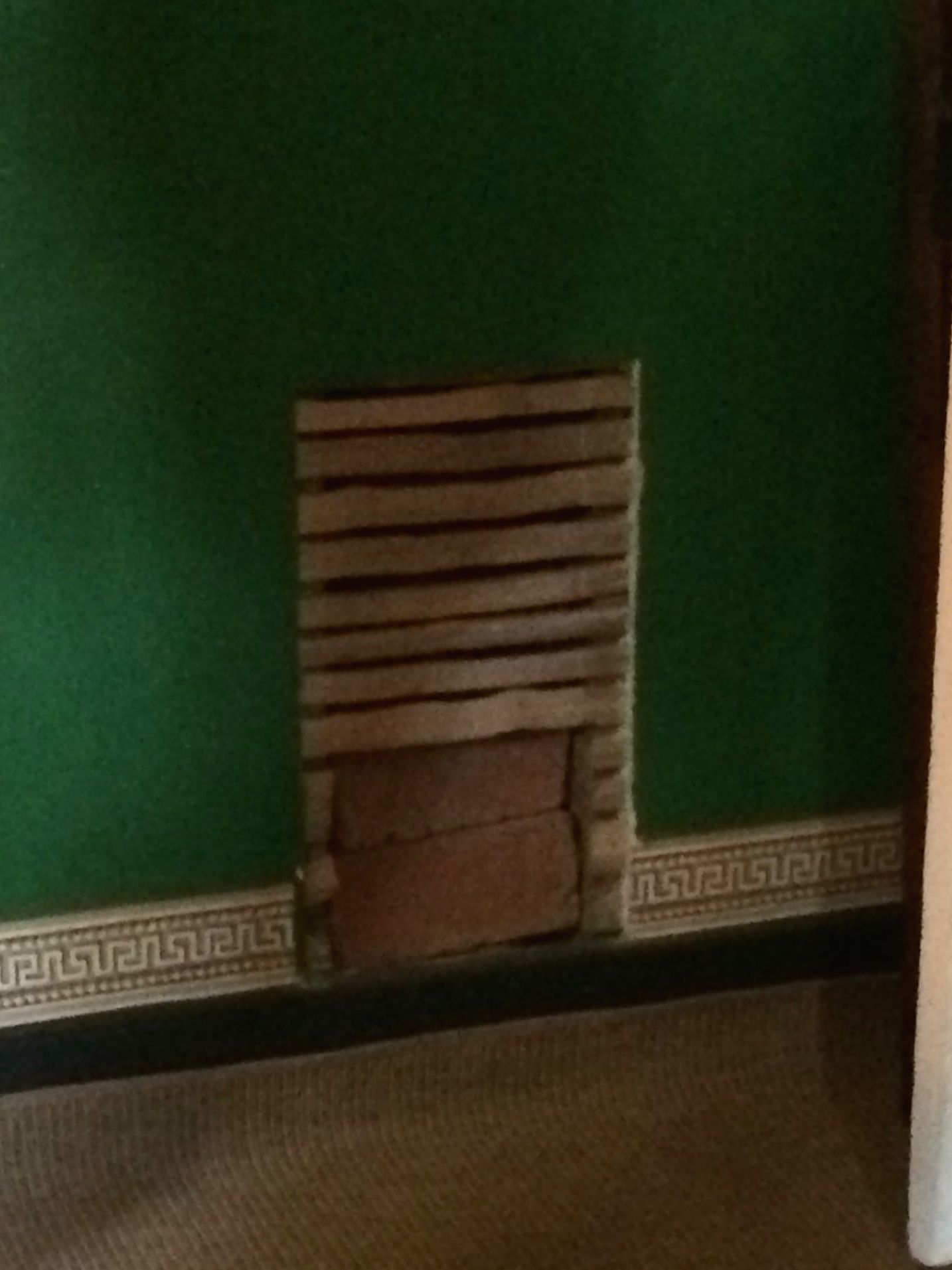
Our first stop was the study. They had a section of the plaster removed, and we could see one method they used for fire suppression. They would stack bricks between the studs. They weren’t mortared in; just stacked.
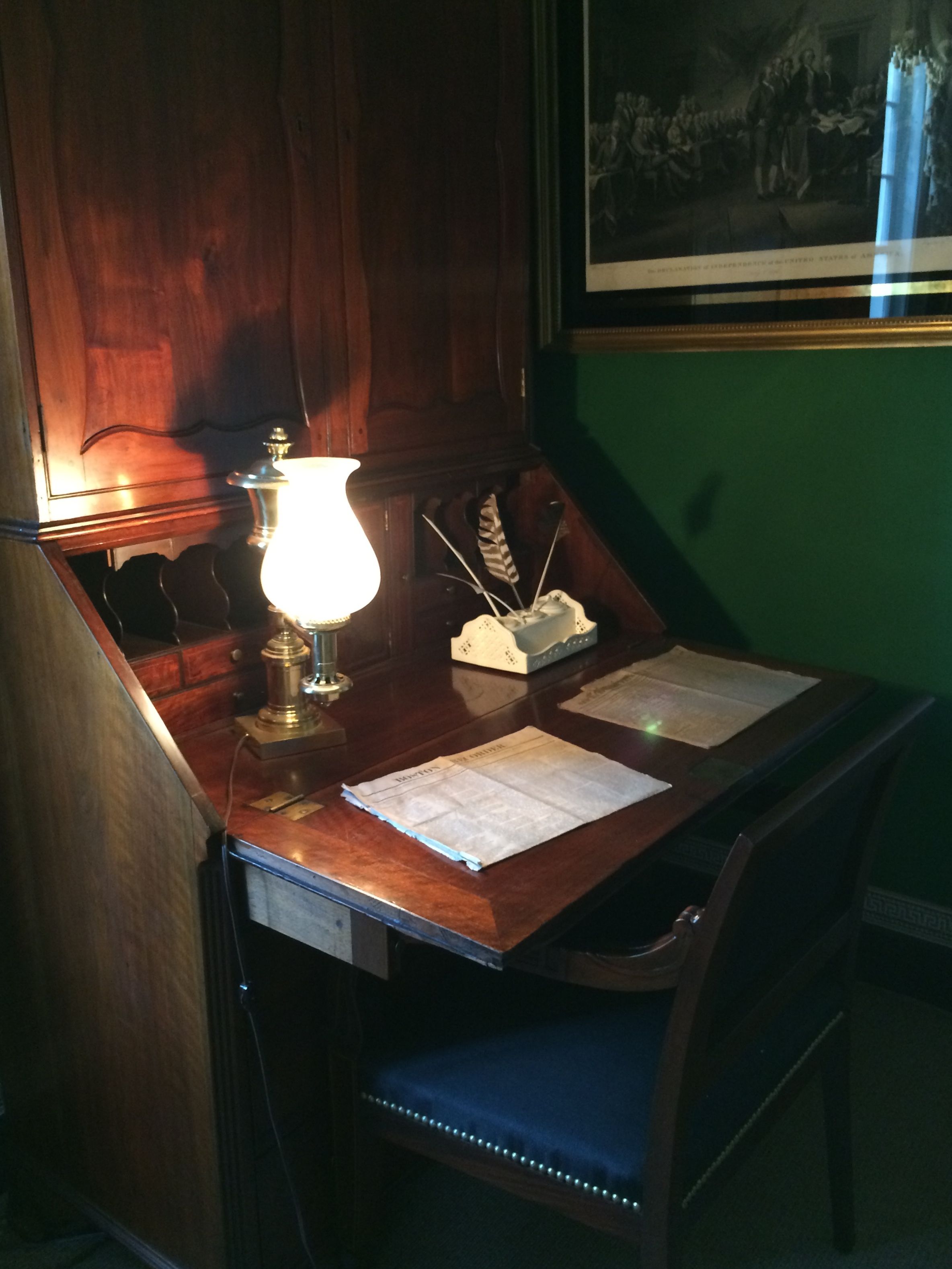
This is Monroe’s own desk; one that he used during his time in the White House.
Our next stop was their bedroom.
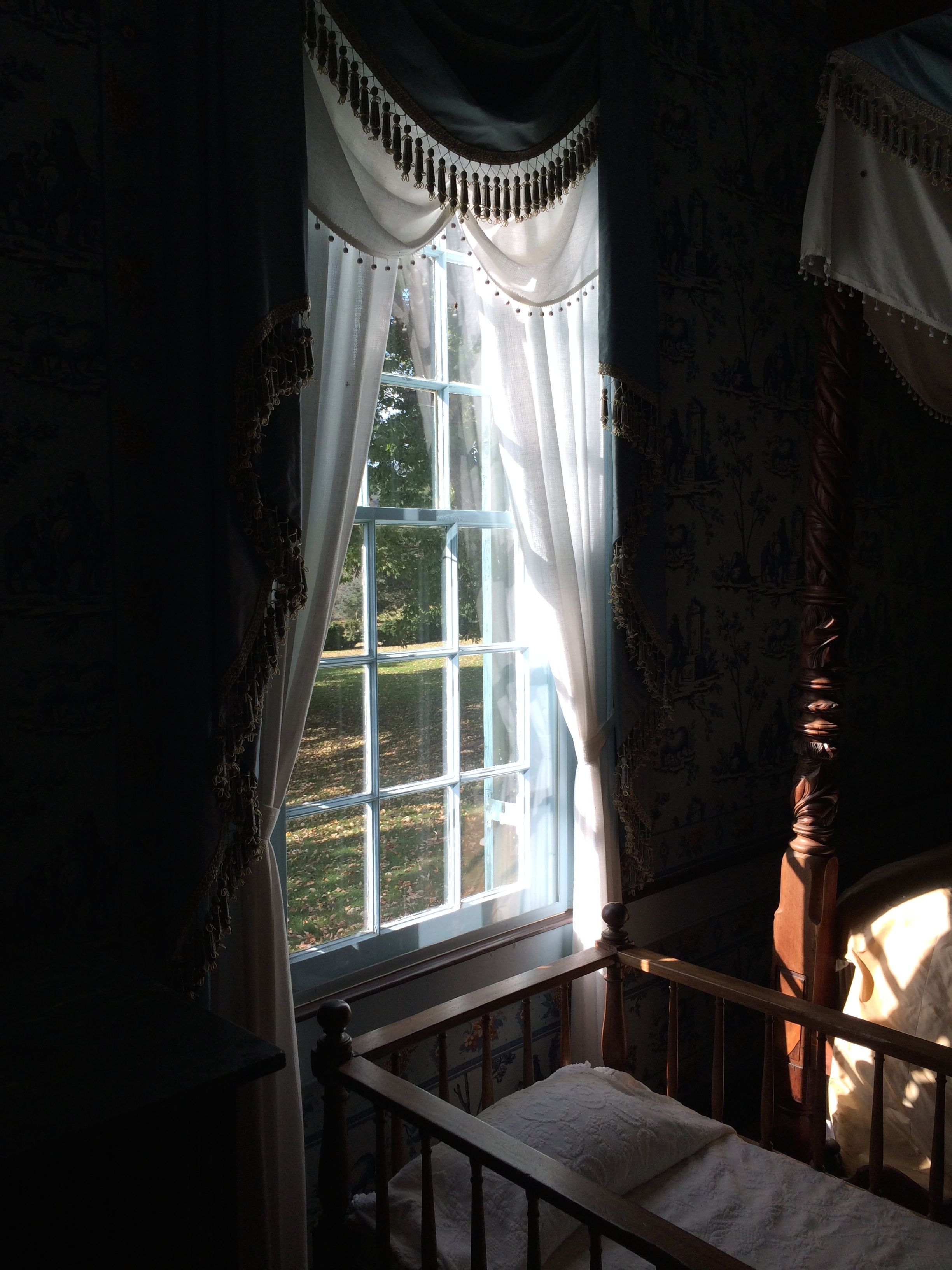
If you look at the middle pane of glass, four panes up from the bottom, you are looking through glass that Monroe looked through. According to the guide, it is the last original pane of glass in the house.
In front of the window is a Monroe family heirloom, the crib that generations of Monroe babies slept in – or didn’t. You know how babies are. The guide pointed out the signs of wear on it. It received some heavy use.
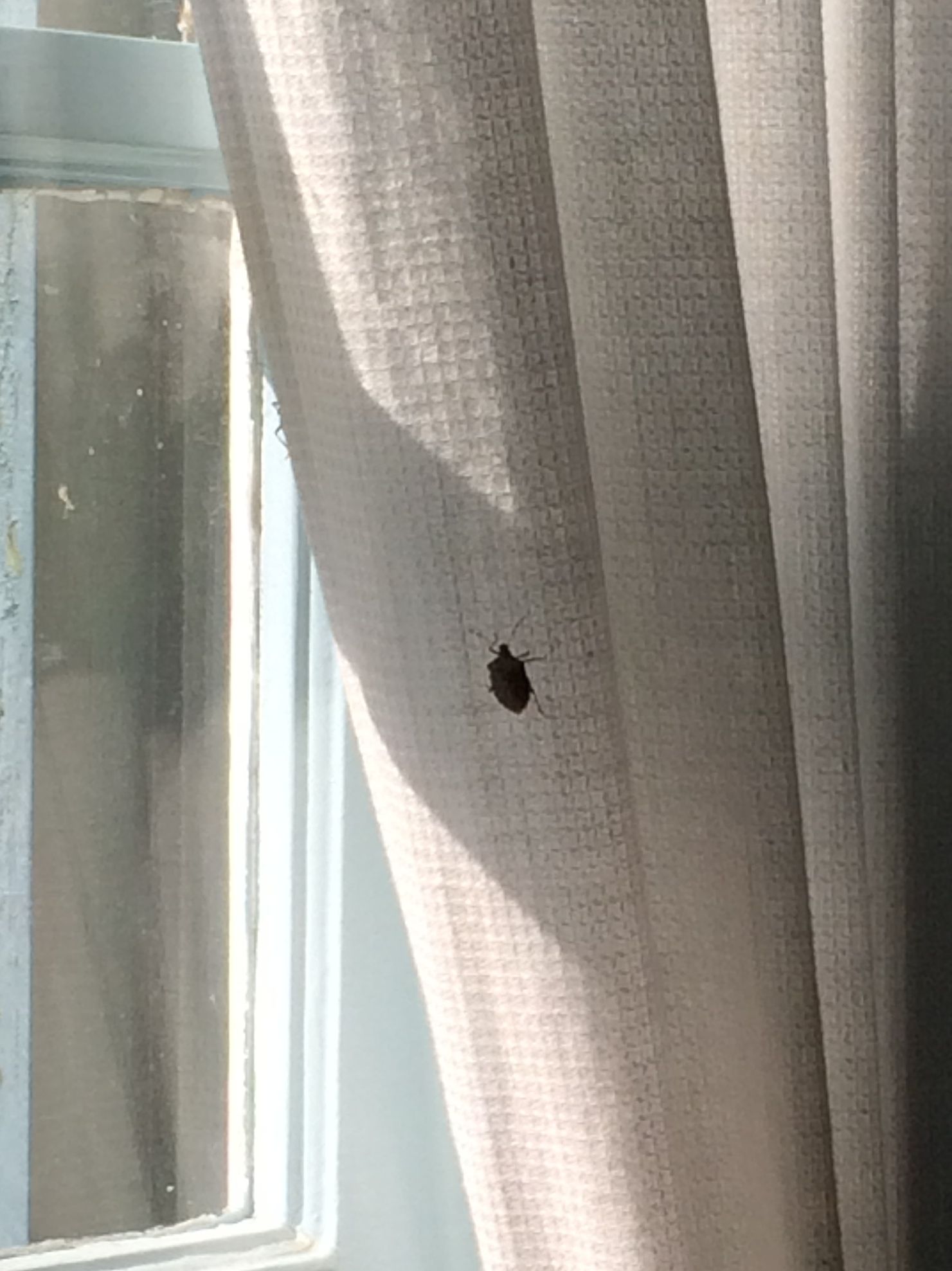
As a northerner, I had heard about stink bugs, but I wasn’t sure what they were. I learned that THIS is a stink bug. Everyone tells me they are really malodorous. If that is the case, I am lucky that I haven’t smelled one yet.
After that photo, the guide told me that they didn’t allow photos. Oops. Had she mentioned that at the outset, I wouldn’t have been shooting. But, I did as she requested and put my phone away.
We went through a few more rooms, but I have no photos to share. They were small and homey and the tour was rather short. We exited through the yellow portion of the house that is now used as a museum. I took a glance at the cabinets in the house, but I didn’t see anything that caught my attention.
Right outside the front door was a large white oak.
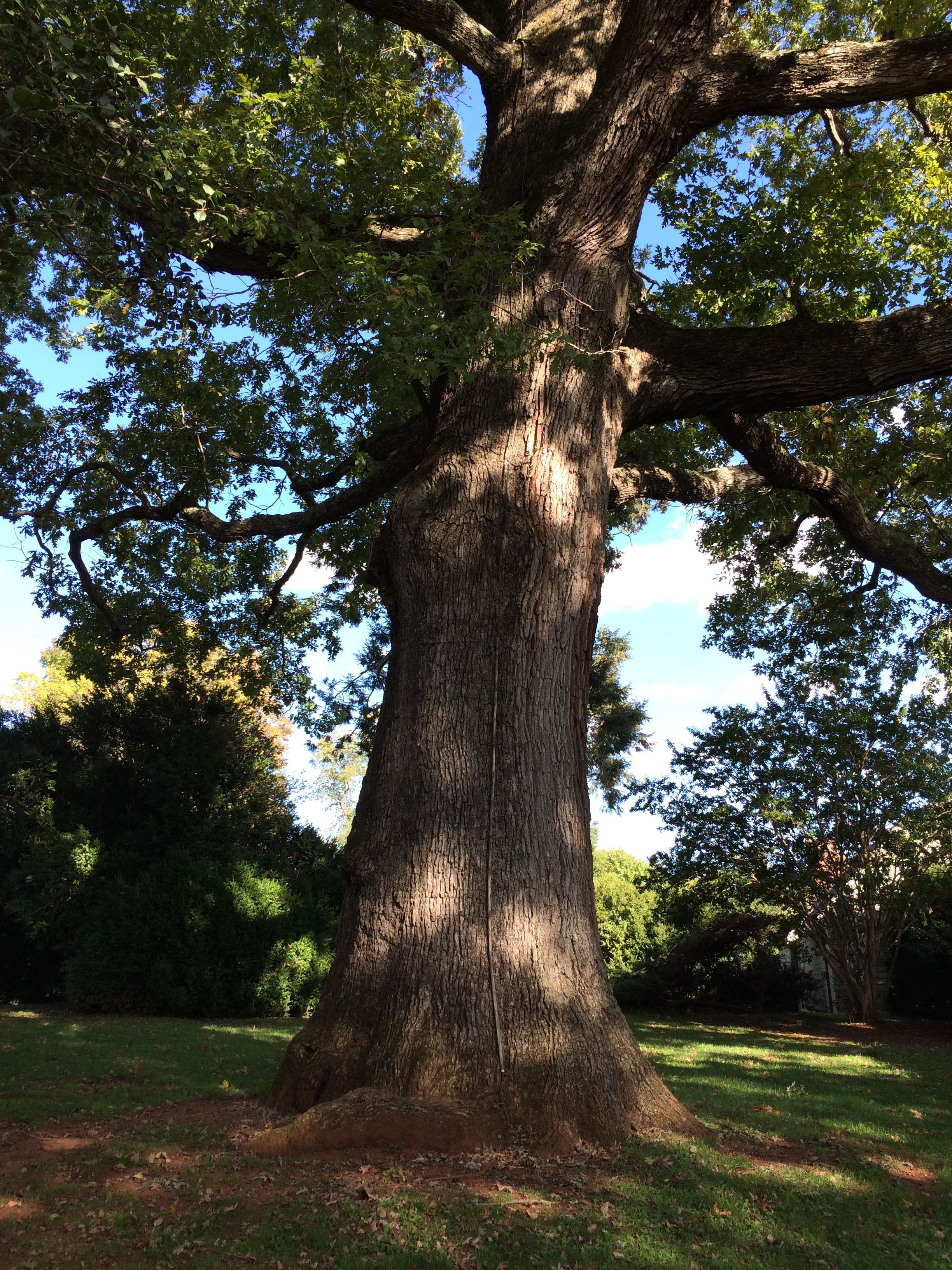
The guide said that the tree was growing when Monroe owned the land. I thought the lightning rod running the length of the tree was interesting. A tree this old is worth taking care of.
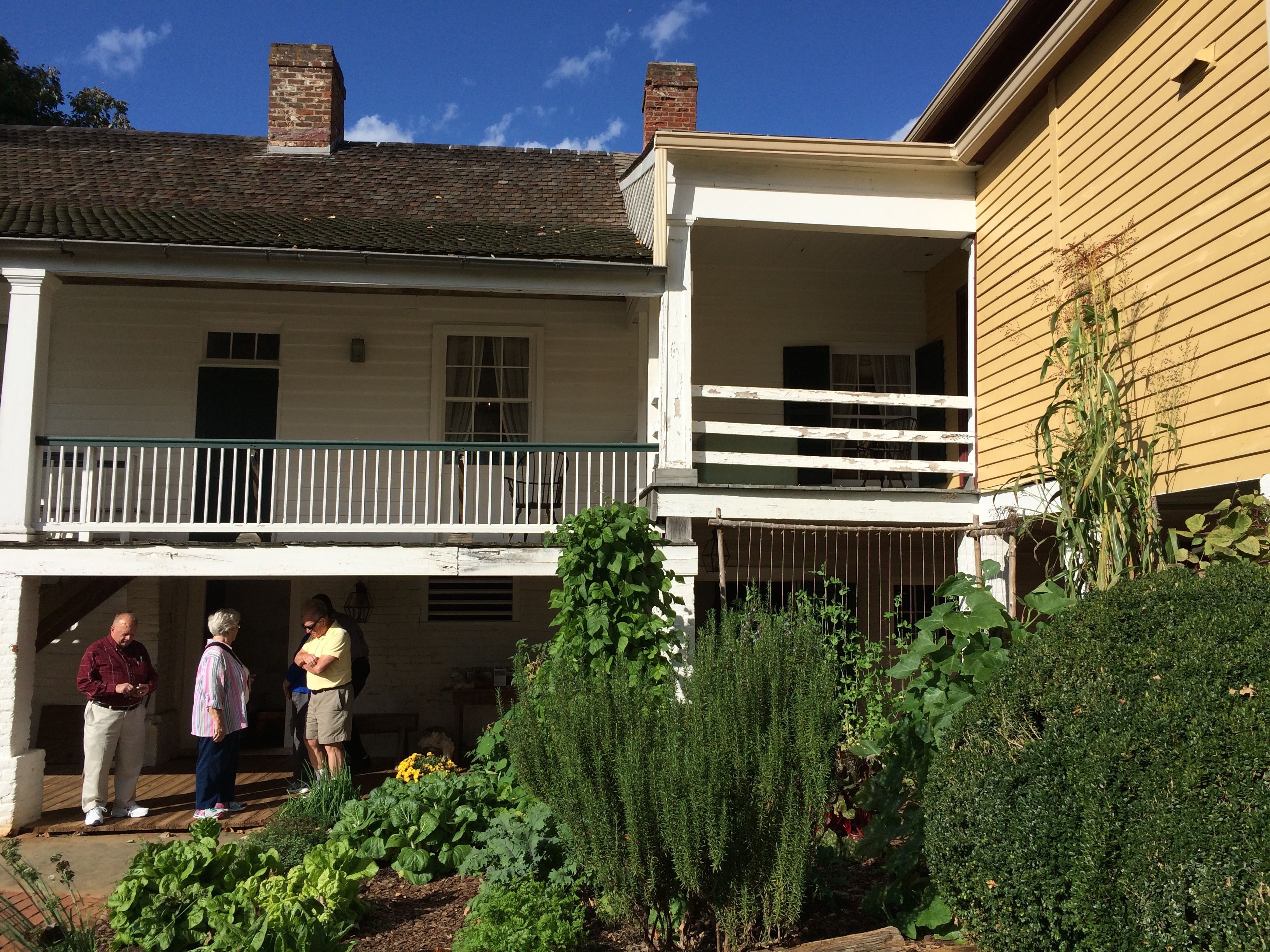
From this side of the house, you can see all the additions. The part on the left is the part that dates back to Monroe’s time.
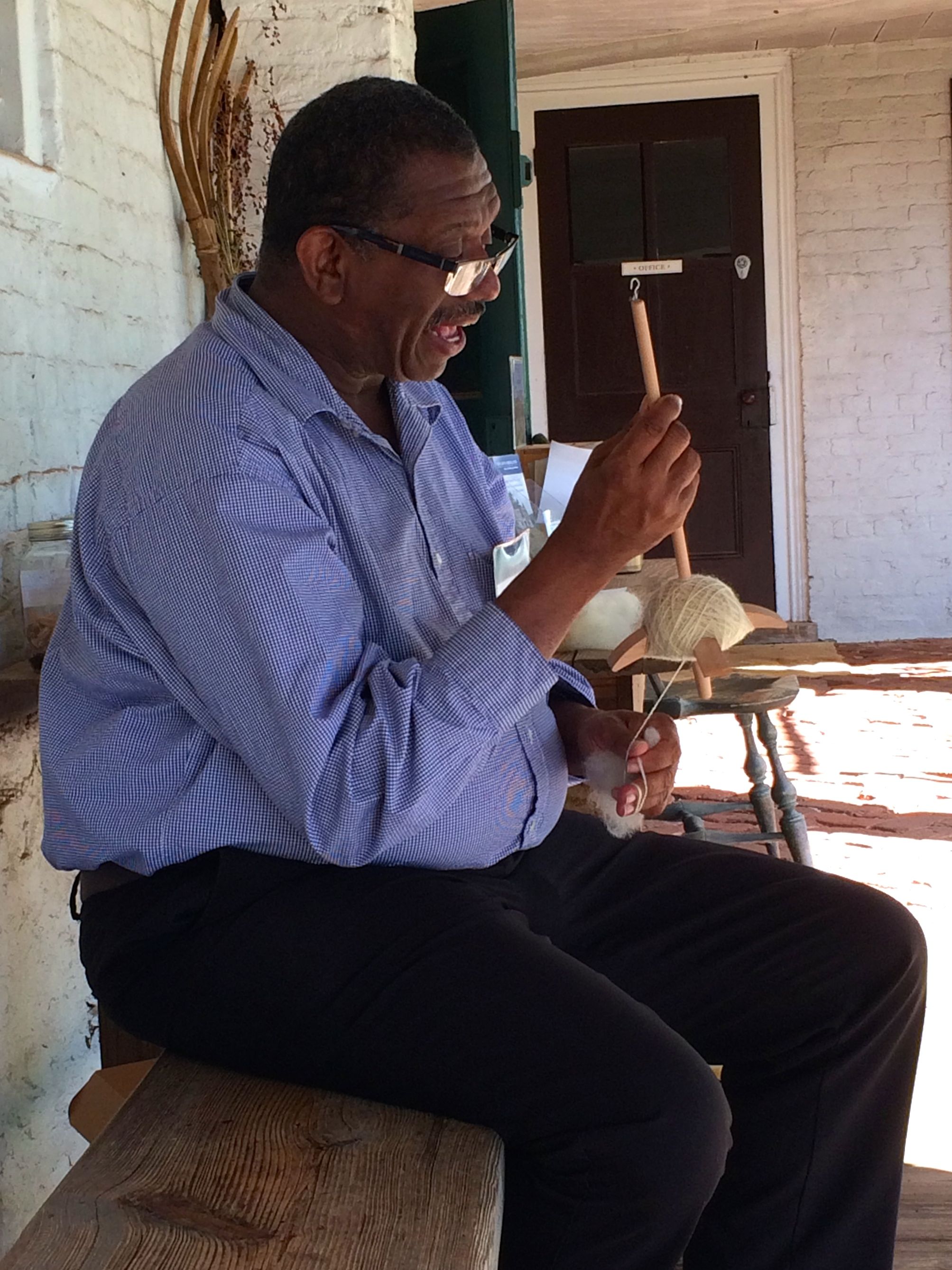
One of the docents was spinning wool from the sheep raised on the farm. Monroe raised merino sheep. He became acquainted with when he served as a diplomat in Europe and imported them to his plantation. The docent and I had an interesting discussion about spinning and how to ply the yarn.
There were a few other recreated buildings on the property, but I still had to get to UVA, so I bid adieu to Ash Lawn-Highland and headed back to Charlottesville.
My first impression of the University of Virginia is that it is ENORMOUS! I stopped at a visitor information and got a map and directions to visitor parking. If I hadn’t I think I would have just skipped it. Not only is it a vary large campus, but it is on hills.
After I parked, I tried to orient myself. I ended up crossing the street and going into the college of education. I took the elevator up to the level that had a bridge crossing the road. After I crossed the road, I still had some climbing to do. Finally, though, I ended up at the The Lawn.
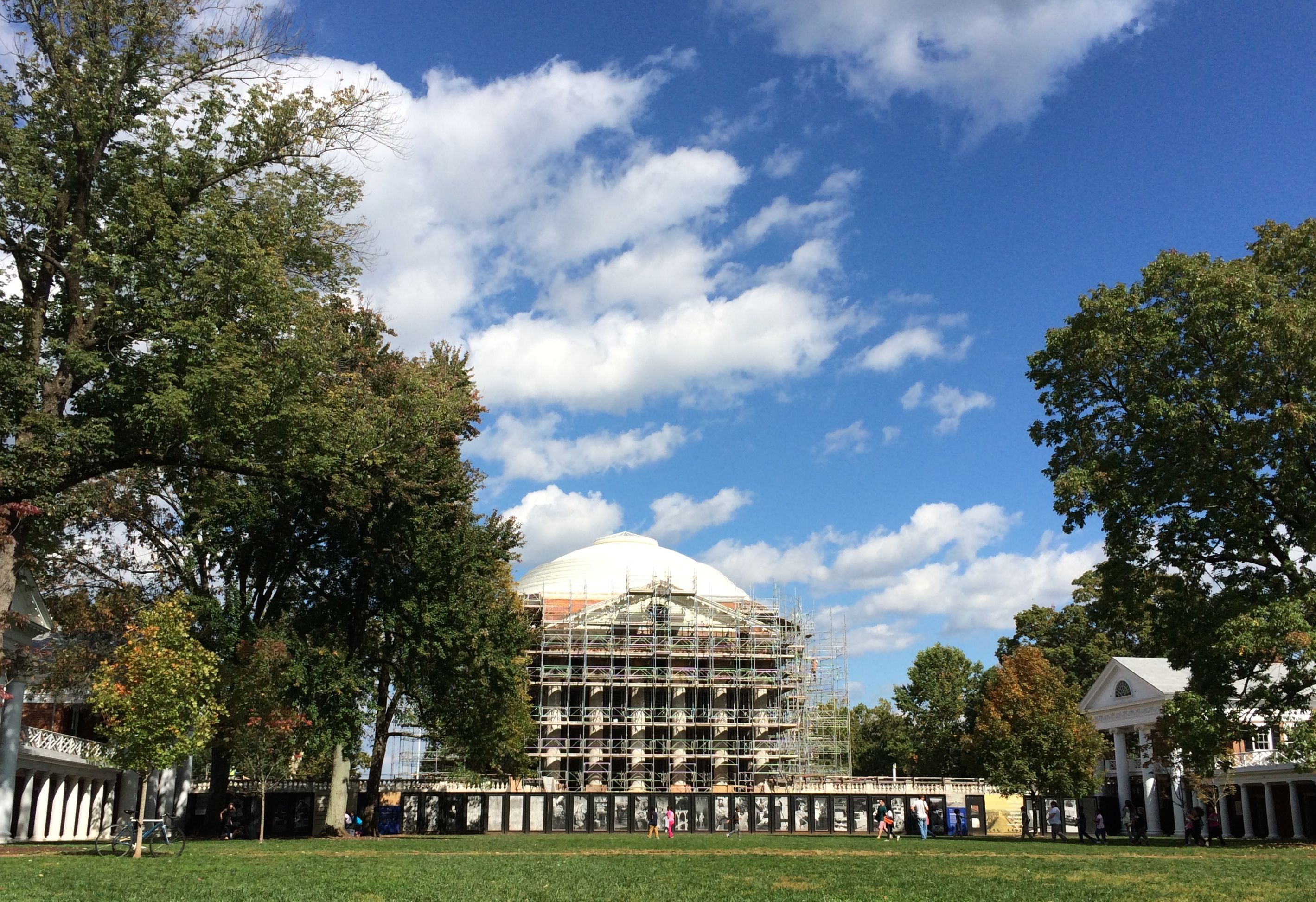
The Rotunda was under renovation. It is an old building – nearly 200 years old. Jefferson designed it as a library and put it at the heart of the university. The guide at Monticello pointed out that having a library at the center of a university rather than a church or a chapel was a radical idea.
The original structure was heavily damaged by fire in 1895. It was re-envisioned by Stanford White of the New York architectural firm of McKim, Mead & White. It was also modified in 1938. It was again renovated and much of Jefferson’s original design was restored in time for the nation’s bicentennial in 1976.
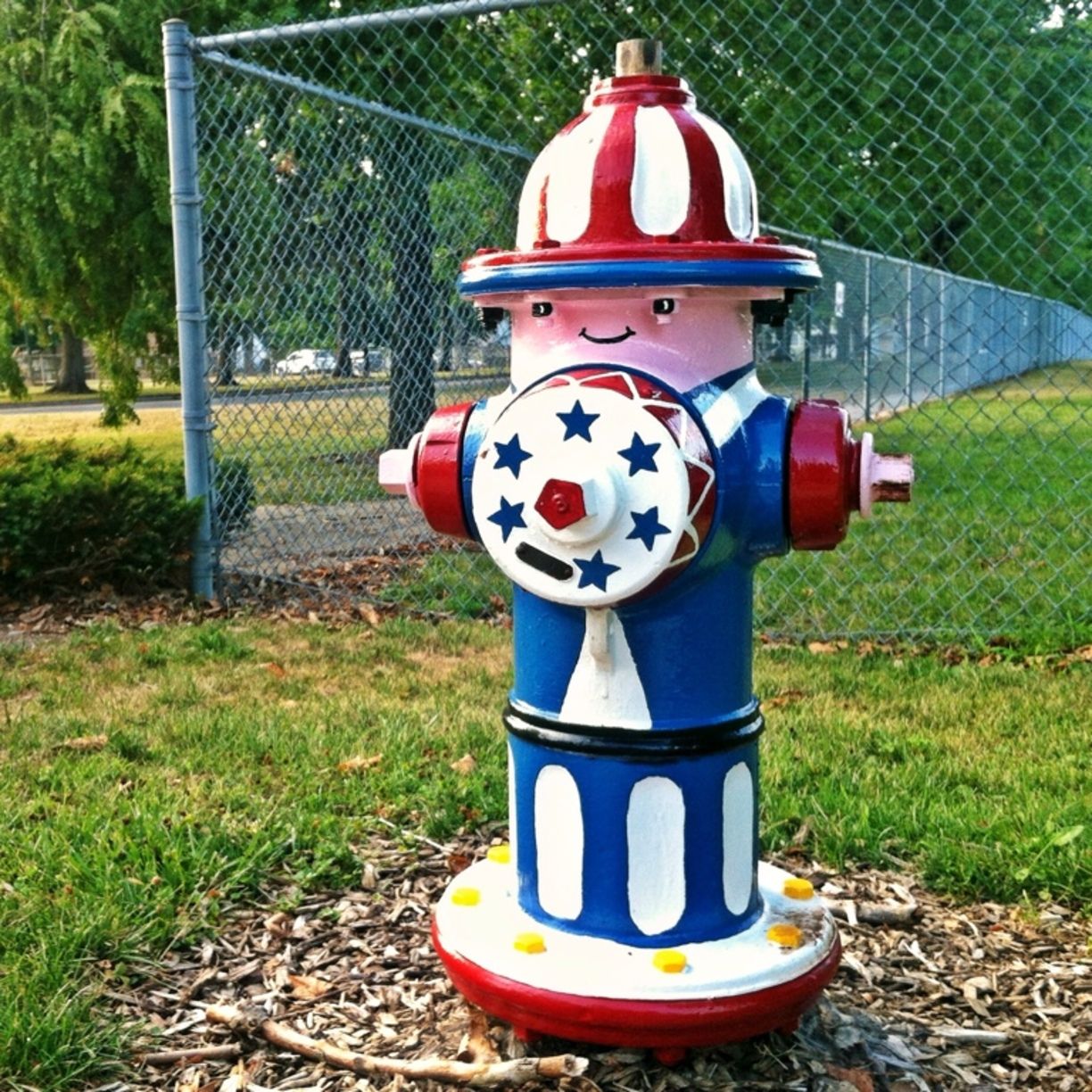
Better than a Bicentennial fire hydrant, I say.
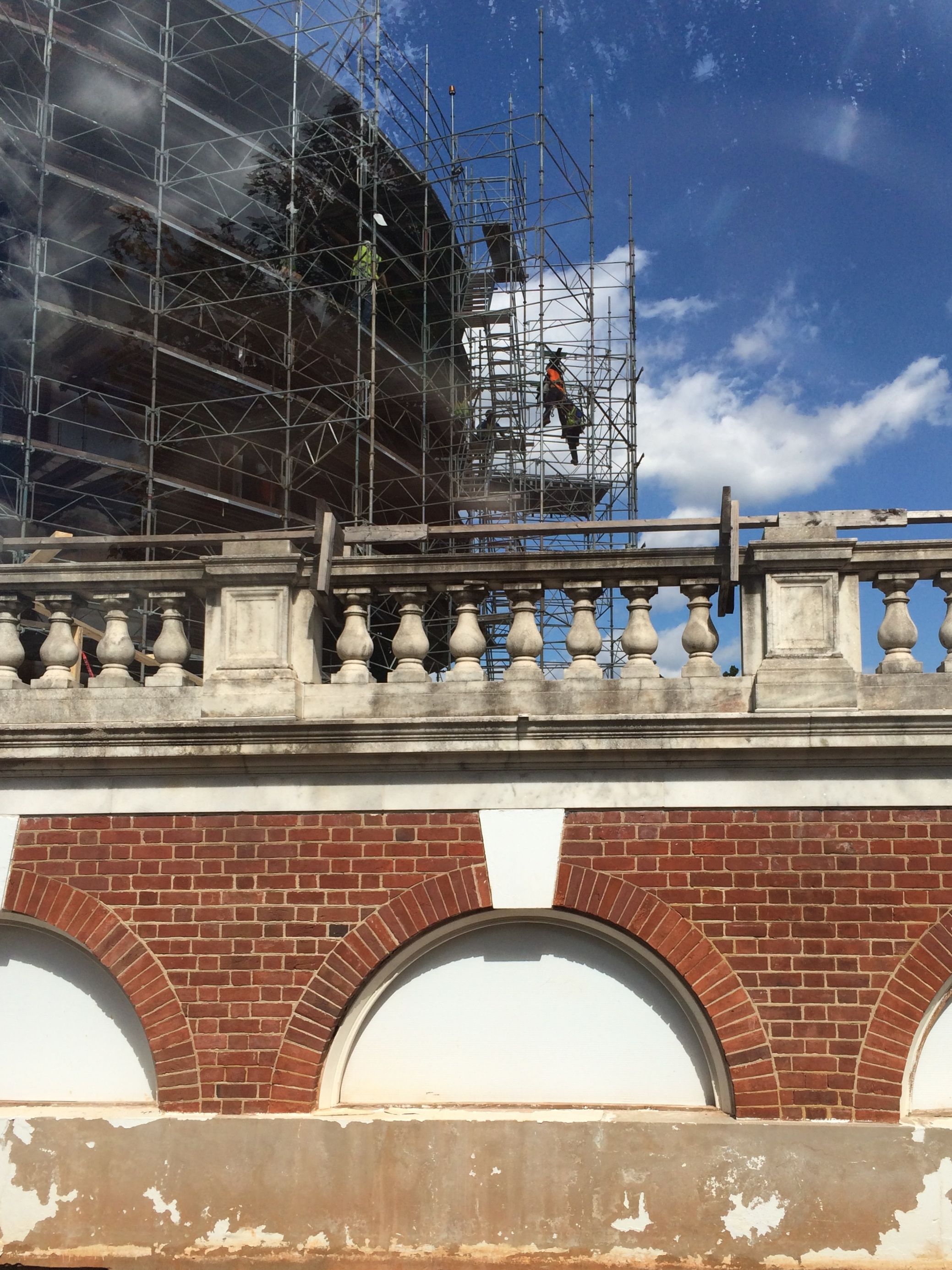
They are really working hard on bringing back the glory to the is World Heritage Site.
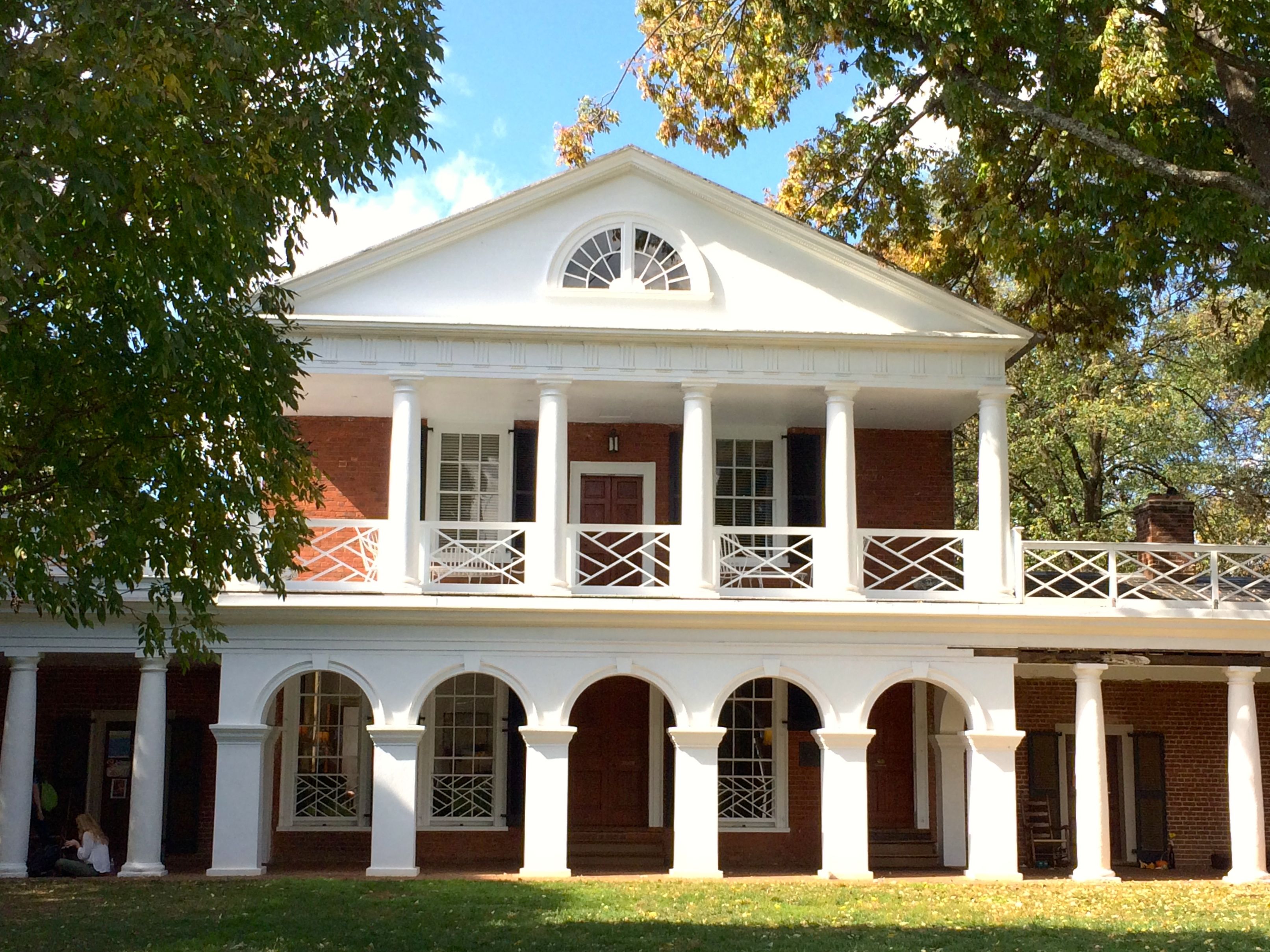
The Colonnade Club is the oldest building on the Lawn. President James Monroe laid the cornerstone in 1817, with former presidents James Madison and Thomas Jefferson also attending the ceremony. Jefferson designed the pavilion and this was the first structure in his “academic village.” Today it serves as a faculty club with reception facilities and overnight guest rooms.
The columns on this building have Doric capitals.
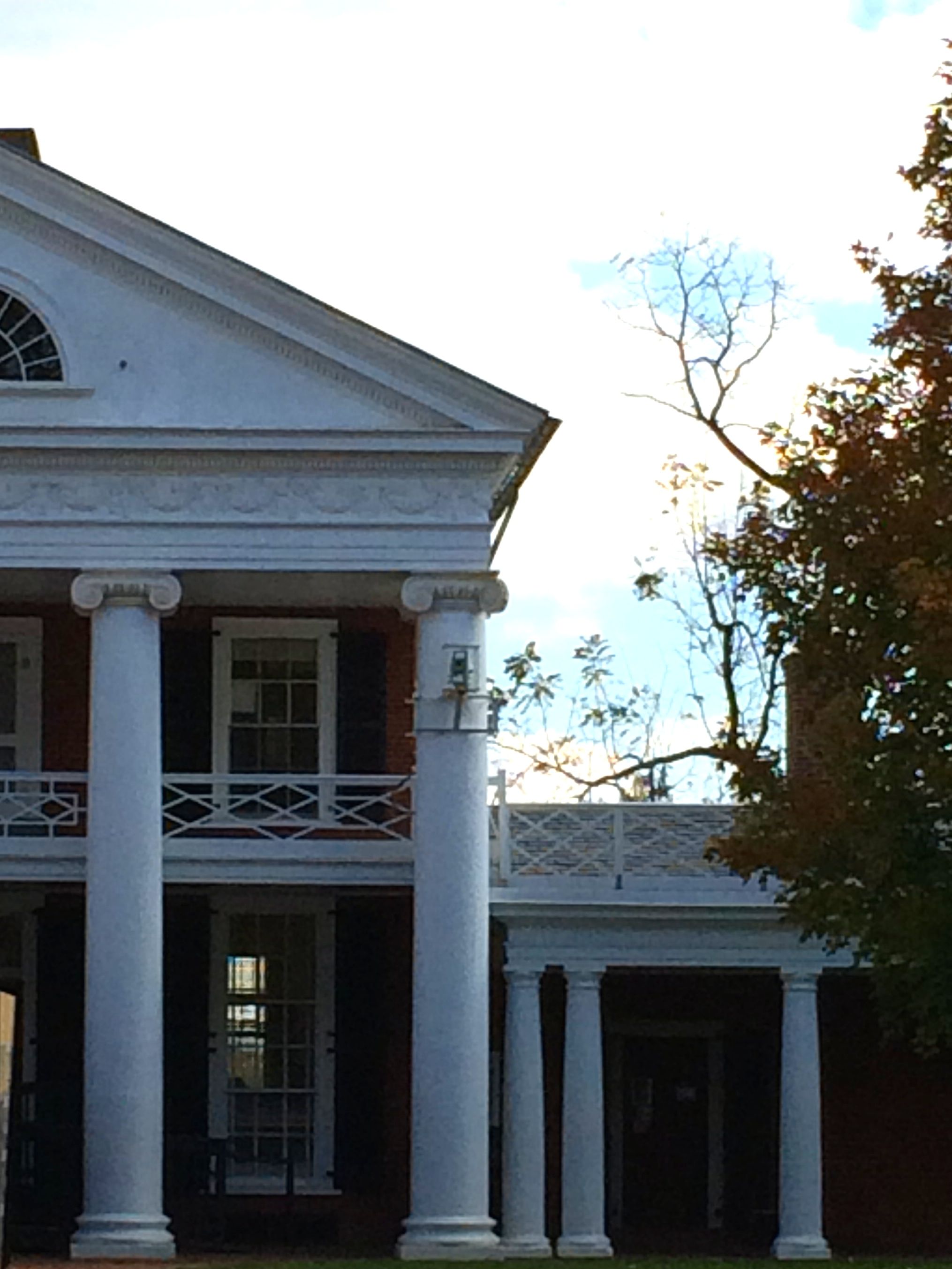
This building, on the other hand, has Ionic capitals on the two story portion of the building. You can compare and contrast them with the Doric capitals on the one story portion.
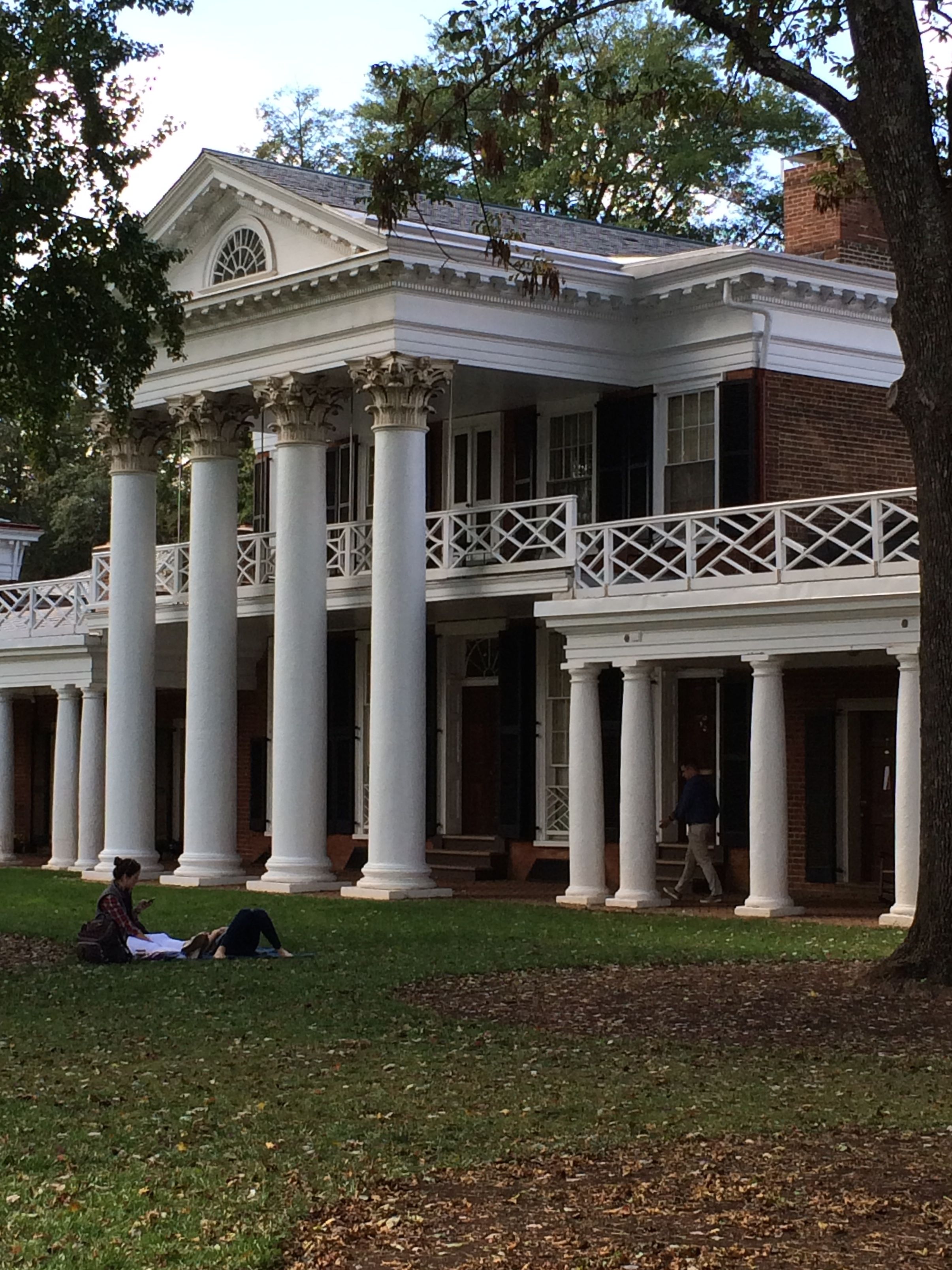
Now, throw in the Corinthian Columns on this two story building. It is almost as it Jefferson was creating a three-dimensional architecture lesson.
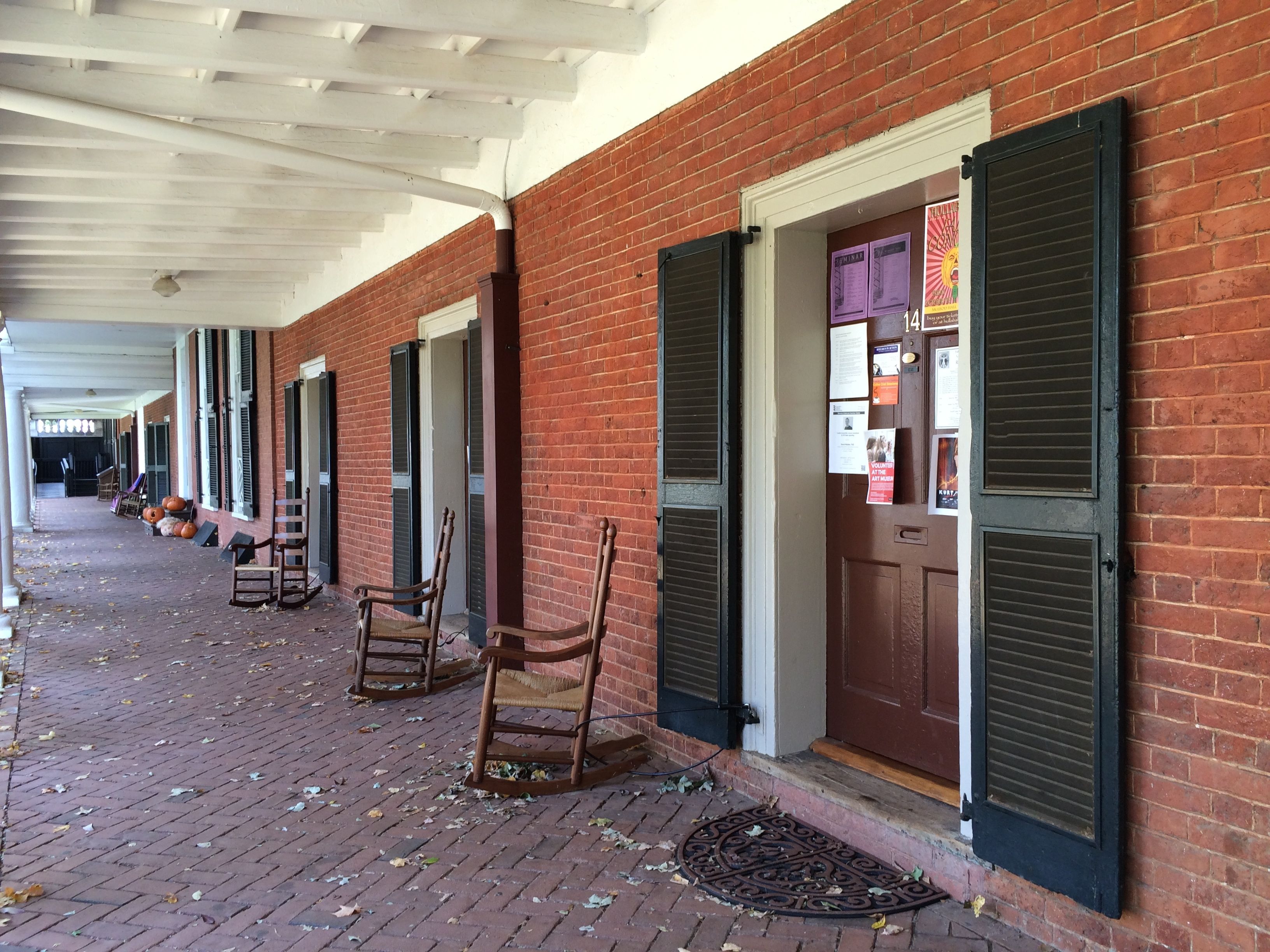
The two-story portions of the building lining the Lawn seem to be dedicated to offices. The one-story portions are students’ dorm rooms! Can you imagine living with this beautiful porch right outside your door? They even have rocking chairs there – although they are locked to the building.
Can’t trust those students.
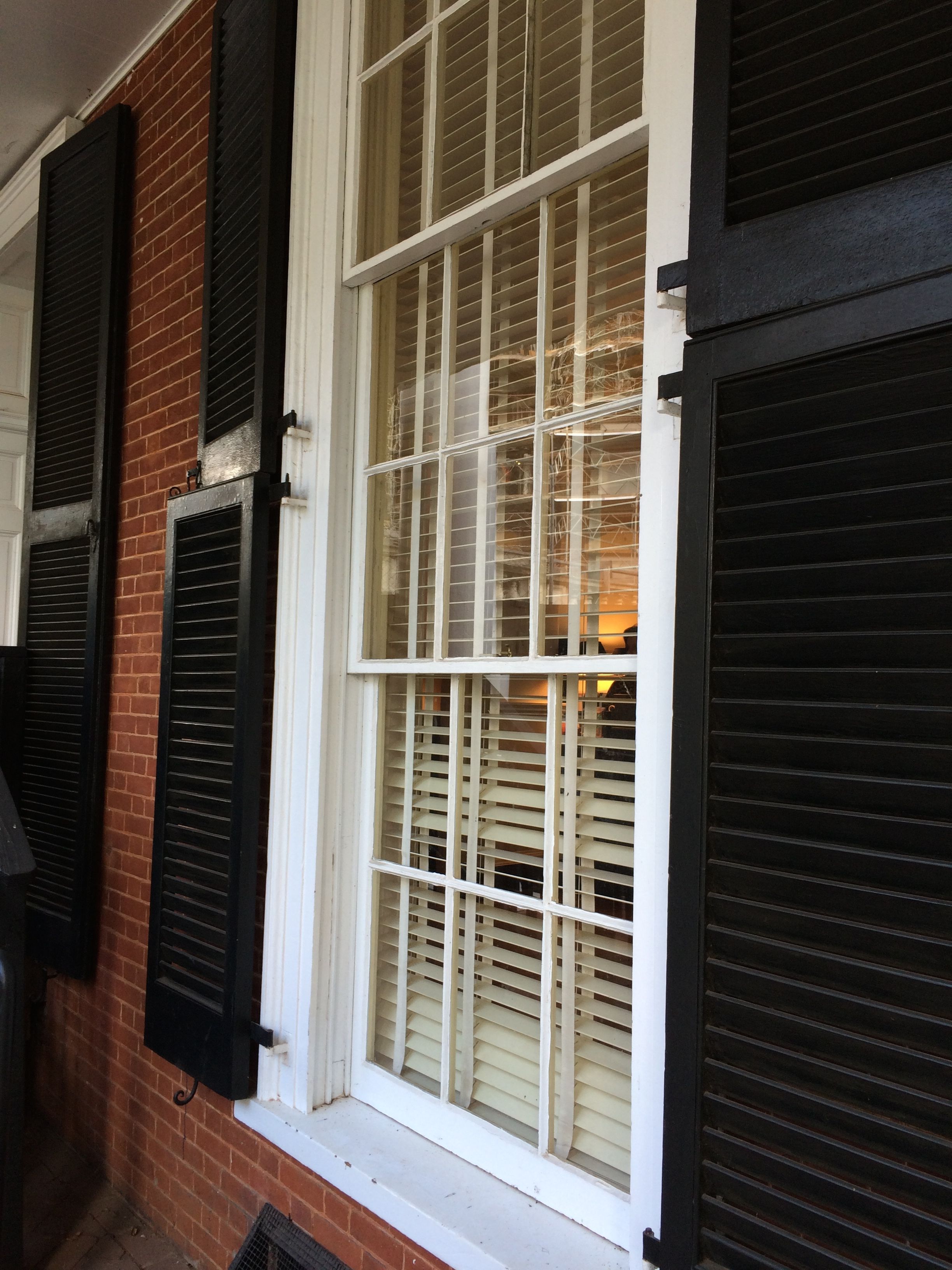
I was fascinated by the triple hung windows. I noticed some of them at Monticello, too.
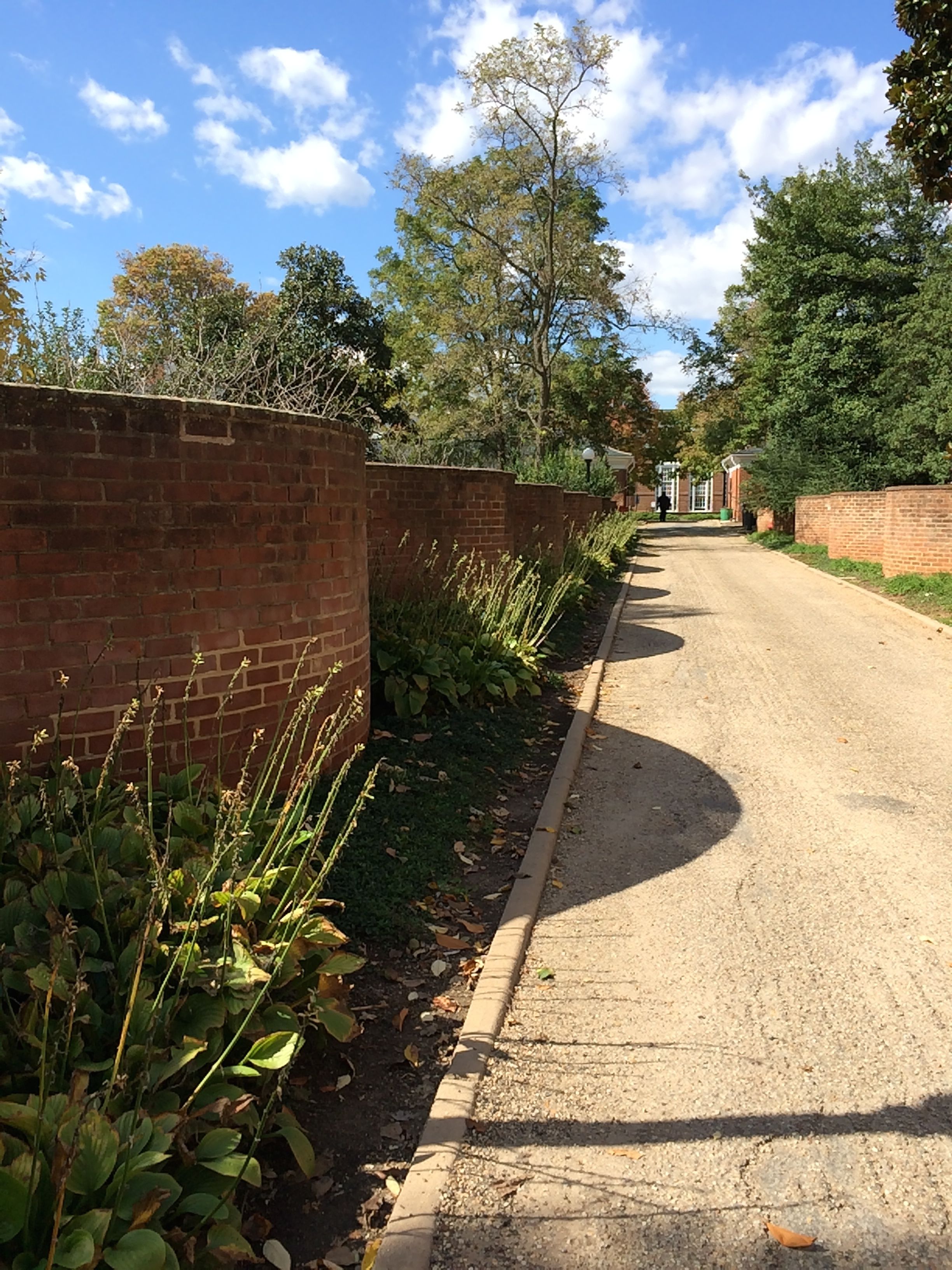
This serpentine wall was designed by Jefferson to provide garden space between the building of the Lawn and the Range. In something I read while I was there, I got the impression that the gardens were intended for the people providing services to the students. I’m not sure what that meant, but the gardens are still here, although the walls have been rebuilt.
There is an East Range and a West Range on either side of the Lawn. These are also residences for students. Two of these rooms were lodgings for famous people.
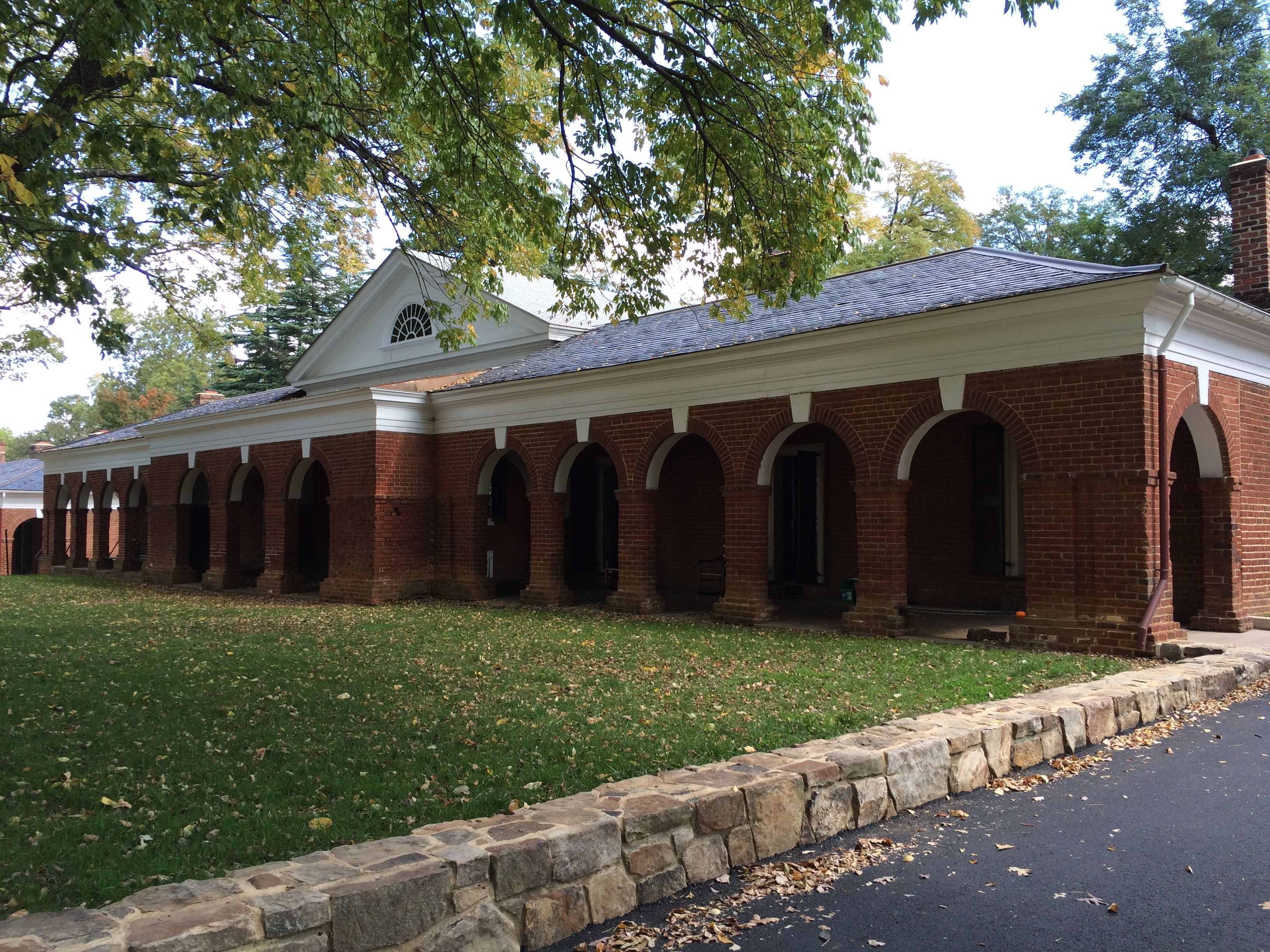
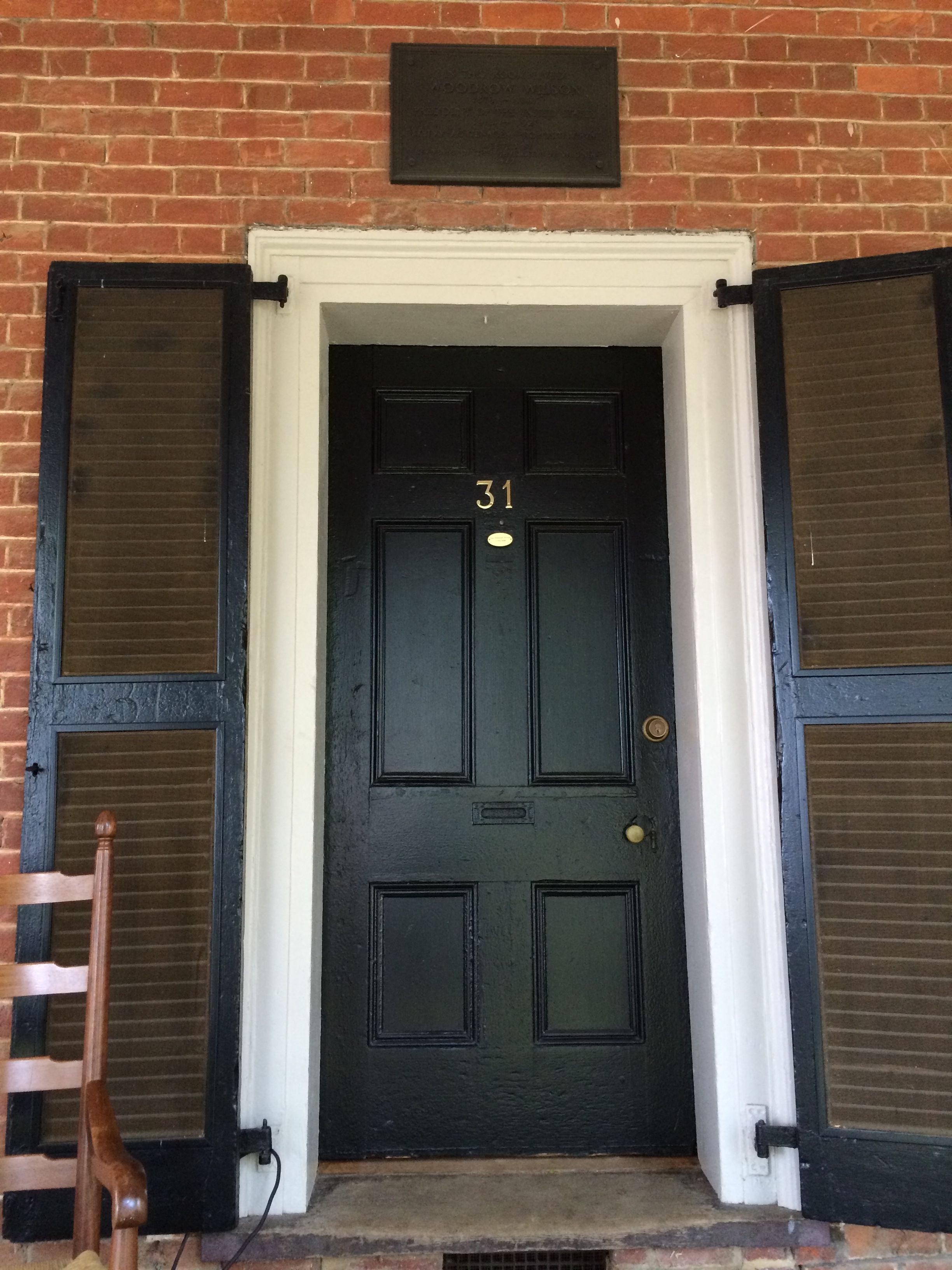
This was Woodrow Wilson’s room. He stayed here 1879 – 1881. He was a local boy, hailing from Staunton, Virginia, just about 40 miles away. Of course, commuting was out of the question back then.
Someone is living in this room now. The name is on the shiny brass plaque. Unfortunately, the brass is so shiny that I can’t read the name of the current occupant.
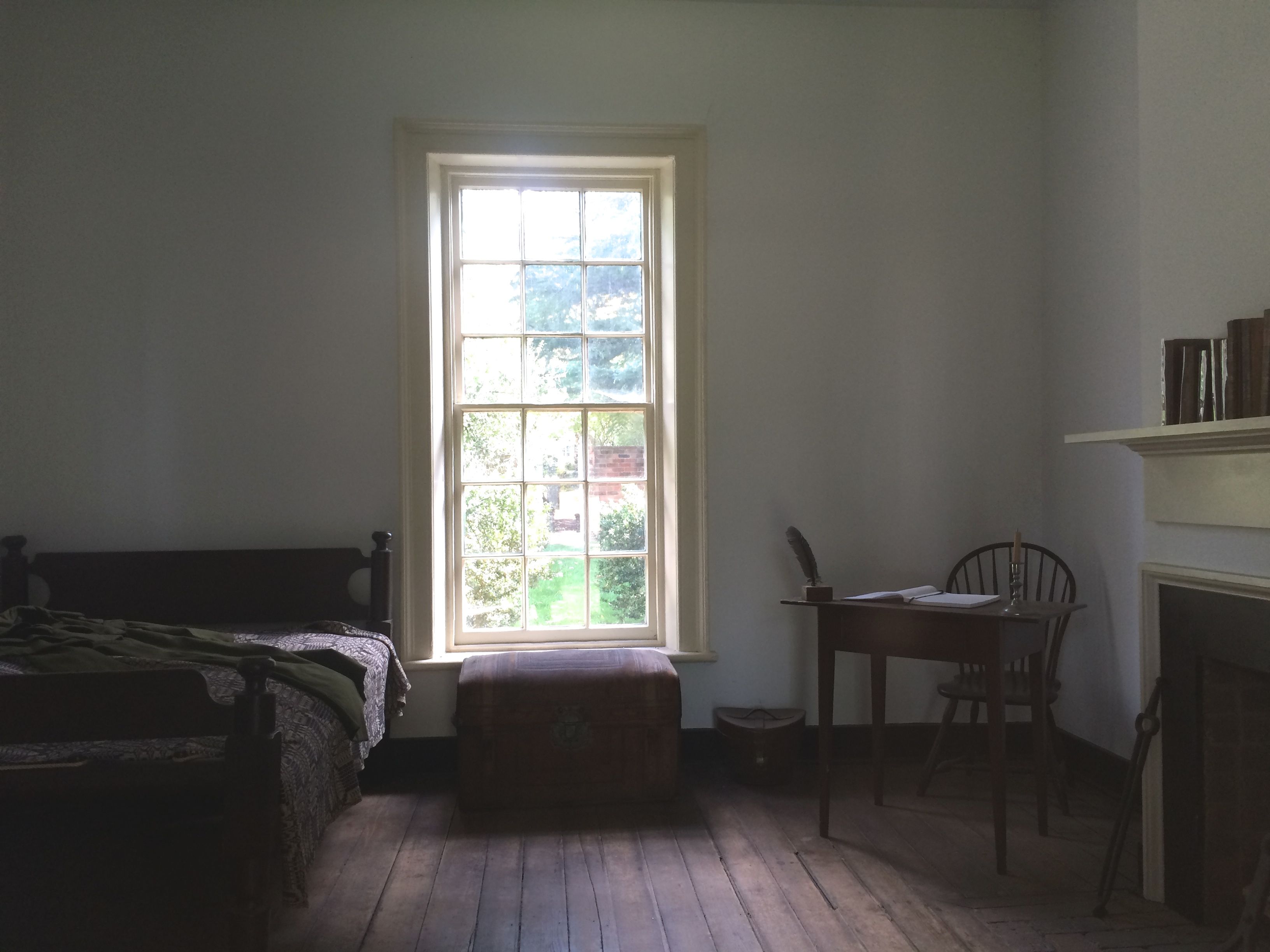
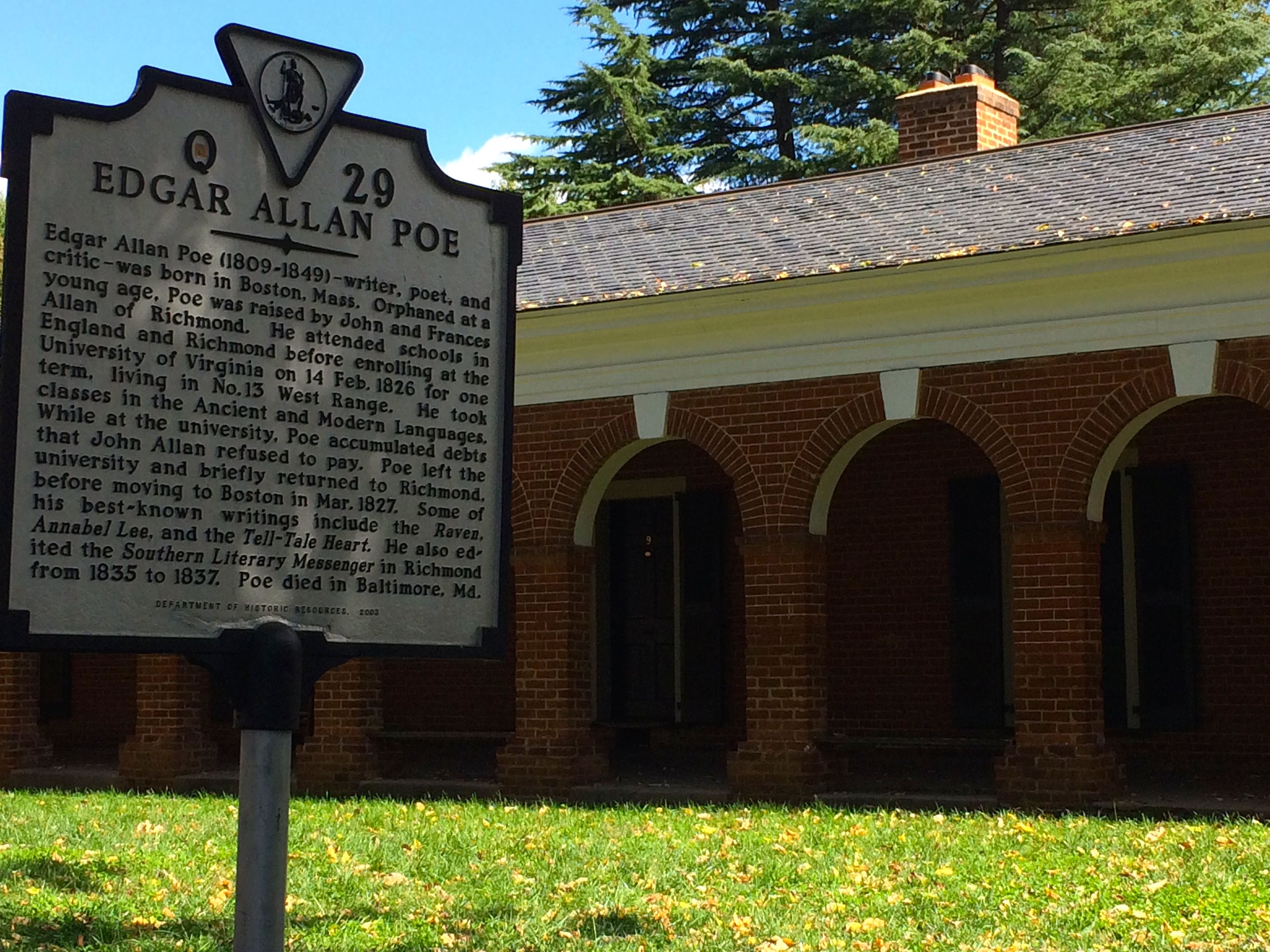
Just down the Range a bit, is the room that Edgar Allan Poe occupied for one term. The University is proud of his attendance and has a glass door on the room with furnishing in the style that Poe would have had.
After that, I made my way back to the car. I have to admit that I thought this short arch was a nice bookend to the day’s tourism.
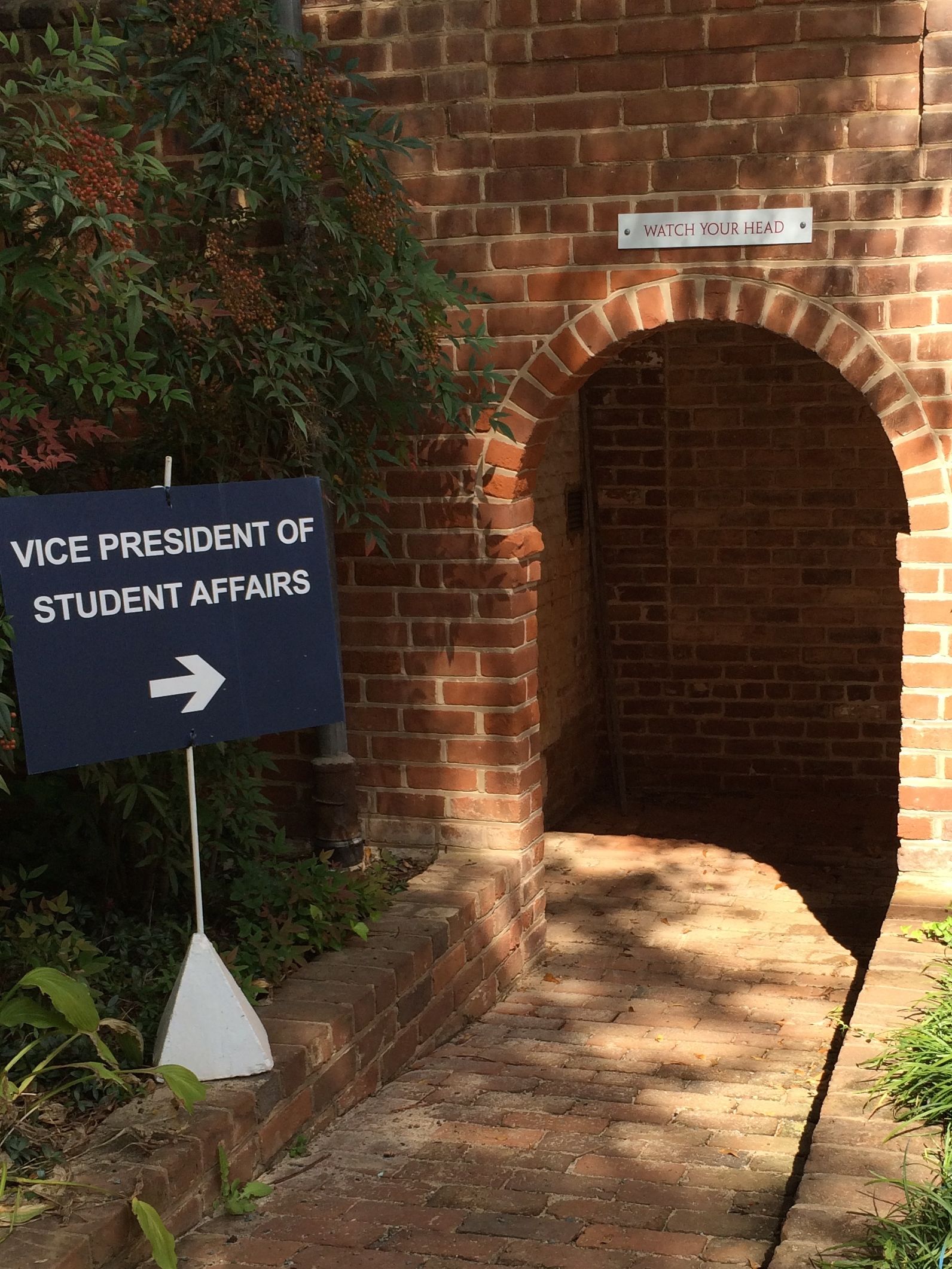
It kind of reminds me of the tunnel-like entrance to Monroe’s house.
After that, I got to meet up with a Facebook friend for dinner.
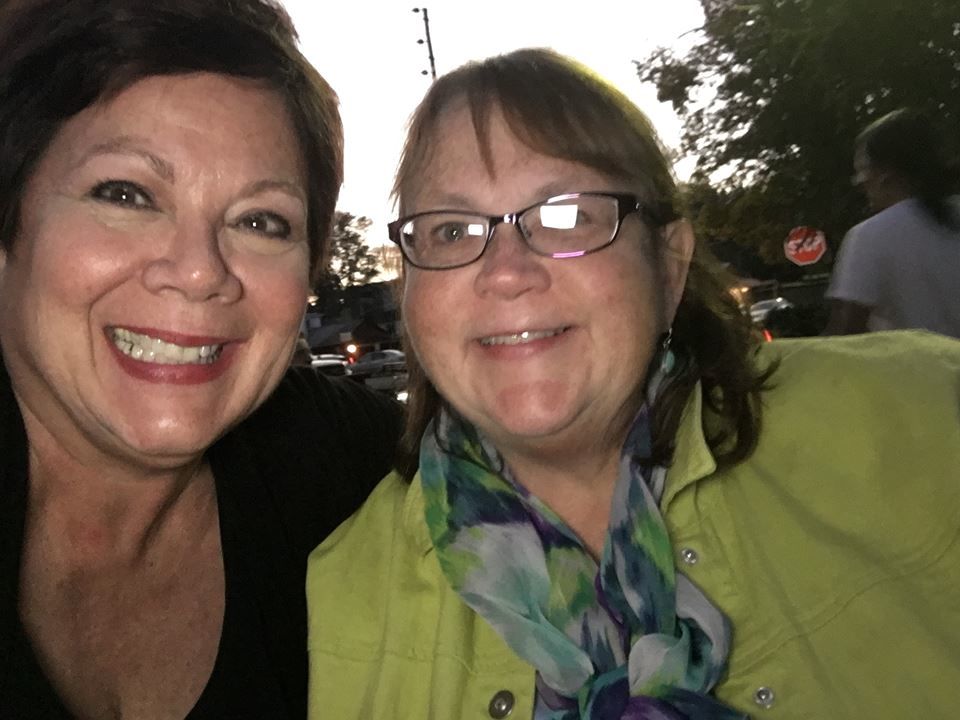
Some people knock Facebook, but I have met lots of wonderful folks there. Mickey is one of them. We had a great time over tapas and sangria and getting to know each other in real time.
And that was all for Charlottesville. Next stop: Newport News, Virginia.