When I checked in at the Blue Mounds State Park office, I found a brochure about the Jeffers Petroglyphs.
Petroglyphs? In Minnesota?!
With my interest in petroglyphs, you know I had to go check it out.
It was about a two hour drive from the campground to the Jeffers Petroglyphs in Comfrey, Minnesota. Of course, Google Maps said the trip would take about an hour and a half, but you know how it goes with those directions. They lie! Or maybe I drive slowly, although I prefer to think of my driving as safe and cautious.

I checked into the visitor center and paid my $8.
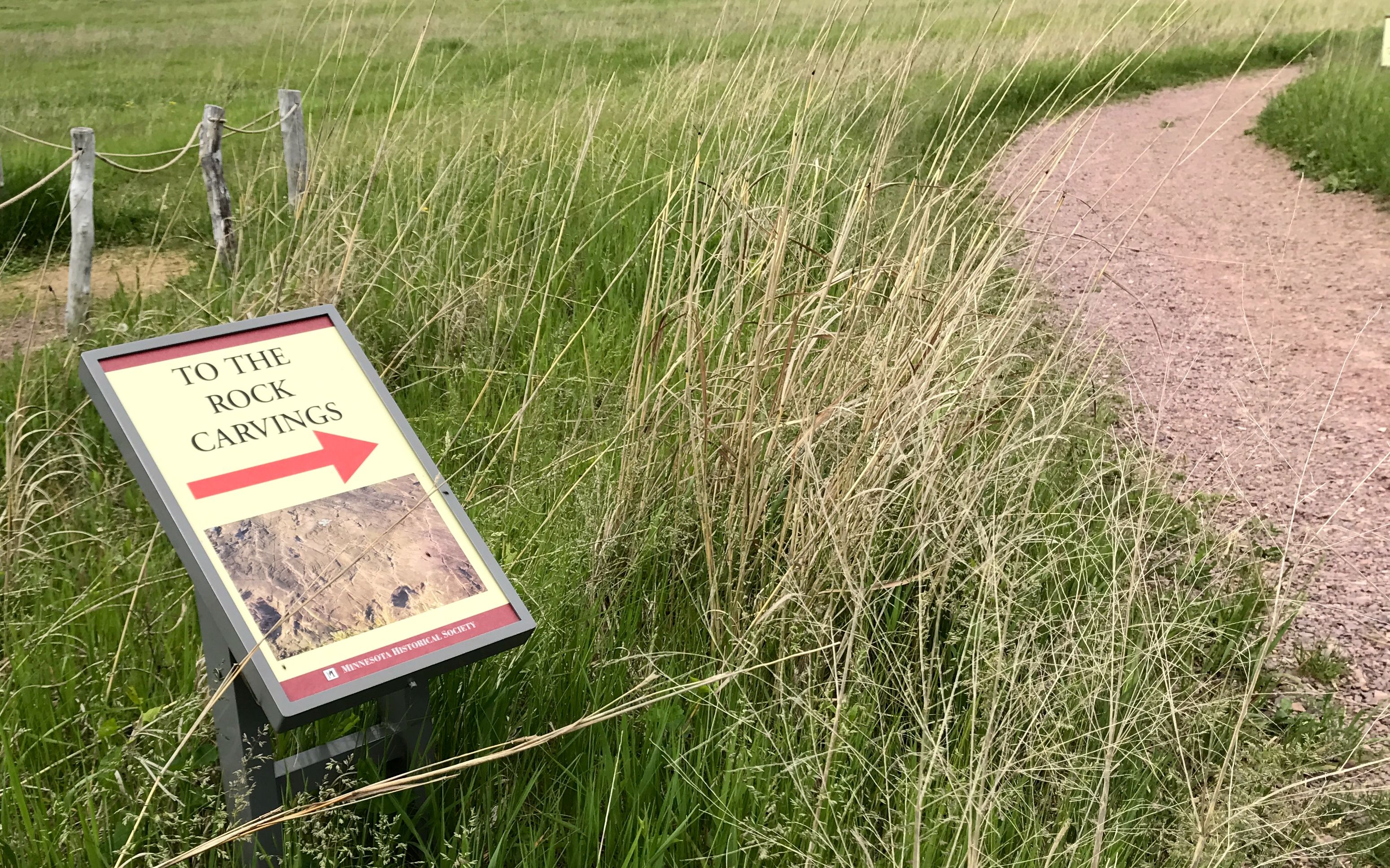
Then I headed down the path to find the rock carvings, which is surrounded by virgin prairie.
The petroglyphs are pecked into the rock of Red Rock Ridge, which extends from Watonwan Country, Minnesota to Brown County, Minnesota.
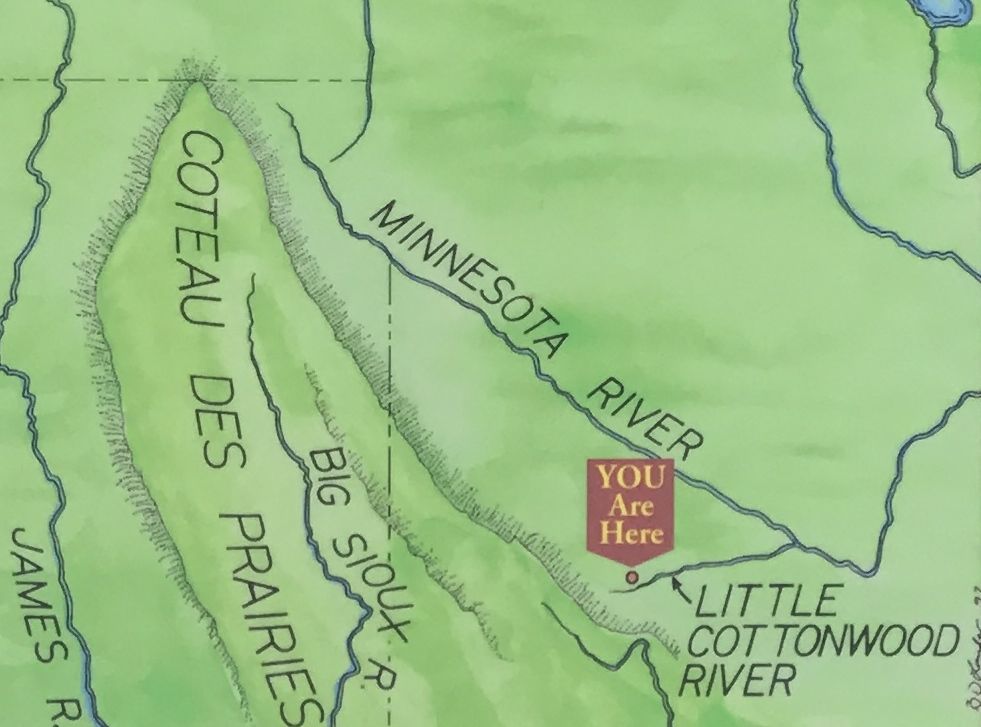
The exposed surface is approximately 150 feet by 650 feet.
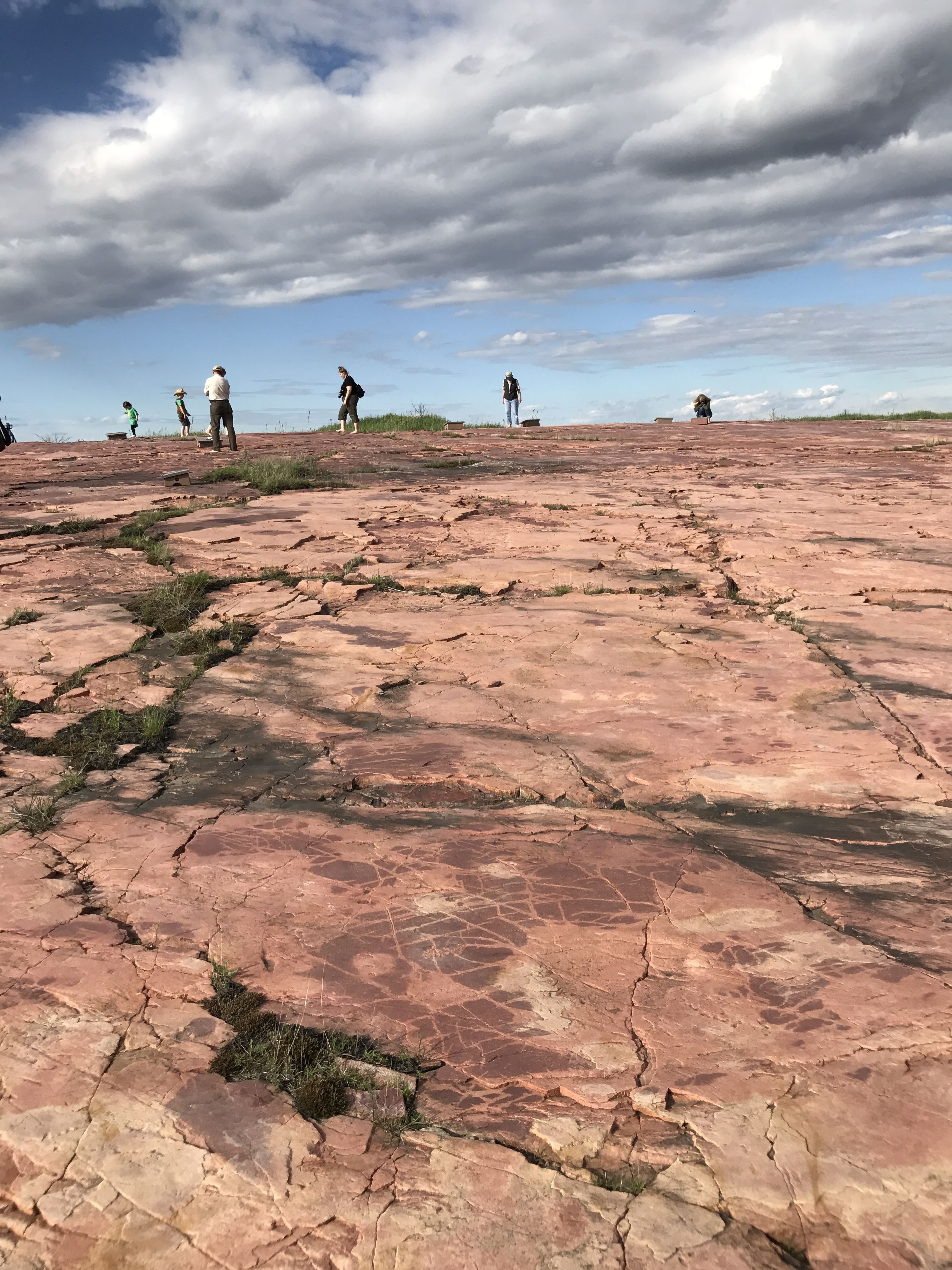
It surprised me that the petroglyphs were carved into a relatively level surface.
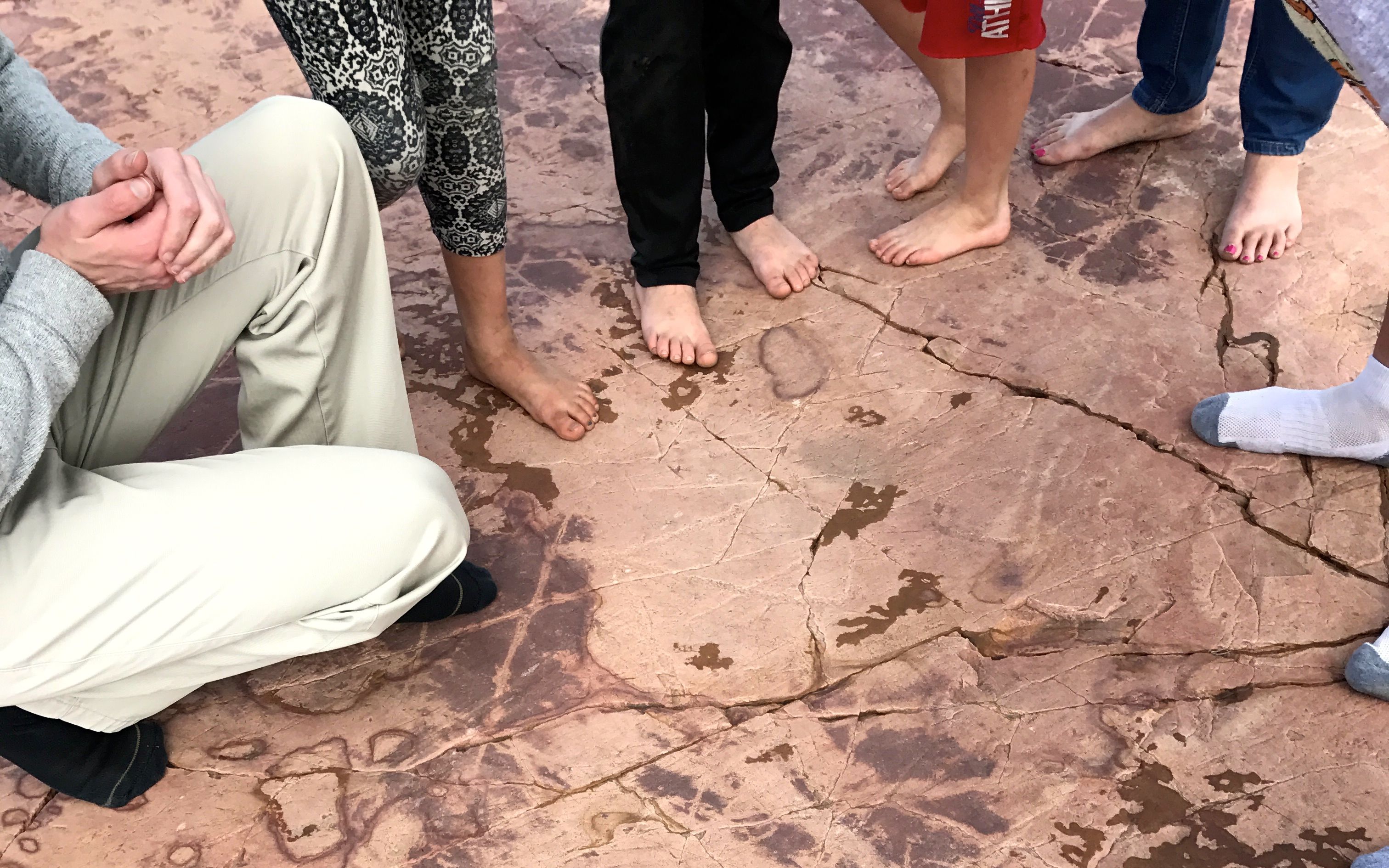
You get to walk around the rock, although you do have to take your shoes off. Socks are allowed.
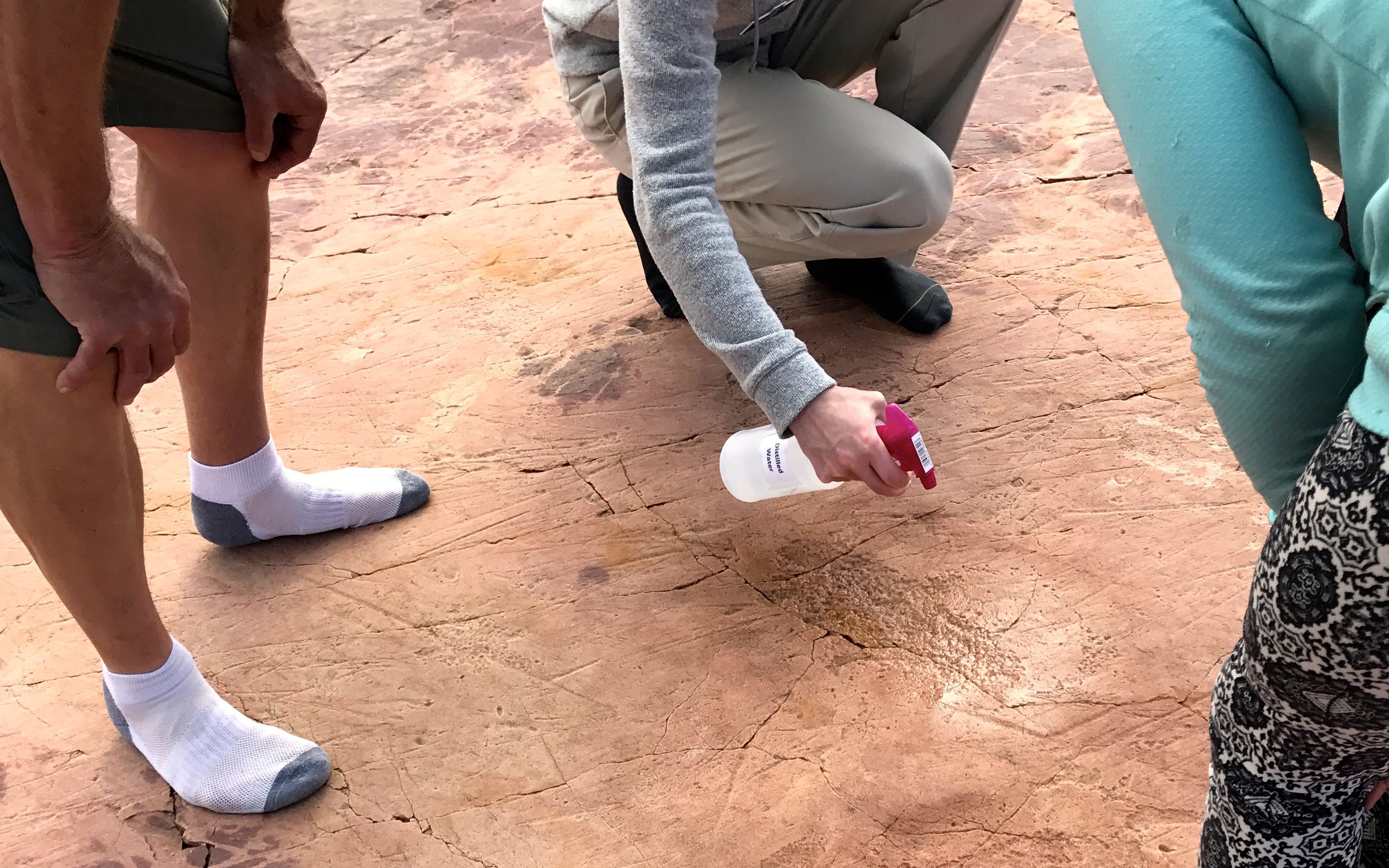
Spraying the rocks help to make the petroglyphs more easy to detect.
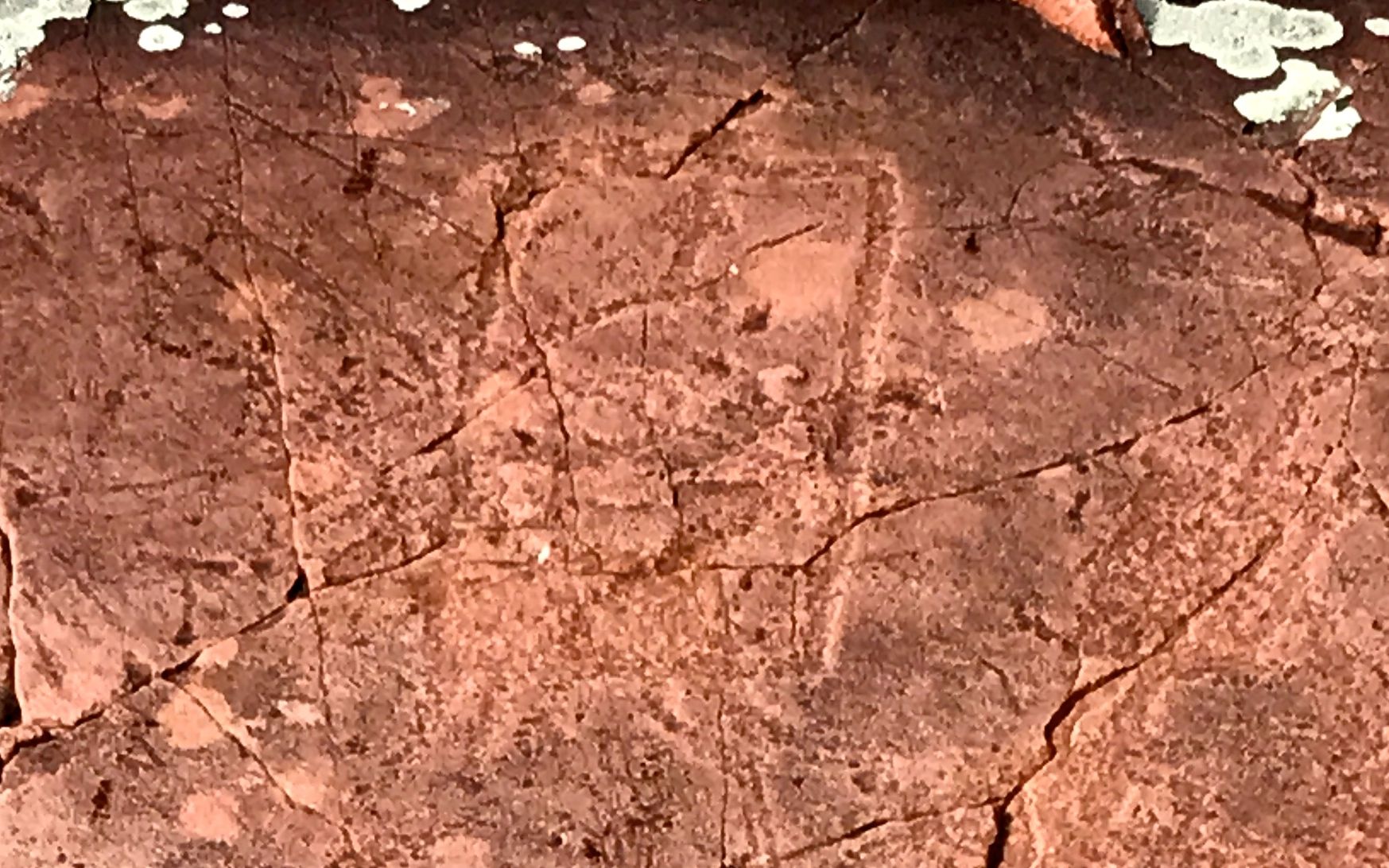
The glyphs are kind of hard to see, and they are not exactly easy to decode.
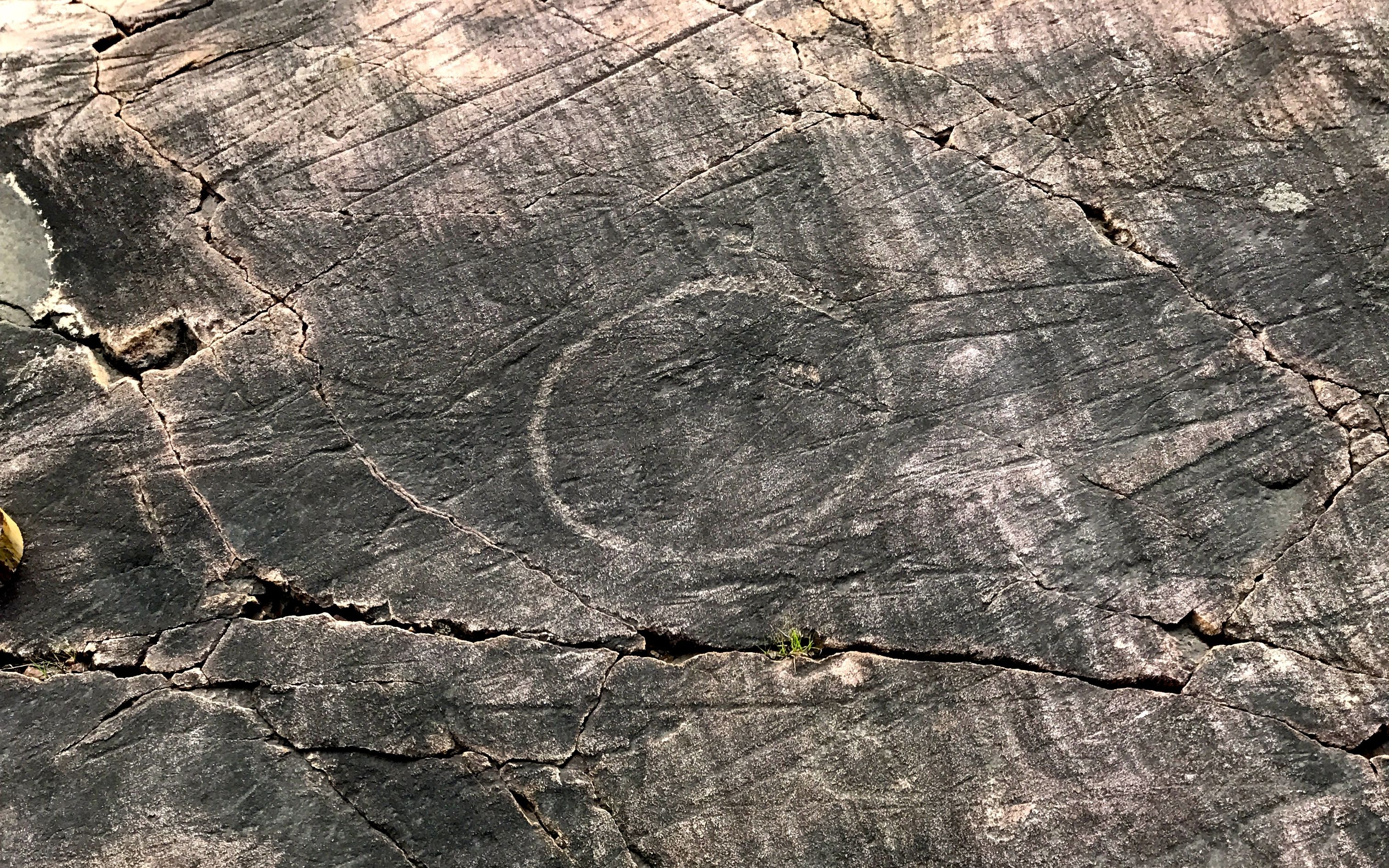
Some are easier than others. I know a circle when I see it! However, I don’t know what significance it had to the person who made it some 7,000 years ago.
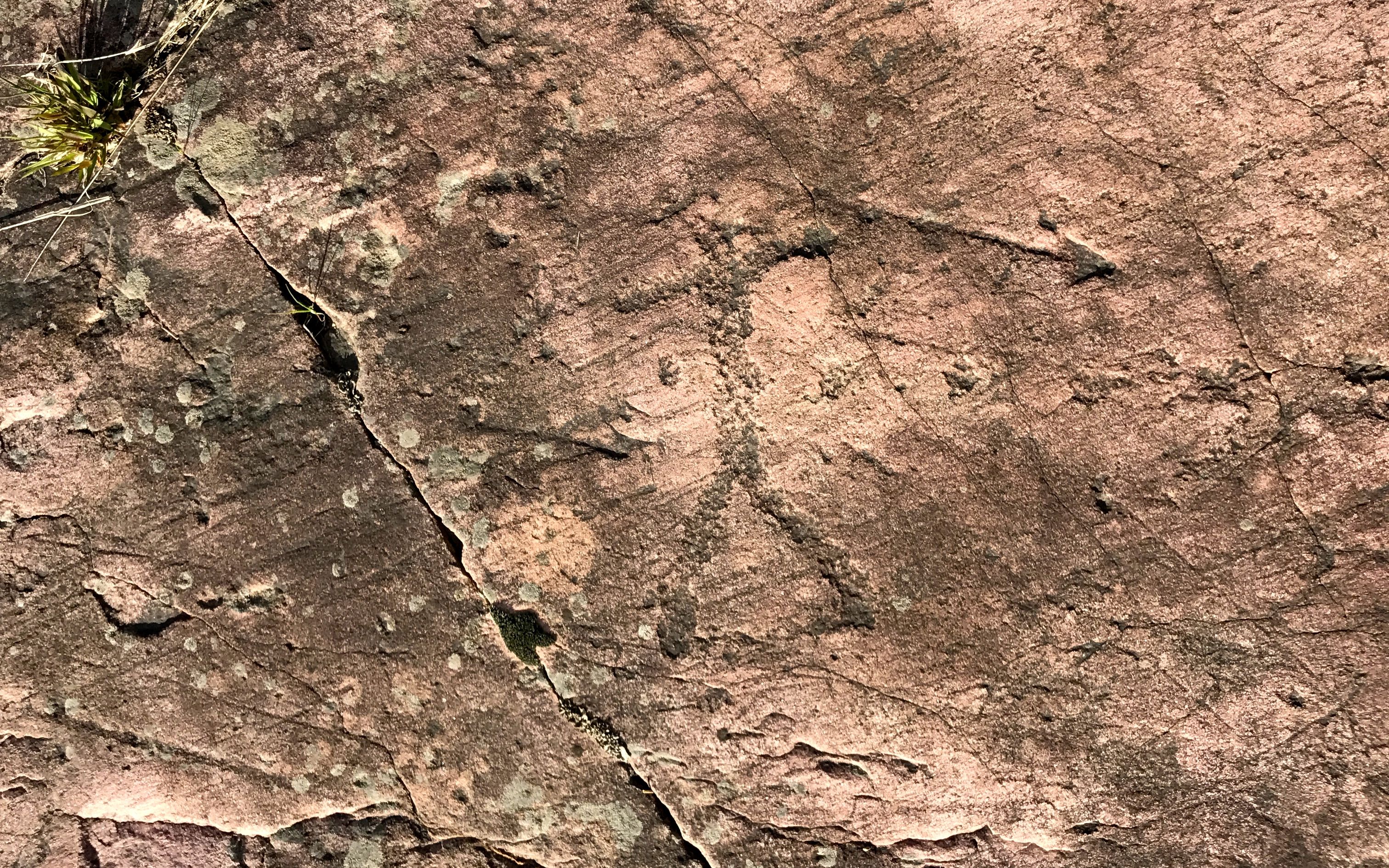
This one clearly shows a man with an arrow. It looks like there might be an axe or a hatchet in from of him. Or, that might be a peace pipe.
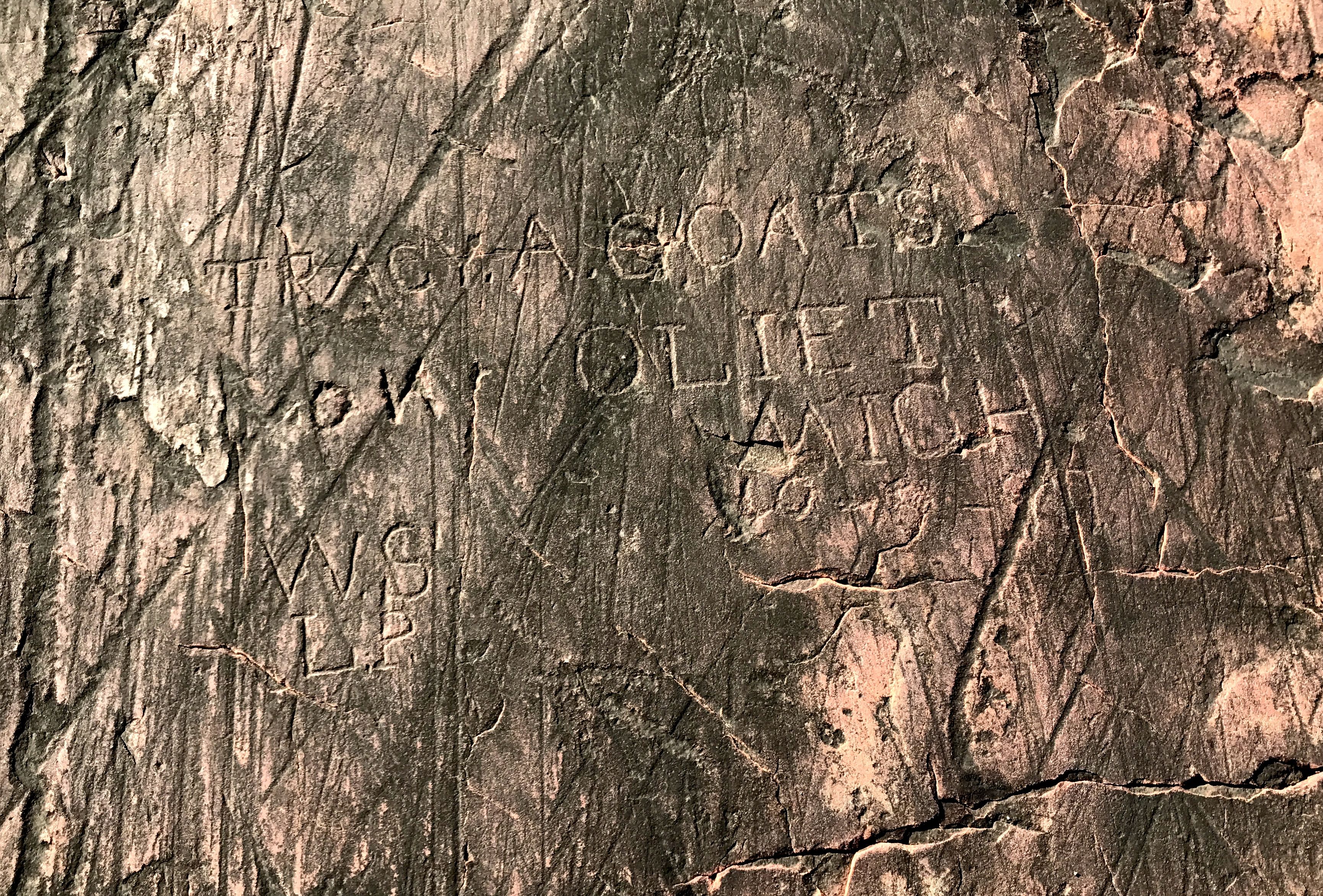
Of course, there are more recent additions. I wonder who Tracy A. Coats was, and was he (or she) from Olivet, Michigan?
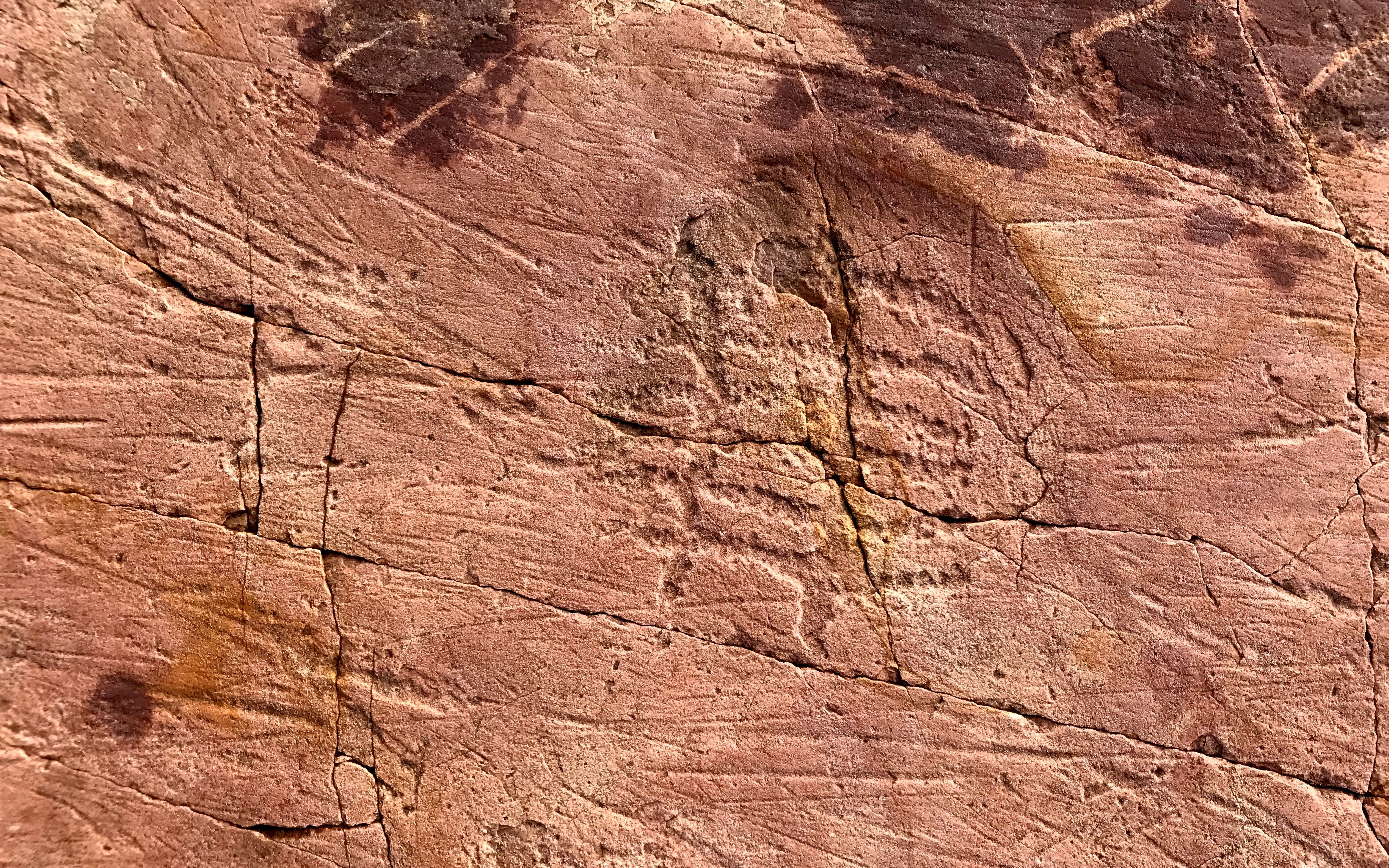
This one kind of reminds me of the boxes I saw in petroglyphs out west.
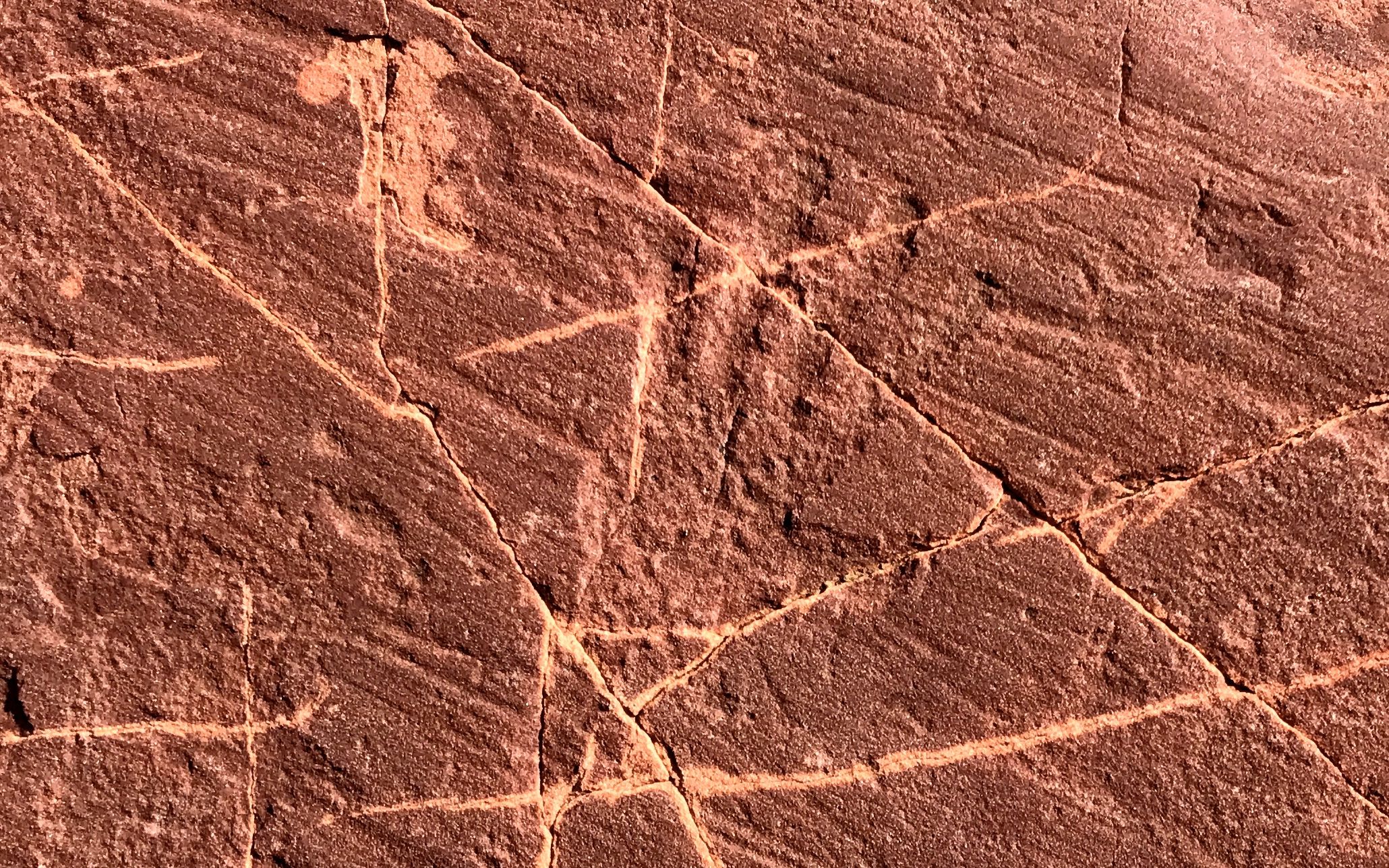
Hands have been popular in artwork since time immemorial. 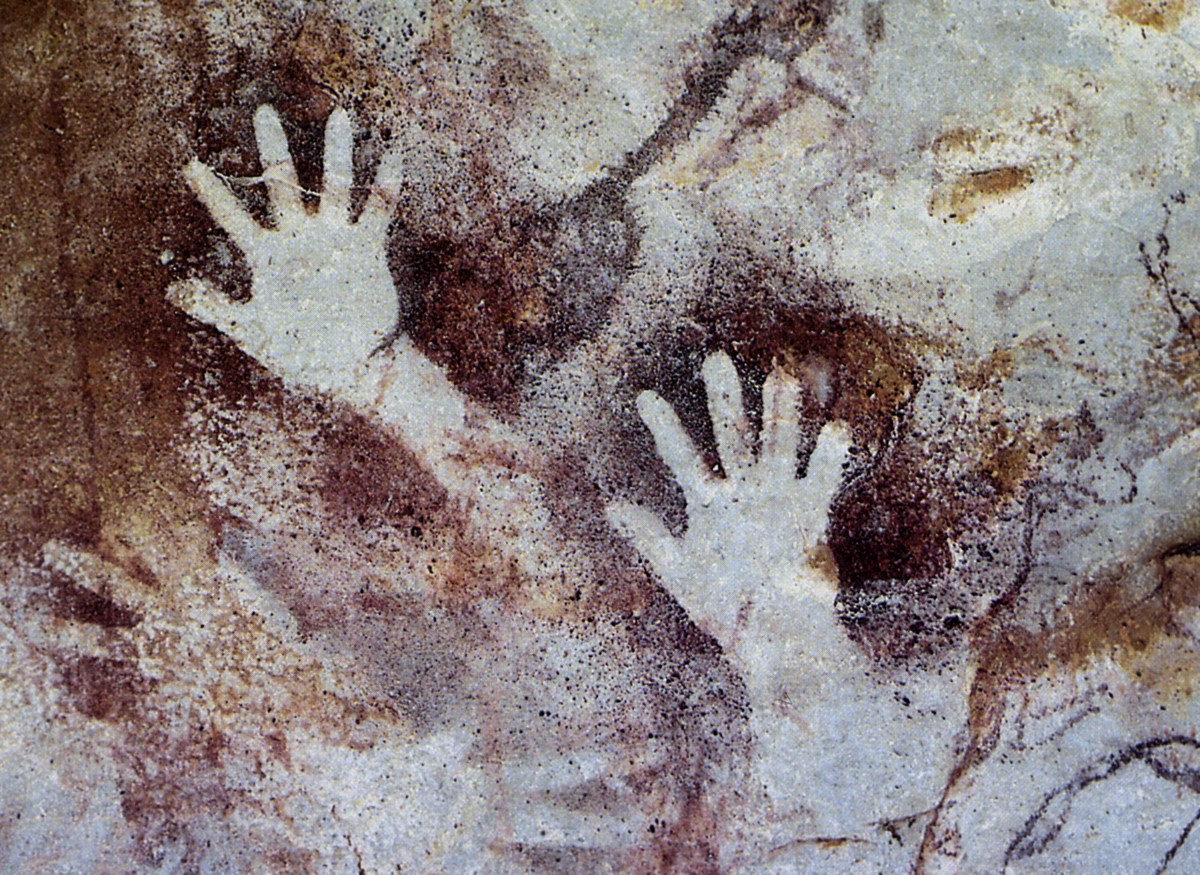
For instance, these handprints from Chauvet, France that were done approximately 31,000 years ago.

Who hasn’t used their hands to make a Thanksgiving turkey?
Some themes in human expression are universal.
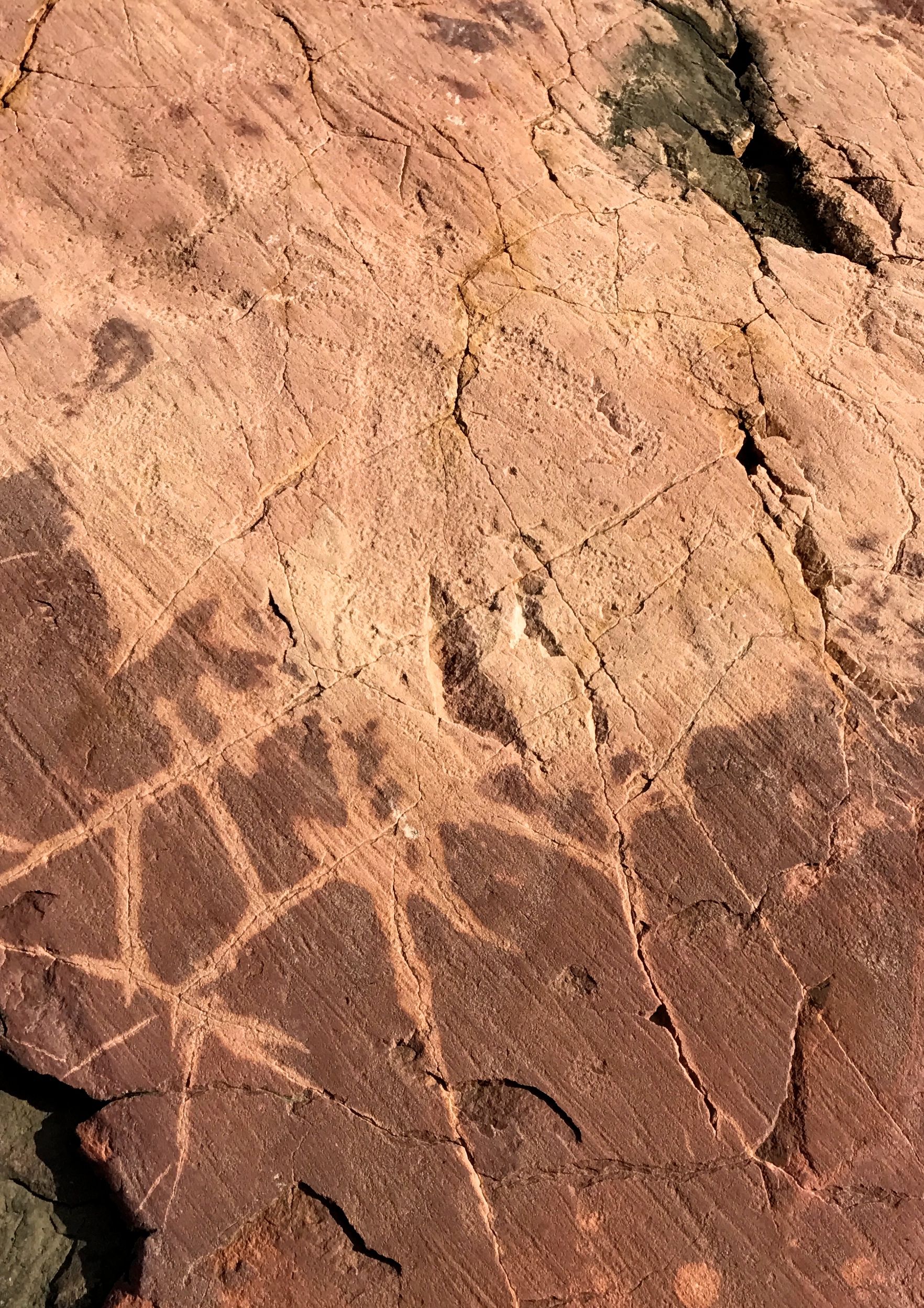
Speaking of hands, this glyph is identified as “The Chief Who Lost His Arm.”
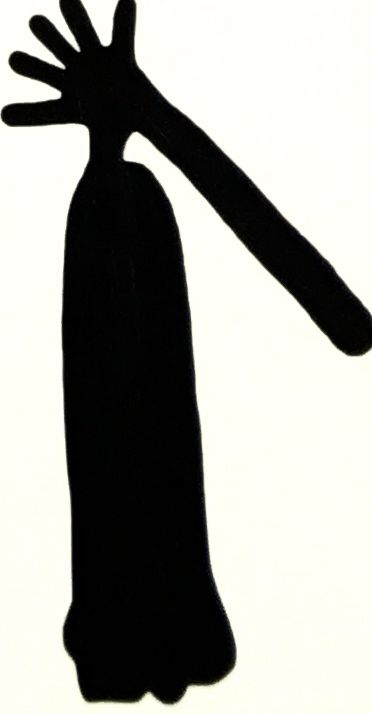
It can be a little hard to make it out, so here is a diagram of the glyph.
According to the interpretive sign, this hand and arm might represent the chief who lost his arm. Lakota tradition tells that the hand constellation found in the lower half of the constellation Orion, depicts the arm lost by a selfish chief when he refused to participate in Spring ceremonies. The thunder beings who cause the rains of Spring, stole his arm and hid it. These beings can take away or give fertility to the earth. A young man was given wisdom by several spirits and he retrieved the arm by tricking the thunder beings. He gained the love of the chief’s daughter as well as the fertility of the earth and continued life for the people.
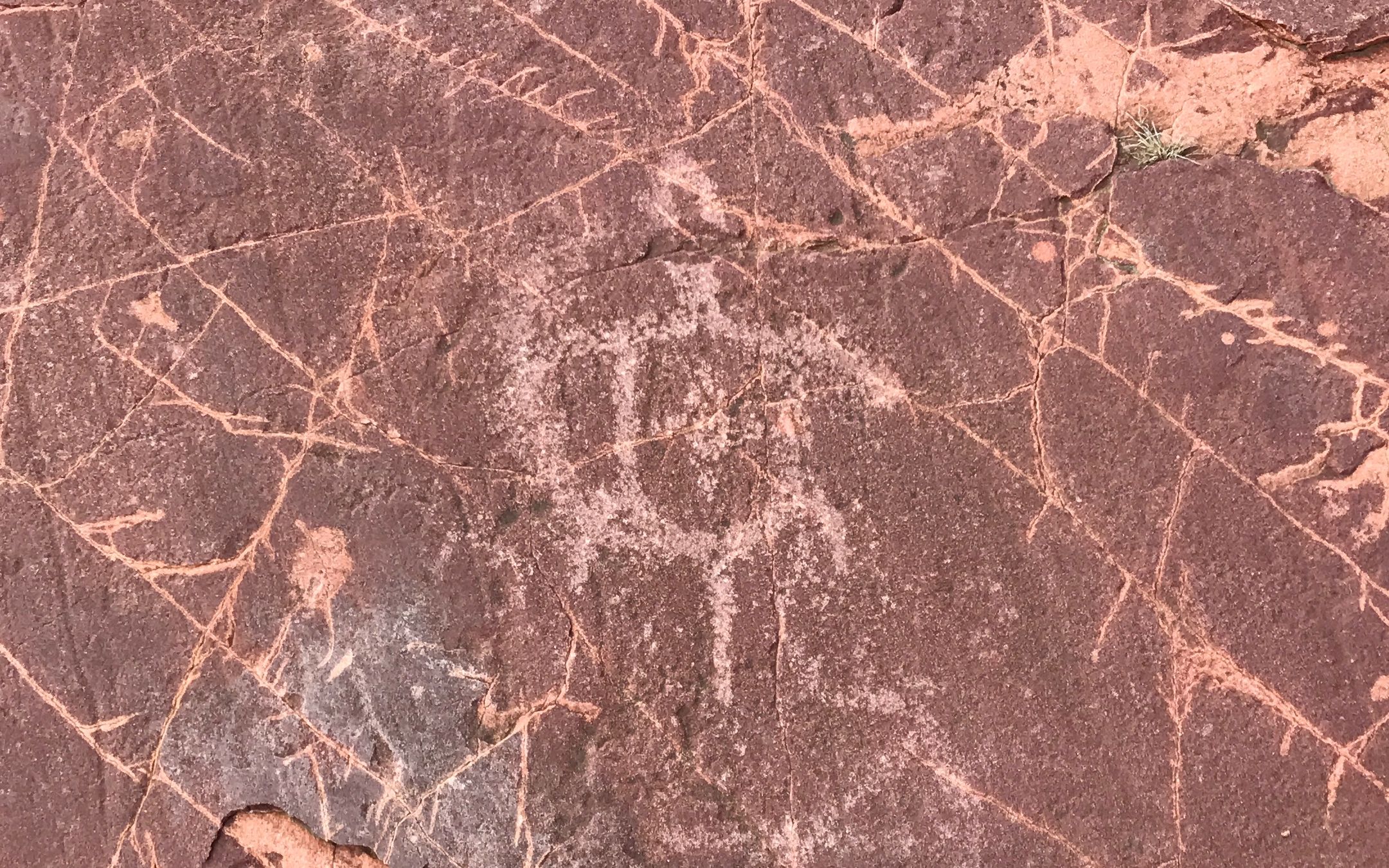
The first time I looked at this glyph, I thought it was a turtle. In reviewing my photo files, I thought it looked more like a warrior with a shield and bow.
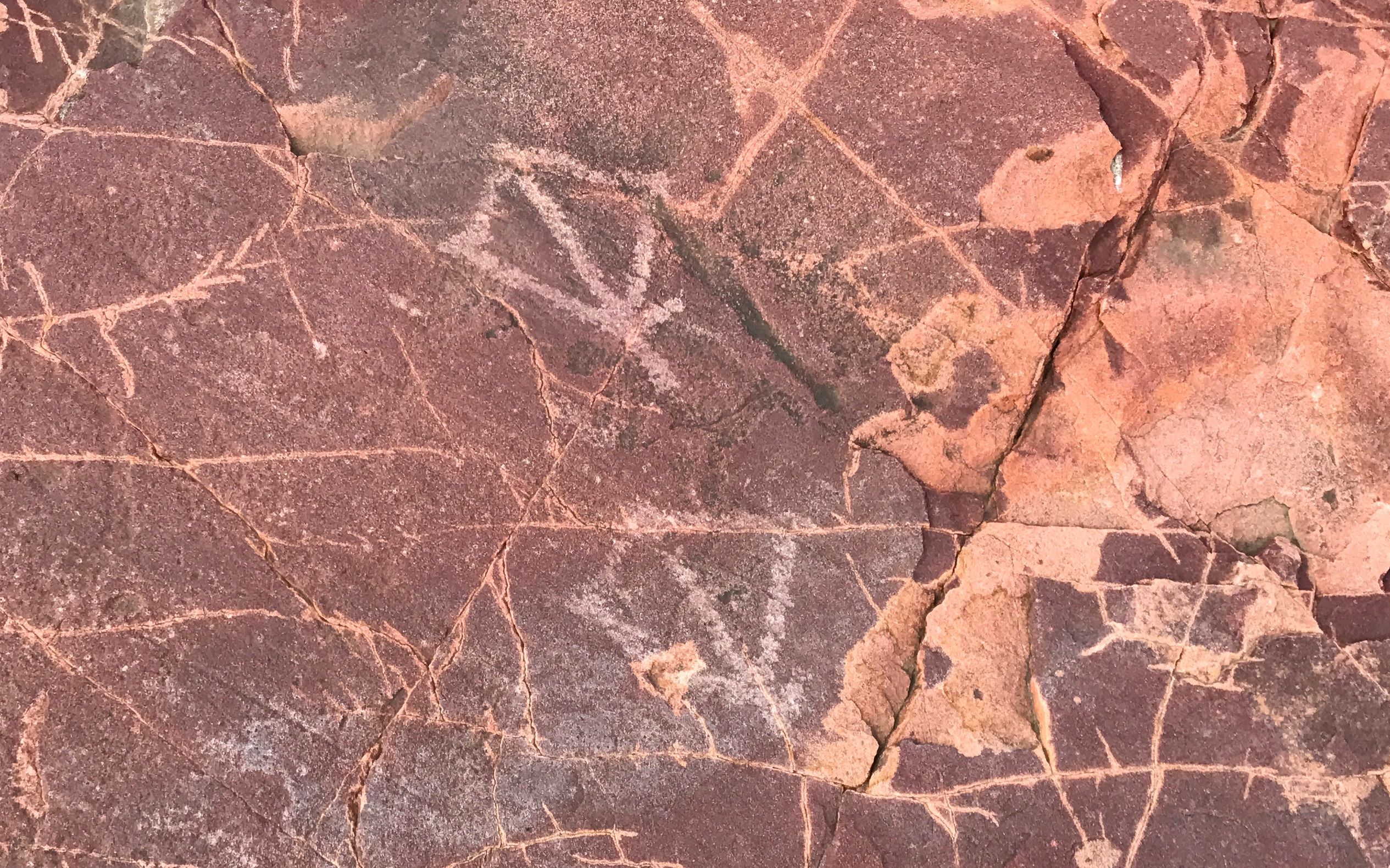
These look like tracks made by a bird.
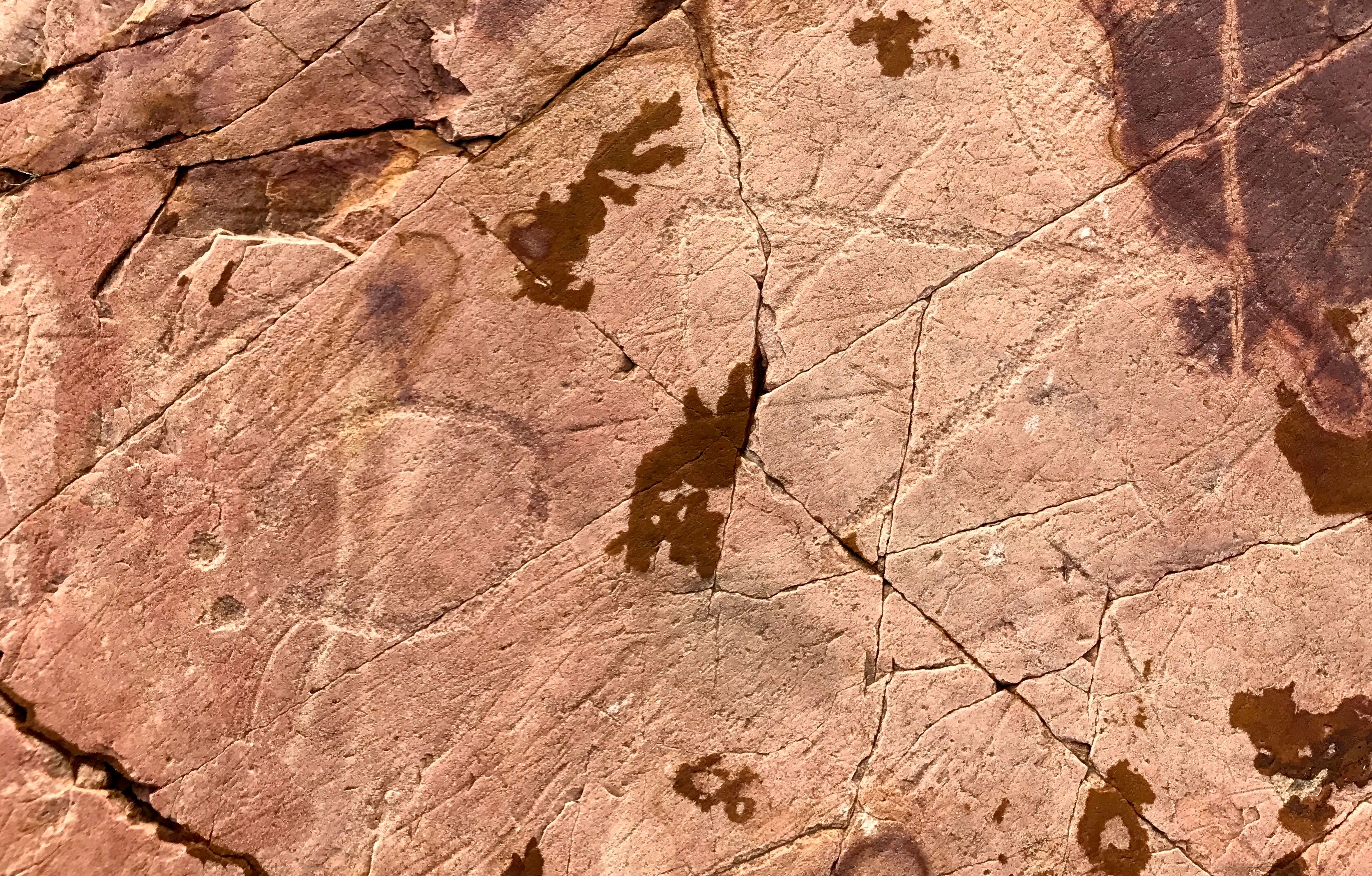
There are thousands of intentional marks. There must have been a purpose for making them. This rock is very hard and would have required a lot of effort to make the shapes and symbols. It averages between 7.5 and 8 on the Mohs Scale of hardness. That means it’s harder than granite, marble, slate, and even some other types of quartzite.
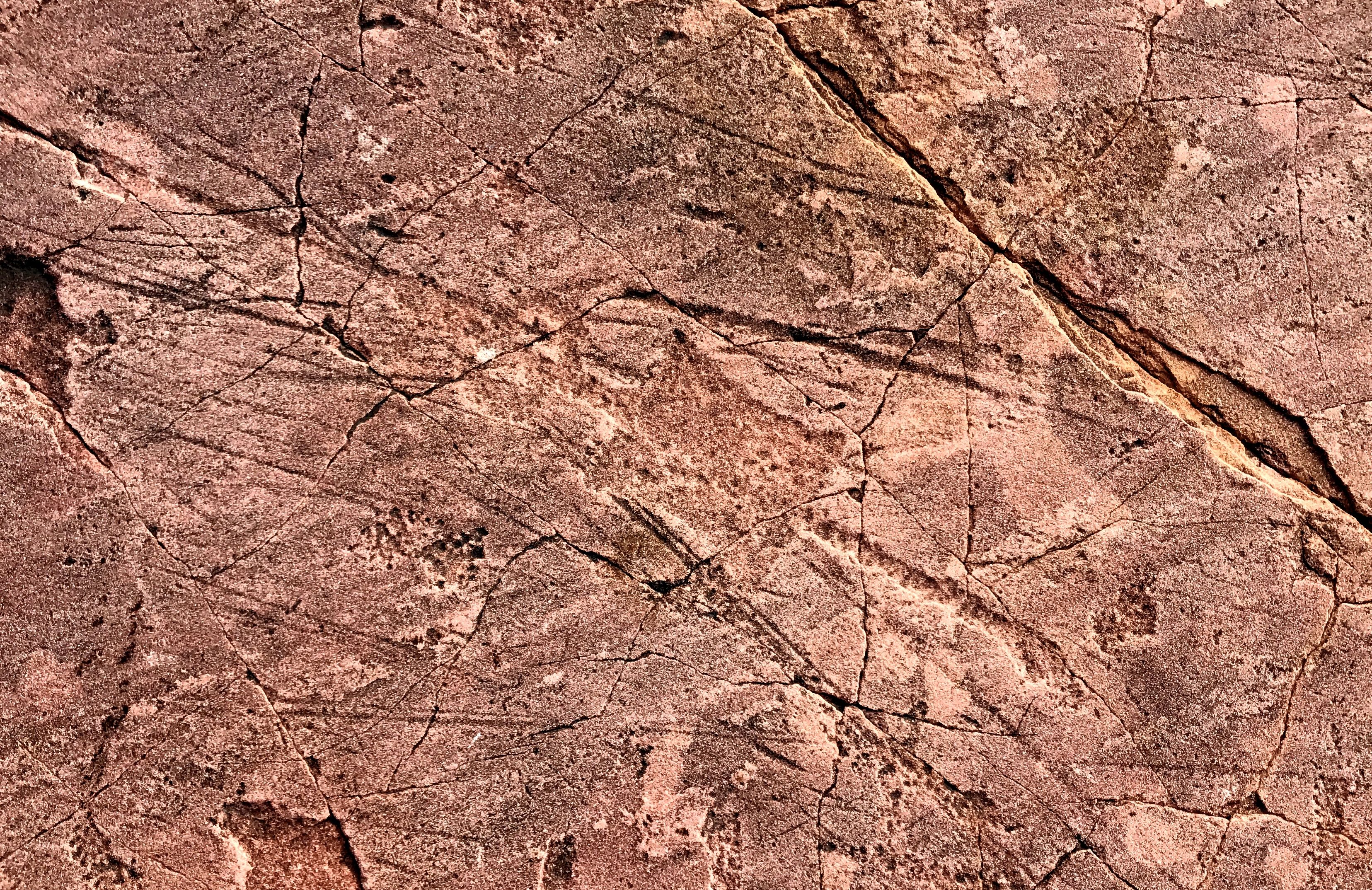
This group of carvings shows stone weights that are tied to the shaft of an atlatl. The size of the weights are exaggerated – perhaps reflecting the hunter’s desire to increase the spiritual power that guided the dart to its target. While they are depicted on the petroglyphs, very few atlatl weights have been found in Minnesota.
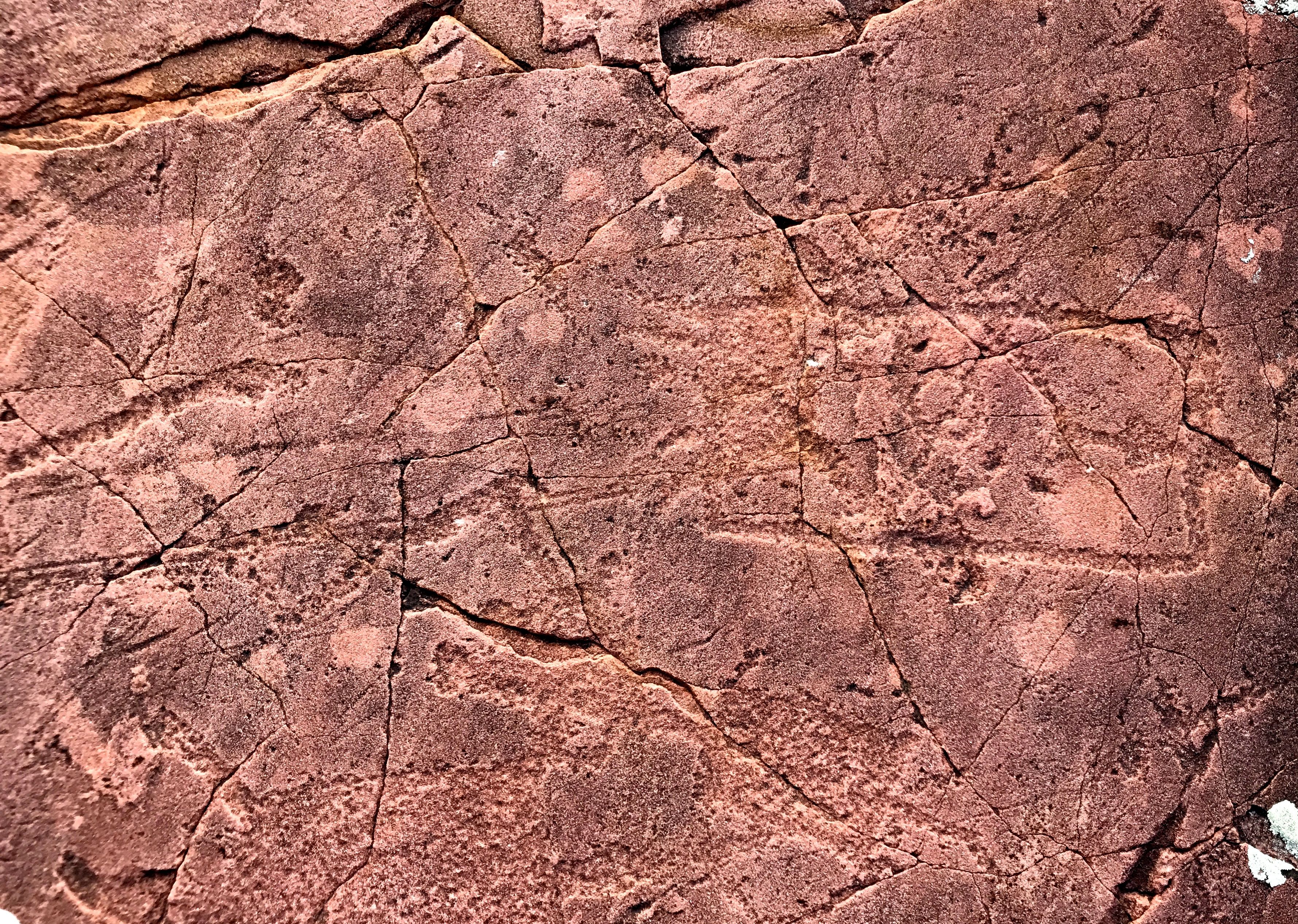
There are shapes that have worn well through the years.
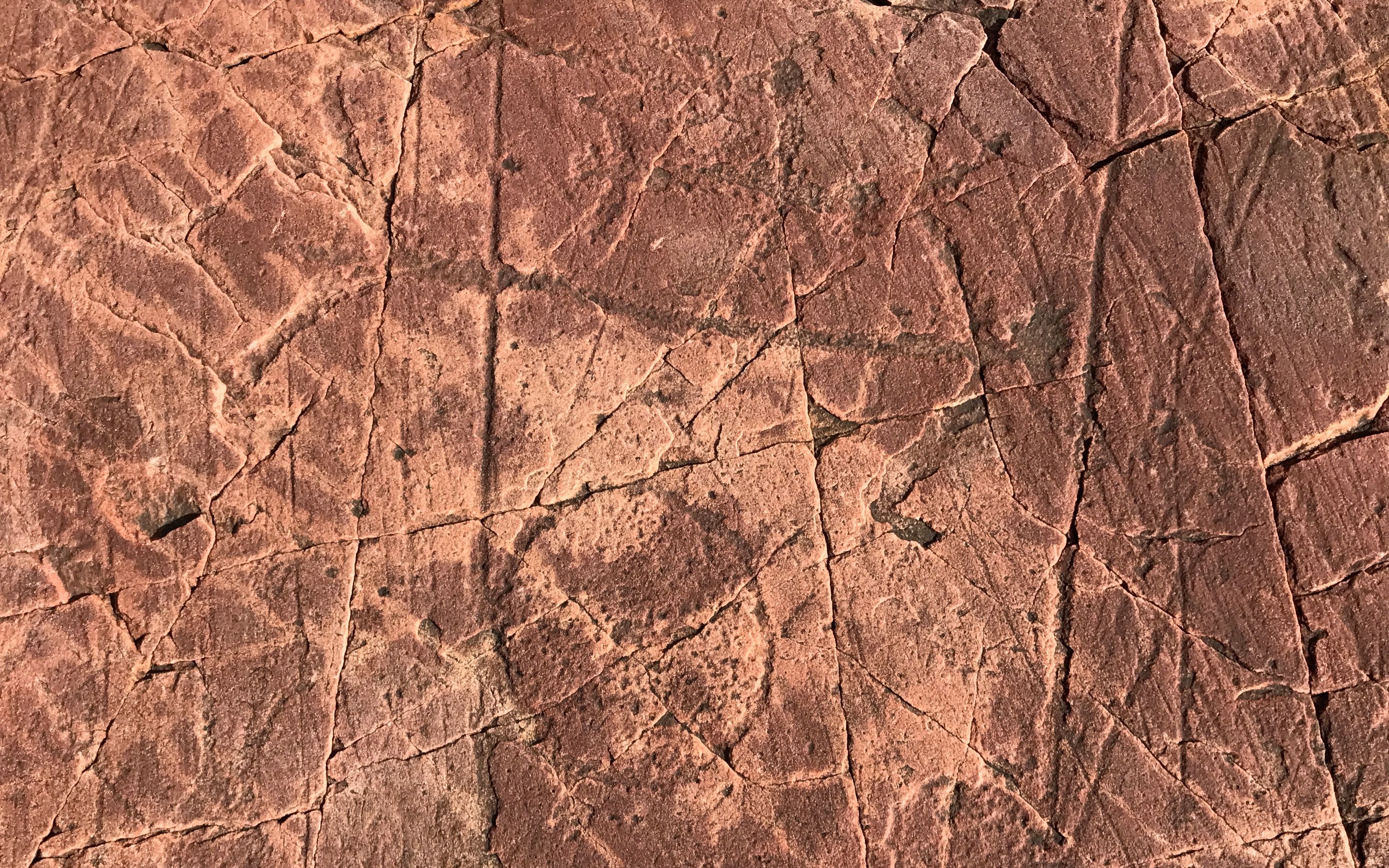
Circles and lines.
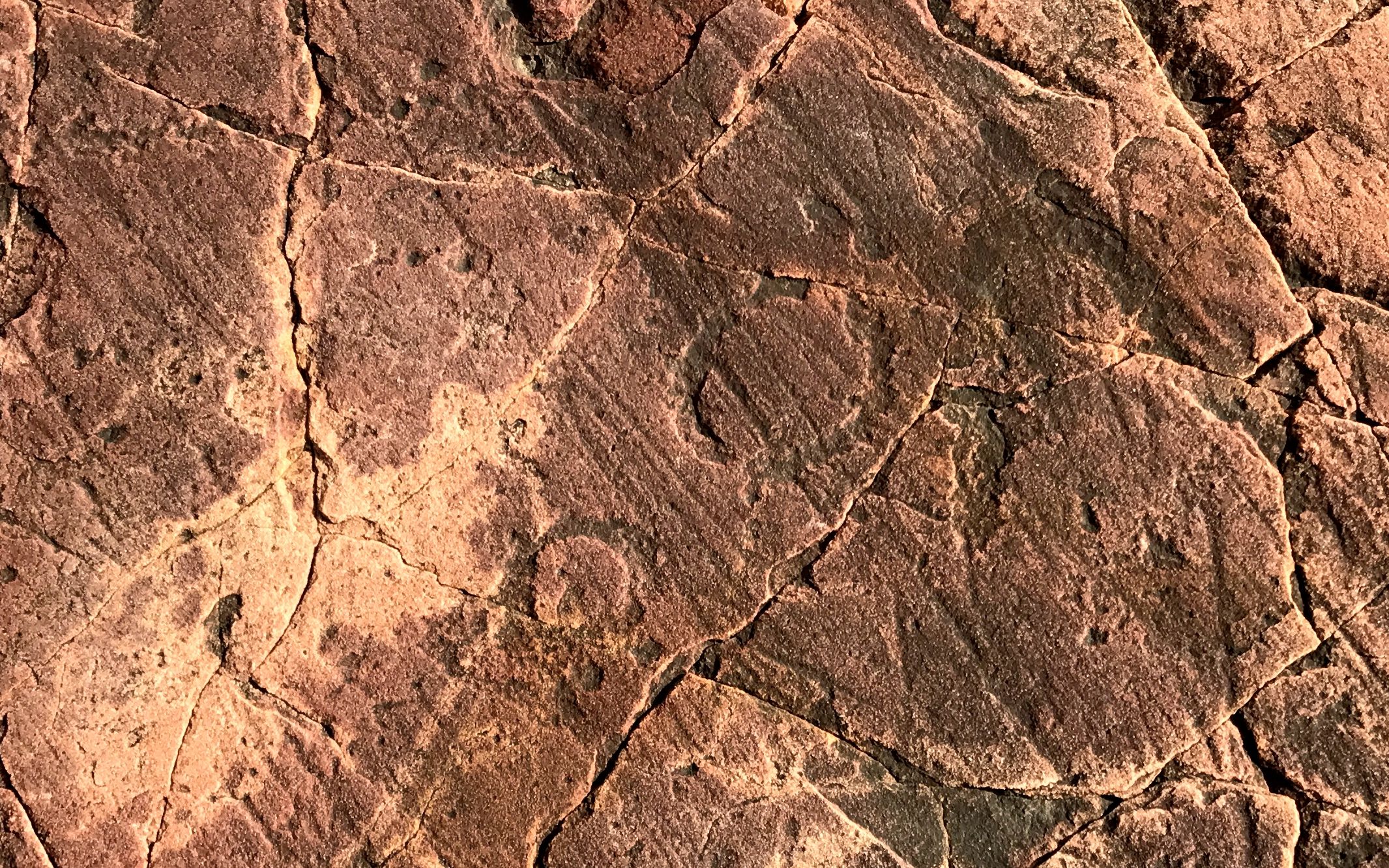
And still more circles and lines.
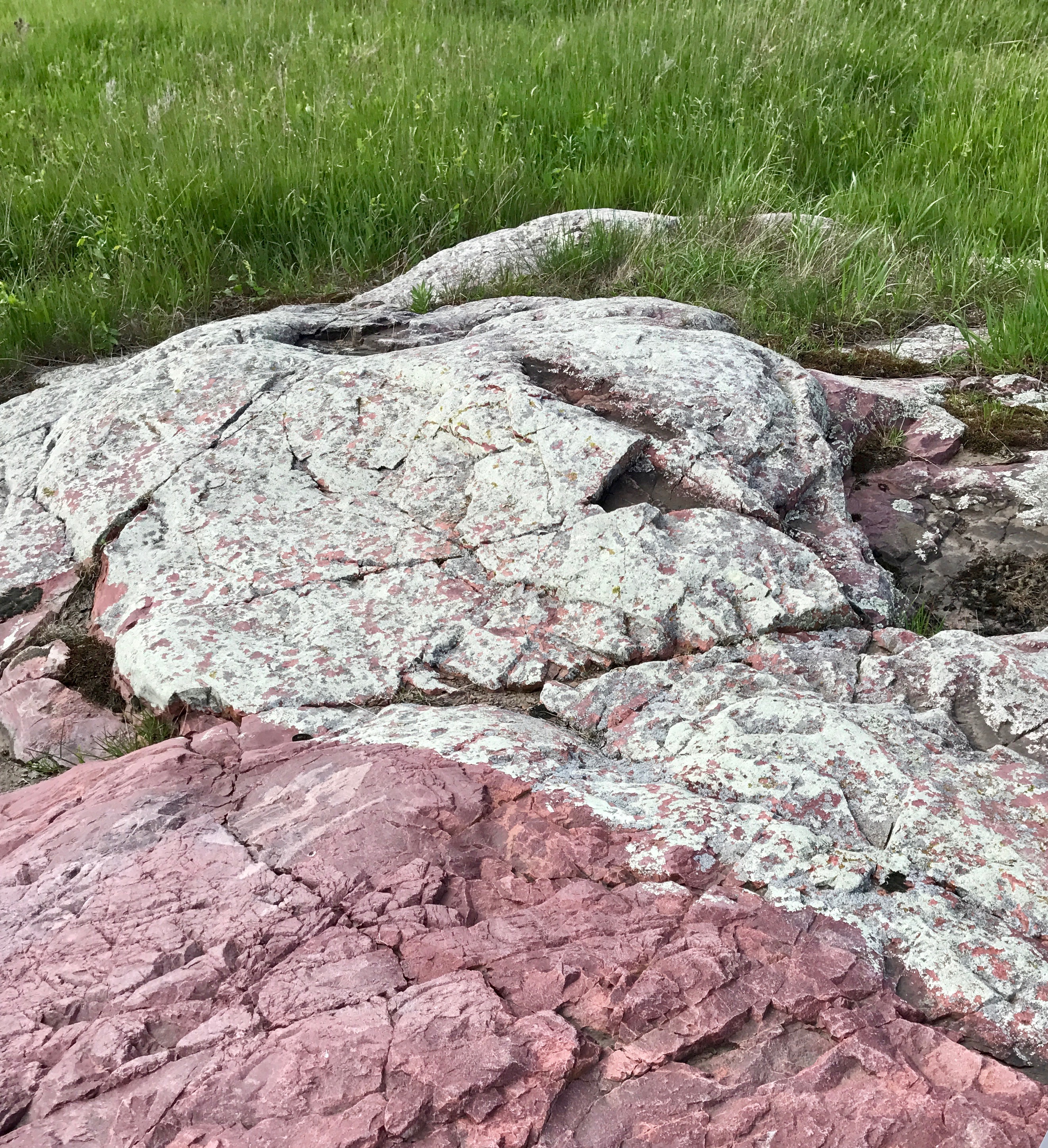
The lichens of most of the rock outcropping have been painstakingly cleaned off, but here is a section that hasn’t been cleaned. It must have been quite an act of faith to clean off so much of it.
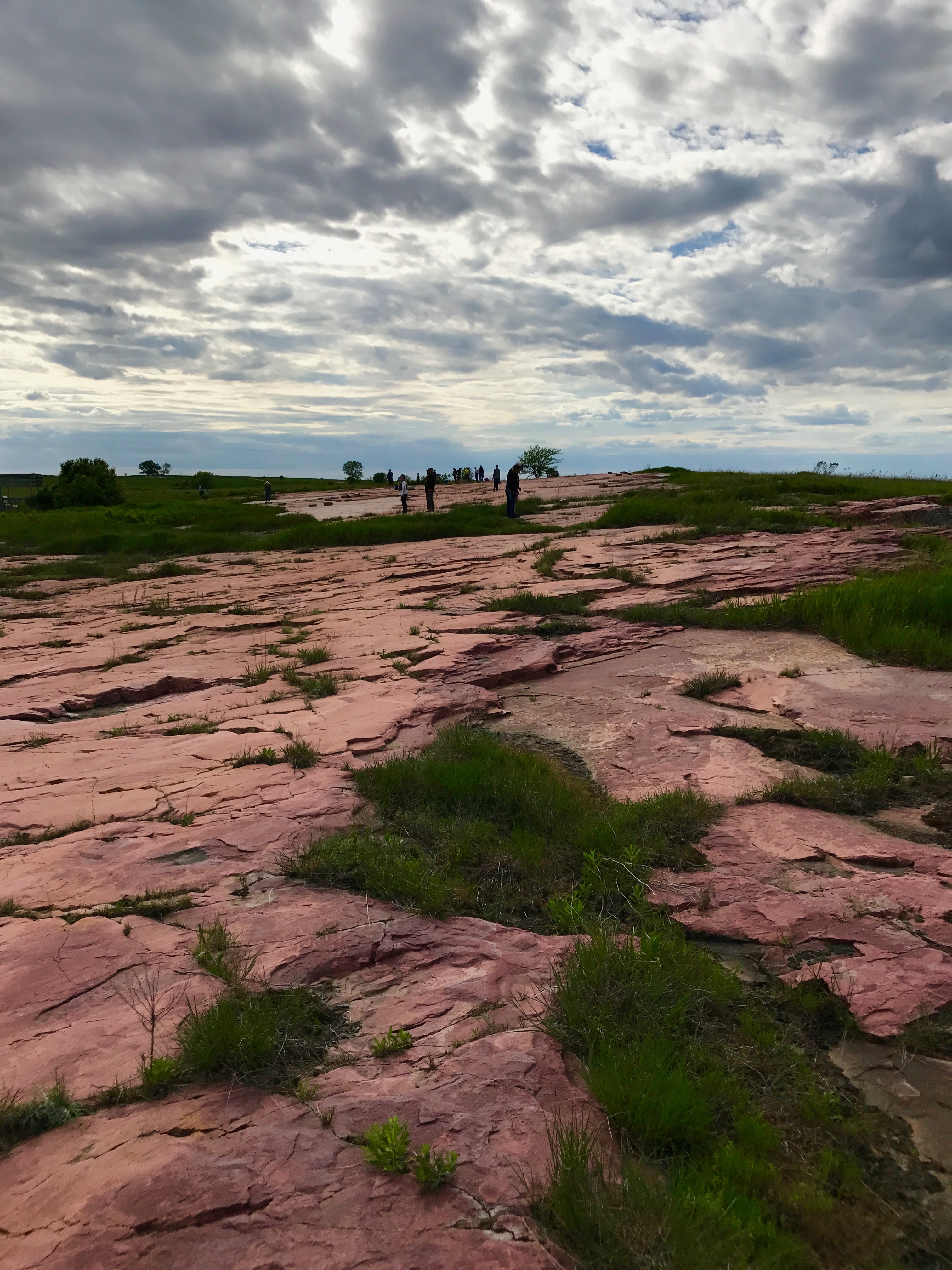
I had worked my way to the end of the outcropping. I took a different path back to the visitor center.

This outcropping of rock is a buffalo rub. They have rubbed against this rock to shed their winter hair each spring for perhaps the 9,000 years since they arrived in the region.

The rocks really were smooth.
That was my last stop at the park. I got back in Bart and headed back to Flo and Cora waiting for me back at Blue Mounds State Park.