Stella Niagara, that is.
When Kathy, Andrea and I met at Christ the King for lunch, we discussed visiting Sister Maura at Stella Niagara, the motherhouse of the order that founded the college we attended. We got Sister Maura’s email address from a friend of mine. I play Words with Friends with her and she works there. Small world, eh?
We met Sister Maura and she gave us a little tour. She took us up to the chapel and showed us the sgraffito artwork. I remembered it from when Sister Jeanne took our art history class up to see it back in the 1970’s. Sister Maura described the sgraffito technique as a fresco method, where the work had to be completed before the layers of colored sand dried.
I must admit, that I didn’t think of taking a picture, but I searched the web and found one on a website dedicated to the artwork of Józef Sławiński. This is the altar piece.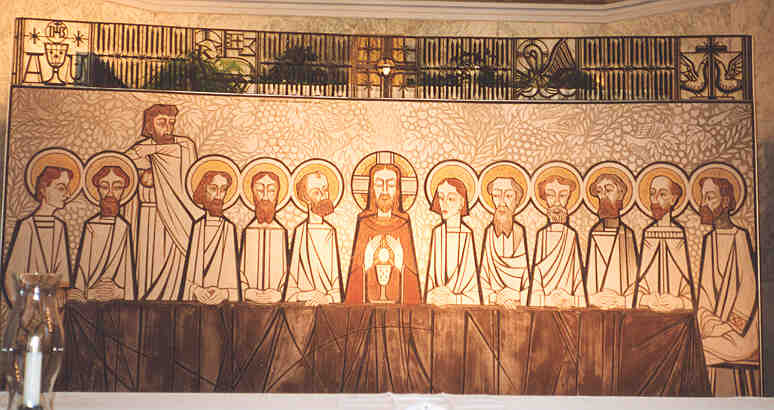
After our tour, we went to dinner at The Silo in Lewiston. It’s a hot dog and burger stand right on the Niagara River. The company was great and the view was wonderful.
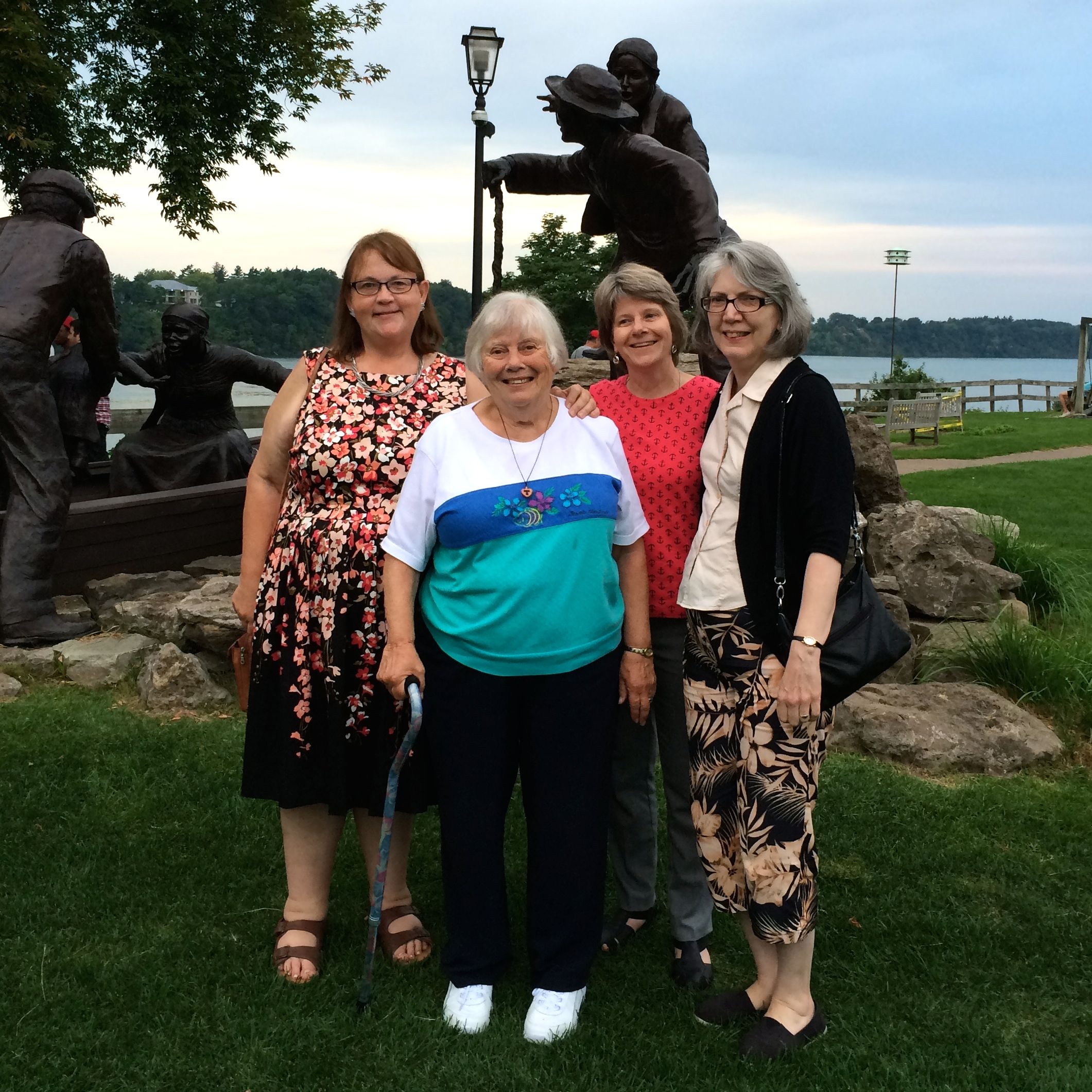
After diner and ice cream (what would summer be without that?) we went over to see an outstanding sculpture grouping. Freedom Crossing Monument is based on the 1969 book Freedom Crossing, by Margaret Goff Clark. The book is one that is popular literature in grades 4 and 5. Since I never got higher than third grade in my professional life and was out of fifth grade before it was written, I had never heard of this book. I may have to go pick up a copy.
This sculpture is a dramatic piece of artwork! The sculptor, Susan Geissler, created a tableau that shows the moment when escaping slaves were getting into a rowboat to cross the Niagara River.

If you get there, try to arrive before the light is fading. the faces and bodies are so expressive. If you can’t wait, check out the sculpture in real time on the Freedom Crossing Webcam.
After that, we made a quick stop at another of Susan Geissler’s works, Tuscarora Heroes Monument.
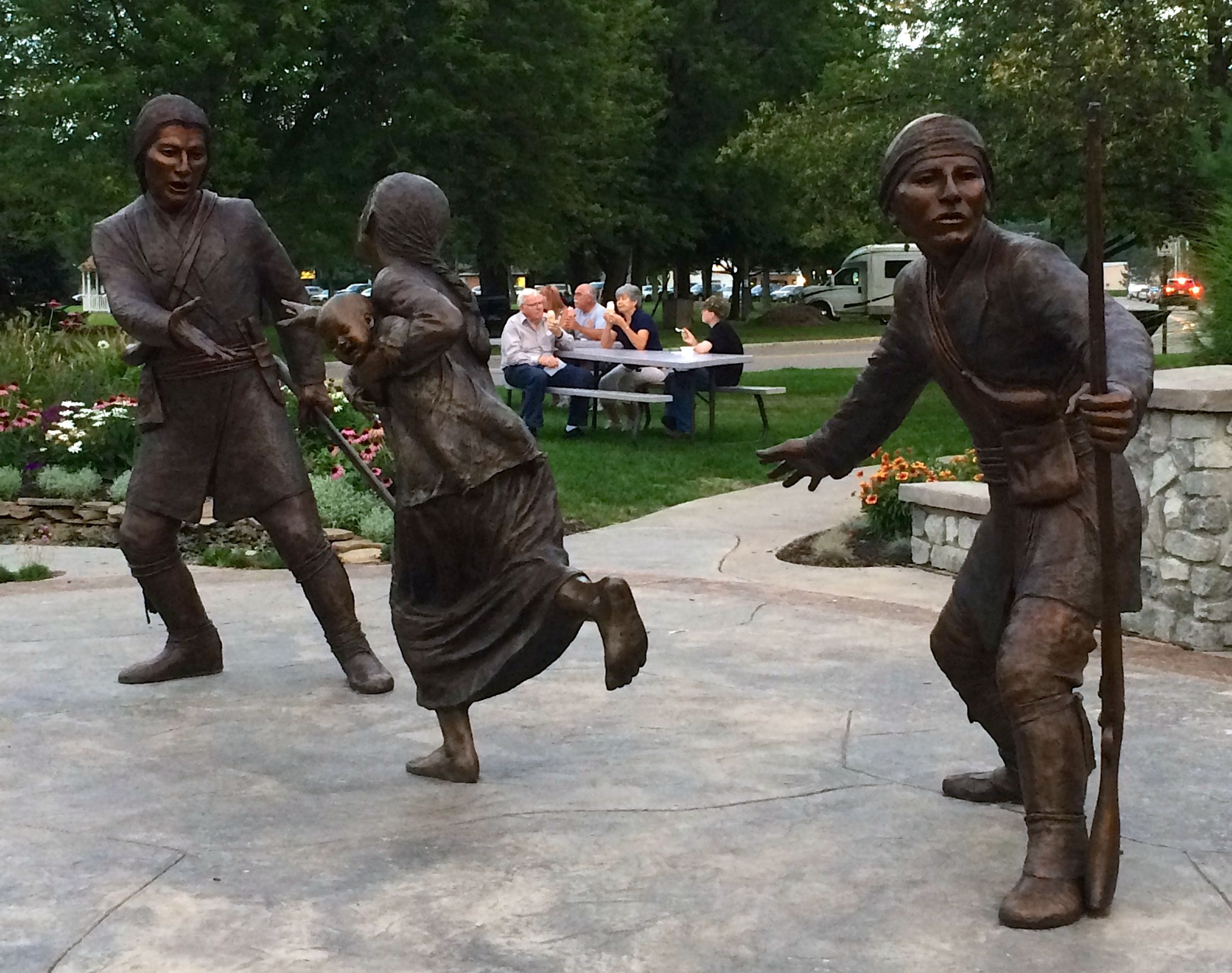
This honors the assistance given to the people of Lewiston during the war of 1812.
One the night of December 19, 1813, the British and their “Western Indian” Allies captured nearby Fort Niagara without firing a shot. They then ran down River Road to Lewsiton to seek retribution for an earlier attack on the other side of the river in the British territory of Canada. They sought to burn Lewiston to the ground and kill the citizens. The town was lightly defended, and all the people could do was flee for their lives through the snow and the mud.
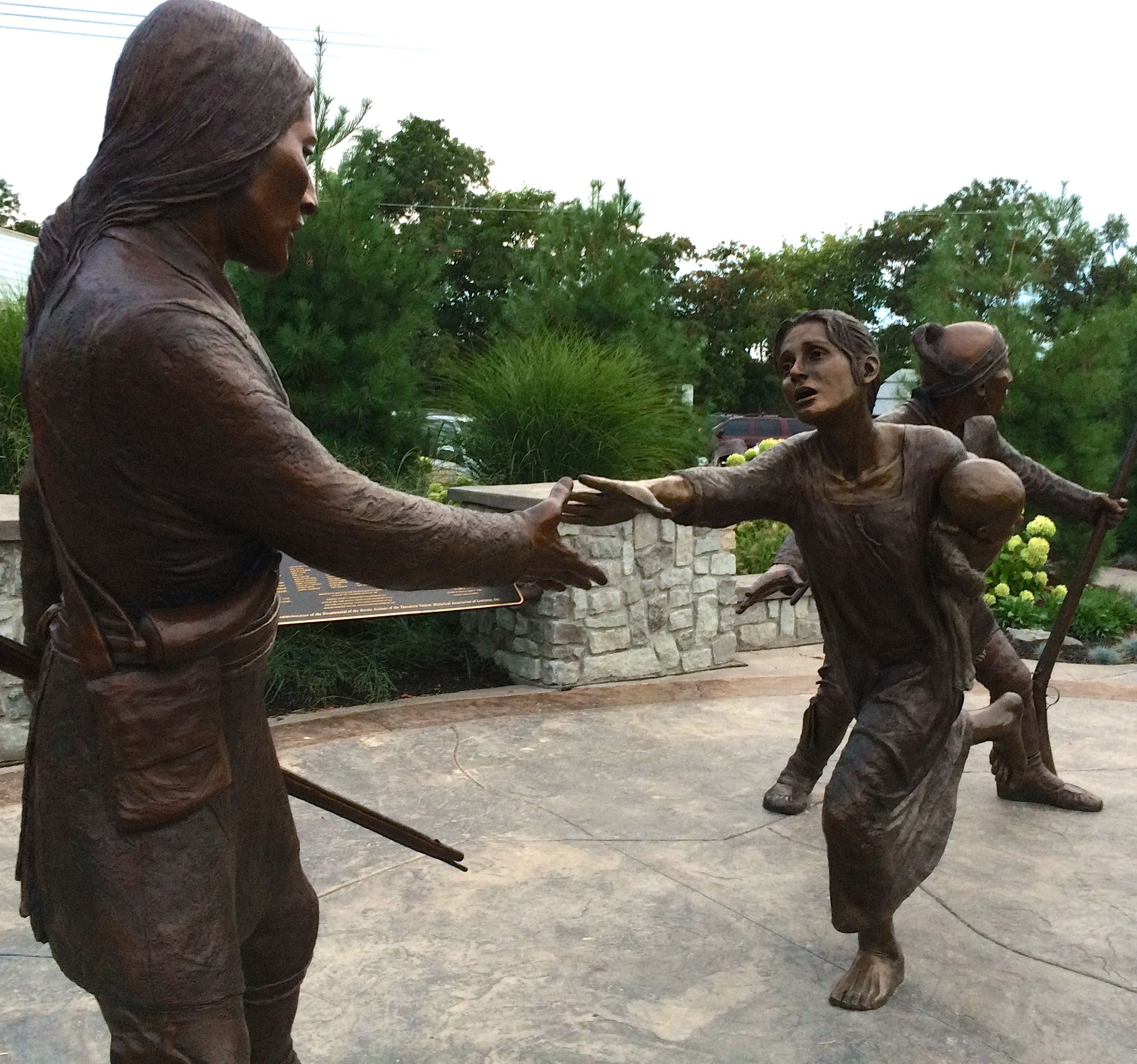
The Tuscarora, living up on the escarpment above Lewiston, heard the noise and came to their neighbor’s defense. They used speed and diversionary tactics and gave the impression that they were a large group coming to the rescue. This stopped the enemy in their tracks, despite the fact that the enemy outnumbered the Tuscarora 30 to 1.
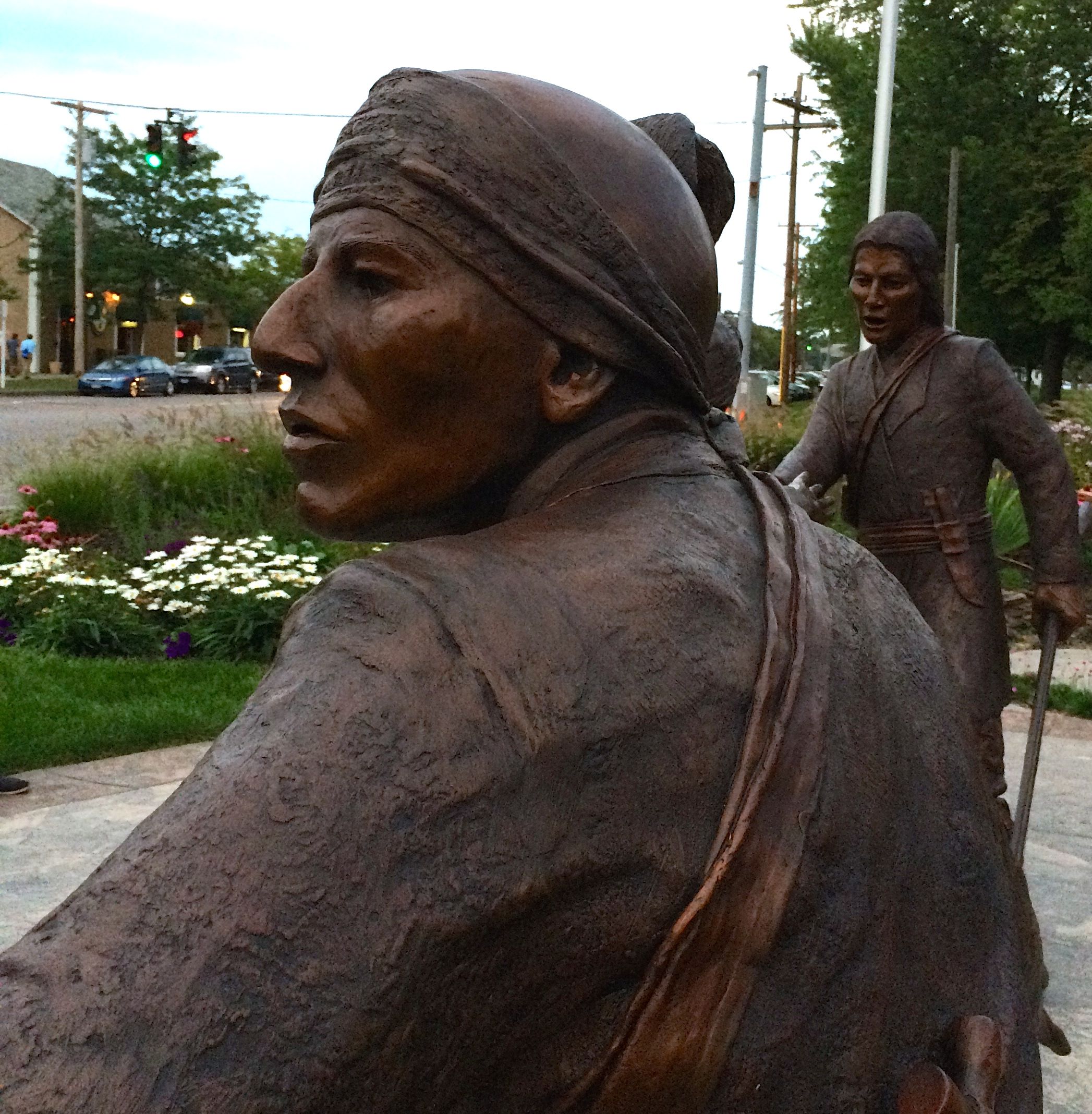
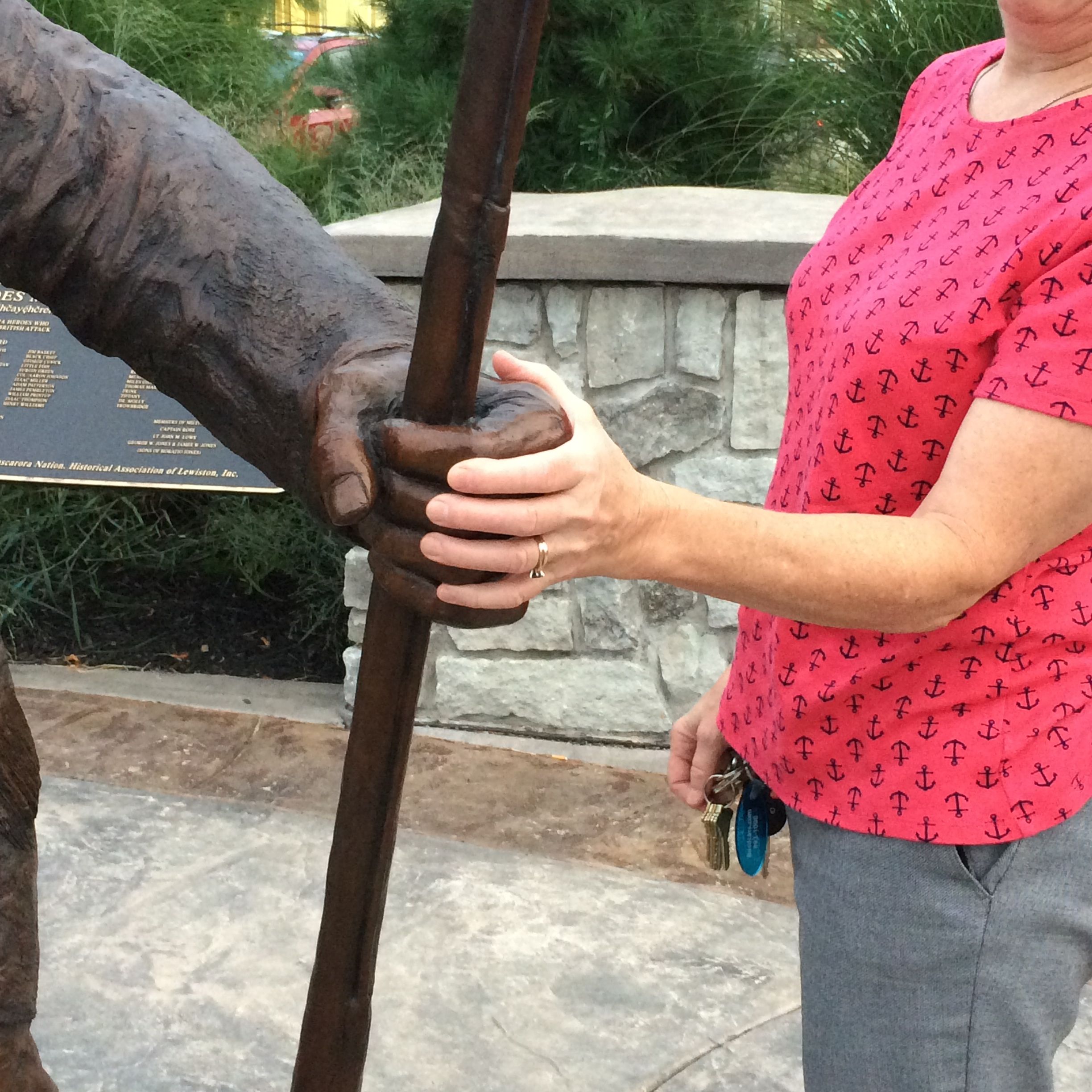
I was able to take a few more pictures here, as I didn’t have to wait for people to clear away. If you would like to check it out in real time, you can click on the Tuscarora Heroes Monument Webcam.
I checked out Susan Geissler’s website, and I found that she has works all across the country – even though she lives in Lewiston. I plan to keep my eyes open for her works of art as I continue my travels.
In these days, when there is so much discussion of immigration, borders and enemies, I find it heartening to reflect on how thoroughly relationships can change – as well as how much change remains to be made.
