I got up, nibbled on pizza for breakfast and washed it down with Diet Coke, and got ready to leave the hotel, which shall remain nameless. It’ll be nameless because I can’t remember the name.
Now, please bear in mind that this is speed tourism. I didn’t have that long to visit, but I figured that a short visit was better than no visit. If you want to know more, check out this article from History.com.
Andrew Jackson bought his 425-acre farm in 1804. I’m not sure how much of the original farm is still part of the Hermitage, but it is interesting to see how Nashville has encroached on it.
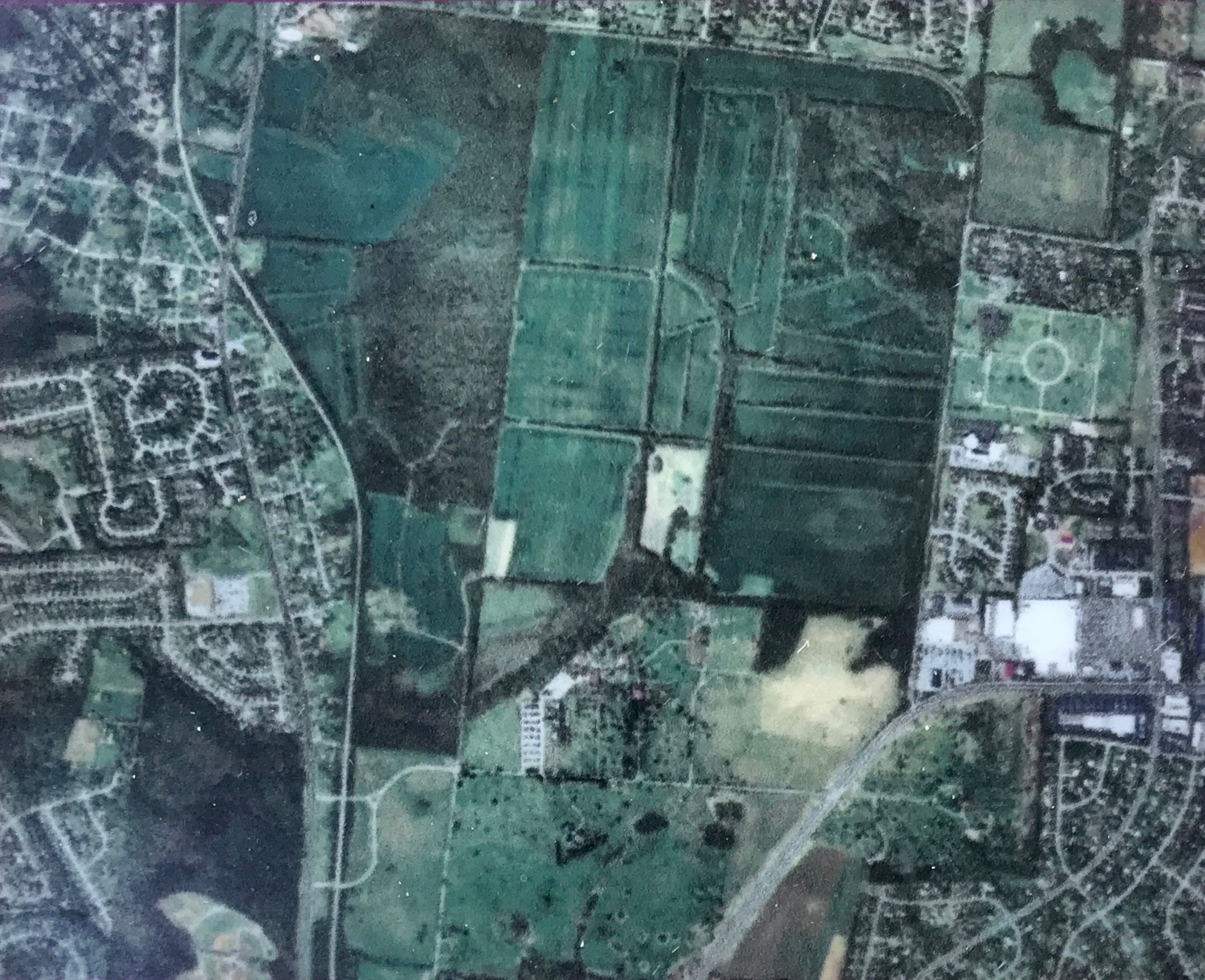
I parked the van and headed in to the visitor center.
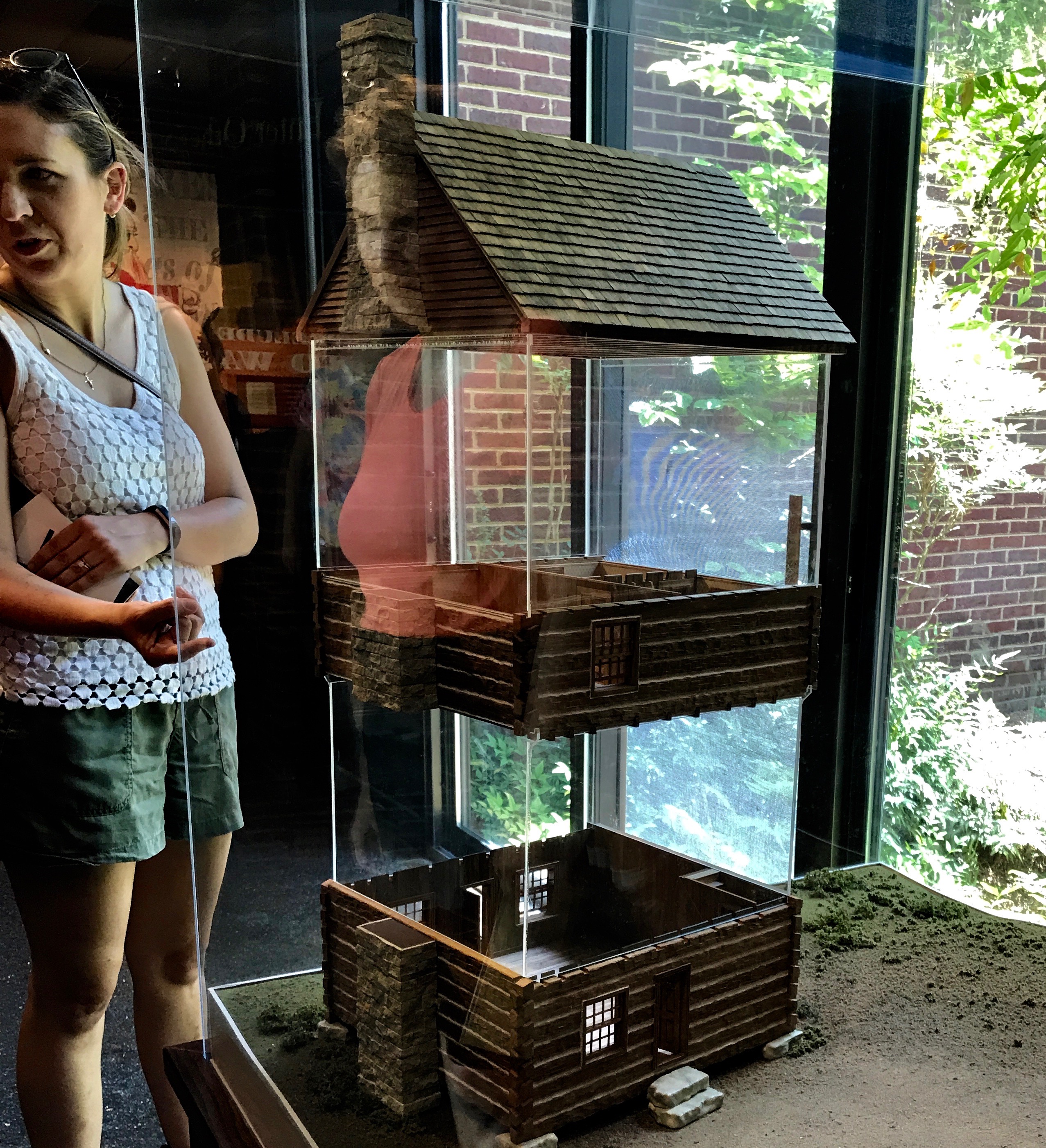
There was an interesting diorama of the first house. It was a two story log cabin that they lived in from 1804-1821. The first floor was used for dining and entertaining guests. Andrew Jackson also has his office on the first floor. The family’s bedchambers were on the second floor. This must have been quite the elegant cabin, as the interior finish included beaded/molded trim and hand-painted French wallpaper.
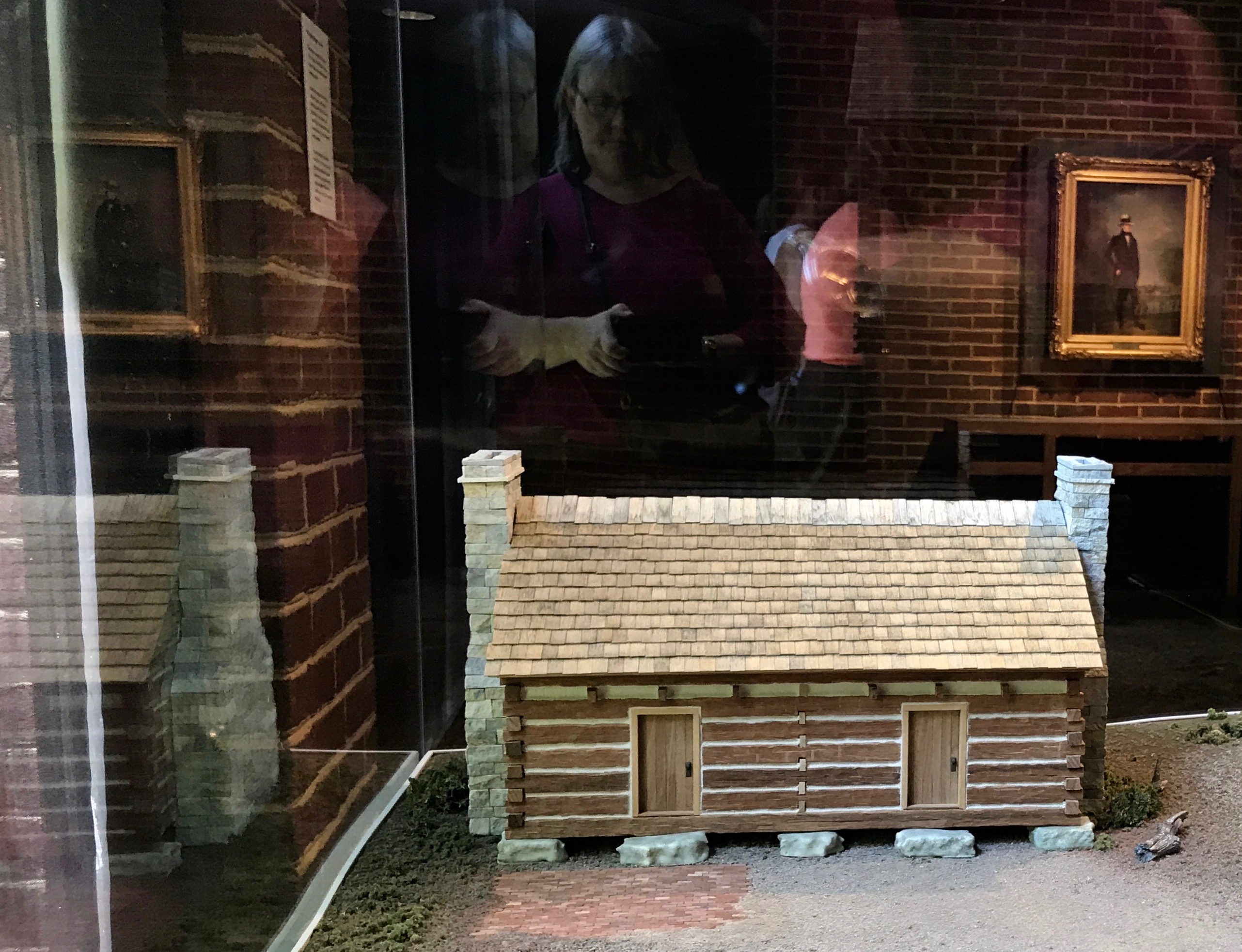
Behind the main building was a detached kitchen and slave quarters. Yes, he was a slave owner and, over his lifetime, owned at least 300 enslaved people. When he died in 1845, he owned 150. That was the most he owned at anyone time in his life.
I left the visitor’s center and headed toward the mansion. I got to enjoy the stroll, as my ticket time for the tour wasn’t right away.
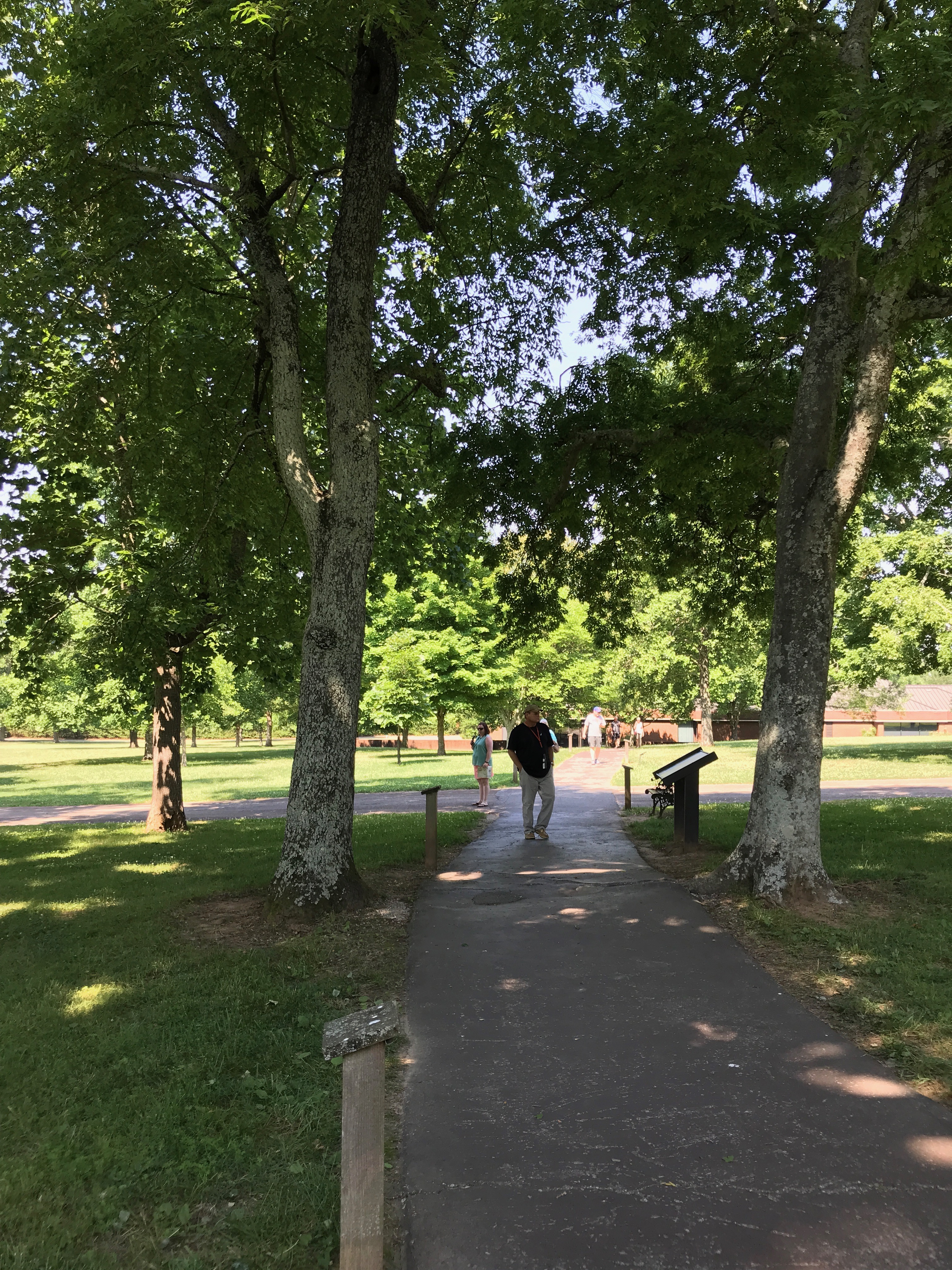
Now, I am not 100% certain, but this might be The War Road. It was the photo in my files next to the sign below.
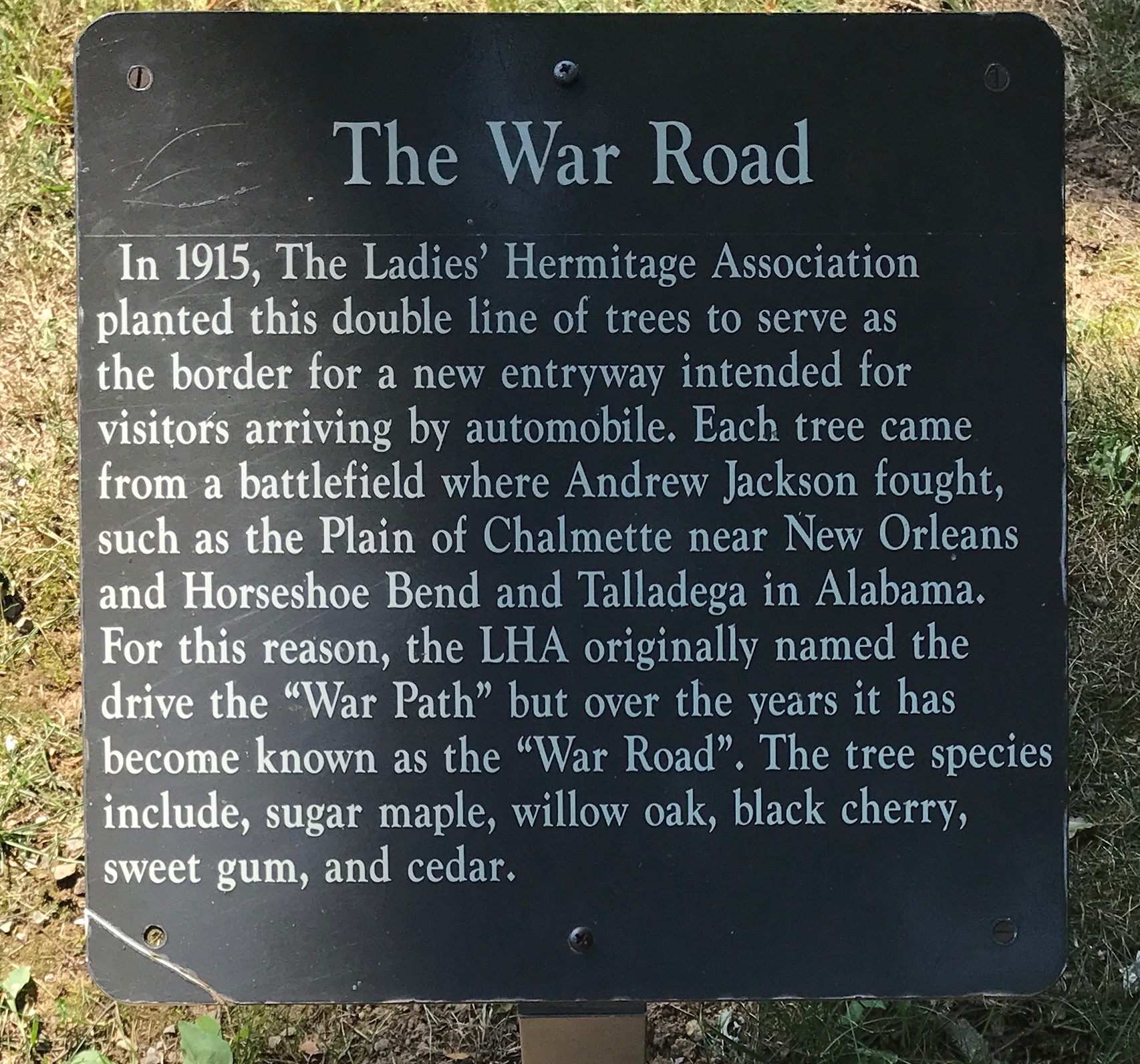
If you want to know for sure, I guess you’ll just have to visit for yourself. I could’t find anything about it in my internet searching.
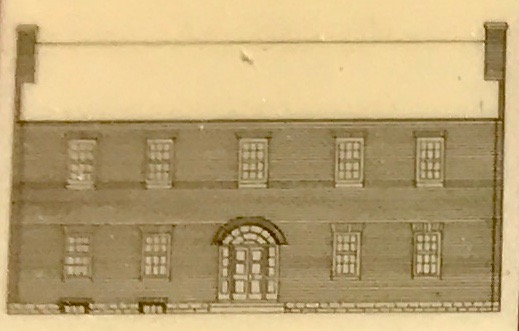
Near the house there was some interesting information about the changes that the mansion went through while Jackson lived there. The brick residence was completed in 1821, and was the only version of the mansion ever occupied by his beloved wife, Rachel.
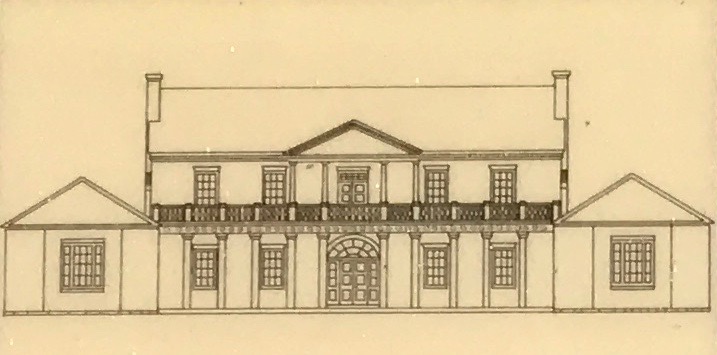
This is the 1831 version of the mansion. Nashville architect David Morrison added a front porch in the “Palladian” style that strictly followed details and proportions of classical buildings. At the same time, Morrison also designed Rachel Jackson’s tomb.
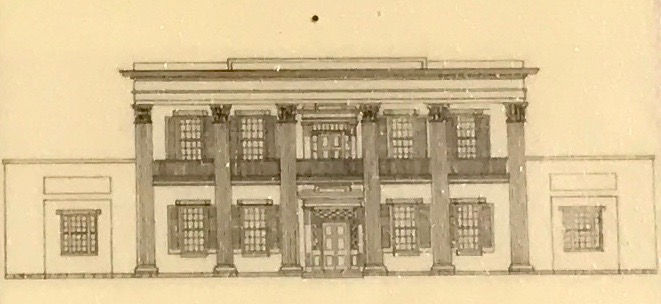
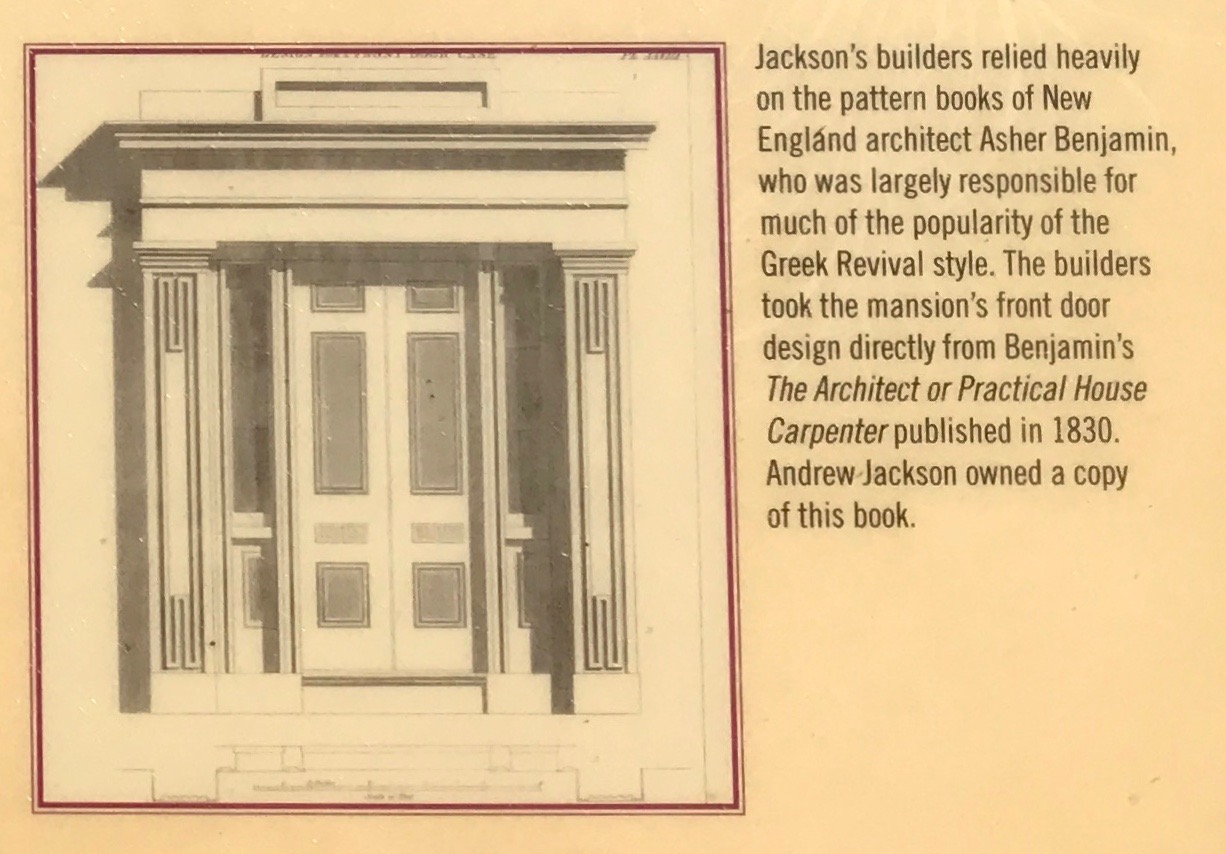
In 1834, a chimney fire ravaged the Hermitage and destroyed the much of the building. Jackson was still in the White House, but he hired architects Joseph Reiff and William C. Hume to redesign the mansion. Rather that re-creating Morrison’s design, they followed the newly popular Greek Revival style. They included a two-story porch with modified Corinthian columns. The columns and the front facade were coated with sand and painted tan to give the appearance of stone.
I found these works of art of the mansion through the years to be charming.
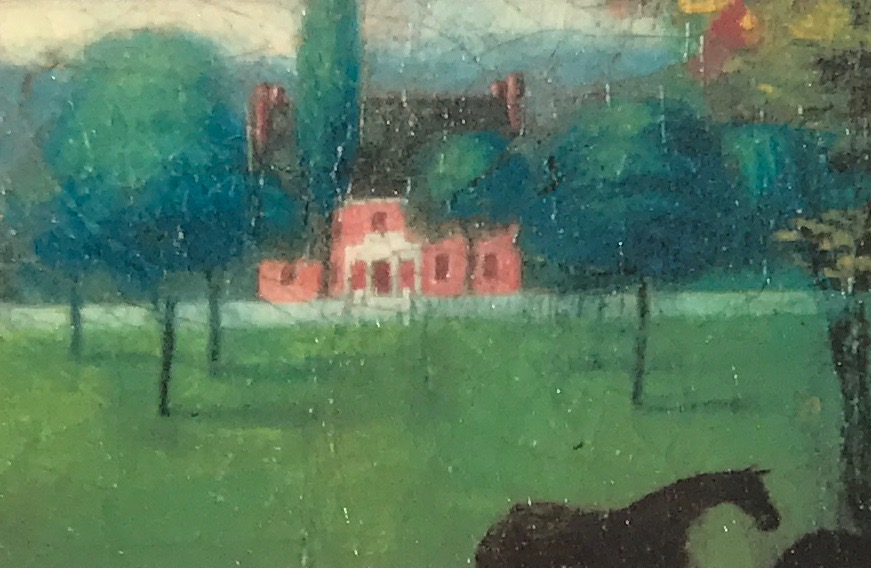
This is from 1821.
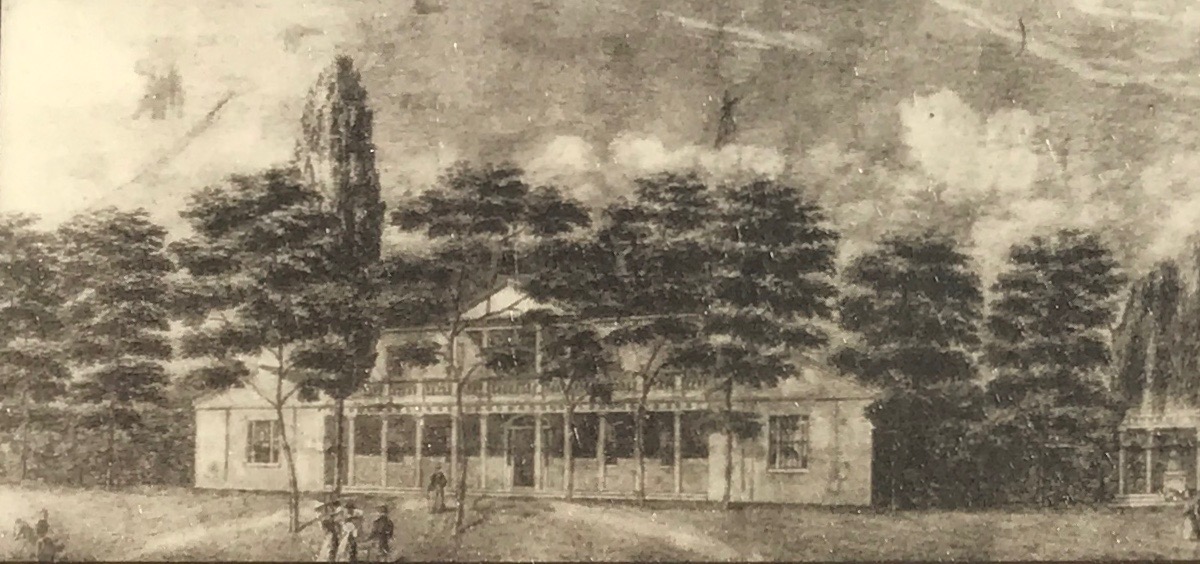
Ten years later, in 1831, it looked like this.
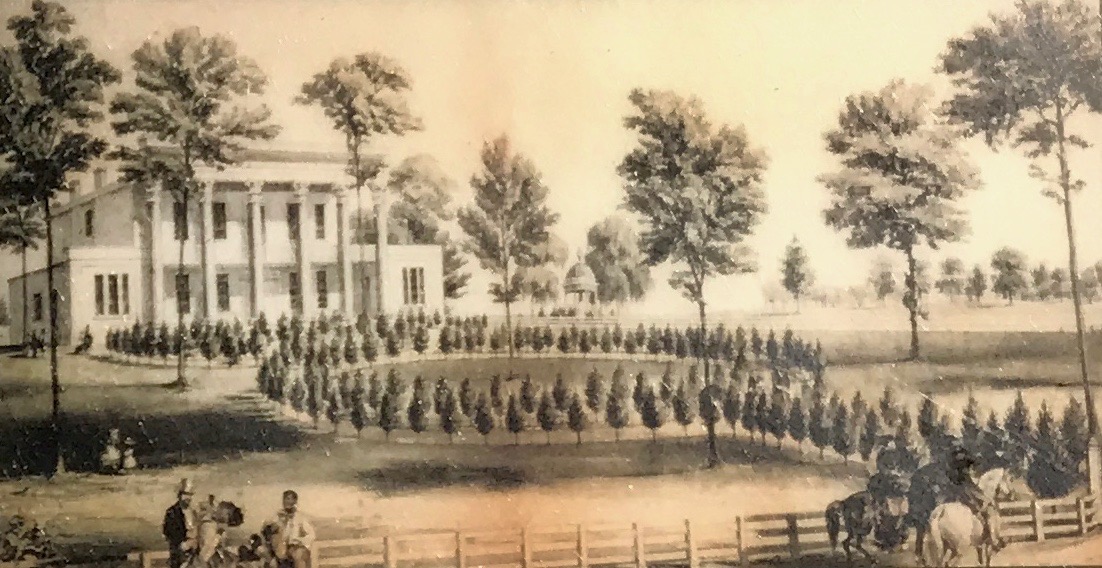
This is how it looked when Reiff and Hume were finished with it in 1837. You can see Rachel’s tomb to the right of the house.
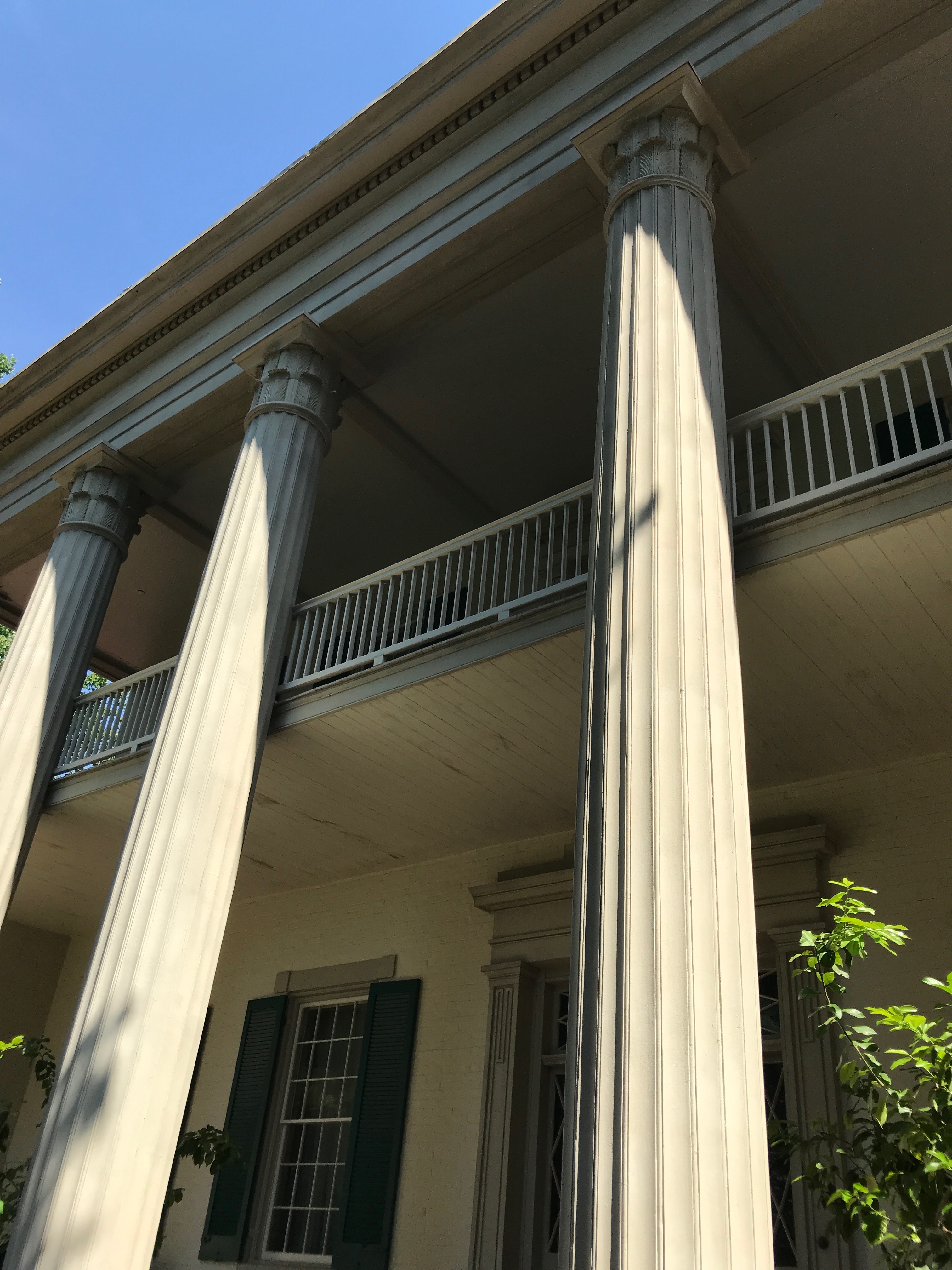
It was about time for my tour to begin, so I took a seat on the bench to await the entry time.
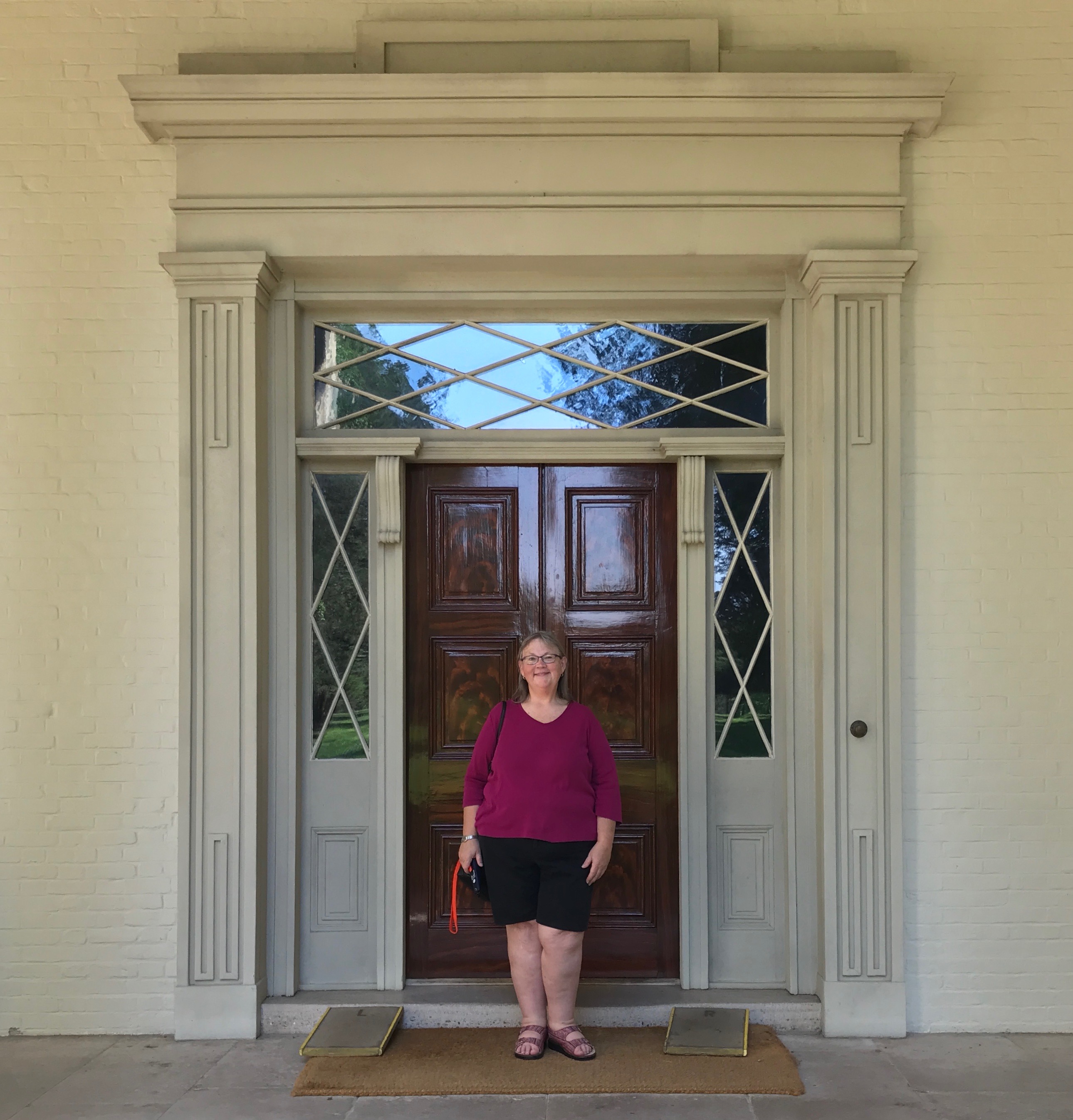
One of the other visitors took a picture of me in front of the door. If you look on either side of my feet, you see some little wedges. I imagine they are for visitors in wheel chairs. Of course, they would only be able to see the main floor. But, a little is better than nothing at all.
Of course, no photography was allowed on the tour. But, I took notes as quickly as my phone would let me. Here are some factoids I managed to jot down.
The mansion is 8000 square feet.
It is 95% original.
On the main floor, the original wall paper was from 1836.
It became a museum in 1899.
There were ten house slaves.
Of course, rebel that I am, I did sneak one photo of the interior.
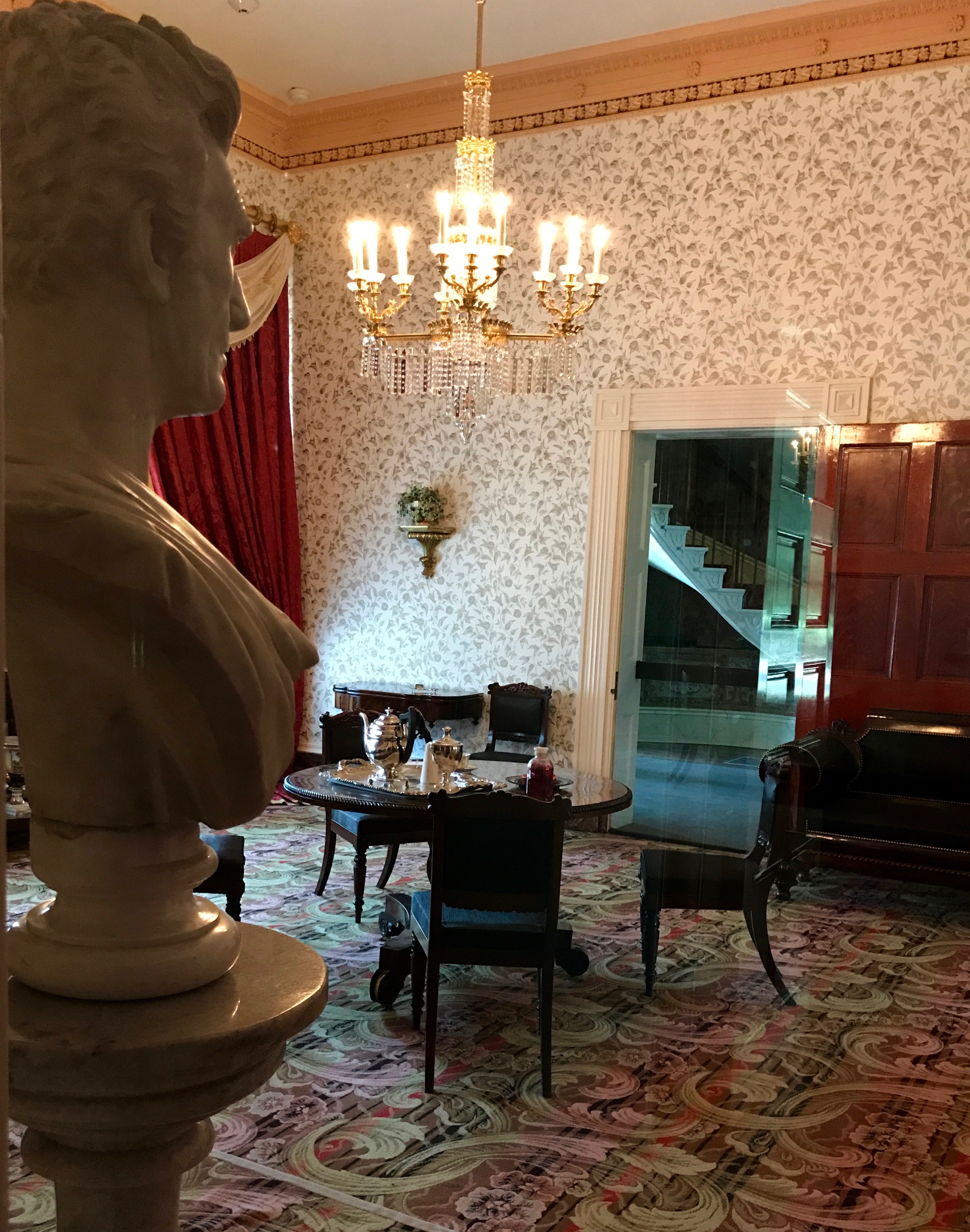
According to my notes, the bust is of Louis Cass, who was the Secretary of War. He gave the bust to Jackson. To my mind, this seems a bit presumptuous. After all, it’s not like a photo you can just stick in a drawer. But, Jackson died in 1845, which was before photography was little more than experimental, so I guess I should cut Cass some slack.
Another fun fact to know and share: Cass was the second territorial governor of Michigan. He was appointed in 1813 by President Madison as a reward for his military service and served until he resigned in 1831 to become President Jackson’s Secretary of War.
After the tour, I headed out to the garden and the family cemetery.
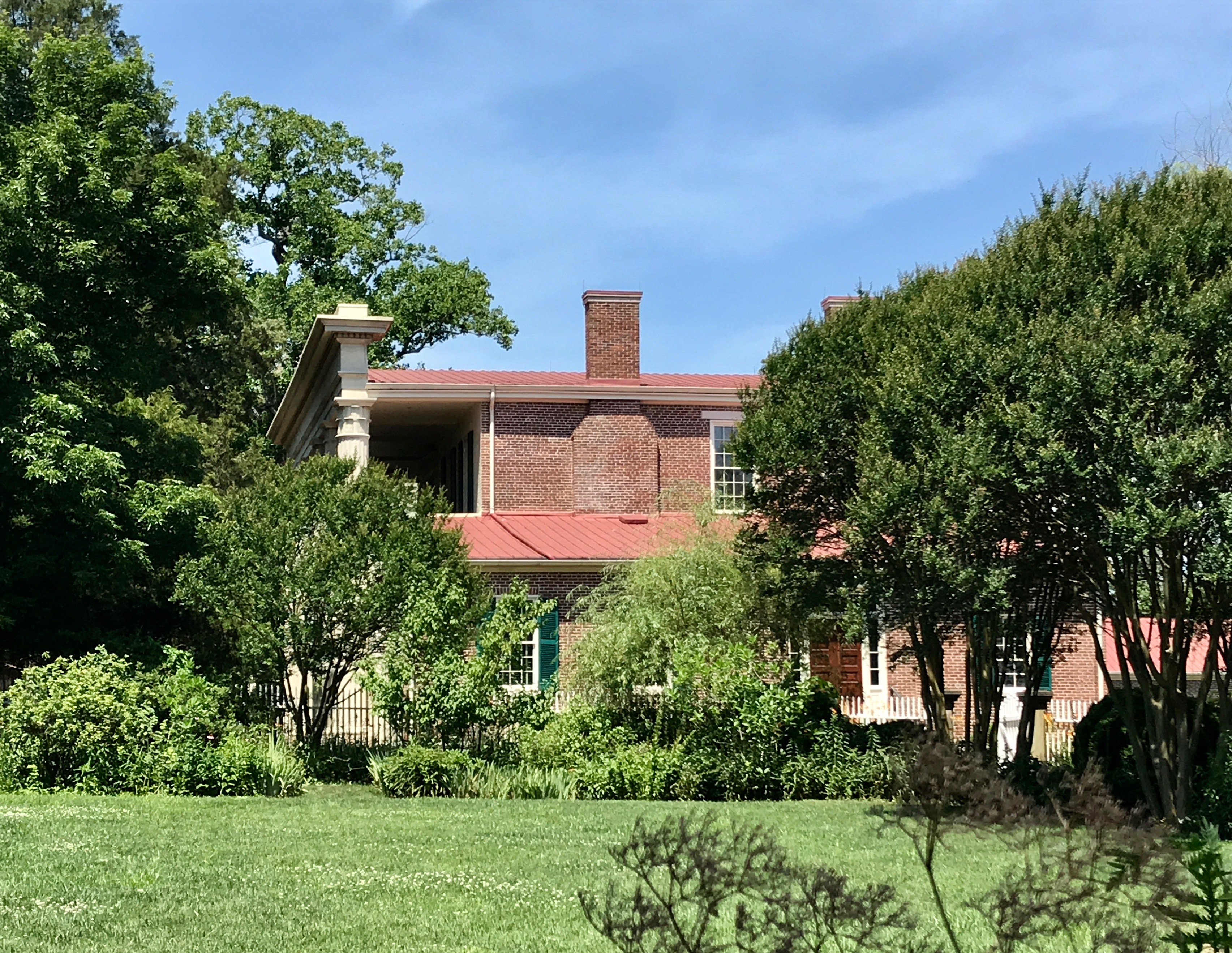
I paused for a moment to look back at the side of the mansion.
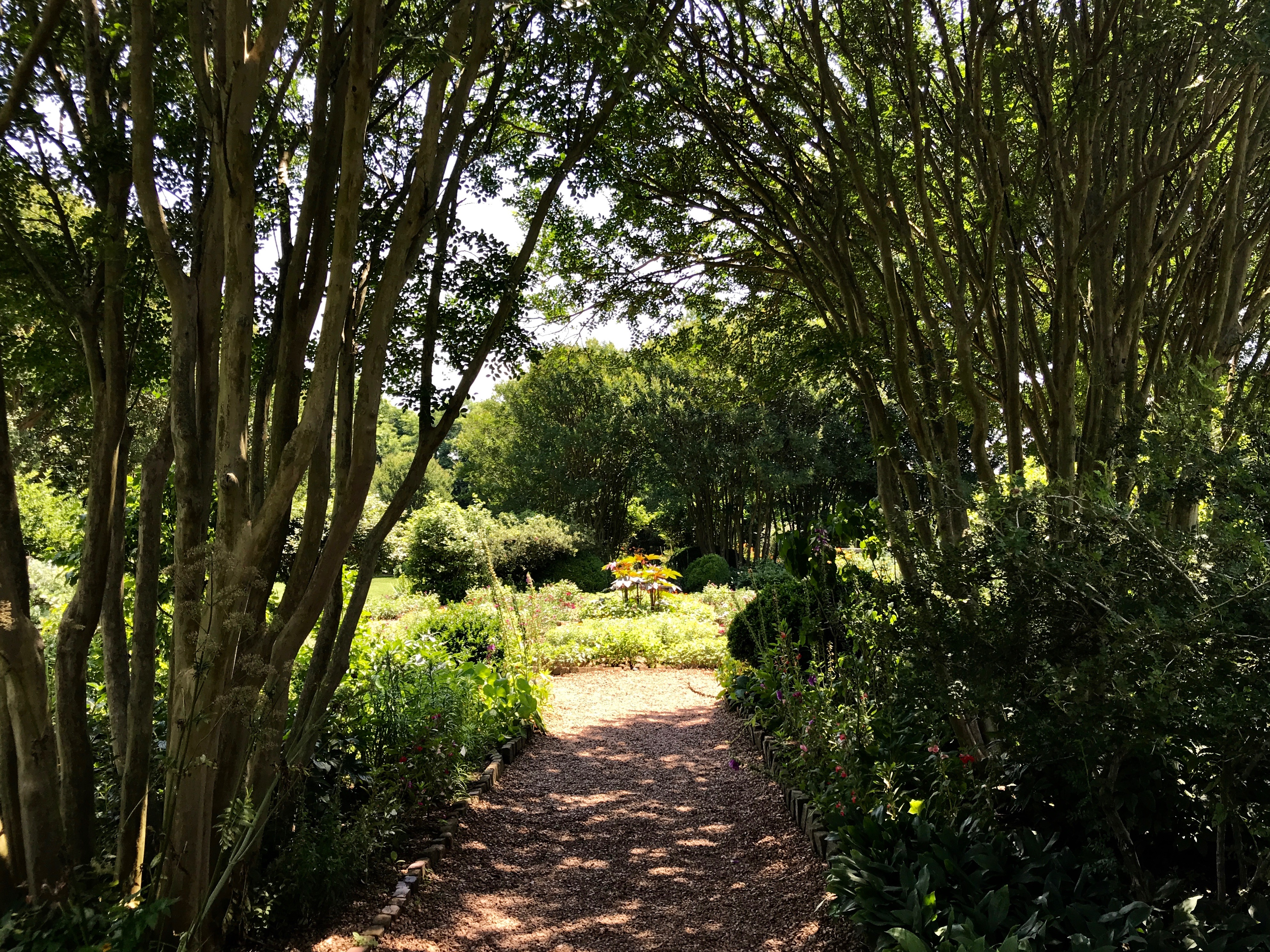
Back to exploring.
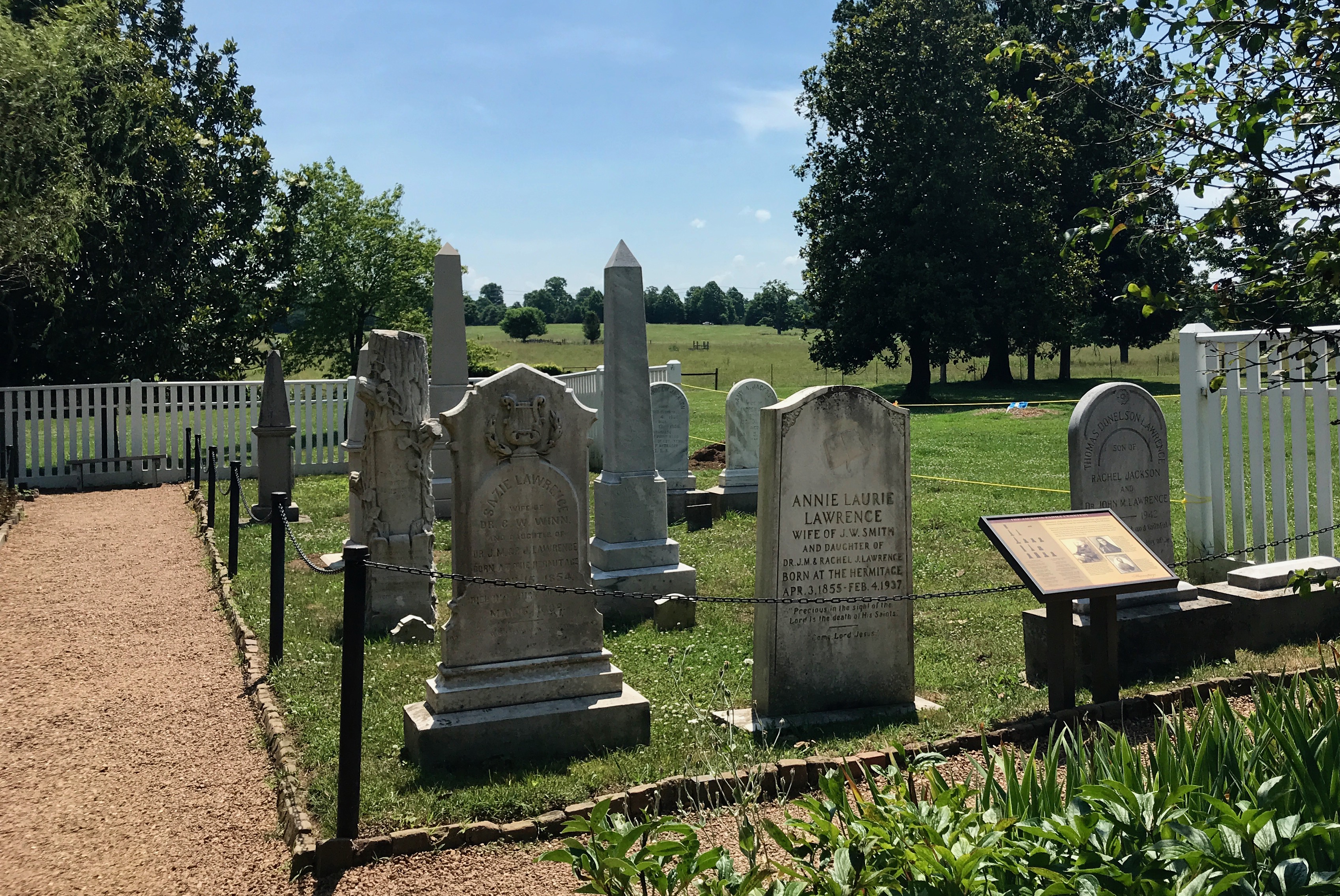
There are some family members buried in the cemetery.
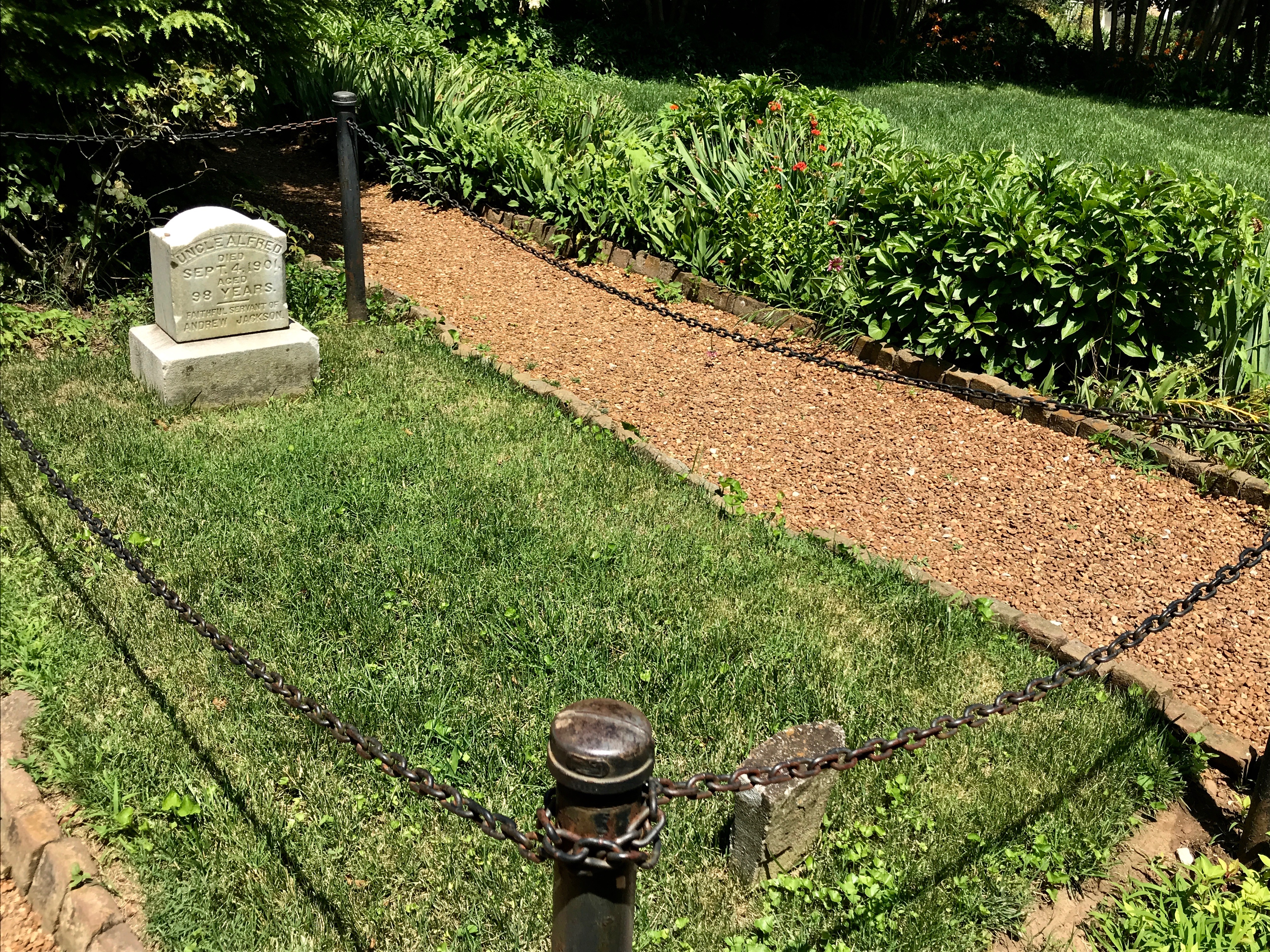
Uncle Alfred, one of Jackson’s enslaved people, is also buried here. He was born in 1803 and died in 1901. I can’t remember if they told me about Uncle Alfred and why he’s buried here, and I can’t find it on the internet.
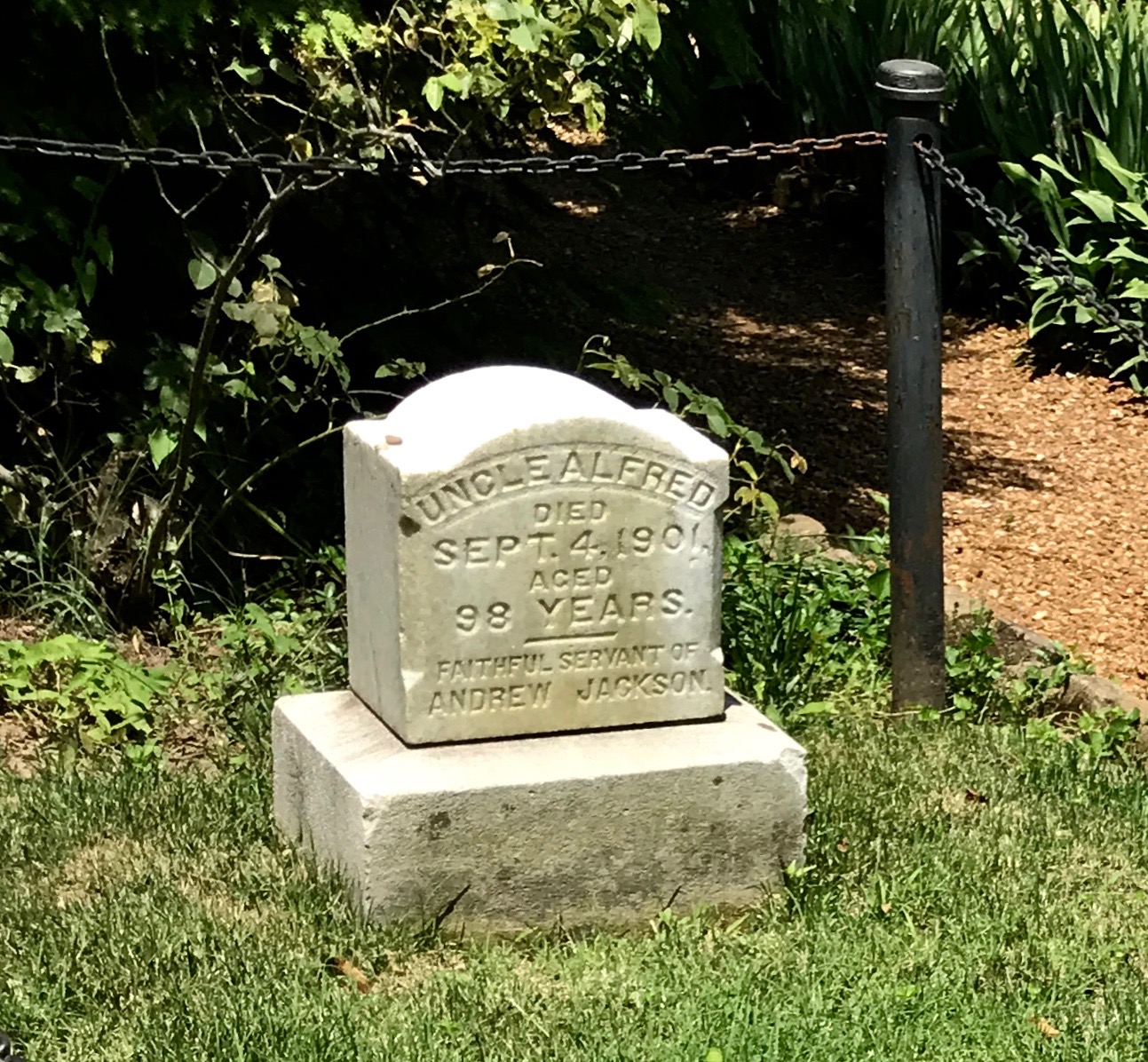
I guess if you want to know, you are just going to have to visit yourself.
The brings us to the pièce de résistance – Andrew and Rachel’s tomb.
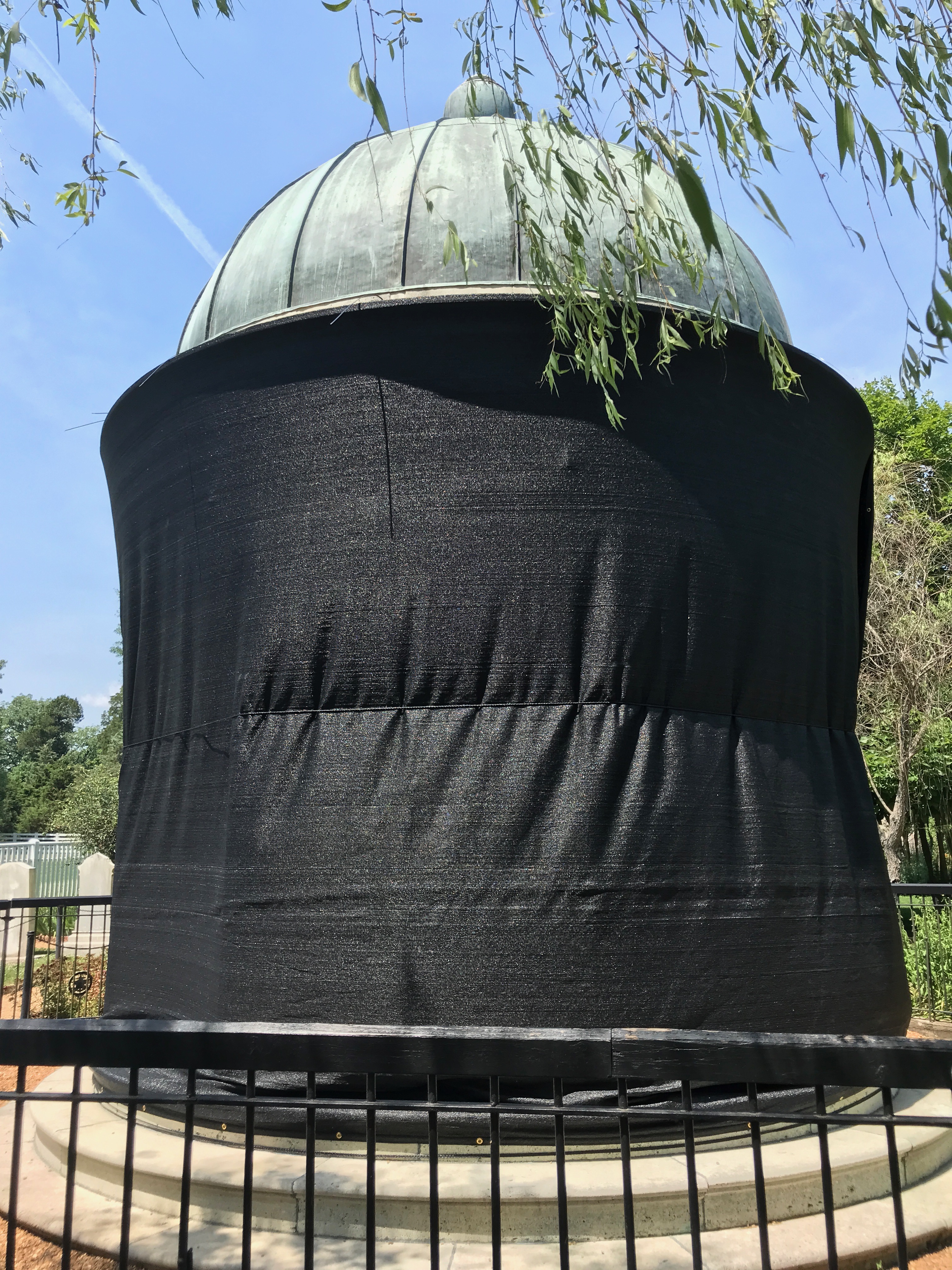
Do I have great timing, or what?
It turns out that the tomb was vandalized on April 27, 2018, which was the first time something of this nature had occurred.
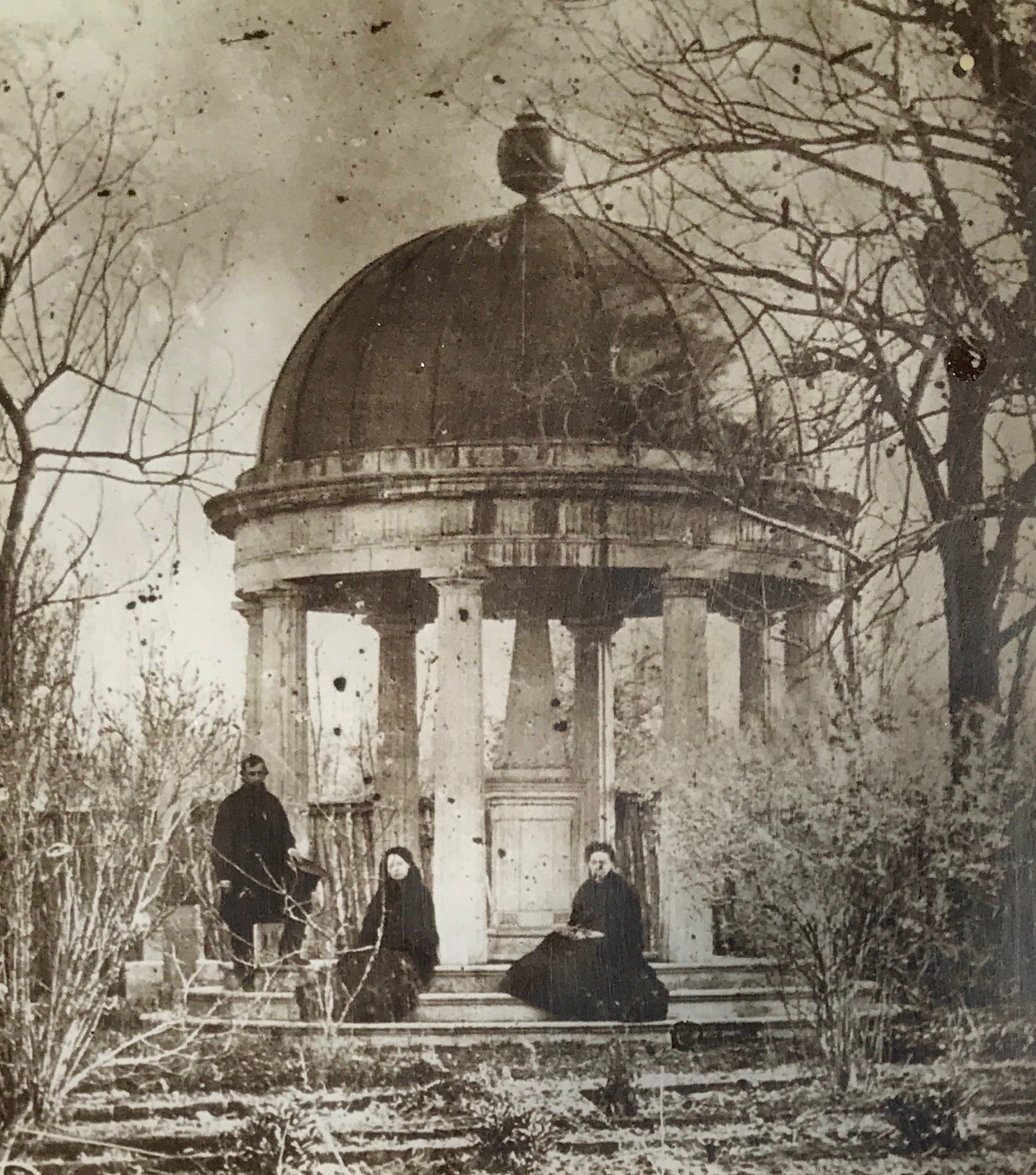
Here’s an historical photo from 1867.
The good news is that the tomb has now been restored and has been unwrapped. It did make me think of some of Christo and Jeanne-Claude’s artwork, though.
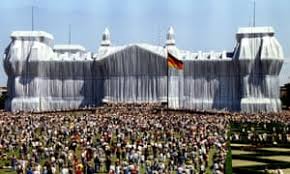
Like when they wrapped the Reichstag.
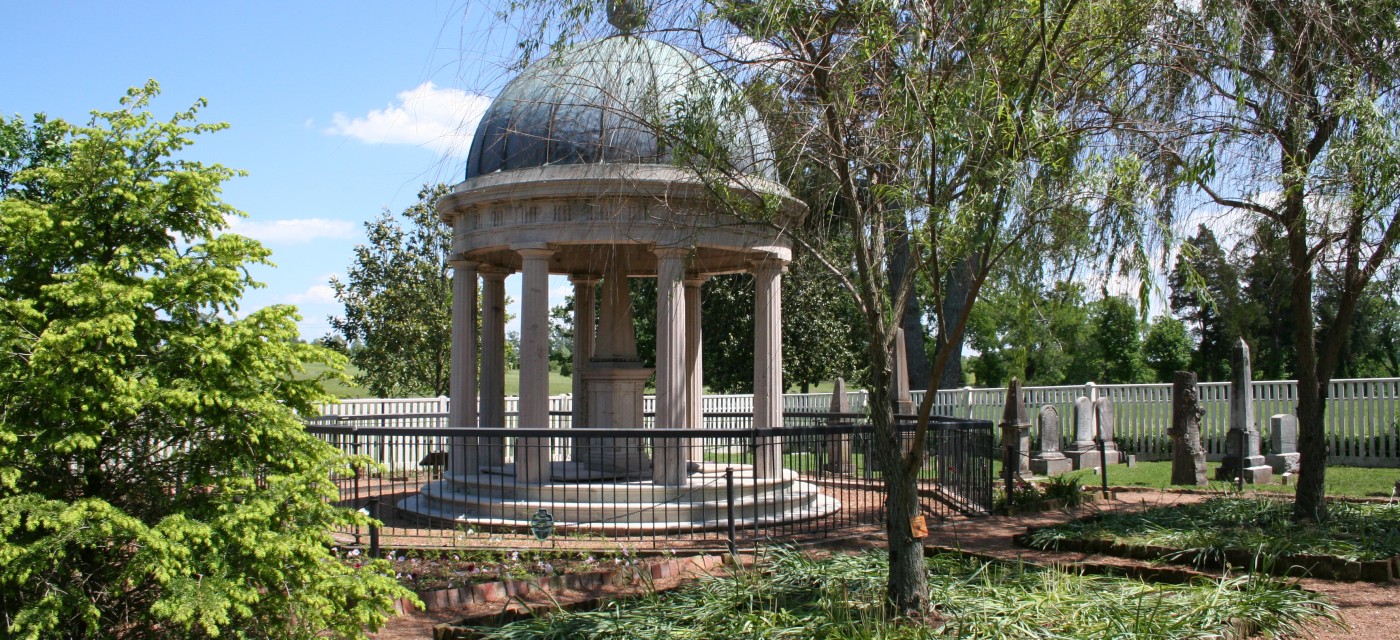
The good news is that the restoration is complete. I found this image on The Hermitage’s website. That is a good source of information to help you plan your visit.
I headed back toward the mansion.
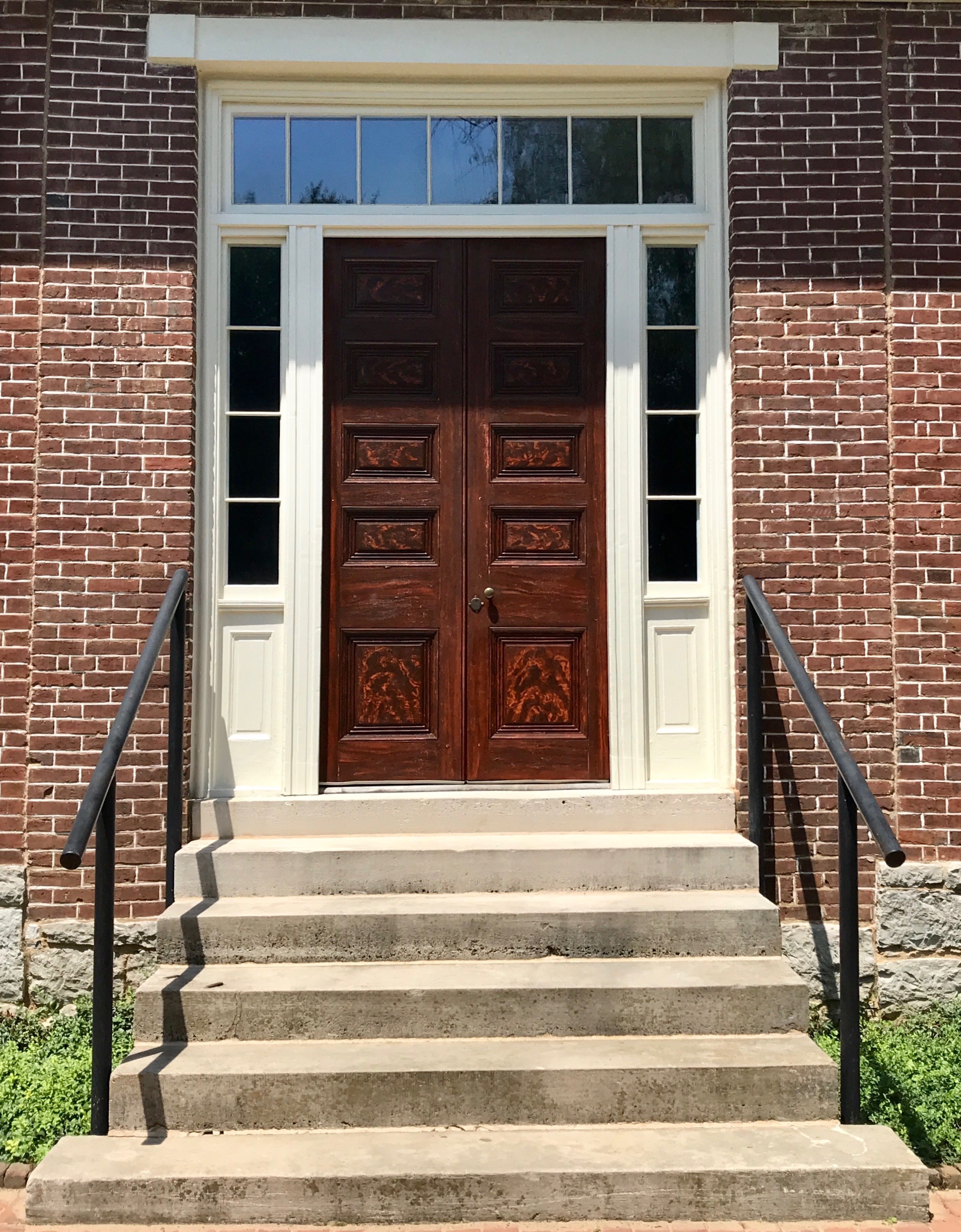
How’s that for a back door? Or, maybe it was just a secondary door for people he didn’t want to have coming in the front door.
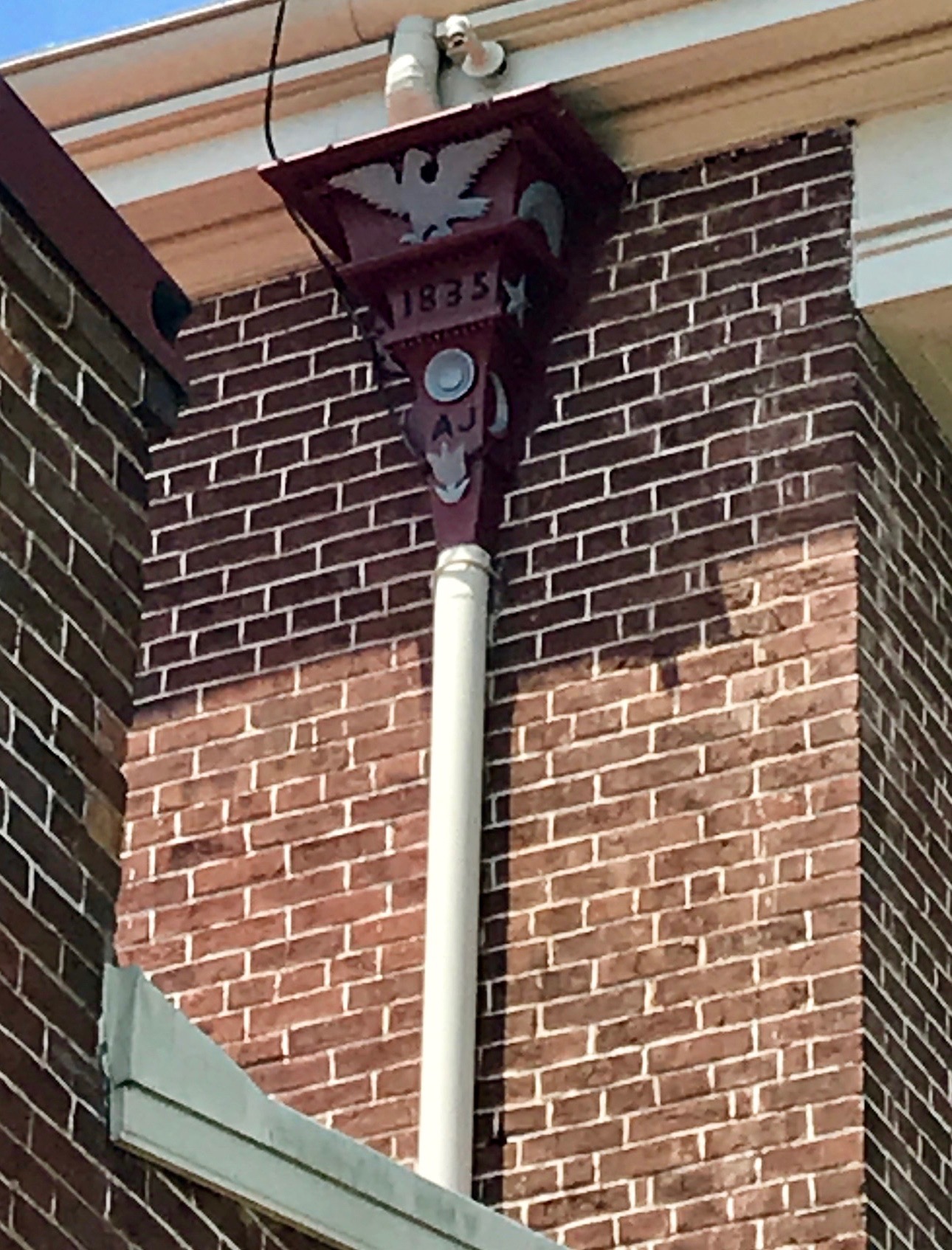
That is one fancy downspout! It even has his initials on it. Some people are satisfied with monogramed towels.
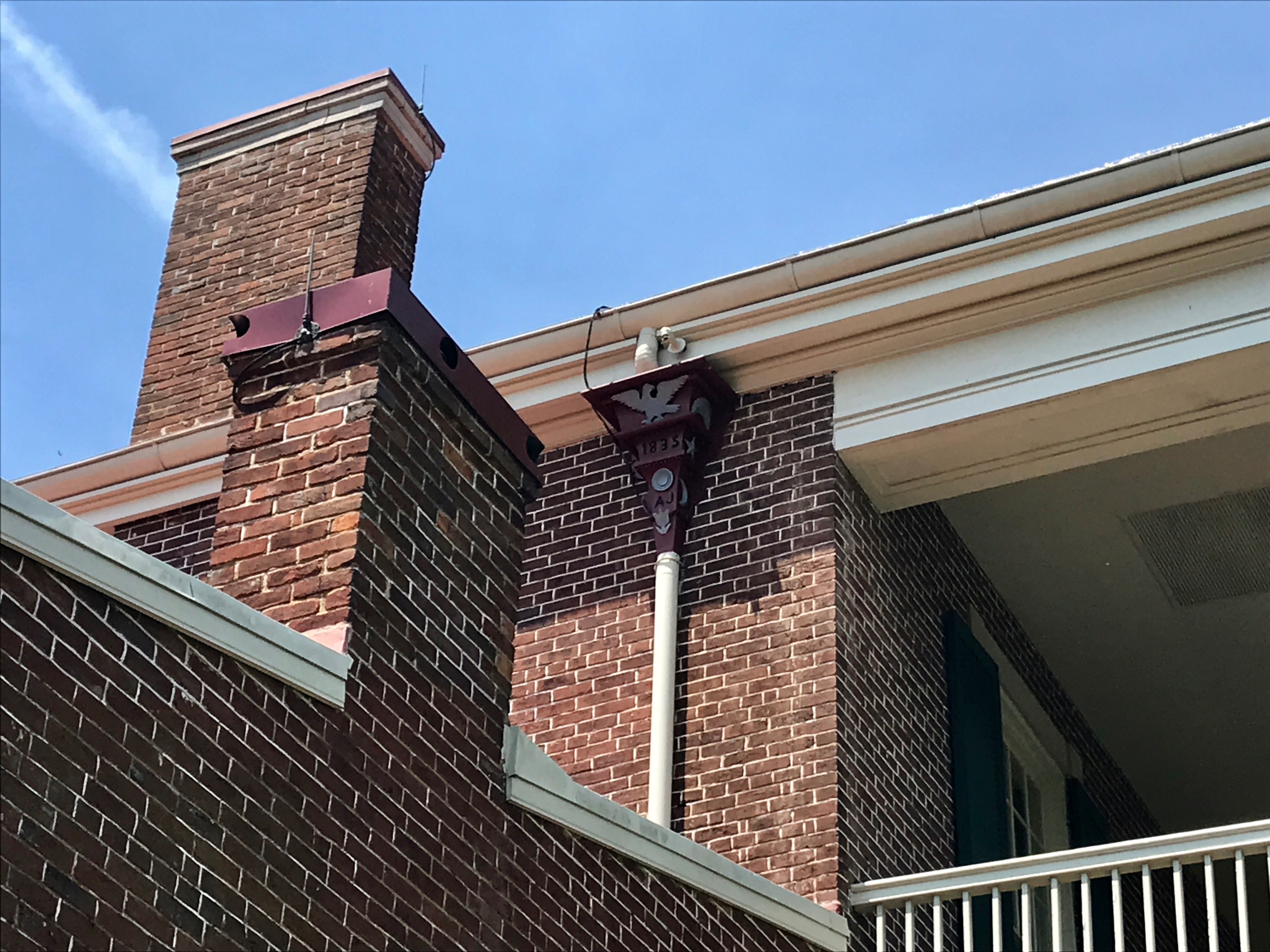
It’s even on the back of the house!
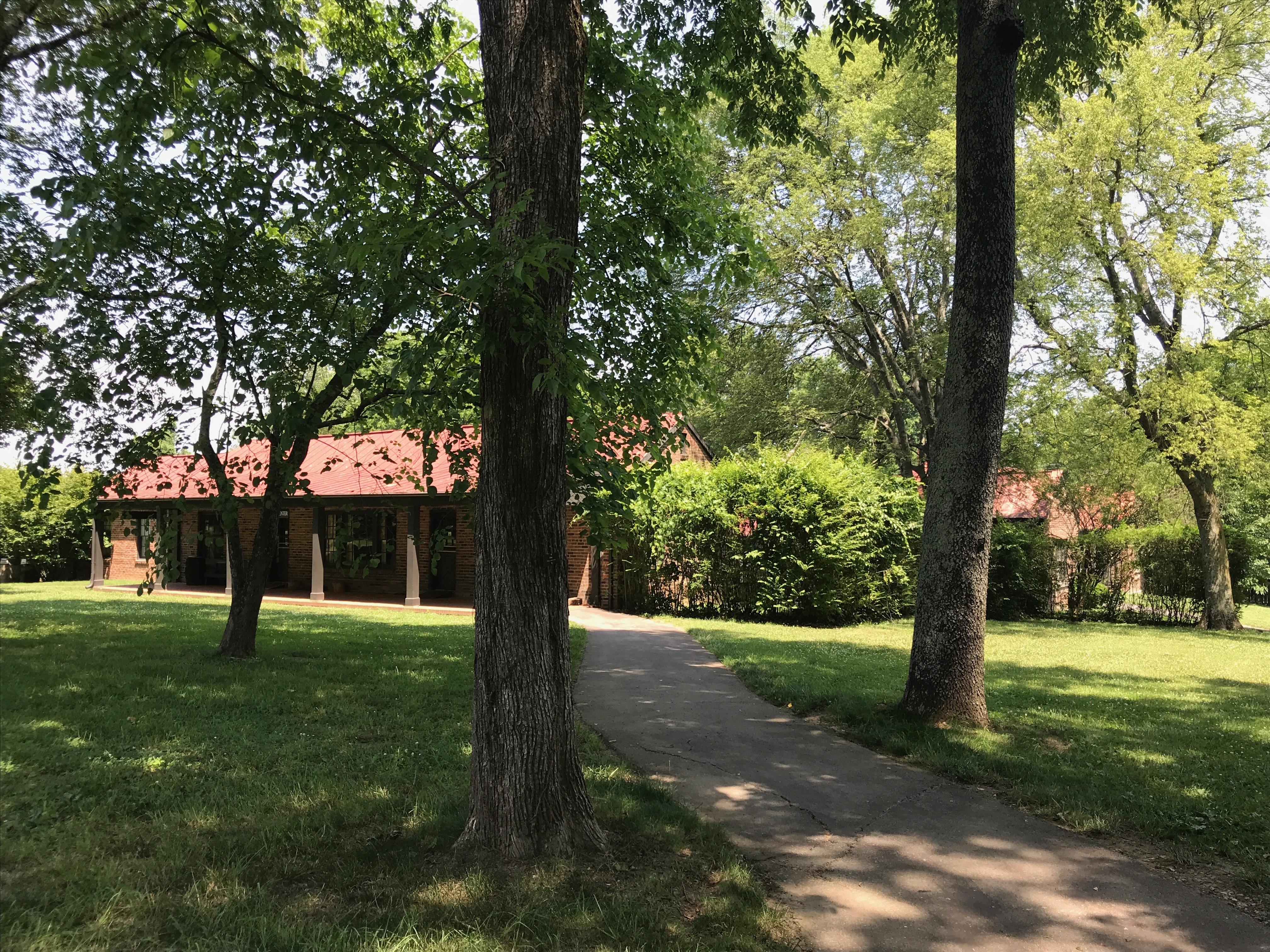
It was time to head back to my van and get going. As I set my feet in the direction of the Visitor’s Center, I passed this cluster of buildings. I wondered what they were.
It turns out that part of them were built as part of the Works Progress Administration in 1936. I am overcome with gratitude when I see examples of the infrastructure that is still in use that saved the lives and dignity of so many during the Great Depression.
The building on the left currently contains classrooms and the offices for the Hermitage Hands-on-History program. When it was completed in 1954, it housed the Hermitage gift shop.
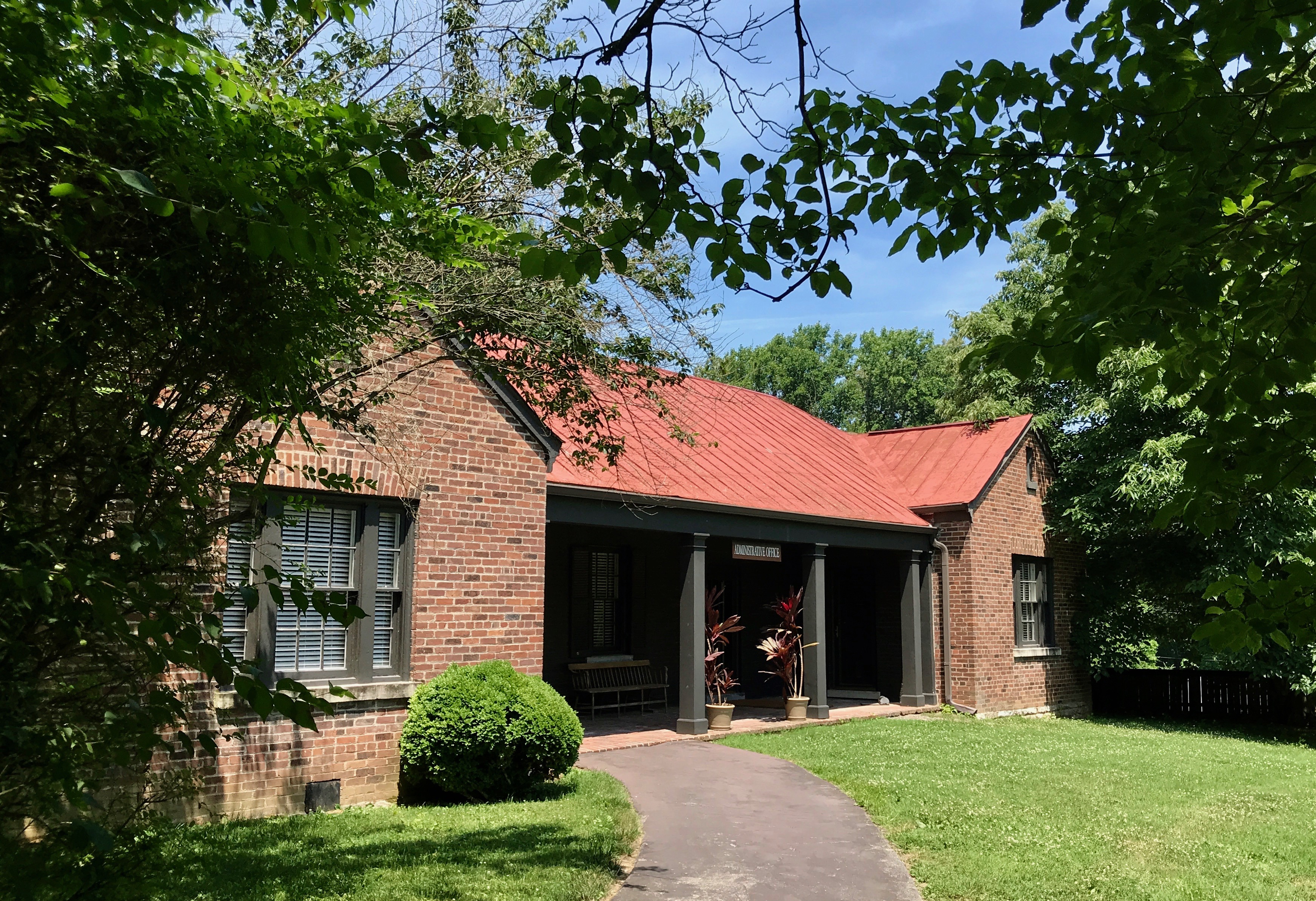
The building on the right, completed in 1936, originally served as the caretaker’s residence. Today it holds the Administrative Offices of the Ladies Hermitage Association.
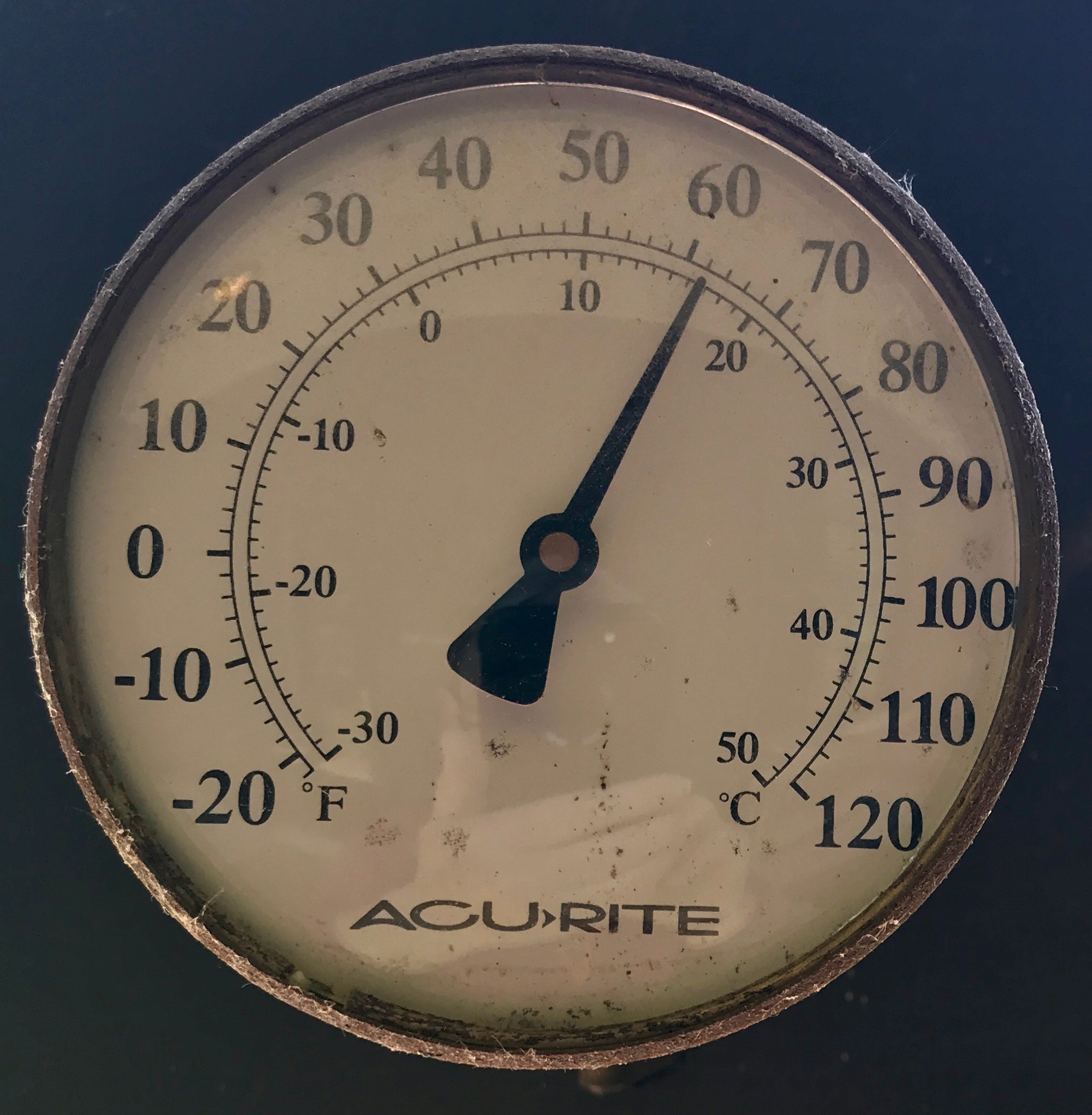
I found this thermometer on the porch. Either it’s very cool in the shade or it is not “ACU>RITE.” The temperature from the weather app said that it was 91 outside. I don’t know about you, but I always trust the voice in my phone.
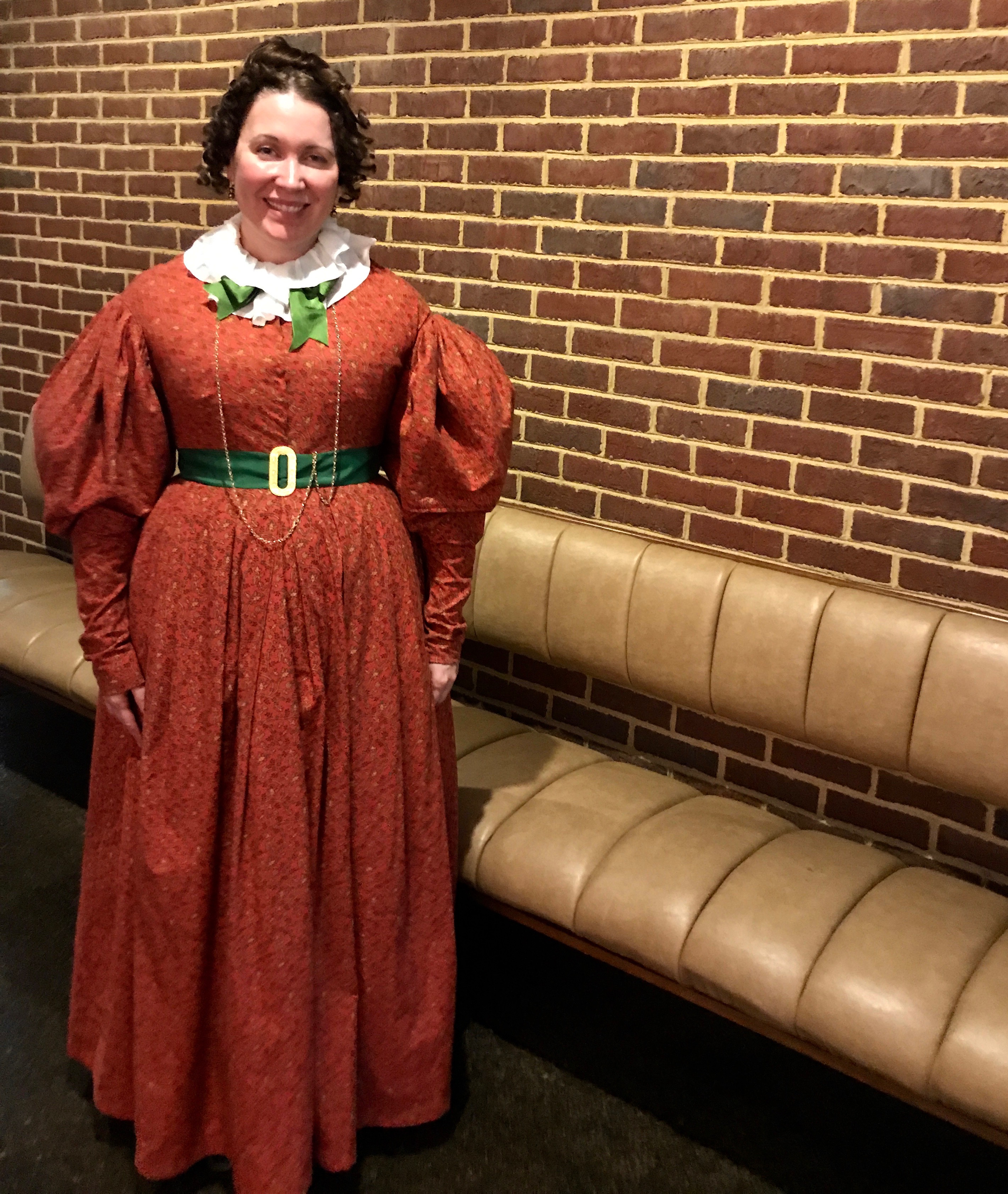
I got back to the Visitor’s Center in time to catch a presentation by a historical re-enactor. I remember that she was very good, but I don’t remember what she said. It was more than seven months ago, and I was getting antsy to get on the road.
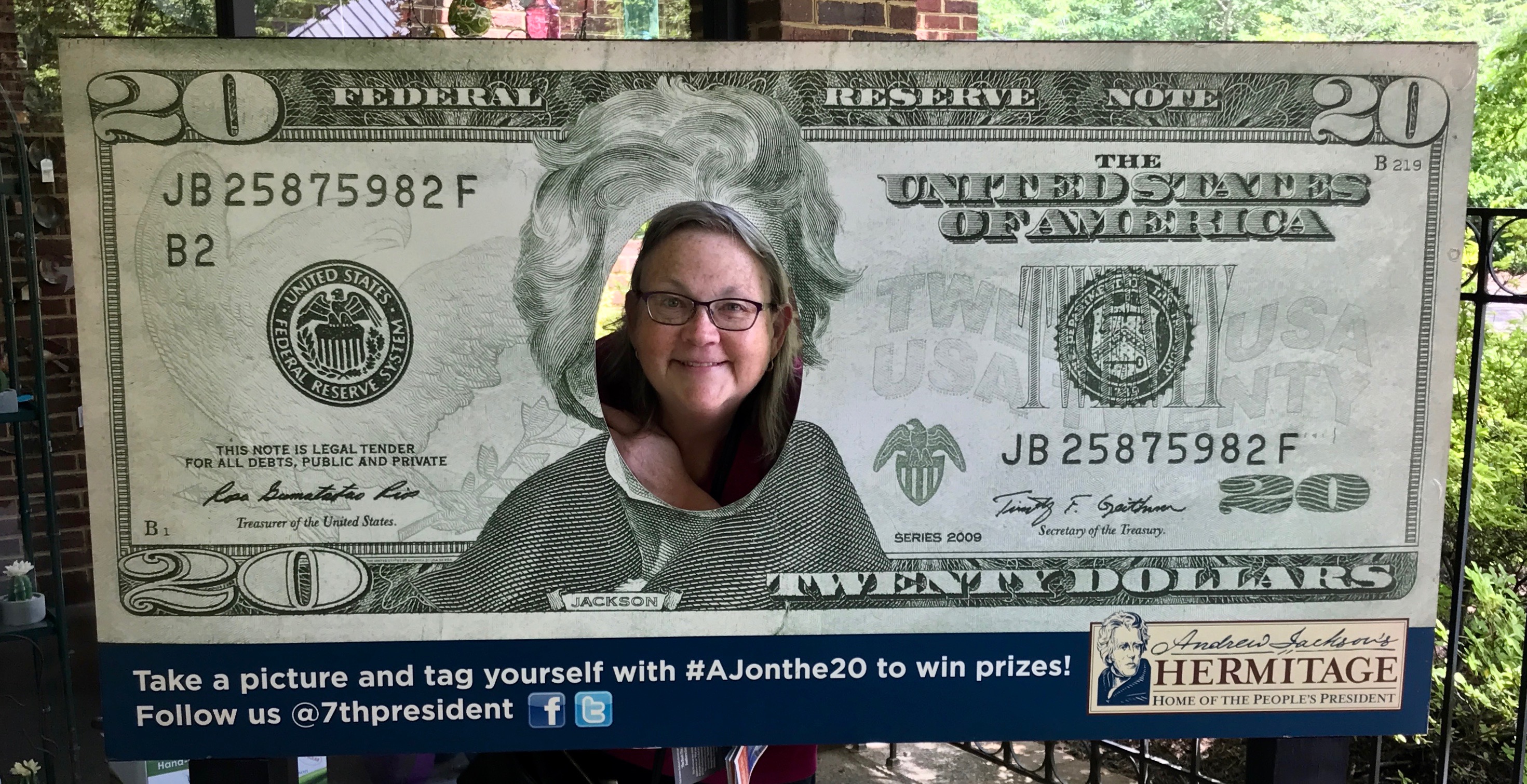
Okay, it’s a little cheesy, but I had to the good fortune to find a person who would take my photo. Me on the $20!
And of course, I had to pass through the gift shop.
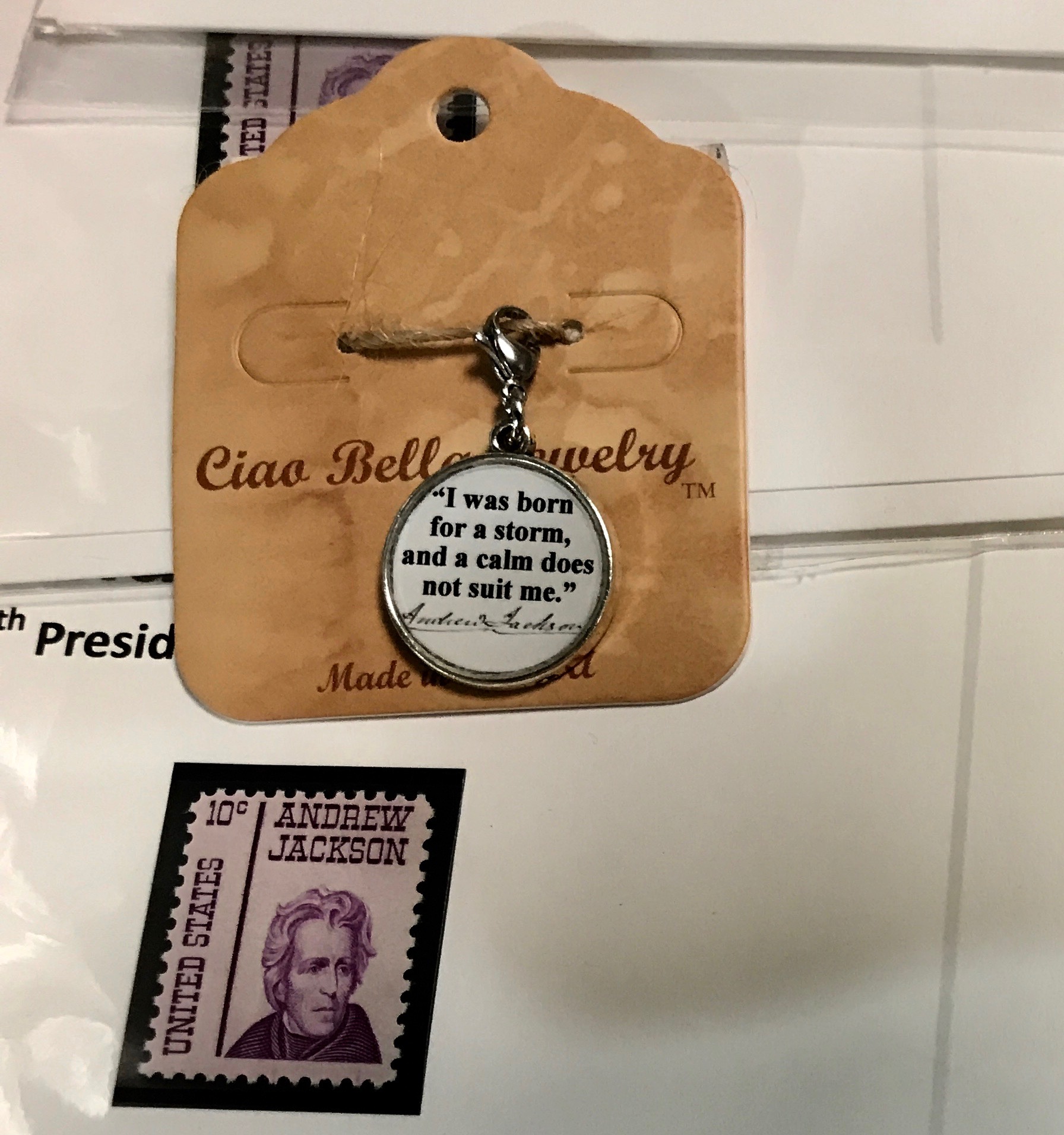
Funny that he gets a $20 dollar bill and a 10¢ stamp.
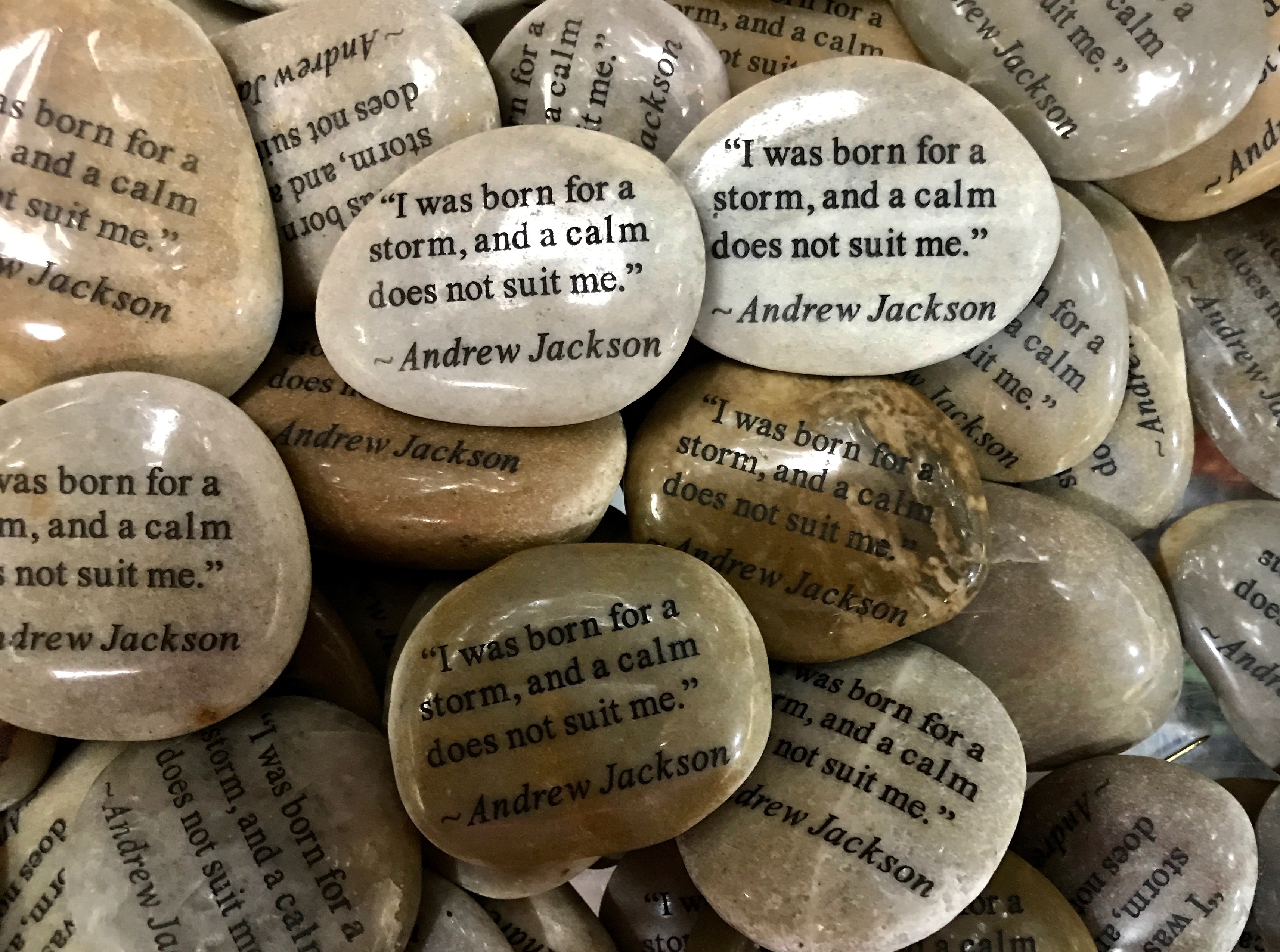
This seems to be his favorite quote, as it was on a number of items. If you want to see what other things he said, you can find them here.
My normal frugality saved that day, and I walked out without buying any tchotchkes.
Next stop, Asheville, North Carolina.