The Summer of Seed Collecting was drawing to a close. I had a few more stops to make before I got back to Kansas City, but the weekend found me in Fort Wayne, Indiana.

I was only about two hours from home, but I was so tired from driving. Since I was essentially picking up the odd sites that weren’t ready for the first collector, the facilities were rather far apart and involved a lot of driving between stops. Rather than make the drive, I holed up in Fort Wayne for a little R and R.
According to my Preferred Source, Fort Wayne was built in 1794 by the United States Army under the direction of Revolutionary War general Anthony Wayne.

He had an interesting nickname – Mad Anthony. He earned it with his military exploits and fiery personality. He was over in this neck of the woods fighting the Northwest Indian War (1785-1795). I honestly don’t remember learning about this war in school or elsewhere. Incidentally, this was was also known as the Ohio War, Little Turtle’s War as well as other names that weren’t included in my Preferred Source.
General “Mad” Anthony Wayne, along with General Charles Scott’s Kentucky Militia triumphed in the final battle of the war in The Battle of Fallen Timbers, on August 20, 1794. The battle took place amid trees that had been toppled by a tornado just north of the Maumee River in northwestern Ohio at the site of the present-day city of Maumee. They were victorious against a combined Native American force of Shawnee under Blue Jacket, the Miami under Little Turtle and numerous others and the British. This battle ended major hostilities* in the region and resulted in British and Indian withdrawal from the southern Great Lakes, western Ohio and northeastern Indiana.
* Uh…there was that little matter of the War of 1812 just a few years later, but that hardly matters, does it?
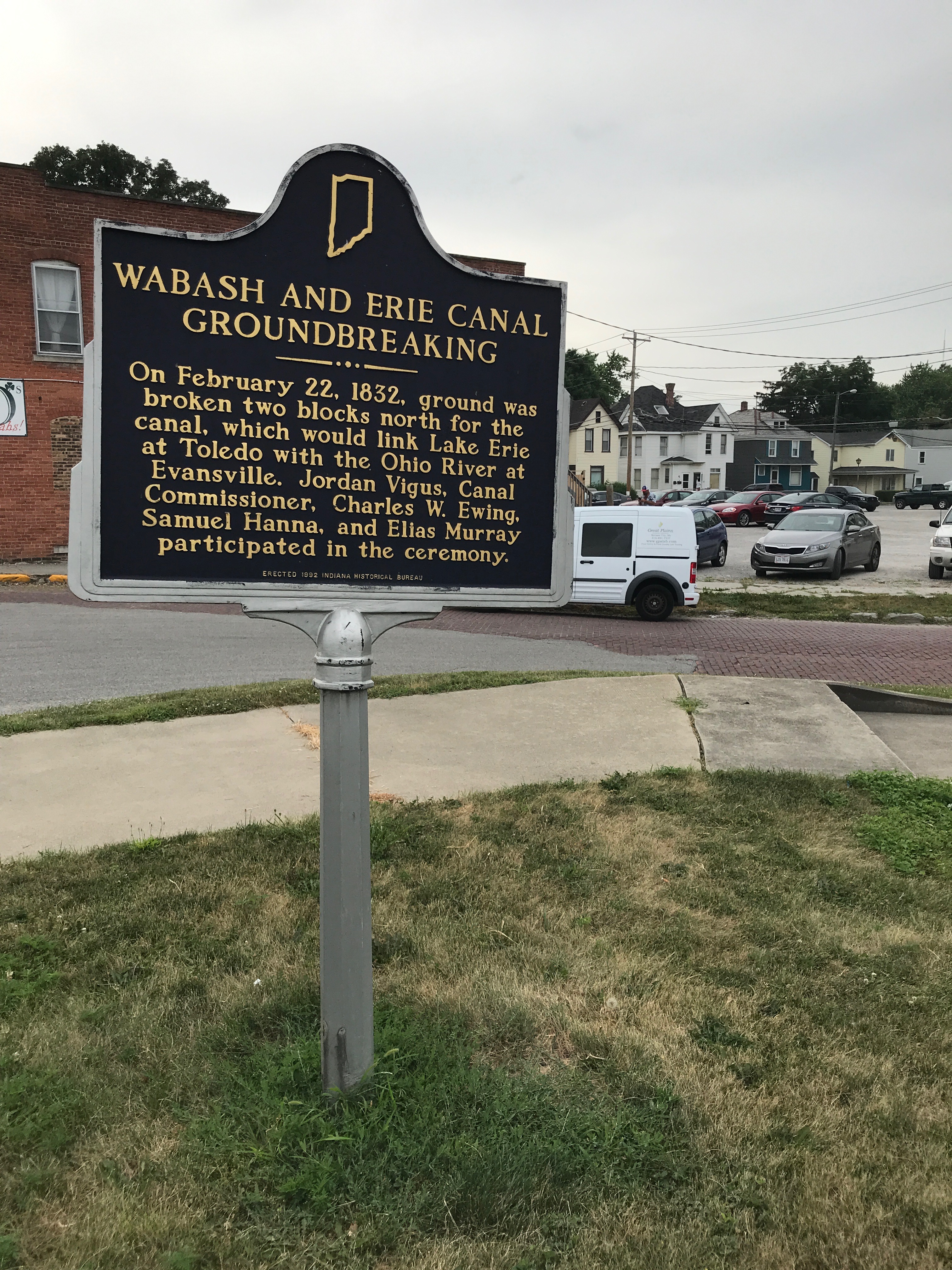
This is one of the places that popped up in History Here. I sure miss that app! It lead me to some interesting spots I wouldn’t have found otherwise. I’ve just downloaded a new app, What Happened Here? I haven’t tried it yet, but I hope it helps me find more unusual places.
I am just amazed at all the canal building that took place in the early years of the United States. According to another Source, by the 1830s, the country has a complete water route from New York City to New Orleans. By 1840, over 3,000 miles of canals had been built. But, do you know what lead to their decline? The railroad. By the 1860s, they rendered most of them unprofitable. Poor Sal! The mule was replaced by the iron horse.
Anyway, the plaque was placed two blocks south of where the ground was broken. You know I had to see if there were any tell-tale signs of a canal, as the area around the plaque didn’t seem particularly canal-like.
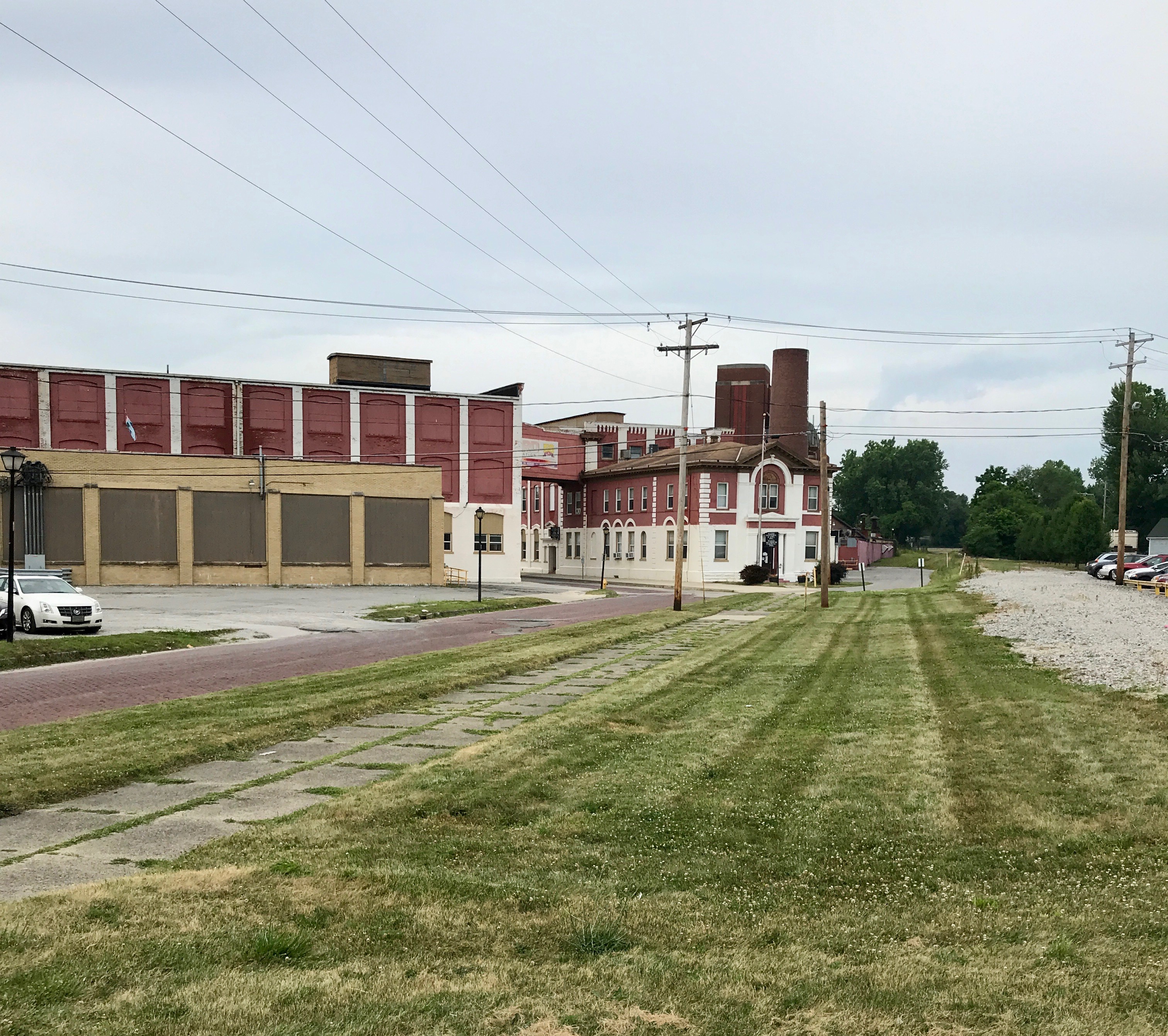
I headed north. No canal here. The road curved around and what should I find?
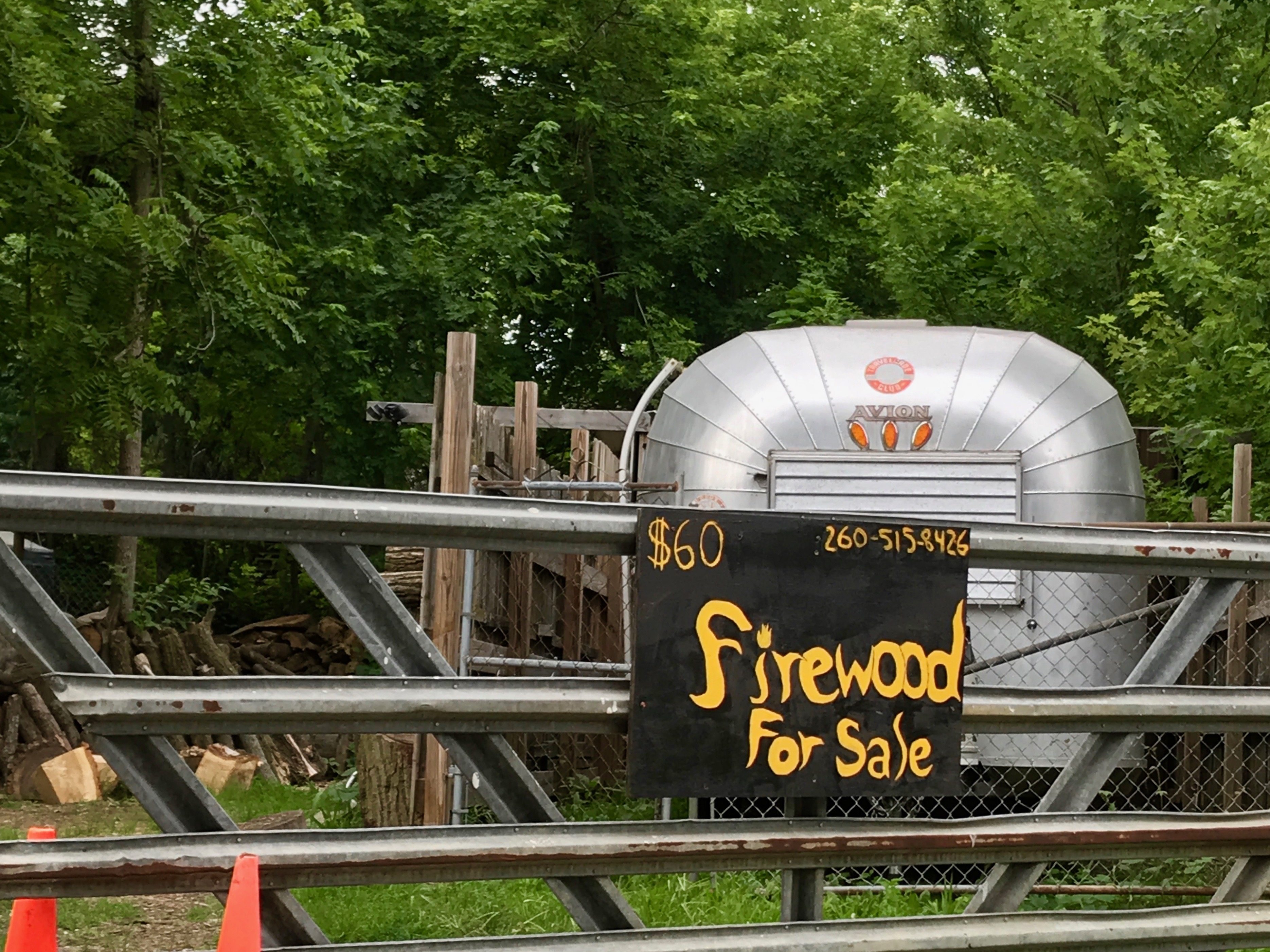
An Avion! It isn’t exactly an Airstream, but aluminum cousins are good in my book.
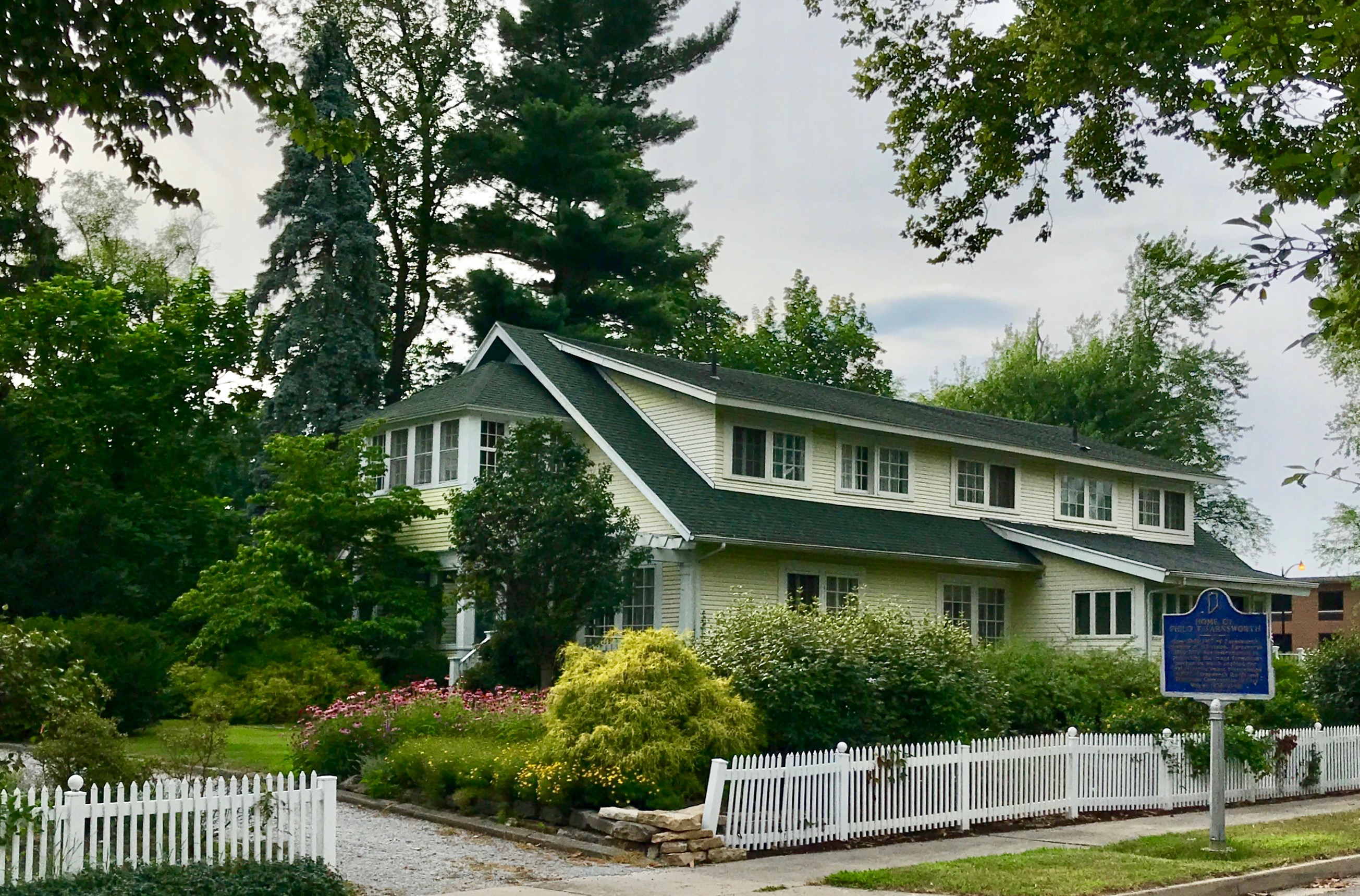
I also followed a History Here lead to the house of Philo T. Farnsworth. Who’s that, you ask?
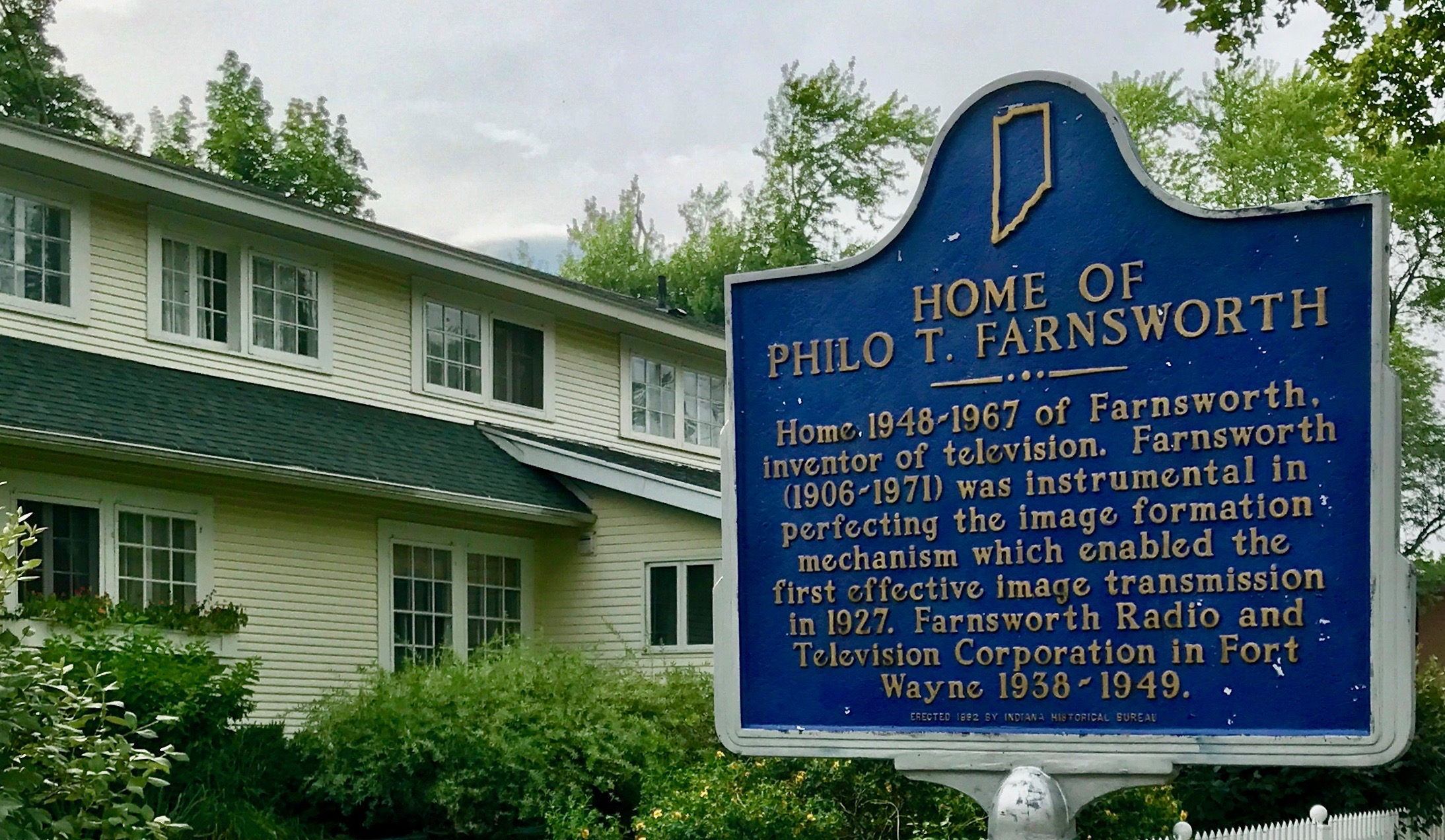
Why, he is credited with being the inventor of television! He held around 300 patents, mostly in radio and television, although he also invented a small nuclear fusion device, Farnsworth–Hirsch fusor.
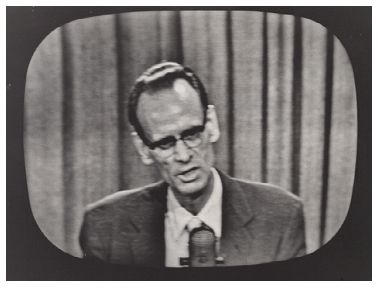
In spite of inventing the medium, he only appeared on television once. On July 3, 1957, he was a mystery guest (“Doctor X”) on the CBS quiz show, I’ve Got a Secret. He fielded questions from the panel as they unsuccessfully tried to guess his secret (“I invented electronic television.”) For stumping the panel, he received $80 and a carton of Winston cigarettes.

When I was just cruising around, I found this house. It was the home of Miami chief Jean Baptiste de Richardville. His name was Pinšiwa in Miami. He was the son of Tacumwah, sister of the Miami chief Pacanne, also known as Little Turtle, and Joseph Drouet de Richerville, a French fur trader from Quebec.
The house was built in 1826 and is called a treaty house. Chief Richardville, who was the principal chief of the Miami from 1812 until his death in 1841, signed several treaties with the United States government as it negotiated with the Miami tribe for its eventual removal from Indiana as a recognized nation. In the treaty, lands were reserved for Richardville and $600 was provided for the building of a home. The $600 only partially covered the cost of building the home. Apparently it was not a problem for Chief Richardville to throw in a bit of money toward building the house, which ended up costing $2,200. At the time of his death in 1841, he was considered to be the richest man in the state of Indiana.
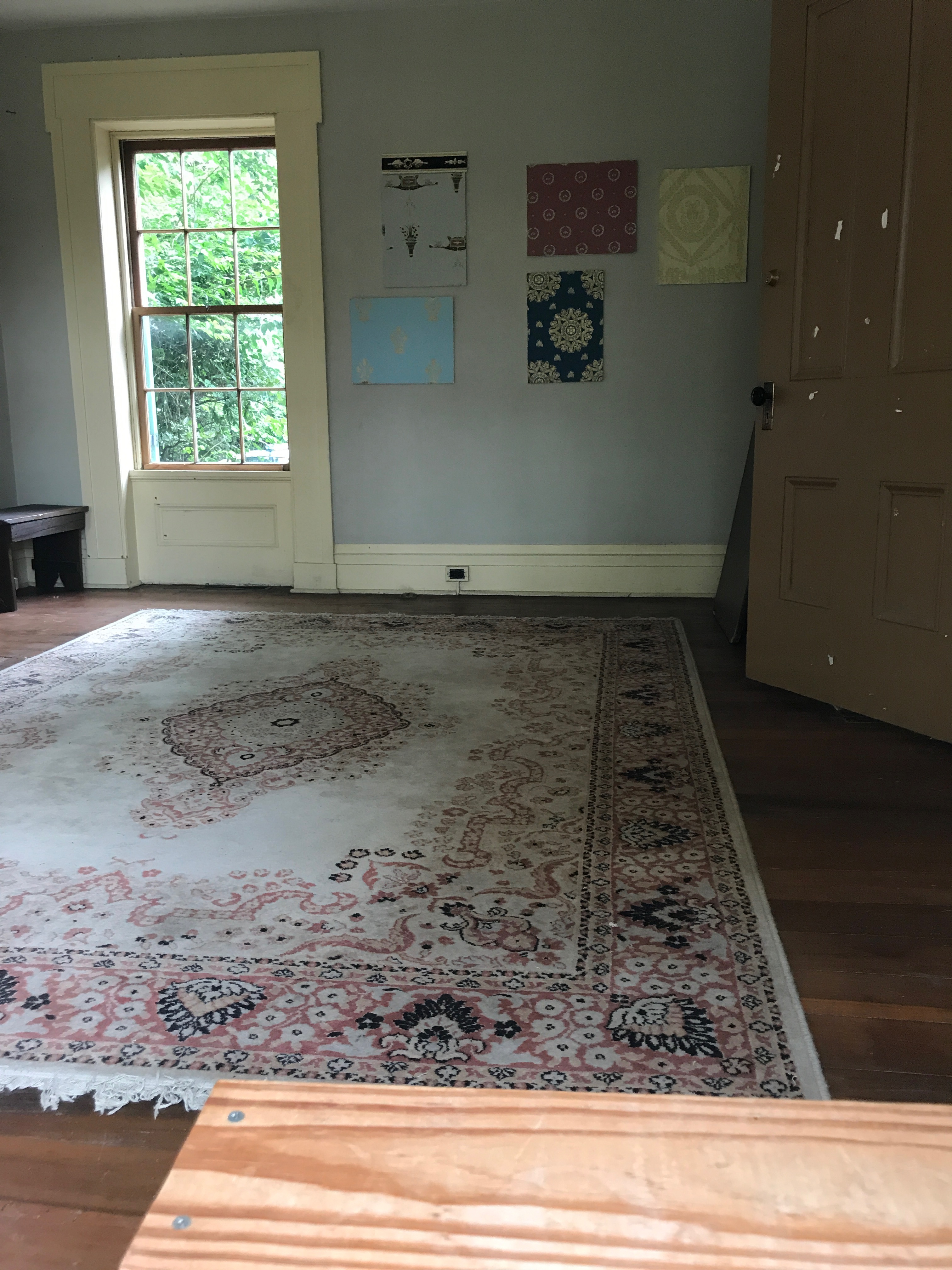
I peered in one of the windows. Apparently, the Allen County-Fort Wayne Historical Society has Miami Indian Heritage Days on the first Saturdays of the month from May-November. If you happen to visit when the house is open, you can see the room where he died. You can also view the large safe in which he stored his wealth, which is estimated to be worth about $23 million in today’s money.
There was also a very large tree in front of the house. If I know anything about trees, that’s a maple. I have to admit that I’ve never seen a maple that was this profile.
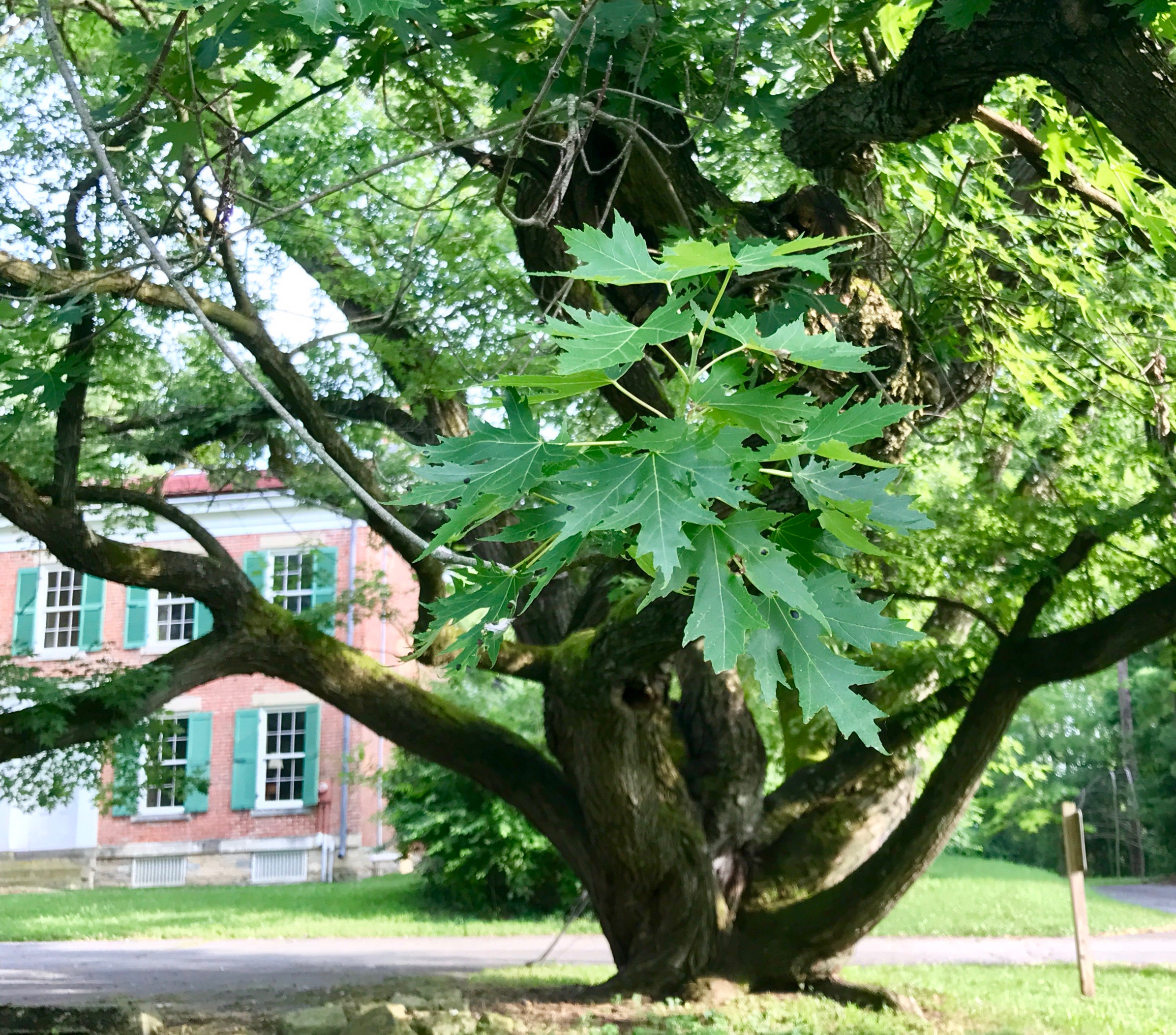
In my experience, maples have a longer trunks with the branches growing out of the crown.
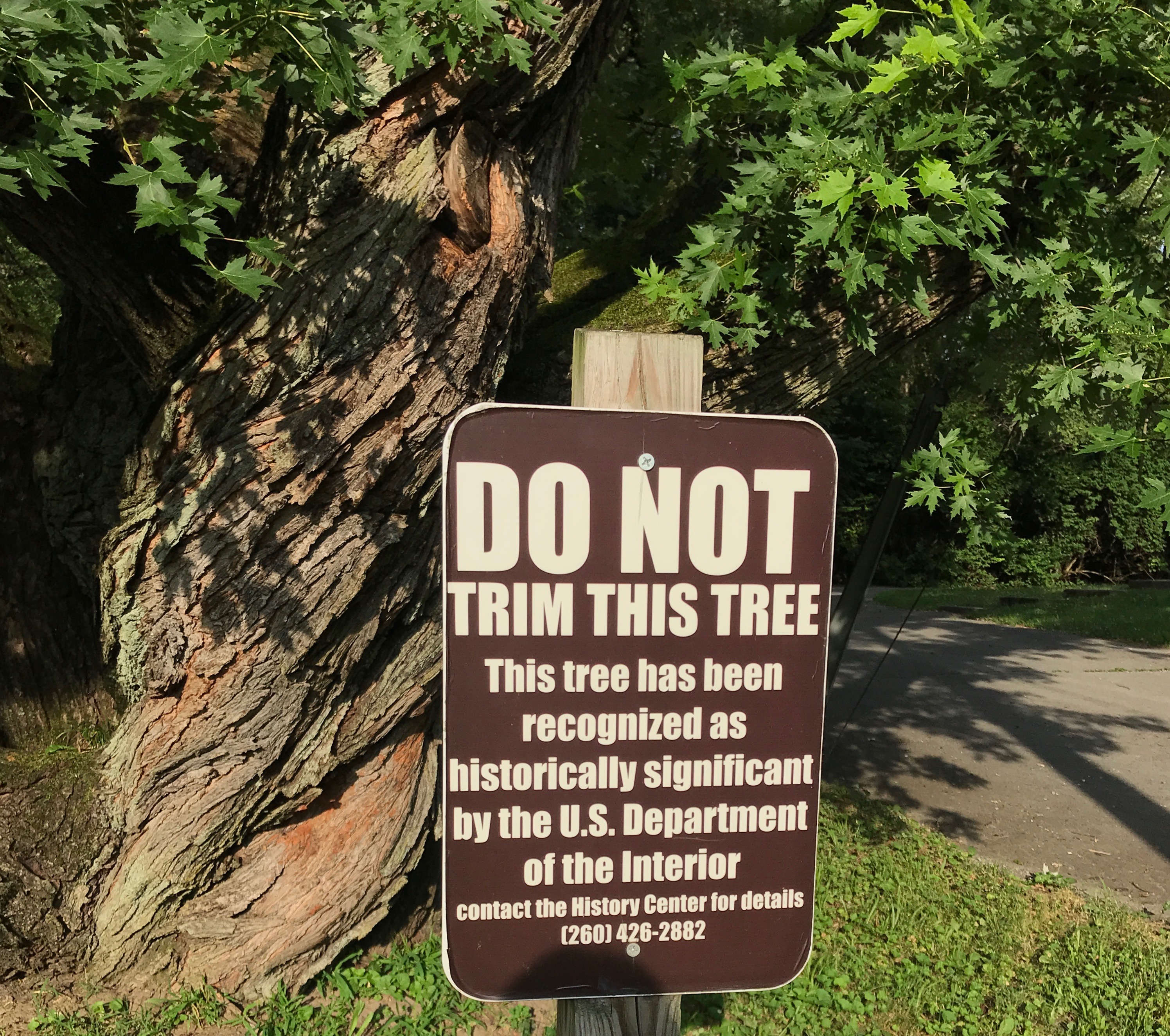
But, could it be that this tree has been growing since Chief Richardville lived here? I haven’t gotten around to calling the number on the sign, but maybe one of my Loyal Readers wants to take on this task and fill me in.
My last surprise in Fort Wayne was that John Chapman, also known as Johnny Appleseed is buried here. Really!
Well, that’s what they say.

It isn’t unusual that there should be some controversy about the exact location of his final resting place.

After all, he did die in 1845. While he wasn’t exactly poor, it doesn’t seem that he placed much value on worldly goods.

He really did go barefoot and wear a pot on his head. These observations were made during his lifetime. I really rather assumed this characterization was hyperbole. Is it any wonder that he never married?
He wasn’t without means, though. At his death, he left an estate of over 1,200 acres of valuable nurseries to his sister. There are still a couple of small apple orchards in Maine that are maintained by John’s great, great, great nephew, who is also named John Chapman. At least one of those trees is said to be descended from this forebear’s own trees.
The popular image of Johnny Appleseed is that he spread apple seeds wherever he went. In truth, he planted his seeds in nurseries. He built fences around his nurseries and left them in the care of neighbors, who received a share of the profits when the trees were sold. He returned to tend the nurseries every couple of years.
According to the sign at the gravesite, he moved ahead of the waves of westbound settlers and had seedlings available when the settlers arrived. His seedlings were valuable because apples were highly nutricious and orchards were a symbol of permanency. He sold trees for 3 cents if you planted them yourself and 6.5 cents if he planted them for you.
In addition to being a nurseryman and businessman, he was also a missionary for the Swedenborgian religion, a Christian denomination, which was influenced by the writings of scientist and Swedish Lutheran theologian Emanuel Swedenborg, whose writings promoted on church based on love and charity.

With all this focusing on apples, I was getting hungry! It was time to find some food.

I started off with a wedge salad.
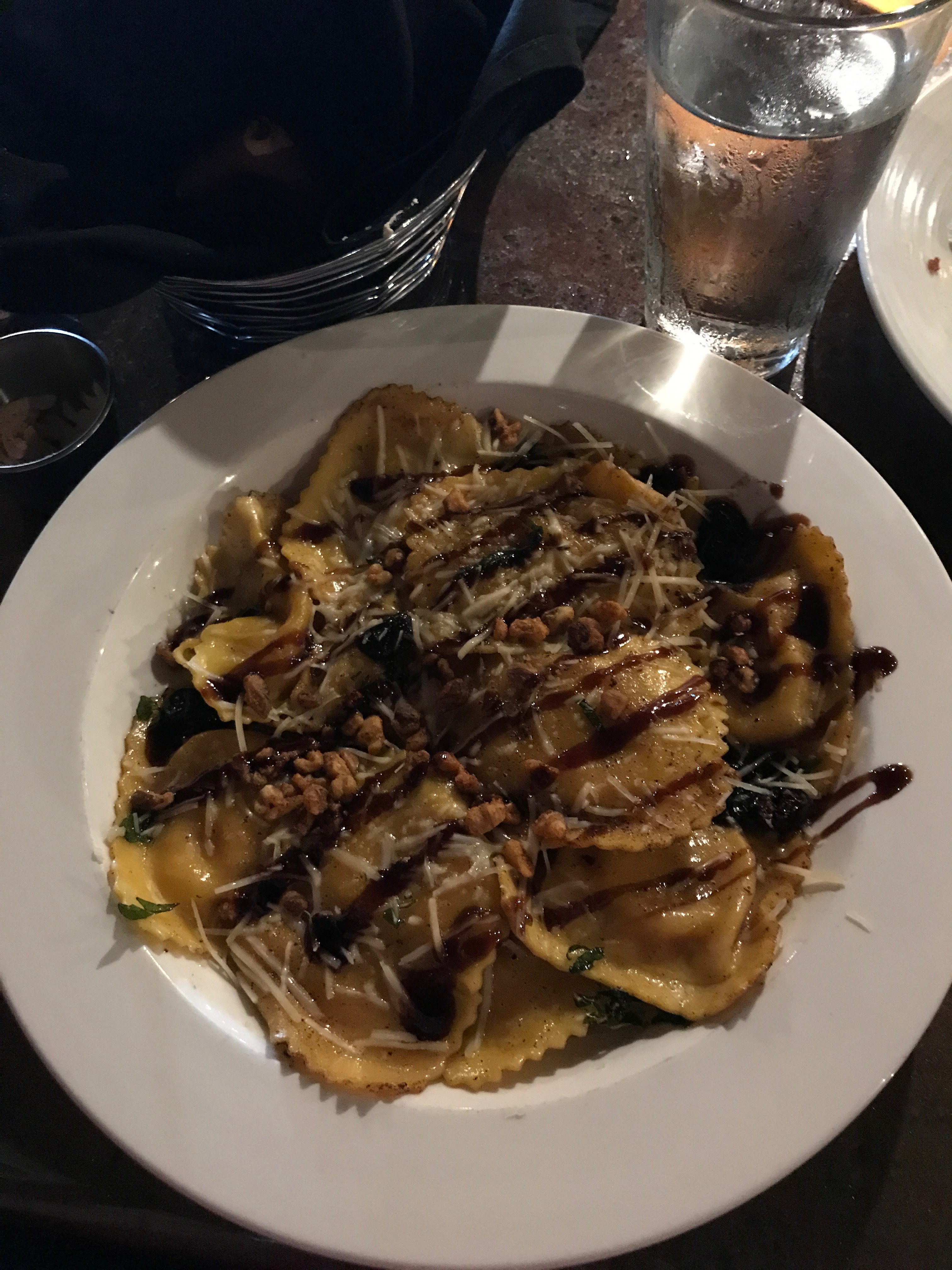
Next course was ravioli.
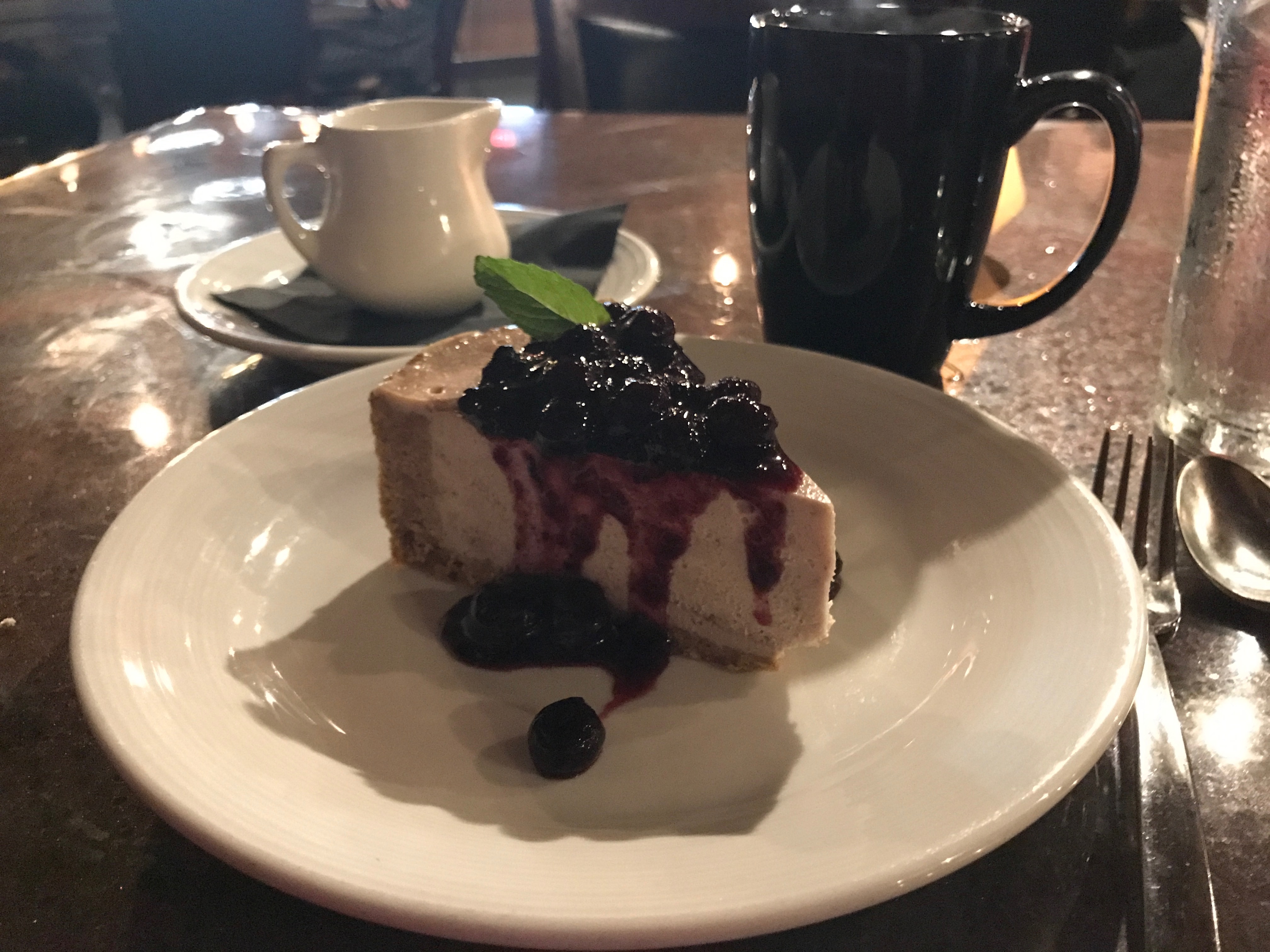
I topped it all off with cheesecake. Yum!
And then it was time to head west, just like those settlers Johnny Appleseed sold his seedlings to.