After my visit with the dinosaurs in Drumheller, my next stop was Medicine Hat, Alberta.
Why Medicine Hat? Well, I needed to stop someplace and I was captivated by the name. I figured that there had to be an interesting story.
According to my preferred source, it turns out that “Medicine Hat” is the English translation of Saamis – the Blackfoot word for the eagle tail feather headdress worn by medicine men.
There are several legends regarding the hat. One is that a mythical mer-man river serpent named Soy-yee-daa-bee – The Creator – appeared to a hunter and instructed him to sacrifice his wife to get mystical powers which were manifest in a special hat. Another legend tells of a battle long ago between the Blackfoot and the Cree in which a retreating Cree Medicine Man lost his headdress in the South River.
I should have looked for a souvenir shop to see if there were any special Medicine Hat hats for sale.
And, even though the town’s name is interesting, the town’s nick name is even more intriguing: Hell’s Basement. The name came from Rudyard Kipling, who was inspired by the region’s vast underground stores of natural gas. He wrote:
This part of the country seems to have all hell for a basement,
and the only trap door appears to be in Medicine Hat.”
More genteelly, the city is known as “The Gas City”. The city even owns it’s own gas utility and power generation plant, which contributes to its reasonable cost of living.
After a good night’s sleep, I set out to see what I could see. The first thing on my list was Medalta Potteries.
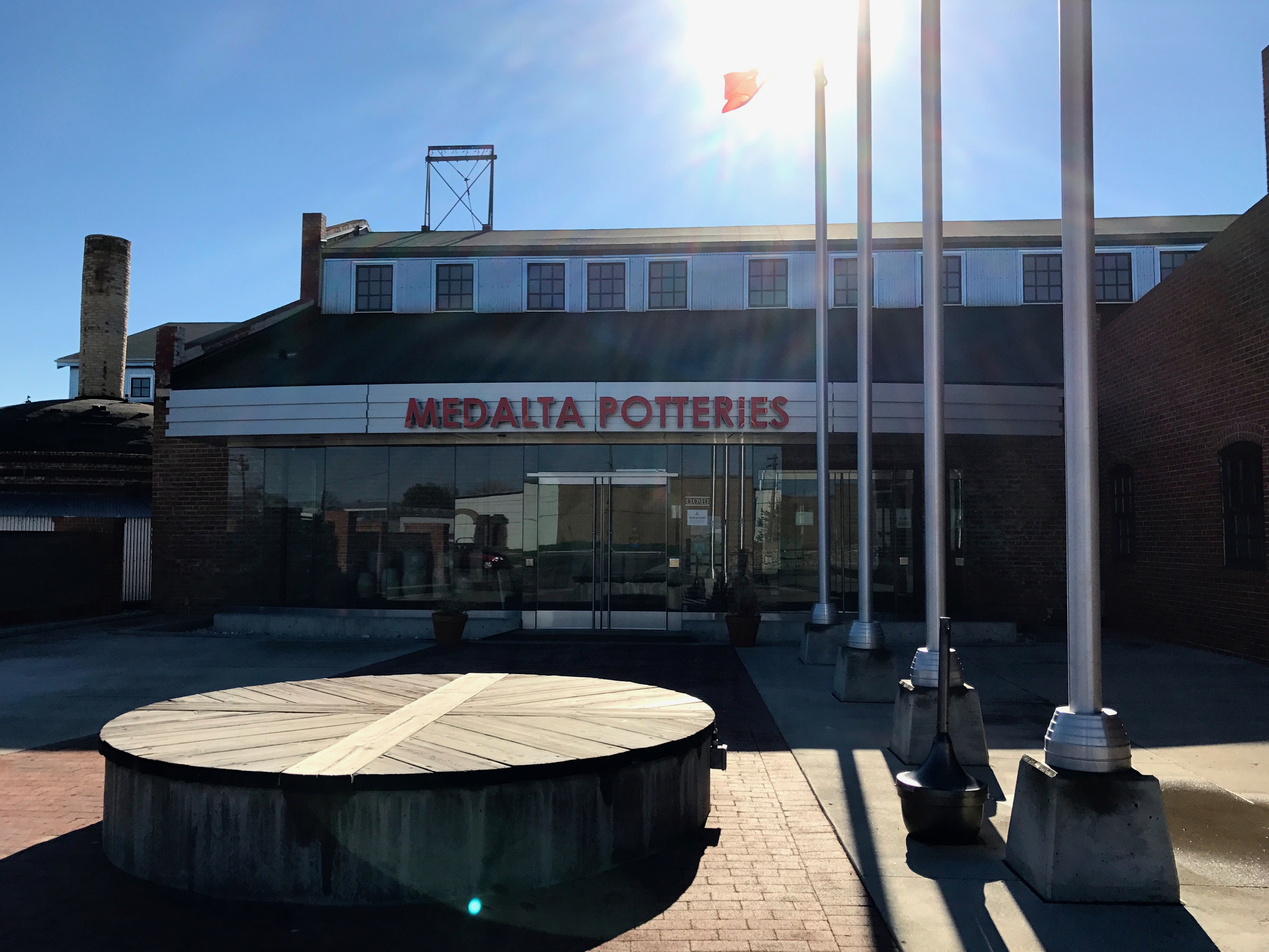
With the proper soil type and abundant energy, Medicine Hat was a logical location for a pottery.
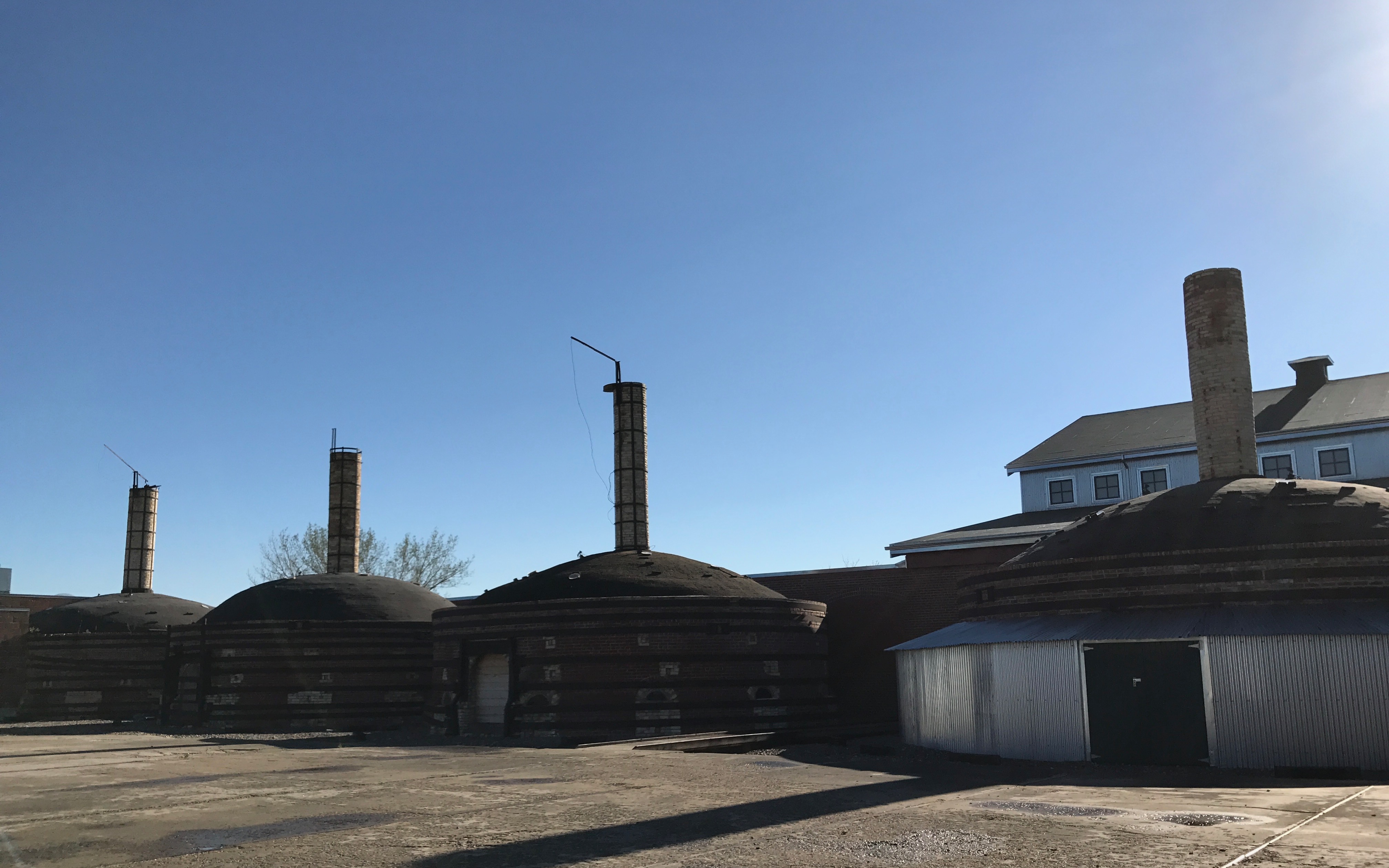
It had four large, beehive kilns.
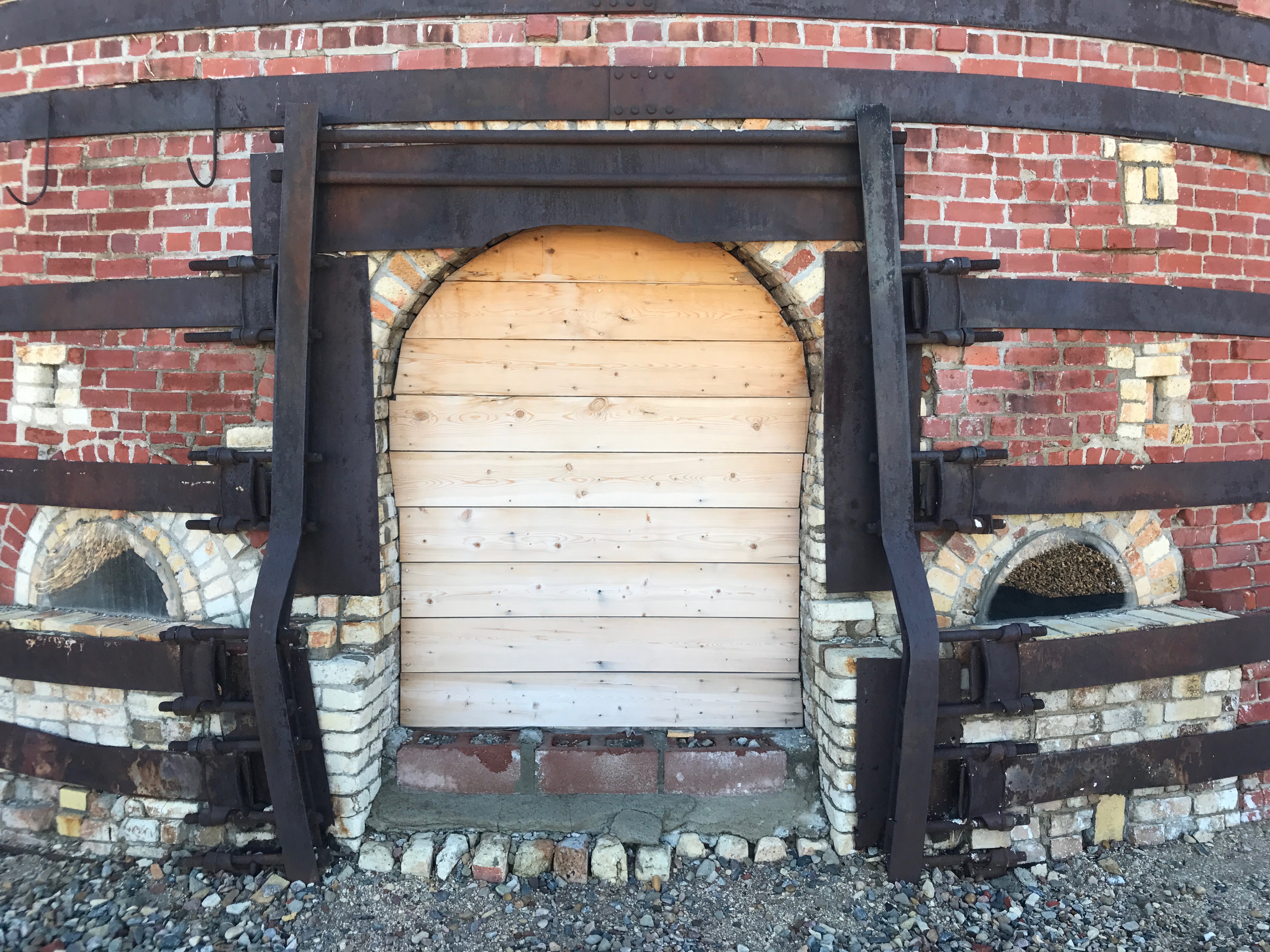
From the wooden door on the kiln, you can surmise that they are no longer in use.
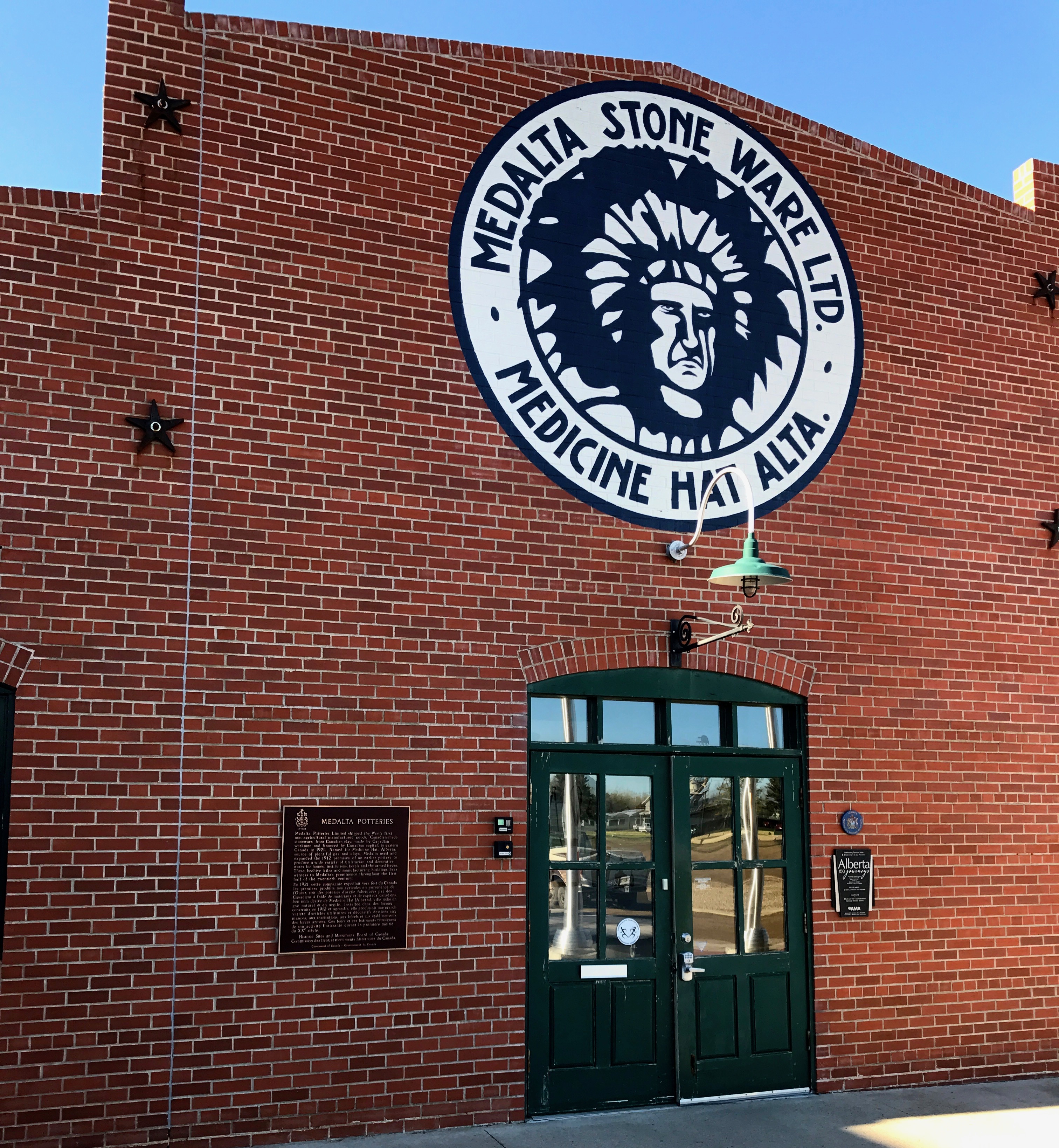
Given my sense of timing, I was not surprised that it was closed on the day I arrived. Oh, well. I still spent some time looking around. There are always interesting things to see.
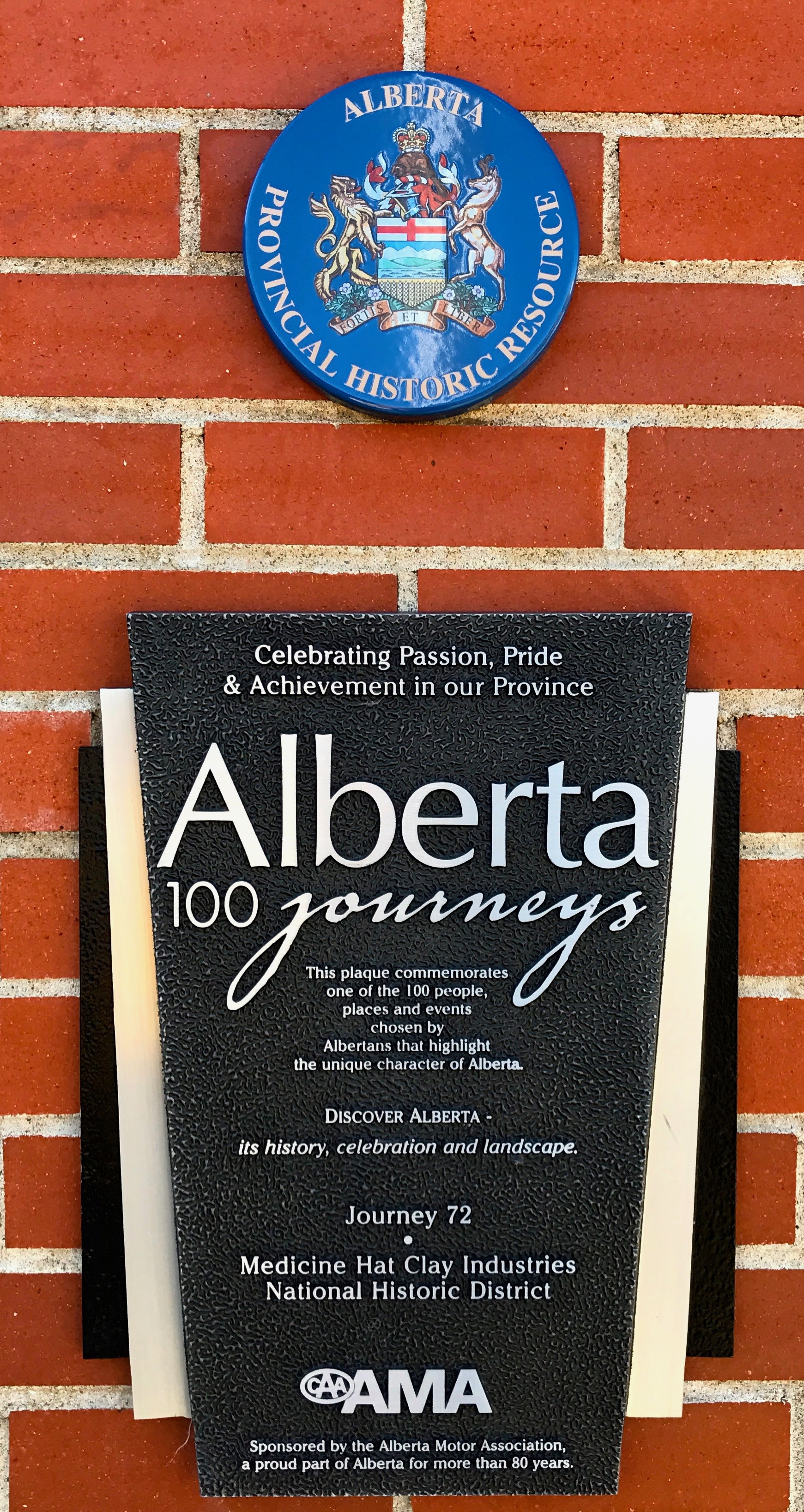
It was placed on the register of Canada’s Historic Places in 1996. Now it is an innovative , industrial non-profit museum, contemporary ceramic arts facility, art gallery and community hub. According to something I read somewhere, “it has become an exciting place where cutting-edge technologies meet historic restoration and archaelogy.
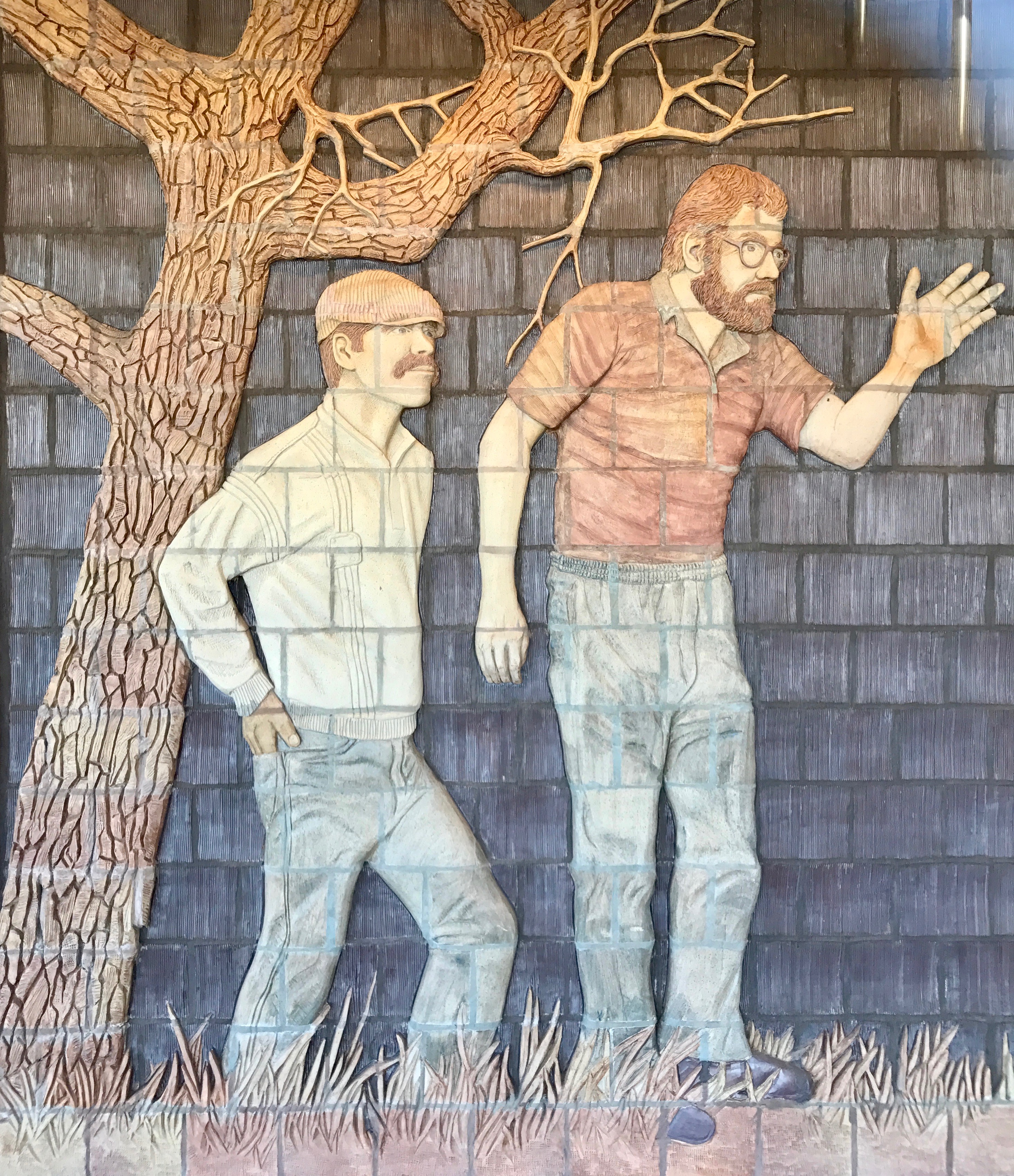
This work of art illustrates two friends standing under a sprawling cottonwood tree in 1974, near the abandoned Medalta Potteries factory. The old pottery site inspired them and they knew that the Alberta government was in the process of identifying important heritage resource around the province. They agreed that if anything qualified for inclusion on the list, Medalta did.
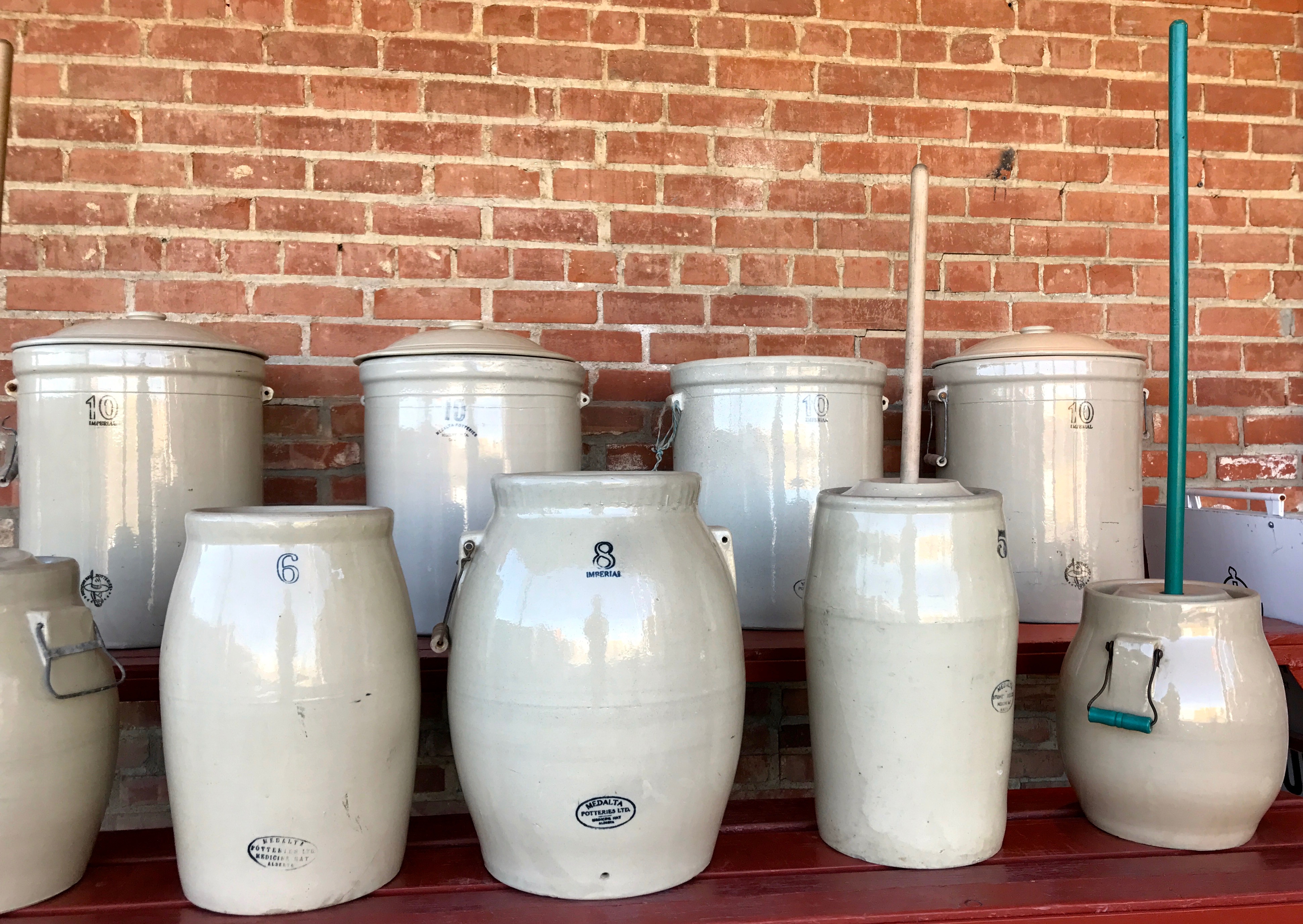
I looked through the windows at this display of some of the Medalta ware. In fact, if you look on eBay, you can find Medalta ware for sale. When you keep hitting the days things are closed, you get good at looking through windows to see what you can see.
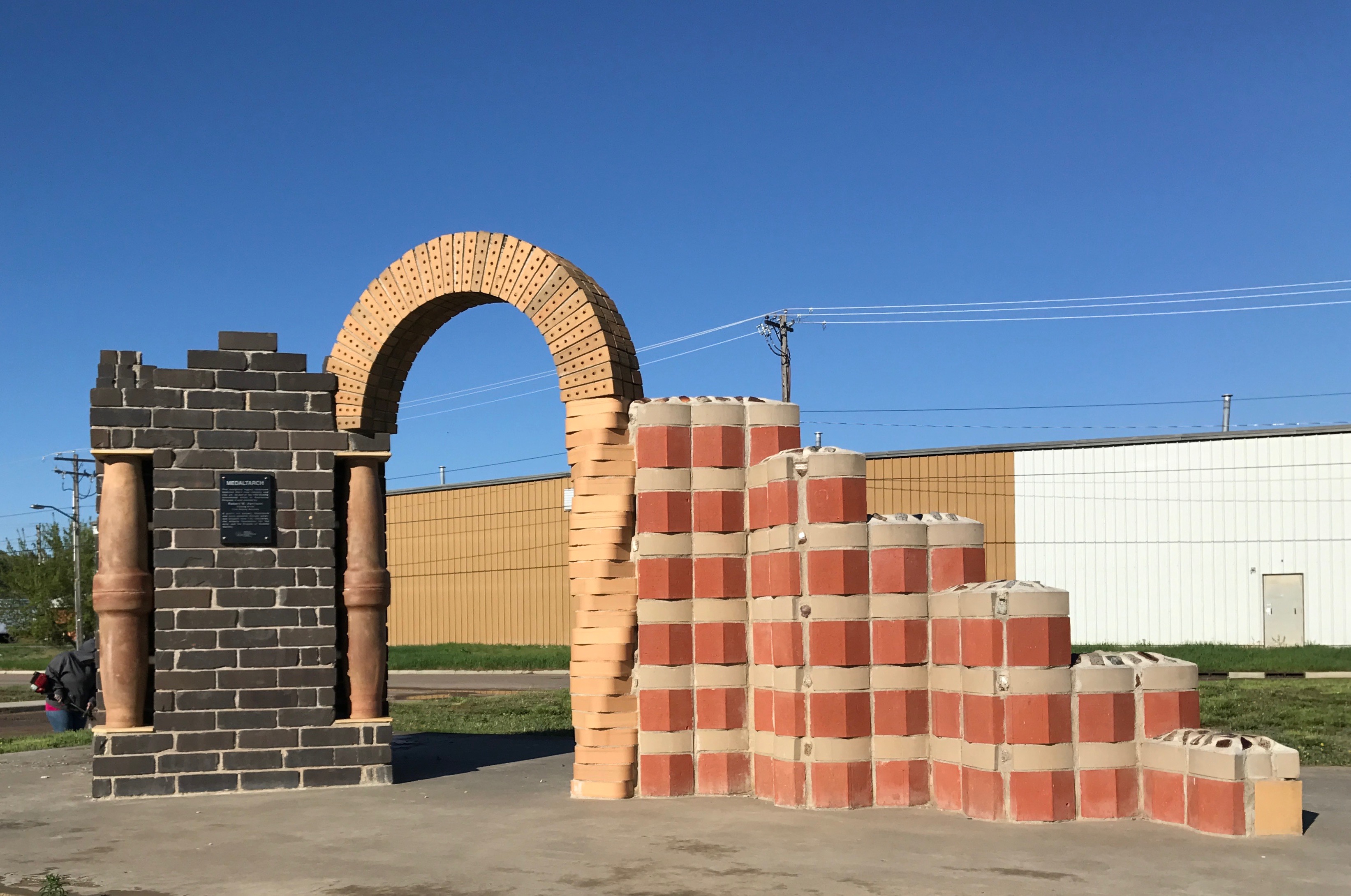
I found this work of art intriguing. It was in front of the potteries.
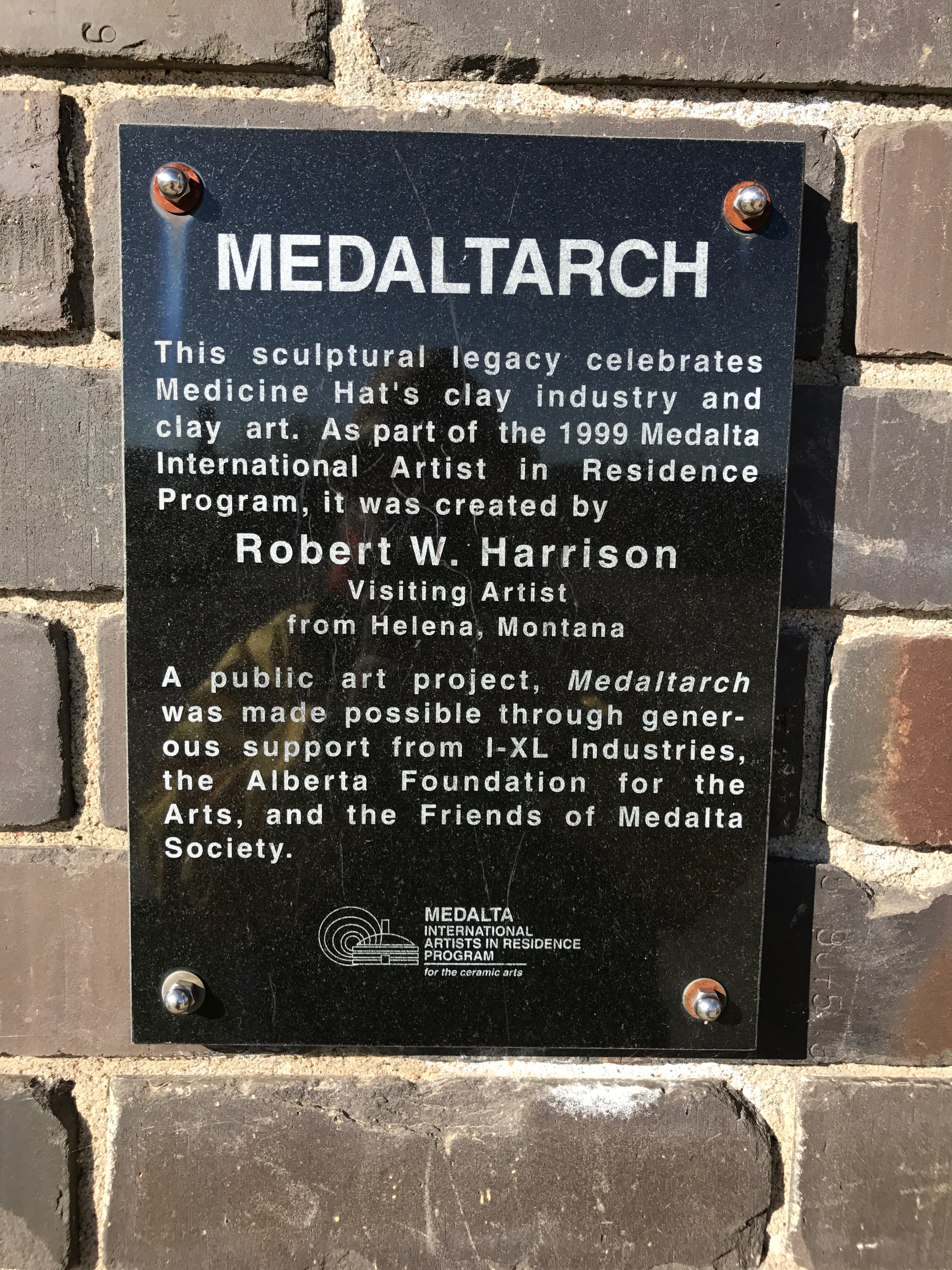
Rather than retype the information on the plaque, I’ll just let you read it for yourself.
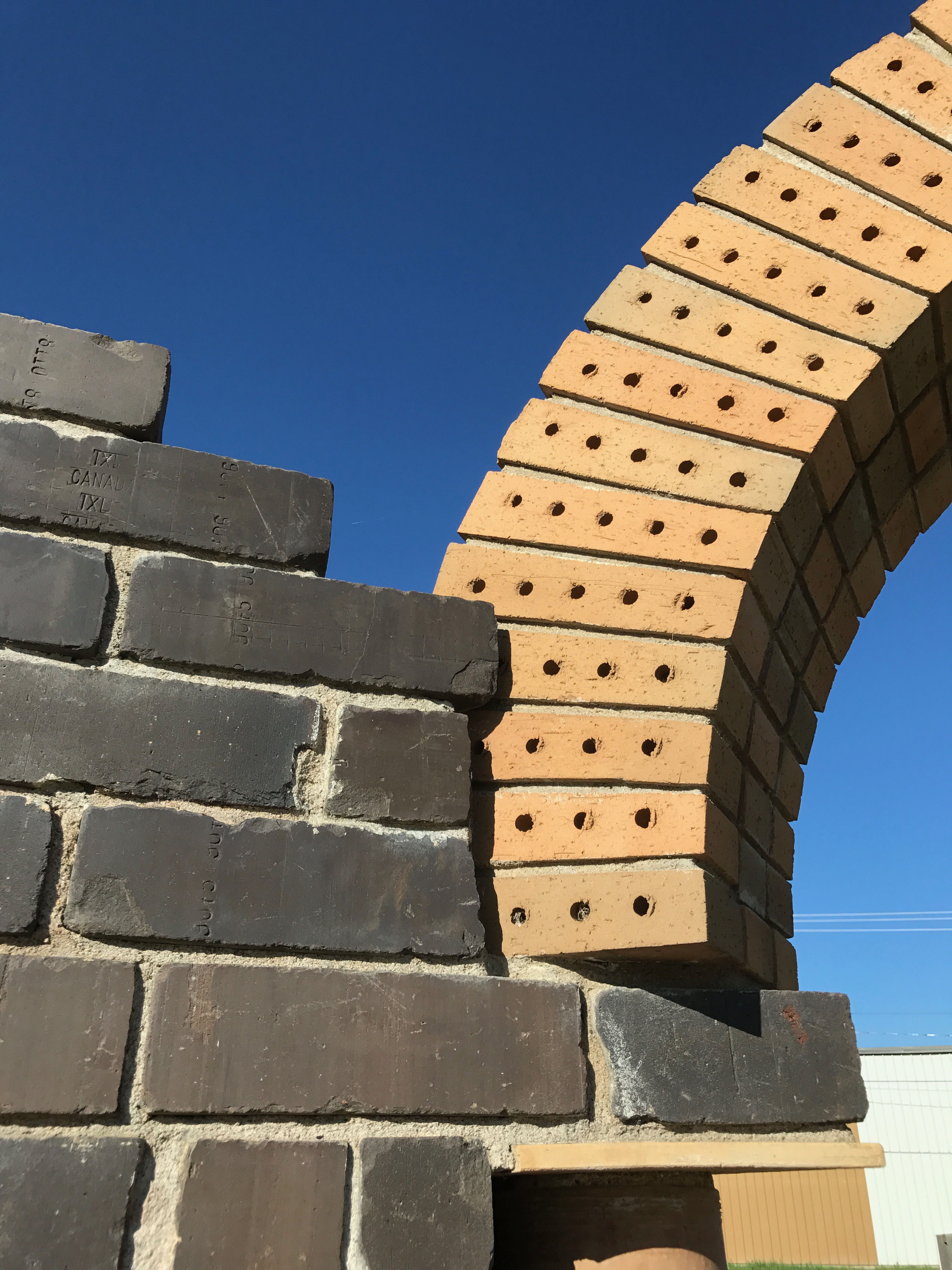
I like the juxtaposition of the different kinds of bricks, as well as the actual pottery sherds that the artist used.
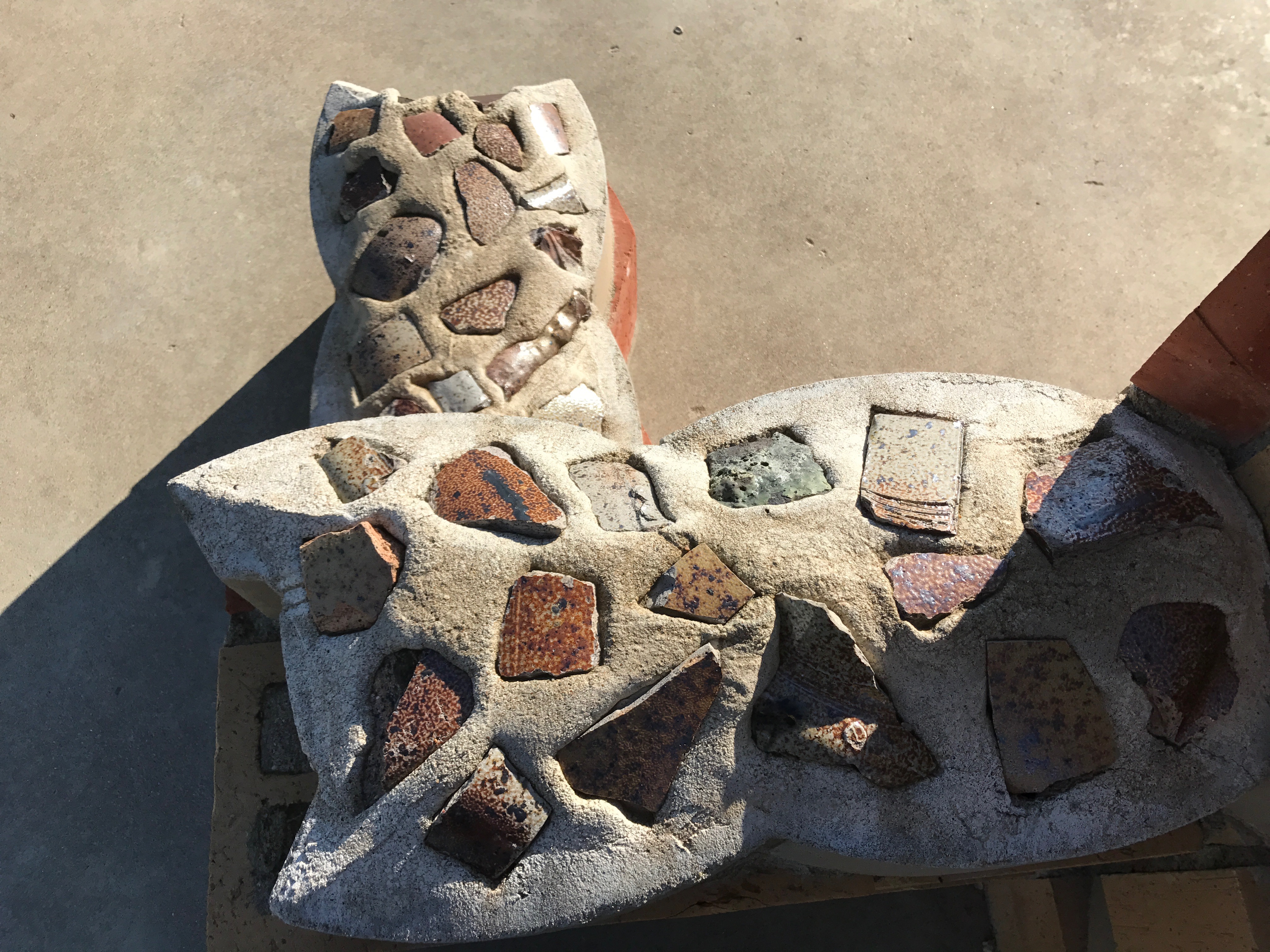
Really, there were sherds all over. Of course I had to pick up a few to photograph.
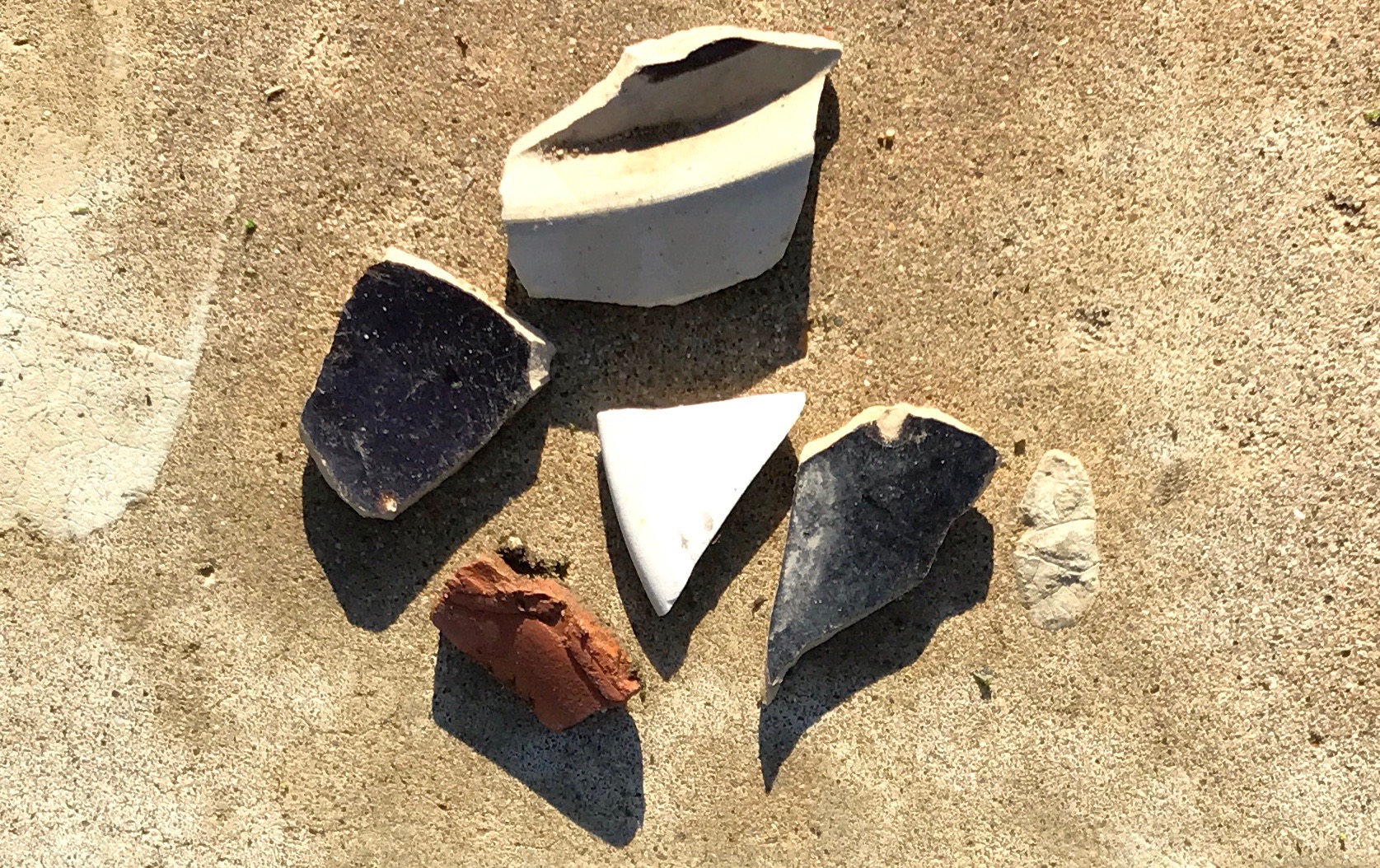
It’s a good thing that I wasn’t planning to take them.
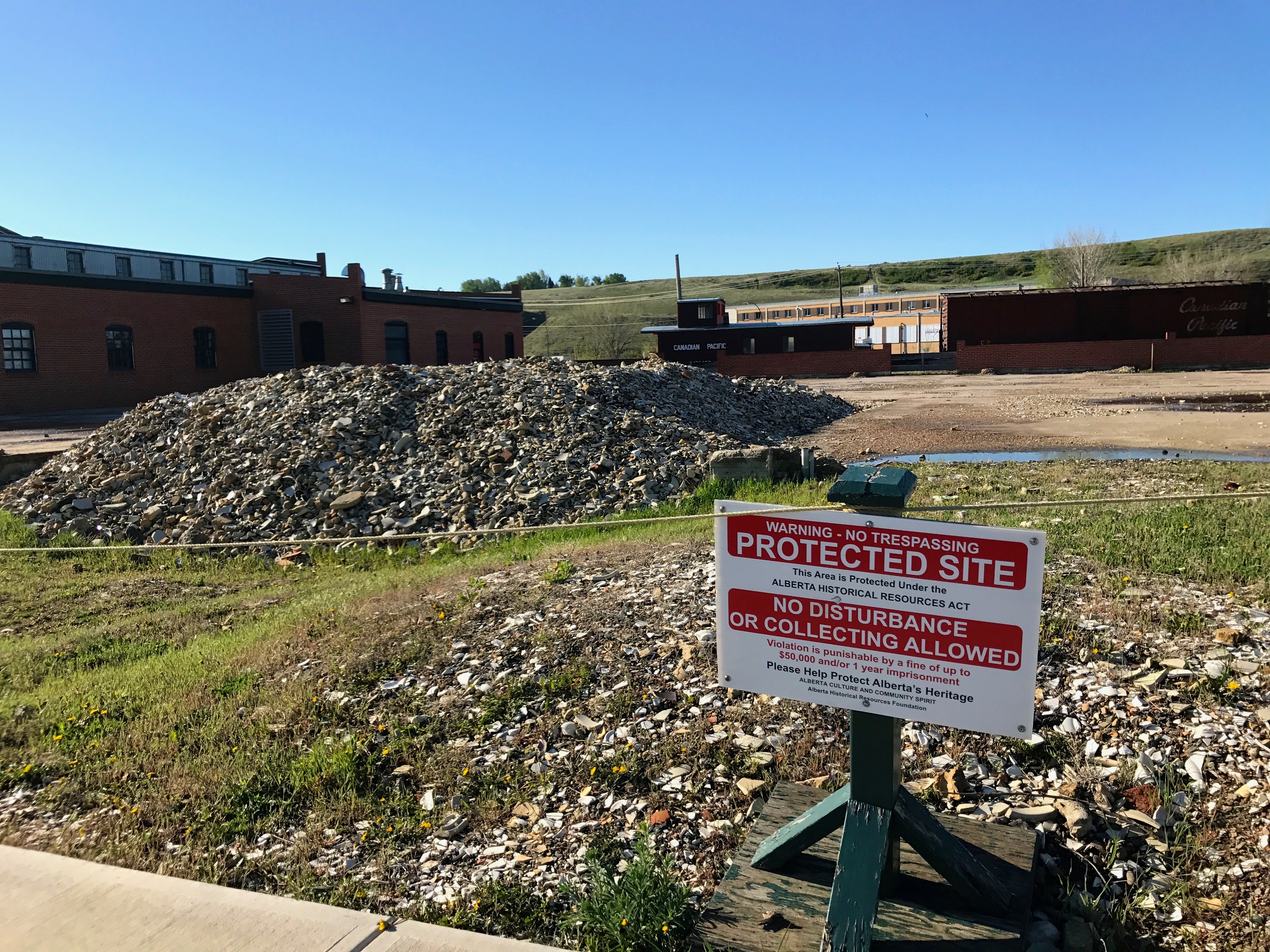
It turns out that no collecting or disturbing is allowed. Of course, the ones I picked up didn’t come from the pile. They were just on the ground near where I parked.
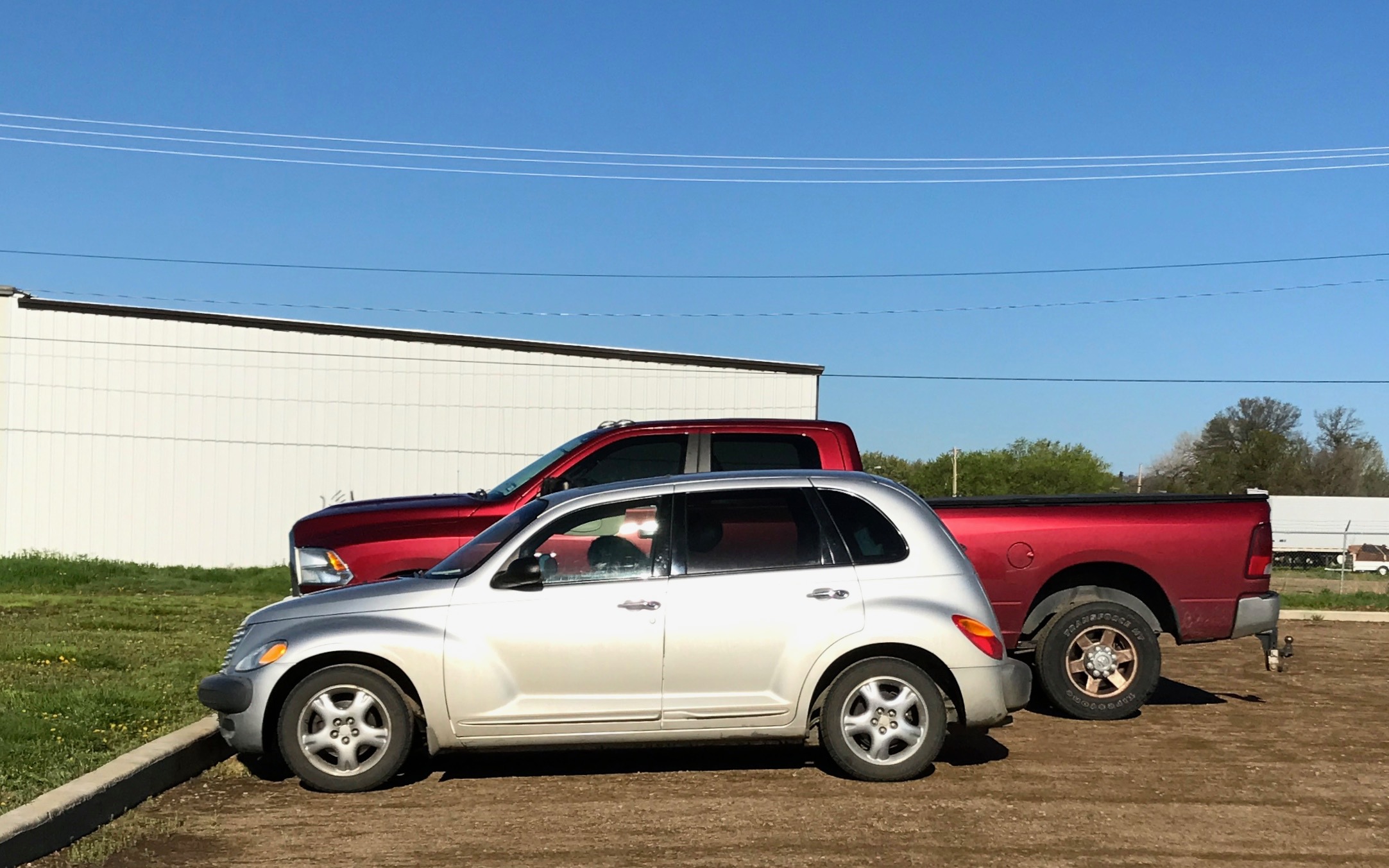
Speaking of parking, I found myself parked next to a PT Cruiser. That was my car before Bart. No wonder I found Bart to be a bit unmanageable!

My next stop was Police Point Park. I wanted to get a look at the South Saskatchewan River.
Incidentally, the tourism agency for Alberta says that Medicine Hat is the sunniest city in Canada. If the weather I experienced is any indication, I’d say that wasn’t hyperbole.

They make good use of the sunshine and the abundant energy. I saw greenhouses all over town.
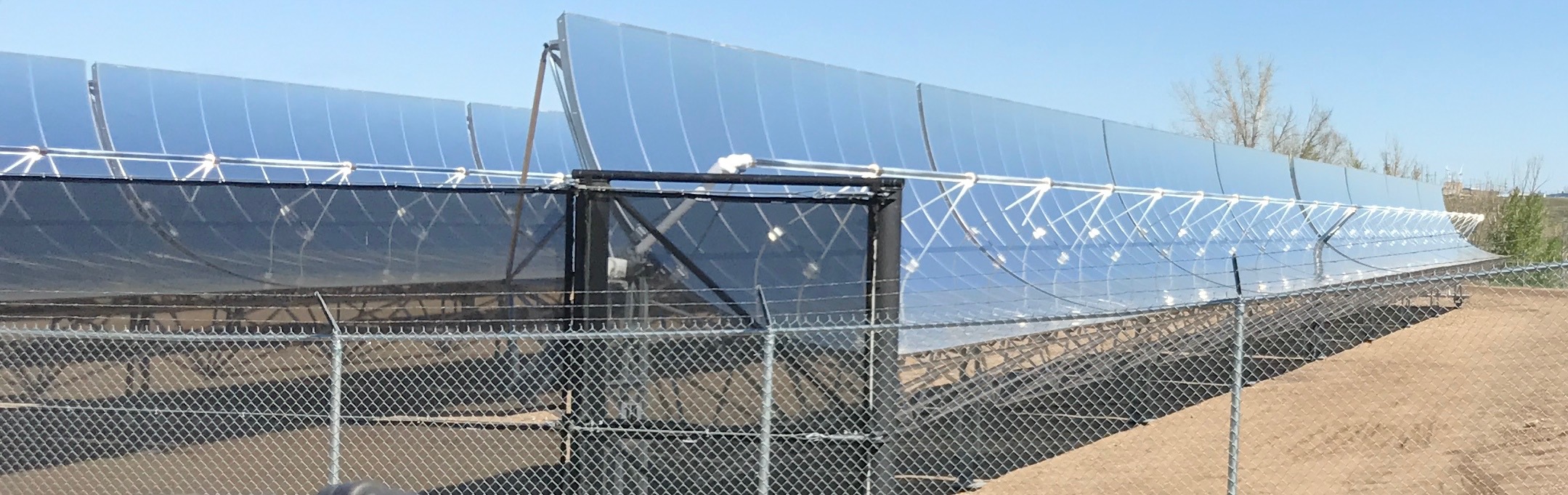
In addition to the energy from their gas, they make use of the solar energy. These are some pretty high-tech solar arrays. According to my research, they are called parabolic troughs, and if you click on the link, you can get an idea of how they work.
All that sunshine and driving around wore me out. It was time to get some sleep and get ready for the next day’s adventures.
Next stop: Moose Jaw, Saskatchewan.