After driving around in circles the past week, I managed to find a room for the weekend in Frederick, Maryland. I somehow snagged a room with a jacuzzi tub, and the hotel had above average breakfasts. I did a lot of resting that weekend, but I did make one field trip.
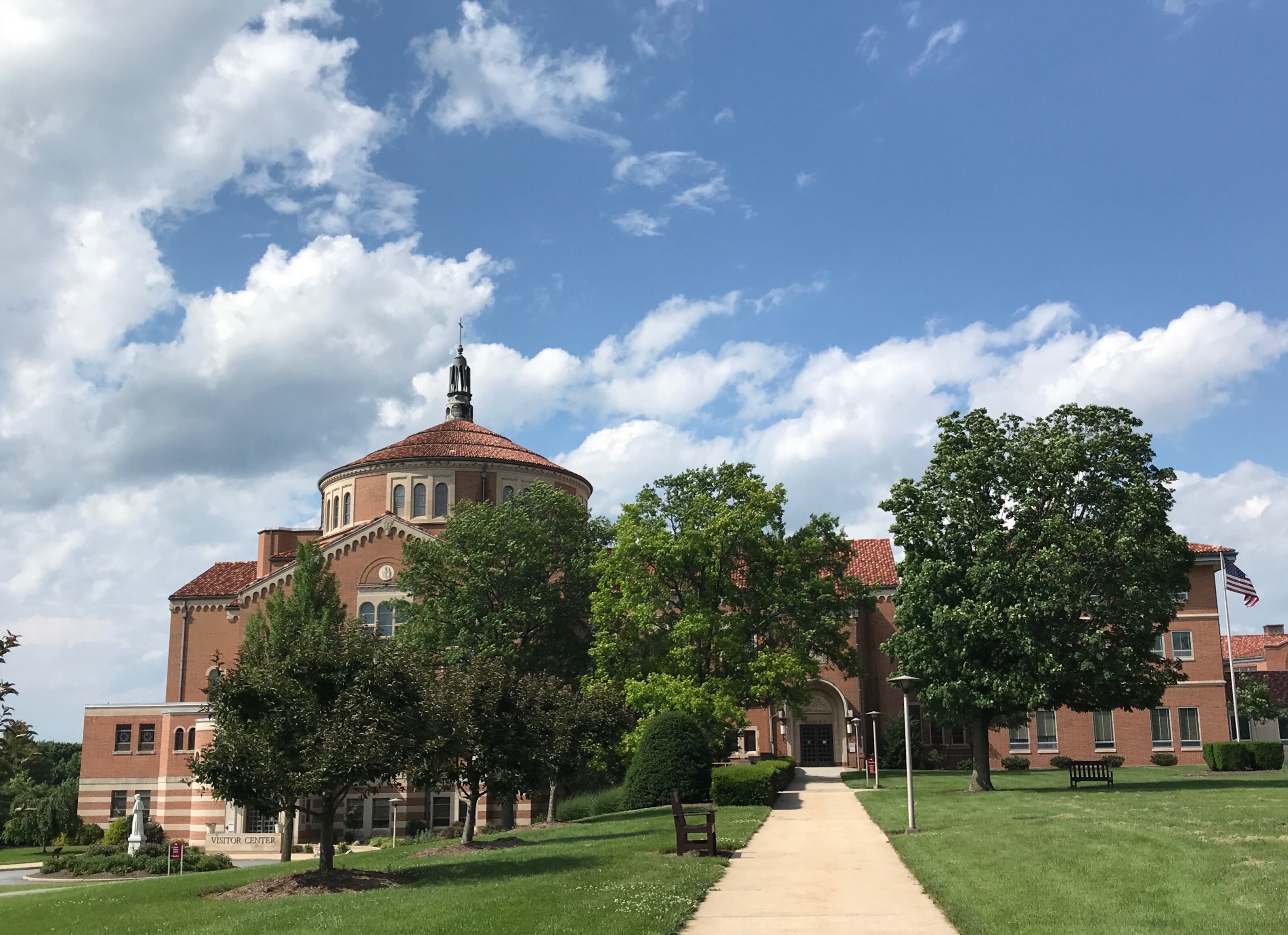
I went to attend mass at the National Shrine of Saint Elizabeth Ann Seton in Emmitsburg, Maryland.
I have to admit that I didn’t know as much as I probably should have about her, although I was aware that she was the first native-born citizen of the United States to be canonized by the Catholic Church. I knew little else about her, and what I thought I knew about her I had conflated with Mother Frances Cabrini, who was the first naturalized American citizen to be canonized.
Both women did incredible things and founded religious orders that improved the lives of the poor. For this post, I will try to give some information on Saint Elizabeth Ann Seton. If you want to know more about Mother Frances Cabrini, you are on your own.

I made it in time for mass. I was in such a rush, that I didn’t notice that the shrine was also a basilica, so I didn’t take the time to look for the symbols that go with being a basilica – you know, the umbraculum, the tintinnabulum, and the crossed keys, which are the papal symbol. I guess I’ll have to go back and check for them, next time I’m in the neighborhood.
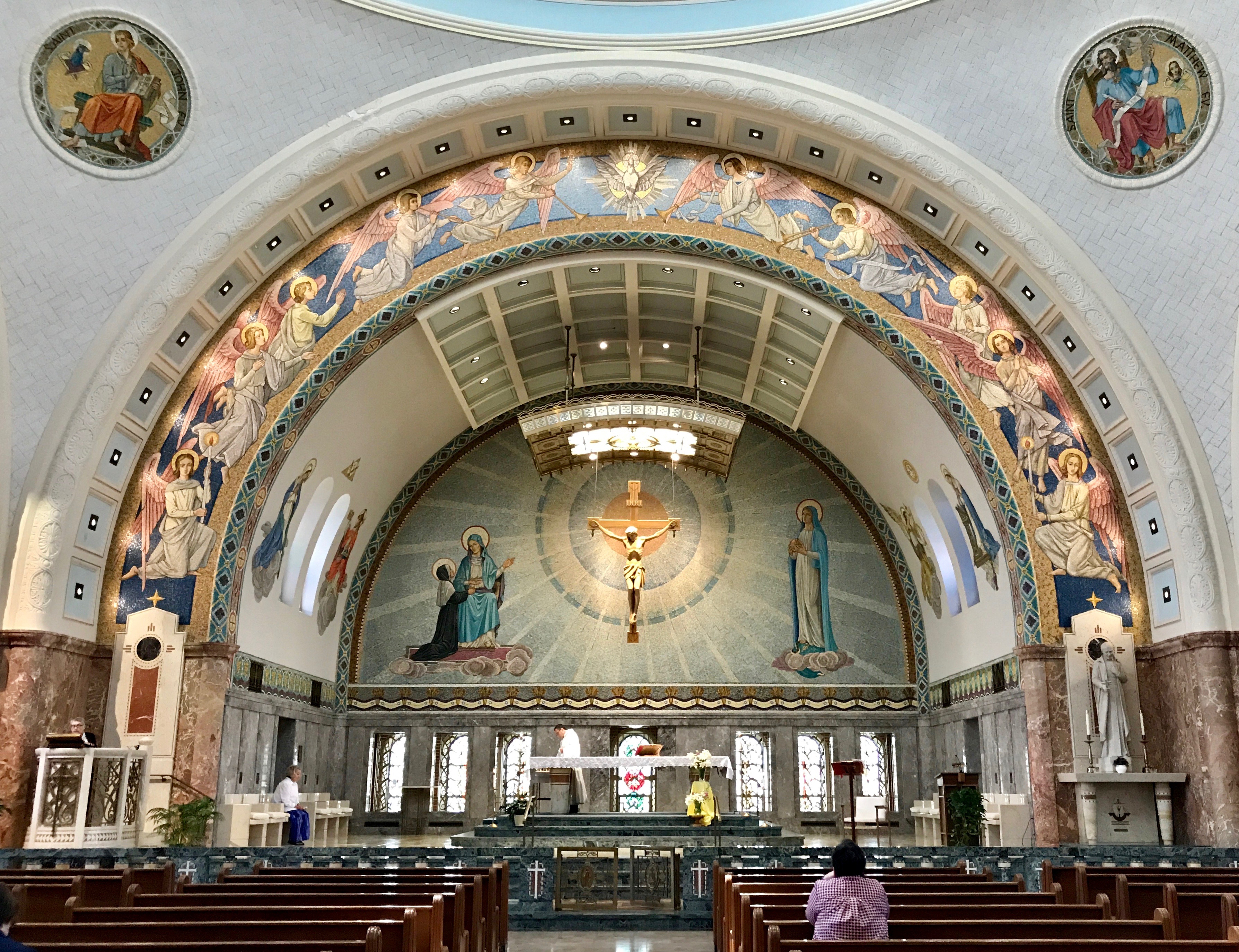
The Basilica was bright and airy. This is the view toward the main altar.
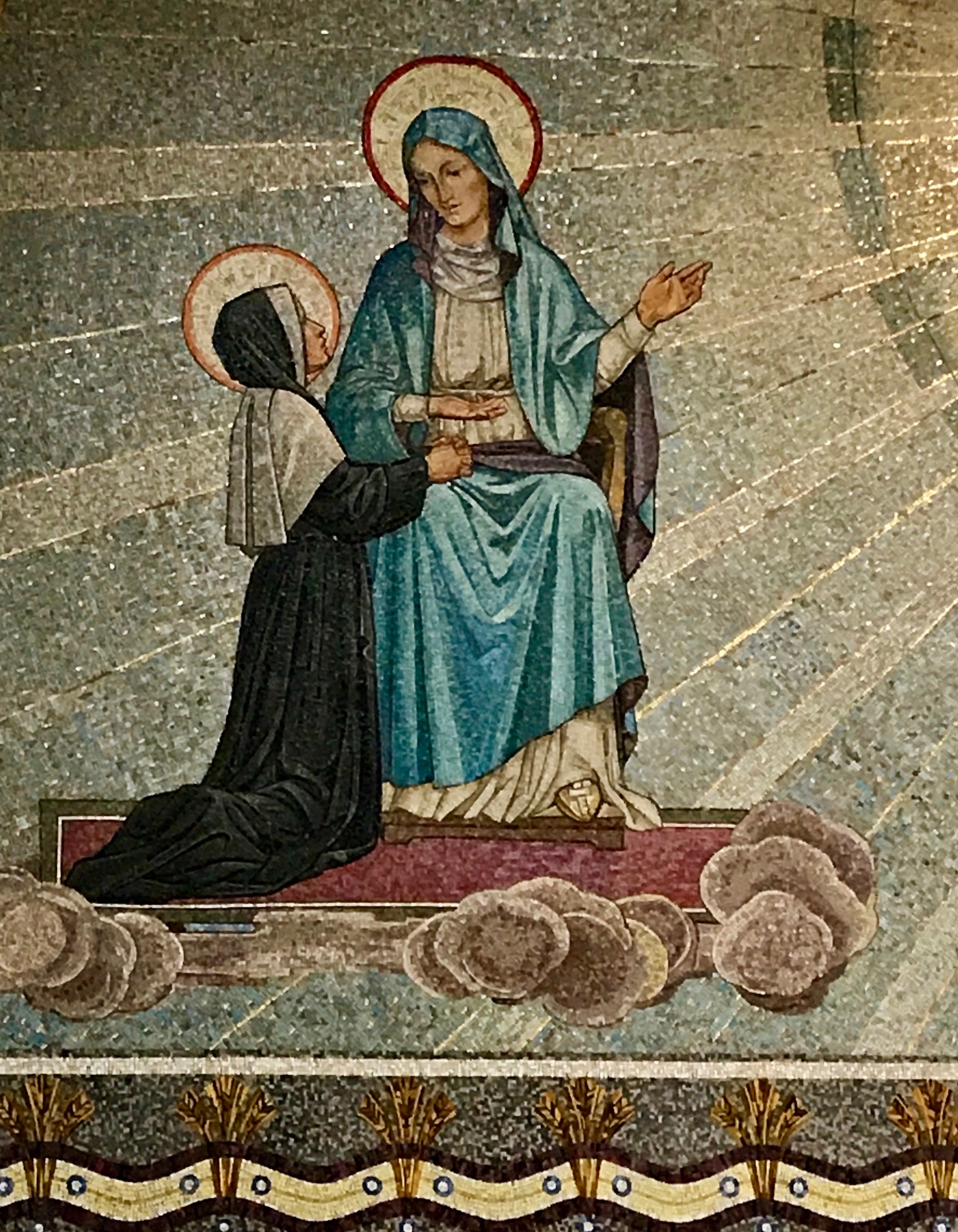
There was no one to ask at the time, but I assume that this was Mother Seton. Incidentally, one of her symbols is wheat, which you see in the border.
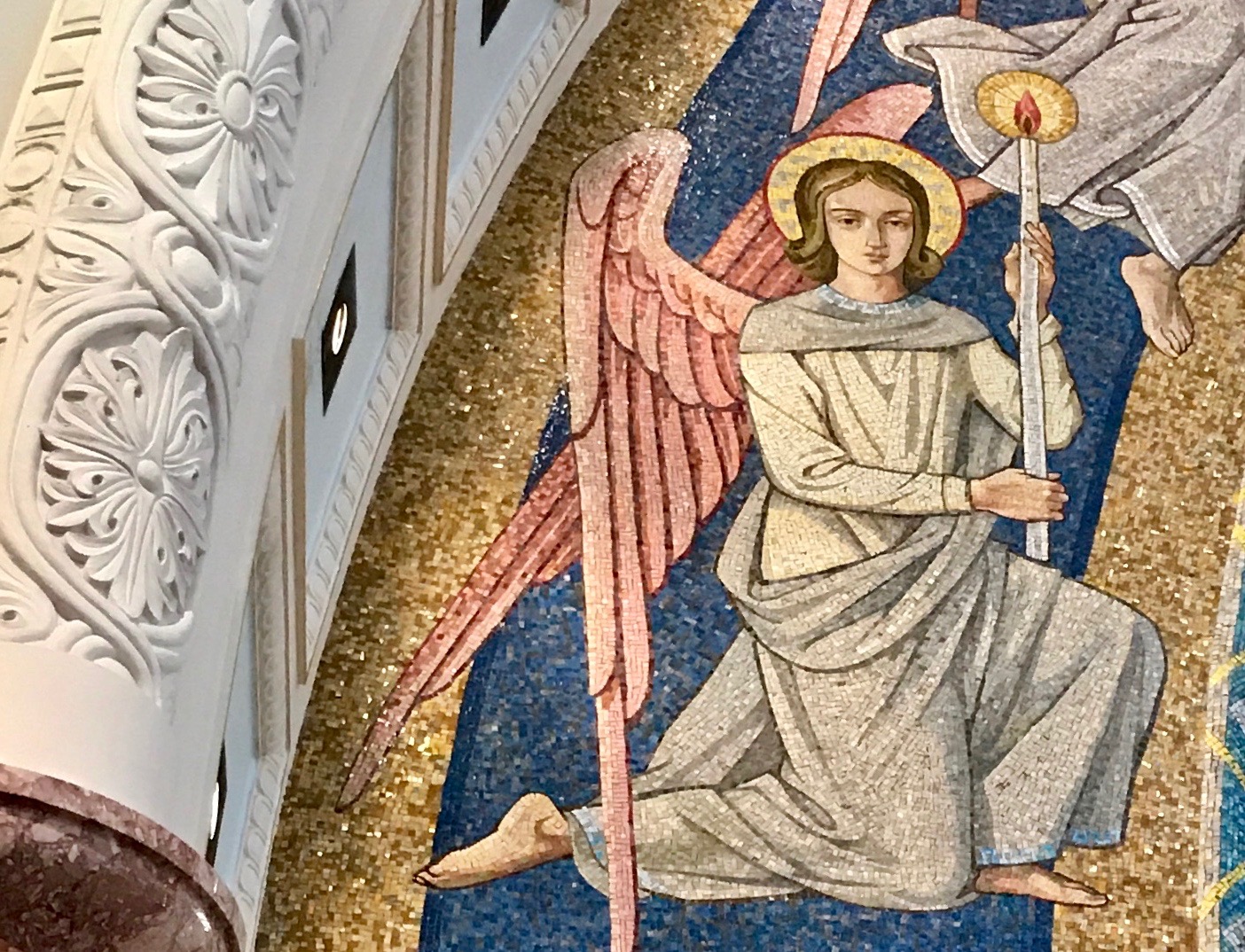
This angel was striking. I always appreciate mosaic art.
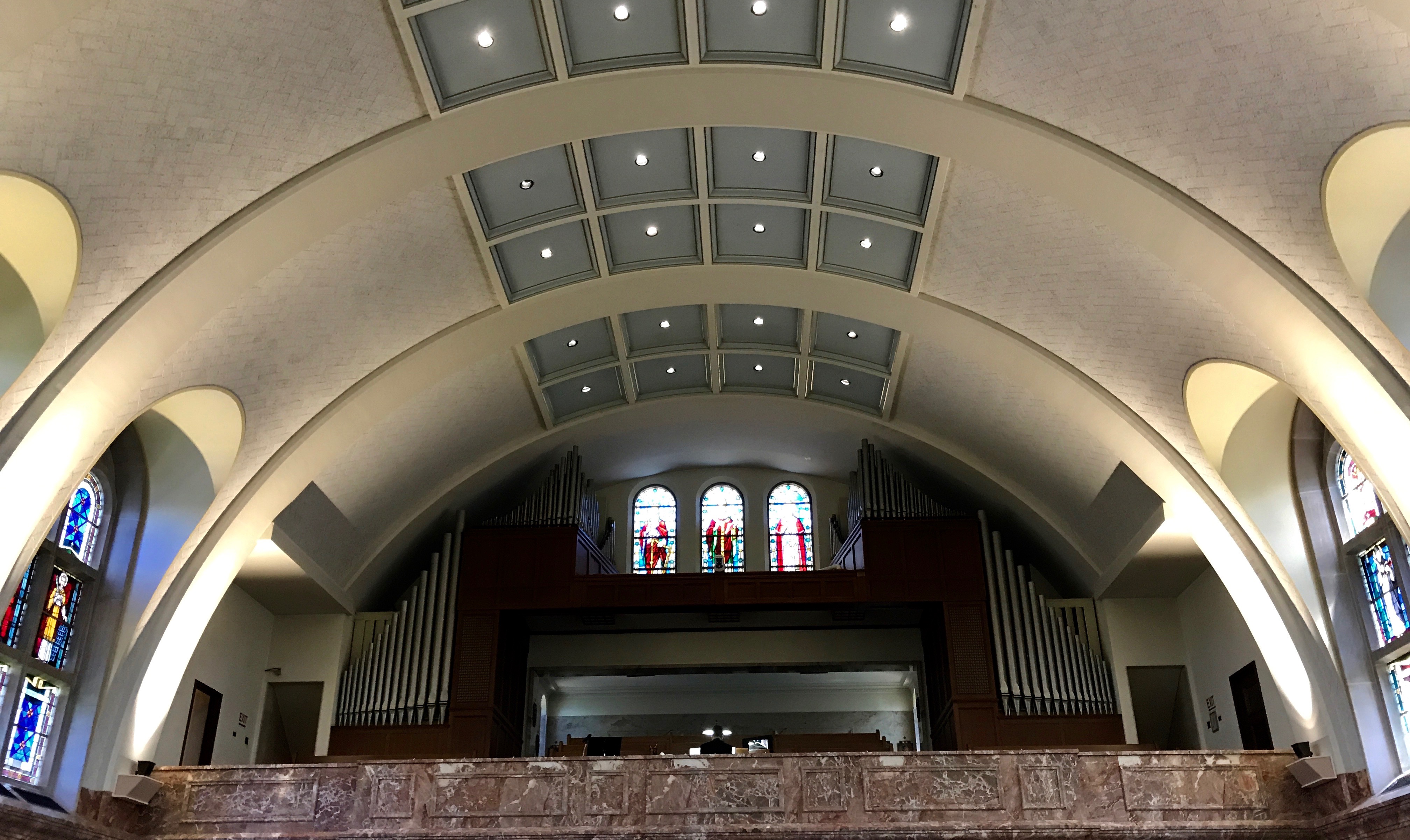
Opposite the main altar was the choir loft and organ – a relatively small organ, praises be!
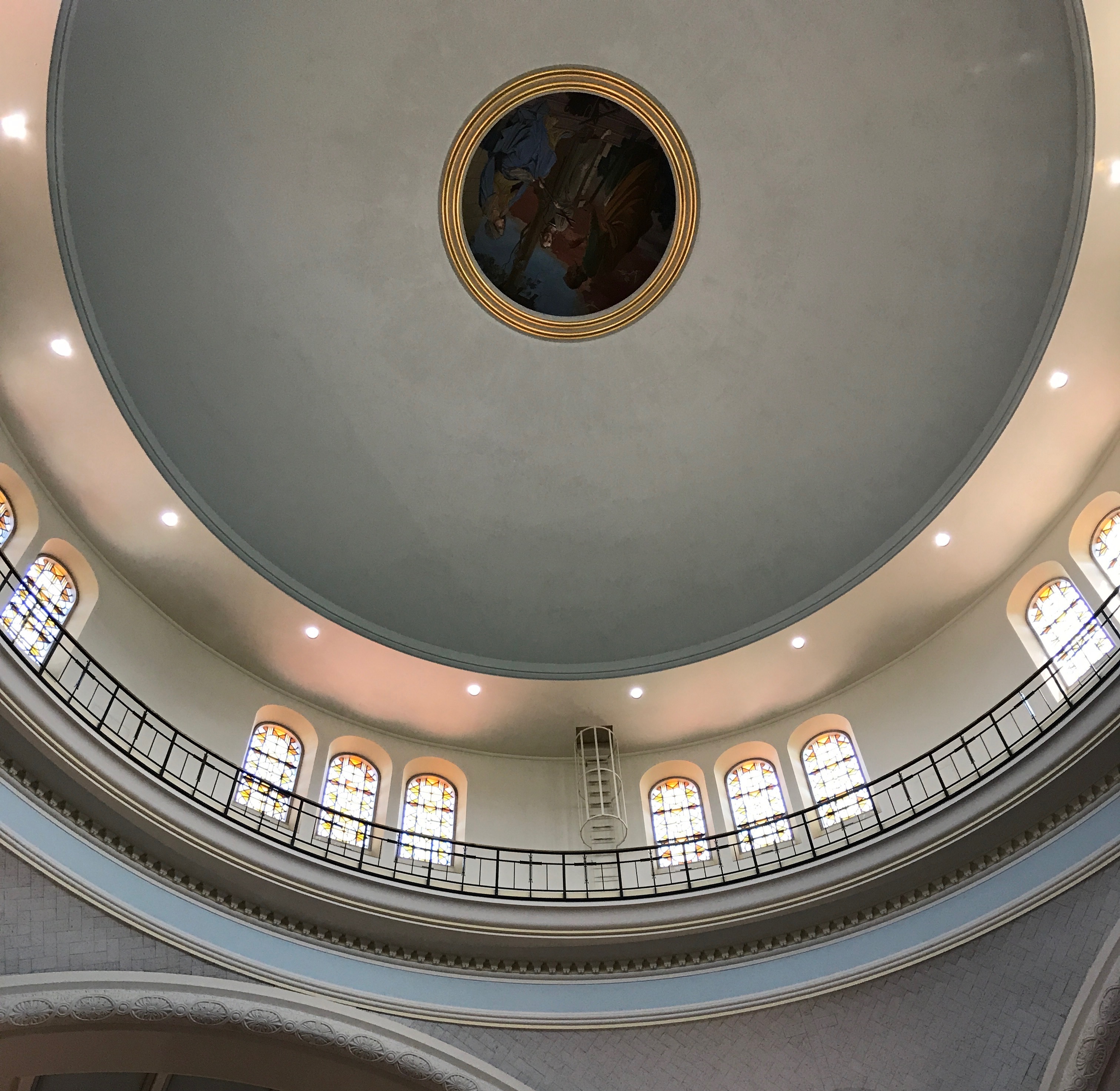
Above the crossing was the dome.
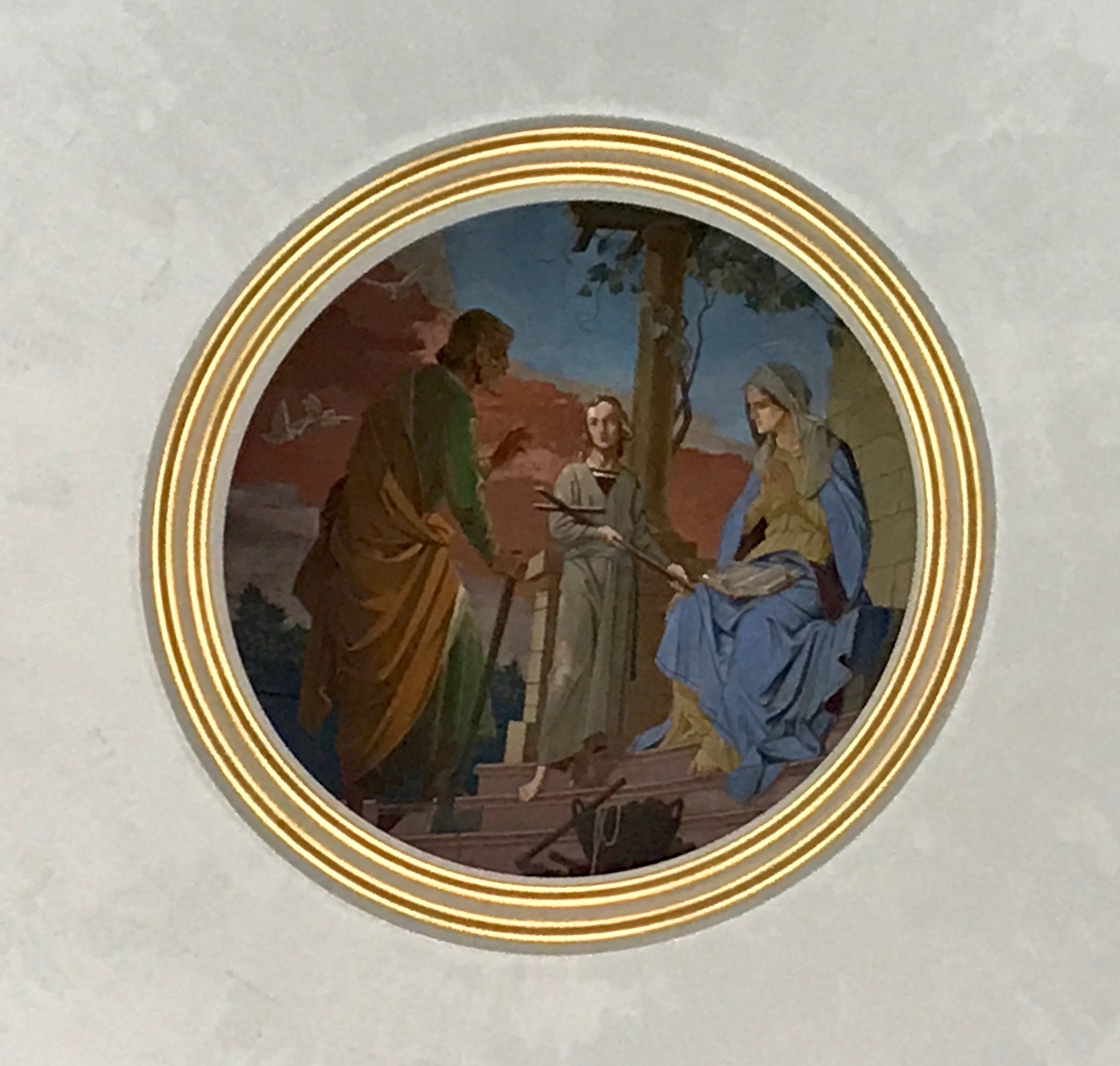
Through a little fiddling with my photo program, I was able to bring the medallion in the dome into better focus.
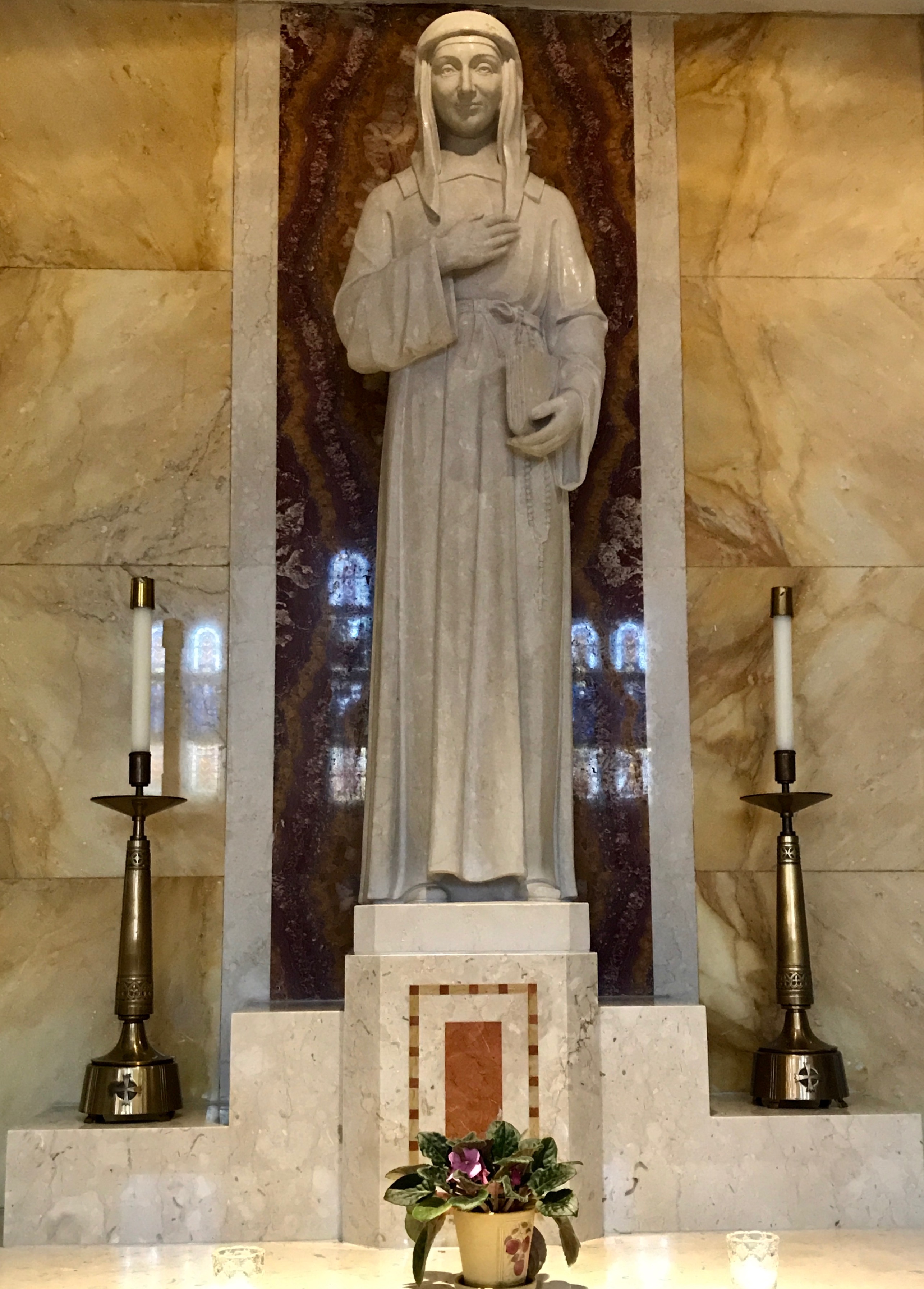
I was taken with this statue of Saint Louise de Marillac. She was born in Paris in 1591. She married in 1613, but was widowed in 1625. Did you know women could take a vow of widowhood? I didn’t know that, but that’s what she did.
She collaborated with St. Vincent de Paul in founding the Community of the Daughter of Charity in Paris in 1633. She died in Paris in 1660. She was canonized in 1920 and is the patron saint of all Christian social workers.
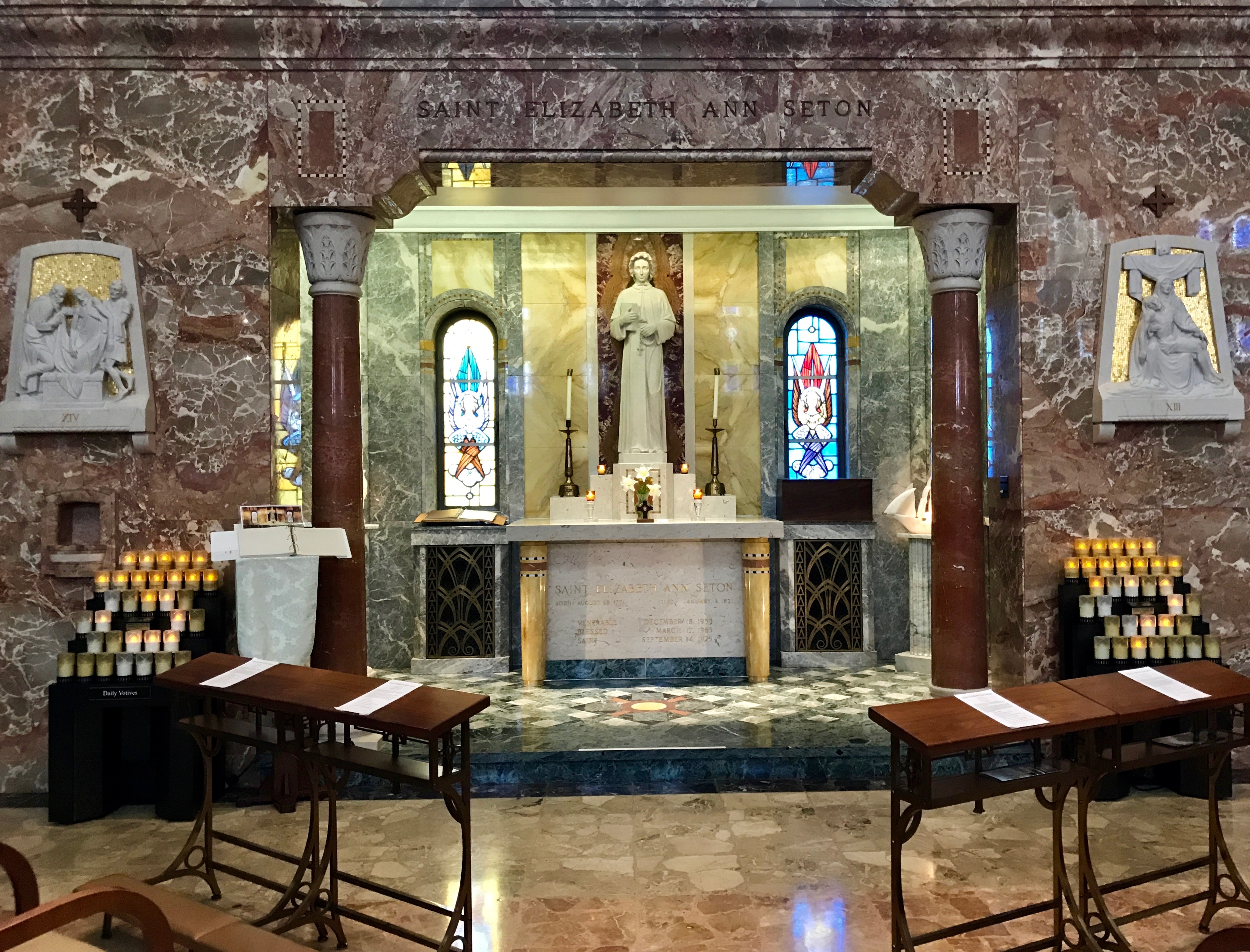
The reason for the Shrine is Saint Elizabeth Ann Seton. This is her final resting place. The basilica was completed in 1965 and her remains were transferred here in 1968. Beneath the altar and enclosed in marble, her remains rest in a small copper casket.
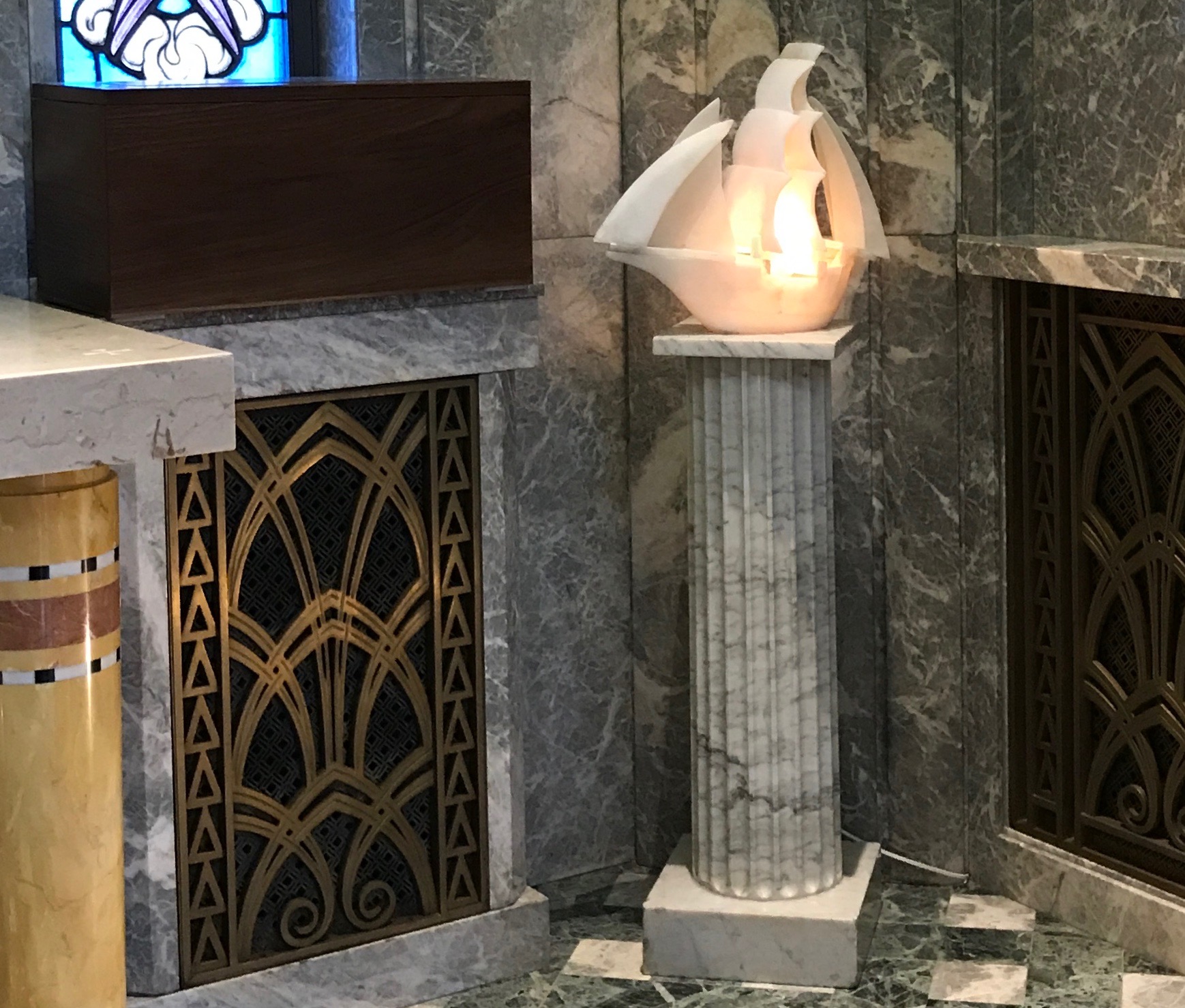
In the shrine is a lamp in the shape of a boat. Saint Elizabeth Ann is the patron saint of seafarers. You can also see the wheat motif repeated in the brass grate between the altar and the pillar.
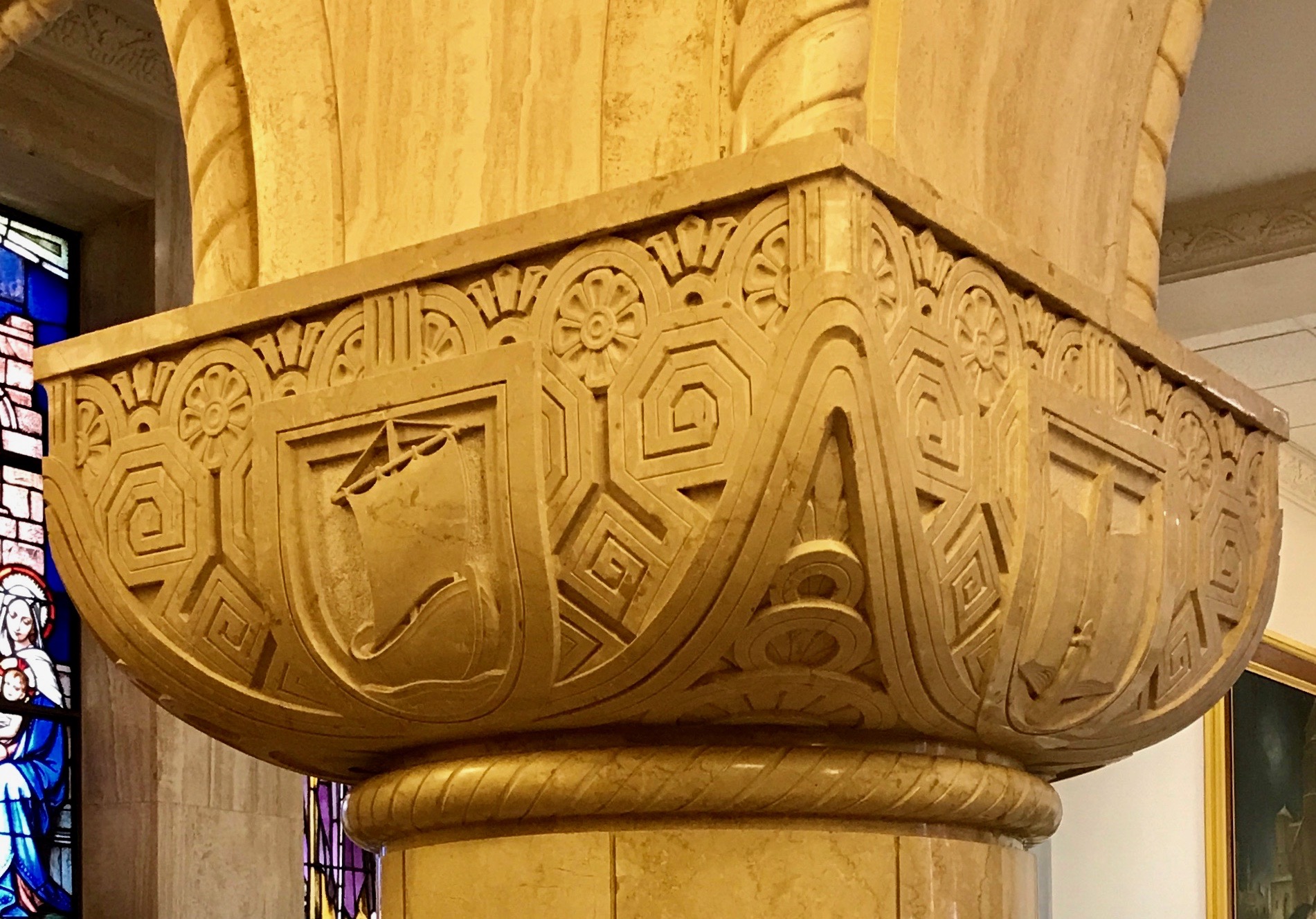
There was a sign directing me to a museum in the lower level. I passed by this pillar with the interesting capital. You see the ship, and, if you use your imagination, there is stylized wheat at the top edge. According to one source I found (but can’t locate to give it to you) a pink flower and a book are also her symbols. You can see flowers repeated along the top edge and an open book on the right side.
Once downstairs, I saw that there was a tour leaving shortly. I took a quick look through the museum while I was waiting.
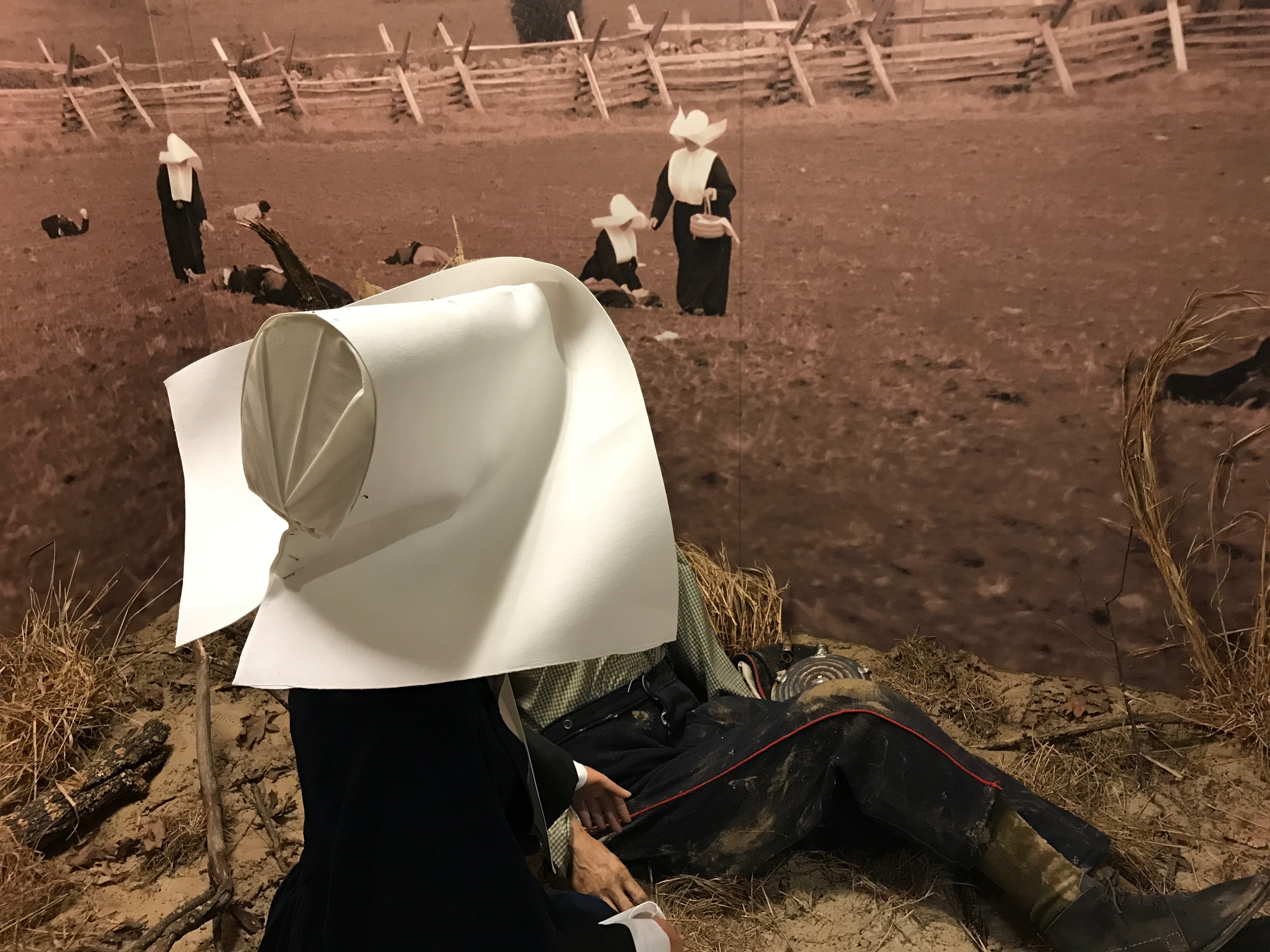
The sisters served as nurses during the Civil War. They were at the Battle of Shiloh in Tennessee and the Battle of Antietam in Maryland. More that 100,000 fought and more that 22,000 died in each battle.
The photo above shows a mannequin posed in front of a photo from an reenactment. Can you imagine being able to maneuver in a battlefield in the habits those sisters wore? I can’t.
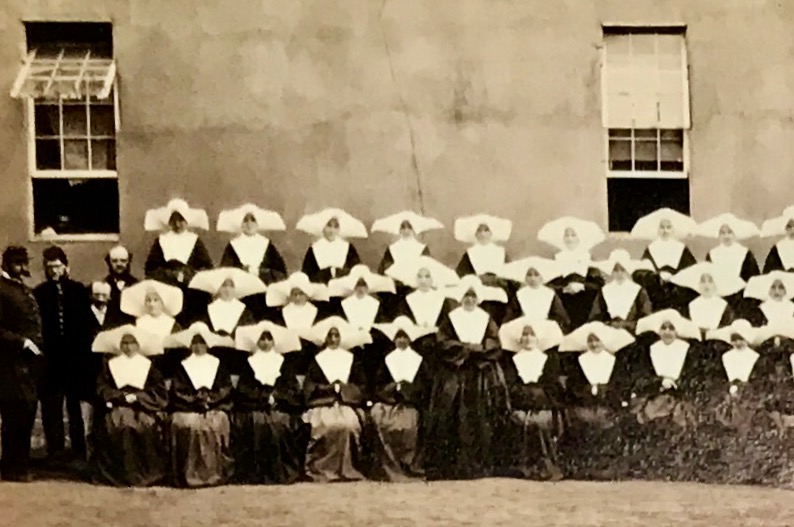
Even in the more controlled environment of Satterlee Hospital in Philadelphia, wearing those habits definitely required faith.
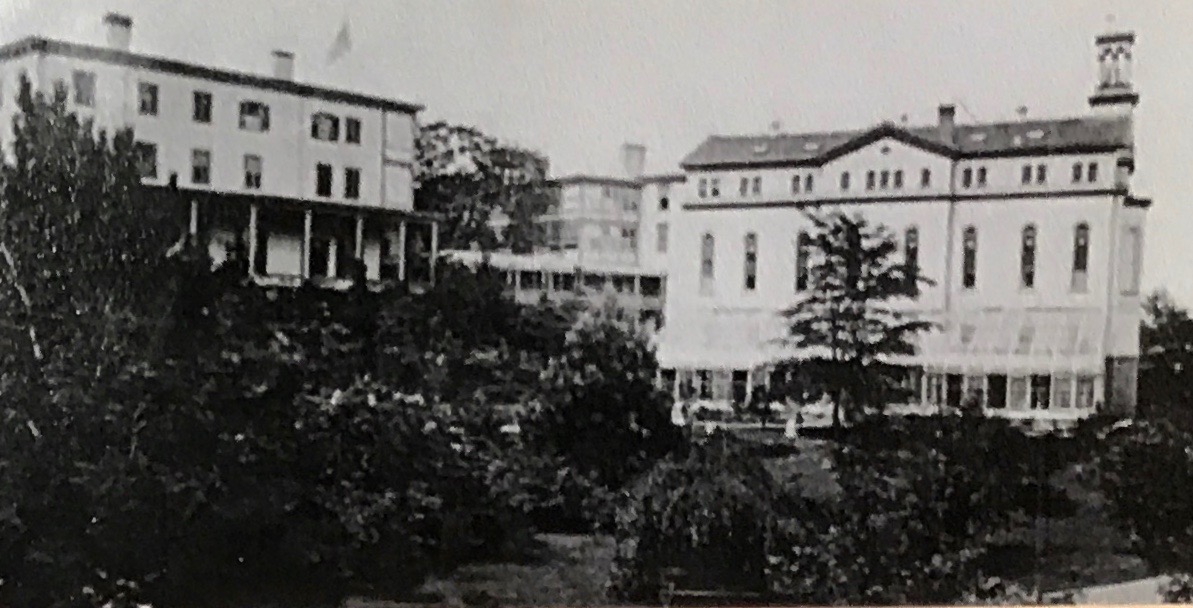
Saint Joseph Military Hospital was staffed by the Sisters of Charity, and Saint Elizabeth Ann Seton’s grandson, Captain William Seton III received treatment there. As he recovered and began to converse with this nurse, Sister Mary Ulrica O’Reilly, Was amazed to discover that she was caring for the Foundress of her order.

Soon it was time to set out on the tour. My group met our guide, and he walked with us over to the Stone House, which was originally built in 1750.
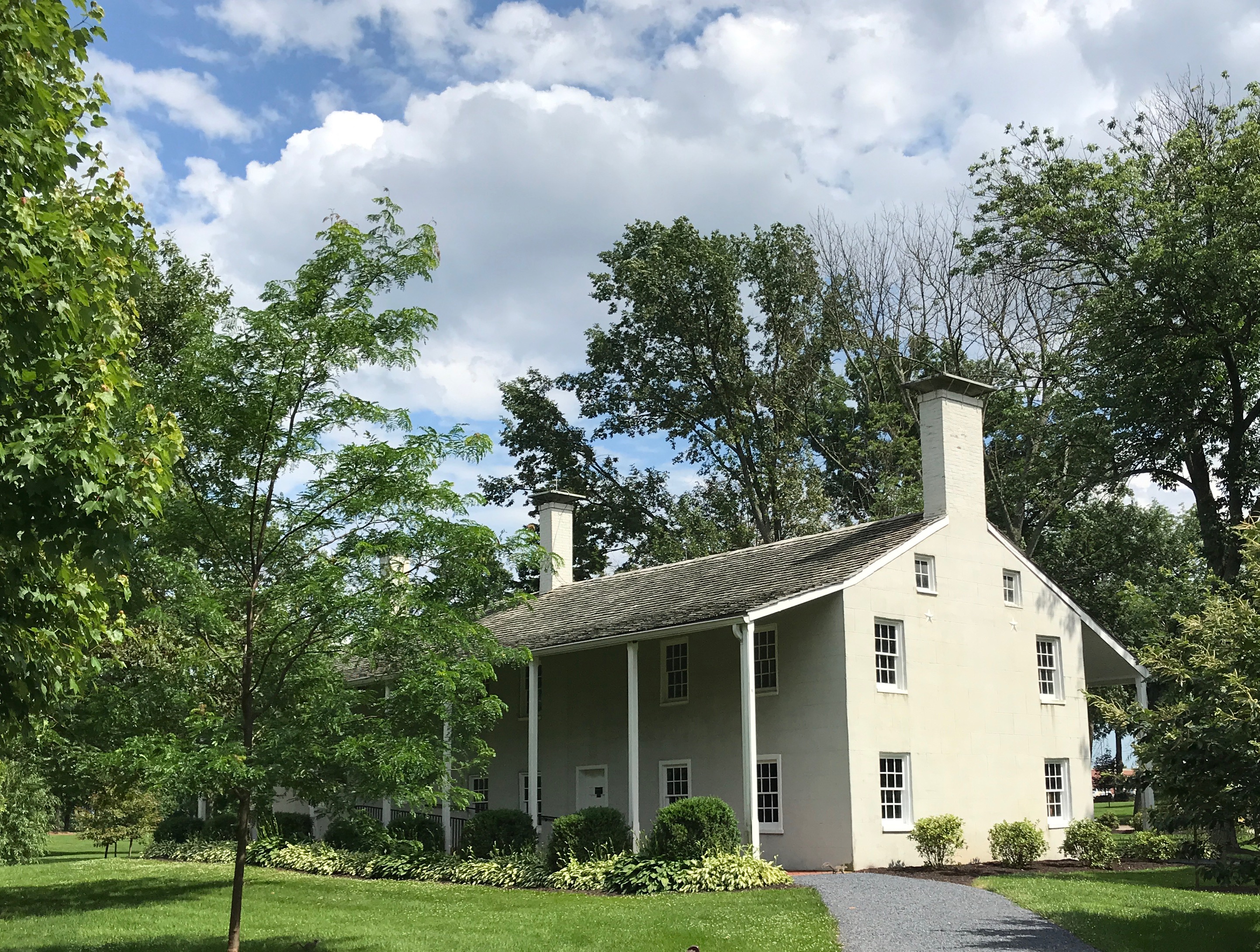
This was originally a four room building, with one of the rooms devoted to use as a chapel. There were sixteen people in the house at that time.
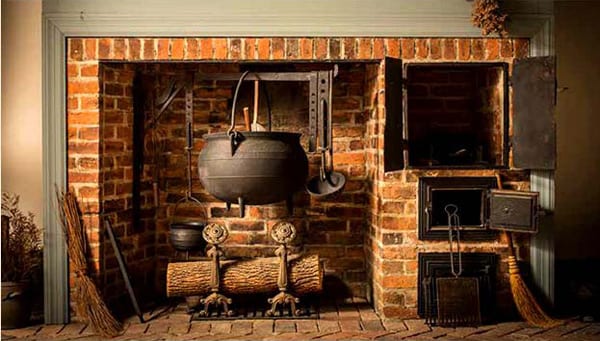
I’m not sure if one of the original rooms was also a kitchen. There is an early 1800s-style kitchen there now. Eventually they added on to the building through the years.
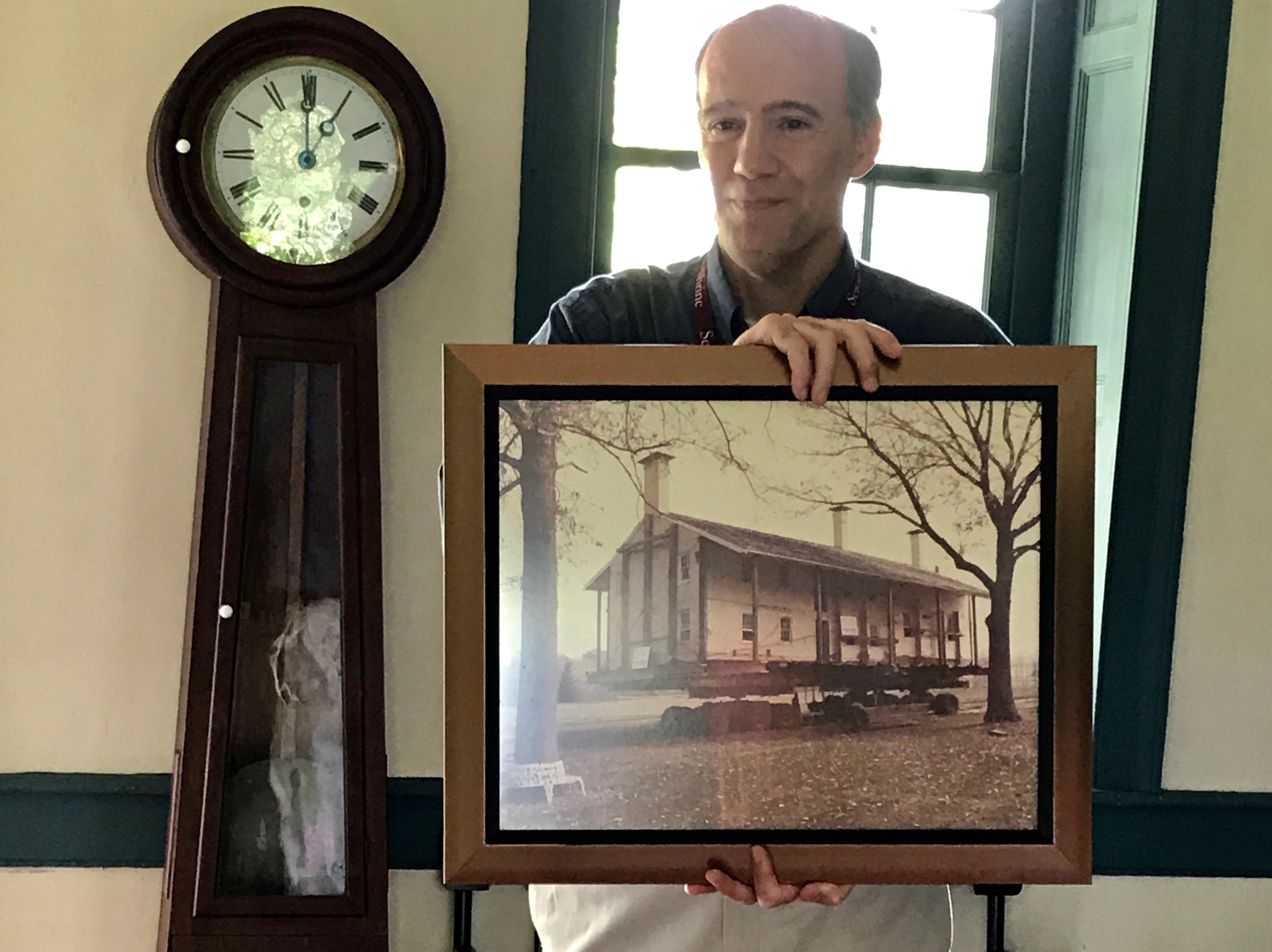
The house was moved to where it is now. That must have been some feat!
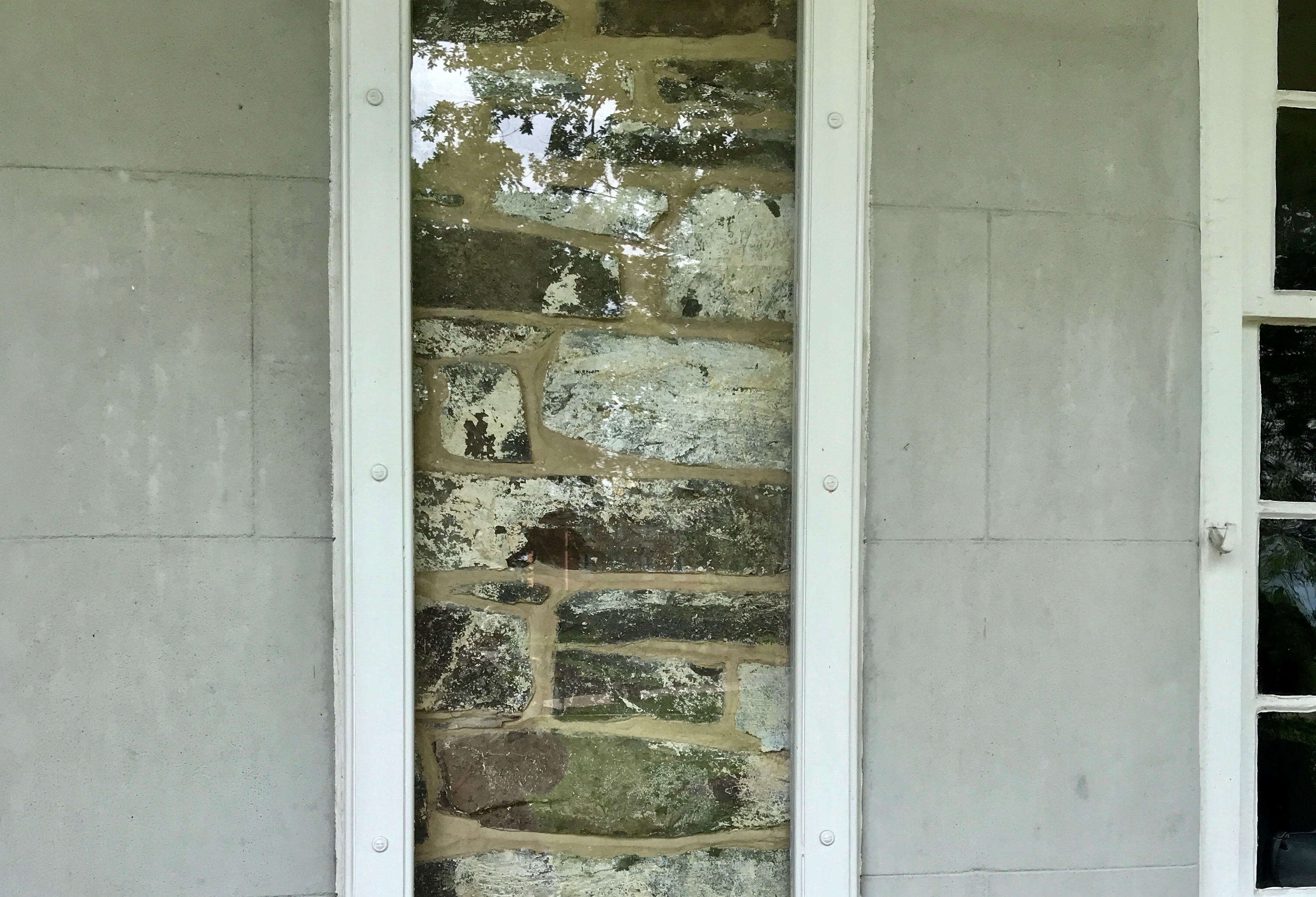
Although the house had the appearance of fine stone, that illusion was maintained by a fine layer of some sort or another. I was please that they left us a “truth window” so we could see what how the house was really constructed.
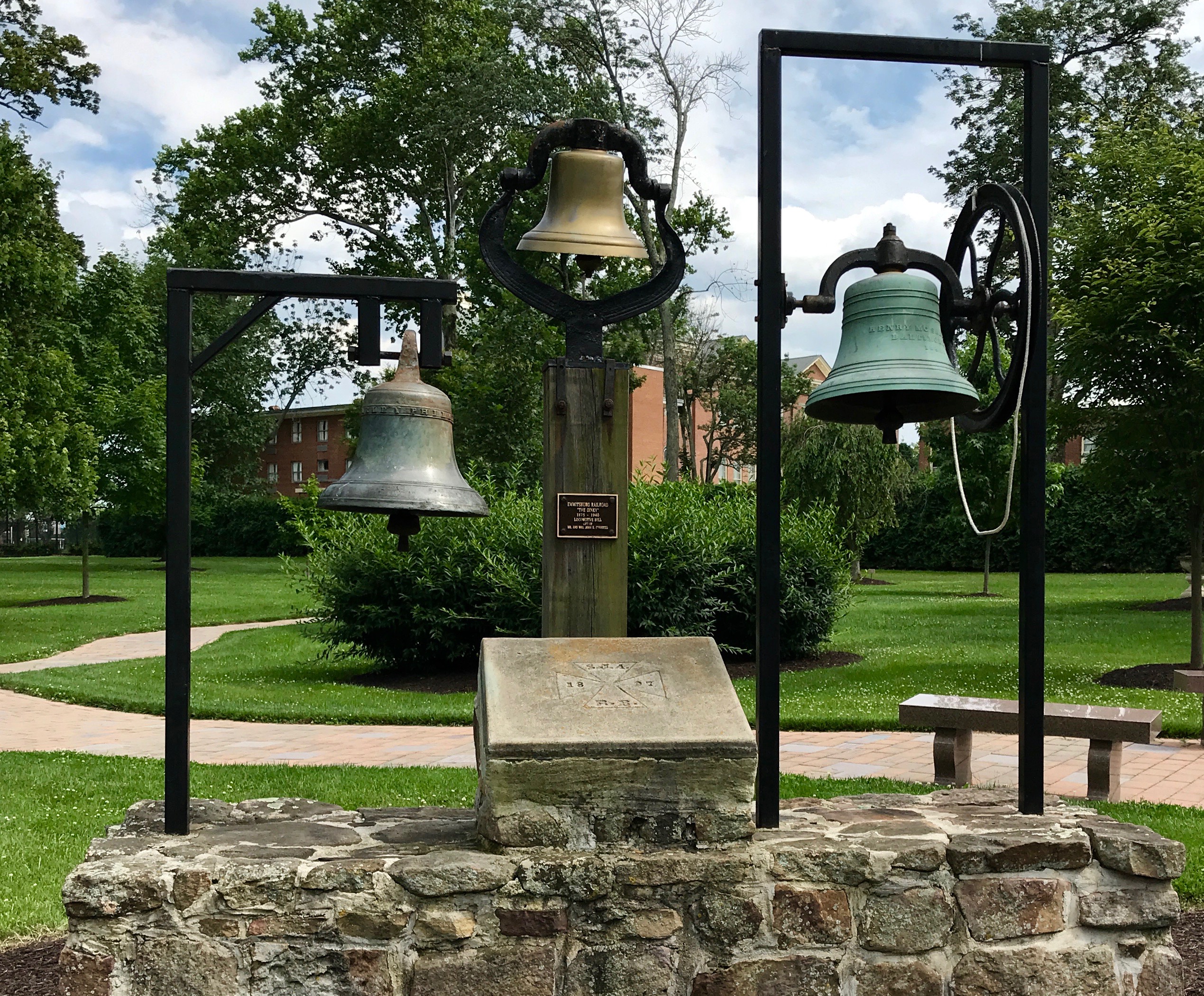
On the way to The White House we passed by the bells of St. Joseph’s Valley. The bells pealed throughout Saint Joseph’s valley when they received the news of Mother Seton’s beatification in 1963.
According to the plaque, one of the bells was the Academy bell, that summoned the boarding and day pupils of Saint Joseph’s Academy to classes, worship and recreation for 1875 until 1940.
One of the bells was referred to as the “Dinky” bell, which announced the arrival of the Emmitsburg train form 1875 until 1940. The “Dinky” transported pupils, visitors and sisters along with livestock and freight. The Sisters of Charity of Saint Joseph were the major stockholders of the Emmitsburg Railroad. I think that was a wise investment.
The third bell was the Seminary bell, which called new members of the Daughters of Charity to prayer, study and community gatherings until 1964 – nearly a century.
The cornerstone of a building of Saint Joseph’s Academy that was in use from 1897 until 1965 is in the center of this heritage monument.
I’m sure you see the rope hanging from the bell on the far right. You know who had to pull it, don’t you? Well, there weren’t any children on this tour, so I had to fill in. (It wasn’t much of a stretch for me)
Our next stop was The White House.
No, not that White House.
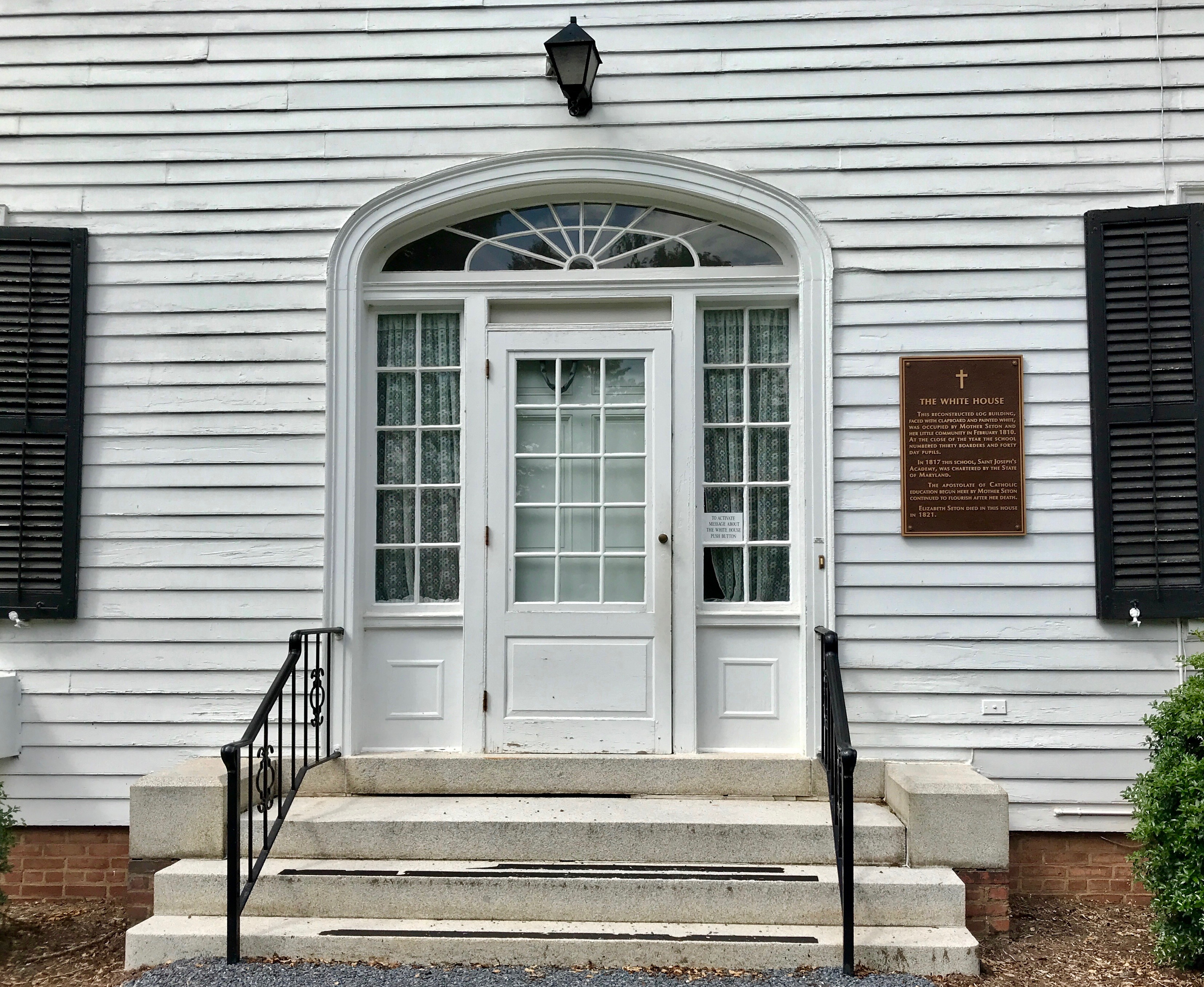
This White House, which was built in 1810, when Mother Seton realized that more space was needed
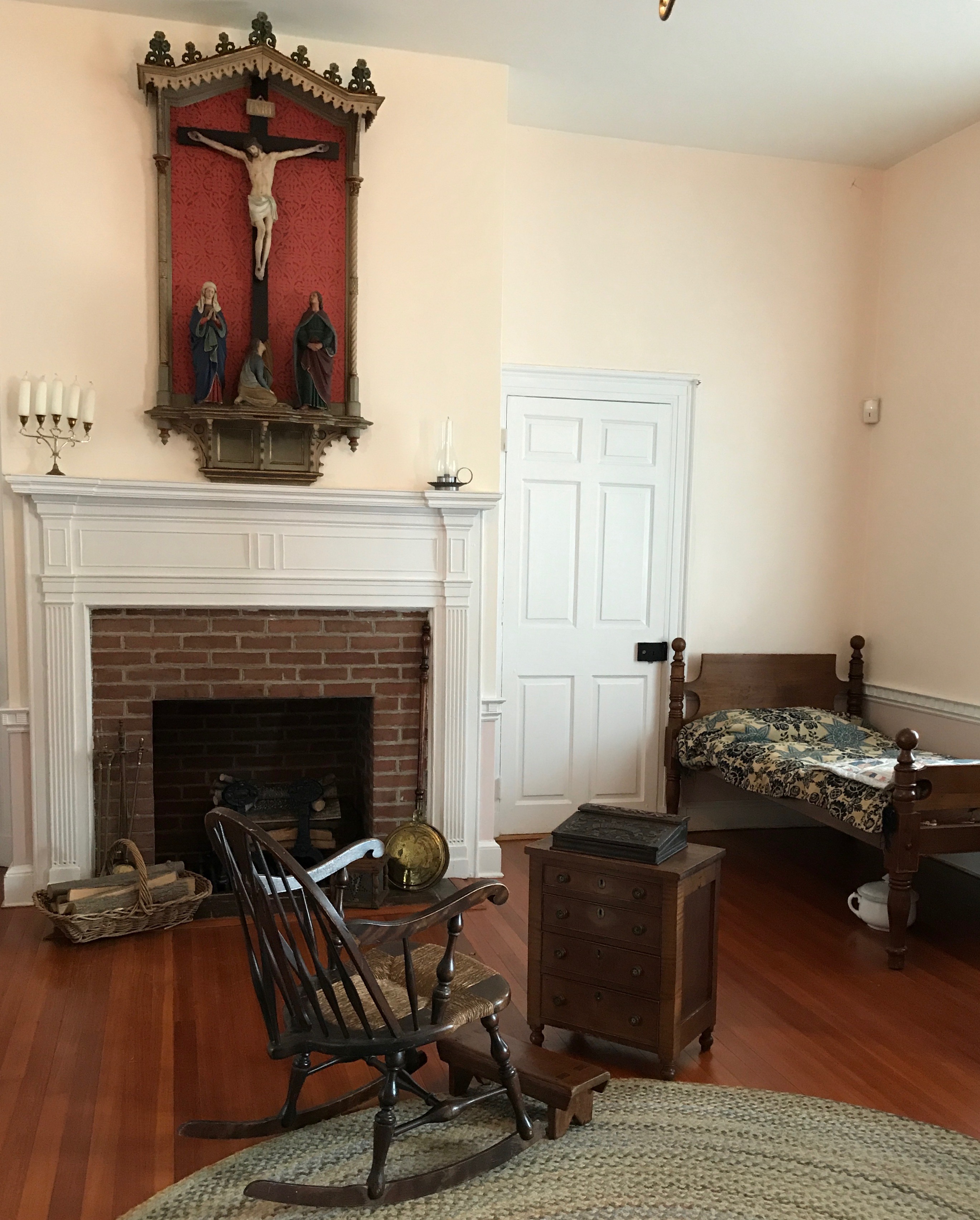
I didn’t take very good notes and I can’t find a reference about this after several Google searches, but I think this was Mother Seton’s room.
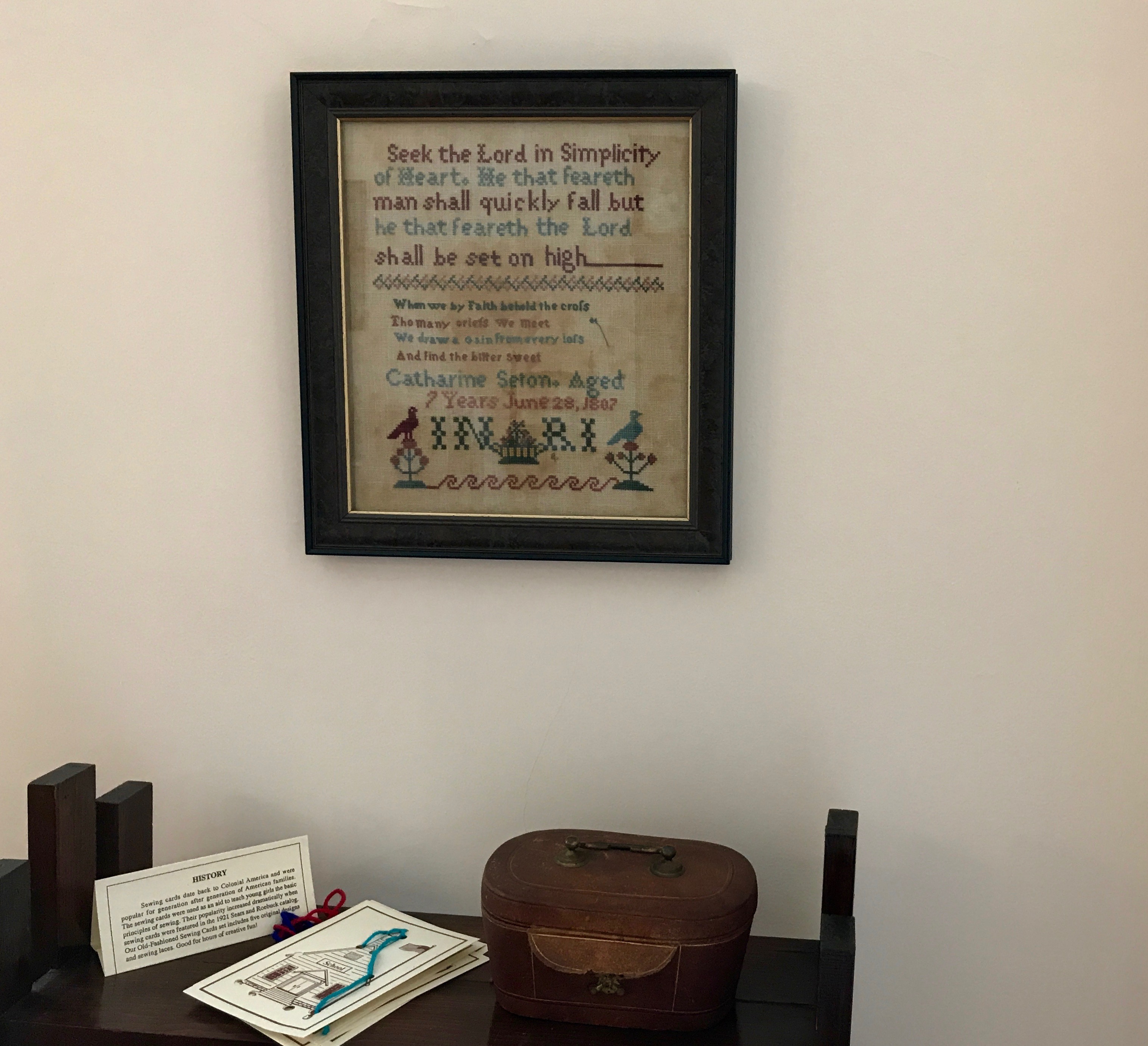
A sampler made by her daughter, Catherine, in 1807 at age 7 is hanging in the room.
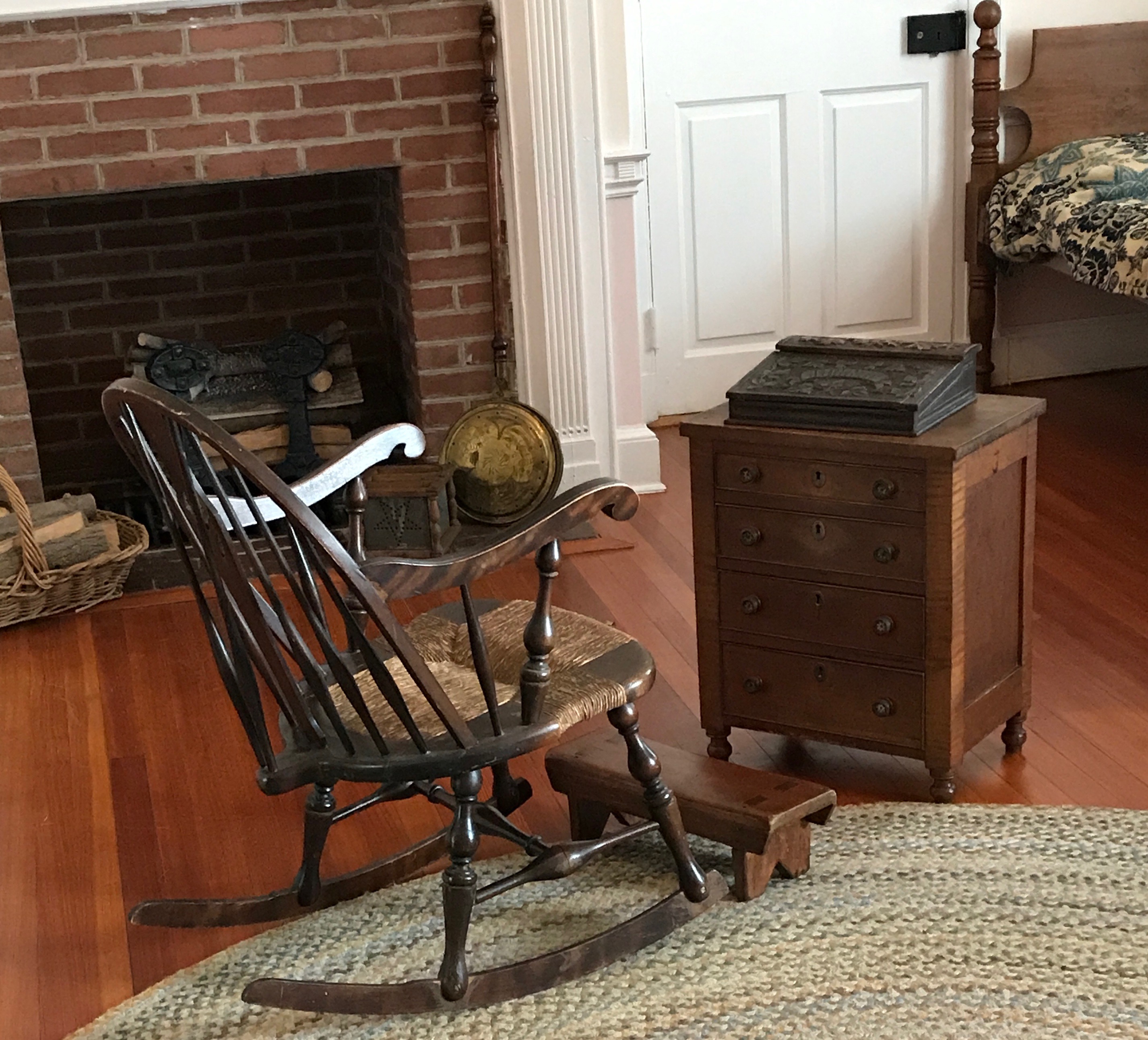
I like the idea of a rocker to help her get on and off her kneeler. Or, maybe I am reading too much into the placement of the furniture.
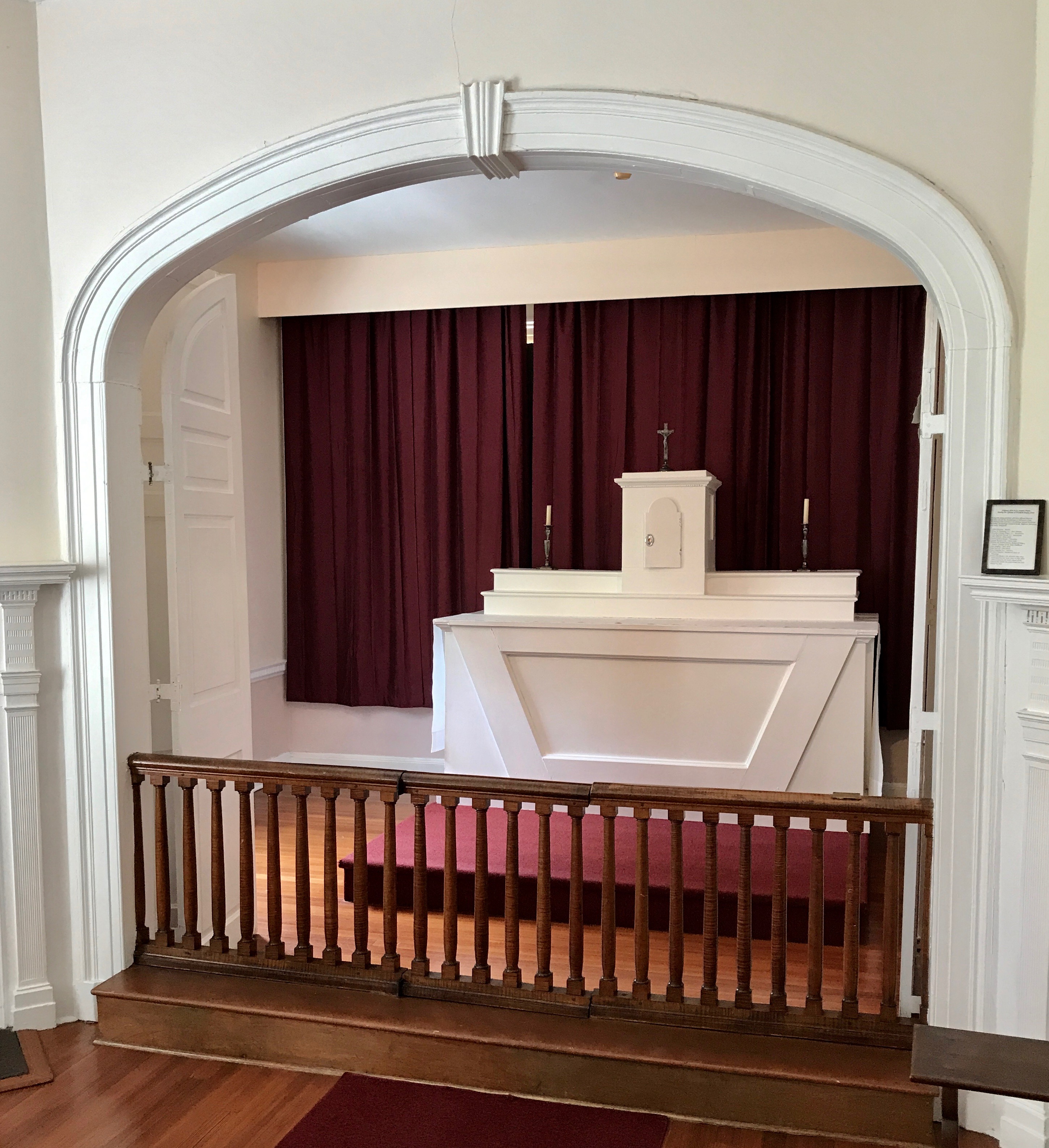
There is also a chapel in The White House. The guide pointed out that Mother Seton knelt to receive communion at the right end of the altar rail.
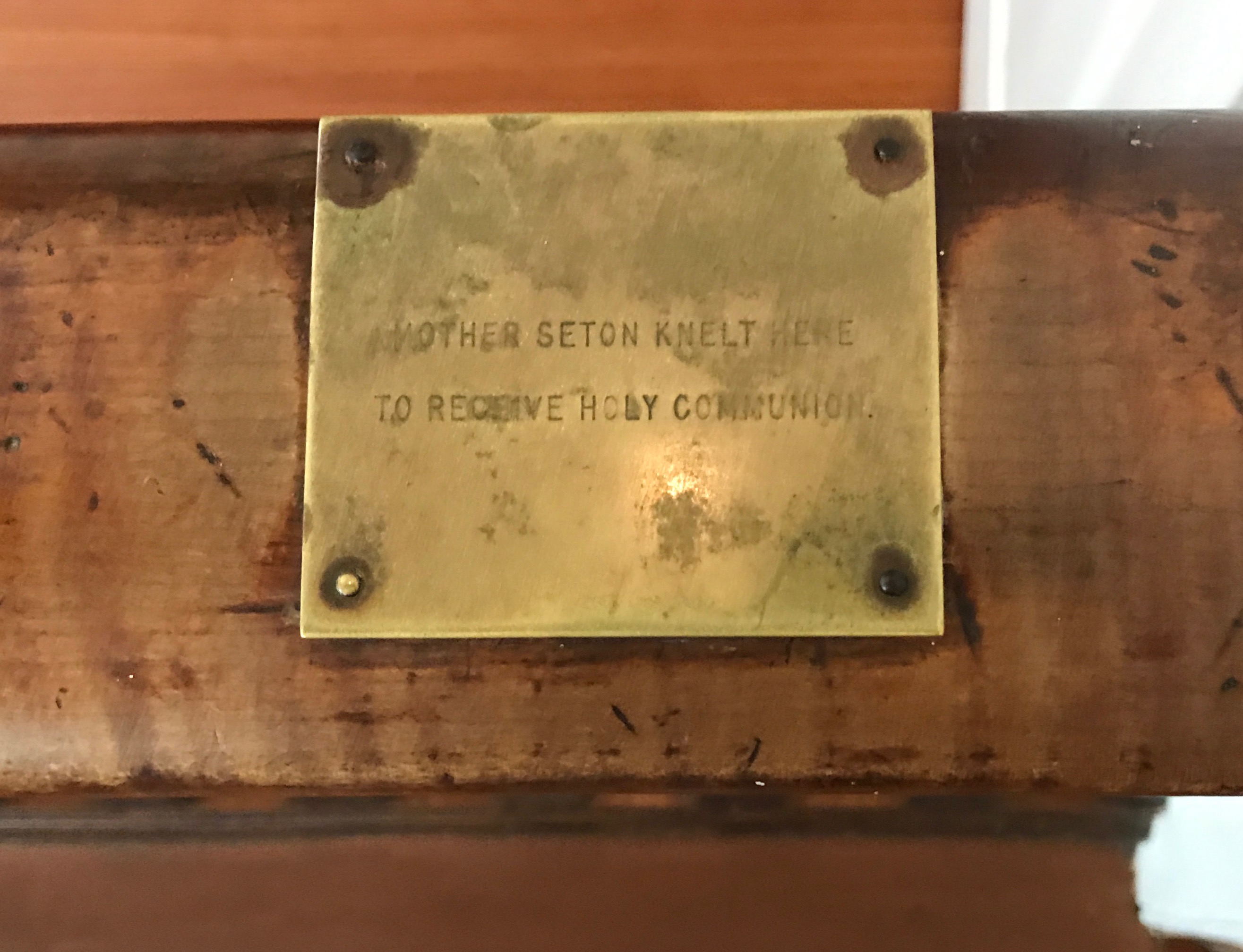
There is a brass plaque there to mark the spot.
After our tour of The White House, there was one stop left.
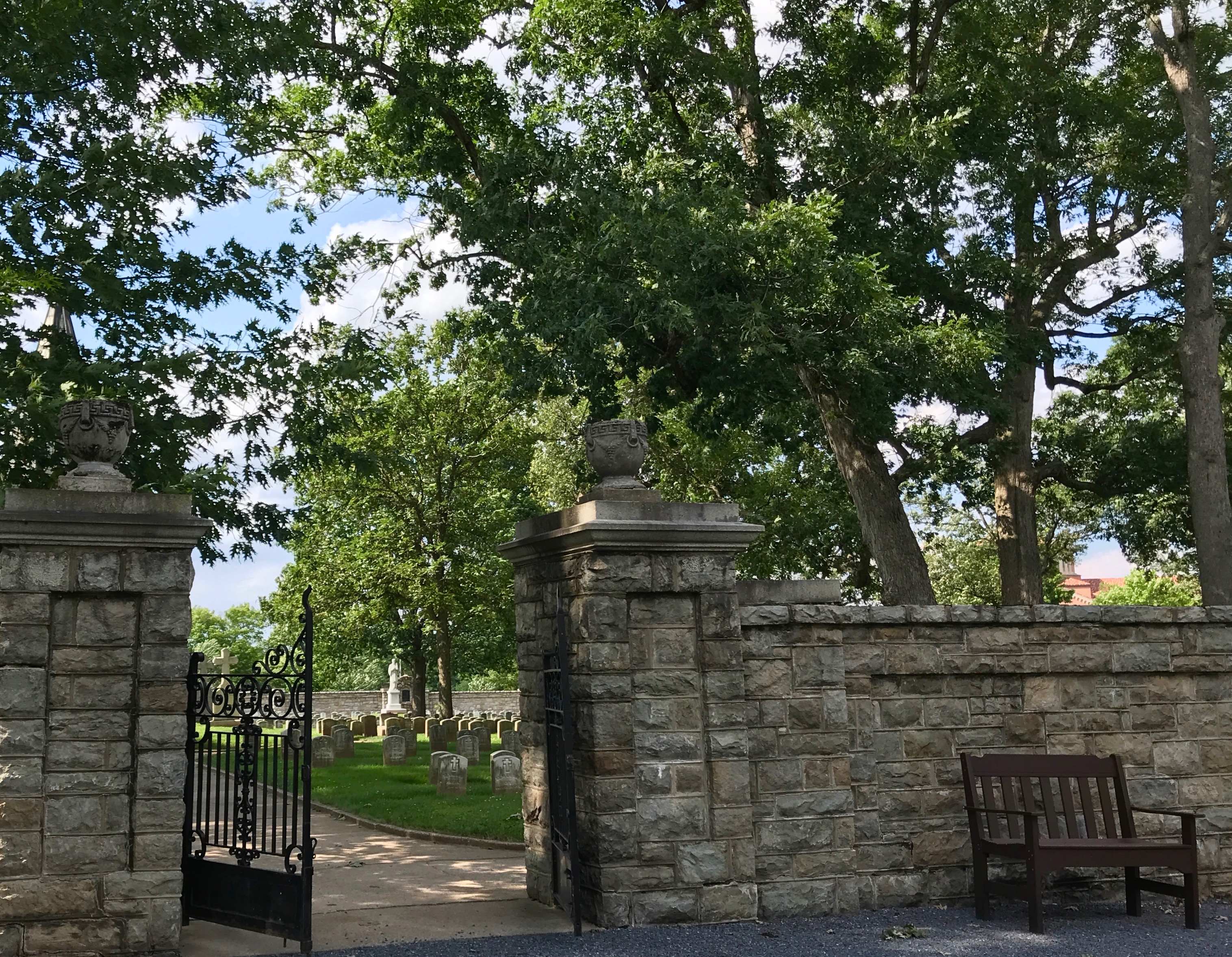
The cemetery
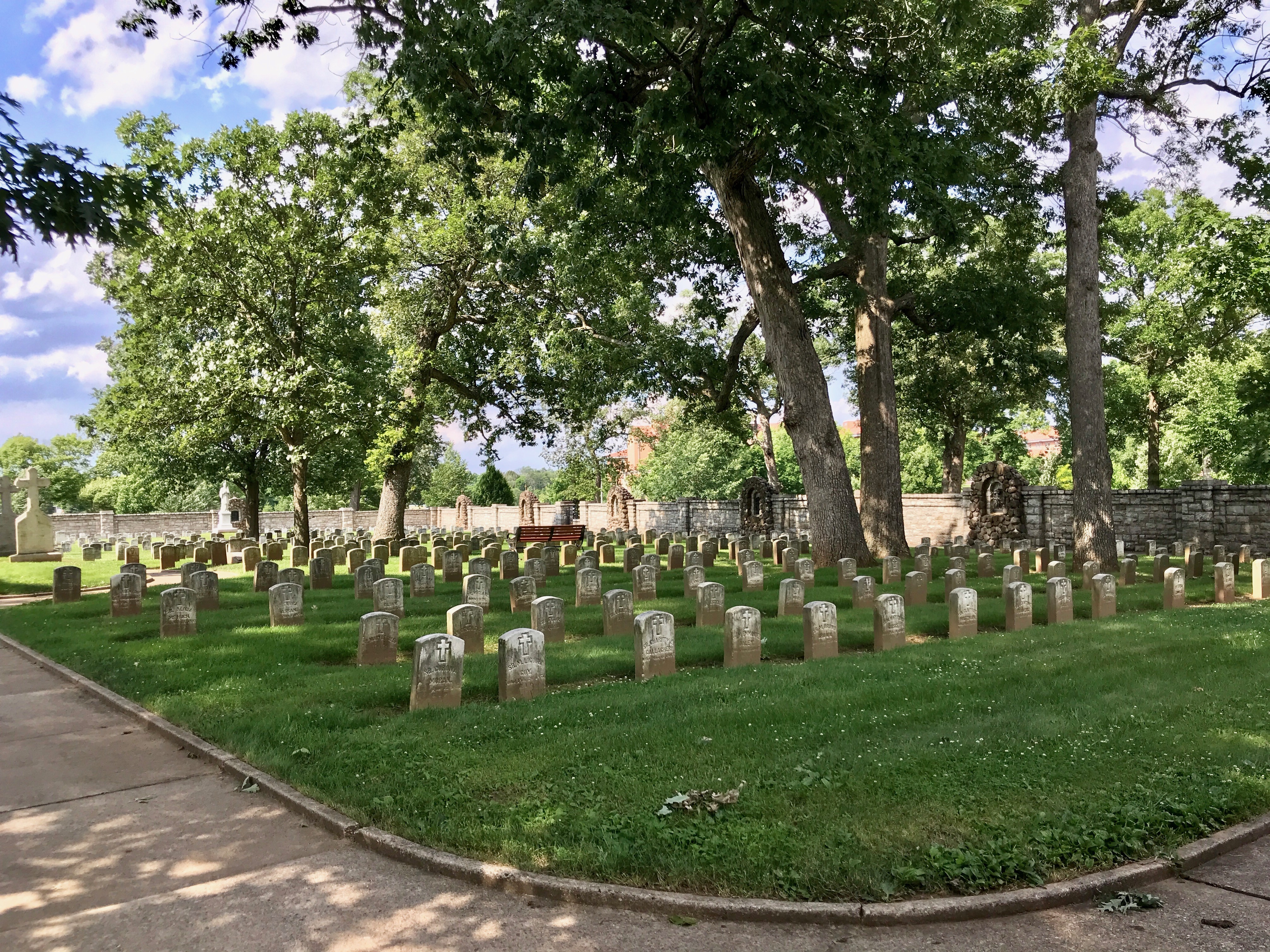
Many sisters over the years were buried here. Mother Seton’s sister-in-law, Harriet, was the first person buried in the cemetery. According to oral tradition, when they were out walking through the forest looking for a location for the cemetery, Harriet rested against a large, old oak tree. She playfully threw and apple core against its trunk and declared, “This is my spot!”
Sadly, Harriet died later that year and was buried beneath the oak and her grave was the first of many graves of Sisters and Daughters of Charity in the cemetery.
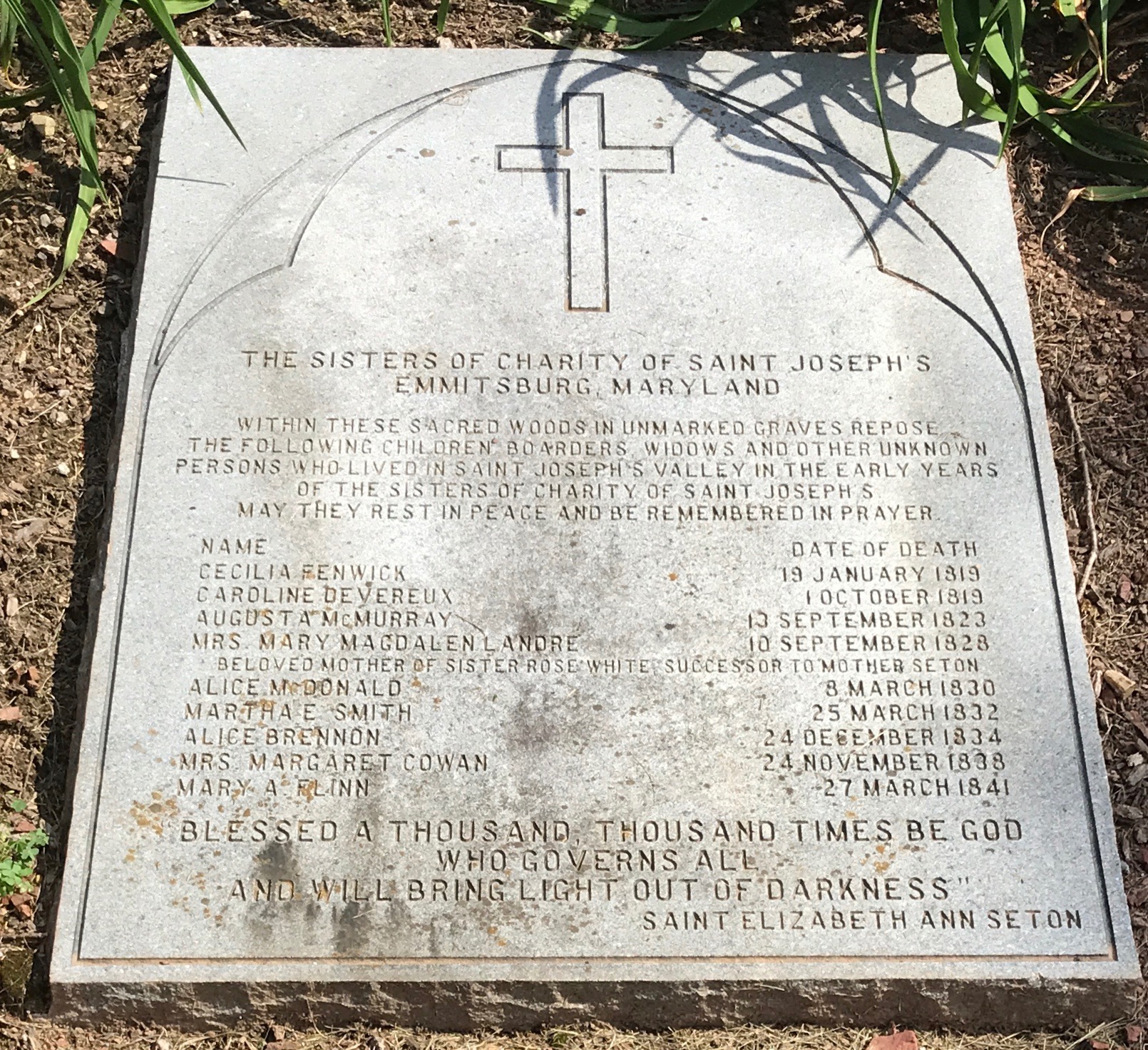 They also memorialized those who lie in unmarked graves.
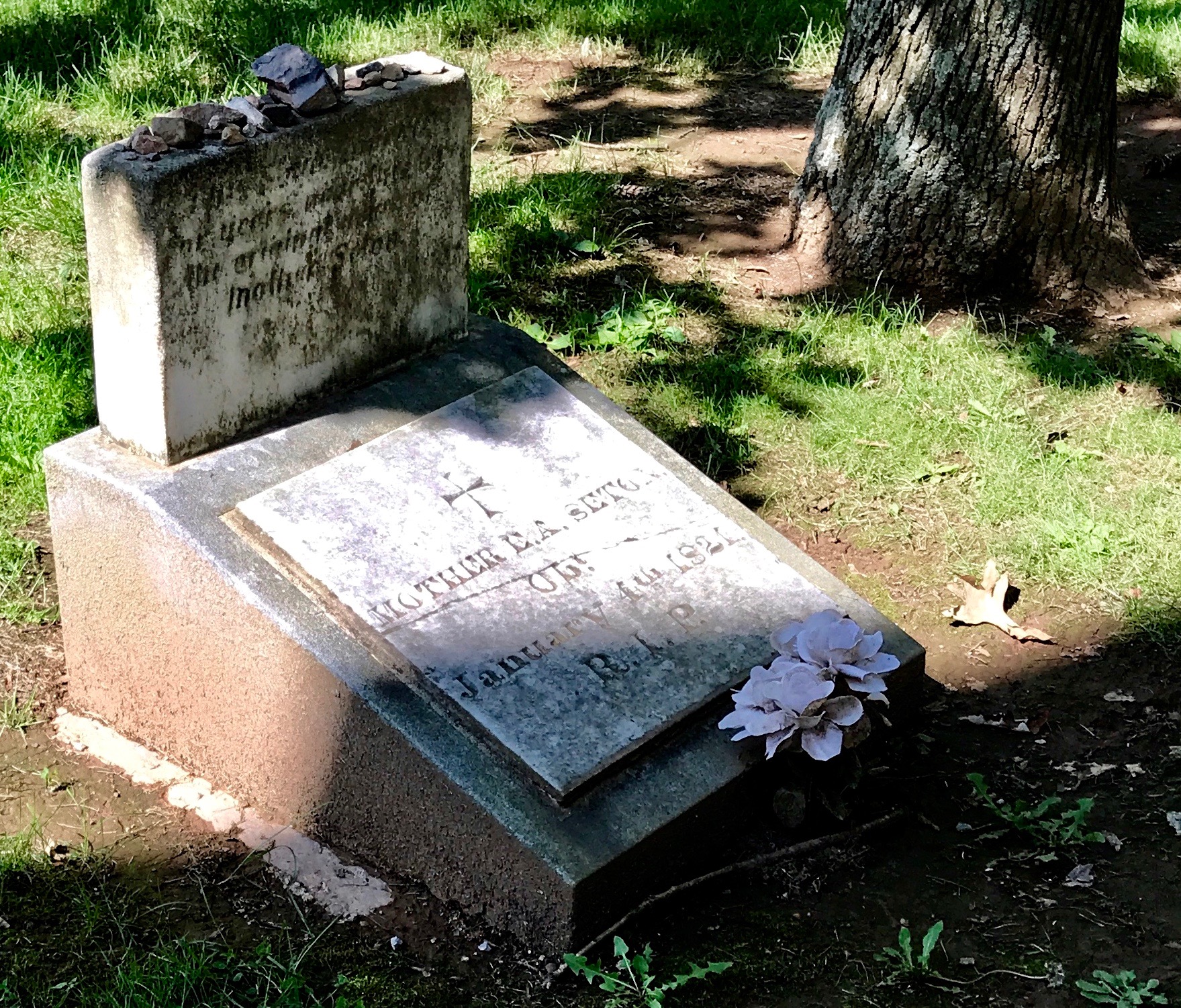
Mother Seton was buried here first. I think the small stones left by visitors are touching.
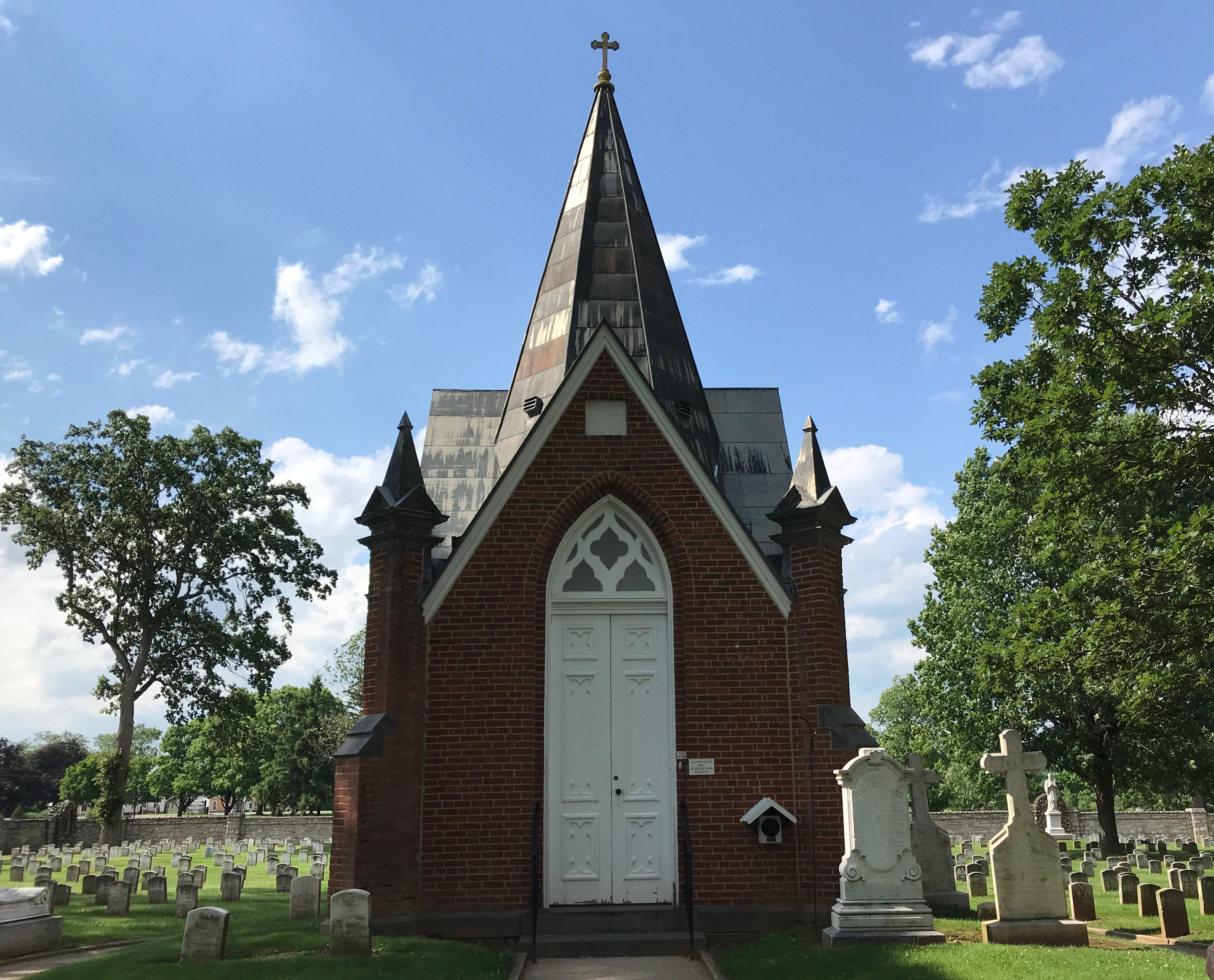
Mother Seton’s son, William, had the Mortuary Chapel built to honor his mother. In 1846, her remains were transferred to the chapel’s vault.
And now her remains are in the Shrine.
After feeding my soul, there was one more thing I needed to do. I needed to feed my body.
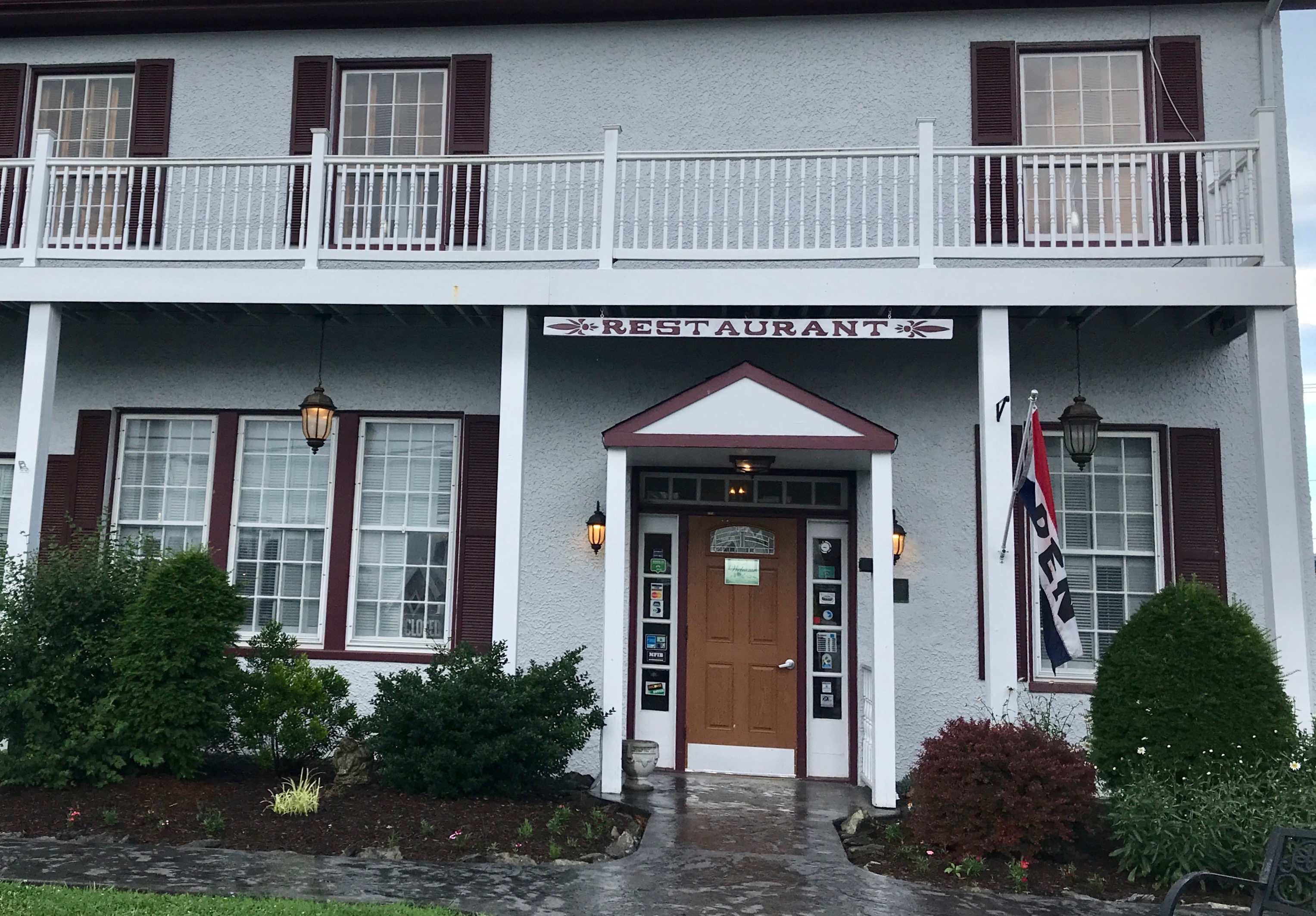
I consulted my iPhone and found The Carriage House Inn Restaurant.
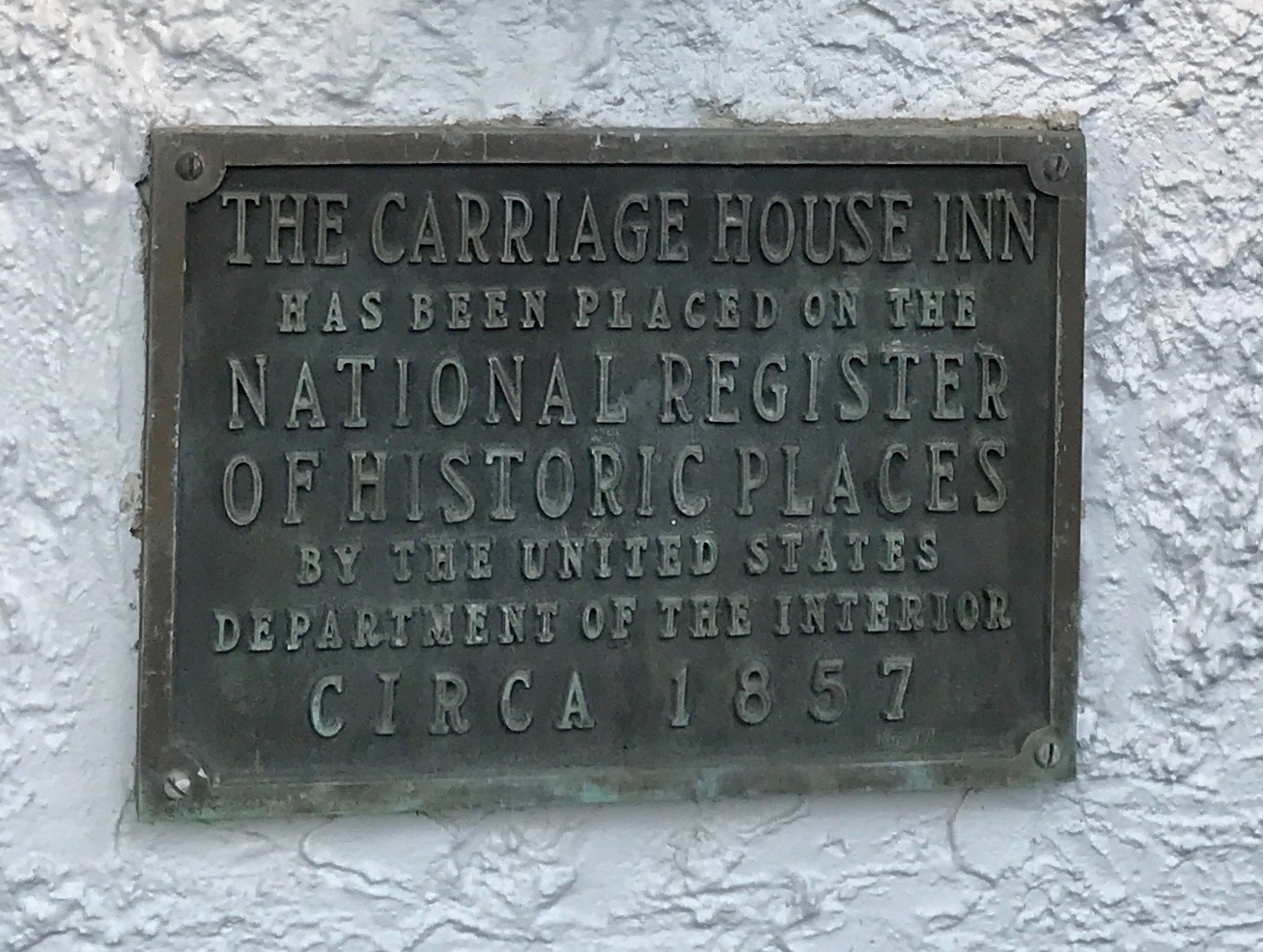
According to their website, the building was built in 1857, and it became the Zimmerman and Maxwell Feed and Grain Warehouse in 1877. After the turn of the century, it served as a broom factory and later as a bus depot. The building first became a restaurant named “The White House” in 1953. Three decades later, it was purchased by the Hance family and The Carriage House Inn was born.
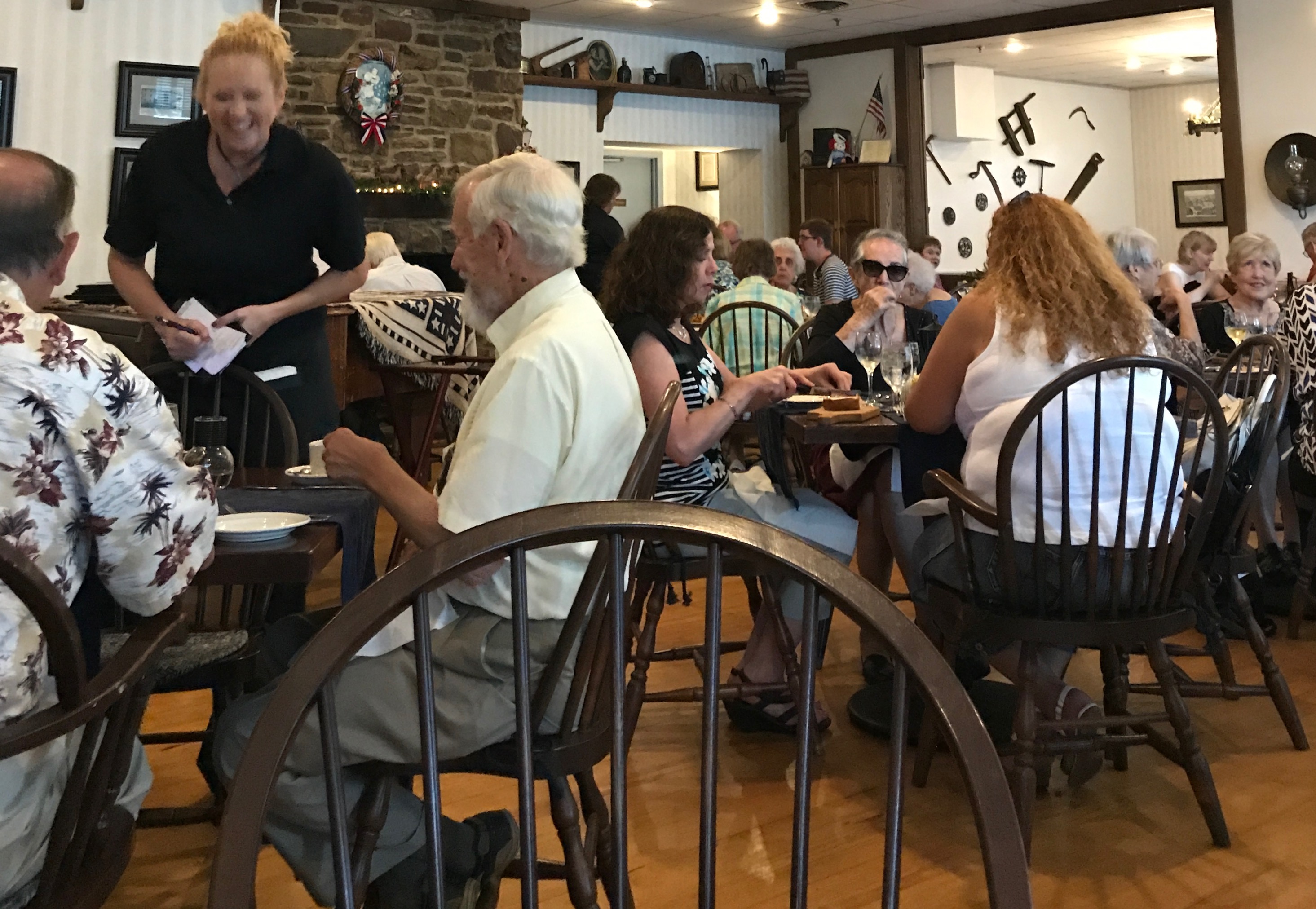
It was a very popular place to dine.
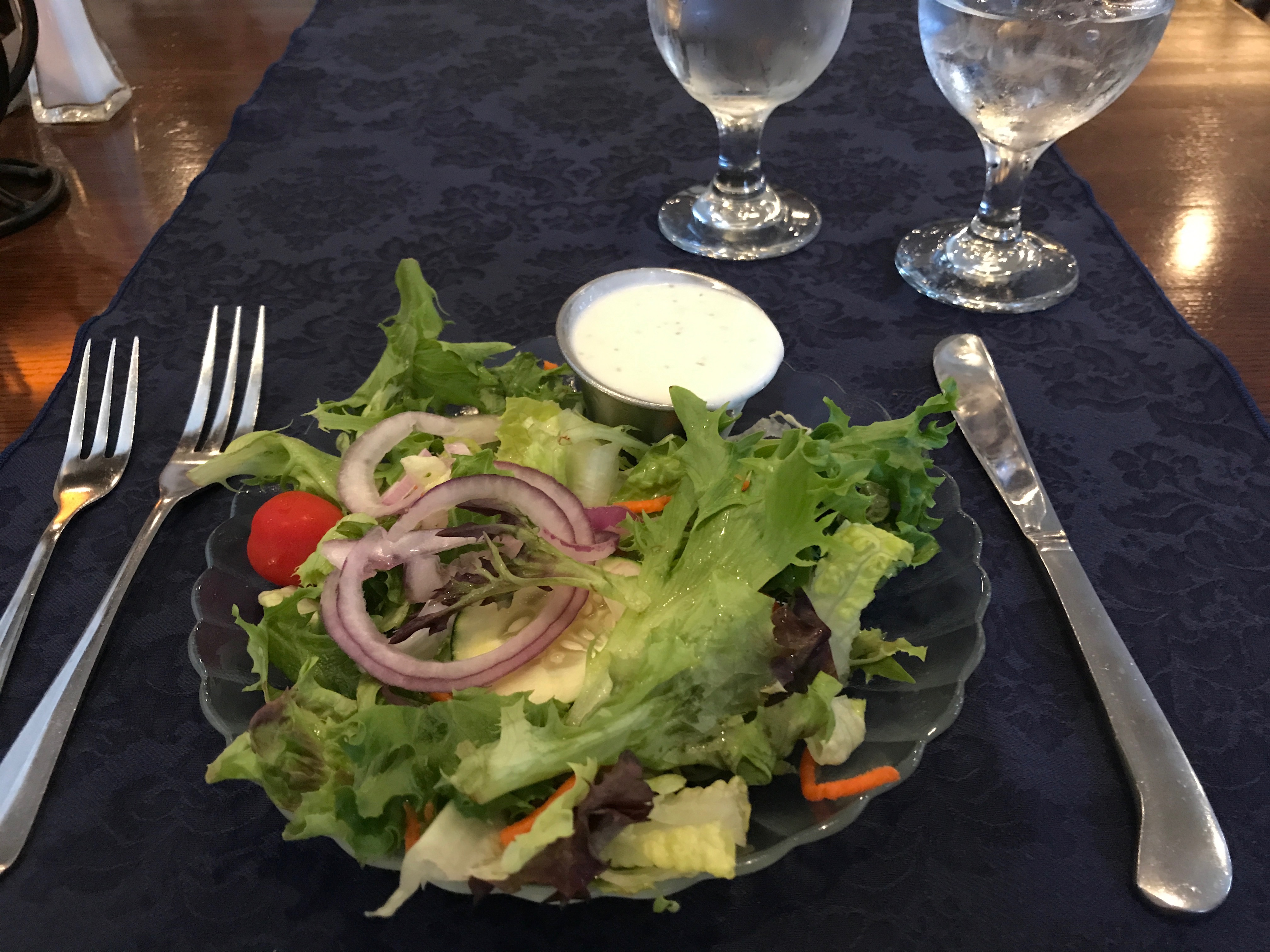
I started with a salad.
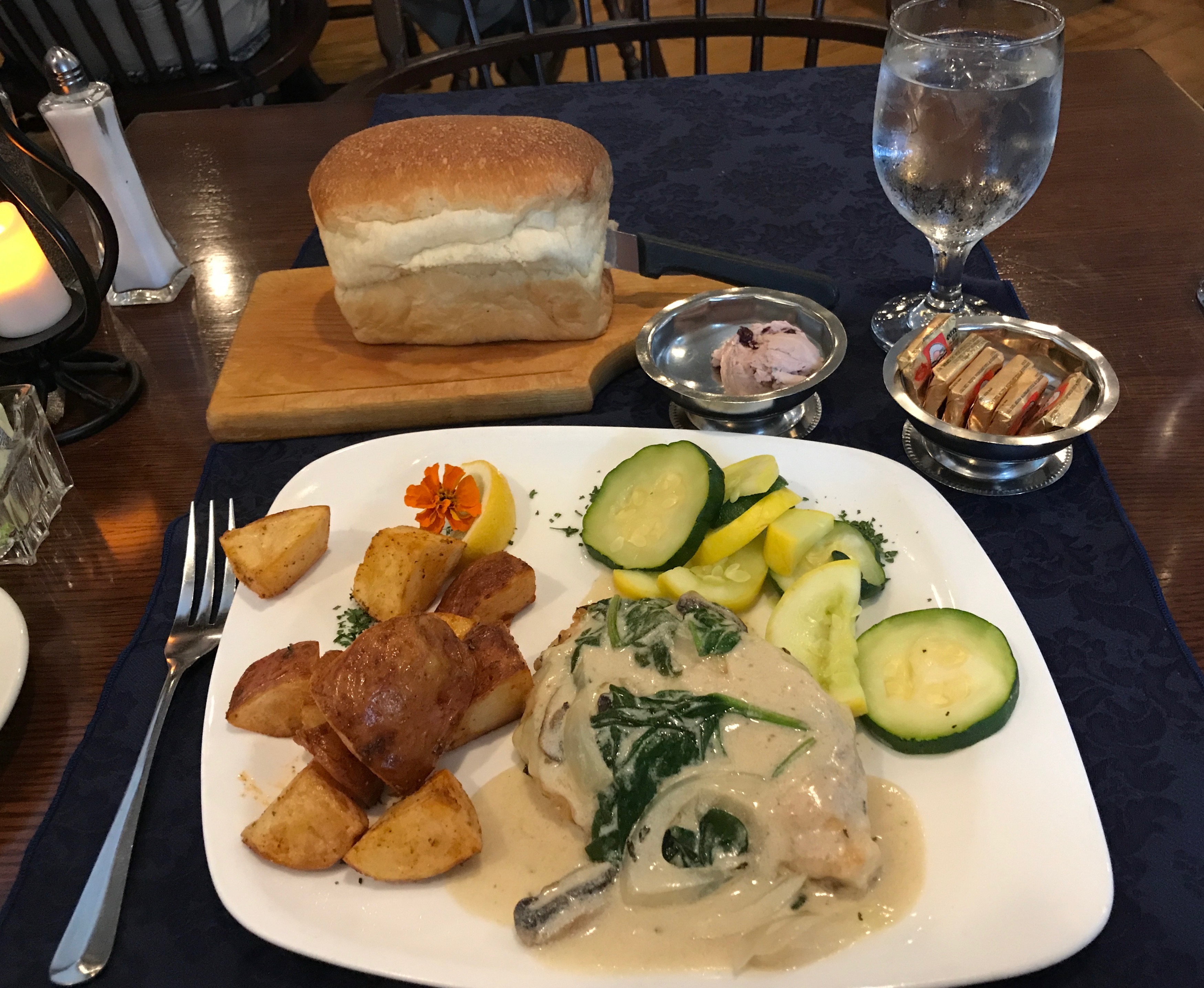
Worked my way through the delicious entree. I can’t remember what it was, except that everything was marvelous. Even the butter that went with the little loaf of bread had a unique touch.

Now, I don’t usually do dessert. I just can’t eat that much at one sitting. The waitress tempted me to get one to go. It was every bit as good as the rest of the meal.

When the waitress brought me my dessert, she also brought me a rose. I appreciated the gesture, but I didn’t know what I as going to do with it.
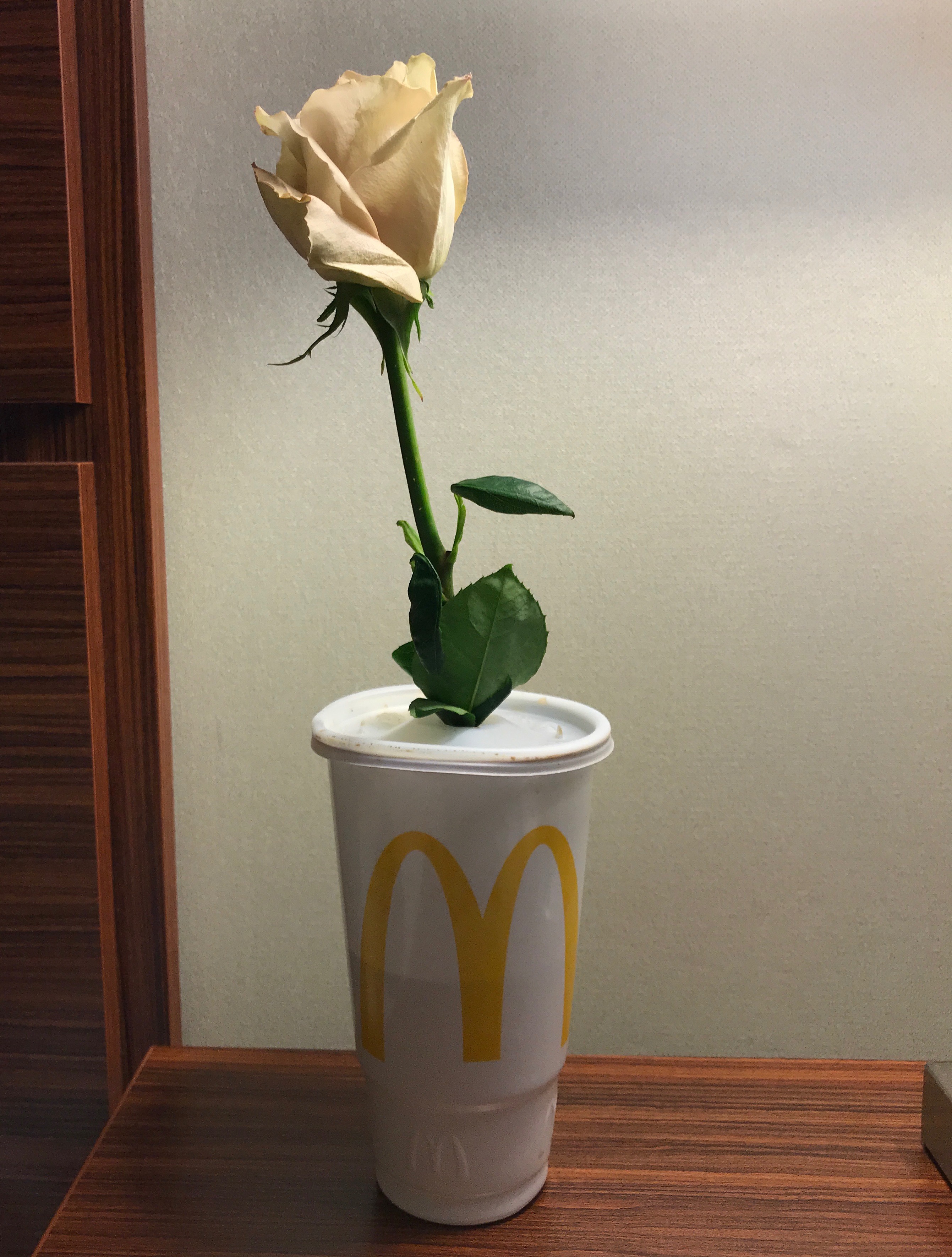
But, where there’s a will, there’s a way!
Ann Bayley Seton, SC, (August 28, 1774 – January 4, 1821) was the first native-born citizen[1] of the United States to be canonized by the Roman Catholic Church (September 14, 1975).[2] She established the first Catholic girls’ school in the nation in Emmitsburg, Maryland, where she also founded the first American congregation of religious sisters, the Sisters of Charity.