Well, my time in Charleston is starting to be a very distant memory, but I’ll share a few more things and then move along.
On a dreary day, I set out for Angel Oak.
Angel Oak is a live oak estimated to be over 500 years old. It’s about 70 feet at all and the trunk measures 28 feet in circumference.
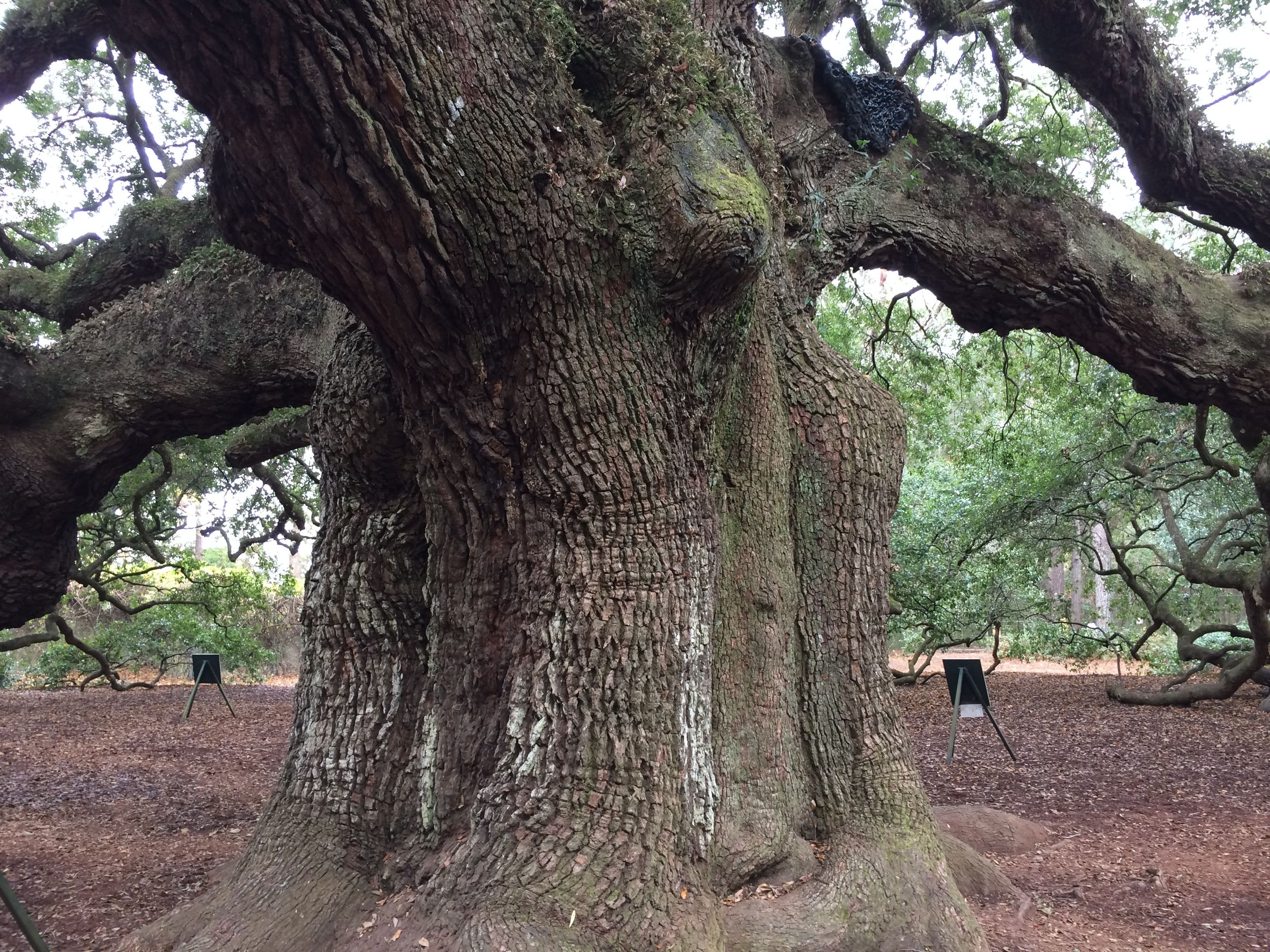
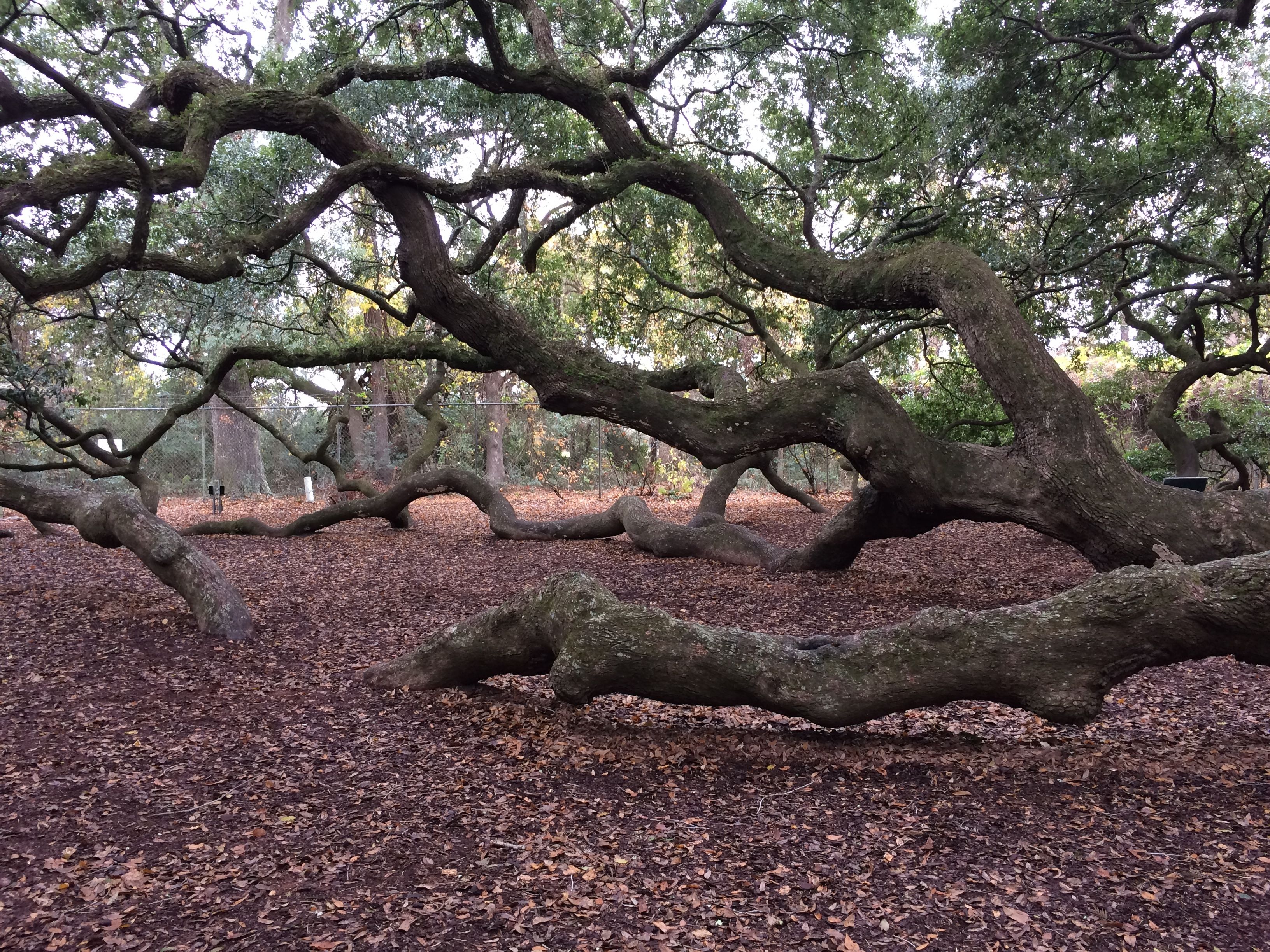
The branches extend so far that it produces 17,200 square feet of shade. It’s longest branch is about 190 feet long.
I really wanted to visit Angel Oak because they were having a fund raiser to buy more of the land around the small park and I made a donation in my father’s honor after his passing in 2013.
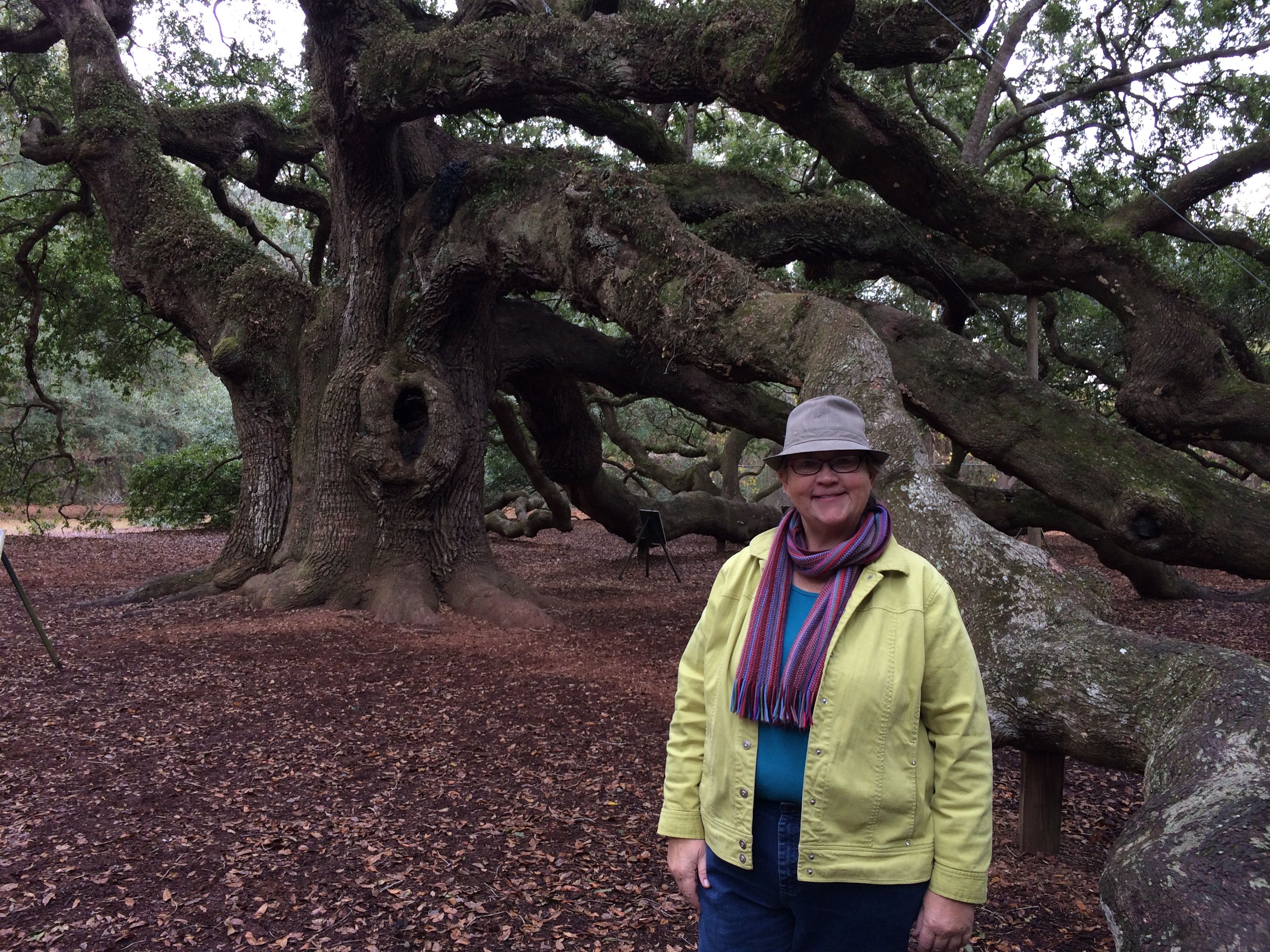
I wore his hat to the tree.
I was curious about the name, “Angel Oak.” I wondered if there was something supernatural that happened here, or if people thought the branches looked like angel’s wings.
Actually, the oak’s name comes from the estate of Justus and Martha Angel, which is where the tree is located. Local folklore tells stories of the ghosts of former slaves appearing as angels around the tree.
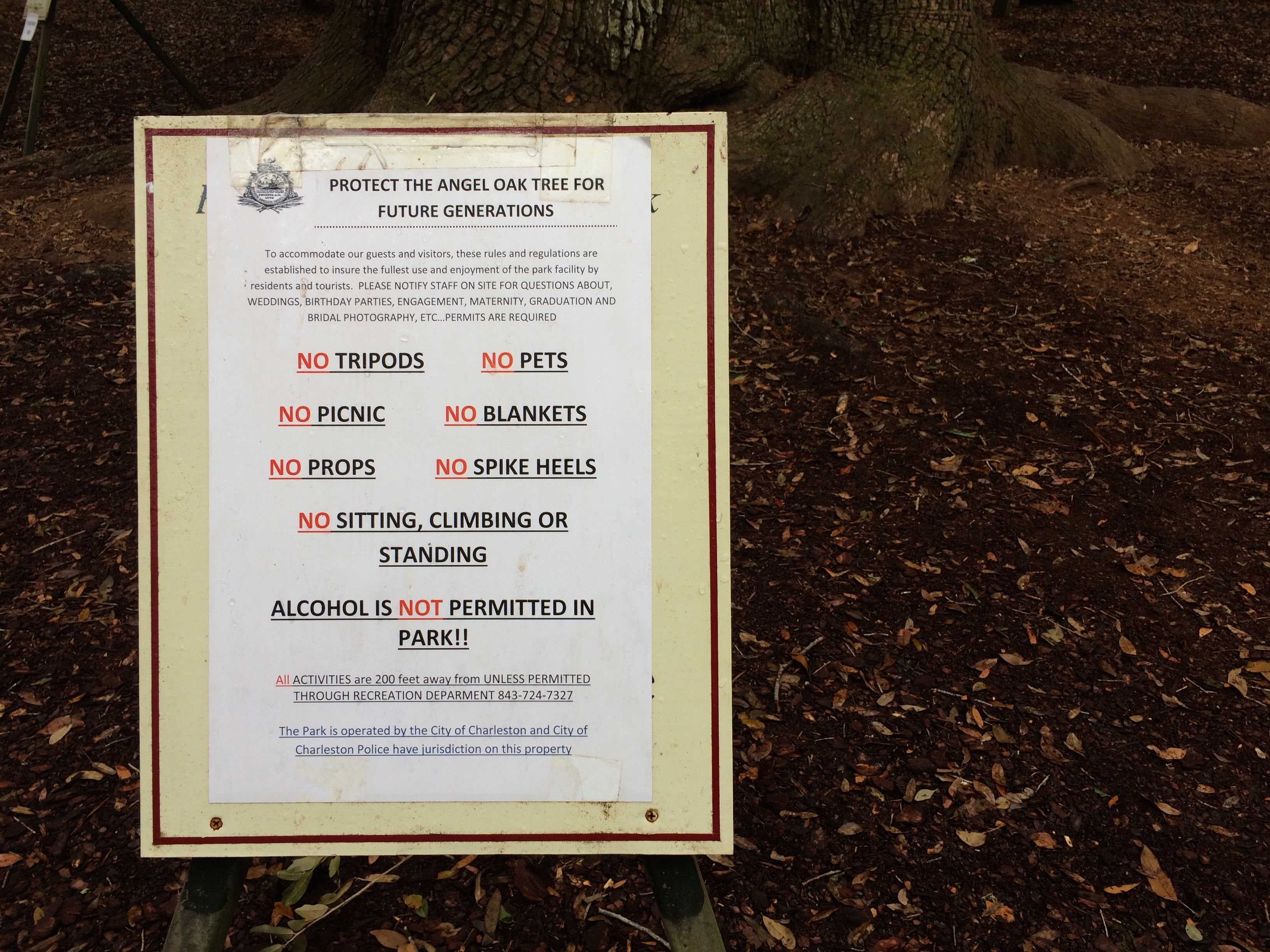
They are very protective of the tree, and there are signs all around telling you what not to do. There was a sign I saw that said that we could gently touch the tree, so I did.
My next stop was downtown Charleston. Time once again to park in the ramp.
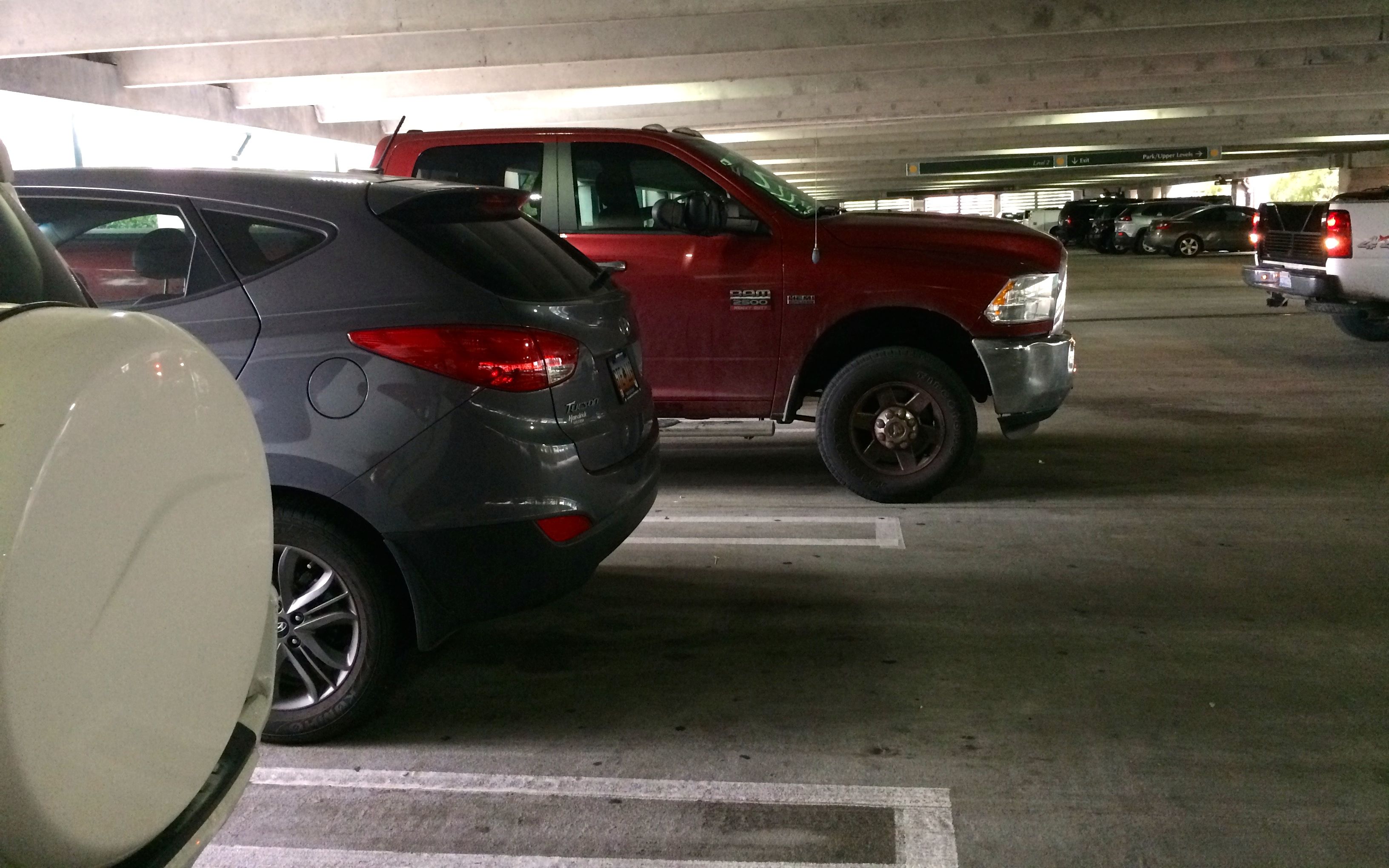
Man, as I look forward to one day finishing my “Lower 48” and abandoning the rolling lifestyle, one of the things I look forward to most is driving a smaller vehicle.
BART lives up to its name – BIG ass red truck.
I jumped on the trolley and went down toward the cool part of town. I just decided to wander around and see what I could see. I got off the trolley at Broad Street.
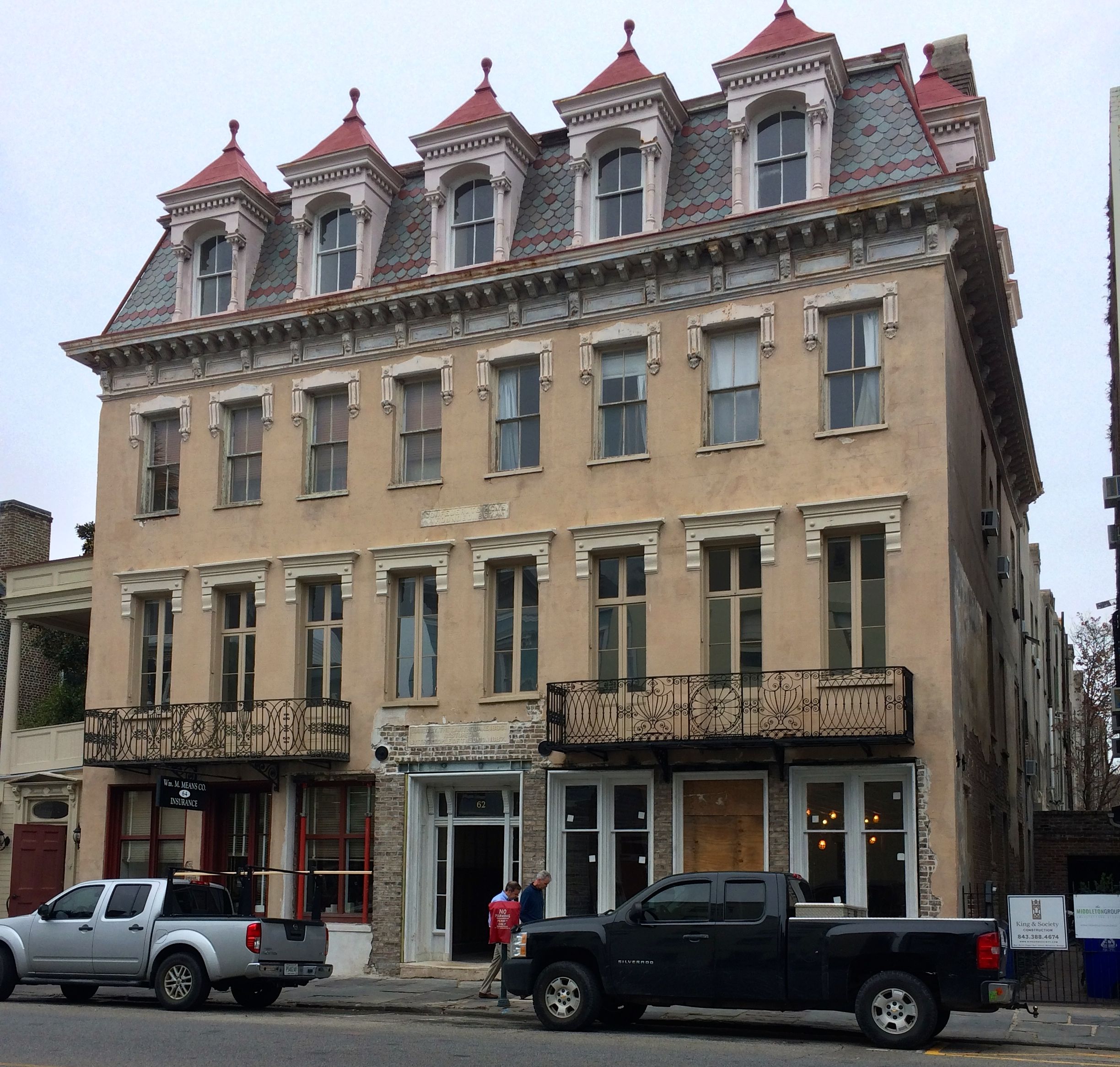
This building caught my eye. There is a plaque on it that says it’s the Confederate Home. According to Wikipedia, it is now a retirement home. It was built in 1800 and started its life as a double tenement, which was built for master builder Gilbert Chalmers.
From 1834 to 1867, it was the Carolina Hotel. In 1867, sisters Amarinthia Snowden and Isabell Snowden establish the Home of the Mothers, Widows and Daughters of Confederate Soldiers, otherwise known as the Confederate Home. The building was damaged by the big 1886 Charleston earthquake and then it was restored with fashionable Victorian details, including a mansard roof and dormers.
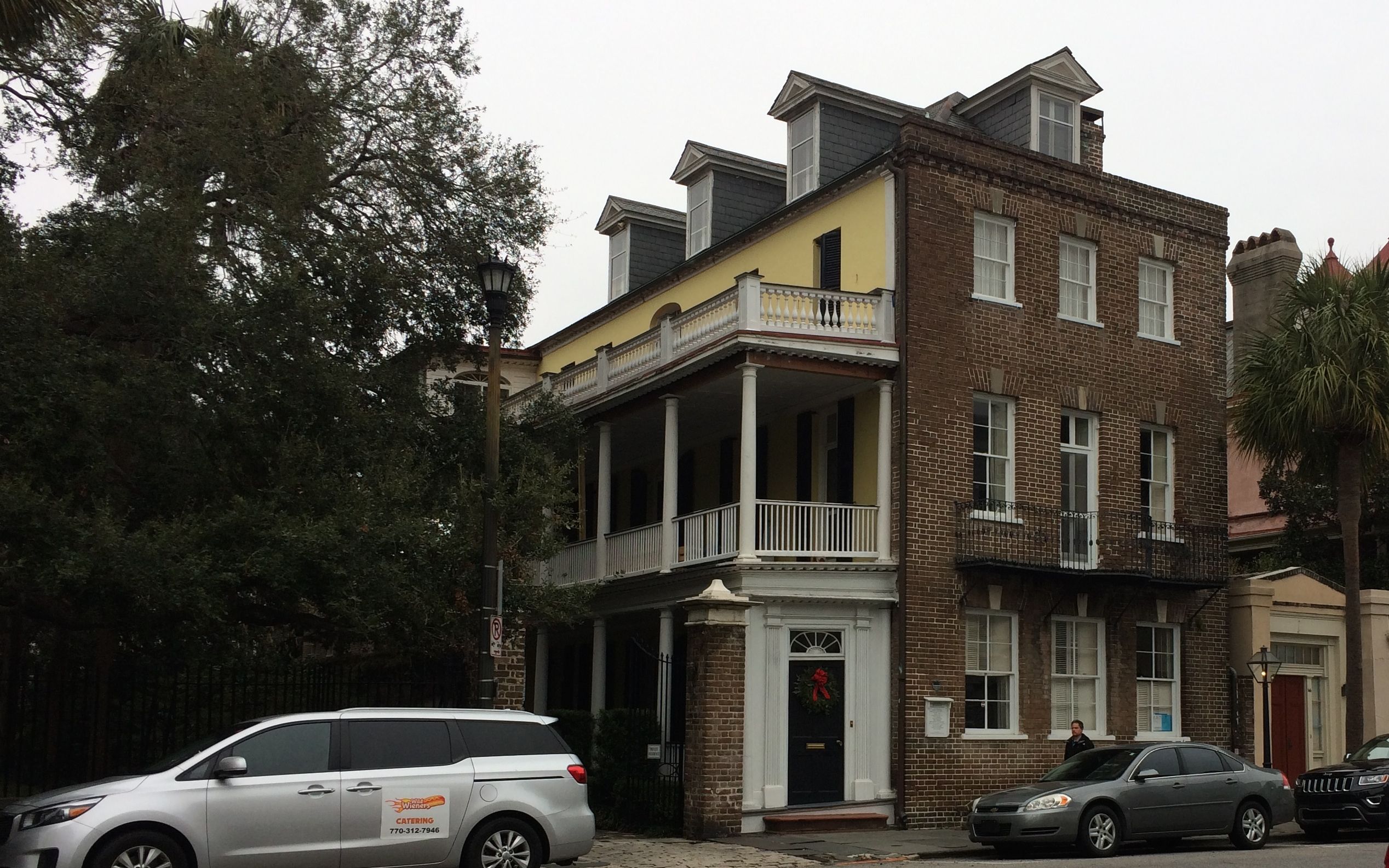
I love these houses with the side porches and how they have elaborate doors to the ground floor porches. Or are these called verandahs? I mean, we are down south.
I wandered on and my next stop was St. Michael’s Church. I entered through the graveyard.
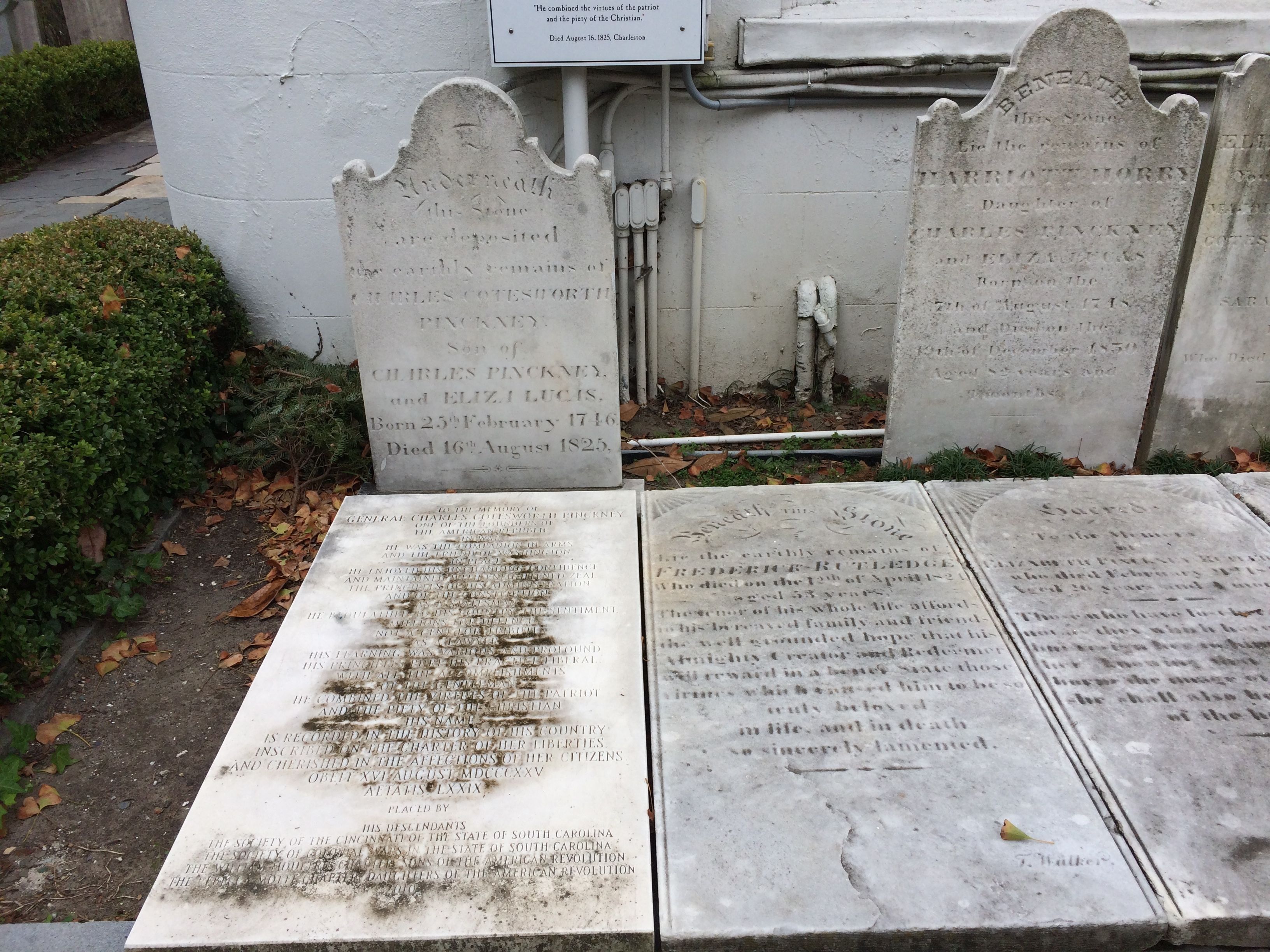
I came across Charles Pinckney’s grave. Yes, that Charles Pinckney. He was very prominent.
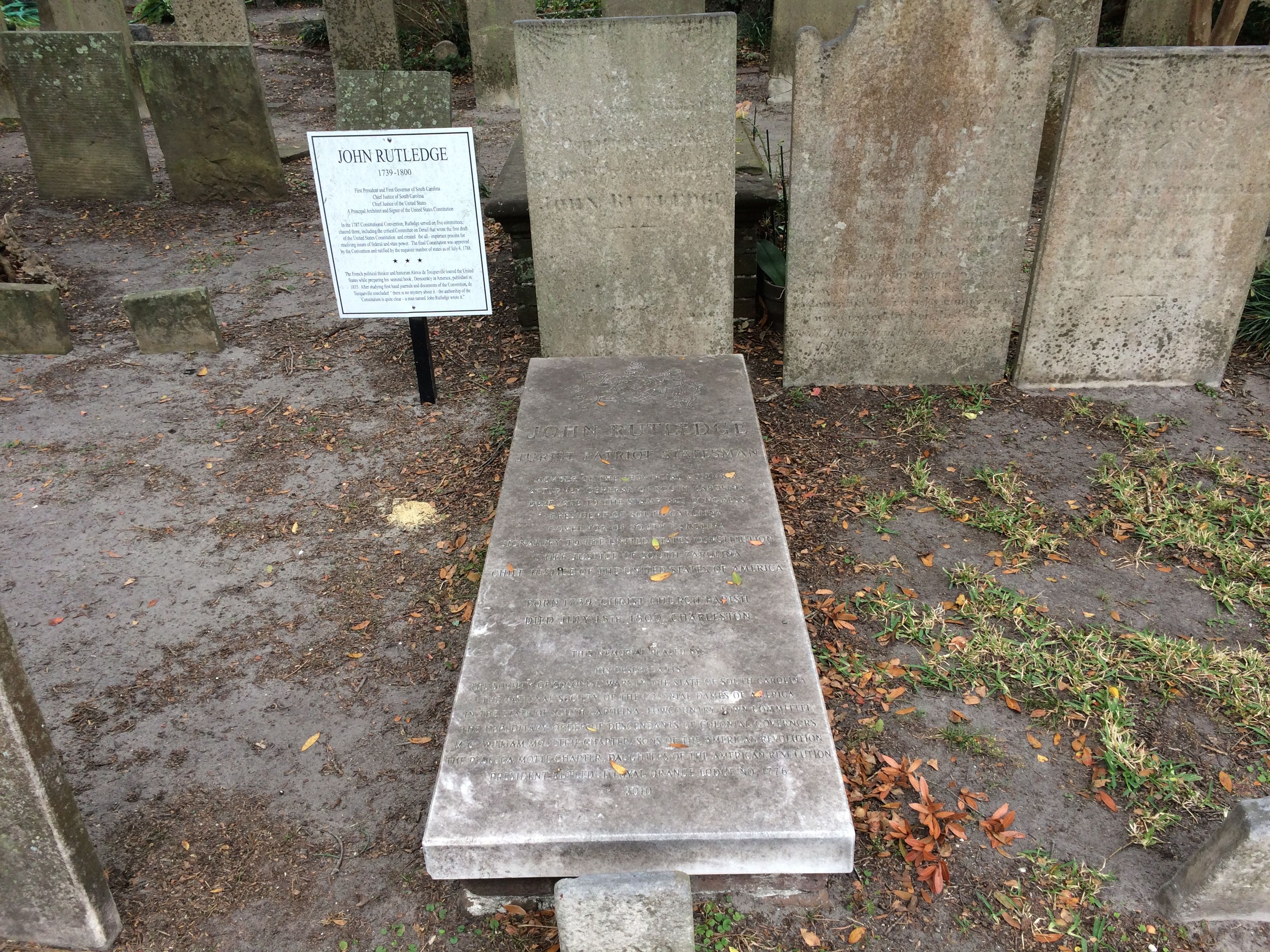
John Rutledge is also buried here. He lived 1739 – 1800 and was another over-achiever.
First President and First Governor of South Carolina.
Chief Justice of South Carolina
Chief Justice of the United States
A Principal Architect and Signer of the United States Constitution.
Alexis de Tocqueville declared, “There is no mystery about it – the authorship of the Constitution is quite clear – a man named John Rutledge wrote it.”
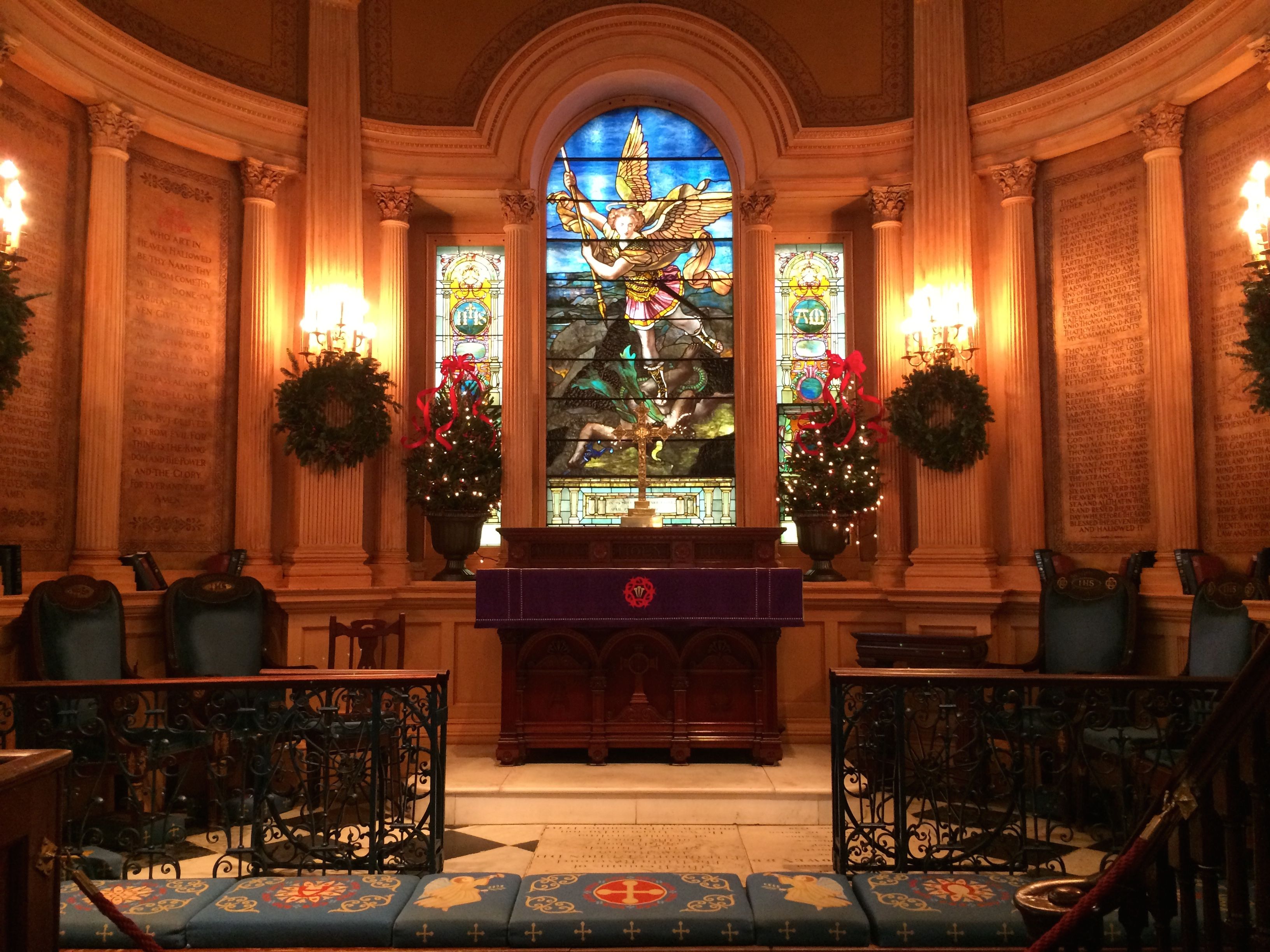
The altar has a beautiful stained glass window of St. Michael behind it.
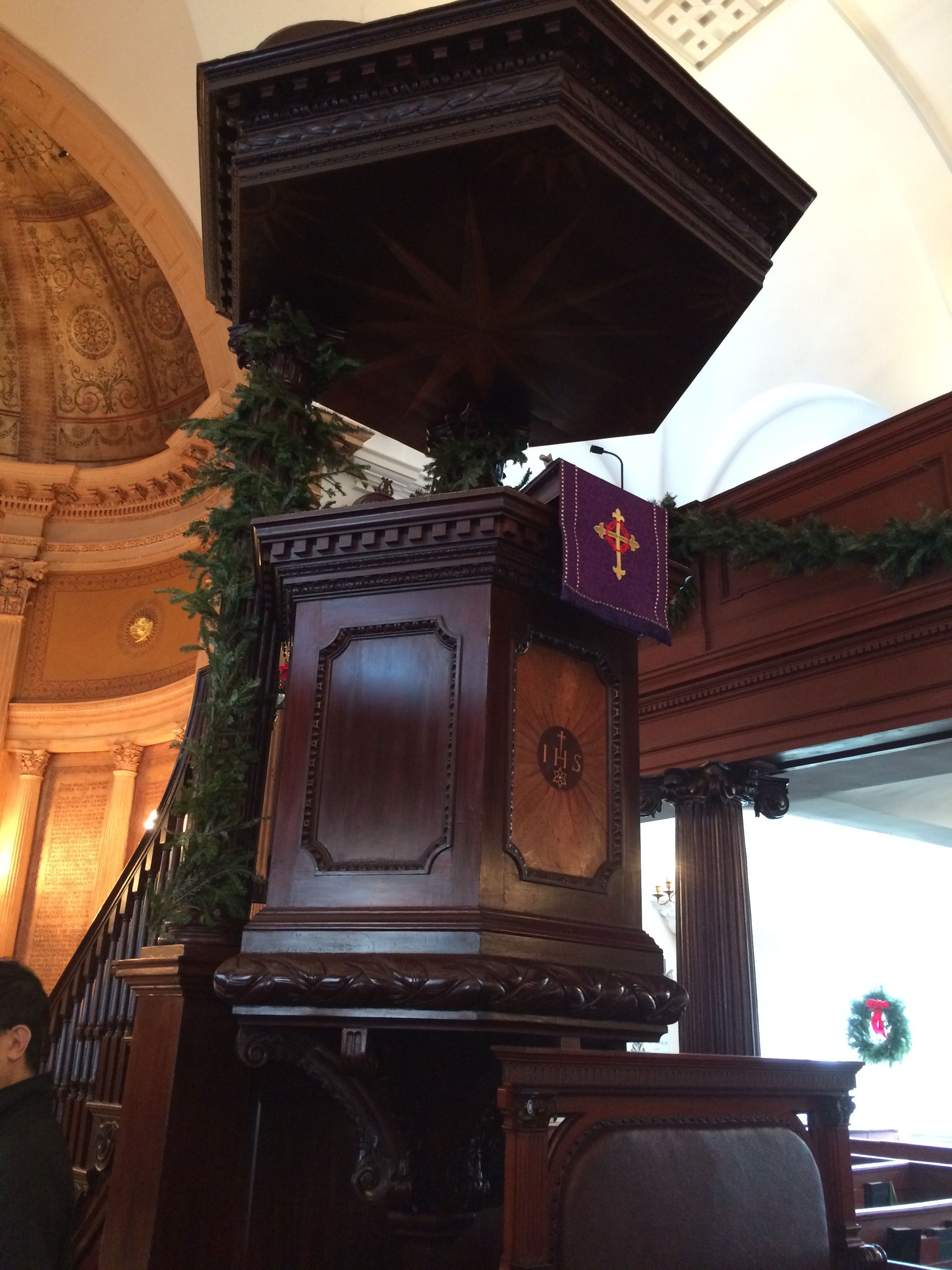
I listened in on part of a tour and heard that this ambo is original to the church, which was built between 1751 and 1761. The guide said that the curve of the little roof-like structure helped to project the speaker’s voices.
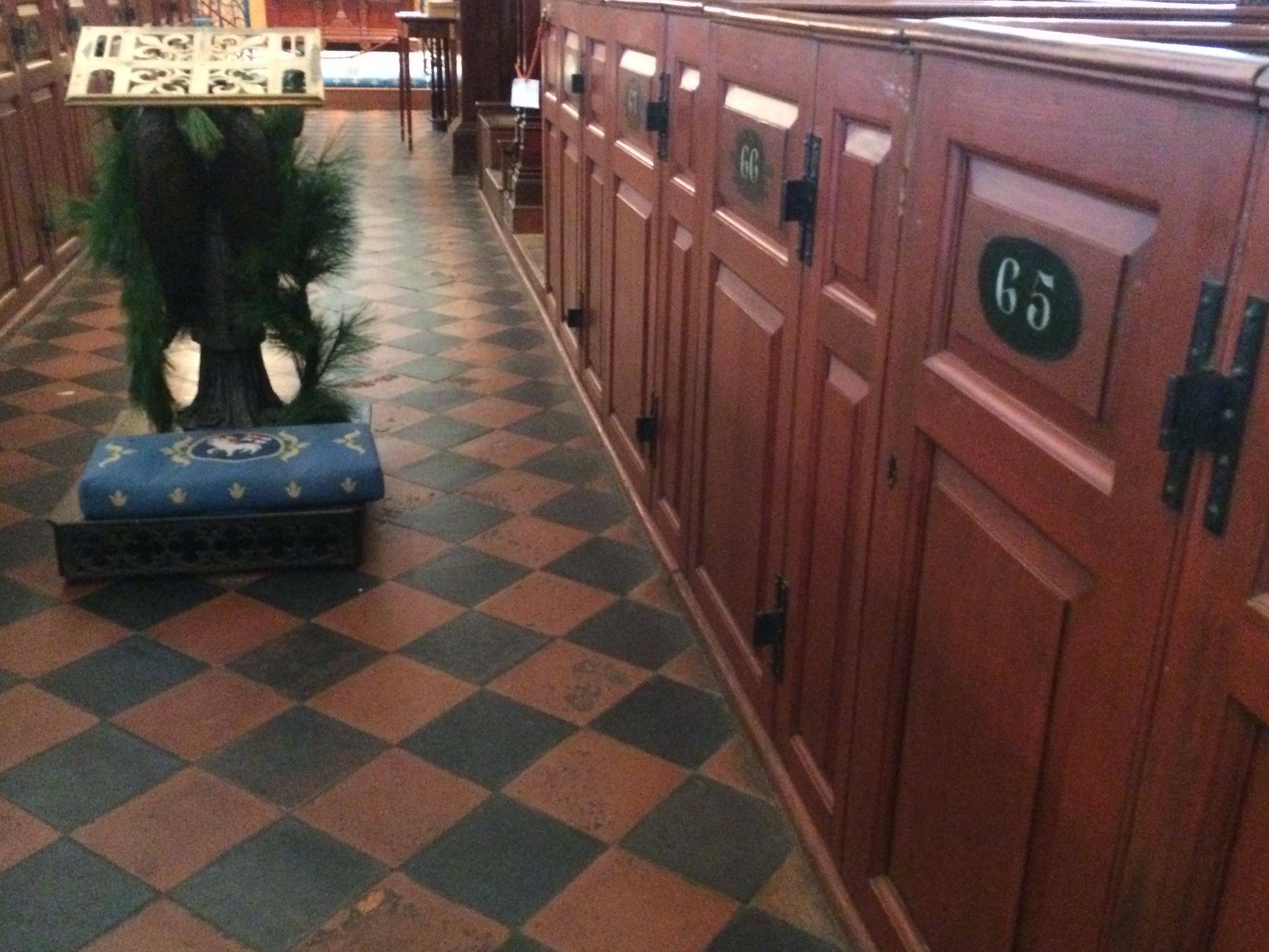
I looked around a bit and enjoyed the boxed pews that must have belonged to prominent families. I should have thought to ask where visitors would sit.
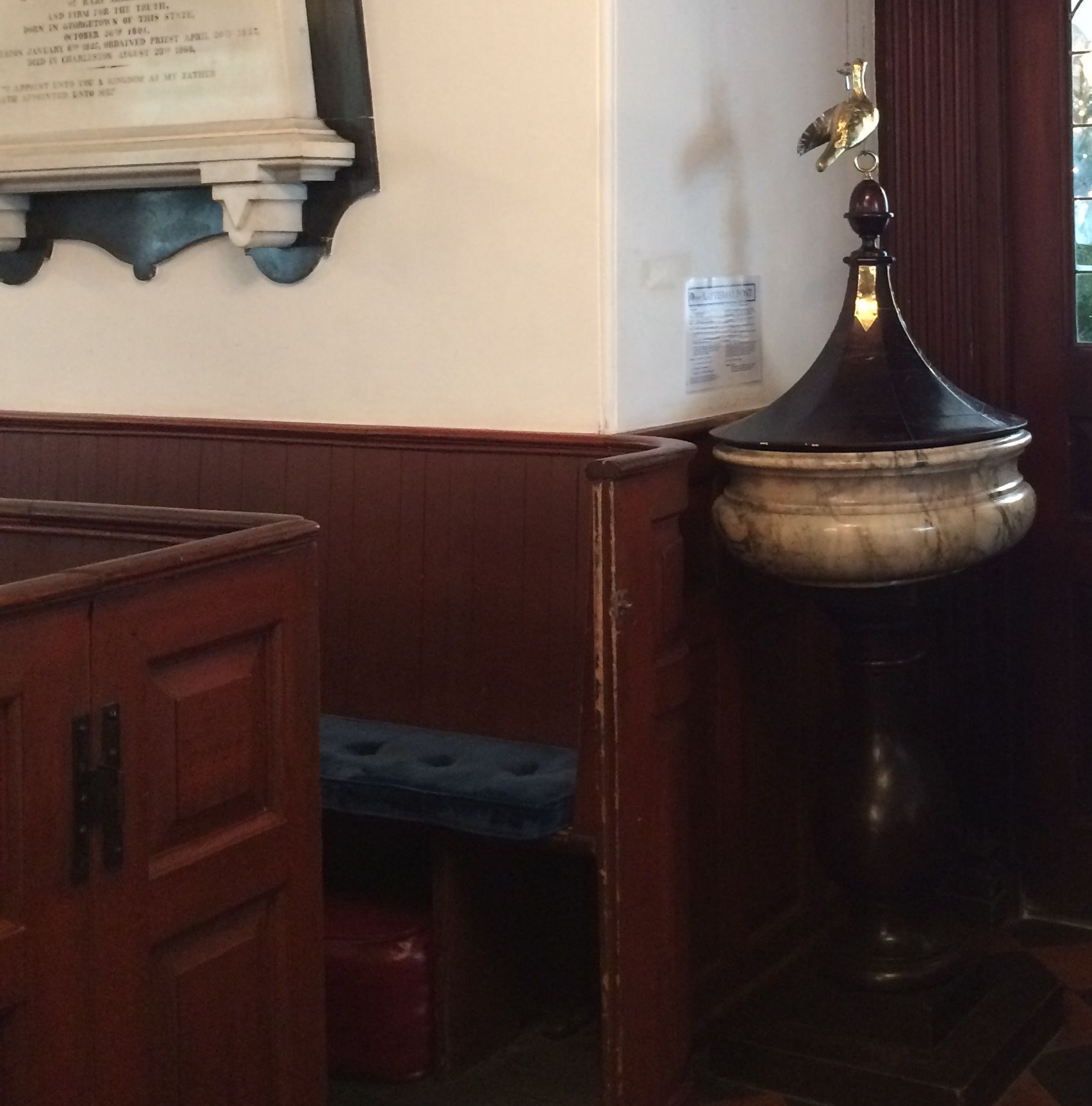
On the way out, I passed by what I assumed was the baptismal font and into the vestibule.
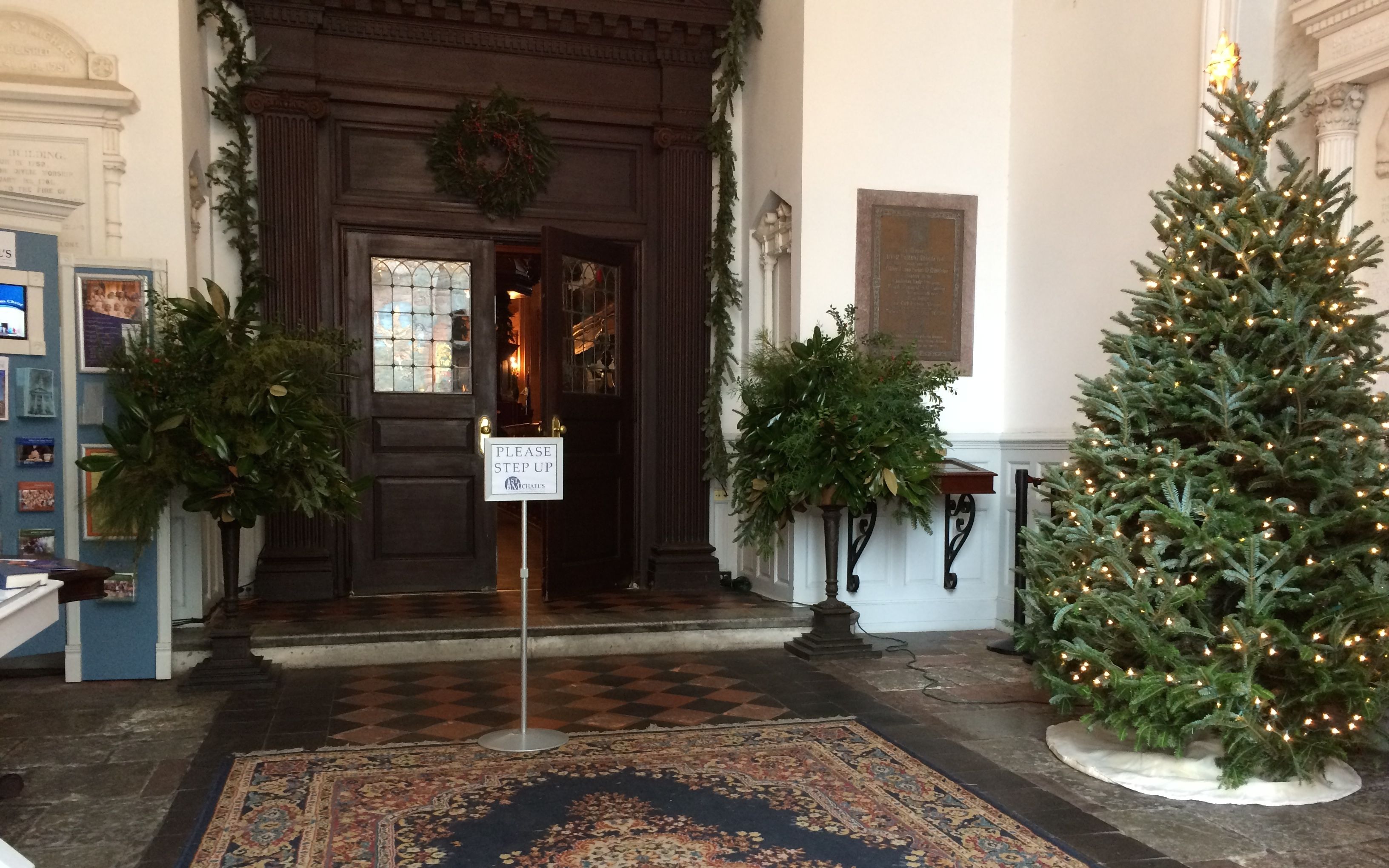
Do you see that short step up? The guide said that the earthquake in 1886 caused the steeple that is over the vestibule to drop six inches, and it created a step where none had been before.
St Michael’s is located at the intersection of Meeting and Broad Streets. They call this area the Four Corners of Law. St. Michael’s represents ecclesiastic law. The other corners are occupied by Charleston City Hall, The Federal Courthouse and the Country Courthouse.
Actually, the name “Four Corners of Law” was coined in the 1930s by Robert Ripley, of Ripley’s Believe it or Not fame.
When I visited, the streets around the church were lined with various law enforcement vehicles. They were in the middle of two big cases: Michael Slager was on trial for shooting Walter Scott and Dylann Roof was on trial for the Emanuel AME Church murders.
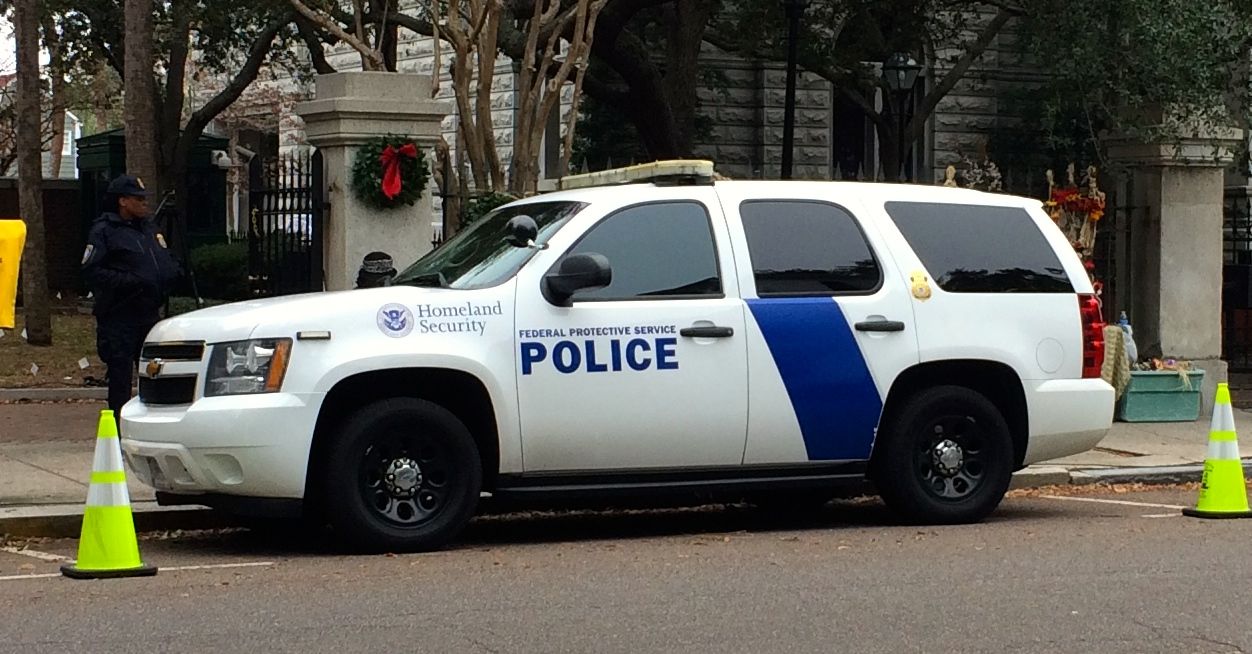
I was quite surprised to see Homeland Security represented among all the other police vehicles. I have to admit, I found the presence of so much law enforcement a bit unsettling.
However, they proved to be pleasant and helpful. I chatted with one of the Homeland Security officers for a few minutes and he reminded me of the trials that were taking place. I have to admit that I never drew the connection between the news that I had heard with the city I was in.
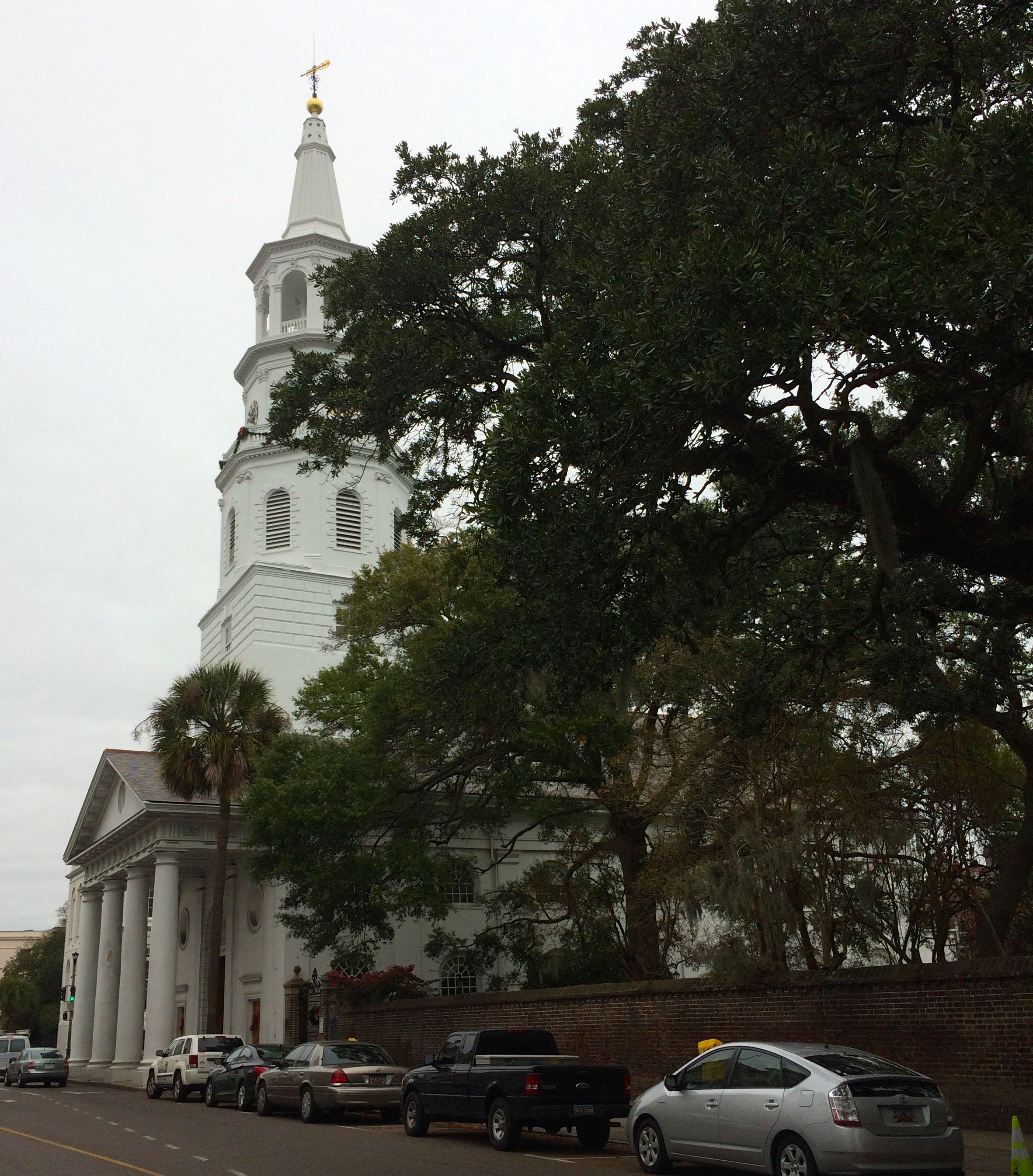
The officer accompanied me into the street to watch for traffic when I took a photo of St. Michael’s steeple. I was told that they painted the steeple black during the Civil War to prevent the enemy from using it as a target. It also had a clock and change ringing bells that date from the colonial era.
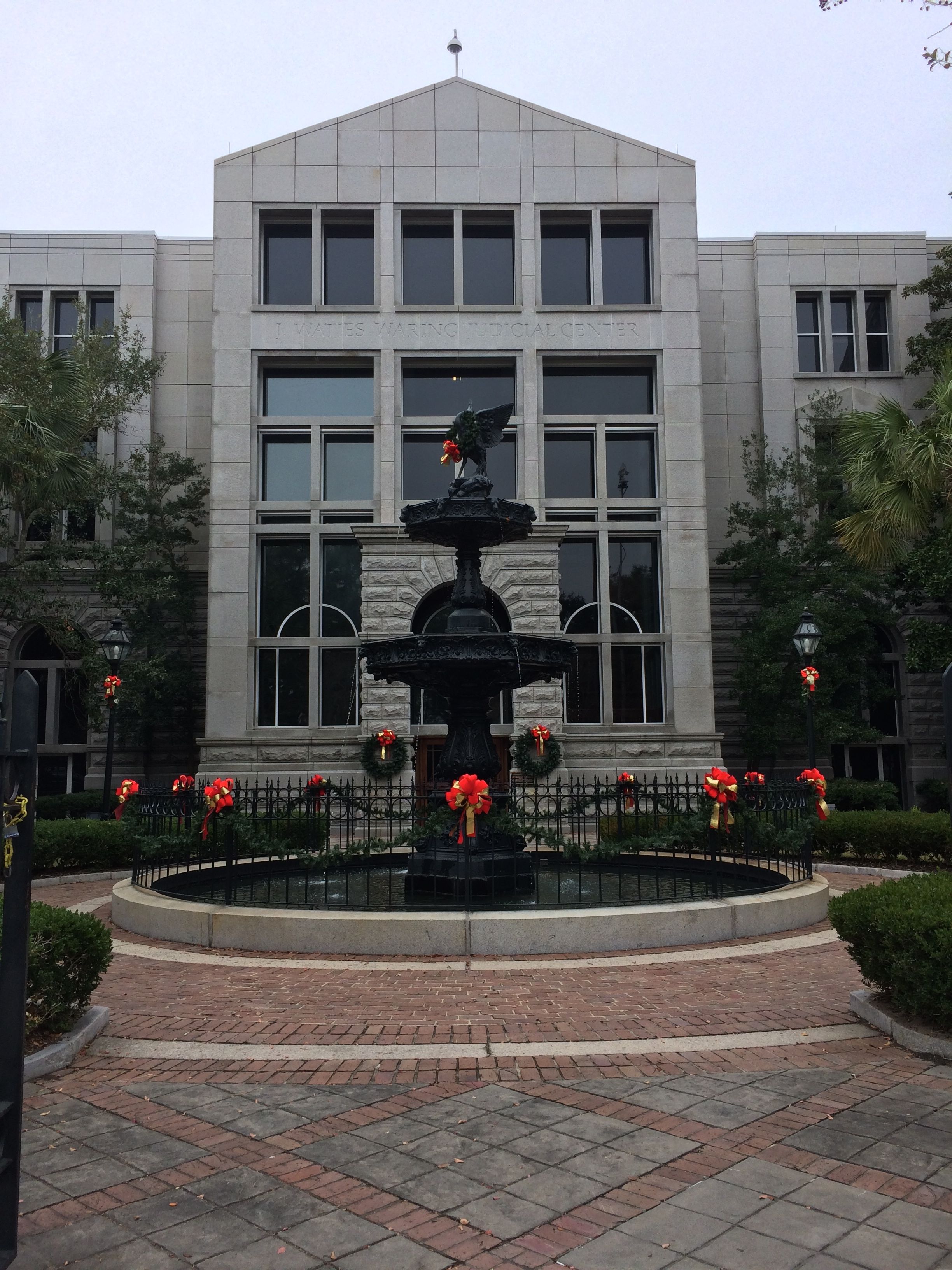 This is the country courthouse, where I believe the Dylann Roof trial was taking place.
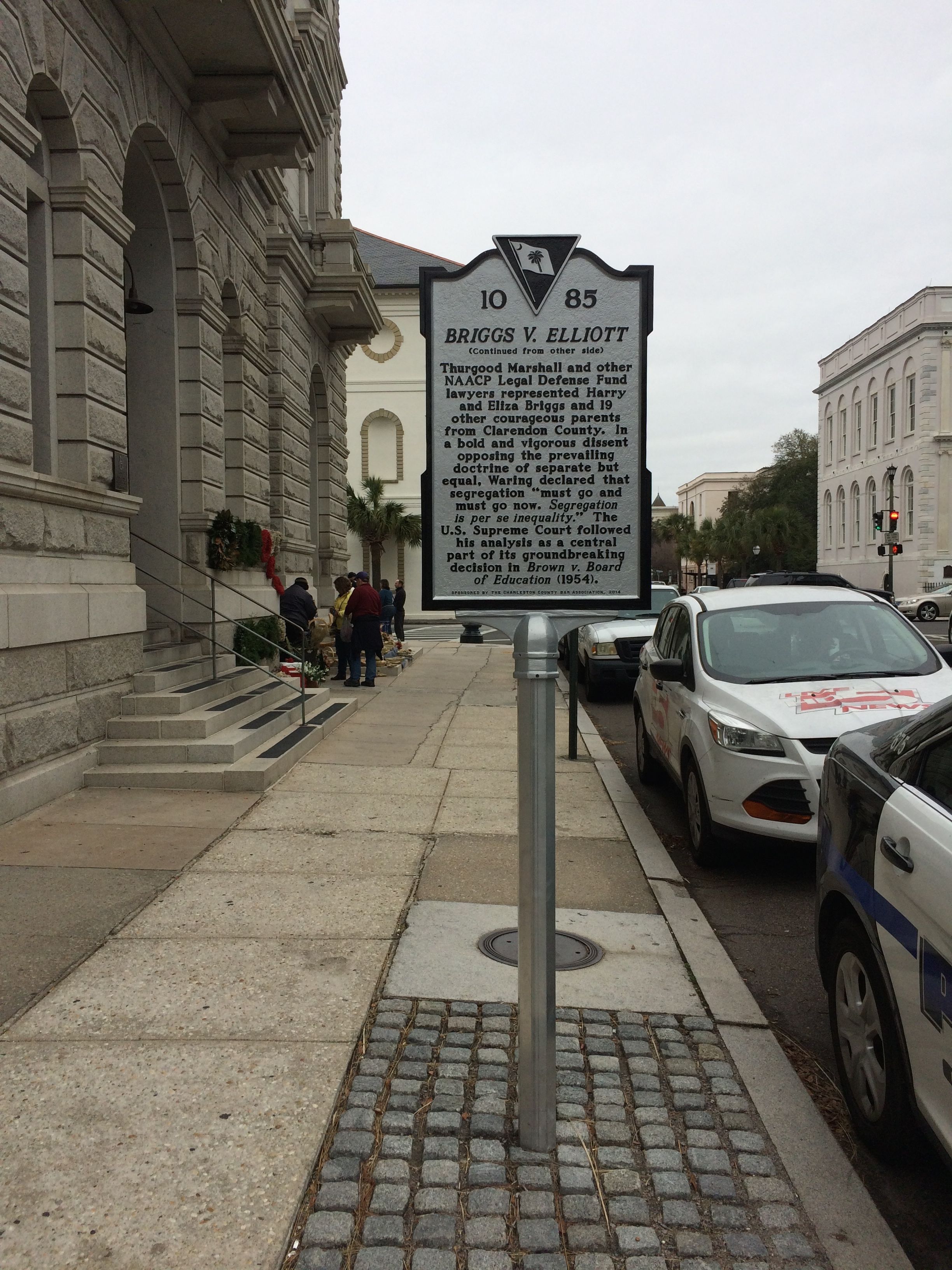
This plaque was in front of the Federal Courthouse. The case of Briggs v. Elliott was an important trial in striking down segregation in South Carolina, which was mandated by state law.
MANDATED by law. That’s what really blew me away. It wasn’t that the law permitted segregation – segregation was mandated by law.
Article 11, Section 7 of the 1895 Constitution of South Carolina read as follows: “Separate schools shall be provided for children of the white and colored races, and no child of either race shall ever be permitted to attend a school provided for children of the other race.” Section 5377 of the Code of Laws of South Carolina of 1942 read: “It shall be unlawful for pupils of one race to attend the schools provided by boards of trustees for persons of another race.”
Just because something is legal doesn’t make it right. Thanks to the hard work and perseverance of many people, the law was finally changed.
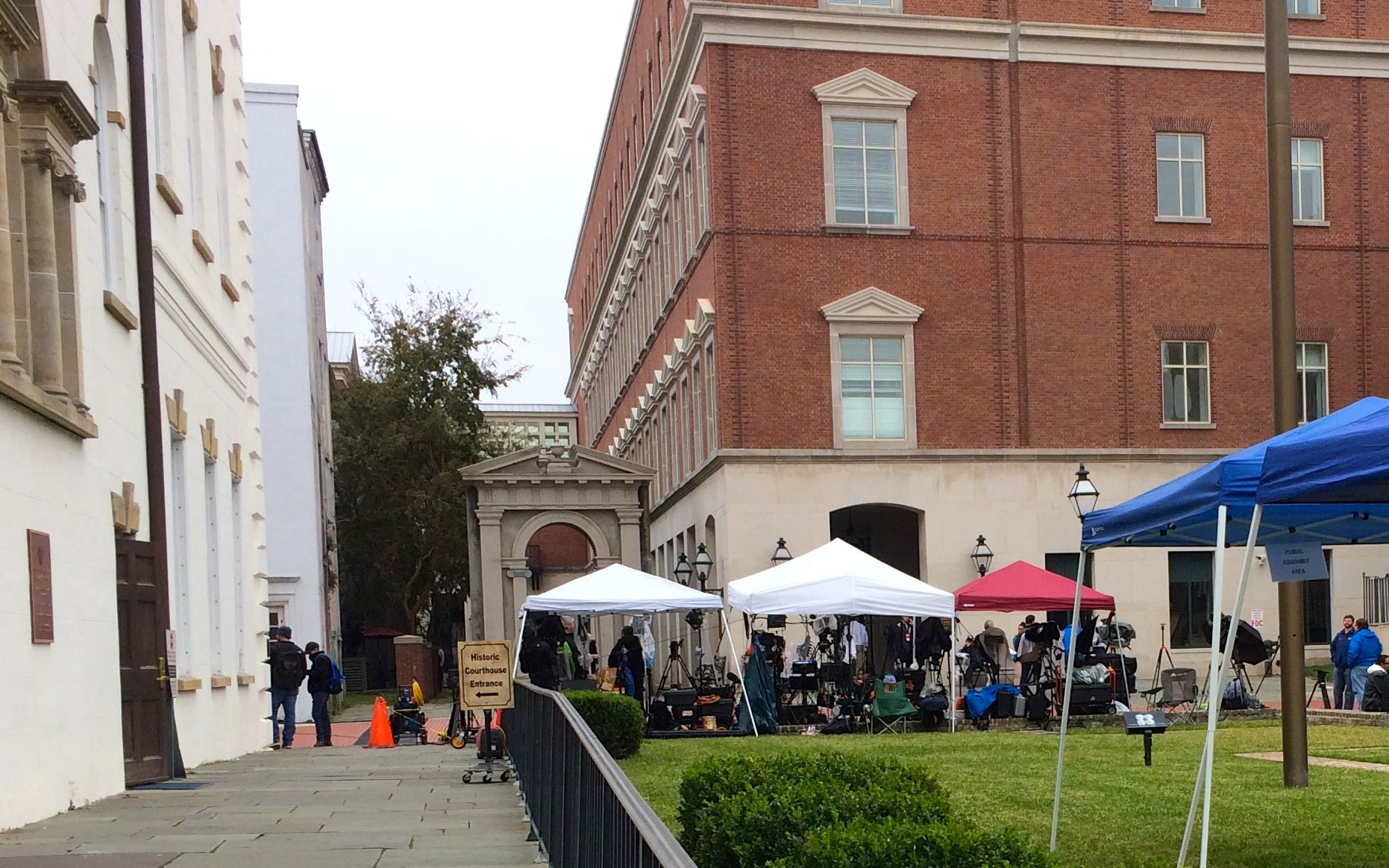
Just across the street, behind the courthouse, was an area set up for the press. The were expecting a decision in the Michael Slager in the next day or so, so they were ready for announcements.
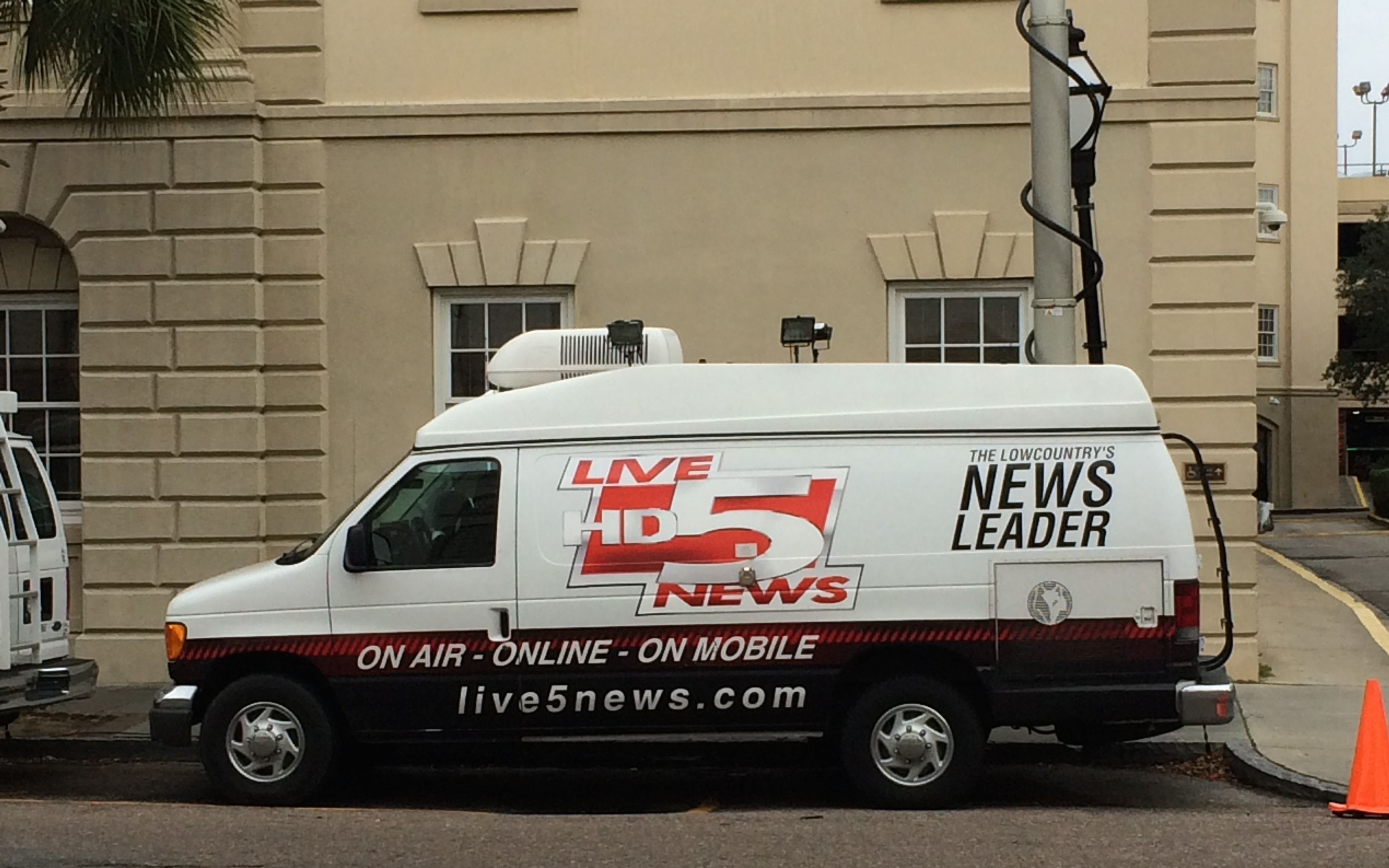
“ON AIR – ONLINE – ON MOBILE” On fleek?
I continued along and enjoyed spotting things here and there.
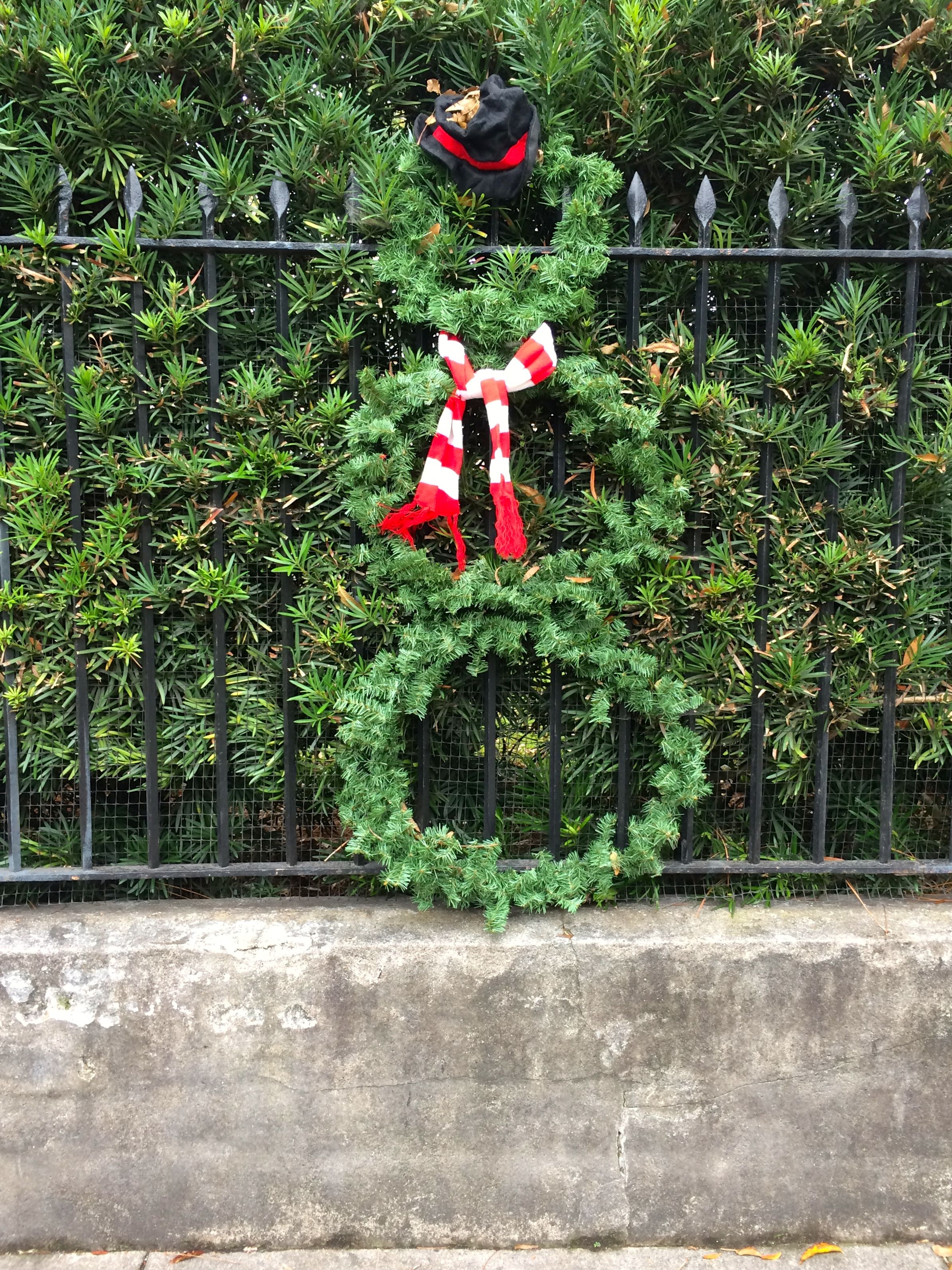
I thought this Charleston “snowman” was a fun touch.
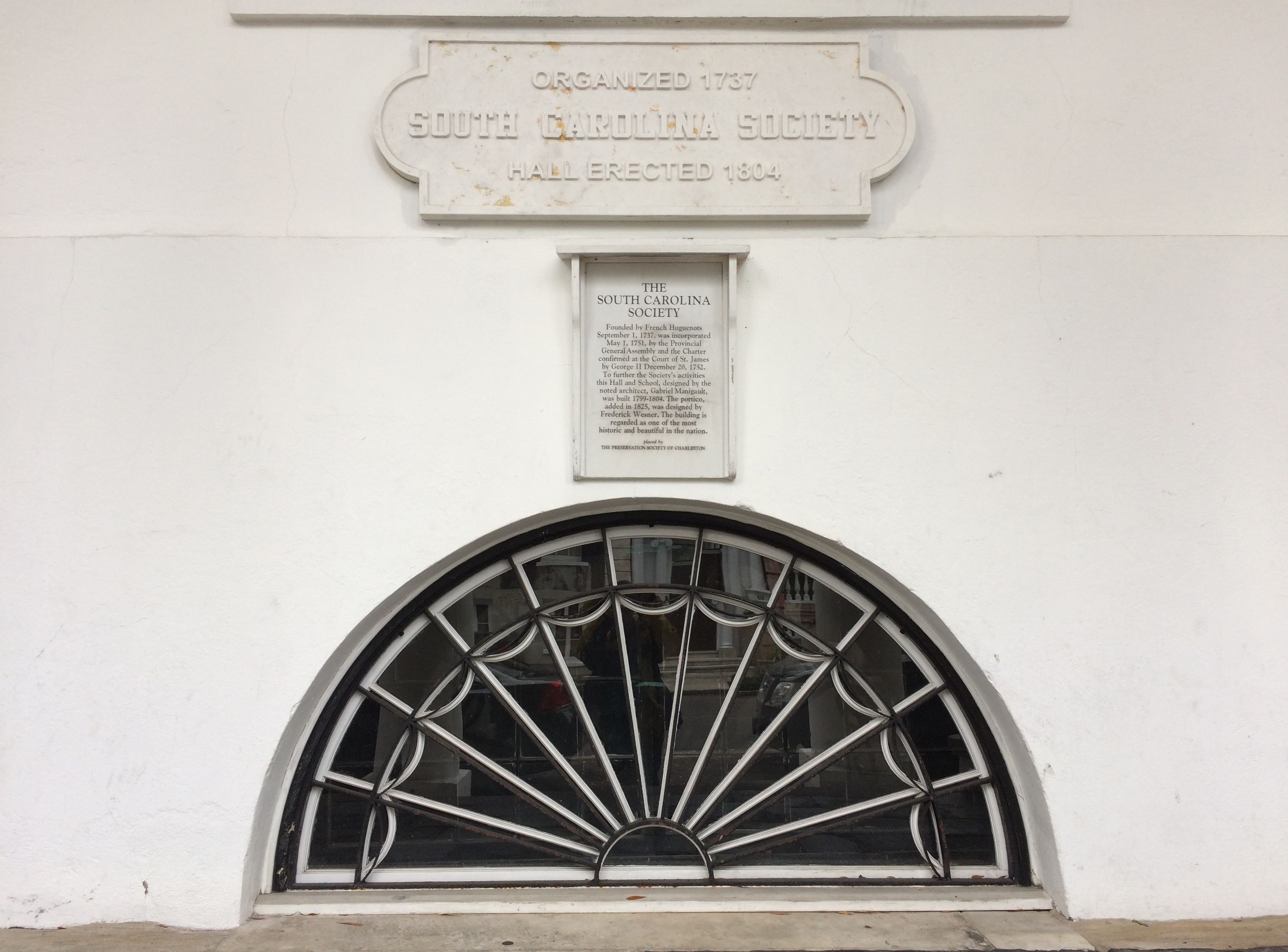
I liked this fan window from the South Carolina Society Hall that was erected in 1804.
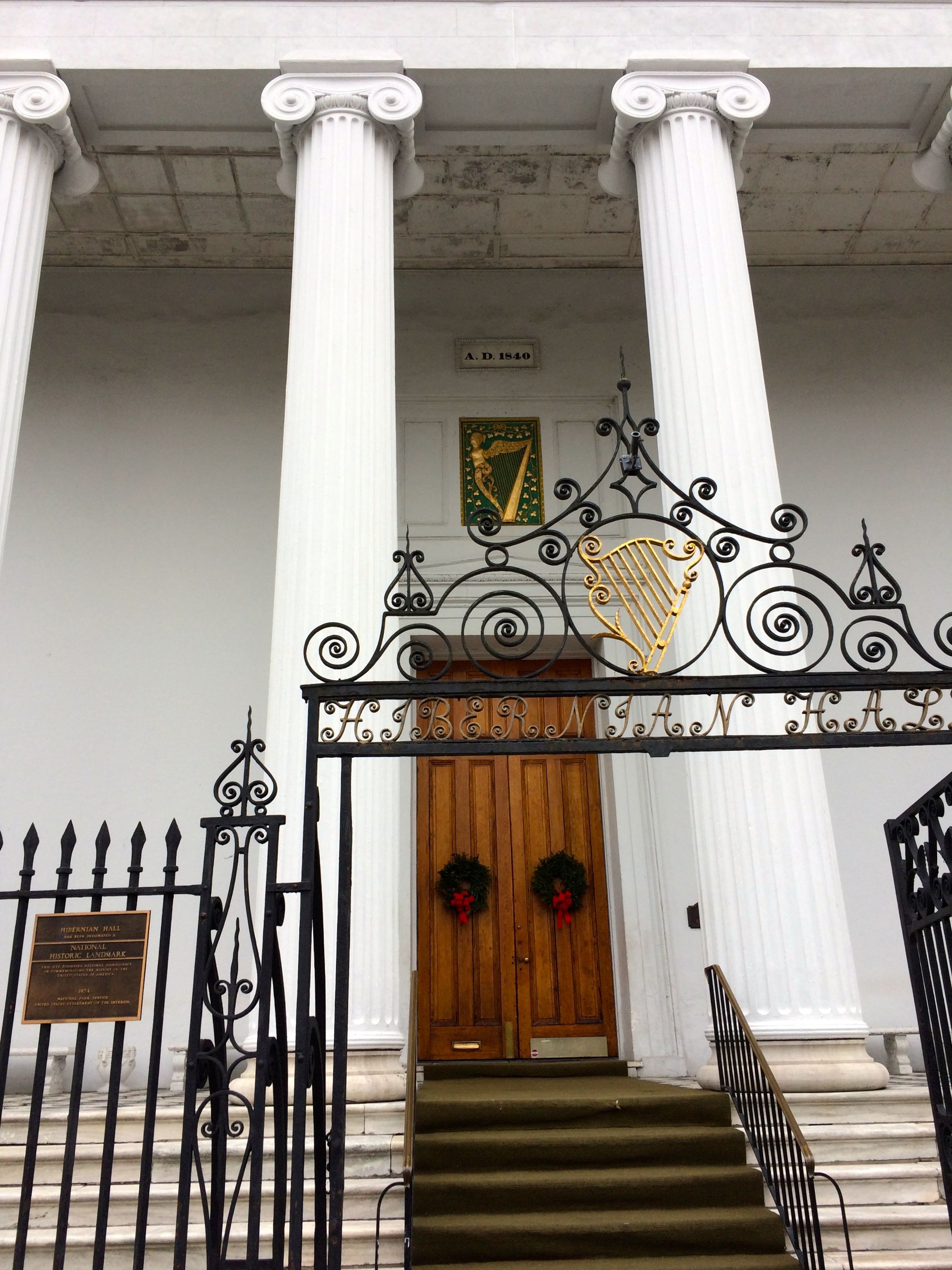
I wandered past the Hibernian Hall. The sign said that it was a private club, but the gate was open. I wanted to see what was under the portico.
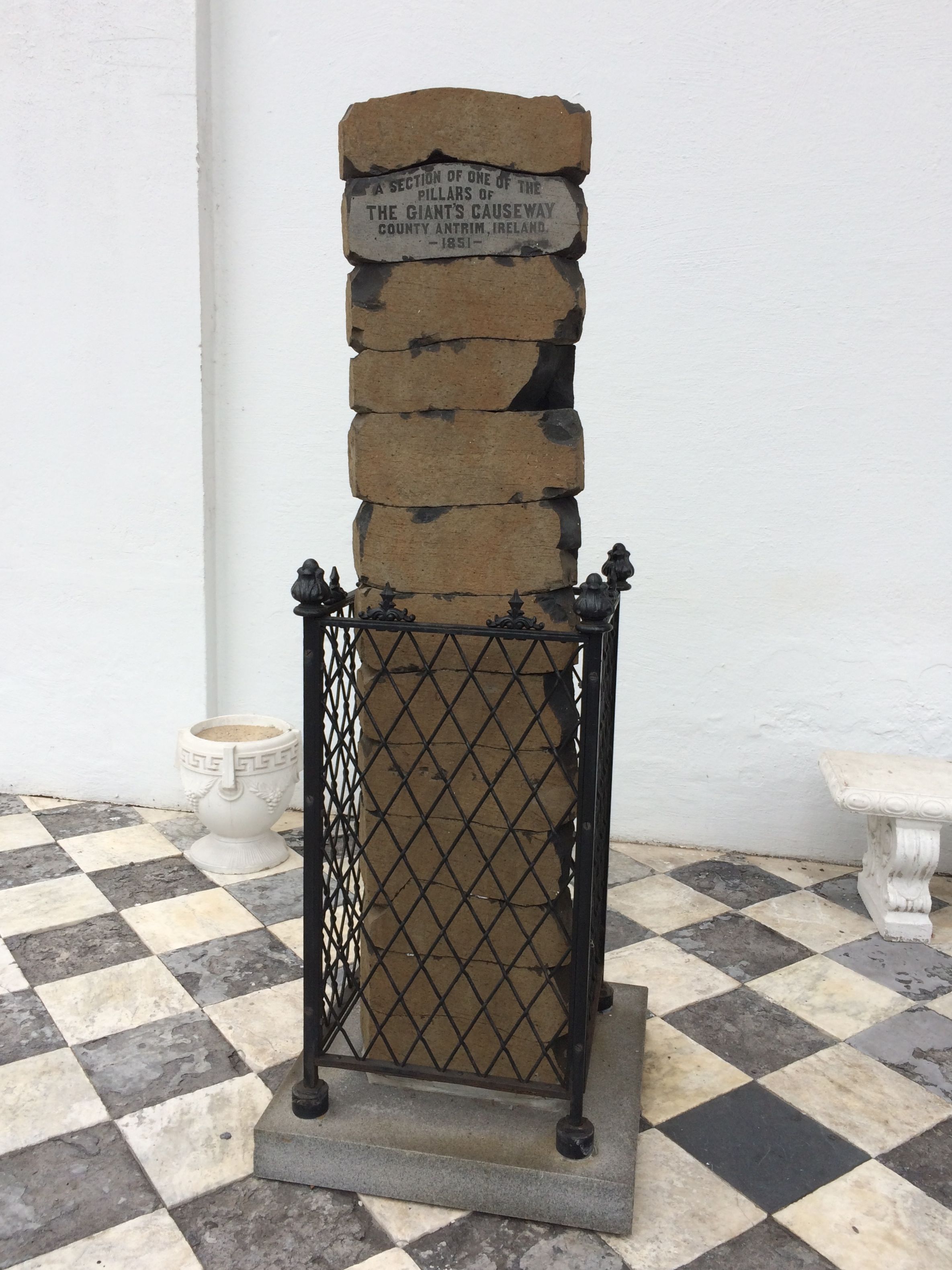
Hmm…what could that be?
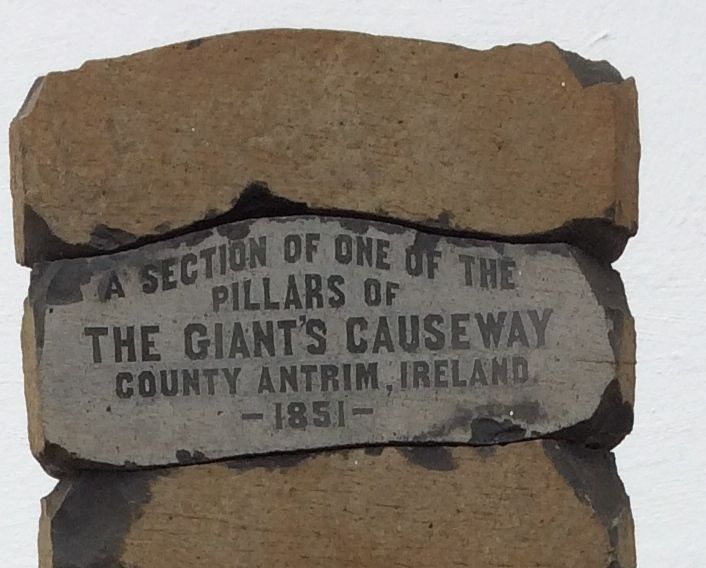
A souvenir from the Old Sod.
I wandered on. I was eager to see the Circular Church.
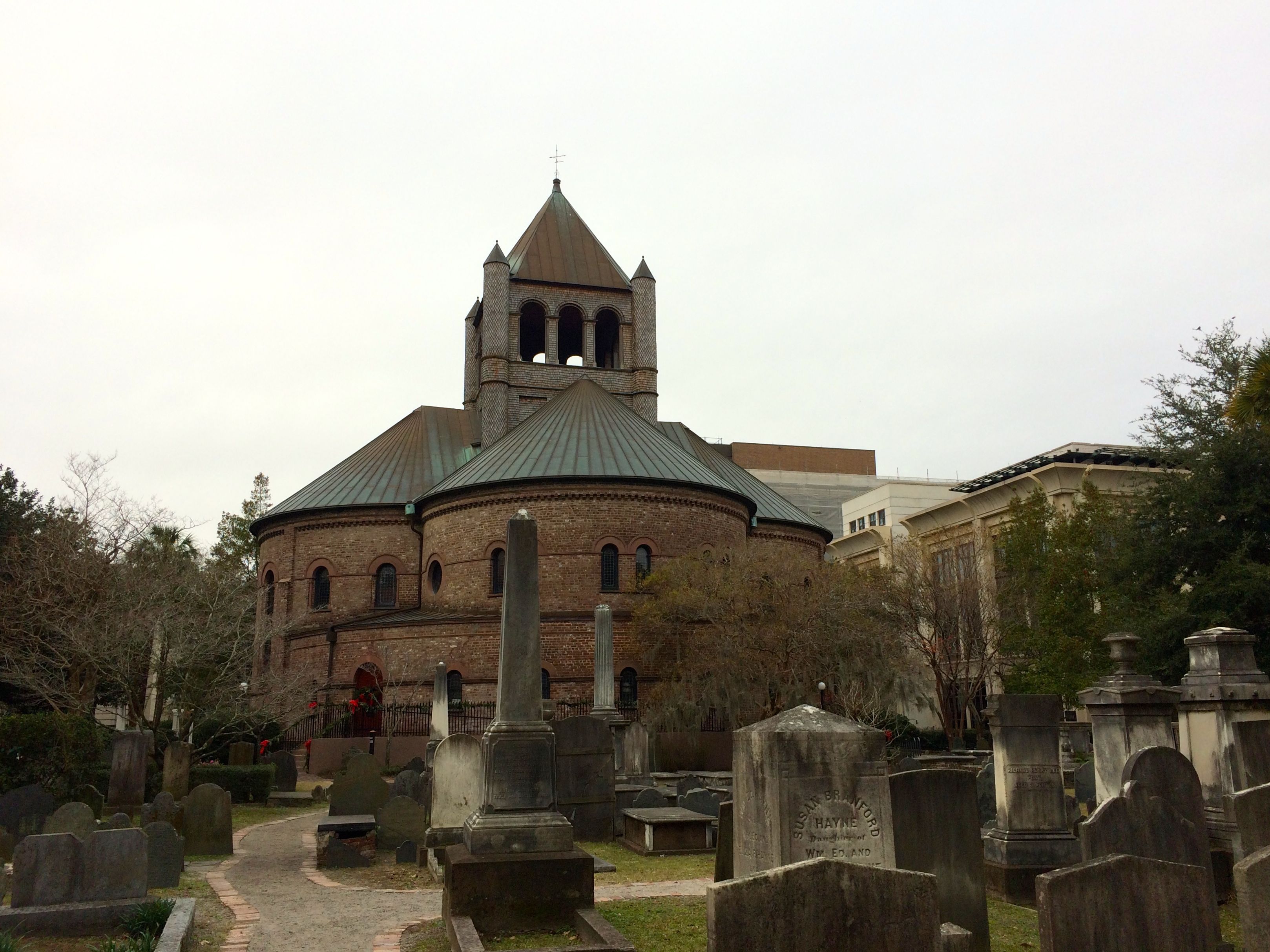
This particular building dates from 1890 but uses bricks from the earlier structures. A large domed church to replace earlier wooden structures was built in the early 1800s. It was designed by Robert Mills, who also designed the Washington Monument.
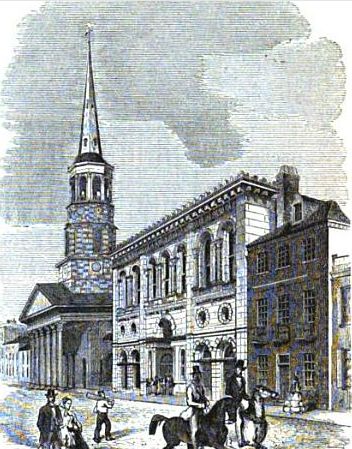
This illustration was from a June 1857 Harper’s Magazine.
Unfortunately, the church that Mills designed burned down in a catastrophic fire in 1861 that destroyed much of the city.
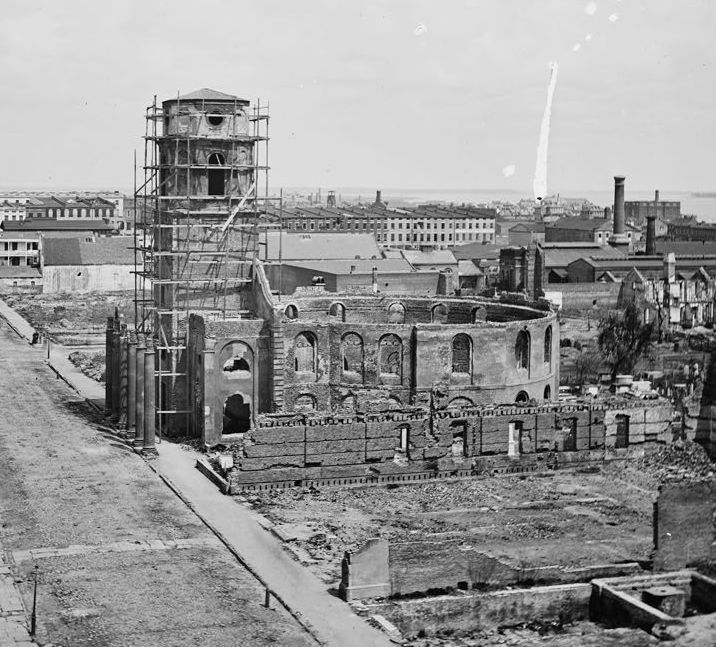
You can see the circular outline of the church in the ruins.
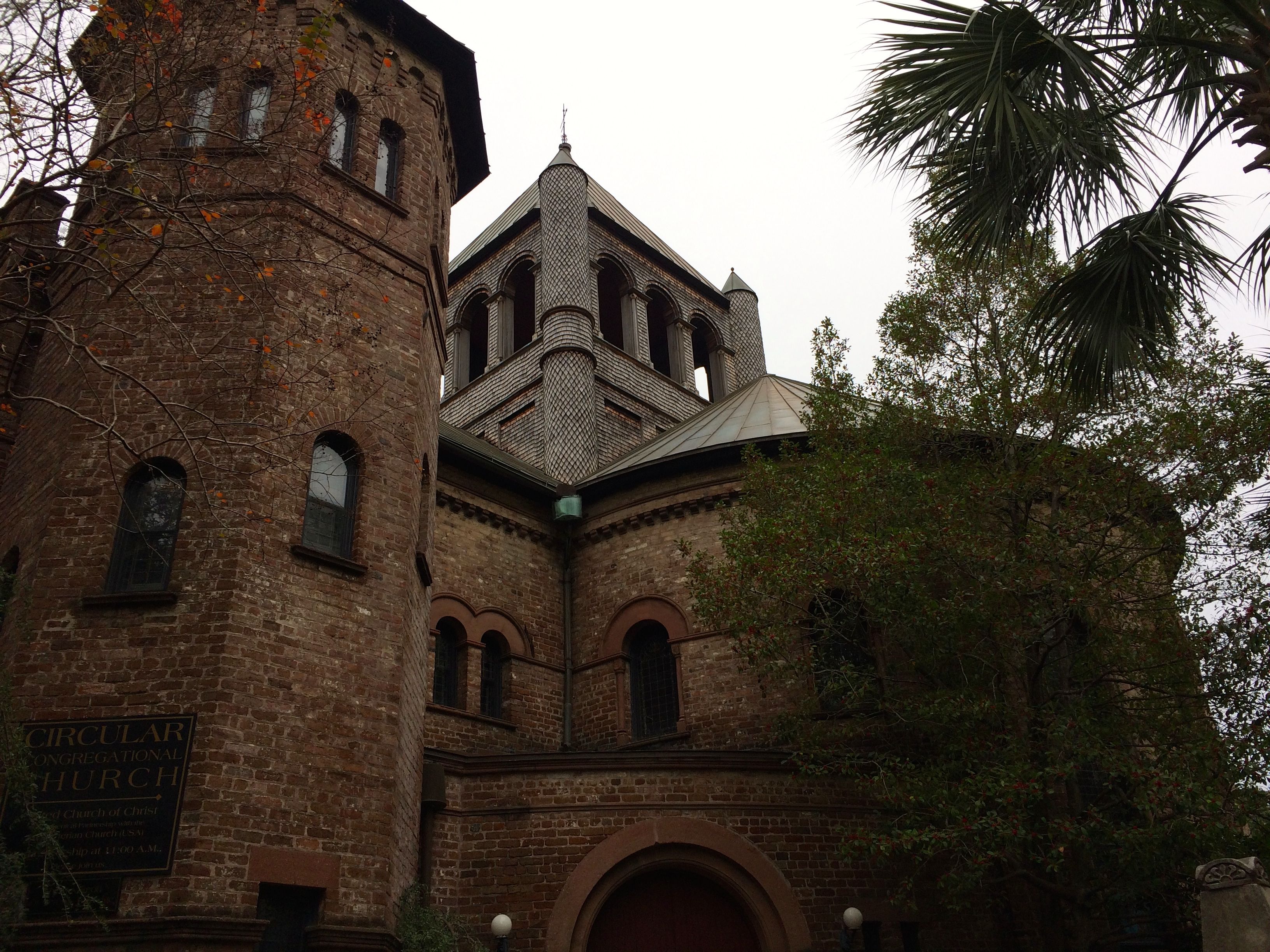
The turrets and towers kind of make me think of H.H. Richardson’s buildings. He is one of the few architects to have a style named after him; Richardsonian Romanesque. (Once again, thank you Sister Jeanne!) He was active during the time this church was rebuilt, but the church’s plans were drawn up by Stephenson & Greene of New York City.
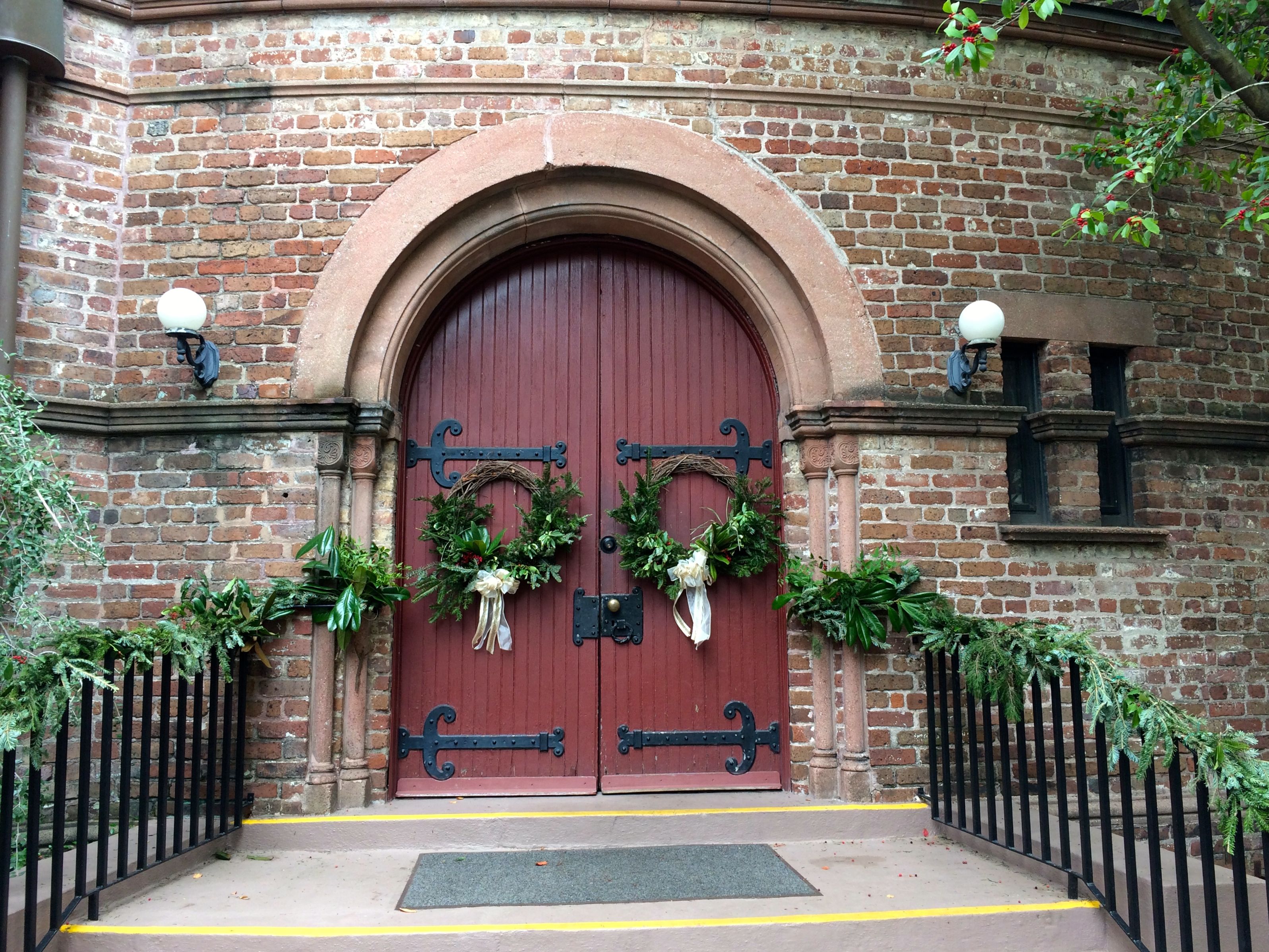
It looked like a welcoming place. I wish it had been open to visitors on the day I walked by. 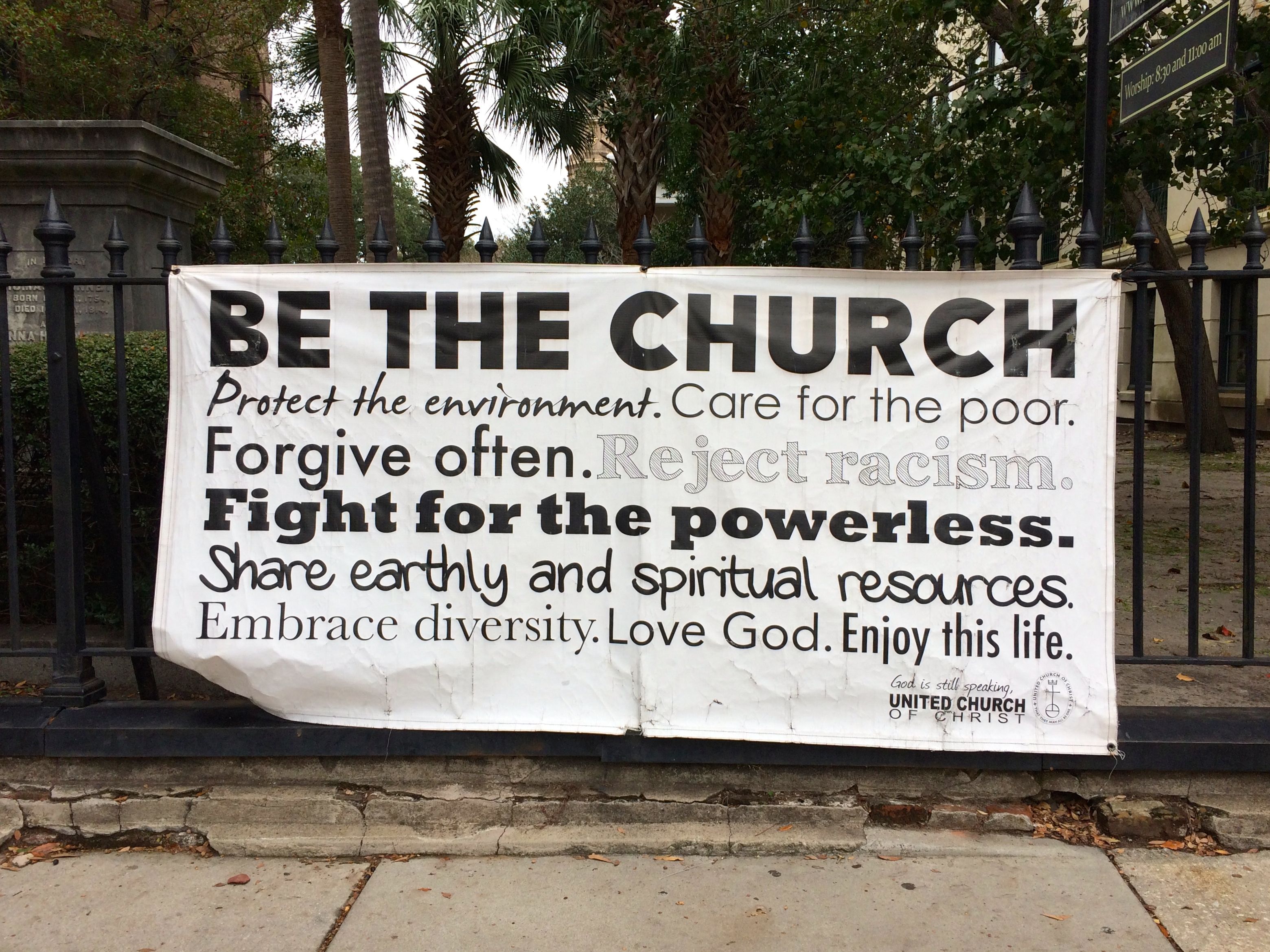
I liked their attitude, too.
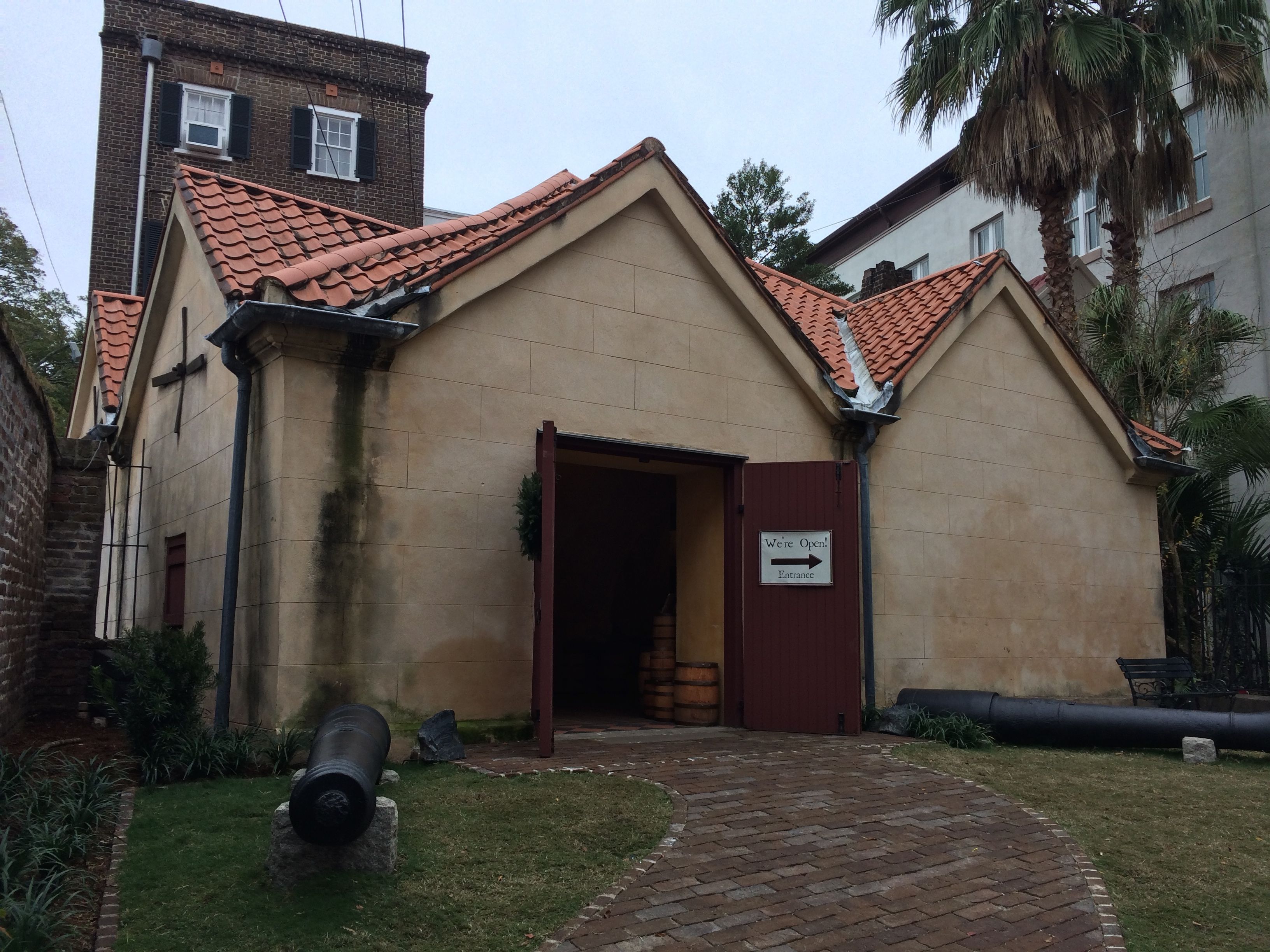
I passed by The Powder Magazine, South Carolina’s oldest public building. It was built around 1713. I stepped inside, but it seemed like they didn’t have much on display that I hadn’t seen before, so I decided to stroll on.
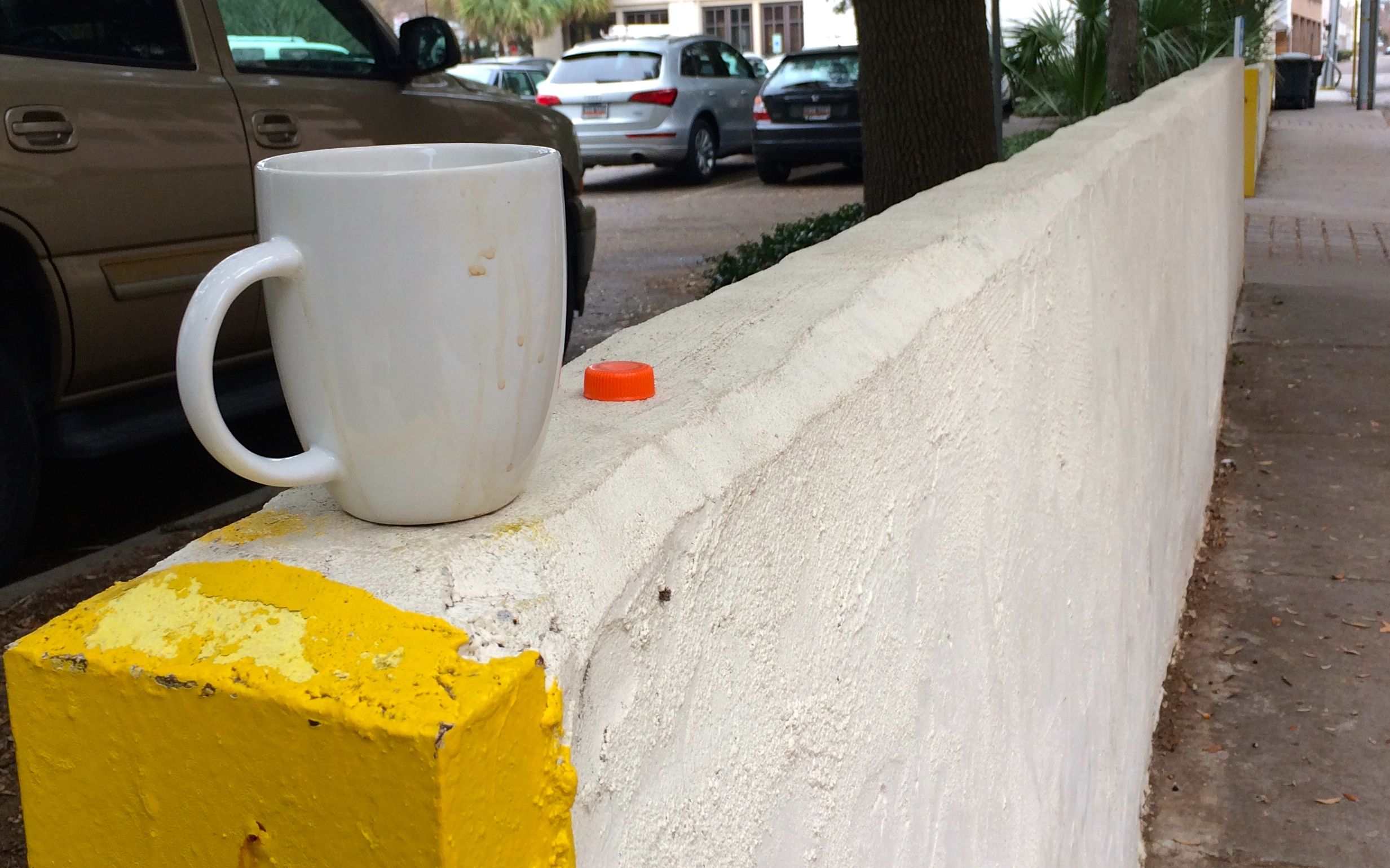
Someone must have had a little coffee break and decided to just leave the cup.
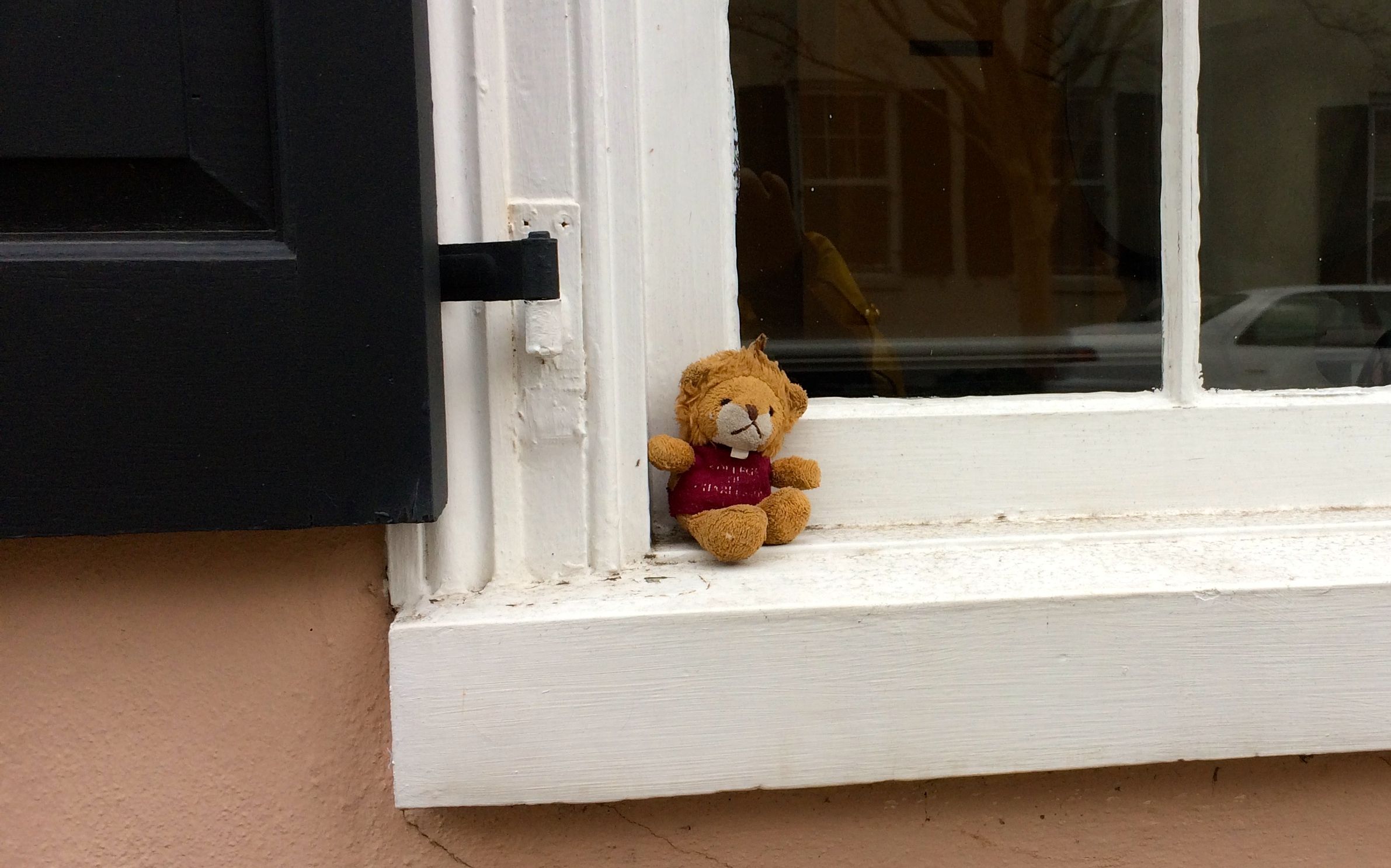
Speaking of things left behind, I saw a little stuffed animal on a window sill.
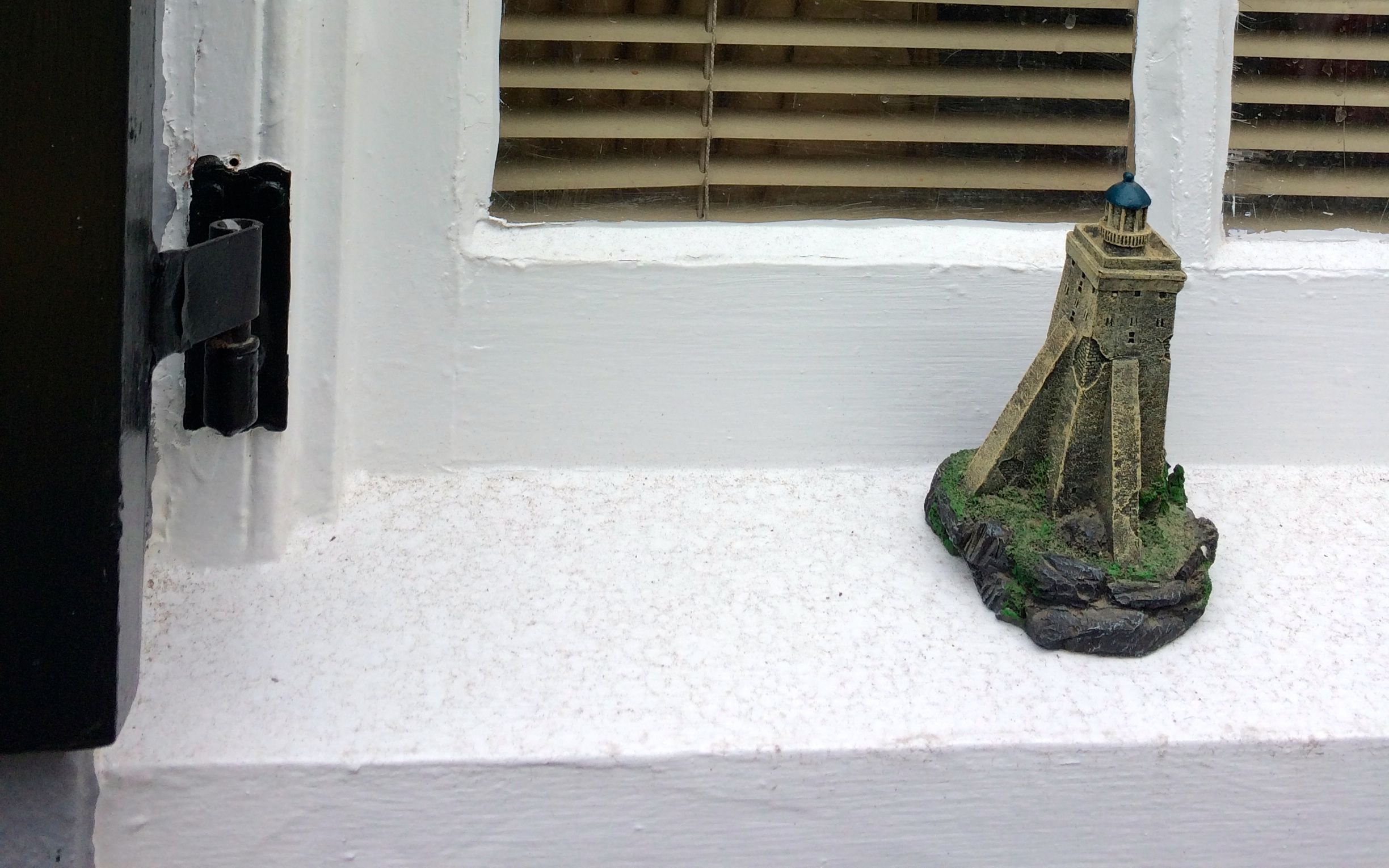
I found a little lighthouse statue on another windowsill.
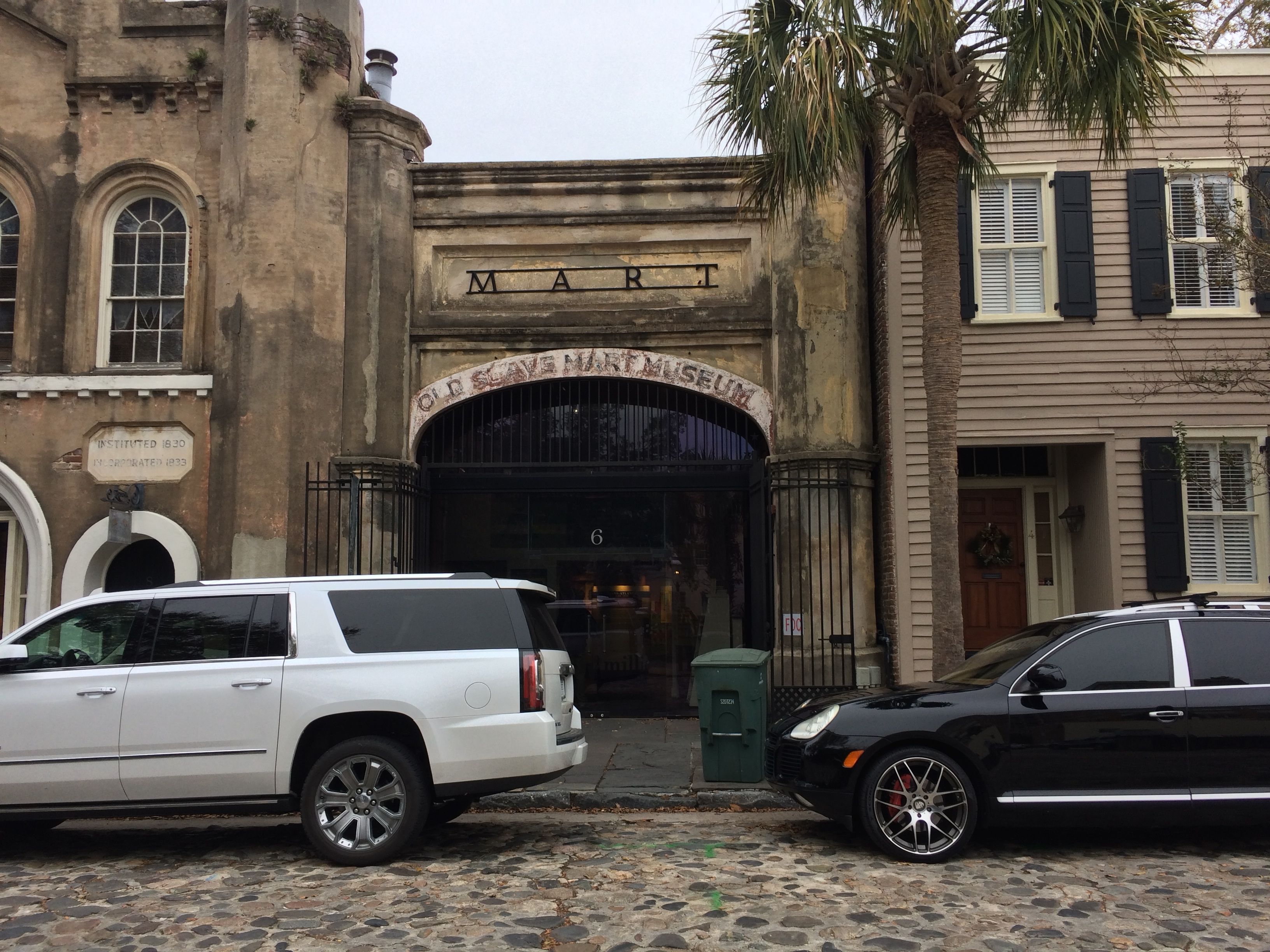
One sad place I toured was the Old Slave Mart Museum. This is a fraction of the place where a robust slave market. At one point, as many as 35-40% of slaves entered the United States through Charleston. Not much of the original structure remains, but it still invokes an eerie feeling the shame of that era.
Across the street, though, was a house that cheered me up. I’ll bet you can figure out what it’s named.
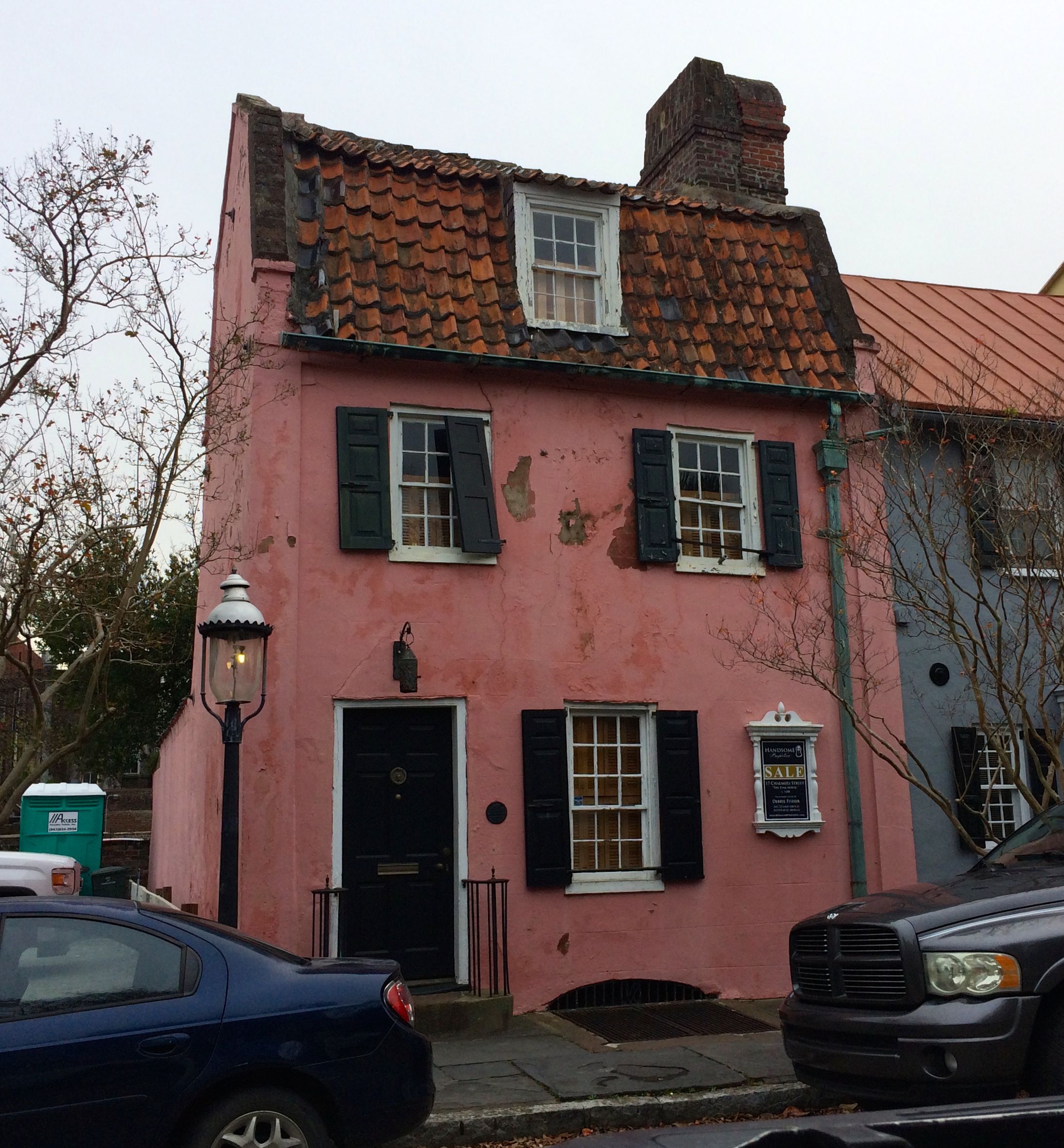
Yep, it’s “The Pink House.”
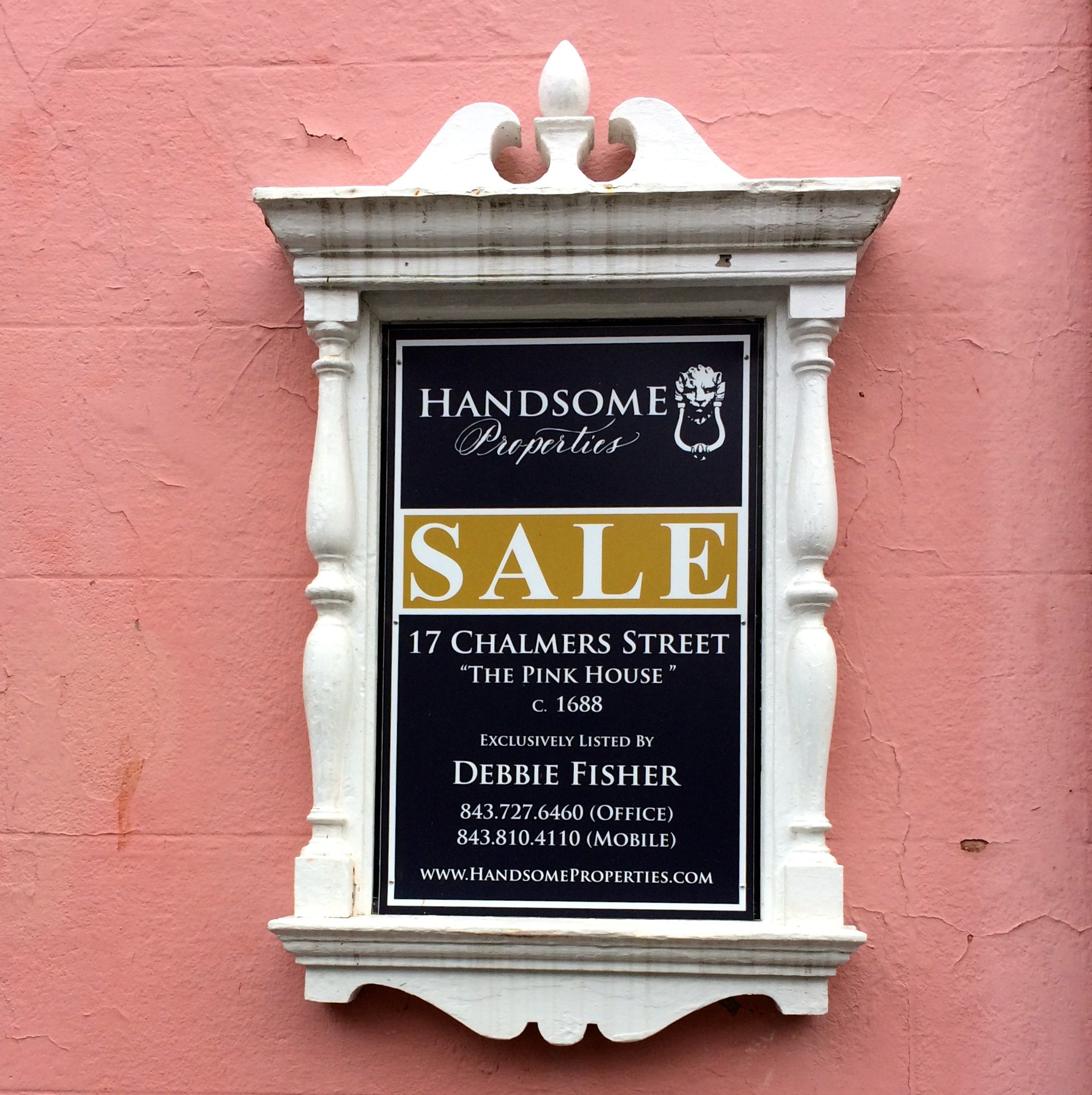
It was built around 1688, and it is FOR SALE! One bedroom, two bathrooms and it’s only about $900,000!
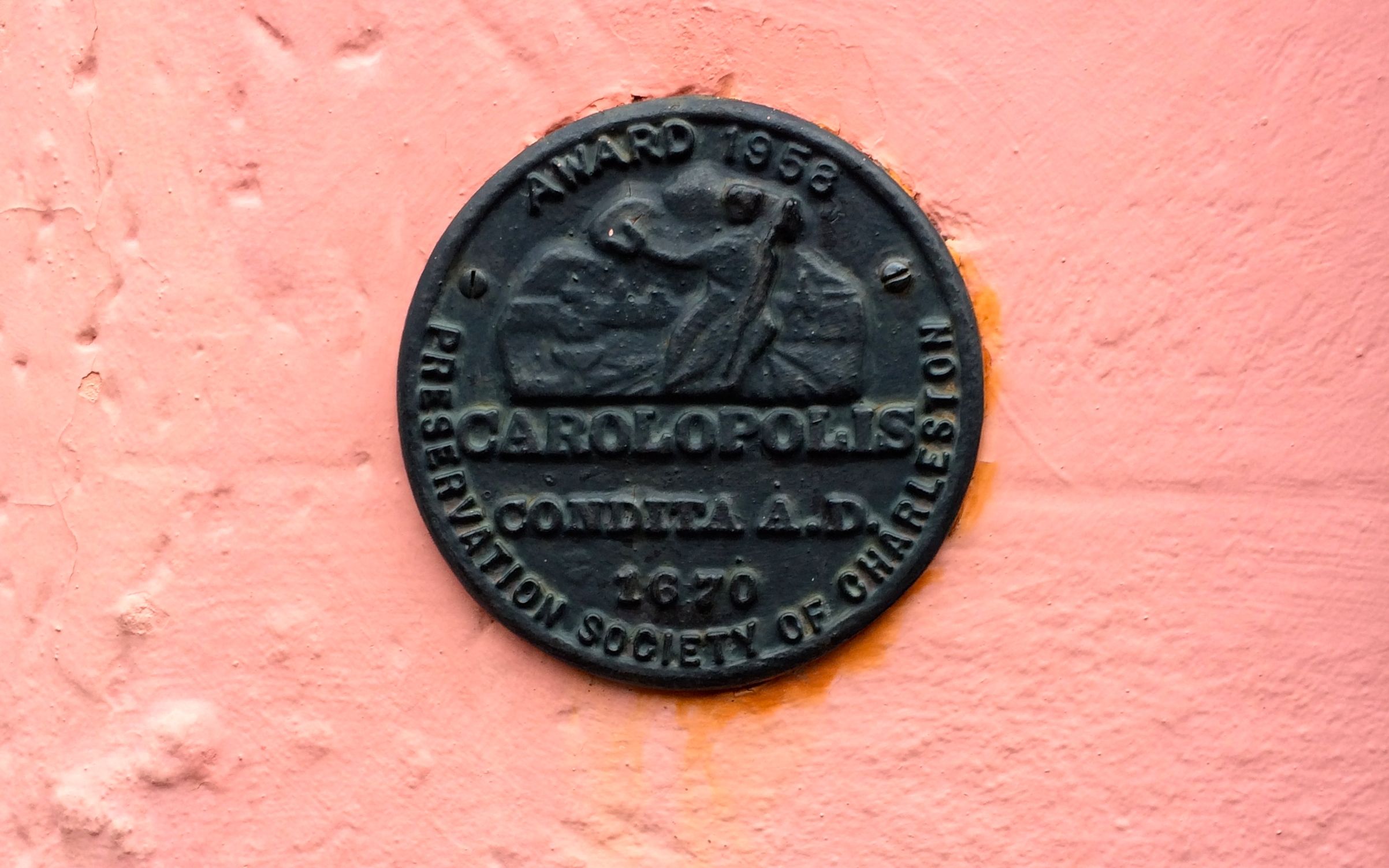
It has been lovingly restored, as attested to by this medallion.
By this time, I was getting tired and felt that I had seen enough sights and I set out to catch the trolley back to the parking structure.
While I was waiting at the stop, I struck up a conversation with some fellow tourists. It turns out that they were also Airstreamers! Once on the trolley, some women who were on the earlier bus got on and we caught up on how our days went. It’s nice to make new friends!
I got off the bus near Marion Square and decided to have dinner while I waited for the rush hour traffic to clear. I walked over to the Francis Marion Hotel and got a table at the Swamp Fox Restaurant and Bar.
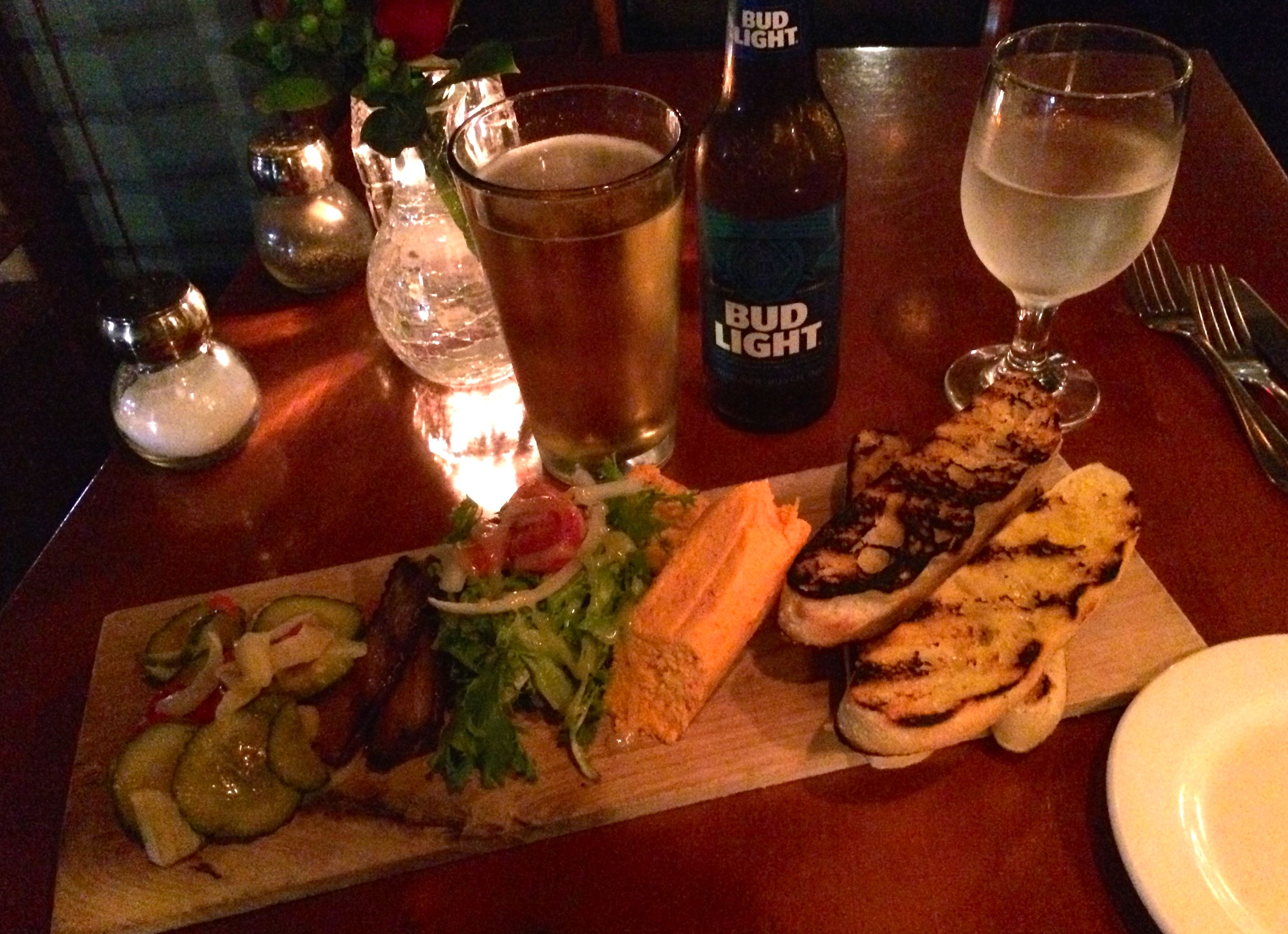
I ordered a platter of southern-style treats. It felt good to rest and nibble on the snacks. When I finished, my meal, I had one more stop to make.
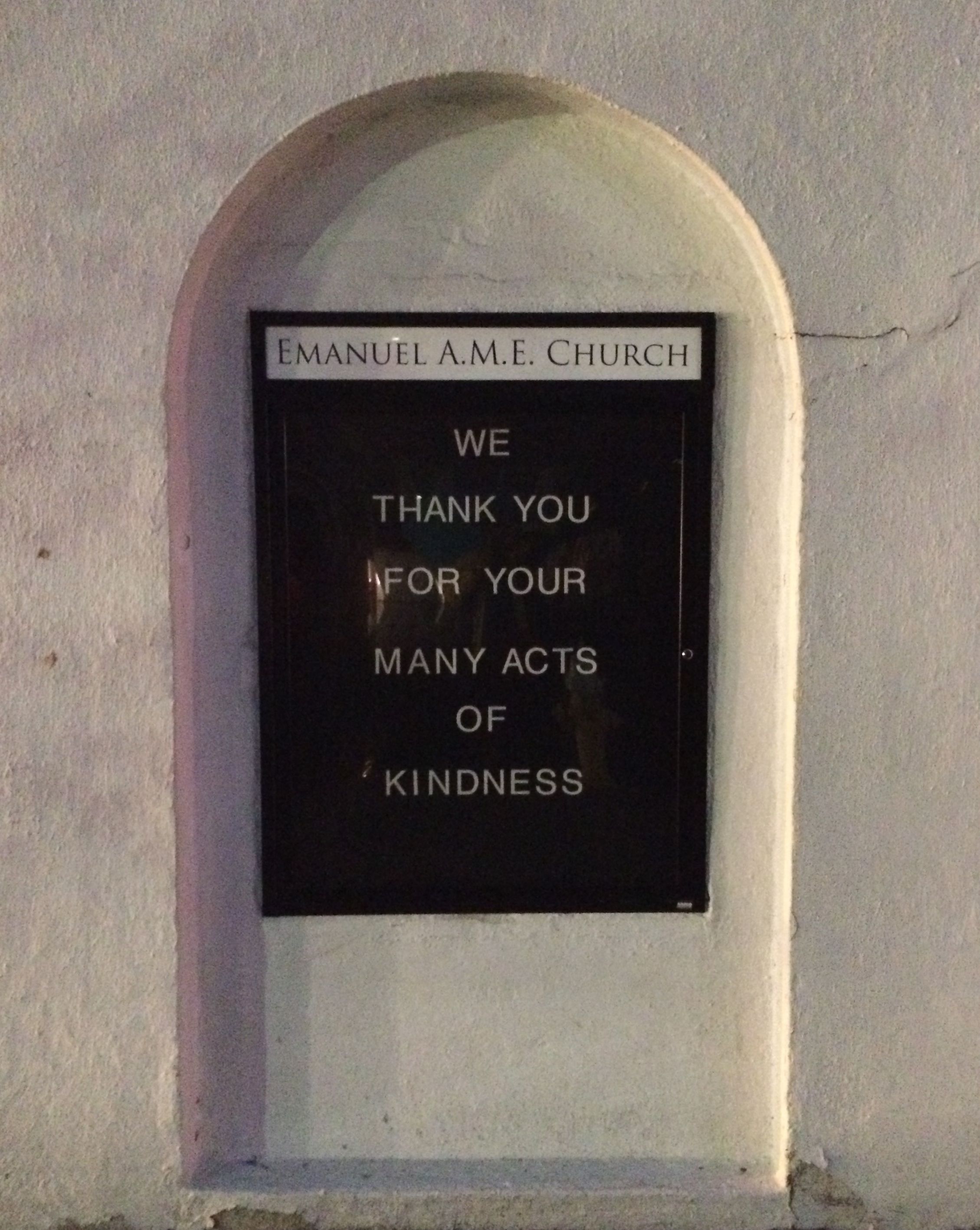
The Emanuel A.M.E. Church.