So, as I was saying…
I walked down the pedestrian streets, admiring/marveling/being perplexed by the things they had for sale. I spotted at least three shops that specialized in things for men. I didn’t go in – after all, I wouldn’t be able to pass the physical.
I got to the cathedral.
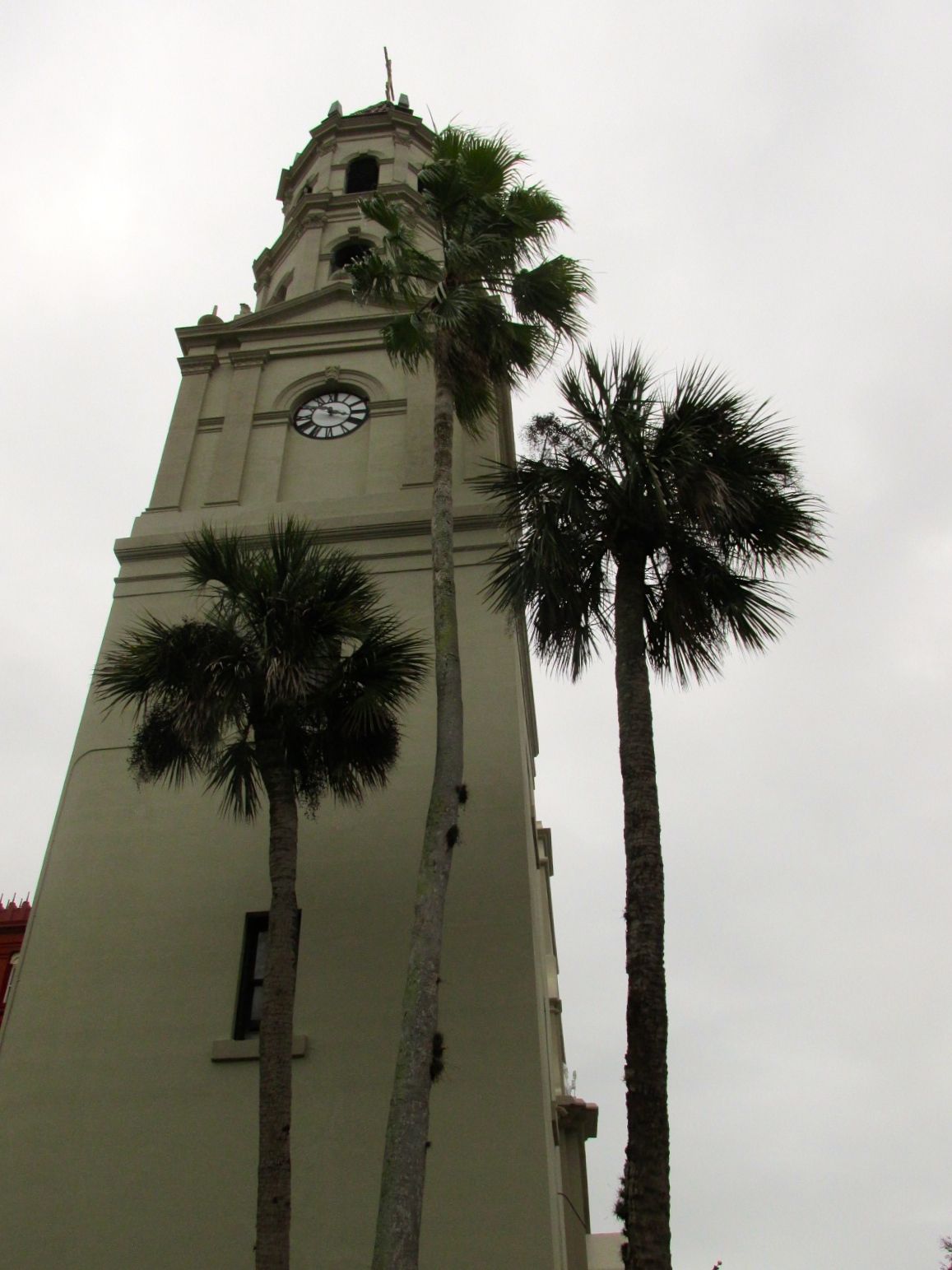
I entered the cathedral and was surprised at the interior. I had rather expected to see something more “European” – like the interior of Notre Dame, if you can envision it. This was smaller and more contemporary than I was expecting.
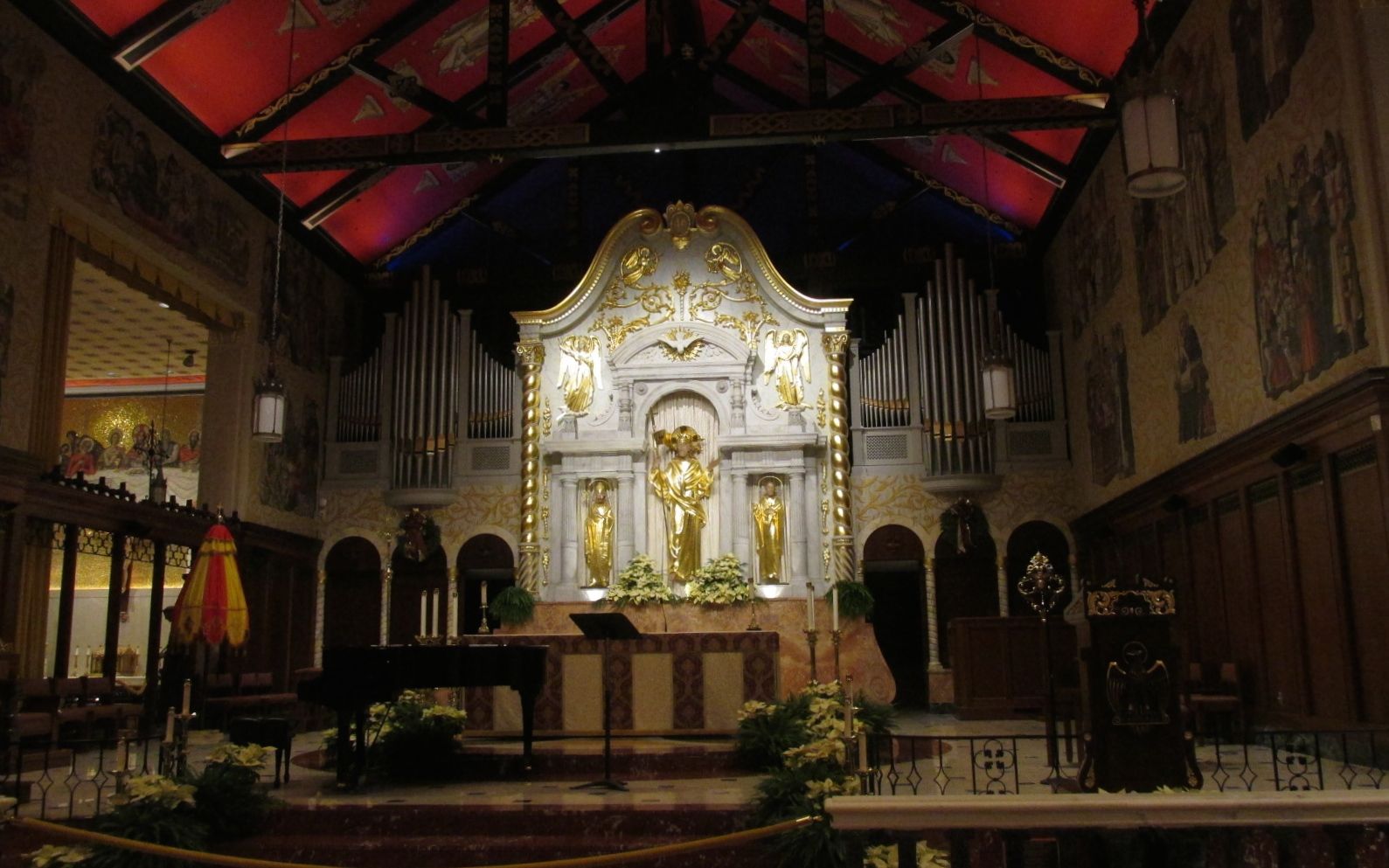
As I approached the altar, I noticed the red and yellow umbraculum on the left side of the sanctuary.
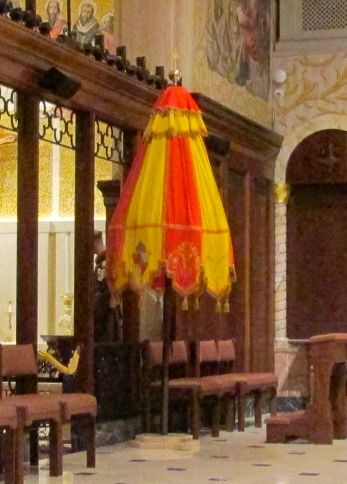
Could this be a basilica, like the Basilica of St. Josaphat that I saw in Milwaukee last summer?
I got closer, and I saw the tintinnabulum on the right side.
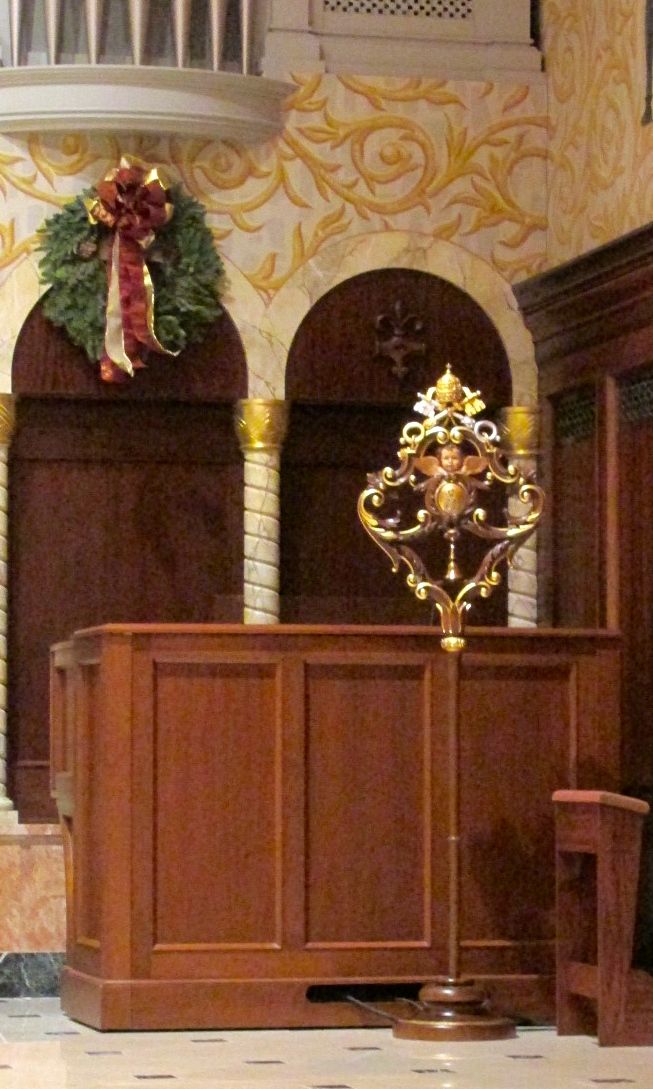
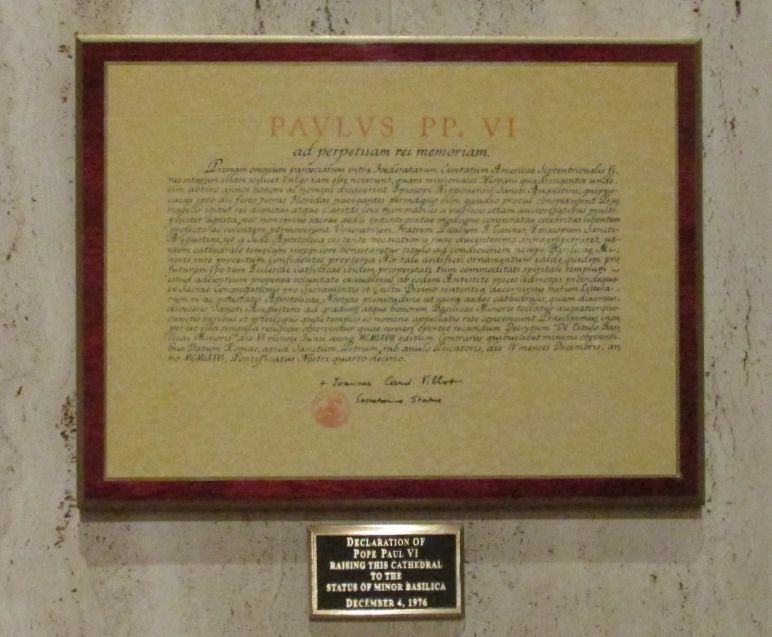
Then, on the wall outside the sanctuary, I saw it – the papal declaration that this is a minor basilica! I felt so smart that I knew what I was looking at.
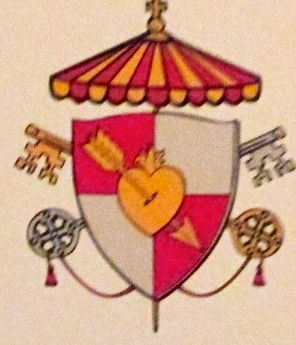
The only thing missing was the seal with the papal keys. I kept looking and I found that, too.
I never get phone calls, so I never worry about turning my phone off when I enter places where you shouldn’t receive calls. Unfortunately, my phone rang, while I was inside. It wasn’t a long call, but it caused me to leave before I took too many photos.
Once outside, I saw the Government House, and I went over to investigate.
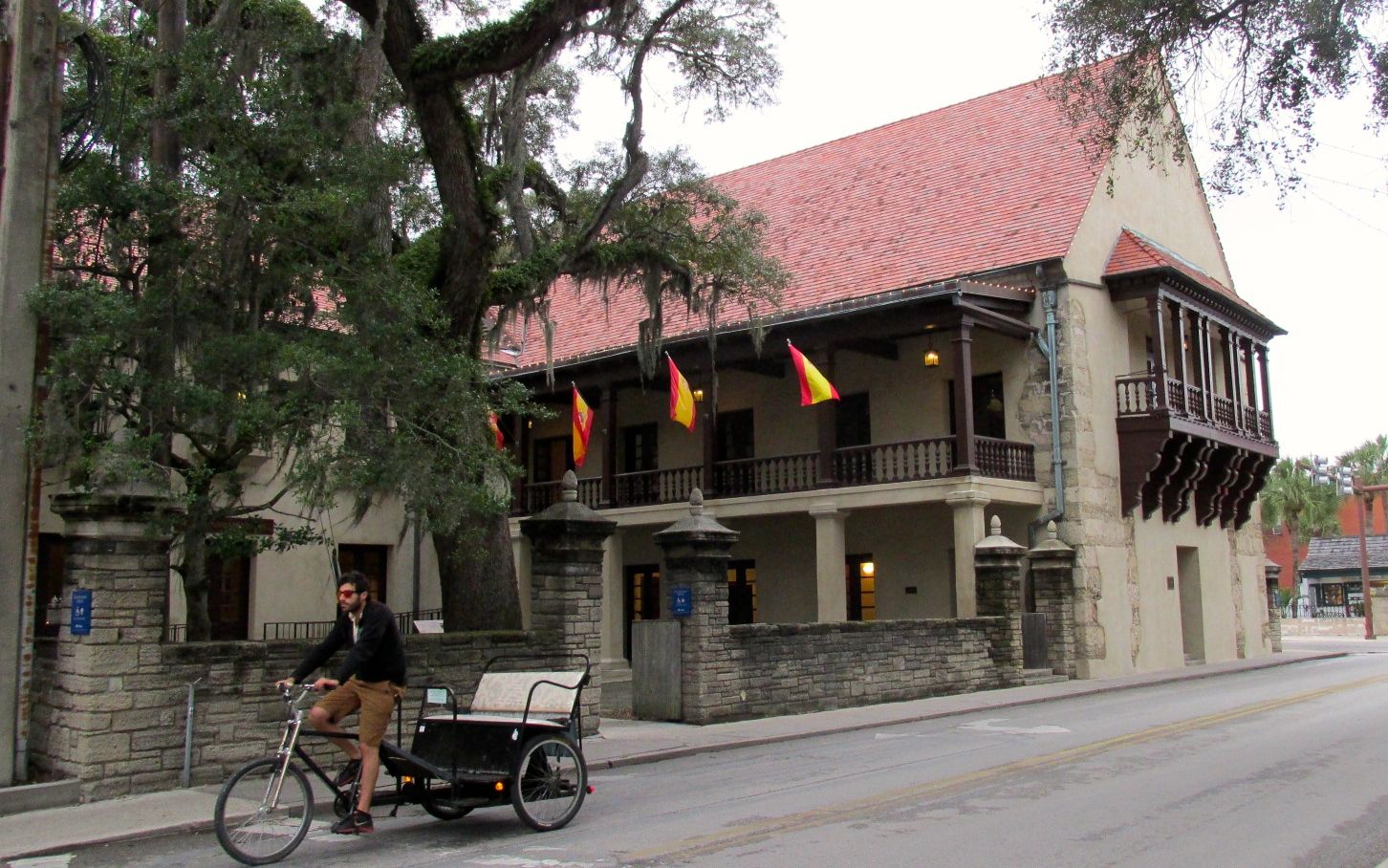
The building, constructed of coquina in 1710, served as the governor’s residence for the Spanish until 1763, when the British moved in. They were there until the Spanish moved back in 1784. The building was not used after 1812. When Florid joined the Union in 1821, the building was in ruins. Only the outer walls remained. It was redesigned by Robert Mills, an architect who also designed the Washington Memorial.
The building was used for various government functions, including a military hospital during the Civil War, a court house and a customs house. In 1937 it was redesigned and rebuilt as a project of the Works Progress Administration and was used as a post office. in 1964, it was given to the state of Florida. Nowadays, it is dedicated to historic preservation.
There was a banner proclaiming a display of dugout canoes. It sounded interesting, so I went in.
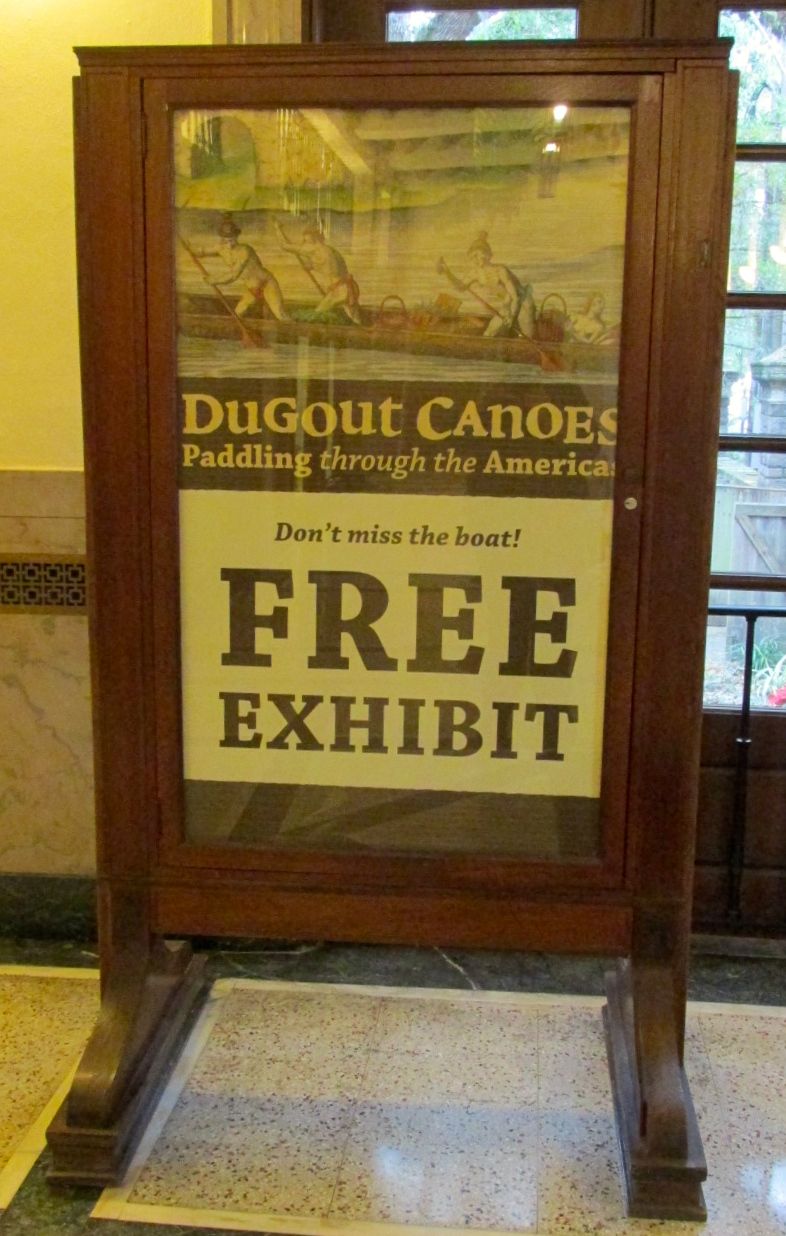
It turns out that this was a FREE exhibit. Have I mentioned before that I like free things?
The basis of the exhibit was the discovery of dugout canoes in a lake during a drought. I wasn’t able to take a good picture of the authentic canoes due to the plexiglass preservation cases. There were also displays of canoes from other cultures, and it was interesting to compare and contrast the vessels.
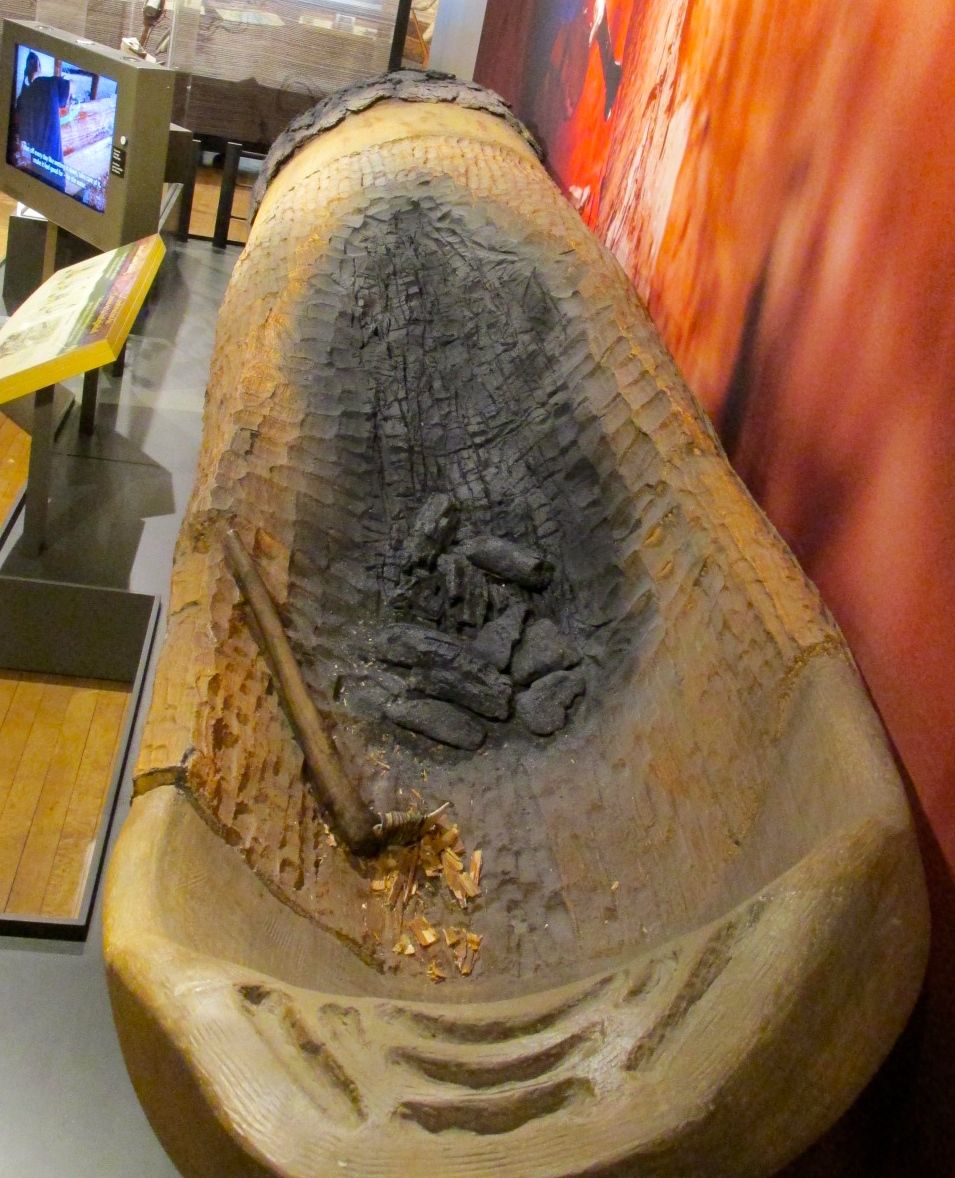
They did have a model of the steps involved in making a dugout canoe. What a lot of work it was!
I continued my walk across the square and ended up at the oldest public street in the country.
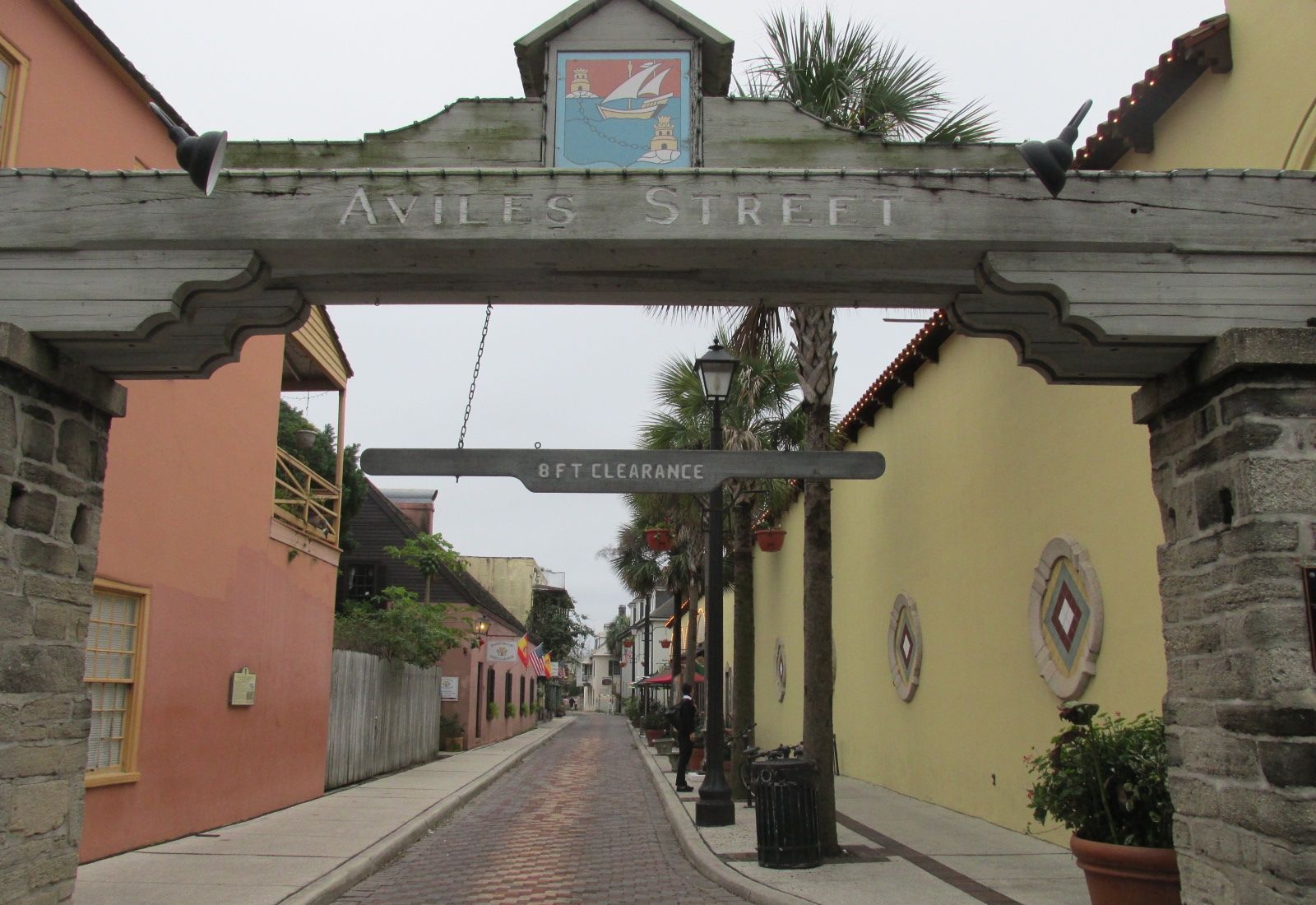
Talk about an narrow street! Most driveways are wider.
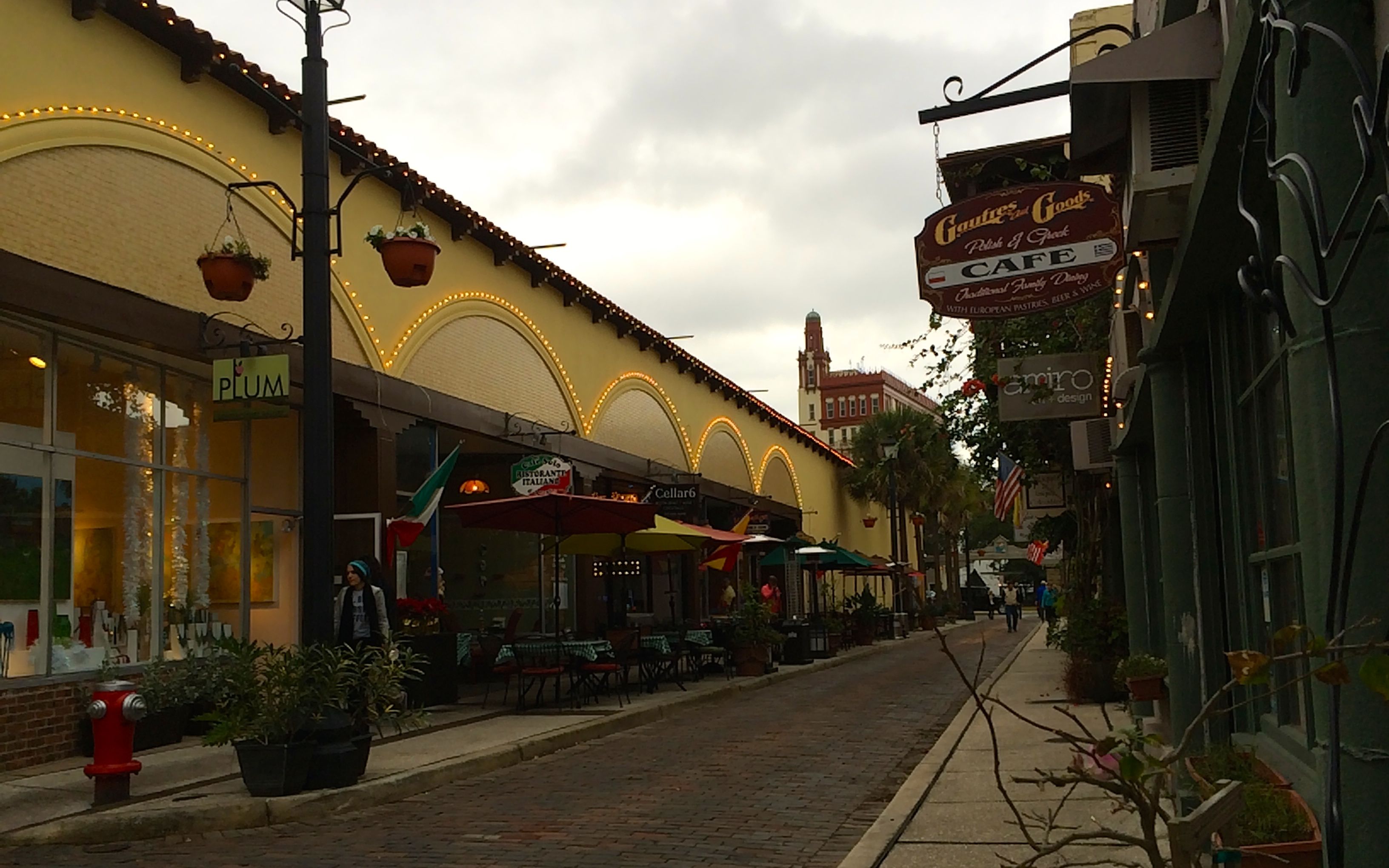
The street may be narrow, but it’s wide enough for restaurants and stores selling more stuff. At this point, I felt that I had traveled far enough. I was ready to head back toward the garage. I planned to find some dinner along the way.
Back at the plaza, I saw this sign. I wondered why it said “Touch” on the pedestal.
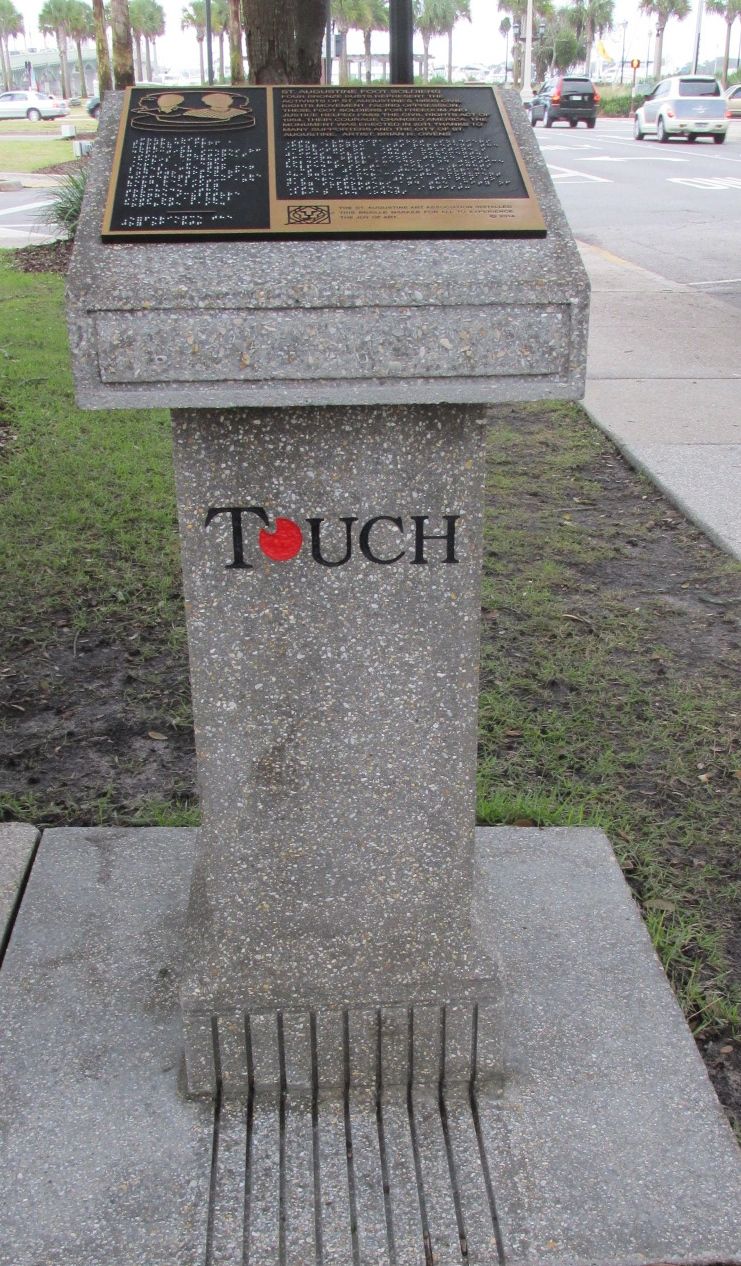
I love to touch things.
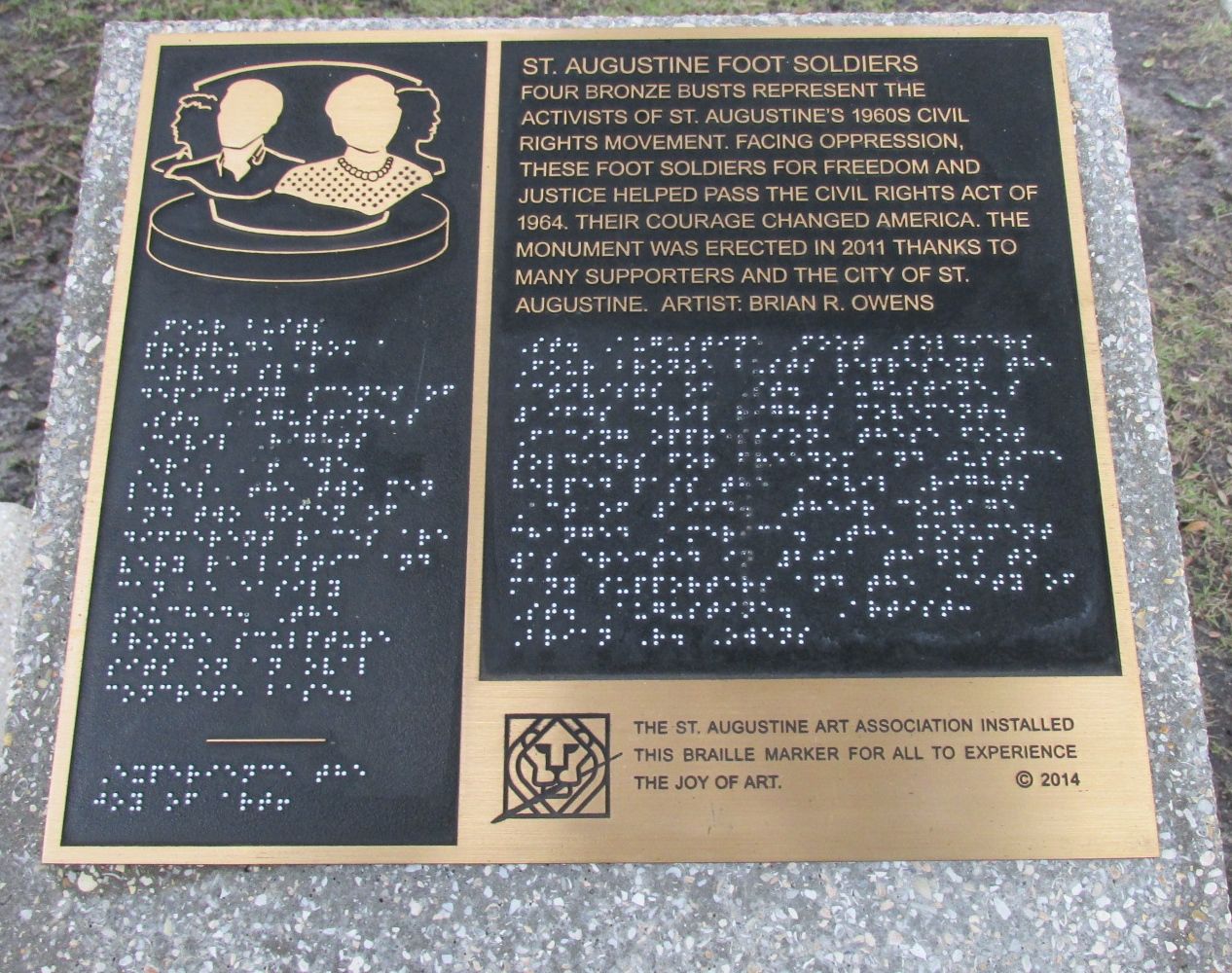
St. Augustine Foot Soldiers. This was a piece of art that is accessible to blind people! I love it!

The sculptures are even at a level were people can touch the faces. The work of art is dedicated to those who participated in the Civil Right Movement of the 1960s in St. Augustine. Oh, I’ll just let you read the plaque that is attached to the base of the sculpture.
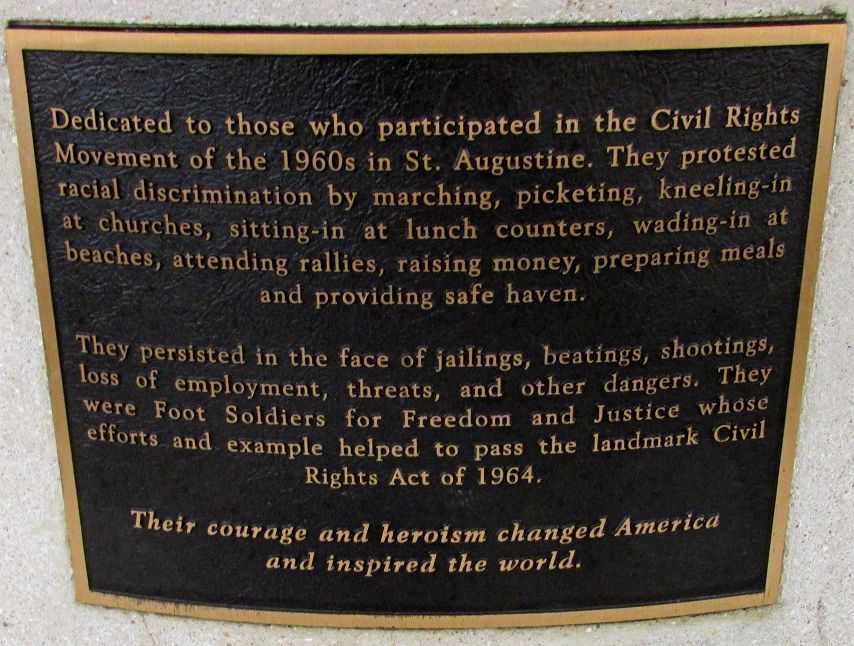
Not only is the sculpture inclusive – blind people can study it as well as the sighted – but it includes the variety of people who were involved in the Movement in the 1960s. We have to remember that we must work together to create the life we desire.
By this time, I was really ready for some dinner. I treated myself to a nice dinner at Columbia.
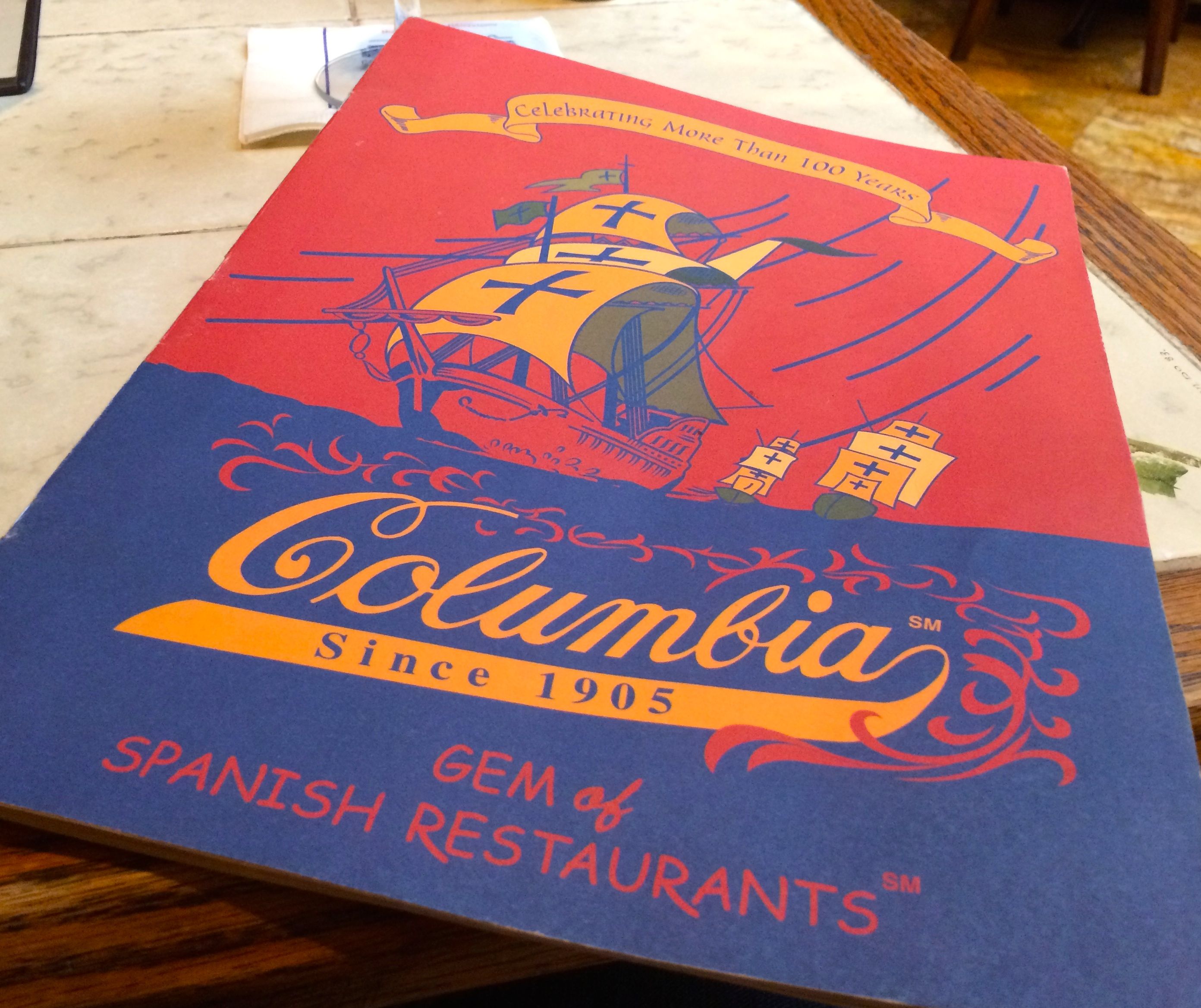
Apparently, it is a chain of restaurants that got its beginning in 1905 in the Ybor City area of Tampa. The restaurant has remained in the family for more than 110 years. This one opened in St. Augustine in 1985 and there are seven restaurants in the group.
I entered, was greeted and shown to my seat. I had a lovely view of a courtyard.
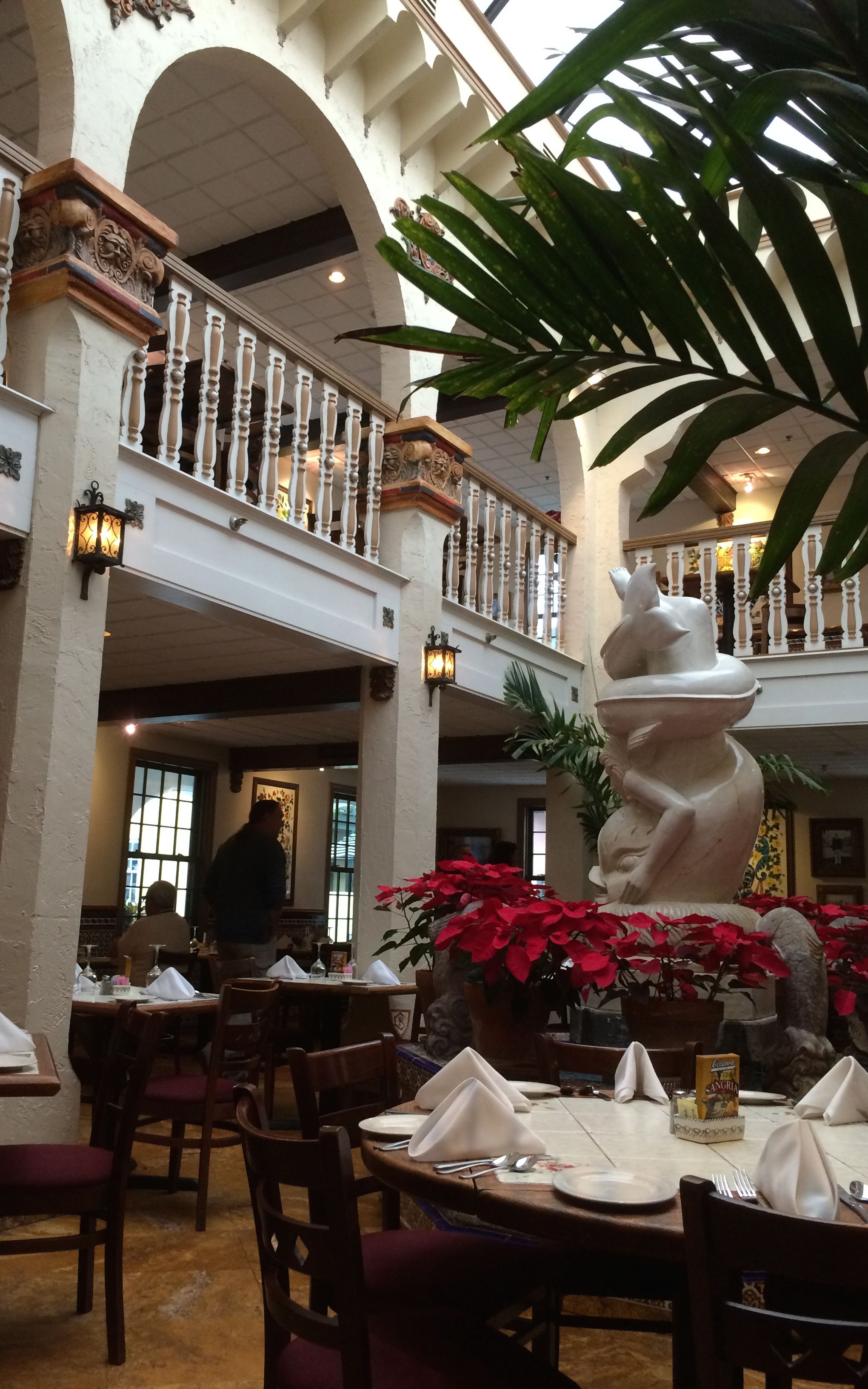
I do enjoy a nice restaurant! My server, June, took my beverage order and brought me bread.

Bread, butter and sangria! AHHHH!
I selected the palomillo, which is a thin cut of sirloin topped with mojo crudo, which is a sauce made of chopped onion, parsley and lime juice. it is served with platanos and a choice of french fries or rice. I wasn’t sure if I should pick french fries or rice, so I asked June whether to pick the potatoes or rice. She recommend the rice.
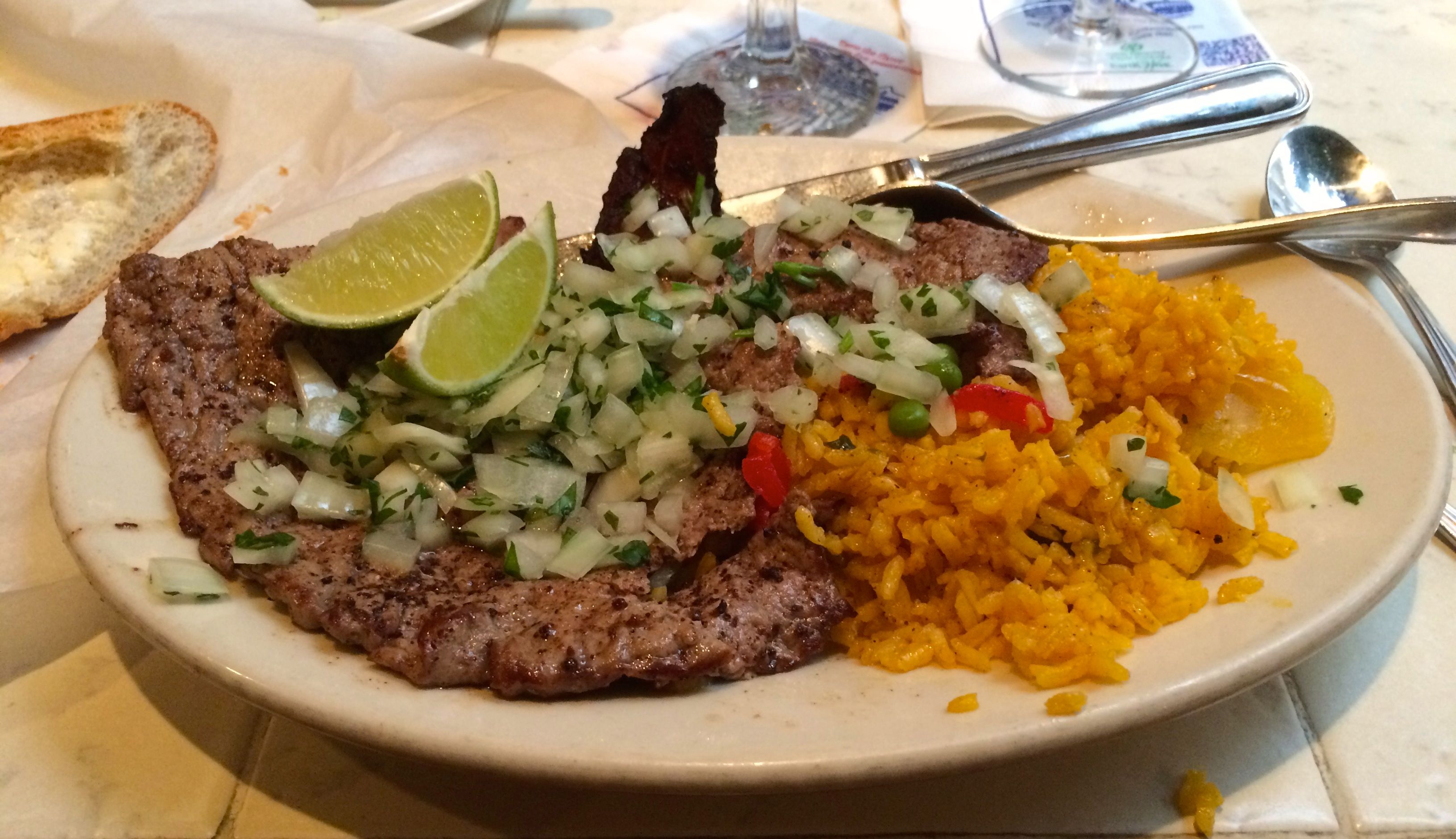
The rice was a great choice. The whole plate was marvelous!
And so were the leftovers the next day.
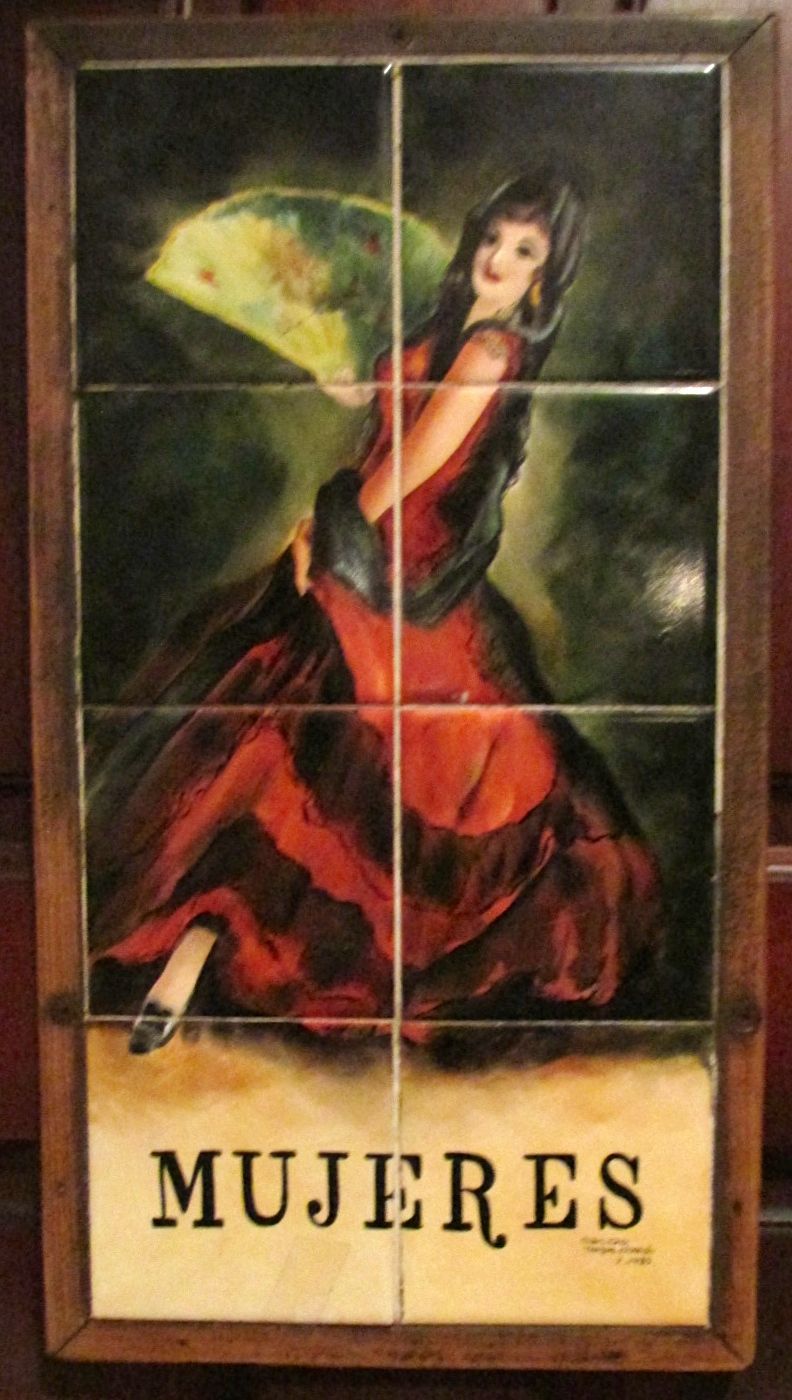
One more stop before I left.
At that point, I was ready to head to the garage. I managed to see one more item of touristic and professional interest.
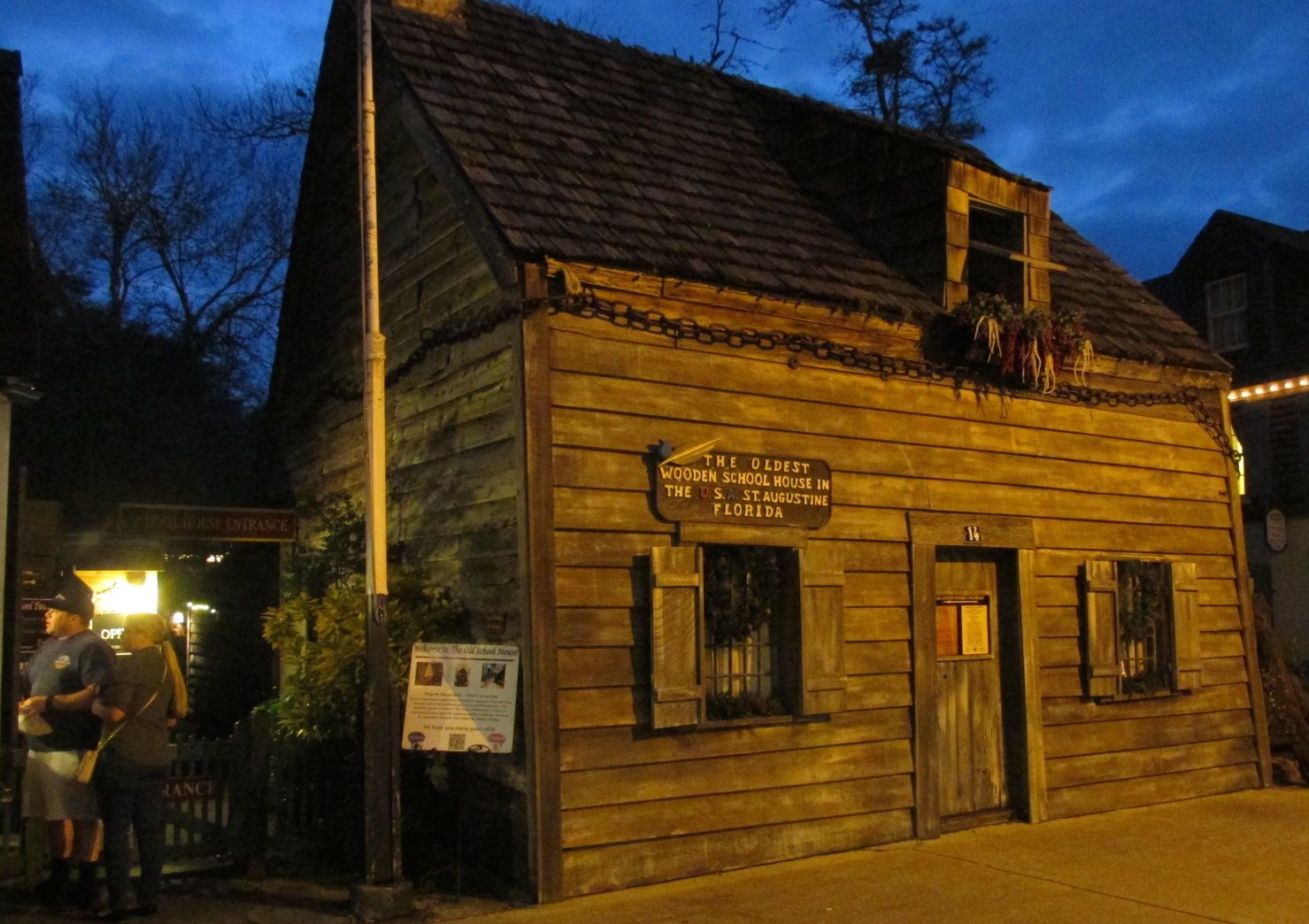
This is the Oldest Wooden Schoolhouse in the United States. The first time the structure appeared on the tax rolls was 1719, but it probably existed before then. It was built as a homestead and was constructed entirely by hand out of cypress. According to the information I read, even the “nails” are made of cypress, as the building is held together by pegs. The schoolmaster and his family lived upstairs. The room on the main floor was the classroom.
For all the years I taught, I never had to live above my classroom.
The sun was down and it was time to head back to the campground.