Pancho Villa State Park is just two miles or so from the border. After checking to make sure that my identification documents were adequate to get me back intothe USA, I made my plans to go to Mexico.
I had two objectives: get my teeth cleaned and then use those clean teeth to have lunch.
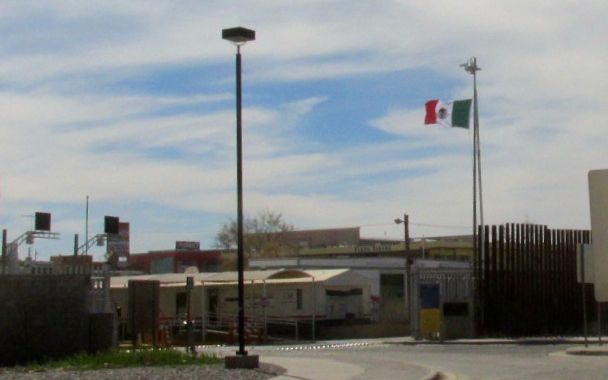
I walked across the border. It seemed odd not to have to cross a bridge to get into the neighboring country. After all, I grew up crossing between Buffalo, New York and Fort Erie, Ontario.
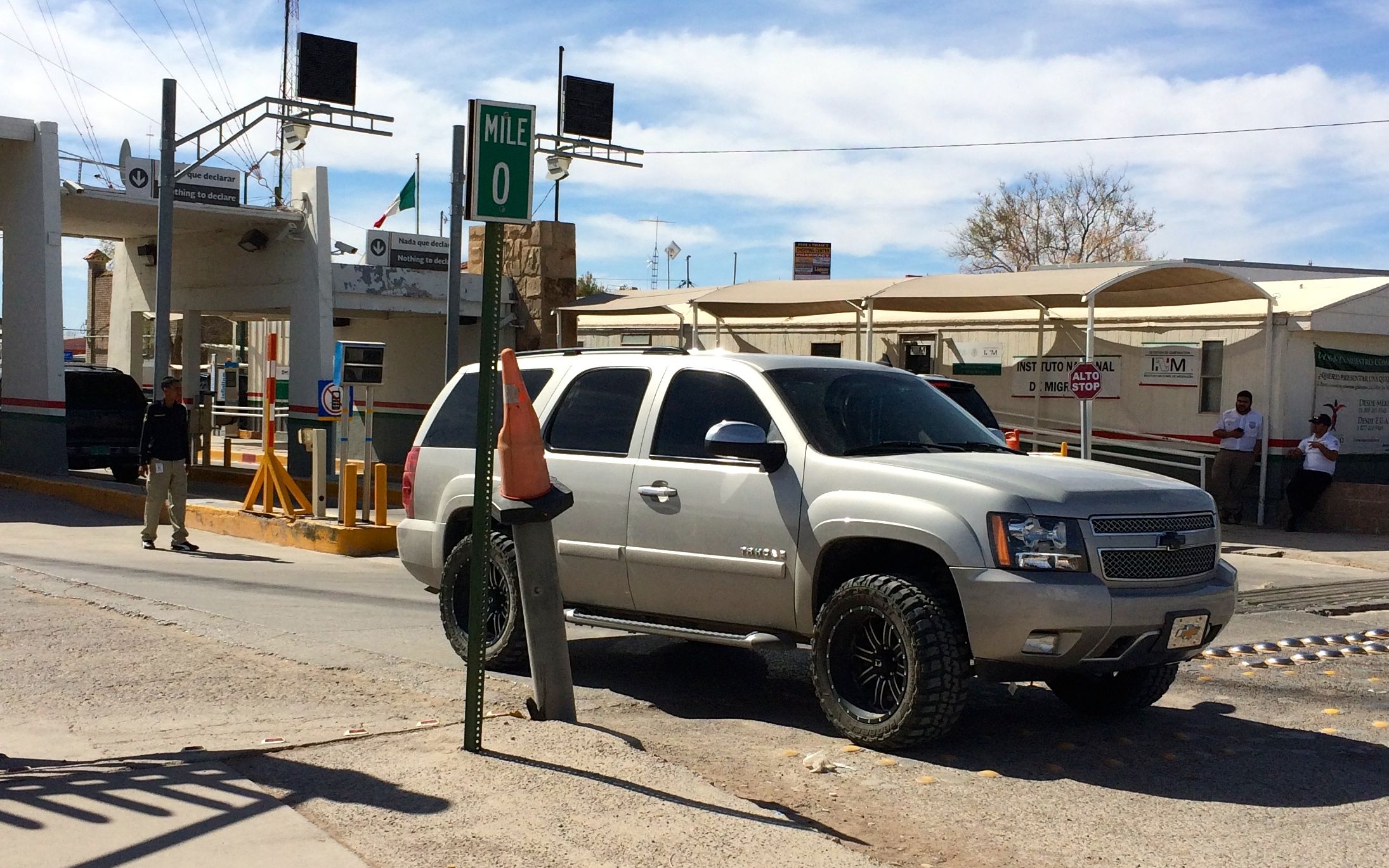
Here, though, I just parked and walked across. There’s mile 0.
I saw a sign for a dental clinic, so I made my way over there. Clean teeth was the first thing on my agenda.
It was kind of a “down home” office.
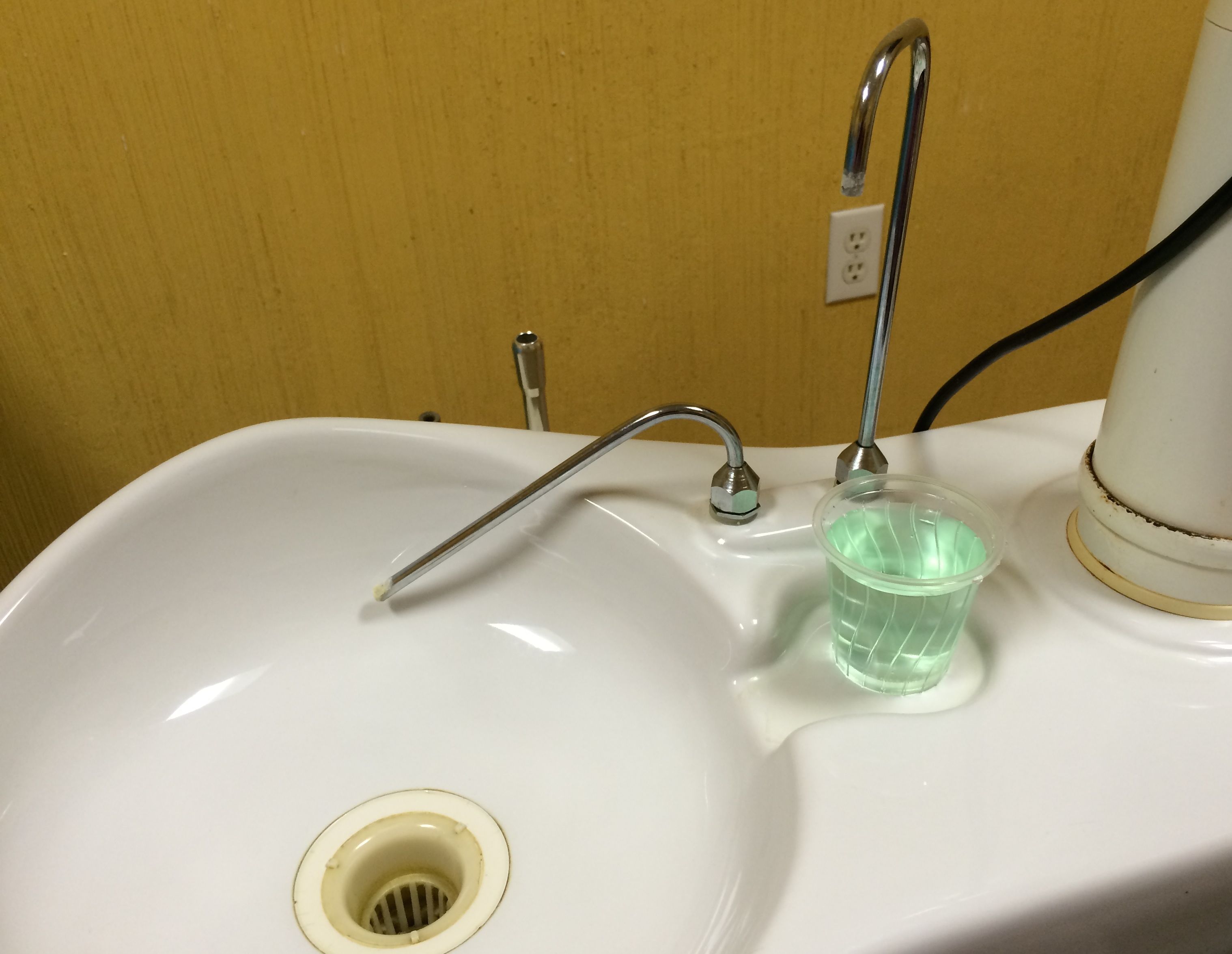
It had kind of old equipment, but everything went well. When I told the dentist that I had forgotten to take the antibiotic I needed to take due to my knee replacement, he went over to a nearby pharmacy and got me what I needed. The assistant got me a glass of water from a fresh bottle, and the cleaning went well.
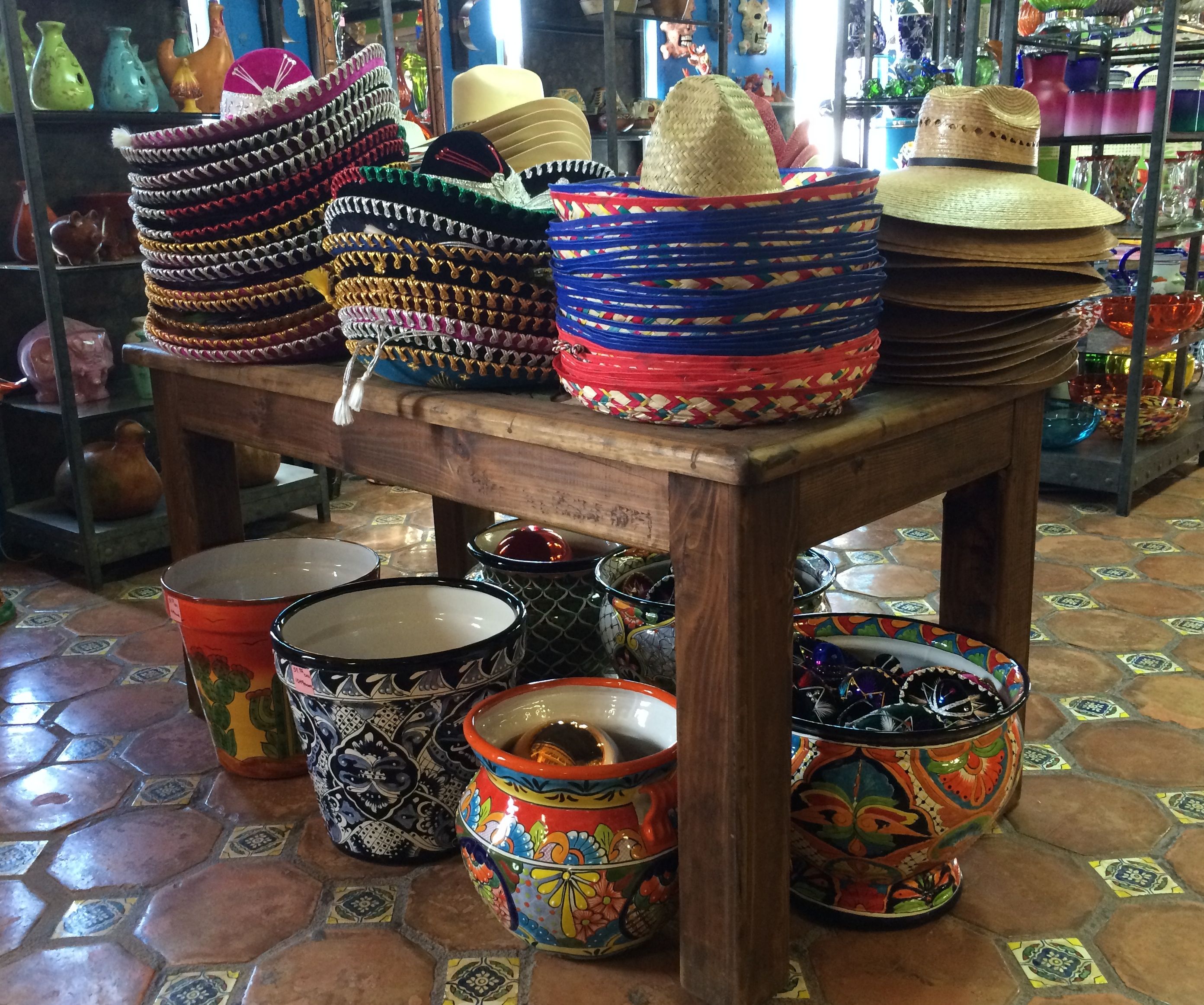
I strolled about a bit and then headed over to The Pink Store, which had been recommended to me.
And, yes, it is pink!
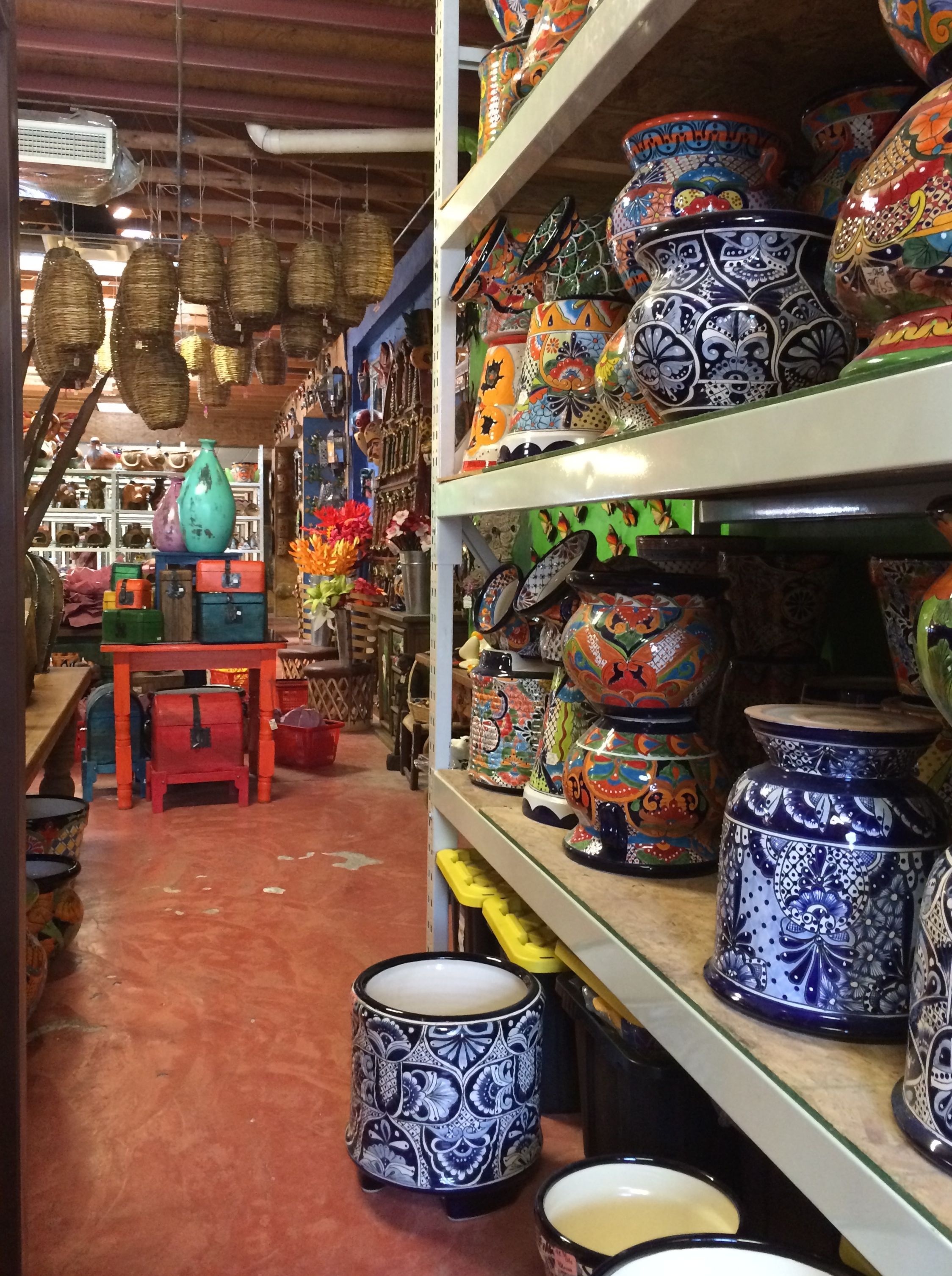
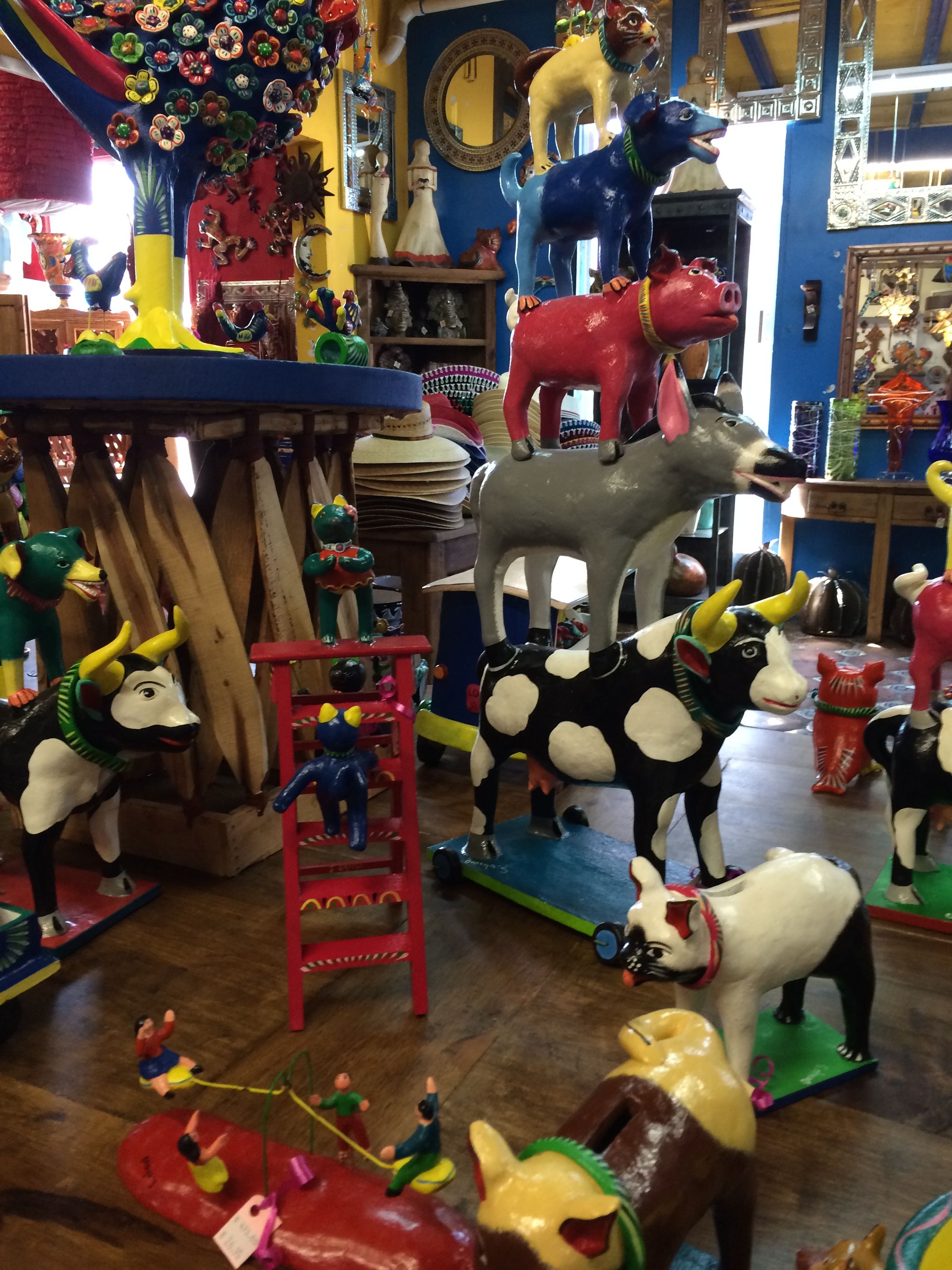
Of course, there is absolutely nothing that I need, but I did have to look at what they had to offer.
Hat and pots.
Pots and baskets.
Whimsical statues.
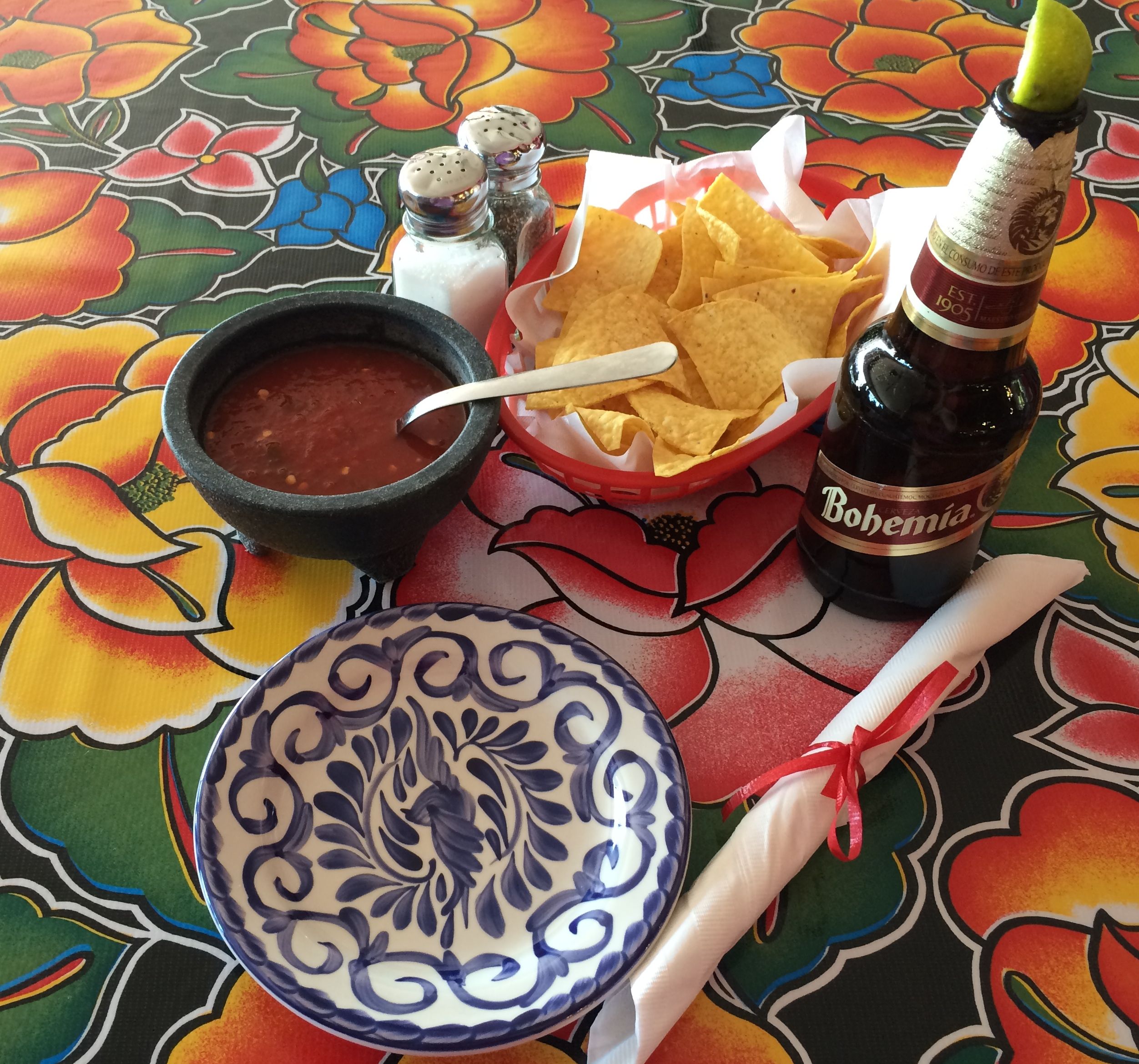
And then I found a spot for lunch at the back of the store.
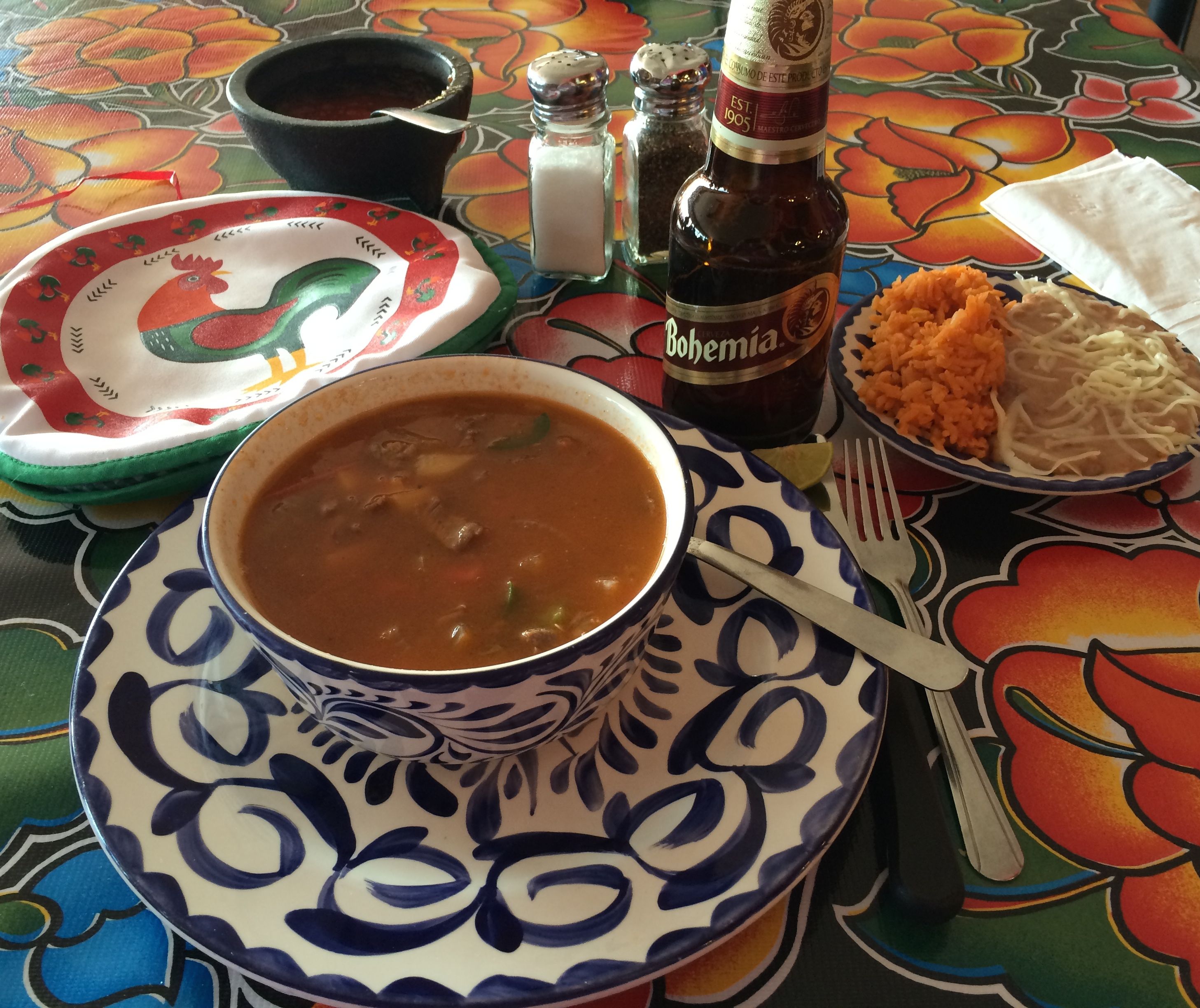
I ordered a Bohemia beer and the waiter brought me chips and salsa. Delicious!
The General Guererro Caldillo was my choice for lunch, which was a spicy beef and vegetable stew. It came with beans, rice and tortillas. Again, delicious!
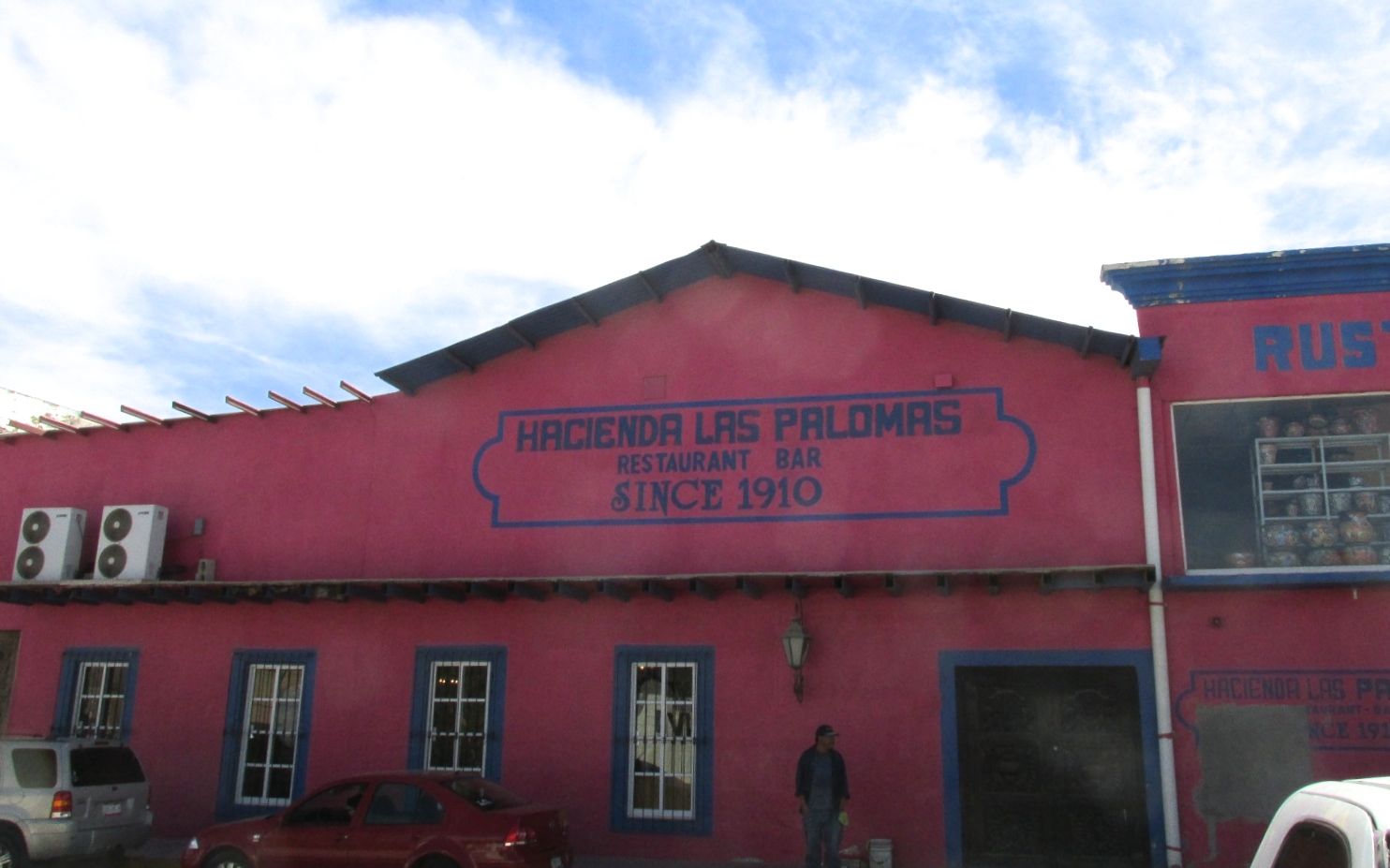
When I got outside, I saw that I had eaten in a restaurant that had been operating since 1910. I wonder if Pancho Villa had eaten there?
Speaking of Pancho Villa…
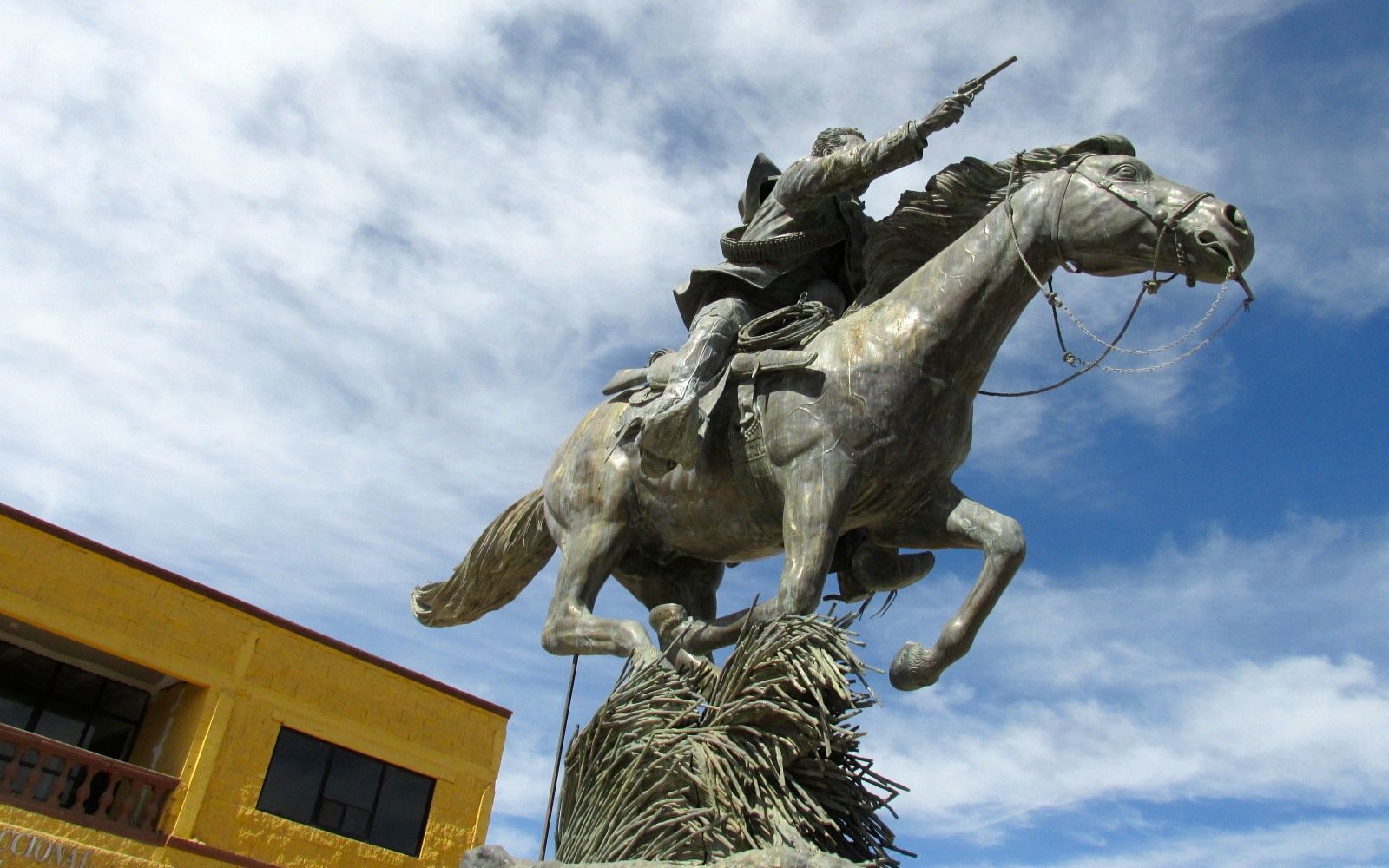
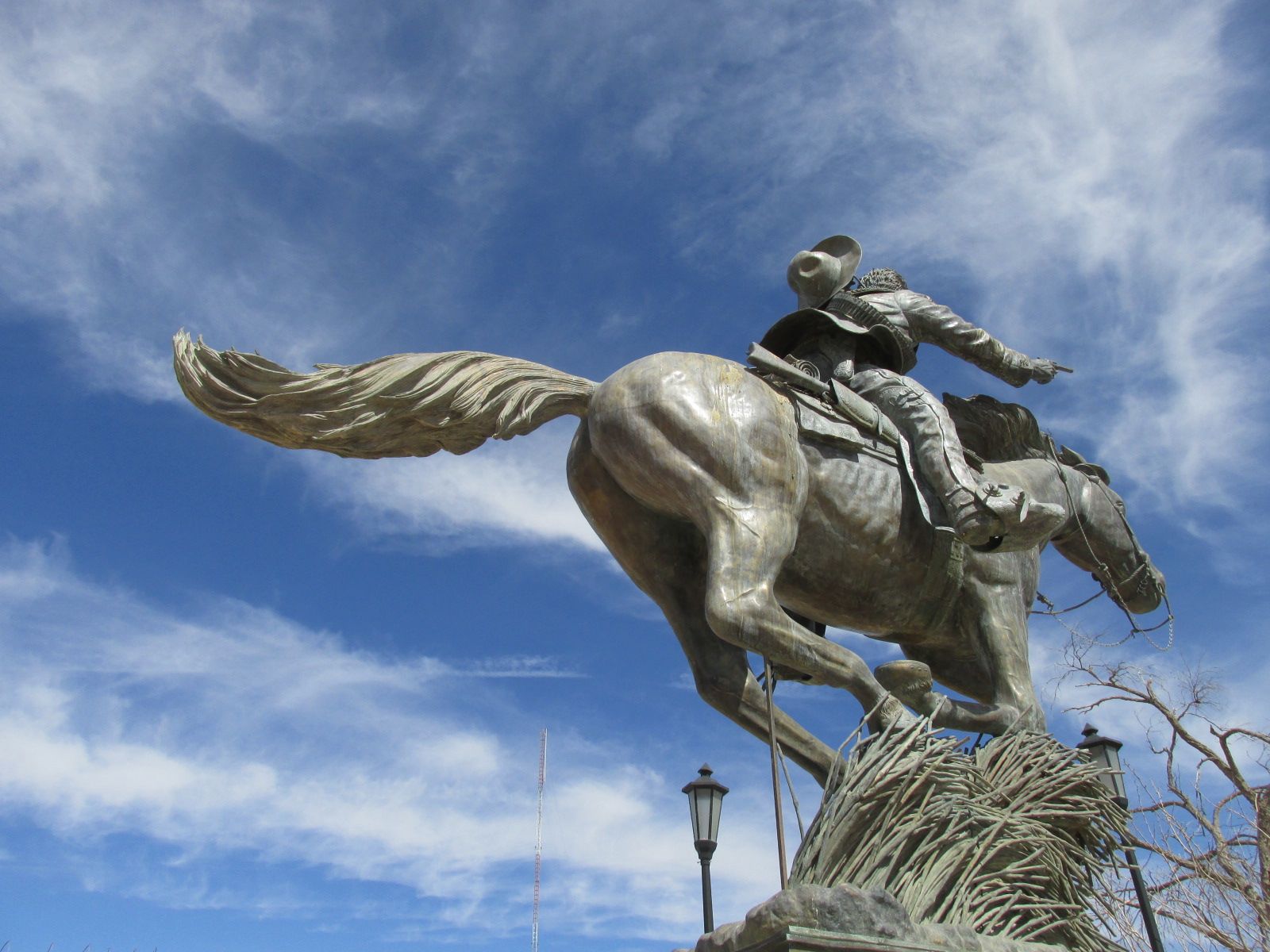
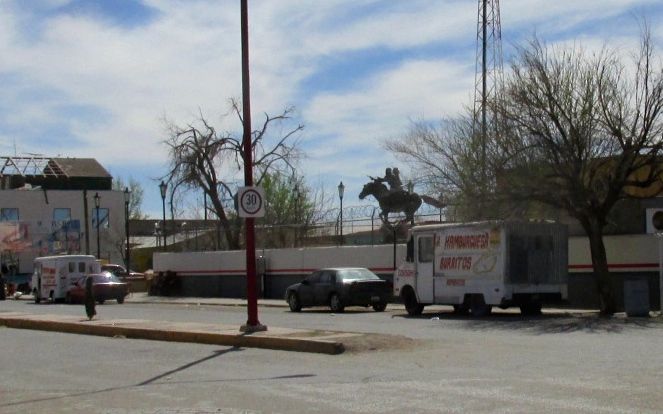
There is a statue of him in the square.
Quite a dynamic statue!
And then it was time to head back.
There were food trucks lining the street leading to the port of entry.
I crossed back over, had my papers checked, got in my car and headed back to camp.
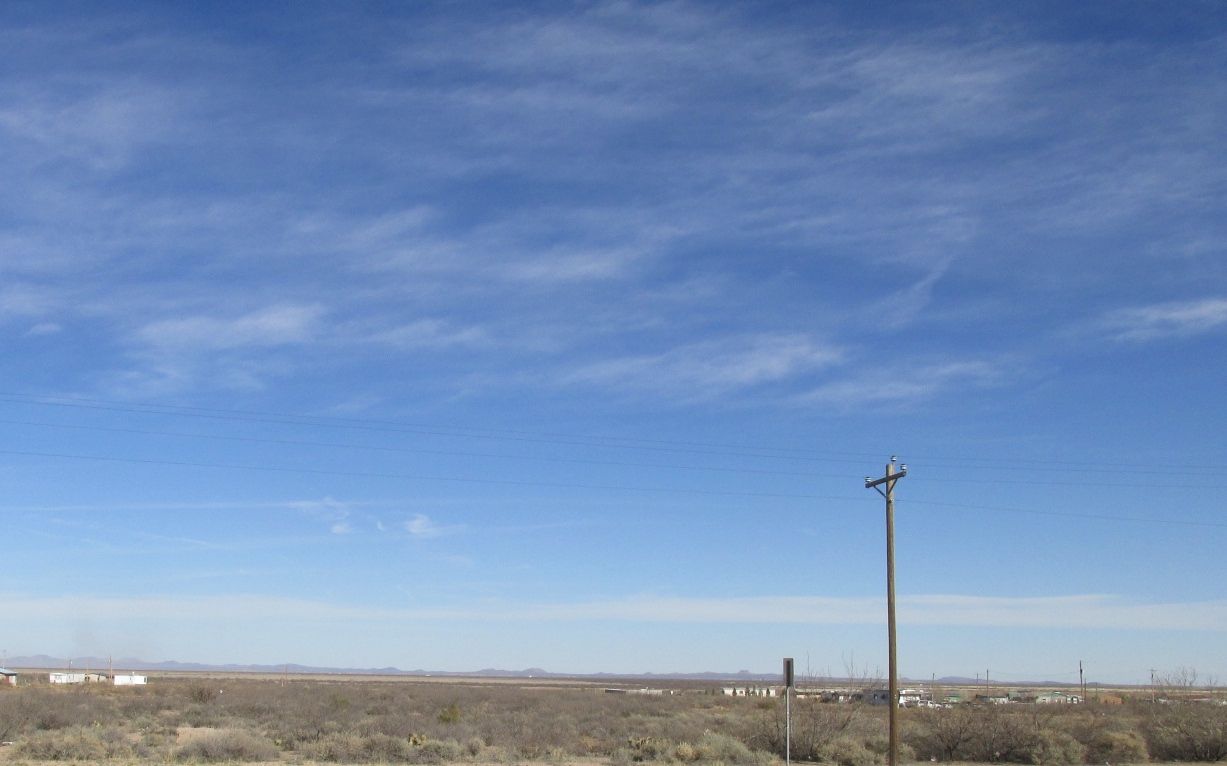
Pancho Villa State Park is quite a remarkable place. Some parks are notable for their beauty. This is not this park’s claim to fame. It’s a dusty, windblown plain. It does have a a sparse beauty, but what is remarkable about this place is its historical significance.
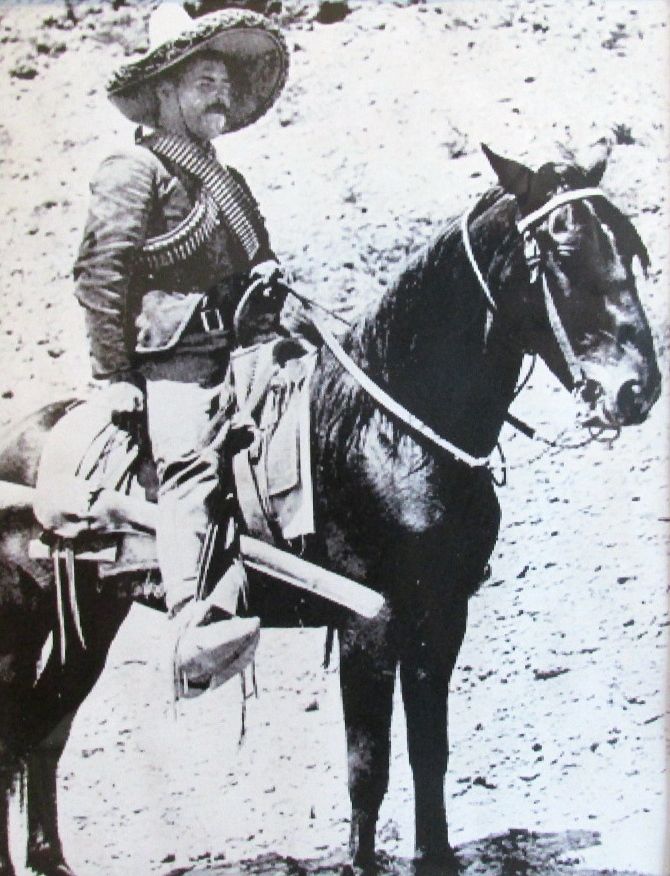
On March 9, 1916, Villa led an army of about 1,500 guerillas across the border to stage a brutal raid against the small American town of Columbus, New Mexico. Villa and his men killed 19 people and left the town in flames.
According to the information at the park, this was the last time an enemy invaded the United States. Now, I think I have heard things about raids during World War II, but even if there were other attacks, this one is significant for many reasons.
President Wilson ordered General John Pershing to lead 6,000 American troops into Mexico and capture Villa. For nearly two years, Pershing and his soldiers chased the elusive Villa on horseback, in automobiles, and with airplanes. The American troops had several bloody skirmishes with the rebels, but Pershing was never able to find and engage Villa.
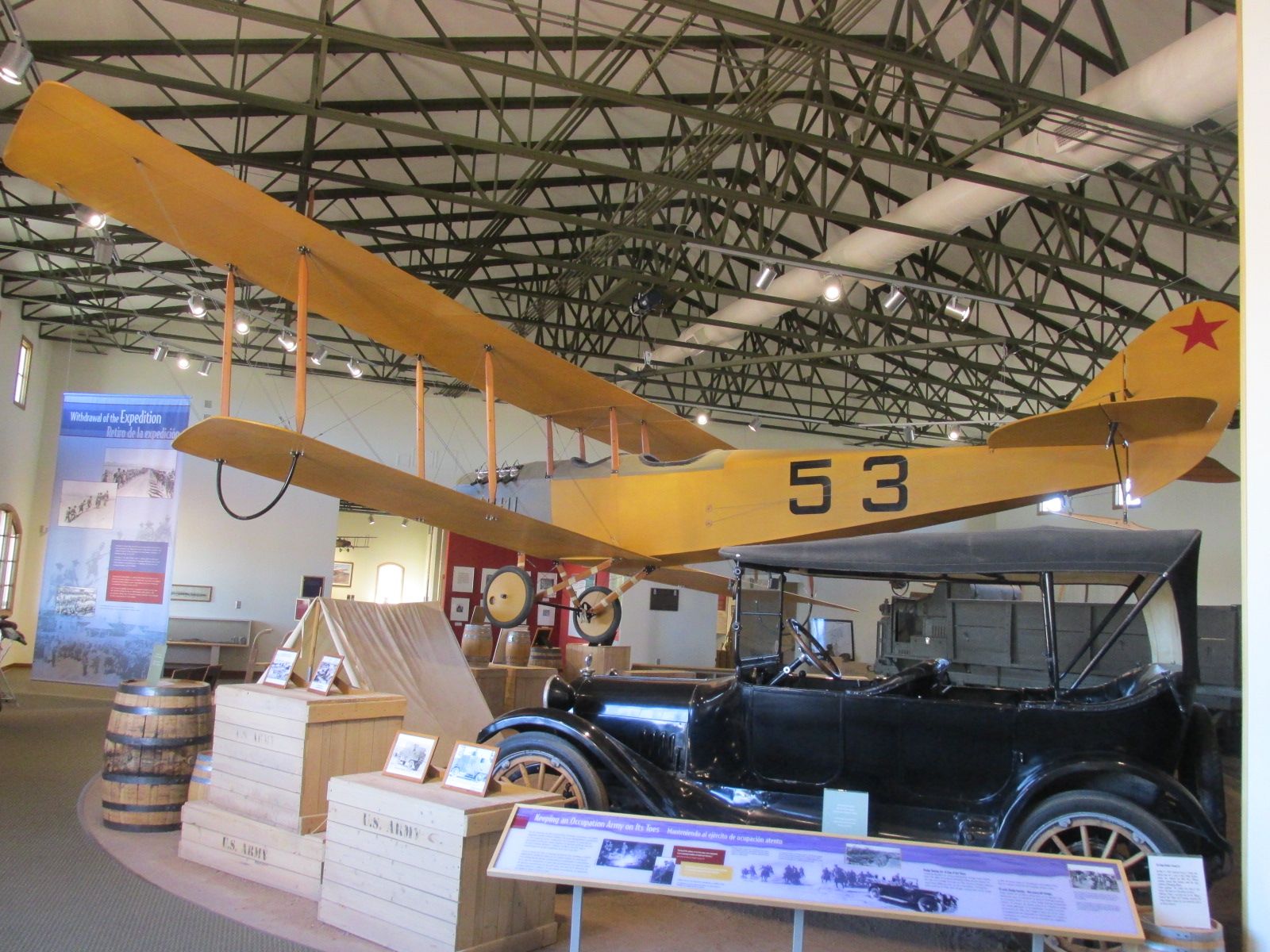
These were the last major battles fought on horseback and the first battles that used automobiles and airplanes.
General Pershing ordered 250 Dodge Brothers touring cars after a successful skirmish involving three of the cars. Lieutenant George S. Patton, nine enlisted men and a scout killed three Villistas, including General Julio Cardenas. Pershing said that they couldn’t have done it on horseback. The interesting thing was that gas sometimes followed the automobiles packed on mules.
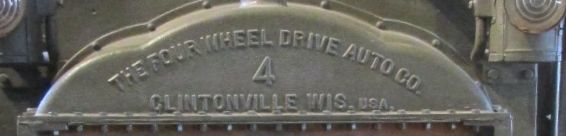
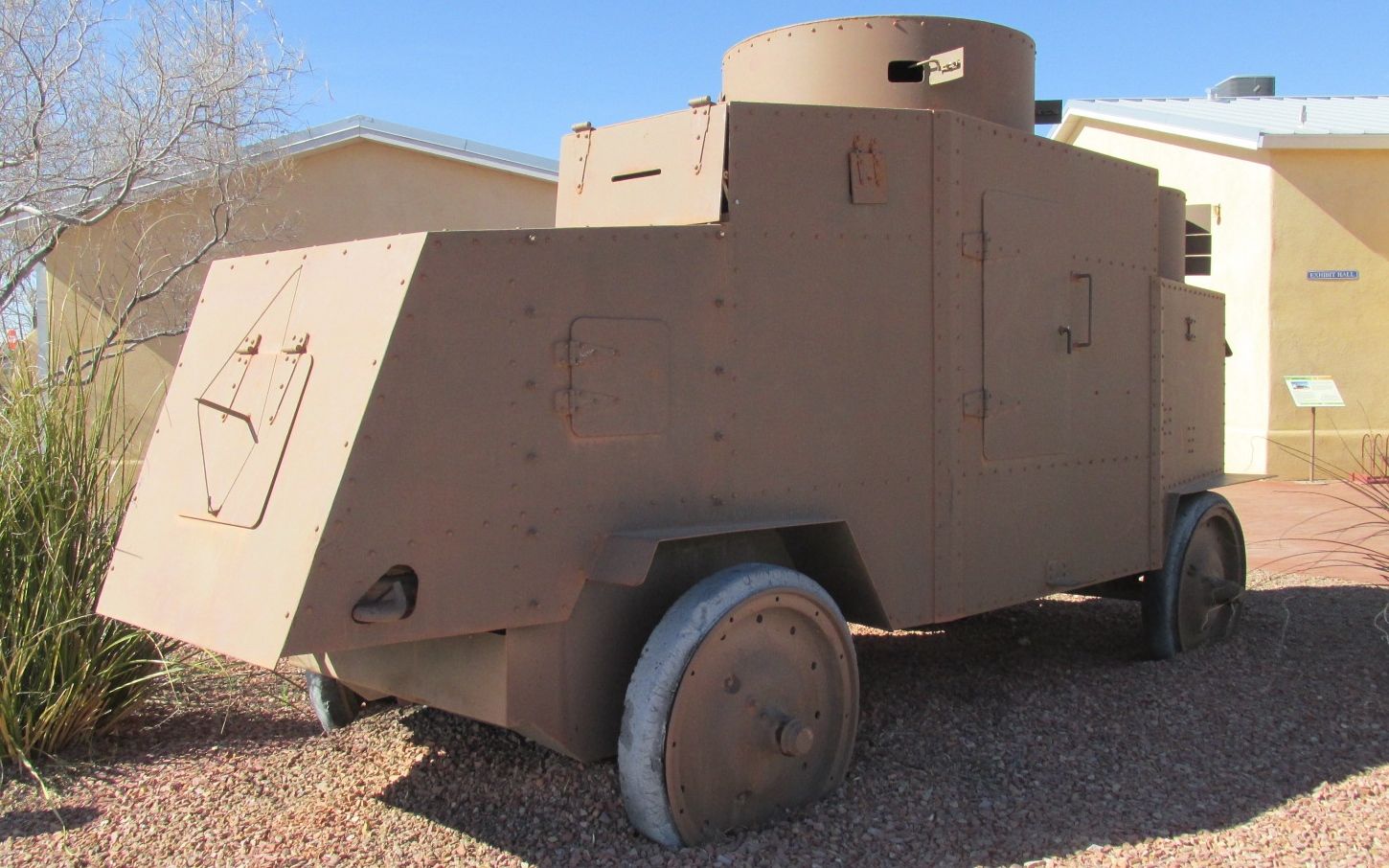
There were a variety of vehicles they were trying out. I wonder what ever happened to The Four Wheel Drive Auto Company of Clintonville, Wisconsin?
This was kind of a prototype of the modern tank. The little doors on it opened up so that the soldiers inside could fire their rifles.
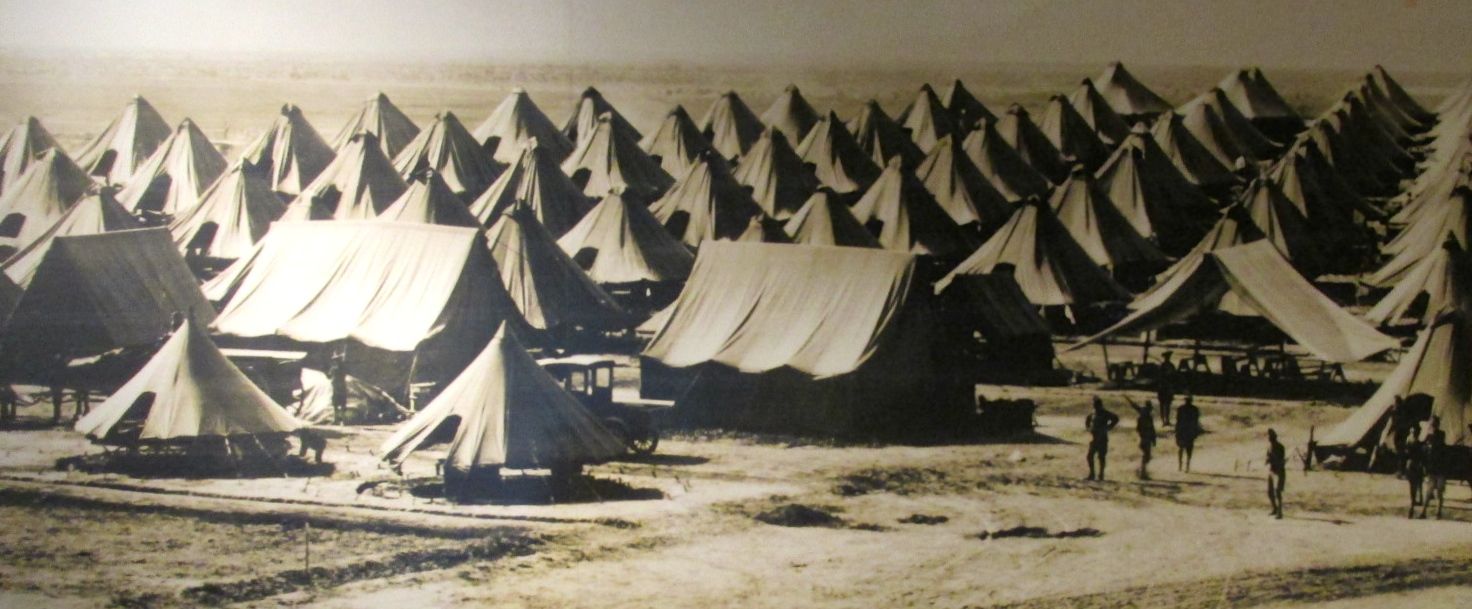
Camp Furlong grew quickly as Pershing assembled his troops.
They used tried and true methods as well as taking advantage of innovations.
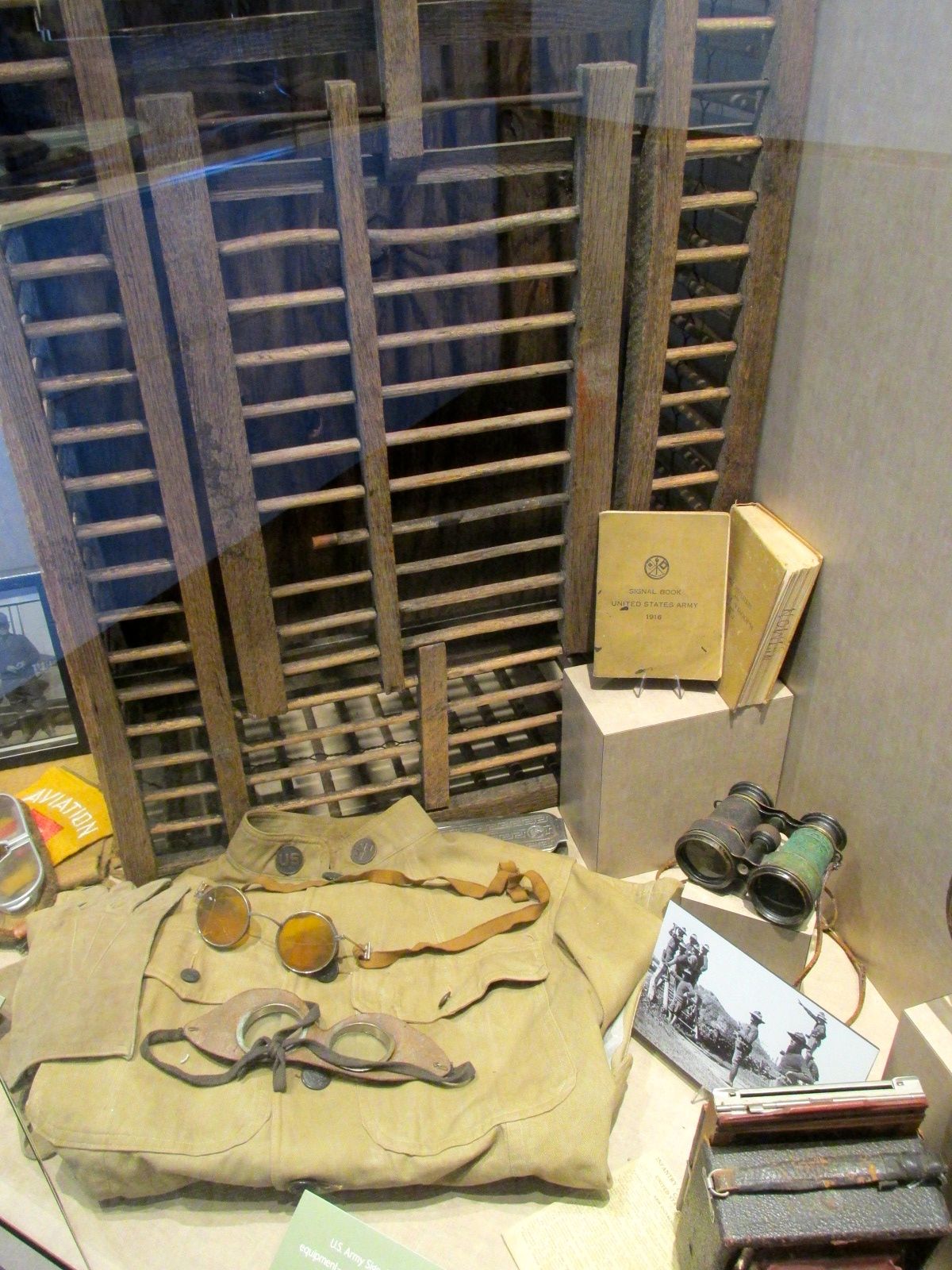
Homing pigeon crate
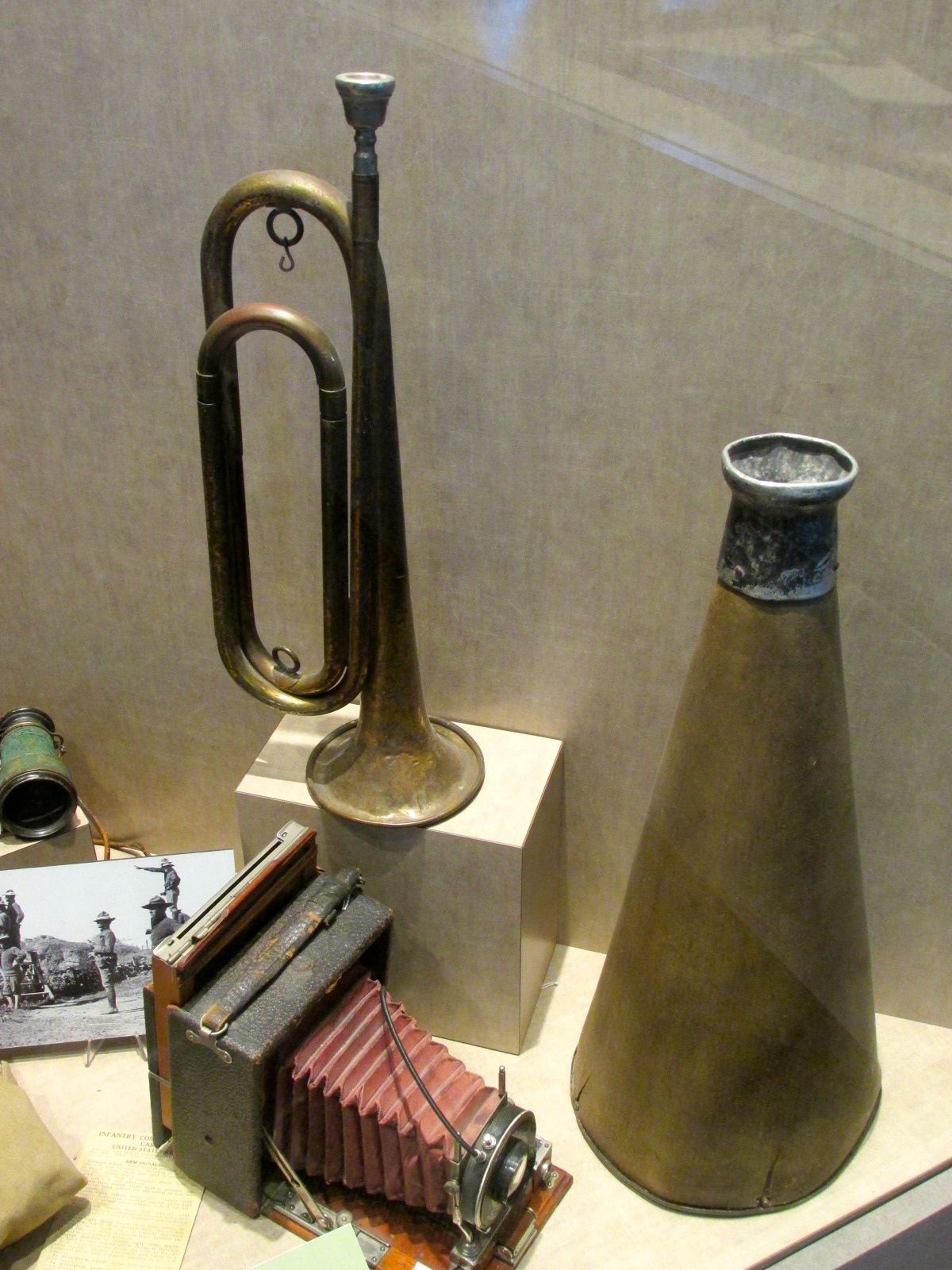
The signal corps used homing pigeons as well as flags, morse code, bugles and megaphones to communicate.
They chased Pancho Villa’s army around Mexico for almost two years until Mexican president Carranza withdrew his permission.
Panco Villa’s army moving about by train
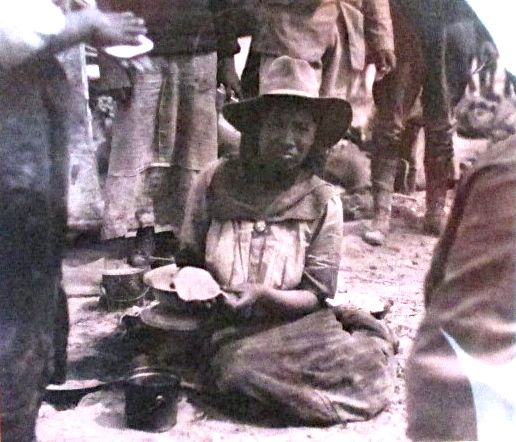
From what I’ve read, Villa’s army had whole families traveling with them and women were fighters, too.
Even if women fought, they were still given the domestic tasks. Here’s a villista making tortillas. Some things never change.
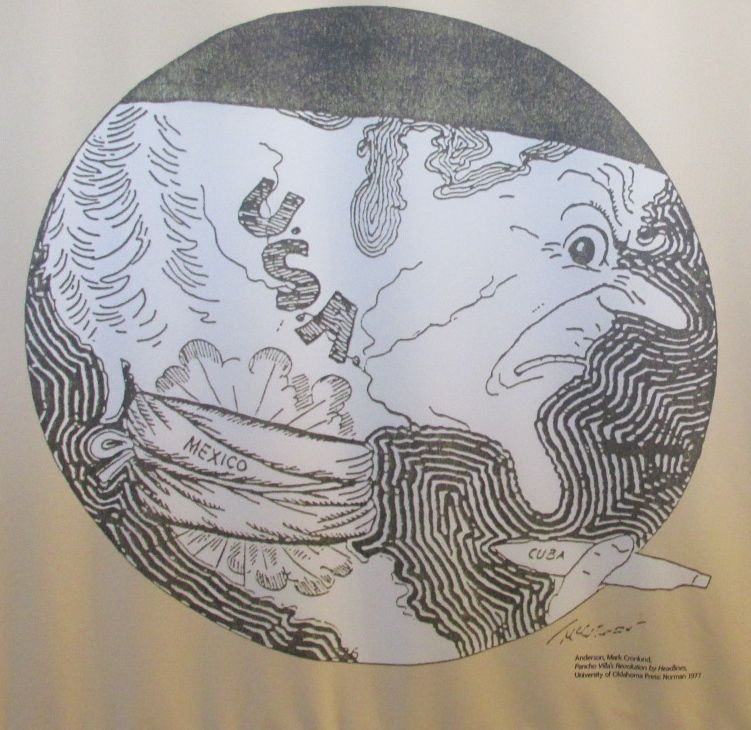
This political cartoon kind of sums things up.
Even if Pershing was never able to catch up with Pancho Villa, at the end of the excursion into Mexico, he had put together an organized and disciplined army just in time for the United States’ entry into World War I.
This is rather ironic. Germany had proposed an alliance with Mexico intended to keep the USA out of WW I. If you would like to find out more about this, look into the Zimmerman Telegram.
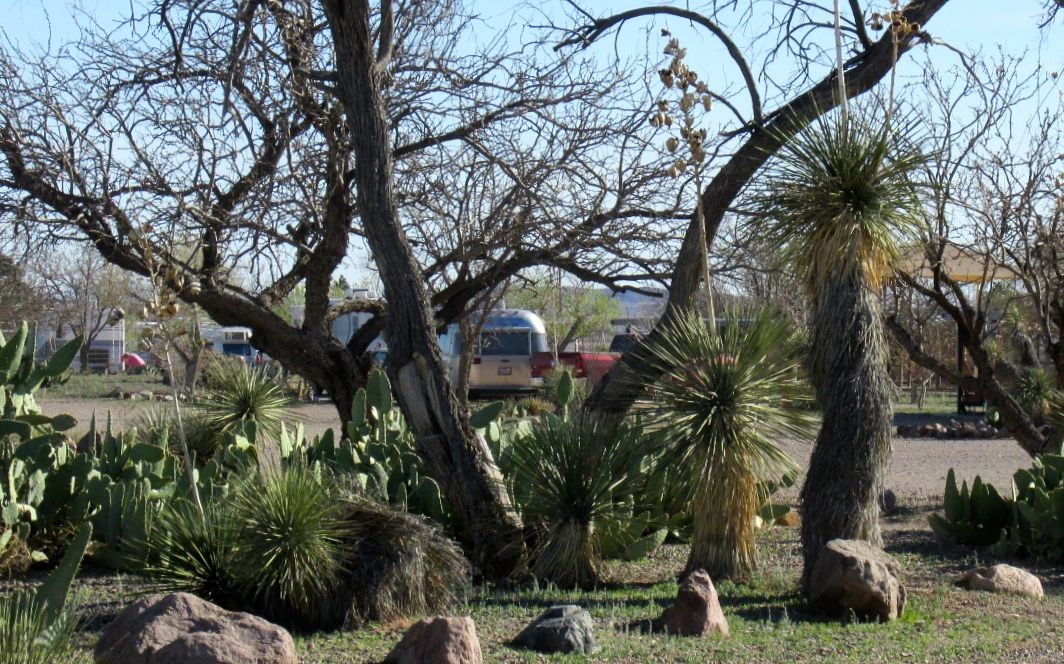
I was at the park just before the centennial of Pancho Villa’s raid. It is amazing what is left behind. My campsite was right across the road from the first military airbase. Cloth-covered biplanes flew from this spot to provide reconnaissance for the Army.
Incidentally, air reconnaissance is still used in the area. Now a days, though, it is used to control the border.
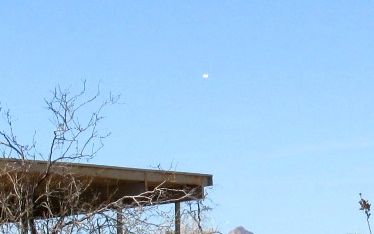
I didn’t have the right camera to capture a good image, but the white dot in the sky above the roof is some sort of blimp. I asked the volunteer at the museum about it, and he told me that is is packed with all sorts of sensing devices to monitor what is happening in the desert.
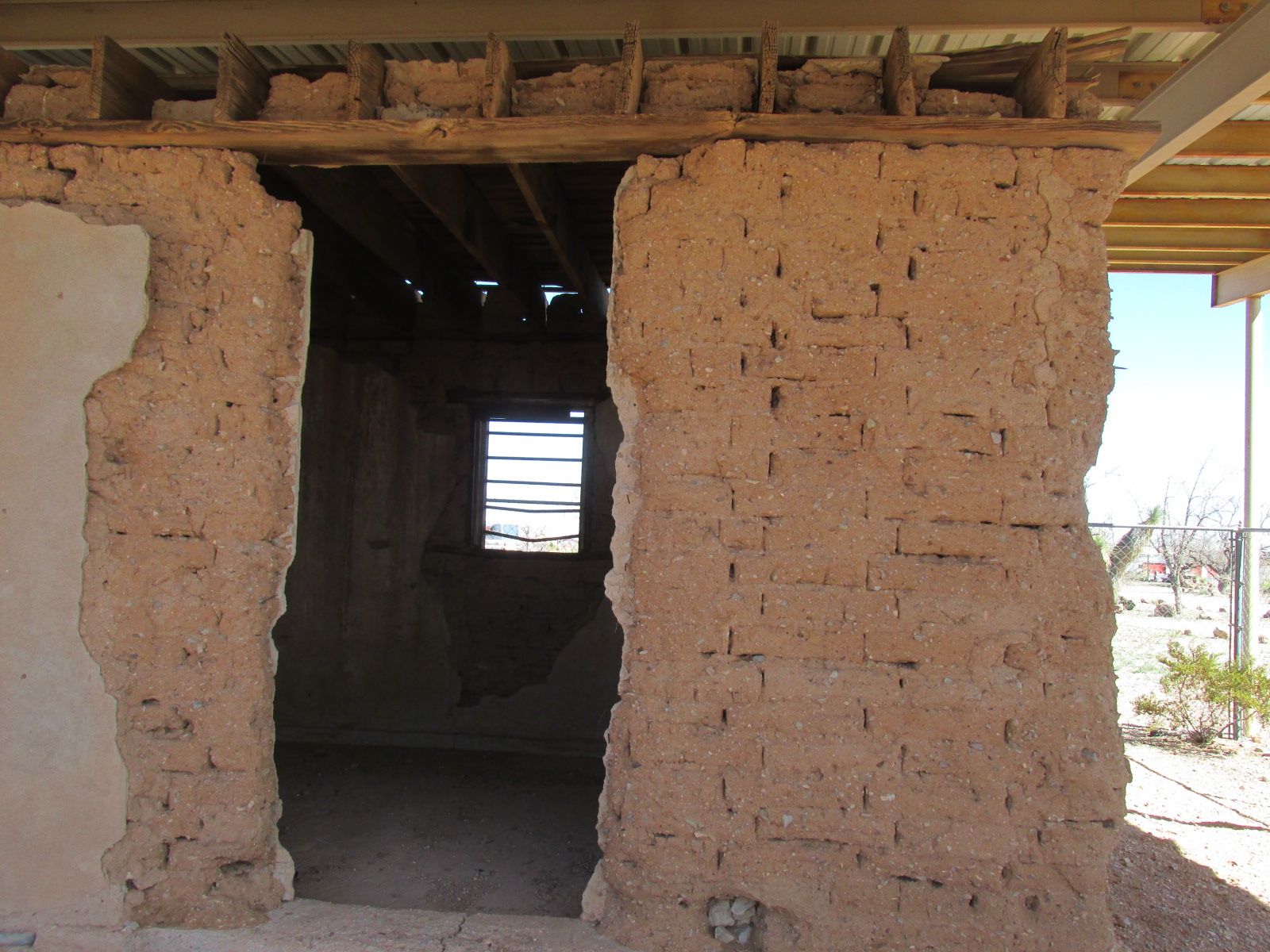
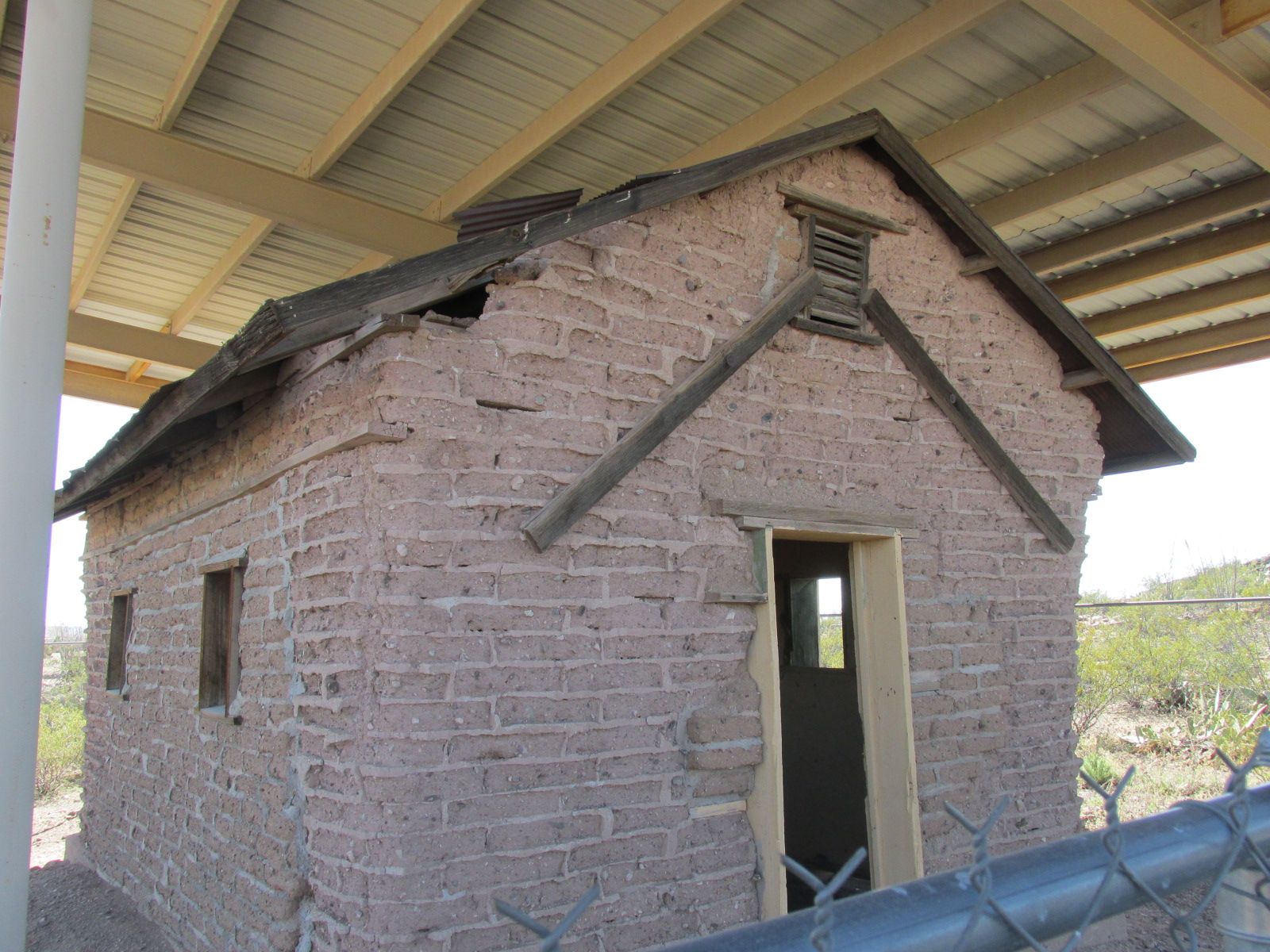
Some of the original Camp Furlong buildings from before the raid still stand. The remains of adobe structures are protected by shelters.
This is the Judge Advocate’s Office.
This is the Headquarters building.
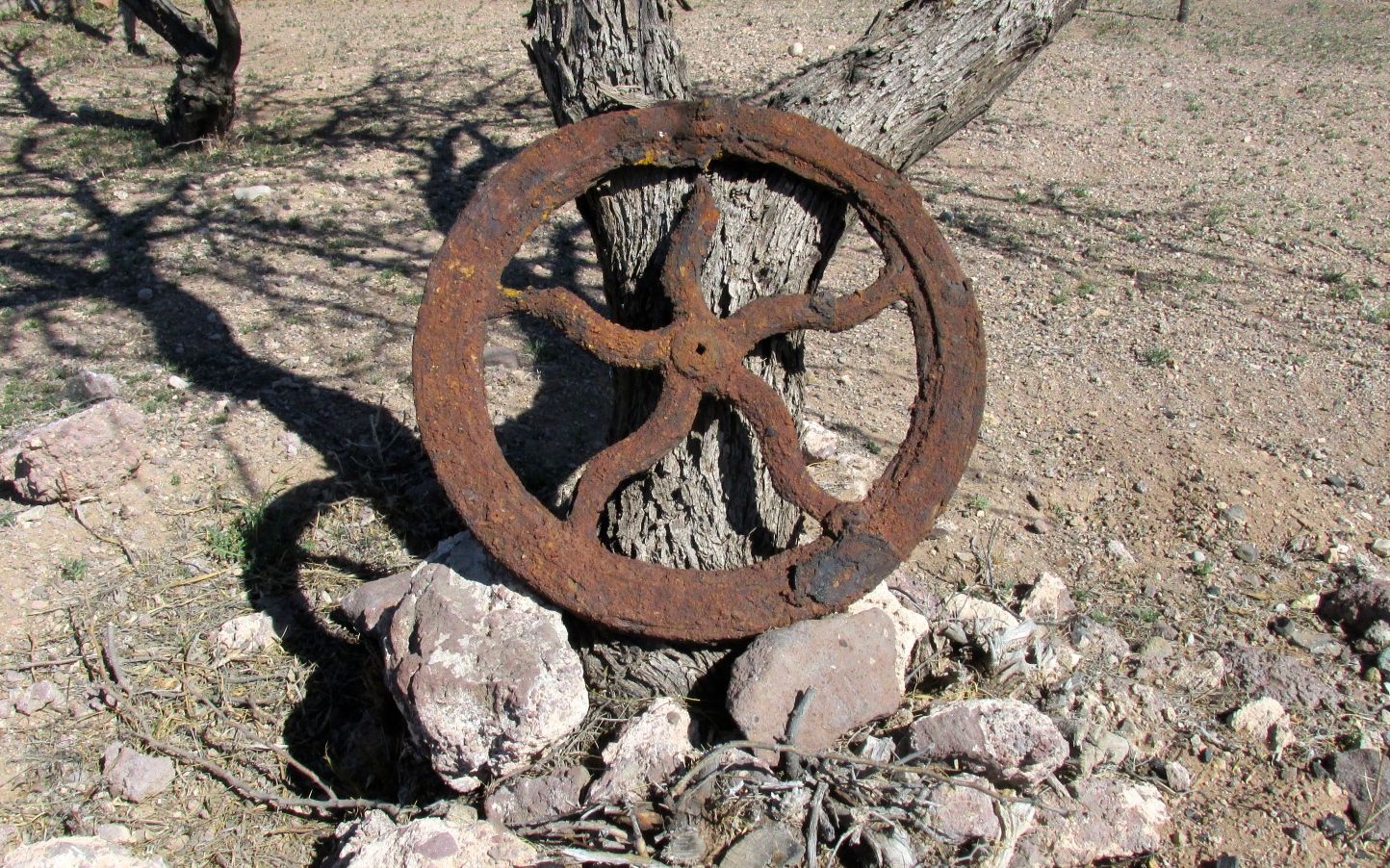
I imagine that someone dug up this rusted bit of machinery and just propped it against a tree.
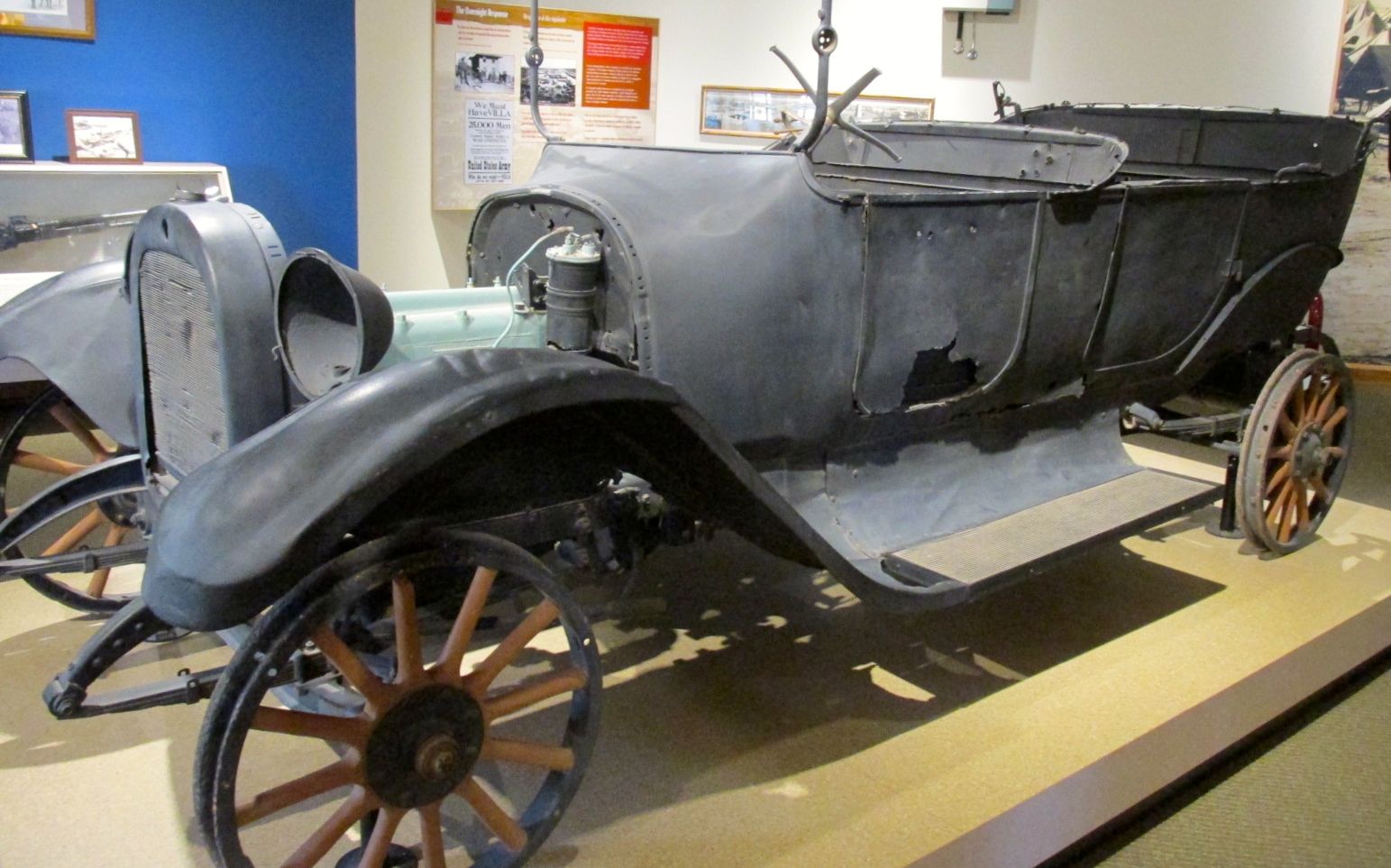
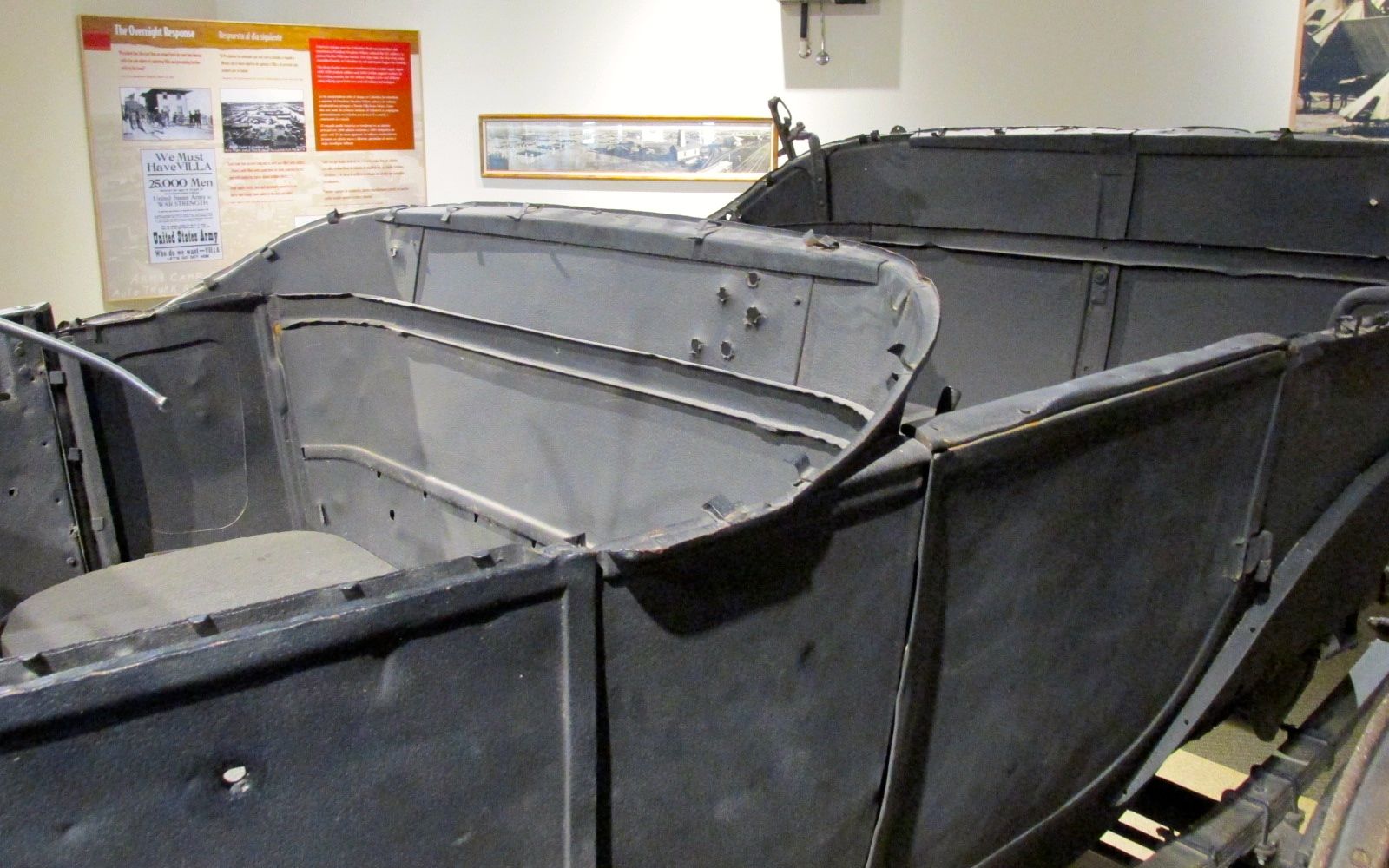
This car was inside the museum, as a testament to the violence of the raid. The driver was killed, and the family donated it to the museum.
Just look at those bullet holes! It must have been quite an attack.
U.S. Customs House built 1901
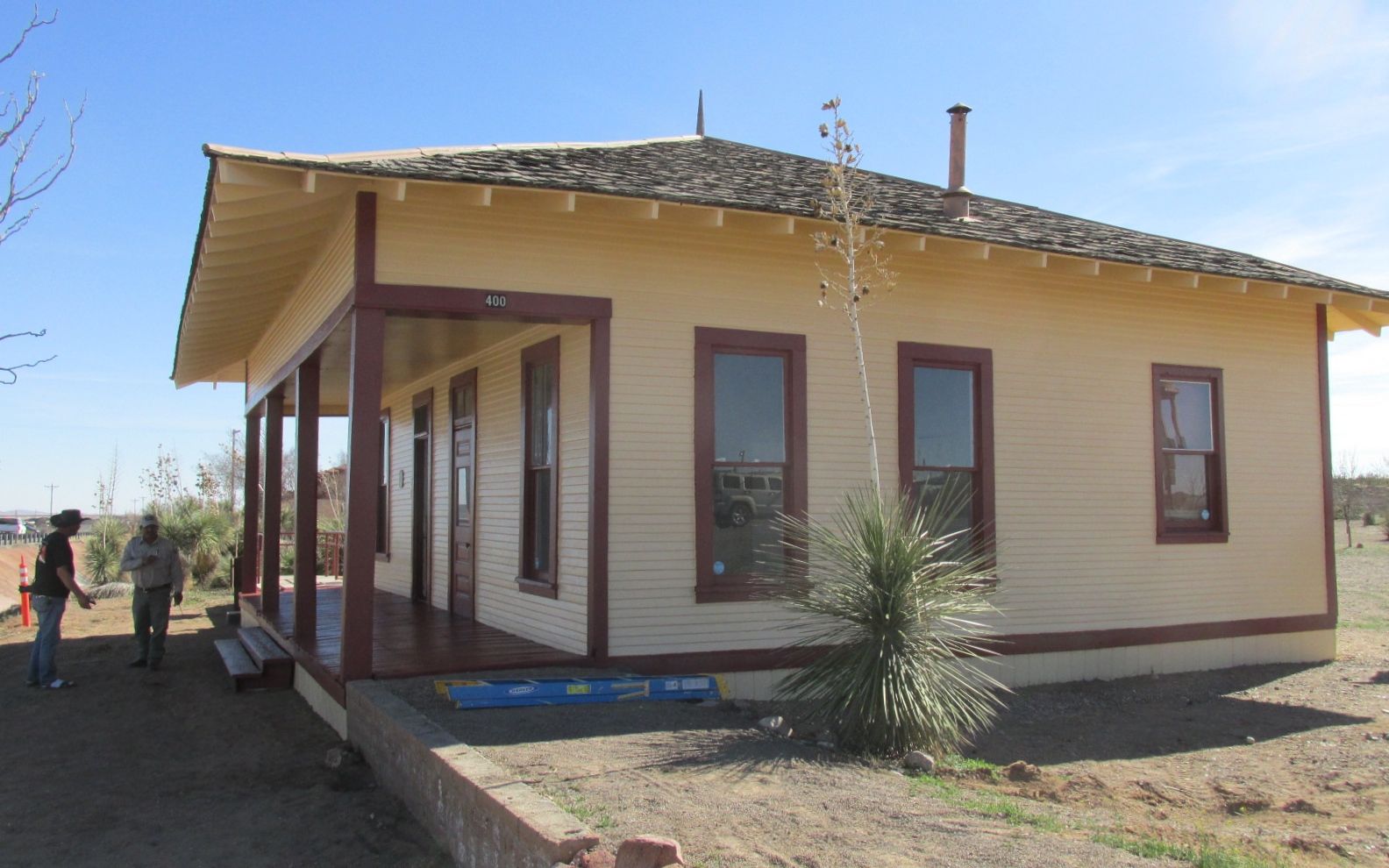
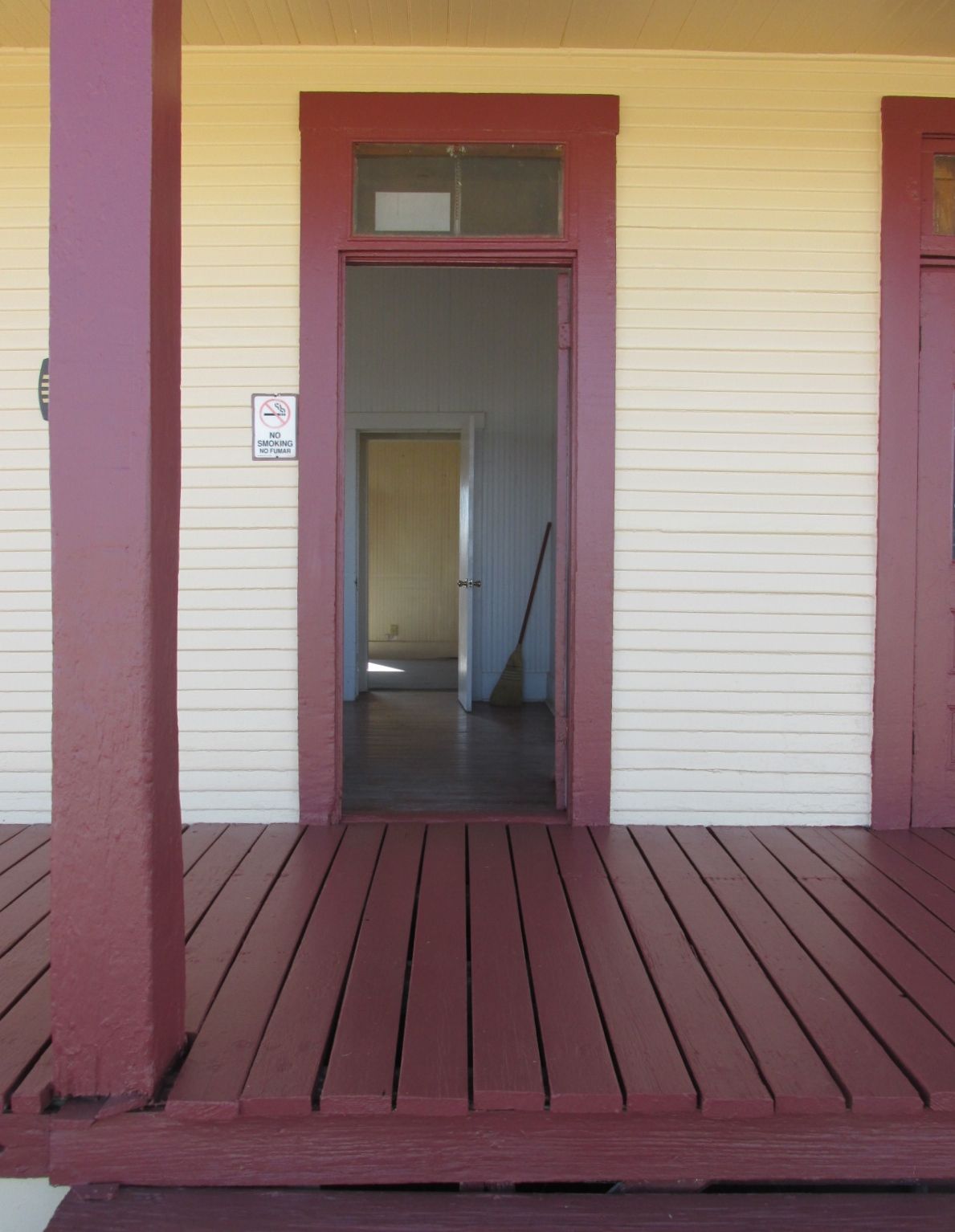
Other buildings in the park from the era are in better shape than the adobe ones. They were painting the U.S. Customs House while I was there.
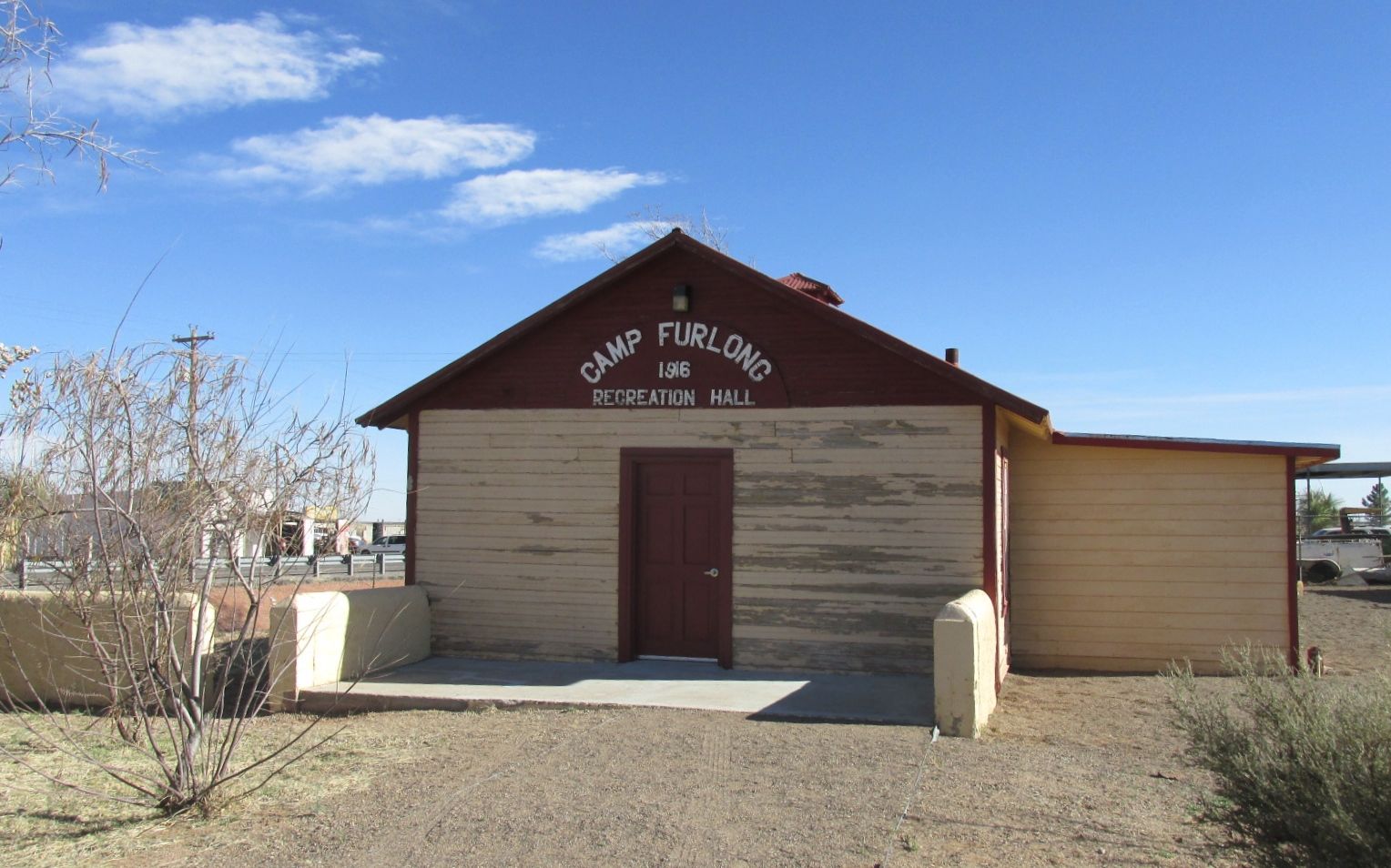
The Recreation Hall was also still standing, although not open to visitors.
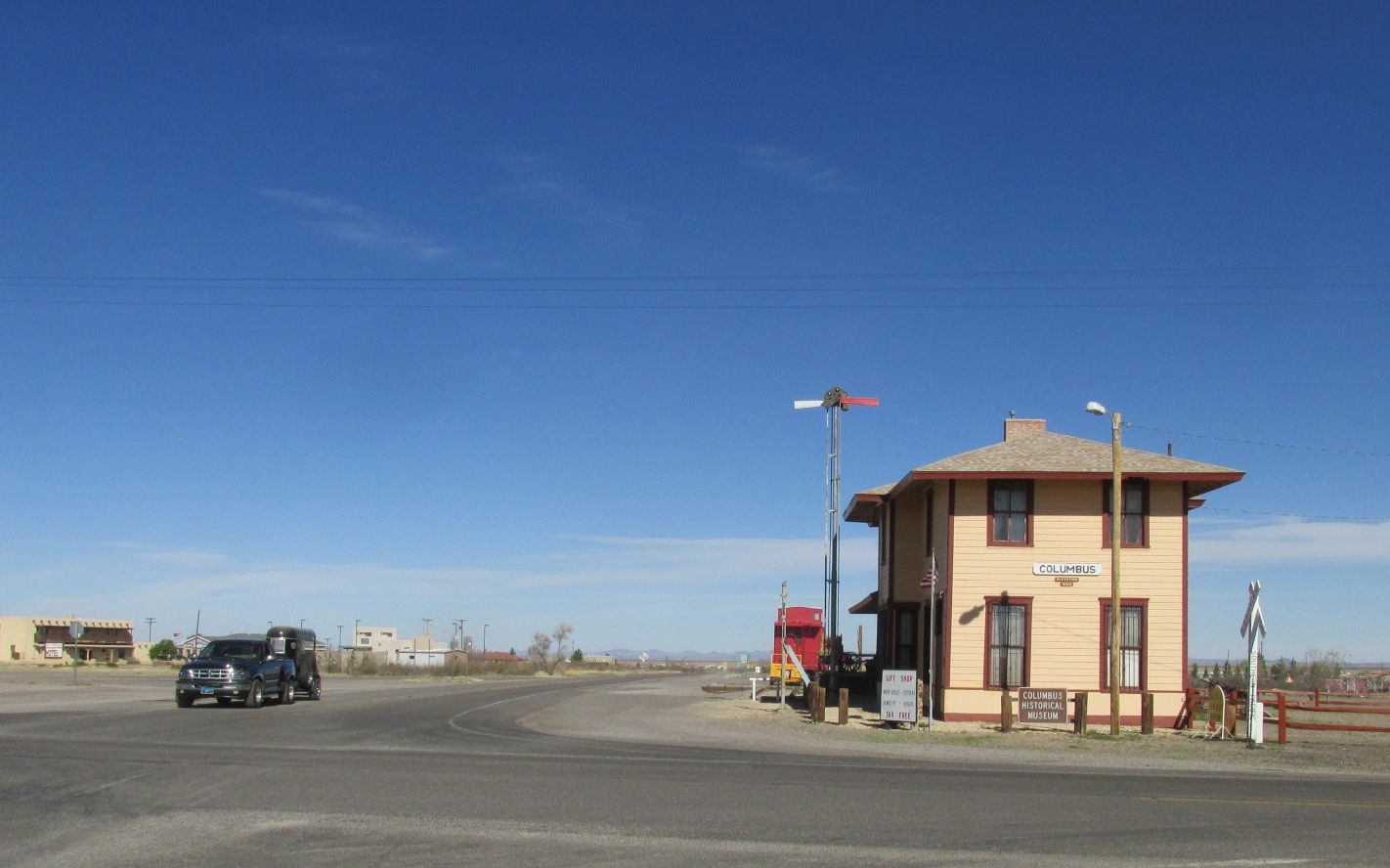
Just across the street was the Columbus History Museum.
It was in the old train station. They have one train car left on a length of track. It was staffed by a work camper – a volunteer who works in exchange for a campsite. She was quite the traveler! At 80, she is still rolling strong. We complimented each other on not looking our ages and then I went through the three rooms in the museum.
The first room was dedicated to Pancho Villa’s raid.
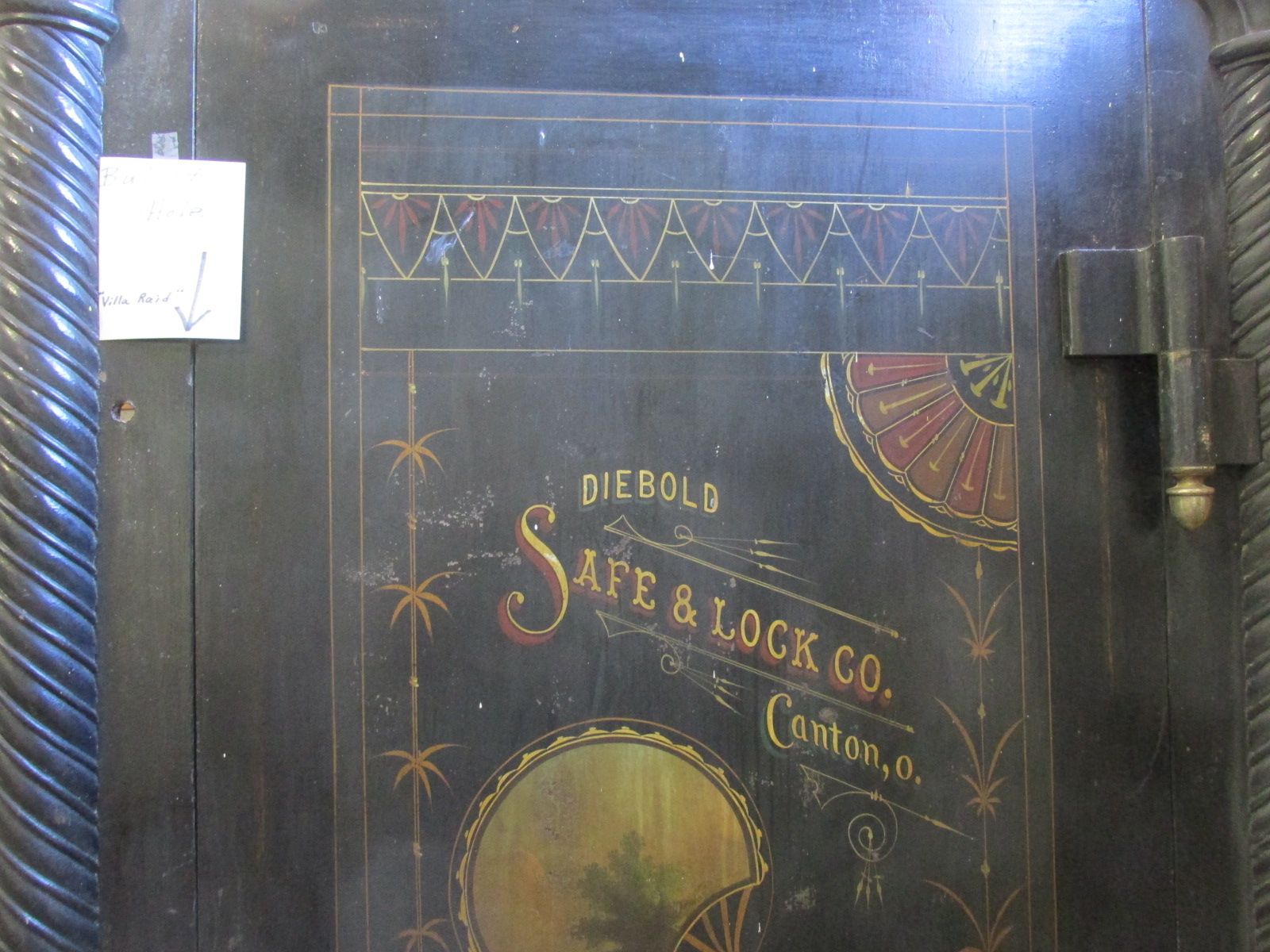
This is the door to the bank’s safe.
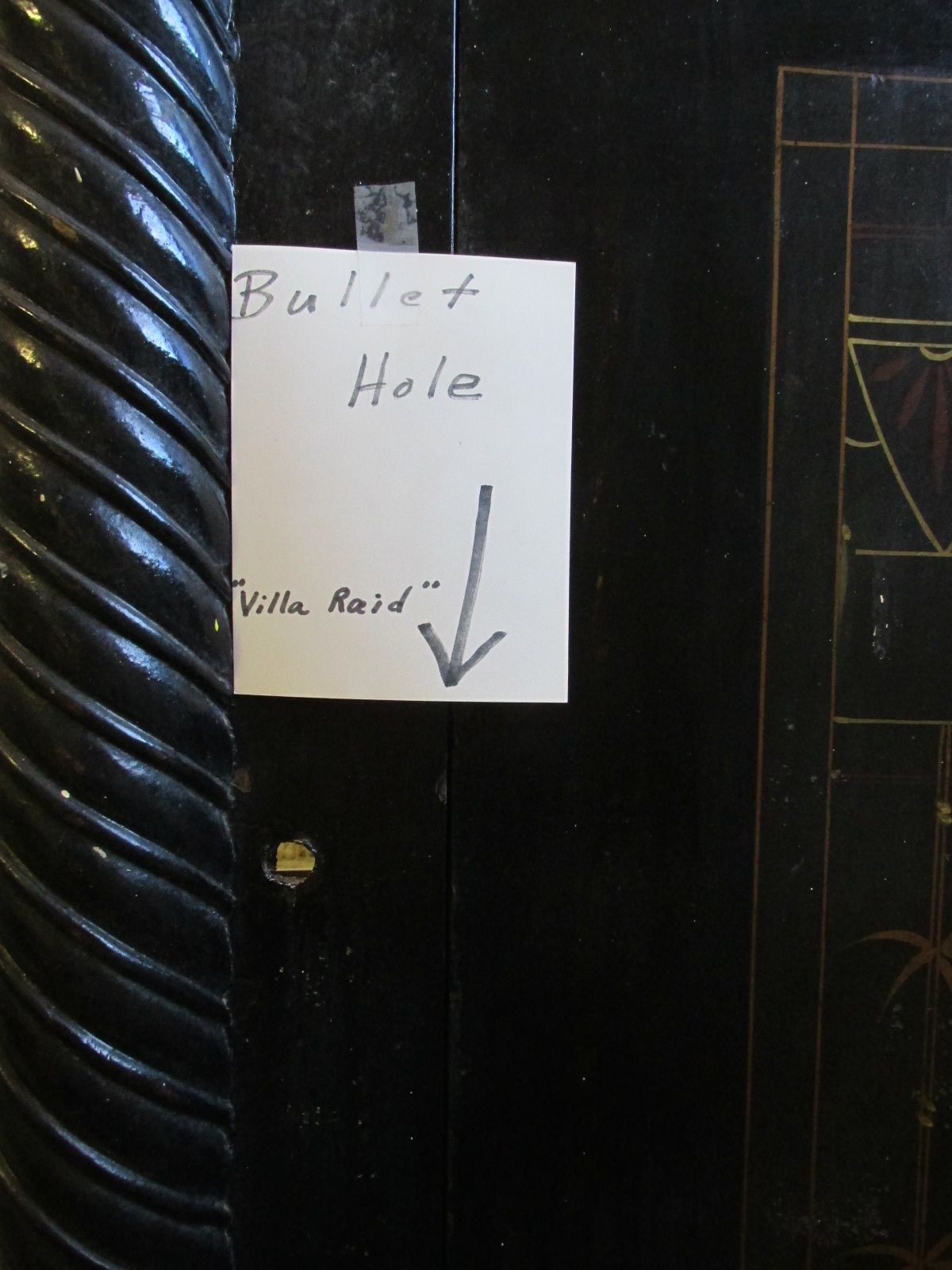
Complete with bullet hole.
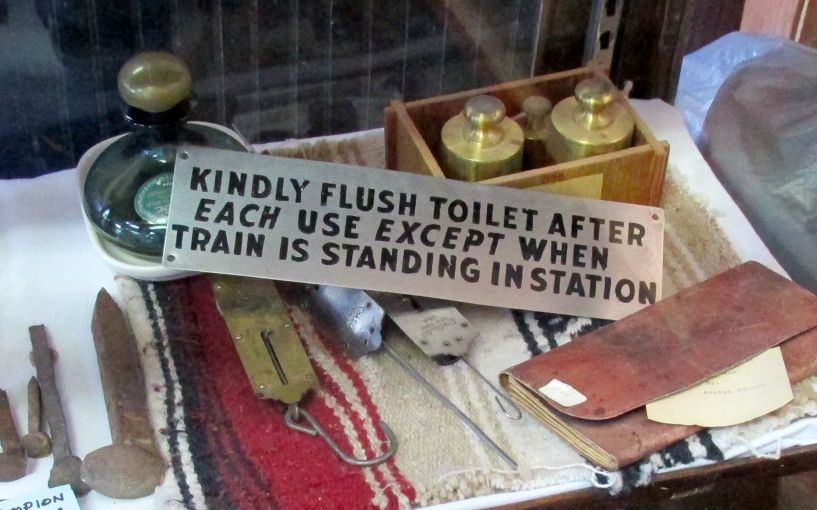
The middle room was dedicated to the railroad history of the area.
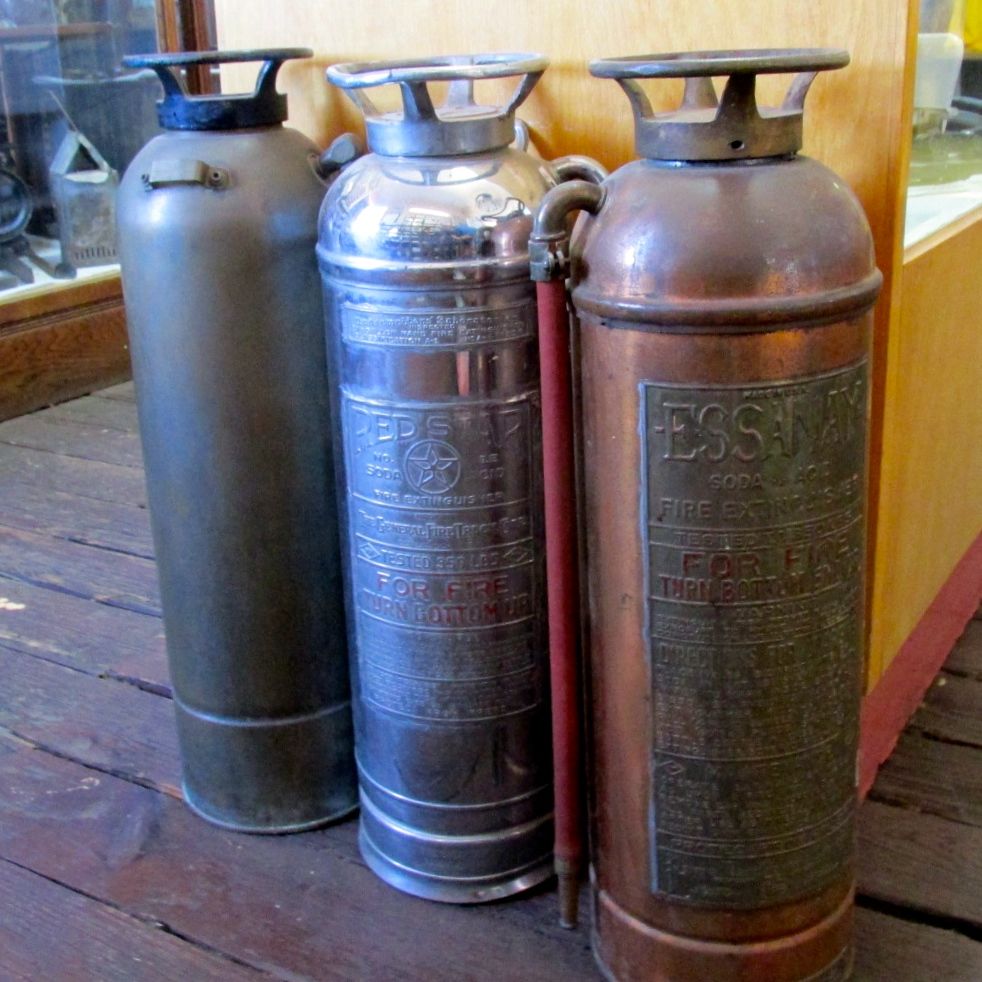
They had a nice collection of fire extinguishers. It reminded me of the lamp my father made for me out of the one that was in our house in Kenmore, New York.
The back room as dedicated to daily life. It is kind of disheartening to find things that you actually owned and used on display in a history museum.
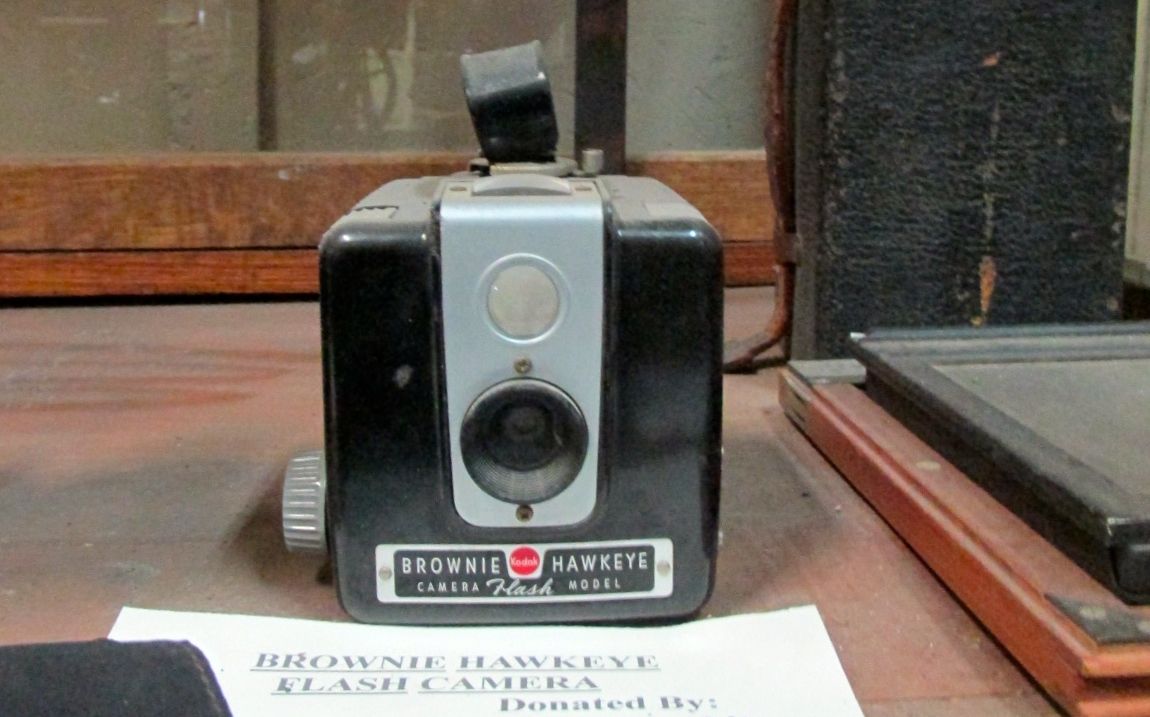
Just like this Brownie Hawkeye camera.
And bits and pieces from kitchens.
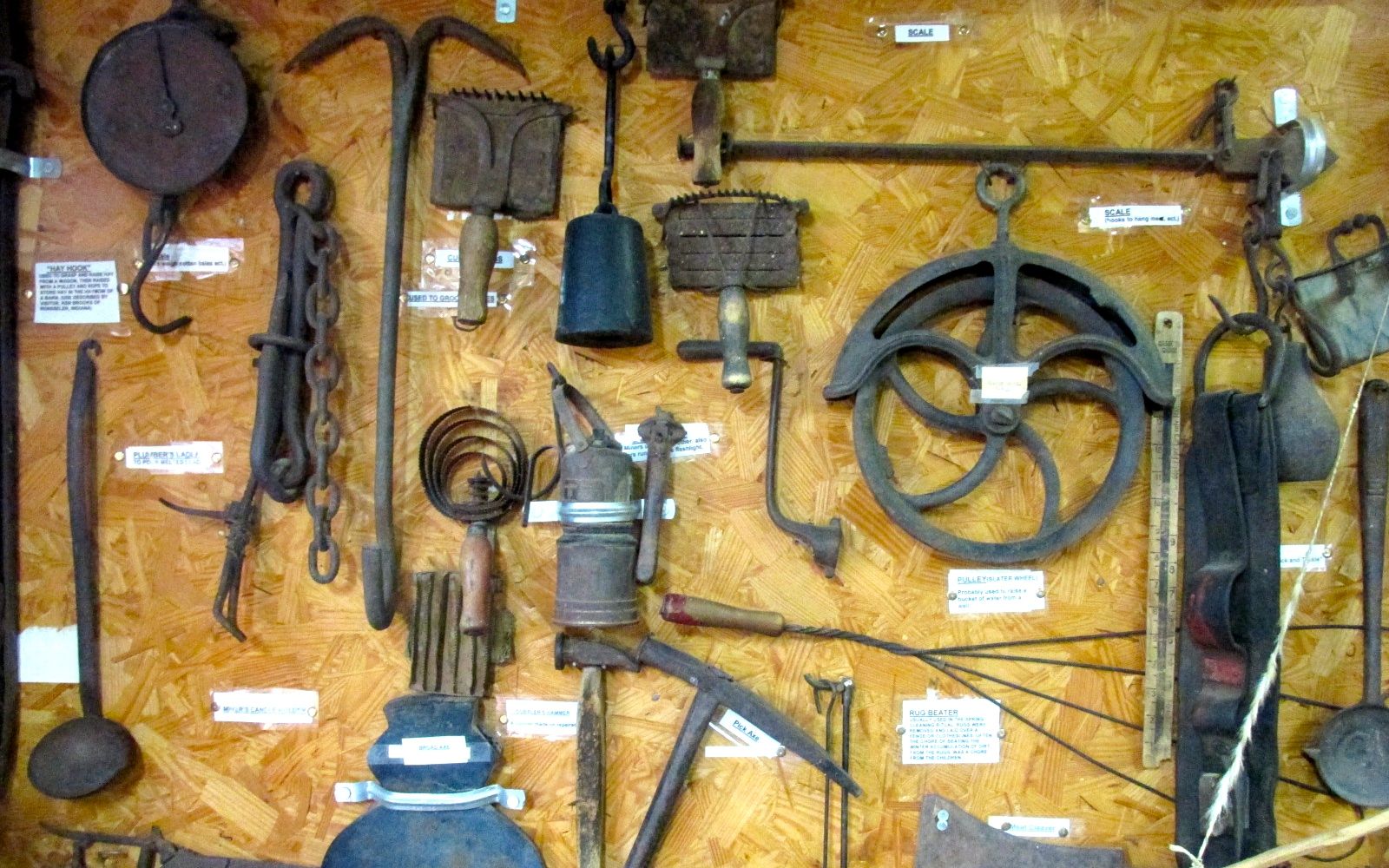
And tools. Or parts of tools.
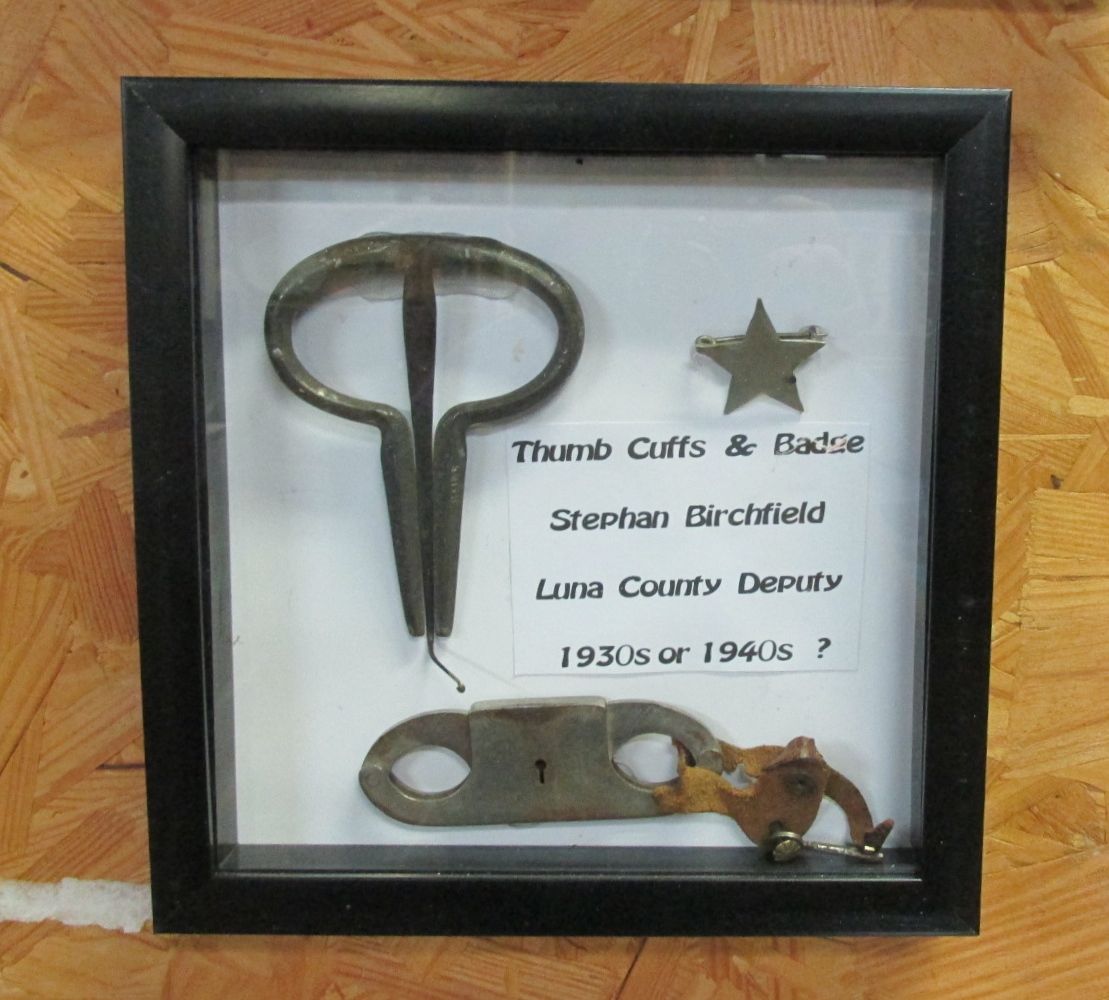
And Stephan Birchfield’s thumb cuffs, badge and mouth harp from the 1930’s or 1940’s.
It’s one of those museums where you leave feeling like you have been looking through someone’s attic or garage.
I worked my way back to my camp site.
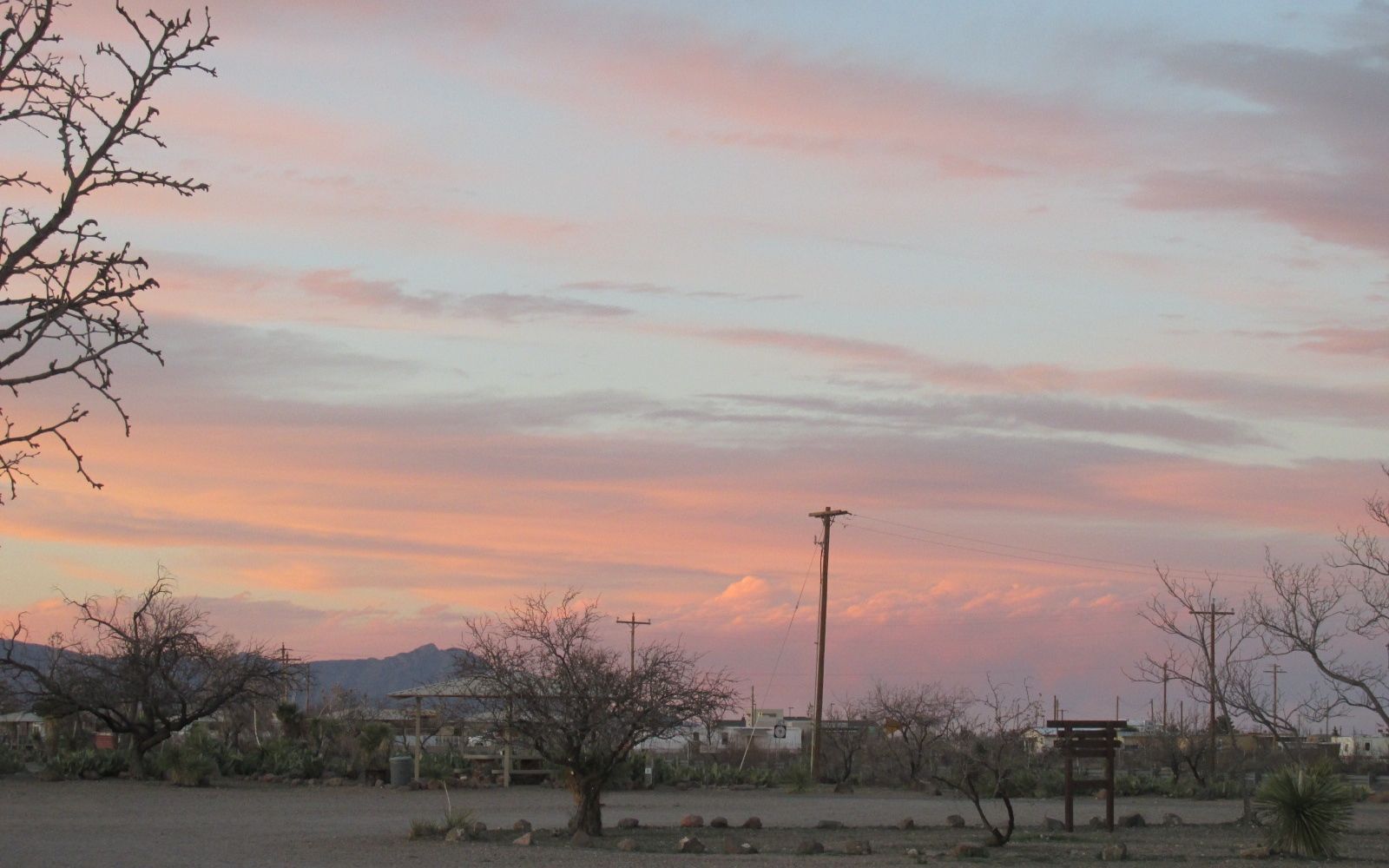
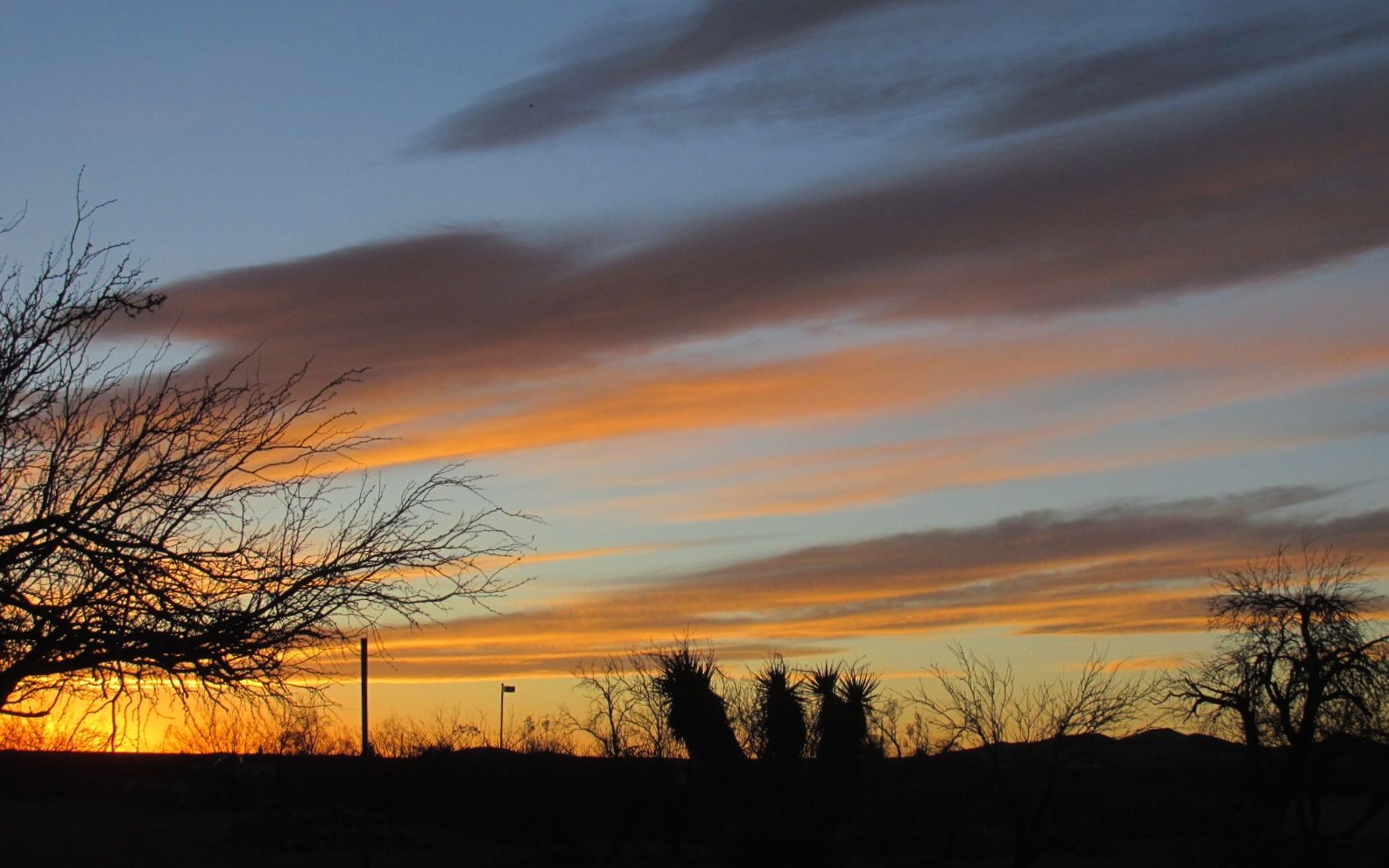
A good day of “touristing” and I was rewarded by another lovely sunset.