My next stop was Nashville. It was a short visit, and I had two goals.
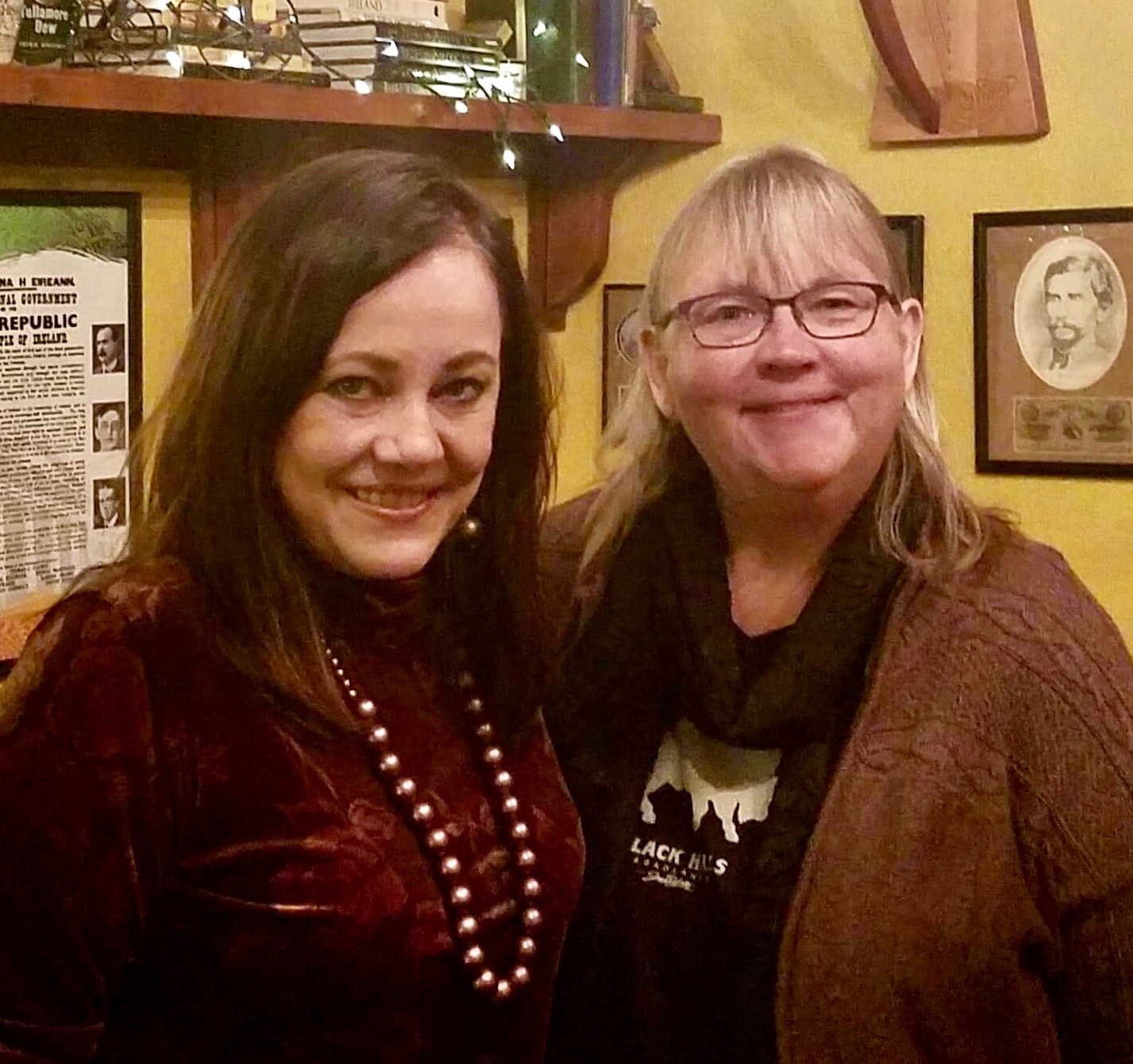
My first goal was to meet up with a friend I had met years and years ago on the Dictionary.com forum. I got situated in a campground and then we met up for dinner. After all those years of being digital friends, it was marvelous to finally meet Karen in person.
My other goal for Nashville was to see the state capitol. But, I had a little time to spend near my campground, and Karen recommended that I visit Opryland Hotel. With 2888 rooms, it is one of the 30 largest hotels in the world.
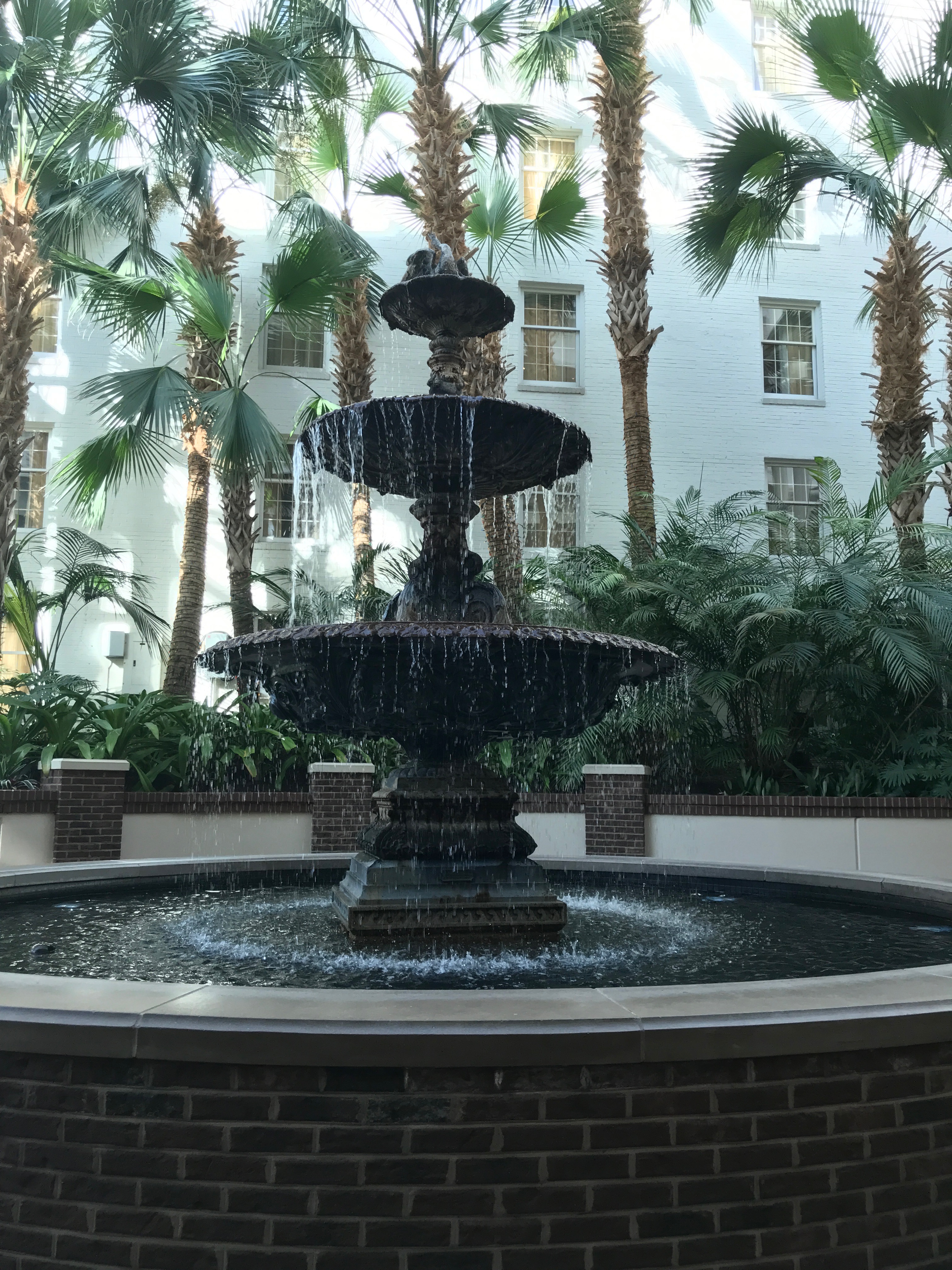
Really, it is enormous. There are fountains and plantings all over.
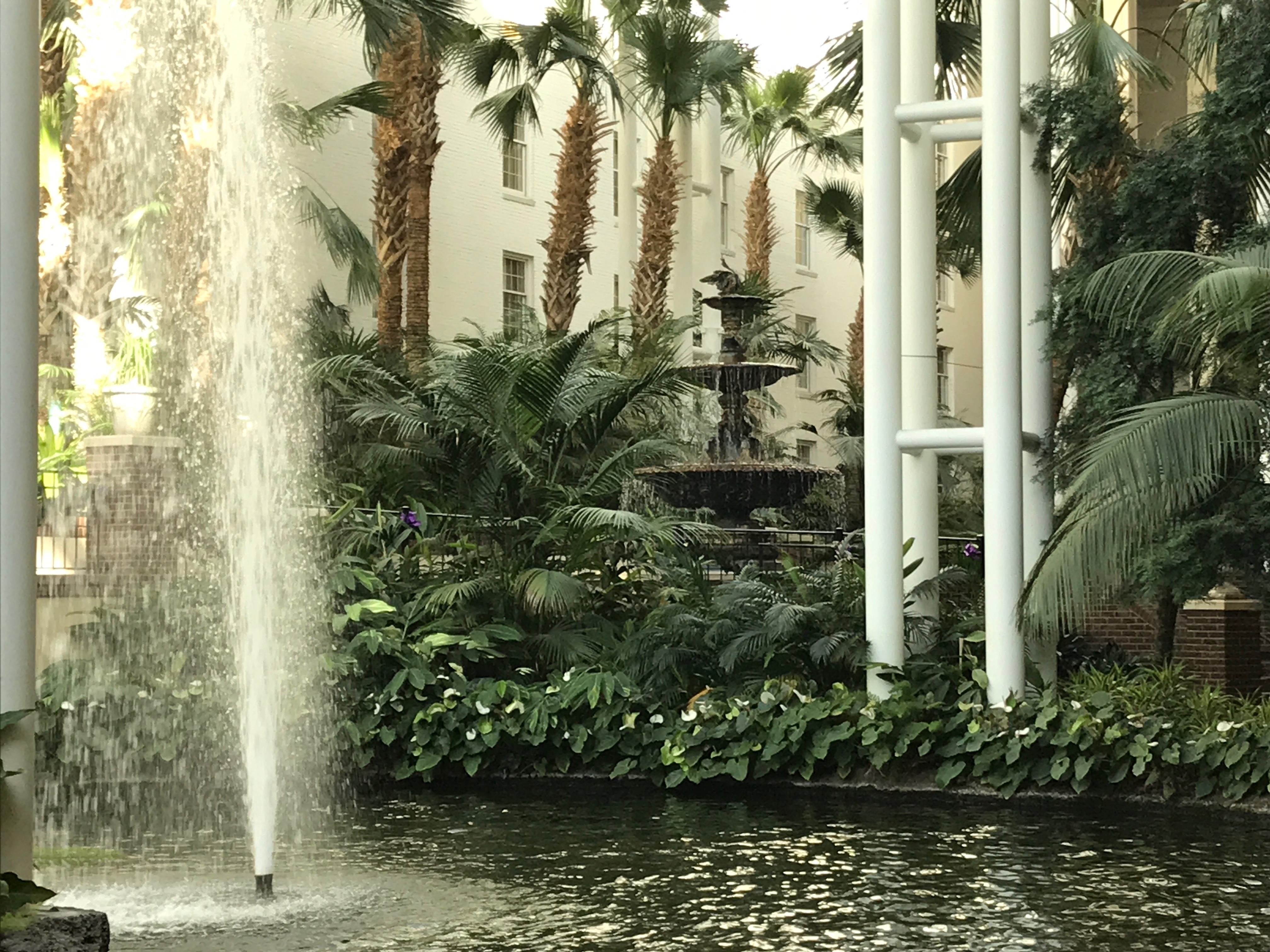
It seems more like a tropical oasis than someplace in Tennessee, and a quarter mile long river runs through the main atrium.
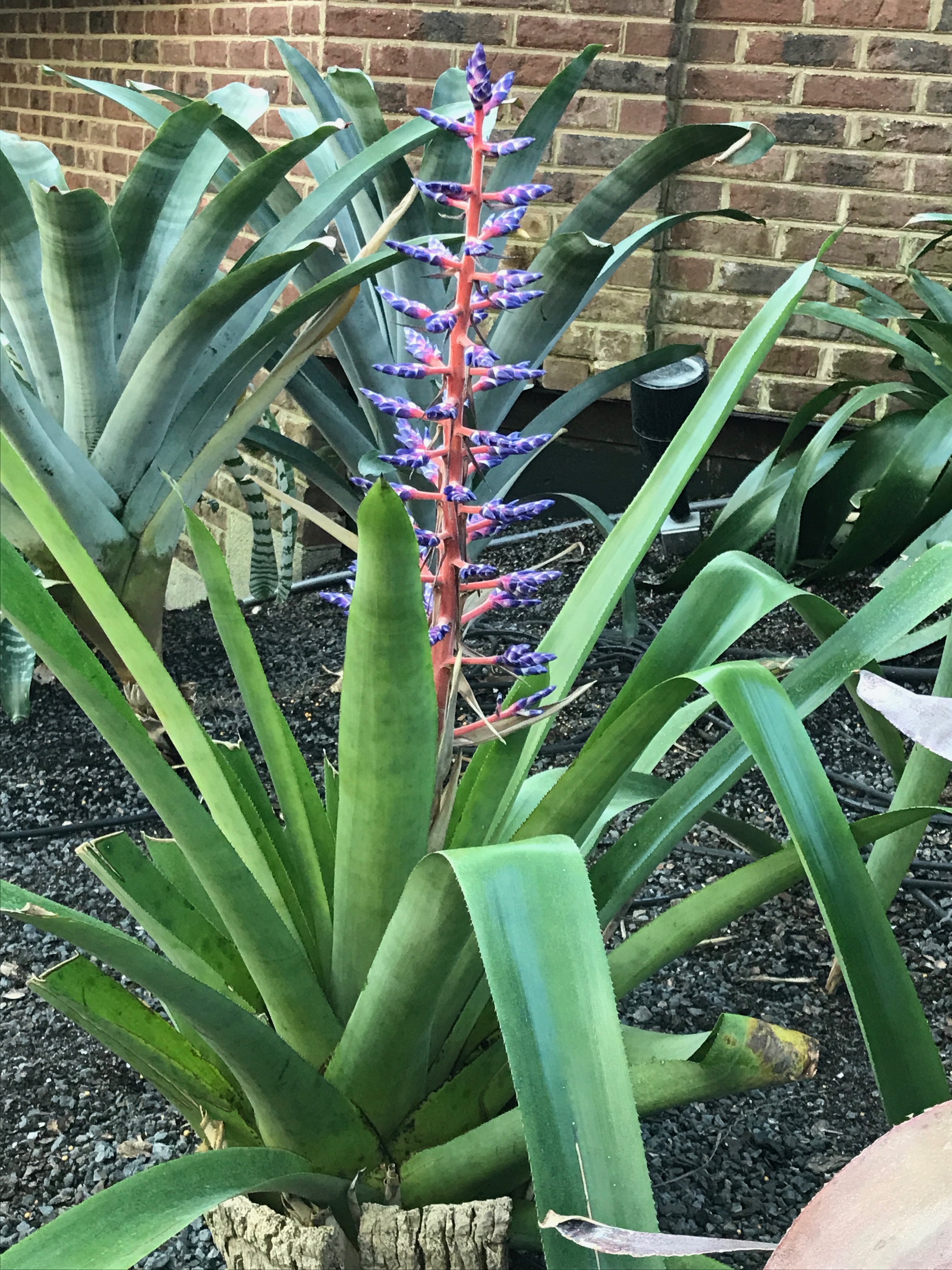
The plantings are really lush and well-tended. I can’t even imagine how many gardeners they have taking care of all of the plants that are inside.
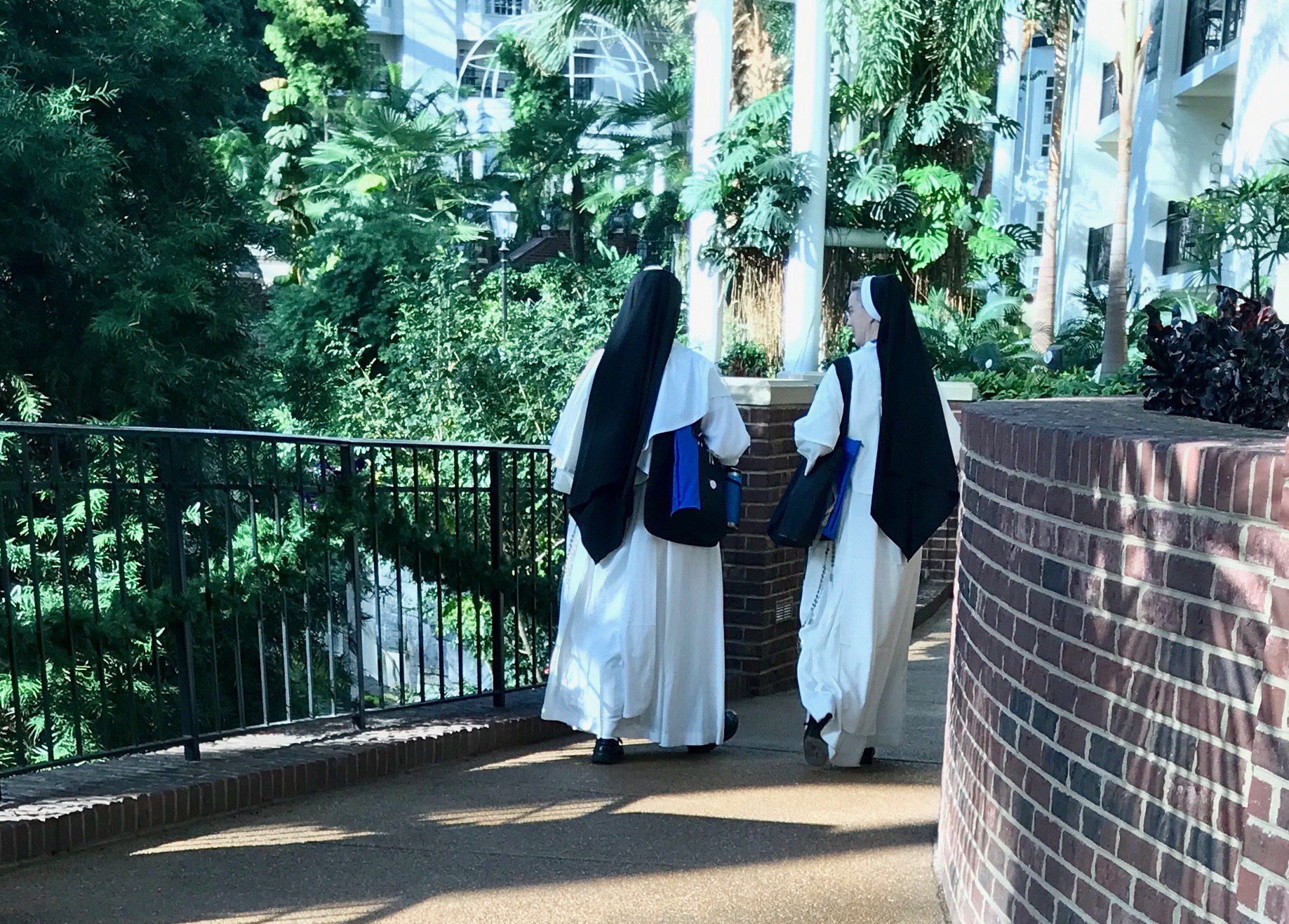
There were several different conferences going on the day I visited. I wondered which conference these sisters were attending.
I walked around a bit and then headed outside. It was the beginning of November when I visited, and they are getting things set up for Christmas.
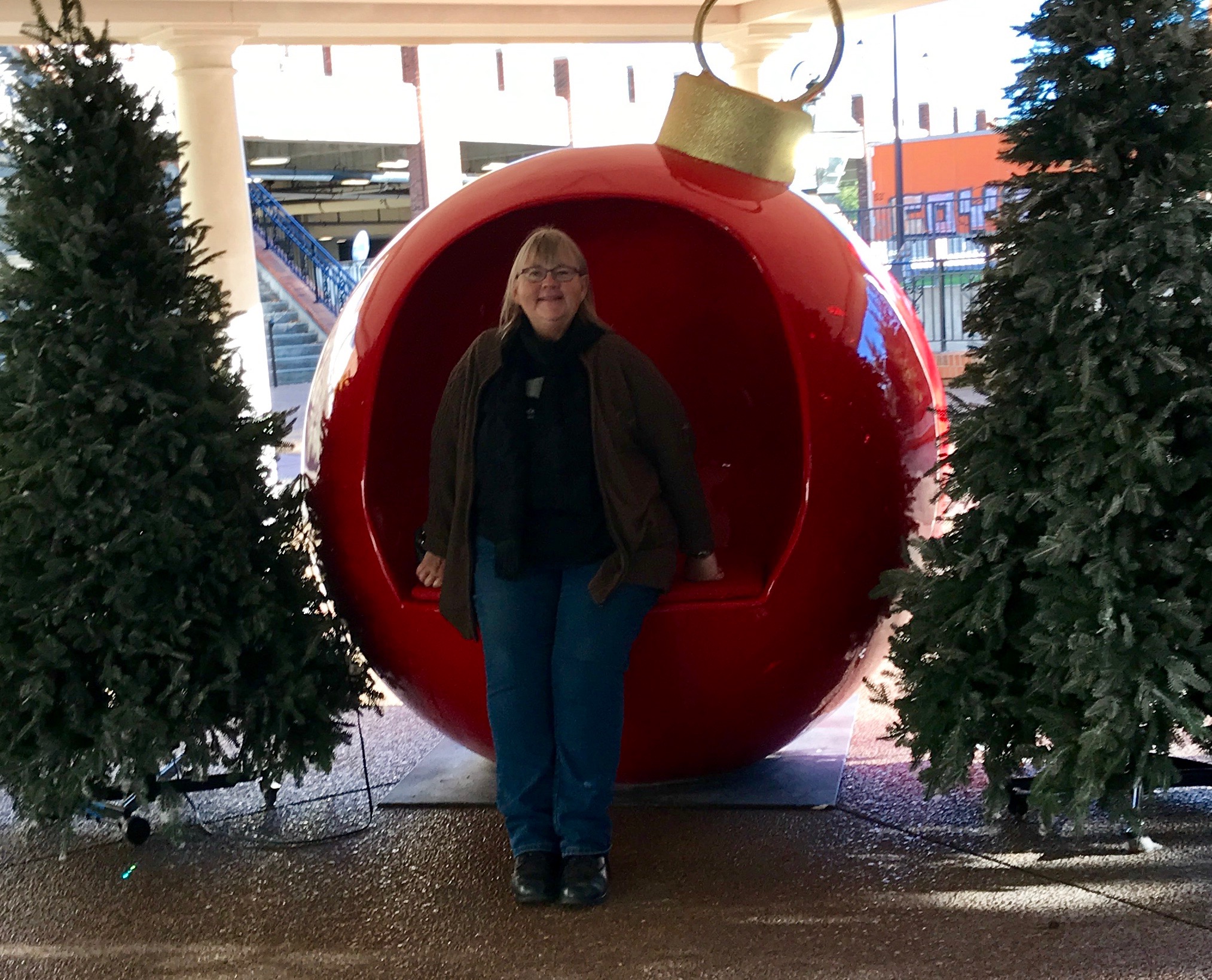
I persuaded a passerby to snap a photo of be sitting in this giant ornament.
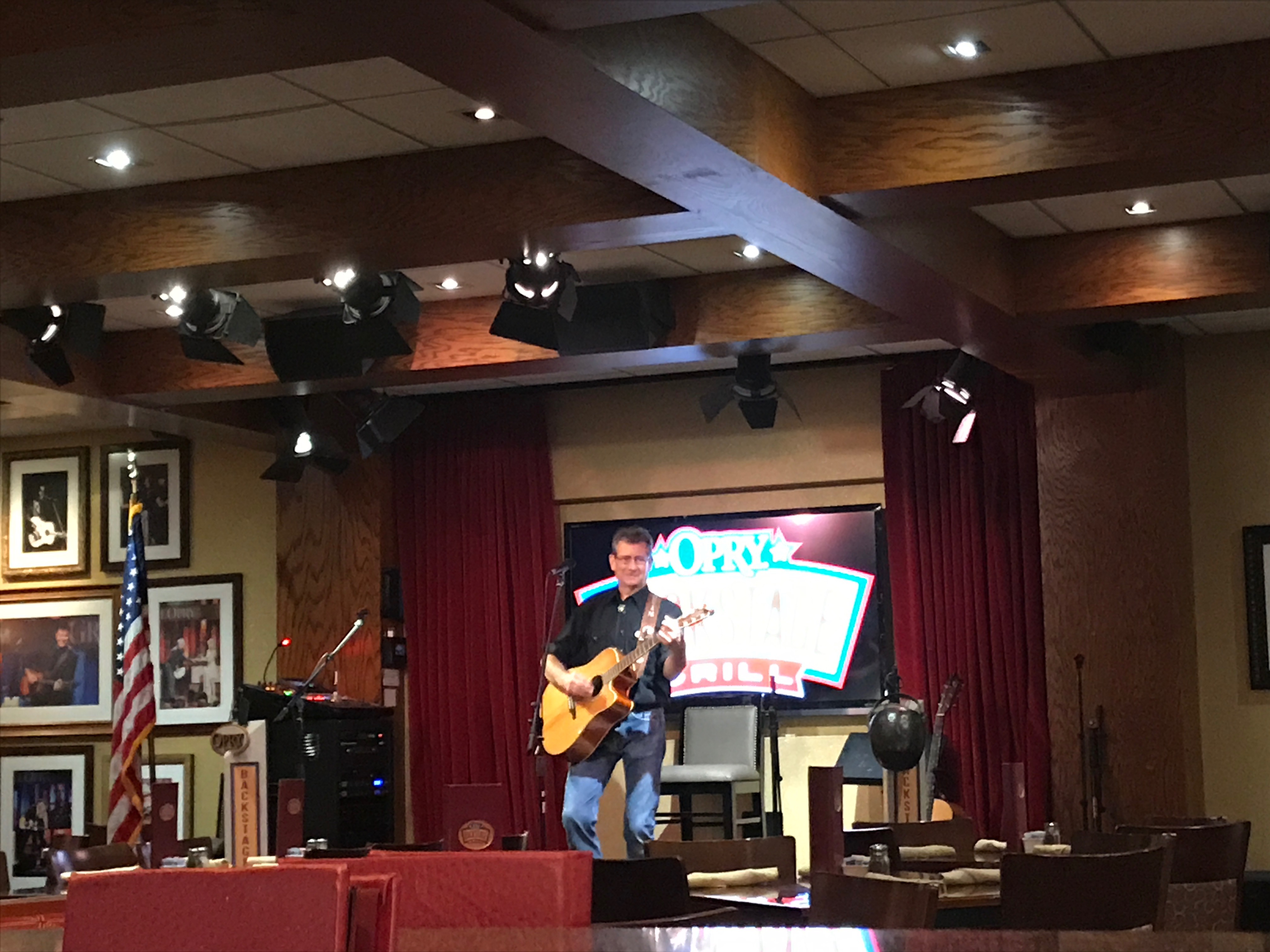
Karen also encouraged me to eat at the Opry Backstage Grill. A friend of hers was working. The waiters get up and perform between serving their customers. This is her friend, but unfortunately I’ve forgotten his name. I do remember that he was a good musician.
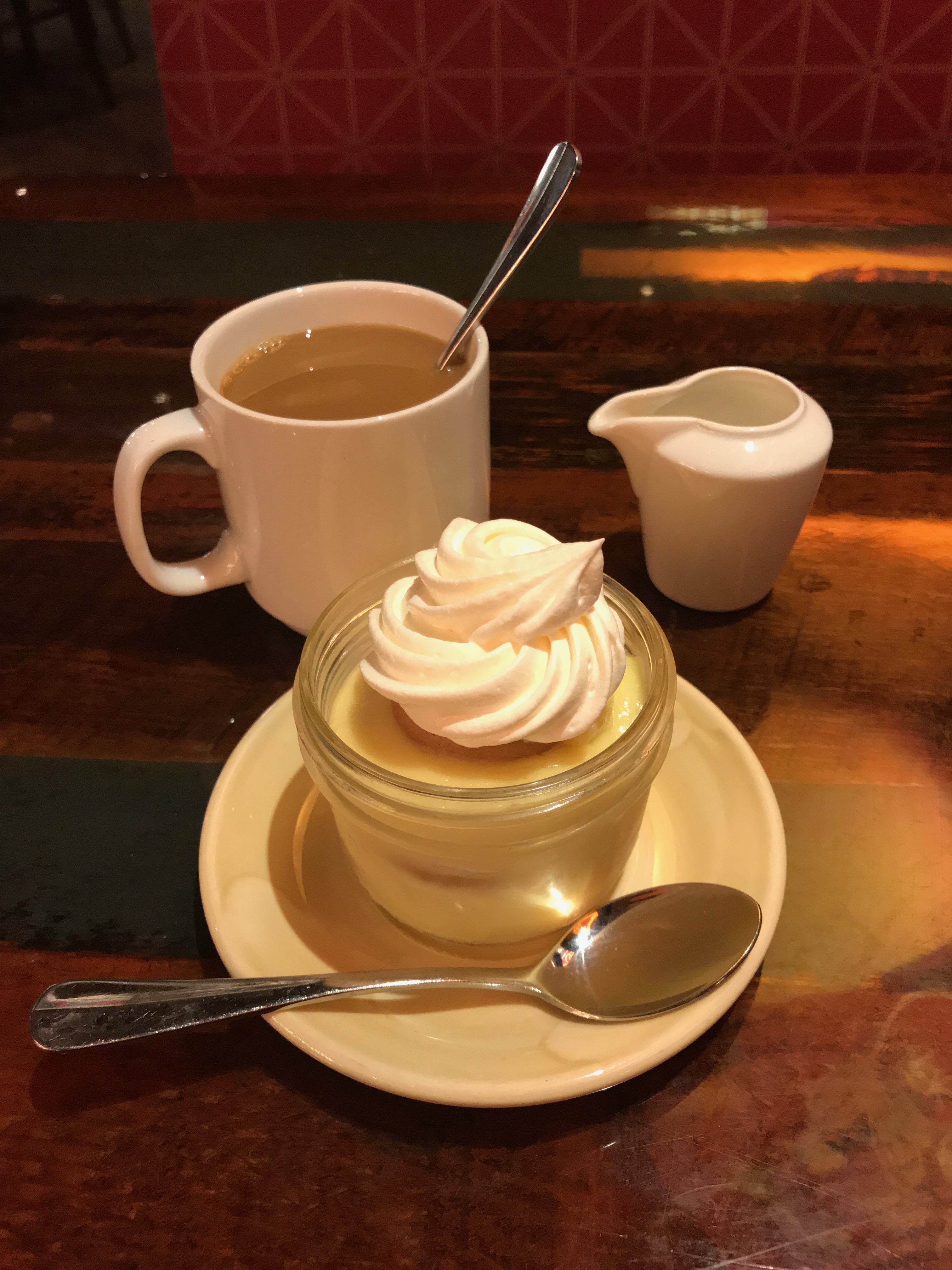
I am pretty sure I ate a meal there, but I’ve forgotten what it was. I do remember the banana pudding I had for dessert. Yum!
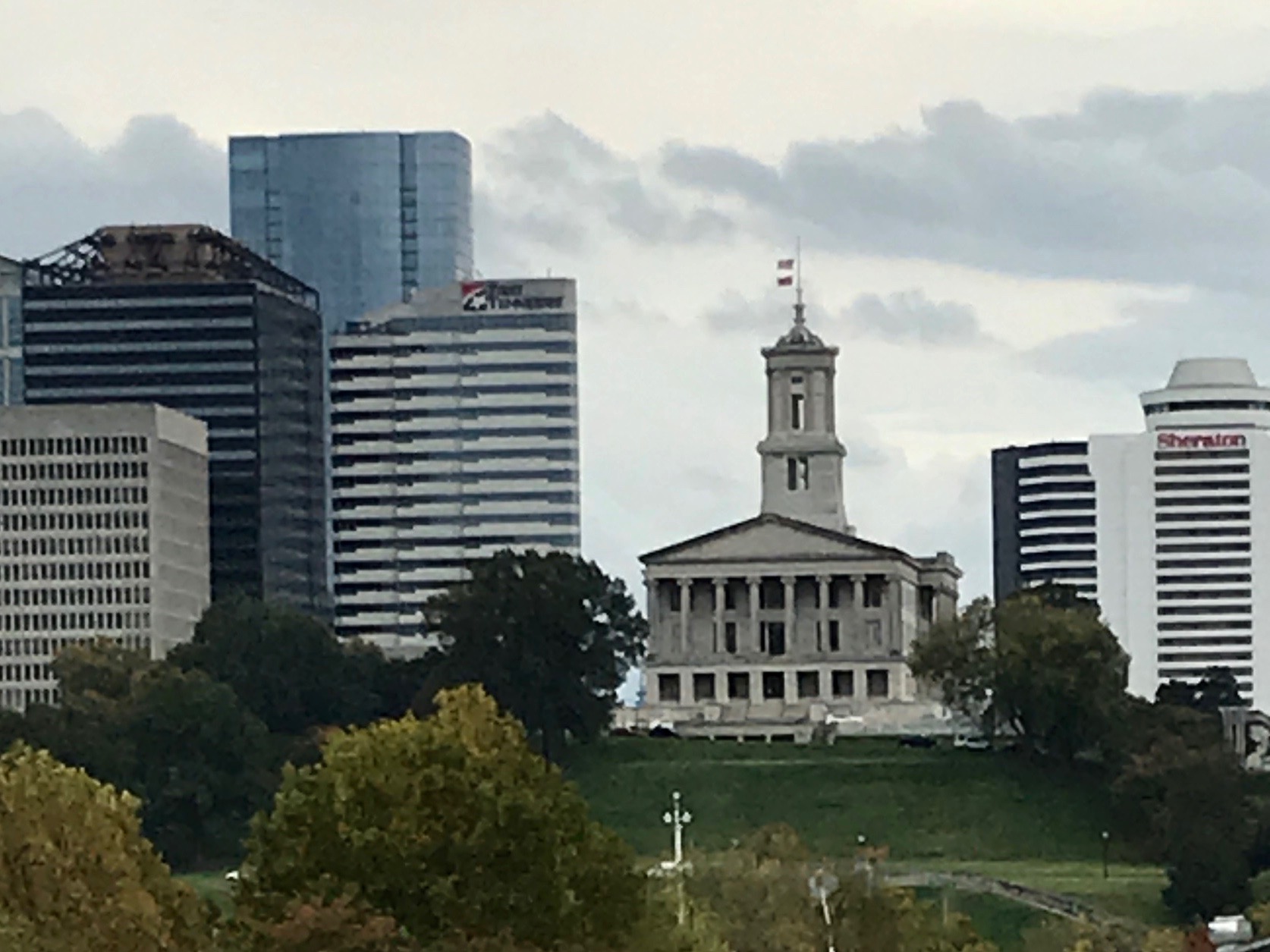
It was time to cross another state capitol off my list. I parked in a spot close to the building and started climbing. It seems that city planners make a point of putting capitols on tops of hills! One of these days, I will do a compare and contrast of all the capitols.
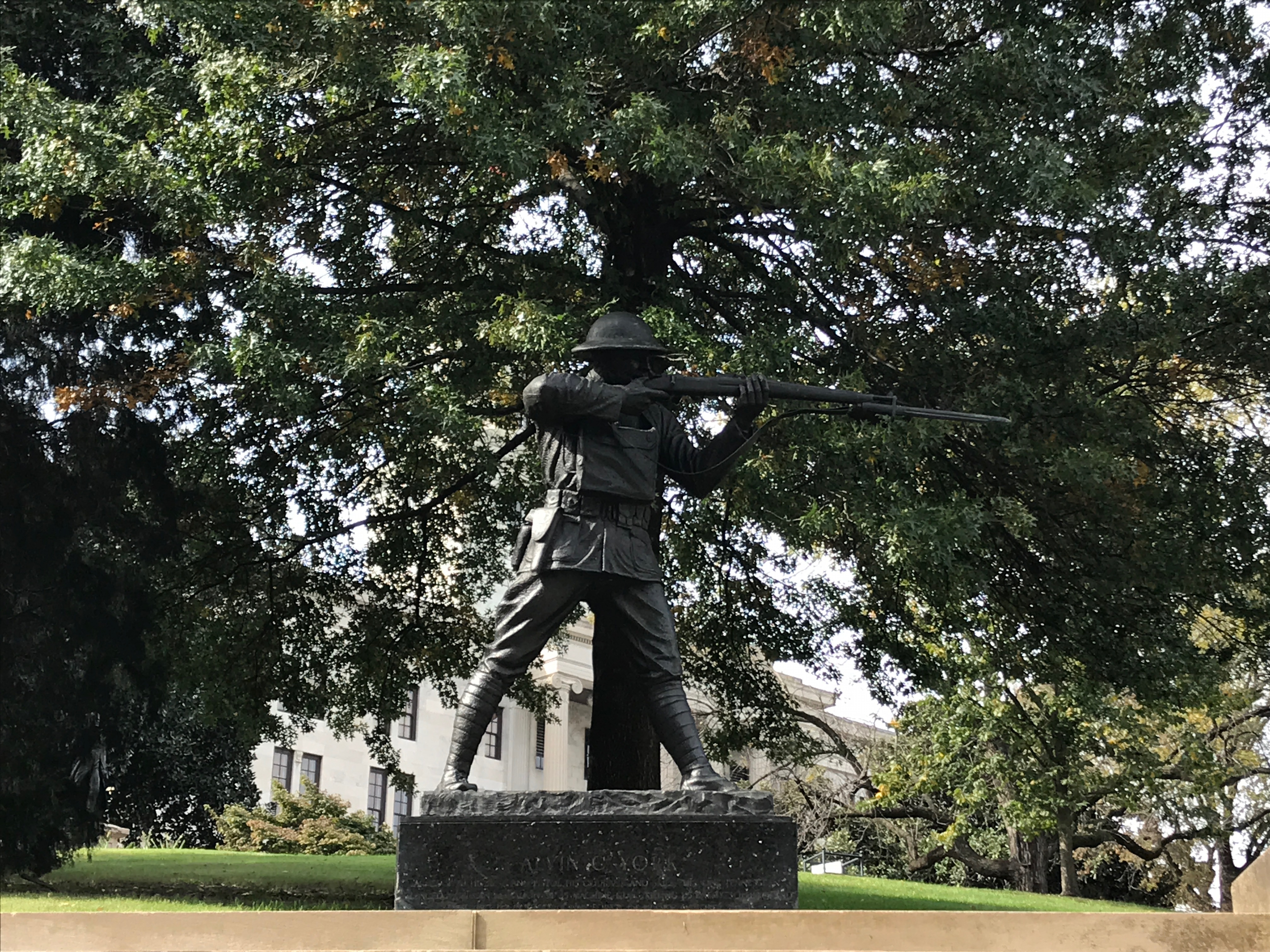
I got up to the top of the hill and came upon this statue of a WW I doughboy.
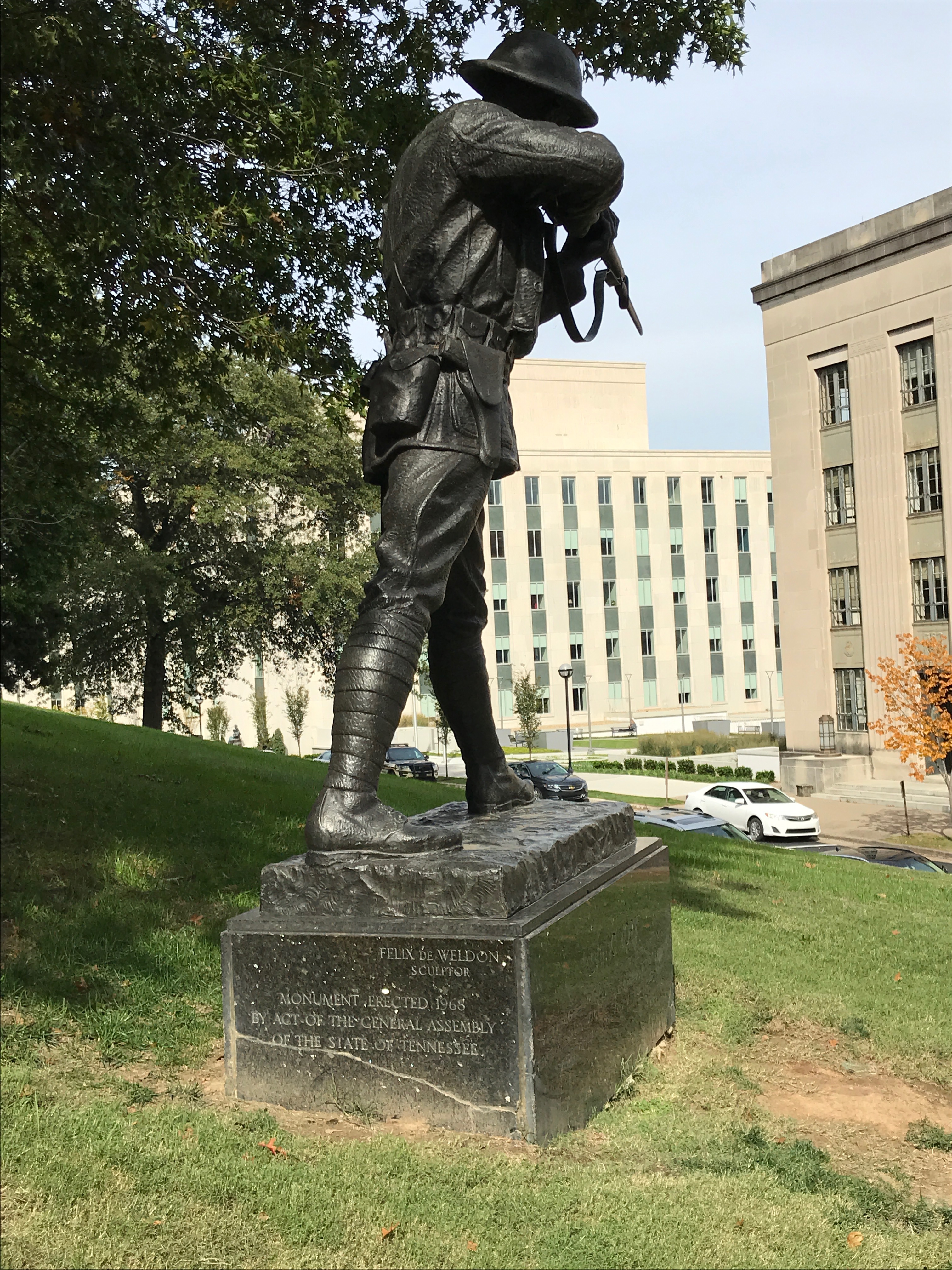
It turns out that it was Sergeant York, one of the most decorated United States Army soldiers of World War I. He received the Medal of Honor for leading an attack on a German machine gun nest, taking at least one machine gun, killing at least 25 enemy soldiers and capturing 132.
If you are so inclined, click on the link above and read about his interesting life, starting out in a two-room log cabin in Fentress County, Tennessee. He was born in 1887, and died at age 76 in 1964. I must be getting old, because I can remember when World War I vets weren’t that uncommon.
If you are not inclined to read the link, you could always watch the sanitized Hollywood version of his story.
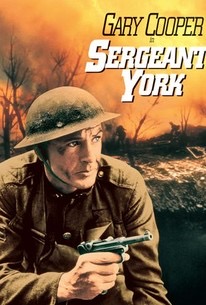
Sergeant York was a 1941 film based on Alvin York’s diary. It was directed by Howard Hawk and was the highest-grossing film of the year. Gary Cooper won the Academy Award for Best Actor for his portrayal of Sergeant York. The American Film Institute ranked the film 57th in the 100 most inspirational American movies, and rated Alvin York 35th in it’s list of the top 50 heroes in American cinema.
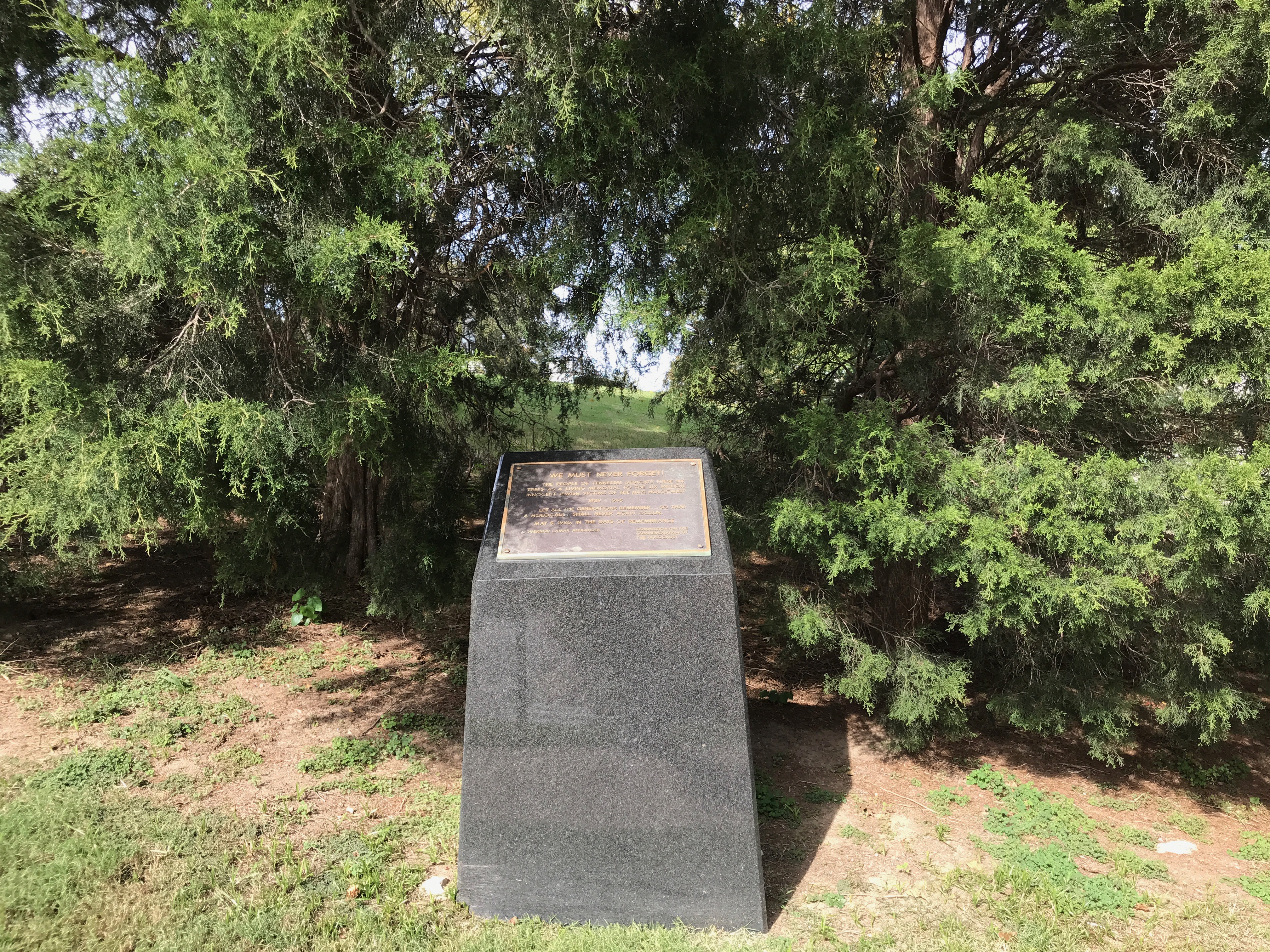
This small grove of trees is a memorial to the six million Jewish victims of the Nazi Holocaust. It was dedicated by Governor Lamar Alexander on May 4, 1986.
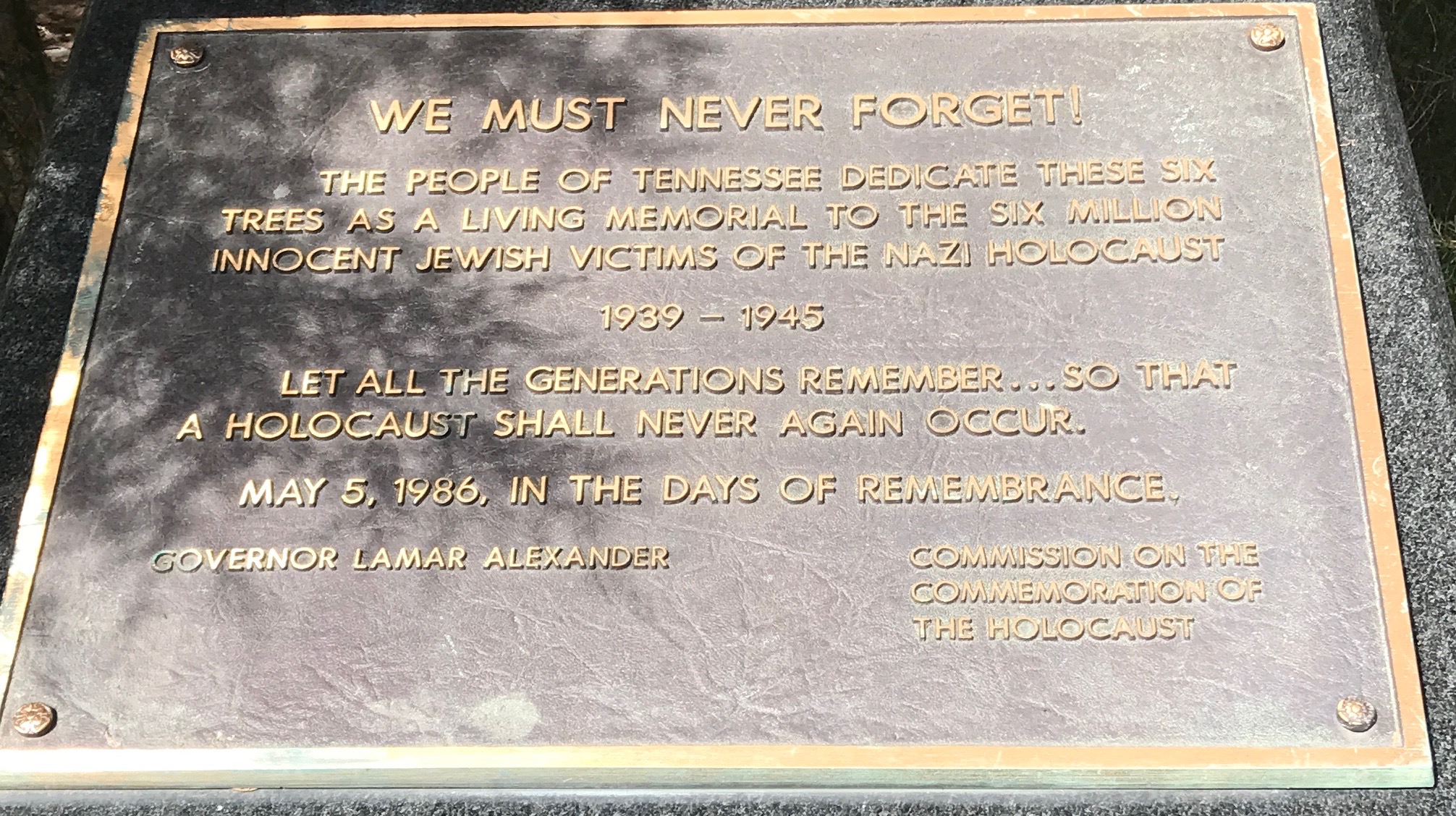
I had to check one of my previous posts to see when the holocaust memorial on the grounds of the Ohio state capitol was dedicated. I wondered if the ’80s was a period of holocaust memorials. Apparently not. Ohio’s memorial was dedicated in 2014, and the United States Holocaust Memorial Museum was dedicated in 1993.
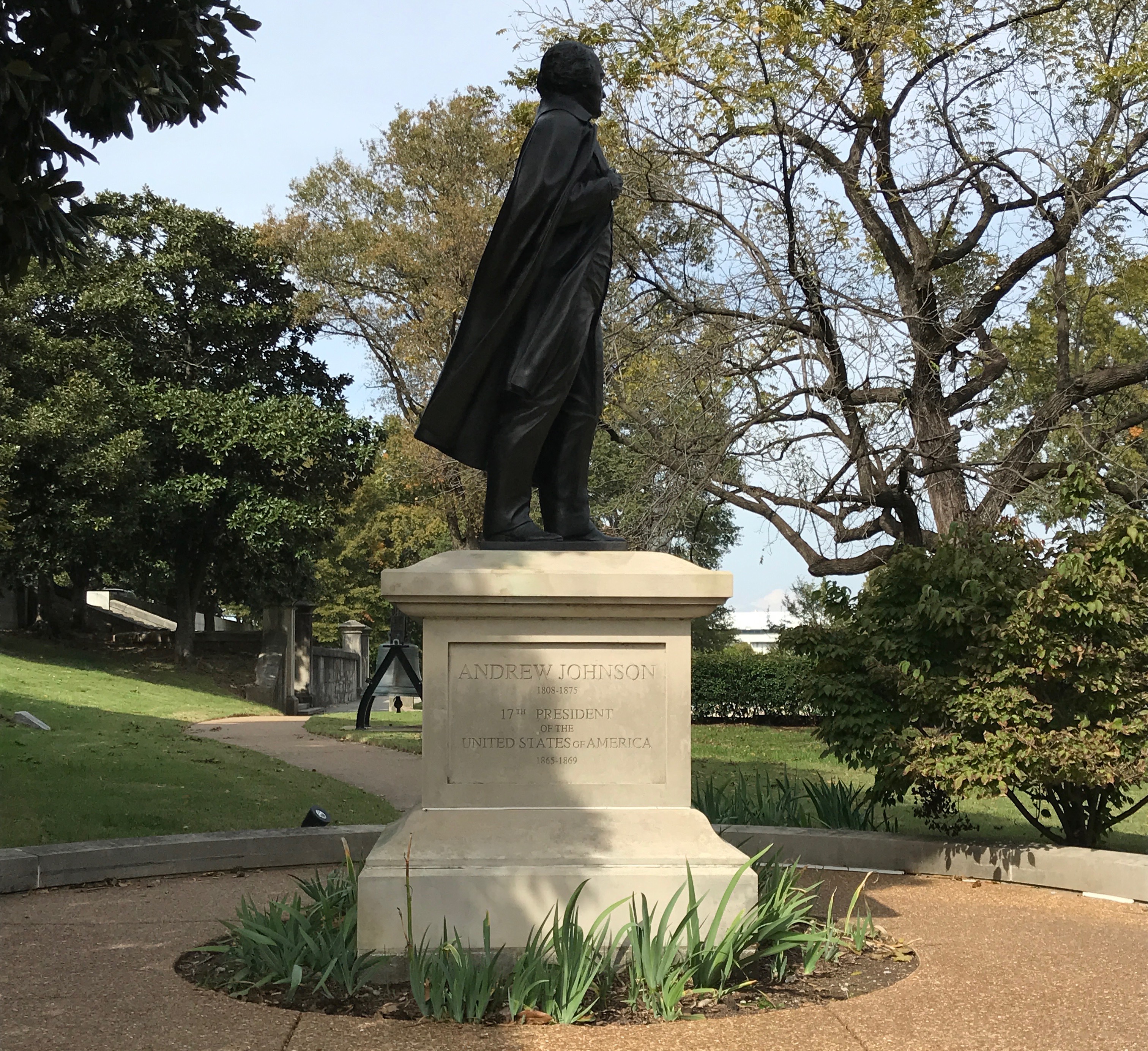
There is a bronze statue of Andrew Johnson, the first American president to be impeached. He was born in North Carolina, but that didn’t stop him from serving Tennessee, first as mayor of Greenville, then as a representative to the U.S. Congress and as the 15th governor of Tennessee before he became Lincoln’s vice president on March 4, 1865. That gig was a short one. He became president on April 15, 1865, after Lincoln’s assassination. Johnson survived the 11 counts of impeachment brought against him, and went on to serve until the end of his term in 1869.
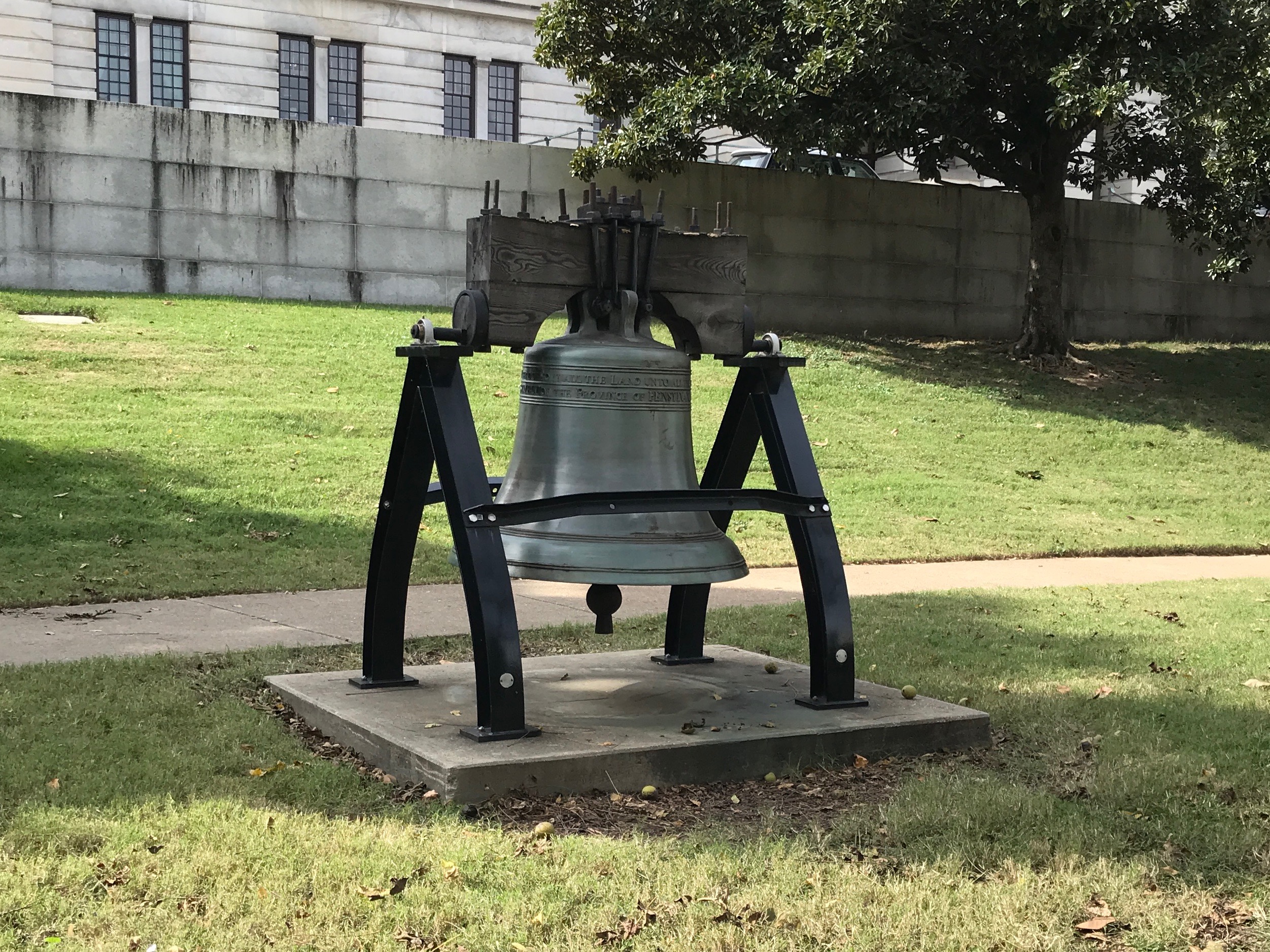
Here is one of the 57 liberty bell replicas that the U.S. Treasury minted and sent to each state and territory in 1950 as part of a savings bond drive. I swear that there are blogs for everything!
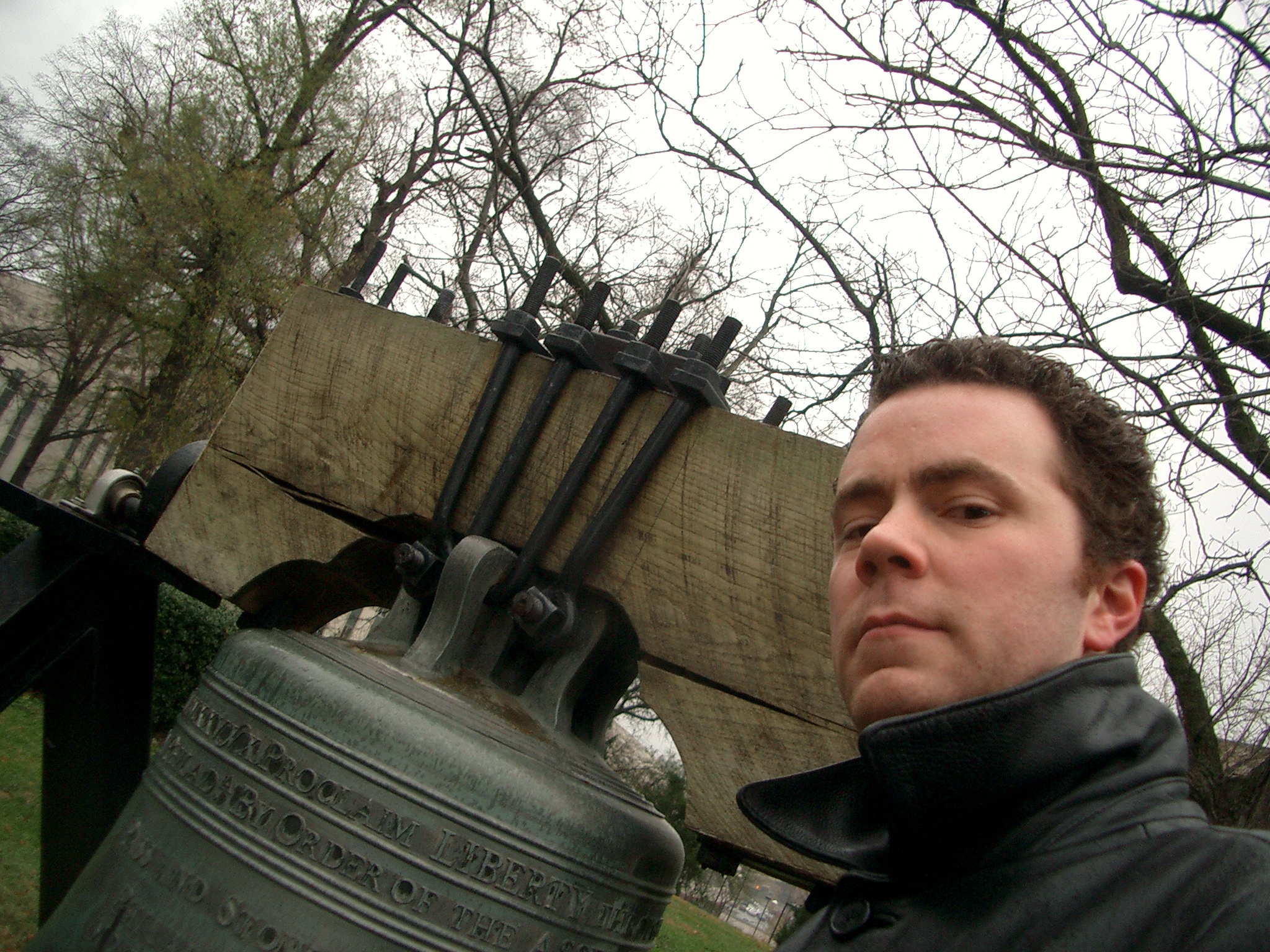
Check out Tom and his quest to find the 57 Liberty Bells. Incidentally, I borrowed this photo from his website. I let him know, so if he objects, I will take it down.
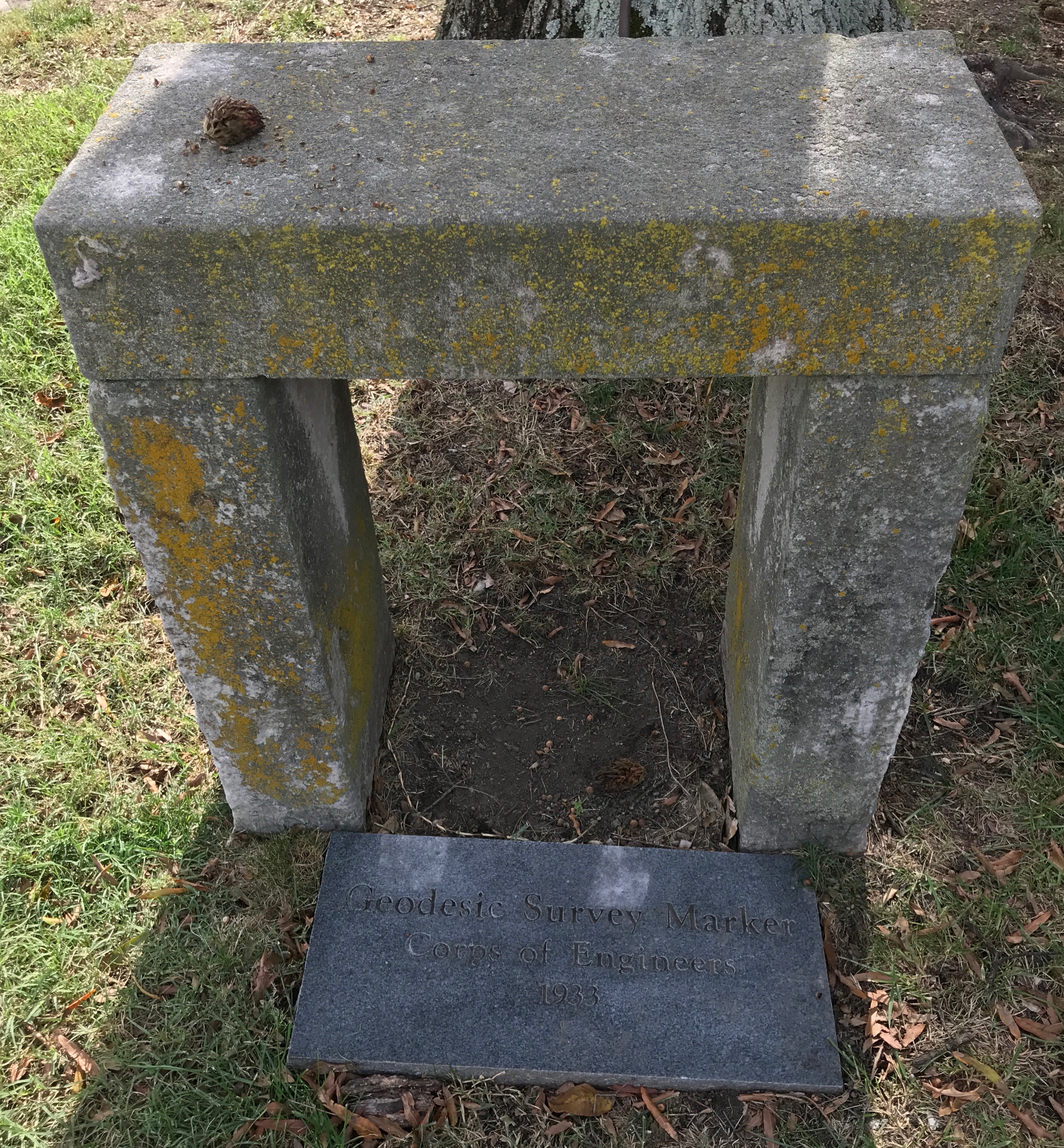
Continuing on around the grounds, I came upon this 1933 Corps of Engineers Geodesic Survey Marker. I was curious about the meaning of “geodesic”, so I looked it up. Apparently it has to do with measuring the shortest possible line between two points on a curved surface. If so, I would imagine that there are other geodesic survey markers, but I don’t remember coming across them on my travels.
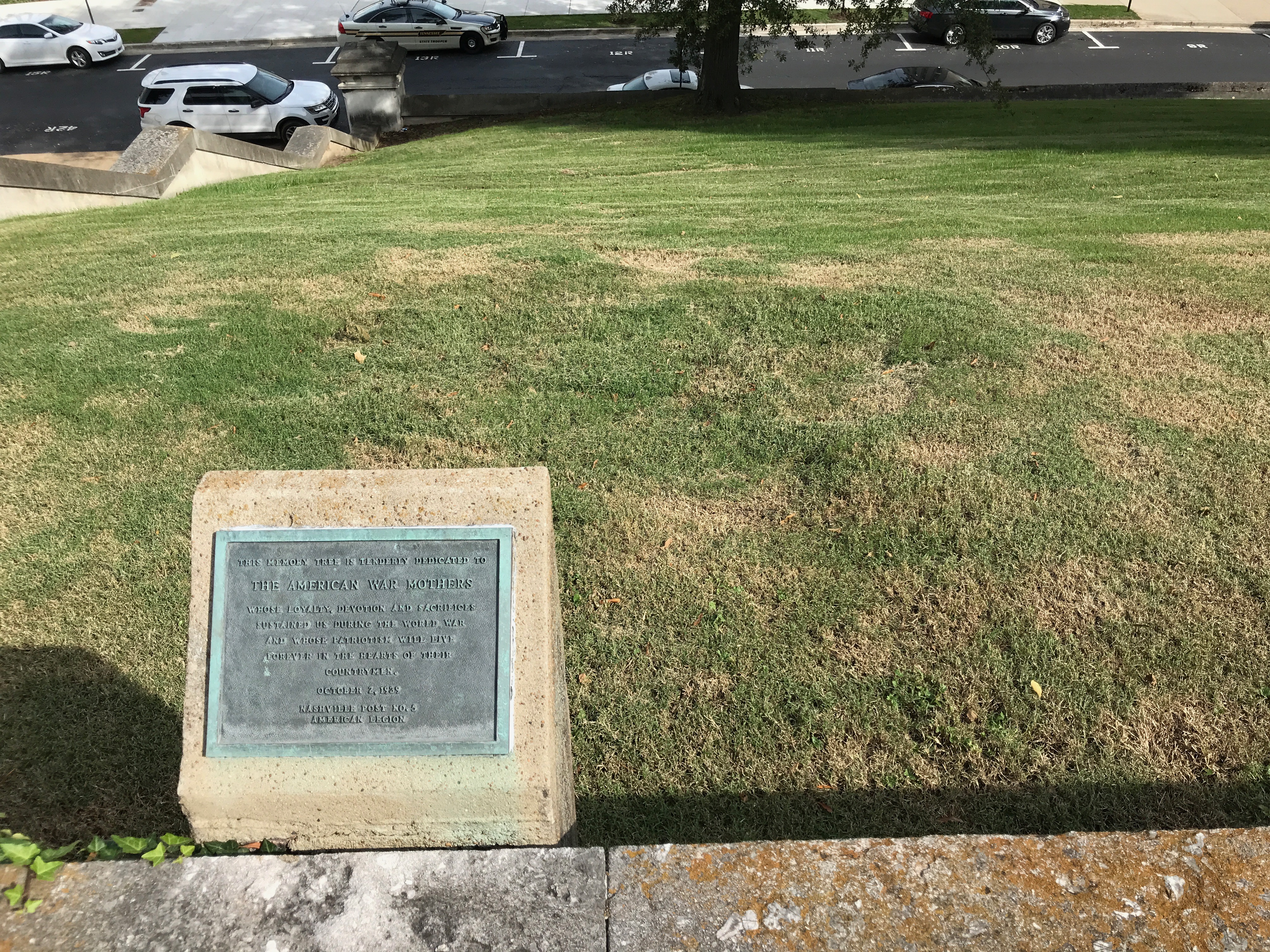
While I absolutely love trees, there is a problem with planting trees as a memorial.
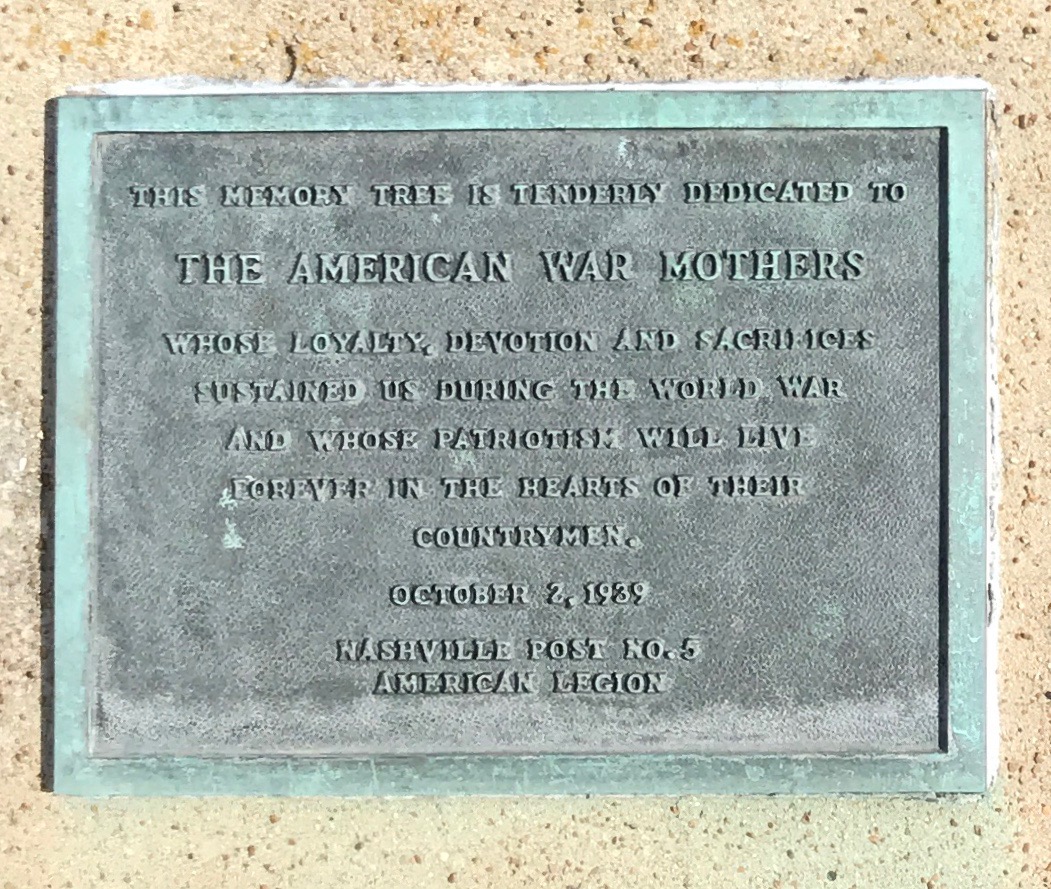
The “loyalty, devotion and sacrifices” of the American war mothers during the War to End All Wars may live on in the hearts of their countrymen, but trees have a tendency to die.
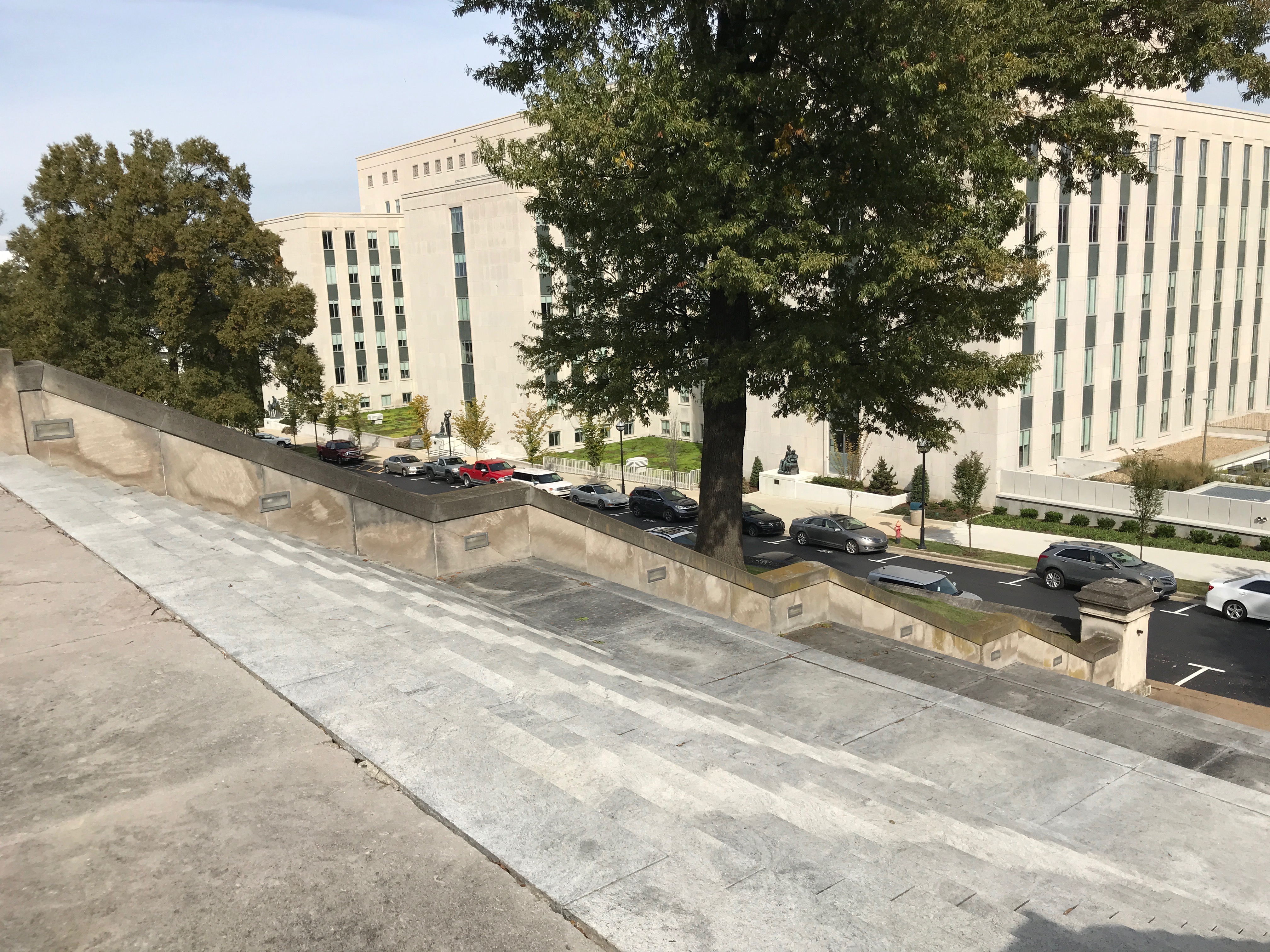
Man, there are a lot of stairs!
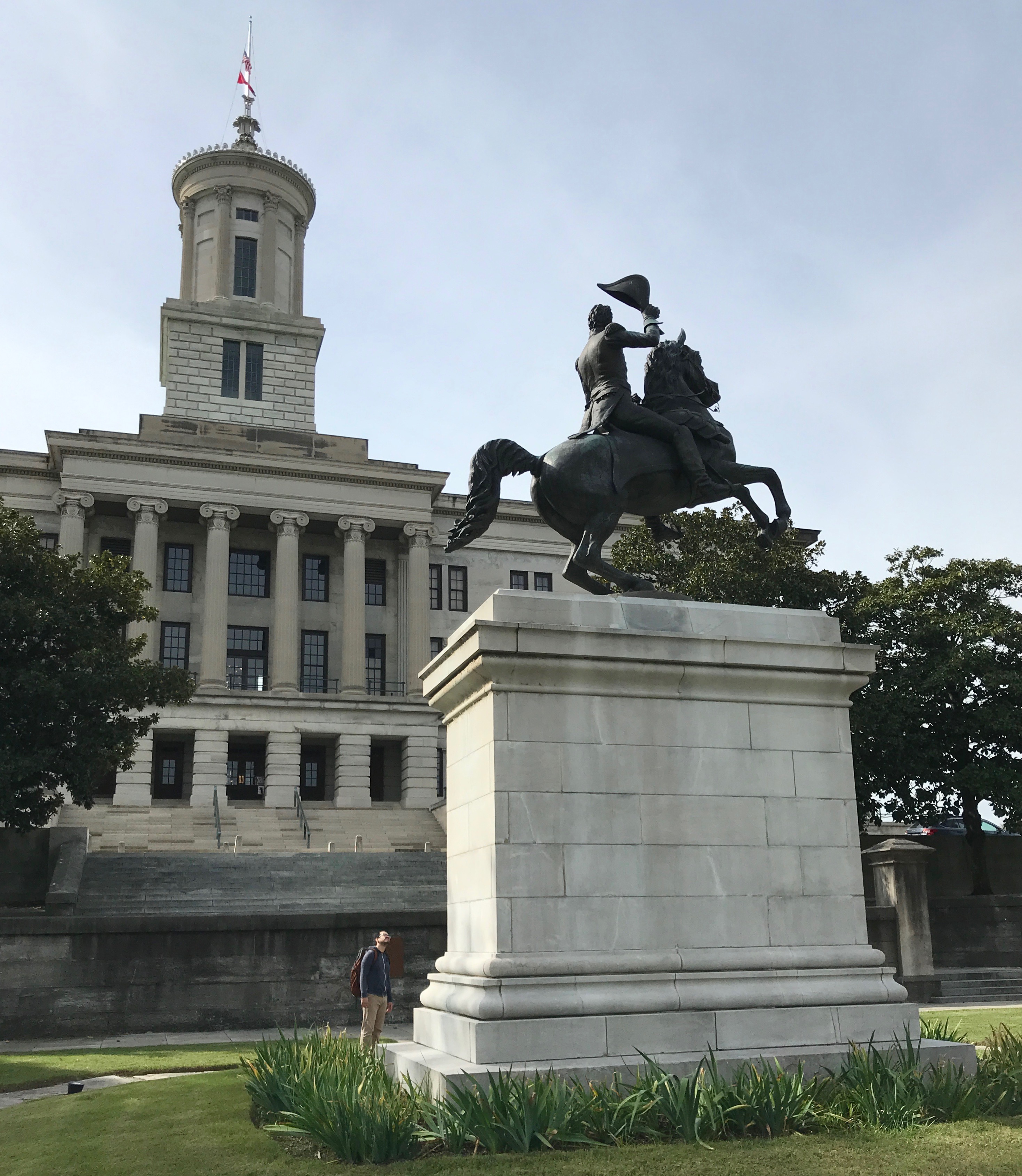
Andrew Jackson appears to be tipping his hat to the Tennessee state flag.
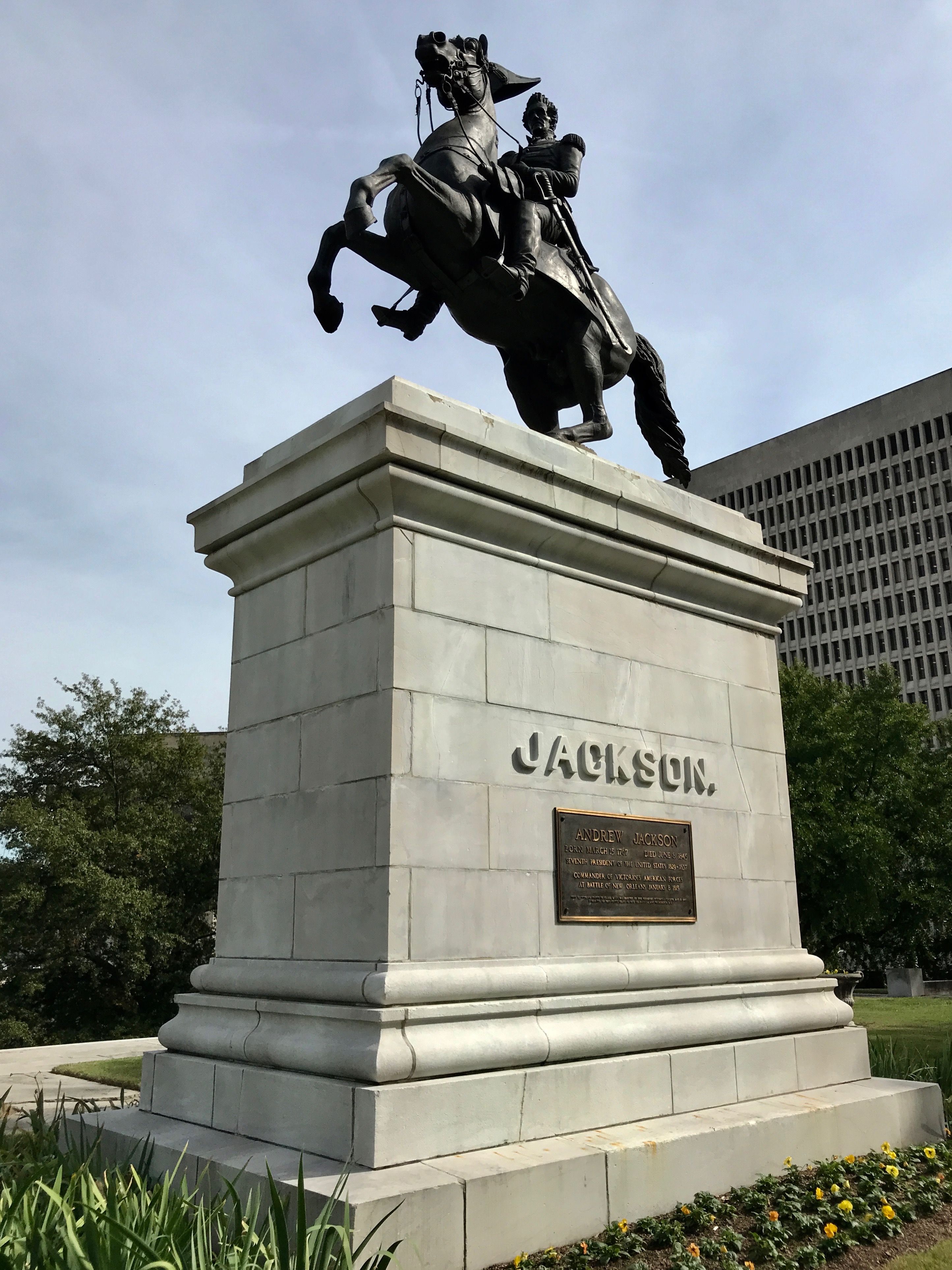
Andrew Jackson was the seventh president of the United States, from 1829-1837. I visited his plantation, The Hermitage, the year before.
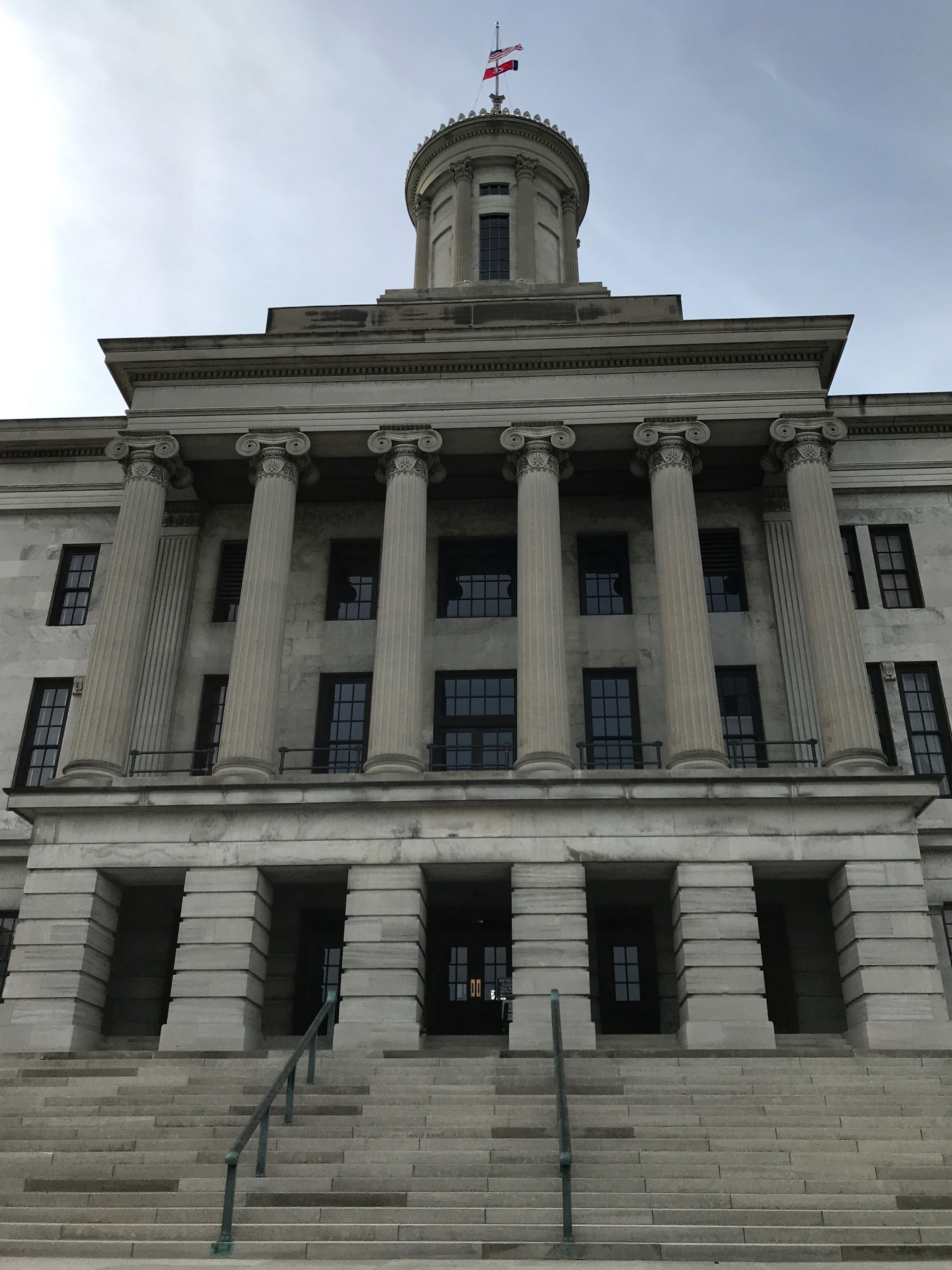
Oh, my golly! More stairs!
William Strickland, prominent Philadelphia architect, modeled the capitol after a Greek ionic temple.
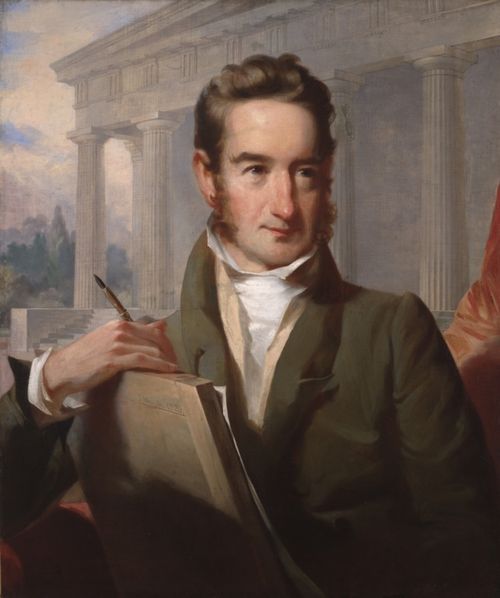
The cornerstone was laid in 1845 and the capitol was completed 14 years later, in 1859. Poor William didn’t live to see the completion of his masterpiece. He died in 1854 and is entombed in the Northeast wall. His son, F. W. Strickland, supervised completion of the structure. Samuel Dold Morgan, chairman of the State Building Commission overseeing the construction of the Tennessee State Capitol, is entombed in the Southeast corner near the South entrance.
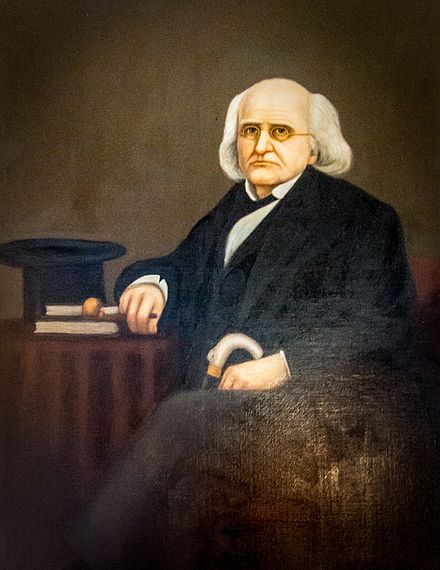
At least Samuel lived to see the completion of the building. He died in 1880.
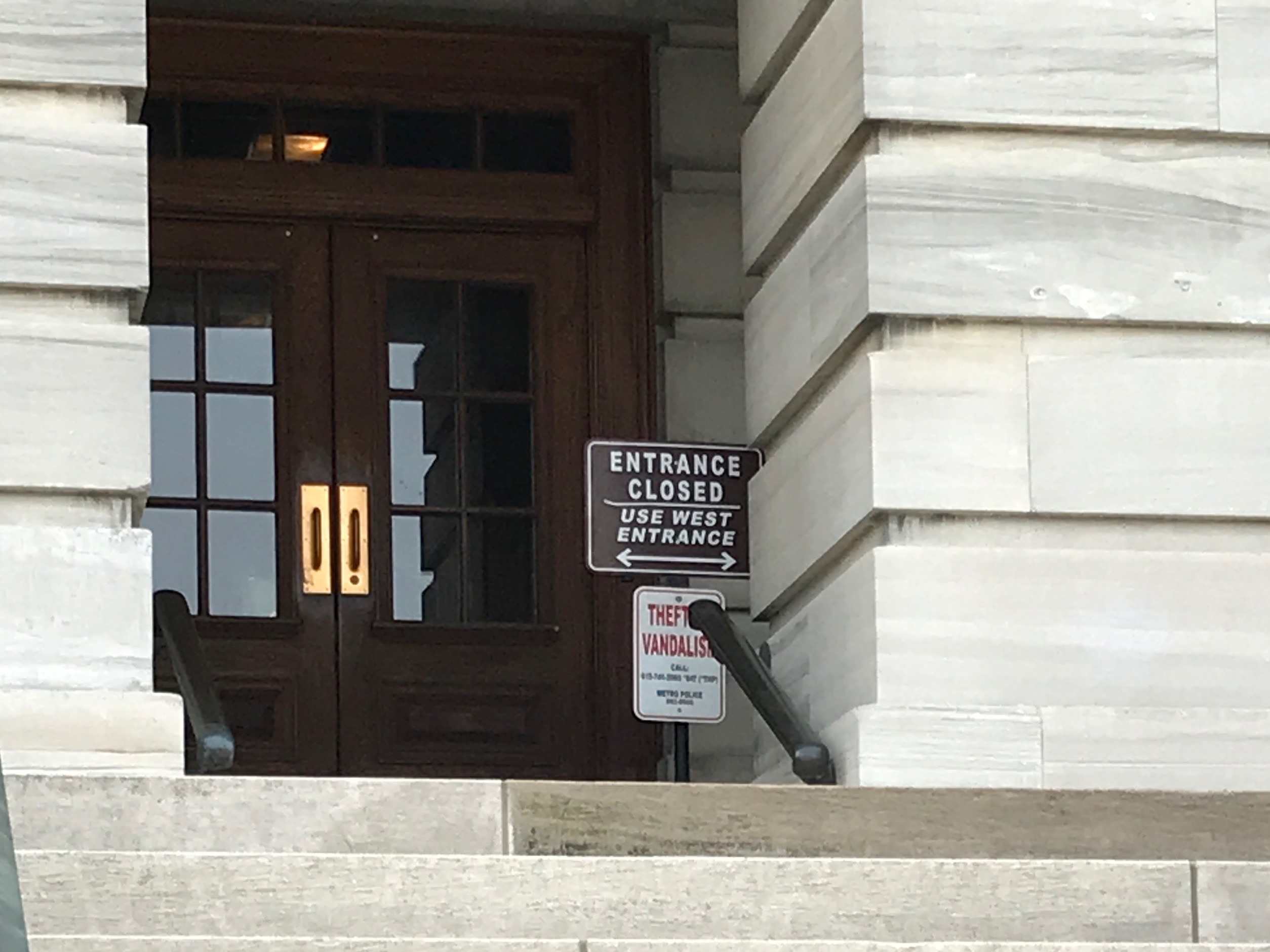
I must admit that this sign rather confused me. Oh, I’m used to entrances being closed, but which way is west? Should I go right or left? I don’t remember what I did, but I eventually got inside.
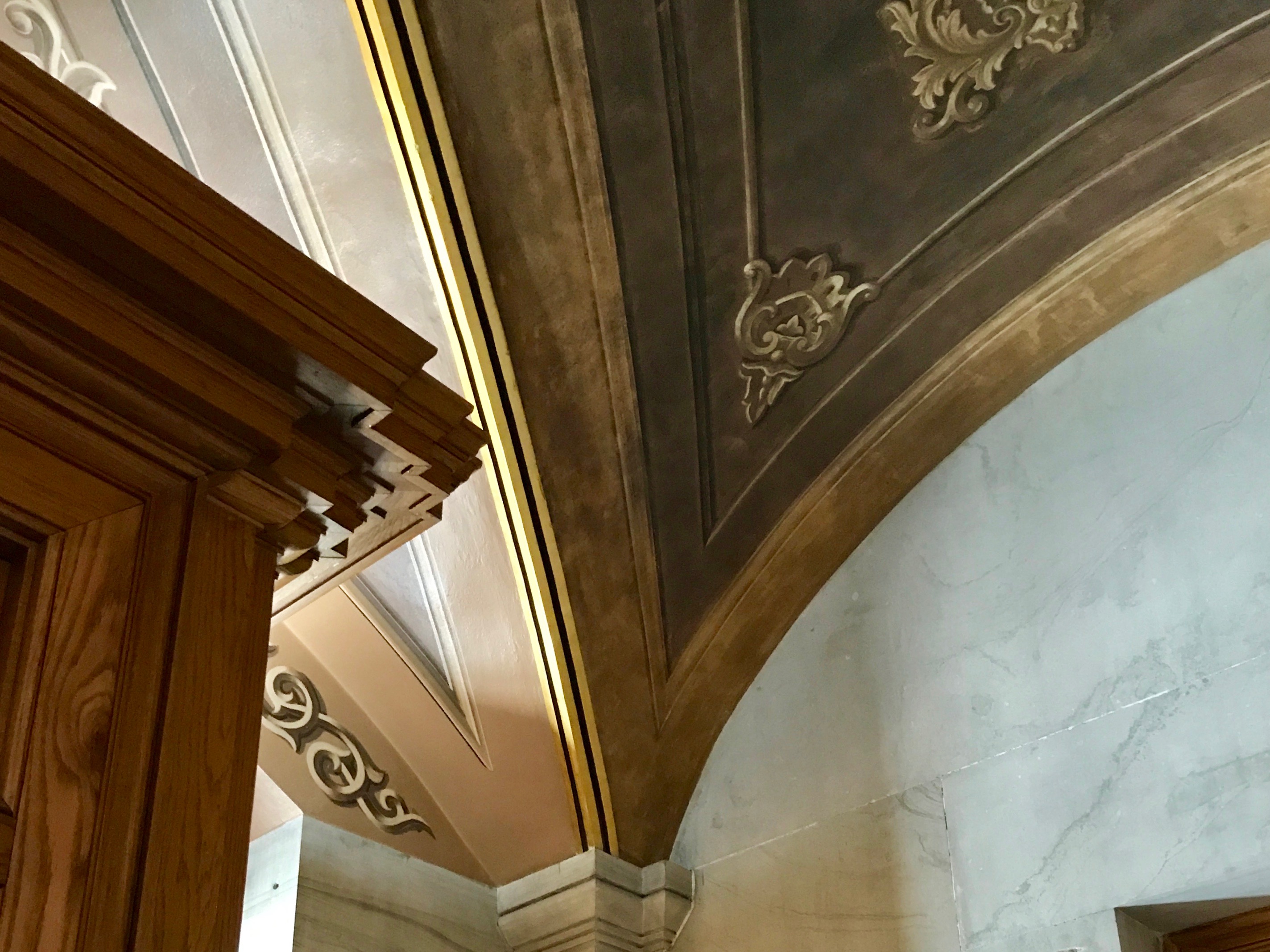
This elegant building has served as Tennessee’s capitol since it opened in 1859.
One interesting feature about the building is that it is one of 11 state capitols that does not have a dome. Those states are Alaska, Florida, Hawaii, Louisiana, New Mexico, New York, North Dakota, Ohio, Oregon, Tennessee, and Virginia – just in case you wanted to know.
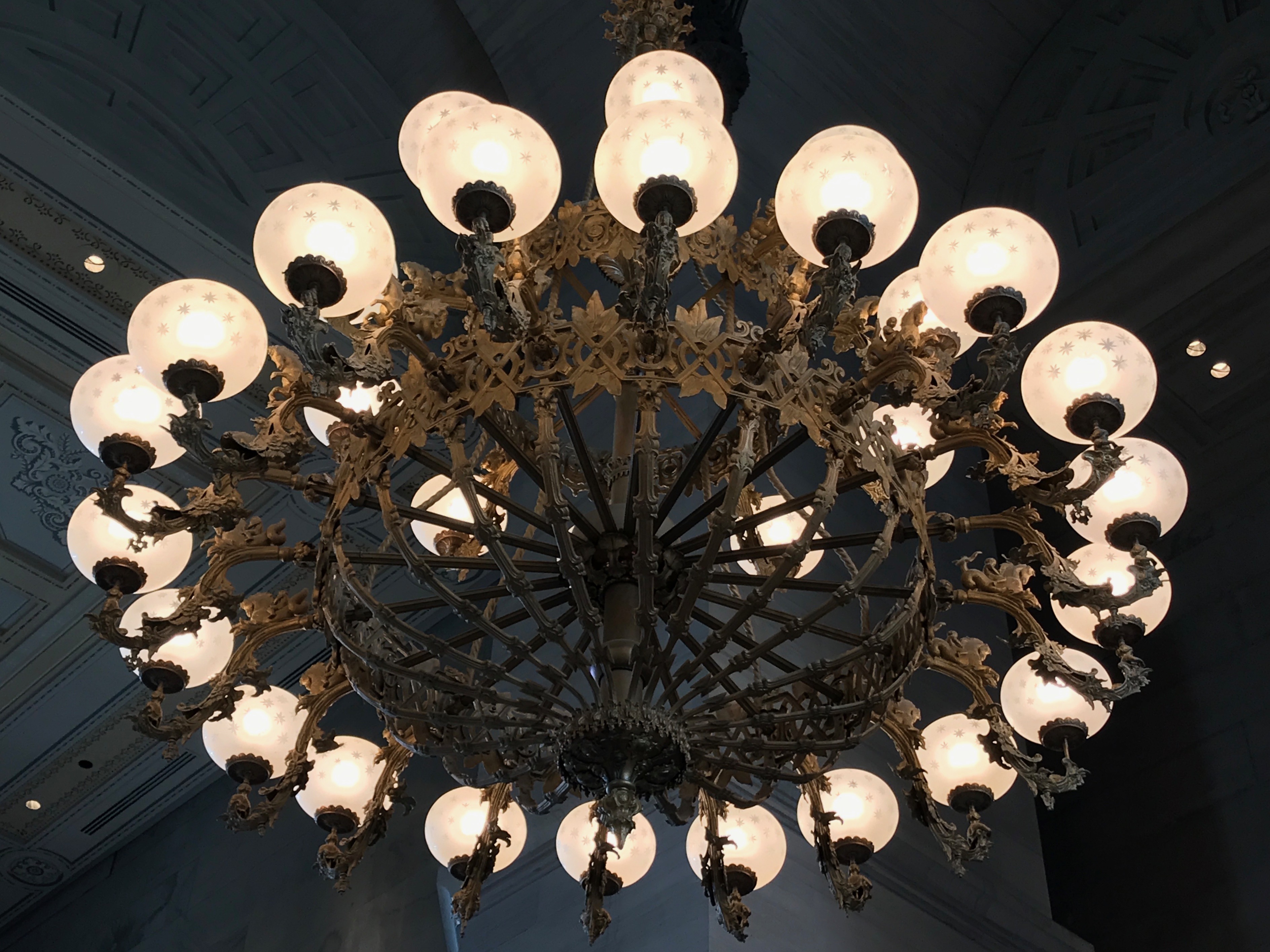
There is no lack of architectural detail to draw the eye upwards as there are quite a few lovely chandeliers inside.
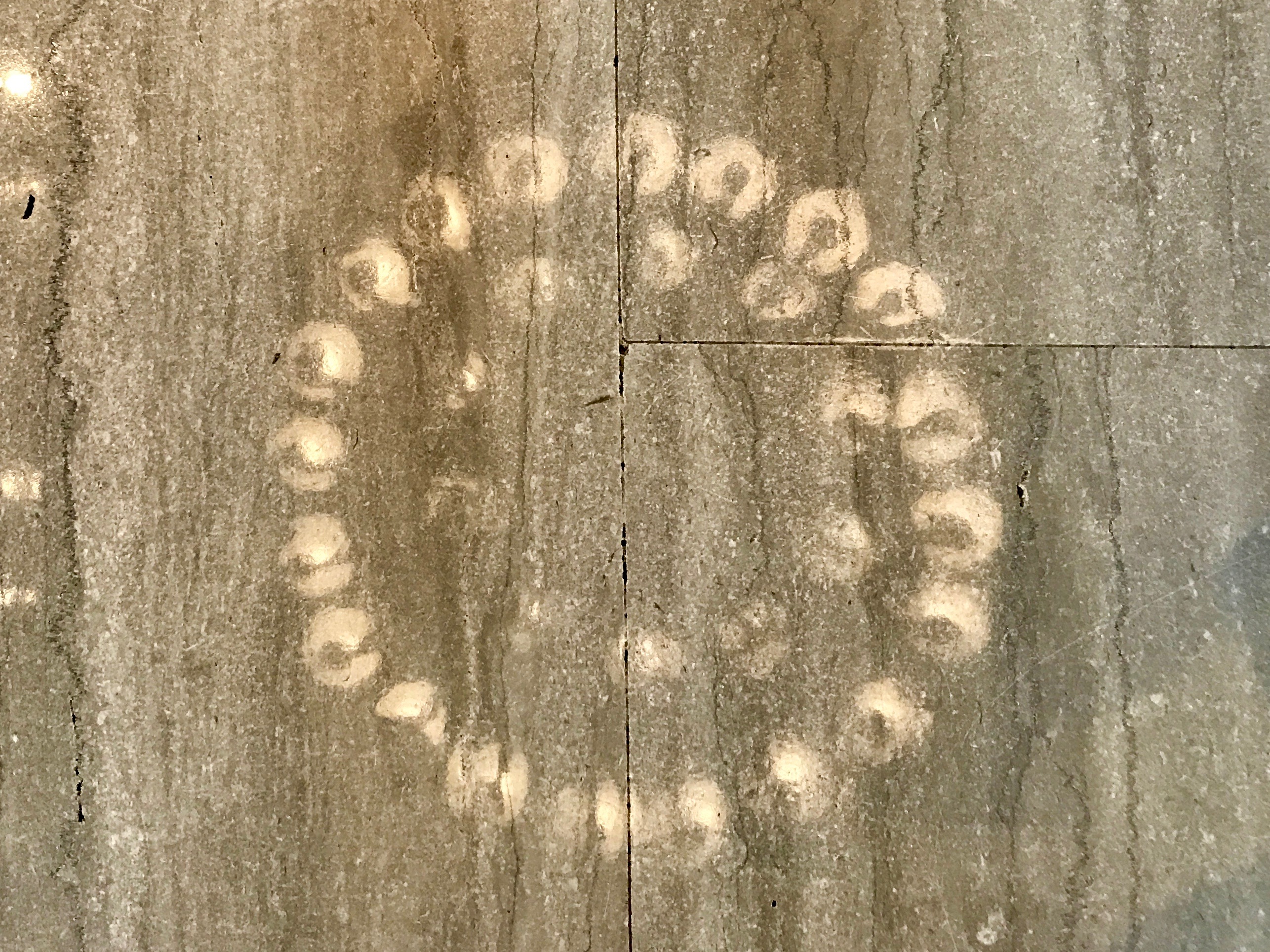
And they are reflected in the highly polished floors.
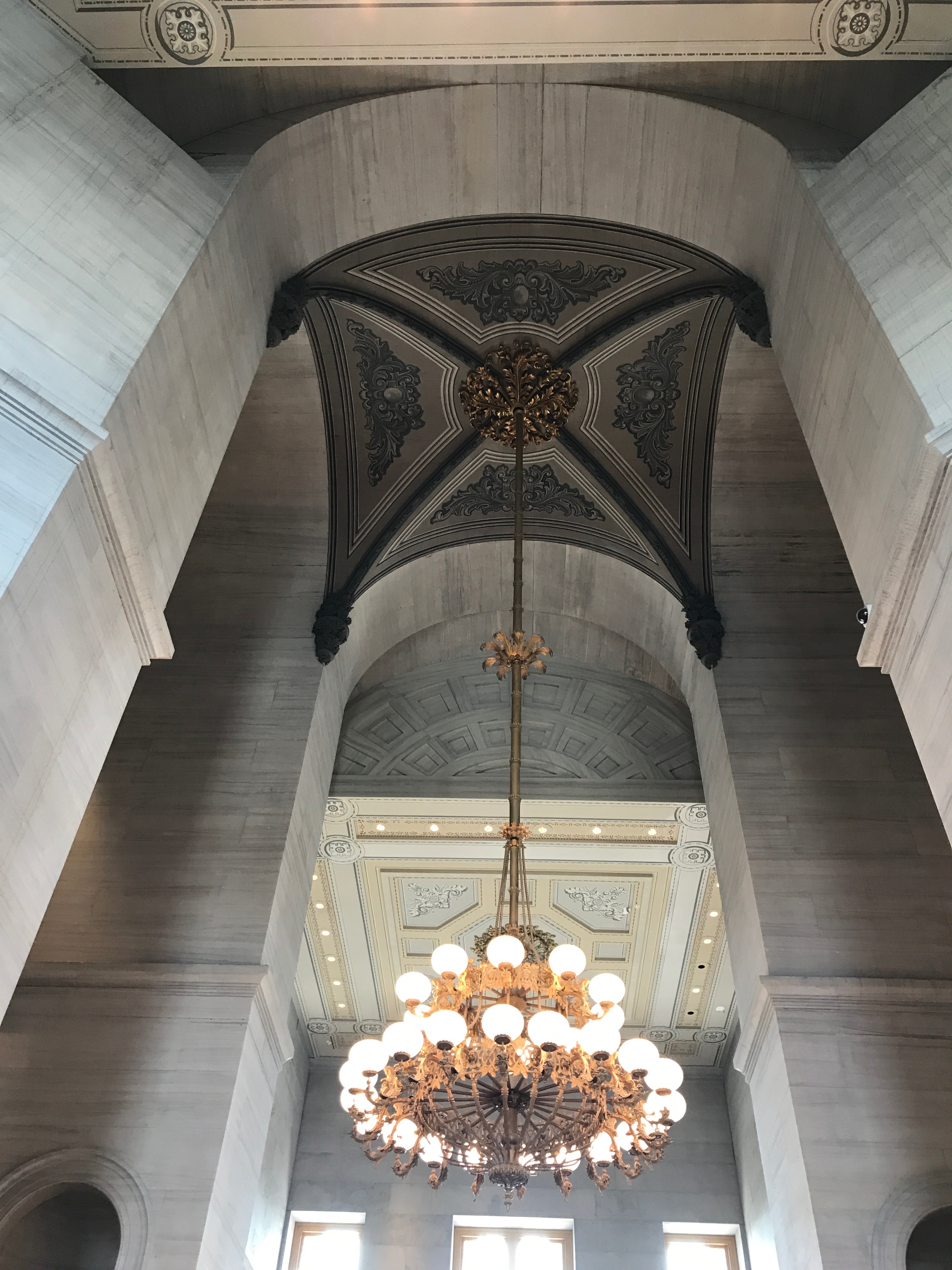
There are soaring arches, so the lack of a dome is really not noticeable. In fact, I didn’t realize that it was lacking a dome until I looked at my photos and read up on the building.
The American Society of Civil Engineers has listed the building as a civil engineering landmark in recognition of its innovative construction. It made unusually extensive use of stone. Both the interior and exterior are built with limestone from a quarry that was only about a mile away. My Preferred Source says that some interior columns were built from single pieces of stone, which required massive wooden derricks to hoist them into place. Structural iron was used for roof trusses to reduce the building’s vulnerability to fire, which was an innovation in design.
Busts of significant people in Tennessee history are set into niches.
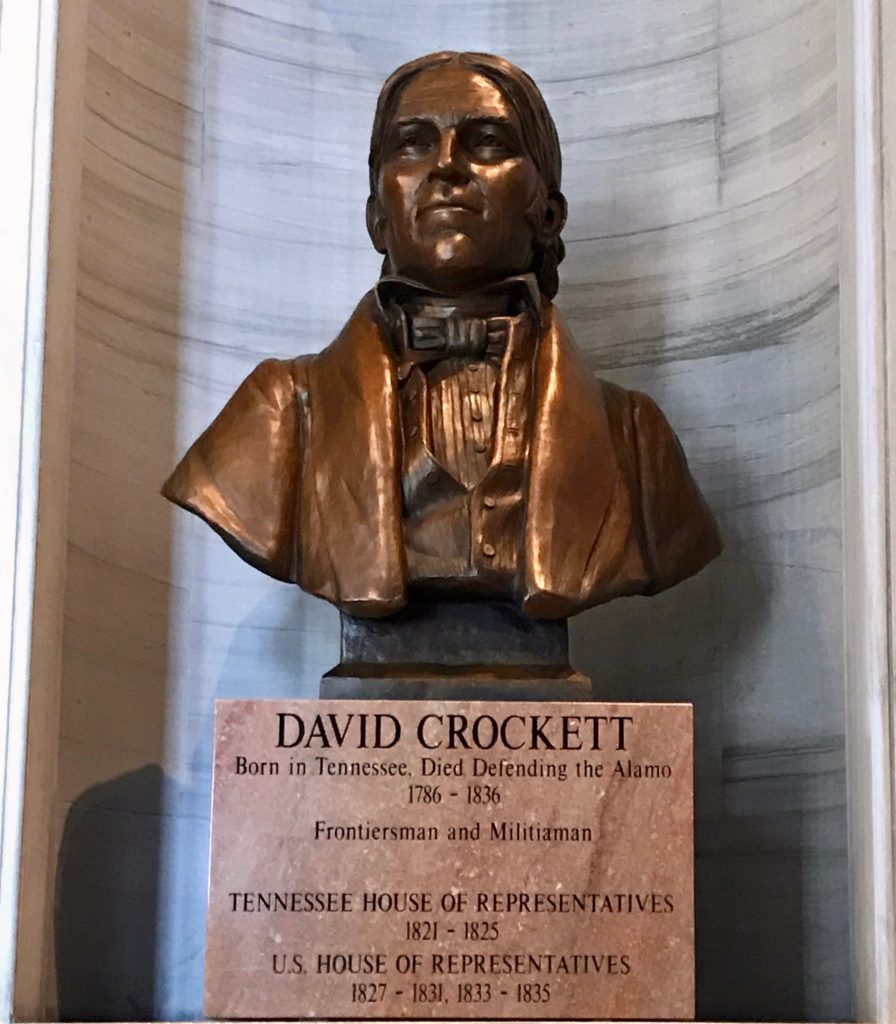
Davy Crockett
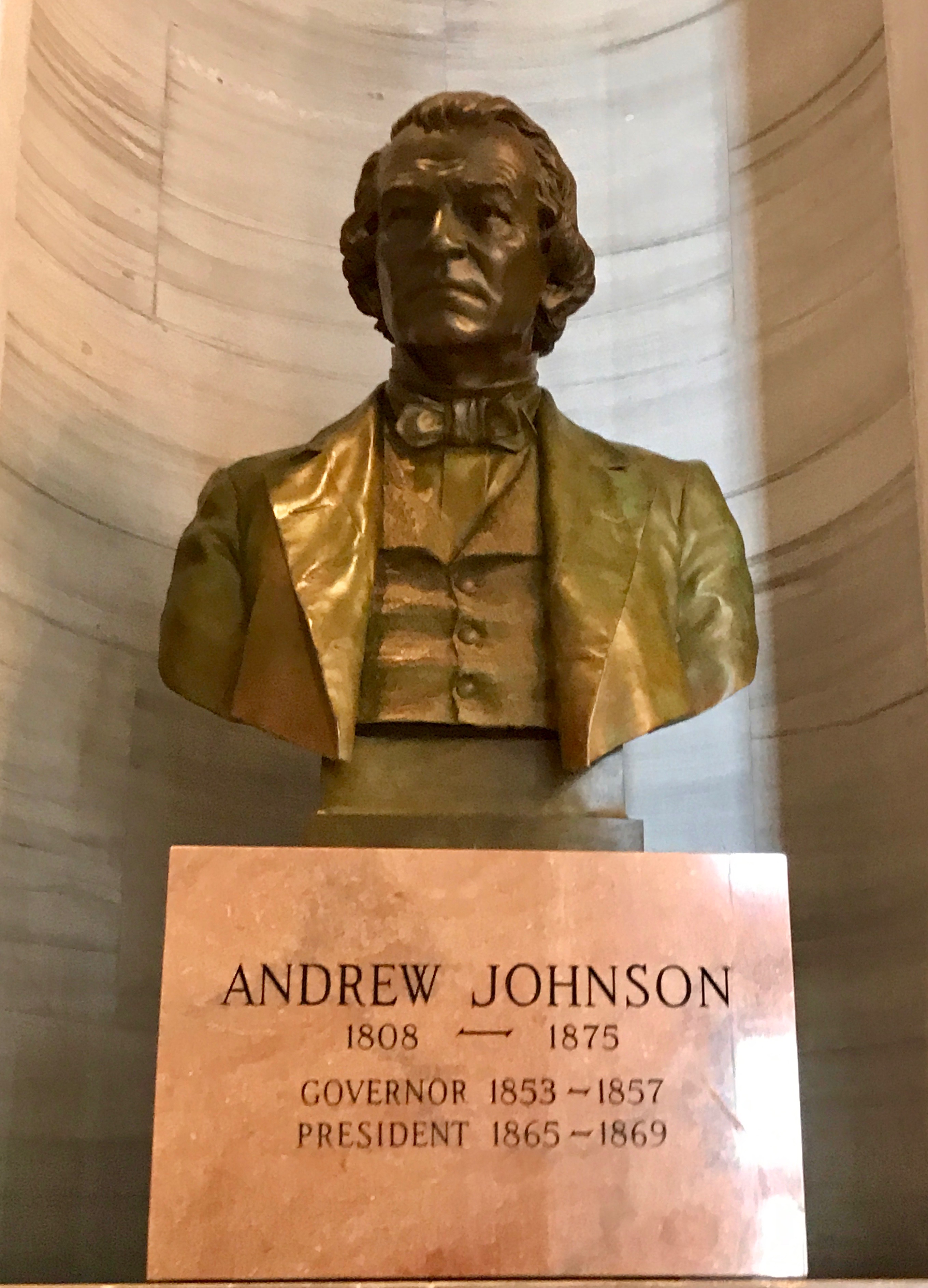
Andrew Johnson
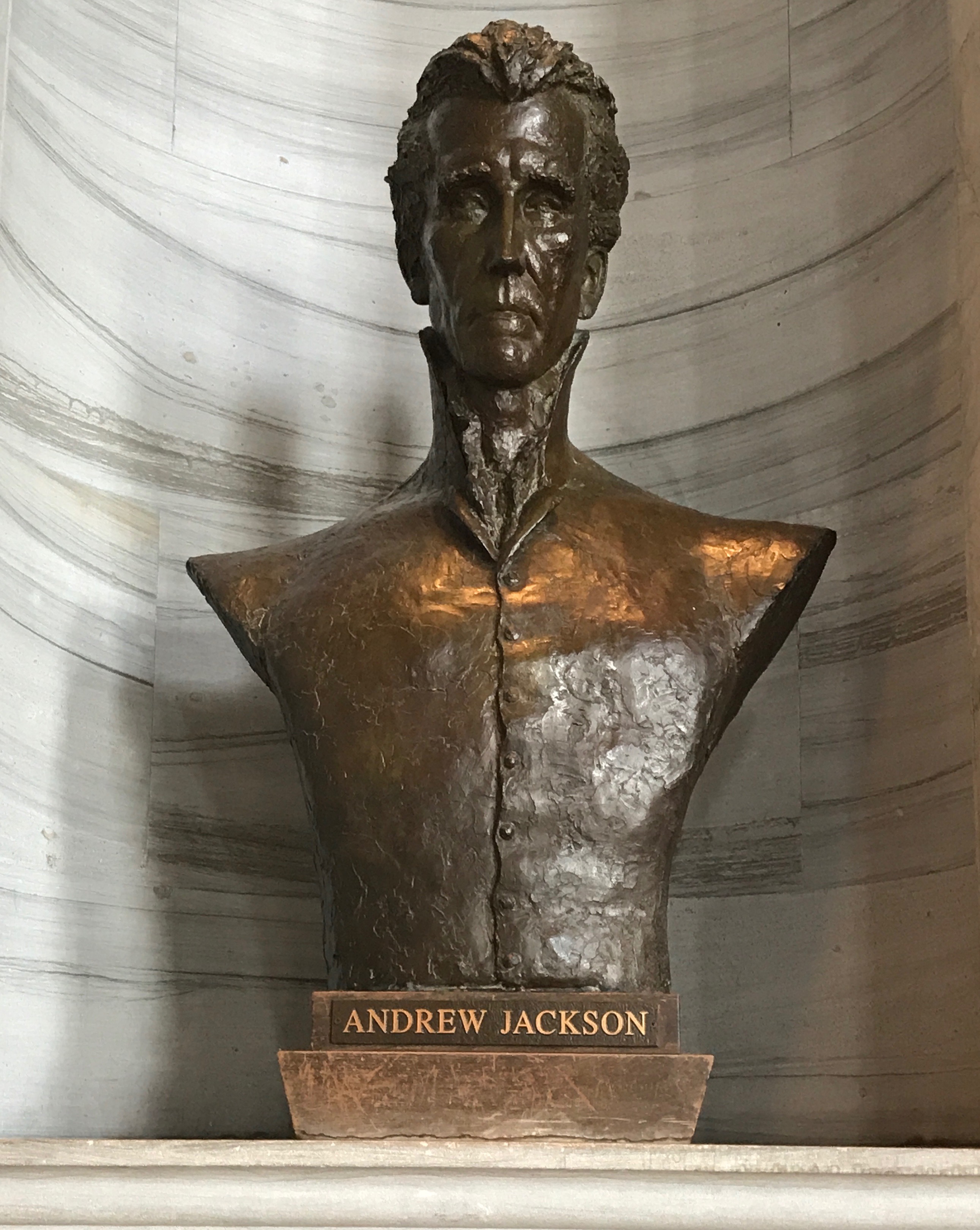
Andrew Jackson. (Honestly, though, was is up with his neck? He looks like the statue was designed by El Greco.)
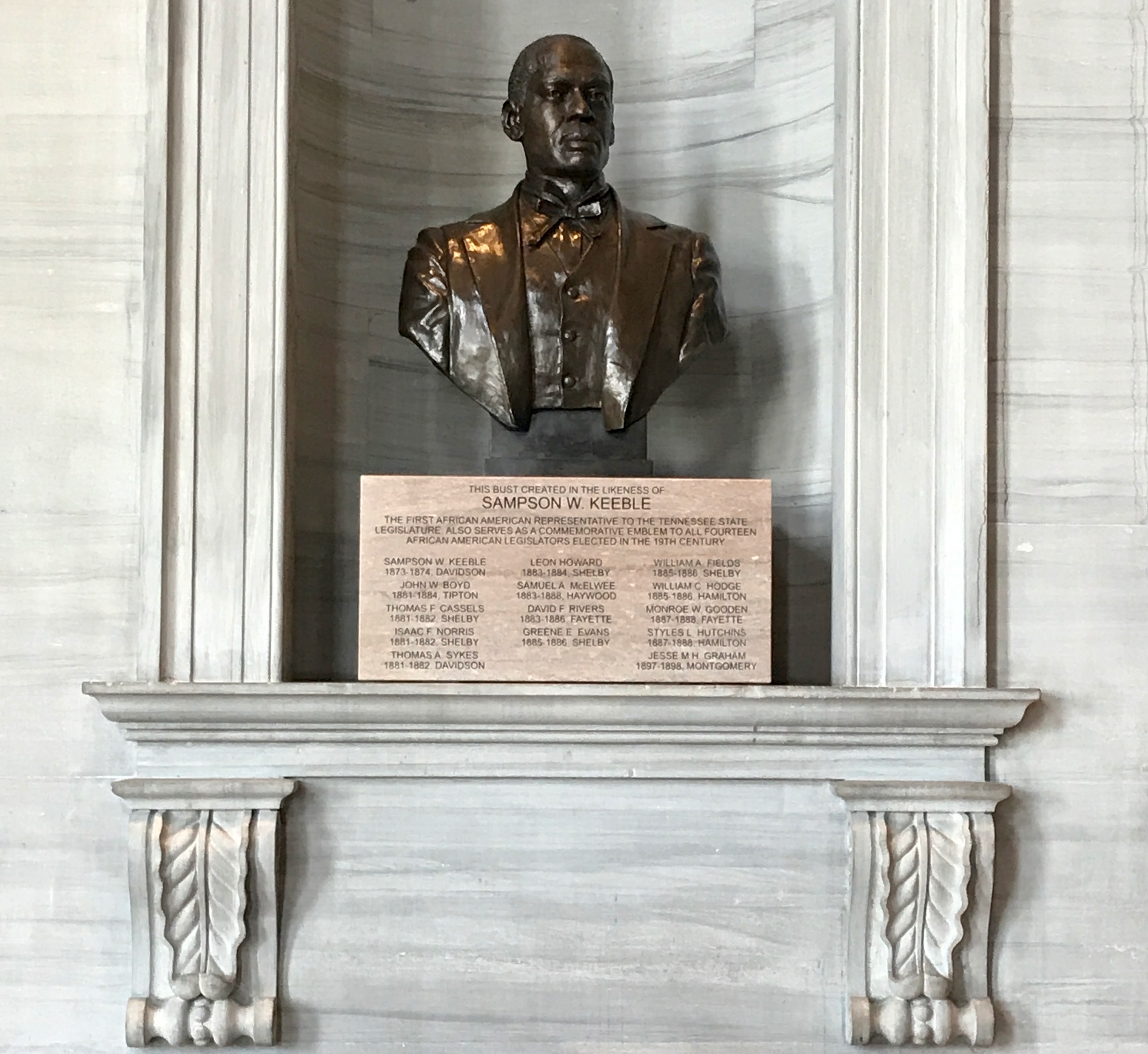
According to the information carved into the base of this bust, it was created in the ‘likeness of Sampson W. Keeble.”
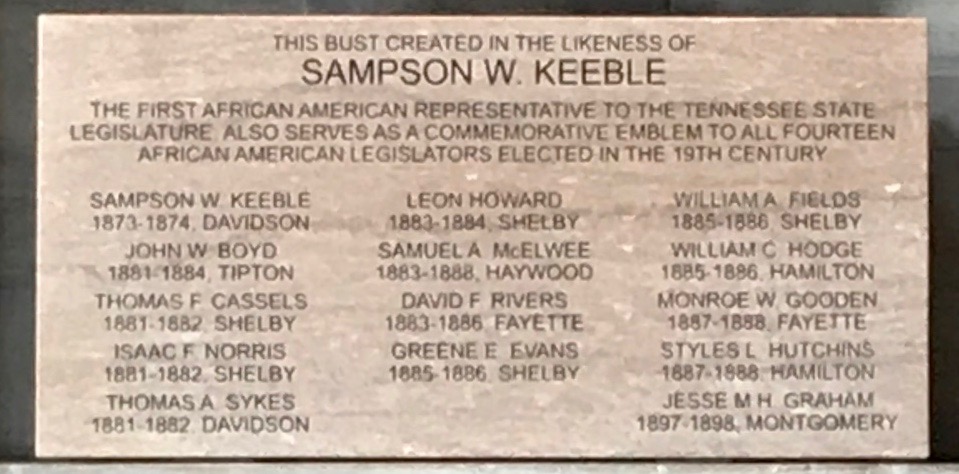
I’ll let you read the rest of it for yourself.
Admiral Farragut has a bust here. He was born near Knoxville in a town named Campbell’s Station. It has since been renamed Farragut. His mother died at when he was quite young and he was fostered by David Porter. Mr. Porter was a naval officer, and it must have been “Take Your Son to Work Day”. He served in the War of 1812 under the command of his father. At least he made it to double digits before he went to war.
He resided in Norfolk, Virginia prior to the Civil War, but he was a Southern Unionist who strongly opposed Southern secession. He remained loyal to the Union and captured New Orleans in 1862. He helped extend Union Control of the Mississippi River and also led a successful attack on Mobile Bay, home to the last major Confederate port on the Gulf of Mexico. He is credited with the order “Damn the torpedoes, full speed ahead!” This is a paraphrase of what he actually said. If you want to know what his actual order was, click here.
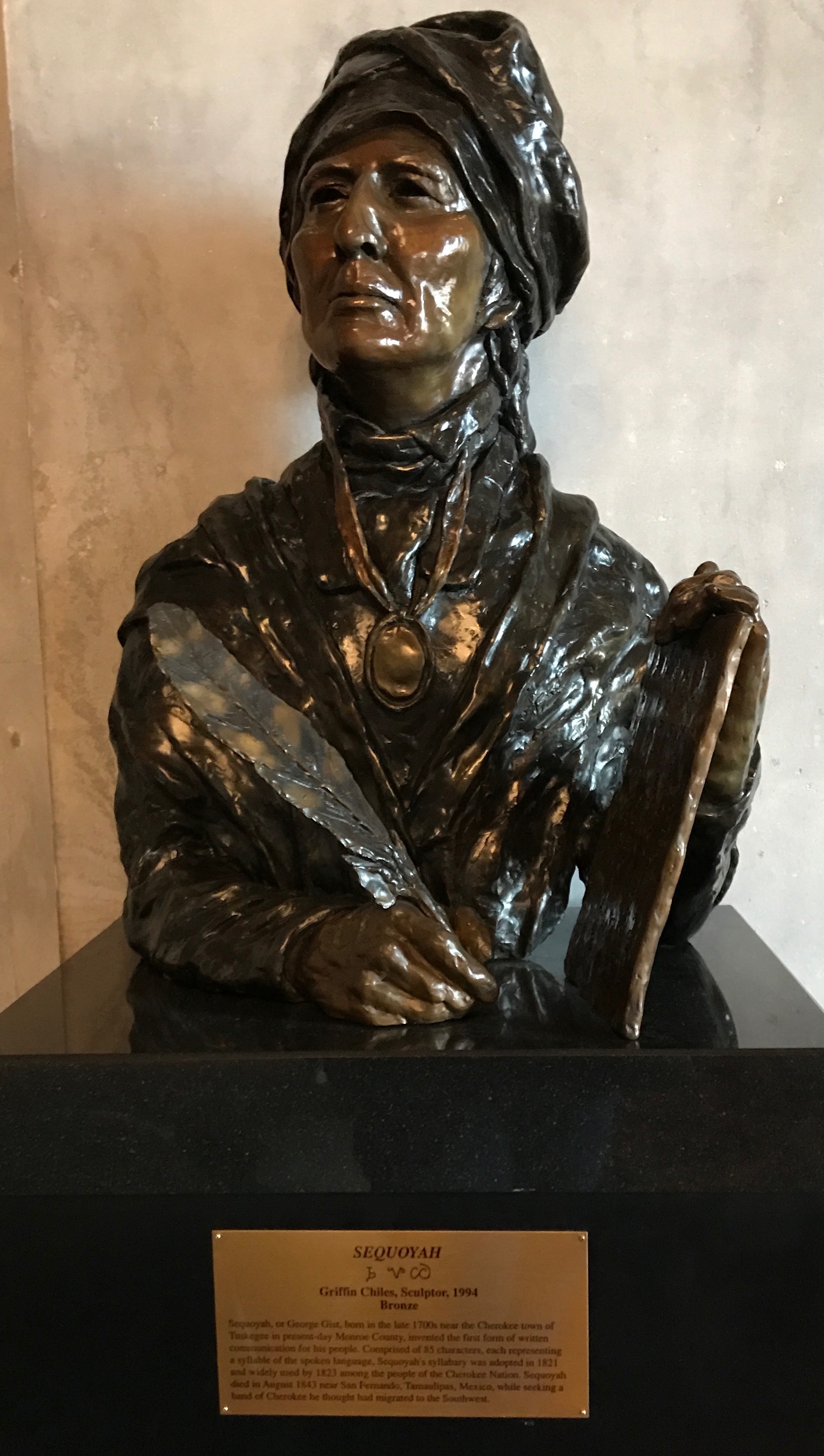
Sequoyah was born near Knoxville in the late 1700s. We had a story about him in one of the reading series at school, and I was always amazed that he invented a way to write his language. It is one of the few times in recorded history that a member of a pre-literate people created an original, effective writing system.
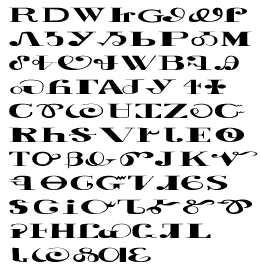
Just in case you are curious, this is what his syllabary looked like. It consisted of 85 characters, each representing a syllable of the spoken language. The first person he taught to read was his six-year old daughter, Ayokeh. He couldn’t find any adults who were interested. Together they traveled to the Arkansas Reserves where some Cherokee had settled. The chiefs weren’t too interested until he had them dictate some words that he wrote down. He called Ayokeh to read they words back to them. Literacy rules!
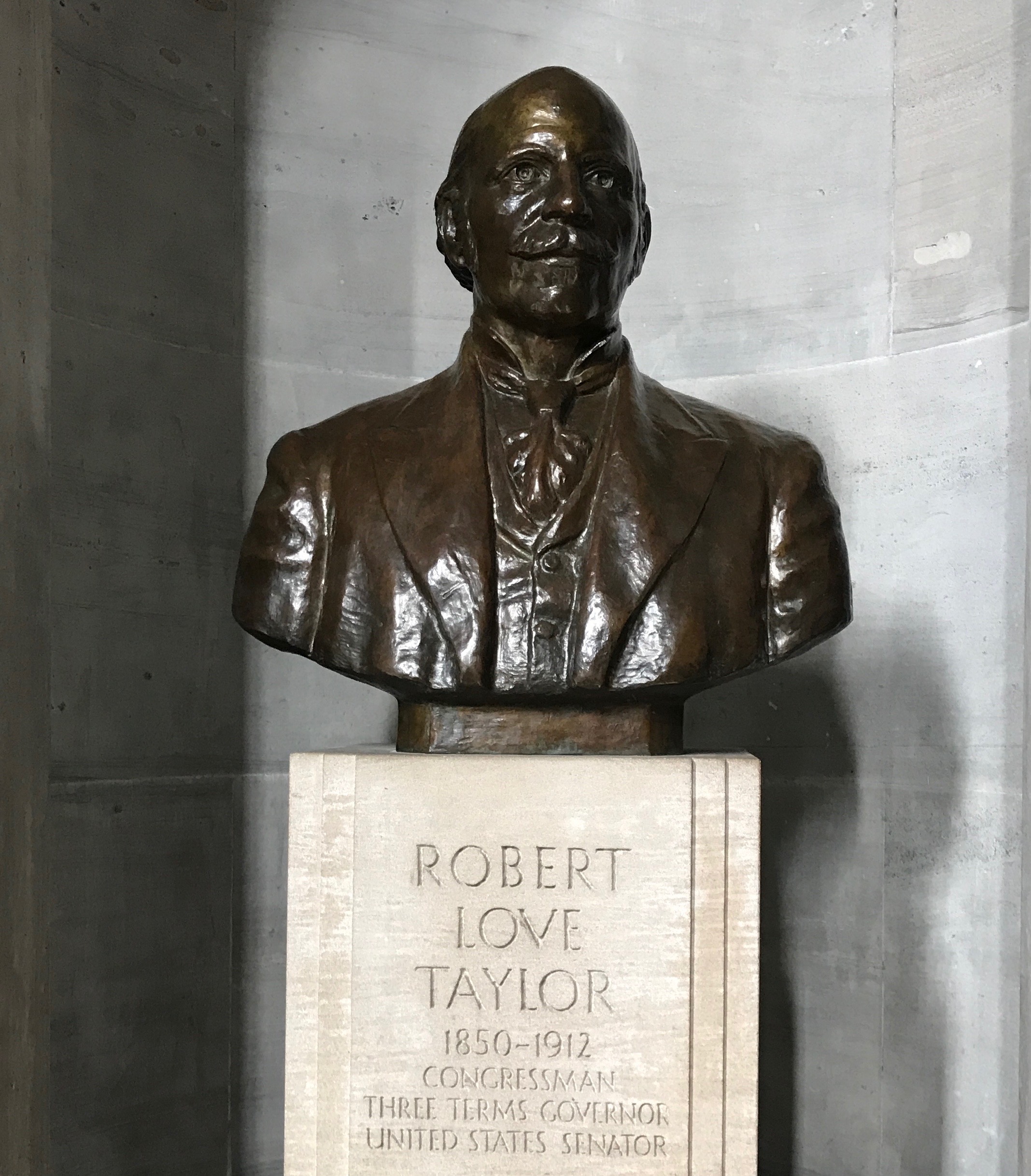
Robert Love Taylor was an interesting fellow. His first elected office was as governor. I imagine family gathering might have been contentious affairs. In that election, he defeated his older brother, Republican Alfred Taylor. However, maybe the campaign was more good-natured than we have become used to in recent years. The 1886 campaign was known as “The War of the Roses” and it involved story-telling, fiddle-playing and practical jokes.
Alfred did finally have his turn in the governor’s seat, though, as he was elected in 1920, after Robert had died.
There are always divisions. Some people like Pepsi…
while others prefer Coke.
I thought it was very accommodating that they had both options available.
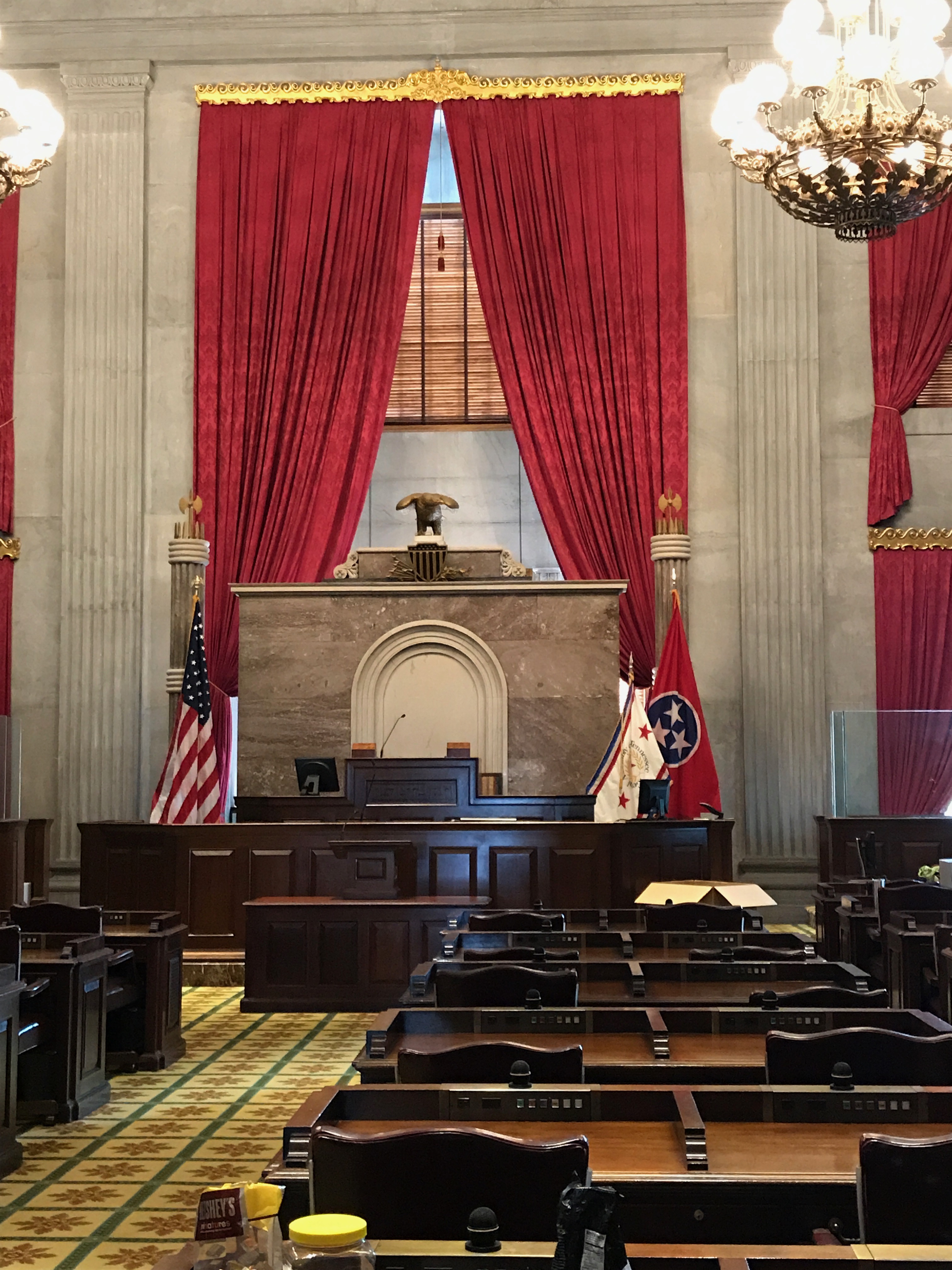
We got to look inside the House of Representatives.
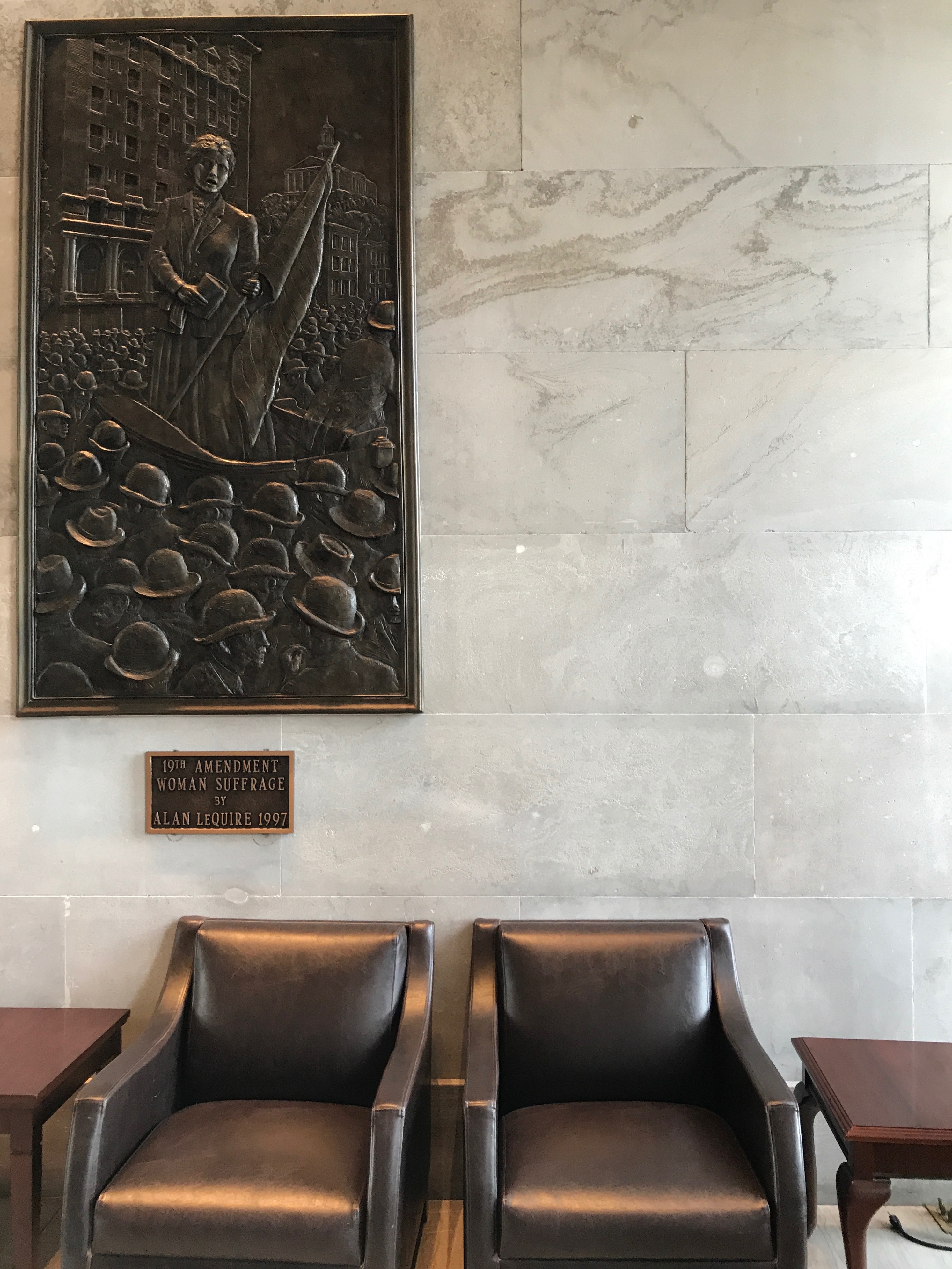
In one of the reception areas, there were some bronze plaques honoring Constitutional amendments. This one was for the 19th Amendment, which gave women the vote. Tennessee was the last of the 36 states needed to secure ratification of the amendment. That happened on August 18, 1920. The Nineteenth Amendment was officially adopted on August 26, 1920.
Did you know that prior to 1776, women had the right to vote in several of the colonies in what later became the United States? But, by 1807, every state constitution denied even limited suffrage. I did not know that.
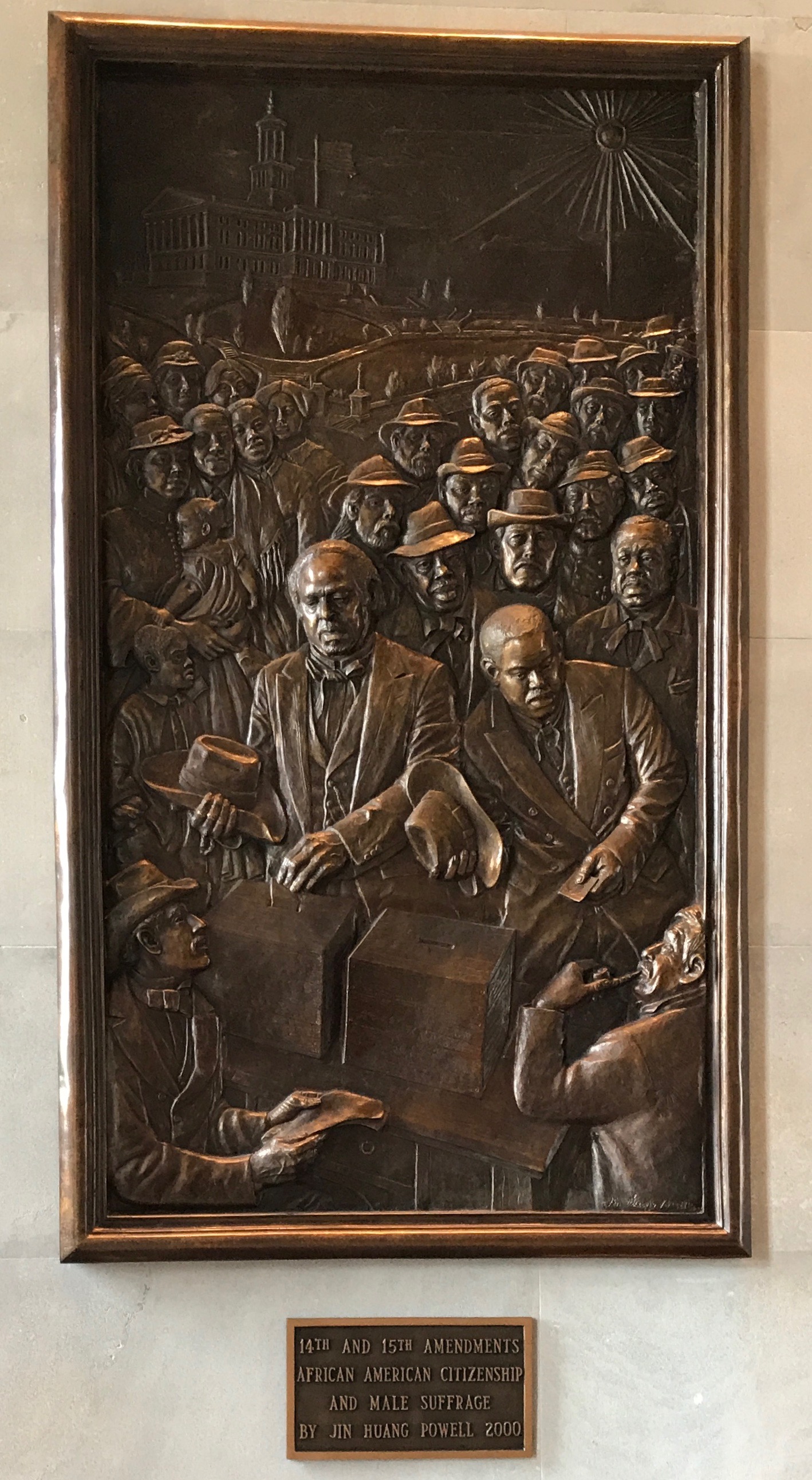
This plaque honors the 14th and 15th amendments.
The 13th amendment, ratified in 1865, abolished slavery and involuntary servitude, except for those duly convicted of a crime. I guess that is how we can have crews of convicts working on the roads and in parks even today – especially down south.
The 14th Amendment, ratified in 1868, addresses citizenship rights and equal protection of the laws for all. The 15th Amendment (ratified in 1870) prohibits discrimination in voting rights of citizens on the basis of “race, color, or previous condition of servitude.”
Those three amendments, taken together, are known as the Reconstruction Amendments.
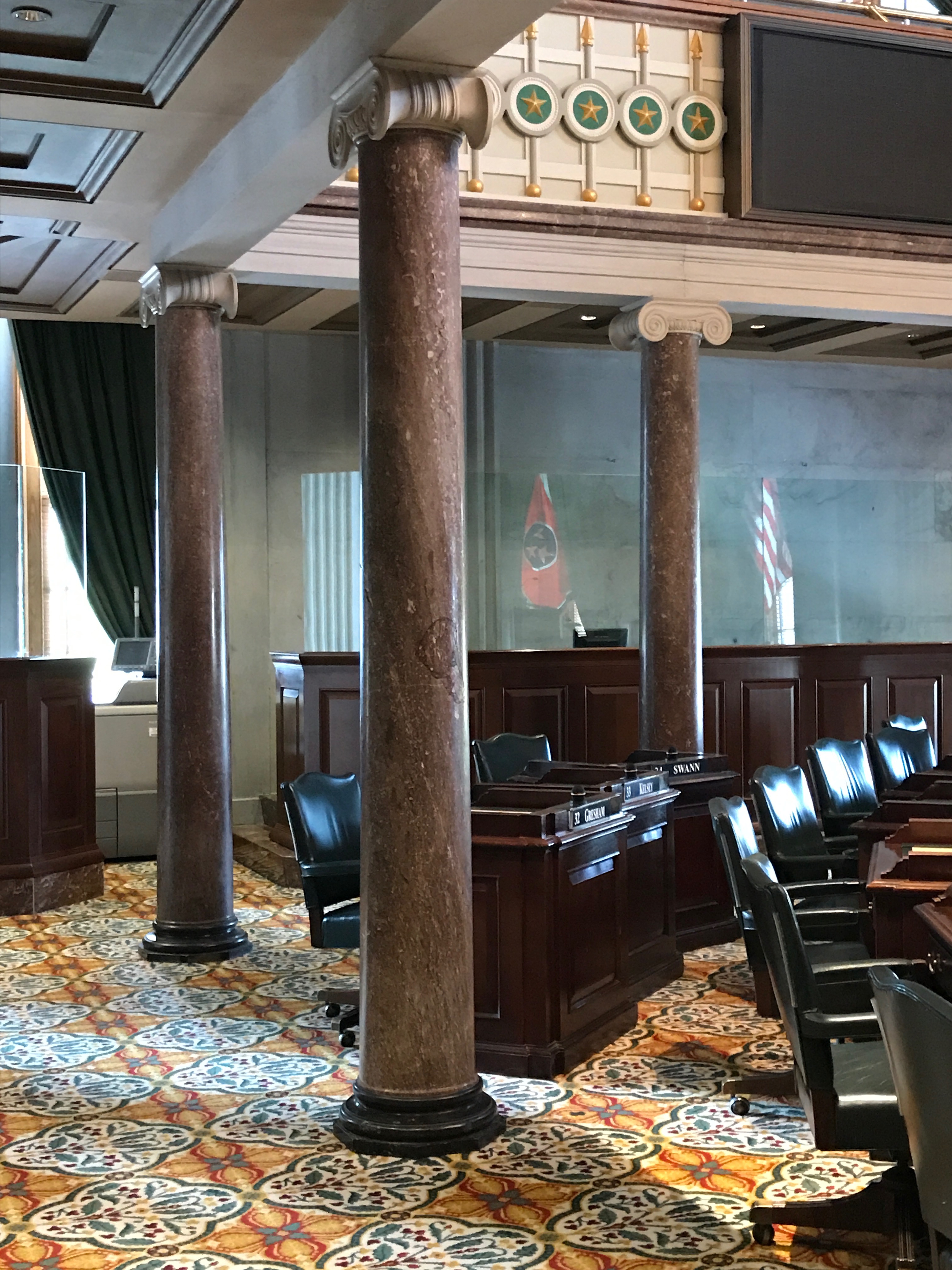
We continued on to the Senate.
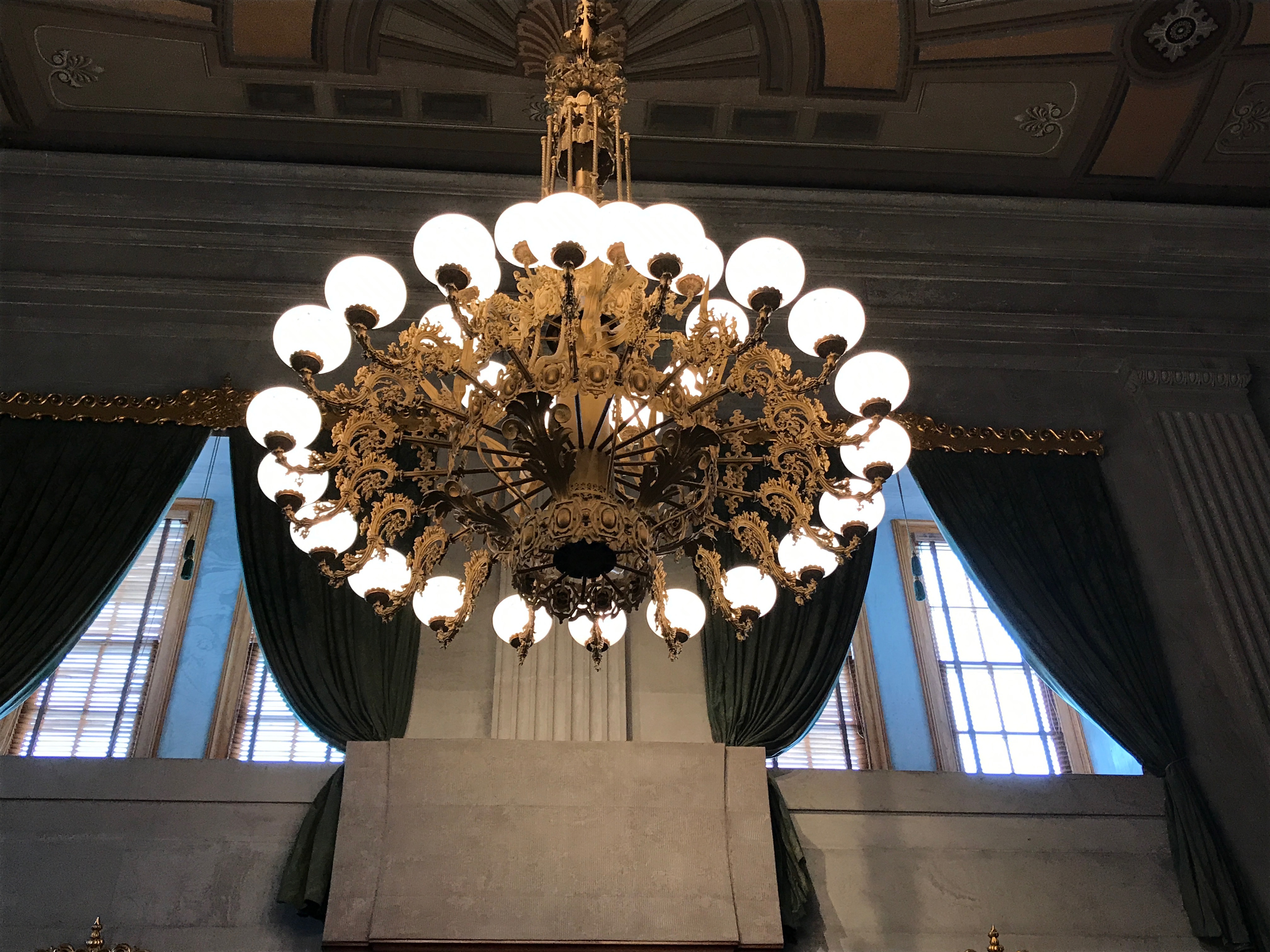
There’s another lovely chandelier.
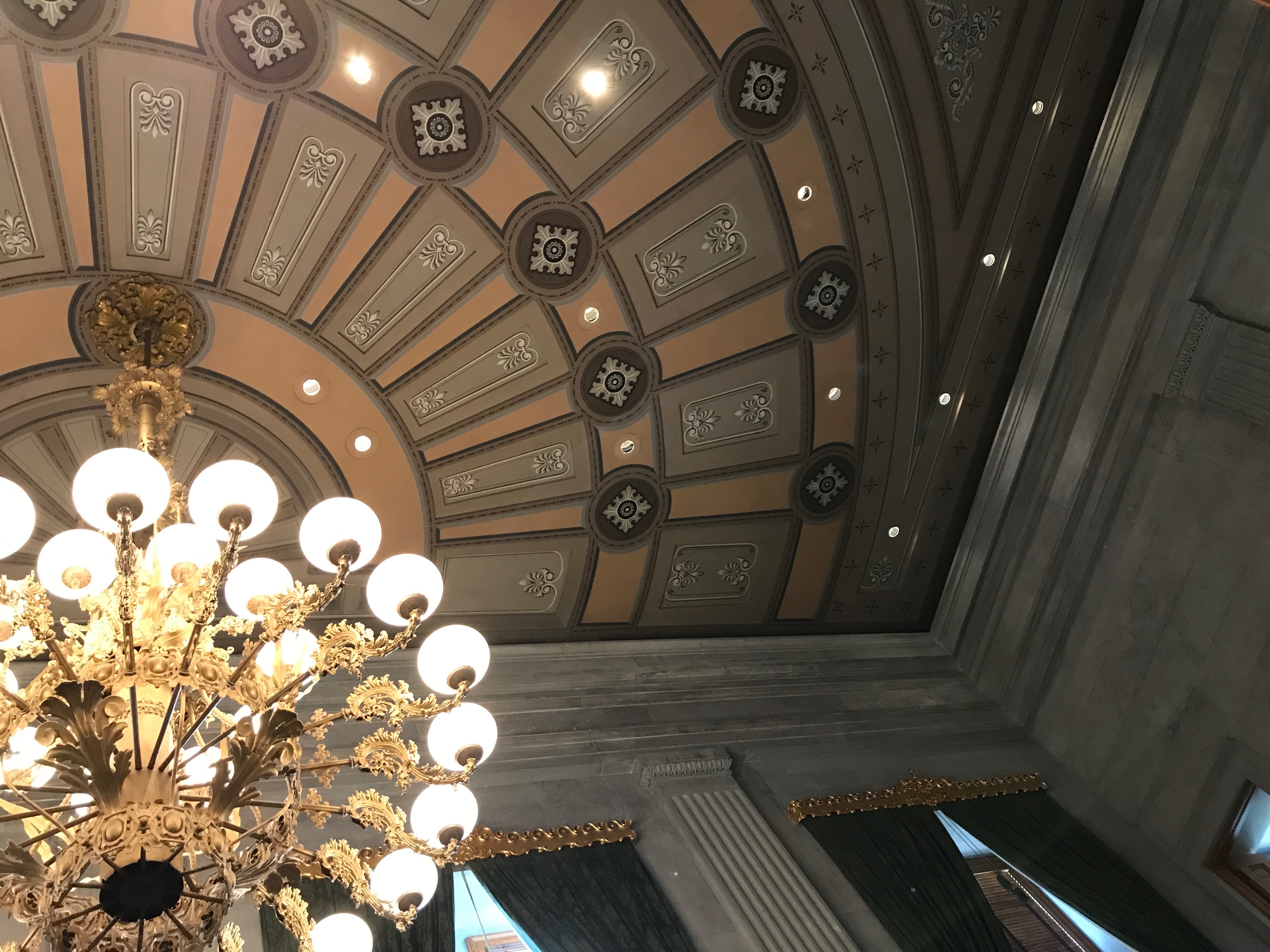
What really caught my eye, though, was the ceiling treatment. Who needs domes with ceilings like these?
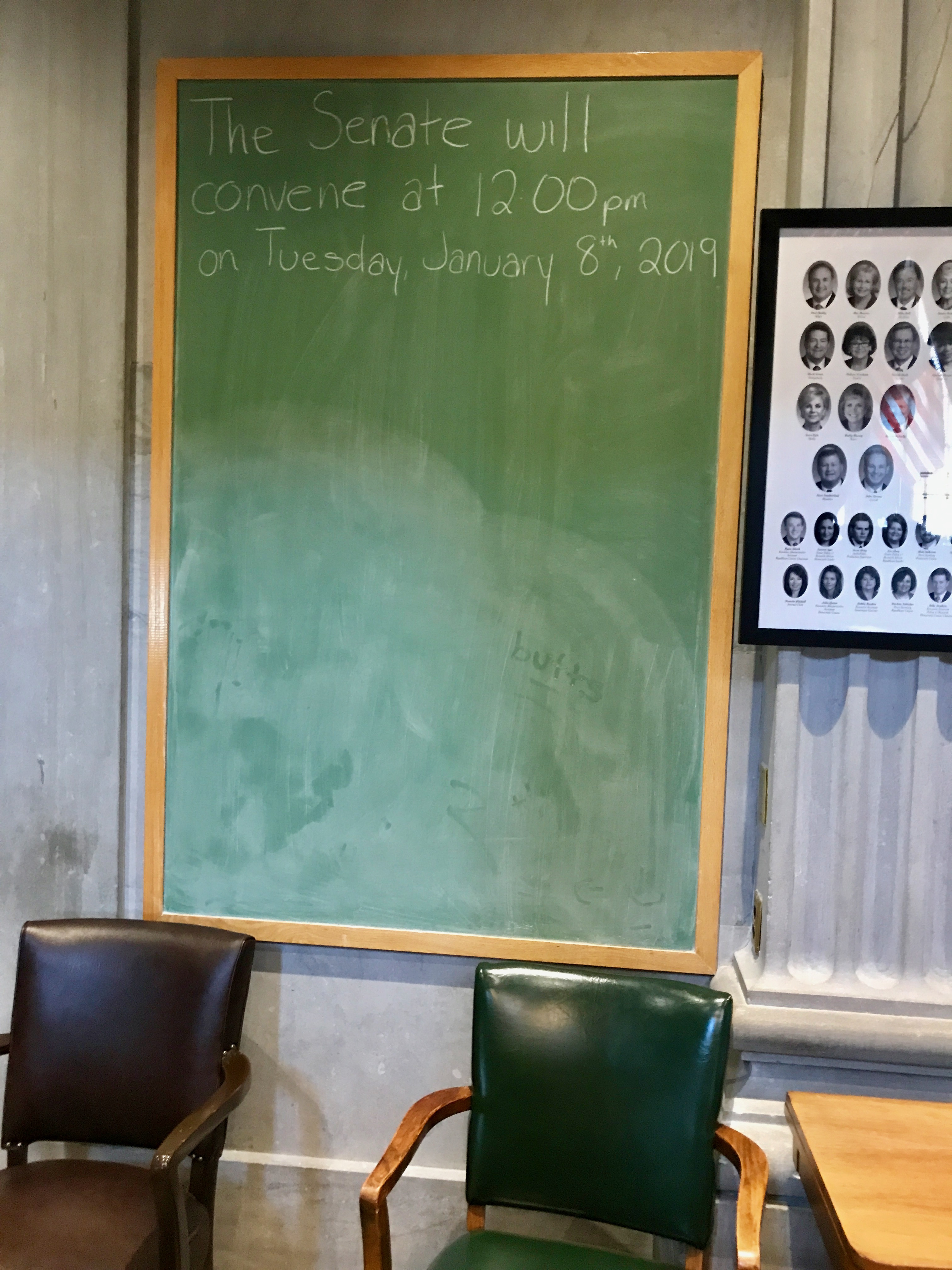
I thought this rather low-tech sign in the Senate chamber was anachronistic. Or, perhaps, it was period appropriate, for when the capitol was built, in the mid 1800s.
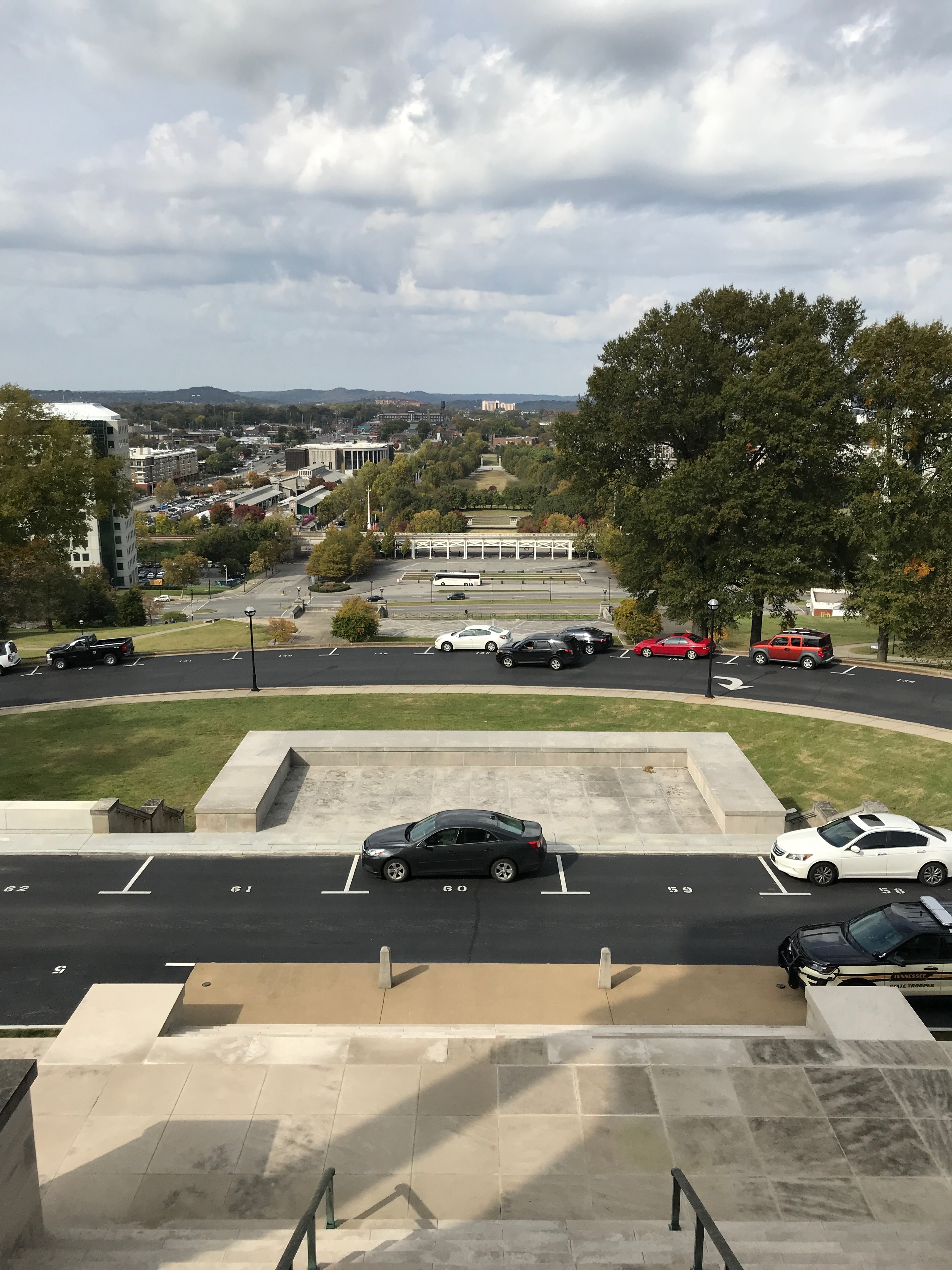
We paused and looked out the door. That’s a long way down!
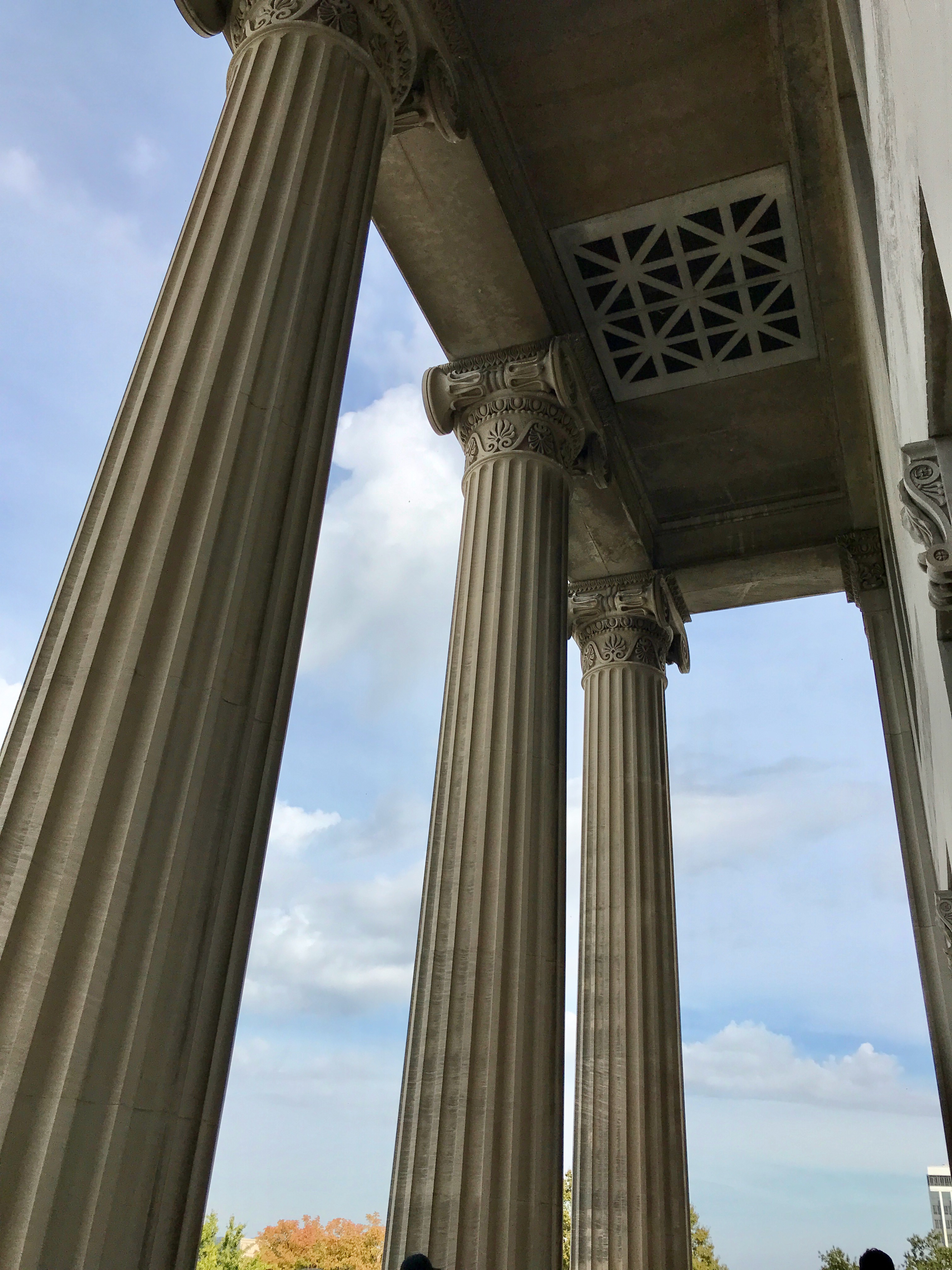
It goes without saying that I had to look up at the capitals on the capitol. Of course, they are of the Ionic order.
Our next stop on the tour was my favorite – the library.
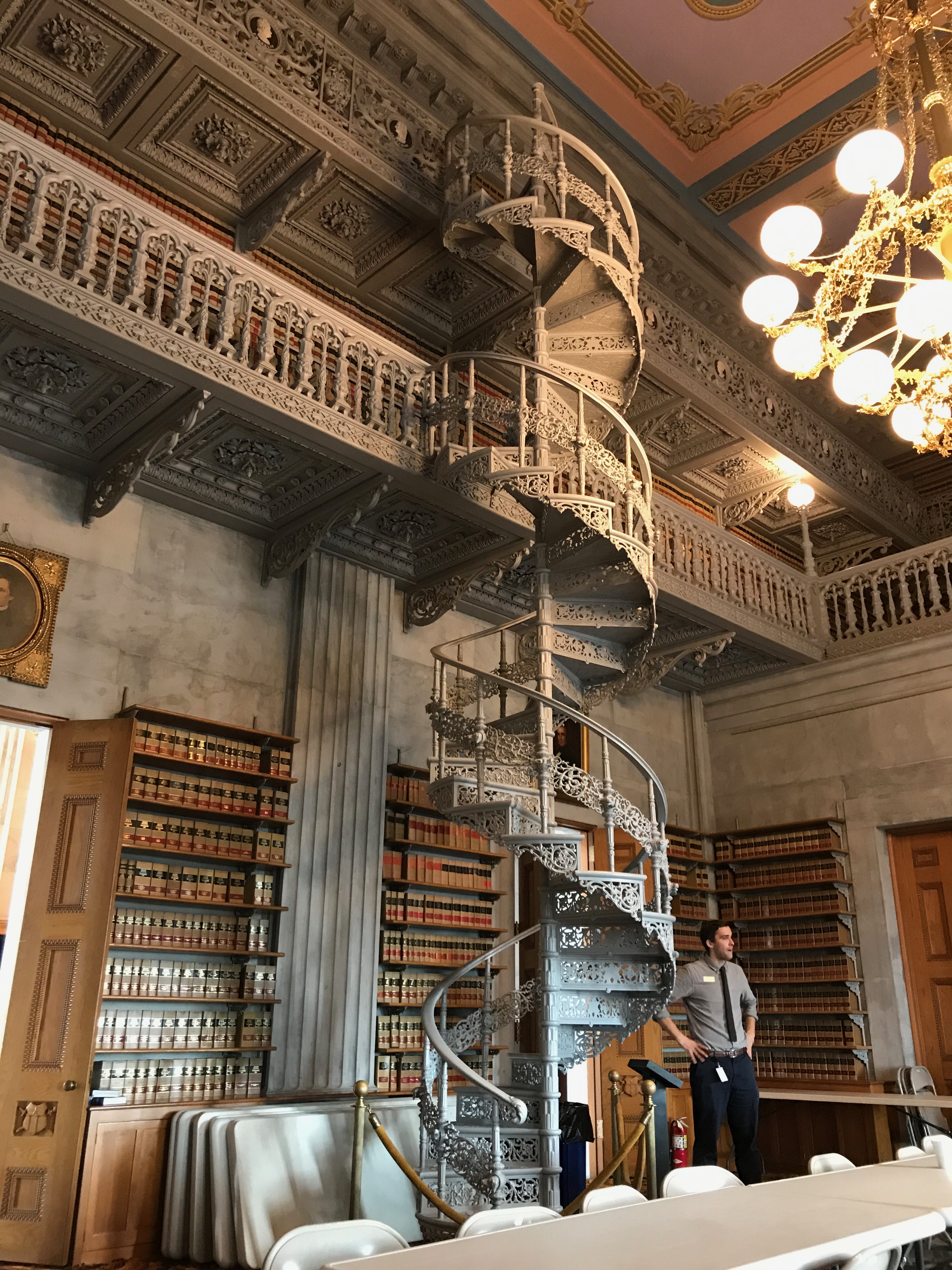
Can you imagine being a clerk and having to ascend and descend that spiral stairway?
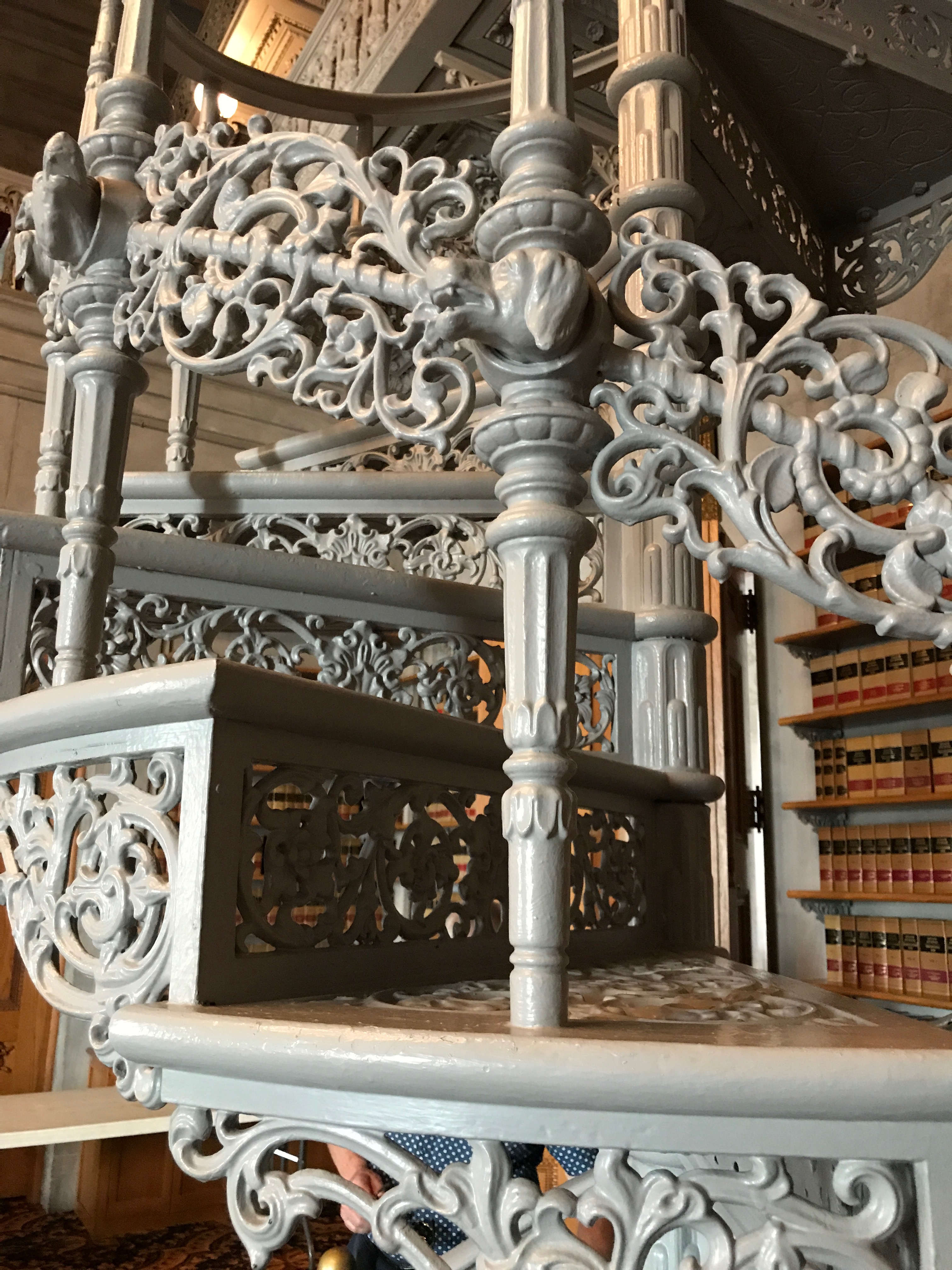
It was so intricate! I mean, look at all those animal heads!

In all the state capitols I’ve visited, I’d never seen any library as remarkable as this one.
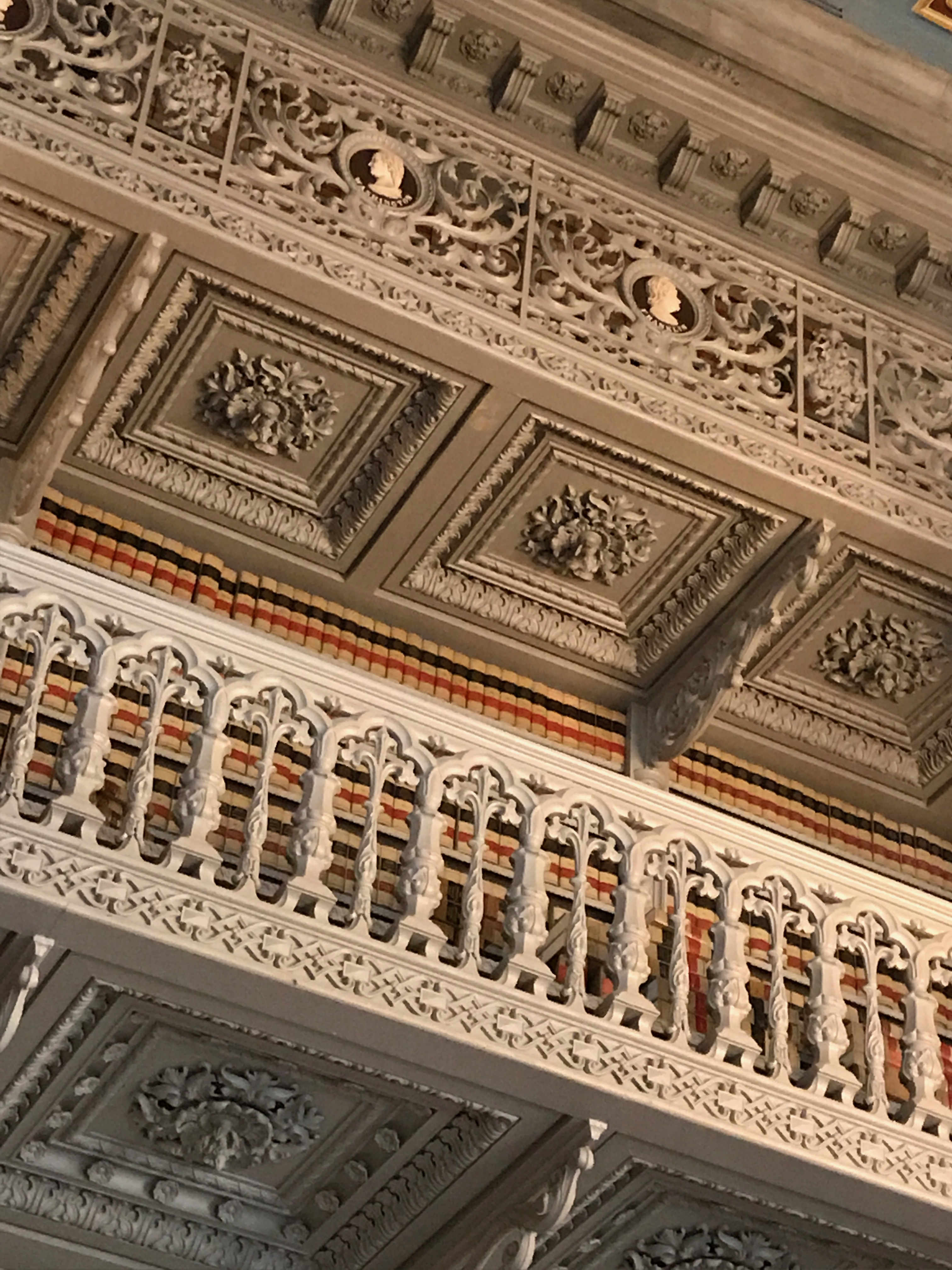
Isn’t that something?
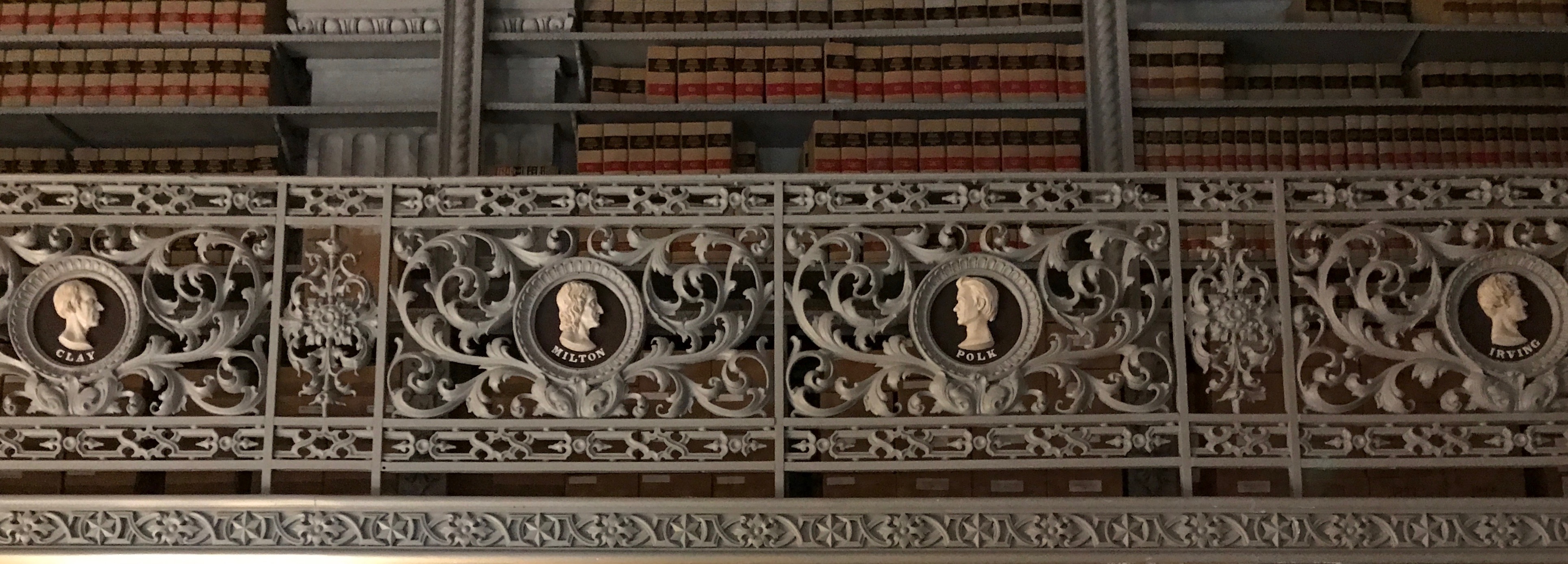
If I remember the guide correctly, this intricate ironwork wasn’t created specifically for this building. It was a style that they made for libraries in general. If you will notice, the portraits in the “cameos” are of literary figures – Milton and Irving.
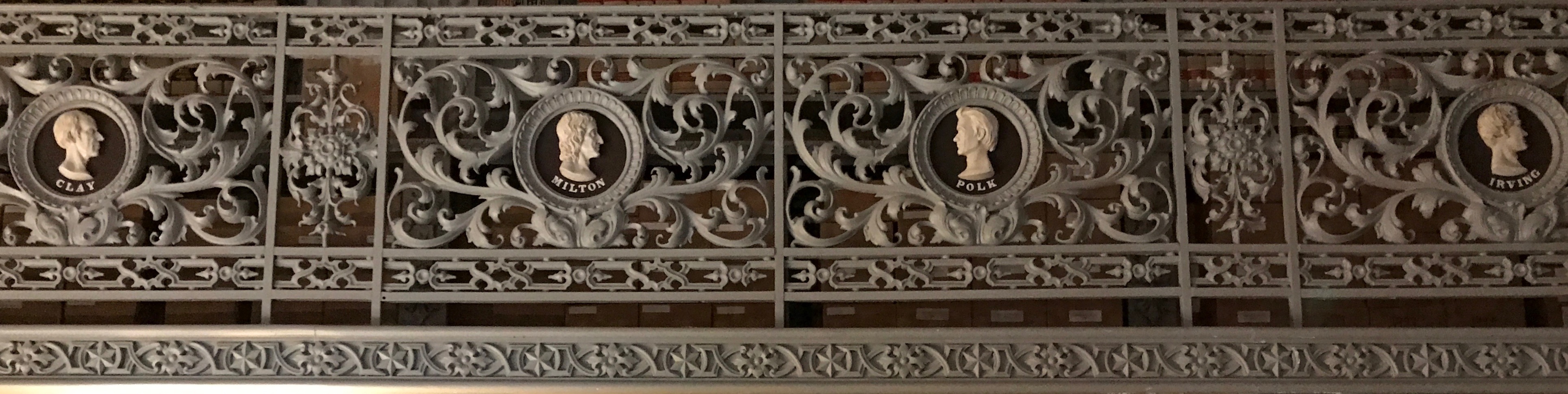
There are two portraits of political figures – Polk, who I assume is the 11th President, and Clay, who also figured importantly in the politics of the first half of the 19th century. I don’t know if these are likenesses of the politicians or they just changed the names on the preexisting profiles.
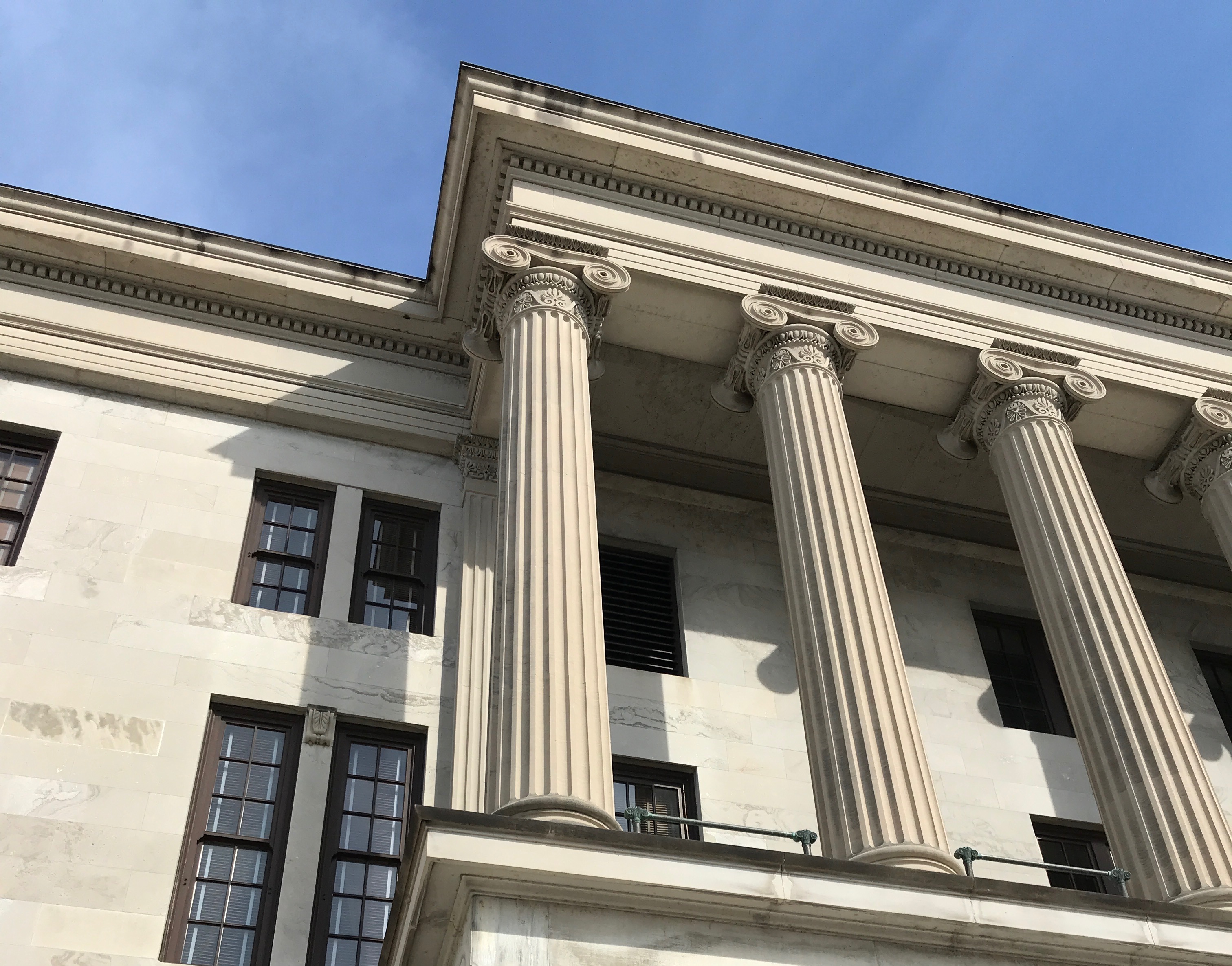
With that, the tour was over. I spent a few minutes looking around and snapping photos of things that caught my attention – like that beautiful blue sky and the columns.
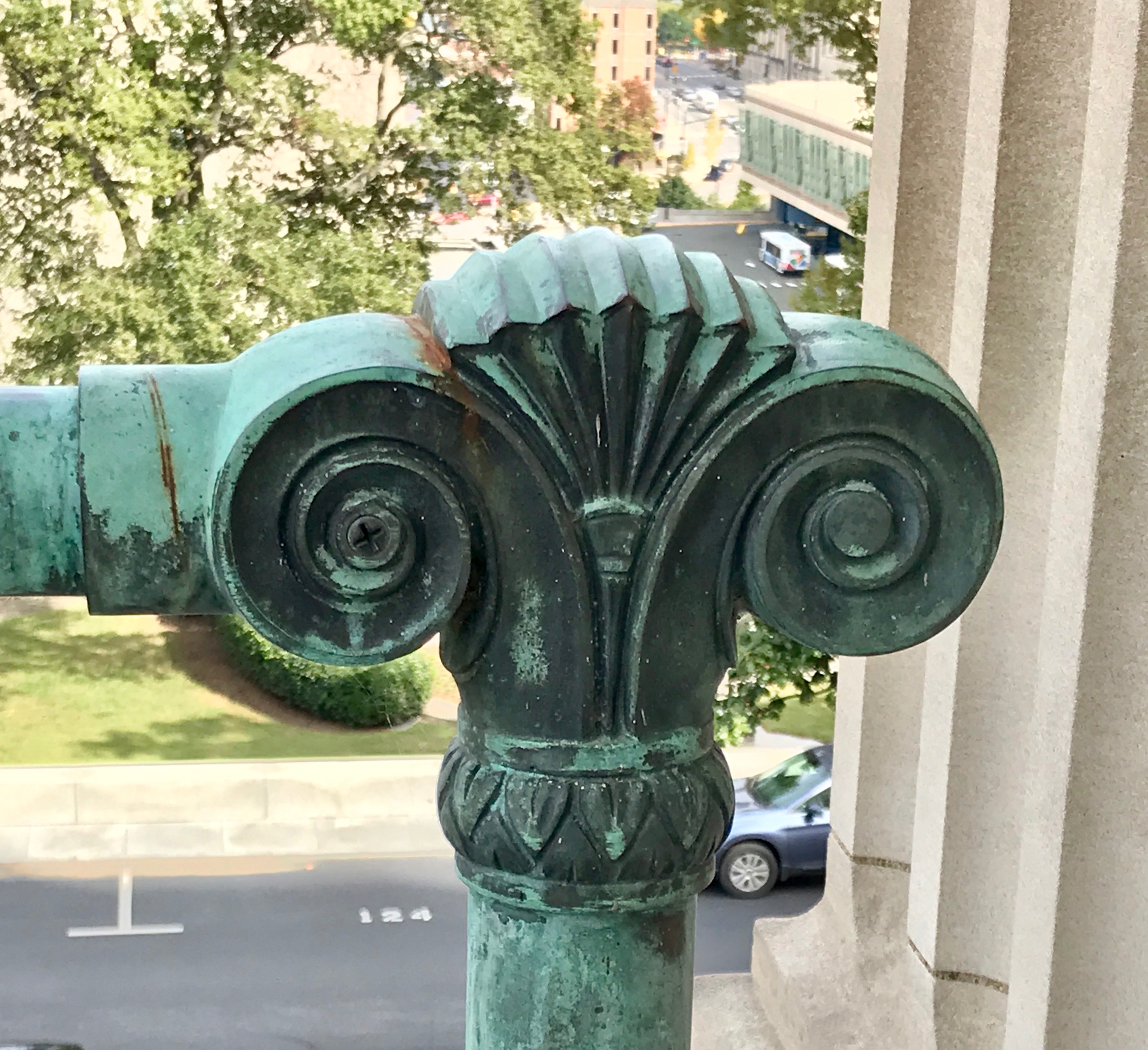
The decorative railing finial – they just don’t make them like that any more!
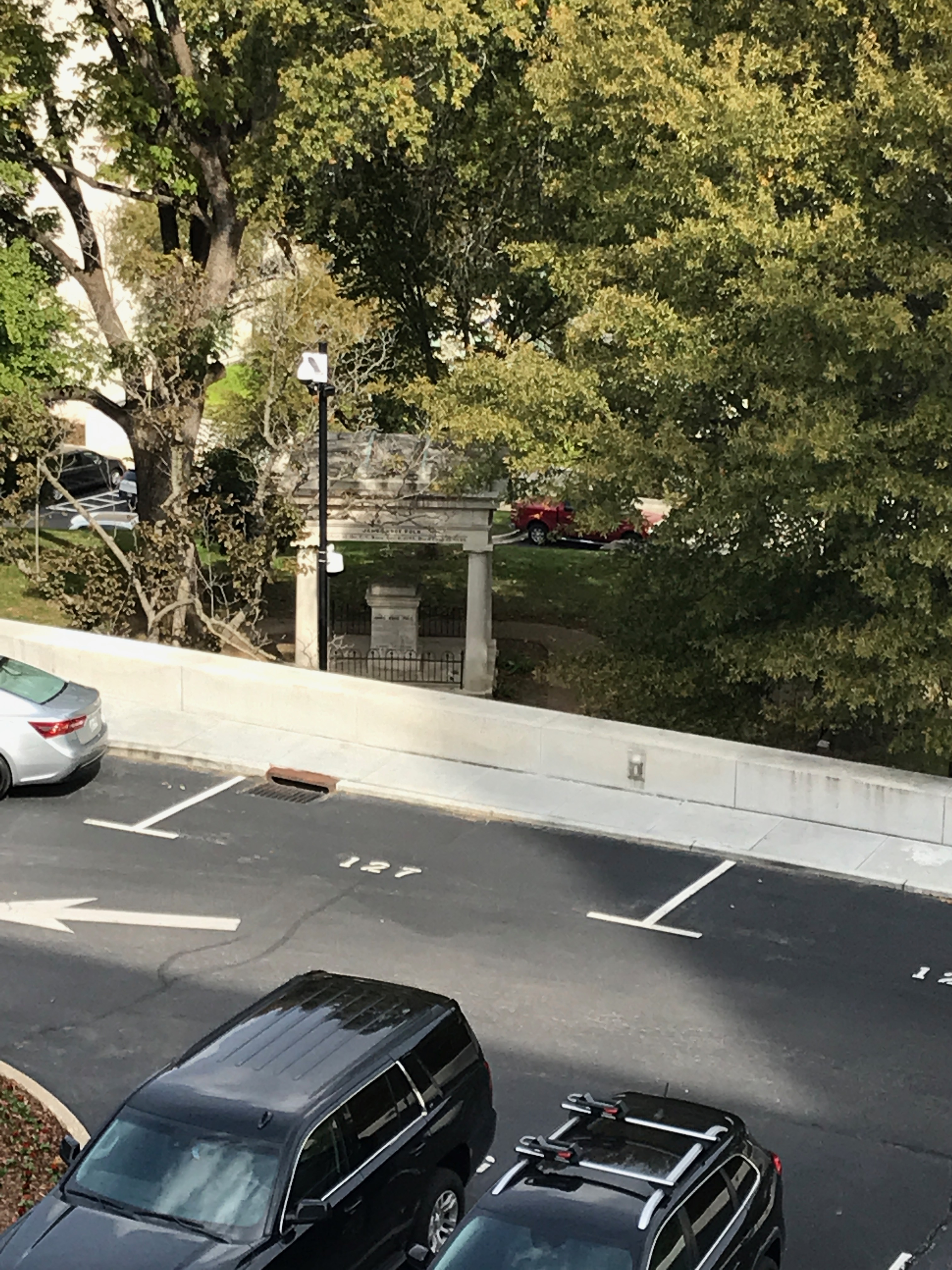
Hmm..what is that? It looks like something out of a grand cemetery. I must go investigate!
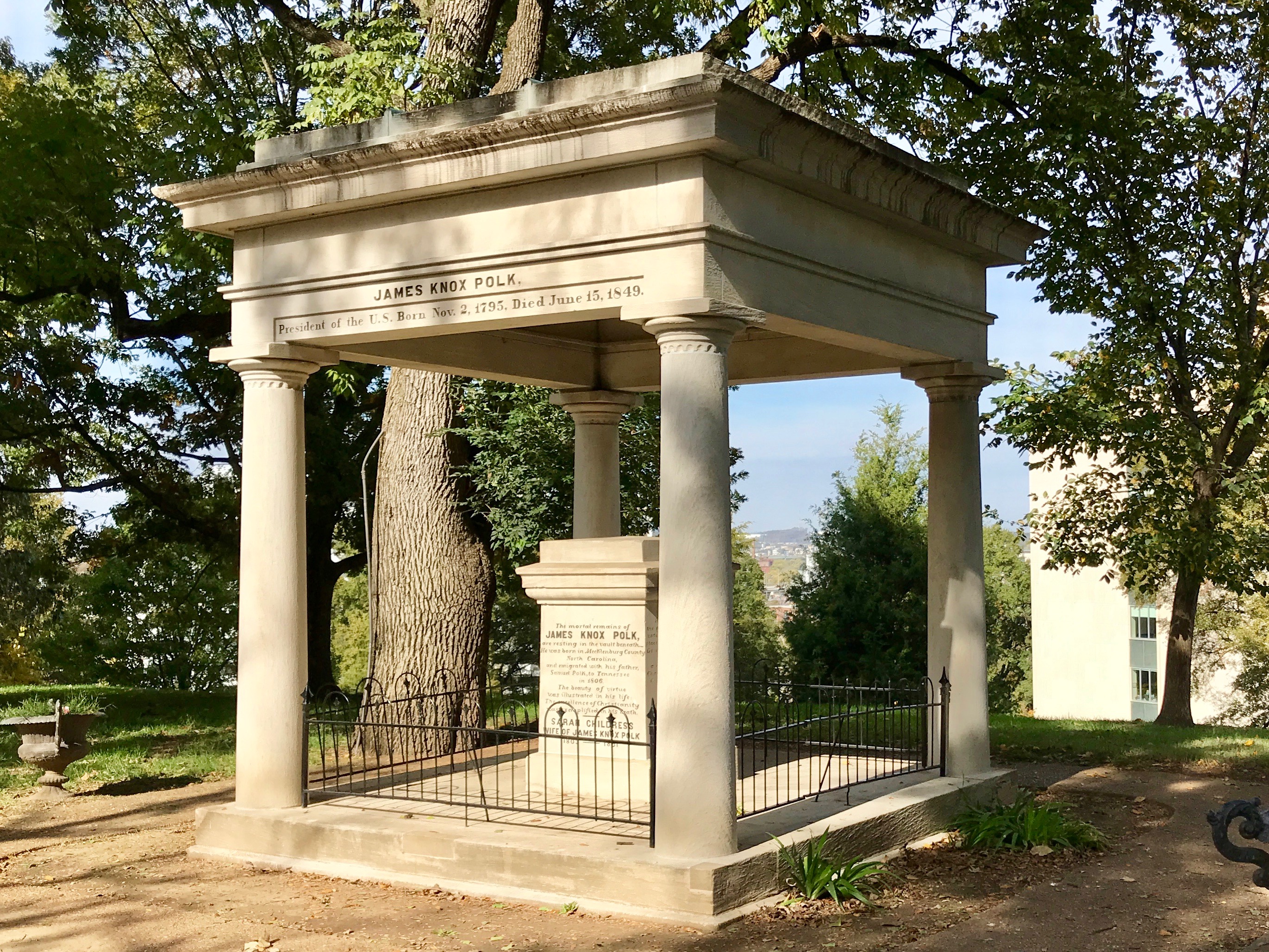
Well, look at that! It’s the tomb of the 11th president, James K. Polk!
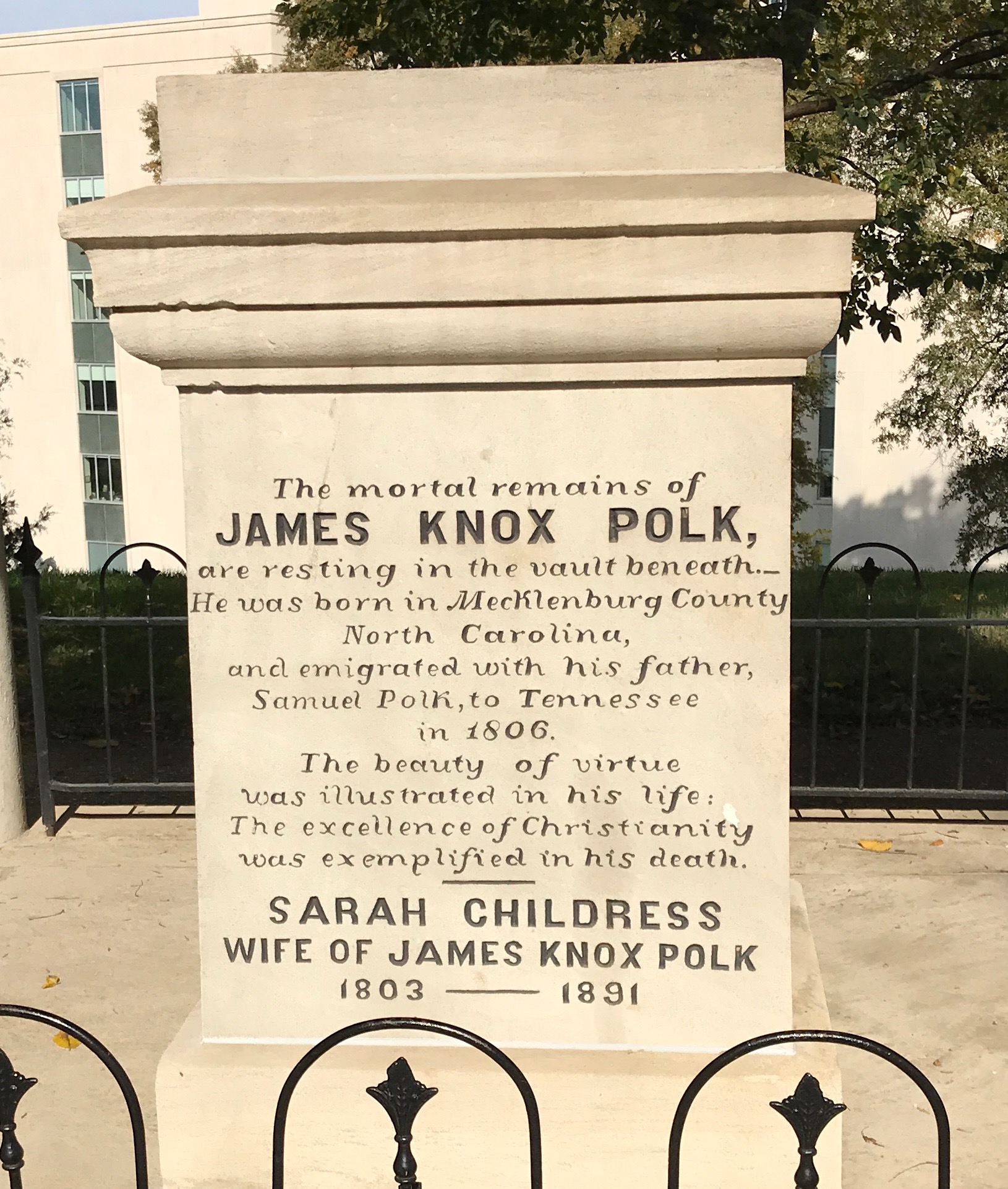
I walked around the marker and took photos of what they chose to inscribe upon it.
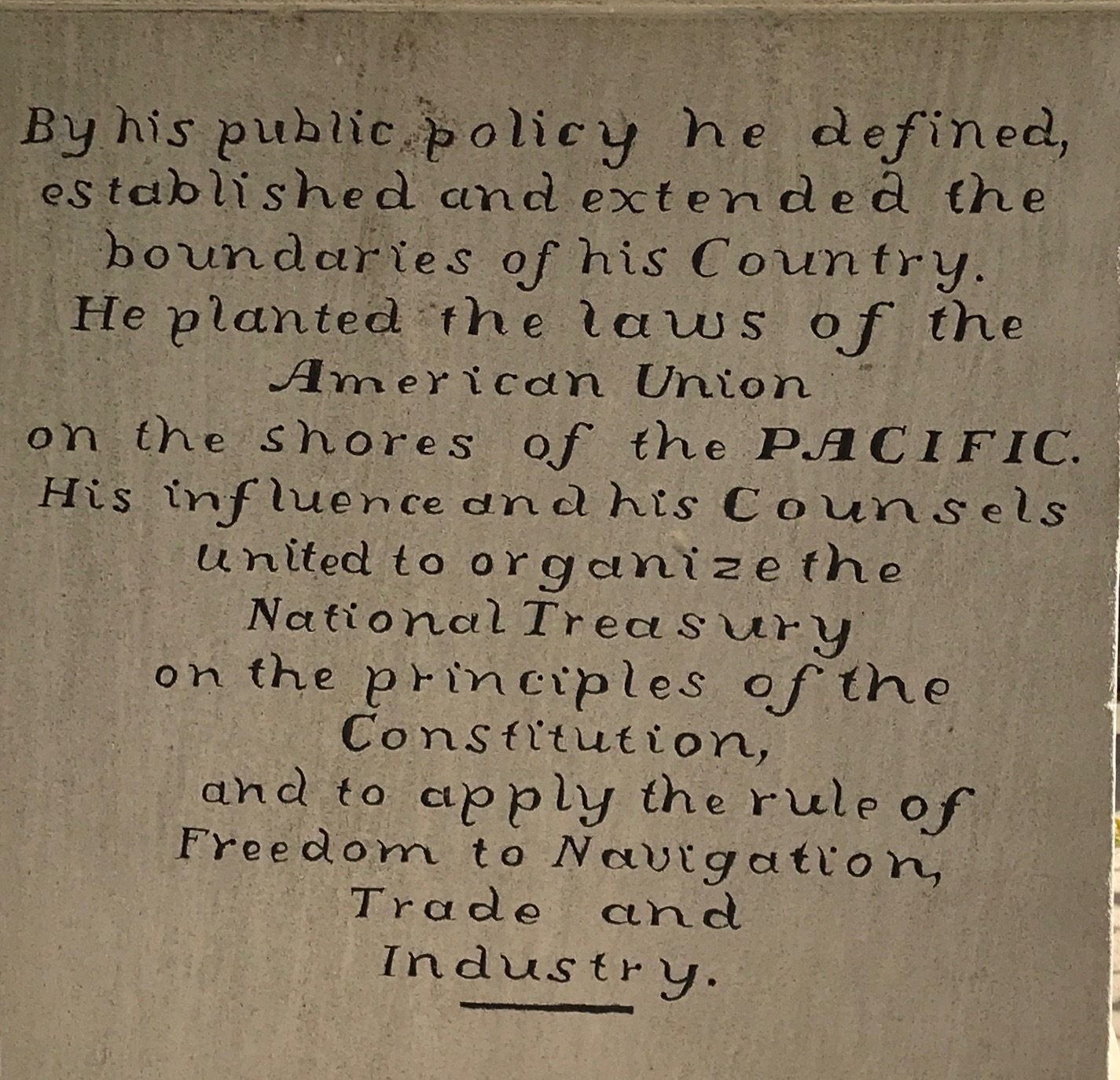
I alway wondered whether Polk was responsible for expanding the boundaries of the USA, as many states have counties named “Polk.” Off to my Preferred Source to check. It turns out the there are 12 states with counties named Polk, which puts it at the 17th most common country name. Ten of those 12 counties are named after President Polk. The other two? One is named after Revolutionary War hero Ezekiel Polk, who was James K’s grandfather. The other was named after William Polk, also a Revolutionary War hero – and a first cousin, once removed.
So, they kept it all in the family.
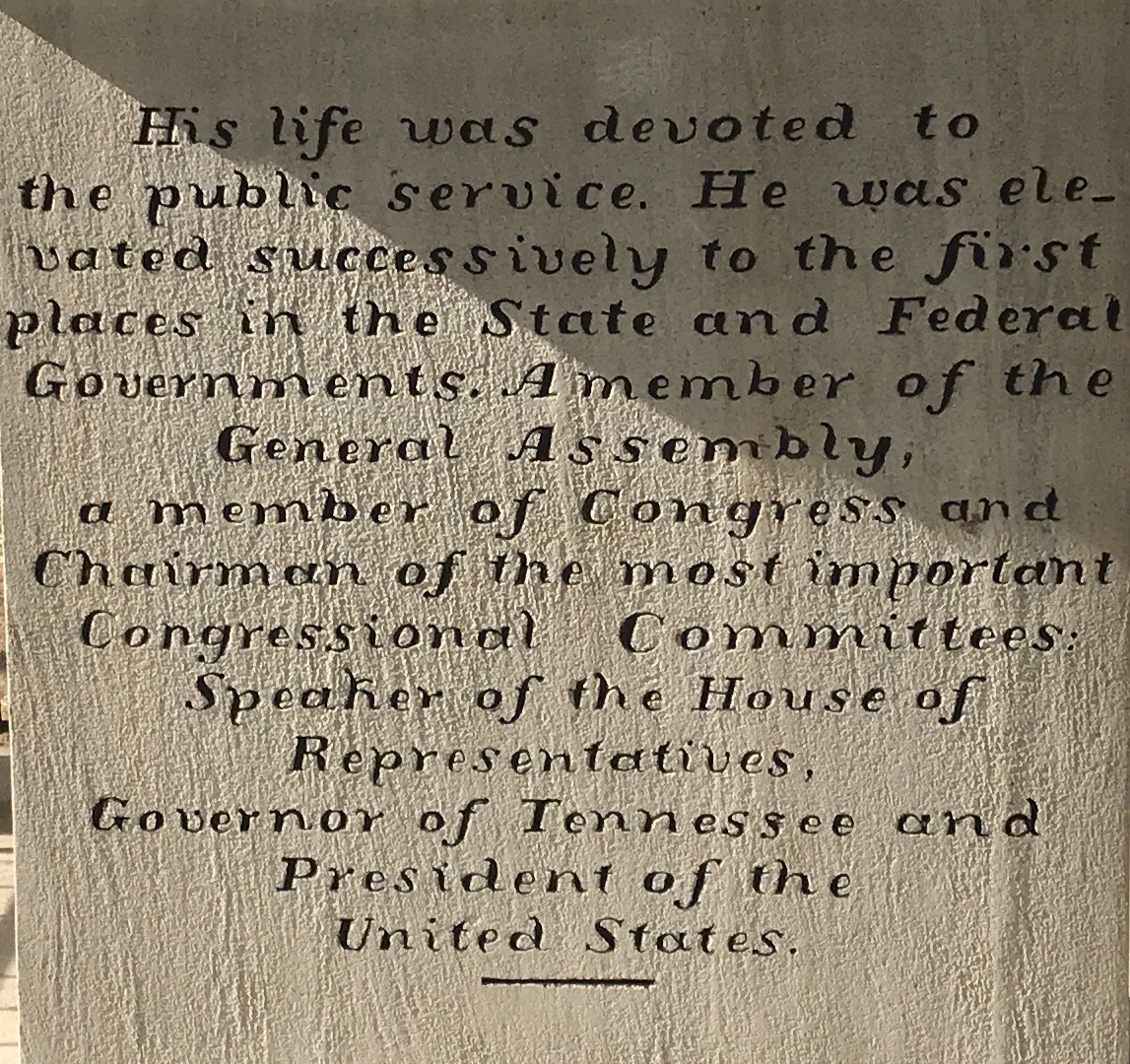
That’s quite a resume!
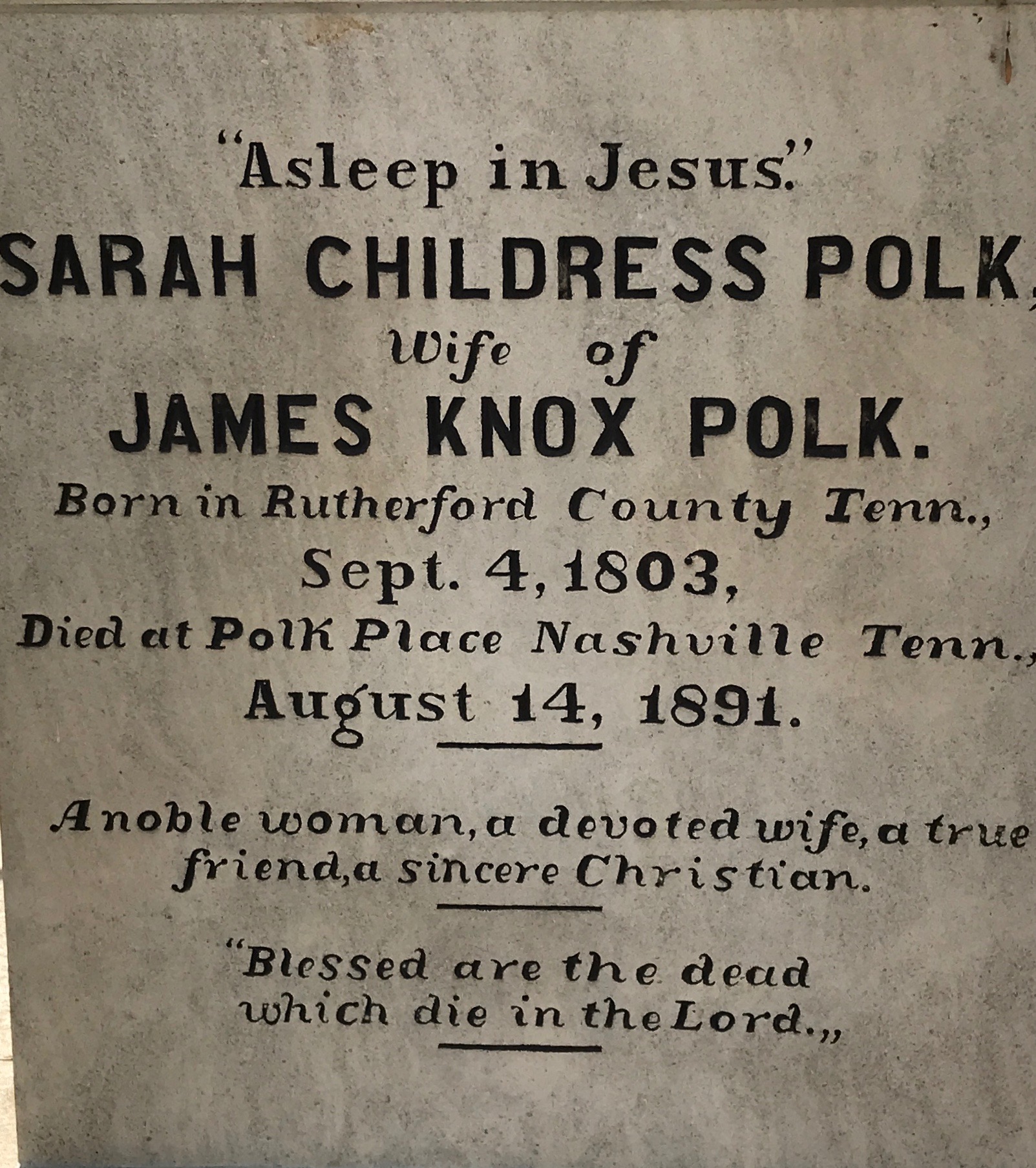
Sarah got a section, too. Since James died in 1849, she had quite a long widowhood.
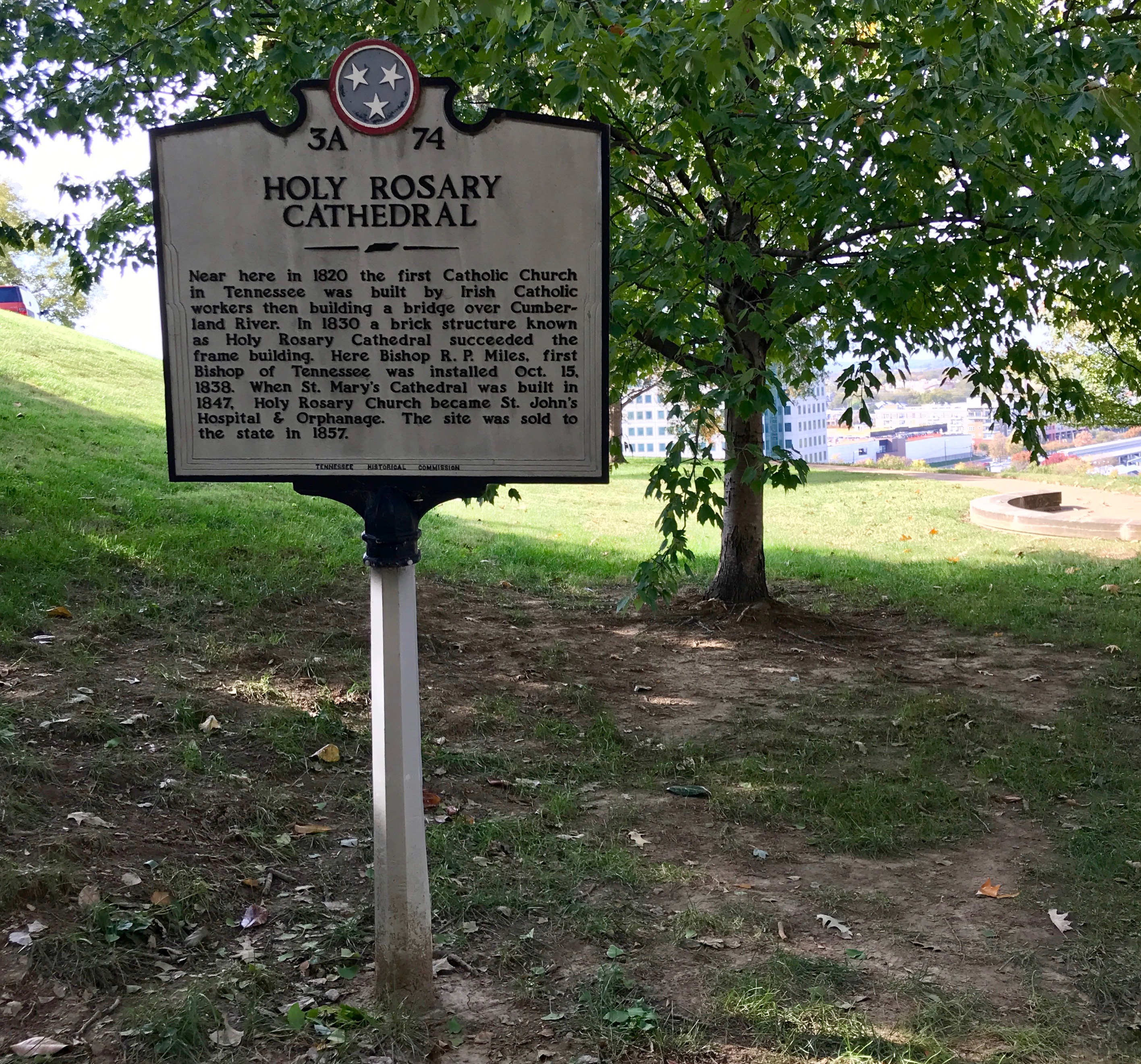
I saw another marker commemorating the first Catholic Church in Tennessee, which was on the site until it was sold to the state in 1857.
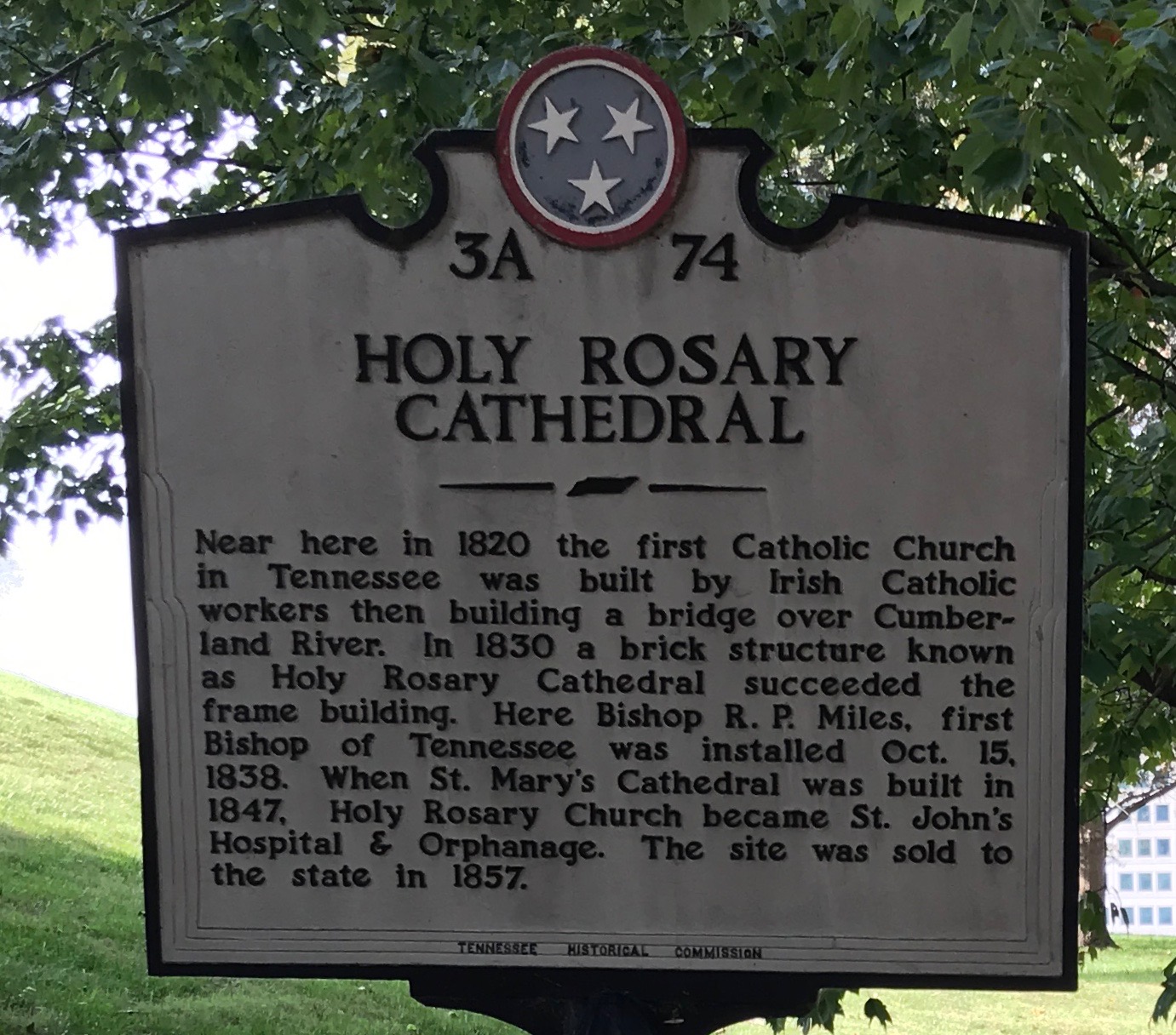
Here’s a closeup, if you want to read more.
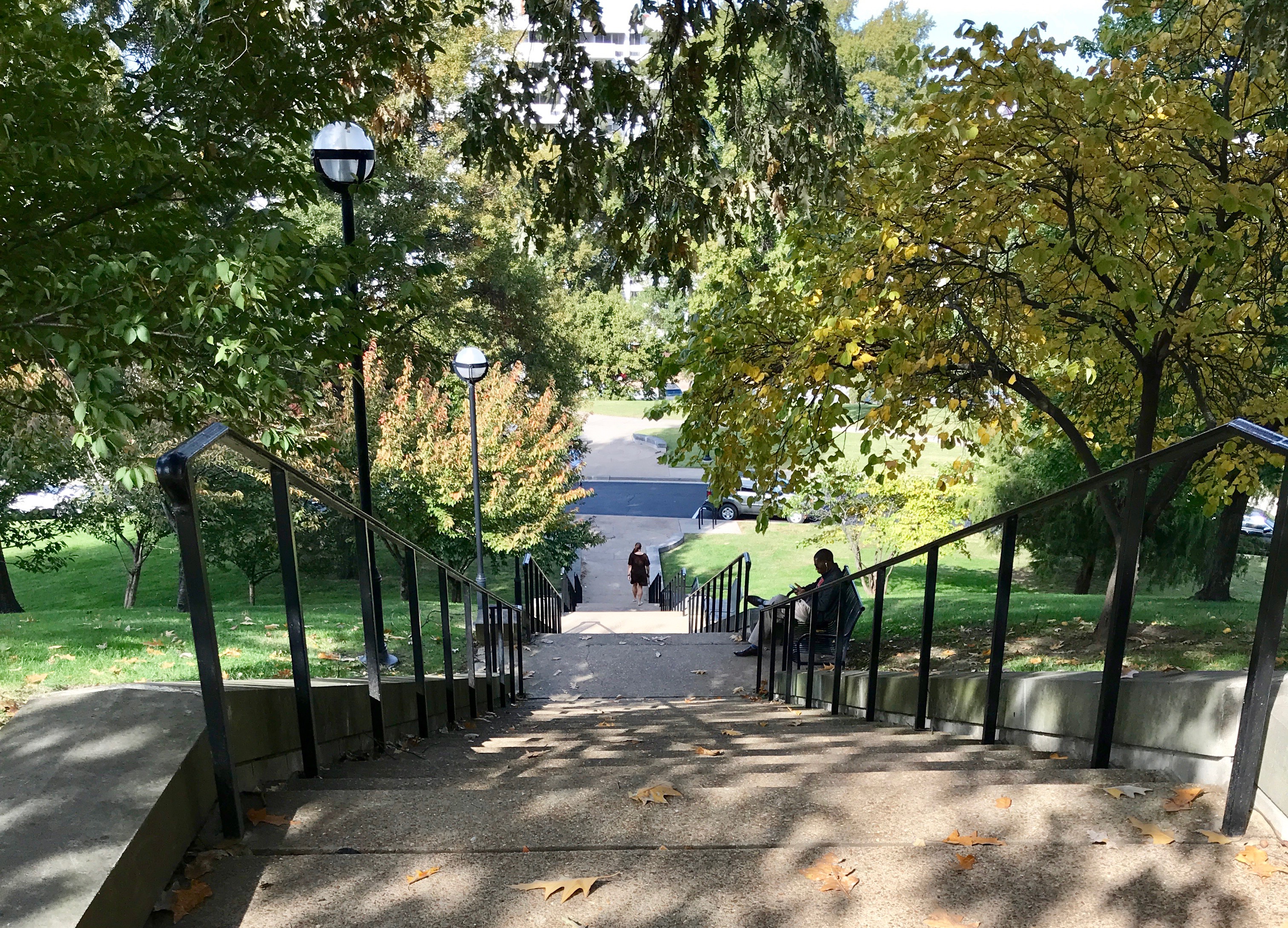
Oh, my goodness! All those stairs going down.
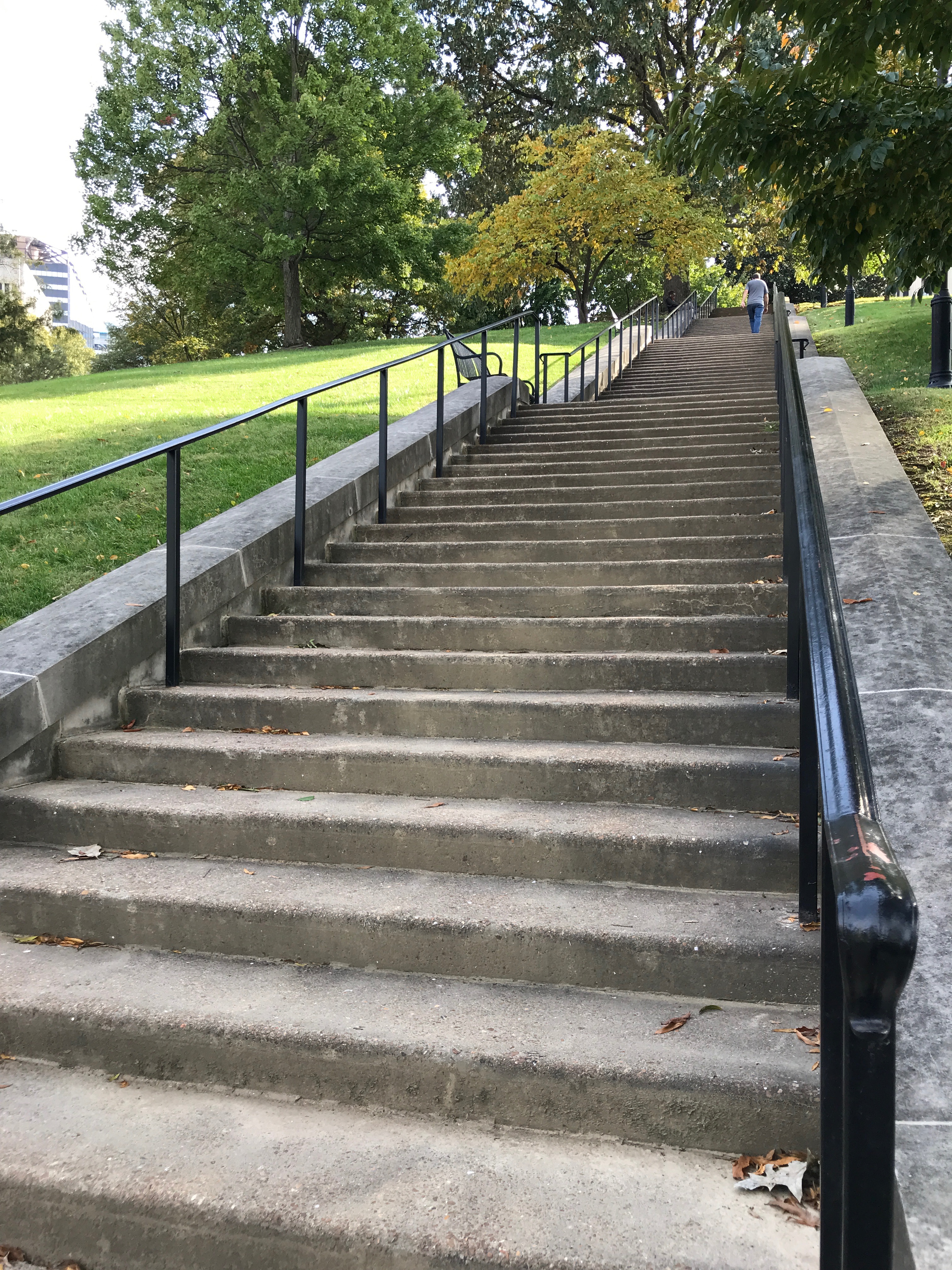
Once I was down, I had to turn around and look at them going back up. Two things I am not fond of: stairs and rain. At least the weather was good.
Nearby, I passed some governmental buildings that had interesting statues in front.
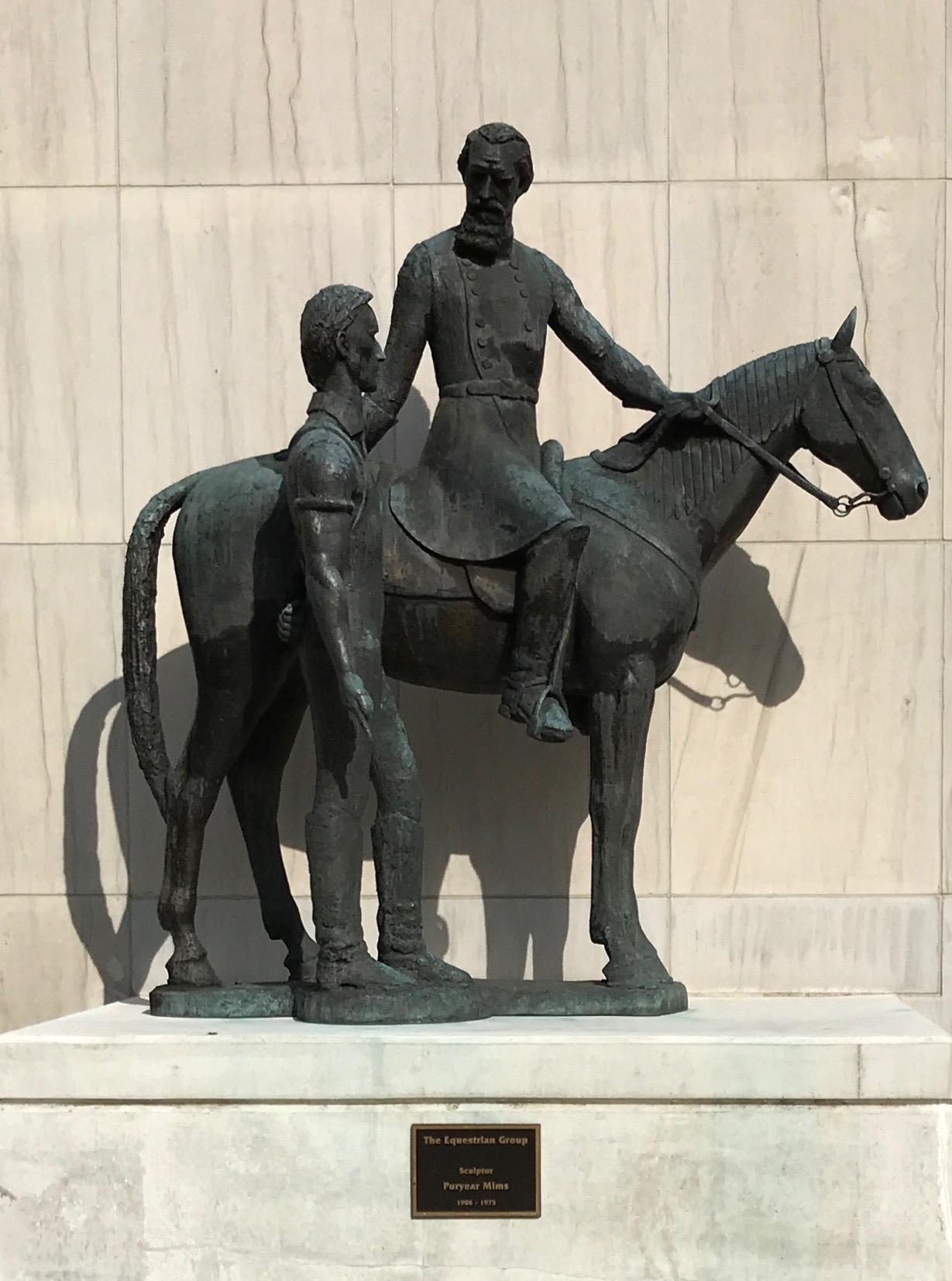
This one is “The Equestrian Group” by Puryear Mims.
He was a new sculptor to me, so I had to go looking for some information. I was verklempt when my Preferred Source (Wikipedia) failed me! I went digging around and found a page with information about him on Facebook – of all places. I found that a bit ironic, considering that he was born in 1906 and died in 1975, years before Facebook was even a thing. It was even nine years before Mark Zuckerberg was born!
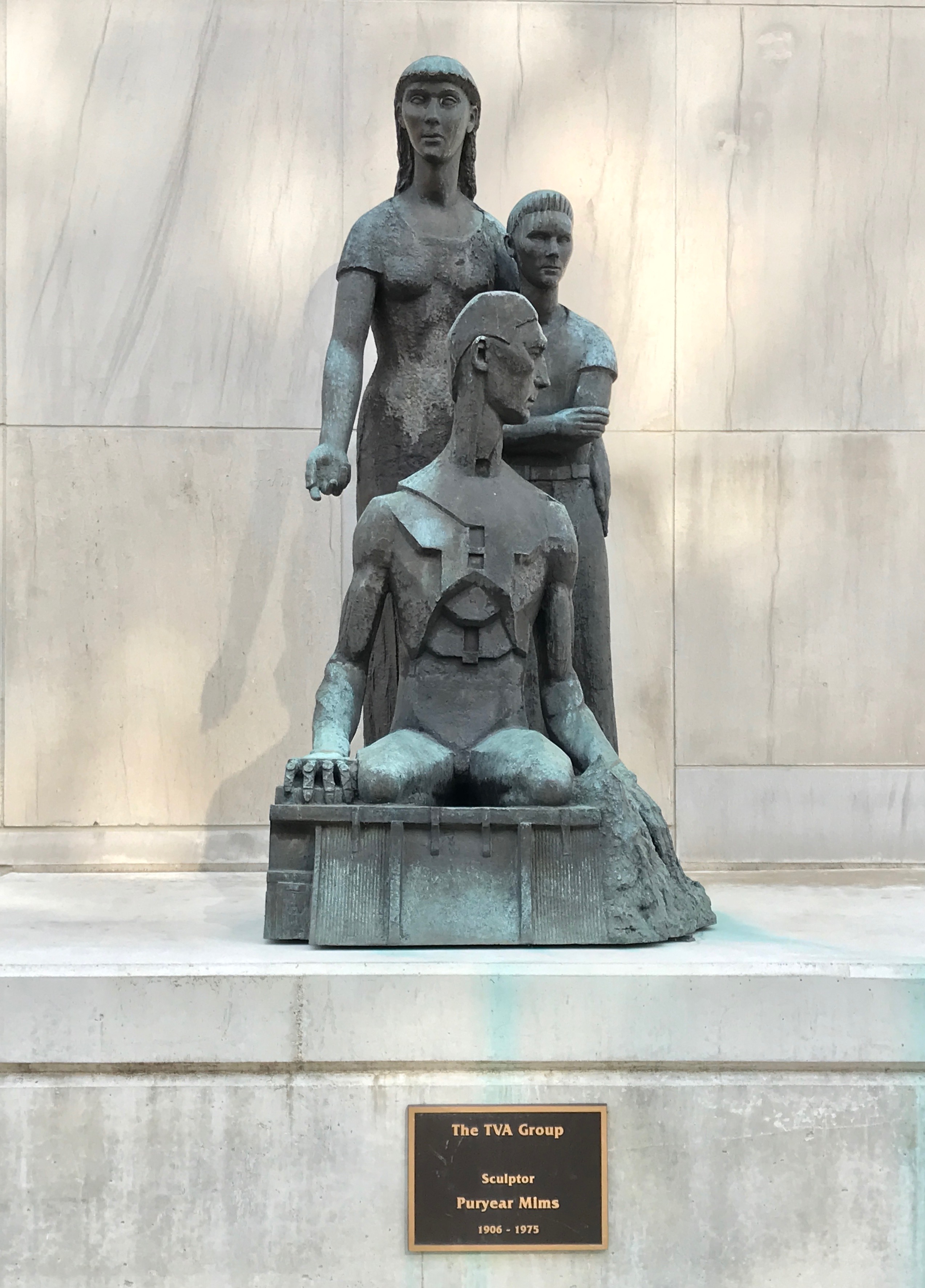
This one is “The TVA Group.” I remember learning about the TVA – the Tennessee Valley Authority – in social studies. From what I remember, it was one of Roosevelt’s great achievements, along with the CCC and the WPA.
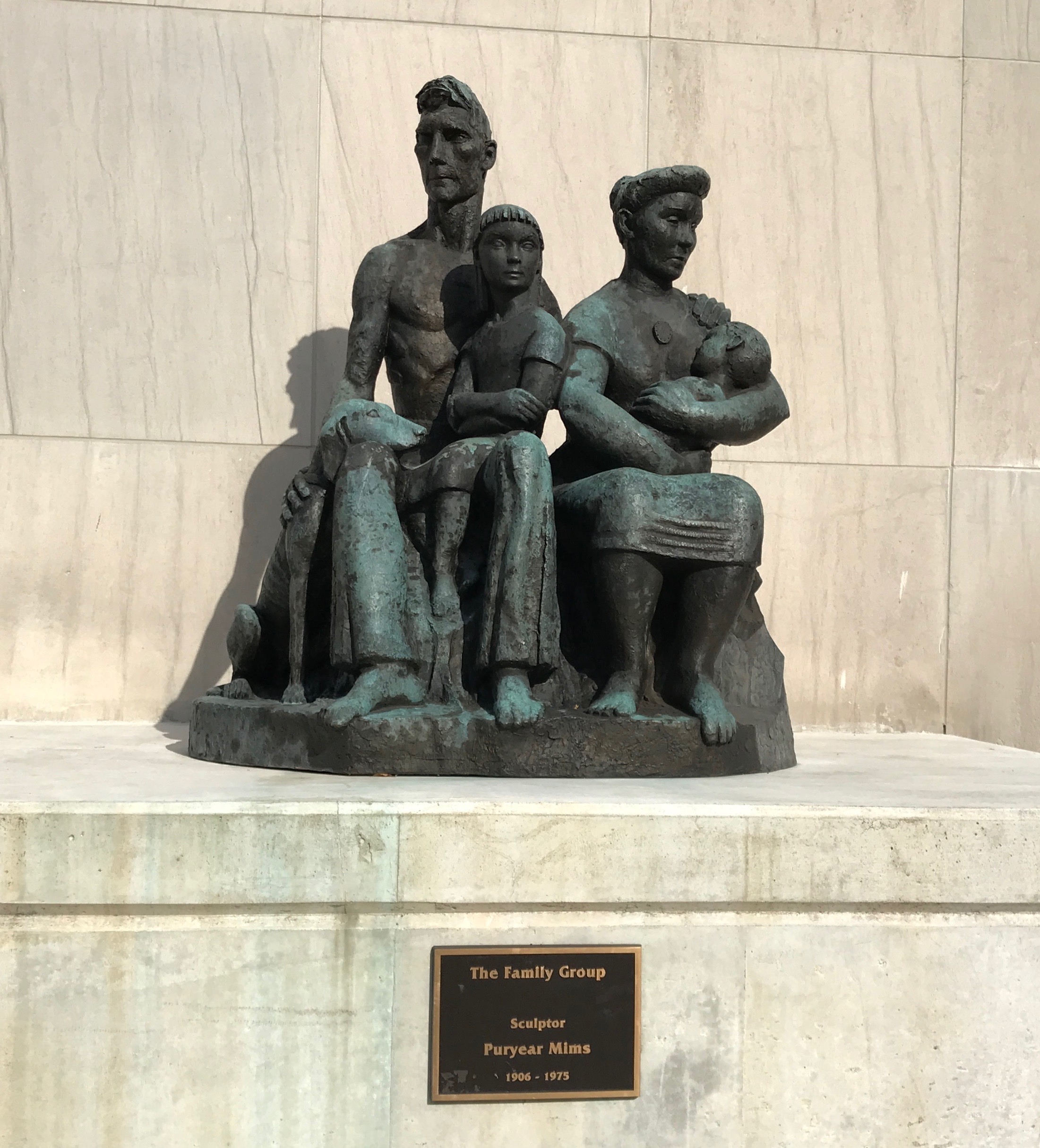
And, we round out my photo essay with “The Family Group.”
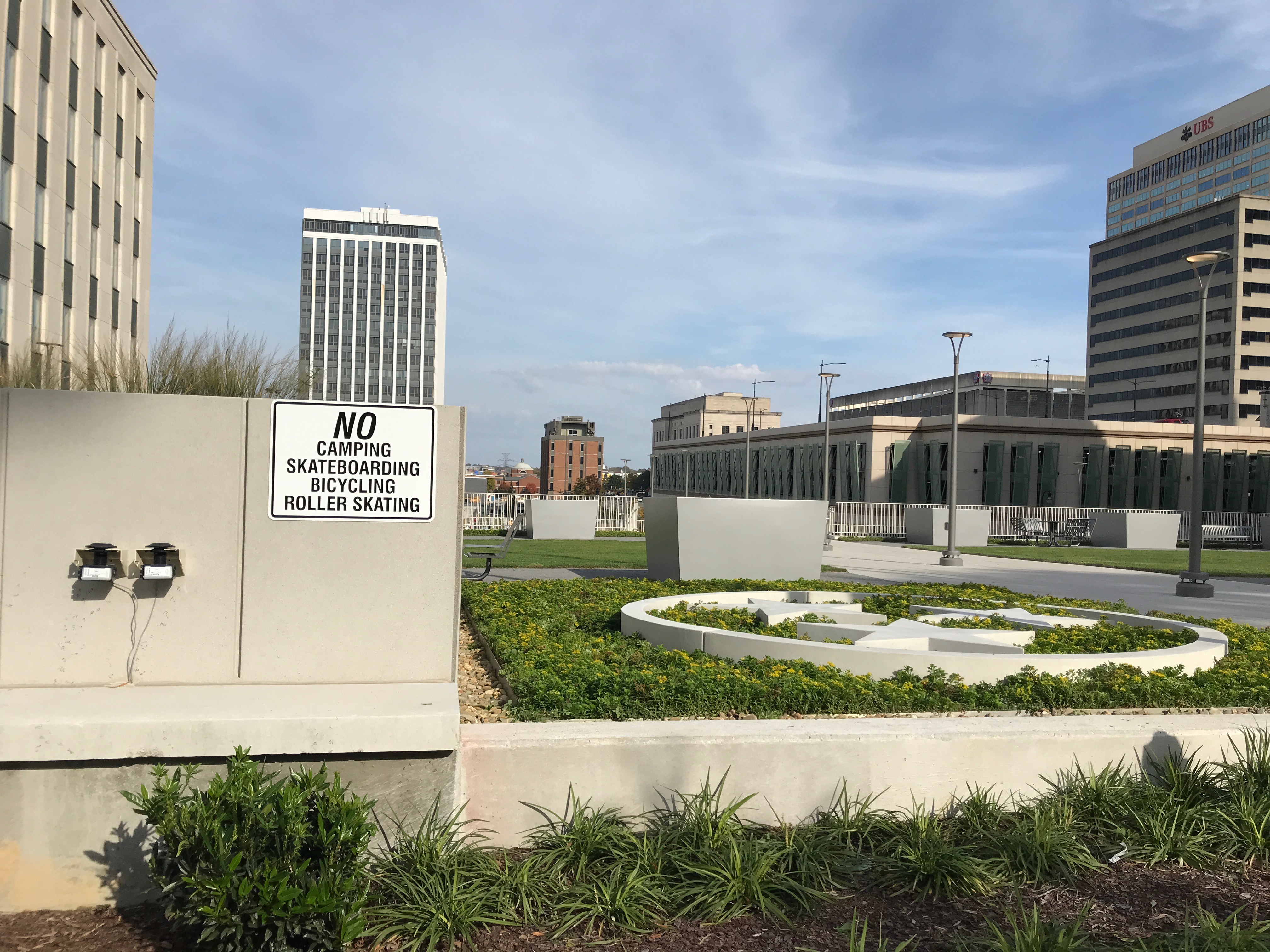
A little more wandering brought me to this plaza. I’m sure I took this photo for the sign prohibiting camping. I don’t remember ever seeing a sign in a city that prohibits camping.
I looked up places nearby to eat, and I found a listing for a restaurant in an old Woolworth’s. We had one in my town growing up. I used to love to walk “up town” and go shopping. It had creaky old wood floors. I was sad when it closed.
On my way, I passed this sign about the sit-ins held at lunch counters in the 1960s.
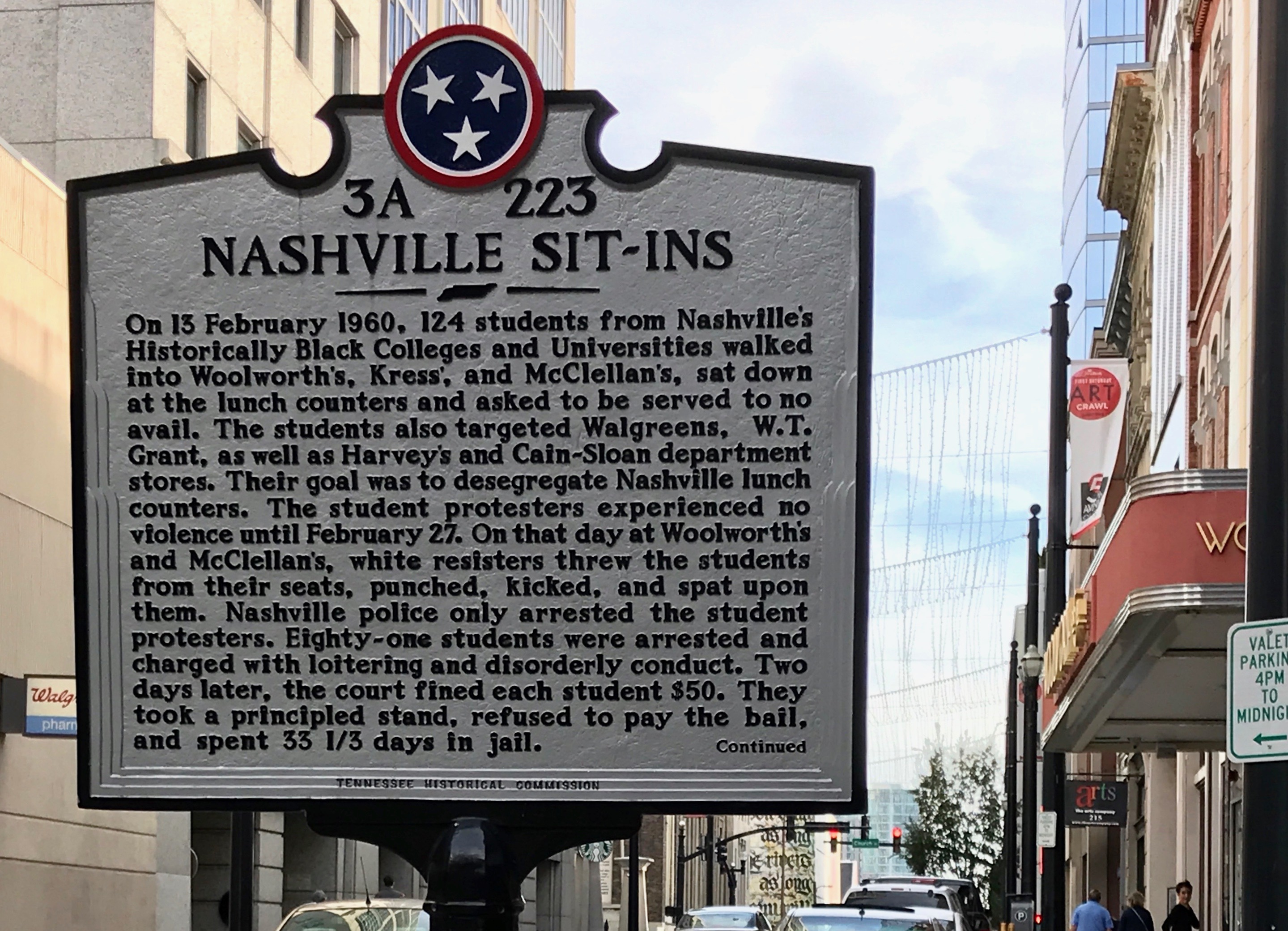
The people took their lives in their hands to make our world more just.
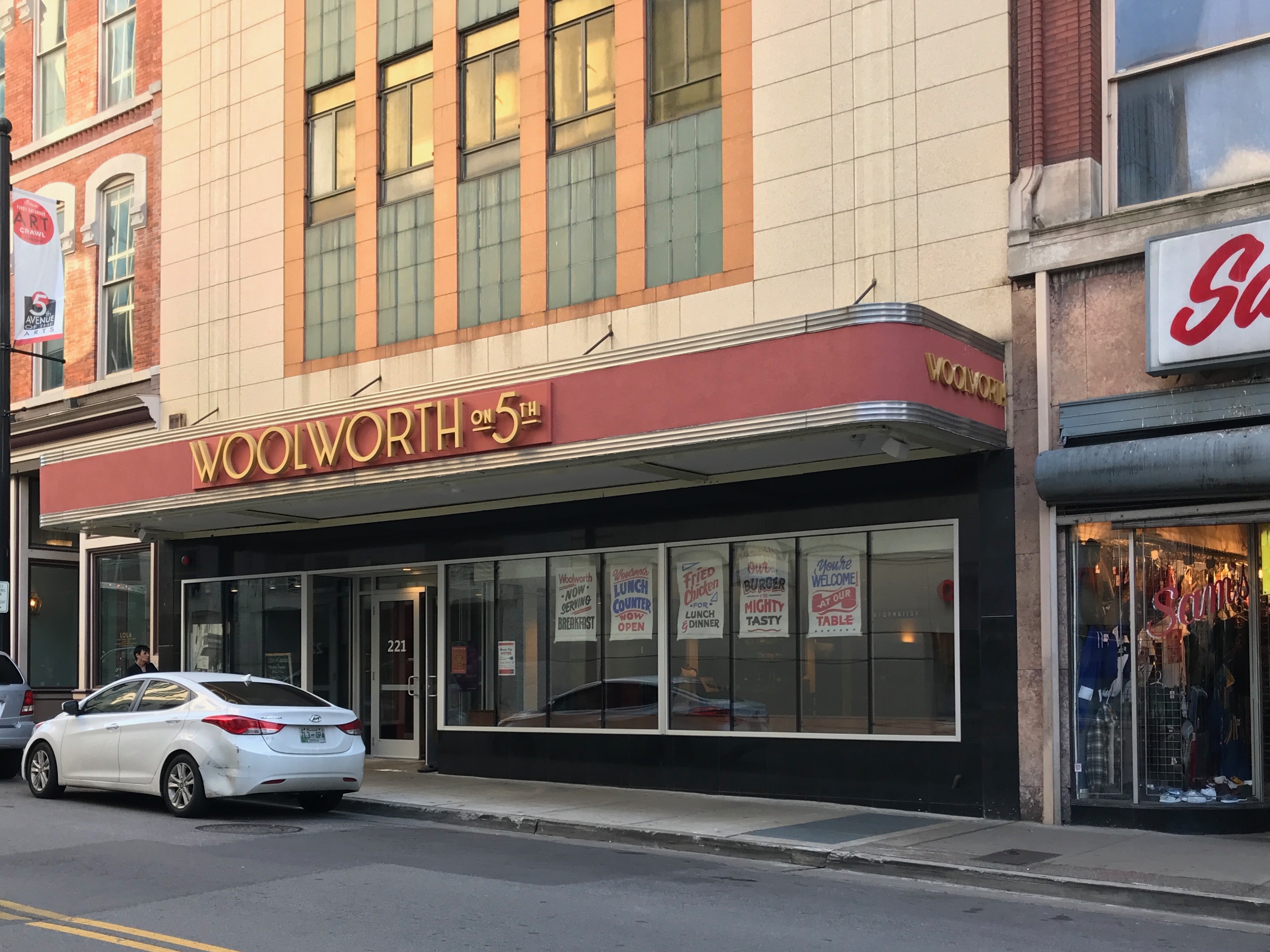
There’s the old Woolworth’s! Its now called “Woolworth on 5th.” It is part of a 1890s commercial development that housed other building before Woolworth opened there in 1913. It added a lunch counter in 1925 to cater to the downtown workers.
Blacks were prohibited from sitting at the lunch counter because of the Jim Crow laws that were established in the 19th century. Students from historically black universities – Fisk University, American Baptist College and Tennessee A&I, among others, began walking into downtownluknch counter locations. They sat down at the lunch counters and asked to be served. The first sit-in was on February 13, 1960. The second was two weeks later, on February 27. It was during this sit-in that Congressman John Lewis was arrested for the first time. Throughout his career, he has been arrested almost fifty times for non-violent protest.
The lunch counter where the sit-ins took place was on the mezzanine level. I was seated at a counter on the ground floor. Woolworth closed in 1976. It went through several different uses until this restaurant opened in 2018. It tried to keep the retro flare alive.
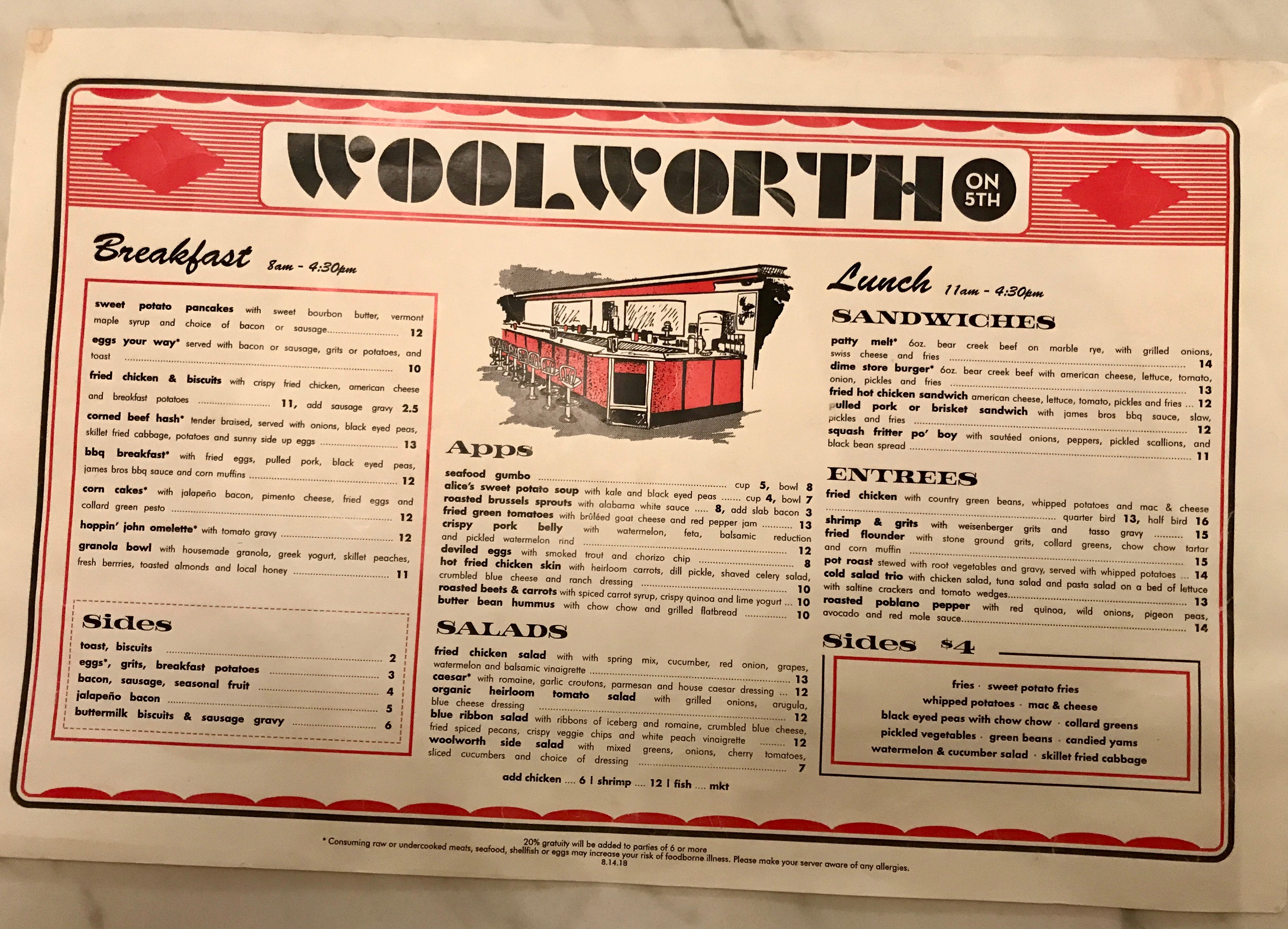
As I remember, I was there between meal times, so they weren’t offering all the items on the menu. What to do?
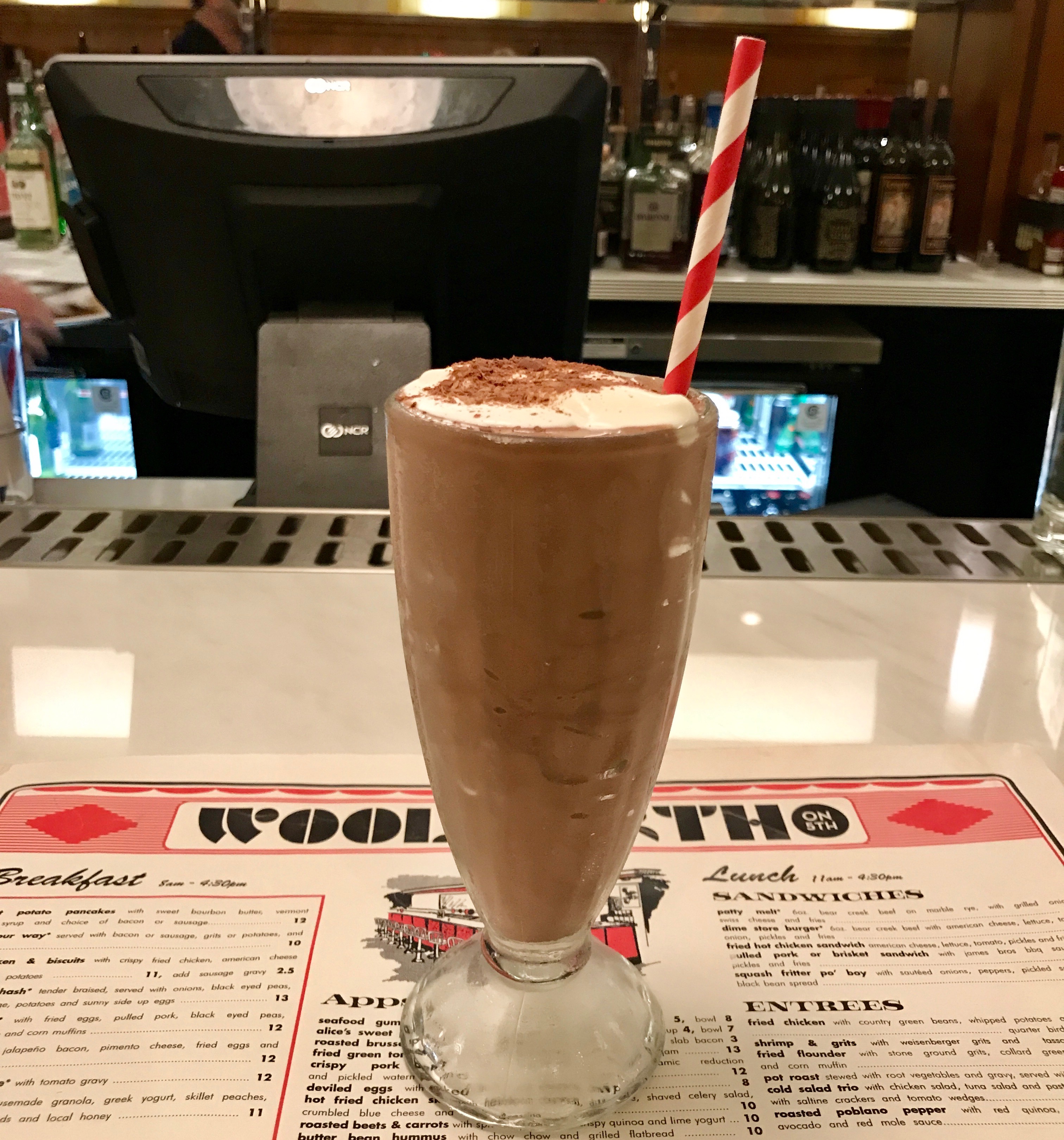
Why not a milk shake?
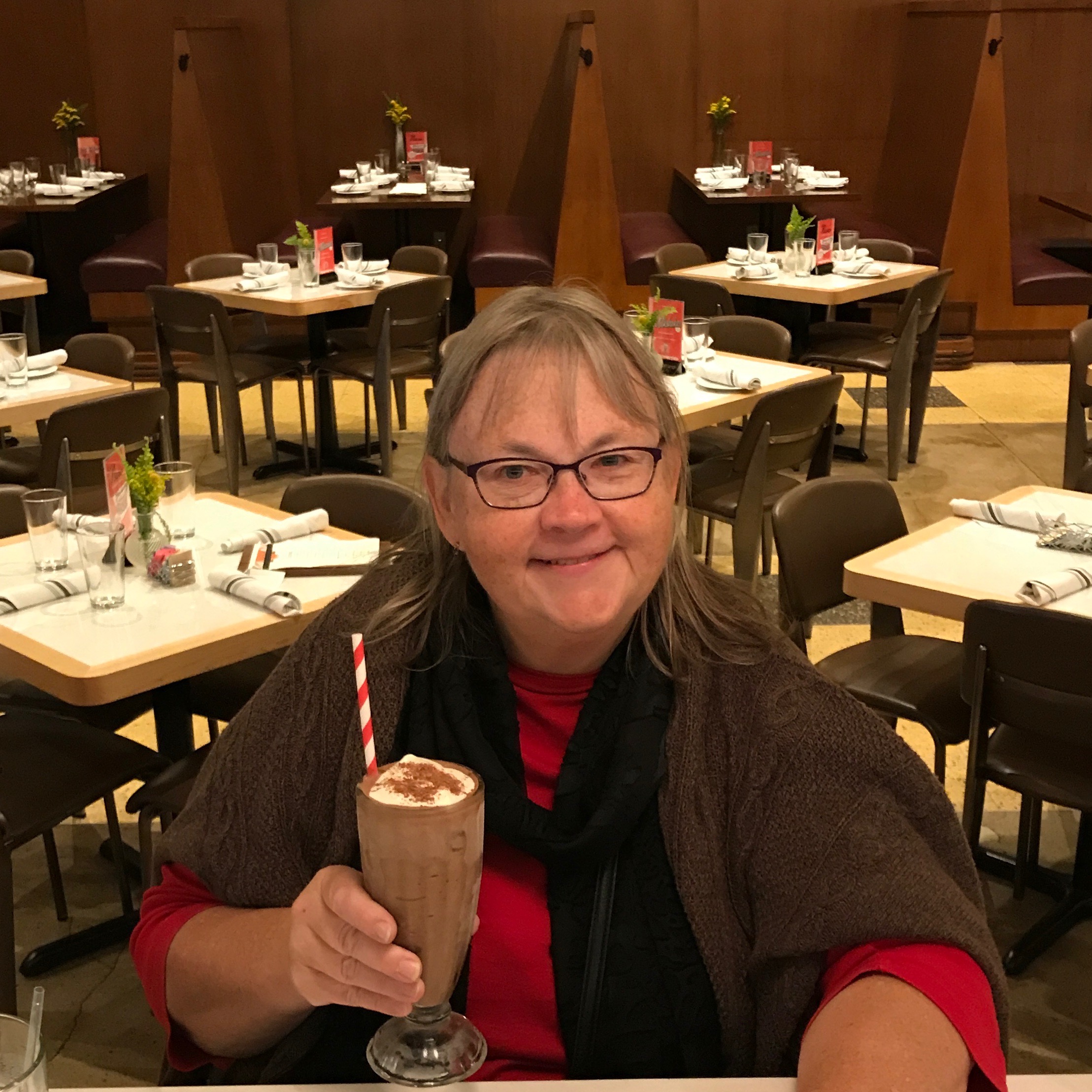
And it was mighty tasty, too!
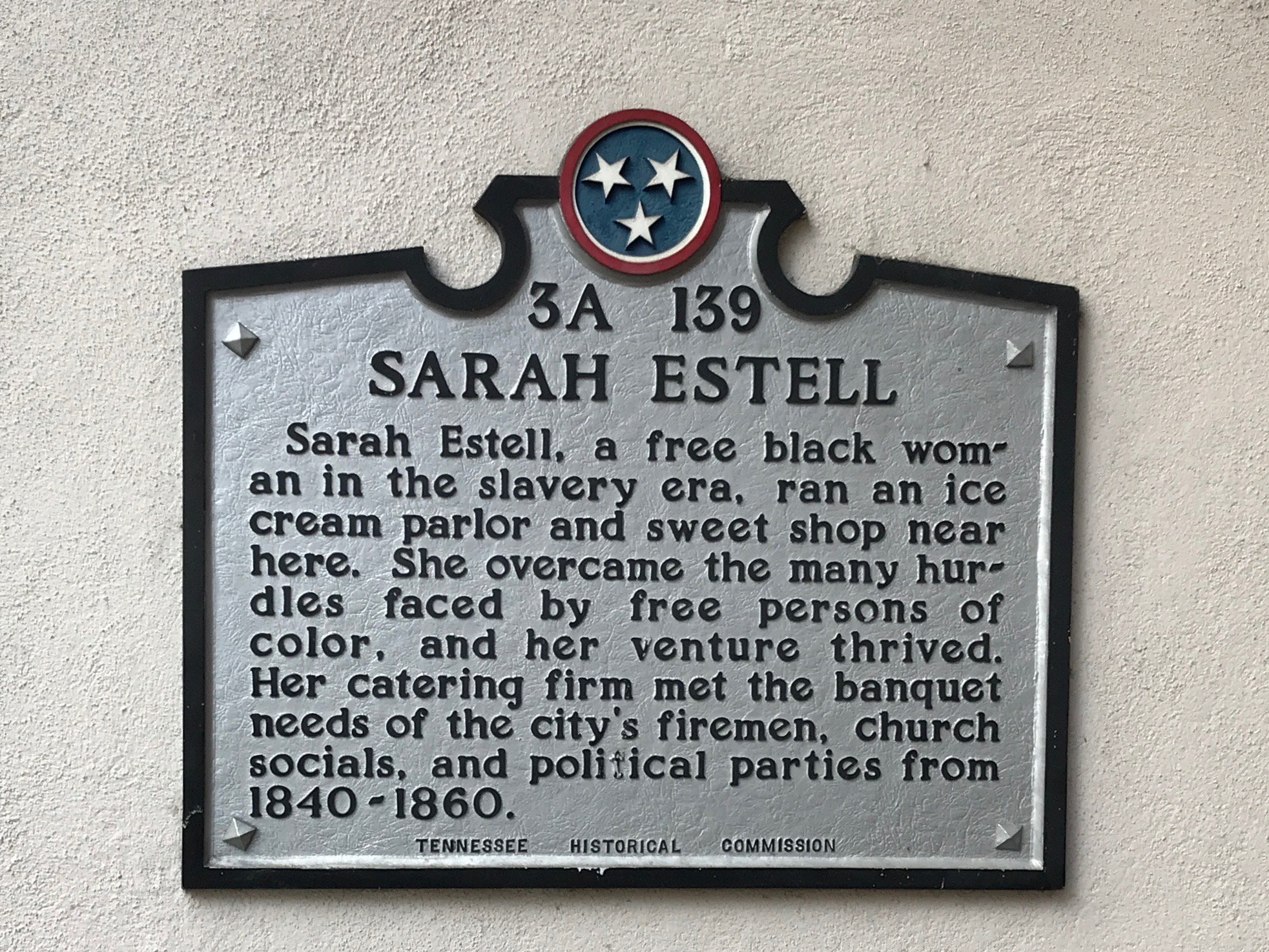
I finished up and headed back to the car. Along the way, I passed another plaque honoring black perseverance.
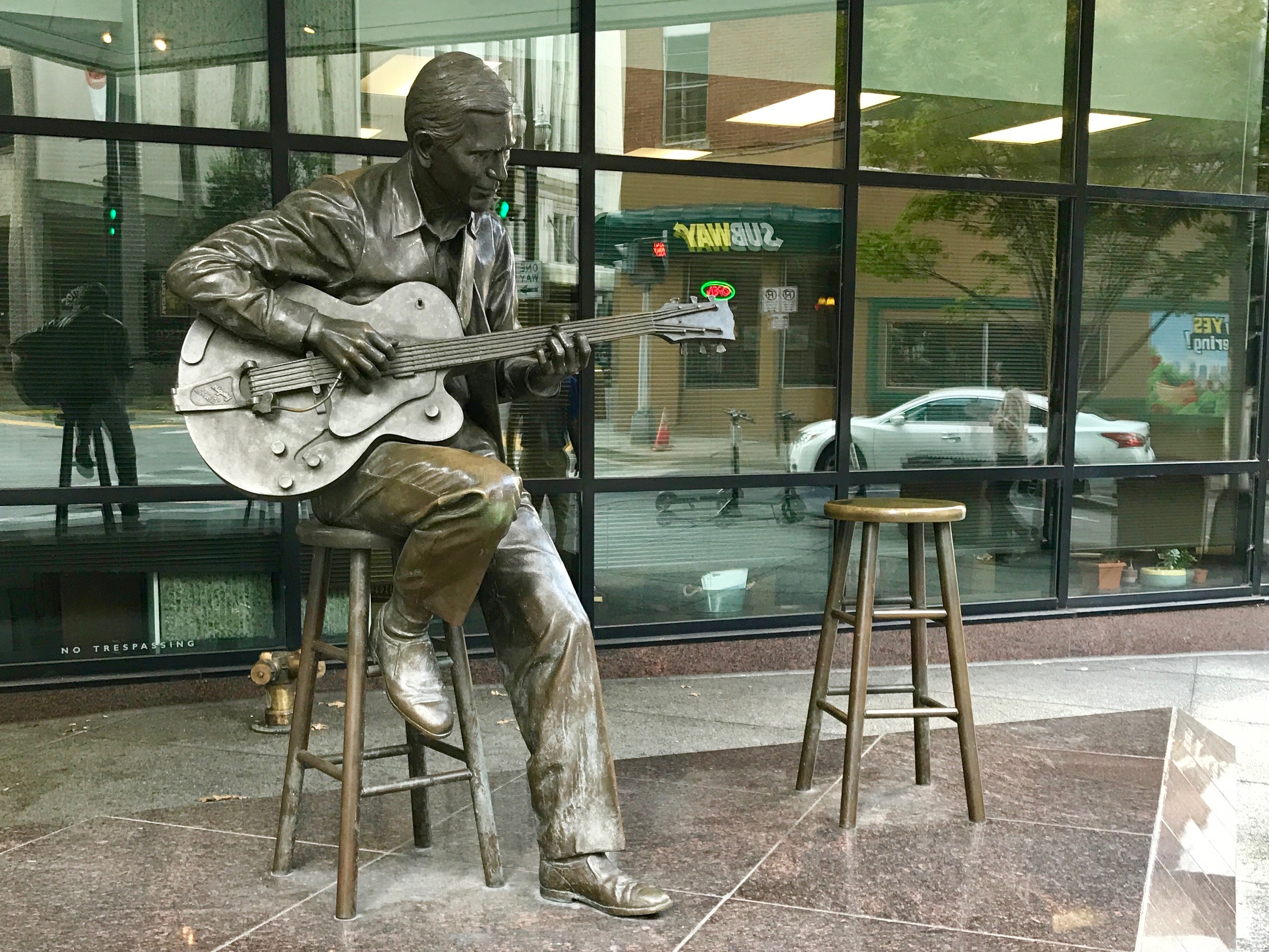
I also passed this statue of Chet Atkins, a famous musician who was born and died in Tennessee, 1924 – 2001. While he is known for having created the “Nashville Sound” but he didn’t consider himself to be a “country guitarist.” He wanted to be known, simply, as a guitarist. Rolling Stone ranked him as Number 21 on their list of “The 100 Greatest Guitarists of All Time.”
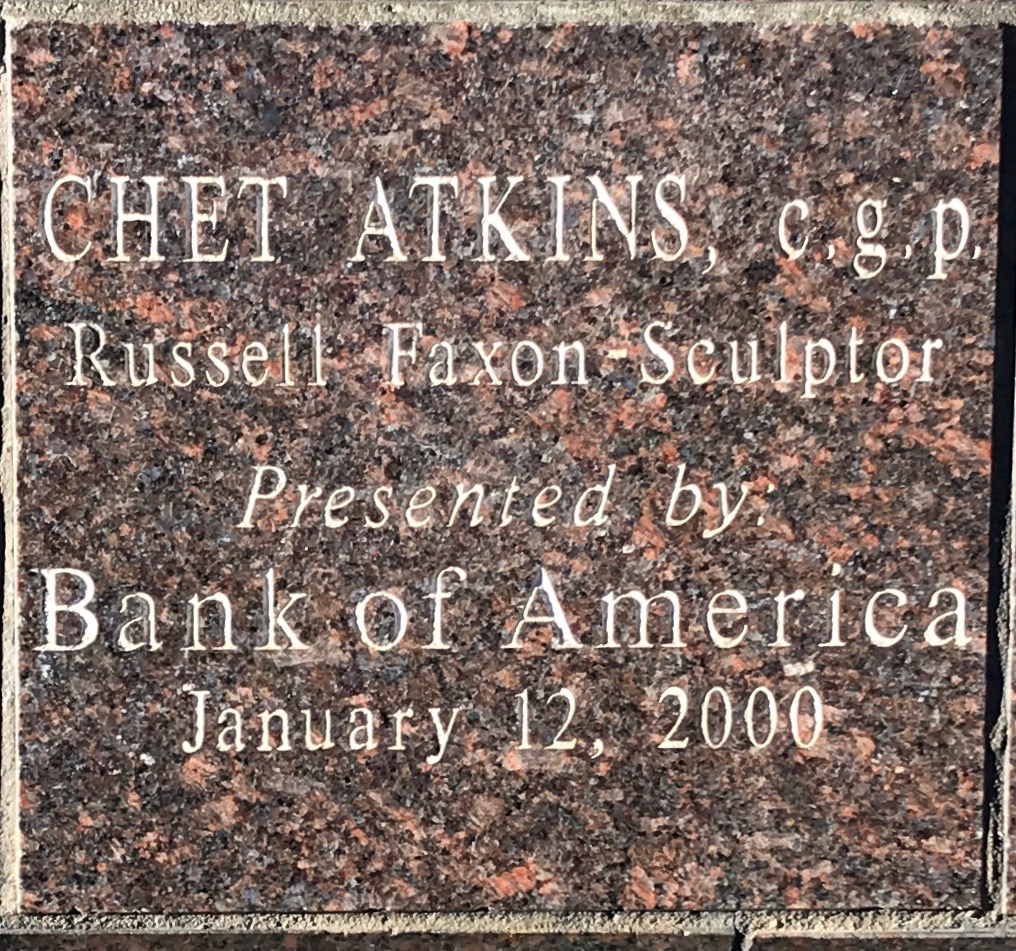
This plaque was by the statue. I thought it was nice that it was erected during his lifetime. I wondered what the c.g.p. after his name meant. I went a’googling and found out that C.G.P. stands for Certified Guitar Player. This is a designation that Chet Atkins assigned to guitar players who excelled far beyond the normal line of playing. He handed the title out to only four guitarists in his lifetime. His daughter added another guitarist. If you want to know more, click on the link above.
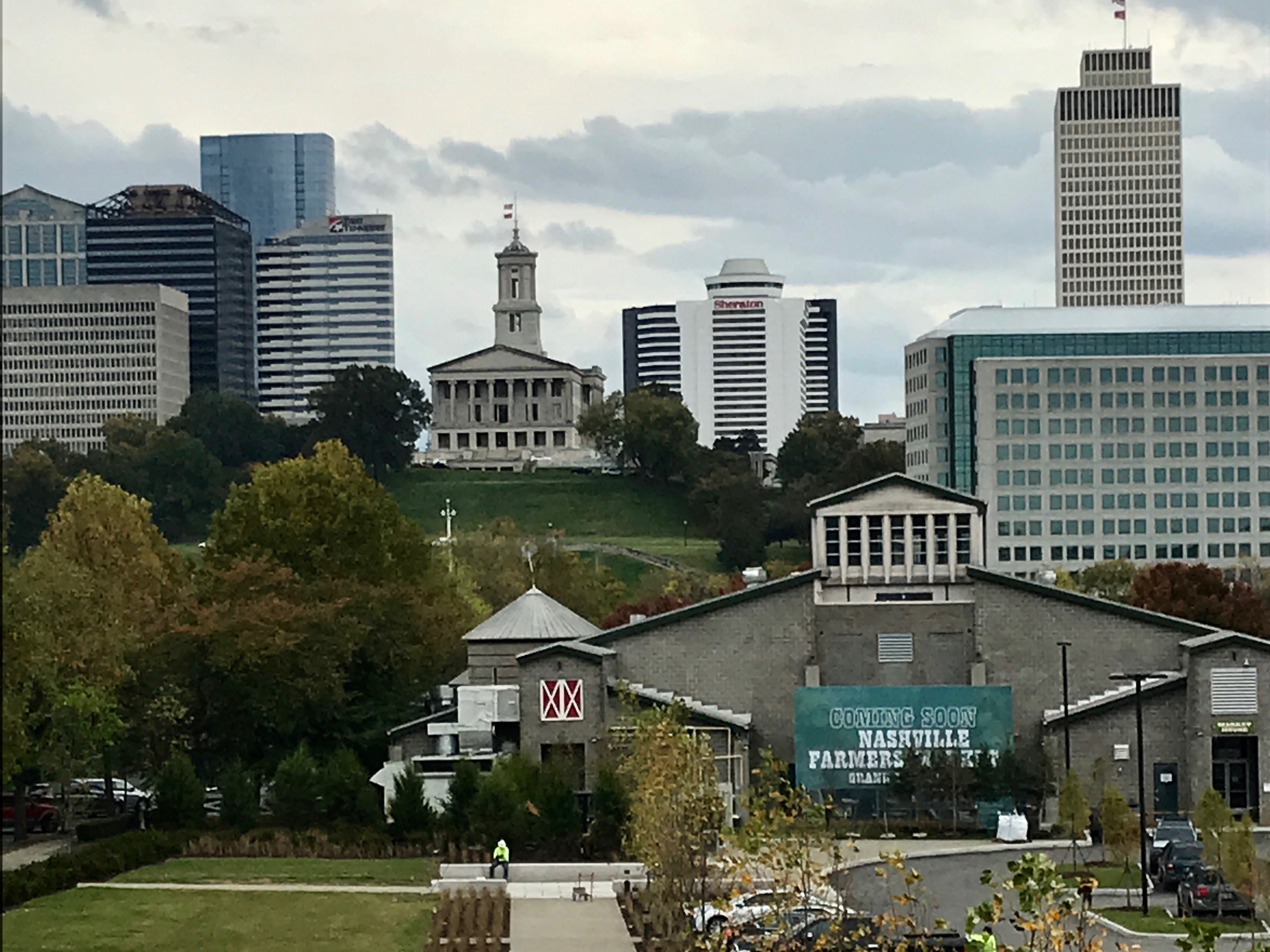
I was just about done with my day. I drove over to the Farmers Market. In spite of the sign that proclaimed “Coming Soon” it was opened for business.
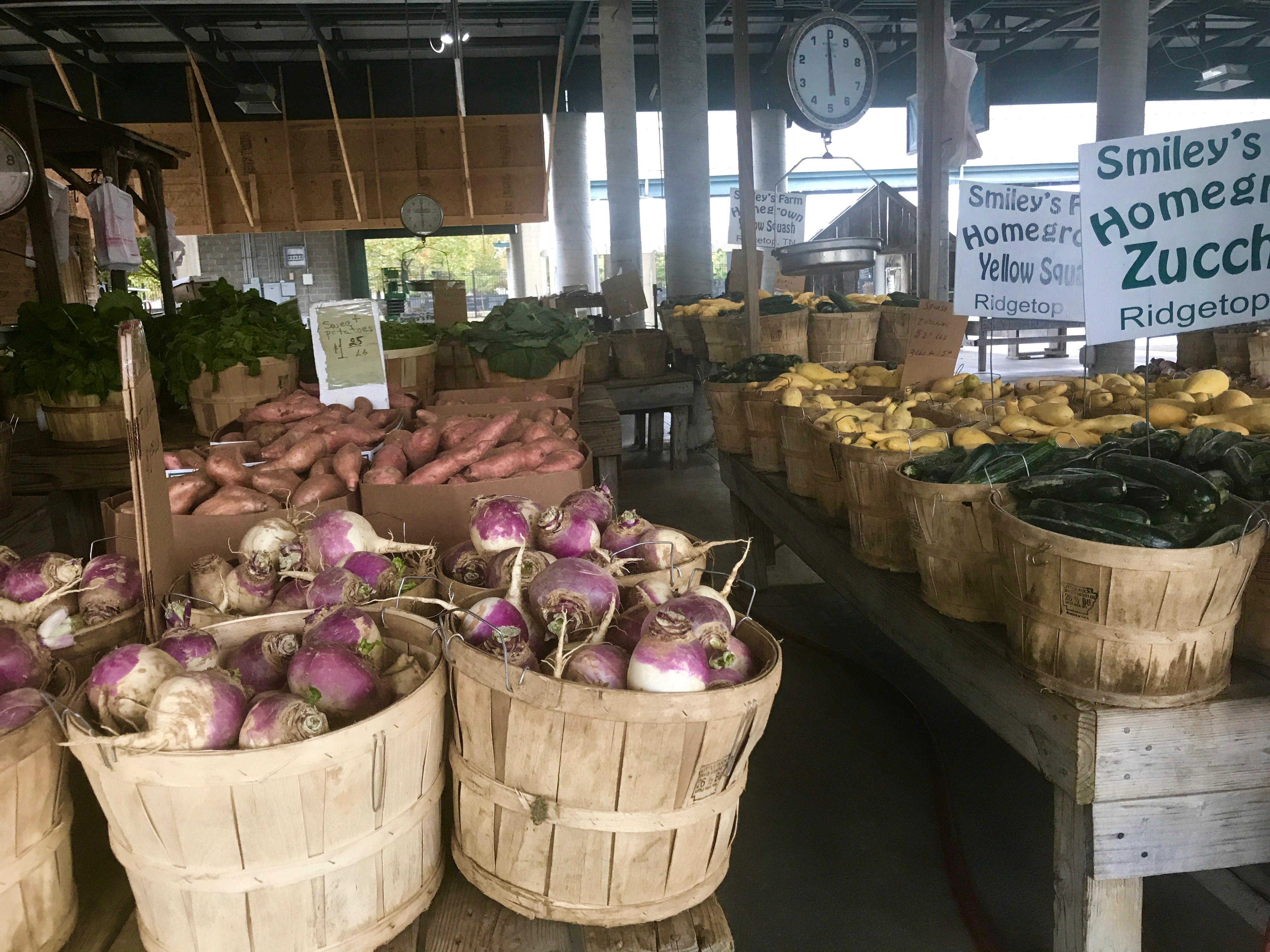
I wandered around a bit, to see what I could see.
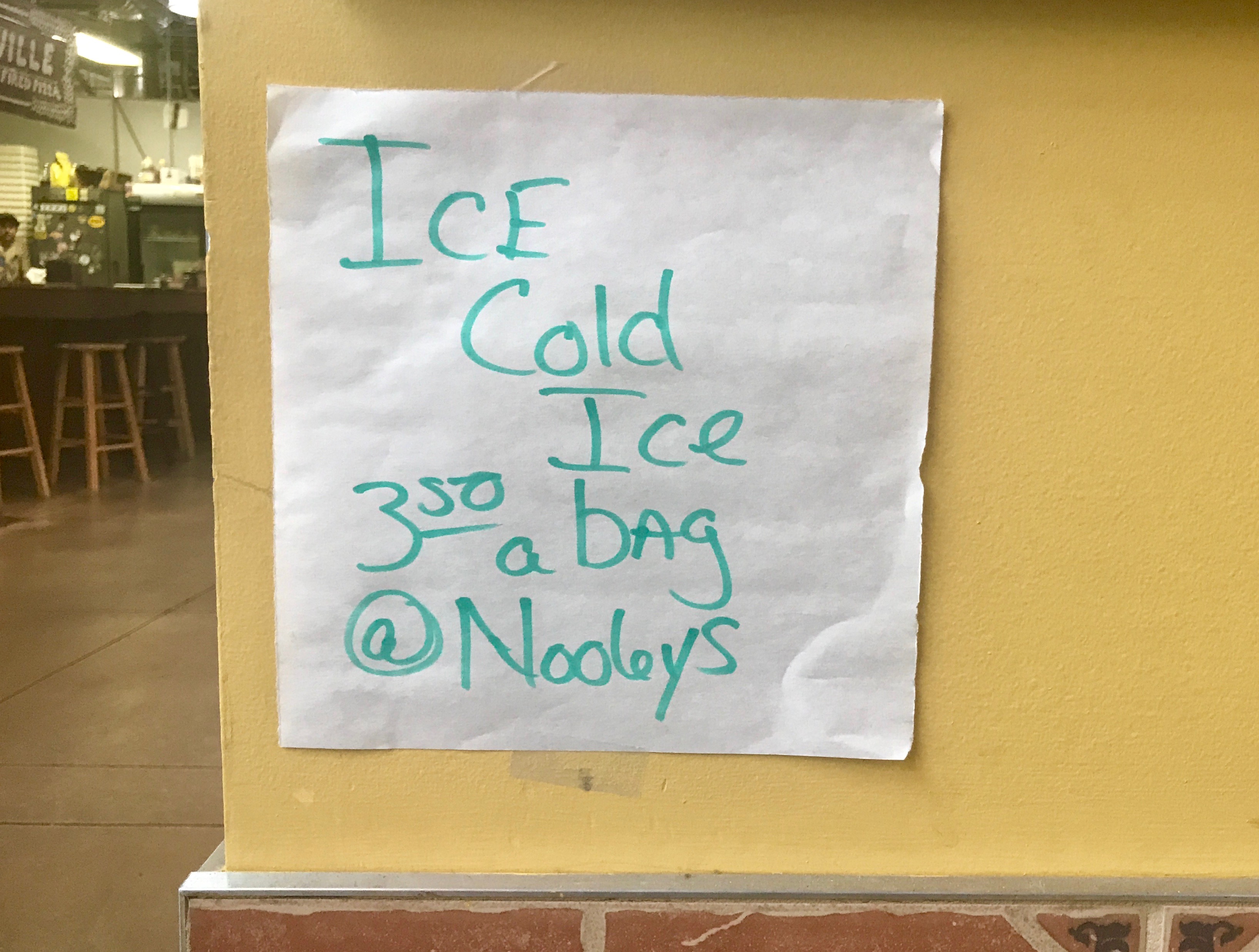
Thank goodness that they keep their ice “ice cold.” If they didn’t, I guess they would be selling water.
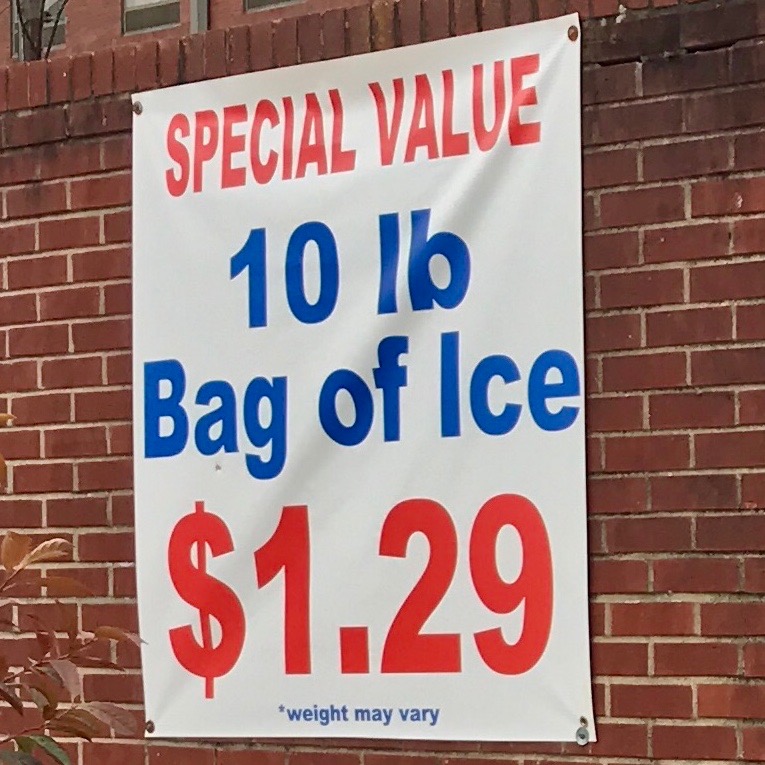
They must have a thing about ice. I saw this sign at a drive through in McDonalds.
How in the world can 10 pound bags of ice be of varying weight?
I had no time to ponder that conundrum. It was time to get ready to leave for my next stop. See you down the road!