I am truly driving in circles at this point.
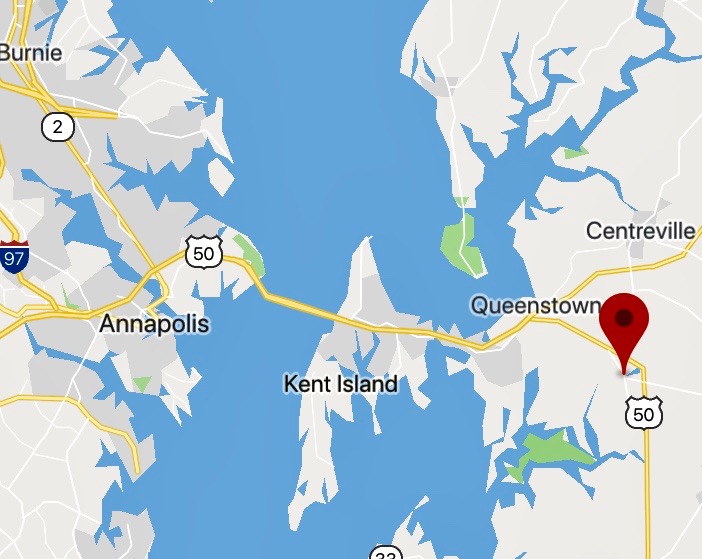
I had been in the area earlier, but the wheat harvest wasn’t in yet. I dropped off bags and told them that I would be back. I had noticed a sign for Wye Oak across from one of the elevators on my first loop, but it wasn’t a good time to stop.
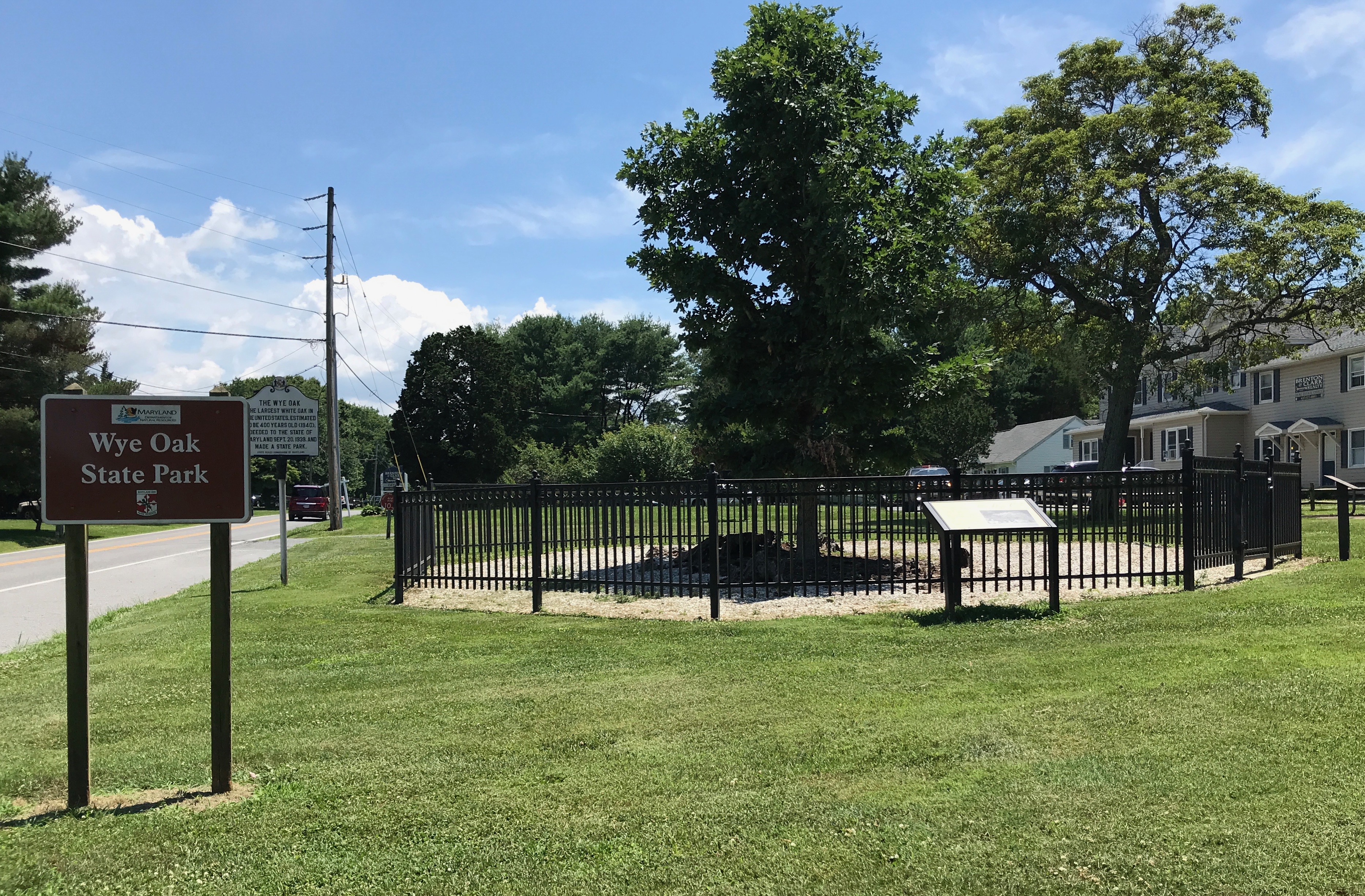
I mean, doesn’t this make you curious? The sign “Wye Oak State Park” on a lot that would make a nice playground and a rather juvenile tree inside a fence? I had to know more!
First of all, according to the Maryland Department of Natural Resources website, the park is actually 29 acres, not the acre or so out by the road. I don’t know where the rest of the park is. Maybe it’s down behind the housing development you can see in the background.
And, while the tree is rather young, if you look closely, you can see that it is growing where the original Wye Oak once stood.
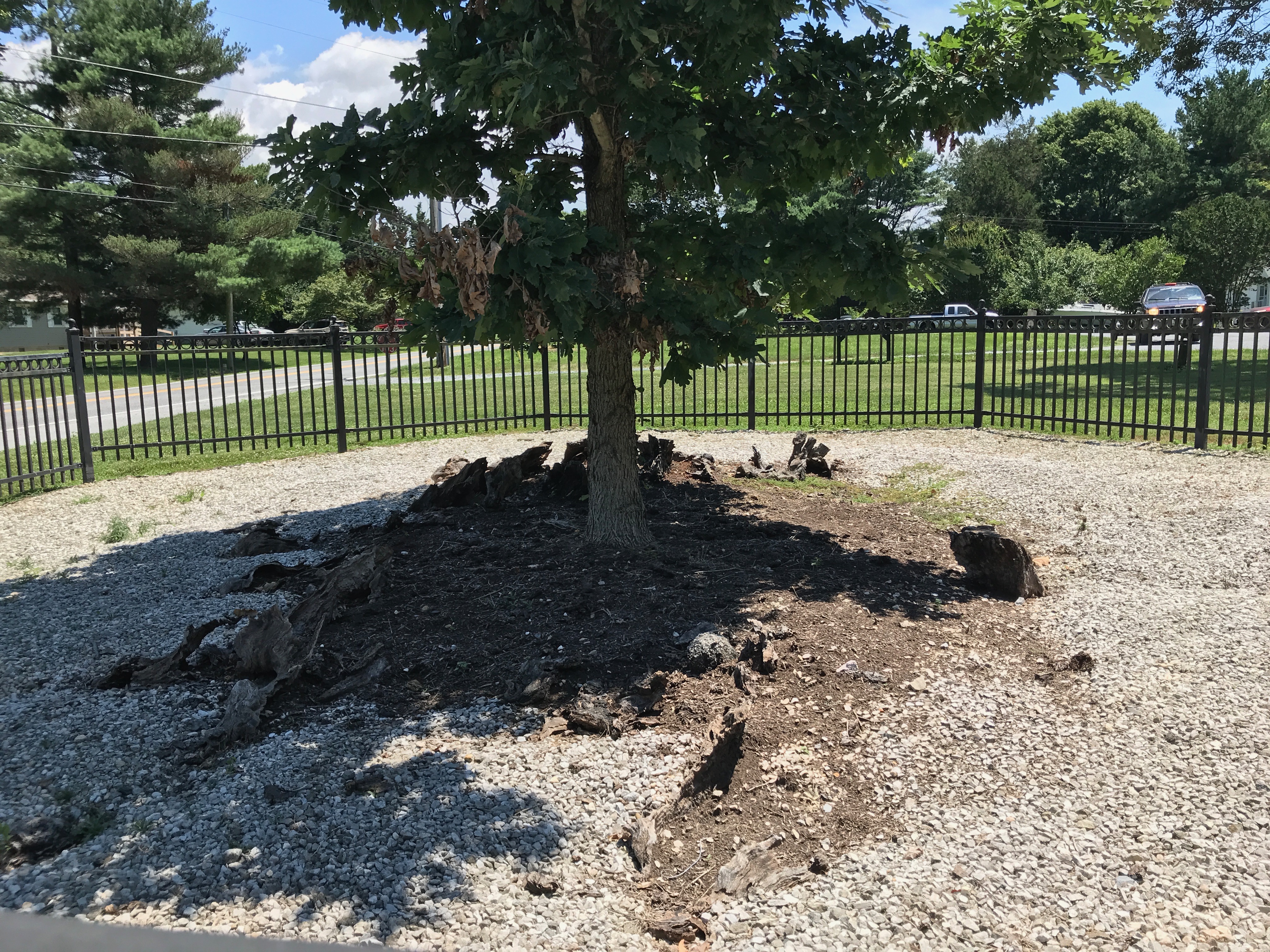
The tree growing now is a clone of the original Wye Oak, that was believed to be about 460 years old at the time of its destruction during a severe thunderstorm in 2002. The clone was planted in 2006, four years to the day of when the original tree fell in the storm. Two other clones were planted at Mount Vernon.
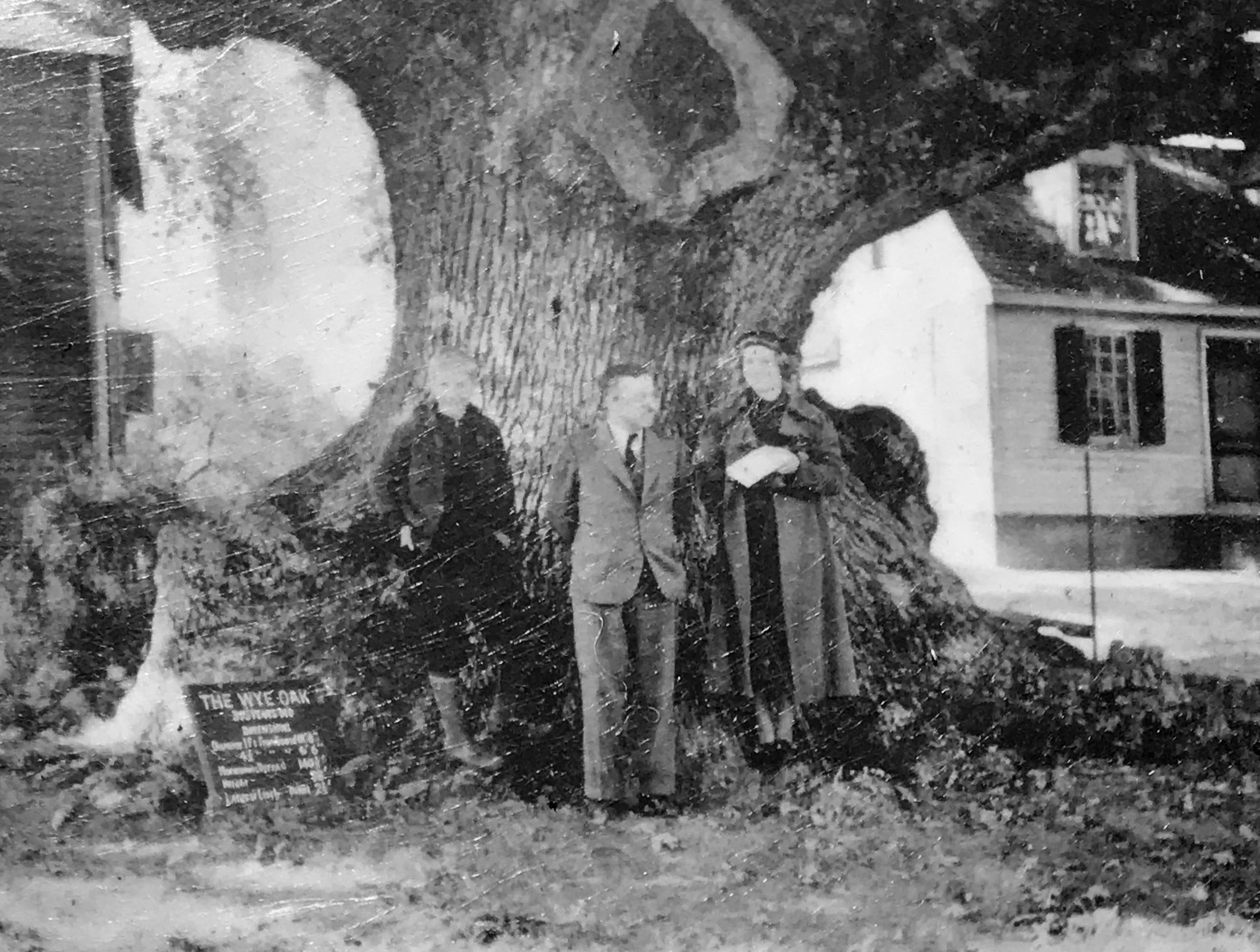
According to my Preferred Source, it measured 31 feet 10 inches in circumference at breast height. It was 96 feet high and had a crown spread of 119 feet. It is believed that the acorn that became the oak germinated around the year 1540. The Wye Oak was still bearing a maturing crop of acorns when it toppled in the thunderstorm.

This was the State Tree of Maryland State Tree and largest white oak tree in the United States from 1941 until its demise in 2002.
Incidentally, this tree was the inspiration for the American Forestry Association’s National Registry of Big Trees. Maryland State Forester Fred W. Besley made the first official measurement of the tree in 1909.
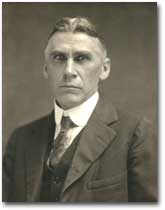
In 1919, it was featured in American Forestry magazine as the first tree in the American Forestry Association’s “Tree Hall of Fame.” Besley founded the Big Tree Champion Program in 1925. As a result, the American Forests Association named the Wye Oak one of its first National Champion Trees.
The scientific name for the white oak is Quercus alba, and the current National Champion Tree for the Quercus alba is in Brunswick County, Virginia.

The current Champion Tree has a score of 451. They Wye Oak had a score of 518.
The score is determined by applying this formula to the measurements of the tree:
Trunk Circumference (in inches) + Height (In feet) + 1/4 Average Crown Spread (in feet) = Total Points
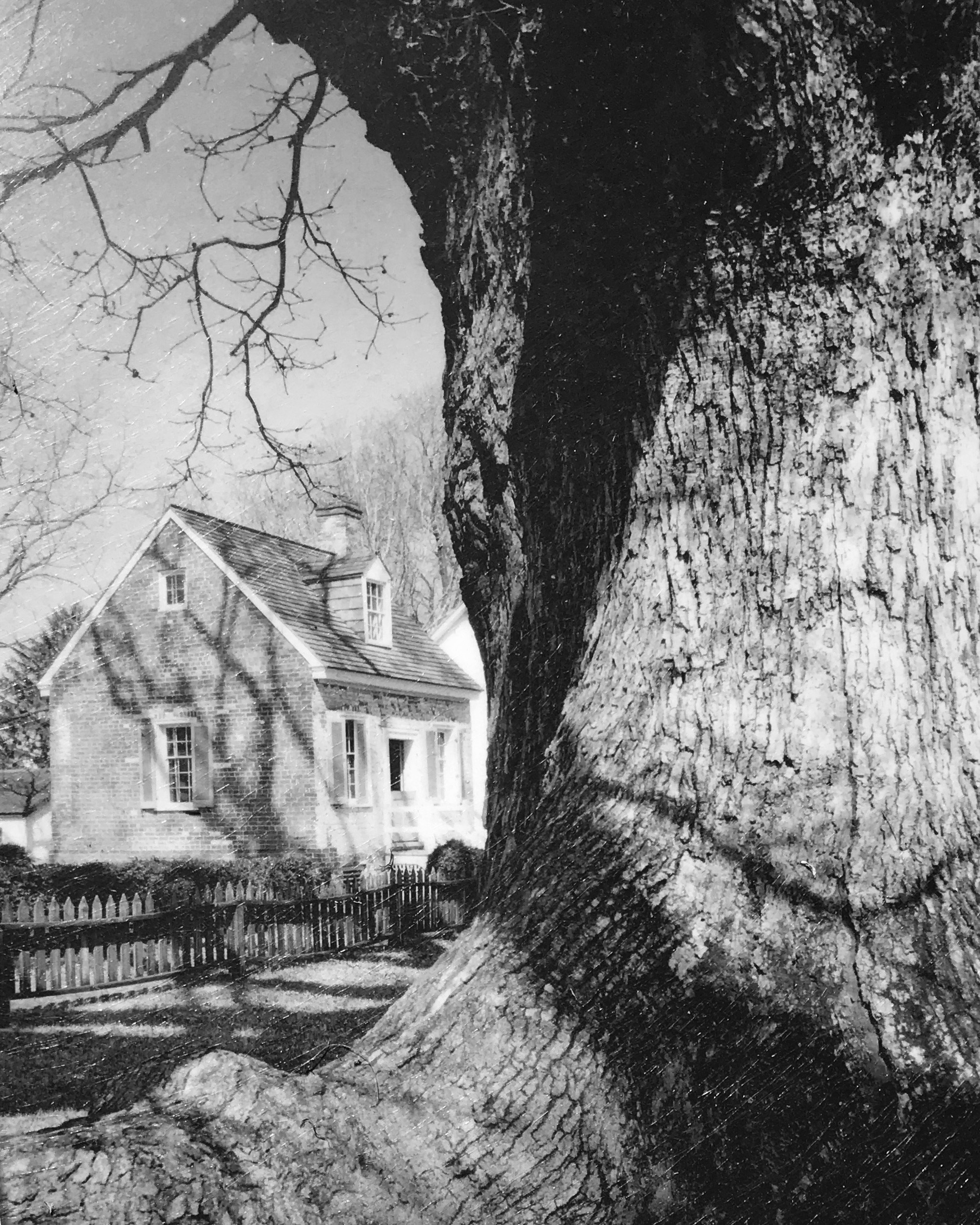
The Wye Oak was one BIG tree!
But, all living things have a life span. The tree lost a large limb in 1956, which sparked concerns. Another large limb fell in 1984. That one weighed 70,280 pounds!
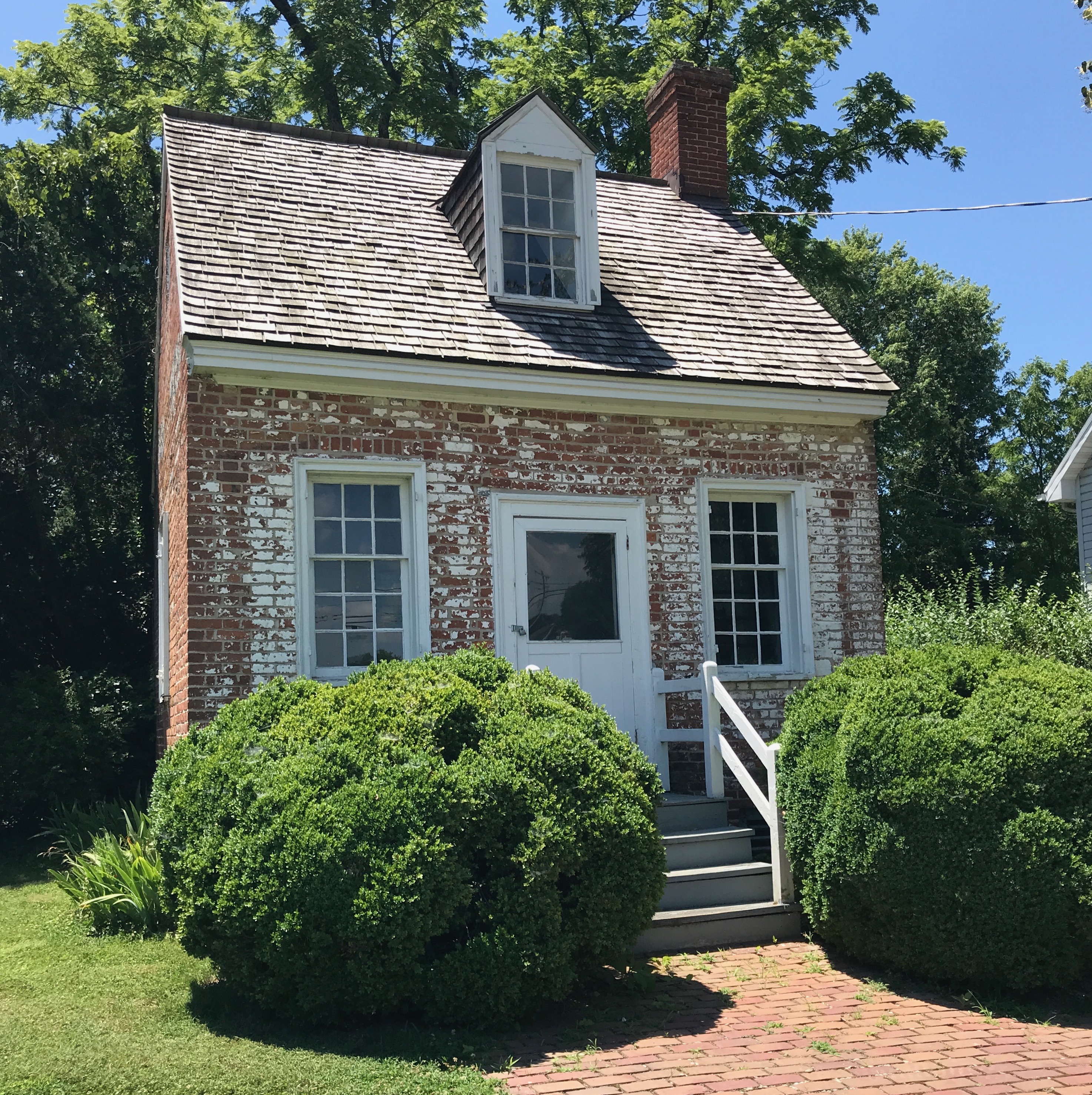
The little building you can see in the background is still standing. It is called the “Little House” in the shade. It dates back to about 1800, and local lore holds that it once served as a one-room schoolhouse.
The Queen Anne Garden Club restored the “Little House” in 1952. The foundation was strengthened, windowpanes repaired and a walkway was laid. They furnished the house as a classic American one-room schoolhouse, although it may have been a dwelling.
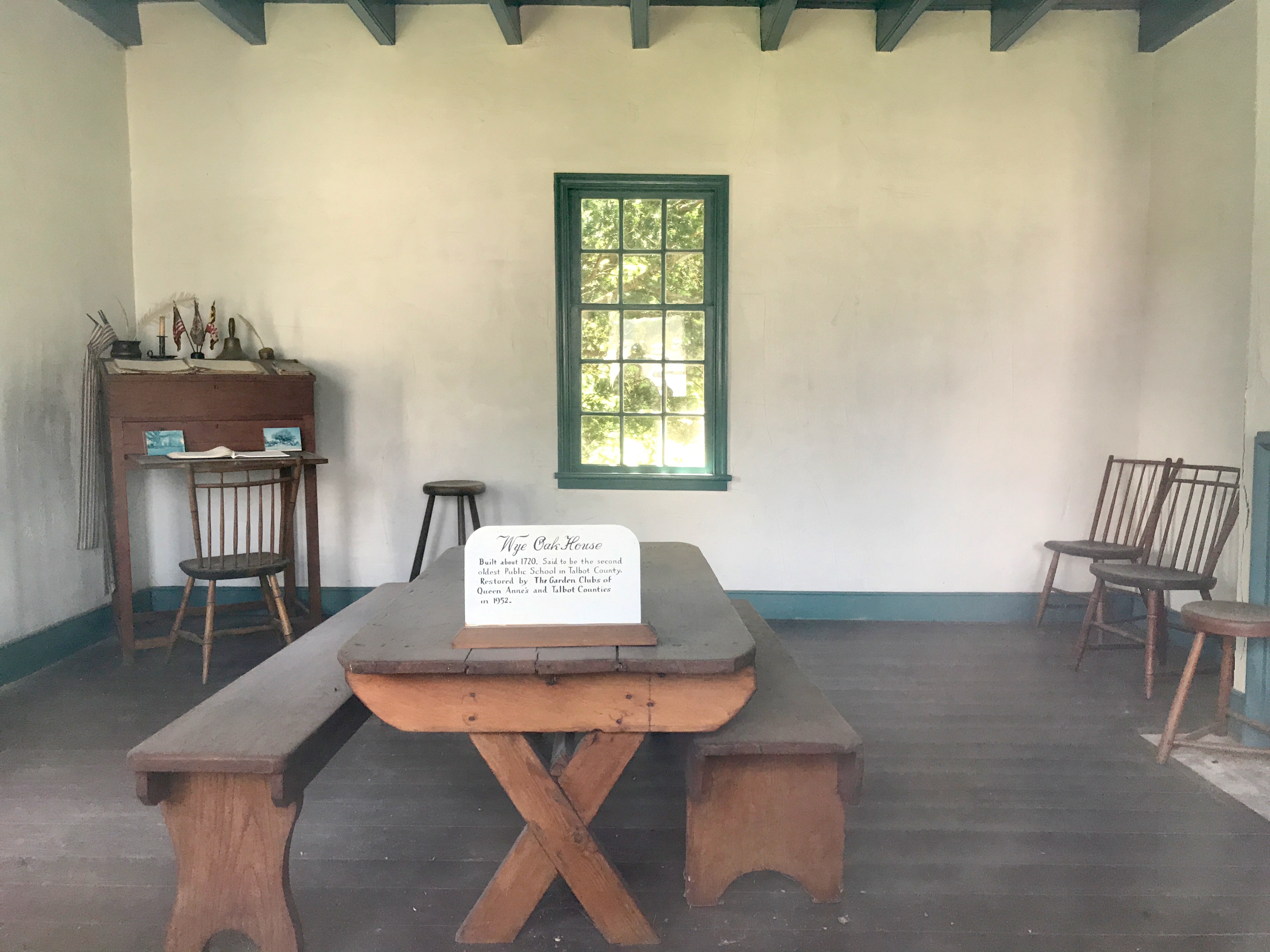
And while on of the interpretive plaques says that it was built around 1800, I’ll let you read the sign on the table for yourself.
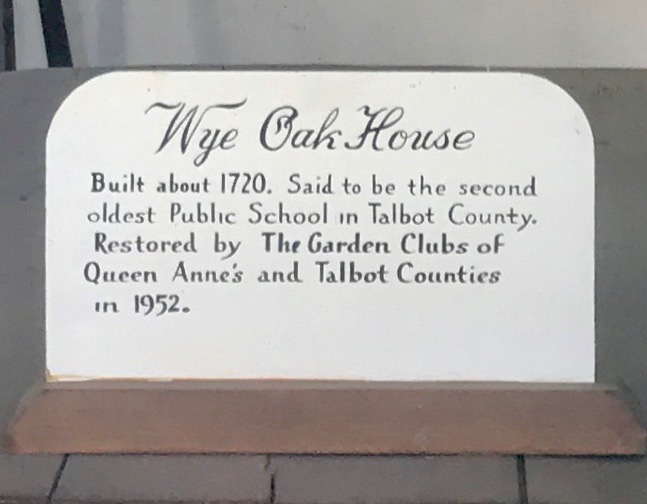
I guess there are alternative facts.

My tour completed, I got back in the Ford Transit and got ready to rack up more miles on the odometer.
I had miles to go before I could call it a day.