Rain, rain, go away…
I arrived at Faver-Dykes State Park and got settled in. When it wasn’t raining, it was drizzling. When it wasn’t drizzling, it was overcast. In spite of the fact that the park wasn’t too far from “civilization” I couldn’t get a phone signal or pick up a TV signal. In fact, even my radio reception was spotty. So, I ended up spending the first couple of days encamped at City Coffee Company, just down U.S. 1 in St. Augustine.
I got caught up on some blog posts, thanks to their free wifi.

I finally got to try a Cuban sandwich. The presentation was beautiful, and the mug they gave me for the coffee was as big as a bathtub! I got to refill it, as needed.
I took advantage of the gloomy weather to get some laundry done. The laundromat had free wifi, too, but could the password have been any more complicated?
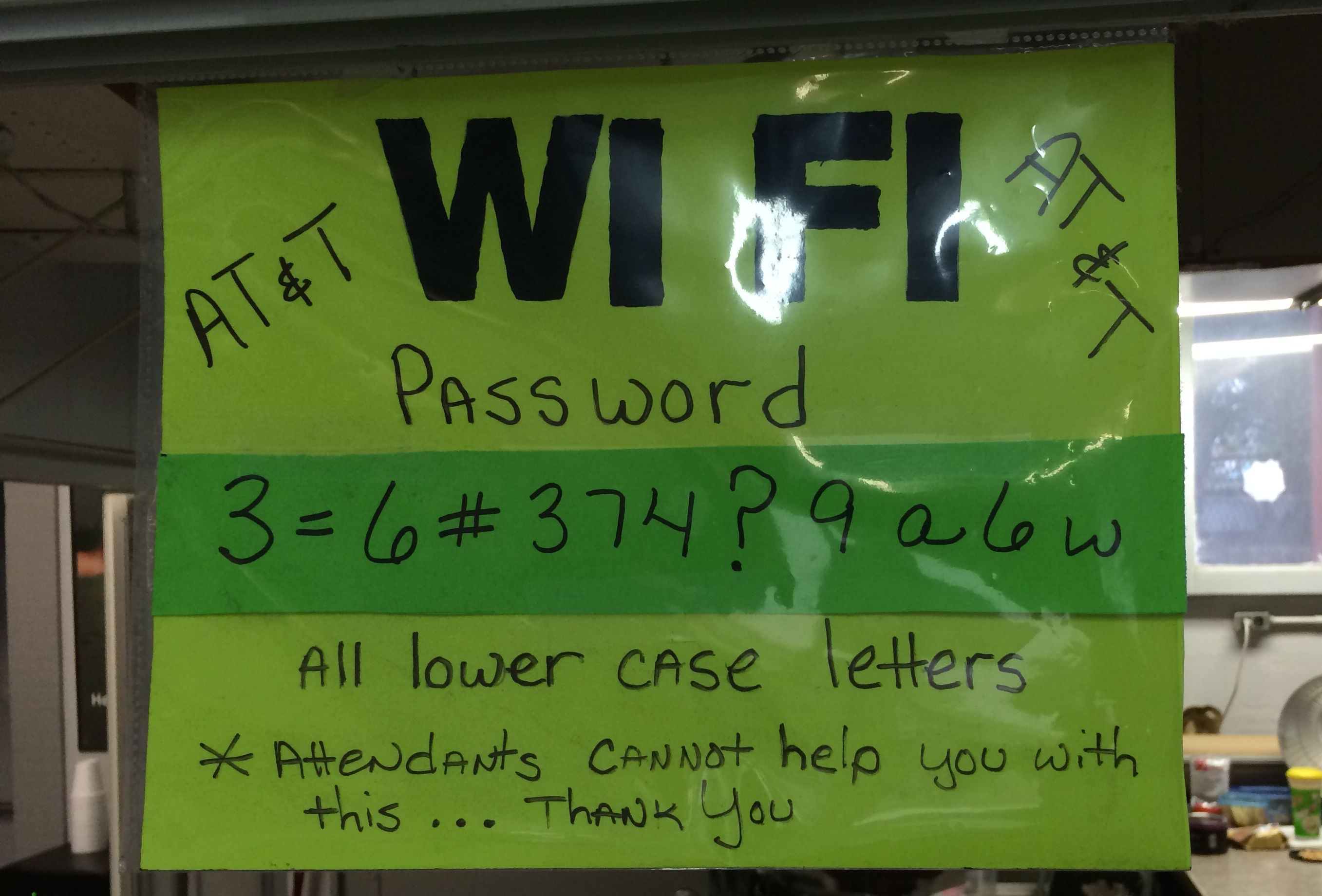
And, notice the welcoming message at the bottom of the sign. At least they said thank you.
The weather finally became a little less dense by my third day, so I decided that I would do my touristic duty and visit St. Augustine.
I parked in the garage. $12 for the whole day, and the garage was very well located, so I figured that it was worth it. My first stop was the tourist information office right across from the garage.
The information specialist was great. She gave me a map and indicated the best places to go. She even pointed out the attractions that were free! She was so polished and professional that I just knew she had to be a Certified Tourism Ambassador and I asked her if she was. She looked surprised and replied that she was. I told her that she did such a good job that I knew she had to be. I had been a CTA when I worked for Discover Kalamazoo. It turns out that she was from Mattawan – just a few exits down I-94 from Kalamazoo. What a small world!
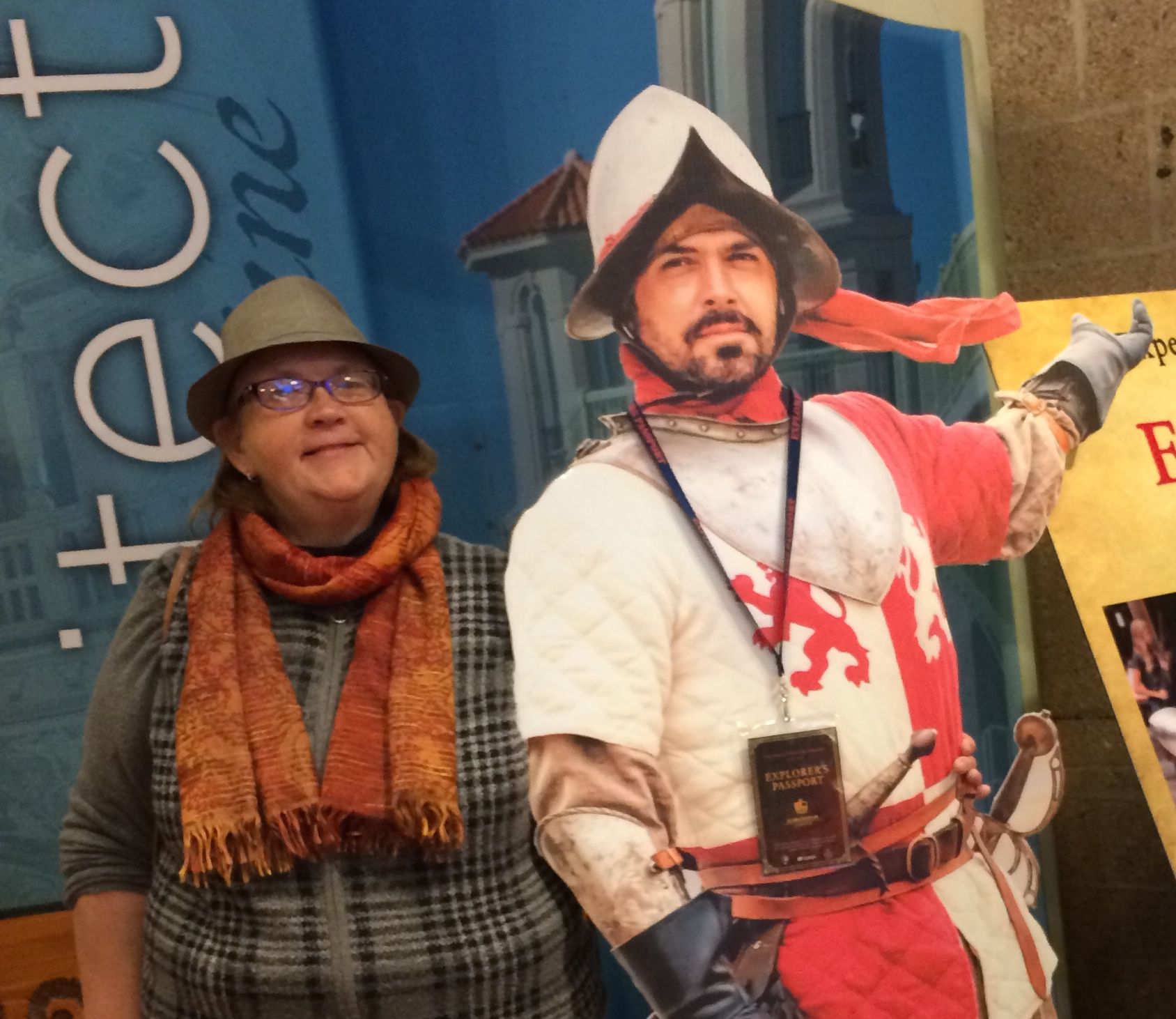
The information specialist took a photo of me with the conquistador and then I set off to explore the city.
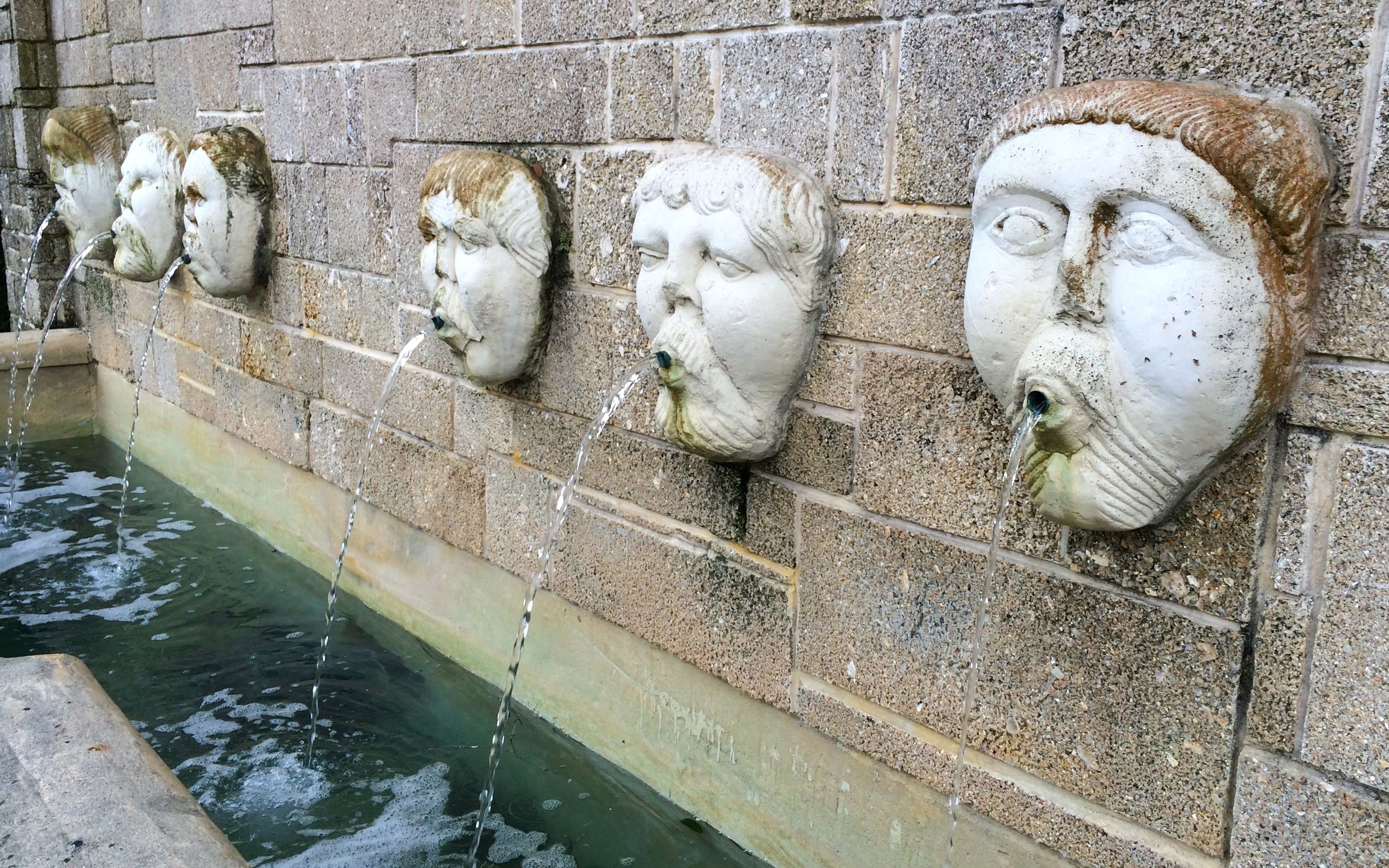
This set of masks is a gift to the City of St. Augustine from its sister city, Aviles, Spain, which is the birthplace of Pedro Menendez. Menendez is credited as having founded St. Augustine in 1565.
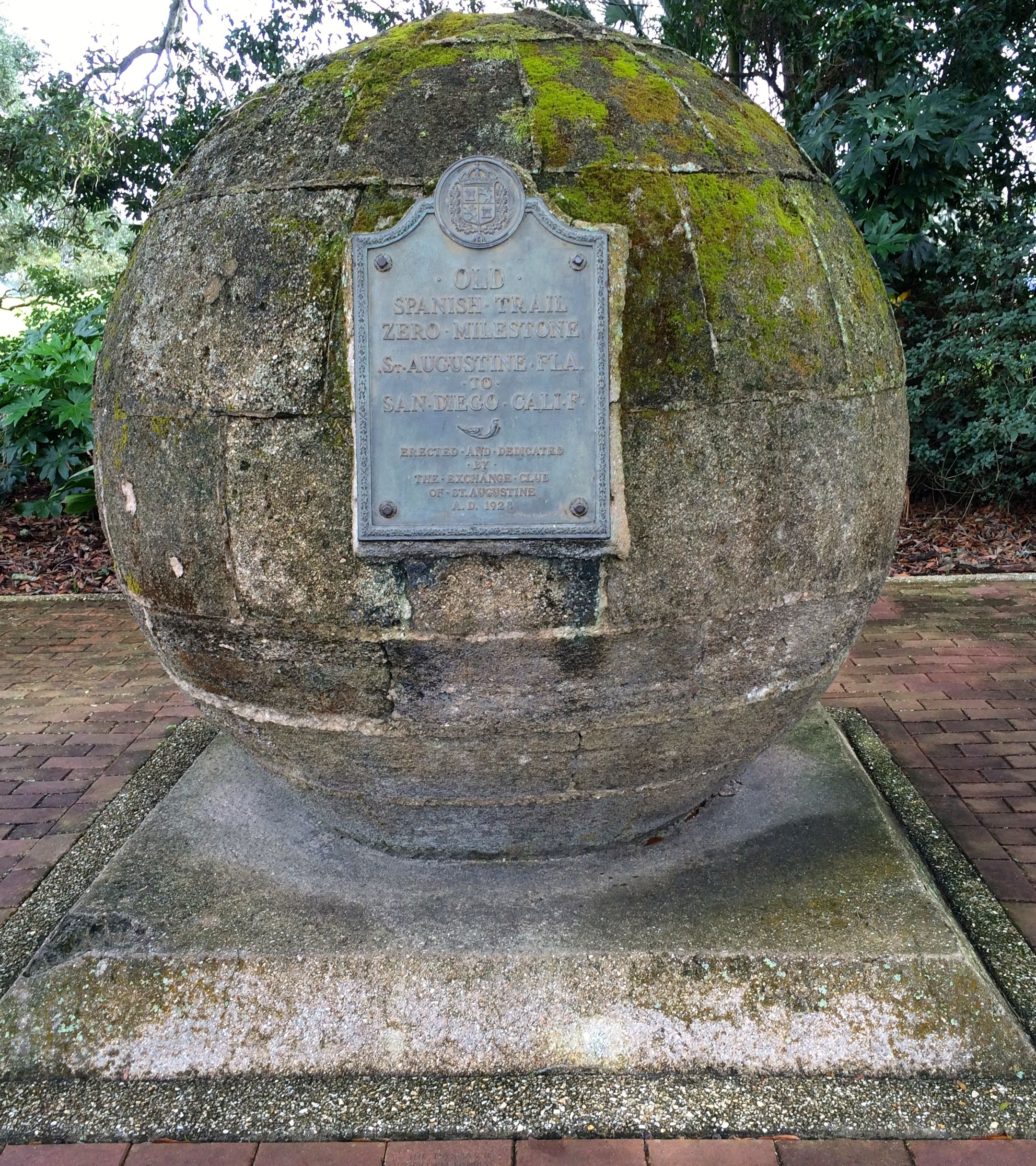
Begun in 1915, the Old Spanish Trail was an early attempt at a transcontinental road right at the beginning of the automobile era.

And mile zero was right there in St. Augustine.
After admiring those two unexpected finds, I headed over to the Castillo de San Marcos. This is a National Park, so I got to use my American the Beautiful pass, and I got to add more stamps to my National Park Passport.
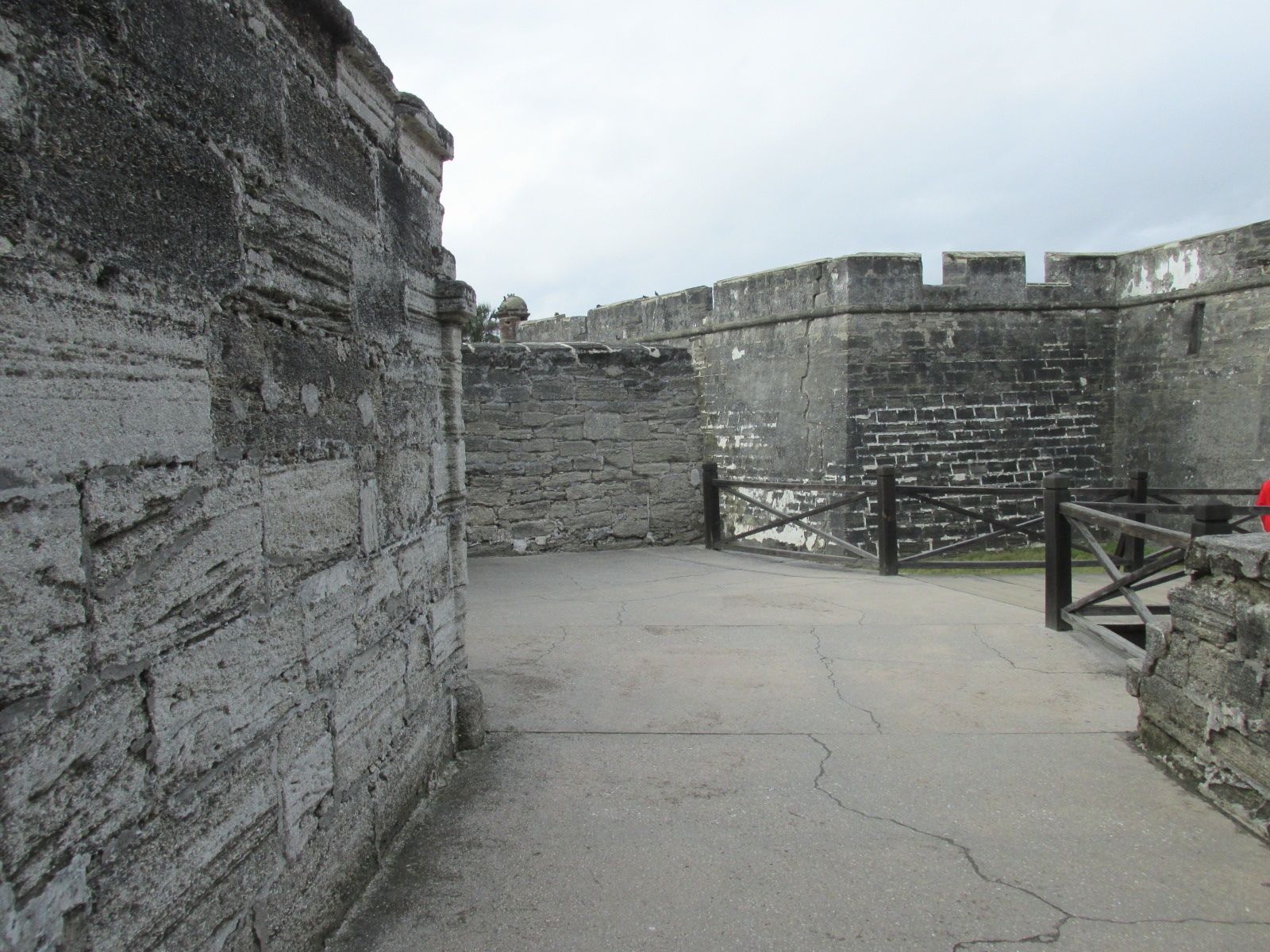
I wended my way in. It would be tricky to enter this fort if you were not a welcome guest.
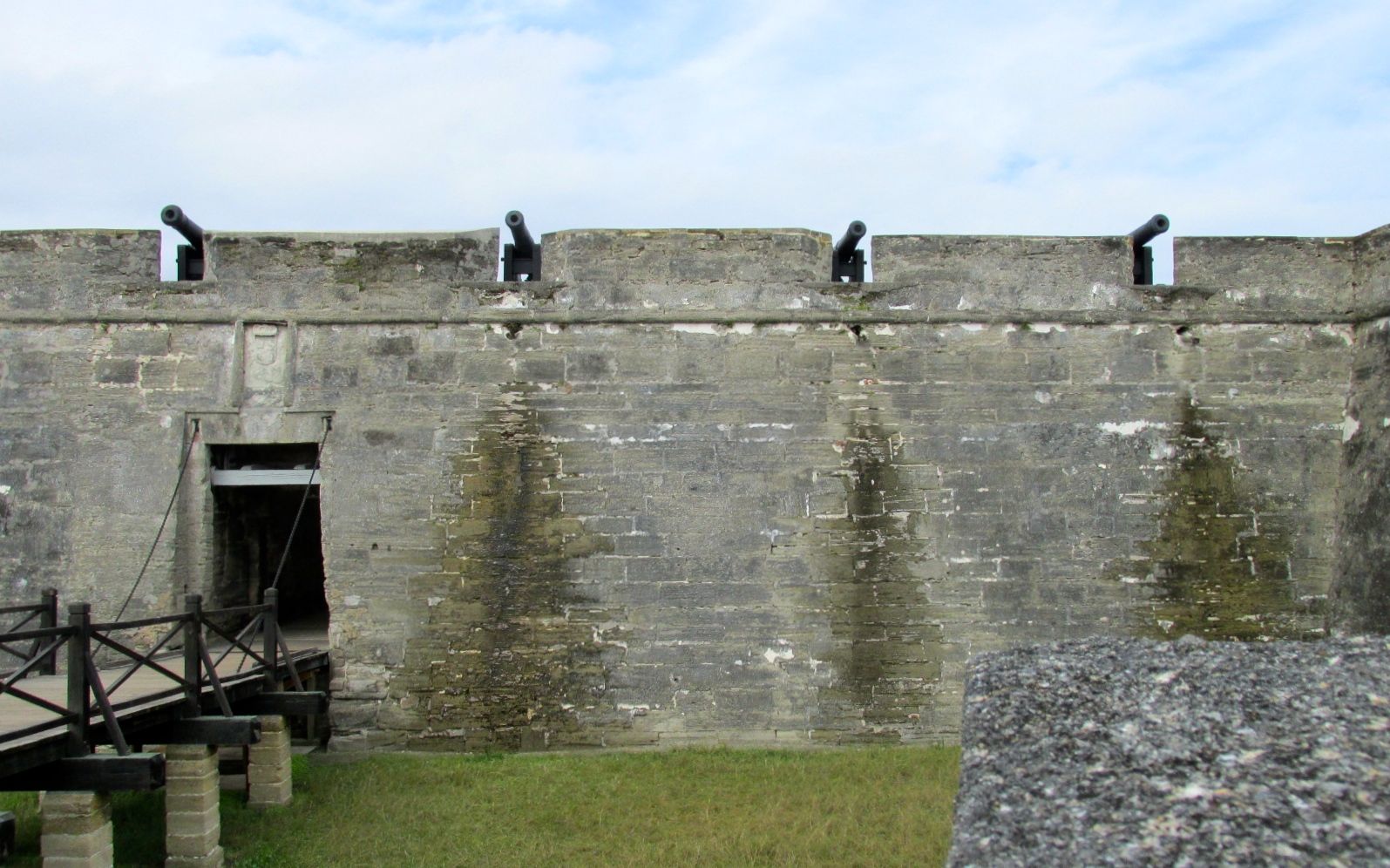
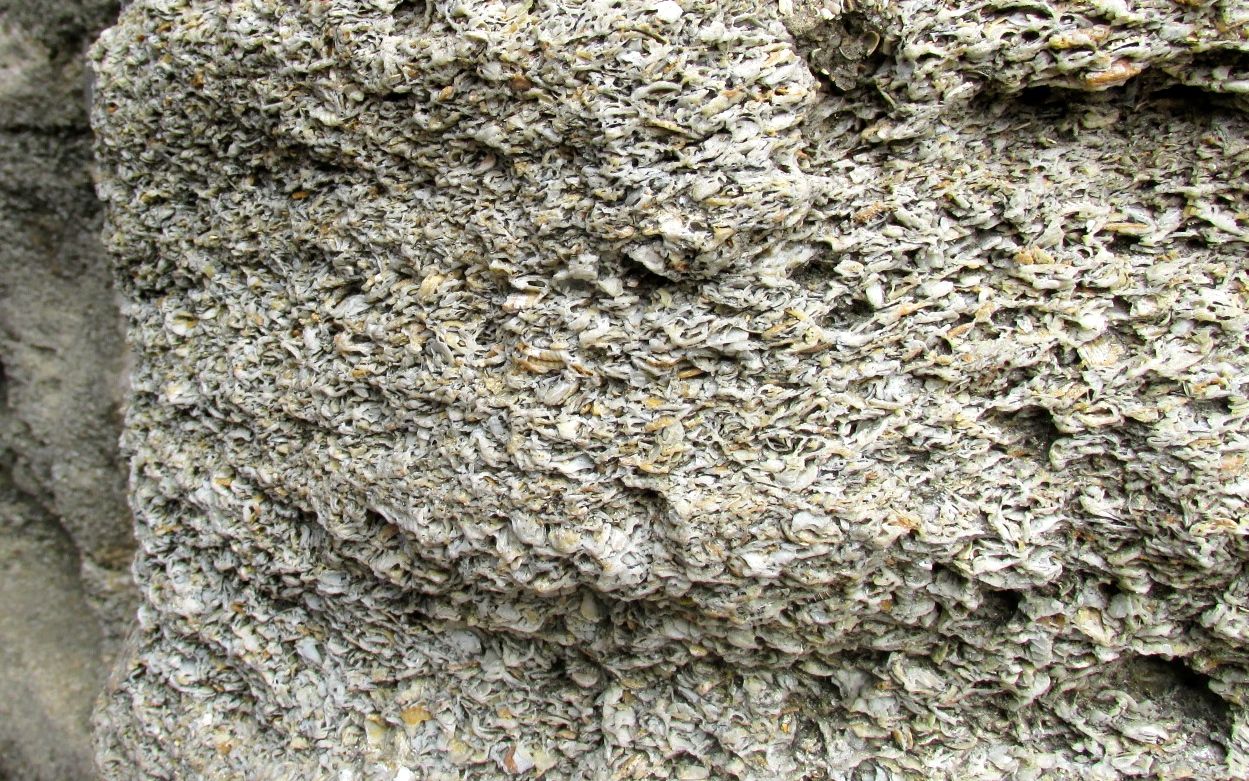
The fort is made of coquina, which is a type of limestone formed from shells that is found on the east side of Florida, from Palm Beach to just south of Jacksonville. They had to use what they could find locally, and coquina filled the bill. They also made lime by heating oyster shells, which they used in mortar and for covering the walls of the fort. Coquina is a porous material, and plastering it made it more durable.,

In one of the rooms, they had graffiti that was left behind by bored soldiers. The scratches were hard to photograph, especially since they were protected with reflective plexiglass. This one, however, grabbed my attention. It was burned into the plaster of the room, and “Dunham” is the last name of my mother’s sister, so it has a relationship to my family, by marriage.
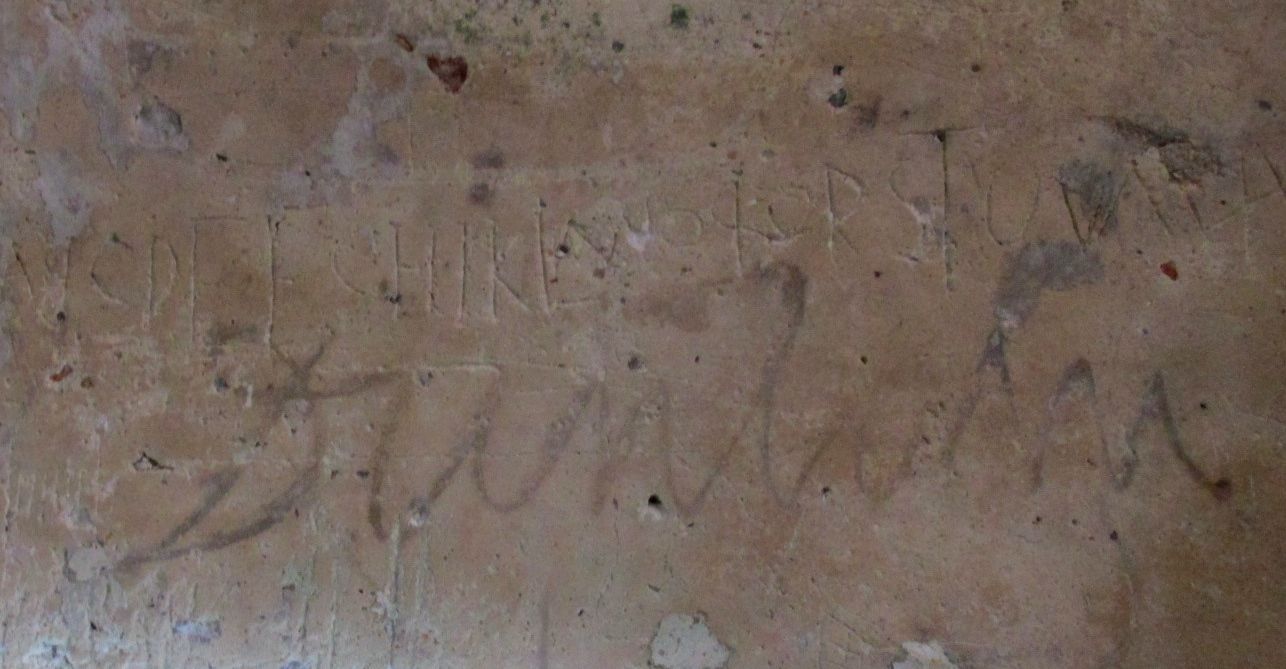
You can kind of make out some of the incised graffiti in the photo.
I continued my tour and was seated in a “theater” watching a video when the call went out that there would be a cannon firing demonstration. I made my way up to the part of the fort where the cannons were.
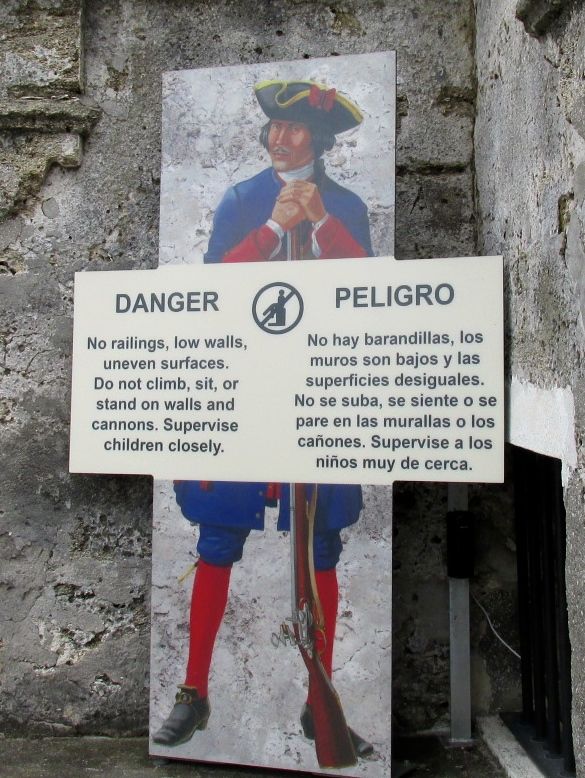
I appreciated the warning. It was a long drop from the top of the wall to the ground.
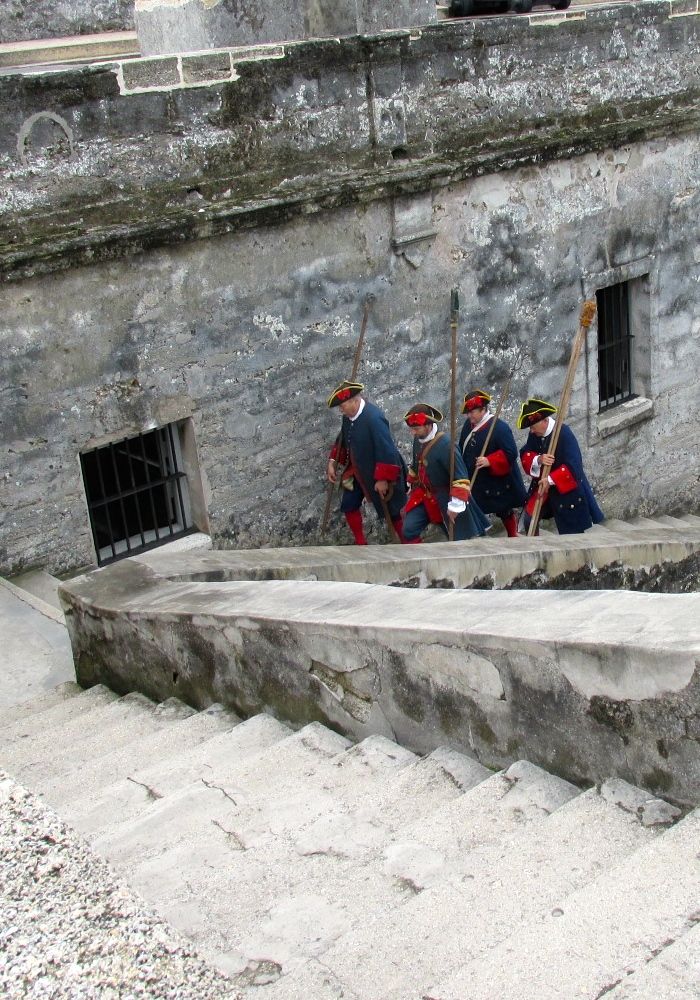
The artillery crew marched up the stairs and took their places.
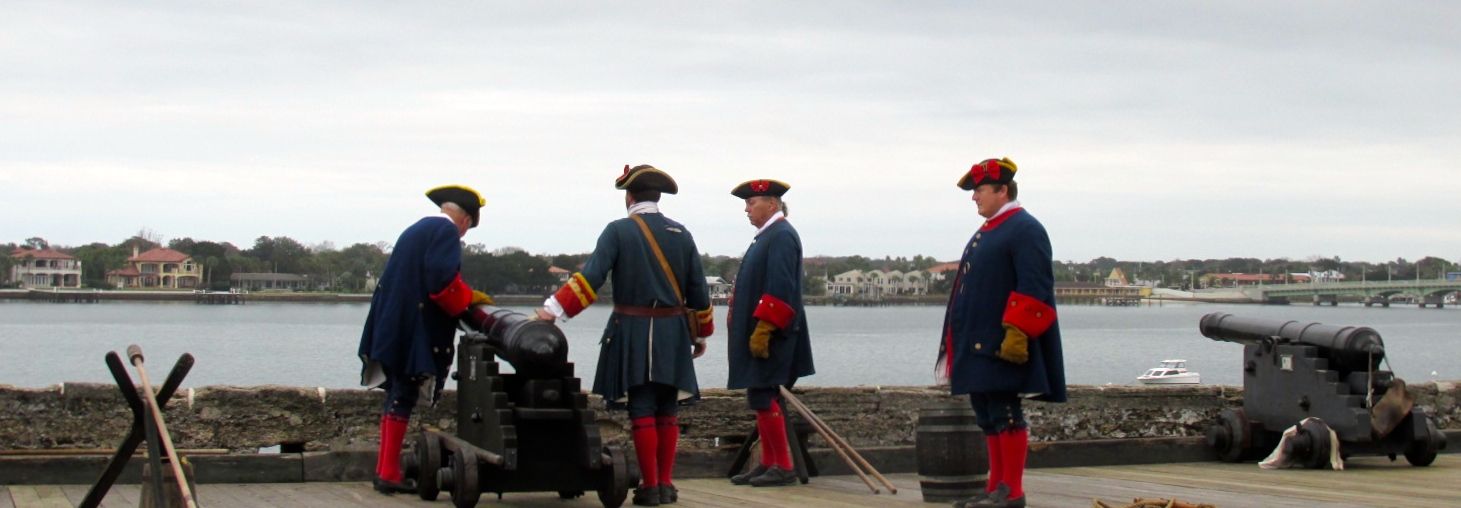
The leader explained what they were doing and he told us that we would need to cover our ears when they fired the cannon. He gave the instructions in Spanish and when it was time to fire, he switched to English and said, “Cover your ears! Fuego!”
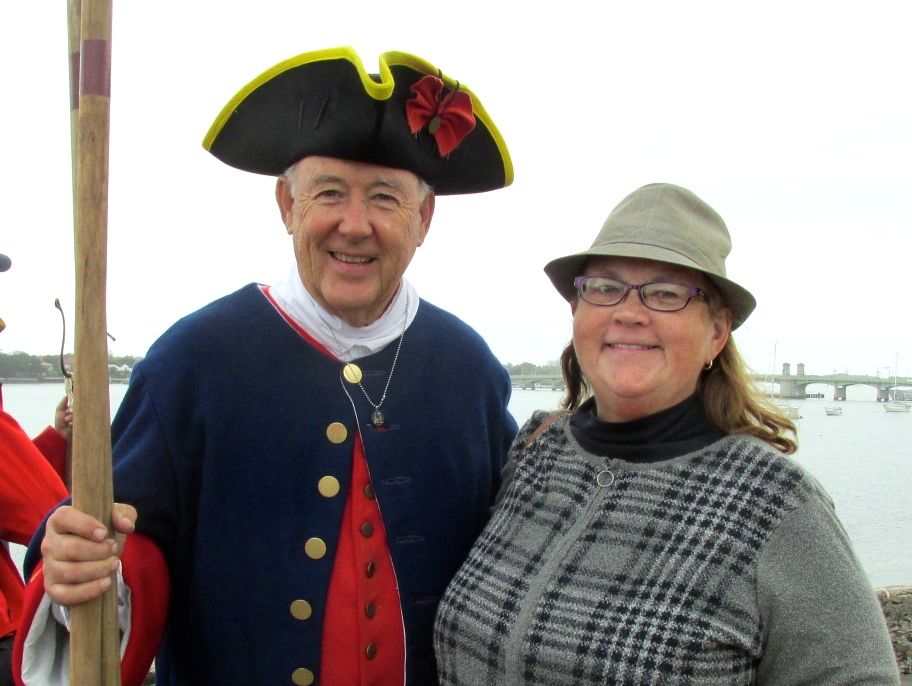
After the demonstration, they encouraged us to talk to the artillery crew and take pictures. Here I am with my new friend, Ricardo.
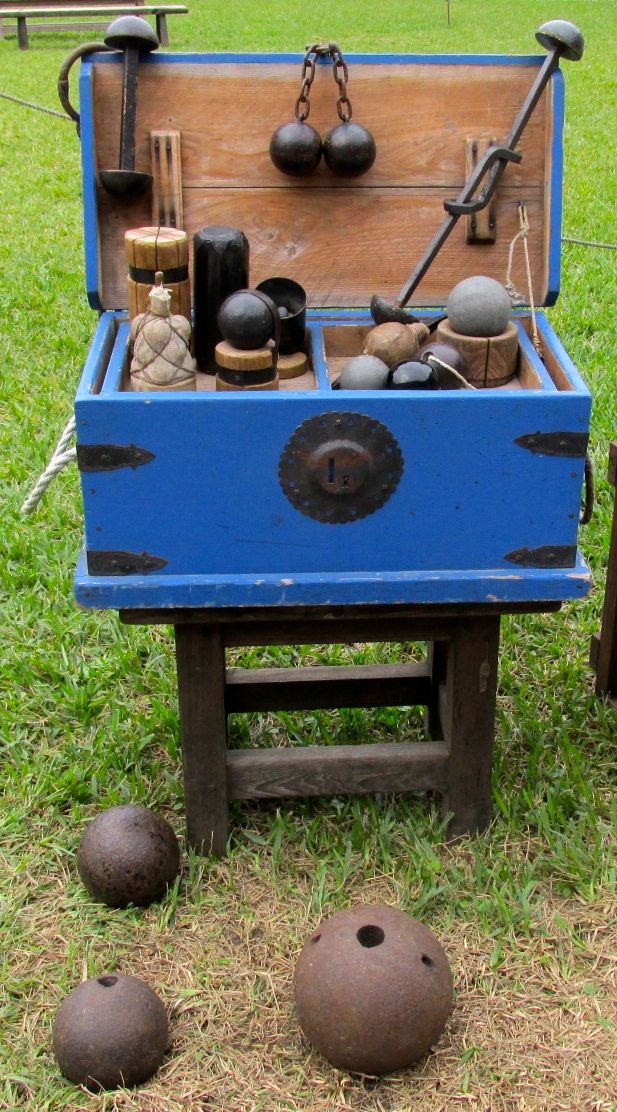
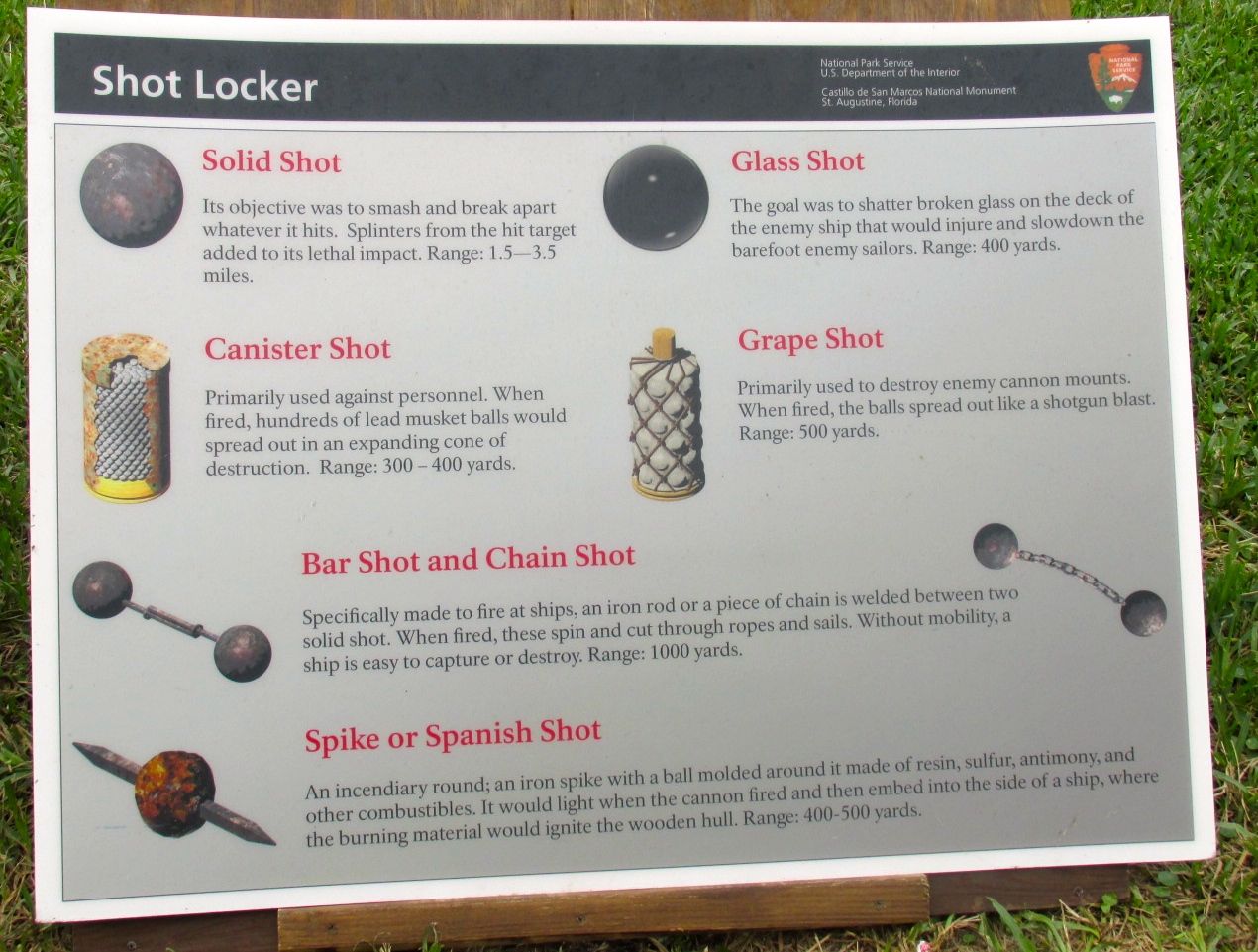
There was quite a display of the various munitions used in the cannons. They certainly had a variety of ways to hurt, maim and kill people.
I continued my way around the top of the fort.
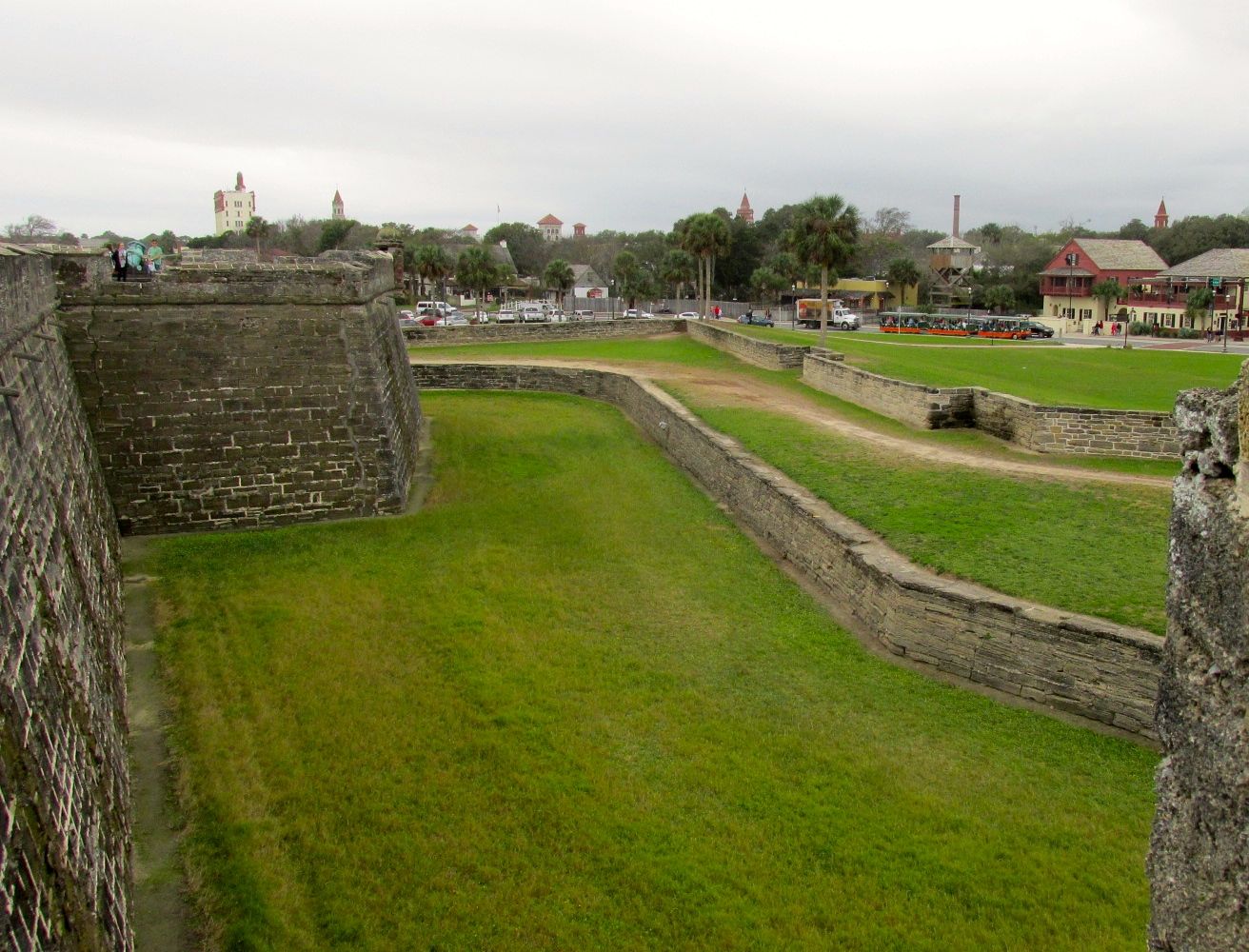
The moat was kept dry most of the time and animals grazed there. During times of siege, if I understand correctly, it was flooded with seawater to further protect the fort.
Or, maybe it was the other way around.
When the town was under siege, all the towns people and soldiers took refuge inside the fort during Queen Anne’s War in 1702, English ships blockaded the harbor and 500 soldiers and Indian allies took the town. 200 Spanish solids and 1300 civilians crowded into the fort for 50 days.
English reinforcements arrived on Christmas day, but Spanish ships from Havana arrived the day after. The English burned the town and retreated to Charleston.
It must have been crowded.
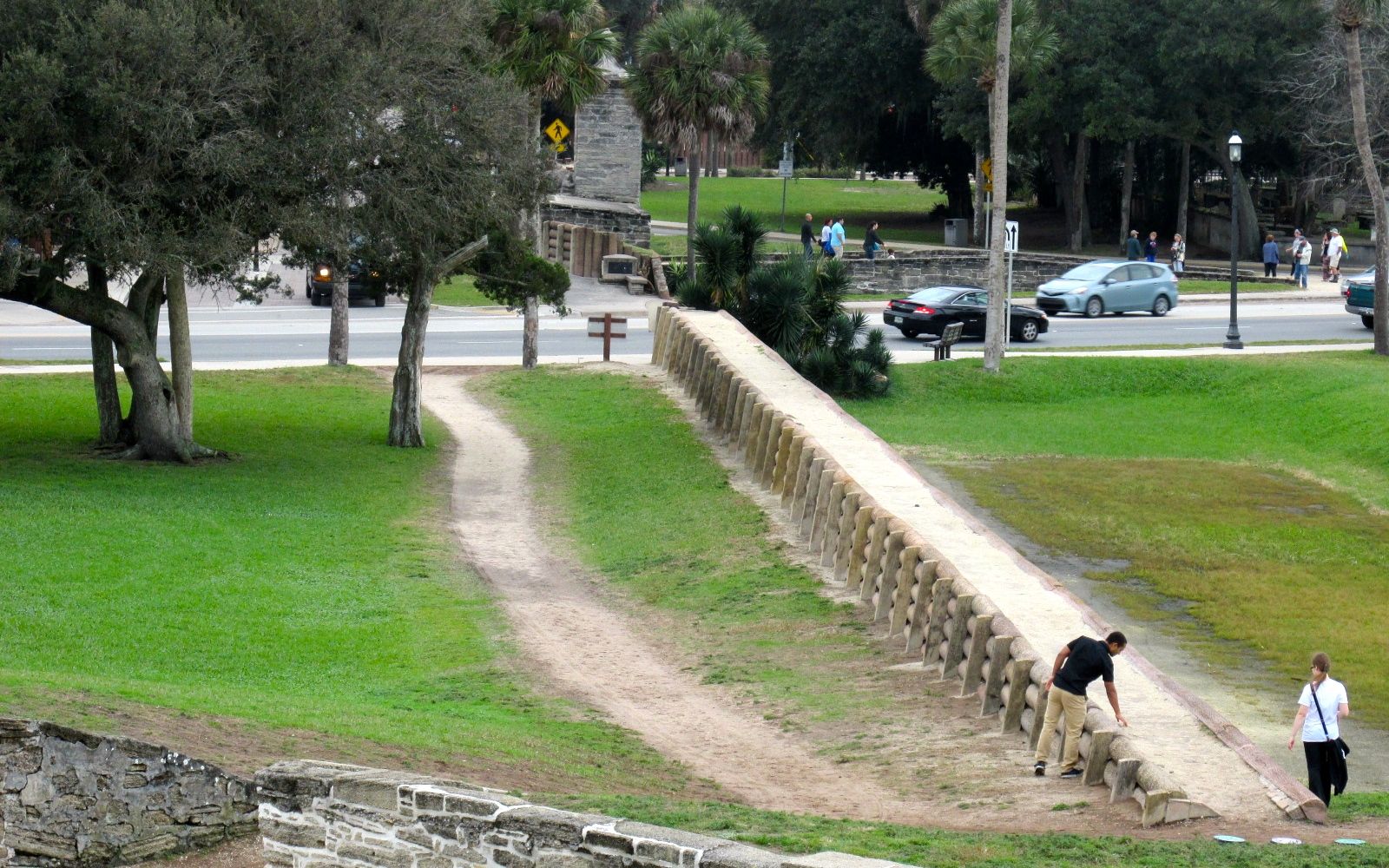
St. Augustine had a wall around it, and this is a recreation of the log wall. If you trace the wall away from the fort and cross the street, you can see the city gate.
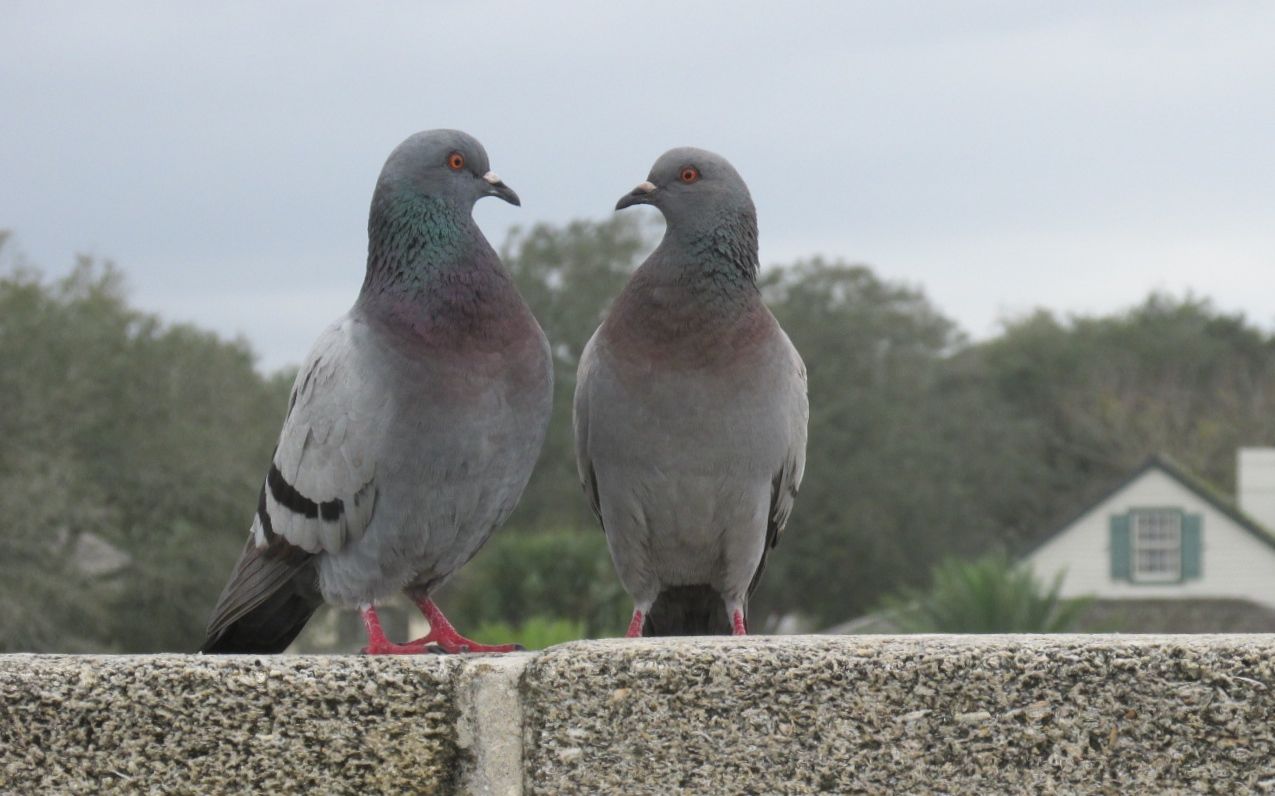
While people were told to stay off the walls, the pigeons apparently felt that they ruled the roost.
It has been a few months since I have shared privy pictures. Time for another one.
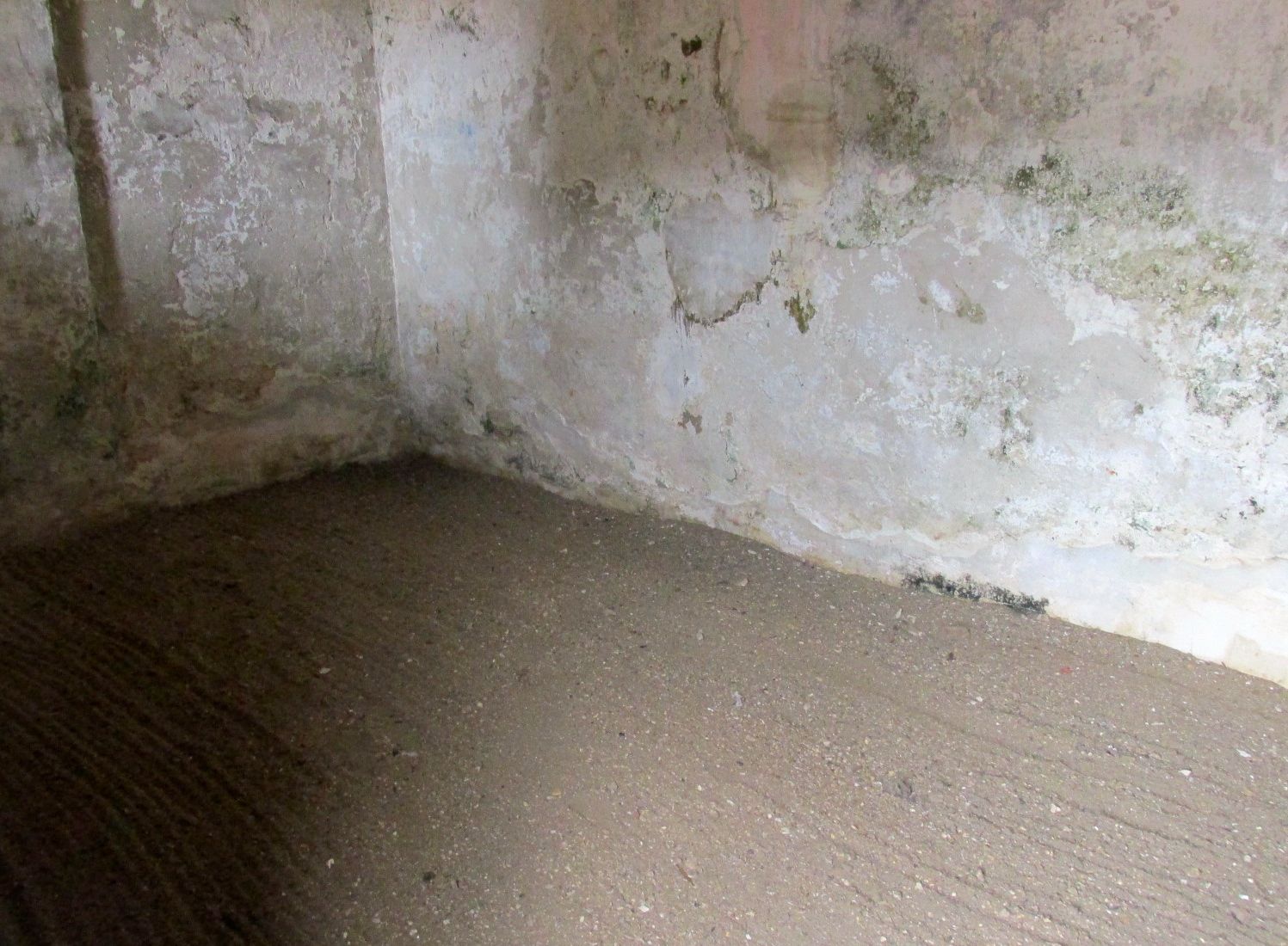
Apparently, this was a self-flushing latrine at one time. According to the sign, there was a bench with holes in it along the wall. The holes emptied into a tunnel that was washed out by the tide.
And then it was time to go explore the oldest European city in the United States.
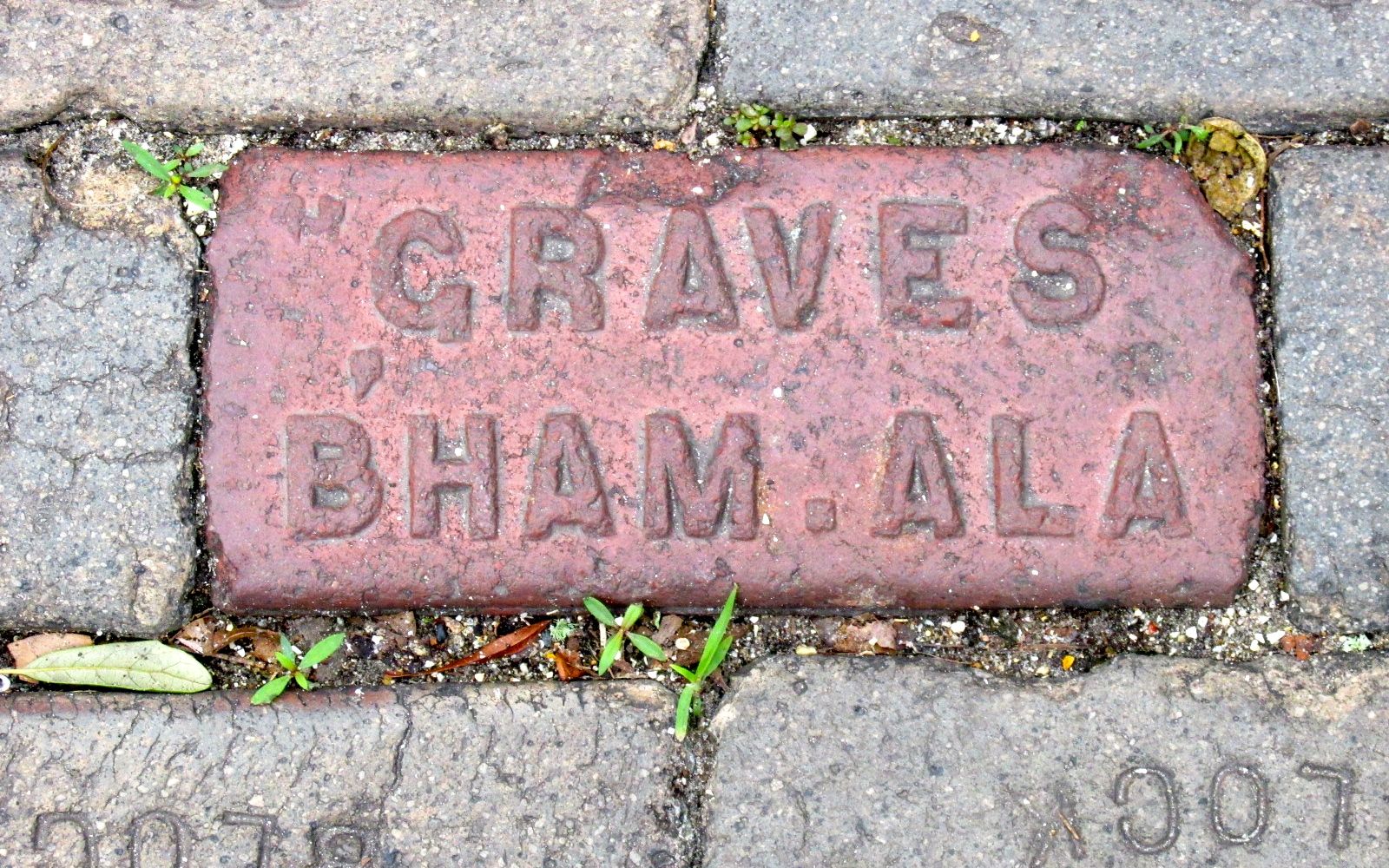
I am amazed by the manufacturer’s names molded into the bricks. There were many of the same ones I saw at the Tampa Bay History Center, but this was one I hadn’t seen before.
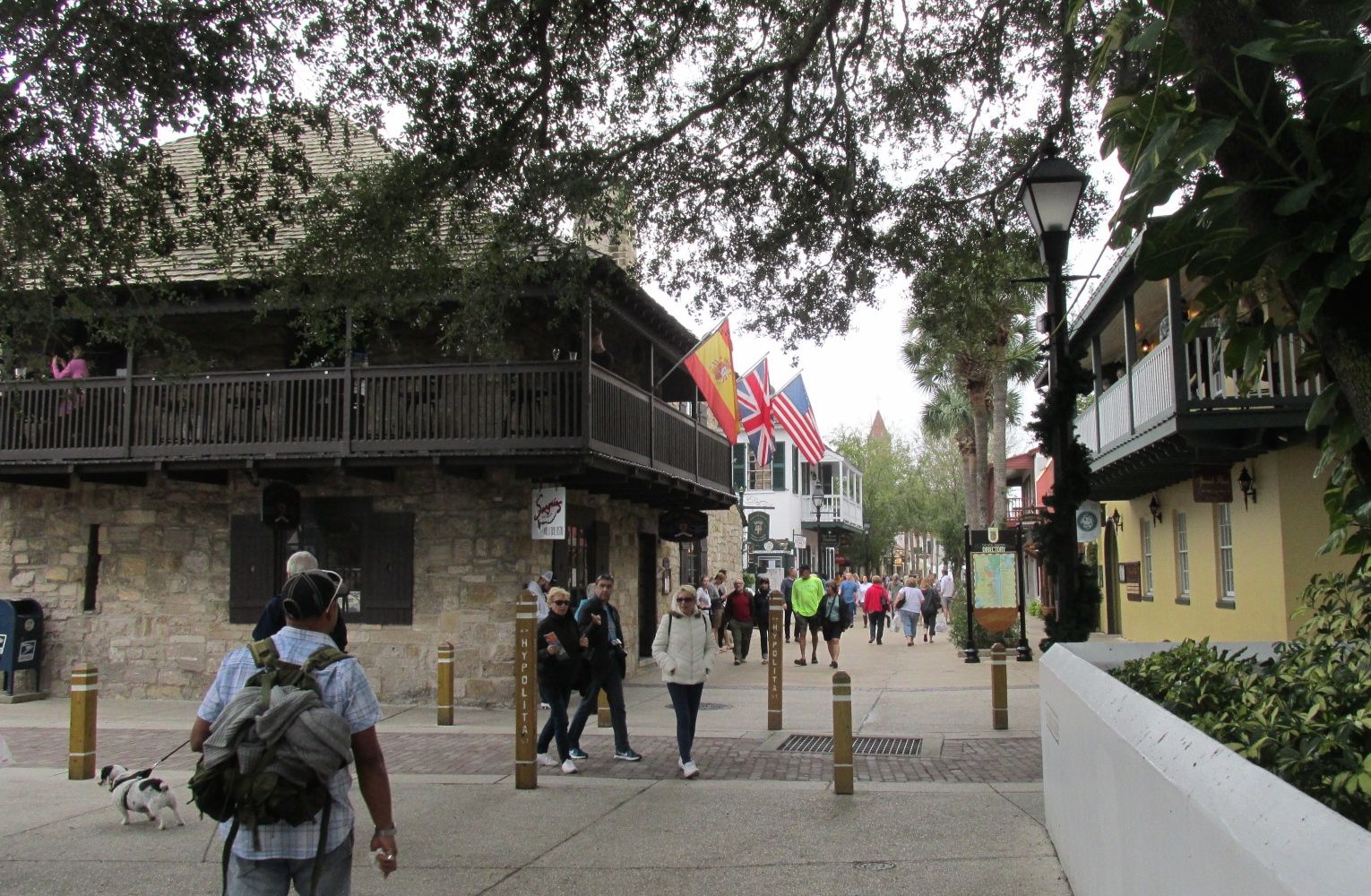
The folks who originally laid out the streets didn’t plan on the automobile. That’s just as well. Now they are pedestrian streets and they are filled with shops that sell things to visitors.
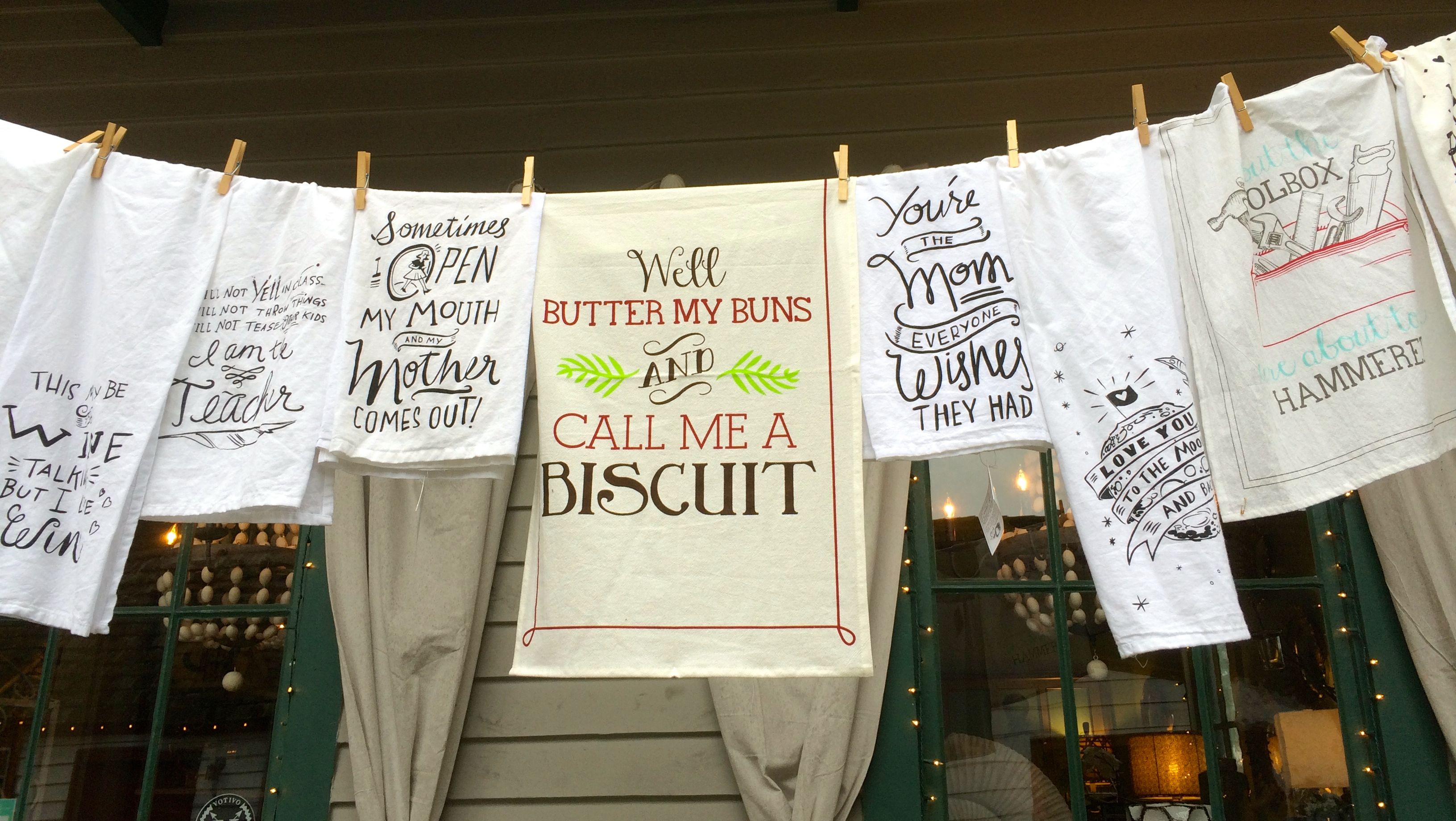
I was rather taken with this collection of tea towels on display outside one store. I suppose I could have bought a tea towel. I do have enough room in the trailer for a tea towel – but I don’t really need any more of them. So, my money stayed in my wallet and the towels stayed at the store.
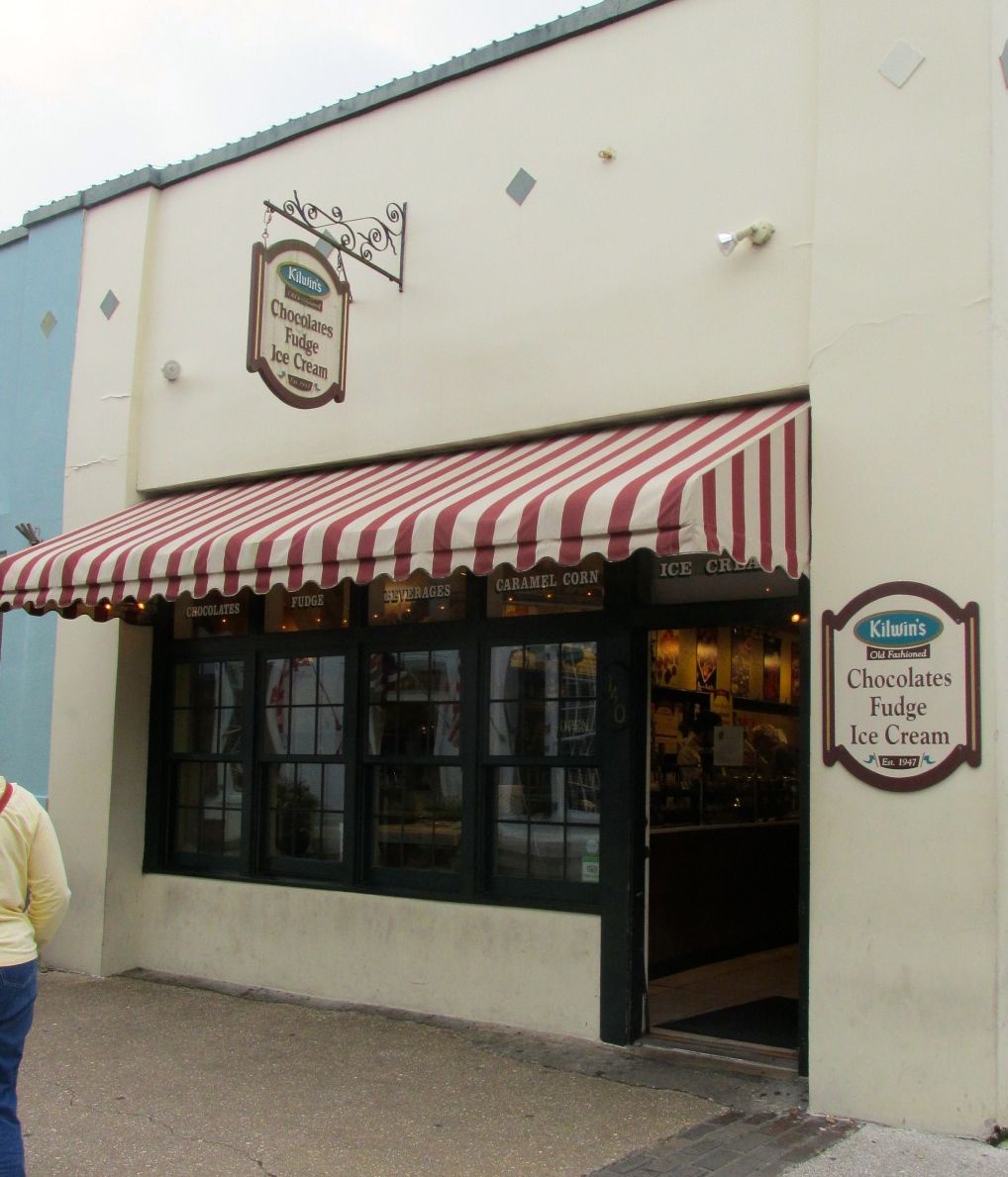
A pedestrian mall + tourists = Kilwin’s Fudge.
It’s always nice to see a little piece of home when I travel.
This is a good point to stop for now. More on my visit to St. Augustine in my next post.