I love tourism offices – especially when they let me know about places to visit that I didn’t know about before I got there.
In this case, when I entered New Mexico, I learned about Acoma, otherwise known as Sky City. I stayed at the RV park they run next to their casino next to I-40. The next day I went to visit the pueblo. I paused at a scenic overlook to take this photo of the 365 foot high mesa that it’s built on.

I got to the Sky City Cultural Center and looked at the displays in the Haak’u Museum while I was waiting for my tour to begin.
They called my tour and they loaded up the bus for the trip up to the top of the mesa, where we met our tour guide, Brandon. On another note, I happened to meet his parents at a craft show in Cochita Pueblo, which was near my next stop. What a small world!
I also happened upon a model of Acoma at the Governor’s Palace Museum in Santa Fe.
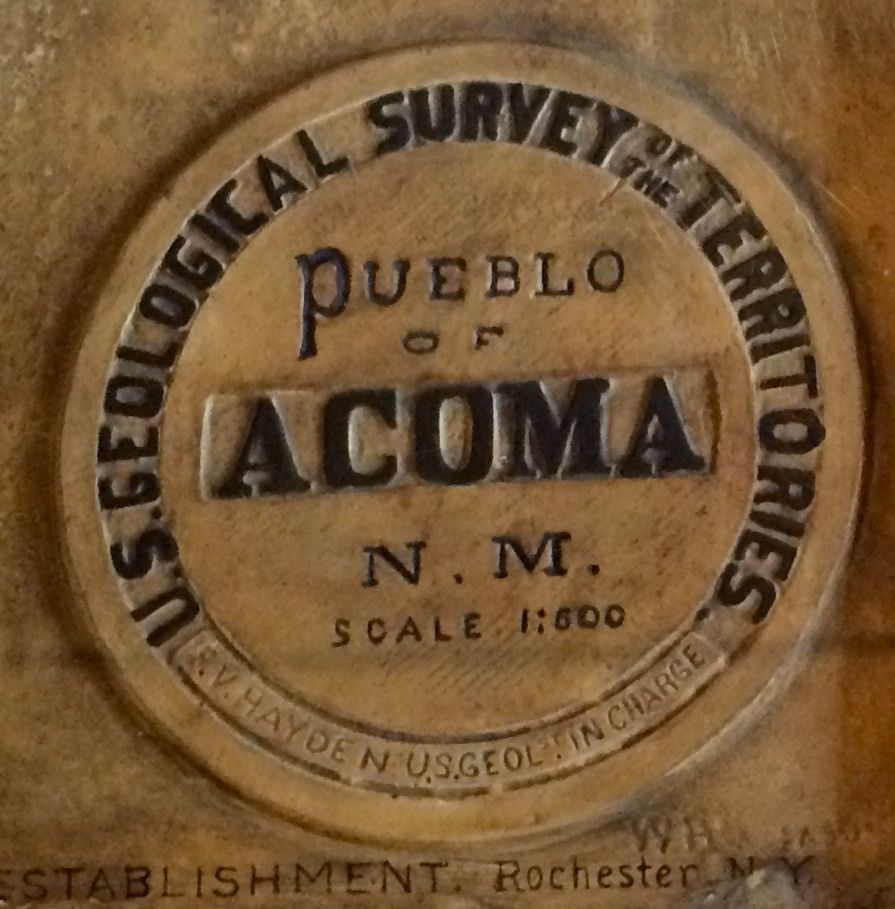
It was made by William Henry Jackson for 1876 Centennial Exposition in Philadelphia.
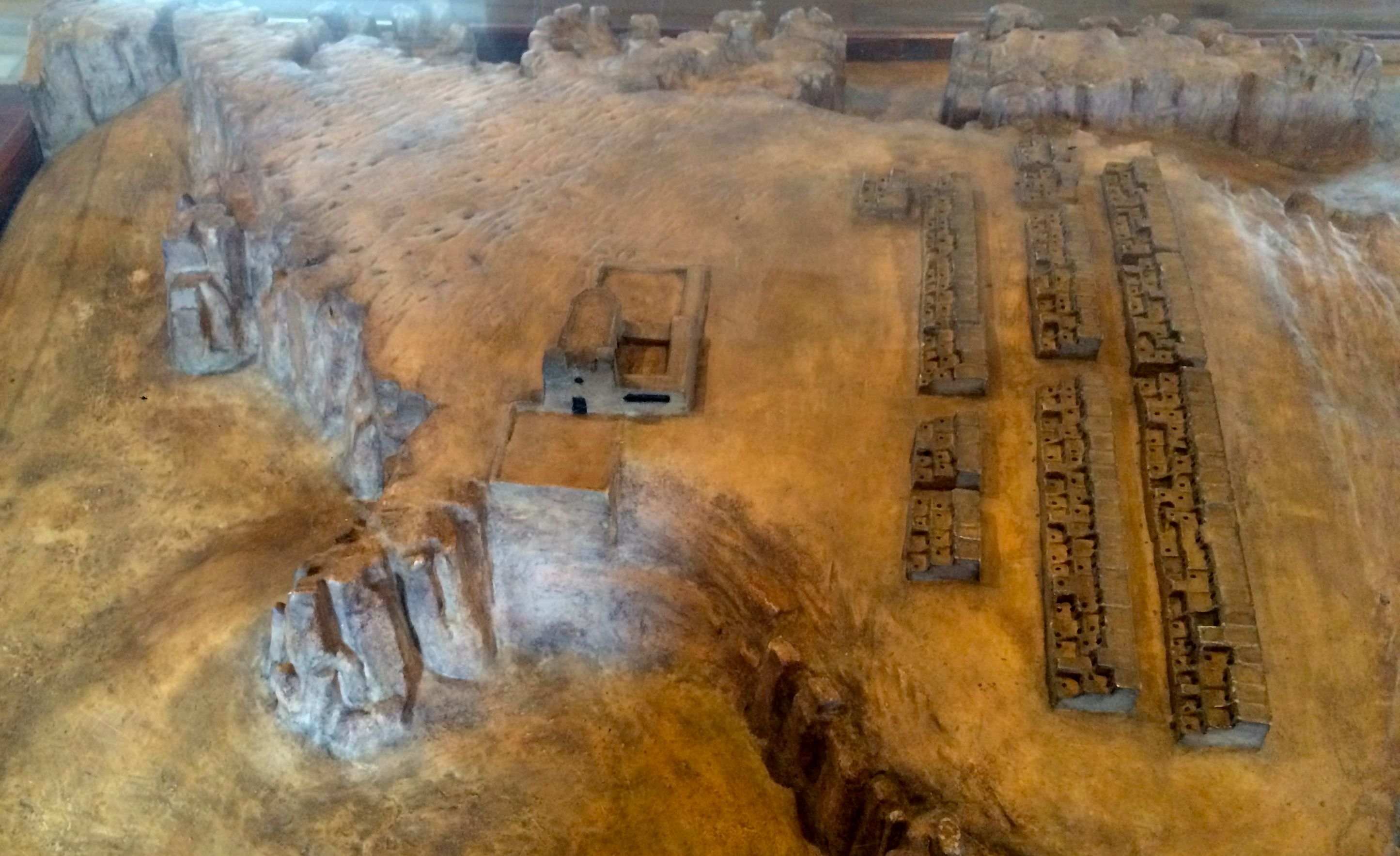
According to the label, this reflects the pueblo as it was in 1875. I include this model at the beginning of the post because it was difficult to take a photo that gave the sense of what I saw.
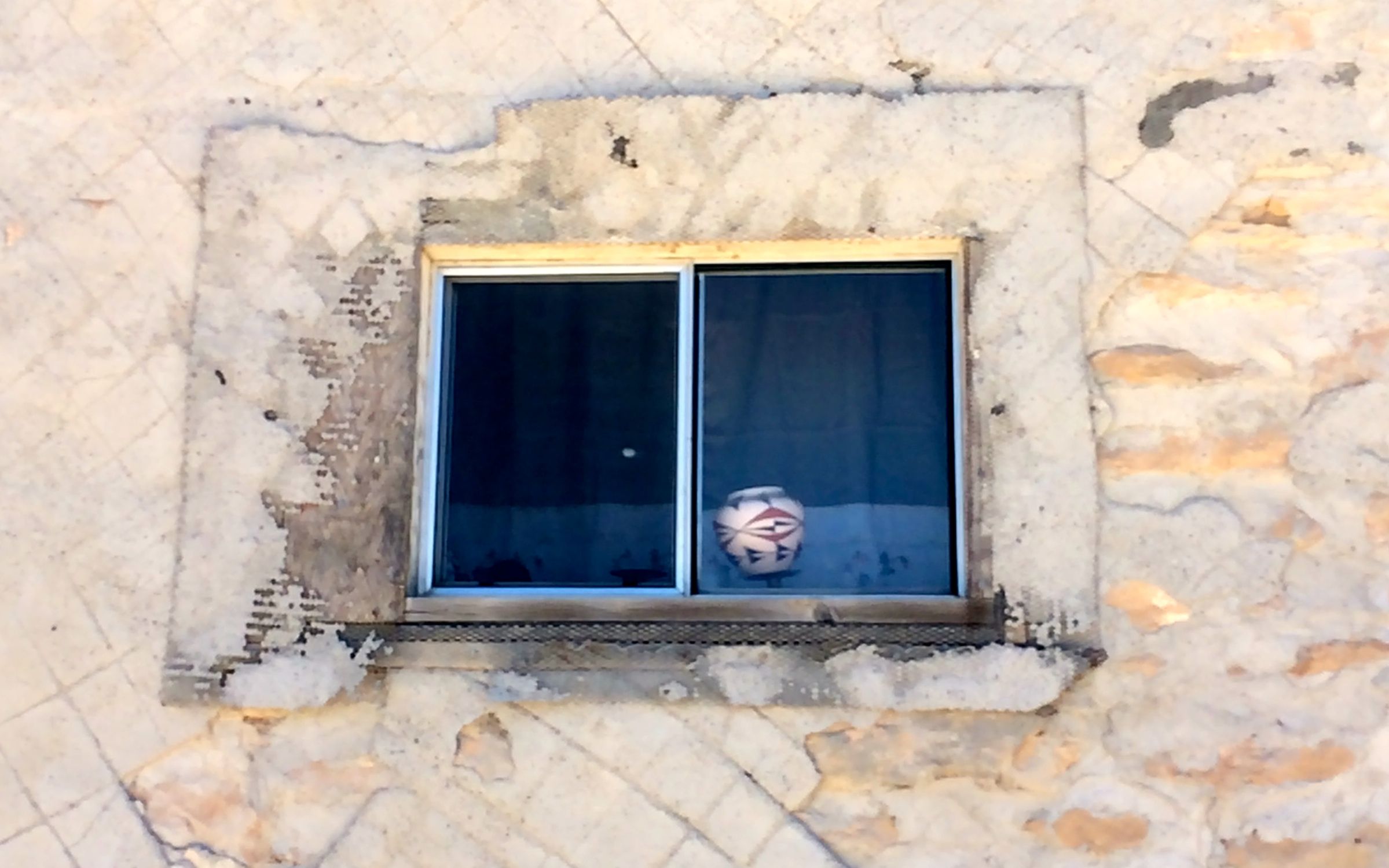
Brandon walked us over to the first stop. Along the way, we passed this interesting shot. It shows that this is a living community. You can see the variety of building materials. They are not living their lives to be on display. They live and adapt and use what makes sense for them.
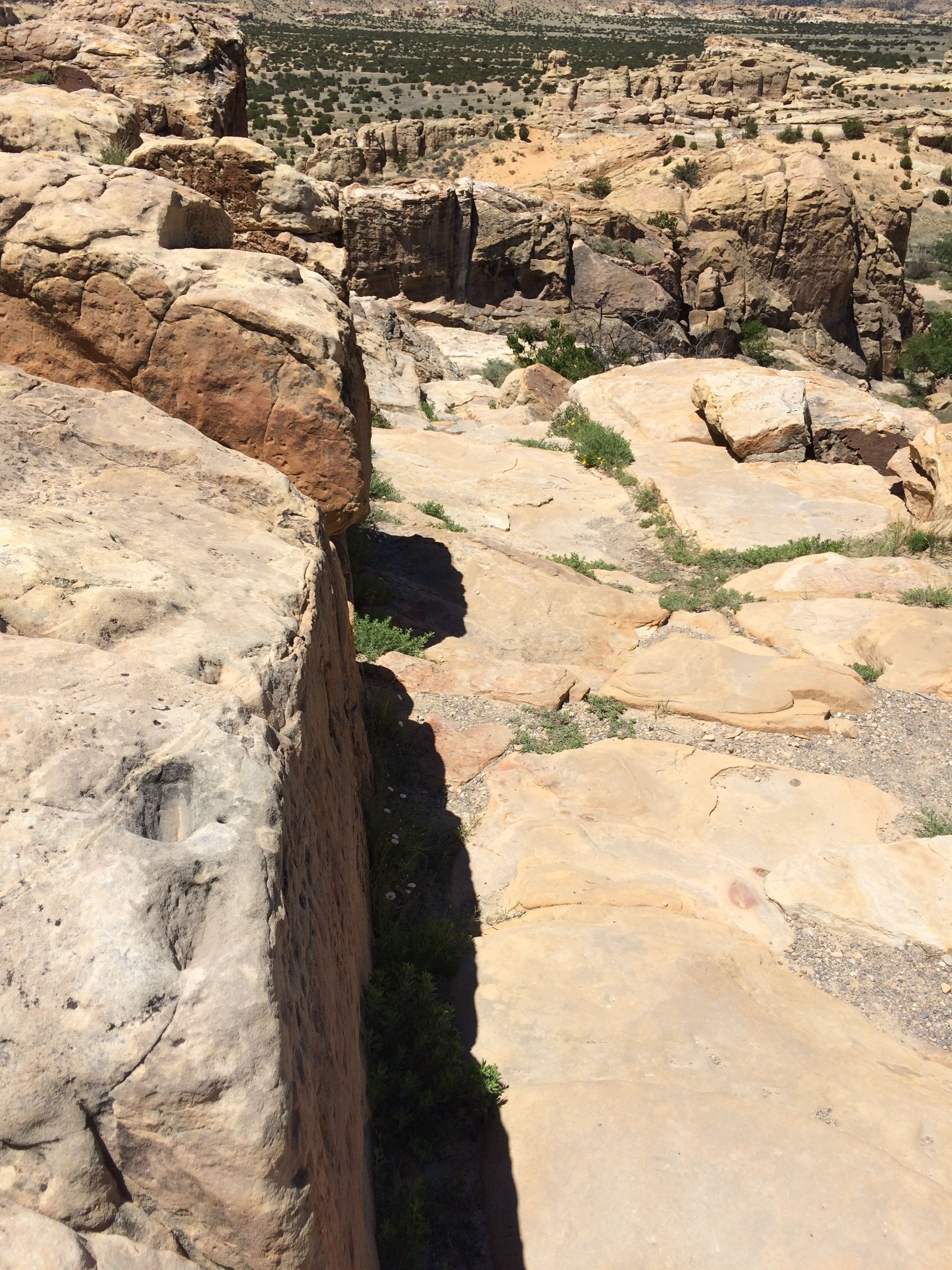
Brandon pointed out this handholds. You can see two places on the rock on the left side of the photo. Before the road was put in, people used to go up and down via hand and toe holds. If I remember correctly, this path was modified to have steps in it for the Spanish priests to ascend and descend.
One of the rules of the tour was that we couldn’t take notes. We could take all the photos we wanted, but no video or audio recording was allowed. So, if you want to check my facts, I recommend that you visit Sky City yourself. As far as I am concerned, it’s worth a visit, even if you think I remembered everything Brandon told us. (I didn’t.)
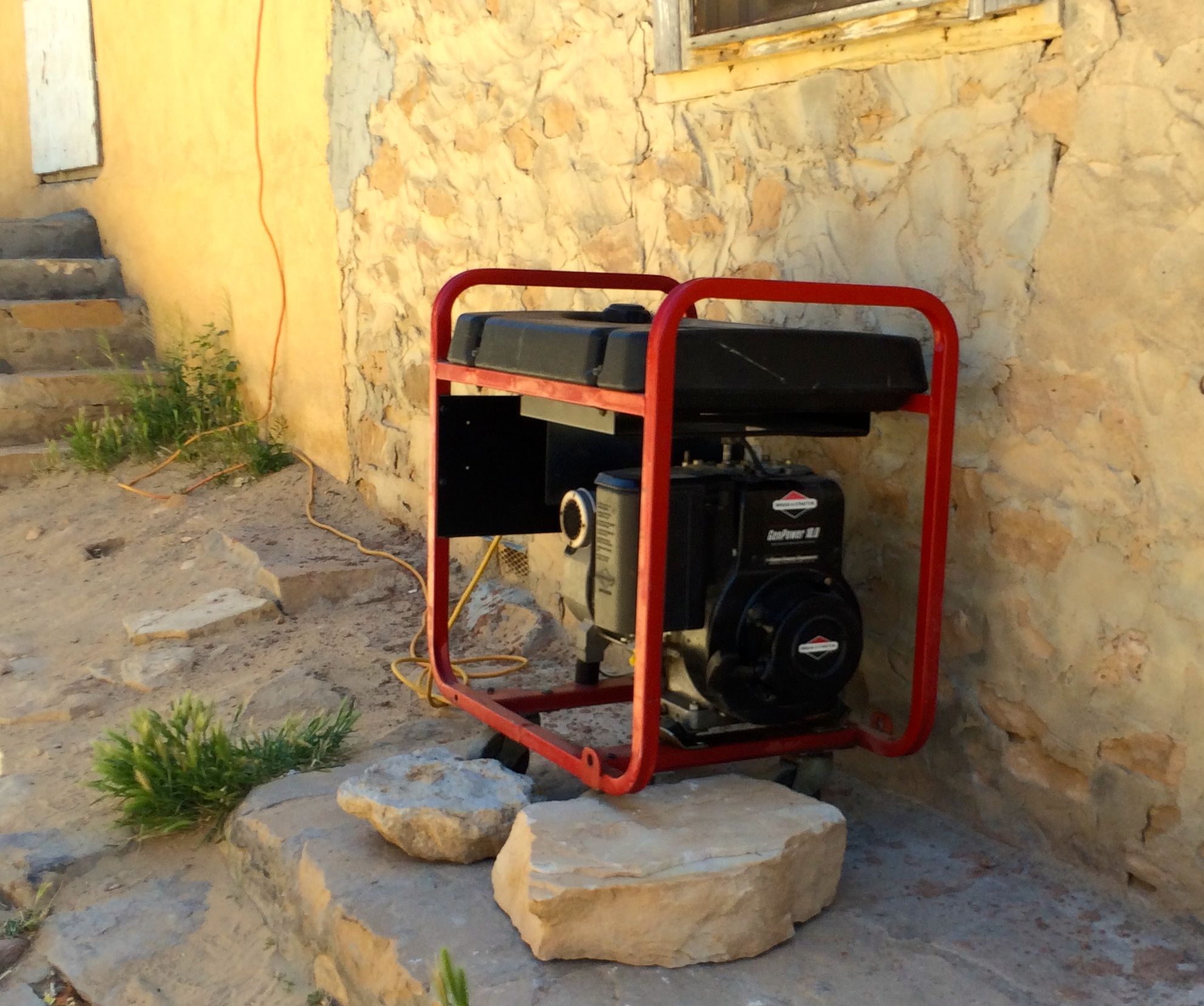
As I said, they live and adapt and use what makes sense for them. They don’t have electricity on the mesa, but they aren’t against using a generator to power tools when they are remodeling.
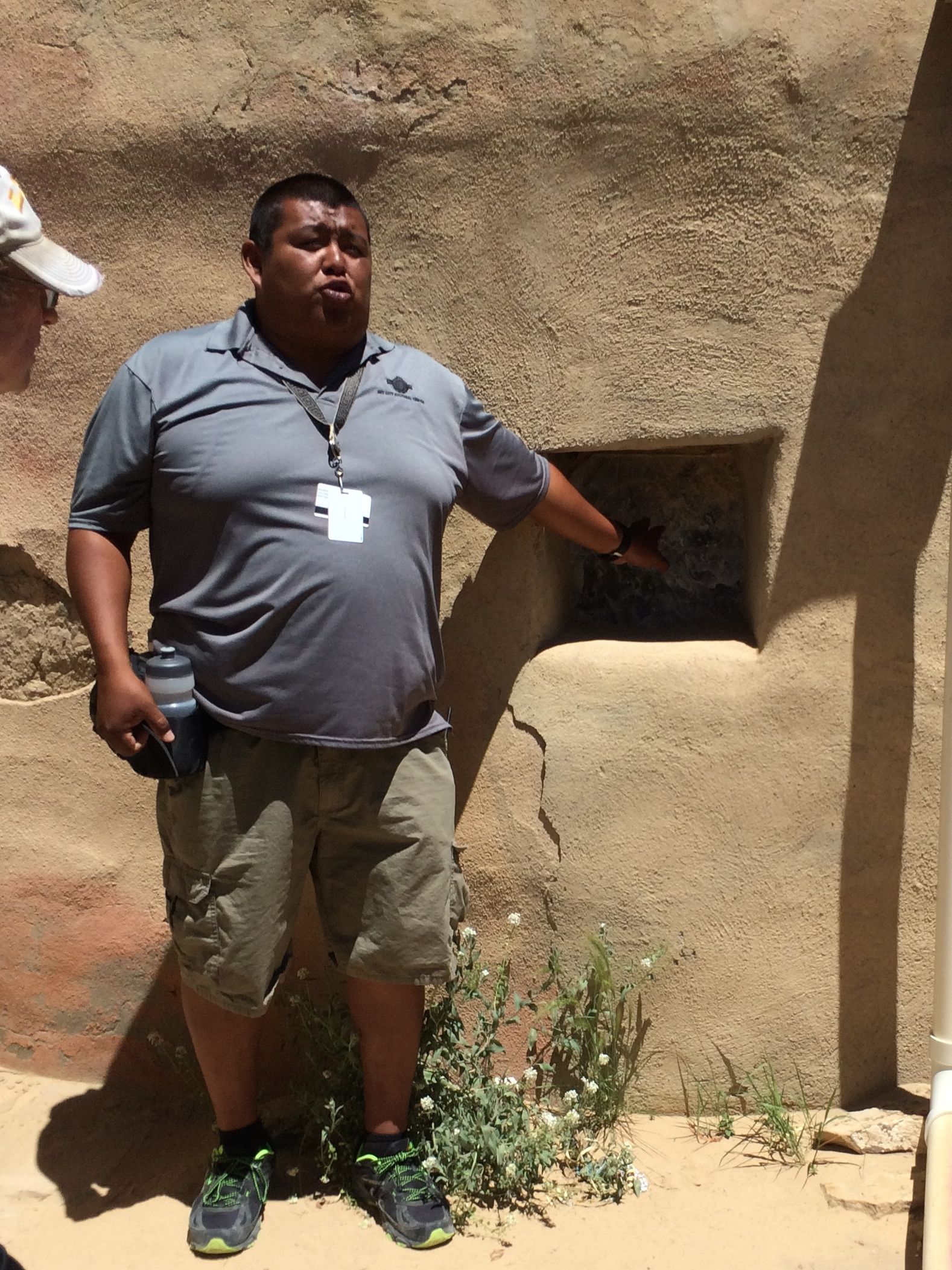
Brandon pointed out one of the remaining mica windows in the pueblo. Mica is a mineral that is found in sheets. It’s translucent and permits light to enter the rooms, although you can’t see through these windows. These windows are several inches thick, and if I understand correctly, after the mineral is mined, it takes a few years to dry out or cure.
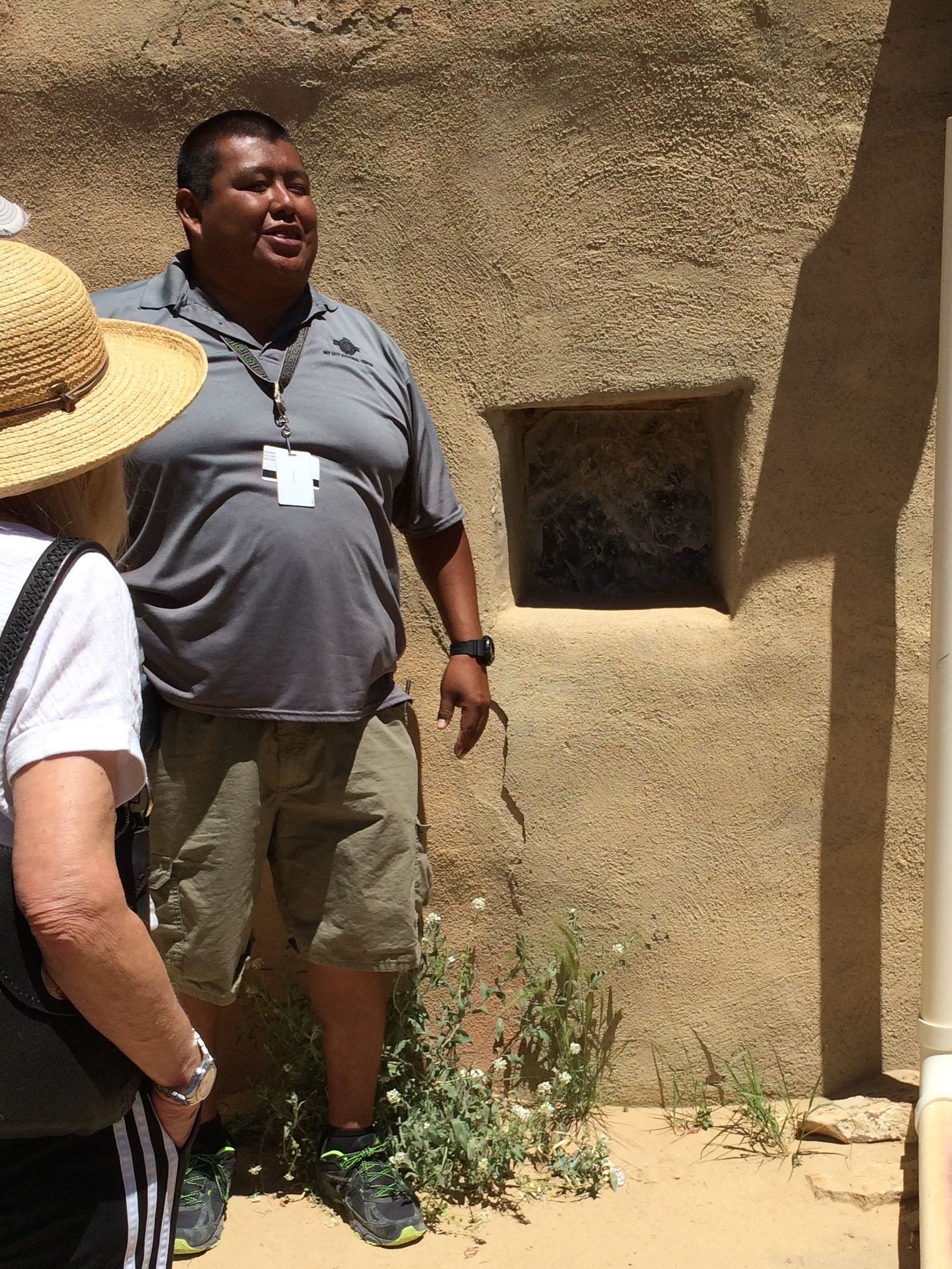
The sun glinted off the walls and the mica windows. The Spanish explorers thought that had found one of the cities of gold that they were looking for.
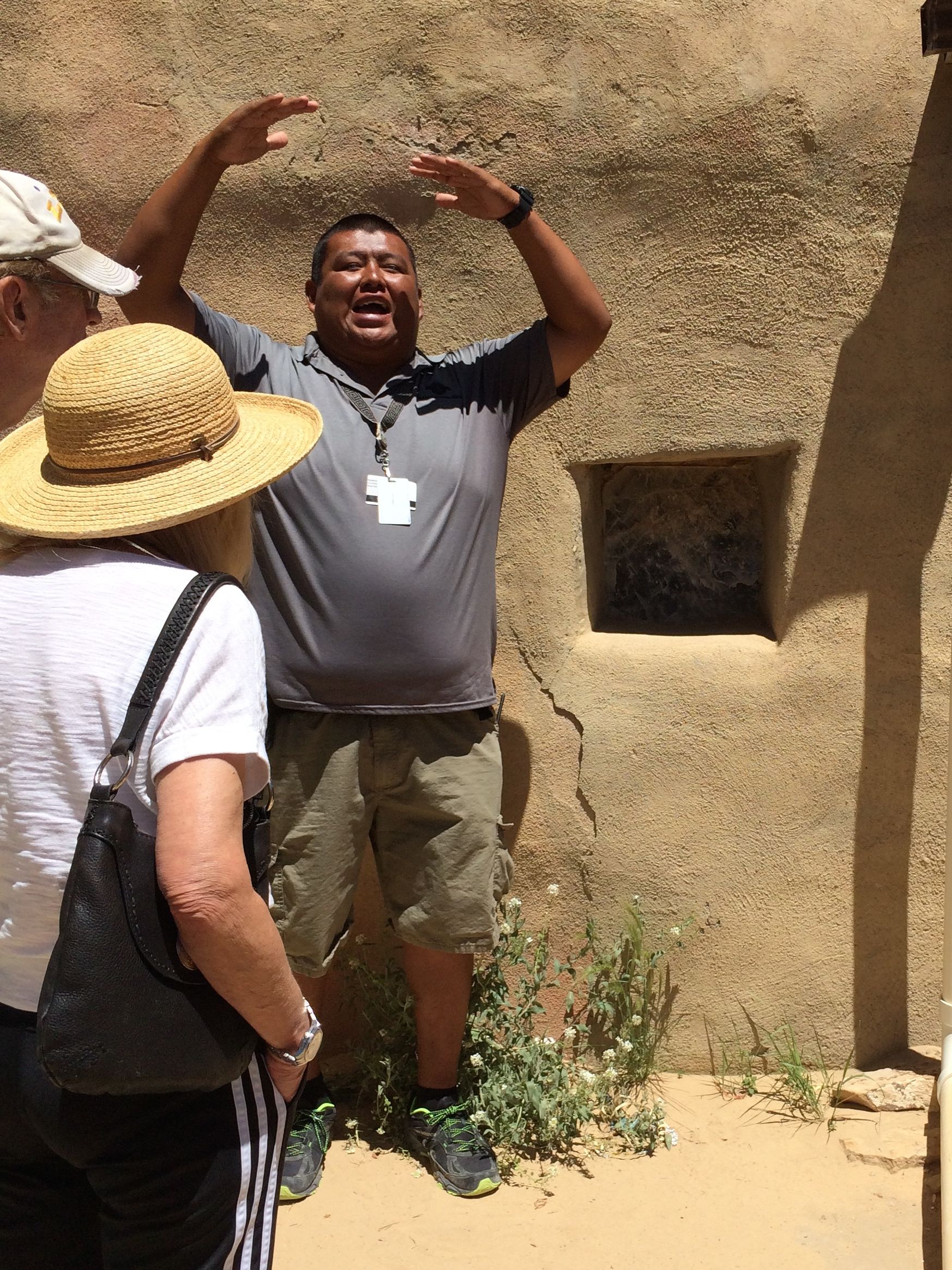
Brandon was a very animated speaker.
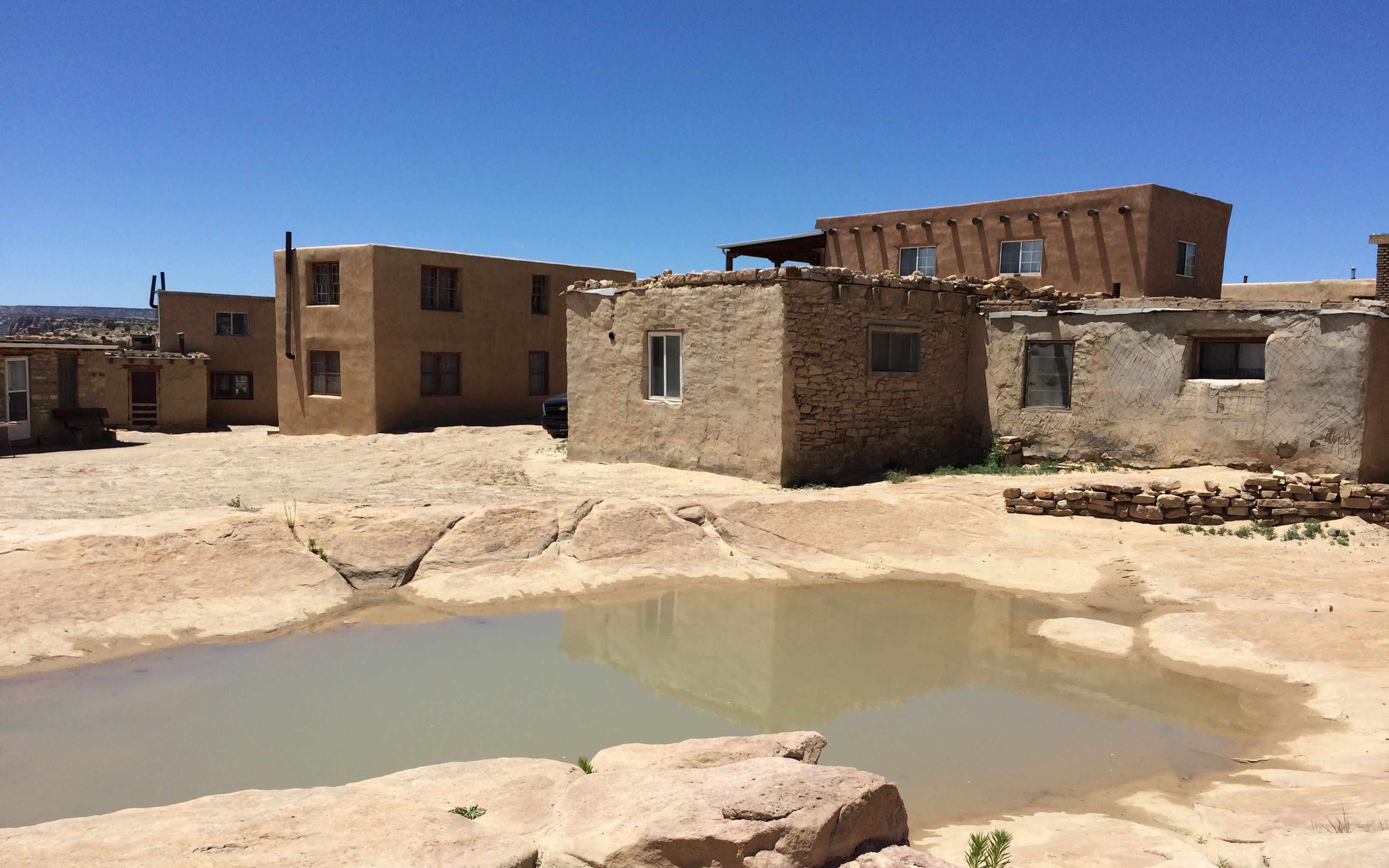
From what I remember, the pueblo originally depended on three cisterns for their water. They don’t use them anymore for drinking water, but the cisterns are still there.
Some of the buildings are older and some are newer. Brandon stopped by a doorway to show us one of the older buildings. Acama has been occupied continuously since 1200.
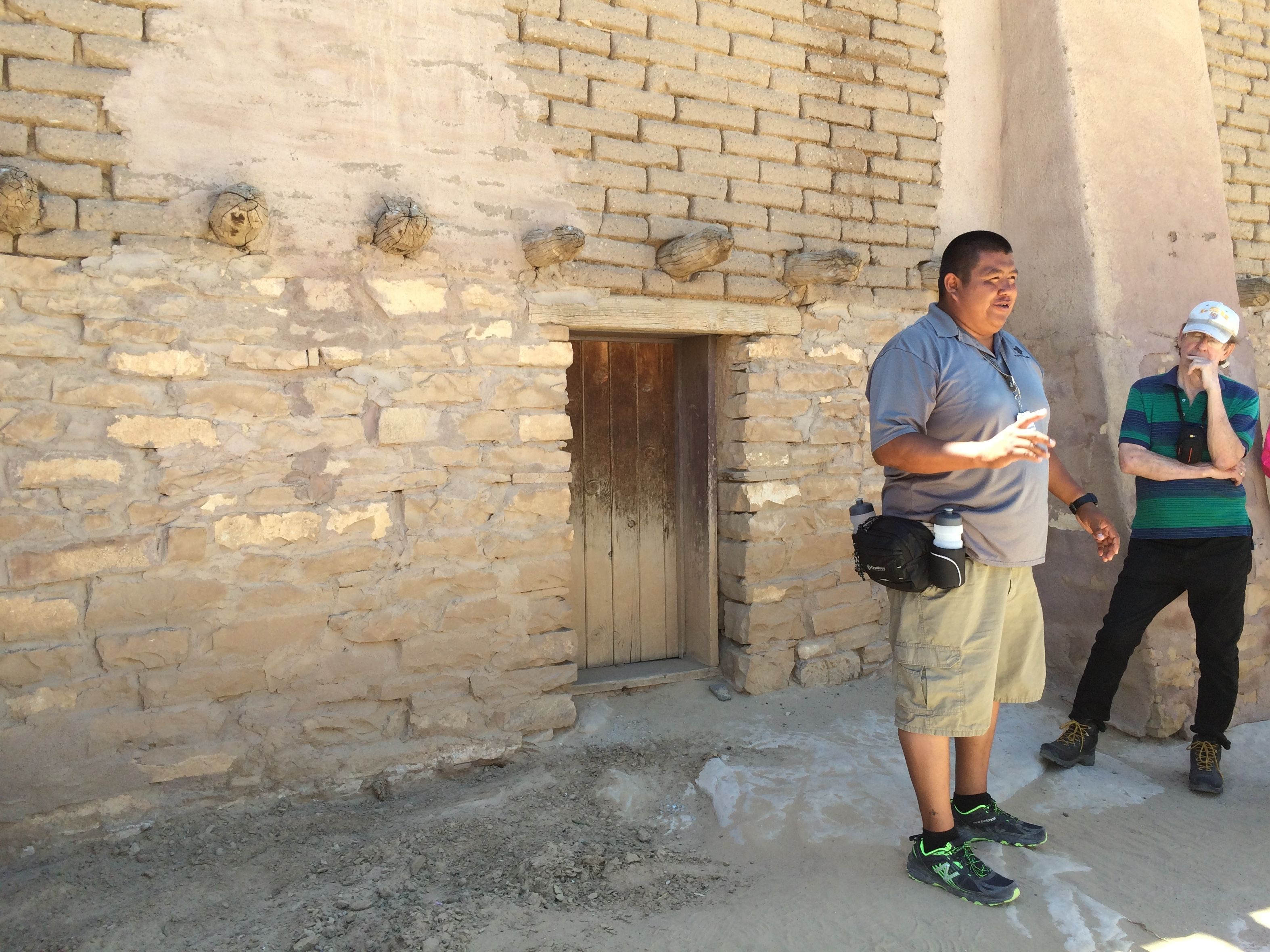
When they first took up residency and began building their homes, the people were much smaller. Brandon attributed the dietary contributions of the Spanish to the increased height of his people.
Brandon told us that there were stone staircases inside that the women used. The men used ladders that they leaned against the outside to stay out of their way.

The buildings were originally built of sandstone. Adobe was a contribution from the Spanish, which they picked up in northern Africa – if I remember Brandon’s information correctly.
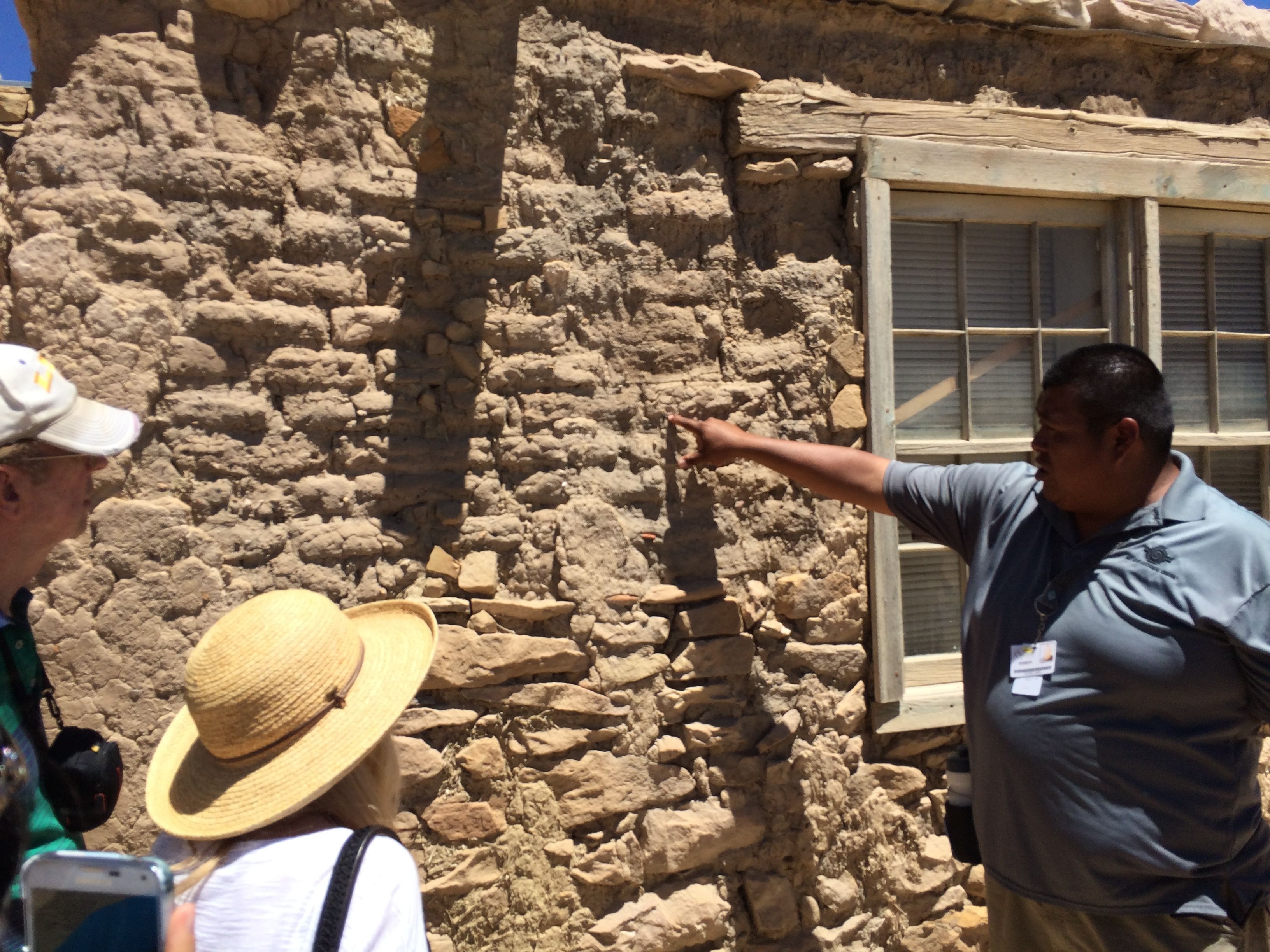
Here he is, showing some of the older adobe. He is pointing out inclusions of bone, pottery and other materials.
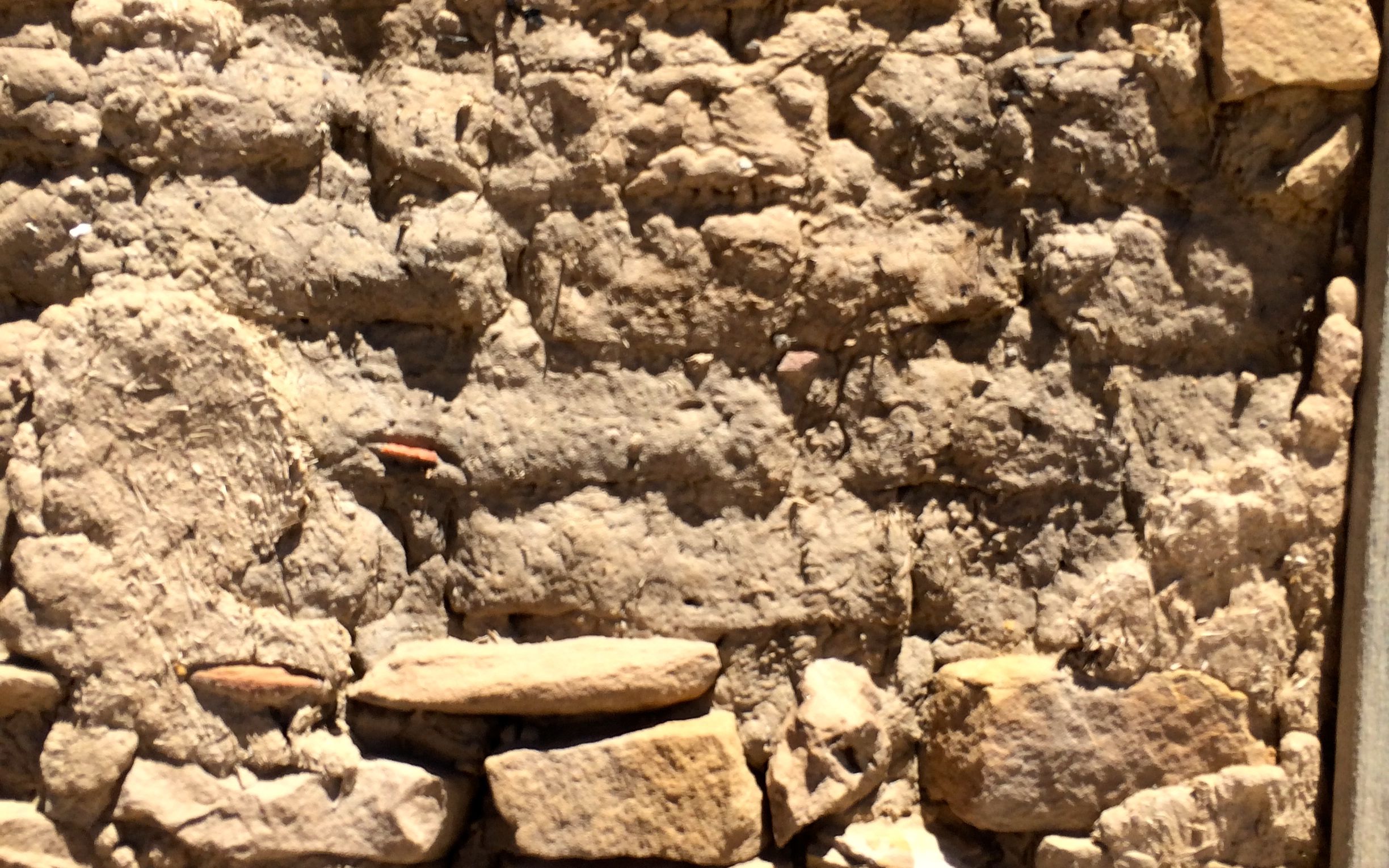
Here’s a close up of the wall he was pointed to.
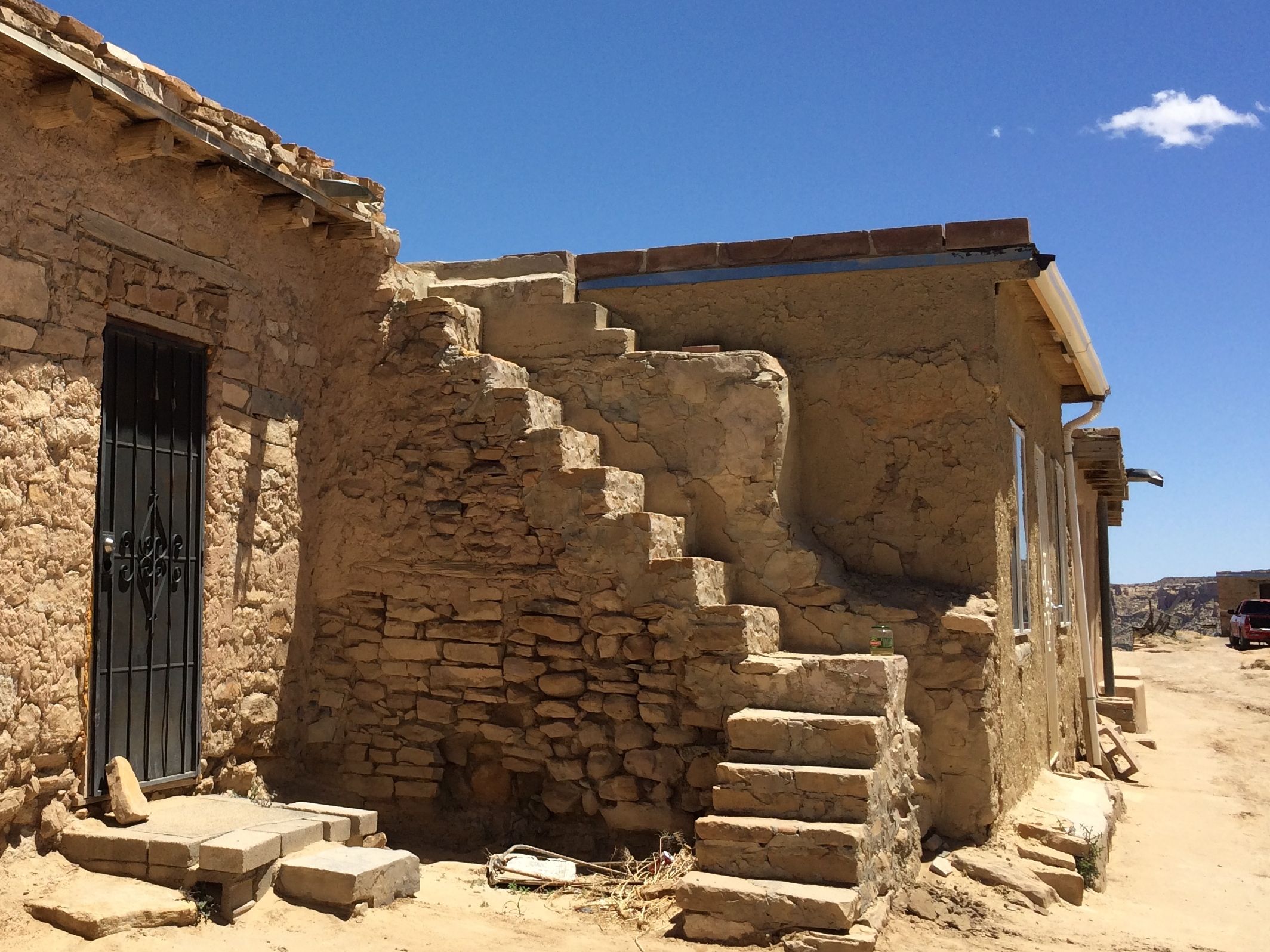
It gets very windy on top of the mesa. Sometimes the winds peak at 90 miles per hour, which is equivalent to a class 1 hurricane. As a result, some of the screen doors are very sturdy. To be extra secure, when people are out, they will put a heavy stone against the door.
Sturdy door, lock and rock. It seems like wearing suspenders with a belt.
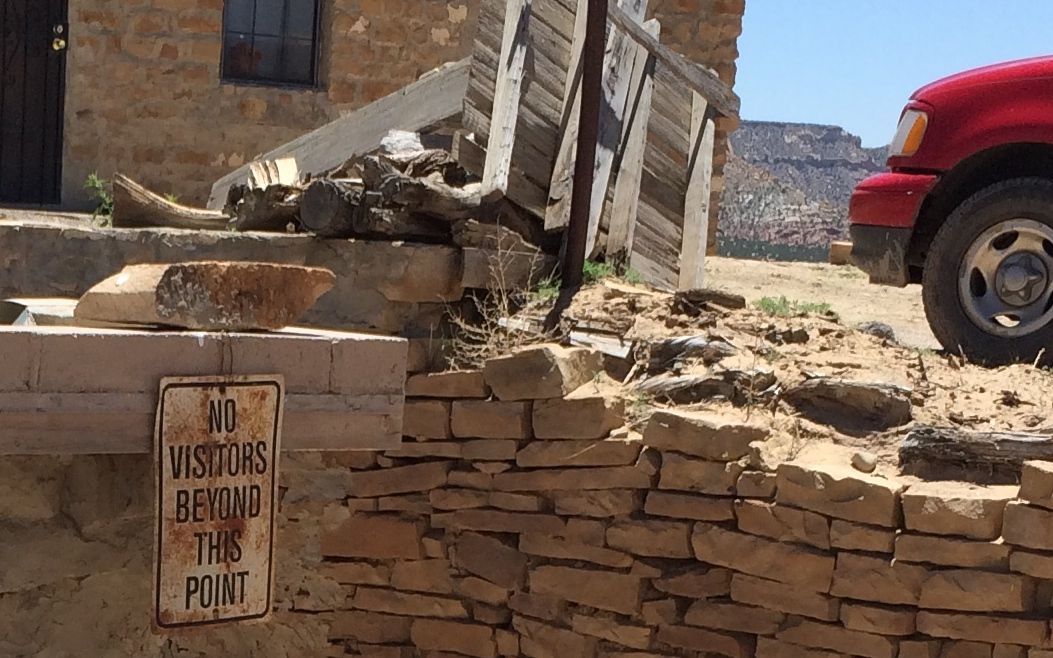
Acoma is an place where people actually live, and so some places are off limits.

This mesa is the site of Old Acoma, which is over 500 feet high. When the people of the pueblo left Mesa Verde, they were directed to go forth and call out “haak’u”. They were to listen for the echo and then build their home there. They heard the echo come from this mesa and built their home on top.
First there was a flood that stranded them on top. Then the pueblo was struck by lightning. According to Brandon, they realized that they made a mistake and went forth again listening for the echo. He told us that archeologists have examined the site and report that there are ruins up there.
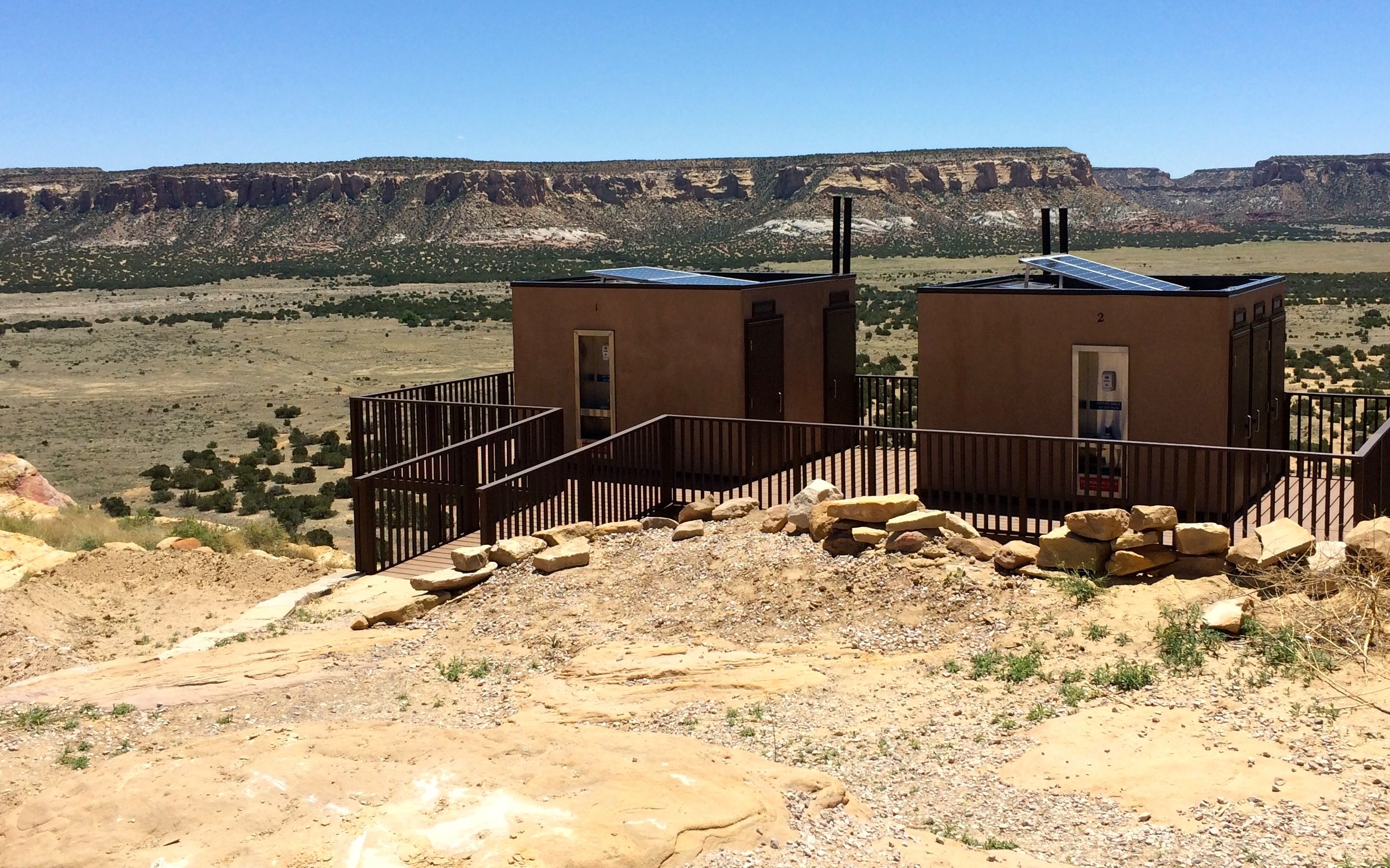
As I mentioned before, the pueblo adopts technologies that work for them. Here are solar powered composting toilets that are available for residents and visitors alike.
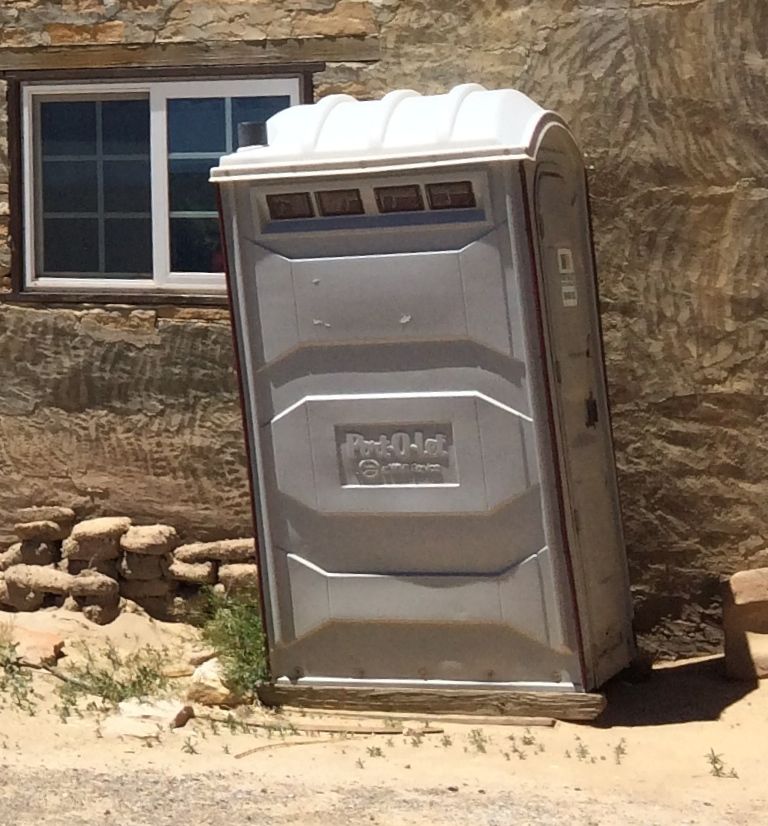
The solar powered composting toilets are replacing the previous improvements.
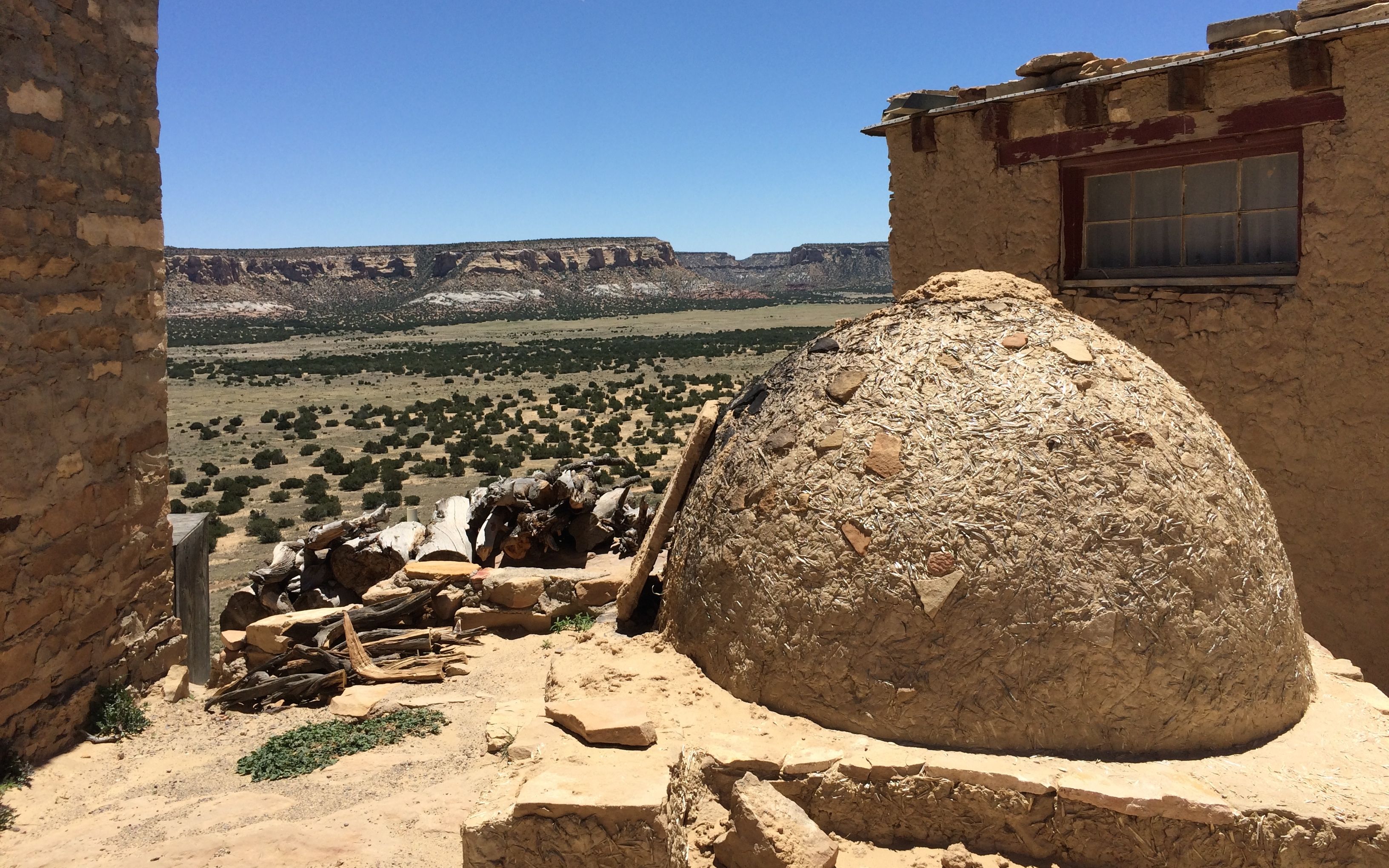
Baking is done in wood fueled ovens. I saw at least three ovens around the pueblo, and stacks of firewood. They also use propane. At one point, I bought a bottle of water and it was cold. I didn’t ask, but I wonder if they have propane refrigerators. I have one in my trailer, although mine also runs on electricity.
In addition to selling water and soft drinks, they also sold crafts. If I weren’t living in a trailer, I would have loved to consider purchasing one of the fine pieces of pottery they had for sale. I enjoyed talking with the craftsmen. One woman even showed me the yucca fibers she used to make the fine lines on her pots.
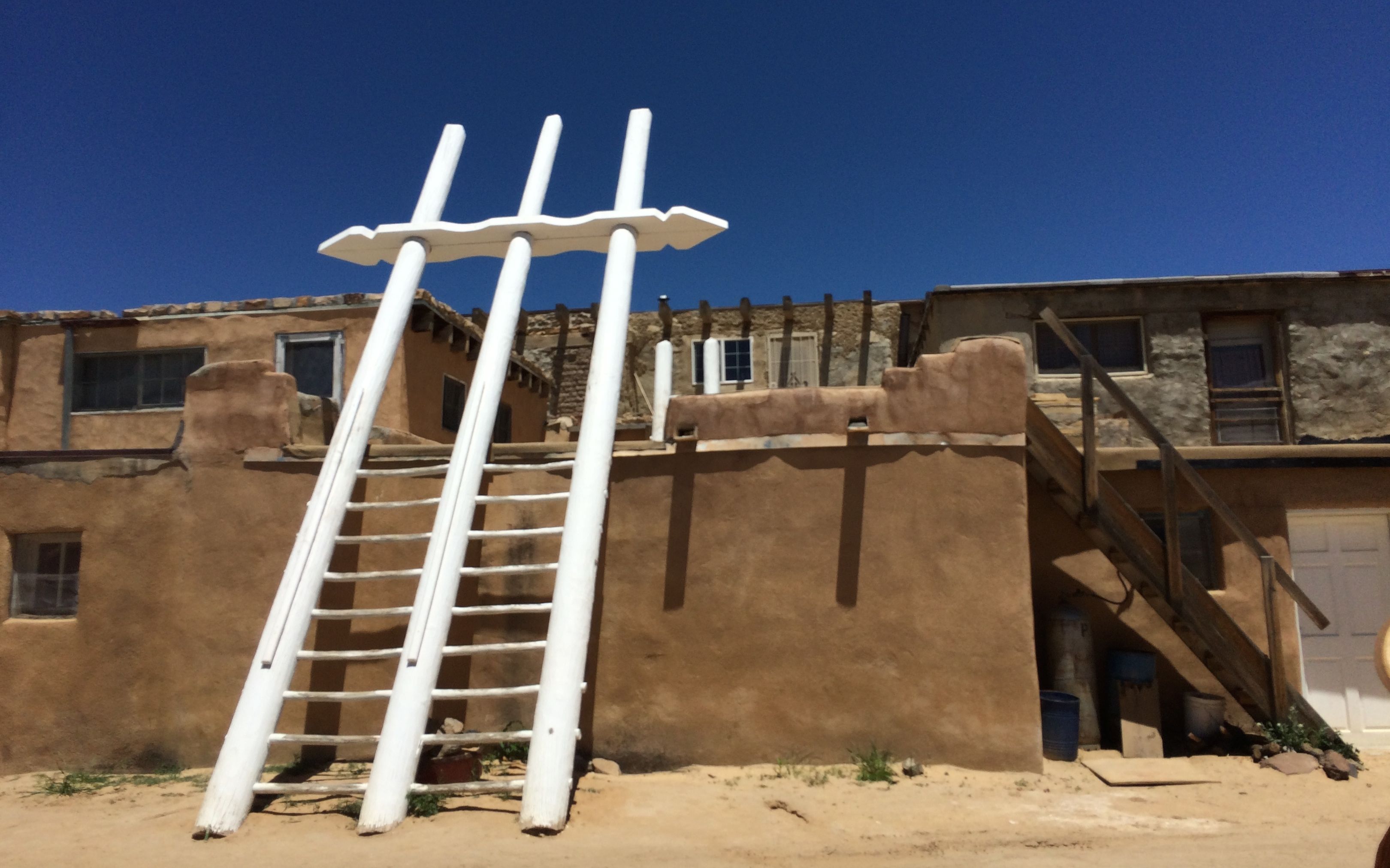
Brandon pointed out the white ladders and told us that they lead to kivas.
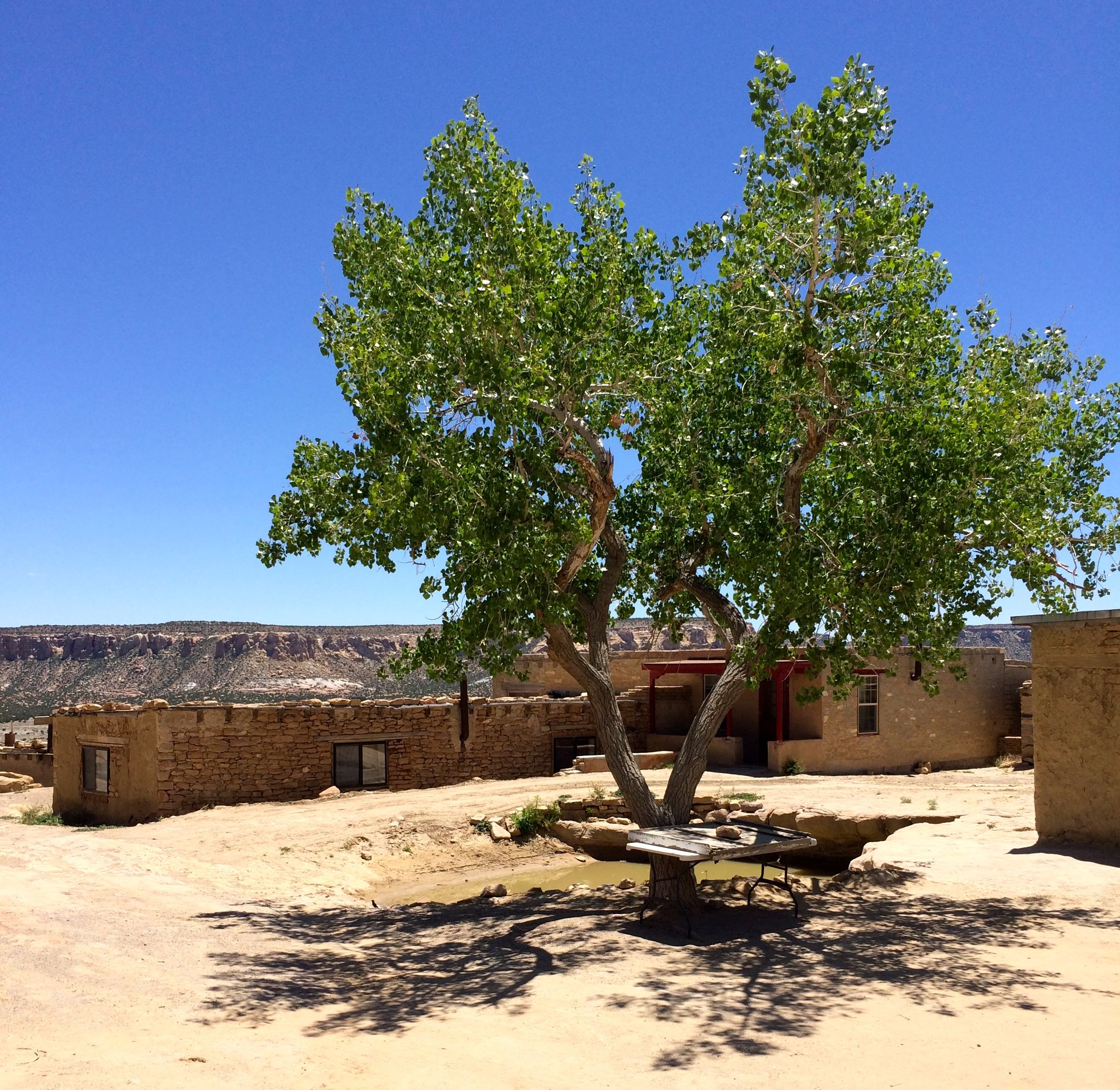
Brandon told us that this is the Acama National Forest. Of course, it was a joke. It was planted in the 1970s by one of the three cisterns. It’s the only tree on the mesa.
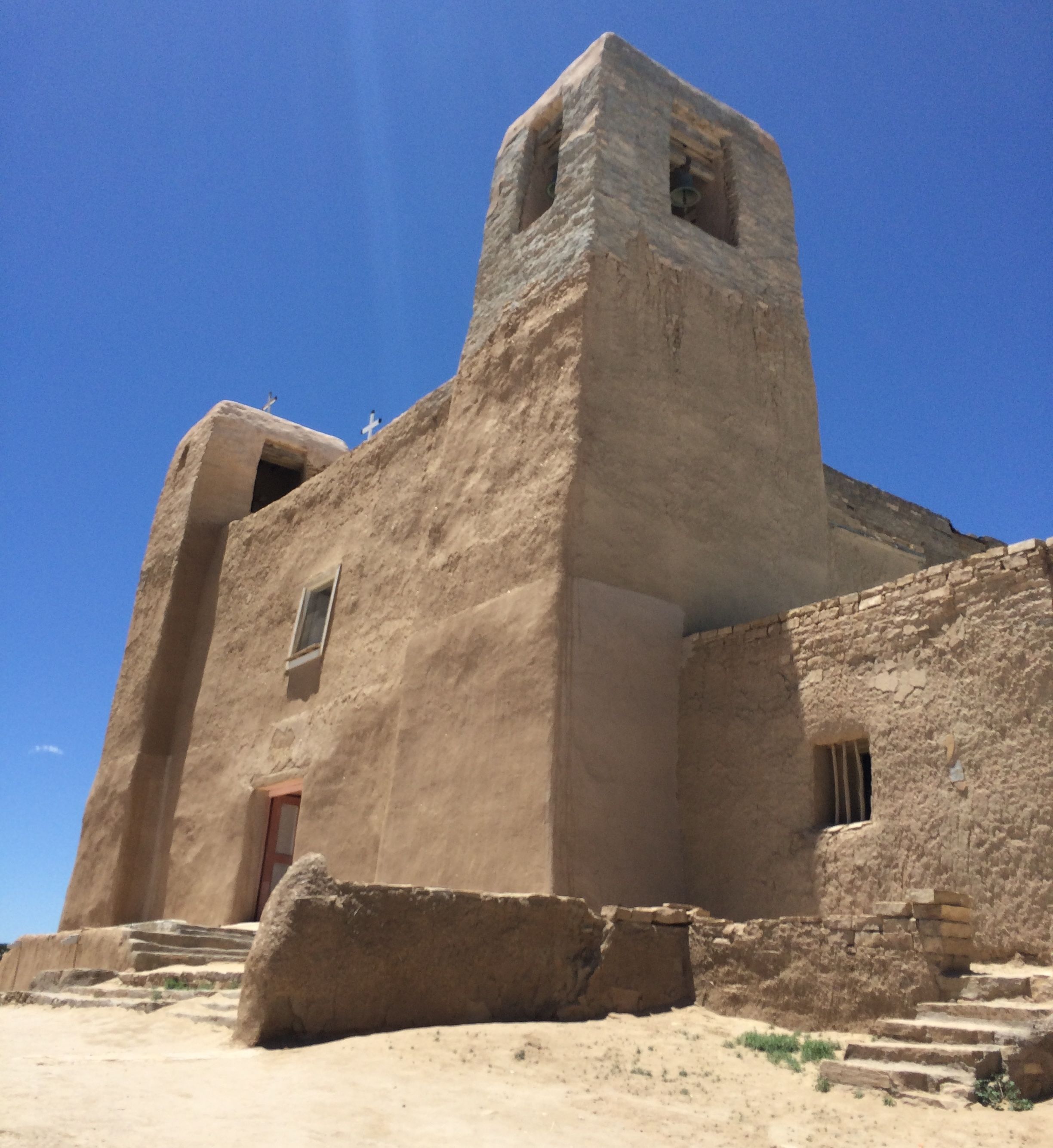
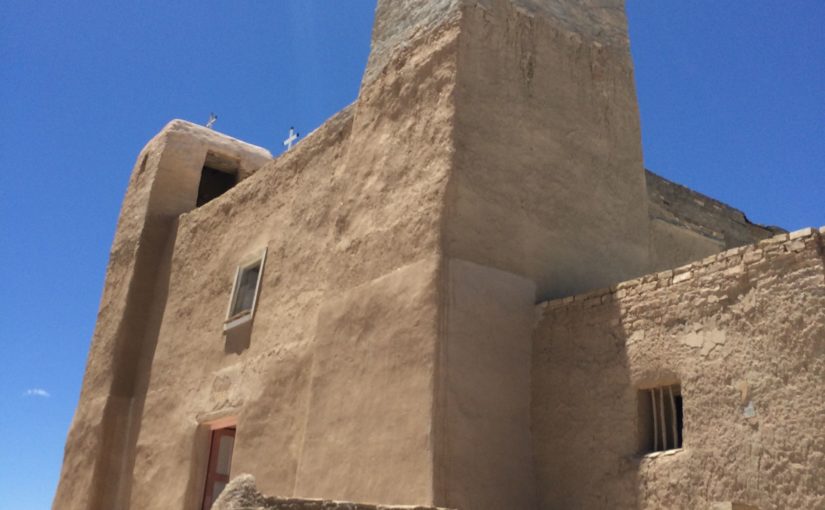
This is the church that the Spanish made the people of the pueblo build after the massacre in 1599. It is too gruesome for me to relate, but if you care to read more about it, here is a report that reflects what Brandon told us.
We weren’t allowed to take pictures closer than this, but let me tell you about the it. The walls are very thick at the base and get thinner as they go up. The beams at the top are made of ponderosa pines that the Spanish made the Acoma carry from Mount Taylor, which is forty miles away. Brandon told us that trees the size of the beams weighed two tons, which the men were forced to carry the entire way.
Information I learned at the Governor’s Palace in Santa Fe said that the construction of the church required 18,000 tones of adobe, sandstone and mud. That’s on top of the trees used in the rafters.
When the church was built, the inside was painted with rainbows and corn, because they made their living farming. Now the people are ranchers, and the inside is decorated with paintings of cattle and sheep.
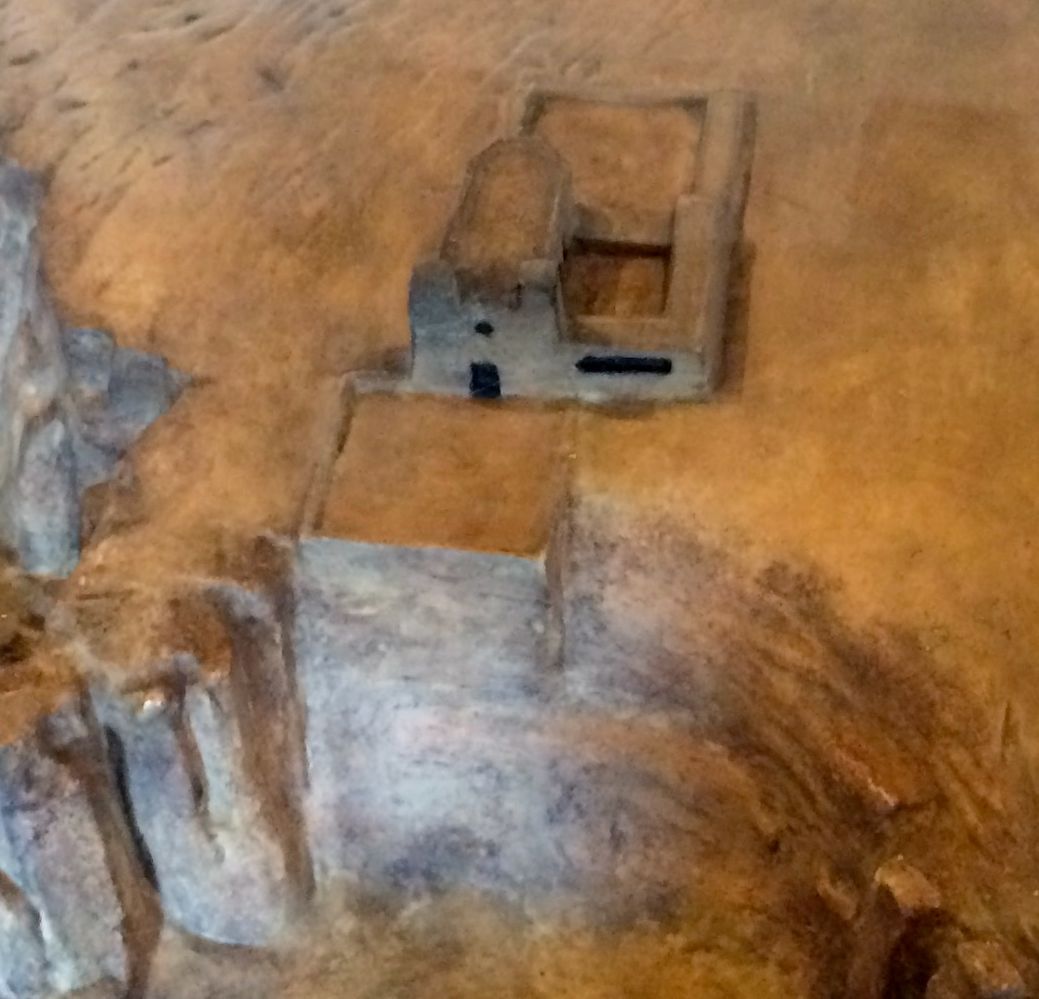
The flat area in front of the church is where the cemetery is. We weren’t allowed to take pictures of the cemetery, but Brandon told us that originally the cliff fell away at this point. There are four layers of burials in the cemetery. Brandon told us that his grandmother was the last person interred in the cemetery.
The king of Spain was pleased that the church was completed, and sent bells for the towers.
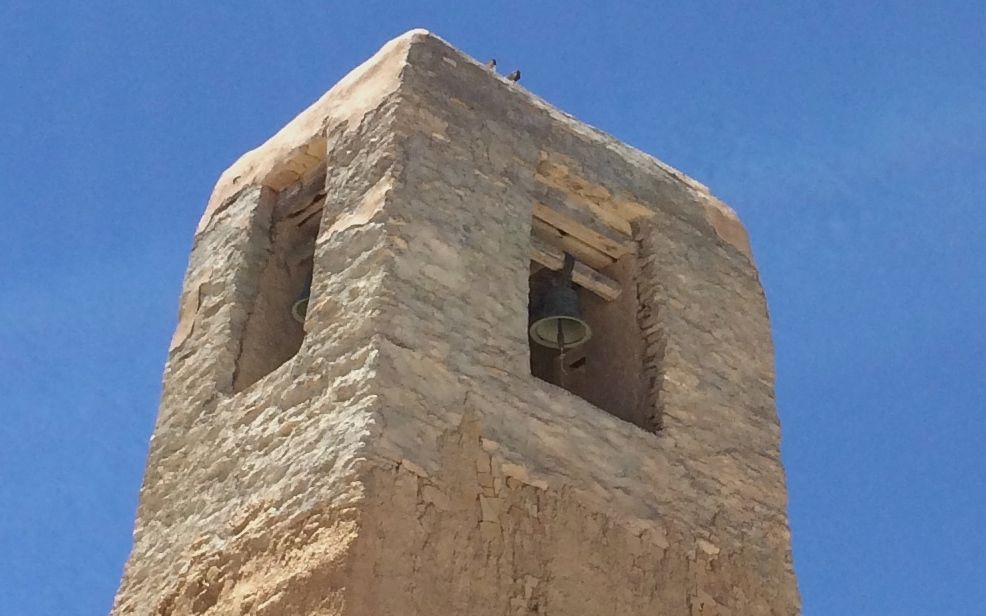
Adobe, well-maintained, certainly stands up well in this dry climate.
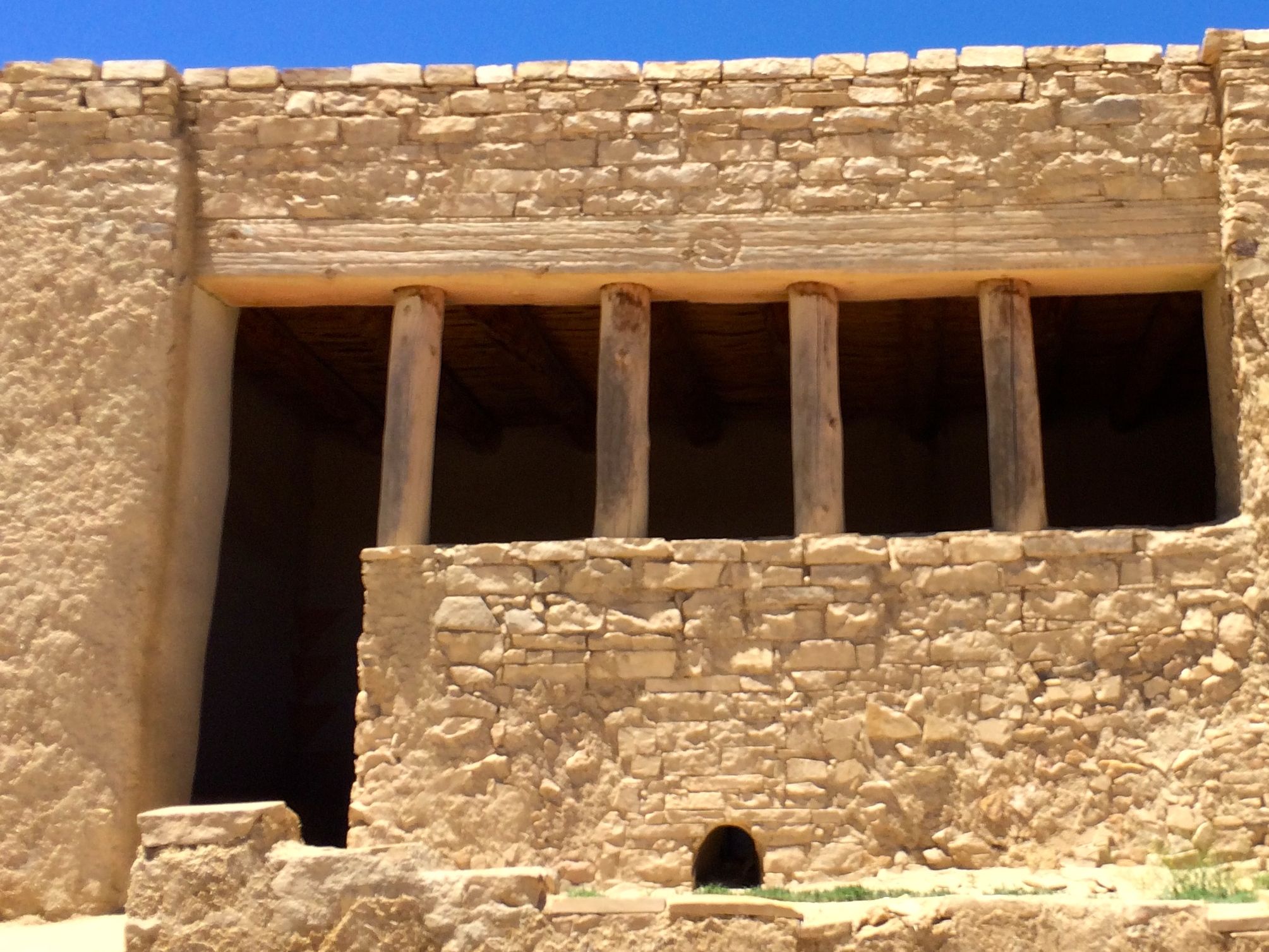
This is part of the church. The wood and the carvings are original from when it was built in 1641.
And then it was time to board the bus for return trip to the Cultural Center.
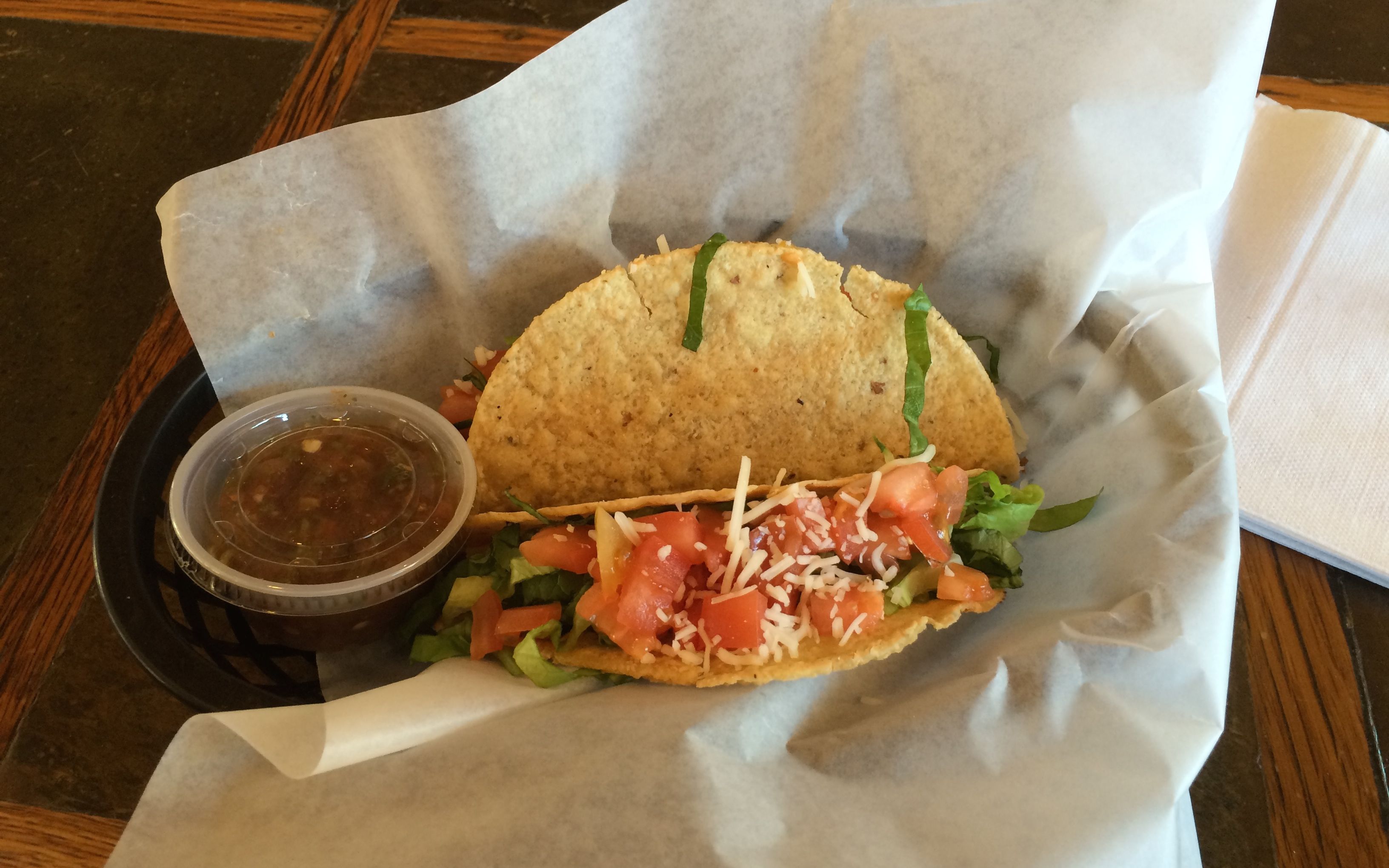
And it was Taco Tuesday!