This wasn’t my first visit to Niagara Falls – far from it!
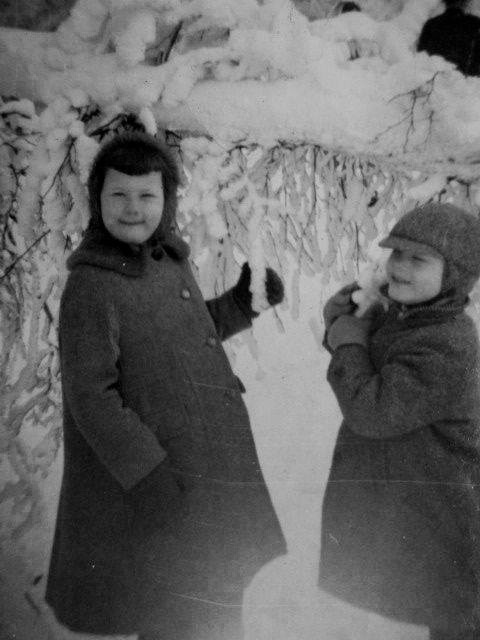 I remember this trip to Niagara Falls in the winter. Dad walked my brother, Craig, and me over to Luna Island. My notes have it as 1962, but brother Scott was born in 1961, so maybe it was in 1961 or 1963. Maybe Scott was with Mom, as I know Mom didn’t walk over with us. I can just hear her saying, “Oof da! George!”
But, this was the first time I visited with Kathy and Dennis and their kids, John, Teresa, Paul and Paul’s wife, Amber. We were all in town at the same time and we set off on an adventure.
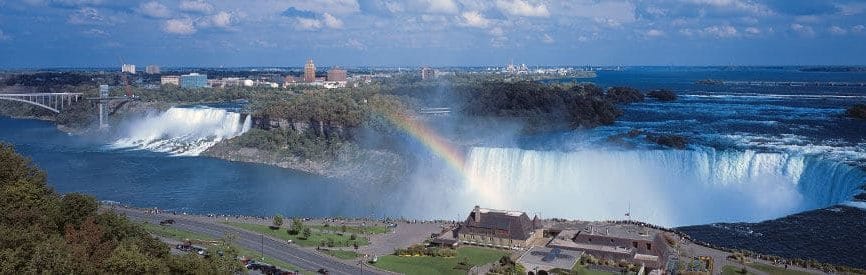
This is the typical touristic image of Niagara Falls. The Horseshoe Falls is to the right of Goat Island and the American Falls and Bridal Veil Falls to the left.

I find it amazing to consider that just about all the water in the Great Lakes eventually passes through this straight.
Fun Fact to Know and Share: The Niagara River isn’t really a river. It is a straight. A strait is a naturally formed, narrow, typically navigable waterway that connects two larger bodies of water. The two larger bodies of water, in this case, are Lake Erie and Lake Ontario. While a straight is “typically navigable” isn’t easy to see why this one isn’t – navigable, that is.
Fun Fact Number Two: Niagara Falls State Park is the oldest continually operated state park in the nation. It began operation in 1885.
Our mission on this trip was to visit the Three Sisters Islands, part of the park that extends out into the river, on the side of Goat Island that faces Canada.
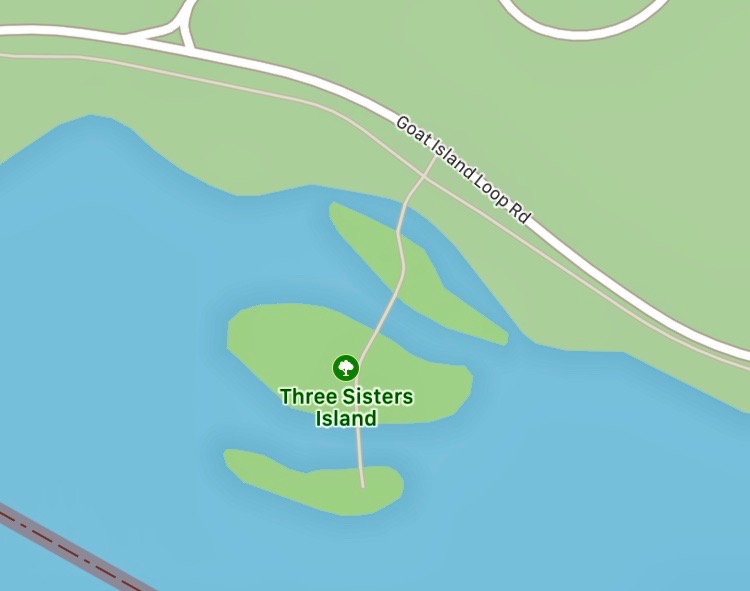
We carpooled over – with such a large group, we needed more than one car – and found a place to park.
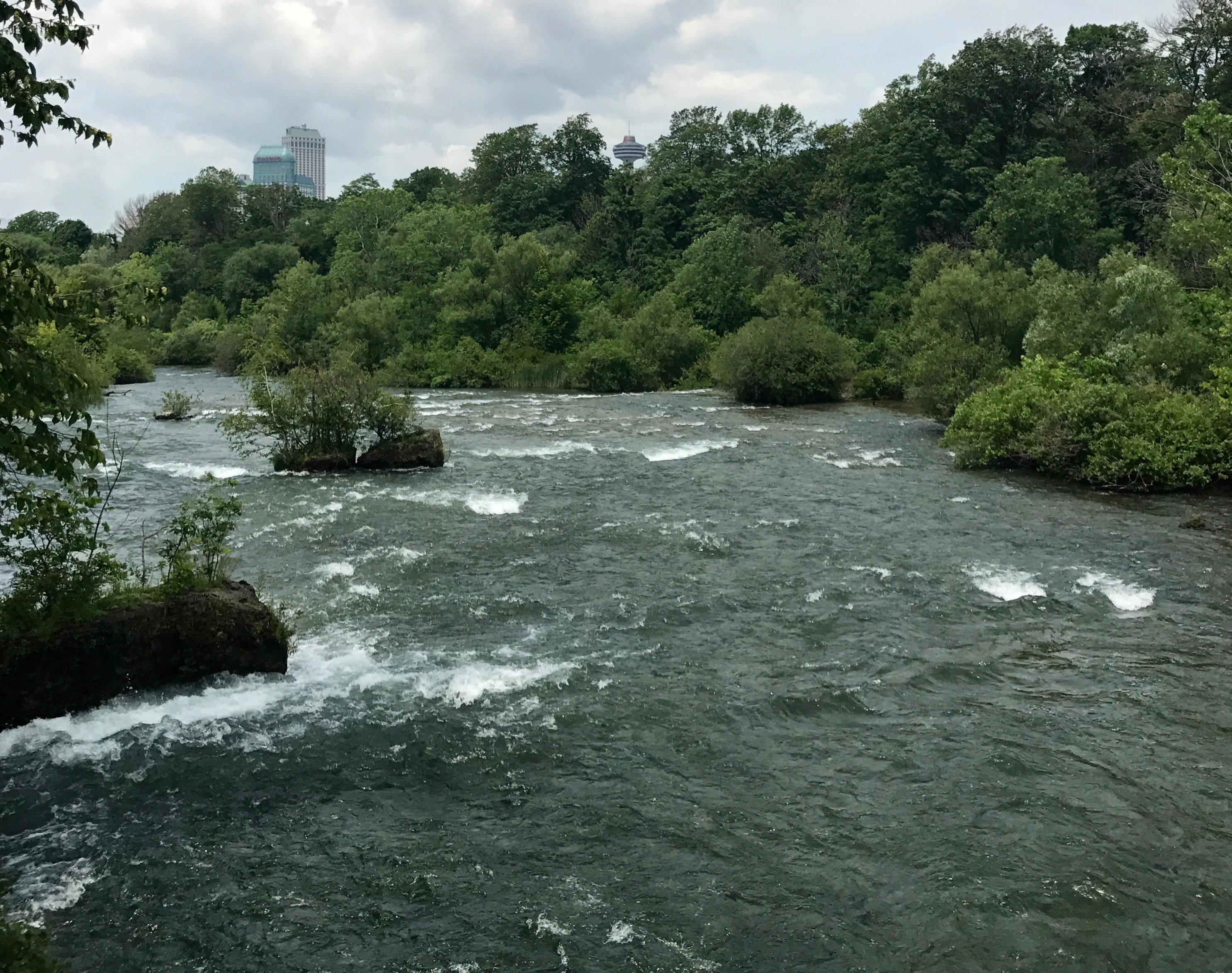
If you’ve never been seen the Falls from this angle, I highly recommend it. I was one of the first places I went after I got my driver’s license. Even though we made repeated trips to the Falls when we were kids, I could never get my folks to go explore this part of the park.
You can really feel the power of the water.
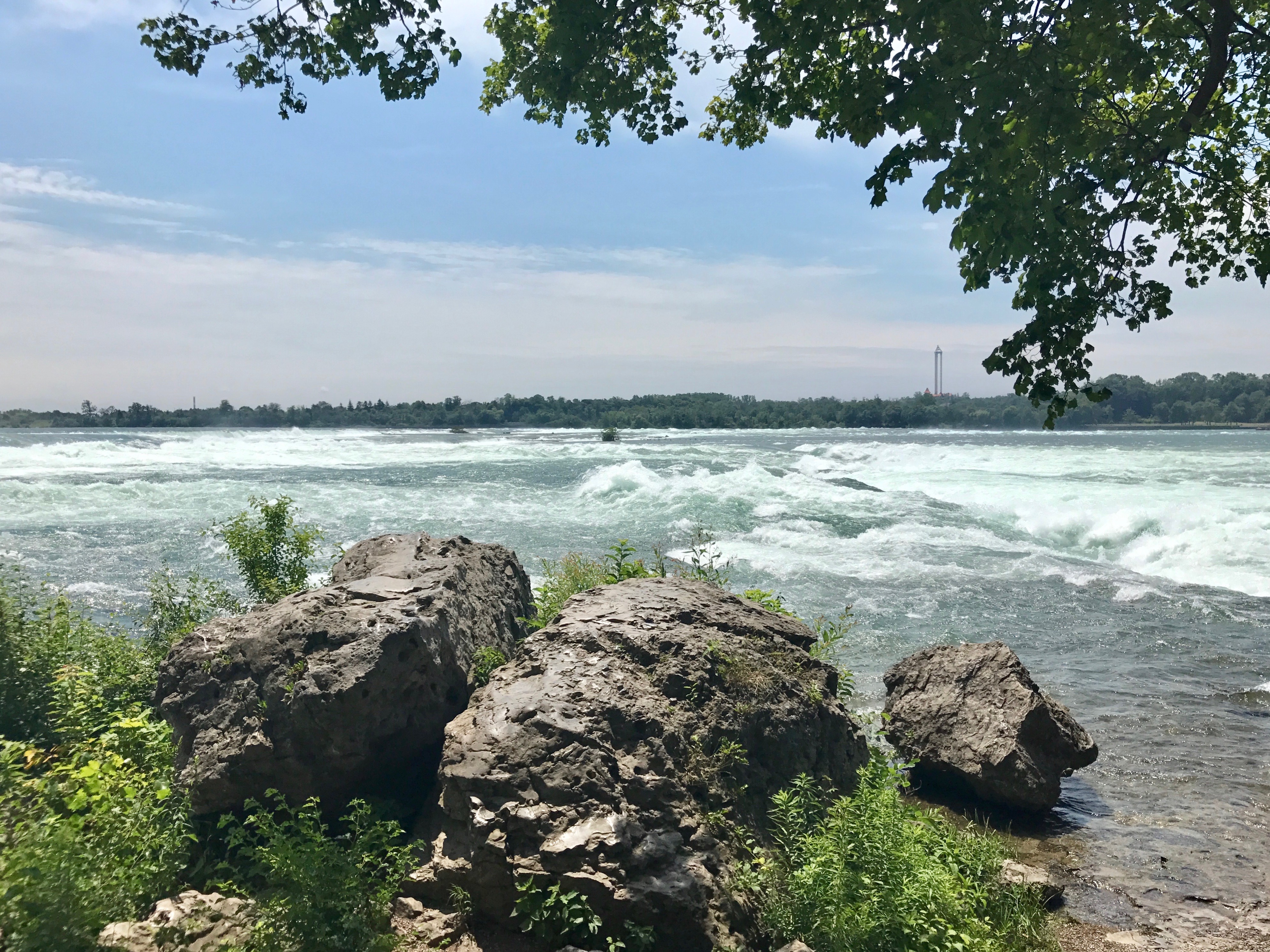
We crossed all the bridges and went right out to the edge. That’s Canada on the other side.
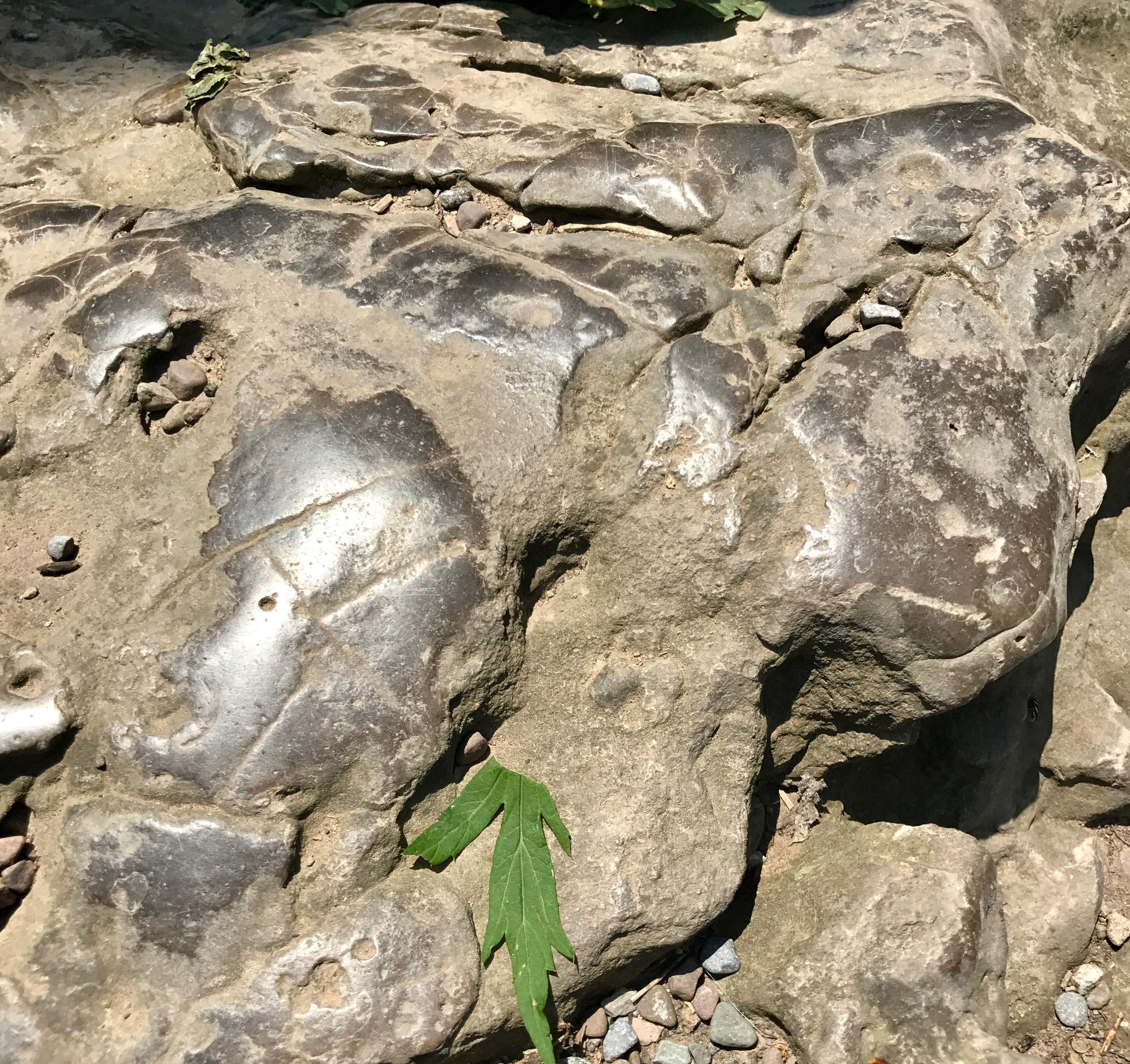
I think these shiny spots on the boulders tell the story of centuries of tourism. They remind me of the “buffalo rubs” I saw out west. I suppose the native peoples could have visited here, but it seems like an unnecessary risk when there were so many other places to go.
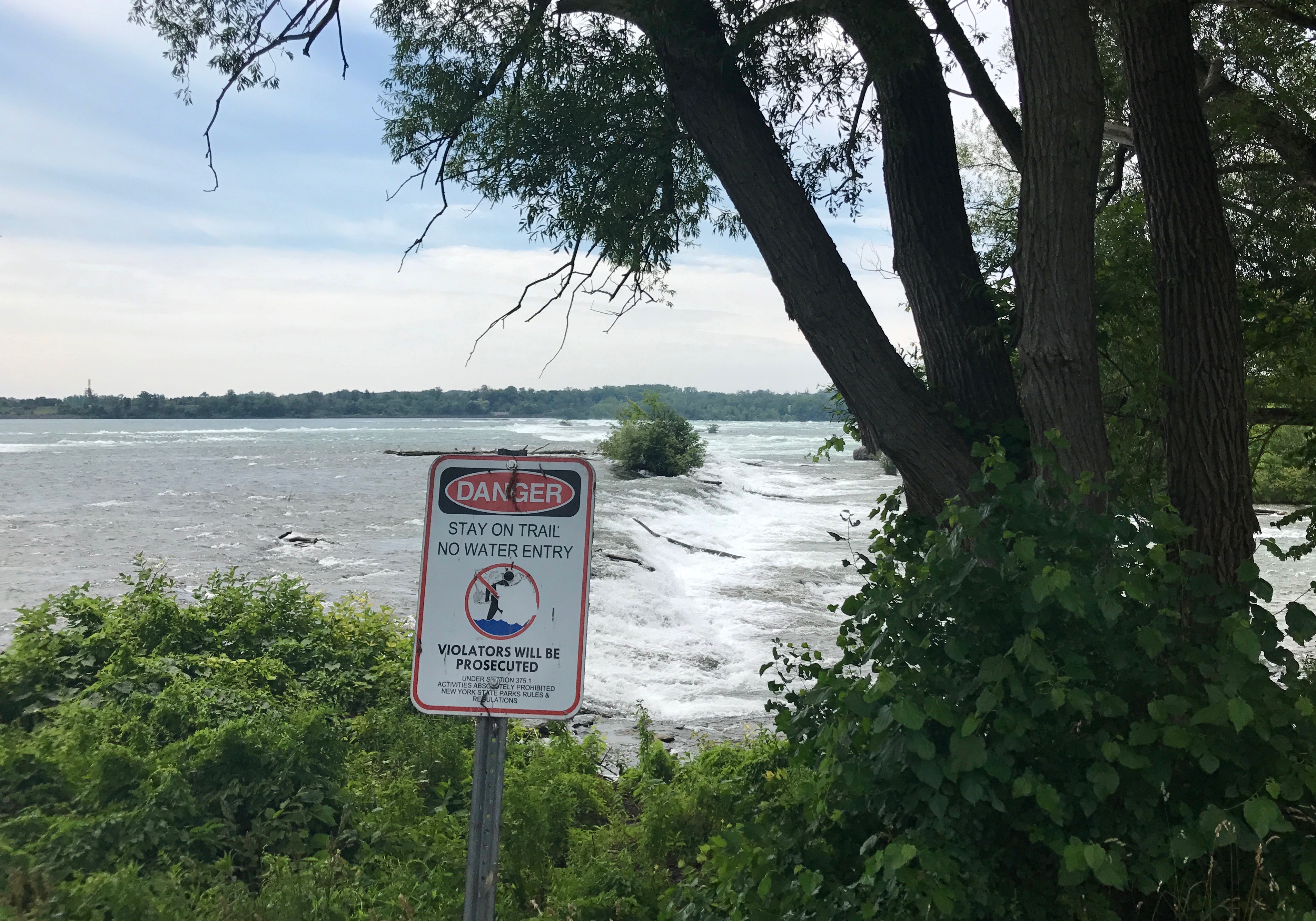
This is one sign that I didn’t need. There was no way I was leaving the trail – let alone entering the water.
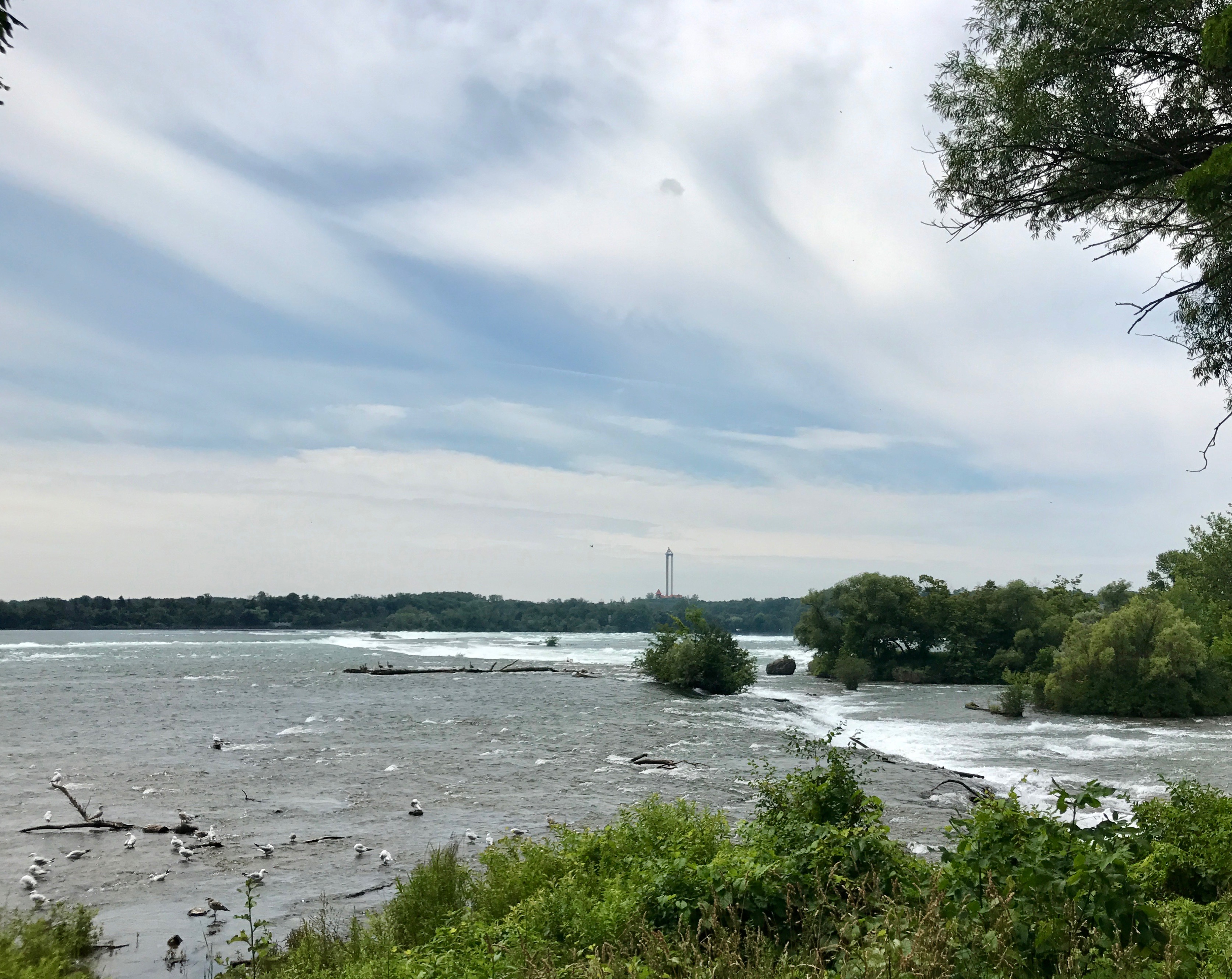
It seems like the birds didn’t see the sign. Still, it is interesting to reflect that there are pockets of calm in every storm.
I was curious about the name of the Three Sisters Islands. I figured that it was some sort of cheesy story invented about the Indian maidens trying to get to their braves on the other shore.
According to a sign posted on the islands, it turns out that the names were given by Parkhurst Whitney, a local businessman and decorated War of 1812 veteran, to honor his daughters.
What did these young ladies do that merited having islands named after them? In 1816, when ice jams in the shallow rapids created natural bridges between the islands, Parkhurst took his three daughters on a walk out to the latest island. He was so proud of the success of their adventure, that he convinced Augustus Porter, the islands’ new owner, to name them after his daughters.
The nearest island is Asenath, the middle one is Angeline and the farthest is Celinda Eliza. There is an island adjacent to Celinda Eliza that is called “Little Brother,” after their brother, Solon.
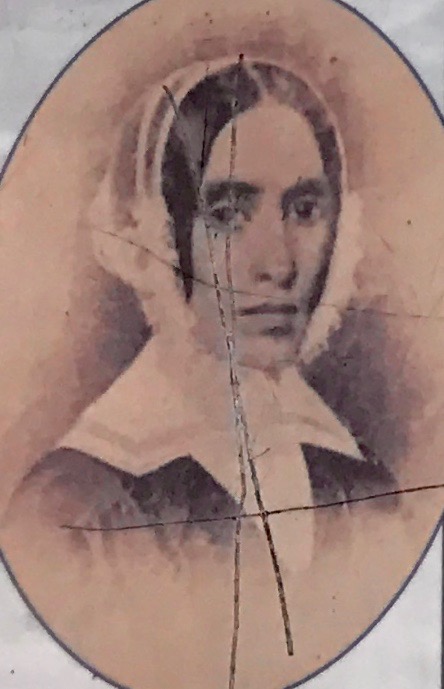
It’s too bad people can’t resist the urge to make their marks on things when they are traveling.
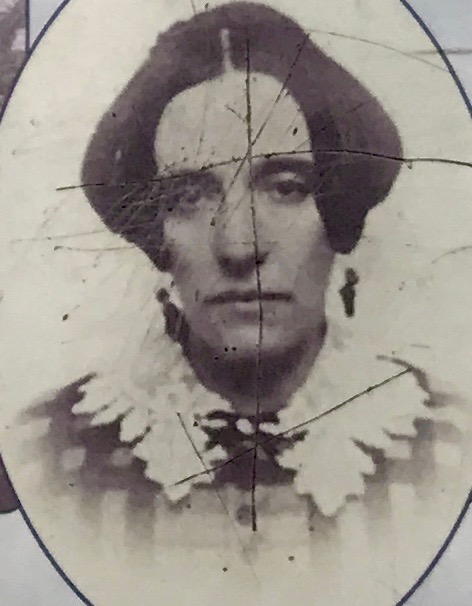
They didn’t have any photos for poor Celinda Eliza and Solon.
There are so many streets and places named Porter, I thought that I might as well see what I could find out about Augustus Porter. I wondered why he’d agree to name the island he owned after Parkhurst’s daughters.
It turns out that he worked with Parkhurst, who was an engineer and hotel operator. Together, they developed the first bridge from the mainland to Goat Island in 1818, and the first staircase from Prospect point to the base of the Falls in the same year, along with a ferry service, gardens, walks, bridges and other attractions.
It appears that giving Parkhurst “naming rights” was a small concession to keep him involved in the enterprises.
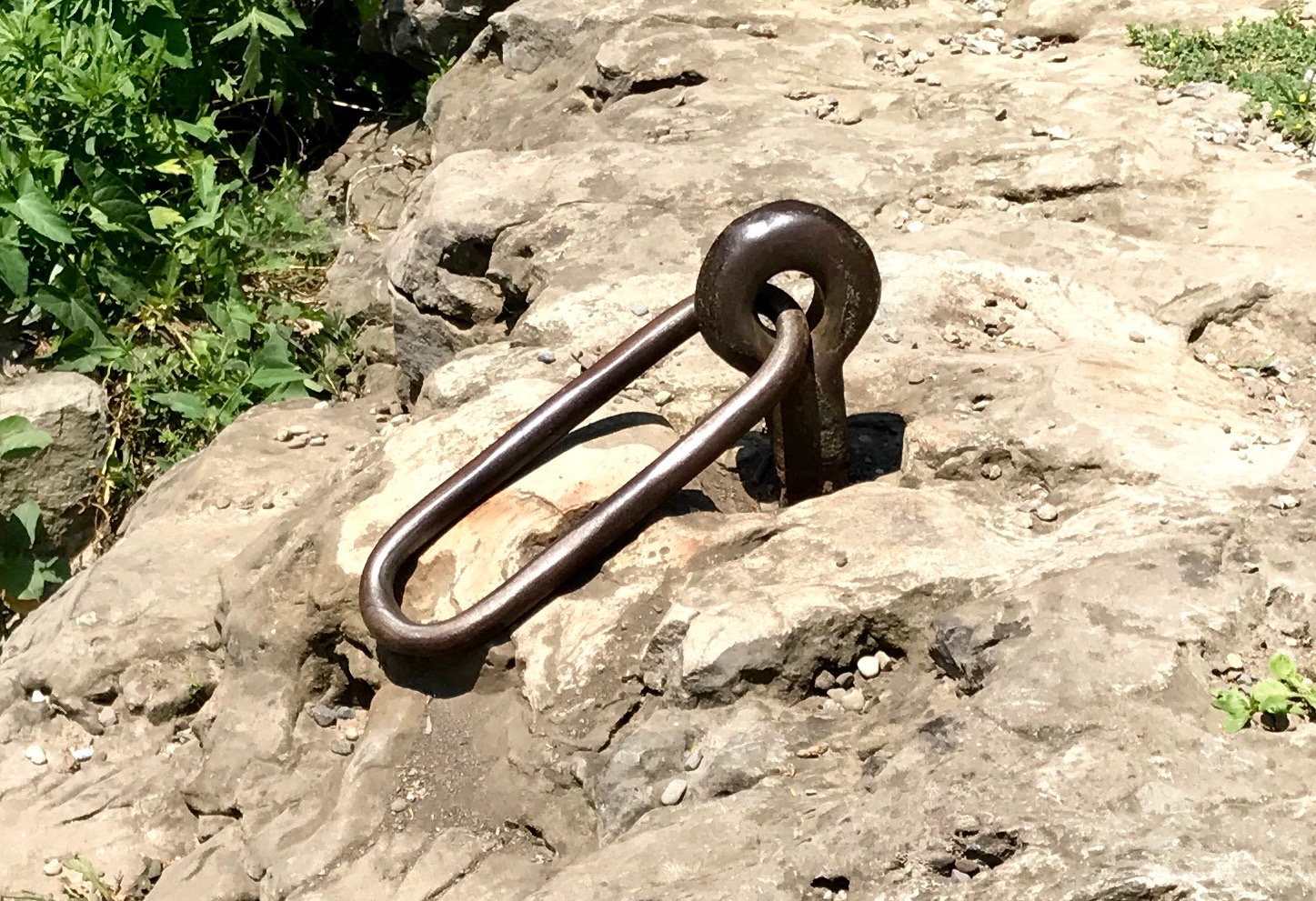
On our way back to Goat Island, we passed this eye bolt and link. I wonder what it was for?
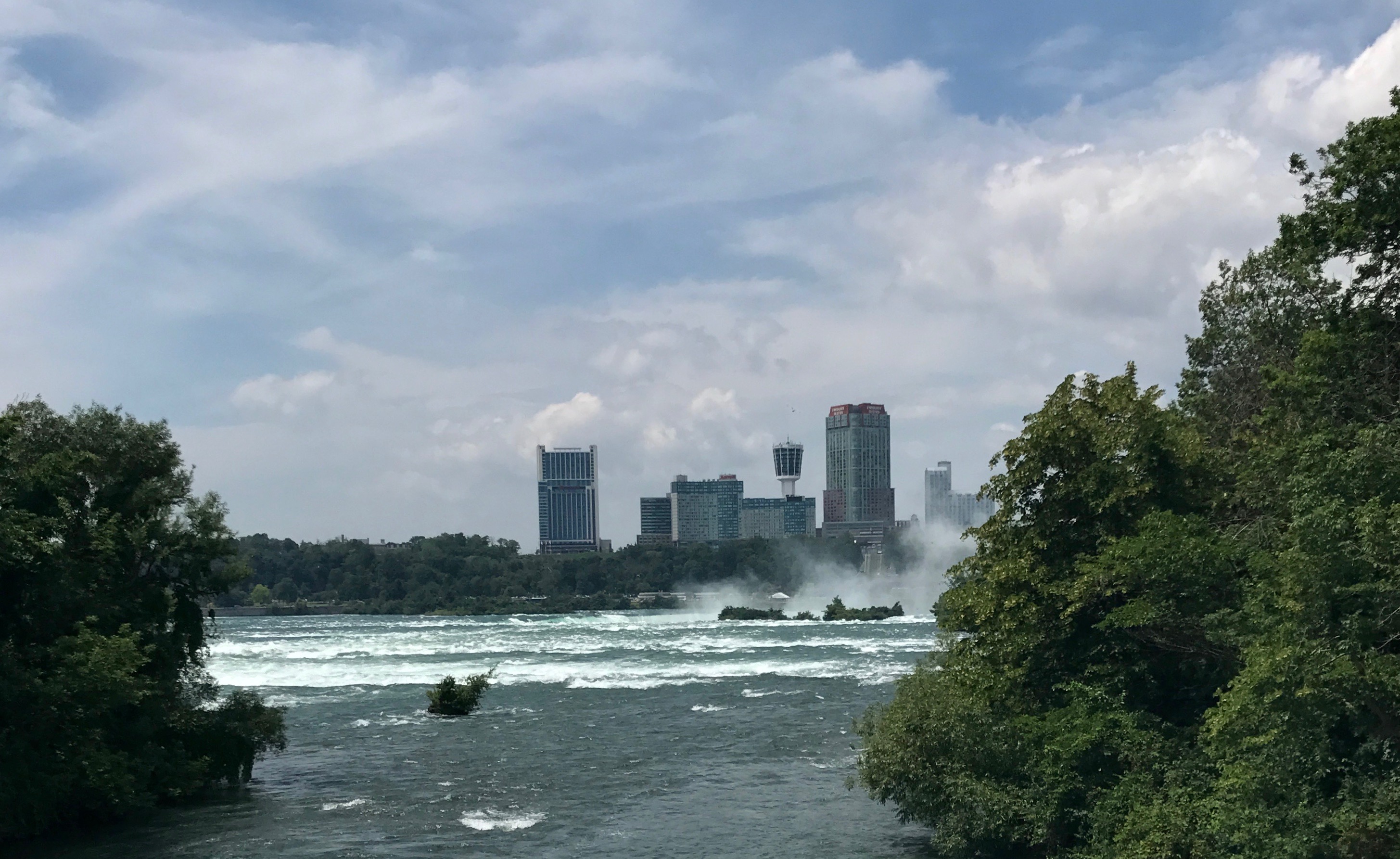
You can see the mist rising from the Horseshoe Falls. That’s Canada on the other side.
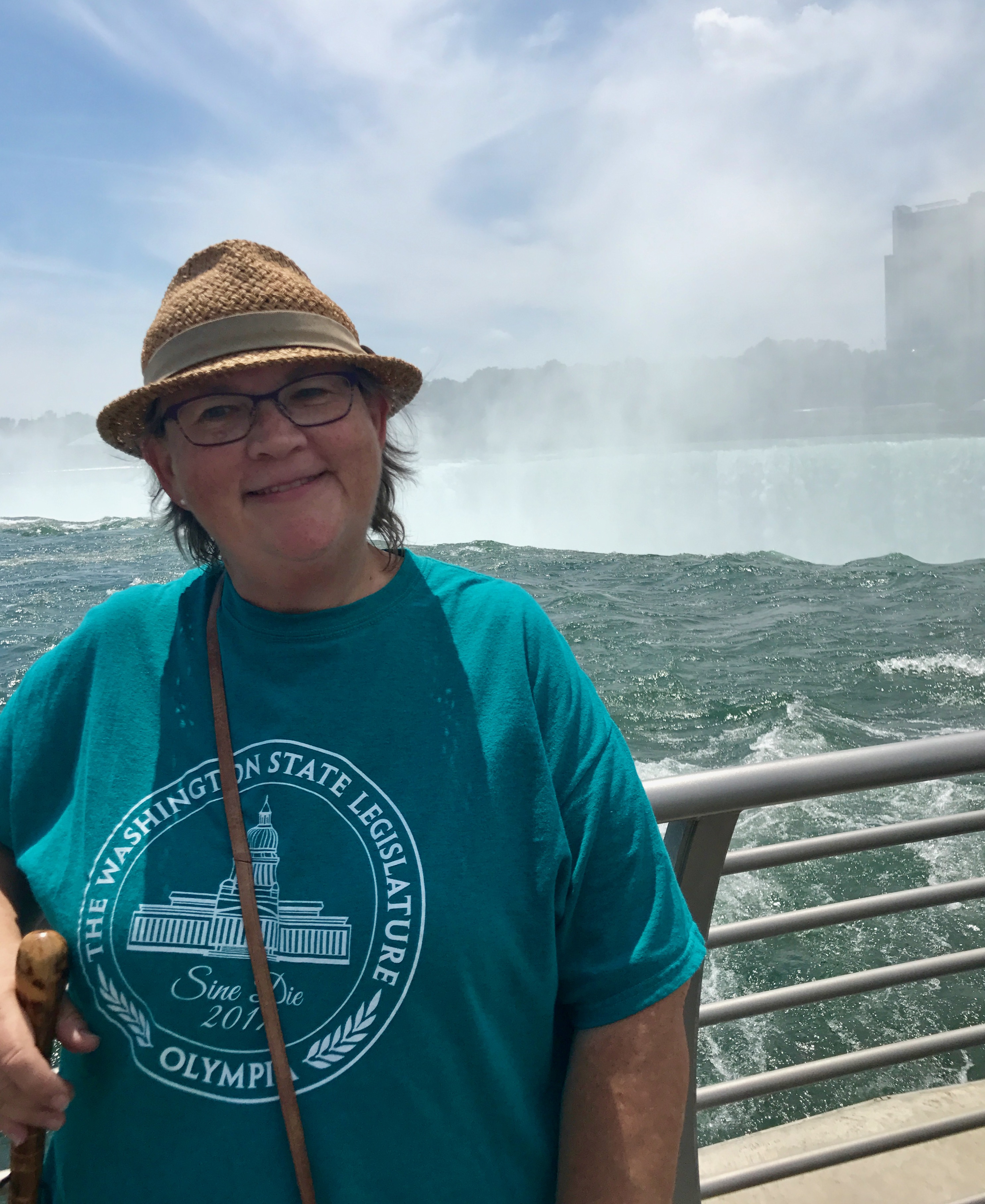
We continued on toward Terrapin Point. About 90,000 cubic feet of water per second flows over the Horseshoe Falls during the summer months in the daytime. They can vary the amount of water that goes over the falls and divert water to create hydroelectric power.
You know that green color of the water flowing over the Falls? It is created by the 60 tons per minute of dissolved salts and “rock flour” generated by the erosive force of the River itself. What is rock flour? Well, don’t go baking a cake with it . It is very finely ground rock.
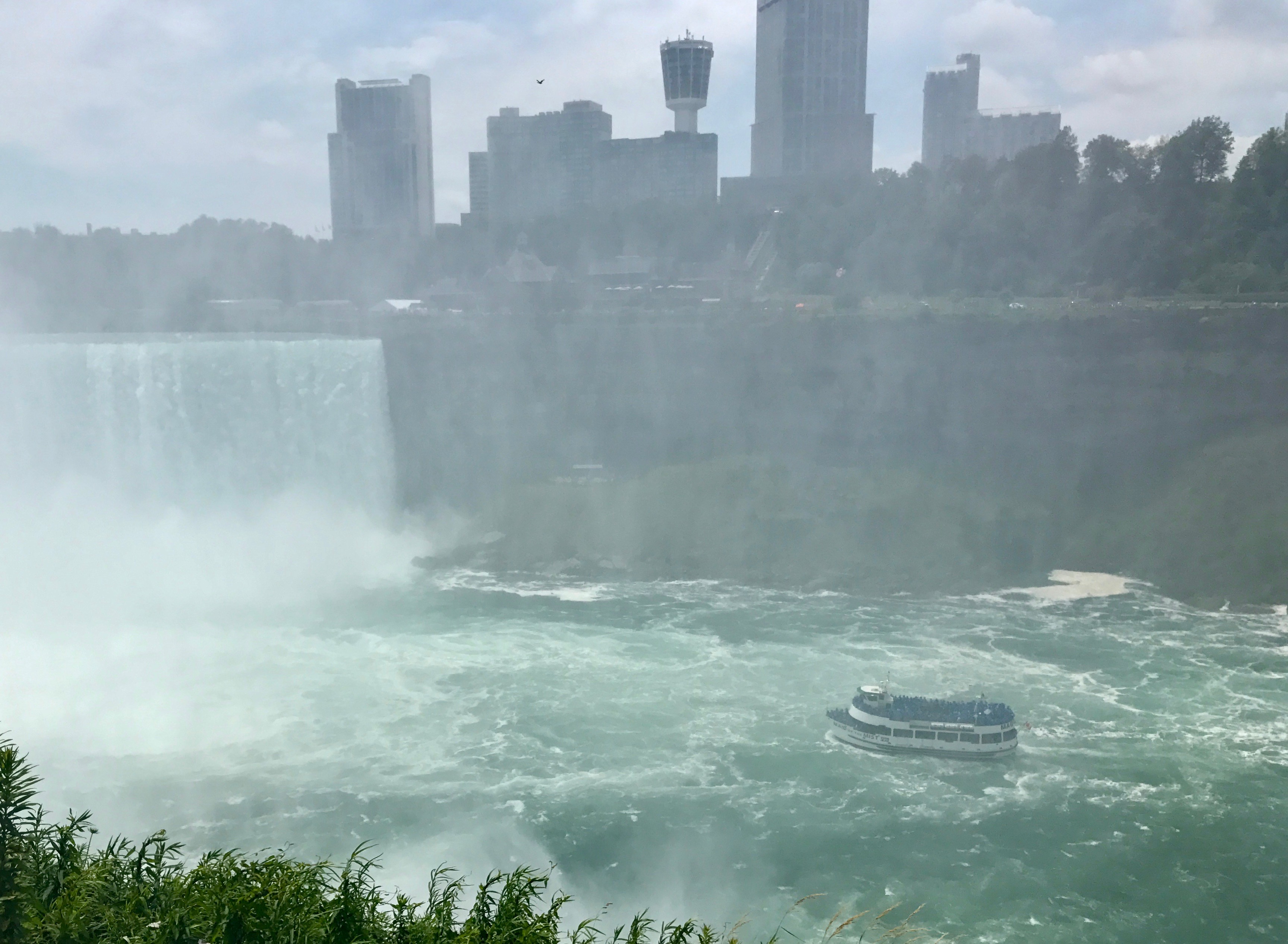
We continued walking along the edge of Goat Island. That boat down there is one of the fleet of boats used by the Maid of the Mist. You can take a ride on one of the boats from the American side or the Canadian side. I’ve done it before, and there is nothing better on a hot day.
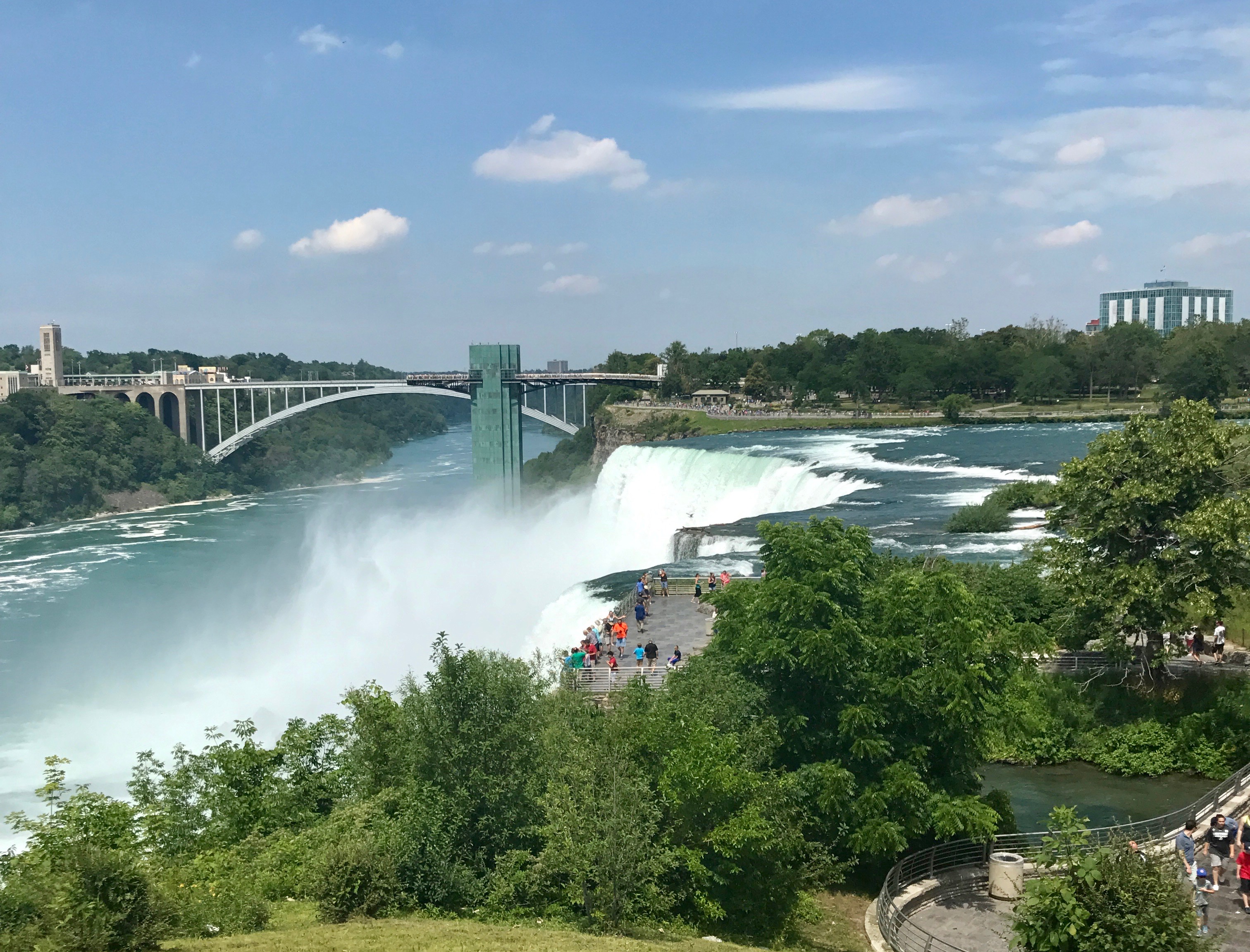
We continued on around. At the end of that little footbridge at the lower right corner of the photo is Luna Island, where Craig and I had our photo taken all those years ago.
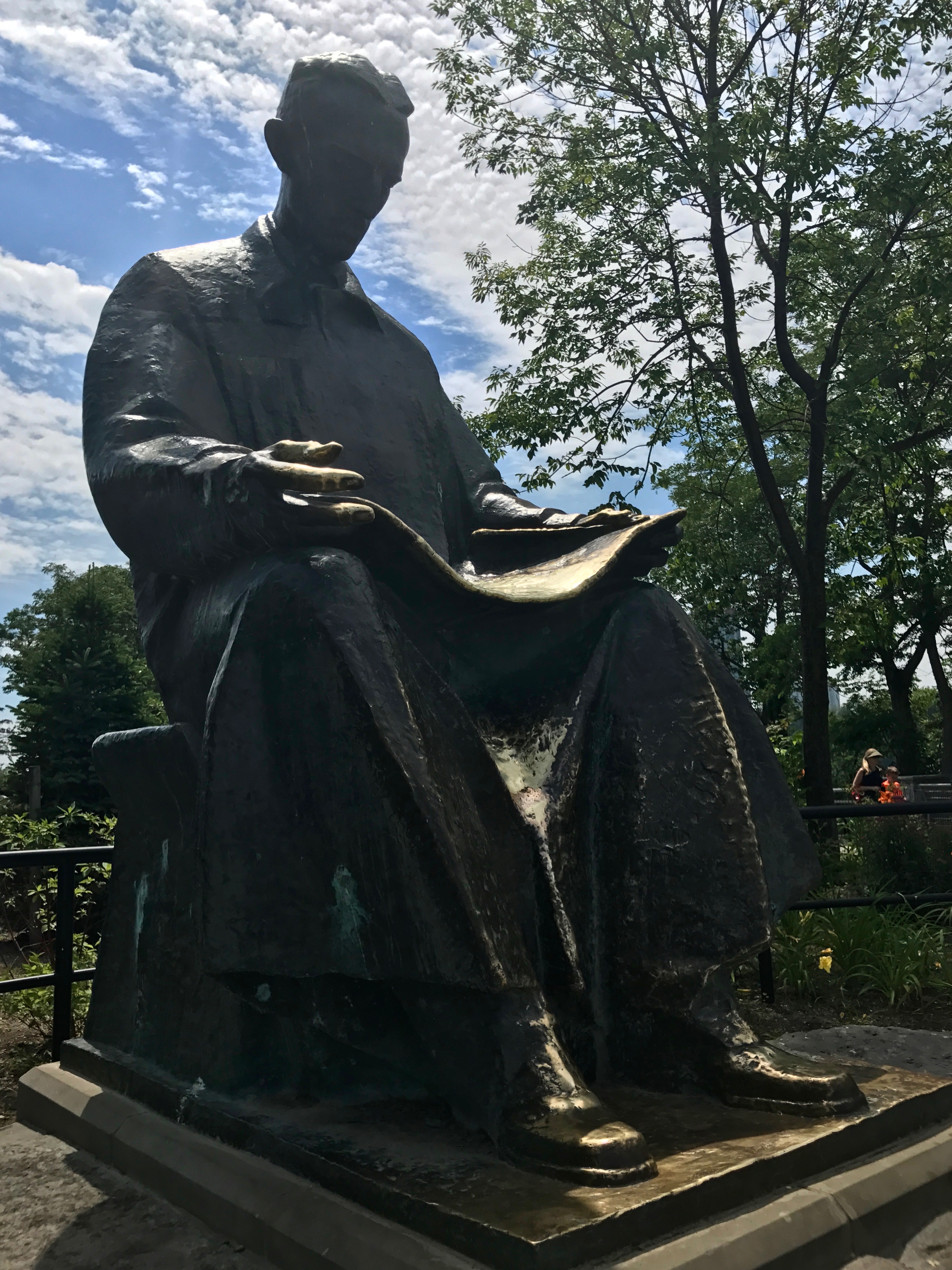
There is a statue honoring Nikola Tesla, who invented the alternating current induction motor. The statue was dedicated on 1976, 33 years after his death.
We all met up again and headed over for a little refreshment.
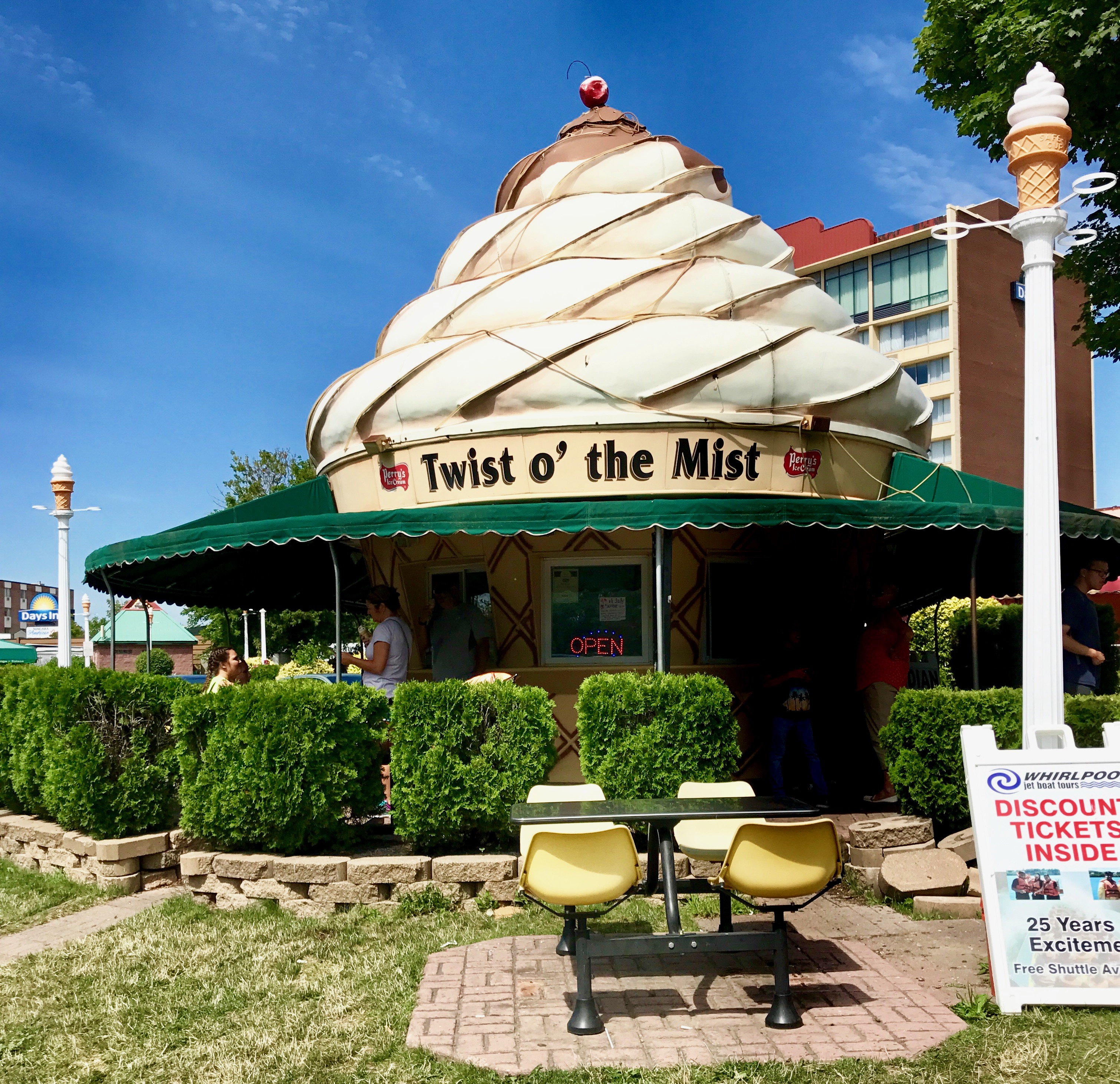
What a cute a kitschy ice cream stand! I had never been there before. It was a nice break before we headed over to one last stop: Devil’s Hole.
Devil’s Hole State Park, opened in 1924, is one of the oldest state parks in the region, although the Niagara Falls State Park is older. It was a portage used by Native Americans to transport canoes around Niagara Falls and the rapids on the Niagara River. It was the location of an early battle between European settlers and Native Americans over control of the portage route.
Just time for a quick look.
And then it was time to head back to Buffalo.