Or two.
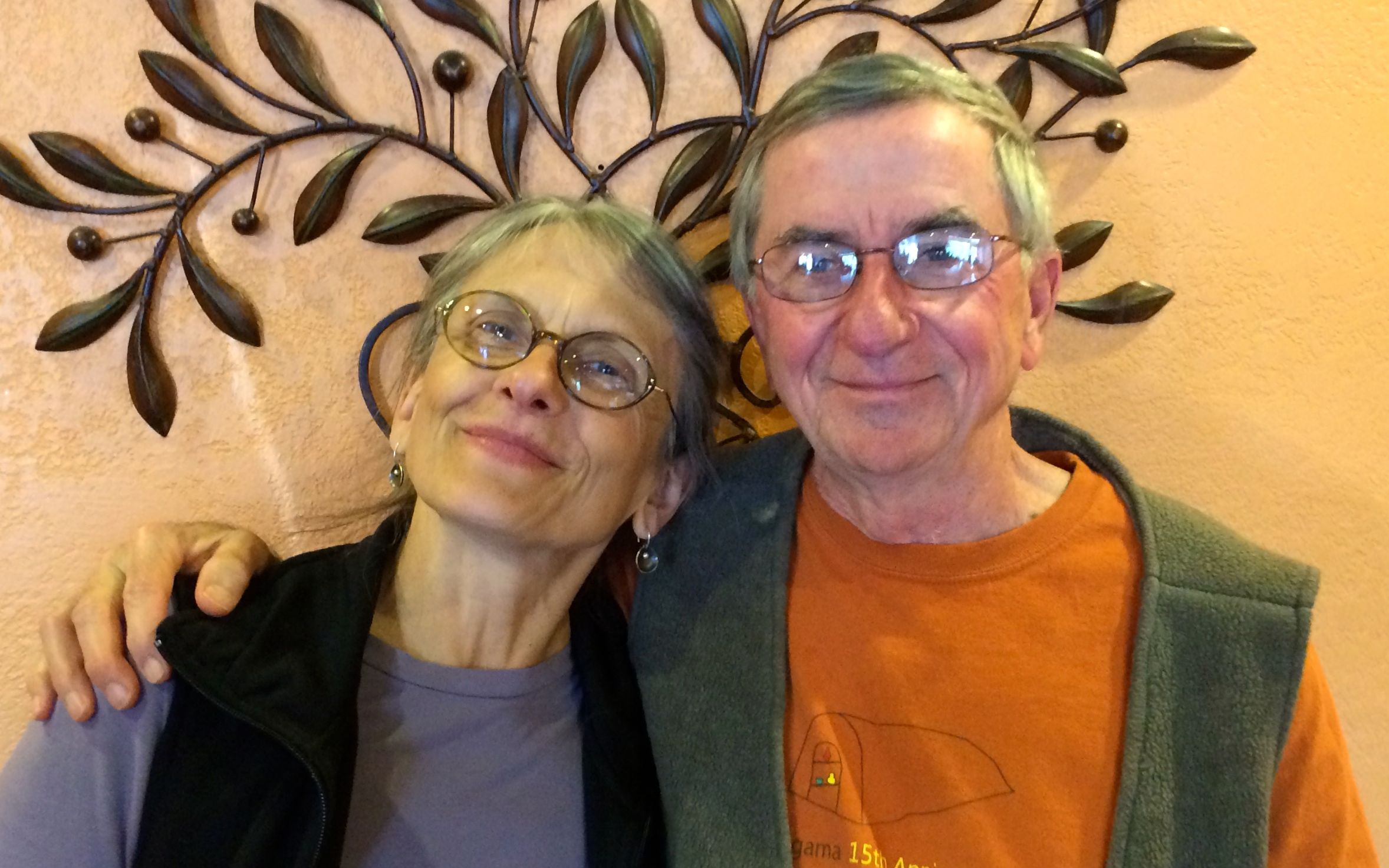
I love it when my travel plans mesh with my friends’ plans.
Anna and Carl were wintering in Tucson, and I got there just a few days before they were planning to head north. We met up to chat for a while one day and then another day we visited the Tucson Museum of Art and Historic Block.
I got so involved with the experience that I didn’t get as many photos as I might have liked. So, let me take this opportunity to invite you to visit it for yourself. Not only is it an art museum, but it also preserves some of the historic architecture of old Tucson.
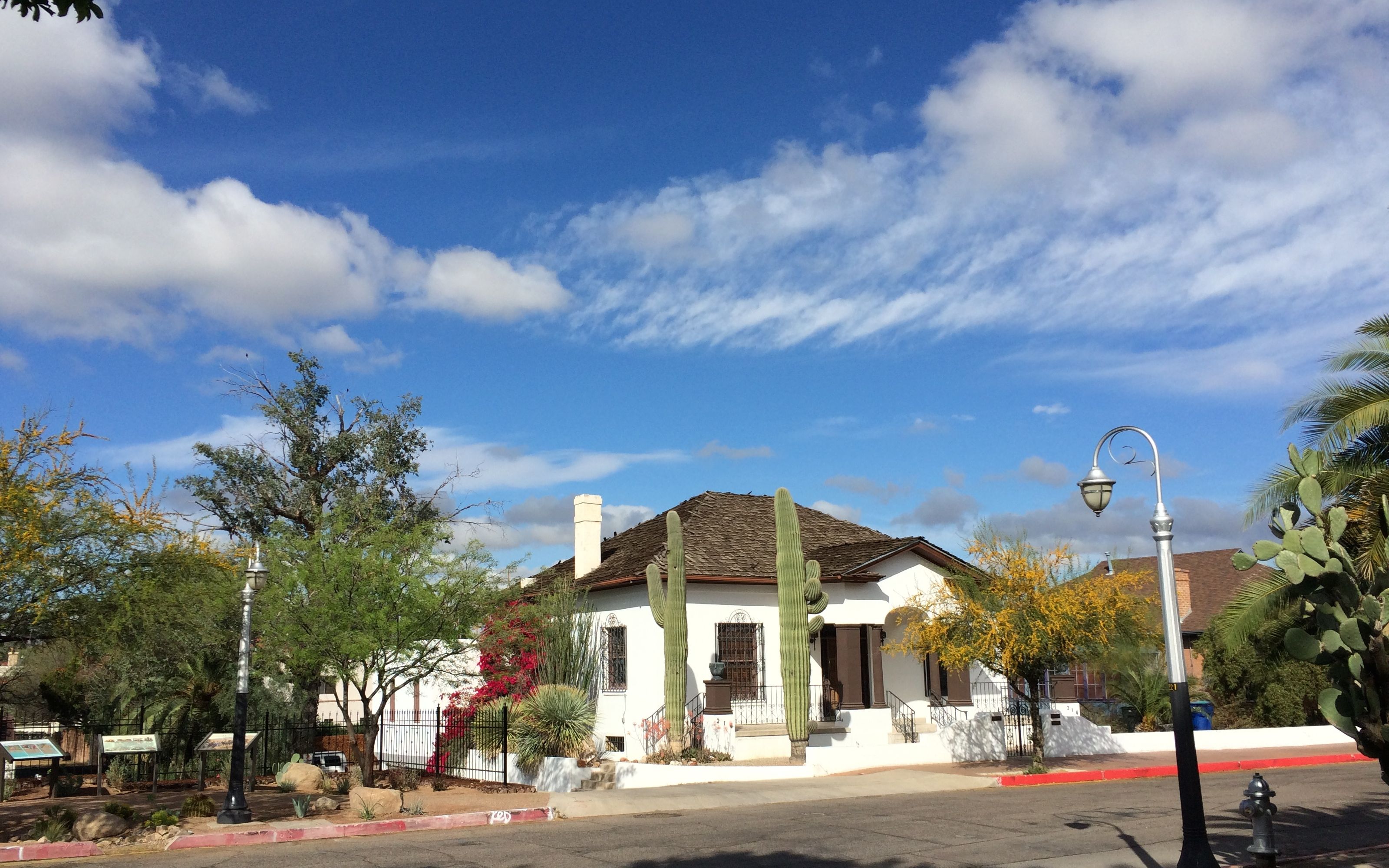
On certain days, they give tours of the historic block, and that’s on my list for “next time.” This building is across the street, and it has been repurposed into a legal office.
The museum, itself, is built on the site of the Presidio, back from when the area was controlled by the Spanish. They have a marker on the pavement that shows where it was. Parts of the museum are in old adobe houses that have been repurposed. After you pass through the old parts of the museum, you enter the modern part.
They had several interesting exhibits up while we were there. One exhibit was artwork based on the night. Another was a work by Ai Weiwei, based on the Chinese zodiac. My favorite exhibit was textiles from recycled materials. I think my works of art would have been right at home there.
Unfortunately, they only permit photos of work that is in their collection, and these exhibits were put together by others. At least, that’s what I understood. We were allowed to take pictures of things that they owned, so I do have a few to share.
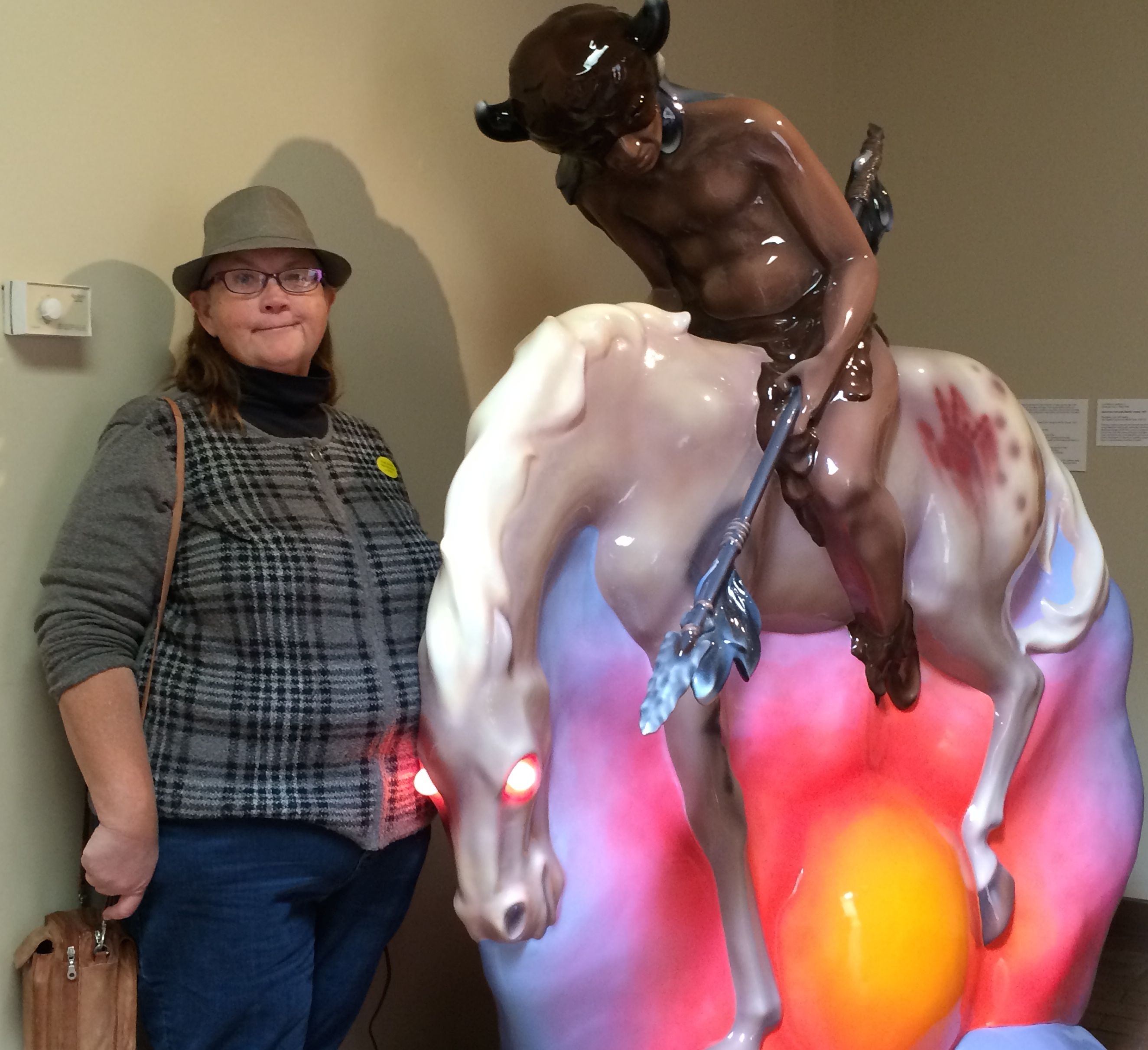
This statue is by the artist Luis Jimenez. He was a prolific artist who met an untimely end. While working on a 32 foot tall horse statue for the Denver Airport, he was crushed by the statue in his studio.
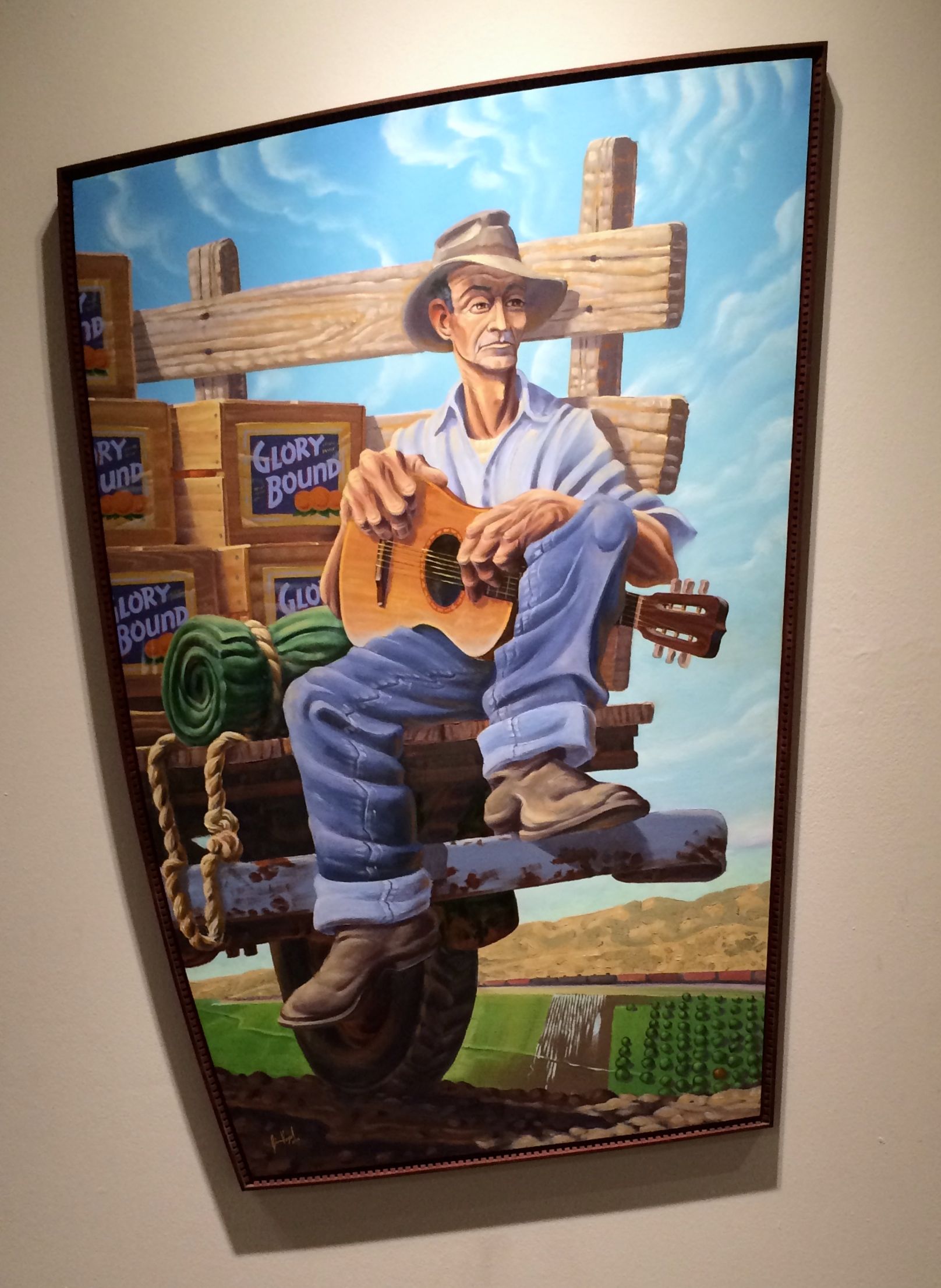
Here’s Woody Guthrie. I didn’t make note of the artist, but a Loyal Reader let me know that the name of the artist is Jim Vogel from Santa Fe. Thanks, Loyal Reader!

I didn’t catch this artist, either, but I love the idea of herding pigs. I wonder if it’s like herding cats?
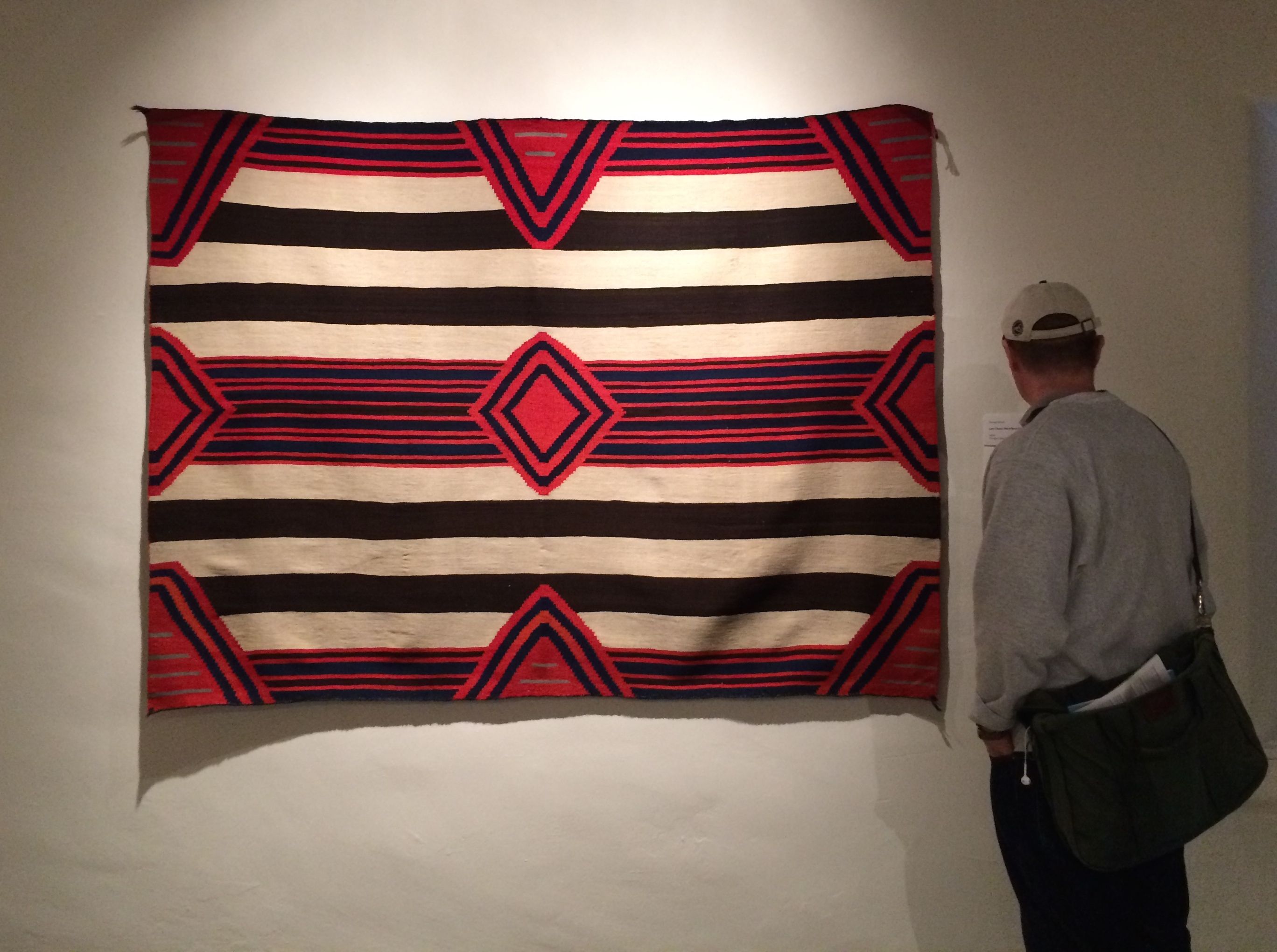
The guide told us that this is called a “Chief Blanket” and the red color of the wool comes from cochineal, an insect that grows on prickly pear. The insect lives beneath a white material, kind of like a web. In fact, I think I spotted it on a prickly pear outside the museum.

If you look carefully, you can see a little bit of red on the white material on the cactus pads.
Can you imagine how much work went into one of those blankets? They had to raise the sheep, shear them, clean and spin the wool, dye the yarn and THEN they could weave it. If they wanted to dye the yarn, they had to pick the bugs off the cactus! If you lined the bugs up, you could fit about five of them across the face of a quarter! How many bugs do you suppose it took to dye the yarn?

This ceiling in the older part of the museum is topped with the ribs of saguaro cactus. When there isn’t a lot of wood, you use what you have.
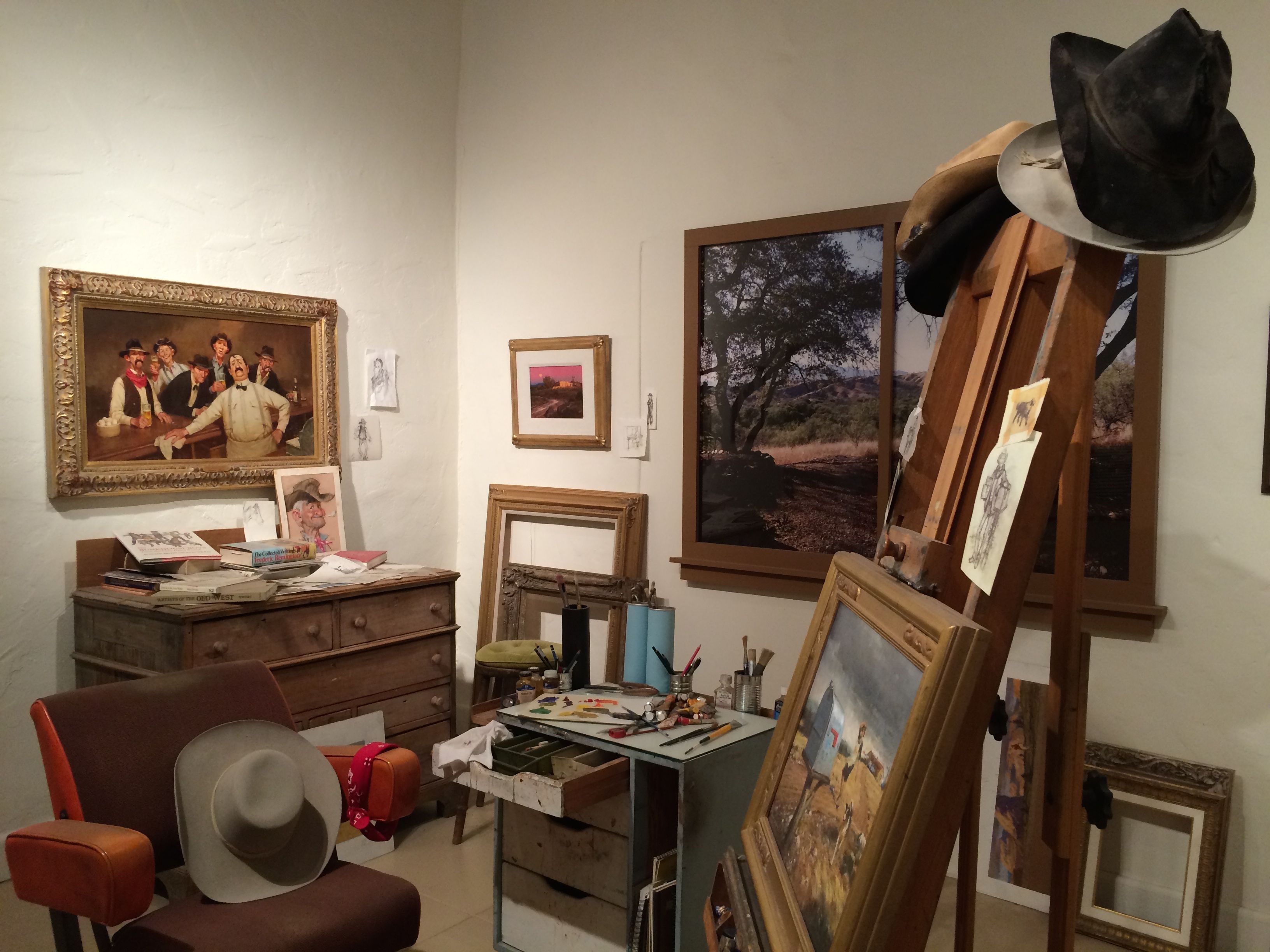
The studio of Duane Bryers is also in the older part of the museum. He was born in Michigan’s upper peninsula in 1911 and had a long career. In fact, on the easel is the last painting he was working on when he passed on in 2012! His family donated his studio to the museum. They even replicated the view out his window in Tucson.
There was a lovely collection of pre-columbian work in the new part of the museum.
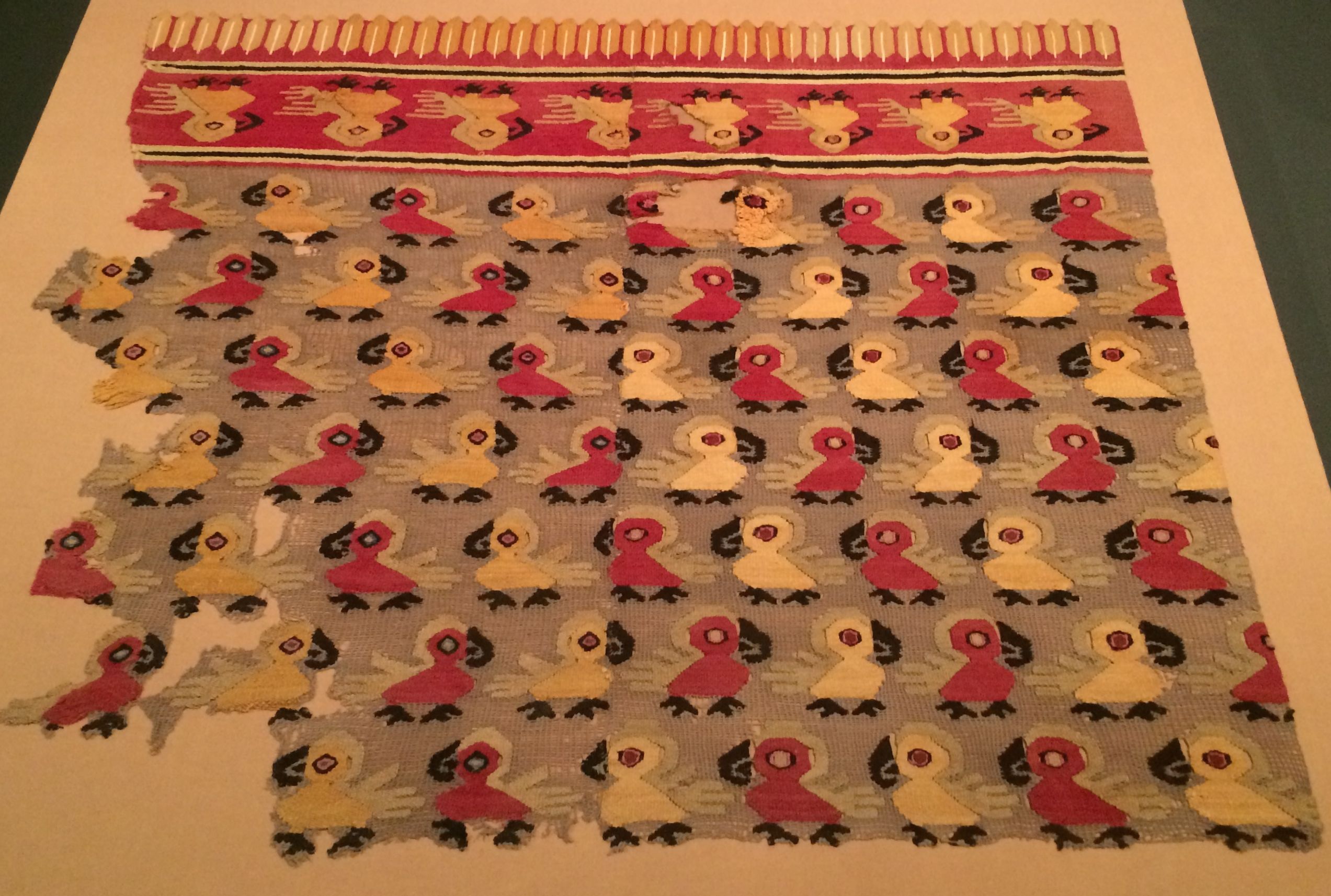
I like these birds. They almost look like a tessellation.
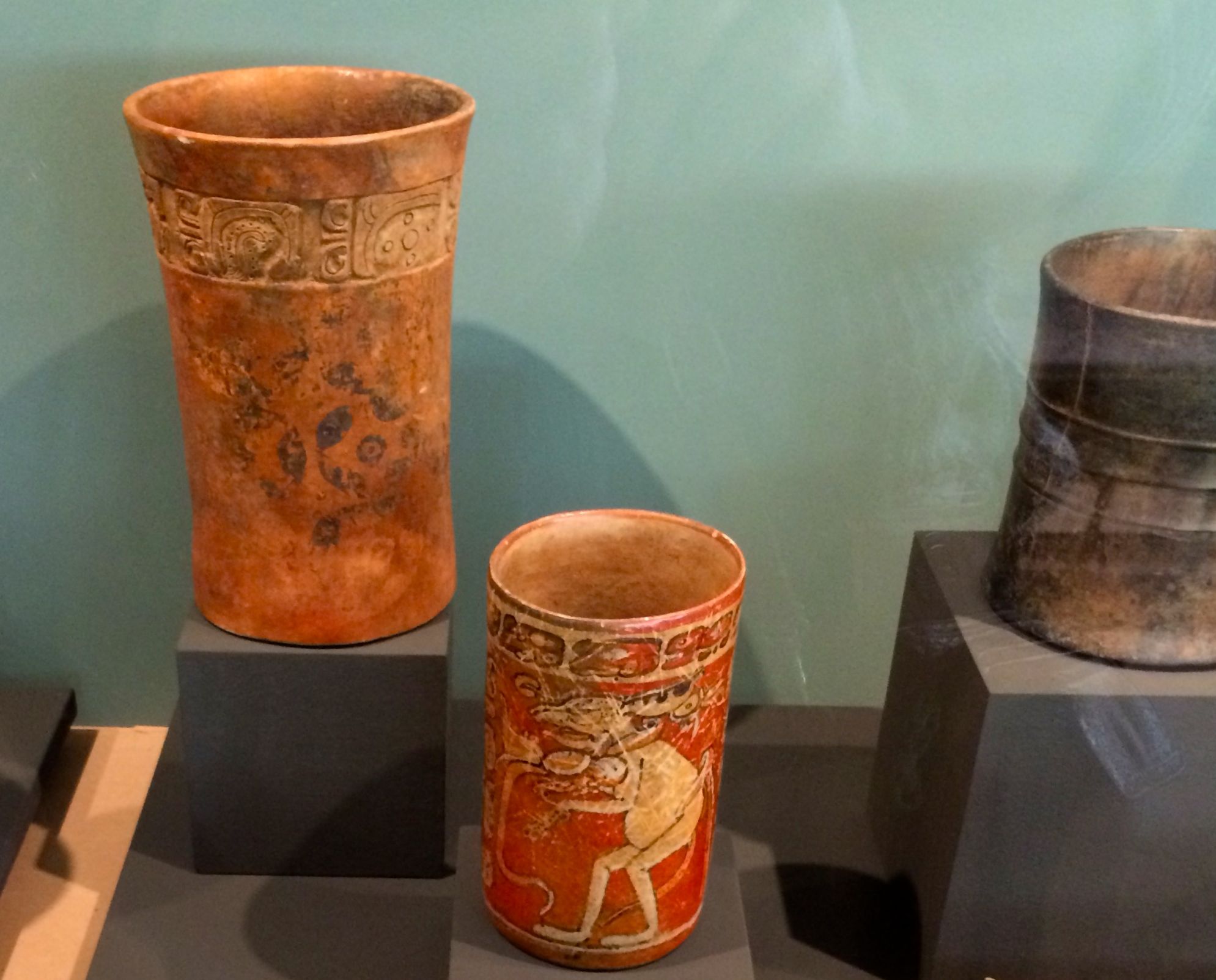
I always gravitate to familiar items. These remind me of the Mayan works I saw in Guatemala.
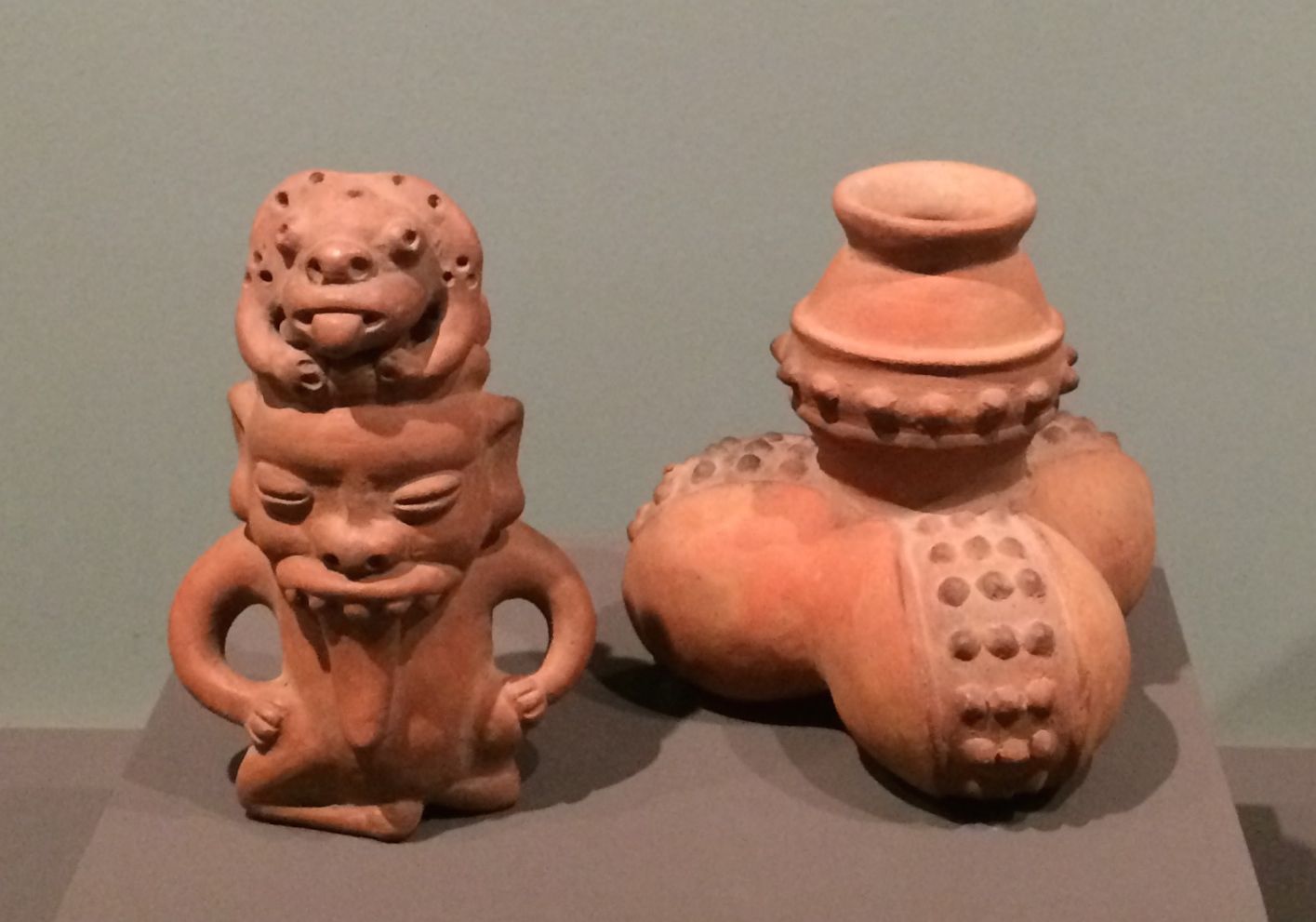
These posts made me smile.
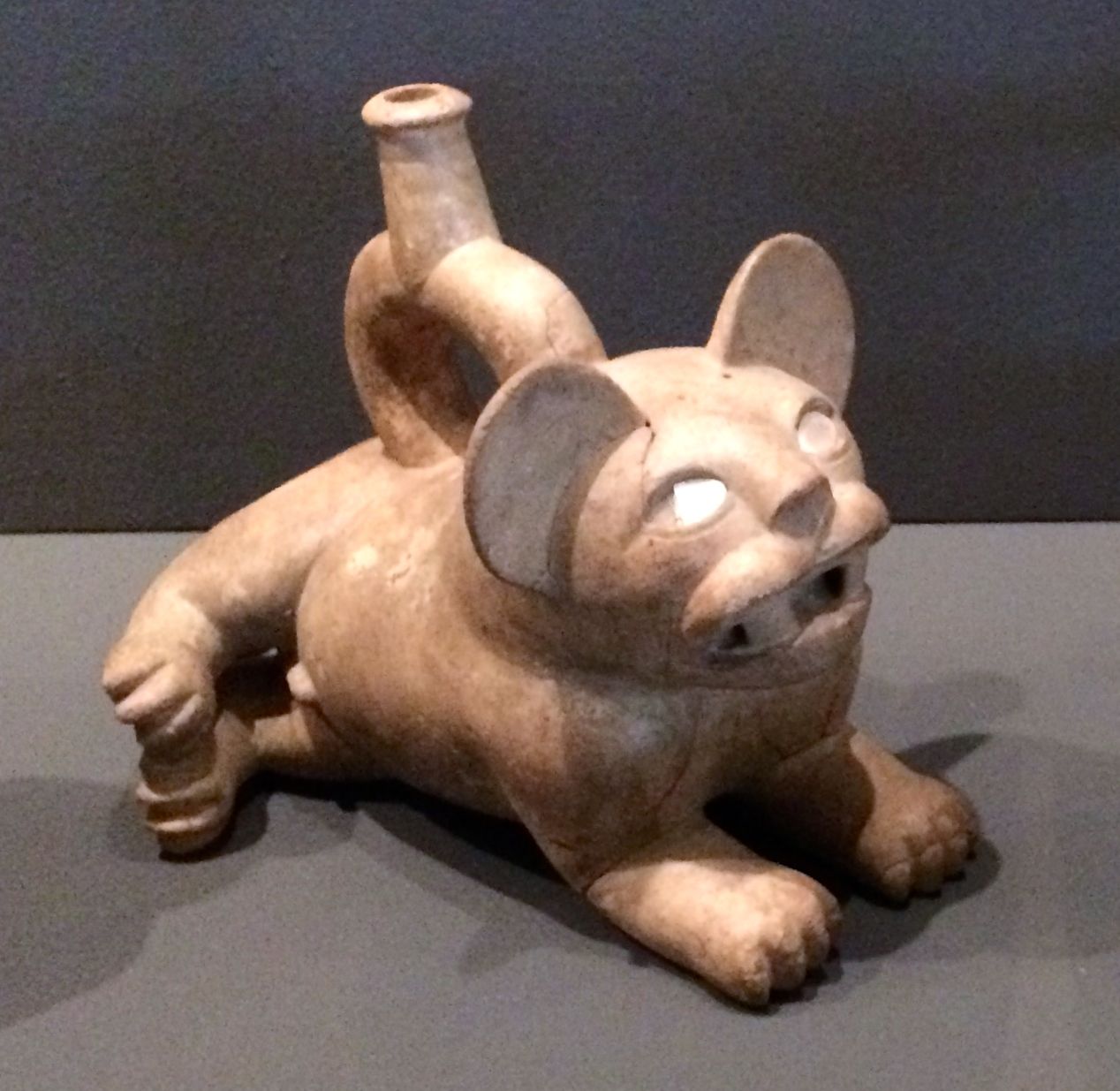
And this cat vessel is sweet.
By the time we finished the third floor of the new building, it was time for lunch. We went to Miss Saigon and I got to try pho, which is soup.
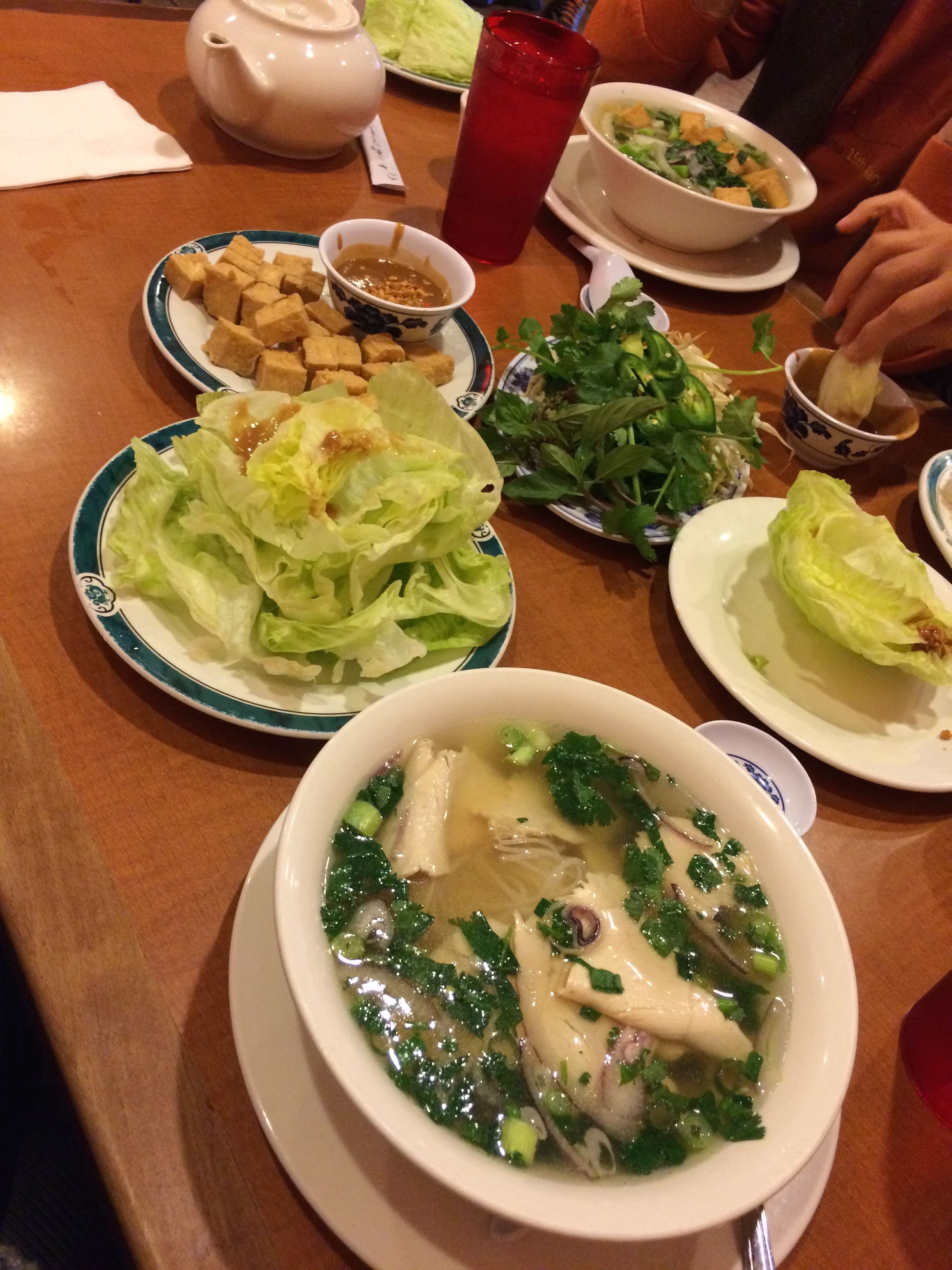
We also had lettuce cups with peanut sauce and fried tofu. A plate full of basil, cilantro and sprouts was provided for the table to add to our dishes.
Full of friendship, art and lunch, it was time for a group shot.

We’ll have to get together again in Kalamazoo!