The next day, I headed over to the National Memorial for Peace and Justice , which is informally known as the National Lynching Memorial. It had opened just the year before, in April 2018. I remembered hearing about it one news programs at the time, and I was eager to see how the artists involved had created a work of art that commemorates the black victims of lynching in the United States, many of them nameless.
It was founded by the non-profit Equal Justice Initiative and it is intended to focus on and acknowledge past racial terrorism and advocate for social justice in America.
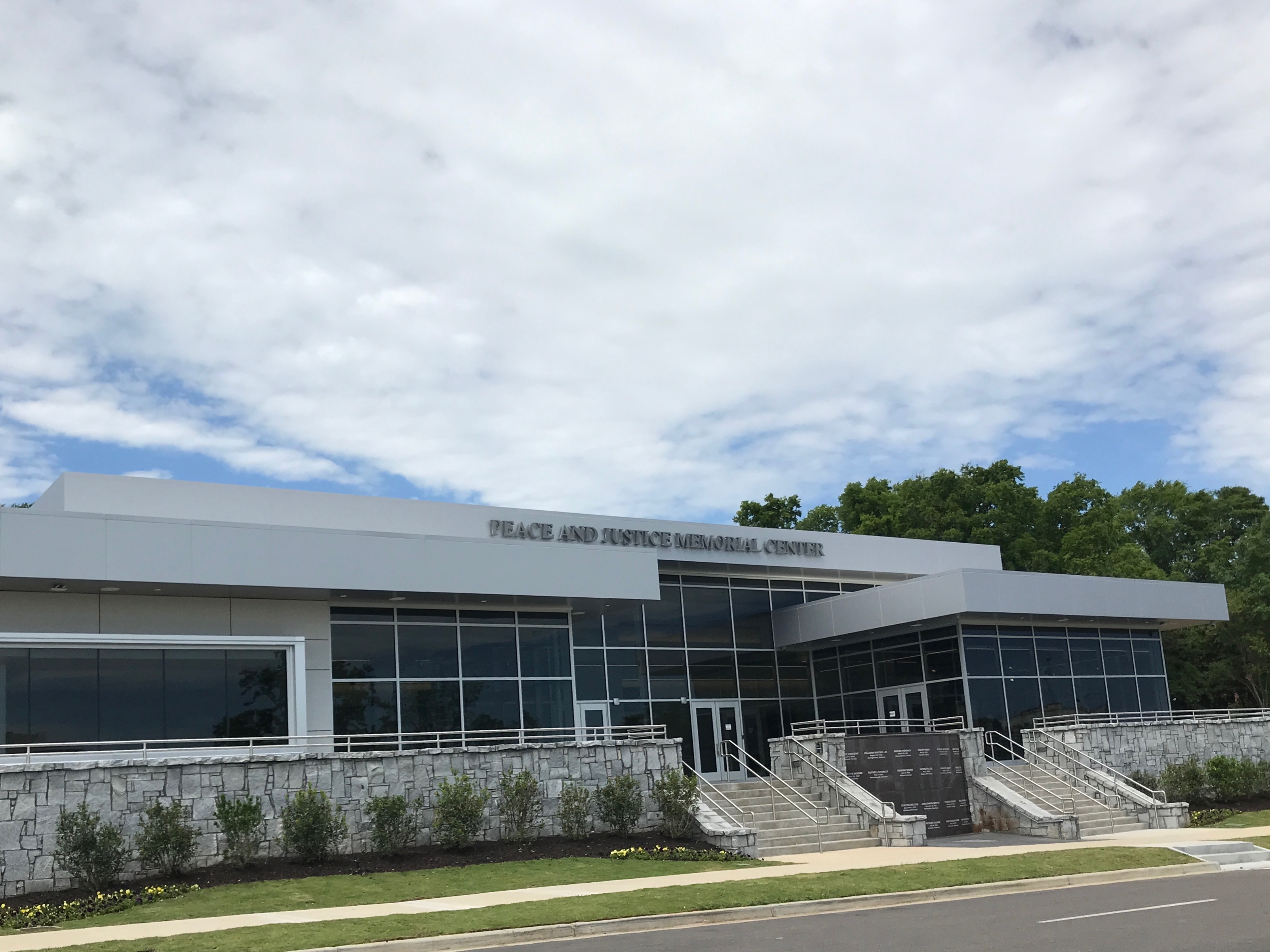
I arrived and parked in the lot next to the headquarters and started over to the memorial, built on six acres near the site of a former market where enslaved African Americans were sold. Bryan Stevenson, founder of the Equal Justice Initiative (EJI) was inspired by the examples of the Memorial to the Murdered Jews of Europe in Berlin and the Apartheid Museum in Johannesburg, South Africa. His goal was to create a single memorial to the victims of white supremacy in the United States.
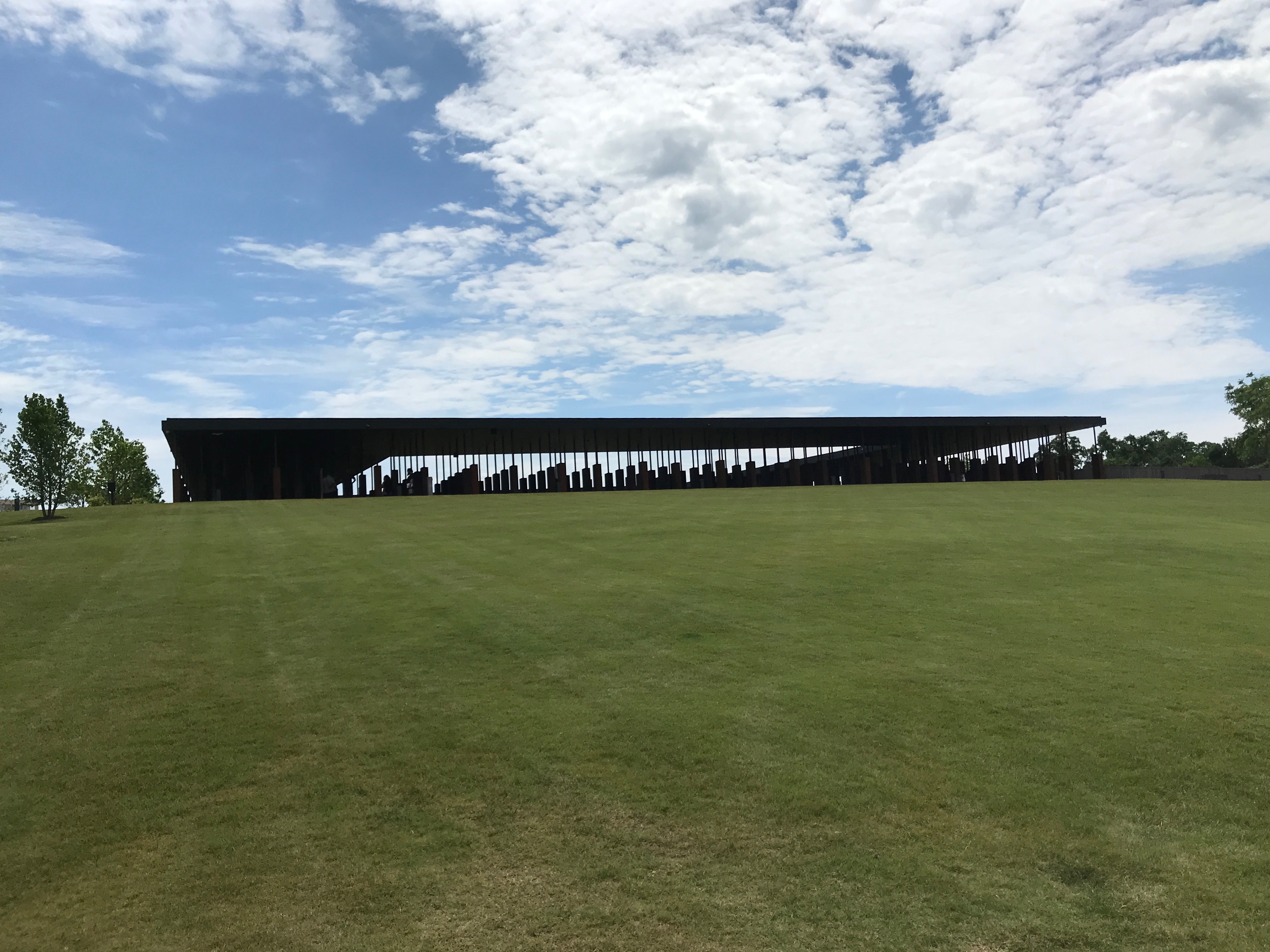
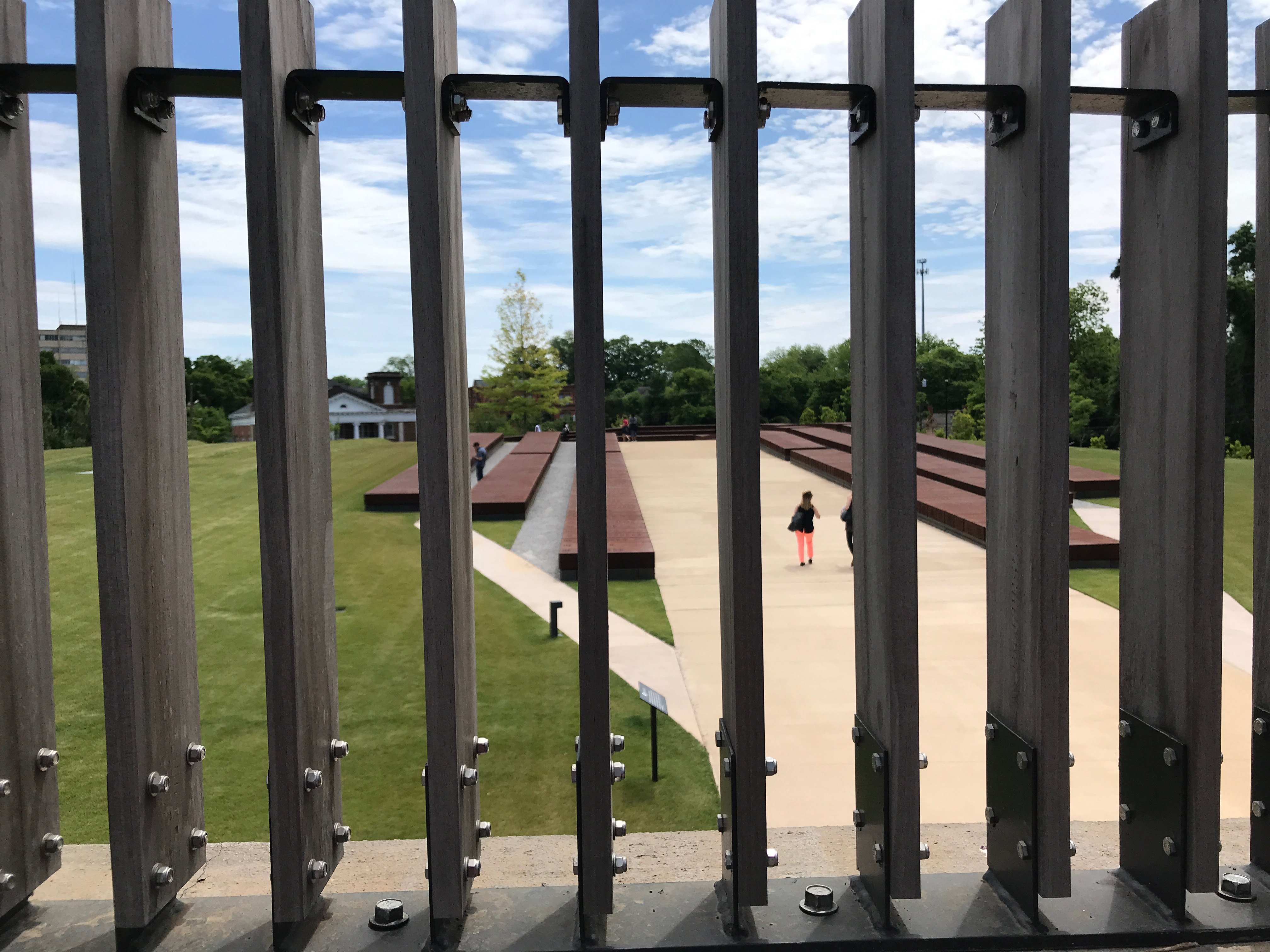
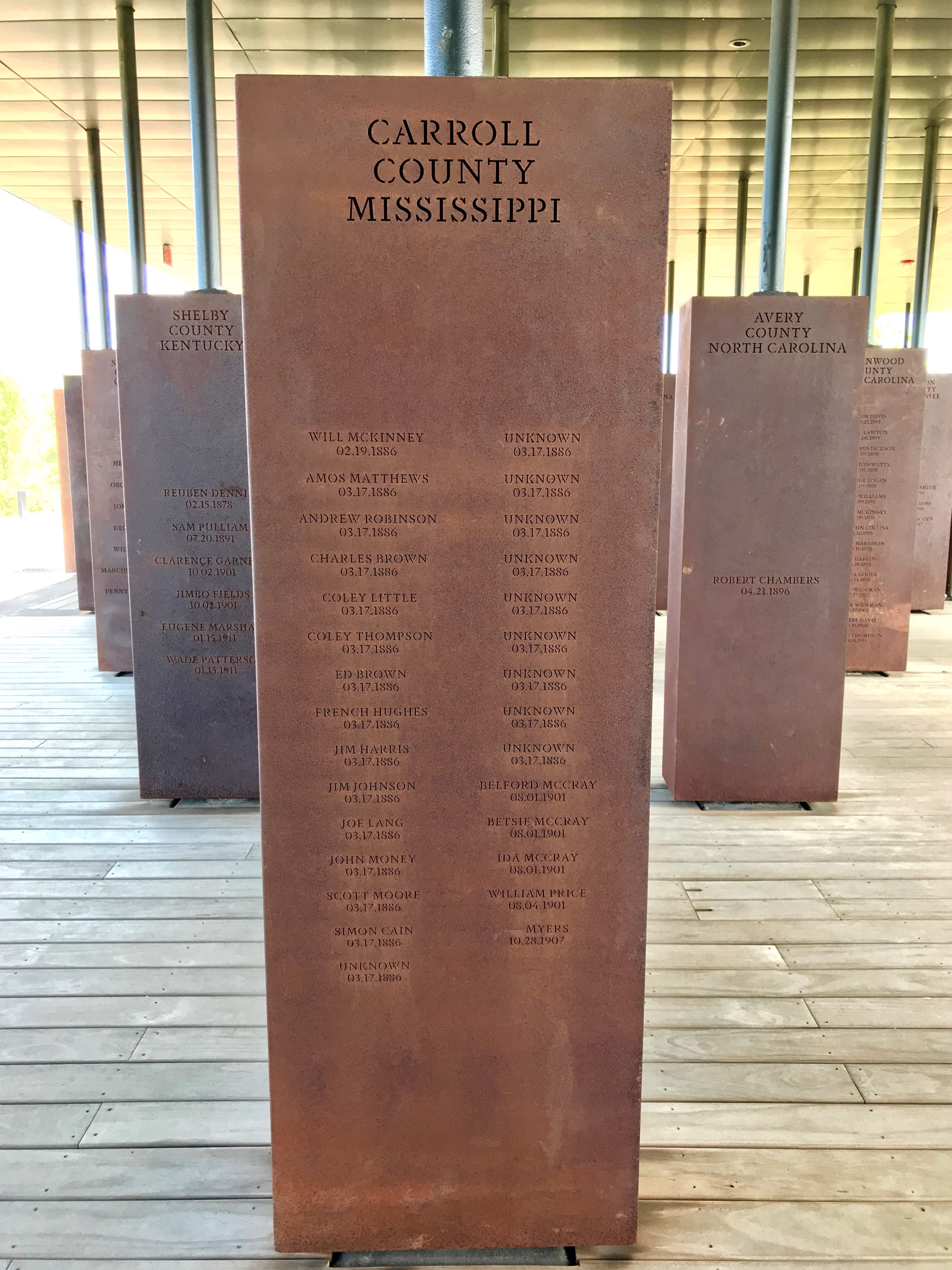
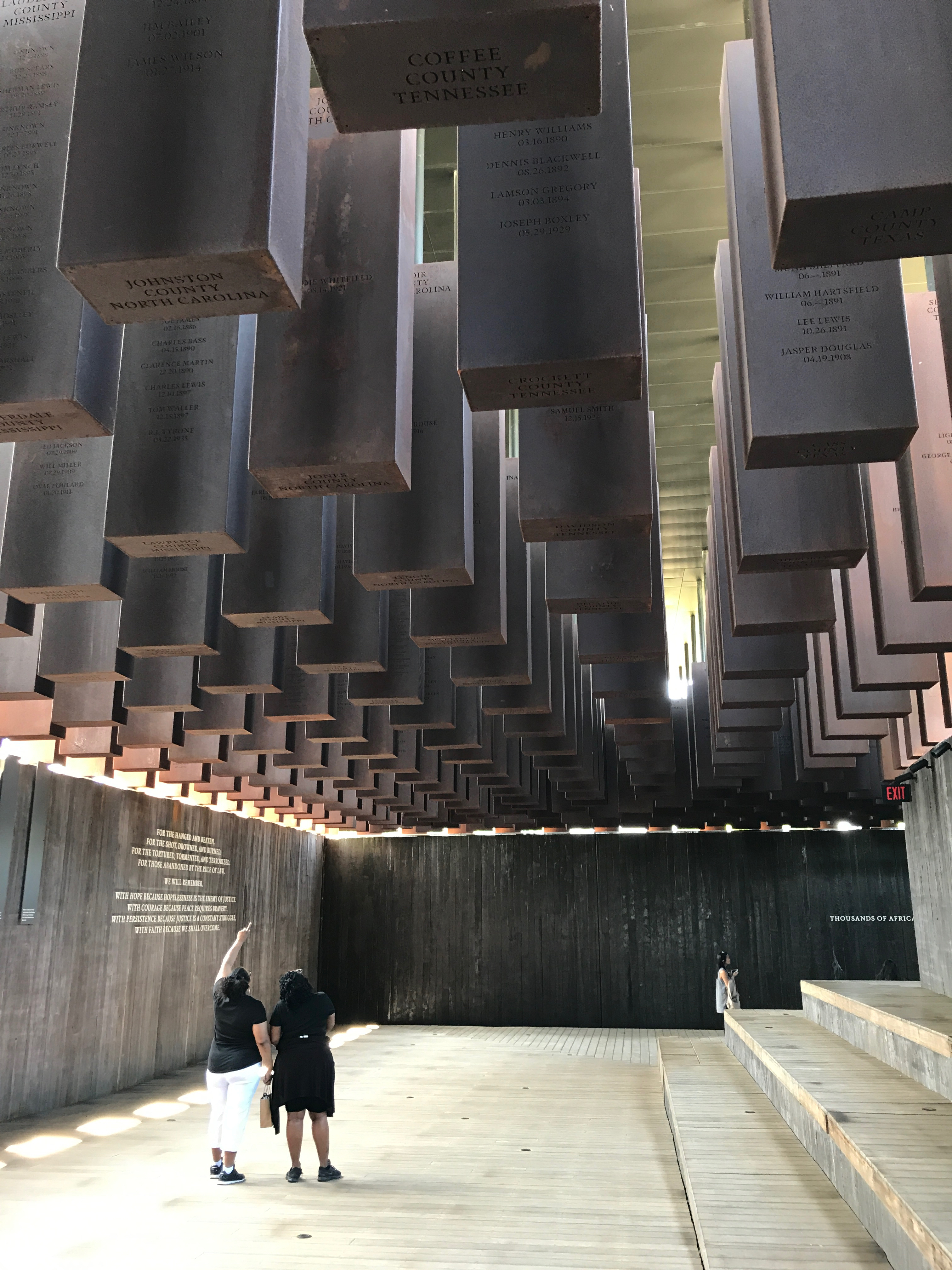
Researchers studied the records in counties and parishes across the United States and documented around 4,400 racial terror lynchings in the Post-Reconstruction era between 1877 and 1950. From what I had heard at the time of the opening, those hanging rectangular prisms inside the memorial represented each of the counties where a documented lynching took place in the United States. On each piece, in addition to the name of the county, is the name of the state and the names of the victims and the dates of their murders. If the name is not known, “unknown” is engraved on the panel.
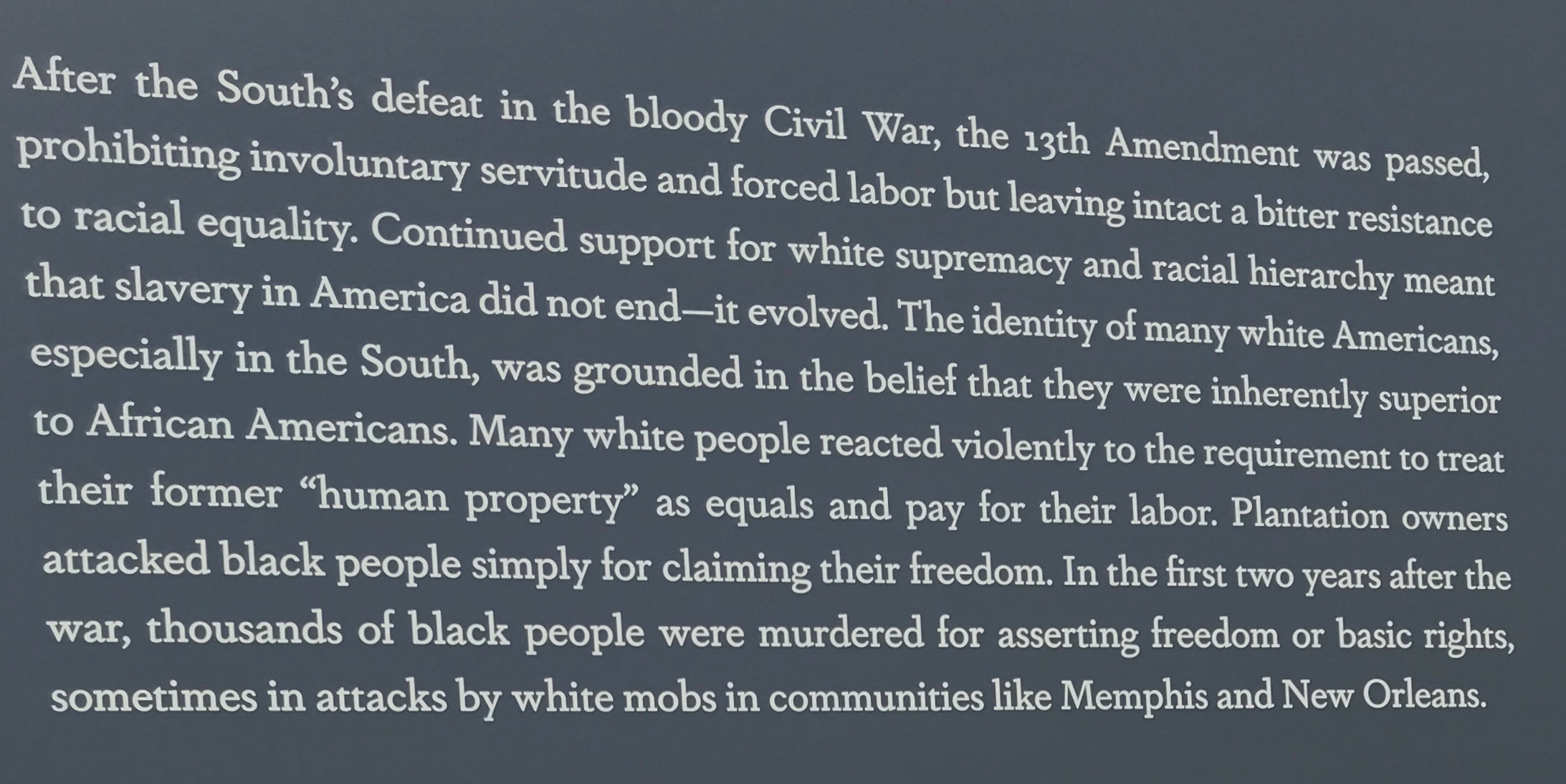
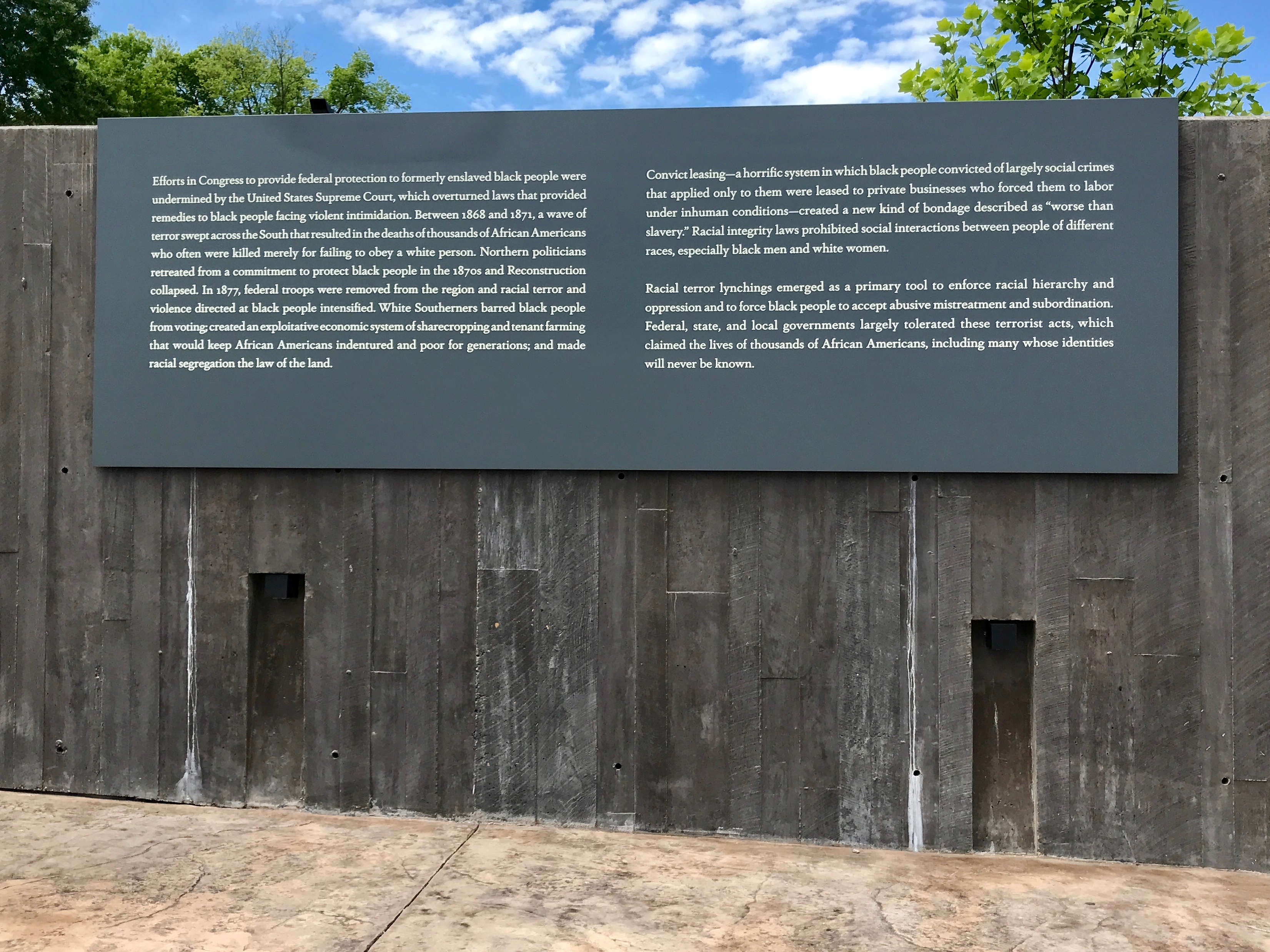
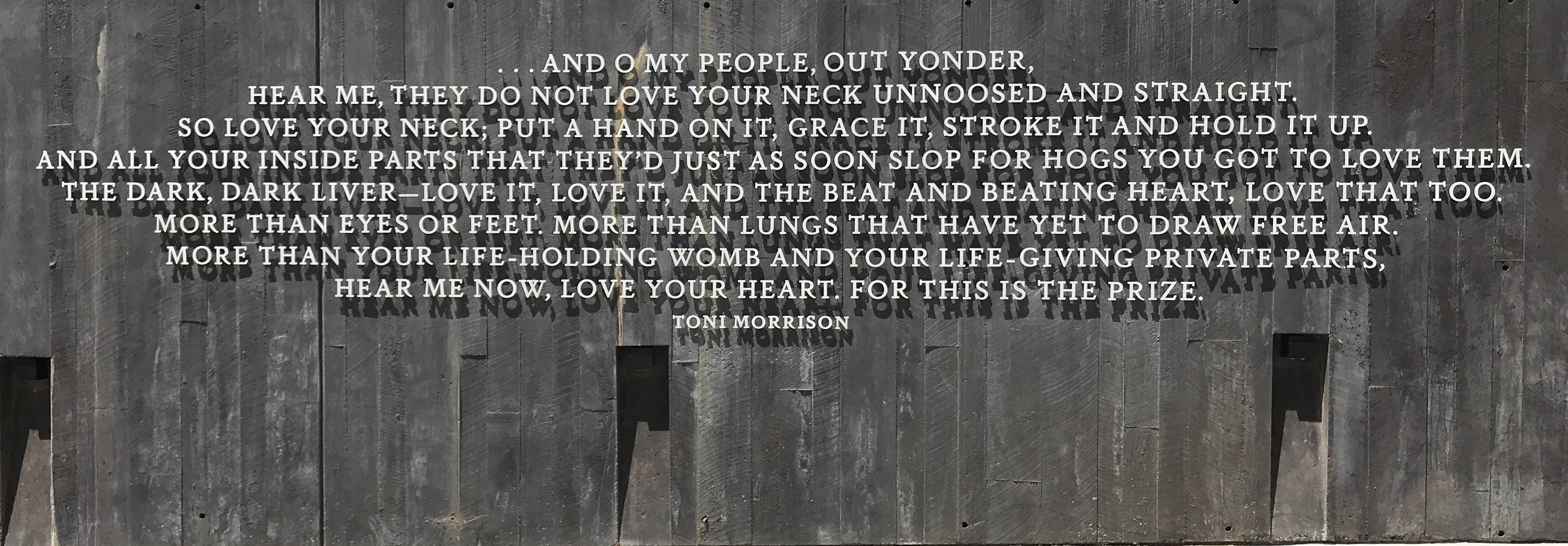
As you approach the memorial square, you pass educational signs that give background to the injustice that is documented in the memorial. I recommend wearing comfortable shoes and planning to take the time to read them. If you are having trouble reading them on site, take photos.
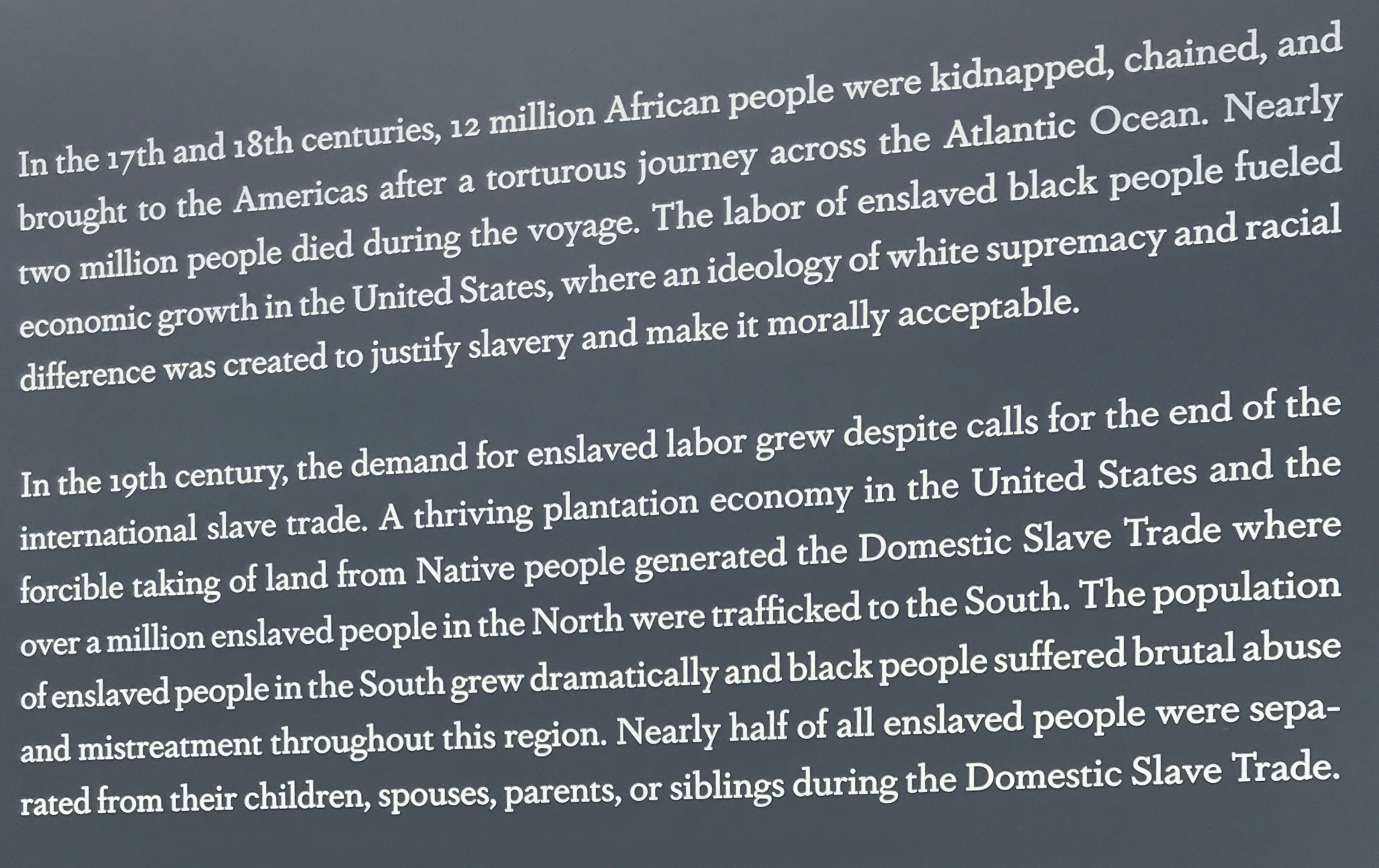
Rather than a synopsis of the material, I am including my photos in this post.
As the path to the memorial square winds around the grounds, you come to the first of three sculptures, Nkyinkyim by Ghanaian artist Kwame Akoto-Bamfo. Nkyinkyim means “twisted”, taken from a Ghanaian proverb, “life is a twisted journey”.
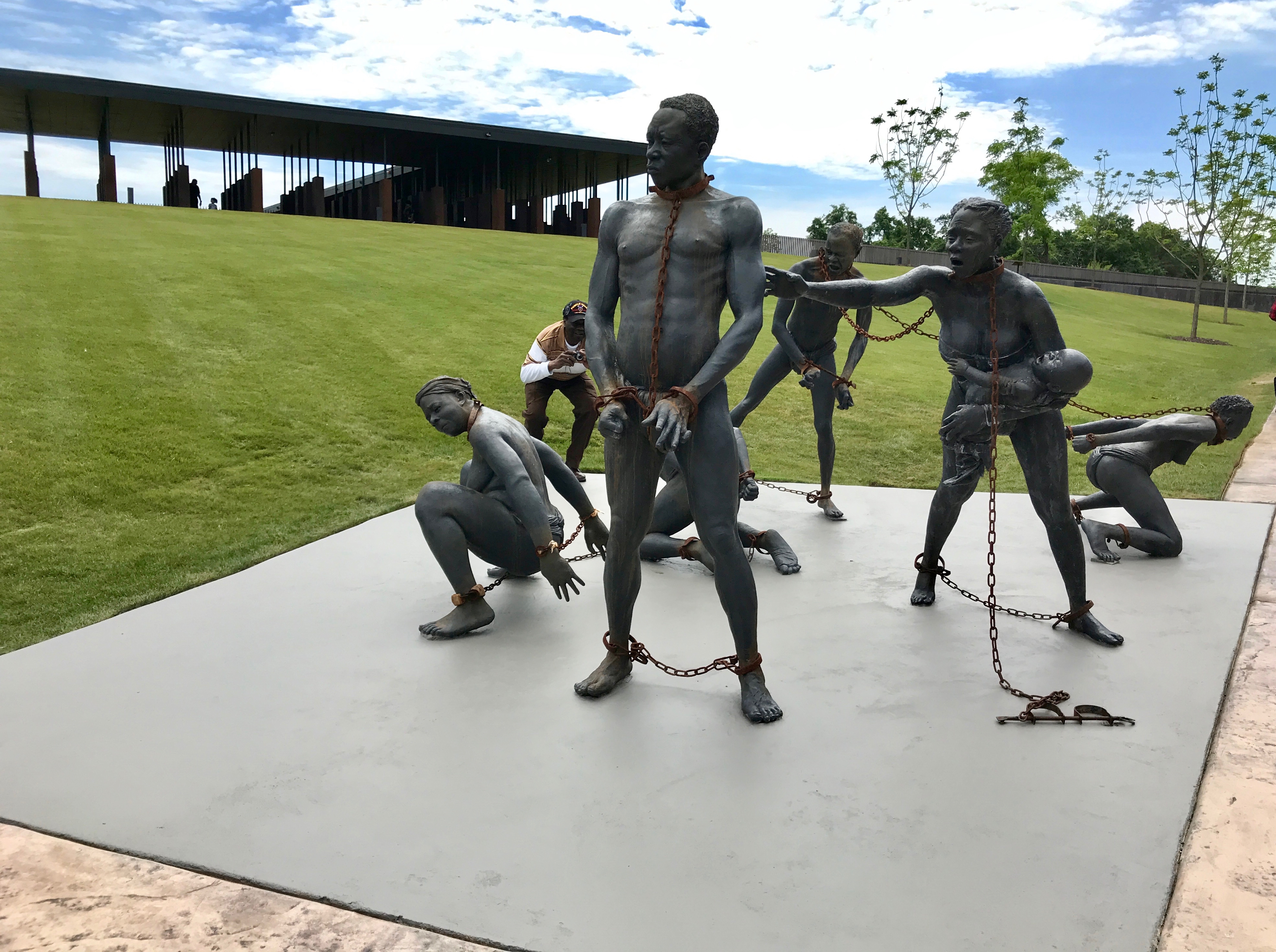
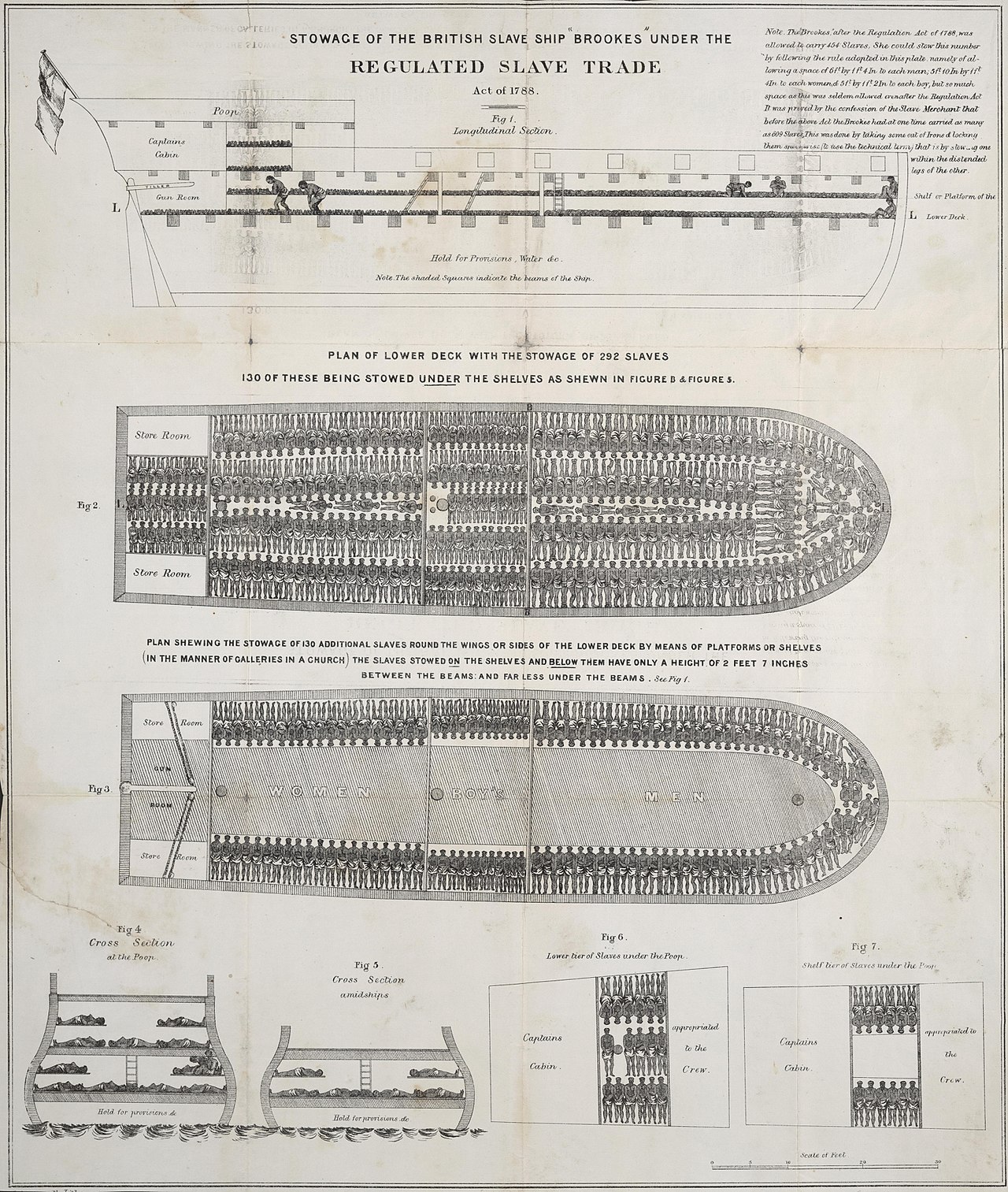
While I had seen the famous illustrations of slave ships and their cargo, like this one, they never conveyed the terror of the victims like Akoto-Bamfo’s work of art did.
I continued past more educational material.
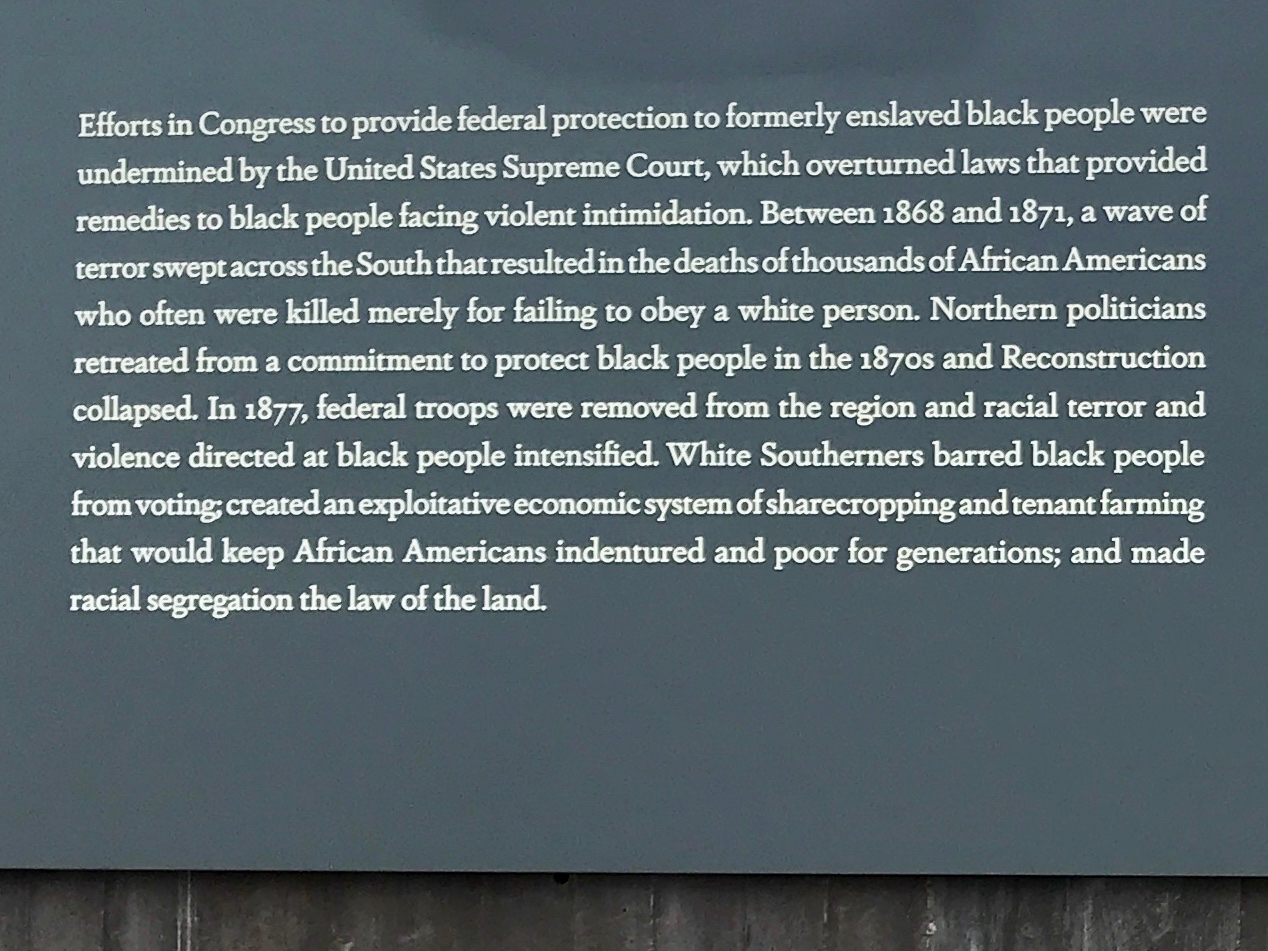
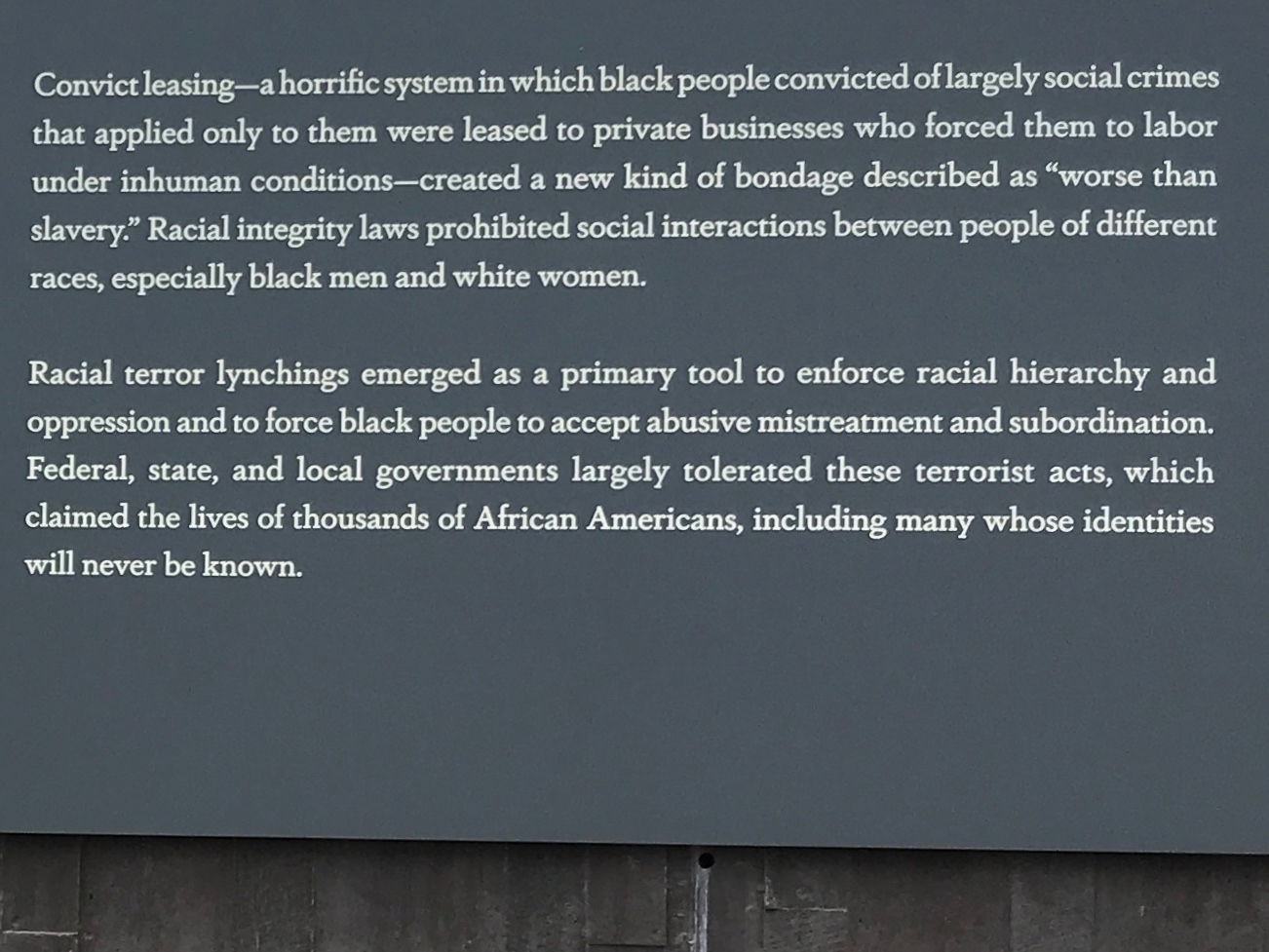
And still more.
It is long, but worth the time it takes to read it.
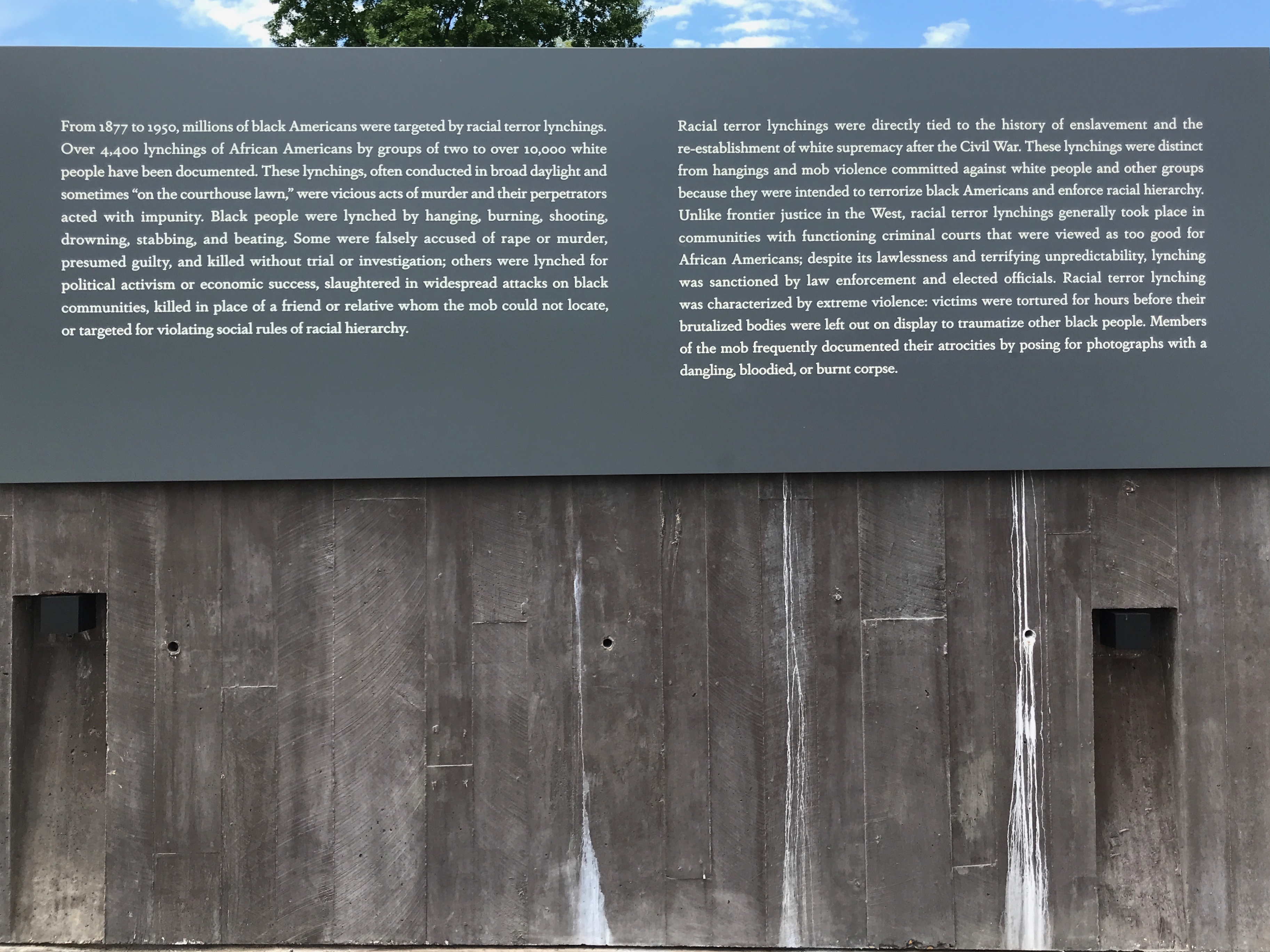
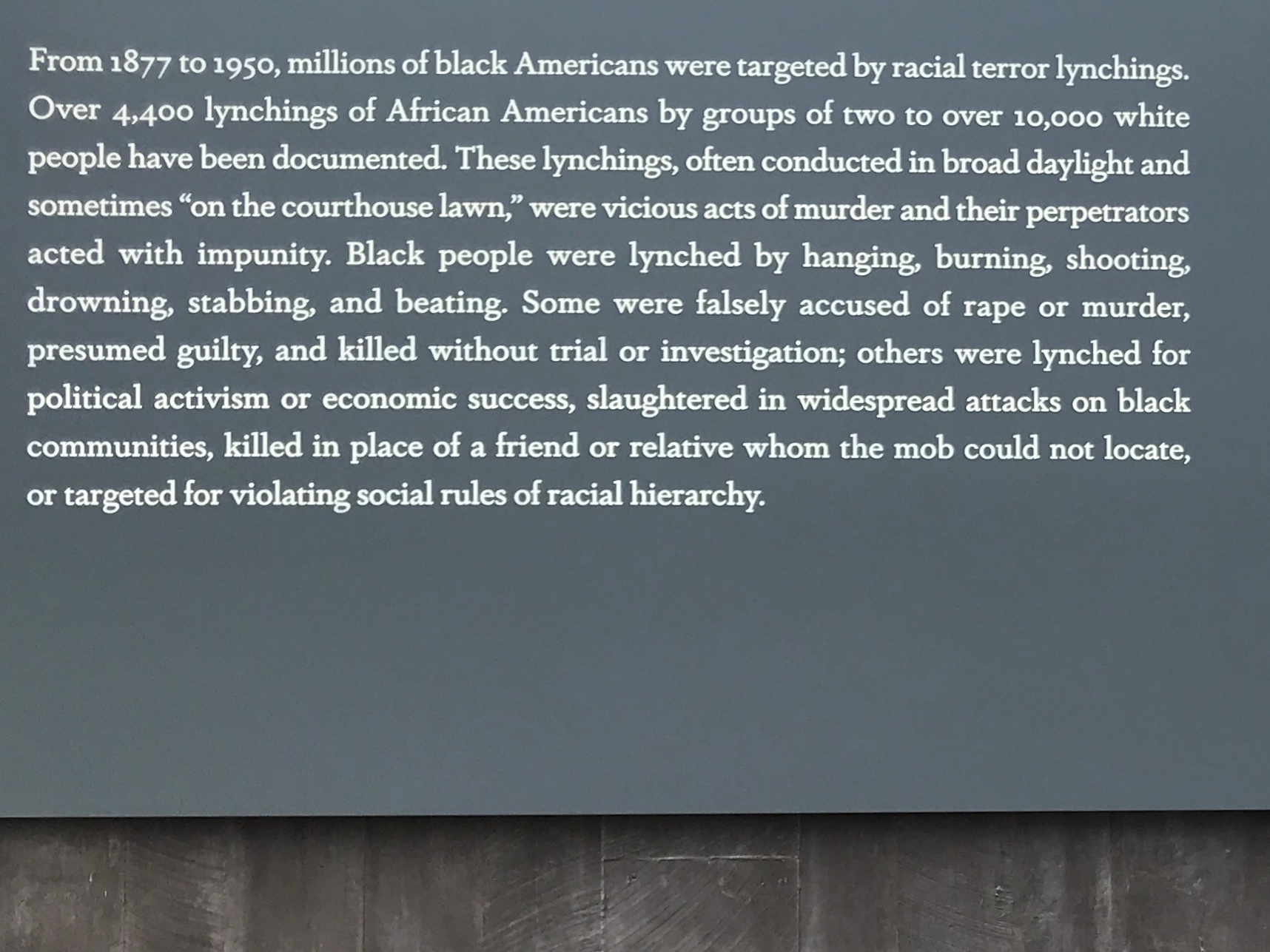
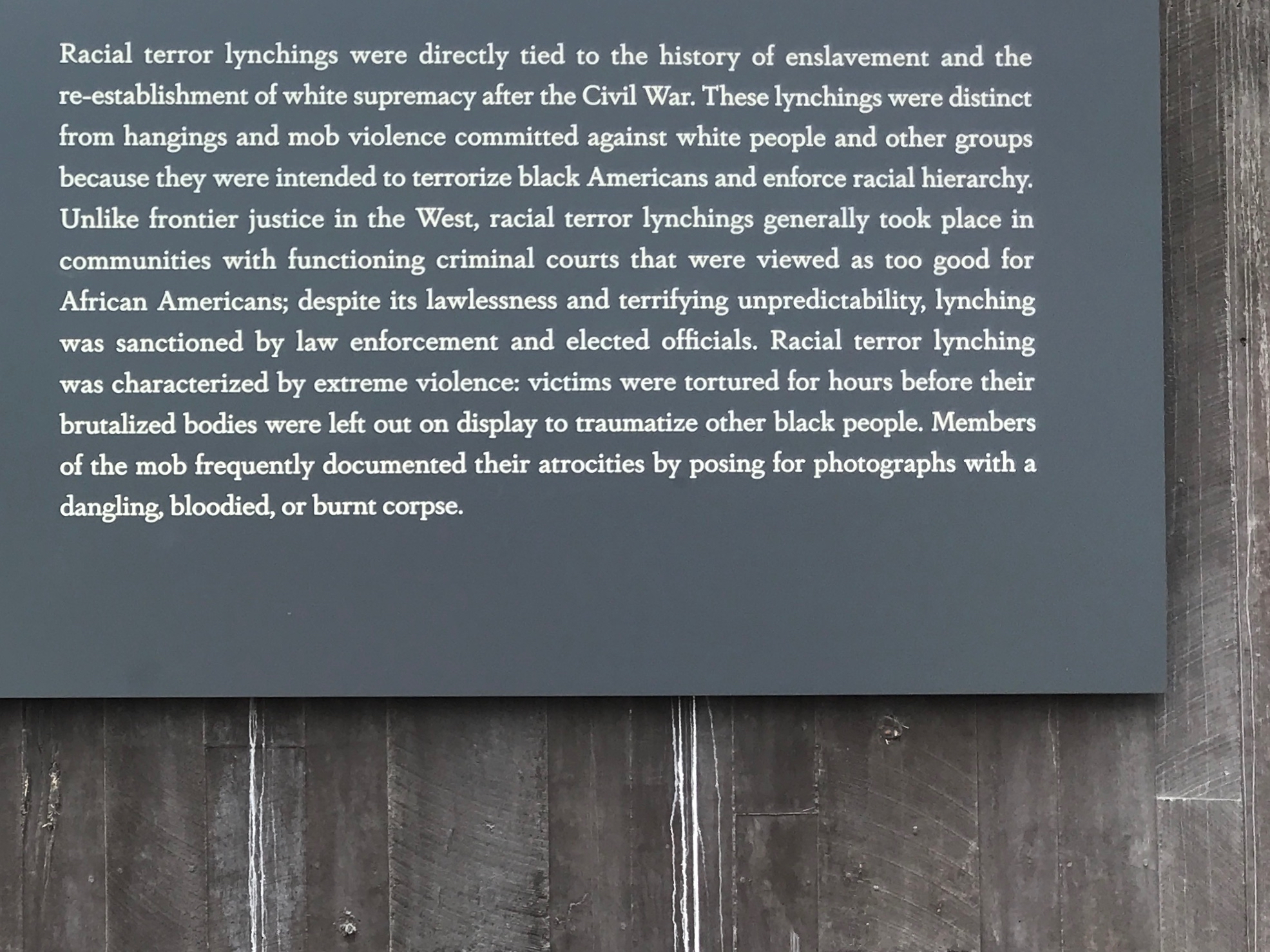
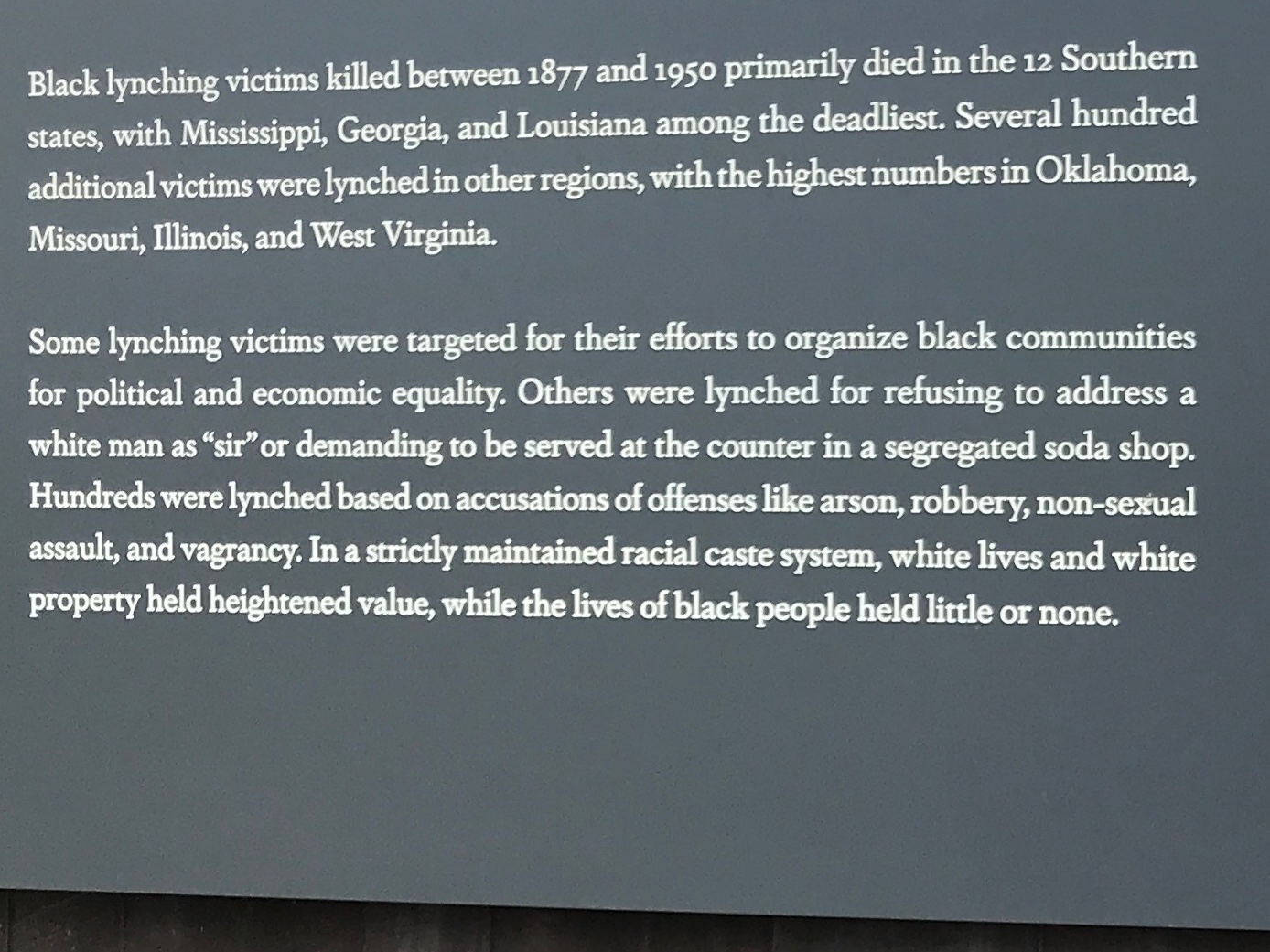
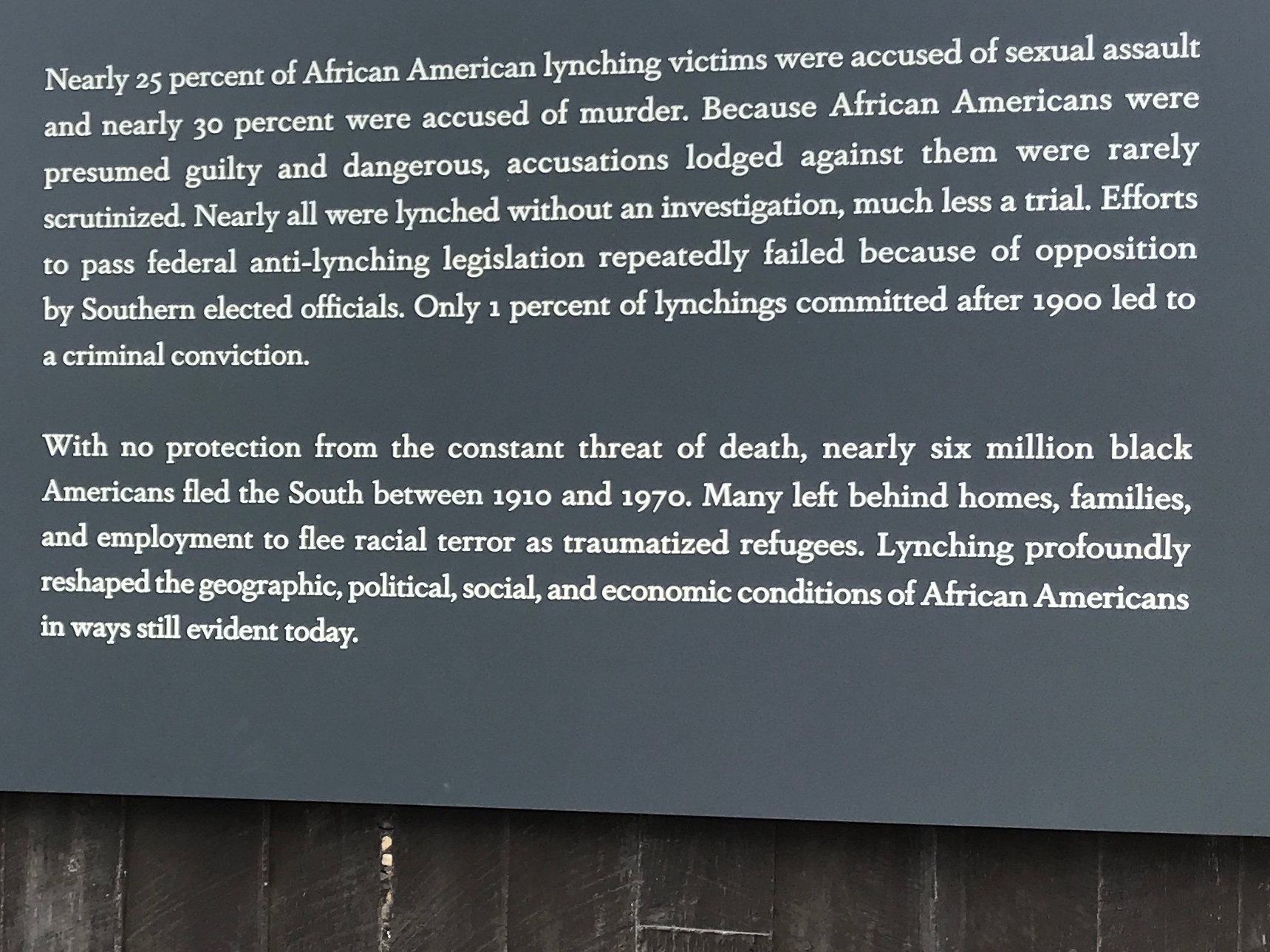
Really, if this is too much for you to read, you can come back to it later. It’ll still be here.
As hard as it is to slow down and walk and read when you have a goal in mind, when you are there, it serves to focus and heighten the experience.
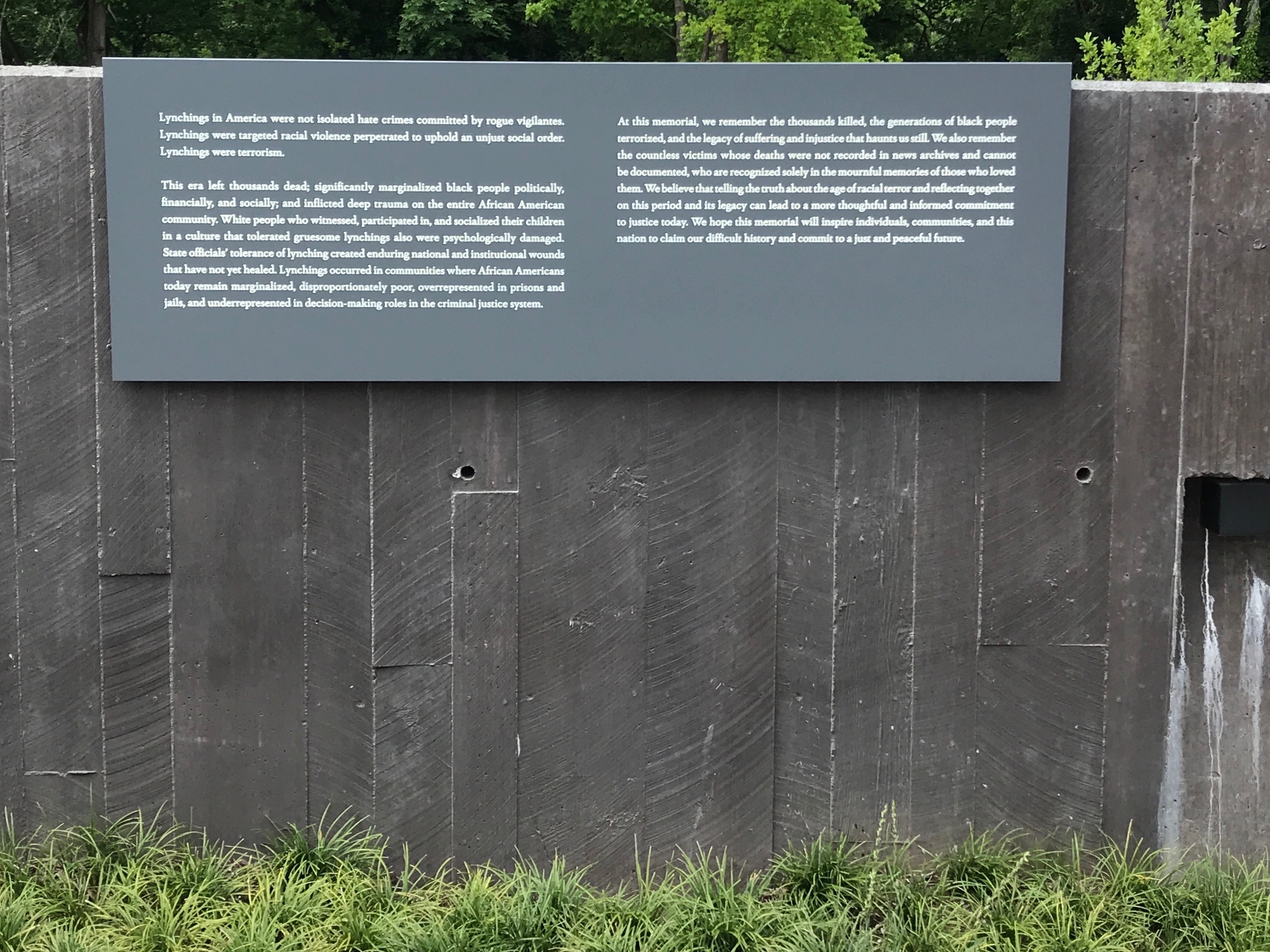
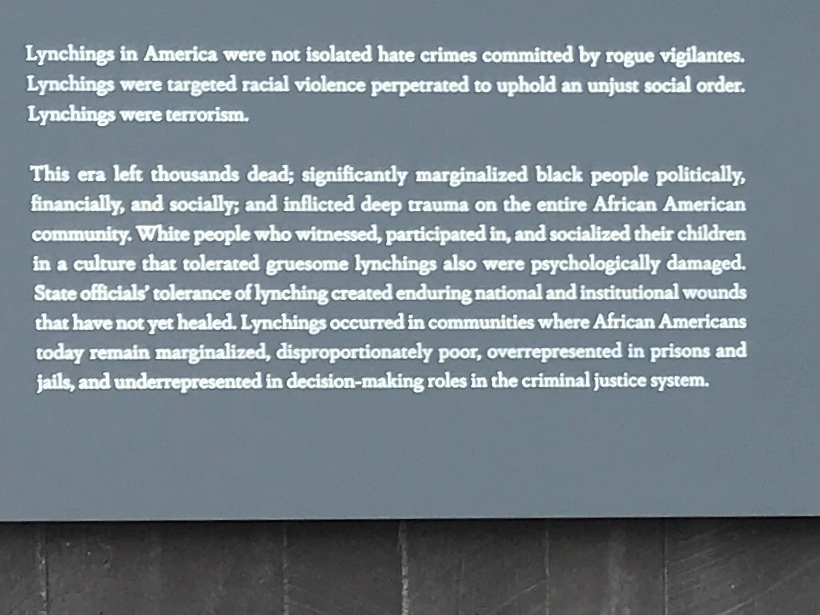
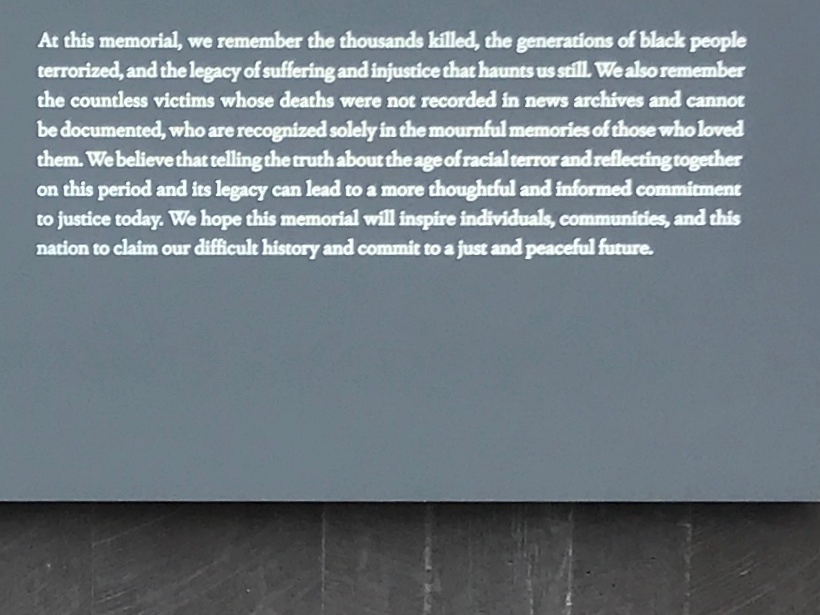
At last, I reached Memorial Square.
And then I am inside.
There are 805 of these coffin-shaped boxes.
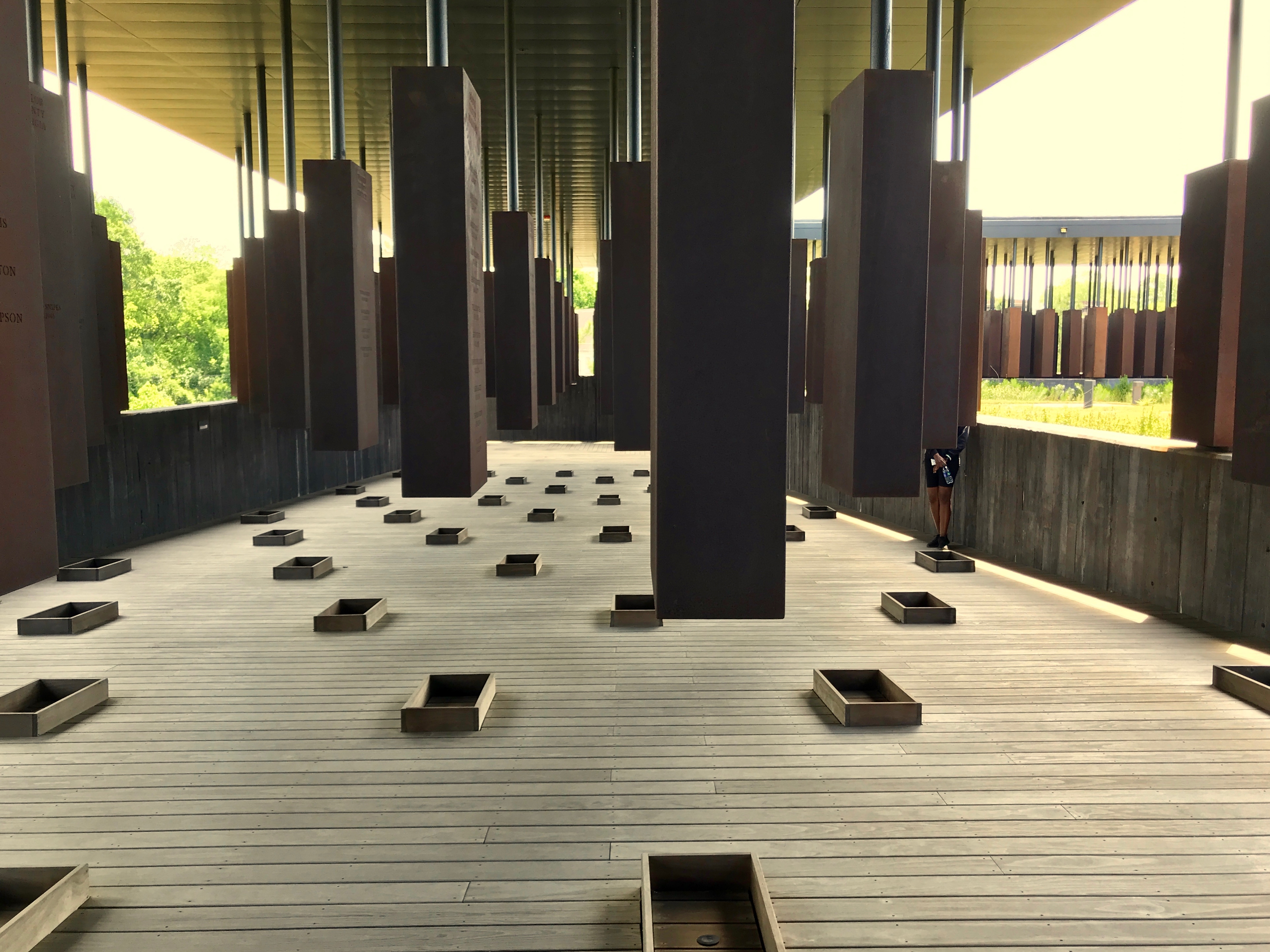
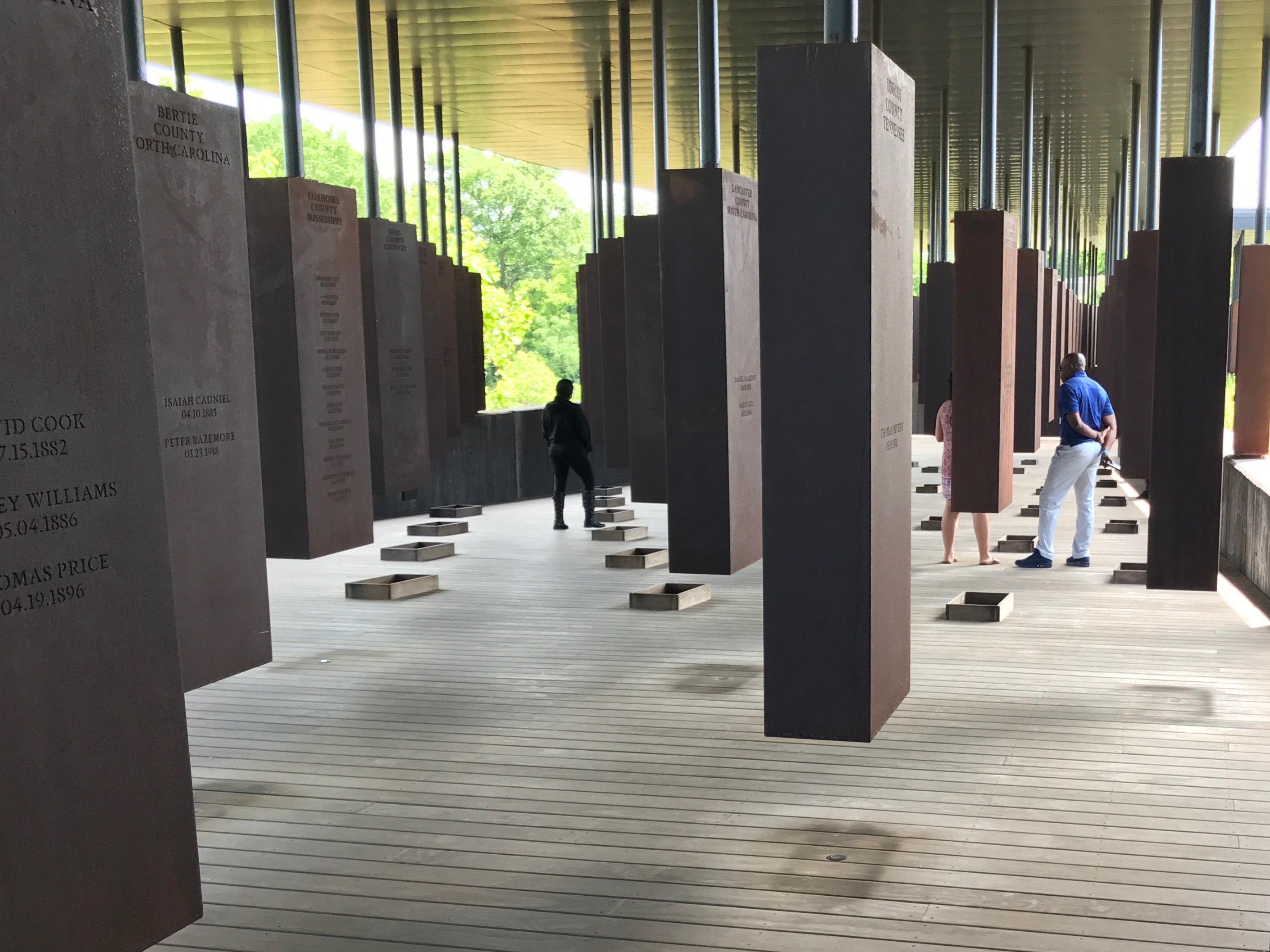
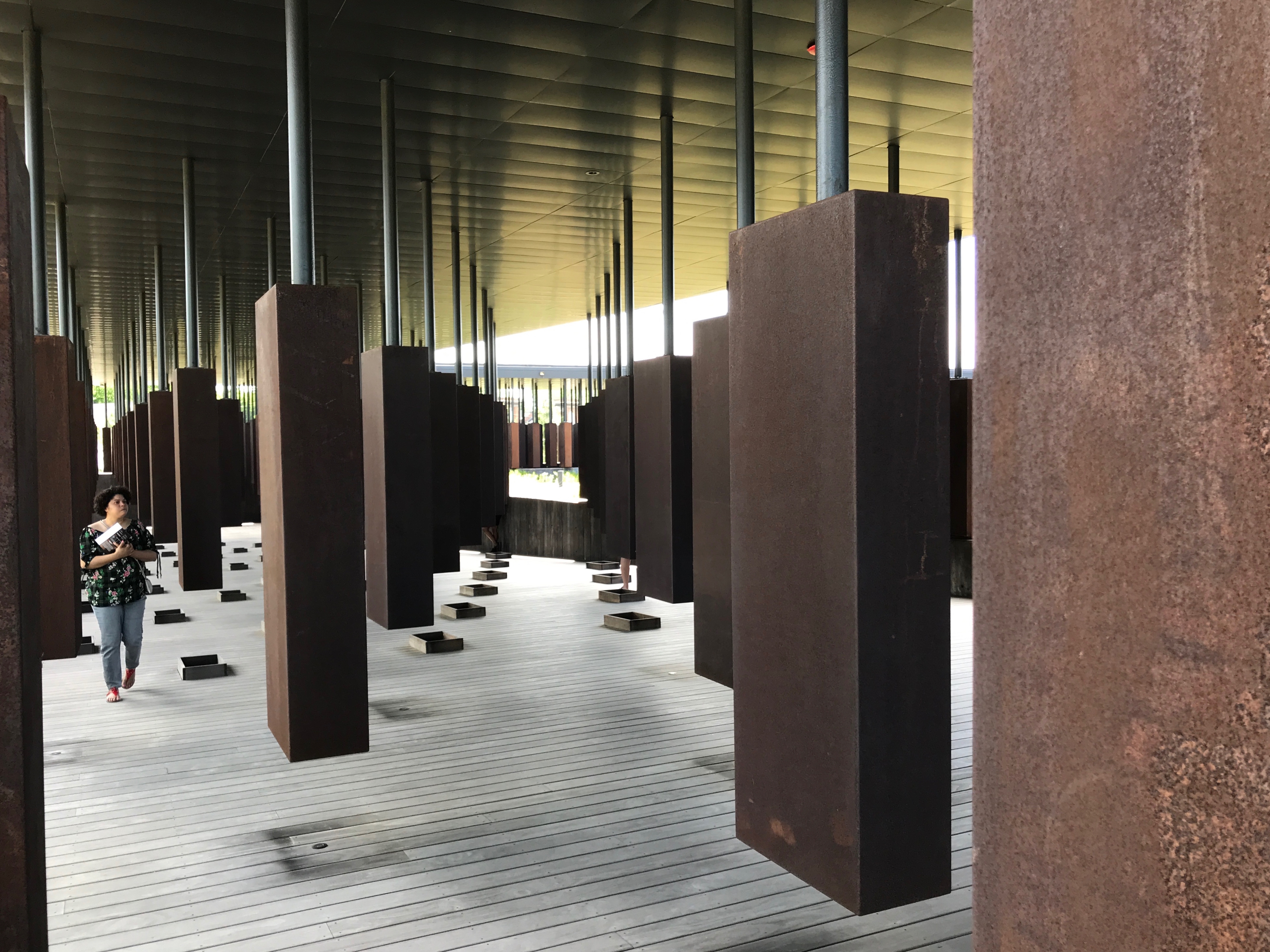
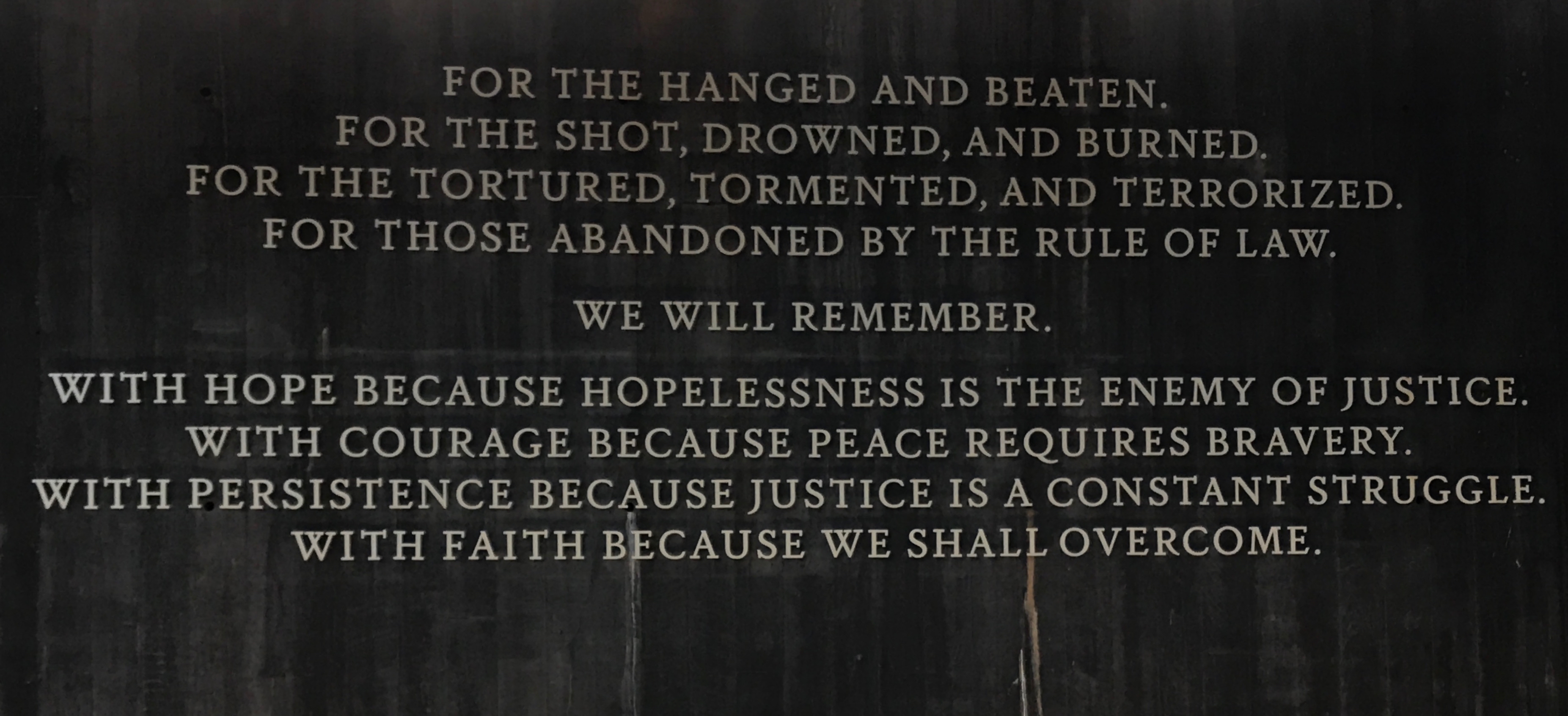
It is overwhelming.
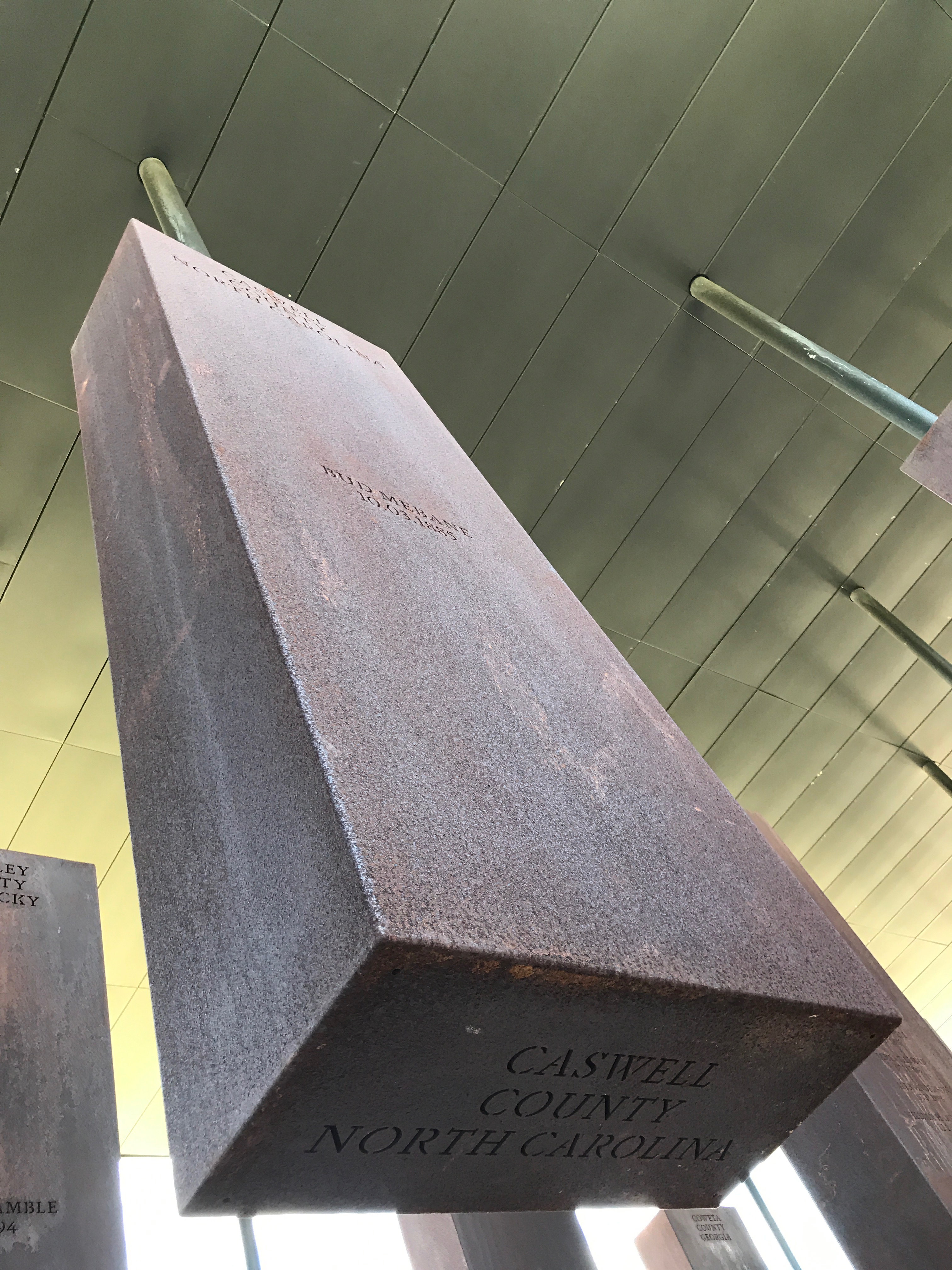
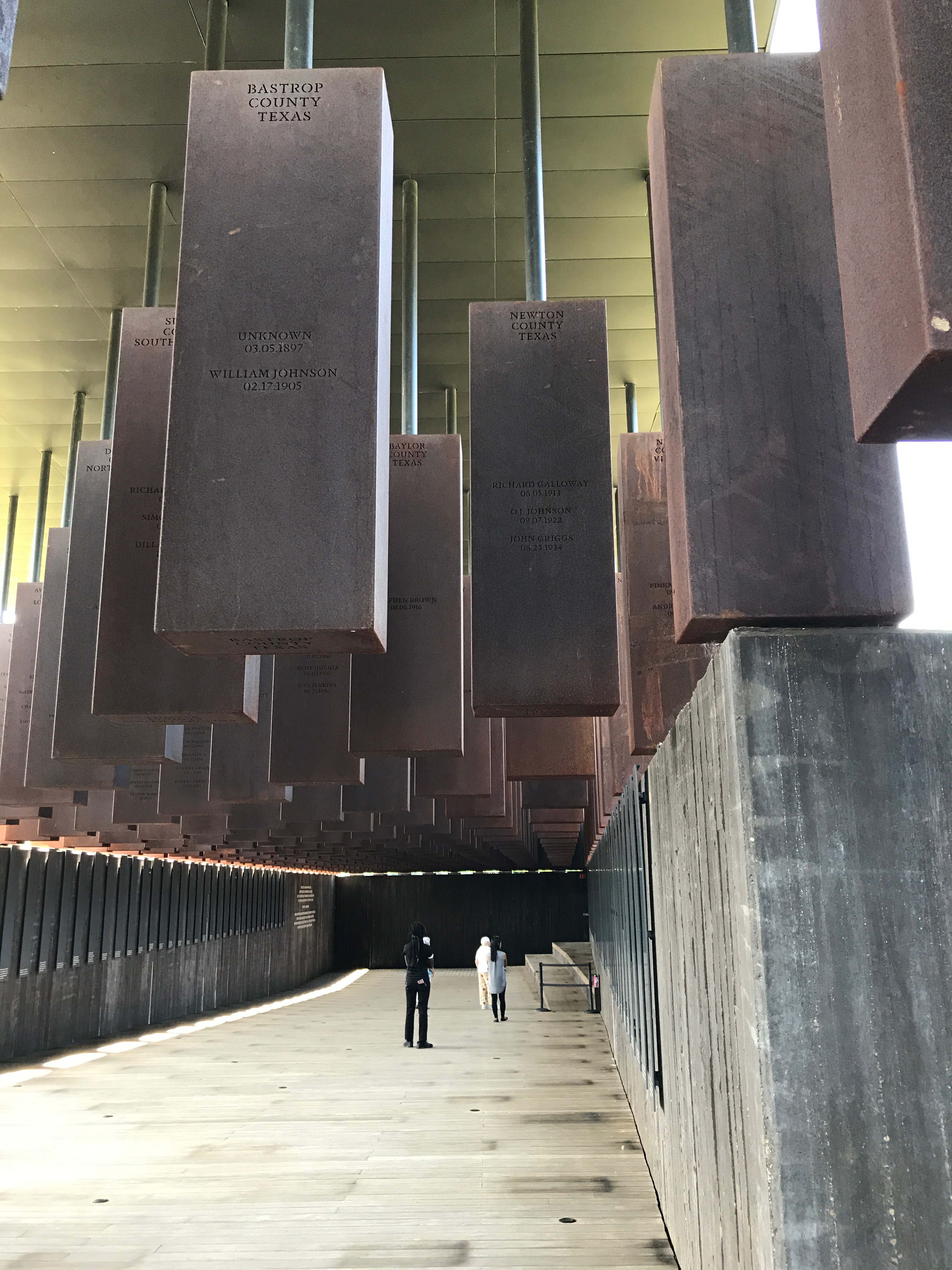
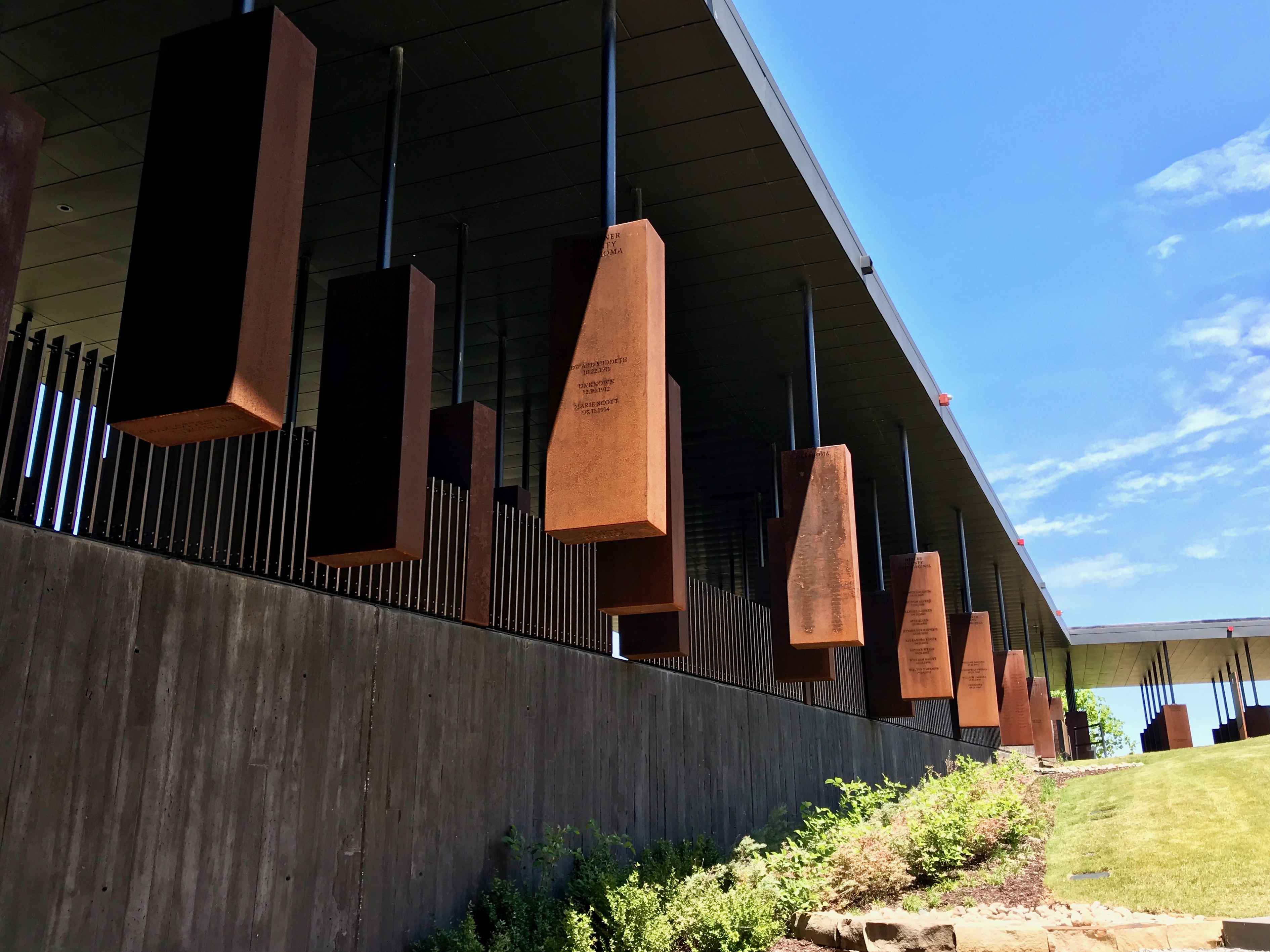
I left the structure.
I went over to Monument Park.
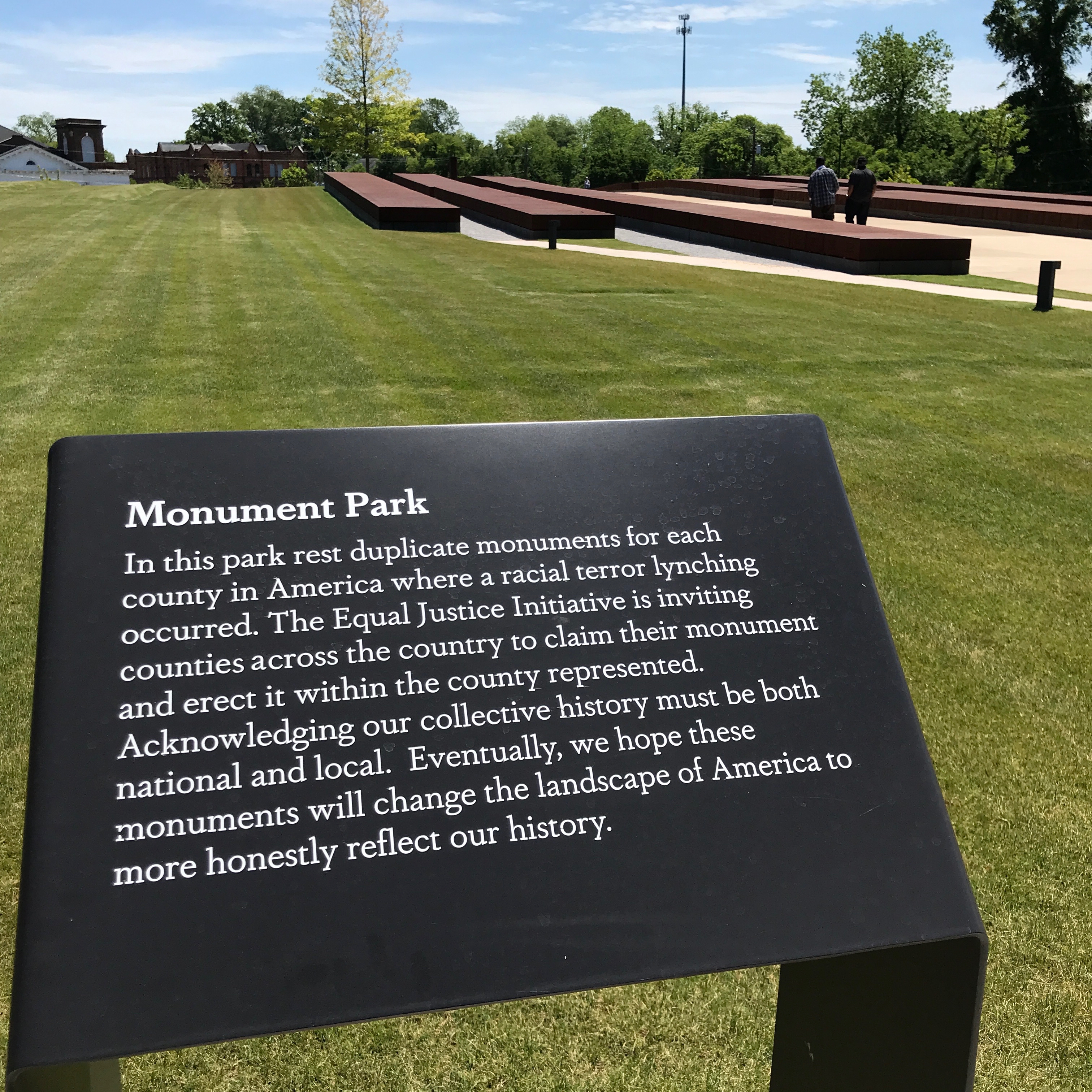
I wonder how many counties have claimed their duplicate monument?
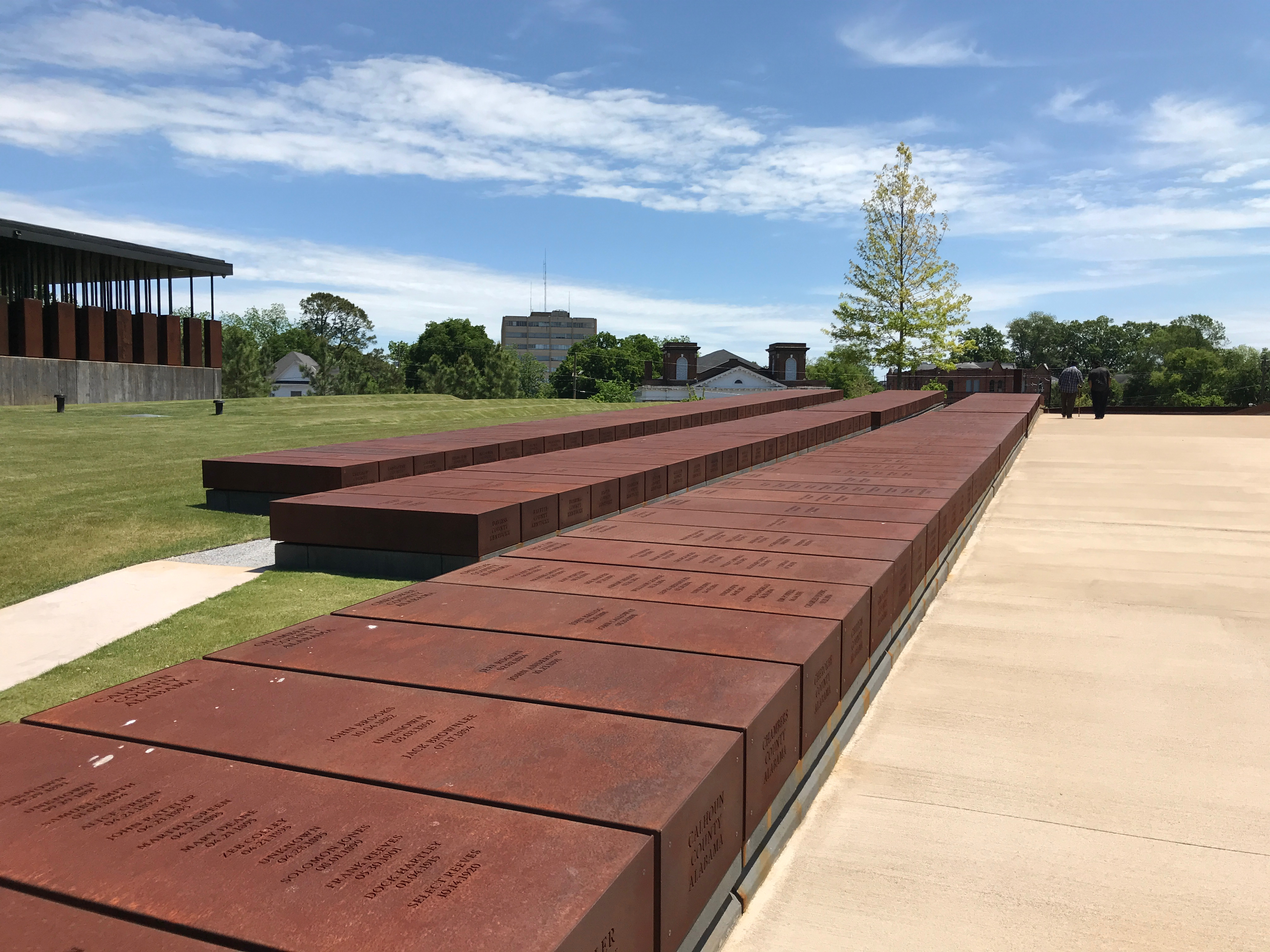
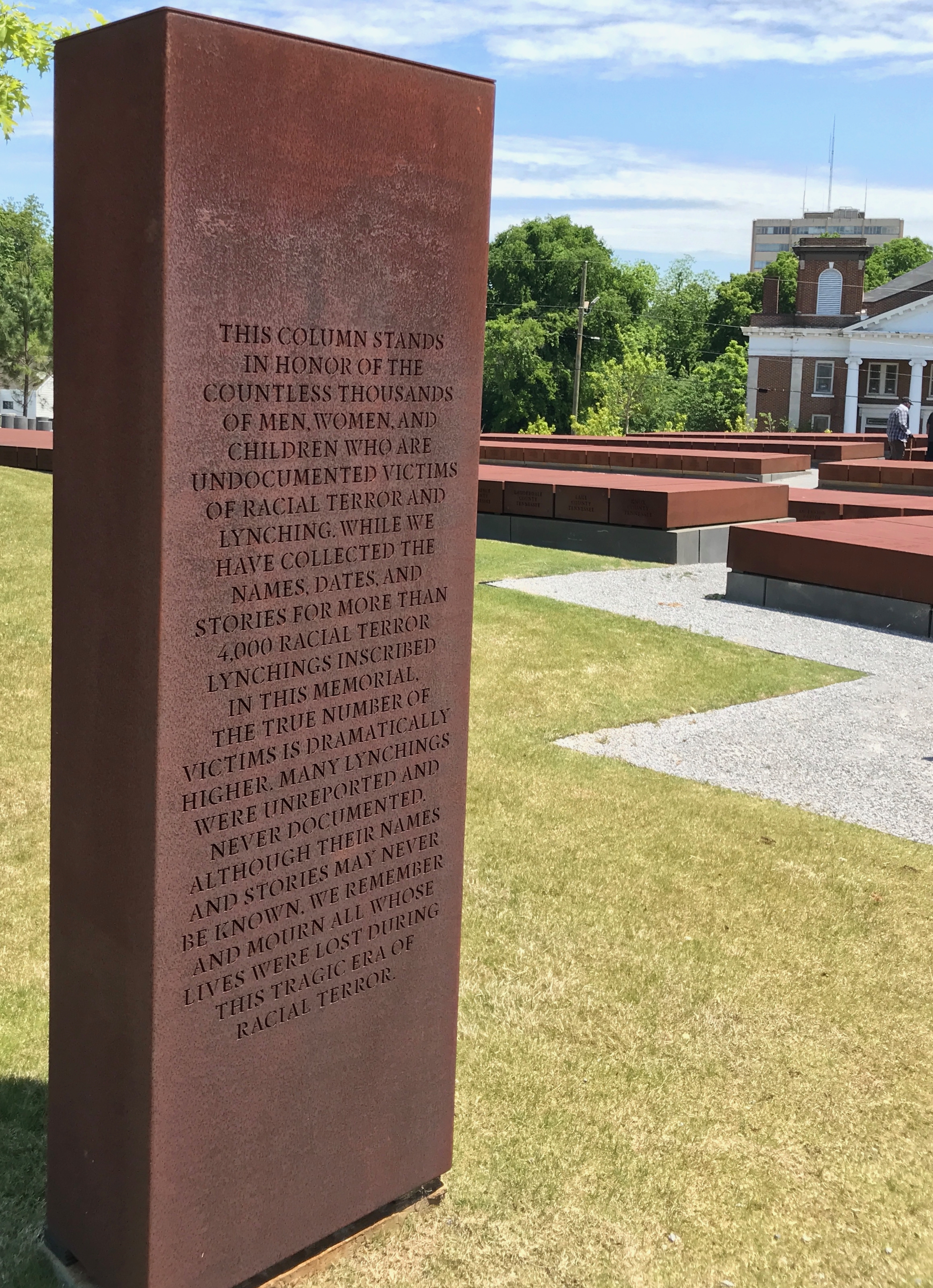
It is overwhelming.
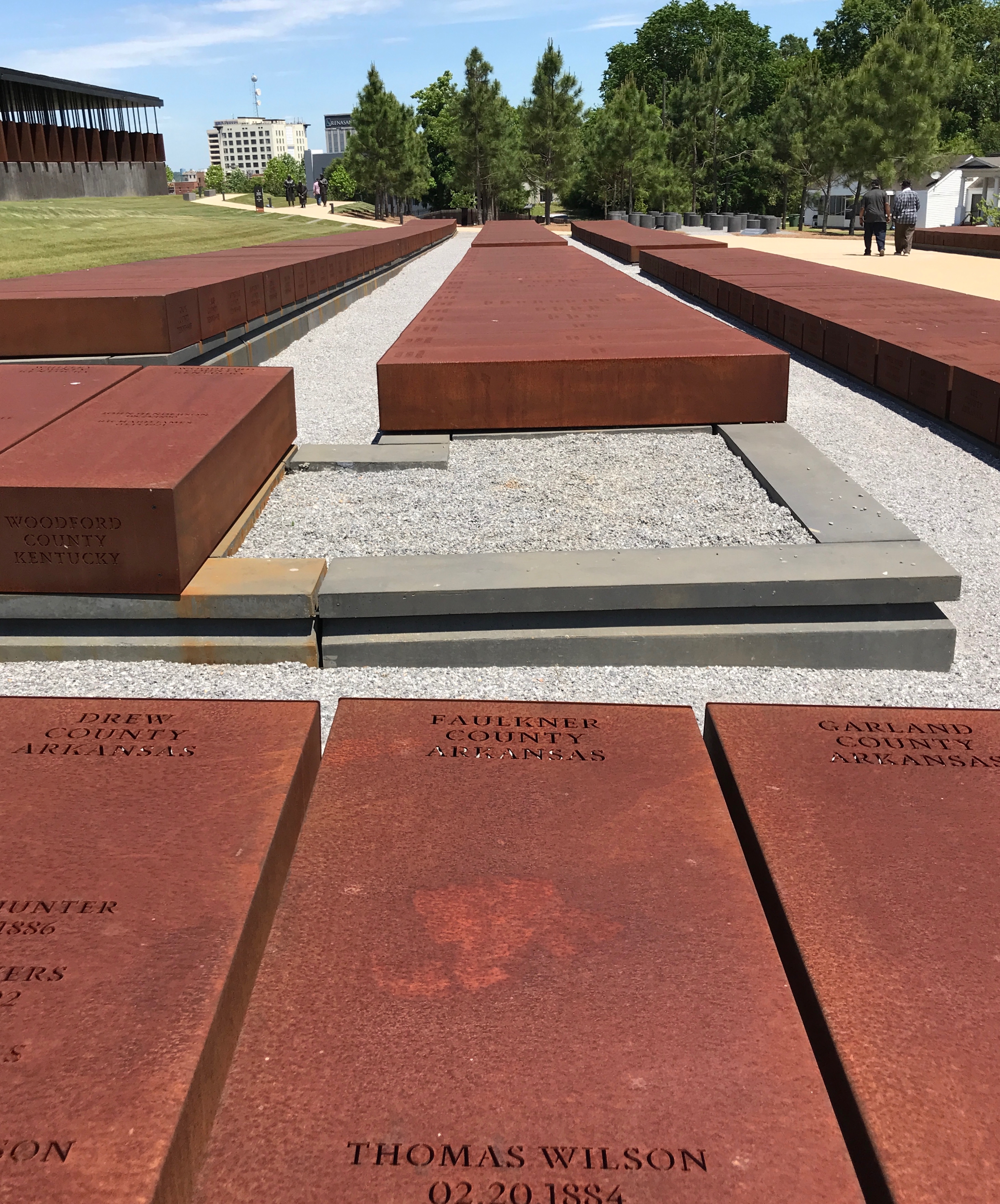
How many?
The Ida B. Wells Memorial Grove was interesting. There was no information about it that I saw nearby, although the memorial webpage describes it as a “reflection space.” In a few years, the trees will shade the area and make it a lovely respite from the sun.
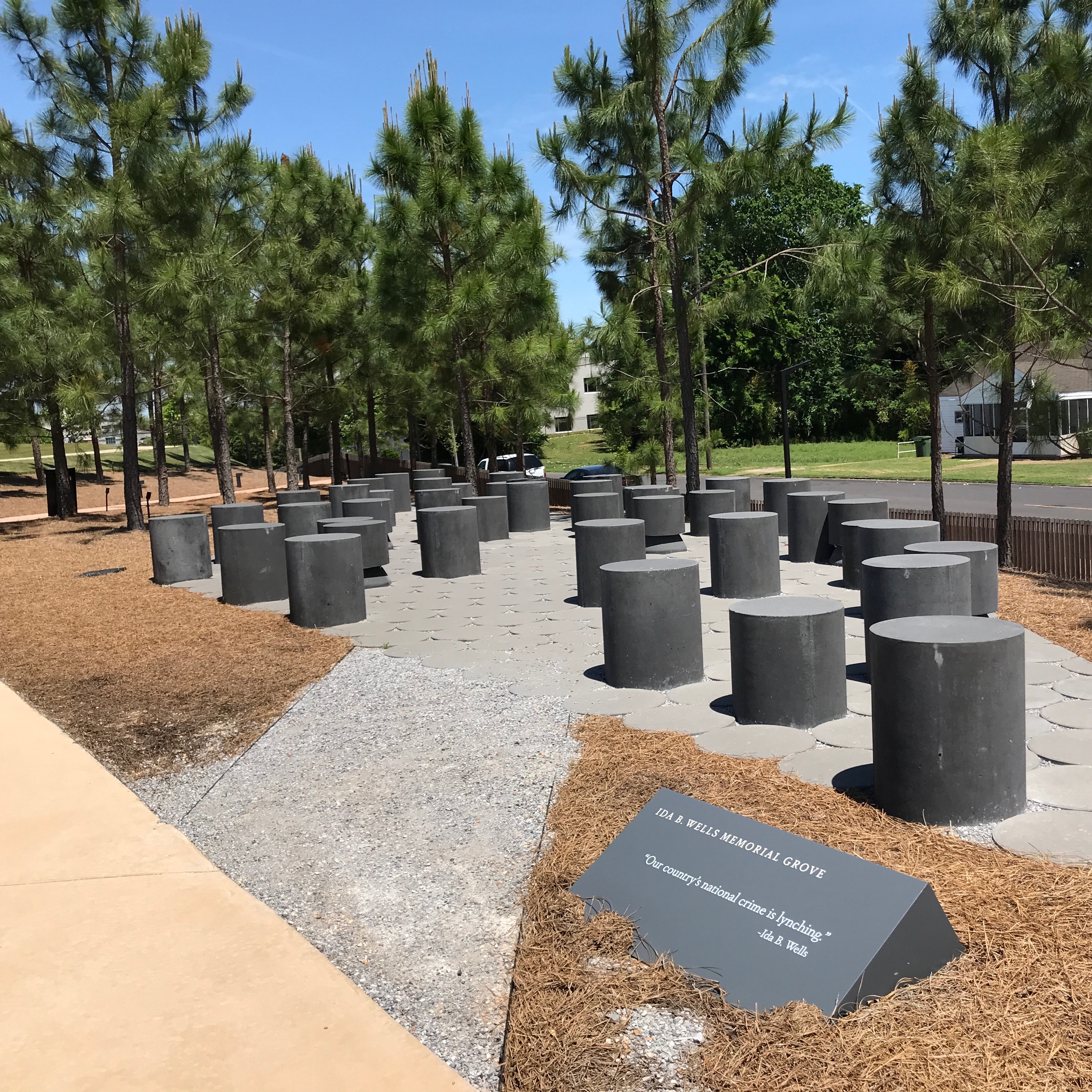
Ida B. Wells is a historical American figure that we should all know about. It is particularly appropriate that she is honored here, as she was a journalist who wrote about lynchings in real time. What courage that must have taken.
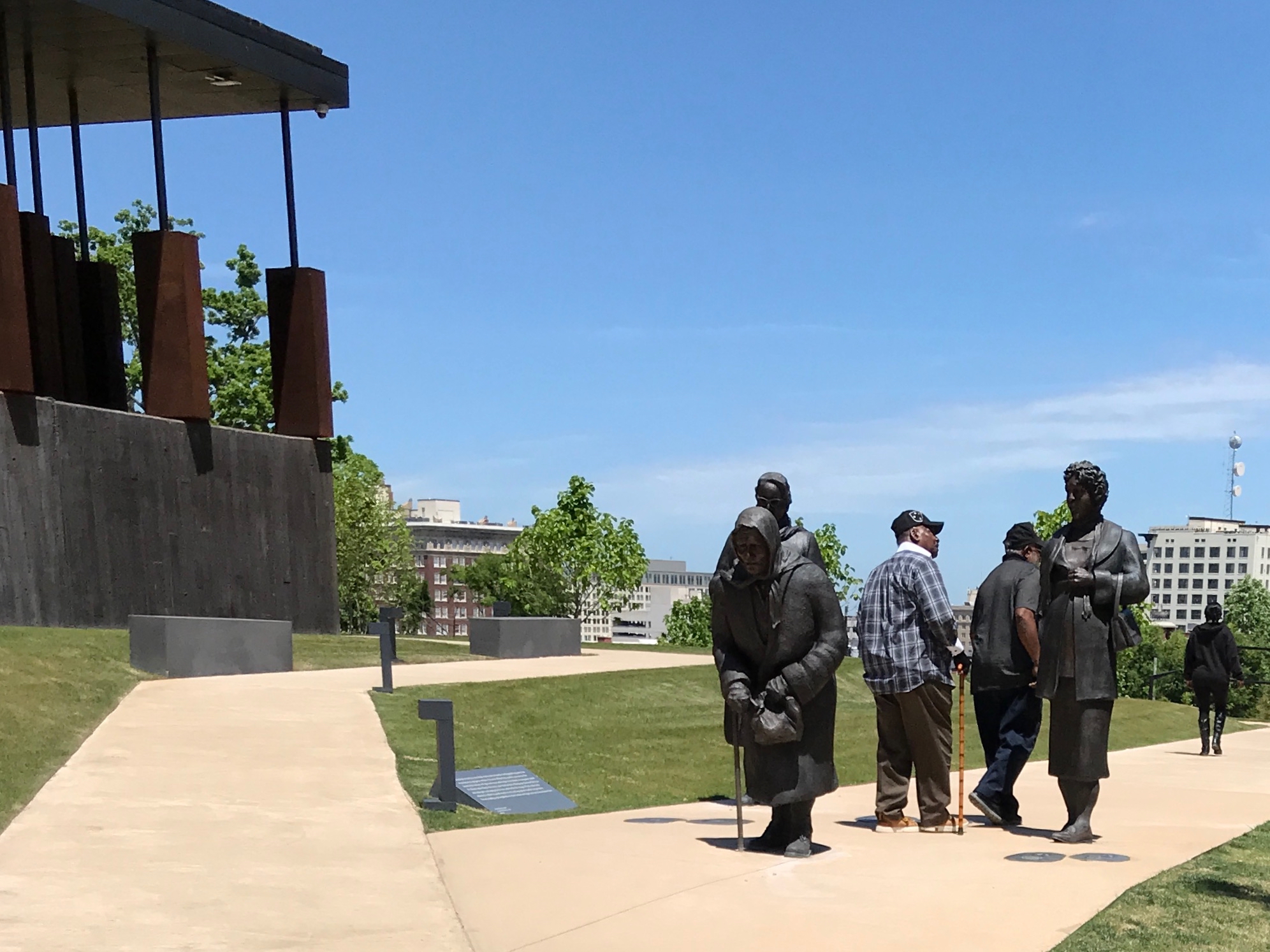
I wound my way around to this sculpture grouping, Guided By Justice by Dana King.
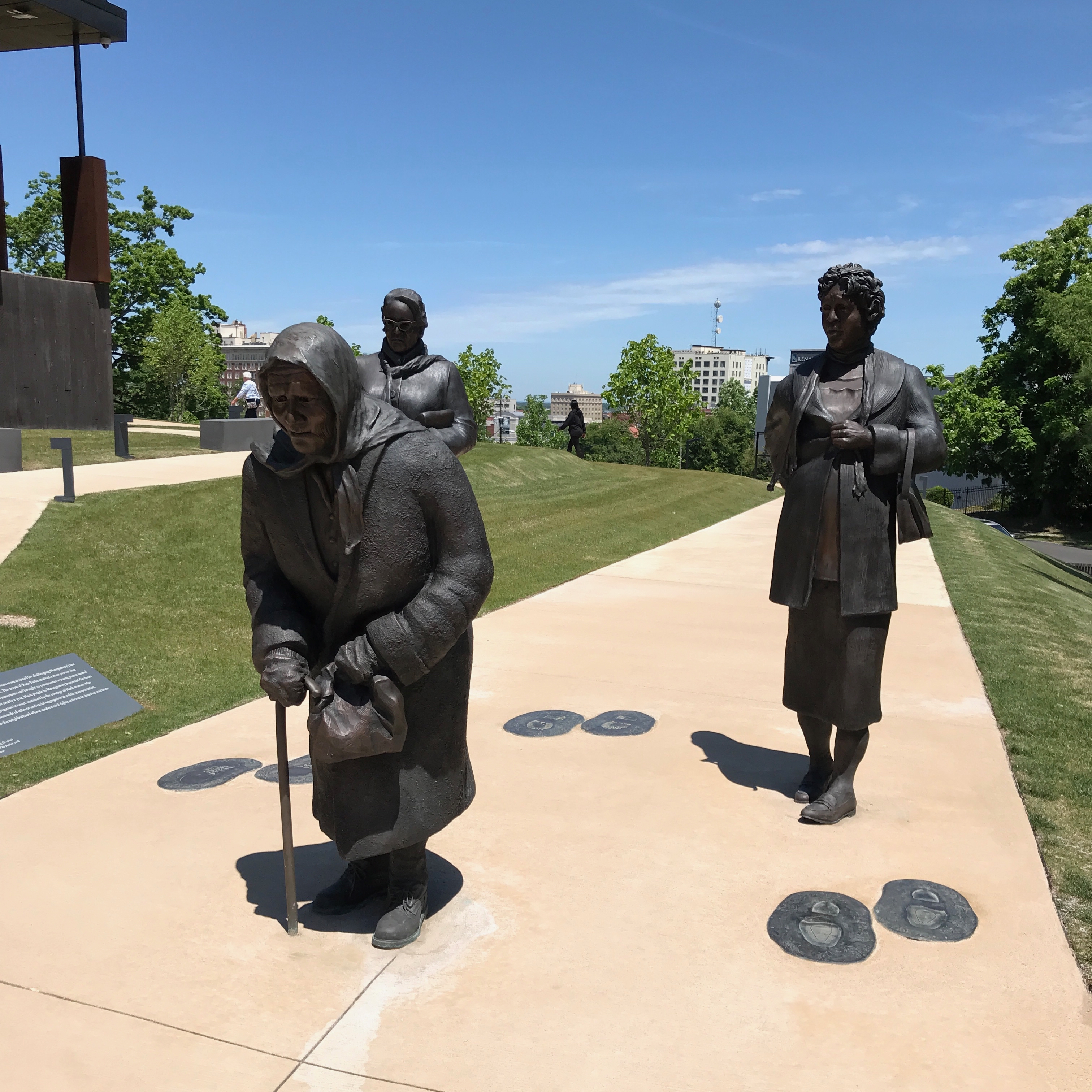
King’s sculpture honors the participants in the Montgomery Bus Boycott. She chose to depict three women: a grandmother, a teacher, and a pregnant woman. Her sculpture aims to have views reconsider the mythology of the heroines of the bus boycott. The focus on Rosa Parks draws attention away from the thousands of other black people who were central in the success of the bus boycott.
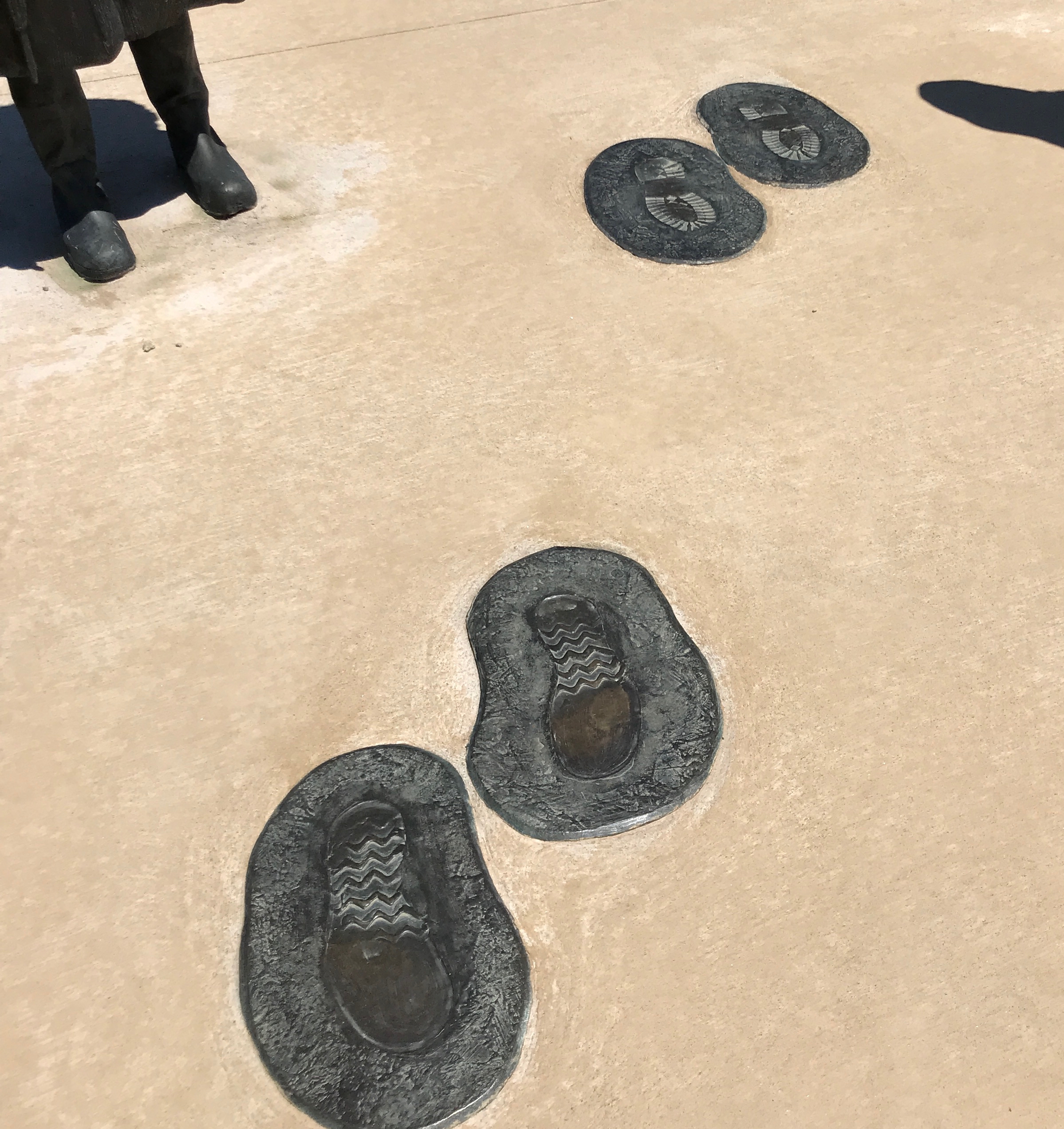
The footprints on the ground represent a call to action for others to join them in the cause.
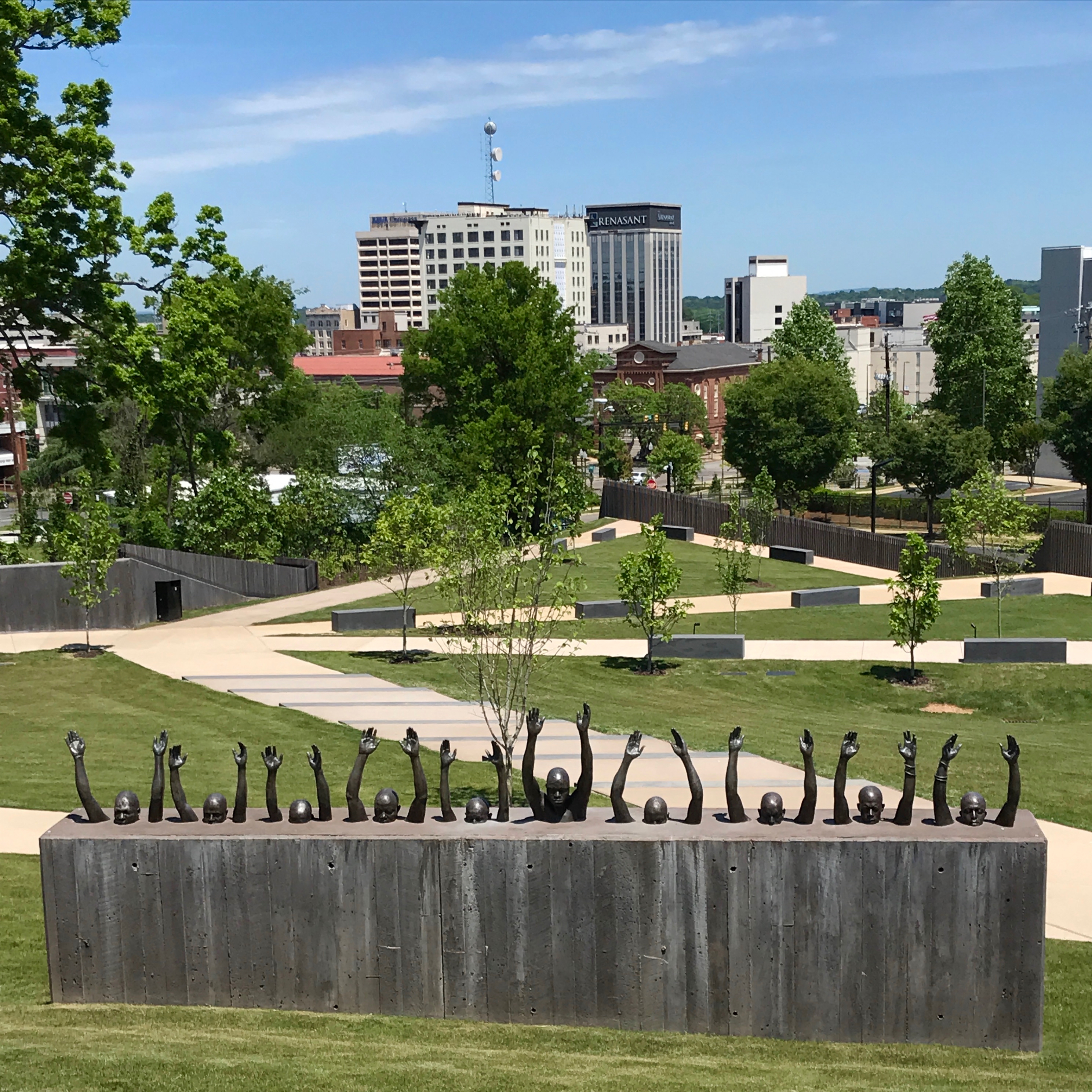
Hank Willis Thomas’ sculpture, Raise Up, is a depiction of policing in America. The sculpture depicts ten Black men encased on concrete, with their hands up and their eyes closed. His artistic choice to encase these men in concrete, some with their heads sunken in, demonstrates the lack of control and autonomy black people have over their own bodies. Though most of their bodies are covered and they are unable to move, their hands are clearly visible, referencing the many stories of unarmed Black men being shot and brutalized by police.
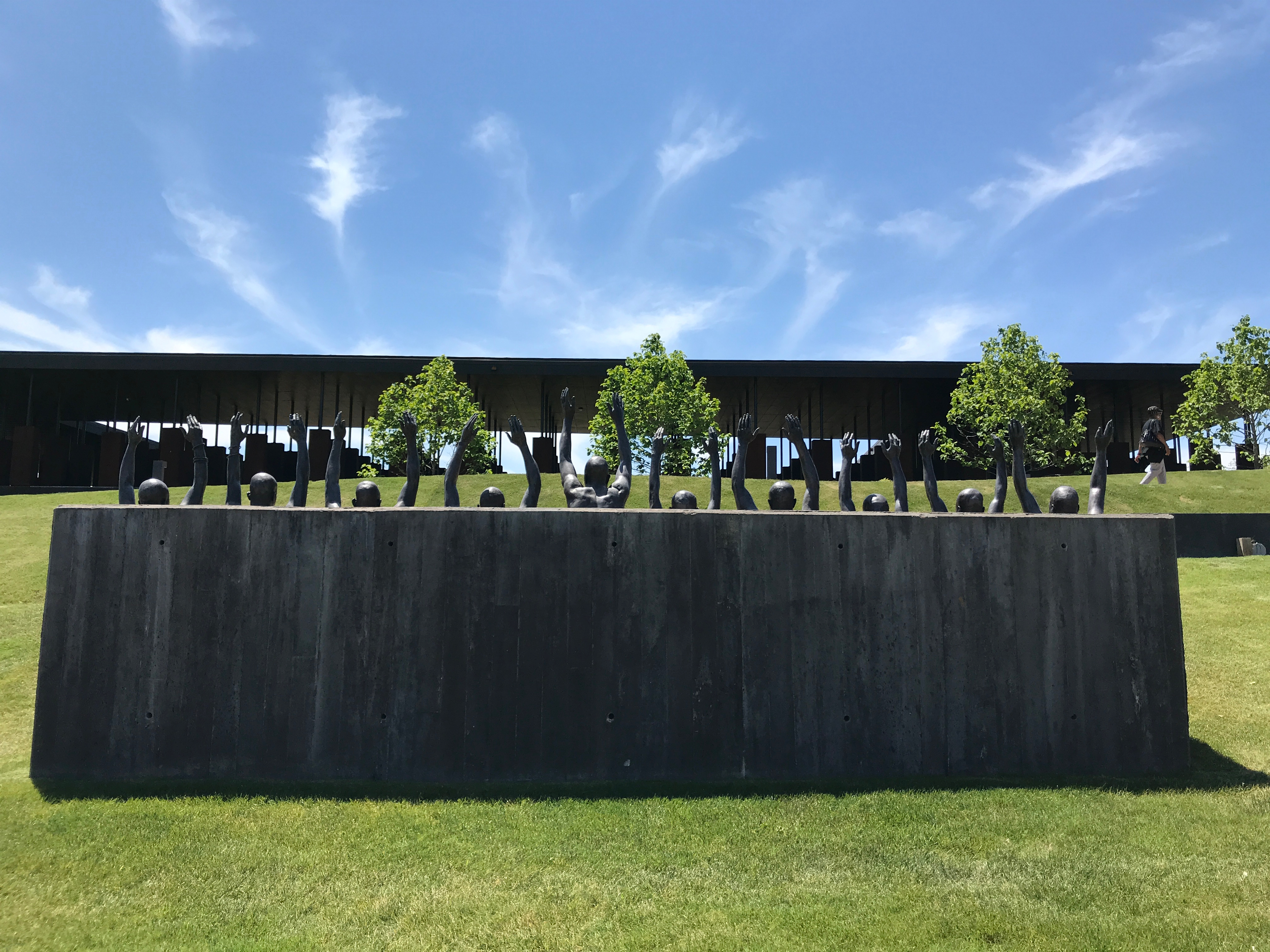
The National Memorial uses Thomas’ sculpture as a connection to the present, a kind of call to action that the fight for justice and liberation is ongoing.
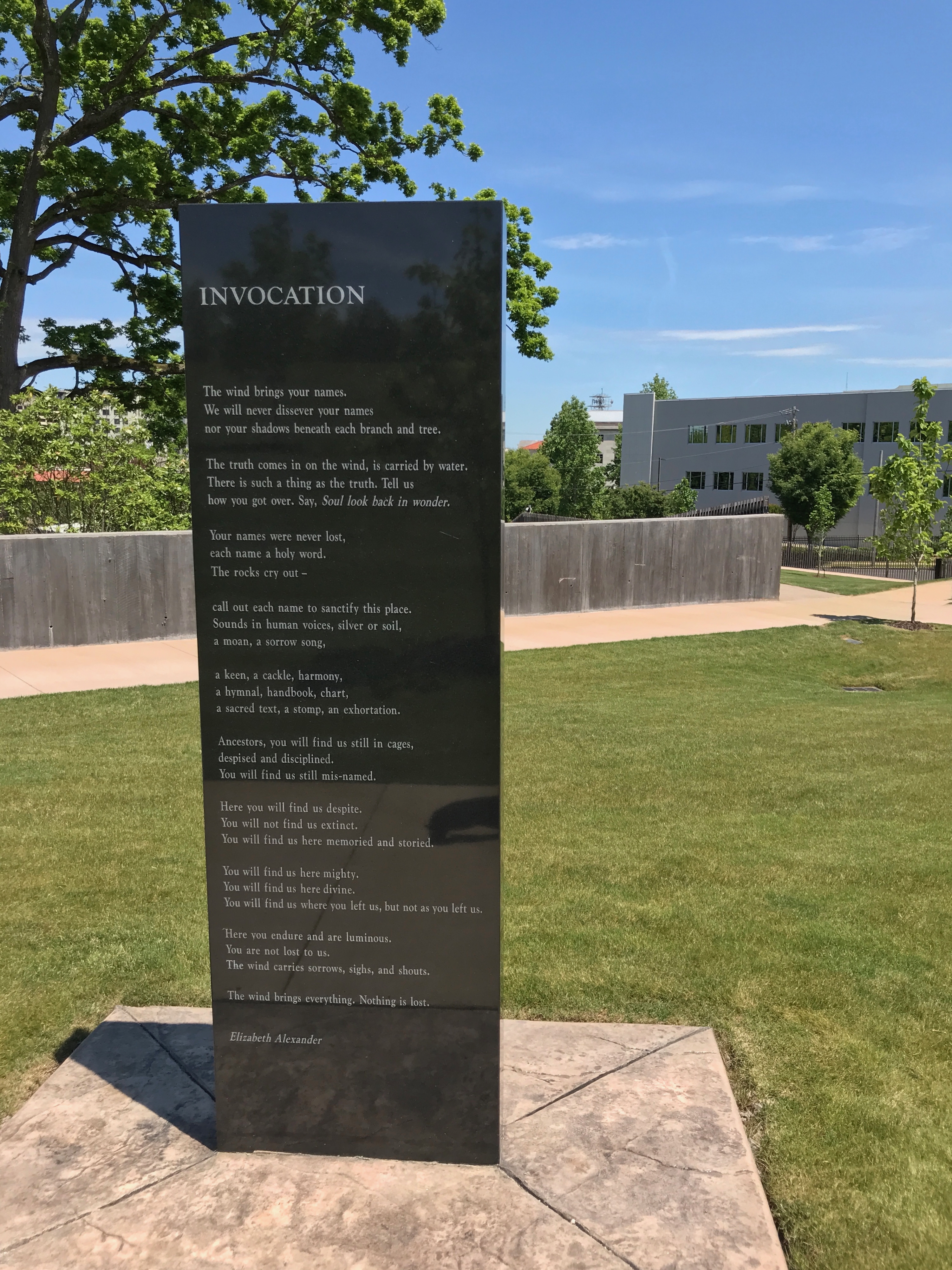
INVOCATION
The wind brings your names.
We will never dissever your names
nor your shadow beneath each branch and tree.
The truth comes in on the wind, is carried by the water.
There is such a thing as truth. Tell us
how you got over. Say, Soul look back in wonder.
Your names were never lost,
each name a holy word.
The rocks cry out –
call out each name to sanctify this place.
Sounds in human voices, silver or soil,
a moan, a sorrow song,
a keen, a cackle, harmony,
a hymnal, handbook, chart,
a sacred text, a stomp, and exhortation.
Ancestors, you will find us still in cages,
despised and disciplined.
You will find us still mis-named.
Here you will find us despite.
You will not find us extinct.
You will find us here memories and storied.
You will find us here mighty.
You will find us here divine.
You will find us where you left us, but not as you left us.
Here you endure and are luminous.
You are not lost to us.
The wind carries sorrows, sighs, and shouts.
The wind brings everything. Nothing is lost.
Elizabeth Alexander
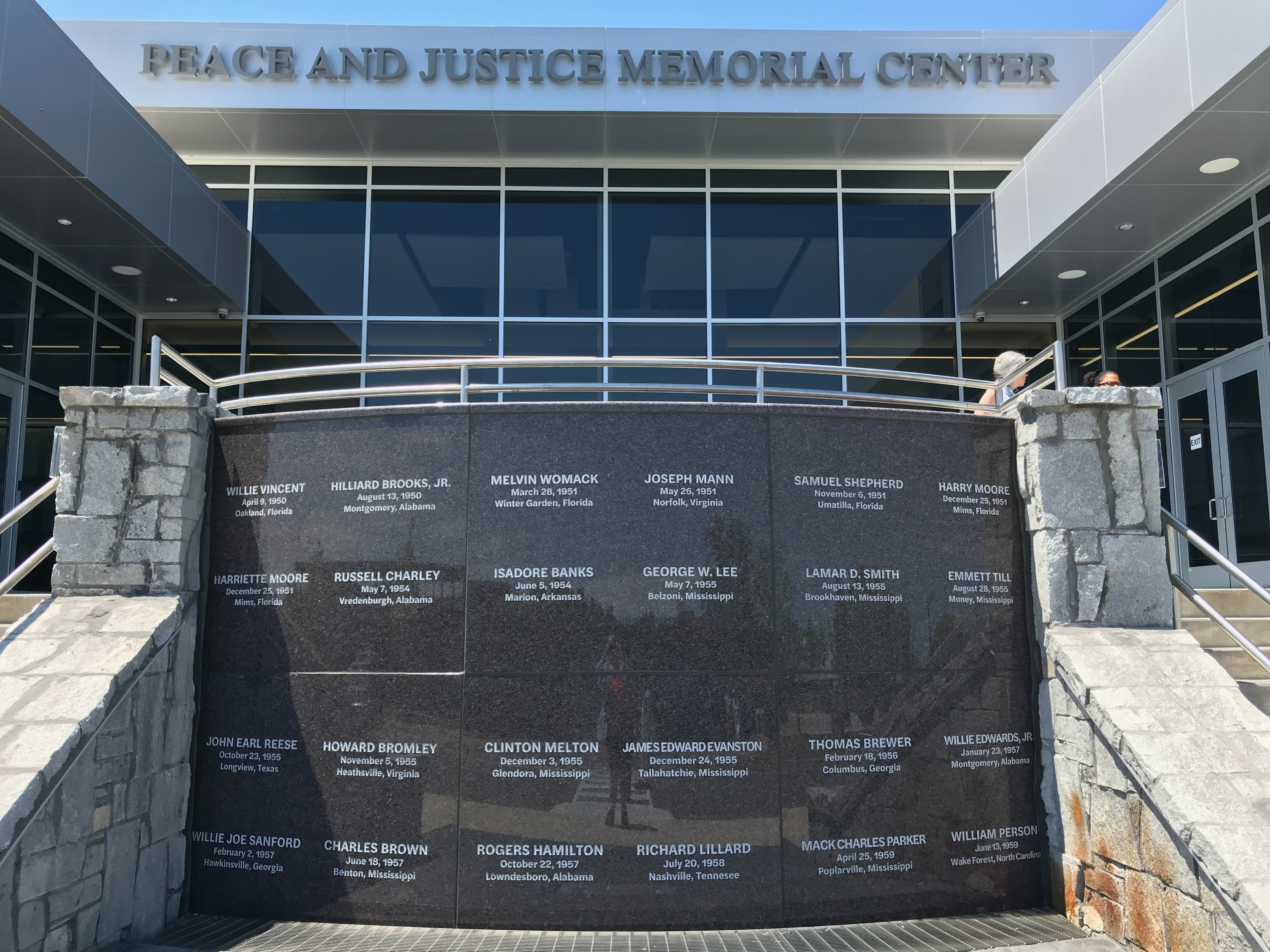
I headed inside the building to see what I might see. I wondered about the names that were displayed here.
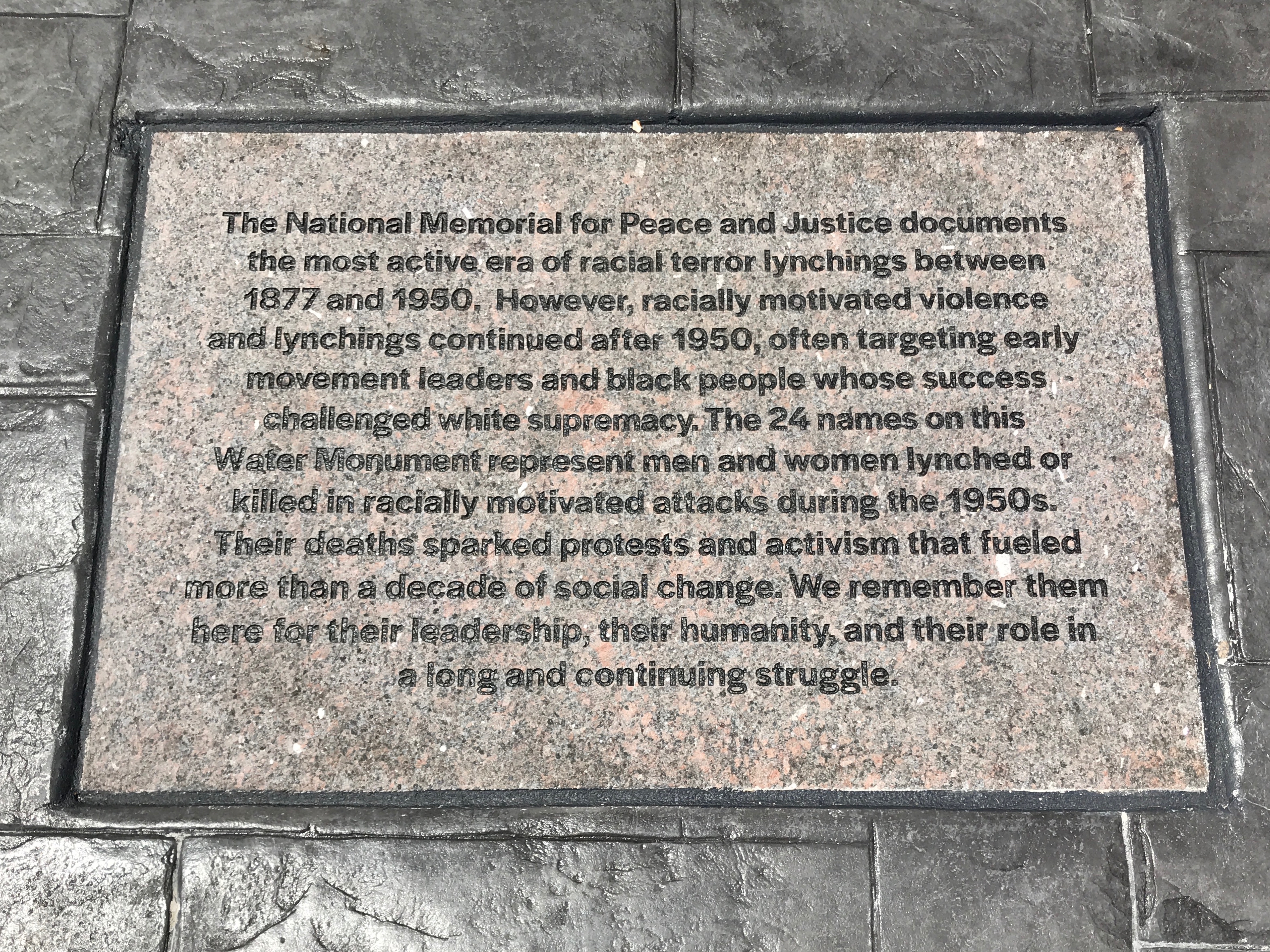
This plaque explains why these names have be singled out.
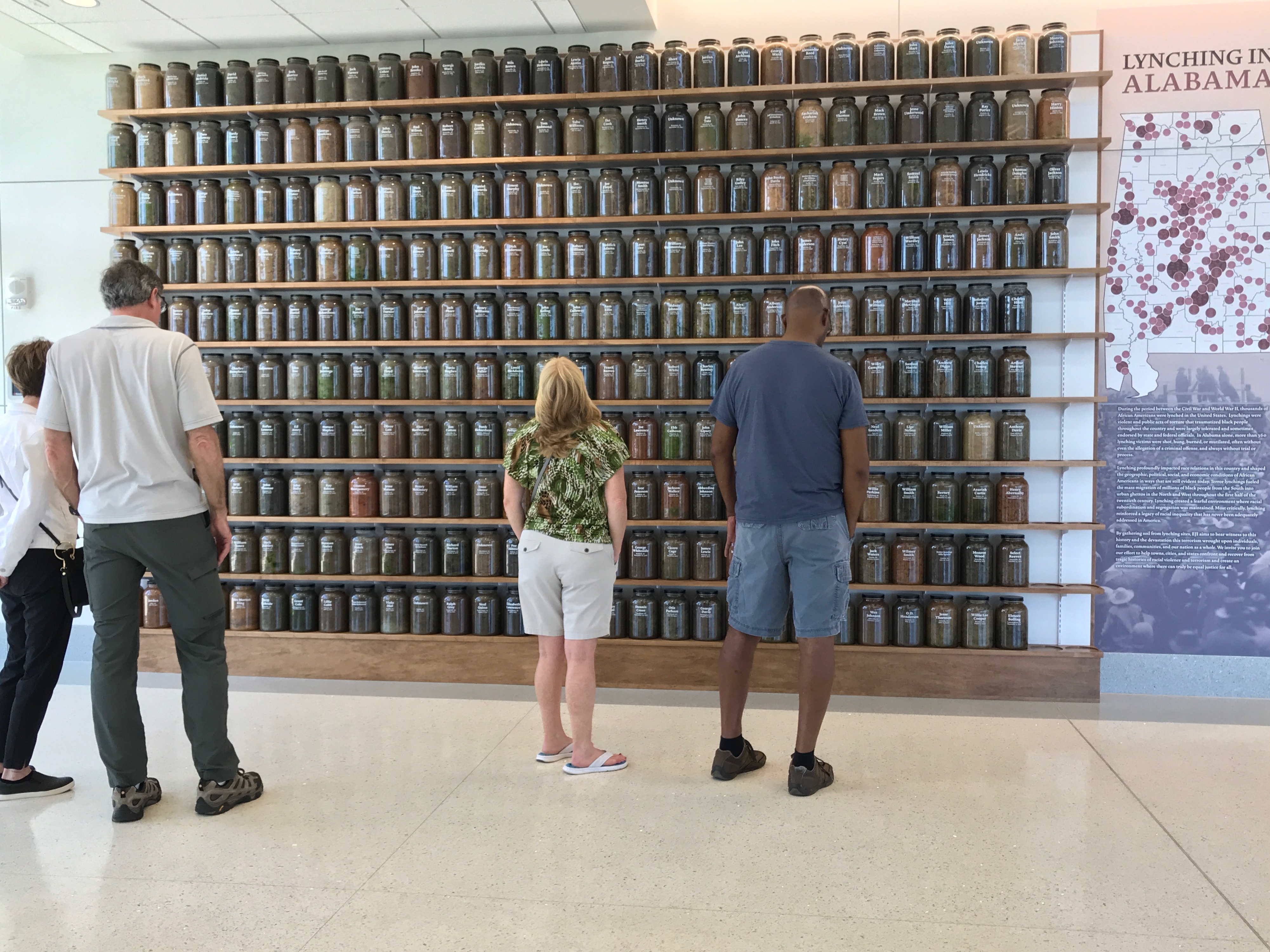
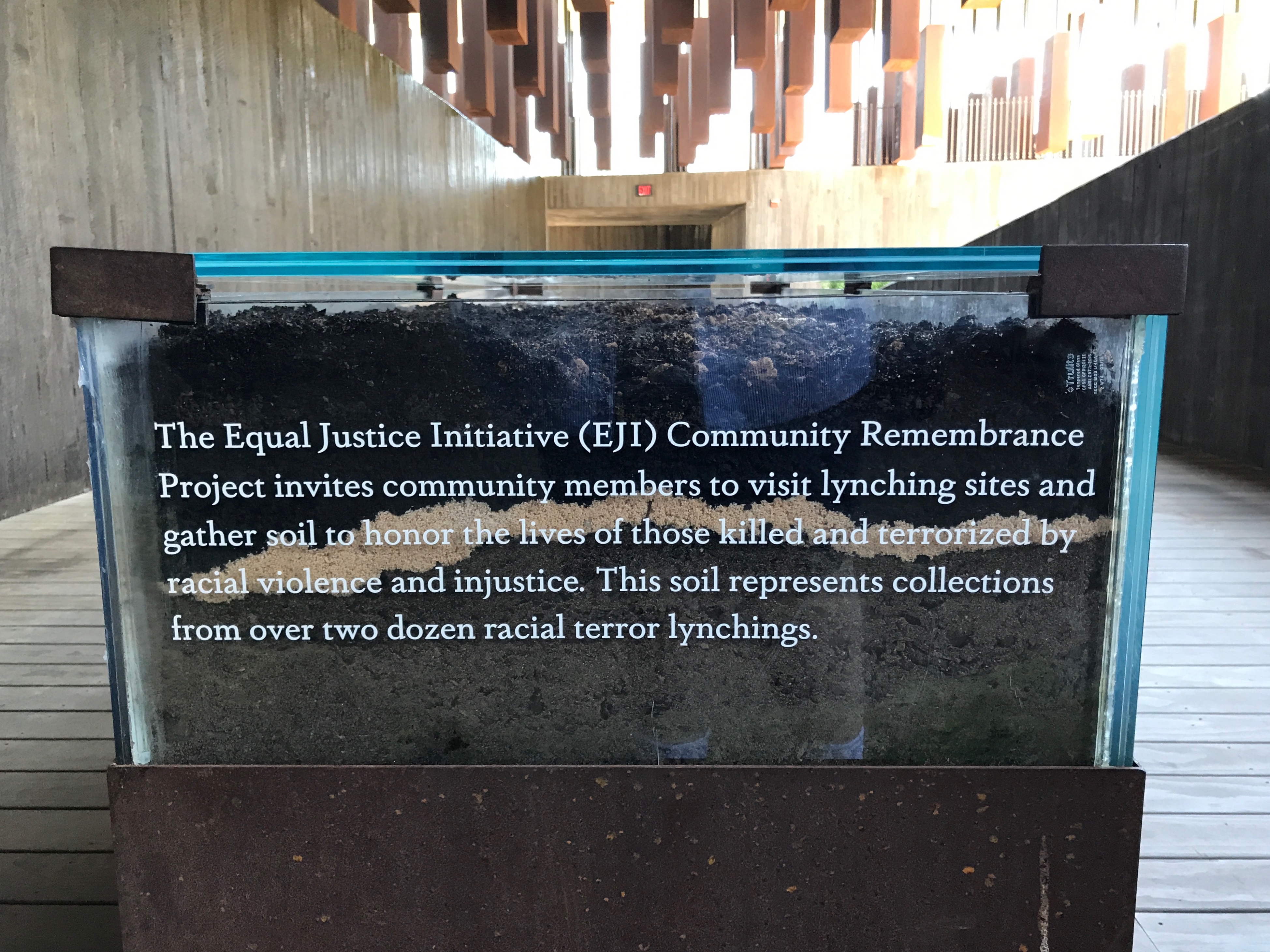
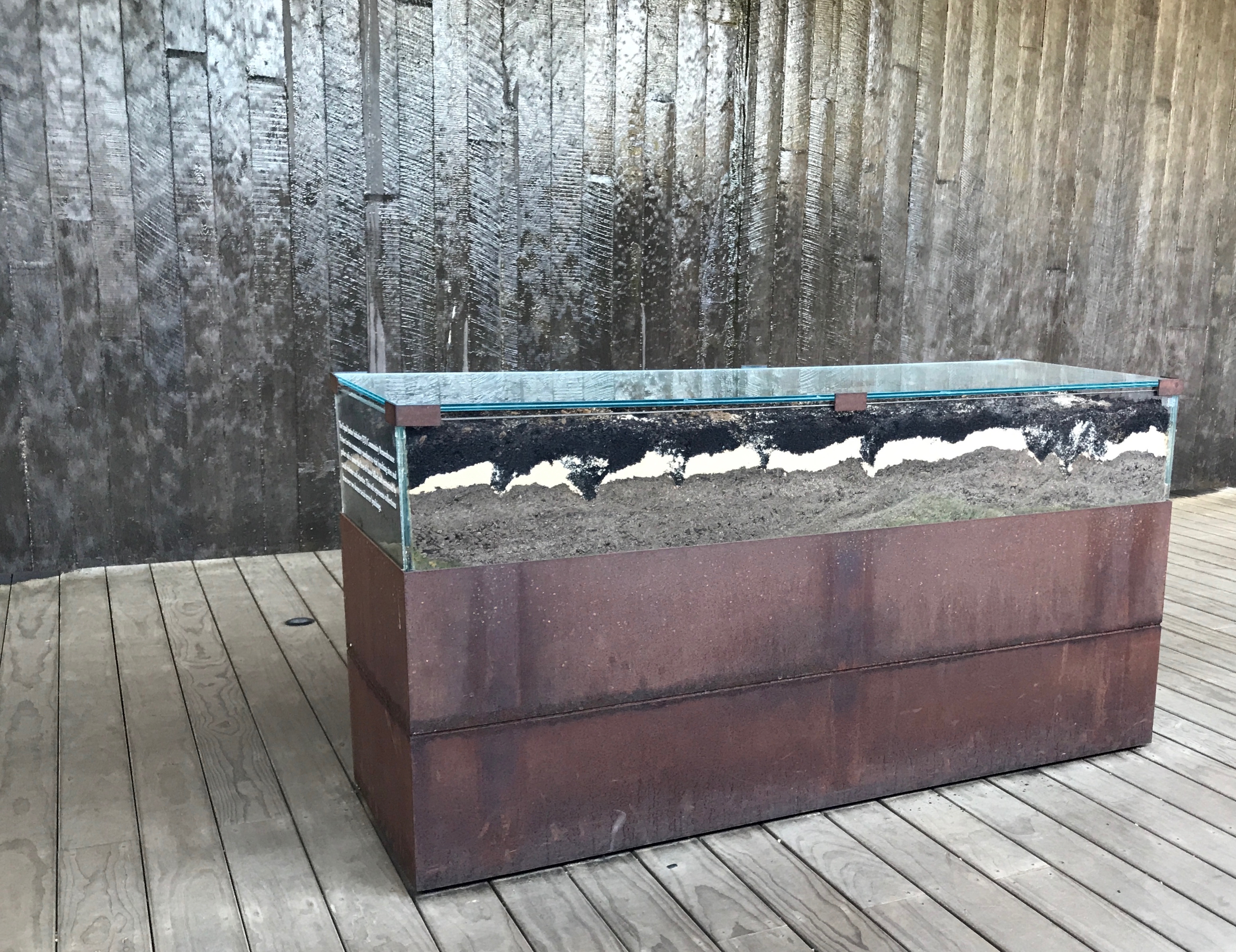
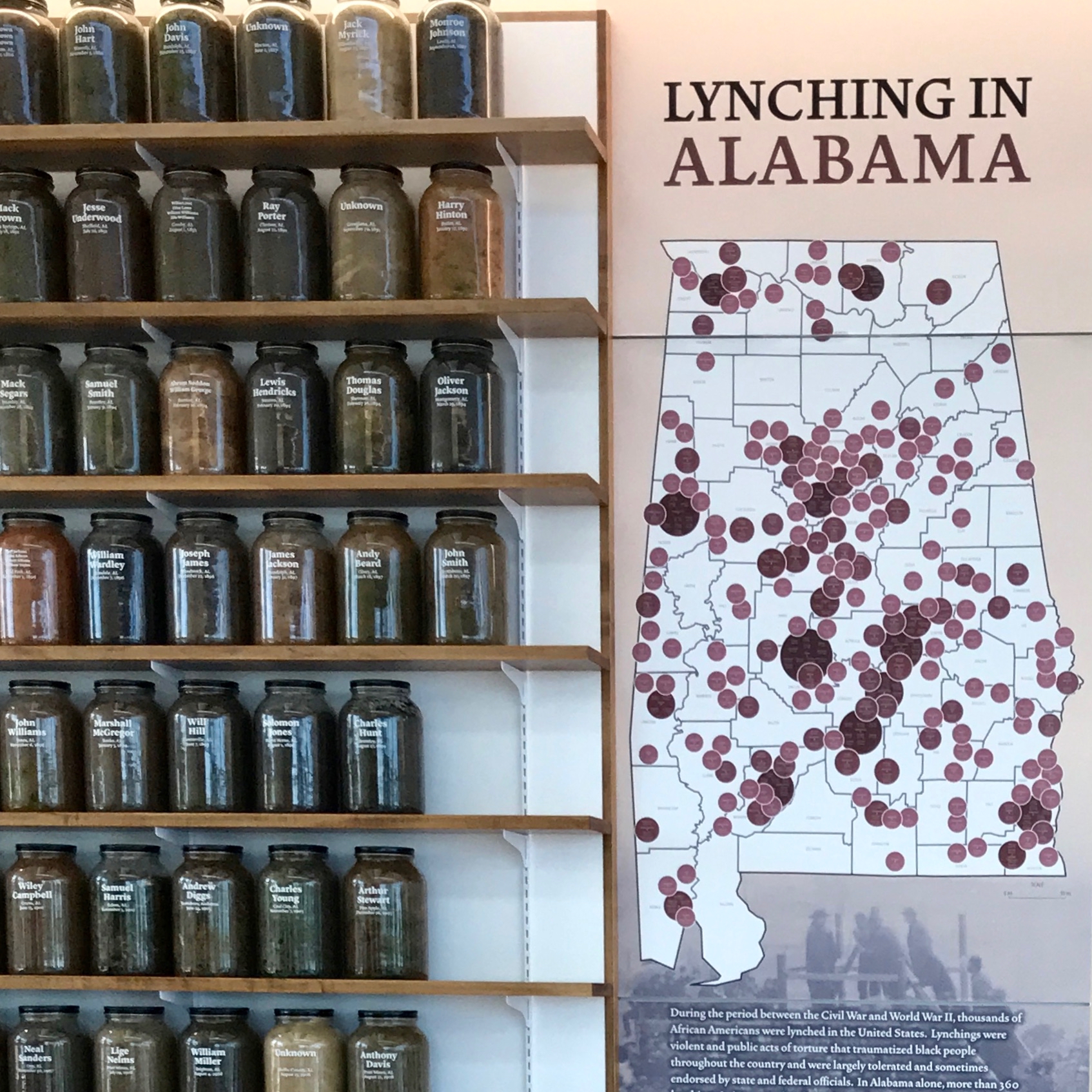
Inside there were rows and rows of soil collected at lynching sites.
There may have been more to see inside. I’m not sure, but I knew I had hit my limit for this part of my visit. I needed to have some food, something to drink and a bit of a break. I looked up restaurants in the area and ended up near Court Square.
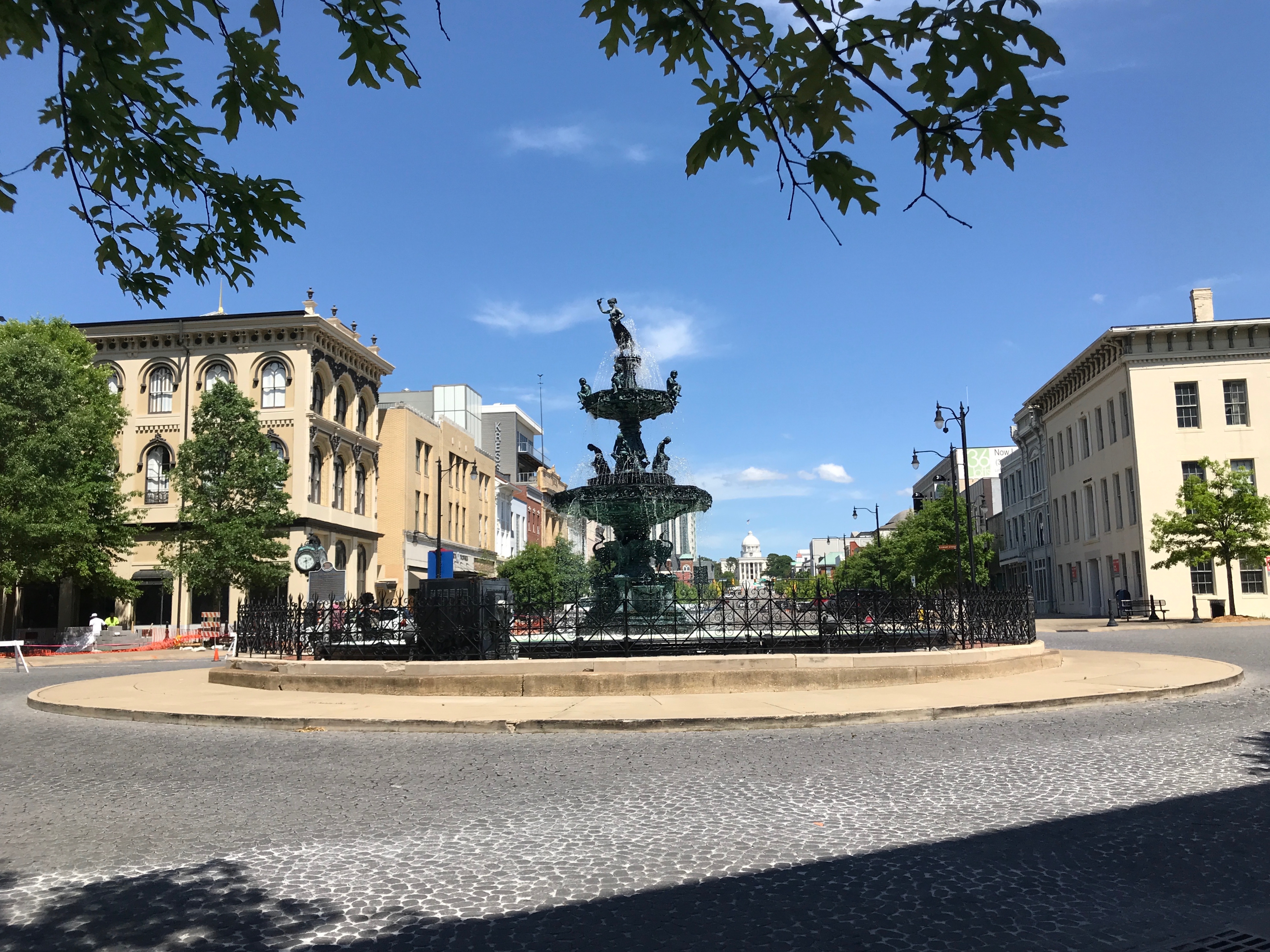
This is taken from one of the markers in the square:
“At the intersection of Commerce Street and Dexter Avenue, Court Square is arguable the most historic location in America. As the center of 19th century Southern economic and political power, Montgomery’s Court Square was host to a massive slave market and the location from which the telegram that ignited the Civil War at Fort Sumter was sent.
Less than a century later, Court Square and downtown Montgomery was the epicenter of the civil rights movement, first with the Montgomery Bus Boycott which began December 5, 1955. Ten years later the civil rights struggle and Montgomery’s non-violent protests culminated in the Selma to Montgomery March as the marchers took the last steps up Dexter Avenue to the state capitol.
This duality of histories is the heart of Montgomery’s past. A citynwith a past as complex, difficult, and important to the American story can often struggle under the weight. Today, Montgomery honors its past all aspects of its history while looking to the future.”
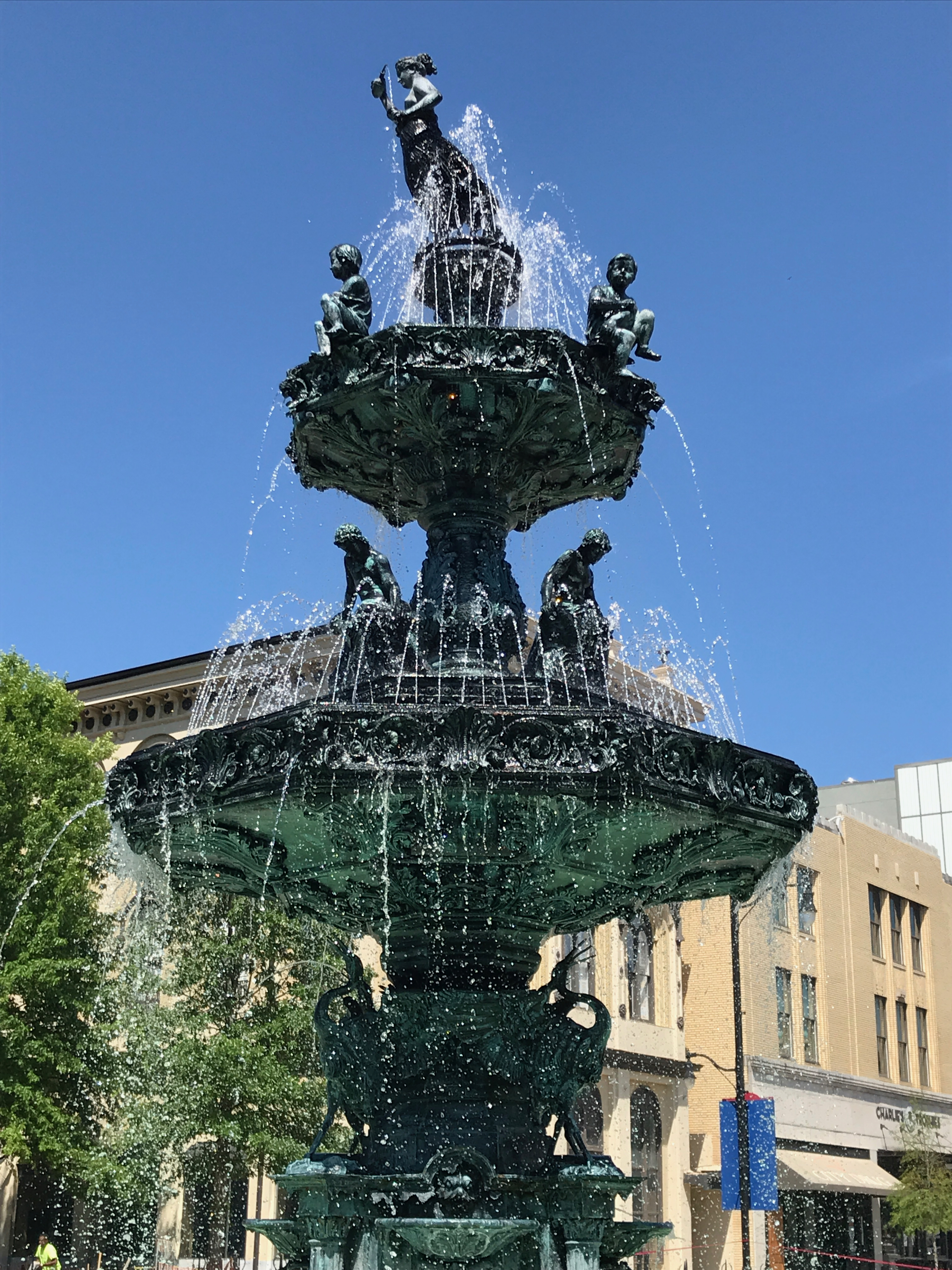
The fountain was built on top of an artesian well that was used long before Europeans came to the area.
What is an artesian well?
I’m glad you asked. An artesian well is a well where the water is forced to the surface by groundwater pressure. You don’t need to pump it up. On the other hand, a spring occurs when the surface of the land dips below the water table.
Oh, you didn’t ask? Moving on…
This fountain was erected in 1885, although they are not sure who was the designer. The sculpture of Hebe at the top of the fountain was likely modeled by a sculpture by Antonio Canova. Nearly identical fountains can be found at Fountain Square in Bowling Green, Kentucky, and Court Square in Memphis. They were cast by J.L. Mott Ironworks of New York.
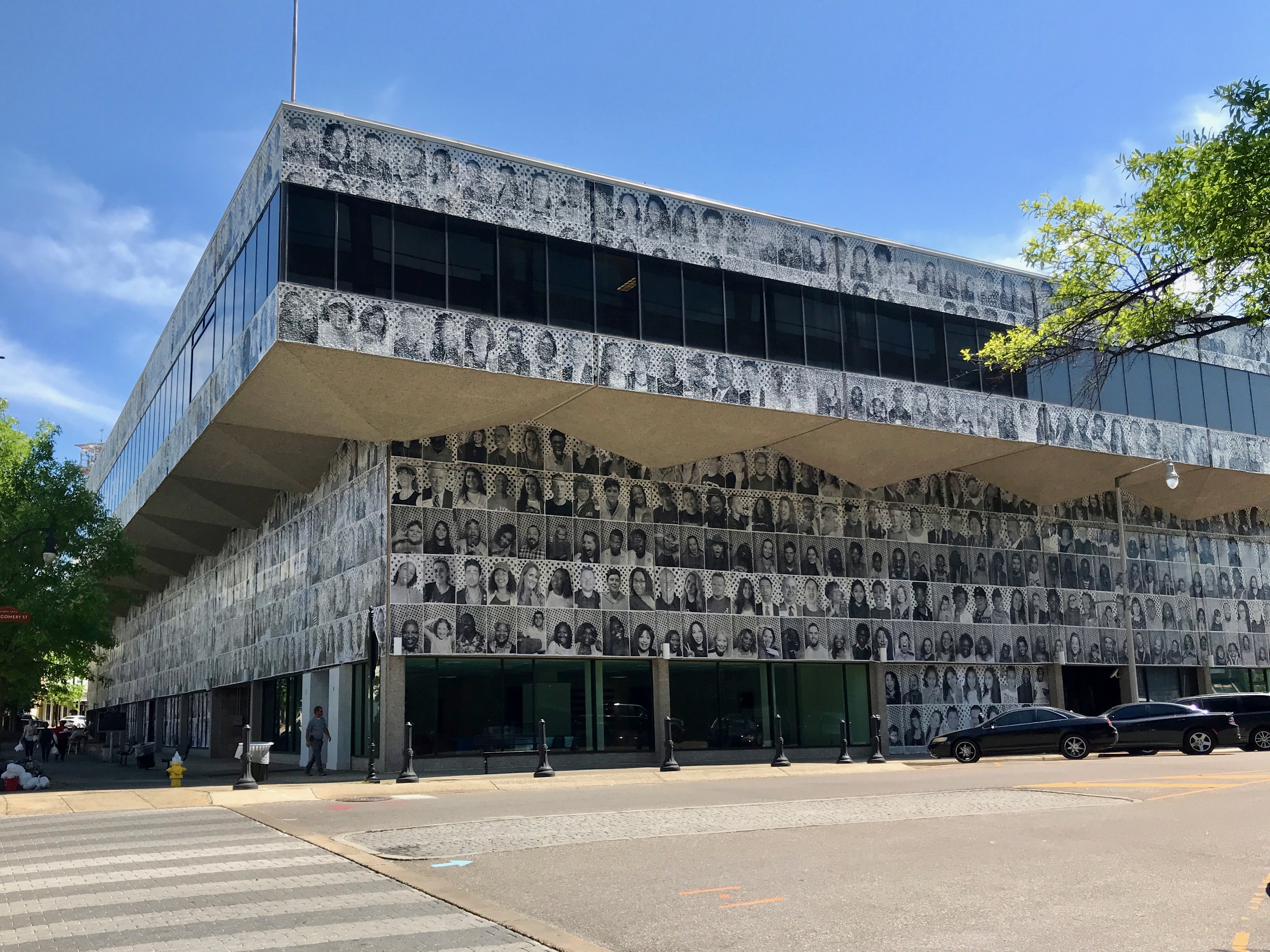
My attention was drawn to this building covered with portraits.
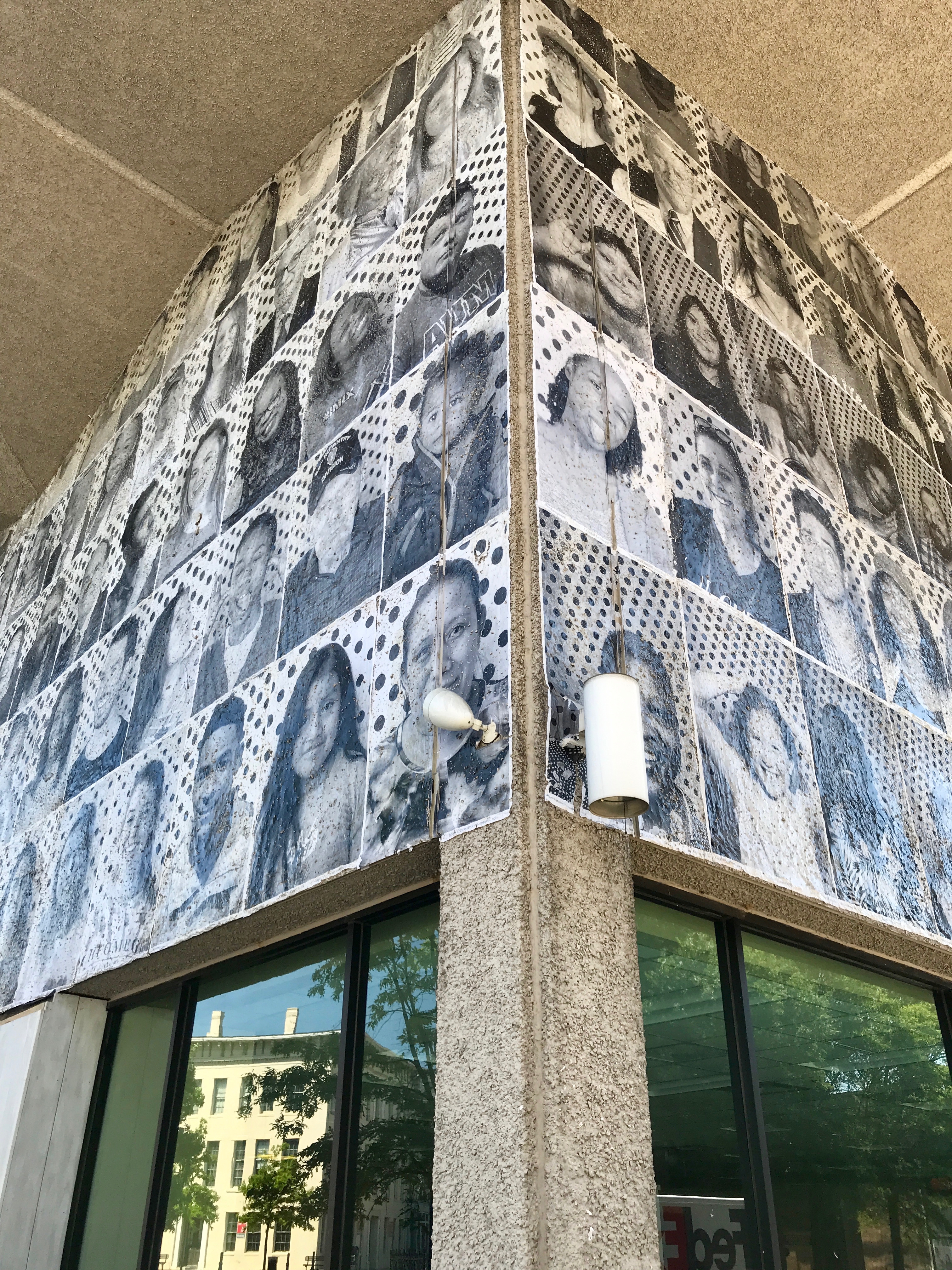
It appears to be a mixed use office and retail space.
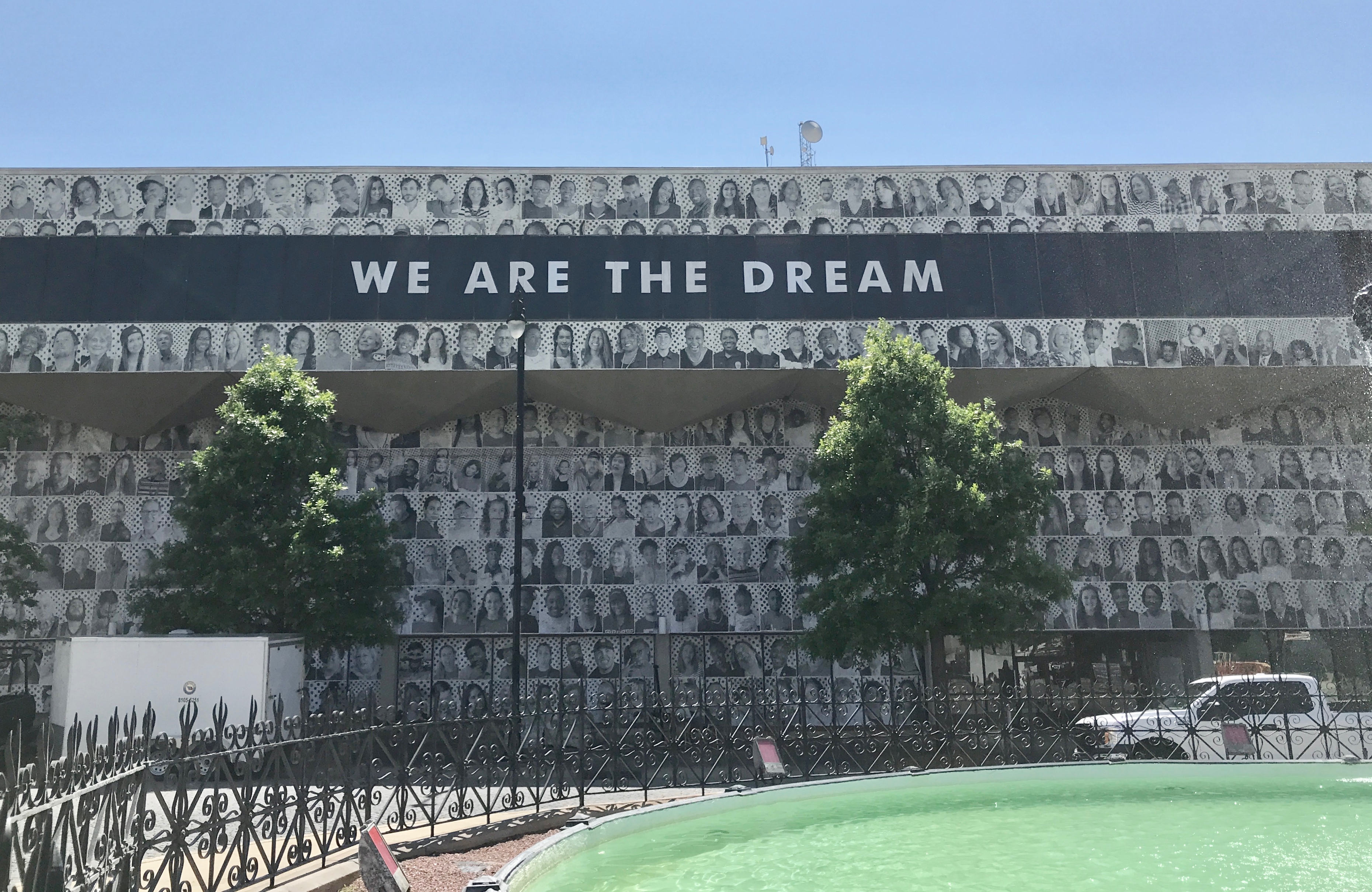
And, you have to believe that they are, indeed, the dream and the hope for the future.