Dem dry bones!
I hoped to be able to visit the Waco Mammoth National Monument on my way out of town. It opened at 11:00 AM, and it all hinged on whether they had RV parking. I called right when they opened and I was informed that they did, indeed, have room for me to park. I finished getting hitched up and I headed over.
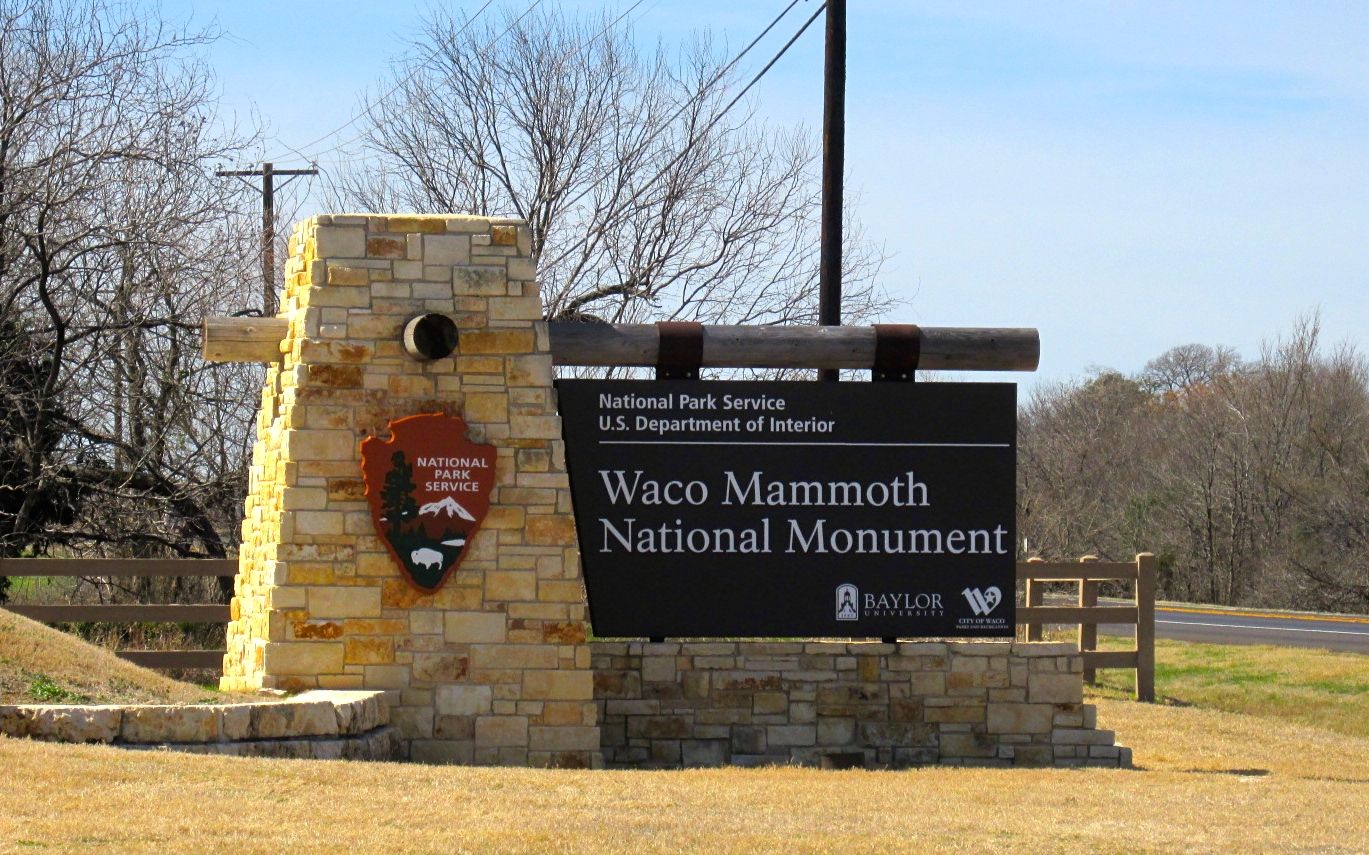
I have the American the Beautiful pass that entitles me to enter all the national parks and monuments. I was a little annoyed that I had to pay to enter the mammoth site. They require that visitors enter with a guide. I did get a $1 discount because I am over 55, so that took the sting away a bit.
However, the guide, Dava, was fantastic – and totally worth the $4 I paid for the tour. She was a real scholar and very enthusiastic about her subject matter.
While she walked us over to the climate-controlled, air-purified building that is over the dig, she told us that these bones from mammoths that lived here 67,000 years ago during the last ice age were special because it is the site of the nation’s only recorded discovery of a “nursery herd” of Columbian mammoths.
Mammoths are closely related to elephants and they displayed the same behaviors as the elephants that are alive today. Columbian mammoths are the largest of all the mammoths.
Elephant herds are matriarchal, and the oldest mammoth is the leader. She is the one who has the greatest knowledge that is needed to preserve the herd. She knows where the dangers are and where the best food is.
This site was in a perfect spot for the herd. It was located between the Bosque River and the Brazos River, so there was plenty of water for drinking and for growing forage. The temperatures in this area during the Pleistocene era weren’t as cold as they were further north. Dava told us that the pleasant weather we were enjoying that day wouldn’t have been uncommon. The highs wouldn’t have been as high as they are these days.
The other feature that made this a good area for the mammoths was the lack of caves. Caves harbored predators. So, there was a lot of food and water and no predators. So, how did 24 Columbian mammoths end up here?
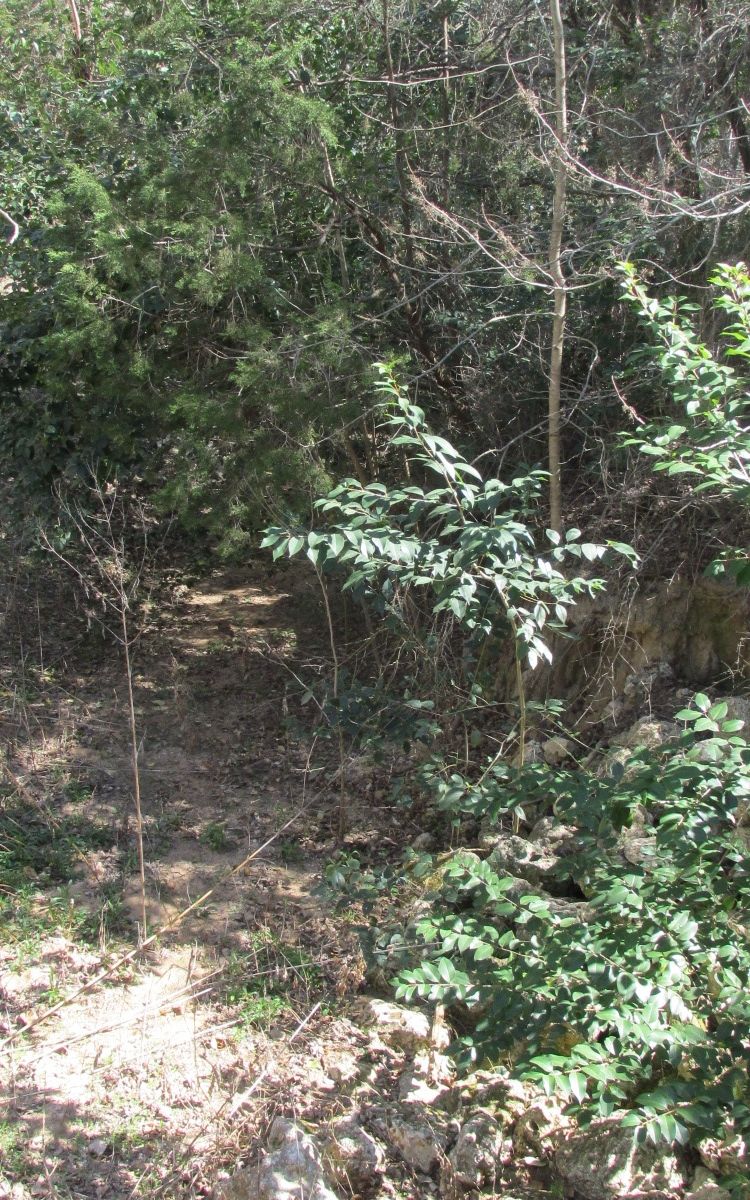
This is where the first bones were discovered. Two young men, Paul Barron and Eddie Bufkin, were exploring in this ravine. One was looking for copperheads, that his sister said were coming up to her house from the creek bed. He got his friend to come along with the promise that he could keep any arrowheads he found. I don’t know if they found snakes or arrowheads, but they did find a large bone sticking out of the ravine bank. They had the common sense to take the bone to Baylor University.
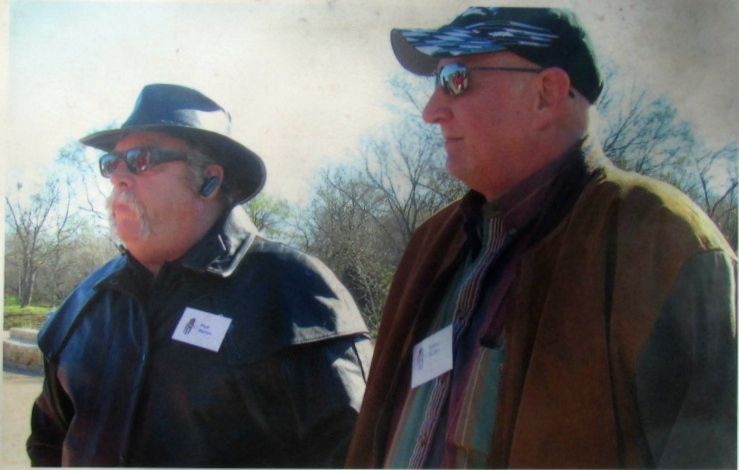
The staff at Baylor identified it as a femur bone from a Columbian mammoth, and they obtained permission from the land owner to have a dig in the ravine. They only intended to do it for one season, but the site was so rich in bones that the dig went on longer than they had originally thought.
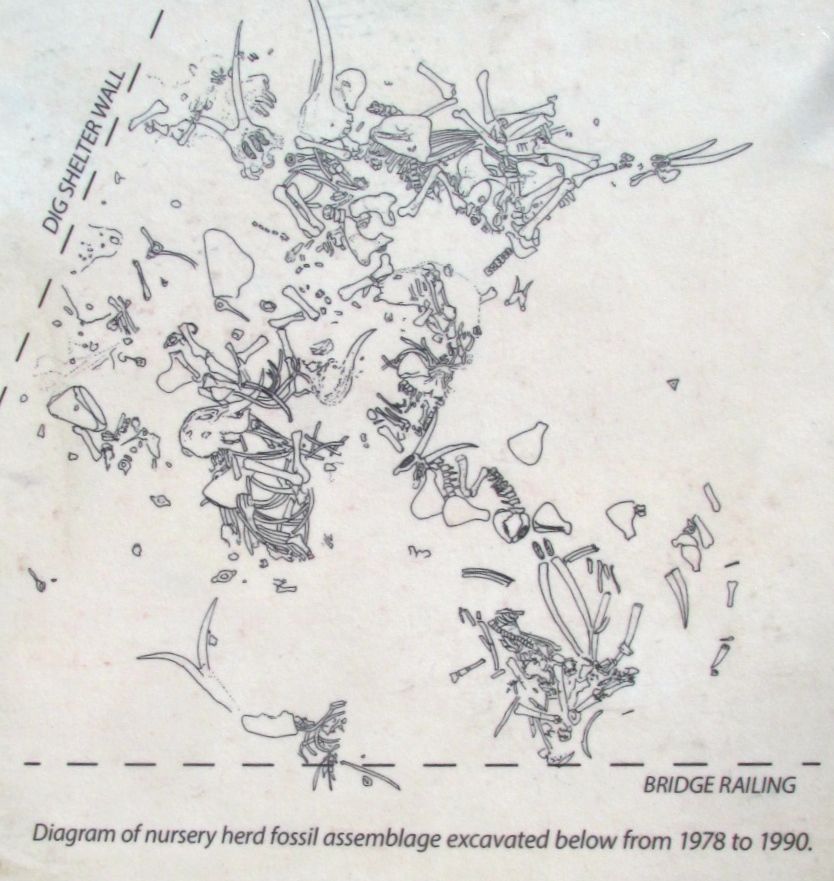
While we were standing on the bridge, looking at the original dig site, Dava explained that this diagram showed typical herd behavior. The adult females made a ring around the juveniles. The part that is blank, on the right center side, is still in the side of the ravine, awaiting excavation at some later date.
Paleontology is a lot like investigating a crime scene. When they put all the pieces together, they determined that the herd had gotten trapped in a mudslide and then drowned in a flood.
That is why the herd got into the nursery formation. They were trying to protect the juveniles.
All the bones that were in the diagram were eventually encased in plaster jackets and moved to Baylor University. They had to be moved as the ravine still had water that would flow through it at times.

Encasing the bones in plaster was necessary because these bones were sub-fossils. Dava told us that due to the mineral composition of the soil, they didn’t turn into the fossils we usually think of. These bones were very brittle and would easily turn to dust if the utmost care wasn’t taken. Sometimes they disintegrated anyway.
The part of the dig that was inside the building was essentially the work of one man, Ralph Vinson.
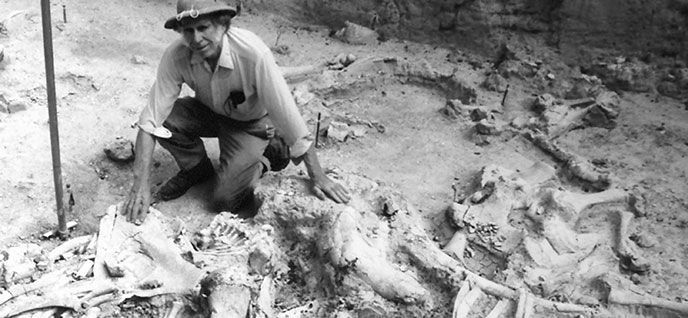
From what Dava told us, Ralph kind of snuck in and continued to dig. This went on until he was given the job. The National Park Service website identifies him as a volunteer, but according to Dava, he was the one-man team that kept things going. He was a retired gym teacher who walked with a cane. She said that everyone assumed it was an old football injury. Actually, it was an injury sustained in a prisoner of war camp during World War II.
Ralph died in 2009 at the age of 87. According to the material I found about his work in the Texas Archeological Society newsletter, he contributed more than 14,000 hours, although the true number is much greater than that as he couldn’t be bother with signing in to get the credit for his work.
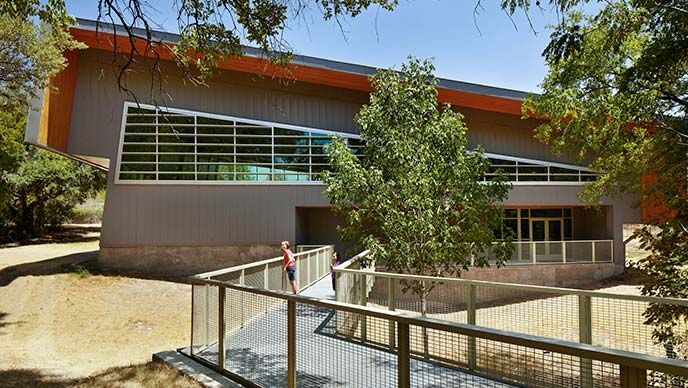
What he discovered is amazing! Those bones are still where he found them inside the building on the other side of the bridge.
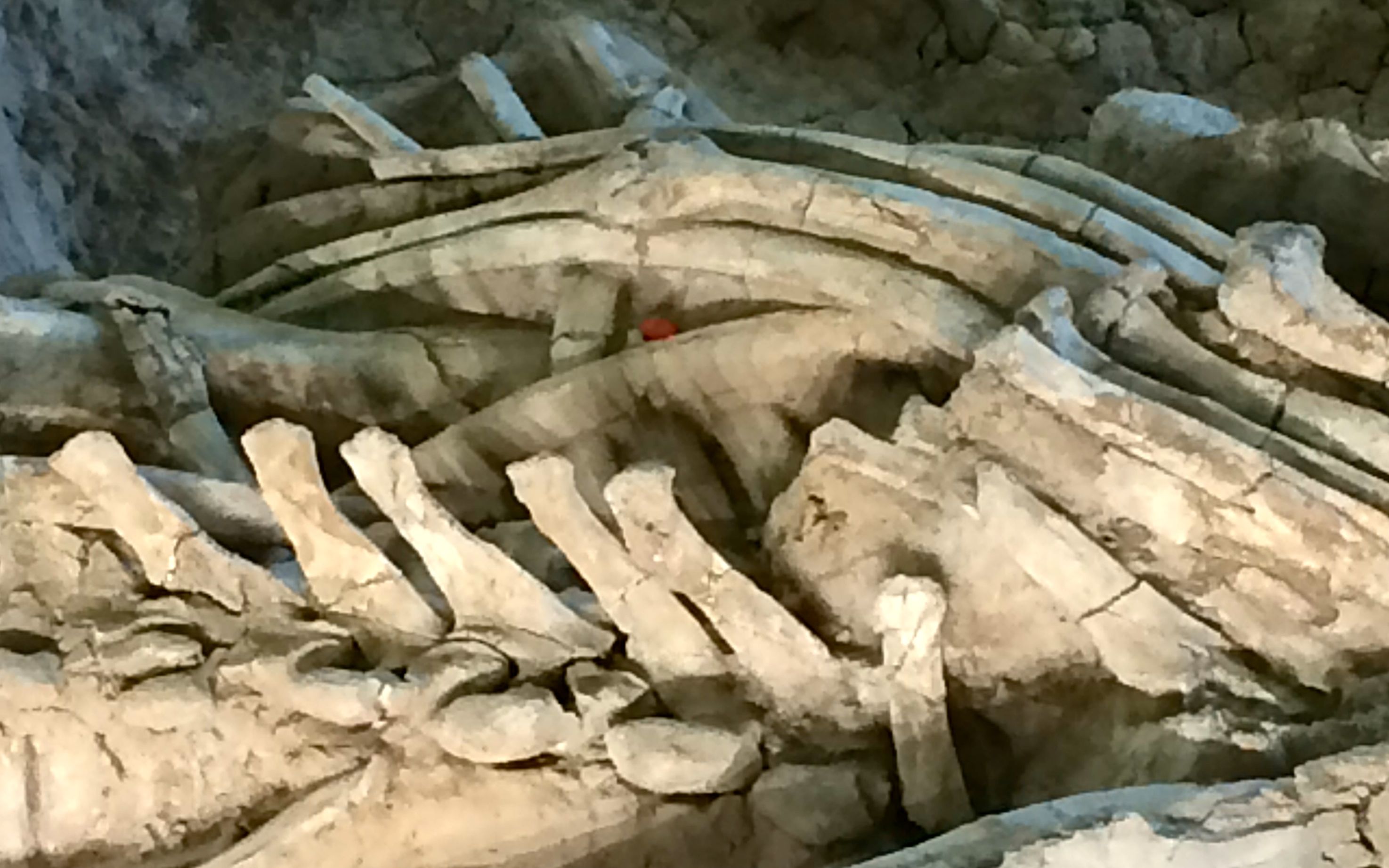
He discovered the bones of a male Columbian Mammoth that they have named Quincy. And, Quincy was one mammoth Mammoth!
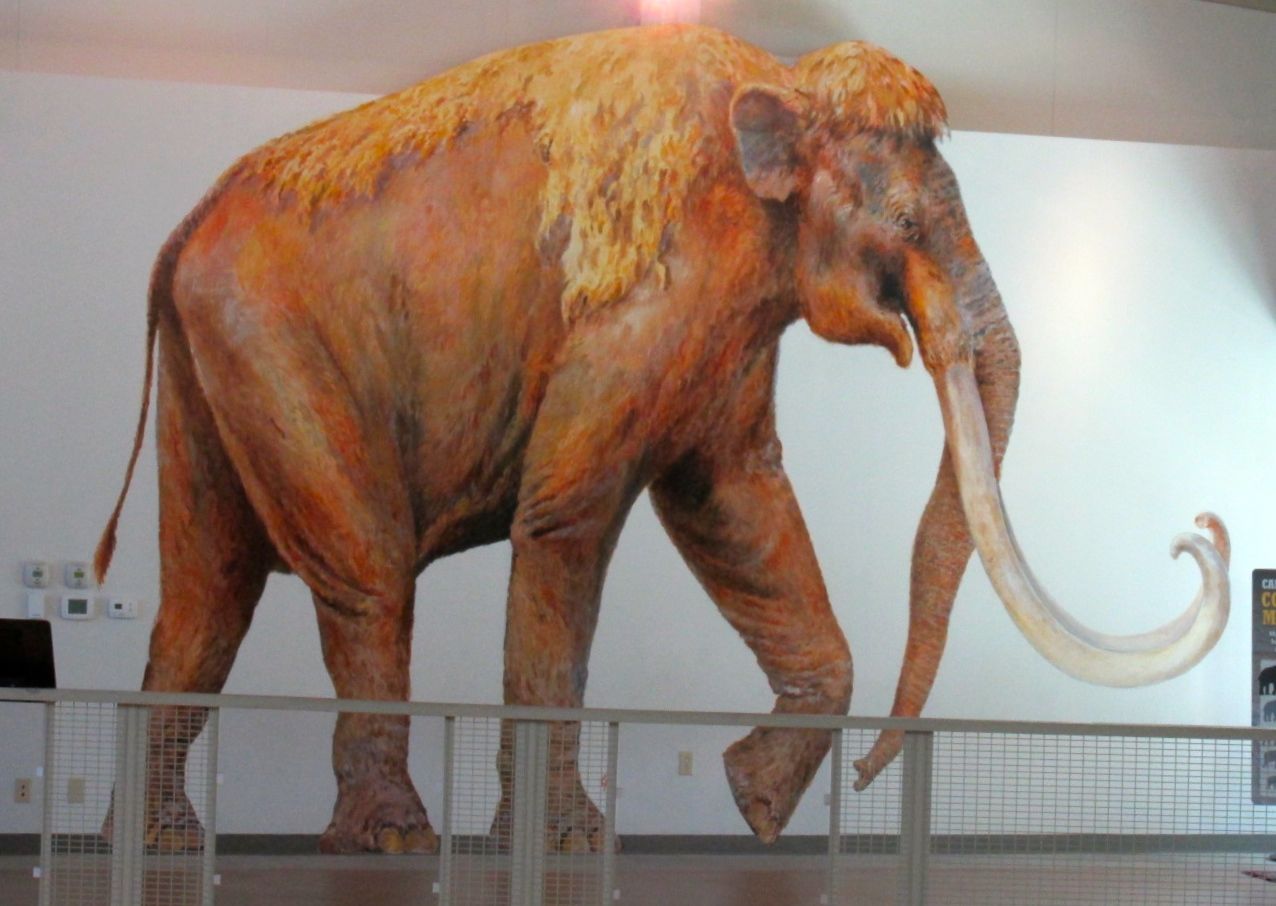
He stood 14 feet tall at the shoulder and they estimate that he would have weighed around 22,000. He was about 50 years old when he died, if I remember correctly.
In comparison, a regular Wooly Mammoth stood around 10 feet at the should and weighed about 10,000. An African elephant stands about 12 feet at the shoulder and weighs about 12,000 pounds and an Asian elephant is about 9 feet tall at the shoulder and weighs about 10,000.
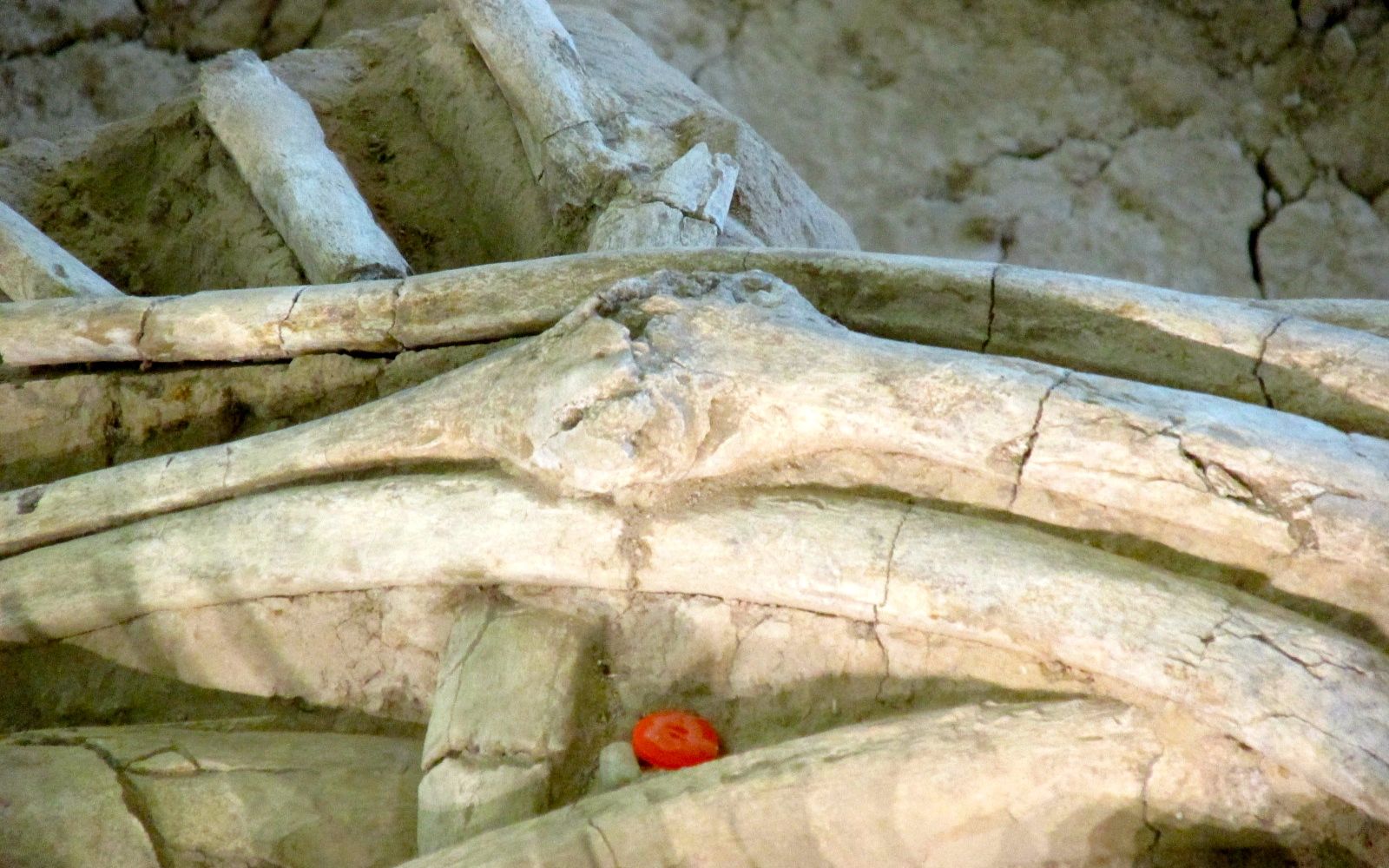
My photo of the painting doesn’t show it clearly, but Quincy had a wound. You can see how the broken rib he got mended in a messy way.
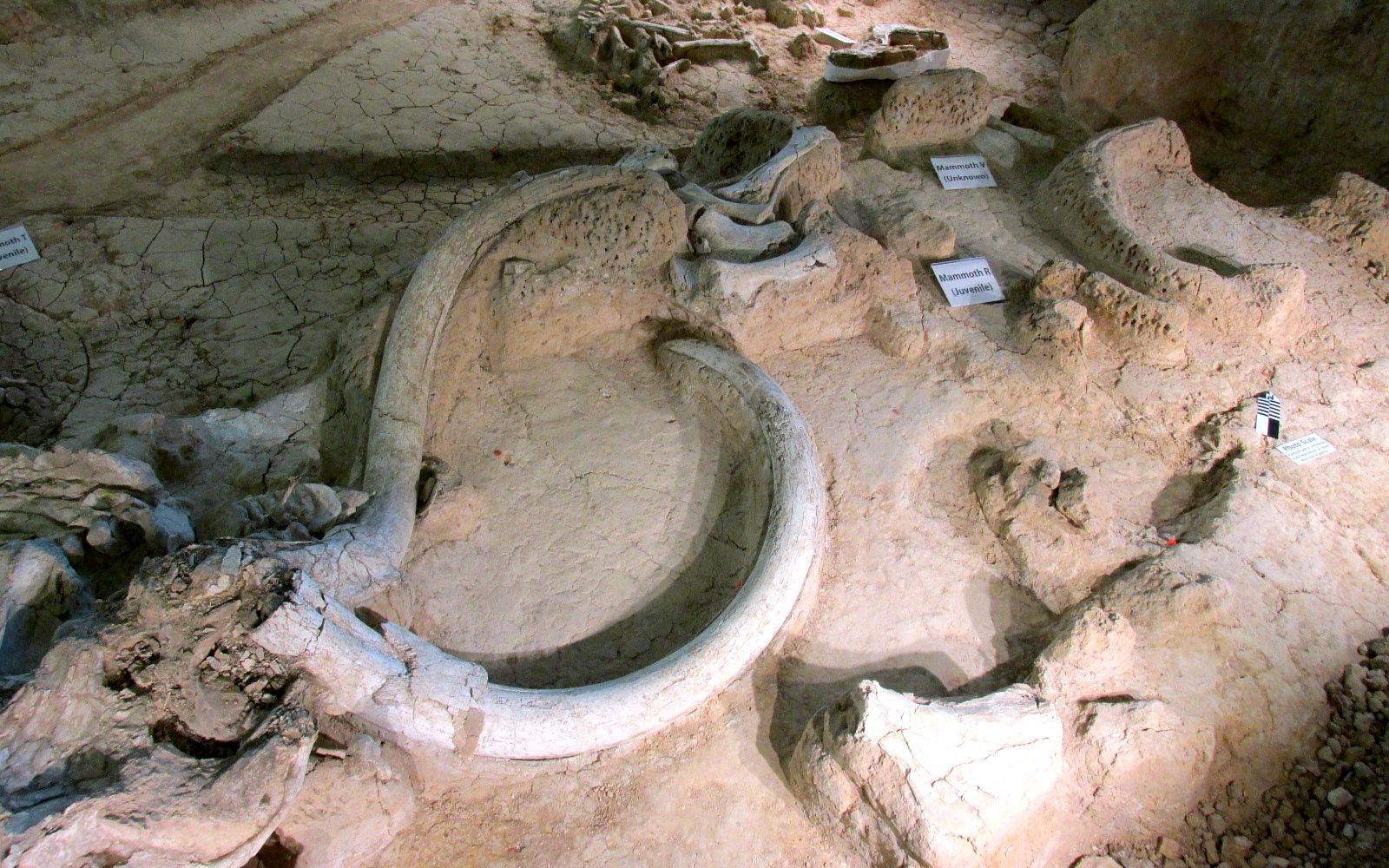
His tusks were enormous!
It appears that Quincy got caught in a mud slide and flood, just like the earlier fossils that were found in the nursery herd formation. I couldn’t get a good photo of it, but his bones were arranged as if he had been pushed over face first from behind.

You can see the layers of mud that flowed over the years and covered over whatever couldn’t get out of the way.
Dava told us that the amazing thing was that a juvenile mammoth was found with Quincy. Male mammoths are always kicked out of the herd, so it was perplexing as to why a young mammoth would have been with him.
The mystery remained for quite a while. After Ralph’s work, a woman named Anita started digging. She found a young female mammoth, about 28 years old, just a little ways in front of Quincy and her baby. Dava told us that Quincy must have put up with the young whippersnapper for the sake of a younger female to mate with.
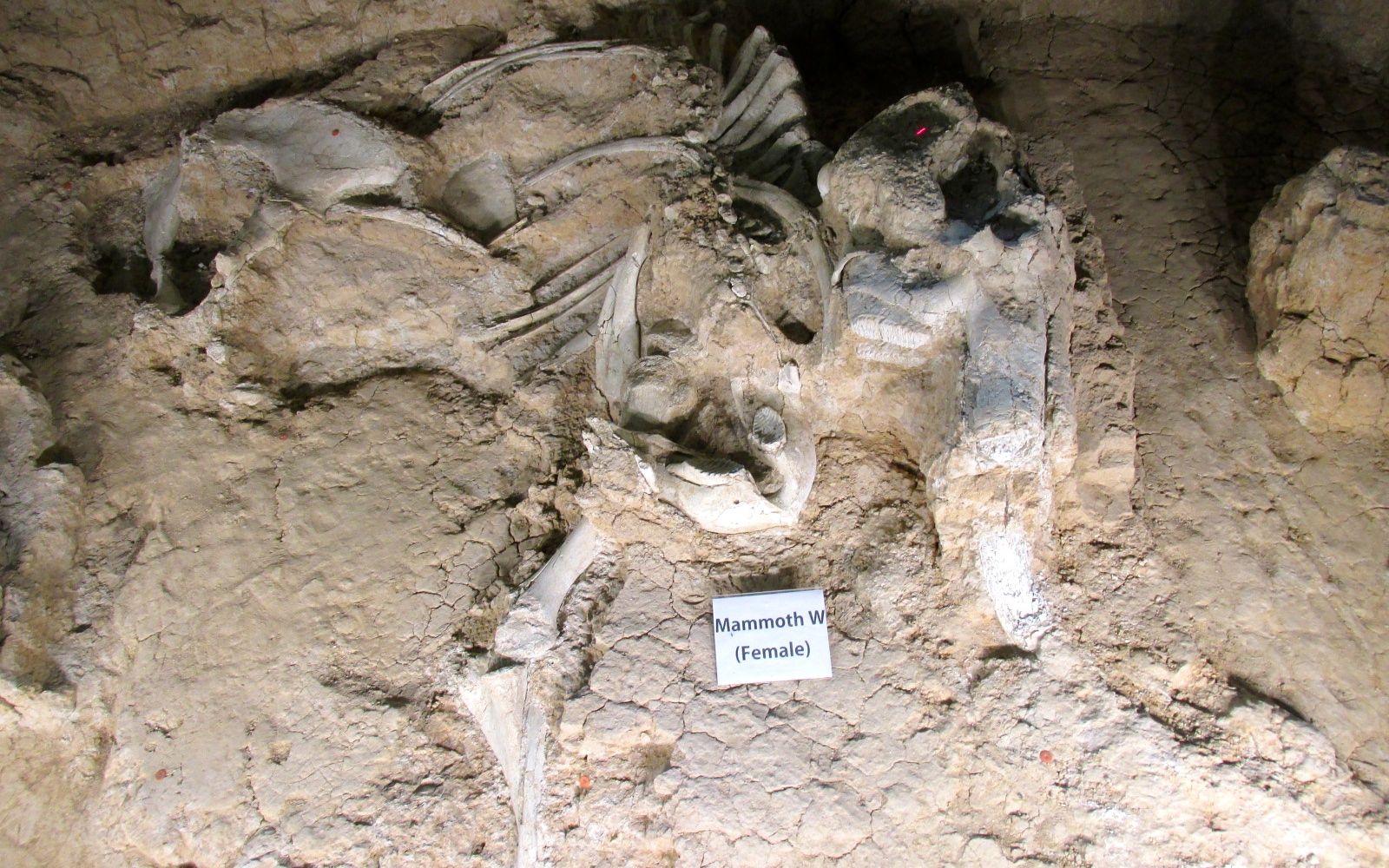
This was the female.
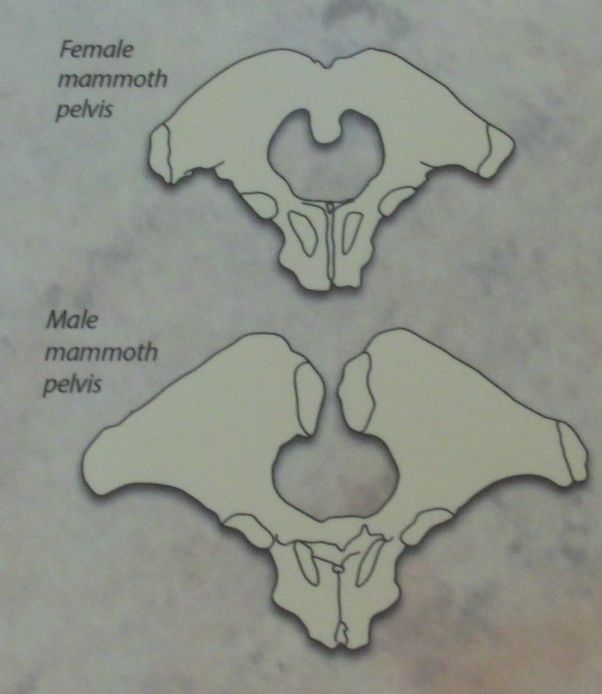
And how do they tell them apart? I can just hear you asking! Well, they can tell male from female by studying the pelvis bones.
In addition to the two dozen or so mammoths, they also found a camel’s bones.
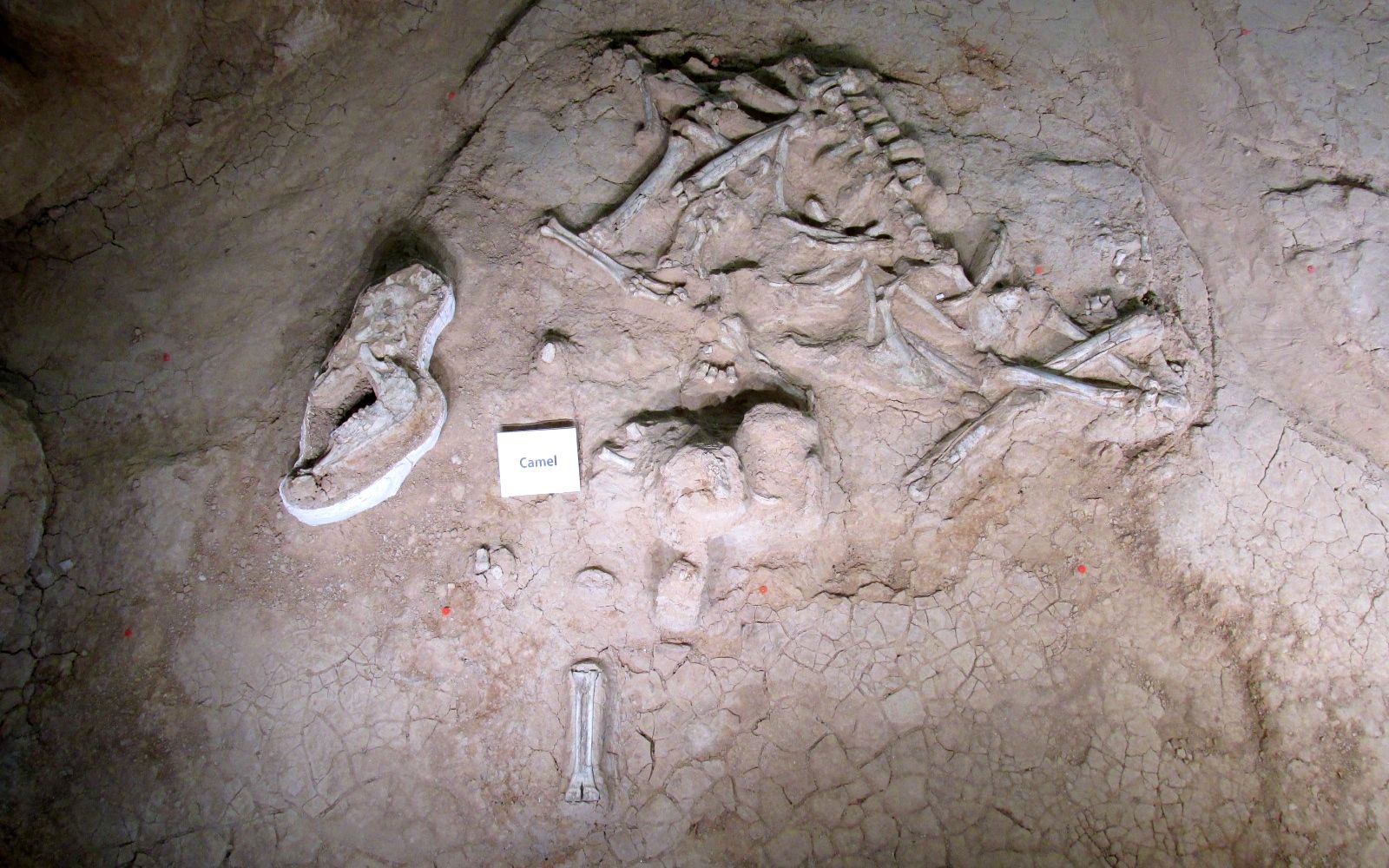
According to Dava, the mammoths liked having camels around because they were like watchdogs. Being smaller and more nimble, they could sense danger that the mammoths couldn’t.
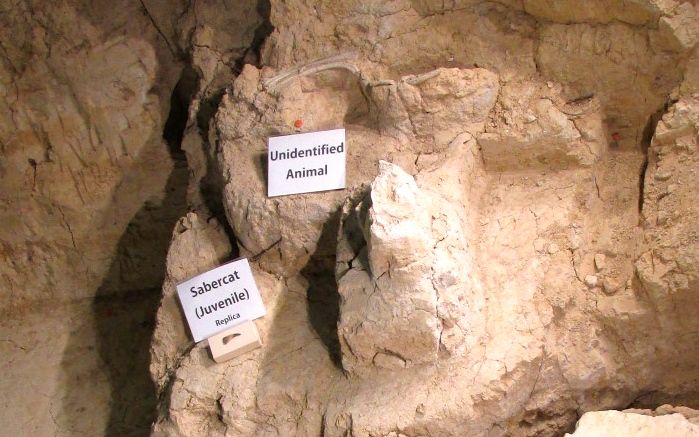
Some of the things they have found they aren’t able to identify, like the bones of the creature they have labeled as “Unidentified Animal.” Right in that same spot, they have found a tooth from a juvenile Sabercat. Dava’s specialty is teeth, and she says that it is extremely rare to find such a tooth. When they are from juveniles, they tend to disintegrate quickly.
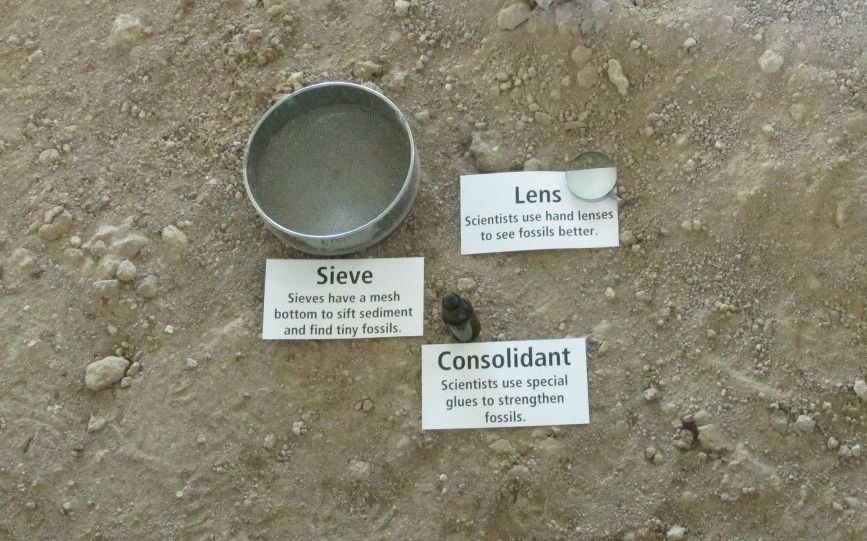
All of this earth was moved a little bit at a time.
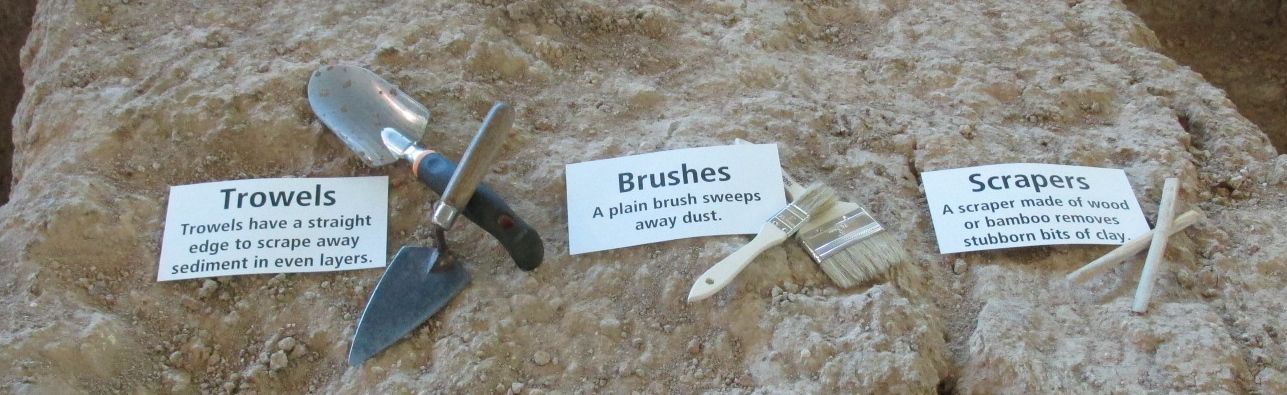
They never knew what they might find, so they had to work carefully.
Dava pointed out a large mound of earth at the far side of the enclosure.
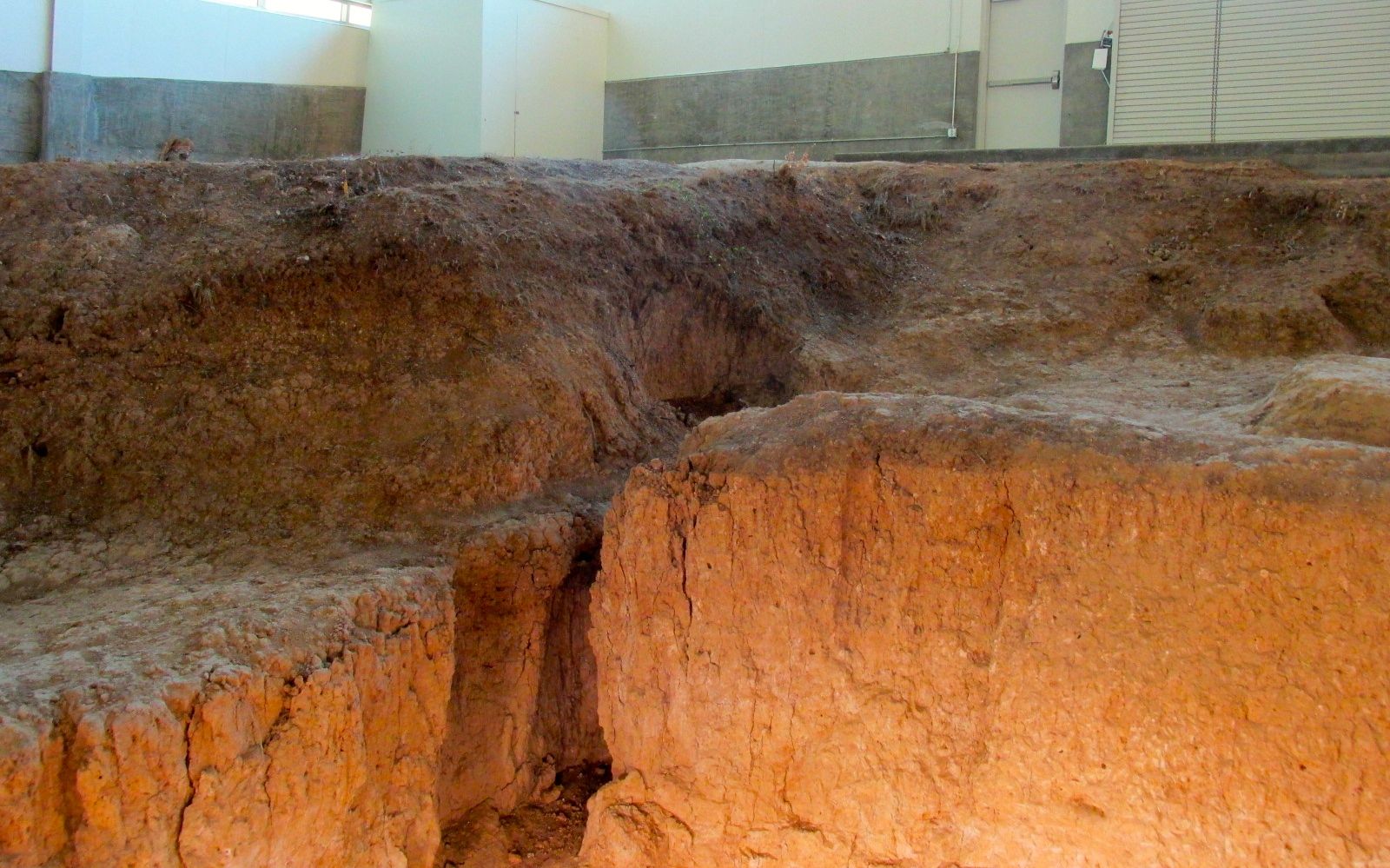
She told us that it was Ralph’s final gift. He knew that the soil was full of clues to the past – micro-fossils, pollen, and so on. He carefully piled up the soil he excavated so that future scientists would be able to study it.
It was a good visit, and well worth the price of admission.
I returned to BART and Flo and prepared to leave. Much to my surprise, I had parked under the mistletoe!
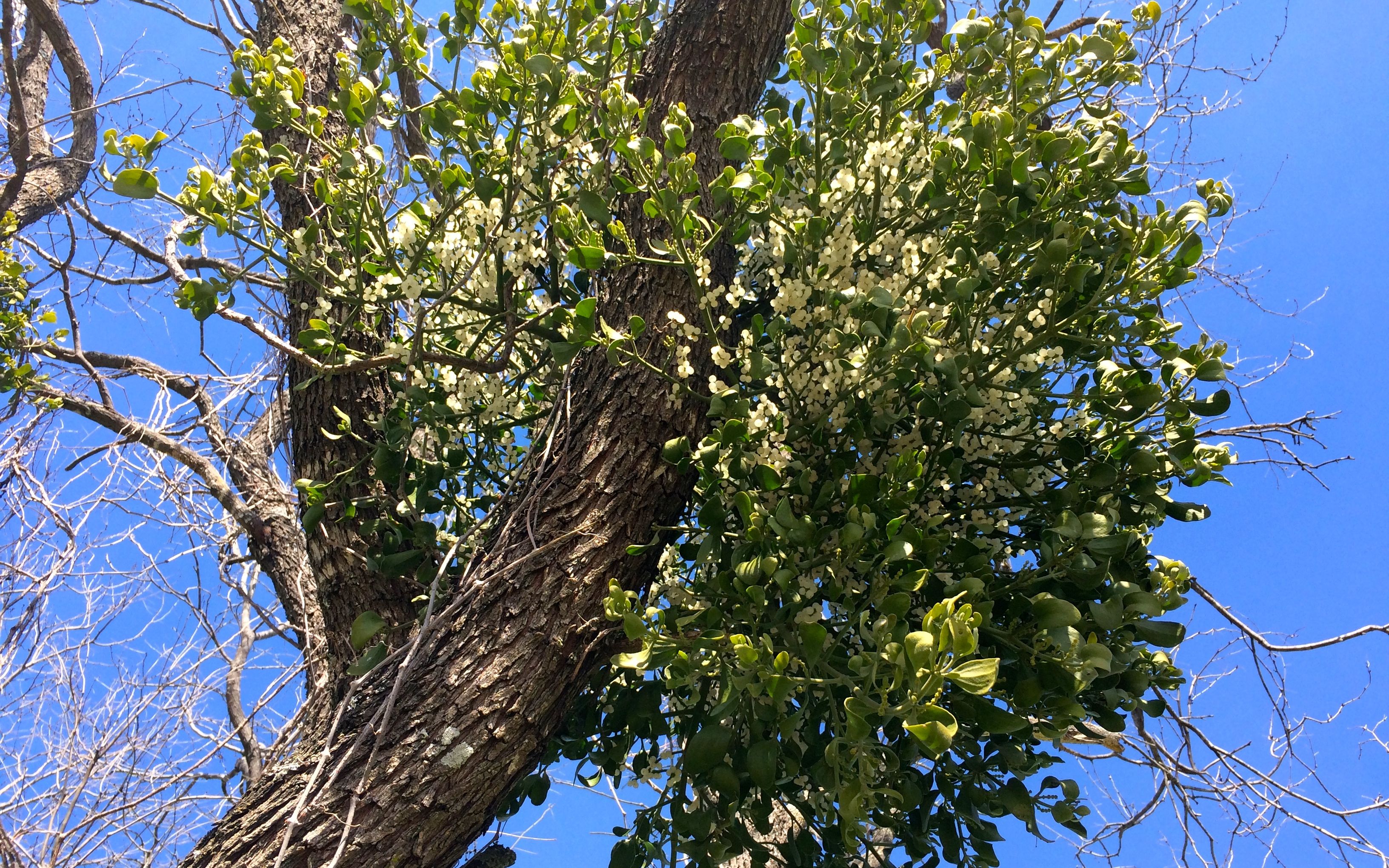
And so, I give Waco a kiss goodbye. I hope to return some day.