With everything loaded up, I was ready to set out. I headed north on I-35 to Cameron, Missouri and then headed east on U.S. 35.
A Facebook acquaintance once mentioned a game she likes to play with her husband when they go out for drives. When they see a “brown sign” for an attraction, they pull off and check it out. I saw a sign for the Walt Disney Hometown Museum and I thought that was worth a visit.
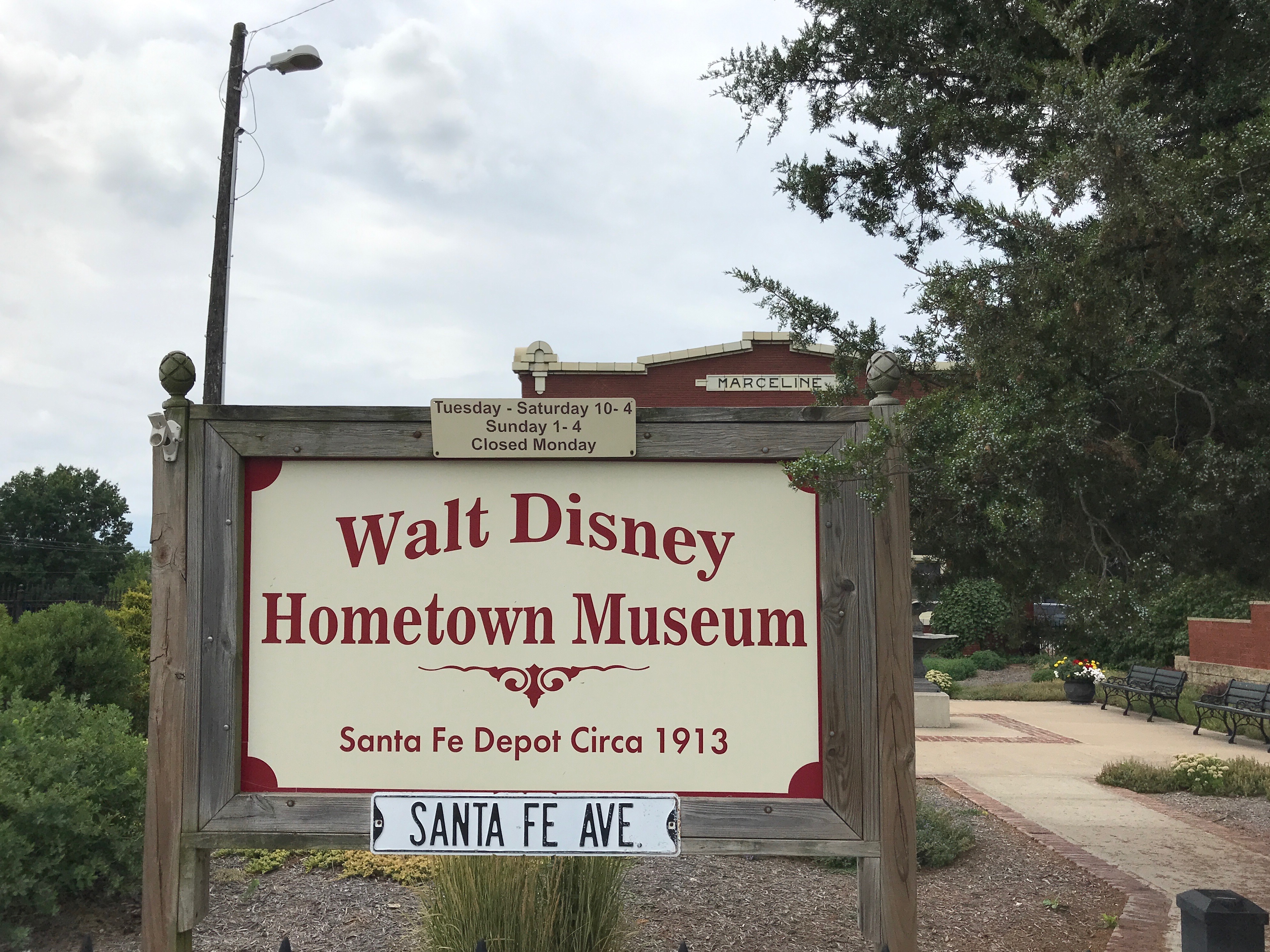
I actually showed up on a day that it was open, but I didn’t want to take the time to tour it. (Which means, there was an admission charge.)
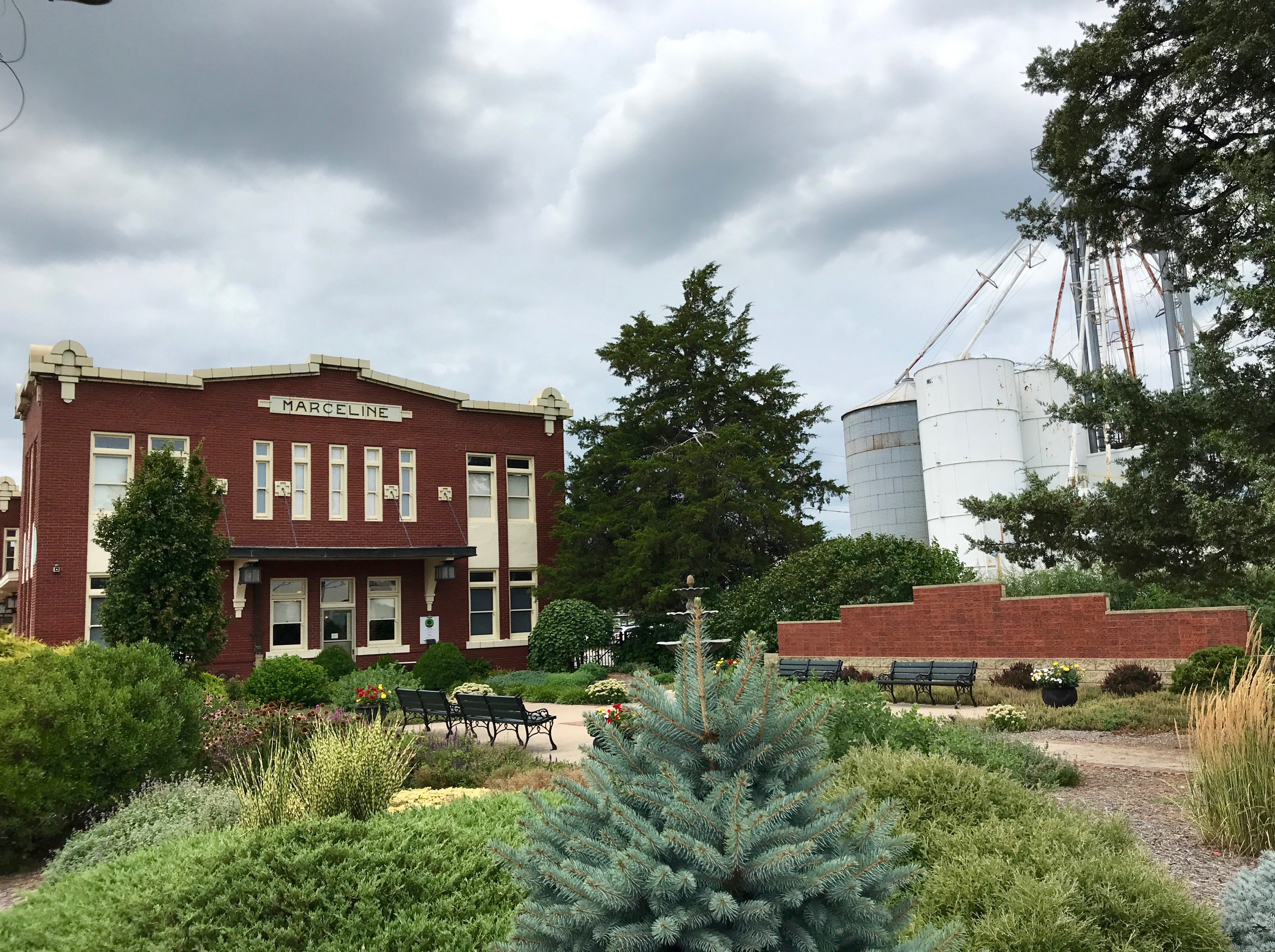
That didn’t stop me from looking around. The museum is located in the restored Santa Fe Railroad Depot.
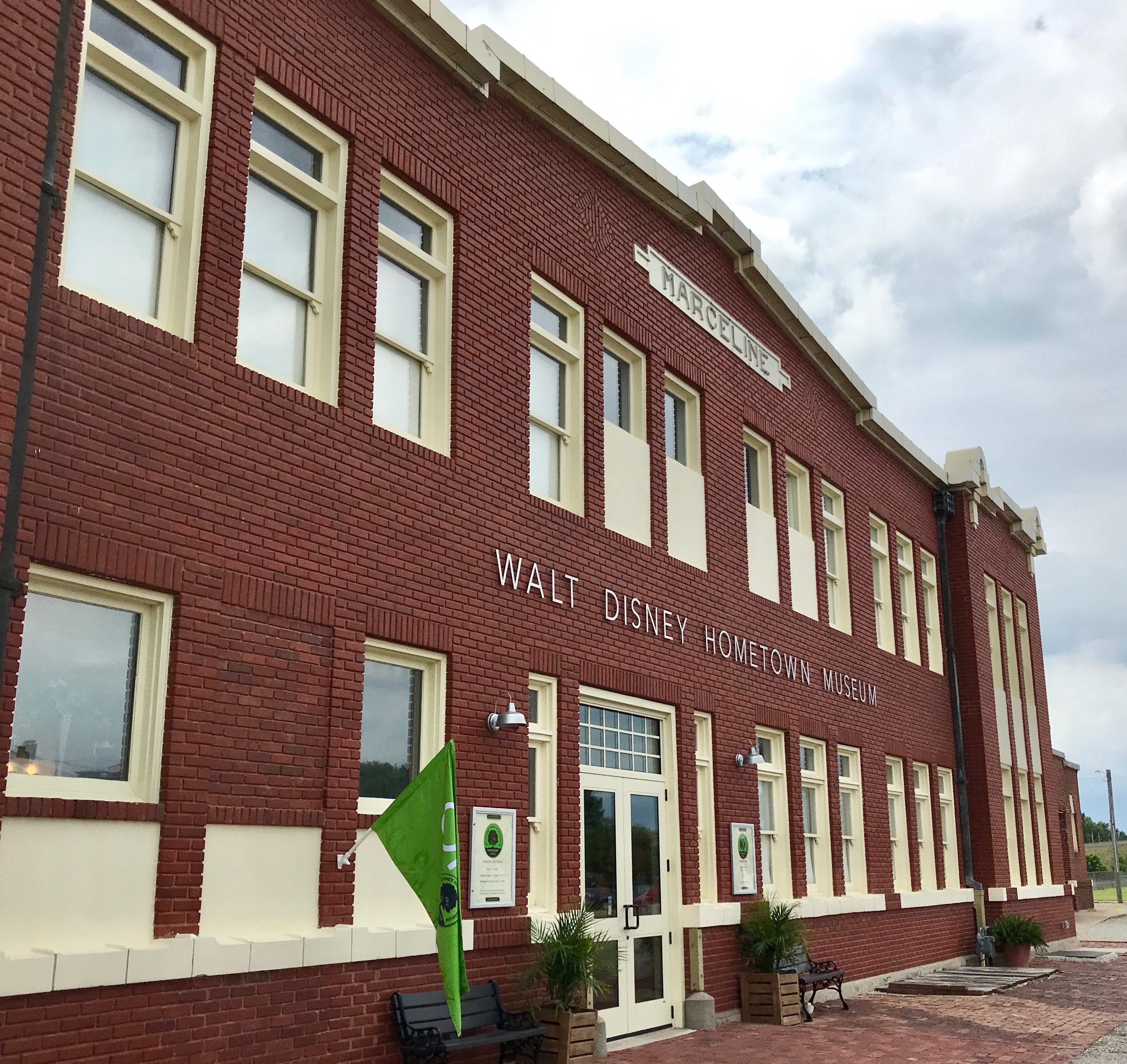
According to my Preferred Source, the museum opened in 2001 and it houses a collection of memorabilia from the Disney Family’s farm from 1905 – 1909. Many of the items were donated by the family of Ruth Flora Disney Beecher, Walt’s sister. Artifacts include personal family letters and photos, Disney’s wooden school desk and a recording of him asking his parents about their life.
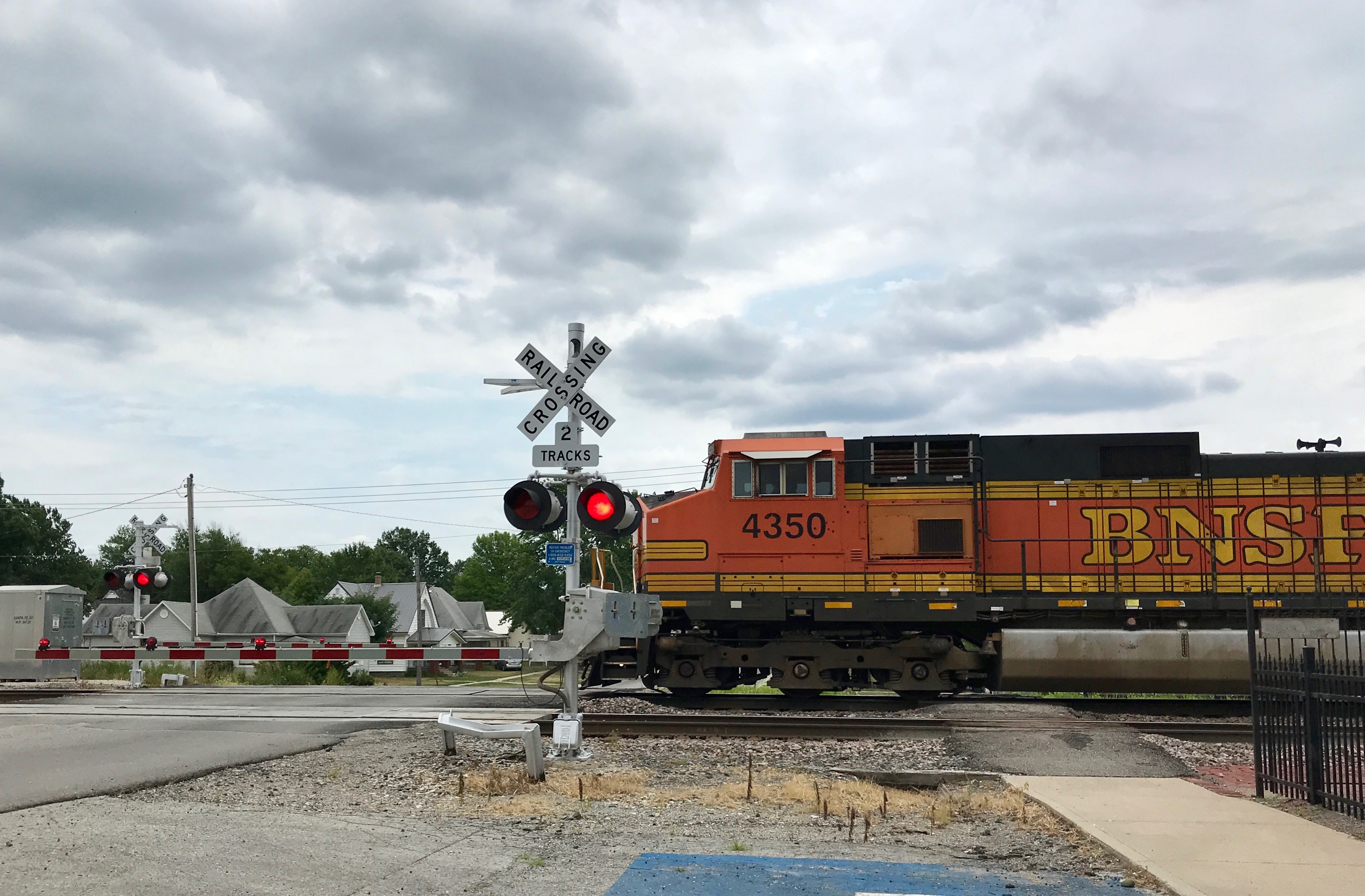
As I was getting ready to head on my way, I heard the railroad crossing bells start clanging, and I headed over to see if I could catch a photo of the locomotive.
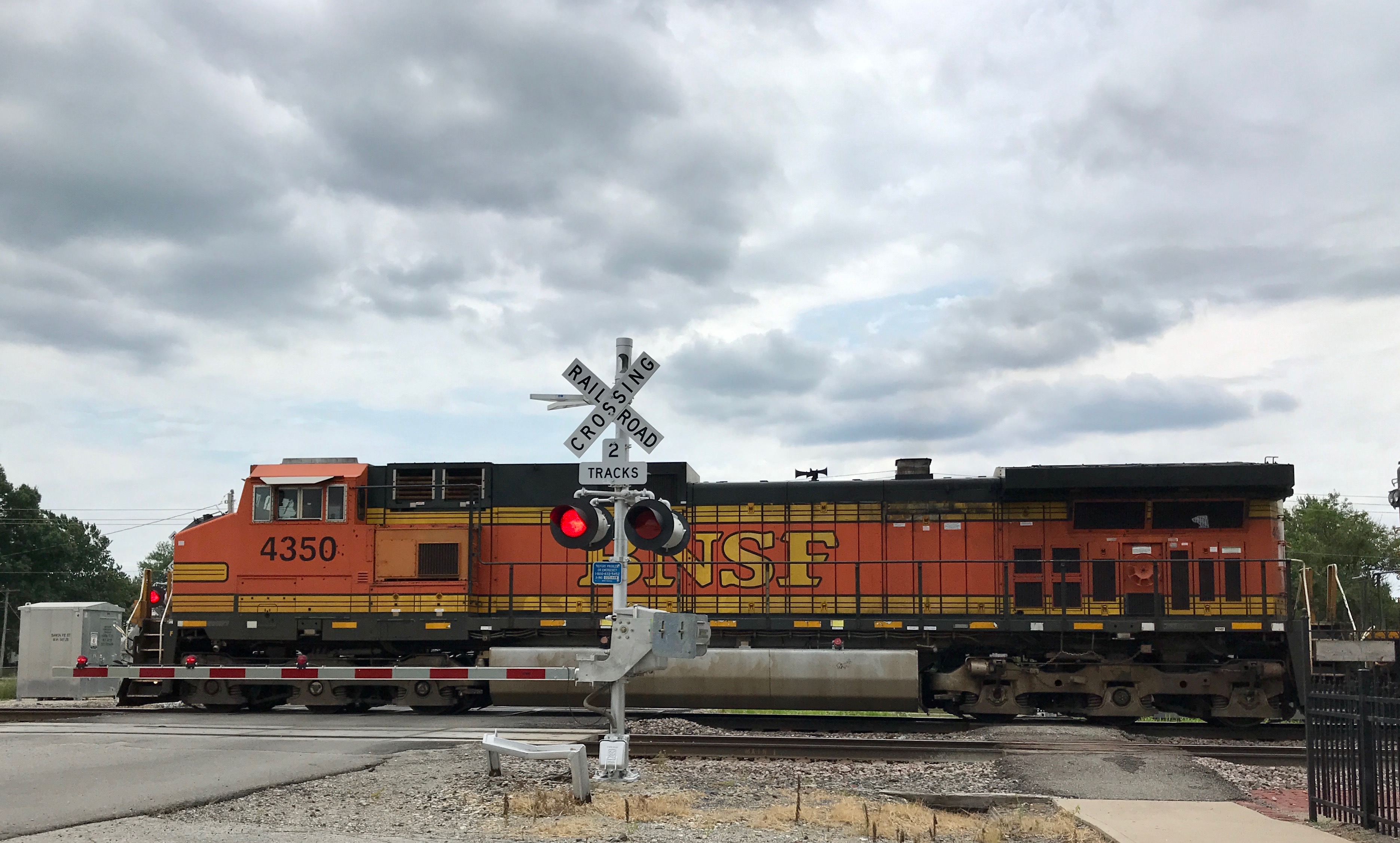
I managed to snap two!
With that, it was time to head out. My next brown sign was for the J.H,Hawes Grain Elevator and Agriculture Museum in Aurora, Illinois.
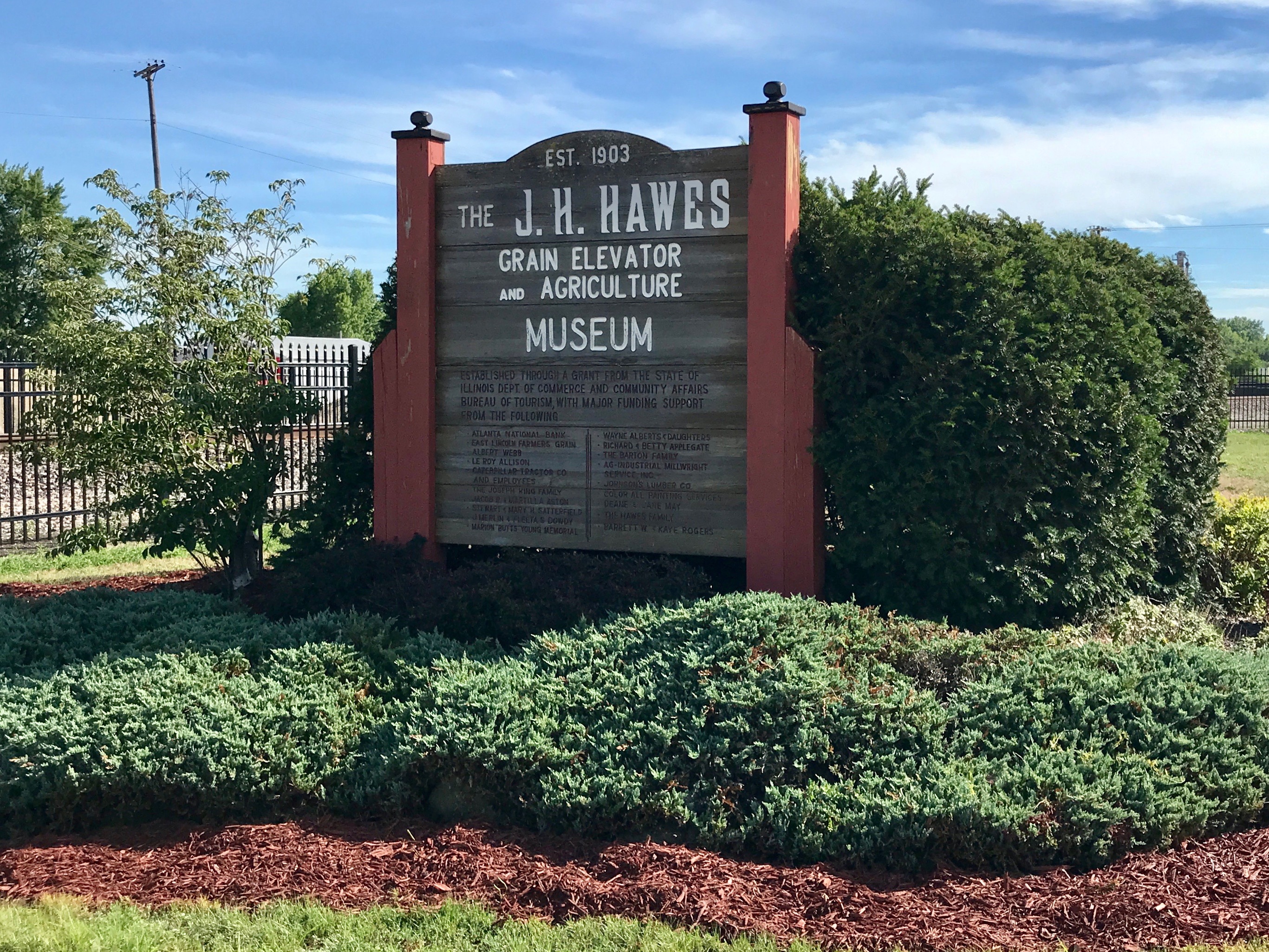
The historic grain elevator, which is on the National Register of Historic Places, was built in 1903 and was in use until 1975.
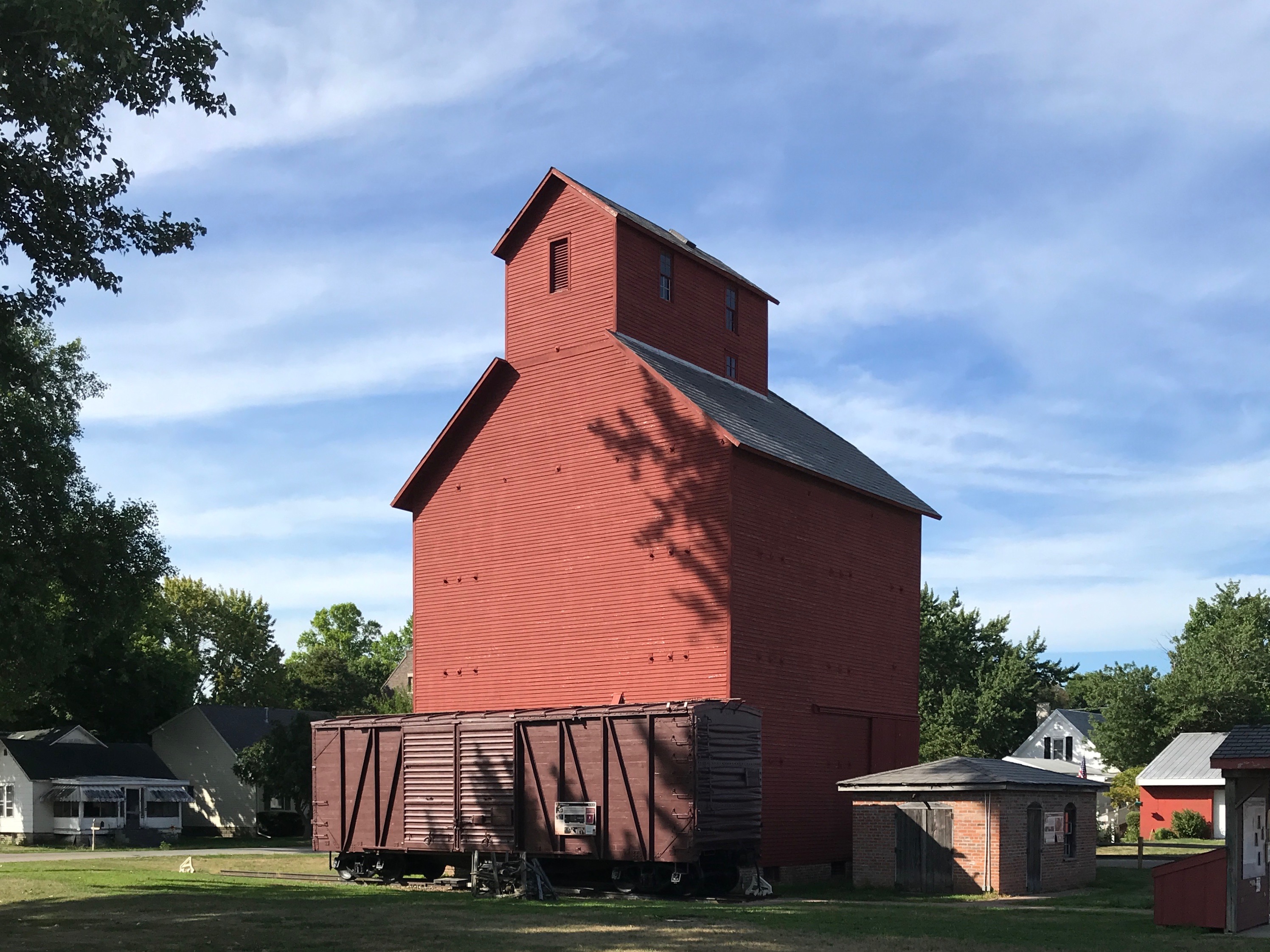
Unfortunately, it was closed, but they had some excellent interpretive signs around the museum.
For instance, that small brick building to the side is the engine house. There is a conveyor belt that lifts grain up to one of the storage bins. Originally it was powered by a steam engine. That one was replaced in the 1920s with a gas engine.
The engine house is made of brick as a fire prevention method. Grain elevators raise a lot of dust, which is combustible. It was wise to house the engine and any sparks it might emit in a separate, fireproof brick building.
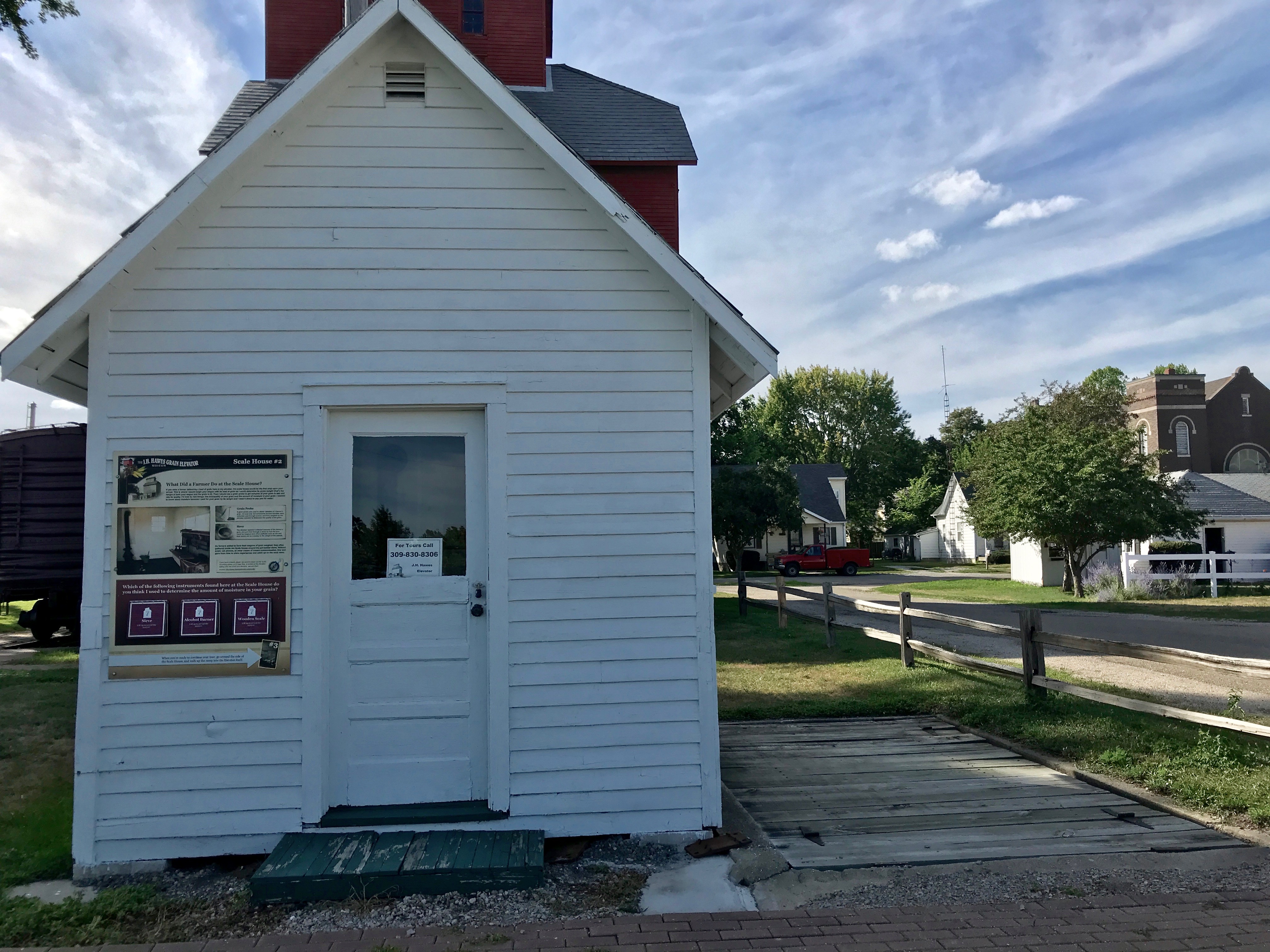
When a farmer brings in a load of grain, the first stop is at the scale house. They weigh the scale loaded and then again after the load is dumped.
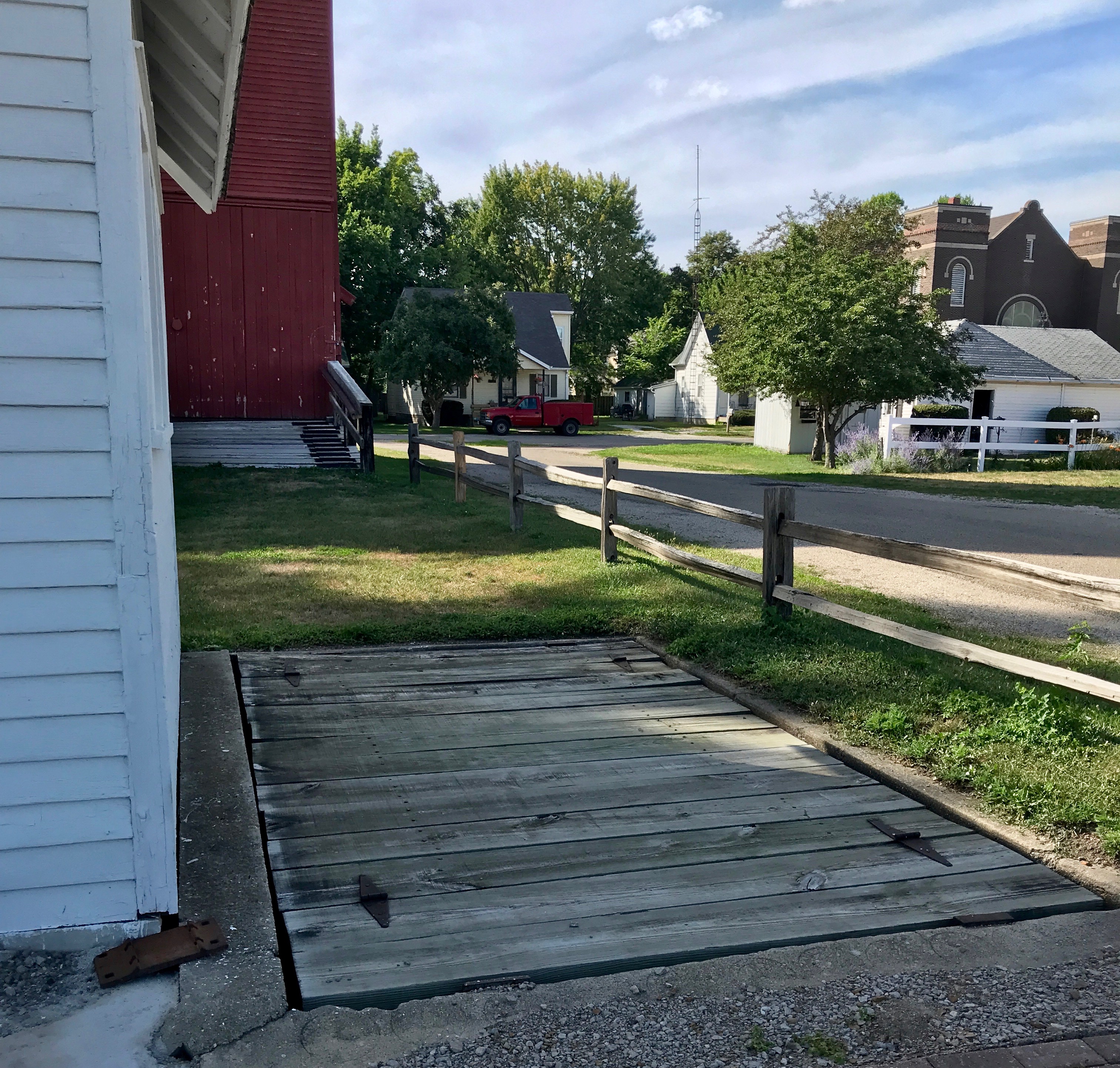
They still do the same things, but the equipment has changed.
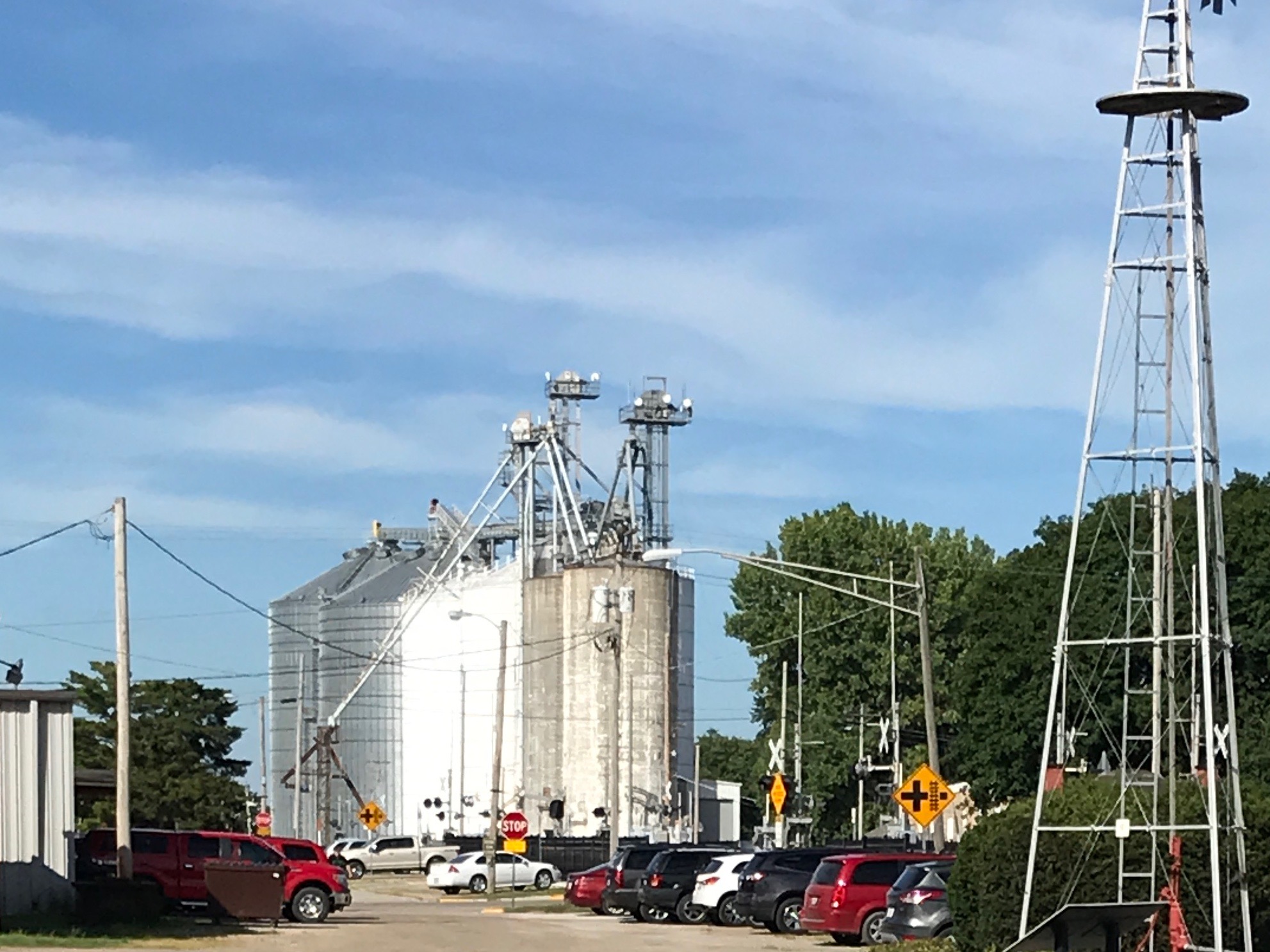
The windmill certainly brought a lot of changes to agriculture.
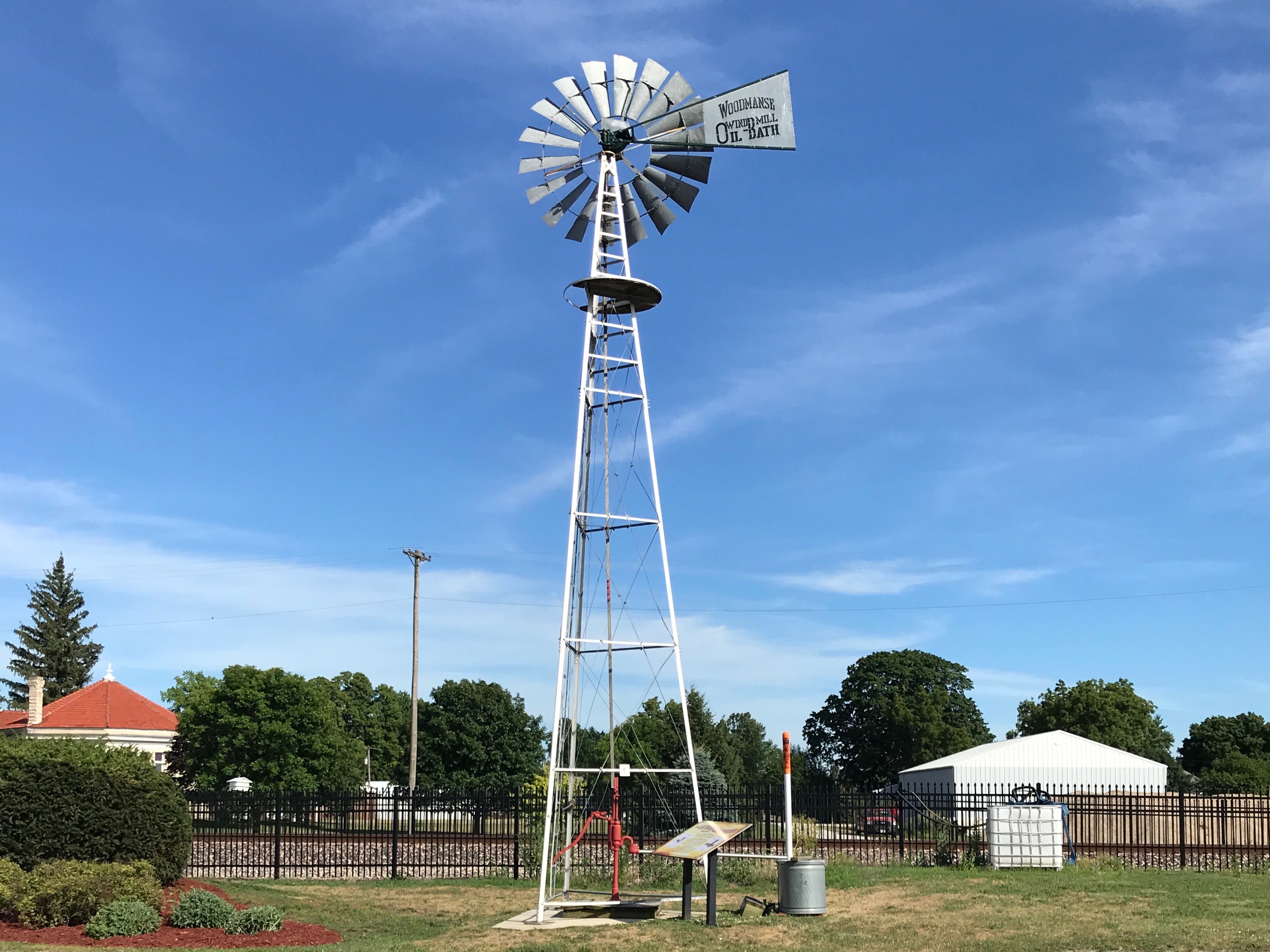
I have no more to say about windmills at this time. I’ve written about them before. I had to be moving along. But, before I leave Atlanta, I need to check out the interesting building with the read roof.
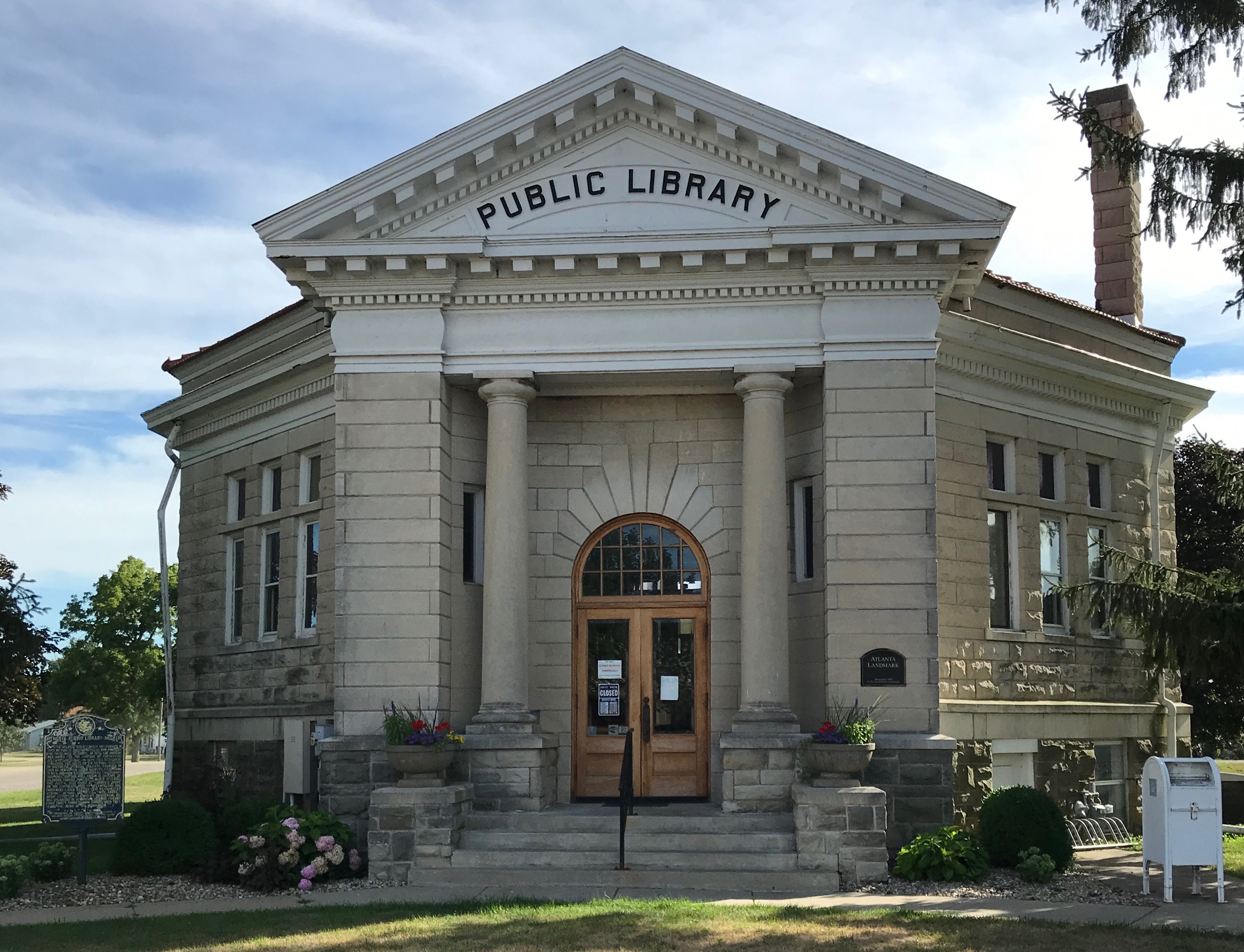
The library was built in 1908. The building combines Neoclassical features on an octagonal floor plan. According to the plaque at the library, the library was founded by “public spirited citizens who realized the importance of books.”
They added a museum to the library for the purpose of preserving the city’s heritage. Atlanta was founded in 1853, although it was originally called Xenia. It had Logan county’s first bank. Abraham Lincoln travels throughout the area and was well known by several of Atlanta’s pioneer families. Lincoln attended the July 4, 1859 picnic and was presented with a gold-handled cane. In 1860, the first “Wide Awake” group that was supportive of Lincoln’s presidential bid was organized in here. His friends in Atlanta fired thirty-three cannon rounds when they heard the news of his nomination.
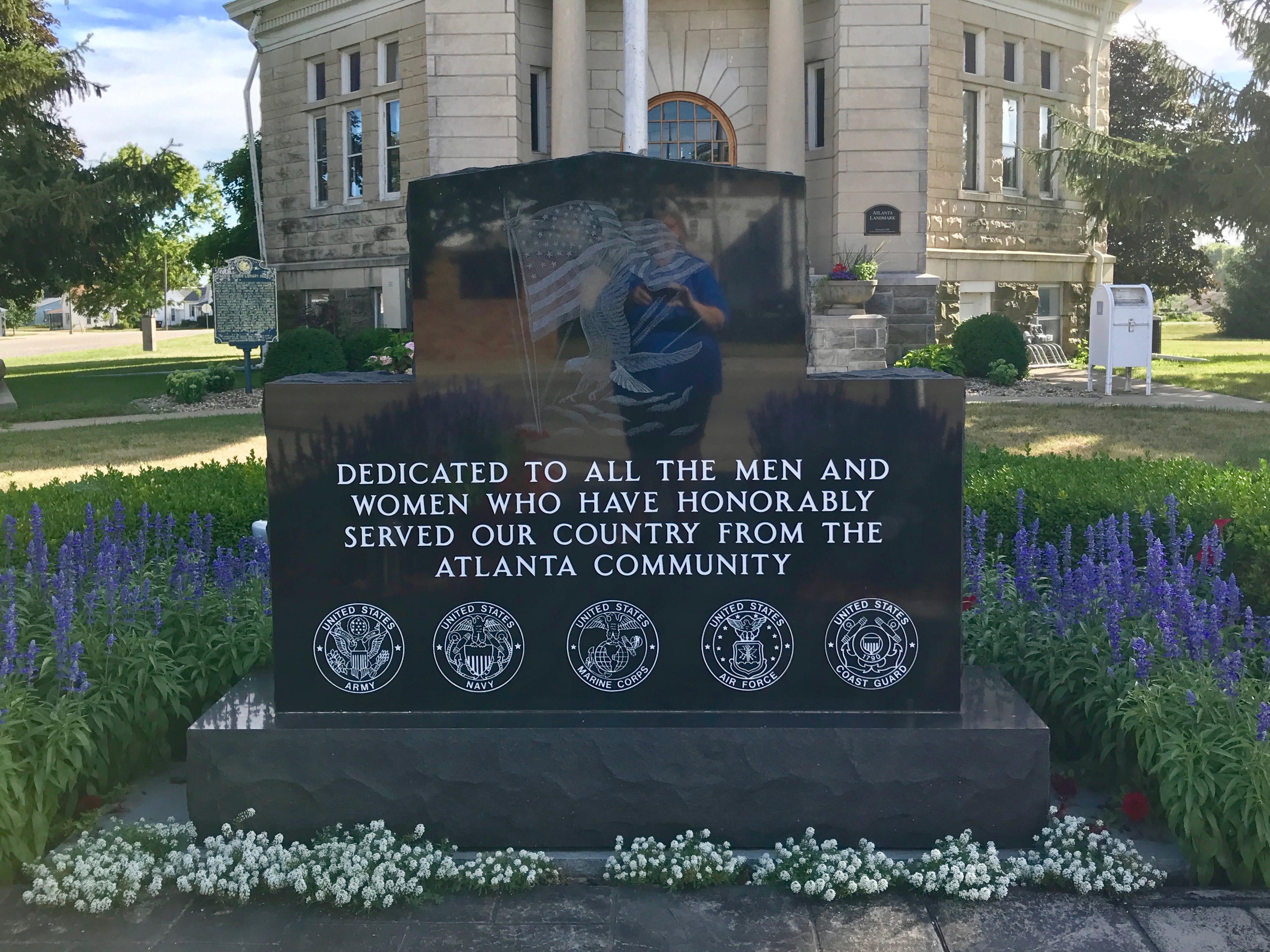
I like this approach to honoring people who serve. It always makes me sad when I see memorials that have extra space for the “next wars.”
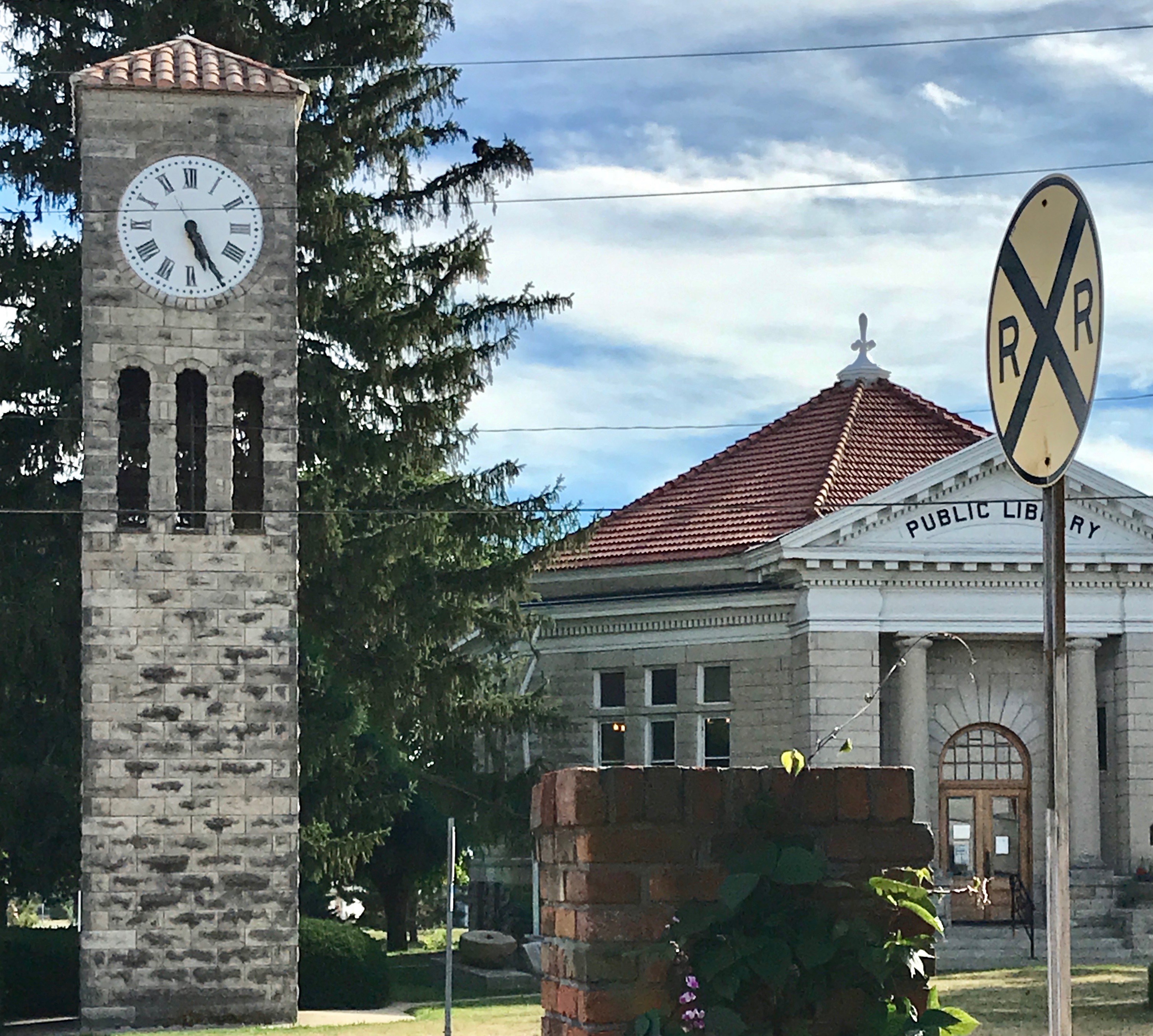
The Library is also graced with a 36 foot tall clock tower. The clock was originally located in the Atlantic High School building. The clock is a 1909 Seth Thomas clock that was installed in the high school thanks to “generous contributions from the citizens of Atlanta and former students of the school.”
According to the sign by the clock tower, when the 1909 Atlanta High School building was to be razed in 1979, concerned citizens began a “Save the Clock” fundraising campaign. Through various funding sources, the clock tower was completed in 1982.
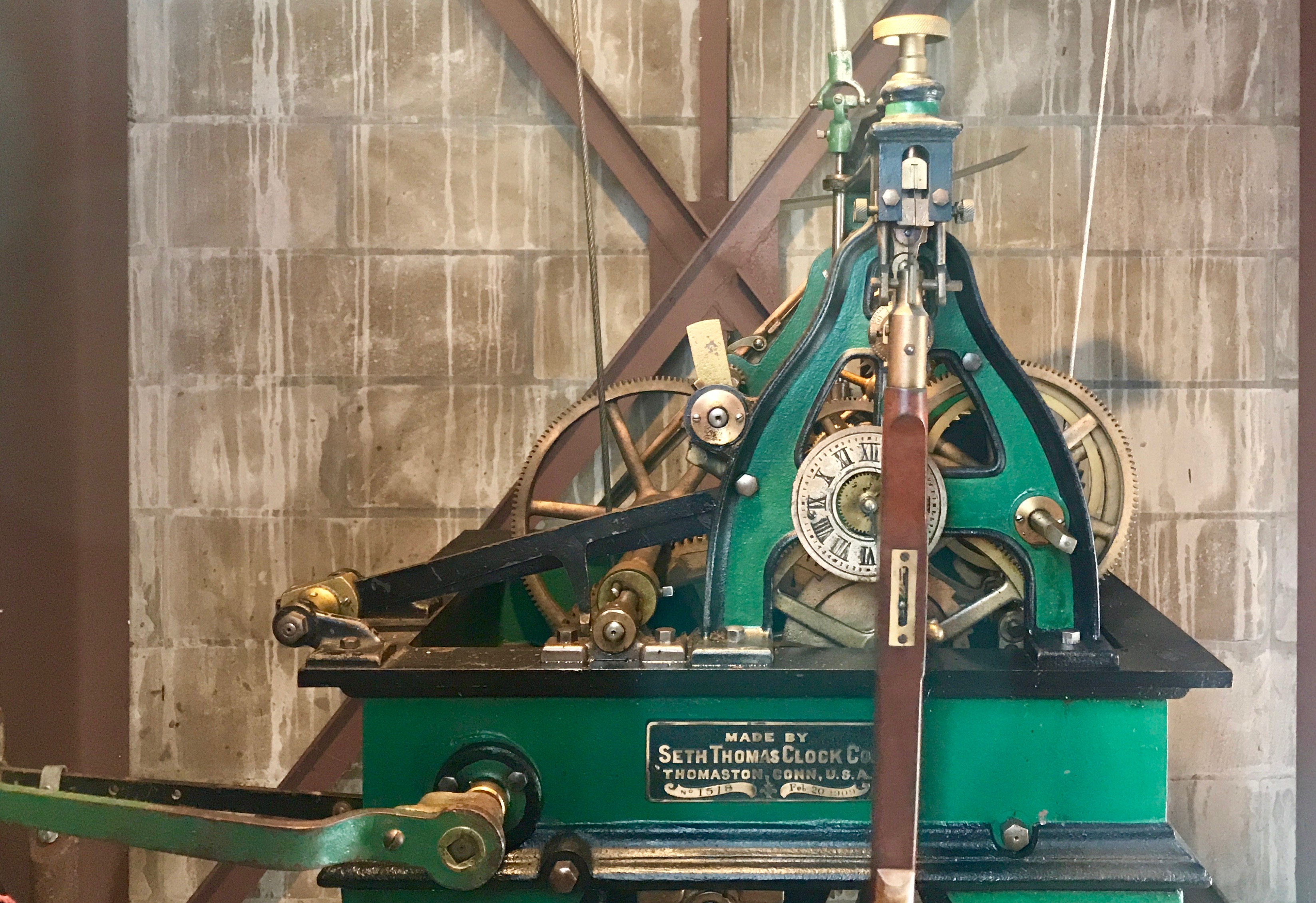
Today, eleven “Keepers of the Clock, who live or work in Atlanta, take turns keeping the clock in operation by hand-winding it approximately 55 turns, three times a week.
The clock’s 36-inch brass bell, weighing 1,200 pounds, sounds on the hour. Unfortunately, this was “drive-by tourism,” so I didn’t get the chance to hear it.
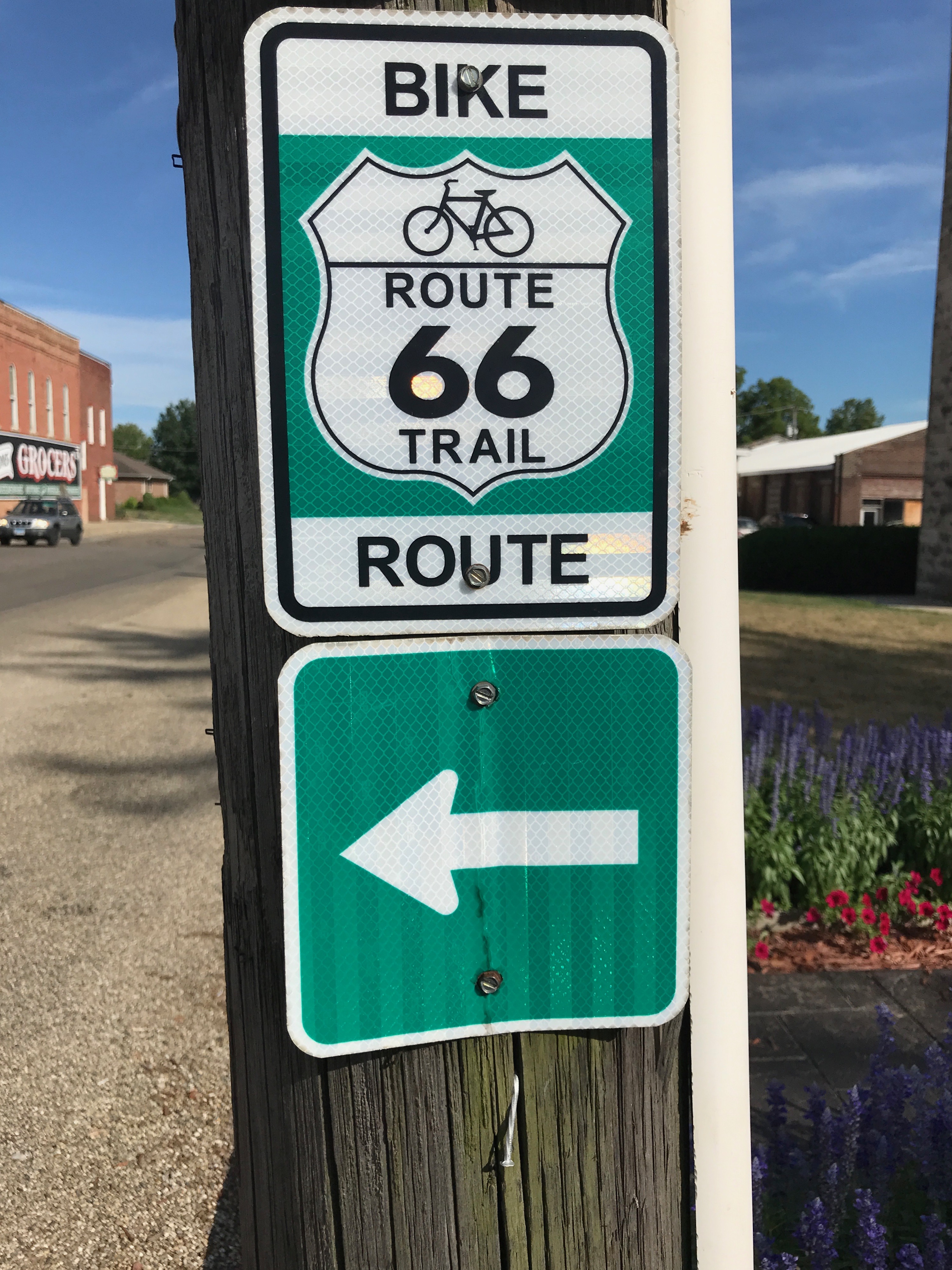
Huh. Who knew that there was a Route 66 bike trail? Not me.
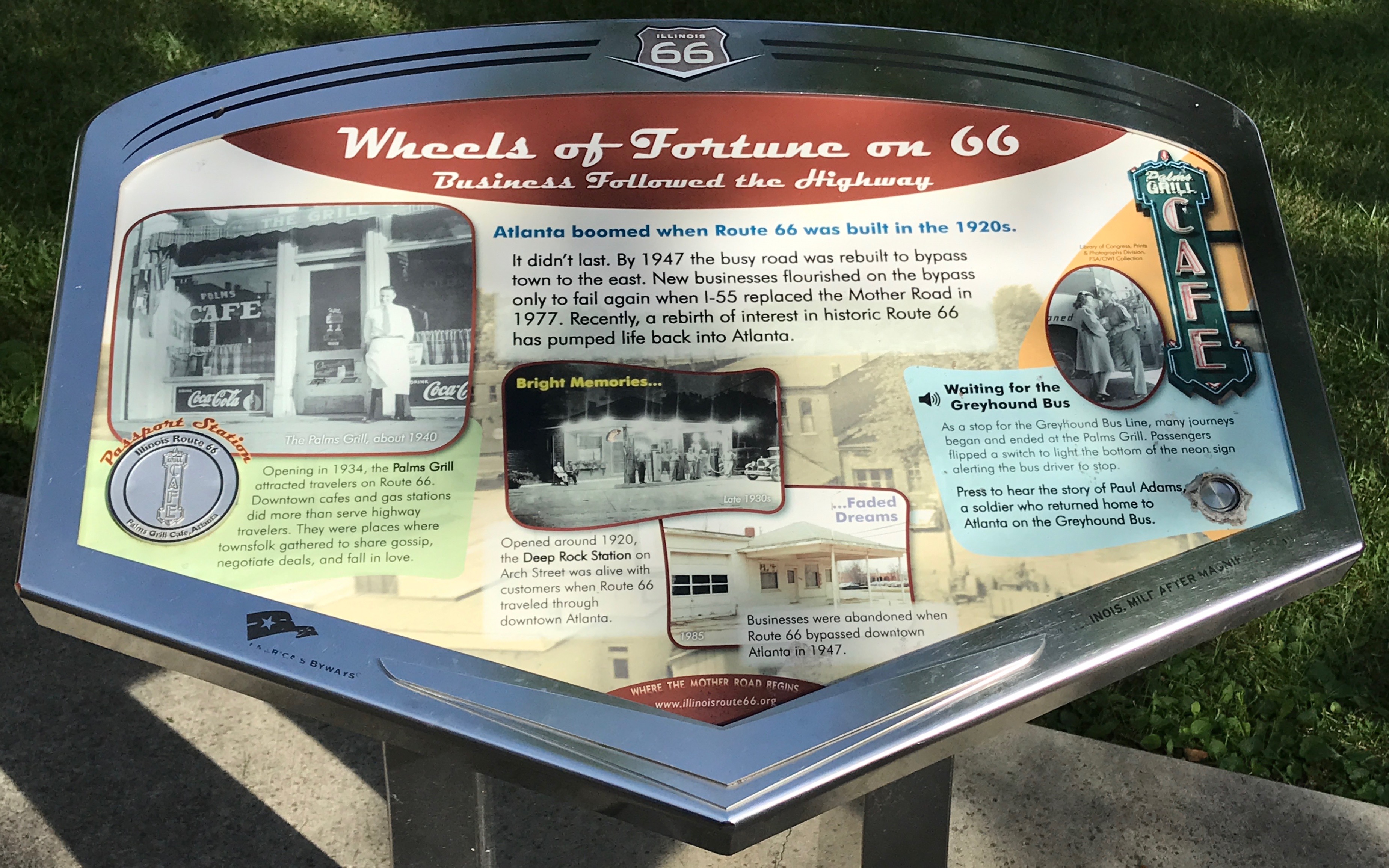
Speaking of driving, Atlanta was on Route 66 for a while. Businesses flourished for a while, but then the route was changed and I-55 pulled the business away. Atlanta is ready to take advantage of he renewed interest in Route 66 – the Mother Road.
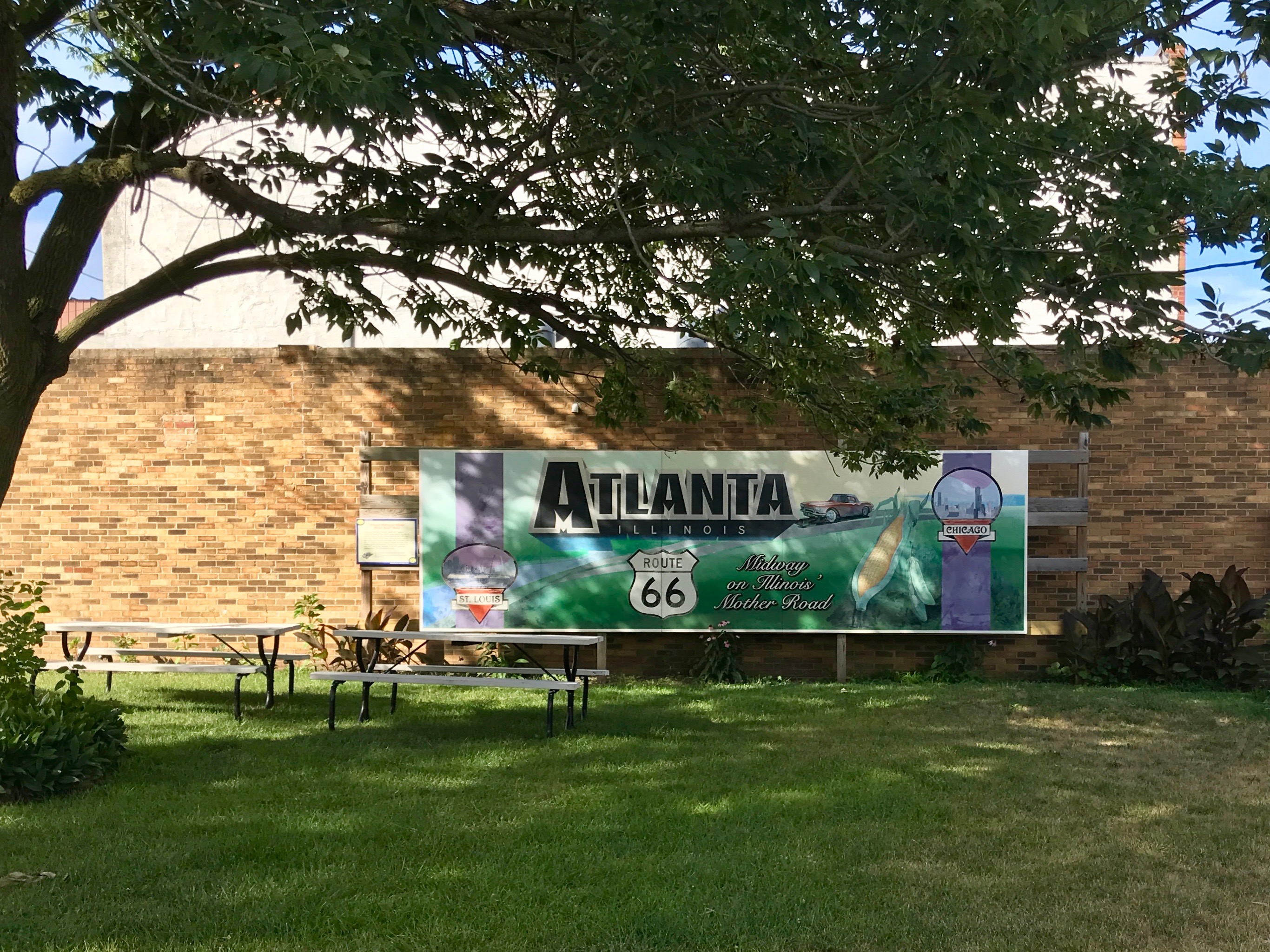
Atlanta is the midway point on the Illinois portion of Route 66.
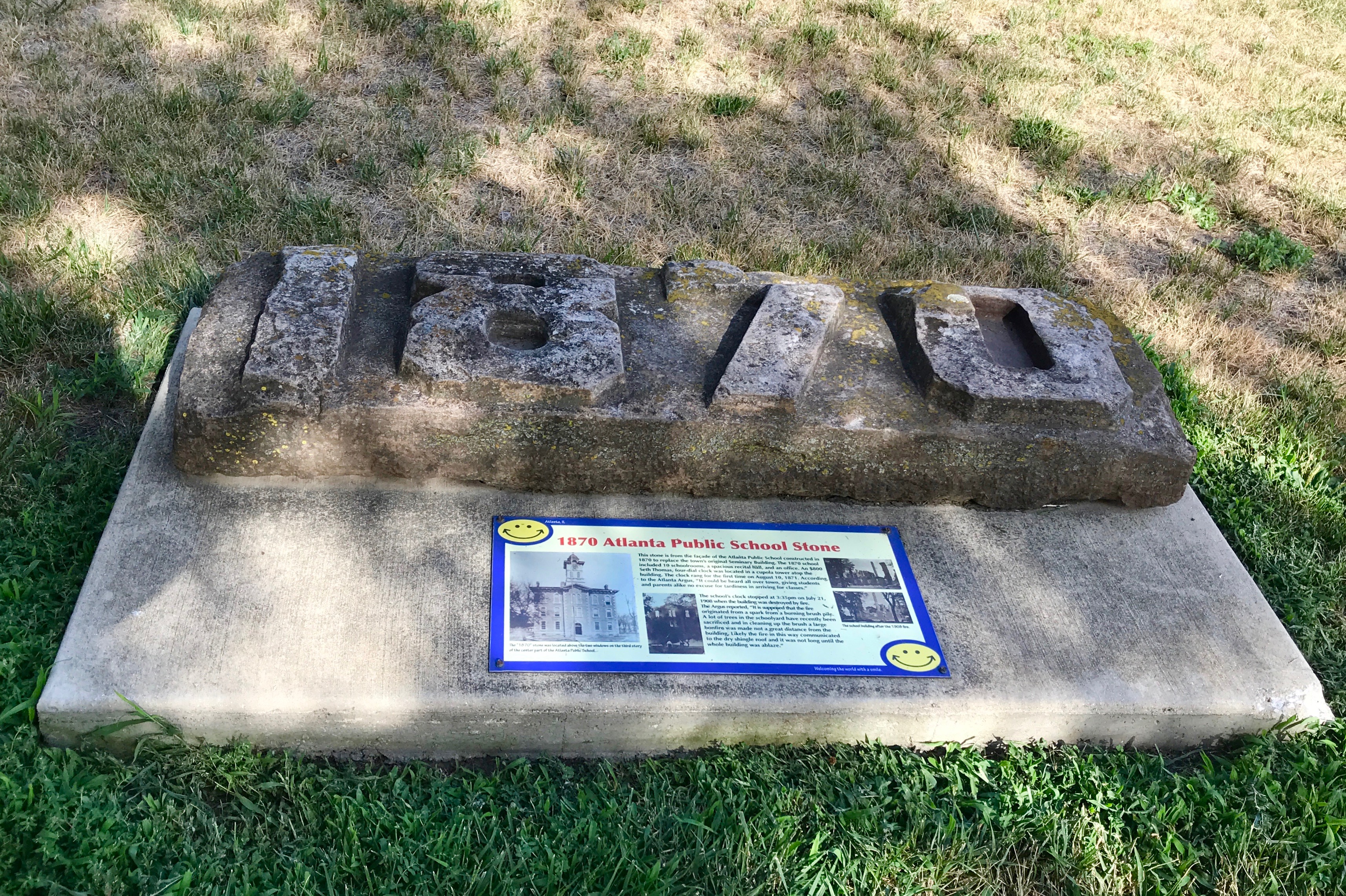
In the lovely tree shaded park are some pieces of Atlanta’s past. For instance, this stone is from the Atlanta Public School that was constructed in 1870. It had an $800 Seth Thomas four-dial clock that was located in a cupola tower atop the building. It was for the first time on August 10, 1871.
The clock stoped at 3:35 pm on July 21, 1906, when the building was destroyed by fire. I guess that is why they had to build a new school and they made sure to include another Seth Thomas clock in it.
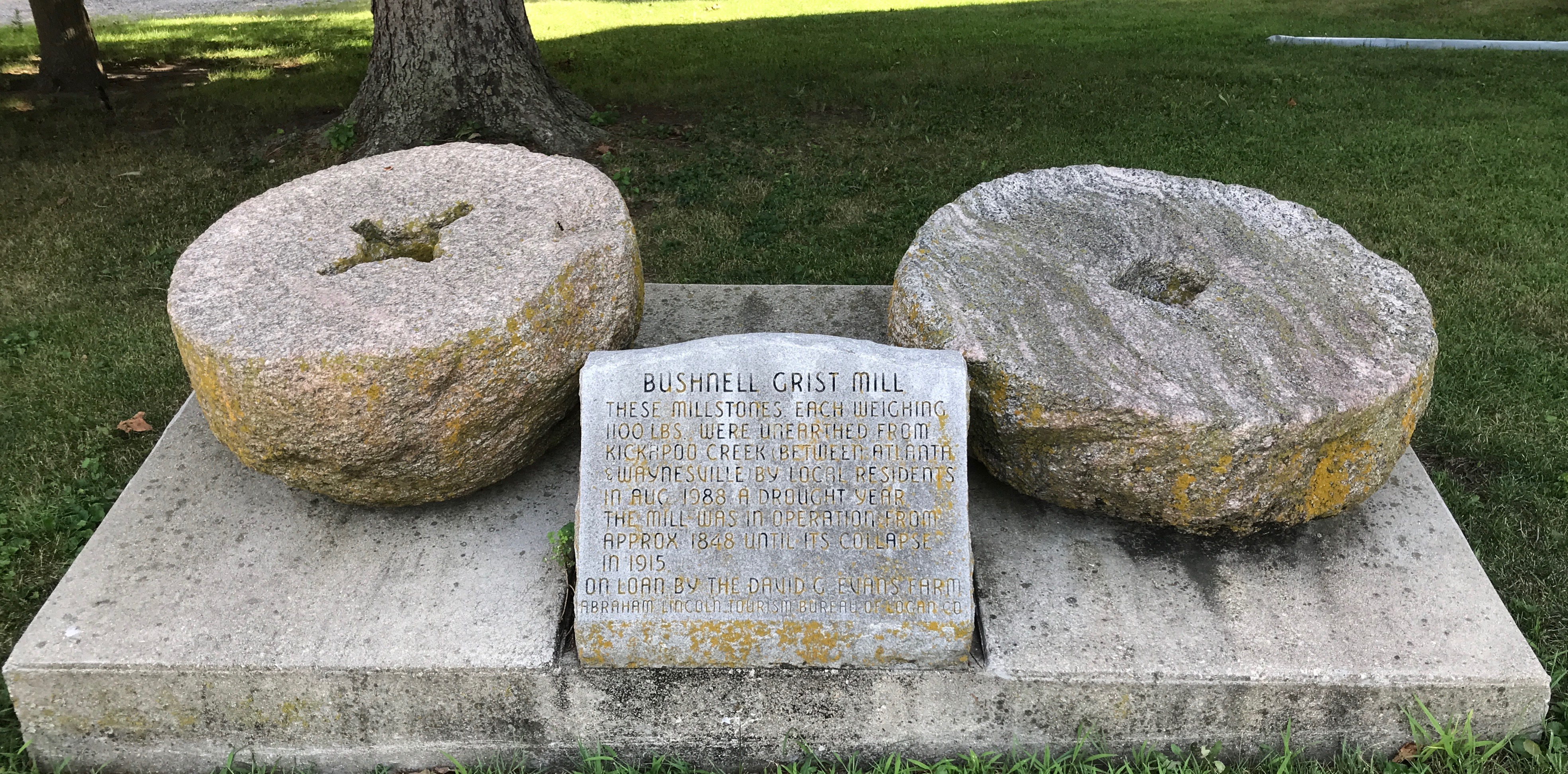
They had some mill stones on display.
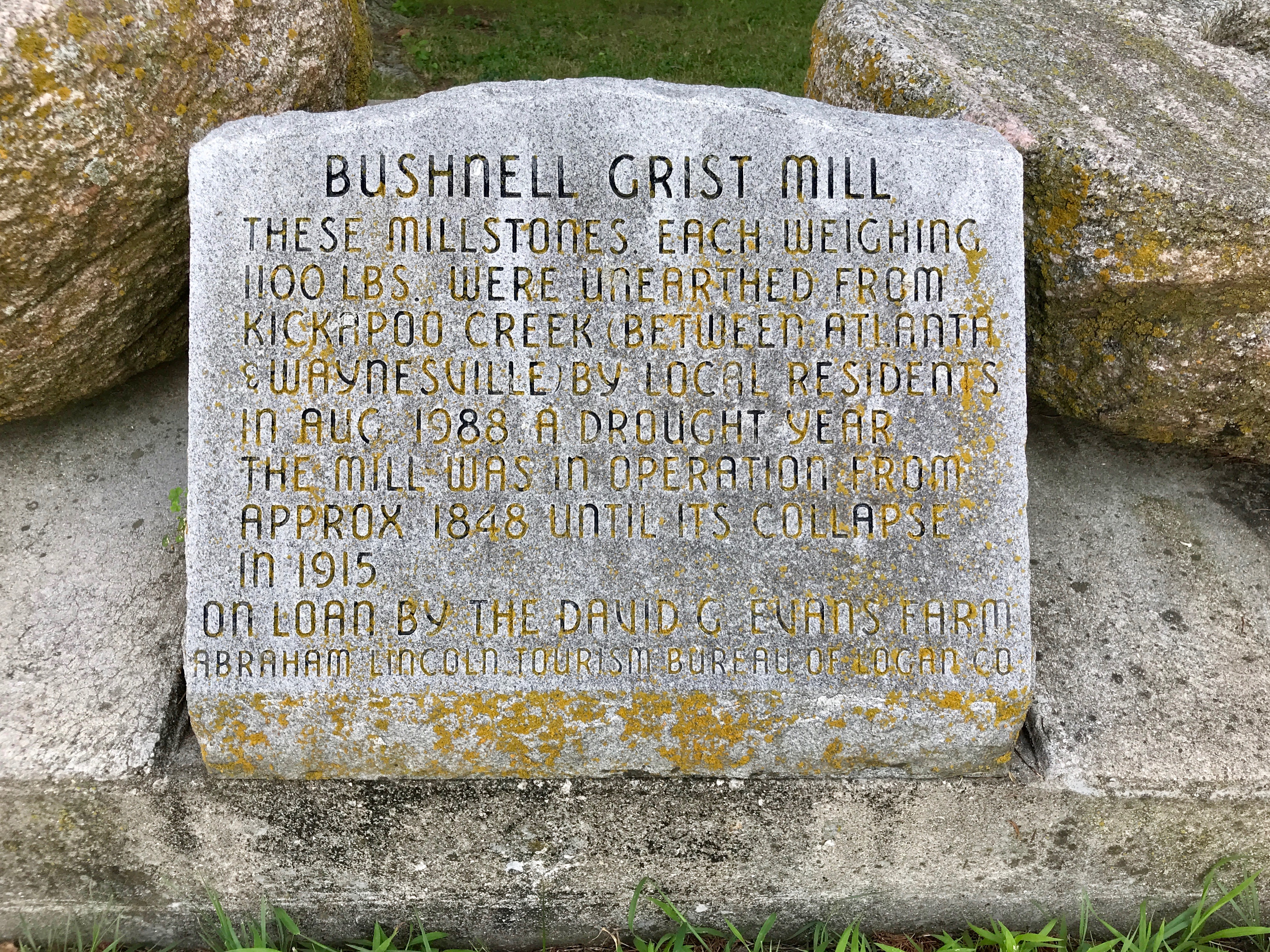
If you are interested in how the stones came to be here, you can read the information on the marker.
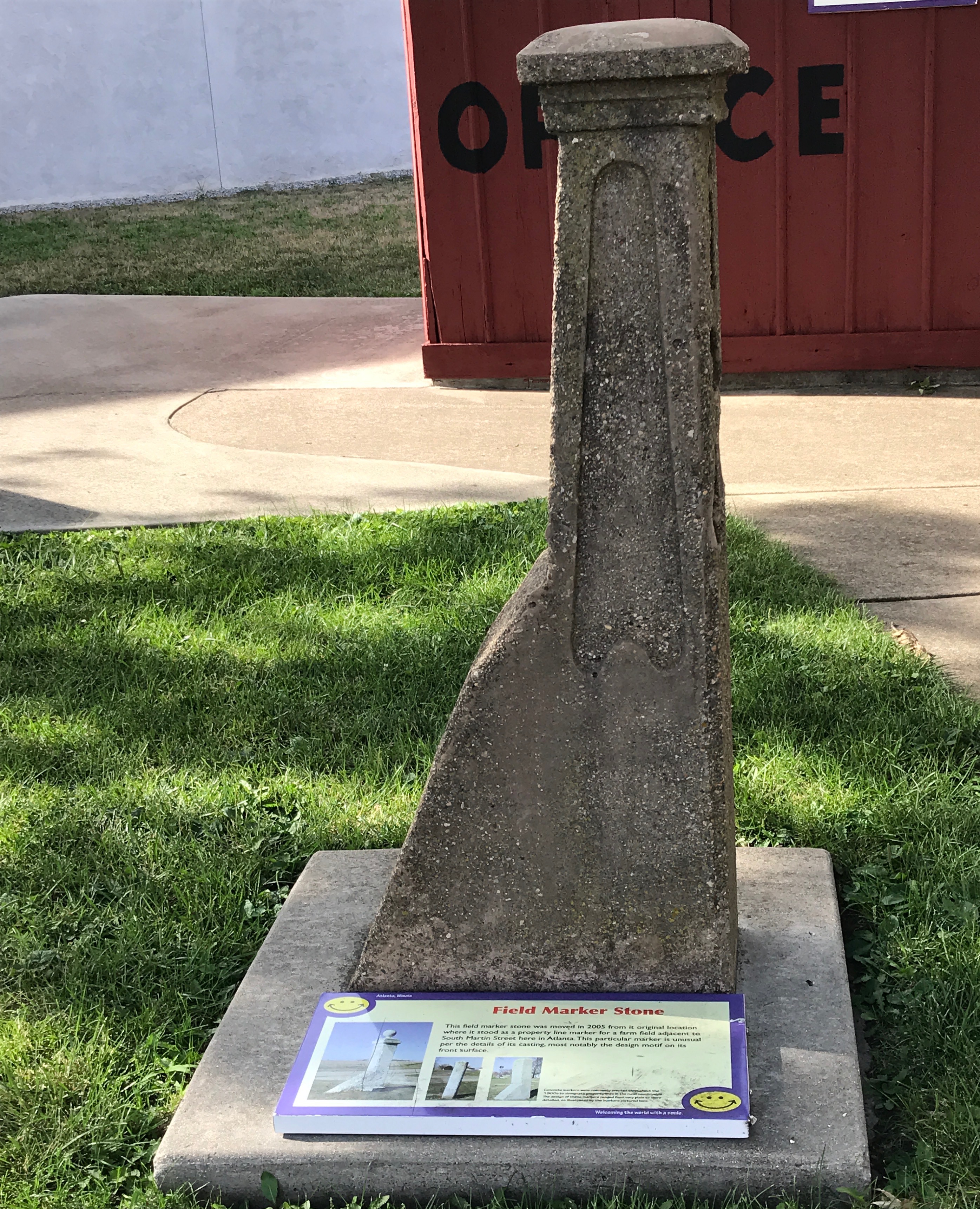
They really enjoy all the small bits of their history. This is a field marker stone that was a property line marker for a farm field in Atlanta. The plaque points out that this particular marker is unusual for the design details of its casting.
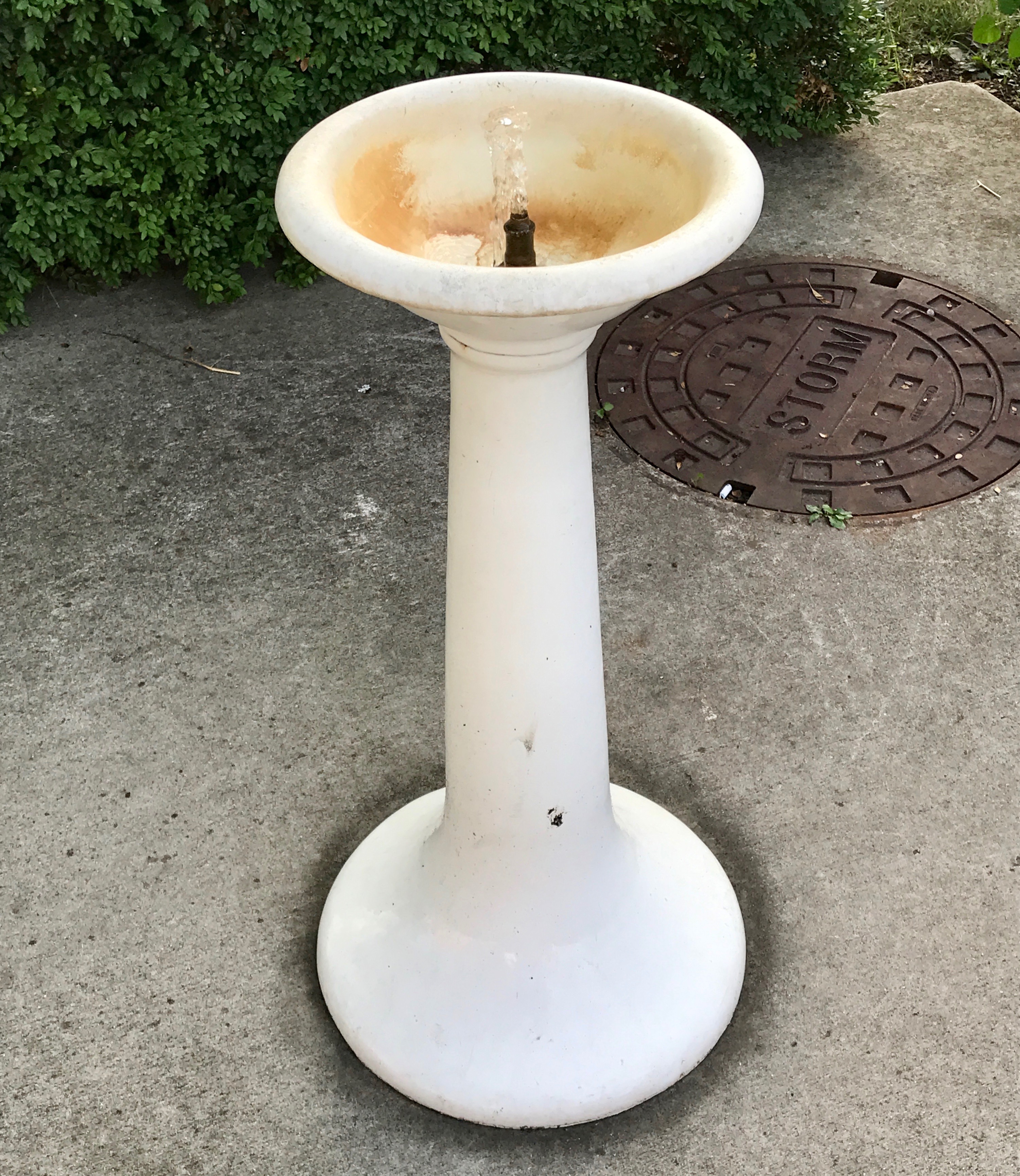
This is one of four drinking fountains installed by the City of Atlanta in 1934. According to the sign with it, sometimes the older boys would pick up the younger ones and sit them on top. You will notice that the water is running. That can’t have been pleasant.
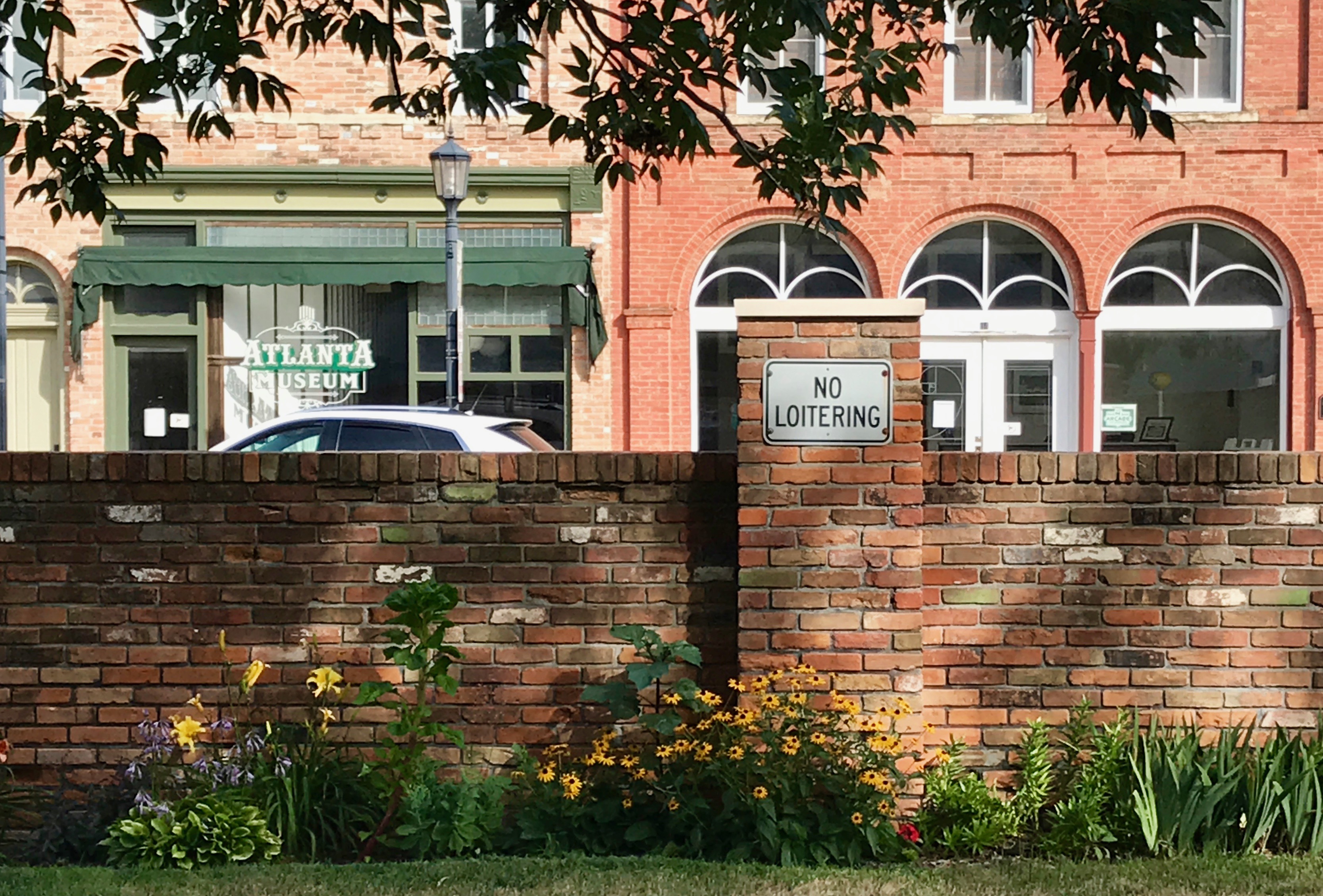
I think I had seen just about all I could see in a quick visit, and the sign warned me against loitering.
I took the hint and hit the road.