I have always enjoyed Buffalo’s architecture. I’ve written about it in earlier posts. This time, I visited a gem that I was sure was going to be lost, due to lack of maintenance, neglect and obsolescence.
During this trip to the area, I was able to visit the old Buffalo Psych Center. The official name when it was built was the Buffalo State Asylum for the Insane.

Sister Jeanne taught us about this building during my art history classes at Rosary Hill – now Daemen College. Back in the 1970s, when I was studying with her, the buildings were in rough shape and its future was in doubt. Every now and then over the years, I’d drive by and look, and it seemed less and less viable each visit. The visit before this, the complex was even fenced in. I was sure that it was in the process of demolition.
Why does this building matter? It was designed by H.H. Richardson, who was one of the “recognized trinity of American architecture”, along with Louis Sullivan and Frank Lloyd Wright. He had his own design style, which was referred to as “Richardsonian Romanesque”.
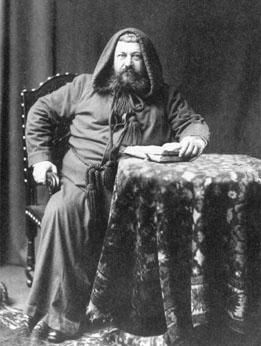
H.H. Richardson must have been quite a character. (Incidentally, H.H. stands for Henry Hobson.)
And, not only is the building a work of a prominent American architect, it was done with Frederick Law Olmsted, the famed landscape architect who gave us New York City’s Central Park.
(To be fair, Olmsted was the junior partner with Calvert Vaux, but I don’t recall ever hearing that name before. Maybe people just like saying the names of people who use their middle names.)
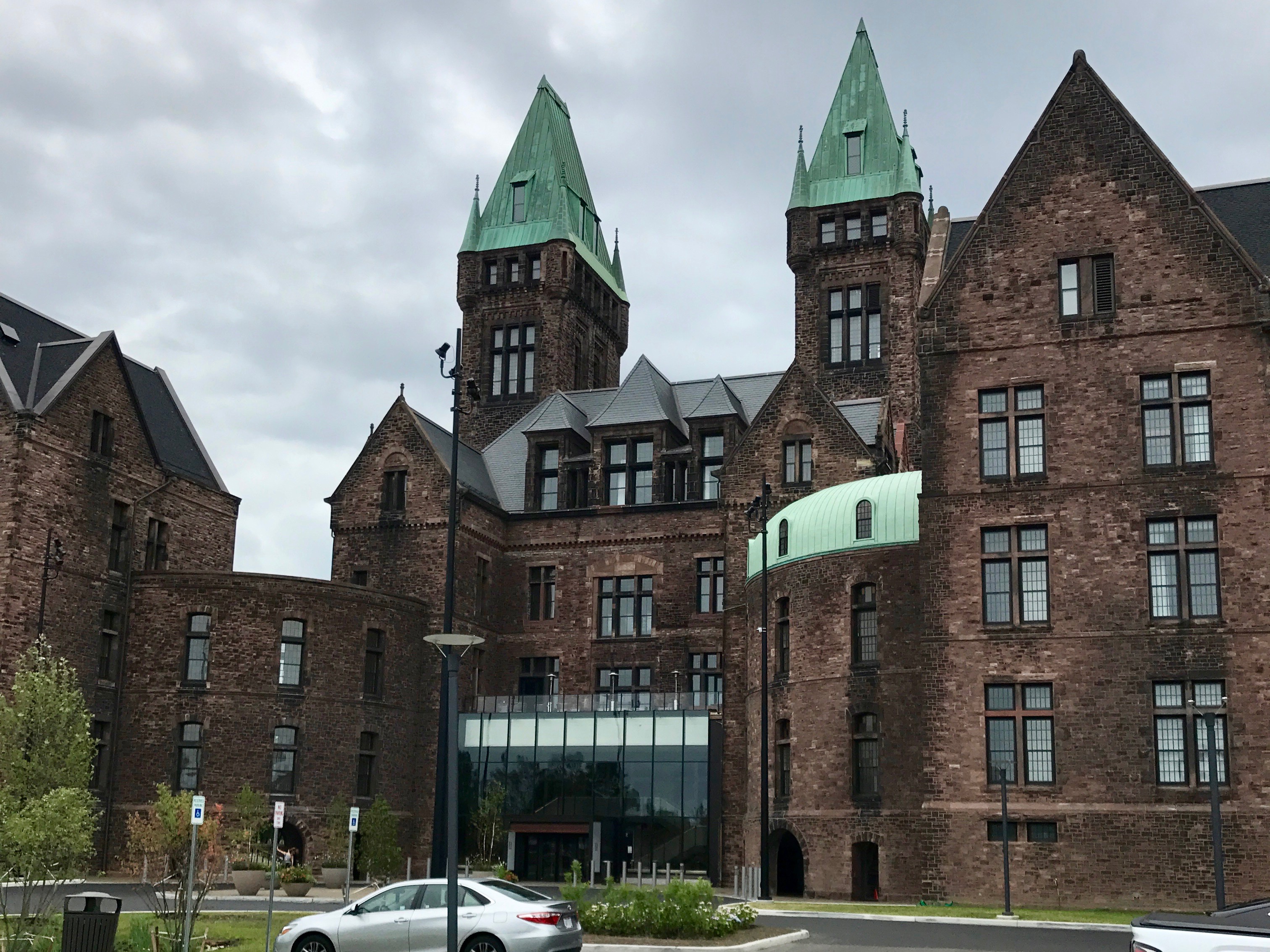
During this visit, I heard something about a renovation at the old hospital and that it had been repurposed as a hotel – Hotel Henry. I decided to see what was going on. I followed the signs and pulled into the parking area at the back.
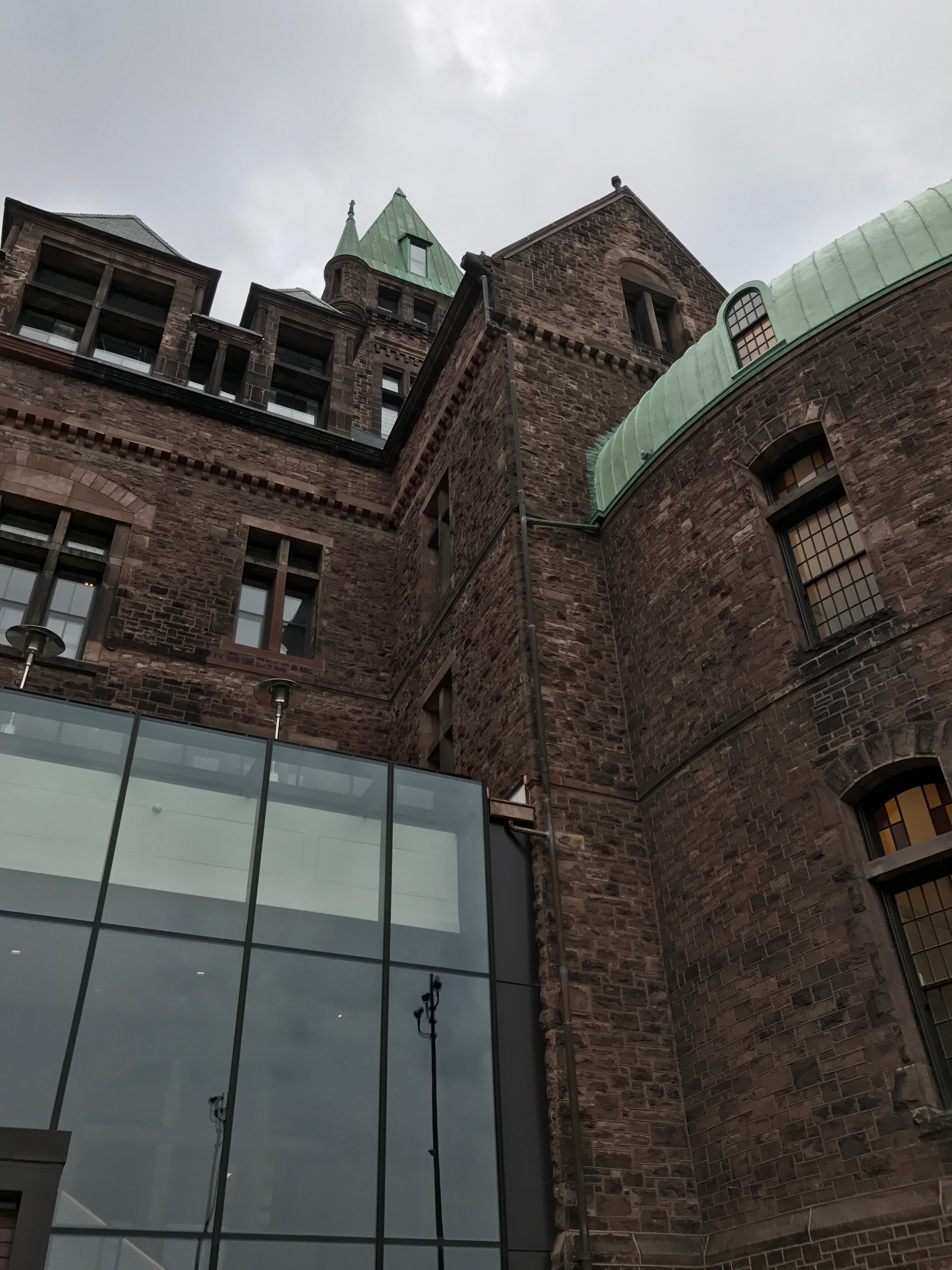
They did a good job of designing an entrance with an atrium that blended in with the original design.

I passed through the atrium to see what I could see.
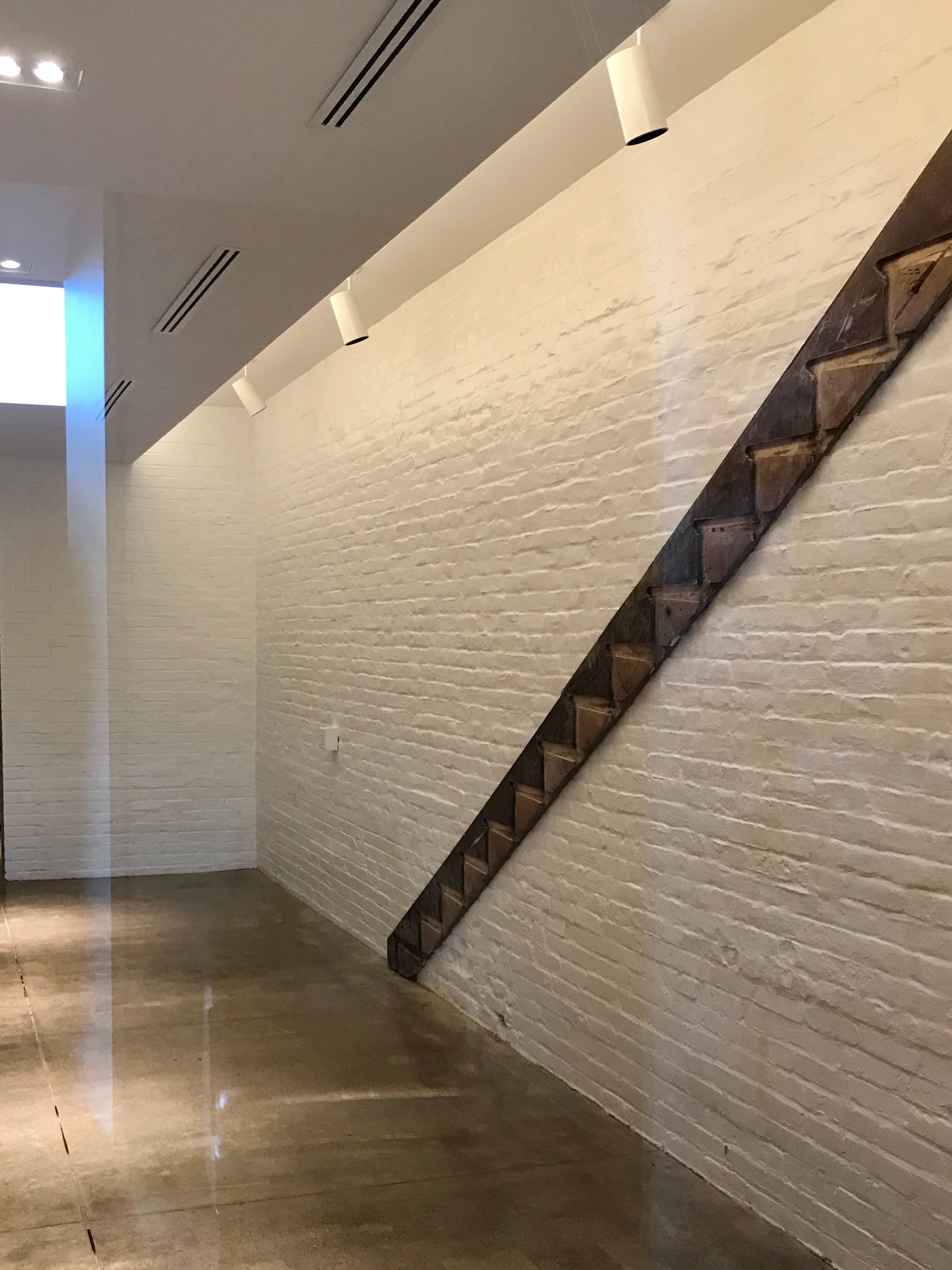
It’s not much to look at now, but this sign was hanging nearby.

In an effort to keep things as current as possible (even though I am writing this fifteen months after the fact) I called the hotel to see if the center did open as planned. As with many things in this world, they didn’t get it open last year, but are on schedule for a spring 2019 opening. Maybe I can check it out next summer.
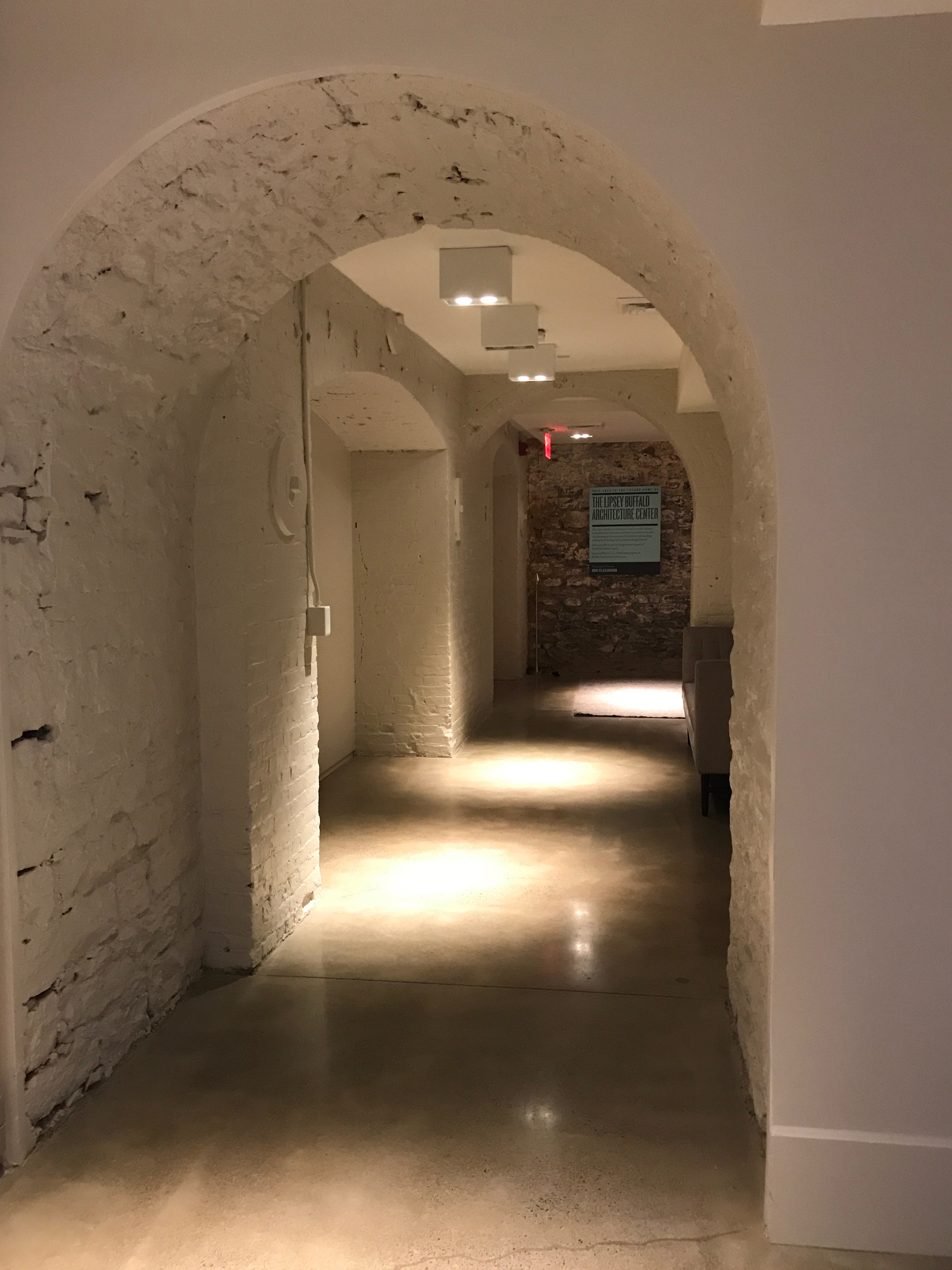
I wandered on. I thought this was an interesting view.
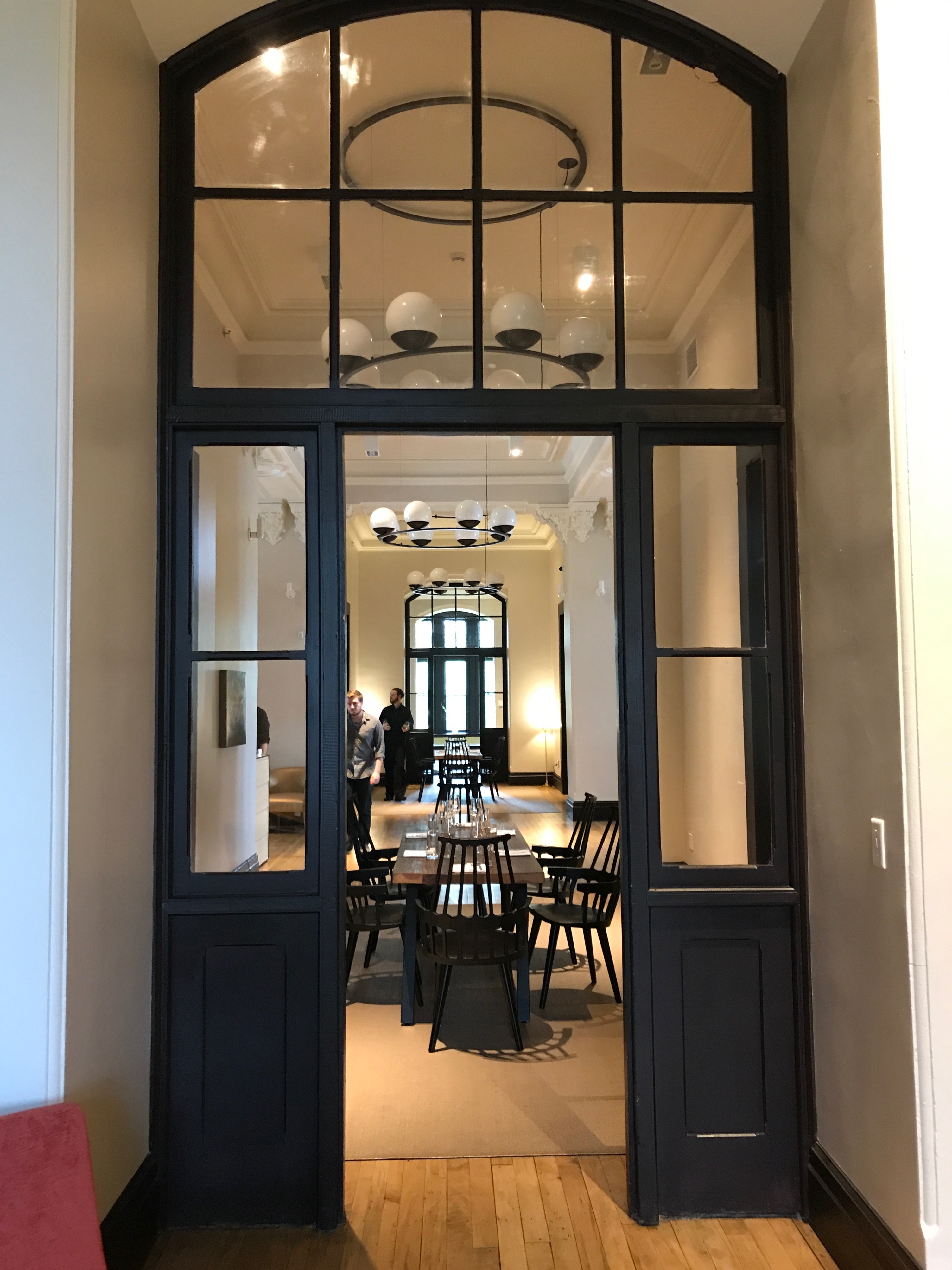
I made my way upstairs and came across this elegant dining room. It turns out that there is a restaurant in the new Hotel Henry called 100 Acres: The Kitchens at Hotel Henry. According to the information I could glean, it offered a selectively sourced, seasonal New American menu.
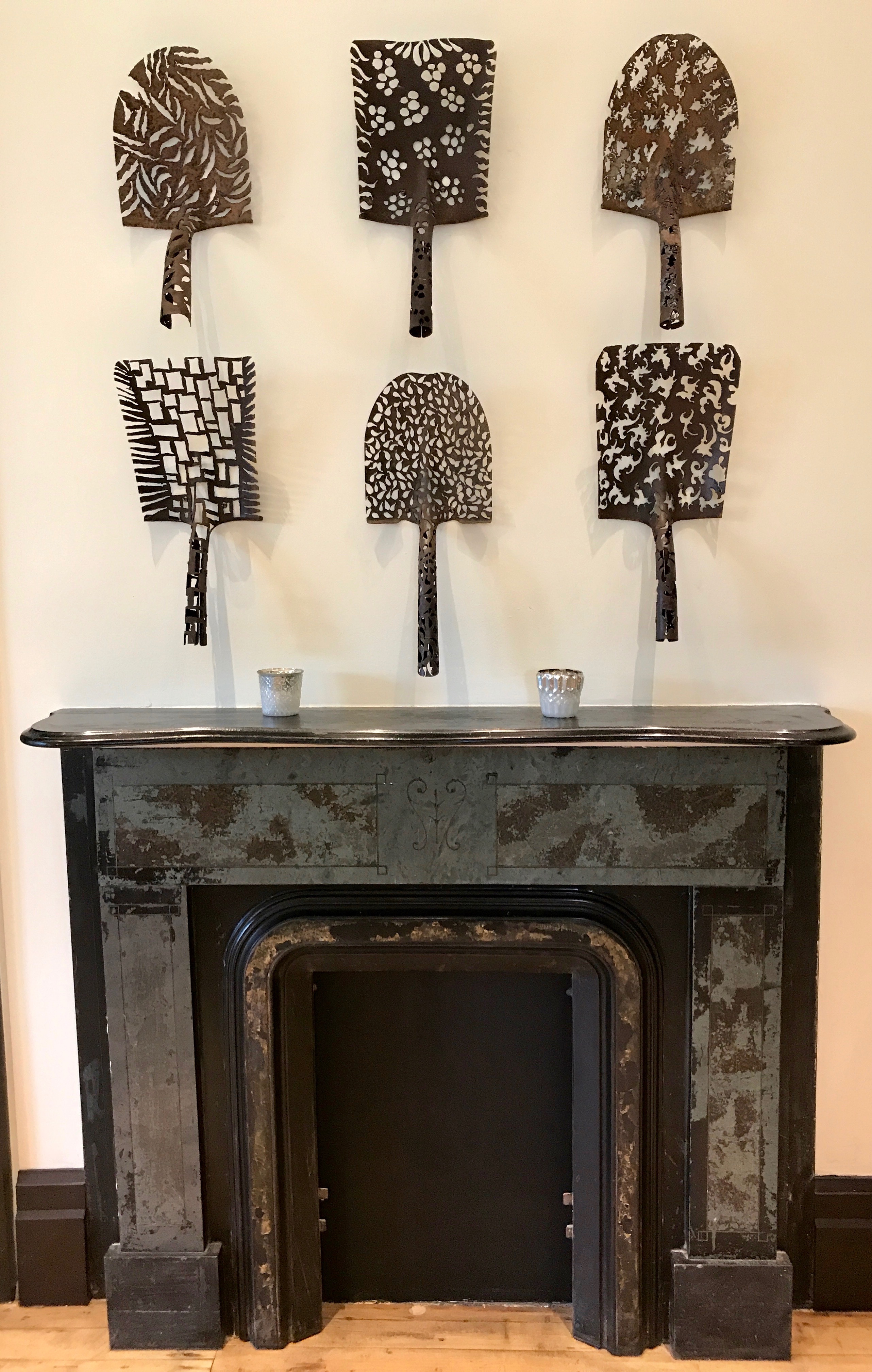
This installation was in a bar I came across. From one of the people I spoke with, the name “100 Acres” refers to the amount of farmland that was set aside for the purpose of creating the Buffalo State Asylum for the Insane. According to the Kirkbride Plan, much of the farmland remained productive and provided healing, rehabilitation and meaningful work for the patients.
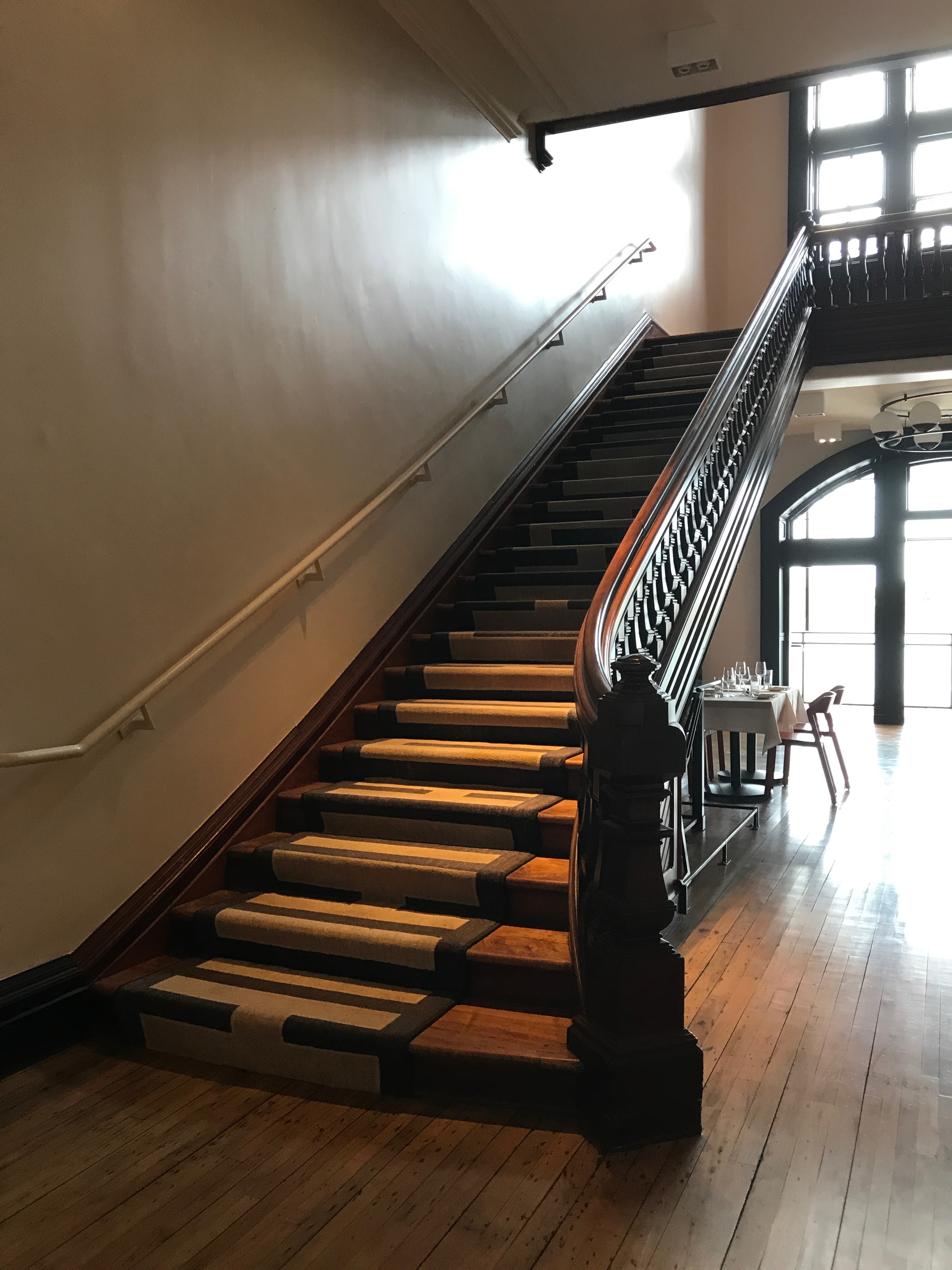
There were the elegant touches that one expects in a grand building, like this dramatic staircase.
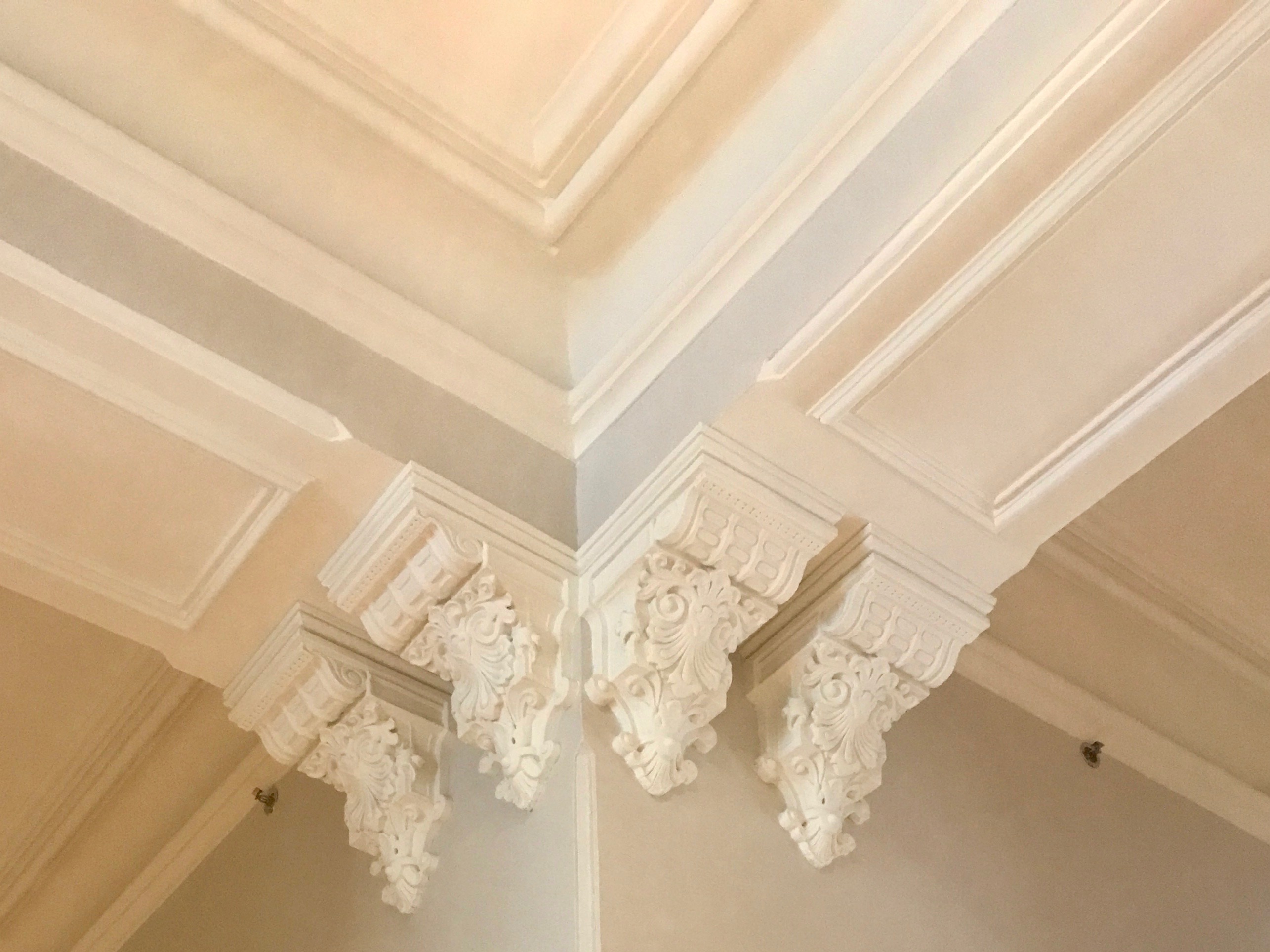
These elaborate corbels were set off by the subtle choices of paint.

Elaborate tile inserts made it look like corridors had rugs in them.

Even the edges of the curving corridor that connected the main building with the wings had decorative tile work,
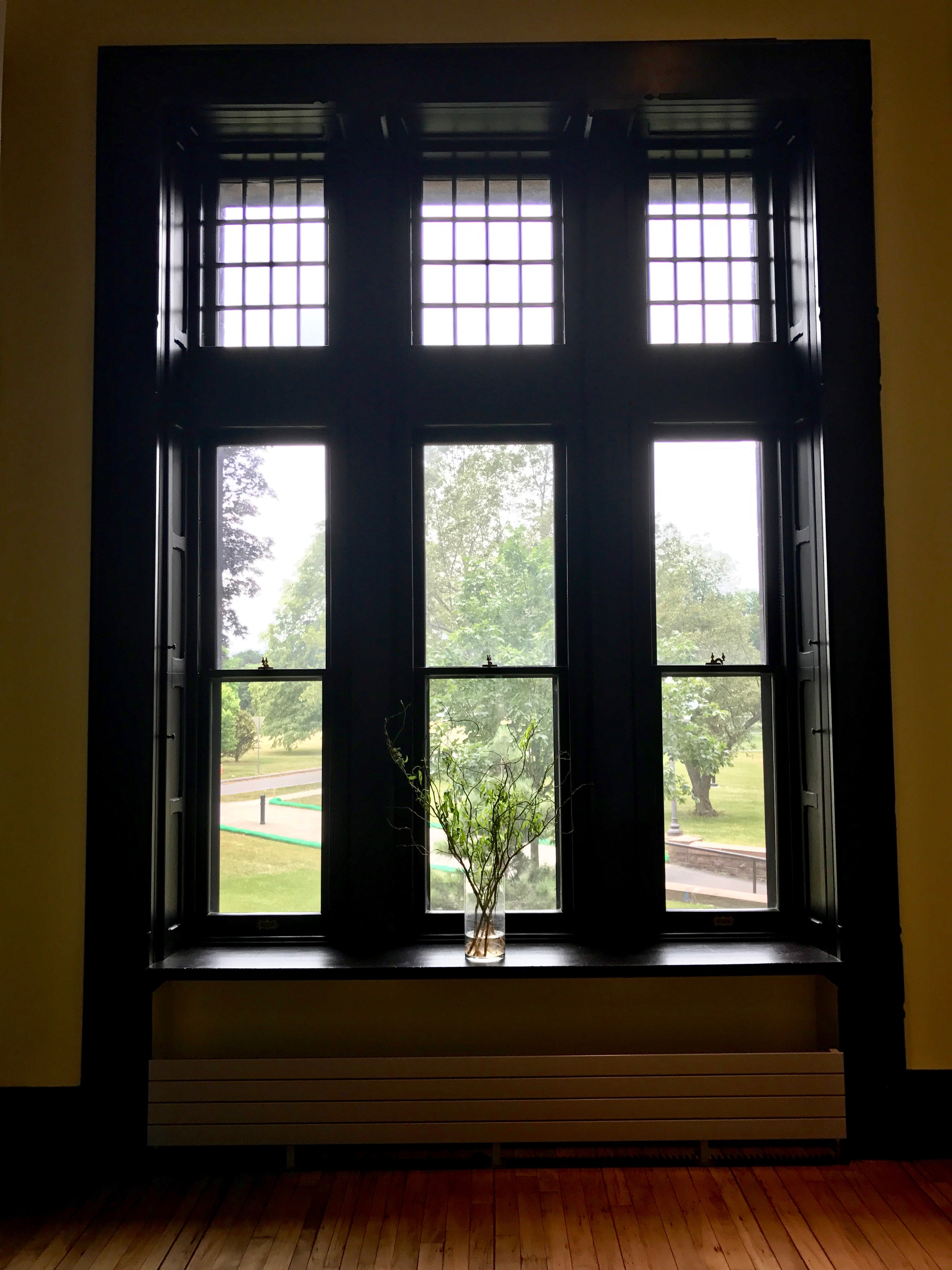
There were ample windows that kept the place bright. Bear in mind that this structure was designed in the 1870s, before electrification.

Even the smallest details had a special touch. I love the window latch.
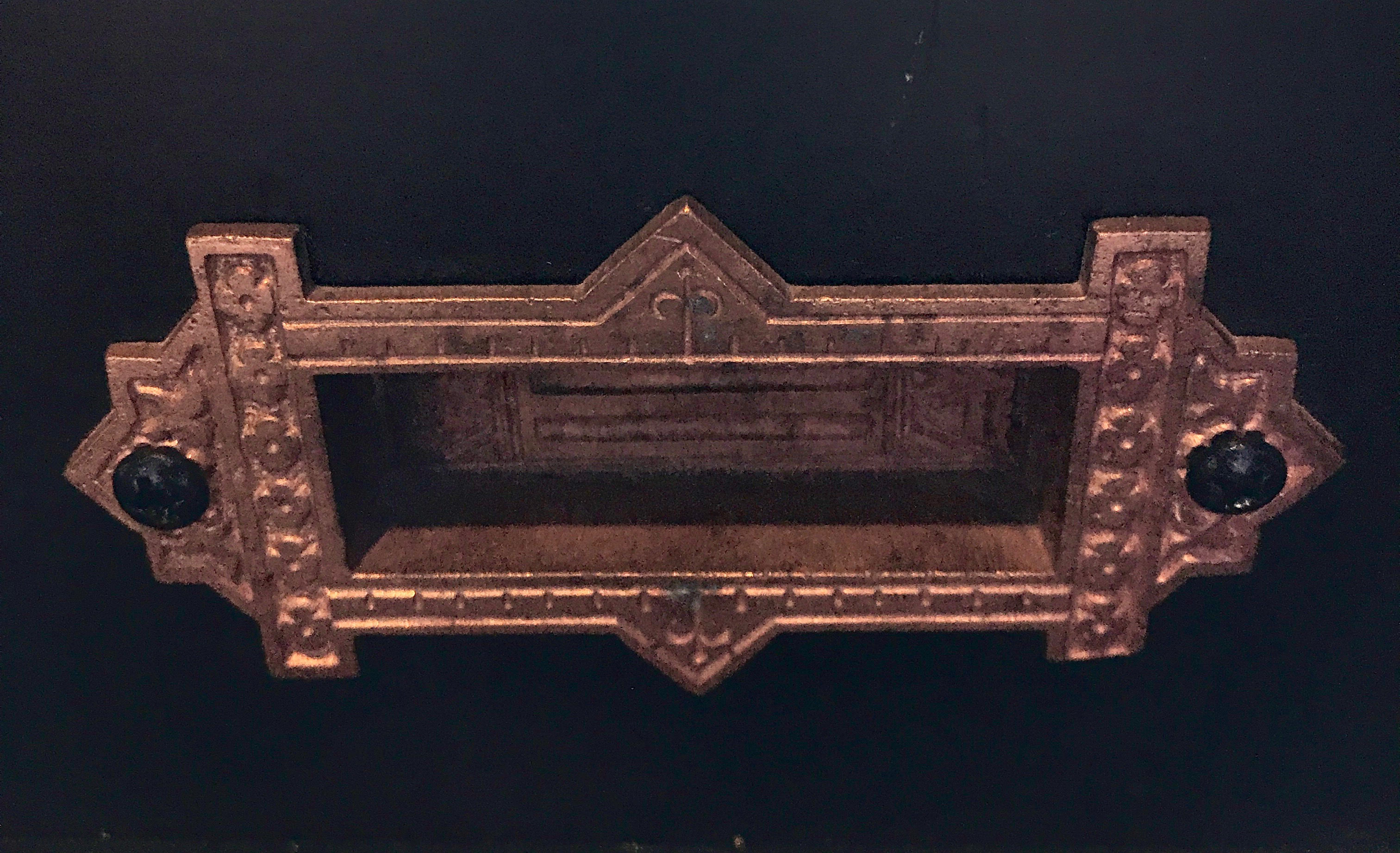
The window pull also received design attention.
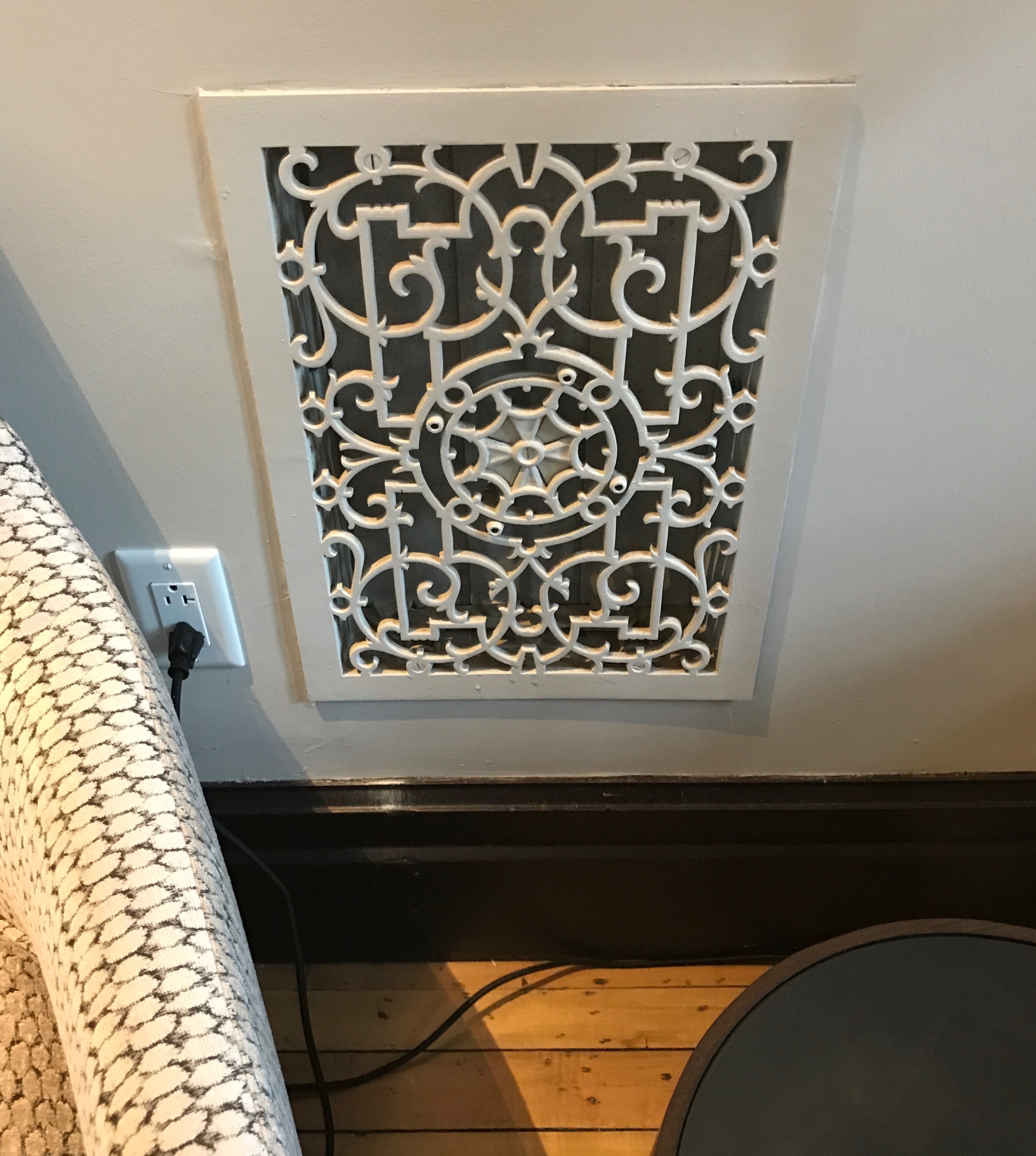
The register cover was also elegantly designed. Bear in mind that this was a state mental facility.

I came across this door with the tantalizing sign, “historic stair”. You know I had to try the door. It opened – and no alarm sounded.

Here’s the view going down.

And then there’s the view going up. Is this “up the down staircase“?
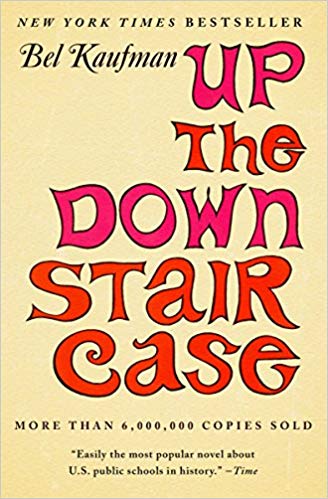
And if you knew what I was referring to, you are officially old. I decided not to go up or down. I was a bit concerned that the door would lock behind me and I would be trapped.
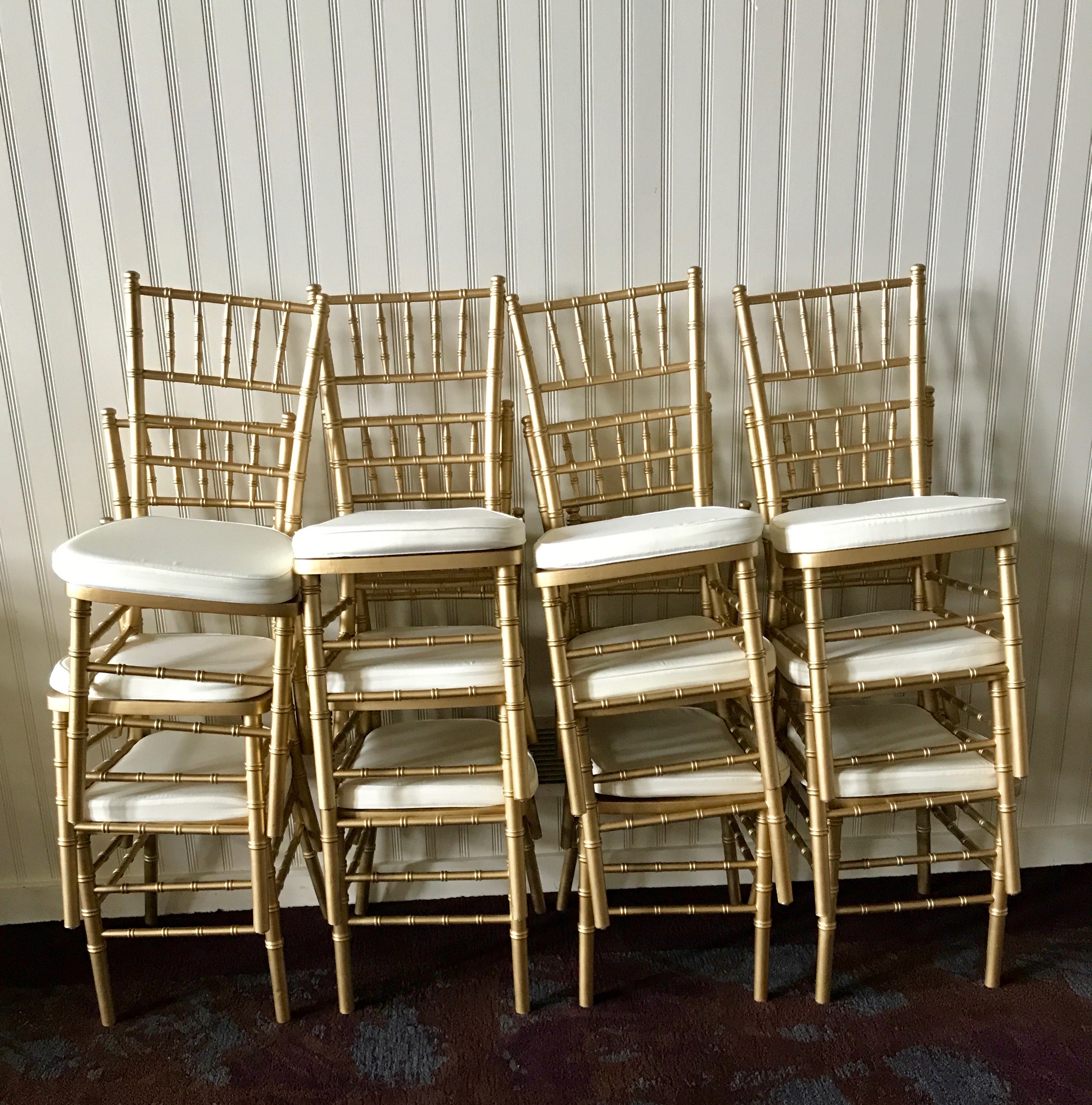
I wandered into the ballroom. They were in the midst of cleaning it after a reception. I liked these stacks of chairs.
I stopped by the registration desk to inquire about the rooms. I wondered what they cost. I was surprised that they only cost in the neighborhood of $150.
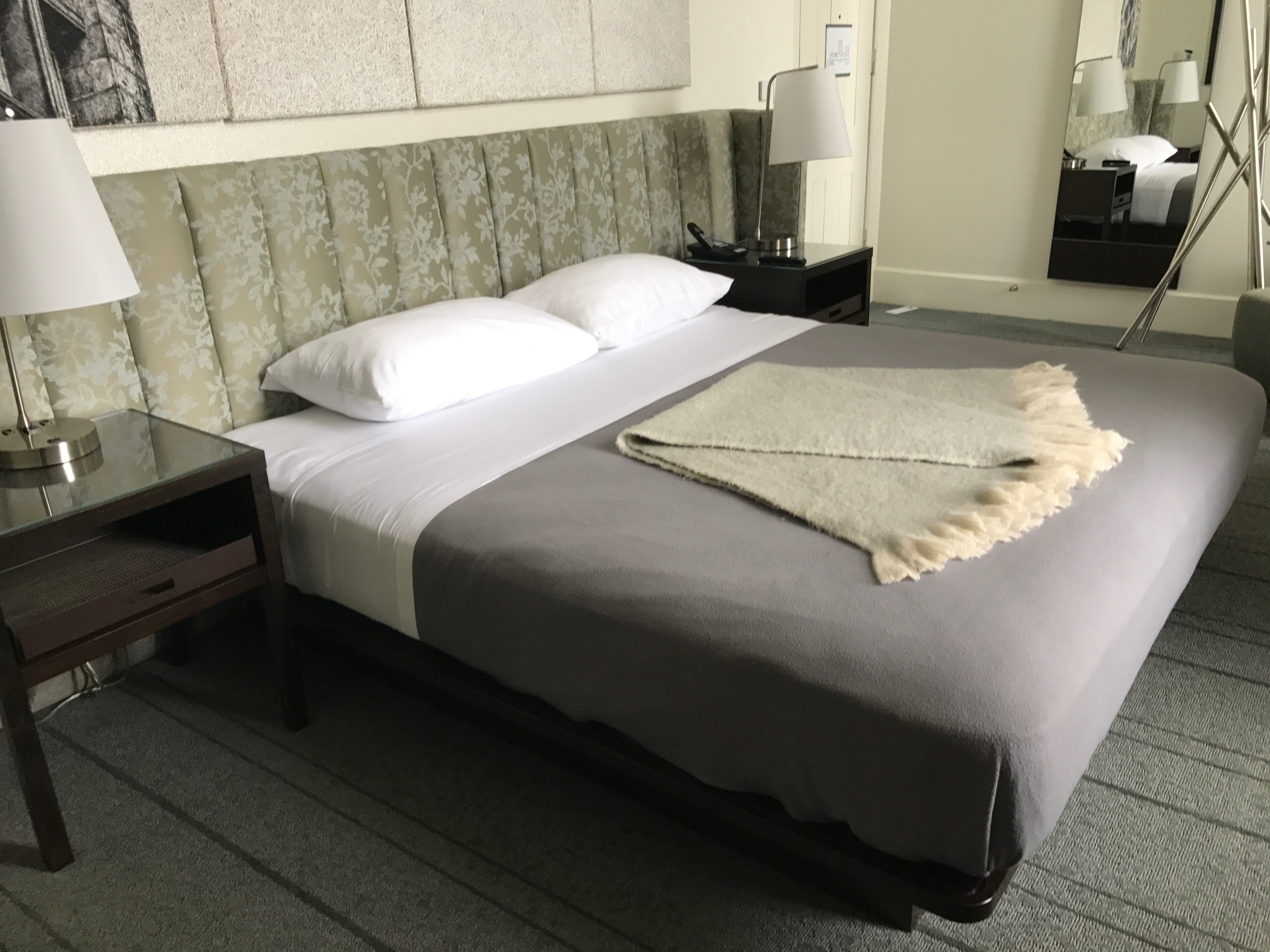
The clerk offered to let me see one, and I leapt at the chance.
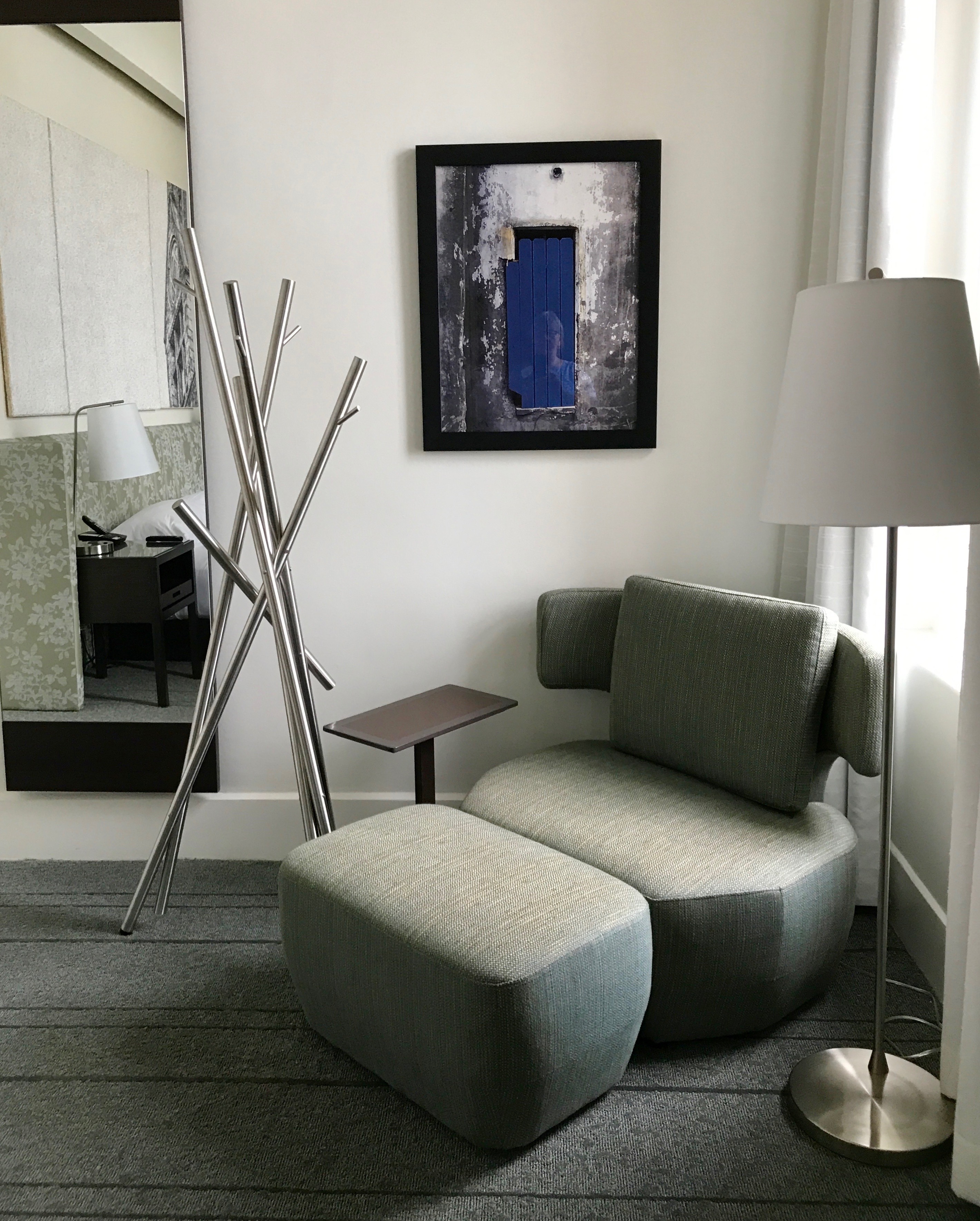
I could see myself in that chair. The rooms are small, so they combined functionality. This is a chair, side table and desk. The coat rack next to it doubles as a work of art.
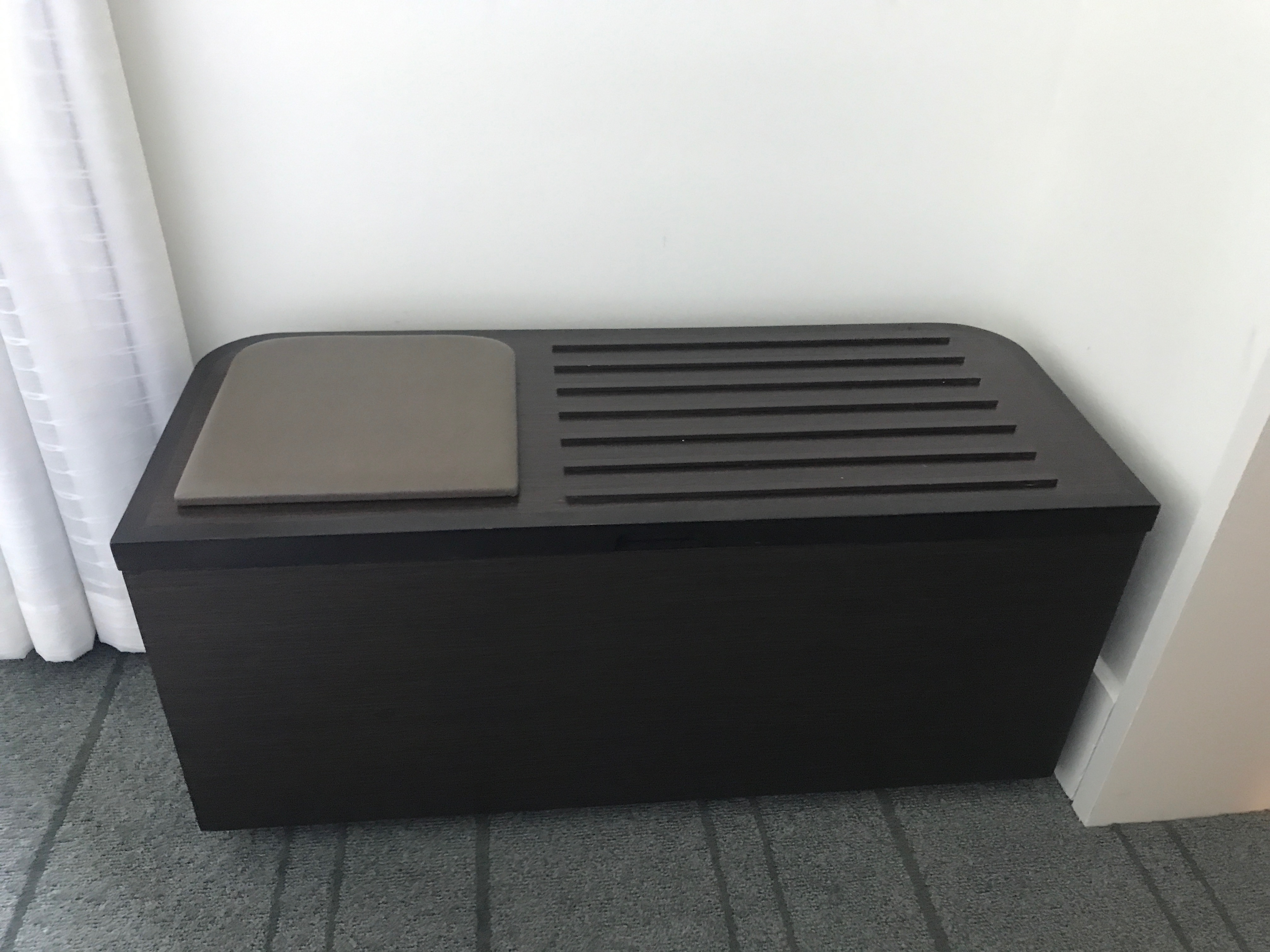
This is a luggage rack and bench.
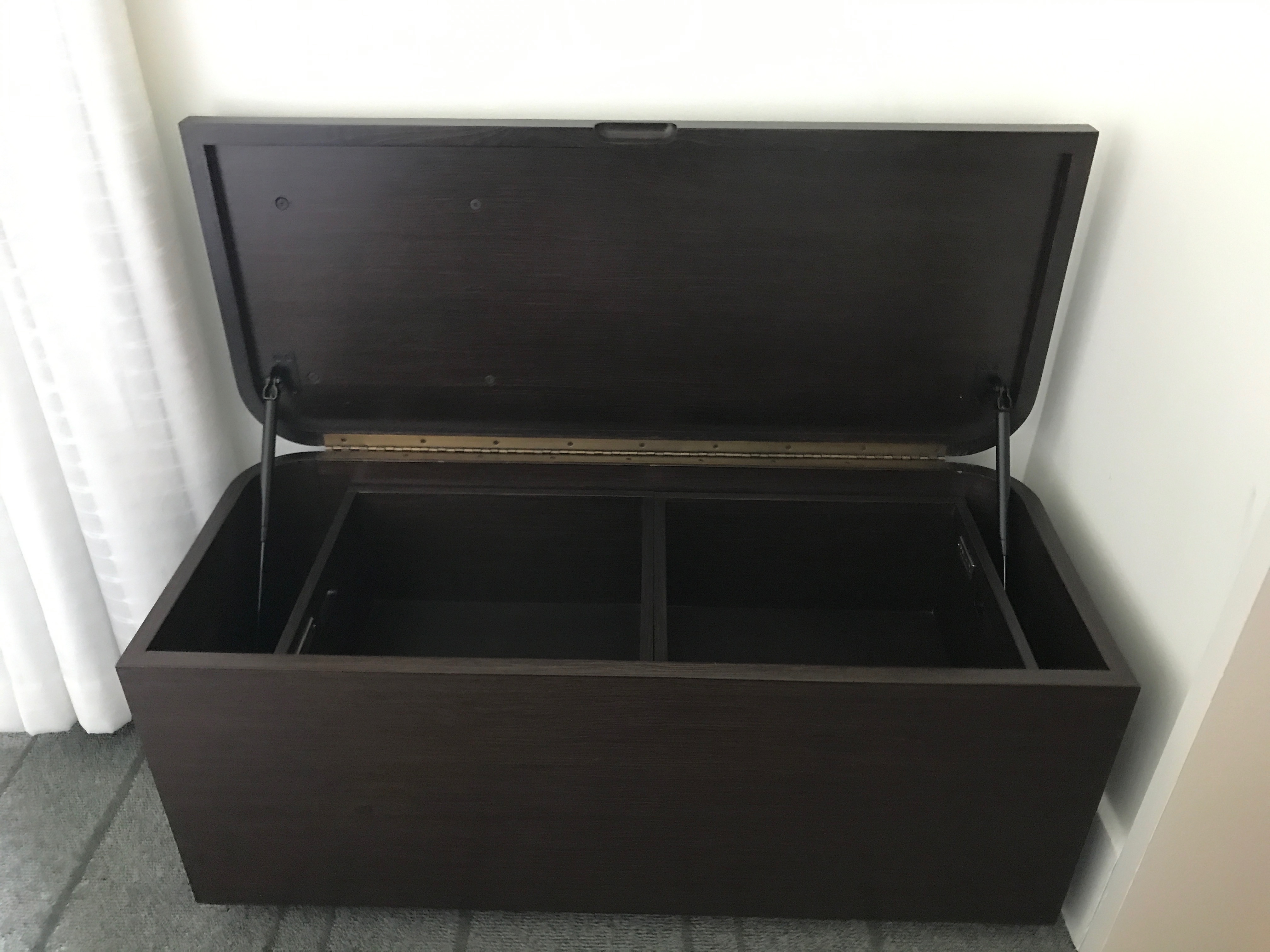
It also doubles as a dresser.
The bathroom was sleek and modern, but given the small space, I couldn’t get a good angle to take a photo.
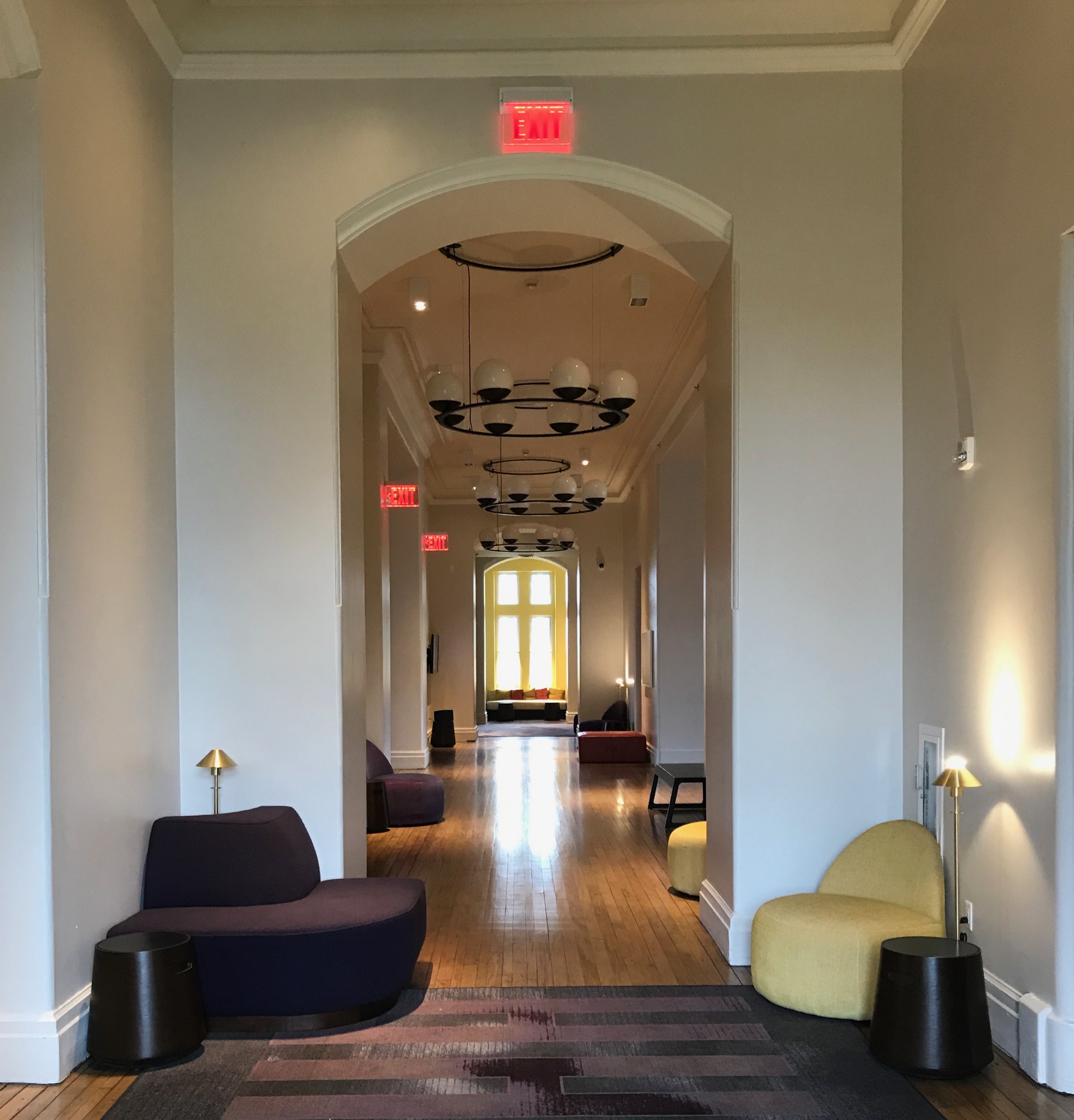
I wandered around a bit more. I just love hotels – especially unique ones.

What a gracious setting for a casual meal! With that, I decided to look around outside.
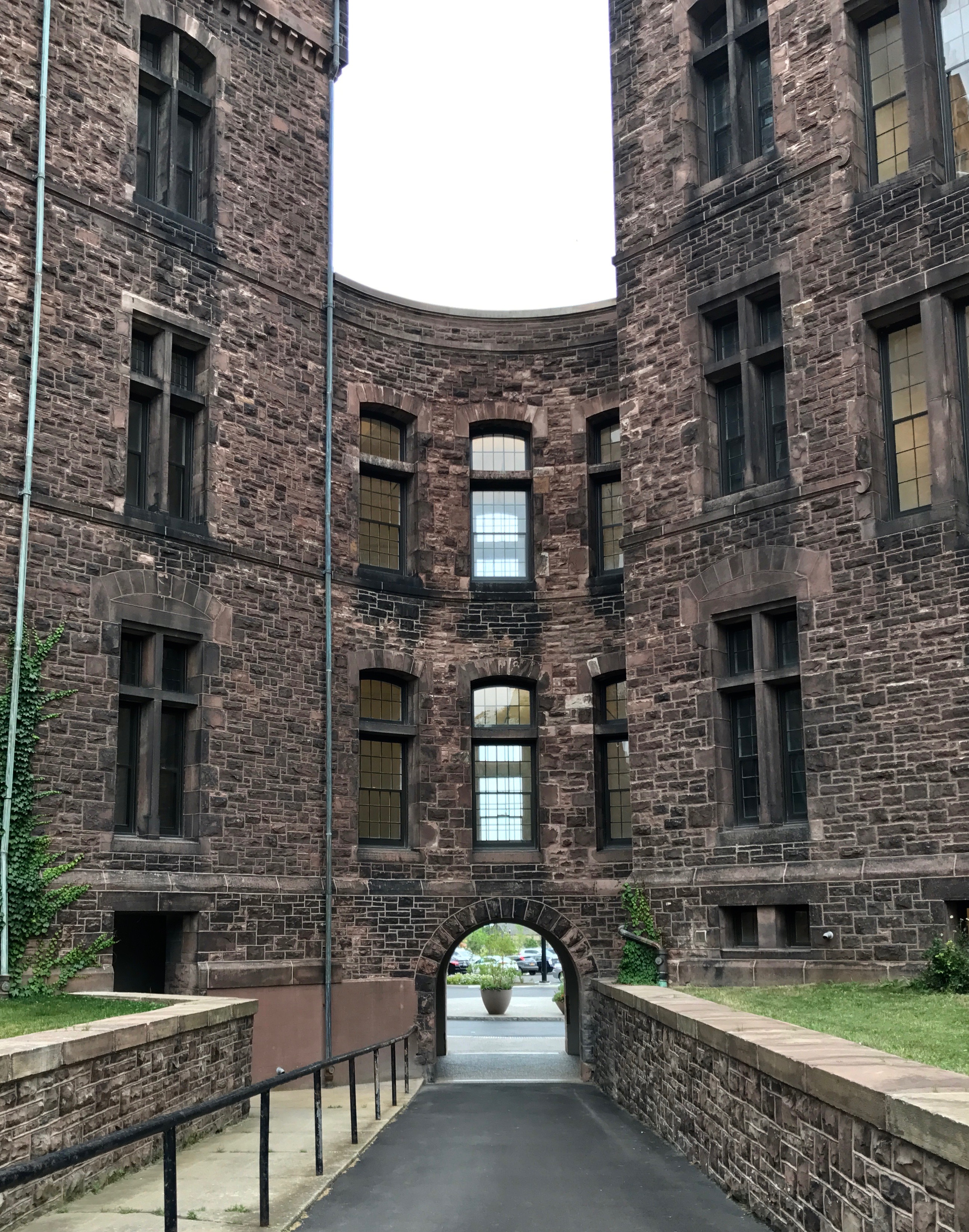
This is from the front of the back looking back at the curved corridor that connects the main building to the wings.
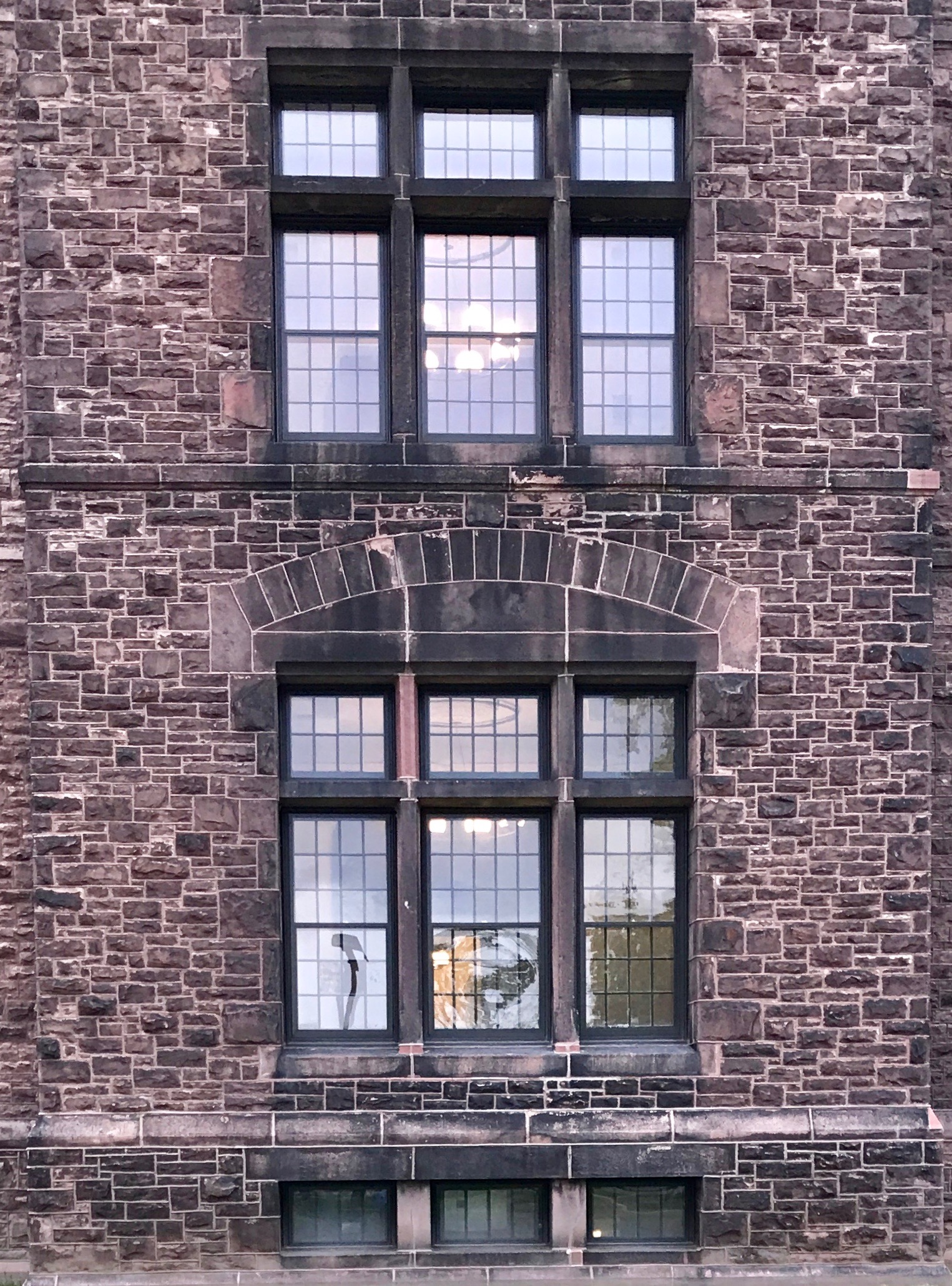
These windows were on the wing to the right as I looked at the front of the building.
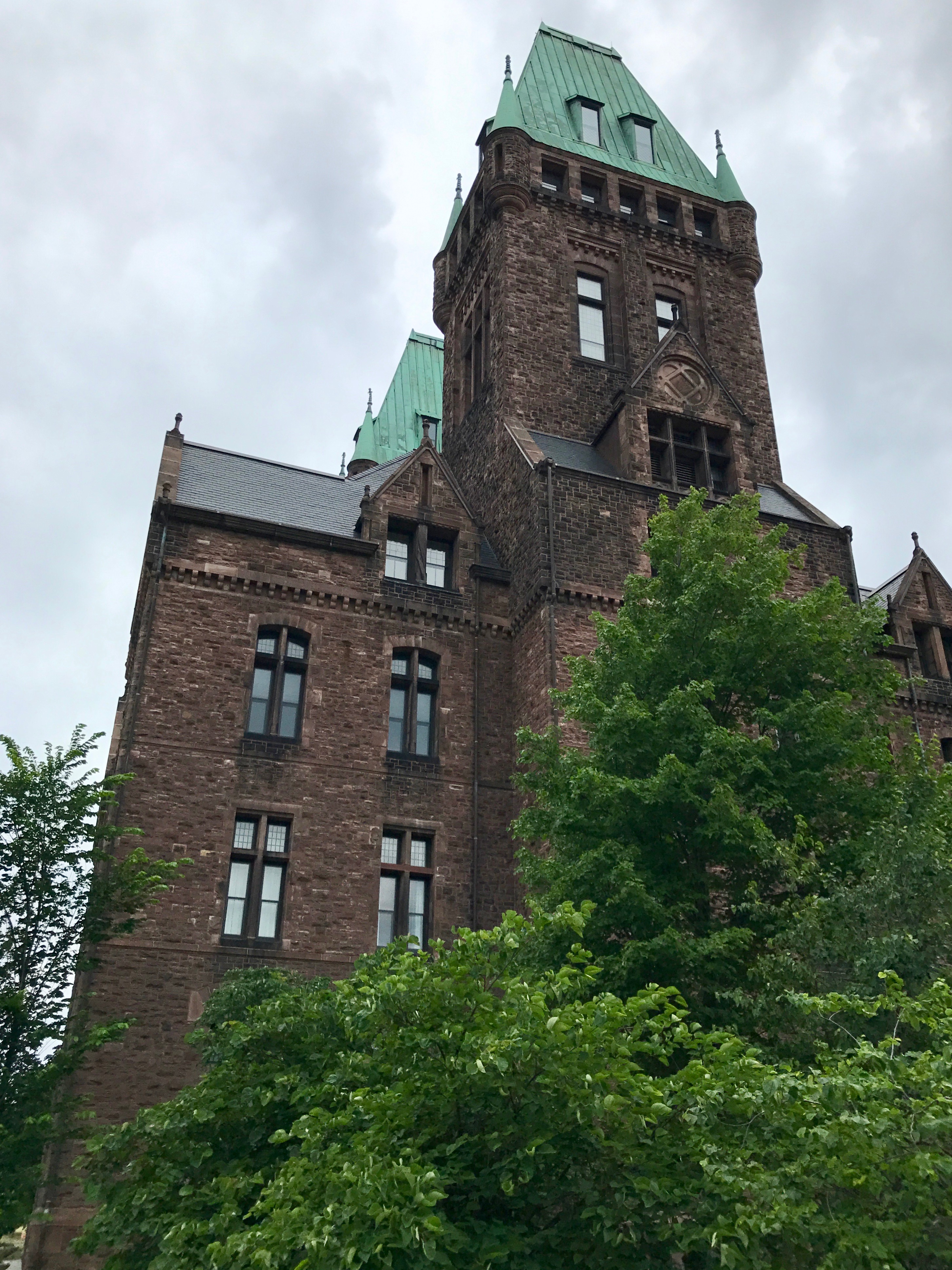
Looking up at the towers as I walked toward the front of the building.
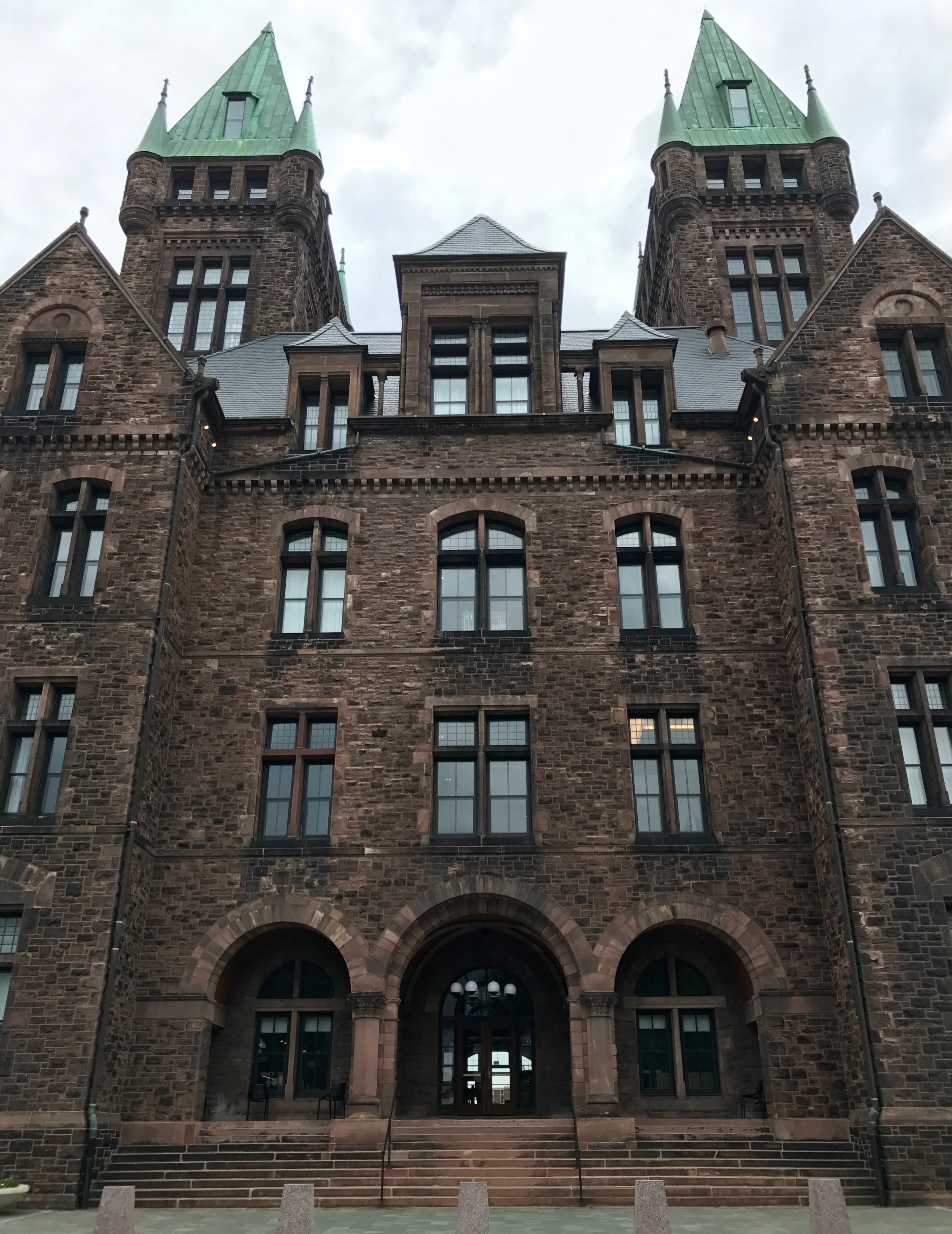
The front entrance to the main floor.
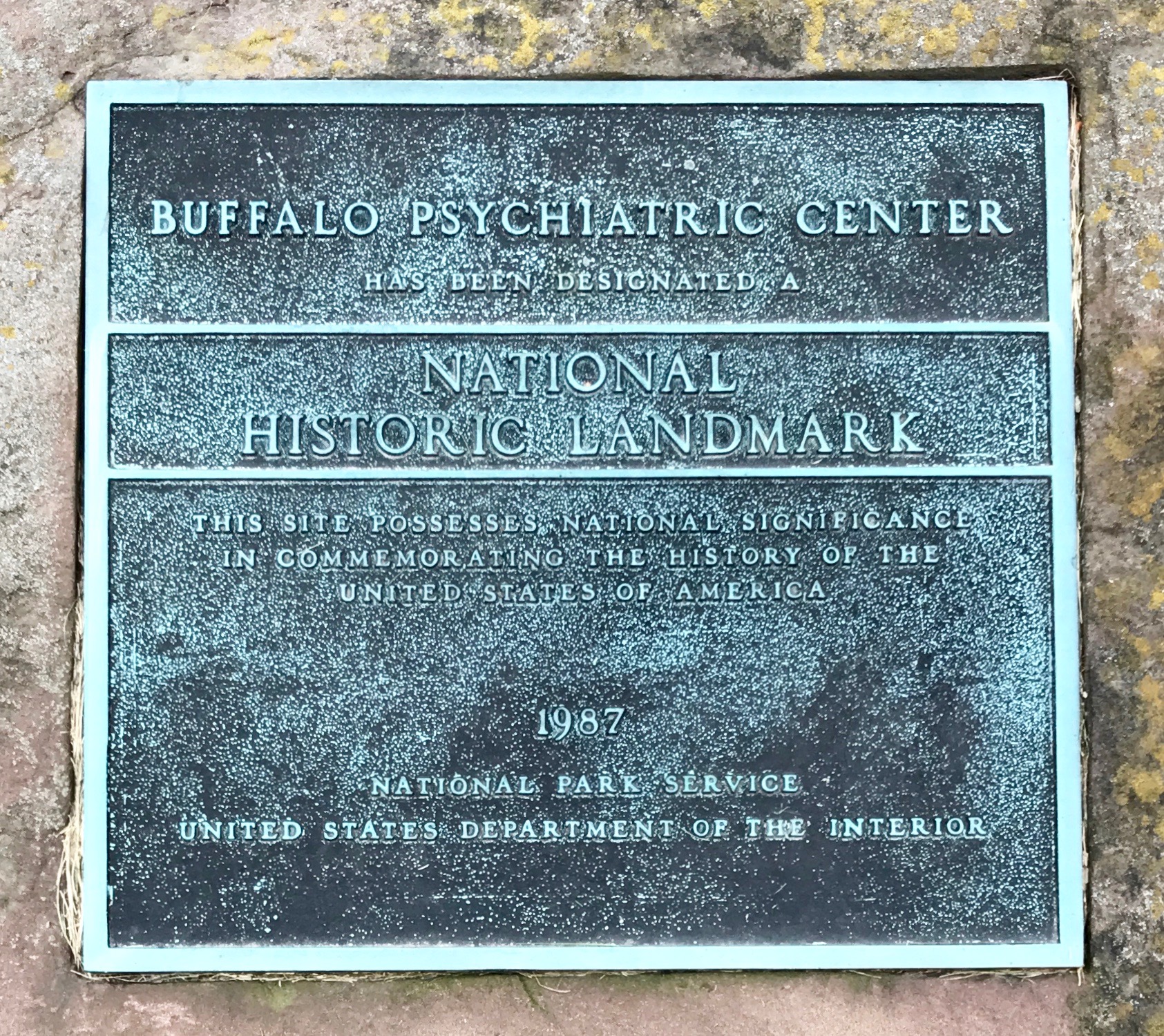
I find it a little surprising that it wasn’t put on the National Historic Landmark list until 1987. After all, Sister Jeanne told us about it in the first half of the 1970s.
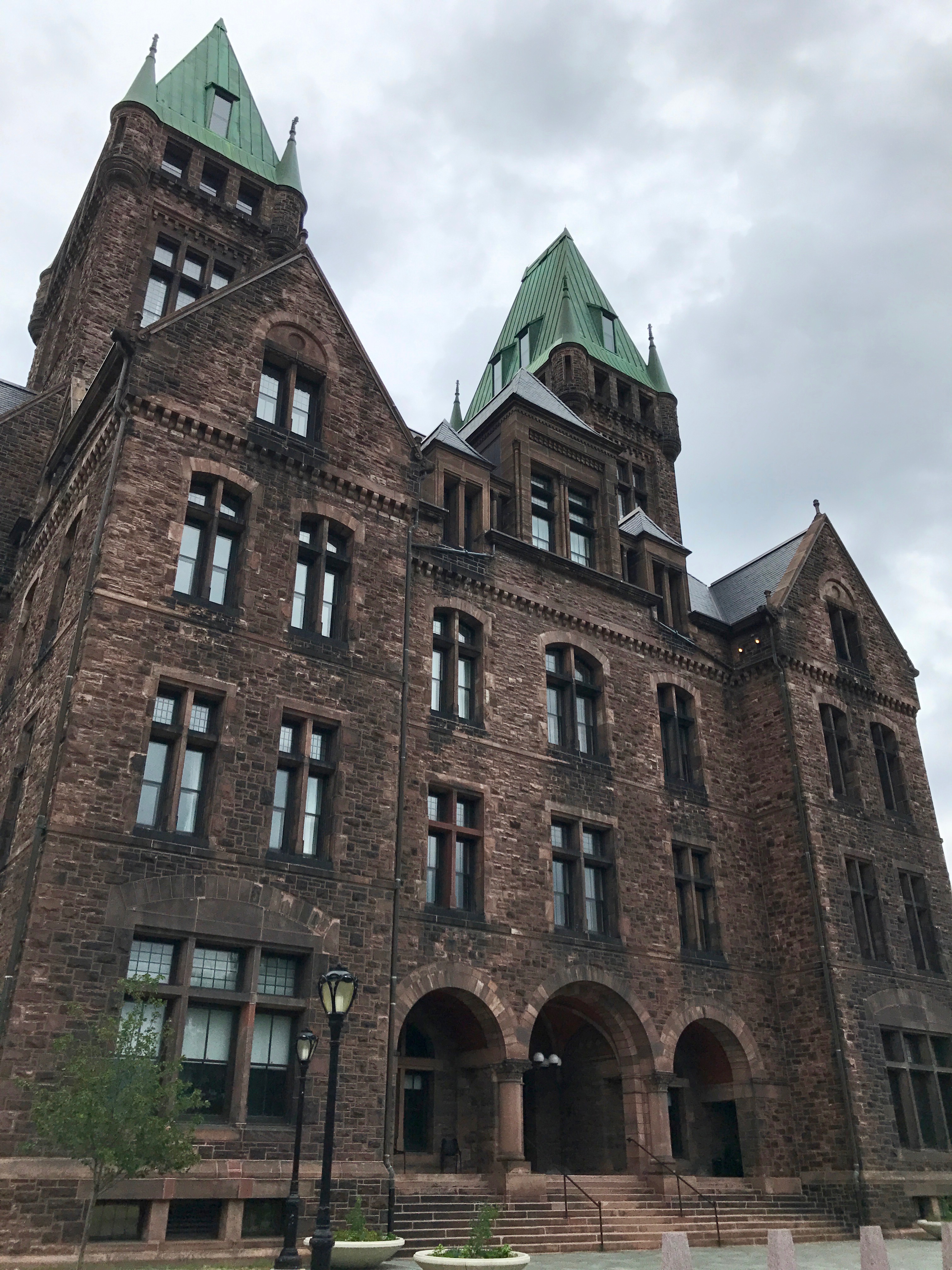
I walked across the front of the building and looked back at it. I needed to investigate the columns more closely.
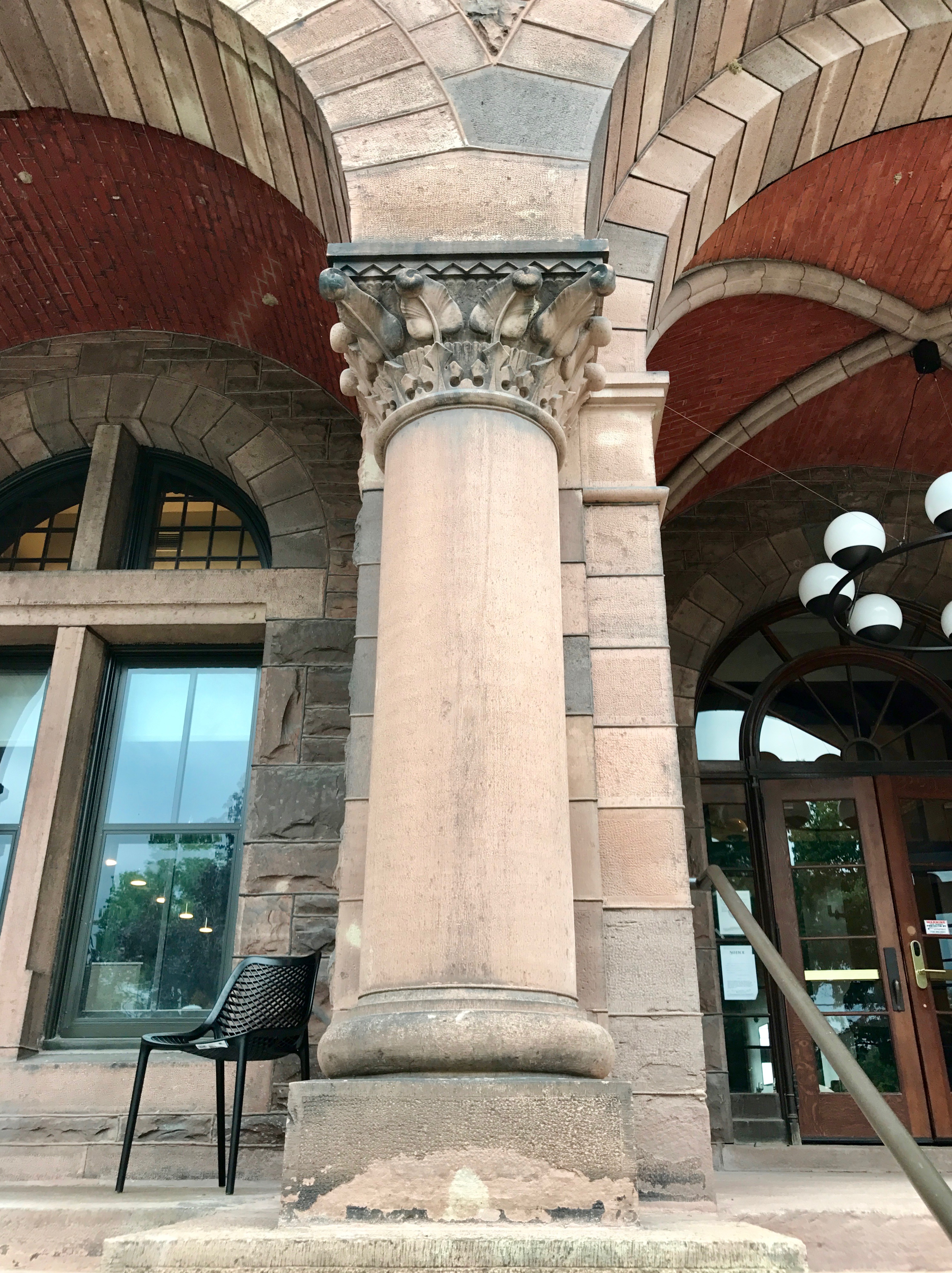
I suppose those are Corinthian capitals.
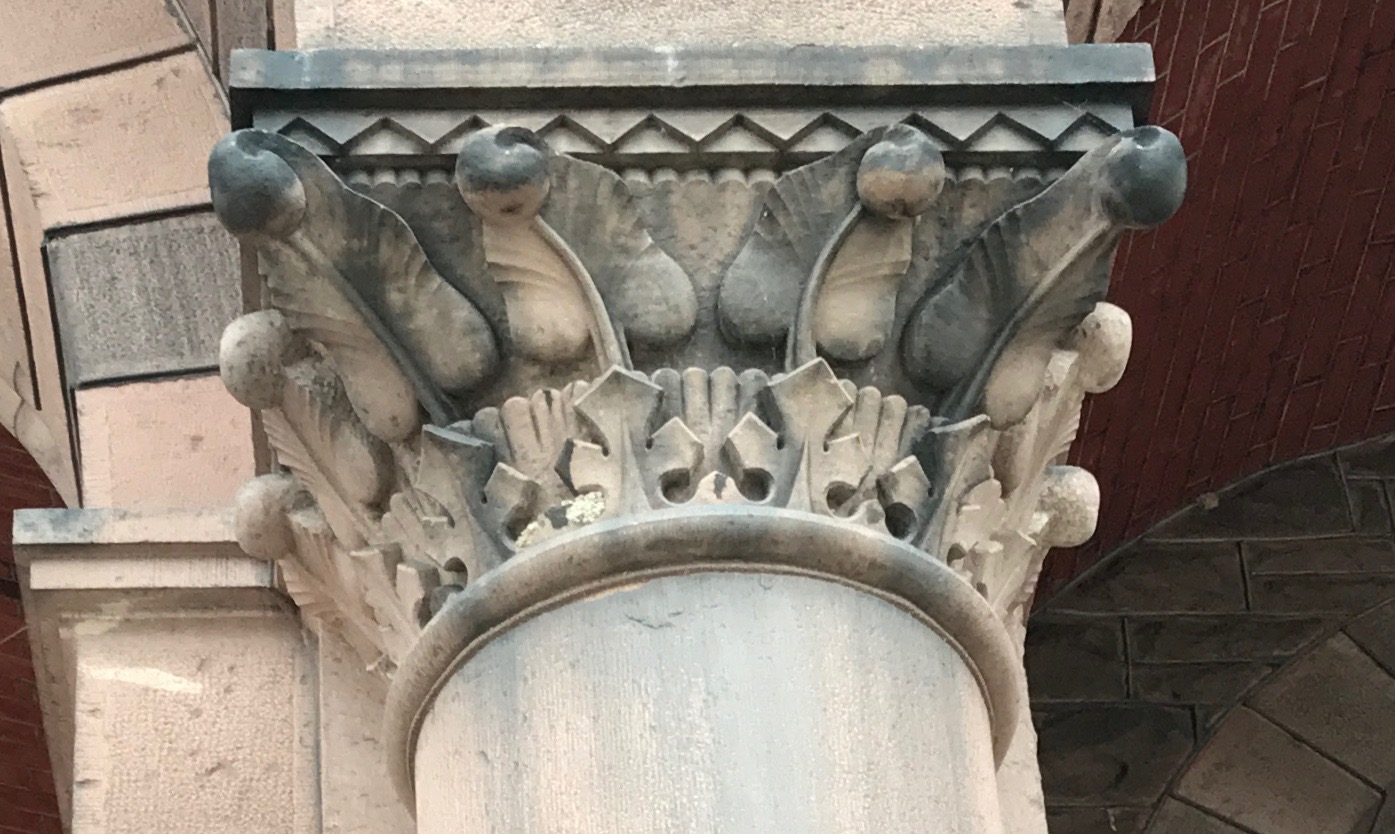
However, they are not your typical Corinthian capitals. It looks like Richardson chose to go with feathers instead of acanthus leaves.

There is ribbed groin vaulting in this area. I remember my art history classmates tittering when Sister Jeanne talked about ribbed groin vaults. The tile work on the outside compliments the tile work inside.
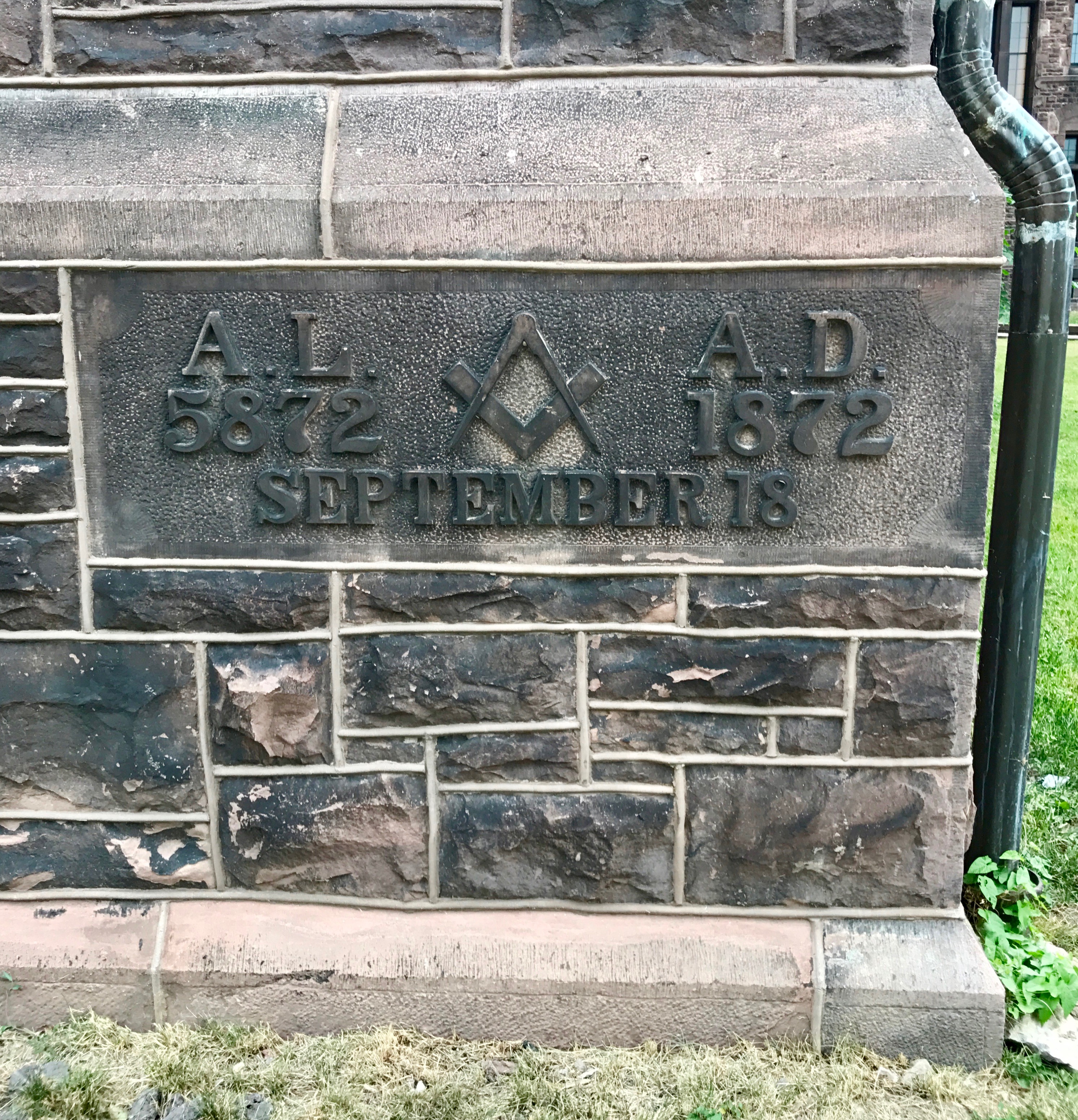
I started back toward the parking lot where I had left Bart, when I noticed the cornerstone with the Masonic inscription. It does rather make sense that masons would have had a hand in creating this building.

On my way back to the parking lot, I passed this door. I wondered what the label said?
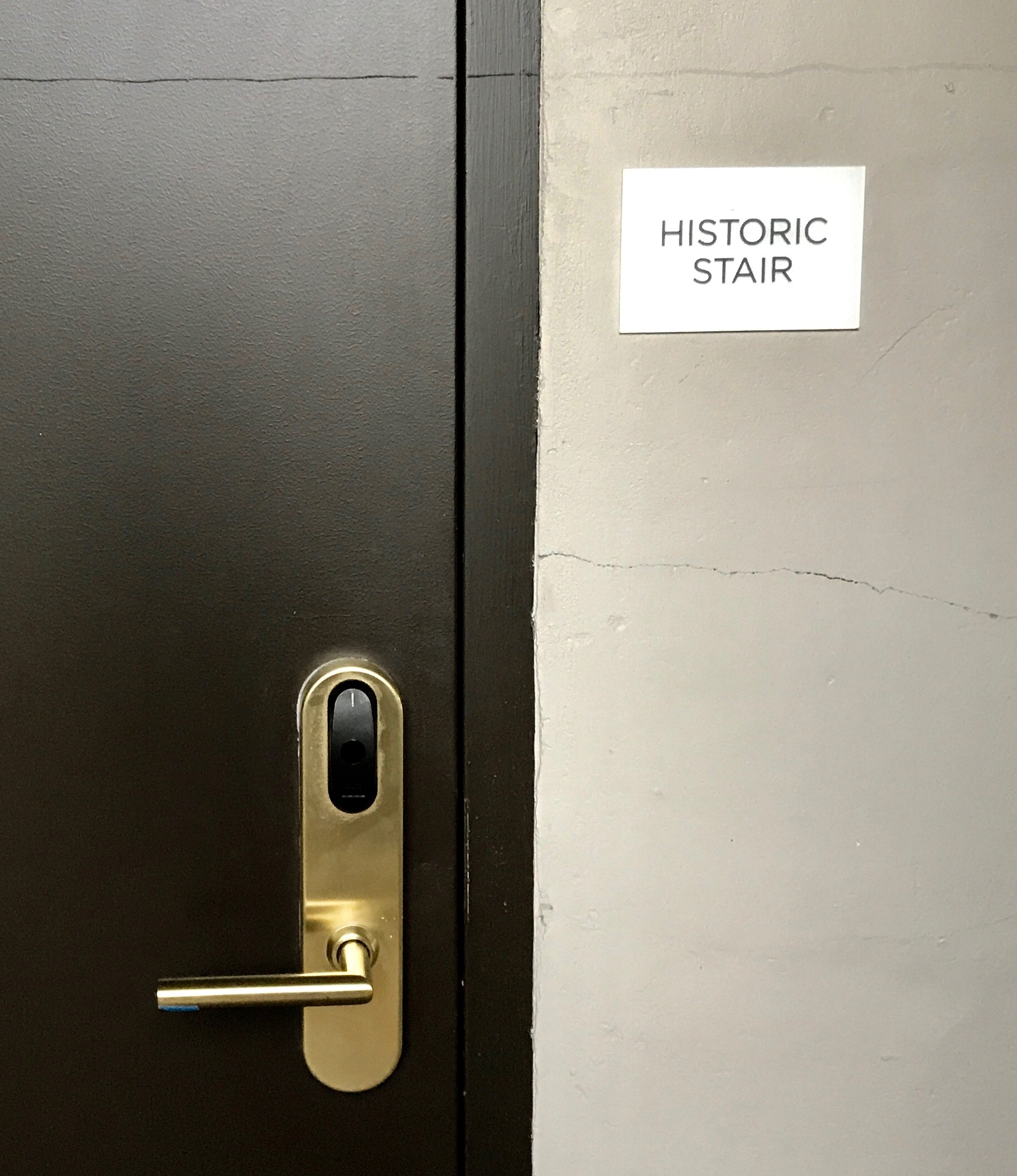
I guess the historic stair does go somewhere. I tried the door, but it was locked.
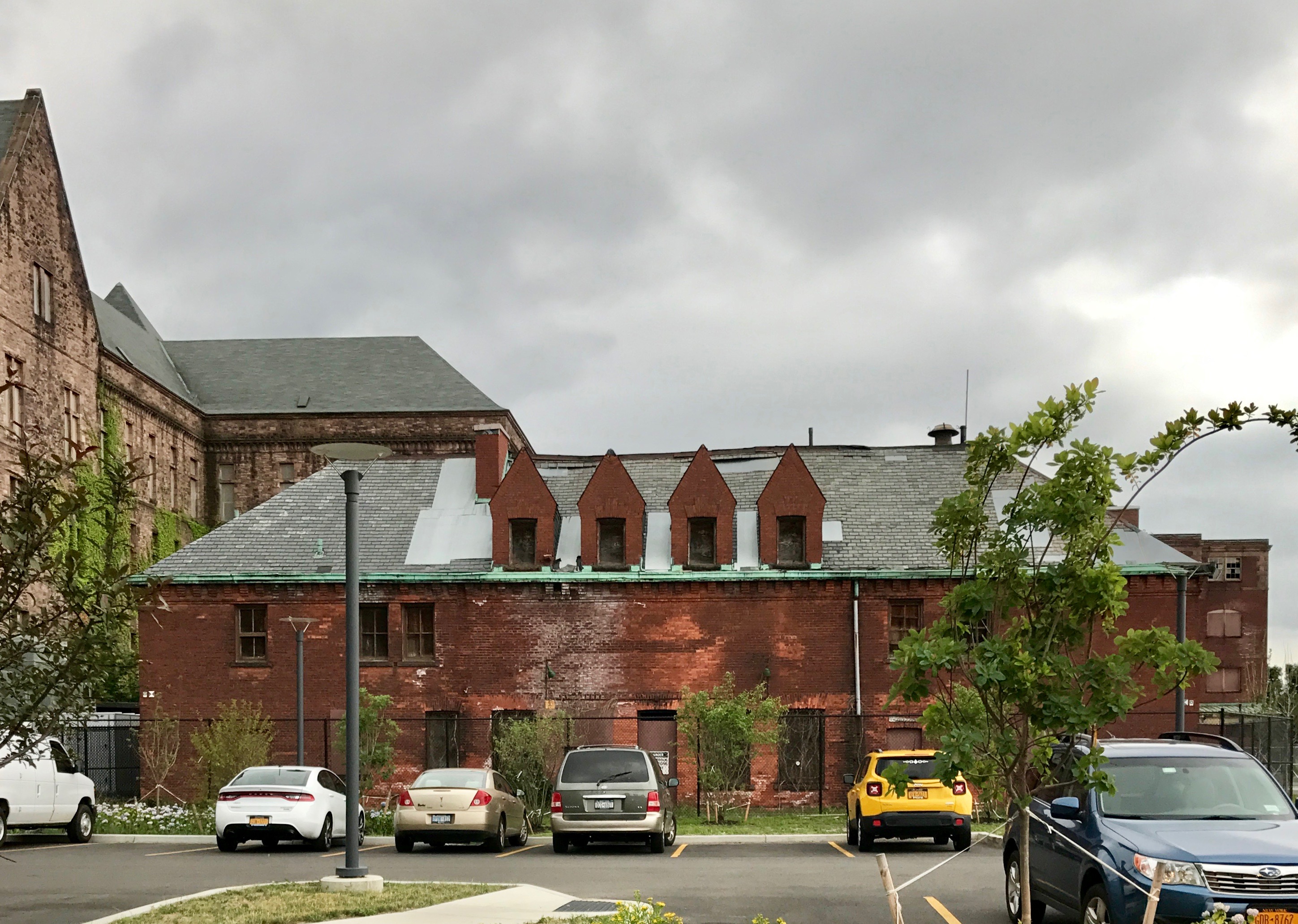
Back in the parking lot, you can see some of the other buildings that were part of the hospital at one time. Some parts have been torn down, and others appear to be in transition.
And with that, I left. I had things to do and people to see.
Once again, thank you, Sister Jeanne!