My next stop was Selma, such a pivotal place in American history.
I found an Army Corps of Engineers campground at Prairie Creek.
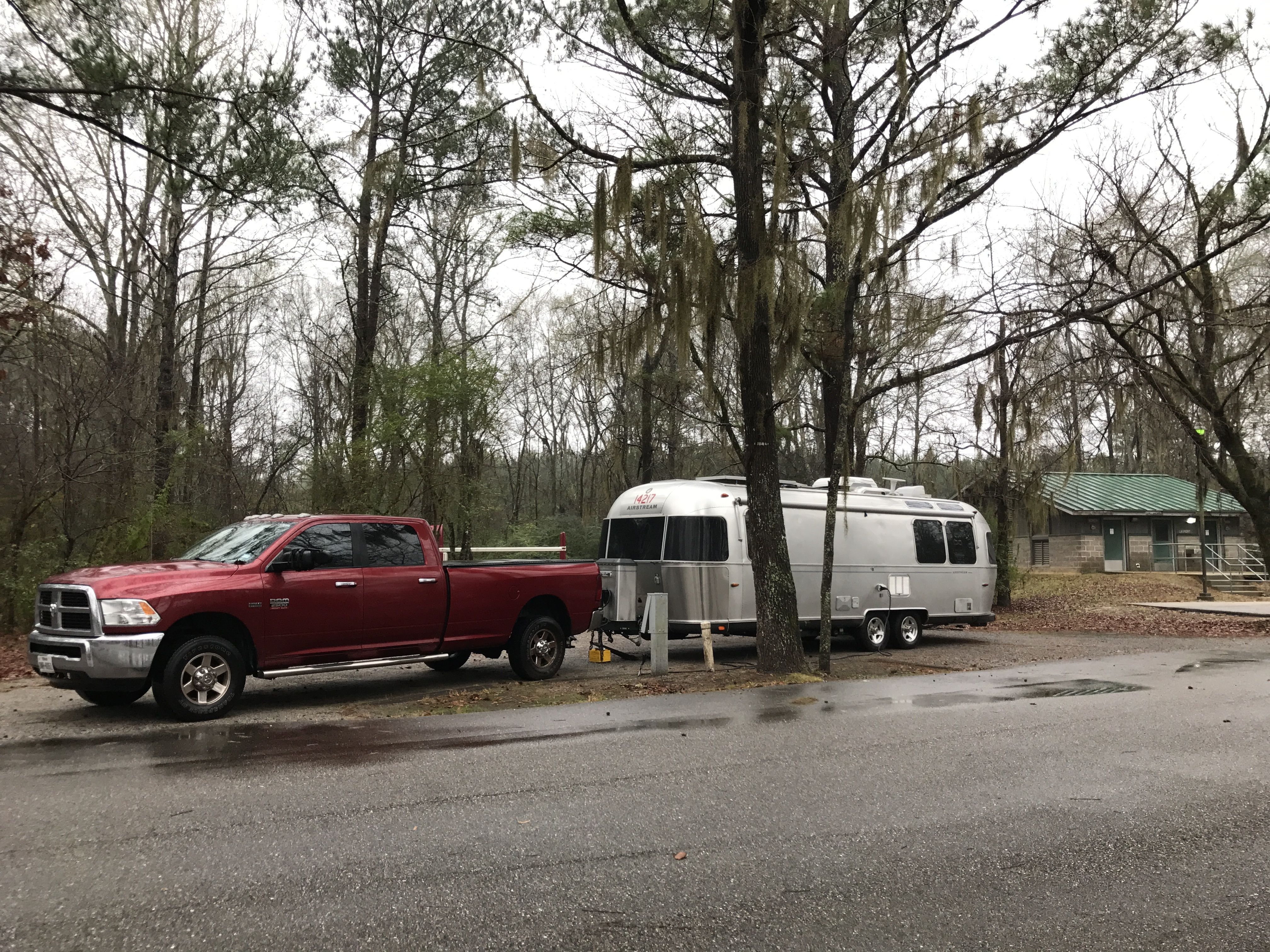
For a couple bucks more, I could have had a site right by the river. However, the river was right across the road, and I could see it just fine.
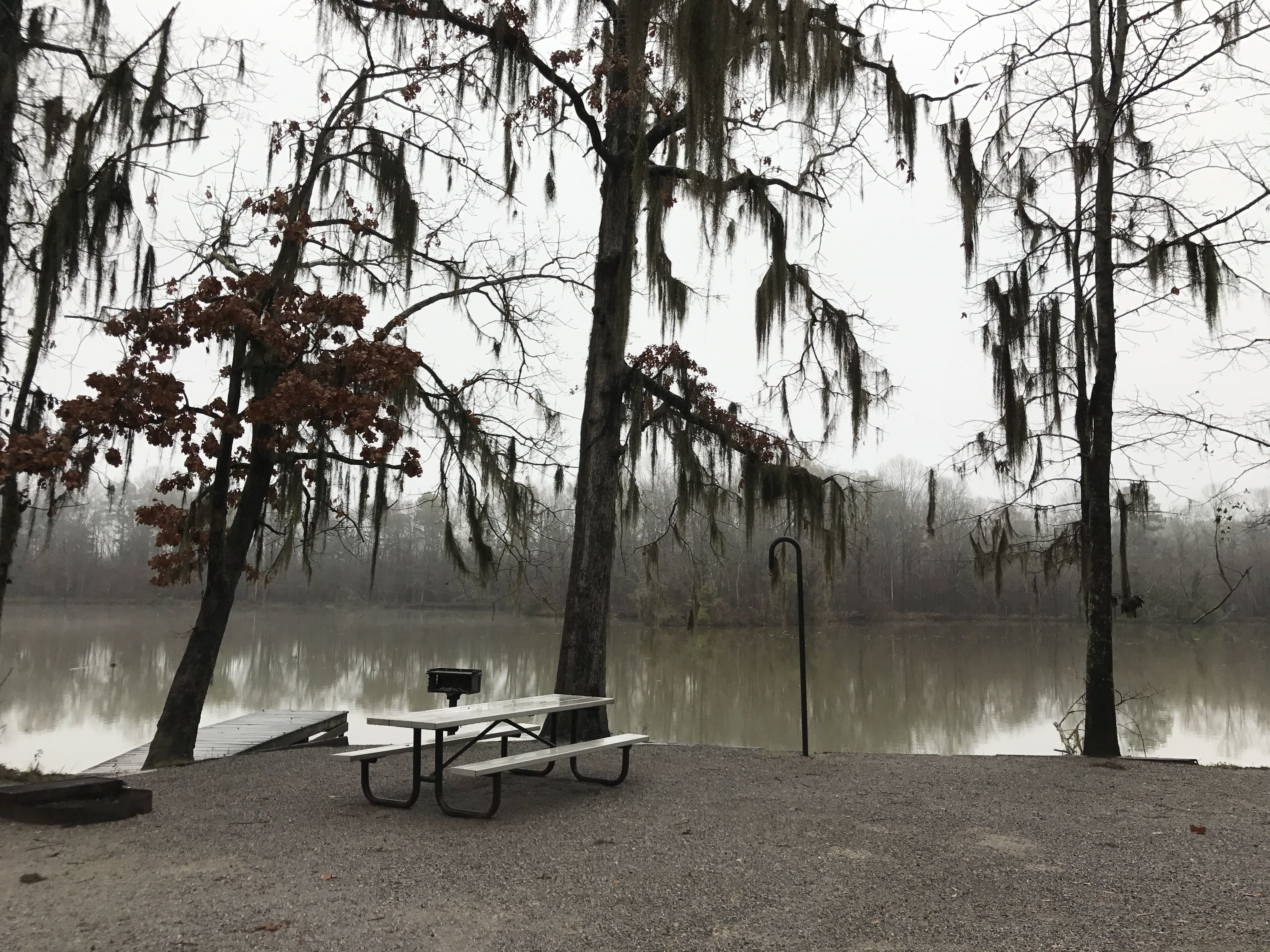
Also, it rained almost the whole time I was there. If I remember correctly, it rained about two inches during my stay. I didn’t need anymore water. But for those people who were into fishing or boating, having your own dock would be a real plus.
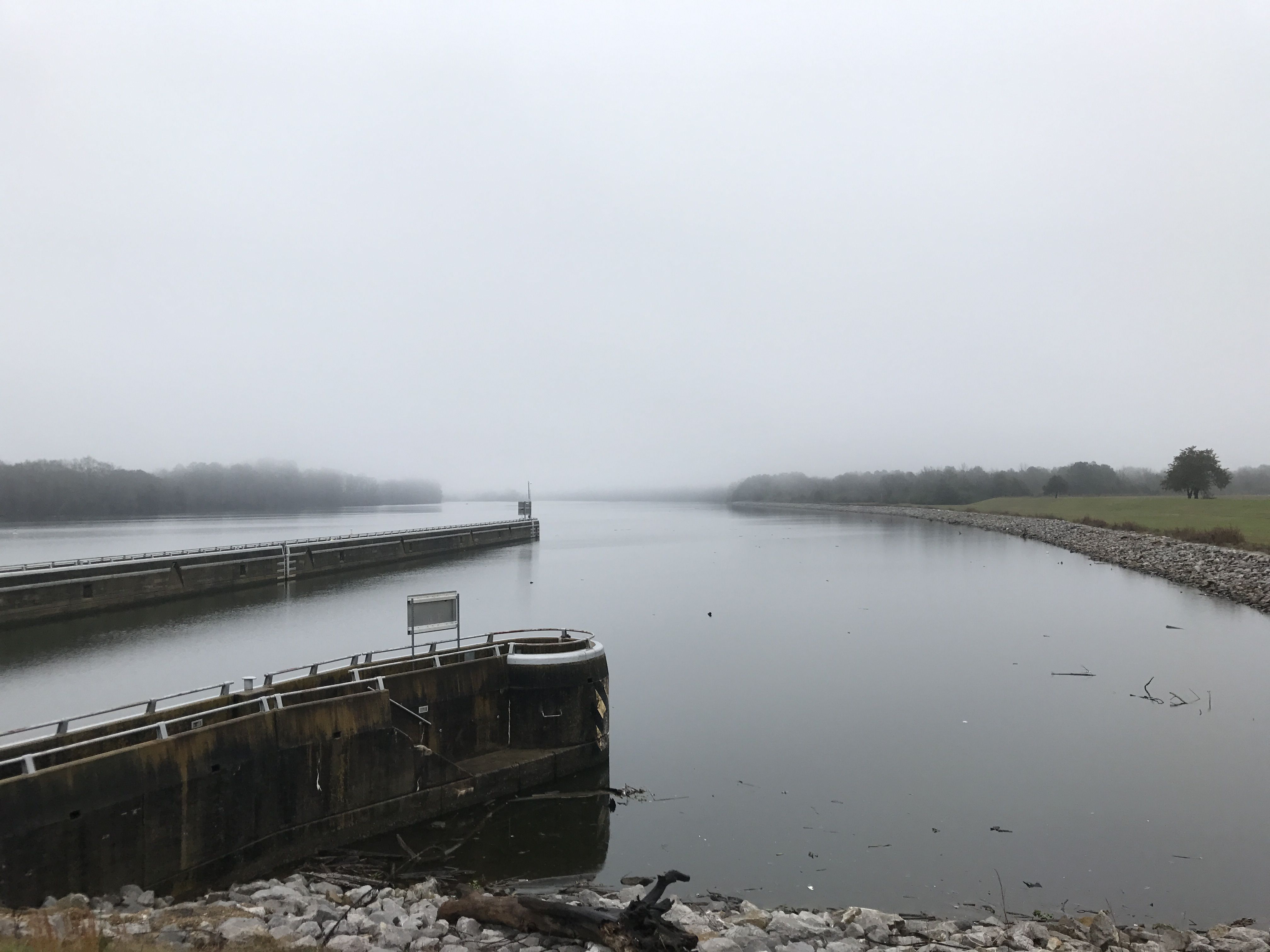
The Army Corps of Engineers many times has campgrounds near their projects. The Robert F. Henry Lock and Dam on the Alabama River is about 15 miles east of Selma. I suppose people could still navigate the river with the lock, but I didn’t see anyone on duty. According to Wikipedia, The river played and important role in the region in the 19th century as a way to transport goods. It eventually combines with other rivers and empties into the Gulf of Mexico near Mobile. It’s not as important as it once was because of the construction of roads and railways.
Anyway, I didn’t choose this route because I wanted to see yet another lock and dam.
I came to see Selma.
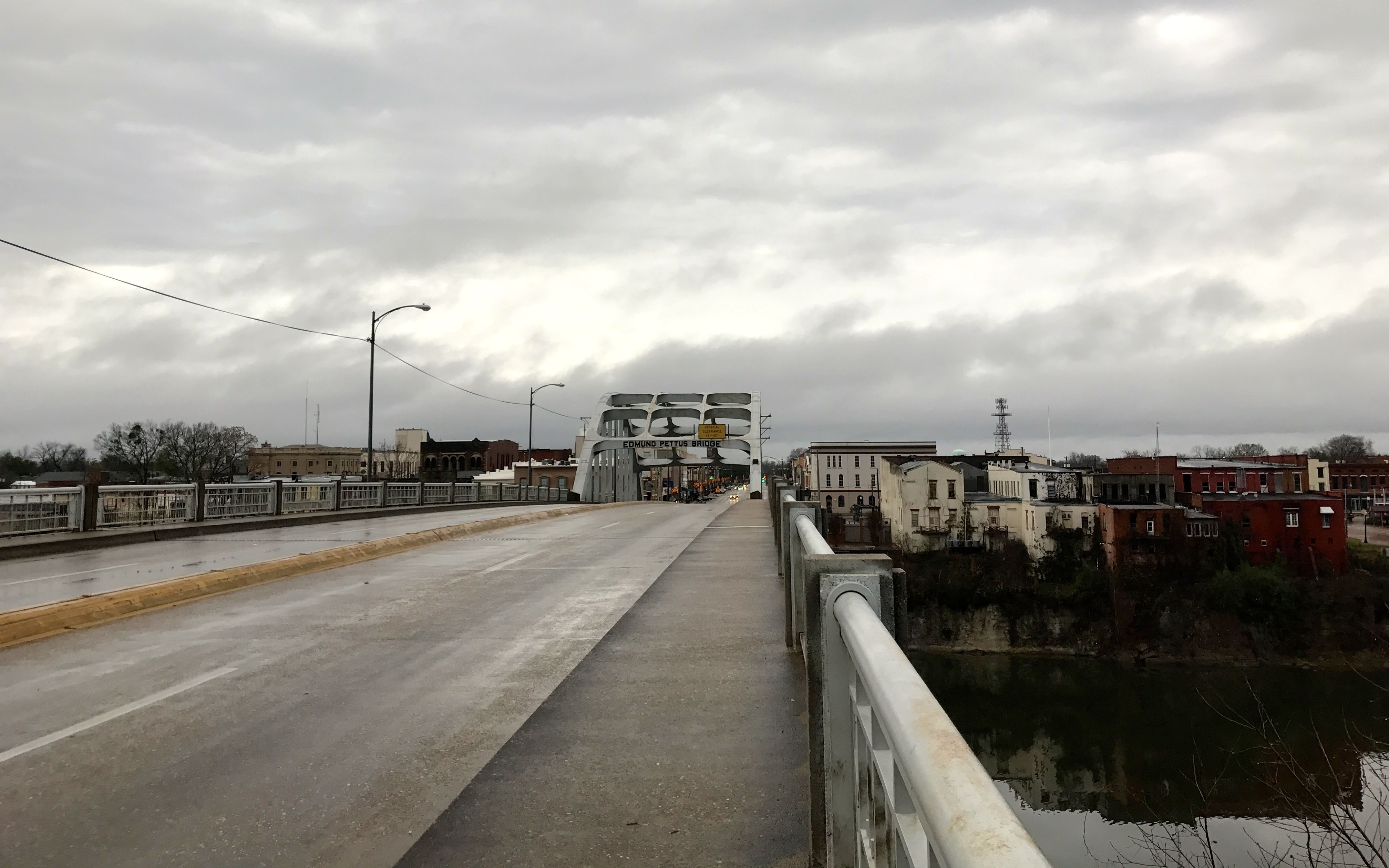
More specifically, I wanted to see the Edmund Pettus Bridge.
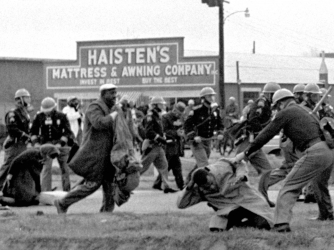
This is one of the photos from Bloody Sunday, March 7, 1965. Around 600 citizens planned to march from Selma to Montgomery to petition Governor George Wallace directly about being denied their rights to register to vote. Governor Wallace ordered the state troopers “to use whatever measures are necessary to prevent a march.”
As soon as they crested the bridge, they could see the state troopers waiting for them.
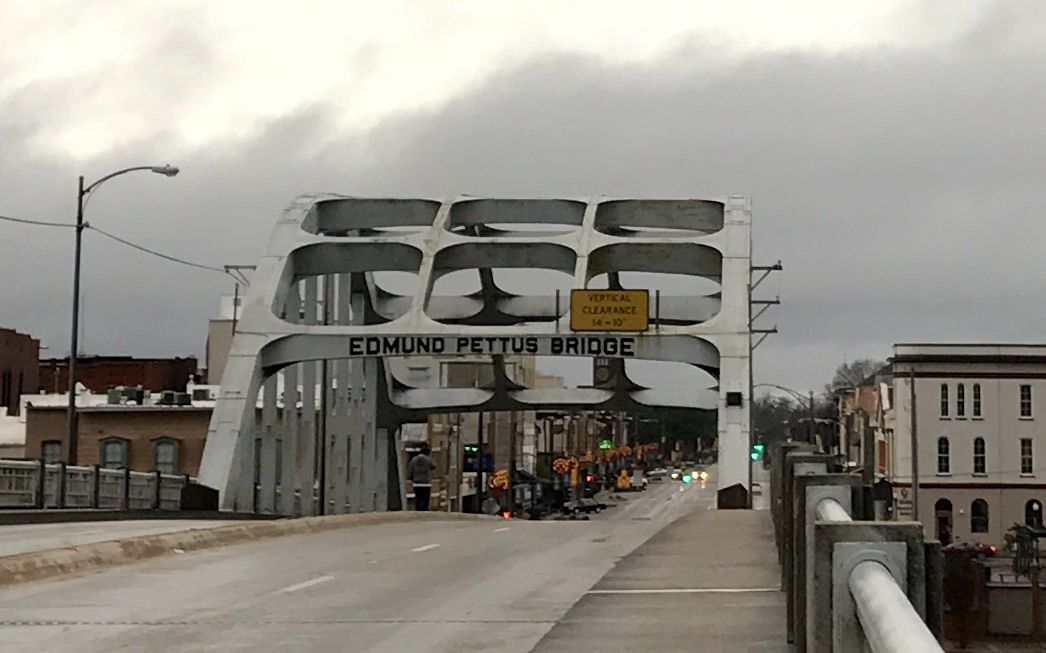
Incidentally, the bridge was built in 1940 and is named after Edmund Pettus, a former Confederate brigadier general, U.S. Senator from Alabama and Grand Dragon of the Alabama Ku Klux Klan.
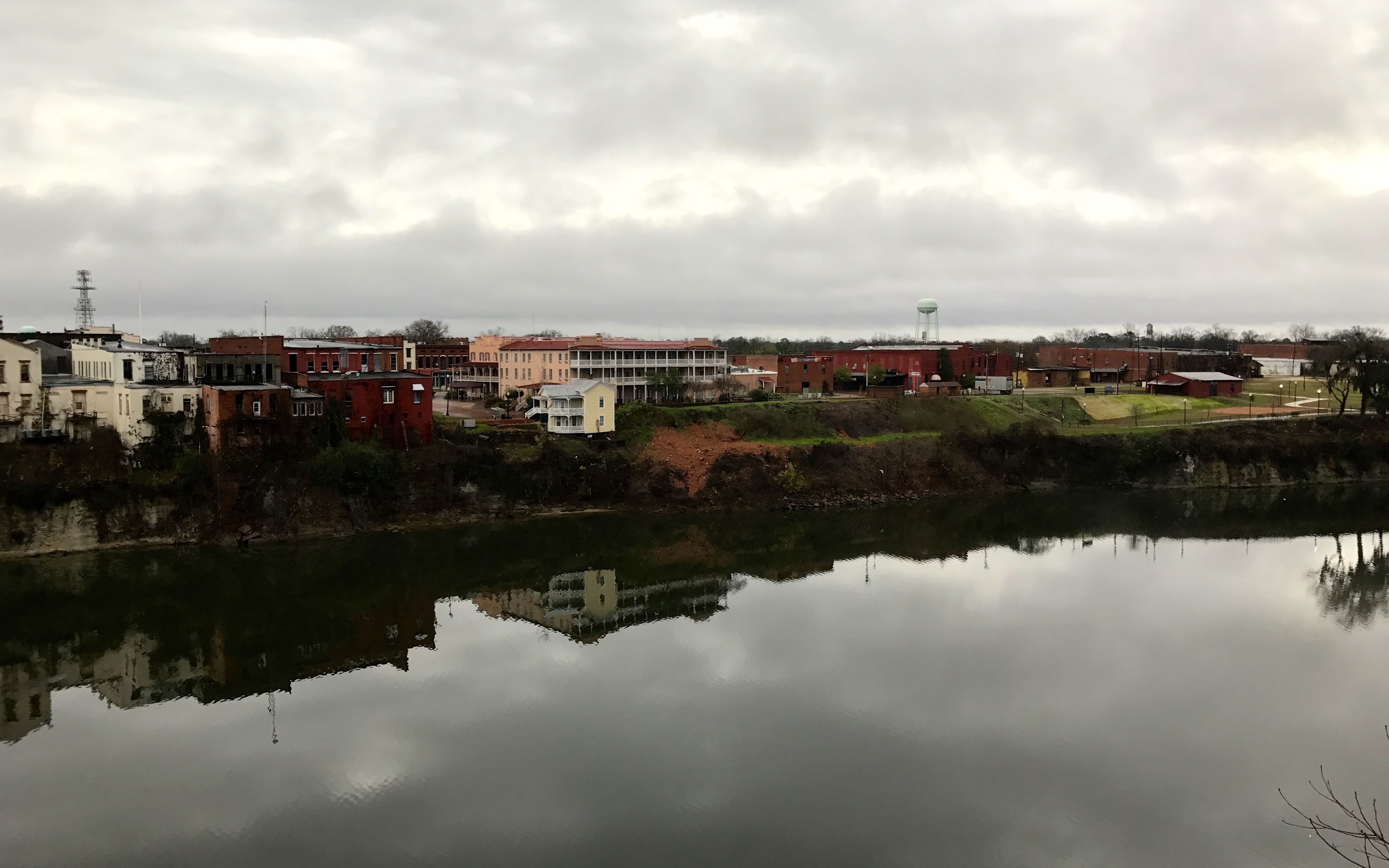
I parked right about where the historical photo was taken and walked part of the way across the bridge. People asked me if I walked across. Quite frankly, I was overwhelmed with what took place there and how recently it all happened. I didn’t feel it was my place to recreate the march that so many people sacrificed so much to make.
I returned to the park at the foot of the bridge.
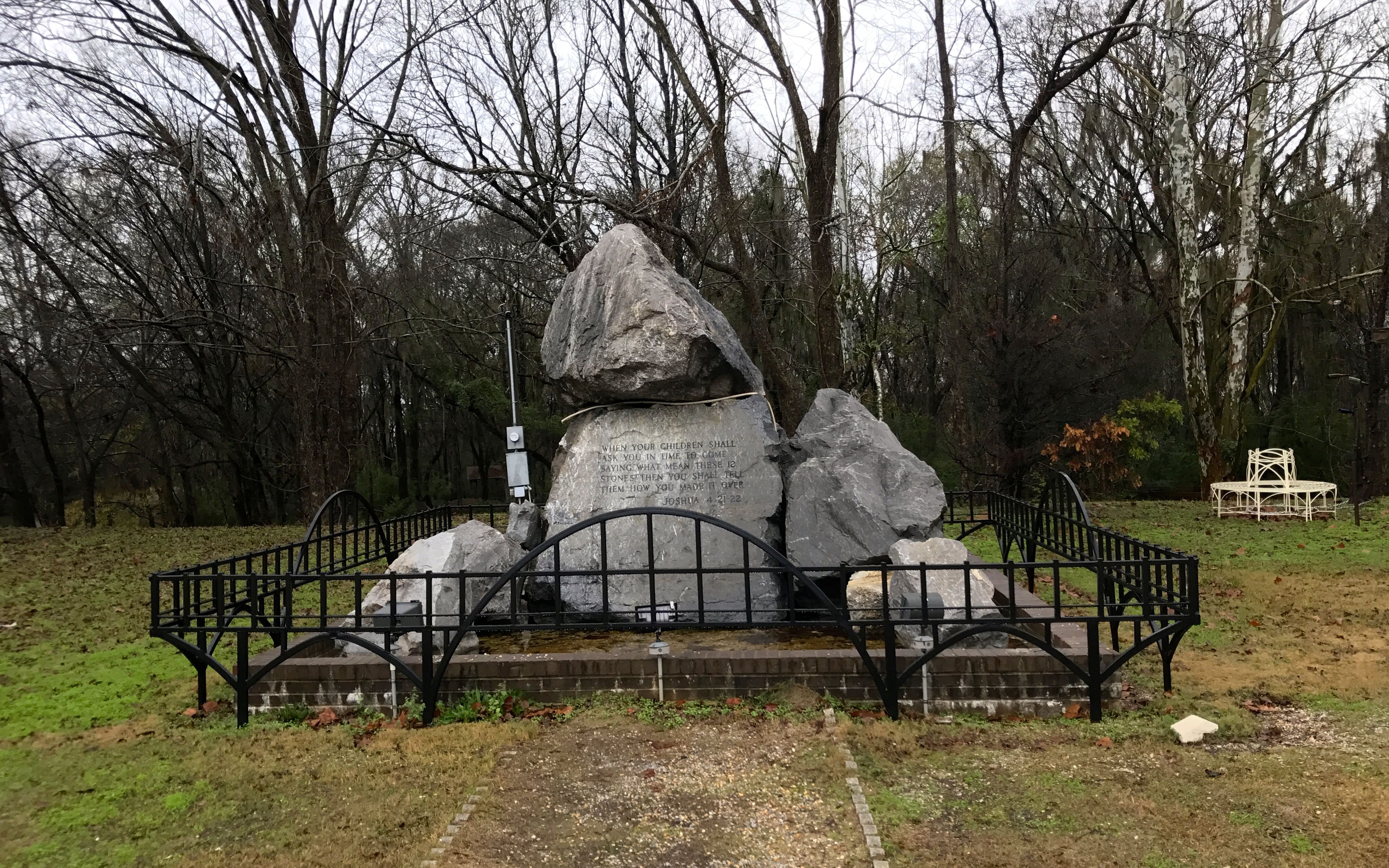
There is a monument that is based on the scripture verse in the center.
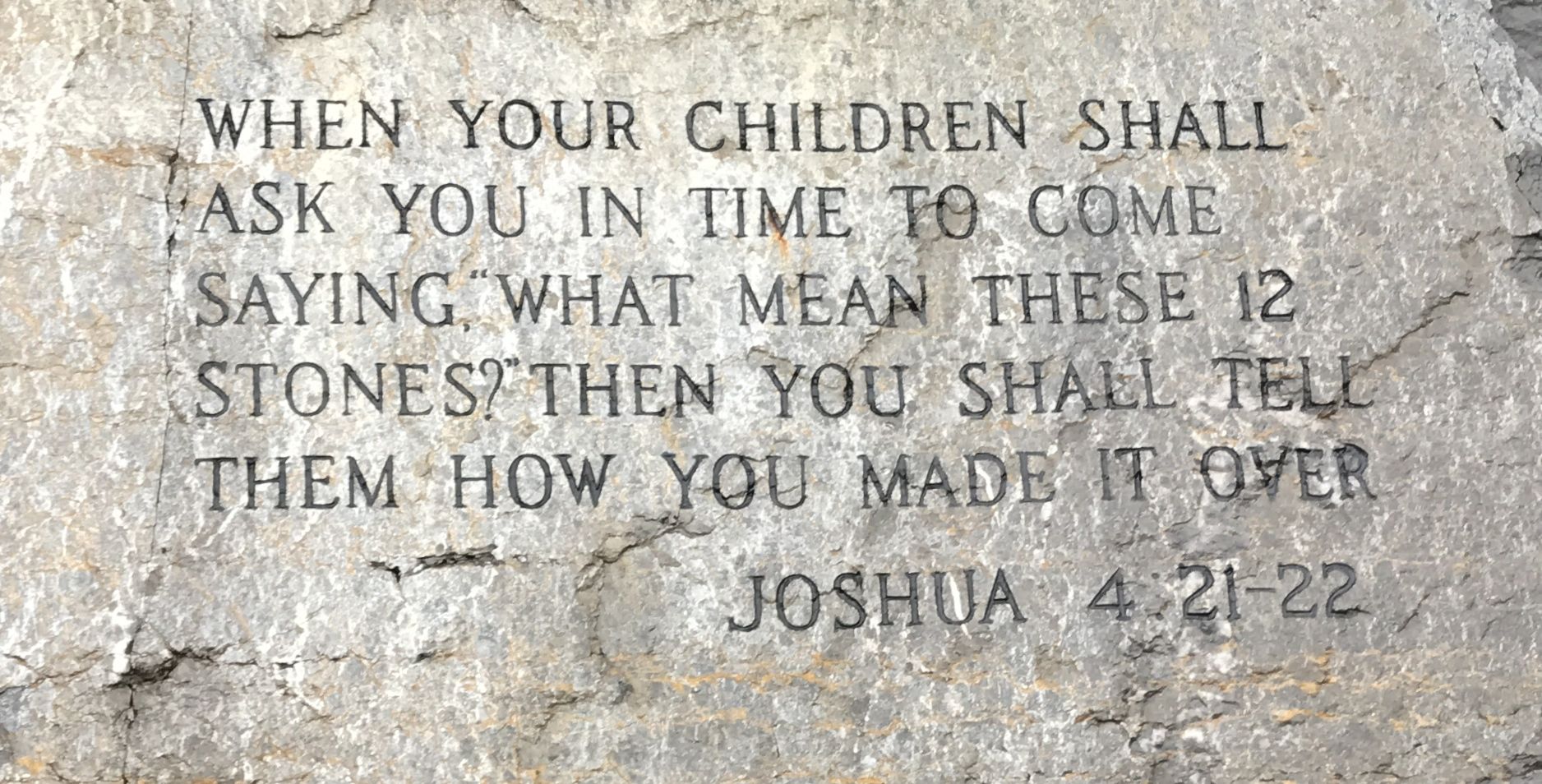
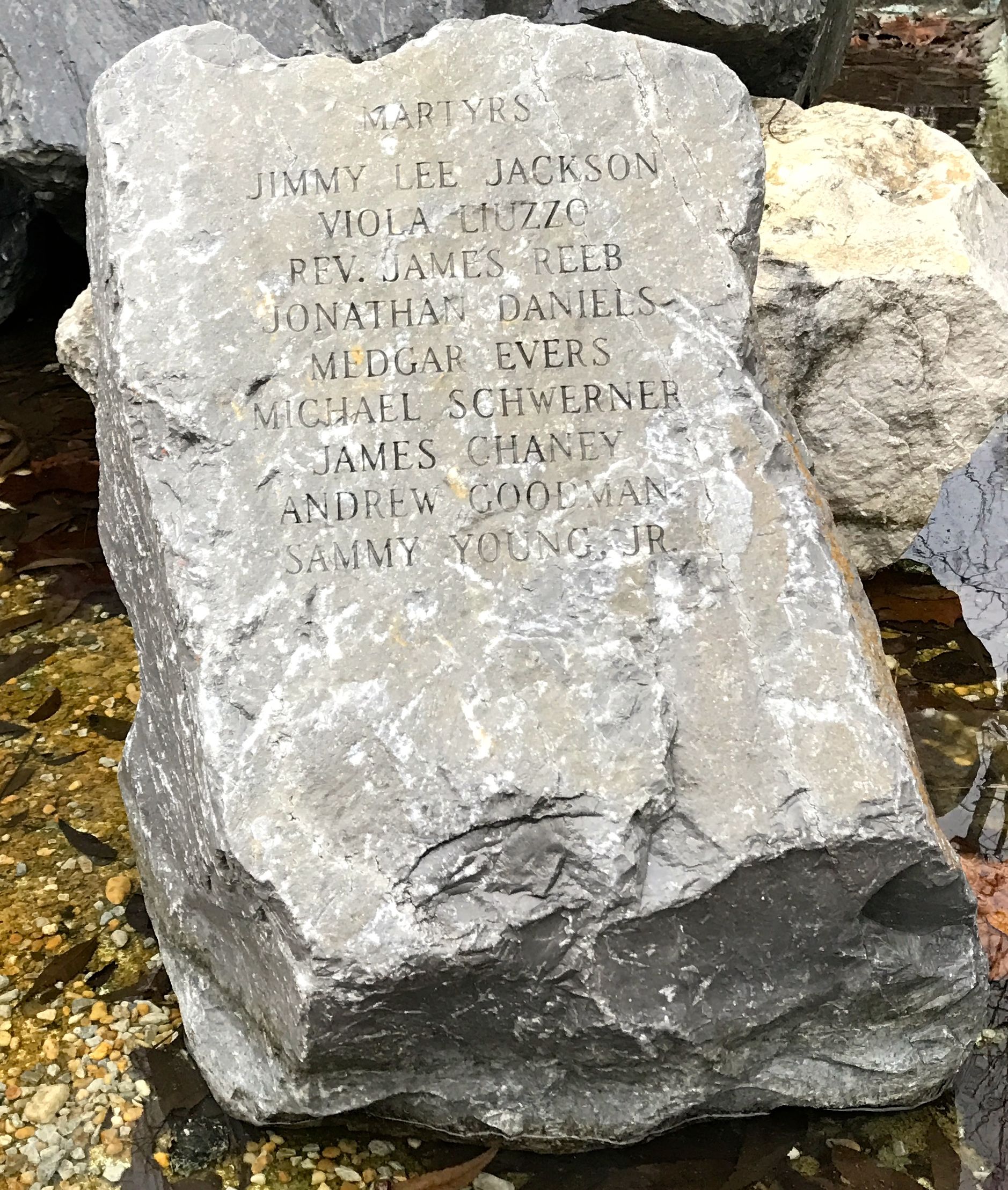
The martys of the movement are honored on one of the stones.
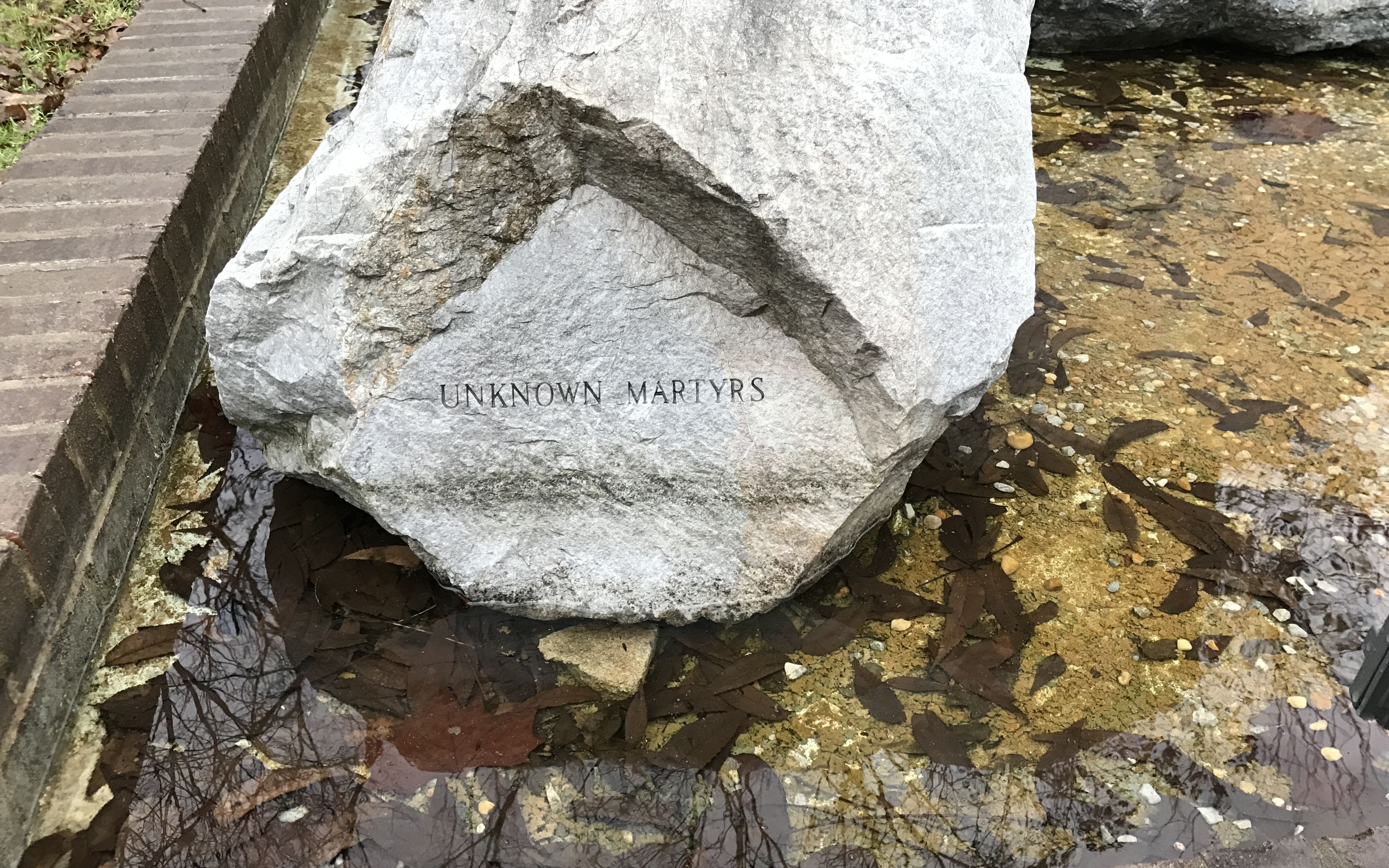
Another stone is dedicated to the unknown martyrs.
A large mural covers the wall of the building next to the park.

There were also some other monuments to important people who stepped up during those times.
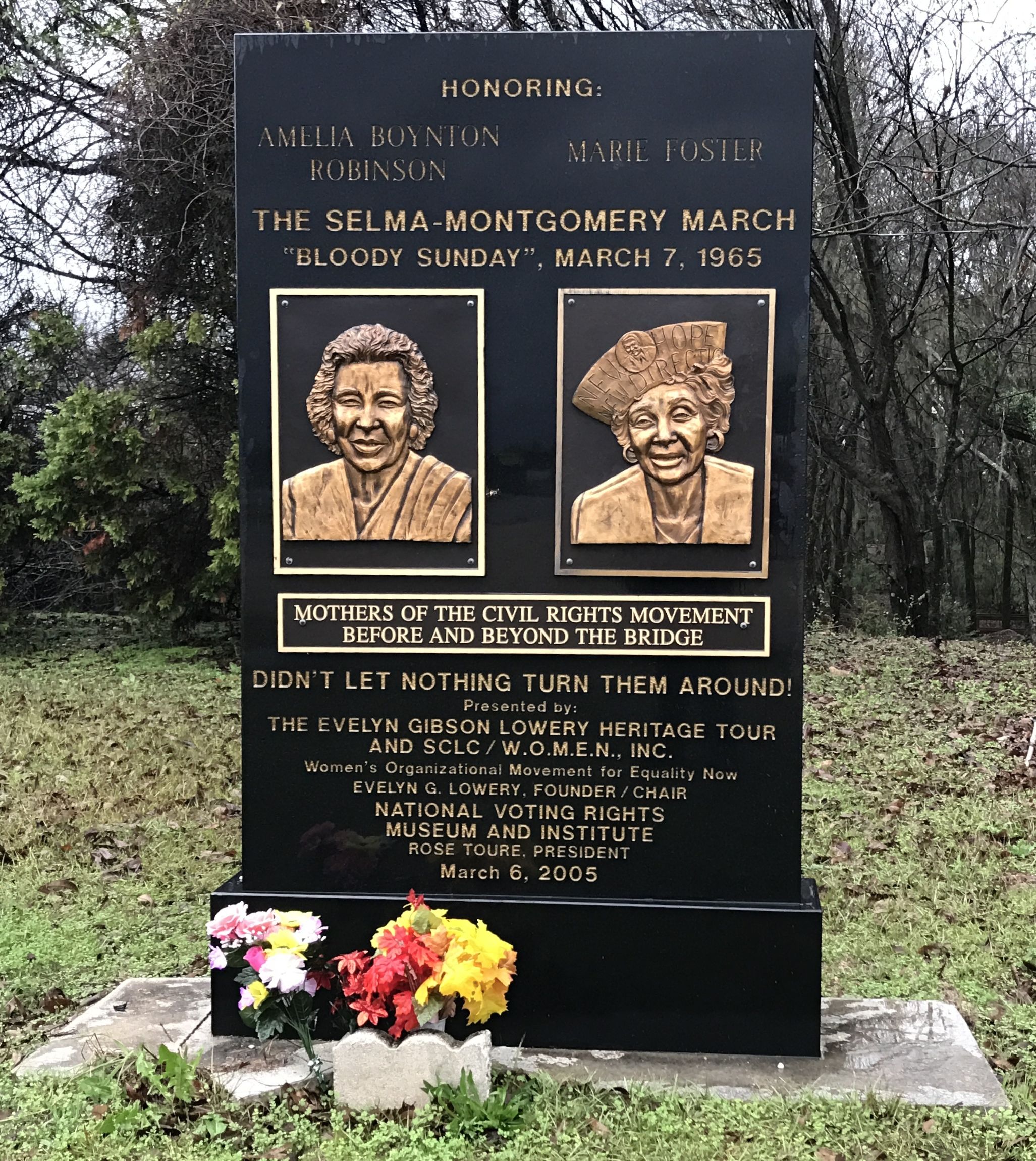
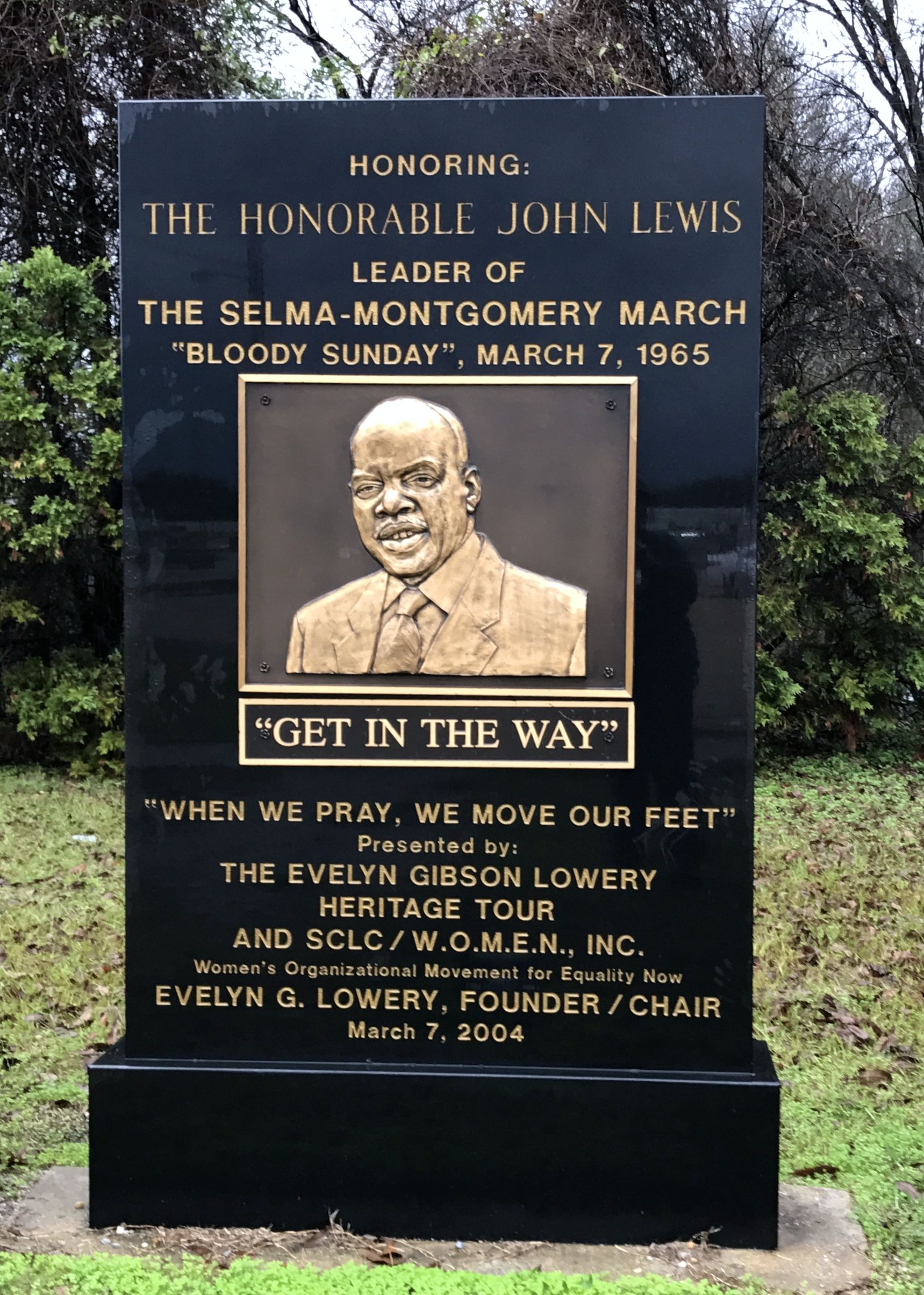
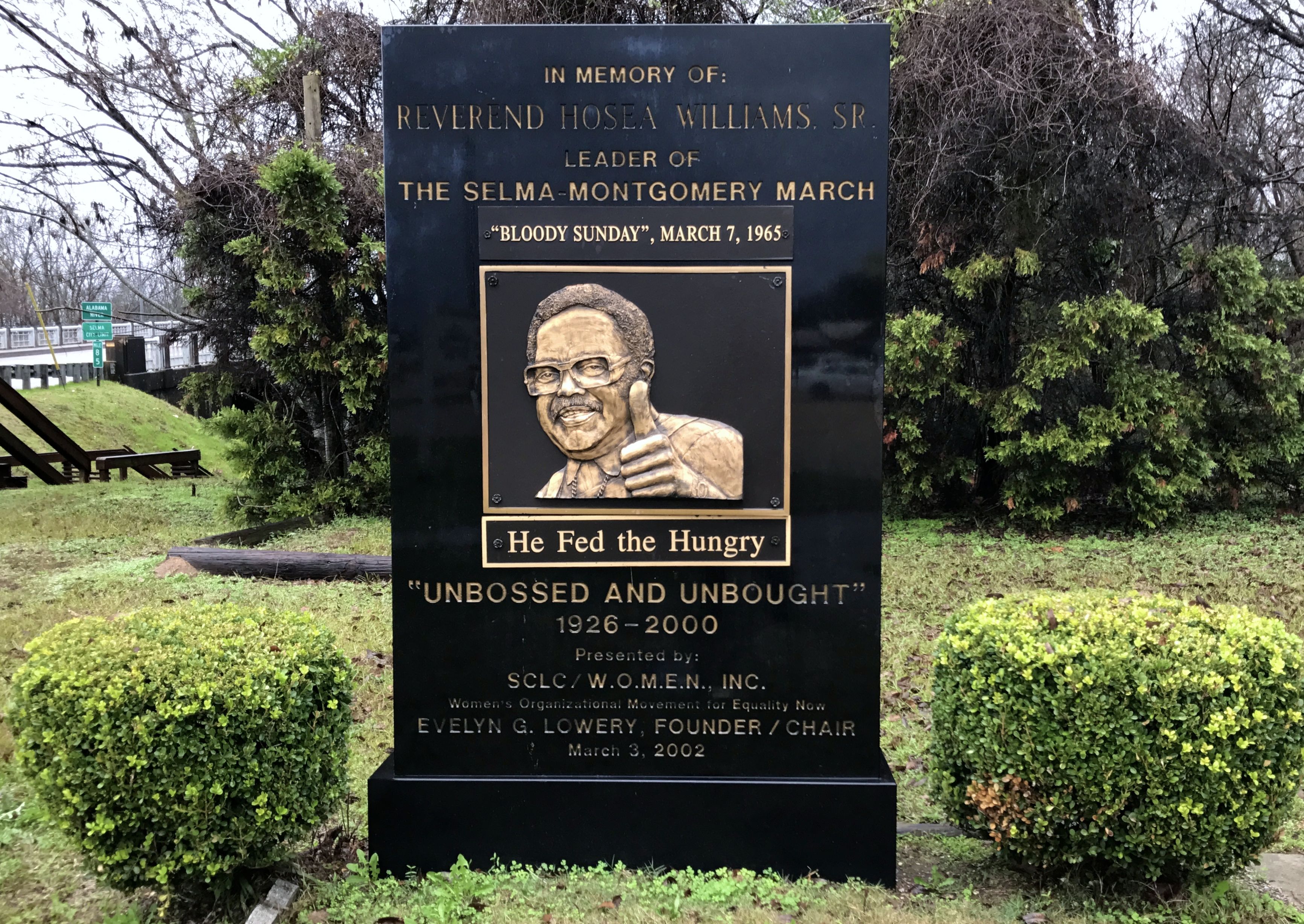
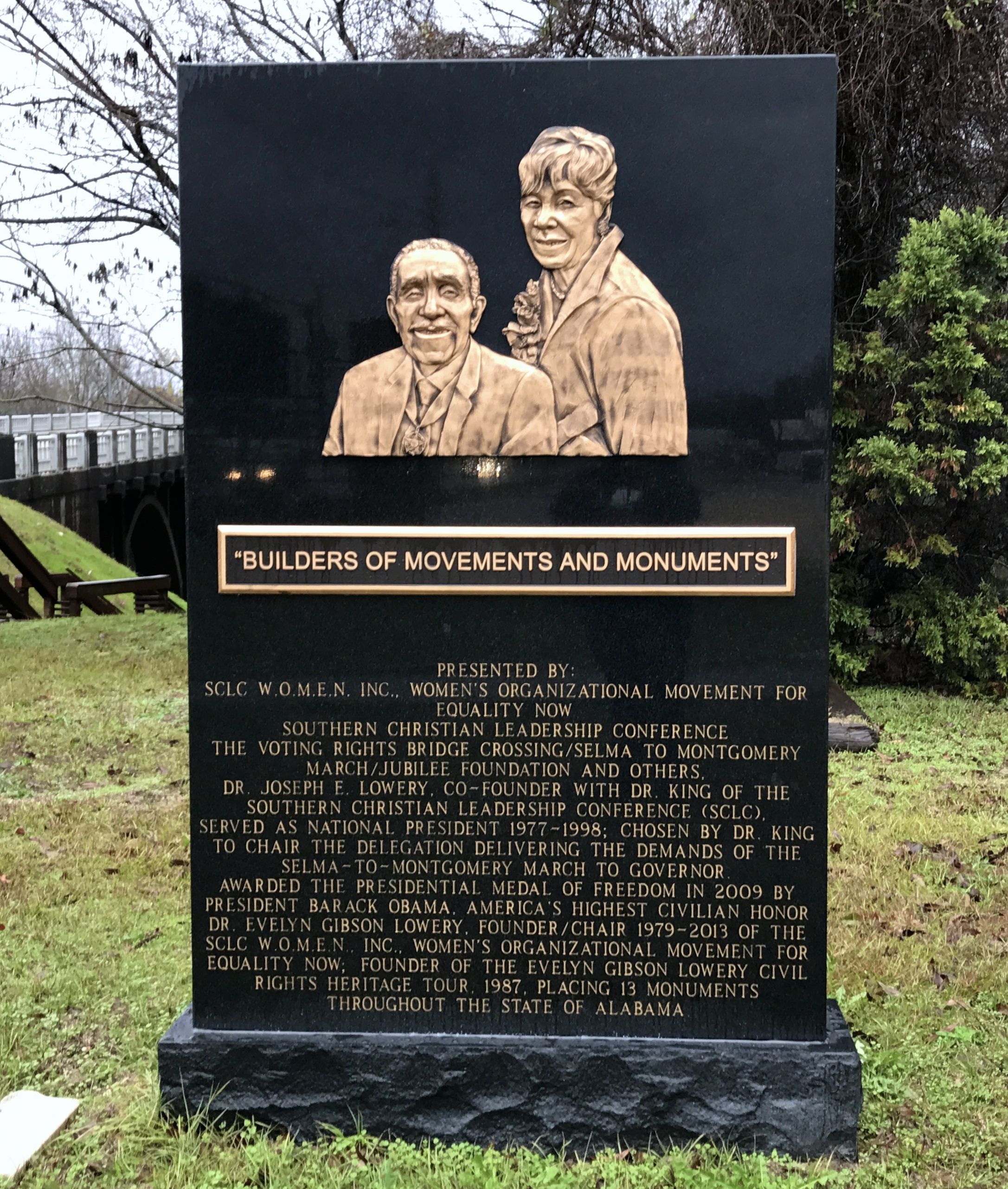
I liked the personal feel of this small park. It doesn’t have that “too-polished, matchy-matchy” feel to it.
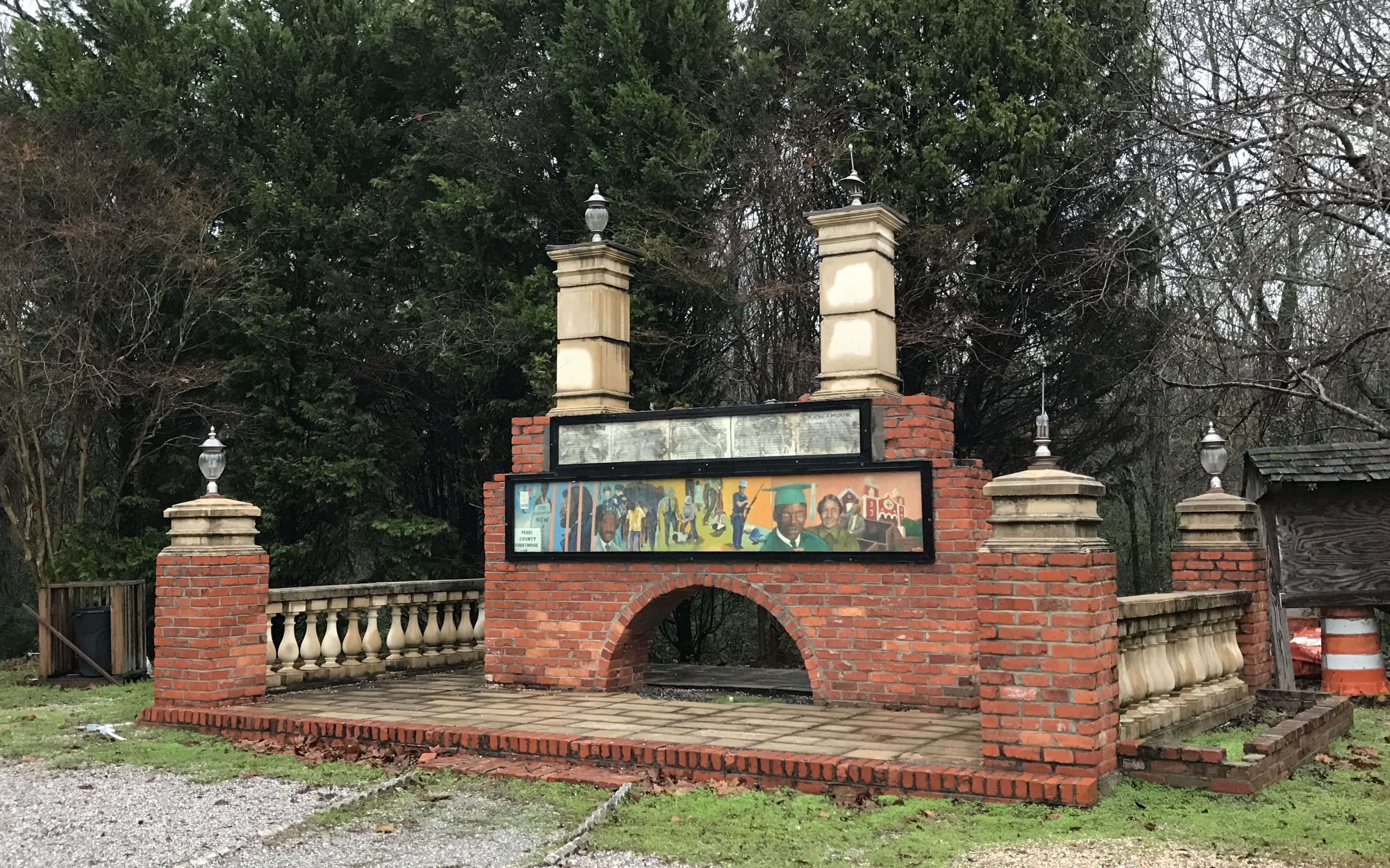
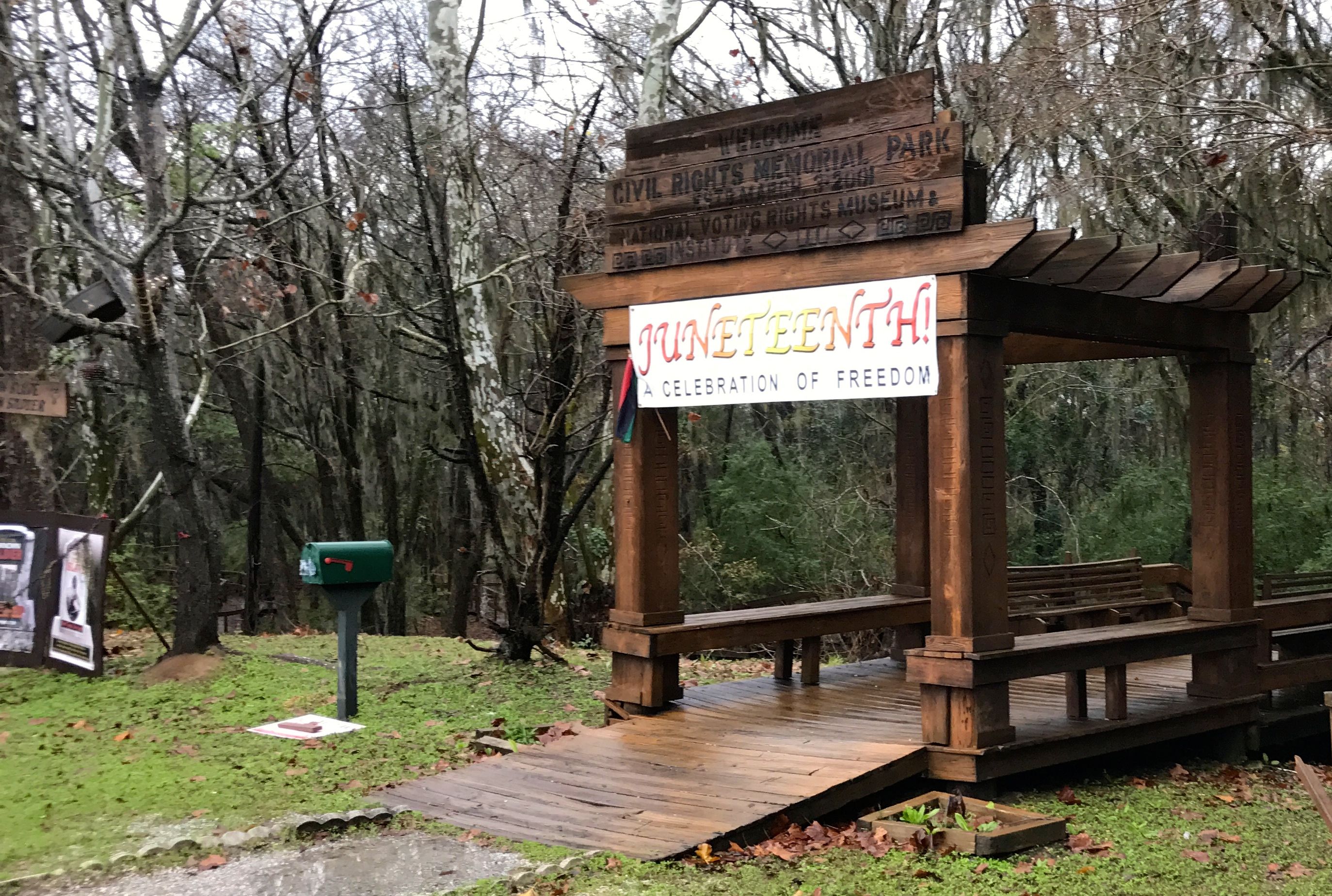
This gateway lead down to a picnic area down below.
From the pictures you can tell how wet it was. Unfortunately, all the water didn’t stay out of the trailer. I found a repair shop that could get me in. It was along my route and I could get there when they could see me, so I had to keep rolling.
Next stop, Vicksburg, Mississippi.
THAT is a great story! I feel like I was right there with you…hope you are doing awesome! Love hearing about your adventures…
Excellent photos. I never thought I’d want to visit Selma but you’ve given me a good and powerful view of it. Thanks
Thanks, Pat! It is quite a moving place.
Thank you for traveling along with me, Mickey!