Fall came, and I decided that I needed to get the T@b out for another trip in calendar year 2018. I checked out my list of things I had to put on The List for “next time.” I decided to aim for Crater of Diamonds State Park in Arkansas and see what else might fill in along the way.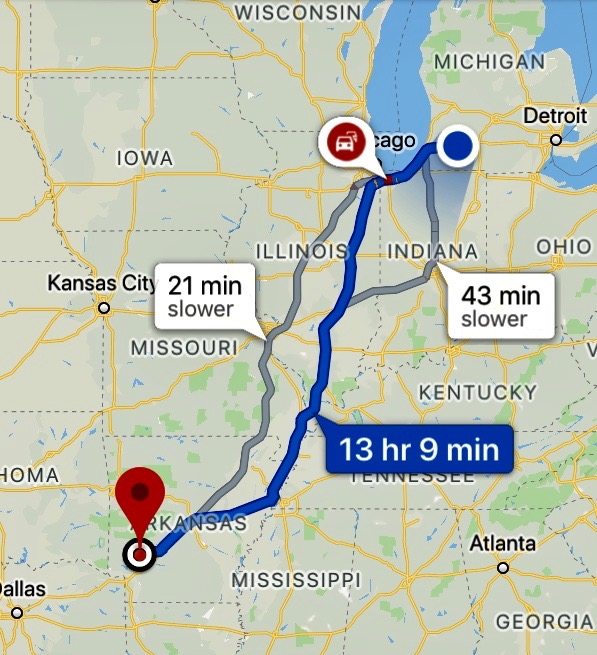 Hmm…Just how close to Chicago do I want to get? I mean, if that is the most logical thing to do, I will drive the Interstates to get around Chicago. I towed Flo the Airstream on I-94 through Chicago once. Once. That was enough to persuade me of the wisdom of avoiding it – especially with a trailer in tow.
Since the trip is 13 hours at a minimum, I decided to take the Indiana route and ,stop for the night at the Cracker Barrel near Effingham. I love the welcome Cracker Barrel extends to us “nomads.” I have to admit, though, that their definition of “comfort food” is not mine. I was thrilled to find this bowl of beans on the menu. Beans are more my speed. I hope they leave it on the menu, because it is going to be my “go-to” dinner when I stop at Cracker Barrels to spend the night.
I got going early-ish in the morning and headed west on I-70. I stopped to take a break at this rest area near, Marshall, Illinois. (Never pass up a restroom!)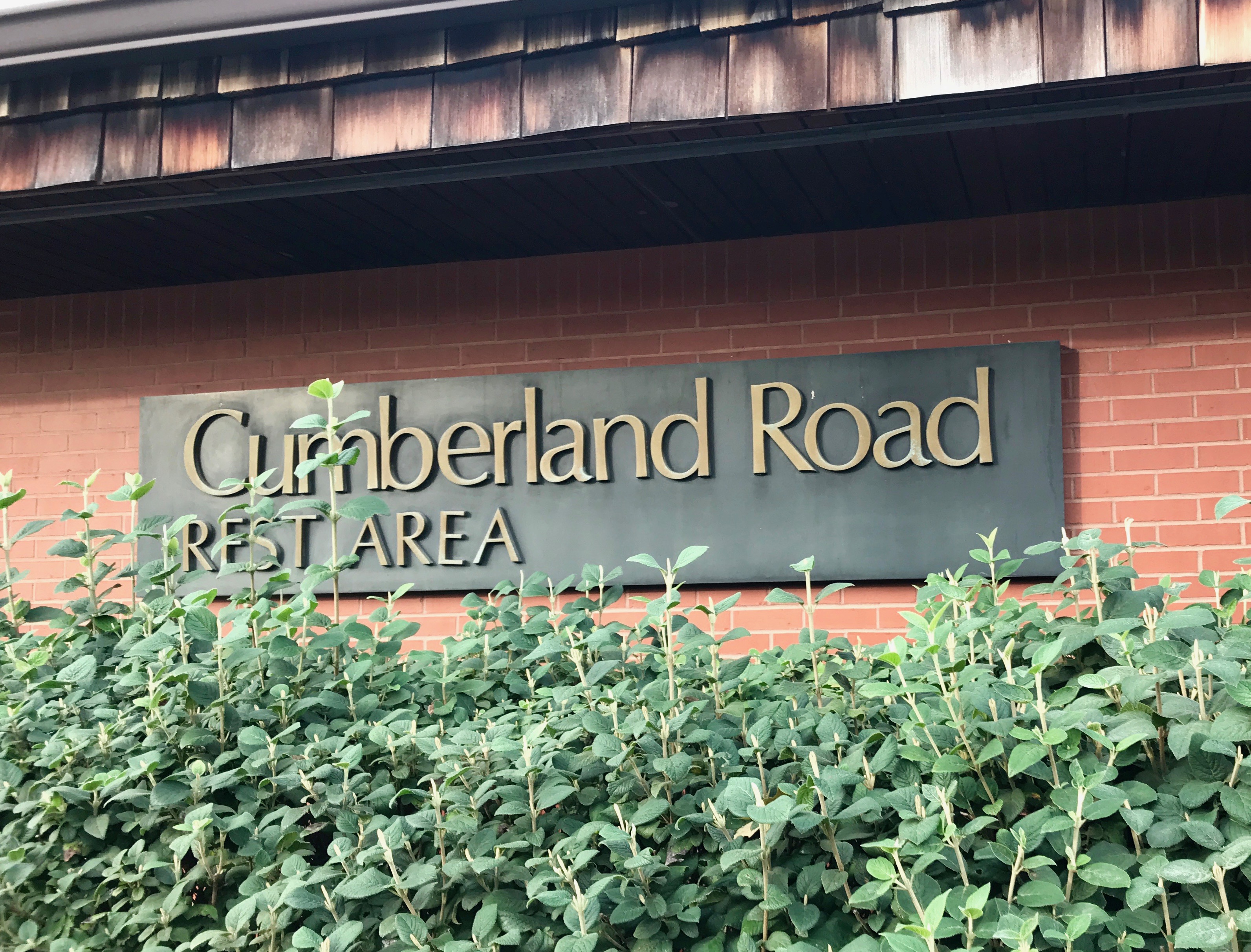 What do you know? Cumberland!
It was a decent rest area. While stretching my legs, I spied this bridge and decided to check it out. It turns out that it is what is left of the Fancher Pony Truss Bridge.
The Trout brothers, Hiram and Everett, were born in the area and the operated a machine shop in Shelbyville, Illinois in the late 1800s. They invented and patented this design for a pony truss bridge.
“What is a pony truss bridge?” I can hear you screaming this at your screen. Well, I imagine you know what a truss is on a bridge, right?
Well, in case your education on bridges was lacking, according to my Preferred Source, a truss is: “an assembly of beams or other elements that creates a rigid structure. In engineering, a truss is a structure that “consists of two-force members only, where the members are organized so that the assemblage as a whole behaves a a single object.”
Essentially, it is material fastened together into a bunch of triangles that work together to hold up the bridge. I’m sure you’ve seen bridges like this before…
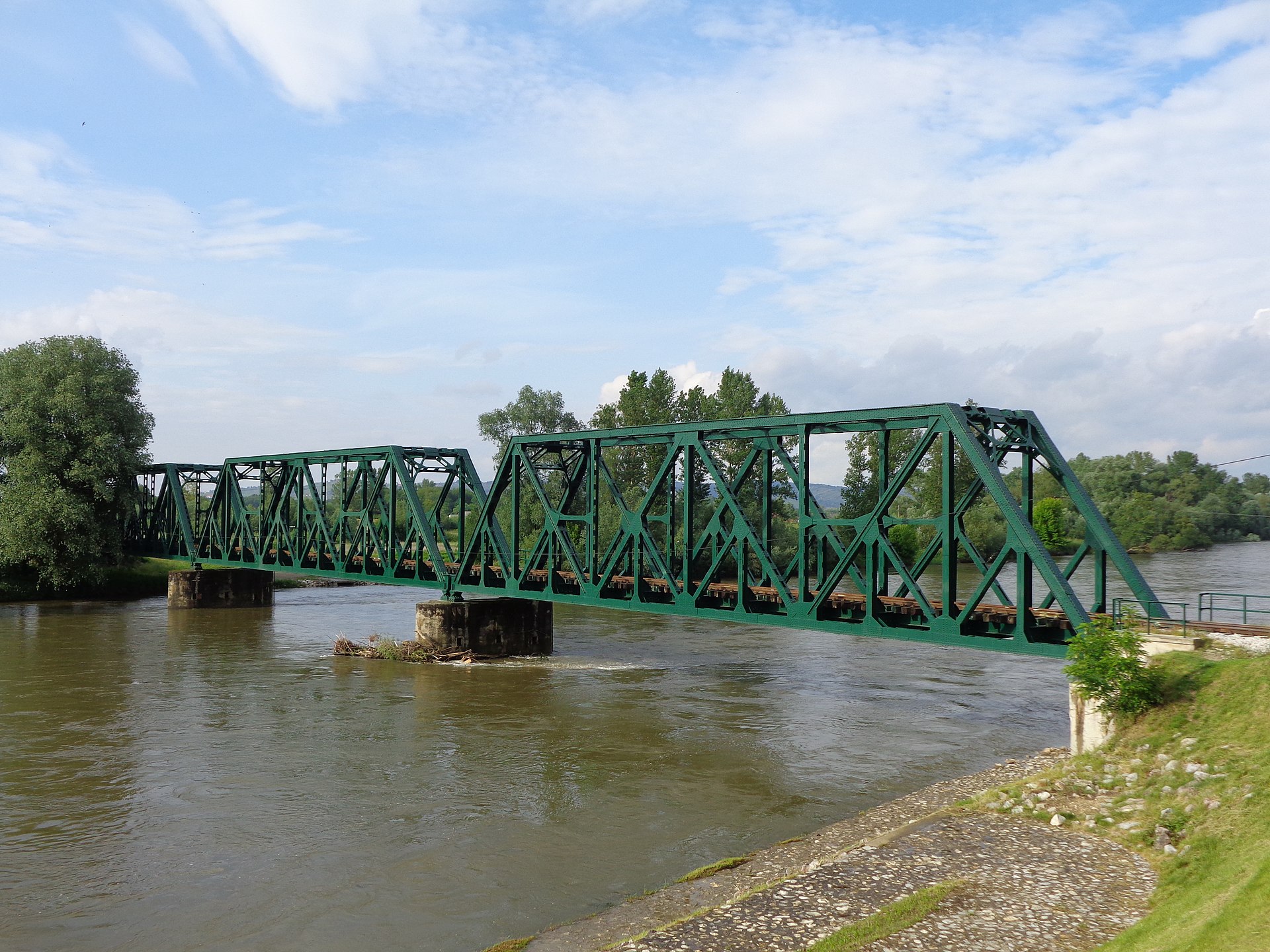 and this.
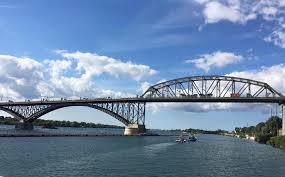
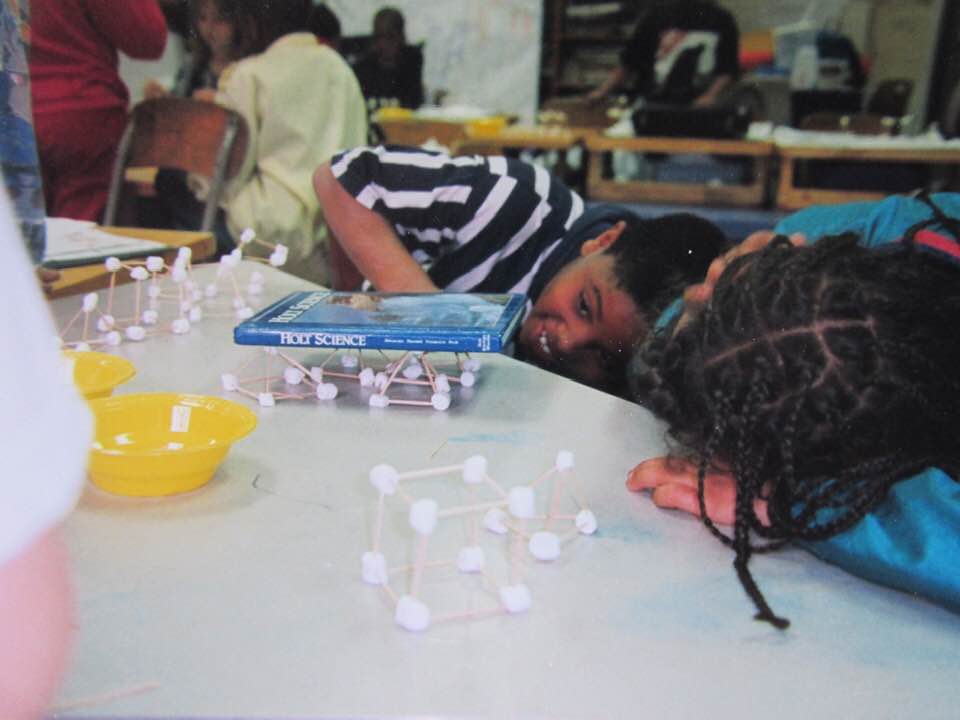 It took teaching shapes by building with toothpicks and marshmallows that I finally got it. (Personally, I preferred building with toothpicks and gumdrops, but I didn’t have a photo of one of those activities in my files.
Anyway, our friends, the Trout Brothers, built about 150 of these bridges between 1892 and 1897. That’s about 30 bridges a year! They must have been churning them out at a rate of a bridge about every week and a half.
According to the sign that was at the bridge, what makes these bridges unique is that they used round pipe in construction, instead of the usual rivet-connected channel plates and angle iron. I guess that’s why they were awarded a patent on the bridge.
This bridge was in use for 88 years, from 1895 until 1983. It was reduced in width from 15 feet to 8 feet and moved 70 miles to this location for preservation.
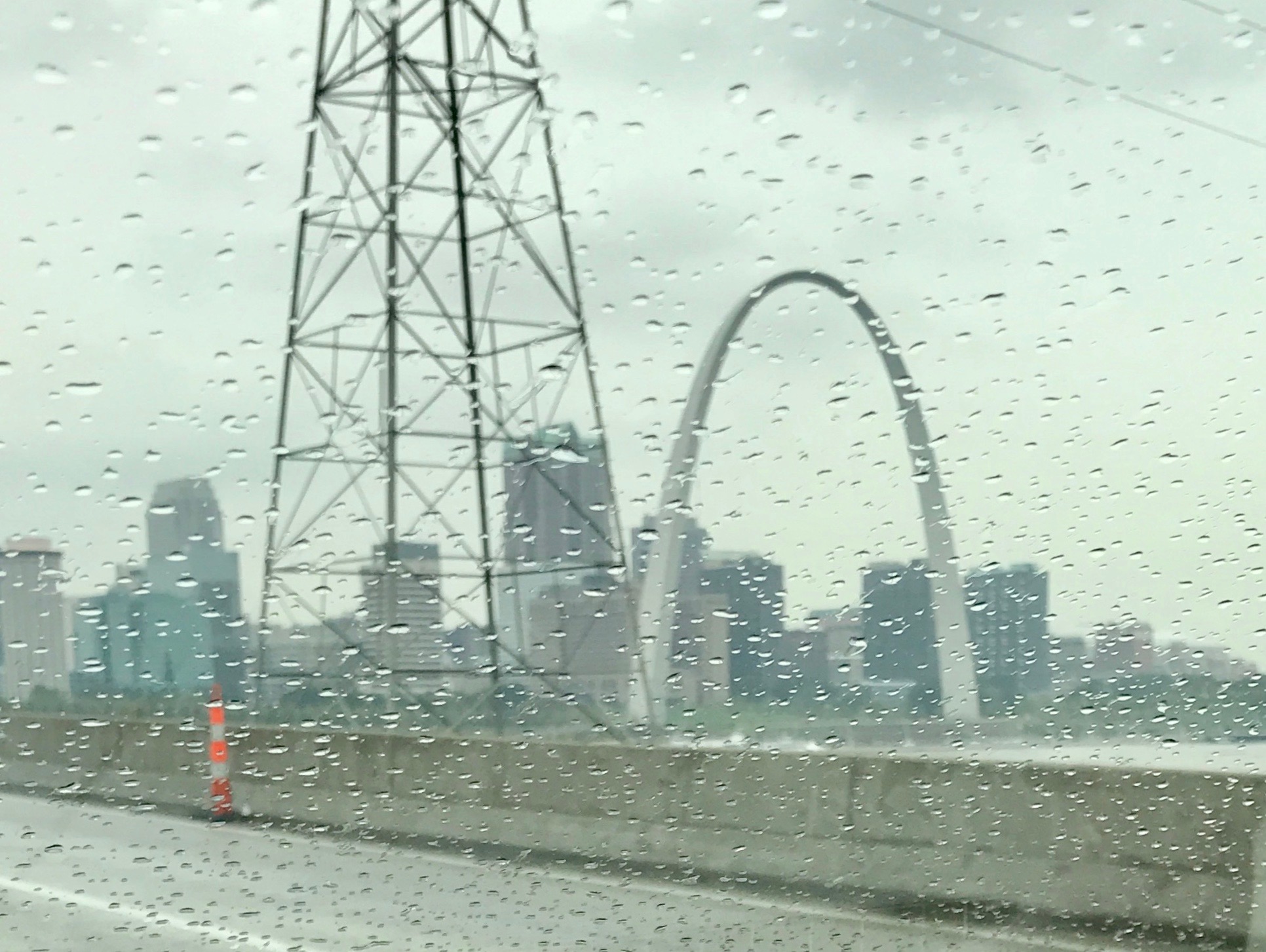
 The reasons for the stop having been satisfied, I set out again. My next destination was Jefferson City, Missouri. But first, I had to go through St. Louis.