After all that art ‘n’ architecture, I was feeling quite peckish. I found myself a Mexican restaurant and tucked in.
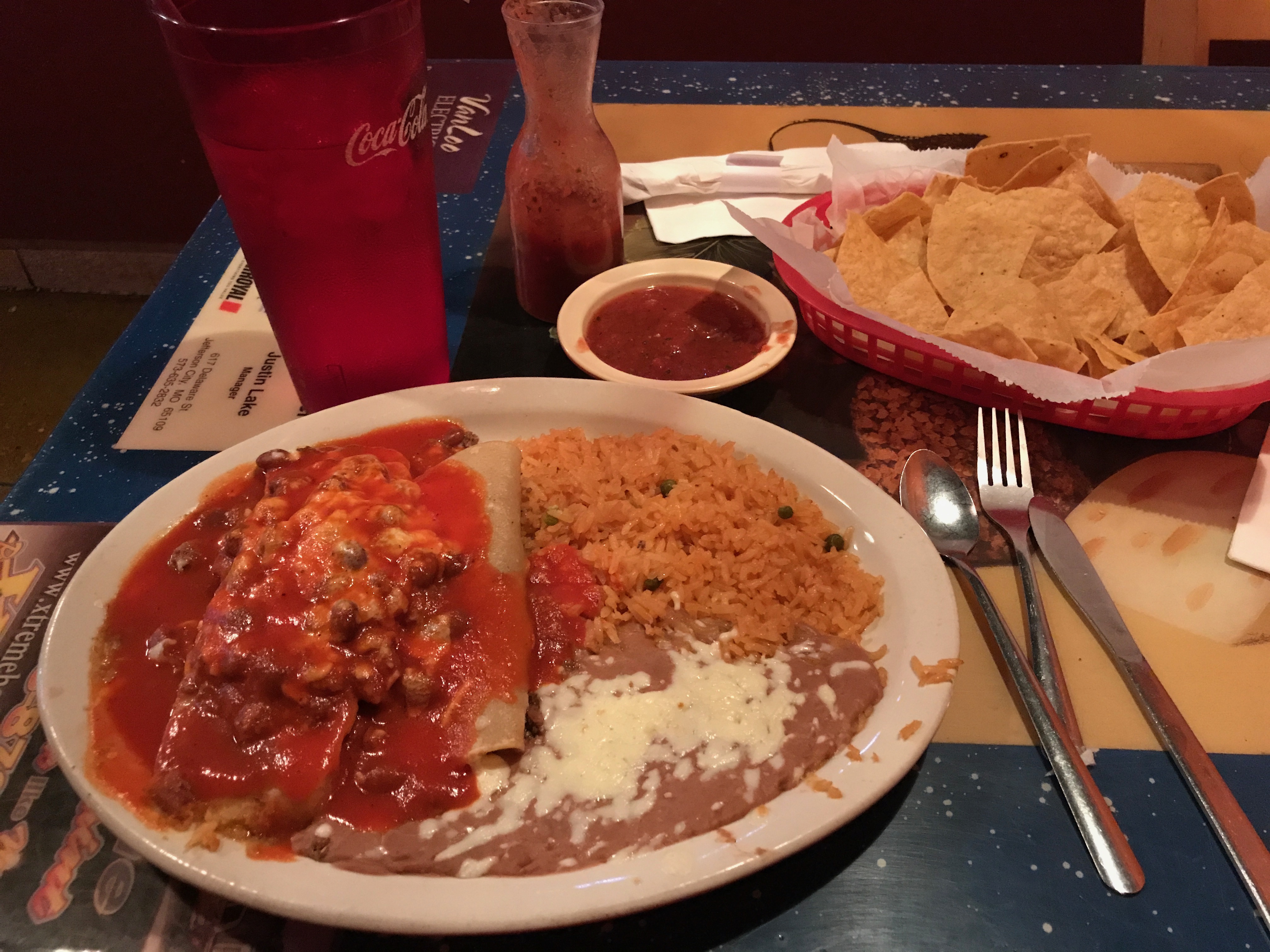
Beans, rice and corn – my favorites!
After that, it was time to find something else to explore before I moved on. I thought I’d see if the cathedral was as elegant as the capitol.
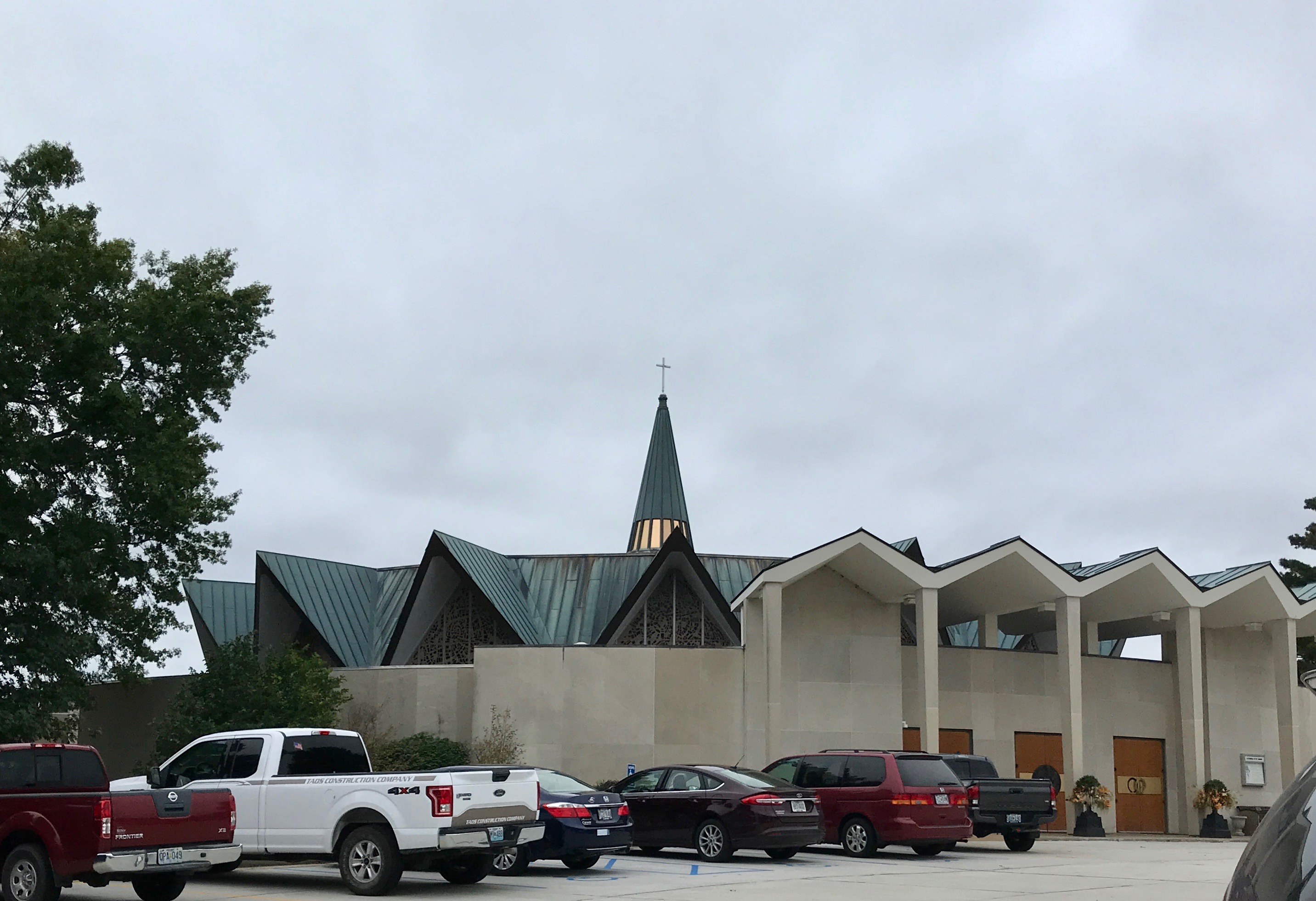
I have to admit that I wasn’t expecting such a modern building.
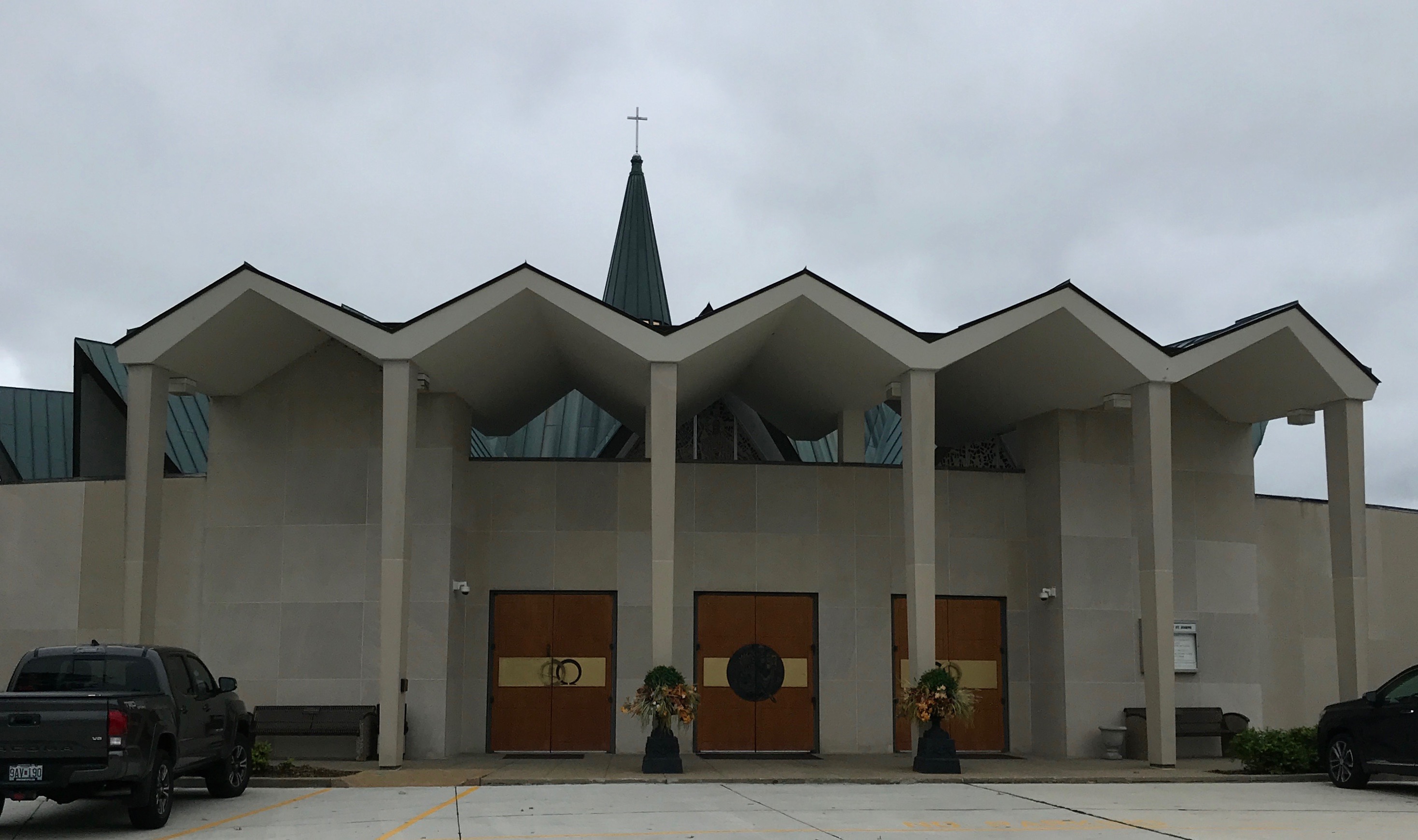
I decided to walk up and see what I could see. Quite frankly, the roofline made me think of fast-food restaurants from the 1960s. That style of roof is known as a folded plate roof. I did a Google search to see if I could find any examples. Here’s a repurposed Neba restaurant.
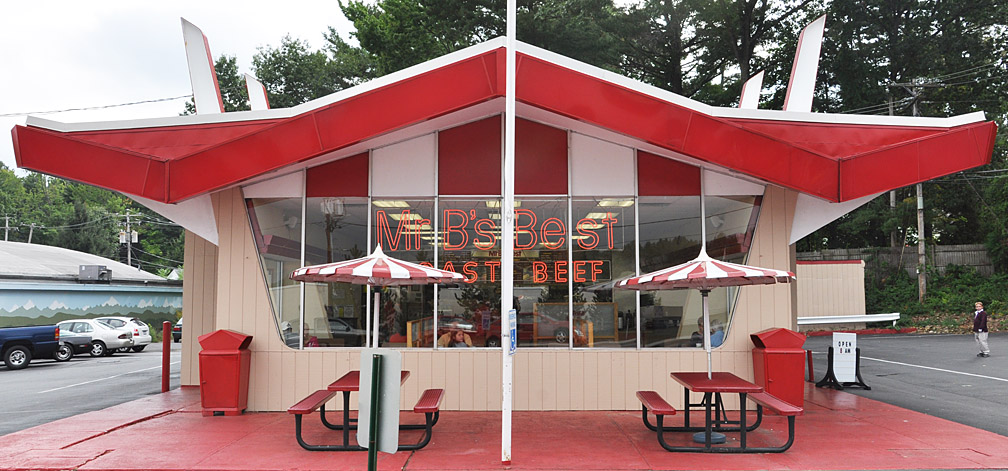
Supposedly Neba stood for “Nicest Eating Beef Around.” I could have sworn that my father said it was named after the founder’s dog. My father had a rather fey sense of humor.
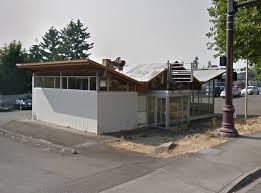
Not all such ’60s restaurants got repurposed. This one reminds me of the Mister Donuts you used to see around.
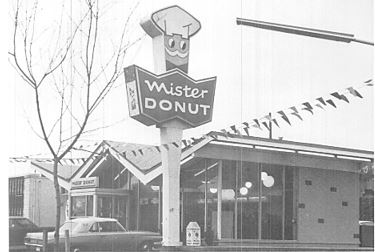
Ah! There it is! Mister Donut with the folded plate roof.
But, I digress, which is to be expected. This cathedral was built after the Diocese of Jefferson City was created. In 1956, territory was taken from the Archdiocese of St. Louis, the diocese of Kansas City and the Diocese of Saint Joseph. The plans for the church were drawn up in 1966, and the first mass was held in 1968.
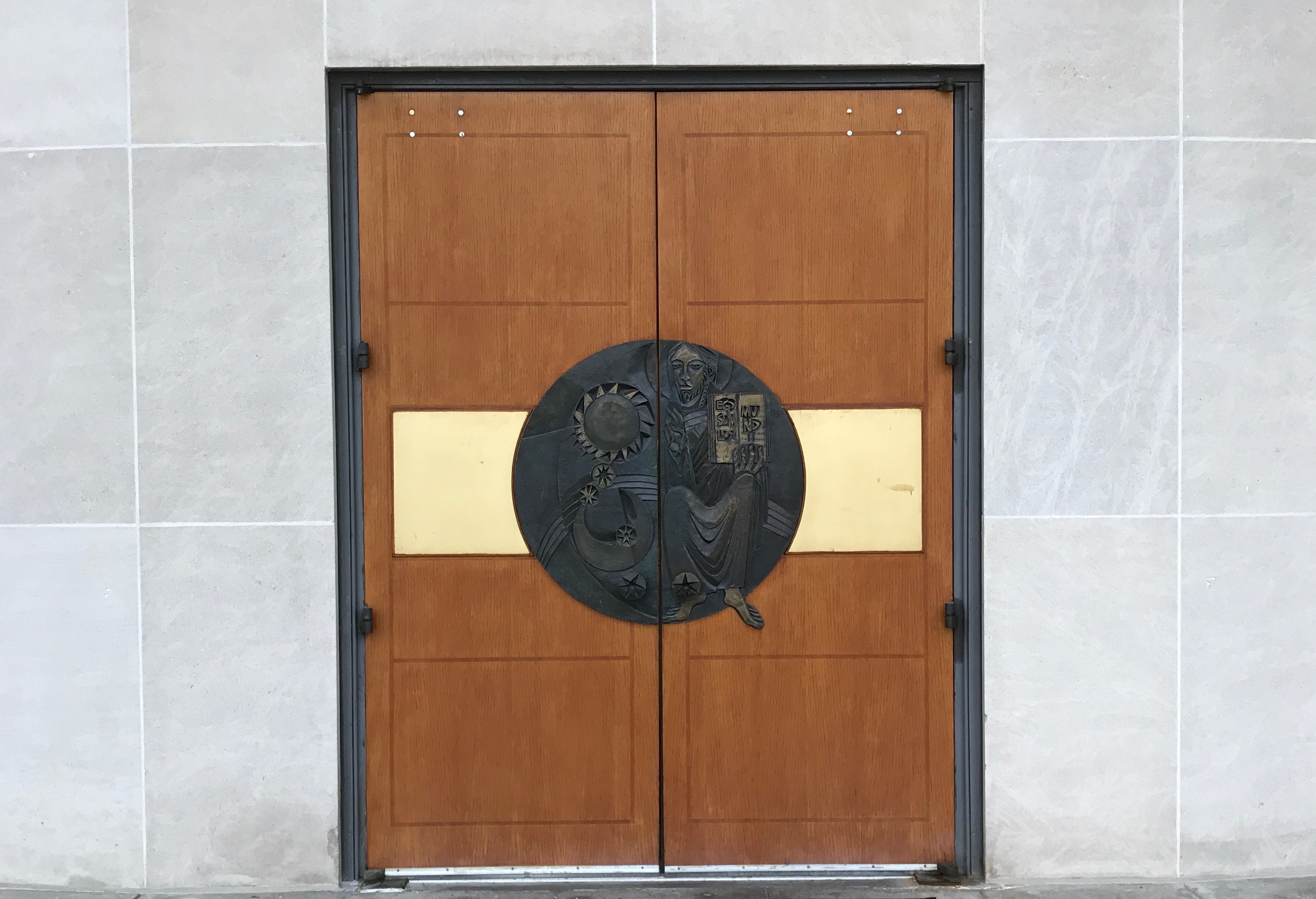
I walked up to the doors, which were designed by Brother Stephen Erspammer, S.M. of St. Louis. According to my Preferred Source, since the cathedral is built into a slope, the doors open at ground level, which makes for a barrier-free access. These doors weigh 500 pounds each, though. I hope that doesn’t keep out the weak! I did managed to make my way in, so they must be very well balanced.
The bronze medallion embedded in the center set of doors depicts an eternal Christ. He is seated among the sun, moon, stars and rainbows of the heavens. With one hand, the figure makes the ancient gesture of a teacher.
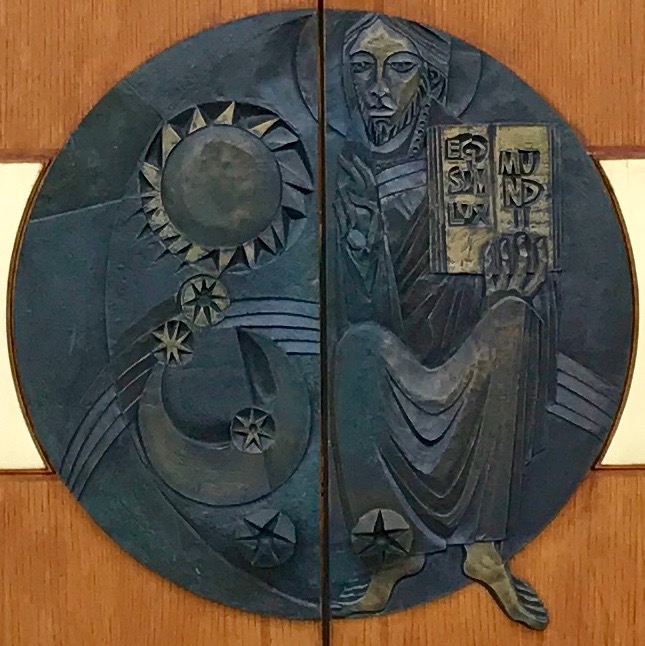
The other hand hold the book of Scriptures, with the words “Ego sum lux mundi,” which means I am the light of the world.
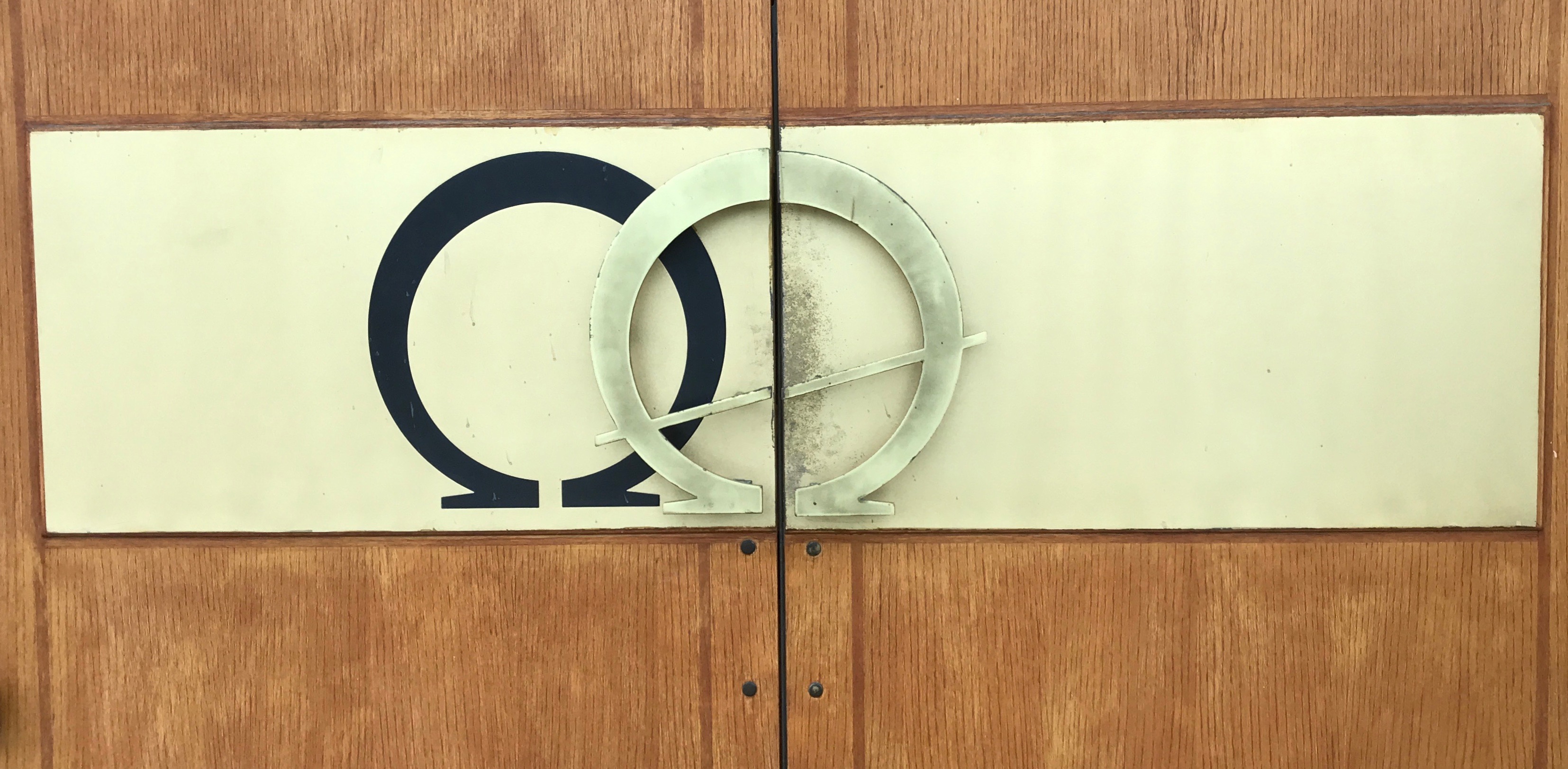
The doors on right and left sides have handles designed in the shape of the Greek letters, Alpha and Omega, recalling John’s vision of Christ in Revelation.
With all the cars in the parking lot, I assumed that a mass was underway, or, perhaps, about to start. Since I miss a many of my weekly masses when I am on the road, I was hopeful that I might be in time for a service.
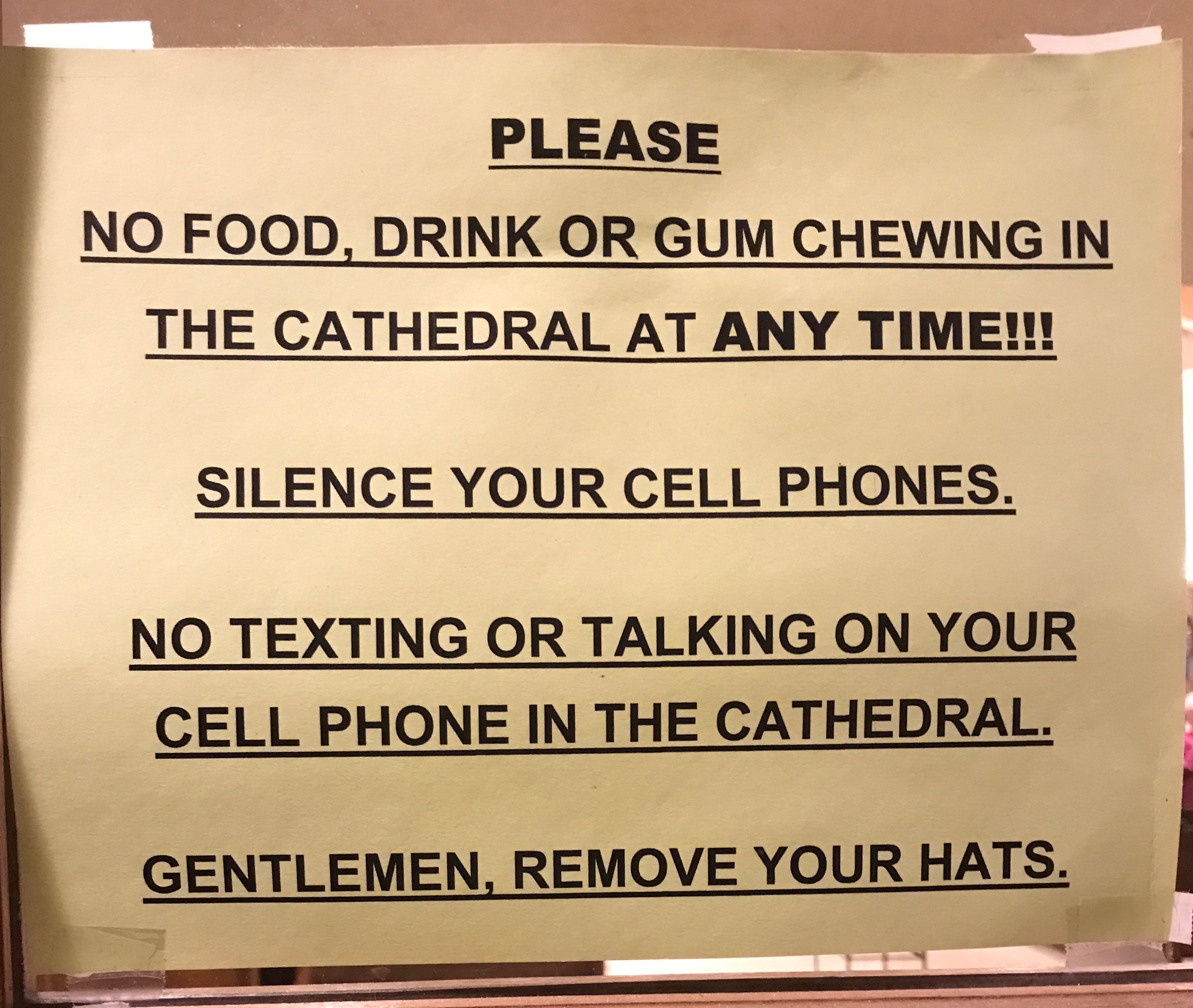
I passed by this sign, reminding people of proper church etiquette.
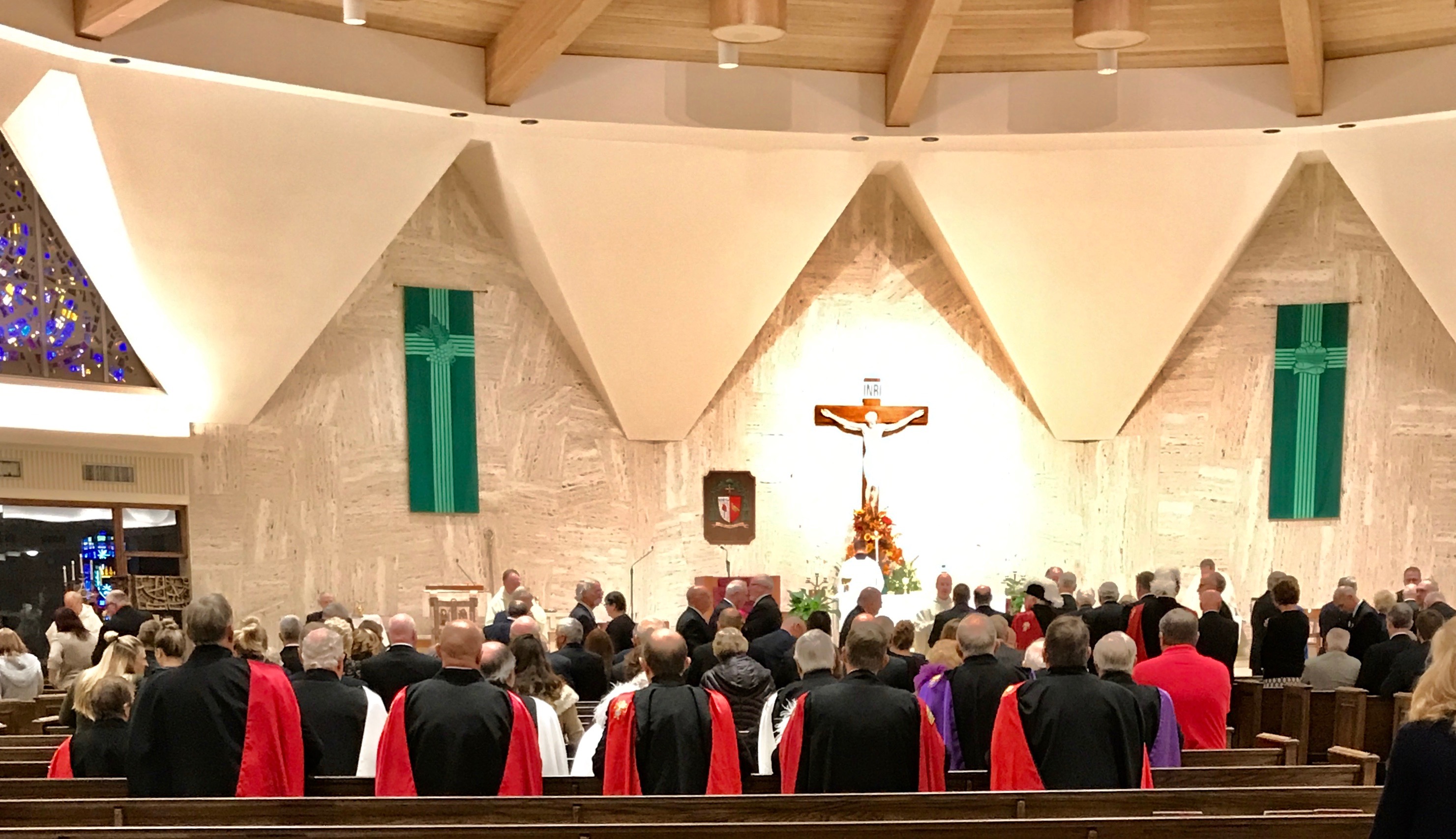
My goodness! I had walked in on a Knights of Columbus mass! I had seen them from time to time at masses in the cathedral in Kalamazoo, but I always felt they were kind of a “secret society,” although if they want to be a secret society, they need to come up with a uniform that is a little more inconspicuous. 
The Knights of Columbus is the world’s largest Catholic fraternal service organization. It was founded in 1882 by Michael J. McGivney in New Haven, Connecticut and named in honor of the explorer Christoper Columbus. It was originally designed to serve as a mutual benefit society for working-class and immigrant Catholics in the United States. It developed into a fraternal benefit society dedicated to providing charitable services, including war and disaster relief, and actively defending Catholicism across the globe and promoting Catholic education.
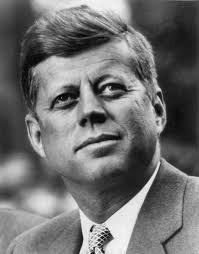
Incidentally, JFK was a fourth degree member of the Bunker Hill Council number 62. Many other notable Catholic men from the United States have been Knights of Columbus, including Americans Ted Kennedy, Vince Lombardi, Al Smith, Sargent Shriver, Samuel Alito, John Boehner, Ray Flynn, Jeb Bush and Sergeant Major Daniel Daly, a two-time Medal of Honor recipient.
I had a few minutes before mass began, so I took a quick look around.
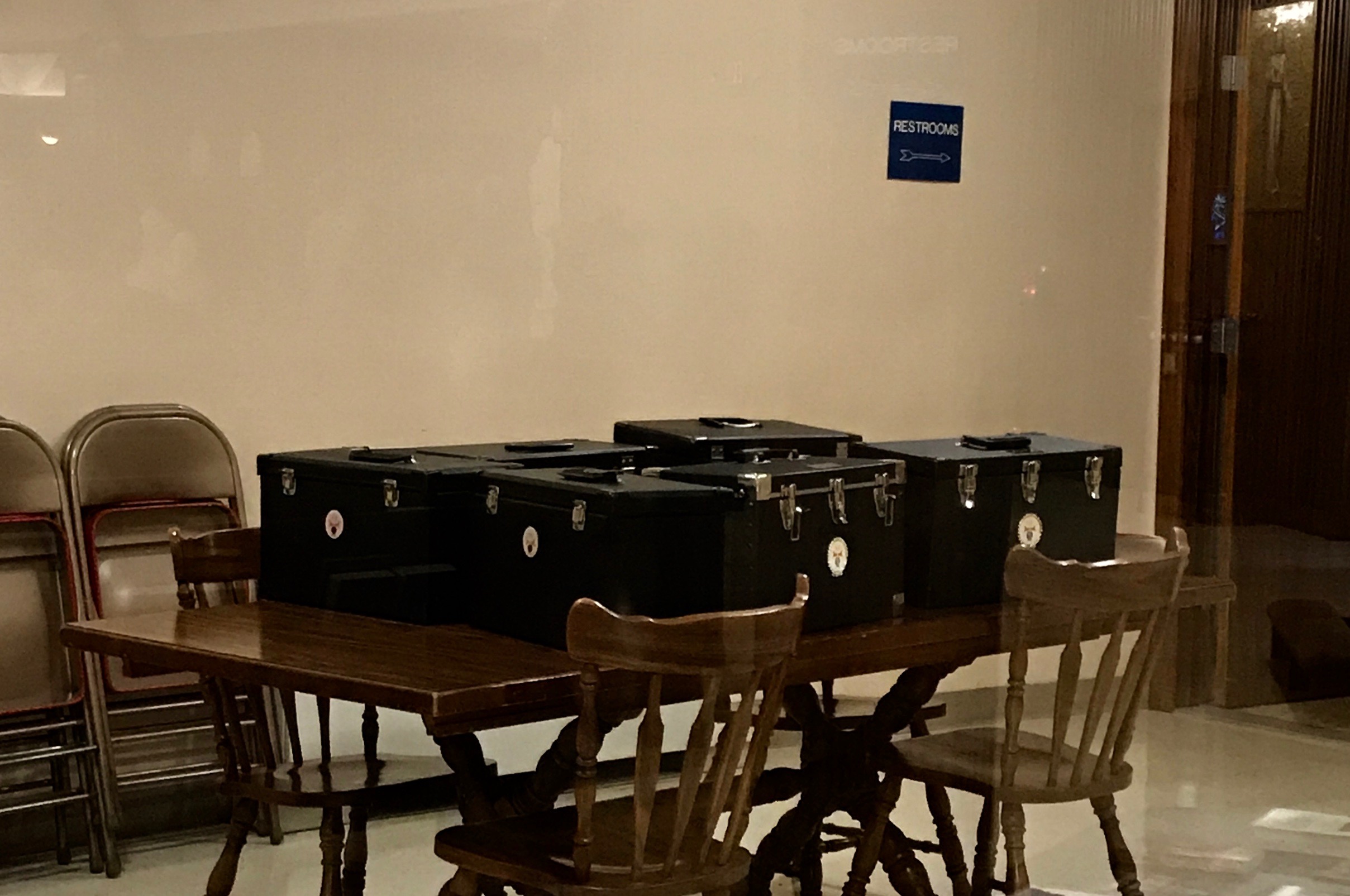
This collection of hat boxes in what I assume was the “crying room” tickled my fancy. I imagine those be-plumed, cockaded chapeaus would be hard to wear in the car!
But, in case you are a Catholic male and you were put off joining by having to wear the regalia, you are in luck! As of July 1, 2019, the new uniform for fourth degree members will be a blazer and beret.
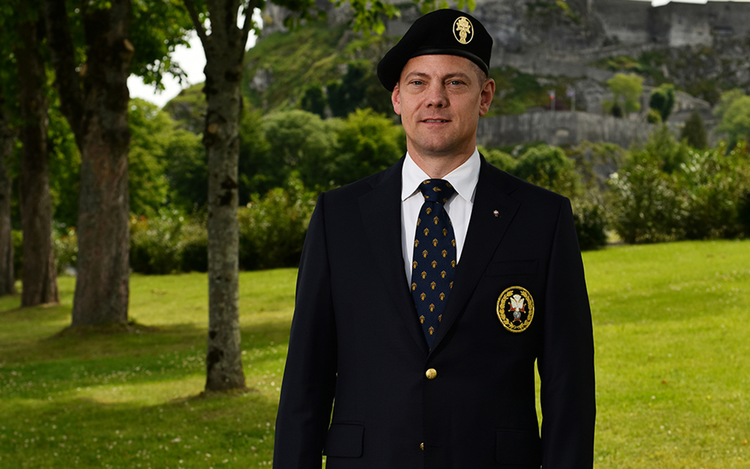
Ceremonial swords will still be part of the uniform. Knights are free to continue to wear the old uniforms, but the thinking is that updating the look will attract more members to the organization.
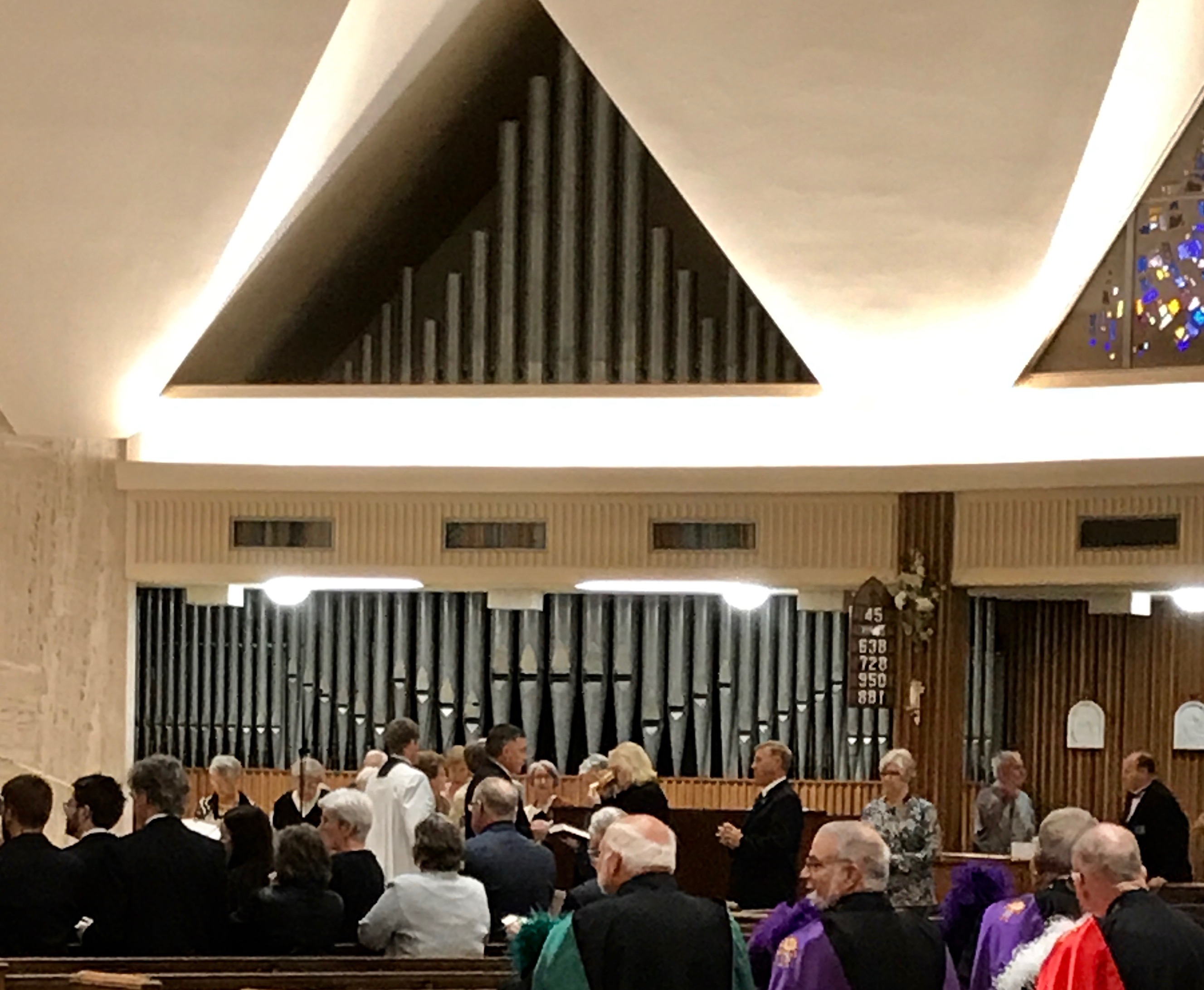
Oh, dear! They have a pipe organ. Well, I can put up with anything for a while.
The time came to receive the Eucharist. And soon, mass had come to a close.
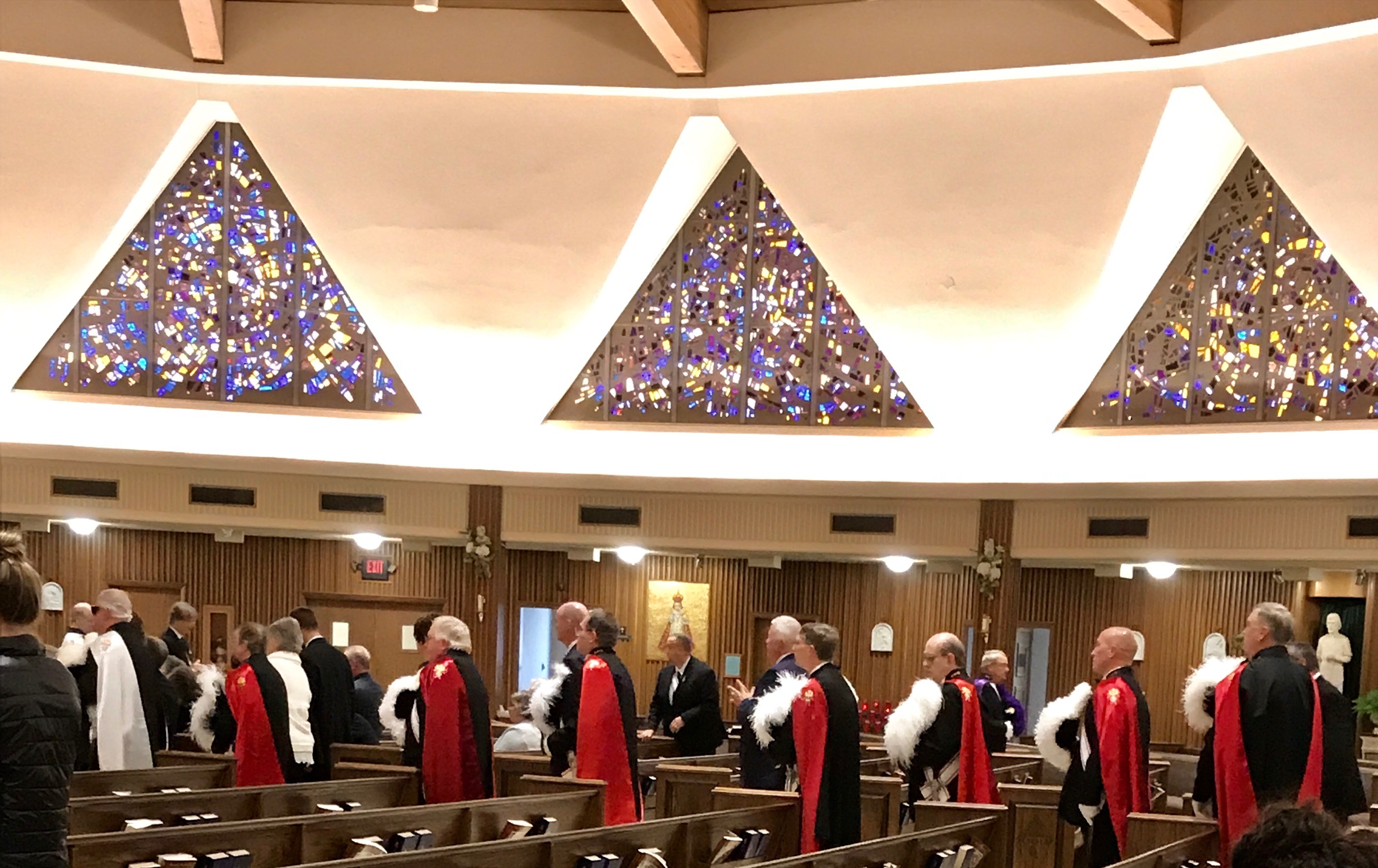
The Knights of Columbus lined up holding their chapeaus.
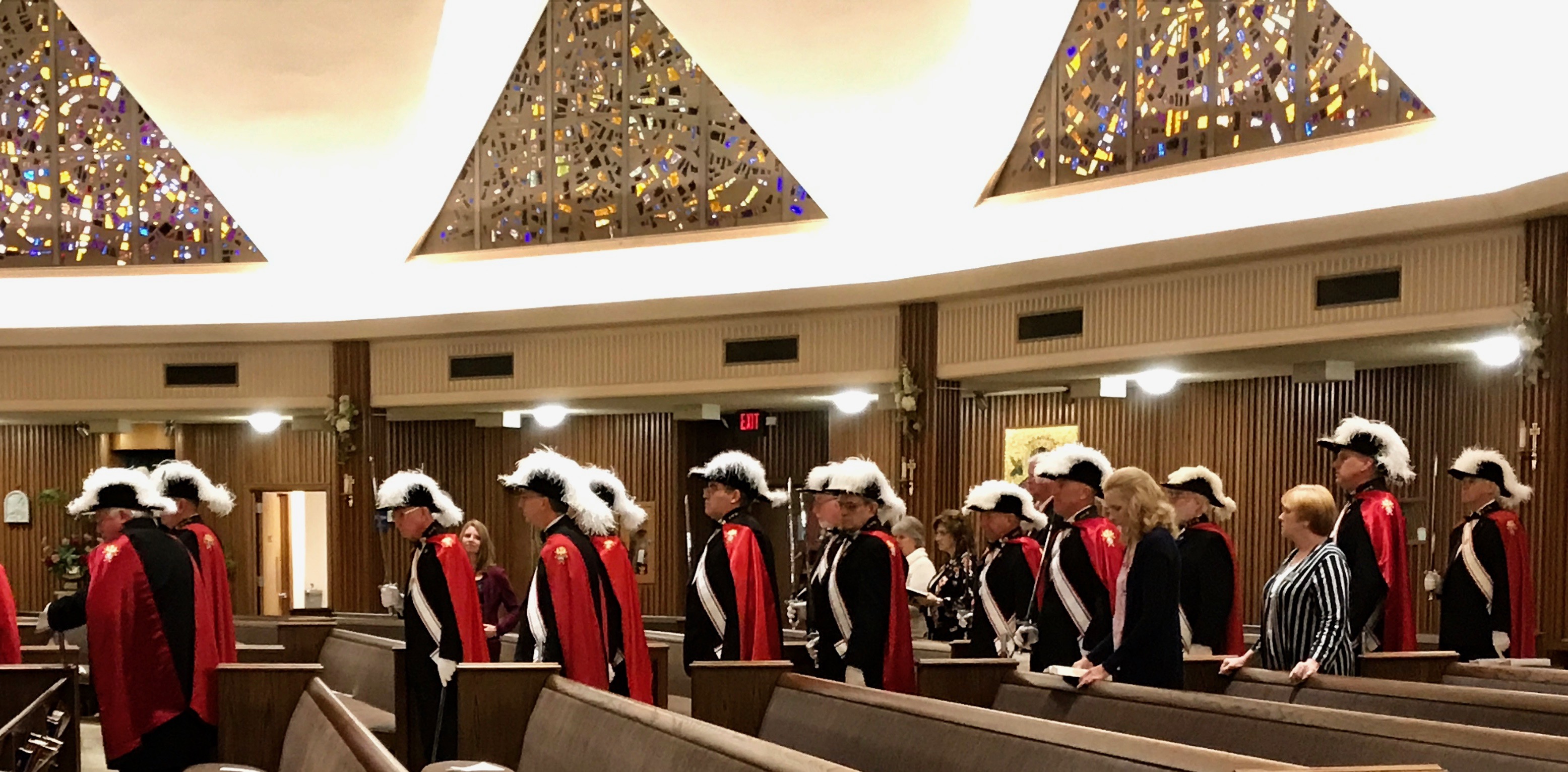
They put them on.
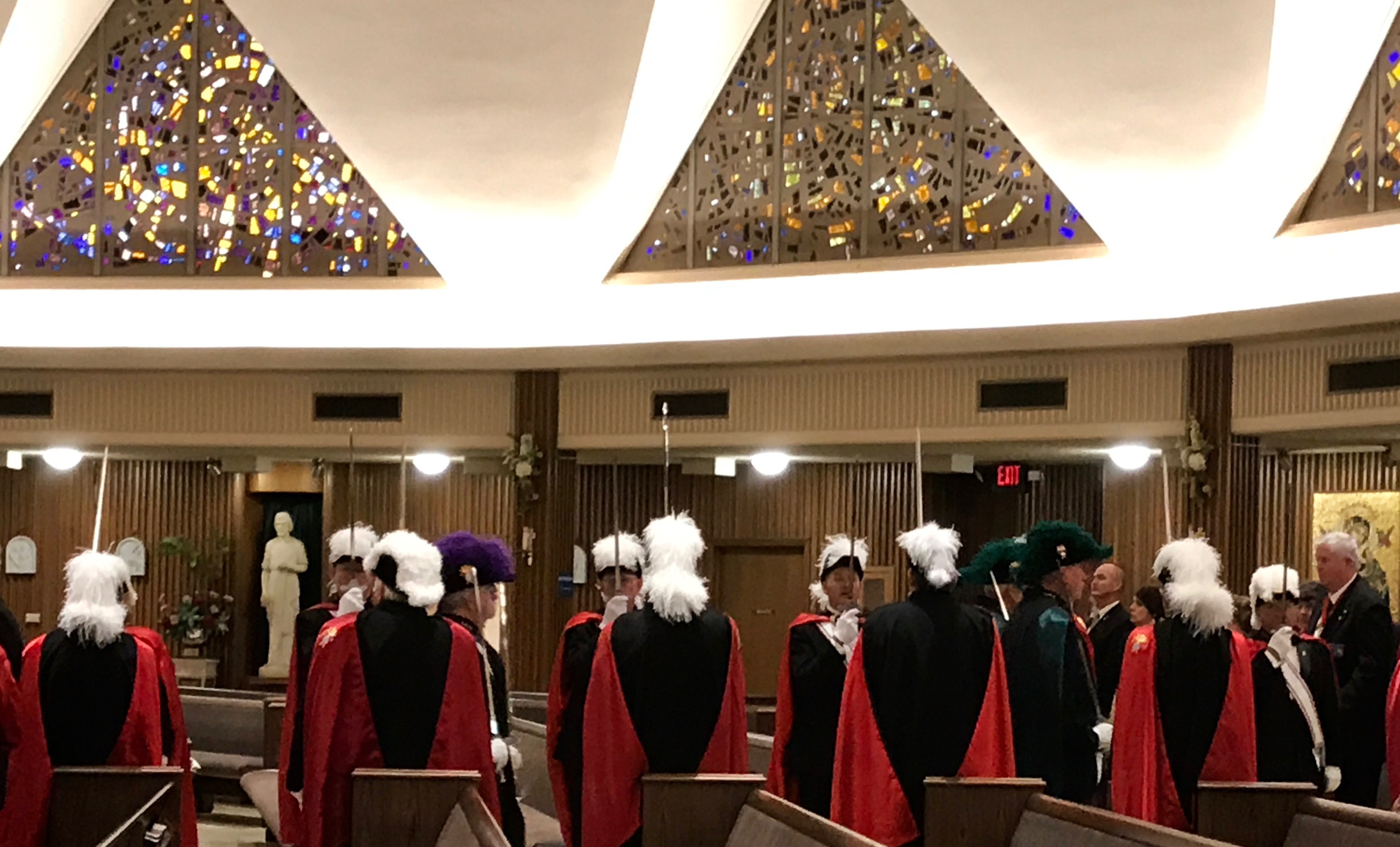
They raised their swords.
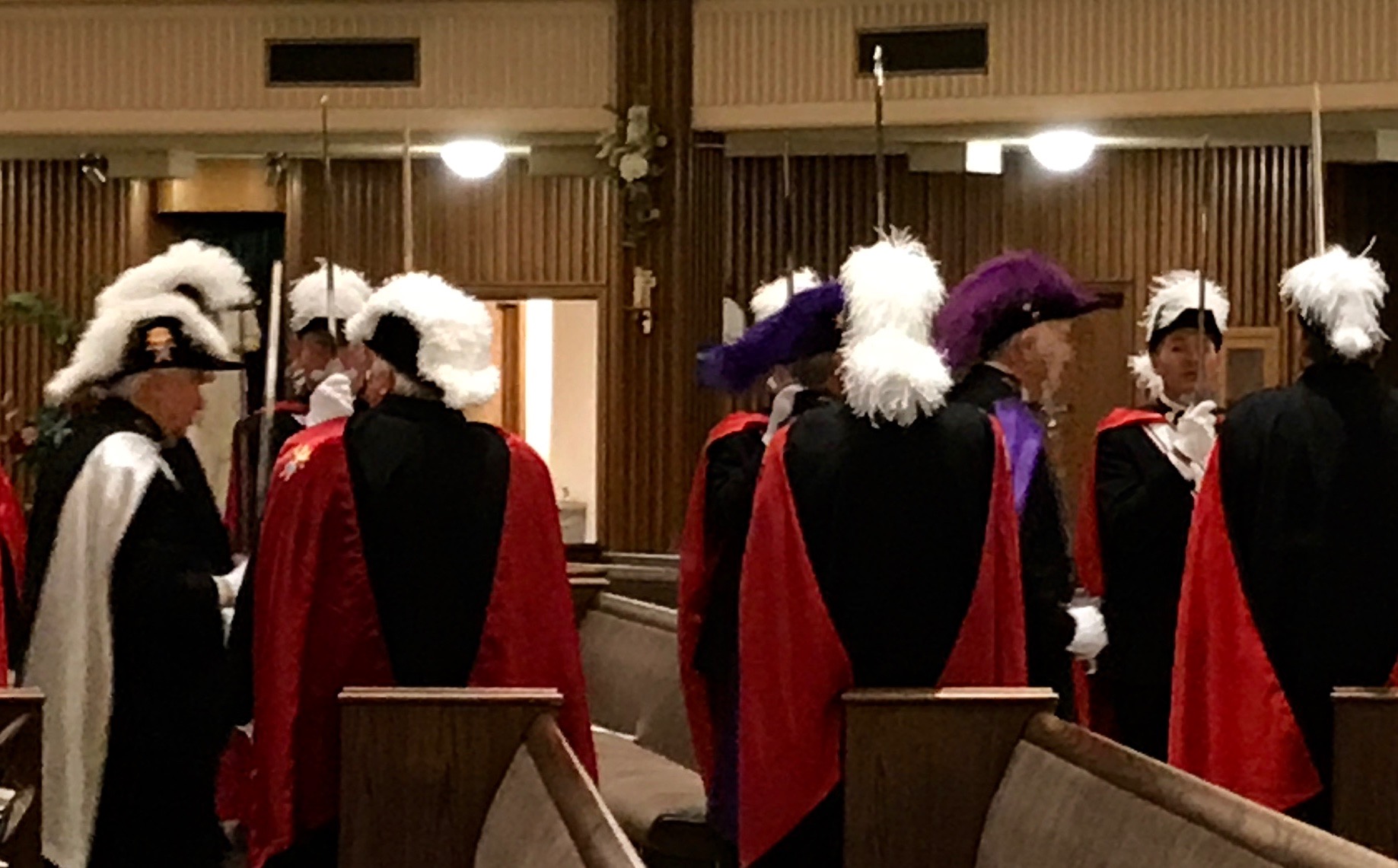
Due to the color of the lining of their capes, what I must assume were higher ranking officials processed through the phalanx of Knights.
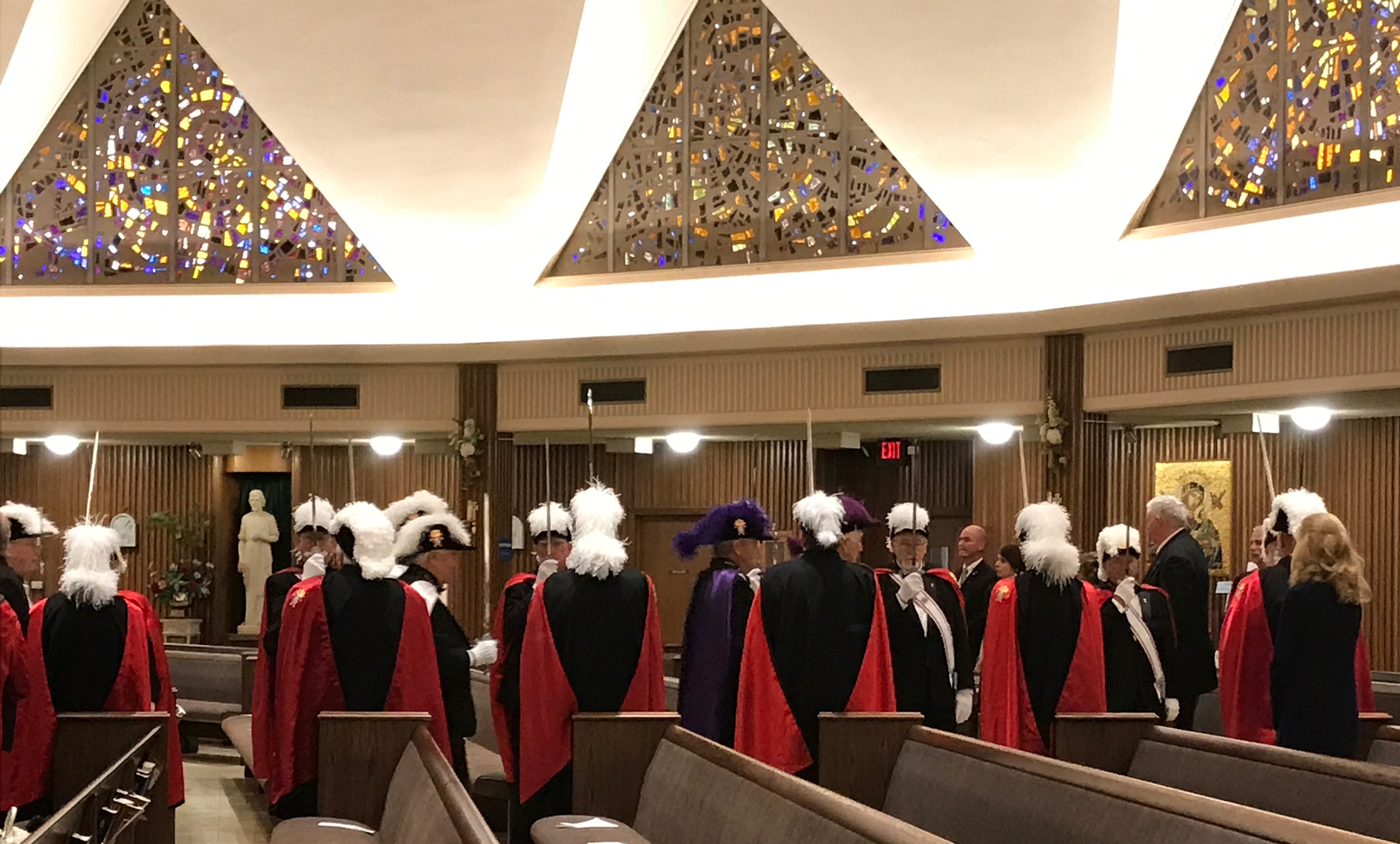
Then mass was over. I didn’t want to intrude, so I didn’t pull any of them aside to ask what I had just witnessed.
I got in the car and headed back toward the capitol. My next stop was Jefferson Landing.
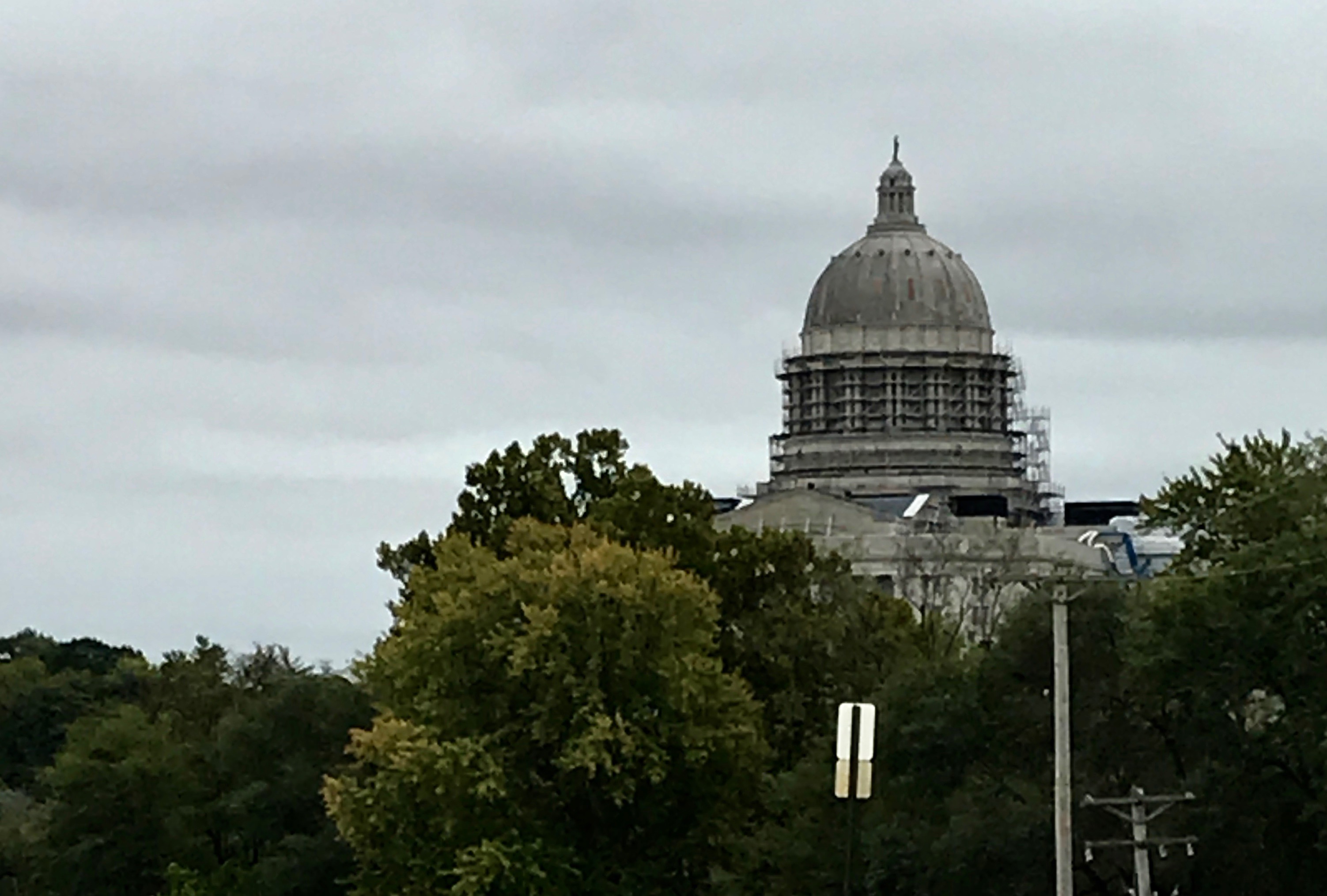
I found a place to park and got out to explore. This was going to have to be a quick visit. The weather wasn’t “tourism friendly” and the day was winding to a close. However, a quick visit is better than no visit.
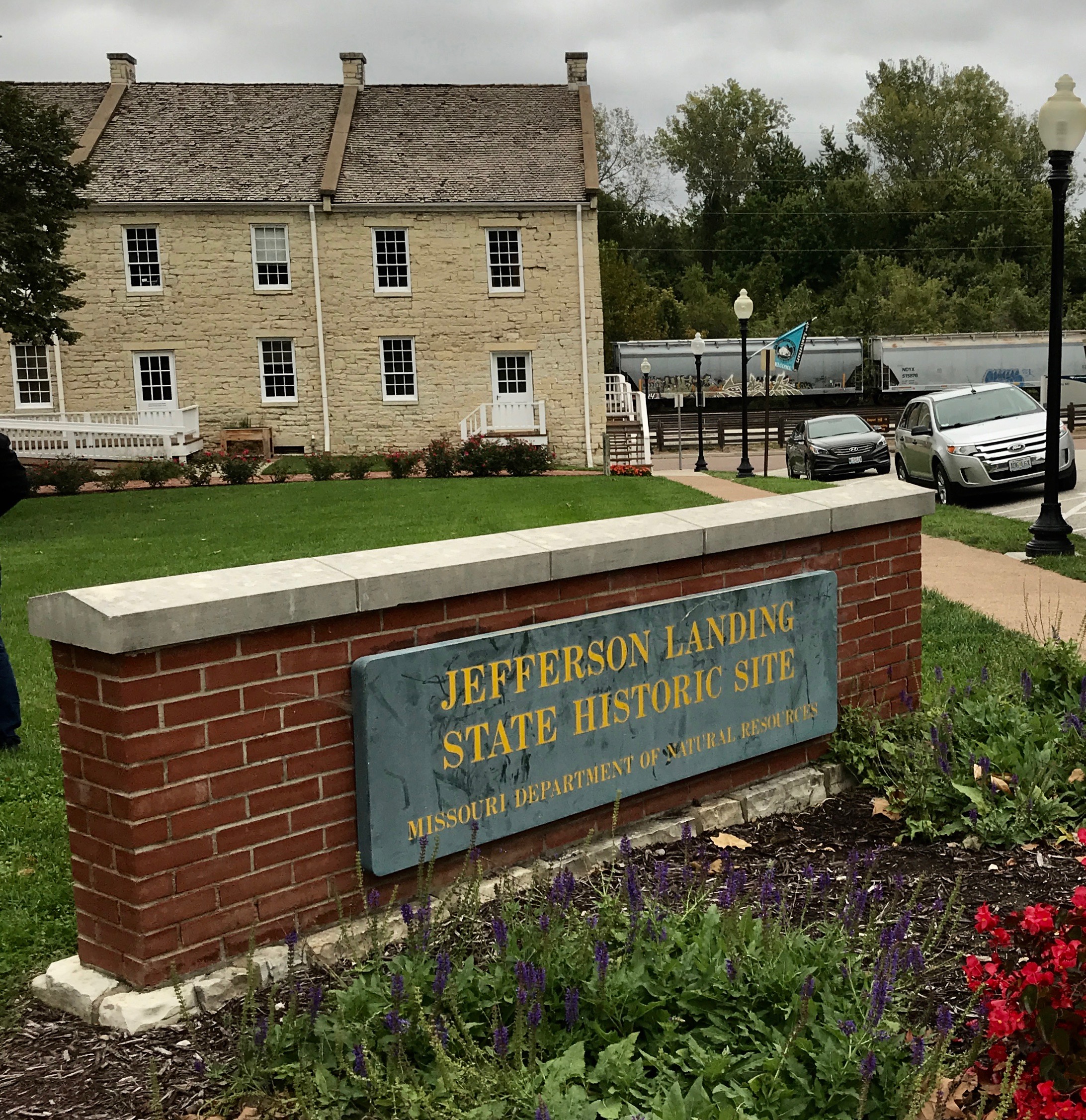
Jefferson Landing State Historic Site is significant because it is a rare preserved Missouri River Landing.
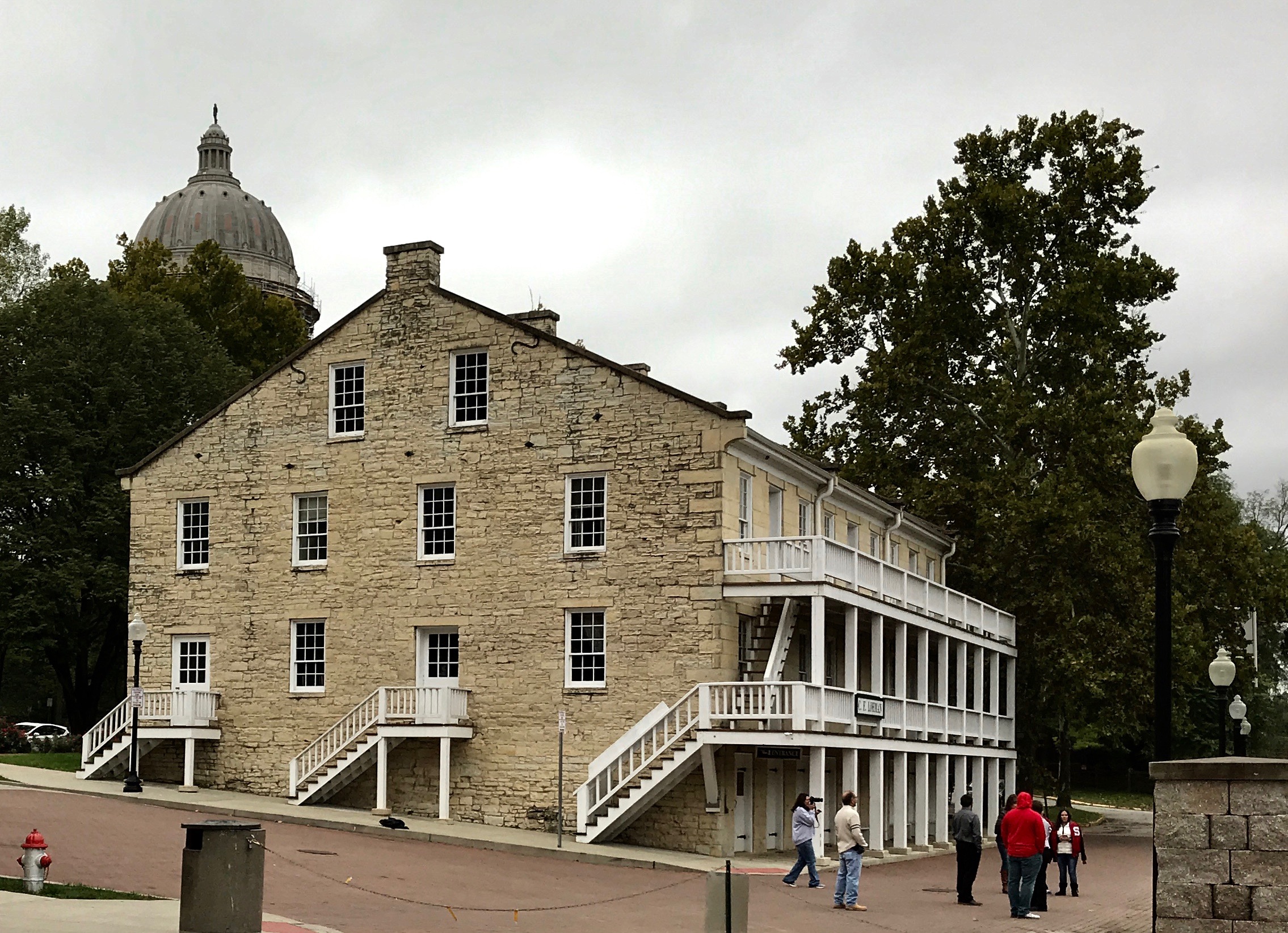
On one side, you have the Lohman Building. It was constructed in 1839 by James Crump. Over the years it was used as a grocery store, warehouse, telegraph office, tavern and hotel. It earned the nickname “the landing” and was recognized as a popular meeting place for lawmakers and businessmen.
So, if Crump built it, why is it know as the “Lohman Building?” Crump’s business partner eventually bought him out. I guess naming rights went with the purchase.
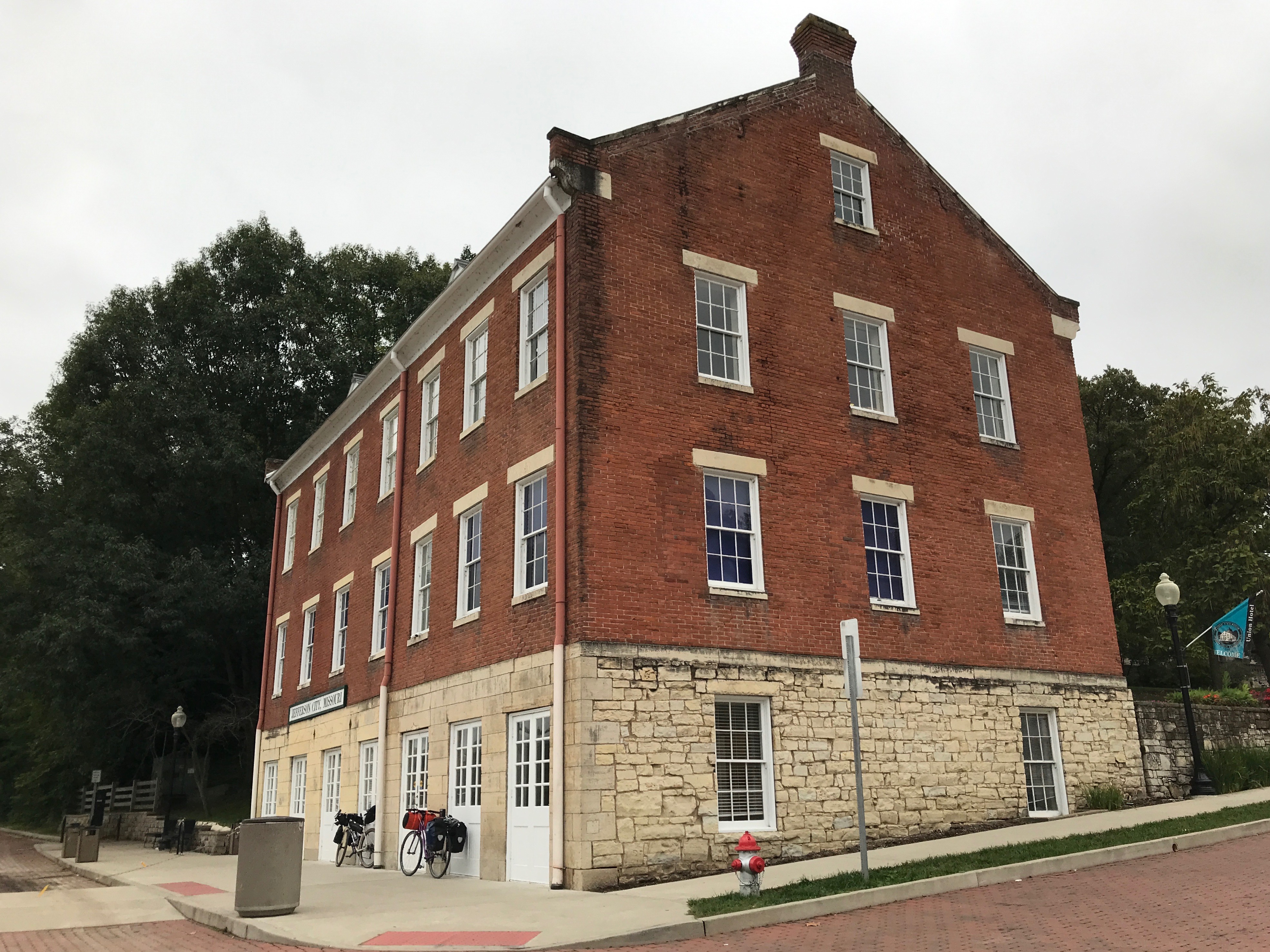
On the other side of the street is a hotel built by Charles Maus. He built it in 1855 and it opened as the Missouri Hotel. For some reason, the name was changed to Veranda Hotel. I wonder if it had a veranda at some point? However it finally became known as the Union Hotel after the Civil War.
The buildings were restored as part of the state’s bicentennial celebration in 1976. The Lohman building depicts and 1850s general store and ware house and features a film on the history of the site and of Jefferson City. The Union Hotel houses the Elizabeth Rozier Gallery, which has changing exhibits that emphasize Missouri’s history, art and Culture.
Of course, it was so late in the day that I had to rely on my Preferred Source for this information. The exhibits were closed, but if you plan to visit, up-to-date information can be found at the Missouri State Parks website.
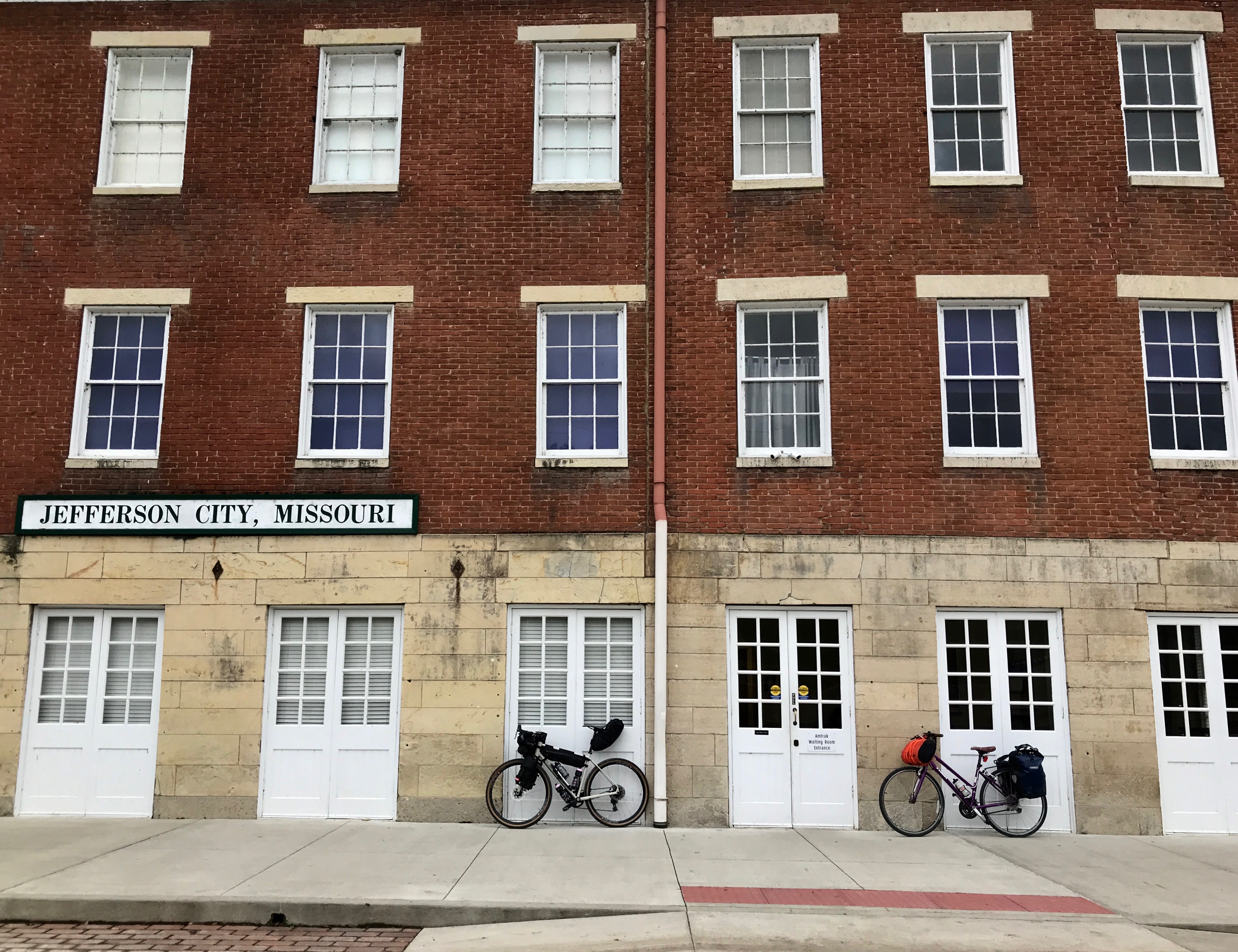
The lower level of the Union Hotel is used as the Amtrak station.
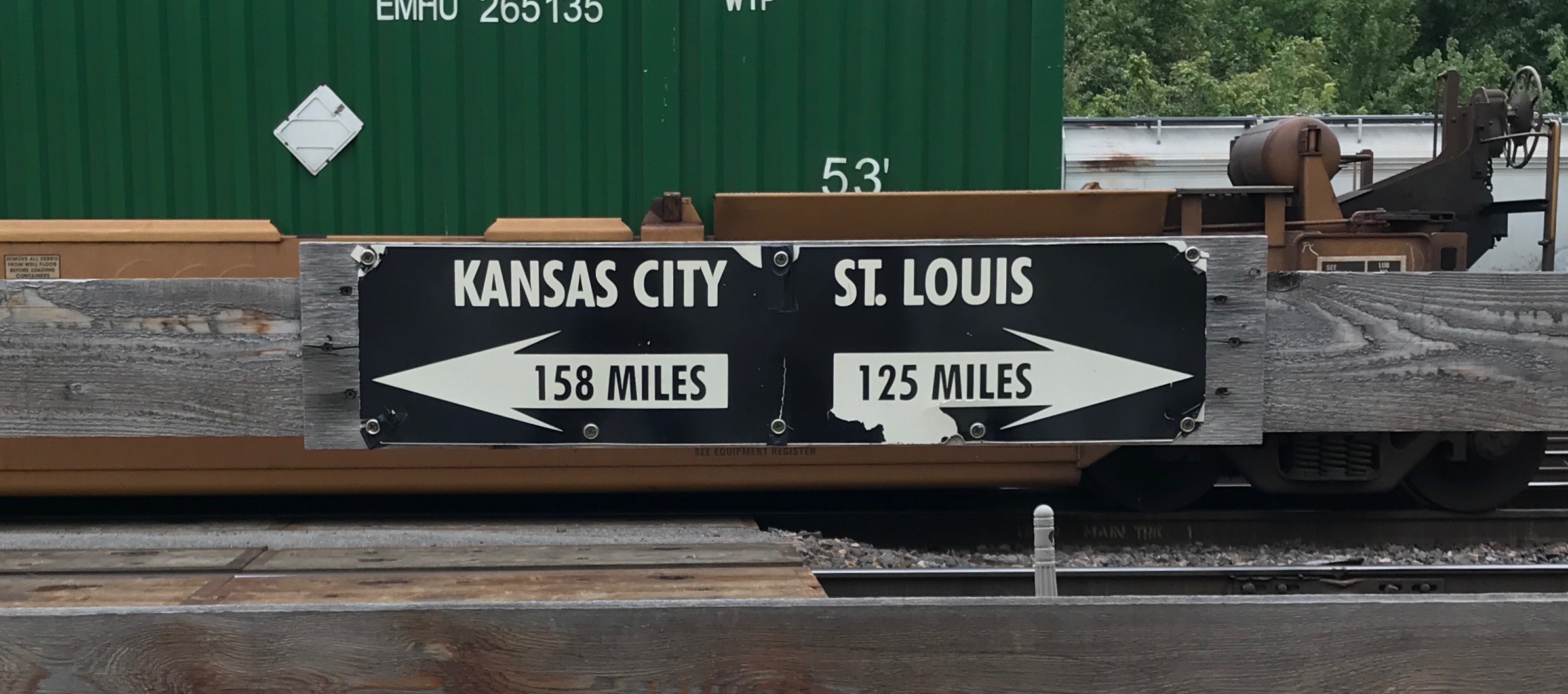
Jefferson City is pretty close to halfway between the two – smack dab in the middle of the state. That seems to be a good place for a state capital.
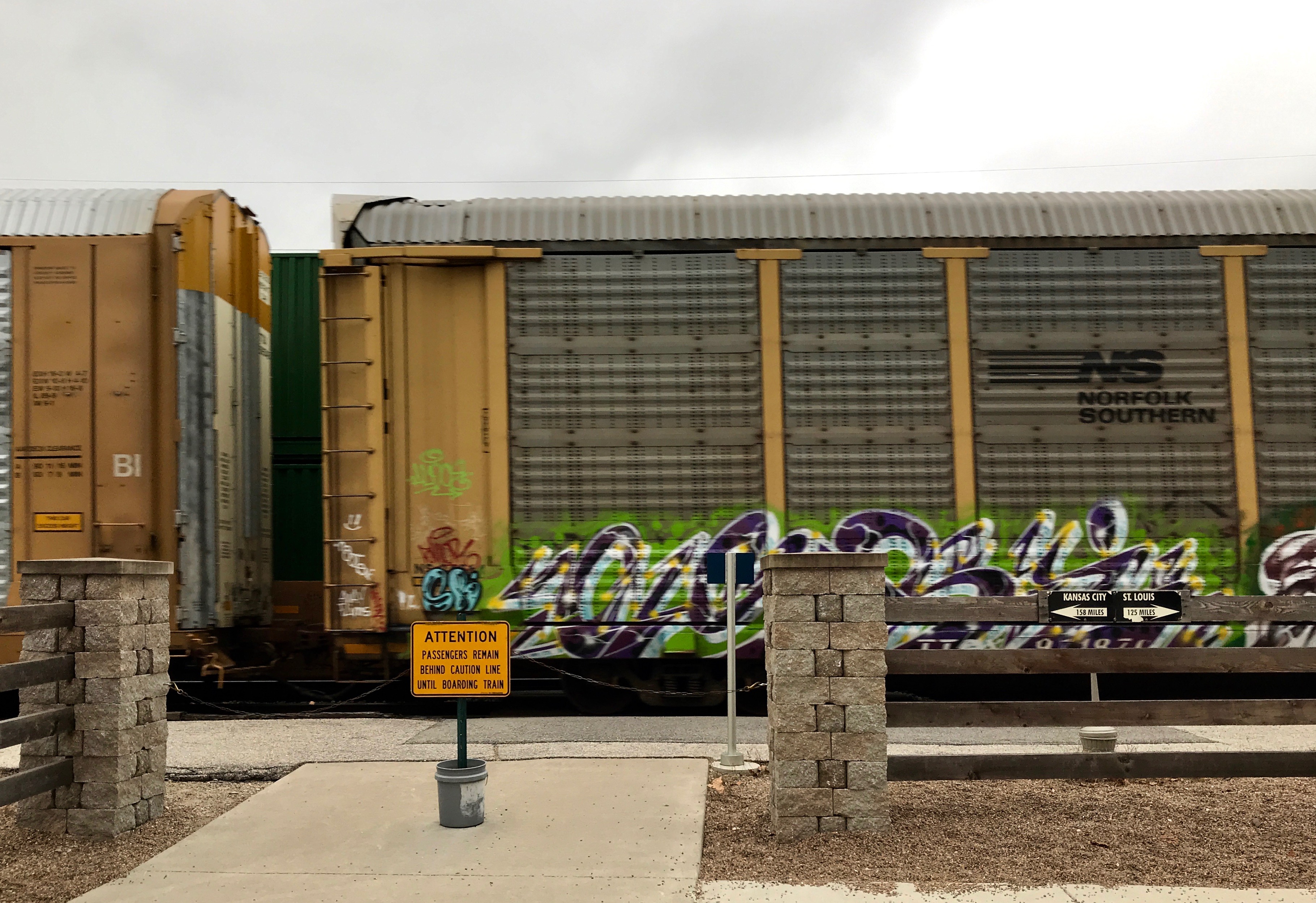
A freight train rumbled by while I was standing there taking it all in. I know that graffiti is technically vandalism, but some of it is really eye catching.
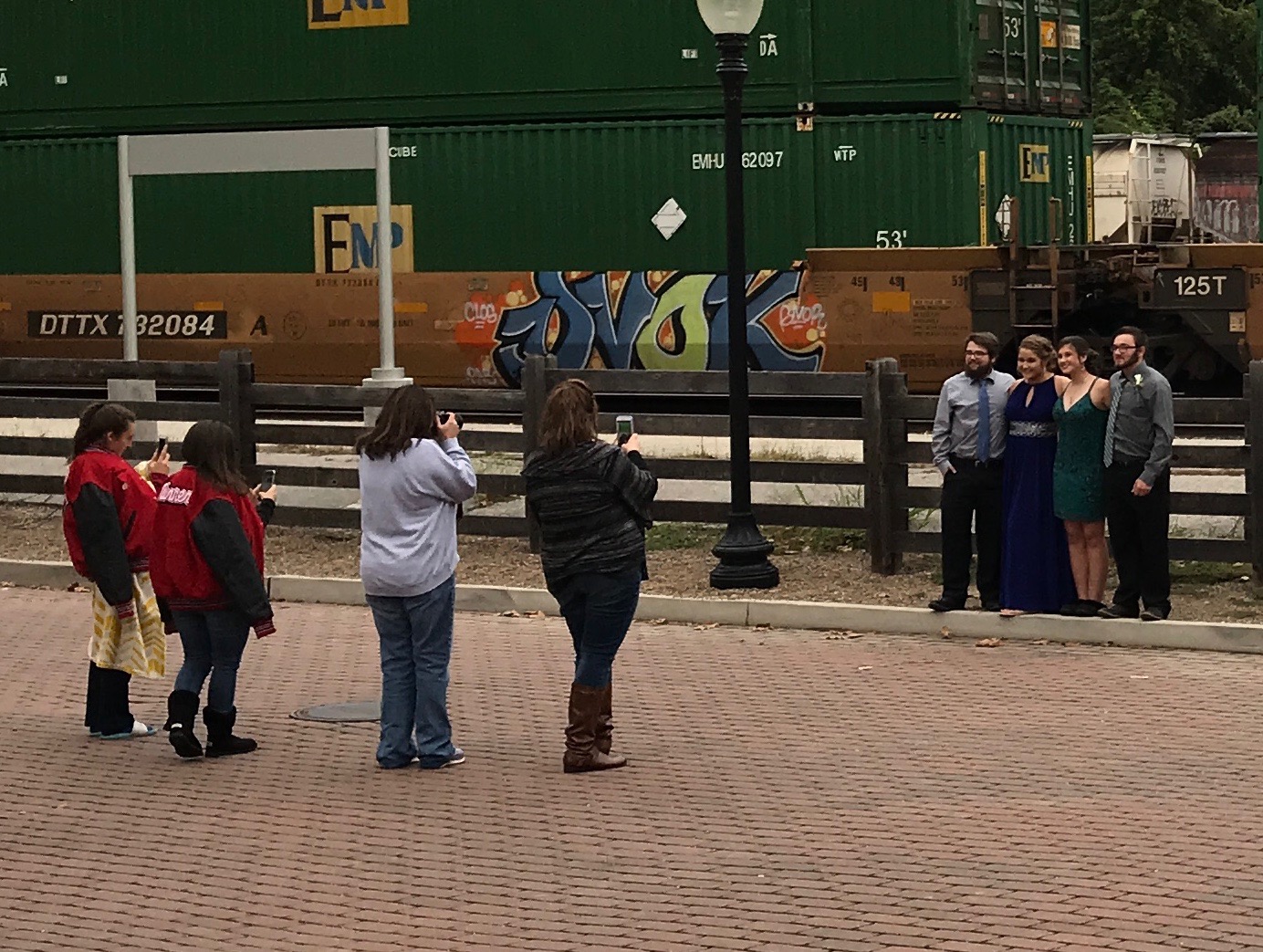
I wonder if it was fall formal season in the high schools. These folks spent several minutes snapping photos of the friends.
I headed up the brick road.
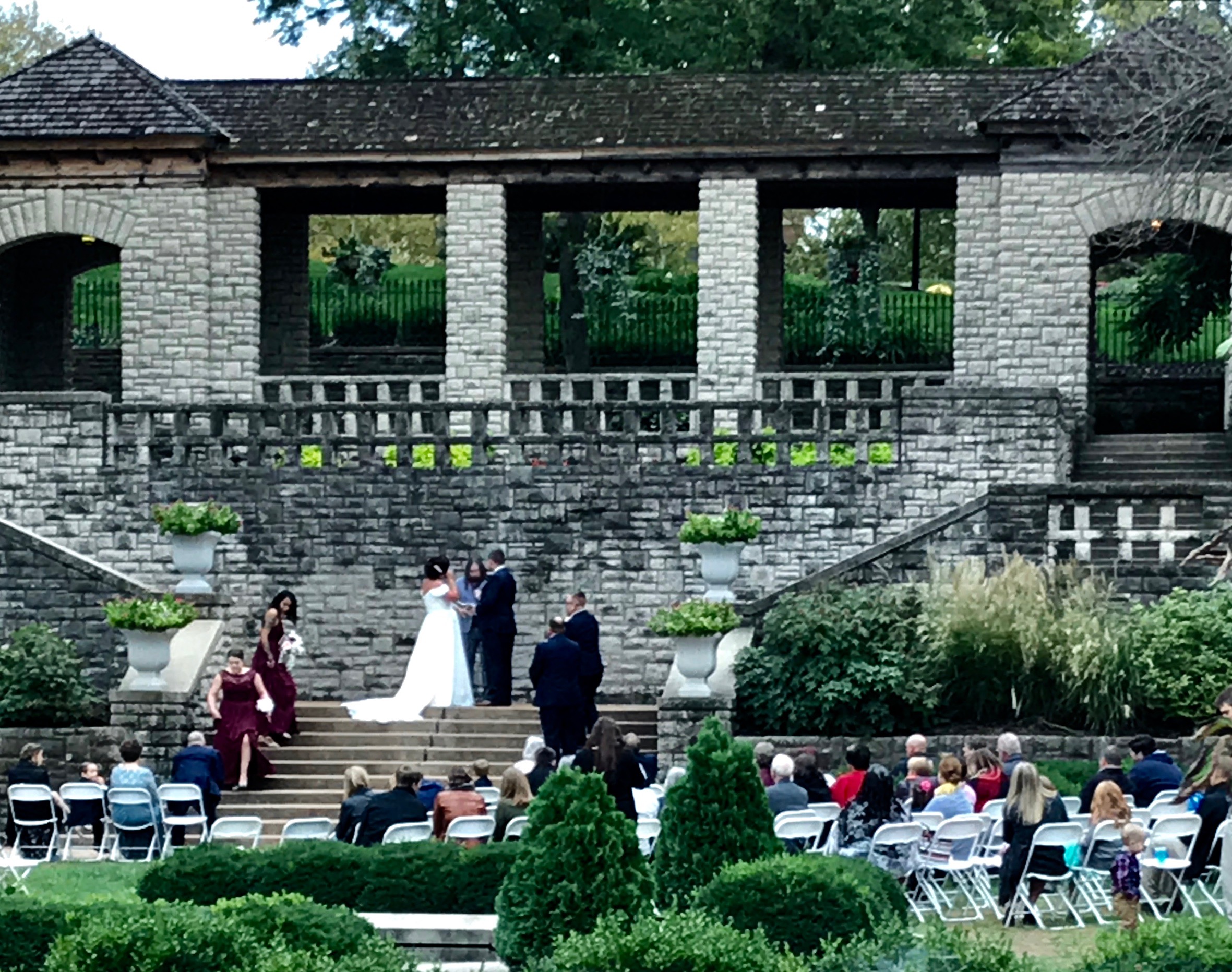
On the left side of the street, a wedding was taking place.
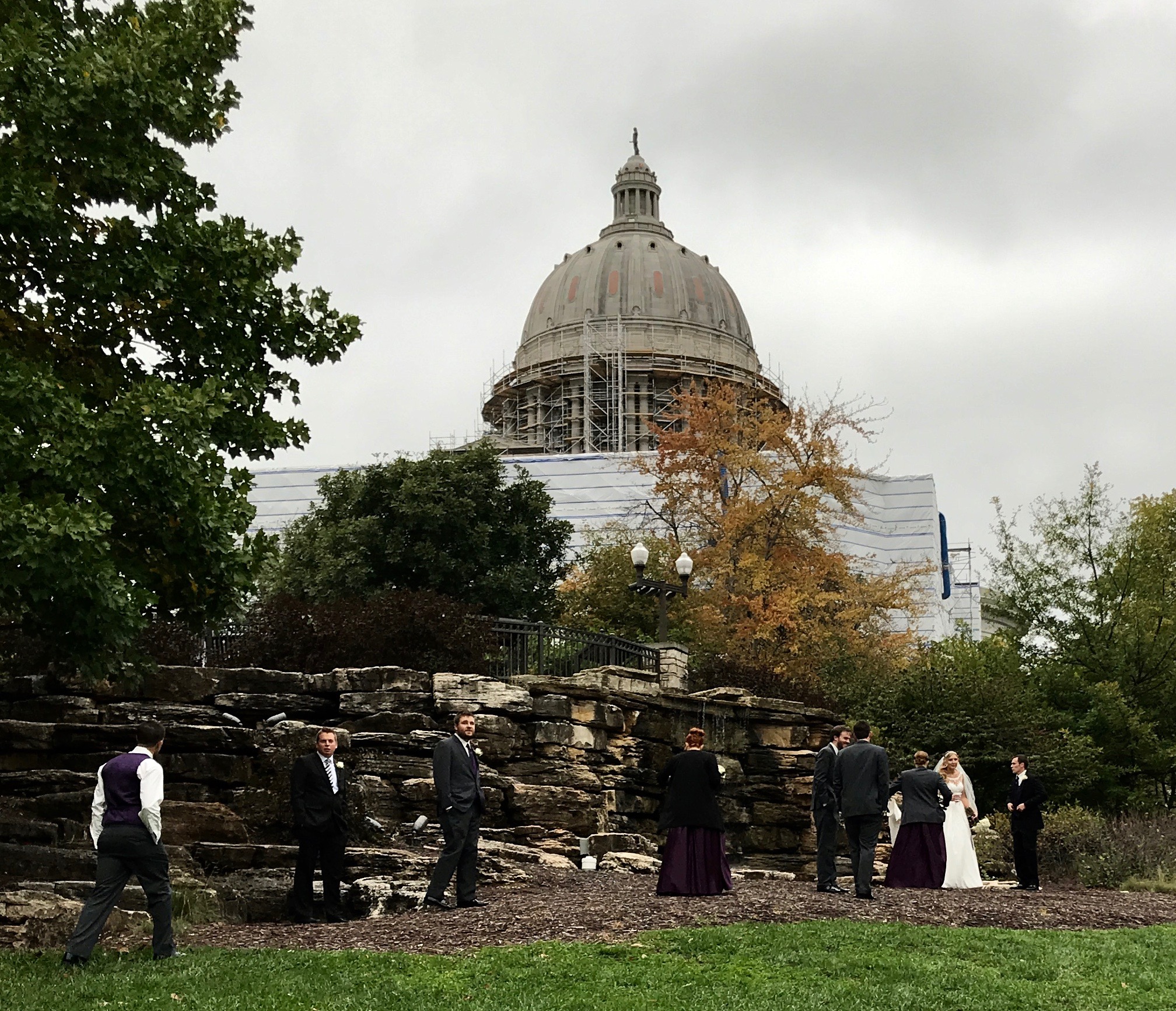
On the other side, a wedding party photo shoot was underway. On top of that rock outcropping, art was imitating life – or was it the other way around?
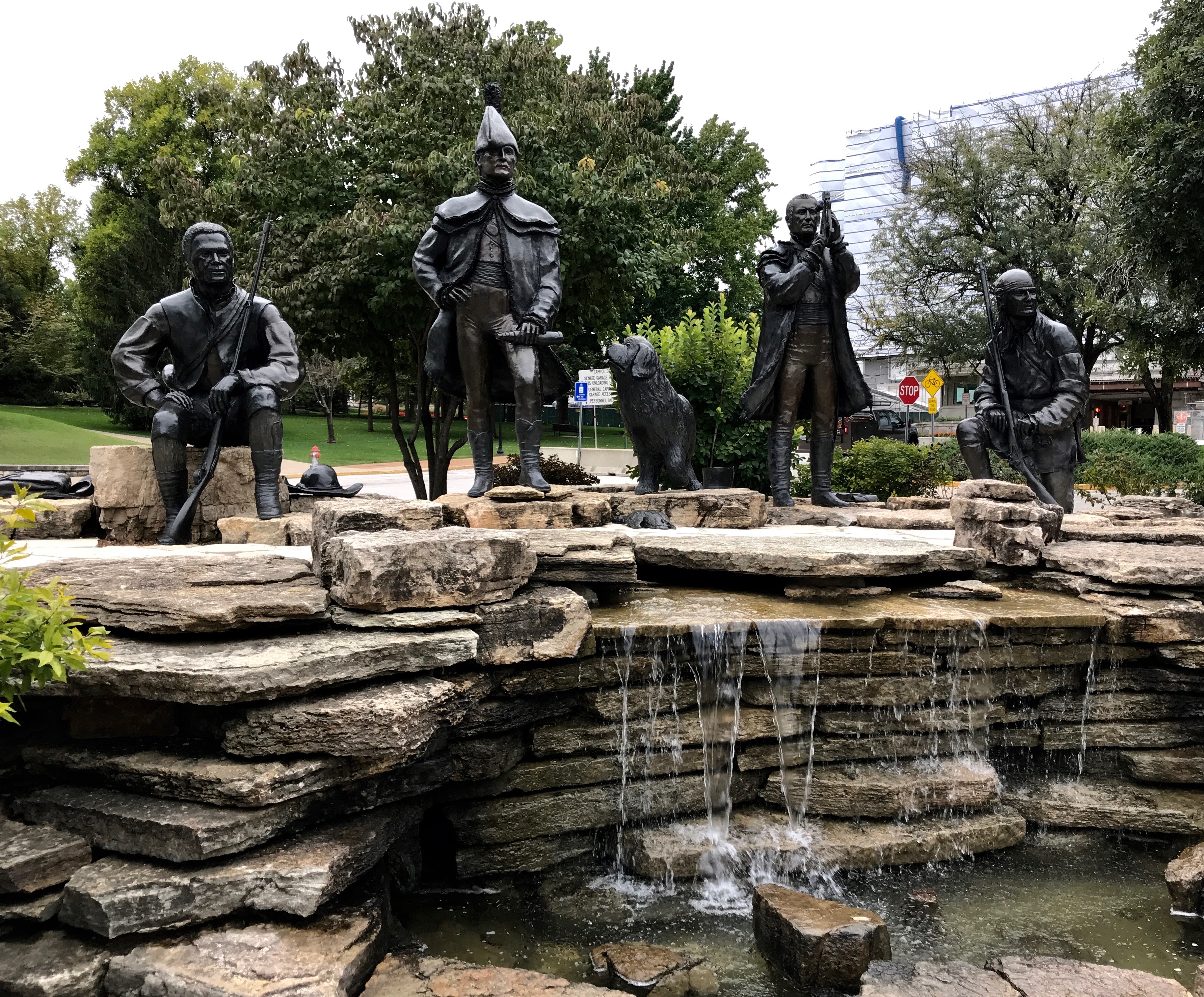
It was a statuary grouping of the Corps of Discovery!
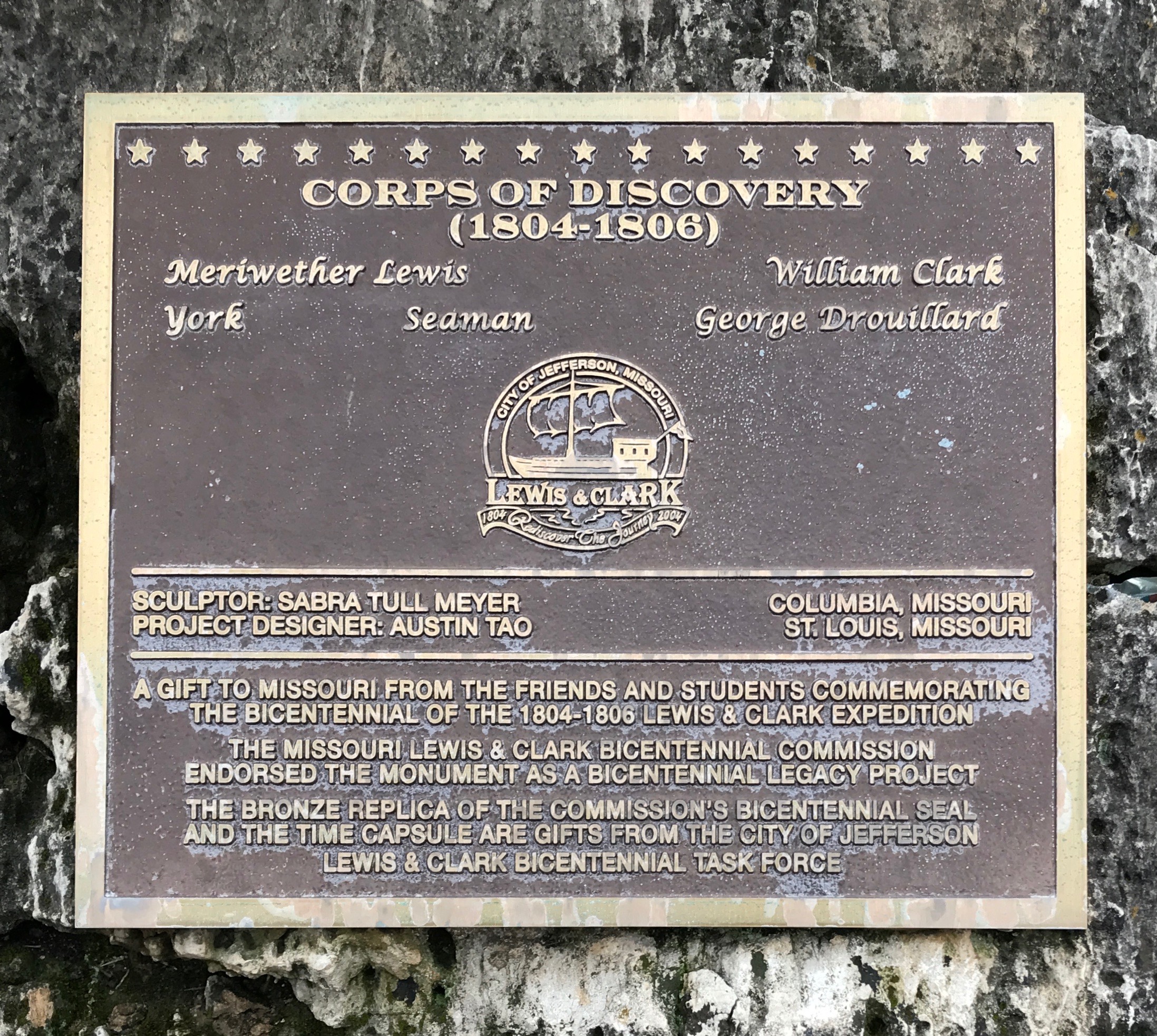
Hey! The sculptor was Sabra Tull Meyer! Where have I seen that name before? Oh, yeah! In the capitol! She is very good at capturing portraits in bronze.
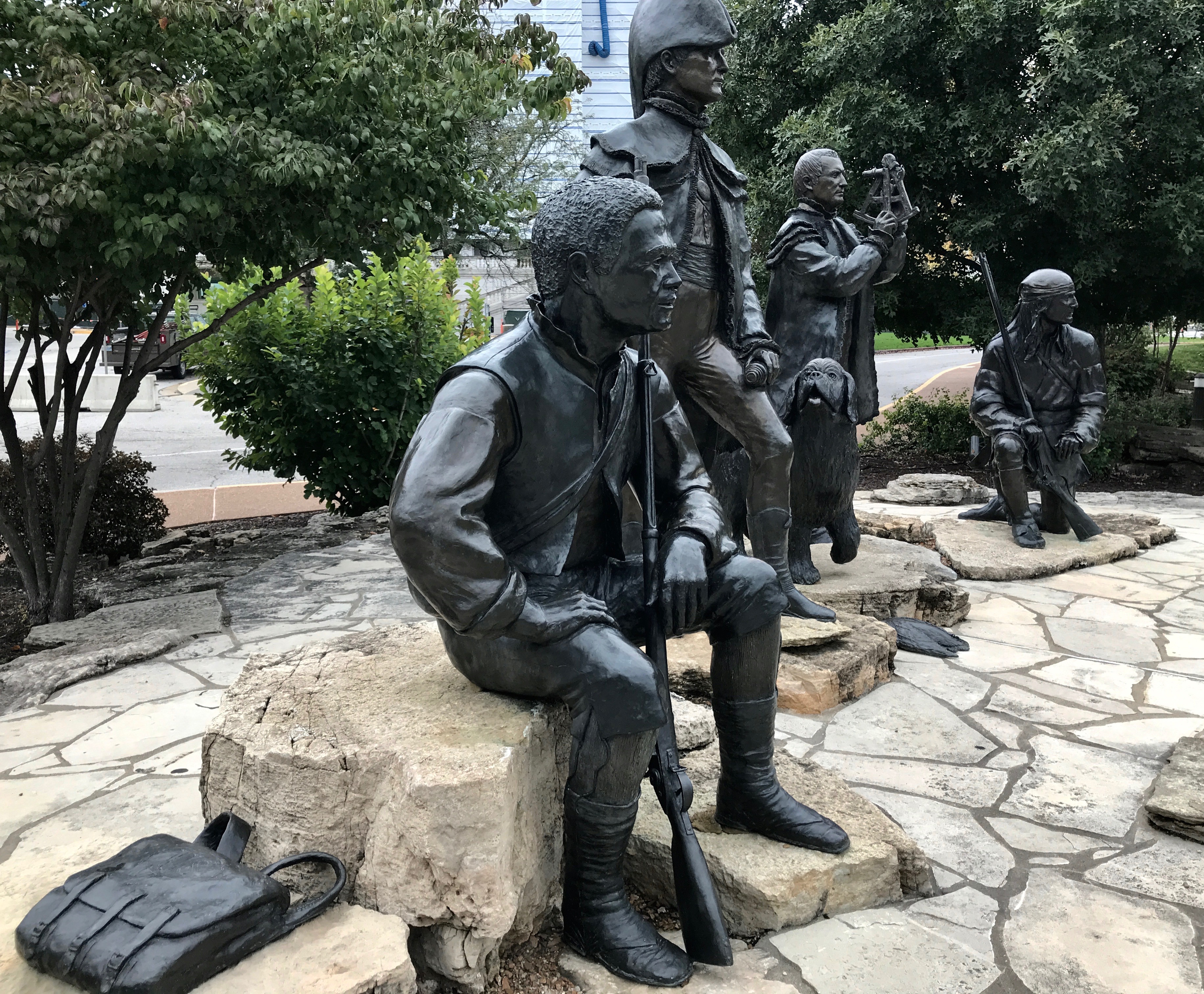
I just love how she incorporated all the details into the people. There are York, Meriwether Lewis, William Clark and George Drouillard. Oh, and let us not forget Seaman, the dog.
This monument depicts a specific day in the historic journey of the Corps of Discovery. According to a marker at the site, “…on June 4, 1804, a keelboat and two pirogues containing the members of the Corps of Discovery passed this spot as they headed upstream to the headwaters of the Missouri River and across the Rocky Mountains to the Pacific Ocean. The Lewis and Clark Expedition was in the twenty-second day of their two-year, four month long odyssey. Already fighting the strong currents of the Missouri River, the party had managed to cover over 145 miles since leaving their winter encampment at the River DuBois, in present day Illinois. The expedition still had 3,855 hard miles stretching ahead before they reached their destination on the western rim of the continent.”
The sculptures were unveiled June 4, 2008, 204 years later.
York was William Clark’s slave. According to another source, “He was William Clark’s servant from boyhood, and was left to William in his father’s will. He had a wife, and possibly a family, before the Lewis and Clark Expedition. In 1804, York was compelled to leave his family and accompany Clark and 40 others on the Lewis and Clark Expedition.”
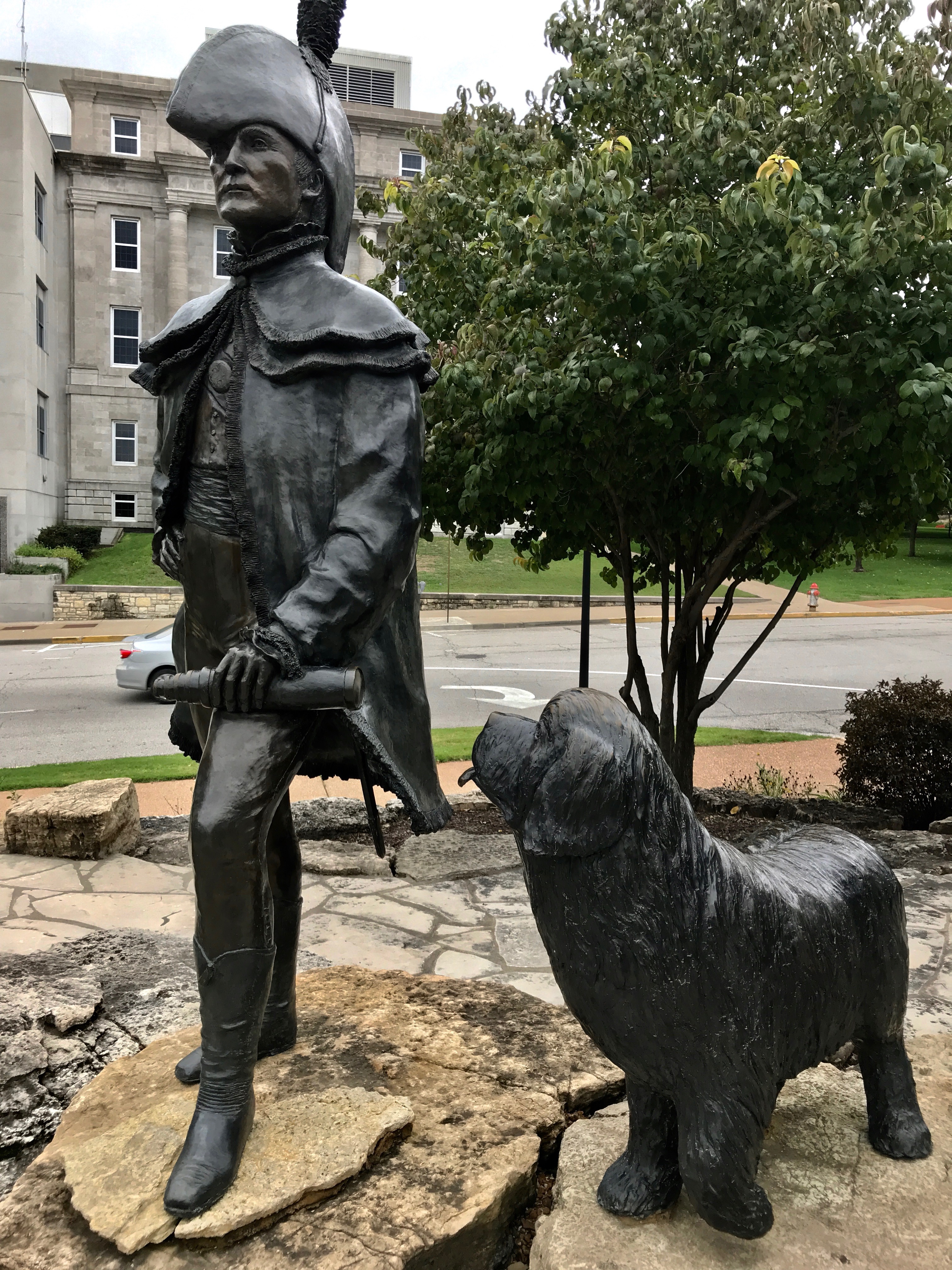
Lewis was not in favor of slavery. Seaman was his companion, purchased for $20 in Pittsburgh, Pennsylvania while he was waiting for the boats to be completed for the expedition. According to my Preferred Source, the corps ate over 200 dogs while traveling the trail, but Seaman was spared. Lewis felt so strongly about his dog that when he was stolen by one of the tribes, he threatened to send three armed men to kill them.
Not only were the participants in the Corps rendered so well, I was taken with the items that were on the rocks around them.
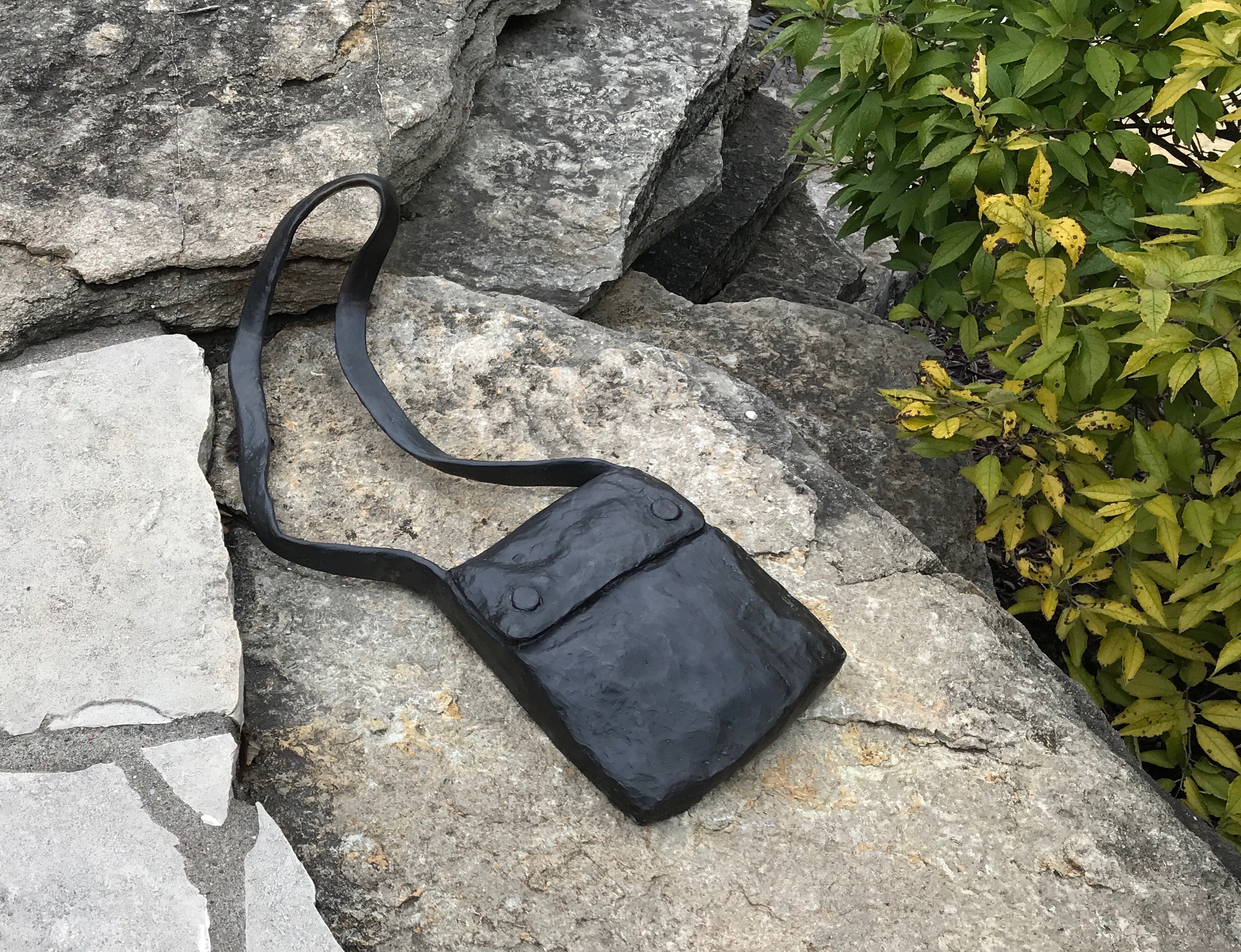
This bag seemed to be carried by Drouillard, or maybe it was the bag that Clark used to carry his sextant.
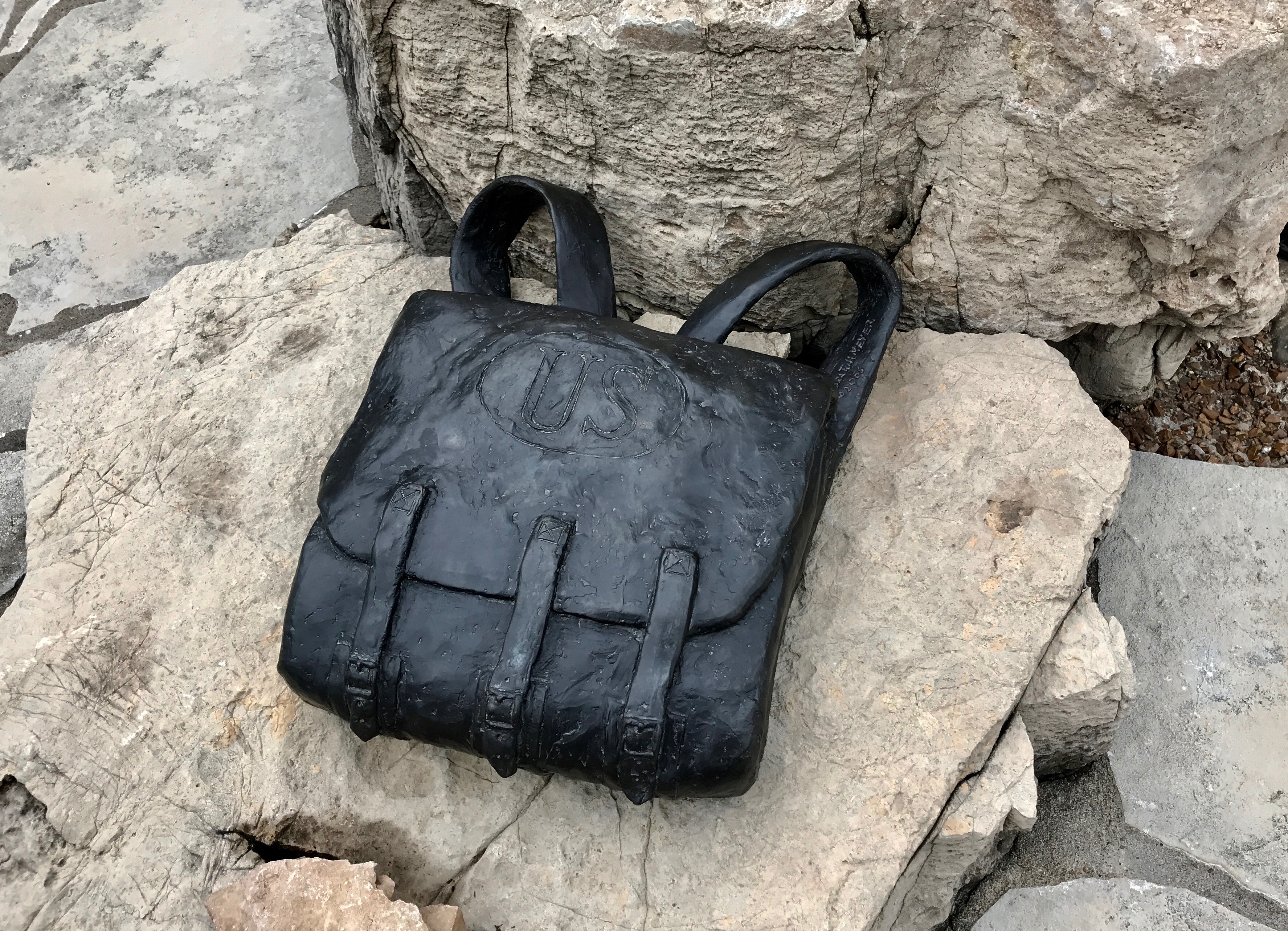
York carried this bag.
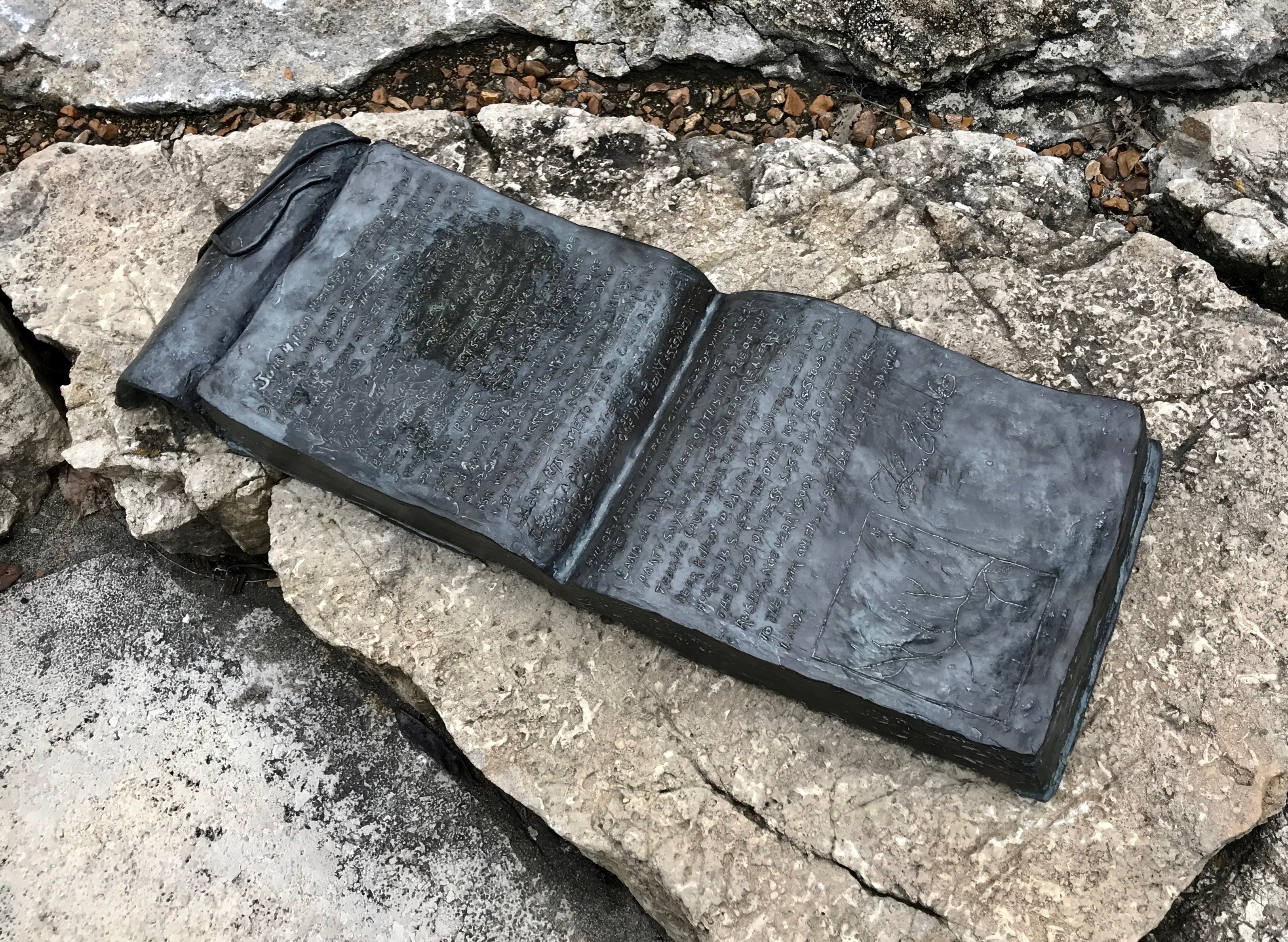
I imagine that this must have been Meriwether Lewis’ journal.
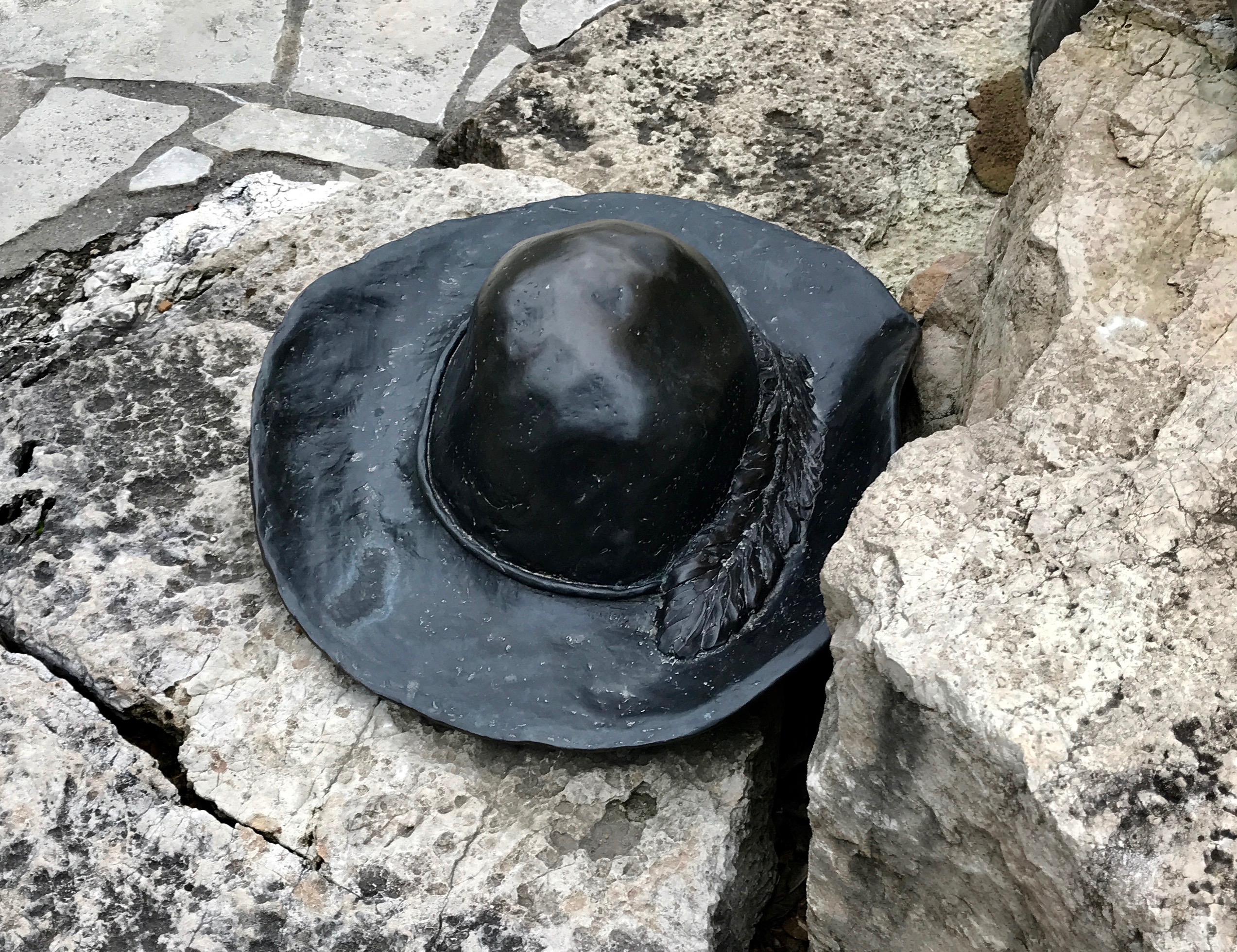
I wonder if this belonged to York or Douillard?
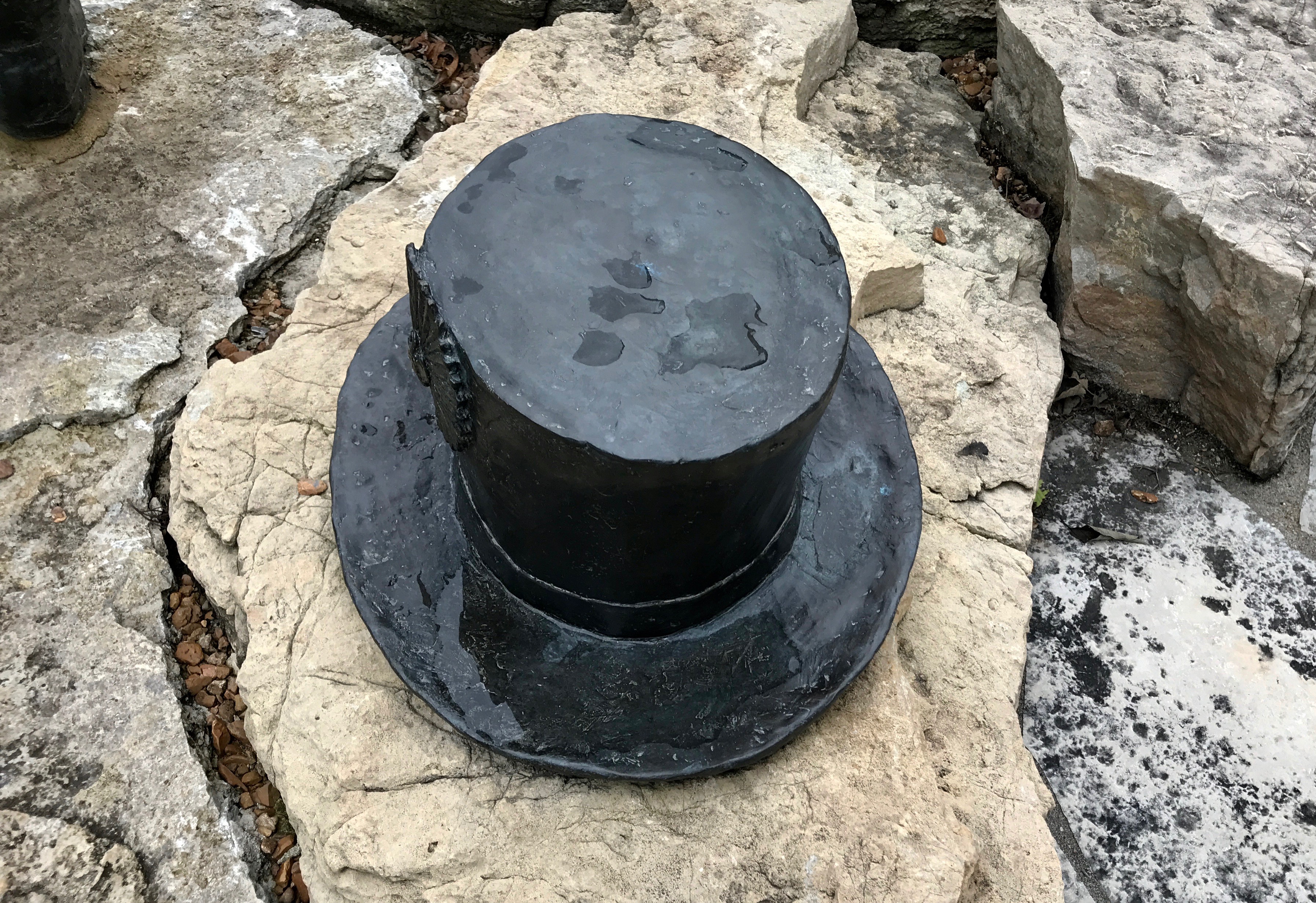
I bet that this hat belonged to Clark. Lewis was already wearing his.
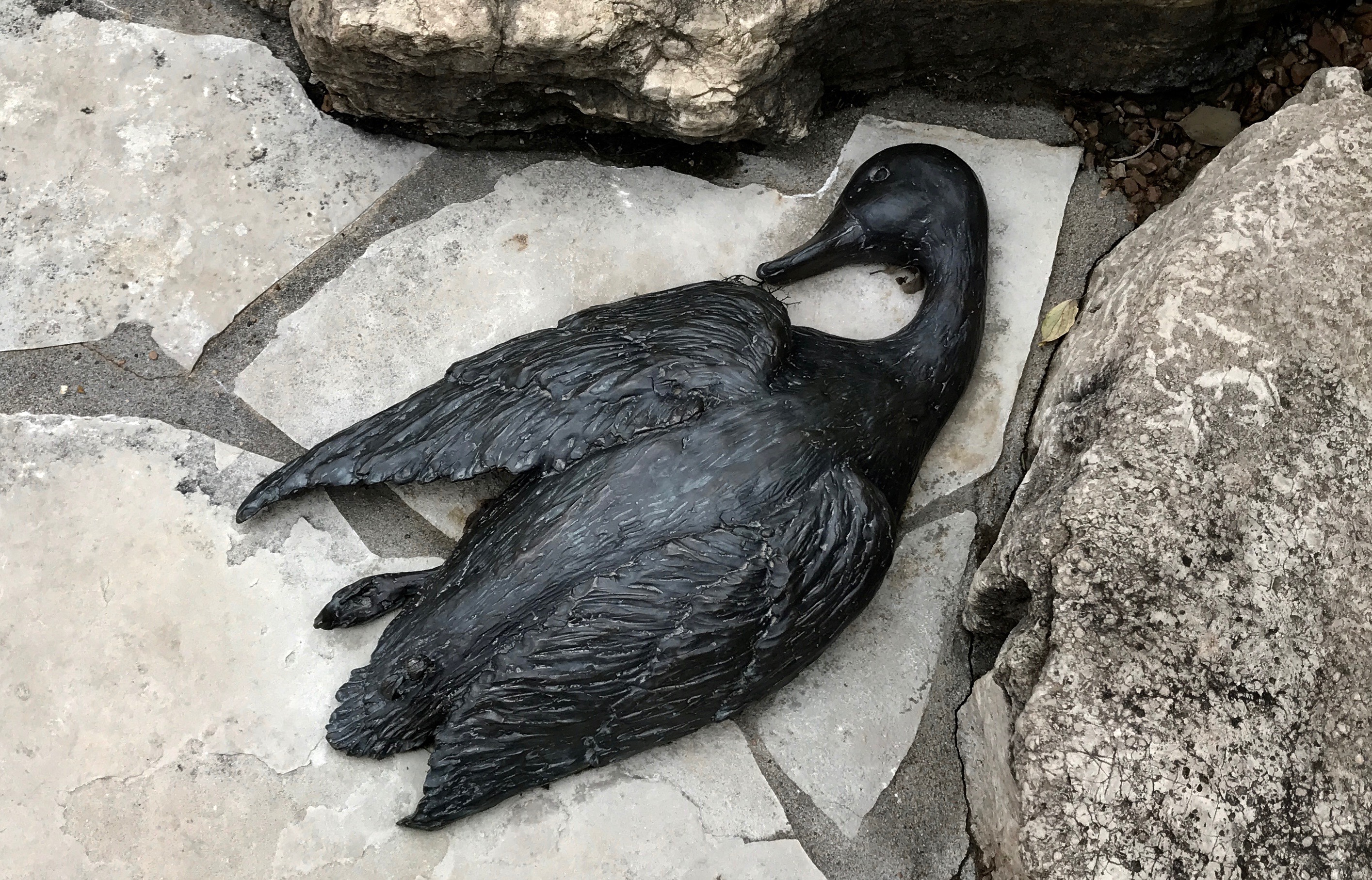
Duck – it’s what’s for dinner!
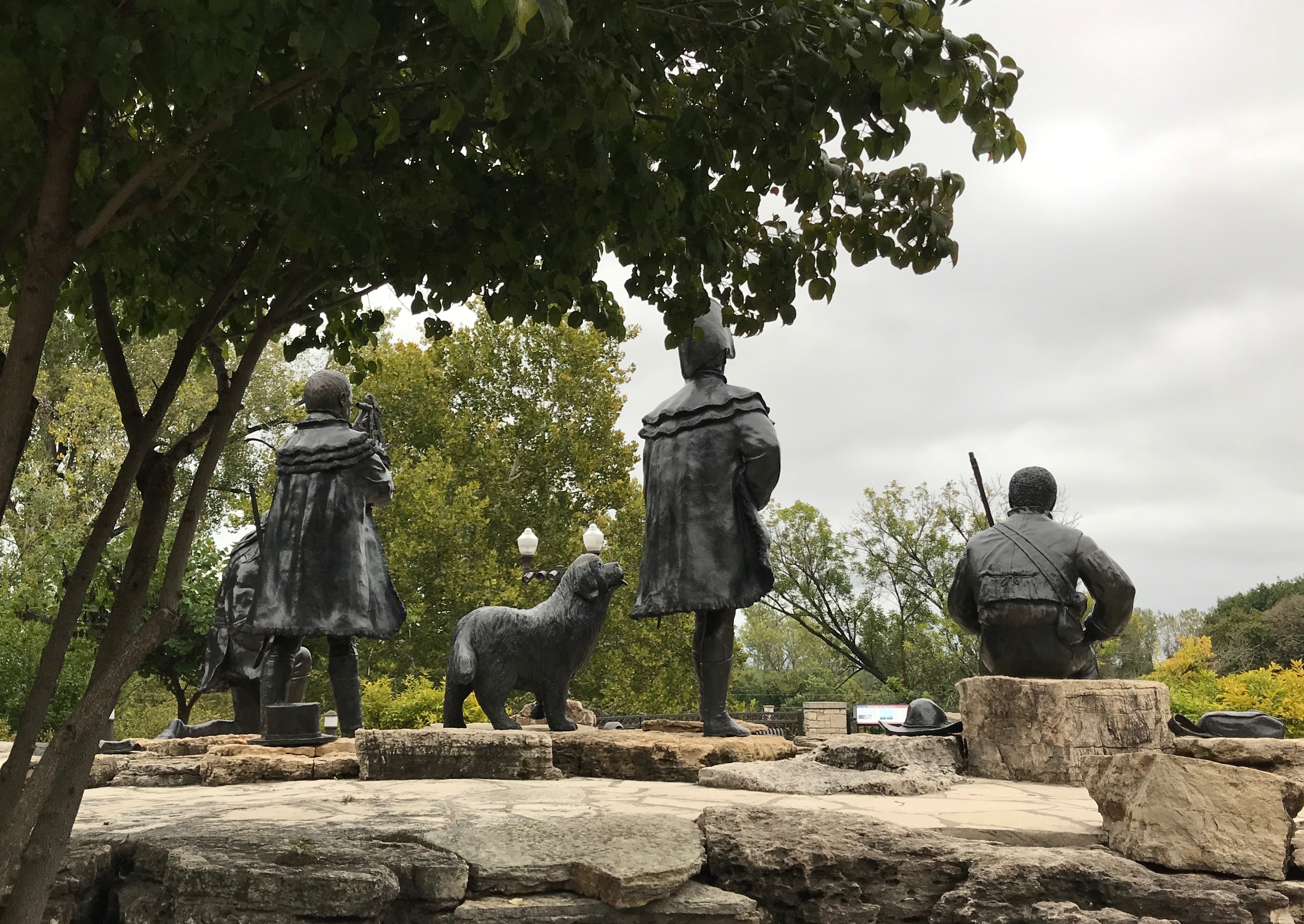
Just one more look and then back to the car.
It’s time to get back to the the trailer and get ready to roll in the morning. Next stop: Kansas City!